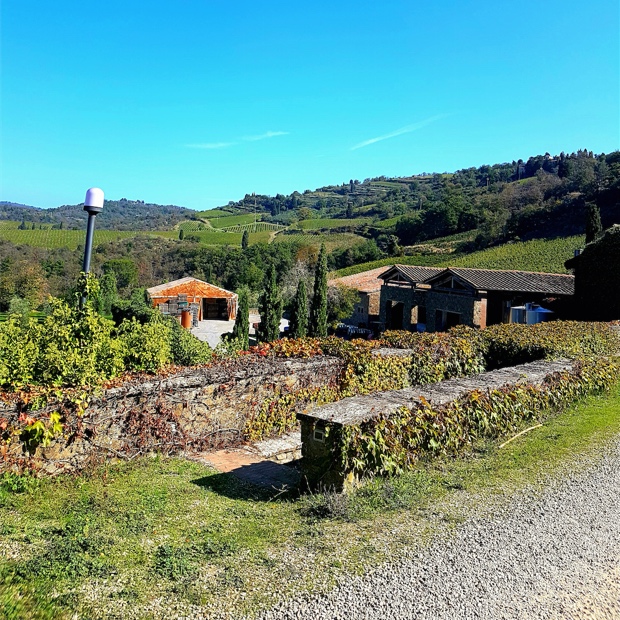
They say all roads lead through Greve

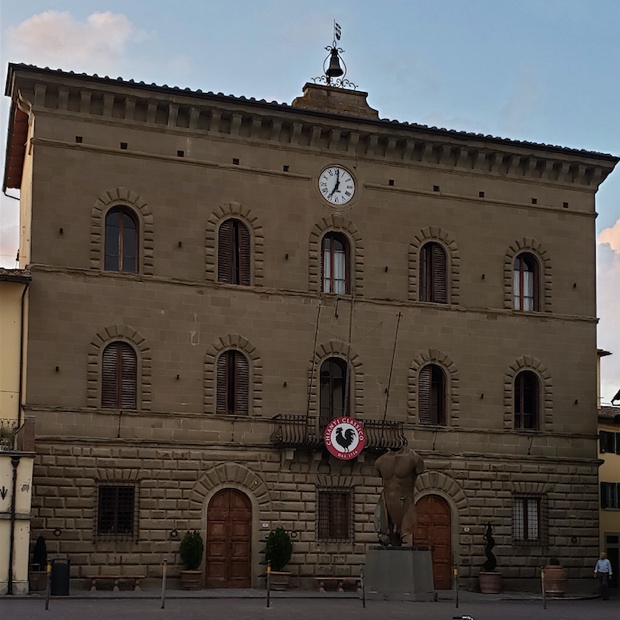
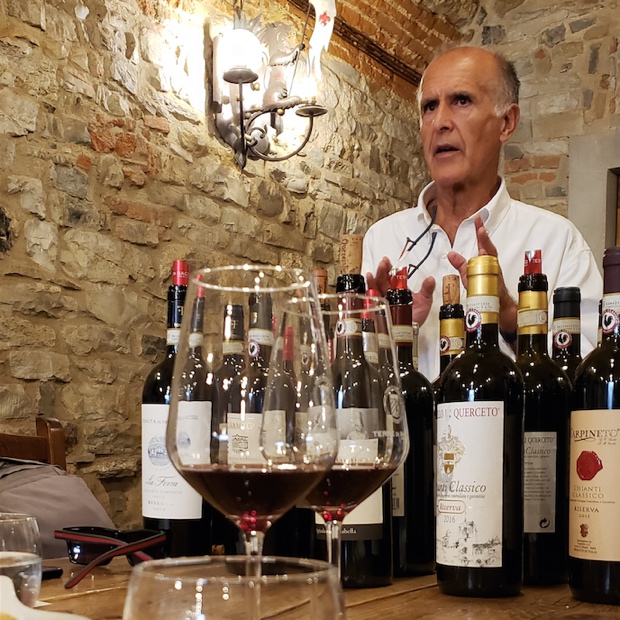
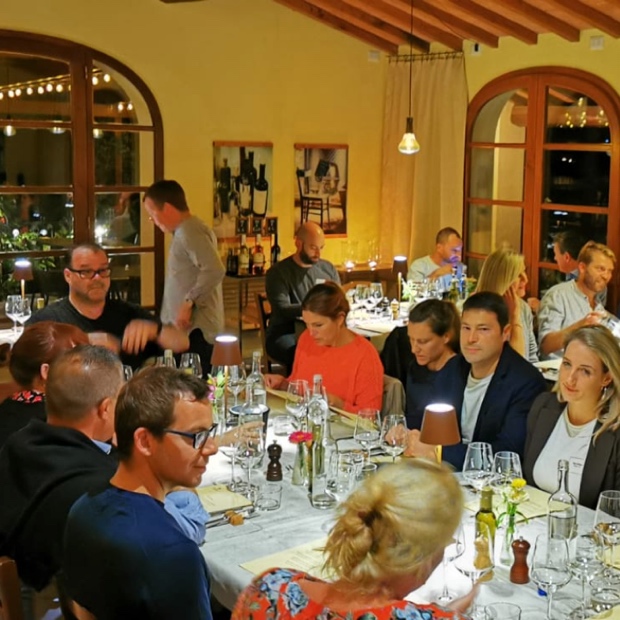
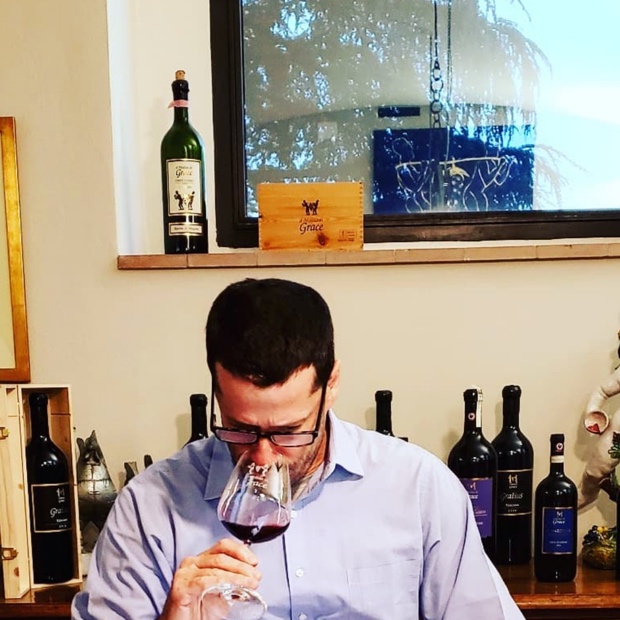
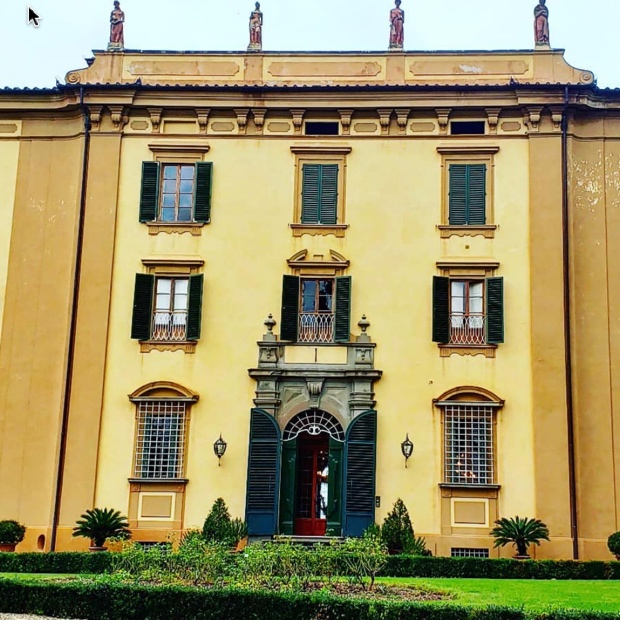
In Greve’s Piazza Giacomo Matteotti there is a Chianti Classico institution of local gastronomy called Oliosteria la Terrazza. Could there be a finer location to meet up with six wine producers from the commune, listen to them pour out their hearts and their finest sangiovese? I think not.

Related – Montefioralle (more than a feeling)

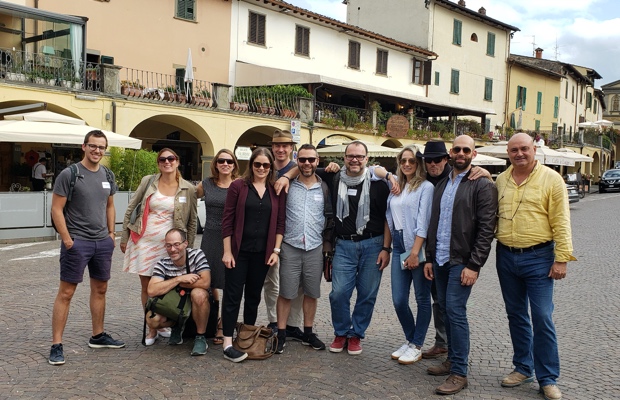
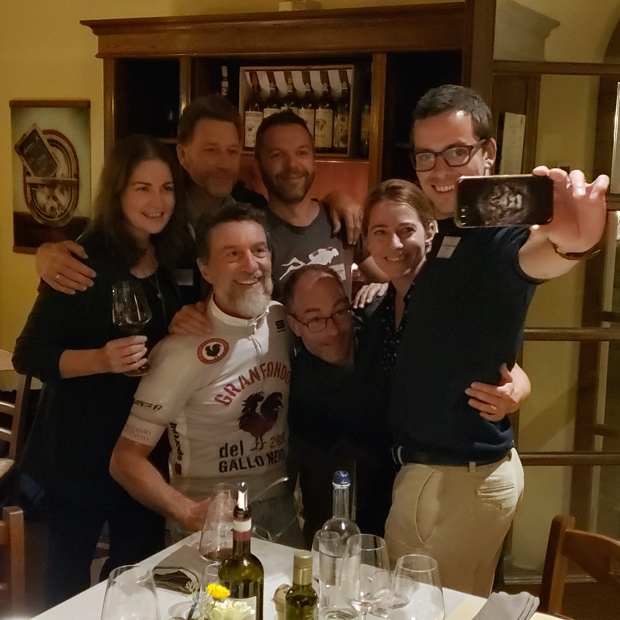
La Squadra Canadese, Piazza Giacomo Matteotti, Greve

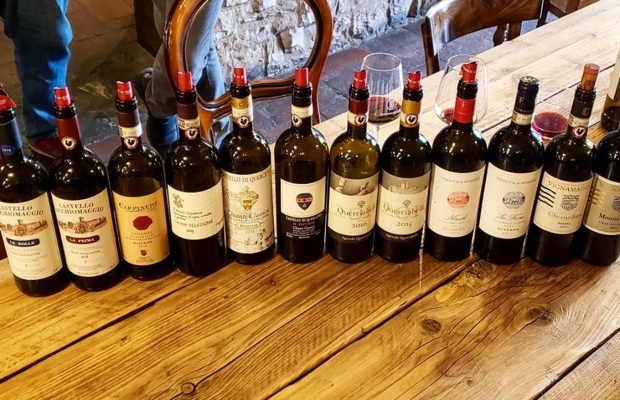
Twelve other intrepid Canadian wine travellers agreed, abided and tasted through 12 Chianti Classico whilst the benefactors explained the origins, underscored the merits and revealed their expectations for what these Riserva and Gran Selezione could become.

Piazza Giacomo Matteotti, Greve

Related – Two sides of the River Greve

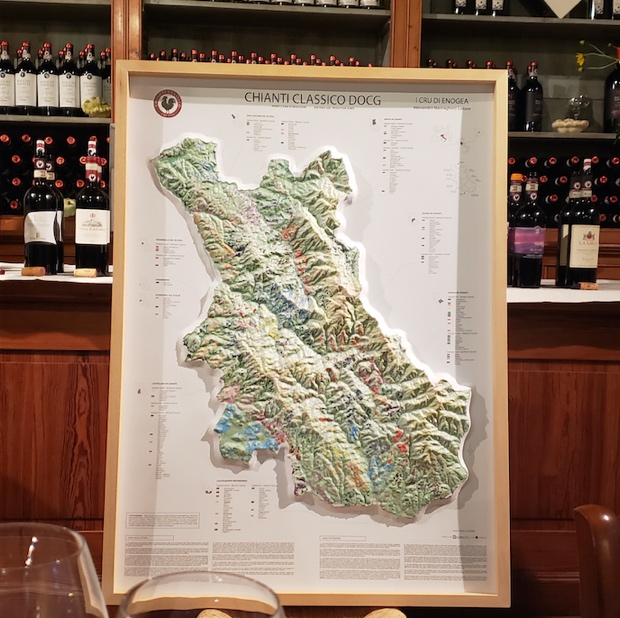
Over the last two years I have capitulated about the larger notion of Greve on this site in two published occasions. To read up on the history, geography, geology and general realities of the double-banked, extensive and magnificent commune, please click on the link above, and also below.

Related – A river runs through Greve

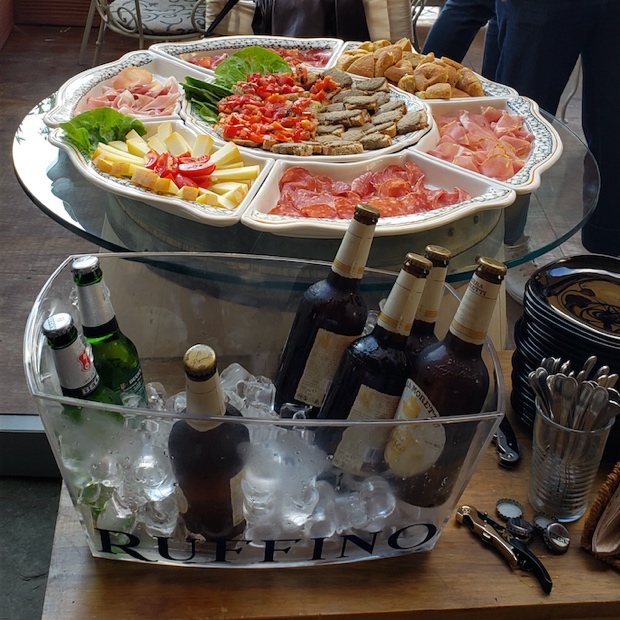
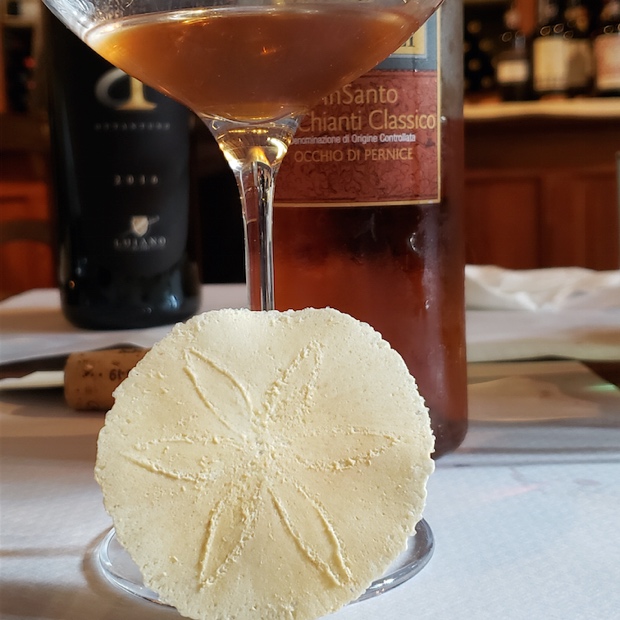
Post Greve tasting, snacks at OliOsteria La Terrazza

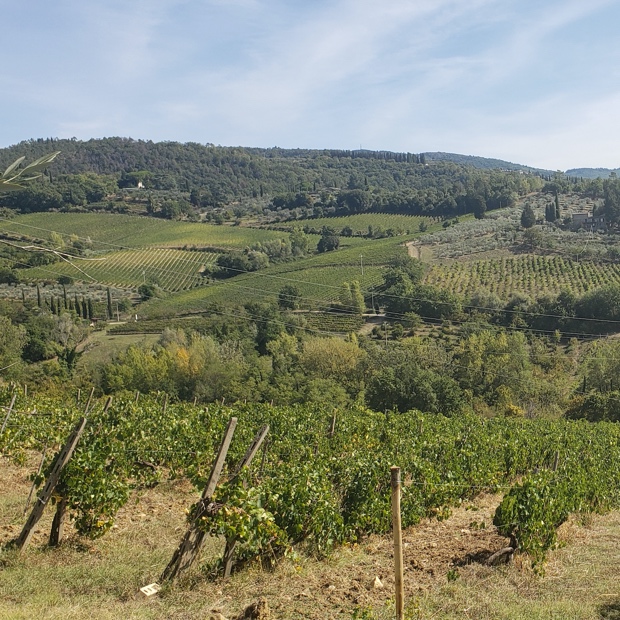
As I noted two years ago, “Chianti Classico is not one of the more famous left versus right bank terroirs in Europe but in the case of Greve in Chianti a river does run through it. My recent September 2017 sangiovese exploration brought me to Greve and a retrospective concern…explains a contrast in landscape meets topography, position and soil that at the time was not fixed on my menzioni geografiche radar. What happens left or west of the river is one thing and to the right something other. Were that it were so simple I wouldn’t have to expand, but it’s not and I do.”

#tranquillo #greveinchianti #ChiantiClassico

Related – Feeling Panzano’s pull

The estates who came to the central piazza in September 2019 were Carpineto, Castello di Querceto, Querciabella, Tenuta di Nozzole, Vicchiomaggio and Vignamaggio. This is my seventh recently published exposé (and fourth for Greve) on i frazioni and i communi that are the smaller sub-zones and greater micro-territories within Chianti Classico. These are the 12 wines tasted that day in Greve.

Related – A Lamole is a Lamole is a Lamole

Carpineto Chianti Classico Riserva DOCG 2015 ($29.95)

A 90 per cent sangiovese with (10) canaiolo. Meaty, cured, porcine. Minty, sharp, white peppery. Puts a tease intro the nose. A vintage of generosity taken over by a pressing focus. Will not likely age with some of the estate’s more recent highest of quality vintages so take advantage of what’s on offer, right here, right now. Drink 2019-2022.  Tasted September 2019

Carpineto Chianti Classico Gran Selezione DOCG 2015

Dusty and high-toned mixed with well reasoned, seasoned and developed fruit. Reminds of southern Montalcino, in a way.  Last tasted September 2019

Packed in suitcase from Greve by Antonio M. Zaccheo for this Toronto tasting. True to the Carpineto, Greve in Chianti, Classico style in that there is no real departure in stretch to the Gran Selezione, at least in terms of a thickening to syrup or shaken consistency. The cool, minty, dusty, high-toned and big red fruit personality are on headlights display, front, centre and all in. Here is the highest quality acidity that ’15 can gift and the fruit takes full advantage. Great cupboard spice and length. Really well done. Drink 2021-2028.  Tasted April 2019

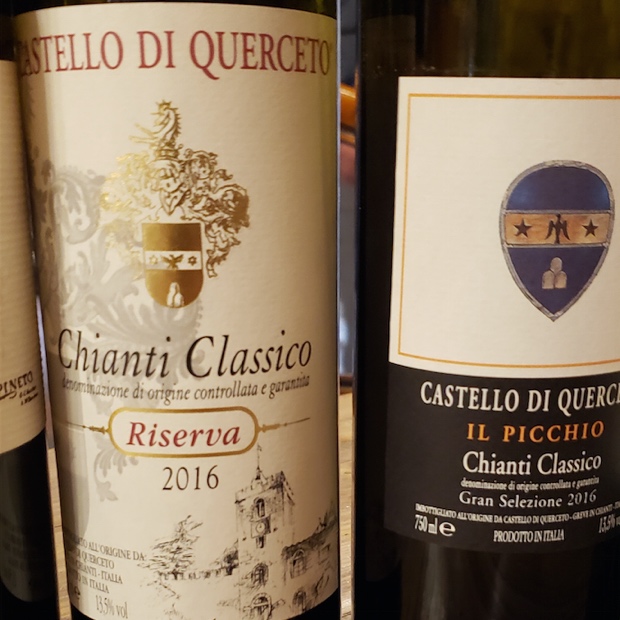
Castello Di Querceto Chianti Classico Riserva DOCG 2016 (650754, $28.95)

families that have maintained their properties for more than 100 years. One of the founding members of the Consorzio in 1924. Always love the aromatic front of a Querceto. It’s a mix of place, indigenous varieties and tradition. In Riserva styling it’s also like overripe pinot noir, a.k.a. strawberry jam. In sangiovese that’s perfectly cool. Drink 2019-2023.  Tasted September 2019

Castello di Querceto’s Marco Fizialetti

Castello Di Querceto Chianti Classico Gran Selezione DOCG Il Picchio 2016 (938738, $49.00)

Querceto’s unique location in Greve is the Dudda Valley, an angular and broad swath of evergreen terroir in the northeast sector of the commune and the greater territory. Il Picchio is an old name referring to the land of the vineyard and perhaps “the woodpecker.” From only three hectares, “an aisle in the sea of the forest.” Dark red soil in iron and magnesium, dry, rich in stones. Almost a desert floor, not a woodland. Only one bottle per bunch, per vine, of Il Picchio. That says so much. Mainly (95 per cent) sangiovese with five per cent of the five local grapes. That combination of great richness and mineral streak – it cuts through the fat, enlivens and lifts. Same big extraction, concentration and in 2016 an earthy high note that speaks to hyperbole of nose, palate and tannin provided by this particular terroir. Old traditions and sense of place dies hard in these parts so expect dark fruit, a posit grab of structure, conservative styling and a tug on the sangiovese heartstrings. That and the unction meets beauty of 2016 fruit. Drink 2022-2029.  Tasted September, October and November 2019

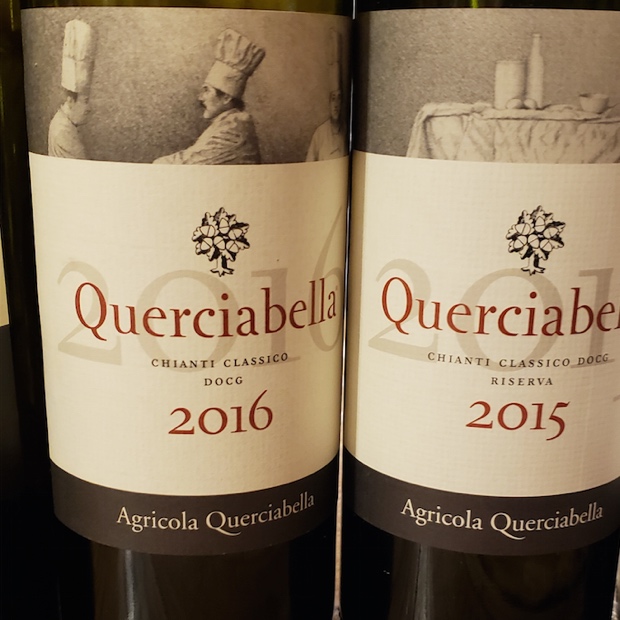
Querciabella Chianti Classico DOCG 2016 ($48.95)

Presented by Valentina Bertoli, Sales & Marketing Assistant Manager and Winemaker Manfred Ing. Has been 100 per cent sangiovese since 2010 and it is in fact a rare occurrence of a confluence of estate managed grapes located in Greve, Radda and Gaiole. Spicier than I remembered and conversely more settled than last February. Seems to have lightened and brightened. “Every single vineyard has its own recipe of cover crops,” tells Ing, “specific to the biodynamic and climatological needs of each of the 70 plots around the Chianti Classico.”  Last tasted September 2019

On the ripest side of 2016 life, Querciabella’s Annata is all in, developed, deep and pure. The fruit already there, unencumbered by holds barred and of a picking that pushes the envelop to gratify at the highest level. There’s nothing stopping the early enjoyment and while the tannins are anything but astringent they are there, albeit sweet and fine. Drink 2020-2023. Tasted February 2019

Querciabella Chianti Classico Riserva DOCG 2015

Greater balance is happening in the vineyard between the top, middle and lower parts. Cover crop workings are leading to equal vigour in all parts of the vineyard, no longer soaking up moisture run down at the lower sections. Clearly no compromises in the Querciabella Riserva 2015, fruit exemplary, lively and layered, lush and elastic, ripe of little compare. A right, forward and courteous example of aromatic overstatement, so perfumed and surely special. Right at the forefront of Riserva culpability at the verge of possibility to the grander appellation. Drink 2020-2028.  Tasted September 2019

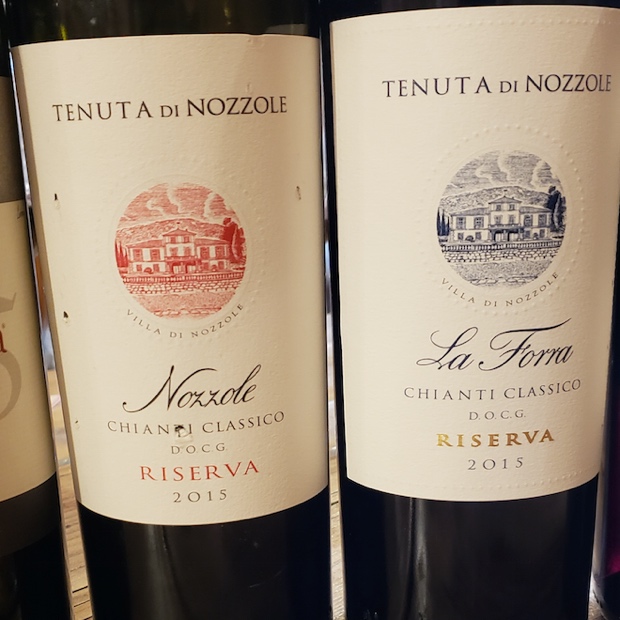
Tenuta Di Nozzole Chianti Classico Riserva DOCG Nozzole 2015 (324160, $24.95)

From the Folonari family, originally from Ruffino. Ambrogio Giovanni Folonari is still at the head of the family. Special bottling for the North American market, 150,000 in the US alone. A varietal sangiovese, as is the sister Riserva La Forra and are the Gran Seleziones. Sees aging time in Grandi Botti. Perfectly ripe, ubiquitous and modern classic version of Chianti Classico. Made for the markets. Approximately a $25 Canadian price. Drink 2019-2021.  Tasted September 2019

Tenuta Di Nozzole Chianti Classico Riserva DOCG La Forra 2015 (362731, $36.95)

Very specific single vineyards and selection of grapes. Ages for two to four months longer than Nozzole and in some small barrels, along with Grandi Botti that Nozzole sees alone. Quite reductive, chewy, ropey, like red and black liquorice intertwined. Approximately a $37 Canadian price. Drink 2019-2022.  Tasted September 2019


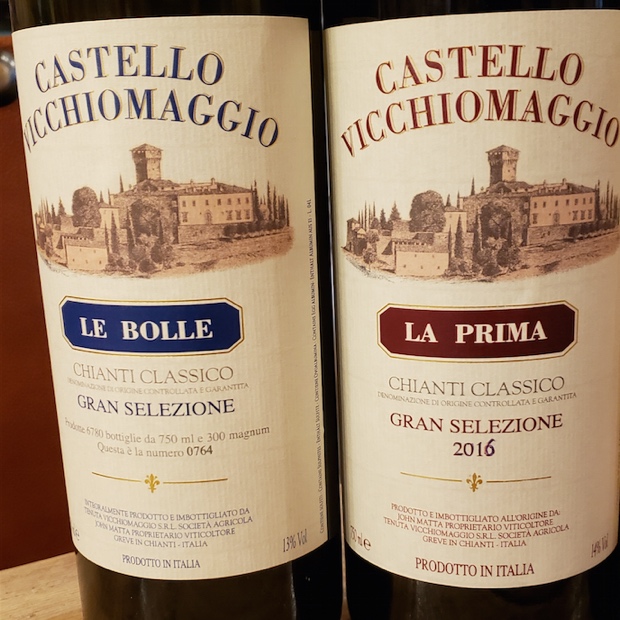
Vicchiomaggio Chianti Classico Gran Selezione DOCG Le Bolle 2016

The vineyard borders on the hamlet called “La Bolle.” One of the few locales where another producer could quite possibly plant a vineyard on the same “cru” where this clay landscape is located. “This is what we call uncompromising sangiovese, Gran Selezione,” tells John Matta. This is a Selezione with an unmistakable character that is a sense of the place, even if we don’t fully yet know about the true and full capabilities of this particular place. I imagine we will come to know it through the generations of this wine.  Last tasted September 2019

Named for the small group of houses to which the vineyard abuts, a vineyard where the large gathering of stones resembles Les Galets of Châteauneuf-de-Pâpe. The total prodcution is 50 hL (6,000 bottles). Just going into bottle as we speak, there is a structural architecture to this Gran Selezione that stands apart. La Prima is the wine for everyman while Le Bolle will appeal to ye who wants edgy, artistic and deferential. The blood orange, cranberry, pomegranate and sapid-herbal attributes are all part of the extenuating mix. Terrifc single-block within a single-vineyard expression of solo sangiovese Gran Selezione. Drink 2022-2031.  Tasted February 2019

Vicchiomaggio’s John Matta

Vicchiomaggio Chianti Classico Gran Selezione DOCG La Prima 2015

Sangiovese (90) and merlot (10), on average. ”Our style is to make very elegant wines with oak in the background.” Wines that can from a picking time that is so precise. “A race of age,” meaning two or three extra days will make all the difference. Like 1/10 of a second in a car race.  Last tasted September 2019

Made with a few percentage points of merlot, this is the a small-ish production Gran Selezione, a 100 hL output so the number is approximately 15,000 bottles produced. Really high-toned aromatically for Gran Selezione and then a palate of great richness and layering. Truly a selection created sangiovese, with drinkability and steak house amenability. Suits the style and the intent so perfectly. Drink 2020-2027.  Tasted February 2019

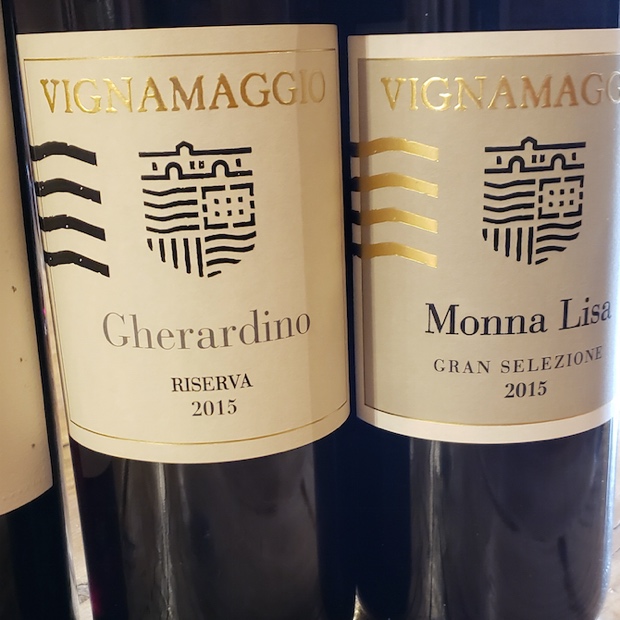
Vignamaggio Chianti Classico Riserva DOCG Gherardino 2015

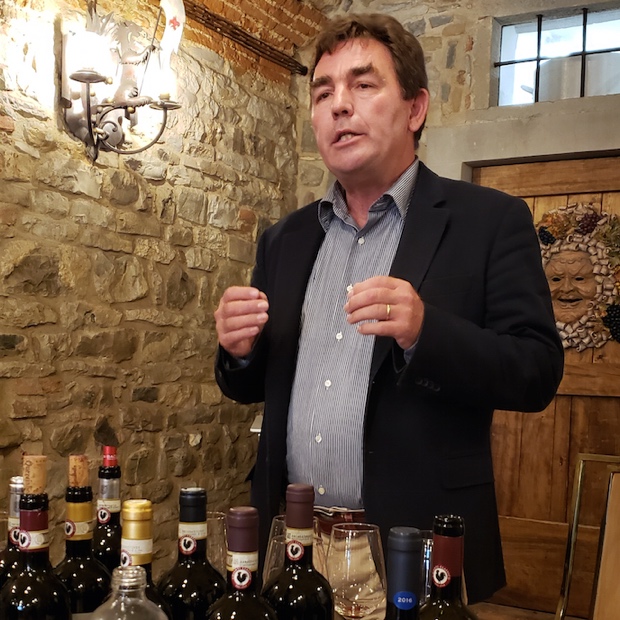
Presented by Stefano Bernabei. In the Greve valley on the Right Bank, Lamole side. “Vignamaggio has a double identity because half of the vineyards are located in the Panzano area,” explains Bernabei. Double indemnity more like it. Selection of vineyards. Chewy sangiovese with 10 per cent merlot. Rich and luxe, easy to understand, not hard to see the great commercial appeal.  Last tasted September 2019

Gherardino is Greve in Chianti old school, in a way, with dried fruit, potpourri and a wealth of fennel-liquorice savour. Spice notes are very prevalent, as is the idea that in three years or so this will turn over into balsamico, porcini and tartufo. Wise and traditional Riserva. Drink 2018-2023.  Tasted February 2018

Vignamaggio’s Stefano Bernabei

Vignamaggio Chianti Classico Gran Selezione DOCG Monna Lisa 2015

There is five per cent cabernet sauvignon in the 2015 vintage. “Now Vignamaggio is concentrating more and more on sangiovese,” having rid Monna Lisa of merlot. Once again the luxe swagger and chic, smooth and silken texture completely distracts and renders the other parts inconsequential. Fulsome as much as any GS, easy to get at and with little need for air, or time. Drink 2019-2023.  Tasted September 2019

Good to go!

godello

Twitter: @mgodello

Instagram: mgodello

WineAlign

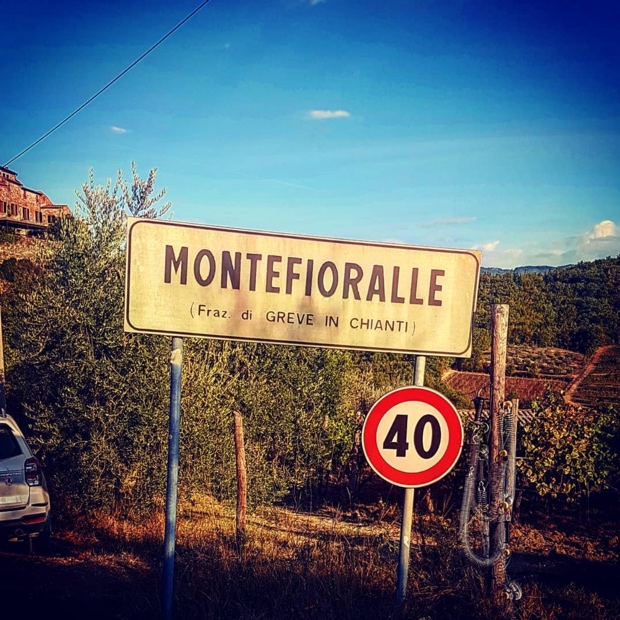
Montefioralle (more than a feeling)

Montefioralle #sleeper frazione

They are growing in sangiovese divinity, or should it be said, divino. L’Associazione Viticoltori di Montefioralle, producers with more than a feeling, who share common ground but also something bigger, stronger, more profound. Montefioralle Divino is a September festival that unites this tiny Greve in Chianti frazione and with a purpose all its own. Theirs is a small section of Chianti Classico and one to call their own. This band is so good they named a medieval village after it.

Castello di Verrazzano’s Luigi Cappellini and the Granfondo del Chianti Classico squadra Canadesi

Related – Two sides of the River Greve

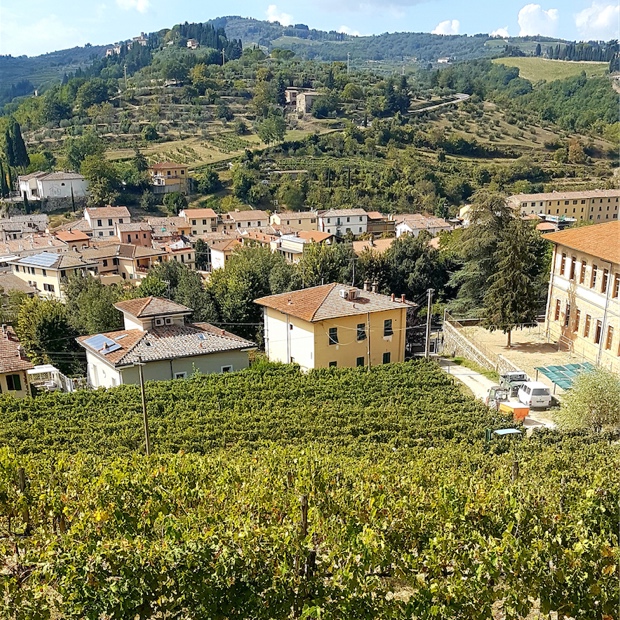
Let’s orient you on Montefioralle’s location. Montefioralle is situated on the west bank of the Greve River and close to Castello di Montefioralle, essentially, ostensibly and mostly southwest of Greve and south of Greti. The hamlet has 79 residents and sits at an elevation of 352 meters. As for their famous harvest festival, “Montefioralle Divino è una manifestazione organizzata e promossa dall’Associazione Viticoltori di Montefioralle che saranno presenti alla manifestazione e offriranno i propri vini in degustazione sui banchi di assaggio per due giorni.”

Montefioralle, Greve in Chianti

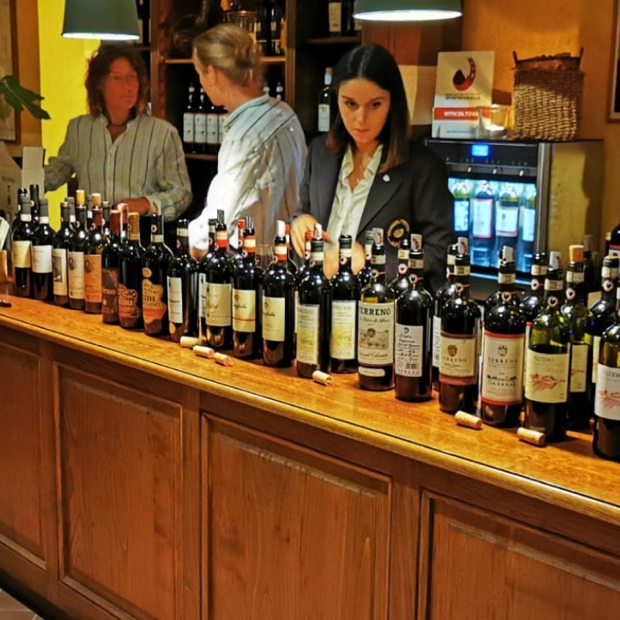
Two days of wine tasting in Piazza Santo Stefano in the historic centre of medieval Montefioralle, presented by a group in flux, from time to time. In 2019 they were Azienda Agricola Altiero, Brogioni Maurizio, Castello di Verrazzano, Montefioralle, Podere Bucine, Podere Campriano, San Cresci, Grassi Roberto, Terre di Baccio, Terre di Melazzano, Terreno, Villa Calcinaia and Fattoria Viticcio. From year to year membership rises, wanes and changes. And so there are others who bottle within this micro-terroir of i cru di enogea; Belvedere, Le Palei, Luciano Meli, Poggio Riccioli, Schietto and Tenuta Monteficali.

Dinner at Terreno

Related – Feeling Panzano’s pull

The zonazione’s terroir is mostly calcareous clay, with sand and in some cases, outcrops of “compresso indifferenziato argille scagliose,” part schisty calcaire with less instances of Galestro or Alberese and more Macigno. Once again yet another micro-territory in Chianti Classico for Masnaghetti and the geologists to consider in the cartological advancement with an eventual conclusion in menzione geographiche aggiuntive.

Related – Chianti Classico’s big Raddese

Tasting at Calcinaia

Related – Looking out for San Donato in Poggio

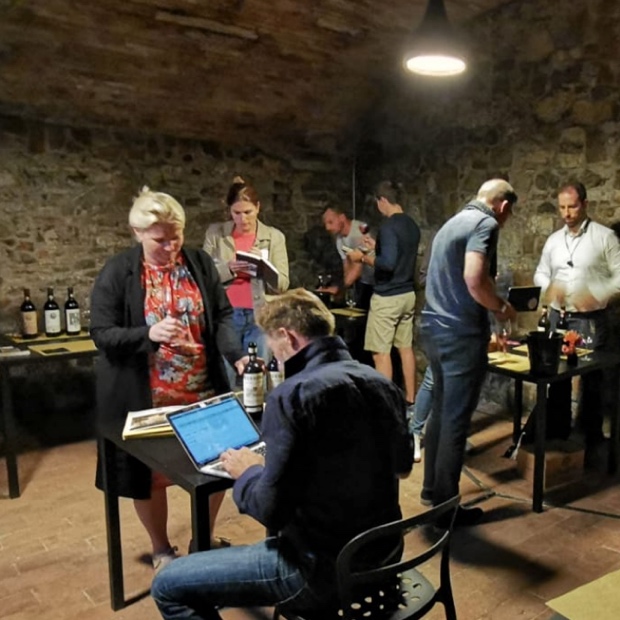
The following wines were tasted with Conte Sebastiano Capponi at Villa Calcinaia, followed by a tasting with the producers of Montefioralle in the same location. The members are producers with estates and/or vineyards holdings around the Montefioralle hill. Two years earlier my group had met with eight such producers at Calcinaia. These 21 tasting notes cover the September 2019 speed dating sit-down with nine estate principals, followed by dinner at Terreno.

Wines of Montefioralle

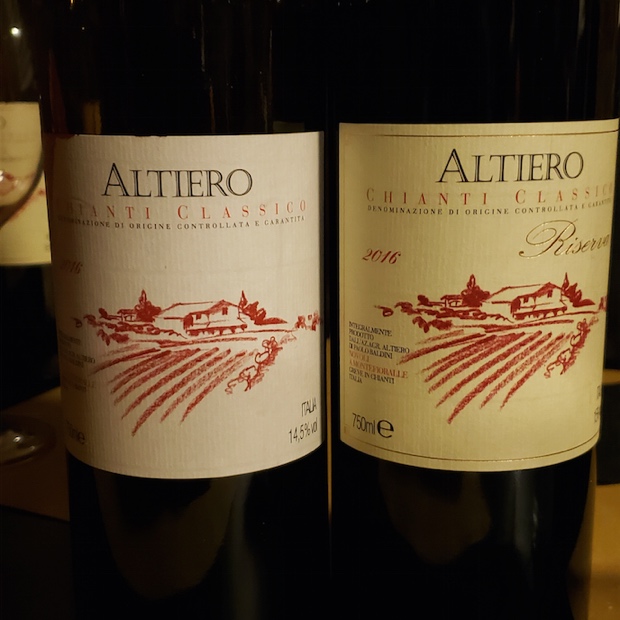
Altiero Chianti Classico DOCG 2016

Always 100 per cent sangiovese, from winemaker Paolo Baldini, from the southeast exposure off the the younger vineyard. This is the perfume of Montefioralle, inexplicable in a way, a very specific combination of flowers and herbs but there is a calm and when made this way, a purity, a clarity. A tradition from before that is forever. Slightly more unctuous and full on the palate with some wood addendum. Proper Annata. Drink 2019-2025.  Tasted September 2019

Altiero Chianti Classico Riserva DOCG 2016

Like the Annata always 100 per cent sangiovese, this time from the older vineyard facing southwest, away on an angle from Montefioralle and looking towards Panzano, the Conca d’Oro and Le Fonti. The red fruit liqueur is quite silky, savoury in a sweet and almost amaro way, so in a word, stunning. Full and polished with some tradition fully stashed away in pocket. From Galestro and Alberese. And it shows. Drink 2019-2025.  Tasted September 2019

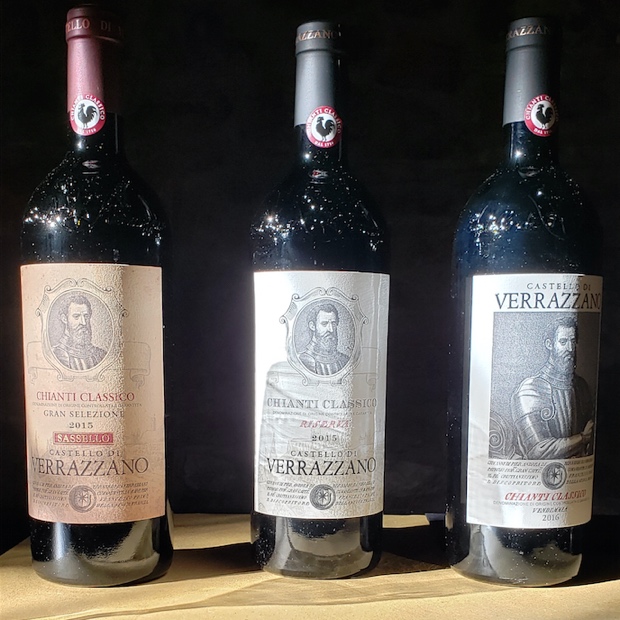
Castello Di Verrazzano Chianti Classico DOCG 2016 ($30.45)

Essential balance in Chianti Classico Annata, obviously with thanks to the ’16 vintage but even more of a many splendored thing. Concentration and intensity intertwined but truth be spoken this really climbs the hills and then descends, with grace, power and ease. A brilliant Annata from Luigi Cappellini. Drink 2020-2026.  Tasted September 2019

Castello Di Verrazzano Chianti Classico Riserva DOCG 2015 ($49.60)

A sangiovese raised organic and a textural matter really defined by the quality and the length of time in contact with its skins. While not too long the extension was embraced and the certainty of a spot on result is certainly admired. Excellent skins, earthy, rich in tannin and also used to great structural advantage. This Riserva will travel long and go deep. Bank on it. Most rewarding work from il cicliste Cappellini. Drink 2021-2029.  Tasted September 2019

Castello Di Verrazzano Chianti Classico Gran Selezione DOCG Sassello 2015

This is the wine at Verrazzano first made in 1982 as a Vino de Tavola, then as Riserva and finally as Gran Selezione, first in 2013. The Sassello is the small bird that seeks out the best grapes, in this case at 450m from the highest vineyard on the estate. This just intuits and explains vintage, place and appellation, together in harmony. It’s a cool sangiovese of smooth savour, with great length and slow developing parts. Needs more time. Just does. Drink 2021-2029.  Tasted September 2019

Lorenzi Sieni, Montefioralle

Montefioralle Chianti Classico DOCG 2017

Dry vintage, full fruit, deep red, almost out of cherry and into plum, better acidity than some of its ilk and says Lorenzo, “not greens tannins.” Agreed. Quite silky, almost glycerin and long. Well done Sieni, well done. Drink 2020-2025.  Tasted September 2019

Montefioralle Chianti Classico Riserva DOCG 2016

Riserva is quite lush and full from 2016, no shocker to be sure and of a perfume that moves from Annata and into what grows low to the ground. Really proper appellative effort for the estate and for the frazione, richly embrued in liquified glowing embers and wet spice for days. Needs time to settle in. Very structured Riserva in which to imbibe after some time. Drink 2021-2027.  Tasted September 2019

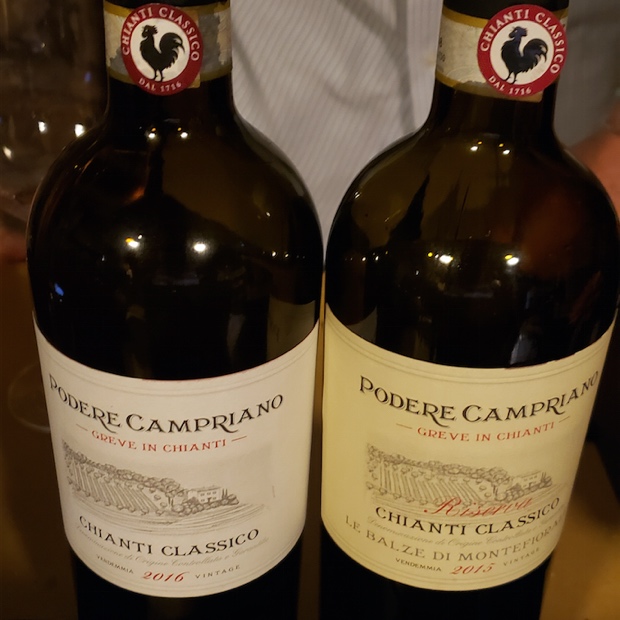
Podere Campriano Chianti Classico DOCG 2016

A perfectly consistent follow-up to a ’15 that stole that vintage’s show, here with equal aromatic excellence in 2016. Now showing as a great floral expression (remarkably early it should be noted) in a full bouquet bursting from the glass. There is a level of roundness and fine acid tang with circulative layers as good as it gets. Succinct as sangiovese, Greve and hanging around the finest of Montefioralle. A true Galestro idea presented clear as a clear blue frazione day. Drink 2020-2026.  Tasted September 2019

Two sides of the Greve River

Podere Campriano Chianti Classico Riserva DOCG Le Balze di Montefiorealle 2015

Perhaps not as balanced a vintage as the follow-up 2016 will bring to this Montefioralle Riserva but ’15 can stand on its feet, no problem at all. No sway but plenty of torque indeed. Love the fruit of 2015, as much as one needs to love fruit. The fruit goes in and then back out of your mouth in equal and opposing fashion. In balance, with acids and tannins in tow. Drink 2020-2026.  Last tasted September 2019

Exactly Campriano, distinct and luxurious in its own perfect way. it’s so very Riserva, unctuous with red fruit that seems almost completely absent of wood. It’s because of the land, a vineyard set in the forest “and still so very present.” That also means it’s in the wine. recognizable every year. Always. The vineyard is west facing above the Greve River, on old terraces, with old stones. You can drink this now even if it’s so young.  Tasted February 2019

Just put to market, the vintage will surely have so much to say and in fact already does, with a combination of perfume and spice. Still dusty, with fennel and endemic herbs, teas and brushy plants. There’s a raspberry to dried currant fruitiness that ’14 doesn’t have, also more mid-palate flesh and overall juiciness. A different sort of structure, still with long capabilities but will likely go into a drier fruit profile after the seven year mark. Elena Lapini is a very busy agriturismo and viticoltore proprietor these days and if these most recent 100 per cent sangiovese from two sides of the Greve river tracks are any indication, she’ll be busier than ever before. Drink 2019-2025.  Tasted September 2018

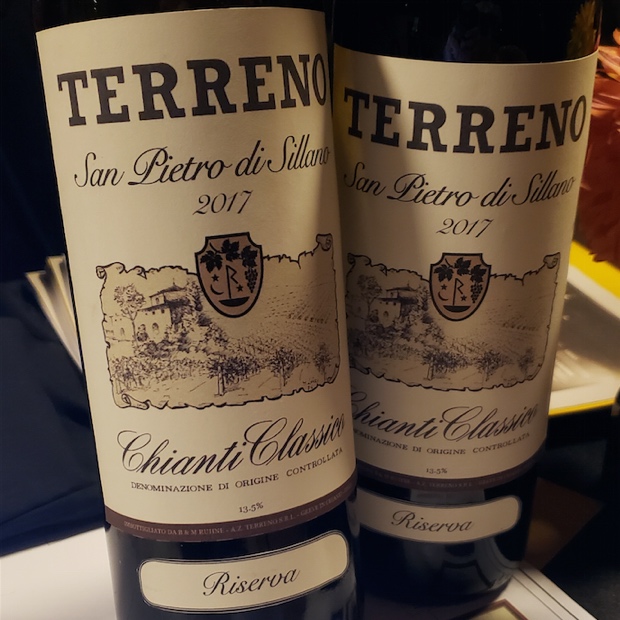
Terreno Chianti Classico Riserva DOCG San Pietro di Sillani 2017

A cru at the highest altitude at 480m of sangiovese and merlot (five per cent) with some time spent in new wood. Altitude meant no frost and also less heat from the arid vintage. Eighteen months in big oak casks, this time in new and while the high up frazione perfume is indeed fully emitting its rays there too is a silky smooth note that recalls the new wood. Looks really good and seems very fine though the wood is very involved. Should be very, very interesting. It’s quite refined. Way too young to call. Drink 2021-2028.  Tasted September 2019

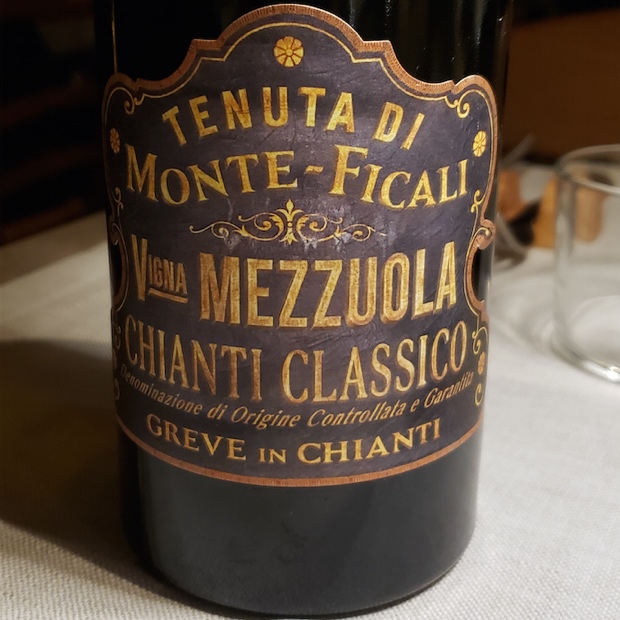
Tenuta Monteficali Chianti Classico DOCG Vigna Mezzuola 2015

The vigna-designate Annata is likewise a modern take on Chianti Classico label appearances notwithstanding but the smooth texture detail and lush glycerin flavours pale in comparison with the new barrique-aged Riserva. Here second and third passage tonneaux allow the marl and limestone of Montefioralle vineyards to speak a bit clearer and to breath a breath of 500m fresh air into this (85 per cent) sangiovese. The merlot (10) and cabernet sauvignon (5) smooth out all the wrinkles for a lush take on Annata. Drink 2019-2021.  Tasted September 2019

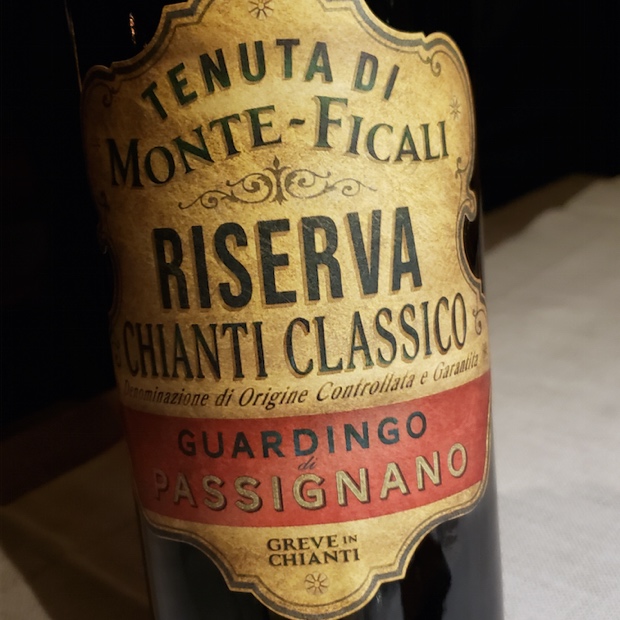
Tenuta Monteficali Chianti Classico Riserva DOCG Guardingo Di Passignano 2015

Do not be fooled by the whimsical classicism of the label into thinking this Greve Chianti Classico from the heart of Montefioralle will be old-schooled, rustic and ancient-styled sangiovese. It is in fact a facsimile of such a notion and in point of fact the opposite is true. The salt and pepper seasoning of 10 per cent merlot and five cabernet sauvignon are more like spice and sauce to prove the first point. The small barriques aging for 18 months is the second, acceding into a textural Riserva at once silky smooth and then oozing with vanilla, balsamic and resiny syrup. A mouthful to be sure and in the style so well made. A fun fact to know is about the Guardingo Di Passignano, a medieval road and the only passage that connected the three main valleys of the Florentine countryside; Val d’Elsa, Val di Pesa and Val di Greve, Drink 2020-2025.  Tasted September 2019

Terre Di Melazzano Chianti Classico Riserva DOCG Cantinato 2015

“Born in the cellar,” of sangiovese with 10 per cent merlot and five cabernet sauvignon. A true glycerin Chianti Classico for Montefioralle, with unction and spice. Sings like a blackbird. Truly Cantinato, truly. Drink 2019-2021. Tasted September 2019

Calcinaia

Villa Calcinaia Mauvais Chapon Rosato Metodo Classico 2014

A tirage of VinSanto in 2015, 37 months on lees and disgorged April 2018. In reference to a siege of Florence by the French in 494, an offer was made, not accepted and the trumpets were sounded. Piero Capponi responded with a call to arms at the gates. A matter of familial propaganda and a wine that reminds of France. Linear, sharp, citric, toasty and so very fine. Really crisp, of utter clarity and streamlined like a sail on a fast vessel. Impressive to say the least. Drink 2019-2024.  Tasted September 2019

Sebastiano Capponi

Villa Calcinaia Mammolo 2017, IGT Toscana

Varietal mammolo, fully, completely, capably in control of the wet wool character that only Sebastiano Capponi and (Monte Bernardi’s) Michael Schmelzer can effect, establish and conquer in unique red wine made in the Chianti Classico territory. This is good, righteous and proper volatility surrounding red fruit formed in a cake. Thick and unctuous from 2017 with endless character. Had been looking forward to tasting this finished wine since a first encounter out of concrete tank. Lives up to the billing and the hype. Drink 2019-2022.  Tasted September 2019

This limestone, that Alberese

Conti Capponi/Villa Calcinaia Chianti Classico Gran Selezione DOCG La Fornace 2016 ($74.95)

A warm and unctuous La Fornace in fine form, consistent to its loam-sand origins, planted in 1975, at 250m of elevation. Faces due south and sees oak casks, 10 hL, approximately six years old. Showing secure and prevalent texture admitting everything about itself, a single-vineyard sangiovese sight that draws the sun and uses every iota of its energy. Good showing from the furnace, Surely not a shocker from ’16.  Last tasted September 2019

Vigna Fornace, “The Furnace” is indeed the warmest of the Capponi Gran Selezione, full of gathered 2016 sunshine, ready to melt in the mouth acidity, tannins and in this case, chocolate. The acidity is very different to Bastigano, here cured, developed and dare it be said in such a young wine, assimilated. Drink this younger while ye wait for the bigger structure and high tonal Bastigano.  Drink 2019-2024. Tasted February 2019

Conti Capponi/Villa Calcinaia Chianti Classico Gran Selezione DOCG Vigna Contessa Luisa 2016 ($67.95)

The magical Gran Selezione from the old lady of a vineyard, dating back to 1959. A plot marked by Colombino rock, not quite limestone and not quite sandy Alberese. There is a character in Luisa that no other Gran Selezione displays, neither from Calcinaia or elsewhere. Done up in oak cask, 10 hL, approximately six years old and showing the ease meets power of 2016. Bravissima.  Last tasted September 2019

Now for something completely different. The Contessa’s vineyard is a lifelong dream and confounding sangiovese from which to grab attention. She’s immediately elegant and charming and then so closed. She is predicated on darkening red cherry fruit but her acidity is formidable and so the connection is severe to establish. She lingers with you for so long that you don’t know what to do because she was never really accessible to begin with. Teasing Gran Selezione, an incubus for now, but eventually you will realized the dream. FYI, the oldest estate 1959 planted Contessa Luisa vineyard was dedicated to matriarch Luisa Vonwiller. Drink 2023-2033.  Tasted February 2019

Conte Capponi/Villa Calcinaia Chianti Classico Gran Selezione DOCG Vigna Bastignano 2016 ($74.95)

A component of cement egg on top of the 10 hL, approximately six years-old oak casks brings new layers and light to Bastignano and separates it from the other two sangiovese. It also clay darkens and broods, hides in shadows and remains softer, fleshier, but also sneaky in structure. There’s less pinpointed Calcinaia character and more outside in the diaspora personality. If that splits hairs so be it though it needs saying that Bastignano is a man of means.  Last tasted September 2019

Capponi’s Bastignano is a Gran Selezione consistent and repetitively persistent to speak its singular truth. It is truly hematic, a sumptuous, oozing full-fruit sangiovese with above the left bank of the river Greve coursing through its blood. Very smooth, seamless, finely tannic and beautifully high in ripe acida. If all GS carried such acid then the category would float even higher. Drink 2021-2029.  Tasted February 2019

Villa Calcinaia Casarsa 2014, IGT Colli Toscana Centrale ($54.95)

Capponi’s varietal merlot is from the 1967 planted vineyard not realized as merlot until many years later. Fermented in cement vats and then 24 months are spent in barriques. A beast really, young at five years in ways most sangiovese are not. So much verdancy, spice, grip, grit, power and need for space, not to mention time. Drink 2023-2030.  Tasted September 2019

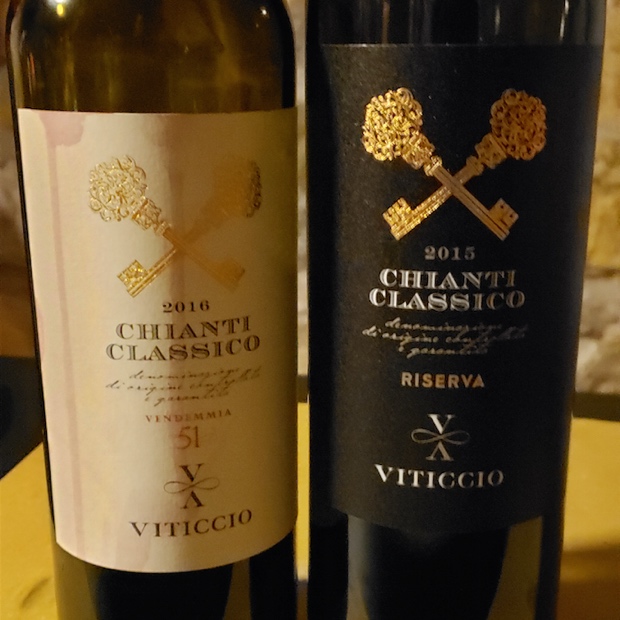
Viticcio Chianti Classico DOCG Vendemmia 51 2016 ($23.95)

Only two points of merlot with the sangiovese from two picks, the first of which goes here, for increased acidity. Dark floral and fruit scents for sure and some spice. Really like the mouthfeel and the acid-fruit structure. Tannins are quite easy. Drink 2019-2022.  Tasted September 2019

Viticcio Chianti Classico Riserva DOCG 2015 ($31.95)

With small amounts of merlot and syrah, it’s quite sappy and resinous. Plenty of smooth chocolate ganache, blackberry and backbone with thanks to a Galestro and Alberese soil mix filled with stone. Big Riserva. Really big. Drink 2019-2023.  Tasted September 2019

Good to go!

godello

Montefioralle #sleeper frazione

Twitter: @mgodello

Instagram: mgodello

WineAlign

A Lamole is a Lamole is a Lamole

Lamole

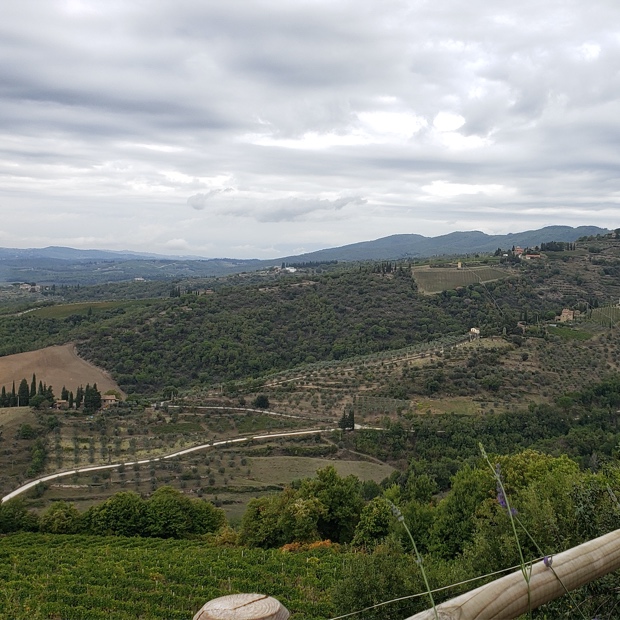
In a previous post about Lamole I posed a question. What is I profumi di Lamole? How is it the wines produced from Lamole’s eastern Greve in Chianti hills are so particular and distinct? What gives them their singular perfume? The quick answer is location, location, location. This is the story of Lamole, frazione within Greve commune, of vineyards upwards to 700m blessed with great sun by day and cold nights. Nothing else in Chianti Classico or the world carries a perfume like these sangiovese. A Lamole is a Lamole is a Lamole. Smells like, Lamole.

The portal into #lamole and what a portale meraviglioso it is to peer into. Parfumi, tradizione, altitudine. Grazie ai viticoltori.

Related – I Fabbri’s perfume of Lamole

Lamole is perhaps Chianti Classico’s least celebrated, a hidden gem set in an amphitheatre of gliding and sliding terraces around the horseshoed ringing hills of a unique viticultural landscape. There has been no obvious reason to travel there unless you knew what it is you were looking for. So what exactly is there to find in Lamole? For one thing, the aforementioned high altitude vineyards. The hamlets of Casole and Lamole are another, accessed east of Panzano and the SR 222 Chiantigiana by way of the Località Petriolo road. Ristoro Di Lamole is reason enough to make the trip, accessed off of the Località San Leonina road that connects to Via Lamole.

Sangiovese of Lamole

Related – Feeling Panzano’s pull

The Galestro terra is filled with marl and schisty rocks but also Macigno del Chianti decomposed into sandstone soil on terraces. The magical acclimazione del sottosuolo has attracted many producers in search of the special fragrance found in the frazione‘s sangiovese, including Chianti Classico President Giovanni Manetti, producer of Fontodi’s Filetta Di Lamole off of fruit grown at his cousin’s farm. Jurji Fiore of Podere Poggio Scalette makes small lots from Lamole.

Pasta al Tartufo, Ristoro di Lamole

Related – Chianti Classico’s big Raddese

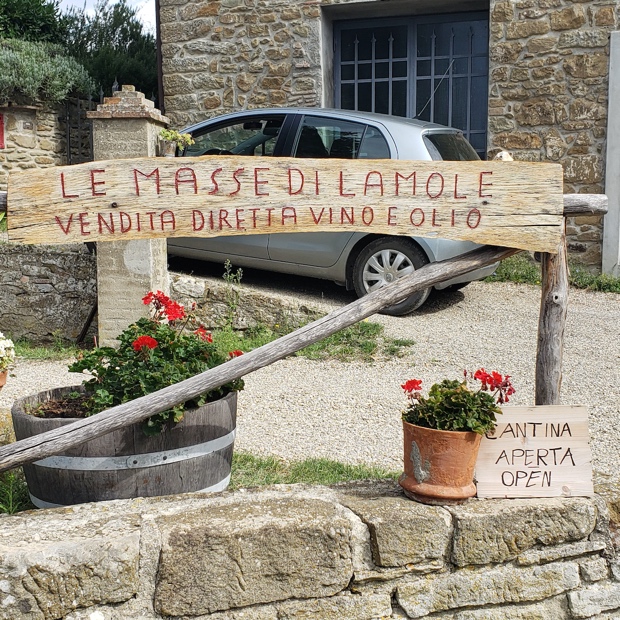
Lamole sangiovese is the collective soul of less than 10 producers; Azienda Storica Castellinuzza Proprieta Cinuzzi, Castello Di Lamole, Fattoria Di Lamole Vigna Grospoli Antico Lamole by Paolo Socci, I Fabbri, Lamole Di Lamole, Le Masse Di Lamole, Podere Castellinuzza and Castellinuzza E Piuca.

Ristoro di Lamole

Related – Looking out for San Donato in Poggio

The valley is not a common thoroughfare or often transversed en route from greater territorial points A to B, so to arrive in Lamole you climb with gradual ascendance from way down along the Greve River and up through an amphitheatre that graces the horseshoe ringing hills of its unique viticultural landscape. The origin of the Lamole perfume. Diurnal temperature fluctuations and high solar radiation are also important, resulting in wines that are lithe, crunchy and ethereal.

Paolo Socci

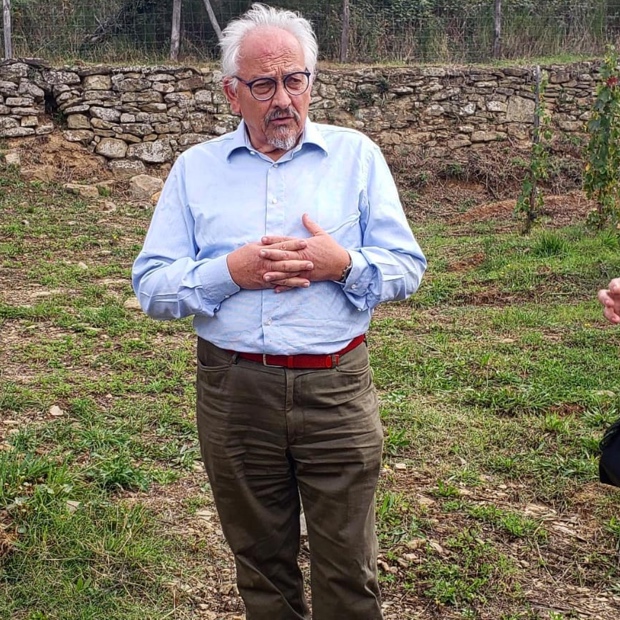
Every association of producers is led by a great mind, by a historian and philosopher with the knowledge and the experience to educate on behalf of the community and their land. In Lamole that would be Paolo Socci. Sit down with Paolo every chance you get. The following notes cover 18 sangiovese tasted at Lamole di Lamole in September 2019. As with many Chianti Classico there are some that had been previously tasted so those have now been updated to reflect these most recent observations. Your next visit to Chianti Classico must include Lamole because while the territory has many frazioni worth knowing, when it comes to perfume in these wines, nothing else smells like Lamole.

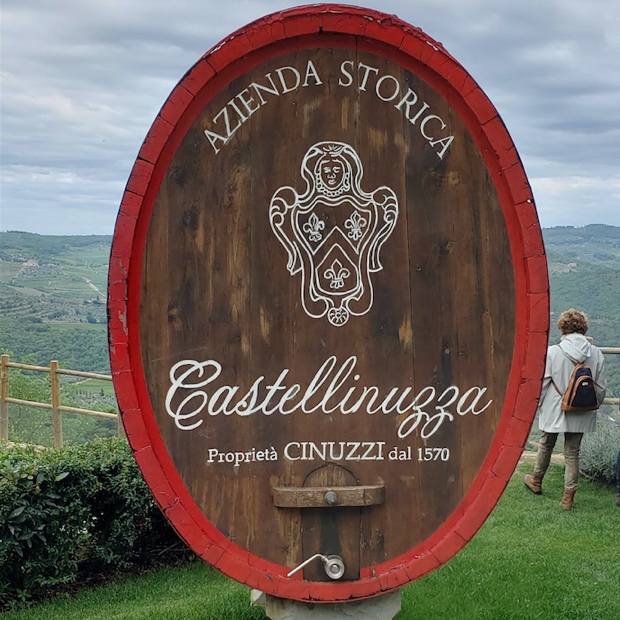
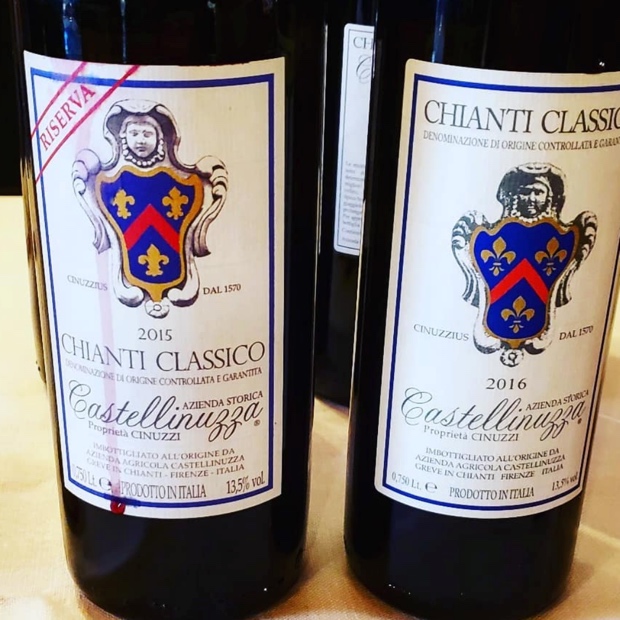
Azienda Storica Castellinuzza Proprieta Cinuzzi Chianti Classico DOCG 2016

There are a few Castellinuzza aziende and this from Cinuzzi is off of two hectares cultivated to old sangiovese, malvasia nera and canaiolo. The top of a well-ventilated promontory is the sunny spot on well-draining soils of clay and shale. Diurnal temperature swings most often result in an aromatic heritage that is Lamole. However, 2016 is somehow different. The juice factor here is almost uncanny; blueberry and boysenberry mostly but also Ribena. It’s just the fruit and cement and old wood. Simply rendered, structured and easy. Happy to have a quick glug and notable for its singularity, if not entirely synaptic and syncopated to I parfumi di Lamole. Drink 2019-2020.  Tasted September 2019

Azienda Storica Castellinuzza Proprieta Cinuzzi Chianti Classico Riserva DOCG 2013

The blueberry and musky melon is met by pomegranate and blood orange in this tangy mess of fruit, acidity and feral furtive moves. Dances with the lupi, cinghiali and cervi. Drink 2019-2020.  Tasted September 2019

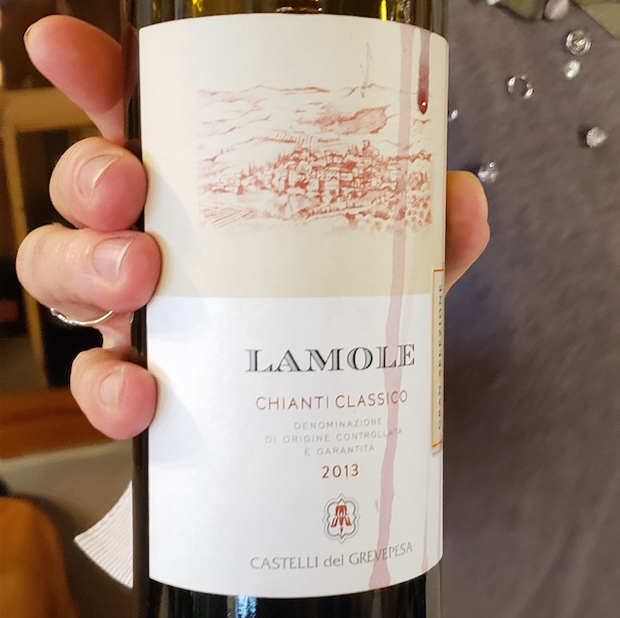
Castelli Del Grevepesa Chianti Classico Gran Selezione DOCG Lamole 2013

From the larger Chianti Classico cooperative and their Lamole holdings, a ’13 of high tones, blackberry fruit and liquid chalky, wood-derived tannin. Spiced and vanilla tinged with good bones and length. Drink 2019-2023.  Tasted September 2019

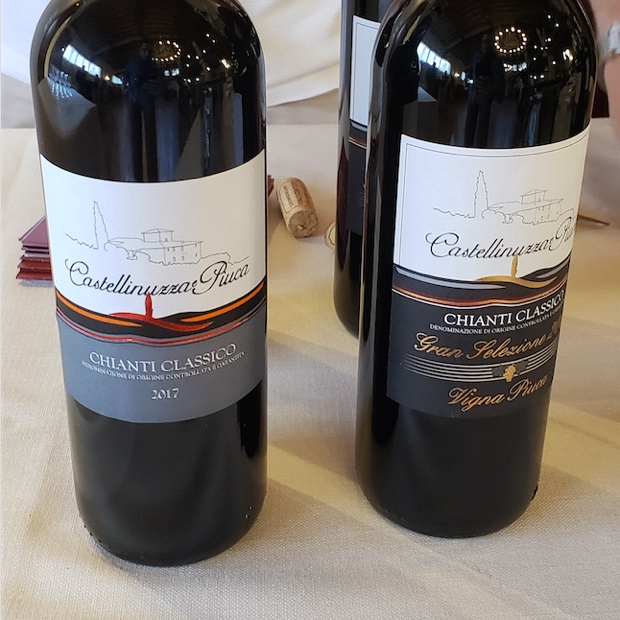
Castellinuzza E Piuca Chianti Classico DOCG 2017

A classic Lamole house melds in 10 per cent canaiolo to support the local sangiovese. Dark if high toned and dusty, riper than might be expected (surely because of a hot vintage in the coolest of Chianti Classico frazioni) and if a bit demure for the place it still reeks and rages with Lamole acidity. And the perfume. That Lamole perfume. Drink 2020-2025.  Tasted September 2019

Castellinuzza E Piuca Chianti Classico Gran Selezione DOCG Vigna Piuca 2016

Not your lower elevation Gran Selezione and while the finest selection is made in the Piuca Vineyard there is no escaping the high black cherry baritone swirling through the dusty, dried and edgy volatility. A good energy, tense and nervous, really structured and full of possibility. Needs time. Drink 2022-2028.  Tasted September 2019

Castello Di Lamole Chianti Classico DOCG Le Stinche 2013

Quite fresh and youthful, reductive even. Also dried fruit and herbs, mildly mephitic and stodgy.  Last tasted September 2019

From the Lamole producer connected to one of Tuscany’s oldest castle properties, going back one thousand years and a high altitude vineyard restored 16 years ago. This is the sangiovese of the Macigno (sandstone) soil terraces of Lamole, richer than many of the frazione and deeper in textures and transitions. Raised in cement and tonneaux there are floral as well as smoky notes, almost tobacco but more like wild herbs and wood smoulder. You’ve not likely ever whiffed (or tasted) anything quite like Le Stinche, also known as “carcere delle Stinche,” the prison on Via Ghibellina in Florence. Drink 2020-2024.  Tasted February 2019

Fontodi Chianti Classico DOCG Filetta Di Lamole 2016

Filetta is fermented in concrete vats then sent to large casks fore 18 months, but no small barrels. From Macigno soils at 550-600m in Lamole. This is the third vintage and 17,000 bottles are produced, on average. What is referred to as succulenza, but also salata and volontà.  Last tasted September 2019

Once again Lamole both astonishes and confounds. It’s make-up, constitution and display are unlike any other in Chianti Classico. It’s both liquid lava flowing and petrified, salumi cured and fresh as just picked red fruit. It’s quite a scene this Fontodi from land occupied by cousins to Giovanni Manetti, sangiovese that is chewy but linear, chalky while viscous, savoury but far from herbal. It’s the umami of Chianti Classico sangiovese I suppose. It’s so singular and needs to be investigated, nosed and tasted, again and again. Drink 2022-2029.  Tasted February 2019

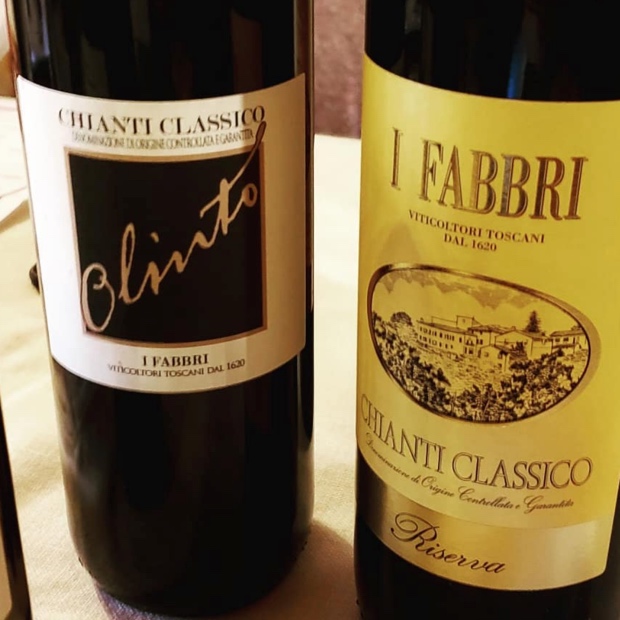
I Fabbri Grassie E Figlio Chianti Classico DOCG Lamole Olinto 2017 ($26.95)

The 2017 is a rich number to be sure, high on solar radiation and warmed by just a few plus percentage points of merlot. Great ’17 fruit to the point of welling and bursting with i profumi and that natural high acidity of Lamole. Crunchy for ’17 and in a way only this ancient Etruscan frazione can effect.  Last tasted September and November 2019

“A true expression of this terroir,” says Susanna Grassi, from the organic vineyards, and the tiniest (3,000) bottles of production. At altitudes as high as any in Chianti Classico and from the warmest of vintages, the fresh factor is as high as there will be. The fruit goes beyond cherry, into what careens like raspberry and the savoury aspect is almost sweet, but not. Aged in concrete and just so pleasurable meets territorial. Exactitude for Lamole. Drink 2019-2024.  Tasted February 2019

I Fabbri Chianti Classico Riserva DOCG ‘I Fabbri’ 2016

Susanna Fabbri’s highest elevation raises vines capable of producing grapes that are Lamole’s most impressive and afford her a selection to isolate the best of the best. The schisty marl in Galestro and sandy decomposition of Macigno are a soil source to reckon with. The chalky texture and simulate of structure look forward a decade or more and yet with this vintage that run is on hold because there is a pause. A Riserva of extreme youth this just is, mired for the time being in darkness and tannin. Also a tone that rings in current perpetuity to prevent the fruit from singing. No shortage of Lamole scent, stuffing and engagement though and also a locked in freshness. Possibilities once again speak of a potential for greatness. Drink 2021-2028.  Tasted September 2019

Susanna Grassi @ifabbriclassico

I Fabbri Chianti Classico Riserva DOCG ‘I Fabbri’ 2015

From the highest vineyard’s vines and a selection at a point which allows for the picking of what is best. Richly rendered, liquid Galestro and Macigno chalky and structured for a 10-15 year run. There’s plenty of Lamole, stuffing and possibility. Fresh enough for the vintage and certainly capable of greatness.  Last tasted September 2019

From the first passage through the vineyard, when all the fruit is ripe and ready to go. Now Riserva gets serious, or not really at all, but the table is set anew with an entirely new look at the category. Chew on this fresh and leathery wine for awhile. Take your time, feel the heights and the aspects. The acidity is incredibly fine and the effect like a blood red sunset to the west of the Lamole valley. There may be five per cent canaiolo in here, hard to say because of the way and the timing of the picking. Sapidity and salinity are perfect streaks through the sunken, drunken, oxygenated red fruit. Length all the way up to Terrata and La Sala at 100m and back. Drink 2020-2029.  Tasted February 2019

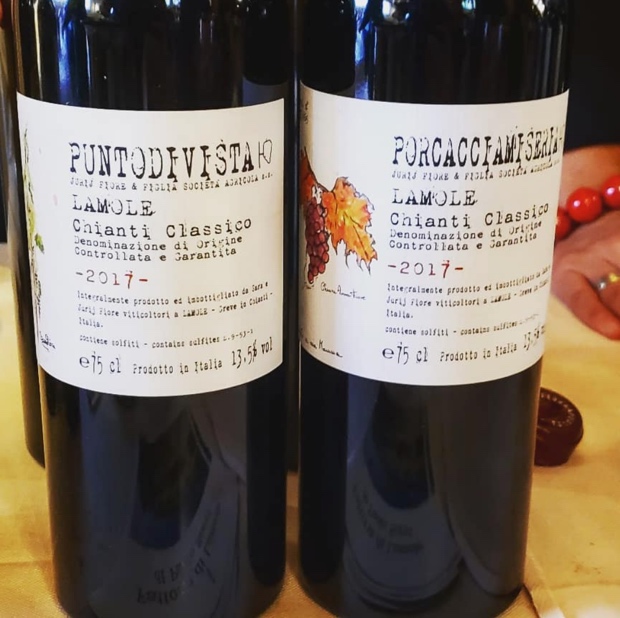
Jurij Fiore Viticoltori Chianti Classico DOCG Punto Di Vista Lamole 2017

From Poggio Scalette’s Jurji Fiore of the Ruffoli hill in Greve and his other project off of a 645m vineyard in Lamole. This is truly something other, of 70 year-old vines planted to sangiovese and other endemic varieties. Captures the civility of heritage vines and older times albeit with optimally ripened fruit and kept Lamole acidity. It’s also from the challenge of 2017 though loss was modest in Lamole and heat less of a problem. If what you want in Chianti Classico from 2017 is big, beautiful and structured then this from Lamole is a great bet. Dark fruit, great protection and protracted ability to age gracefully for two decades. Drink 2021-2033.  Tasted September 2019

Jurji Fiore of #PoggioScalette

Jurij Fiore Viticoltori Chianti Classico DOCG Porcacciamiseria 2017

The second Lamole from Jurij Fiore is from younger vines (50 years of age) which is downright youthful as compared to the PuntadiVista field blend. There is indeed more spirit and energy, more spice and lift, more intensity and masterful Lamole spirit. I parfumi di Lamole for certain and without any equivocation. Same structure on brighter fruit. Up to you which matters more. Drink 2021-2032.  Tasted September 2019

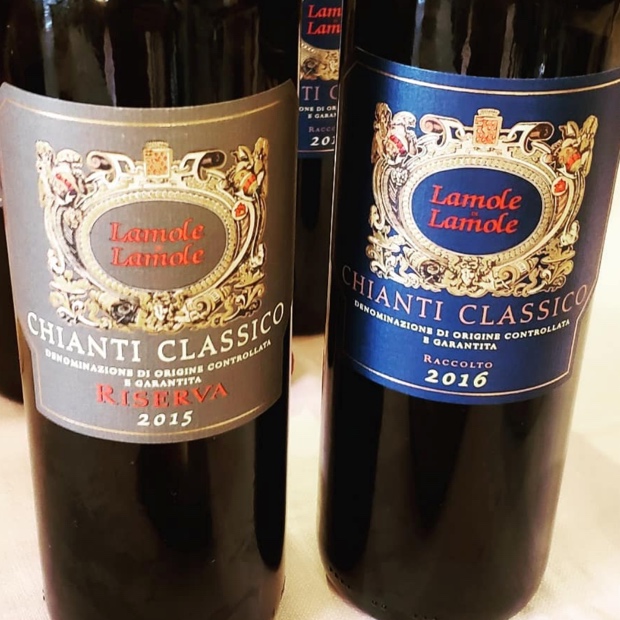
Lamole Di Lamole Chianti Classico Riserva DOCG 2016

Full expression of Lamole shrouded and rung up the ladder with merlot and cabernet. The use of an optical sorter at crush time finds only perfect berries of provenance, concentration and internationally delegated varietal purity. The generosity of wood compounds the deep, dark and silky perfection. All is laid out for the here and now. Drink 2019-2021.  Tasted September 2019

Lamole Di Lamole Chianti Classico Riserva DOCG 2015

Full expression of Lamole clouded and raised up a bar with merlot and cabernet. The optical sorter finds the grapes for maximum concentration and internationally designed varietal purity. That and the very generous barrels. A bit higher toned and lighter at this point. That is all and all in all this Riserva is all in. Drink 2019-2020.  Tasted September 2019

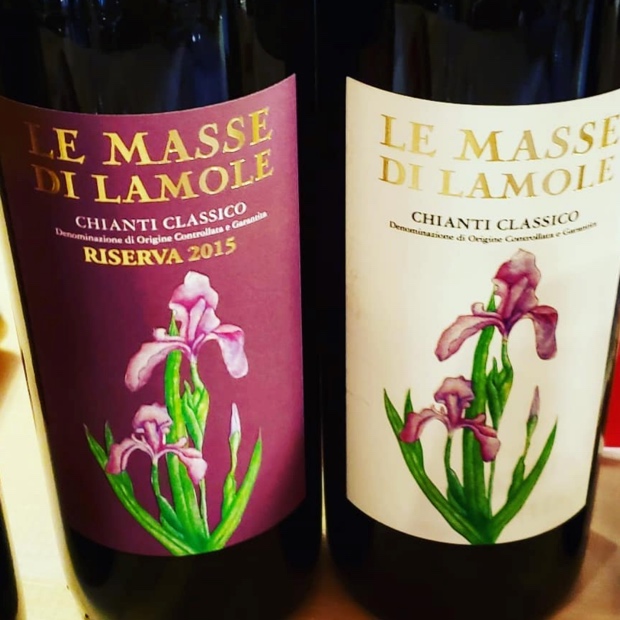
Le Masse Di Lamole Chianti Classico DOCG 2017

From Lamole’s highest estate and sangiovese (95 per cent) at 630m. Raised in Tuscan chestnut barrels. Big and fresh, absolute classic Lamole perfume and acidity, what you expect and exaggerated to many degrees. That is because of grapes hung long into October it is suspected. Big wine for the frazione. Sings with the classic cuisine of the place. Drink 2019-2022.  Tasted September 2019

Le Masse Di Lamole Chianti Classico Riserva DOCG 2015

Like the ’17 Annata this ’15 Riserva continues the thread of big and bountiful but with Tuscan oak instead it climbs into spice and volatility. Quite sappy albeit lean and so much balsam in many respects. A bit of innocence lost as a result. Drink 2019-2020.  Tasted September 2019

Podere Castellinuzza Chianti Classico DOCG 2015

An all cement, 95 per cent sangiovese with colorino. Lamole specimen of salinity, sapidity and spirit. There’s great freshness, energy and life to this one of simple pleasure and from an aromatic standpoint it is pure Lamole. Classica standout in every respect. Drink 2019-2023.  Tasted September 2019

Serena Coccia

Podere Castellinuzza Chianti Classico Riserva DOCG 2015

A 100 per cent sangiovese in Riserva clothing that comes through with lithe appellative action but is sneaky spicy and structured. Getting into a sleepy moment but just woke enough to be classed on its own.  Last tasted September 2019

Podere Castellinuzza’s Riserva is one of Lamole’s most generous (100 per cent) sangiovese though not without the very particular salty-mineral-sapid streak the hill always delivers. Only 1,500 bottles were produced of this highly traditional Greve-Lamole ’15 and it’s most certainly a perfect foil for fresh pasta with pumpkin, roast chicken, pork and rabbit. Drink 2020-2027.  Tasted February 2019

Good to go!

godello

Lamole

Twitter: @mgodello

Instagram: mgodello

WineAlign

Feeling Panzano’s pull

During the final days of September 2019 we Canadians made our way to Toscana for a week of Consorzio Vino Chianti Classico business. While a group of road hardy cicliste e ciclisti were racing their team bikes up, down and around the Granfondo del Chianti Classico winding roads of the territory and others were taking in the sights of Firenze, I was strolling through the Sunday market, visiting with friends and pre-tasting some sangiovese di Panzano. Every time I go I find myself feeling Panzano’s pull.

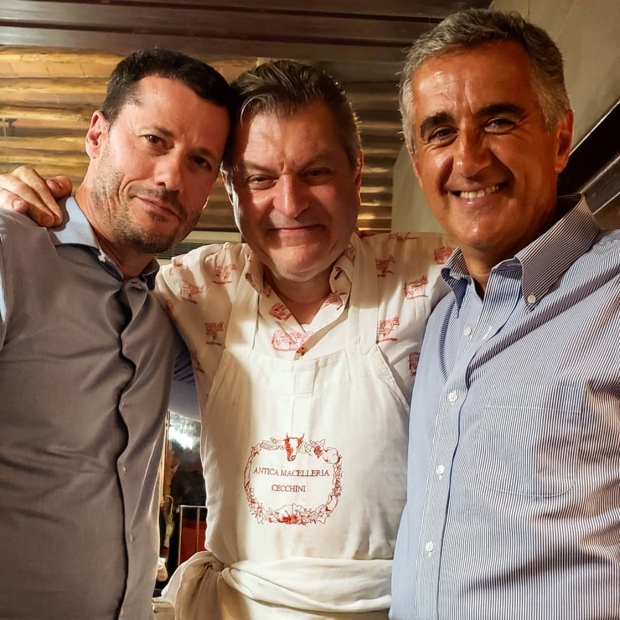
Godello, Cecchini, Manetti

Panzano’s central Chianti Classico location is crucial in so many ways. Its two most famous inhabitants and native sons are the Consorzio’s incumbent President and proprietor of arguably the territory’s most well-known and respected family-run, not too large, not too small sized estate. That would be Fontodi’s Giovanni Manetti. The second is the village’s figlio nativo and world famous butcher, Antica Macelleria Cecchini’s Dario Cecchini. Panzano is also home to the Conca d’Oro and few vineyard enclaves are as prolific, scenic and fertile as this wide swath of sangiovese heaven. The frazione within Greve commune is also invisibly set upon the Greve River flood plane, positioned with stead grace and soil exceptionality.

Within Greve it occupies a centrality bordered by commune neighbours Castellina, Barberino Tavarnelle and Radda. You might actually imagine Panzano as the exact middle inside a circle drawn clockwise from Greve in Chianti (12 o’clock), to Volpaia (three o’clock), through Castellina in Chianti (six o’clock), past San Donato (nine o’clock) and back to Greve. Heart of the matter.

Panzano above the Conca d’Oro

Related – The ins and outs of Panzano in Chianti

Two years ago I wrote about Panzano and its pioneering association of producers, the Unione Viticoltori Panzano. Please click on the link above to get the full story on Panzano and its raison d’être. The original Panzano Winemakers Association was founded in 1995 to celebrate common ground and for like-minded producers to articulate the necessity and pursuit of shared interests. With the famous Conca d’Oro at its epicentre, Panzano encompasses a set of hills aboard and encircling a plateau rich in Galestro and a rather significant altitude where vineyards are planted to between 350 and 500 meters above sea level.

Breathing in the glory of the Conca d’Oro

Related – Chianti Classico’s big Raddese

Consider Panzano as a wild unknown country where nothing could go wrong, as a dividing line running through the centre of town, as a ridge slicing on a diagonal axis from Volpaia in Radda to Mercatale in San Casciano, direction Casanuove. All part of the same hill. The ridge’s particular geological composition is consistent and these atmosphera sottosuolo soils that run through Panzano are the epicentral factor in determining the type of physiology common to the sangiovese. Somewhere, somehow, that means something, to someone. It’s a savoury-sapid-saltiness equipped with acidity that makes Panzano’s a freshness not really like any other. This is especially true in Riserva and even in Gran Selezione examples. 

Panzano rocks are all in

These words about Panzano are part of a contiguous acceleration to investigate inward, to focus on the visceral isolations within Chianti Classico. This third such essay published since that September trip means there may be five or more to come in advance of the coming Anteprima and Chianti Classico Collection 2020 taking place in Firenze two weeks from today. Panzano’s story writes itself because the thread of sangiovese consistency has few if any cleaved rivals in the greater territory. Panzano’s wines stand apart with their attention to textured detail, in their ability to shine even in their youth and finally, their acumen to intuit a very straightforward and knowable set of structural values. These are sangiovese of great upbringing, etiquette and most importantly possessive of a great respect for their origins. Panzano is spoken for with great clarity by these producers and their wines.

The Cecchini experience ~ Grazie Dario, Panzano and Chianti Classico #chianticlassico #chianticlassicobootcamp

Related – Looking out for San Donato in Poggio

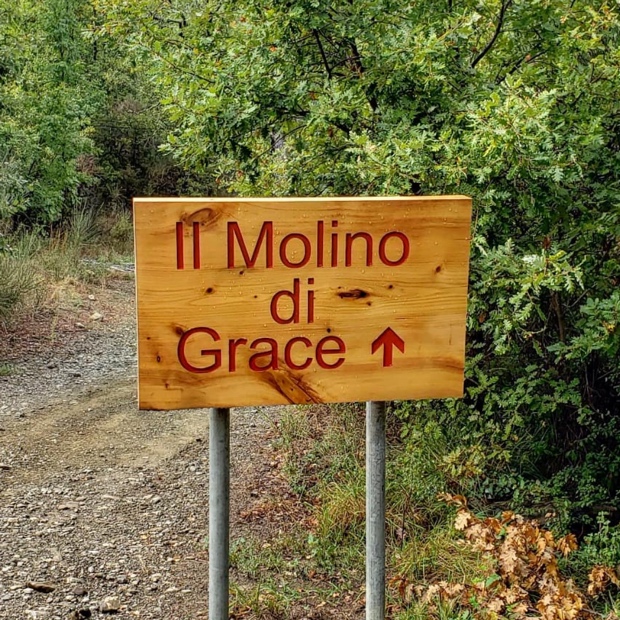
The following are 34 Panzano sangiovese tasted at Le Fonti, Il Molino di Grace, Fontodi and then followed by dinner at Cecchini. Many are wines I had previously tasted and some of the notes have been updated to reflect new observations. If you ever find yourself in Chianti Classico, I would imagine you’ll not be immune to feeling Panzano’s pull.

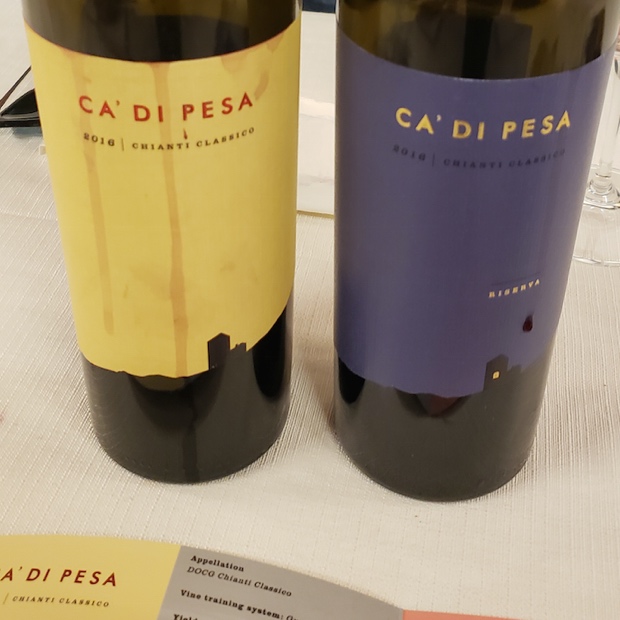
Ca’ Di Pesa Chianti Classico DOCG 2016

Ca’ di Pesa is 95 per cent sangiovese, raised in second passage barriques (80 per cent) and 20 per cent grandi botti, on average. Dark and rich, black cherry ambitious and really, really modern. A high quality vintage and goes for it, no holds barred. Lots of wood. Drink 2020-2026.  Tasted September 2019

Ca’ Di Pesa Chianti Classico Riserva Barrone DOCG 2016

Riserva is 100 per cent fermented in amphora and then moved into barriques, much of it new. Again the ambition is clear. Vanilla, graphite and everything spice. Drink 2021-2025.  Tasted September 2019

Tenuta Carobbio Chianti Classico DOCG 2015 ($37.00)

Dario Faccin’s is 100 per cent sangiovese as it will always be going forward and with an amazing acidity of 6.4 (tA). Wow is this still so youthful, even just a touch reductive, from an alcoholic fermentation at a very low temperature. Very low. Oxygen is only introduced at that very low temperature, to preserve not only colour but also aromatics. So be patient because time is its and your friend. The palate is so broad and generous but this is not a barrel tasting. This is real life. Such structure should be illegal. Drink 2021-2029.  Tasted September 2019

Because he’s Dario F-in Faccin, that’s why g-dammit! #carobbio #sangiovese #chianticlassico #panzano #galestro

Tenuta Carobbio Chianti Classico DOCG 2014 ($62.00)

From a vintage that was made for the intensity and manic work of Dario Faccin. You need to investigate so very deep to desalinate and to feel the layers peel away before getting to the crux of Carrobio’s Panzano Galestro and Alberese. Magnificent and large, balanced and massive ’14 oh my. Drink 2023-2032.  Tasted September 2019

Casaloste Chianti Classico Riserva DOCG 2016

The amalgamation of ripest, richly purposed fruit and high toned meatiness brings the great divide together between levels of the appellative period. This is what you want from a well-developed and purposed Riserva, in structure, out of passion and back into reality. Most excellent and rigorous work from Gionanni Battista d’Orsi out of Panzano. Drink 2021-2028.  Tasted September 2019

I Canadesi and I Produttori di Panzano at Cecchini

Casaloste Chianti Classico Gran Selezione DOCG Don Vincenzo 2016

An equal representation of selections from vineyards east and west, harvested and fermented separately and then brought together. Once again there is ambition and heft but balance is brought on by ripe acidities and everything resisting going to the breaches of edges. Such a fine liqueur for Gran Selezione and one to age for decades. A captured snapshot of 2015 with great structure as a frame to the picture. Drink 2021-2032.  Tasted September 2019

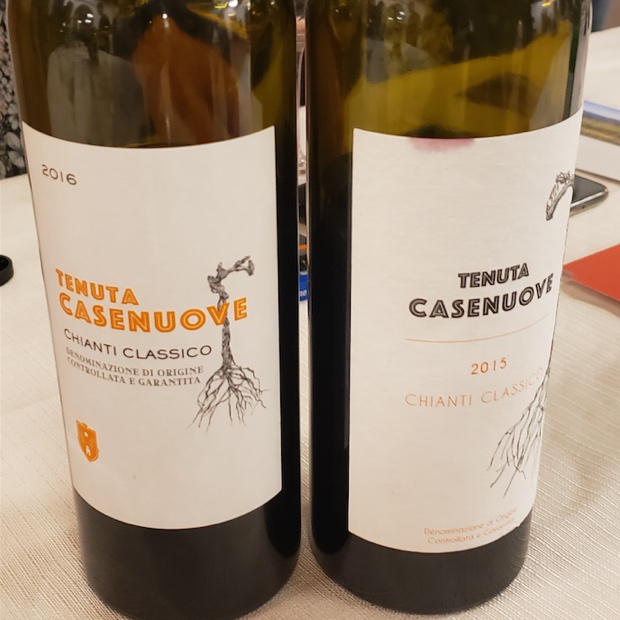
Tenuta Casenuove Chianti Classico DOCG 2015

The first vintage, 80 sangiovese with 15 merlot and 5 cabernet sauvignon. The sangiovese was raised in 25hL botti and the inernational grapes in tonneaux. Darker and deeper than the ’16 to come. Good acidity keeps it moving through the waves of vanilla and graphite. Drink 2019-2020.  Tasted September 2019

Consorzio Vino Chianti Classico President Giovanni Manetti, Fontodi

Castello Dei Rampolla Chianti Classico DOCG 2016 ($44.95)

Rampola’s vineyards grace the top of the northern hillsides of Panzano’s Conca d’Oro valley beneath the village. These are some of the most storied slopes in all of Chianti Classico and the castle that bears the name is one of its most famous landmarks. The richest, most glycerin liqueur that sangiovese is capable of reaching is found in this 2016 but not without accompanying acidity and fine-grained structure. Here from one of the territory’s classic rebel child houses is a formidable Annata from a glorious vintage and the kind of bouquet meets boneset that dreams are made of to last decades. It’s really quite something. Drink 2022-2033.  Tasted March 2019

Fattoria La Quercia Il Chellino Chianti Classico DOCG 2017

From a more northerly vineyard with later ripening and the cool savour is readily apparent. Very expressive, chalky tannic and not yet resolved. Will turn and fire into a terrific expression of Panzano albeit in a highly singular, off the noted grid sort of way. Drink 2020-2026.  Tasted September 2019

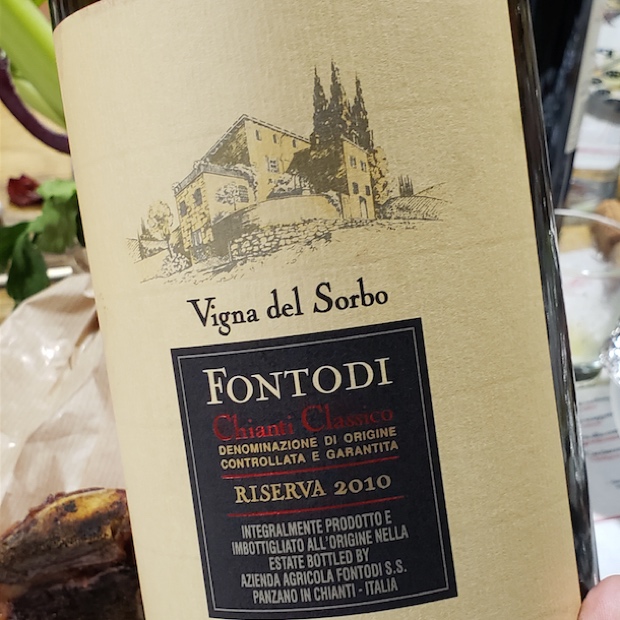
Fontodi Chianti Classico Gran Selezione DOCG Vigna Del Sorbo 2016 ($97.95)

Vigna del Sorbo sits in the Conca d’Oro at the southeastern end of the vineyards in clay soils dominated by Galestro and away from the Alberese of the Flaccianello sites. It’s always a refreshing meeting meaty wine but then along comes 2016. The satiating and pleasing factor is there from the start, not wanting for wondering if indeed the possibilities are there. They are in waves with bigger bones, more flesh hanging on though teasing to fall off at the slightest touch of the hand. They will not because structure keeps the meat secure even though it is so bloody tender. With acidity nearing eight on the tA scale there is every reason to believe 2016 Vigna del Sorbo will go 25 years easy, with or without the shedding on tears. Drink 2021-2039. Tasted September 2019

Fontodi Chianti Classico Riserva DOCG Vigna Del Sorbo 2010

Tasted from magnum at Cecchini with fruit wholly, ostensibly intact from a warm and grip-inciting vintage when these Vigna del Sorbo vines would have been in the 35-40 year-old range. Also from a transitional period in the climate change pantheon so therefore a time when climate was more unusual and not yet the new norm. A fruit bomb this sangiovese, juicy and bursting from a blue to black fruit year. Almost Cassis in orientation, cool truth spoken and acidity in the premium value category that lifts the wine with ease. Sip it with grilled beef and the picture is complete. Drink 2019-2029.  Tasted September 2019

Standing on the shoulders of giants #flaccianello #fontodi #sangiovese

Fontodi Flaccianello Della Pieve 2016, IGT Toscana Centrale ($147.95)

“For me this is a Chianti Classico. I’m waiting for others to cross the river together,” says Giovanni Manetti. It tastes of Chianti Classico, albeit with an ulterior profile to Vigna del Sorbo. There is a variegation of Galestro in the soil, along with Alberese, Calcium Carbonate and Pietraforte. The vineyards come down from Panzano and face an opposite direction. Flaccianello is strong and structured, meaty, floral, a compound composition of elements, minerals and the flesh of animale. It’s a big boned boy with acids and structure as a full throttle experience. Drink 2022-2037.  Tasted September 2019

Il Molino Di Grace Chianti Classico Solosangiovese DOCG 2017 ($24.95)

Drawn from Botti now at 18 months and the new plan is to extend that even further so 30 months after harvest will become 33-36 when the bulk of the wine goes to bottle. If anything is going to teach the world about the aging needs and worthiness of Panzano sangiovese and Chianti Classico, well the gentle suggestion and confident persuasion starts right here. Dusty and conversely soft, then grippy and elegant too. Drink 2021-2027.  Last tasted September 2019

Il Molino Di Grace Chianti Classico Solosangiovese DOCG 2016 ($24.95)

Very little has changed in fact ’16 has moved almost nowhere in the best possible way. Sneaky structure is there, in movements of Bach tones and the usual sangiovese brilliance, especially from these multifarious soils. Galestro, Alberese, Pietraforte, calcium carbonate. All in. Last tasted September 2019

”I think it’s a very good vintage,” announces Iacopo Morganti and that is all you really need to know, though take the time to glide along and feel the in synch moving parts. This is essential and partisan to gain an understanding ingrained of deepest knowing. There is something about this house style, this estate gathering and this layering of no-proviso, 100 per cent sangiovese. It walks you down all the way to Rimocine, down to the bottom of the Grace vinyards, looking up at San Francesco and the vines all around. This transports you to a place. Isn’t that what you want? That and great fruit, acids and fine tannin. Southeast Panzano sangiovese incarnate. Drink 2021-2028.  Tasted February 2019

Tasting through @ilmolinodigrace ~ The dramatic ’16s and super surprising ’17s. One breath of Gratius and see how it has separated from the pack. These are Panzano of sneaky grip and structure.

Il Molino Di Grace Chianti Classico Riserva DOCG 2017 ($29.95)

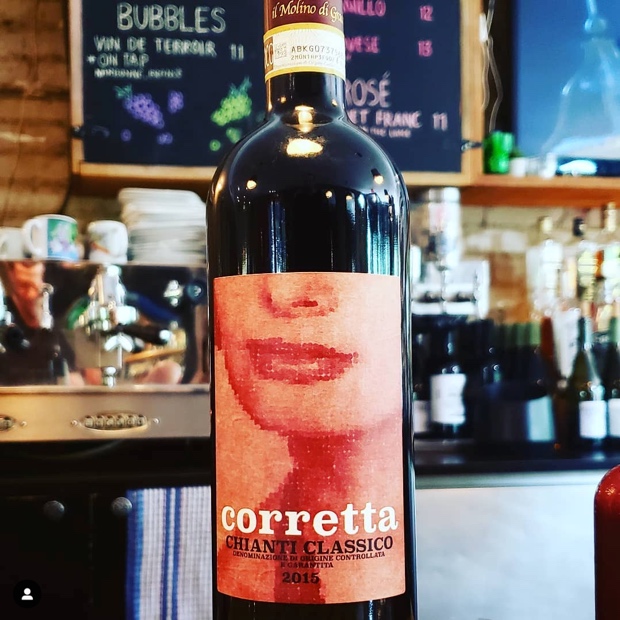
Wow ’17 Riserva could handle waiting until 2021 to be released. So grippy, such acidity, so much concentration and while quality is exceptional still the vintage quantities are so low. A number in and around 40 per cent of normal. Wooly tannins, so in control and very fine. Remember there was also a frost in May that decimated the vines, followed by three months of intense heat. Vineyard management and the most pragmatic, accepting and realistic team in place made sure to do everything right. “Corretta” to the nth degree. As is this organic and biodynamic Riserva. Drink 2021-2029.  Tasted September 2019

Il Molino Di Grace Chianti Classico Riserva DOCG 2016 ($29.95)

Incredible depth and richness in Riserva out of ’16, with layers of variegated red fruit not seen in these parts or this appellative wine in quite some time. The linger and the effect is all encompassing and timeless. There will be very little movement in the next three years and perhaps longer. This came to know the who, what and why from the genesis.  Last tasted September 2019

Welcome to the new world Il Molino di Grace order. Here along, after and in addition to the Annata that changes everything is a crunchy and chewy Riserva of pure, laser focus. An extension of Annata with deeper fruit and confidently brighter than most Riserva. The selection is not merely impressive, it’s necessary. The opening farewell is just the beginning of the end. The fruit sits way up on high, on a hill where acidity and tannin live intertwined, transparent and monumental. Sangiovese on its own in Riserva might need help, a little bit of support to elevate and celebrate a little bit of everything. Not this IMG. Solo suffices with ease. It’s already got a little bit of everything. Marks the first of more steps to come for an estate ready to climb into a highest Chianti Classico echelon where it wants, needs and deserves to be. Drink 2021-2029.  Tasted February 2019

Il Molino Di Grace Chianti Classico Riserva DOCG 2006

Poured from magnum at Cecchini in Panzano. It had been nearly five years since last tasted and the large format has suspended time. Still a matter of all constituent parts lifted, elevated and residing where things are haughty and high. Nigh time to drink up certainly but there is a freshness and an accumulated presence of acidity that speaks of the southeast Panzano site. If land could talk it would utter these sangiovese words. If vineyards could sing these would be the notes.  Last tasted September 2019

An ’06 Chianti Classico Riserva you say, pre-aged, delivered to the Ontario market and presented here in 2014, all in for $24? You can’t fool us. We’ve been duped too many times before. This must fall into the “too good to be true” category. The answer depends on which style of Chianti Classico you prefer. This walks all the halls, plies the trades and hits the marks of the CCR ancients. Comes from a remarkable vintage, holding on but in true advanced, oxidizing and fruit diminishing character. Mushrooms and truffles abound, as does game in the early roasting stage. A note of Brett is here too, not over the top but its presence can’t be denied. Acidity speaks, as does bitter chocolate. This is not for all but all should have a go.  Tasted November 2014

Il Molino Di Grace Chianti Classico Gran Selezione DOCG Il Margone 2017

No change in ’17 “but of course we made less.” Only 15,000 will come of it and don’t expect to see this hit the market for at least two more years. Don’t expect to drink it for three to five beyond that. The concentration multiplied by the concentration multiplied by the barriques makes for an eight digit factor. Yes this is very different than the others and the acidity too but its a magnificent specimen. Massive tannic attack. Just massive. Wait for the elegance to emerge in 2030. Drink 2025-2038.  Tasted September 2019

Il Molino Di Grace Gratius 2017, IGT Toscana

Gratius expresses the vineyard in ways the Annata, Riserva and Gran Selezione appellative sangiovese do not. This 100 per cent sangiovese reeks of the vineyard; fennel. rosemary and gariga. From the part of the vineyard at the peak of the hill where San Francesco’s hulking sculpture towers and watches over the sangiovese. Grip, intensity, signs, wealth of fruit, knowledge and portents. So fine. Drink 2025-2038. Last tasted September 2019

Only sangiovese as is the plan for the entire estate. That Panzano perfume and glycerin though there is some more weight and bones than others. Reminds of the style that’s constant from Fontodi to be honest. These are some of Chianti Classico’s finest acids, sweet and refined, They compliment and support. Drink 2021-2027.  Tasted September 2019

Pomegranates of Panzano

Il Palagio Di Panzano Chianti Classico Riserva DOCG 2015

Le Bambole is the place, the first selection of one piece of land, to have a Chianti Classico that expresses Il Palagio within the territory but more so within Panzano. Richer than some but balanced and sumptuous, big again but you wouldn’t really know it. Definite connection to Annata 2016 even if the vintage is different. And it needs time. No shocker there. Drink 2020-2027.  Tasted September 2019

Il Palagio Di Panzano Chianti Classico Riserva DOCG 2013

Particular, personal, vintage related, so Panzano. So consistent with the wines to come.  Last tasted September 2019

This services one of the more interesting aromatic entries thus far, not quite exotic but certainly different. It’s partly reduction, genesis and youth but also a certain soil plus some new barrel. Perhaps the most tannic wine tasted all day, this is way, way too young to gain any sense early of. The structural steel and petrified wood components are massive and untouchable, immovable and indestructible. There is great fruit lurking there and that soil, “under the soil, the soil, the soil, yes, deep in the soil.” So wait at least three years before supper’s ready.  Drink 2021-2029. Tasted February 2017

Le Cinciole Chianti Classico DOCG 2016 (207795, $19.95)

A floral, bright as a clear blue sky day sangiovese, 100 per cent as such and meaningful. There can be no better compliment that a Chianti Classico can pay then this. It tells you it is happy to see the warmth in your smile and the contentment in your face. That’s because it has charmed you and helped you through. It’s really that simple. Wonderful vintage and the best in modern times for Le Cinciole. Drink 2019-2024.  Tasted September 2019

The Conca d’Oro below the village of Panzano

Le Cinciole Chianti Classico Riserva DOCG Aluigi 2014

A rich and luxurious ’14 from a vintage out of which austerity might be expected. Instead there is sapidity and structure, glycerin and silken textures. Really good work, surprising or not from Le Cinciole. Drink 2019-2022.  Tasted September 2019

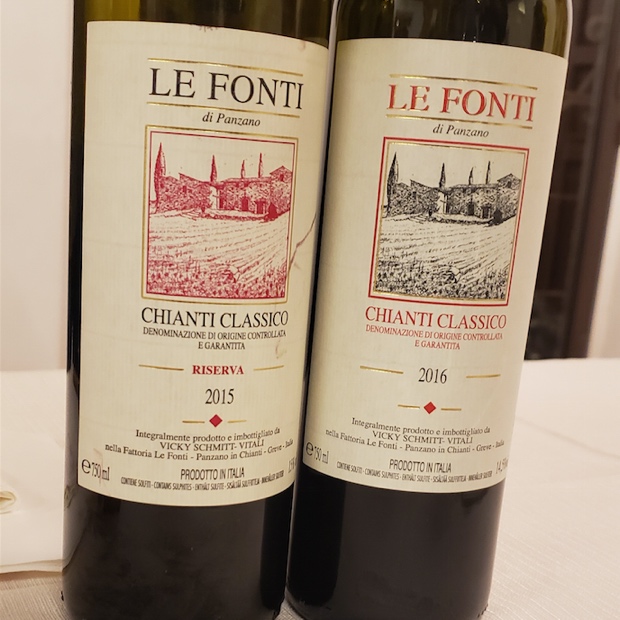
Le Fonti Di Panzano Chianti Classico DOCG 2016 ($31.95)

Officially still a tank sample but it is a finished wine, just awaiting DOCG approval. Very firm and juicy, replete with the classic Le Fonti aromatic profile, of salumi, fennel, herbs and salty savour. Fruit, acidity, structure all there in fineness and Panzano culpability. Needs a year to come together, at least, for sure. Essentially 90 per cent sangiovese give or take a point or two with merlot and cabernet sauvignon. Drink 2020-2027.  Tasted February and September 2019

The vineyards of Le Fonti

Le Fonti Di Panzano Chianti Classico Riserva DOCG 2015 ($44.95)

Two years in the barrel (400 and 500L, one is Hungarian Kader), again approximately 90 per cent sangiovese and the new wood in ’15 was in the 20 per cent range. Here comes that Le Fonti aromatic profile again, as distinct as any sangiovese you will ever nose. Would like to think they could be picked out of a line-up anywhere. Savoury, salty, cured, elegant and pure pleasure available. The quietest 15 per cent alcohol anywhere and from the coolest part of Panzano, to the east. Drink 2021-2028. Tasted February and September 2019

The vineyard was hit hard by the frost and so only 24,000 bottles were produced, as opposed to the normal number at 55. There’s great freshness especially for ’17. That said the heat stress was not an issue because the right rootstock, the organics and the it factor gave away what was wanted and what was needed. Bright, effusive, even if 2017 offers just a bit less of the place than usual. It’s ultimately elegant and balanced. Drink 2019-2025.  Tasted September 2019

Renzo Marinai Chianti Classico DOCG 2016

Of 90 per cent sangiovese with 10 per cent cabernet sauvignon. From 8.2 hectares in the Conca d’Oro. 35,000 bottles produced, maximum to 40 in the next few years. Organic since the beginning, in the 90s. Same beauty on display as noted back in February 2019.  Last tasted September 2019

One step closer to a deep, deep understanding is where Marinai has arrived with this welling, oozing and fully rendered Greve sangiovese. There’s some true depth and fullness to this fruit and this constitution, not to mention architecture. Certainly filled with warmth and spice for the lovers here. Drink 2020-2024.  Tasted February 2019

Once again the same 90 sangiovese with 10 per cent cabernet sauvignon mix, an extra six months in bottle with some barriques. More of the same, an extension from the Annata and with great consistency. Two peas in a pod. In Riserva the notation is a big wine, of big oak and with big plans that will take quite some time to unfold. Drink 2021-2028.  Tasted September 2019

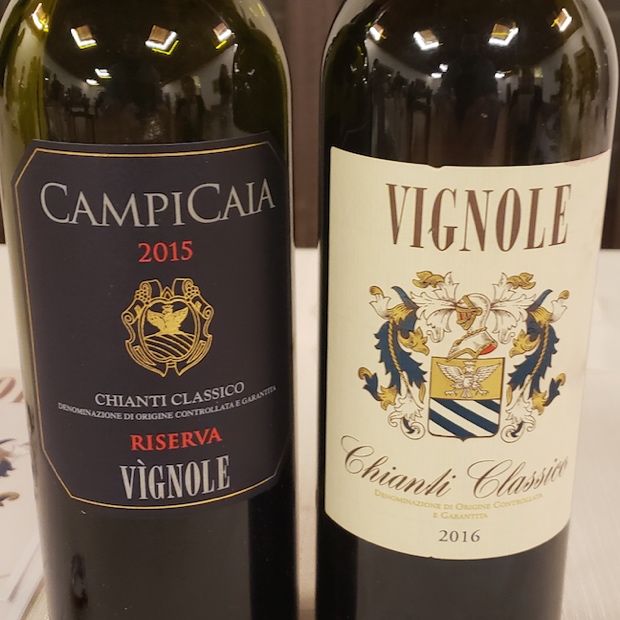
Tenuta Di Vignole Chianti Classico DOCG 2016 ($23.95)

Bought in 1970 and 11.5 hectares planted, jut over half of the estate. A warm, rich and heady sangioivese with 15 per cent merlot. Liquid chalky from French oak on the merlot and very textured. Drink 2019-2022.  Tasted September 2019

Cecchini

Tenuta Di Vignole Chianti Classico Riserva DOCG Campicaia 2015 ($44.95)

Sangiovese blended with cabernet sauvignon in a Cassis, resiny and sappy Riserva. Plenty of ripeness, richness and ambition. A modernity not always witnessed. Could be Napa cab and a good one at that. Drink 2019-2022.  Tasted September 2019

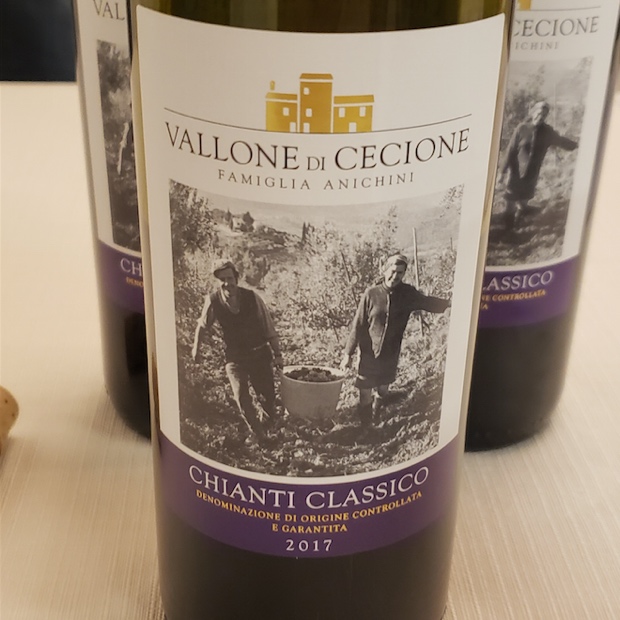
Vallone Di Cecione Chianti Classico DOCG 2017

Sangiovese with 10 per cent canaiolo, eight months élevage. A slight wet wool note though just slight and blended delightfully into the glycerin fruit and high reaching acidity. Just what Annata from Panzano needs to express, light, bright and naturally curated. Drink 2019-2021.  Tasted September 2019

A completely new floral approach to Annata, of flowers and herbs specific to the place though not necessarily a stretch to imagine the aromas like Balinese or Vietnamese exoticism.  Last tasted September 2019

Vecchie Terre Di Montefili Chianti Classico DOCG 2016

Talk about exotics. The aromatics are all perfume and spice; cinnamon, clove, liquorice, star anise and Szechuan pepper. It’s a veritable Pho broth in Greve in Chianti, sangiovese clothing. The barrel is an obvious influence but the fruit remains lightning quick and culpable for place. I find it a bit thin and lean for 2016 so it’s a bit of a disparate accumulation. Drink 2021-2025.  Tasted February 2019

Rock of Panzano

Vecchie Terre Di Montefili Chianti Classico Grand Selezione DOCG Vigna Vecchia 2015

A vineyard planted in 1982 and a matter of big barrel élevage. Lovely savoury and brushy perfume again, hyperbolized and extended to extenuating GS style. Lovely texture and mouthfeel. This is the way of connectivity to the land and the place. Drink 2019-2022.  Tasted September 2019

Good to go!

godello


Twitter: @mgodello

Instagram: mgodello

WineAlign

Chianti Classico’s big Raddese

Radda Rocks

Modern discourse concerning the sangiovese of Chianti Classico submits to a motif of matters integral and essential in observing a common style found in the territory’s wines. While the variegate of soils in clay, limestone, schist and sandstone decomposed into the Galestro, Alberese, Macigno, Calcari, Colombino and Arenaria are the lifeblood, it is acidity that acts as the crux and the catalyst for elevating these particular sangiovese. Matters swell, flow and develop even deeper when communes, sub-zones and frazioni are taken into account. In the case of Radda there is an exacting set of acidities that come to the forefront of these wines. They are the big Raddese.

Related – Get Radda for Chianti Classico

Radda in Chianti

L’Associazione “Vignaioli di Radda”

L’associazione “Vignaioli di Radda” ha come scopo principale la diffusione della cultura vitivinicola di Radda in Chianti presentando strumenti, provvedimenti e politiche che sostengano la viticoltura, ed in particolare la produzione di vino di qualità. The association of vignoli, a group of producers with the mission to spread Radda wine culture by presenting tools, measures and policies that support viticulture, and in particular the production of quality wine.

Val delle Corti, Radda

Radda’s 24 produttori are a strong and unified unit. They are Allesandro Gallo (Castello di Albola), Alyson Morgan (Podere Capaccia), Andrea Samichelli (Cantina di Castelvecchi), Angela Fronti (Istine), Barbara Widmer (Brancaia), Bernardo Bianchi (Colle Bereto), Claudia Guercini (Terrabianca), Cristina Grilli (Podere Terreno), Daniele Ciampi (Castello di Monterinaldi), Diego Finnochi (L’Erta di Radda), Federica Mascheroni (Castello di Volpaia), Gabriele Rosi (Borgo Salcetino), Ilaria Anachini (Fattoria di Montemaggio), Martino Manetti (Montevertine), Michele Braganti (Monteraponi), Orsola Beccari (Vignavecchia), Oscar Geyer (Borgo la Stella), Paolo Cianferoni (Caparsa), Piero Lanza (Poggerino), Riccardo Lanza (Pruneto), Roberta Contrino (Podere L’ Aja), Roberto Bianchi (Val delle Corti), Stefano Peruzzi (Castello di Radda) and Valentina Stiaccini (Tenuta di Carleone).

Ladies and gentlemen may I introduce to you, Roberto Bianchi @valdellecorti

In the words of Roberto Bianchi. “Large and small we are all aware of being guardians of a very special spot of Tuscany. The differences of wine production within a territory is its greatest asset. As for the vintage, ’18 is complicated with a bit of greenish tannins. The heat and then rain, followed by two weeks of tropical humidity in late August. Higher elevations were a real plus, despite the factor of less concentration but those who hung longer and avoided mold and mildew made elegant wines.” Climate change has opened the door for this fringe commune to take centre stage.  Says Bianchi, “other communes have tremendous problems of overheating. We don’t have that problem in Radda.”

Nadia Fournier, Philippe Boisvert, Carl Villeneuve-Lepage and Krysta Oben at Casa Chianti Classico

In the words of Godello when last he waxed on about Radda. “Most likely you’ve arrived at this page because you know that the story of Radda in Chianti will make for a terrific read. If you’ve landed here and do not yet know the blood of Radda’s sangiovese or are not yet excited about the commune’s 2017 harvest then I urge you to press on. In Radda they are farming higher, further and edgier. Their time in the sun as the cool kid on the fringe of selvage sangiovese viticulture in Chianti Classico has begun. Like all wines subjected and connected to global climate change, in Chianti Classico the future of sangiovese will be inextricably tied to those from Radda. Until now it has been generally understood that above 550m (or so) of altitude it is more than difficult to ripen sangiovese in Chianti Classico. That too is changing and the 2017 vintage will offer great proof.”

Canadians at Val delle Corti, Radda in Chianti

In September 2019 a fourth visit to Casa Chianti Classico in the past three years could only yield a deeper understanding. The educational and promotional home of the Consorzio is housed in what was once the Franciscan Convento di Santa Maria al Prato in Radda in Chianti. It is here that the Consorzio Vino Chianti Classico has set up its new education and events centre to promote the wines of the Gallo Nero. This time around 13 professional, intrepid and curious Canadian sommeliers and journalists attacked a comprehensive tasting of Radda’s sangiovese. John Szabo M.S., Nadia Fournier, Philippe Boisvert, Jean-Sébastien Massé, Carl Villeneuve-Lepage, Christina Hartigan, Robert Stelmachuk, J.P. Potters, Toni Weber, Krysta Oben, Faye MacLachlan, Adam Hijazi and Godello. A visit earlier in the day with association president Roberto Bianchi at his Val delle Corti property opened 26 eyes to Radda’s high, cool and fringe possibilities. Here are tasting notes on 30 such examples replete with the commune’s big Raddese acidity.

Chianti Classico Annata

Poggerino Chianti Classico DOCG 2016

You must walk these Radda vineyards to understand what’s in this glass. Regard the way the rows of vines change colour in September and give up a variability of timing. It is these stops along the way where winemaker Piero Lanza makes his picks then crushes, macerates and collectively ferments. It results in the most seamless, albeit high alcohol, glycerin and textured sangiovese. It is Chianti Classico made precisely the way it needs to be made from this very specific place. Drink 2021-2028.  Tasted February and September 2019

Val Delle Corti Chianti Classico DOCG 2016

What has one year brought to Annata ’16? Not much to be honest. A roundness of Raddese acidity has come about. A result of slow and steady work in the vineyard that strays away from acidity that disturbs but instead allows for a doming effect, a cappello sommerso, a rounded cap with help from what was done inside the walls.  Last tasted September 2019

Just bottled and I mean just bottled, a sangiovese of bright red to purple fruit with a 30-40 per cent assistance by what Roberto Bianchi employs through fermentation called piemontazino, or macherazione carbonica a capello sommerso. Leaving 30-40 per cent of the fruit in stainless steel tank on skins for three to four months. Tames the Raddesse acidity for the Annata and makes it more than drinkable. In 2016 it’s crushable, back up the truck gulpable. Beauty in sangiovese “questa, è radda.” This, is Radda. Drink 2019-2023.  Tasted September 2018 and February 2019

Brancaia’a Barbara Widmer with Vancouver’s Christina Hartigan

Brancaia Chianti Classico DOCG 2017 (519173, $24.95)

Brancaia ’17 shows some breath of fresh restraint air out of a vintage not exactly simple to effect. There is some glycerin and also some warmth but there too is balance and joy. Solid ’17, the kind I’d like to meet. Drink 2019-2022.  Tasted September 2019

Colle Bereto Chianti Classico DOCG 2017 ($31.95)

Bernardo Bianchi’s 2017 benefitted from the most stringent if mechanical sorting process to bring about a clean, transparent, effusive and spiced Annata. It’s modern and also refreshing, fully expressed and crunchy, as Radda should be. Not one for the ages but clearly high level in its class. Drink 2019-2022.  Tasted September 2019

Volpaia Chianti Classico DOCG 2017 (953828, $28.95)

Pretty taut for Volpaia though truth be told this Radda sangiovese always requires some time. Fullness of fruit and equally supportive acidity meets the texture of altitude and the advantage of acumen. There are layers here that many ‘17s will just not have, exhibit or develop. A tour de vintage force really. Drink 2021-2028. Tasted February and September 2019

Borgo Salcetino Chianti Classico DOCG 2017

A young, tense and reductive Annata, not yet responsive, quiet and bashful. Plenty of fruit lurking and needing some air to open up. A touch of green tannin on the back end. Drink 2020-2022.  Tasted September 2019

Walking on Alberese with Angela Fronti in her @istine_raddainchianti and #cavarchione Gaiole in Chianti vineyards ~ #chianticlassico #vignaistine #vignacavarchione

Istine Chianti Classico DOCG 2017

Angela Fronti’s come together of twofold Radda plus Gaiole vineyard fruit is the future of crafting balanced and understandable Annata. In the world of changing climates you will need to balance elevations, acidities and ripenesses in order to keep Chianti Classico on point. Welcome to the microcosmic confluences of Istine, with fineness, fruit and spice. Some solid tension too. Drink 2020-2026.  Tasted September 2019

Caparsa Chianti Classico DOCG 2016

Lovely glycerin and elastic sangiovese not without a generous component from barrel. A touch of greenish tannin from that wood but plenty of fruit to swallow it up, or at least will do so in time. Drink 2021-2026.  Tasted September 2019

Vignavecchia Chianti Classico DOCG 2016

Tasted with Orsula Beccari in Radda in Chianti, from a just about ready barrel sample. The dusty rose and violet perfume, pretty and savoury of a particular Vignavecchi localitá nose. This is the Macigno and the Alberese speaking, of elegance woven through structure. Lovely purity. Drink 2020-2027.  Tasted September 2018 and September 2019

Castello Monterinaldi Chianti Classico DOCG Dall’Anno Mille 2016 (383604, $19.95)

A huge leap in quality for the Radda producer, clearly a sign of work put in the vineyard and steps towards making the right, correct and delicious local sangiovese. A really textural wine and of really fine acidity. Molta buona. Drink 2019-2023.  Tasted September 2019

Castello di Albola Chianti Classico DOCG 2016 (339937, $19.95)

Albola’s are some of the highest of any vineyard not only in Radda but in Chianti Classico, ranging from 350-680m of elevation. The average age of the vines is around 20 years, and since 1999, 10 hectares have been replanted per year. The Acciaiuoli family of Florence built the Castle in the 15th century and commissioned the estate to plant in the 15th century as a symbol of their high status. The estate was acquired in 1979 by the Zonin family. The Annata is aged in 3,400-liter Slavonian grandi botti for a year, followed by three months in bottle. In a changing climate the ripeness of this sangiovese and with help from an ideal vintage means the highest level of glycerin red fruit, sweet savour and silky tannins. Top shelf stuff in 2016. Drink 2020-2025.  Tasted September 2019

Podere Capaccia Chianti Classico DOCG 2016

Sweet fruit, simple, red and ripe, all red berries, nothing flashy or fashionable. Straightforward and a touch into the syrup. Drink 2019.  Tasted September 2019

Podere Terreno Chianti Classico DOCG 2016

Terreno’s lights are flashing with sangiovese of bright fruit and ultra high tones. That said there is a macerated and extracted depth to this, with layered acidity and grippy tannins. It’s very youthful and not showing its best, at least not yet. Might allow the shell to be cracked in a year or more likely two. Drink 2021-2027. Tasted February and September 2019

Chianti Classico Riserva DOCG

Val Delle Corti Chianti Classico Riserva DOCG 2016

Riserva follows the ’16 Val delle Corti line, a selection from the original 45 year-old vines and young beyond estate compare. A visceral, glycerin-collective, more perfume inclusive of what grows and yet the attack of acidity is ulterior, of another motive all together, relatively speaking as compared to the Annata. This is Riserva of truth and potential, to live longer than those wishing and crying out for immediate rich attention. This does not beg for anything. You should let it lie, allow it to breath and drink it in. Later. Drink 2021-2029.  Tasted September 2019

Val Delle Corti Chianti Classico Riserva DOCG 2015

Much, much hotter than ’16 and now with two more years of bottle age, which is so necessary. There is an emergence of floral spice, a tickling, salty that gets in the sense of smell and wakes you up. Enlivening vintage of sangiovese Riserva from Bianchi. Also comforting so it does both for you, with great generosity.  Last tasted September 2019

The 45 year old vines are responsible for this single cru, 100 per cent sangiovese that while older is yet bolder than the barrel sample tasted of 2016. Here you feel the hottest weeks of the summer, less elasticity, fluidity and fluency than that 2016. And yet it is so intuitively elastic, fluid and fluent in mineral rich, marly limestone soil. Here from the Corti Valley on the east facing slope above the river below. Richness, weight and red fruit so specific to this place meets the Radda acidity head on but can’t help but be submissive and respectful. Pure expression of estate, valley and commune. Truly. Drink 2020-2029.  Tasted September 2018 and February 2019

Caparsa Chianti Classico Riserva DOCG Caparsino 2016

From Paolo Cianferoni on a 12ha Radda estate at 450m. A citrus note lines the aromatic front, almost white grapefruit but also bleeding red, of pomegranate and red currant. Lovely mid palate, pure and purely ’16, with purest Radda acidity and chaste laser focus. Great attention to detail in the vineyard is more than apparent, translating with utmost unalloyed and unsullied clarity straight down through the glass. Drink 2021-2028.  Tasted September 2019

Brancaia Chianti Classico Riserva DOCG 2016 (260802, $36.95)

Perhaps the richest Brancaia Riserva to date while keeping the supporting parts bin balance, movement and support right alongside. Namely acidity, Radda acidity to be sure and the most proper and correct actions to boot. Does everything it should, it needs and what you wish for from the house and the place. Will be long-lived and accept plenty of secondary notation; balsamic, iodine, tartufo and porcini. Can’t wait. Drink 2020-2027.  Tasted September 2019

Castello Di Volpaia Chianti Classico Riserva DOCG 2016 (705335, $40.00)

A perfectly brilliant Riserva from Radda’s Volpaia in ’16, not exactly shocking but nothing taken for granted. Texture is the greatest portent and harbinger for time, age worthiness and slow melt. The linger of collective parts all in synch also bodes to the future, well, good and timeless. Timely wine right here, tidy and generous. Would only be normal to imagine what the Gran Selezione Il Puro will do but then again curiosity plus knowledge leads to great anticipation. For now the present moment concentration allows the foreshadowing to speak of a 15 year run in excellence for this top echelon Riserva. Drink 2021-2030.  Tasted September 2019

Podere l’Aja Chianti Classico Riserva DOCG 2016

A linear sangiovese in the finest sense of fruit crashing through acidity, each taking on a component of the other. Bright, lifted and effusive there is red and more red, low in savour and high in energy. Should find some good distance from this Raddese. Drink 2020-2030.  Tasted September 2019

Castello Di Albola Chianti Classico Riserva DOCG 2016 (315150, $23.95)

Great strides, long strides, strides in the shadows of Radda at the end of harvest. The eloquence is understated and the fullness of fruit quite impressive, though not without the work of the Radda acidity. Just a touch of tonic late indicates that mid-term aging is the product of a correct imagination. Drink 2020-2025.  Tasted September 2019

Castello Di Monterinaldi Chianti Classico Riserva DOCG Dall’anno Mille 2016

Lovely vintage in Riserva form for Daniele Ciampi, of fruit sweetly developed, ripe and effusive. Full extract, tang and force all combine to grip the palate and keep it all swimming upstream. Drink 2020-2024.  Tasted September 2019

Istine Chianti Classico Riserva DOCG Levigne 2015

The amazing confluence of Gaiole and Radda come about as a variegation of all possible soils and climates. It’s a lovely generational wine that bridges worlds, places and people. Fine structure makes the fruit seem plentiful, as it obviously is and allows the wine to stretch, whisper and then speak within control, but especially with emotion. Buona. Better than before. Drink 2020-2029.  Tasted September 2019

Colle Bereto Chianti Classico Riserva DOCG 2015

No disrespect intended and in fact a great compliment is paid to winemaker Bernardo Bianchi for his ability to craft exceptional Chianti Classico in the most difficult of vintages. That his 2013 and 2014 Riservas were two of the better efforts for Radda’s terroir and the great curving amphitheatre of Colle Bereto vineyards is a testament to the ethic and the ethos. This 2015 is clearly a polished and generous sangiovese from a vintage that was almost too easy for a man of Bianchi’s modesty and talents. The wood only adds to the smooth textures and plentiful flavours and it is these barrel notes that here are more obvious if respectful in their obvious interference. Once again highest quality tannin works with the sangiovese and the specific Radda acidity. Drink this earlier than the others. Drink 2020-2027.  Tasted September 2019

Podere Capaccia Chianti Classico Riserva DOCG 2015

Unique aromatics, part violet floral and part carbonic. Very fresh especially for Riserva, full of candied notes over stones, rocks and savour. Not overly extracted or pushed in any way, just comfortable and of a simple, lively and fun acidity. Drink 2019-2022.  Tasted September 2019

Poggerino Chianti Classico Riserva DOCG Bugialla 2016 ($45.00)

Some Chianti Classico just are; exact representations and looks of knowing, mirrored or not, of who they are. But even more so, where they are from. On the bigger and brighter side in balance of Radda, of a specific vineyard site and within clear, knowable and transparent sight. So proper and distinguished, if schooled by essential knowledge and possibility.  Last tasted September 2019

Piero Lanza’s selection is so smart, protracted and tidy within the framework of what a Poggerino Riserva just happens to be. It’s almost as you find yourself scanning the vineyards and your mind’s eye settles on a few perfect plants. You taste the berries from those vines and imagine them bound together in wine. This is the sangiovese mimic of those isolated points of a very special vineyard and also a perfectly constructed stone house in Gaiole, variegated, tightly intertwined and just beautiful to behold. Perfectly streamlined, built to last a few hundred years, but I would suggest to drink it 280 years before that. Drink 2022-2032.  Tasted February 2019

Pruneto Chianti Classico Riserva DOCG 2011

Savoury, liquid dusk and dusty, from a grippy vintage and showing some age. Bretty and gritty, noticeable volatility and some angst. Drink 2019.  Tasted September 2019

Chianti Classico Gran Selezione DOCG

Castello Di Radda Chianti Classico Gran Selezione DOCG 2015

Deep toned and lifted together, fruit of many layered splendour and full throttle acidity. Big and bigger components working separately at present. Give this five years for the weight of the early ferment to aerate, re-coagulate and tie il all together. Drink 2021-2028.  Tasted September 2019

Borgo Salcetino Chianti Classico Gran Selezione DOCG I Salci 2015

Glycerin fruit, full ripeness on the palate and a touch of verdancy in the phenols. Rich and unctuous, perfectly heady and bountiful sangiovese for the shorter splurge and be content term. Drink 2019-2022.  Tasted September 2019

Vignavecchia Chianti Classico Gran Selezione DOCG Odoardo Beccari 2015

There really is nothing else in Radda that emits the aromas of a Vignavecchia sangiovese. Like sweet fennocchio but a slow-cooked, rendered and caramelized one. Also contrario of an unwashed rind sheep’s milk cheese. There’s an acidity of effusion and then a verdant note, a legume, like lentils cooked down. Plenty of gastronomy here while missing a step of structure so abundant in the ’14. Drink 2020-2026.  Tasted September 2019

Castelvecchi Chianti Classico Gran Selezione DOCG “Madonnino Della Pieve” 2012

Big-boned, roasted osetta of a sangiovese with compounded and hyperbolized mountain savour. There is so much brushy green botanical presence here, prescient and possessive of great staying power. Needs time. Drink 2021-2029.  Tasted September 2019

Good to go!

godello

Radda Rocks

Twitter: @mgodello

Instagram: mgodello

WineAlign

Looking out for San Donato in Poggio

Castello delle Paneretta portal to San Donato in Poggio

These days of writing feature articles about a place within a commune inside a territory tells and potentially schools us about something highly profound. Riddles, mysteries and enigmas are now yielding to solutions, comprehension and understanding. The special nooks in Chianti Classico are tenderly referred to as frazioni, geographically defined pockets where vineyards and villages align for organized, like-minded production and same-belief system marketing. San Donato in Poggio is one such frazione, a hilltop village, hamlet and fraction united by the make-up of both constituents and terroir.
Barberino Tavarnelle from Isole e Olena

San Donato is found inside Barberino Tavarnelle, a new commune established on January 1, 2019 (reducing the total in Chianti Classico from nine to eight) by merging the municipalities of Barberino Val d’Elsa and Tavarnelle Val di Pesa. The joining of Barberino Tavarnelle is one of fourteen mergers of municipalities in Tuscany approved in recent years. On May 26, 2019 the citizens of Barberino Tavarnelle were called for the first time to the polls for the 2019 municipal elections. Mayor David Baroncelli was elected.
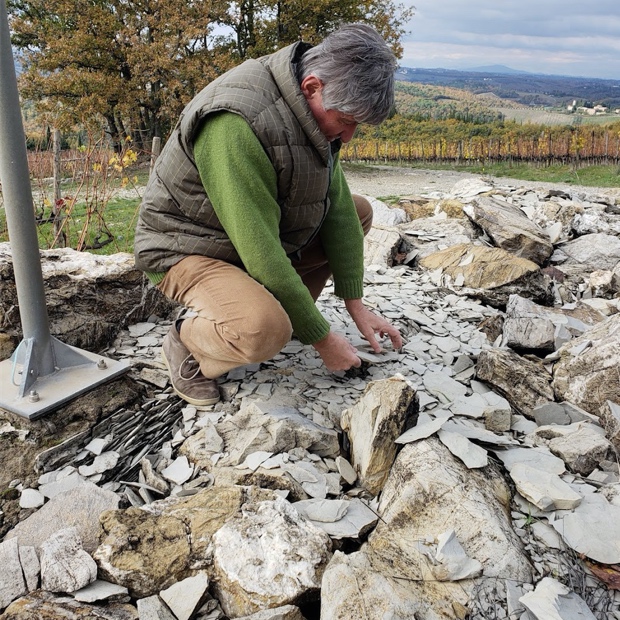
Paolo de Marchi in the Galestro of Isole e Olena

Going back in time the near-northerly and fully-westerly section of Chianti Classico saw Barberino Val d’Elsa and Tavarnelle Val di Pesa as border cousins sharing one particular mitigating and characterizing commonality; a ridge running from the southeast to the northwest affectionately housing the vineyards and paeselli of the people of San Donato in Poggio. SDP may not be household named to all but it’s surely the most prominent and prestigious of the angling, corrugated crests running through the entirety of the greater territory. 
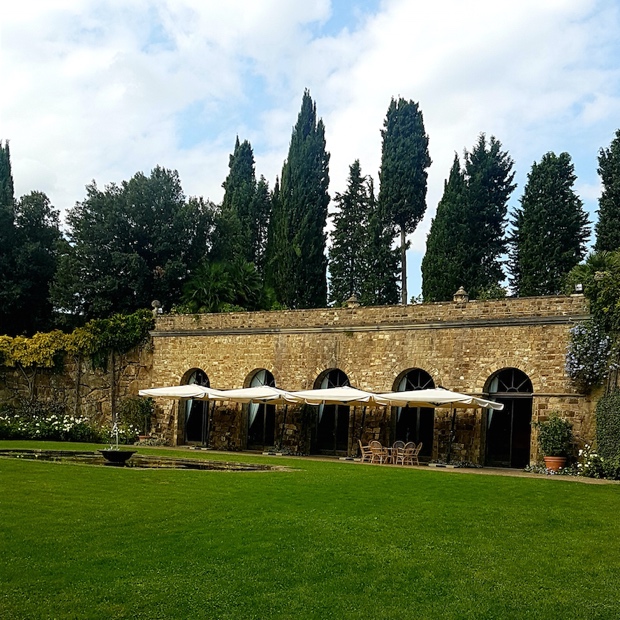
Castello di Monsanto, Barberino Val d’Elsa

The Evolution of Chianti Classico

What was controversial only three or fours years ago is now part of everyday, commonplace discussion. While the Consorzio Vino Chianti Classico has yet to take an official stance on frazioni, especially with regards to labelling or menzione geografica, the fact is they are open-minded and even encouraging towards promoting the associations in search of marketing for their collective soul. Several years ago it was Roberto Stucchi of (Gaiole’s) Badia a Coltibuono who spoke about the “The Evolution of Chianti Classico.” Stucchi wrote “this zone is too large and diverse to remain locked in the current DOCG regulations, which make no distinction between the extremely diverse expressions of Sangiovese in its original territory. The first natural level of evolution above the simple “Chianti Classico” appellation would be naming the commune [township] of origin of the grapes for wines that truly represent their territory. The next step would be to define the village appellations, the smaller zones that are distinctive and that would clearly define some of the top wines in the appellation. So we could have Panzano, Monti, Lamole, as possible zones as well as the many others that have a common geography and history. This type of classification wouldn’t eclipse the current definitions of Classico, Riserva, Gran Selezione.”
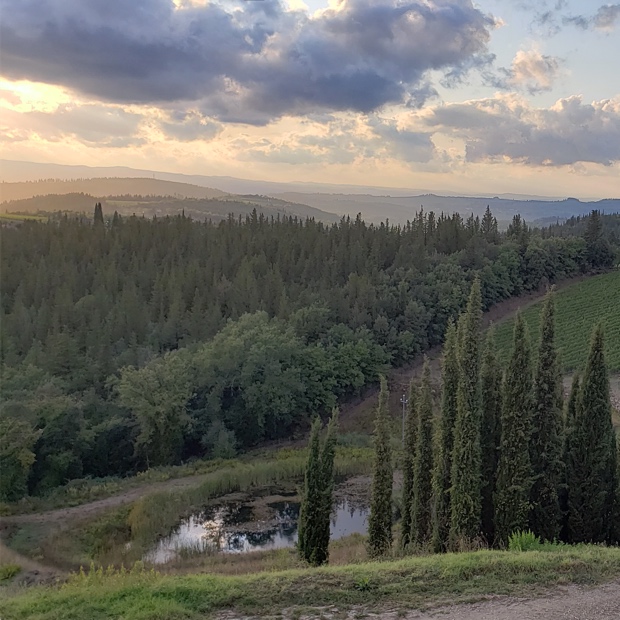
Without being able to categorize by geological commonality the defining of sub-zones is always somewhat arbitrary, conceived of subjective opinion and potentially discriminatory to fringe participants, either for reasons of location or ideology. Borders can’t be drawn underground and to try do so above is nearly impossible. The only way is seemingly by commune but in the case of San Donato in Poggio, the namesake village situated upon its prominent ridge allows for its constituents to double down on the prospect.
A great big hug

The San Donato in Poggio room is tied together by climate in a well-bounded area affected by the mistral wind coming off of the Tyrrhenian Sea wafting in from the northwest natural corridor of Monte Serra between Pisa and Lucca. Winters are warmer than the Chianti Classico interior average while summers are cooler and windier. Bud break comes early, seasons are stretched longer and later hang-time allows for top quality phenolics. While finesse and elegance are the two go-to descriptors, those of glycerin and high-toned grip should also be considered. San Donato’s are some of Chianti Classico’s sneakiest tannins, shrouded in the beauty of these wines in their youth. Potential and possibility for great longevity is a hallmark trait of SDP’s sangiovese. If you are looking for comfort or a hug in Chianti Classico, you’ve come to the right place.

The Galestro of Isole e Olena, Barberino Tavarnelle

Rocks in common

San Donato in Poggio’s lifted ridge is typical of the Ligurian sea’s platform push but here the cause and effect is two-fold. Flysch (an alternating sequence of sedimentary limestones, sandstones, and shales, the beds of which are thin, regular, and alternating) is this frazione‘s ace up the sleeve. That and the Galestro (schisty clay with friable white, grey, blue and charcoal rocks) typical of the greater territory are the soils with which all of these producers have in their vineyards to some varying degree. It may be argued that no other commune, village or valley shares such distinctly common terroir. Some compact limestone (like Alberese) exists as well but in some cases it is the Galestro clay and rock known as the Iolithium Unit that is found in large, hard and ghostly white Colombini that separates San Donato from the rest of the territory. Of great interest is to see how the sliding of the two platforms caused on the contact surface and the composition of blue clays prevents water loss in the deep layers. This creates natural availability of water, essential during drought vintages. Now you know where to look for 2017 Chianti Classico.
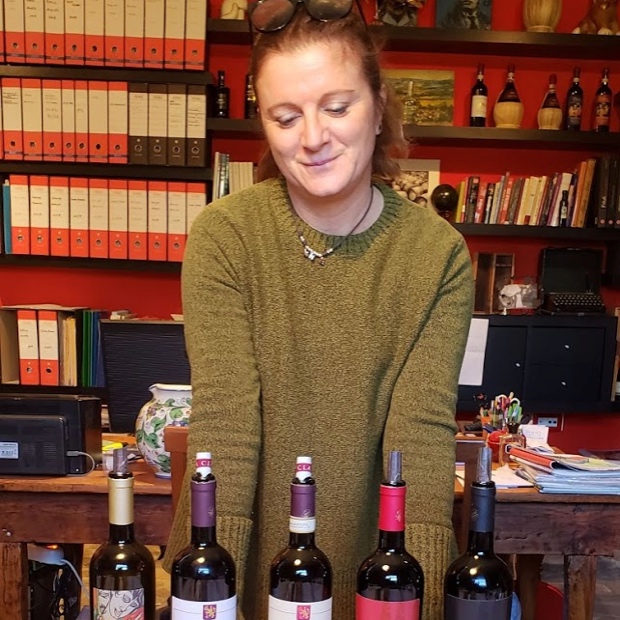
Natascia Rossini, Podere La Cappella

Associazione Viticoltori di San Donato in Poggio

The association of thirteen producers began their collective journey on January 24, 2018. Their total land holdings add up to just under 2000 hectares, 20 per cent of which are planted to vineyards.  “A time of change and exchanging ideas,” explains association secretary and Podere La Cappella’s Natascia Rossini. “Here there is a longer growing season and we tend to harvest late” and yet two years ago just a couple degrees cooler in temperatures meant that the frazione avoided damaging frost, with help from the winds blowing in 60-70 kms away from the coast. While it is difficult to find a commonality within a sub-zone, you can agree that the climate here is consistent throughout.
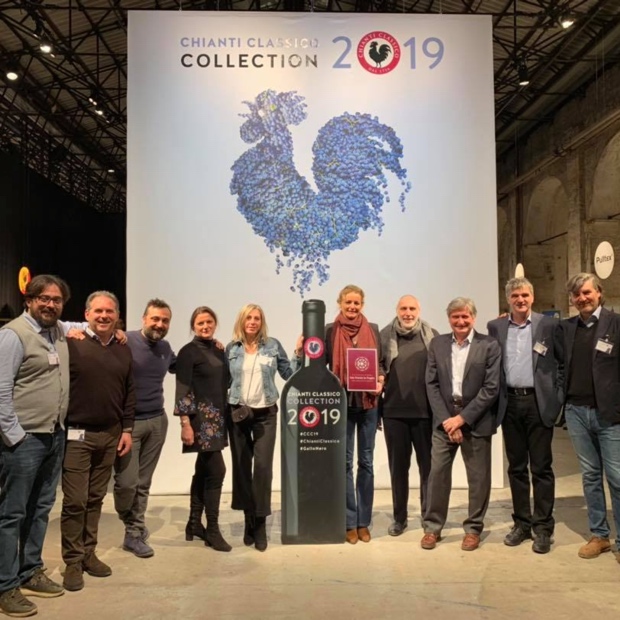
Passione per le nostre terre ed i suoi frutti, un territorio ed una cultura unici al mondo, un tesoro comune: il vino.
Siamo un gruppo di viticoltori, di un piccolo ma prodigioso territorio del Chianti Classico raccolto tra i comuni di Tavarnelle Val di Pesa e Barberino Val d’Elsa, che vogliono tutelare (o custodire) e far conoscerne la loro secolare tradizione agricola, storica e culturale evidenziandone le eccellenze vitivinicole, nonché le caratteristiche che le contraddistinguono sottolineando l’importanza degli aspetti climatici e geologici.

The manifesto translates as such. “Passion for our lands and its fruits, a unique territory and culture in the world, a common treasure: wine. We are a group of winemakers, from a small but prodigious Chianti Classico area gathered between the municipalities of Tavarnelle Val di Pesa and Barberino Val d’Elsa, who want to protect (or preserve) and make their secular agricultural, historical and cultural tradition known highlighting their wine excellence, as well as the characteristics that distinguish them, emphasizing the importance of climatic and geological aspects.”

Paolo de Marchi

The thirteen members currently ensconced in the all for one directive are Badia a Passignano, Casa Emma, Casa Sola, Castello delle Paneretta, Castello di Monsanto, Fattoria La Ripa, Fattoria Montecchio, Fattoria Quercia al Poggio, Fattoria Spadaio e Piecorto, Isole e Olena, Le Filigare, Podere La Cappella and Poggio al Sole. The following are 21 examples from the association’s 13 members (plus three likely soon to join) tasted in September 2019 with Alberto Albisetti at Castello delle Paneretta and with Paolo de Marchi at Isole e Olena.
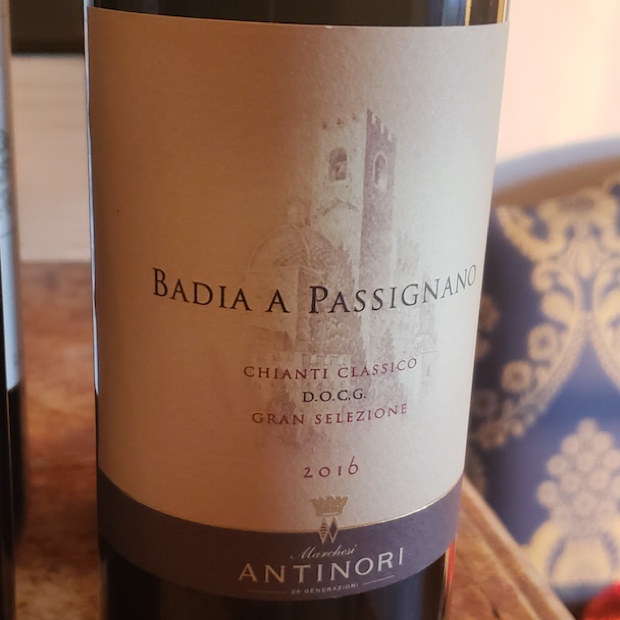
Antinori Badia A Passignano Chianti Classico Gran Selezione DOCG 2016 (384552, $49.95)

Presented by Stefano Carpaneto. From Barberino Tavarnelle and well entrenched in the association of vintners in San Donato in Poggio. Surprisingly high toned but also immensely structured in a 100 per cent sangiovese Gran Selezione. You can really feel both the calcari inlaid and braided through the Galestro clay by a richness albeit under the influence of the highest tone. Gains flesh, bone and energy as it goes. Drink 2021-2029.  Tasted September 2019
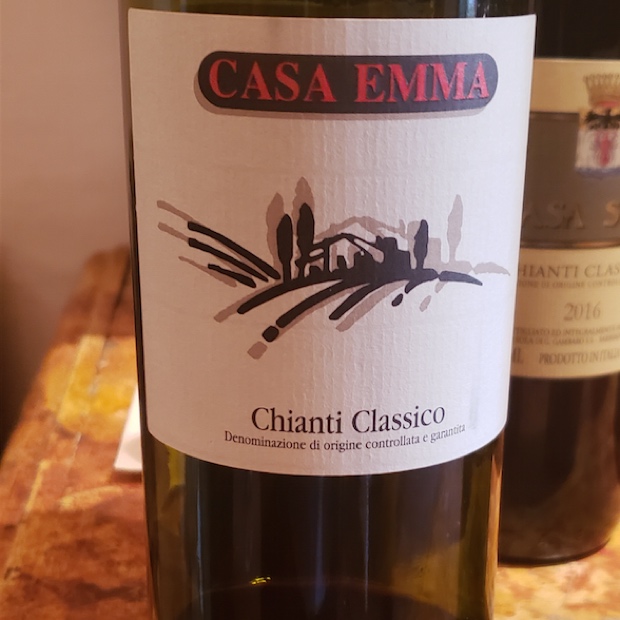
Casa Emma Chianti Classico DOCG 2016 (56952)

From Paolo Paffi off of 25 hectares at 450m in production of 95,000 bottles. San Donato sangiovese with five per cent each canaiolo and malvasia nera, 70 per cent raised in tonneaux and 30 in Inox tank. What’s good for goose is great for sangiovese and so 60 are employed in the vineyard, helping to release the compaction in the clayey Galestro soil. Classic in every expected respect, in the specific savour, motivating intensity, high tonality, deeply good and plenty cherry fruit. Drink 2019-2022.  Tasted September 2019

Casa Sola Chianti Classico DOCG 2016

A 120 hectare property owned and operated by a Genovese family, third generation now. The Gambaro Family has been in Barberino Tavarnelle since 1960; Giuseppe, Claudia and their children, Matteo and Anna. Some canaiolo, cabernet sauvignon and colorino augment the sangiovese, for one year in barrel. A sapid and savoury sangiovese snack of red fruit deepening to dark and sullen. Deep toned wine. Really deep. Drink 2019-2020.  Tasted September 2019
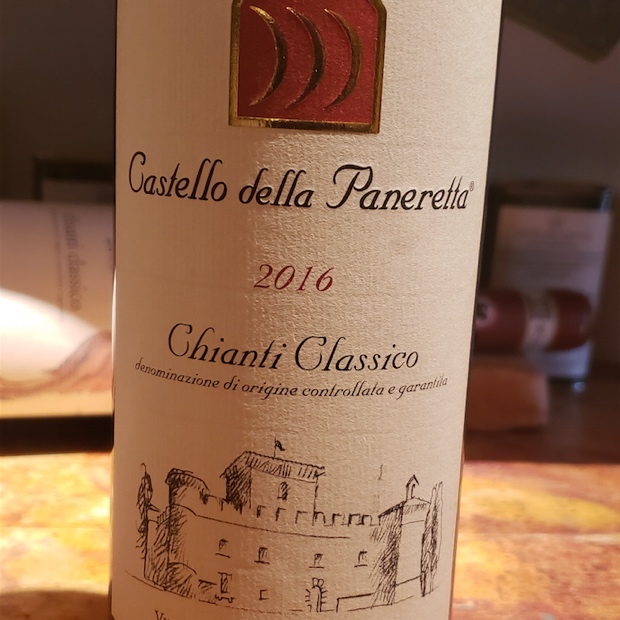
Castello Della Paneretta Chianti Classico DOCG 2016 ($24.00)

Presented by Alberto Albisetti, owner of the Castello della Paneretta. A mix of fruits fresh and dried mark the basket of this San Donato sangiovese, with 10 per cent canaiolo and (five) colorino off of 23 hectares of vines. Dry and duty, red ropey, some liquorice and a real estate cuvée blended from vines across the estate. True blue stylistic from large 5000L French barrels. Old school in some ways, classic, like old Rioja. Perfect for the style. Drink 2019-2022.  Tasted September 2019

Castello Di Monsanto Chianti Classico DOCG 2016 

Showing in the only way Castello di Monsanto can, with forest scents, of cypress and all the brush you can shake into the fine liquid of a sangiovese off of these San Donato hills. Mainly Galestro schisty soils bringing the essential balance, along with some volcanic tufo. It all adds up to a posit tug between freshness and structure. Experience tells us that the possibility exists for 2016 to go long like 1968. Perhaps.  Last tasted September 2019

Annata of 90 per cent sangiovese with both canaiolo and colorino, traditional, loyal and streaked by the Galestro qualified off this ridge extended out of San Donato in Poggio. Juicy, fresh and forward, expressive of the vintage, not so muscular. Sangiovese like going home and crawling into the bed you slept in as a child. Drink 2018-2030.  Tasted September 2018

Castello Di Monsanto Chianti Classico Riserva DOCG Il Poggio 2013 ($85.00)

Il Poggio from the San Donato in Poggio Galestro and Flysch has barely even climbed the hill of its first stage. Not even sure it has left the stable and surely has no current aspirations of making it to the fortress. The seventh year should show the first signs of initial ascent and transitions into secondary life. Formidable structure and presence are in surround of fruit from one of Chianti Classico’s most distinguished cru.  Last tasted September 2019

The cooler, cloudy vintage has been taking its time to emerge and 2018 is now live, in the present and in the flesh, ready for its time. This is confirmed by the grand artist known as Riserva from perhaps the most iconic hill in all of Chianti Classico. Still bright, effusive and not fully ready to let its tannin melt away. The sangiovese component is in the 90-95 per cent range, again with canaiolo and colorino coming around to complete the whole. The tension persists and the tannic structure in this “Selezione” is much tighter than the Annata or the first, non terroir specified Riserva. Still hard to believe how grippy this is. A soon to come epiphany with the 1968 helps to explain Il Poggio’s phenomenon. As a racer Monsanto’s Riserva 2013 is Marco Pantani, greatest climber of a generation, with so much grandiosity, potential and possibility, straight to the top of Il Poggio. Drink 2020-2030.  Tasted September 2018
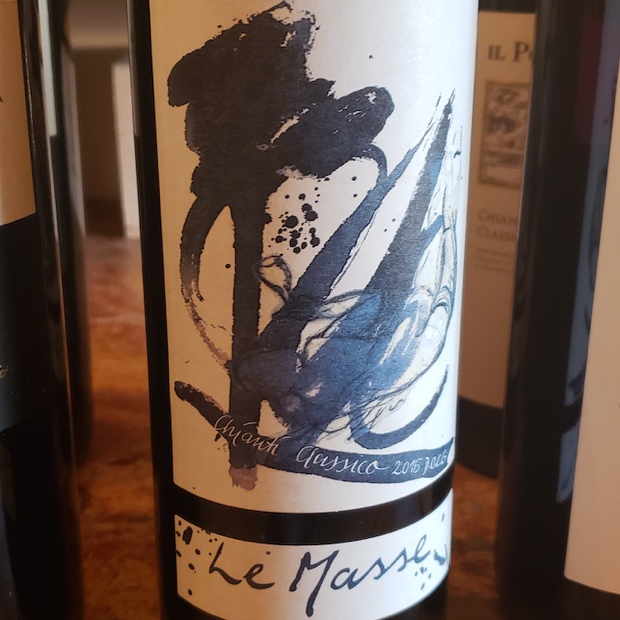
Fattoria Le Masse Chianti Classico DOCG 2016

Though not in the association Le Masse is unequivocally a San Donato in Poggio institution, under the auspices of brother and sister Robin and Lea Mugnaini, owners and winemakers. Theirs out of Barberino in Val d’Elsa vineyards is a child of natural fermentation, has been organic 10 years and two as biodynamic. No sulphur, no pumps, all manual, a mano. This 2016 is the last year of barrel use, of those in their fourth year. The solo/varietal Annata is 100 per cent sangiovese of high energy, intensity and impressively developed structure, linear and so driven. Drink 2020-2028.  Tasted September 2019
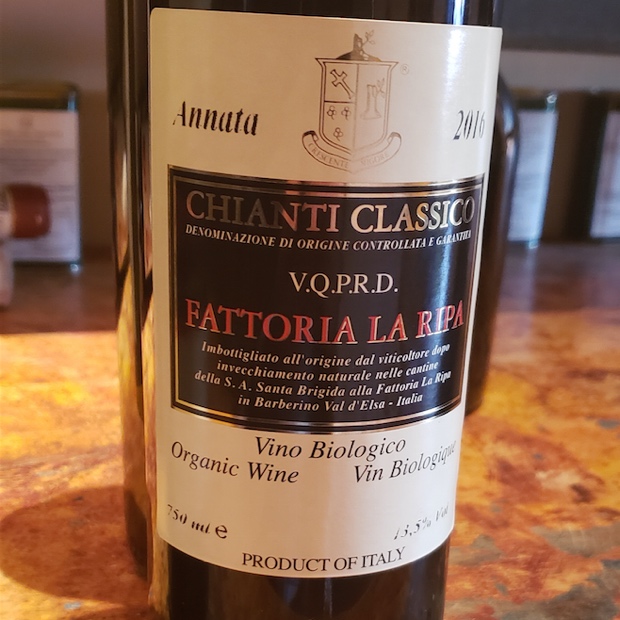
Fattoria La Ripa Chianti Classico DOCG 2016

Presented by winemaker Nicholas Caramelli, La Ripa farms 12 hectares in Chianti Classico divided into two valleys, one marked by Alberese, the other alluvial deposits. Ten clones of sangiovese adding up to 90 per cent of the Annata, with other native varieties. Quite high-toned and graced by liquorice inflected red fruit, a touch leathery and dry. Only stays in tonneaux for six months. Drink 2019-2021.  Tasted September 2019
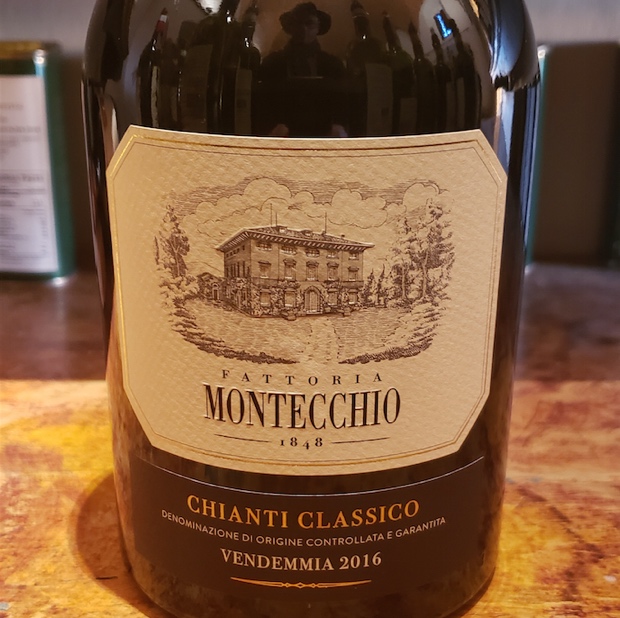
Fattoria Montecchio Chianti Classico DOCG ‘Primum Line’ 2016

Presented by Riccardo Nuti, of 95 per cent sangiovese with alicante in big (33hL) barrels for aging. The vineyard source happens to be the most recently planted, with a combination of Galestro and Flysch (rhythmic alternations of sandstone and fine-grained layers that contain siltstones, silty shales, and clayey shales) to the south of San Donato.  Last tasted September 2019

Quite reductive and wound with a tightness that moves the adage one step up the rung, the one that says sangiovese needs time. For ’16 it’s a matter more pressing and a story yet to be told. It’s tart but so very layered and there’s a feeling of Galestro here, with a darker chalky texture and mouthfeel. Perhaps not the same weight as 2015 but more power and structure by a mile. It’s about preference of style and vintage variation. You may have to drink 15s while this waits two or three years before seeing the glory unfold. Drink 2021-2027.  Tasted February 2019

Il Poggiolino Chianti Classico DOCG Il Classico 2016

Alberto Fabbri is also not yet a member of the San Donato in Poggio association and his work from vineyards in Tavarnelle Val di Pesa is exquisite. A combination of reduction and cured meat, pancetta, from Galestro soils at 300m with five per cent canaiolo. Even finer touch from the most excellent 2016. Drink 2020-2024.  Tasted September 2019
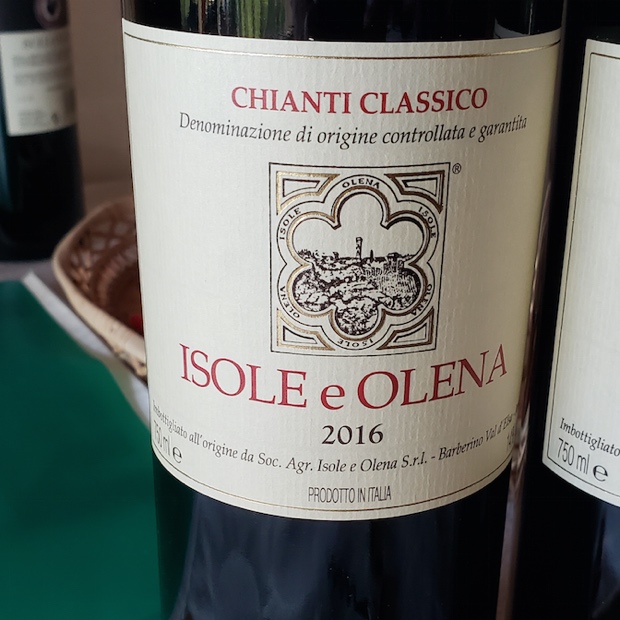
Isole E Olena Chianti Classico DOCG 2016 ($34.95, 704346)

Was finally bottled in July, to be released in February. “I like 2016, it’s a very different vintage.” As usual there is 15 per cent canaiolo mixed in. Why Canaiolo? “Because it’s from here. And it’s a late ripening variety like sangiovese, and also not heavy and jammy like merlot.” Canaiolo is like sangiovese in that it must be selected and used in very particular ways. Paolo’s is actually a darker depth of fruit from 2016 while the spice is so much more sophisticated. There is so much wisdom now, more than even before and a calm, settling depth about this wine.  Last tasted November 2018, February and September 2019

Chianti Classico 2016 is composed of 80 per cent sangiovese, (15) canaiolo and (5) syrah, which since the 1980s has always held a spot, in fact it may have been as much as 10 two plus decades ago. Paolo de Marchi explains.”Syrah in my opinion, was really about thinking, about blending in an earlier ripening variety.” It also added colour, not for quality necessarily, but for pleasure. “If I were a consultant I don’t think I would recommend to plant it anymore.” But Paolo loves it, its bright acidity and lower pH, and loves the warmth. You can feel the liquid peppery hug from the combination of canaiolo and syrah in the constitution of this CC and now a new texture evolved from a traditional one, clearly passed on through generations. It is spoken in the clarity of this 2016, but it has taken decades to arrive here. Finessed, soft tannins and an effulgent acidity wrap fruit chewy and yet very crisp. Singular again and alone but quicker to please, at least for now. Perhaps it too will shut down in 2019. Perhaps not.  Drink 2019-2028. Tasted February 2018
Isole E Olena Chianti Classico DOCG 2013 (704346)

Poured from magnum. Should we expect an Isole e Olena ’13 to be the least unusual in the appellation? Yes. While higher in acid and lift it’s more a representation of the land and the soils, but also the style. In a way a classic vintage because grapes hung into October. Quite youthful, an uprising of energy, a pump up, not over. Quite seamless and full of Paolo de Marchi pride. Spice and strength, fortitude and extension.  Last tasted September 2019

Quite the syrupy aromatic liqueur fills the glass for the ripe and nearly floral brooding Chianti Classico from I e O out of the gregarious 2013 vintage. The stylistic makes me think Riserva but that just says so much about the quality and layering of the fruit. More than ample tart and variegated acidity up the equanimity and longevity factor so the house’s ability with Chianti Classico of less time in barrel is once again confirmed. Drink 2017-2022.  Tasted February 2017
Isole E Olena Chianti Classico DOCG 2010 (704346)

Poured from magnum. A beautiful vintage, certainly apposite to the challenge of wet, stretched then long 2013. A vintage with fine tannins that developed early enough and without much compromise to elongated structure. A top notch sangiovese vintage from which a great Cepparello was extracted. Wow factor winding and circling, dramatic and savoury with all the bushes and herbs magnified as they will be. Magnum perhaps but if nine years has only beget this, well then surely nine plus nine more will soothsay forward towards the secondary and tertiary numbers. Drink 2019-2028.  Tasted September 2019

Le Filigare Chianti Classico DOCG 2016

Presented by Alessandro Cassetti Burchi, proprietor of the smallest producer in the San Donato in Poggio association. Vineyards at 450m and from a winemaker who strikes an uncanny resemblance to American rock legend Tom Petty. With five per cent each colorino and canaiolo raised only in old barriques. Quite rich and savoury, of maritime pine, comfortable, old school, long developed with help from extended, even late harvests. So charming. This sangiovese belongs amongst the wildflowers, by a house in the woods, where “I ain’t got a neighbour for nine or ten miles, back in the tall pines.” Drink 2019-2023.  Tasted September 2019
Ormanni Chianti Classico DOCG 2016

Presented by Ivan Batignani, from the family with a presence in Dante’s Divine Comedy. Immensely and incredibly rich in acidity and tannins over some pretty solid and heady fruit. Big Slavonian oak. Big aging, big vessels, big wine, all in balance. A 100 per cent sangiovese that still needs time.  Last tasted September 2019

The combination of Poggibonsi and Barberino val d’Elsa is Ormanni’s trump card, a straddling of commune borders that creates the ideal estate Annata in perfect alignment. It’s really layered and sumptuous, old school at heart but clear, pure and honest, always looking straight ahead. There’s no rusticity but there is this red fruit beauty that reminds of days of yore. Drink 2021-2027.  Tasted February 2019

Ormanni Chianti Classico Gran Selezione DOCG Etichetta Storica Dugentanni 2013

Dugentanni, as in two hundred years, a reference to contiguous ownership by the Brini Batacchi family. The oldest vineyards in western Barberino Val d’Elsa supply the fruit for Ormanni’s top level sangiovese and one held back with traditional territory patience before its release to market. More loyal to the past then many, with a crisp clarity and the kind of Gran Selezione that wafts with nonno’s pipe tobacco flavour. Tells a story of tradition with unclouded vision and empathy for both family and place. Really smart Classico and ready to be enjoyed. Drink 2020-2028.  Tasted September 2019

Quercia Al Poggio Chianti Classico DOCG 2016

Presented by Michaela Rossi. Located on the hill in front of Paneretta, of 100 hectares with only 15 planted. Maximum altitude is 300m with 360 degrees of exposition. Organic practices since ’97 and officially certified since 2009. Clay and Galestro terroir with sangiovese, ciliegiolo, canaiolo, malvasia nera and colorino. This Annata is 80 sangiovese with the rest in 20 parts. One year in concrete after spending a year in wood. Terrific energy and balance, a wildly vibrant and driven Annata with great presence and intuition. Structure too. Drink 2019-2024.  Tasted September 2019

Quercia Al Poggio Chianti Classico Riserva DOCG 2013

From Vittorio and Michaela Rossi and their best fruit from an amphitheatre of a hillside vineyard as rich in clay of any found in San Donato is Poggio. Pockets of Galestro and limestone take on some responsibility for the grip ins and structural outs of this glycerin beauty of a sangiovese but rich fruit is the catalyst and the star. That said there is a sculpted or architectural notation mixed with the excellence that this frazione in this commune (Barberino Tavarnelle) is able to provide and prove from a vintage of mixed feelings. The feelings are obvious from 2013 and for Quercia al Poggio, of sumptuousness and delight. Drink 2019-2025.  Tasted September 2019
Podere La Cappella Chianti Classico DOCG 2016 ($28.95)

Always something completely other. From vines six to seven years old. A blend of sangiovese (90) and 10 merlot. The elixir that the others in San Donato are not, a gentle syrup, a sweetly endowed savour and a texture silky fine.  Last tasted September 2019

Only San Donato in Poggio delves into this kind of specific calcaire, the Colombino in lieu of most other’s Galestro. The coolest of notes are broken down and fragmented in mimic of the soil and run like a river of savoury stone through stratified fruit. There is a perception of sweetness, imagined as perfectly ripe, low-lying fruit in early summer. But the sweetness is just a dream because with such a level of mineral, not salty but sapid, it is impression that supersedes expression. The young vines are growing up before our noses and eyes, lending impeccable balance in the here and now, with appreciable development laid out ahead. Drink 2019-2025.  Tasted February 2018
Poggio Al Sole Chianti Classico DOCG 2016

Presented by Project Manager Valentino Davaz. “Hill at the sun,” and the most northerly winery in the association of San Donato in Poggio, near to the abbey of Badia a Passignano. Organic and at good elevation, at 420m with five per cent each canaiolo and also merlot, in one quarter barriques for one year. One of the more wooded wines in the lot, lush, rich and silky smooth. Needs time to submit and gently glide into that sunset over the hill. Drink 2020–2024.  Tasted September 2019
Tenuta Bonomonte Chianti Classico DOCG 2016

Presented by Sonia Gianni. Bonomonte is situated in front of the Paneretta hill in Barberino and their Annata’s sangiovese is blended with five per pent each canaiolo and colorino. A production that has been in play since 1982, the 2016 goes for the entirety of the vintage, a bit pressed with some overripe fruit and drying tannins. Drink 2019-2020.  Tasted September 2019

Good to go!

godello

Castello delle Paneretta portal to San Donato in Poggio

Twitter: @mgodello

Instagram: mgodello

WineAlign


Nineteen mind-blowing wines of 2019

1964

Tout vient à son heure pour qui sait attendre, wrote Clément Marot, Renaissance poet. Everything comes at its appointed time. From Cahors to Turin. War, peace, hate, love, fruit, acid and tannin. Wine is all about the pauses and the balances. At its core the value is in that feeling of things being natural and equal. That’s the way it should be. When you drink you enjoy what you have, without competition. One sensation after another. You feel like you have more, even if you have less. Like consomée with just a chop of vegetables.

Welcome to Godello’s annual list of the most conspicuous, head-turning and psychotropic moments, better known as his 19 mind-blowing wines of 2019. Godello first initiated the concept for a year-end culminating evaluation in 2012 though did not actually coin the phrase until publishing his 14 mind-blowing wines of 2014. Call it the sixth or the eighth but who really cares because the wines are the crux and the heart of the matter.

Related – Eighteen mind-blowing wines of 2018

Related – Seventeen mind-blowing wines of 2017

Hard to know how many wines he actually tasted in 2019 but the best guesstimate would be 2,500 because that is how many reviews have been posted to WineAlign in this calendar year. A couple hundred were for wines tasted in 2018 but the editing and posting of at least that many for wines tasted in 2019 have yet to become permanent. So the number is pretty close, one way or another.

There were at least a few dozen stellar and jaw-dropping wines that should of, could of, would of made this list. For every one chosen another was left behind for no reason other than necessity and its relationship to the mother of invention. These images exhibited are but a few that had every reason to be one of 19’s 19.

Related – 16 mind-blowing wines of 2016

With thanks to everyone who poured a glass. The producers, winemakers, export managers, friends, colleagues and pirates, please be encouraged and read on. Godello’s 19 mind-blowing wines of 2019.

AB Wines Opçāo Avesso “A” Vinho Verde 2016, Portugal

From winemaker/oenologist António Sousa’s personal label (with partner Bernardo) and a vineyard planted in 2003, in Amarante. These are avesso grapes just a few years away from what António considers the optimum age, when they reach 18 years, 10 years older than the age from which they begin to deliver excellence. This A is in position A, from a perfect vantage point out of a very good vintage. This is the role model and exemplar for avesso, from a project that began in 2016, with all the adjunct components in line; lemon, lime, orange, ripe acidity, juicy nature and just a minor creamy, fleshy and boozy happiness. Great balance. Drink 2019-2025.  Tasted October 2019

Marco Felluga Russiz Superiore Tocai Friulano Collio DOC 1997, Friuli, Italy

So remarkable, from the old messaging in the riesling/tocai bottle, stricken from the consorzio record. This is now a wine bottled in Bordeaux style but this look back 20-plus years shows freshness, spirit and only the beginnings of secondary character. Gassy and lemon intense, a near-perfect example of what was and could be, of how aged whites of Collio can keep freshness and the saltiness of place. All thjis and without crazy acidity. That is the conundrum and the magic of Collio. The persistence is romanticism incarnate with fruit oozing out of pores in great remain. Drink 2019-2021.  Tasted May 2019

Goisot Gulhem Et Jean Hugues Gondonne 2017, Bourgogne Côtes D’auxerre AOC, Bourgogne, France

A soil of kimmeridgian and marl, of white and blue, with great layering of fruit and that is in fact what you feel from Gondonne. There is something rich and overtly expressive here and while it’s anything but simple it could be imagined that so many consumers would understand this chardonnay, love it and want to drink it with abandon. That said the structure, goût de terroir and joie de vivre are just exceptional. The wood and the land just melt right in. Drink 2020-2029.  Tasted November 2019

Ken Forrester Old Vine Reserve Chenin Blanc 2007, WO Stellenbosch, South Africa

These Helderberg vines would have been 33 years of age at the time and to think the wine would have cost $10 or so. Now 12 years later we’re graced with this hyperbole of toast, smoulder, lit paraffin and the edge of saffron honey. It’s hard to believe and this the from the tier-two, non-selected grapes at the back of the line behind a Forrester wine like the FMC. Nothing less than incredible. Drink 2019-2021. Tasted October 2019

Ornellaia Bianco 2016, IGT Toscana Bianco, Tuscany, Italy

The Bianco was first introduced in 2013, following fast forward to the original 1980s and 1990s work with Poggio alle Gazze dell’Ornellaia. That project had been abandoned because says Axel Heinz “stylistically it just wasn’t right.” That wine was mainly sauvignon blanc on one of Ornellaia’s great vineyard sites. What was wanted was something more than a varietal wine and a new age of finding vineyard sites that were more than merely good for white wine. That means making use of northern slopes and those blocks favourable to whites, including the use of (indigenous) vermentino and viognier. The practice had already been proven with success by colleagues. Bianco is the alter ego to the Rosso, priced as such “and reflects the spirit of Ornellaia, but it had to build itself up to that premium level. We intend to make one of the great white wines of the world,” explains Heinz. That may sound like bragging swagger but the reality is that experience, acumen and especially confidence breed the truth. I Bianci are aged for 12-15 months in (30 per cent new) barriques before bottling. I do dare you to find a wine that smells anything like this Bianco. They are flowers unnamed or perhaps not yet discovered. The flinty reductiveness is also truly and wholly unique. Though the way sauvignon is raised and the place are surely not the same, the Bordeaux styling and sensibility of affinities are more than uncanny and even served by purpose. The vintage brings great maturity, fruitiness and salinity. Fruit presence under the spell of fleur de sel. Nothing but a brilliant combination. Says Heinz without equivocation, “it’s a benchmark for us, ’16 that is.” Drink 2020-2031.  Tasted March 2019

Domaine Bouchard Père & Fils Chevalier Montrachet Grand Cru 2017, AOC Bourgogne, France

The couverture is all encompassing acting as a full sheathing tapestry in surround of a fruit core of sheer concentration and yet as a whole so understated. It’s hard to imagine more coaxing and less pronouncement. Relatively speaking there’s no estate equal to what has happened here. Great mineral crash into life and love, into fruit and impossible acidity. A magnificent chardonnay with 25 years of life ahead. Drink 2021-2039.  Tasted September 2019

Adelsheim Pinot Noir Boulder Bluff 2015, Chehalem Mountains AVA, Oregon

From a steep, southwest facing site and picked really early, especially in the warm 2015 vintage. Again the confluence of vineyard conflagration of more than one soil type leads to an estate stylistic but let’s face it one that is bent into shape by focus and precision. There is great generosity and freshness, again in spite of or despite the hot vintage. More floral from this bluff and bigger, albeit finer quality signature tannin from this neighbourhood, with more thanks to basaltic blocks. Long ageing surely ahead with fruit turning to bramble, at times. Drink 2021-2028.  Tasted April 2019

Tenute Bosco Etna Rosso DOC Vigna Vico Pre Phylloxera 2015, Sicily, Italy

The litheness of this nerello mascalese from Mount Etna off of 100-plus years of age pre-phylloxera vines cannot be over-stated or overstressed. The light, ethereal beauty of this wine may very well transport you to a place, to a vacuum within a bubble that is a hidden world inside a biodome. Few words are available when a wine speaks to you such as this Vico does to me at this time. This impossibility of such fruit concentration is also implausibly understated, as are the tannins and the acidity, yet all align and intertwine along a perfectly rendered line. You recognize the automatic brilliance, for the people and from the place. You just know it when you taste it. If you can find this wine, if you ever get the chance to purchase a bottle or two, you owe it to yourself to act, for you and for anyone you might happen to share it with. Drink 2019-2035.  Tasted May 2019

Donnafugata Mille E Una Notte 1996, DOC Contessa Entellina, Sicily, Italy

An arch classic from Sicilia sud Occidentale and more specifically Tenuta Contessa Entellina. Of the oldest wines this is one of the highest tonality, not unlike older and older schooled nebbiolo from Barbaresco, in a queen’s throne sort of way. There is siply no way to argue that this wine did not deserve to be aged this way and to be waited on for such a moment of appreciation. Age worthy and load management indeed, with every resolution hoped for and expected. Brilliance and a benchmark, with a half decade of life still ahead. Drink 2019-2026.  Tasted May 2019

Scarpa Barbera d’Asti DOC La Bogliona 1996, Piedmont, Italy

At 23 years you just have to launch yourself headfirst into the blood orange. That this piece of barbera wow factor happened before the year 2000 is the thing, especially because climate was very different. Rain fell often and slowly through the year, as opposed to the deluges of globally disaster-orchestrated today. Higher acidity simply speaking and this of the great lean, salty and direct-fitted pieces of barbera composure. Still fresh with dried fruits and low alcohol (at 13.0 per cent declared) but who knows which way the marketing directed labelling in those days? More than a lovely look back. Educational, instructional, cerebral and mind-bending from the lesser appreciated Piedmontese sector. Drink 2019-2024.  Tasted December 2019

Maison Roche De Bellene Charmes Chambertin Grand Cru 2012, AOC Bourgogne, France

Do not adjust your set. The vintage brought everything to the table and while the foreground presents a picture crystalline and transparent the entirety of the frame is frozen clear. As for the aromatics this teases a meaty cure like few other and teases as if by the ambience of a cave, restricted of access, hiding what lurks, hangs and excites. Crunchy to say the least, layered to say more and complex to speak the ultimate truth. Magnifique and still twenty years away from the beginning of the end. Drink 2022-2037.  Tasted September 2019

Domaine De La Pousse D’or Pommard Premier Cru Les Jarollières 1964, Appellation Pommard Controlée, Bourgogne, France

Calling this 55 year-old Bourgogne Premier Cru a piece of history is not enough to do justice because family, lineage and the passing of the generational torch beyond domaine lines are everything that matters. Nicolas Potel pulled this one out of thin air and not merely by a human ability to disappear and reappear. No, Nico chose the way of disapparating and then apparating (in the wizard sense of “apparition,” a magical form of teleportation). His father Gérard’s ’64 was in his hands and a great big, merde-eating grin was posted all across his face. Les Jarollières is a 1.44 ha plot of marl and calcaire and even today half of the plantings are those that were fitted in 1925 and 1962. It was Gérard Potel who resurrected Domaine de la Pousse d’Or to its glory and in 1964 he acquired the domaine through a marriage to the then owner’s niece. Along with Henri Boillot this cru has been famous being meaty, earthy and owning an ability for supernatural integration. This 1964 had taken all that, everything and more, left nothing in the vineyard and had now become the epitome of the ethereal. The fruit was fully intact, so bloody strawberry, still with lightning quick reflexes and able to pour fresh glasses of spirit and energy over the course of a full hour. The experience was a once in a lifetime type, a shared moment and the kind to create a banked memory that will always be generous when a good one is needed. Thank you Nico. Drink 2019-2024.  Tasted December 2019


I Fabbri Chianti Classico DOCG 2000, Tuscany, Italy

At the time it was labeled as an (Annata) Chianti Classico though it was really Riserva. Yes it has evolved but 18-plus years should have moved it much further along. Carries a spice like the exoticism in resemblance to 2006 but this is something other. Still some very fine, present and notable acidity. Amazing purity, honesty, luck, circumstance, place and gentile personality. The sapidity is there again and the age ability nothing short of remarkable. Drink 2019-2021.  Tasted February 2019

Volpaia Chianti Classico Gran Selezione DOCG Il Puro 2015, Tuscany, Italy ($150.00)

Il Puro takes her purity to another level in 2015 with fruit so silky fine and chalky tannins integrated into liquid even finer than that fine. The accumulation is just impressive and the charm meeting grace even more so than that. The Mascheroni-Stianti family has really found a stride in this GS to explain why it exists and how it can make many people happy. The structure here will take this through two or three decades of unfolding. There is a house record to prove it, ironically regardless and in spite of the bottle’s name. This is sangiovese. Drink 2023-2037.  Tasted February 2019

Le Chiuse Brunello Di Montalcino Riserva DOCG Diecianni 2010, Tuscany, Italy

“A muscle vintage, of huge character,” tells Lorenzo Magnelli. The name of the wine is Diecianni to tell us that Lorenzo’s Riserva is not released until the 10th year. Brings about all the complexities that come from such an extended elévage. Tobacco, savour, forest floor, frutta di bosco and frutto secco but don’t be succumbing to depths and sottosuolo because the freshness persists. A wine so wise beyond its years, like its maker. Sure you can release a Riserva one year after Annata but when it has been protected and taken care of for you then it presents as it was intended to. We are thankful for the triage and the investment on our behalf. The fruit persists with great natural sweetness out of 2010. Drink 2019-2035.  Tasted October 2019

Conti Costanti Brunello Di Montalcino DOCG Colle Al Matrichese 2015, Tuscany, Italy

Andrea Costanti is convinced this is a great vintage. “One of the best.” The weather was perfect following a beneficial cold winter. The harvest was early but not compromisingly so and it saw no hurdles, obstacles or intendments. The barrel use is bigger, older and wiser. This is the sort of concentrated Costanti that speaks to the 2019 philosophy, of acidity, ripeness and balance. Time on skins was about a month (including two weeks of fermentation and oxidation introducing délestage) and no protective sulphur. There is a control in this sangiovese, a powerful restraint but more than that, more so a calm, but not before storm. Finesse, grip and beauty, like a statue of a stag, in a courtyard, lit by moonlight. Tannins are all pervasive, fully stated, yet to feel a necessity for attack. They will and we will retreat, Then we will advance, with caution, further to find full pleasure for two decades. At the very minimum. Drink 2023-2039.  Tasted February 2019

Le Ragnaie Brunello Di Montalcino DOCG Vigna Vecchia 2015, Tuscany, Italy ($177.00)

Planted in 1968 and from a warm vintage all the way to the end, into October. Riccardo Campinoti is smiling wryly, knowingly and confidently after he pours and begins to speak of it. “The longer you waited the riper it became” and the healthy grapes allowed for hanging to mid-October. Deeper and of more sponge-soaked earth in the old vines with a higher tone juxtaposed against the depth drawn by long vine roots. The aromatic complexities run, jump and ride off the proverbial charts and you may find yourself drunk and mystified just from the smells. Once you gain palate entry you are hooked and then you climb in, headfirst, unencumbered, no strings attached. A tour de force beloved of sangiovese, Montalcino and old vines. Vigna Vecchia is the epitome of a true structured wine, one which does not grow old, despite the passage of time. Drink 2023-2039.  Tasted October 2019

Antiche Cantine Dei Marchesi Di Barolo 1990, Barolo Riserva, Piemonte, Italy

A grande dame or marchesa in the parlance of these woods, a nebbiolo of persistence, resilience and strength of character. Initiates contact with the past and a contract with tradition by way of the things that matter most. Family for one, roots dug into the earth second and the vineyard’s tongue, if it were able to speak. The overall gist in the parlance is heard and even understood although the dialect is hard to decipher if you are not of this place. This 1990 is found to be of high though level tempered energy and then with an ear, a nose and a soul so close to the earth. Smells like the soils amalgamated, preserved and demonstrated through the tempered liquor of a wise old 29 year-old nebbiolo. So much more than a piece of the past, this is an auguri gathering of storytelling, kin, culture and DNA. You must pay thanks for a chance to taste a thing such as this. Drink 2019-2033.  Tasted December 2019

Gaja Sorì Tildìn 2016, Barbaresco DOP, Piemonte, Italy ($810.00)

Angelo Gaja sees 2016 as a perfect vintage in Barbaresco and the one from which climate change is viewed with great irony in the wink-wink guise of parenthetical thanks. That means the cosmic and astronomical alignment makes for wines that are both pleasant in their youth and also impossibly structured to age. Named for the sunny position of the slope and Mr. Gaja’s grandmother Clotilde. Now the clay and the calcaire have conspired, along with the purchased land of which Clotilde was custodian and in how she pushed her husband to make great wine. The vines are now on average 50 years-old and the composition meeting aspect bring a depth of complexity as poignant as it gets in this tiny part of nebbiolo production. All the flowers, rocks and elements are contained within the interior walls of this gently forceful Langhe red. It mimics the matriarch by the strongest power of suggestion and will not take no for an answer. Perhaps never will. Drink 2025-2045.  Tasted December 2019

Good to go!

godello

1964

Twitter: @mgodello

Instagram: mgodello

WineAlign

San Casciano’s nascent time in Chianti Classico

Poggio Torselli

As per the recent wave of Chianti Classico producers creating regional associations because of their shared geographies and ideologies, so too has L’Associazione San Casciano Classico followed suit. Just about one year ago in the Fall of 2018 the producers of San Casciano Val di Pesa organized to promote and protect the wineries of the municipality. This past September there were 19 (of the 23) members of the association on hand to host 13 Canadian journalists and sommeliers for a San Casciano summit at the historical Villa Poggio Torselli.

Villa Poggio Torselli

The villa’s origins are recorded in the land registers as early as the beginning of the 15th century. It is approached by an awe-inspiring boulevard of cypresses and is one of the largest and most elegant residences in the area of the San Casciano Hills, near Florence. “Queen of all villas” as it is known dates back to 1427 bearing the name of Poggio Torselli. These noble family names are associated with the villa; Macchiavelli, Corsini, Strozzi, Antonori, Capponi and Orlandini, who owned the villa until 1722. Status is a draw for important figures, so visits were made by Pope Pius VII who stopped over on his way to Paris to crown Emperor Napoleon in 1804 and also Paul I, Emperor of Russia.

Poggio Torselli Seasons Garden

The gardens are astonishing and surely one of the Chianti Classico territory’s finest. Known as the “Seasons Garden” it was created in the 18th century, teeming with narcissus, tulips, hyacinths, dahlia, sage, clematis and giant Indian hibiscus. Most notable are the fritillaries, also known as “imperial crown” and the entire garden is surrounded by the golden crown of 120 secular lemon trees.

Related – If you’re going to San Casciano

San Casciano the village is also one of eight sub-zones in Chianti Classico’s most northwesterly sector. The full name San Casciano in Val di Pesa tells us that its location is proximate to the valley of the Pesa river and it shares a border with two other communes, Barberino Tavarnelle to the south and Greve in Chianti to the east and southeast.


The sangiovese of San Casciano are made in the image of their makers; stoic, serious, at times austere, surely classic and noble. They speak with a succinct and old-school vernacular that lends great credence to the adage that sangiovese needs the bottle. The wines are unabashedly uncompromising in that they talk the talk of a sense of place that shares affinities only with each other and themselves. Their time in the sun has come, with help no doubt from a changing climate. That glaring condition was on full display the day we met and tasted because a deluge the likes there was never seen rained down and for many hours. When the tasting was complete the skies cleared and the sun shone on what was a symbolic calling to San Casciano’s nascent rebirth. The time for their distinctive sangiovese has surely come.

These are 21 of the wines tasted in September at Fattoria Poggiopiano and with the L’Associazione San Casciano Classico at Poggio Torselli.

Antinori Pèppoli Chianti Classico DOCG 2017 (606541, $19.95)

Chianti Classico from Peppolì, 90 per cent sangiovese with merlot and syrah. An enriching wine and enriched by the international grapes, juicier and more refined, if not also a very concentrated version of these wines. It’s mature and stylish to be sure. Drink 2019-2023.  Tasted September 2019

Famous volumes

Carus Vini Chianti Classico DOCG Baldéro 2016

Presented by the estate’s Sales Manager Pamela Bernini. Estate grapes of 12-13 hectares grown on clay-calcareous soils. Eight are sangiovese, the other three being syrah, merlot and cabernet sauvignon. Baldéro is 100 per cent sangiovese with only a small portion raised in tonneaux. Rich, spirited and juicy stuff. Really fresh, effusive and expressive. Drink 2019-2024.  Tasted September 2019

Fattoria Cigliano Di Sopra Chianti Classico DOCG 2017

Only the second vintage of organic, 100 per cent sangiovese and an indigenous ferment. There were a mere 1400 bottles produced from a seven hectare plot, planted in 1982 and 2004. New plantings are going in. From Maddalena (age 26) in cohorts with Matteo (age 24). Quite sharp, fresh and also tannic. A start-up with experience on the fly. Drink 2019-2023.  Tasted September 2019

Castello di Gabbiano Chianti Classico DOCG 2016

A threefold experience of fennel, blood orange and pancetta. There are equal parts five per cent merlot and “other complimentary varieties.” The classic in every respect, dark cherry fruit, dusty, savoury and taut. Fresh, elegant as need be and utterly solid.  Last tasted September 2019

Castello di Gabbiano’s Chianti Classico may repeat itself and act the obvious one, but once again in 2016 it is full and ripe, filled in at every turn, deep, dark and handsome. The ability to deal in pleasure is immense from gathered quality fruit and as always this Annata finds the quickest line for us to appreciate the unwavering sense of equilibrium. Simply put it is Gabbiano and winemaker Federico Cerelli who offer a quality guarantee at the most attractive price. Leaves no reason to doubt. Drink 2018-2021.  Tasted February 2018

Azienda Agricola Mori Concetta Chianti Classico Morino DOCG 2018

Mainly sangiovese with canaiolo, colorino and pugnitello. An excessively savoury and forest brushy Classico with the fruit edging away from cherry and into plum. Peppery spice adds to the complexity of this grippy sangiovese. Juicy and sharp, totally in charge of all the fun and more. Reminds me of a slow ripened ’14 with more flesh and sapidity. Drink 2019-2023.  Tasted September 2019

La Querce Seconda Chianti Classico DOCG 2016

Niccolò Bernabei and this project that began in 1995. Organic since 2001 in the most northern spot of San Casciano. Fifty per cent comes from a newer property in the south, for lightness of being and balance. Clay with stones for one of the darker and developed sangiovese in the commune. Toffee and coffee juxtaposed against freshness and really elevated acidity. Also a product of long fermentation with plenty of extraction, tannin and structure. And it needs it desperately. Not green in any means but certainly pressed and expressed. Grows in stature and also widens into greater breadth with air and time.  Last tasted September 2019

Nicely funky volatile, a rich cherry liqueur, full of spice both out of the vineyard and from the barrel. There is this chewiness that is also marked by a mouthful of spice, candied flowers and calcareous chalkiness from big variegated stones in the soil. Crunchy Annata out of San Casciano in Val di Pesa. Drink 2020-2026.  Tasted February 2019

La Sala Chianti Classico DOCG 2015

A combination of two estate vineyards and it shows in the depth of layering, rich, chocolaty and silky smooth. Dark berry fruit, a bit pressed and good high level acidity.  Last tasted September 2019

La Sala’s Annata 2015 is a bambino, a San Casciano in Val di Pesa sangiovese with 10 per cent merlot to speak for sites at 300m, seemingly more instructed by Galestro from out of the Argilla Rossa in 2015. It was raised in grande (45 hL) botti and has now only been in bottle for five months. It’s tart and firm, strong with doppio shots of espresso and very structured for the vintage. Tells a tale about the sort of sangiovese that comes from San Casciano. Drink 2019-2024.  Tasted February 2018

Fattoria Di Luiano Chianti Classico DOCG 2017 ($24.50)

This is San Casciano and the wines are linked by being characterized with soils prevalent in the Greve River Valley, in connection with Antinori’s Peppoli, of river stones and Alberese, into which roots can dive deep in search of water, trace elements and minerals. “A representation of a season for our place in Chianti Classico,” explains Alessandro Palombo. Classic Luiano florality and botanical lift in spite of ‘17s challenge. A tisane for sure, of violet and lavender but also spices. Rounded out by cabernet sauvignon and merlot planted at 330m on less rocky soils. Drink 2019-2022.  Tasted September 2019

Antica Fattoria Machiavelli Solatio Chianti Classico DOCG 2017

Located in Sant’Andrea in Percussina, neighbours of Poggio Torselli and the house in exile where Niccola Macchiavelli lived. From 27 hectares of vineyards, stony and porous soils. Really the first reductive Annata in this San Casciano lot, protected, protractive and taut. Called Solatio because it’s a sunny place in an otherwise cooler area of the greater territory. Ripe sangiovese with 20 per cent merlot, tannic and just a touch green. Drink 2019-2023.  Tasted September 2019

San Casciano Hills

Famiglia Nunzi Conti Chianti Classico DOCG 2017

Winemaker Gianpaolo Chiettini and what he considers some of the bigger sangiovese of Chianti Classico. Estate carries 40 hectares in the southern San Casciano area of Mercatale where calcari-Alberese soils are there to bring grip and structure. Also some vineyard with clay to mitigate and keep things swimming richly along. Much of the harvest was tossed away and sold for bulk. True selection was performed and with the stringent work through several picks. Thirty per cent saw older barrels in what is clearly a wine of soil and place. Drink 2019-2023.  Tasted September 2019

Orsumella Chianti Classico DOCG 2016 ($23.95)

Presented by Sales Manager Andrea Fabbri from a San Casciano farm located on the road from Bargino (near Antinori) proximate to Monte Ridolfi at 300m. Takes the name from the small river. The Annata is 100 per cent sangiovese eased through a short maceration and conversely similarly in extraction as a result. Native yeasts are used and it spends one years in Grandi Botti, 2500L and very old. A simple execution equals a simple equation. Young, fresh and delicious. Drink 2019-2021.  Tasted September 2019

Poggiopiano Chianti Classico DOCG 2017

From proprietor Giovanni Battista Bartoli, of sangiovese and colorino and a San Casciano winery with no international varieties. Also no Riserva. High-toned, dark fruit and dusty sangiovese, rich in syrup swirl, certainly a vintage matter, concentrated, with a notable spike of heat. No new barriques used, only second and third passage. Long and consistent. Drink 2019-2022.  Tasted September 2019

Poggiopiano Chianti Classico DOCG La Tradizione 2016

“I am quite Taliban in this idea,” says Giovanni Battista Bartoli, of being 100 per cent anti-international varieties. These San Casciano soils are of clay, sand, river stones and “limo” a silty-clay. Vinification in concrete tanks, for no better reason than micro-oxidation. La Tradizione is pure varietal sangiovese and curious to even remarkable in that the palate accentuates or rather elevates the floral notes, in violets and blues. Tone spikes in whole bunches, really tart acidity and implosive intensity. A touch pressed. Drink 2020-2024. Tasted September 2019

Poggio Torselli Chianti Classico DOCG 2016 ($24.85)

In the northern part of San Casciano at 250m of altitude. Pressed for success, caramel, vanilla and simple savoury syrup. Strawberry with some of it deeper into wild types. Rich and fleshy, smooth, silken and proper acidity. Mainly clay soils with some Alberese. Creamy with help from lees and battonage. A bit of a chocolate finish again with solid acidity. High quality for the style. Drink 2019-2021.  Tasted September 2019

Corsini and Capponi crests

Principe Corsini Le Corti Chianti Classico DOCG 2016 ($26.95)

Duccio Corsini’s vineyards mostly face south, though some point to the east and the west. Vineyards teeming with fluvial sediment and river stones, large, medium and small. Ostensibly an ancient river situation on a hill. Showing beautifully today and at this time; juicy, fleshy and bloody expressive. The sweet tannins need two more years to resolve. Made with five per cent colorino. Drink 2020-2026.  Tasted September 2019

Fattoria San Michele A Torri Chianti Classico DOCG Tenuta La Gabbiola 2017

From Franca in the far north of San Casciano on 470 hectares and 65 planted to vineyard, 15 of which are in Chianti Classico, 12 in production. Mostly sangiovese with five per cent syrah planted closest to the river just because it’s not a site for sangiovese. A true peppery syrup to nose, haughty and heady with no shortage of concentration and grip. Quite stylish and modern. Very enticing and a bit heated at the same time. Drink 2019-2021.  Tasted September 2019

Terre Di Perseto Chianti Classico DOCG Albòre 2016

Presented by Beatrice Landini. Two young brothers take over from grandfather. A notable mephitic sangiovese crusted in its major reduction. Really wound tight, quite juicy and if traditional it’s done with plum pudding and spice. No oak and yet done up in a very closed environment to give a crisp, tight and crispy expression.  Last tasted September 2019

Sweet and candied, high acidity but not in a VA way, though alt-morbido malic and hard candy shelled. Needs some time for the crackling and the cracking to flake away. Drink 2019-2020.  Tasted February 2019

Villa Belvedere Campoli Chianti Classico DOCG 2017

Deep, dark and handsome from an old estate in the south of San Casciano on the north end of the ridge up from Radda, through Panzano and into Mercatale. Purchased five years ago and re-planted. Carries the richness meeting mineral notes of Galestro raised sangiovese albeit in the depth of a San Casciano vein. A note of smoky fennel and pollen with ripe acidity. Very much a product of young vines that will lead to more elastic and structured wines in years to come. A wine with shared affinities, to Mercatale in San Casciano and also Panzano. Drink 2019-2022.  Tasted September 2019

Villa Sant’Andrea Chianti Classico DOCG 2017

A large 600 hectare estate with 50 hectares under vine, including merlot and two cabs to go along with sangiovese. The nose indicates jam and verdancy, likely picked ahead of the rains at high sugars early in September. Merlot especially in the first week and the sangiovese 15 days later. Phenolics are close but one more week (to ten days) would have likely taken this fruit to its final destination. Drink 2019-2021.  Tasted September 2019

Villa Mangiacane Chianti Classico DOCG 2016

Presented by estate director estate manager Graziano Santoro. Very near the village of San Casciano, from Galestro filled vineyards, well pressed and of a specific density. There’s a curious oyster shell note and dark black cherry fruit, pit and all. Plenty of oak, plenty of ambition, spice and pique. Drink 2019-2022.  Tasted September 2019

Villa Vallacchio Chianti Classico DOCG 2017

In the areas of Campoli and Tignanello, juice only sold to bulk through the 2015 vintage. Beginning in 2016 an Annata and a Riserva began to be produced. Ripe and floral with phenols very close to being fully realized. Still just a touch of verdancy with what can best be described as extreme fruit. A crunchy and tight Annata. Drink 2019-2020.  Tasted September 2019

Good to go!

godello

Poggio Torselli

Twitter: @mgodello

Instagram: mgodello

WineAlign

Spotlight on South Africa in VINTAGES August 6th

South Africa’s South Coast

as seen on WineAlign

Rosé all day, an absence of whites, reds in Portuguese, French and Italian dress plus choosing South Africa like falling off a log

It has been nearly a year since I last visited South Africa and every time VINTAGES rolls out an easily managed thematic collection of wines from that great country the heart swells and memories flood back into the brain. The powers that be within the LCBO’s New World buyers’ department do their finest no sweat work and narrowing down when it comes to Western Cape collections, surely witnessed and proven by the duck soup choices made for both the July 20th and August 6th releases. But we can’t lay too much emphasis on their easily accomplished selections as being the be all, end all reason for the successes. Producers are fortunate to work with exceptional terroir that includes dozens or more old vine blocks in many Cape nooks and transversely the Ontario purchasing choices are so numerous it’s like shooting fish in a barrel. The winemakers adage of “just don’t mess it up” translates into kudos to the buyers for getting things right. The fact is South African wines are of such high quality across varietal, producer and regional lines they speak for themselves and do so with great heart.

What do you do with the Swartland Swingers? Lawn bowls in Malmesbury of course

Related – Heritage and diversity in South Africa

Which brings me to what struck so strong in September 2018, straight to the heart and without equivocation. Heritage and diversity are the country’s two greatest strengths. Sure as a circle will turn you around there is this third tangible and credible something that seems so unmissable about South Africa and South Africans. Resilience. Neither politics, nor conflicts between and in the oppression of peoples nor drought can deter the farmers, workers and producers of this nation. The human condition mimics its heritage vineyards planted to century-old varieties, to perpetuate and to persevere. This is the South African way. And it is the wines that are exceptional in ways that require great levels of explanation.

Over the last several centuries grape varieties were brought, expatriated and forced into the blending of exile. No peoples should ever be de-humanized nor taken for granted and neither should wines be quietly dismissed. With each passing varietal situation time has been sublimed and wines produced in South Africa teach us that they simply are not examples of minor beverages. It has taken place in the heart of agriculturalist and winemaking ability, to change small things and see greatness in ascension to that which is simple, authentic and refined. It’s a matter of having felt sensations introduced into the absurdity of our lives.

We begin with some wines tasted and assessed back in September 2018. These are a cross-section of what the country’s makers do best, some unknown, others better known and collectively they act as examples in performance at the highest level.

Fourteen South African producers and wines you need to know

A. A. Badenhorst Chenin Blanc The Golden Slopes 2017, WO Swartland (WineAlign)

The Golden Slopes is chenin blanc planted on granite hillsides, vines in the 80-ish years of age and this surely has much to do with the paradigm of success predicated by a focus on texture. Remarkable heritage vines on the Badenhorst for which Adi is able to seek, measure and play. Like the Secateurs it is indeed all about texture but here, this is something other. Conatus. The Golden Slopes are marked by intense and impressive warmth, lees and the effects of managing lost acidity. Adi finds a way for them to be kept by the moments gained in flesh and layers. Old vines do what the young and inexperienced do not. They achieve an innate inclination, in this case for chenin blanc to continue to exist and enhance itself. Drink 2019-2027.  Tasted September 2018

Craven Wines Syrah The Faure Vineyard 2017, WO Stellenbosch (WineAlign)

Like the sister Firs this Faure Vineyard site is also 21 years of age, east facing towards the Heldeberg, with rocks in the soils. The name is more than familiar to Jeanine Craven, who was a Faure before she merged with Mick. What really separates this place is the marine air, three kilometres from the sea, as far as the African Black Oystercatcher flies. Again the planning involves whole cluster pressing and on skins seven days, to make pure syrah. Separated by 15 kms the Faure is antithetical to the Firs, salted by the sea and of a furthered intensity in a different form. It’s near searing, linear, grippy and with acidity lifting everything. Really juicy, pushed by a wow factor, clean, no funk and so much spice. Drink 2019-2027.  Tasted September 2018

David And Nadia Wines Chenin Blanc Hoë Steen 2017, WO Swartland (WineAlign)

One of two single vineyard explorations from the Sadie’s work is this 1968 steen planted in deep soils to the west, towards Darling. This fourth vintage is a demure of chenin blanc’s deepest, richest and most glycerin textured possibilities. Time and a warming in the glass causes this floral emergence in a spiced space time continuum usually reserved for white wines like Condrieu. But this is entrenched in heritage steen genetics, not viognier and the acidity is all local, parochial and fine. The complexities are circular by nature, in rotation and encompassing all that we hold sacred for Cape wines. Takes hold of your mind and controls your breathing with its life affirming energy, like an invisible blanket wrapping you up in the desert, at night, under stars. Total production is 45,000 bottles. Get some. Drink 2019-2028.  Tasted September 2018

Hamilton Russell Vineyards Pinot Noir 1997, WO Hemel En Aarde Valley (WineAlign)

It was 1997, a point 10 years deep into the Hermanus pinot noir investigations and what Anthony Hamilton Russell called “the year the Dijon clones kicked in, or at least the use of them.” This is seemingly more evolved than that ’86 if only because the über ripe fruit may have baked a bit in the sun. Tastes so old school Beaune now with a cane sugar-cocoa-vanilla trilogy of development. Powerful pinot noir now in the throes of its soporific times. Drink 2018.  Tasted September 2018

Huis Van Chevallerie The Hummingbird Colibri Kap Klassique 2017 (WineAlign)

The Hummingbird is composed of 70 percent viura with chenin blanc from Christa von la Chevallerie’s Nuwedam Farm in the Paardeberg. The first viura as far as we can tell in South Africa, a Spanish grape variety not very high in acidity picked up and elevated by the chenin. This first vintage kick at the sparkling can in a Cava style is mostly 2017 fruit, in bottle 12 months so very much adhering to a Cap Classique model. Christa thinks both outside the box and the varietal groove with this textural beauty and so its moniker naturally importunes as Kap Klassique. As a bottle of bubbles it offers a forward rush of life, crystallized in a brilliant jewel of a moment. Drink 2018-2022.  Tasted September 2018

Ken Forrester Wines Chenin Blanc The FMC 2004, Stellenbosch (WineAlign)

FMC, as in Forrester (Ken), winemaker Martin Meinert and chenin blanc. Here looking back 14 years to a time when they and only a handful of others had the true understanding of foreshadowing as to what the signature grape variety could become for South Africa. That is why they set to making this highly specific and purposed example. From a single vineyard, then 34 years old (now pushing 50) and the eighth vintage, by 2004 fully commanded stylistically by its makers. Barrel fermented and bloody rich, still viscous, now so honeyed and lit like a candle in a cool cave. A true original, like the Ford Motor Company, a female main character kicking butt in an action film, FMC. Drink 2018-2021.  Tasted September 2018

Lismore Chardonnay Estate 2017, WO Greyton (WineAlign)

From the Cape’s south coast and Samantha O’Keefe’s Greyton Farm down a dusty road. The Estate sees 500L barrels, 35 per cent new and is a best fruit selection cuvée. It’s also about the ferment “to keep a limey tension,” tells O’Keefe, so it’s really about the combination of the two. Like the “normale” the orchard fruit persists but here there are stone fruits joining the apples and now the grip takes hold. If the other needs a year in bottle this “Reserve” could entertain three. In quite an awe-inspiring way it travels to and fro on a Meursault-Marsannay line, of high construct and palpable intensity. I’d wait the three for the grace and beauty of its future. Drink 2020-2027.  Tasted September 2018

Momento Wines Grenache Noir 2017, WO Western Cape (WineAlign)

There are some South African winemakers who just seem to intuit what grenache is capable of realizing comme il faut from a Cape raising. Marelise Niemann is one of a select few who have mastered the art and science of grenache pulmonary resuscitation. Hers is 90 per cent Paardeberg and (10) Voor Paardeberg, so not labeled as such. “The most important red grape in South Africa,” she says with varietal diffidence and I will not be one to argue. Not with Marelise. These are bush vines, all itching to succeed off of decomposed granite. These vines scratch and claw their way out of the aridity and the adversity to gift a purity of fruit and very special tannins. Pretty and with a level of tension seen in its face, after some time on skins and a natural ferment crawled out of whole bunch pressings. Spiced and spicy, demurred, matured in old oak 16 months, wise, mature and nurturing. Drink 2019-2024.  Tasted September 2018

Mullineux Cape Winemakers Guild ‘The Gris’ Sémillon 2013, WO Swartland (WineAlign)

This was the year Andrea Mullineux began working with this rare and certified by the Old Vines Project sémillon gris from a 1960 planted (just 2 kms away from the chenin blanc), heritage dry-farmed plot grown on the granite soils of the Paardeberg in the Swartland. Only a few blocks exist anywhere and in 2014 some of this fruit began to augment the Mullineux Old Vines White. It is what Andrea calls “a project of the jumping gene.” It’s like a varietal ride on a pogo stick, in colour from pale like colombard to dark as cinsault. A citrus attack like no other and subjugated to the lush manifestations of skin contact. Still so flinty-smoky, lean and yet of a texture like an emollient of florals keeping the wine moist, fleshy and flexible. Though not the saltiest of vintages this gris is in complete control of its phenolic emotions. It’s also blessed of this unreal incandescence. Wholly unique in every respect. Drink 2018-2026.  Tasted September 2018

Paul Cluver Pinot Noir Seven Flags 2015, WO Elgin (WineAlign)

The most floral vintage of the Seven Flags and the first with clones 115 and 667 brought into the blend. This to create new concepts and levels of complexity with vines old, new and next level involved. The intermixing leaves us with a sensation involving many layerings; fruit, acid and structural. The fruitiness and fresh flower gatherings presents an aperture of severe harmony and adds up to a bunch of aesthetic yeses. Give it a year or two to integrate. Drink 2020-2027.  Tasted September 2018

The Sadie Family Palladius 2016, WO Swartland (WineAlign)

Palladius is the quintessential spear brandishing South African appellative blend with more varietal diversity than an oenology department’s nursery. It holds chenin blanc, grenache blanc, marsanne, sémillon, sémillon gris, viognier, clairette blanche, roussanne, verdelho, colombard and palomino. No one does varietal interaction and trickery like Eben Sadie. No one. The ’16 is a wine of mixed tenses, the whole echelon and the black hole in the sun. Fruit comes from eleven different blocks all on granites, some from the Riebeek-Kasteel side. Ages in clay amphorae and concrete eggs, then racked into foudres, “to bring it all together.” Palladius holds a casual disregard for synchronizing fruit, acid and extract verb tenses in the way it uses a conditional interrogative without the proper structural order. It’s a wine of fine and unfair intensity, iconic, wise, learned and all for good reason. Imagine this to age well beyond its 15th birthday. Drink 2019-2032.  Tasted September 2018

Savage Wines Syrah Girl Next Door 2017, WO Coastal Region (WineAlign)

Though the négoce roaming transverses the entirety of the Western Cape, sometimes you just go home again. This as small as it gets Girl Next Door resides and is raised out of a 0.38 hectare Noordhoek vineyard, “the weekend hobby vineyard,” as Duncan Savage would put it. A block of great clichés, “the home garden,” or at least close to home and certainly “a work in progress.” The developing plot is a mystery wrapped inside an enigma within a narrative that currently fashions a wine to speak of a long term vision. In these first chapters it is already doling dark and mysterious, rich and silky, highly meaningful fruit. How this can’t turn into one of the great epic novels of Western Cape lore is beyond you and me. Home is where the heart soothes then savage beast. Winemaker and syrah. Drink 2020-2026.  Tasted September 2018

Silwervis Cinsault 2016, WO Swartland (WineAlign)

A single-vineyard is the source and a unique one at that for the Swartland because here is the spot where the decomposed granite of the Paardeberg begins to meet the northern slate. Paardeberg cinsault. If you are not yet familiar with this lovely beast it’s high time you got stoned on it. A varietal echelon rebirth eschews decades of French mistakes and enters into a revolution. As I noted from the ’14, it’s also a revival, a saving and a reformation. Having made itself a home in the Swartland now cinsault can create its own narrative, re-write the book and speak of the terroir. Transparency is truth and in a tightly wound, uniquely tannic way this curls tart and cured meaty filaments around a paradigmatic red fruit core. It’s bloody caesar delicious. Drink 2018-2022.  Tasted September 2018

Van Loggerenberg Wines Kamaraderie 2017, WO Paarl (WineAlign)

Just the second vintage of Lukas van Loggerenberg’s Kamaraderie is a chenin blanc from a 1960s planted, two hectare single-vineyard in Paarl. Lukas picks the bottom of the slope first and the top many days later so there is this natural layering of fruit. Reeks with reminiscence, of fennel and pistachio, of fronds and gelid cream. Only 800 bottles make this one of South Africa’s rarest chenins raised for 10 months in old barrels, unstirred, shaken or allowed to visit with the malolactic king. There’s a dissolve of delicious citrus seamlessly streaked through fleshy fruit in what is just such an organized and structured chenin. Finishes with the brine, oh the brine. Drink 2019-2024.  Tasted September 2018

Stellenbosch Braai

In VINTAGES

While the August 6th VINTAGES is chock full of stalwart South African wines it bears repeating that July 20th also gifted some worthy picks. The list below takes a page out of each book.

South Africa picks – August 6th Release

651711, Cederberg Chenin Blanc 2018, WO Cederberg ($18.95)

Michael Godel – Next level chenin blanc from the Cederburg appellative specialist, so very herbal, lime driven and smart like dry riesling in a Rheinhessen way. Terrific acids lift and elevate the lime and tonic flavours. Most excellent arid example with a dried herb finish.

652867, House Of Mandela Phumla Pinotage 2017, WO Western Cape ($21.95)

Michael Godel – A pinotage that bridges the twain between old school and necessary modernity, with plenty of wood induced chocolate and some mocha but also quality varietal acidity and tannin. Rich, unctuous and spirited to the thriving point of attack.

355438, De Wetshof Finesse Lesca Estate Chardonnay 2018, WO Robertson ($24.95)

Michael Godel – Lesca’s fruit is drawn from three vineyards in Robertson notable for their predominant soils of limestone and chalk. Great work from the De Wetshof bros who just allow this grape variety to shine on, be explicit and act of its very own accord.

651810, Spier 21 Gables Cabernet Sauvignon 2014, WO Stellenbosch ($39.95)

Michael Godel – From the extraordinary Annandale Estate in Stellenbosh Spier’s is very peppery cabernet sauvignon with a distinct local touch of glare and flare. Steely exterior, massive fruit and and such a bloody lekker South African. Long and juicy. Who says you can never go back to old school.

South Africa picks – July 20th Release

698274, Rustenberg Stellenbosch Chenin Blanc 2018, WO Stellenbosch ($14.95)

Michael Godel – Rustenberg continues to prove that it qualifies for top varietal value specialist out of Stellenbosch by pumping out pop hit after hit and this chenin blanc is no exception. Fruit riper than many, mild spice meeting wafts of vanilla and more than its share of lees-effected texture. All around right and proper.

698290, Bellingham Homestead Shiraz 2017, WO Paarl ($18.95)

Michael Godel – Deep, dark, handsome and peppery shiraz here from Stellenbosch with a syrupy confection and plenty of energy on the flip side. Really drinks like a bigger, more expensive and chic wine.

Best of the Rest for August 6th

498535, Malivoire Vivant Rosé 2018, VQA Beamsville Bench, Niagara Escarpment, Ontario ($19.95)

Michael Godel – Canada knows Rosé but Malivoire really knows Rosé. Vivant may be there between entry-level and cru but it’s done up so right, light but too much so, gently expressed but enough that fruit gets through and shines bright as if picked just there. Salinity strikes through without splitting up that fruit, like a main vein bringing oxygen and essential nutrients like blood to the mind. Last tasted July 2019.

668335, Argento Reserva Cabernet Franc 2015, Mendoza, Argentina ($15.95)

Michael Godel – Argento is from the owners of Uruguay’s Bodega Garzón, Chianti Classico’s Dievole and Montalcino’s Podere Brizio. A year past the freshest time in its life but cool, savoury and without too much barrel overtake (thanks to second and third passage wood). Well-worked and solid to be franc, true to place, now chewy and offering proper value.

667527, Château De Montguéret 2017, AP Saumur, Loire Valley, France ($17.95)

Michael Godel – Ostensibly the driest and purest form of chenin blanc from Saumur with the Loire’s post-modern take on the Western Cape, in a way though without pungency, pepperiness or glucose inflected texture. This is dry as the desert, tart, tangy and intense. Needs some richness in food to make all ends meet.

964221, Le Volte Dell’Ornellaia 2017, IGT Toscana, Italy ($29.95)

Michael Godel – Welcome into the Ornellaia range by way of the second wine that has never shown even a modicum of compromise. Hot vintage but acidity is strong and true while fruit stays cool, seasoned and reasoned, There’s a real meatiness to this ’17 and a lovely sense of salumi cure. Once again an educational tool for Bolgheri and Toscana.

260802, Brancaia Riserva Chianti Classico DOCG 2013, Tuscany, Italy ($38.95)

Michael Godel – Sangiovese needing the bottle is proven here. Now a year and a half later this swirls into a grosso sangiovese like liqueur with plums, cherries and spice. Really Riserva in style and now just 18 more months away from its guaranteed due elegance.

922054, Silvio Nardi Brunello Di Montalcino DOCG 2013, Tuscany, Italy ($50.95)

Michael Godel – Oenologist Emanuele Nardi draws his classic Brunello from the fluvial Cerralti parcel, a mix of jasper which is a type of opaque, granular quartz, along with shale and clay. Classic liqueur and modern texture give way to grippy acidity and more than necessary structure. This is one of those Brunello that speak with fruit early but with a knowing nod to longevity.

What goes best with chenin and cinsault? Tuna Burger at Sea Breeze in Cape Town

Thanks for reading up on South Africa once again.

Good to go!

godello

South Africa’s South Coast

Twitter: @mgodello

Instagram: mgodello

WineAlign

Don’t you, forget about IGT

San Francesco, Il Molino di Grace

Multiple visits to Tuscany over the past 36 months and more specifically to Chianti Classico have meant that nearly a thousand sangiovese have been opened for tasting opportunities. The tours have also acted to allow for benefactor moments, to present table wines made in part or in whole that either do not or have been chosen to not qualify for DOCG appellative status. These cases are purely opportunistic, in the name of IGT Toscana (and other typical geographical notations) for the purpose of impressing the merits from well-maturing vines of cabernet sauvignon, merlot, blends with sangiovese and other solo sangiovese wines of Chianti Classico producers.

The Galestro of Isole e Olena, Barberino Val d’Elsa

The idea of the IGT practice goes back four-plus decades, to a time when Bordeaux grape varieties began to infiltrate and populate Chianti Classico soils. So much of what was planted through the 90s remains and because only 20 per cent of a Chianti Classico can be filled by grapes other than sangiovese, in many cases it is the “international” varieties that fill in and those grapes still need to go somewhere. It is also a consideration that Chianti Classico aged in new oak barrels is a scarcity these days and so those vessels need to be used for something so ecco, it is IGT, big, small, super or baby that gets the nod.

Fontodi vineyards in the Conco d’oro, Panzano

In the mid to late 1970s Tuscany there developed a quick ascent of the Super-Tuscan, wines that eventually came to be called “IGT” as a by-product of a perfect bureaucratic storm. The micro-nationalistic wave of Denominazione di Origine Controllata (e Garantita) served Italy’s elite producers both a blessing and a curse because on one hand it afforded wines the highest level of (Italian) classification while on the other it added unbending restrictions on how those wines could be made. The rule breaking table reds thus became symbols of resistance, wines that told governments and consortiums where to go and in effect led to an eventuality of response, of a sweeping, money-grabbing movement across that region’s wine-producing territories.

Paolo de Marchi and Cepparello 1995

It was nigh twenty years later that authorities got wise to the situation and so Goria’s 1992 Law 164 was created, thus giving birth to the IGT designation. New monies began to line the government’s pockets. So much for rebellion though twenty years was plenty of time to establish and set up a group of famous wines for life.

The main reason for moving away from the appellation was the restrictive law that said you couldn’t make wine labeled as Chianti Classico if it contained 100 per cent sangiovese grapes. Later examples included Monteraponi when Michele Braganti changed from DOCG to IGT in 2012 because at 12.5 per cent alcohol it did not qualify for Chianti Classico and so it had to be Toscana Rosso. The great first wave began as Chianti Classico producers began to dismiss appellative laws by de-classifying their 100 per cent sangiovese. Fontodi’s Flaccianello delle Pieve and Isole e Olena’s Cepparello are two of the more famous examples. Outside the Classico territory and in other Tuscan lands there were others many consider to be the most rogue and famous of them all. Tenuta San Guido’s 1968 Sassicaia, Antinori’s 1971 Tignanello, 1986 Masseto and Ornellaia, first produced in 1985. But in 2019 the push for Chianti Classico’s Gran Selezione category to become a 100 per cent sangiovese appellative wine has sparked not only new debate but also great speculation. Will those once rebellious producers return their top wines and in many cases, single-vineyard sangiovese back to the appellation? Along with Flaccianello delle Pieve and Cepparello, the list of possible returnees might also include the following:

  • Badia a Coltibuono – Sangioveto
  • Carobbio – Leone
  • Castello di Querceto – Le Corte
  • Castello di Rampola – Sangiovese di S. Lucia
  • Fattoria Montecchio – Priscus
  • Il Molino Di Grace Gratius
  • Monteraponi – Baron’Ugo
  • Montevertine – Le Pergola Torte
  • Podere Campriano – 80 (Ottonta)
  • Podere La Cappella – Corbezzolo
  • Principe Corsini Le Corti – ZAC
  • Valdellecorti – Extra
  • Vignavecchia – Raddese

San Marcellino Vineyard, Monti in Chianti

In February of 2019 I tasted 21 assorted IGT wines, from Rosato to Bianco to Rosso. I’ve also added three others tasted a year ago that had not yet made it to print. These are my notes on that 24 strong, eclectic and impressive lot.

Rocca Di Montegrossi Rosato 2018, Toscana IGT, Tuscany, Italy (WineAlign)

Rosato from sangiovese raised from Chianti Classico galestro soils found in Monti in Chianti and only 30 minutes time through press. A 100 per cent sangiovese stunner with absolutely no excess, no onion skin, no oxidation, from all estate vineyards, including San Marcellino’s grapes that once would have been green harvested. Texture, sapidity and character are written down and expressed as a scientific problem out of which complexity sets all to high. One of Tuscany’s great Rosatos, made with great purpose, structure and food friendly to say the least. So good. Drink 2019-2022.  Tasted twice, February and April 2019

Lunch at Le Fonti

Le Fonti Di Panzano La Lepre Delle Fonti 2017, Toscana IGT, Tuscany, Italy (WineAlign)

Antipasti wine, house wine, smells like good salumi. The Lepre tank is all the juice from the vineyard blocks where the ripening isn’t perfect and also some pressed juice not used in Chianti Classico. Theoretically from “de-classifed” grapes but in good vintages it could very well be Chianti Classico from a quality standpoint, though wouldn’t qualify because it’s made with 30 per cent merlot. A top notch vintage for Le Lepre, juicy, somewhat tannic and finishing with seed-noted beneficial bitters. Drink 2019-2022.  Tasted February 2019

Le Fonti Di Panzano La Lepre Delle Fonti 2014, Toscana IGT, Tuscany, Italy (WineAlign)

Three years forward and the (70 per cent) sangiovese aromatics are eerily similar to the fresher and very forward 2017. Perhaps more salumi and certainly finnochio pronounced. Holding well with tannins resolved and this from the challenging 2014 vintage though truth be told it was the right one, of structure to carry a “second wine” like this forward. Drink 2019-2020.  Tasted February 2019

Vicky Scmitt-Vitali and Guido Vitali, Le Fonti in Panzano

Le Fonti Di Panzano Merlot 2016, Toscana IGT, Tuscany, Italy (WineAlign)

From vineyards planted in 1998 and 2000, this is the second vintage of the varietal hugger, with Le Fonti aromatics stronger than grape. It’s one year in barrel so in the baby Super Tuscan mold, fruity, juicy, lower in acidity and pretty much crushable. Easy and very proper. Drink 2019-2021.  Tasted February 2019

Le Fonti Di Panzano Fontissimo 2015, Toscana IGT, Tuscany, Italy (WineAlign)

Certainly crafted from an easier, less stressful vintage and the blend is about 55-60 per cent cabernet sauvignon, 35 merlot and 10-15 sangiovese. Still those Le Fonti aromatics, of salumi and fennel, but here also pepper, graphite, Cassis and chocolate. Very Tuscan so makes sense in such a vintage for the reference to be Toscana as opposed to the frazione within frazioni called Alta Valle della Greve. Very grippy meeting the expected liqueur elixir and black cherry meeting black currant. Acidity is quite fine, purposed and integrated. Impressed by the length. Drink 2020-2023.  Tasted February 2019

Le Fonti Di Panzano Fontissimo 2014, IGT Alta Valle Della Greve, Tuscany, Italy (WineAlign)

Fontissimo is a blend of merlot, cabernet sauvignon and sangiovese. A wine made in Chianti Classico to break in new barrels and to express territory through the ulterior processes of grape blending and winemaking. Here is where Guido Vitali and Vicky-Schmitt Vitali can work on their chops and hone their craft. Hello 2014, vintage of stars and bars, vintage of ages and for those who are paying close attention. Also, welcome to the highly specific Alta Valle della Greve. There’s a commonality for sure that is found in this valley but there is also a simplicity and a sense of place within a place within a place. Easy drinking actually. Drink 2019-2021.  Tasted February 2019

Iacopo Morganti, Il Molino di Grace

Il Molino Di Grace Gratius 2015, Toscana IGT, Tuscany, Italy (WineAlign)

Gratius is the Molino di Grace 100 per cent sangiovese table wine that resides with a dozen other territorial greats in that existentialist realm outside of the appellation. If and when it will become Chianti Classico DOCG remains to be seen but this 2015 sits on the side of tangy, tart and so bloody structured side and yes, the dominant notes are distinctly blood orange. Elongated and elastic it’s offers up a free and equitable look in the varietal mirror, productive in perfectly perpetual inertia, firm, grippy and motivated. Will come together in a few years time and drift ever so slowly for seven more. Drink 2022-2029.  Tasted February 2019

Podere La Cappella Oriana 2015, Toscana IGT, Tuscany, Italy (WineAlign)

“In my opinion it is young to drink,” shrugs Natascia Rosini. In fact it’s oft considered unusual to hold back white wines to drink, not just here but in Italy as a whole. Then again, who else makes vermentino from estate grapes in Chianti Classico. Salinity and sapidity reign in a shockingly good vermentino. Pear and herbal notes with richness that just put this over the top. Picked late at full maturity and kept in the cellar for two weeks (at four degrees) before pressing. Never failing San Donato vermentino. Drink 2019-2023.  Tasted February 2019
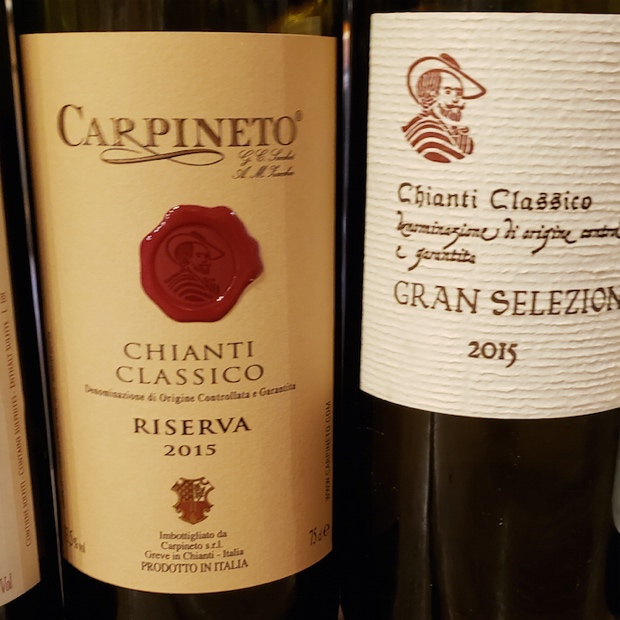
Podere La Cappella Oriana 1997, Toscana IGT, Tuscany, Italy (WineAlign)

The last time I was able to taste such a comparison was 2014 versus 1998, two under-appreciated cool and wet vintages. Now we look at warm years, 2015 and 1997, the latter at the time considered the greatest. Many sangiovese have failed and fallen but this vermentino, well, even if the colour and the nose are far evolved, the palate has plenty of life. Salinity and sapidity still rock and stone their way, with that marine wind from the sea rushing through, into the air and the soil of San Donato in Poggio. Hard to decide between this and ’98 because there is more flesh here (bringing a honeyed apricot), but sometimes lean is so nice. Such a special moment. Drink 2019-2022.  Tasted February 2019

Podere La Cappella Corbezzolo 2013, Toscana IGT, Tuscany, Italy (WineAlign)

From sangiovese planted in 1981 and 1982, a vineyard not certified as Chianti Classico so this wine can’t be called Gran Selezione. To say this is young and perhaps even being unaware of what it can be would be an understatement. It’s calm and powerful, elegant and ready to strike with force. Such identifiable, formidable, indestructible and yet malleable tannins. A mimic of the singular Colombino rock found only here in the territory, calcareous white stone both strong to build houses (and cellars) and schisty to break apart between your hands. Imagine how this will drink when it allows itself to break down in just the right way and at just the right time.  Last tasted February 2019

The Corbezzolo from vine and into bottle is 100 per cent sangiovese and in name “the fruit tree that produces a very tart berry for making jam.” This comes straight from the heart of the Rossini matter, out of the oldest vineyard planted in 1990-1991. It would be hard not too think on Podere La Cappella’s sangiovese as untethered to family, to meals and the kitchen’s hearth. The demi-glacé in Corbezzolo is deeper, richer, slower developing, of graceful, elegant and ethereal aromatics, even a bit exotic verging on quixotic. There is this far eastern temperament because the fruit seems to simmer with cool, jasmine-floral savour in a galestro clay pot. The acumen is variegated in the singular Corbezzolo concentration but this is not a factor of extract or density. Depth is sangiovese light, dancing from 2013, a gorgeous vintage that everyone will want a piece of. Drink 2020-2035.  Tasted February 2017

Podere La Cappella Cantico 2012, Toscana IGT, Tuscany, Italy (WineAlign)

As always 100 per cent merlot with a grafting connection to chardonnay and American rootstock. The vintage is a savoury one for the thirty-plus year-old IGT. It’s a very Mediterranean sensation, of black olive and balsamico, hematic ooze and woodsy floor. It’s actually still quite closed or perhaps it’s entered a dumb or quiet phase but don’t be fooled; there is powerful restraint and it may pounce anytime. Drink 2021-2029.  Tasted February 2019

Podere La Cappella Cantico 1999, Toscana IGT, Tuscany, Italy (WineAlign)

A beautifully advanced merlot from vines that would have been 17 and 18 years-old at picking time. If you’ve got a truffle dog, take this wine and go truffling because this merlot is at the head of that aromatic game for the territory. Such a creamy merlot, with plenty of necessary acidity and the freshness of truffle. Merlot as tartufo incarnate. Truly. Delicious. Drink 2019-2025.  Tasted February 2019

John Matta and John Szabo Vicchiomaggio

Castello Vicchiomaggio Ripa Delle Mandorle 2016, Toscana IGT, Tuscany, Italy (WineAlign)

Sangiovese (80 per cent) with cabernet sauvignon, all fruit and nothing but the fruit, plummy and with a nutty smokiness, but also manageable with simplicity from and for fruit. What works and gives from the basic and forthright IGT ideal. Drink 2019-2020.  Tasted February 2019

Castello Vicchiomaggio Ripa Delle More 2016, Toscana IGT, Tuscany, Italy (WineAlign)

Sangiovese (50 per cent), cabernet sauvignon (30) and merlot (20), from “the hill of the blackberry.” A rich, purple flower aromatic, liquid chalky, deeply rendered red. Done up in a combination of new and pre-used barriques. There’s a salumi feel, a musky pancetta and a silky smooth mouthfeel. Nearing glycerin but staying its clay-mineral coarse. Drink 2020-2024.  Tasted February 2019

Castello Vicchiomaggio Villa Vallemaggiore Poggio Re 2016, Maremma Toscana DOC Rosso, Tuscany, Italy (WineAlign)

From cabernet sauvignon grown on sandy soils in the warmer maritime area near Grossetto. The grapes comes from “the hill of the king,” and the attributes are so bloody varietal obvious. Cassis, ribena, blackberry, savour and spice. Chocolate and rosemary, tarragon and cinnamon. Very expressive and with good elevated acidity. Quite the tannic beast. Drink 2020-2025.  Tasted February 2019

Castello Vicchiomaggio FSM 2015, Toscana IGT, Tuscany, Italy (WineAlign)

From a project that began in 1995, this is 100 per cent merlot of a small, 3,000 bottle lot. It’s hard to decide if it’s more varietal or more Toscana so let’s just say it straddles the two with perfect ease. Youthful, big and warm, very Mediterranean with gariga, black olive, rosemary and dusty notes. Silky smooth however and finishes in balsamic, viscous and reduced. High quality merlot to be sure, with fine tannic structure. Drink 2021-2026.  Tasted February 2019

Amphora, Fattoria Montecchio

Fattoria Montecchio Priscus 2015, Toscana Rosso IGT, Tuscany, Italy (WineAlign)

The IGT is 100 per cent sangiovese of 1,200 bottles aged in 100 per cent terracotta amphora formed, forged and cured on the Montecchio property. Same must/juice as the Gran Selezione so the side by side comparison is the show. Winemaker Riccardo Nuti is interested in this investigation for family tradition, commercial continuity and passion project affirmation. Quick time on skins, fermented in terracotta tanks and racked into “amphora,” in this case elongated egg-shaped clay vessels for the next two plus years. The texture and the spice are higher, as is the volatility but the threshold is not in any danger of being breached. The tannins are more present, demanding and vivid. And I prefer them because they are just that more interesting. This is in fact a remarkable look at the relationship between grape, vessel, material, approach and place. Drink 2024-2033.  Tasted February 2019

Fattoria Montecchio Pietracupa 2016, Toscana Rosso IGT, Tuscany, Italy (WineAlign)

An IGT blend of sangiovese (60 per cent) and cabernet sauvignon with a percentage coming from San Donato in Poggio vineyards close by. Much deeper, bigger, broader and brooding as a blend with smooth silky consistency and fine silky tannins. Very oaky, completely mature and filled with the flavours that lie on the balsamic-chocolate-blackberry spectrum. Though the sangiovese character is lost it’s a real high-end charmer. Drink 2020-2027.  Tasted February 2019

Fattoria Montecchio La Papesa 2015, Toscana IGT, Tuscany, Italy (WineAlign)

A varietal merlot of high level ripeness and while it’s a bit overripe and certainly extracted the acidity is supportive, balancing and results in something charming. The tannins are soft and comforting with zero astringency so yes, think of this as a great big San Donato hug. Figs in reduced balsamico are the prevailing flavours, with lots of dark but not bitter chocolate coming through with the finishing next level morbido feelings. As big as it may seem to some palates it’s actually quite easy to drink. Drink 2019-2024.  Tasted February 2019

Monte Bernardi Tzingarella 2017, IGT Toscana Centrale, Tuscany, Italy (WineAlign)

A Bordeaux blend from young vines in frost spots and high humidity places not really suitable for sangiovese. The blend is merlot, cabernet sauvignon, cabernet franc and canaiolo. So what is it? Well for one thing it’s the “daughter of the gypsy,” and then it’s a high acid, taste of place before anything else red blend. High tonality, ripe purple fruit and and a boatload of currants. No pyrazine, well perhaps just a bit. Low alcohol for such an animal, remarkably so and once again it’s a great matter of sapidity. Just a hit of chocolate late, as per the grapes which needed to have a say. Drink 2019-2023.  Tasted February 2019

Monte Bernardi Tzingana 2015, IGT Toscana Centrale, Tuscany, Italy (WineAlign)

The “Gypsy,” from the old Greek, or in Italian, gitano or tzigane. This gypsy is the old vine version, of 50 years, top grafted on a sangiovese/malvasia/canaiolo/trebbiano vineyard planted by the previous owner in the late 80s. It’s made from merlot, cabernet sauvignon, cabernet sauvignon and petit verdot (but no canaiolo) and also no sangiovese because tells Michael Schmelzer, there is no cannibalizing the Chianti Classico. This is deeper, richer, lower in acidity, still sapid but not as pronounced and higher in finishing chocolate. The wood needs a year more of integration. Drink 2020-2027.  Tasted February 2019

Luca Martini di Cigala, San Giustro a Rentennano

San Giusto A Rentennano Percarlo 2013, IGT Toscana, Tuscany, Italy (WineAlign)

Percarlo IGT Toscana 2013 is the current vintage of the 100 per cent sangiovese that began in the 1980s when it was forbidden to label such a beast as Chianti Classico. “Percarlo is his identity so he will not come back,” insists Luca Martini di Cigala. Made from the smallest bunches and a selection of the best fruit, yet still from the same vineyards albeit blessed of more from tufo soil. Percarlo carries the same San Giusto richness and acidity working in silky tandem and the tannins are the most plush, which they’d have to be to match the high level of glycerin. Formidable and exceptionally refined sangiovese. Drink 2019-2028.  Tasted February 2018

San Giusto A Rentennano Percarlo 2005, IGT Toscana, Tuscany, Italy (WineAlign)

Once again you would have no idea that any time may have passed, not just because the hue has yet to morph but because the aromatics and fresh gelée are one in the same, together as they have always been. The purity and exquisite texture also conspire for a sublime intertwine and then out of this comes the acidity, trailing like a comet. The tannins are still so strong and so the smoky spirit and intensity of variegated flavour persists, gets reprimanded and is held out for all to taste. Here the maximum coaxed from the grape is acceded above and exceeded beyond. Drink 2019-2035.  Tasted February 2018

Poggio Scalette Il Carbonaione 2015, IGT Alta Valle Della Greve, Tuscany, Italy (WineAlign)

Il Carbonaione is from the finest sangiovese on the Ruffoli property, a Chianti Classico vineyard declassified, with vines as old as 90 years but in reality, not exactly 100 per cent sangiovese. Some post-phylloxera ungrafted vines and many co-planted with no record of origin perhaps or likely place mammolo, colorino, canaiolo, malvasia, trebbiano and even occhiorosso in five to ten per cent amongst clones of sangiovese. The nose is like the Chianti Classico magnified, reduced, compressed and elevated. The florals rival the Lamole but they are more into potpourri and the acidity is super, super fine. The only comparison might be in acidity like Luca’s San Giusto a Rentennano, with the sandy soil base and the saltiness but the tannins here are set upon broader shoulders. With much less stone worked in the soil you lose the chalky grain streak but gain this broader complexity. With such beckoning and burgeoning acidity the vinatge is put on a great pedestal and the possibility seriously exists for two decades of aging. Ruffoli’s 400-600m elevation, with a long growing season (sometimes seeing pick times up the second week of October) means the full and complete phenolic ripeness is wholly realized. Not to put too much stock in here but 13.5 per cent alcohol. Just sayin’. Drink 2020-2034.  Tasted February 2018

Good to go!

godello

San Francesco, Il Molino di Grace

Twitter: @mgodello

Instagram: mgodello

WineAlign