Chianti Classico’s Canadian dream

Gallo Nero, Castello di Querceto, Greve in Chianti

Il sogno Canadese del Chianti Classico: Embracing the most noble of Italy’s Sangiovese

Related – as seen in Chianti Classico Magazine, translated into Italian – Il sogno Canadese del Chianti Classico abbraccia il più nobile dei Sangiovese Italiani

The year 2018 has come to a close, a new one has begun and we naturally reflect on where we’ve been, what we have done and where we are going. This last vintage was a most significant and rewarding one for me and my relationship with Chianti Classico. For the great Tuscan territory it was marked by a meaningful and historical transition. In 2018 we witnessed the region’s fate and fortune transferred from long-time friend and President Sergio Zingarelli of Rocca delle Macie into the hands of Fontodi’s Giovanni Manetti. For Chianti Classico the future looks bright, sangiovese and now.

One of the best red wines from all over the world, deserving of space in place with the best – Giovanni Manetti, Fontodi, Panzano in Chianti

In just nine days the world will converge on Stazione Leopolda in Firenze for the two day Chianti Classico Collection 2019. The 2017 Annata will be poured by producers ready to show their newest sangiovese. During a September 2018 visit with the Consorzio’s recently elected President, the proprietor of Fontodi in Panzano referred to his territory as home to “one of the best red wines from all over the world, deserving of space in place with the best. I find great harmony in the wines,” said Manetti, “like I do in Renaissance paintings, vineyards and landscapes modelled by many generations. Harmony is what everyone and every winemaker should and will find. It’s something you feel.”

It is perhaps a recurring question that only happens in dreams but the clarity is quite real. Il Chianti Classico è il centro del mondo del vino italiano? Is Chianti Classico the centre of the Italian wine world? Without needing to offer up a response the query is still both curious and serious. When you pause to consider the 2018 buzz around Chianti Classico wines both at home and abroad, regardless of which is which to you, are you able to stop yourself from at least considering the question?

We are at the new era of the great potential – Paolo de Marchi, Isole e Olena, Barberino Val d’Elsa

It makes for compelling discourse to be sure. The rise of the Gallo Nero is a fascinating one, not merely because sales of Chianti Classico are rising with numbers never seen before. There is the exponential, across the board increase in quality, the ever-evolving multiplicity of the territory’s sangiovese and then there are these continuing controversies. Not exactly controversial issues as much as healthy debates, dialectics about sub-zones, boundaries, crus and designations of origin. We’ll get to that shortly.

Consorzio Vino Chianti Classico President Giovanni Manetti, Fontodi, Panzano in Chianti

In the past 31 months I have travelled to the land of the Gallo Nero on six occasions and have made a minimum 70 estate visits, 46 of them being unique. I’ve tasted and reviewed no less than 434 wines and written at least 12 articles about the region. In February 2019 I will arrive to report on a third consecutive Chianti Classico Collection. And I’ve just begun this lifelong journey into the highly complex world of sangiovese. In the middle of this odyssey of wanderlust there has already been a very special moment. Every wine region needs ambassadors to educate in the diaspora and in 2018 I was humbled to be chosen as one of Chianti Classico’s first five. This was indeed one of the great honours my life. I’m quite sure Jeffrey Porter, Michaela Morris, Massimo Castellani and Isao Miyajima felt the same.

The region and its nine communes share a commonality expressed in varietal and landscape but look to the maps, the ridges, hills and individual estates to note that there is more soil diversity than we can possibly wrap our brains around. When I arrive in Chianti Classico I am intrinsically aware that each trip will add a new dimension to the project, legend and story. More to the point I am hyper aware that the best is yet to come. Just two weeks ago I stood on the great Galestro ridge of Isole e Olena, Barberino Val d’Elsa to hear Paolo de Marchi say “we are at the new era of the great potential.”

Simplicity is the best thing in life. Simplicity is freedom – Principessa Coralia Pignatelli della Leonessa, Castell’inVilla, Castelnuovo Berardenga

Speaking of the number 31, in Dante’s 31st canto of the Inferno the Italian poet writes “on its circular parapets / Montereggione crowns itself with towers”. The poet’s fascination with the famous castle and turrets of Monterrigioni located just outside the Classico zone are used as a simile for his otherworldly journey that brought him to the horrible giants who, sunk into the infernal rock, guarding the ninth and last circle, where traitors are punished. For a moment, that frightening sight looked like high towers, like the ones of the ancient castle. This is not, however, a reference to proponents of 100 per cent sangiovese versus assemblage, nor is it one to the soils of Chianti Classico, but only a coincidental notation with respect to discussing what lays underground.

Sangiovese is the future – Montefioralle, Greve in Chianti

In Bourgogne there is one word used to describe the relationship between the weather, the land and the interaction with the people who raise vines on that land. Climat is expressed as a highly complex chain of topographical, elemental and ethnological conditions. There is no such word in Italian, at least none that sum up the notion in una sola parola. We could perhaps take the liberty and make use of two words, acclimazione and sottosuolo to delineate such a meaning. To “acclimatize the underground” is to infer that over time vines tended by humans get used to the subsoils beneath their climate. Just as the Burgundians discuss Climat not as something above in the sky but rather below their feet, so can the Chianti Classico cognoscenti do so with the notion of acclimazione sottosuolo. Last week at Castell’inVilla in Castelnuovo Berardenga Principessa Coralia Pignatelli della Leonessa told me “simplicity is the best thing in life. simplicity is freedom.” In September Principe Duccio Corsini used the term genius loci, from the Latin, meaning “terroir plus the action of man.” Combine this with the “acclimatization of the underground.” The notions takes a very difficult and complex set of circumstances and distill it down into something simple.

The ideas of acclimazione sottosuolo and genius loci are a matter of agriculturalists interacting with the stratified Chianti Classico layers beneath the vines. Three major types of mineral soils are present, prevalent and essential to how, why and where sangiovese acts and thrives in the territory. The rocks of alberese (calcareous limestone), galestro (schisty marl) and macigno (sandstone) are the three most important sub-soil types but they are not the only significant rocks that contribute to character. River stones and marine fossil shells are also found in various vineyards and bring more than their fair share of personality-gifting traits. Though we would so very much love to draw geological and geographical lines that explain what soils exist and where, it is simply impossible to do so. The complex weave of patterns and designs, not to mention the venn diagram circles of commonalities would make for the most intricate mapping anywhere in Italy. Yet is that not the foundation and the nature of Chianti Classico’s set of exemptions and eccentricities? No two soils are the same and the resulting sangiovese are all different. Yes, they are snowflakes.

The Galestro of Isole e Olena, Barberino Val d’Elsa

The official line tells us that geologically the land is a shield of clayey schists (marl), with layers of scaly clay, alberese and fine limestone sandstone. The dark brown soil tends not to be deep, with structures ranging from clayey-sand to stony with average clay content. Almost all the Chianti Classico production area, though, has soil rich in stony material, especially marl. Two-thirds of the whole area is covered with woods. Oak trees are present everywhere while chestnuts are found mainly in the eastern area, conifers in the higher altitudes and pine woods in the lower hills south of Florence.

The type of land varies considerably from one area to another, making it impossible to make a clear subdivision of the various soil types typical of Chianti. But it can also be said that marl-based soil is widespread in the San Casciano in Val di Pesa, while Greve in Chianti and all the lower altitude areas have typically clayey limestone soil; large sandstone rocks characterize the Monte dei Chianti ridge; alberese is the principal element of the central-southern area, and tuff stone rock is found in most of the Castelnuovo Berardenga area. The area with a marked sandstone presence are severe and steep while the limestone hills are softer and rounder, and the clayey hills are even gentler.

Not all stone in Chianti Classico is created equal – at Pomona, Castellina in Chianti

In 1716 the Grand Duke Cosimo III set the borders of the Gallo Nero production zone, defining it as extraordinary and suitable for the making of high quality wines in what today covers nine municipalities under the provinces of Florence and Siena. In 1984 the adjective “Classico” was added by ministerial decree to distinguish the original Chianti from the wine made outside the territory delimited in 1716. In 2002 the sangiovese number permitted by production regulations was raised from a minimum of 80 per cent with a maximum of 20 red indigenous  (i.e. colorino and canaiolo) or international grapes permitted by production regulations. Since 2005 the Black Rooster trademark has stood for the entire Chianti Classico appellation with a graphic re-styling to make it stand out even more on every bottle of Chianti Classico. Two locations have been permitted, on the neck or on the back label. The year 2010 was the beginning of Chianti Classico truly distancing itself from Chianti through a change to an Italian law banning the production of Chianti wine in Chianti Classico production zone. In 2013 the Gran Selezione was introduced to stand at the top of the quality pyramid. 

évero

We now live in a world where diversity leads to prosperity and though current global political and national climates are pushing back against that truth, success comes from celebrating and embracing differences. A territory that recognizes its individualities, multiplicities and idiosyncrasies is destined for greatness. This is Chianti Classico, a region where the wines have 300 years of recorded history to support its message but also a history that includes evolution and change. You’d better sit down for what’s coming.

In the early 1980s a group of rogue producers reacted to the idea of Chianti Classico not being allowed to be labeled as such if the contents were 100 per cent sangiovese. The IGT Toscana for the region was born out of varietal necessity. No fewer than 12 significant and iconic producers began labelling their best wine as IGT. With the recent advent of Gran Selezione as being the most important wine at the top of the pyramid could we possibly see a backlash 30 years after the last one? Might the 12 producers make a joint announcement that their collective IGT will now be bottled under the label of Gran Selezione or take it to the great extreme and simply label it Chianti Classico? Speculation is the thing but first there is the notion of having the Gran Selezione category as being restricted to 100 per cent sangiovese. Would this decree help to define the category or hinder its progress? Would it shed light and help to educate the consumer?

Pasta is the protagonist of the table – Principe Duccio Corsini, Le Corti – Principe Corsini, San Casciano

Then there is the all important discussion about cru and labelling. Menzioni geografiche are on the way in as a means to identify the communes, villages and cru within the greater territory. We are witnessing the rise of the associazioni, subsets of viticultural associations uniting producers of communes and also villages within the communes. These associations are formed so that the common good is furthered, both in terms of exchanging and promoting like-minded ideas but also to access a potential for commercial and economic gain. The question is who will benefit by way of these detailed additions to Chianti Classico labels. Producer or consumer? Perhaps both?

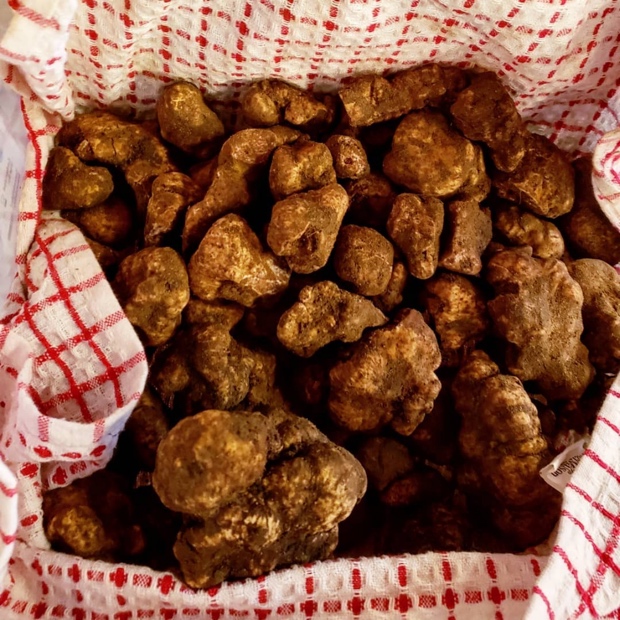
Fresh harvested truffles at Carpineta Fontalpino, Castelnuovo Berardenga

These are the debates of men and while their meaning and importance should never be discounted, there is another way to look at the territory’s peregrination of significance. Whether or not the wines are made from 100 per cent sangiovese, from an assemblage that includes other endemic as well as international varietals, or from expatriate grape varieties, there is one common kinship that binds them all. They are wines made from grapes grown on Chianti Classico soils. Many would argue to the bitter end that the place is always stronger than the grape. Most important and sometimes forgotten is how they work with the food. How can one be considered without the other? Sit down to dinner with Principe Duccio Corsini and you will learn about the Tuscan symbiosis. “Pasta is the protagonist of the table,” says Corsini. Truth.

Which brings us to some all important numbers. The top export markets in 2015 for Chianti Classico (in volumes) were the US (31 per cent), Italia (20), Germany (12) and Canada (10). In 2016 the numbers were US (32), Italia (22), Germany (13) and Canada (8). In 2017, US (33), Italia (23), Germany (12) and Canada (8). This year is just about complete and already it looks like the unofficial-official statistics are in. In 2018 for Chianti Classico we find the US at 34 per cent, Italia (23) and Canada (11). Export numbers to the US and Italy continue to rise slow but steady but it is Canada’s near 38 per cent increase from 2017 to 2018 that is most significant. Canada’s is a market loyal to repetitive purchasing from wine regions that produce consistent and recognizable wine so what changed to encourage consumers to drink outside the box and to seek out sangiovese? The most obvious answer lies in the work of Chianti Classico producers at the vineyard level but the true catalyst seems to be educational efforts that have awaken the sangiovese wolf of the Canadian consumer.

The author Godello in Radda in Chianti

The Consorzio has travelled tirelessly across Canada, staging events, masterclasses and grandi degustazioni in major Canadian cities. Ambassador competitions have reeled in some of this country’s finest sommelier minds to help spread the great secret of the Gallo Nero’s sangiovese. Michaela Morris and Jason Yamasaki (Vancouver), Steven Robinson (Ottawa) and Kler-Yann Bouteiller (Quebec) are all apart of the revolution. The next and essential step is to win over the hearts and minds of sommeliers and restaurant buyers, especially in urban centres like Vancouver, Toronto and Montreal. Such a program would surely push Chianti Classico up the precipice where numbers do not lie in a scenario where exports could very likely equal those nationally in the 20-25 per cent range.

Finding ways to increase imports to Canadians is the ultimate goal and in a country where monopolies and one-tier purchasing systems are the norm it is the rise of wine clubs that could very well be the most important next step. Gargoyle out of Alberta and the WineAlign Exchange out of Ontario are poised to become critical avenues for the importation of Chianti Classico wines into Canada. In fact, the WineAlign community wine exchange program will be facilitating upwards of 150 cases of Chianti Classico into Ontario in 2019. Consider that the Consorzio normally calculates export percentages on a total of 35/6 million of sold bottles, which means that in 2018 approximately 3,000 cases (of 12 bottles) were exported to Canada. Even with a highly generous expectation for that number to increase by 38 per cent again from 2018 to 2019, 150 of 4,140 cases would represent 3.6 per cent of the total imports for next year. That is surely a significant contribution to sales.

So what will 2019 bring? Will it usher in a new era of Chianti Classico bottles noted by villages and crus on the labels? Will sangiovese long designated IGT come back to the appellation? Will Gran Selezione gain further ground and find itself endeared by the hearts of more women and men? Will the category seek 100 per cent sangiovese status? One thing is certain and that is Canada’s connection and bond to the territory will only grow stronger. When we convene at this time in 2019 the sales figures will prove that the process is moving in the right direction.

See you at the 2019 Chianti Classico Collection.

Good to go!

Godello

Gallo Nero, Castello di Querceto, Greve in Chianti

Twitter: @mgodello

Instagram: mgodello

WineAlign

Eighteen mind-blowing wines of 2018

Godello, Museo civico e diocesano d’arte sacra di Montalcino

Welcome to Godello’s annual list of the most memorable, game-changing and mind-altering moments, also known as his 18 mind-blowing wines of 2018. Godello started this year-end assessment first in 2012 though first blessed the list with the moniker for the 14 mind-blowing wines of 2014. Whether it’s the fifth or the seventh incarnation matters little to negligible because in the end it’s all about the who, what and where.

Related – Seventeen mind-blowing wines of 2017

With thanks to the winemakers, friends, colleagues and pirates I welcome you to read on. Godello’s 18 mind-blowing wines of 2018.

Taittinger Comtes De Champagne Blanc De Blancs Vintage Brut Champagne 2006, Champagne, France (55277, $205.95, WineAlign)

Rarities are special for many reasons but in the case of the Comtes de Champagne Blanc de Blancs it’s a matter of chardonnay incarnate. Some details must be kept in the pocket of assessment. Only exceptional vintages lead to its production, fruit is drawn from the finest Côte des Blancs parcels of chardonnay and only the first press juice is used. So what? So the gathering might lead one to think of words like purity, elegance, refinement, finesse and delicasse. In actuality there is the finest wisp of smoke and smoulder, a bite from a perfectly ripe apple and the zen golden taste of honeyed Japanese toast. Who could not be overjoyed to zen out with the Comtes B de B, anytime, anywhere. Drink 2018-2030.  Tasted January 2018  champagnetaittinger  fwmcan  champagne_officiel  @TaittingerUK  @FWMCan  @Champagne_UK  Champagne Taittinger  @FWMCan

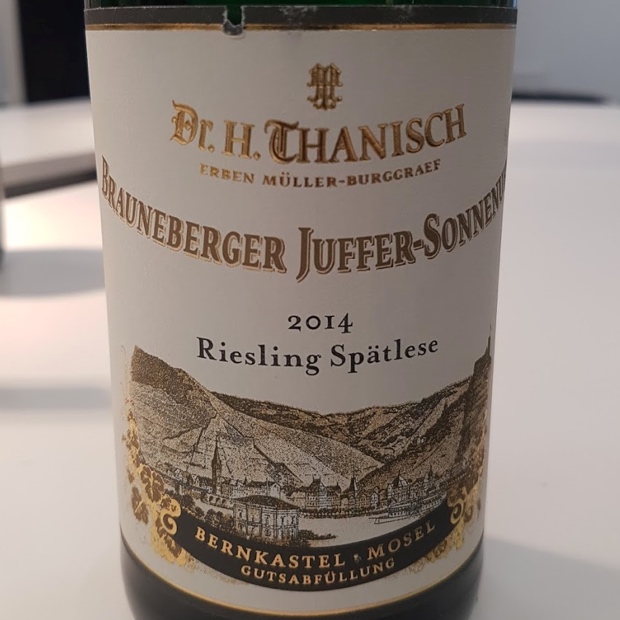
Dr. H. Thanisch Brauneberger Juffer Sonnenuhr Riesling Spätlese 2014, Prädikatswein, Mosel, Germany (298182, $40.95, WineAlign)

In a word, thank you, well two, to say how important, generous, fortuitous, philanthropic and poignant it is to taste Spätlese from this combination of producer, vineyard and alcohol. At 7.5 per cent proper and out of arrested necessity the frame on which the ultra-clean fruit and fineness of acidity hang is kevlar light and built to last. The poise and integrity in exhibition toasts lithely from stones warmed and earth cooled by night through excitable seasonal fluctuations. If this does not soothe the savage while wooing the unaware then few German rieslings will. This can’t be missed nor will it pass lips without eliciting a response set passionately in the ethereal and the sublime. Amazing. Drink 2021-2035.  Tasted April 2018  #braunebergerjuffer  awsmwest  germanwine_ca    @AuthenticWineON   @germanwineca  #braunebergerjuffer  @awsmon  @germanwinecanada

Into the South African mystic ~ A formidable line-up led by @mullineuxwines with thanks to Chris, LK @WOSACanada JG @lbstoronto @wosa_za @NicholasPearce_

Mullineux Schist Chenin Blanc 2014, Swartland, South Africa (Agent, $89.95, WineAlign)

Mullineux’s Schist is a 100-120 case production (though only 72 in 2014), from schist, of course, not granite, which adds mid-palate weight and texture. Also from older (36 and 40 years) vines based from soils of the Kasteelberg. It’s a heartfelt message and cerebral pulling string from the 2014 density gifting vintage. Older barrels wrap like a blanket for fruit richer than you’d ever imagine, full-bodied, beautiful and robed in petticoat unction. It’s also dry as the farmland desert. Truly one of the finest chenin blancs from South Africa and beyond. Drink 2018-2027.  Tasted May 2018  mullineuxwines  nicholaspearcewines  wosa_ca  @MullineuxWines   @Nicholaspearce_   @MullineuxWines  @WOSACanada  Andrea Mullineux  Chris Mullineux  Nicholas Pearce  @WOSACA

How to have an epiphany. Taste 25-30 year-old #southafrican white wines. Case in point @kleinconstantia sauvignon blanc

Klein Constantia Blanc De Blanc 1987, Constantia, Western Cape, South Africa (Winery, WineAlign)

Poured by Managing Director Hans Astrom in Cape Town alongside 1994 and 2009. Planted in 1979, the inaugural vintage and the first South African sauvignon blanc was 1986. The 1987 was not labelled as sauvignon blanc but rather as B de B because of the botrytis-affected vintage. Honeyed but not in the way you might expect, not pushed by a petrol-fuelled sweetness but instead as the action of an old world inspired mash up. Like Loire Jolivet Sancerre meeting Huet Demi-Sec chenin blanc head on. The collision explodes into a smoky smoulder with textural consequences. It’s a bees-waxy ethereal treading of chaotic spaces between worlds. The astral travel must have twisted through three decades of nether to arrive at this place, with the low pH vineyard soils to thank. And the magic, despite or perhaps in ode to the ’87 botrytis. In the end aridity wins and the wine drinks so proper, perfect and fine. Drink 2018-2020.  Tasted September 2018  kleinconstantia  halpernwine  wosa_za  @KleinConstantia  @HalpernWine  @hansverbier  @WOSA_ZA  @KleinConstantia  @halpernwine

Alheit Vineyards Sémillon La Colline Vineyard 2017, Franschhoek, Western Cape, South Africa (Winery, WineAlign)

“Qu’est-ce que c’est?” From a vineyard housing both light and dark skinned sémillon and if there are others in this world I am not privy to the information. The resulting wine is 85-90 per cent blanc and 10-15 gris. La Colline was planted in 1936 on the southern slope of Dassenberg and is now farmed by grandson Anton Roux, a direct descendant of the Huguenot refugee Paul Roux who arrived in Franschhoek in 1688. The vines stretch up the hill from 310-350m and it is the fruit from the middle slope that is best to leave for picking long after the chenin blanc. This is the indispensable fruit used in Alheit’s Cartology. Thick skins elevate the natural talking tendencies, from a super healthy pH for drupe of apposite attack and confusing like great whites you would not or should not compare it to. Chris Alheit’s invades your head’s consciousness with this amazing depth for sémillon, with no definable context, pretence or precedent. The impossibility is totally unique in the world and yet utterly South African. It’s both tense and nervous but somehow I can still relax. Psycho Killer sémillon.  Drink 2020-2028. Tasted September 2018  chrisalheit  gsoleil123  @ChrisAlheit  @GroupeSoleilTO  Chris Alheit  Groupe Soleil Fine Wines

Chablis Grand Cru can be found in the commune of Chablis on the right bank of the Serein River and the appellation comprises seven climats; Blanchot, Bougros, Les Clos, Grenouilles, Preuses, Valmur, and Vaudésir. “The terroirs, formed in the Upper Jurassic era, 150 million years ago, are composed of limestone and marl with Exogyra virgula, tiny oyster fossils. Chablis Grand Cru is one of the rare French AOC wines to make reference to its geology, notably the Kimmeridgean age.”

Christian Moreau Chablis Grand Cru AOC Les Clos 2015, Bourgogne, France (Agent, $82.00, WineAlign)

Who has not waited for the sovereign Grand Cru to get together with the 2015 vintage? I’m quite sure Christian Moreau was one of those who looked at the alliance with all his acumen and experience to craft a high point of Chablis benevolence. Christian’s ’15 is beautifully fruity, ultra fresh, richly endowed and reductive perforce. So young and precocious but begging for our patience, his is a model of Les Clos richesse. Resides on the cocotte or chouette side of Chablis with notes of white flowers and fresh herbs. Also layered of fruit over stone upon fruit, of peach, persimmon, citrus and wet stone. Implosive intensity reminds of Chablis Grand Cru structure though Moreau’s is more elastic than many, of a subtle and sultry liquidity. Great potential here. Drink 2021-2031.  Tasted May 2018  @christian_moreau_pere_et_fils  rogersandcompanywines  vinsdechablis  vinsdebourgogne  @ChristianMoreau  @rogcowines   @vinsdechablis  @GrandCruChablis  @purechablis  @VinsdeBourgogne  @BourgogneWines  Christian Moreau  @rogcowines

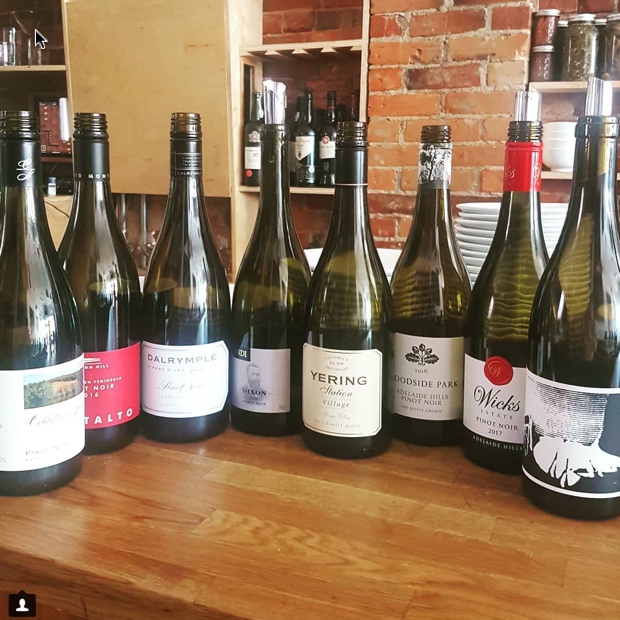
Makers’ cool pinot noir warmth from regional @wineaustralia as explained by the man, @vintagemarkdavo

Bindi Pinot Noir Dixon 2015, Macedon Ranges, Victoria, Australia (Winery, $85.00, WineAlign)

The Bindi Dixon Pinot Noir is based upon declassified grapes from the Original Vineyard planted in 1988 and grapes from the new Block K, planted in 2001. Crazy horse nose in the way that other varieties of the world will do, or at least try and simulate when they want to be pinot noir. Especially Italian varieties, like nerello mascalese, dolcetto, perricone and montepulciano. This is a natural leader for grape wishes like those of the lesser known. Very wise from the start, from birth, from creation with more savour and salumi then so many wannabe realists. There is a beautiful raw pasta dough note and then an exotica by fruit that isn’t really nameable. If this is the de-class from Michael Dhillon I’d like to meet the classified. Drink 2020-2028.   Tasted June 2018  bindiwines  wineaustralia  @Bindiwines  @wine_australia  @WineAustralia

50 years ago this #chianticlassico entered the world. Suffices to say 1968 was a pretty good year ~ @castellomonsanto

Castello Di Monsanto Chianti Classico Riserva DOCG Il Poggio 1968, Tuscany, Italy (Agent, WineAlign)

“A good, not an outstanding vintage, with some vines affected by botrytis,” explains Laura Bianchi, though truth be told she’s relating the information from stories and legends. You can taste it, in a sweetness that reminds of quince and apricot. Plums are dusted with white pepper, sherry drizzles over sugar plums and in the end, acidity continues to shine. It’s still a dramatic drop of sangiovese, with longevity preservation going back to the era (1962-1969) when the wines were aged in chestnut barrels. This at 50 years of age is so alive, time encapsulated, dew sweetened, ethereal. Drink 2018.  Tasted September 2018  castellomonsanto  @castelmonsanto   @castello.dimonsanto  Laura Bianchi  Carpe Vinum  

Castello Di Volpaia Chianti Classico Riserva DOCG 1987, Tuscany, Italy (Agent, WineAlign)

Chianti Classico Riserva 1987 is habituated and living life to the fullest in a state of complete and utter sound body and mind. It is sangiovese made at a time when it could it not have been known how impressive it would show 30 years later. Volpaia ’87 is from way back in the cold, pre-climate change days, the acid-washed, roaring 80s, now umami-earthy, cherry-plum fruit with some celery and a real salty-sandstone vein. Still blessed by a healthy, rhythmic pulse of acidity and finally, pure pleasure. Chalk it to bottle luck or a vintage that just had an inkling of greatness that would surely come but this is truly a special and memorable moment to taste. It needs saying with a thank you in words to Giovannella Stianti for sharing, but that will never be enough. Grazie infinite. Drink 2018-2021.  Tasted February 2018  castellodivolpaia  rogersandcompanywines  chianticlassico  @volpaia  @rogcowines   @chianticlassico  @volpaia  @rogcowines  @ChiantiClassicoUSA

Elisabetta Foradori

Foradori Granato 2013, IGT Vigneti Delle Dolomiti, Trentino, Italy (Agent, $74.95, WineAlign)

At the pinnacle of Elisabetta and Emilio Foradori’s mysterio teroldego pyramid is this Granato, theoretically or perhaps spiritually interchangeable with the world’s most fascinating and complex fruit, the pomegranate. There are many theories on separating the edible seeds from the pith and skin but those who know do it the right way. Foradori knows teroldego and raises this singular expression the right way. The roots dig deep into the Campo Rotaliano and Mezzolombardo stony alluvial soils with pebbles and gravel for an alternative-indie northern Italian red wine. Raised in large 20 and 30hL casks it’s still reductive, seriously internal and yet to shed layers, open up and externalize. The red fruit is alone and incredible, sweet and tonic-amended at the same time. It’s both retro and timeless. “And the world fell down, when the moon was blue, and you wore a crown and the word was true.” Like a pomegranate. Drink 2019-2024.  Tasted May 2018  eforadori  thelivingvine  @AzAgrForadori  @TheLivingVine  @elisabettaforadori  @thelivingvineinc

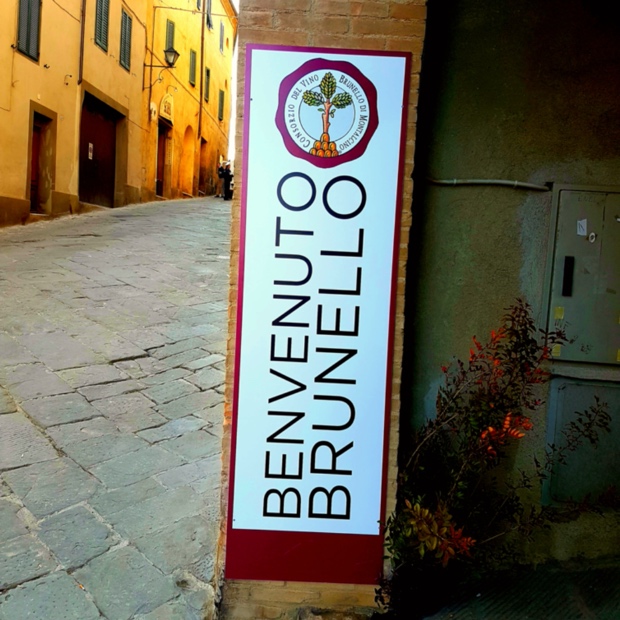
Benvenuto Brunello

Talenti Brunello Di Montalcino Riserva DOCG Pian Di Conte 2012, Tuscany, Italy (Agent, $120.00, WineAlign)

Two of the 20 estate hectares in Castelnuovo dell’Abate are dedicated to the the vineyard Paretaio, planted to a sangiovese clone selected by Pierluigi Talenti. Pian di Conte is only made in years deemed worthy of carefully selected grapes from 20-plus year-old vines out of this highly specific, 400m of altitude micro-climate block. It’s a wow Riserva from 2012, perfumed with classic extra time in barrel that Annata Brunello only seems to reach. Notes like dark berries, pipe smoulder and rich ganache, the 2012 is already showing some maturity signs of integration. It’s a fineness of tart dark citrus styled-sangiovese wrapped so tightly around the structure’s finger, indelibly inked, modern and with all parts fine-tuned in synchronicity. Riservas will often sting until they pass at least a ten-year mark but Talenti’s croons romantically with stand-up base note ease. For Montalcino it’s a hit of the vintage and to it I can safely say “I can see the destiny you sold turned into a shining band of gold.” Drink 2020-2030.  Tasted March 2018  talentiriccardo  brixandmortarwineco  brunellodimontalcino  @brixandmortar  @ConsBrunello  Riccardo Talenti  @brixandmortarwineco  BRUNELLO DI MONTALCINO

Feudo Montoni Nero D’avola Sicilia DOC Vrucara 2008, Sicily, Italy (Agent, WineAlign)

The answers are so simple and yet unanswered because magic is involved. You can understand the old vines and the way their fruit turns into wines that begin with ancient wisdom but move so little in the first seven years. What happens at 10 is the turning outward, to express the place and speak the dialect of the cru. The acidity is still high but is now in lift, with fruit at the height and en anergy that flows, really flows, moving across your palate with grace, grab and attention. A contiguous wine from start to finish, with intensity, impression and precision. The structure is come cavallo domato, like a trained horse. Dramatic nd’A but with no drama at all. Tamed and in respect of ancient vine, where it grows and what it wants to give. Ma zitto, a wine to keep you silent. Drink 2018-2029.  Tasted May 2018  feudo_montoni  wineofsiciliadoc  winesofsicily  @FABIOSIRECI  @WinesOfSicily Fabio Sireci Feudo Montoni (Fabio Sireci)  @feudomontoni  @WinesOfSicily

Cottá Azienda Agricola Sottimano cru spoiled by Elena Sottimano and Le Sommelier, Wine Agency ~ going vertical with Barbaresco and John Szabo — at Taverna Mercatto.

Sottimano Barbaresco DOCG Cottà 2010, Piedmont, Italy (Agent, $234.95, WineAlign)

While tasting through Pajoré, Fausoni, Currá and a mini-vertical of Cottá with Elena Sottimano it is here for the first time that some development appears in a wine. This glimpse into what might happen with their Barbaresco may only be a minor crack in the oasis but it begins to fall away from the curative, tannic intensity into something stretching its limbs towards the ethereal. I can ruminate with this nebbiolo swirling around in my mouth while I wonder how far along we are or have come. But it comes with knowing that no matter how much distance we walk there is still a marathon to run. There is this perfect wonderwall of wild cherry spinning like vinyl liqueur over the cheeks, tongue and gums, refreshing and working its magical fruit dance up to the edges of my nerves. “I said maybe, you’re gonna be the one that saves me. And after all,” you’re Sottimano. Drink 2019-2035.  Tasted April 2018  az.agr.sottimano ElenaSottimano  @AzAgrSottimano  @LeSommelierWine  @AziendaAgricolaSottimano  Elena Sottimano  @LeSommelierWine<

La Rioja Alta Gran Reserva 904 2001, Rioja, Spain (Agent, $65.00, WineAlign)

I am convinced the Reserva 904 is just one of those wines that must be held for 15 years before any deep understanding can be resolved. It beats down the adage that says if the fruit is not gorgeous from the beginning it will never be. At 17 years of age this Rioja of 90 per cent tempranillo and graciano remembers with a hyper-sensitive vividness the 40 year-old vines and the four year-old American oak barrels. The memories are crystal clear and it remembers the comfort, protection, protraction and the possibilities. The power is edifying, stabilizing and eventually but without great haste, emollient. La Rioja Alta has produced the 21st century purpose for what it is to mean Rioja. Drink 2018-2025.  Tasted June 2018  lariojaaltasa  riojawine_es  @LaRiojaAltaSA  @RiojaWine  La Rioja Alta  

And @winealign we tasted the greatest of #madiran terroir with the Man himself, #alainbrumont of @montusbouscasse

Château Montus La Tyre 2009, Madiran, Southwest, France (Agent, $135.27, WineAlign)

La Tyre, literally “the tire” is the pinnacle of Alain Brumont’s tannat from Madiran. It’s a wine that needs a decade to even begin to relent and open up for viewing, nosing and tasting. Pitchy to the nth cimmerian degree it would be hard not to see this wine as THE Madiran, the epitome of a red wine from Gascogne. The nose is über-umami and in fact in character it reminds so much more of Brunello Riserva meets sagrantino from Montefalco combined with Taurasi aglianico than it does Bordeaux. Not that Toscana, Umbria or Campania are the reference points but old school meets micro-oxidative winemaking surely is. The formidable acidity and the way in which the expense of barriques inject major influence is similar to what happens when sangiovese is subjected to said same sort of winemaking. The underbrush, garrigue and intensely concentrated argileux all combine, along with toasted wood to make this one of the most intense and structured red wines on the planet. Should seek and realize its best at some point in its late teens or early twenties. Drink 2025-2039.  Tasted October 2018  vinsdemadiran  montusbouscasse  markanthonyon  @MontusBouscasse  @MarkAnthonyWine  Marine Madiran  @MontusBouscasse  @MarkAnthonyWine

Catena Zapata Adrianna Vineyard Malbec River Stones 2015, Gualtallary, Tupungato, Uco Valley, Mendoza, Argentina (132340, $95.59, WineAlign)

In a line up that includes malbec from all walks of Mendoza life as well as some extreme altitude northern examples this is the first wine with a somewhat reductive quality, locked in freshness and very high acidity. It’s a wine of exceptional qualities. There is a highly intellectual and sensory balance executed through perfectly ripe fruit, that fine acidity and even more fineness in tannins. A beautifully linear wine that can come full circle if need be. This is a malbec that creates moisture in your mouth, never drying or taking anything away. A wine that is changing the way we are dealing with the idea of different terroirs in Argentina. Drink 2020-2027.  Tasted November 2018  lauracatenamd  catenawines  winesofarg  noble_estates  @LauraCatena   @CatenaMalbec  @ArgentinaWineCA  @Noble_Estates  @winesofarg  @bodegacatenazapata  Noble Estates Wine & Spirits  @winesofargentina

Roche De Bellene Clos De La Roche Grand Cru “Collection Bellenum” 2006, AC Bourgogne, France (Agent, $279.95, WineAlign)

The great Cru and the magnificent vintage conspiracy is a tour de force, even by the standards of Grand Bourgogne. I’m a bit surprised by the ascension to secondary life but it is Clos de la Roche that goes there early because of wisdom, curative indiscretion and life as it always was, right from the word character. Only this Cru delivers such soulful funk, perfectly classified and ethereal volatility and fully gathered expressions. It’s like a face that flashes a thousand looks in the span of a few seconds, there is that much going on. I am blown away by this. Still needs another year to settle, gather and explain itself. Drink 2019-2032.  Tasted May 2018  domaine_de_bellene  domaine_de_bellene  vinsdebourgogne  @Nicholaspearce_   @VinsdeBourgogne  @BourgogneWines  @BourgogneWines  @VinsdeBourgogneofficiel

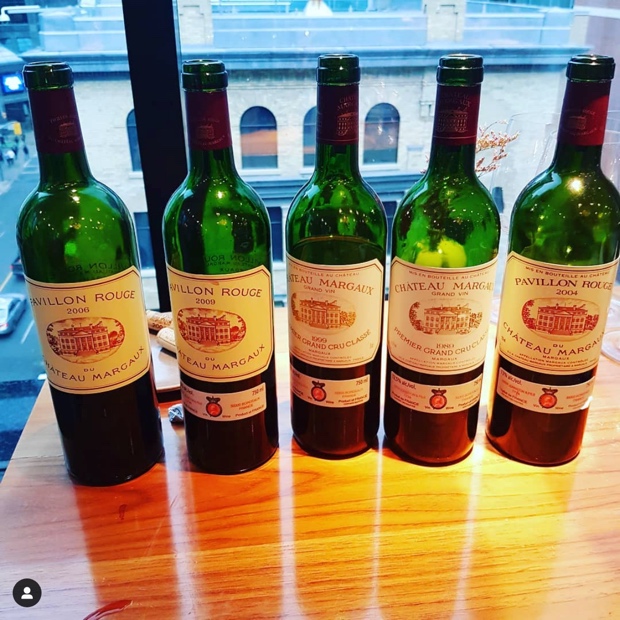
Château Margaux 1989, AC Margaux, Bordeaux, France (176057,$1,645.00, WineAlign)

You never want to say that a vintage was perfect but in this case, the vintage was perfect. It seems impossible but the tannins are both present and even a bit drying so at least for this bottle there will be so much residual fruit at the end of the tunnel. Only those tannins seem altered from four years ago because the fruit and the flowers are exactly the same. What rises above, around and in darts between is the fineness and intensity of implosive acidity. Structure in this 1989 is forged by bars of steel as reinforced spikes in the concrete. It may never truly break down. Drink 2018-2044.  Last tasted March 2018  chateaumargaux  noble_estates    @Noble_Estates  @NobleEstates

The 1989 Château Margaux wears the response to a mondo Bordeaux axiom on its sleeve. Are First Growth wines made for people who want darts of instant pleasure?” Twenty years earlier and now like the 2009, here is a quintessential and exemplary vintage, from day one of bud break to the last day of harvest. Its appraisal as anything but incredible is to assassinate it as if it were the Franz Ferdinand of Bordeaux. The examination 25 years later sees a mellow funk meet a peerless and sublime perfume. A wine cast in utmost density, complexity and length. It noses strength, warmth verging on heat but only for a fleeting moment, to gain attention. The iconic wine has reached the first major peak, up a ways from base camp. In this second phase of young adulthood it looks with conceit to the top of the mountain, seeing 25 to 50 more years on the climb. Mr. Pontallier regrets he won’t be around to taste this wine at full maturity. Moi aussi. The fruit lingers in its full, original state, from the moment it passes lips and for minutes onward. Violets trump roses. Château Margaux 1989 is from a vintage that offers the blessing of ethereal balance. Hear her sing, “Ich heisse Superfantastisch!”  Tasted April 2014

Good to go!

godello

Godello, Museo civico e diocesano d’arte sacra di Montalcino

Twitter: @mgodello

Instagram: mgodello

WineAlign