Deep freeze: Controversies, polar vortex and icewine

Extreme Lows, Niagara Peninsula, December 2013 and January 2014

Extreme Lows, Niagara Peninsula, December 2013 and January 2014
Photo: Weather INnovations Consulting LP (WIN)

as seen on canada.com

The physiological and emotional roller coaster heaped upon grapes and growers these past 55 days has been nothing short of exhilarating, frightening and exhausting. First this monster climatic Dementor known as the Polar Vortex. Along with the demonic weather came the devastation of an ice storm, followed by record low temperatures. More recently, thaw and re-freeze. Consequences and challenges have abounded. Also, a silver lining. Freezing temperatures can kill grape buds on vines unprepared and left to fend for themselves. Those little vine kinder can also just be unlucky enough to grow up in the wrong place at the wrong time. Some Niagara growers are reporting heavy losses to Riesling, Cabernet Franc and Chardonnay vines. Here are the numbers as reported by Wines In Niagara’s Rick VanSickle.

I spoke with winemaker Paul Pender of Tawse Winery in Vineland, Ontario yesterday. Paul is both unconcerned and not yet ready to make any sort of call on damage to his crops. “It’s still too early to tell,” he notes, “I won’t really head out to assess any potential damage until early March.” While Beamsville vineyards are reportedly hard hit, Pender is confident that his team’s strident and prudent vineyard management will see the vines through.

Balanced pruning means leaving a specific number of buds during the winter on a dormant cane for this year’s crop, the number based on the amount the vine grew the previous season. Tawse’s canes are cut back to two feet, the dead wood removed before winter’s freeze can hit. Buds this season were thinned from 12 to six, giving those tender bits a fighter’s chance to survive. And while Pender will not enter into an unequivocal conversation with respect to the heartiness of his vineyards as a consequence of 100 per cent organic and biodynamic farming, I can hear the surety in his voice and imagine the twinkle in his eye at the thought.

Other growers concern themselves with what may happen inside the many parts of the vine when there are freezes, thaws and re-freezes. Again, Pender is not concerned. Proper pruning should prepare a vine for a harsh winter, whether or not they are protected by a warm blanket of snow. In New York’s Finger Lakes region, Lenn Thompson is reporting “some minor bud damage to vinifera vines, but little to no vine death.” Steve Shaw of Shaw Vineyards on Seneca Lake had this to say. “Yes, this winter is definitely presenting itself in a rather volatile manner. As far as I can tell from checking a number of varieties and many buds, there does not seem to be any catastrophic primary bud kill. There is damage, but not too bad so far. I do not think that with things being this wacky that we can really rest easy until most of the winter has passed.” Brock University’s Cool Climate and Viticulture Institute in St. Catherines helps local growers with much needed information and infrastructure to deal with damaging weather. Their VineAlert program helps protect vineyards during frigid temperatures.

Icewine Hours 2013

PHOTO: Weather INnovations Consulting LP (WIN)
Icewine Hours 2013

The news is not all bad. According to many icewine makers in Niagara, 2013 will shape up to be what many are forecasting the best ever vintage for the province. Temperatures dipped to the requiem in late December and most picked their shriveled, sugary berries before the new year. That is unprecedented, allowing this season’s icewine to remain high in necessary balancing acidity and well ahead of the fermentation arresting challenges from most years. Wine Country Ontario reported that “early icewine harvest in Wine Country Ontario starts the festival fever.” Look for the most balanced icewines out of 2013. Not to mention the Grape Grower’s of Ontario reporting the province’s grape growers gathered a record 79,756 tonnes of grapes in 2013 valued at nearly $100 million.

The Niagara Icewine Festival encompasses three weekends in January dedicated to the region’s beloved ambrosial elixir, wines that have become the calling card beyond the broader confines of Canadian borders. Icewine has been made since 1981 and in that short span of 33 years, Ontario and B.C. winemakers have challenged, and in many cases lapped their counterparts in Germany and Austria. Canadian icewine is globally renowned, even if it is not the most important wine resource bequeathed upon the rest of the world.

Icewine 101. Simply put, made from grapes that have been left to freeze naturally on the vine. Ontario’s stringent Bolshevik Initial Decrees-like laws insist that icewine must be made from approved grape varieties; the most popular are Vidal Blanc, Riesling and Cabernet Franc. Some small lots include Gewürztraminer, Chardonnay and Cabernet Sauvignon.  Grapes are left on the vine until a sustained temperature of -8°C or lower is reached and then picked from those vines encapsulated in nets to protect them from birds possessive of a sweet tooth.

A national icewine debate is ongoing, inflamed by a recent Macleans Magazine article discussing the ideological differences between the VQA law preventing vine and grape separation before pressing and the Quebec practice of letting the grapes freeze in nets. Quebec growers do this out of necessity for fear of their fruit being smothered by excessive snowfall. Ontario’s old guard vehemently oppose the practice. The irony of VQA Ontario’s website low volume statistic, “with average yields of 500 litres for each acre netted,” is not lost on the curious. Two questions arise. How many grapes in Ontario nets end up in bottles of VQA labelled icewine and how can a culture of Canadian icewine be brought together without some form of compromise and collaboration? Yet again, is togetherness integral to the success of Canadian icewine, or more specifically, Ontario’s industry?

According to Klaus W. Reif of Reif Estate, apparently there are 3,750 berries needed for one bottle of 375ml icewine. Just consider the concentration for a moment, the hand-picked (though not all) labour involved and the specificity of the practice. The sweetest wine known to Canadians can indeed be re-worked as a palindrome for Niagara Ice Wine Festival.

A wet vial is fine nice agar

PHOTO: Michael Godel
Rick James Ice Sculpture, Niagara Icewine Festival

On Friday, January 10th, 2014 I was a most elated guest at the Xerox Icewine Gala: A Bacchus Evening of Icewine and Revelry. For a list of continuing events this weekend and next, here is a link to the festival site. More information here. With kind thanks to Magdalena KaiserSmit and Wine Country Ontario, I had the good fortune to taste a host of Niagara’s finest renditions, along with some very special bottles of sparkling and still wines. Here are notes on six wines sampled at the Fallsview Casino Grand Ballroom last Friday night.
From left: PELLER ESTATES SIGNATURE SERIES ICE CUVÉE, CREEKSIDE ESTATES WINERY SYRAH RESERVE BROKEN PRESS 2010, RAVINE VINEYARD RESERVE RED 2008, PILLITTERI ESTATES CABERNET SAUVIGNON ICEWINE 2011, and VINELAND ESTATES RIESLING VIDAL ICEWINE 2012

From left: PELLER ESTATES SIGNATURE SERIES ICE CUVÉE, CREEKSIDE ESTATES WINERY SYRAH RESERVE BROKEN PRESS 2010, RAVINE VINEYARD RESERVE RED 2008, PILLITTERI ESTATES CABERNET SAUVIGNON ICEWINE 2011, and VINELAND ESTATES RIESLING VIDAL ICEWINE 2012

PELLER ESTATES SIGNATURE SERIES ICE CUVÉE, VQA Niagara Peninsula, Onatrio (284547, $31.95, WineAlign)

This is Peller’s most versatile fizz, a blend of traditional method Chardonnay and Pinot Noir sweetened by a dosage of Vidal icewine post disgorgement of its lees. The lees has been left to linger in the bottle, in spirit. Sapid, savoury bubbles tingle the senses to the bone and will offer the most comforting and proper pleasures to those discriminating and otherwise. Appealing to a large common denominator, this Peller Sparkling can really do no wrong.  90  Tasted January 2014  @PellerVQA

CREEKSIDE ESTATES WINERY SYRAH RESERVE BROKEN PRESS 2010 (202127, $39.95, WineAlign)

The floral lift from three to four percent Viognier gives notice to bend the brawny, savoury black olive and blistered Ancho fruit into balance. Syrah in a sunshine state but not from concentrate. Would accept a glass of this Brokenpress at any beck and call. “Grab your wine, take me where you been, with the violin time and the moon gettin’ thin.” From my earlier note: “Offers up gorgeous pine and pepper-laced correctness and so much juicy, fresh warmth from a terrific Syrah vintage in Ontario and even more parochial so on the St. David’s Bench. This Queenston Road Vineyard red is winemaker Rob Power’s secret weapon, absolutely freakin’ delicious stuff and the epitome of what Syrah should be like from Niagara. Verve, rigor and yet also flirtatious with expertly judged wood and tannin to re-fresh its spirit and lengthen its life. Love it.”  91  Tasted twice, October 2013 and January 2014  @CreeksideWine

PILLITTERI ESTATES MERLOT FAMILY RESERVE 2002, VQA Niagara Peninsula, Ontario (71753, $39.95, WineAlign)

Served from Jeroboam, one of 23 produced and a testament to the precocious, facile touch of then winemaker Sue-Ann Staff. The extreme five litre format has certainly been kind to the hermetic 11-year slumber of this Merlot, as has the above average red Niagara growing season. Charlie pulled out this rare behemoth “for the special occasion” and despite and with thanks to the perfect vintage meets size storm, it has held up with dramatic fortitude. Unmistakably predicated Pillitteri chocolate perfume, brushed violet, mulberry and oven-warmed baking spice. Holding in sustained concentration, the toffee, caramel and umami of wizened, oxidized fruit not yet a twinkle in its soapy sandalwood eye. How could Sun-Ann have known what time-cheating lengths her Merlot would see to?  93  Tasted January 2014  @Pillitteriwines

RAVINE VINEYARD RESERVE RED 2008, St Davids Bench, Niagara Peninsula (20483, $55.00, WineAlign)

This Bordeaux style blend (40 per cent Merlot, 33.3 Cabernet Sauvignon and 26.7 Cabernet Franc) is clothed in a coat of arms all about texture. A drawn and raised relief of dried, candied bramble fruit and charcoal lines of savoury, earthy hickory and herbs. Hearty warmth from a cool vintage, meat on a stick in a glass, charred, roasted and smoking. A spit of gamey goodness. Holding strong but drink now.  90  Tasted January 2014  @RavineVineyard

PILLITTERI ESTATES CABERNET SAUVIGNON ICEWINE 2011, Niagara On The Lake (46557, 375 ml, $60.00, WineAlign)

A most unique and striking rendition, wearer of many hats, confounding and curious. There is a funk about him that stands apart from the rest. Like a really well-aged, superb piece of washed rind cheese, then turning unabashedly sweet, with verve and symphonic tone. An orange sky of an icewine, anti-bittersweet, accented by mace and anise, carob even. “Here is what I know now brother. Here is what I know now sister.” Cabernet Sauvignon, in a vintage equipped with striking acidity, can turn into something to look forward to. One of the more interesting icewines to date.  91  Tasted January 2014  @Pillitteriwines

VINELAND ESTATES RIESLING VIDAL ICEWINE 2012, VQA Niagara Peninsula, Ontario (163018, 375 mL, $60.00, WineAlign)

This represents the icewine revolution, for the first time adding 15 percent Vidal juice into the Riesling mix. In 2012, the normally stand alone Riesling needed a shot in the arm, provided by the Vidal, a dose of icewine magic by winemaker Brian Schmidt. Lifted tree fruit blossom and added weight are the result, without hyper-sweet flavours. Riesling is the rock, Vidal the roll as this RV crashes into me. The pit orchard fruit is reduced and recognizable to taste, yet reserved and in phonic harmony. “Sweet like candy to my soul, sweet you rock and sweet you roll.” Brotherly love icewine, full of Schmidt wisdom.  93  Tasted January 2014  @benchwineguy

Good to go!
Ten more reasons to pour a glass of wine on Halloween

Top 10 reasons to pour a glass of wine on Halloween
PHOTO: QUAYSIDE/OTOLIA.COM

as seen on canada.com

If you missed or would like to be reminded of last year’s top ten list, care to tempt a fate of Sisyphean dread or comedic retribution, then click here:

Related – Top ten reasons to pour a glass of wine on Halloween

Halloween candidly breaks down continence as the most pagan, gluttonous and sickly-sweet, over indulgent night of the year. Sure, self-restraint takes a baseless plunge into holiday abysses; Christmas, Eid al-Fitr, Easter, Thanksgiving, Hanukkah, Hari Raya Puasa, Sukkot and the list goes on around the world. But a night of candy? Don’t kid yourself. Your not the only one. One Mars bar for the cute seven year-old in the Smurfette costume, two Oh Henry’s for you.

PHOTO: Michael Godel
Cute seven year-old in a Smurfette costume

A few weeks post liminal to the Halloween hangover of 2012 I penned the entry, A toast to the endangered Twinkie. This Twinkie posturing was not only met with cries of “WTF?” but lambasted in the outright anger of many a hipster and political cognoscente who felt insulted and damaged by the hideous notion. The raillery between the lines in my faux ode to the extinct snack was clearly lost, despite a reference to the “Twinkieapocalypse.” So, I swear on the vinocratic oath and please, no wine and peanut butter cup pairings this year. No bubbles and sour candies, no port and milk chocolate bars. If it were available, I might however, have recommended this wine:

I’m no stranger in being an advocate as to the health benefits that can be enjoyed from a glass or two of wine. My column, A wine prescription for cold and flu was met with much love and even more sniggering. Yet the fact remains that a balanced meal and a glass or two of good quality (read: non-chaptalized, honest, light-handed) wine is good for the mind, body and soul.

My suggestion? Eat that early meal, pour yourself and your better half a glass and keep that bottle open for the neighbours and their begging to be topped up travellers.  Do be careful what you wish for – you might be the popular, go to house. Just don’t forget to stock up on extra treats. Here are another top 10 reasons to pour a glass of wine and the three bottles I plan to open and dole out on Halloween.

  1. So you will consider the phrase “trick or treat, smell my feet” as a compliment
  2. To build up immunity to better brave the cold and show off your sexy Halloween costume.
  3. So you have a proper excuse to turn down a creepy Blood Hemorrhage or Martha Stewart Blood Orange cocktail
  4. To help forget about traffic infuriating October construction, Ford more years, Miley Cyrus, Senate cheques and work for at least for one night
  5. To reduce the chances of having a heart attack or stroke at the sudden comeuppance of the neighbour’s $10,000 Halloween movie set
  6. Nothing says “thank you neighbour” like a good glass of wine on Halloween
  7. If you are not already, you just might become more tolerable of gay and lesbian rights and of children dressed up as Kathleen Wynne
  8. A person with a candy bag full of vodka is an alcoholic. A person with a candy bag full of wine is classy
  9. A good man can make the hot witch costume you are wearing make you feel sexy, wanted, desired…oh, wait… that’s a bottle of wine
  10. Nothing like a glass of wine on Halloween puts you in the mood to have another glass of wine on Halloween

From left: Château Des Charmes Old Vines Cabernet/Merlot 2010, Rosewood Estates Pinot Noir 2011, and Bodegas La Val Orballo Albariño 2011

Château Des Charmes Old Vines Cabernet/Merlot 2010 (222372, $19.95) from two Cabs and Merlot picked out of select estate vineyards, is aged for nine months in French oak. Sanguine, sweat and sweet-smelling, racing, pulsating red. Liquid adult candy, chewy licorice, a walk in the dark weald. Hallow wine, a thriller, “for no mere mortal can resist.”  88  @Mbosc

Rosewood Estates Pinot Noir 2011 (winery, $20) and her libidinous solid core of red fruit habituated by a fencing of skin-tight acidity will see prolonging returns. Will run on like a Dave Matthews jam, in wine years scads longer than the temperate Rosewood ’10 . An Escarpment’s native flint rocky note whispers “hey little dreamer’s eyes open and staring up at me…wait until I come I’ll take your soul.” Halloween wine indeed.  89  @RosewoodWine

Bodegas La Val Orballo Albariño 2011 (Profile Wine Group, $19.95) from the estate’s Pexegueiro vineyard in Spain’s Rías Baixas region is a brazenly, stony straight, sharpshooting white. Rock star sniper with a retinue of advising. aromatic angles, including citrus and green, tropical tree fruit . “Cold dry stone” granitic smile, nearly discernible effervescence and long, salivating freshness. Albariño in chains. On the card at Barque.  89  @BodegaslaVal  @ProfileWineGrp

Good to go!

Momofuku meet Henriot

Momofuku Daishō’s Roasted Rice Cakes
PHOTO: GABRIELE STABILE

as seen on canada.com

Stratus pairing last Spring defined modernity incarnate. Dinner at David Chang’s Má Pêche in NYC’s Chambers Hotel introduced me to “dishes as colourful canvasses, never over-painted nor as monochromatic abstractions.” Supper at Toronto’s Daishō this past September acquainted me with chef’s meticulous small plates and the finest crab dip the city has ever seen.

A 200 year-old Champagne house tasting was my fourth Momofuku experience and though it flashed before my eyes, it may have left the deepest impression. The Daishō kitchen and team, most notably Beverage Director Jonathan Gosenhauser and Front of House Manager Steve Sousa popped and poured five renditions of Henriot Champagne in expedient time. With out missing the beat of a room full of writers’ bleeding hearts, the gang then delivered six sublime courses in 15 minutes flat. Impossible. No.

The group was in a hurry to travel 20 minutes north on foot to the Royal Ontario Museum for the Napa Vintners Association seminar and tasting. With no disrespect intended, I would have been quite content to spend some further quality time with cellar master Laurent Fresnet of Henriot, our hosts Russell, Jason and Rachel Woodman, Mr. Gosenhauser and the all-day textures of Daishō’s plates. Another time.

PHOTO: champagne-henriot.com
Champagne Henriot

The wines of Champagne Henriot are a relatively new addition to the Ontario market. Founded in 1808, under Apolline Henriot, this is one of the last independent and family-owned houses in Champagne. Chardonnay is Henriot’s muse and each of the five wines at the Momofuku tasting stood singularly in contrast to one another. If I had to consider one to define the Henriot style, it would have to be the assemblage of their Blanc de Blancs. First, the plates.

PHOTO: Michael Godel
Momofuku Daishō’s Falafel Bun, sesame, turnip, yogurt

Kimchi, napa cabbage
Falafel Bun, sesame, turnip, yogurt
Roasted Rice Cakes, pork sausage, Chinese broccoli, tofu
Hanger Steak, (McGee farms ON), kimchi, onions, bibb lettuce
Whole Speckled Trout, (kolapore ON), shrimp, tomato, smoked milk
Brussels Sprouts, fish sauce, puffed rice, mint
Crack Pie

PHOTO: Michael Godel
Momofuku Daishō’s Whole Speckled Trout, (kolapore ON), shrimp, tomato, smoked milk

Champagne Henriot Tasting, presented by Woodman Wines and Spirits

Momofuku Daishō – Monday, October 21, 2013

From left: Brut Souverain NV, Blanc De Blancs NV, Brut Millésimé 2005, and Cuvée Des Enchanteleurs 1998

Brut Rosé NV (Consignment) from 15 blended crus, contains a smidgen of Pinot Meunier along with a shade less than 15 per cent Pinot Noir to mantle the Chardonnay in bronze patina. Though not intended as a “visual wine,” Fresnet noted “We blend rosé in dark glasses so we’re influenced only by nose & taste, not by colour.” The quip that followed: “Perhaps everyone should blend in dark glasses.” Limitless aromatics, pear, ginger and the ticking kicker, the freshest peach. An alluvial toast, citrus emergence and a bull’s-eye of atomic probing all wrap this blush into one consumer-friendly basket of bubbles. Boundless beyond base.   92

Brut Souverain NV (959643, Nov. 9th, $59.95) from upwards of 25 crus hunts house parity in Chardonnay and Pinot Noir. Looking back in retrospect of the tasting, the Souverain is a brutally honest vampire in binding a consistency of the stable’s house style. So much so, “you found you’ve walked along these halls.” Faux-fumé, in a way, with toasted nuts, spice, grapefruit citrus and charcoal. An arid arrow through my Champagne heart, perfect for weekend sipping.  89

Blanc De Blancs NV (Private Order) is an assemblage of Chardonnay grapes mainly from the Côte des Blancs and village crus: Mesnil sur Oger, Avize, Chouilly, Vertus, Montgueux, Trépail, Epernay and the Vitry region. Though a blend of vintages, this B de B sulks and broods in adolescence. Red, skinless apple and citrus pith are its card of youthful exuberance. Gorgeous in reserve juice with a brioche waft on the back end. In a phase of careful consideration, this NV fizz will be held in kind hands for a good, long time.  91

Brut Millésimé 2005 (Private Order) is a du pareil au même complex union of Chardonnay and Pinot Noir from 15 crus, mainly Côte des Blancs and Montagne de Reims; Mesnil sur Oger, Avize, Chouilly, Mareuil-surAÿ, Avenay, Verzy and Verzenay. In light of its own accord and magnificence from increased toast and an exotic level of perceived sweetness. The most ethereal of the line-up.  92

Cuvée Des Enchanteleurs 1998 (83774, VINTAGES Classics) is a mother of pearl, equipoise of Chardonnay and Pinot Noir from six Grand Crus: Mailly Champagne, Verzy, Verzenay on Montagne de Reims, Mesnil-sur-Oger, Avize and Chouilly on Côte des Blancs. Shows plenty of lively, savoury goods; caper berry, herbal sauvage, marmite jam, baking orchard fruit, aromatic bitters. The elaboration is confounding and a lesson in 15 year-old Champagne humility. The deciduous, Crazy Mary of the line-up. One Champagne lover’s edulcoration is another one’s bitter pill. “Take a bottle, drink it down, pass it around.”  90

Cuvée Des Enchanteleurs 1990 (Private Order, from magnum) from 15 crus, including the most prestigious: Mesnil-sur-Oger, Avize, Chouilly, Mareuil-surAÿ, Oger, Verzy, Verzenay, Ay and Vertus. Showing more youth than that bottle of blooming ’98. Spoons out more segmented grapefruit, more saveur, more washed Langres rind. Blithesome like an evergreen forest after rain. Wild fennel and citrus in the most parched way. Linear nobility and mobility that appeals to my mathematical mind. Speaks as if to say, “I want to change your mind, said I want to set it right this time.”  Moving Champagne.  94

Good to go!

A Sancerre Thanksgiving

French vegetable garden
PHOTO: NEIRFY/FOTOLIA.COM

as seen on canada.com

October is a very busy month in the world of fermented grapes. The local harvest will (almost) entirely see to its conclusion and winemakers will breathe a communal and proverbial sigh of collected relief. They will gaze up into the blue sky and engage in salutary acts of gratitude. They will thank mother nature for allowing their babies to hang long enough for the purpose of achieving phenolic ripeness in varietal maturity.

Appreciation will be shown in spades this week when we wine geeks convene to taste recent years’ wares at Taste Ontario. The event is hosted in Ottawa (The Westin Hotel) today and in Toronto (ROM) on Thursday by VINTAGES and Wine Country Ontario. The grand tasting coincides with the LCBO “SHINE {ON}” campaign that runs from September 15 through October 12.

The lead up week to Canadian Thanksgiving also means the Wines of Chile are coming to the ROM. Chilean wines have lately been blowing my mind in ways not previously perceived. Case in point a recent WineAlign session with winemaker Francisco Baettig of Errazuriz. Later this month there will be stupefying opportunities to sample wines from Napa Valley, Champagne and the Loire Valley.

Ah, there’s the rub. The Loire. Can there be a region anywhere in the world with more varied and obvious wines to match the wealth and richness of foods at the Thanksgiving table? Chenin Blanc, Cabernet Franc and Sauvignon Blanc. A holy trinity of Silex mineral, peppery goodness and piercing acidity to cut through the utterly gluttonous and hoggish Thanksgiving feast. I have already delved into Canadian wines for the coming weekend. Here I add an Argentine Chardonnay, a Nebbiolo from Piedmont, a Pinot Noir from Burgundy and a couple of stupidly good and expensive Cabernets from Napa Valley. Most of all I am so proud to recommend the most altruistic Sauvignon Blanc I’ve tasted in a long time.

So, happy Thanksgiving Canada. I offer up Sancerre thanks, Escondida that emotion and hope to be blessed with a Cabernet on the Corison. Ugh. Sigh.

From left: Finca La Escondida Reserva Chardonnay 2012, Paul Prieur et Fils Sancerre 2011, Pertinace Vigneto Nervo Barbaresco 2009, Aurélien Verdet Moray Saint Denis ‘En La Rue De Vergy’ 2010, Corison Cabernet Sauvignon 2005, and Phillip Togni Cabernet Sauvignon 2010

The grape: Chardonnay

The history: From 100 year-old Bodega La Rosa’s San Juan Andean vineyards, under the much larger ownership of Argentina’s Grupo Peñaflor

The lowdown: This is a phenomenal deal at $15

The food match: Cauliflower Steaks with Tomatoes

Finca La Escondida Reserva Chardonnay 2012 (270207, $14.95) has the Zonda lemon drop I love and look for in Argentinian Chardonnay. Attitude from altitude, the faintest smokey char and terrific restraint. Cool climate rendition and nearly as lovely as Chile’s Le Cordillera. Tight and a bit tingling. There’s a soulful, quiescent component too, if a bit stunted by a stannic cedilla. Never mind the stops and starts. “If you got the notion” buy a boatload of this elegant Chardonnay. Escondida that emotion.  90  @fincalaescondid  @winesofarg

PHOTO: Jill Chen/FreestyleFarm.ca
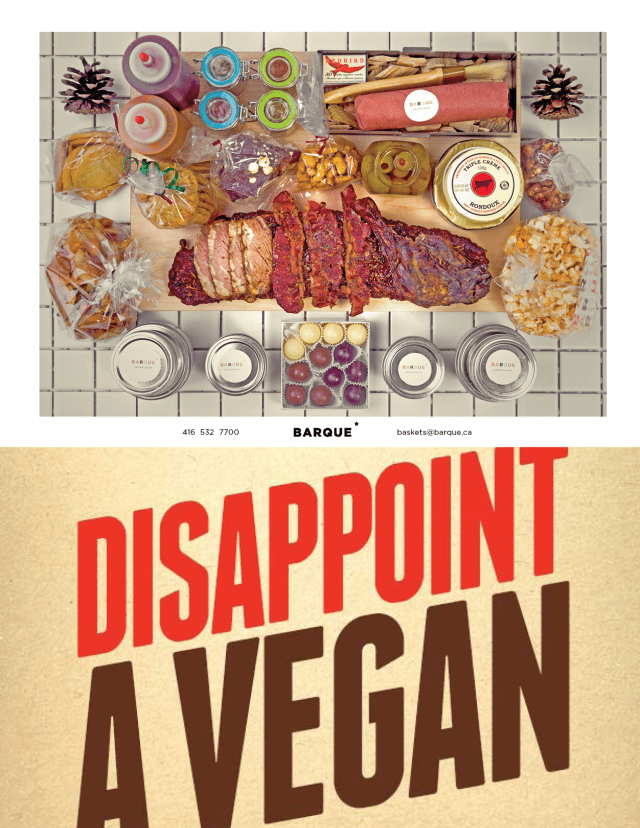
Barque Smokehouse Baby Back Ribs

The grape: Sauvignon Blanc

The history: Eleven generations have been making Sancerre on this 18-hectare vineyard at the foot of the Monts Damnés

The lowdown: Like I said before, superb

The food match: Barque Smokehouse Baby Back Ribs

Paul Prieur et Fils Sancerre 2011 (350421, $25.95, SAQ, 11953245, $22.95) has that je ne Sancerrais quoi, first in a fountainhead of Verdingy geology and then in plating everything that is Sancerre; verve, attack, the faintest herbiage and rustling, brushing grass. Tittilating and galvanizing in the most golden, autumnal way. To quote the canonical David Lawrason, if I may, “you can always use a good Sancerre.” Damn straight.  92  @LoireValleyWine

The grape: Nebbiolo

The history: A single-vineyard bottling from Cantina Vignaioli (Elvio Pertinace) in Piedmont, Italy

The lowdown: Patience or a good two hour decant is necessary to seek reward from this generously VINTAGES priced red. It’s generally a $50-60 dollar bottle south of the border

The food match: Pasta Al Forno with Pumpkin and Pancetta

Pertinace Vigneto Nervo Barbaresco 2009 (344705, $39.95) is a tight, saliva-sucking, bone dry, ossified, ferric Nebbiolo. Just two sips and my tongue and gums feel like a lorry has run over them. That and the crimson smell of climbing roses. Classic really.  92

The grape: Pinot Noir

The history: A storied vineyard just above the very famous Clos Du Tart in the Côte de Nuits

The lowdown: This producer may not be a household name for its holdings in this Burgundy plot but step aside Bruno Clair, Lignier-Michelot and Pascal Marchand. Verdet can handle the terroirof Morey-St.-Denis

The food match: Grilled Arctic Char, za-atar crust, nasturtiums

Aurélien Verdet Morey Saint Denis ‘En La Rue De Vergy’ 2010 (353416, $44.95) noses my kind of MSD aromatics. Soft vanilla, black cherry, smoke and obdurate limestone toughness. Coated in fine, tinny tannin and stretchy length, this represents big value for the appellation.  92  @BadDogWine

The grape: Cabernet Sauvignon

The history: Cathy Corison holds a Master’s in Enology from U.C. Davis, made wine for Chappellet Vineyard, Staglin Family Vineyard, York Creek Vineyards and Long Meadow Ranch and produced her first Corison in 1987.

The lowdown: From Corison, “time on the vine allowed the development of the full range of flavors that Cabernet can achieve (red and blue fruits grading into the darker, purple and black notes) at moderate alcohol. Cold nights promoted great natural acidity.” Some Napa Cabernet is built upon smoke and mirrors. They cause fires. The honesty of Corison’s wines induce irrigation and germination

The food match: Duck Confit, potato galette, berry jus

Corison Cabernet Sauvignon 2005 (333328, $113.95) is certainly in its wheelhouse, offering up sweet, Napa plaisir. Not as fleshy as expected but open-handed and magnanimous in behaviour. Ceanothus, blue and perfumed. Berries, red and ever bearing. A (Geraldine) Brooksian wine that allows you “to fall down a rabbit hole, where the rest of the world disappears.”  93  @cathycorison

The grape: Cabernet Sauvignon

The history: Napa icon, from a vineyard at 2000 feet, near the top of Spring Mountain

The lowdown: Togni’s Cabernet has oft been compared to the wines of the Medoc, specifically Margaux

The food match: Grilled Beef Tenderloin

Philip Togni Cabernet Sauvignon 2010 (31351, $137.95) may brood and bark but it is not over the top, in alcohol or extract. Imbued of mellifluous perfume, great grain and lay of the land. The 2010 is big on elemental design for Napa, cool in the middle, iron and sanguine at the end. This is serious stuff.  94

Good to go!

Low alcohol wine for the High Holidays

Barque Smokehouse Smoked Chicken Thighs. Serve with Ca’Del Baio, Moscato D’Asti 2011
PHOTO: KEVIN HEWITT AND JILL CHEN/FREESTYLEFARM.CA

as seen on canada.com

A quick bit of Jewish 101. Tomorrow night is a Jew’s big night. There will be a great feast. Apples and honey will grace every table. The big meal will be followed by much sweet indulgence. Rosh Hashanah is marked on the Jewish calendar by the first day of Tishrei, meaning the “head of the year.” This new calendar year beginning is referred to as Yom Hadin, the Day of Judgment, a time to make sincere resolutions for the future. Jews will say, L’shanah tovah tikatev v’taihatem, “may you immediately be inscribed and sealed for a good year.” Rosh Hashanah is a time for renewal, where symbolic pleasantries are shared, exchanged and not surprisingly, Jews make use of food and drink to exercise the festivities.

When it comes to yayin (wine), Shekar, or “strong drink” is not necessarily the obvious, fermented choice. Last November I wrote a rant on the jumboism rampant in so many current wines on the market. “Biblical thought says there was a time when “wine” was simply the juice of pressed fruit, non-fermented, void of alcohol, the “pureblood of the grape.” The post-deluge patriarch (Noah) purportedly discovered that if you let natural yeasts run wild they would turn grape juice and sugar into mocker, “strong drink.” Researches say that ancient barm barely peaked at 12 per cent alcohol by volume.”

Like a pair of brothers in heated debate over ”integrity versus compromise,” choosing wine for the High Holidays is fraught and fought with philosophical and religious intensity. Kosher or conventional? Traditional or modern? Low alcohol or high-octane? Many Jewish tables will be set with Kosher (not Meshuval or, Kosher for Passover) wine. Many will not. For many modern Jews, on holidays not called Passover, Kosher is not a prerequisite when it come to choosing wine. Jews, in general, will daven to that 12 percent abv mark, give or take a percent. When talking wine, the Jew should never be labelled a Mundus Novian. Keep in mind that with all that food going down, heavy-handed winemaking has no place at the Rosh Hashanah banquet.

Related – More from the VINTAGES August 31st, 2013 Release

Then there is the etymology of the expression L’Chaim. At one point the condemned were given wine so that their execution would be less painful. The phrase “to life” was coined to express a sentiment to the contrary. Here are five excellent, low-alcohol wines to look for thisRosh Hashanah, to raise a glass to the new year, to exclaim L’Chaim!

Clockwise from left: Ca’Del Baio, Moscato D’Asti 2012, 13th Street June’s Vineyard Riesling 2011, Jean-Marc Brocard Sainte Claire Vieilles Vignes Chablis 2011, Château Hyot 2010, and Domaine De La Garodière Morgon 2011

Ca’Del Baio, Moscato D’Asti 2012 (Stem Wine Group, $18.99) is so low in alcohol (five per cent) you might think you are drinking cider but fermented apples could never achieve such complexity with such incredibly economical syntactic structure. Slightly sweet and also sparkling, this Moscato makes itself readily accessible to new wine drinkers. I may not be one but how can I not be tempted by its forbidden stone fruits. I’ll drink it with the sups at the RH table. Moscato 101 indeed. On the card at Barque.  90

The food match: Halibut, pan roasted, charred sweet pepper jam, steamed broccoli & heirloom carrots

13th Street June’s Vineyard Riesling 2011 (147512, $19.95) from Niagara’s Creek Shores and built of the classic Alsatian Clone 49 inordinately defines place and time in an agglomerated manner. Maximum floral intensity, zero petrol tolerance and an arid accumulation speak volumes about the appellation. To taste you will note it just barely believes it’s off-dry. Unique and unambiguous, plosive Riesling.  89

The food match: Quinoa Salad, summer corn, peas, cilantro, lime chili vinaigrette

Jean-Marc Brocard Sainte Claire Vieilles Vignes Chablis 2011 (329995, $24.95, SAQ, 2010,11589658, $24.95) marks a return to memories of old vines Brocard I’ve loved before. “The winds of change continue blowing,” so Chablis is sometimes not what it used to be.  This VV is not quite steely but is structured like a good old country ode, with all the correct components. Just a kiss of all things Chablis. Rock, flint, sapid ardor and a racy, new slang, tang thang. As good as it gets from something other than Grand or Premier Cru.  89

The food match: Salmon with tomato & preserved lemon salsa, sautéed baby kale, lemon zest, crushed almonds

Château Hyot 2010 (63537, $16.95) from 70 percent Merlot, 20 Cabernet Franc and 10 Cabernet Sauvignon goes properly and structurally sound into the Côtes de Castillon night. Forty year-old vines capitulate ripe red fruit, tangy accents, zest and just enough bite to keep it lengthy and fresh. A farmer’s Bordeaux, natural in feel, oxygenated low and slow, micro-managed. Solid if prosaic. Kudos to winemaker Amélie Aubert for reigning in the overripe and over extracted tendencies of consultant Michel Rolland.  88

The food match: Smoked Beef Brisket, bbq Jus, rice pilaf, wild and basmati rice, bok choy and ginger

Domaine De La Garodière Morgon 2011 (330126, $17.60, SAQ, 10368204, $18.60) is rich modern Beaujolais but also tight and bound by enough sour acidity to balance the ripe extraction. Hard to believe this clocks in at only 12.5 percent abv. Rock solid Gamay, ready for a fight. Vinous compost with some southern French style Medi-savoury, black olive garrigue. Complex and fortifying.  91

The food match: Duo of Beef: NY Striploin & Braised Beef Cheek, smoked kishka

Good to go!

A midsummer night’s chill red wine

KEW Vineyards, Beamsville, ON
PHOTO: ADAM D’INTINO

as seen on canada.com

Just about this time last summer I suggested to chill red wines for another hot weekend. The recent moderate weather might be considered just cause to negate such a de facto refrain but look ahead to the weekend. Blue skies and a rising mercury are on the horizon.

My 2012 column worked the chill into rich, warm grapes; Shiraz, Cabernet Sauvignon and Merlot. This summer I’m scaling back the stretch and shock factor and returning to the fricative exercise of nipping but certainly not stifling more classic grapes. Gamay Noir can be so thirst quenching and is a natural fit to combat calefaction, along with Pinot Noir and the great Greek Xinomavro. Just a slight frost mind you, like clipped diction, for warm, not hot weather.

Here are four dream wines to chill on a midsummer night, in revelry and in waning light.

Clockwise from top left: Boutari Naoussa 2008, Evening Land Pinot Noir Spanish Springs Vineyard 2011, Quail’s Gate Pinot Noir 2011, and Domaine Des Houdières Fleurie 2011

The grape: Xinomavro

The history: The Boutari Company was established in 1879 in Naoussa. This was the first bottled red VQPRD to enter the Greek market, constituting a landmark for red wines in Greece

The lowdown: Excuse the profanity but, $13? AYFKM?

The food match: Lamb Kebabs, greek oregano pesto marinade, roasted tomato jam

Boutari Naoussa 2008 (23218, $12.95) like other Xinomavro shows that combination of pure fruit and ancient wisdom. Juicy and rustic at the same time, erupting in cherry and a lava flow of hot rocks. There is leather, dry spice and sun-dried fruit. Already bricking like Sangiovese, as if rustic Vino Nobile Rosso. There is simply no earthly reason not to drink this every night for the rest of the summer.  89  @boutari

The grape: Gamay

The history: Fleurie is one of the ten ‘crus’ of Beaujolais that include Brouilly, Chénas, Chiroubles, Côte de Brouilly, Juliénas, Morgon, Moulin-à-Vent, Regnié and St Amour. The Cru are made from Gamay grown on particularly favoured slopes

The lowdown: Incomparable value as compared to cost from a smaller and lesser-known producer (Perrier) at Villages pricing

The food match: Crispy Pig Ear and Pulled Pork Tacos, red onion marmalade, sorrel, maldon salt

Domaine Des Houdières Fleurie 2011 (342725, $16.95) is a calligraphic, violet floral invitation to fall in love with soft and dreamy Gamay. “Though she be but little, she is fierce!” Turns on her heel with a scrupulously phenolic char and licorice sour whip, then comes back again to glide gracefully around the last bend. Just what Fleurie should be, purposeful and simply terrific value for Cru Beaujolais. Waning midsummer excellence.  90  @VinexxCanada

The grape: Pinot Noir

The history: Run by the Stewart family, south of Kelowna in the Okanagan Valley

The lowdown: From grapes grown on volcanic Mount Boucherie bench slopes

The food match: The Beverly Hotel Toronto’s Beef Cheek, chantrelles, charred onion, tomato jam, kennebec fries

Quail’s Gate Pinot Noir 2011 (585760, $26.95) with a flat-out ambrosial aromatic entry bequeaths extremely ripe, fleshy red stone fruit and a hit of java, hold the crema and the splinters. Toss in some cool eucalyptus to that tincture, perhaps, like De Loach Van Der Kamp. Intimates a Sonoman dream in confected perfume unlike any Okanagan predecessor. This is flamboyant stuff for OV, toothsome, and were it from California I might think it OTT but from B.C., not so. Expertly judged fruit/acid balance and such plush texture. Gobs of fruit with just enough grit to keep it real. “The clamorous owl, that nightly hoots and wonders at our quaint spirits.” 91  @Quails_Gate

The grape: Pinot Noir

The history: The name Evening Land Vineyards was inspired by the lure of Homer’s ideal garden and is the final chapter of Homer’s Odyssey

The lowdown: This is the second commercial vintage of purchased grapes from the Spanish Springs Vineyards, located only two miles from the Pacific Ocean sheltered behind the coastal range

The food match: California Plum Caprese Salad

Evening Land Pinot Noir Spanish Springs Vineyard 2011 (337147, $46.95, ISD) may just be too glorious to be true. There are blueberries in a savoury key, a citrus and anise accent and chalky grit. At 13 per cent ABV it’s remarkably real, honest and wanting for love. Prodigious floral and strawberry aromas, magnetic and resonant tension, like Nebbiolo in a Piemontese state-of-the-art mind, or like a Grand Cru Greek red, in Duke of Athens character.  Enigmatic Pinot that could never be mistaken for Burgundy and quite frankly might trick many to not know it’s Pinot. “Are you sure/That we are awake? It seems to me/That yet we sleep, we dream.”  93  @elwines

Good to go!

New white wine love for ‘The Savvy’

Sauvignon blanc, a green-skinned grape variety from Bordeaux, France PHOTO: SHCH/FOTOLIA.COM

as seen on canada.com

There’s this grape I want to tell you about. Sometimes there’s a grape. I won’t say a gambler but certainly an opportunist. I’m talking about “The Savvy,” that green-skinned grape variety from Bordeaux, France. Its name may derive from the words “sauvage” and “blanc” but it’s not really a wild one, is it? Well, except for that time it hooked up with Cabernet Franc to produce the offspring Cabernet Sauvignon. It has participated in the proliferation of some wonderful examples in its native Bordeaux, especially when blended with Sémillon. Grown and produced out of the Loire Valley it has shown to be the prototype for his time and place in Sancerre. Then it migrated to Marlborough.

Even if The Savvy has at times been considered a lazy grape, when it found its way to New Zealand, everything changed. The Savvy became the most widely planted varietal and within a couple of short decades cornered the world market; incredible story. How did it happen so fast? West Coast writer Anthony Gismondi made reference to The Savvy’s “aromatic, lip-smacking fresh-tasting flavours” – very true. Meteoric rise, global acceptance and incredible sales numbers, but has the summit been reached? Suddenly it seems that now, not unlike the fate suffered by that other white dude, Chardonnay, the Savvy is losing ground, no longer currently feeling the love. New Zealand both gave it life and, through intense saturation, took it away. It may not seem obvious yet but as a story similar to Australian Shiraz, some noses are turning away from The Savvy.

Enter the Western Hemisphere. The Savvy is very much on the rise in these parts thanks to a profile built on fresh stone fruit, approachable acidity and best of all, a near complete absence of blanched green vegetables. What, no beans, no peas, no asparagus? Thank green goddess goodness. Though wine production techniques have improved dramatically over the past twenty years, there are still many Kiwi, South African and even Loire examples full of “excessively vegetative, bell pepper and canned asparagus notes and the bitter citrus rind flavours.” The Savvys from Ontario, California and Chile as a rule are clean and low on both the grassy and tropical polar ends of the spectrum. In fact, new, New World Sauvignon Blanc is not very Sauvignon Blanc-like at all.  So, thank you Savvy because “there’s a man, sometimes, there’s a man. Well, I lost my train of thought here. But… aw, hell. I’ve done introduced it enough.” The Savvy abides.

From left: Riverview Cellars Sauvignon Blanc 2012, Fielding Estate Sauvignon Blanc 2012, Veramonte Ritual Sauvignon Blanc 2011, and Cakebread Cellars Sauvignon Blanc 2011

The history: Sicilian roots, family farm, Niagara-On-The-Lake locale

The lowdown: Biochemist, oenologist and winemaker Angela Kasimos makes use of Niagara’s cool climate for aromatic success.

The food match: Beet and Quinoa Tabouli

Riverview Cellars Sauvignon Blanc 2012 (351494, $16.95) resides on the juicy plum fruit side of the Blanc spectrum, not unlike Pinot.  Friendly, hospitable and gracious, like Grillo. Effortless white, with a schwa for a mid-palate, a subtle vowel sound, a colourless murmur.  88 @RiverviewWinery

The history: Curtis and Heidi Fielding have confidently and meticulously built a small empire at Fielding Estate. Every angle, from exterior architecture to indoor design, to vineyard rows, to bottle images, is a study in fine lines and photographic possibility

The lowdown: SB reacts differently on the Beamsville Bench resulting in examples with more citrus and tropical fruit. Winemaker Richie Roberts finesses the you know what out of his grapes and makes no mistake with this warm ’12 vintage

The food match: Grilled Shrimp with Lime Powder and Parsley–Olive Oil Sauce

Fielding Estate Sauvignon Blanc 2012 (131235, $18.95) rolls across the tongue like a diphthong, gliding effortlessly along, with nothing out of sorts or over the top. The zest is in a note of lemon, the tropical nuance in passion fruit. Excellent and wondrous sipper, put in mind of its own astonishment. Serve on its own or with marinated maritime delicacies off the grill.  89 @FieldingWinery  @RichieWine

The history: Viña Veramonte from Chile’s Casablanca Valley

The lowdown: Chilean Sauvignon Blanc is noted for its racy and vibrant style, with bright fruit flavors and balanced acidity. Ritual was created to reach an elegant, yet approachable interpretation of Sauvignon Blanc

The food match: Elote al Echo Parque

Veramonte Ritual Sauvignon Blanc 2011 (328401, $19.95) after five months in French oak opens with a toasty, yet in check char. An SB of a different import entirely, with the acidity surrounding a ball of wet stone both encouraging and suppressing fruit bursts and releases. A bit built like a brick dunny, at times muddy and cranky, but possessive of tons of character. Hooting and hollering Savvy. One might say he lives.  90  @VeramonteWines

The history: Napa pioneer dating back to 1973. Their Sauvignon Blanc is fashioned from grapes throughout the Valley, with a large concentration from estate vineyards in the Rutherford, Calistoga, Carneros and southeastern Napa Valley regions.

The lowdown: This 2011 is the result of one of the coldest, wettest and latest vintages in memory. Whole cluster pressed SB, “Botox for white wine,” to keep the phenolics in check and to help the wine age quickly

The food match: Blueberry Cobb Salad

Cakebread Cellars Sauvignon Blanc 2011 (707224, $39.95) shows off the verve of the vintage in pinging fruit balanced by creamy coconut. The tartness of the fruit still tells beneath the syrup so it certainly straddles a line of both tropical and piercing. The green note is spiced mango and there is a candle nut component. Very long.  92  @CakebreadWines

Good to go!

‘I4C’ a future filled with Chardonnay

Golden globes, Trius Winery at Hillebrand
PHOTO: ESTHER VAN GEEST OF STEVEN ELPHICK & ASSOCIATES

as seen on canada.com

In July of 2011, the International Cool Climate Chardonnay Association held their inaugural event, the celebration, the fourth “C.” On the weekend of July 19-21, 2013 the third Cool Climate Chardonnay conference occupied the greater good of the Niagara Peninsula, cementing a legacy begun two years previous.

Backtrack a few years, when in 2009 Ontario’s Le Clos Jordanne’s ‘Claystone Terrace’ Chardonnay 2005 made by winemaker Thomas Bachelder trumped international competitors in a Montreal grand tasting. A light bulb went on. Fast forward to April 2010 and a group of romantics from 28 Ontario wineries get together to defend a grape. Were they singing “that’s what I like about Chardonnay?” No, but the grape had been down on the rock for so long and the panel felt compelled to come to its defense. To suffer an indignity like “Anything But Chardonnay” was an aggression that could no longer be tolerated. Thus an idea was born, a manifesto drafted and i4C was soon to become a reality.

For such a gathering to succeed there necessitates grand effort, partnership, passion, star power and serious thematic examples. Germination began with those first cool thoughts back in 2010 and the journey has since laid song lines by way of a barmy march of vignerons with rootstock firmly dug in Niagara (Harald ThielAngelo Pavan) and those with a second foot tracking terroirsbeyond and abroad (Thomas BachelderFrancois Morissette). Mix in some of this generation’s best wine-producing and marketing minds; Ron Giesbrecht formerly of Henry of Pelham, now Niagara College, Stephen Gash (Malivoire), Peter Bodnar Rod (13th Street), Del Rollo (Inniskilin, Jackson Triggs, Le Clos Jordanne), Suzanne Janke (Stratus) and Jeff Aubry (Coyote’s Run). The yeoman’s load has been in the multi-tasking hands of those who will work ’till their fingers bleed. Give it up for the cool concierge team; Dorian Andrewes, Trisha Molokach, Elena Galey-Pride, Britnie Bazylewski, Magdalena Kaiser-Smit and an army of volunteers.

Partnered in kind with Wine Country Ontario, the Grape Growers of Ontario and the LCBO, Cool Chardonnay has gone forth and prospered. Success can be directly attributed to community and a profound connection to the fruit of the land. Famous wine folk have come; Matt Kramer of Wine Spectator, Stephen Brook of Decanter, winemakers and vintners wherever cool Chardonnay is grown. Pours have been the best of the best.

For three straight days in 2013 they walked, talked, sung praises in favour of and flat-out got dizzy with Chardonnay. White Oaks Conference Resort and Spa became vinifera central for the visiting cognoscenti, including 1976 Judgment in Paris and Decanter Magazine’s Steven Spurrier,U.K. wine writer Jamie Goode (The Wine Anorak), Master of Wine Christy Canterbury and traveling winemakers from all over; Louis Jadot’s Jacques Lardière, South Africa’s Anthony Hamilton Russell, New Zealand’s Ruud Maasdam and Spain/California’s Marimar Torres.

The Cool Chardonnay weekend-long event is the stuff of dreams. The level of local and global wine excellence on display is sweeping and staggering. The congress acts both as social function and unprecedented academic experience. Most of all, i4c fosters and develops relationships for people within the wine industry and with its fans.

PHOTO: Michael Godel
Brock University CCOVI

 Dizzying was the operative word of the weekend. Each time I had only just digested, assimilated, internalized and committed a group of wines to memory, another gala event and tasting was upon me. Friday morning began with “Global Perspectives on Chardonnay,” a winemaker’s panel discussion at Brock University’s Cool Climate Oenology and Viticulture Institute, moderated in minimalist, less is more fashion by Mr. Spurrier. The colloquium was augmented by a tasting of seven wines attributed to panel members. “The base for all wines should be harmony,” began Spurrier, followed by ”simplicity and clarity are the key points in wine.” Four matter-of-course questions were put to the panel and the dissertations ambled in many directions. Could the room of several hundred not question, “why is this symposium different from all other symposiums?” There was plenty of talk on barrels, clones, rootstock, soil and climate but what about the heart of the matter. How and where does Ontario Chardonnay go forth and prosper? How will exceptional quality translate to financial success? The answer lay buried in the polite, respectful and viniculture responses of the panelists, all of whom chose not to ruffle any wine making philosophy feathers nor to breach the moderator’s benign agenda. There were highlights:

Grape grower Albrecht Seeger:

Thomas Bachelder on behalf of and in support of the eloquent and verbose Jacques Lardière:

The outspoken and candid Francois Morissette:

PHOTO: Michael Godel
Chardonnay at Brock University CCOVI

Friday night at Trius (Hillebrand) in Niagara-on-the-Lake set off under blazing sun only to be swept away in tempest. What began with the promise of seemingly limitless and linear structured wine and food stations turned into weather induced, scrambled chaos. I may never see a group of cooks, servers, winemakers and volunteers work harder to save an event and satiate a crowd as I saw at Trius that night. Their efforts were nothing short of brilliant. It was difficult to focus on tasting but the scene afforded some priceless time spent with Niagara winemakers and Brit Jamie Goode as the event wound down and on the shuttle back to the hotel. Wine tastings rarely afford such personal moments, to talk about something other than phenolics and malolactic fermentation.

PHOTO: Steven Elphick & Associates
Marlize Beyers at of Hidden Bench, Mikael Falkman of Champagne Taittinger and Michael Godel at Trius Wines

Lunch events and tastings on Saturday were held at StratusPillitteriHidden Bench and at Southbrook, which I attended. While the first three conducted more formal, seated, panel discussion style luncheons, the scene at Southbrook was more of a walk about, casual nature. Once again this allowed for one-on-one time with some of Niagara’s wine minds. Great time was spent with Shiraz Mottiar of Mailvoire (Moira’s Chardonnay 2010) and Sébastien Jacquey of Le Clos Jordanne (LCJ Chardonnay Claystone Terrace 2010). Special thanks to Bill and Marilyn Redelmeier for their hospitality.

PHOTO: Steven Elphick & Associates
Mother Nature announces a change of plans – at Trius Wines

Vineland Research and Innovation Centre was host to the Saturday gala event. The gamut of Chardonnay flowed freely, including fizz by Cave Spring, Angel’s Gate and Taittinger alongside Tide and Vine oysters. Food stations adorned the lawn and the army of volunteers poured all available Chardonnay well into the night. My ABC moment came early Sunday thanks to Mike Di Caro and a very much alive bottle of ’98 Henry of Pelham Riesling. Sunday concluded with more, you guessed it, Chardonnay at Ravine Vineyard and some terrific eats. Pizza from the outdoor oven, prosciutto by Mario Pingue and great rib-eye hamburgers hot off the grill.

PHOTO: Michael Godel
Chef Vikram Vij at Vineland Research Centre

In excess of 100 unique expressions of Chardonnay were available to taste throughout the weekend. More than half were presented in an experiential way, with a present winemaker or a carefully crafted food pairing. I sampled 72 to be exact. Much as I have thus far avoided the questions, and they have been asked more than once, I am willing to address the demand for ”what were the highlights and what were your favourites?” Apologies in advance to those I either missed or could not properly assess due to the sheer enormity of the weekend. Also to the little ones, the hard-plodding, day-to-day pleasing value Chardonnay. With so many top-tier, global examples from Burgundy, California, Chile, New Zealand, South Africa, British Columbia and Ontario on offer, the under $25 set may not have felt the love. Here are notes on 13, guilt-free, bring ‘em on Chardonnay poured at #i4c2013.

Wines were tasted at the following venues:

Brock University Cool Climate Oenology and Viticulture Institute (CCOVI)

Trius Winery at Hillebrand (TWH)

Southbrook Vineyards (SV)

Vineland Research and Innovation Centre (VRIC)

Vineland Research and Innovation Centre Rittenhouse Media Room  (RMR)

Ravine Vineyard (RV)

Southbrook Chardonnay Whimsy! ‘Sirgue’ 2011 (344531, $34.95) may come from the ‘masculine barrels’ but the integration is already seamless, in soft French cream spooned over a grove of ripe lemon dessert. Sister ‘Damy’ (sampled at 5-Star Casa Loma) is certainly ultra-feminine but together they speak of the symbiotic relationship between winemaker (Ann Sperling) and cooperage. Stone-free Chardonnay, “free to ride the breeze.”  90  (TH, SV) @SouthbrookWine

Poplar Grove Reserve Chardonnay 2011 (335760, $34.00) is not so much a more concentrated version of the estate’s normale as a hotter sister. Like her sibling, the reserve does not rely on any one feature but she is classically styled, quaffed, a marble bust made up as maenad. Sappy white and savoury, meloniuos winter fruit, spiced apple butter and cool, steely goodness alights. “Felonious my old friend, So glad that you’re here again.”  90  (TWH, VRIC) @poplargrovewine

Staete Land Chardonnay ‘Josephine’ 2010 (332494, $57.00) is built upon a Marlborough hendiadys, a complex conjunction of rocks and earth. Sharp, focused and broad across the palate. Ruddy specimen this Josephine and simply gorgeous.  90  (VRIC)  @liffordwine

Miguel Torres Chardonnay ‘Cordillera De Los Andes’ 2011 (296624, $18.95) out of the cooler Limari Valley impresses in structure from mountain top to valley floor. Candied lemon peel, spicy bite and a crisp, cool centre make a case for value Chilean Chardonnay of the year. I might go so far as to say the highest quality ever from Chile.  91  (RMR)  @MarimarTorres

Tawse Chardonnay ‘Lenko Vineyard’ 2011 (344796, $44.95) ”from wiser men who’ve been through it all” is the kind of one-off we should all wish to re-visit in 10 years time. The study: Daniel Lenko’s fruit in the hands of winemaker Paul Pender out of a most confounding vintage. That 2011 in terms of Ontario Chardonnay strikes and speaks to me in tongues is no secret, so the Tawse treatment fascinates in ways to make me giddy. Tension and elasticity are present here in super-hyper Beamsville Bench concentration. Apples pile upon apples, in magnetic purée and layered maceration. A full-on body attack and phenolic structure will see this Lenko to a future (five to seven years) in grace and gorgeous line. A Chardonnay to “scheme the schemes, face the face.” Tasted three times.  91  (TH, VRIR, SV)  @Tawse_Winery  @Paul_Pender

Hamilton Russell Chardonnay 2011 (931006, $32.95) may just be the most fascinating wine of the weekend. Aromatically it’s so understated and semi-breve spoken the oak-driven note is of the quasihemidemisemiquaver kind. Taste and find it ”is bathed every veyne in swich licour.” Chaucer-esque form, texture and meaning.  91  (VRIC, RV)  @WOSACanada

Pearl Morissette Chardonnay ‘Dix-Neuvième’ 2009 (303644, $40), tragically singular in expression, regardless and in spite of the terroir, mixes metaphors and pulls it off. “Takes arms against a sea of troubles,” by convincing ADHD fruit of an uncertain vintage to settle, play nice and “by opposing, end them.” Now entering the load out zone, this Hamlet cuvée is “the first to come and the last to leave, working for that minimum wage.” A sentimental ballad here to stay, be remembered and to set the stage for all dix-neuvième to come.  92  (TH)  @Pearl Morissette

Domaine Genot-Boulanger Meursault Clos du Cromin 2010 (331660, $59.00) intimates a sunshine daydream future carrying on wistfully in lustful fruit. Longevity will be supported by tight citrus and the wine, long on life, is long on deliverance.  92  (VRIC, VRI)

Bachelder Chardonnay ’Saunders Vineyard’ 2011 (324103, $44.95) takes the baton from Wismer ’10 in a transfer of power, tension and excitement. Clarity of textural fruit is driven by Beamsville Bench clay-silt soil. Highly dependent on yeast chains, sticking, spreading and expanding. Sapid, savoury, buttered stones show negligible encumbrance due to vines that will not carry an excess of new oak.  92  (CCOVI)  @Bachelder_wines

Norman Hardie County Chardonnay Unfiltered 2011 (346049, $35.00) toasted low and slow enervates and implodes to its very core. Then it sparks, revs the engine and climbs to 140 fearlessly and without peer. For those who can withstand the atomic launch, what follows is a reward of the highest quality Berkshire porcine whip, melting in the mouth like adult cotton candy.  Slow simmered apple paste, spiced and cooling reaps moisture and vacuums in the cheeks. Madness in Prince Edward County Chardonnay.  92  (RMR)  @normhardie

Kistler Vine Hill Vineyard 2010 (120311, $90) is a study in Russian River Valley emotional depth, structured belief, reserved compassion and stoic understanding. Yes John Milton, there is intensity of the California sun present yet expertly judged in ripeness, concentration and restraint. Smooth, glabrous, luxuriant and prurient Chardonnay. Sip it, “look homeward, Angel, now, and melt with ruth.”  93  (RMR)

Pearl Morissette Chardonnay ‘Dix-Neuvième’ 2011 ($40) is a child of a hot and dry summer, a stress-free winter slumber and a non-invasive spring awakening.  Sets out lean, tight and mean, but the dry extract invites spicy, stone fruit and an emergence of tropical lushness. Can there be another specimen that so rightfully defines Pearl Morissette, the top of the Bench or NOL in 2011?  93  (CCOVI)

Joseph Drouhin Chassagne-Montrachet Morgeot Marquis de Laguiche 2010 (332270, $129.00) is sinfully young to assess, enjoy and evaluate. Stinging nettle, metal and silken, concentrated wildflower honey think mellifluous thoughts. “Him that yon soars on golden wings” sings in gold ingot yellow, in sweet harmony. Milton meets Costello, not quite in its Utopian place but will one day achieve peace, love and understanding.  94  (RMR)

Good to go!

Alternative wines for the August long weekend

Barque Smokehouse Cuban Corn
PHOTO: JILL CHEN/FREESTYLEFARM.CA

as seen on canada.com

A word of advice if I may. Grab hold of the coming long weekend and put it in your pocket. Take full advantage of the time you have with family and friends. Eat corn. Local ears will never be as tender, sweet and perfect as they are right now. If Shiraz, Cabernet Sauvignon, Malbec, Chardonnay, Sauvignon Blanc and Pinot Grigio are your go to grapes, by all means, enjoy them. The caveat comes now; just one more whisper of unsolicited wisdom to consider. Try something new.

Canadians will be sharing meals in larger groups so in many cases, a single bottle of wine will not suffice. Why not engage in a grape showdown? Open two wines of the same grape but from different producers or regions. So much can be learned from the comparison, most notably your preference so you will know what to buy next time around. Here are seven alternative wines to look for this coming August holiday long weekend.

Clockwise from left: Marc Bredif Vouvray 2011, Ken Forrester Chenin Blanc Old Vine Reserve 2011, Rolly Gassman Riesling 2009, Greenlane Riesling Old Vines 2011, Featherstone Cabernet Franc 2011, Tawse Cabernet Franc Laundry Vineyard 2010, and Domain Capmartin Pacherenc Du Vic Bilh 2011

The grape: Chenin Blanc

The history: Native to the Loire Valley in France and cultivated world-wide but is most notably and commercially successful in South Africa

The lowdown/showdown: Loire versus Stellenbosch. Two polar opposite and conflicting styles, both representative of place and the versatility of Chenin, especially in dry styles such as these

The food match: Barque Smokehouse Cuban Corn

Marc Bredif Vouvray 2011 (LCBO $19.95, 685362, SAQ $19.55, 10267809) indicates grapevines grown of a mineral-rich terroir, like land left after the draining of a lake. Travels into the Loire Valley’s heart of darkness but also shows some increased honey in ’11, fattening the ever-present lemon drop, candied peel, ginger and stony goodness. Chenin as a man in pink pajamas. There is just no worthy value adversary to this tight, racy and wondrous Vouvray.  91  @ProfileWineGrp   @LoireValleyWine

Ken Forrester Chenin Blanc Old Vine Reserve 2011 ($17.95, 231282) has an extended stay on the lees to thank for its impressive level of complexity. Works near-dangerous toasty oak to great advantage. Elevates Chenin to skillfully reckoned, barrel fermented Chardonnay status. Snug and spicy, viscous, charged and rising into a golden stratosphere. A bit furry and furtive in movement. Would be enriched by luxuriant food.  89  @KFwines  @WOSACanada

The grape: Riesling

The history: No longer an idiosyncratic Alsatian or German wine. Whether from Marie-Thérèse, Louis Rolly and Piere Gassmann in Alsace or Dianne Smith in Vineland, Riesling is incredibly versatile

The lowdown/showdown: Aromatic Alsace or Piercing Niagara?

The food match: Summer Corn Chowder

Rolly Gassman Riesling 2009 (328898, $20.95) has entered secondary life which only emphasizes its semi-dry mien. Mineral peach tang and non-taxing, petrol beach buoyancy are met by nectarine pith and ambient nut.  By George, this is quintessential, basal Alsace. “There’s one for you, nineteen for me.” Complex impressions cuz’ he’s the gassman.  90

Greenlane Riesling Old Vines 2011 (351486, $22.95) cracks the mineral whip, froths lime into foam and atomizes stone fruit into sweet and sour heaven. Wants to be semi-dry but never quite goes there. Walks a fine line, a tightrope actually. Up there with Charles Baker and Thirty Bench for sheer madness.  91  @GreenLaneWinery

The grape: Cabernet Franc

The history: Loire Valley reds are the benchmark but tell me this isn’t the most important varietal to grow in Ontario

The lowdown/showdown: Two consumer-friendly versions, both made by farmers working in natural and sustainable ways. One shows off the ambient climate of the Twenty-Mile Bench, the other the long tempered growing season of the Lincoln Lakeshore

The food match: Parlour Yaletown’s The Big Prawn Pizza

Featherstone Cabernet Franc 2011 (64618, $16.95) from David Johnson and Louise Engel is girl-next door pretty, perfumed by violet and mid-summer red berries. American oak lends a whiff of tobacco and spice.  Modern and tarried in capacious extraction yet unencumbered by the oak. Not overly chewy, unctuous or layered but just right.  88  @featherstonewne

Tawse Cabernet Franc Laundry Vineyard 2010 (130997, $31.95) assures us of several things. First, 2010 was a gift for making idiot-proof Cab Franc in Niagara, Second, the Lincoln Lakeshore is one of three obvious and essential CF locales in Niagara. Third and most important, properly adjudicated new oak can elevate CF to the upper reaches of the cool-climate troposphere. While not as masculine or bovine like brother Van Bers, Laundry’s got black cherry, tar, coal, herbs and a peaceful, grilling feeling. Essential CF from winemaker Paul Pender.  92  @Tawse_Winery  @Paul_Pender

PHOTO: Michael Godel
Parlour Yaletown Ahi Lettuce Wraps

The grapes: Gros Manseng, Arrufiac and Petit Courbu

The history: From Maumusson in southwestern France, Domaine Capmartin produces 12 wines, which roughly divide into 65% Madiran reds, 20% Pacherenc du Vic-Bilh whites, and 15% Côtes de Gascogne reds and whites

The lowdown: For something bull and full-bodied, unique and completely different,

The food match: Parlour Yaletown’s Ahi Lettuce Wraps

Domain Capmartin Pacherenc Du Vic Bilh 2011 (328617, $15.95) is built upon 80 per cent Gros Manseng plus 10 each of the other two (Arrufiac and Petit Courbu).  Though 80 per cent of the juice ferments in tanks, the remaining 20 that spends time in oak barrels adds histrionic weight and structure. Philosophically elevated in brix and alcohol yet sweet talks dry. Akin to cool climate Chardonnay made in a restrained oak style. Vivacity, rigor and passion here, dissing the notion of simple sipper. There are notes of lime zest and ginger and the wine is both tight and tingling . Also possessive of an earthy morel-ness. Steal it. Give it a whirl.  90

Good to go!