
No, wines do not have to be old to blow your mind but there is just something so mysterious, magical and hypnotizing about the experience of age in preservation. When we use the cliché “tasting history” it distracts from what is most poignant about tasting older wines. It’s the humbling and how wisdom, acumen and meteorological circumstance conspire to take us away from our troubles, to forget about life for a while and to realize that forces greater than us are truly in charge.
There are also young wines so precocious and wise beyond their years that they somehow intuit the future. These too can blow our minds, addle us as if lovestruck and disoriented so that only this confluence of smell, taste, texture and structure are what we know. It takes all kinds to populate a list that separates greatness from the rest, but that does not means only 17 wines were tasted to be extraordinary in 2017. It means that some struck a vein while others grazed on the skin. Most important is that all were experienced because someone chose to share them. Thank you to the producers and the benefactors for bringing these bottles to light.
Related – 16 mind-blowing wines of 2016
Honourable Mentions
Château Haut-Brion 1986, Saffredi 2004, Brokenwood Sémillon 2007, Domaine Gros Frères Clos Voguent Musigni 2013, M. Lapierre Morgon 2010, Domaine G. Roumier Bonnes-Mares Grand Cru 1996, Domaine Jamet Côte-Rôtie 2006, Coppo Barbera d’Asti Nizza Riserva della Famiglia 2009, Le Fraghe Bardolino 2015, Sordo Barolo Riserva Gabutti 2006, Carobbio Chianti Classico 1990, J & J Eger Kékfrankos 2006, Château Léoville Las Cases 2001, François Cotat Chavignol Sancerre Rosé 2009, Domaine La Vieux Télégraphe Châteauneuf du Pâpe La Crau 2005, D’Arie Syrah 2012, Julia Bertram Handwerk Spätburgunder 2015, Planeta Carricante Eruzione 1614 2015, Dominus 1994, Château Lafite Rothschild 1998 and Esmonin Gevrey-Chambertin Clos Saint-Jacques 1993.
Several times a years I gather with groups of like-minded, wine-spirited folks, to break bread and to pop established icons, singular archetypes, varietal rarities and supernumerary misfits. Many of the wines on this 2017 list are a result of having been fortunate enough to be included in repeated repasts with pirates on picnics and doctors at dinner. Most of the rest are travel related, in fact this year alone I tasted approximately 700 sangiovese, 200 barbera, 200 corvina and 100 nebbiolo. So many more of those praiseworthy reds and rosés deserved spots on this docket but alas, the list is short. I do not fulminate them, nor you neither. Here are Godello’s 17 mind-blowing wines of 2017.
It began like this and I got 15 dollars hid above the stove.
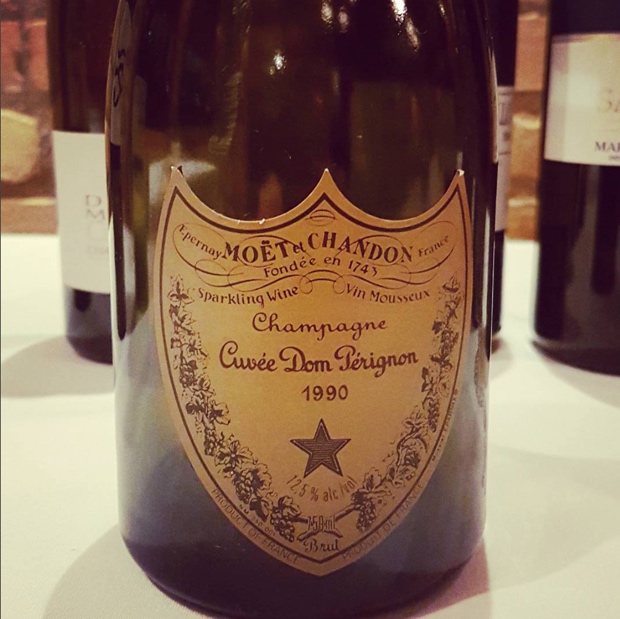
Möet & Chandon Dom Pérignon Vintage Brut Champagne 1990, Champagne, France (280461, Agent, WineAlign)
Tasted blind the hue immediately leads the mind in one of two directions; hot vintage or decades of age. I’m tempted to consider a combination of the two, so the decision is warm vintage and a minimum of twenty years age. Further introspection takes me back to 1990 and when the reveal confirms this and in the abide of Dom Pérignon it means one thing. Start the process of thinking again. This wine has done its work, having accumulated a diverse set of developmental traits and processed them so that the language it now speaks is clear and pure. At 27 years of age it’s delicate, smooth, soft-spoken and settled. The finest golden toast (again in hue and more importantly in aroma) glows into the creamy texture, like preserved lemon transformed into gelid curd. The mouthfeel is exceptional with baking bread rising, puffy and satiny glazed across the palate. The seamlessness of this Champagne seeks, solicits and makes rendezvous with no peer or challenger its equivalent, not should any comparison be made. Kudos to a wine that stands on its own and makes you feel this good. It will continue to do so up to and perhaps beyond its 40th birthday. Drink 2017-2030. Tasted March 2017 moetchandon @chartonhobbs @MoetUSA @ChartonHobbs @Champagne Moët & Chandon Charton Hobbs Canada Champagne
Famille Picard Saint Aubin Premier Cru Le Charmois 2014, AOC Bourgogne (522078, $57.95, WineAlign)
This is a chardonnay to place the village of Saint Aubin in a remarkable light if only because it’s the most stony, flinty and tightly wound example just about ever. The Charmois is the elevator that carries the appellation into a purity of climat for Bourgogne Premier Cru. In this case terroir delivers the idea of Climat but it is the interaction of the maker that defines the notion simply because there is no mess and no fuss. It just feels like drinking straight from a bleed of the calcareous land, as might happen in a limestone goblet filled with Montrachet. You have no idea how good a deal this is from the most excellent 2014 vintage. Drink 2019-2028. Tasted October 2017 domainesfamillepicard profilewinegroup #bourgognewines #FamillePicard @ProfileWineGrp @BourgogneWines Domaines Famille Picard Profile Wine Group Bourgogne Wines

Domaine Bouchard Père & Fils Chevalier Montrachet Grand Cru 2015, AOC Bourgogne (Agent, $480.00 WineAlign)
Chevalier-Montrachet is a matter of aromatics, of the finest of the finest, preserved, reserved, impressionable and of quietly powerful impression. The deistic and the parrhesiastic are reached in this Grand Cru, “one who speaks the truth to power.” Elysium in chardonnay is captured for the perfectly ripe orchard and crushed stones. The young palate is almost severe but takes its first steps down the most ethereal path, with the finest drawn lines and rendered streaks of energy lit, sparked and smouldering. This is Bourgogne of intrinsic value, slowly rising to a crescendo where a flame flickers but within the sheltered lamp of a hurricane. How is such harnessed power even possible? Only like this, in Chevalier-Montrachet . Drink 2021-2037. Tasted April 2017 bouchardpereetfils woodmanws vinsdebourgogne @BouchardPere @WoodmanWS @VinsdeBourgogne Bouchard Père & Fils Woodman Wines & Spirits Vins de Bourgogne / Burgundy wines

Domaine Sigalas Kavalieros 2015, Santorini, Greece (SAQ 11814421, WineAlign)
I’ve not yet tasted the Kavalieros 2014, so this single-vineyard, 18 months on lees done in stainless steel Kavalieros 2015 made by “Mr. George” is the benchmark for Santorini, assrytiko and salty white wines everywhere. The first release was 2009. Straight up and turning the world on its head, like the old man on the label and upside down against Apollo’s Aegean Cyclades. This ’15 richer still, more than the seven villages wines and a hyperbole as compared to the entry-level assyrtiko, of deeper mineral, compressed, layered and fantastic. Crushed rocks permeate in aggregate, it’s quixotically saline and textured, of intense presence and finally, structured. For 15 years at least. A late shot of natural Santorini tonic swirls in centrifuge with assyrtiko so wound up. This will need 10 years to unwind and allow for cracks to form in the mineral shell, followed by the birth of its fruit. It should never be forgotten that assyrtiko can and will show fruit but with Kavalieros you’ll have to be patient. Drink 2020-2031. Tasted March 2017 @DomaineSigalas @MajesticWineInc winesofgreece domainesigalas @MajesticWineInc @DrinkGreekWine @DomaineSigalas Panayiota Kalogeropoulou Wines of Greece
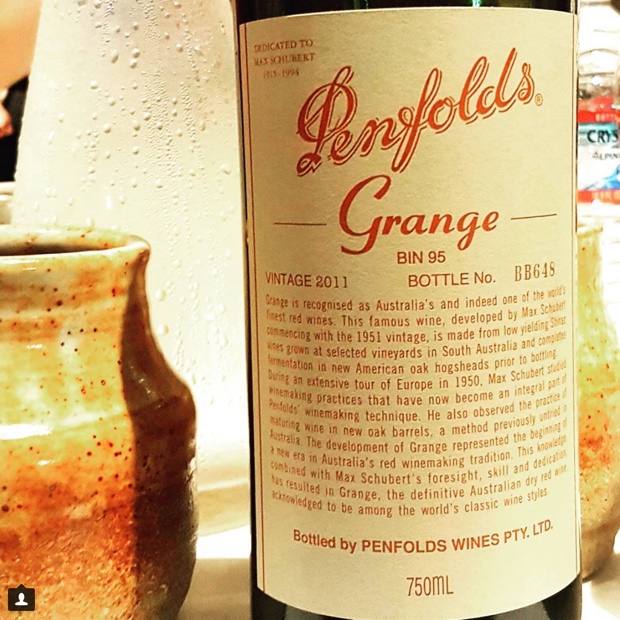
Penfolds Grange 2011, South Australia (356121, $750.00, WineAlign)
There is just something about cool, rainy and irreconcilably regarded vintages that brings out the best in wines made by winemakers of elite acumen. Deliver your best from the greatest of harvests but also “give me your tired, your poor, your huddled masses yearning to breathe free. The wretched refuse of your teeming shore.” Leave the middle of the road to someone else. This Grange faced adversity and won. The yields and output may only be 50 per cent of normal but what gives is the silky texture of Grand Cru Bourgogne. This chosen one of singular vision to represent the multi-tiered and faceted Penfolds Estate tells us about the world inhabited by the instinctual and the ethereal. It combines tannin, structure and aesthetic deeply engrossed in the shadow of its own looming destruction, but is designed from the first with an eye to its later existence as a ruin, forever preserved. If a perfect plum and a magical olive were crossed they would welcome this collective spice of no equal. The quality of bite and chew lead to rumination and the savour rests on a chart clearly defined but in high contrast and only to itself. An analgeisc meets hypnotic cooling is mentholated though if not specific in origin it is only and highly natural. Legendary vintage? Why not. This calm, cool and collected 2011 may just outlast some of the more recently considered top vintages of ’06, ’08 and ’10. Drink 2019-2035. Tasted May 2017 penfolds markanthonyon wineaustralia @penfolds @MarkAnthonyWine @Wine_Australia Penfolds @MarkAnthonyWine Wine Australia

A deep #eredichiappone vertical delve with Daniele for perspective and a release of endorphins @ilNizza possibilities #progrettovini #collisionimonferrato
Erede Di Chiappone Armando Barbera D’asti Superiore Nizza DOC RU 2006, Piedmont, Italy (WineAlign)
RU by Daniele Chiappone is this, at first something altogether inexplicable but when tasted alongside his 2005, 2010 and 2011 it makes such perfect sense. Sense in where this fits in his evolution and to speak on behalf of the age-worthy ability of Nizza barbera. In a world where barbera perfume so often performs with perfunctory brevity this goes on and on. It is a unique combination of fennel frond, incense, hibiscus and violet to create an intoxicant and an anaesthetic. Yet another exceptional vintage is revealed, traditional and so alive, spun from earth crusting over cherry and then this smooth leather. The portal backwards 10 years allows for looks forward 10 more, especially into what’s coming from 2015 and 2016. To say the match with a prodigiously spiced in aromatic ragu over linguine was agreeable would be the understatement of the Monferrato century. Perfectly timed acidity seals the deal. This is barbera folks, of wit, age and history. Drink 2017-2021. Tasted July 2017 erededi ilnizza @erededi @ilNizza Erede Di Chiappone Armando IlNizza
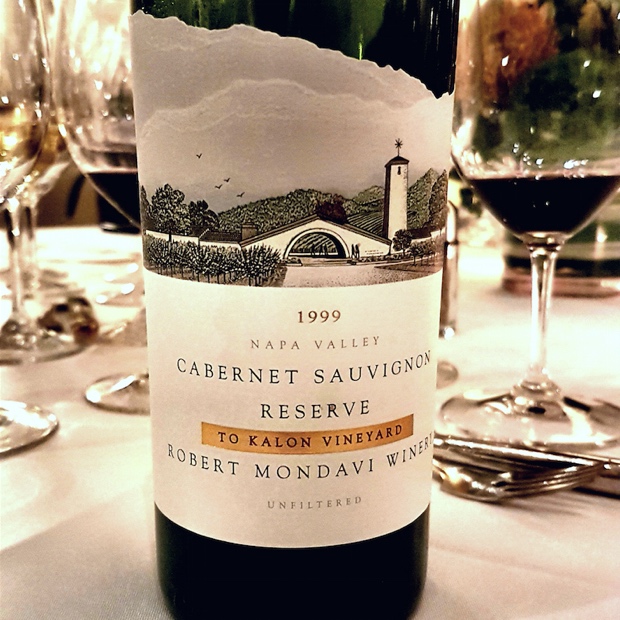
Robert Mondavi Reserve Cabernet Sauvignon To Kalon Vineyard 1999, Napa Valley, California (WineAlign)
This from a time when Mondavi labeled the reserve cabernet sauvignon as “To Kalon Vineyard,” a moniker of essential meaning that would return 14 years later on the 2013 bottle. If this were what Mark de Vere referred to as “a confusing moment in history” I could not say but “this strange bottling” provided an unequivocal and seminal turning point in this wine’s storied past, present and future. It was in fact a small, special cuvée, a little bit different than the ’99 Reserve. “The coolest vintage on record, until it wasn’t,” because of a warm period at the end of summer and early fall that ushered forth a certain, singular sort of ripeness. Regardless of memories, characterizations and twists of fate, this single-vineyard cabernet is as finessed, focused and precise as any Mondavi Reserve. It persists chalky, fine and gritty in tannin running amok, dragging the acidity forward and around. The workout is something to behold, a dispatch of late Napa fashion and never more successful than right here. The dépêche mode of To Kalon is by now famous but culminated with this ’99 for everything to follow, with consistency and a guarantee of modern quality. Listen to it croon “try walking in my shoes.” Many have and many continue to pay homage to this Napa Valley originator and pioneer. It’s a cabernet sauvignon of faith and devotion. Drink 2017-2029. Tasted May 2017 robertmondavi @RobertMondavi Robert Mondavi Winery

Quilceda Creek Cabernet Sauvignon 2003, Columbia Valley, Washington (Agent, WineAlign)
A truly remarkable nose, notably violets and peregrine species of spices. There is so much perfume and beauty, an Aishwarya Rai Bachchan nose and then there is the fruit. Blackberry, Cassis then into vanilla, scented happiness like ruby red grapefruit and bergamot. If it should have aged I can’t say but it’s still a voluminous and voluptuous thing to sip. It blinds like first Growth Bordeaux with its perfect extraction. Thoughts keep at it, to blueberries, cigar box and Kirsch. The tannins are sweet and gritty, not fully resolved and imagine Margaux. You could consider taking out a mortgage on yours and your neighbour’s house for this one. It was one of many great reds tonight but I’ve just tasted this. And I wept. Drink 2017-2024. Tasted March 2017 @QuilCreekWinery @thevineagency winesofwashington wa_state_wine @QuilCreekWinery @TheVine_RobGroh Quilceda Creek Vintners @WINESofWA The Vine – Robert Groh Agency Washington State Wine

A great honour to taste this 1995 #carobbio #leone and in memory of #carlonovarese Thank you Dario and Silvia. Would like the chance to do it again in 22 years #toscana #sangiovese
Tenuta Carobbio Leone 1995, IGT Toscana, Italy (WineAlign)
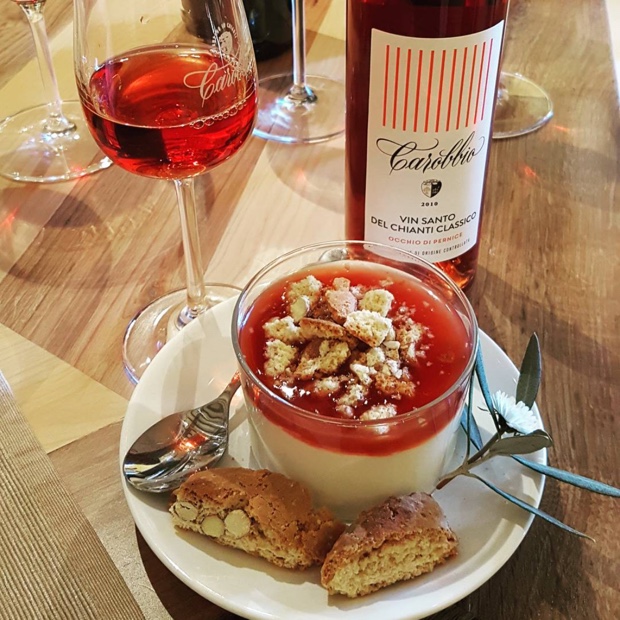
Leone 1995 was made under the auspices of the Vittorio Fiore-Gabriella Tani oenology stylistic for Carlo Novarese. To say that this single-vineyard sangiovese is youthful would be the biggest IGT understatement of the century. From vines that at the time were 25 years-old, Leone is not just a survivor of a universally-declared incredible vintage, it is a singular expression from 1990’s Tuscany, in Chianti Classico and for Panzano. The violets, dried espresso and plum-amaretti semifreddo (savoury, not sweet) mixes with fennel frond, fresh rosemary and the 20-plus years lingering Carobbio tobacco. The acidity is fully intact, still travelling up and down the sides of the tongue, repeatedly and soliciting so much savour, sapidity, a desire for a mouthful of hematic, rare sear of Claudia’s beef filet and then more and more sipping. After 20 minutes the aromatics deliver a raspberry purée and even a black olive and mineral-saline, short of briny caper into the fray by stroke of some aromatic brush and bush in the light afternoon wind. That’s enough. I’m not sure my heart can take any more. Time for Vin Santo. Drink 2017-2029. Tasted February 2017 carobbio_wine chianticlassico @Tenuta_Carobbio @chianticlassico Tenuta Carobbio Chianti Classico

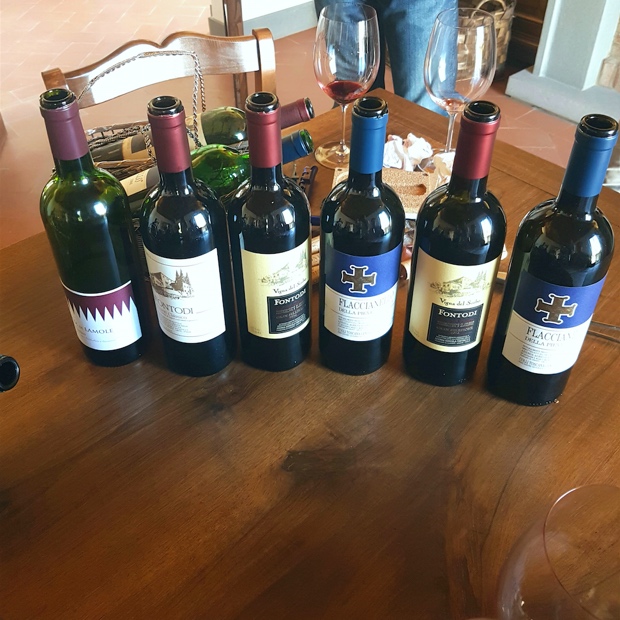
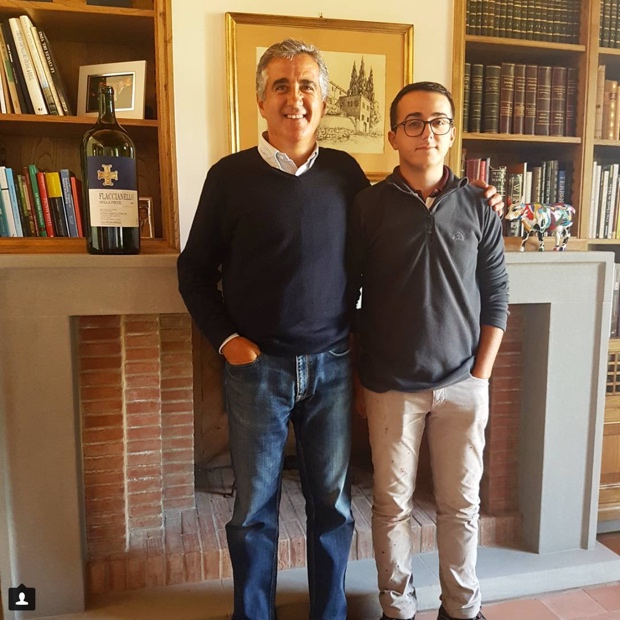
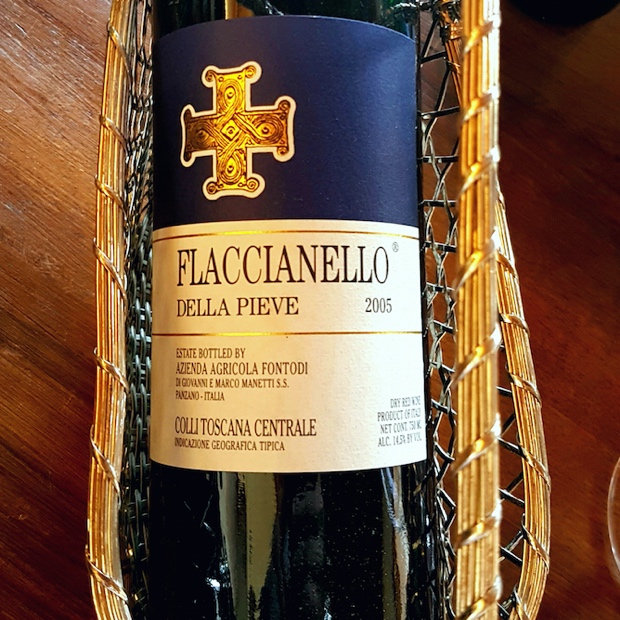
In @chianticlassico mano nella mano 1986, @fontodi #vignadelsorbo & #flaccianello thank you Giovanni Manetti for sharing these two opposing forces of the Tuscan paradox #chianticlassico
Fontodi Flaccianello della Pieve 1986, Tuscany, Italy (WineAlign)
Flaccianello in 1986 is actually though not surprisingly so different from Vigna del Sorbo, more than any other reason because of the cabernet sauvignon, but in a more philosophical way, because they have built a paradox, from the Super Tuscan ideal in revolution. Now the sangiovese going forward will be the most important and also the best wine, like looking back at this 1986, OK, not better than Sorbo but purer, honest, a clearer picture from which to learn from and ultimately a model for the future. Beautiful power, restraint, structure and yes, the kind of wine that deserves to be praised with the term elegance, overused, or not. Perfectly rustic, earthy and full of fruit with its accompanying complimentary, enervating and necessary acidity. Drink 2017-2023. Tasted September 2017 Fontodi chianticlassico #fontodi @chianticlassico Chianti Classico Az. Agr. Fontodi
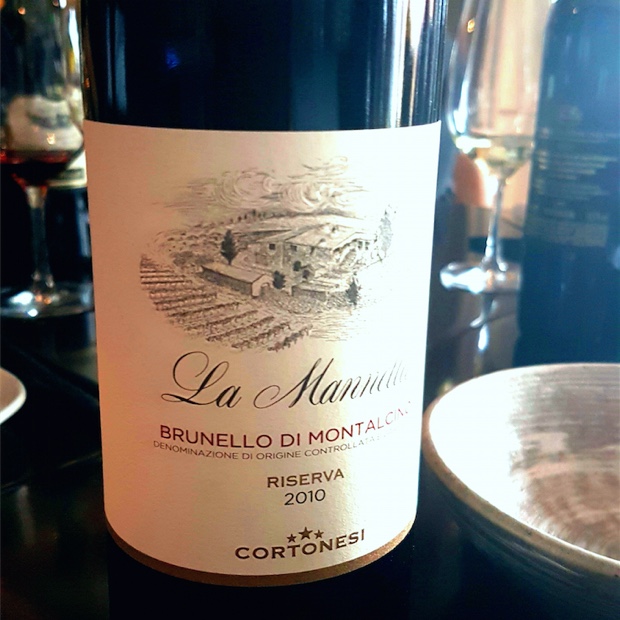
Cortonesi La Mannella Brunello Di Montalcino Riserva 2010, Docg Tuscany, Italy (Agent, $202.95, WineAlign)
There are few Brunello vintages afforded more attention in the last 10-plus, certainly ’04 and ’06, increasingly better even from ’08 and looking forward towards what greatness will come in 2015. Yes but not solely magnified through the lens of patience and bottle time, from 2010 La Mannella has coupled upon and layered over itself like compressed fruit and puff pastry. Though it begs for drink now attention, another seven years will be needed before it can safely be labeled as uncoiled and to reveal all that is wrapped so tight. Rich is not the operative but unmistakeable as Cortonesi it is; that natural clay soil funk of resolution and fully hydrated chalk. This is to sangiovese as Les Preuses Grand Cru Chablis or Rangen Grand Cru Alsace are to Riesling. It carries in its pocket the absolute meaning and genetic responsibility of where it comes from, with a curative and restorative ability to get you lost. Drink 2019-2031. Tasted February 2017 marcora85 nicholaspearcewines brunellodimontalcino @LaMannella @Nicholaspearce_ @ConsBrunello Tommaso Cortonesi Nicholas Pearce Consorzio del Vino Brunello di Montalcino

Maison Roche De Bellene “Collection Bellenum” Grand Cru Clos De La Roche 1998, AOC Bourgogne, France (Agent, $364.95, WineAlign)
Clos de La Roche 1998 may be 19 years old but you have to swirl the britches out of this Grand Cru because reduction persists in its make-up. Once you work your way over the wall a field of wildflowers and a roses bouquet lays out as far as the nose can mind’s eye. This is pure candy in its most arid, blessed and gout de terroir way. It is as charming as Burgundy can be and yet so fine of tannin, tight and duplicitously-grained in clone upon itself. One of those wines so difficult to put to words because it teaches and you can do nothing but listen. I’d still want to wait two more years, maybe more, before knowing I’ve waited long enough. Close de la Roche speaks to me but to answer with any real credibility and respect I will need to think some more. Drink 2019-2035. Tasted February 2017 domaine_de_bellene nicholaspearcewines vinsdebourgogne @RochedeBellene @Nicholaspearce_ @VinsdeBourgogne Bellene Nicholas Pearce Vins de Bourgogne / Burgundy wines
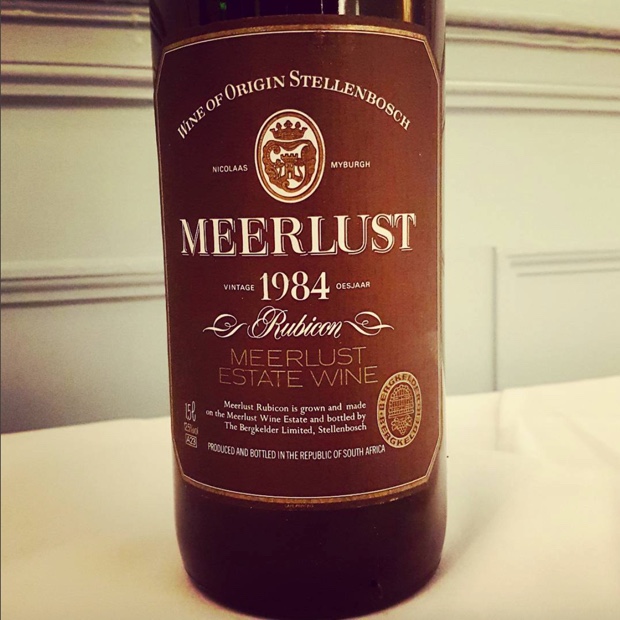
Not just #meerlust more like major lust. Thank you for the sexy time travel @meerlustwine Laurel Keenan and The South African Wine Society.
Meerlust Rubicon 1984, Wo Stellenbosch, South Africa (WineAlign)
Meerlust dates back to 1693, the house that is “love or pleasure of the sea.” Less than five kms south from the Atlantic Ocean, the property was purchased in 1756 and to this day remains family owned, now in its eighth generation with 260 years of continuity. Rubicon 1984 is poured (with brilliant decision making) from magnum and is therefore fresher than the 1996 with an incredibly controlled level of fineness in tannin, from acidity and at the threshold of understood volatility. “Perhaps one did not want to be loved so much as to be understood,” like this early Rubicon. The future of Meerlust is foretold with Orwellian transparency, bold honesty and expert ability. “Who controls the past controls the future.” Drink 2017-2019. Tasted September 2017 meerlustwine wosa_za wosa_ca liffordgram @MeerlustWine @LiffordON @WOSA_ZA @WOSACanada MEERLUST ESTATE Lifford Wine and Spirits Wines of South Africa
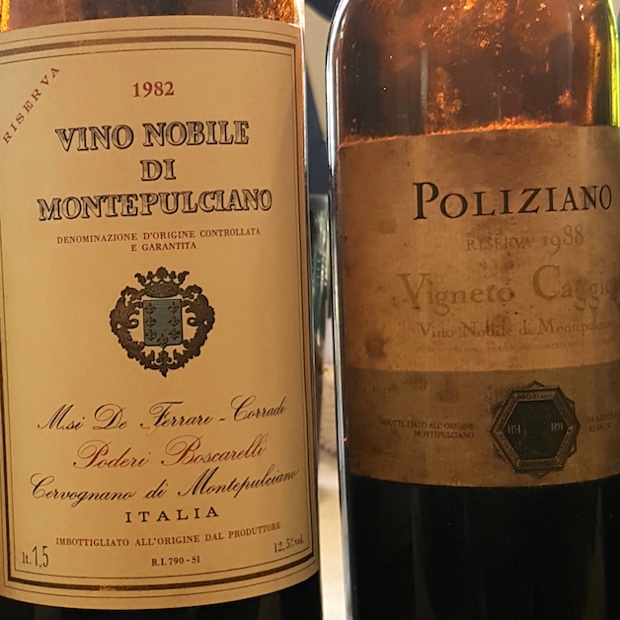
Boscarelli Vino Nobile Di Montepulciano Riserva 1982, Tuscany, Italy (WineAlign)
The Boscarelli acts like a much younger Nobile, from an exceptional vintage and a producer way ahead of its time. The key is to decide which side of the evolutionary fence we’re on, closer to that 1967 from Contucci or to what is happening today. This may actually be the turning point for Vino Nobile because it really has one foot entrenched in each world. Very much in the mushroom and truffle aromatic atmosphere, where sangiovese should feel free and comfortable to travel in the twilight of its golden years. This is beautiful, with some dark fruit persisting and acidity still in charge. You can imagine the old tannins but they no longer make any demands. Drink 2017-2020. Tasted at Anteprima del Vino Nobile di Montepulciano 2017, February 2017 #PoderiBoscarelli lucadeferrarildf artisanal_wine_imports consorzionobile #poderiboscarelli Nicolò De Ferrari #ArtisanalWineImports Luca De Ferrari @artisanalwineimports

Antichi Poderi Dei Marchesi Di Barolo Gia’ Opera Pia Barolo 1958, Piedmont, Italy (WineAlign)
Poured by Ernesto Abbona on his wife Anna’s birthday, a ’58 at the ripe old age of 58 (though it will turn 59 later this year). Simply, in the words of the Abbona family, “a special evening, special friends, special vintage,” with a cork that looks as good as new, though Ernesto takes great time and care in its extraction. The aromas are blessed of a collective umami but would better be served by a new descriptor because they are antediluvian and impossibly preserved. Forget mushrooms and truffles. These scents are brand new, with no truly identifiable frame of reference, as if plucked from some guise of Eden where never before tasted dark berries fall effortlessly into the hand off of gariga savoury-scented bushes, brambly and crawling intertwined with nasturtium on a composting forest floor. The 1958 was and still is a nebbiolo of struttura, of a fibra morale that tells a story of consistency and longevity. With air it became more complex if deeper and turbido. That this magical nebbiolo from another era hovered in the lasting air of a 30 minute long ethereal says that you could open a few more but perhaps not much beyond its 60th birthday. Drink 2017-2018. Tasted July 2017 marchesibarolo majesticwinesinc @MarchesiBarolo @MajesticWineInc @marchesibarolo Majestic Wine Cellars

The mythology of #thorle #riesling in Beerenauslese and Trockenbetenauslese #weingutthörle #gabsheim #rheinhessen #holle
Thörle Riesling Trockenbeerenauslese Hölle 2011, Rheinhessen, Germany (WineAlign)
The Hölle TBA 2011 is a minuscule 180 bottle single-vineyard production and the vintage was simply perfect for the effort. The process involved the collection of a few berries at a time over the course of three weeks, started in the fridge and was then pressed when the amount of approximately 100L could be obtained. “This is the king’s discipline for creating such a riesling” explains Christoph Thörle. Thick like honey, full of unctuousness and viscosity. It is expressly noticed how the colour and the development have not advanced considering the six year mean. The exoticism is what separates this, with fruits far east, creamy and perfectly easy to assimilate, in flavour, consistency and understanding. Sweet herbology, of thai basil and thyme and candied mandarin rind. Here, a piece of history and legacy from Christoph and Johannes. Drink 2021-2041. Tasted March 2017 thorle_c thorleestatewinery univinscanada @thoerle @UNIVINS @germanwineca @gen_riesling
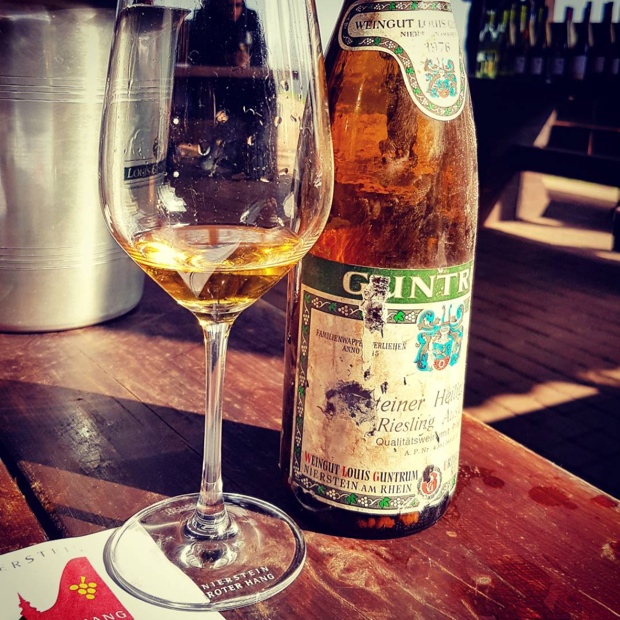
Will be a top ’17 from 2017 #louisguntrum #1976 @weininstitut #rieslingauslese #niersteiner #heiligen #nierstein #niersteinamrhein #roterhang
Weingut Louis Guntrum Riesling Auslese Niersteiner Heilibengaum 1976, Rheinhessen, Germany (WineAlign)
“Roter Hang is a geological statement” says Louis Konstantin Guntrum. If you want to hang around and try to understand its red soils and friable limestone fettle it requires a focused state of mind. Guntrum introduces this 1976 by saying “it’s a young guy, 40 years old,” the same thing he could have said years ago about a 1917 Roter Hang Riesling. The comparative studies is a matter of perspective, a theory of relativity, in reduction, colour, drama, florality and fabulousness. While certain vintages and specific wines will blow you away more than others there is something to be said about older just being more interesting, whether 1917, 1976 or whatever back vintage you want to try your luck with. It’s simply remarkable and crazy how sugar and acidity can preserve riesling like this, especially and/or truly withstanding the Roter Hang. The honey and candied orange blossom are so prevalent but it almost seems dry (relatively speaking) even though 100 grams or more of sugar have driven this wine. Beauty from bitter phenols blend with lanolin, paraffin, ginger and ginseng. Keep returning for 15 more years. Drink 2017-2031. Tasted March 2017 #louisguntrum @weininstitut wines_of_germany @LouisGuntrum @WinesofGermany Weingut Louis Guntrum German Wine Institute i.e. Wines of Germany
 \
\Good to go!
Godello
Twitter: @mgodello
Instagram: mgodello










 Godello