See the humanity in real value wine

Glass of red wine PHOTO: FONS LAURE/FOTOLIA.COM

as seen on canada.com

There is no secret that Canadians and especially the wine consumer from Ontario, desperately want more choice. We want private wine shops that can specialize in niche products. We want all Canadian grapes to be granted passports to travel freely from province to province. We want access to real wines made by passionate human beings. We don’t want plonk.

Twice a month I taste through in excess of 100 hundred wines scheduled for release through VINTAGES, the fine wine and spirits division of the LCBO. On some days the wines, as a group, seem merely “better than dough.” On other days they cause one or more of my colleagues to say things like “this is the worst red wine day of my life.” The public knows that we have lagged for many years in wine retail. The public is ahead of the LCBO think tank on this.

Fortunately, or not, depending on how bright a side of life you look, more often than not I can look through and beyond the barbaric fringes and pick out a few primitive, unfettered warriors from the monopolistic offering. Once in a while the sea of humanity reveals itself and many wines shine, express their terroir, their somewhereness, their completeness. Here are nine estimable examples ready for immediate enjoyment, now in a store near you.

Clockwise from left: Delas Frères Saint-Esprit Cotes Du Rhône Rosé 2012, Le Gravillas Plan de Dieu Cotes Du Rhône Villages 2010, Marechal Brut Crémant De Loire, Domaine Des Aubuisières Cuvée De Silex Vouvray 2011, Domaine Schlumberger Les Princes Abbés Pinot Gris 2010, Château Lyonnat 2006, Château La Grange De Bessan 2009, Sigalas Santorini Assyrtiko 2011, and Bonaccorsi Viognier 2010

Delas Frères Saint-Esprit Cotes Du Rhône Rosé 2012 (224964, $13.95) is all sun and strawberry, almond and grapefruit tree scents after dark, so much spirit in the night. Salinity, markedly well-made and Muga-like. “Stand right up now and let it shoot through you.”  87  @HHDImports_Wine

Le Gravillas Plan de Dieu Cotes Du Rhône Villages 2010 (264648, $14.95) is simply a ton of wine for $15. That said, it takes extraction to the maximum and is yet blessed with a graceful level of gravitas. I wouldn’t want to drink too much of this, or any other similarly concentrated and heavily fruit- endowed Rhône but there is enough mineral and tar character to keep Le Gravillas honest.  88

Marechal Brut Crémant De Loire (141077, $15.95) foams frothy forth alive and expansive out of a yeasty starter, spins lightly on its A16 axis and revolves tightly wound around a citrus spindle. A working class Marechal, real and made for the people. Perhaps not La Grande Illusion but a wine that will “show the common humanity present across these divisions.” About as good as Méthode Traditionnelle sparkling Loire Chenin Blanc can be and priced to fly.  89

Domaine Des Aubuisières Cuvée De Silex Vouvray 2011 (57042, $17.95, SAQ, 858886, $17.60) speaks sedimentary cryptocrystalline vernacular to narrate its Loire Chenin Blanc story by way of a ripe apple and blooming rose style. Off-dry and dehydrated by the chert, that defining, dusty silex soil. There should be land-driven $18 wine available, always and everywhere.  89  @LoireValleyWine

Domaine Schlumberger Les Princes Abbés Pinot Gris 2010 (21253, $19.95, SAQ, 913897, $22.85) returns the storied Alsatian to top form after a confounding ’09. Cool climate, perfervid pear considers dressing up in lime-spiked papaya but chooses to turn on its heel to put on a sequin-dotted silk dress. Spot on, shimmering scintillant.  90  @drinkAlsace

Château Lyonnat 2006 (243774, $19.95) built upon 85 percent Merlot, 11 per cent Cabernet Sauvignon and four percent Cabernet Franc has ancient and learned Right Bank morphology written all over its sweet, scorched earth perfume. Has entered the zone, in toasted cedar and grilled beef on the bone integration but caramel and kindling are just around the corner. Get in while the coals are smoking. Reminds me of the good oak days.  89

Château La Grange De Bessan 2009 (321331, $19.95) is a poster child for affordable, humanistic Médoc, Left Bank, hyped vintage Bordeaux. Mutton on the reductive nose does not impose a run and hide. Purple flowers, parquet smoke and dark chocolate co-mingle with iron, calcium and limestone. Meat-friendly, complex, well-structured.  90  @BordeauxWines

Sigalas Santorini Assyrtiko 2011 (74781, $21.95) must be a fairy tale, a Boucles d’or narrative of structure and complexity from the first swirl and sniff. Airy, saline, built of rich, gold guts. Perfectly ripened orchard fruit and fresh-squeezed grapefruit. Taste it and there’s a joyous dance, a kefi bursting inside, like great Champagne but minus the bubbles.  92  @KolonakiGroup

Bonaccorsi Viognier 2010 (318121, $23.95) from Santa Barbara’s Happy Canyon is bottled, golden Californian sunshine, rich, unctuous and tanned. Will be accused of being obnoxious, bellicose, even Sisyphean, but she and I don’t care. Spicy, candied yellow apple, sappy, honeysuckle scent meets an efflux of buttery cashew, like toasted Chardonnay crossed with aged Chenin. Grand Cali Viognier.  91  @jbonaccorsi

Good to go!

Around the world in eight Chardonnays

PHOTO: SUTSAIY/FOTOLIA.COM

as seen on canada.com

Chardonnay covers more than 400,000 acres seemingly everywhere and is the most widely planted wine grape on earth. Today marks its fourth annual global celebration. Who knew there was this marketing concept using social media as the thread that connects the global conversation together. If you live in Niagara and have some free time, then you my friend are in the right place. Many wineries (17 at last count) are offering special events and free tastings today, including Flat Rock CellarsTawseLaileyHidden BenchThirty BenchSouthbrookCoyote’s RunNiagara College Teaching WineryPondviewChateau des CharmesStratus13th StreetHenry of PelhamCave SpringMalivoire and Norman Hardie. Click here for a full list of events.

Chardonnay is cool, especially in Canada, blessed with a quintessential climate for growing the most international and recognizable of the world’s white grapes. Chardonnay comes in all shapes and styles, from unoaked to heavily toasted, aged in stainless steel or concrete vats to barrel fermented. Some styles use wood chips, some Chardonnay is fermented on its lees. Chardonnay is responsible for some of the world’s great Sparkling wines, especially Champagne. Is there a comparable white grape that speaks of its origins in more varied tones? Conversely, can another variety be singled out as having suffered through more international vinification manipulation? So, Chardonnay conjunction junction, what’s your function?  Want to know what Canadians are saying about Chardonnay? Ontario Wine Chat has the answers.

If you are looking to experience the wonders of Chardonnay, from a global perspective, surrounded by experts in a setting designed for relaxation and genuflection, look here:

In anticipation of the International Cool Climate Chardonnay Celebration #i4c2013 and to pay tribute to this marketing sensation that is International Chardonnay Day, here are eight great examples from near and far, all available to taste, try and sample somewhere close by.

Clockwise from left: Cave Spring Estate Bottled Chardonnay Musqué 2010, Domaine du Chardonnay Chablis 2011, Southbrook Vineyards Triomphe Chardonnay 2011, Wolf Blass Gold Label Chardonnay 2010, Norman Hardie County Chardonnay 2011, Hidden Bench Tête de Cuvée Chardonnay 2009, Drappier Signature Blanc De Blancs Brut Champagne, and Stratus Chardonnay 2010

Cave Spring Estate Bottled Chardonnay Musqué 2010 (246579, $15.95) from Wines for the Ides of March is fresh in chert, posy aromatic and stuffed with an airy, sense of whipped lemon cream. Salinity and white pepper add kick and spice to this Chardonnay cousin only Cave Spring seems to have mastered.  89  @CaveSpring

Domaine du Chardonnay Chablis 2011 (183574, $19.95) deserves 105 points for the domain name alone but really this is just solid, good fun. Chablis as I expect it to be. Apples and cinnamon, ginger, a hint of macadamia and citrus zest. Minor bitter note trumped by ripe fruit and a clean finish. Really quite good.  88

Southbrook Vineyards Triomphe Chardonnay 2011 ($21.95, 172338) from A wine pentathlon binds FSO2 with jack or durian, febrile fruit. For now hard to figure, like a grey rose or a Pink Floyd. Offers up a creamy warmth in resonant echoes but amplified as if still trapped inside the barrel. The best days remain ahead for this certified and biodynamic Chardonnay, which in two to three years time will “come streaming in on sunlight wings.” 89  @SouthbrookWine

Wolf Blass Gold Label Chardonnay 2010 (606186, $29.95) is about as internationally-styled as it gets from the Adelaide Hills of South Australia. Smells like it’s still inside the barrel, as if the tropical fruit was wrapped up in a smoking, sweat lodge towel. Big on hot rocks, steaming and emitting earthy scents, nutty in every respect, big, big Chardonnay. Nerve, verve and understanding.  90  @WolfBlassWines

Norman Hardie County Chardonnay 2011 ($35, winery only) from Come together, over wine is not merely a window into the vintage but the portal. Bright, golden fruit, freakish level of mineral and longer than the old Greer Road. Norman will always have ’08 but the newbies will be lucky to discover 2011. Who wouldn’t fall for its charms. When it comes to this Prince Edward County Chardonnay, “one and one don’t make two, one and one make one.” I call that a bargain.  92  @normhardie

Hidden Bench Tête de Cuvée Chardonnay 2009 ($45, winery only) from Big wines from California and the Bench from HB’s oldest, most highly regarded and meticulously maintained vines shows ravishing and refined restraint in elegance. Warm pineapple and mango coagulation jarred by the vintage’s piercing acidity and immense length. Head of the class, rings the bell, nails the lecture.  93  @HiddenBench

Drappier Signature Blanc De Blancs Brut Champagne (599860, $46.95) continues a VINTAGES string of excellent value in Champagne releases. Made from 100% Chardonnay, this BdB is pronounced in , yeasty dough definition, hinting at agave and unwashed cheese rind. Where there’s bubbles there’s a way and I like where this one is going. The agave replays in sweet waves, as does the the sour in faint yet discernible sloshes. Much to contemplate in this NV sparkler.  90   @Halpernwine

Stratus Chardonnay 2010 ($55) from Stratus and Momofuku: Modernity incarnate from natural yeast, full batch (bunch) pressing and heeded by Paul’s call to full malolactic fermentation, this fruit was picked on November 15th, a day “you had to go run and pick fast.” Groux is not trying to make California or Burgundy but make the best in Niagara. Clarity and sun drenched hue, tropical fruit dominance, sweetness, malo-butterscotch obviousness. Some tart orchard fruit late but certainly warm vintage wine. Not the most arid Chardonnay but blessed with great length.  91  @Stratuswines

Good to go!

‘London Calling’ for Canadian wine

PHOTO: NASKO/FOTOLIA.COM

as seen on canada.com

Just in case you were under the impression that Canadian wine is made solely for and consumed only by Canadians, think again. The world is hungry for our prized grapes and unbeknownst to 99 per cent of the 35 million inhabitants of this vast country, the A-Team is out there in the field.

As I write this, Canada is re-introducing itself to the world by way of an essential and comprehensive tasting hosted today by The Canadian High Commission at Canada House, Trafalgar Square, London. A group of wine luminaries and emissaries are pouring sparkling wines, red wines produced from Pinot Noir, Bordeaux blends or varietals, Syrah or Gamay, white wines produced from Chardonnay or Riesling and Icewine. REDISCOVER Canadian Wine is an unprecedented event, working in conjunction with London’s Westbury Communications to remind and renew a European media and trade contingent of the quality and international viability of the wines from Ontario, British Columbia and Nova Scotia.

Canada House, London (Photos: Janet Dorozynski)

The dream team is led by Dr. Janet Dorozynski, Global Practice Lead, Canadian Wine, Beer and Spirits, Global Business Opportunities Bureau, Foreign Affairs and International Trade Canada. Dr. Dorozynski’s deputies along to help promote the Canadian wines in London are the Wine Council of Ontario’s Magdalena Kaiser-Smit, Director of PR and Linda Watts, Project Manager, Canadian wine expert ambassador Tony Aspler and Barb Tatarnic of Brock University’s Cool Climate Oenology & Viticulture Institute.

Winemakers, owners, vignerons, wine consultants, international sales directors, export directors and marketing consultants have made the trek after wineries from across Canada were invited to submit their wines in a blind tasting judged by a panel of Canadian judges. The panel previewed over 250 Canadian wines and selected 89 wines from 37 wineries to qualify for the London, England tasting.

With help in partnership with Foreign Affair and International Trade Canada, Wine Country Ontario, support from The Cool Climate Oenology & Viticulture Institute (CCOVI) at Brock University and from The Ontario Ministry of Agriculture and Food, the Canada House event is fully and completely positioned to raise the profile of the Canadian wine industry abroad.

London Calling: REDISCOVER Canadian wine

British wine scribe Stephen Brook notes, “Canada has long been out of the ‘promising newcomer’ category. These are wines we all need to discover.” Gerard Basset OBE MW MS adds, “I have discovered some superb wineries and producers with both flair and talent.”

For more information on the event click here.

In celebration of the calling to London, here are tasting notes on eight wines being poured today in London.

Flat Rock Cellars Gravity Pinot Noir 2010 ($30, 1560winery) from A wine pentathlon reels in Twenty Mile Bench fruit in a warm vintage as well if not better than any of its peers. Founder Ed Madronich is clearly slope and soil obsessed and this Pinot Noir is a study in topography and geology. To paraphrase Madronich, it’s  ”more Pommard than Volnay, in a deeper and more masculine way than the Estate bottling.” Pinot barrels most representative of the Gravity style were chosen for the final blend, in this case noted by woodsy black cherry and spiced root vegetable. “Get a little savagery in your life.” 90   @Winemakersboots  @UnfilteredEd

Cave Spring Cellars Riesling ‘CSV’ Estate Bottled 2009 ($29.95, winery only) from Come together, over wine comes from the oldest, lowest-yielding vines at the estate grown on the limestone, Beamsville Bench terrace. A three month rest on its lees imparts honey on the nose though the palate is dryer than off-dry. Mineral, pop-driven even. A hoovering, wizened Riesling, puckering, turning inward, yet to hydrate. Unique for Escarpment ’09 and will realize a quenching later than most. I for one will put this aside and revisit at the end of the decade, when “golden slumbers fill your eyes.” 89  @CaveSpring

Charles Baker Riesling ‘Picone’ 2011 ($35, winery only) from Come together, over wine trembles with nervous energy and will need some bottle time to shed its shocking, A16 soda popping feeling. Right now “he got joo joo eyeballs.” Give it a year, or even two for the Vinemount Ridge clint (citrus and flint) to come together in a fit of focused, piercing acidity. This is Baker’s sharpest, knife-edge Riesling in the block and while I never thought it possible, this one is sure to outshine 2009. For Charles Baker ”one and one and one is three.”  93  @cbriesling

Exultet Chardonnay ‘The Blessed’ 2011 ($35, winery only) from You can lead a county to the city is exemplary even if it may not be proprietor Gerard Spinosa’s favourite vintage. Commands an ineffable presence in gold sheen and parses meaning through balance and poise. The new oak is very noticeable but the ’11 acidity is grand. Their integration is seamless, the wine shines and a few years time will only increase its lustre.  92  @ExultetEstates

Pillitteri Estates Cabernet Franc Reserve ‘Exclamation’ 2010 (Alex Kolundzic, $35, winery only) from Top juice flows at Cuvée 25th anniversary from family vineyards in Niagara-on-the-Lake ventures into voluptuous, black forest, fruitcake territory. A 24-month soak in French oak imparts espresso and leather and it’s as if this CF was raised in Napa or designated IGT. But this is NOTL were talking here. Improbable and believable. Tasted twice.  91  @Pillitteriwines

Hidden Bench Estate Pinot Noir 2010 ($38, winery only) from A wine pentathlon takes my previous impressions to a higher plane. Standing correct by calling it a “a vintage relative release” but it’s so much more than “a quaffable, generous fruit sui generis.” Beets turn into plums. Opaque hue reminds of graceful Nebbiolo with a dancer’s legs in aperture. Wins in judicious use of French wood. Tannins persist in the rear-view mirror. Big ’10 that speaks of another level in Beamsville Pinot Noir. “Think about it, there must be higher love.” 91  @HiddenBench  @BenchVigneron

Château Des Charmes Equuleus 2010 (Paul Bosc, $40, ONT, winery only, SAQ,  11156334, $41.25) from Top juice flows at Cuvée 25th anniversary from the Paul Bosc Estate Vineyard is a classically styled blend of 50% Cabernet Sauvignon, 25% Cabernet Franc and 25% Merlot, only made in exceptional years. Apropos choice from 25-year old vines (in 2010) from the warmer St. David’s Bench for Cuvée’s 25th show.  Poised, balanced and regal yet this mare is temporarily a head-shy, sensitive equine red. Will trot out furlongs of tobacco and meaty aromas from now and through maturity in five plus years. A saddle of round, red fruit will age gracefully.  92  @MBosc

Stratus Syrah 2010 ($48) from Stratus and Momofuku: Modernity incarnate is picked early as compared to other well-known varieties like the Cabernets and this vintage saw a 25% yield decrease/concentration increase. Pretty, focused and indicative of candied flowers in replay with a note of citrus blossom. A Syrah that clearly speaks of Groux’s infatuation with aromatics. “What I do know, my Syrah is improving overall.”  90  @twineswines  @Stratuswines

Good to go!

Go leeks go

Wild leeks, left, and Roast Chicken with Leeks PHOTO: MICHAEL GODEL

as seen on canada.com

Foraging for wild edibles in Ontario’s forests can be a bit of a cat and mouse affair. Fiddle heads unfurl to become ferns in the blink of an eye. Morels and other fungi pop from the loam, air-dry, wither and petrify well-nigh faster than they can be spotted and cut away.  A fragile spring ephemeral’s fleeting emergence is quickly curtailed by nature’s short season, much like this year’s edition of NHL hockey. The Toronto Maple Leafs are certainly destined to follow nature’s folly but that one character win may be all that is needed to sustain and re-energize a hockey-crazed Leafs nation.

The Blue and White (and to a lesser extent, the Ottawa Senators) are the “it plant” right now, the wild leeks of hockey. The playoffs always swell with controversy, like the argument over the pillaging of forests for commercial use. Despite a growing polemic swirl over their use in restaurant kitchens, the eastern part of North America has turned into wild leek heaven. Unfazed chefs will only concern themselves as to whether or not leeks in late spring should be relegated to pickling.

A bit of etymology for you. Allium tricoccum are garlic-like, savoury, herbal and piquant bulbs prized for their subtle pungency and gastronomic versatility. From the Scottish word ramps or ramshthe Old English hramsa and  the Proto-germanic hramsaz. Also known as ramson (latin) or ramuscium and “chicagoua,” an American aboriginal name for wild leek. Leeks grow in the northeast, mainly in New England, west to Michigan, north to Ontario and also east to Quebec and New Brunswick.

Lake Simcoe Wild Leeks (Photos: Michael Godel)

So what’s the problem? Quebec considers les poireaux des vignes a vulnerable plant and feels their removal is damaging to a forest’s’ ecosystem. A few years back it became illegal to harvest them for commercial use. Endangered and protected in Quebec, but not in Ontario. Harvest Ontario and companies life Front-Door Organics believe the practice is sustainable and if done right there is the possibility for regeneration. Some stick to a 20% removal rule, some 5%. Some take only the leaves, some also remove the purple petiole (stem), others the bulbs but not the roots. Still others go right down to the roots but leave the hardened tuber below. There really is no proof as to what ultimately damages or saves the plant’s community. Discretion is key.

I am blessed and fortunate to have access to a private forest carpeted with millions of wild leeks. I dig up perhaps two hundred each year, moving from clump to clump, carefully selecting one here and there. I move throughout the entire forest, careful not to leave any distinguishable trace or bare patch. Selective thinning is about as far as I take my harvest.

What I have successfully experimented with is the idea that ramps can be cultivated in their native habitats. I have transplanted them to my Toronto backyard in four consecutive years and they have returned each time. Some have even divided and multiplied. It’s an amazing thing to see, my own homemade mesic woods complete with the true harbingers of spring.

Here are four quick wild leek dishes and four current release wines to match.

From left: GreenLane Estate Unoaked Chardonnay 2011, Vineland Estates Chenin Blanc 2011, Domaine Allimant-Laugner Crémant d’Alsace Rosé and Tyrrell’s Brookdale Semillon 2012

Fresh Linguine, padano parmesan, wild leeks

GreenLane Estate Unoaked Chardonnay 2011 (329409, $17.95) out of Niagara’s Lincoln Lakeshore is really good juice. Piques thoughts of juicy, just picked apples, green and white flesh melon. A waterfall of viscid acidity marked by chalk and stone supports my bent for this appellation and the unplugged Chardonnay revolution. Double “L” is the spot for this style and 2011 delivers.  90  @GreenLaneWinery

Fresh Linguine with Wild Leeks

Jamaican Yam, Parsnip and Yukon Gold Potato Mash, wild leeks

Vineland Estates Chenin Blanc 2011 (227033, $18.95) is possessed of a manly musk and the scent of a lit wick. Warm, waxy, lanolic acid bite, long, stratified and along with the bottling by Cave Spring, this is the epitome of Chenin Blanc astride the Niagara Escarpment. The wine occupies white fruit, flowers and honey territory too. Layered in stratum and sub-stratum, like an onion, or a wild leek.  90  @benchwineguy

Root Vegetable Mash with Wild Leeks

Roast Chicken, white wine, tomato, parsley, wild leeks

Domaine Allimant-Laugner Crémant d’Alsace Rosé (319939, $19.95) from 100% Pinot Noir announces its versatility from sip number one. Lucent and vivid Alsatian sparkler, crisp, creamy distilled raspberry, red apple and vanilla pureé. Good verve, nuance and I love the understatement. All you really need on the patio, with mom next weekend and with a piquant wild leek preparation. 89  @NLaugner

Eggplant, fiddleheads, basil, wild leeks

Tyrrell’s Brookdale Semillon 2012 (269316, $19.95) is vividly green, as in young and inexperienced and not yet ready to tell you its story. From the outset it asks for five plus patient years so it may flesh out and open its library doors. Though only in hints, there is green plum, craggy salinity, zinging spice and stonking lanolin spiked by lemon juice and zest. Put some away and wait.  91  @TyrellsWines

Good to go!

You can lead a county to the city

South Bay Winery vineyard in Prince Edward County PHOTO: POSTMEDIA NEWS

as seen on canada.com

It’s time to discover the wines of bucolic Prince Edward County in south-central Ontario, a place possessed and structured of a learned and cultured essence. If you were born in PEC you likely never left and if you did, probably returned. Then there are those who migrated in search of an anti-metropolitan lifestyle. The landscape is encompassed by water, dotted with folkloric towns, farms and cottages. Wine destination comparisons might be made; to Niagara, to Muskoka, the Finger Lakes, the North Fork of Long Island, to parts of California. No definitive connection is obvious. After tasting through the formidable pours at County in the City last Thursday at the Berkeley Church in Toronto, it became abundantly clear that the wines are unique in and amongst themselves and also bound together as one. The refrain holds true. It must be the rocks.

The grape growers, winemakers and 30 some odd wineries in PEC are no longer a gaggle of obscure, off the beaten path, parochial folk. Their serious VQA wines are establishing footholds in our metropolitan markets. The County’s adage may well be, “you can lead a farmer to grapevines,” a sure statement of the obvious. This event proved you can also lead them to the city.

Photo: Wine Align

Photo: Wine Align

“The County” as it is affectionately known is Ontario’s newest and suddenly dynamic wine appellation. It’s climate and geological make-up has been compared to Burgundy, the world’s benchmark region for growing and producing Chardonnay and Pinot Noir. Chardonnay is clearly the County’s signature variety, its staff of life, but the excitement extends well beyond that comfort zone. Cabernet Franc, Pinot Gris, Vidal and especially sparkling wines are making inroads along with Pinot Noir and Chardonnay. But what about Gamay? Casa Dea’s Paul Battilana crafts a Sparkling Rosé from estate grapes. Chadsey’s Cairns and Troumpour’s Mill both make solid Gamay Noir. Battilana makes a still Gamay, as does Hillier Creek Estates. Time for others to join the #GoGamayGo party.

Prince Edward County wineries are increasing their collective engagement in many ways. The PEC chapter of the Ontario Wine Society held their inaugural event April 27th, 2013, County Character at Hillier Town Hall. PEC winemakers have joined the progressive wine on tap program too, like Rosehall Run, Norman Hardie and sparkling wine specialist Hinterland Wine Company, who is kegging Charmat, Prosecco-style bubbles for Barque Smokehouse.  The coming months offer many opportunities to taste the County. The Terroir festival in late May is an annual showcase of the area’s rocks, soil and new release wines, put on by the Prince Edward County Winegrowers Association. Wassail takes place in late fall/early winter, celebrates the harvest and the laying of the vines to rest. The summer of 2013 will be a great time to visit PEC and follow its wine trail.

Here are nine wines of note tasted at Wine Align‘s County in the City at The Berkeley Church.

From left: Sandbanks Rosé 2012, Casa Dea Estates Winery Cabernet Franc 2009, Lighthall Gewürztraminer 2011, Huff Estates Cuvée Janine Sparkling Rosé 2010, Exultet Chardonnay ‘The Blessed’ 2011, and Closson Chase CCV Pinot Noir 2010

Sandbanks Rosé 2012 (244616, $12.95) whispers summer by the lake in the face of a fading pastel, pink sunset. A magical and inexpensive combination of subtle strawberry, cream and bright acidity. Who would ask for more?  87  @SandbanksWinery

Keint-He Vineyards Voyageur Vidal 2012 ($17, winery only) is a warm and aromatic expression having taken full advantage of the vintage. Yellow and orange flesh melon abounds in sweetness tempered by just enough limestone influenced acidity. Incredibly easy to drink. Breathes new life into white wine.  88  @KeintheWinery

Casa Dea Estates Winery Cabernet Franc 2009 (241612, $18.95, winery) coaxed maximum density from the vintage in fleshy, black cherry and yet is anhydrous from chocolate dust. Chalk up another redacted red from Casa Dea, in the same vein as the plush, ruby ’09 Pinot Noir. All of Paul Battilana’s wines are priced and offered like an open door. Mi Casa Dea et su Casa Dea.  88  @PECWinemaker

Norman Hardie Pinot Gris 2012 ($25, winery only) bottled one week ago, is not as you might think, in shock. A cleanse of pure pear purée with an open invitation for immediate gratification. Mellifluous and with no discernible A16 whatsoever. This one’s good to go. Who comes by chance will be the more easily let go. “Lay down my darling,” this PG ain’t for keeping.  91  @normhardie

Lighthall Gewürztraminer 2011 ($25, winery only) succeeds because less is more. Less lychee, more lightness of being. This is Glenn Symons’ 2nd vintage from the famed Wismer Vineyards in Niagara (Jordan). Refuses to club you over the head with “correctness.” Despite the lack of oily, nutty and tropical girth it’s suffused with crisp pleasure.  90  @lighthallvyard

Huff Estates Cuvée Janine Sparkling Rosé 2010 ($29.95, winery only) from 100% Pinot Noir grapes is a phenomenal, inaugural genesis effort. More sanguine in colour than one would imagine, this sparkler is wonderfully sweet but also “turns sweat, turns sour.” Pinot Noir is always potentially so dramatic but who knew it could be like this, like blood swirling in the glass. “Bottled in a strong compression,” with black raspberry, noticeable yeast and impressive finesse.  Out of the cage.  91  @HuffEstatesWine

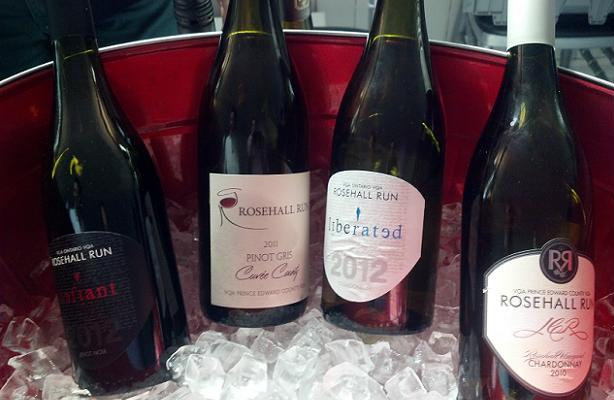
Rosehall Run Wines Photo: Michael Godel

Rosehall Run Wines
Photo: Michael Godel

Rosehall Run ‘The Swinger’ Syrah 2011 ($34.95, winery only) gets my attention not just because it’s the only commercially planted and bottled Syrah in PEC but because it stands in front of the orchestra. I gotta believe winemaker Dan Sullivan cares deeply about this wine from fruit sourced on Dick Singer’s Fieldstone Vineyard. Nothing fatuous about its smoky, tart cranberry, Sangioveseness kissed by the salty waves of an unseen ocean. The Swinger “ain’t no cherry bomb,” waits for no one, with its tobacco voice, gravel, rocks and sand. Like a sweet little bullet from a pretty blue gun.  90  @Rosehall_Run

Exultet Chardonnay ‘The Blessed’ 2011 ($35, winery only) is exemplary even if it may not be proprietor Gerard Spinosa’s favourite vintage. Commands an ineffable presence in gold sheen and parses meaning through balance and poise. The new oak is very noticeable but the ’11 acidity is grand. Their integration is seamless, the wine shines and a few years time will only increase its lustre.  92  @ExultetEstates

Closson Chase CCV Pinot Noir 2010 (310474, $39.95, winery) has improved dramatically over the course of a year, now red verging to black fruit, if only for a fleeting moment of temporary insanity, in a Sonoma state of mind. Silky smooth, “the textures coat my skin.” Though I have seen “the best (Pinot Noir) minds of my generation destroyed by madness,” this CCV uses a cured bresaola flavour and a vivid flower scent to invigorate, ground the humidity and the “earthy beet.” Musical, earthy beat, as in All Cats are Grey meets Howl.  92  @ClossonChase

Good to go!

Come together, over wine

Stratus Vineyard
Photo: Stratus Wines

as seen on canada.com

Intensity is in the air. The artists are at work, blessed with a geographical, geological and climatic canvas unique to the planet. They share arts and letters, compare and contrast methods, style and results. The sense of community is palpable, obvious and quite frankly awesome. They are Ontario winemakers and they are coming together. Right now.

Somewhereness

Somewhereness is not just a buzz word, it’s the operative word. The notion is attributed to Wine Spectator Magazine editor Matt Kramer and the application has been conceived, depending on your take, by osmosis, by derivative extension or through extrapolation, by the original six founding member wineries of Stratus, Charles Baker, Tawse Winery, Norman Hardie Winery, Flat Rock Cellars and the Malivorie Wine Company. The group has now grown to 12 Ontario winemakers, embracing Cave Spring Cellars, Hidden Bench Winery, Southbrook Vineyards, 13th Street Winery, Thomas Bachelder and Hinterland Wine Company. That this forward and fast thinking gang, collectively conspicuous like another famous gathering of Canadian artists, has embraced Somewhereness, mandated, habituated and held it dear in unequivocal belief, speaks of their collective consciousness. Terroir feeds their raison d’être,” imprinted with a vineyard’s sense of place, its soil, climate, seasons, vintage variations — and its maker’s methods.”

Mr. Kramer said “Somewhereness is more than just an event. It allows us to recognize the particular beauty of a place. Since Ontario’s wines have just such a particular beauty, the Somewhereness celebration makes sense in a single sip.” It was also Mr. Kramer who said that Somewhereness is something you can’t take, nor is it something that you can really define, or figure out its source. Somewhereness is not something undefined, like umami, nor is it akin to karma, or zeitgeist. It’s very real. In the soil, the vines, the fruit and in the wine. The sparkling, white and red wines of Ontario are obvious and recognizable. They should never be mistaken as having been made anywhere else.

Recognition

A concept like Cool Chardonnay takes it to the road to spread the prophecy and also plays host to events that attract dignitaries from around the world. More organizations like i4C are needed to spread the Ontario gospel. The next summit of #i4C2013 (third annual) will take place this coming July 19-21. Still, something is missing. Industry folk share an understanding, celebrate internally and not unlike any well-organized clique, pat one another on the back. But what about the local consumer? Do they realize they’re missing out on the illustrious muckle right under their noses? There’s the rub. It’s not just Americans and Europeans who are ignorant to the exceptional quality of Ontario wine. Abeyance be gone, these next few years have the potential to cement an industry’s power. Only a minority has even the slightest clue that liquid gold is mined out of the peninsula’s glacial clay and limestone. The time is ripe to tell the world the story of Somewhereness. The embryo is about to grow in a major way. Financial reward is within reach. So how to alert the world?

Education

When Canadian agencies send wine abroad, its best foot must be put forward. West coast wine writer Anthony Gismondi made this point to Canada’s quintessential wine ambassador, Janet Dorozynski:

More than anything, retail stores that specialize in cool climate wines are necessary to force feed confidence to the buying public. Shops devoid of cloying Cabernet Sauvignon, Malbec or Shiraz that cloud the wine IQ of young minds. I’m guessing you don’t see Gamay as a great hope for the future of sales out of this province. You are not the only one. If Riesling, Chardonnay and Pinot Noir are considered essential varieties for success, how can Gamay be excluded from hanging out at the top of the list? Only three were poured at Somewhereness, two of which were from Malivoire. Tawse, Stratus and Cave Spring should all have been pouring theirs. Consider this statement. “Wines produced between 41˚ and 44˚ north are more aromatic, lighter in body and higher in acidity than their warm-climate cousins.” If that does not shout Gamay, please tell me what does. The #GoGamayGo troupe is in full tweeting mode:

Simply put, more Gamay (Noir) needs to be planted in Ontario’s vineyards. OK, so the name isn’t the sexiest. Could you call it Niagara Noir? I don’t think so. Gamay and its small berries (especially from new clonal plantings) are ideally suited to the climate and the wines are drop dead delicious. The bandwagon is growing, with zealots like @thespitter, @winetrackmind, @BillZacharkiw@mkaisersmit@TheGrapeGuy@zoltanszabo and @johnszabo leading the charge.

Caretakers of the Earth

Indeed, Ontario is a special place to grow grapes. Our 12 winemakers feel this way about their wines, noting they offer “deeper refreshment, exquisite harmony with food, and great ageing potential. Welcome to the coolest fine wine region on earth. Our wineries sit on a fortuitous composition of earthly constituents: some 12 meters of glacial clay and silt capped by a few feet of clay and limestone-laced topsoil. Clay limits a vine’s ability to produce large crops. Instead we get tiny berries in small yields, giving us high concentrations of sugars, acids, minerals and wantonly exotic flavour compounds.”

On Tuesday, April 16th the group of 12 poured their best at the MaRSDiscovery District. A warm thank you goes to Cool Chardonnay, i4C VIP Concierge Trisha Molokach for helping to set the Somewhereness table. Here are eight shining examples of the coolest wine made on earth.

From left: 13th Street Cuvée Rosé NV, Cave Spring Cellars Riesling ‘CSV’ Estate Bottled 2009, Malivoire Wine Company Gamay ‘Courtney’ 2011, Hidden Bench Terroir Caché Meritage 2009, Charles Baker Riesling ‘Picone’ 2011, Norman Hardie County Chardonnay 2011, Hinterland Wine Company Rosé 2010 Method Traditional, and Tawse Pinot Noir ‘Lauritzen Vineyard’ 2010

13th Street Cuvée Rosé NV ($24.95, winery only) is autolytic, Brut-finished, traditional method sparkling that has that something in her style. Pinot Noir and Chardonnay emitting so much strawberry energy you might find yourself lost in the fields forever. But there is more than that, “something in the way she woos me,” maybe the rhubarb replay, or the tarragon, or the faint tang of cheese. You gotta like the Jean Pierre Colas style and to like her, you need to like her style.  89  @13thStreetWines

Cave Spring Cellars Riesling ‘CSV’ Estate Bottled 2009 ($29.95, winery only) comes from the oldest, lowest-yielding vines at the estate grown on the limestone, Beamsville Bench terrace. A three month rest on its lees imparts honey on the nose though the palate is dryer than off-dry. Mineral, pop-driven even. A hoovering, wizened Riesling, puckering, turning inward, yet to hydrate. Unique for Escarpment ’09 and will realize a quenching later than most. I for one will put this aside and revisit at the end of the decade, when “golden slumbers fill your eyes.” 89  @CaveSpring

Malivoire Wine Company Gamay ‘Courtney’ 2011 ($29.95, winery only) spent 14 edifying months in French oak and will live adroitly for another five years as a result. So much plum inherent in all its faculties, berries and currants too. The winemaker star of  Shiraz Mottiar is rising higher into the cool climate stratosphere with each passing vintage. His wines walk a haute couture runway of class and style.  91  @MalivoireWine  @ShirazMottiar

Hidden Bench Terroir Caché Meritage 2009 ($32.95, winery only) occupies hallowed Beamsville Bench middle ground between the beastly corpulence of 2008 and the rich, voluptuous 2010. Puzzling blend. Approachable and formidable. I sip and sip and sip her majesty in spite of her necessary acidity and tenacious tannin. “I want to tell her that I love her a lot but I gotta get a bellyful of wine.”  92  @HiddenBench

Charles Baker Riesling ‘Picone’ 2011 ($35, winery only) trembles with nervous energy and will need some bottle time to shed its shocking, A16 soda popping feeling. Right now “he got joo joo eyeballs.” Give it a year, or even two for the Vinemount Ridge clint (citrus and flint) to come together in a fit of focused, piercing acidity. This is Baker’s sharpest, knife-edge Riesling in the block and while I never thought it possible, this one is sure to outshine 2009. For Charles Baker “one and one and one is three.”  93  @cbriesling

Norman Hardie County Chardonnay 2011 ($35, winery only) is not merely a window into the vintage but the portal. Bright, golden fruit, freakish level of mineral and longer than the old Greer Road. Norman will always have ’08 but the newbies will be lucky to discover 2011. Who wouldn’t fall for its charms. When it comes to this Prince Edward County Chardonnay, “one and one don’t make two, one and one make one.” I call that a bargain.  92  @normhardie

Hinterland Wine Company Rosé 2010 Method Traditional ($37, winery only) is imbued faintly and sweetly in pink hue and lithe bubble. The grace and ease of Prince Edward County is forgotten when the wine hits the tongue and attacks with force. A peppery anesthetization ensues, followed by a soma-like, numbing sensation. She’s no cheap date, gives you no money, “but oh, that magic feeling.” Like a two-side playing of Abbey Road, she reels you in slowly, works to a feverish pitch and drifts off slowly into dream. A bit exhausting but worth the trip.  90  @hinterlandwine

Tawse Pinot Noir ‘Lauritzen Vineyard’ 2010 ($44.95, winery only) from the Vinemount Ridge is dry and cut with spice, a favourite for winemaker Paul Pender. The sour acidity from fruit such as cranberry and pomegranate are here in deep, concentrated and naturally sweet tones. Niagara limestone casts a Burgundy mineral shadow and the wine is iron tough yet silky due to the warmth of the vintage.  91  @Tawse_Winery

Good to go!

Masters wines in purple, yellow and green jackets

Photo: Melinda Nagy/Fotolia.com

as seen on canada.com

White and red. These are the two descriptors that separate and define wine. But the pigmentation in wine runs a colour spectrum way beyond the black and the white. Whites wines can appear pale or silvering, in platinum and argentate. They can be yellow and gold, in marigold and saffron. They can also be green, in jade, malachite and patina. Red wines are so often purple, in magenta, amethyst and amaranthine. They are also black, in slate and in charcoal. I employ this word salad rubric all the time, because that is what I see.

Have you ever really taken the time to look closely at the actual colour of your wine? To do so, the first order of necessity is a proper wine glass with a good-sized bowl and certainly not smaller than 16 ounces. Increasing the viewing area allows you to not only see hues but also nuance and variegation, especially when a wine has some age on it. The visual aspect of wine is huge. Don’t let it pass you by.

There will be many colours and golf attire styles on display this coming weekend at The Masters. You’ll see the Luke Donald Ralph Lauren GQ. The Ian Poulter English plaid, retro-kitsch. The Sean O’Hair Ashworth Nantucket. The Freddie Couples Masters green. The Ben Crane Hugo Boss, Mad Men yellow, green and orange. The Ricky Fowler Puma, day-glow yellows and greens. The Masters offers a sensory experience focused on colour unlike any other made for television sporting event. So many shades of green and so many moments of reflection. Reminds me of wine.

I’m certainly not suggesting to revolve your purchasing decisions around fashion and colour, but the next time you pour a glass, take note of its sheen. I guarantee it will add to the experience. Whether or not you care at all about the golf, here are six masterfully made drops to look for this coming weekend.

Clockwise from left: Hinterland Whitecap 2012, Dr. Hermann Ürziger Würzgarten Riesling Spätlese 2007, Fielding Estate Cabernet Franc 2011, Resta Salice Salentino 2009, Viewpointe Estate Auxerrois 2011, Bachelder Bourgogne Chardonnay 2010

The Silver

Hinterland Whitecap 2012 (332809, $22) looks like lustrous sterling and that visual promotes a feeling of confidence. Tender spindrift and a Vidal, honeyed sweetness to smell. Waxy Muscat balm and a hint of draff. Riesling ties it all together in a well-structured sparkler crafted by Prince Edward County winemaker Jonas Newman. Like top quality Prosecco. Please do not mock the Charmat. Versatility be thy name!  89  @hinterlandwine

The Patina

Viewpointe Estate Auxerrois 2011 (327239, $14.95) is something completely different, unique and intriguingly surprising from the Lake Erie North Shore Appellation. Nice nose, despite a wet, though not a record rainfall season. Notes of stone fruit, flowers, equatorial like Gewürztraminer but not in lychee, candied but not cloying. Downy glycerin texture with nutty overtones and even key lime pie. Indicates a decemberist, classic, off-dry style. You can “rake your thumbnail across the stretch of the patina” but what you will find is balance and restoration.   88  @viewpointewines

The Marigold

Bachelder Bourgogne Chardonnay 2010 (272005, $29.95) oozes gossamer oak at the outset. Golden like an organic egg yolk, flocculent, thick and rich. Bests the ’09 with more smokey verve and struck stone guts. This one is very neurological, in colour, texture and feel.  90  @Bachelder_wines

The Jade

Dr. Hermann Ürziger Würzgarten Riesling Spätlese 2007  (313528, $16.95) clocks in at a mere 8 per cent abv and is a nasal microchamber filled with dry ice but taste it and be soothed by its unguent goodness. Minerals, spice and everything nice out of red sandstone, slate soil and just barely beginning to act its age. OK, it may be a touch disjointed but at $17 they are giving it away. I could drink it like wheat grass all summer long.  90

The Charcoal

Resta Salice Salentino 2009 (324731, $14.95) is a modest Negroamaro mouse of currant, coal, olive and terrene. Powdery, cretaceous limestone and leather make this Puglian painfully arid and yet it is remarkably juicy. Funk monster too. “My brain’s the burger and my heart’s the charcoal.”  For lounging at closing time.  88  @DavidBowlerWine

The Magenta

Fielding Estate Cabernet Franc 2011  (36194, $21.95) sets the pepper mill on speed dial and certainly knows the inside of a barrel but what more could you possibly ask for? Unabashed, unbridled purple goodness. From my earlier note: “…has to be the best yet from Richie Roberts.  From a 35-acre Grand Cru (Five Rows) vineyard in the making in the heart of the warmest Niagara locale (St. David’s Bench). Zanthoxylum, capsicum and pencil shaving. Ropy grain, chewy, sylvan charm. On the card at Barque 90  @FieldingWinery  @RichieWine

Good to go!

Part one: A 30 march of wines

Photo: Comugnero Silvana/Fotolia.com

as seen on canada.com

March ends in madness. Sydney Crosby breaks his jaw. The Toronto Maple Leafs are on their way to the Stanley Cup Playoffs. Wichita State is heading to the final four while a Canadian star guard leads Michigan to the same dance. Mass hysteria. Soon cats and dogs will be living together. Thank goodness for wine.

An atomic march of wine ushers in a change of season, a greening of the grey, a fresh start. Wines from all over this grape growing planet have hit the shelves. There is much to choose from, from sparklers and great whites to fresh, fruit-driven reds. Come back in a couple of days for a second list of 15 big, bold red recommendations.

Allow me another peculiar exegesis. I have touched on the health benefits of wine before. This time my concern centers around the 30th element on the periodic table. Zinc is needed for the proper growth and maintenance of the human body. Zinc deficiency can be a nutritional issue and studies indicate something in red wine enhances zinc absorption but no, it’s not the alcohol. According to two Hawaiian nutritionists, good diet and a moderate, appropriate amount of Zinc can help prevent Prostate Cancer. One way to introduce number 30 to your body is through bioactive polyphenols, naturally occurring chemicals found in foods, including fruits, some types of grains, wine, and tea. BP’s found in wine are reported to add health benefits for a variety of disorders, including cardiovascular diseases, various cancers, diabetes, obesity, and neurological diseases. Sounds like a plan.

This further cements an attitude as to why wine is my eminent companion. Of this I am counseled, not in shadowy reminiscence, but by a regular show of good fortune, through the generosity of others. Good Friday morphed to Great Friday thanks to my good man G, marked at the precise meta tasting moment of this phenomenal Sicilian.

Girolamo Russo Feudo 2010 (218479, $48). The last of the great Etnas in full volcanic, mineral splendor, dipping lentil into chocolate, a jam session of ripe cherries verging to black. Creamy development in butter, vanilla and pearl. “All five horizons revolved around her soul.”  94

On March 27th the good folks at Lifford poured a couple dozen wines from seven New Zealand producers at Soho House in Toronto. A fleeting moment of pathetic fallacy aside (after being reprimanded by a whining club staffer for taking a bottle photo), “there are no photographs allowed in this private club,” the event really was a treat to attend. The compositions of Ata Rangi, Carrick, Craggy Range, Felton Road, Mountford, Neudorf and Staedt Landt collectively impressed with finesse and refinement. Martinborough Chardonnay (Ata Rangi 2010, 91) will have a bright future, along with Syrah out of Hawkes Bay (Craggy Range 2010, $44.95, 91). Pinot Noir has been thrust into the Kiwi spotlight and the world is there for both stage and oyster taking, if only the price of admission matched the product. These two Pinots stole the Lifford show.

Felton Road Cornish Point Noir 2008 (2011 – $84.95) has developed more than a modicum of animale and mineral old world charm. Juicy black cherry, red licorice, fragrant spice, tea and rose petal tessellate in a weightier way than the lithe, elder Block 3 ’04, thanks in part to vines with more age. Quite refined.  92  @feltonroadwine  @liffordwine

Mountford Pinot Noir Estate 2008 ($80) is an overflowing bowl of ripe cherries so dramatic in aroma the 100% new oak is almost unnoticeable. Welcome to Waipara Pinot, wholly unique to the New Zealand landscape, prettier and graced by an unparalleled elegance. Made by blind winemaker C P Lin.  93  @mountfordestate  @liffordnicole

Now get out there and have a look for these just released wines.

From left: Mountford Pinot Noir Estate 2008, 13th Street Premier Cuvée 2008, Joseph Cattin Hatschbourg Pinot Gris 2010, The Foreign Affair Riesling 2009, and Erasmo 2006.

The Sparkling

Argyle Brut Sparkling Wine 2008 (258160, $29.95) is a rolling stone with diamonds on the soles of its shoes. So much chalcedony minerality, along with soda pop, russets blooming across pale cream, lime and ginger. Sings a “be bop a lu la.”  90  @ArgyleWinery

13th Street Premier Cuvée 2008 (142679, $34.95) continues to impress with its linear, rising and crescendoing attitude. Lavish like the finest pâté spread on buttery brioche. From my earlier note: “perpetuates the apple theme but here it is subdued, sweet and with blossoms too. There is honeycomb, citrus and an herbal, grassy component no other wine has shown. Lean, perhaps but that’s the minerals talking. Very pretty.”  91  @13thStreetWines

René Geoffroy Premier Cru Brut Rosé De Saigneé Champagne (245878, $55.95) is a strawberry cream, ice cream dream, if you know what I mean. Pinot Noir and nothing but Pinot Noir. A cool vintage marked by sweet pink grapefruit welling the vitrine, lit by laser acidity. Rocking rosé.  92  @ericbelchamber

The Whites

Mil Vientos Torrontés 2011 (307504, $15.95) is a tight, chunky, San Juan affair. Moscato-like, sugar sweetened, liquid lemon candy nose, followed by a taste of white toffee. Expressive Argentine and full of tang.  87

Joseph Cattin Hatschbourg Pinot Gris 2010 (260240, $19.95) is a flat out ridiculous, Alsatian Grand Cru deal at $20. The apricot jam, bon-bon, white nettle and redolent resemblance to SGN or Sauternes is uncanny. The palate remains dry, the finish on the side of absinthe. I remain transfixed by its intellect.  90  @DomaineCATTIN

Konrad Sauvignon Blanc 2011 (616243, $19.95) goes long on all that is typical and necessary for the survival of Kiwi SB. Asparagus, gooseberry and passion fruit in All Blacks formation, chanting, fierce, intimidating. Present alcohol though surprisingly light in body, huge in stature if gentle as a giant. Acts more nervy than many South Island peers and scores by trying.  89 

The Foreign Affair Riesling 2009 (127290, $24.95) retrofits 20% NP dried grapes in the Venetian appassimento method. The dehydrated drupe adds dye and sherbet texture, like the yellow and pulp of  Ataúlfo mango. The acqua turns rich, as if 1-2-3 jello were to meet candied lime and pear Gewürztraminer, with its mind centered on the holy varietal mystery. The outré oeuvre of winemaker Ilya Senchuk.  90  @wineaffair

Le Clos Jordanne Claystone Terrace Chardonnay 2009 (56929, $40.00, SAQ, 10697331, $41.50) sonars with a stealth shark attack of char and a cold, arctic shiver. Great Ontario white with full on spiced oak if nicked by unctuous platitude. Best LCJ Terrace in years from winemaker Sébastien Jacquey.  90  @LeClosJordanne

Bachelder Saunders Vineyard Chardonnay 2010 (324103, $44.95) is a wine to learn from yet feel humiliated by its eloquence. Creamy, buttery, lightly toasted soft seeds or nuts, like a melding to halavah or marzipan. White flower aroma, viscous exempt, a study in equilibrium. Thought this the best Bach yet when tasted back in February, that is until the “stuff of dreams” Wismer appeared as a silvered stone in bright dancing patches at Cuvée 13.  91  @Bachelder_wines

The Reds

Featherstone Cabernet Franc 2011 (64618, $16.95) hits the Ontario watermark with pinpoint ’11 attribution. Firm, fruity red currant spiked by peppercorn, slow-smoked and lacquered with tar. Spot on and one of the best Niagara Peninsula CF values.  88  @Featherstonewne

Paso Creek Cabernet Sauvignon 2010 (161141, $19.95) is a breakfast special of thirst quenching vanilla shake, bowl of berries and smoked bacon. Well-rounded Paso Robles fruit forward Cab, long and lean. A worthy California detour to a county not oft visited.  88  @PasoCreekWine

Erasmo 2006 (311837, $21.95) is a soldier home from war. Wounded, bruised but not beaten. This unfiltered, pure, natural and wild Chilean blend of two Cabs and Merlot is so Bordeaux and not so Bordeaux. Acts more austere and rustic like old Brunello or Nebbiolo with a vibrant, currant, pepper and balmy funk. Not so peculiar considering producer Francesco Marone Cinzano is the man behind Col D’orcia in Montalcino. Time in the glass unfurls gorgeous, opaque fruit. I’d like to see it evolve over the next five years.  91  @FMaroneCinzano

Good to go!

New wave under $20 wines go kosher for Passover

Fotolia_40247294_Subscription_Monthly_620

Kosher wine for Passover
PHOTO: SISIDESIGN/FOTOLIA.COM

as seen on canada.com

There is life beyond Manischewitz. Not all kosher wines are made from cloying, insipid and super-sweet Concord grapes. Conversely, a Jew’s worst,  ’11th plague’ wine nightmare, the nights of suffering through cooked and stewed dry table wines, is (mostly) a thing of the past. I’m not suggesting that the golden age is upon us, but you may want to don the shades. The future is bright for Passover kosher wine.

“Wine does not become kosher by being blessed. It is kosher (Hebrew: pure, proper) when complying with strict rabbinic criteria that render it acceptable for Orthodox Jews.” This statement from the NY Times is unifying and true for Jews worldwide who choose to abide by the traditions of the Passover Seder table ritual. I would highly recommend reading the articles of Eric Azimov to really get a grip on the kosher for Passover wine thing. Also check into Kosher Wine Musings Blog. For a comprehensive guide to Israeli wine, look to the work of the late, great critic, Daniel Rogov. The production of kosher wine is a costly endeavor and not surprisingly, the best products are those in the (upwards of $25) premium category. Two currently available examples are Shiloh Shor Cabernet Sauvignon 2007 (182947, $32.95) from the Judean Hills, Israel and Bravado Chardonnay 2011 (305102, $31.95) by Karmei Yosef Winery, Israel.  We ran a story about premium wines last week.

From left: Banero Extra Dry Prosecco KPM, Borgo Reale Sangiovese KPM 2011, Five Stones Sauvignon Blanc/Semillon KPM 2010, and Galil Mountain Shiraz KPM 2010.

All wines labelled “Kosher for Passover” are kosher, but not all kosher wines are kosher for Passover.

All wines labelled “Kosher for Passover” are kosher, but not all kosher wines are kosher for Passover. Kosher for Passover wine must be handled by Sabbath-observant Orthodox Jews and the wine can never come into contact with any leavening (grain, dough, bread) products, including yeast. Chemical additives like Potassium Sorbate and Citric Acid are also no-no’s. Clarifying agents such as Isinglass (gelatin) is forbidden as it comes from non-kosher (no scales) fish. For the most part, Jews purchase only Mevushal wines for PassoverThe Mevushal (cooked or, flash pasteurized) practice is used so that opened kosher wine can be handled by non-Orthodox and non-Jews and then poured to the observant. Many Jews in the diaspora have chosen to abandon the concept. The destructive consequences of “cooking” grape juice somehow continues to remain up for debate. Most Jews who appreciate a glass of good wine with dinner, and especially those who double as wine geeks avoid Mevushal wine at all costs, thought being, consuming heat-damaged wine is no way to go through life. That said, a good deal of the Kosher for Passover wines in our market are Mevushal (KPM) and some are really quite agreeable.

The most interesting practice is that of established vineyards allowing kosher winemakers to use their grapes to make kosher wine. Several Bordeaux châteaux allow for this, including Château Malartic-Lagravière and Château Pontet-Canet and the wine is labelled under the name of the participating Château. Next Monday, Jews around the world will gather at their respective Seder tables. Here are five under $20 current Kosher for Passover releases.

Banero Extra Dry Prosecco KPM (298489, $13.95) hits classic Venetian fizz notes, of peach, orange rind, nougat and baked apple. Quite juicy despite the ED designation. Like a Tora, Tora instrumental, “played with a wind sound effect fading in, followed by a dive bomb on the open E string.” I would consider foregoing the Sauvignon Blanc or Chardonnay and go two, maybe three cups with this one.  86  @azureau

Borgo Reale Sangiovese KPM 2011 (637793, $13.95) may come off boxy, as if housed in cheap wood but for $14 this is really about the best you will ever hope to find. Seems to be in a bit of a rush, in the spirit of radio, built upon a synthesizer, Sangiovese sound. Still, “all this machinery making modern music can still be open-hearted.” Red, raspberry fruit is not so Sangio but leather and smoke is. A bit contrived but trendy and copacetic.  87  @ALLIEDIMPORTERS

Five Stones Sauvignon Blanc/Semillon KPM 2010 (108001, $19.95) from Margaret River, Western Australia like many Kosher efforts starts out one way then diverts another. Aromas of dry grass, yellow skin and white fleshed apple give way to a sweet and refreshing zip. A racy, Benzedrine touch of char gets on top of the pastry in “a shirt of violent green.” Strange frequency Kenneth.  87

Galil Mountain Shiraz KP 2010 (141580, $17.95) wears an oak monster’s mask and is Malbec-esque in blueberry pie and vanilla ice cream. Depeche Mode kosher red crying “Tora, Tora, Tora.” I ask the question, “is this a love in disguise or just a form of modern art.” Simple, juicy, slightly confected fruit.
More than acceptable for Seder table brisket and roast lamb.  87

Segal’s Fusion Merlot/Cabernet Franc/Cabernet Sauvignon KPM 2011 (157206, $18.95) though muted is quite pleasant, aromatically speaking. Baking spice, woodsmoke, cherry and plum, like satellite St. Emilion. Scarlet colour, as if derived from Tola’At Shani. Dusty and down-grain, no cooked sensation, well-structured.  88

Good to go!

Wines with Oscar

Champagne at the Oscars PHOTO: KEVORK DJANSEZIAN/GETTY IMAGES

as seen on canada.com

What’s in a name? Oscar might mean “deer lover”, derived from Gaelic os “deer” and cara “lover”.  On Sunday night the 85th Academy Awards will air. I’ve read many a Tweet and been privy to a host of “no thank yous” by those who have sworn to boycott the annual spectacle, having tired of its one-dimensional, scripted, predictability. Not to mention CIA-influences,  bad decisions, six-figure dresses, the pomp and circumstance. But who really cares? The old bird is 85 for Louis B. Mayer‘s sake. Besides, this week has not been kind to the name so the question begs? Who’s watching the Oscars and what will they be drinking?

The first answer is 40 million viewers. In 2012 the ceremony generated 3.8 million comments on Twitter, Facebook and other social media sites, according to data generated by Cambridge, Mass.-based Bluefin Labs. Those numbers may appear far from staggering, especially as compared to the Grammys and minuscule by contrast to the Super Bowl. By television standards and on a singular network they are still big numbers. So, if you count yourself as one of the 40 M, maybe a cocktail will put you in the mood? James Nevison of HALFAGLASS suggests that a French 75, a classic Hollywood-styled cocktail composed of Gin, Champagne, lemon juice and sugar would set the scene. Rod Phillips of the Ottawa Citizen quips “maybe a wine from the Francis Ford Coppola winery?” Director’s Cut. When gold Sunday comes, these are the red, white and sparkling wines I would be cracking open with that little statuette named Oscar.

Piñol Ludovicus Tinto 2010, Malivoire Pinot Gris 2011 and Hinterland Les Etoiles 2009

The grapes: Garnacha, Cariñena, Merlot and Syrah

The history: From Celler Piñol, in Terra Alta, wedged between the more famous regions of Montsant and Priorat

The lowdown: Organically motivated, Piñol is a vintner for the New World. Ask your local Product Consultant to pull one from next week’s release skid

The food match: Pancetta, Salami and Chorizo Charcuterie, grainy mustard

Piñol Ludovicus Tinto 2010 (313791, $13.95) is the entry level red you won’t want to miss. Best supporting charcuterie. From my note this time last year: “Molds Cariñena, Merlot and Syrah around a 50% frame of Garnacha. Grizzled vines for this entry level beauty claw, scratch and rope-a-dope their way through arid and unforgiving limestone soils. A fighter this Ludovicus. Dusty, rocky, bearded and sharp-dressed for the neoteric world. Climbs to the top of the hill and rips off a riff.  87  @CELLERPINOL

The grape: Pinot Gris

The history: Martin Malivoire and Moira Saganski are one of the Niagara region’s true visionary teams

The lowdown: Under the auspices of winemaker Shiraz Mottier, this wine company has progressed with nearly unparalleled success, becoming a champion of and for Cabernet Franc, Gamay and now Pinot Gris

The food match: Dry-Rub Chicken Sliders, amarelo da beira baixa, calabrese buns

Malivoire Pinot Gris 2011 (591305, $19.95) is a tropical, juicy rendition spiked by a fleck of necessary pepper. Like sweet and sour green mango with a dusting of salt and Lombok chile. A reductive waft parts ways and waves in the rear-view to the savory, odoriferous florals. Best adapted screenplay.  88  @MalivoireWine 

The grapes: Chardonnay and Pinot Noir

The history: Jonas Newman & Vicki Samaras are sparkling wine specialists in Prince Edward County & wait for it…coming very soon, Limnio in Limnos, Greece

The lowdown: You will not regret raising an Oscars toast with this lip-smacking specimen but you’ll need to visit the winery or one of these establishments to do so

The food match: Kumamoto Oysters, shallot mignonette

Hinterland Les Etoiles 2009 ($39) propounds way beyond obiter dictum that this classic overture ode to Champagne (a blend of 40% Pinot Noir and 60% Chardonnay) is the bomb in Ontario (Prince Edward County) Sparkling wine. Fruit picked riper and more mature in ’09, resulting in a fuller wine but still high in necessary acidity, for food and for balance. For under $40, there is no other place in the world to go for this level of class, execution and value. Searing citrus and laser acidity, walking a tightrope with a funambulist’s equilibrium. Gumption and length. Best direction.  92  @hinterlandwine

Good to go!