Let the gems begin

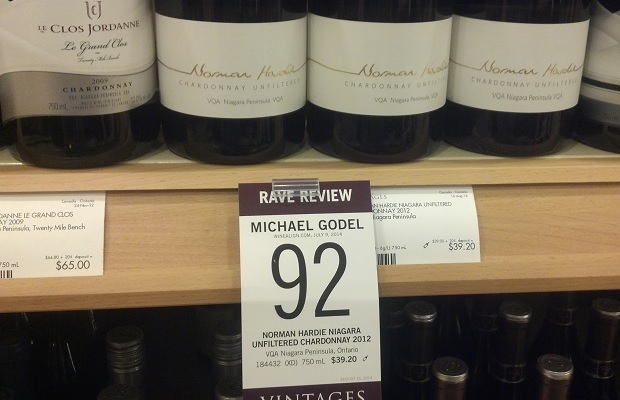
Wine review at VINTAGES of Norman Hardie Chardonnay Niagara Unfiltered 2012 by Godello

Wine review at VINTAGES of Norman Hardie Chardonnay County Unfiltered 2012 by Godello

If the premature lashing of cold, snow and ice weren’t enough to get you thinking about holiday shopping, get thee to a Liquor Control Board Ontario store on the weekend. Same time, every year. The LCBO stocks the shelves, isles and pyramid displays with more booze than anyone should ever be faced with in one visitation.

Related – Holiday wine gems hit November shelves

The bi-weekly VINTAGES release calendar whirs, undulates and clutters in rataplan overload at just this very juncture in preparation of the Christmas rush. Shoppers will tear down the walls of wine, beer and spirits, only to hear the burloque fall silent when the clock strikes closing time on the evening of December 24th.

There are exactly 35 days left in 2014 to do the right wine thing for that father, cousin, colleague, mentor or loyal, long-time suffering employee. Please heed the warnings and do not buy crap for the one you love or think you should. No matter who you are picking up a bottle for, treat them well and with fermented grape respect.

There are three category of wines to look for, at least within the context of this buying guide. First there are the values under $20, wines made so properly they should cost double or triple what they do. Second are the expensive but honest wines. These are the true gems that make most $100 bottles look bad. Last are the $100 examples that are truly iconic, despite their cost. Though priced beyond the means of most, they are not a mistake to take a flyer and give as a gift. After the hand off is complete, the all-knowing, unspoken nod will follow.

Here are 22 picks from the VINTAGES November 22, 2014 release, in stores now.

From left to right: Cavino Grande Reserve Nemea 2008, Frescobaldi Castello Di Pomino Pomino Bianco 2013, Moris Morellino Di Scansano 2012, Louis Bouillot Perle D'aurore Brut Rosé Crémant De Bourgogne, McWilliam's Mount Pleasant Elizabeth Sémillon 2007, Josef Chromy Pepik Pinot Noir 2012

From left to right: Cavino Grande Reserve Nemea 2008, Frescobaldi Castello Di Pomino Pomino Bianco 2013, Moris Morellino Di Scansano 2012, Louis Bouillot Perle D’aurore Brut Rosé Crémant De Bourgogne, McWilliam’s Mount Pleasant Elizabeth Sémillon 2007, Josef Chromy Pepik Pinot Noir 2012

Cavino Grande Reserve Nemea 2008, Pdo Nemea, Greece (295618, $17.95, WineAlign)

Nemea strikes again. Dark rust, earth juiced on and of the rocks. Like Sangiovese with attitude, made by Romans, like Syrah the way it was made in mythological times, by Greeks. A classical garden. This is actually quite modern and expressive for Agiorgitiko. Acts as if it were a touch clay (or amphora) baked but it’s really just a Peloponnese take on oak aging (18 months) and further bottle rest (12 months). This is right in its window and will be friendly for three to five years more. What a steal.  Tasted November 2014  @DrinkGreekWine

Frescobaldi Castello Di Pomino Pomino Bianco 2013, Doc Pomino Bianco, Tuscany, Italy (65086, $19.95, WineAlign)

With thanks to Chardonnay, the Castello di Pomino 2013 elevates Pinot Blanc to a level not really found anywhere, save perhaps for one or two examples out of B.C. This one really leaves a tannic impression, not unlike some impossibly off-dry Pinot Gris from Alsace. There is a really sophisticated level of ambiance and a semblance of a distinctly rocky intent. Like high quality Sancerre or Chenin from Silex soils, the grain and veins running through the palate and the texture are coarse and cursive. This one writes a new script for Frescobaldi’s Florentine, Apennine mountain estate. Fresh, ventilated and airy as if breathing from blue skies at high altitudes. I can’t recall tasting this level of excellence before and would look forward to no less than five years of enjoying what it brings to the Tuscan table.  Tasted November 2014  @FrescobaldiVini  @liffordretail

Moris Morellino Di Scansano 2012, Docg, Tuscany, Italy (992560, $19.95, WineAlign)

A primarily (90 per cent) Sangiovese with smatterings, though not inconsequential, of Merlot and Syrah. From (non-estate) vineyards in Poggio La Mozza (Grosseto). Morellino Di Scansano, to a wine and exemplified here, sports a firm jaw and an air of tragic nobility. The question is why should it only find occasional psychic prominence as a Sangiovese go to. Moris Farms makes the lesser-known accessible, with a (sees no oak) modern accent of dark fruit and spice atop simple, pleasurable Sangiovese. Pleasantries exchanged, the 2012 MdS will work dinner, inside a Tuscan vernacular and out.  Tasted October 2014  @Morisfarms  @oenophilia1

Louis Bouillot Perle D’aurore Brut Rosé Crémant De Bourgogne, Ac Burgundy, France (48793, $19.95, WineAlign)

The Bouillot Rosé, for my $20 is the most impressive of their line-up, always tender and ripe as if just picked fruit, namely strawberry and raspberry. The Perle D’aurore is a faintly hued and lighthearted take but not light on effort. Elegance defined in Bourgogne bubbles with a savoury edge to give it strength.  Tasted November 2014  @JCB_Wines  @ChartonHobbs

McWilliam’s Mount Pleasant Elizabeth Sémillon 2007, Hunter Valley, New South Wales, Australia (724492, $19.95, WineAlign)

The 2007 is another fascinating study in Hunter Valley Sémillon. Like the ’06, egressing secondary notes have emerged, in equatorial garrigue and fruit having already met its aurulent stenosis. A honey note persists though less so in ’07, as does the level of tempering acidity. This vintage brings out the calm and the clam, though the petrol and the mineral are omnipresent, perhaps elevated. Must keep in mind it’s only $20 but it does fall a bit short in texture and acidity. There is lemon drop and the essential atomic Sémillon stoicism from the Hunter Valley, but it’s a bit thin and hollow up the middle. All that acknowledged, not having a look or two would be a shame. Tasted November 2014  @MtPleasantWines  @PRAXISpr

Josef Chromy Pepik Pinot Noir 2012, Tasmania, Australia (162990, $22.95, WineAlign)

Pepik has elevated aromatic tones and though it appears lithe it reads like a weighty tome. Unique and of its Tasmanian self. Plums come to mind, as does red earth. The phenolic ripeness and varietal indications are ushered in with managed exceptions and are simply spot on. This does not strike as a Pinot Noir that will be long-lived because its black cherry and spice are riper than many contemporary editions in a similar price range, but it will offer great pleasure for two to three years.  Tasted November 2014  @JosefChromy  @bwwines
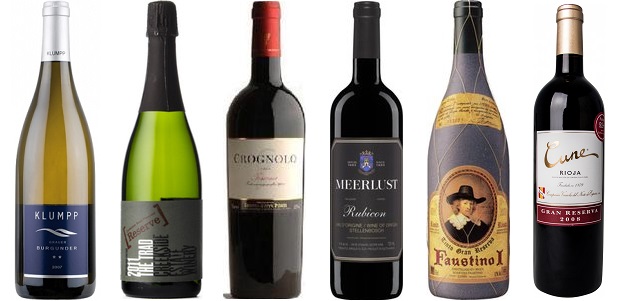
From left to right: Klumpp Pinot Gris 2013, Creekside Estates The Trad Reserve 2011, Meerlust Rubicon 2008, Tenuta Sette Ponti Crognolo 2011, Faustino I Gran Reserva 2001, Cvne Gran Reserva 2008

From left to right: Klumpp Pinot Gris 2013, Creekside Estates The Trad Reserve 2011, Meerlust Rubicon 2008, Tenuta Sette Ponti Crognolo 2011, Faustino I Gran Reserva 2001, Cvne Gran Reserva 2008

Klumpp Pinot Gris 2013, Qualitätswein, Baden, Germany (394155, $23.95, WineAlign)

Thoroughly interesting study in German Pinot Gris despite the timid and reserved tonal nature. Aridity in as much as the variety can muster and in the largest, atmospheric sense. Though the palate has some fine-grained texture and feigned sweetness, it’s as if Baden can only do Pinots this way, in Gris and in Noir. Acidity is tempered and a willing accomplice to the diminished components of sugar and pH. A well designed Pinot Gris.  Tasted November 2014  @TheLivingVine  @WinesofGermany

Creekside Estates The Trad Reserve 2011, VQA St. David’s Bench, Niagara Peninsula, Ontario (390336, $28.95, WineAlign)

The Trad ’11 has a classic toast and yeast aromatic waft and so it goes that everything that follows is embraced with curiosity and an open mind. Ginger, citrus, bronze and the sweet scents of the inside of a candy machine, its candy long gone. Creekside’s winemaker Rob Power will never be accused of dialing this sparkler in. Tasting trials help determine the necessary, final blend. The single, Queenston Road Vineyard puts 56 per cent Pinot Noir and (44) Chardonnay, aged 2 years in bottle, together for a highly effective, expansive but not explosive fizz. At 8.7 g/L of residual its dry but not quite falling off the bone. The sweetness is tempered by elevated (9.98 g/L) acidity and tension. Spent 24 months on the lees and was bottled back in February. There is balance and pleasure and a good, stretchy finish. No band-aid. Clean, precise, fizz of the day.  Tasted October 2014  @CreeksideWine

Meerlust Rubicon 2008, Wo Stellenbosch, South Africa (64329, $34.95, WineAlign)

Rubber dust, road macadam and strawberry jam. Fierce Bordeaux Blend home from a hot climate. This has gritty obduracy and doggedness. Like a red blend with a gun, walking the mean streets. Acidity shot through the roof. Bordeaux meets South Africa in every shared, resplendent and promising way. Rasping tannins contain bursting dark fruit, the grain running in multiple directions. Respect. Wait two more years on this and drink comfortably to 2020.  Tasted November 2014  @TrialtoON  @WOSACanada

Tenuta Sette Ponti Crognolo 2011, Igt Toscana, Italy (727636, $34.95, WineAlign)

This is not the modern Crognolo as witnessed in the previous five vintages. In 2011 we have been granted the complex Crognolo. This has must and earth. It has grit and girth. Best Crognolo I have tasted. Tangy Sangiovese, with some chalk in tannin. Will live longer and offer unrequited love seven to 10 years down the road, to the patient and the faithful. Tasted November 2014  @TenSettePonti  @TrialtoON

Faustino I Gran Reserva 2001, Doca Rioja, Spain (976662, $35.95, WineAlign)

It amazes me how kept wines from Rioja keep appearing as if they were just bottled yesterday but not this famous Gran Reserva. Syrupy and caramelized, bright and earthy. Mulled plum and clove with citrus accents. Bretty like a barn’s floor. Cedar and leather, big oak doors. Real mutton Rioja, still tannic, energetic and searing. Kicking it old school but wild and alive. From my earlier, April 2014 note: “Were a full-term lecture taught on the pros and cons of the Brettanomyces brannigan, this Rioja might be exhibit A. Absolutely manifest fruit meets earth, meets game perfume compendium. Call it funky yeast if you must but here is a wine that can be approached by nose only and if the relationship were to end there, novels might be written. Lives on a fermented, catalytic and plucky edge but never submits to the bacterial spindrift. Leaden fruit, red and black, smooth and layered with a tension in tang that is paralyzing to the mouth. Thirteen years old and just hitting a secondary stride, with the oak slowly dissolving and not a hint of coffee or chocolate to be found. Sexy and down to earth at the same time.” Last tasted November 2014  @bodegasfaustino  @Select_Wines

Cune Gran Reserva 2008, Doca Rioja, Spain (393553, $38.95, WineAlign)

Old school. Smells like Rioja. Smells like Spanish spirit and weeds, sinew, gristle and braising pig, all parts in. Smells like cedar, like American oak and a soak in a tub of spa earth and mineral salts. Like “Spanish boots of Spanish leather.” This has already done the evolutionary dance so if you are looking for something to float your natural, honest boat, go here now. In a Rioja world where the times they are a changin‘, it will sail you back in time and away into a Mediterranean sunset.  Tasted November 2014  @Cvne  @vonterrabev
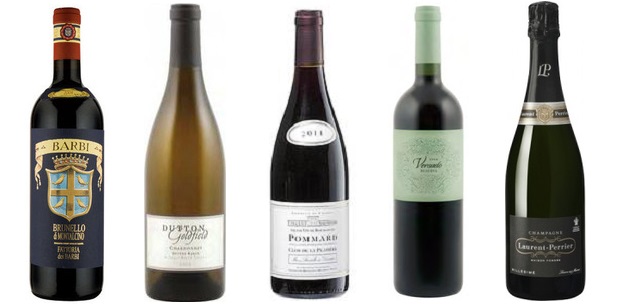
From left to right: Fattoria Dei Barbi Brunello Di Montalcino 2008, Dutton Goldfield Dutton Ranch Chardonnay 2012, Vincent Sauvestre Clos De La Platière Pommard 2012, Versado Malbec Reserva 2010, Laurent Perrier Millésimé Vintage Brut Champagne 2004

From left to right: Fattoria Dei Barbi Brunello Di Montalcino 2008, Dutton Goldfield Dutton Ranch Chardonnay 2012, Vincent Sauvestre Clos De La Platière Pommard 2012, Versado Malbec Reserva 2010, Laurent Perrier Millésimé Vintage Brut Champagne 2004

Fattoria Dei Barbi Brunello Di Montalcino 2008, Tuscany, Italy (928028$49.95, WineAlign)

Firm and in a rustic vein, as per the Barbi dole, this one a bit funkier at the outset than many. Welcome to the classic firmness of 2008, antithesis of the flamboyant ’07’s but plan for 20 plus years of slow food elegance emission. Classic rose petal, tea leaves, dates and earth caked metal in this guy. From my earlier, March 2014 note: “As expected, this is a gritty effort from Barbi, in part the impart of a testosterone-laden vintage, along with the dryer and cooler climate from Barbi’s southeastern Montalcino vineyards. A low and slow ripening will surely translate to extended longevity, but the rusticity and leather/cherry continuum will never disappear. No doubt a classic example and very well-priced for such authenticity, still it can’t be helped to see Barbi’s ’08 as entrenched in an earlier period of time. The wine will need 10 years to soften its edges and reveal the refinement and elegance of a well-documented Brunello.”  Last tasted November 2014  @FATTORIABARBI  @Noble_Estates

Dutton Goldfield Dutton Ranch Chardonnay 2012, Russian River Valley, Sonoma County, California (287854, $58.95, WineAlign)

A study in precision, exceptional quality and poise. Golden rays mixed with misty wisps, cool nights tempering warm days. Just a touch of wood spice pricks the finish. So much flavour.  Tasted November 2014  @DuttonGoldfield  @TheVine_RobGroh

Vincent Sauvestre Clos De La Platière Pommard 2012, Burgundy, France (390534, $59.95, WineAlign)

This Pinot Noir speaks for the two sides of every Burgundy argument, especially considering it comes from the gritty nook of Pommard. First impressions are floral and pretty, with spice and some sort of tropical flora whispering in cooing scents. The hill offers a buoyancy, a lifted spirit and a view of its own sweet regard. Travels through a mid-village weightless hover, then returns to terroir in prime time acidity and tannin to keep time. There is a sweet tart medicinal aspect ratio on the finish and overall this does things correctly. Does not finish with the same suave seduction that it teased at the start but it does continue to impress.  Tasted November 2014  @Select_Wines  @BourgogneWines

Versado Malbec Reserva 2010, Luján De Cuyo, Mendoza, Argentina (316984, $60.95, WineAlign)

Aromatics are racing and rising from the glass. A red rain pouring in and out. Has yet to change course. From my earlier, September 2014 note: “The floral emergence is a lodestar as periscope just now peering up from the seamless cake layering in Versado’s most liberally applied oak-imbued Malbec. The 2010 adheres in sticky savour though it remains two to three years away from finding its true gliding form. From my earlier notes through tastings on Oct. 25 and Nov. 14, 2013. “This ultra-premium Mendozan from the Canadian winemaking team of Peter Gamble and Ann Sperling boasts fruit from “the finest barrels from the finest blocks.” While certainly riding a splintered and jammy horse (what fully extracted Mendozan does not), this reserve Malbec has so much else happening, I owe it my time and focus. Dances to a triple jump height in oozing berry, compacted, brick wall infrastructure and overlapping delineation. Really like the consistency here, with no hollow middle, no umlaut, no pregnant pause. Very well made.” Last tasted November 2014  @VersadoWine

Laurent Perrier Millésimé Vintage Brut Champagne 2004, Champagne, France (983874, $84.95, WineAlign)

The reappraised vintage that was once considered good, now revealing itself as better than good uses examples like the Laurent Perrier Millésimé to drive the point. This is a classically symmetrical blend of Chardonnay and Pinot Noir possessive of much chaste class, incredible balance and held lotus posture. Through its waves of idiosyncratic brioche and linear citrus lines drawn in tactile angles this Champagne is unbent and unbroken. Its seamless transitions glide from delicate aromas, through a textured palate and groove forward in elastic length. Additionally graceful with an ever so slightly advanced and mature style from a mature world in vintage-dated Champagne.  Tasted November 2014  @ChampagneLPUSA  @Noble_Estates
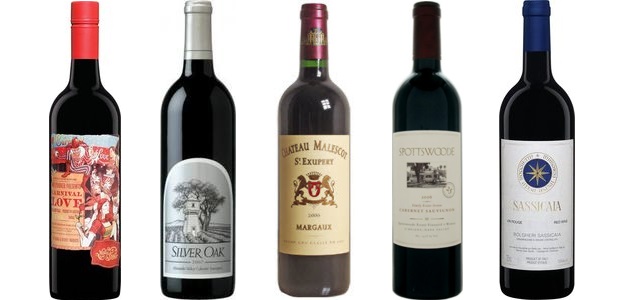
From left to right: Mollydooker Carnival Of Love Shiraz 2010, Silver Oak Napa Valley Cabernet Sauvignon 2009, Château Malescot St. Exupéry 2010, Spottswoode Estate Cabernet Sauvignon 2011, Sassicaia 2011

From left to right: Mollydooker Carnival Of Love Shiraz 2010, Silver Oak Napa Valley Cabernet Sauvignon 2009, Château Malescot St. Exupéry 2010, Spottswoode Estate Cabernet Sauvignon 2011, Sassicaia 2011

Mollydooker Carnival Of Love Shiraz 2010, Mclaren Vale, Australia (242732, $114.95, WineAlign)

While the price is just about as absurd as a “yoga class for cats” or Raine Maida’s voice, it seems logical to wonder aloud how one could question this Carnival as not being one of the biggest and baddest Shiraz you will ever encounter. It’s a veritable run on sentence of Shiraz adjectives, adverbs and hyperbole. If your hankering remains entrenched in elevated alcohol, enormity of fruit, condensed and compressed mineral, lest to be forgetting the viscous ooze of Mclaren Vale syrup, well, then this jester should fill your stocking along with those of the rest of your circle of fortifying friends. From the maw of the beast here – blood gore and fruit guts. Holy crap is this extracted, tannic, mired in impropriety, full conceit and in zero jealousy of other Shiraz. It doth joust. Certainly no lady of peace. Wow.  Tasted November 2014  @MollydookerWine  @bwwines

Silver Oak Napa Valley Cabernet Sauvignon 2009, Napa Valley, California (936039, $139.95, WineAlign)

Magnificent and munificent wine. Really special, magnanimous in every way, ultra-luxurious but not over the top. Alcohol, oak and extraction judged and held in check, equity and in balance. The fruit is pure and delicate, marked by plum, blackberry and hovering licorice, anise and spices. Long in chain and really sweet tannins. Like gazing into a pool of real nineties Napa and across the pond to an older school of reasoning. Tasted November 2014  @SilverOak  @HalpernWine

Château Malescot St. Exupéry 2010, Ac Margaux, 3e Cru, Bordeaux, France (261552, $167.95, WineAlign)

A heightened sense of Margaux reality in 2010 comes from the château with the hybrid name; first from Simon Malescot, King’s Counsel to Louis XIV at the Parliament of Bordeaux. Second, from the post French Revolution château purchaser, Count Jean Baptiste St Exupéry, grandfather of the aviator and writer Antoine de St Exupéry. This has to be the most hedonism ever bottled in a Malescot, within reason of course. The house does not know from over the top, save perhaps for the cost of this 2010. Cassis is certainly here, as is a medicinal tension, firm acidity and the most formidable tannins known to Margaux. The grain, chalk and tincture combine for full effect. This will need 10 years to chill, then go 10 plus 10 more to much applause and the request for a final curtain call. Tasted November 2014  @VinsdeBordeaux

Spottswoode Estate Cabernet Sauvignon 2011, Napa Valley, California (399592, $167.95, WineAlign)

Wow. Aromatics are off the charts. Pine forest, leather, chestnut and cedar, savoury in every wild and sauvage way, but also pure. Berries, tobacco leaf, classical logic, structures and axioms lead me to imagine mid-nineties Paulliac. Seamless texture, ripe but not overripe, rich but never overly grainy. This is super fine and dialed back (with exotic spices and wood spice filling in the holes) in the cooler 2011 vintage. A Cabernet Sauvignon of the most savour and the most class. A ten to twenty year Spottswoode.  Tasted November 2014   @Spottswoode  @Smallwinemakers

Sassicaia 2011, Doc Bolgheri, Tuscany, Italy (480533, $199.95, WineAlign)

Certainly a Sassicaia borne of the earth and the vintage. Cooler, with increased sapidity and elevated aromatics. While not volatile there is certainly an intimation at acetic behaviour. Though supportive in only 15 per cent of the two Cabs blend, Cabernet Franc stands firm in its concentration of tobacco, peppercorns a-popping in the pan and a smoldering of currants over an open fire. This will age for decades and return to its beautiful natural state with time-weathered, rugged facial lines. A leathery Sassicaia this, with tight, drying tannins and in need of two decades to show off its birthright. The 2011 Sassicaia is a loyal, aristocratic example to the Marchese Mario Incisa della Rocchetta’s dream of creating a ‘thoroughbred’ wine where the ideal was Bordeaux.  Tasted November 2014  @Smarent

Good to go!
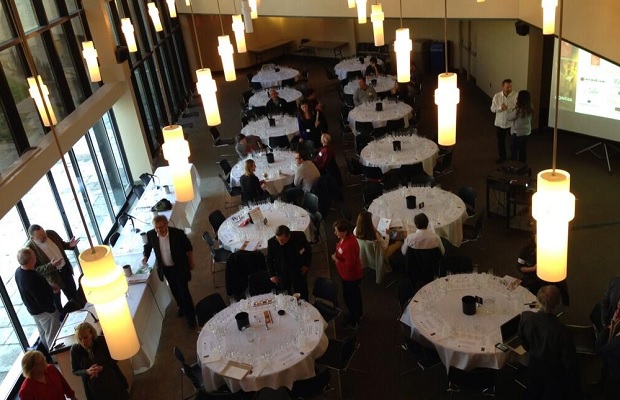
New fizz on the Brock

Brock U. CCOVI Sparkling Wine Technical Symposium Photo: http://brocku.ca/ccovi/

Brock U. CCOVI Sparkling Wine Technical Symposium
Photo: http://brocku.ca/ccovi/

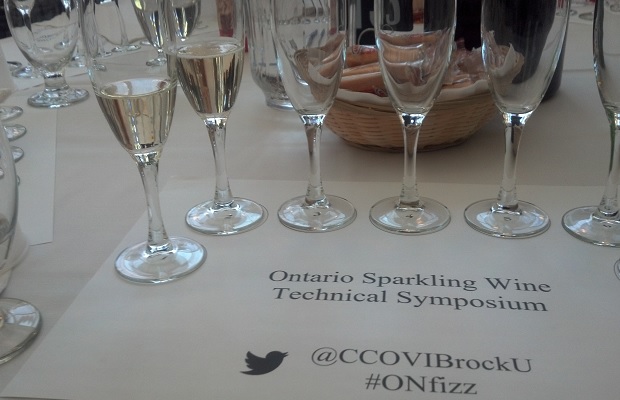
The Ontario Sparkling Wine Technical Symposium. Like a Trekkie convention for oenophiles. To a wine geek it was eight hours spent searching for the meaning of life. To a consumer who just likes to drink it would have been time lost forever with no chance to get it back. The Brock University Cool Climate Oenology & Viticulture Institute’s Pond Inlet was the setting. The presentations were very technical, that is until Dr. Jamie Goode took the podium and breathed context into the room.

According to the LCBO, in 2013, sales in Vintages of VQA sparkling wine were up 59.2 per cent from 2012 sales data. In Canada there are 36 wineries producing sparkling wine and that number is growing. As it should.

The abstruse conditions of the #ONfizz event set the table as a vocational assurance draw for Ontario winemakers, viticulture and viniculture research specialists. Seated at my table were a butcher, a baker and a candlestick maker. That should be loosely translated as a scientist (Dr. Jim Willwerth), a product manager (LCBO’s Ontario expert Astrid Brummer) and two winemakers (Hinterland’s Jonas Newman and Gaspereau Vineyards’ Gina Haverstock).

Brock’s Dr. Debbie Inglis introduced Bertrand Robillard, Ph.d., Director of Research and Development at the Institut Oenologique de Champagne. Before getting to the subject at hand, on disgorging, gushing and foaming, he first laid an open attack on beer. “The form is always better in a crystal glass,” insisted Robillard. For Champagne. Not beer. “That’s just false. It’s just appearance. People in Champagne do not appreciate this kind of resolute,” comparing the pouring of Champagne to beer.

Then on to Sparkling wine’s integral and necessary marketing draw. Bubbles. “No dishwashing,” begged Robillard. “It’s a very efficient way to kill the foam.” By principle, to have foam you need bubbles. It’s all about stabilizing the foam. High ethanol (five per cent) in fizz is good content for foam stabilization. CO2 (protein concentration and polysaccharides) all contribute to stability.

So why do the bubbles collapse? Why do they not make it from the centre to the wall of the glass? Why is a hole in the middle created and the bubbles fall into the hole and disappear? The answer is gushing. A “shameful disease” that can be considered as a disequilibrium between foam formation and foam collapse. Bubbles cannot exist if their radius are less than 0.1 microns, or they will dissolve into the wine. Bubbles are detached when gravity forces are higher than capillary forces.

The conclusion? Surface area and CO2 are the driving force behind gushing. Contaminations inside the wall of the bottle must be eliminated. Oxygen heterogeneity is essential, even more so more than CO2 and sugar. The news that there is no relationship between wine composition and gushing means winemakers can make the Sparkling wine style of their choosing. The representative from Champagne said so.

Next up was Ed Carr, Sparkling winemaker, Accolade wines in Australia. Carr plies his trade in Tasmania. Not the Tasmania of The English Passengers full of exiled convicts, invading Brits, sinister men like Dr. Thomas Potter and his thesis about the races of men. No, Carr makes bubbles on an island quickly becoming a (vinous) garden of Eden, known to a heroic aboriginal and envisioned by Reverend Geoffrey Wilson. Carr explained the company’s choice of locale. “These (cold and mostly maritime influenced climate) numbers are a gross simplification of what the world is really like, but this is why we went to Tasmania, looking at that 1000 number for heat degree days.”

On spacing: “The guy growing your vines is likely using the same tractor to grow spuds.” On vineyard management: “Lots of leaf plucking done, bunch thinning…canopy management is key. Supplemental irrigation a must.” On Sparkling wine stylistic choices: “Oxidation is a big thing, a real style choice. Chilling picked fruit reduces phenolic extraction and oxidation but also reduces fruit.”

On flaws: “Brettanomyces I refer to the ‘black death of Europe’ for wine. The little buggers love sulphur dioxide conditions. Residual sugar left in the bottle on the way to second fermentation helps the yeasts on their way. Rapid ferment and as dry as possible is the way to go.”

On closures: “I don’t really think you apply screw cap closure trials from still wines to sparkling. It does not translate to the reductive character of sparkling. We primarily believe in the use of traditional cork, with some agglomerate closure usage.”

Third speaker was Larry Mawby of Michigan’s Leelanau Peninsula L. Mawby Vineyards. “The thing that I realized was negatively impacting on my ability to make good sparkling wine was the fact that I wasn’t just making sparkling wine.” The response from Hinterland’s (Prince Edward County Sparkling wine maker) Jonas Newman. “I like his style.” I can hear you thinking, Sparkling wine in Michigan? More than this. Mawby makes 21 different renditions, with the usual suspects, Chardonnay and Pinot Noir, in traditional ways. He also goes at it Charmat-style with Riesling, Pinot Gris and Vignoles. Not to mention Cayuga, Vidal, Regent, Marechal Foch and Muscat in the Cuve Close method.

Continued Mawby, “in this century we’ve made nothing but sparkling wines.” During the terrible winter of 2003 there were temperatures of 45 degrees (Fahrenheit) and below. “Killed any vine not beneath the snow. I panicked.” So Mawby added his ‘Cuve Closed’ a bulk production, Charmat-style sparkling wine. On the technicalities of making fizz: “I don’t believe the chemistry of fruit should be your guideline. What does the fruit taste like?” On varietal integrity: “Almost nobody on the planet buys Sparkling wine based on grape variety.”

Jamie Goode, Ph.D., London-based wine writer (www.wineanorak.com) and wine columnist, The Sunday Express talked on wine closures and purchaser perception of local, national and international sparkling wines. Mostly he spoke about incontestable truths.

On closures: “Traditional is best but the Mytik in an excellent alternative.” It now closes 192 million of 6 billion bottles. The Crown Cap? “Yes, why not? It’s recognizable, like beer and comfortable. With the right liner it’s OTR transmission is very acceptable.” Dr. Goode’s closure talk resulted in some wine writer comedy.

On the world’s most famous fizz: “Champagne can be wonderful, but there’s some ropey stuff coming to the UK. With Champagne, your expectation is everything.” On Cava, “People don’t really like it. It’s made in the traditional method and it should be a really good product but it’s trying to be something it’s not.”

On vintage dated bubbles, Goode spoke from an unequivocal marketing perspective. “People don’t really care about vintage.” On the emerging Canadian and British sparkling wine industries. “Do English or Canadian wines need a special name?” No.”

On the now-universal nomenclature: “Sparkling wine has become an accepted one, not a pejorative one.” Goode’s perspective is always fresh, nearly cynical and full of truth. On leaving the country he bade farewell with thanks.

Participants also had the opportunity to taste two sparkling wine research trials that are currently underway at local wineries as well as a comparative blind tasting.  The blind tasting presented a selection of local and international Sparkling wines and Champagnes and was moderated by Jamie Goode.  The three flights featured Blanc de Blancs, Cuvée/blends and alternative varieties. Thank you can never be said too many times to Barbara Tatarnic, Magdalena Kaiser-Smit and Trisha Molokach for their generosity in invitation and unwavering hospitality. I am always humbled to be included in their warm world of wine.

I will admit that I would have liked to see more Ontario representation in the flights, as well as at least one example from both British Columbia and especially Nova Scotia’s Gaspereau Valley. With that emerging region and vintners like Benjamin Bridge and Gaspereau Vineyards on the Sparkling stardom stage/horizon, including their wines would have upped the complexity factor tenfold. Not to mention something British. New York State’s Finger Lakes (Chateau Frank Célèbre) and North Fork of Long Island’s (Sparkling Pointe Brut Seduction) should definitely be players in the next #ONfizz symposium.

Brock University CCOVI Sparkling Wine Technical Symposium

Brock University CCOVI Sparkling Wine Technical Symposium

Sparkling Wine Trial Tasting – Unfinished samples from Trius Wines

  1. Trius Base on lees two years. Chardonnay (70 per cent), Pinot Noir (25), Pinot Meunier (5). Each (cane sugar) dosage was 20 mL towards an end of 8 g/L of residual sugar. Barrel fermentation and barrel aging leans this towards an oxidixed style. Arid, high in citrus and high-toned oak character.
  2. Blanc de Noirs 2009. Left on the lees for four years. Use of cane sugar. Less giving and resolute in micro-wood spice. This sample is from the oldest (sparkling) wine in their cellar.
  3. From the Trius Brut wine. Dosage again with cane sugar. Acts the most polished and finished, the most accomplished. This is the rock and the anchor.

Comparative Blind Tasting – Flight 1: Blanc de Blanc

Family Estate Cuvée No. 1 Blanc De Blancs NV, Méthode Traditionelle, Marlborough, New Zealand (56358, $34.95, WineAlign)

The sample poured at the OSWTS was unfortunately corked but here was my previous review: “Aromatic rhetoric would argue this Marlborough bottle of bubbles is a ringer for classic Blanc de Blancs. Promises pleasure and class from the first whiff. Decidedly lemon citrus tight and stony until an herbal, splintered, stemmy tarragon balm takes over, rendering the wine more of its place than what it tries to emulate. Still, a really terrific effort.”  Tasted November 2013  @oenophilia1

From left to right: L. Mawby Vineyards Blanc de Blanc Chardonnay NV, Cave Spring Blanc De Blancs Brut, Henry Of Pelham Cuvée Catharine Carte Blanche Blanc De Blanc 2008, Drappier Signature Blanc De Blancs Brut Champagne, House of Arras Blanc de Blancs 2004

From left to right: L. Mawby Vineyards Blanc de Blanc Chardonnay NV, Cave Spring Blanc De Blancs Brut, Henry Of Pelham Cuvée Catharine Carte Blanche Blanc De Blanc 2008, Drappier Signature Blanc De Blancs Brut Champagne, House of Arras Blanc de Blancs 2004

L. Mawby Vineyards Blanc de Blanc Chardonnay NV, Michigan, USA (winery, US $23)

Like distilled white Swedish berries high on acidity. Herbal, tight, gainful simplicity. Pear ciderish and clear as a cool climate bell.  @mibubbly

Angels Gate Archangel Chardonnay Brut 2011, VQA Niagara Peninsula, Ontario (227009, $21.95, WineAlign)

A not so dry (9.8 g/L residual sugar) stylistic choice leads this angel to sparkling late harvest territory with ripe orchard fruit that buzzes with terpenes, surface bruises and slight oxidized notes. The archangel rolls over a knife’s edge and sits too long in the sun but it’s neither cut nor cooked. There is beauty in its 90’s big hair, big sound and you might tell her that “tears drop like diamonds from your golden eyes.” There’s yet a spring in her step and a hay note from afield.  Tasted May 2014  @angelsgatewines

House of Arras Blanc de Blancs 2004, Tasmania, Australia (winery, $80 AUS)

Big barrel oak influence leaves splinters in the mouth, albeit gentle and dissolvable ones. Creamy and chalky like ice cream made from tea. Not much yeast and biscuit activity as it’s all about fruit and barrel.  @AccoladeWinesAU

Cave Spring Blanc De Blancs Brut, VQA Niagara Escarpment, Ontario (213983, $29.95, WineAlign)

The freshest style of the #ONfizz B de B flight. Fruit, escarpment bench stone layering, richesse, biscuits and toast are all in. Acidity meets complexity. From my earlier, December 2012 note: “Sees no malolactic fermentation and sits at the top end of dry (12-14 dosage). Most of the fruit is 2008, despite the NV designation. A soda fountain of argon and nitrogen bunsens forth through clean lines and carries an entire cider house orchard of Spartan apple. This one certainly hints at Champagne-like characteristics, of brioche and toast. The apples never relent.”  Last tasted May 2014  @CaveSpring

Drappier Signature Blanc De Blancs Brut Champagne, Ac, Champagne, France (599860, $46.95, WineAlign)

Here showing a bruised apple note with the lees and PH on steroids. Fruit seems to be in from a less than stellar vintage and so the lack of consistency is disappointing. “It’s a style,” says Jonas Newman. “He’s a natural wine guy.” NV Champagne needs aggregate scoring so my 90 comes down. From my earlier, April 2013 note: “Continues a VINTAGES string of excellent value in Champagne releases. Made from 100% Chardonnay, this BdB is pronounced in , yeasty dough definition, hinting at agave and unwashed cheese rind. Where there’s bubbles there’s a way and I like where this one is going. The agave replays in sweet waves, as does the sour in faint yet discernible sloshes. Much to contemplate in this NV sparkler.” Last Tasted May 2014

Henry Of Pelham Cuvée Catharine Carte Blanche Blanc De Blanc 2008, VQA Short Hills Bench, Niagara Peninsula, Méthode Traditionnelle, Ontario (315200, $44.95, WineAlign)

Rocks the driest end of the free world Blanc de Blanc spectrum. Lets carte blanche reign in a taut style and reeks of a minimum four years of autolytic lees activity. In that sense it loses some of its sense of place, in Catherine’s case that Short Hills Bench clay-silt-loam-gravel agglomeration. The soil composition usually brings vigor and richness to Chardonnay but here as a sparkling wine the sensation is of citrus soaked concrete. Racy bubbles of intensity that do not quite match the weight and elegance of the 2007.   @HenryofPelham

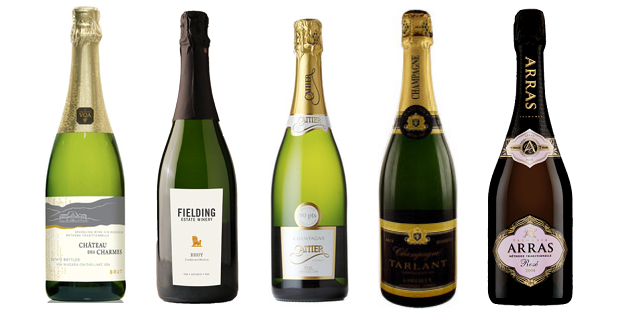
From left to right: Château Des Charmes Brut Méthode Traditionnelle, Fielding Estate Brut NV, Cattier Brut Premier Cru, Tarlant Brut Reserve Champagne, House of Arras Rosé 2005

From left to right: Château Des Charmes Brut Méthode Traditionnelle, Fielding Estate Brut NV, Cattier Brut Premier Cru, Tarlant Brut Reserve Champagne, House of Arras Rosé 2005

Comparative Blind Tasting – Flight 2: Blends

Fielding Estate Brut NV, VQA Niagara Peninsula, Ontario (winery, $34.95, WineAlign)

An impressive debut for winemaker Richie Roberts and team. This is a classic Chardonnay (55 per cent) and Pinot Noir (45) cuvée from Fielding’s Tufford Road vineyard. A surprisingly rich example, toasty and with a sweet meets sweaty, minty-herbiage. A primer for even greater vintages (this is essentially 2009) to come, where the focus will be more on yeast fielding to citrus and less about yielding to a non-metallic elemental finish.   @FieldingWinery

L. Mawby Vineyards Talismon NV, Michigan, USA (winery, US $37)

Tasted blind this strikes out as heteromorphic fizz from less than charted territory (like Michigan) with juicy, hybrid acting histrionics. Though it’s actually a blend of Pinot Noir, Pinot Gris and Chardonnay it lacks vinifera varietal complexity. The fruit is clear and fair but the méthode champenoise brings no enzymatic or citric display.

Tarlant Brut Reserve Champagne, France (325167, $43.95, WineAlign)

Here is a cuvée of égalité that combines one-third each Chardonnay, Pinot Noir and Pinot Meunier. Like the varietal make-up, these slightly reductive yet elegant bubbles offer up thirds of brioche, toast and demi-glacé. Fashioned from the 2006 harvest with reserve wine added and aged in oak. Chic and affordable but in no shape or form a knock off of the real deal. There’s a theoretical Champagne void within filled with citrus, sharp ginger and pungent spice. Blessed with unmatched length as compared to the others in the #ONfizz cuvée flight.

House of Arras Grand Vintage 2004, Tasmania, Australia (winery, $60 AUS)

“A polarizing wine,” notes winemaker Ed Carr. Full of savoury, herbal notes but also the unmistakable scent of that other white meat. The cure is indeed a porcine one, sweating in a hung game way, which gives this fizz such an old-world, old cellar quality. A slow (spring) malolactic evolution in barrel gives this (65.9 percent) Chardonnay and (34.1) Pinot Noir its silky, milky feel. Good to even better than good length.

Cattier Brut Premier Cru, Champagne, France (325720, $44.60, WineAlign)

This is really bitter, in a really good way. The nobility in brine is likely a result of whole (non-separated) bunch pressing, the Pinot Noir skins impart giving the fruity must its resident bitterness. A highly distinctive style of high caste and longevity, composed of Pinot Meunier (45 per cent), Pinot Noir  (35) and Chardonnay (25). As deep as any tasted at #ONfizz 2014.

Château Des Charmes Brut Méthode Traditionnelle, VQA Niagara On The Lake, Ontario (224766, $22.95, WineAlign)

Chardonnay (75 per cent) and Pinot Noir (25) at an attractive price. Attacks with a gently cloying, weeping sweetness, string-bending terpenes and fades out with a savoury, bitter finish. Light, approachable and wide-reaching style. Bubbles with broad appeal.   @MBosc

House of Arras Rosé 2005, Tasmania, Australia (winery, $60 AUS)

The composition here is Pinot Noir (62.5 per cent) and Chardonnay (37.5) from pickings in Lower Derwent, Upper Derwent and the Houn Valley. Emerges out of a year where warmer temperatures coaxed an increase of richer fruit from the rounder and fatter white grape. Good lees effect (seven years) in 2005 and also a balmy tarragon accent atop strawberry, verging to cherry fruit. Finishes with expert balancing acidity, this fizz trumps its Blanc de Blanc and Grand Vintage sistren at this tasting.

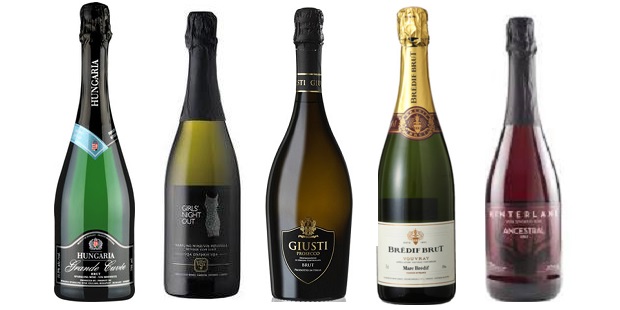
From left to right: Hungaria Grande Cuvée Brut, Girls' Night Out Sparkling, Giusti Brut Prosecco Asolo, Brédif Brut Vouvray NV, Hinterland Ancestral 2013

From left to right: Hungaria Grande Cuvée Brut, Girls’ Night Out Sparkling, Giusti Brut Prosecco Asolo, Brédif Brut Vouvray NV, Hinterland Ancestral 2013

Comparative Blind Tasting – Flight 3: Alternative Varieties

Trius at Hillebrand Sparkling Sauvignon Blanc 2009, VQA Niagara Peninsula, (winery, $35.20)

Spent 12 months ageing ‘sur lie’ in the estate’s underground sparkling caves. Winemaker Craig McDonald comments to the negative effect of light on bubbles. “Light strike causes a serious reaction on sparkling wine.” Here a mephitic aroma should likely be attributed to reduction or the beam of sunlight blanketing the room. There is a resinous salinity to this SB that does not want to blow off. Needs to be revisited from 2015 to 2018.

Green Extra-Sec by M. Lawrence, Michigan, USA (winery, $15)

The Green is part of Larry Mawby’s colourful, sexy and artfully named M. Lawrence investigation into the diversity of Sparkling wine. Absurdly dry, this put together Vidal and Cayuga concept is all about musky grape dehydration. Its cool climate constitution rescues the fruit to rehydrate and act like an orange picked straight from the greenhouse tree. There’s a malic medicinal tone that buries the sweet (17 g/L residual), resulting in a tart, low in alcohol, unwoven bottle of slim bubble.

Girls’ Night Out Sparkling, Ontario VQA, Ontario, Canada (215632, $14.95, WineAlign)

Here is a modest and useful 100% Riesling, Charmat Method, Cuve Close bottle of fizz from Lake Erie North Shore producer Colio Estates. With a residual remainder of nearly 20 g/L it falls into the off-dry category with aromatic notes that stroll directly through Ontario orchards. Tasty, easy to enjoy and smelling peculiarly like bubble gum. Well-made, good quality bubbles nouveau.

Giusti Brut Prosecco Asolo DOCG, Veneto, Italy (agent, $20.99, WineAlign)

A 100 per cent Glera, from Veneto’s Montello and the Asolo hills. As per Giusti’s description, this definitive Prosecco is “appropriately evanescent, with fine and lingering perlage.” Though reserved on the nose, the palate is very lively. A case in point for any aridity-driven examples to follow.

Brédif Brut Vouvray NV, Loire, France (352179, $20.95, WineAlign)

A touch yeasty, with citrus and large bubbles. Good verve, complex palate with a Champagne bent, or at least a toasted sentiment. From my earlier, November 2013 note: “Arid, frothy and fitful, atomically speaking. White peach and preceding spring flowers. Charcoal rubbed, also clean and fine. Sparkling Chenin Blanc done right.”  Last tasted May 2014

Hungaria Grande Cuvée Brut, Hungary (619288, $12.25, WineAlign)

A more than interesting set of aromatics define and drive this blend of Királyleányka Rizling (Rhine Riesling), Pinot Noir and Chardonnay. A stinky, reductive twang is joined by peach, rubber, pencil, duff and sandy sediment. Although the palate is a bit dullish with a taste of wet concrete there thickens a liqueur-like viscous texture to win sweet hearts. Would win even more were the residual (9 g/L) even higher.

Hinterland Ancestral 2013, Prince Edward County (winery, $25, WineAlign)

Released back in October of 2013, the Ancestral is what Hinterland’s Vicky Samaras refers to as the “unicorn” or the “babymaker.” This is Gamay Noir in postal service of the ancient process known as méthode ancestrale. Fermentation, which produces the carbon dioxide, occurs in the bottle and lees disgorgement is skipped. Hinterland’s Ancrestral brings sweet currant jelly, strawberry and mint notes (36 g/L residual sugar) to a wine low in alcohol (8 per cent) yet high in balancing (7.8 g/L) natural acidity. The components are all lifted to such great heights. A babymaker because the aromatics, palate, texture and finish “are mirror images and when we kiss they’re perfectly aligned.”


Good to go!

Wine experts Brock and roll, Brock on

Wine tasting

The Expert’s Tasting is more than just a study on Niagara wine.
Photo: JEAN-PIERRE MULLER/AFP/Getty Images

as seen on canada.com

Part two: 25th anniversary of the Cuvée 2014 Expert’s Tasting at Brock University

Flights three, four and five: Pinot Noir, Red Blends and Wine Options.

Related – When experts break wine together

The Expert’s Tasting is more than just a study on Niagara wine. It eulogizes what came before, reflects back on what is lost and ultimately asks the questions, “Where do we go from here? Which is the way that’s clear?” Grow grapes, make wine. Rock on.

The Brock University Cool Climate Oenology and Viticulture Institute now lays claim to being the central hub of information and guidance for Niagara’s wine industry. In partnership and in sharing expertise with Wine Country Ontario, the Grape Growers of Ontario, the Vineland Research and Innovation Centre, VQA Ontario and Niagara Culinary College, Brock’s CCOVI is the go to rock, central to Niagara’s world-class wine growing soil.

In 2015, the annual Cuvée gala weekend, one of the most prestigious celebrations of Ontario wine and food, will now be organized by Brock University’s Cool Climate Oenology and Viticulture Institute (CCOVI). The theme will be a look forward to Ontario’s significant wine styles and emerging varieties. Props to that.

The #CCOVI event continued the task of celebrating the annual VQA Promoters awards, handed out to the individuals who supported and promoted the industry through media, the LCBO, at large and over the course of a lifetime.  The 2014 awards were handed out to William Mancini, Lloyd Schmidt, Erik Peacock, Shawn McCormick, David Lawrason and posthumously, care of his wife Rose Lamas-Churchill, to David Churchill.

#CCOVI Expert's Tasting Pinot Noir Flight

PHOTO: Michael Godel
#CCOVI Expert’s Tasting Pinot Noir Flight

At the Expert’s Tasting wines were poured blind. The third and fourth flights (Pinot Noir and Red blends respectively) showcased just how far Niagara has travelled in fashioning quality reds. The Pinot Flight was all about balance and elegance. Bench Pinot stands out like a beacon on the Escarpment’s shelves. Blends centred around Merlot, Cabernet Sauvignon and Cabernet Franc are excelling with each passing vintage, in kind to the ever-increasing wine acumen of the growers and winemakers. That and the macro-intense studies of Niagara’s micro-terroirs.

This final flight of five wines (in order, Chardonnay, Pinot Noir, Syrah, Riesling and Cabernet Sauvignon-based blend) made for a less confounding competitive round, which was not the case in 2013. I clearly found vicarious fortune through the mates at my table. It’s not just who you know, but who’s palate you draft behind.

Here are my notes on the final 19 wines poured at the Expert’s Tasting 2014.

FLIGHT #3 – YOU’VE BEEN PINOT’D!!

From left: Devil’s Corner Pinot Noir 2012, Flat Rock Gravity Pinot Noir 2012, Inniskillin Pinot Noir Reserve 2011, 13th Street Essence Pinot Noir 2010, and Fielding Estate Pinot Noir Jackrabbit Flats Vineyard 2010

From left: Devil’s Corner Pinot Noir 2012, Flat Rock Gravity Pinot Noir 2012, Inniskillin Pinot Noir Reserve 2011, 13th Street Essence Pinot Noir 2010, and Fielding Estate Pinot Noir Jackrabbit Flats Vineyard 2010

Presented by Dr. Belinda Kemp, CCOVI Scientist, Oenology. “There is nothing funny about Pinot Noir,” she complains in deadpan humour, “it’s the unfunny grape. Fascinating, but nothing to laugh at. It’s not funny at all.”

Devil’s Corner Pinot Noir 2012, Tamar Ridge, Tasmania, Australia (317966, $23.95, WineAlign) From the VINTAGES March 1, 2014 Release

A good fresh start to the flight. At first earthless, weightless, cran-raspberry scented. Feminine, warm, inviting and then turning temperamental, difficult, evolving. Ultimately maternal, clay-influenced, brought down to mother earth. Vanilla ringer.  87  Tasted March 2014  @BrownBrothers

Un bon nouveau départ à la (troisième de l’expert de dégustation) vol. Au début Earthless, en apesanteur, cran-framboise parfumée. Féminine, chaleureuse, accueillante et puis, se tournant capricieux, difficile, en constante évolution. En fin de compte maternelle, argile influencé, ramené à la terre mère. Vanille sonnerie.  Dégusté Mars 2014

Flat Rock Gravity Pinot Noir 2012, VQA Twenty Mile Bench, Niagara Peninsula (1560, $29.95, WineAlign)

In a vintage potentially muddled by warmth and a humidor of radio frequency, duplicating berry phenolics, Flat Rock’s Gravity remains a definitive, signature house Pinot Noir. In 2011, the head of the FR class from its most expressive barrels shared the limelight (and top juice) with the Pond, Bruce and Summit one-offs. In ’12, Gravity’s sandbox was its own. The style is surely dark, extracted, black cherry bent, as per the vintage. Yet only the Rock’s soil does earth in this variegate, borne and elevated by the barrel’s grain. There are no fake plastic trees in a Flat Rock Pinot. “Gravity always wins.”  90  Tasted March 2014  @Brighlighter1

Dans un millésime potentiellement confus par la chaleur et une cave de la fréquence de la radio, la duplication des composés phénoliques des baies, la gravité de Flat Rock reste un définitif, maison de signature Pinot Noir. En 2011, la tête de la classe FR de ses barils les plus expressifs partage la vedette (et le jus dessus) avec les mesures ponctuelles Pond, Bruce et Summit. En ’12, bac à sable de gravité était son propre. Le style est certainement foncé, extrait, pliée de cerise noire, selon le millésime. Pourtant, seulement le sol de la roche ne terre dans ce variegata, porté et élevé par le grain du baril. Il n’y a pas d’arbres en plastique faux dans un Flat Rock Pinot. “Gravity gagne toujours.”  Dégusté Mars 2014

Inniskillin Pinot Noir Reserve 2011, VQA Niagara Peninsula (winery, $24.95, WineAlign)

A by-product of a rain-heat-rain, cold soak-warm ferment-16 month French barrel childhood. The ’11 Reserve Pinot is impressively floral while simultaneously brooding and serious. The middle palate binds citrus and savoury, gilded, dulcet rose, Langhe-like. Breakdown happens late, in syrupy alcohol and charred pulp. “In that case I’ll have a rum and coca-cola.” Complex Pinot for the common people88  Tasted March 2014  @InniskillinWine

Un sous-produit d’une pluie-chaleur-pluie, le froid tremper-chaud ferment-16 mois baril français enfance. Le ’11 Réserve Pinot est alors impressionnante floral simultanément couvaison et grave. Le milieu de bouche se lie d’agrumes et salé, doré, rose suave, Langhe-comme. Répartition arrive en retard, dans l’alcool sirupeux et pâte carbonisée. “Dans ce cas, je vais avoir un rhum et de coca-cola.” Pinot complexe pour les gens ordinaires.  Dégusté Mars 2014

Domaine Queylus Pinot Noir ‘Le Grande Reserve’ 2011, VQA Niagara Peninsula (winery, $65, WineAlign)

The Thomas Bachelder mentored, two-vineyard assemblage Grande Reserve Pinot Noir grinds more cracked pepper than any predecessor. Every barrel from the Twenty Mile Bench (formerly Le Clos Jordanne’s, Neudorf Family La Petite Colline Vineyard) and Mountainview vineyard were scrutinized to determine the final blend. Bachelder sees black fruit in the early life yet despite the ebullient seasoning, the LGR’s genes are intrinsically feminine. Red cherry, tellus fertility and a mother’s strength hold the family of barrel children together. This is an ambitious and hard to read Pinot Noir. Judgement reserved for five years before the word classic will be used.  92  Tasted March 2014  @QueylusVin

Le Thomas Bachelder mentor, l’assemblage de deux vignoble Grande Réserve Pinot Noir broie poivre craqué plus que ses prédécesseurs. Chaque baril de Lincoln Lakeshore (anciennement Le Clos Jordanne de, Neudorf famille La Petite Colline Vineyard) et le Twenty Mile Bench (Mountainview) appellations ont été examinées attentivement afin de déterminer l’assemblage final. Bachelder voit fruits noirs dans le début de la vie et pourtant, malgré l’assaisonnement bouillante, les gènes de la LGR sont intrinsèquement féminin. Rouge cerise, tellus la fertilité et la force de la mère détiennent la famille des enfants de baril ensemble. Il s’agit d’un Pinot Noir ambitieux et difficile à lire. Jugement réservé pendant cinq ans avant le mot classique sera utilisé.  Dégusté Mars 2014

13th Street Essence Pinot Noir 2010, VQA Niagara Peninsula, Ontario (237222, $44.95, WineAlign)

Five months have aged the Essence with more bronzing minerality and core strength. Imagine the old-world chemistry it will enumerate after five more years. Previous note: “Only the second coming of The Essence. Lucid, willing and able Pinot Noir from an assemblage of fruit sourced across the region. Atypical in that sense, speaking to a broader range of terroir and to a wider audience. Breadth and depth much like a Côte de Beaune, earthy of serious dirt layered over top a cherry core. Attention now and for five plus years is needed because though to taste it’s currently confounding, time will see more complexity, development and emerging emotion. It will then solicit a cry of  ”baby, sweet baby, you’re my drug. Come on and let me taste your stuff.”  91  Tasted October 2013 and March 2014  @13thStreetWines

Cinq mois ont vieilli l’essence avec plus de minéralité de bronzage et la force de base. Imaginez la chimie du vieux monde, il va énumérer après cinq années de plus. Note précédente:… “Seule la seconde venue de l’Essence Lucid, désireux et capables Pinot Noir à partir d’un assemblage de fruits provenant de toute la région atypique en ce sens, parler à un plus large éventail de terroir et à un public plus large étendue et la profondeur un peu comme un Côte de Beaune, terreuse de terre grave posés sur le dessus une cerise noyau. attention maintenant et pour cinq ans et est nécessaire parce que le goûter est actuellement confondre, le temps voir plus de complexité, le développement et l’émotion émergents. Elle sera ensuite solliciter un cri de “bébé, bébé doux, tu es ma drogue. Venez et laissez-moi goûter vos trucs.”  Testé Octobre 2013 et Mars 2014

Fielding Estate Pinot Noir Jackrabbit Flats Vineyard 2010, VQA Lincoln Lakeshore (winery, $24.95, WineAlign)

Though a recent phenomenon, a Bench area winemaker’s keen interest in the Lincoln Lakeshore as a unicorn Pinot growing locale has come out of the forest’s shadows. From dual-vineyard plots and specific barrel choosing, the JRF expressly microwaves its agminate gathering, that is, 14 months on lees in barrel, a warm vintage and virtually unfiltered ferment. Completely free of its closet, there is coffee, toffee and strong tea overtop rufescent fruit close to its earthly roots. An austere, tough and gritty Pinot Noir, from the Burgundy side of the pond, echoing the presenter’s choice of words. “It’s fascinating but nothing to laugh about.”  89  Tasted March 2014  @RichieWine

Bien que d’un phénomène récent, le vif intérêt d’un vigneron de la zone du Banc de la Lincoln Lakeshore comme un Pinot locale croissante licorne est sorti de l’ombre de la forêt. Des parcelles à double vignoble et choix de canon spécifique, la JRF tout micro-ondes expressément sa collecte de agminate, soit 14 mois sur lies en barriques, un millésime chaud et ferment pratiquement non filtré. Complètement libre de son placard, il ya du café, caramel et thé fort overtop Rufescent fruit proche de ses racines terrestres. Un austère, dur et graveleux Pinot Noir, du côté de l’étang de Bourgogne, en écho le choix du présentateur de mots. «C’est fascinant, mais pas de quoi rire.”  Dégusté Mars 2014

The Foreign Affair Pinot Noir 2009, VQA Niagara Peninsula (winery, $43.95, WineAlign)

An ambitious and in retrospect streetwise project now in the golden age of its life. From fruit grown both on the estate’s Crispino Vineyard and at the Vineland Research Centre. Then winemaker Ilya Senchuk dried 40% of the grapes which subsequently spent 15 months in French and Hungarian oak. The modest 13.1 per cent alcohol has realized a resolved, gentle and effortless balance of figgy/raisin-driven fruit and clear spirit. The beaver is not so different from a Tawny meets Reserve Port, Pinot-style. Appassimento, you’ve been Pinot’d.  ‘Ciao’ for hello and goodbye because now is the time to drink.  88  Tasted March 2014  @wineaffair

Un projet ambitieux et débrouillard, rétrospectivement, maintenant dans l’âge d’or de sa vie. De fruits cultivés à la fois sur Crispino Vignoble de la succession et au Centre de recherche de Vineland. Puis vigneron Ilya Senchuk séché 40% des raisins qui a ensuite passé 15 mois en fûts de chêne français et hongrois. Le modeste alcool 13.1 pour cent a réalisé une résolu, équilibre doux et sans effort de figgy / fruités raisins secs et l’esprit clair. Le castor n’est pas si différent d’un Tawny Port répond Réserve Pinot style. Appassimento, vous avez été Pinot’d. «Ciao» pour bonjour et au revoir parce que c’est maintenant le temps de boire.  Dégusté Mars 2014

FLIGHT #4 – RED ROAD TEST – ARE WE ON THE RIGHT TRACK?

From left: Konzelmann Estate Winery Heritage Reserve 2012, Hillebrand Trius Red 2011, Fielding Estate Winery Cabernet Merlot 2010, Trius Grand Red 2010, Stratus Red 2007, Creekside Estates Reserve Meritage 2004, and Henry Of Pelham Estate Cabernet/Merlot 2002

From left: Konzelmann Estate Winery Heritage Reserve 2012, Hillebrand Trius Red 2011, Fielding Estate Winery Cabernet Merlot 2010, Trius Grand Red 2010, Stratus Red 2007, Creekside Estates Reserve Meritage 2004, and Henry Of Pelham Estate Cabernet/Merlot 2002

Presented by Trius Winery at Hillebrand winemaker Craig McDonald. McDonald makes one of Niagara’s now flagship red blends, the Trius Grand Red. He brings red blend experience to the table in spades and hearts, particularly from his work at Penfolds in the Barossa Valley, but McDonald is an ardent voice for the relationship between varietal and land. He wants you to decide for yourself, are red wines working and excelling in Niagara? In this flight, Craig’s advice is “I want you to think about the dominant varietal.” Not as easy as you might think.

Konzelmann Estate Winery Heritage Reserve 2012, VQA Niagara Peninsula (149179, $30, WineAlign)

A Merlot-based blend with support from Cabernet Sauvignon and Cabernet Franc. The dominant varietal is the blend’s soft presence, lifting up an otherwise ground espresso, black pepper, currant and verdigris paste in its 14 per cent frame. Yet so young and unsettled, with Franz drive, chalky extract and hard bite. In this Heritage’s “edges and lines your engine’s alive,” so as a first red road-test, it sets a solid course.  88  Tasted March 2014  @KonzelmannWines

Un mélange à base de Merlot avec le soutien de Cabernet Sauvignon et Cabernet Franc. Le cépage dominant est la présence douce du mélange, soulevant un espresso moulu contraire, de poivre noir, de cassis et vert de gris coller dans son cadre de 14 pour cent. Pourtant, si jeune et instable, avec Franz entraînement, extrait calcaire et morsure dur. Dans ce patrimoine “des bords et des lignes en vie, de votre moteur” de manière un premier rouge route-test, il établit un plan solide.  Dégusté Mars 2014

Hillebrand Trius Red 2011, VQA Niagara Peninsula  (303800, $22.95, WineAlign) VINTAGES ESSENTIAL

Most of the 47 per cent Merlot, 40 Cabernet Franc and 13 Cabernet Sauvignon fruit was sourced from the Clark and Carlton Vineyards in Four Mile Creek. From the outset age is the focus point. Is this already showing wear and tear or is the sinewy, cassis, toffee, sweet balsamic and emulous acidity congregation preparing a long road ahead for this Niagara exhibit? Crisis? What crisis? It’s just a normal day and this Meritage will say, “maybe I’ll find my way.”  87  Tasted March 2014  @TriusWines

La plupart des 47 pour cent Merlot, Cabernet Franc 40 et 13 Cabernet Sauvignon fruits provenait de les Clark et Carlton Vignobles à Four Mile Creek. Dès l’âge de départ est le point de mise au point. Est-ce montre déjà l’usure ou est le nerveux, de cassis, de caramel, balsamique doux et jaloux acidité congrégation prépare un long chemin à parcourir pour cette exposition Niagara? Crise? Quelle crise? C’est juste une journée normale et ce Meritage dira, «peut-être que je vais trouver mon chemin.”  Dégusté Mars 2014

Fielding Estate Winery Cabernet Merlot 2010, VQA Niagara Peninsula (winery, $35.20, WineAlign)

Does anybody really know what wine this is? Does anybody really care? The experts do, as do I. Chosen for back-to-back Expert’s Tastings by a panel of Niagara’s finest palates? AYFKM? What does that say? Today Richie Robert’s CF (42), Merlot (33) and CS (25) master stroke from Lincoln Lakeshore (warm), Beamsville Bench (warmer) and St. David’s (Lowrey Vineyard – warmest) is singing. Charred cherries, animale game and soft funk like top IGT. Raises its own bar. Previous note: “Alights in lithe tendrils before adding coffee, meritage mid-weight. Currants, nasturtium and red fruit compote buoy this cooler Niagara blend that combines fruit from the Lincoln Lakeshore, St. David’s and Beamsville Benches. A good dancer with “the kind of body that would shame Adonis.” Expertly balanced with the spine to age.”  90  Tasted March 2013 and 2014  @FieldingWinery

Quelqu’un sait-il vraiment ce vin ce que c’est? Est-ce que quelqu’un se soucie vraiment? Les experts font, comme moi Chosen pour Dégustations Expertises dos-à-dos par un panel des meilleurs palais du Niagara? AYFKM? Qu’est-ce que cela veut dire? Aujourd’hui Richie FC Robert (42), Merlot (33) et CS (25) coup de maître de Lincoln Lakeshore (chaud), Beamsville (plus chaud) et Saint-David (Lowrey Vineyard – le plus chaud) chante. Cerises carbonisés, jeu animale et funk doux comme haut IGT. Déclenche son propre bar. Note précédente: “. Descend en vrilles agiles avant d’ajouter le café, meritage mi-poids Groseilles, capucine et compote de fruits rouges bouée ce refroidisseur mélange Niagara qui combine les fruits de la Lincoln Lakeshore, Saint-David et Beamsville Bancs Un bon danseur.” L’ type de corps qui honte Adonis. “experte en balance avec la colonne vertébrale de l’âge.”  Dégusté Mars 2013 et 2014

Trius Grand Red 2010, VQA Niagara Peninsula (winery, $55.00, WineAlign)

Roll out the best barrels from the same Four Mile Creek Clark and Carlton Vineyards. Gravity drip freshly-pressed juice directly into barrel, wait 18 months and voilà, the flagship red from winemaker Craig McDonald. The 45/33/22 Merlot/Cabernet Franc/Cabernet Sauvignon blend radiates of everything under the sun. It’s rich and lush, marked by huge extract and yet it’s also graced by sweet, limber tannins. The middle ground gives faint notes of soy and dill though it can be imagined they will be smothered as the chain lengthens and the flesh becomes more pliable. I’ve one put aside for a visit in 2018.  89  Tasted March 2014

Etaler les meilleurs fûts de les mêmes Four Mile Creek Clark et Carlton Vineyards. goutte à goutte par gravité jus de fruits fraîchement pressés directement dans le cylindre, attendre 18 mois et voilà, le rouge phare de vigneron Craig McDonald. Le 45/33/22 Merlot / Cabernet Franc / Cabernet Sauvignon mélange rayonne de tout sous le soleil. Il est riche et luxuriante, marqué par d’énormes extrait et encore il est également honoré par des tanins doux et souple. Le terrain d’entente donne des notes faibles de soja et aneth si on peut imaginer qu’ils seront étouffées comme la chaîne s’allonge et la chair devient plus souple. J’ai un mets de côté pour une visite en 2018.  Dégusté Mars 2014

Stratus Red 2007, VQA Niagara On The Lake, Niagara Peninsula (winery, $44.20, WineAlign)

On a day like today, the 2007 Stratus Red’s long, long sleep (644 days in mostly new French Oak) seems particularly magnified. Today the moody tincture is a cocktail shaker filled with peat, clay, iodine, strawberry compote, sangria and divaricated tannin. No other red blend today is as complex, shows more road rage or tries to speed off the track. Previous note: “Puts a twinkle in Groux’s eye. “Still very enjoyable, agreeable and ageable,” he smiles and I note it’s not candied like it may have once been perceived.  A healthy and high 88 per cent dose of new oak but it’s not the encumbrance you might expect. Still quite tight, eking strawberry and plum, and indubitably a unique amalgamation. Will offer up five more years of pleasure.”  91  Tasted September 2013 and March 2014  @Stratuswines

En un jour comme aujourd’hui, long, long sommeil de 2007 Stratus Rouge (644 jours dans la plupart neufs de chêne français) semble particulièrement agrandie. Aujourd’hui, la teinture de mauvaise humeur est un shaker rempli de tourbe, de l’argile, de l’iode, compote de fraises, sangria et les tannins divaricated. Aucune autre mélange de rouge aujourd’hui est aussi complexe, montre plus de rage au volant ou tente d’accélérer la piste. Note précédente: “. Met une étincelle dans l’oeil de Groux” Toujours très agréable, agréable et gérable “, il sourit et je constate que ce n’est pas confits comme il peut avoir été une fois perçu une saine et haute 88 par dose cent de chêne neuf, mais il est. pas la charge que vous pourriez vous attendre. toujours très serré, eking fraise et de prune, et sans aucun doute une fusion unique. offrira jusqu’à cinq années de plaisir “.  Dégusté Septembre 2013 et Mars 2014

Creekside Estates Reserve Meritage 2004, VQA Niagara Peninsula (sold out, $45, WineAlign)

A straight up self-starter, 55/45 Cabernet Sauvignon/Merlot, Left Bank galvanized blend. Craig McDonald noted that he and Rob Power “had no idea what we were doing.” What they had was a four year-old vineyard on the Queenston Road, St. David’s Bench in Four Mile Creek. They made this Bordeaux in a challenging vintage when there might not have been a sound mind around (who was paying them any attention) for guidance or encouragement. Though it has crossed the threshold into resinous mannerisms and elements of an armamentarium, the two mad scientists found a way to take 12 per cent alcohol and real fruit on a 10-year journey to the museum. Shows what potential there has always been and where the distinction of the 2014 Niagara reds will be in 2024.  89  Tasted March 2014  @CreeksideWine

A vous auto-démarreur droite, 55/45 Cabernet Sauvignon / Merlot, Rive Gauche galvanisé mélange. Craig McDonald admis que lui et Rob Power “n’avait aucune idée de ce que nous faisions.” Ce qu’ils ont trouvé un vignoble de quatre ans sur la route de Queenston, la Cour du Banc de Saint-David à Four Mile Creek. Ils ont fait ce Bordeaux dans un millésime difficile quand il pourrait ne pas avoir été un esprit sain autour (qui les paie aucune attention) pour obtenir des conseils ou des encouragements. Bien qu’il a franchi le seuil de tics et éléments d’un arsenal résineux, les deux savants fous ont trouvé un moyen de prendre 12 pour cent d’alcool et de vrais fruits sur un voyage de 10 ans pour le musée. Montre ce potentiel, il a toujours été et où la distinction de 2014 rouges Niagara sera en 2024.  Dégusté Mars 2014

Henry Of Pelham Estate Cabernet/Merlot 2002, VQA Short Hills Bench, Niagara Peninsula (winery, $34.95)

A Cabernet Sauvignon and Merlot split with 12 per cent support from Cabernet Franc. Right up there with other classic H of P blends, in ’98, ’05 and ’07. All three levels, the basic Cab/Merlot, this Reserve and the Speck Family Reserve have stood the test of time, perhaps better than any other Bordeaux blends from the region. You can tell this was an enormous wine at one time. Has gently and slowly evolved into its comfortable skin yet the tannin and grit are still in working order. He’s a crooner this CM2, with a soulful Roy Orbison voice. There aren’t many like him. “That’s why I sigh and sip my lonely wine.” If anything has been learned and if anyone had been paying attention to Ron Giesbrecht while he made his wines, there should be many more to come.  91  Tasted March 2014  @HenryofPelham

FLIGHT #5 – WINE OPTIONS

From left: Stratus Chardonnay 2009, Rosewood Estates Pinot Noir 2011, North Shore Project Syrah 2012, and The Foreign Affair ‘The Conspiracy’ 2012

From left: Stratus Chardonnay 2009, Rosewood Estates Pinot Noir 2011, North Shore Project Syrah 2012, and The Foreign Affair ‘The Conspiracy’ 2012

Presented by Peter Bodnar Rod Sommelier and member of the Brock WSET Team. After four serious and wind-sapping flights, the ice was again broken by the jocose Bodnar Rod when he made comment to the hand coverings of a wine pourer. “Maybe Jamie and I can go out tonight with black latex gloves?” Not a word in response from Mr. Drummond but if I were a betting man I’d say he just might join in that fun.

Stratus Chardonnay 2009, VQA Niagara Peninsula (winery, $55)

Comes off like a white blend, aka Stratus White but this is the outright, unchaste vintage talking. Winemaker J-L Groux crafted three wines with viticulturist Paul Hobbs. Here they split the project 50/50 with Hobbs including wild yeast fermentation and whole bunch pressing and J-L adding short skin contact, controlled yeasts and no whole bunch pressing. From extreme low yields, this one puts on a show after only 10 months in barrel. High on aroma, brazen in texture, ambient in flavour bites. Very Niagara if inexactly Chardonnay.  Tasted March 2014  91  Tasted March 2014

Se détache comme un mélange blanc, aka Stratus Blanc mais c’est la pure et simple, parler cru impudique. Oenologue JL Groux conçu trois vins viticulteur avec Paul Hobbs. Ici, ils partagent le projet 50/50 avec Hobbs y compris sauvage fermentation de la levure et le groupe entier urgent et JL ajoutant un bref contact de la peau, des levures contrôlées et pas toute la bande de pressage. De rendements extrêmement faibles, celui-ci met sur un spectacle après seulement 10 mois en barrique. Haute sur l’arôme, la texture d’airain, ambiant dans les piqûres de saveur. Très Niagara si inexacte Chardonnay.  Dégusté Mars 2014

Rosewood Estates Pinot Noir 2011, VQA Beamsville Bench (112177, $21.95)

What an arid specimen, tasted blind so distinctly Bench Pinot though the earthy, cranberry and cherry dust had me leaning Short Hills. The Rosewood reveal reminds of “little lonely eyes open and radiant,” berries from acidity victorious Wismer blocks on the Twenty Mile Bench. Previous note: “…and her libidinous solid core of red fruit habituated by a fencing of skin-tight acidity will see prolonging returns. Will run on like a Dave Matthews jam, in wine years scads longer than the temperate Rosewood ’10. An Escarpment’s native flint rocky note whispers “hey little dreamer’s eyes open and staring up at me…wait until I come I’ll take your soul.” Halloween wine indeed.”  89  Tasted September 2013 and March 2014  @RosewoodWine

Quel spécimen aride, dégustés à l’aveugle Banc si distinctement Pinot bien terrestre, la canneberge et de cerise poussière m’avait appuyé Short Hills. Le Rosewood révéler rappelle “petits yeux solitaires ouverts et rayonnants,” baies de l’acidité victorieux blocs Wismer sur le banc Twenty Mile. Note précédente: “… et son noyau solide libidineux de fruits rouges habitués par une clôture de l’acidité de la peau étanche verront rendements prolongeant sera exécuté sur une confiture comme Dave Matthews, dans les années à vin scads plus long que le tempéré Rosewood ’10.. silex natif notes rocheux chuchotements d’un escarpement “hey les yeux du petit rêveur ouverte et les yeux fixés sur moi … attendre jusqu’à ce que je viens je vais prendre votre âme.” vin de Halloween en effet. ”  Dégusté Septembre 2013 et Mars 2014

North Shore Project Syrah 2012, VQA Lake Erie North Shore (sold out, $22)

A project part Will Predhomme (off the charts Sommelier), Hinterland Wine Company (head of the class Sparkling Wine producer) and Colio Estates (top of the heap Lake Erie North Shore red wine maker). More than impressive first outing with a burst of pretty flowers, varietal perspicuity and articulation. As Predomme notes, this is “pure, naked Syrah.” Farmed at Colio, crushed in LENS and fermented at Hinterland. There is a hint (what can best be described as) carbonic maceration in banana sweetness but it does not linger and the lightness of being meets intensity shows adventure and promise.  87  Tasted March 2014  @northshoreproj

Cave Spring Cellars Riesling ‘CSV’ Estate Bottled 2010, VQA Beamsville Bench, Niagara Peninsula (566026, $29.95, WineAlign)

Was not so easy to return to Riesling 25 wines and three hours later but thanks goodness it was this old (35 years give or take) vines CSV. From the east Bench where limestone rules and rocks, there are apples upon apples in this vintage in waves of luxurious fruit. While Bench Riesling can be so tragically austere, racy and piercing, often in a state of hip “melancholy wine-soaked tenderness,” this CSV ’10 is bathed in luxury and pure pleasure. It’s so much more Germanic in an off-dry way and never forgets its limestone roots. Not necessarily classic Beamsville but not to be missed.  90  Tasted March 2014  @CaveSpring

N’était pas si facile de revenir à 25 Riesling vins et trois heures plus tard, mais Dieu merci, c’était ce vieux (35 ans donner ou prendre) vignes CSV. De la magistrature est, où les règles et les roches calcaires, il ya des pommes sur les pommes dans ce millésime dans les vagues de fruits de luxe. Bien Banc Riesling peut être si tragiquement austère, racé et perçant, souvent dans un état de hanche “mélancolique tendresse de vin trempé,” ce CSV ’10 est baigné dans le luxe et le plaisir pur. C’est tellement plus germanique de manière demi-sec et n’oublie jamais ses racines de calcaire. Pas nécessairement classique Beamsville mais à ne pas manquer.  Dégusté Mars 2014

The Foreign Affair ‘The Conspiracy’ 2012, VQA Niagara Peninsula (149237, $19.95, WineAlign) From the VINTAGES Feb. 15, 2014 Release

Young, huge, rich and oozing in oak soaked spice. Currants, pepper, whole grain, berries and chalk. All in for $20. Previous Note: Quickly reminiscent of its 2011 predecessor but also different, in a basking, vintage-related warmth and reductive currency. This could not have been an easy wine to temper in 2012 considering the ripasso methodology. Just softened plum is painted all over its sheen with the poaching aromas steaming away. Grilled, melting licorice, caramelizing and disapparating before your eyes. Not to mention a French vanilla creamy garagiste waft, like nuts and bolts ice cream. But I will admit the tang, acidity and tenacity increases with each sip and swirl. Such a unique bottling to Ontario. Is there anything else like it not from Lake Erie North Shore?  89  @wineaffair  Tasted February and March 2014

Jeune, grand, riche et suintant en chêne imbibé d’épices. Groseilles, poivre, grains entiers, fruits et craie. All-in pour 20 $. Note précédente:. “Vite rappelle de son prédécesseur 2011, mais également différente, dans un pèlerin, de la chaleur vintage liés et monnaie réductrice Cela n’aurait pas été un vin facile à tempérament en 2012 compte tenu de la méthodologie de ripasso prune juste ramolli est peint partout. son lustre avec les arômes de braconnage vapeur loin. grillé, fondant réglisse, caraméliser et disapparating devant vos yeux. Sans oublier une vanille française crémeuse garagiste bouffée, comme les écrous et boulons de la crème glacée. Mais je vais admettre la saveur, l’acidité et la ténacité augmente avec chaque gorgée et remous. telle une bouteille unique à l’Ontario. Y at-il quelque chose de semblable pas du lac Érié Côte-Nord? ”  Dégusté Février et Mars 2014

Good to go!

A March of French grapes to dinner

Vineyard PHOTO: FILE/POSTMEDIA NEWS

as seen on canada.com

With just about a month to go before grapevines in temperate climates begin an annual cycle by entering bud break, the 1st of March signals those first thoughts of renewal. I for one wait with anticipation to see how a new growing season will treat unique plantings. Like Rosewood’s Sémillon on the Beamsville Bench or Margan’s in Australia’s Hunter Valley. Like Tempranillo in California or Bonarda in Argentina. Like Palmer Vineyard’s Albariño on the North Fork of Long Island or Cabernet Franc in Prince Edward County.

Related – More Current Release Wines

But let’s face it. Once in a while credit needs to be given where credit is due. Five French grapes have dominated the landscape. This great group of world traveler grape varietals is known as Vitis Vinifera, the common European grape, cultivated worldwide to produce wine everywhere. Deserved or not and disagree if you must but Cabernet Sauvignon, Merlot, Pinot Noir, Chardonnay and Syrah continue to rule the world.

These most famous of the familiar entrenched their pedigreed roots in France. Their success is that of Burgundy, of Bordeaux and the south of France. My anti-‘somewhereness‘ post if you will. This is to remind us of how we came this far, why we are all here, incessantly tasting, discussing and forever posturing about all things wine. Here lies a disparate group, all fashioned from erudite French grapes and produced in five different countries. Fine wines to work with dinner. All are available to seek out right now.

From left to right: Tarima Monastrell 2010; Vintage Ink Mark of Passion Merlot/Cabernet 2010; Te Awa Chardonnay 2010; Devils’ Corner Pinot Noir 2011; and Château La Vieille Cure 2009

The grapes: Monastrell, a.k.a. Mourvèdre

The history: From Bodegas Volver in the Alicante zone of southeastern Spain, fermented and aged sur lie in stainless steel

The lowdown: Surprisingly full-bodied and rich for the price. Laugh while you can but why wouldn’t you buy this?

The food match: Roasted Sweet Potatoes and Fresh Figs

Tarima Monastrell 2010 (310151, $12.95) of intense purple like Bindweed’s eye or an Alicante barrel cactus flower. Not to mention the crazy label’s Passion Flower. Spring fragrance, modern in milk chocolate and berries in vanilla simple syrup. Citrus note adds breadth and food pairing asperity. Alluring and seductive, a vixen of modern Spanish wine fashion.  87  @CSWS_Inc 

The grapes: Merlot, Cabernet Franc and Cabernet Sauvignon

The history: Virtual winery owned by Canadian giant Vincor

The lowdown: Aussie winemaker Keith Bown blends selected grapes from several Niagara Peninsula vineyards

The food match: Brisket Burnt Ends, smoked barley risotto

Brisket Burnt Ends, smoked barley risotto (Photo: Jill Chen/freestylefarm.ca)

Vintage Ink Mark of Passion Merlot/Cabernet 2010 (250209, $17.95) exudes NP passion with an exhibitionist’s amp stamp display. Clearly defined vinifera fruit, fine cedary lines. Alcohol is noticeable and is tempered by pencil lead, Zaida’s pipe tobacco and brier fruit that curls around the heat, landing on the button.  88

The grape: Chardonnay

The history: Single estate vineyard in the Gimblett Gravels wine growing region in Hawkes Bay, North Island, New Zealand

The lowdown: One of my most favourite wine discoveries is an off the charts, zinging value white from the South Pacific

The food match: Grilled Herb & Citrus Marinated Chicken Breasts

Te Awa Chardonnay 2010 (301135, $18.95) gives off a good dose of char but in a Penderish way with knowledge that it will dissipate, integrate and elevate this stony ‘River of God’ into a fine, swirling eddy of hard bop goodness. Gorgeous green enamel Ngaruroro meandering to gold. Oleic, alluvial consistency, with a sense of creamed corn, barren straw and built of a gravel verve, taking risks like a Sonny Rollins riff.  91  @TeAwaWinery

The grape: Pinot Noir

The history: Second label of Tasmania’s Tamar Ridge from the Brown Brother’s in Victoria, Australia. The Devil’s Corner is a calm section beyond a treacherous stretch of the Tamar River

The lowdown: Three words for you. Fruit, freshness, drinkability.

The food match: Confit of Duck, roasted potato, sautéed corn, pea shoots, cherry compote

Devils’ Corner Pinot Noir 2011 (317966, $20.95, SAQ, 10947741, $24.80) is radiant in scenic, ruby tone full of red spice opposite a cloying tang. Bobbing red apples caught in a juicy hurricane of vibrant acidity. “Pistol shots ring out in the barroom night.” Builds off the sound and the fury and lasts. For hair-trigger gratification and will do up to three years time.  89  @BrownBrothers 

The Splurge

The grapes: Merlot, Cabernet Franc and Cabernet Sauvignon

The history: From Fronsac, in the Libourne area of the Right Bank of the Dordogne. Owned by an American team, The Old Parsonage Inc

The lowdown: Winemaking consultant Christan Veyrey (an associate to Michel Rolland) produces wines intended to peak between four and six years after bottling

The food match: Grilled NY Striploin, potato puree, asparagus, peppercorn butter

Château La Vieille Cure 2009 (191452, $36.85) has got the near-Brett funk I come to expect from a serious bottle of French red wine. Tobacco, swelling blackberries obfuscating with Châteauneuf-du-Pape- like heft and charm. Has got a leaden, lustrous chemical element, licorice and smoked meat. This is so good and not out of whack with Futures ($34) and current US ($34) pricing. To cure what ails you.  91  @EuropvinWines

Good to go!