‘I4C’ a future filled with Chardonnay

Golden globes, Trius Winery at Hillebrand
PHOTO: ESTHER VAN GEEST OF STEVEN ELPHICK & ASSOCIATES

as seen on canada.com

In July of 2011, the International Cool Climate Chardonnay Association held their inaugural event, the celebration, the fourth “C.” On the weekend of July 19-21, 2013 the third Cool Climate Chardonnay conference occupied the greater good of the Niagara Peninsula, cementing a legacy begun two years previous.

Backtrack a few years, when in 2009 Ontario’s Le Clos Jordanne’s ‘Claystone Terrace’ Chardonnay 2005 made by winemaker Thomas Bachelder trumped international competitors in a Montreal grand tasting. A light bulb went on. Fast forward to April 2010 and a group of romantics from 28 Ontario wineries get together to defend a grape. Were they singing “that’s what I like about Chardonnay?” No, but the grape had been down on the rock for so long and the panel felt compelled to come to its defense. To suffer an indignity like “Anything But Chardonnay” was an aggression that could no longer be tolerated. Thus an idea was born, a manifesto drafted and i4C was soon to become a reality.

For such a gathering to succeed there necessitates grand effort, partnership, passion, star power and serious thematic examples. Germination began with those first cool thoughts back in 2010 and the journey has since laid song lines by way of a barmy march of vignerons with rootstock firmly dug in Niagara (Harald ThielAngelo Pavan) and those with a second foot tracking terroirsbeyond and abroad (Thomas BachelderFrancois Morissette). Mix in some of this generation’s best wine-producing and marketing minds; Ron Giesbrecht formerly of Henry of Pelham, now Niagara College, Stephen Gash (Malivoire), Peter Bodnar Rod (13th Street), Del Rollo (Inniskilin, Jackson Triggs, Le Clos Jordanne), Suzanne Janke (Stratus) and Jeff Aubry (Coyote’s Run). The yeoman’s load has been in the multi-tasking hands of those who will work ’till their fingers bleed. Give it up for the cool concierge team; Dorian Andrewes, Trisha Molokach, Elena Galey-Pride, Britnie Bazylewski, Magdalena Kaiser-Smit and an army of volunteers.

Partnered in kind with Wine Country Ontario, the Grape Growers of Ontario and the LCBO, Cool Chardonnay has gone forth and prospered. Success can be directly attributed to community and a profound connection to the fruit of the land. Famous wine folk have come; Matt Kramer of Wine Spectator, Stephen Brook of Decanter, winemakers and vintners wherever cool Chardonnay is grown. Pours have been the best of the best.

For three straight days in 2013 they walked, talked, sung praises in favour of and flat-out got dizzy with Chardonnay. White Oaks Conference Resort and Spa became vinifera central for the visiting cognoscenti, including 1976 Judgment in Paris and Decanter Magazine’s Steven Spurrier,U.K. wine writer Jamie Goode (The Wine Anorak), Master of Wine Christy Canterbury and traveling winemakers from all over; Louis Jadot’s Jacques Lardière, South Africa’s Anthony Hamilton Russell, New Zealand’s Ruud Maasdam and Spain/California’s Marimar Torres.

The Cool Chardonnay weekend-long event is the stuff of dreams. The level of local and global wine excellence on display is sweeping and staggering. The congress acts both as social function and unprecedented academic experience. Most of all, i4c fosters and develops relationships for people within the wine industry and with its fans.

PHOTO: Michael Godel
Brock University CCOVI

 Dizzying was the operative word of the weekend. Each time I had only just digested, assimilated, internalized and committed a group of wines to memory, another gala event and tasting was upon me. Friday morning began with “Global Perspectives on Chardonnay,” a winemaker’s panel discussion at Brock University’s Cool Climate Oenology and Viticulture Institute, moderated in minimalist, less is more fashion by Mr. Spurrier. The colloquium was augmented by a tasting of seven wines attributed to panel members. “The base for all wines should be harmony,” began Spurrier, followed by ”simplicity and clarity are the key points in wine.” Four matter-of-course questions were put to the panel and the dissertations ambled in many directions. Could the room of several hundred not question, “why is this symposium different from all other symposiums?” There was plenty of talk on barrels, clones, rootstock, soil and climate but what about the heart of the matter. How and where does Ontario Chardonnay go forth and prosper? How will exceptional quality translate to financial success? The answer lay buried in the polite, respectful and viniculture responses of the panelists, all of whom chose not to ruffle any wine making philosophy feathers nor to breach the moderator’s benign agenda. There were highlights:

Grape grower Albrecht Seeger:

Thomas Bachelder on behalf of and in support of the eloquent and verbose Jacques Lardière:

The outspoken and candid Francois Morissette:

PHOTO: Michael Godel
Chardonnay at Brock University CCOVI

Friday night at Trius (Hillebrand) in Niagara-on-the-Lake set off under blazing sun only to be swept away in tempest. What began with the promise of seemingly limitless and linear structured wine and food stations turned into weather induced, scrambled chaos. I may never see a group of cooks, servers, winemakers and volunteers work harder to save an event and satiate a crowd as I saw at Trius that night. Their efforts were nothing short of brilliant. It was difficult to focus on tasting but the scene afforded some priceless time spent with Niagara winemakers and Brit Jamie Goode as the event wound down and on the shuttle back to the hotel. Wine tastings rarely afford such personal moments, to talk about something other than phenolics and malolactic fermentation.

PHOTO: Steven Elphick & Associates
Marlize Beyers at of Hidden Bench, Mikael Falkman of Champagne Taittinger and Michael Godel at Trius Wines

Lunch events and tastings on Saturday were held at StratusPillitteriHidden Bench and at Southbrook, which I attended. While the first three conducted more formal, seated, panel discussion style luncheons, the scene at Southbrook was more of a walk about, casual nature. Once again this allowed for one-on-one time with some of Niagara’s wine minds. Great time was spent with Shiraz Mottiar of Mailvoire (Moira’s Chardonnay 2010) and Sébastien Jacquey of Le Clos Jordanne (LCJ Chardonnay Claystone Terrace 2010). Special thanks to Bill and Marilyn Redelmeier for their hospitality.

PHOTO: Steven Elphick & Associates
Mother Nature announces a change of plans – at Trius Wines

Vineland Research and Innovation Centre was host to the Saturday gala event. The gamut of Chardonnay flowed freely, including fizz by Cave Spring, Angel’s Gate and Taittinger alongside Tide and Vine oysters. Food stations adorned the lawn and the army of volunteers poured all available Chardonnay well into the night. My ABC moment came early Sunday thanks to Mike Di Caro and a very much alive bottle of ’98 Henry of Pelham Riesling. Sunday concluded with more, you guessed it, Chardonnay at Ravine Vineyard and some terrific eats. Pizza from the outdoor oven, prosciutto by Mario Pingue and great rib-eye hamburgers hot off the grill.

PHOTO: Michael Godel
Chef Vikram Vij at Vineland Research Centre

In excess of 100 unique expressions of Chardonnay were available to taste throughout the weekend. More than half were presented in an experiential way, with a present winemaker or a carefully crafted food pairing. I sampled 72 to be exact. Much as I have thus far avoided the questions, and they have been asked more than once, I am willing to address the demand for ”what were the highlights and what were your favourites?” Apologies in advance to those I either missed or could not properly assess due to the sheer enormity of the weekend. Also to the little ones, the hard-plodding, day-to-day pleasing value Chardonnay. With so many top-tier, global examples from Burgundy, California, Chile, New Zealand, South Africa, British Columbia and Ontario on offer, the under $25 set may not have felt the love. Here are notes on 13, guilt-free, bring ‘em on Chardonnay poured at #i4c2013.

Wines were tasted at the following venues:

Brock University Cool Climate Oenology and Viticulture Institute (CCOVI)

Trius Winery at Hillebrand (TWH)

Southbrook Vineyards (SV)

Vineland Research and Innovation Centre (VRIC)

Vineland Research and Innovation Centre Rittenhouse Media Room  (RMR)

Ravine Vineyard (RV)

Southbrook Chardonnay Whimsy! ‘Sirgue’ 2011 (344531, $34.95) may come from the ‘masculine barrels’ but the integration is already seamless, in soft French cream spooned over a grove of ripe lemon dessert. Sister ‘Damy’ (sampled at 5-Star Casa Loma) is certainly ultra-feminine but together they speak of the symbiotic relationship between winemaker (Ann Sperling) and cooperage. Stone-free Chardonnay, “free to ride the breeze.”  90  (TH, SV) @SouthbrookWine

Poplar Grove Reserve Chardonnay 2011 (335760, $34.00) is not so much a more concentrated version of the estate’s normale as a hotter sister. Like her sibling, the reserve does not rely on any one feature but she is classically styled, quaffed, a marble bust made up as maenad. Sappy white and savoury, meloniuos winter fruit, spiced apple butter and cool, steely goodness alights. “Felonious my old friend, So glad that you’re here again.”  90  (TWH, VRIC) @poplargrovewine

Staete Land Chardonnay ‘Josephine’ 2010 (332494, $57.00) is built upon a Marlborough hendiadys, a complex conjunction of rocks and earth. Sharp, focused and broad across the palate. Ruddy specimen this Josephine and simply gorgeous.  90  (VRIC)  @liffordwine

Miguel Torres Chardonnay ‘Cordillera De Los Andes’ 2011 (296624, $18.95) out of the cooler Limari Valley impresses in structure from mountain top to valley floor. Candied lemon peel, spicy bite and a crisp, cool centre make a case for value Chilean Chardonnay of the year. I might go so far as to say the highest quality ever from Chile.  91  (RMR)  @MarimarTorres

Tawse Chardonnay ‘Lenko Vineyard’ 2011 (344796, $44.95) ”from wiser men who’ve been through it all” is the kind of one-off we should all wish to re-visit in 10 years time. The study: Daniel Lenko’s fruit in the hands of winemaker Paul Pender out of a most confounding vintage. That 2011 in terms of Ontario Chardonnay strikes and speaks to me in tongues is no secret, so the Tawse treatment fascinates in ways to make me giddy. Tension and elasticity are present here in super-hyper Beamsville Bench concentration. Apples pile upon apples, in magnetic purée and layered maceration. A full-on body attack and phenolic structure will see this Lenko to a future (five to seven years) in grace and gorgeous line. A Chardonnay to “scheme the schemes, face the face.” Tasted three times.  91  (TH, VRIR, SV)  @Tawse_Winery  @Paul_Pender

Hamilton Russell Chardonnay 2011 (931006, $32.95) may just be the most fascinating wine of the weekend. Aromatically it’s so understated and semi-breve spoken the oak-driven note is of the quasihemidemisemiquaver kind. Taste and find it ”is bathed every veyne in swich licour.” Chaucer-esque form, texture and meaning.  91  (VRIC, RV)  @WOSACanada

Pearl Morissette Chardonnay ‘Dix-Neuvième’ 2009 (303644, $40), tragically singular in expression, regardless and in spite of the terroir, mixes metaphors and pulls it off. “Takes arms against a sea of troubles,” by convincing ADHD fruit of an uncertain vintage to settle, play nice and “by opposing, end them.” Now entering the load out zone, this Hamlet cuvée is “the first to come and the last to leave, working for that minimum wage.” A sentimental ballad here to stay, be remembered and to set the stage for all dix-neuvième to come.  92  (TH)  @Pearl Morissette

Domaine Genot-Boulanger Meursault Clos du Cromin 2010 (331660, $59.00) intimates a sunshine daydream future carrying on wistfully in lustful fruit. Longevity will be supported by tight citrus and the wine, long on life, is long on deliverance.  92  (VRIC, VRI)

Bachelder Chardonnay ’Saunders Vineyard’ 2011 (324103, $44.95) takes the baton from Wismer ’10 in a transfer of power, tension and excitement. Clarity of textural fruit is driven by Beamsville Bench clay-silt soil. Highly dependent on yeast chains, sticking, spreading and expanding. Sapid, savoury, buttered stones show negligible encumbrance due to vines that will not carry an excess of new oak.  92  (CCOVI)  @Bachelder_wines

Norman Hardie County Chardonnay Unfiltered 2011 (346049, $35.00) toasted low and slow enervates and implodes to its very core. Then it sparks, revs the engine and climbs to 140 fearlessly and without peer. For those who can withstand the atomic launch, what follows is a reward of the highest quality Berkshire porcine whip, melting in the mouth like adult cotton candy.  Slow simmered apple paste, spiced and cooling reaps moisture and vacuums in the cheeks. Madness in Prince Edward County Chardonnay.  92  (RMR)  @normhardie

Kistler Vine Hill Vineyard 2010 (120311, $90) is a study in Russian River Valley emotional depth, structured belief, reserved compassion and stoic understanding. Yes John Milton, there is intensity of the California sun present yet expertly judged in ripeness, concentration and restraint. Smooth, glabrous, luxuriant and prurient Chardonnay. Sip it, “look homeward, Angel, now, and melt with ruth.”  93  (RMR)

Pearl Morissette Chardonnay ‘Dix-Neuvième’ 2011 ($40) is a child of a hot and dry summer, a stress-free winter slumber and a non-invasive spring awakening.  Sets out lean, tight and mean, but the dry extract invites spicy, stone fruit and an emergence of tropical lushness. Can there be another specimen that so rightfully defines Pearl Morissette, the top of the Bench or NOL in 2011?  93  (CCOVI)

Joseph Drouhin Chassagne-Montrachet Morgeot Marquis de Laguiche 2010 (332270, $129.00) is sinfully young to assess, enjoy and evaluate. Stinging nettle, metal and silken, concentrated wildflower honey think mellifluous thoughts. “Him that yon soars on golden wings” sings in gold ingot yellow, in sweet harmony. Milton meets Costello, not quite in its Utopian place but will one day achieve peace, love and understanding.  94  (RMR)

Good to go!

A lesson learned from the averted LCBO strike

PHOTO: PETER J. THOMPSON/NATIONAL POST

as seen on canada.com

Two words. Buy local.

It was like Armaggedon in LCBO stores across the province on Thursday and that’s exactly what the spin masters wanted to see. Everyone waited with bated breath while being told “talks are continuing in hopes of averting the strike, but if no deal is reached then the strike is on as of 12:01 a.m. Friday.” Yikes. What were the poor citizens of Ontario to do?

canada.com’s  said that “Ontario drinkers are having a bit of a freak out.” Really, Ontarians were losing their minds? Did they not already know that alternative, high quality and affordable options are right in our backyard?

The question is, why give the monopoly a “bump in sales” for “precious, soon to be (maybe) unavailable liquor.” Why fall for this (conspiracy theory alert) marketing juggernaut? Ontario is literally armed by a firmament of booze soldiers stationed at every visible post and outpost. You just have to know where to look.

Related – LCBO strike looms as drinkers stock up

Guess what. The strike was averted. Quelle surprise!

According to VQA Ontario, there are over 140 licensed wineries including grape and fruit wineries. Most people who live in this province are within an hour or two’s drive to Niagara, Prince Edward County or Lake Erie North Shore appellations.  With the exception of the May two-four weekend statutory holiday on Monday, May 20th, every winery will be open for business. Visit one. While you’re at it, check out a micro-brewery or micro-distiller. The Ontario Craft Brewers list 29 breweries on their site. At least one is likely very close to where you live. Still Waters Distillery and Dillon’s in Concord and Beamsville respectively are close enough to several million Ontarians. Check them out. #MeetTheMakers

Here are some tweets to get you thinking:

https://twitter.com/torontowineguy/status/335296614472228864

Here are three local wines, available for purchase at the winery or delivery (by the case) to see you through a fake LCBO strike.

From left: Château des Charmes Cabernet/Merlot 2010, Rosehall Run Pinot Gris Cuvée County 2011, and Henry of Pelham Cabernet-Merlot Estate 2010

Château des Charmes Cabernet/Merlot 2010 ($19.95, winery) composed of two Cabs (Sauvignon and Franc) and one Merlot is both curvy and linear, Gehry-ish in structure, like the Art Gallery of Ontario. So juicy, so stupidly affordable and clearly designed for dinner; small plates, stove-top one stop, oven-roasted, big barbecue. It don’t matter to this Bordeaux-blend. Saturday? Next Wednesday instead? Any night of the week.  89  @MBosc

Rosehall Run Pinot Gris Cuvée County 2011 ($19.95, winery) combines fruit from their Estate Vineyard and the neighbouring Fieldstone Vineyard. Dan Sullivan’s PG is as glycerin-textured as any in the County. It’s mildly piquant, hugely pear, wearing big fruit flavours on its sleeve and even a touch of cheese. Calling it characterful.  90  @Rosehall_Run

Henry of Pelham Cabernet-Merlot Estate 2010 ($24.95, winery) from the most easterly of the Niagara Escarpment appellations called the Short Hills Bench, is a bit of a west side story. The two Cabs here are the Romeo (Tony) while the Merlot is somewhat of a Juliet (Maria). Their love story goes from “womb to tomb, birth to earth,” from plum to prune, vintage warmth to cool earthy flavour. This one tingles in the nose and also a dances on the buds in a twirling, dream-like state. Bright berries give way to classic Bordeaux-like aromas of tobacco, tea and licorice.  91  @HenryofPelham

Good to go!

Go leeks go

Wild leeks, left, and Roast Chicken with Leeks PHOTO: MICHAEL GODEL

as seen on canada.com

Foraging for wild edibles in Ontario’s forests can be a bit of a cat and mouse affair. Fiddle heads unfurl to become ferns in the blink of an eye. Morels and other fungi pop from the loam, air-dry, wither and petrify well-nigh faster than they can be spotted and cut away.  A fragile spring ephemeral’s fleeting emergence is quickly curtailed by nature’s short season, much like this year’s edition of NHL hockey. The Toronto Maple Leafs are certainly destined to follow nature’s folly but that one character win may be all that is needed to sustain and re-energize a hockey-crazed Leafs nation.

The Blue and White (and to a lesser extent, the Ottawa Senators) are the “it plant” right now, the wild leeks of hockey. The playoffs always swell with controversy, like the argument over the pillaging of forests for commercial use. Despite a growing polemic swirl over their use in restaurant kitchens, the eastern part of North America has turned into wild leek heaven. Unfazed chefs will only concern themselves as to whether or not leeks in late spring should be relegated to pickling.

A bit of etymology for you. Allium tricoccum are garlic-like, savoury, herbal and piquant bulbs prized for their subtle pungency and gastronomic versatility. From the Scottish word ramps or ramshthe Old English hramsa and  the Proto-germanic hramsaz. Also known as ramson (latin) or ramuscium and “chicagoua,” an American aboriginal name for wild leek. Leeks grow in the northeast, mainly in New England, west to Michigan, north to Ontario and also east to Quebec and New Brunswick.

Lake Simcoe Wild Leeks (Photos: Michael Godel)

So what’s the problem? Quebec considers les poireaux des vignes a vulnerable plant and feels their removal is damaging to a forest’s’ ecosystem. A few years back it became illegal to harvest them for commercial use. Endangered and protected in Quebec, but not in Ontario. Harvest Ontario and companies life Front-Door Organics believe the practice is sustainable and if done right there is the possibility for regeneration. Some stick to a 20% removal rule, some 5%. Some take only the leaves, some also remove the purple petiole (stem), others the bulbs but not the roots. Still others go right down to the roots but leave the hardened tuber below. There really is no proof as to what ultimately damages or saves the plant’s community. Discretion is key.

I am blessed and fortunate to have access to a private forest carpeted with millions of wild leeks. I dig up perhaps two hundred each year, moving from clump to clump, carefully selecting one here and there. I move throughout the entire forest, careful not to leave any distinguishable trace or bare patch. Selective thinning is about as far as I take my harvest.

What I have successfully experimented with is the idea that ramps can be cultivated in their native habitats. I have transplanted them to my Toronto backyard in four consecutive years and they have returned each time. Some have even divided and multiplied. It’s an amazing thing to see, my own homemade mesic woods complete with the true harbingers of spring.

Here are four quick wild leek dishes and four current release wines to match.

From left: GreenLane Estate Unoaked Chardonnay 2011, Vineland Estates Chenin Blanc 2011, Domaine Allimant-Laugner Crémant d’Alsace Rosé and Tyrrell’s Brookdale Semillon 2012

Fresh Linguine, padano parmesan, wild leeks

GreenLane Estate Unoaked Chardonnay 2011 (329409, $17.95) out of Niagara’s Lincoln Lakeshore is really good juice. Piques thoughts of juicy, just picked apples, green and white flesh melon. A waterfall of viscid acidity marked by chalk and stone supports my bent for this appellation and the unplugged Chardonnay revolution. Double “L” is the spot for this style and 2011 delivers.  90  @GreenLaneWinery

Fresh Linguine with Wild Leeks

Jamaican Yam, Parsnip and Yukon Gold Potato Mash, wild leeks

Vineland Estates Chenin Blanc 2011 (227033, $18.95) is possessed of a manly musk and the scent of a lit wick. Warm, waxy, lanolic acid bite, long, stratified and along with the bottling by Cave Spring, this is the epitome of Chenin Blanc astride the Niagara Escarpment. The wine occupies white fruit, flowers and honey territory too. Layered in stratum and sub-stratum, like an onion, or a wild leek.  90  @benchwineguy

Root Vegetable Mash with Wild Leeks

Roast Chicken, white wine, tomato, parsley, wild leeks

Domaine Allimant-Laugner Crémant d’Alsace Rosé (319939, $19.95) from 100% Pinot Noir announces its versatility from sip number one. Lucent and vivid Alsatian sparkler, crisp, creamy distilled raspberry, red apple and vanilla pureé. Good verve, nuance and I love the understatement. All you really need on the patio, with mom next weekend and with a piquant wild leek preparation. 89  @NLaugner

Eggplant, fiddleheads, basil, wild leeks

Tyrrell’s Brookdale Semillon 2012 (269316, $19.95) is vividly green, as in young and inexperienced and not yet ready to tell you its story. From the outset it asks for five plus patient years so it may flesh out and open its library doors. Though only in hints, there is green plum, craggy salinity, zinging spice and stonking lanolin spiked by lemon juice and zest. Put some away and wait.  91  @TyrellsWines

Good to go!

Come together, over wine

Stratus Vineyard
Photo: Stratus Wines

as seen on canada.com

Intensity is in the air. The artists are at work, blessed with a geographical, geological and climatic canvas unique to the planet. They share arts and letters, compare and contrast methods, style and results. The sense of community is palpable, obvious and quite frankly awesome. They are Ontario winemakers and they are coming together. Right now.

Somewhereness

Somewhereness is not just a buzz word, it’s the operative word. The notion is attributed to Wine Spectator Magazine editor Matt Kramer and the application has been conceived, depending on your take, by osmosis, by derivative extension or through extrapolation, by the original six founding member wineries of Stratus, Charles Baker, Tawse Winery, Norman Hardie Winery, Flat Rock Cellars and the Malivorie Wine Company. The group has now grown to 12 Ontario winemakers, embracing Cave Spring Cellars, Hidden Bench Winery, Southbrook Vineyards, 13th Street Winery, Thomas Bachelder and Hinterland Wine Company. That this forward and fast thinking gang, collectively conspicuous like another famous gathering of Canadian artists, has embraced Somewhereness, mandated, habituated and held it dear in unequivocal belief, speaks of their collective consciousness. Terroir feeds their raison d’être,” imprinted with a vineyard’s sense of place, its soil, climate, seasons, vintage variations — and its maker’s methods.”

Mr. Kramer said “Somewhereness is more than just an event. It allows us to recognize the particular beauty of a place. Since Ontario’s wines have just such a particular beauty, the Somewhereness celebration makes sense in a single sip.” It was also Mr. Kramer who said that Somewhereness is something you can’t take, nor is it something that you can really define, or figure out its source. Somewhereness is not something undefined, like umami, nor is it akin to karma, or zeitgeist. It’s very real. In the soil, the vines, the fruit and in the wine. The sparkling, white and red wines of Ontario are obvious and recognizable. They should never be mistaken as having been made anywhere else.

Recognition

A concept like Cool Chardonnay takes it to the road to spread the prophecy and also plays host to events that attract dignitaries from around the world. More organizations like i4C are needed to spread the Ontario gospel. The next summit of #i4C2013 (third annual) will take place this coming July 19-21. Still, something is missing. Industry folk share an understanding, celebrate internally and not unlike any well-organized clique, pat one another on the back. But what about the local consumer? Do they realize they’re missing out on the illustrious muckle right under their noses? There’s the rub. It’s not just Americans and Europeans who are ignorant to the exceptional quality of Ontario wine. Abeyance be gone, these next few years have the potential to cement an industry’s power. Only a minority has even the slightest clue that liquid gold is mined out of the peninsula’s glacial clay and limestone. The time is ripe to tell the world the story of Somewhereness. The embryo is about to grow in a major way. Financial reward is within reach. So how to alert the world?

Education

When Canadian agencies send wine abroad, its best foot must be put forward. West coast wine writer Anthony Gismondi made this point to Canada’s quintessential wine ambassador, Janet Dorozynski:

More than anything, retail stores that specialize in cool climate wines are necessary to force feed confidence to the buying public. Shops devoid of cloying Cabernet Sauvignon, Malbec or Shiraz that cloud the wine IQ of young minds. I’m guessing you don’t see Gamay as a great hope for the future of sales out of this province. You are not the only one. If Riesling, Chardonnay and Pinot Noir are considered essential varieties for success, how can Gamay be excluded from hanging out at the top of the list? Only three were poured at Somewhereness, two of which were from Malivoire. Tawse, Stratus and Cave Spring should all have been pouring theirs. Consider this statement. “Wines produced between 41˚ and 44˚ north are more aromatic, lighter in body and higher in acidity than their warm-climate cousins.” If that does not shout Gamay, please tell me what does. The #GoGamayGo troupe is in full tweeting mode:

Simply put, more Gamay (Noir) needs to be planted in Ontario’s vineyards. OK, so the name isn’t the sexiest. Could you call it Niagara Noir? I don’t think so. Gamay and its small berries (especially from new clonal plantings) are ideally suited to the climate and the wines are drop dead delicious. The bandwagon is growing, with zealots like @thespitter, @winetrackmind, @BillZacharkiw@mkaisersmit@TheGrapeGuy@zoltanszabo and @johnszabo leading the charge.

Caretakers of the Earth

Indeed, Ontario is a special place to grow grapes. Our 12 winemakers feel this way about their wines, noting they offer “deeper refreshment, exquisite harmony with food, and great ageing potential. Welcome to the coolest fine wine region on earth. Our wineries sit on a fortuitous composition of earthly constituents: some 12 meters of glacial clay and silt capped by a few feet of clay and limestone-laced topsoil. Clay limits a vine’s ability to produce large crops. Instead we get tiny berries in small yields, giving us high concentrations of sugars, acids, minerals and wantonly exotic flavour compounds.”

On Tuesday, April 16th the group of 12 poured their best at the MaRSDiscovery District. A warm thank you goes to Cool Chardonnay, i4C VIP Concierge Trisha Molokach for helping to set the Somewhereness table. Here are eight shining examples of the coolest wine made on earth.

From left: 13th Street Cuvée Rosé NV, Cave Spring Cellars Riesling ‘CSV’ Estate Bottled 2009, Malivoire Wine Company Gamay ‘Courtney’ 2011, Hidden Bench Terroir Caché Meritage 2009, Charles Baker Riesling ‘Picone’ 2011, Norman Hardie County Chardonnay 2011, Hinterland Wine Company Rosé 2010 Method Traditional, and Tawse Pinot Noir ‘Lauritzen Vineyard’ 2010

13th Street Cuvée Rosé NV ($24.95, winery only) is autolytic, Brut-finished, traditional method sparkling that has that something in her style. Pinot Noir and Chardonnay emitting so much strawberry energy you might find yourself lost in the fields forever. But there is more than that, “something in the way she woos me,” maybe the rhubarb replay, or the tarragon, or the faint tang of cheese. You gotta like the Jean Pierre Colas style and to like her, you need to like her style.  89  @13thStreetWines

Cave Spring Cellars Riesling ‘CSV’ Estate Bottled 2009 ($29.95, winery only) comes from the oldest, lowest-yielding vines at the estate grown on the limestone, Beamsville Bench terrace. A three month rest on its lees imparts honey on the nose though the palate is dryer than off-dry. Mineral, pop-driven even. A hoovering, wizened Riesling, puckering, turning inward, yet to hydrate. Unique for Escarpment ’09 and will realize a quenching later than most. I for one will put this aside and revisit at the end of the decade, when “golden slumbers fill your eyes.” 89  @CaveSpring

Malivoire Wine Company Gamay ‘Courtney’ 2011 ($29.95, winery only) spent 14 edifying months in French oak and will live adroitly for another five years as a result. So much plum inherent in all its faculties, berries and currants too. The winemaker star of  Shiraz Mottiar is rising higher into the cool climate stratosphere with each passing vintage. His wines walk a haute couture runway of class and style.  91  @MalivoireWine  @ShirazMottiar

Hidden Bench Terroir Caché Meritage 2009 ($32.95, winery only) occupies hallowed Beamsville Bench middle ground between the beastly corpulence of 2008 and the rich, voluptuous 2010. Puzzling blend. Approachable and formidable. I sip and sip and sip her majesty in spite of her necessary acidity and tenacious tannin. “I want to tell her that I love her a lot but I gotta get a bellyful of wine.”  92  @HiddenBench

Charles Baker Riesling ‘Picone’ 2011 ($35, winery only) trembles with nervous energy and will need some bottle time to shed its shocking, A16 soda popping feeling. Right now “he got joo joo eyeballs.” Give it a year, or even two for the Vinemount Ridge clint (citrus and flint) to come together in a fit of focused, piercing acidity. This is Baker’s sharpest, knife-edge Riesling in the block and while I never thought it possible, this one is sure to outshine 2009. For Charles Baker “one and one and one is three.”  93  @cbriesling

Norman Hardie County Chardonnay 2011 ($35, winery only) is not merely a window into the vintage but the portal. Bright, golden fruit, freakish level of mineral and longer than the old Greer Road. Norman will always have ’08 but the newbies will be lucky to discover 2011. Who wouldn’t fall for its charms. When it comes to this Prince Edward County Chardonnay, “one and one don’t make two, one and one make one.” I call that a bargain.  92  @normhardie

Hinterland Wine Company Rosé 2010 Method Traditional ($37, winery only) is imbued faintly and sweetly in pink hue and lithe bubble. The grace and ease of Prince Edward County is forgotten when the wine hits the tongue and attacks with force. A peppery anesthetization ensues, followed by a soma-like, numbing sensation. She’s no cheap date, gives you no money, “but oh, that magic feeling.” Like a two-side playing of Abbey Road, she reels you in slowly, works to a feverish pitch and drifts off slowly into dream. A bit exhausting but worth the trip.  90  @hinterlandwine

Tawse Pinot Noir ‘Lauritzen Vineyard’ 2010 ($44.95, winery only) from the Vinemount Ridge is dry and cut with spice, a favourite for winemaker Paul Pender. The sour acidity from fruit such as cranberry and pomegranate are here in deep, concentrated and naturally sweet tones. Niagara limestone casts a Burgundy mineral shadow and the wine is iron tough yet silky due to the warmth of the vintage.  91  @Tawse_Winery

Good to go!

Part one: A 30 march of wines

Photo: Comugnero Silvana/Fotolia.com

as seen on canada.com

March ends in madness. Sydney Crosby breaks his jaw. The Toronto Maple Leafs are on their way to the Stanley Cup Playoffs. Wichita State is heading to the final four while a Canadian star guard leads Michigan to the same dance. Mass hysteria. Soon cats and dogs will be living together. Thank goodness for wine.

An atomic march of wine ushers in a change of season, a greening of the grey, a fresh start. Wines from all over this grape growing planet have hit the shelves. There is much to choose from, from sparklers and great whites to fresh, fruit-driven reds. Come back in a couple of days for a second list of 15 big, bold red recommendations.

Allow me another peculiar exegesis. I have touched on the health benefits of wine before. This time my concern centers around the 30th element on the periodic table. Zinc is needed for the proper growth and maintenance of the human body. Zinc deficiency can be a nutritional issue and studies indicate something in red wine enhances zinc absorption but no, it’s not the alcohol. According to two Hawaiian nutritionists, good diet and a moderate, appropriate amount of Zinc can help prevent Prostate Cancer. One way to introduce number 30 to your body is through bioactive polyphenols, naturally occurring chemicals found in foods, including fruits, some types of grains, wine, and tea. BP’s found in wine are reported to add health benefits for a variety of disorders, including cardiovascular diseases, various cancers, diabetes, obesity, and neurological diseases. Sounds like a plan.

This further cements an attitude as to why wine is my eminent companion. Of this I am counseled, not in shadowy reminiscence, but by a regular show of good fortune, through the generosity of others. Good Friday morphed to Great Friday thanks to my good man G, marked at the precise meta tasting moment of this phenomenal Sicilian.

Girolamo Russo Feudo 2010 (218479, $48). The last of the great Etnas in full volcanic, mineral splendor, dipping lentil into chocolate, a jam session of ripe cherries verging to black. Creamy development in butter, vanilla and pearl. “All five horizons revolved around her soul.”  94

On March 27th the good folks at Lifford poured a couple dozen wines from seven New Zealand producers at Soho House in Toronto. A fleeting moment of pathetic fallacy aside (after being reprimanded by a whining club staffer for taking a bottle photo), “there are no photographs allowed in this private club,” the event really was a treat to attend. The compositions of Ata Rangi, Carrick, Craggy Range, Felton Road, Mountford, Neudorf and Staedt Landt collectively impressed with finesse and refinement. Martinborough Chardonnay (Ata Rangi 2010, 91) will have a bright future, along with Syrah out of Hawkes Bay (Craggy Range 2010, $44.95, 91). Pinot Noir has been thrust into the Kiwi spotlight and the world is there for both stage and oyster taking, if only the price of admission matched the product. These two Pinots stole the Lifford show.

Felton Road Cornish Point Noir 2008 (2011 – $84.95) has developed more than a modicum of animale and mineral old world charm. Juicy black cherry, red licorice, fragrant spice, tea and rose petal tessellate in a weightier way than the lithe, elder Block 3 ’04, thanks in part to vines with more age. Quite refined.  92  @feltonroadwine  @liffordwine

Mountford Pinot Noir Estate 2008 ($80) is an overflowing bowl of ripe cherries so dramatic in aroma the 100% new oak is almost unnoticeable. Welcome to Waipara Pinot, wholly unique to the New Zealand landscape, prettier and graced by an unparalleled elegance. Made by blind winemaker C P Lin.  93  @mountfordestate  @liffordnicole

Now get out there and have a look for these just released wines.

From left: Mountford Pinot Noir Estate 2008, 13th Street Premier Cuvée 2008, Joseph Cattin Hatschbourg Pinot Gris 2010, The Foreign Affair Riesling 2009, and Erasmo 2006.

The Sparkling

Argyle Brut Sparkling Wine 2008 (258160, $29.95) is a rolling stone with diamonds on the soles of its shoes. So much chalcedony minerality, along with soda pop, russets blooming across pale cream, lime and ginger. Sings a “be bop a lu la.”  90  @ArgyleWinery

13th Street Premier Cuvée 2008 (142679, $34.95) continues to impress with its linear, rising and crescendoing attitude. Lavish like the finest pâté spread on buttery brioche. From my earlier note: “perpetuates the apple theme but here it is subdued, sweet and with blossoms too. There is honeycomb, citrus and an herbal, grassy component no other wine has shown. Lean, perhaps but that’s the minerals talking. Very pretty.”  91  @13thStreetWines

René Geoffroy Premier Cru Brut Rosé De Saigneé Champagne (245878, $55.95) is a strawberry cream, ice cream dream, if you know what I mean. Pinot Noir and nothing but Pinot Noir. A cool vintage marked by sweet pink grapefruit welling the vitrine, lit by laser acidity. Rocking rosé.  92  @ericbelchamber

The Whites

Mil Vientos Torrontés 2011 (307504, $15.95) is a tight, chunky, San Juan affair. Moscato-like, sugar sweetened, liquid lemon candy nose, followed by a taste of white toffee. Expressive Argentine and full of tang.  87

Joseph Cattin Hatschbourg Pinot Gris 2010 (260240, $19.95) is a flat out ridiculous, Alsatian Grand Cru deal at $20. The apricot jam, bon-bon, white nettle and redolent resemblance to SGN or Sauternes is uncanny. The palate remains dry, the finish on the side of absinthe. I remain transfixed by its intellect.  90  @DomaineCATTIN

Konrad Sauvignon Blanc 2011 (616243, $19.95) goes long on all that is typical and necessary for the survival of Kiwi SB. Asparagus, gooseberry and passion fruit in All Blacks formation, chanting, fierce, intimidating. Present alcohol though surprisingly light in body, huge in stature if gentle as a giant. Acts more nervy than many South Island peers and scores by trying.  89 

The Foreign Affair Riesling 2009 (127290, $24.95) retrofits 20% NP dried grapes in the Venetian appassimento method. The dehydrated drupe adds dye and sherbet texture, like the yellow and pulp of  Ataúlfo mango. The acqua turns rich, as if 1-2-3 jello were to meet candied lime and pear Gewürztraminer, with its mind centered on the holy varietal mystery. The outré oeuvre of winemaker Ilya Senchuk.  90  @wineaffair

Le Clos Jordanne Claystone Terrace Chardonnay 2009 (56929, $40.00, SAQ, 10697331, $41.50) sonars with a stealth shark attack of char and a cold, arctic shiver. Great Ontario white with full on spiced oak if nicked by unctuous platitude. Best LCJ Terrace in years from winemaker Sébastien Jacquey.  90  @LeClosJordanne

Bachelder Saunders Vineyard Chardonnay 2010 (324103, $44.95) is a wine to learn from yet feel humiliated by its eloquence. Creamy, buttery, lightly toasted soft seeds or nuts, like a melding to halavah or marzipan. White flower aroma, viscous exempt, a study in equilibrium. Thought this the best Bach yet when tasted back in February, that is until the “stuff of dreams” Wismer appeared as a silvered stone in bright dancing patches at Cuvée 13.  91  @Bachelder_wines

The Reds

Featherstone Cabernet Franc 2011 (64618, $16.95) hits the Ontario watermark with pinpoint ’11 attribution. Firm, fruity red currant spiked by peppercorn, slow-smoked and lacquered with tar. Spot on and one of the best Niagara Peninsula CF values.  88  @Featherstonewne

Paso Creek Cabernet Sauvignon 2010 (161141, $19.95) is a breakfast special of thirst quenching vanilla shake, bowl of berries and smoked bacon. Well-rounded Paso Robles fruit forward Cab, long and lean. A worthy California detour to a county not oft visited.  88  @PasoCreekWine

Erasmo 2006 (311837, $21.95) is a soldier home from war. Wounded, bruised but not beaten. This unfiltered, pure, natural and wild Chilean blend of two Cabs and Merlot is so Bordeaux and not so Bordeaux. Acts more austere and rustic like old Brunello or Nebbiolo with a vibrant, currant, pepper and balmy funk. Not so peculiar considering producer Francesco Marone Cinzano is the man behind Col D’orcia in Montalcino. Time in the glass unfurls gorgeous, opaque fruit. I’d like to see it evolve over the next five years.  91  @FMaroneCinzano

Good to go!

100 kilometre wine for spring

PHOTO: CHRIS KLUS/FOTOLIA.COM

as seen on canada.com

If you adhere to the 100 km rule, this wine’s for you.

Riesling. Can there be a more versatile white grape? From natural, mineral spring, bone-dry to concentrated, candied sweet, this grape runs the diversity gamut like no other. Riesling’s origins are from Oberrhein (Upper Rhine) Germany and it is the natural offspring of parent varieties Weißem Heunisch, Vitis sylvestris and Traminer. The earliest documentation of the name was in 1435, in Rüsselsheim. Riesling migrated to the Danube in Austria and to Alsace in France near the end of the 15th century but it has recently sunk roots all over the Diaspora. Australia’s Eden Valley, Marlborough in New Zealand and Washington State all produce exceptional examples.

A modern day Riesling narrative takes place less than a 100 kilometres away, along the Niagara Escarpment and above the pictorial towns of Beamsville, Jordan and Vineland. Representing the bench lands along the Niagara Escarpment, west of St. Catharines to Grimsby, this complex region encompasses three sub-appellations: Short Hills BenchTwenty Mile Bench, and Beamsville Bench. ‘The Bench’ is home to a mineral wealth of local Riesling, singular in composition not only by way of a global comparison, but also from plot to plot, soil to soil and vineyard to vineyard. The well moderated micro-climate diversifies away and down to Niagara-on-the-Lake, where Riesling finds and reinvents itself again and again.

As the sun climbs higher into the spring sky and the steady unfurling of buds, patios and backyards begins, what better time can there be to indulge in the fresh and spirited nature that is Niagara Riesling. Here are four examples to seek out and enjoy.

From left: Rosewood Estates Natalie’s Süssreserve Riesling 2010, Château des Charmes Old Vines Riesling 2010, Greenlane Estate Riesling 2011, and Thirty Bench Vineyards ‘Steel Post’ Vineyard Riesling 2011.

Rosewood Estates Natalie’s Süssreserve Riesling 2010 (258806, $14.95) is a throwback, where (16%) unfermented juice is added back into the fermented, finished wine. Tang, twang, vim and jump-kick honey-driven sensations sidle up to bursting aromas of tobacco, apricot and Ida Red apples. I’ve heard the makers say the pain in the arse Süss just wants to continue fermenting. Last October I noted, “arresting that and demanding a doffing is key, but when you choose a pioneering path, you get what you pay for.” 88  (From the VINTAGES March 30, 2013 Release)  @RosewoodWine

Château des Charmes Old Vines Riesling 2010 (277228, $16.95) from 30 year-old vines on the Paul Bosc Estate Vineyard is big sniffer assertive in flint, struck stone, seltzer and funk. Gold patina visage veers away from the Bench and leans lighter, down to Niagara-on-the-Lake. Darkness prevails and “French cream won’t soften them boots,” thanks to a piercing note on the finish, on the edge of town.  89  (From the VINTAGES March 30, 2013 Release) @MBosc

Greenlane Estate Riesling 2011 (327247, $15.95) streams citrus from the get-go with more juicy, stone fruit than winemaker Dianne Smith’s more serious bottling. Picks up verve and sapor on the palate, sparks the tongue and crashes down the hatch with a hallucinatory beat. Slides away, like a floating baseline, “A Storm in Heaven.”  89  (From the VINTAGES April 13, 2013 Release)  @GreenLaneWinery

Thirty Bench Vineyards ‘Steel Post’ Vineyard Riesling 2011 ($30, winery only) from the Andrew Peller stable leans late-harvest or Spätlese, with 18.5 grams per litre of residual sugar. Clean, crisp, precise and near perfect Beamsville Bench expression. Flinty minerality and fantastic whorl by way of winemaker Emma Garner. Equal to if not more of a bomb than the stellar ’09.  93  @ThirtyBench

Good to go!

The Wine Diaries: Grapes and Peaches

Má Pêche, Momofuku – Duck Two Ways PHOTO: GABRIELE STABILE

as seen on canada.com

If I had my little way

I’d eat peaches every day

Eat a peach. Listen to the music. Taste wine. Feel like a president. My wine codex is in full, binary cross-cultural mode. These days I can’t help myself singing (in a quiet whisper) Dave Grohl songs – I’m not even such a big fan of his music! Maybe it’s because he seems to be everywhere; in tweets about the SXSW Festival, on the cover of Delta’s in-flight magazine, on satellite radio in the rental car. Recent wine events and food experiences have left me with the distinct impression that “it’s times like these you learn to live again.”

Passionate chefs, exceptional “100km” wines, and a good cause are a triumvirate for success. Also, a city that never sleeps, a superstar chef’s empirical outpost, and sublime food are a second triad for victory. And what do these two scenarios have in common? Grapes and peaches.

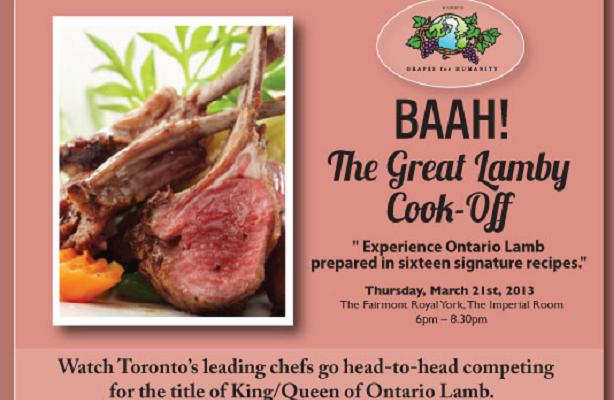
BAAH! The Great Lamby Cook-Off, Thursday, March 21st, 2013, Imperial Ballroom, Fairmont Royal York Hotel

BAAHTony Aspler knows more about wine than just about anyone I know. That he has taken his knowledge, his craft and his contacts in the food and wine world to champion a noble cause, well that is something to be admired. The organization he gives time to is called Grapes for Humanity, globally providing much needed relief to those less fortunate. Mr. Aspler organized yet another memorable GFH event, to benefit a child’s education by constructing a needed school in Guatemala. Twelve chefs, 12 lamb dishes, 12 wine pairings. You couldn’t spit without hitting a sommelier or a local oenologist. Chef Michael Pataran took home the top prize for his Goan Lamb Shoulder with a coconut, chili, lime chutney and paddle skewer. The best wine pairing went to the Henry of Pelham Baco Noir Reserve 2010, poured alongside Pataran’s “curry”; a double win. Stock Sommelier Zoltan Szabo directed the room with tireless energy.

Here, my favourite three wines at “BAAH”, plus a gorgeous Gigondas tasted in NYC on Saturday night.

From left: Rosewood Estates Merlot 2010, Tawse Merlot ‘David’s Block’ 2010, Norman Hardie ‘County Unfiltered’ Cabernet Franc 2011, and Domaine du Gour de Chaulé Gigondas 2007

Rosewood Estates Merlot 2010 (211896, $22.00) on this night walked a Niagara Wallendian tightrope of balance between heft and deft, sidling effortlessly up to Barque Smokehouse chefs David Neinstein and Tony Starratt’s ‘Mici‘ and travelling further on up the evolutionary road past “enjoyable if unremarkable.” From my earlier note: “Continues to show a reductive note in the form of vanilla and maple syrup, no honey actually, but all signs point to further excellence. High quality chocolate spiked by cherry, orange and a peppery, nasal tickle open up beautifully and expressively towards the dusty, berry main event. Knock your baby’s socks off with this double-stuffed Oreo and let the night unfold.  89 @Rosewoodwine

Tawse Merlot ‘David’s Block’ 2010 ($49.95) from certified organic and biodynamic estate fruit puts the double ‘L’ back in lush. Endowed of a caressing cashmere. Could act as spokesperson for Niagara Merlot announcing, “there are 10 kinds of people in the world, those who like Merlot, and those who don’t.” Calm, confident and marked by an insouciant nature. Earlier note: “Suffers no stenosis and instead flows as a sanguine and savoury riverine expression. Olives and the smokey whiff of yeasty bread on the grill. Not surprising considering the quality of Pender’s lees so often collected and added back to the next generation’s barrels.”  91  @Tawse_Winery  @Paul_Pender

Norman Hardie ‘County Unfiltered’ Cabernet Franc 2011 ($25) rolls the barrel out from a velvet underground into the Prince Edward County sun, pours singular Foster Vineyard fruit over crushed limestone then infuses the juice with ripe cherries. The warmth of 2010 lingers on in the ’11 CF’s pale blue eyes. Makes “the world as pure and strange as what I see.” Persists as the definitive expression of this grape in The County.  91  @normhardie

Dinner at Momofuku, Má Pêche, 15 w. 56th street, New York City, @momofuku

Má Pêche knows how to treat a lady, the President of the United States, and me. David Chang’s midtown eatery located in the Chambers Hotel opened in April, 2010. The Executive Chef is Paul Carmichael, a Barbados native who transmits Chef’s vision through elegant, restrained and poetic flavours. Carmichael and Chef de Cuisine Johnny Leach compose dishes as colourful canvasses but they are never over-painted nor monochromatic abstractions. Food of distinction and singularly distinct from plate to plate. Vegetables, many of the root kind, are succulent, glossy, al dente, and clearly defined. Service offers no pretense, no hovering, no massaging. Casual and professional. No hipster attitude neither.

Má Pêche AppetizersPhoto: Michael Godel

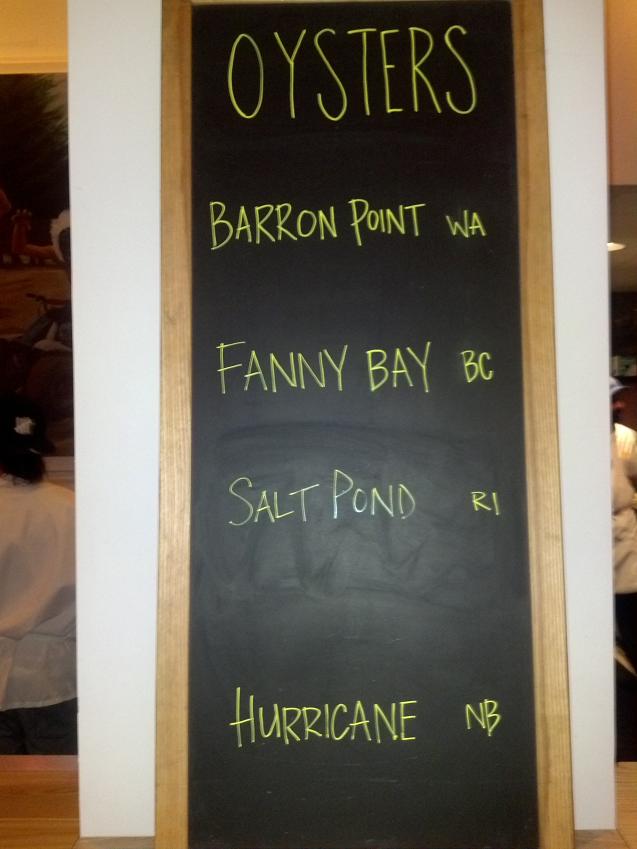
Má Pêche Oysters
Photo: Michael Godel

Oysters, especially New Brunswick Hurricane and Salt Pond Rhode Island are fresh makers, like spirits moving through the ocean. Washed those suckers down with 21st Amendment “Bitter American” Extra Pale Ale. Spanish Mackerel is a smokey, charred wave of umami with crisp, crunchy romaine and a silken tofu sauce, like citrus-spiked tahini. Barnegat Light Scallops are buttery, whispering, ethereal.

Appetizers

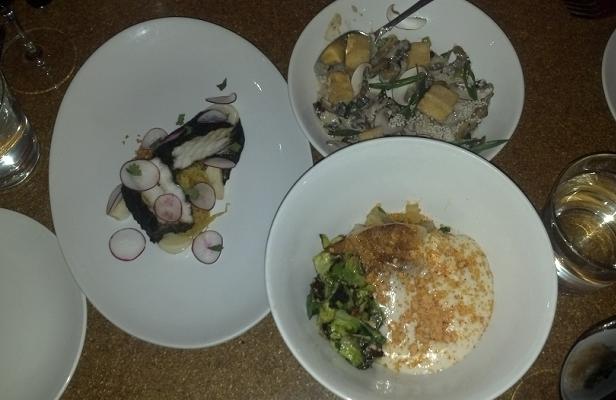
Má Pêche Appetizers

Chatham, MA Cod is foam cloud-enveloped, braised fish and brussel sprout ‘chips’ attenuated by malt vinegar. Jurgielewicz Farm, PA Duck two ways is perfect pink breast accented by candied orange rind and also piquant mici-like sausage, bucked by peppery spice. Provitello Fams, NJ Veal is fall apart, rosy neo-osso bucco, soft, supple and flat out delicious. The only non-wow moment comes from Barnegat Light, NJ Monkfish which shows indifference and a dry, dusty mole that barely mingles with needs to be further-rendered skin.

The wine list is more than thoughtful, embracing many needed food companion varieties, like Sylvaner, Trebbiano, Scheuerebe, Cabernet Franc, Nerello Mascalese and Teroldego. I opted for a southern Rhône Grenache blend imbued with just the perfect amount of age.

Domaine du Gour de Chaulé Gigondas 2007 ($31, Menu: 375 mL $32) of black/crimson mephitic and inky berry blush and lush, full-on sun-drenched fruit has reached full resolve. Licorice, kirsch and stony, meta-anthracite show off in the wine’s perfect window.  Decadent Gigondas.  92

Good to go!

Wines for the Ides of March

PHOTO: PAUL FLEET/FOTOLIA.COM

as seen on canada.com

Good friends, go in and taste some wine with me.

And we, like friends, will straightway go together.
March 15th is not just any old day, that is if you are a Roman. The monthly Ides were sacred to the worshipers of Jupiter, king deity of the Romans. Shakespeare‘s play is more than just a forgotten high school memory. The Ides of March, 44 BCE assassination of Julius Caesar in the Roman Senate was a big deal.

Caesar was, however cautious and abstemious some say, known as a wine guy. Can you argue the actuality in utterance of the Bard’s famous line, “Et tu, Brute?” as he offered his (77-years ahead, future reference) Judas a goblet of wine? JC was purportedly known to love indigenous Italian grapes like Mamertino and Brachetto.

Caesar took control of the mint and had money coined to put into the hands of the people. He then built great structures, public works and was followed (jump forward, twenty-one centuries, Twitter equivalent) by many. Was he killed for being a people’s patron of the arts, architecture and culture and did his offing lead to the demise of plentiful money in Rome? Can Caesar really be blamed for the tax increases, corruption and the loss of homes and land? Admittedly, the dictator has been historically accused of killing one million enemy French (Gallic) men and enslaving another million. But he was a wine guy! Would Caesar have jammed in a cork to stop private wine clubs?

Canadians purportedly drink Bloody Caesars to celebrate the anniversary of the soothsayer’s day. Me, not so much. But I can tie the Italian-Canadian thing together. Here I string five Canadians and three Italians, bound by one apropos French connection, a sublime red wine from Bordeaux. Raise a glass and whisper “All hail Caesar.”

From left: Rockway Vineyards Small Lot Reserve Red Assemblage 2010, Stoney Ridge Excellence Chardonnay 2010, Vicchiomaggio Agostino Petri Chianti Classico Riserva 2008, Tenuta Di Ghizzano Veneroso 2009, Paolo Conterno Riva Del Bric Barolo 2008, Château Haut-Bages Liberal 2009.

The Canadians

Cave Spring Estate Bottled Chardonnay Musqué 2010 (246579, $15.95) is fresh in chert, posy aromatic and stuffed with an airy, sense of whipped lemon cream. Salinity and white pepper add kick and spice to this Chardonnay cousin only Cave Spring seems to have mastered.  89  @CaveSpring

Malivoire Riesling 2011 (277483, $15.95) of savvy, textured pomade hails Prussian in ideal, with equatorial accents, in coconut, ginger and creamy, fallen tree fruit. A lime’s zest, rind and late harvest condensed orange marmalade buttress this beryl flecked, golden Escarpment Riesling. Tons of nuance.  90  @MalivoireWine

Rockway Vineyards Small Lot Reserve Red Assemblage 2010 (321893, $16.95) coalesces to what so few Niagara Peninsula peers achieve by summation in the heat of 2010. Meritage balance for under $20. Many made great wines in the premium category but many more made bottles of jam at this price. Rockway’s Cabernet Franc, Cabernet Sauvignon and Merlot blend is a tale of two poles. At once pretty, in violets, soft black currants and mild coffee and then bound by an underlying coal tension and furious punk beat. “The sun is out and I want some.”  88   @Rockway Vineyard

Creekside Laura’s White 2010 (121764, $18.95) is peach quintessence in a glass. Niagara Peninsula peaches burst forth, replay to taste and never dissipate. The tree’s blossoms are there two, along with the fruit’s stony pit, with a full-on mouth attack, finishing with a spoonful of peach-infused simple syrup. A white “to let go of it all just for this evening.” Dessert and then goodnight.  88  @CreeksideWine

Stoney Ridge Excellence Chardonnay 2010 (254243, $24.95) hails from the Lincoln Lakeshore and warms in toasted, buttered pecans, Caesar spice and sunny climate fruit. The shore’s metallic, rocky bed adds minerality, “rockin’ up the richter scale” with tang and stabbing notes on the long finish. Goes both ways, ACDC.  89  @stoneyridgewine

The Italians

Vicchiomaggio Agostino Petri Chianti Classico Riserva 2008 (993360, $19.95) in a tighter vintage is not as round, ripe and forgiving so priced to sell but it’s that grit that gives this CCR it’s charm. More Run Through the Jungle than Lodi, this Petri “fills the land with smoke,” in animale and a marbled, granular texture. Thought modern in styling, this Sangiovese is like charred Kobe beef covered in butter polished demi-glace.  90

Tenuta Di Ghizzano Veneroso 2009 (103218, $29.95) bears little resemblence to the IGT you may be used to, especially in a 70/30 Sangiovese/Cabernet Sauvignon blend. This one’s mutton-funky, not quite like the Montetti or Madonna del Piano but still an earthy beast. There is vibrant purple Pisa fruit and a dusty, chalky tannic splash. We’ll see but my thoughts look to a wow future. Gorgeous wine from Ginevra Venerosi Pesciolini.  91  @FrontierWine

Paolo Conterno Riva Del Bric Barolo 2008 (172783, $36.95, SAQ, 10860223, $34) from young vines on this venerable estate’s Ginestra plot is really impressive for under $40. Savoury and perfumed, of Rhododendron and dried roses. Pipe smoke at the mid-point and sweet tannin. Not exactly a big Barolo but more of a Nebbiolista’s bric-a-brac of all the best bits Barolo has to offer 91  @liffordwine

Château Haut-Bages Liberal 2009 (197640, $64.85) of sumptuous, acculturated Paulliac texture is just so pretty. Not unlike the ’07 Brunelli, or the current release ’08 Guado Al Tasso for that matter, there is nary a harsh or biting note. The kicker is the Left Bank mineral, crushed rock thing going on and the wine never wavers from the its velvety feel. Pure, unadulterated red fruit, juicy and forevermore. This liberal lady can “lay across my big brass bed,” anytime.  92

Good to go!