Are you wine experienced?

Riesling tattoo

Riesling tattoo
Photo: Michael Godel

as seen on canada.com

Wine knowledge, or gaining an understanding of wine, is like marriage. You have to pay close attention to detail, be open-minded, have patience and persistence, hang in there and endure the long haul. Wine must be a lifelong companion, a soul-mate, a best friend. You may never know everything about your partner but at least you will die trying.

I know everything and nothing about wine. I know more than I did 10 years ago but I could study, read, taste, listen and experience 50 years more and still I would know so little. How great is that? What is so fascinating is the conviction and utter certainty so many professionals in the wine world proclaim what they think and feel about grapes, where they should be grown and how great wine can only be made if cultivated in very specific places. Conviction is admirable and opinions change. Experience is key.

Canadian wine writers seem hell-bent on insisting that specific wine regions and Ontario in particular, must specialize on specific grape varieties. Evan Saviolidis recently wrote this demonstrative headline, “Pinot Noir and Chardonnay are the signature varietals of Prince Edward County.” Nothing shocking about that but it insists that all else might best be left alone. Niagara’s Rick VanSickle will find a way to endorse the region’s diverse best but he’s also pragmatic when it comes to vintage variation.  ”Show me a great 2008 red wine from Niagara and I’ll show you someone who lost their shirt making it.” Rick does not wear rose-coloured glasses. Enthusiastic for sure but not an eternal optimist. Mike Di Caro believes in four grapes for Ontario; Riesling, Cabernet Franc, Chardonnay and Pinot Noir that “consistently produce the best wines that we have to offer.” Now he’s even more adamant that specific growing areas within the region need to micro-specialize. He’s not wrong.

Riesling Experience 2013

Riesling Experience 2013
(Photo: Michael Godel)

Which brings me to Riesling. Last week I was fortunate to be included in the Brock University Cool Climate Oenology and Viticulture Institute’s Riesling Experience 2013, an international celebration of style, structure and purity. CCOVIBrockU Manager, Continuing Education and Outreach Barbara Tatarnic and Riesling Chair Angelo Pavan of Cave Spring Vineyard brought together producers, trade, media and wine enthusiasts from Canada, the US and around the world for lectures, tastings and discussion on all things Riesling. Opinions were strong, anti-diffident and full of matter.

Cornell University Sensory Researcher Terry Acree runs a lab concerned with discovering “how stimulant composition is represented in perception.” Acree’s first bold statement: “Olfaction as the most important part of wine is nonsense.” What? Acree insists that taste carries more weight, which will come as a surprise and a relief to the novice wine drinker. The following statement, not so much. “If you can’t tell the difference between Chardonnay, Riesling and Pinot Gris you have a biological problem.” That’s harsh.

For Riesling, Acree focuses on chemicals that correspond to the strongest identified smells, the most important and prevalent of which is TDN (Trimethyldihydronaphthalene). TDN the chemical or diesel/petrol the sensation as an “odour strength (Damascenone) as related to by human subjects.” In order for the wine taster to “experience” these sensations, two things have to be there. “Memories of different kinds of features and features themselves.” That said, Acree believes you can only smell three things at once, a notion he borrows from M.F.K. Fisher.

Acree sees odour as “an evolutionary human response to history.” If you have never come into contact with a banana, you will never smell banana in Chardonnay. TDN is the dominant aroma and where Riesling grows, more sunlight means more fruit and more TDN. TDN is a precursor but its prevalence does not necessarily increase as a wine ages. A very common theme when nosing an aged Riesling is to comment on the secondary aromatic emergence of a gas or petrol note. Acree believes that identifying increased petrol notes in aged Riesling is a bit of a misnomer. It had to already be there. “I’m just inventing a new, confusing way to discuss minerality,” he concludes. Job well done.

Creekside Estates Winery and Stratus Vineyards winemakers Rob Power and J.L. Groux at Riesling Experience 2013

Creekside Estates Winery and Stratus Vineyards winemakers Rob Power and J.L. Groux at Riesling Experience 2013
(Photo: Archie Hood)

Nik Weis of St. Urbans Hof Family Estate Winery from Mosel-Saar-Ruwer in Germany speaks in superlatives and makes no concessions when it comes to his passion for crafting world-class Riesling. When I asked him if he has considered or would ever consider planting any other grape variety in the Mosel his response was an emphatic, “no, but I will drink plenty of Loire Sauvignon Blanc in the Mosel.”

Weis came to Brock to speak on the ageability of Riesling. Mike Di Caro and I spoke last night at the Stop Night market about Ontario Riesling and we agreed that sugar levels are both arbitrary and unpredictable so Niagara’s best is and should be of the dry variety. This follows the Weis doctrine. “Sugar levels build longer chains as they age and wine achieves more balance, creamy viscosity, savoury sweetness and can be considered dry despite having 25 grams per litre of residual sugar.” Niagara Riesling does not share these luxuries. There are exceptions, most notably from Vineland Estates St. Urban Vineyard (go figure) but the Mosel it is not.

The Mosel’s soil is built for growing Riesling, it is the catalyst that effects the metabolism of the grape and the sugar levels inherent in the wine. “The grape is nothing but the reproductive organ of the vine” and “every bottle is an isotope on its own,” says Weis. He adds “cool climate vines develop flavours, not simply sugars.” So Niagara’s got that going for it, which is nice.

Nik Weis finished off with a cork versus screwcap moment and his candor was very refreshing. “In my opinion, cork does not breath. If it did, wine would leak.” He announced an unequivocal support for cap closures. Concerning corks, “it’s like wearing a tuxedo when you go to the opera. That’s the only difference.”

Two sets of two St. Urbans Hof Rieslings were poured, intended to highlight a ten-year separation of wines from the same vineyard. Here are my (brief) notes:

Riesling Spätlese Laurentiuslay 2011 is precocious in its clearly defined, sugared entry and dry finish for such a young late harvest wine. Ripe peach, peach blossom and a spit of TDN go long and desiccant to bring you back for the next sip.  90-91

Riesling Spätlese Laurentiuslay 2001 has intensified in hue of green/gold patina, aromas of soda and diesel and flavours of orchard fruit. Fine, fine feinherb.  92

Riesling Auslese Bockstein 2009 reverses the sweet/dry continuum by sniffing medicinal and parched, gathering steam from ripe, tangy tree fruit and slowly emerging sweetly sapid. Mortally young to assess.  92-93

Riesling Auslese Bockstein 1999 has released a plethora of aromatics; pungent spice such as caraway and cardamom, ground peppercorn and tempering sweet honeysuckle. Freshness has not been lost and yet the sugars have lengthened to present a baked play of thirsty words.  94

Here are my notes on three of the 14 Niagara Rieslings tasted at lunch:

Stoney Ridge Cellars 2009 (winery, $15.95) resides in a middle ground between TDN and ripe, juicy fruit. Magnetic and luring, even-keeled and oblate like the ground it comes from in Niagara-on-the-Lake.  89

Fielding Estate 2011  (251439, $18.95) today seems wistful and dreamy, leaning Alsace in nut tones. “Well here we go again, steady as she goes,” Richie’s Riesling strikes a power chord and begins to sing like a raconteur with great energy. From my earlier note, “jumps out like a thunder crack with an instant emergence of gassy soda, lime and stone fruit. The citrus remains in attack mode and “her brains they rattle and her bones they shake.” Does the “jump back jack” and dances all around in the mouth, on the tongue and down the hatch. Very long persistence, almost glycerin in texture which for NP Riesling is simply awesome.”  90

Flat Rock Cellars 2012 (43281, $16.95) continues to hit all the right notes. What dry Riesling in Ontario has to be. Sodaliscious and stone cold. Winemaker Jay Johnston got the memo. From my earlier note, “is a single varietal conundrum, intensely dry, dusty yet dripping in grape concentration. Huge soda nose, I mean a crazy proboscis. Love the dry entry and off-dry tangent. Twenty Mile Bench issue reminiscent of Rheinhessen. Admirable length and trebled finish.”  90

The Riesling-friendly luncheon was followed by a presentation from Kathy Cannon, Director, Wines and VINTAGES from the LCBO who discussed the place for Ontario Rieslings on the world’s stage. Ms. Cannon spoke to a room of wine geeks in a nomenclature normally reserved for an unwitting class. There was an unspoken imprecation in the room and fortunately no effrontery or sloughing. The group listened to hopeful if arguable statements like “customers are moving to sweeter wines and Riesling is well-positioned for that growth” and “a great opportunity is there to position Ontario Riesling in VINTAGES. It is well represented.” Back to Nik Weis.

Weis is a walking shelf-talker. He is happy to say that a semi-dry Riesling is all you need for breakfast. The sugar wakes you up, the acidity enervates you and the alcohol makes you feel good, but not drunk. If it’s a young Riesling the CO2 helps send minerals and the “good stuff’ faster through your blood. “Riesling is better than an isotonic sports drink.”

On the subject of organics and biodynamics, Weis noted “if you feed a vine artificial fertilizer, it will get nutrition but it will not be happy. It needs decomposition, deconstructed materials, organics, even dead animals.” On the topic of TDN, “petrol in a strong way in a wine is a fault, like too much wood or alcohol.” Too much TDN is a result of too much dry soil, too much warmth in the climate and possibly too much defoliation. “It’s not a clonal issue,” says Weis, “Riesling takes forever to mutate.” I sure hope the Aussies are not listening.

Good to go!

Money back guarantee wines

Here are five wines that will present no reason to be looking for a refund or an exchange. PHOTO: ARCADY/FOTOLIA.COM

as seen on canada.com

Ever opened a bottle of wine, had a sip or two and decided you just didn’t like it? Happens all the time, right? The thing is, in most cases you can return that wine, especially if it was purchased at one of the many provincial monopolies in Canada. Here’s a short primer on refund, return and exchange policies across Canada.

Related – more current releases

“The SAQ exchanges or refunds any product purchased in an SAQ outlet less than a year before. You must present the sales receipt when requesting a refund. For exchanges, the sales receipt is optional.” The LCBO used to offer their customers that same level of respect to offset the negative impact a monopoly’s policies can effect upon a helpless consumer (monochromatic and or lack of quality choice, lottery selections for small lot and hard to acquire selections, indifferent deference to local product, hyperbolic inflation on comparable US supermarket wines, archaic laws towards inter-provincial shipping, import agent strong arming, to name a few). As of April of 2012, you now have only 30 days to return a bad bottle and unlike the SAQ, you need the receipt for a direct exchange. For LCBO returns, wines “must be in ‘saleable condition’ and accompanied by the original receipt. Saleable means that the product must be unopened and have the label intact, for example.  Defective product is treated differently.” Manitoba follows suit. Who brought these guys to the party?

The same applies to defective products; wines with perceptible flaws, such as TCA (cork taint) or VA (volatile acidity). The 30-day LCBO rule is a sham, I mean shame. The open-ended return policy made up for so much of the monopoly’s shortcomings. Alas, no more.

British Columbia’s Liquor board is no piece of cake either. You can only “return a product in B.C for a full refund, provided the product is unopened, in saleable condition an official BC Liquor Stores receipt for the product is presented.” At least they’ve thrown a bone to caterers who can now return unopened liquor products. Nova Scotia follows Quebec’s policy. “Defective or broken product may be returned to any NSLC store for full exchange or refund and does not require a receipt. All customers returning defective or broken product must be willing to provide name, address and telephone number to the NSLC store representative.”

In Saskatchewan it appears that only “permittees can return any unopened spirit and wine bottles and sealed, full beer cases that were purchased for the event provided they provide the original sales receipt.” Remind me not to purchase defective wine in that province. As far as New Brunswick is concerned “at the discretion of the Liquor Store Manager, Alcool NB Liquor will accept product returns for full refund. The sales slip should accompany the returned item.”

Newfoundland’s system, at least on paper, is very fair and civilized, though all returns seem to be in the powerful hands of a store manager. “NLC will accept product returns, at the discretion of the Liquor Store Manager. In the case of defective merchandise, NLC will permit product returns or exchange, at the discretion of the Liquor Store Manager for a full refund where the product is no more than half empty and he product was listed by NLC within the last 12 months. Better than the LCBO. Best of all may me Prince Edward Island. “At the discretion of the Liquor Store Manager, the PEILCC will accept product returns for full refund. The sales slip should accompany the returned item. All returns will be on a “bottle-for-bottle” basis.” Civilized.

Alberta’s Gaming and Liquor Board only accepts “refunds for the following types of faulty products; returned due to customer complaint; a sealed bottle(s) which: is partially filled; has a damaged cap or cork; or is contaminated with a foreign material. A claim for a refund for a faulty product must be received by the AGLC Product and Pricing Department within 30 days of receipt of product by the claimant.” Quality retailers in provinces with a private system (like Alberta) will also take back an unwanted bottle, though they might not be so lenient when you try to bring back that bottle of First Growth Bordeaux. Some wines are sold with an unwritten rule. You lay down your money and you takes your chances.

Everybody’s got a hungry heart. “Lay down your money and you play your part.” So, to avoid disappointment and disappointing your local monopoly or retailer, here are five bargain wines, one for each day of the week beginning today, Monday June 10th. Five wines that will present no reason to be looking for a refund or an exchange.

From left: Place In The Sun Shiraz 2012, Fielding Estate Gewürztraminer 2010, Lealtanza Crianza 2009, Flat Rock Cellars Riesling 2012, and A & G Papaioannou Estate Agiorgitiko SV Nemea 2007

The Grape: Shiraz

The history: New range of fair trade and sustainable wines from 321 year-old Stellenbosch winery Zonnenbloem

The lowdown: This is not a cheap bottle of fermented sugar. A breath of restrained, balanced and fresh grapes awaits

The food match: Grilled Rib-Eye Steaks and Local Asparagus

Place In The Sun Shiraz 2012 (286088, $13.10) is a balanced effort “at half the price” of many similar South African wines, here crafted by the Cape’s Zonnenbloem Winery from vineyards cooled by False Bay. Campfire smoke, grilled meat, spice and antipasti char attribute this chewy, biltong red. Characterized by a musical, magical, folk spirituality. A Hoodoo Guru88  @APlaceintheSunSA

The Grape: Gewürztraminer

The history: Grape King Curtis Fielding and winemaker Richie Roberts are swiftly crafting a mid-range, diverse portfolio into the Ontario wine industry, unparalleled in execution and success

The lowdown: This Gewürz leans Alsace in a sweet sense but not in heft or a serious, contemplative way

The food match: Grilled Cumin Salmon

Fielding Estate Gewürztraminer 2010 (146753, $15.95) acts likes lees dessert as almond vanilla pudding with a side of lychee preserve. While I heart more the Riesling and Pinot Gris from winemaker Richie Roberts, this sugarplum Gewürztraminer has earned a rightful place at the table.  88  @FieldingWinery  @RichieWine

The Grape: Tempranillo

The history: Tempranillo specialist from Spain, located in Fuenmayor, in the heart of Rioja

The lowdown: Consistent value Tempranillo from a modern facility crafting wine with a foot in the austerity of the past

The food match: Barque Smokehouse Brisket

Lealtanza Crianza 2009 (114835, $16.95) exhibits more heat and caramelization than previous vintages. Vivid Sangria, pumped up by cherries in simple syrup and fleshy plum fruit. Accented by fennel and basil. Good length and even better value.  89  @bodegasaltanza  @ProfileWineGrp

The Grape: Riesling

The history: Founded in 1999 on the Jordan Bench and operated today by Ed Madronich and his father Ed Madronich Sr. Winemaker is Jay Johnston

The lowdown: This just might be the most trocken Ontario Riesling on the market today

The food match: Grilled Veal Chops and Wild Leeks

Flat Rock Cellars Riesling 2012 (43281, $16.95) is a single varietal conundrum, intensely dry, dusty yet dripping in grape concentration. Huge soda nose, I mean a crazy proboscis. Love the dry entry and off-dry tangent. Twenty Mile Bench issue reminiscent of Rheinhessen. Admirable length and trebled finish.  90  @Winemakersboots @UnfilteredEd

The Grape: Agiorgitiko

The history: Main cultivar from a modern winery of the Ancient Nemea, located in the district of Corinth

The lowdown: A 100% indigenous Greek varietal, aged for one year in oak barrel and further matured in the bottle for six months

The food match: Halloumi

A & G Papaioannou Estate Agiorgitiko SV Nemea 2007 (47977, $19.95) has reached a ripe oxy age but this weathered and sensuous, sun-kissed by gods Greek red is still a classic beauty. Quintarelli-like toffee, tobacco acetic reduction and spiced plum seem like high praise I know but the acidity renders it a wash. Look out, buckets of cherries, tart currants and tar join the fun in this very interesting and intriguing Nemean single vineyard stunner.  89  @KolonakiGroup

Good to Go!

Around the world in eight Chardonnays

PHOTO: SUTSAIY/FOTOLIA.COM

as seen on canada.com

Chardonnay covers more than 400,000 acres seemingly everywhere and is the most widely planted wine grape on earth. Today marks its fourth annual global celebration. Who knew there was this marketing concept using social media as the thread that connects the global conversation together. If you live in Niagara and have some free time, then you my friend are in the right place. Many wineries (17 at last count) are offering special events and free tastings today, including Flat Rock CellarsTawseLaileyHidden BenchThirty BenchSouthbrookCoyote’s RunNiagara College Teaching WineryPondviewChateau des CharmesStratus13th StreetHenry of PelhamCave SpringMalivoire and Norman Hardie. Click here for a full list of events.

Chardonnay is cool, especially in Canada, blessed with a quintessential climate for growing the most international and recognizable of the world’s white grapes. Chardonnay comes in all shapes and styles, from unoaked to heavily toasted, aged in stainless steel or concrete vats to barrel fermented. Some styles use wood chips, some Chardonnay is fermented on its lees. Chardonnay is responsible for some of the world’s great Sparkling wines, especially Champagne. Is there a comparable white grape that speaks of its origins in more varied tones? Conversely, can another variety be singled out as having suffered through more international vinification manipulation? So, Chardonnay conjunction junction, what’s your function?  Want to know what Canadians are saying about Chardonnay? Ontario Wine Chat has the answers.

If you are looking to experience the wonders of Chardonnay, from a global perspective, surrounded by experts in a setting designed for relaxation and genuflection, look here:

In anticipation of the International Cool Climate Chardonnay Celebration #i4c2013 and to pay tribute to this marketing sensation that is International Chardonnay Day, here are eight great examples from near and far, all available to taste, try and sample somewhere close by.

Clockwise from left: Cave Spring Estate Bottled Chardonnay Musqué 2010, Domaine du Chardonnay Chablis 2011, Southbrook Vineyards Triomphe Chardonnay 2011, Wolf Blass Gold Label Chardonnay 2010, Norman Hardie County Chardonnay 2011, Hidden Bench Tête de Cuvée Chardonnay 2009, Drappier Signature Blanc De Blancs Brut Champagne, and Stratus Chardonnay 2010

Cave Spring Estate Bottled Chardonnay Musqué 2010 (246579, $15.95) from Wines for the Ides of March is fresh in chert, posy aromatic and stuffed with an airy, sense of whipped lemon cream. Salinity and white pepper add kick and spice to this Chardonnay cousin only Cave Spring seems to have mastered.  89  @CaveSpring

Domaine du Chardonnay Chablis 2011 (183574, $19.95) deserves 105 points for the domain name alone but really this is just solid, good fun. Chablis as I expect it to be. Apples and cinnamon, ginger, a hint of macadamia and citrus zest. Minor bitter note trumped by ripe fruit and a clean finish. Really quite good.  88

Southbrook Vineyards Triomphe Chardonnay 2011 ($21.95, 172338) from A wine pentathlon binds FSO2 with jack or durian, febrile fruit. For now hard to figure, like a grey rose or a Pink Floyd. Offers up a creamy warmth in resonant echoes but amplified as if still trapped inside the barrel. The best days remain ahead for this certified and biodynamic Chardonnay, which in two to three years time will “come streaming in on sunlight wings.” 89  @SouthbrookWine

Wolf Blass Gold Label Chardonnay 2010 (606186, $29.95) is about as internationally-styled as it gets from the Adelaide Hills of South Australia. Smells like it’s still inside the barrel, as if the tropical fruit was wrapped up in a smoking, sweat lodge towel. Big on hot rocks, steaming and emitting earthy scents, nutty in every respect, big, big Chardonnay. Nerve, verve and understanding.  90  @WolfBlassWines

Norman Hardie County Chardonnay 2011 ($35, winery only) from Come together, over wine is not merely a window into the vintage but the portal. Bright, golden fruit, freakish level of mineral and longer than the old Greer Road. Norman will always have ’08 but the newbies will be lucky to discover 2011. Who wouldn’t fall for its charms. When it comes to this Prince Edward County Chardonnay, “one and one don’t make two, one and one make one.” I call that a bargain.  92  @normhardie

Hidden Bench Tête de Cuvée Chardonnay 2009 ($45, winery only) from Big wines from California and the Bench from HB’s oldest, most highly regarded and meticulously maintained vines shows ravishing and refined restraint in elegance. Warm pineapple and mango coagulation jarred by the vintage’s piercing acidity and immense length. Head of the class, rings the bell, nails the lecture.  93  @HiddenBench

Drappier Signature Blanc De Blancs Brut Champagne (599860, $46.95) continues a VINTAGES string of excellent value in Champagne releases. Made from 100% Chardonnay, this BdB is pronounced in , yeasty dough definition, hinting at agave and unwashed cheese rind. Where there’s bubbles there’s a way and I like where this one is going. The agave replays in sweet waves, as does the the sour in faint yet discernible sloshes. Much to contemplate in this NV sparkler.  90   @Halpernwine

Stratus Chardonnay 2010 ($55) from Stratus and Momofuku: Modernity incarnate from natural yeast, full batch (bunch) pressing and heeded by Paul’s call to full malolactic fermentation, this fruit was picked on November 15th, a day “you had to go run and pick fast.” Groux is not trying to make California or Burgundy but make the best in Niagara. Clarity and sun drenched hue, tropical fruit dominance, sweetness, malo-butterscotch obviousness. Some tart orchard fruit late but certainly warm vintage wine. Not the most arid Chardonnay but blessed with great length.  91  @Stratuswines

Good to go!

‘London Calling’ for Canadian wine

PHOTO: NASKO/FOTOLIA.COM

as seen on canada.com

Just in case you were under the impression that Canadian wine is made solely for and consumed only by Canadians, think again. The world is hungry for our prized grapes and unbeknownst to 99 per cent of the 35 million inhabitants of this vast country, the A-Team is out there in the field.

As I write this, Canada is re-introducing itself to the world by way of an essential and comprehensive tasting hosted today by The Canadian High Commission at Canada House, Trafalgar Square, London. A group of wine luminaries and emissaries are pouring sparkling wines, red wines produced from Pinot Noir, Bordeaux blends or varietals, Syrah or Gamay, white wines produced from Chardonnay or Riesling and Icewine. REDISCOVER Canadian Wine is an unprecedented event, working in conjunction with London’s Westbury Communications to remind and renew a European media and trade contingent of the quality and international viability of the wines from Ontario, British Columbia and Nova Scotia.

Canada House, London (Photos: Janet Dorozynski)

The dream team is led by Dr. Janet Dorozynski, Global Practice Lead, Canadian Wine, Beer and Spirits, Global Business Opportunities Bureau, Foreign Affairs and International Trade Canada. Dr. Dorozynski’s deputies along to help promote the Canadian wines in London are the Wine Council of Ontario’s Magdalena Kaiser-Smit, Director of PR and Linda Watts, Project Manager, Canadian wine expert ambassador Tony Aspler and Barb Tatarnic of Brock University’s Cool Climate Oenology & Viticulture Institute.

Winemakers, owners, vignerons, wine consultants, international sales directors, export directors and marketing consultants have made the trek after wineries from across Canada were invited to submit their wines in a blind tasting judged by a panel of Canadian judges. The panel previewed over 250 Canadian wines and selected 89 wines from 37 wineries to qualify for the London, England tasting.

With help in partnership with Foreign Affair and International Trade Canada, Wine Country Ontario, support from The Cool Climate Oenology & Viticulture Institute (CCOVI) at Brock University and from The Ontario Ministry of Agriculture and Food, the Canada House event is fully and completely positioned to raise the profile of the Canadian wine industry abroad.

London Calling: REDISCOVER Canadian wine

British wine scribe Stephen Brook notes, “Canada has long been out of the ‘promising newcomer’ category. These are wines we all need to discover.” Gerard Basset OBE MW MS adds, “I have discovered some superb wineries and producers with both flair and talent.”

For more information on the event click here.

In celebration of the calling to London, here are tasting notes on eight wines being poured today in London.

Flat Rock Cellars Gravity Pinot Noir 2010 ($30, 1560winery) from A wine pentathlon reels in Twenty Mile Bench fruit in a warm vintage as well if not better than any of its peers. Founder Ed Madronich is clearly slope and soil obsessed and this Pinot Noir is a study in topography and geology. To paraphrase Madronich, it’s  ”more Pommard than Volnay, in a deeper and more masculine way than the Estate bottling.” Pinot barrels most representative of the Gravity style were chosen for the final blend, in this case noted by woodsy black cherry and spiced root vegetable. “Get a little savagery in your life.” 90   @Winemakersboots  @UnfilteredEd

Cave Spring Cellars Riesling ‘CSV’ Estate Bottled 2009 ($29.95, winery only) from Come together, over wine comes from the oldest, lowest-yielding vines at the estate grown on the limestone, Beamsville Bench terrace. A three month rest on its lees imparts honey on the nose though the palate is dryer than off-dry. Mineral, pop-driven even. A hoovering, wizened Riesling, puckering, turning inward, yet to hydrate. Unique for Escarpment ’09 and will realize a quenching later than most. I for one will put this aside and revisit at the end of the decade, when “golden slumbers fill your eyes.” 89  @CaveSpring

Charles Baker Riesling ‘Picone’ 2011 ($35, winery only) from Come together, over wine trembles with nervous energy and will need some bottle time to shed its shocking, A16 soda popping feeling. Right now “he got joo joo eyeballs.” Give it a year, or even two for the Vinemount Ridge clint (citrus and flint) to come together in a fit of focused, piercing acidity. This is Baker’s sharpest, knife-edge Riesling in the block and while I never thought it possible, this one is sure to outshine 2009. For Charles Baker ”one and one and one is three.”  93  @cbriesling

Exultet Chardonnay ‘The Blessed’ 2011 ($35, winery only) from You can lead a county to the city is exemplary even if it may not be proprietor Gerard Spinosa’s favourite vintage. Commands an ineffable presence in gold sheen and parses meaning through balance and poise. The new oak is very noticeable but the ’11 acidity is grand. Their integration is seamless, the wine shines and a few years time will only increase its lustre.  92  @ExultetEstates

Pillitteri Estates Cabernet Franc Reserve ‘Exclamation’ 2010 (Alex Kolundzic, $35, winery only) from Top juice flows at Cuvée 25th anniversary from family vineyards in Niagara-on-the-Lake ventures into voluptuous, black forest, fruitcake territory. A 24-month soak in French oak imparts espresso and leather and it’s as if this CF was raised in Napa or designated IGT. But this is NOTL were talking here. Improbable and believable. Tasted twice.  91  @Pillitteriwines

Hidden Bench Estate Pinot Noir 2010 ($38, winery only) from A wine pentathlon takes my previous impressions to a higher plane. Standing correct by calling it a “a vintage relative release” but it’s so much more than “a quaffable, generous fruit sui generis.” Beets turn into plums. Opaque hue reminds of graceful Nebbiolo with a dancer’s legs in aperture. Wins in judicious use of French wood. Tannins persist in the rear-view mirror. Big ’10 that speaks of another level in Beamsville Pinot Noir. “Think about it, there must be higher love.” 91  @HiddenBench  @BenchVigneron

Château Des Charmes Equuleus 2010 (Paul Bosc, $40, ONT, winery only, SAQ,  11156334, $41.25) from Top juice flows at Cuvée 25th anniversary from the Paul Bosc Estate Vineyard is a classically styled blend of 50% Cabernet Sauvignon, 25% Cabernet Franc and 25% Merlot, only made in exceptional years. Apropos choice from 25-year old vines (in 2010) from the warmer St. David’s Bench for Cuvée’s 25th show.  Poised, balanced and regal yet this mare is temporarily a head-shy, sensitive equine red. Will trot out furlongs of tobacco and meaty aromas from now and through maturity in five plus years. A saddle of round, red fruit will age gracefully.  92  @MBosc

Stratus Syrah 2010 ($48) from Stratus and Momofuku: Modernity incarnate is picked early as compared to other well-known varieties like the Cabernets and this vintage saw a 25% yield decrease/concentration increase. Pretty, focused and indicative of candied flowers in replay with a note of citrus blossom. A Syrah that clearly speaks of Groux’s infatuation with aromatics. “What I do know, my Syrah is improving overall.”  90  @twineswines  @Stratuswines

Good to go!

Come together, over wine

Stratus Vineyard
Photo: Stratus Wines

as seen on canada.com

Intensity is in the air. The artists are at work, blessed with a geographical, geological and climatic canvas unique to the planet. They share arts and letters, compare and contrast methods, style and results. The sense of community is palpable, obvious and quite frankly awesome. They are Ontario winemakers and they are coming together. Right now.

Somewhereness

Somewhereness is not just a buzz word, it’s the operative word. The notion is attributed to Wine Spectator Magazine editor Matt Kramer and the application has been conceived, depending on your take, by osmosis, by derivative extension or through extrapolation, by the original six founding member wineries of Stratus, Charles Baker, Tawse Winery, Norman Hardie Winery, Flat Rock Cellars and the Malivorie Wine Company. The group has now grown to 12 Ontario winemakers, embracing Cave Spring Cellars, Hidden Bench Winery, Southbrook Vineyards, 13th Street Winery, Thomas Bachelder and Hinterland Wine Company. That this forward and fast thinking gang, collectively conspicuous like another famous gathering of Canadian artists, has embraced Somewhereness, mandated, habituated and held it dear in unequivocal belief, speaks of their collective consciousness. Terroir feeds their raison d’être,” imprinted with a vineyard’s sense of place, its soil, climate, seasons, vintage variations — and its maker’s methods.”

Mr. Kramer said “Somewhereness is more than just an event. It allows us to recognize the particular beauty of a place. Since Ontario’s wines have just such a particular beauty, the Somewhereness celebration makes sense in a single sip.” It was also Mr. Kramer who said that Somewhereness is something you can’t take, nor is it something that you can really define, or figure out its source. Somewhereness is not something undefined, like umami, nor is it akin to karma, or zeitgeist. It’s very real. In the soil, the vines, the fruit and in the wine. The sparkling, white and red wines of Ontario are obvious and recognizable. They should never be mistaken as having been made anywhere else.

Recognition

A concept like Cool Chardonnay takes it to the road to spread the prophecy and also plays host to events that attract dignitaries from around the world. More organizations like i4C are needed to spread the Ontario gospel. The next summit of #i4C2013 (third annual) will take place this coming July 19-21. Still, something is missing. Industry folk share an understanding, celebrate internally and not unlike any well-organized clique, pat one another on the back. But what about the local consumer? Do they realize they’re missing out on the illustrious muckle right under their noses? There’s the rub. It’s not just Americans and Europeans who are ignorant to the exceptional quality of Ontario wine. Abeyance be gone, these next few years have the potential to cement an industry’s power. Only a minority has even the slightest clue that liquid gold is mined out of the peninsula’s glacial clay and limestone. The time is ripe to tell the world the story of Somewhereness. The embryo is about to grow in a major way. Financial reward is within reach. So how to alert the world?

Education

When Canadian agencies send wine abroad, its best foot must be put forward. West coast wine writer Anthony Gismondi made this point to Canada’s quintessential wine ambassador, Janet Dorozynski:

More than anything, retail stores that specialize in cool climate wines are necessary to force feed confidence to the buying public. Shops devoid of cloying Cabernet Sauvignon, Malbec or Shiraz that cloud the wine IQ of young minds. I’m guessing you don’t see Gamay as a great hope for the future of sales out of this province. You are not the only one. If Riesling, Chardonnay and Pinot Noir are considered essential varieties for success, how can Gamay be excluded from hanging out at the top of the list? Only three were poured at Somewhereness, two of which were from Malivoire. Tawse, Stratus and Cave Spring should all have been pouring theirs. Consider this statement. “Wines produced between 41˚ and 44˚ north are more aromatic, lighter in body and higher in acidity than their warm-climate cousins.” If that does not shout Gamay, please tell me what does. The #GoGamayGo troupe is in full tweeting mode:

Simply put, more Gamay (Noir) needs to be planted in Ontario’s vineyards. OK, so the name isn’t the sexiest. Could you call it Niagara Noir? I don’t think so. Gamay and its small berries (especially from new clonal plantings) are ideally suited to the climate and the wines are drop dead delicious. The bandwagon is growing, with zealots like @thespitter, @winetrackmind, @BillZacharkiw@mkaisersmit@TheGrapeGuy@zoltanszabo and @johnszabo leading the charge.

Caretakers of the Earth

Indeed, Ontario is a special place to grow grapes. Our 12 winemakers feel this way about their wines, noting they offer “deeper refreshment, exquisite harmony with food, and great ageing potential. Welcome to the coolest fine wine region on earth. Our wineries sit on a fortuitous composition of earthly constituents: some 12 meters of glacial clay and silt capped by a few feet of clay and limestone-laced topsoil. Clay limits a vine’s ability to produce large crops. Instead we get tiny berries in small yields, giving us high concentrations of sugars, acids, minerals and wantonly exotic flavour compounds.”

On Tuesday, April 16th the group of 12 poured their best at the MaRSDiscovery District. A warm thank you goes to Cool Chardonnay, i4C VIP Concierge Trisha Molokach for helping to set the Somewhereness table. Here are eight shining examples of the coolest wine made on earth.

From left: 13th Street Cuvée Rosé NV, Cave Spring Cellars Riesling ‘CSV’ Estate Bottled 2009, Malivoire Wine Company Gamay ‘Courtney’ 2011, Hidden Bench Terroir Caché Meritage 2009, Charles Baker Riesling ‘Picone’ 2011, Norman Hardie County Chardonnay 2011, Hinterland Wine Company Rosé 2010 Method Traditional, and Tawse Pinot Noir ‘Lauritzen Vineyard’ 2010

13th Street Cuvée Rosé NV ($24.95, winery only) is autolytic, Brut-finished, traditional method sparkling that has that something in her style. Pinot Noir and Chardonnay emitting so much strawberry energy you might find yourself lost in the fields forever. But there is more than that, “something in the way she woos me,” maybe the rhubarb replay, or the tarragon, or the faint tang of cheese. You gotta like the Jean Pierre Colas style and to like her, you need to like her style.  89  @13thStreetWines

Cave Spring Cellars Riesling ‘CSV’ Estate Bottled 2009 ($29.95, winery only) comes from the oldest, lowest-yielding vines at the estate grown on the limestone, Beamsville Bench terrace. A three month rest on its lees imparts honey on the nose though the palate is dryer than off-dry. Mineral, pop-driven even. A hoovering, wizened Riesling, puckering, turning inward, yet to hydrate. Unique for Escarpment ’09 and will realize a quenching later than most. I for one will put this aside and revisit at the end of the decade, when “golden slumbers fill your eyes.” 89  @CaveSpring

Malivoire Wine Company Gamay ‘Courtney’ 2011 ($29.95, winery only) spent 14 edifying months in French oak and will live adroitly for another five years as a result. So much plum inherent in all its faculties, berries and currants too. The winemaker star of  Shiraz Mottiar is rising higher into the cool climate stratosphere with each passing vintage. His wines walk a haute couture runway of class and style.  91  @MalivoireWine  @ShirazMottiar

Hidden Bench Terroir Caché Meritage 2009 ($32.95, winery only) occupies hallowed Beamsville Bench middle ground between the beastly corpulence of 2008 and the rich, voluptuous 2010. Puzzling blend. Approachable and formidable. I sip and sip and sip her majesty in spite of her necessary acidity and tenacious tannin. “I want to tell her that I love her a lot but I gotta get a bellyful of wine.”  92  @HiddenBench

Charles Baker Riesling ‘Picone’ 2011 ($35, winery only) trembles with nervous energy and will need some bottle time to shed its shocking, A16 soda popping feeling. Right now “he got joo joo eyeballs.” Give it a year, or even two for the Vinemount Ridge clint (citrus and flint) to come together in a fit of focused, piercing acidity. This is Baker’s sharpest, knife-edge Riesling in the block and while I never thought it possible, this one is sure to outshine 2009. For Charles Baker “one and one and one is three.”  93  @cbriesling

Norman Hardie County Chardonnay 2011 ($35, winery only) is not merely a window into the vintage but the portal. Bright, golden fruit, freakish level of mineral and longer than the old Greer Road. Norman will always have ’08 but the newbies will be lucky to discover 2011. Who wouldn’t fall for its charms. When it comes to this Prince Edward County Chardonnay, “one and one don’t make two, one and one make one.” I call that a bargain.  92  @normhardie

Hinterland Wine Company Rosé 2010 Method Traditional ($37, winery only) is imbued faintly and sweetly in pink hue and lithe bubble. The grace and ease of Prince Edward County is forgotten when the wine hits the tongue and attacks with force. A peppery anesthetization ensues, followed by a soma-like, numbing sensation. She’s no cheap date, gives you no money, “but oh, that magic feeling.” Like a two-side playing of Abbey Road, she reels you in slowly, works to a feverish pitch and drifts off slowly into dream. A bit exhausting but worth the trip.  90  @hinterlandwine

Tawse Pinot Noir ‘Lauritzen Vineyard’ 2010 ($44.95, winery only) from the Vinemount Ridge is dry and cut with spice, a favourite for winemaker Paul Pender. The sour acidity from fruit such as cranberry and pomegranate are here in deep, concentrated and naturally sweet tones. Niagara limestone casts a Burgundy mineral shadow and the wine is iron tough yet silky due to the warmth of the vintage.  91  @Tawse_Winery

Good to go!

A wine pentathlon

Casa Loma in Toronto PHOTO: ALISONHANCOCK/FOTOLIA.COM

as seen on canada.com

Wake up and smell the grapes. Put those lame excuses on the shelf and get over yourself. Time to cease and desist the dissing and dismissing of Ontario wine. I used to be like you but now I participate any chance I get, by invitation or by uncorking at dinner, to sample, savour and immerse myself in Canadian and more specifically, Ontario wine.

“5-Star” at Casa Loma (Photos: Michael Godel)

I was there when thirty wineries from The Niagara Peninsula, Prince Edward County and Lake Erie North Shore regions were assembled on Wednesday, April 10th, 2013 in Toronto’s Casa Loma by The Ontario Wine Society. No fewer than 127 wines (plus a few under the table ringers here and there) were poured at the “5-star” event that focused on the signature, cool-climate varieties produced in Ontario. Sparkling wines shared company with Chardonnay, Pinot Noir, Riesling and Cabernet Franc. I loved the pentalpha conceptualization, realized by a narrowing of the field to a focus of five. Working endurance wine tastings tugs on the olfactory and taste bud strings, demanding maximum mettle, so this was a welcome format.

The Ontario Wine Society is a necessary and viable provincial institution. The not-for-profit society was formed in 1991 and continues its mandate to discover, appreciate and support local wines. The industry knows to thank and give back to the OWS and other organizations who likewise set out complimentary mandates to champion local greatness. Like the VQA leader with respect to growth and sustainability Wine Council of Ontario (WCO) and the oenological education leader Cool Climate, Viticulture and Oenology Institute (CCOVI) at Brock University, the OWS is all about championing greatness stemming from our vineyards.

Shout out goes to OWS President Ken Burford and Vice-President Sadie Darby for orchestrating the oeno-pentathlon. The feat was neither small, nor insignificant. The local tastings ramp up in a big way in April and May with events like County in the City,  County CharacterCounty Terroir, The Niagara Food and Wine Expo and culminating in June with the inaugural National Wine Awards of Canada (formerly the Canadian Wine Awards) presented by Wine Align.

From left: Flat Rock Cellars 2008, Southbrook Vineyards Triomphe Chardonnay 2011, Stanners Pinot Noir 2010, Vineland Estates Elevation Riesling 2008, and Tawse Cabernet Franc Van Bers Vineyard 2009

Many of the wines presented had been previously reviewed so with such a big line-up to get through I did not always re-taste, including the following:

Rosewood Estates Natalie’s Süssreserve Riesling 2010 (258806, $14.95) 88

Flat Rock Cellars 2008 Riddled ($24.95) 87

Green Lane Old Vines Riesling 2010 (283432, $29.95) 91

Bachelder Saunders Vineyard Chardonnay 2010 (324103, $44.95) 91

Coyote’s Run Estate Winery Rare Vintage Pinot Noir 2010 ($44.95) 91

Here are eight highlights from the OWS Casa Loma tasting, to the tune of Riesling, Chardonnay, Cabernet Franc and Pinot Noir.

Southbrook Vineyards Triomphe Chardonnay 2011 ($21.95, 172338) binds FSO2 with jack or durian, febrile fruit. For now hard to figure, like a grey rose or a Pink Floyd. Offers up a creamy warmth in resonant echoes but amplified as if still trapped inside the barrel. The best days remain ahead for this certified and biodynamic Chardonnay, which in two to three years time will “come streaming in on sunlight wings.” 89  @SouthbrookWine

Tawse Riesling Quarry Road Vineyard 2012 ($23.95, winery only) picks up where the piercing ’11 left off and should be enjoyed in near time while that prototypical QRV fleshes out. This vintage is all about the here and now, citrus bright, immediately inviting, a slice of limstone pie with clay icing. While some age on Riesling is certainly and always welcome, this one begs to be looked at in the present. 90 @Tawse_Winery  @DanielatTawse

Lighthall Vineyard Chardonnay 2010 ($25, winery only) has that crazed look in its eye, as does vintner Glenn Symons when he talks about it, knowing full well this Prince Edward County juice is a bursting and rising, rocket launching supernova. Steely like Chablis, sharp and shimmering in defiance to the heat of the vintage, the LVC is a dartle to the collective consciousness of the County. Startling revelation. It’s all about the rocks. 91  @lighthallvyard

Lighthall Vineyard wines

Stanners Pinot Noir 2010 ($30, winery only) combines 60% (horizontal) County fruit with 40 per cent (vertical) Niagara (Lincoln Lakeshore) grapes in balance and with finesse. Simply apply the distance formula to figure out the length of the hypotenuse. Bridging the kilometres that lie between, though inadmissible to some, comes by way of a deft winemaker’s vision and touch. Plum good, mineral rich and perceptibly tannic without breaching a threshold of varnish. Cherry toffee speaks of the sunshine and indicates time is of the essence. Will look forward to full-on County issue for 2013 in the hands of Cliff and Colin Stanners. 89  @StannersWines

Vineland Estates Elevation Riesling 2008 ($30, winery only) poured as a youthful and “hello” pleasant surprise though it’s just beginning to display secondary character. Has shed its CO2 ferment skin without compromising the inherent citrus zest. Nectar lit by just emerging perky propellant and the ubiquitous, underlying of St. Urban’s stones all combine forces to a life of amarita. All this to make believe 2028 will be just another year in its evolution. 92  @VinelandEstates  @benchwineguy

Flat Rock Cellars Gravity Pinot Noir 2010 ($30, 1560winery) reels in Twenty Mile Bench fruit in a warm vintage as well if not better than any of its peers. Founder Ed Madronich is clearly slope and soil obsessed and this Pinot Noir is a study in topography and geology. To paraphrase Madronich, it’s  “more Pommard than Volnay, in a deeper and more masculine way than the Estate bottling.” Pinot barrels most representative of the Gravity style were chosen for the final blend, in this case noted by woodsy black cherry and spiced root vegetable. “Get a little savagery in your life.” 90   @Winemakersboots  @UnfilteredEd

Hidden Bench Estate Pinot Noir 2010 ($38, winery only) takes my previous impressions to a higher plane. Standing correct by calling it a “a vintage relative release” but it’s so much more than “a quaffable, generous fruit sui generis.” Beets turn into plums. Opaque hue reminds of graceful Nebbiolo with a dancer’s legs in aperture. Wins in judicious use of French wood. Tannins persist in the rear-view mirror. Big ’10 that speaks of another level in Beamsville Pinot Noir. “Think about it, there must be higher love.” 91  @HiddenBench  @BenchVigneron 

Tawse Cabernet Franc Van Bers Vineyard 2009 ($49.95, winery only) from the Creek Shores Appellation is proof that a well rounded grape has no point. The Van Bers is winemaker Paul Pender’s purlieu, edgy, outlying, unconcerned with the norm or the banal. Makes full use of a cool vintage with heart-stopping acidity and eye-popping verve but not without delivering Soul, in the form of flowers and a fruit basket to your doorstep. “It’s like thunder and lightning.” Capers, camphor and a knock on wood add R & B complexity. 91  @Paul_Pender

Good to go!

Part one: A 30 march of wines

Photo: Comugnero Silvana/Fotolia.com

as seen on canada.com

March ends in madness. Sydney Crosby breaks his jaw. The Toronto Maple Leafs are on their way to the Stanley Cup Playoffs. Wichita State is heading to the final four while a Canadian star guard leads Michigan to the same dance. Mass hysteria. Soon cats and dogs will be living together. Thank goodness for wine.

An atomic march of wine ushers in a change of season, a greening of the grey, a fresh start. Wines from all over this grape growing planet have hit the shelves. There is much to choose from, from sparklers and great whites to fresh, fruit-driven reds. Come back in a couple of days for a second list of 15 big, bold red recommendations.

Allow me another peculiar exegesis. I have touched on the health benefits of wine before. This time my concern centers around the 30th element on the periodic table. Zinc is needed for the proper growth and maintenance of the human body. Zinc deficiency can be a nutritional issue and studies indicate something in red wine enhances zinc absorption but no, it’s not the alcohol. According to two Hawaiian nutritionists, good diet and a moderate, appropriate amount of Zinc can help prevent Prostate Cancer. One way to introduce number 30 to your body is through bioactive polyphenols, naturally occurring chemicals found in foods, including fruits, some types of grains, wine, and tea. BP’s found in wine are reported to add health benefits for a variety of disorders, including cardiovascular diseases, various cancers, diabetes, obesity, and neurological diseases. Sounds like a plan.

This further cements an attitude as to why wine is my eminent companion. Of this I am counseled, not in shadowy reminiscence, but by a regular show of good fortune, through the generosity of others. Good Friday morphed to Great Friday thanks to my good man G, marked at the precise meta tasting moment of this phenomenal Sicilian.

Girolamo Russo Feudo 2010 (218479, $48). The last of the great Etnas in full volcanic, mineral splendor, dipping lentil into chocolate, a jam session of ripe cherries verging to black. Creamy development in butter, vanilla and pearl. “All five horizons revolved around her soul.”  94

On March 27th the good folks at Lifford poured a couple dozen wines from seven New Zealand producers at Soho House in Toronto. A fleeting moment of pathetic fallacy aside (after being reprimanded by a whining club staffer for taking a bottle photo), “there are no photographs allowed in this private club,” the event really was a treat to attend. The compositions of Ata Rangi, Carrick, Craggy Range, Felton Road, Mountford, Neudorf and Staedt Landt collectively impressed with finesse and refinement. Martinborough Chardonnay (Ata Rangi 2010, 91) will have a bright future, along with Syrah out of Hawkes Bay (Craggy Range 2010, $44.95, 91). Pinot Noir has been thrust into the Kiwi spotlight and the world is there for both stage and oyster taking, if only the price of admission matched the product. These two Pinots stole the Lifford show.

Felton Road Cornish Point Noir 2008 (2011 – $84.95) has developed more than a modicum of animale and mineral old world charm. Juicy black cherry, red licorice, fragrant spice, tea and rose petal tessellate in a weightier way than the lithe, elder Block 3 ’04, thanks in part to vines with more age. Quite refined.  92  @feltonroadwine  @liffordwine

Mountford Pinot Noir Estate 2008 ($80) is an overflowing bowl of ripe cherries so dramatic in aroma the 100% new oak is almost unnoticeable. Welcome to Waipara Pinot, wholly unique to the New Zealand landscape, prettier and graced by an unparalleled elegance. Made by blind winemaker C P Lin.  93  @mountfordestate  @liffordnicole

Now get out there and have a look for these just released wines.

From left: Mountford Pinot Noir Estate 2008, 13th Street Premier Cuvée 2008, Joseph Cattin Hatschbourg Pinot Gris 2010, The Foreign Affair Riesling 2009, and Erasmo 2006.

The Sparkling

Argyle Brut Sparkling Wine 2008 (258160, $29.95) is a rolling stone with diamonds on the soles of its shoes. So much chalcedony minerality, along with soda pop, russets blooming across pale cream, lime and ginger. Sings a “be bop a lu la.”  90  @ArgyleWinery

13th Street Premier Cuvée 2008 (142679, $34.95) continues to impress with its linear, rising and crescendoing attitude. Lavish like the finest pâté spread on buttery brioche. From my earlier note: “perpetuates the apple theme but here it is subdued, sweet and with blossoms too. There is honeycomb, citrus and an herbal, grassy component no other wine has shown. Lean, perhaps but that’s the minerals talking. Very pretty.”  91  @13thStreetWines

René Geoffroy Premier Cru Brut Rosé De Saigneé Champagne (245878, $55.95) is a strawberry cream, ice cream dream, if you know what I mean. Pinot Noir and nothing but Pinot Noir. A cool vintage marked by sweet pink grapefruit welling the vitrine, lit by laser acidity. Rocking rosé.  92  @ericbelchamber

The Whites

Mil Vientos Torrontés 2011 (307504, $15.95) is a tight, chunky, San Juan affair. Moscato-like, sugar sweetened, liquid lemon candy nose, followed by a taste of white toffee. Expressive Argentine and full of tang.  87

Joseph Cattin Hatschbourg Pinot Gris 2010 (260240, $19.95) is a flat out ridiculous, Alsatian Grand Cru deal at $20. The apricot jam, bon-bon, white nettle and redolent resemblance to SGN or Sauternes is uncanny. The palate remains dry, the finish on the side of absinthe. I remain transfixed by its intellect.  90  @DomaineCATTIN

Konrad Sauvignon Blanc 2011 (616243, $19.95) goes long on all that is typical and necessary for the survival of Kiwi SB. Asparagus, gooseberry and passion fruit in All Blacks formation, chanting, fierce, intimidating. Present alcohol though surprisingly light in body, huge in stature if gentle as a giant. Acts more nervy than many South Island peers and scores by trying.  89 

The Foreign Affair Riesling 2009 (127290, $24.95) retrofits 20% NP dried grapes in the Venetian appassimento method. The dehydrated drupe adds dye and sherbet texture, like the yellow and pulp of  Ataúlfo mango. The acqua turns rich, as if 1-2-3 jello were to meet candied lime and pear Gewürztraminer, with its mind centered on the holy varietal mystery. The outré oeuvre of winemaker Ilya Senchuk.  90  @wineaffair

Le Clos Jordanne Claystone Terrace Chardonnay 2009 (56929, $40.00, SAQ, 10697331, $41.50) sonars with a stealth shark attack of char and a cold, arctic shiver. Great Ontario white with full on spiced oak if nicked by unctuous platitude. Best LCJ Terrace in years from winemaker Sébastien Jacquey.  90  @LeClosJordanne

Bachelder Saunders Vineyard Chardonnay 2010 (324103, $44.95) is a wine to learn from yet feel humiliated by its eloquence. Creamy, buttery, lightly toasted soft seeds or nuts, like a melding to halavah or marzipan. White flower aroma, viscous exempt, a study in equilibrium. Thought this the best Bach yet when tasted back in February, that is until the “stuff of dreams” Wismer appeared as a silvered stone in bright dancing patches at Cuvée 13.  91  @Bachelder_wines

The Reds

Featherstone Cabernet Franc 2011 (64618, $16.95) hits the Ontario watermark with pinpoint ’11 attribution. Firm, fruity red currant spiked by peppercorn, slow-smoked and lacquered with tar. Spot on and one of the best Niagara Peninsula CF values.  88  @Featherstonewne

Paso Creek Cabernet Sauvignon 2010 (161141, $19.95) is a breakfast special of thirst quenching vanilla shake, bowl of berries and smoked bacon. Well-rounded Paso Robles fruit forward Cab, long and lean. A worthy California detour to a county not oft visited.  88  @PasoCreekWine

Erasmo 2006 (311837, $21.95) is a soldier home from war. Wounded, bruised but not beaten. This unfiltered, pure, natural and wild Chilean blend of two Cabs and Merlot is so Bordeaux and not so Bordeaux. Acts more austere and rustic like old Brunello or Nebbiolo with a vibrant, currant, pepper and balmy funk. Not so peculiar considering producer Francesco Marone Cinzano is the man behind Col D’orcia in Montalcino. Time in the glass unfurls gorgeous, opaque fruit. I’d like to see it evolve over the next five years.  91  @FMaroneCinzano

Good to go!

100 kilometre wine for spring

PHOTO: CHRIS KLUS/FOTOLIA.COM

as seen on canada.com

If you adhere to the 100 km rule, this wine’s for you.

Riesling. Can there be a more versatile white grape? From natural, mineral spring, bone-dry to concentrated, candied sweet, this grape runs the diversity gamut like no other. Riesling’s origins are from Oberrhein (Upper Rhine) Germany and it is the natural offspring of parent varieties Weißem Heunisch, Vitis sylvestris and Traminer. The earliest documentation of the name was in 1435, in Rüsselsheim. Riesling migrated to the Danube in Austria and to Alsace in France near the end of the 15th century but it has recently sunk roots all over the Diaspora. Australia’s Eden Valley, Marlborough in New Zealand and Washington State all produce exceptional examples.

A modern day Riesling narrative takes place less than a 100 kilometres away, along the Niagara Escarpment and above the pictorial towns of Beamsville, Jordan and Vineland. Representing the bench lands along the Niagara Escarpment, west of St. Catharines to Grimsby, this complex region encompasses three sub-appellations: Short Hills BenchTwenty Mile Bench, and Beamsville Bench. ‘The Bench’ is home to a mineral wealth of local Riesling, singular in composition not only by way of a global comparison, but also from plot to plot, soil to soil and vineyard to vineyard. The well moderated micro-climate diversifies away and down to Niagara-on-the-Lake, where Riesling finds and reinvents itself again and again.

As the sun climbs higher into the spring sky and the steady unfurling of buds, patios and backyards begins, what better time can there be to indulge in the fresh and spirited nature that is Niagara Riesling. Here are four examples to seek out and enjoy.

From left: Rosewood Estates Natalie’s Süssreserve Riesling 2010, Château des Charmes Old Vines Riesling 2010, Greenlane Estate Riesling 2011, and Thirty Bench Vineyards ‘Steel Post’ Vineyard Riesling 2011.

Rosewood Estates Natalie’s Süssreserve Riesling 2010 (258806, $14.95) is a throwback, where (16%) unfermented juice is added back into the fermented, finished wine. Tang, twang, vim and jump-kick honey-driven sensations sidle up to bursting aromas of tobacco, apricot and Ida Red apples. I’ve heard the makers say the pain in the arse Süss just wants to continue fermenting. Last October I noted, “arresting that and demanding a doffing is key, but when you choose a pioneering path, you get what you pay for.” 88  (From the VINTAGES March 30, 2013 Release)  @RosewoodWine

Château des Charmes Old Vines Riesling 2010 (277228, $16.95) from 30 year-old vines on the Paul Bosc Estate Vineyard is big sniffer assertive in flint, struck stone, seltzer and funk. Gold patina visage veers away from the Bench and leans lighter, down to Niagara-on-the-Lake. Darkness prevails and “French cream won’t soften them boots,” thanks to a piercing note on the finish, on the edge of town.  89  (From the VINTAGES March 30, 2013 Release) @MBosc

Greenlane Estate Riesling 2011 (327247, $15.95) streams citrus from the get-go with more juicy, stone fruit than winemaker Dianne Smith’s more serious bottling. Picks up verve and sapor on the palate, sparks the tongue and crashes down the hatch with a hallucinatory beat. Slides away, like a floating baseline, “A Storm in Heaven.”  89  (From the VINTAGES April 13, 2013 Release)  @GreenLaneWinery

Thirty Bench Vineyards ‘Steel Post’ Vineyard Riesling 2011 ($30, winery only) from the Andrew Peller stable leans late-harvest or Spätlese, with 18.5 grams per litre of residual sugar. Clean, crisp, precise and near perfect Beamsville Bench expression. Flinty minerality and fantastic whorl by way of winemaker Emma Garner. Equal to if not more of a bomb than the stellar ’09.  93  @ThirtyBench

Good to go!

The Wine Diaries: Grapes and Peaches

Má Pêche, Momofuku – Duck Two Ways PHOTO: GABRIELE STABILE

as seen on canada.com

If I had my little way

I’d eat peaches every day

Eat a peach. Listen to the music. Taste wine. Feel like a president. My wine codex is in full, binary cross-cultural mode. These days I can’t help myself singing (in a quiet whisper) Dave Grohl songs – I’m not even such a big fan of his music! Maybe it’s because he seems to be everywhere; in tweets about the SXSW Festival, on the cover of Delta’s in-flight magazine, on satellite radio in the rental car. Recent wine events and food experiences have left me with the distinct impression that “it’s times like these you learn to live again.”

Passionate chefs, exceptional “100km” wines, and a good cause are a triumvirate for success. Also, a city that never sleeps, a superstar chef’s empirical outpost, and sublime food are a second triad for victory. And what do these two scenarios have in common? Grapes and peaches.

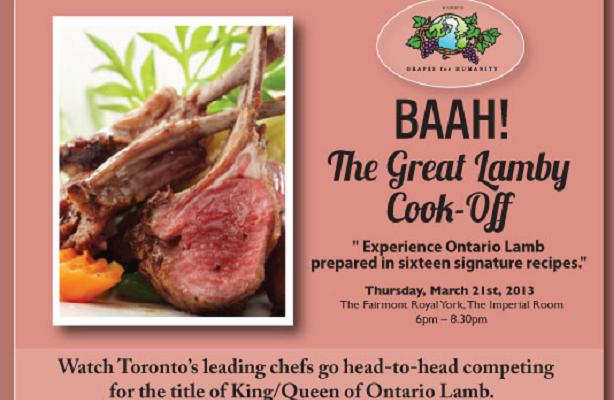
BAAH! The Great Lamby Cook-Off, Thursday, March 21st, 2013, Imperial Ballroom, Fairmont Royal York Hotel

BAAHTony Aspler knows more about wine than just about anyone I know. That he has taken his knowledge, his craft and his contacts in the food and wine world to champion a noble cause, well that is something to be admired. The organization he gives time to is called Grapes for Humanity, globally providing much needed relief to those less fortunate. Mr. Aspler organized yet another memorable GFH event, to benefit a child’s education by constructing a needed school in Guatemala. Twelve chefs, 12 lamb dishes, 12 wine pairings. You couldn’t spit without hitting a sommelier or a local oenologist. Chef Michael Pataran took home the top prize for his Goan Lamb Shoulder with a coconut, chili, lime chutney and paddle skewer. The best wine pairing went to the Henry of Pelham Baco Noir Reserve 2010, poured alongside Pataran’s “curry”; a double win. Stock Sommelier Zoltan Szabo directed the room with tireless energy.

Here, my favourite three wines at “BAAH”, plus a gorgeous Gigondas tasted in NYC on Saturday night.

From left: Rosewood Estates Merlot 2010, Tawse Merlot ‘David’s Block’ 2010, Norman Hardie ‘County Unfiltered’ Cabernet Franc 2011, and Domaine du Gour de Chaulé Gigondas 2007

Rosewood Estates Merlot 2010 (211896, $22.00) on this night walked a Niagara Wallendian tightrope of balance between heft and deft, sidling effortlessly up to Barque Smokehouse chefs David Neinstein and Tony Starratt’s ‘Mici‘ and travelling further on up the evolutionary road past “enjoyable if unremarkable.” From my earlier note: “Continues to show a reductive note in the form of vanilla and maple syrup, no honey actually, but all signs point to further excellence. High quality chocolate spiked by cherry, orange and a peppery, nasal tickle open up beautifully and expressively towards the dusty, berry main event. Knock your baby’s socks off with this double-stuffed Oreo and let the night unfold.  89 @Rosewoodwine

Tawse Merlot ‘David’s Block’ 2010 ($49.95) from certified organic and biodynamic estate fruit puts the double ‘L’ back in lush. Endowed of a caressing cashmere. Could act as spokesperson for Niagara Merlot announcing, “there are 10 kinds of people in the world, those who like Merlot, and those who don’t.” Calm, confident and marked by an insouciant nature. Earlier note: “Suffers no stenosis and instead flows as a sanguine and savoury riverine expression. Olives and the smokey whiff of yeasty bread on the grill. Not surprising considering the quality of Pender’s lees so often collected and added back to the next generation’s barrels.”  91  @Tawse_Winery  @Paul_Pender

Norman Hardie ‘County Unfiltered’ Cabernet Franc 2011 ($25) rolls the barrel out from a velvet underground into the Prince Edward County sun, pours singular Foster Vineyard fruit over crushed limestone then infuses the juice with ripe cherries. The warmth of 2010 lingers on in the ’11 CF’s pale blue eyes. Makes “the world as pure and strange as what I see.” Persists as the definitive expression of this grape in The County.  91  @normhardie

Dinner at Momofuku, Má Pêche, 15 w. 56th street, New York City, @momofuku

Má Pêche knows how to treat a lady, the President of the United States, and me. David Chang’s midtown eatery located in the Chambers Hotel opened in April, 2010. The Executive Chef is Paul Carmichael, a Barbados native who transmits Chef’s vision through elegant, restrained and poetic flavours. Carmichael and Chef de Cuisine Johnny Leach compose dishes as colourful canvasses but they are never over-painted nor monochromatic abstractions. Food of distinction and singularly distinct from plate to plate. Vegetables, many of the root kind, are succulent, glossy, al dente, and clearly defined. Service offers no pretense, no hovering, no massaging. Casual and professional. No hipster attitude neither.

Má Pêche AppetizersPhoto: Michael Godel

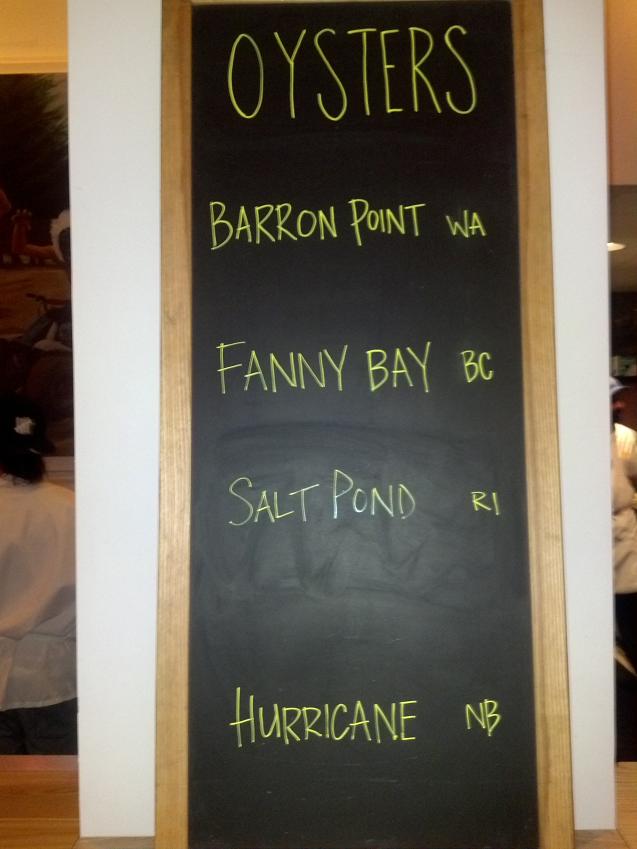
Má Pêche Oysters
Photo: Michael Godel

Oysters, especially New Brunswick Hurricane and Salt Pond Rhode Island are fresh makers, like spirits moving through the ocean. Washed those suckers down with 21st Amendment “Bitter American” Extra Pale Ale. Spanish Mackerel is a smokey, charred wave of umami with crisp, crunchy romaine and a silken tofu sauce, like citrus-spiked tahini. Barnegat Light Scallops are buttery, whispering, ethereal.

Appetizers

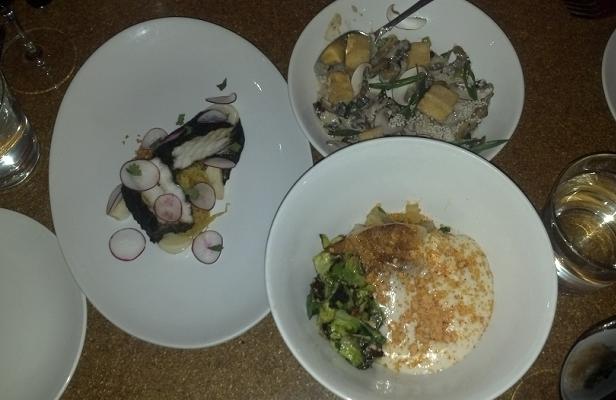
Má Pêche Appetizers

Chatham, MA Cod is foam cloud-enveloped, braised fish and brussel sprout ‘chips’ attenuated by malt vinegar. Jurgielewicz Farm, PA Duck two ways is perfect pink breast accented by candied orange rind and also piquant mici-like sausage, bucked by peppery spice. Provitello Fams, NJ Veal is fall apart, rosy neo-osso bucco, soft, supple and flat out delicious. The only non-wow moment comes from Barnegat Light, NJ Monkfish which shows indifference and a dry, dusty mole that barely mingles with needs to be further-rendered skin.

The wine list is more than thoughtful, embracing many needed food companion varieties, like Sylvaner, Trebbiano, Scheuerebe, Cabernet Franc, Nerello Mascalese and Teroldego. I opted for a southern Rhône Grenache blend imbued with just the perfect amount of age.

Domaine du Gour de Chaulé Gigondas 2007 ($31, Menu: 375 mL $32) of black/crimson mephitic and inky berry blush and lush, full-on sun-drenched fruit has reached full resolve. Licorice, kirsch and stony, meta-anthracite show off in the wine’s perfect window.  Decadent Gigondas.  92

Good to go!

A long and “wine-ding” tasting road

Wine tasting PHOTO: JUSTIN SULLIVAN/GETTY IMAGES

as seen on canada.com

It was right in my wheelhouse and on so many levels. Thirty-three wines, all but two from the Niagara region, spanning vintages from 2001-2010. Poured blind, each of five flights introduced analogous to pop music culture; Aretha Franklin, Frank Zappa, The Sister Sledge, The Who and Simply Red. It could only be zeitgeist for my virgin Experts Tasting experience at Brock University’s Cool Climate Oenology and Viticulture Institute (CCOVI).

It happened at Pond Inlet, a cozy, light-filled space, surrounded by a wine local’s who’s who. Vignerons, proprietors, journalists, sommeliers, marketing gurus and Brock U. luminaries. Seated next to Niagara’s über taster and 2013 VQA Promoters Award winner Rick VanSickle, but also in the ameliorated company of Mr. Wine DiscoveryThe Grape Guy and the Wine Sisters.

CCOVI Experts Tasting 2013 (Photo: Michael Godel/canada.com)

More than 140 samples were submitted by wineries to this year’s tasting panel, assessed blind and chosen for excellence, complexity but also adjunct in relative merit to their peers. The 2013 Experts tasting was akin to a structured wine in itself, seamless in flow thanks to Barbara Tatarnic of Brock University. The mostly in vain attempt at assessing vintage, origin and producer was a humbling and submissive gesture. This Storify board captures the social media buzz around the event.

A panel of four winemakers each gave their own unique in flight preamble perspective, followed by a tutored tasting and a reveal of the flight’s wines. The final coterie was a group test, in teams table by table, led in cheeky and mischievous form by a soon to be head-shaven sommelier.

The VQA Promoters Awards were presented at intervals during the event by wine educator Dr. Linda Bramble. Here were this year’s four recipients:

LCBO: Waterloo’s Charley Ronzio of Store 115.

Hospitality: CN Tower’s James Muir, the proprietor of Toronto’s highest cellar.

Promoter-at-Large: Harald Thiel, Vigneron and Proprietor, Hidden Bench Winery.

Media: Rick VanSickle, Wine Journalist, Wines in Niagara.

The wine tasting was then introduced by April Kilpatrick, Sommelier at Windows by Jamie Kennedy.

From left to right: Pillitteri Estates Winery Merlot Reserve ‘Exclamation’ 2010; Peller Estates Cabernet Franc ‘Signature Series’ 2010; Hidden Bench Vineyard and Winery ‘Terroir Caché’ Meritage 2010; The Foreign Affair Winery Cabernet Sauvignon 2010; and Stratus Malbec 2010.

Flight #1: R.E.S.P.E.C.T

Presented by Rob Power, Winemaker, Creekside Estate, employing Aretha Franklin’s signature because Miles dissed the grape when he said, “I’m not drinking any fucking Merlot!” This assemblage brought Merlot some respect, difficult as they were to pin down and Power later summed it up best. “Mission accomplished. We’ve messed with all your heads.”

Malivoire Wine Company Merlot ‘Stouck Vineyard’ 2010 ($29.95, winery only) of high-toned raspberry fruit is the Dr. Feelgood track. From mendicant, heavy red clay soil on the Lincoln Lakeshore making for concentrated small berries and dense, richly textured Merlot. Tarry, warming, accented by late baking spice and anise. Merlot is a serious business and “taking care of business is really this man’s gain.”  90-91  @MalivoireWine

Trius Winery at Hillebrand Merlot ‘RHS’ Clark Farm Vineyard 2010 ($40, winery only) is a rock steady, Four-Mile Creek, single vineyard effort full of mulberry fruit and dusty, chalky tannin. Let’s call this Merlot what it is, “a funky and lowdown feeling.”  89-90  @TriusWines

Creekside Estates Winery Merlot Reserve, Queenston Road Vineyard 2006 ($34.95, limited availability) spent 32 months in oak and now bricks its age in weathered, splintering cedar with a note of funky prune.  Illustrates the importance of site to Bordeaux varietals in Niagara. A Merlot to make you think, consider the past, “let your mind go, let yourself be free.”  88-89  @CreeksideWine

Creekside Estates Winery Merlot Reserve 2008  ($34.95, winery only) on the St. David’s Bench is “the smoked meat sandwich” says Power, and “a bit of a funkmeister.” Perhaps the flight’s chain of fools, like a blender looking for a Cabernet or two to join the party. Its slumber was 29 months in barrel. “For five long years I thought you were my man.”  88-89  @CreeksideWine

Twomey Merlot 2007 ($61.95, 14043) is the ringer out of Silver Oak in Napa Valley. Whiffs the most funky fromage but also a woman’s perfume. Racy, roaming, with umami, earth and a sweet/savoury line. Goes both ways, a Do Right Woman, Do Right Man kind of Merlot.  “And as long as we’re together, baby.”  89-90  @Twomey

Pillitteri Estates Winery Merlot Reserve ‘Exclamation’ 2010 ($25, winery only) tends Right Bank to me, certainly not Niagara. Big berry, citrus, bright fruit perfume. Heavy tannin, guns a’ blazing and an obvious strong use of American Oak. This one demands respect. “Oh, sock it to me, sock it to me.”  90-91  @PillitteriWines

Cornerstone Estates Winery Merlot 2010 ($23, winery only) appears to show some age though it’s really just a pup. Displays aggressive high-toned tannin with a patience towards potential. I say a little prayer for this Wismer Vineyard, Twenty Mile Bench on the Niagara Peninsula Merlot because if it falls apart, it “would only be heartbreak.”  87-88

Flight #2: The Mothers of Invention

Presented by Emma Garner, Winemaker, Thirty Bench, using Frank Zappa’s band as analogy to denote Cabernet Franc as the matriarch to all Bordeaux varietals. Could have sworn #4 was a ringer but no! There were none in the group.

Stratus Cabernet Franc 2008 ($38, 665034) from fruit picked on December 8th (what???) in Niagara-on-the-Lake. Young at heart, full of smokey, tangy, currant baking aromas. Maternal but blessed with firm, plush tannin. “Some people like cupcakes,” I prefer a muffin man.  89-90  @Stratuswines

Stoney Ridge Estate Winery Cabernet Franc 2010 ($18.95, winery only) is a Niagara Peninsula, red pepper jelly and citrus-spiked currant concoction made from Fox and Edwards Vineyards, 100% Bench fruit. Thought it was ’08 but wrong! Coffee and herbal balm make the water turn black and this Franc screams for food. 87-88  @stoneyridgewine

Riverview Cellars Cabernet Franc Reserve ‘Salvatore’s’ 2010 ($49.95, winery only) leans a lighter, elegant Loire style. Built upon clay/loam soils out of Niagara-on-the-Lake, aged in both French and American oak. Cool, cherry fruit, mint, herbaceous and full of personality. A fine girl this Riverview, “she do yer laundry, she change a tire, chop a little wood for de fire.”  89-90  @RiverviewWinery

Pillitteri Estates Cabernet Franc Reserve ‘Exclamation’ 2010 ($35, winery only) from family vineyards in Niagara-on-the-Lake ventures into voluptuous, black forest, fruitcake territory. A 24-month soak in French oak imparts espresso and leather and it’s as if this CF was raised in Napa or designated IGT. But this is NOTL were talking here. Improbable and believable. Modified Note: Big Leg Emma. “Sock it to me!” Tasted twice.  91  @Pillitteriwines

Peller Estates Cabernet Franc ‘Signature Series’ 2010 ($40.20, winery only) has got the funk in dark and dank waves. Top-tier barrel selection out of Four Mile Creek, this one is tight, tense and ready to jam with “a Stratocaster with a whammy bar” in Joe’s garage. Saw through to 100% Malolactic fermentation after 20 months in barrel. If you are jonesing for Cab Franc, don’t miss this player.  91-92 @PellerVQA

Trius at Hillebrand Cabernet Franc ‘Red Shale’ Clark Vineyard 2010 ($40, winery only) at 25.6 Brix is a huge wine from Four Mile Creek. Black beauty, with lots of chocolatey oak and dark fruit. Chalky, grainy thread indicates time is needed to settle it down. No valley girl, this one, nor shrinking violet. “It’s like so BITCHEN!”  89-90  @TriusWines

Pondview Estate Winery Cabernet Franc 2010 ($29.95, winery only) again out of Four Mile Creek has the red pepper, currant jelly notes but it’s less ripe and not nearly as big as some siblings in this flight. May have “no cars no diamond rings,” but it shows passion in a Zappacosta, spandex kind of way.  87-88  @pondviewwinery

CCOVI Tasting

Flight #3: We Are Family

Presented by Ron Giesbrecht, Winemaker, Henry of Pelham Estate Winery, discussing “vinified” incest, i.e. Bordeaux grapes which have essentially married their kin. His dissertation, impossibly deadpan, was a cross between Stuart McLean and Ron MacLean. His take on attending to wines of Bordeaux genealogy? “How do you know which side of the church to sit on when you’re related to so many on both sides?”

Fielding Estate Winery Cabernet Merlot 2010 ($34.95, winery only) alights in lithe tendrils before adding coffee, meritage mid-weight. Currants, nasturtium and red fruit compote buoy this cooler Niagara blend that combines fruit from the the Lincoln Lakeshore, St. David’s and Beamsville Benches. A good dancer with “the kind of body that would shame Adonis.” Expertly balanced with the spine to age.  88-89  @FieldingWinery

Malivoire Wine Company Cabernet Merlot ‘Stouck’ ($29.95, winery only) from down on the Lincoln Lakeshore is a pitchy rendition with a pronounced roasted espresso note. Seems to me the motherly, Cabernet Franc’s genes have imparted their wisdom into this (63%) Cabernet Sauvignon dominant beauty with big Cassis fruit. Chic, juicy, with a filled in mid-palate and stiff structure. Grab a glass, “leave your cares behind, these are the good times.”  90-91  @MalivoireWine

Stratus Red 2010 ($44, winery only) seemed older but that just might be the 617 days it spent in barrel. Cab Franc dominant with the help of Cabernet Sauvignon, Merlot and the late bloomer, Petit Verdot. Got to love somebody so it may as well be this red, because “I won’t let my life pass me by.” The four grapes help to explain Giesbrecht’s “relative merits of relative meritage.”  89-90  @Stratuswines

Hidden Bench Vineyard and Winery ‘Terroir Caché’ Meritage 2010 ($35, winery only) has rich, voluptuous Napa Valley written all over it. Sister Merlot dominant, Beamsville Bench sledge monster. Plumbago, mineral, blackberry and coffee in a wine that will be the ringer in a blind tasting 10 years on. Harald may be saying “this is our family jewel.” Mr. Thiel, you make good wine.  91-92  @HiddenBench

Hidden Bench Vineyard and Winery ‘Terroir Caché’ Meritage 2007 ($45, winery only) emits the varnish of the ’07 Niagara vintage. Soy, meat protein and caramel give way to a sweeter, plum accented palate. This ’07 is Le Freak, with more Cabernet Sauvignon, indicative of what we did not know then. So much to learn from wines like this, “like the days of stopping at the Savoy.”  87-88  @HiddenBench

Henry of Pelham Family Estate Winery Speck Family Reserve Cabernet Merlot 2002 ($50, not available) from the Niagara Peninsula shows toffee and concentrated, oxidized fruit. That said, it has aged well and still offers intellectual spirit in dried fruit and potpourri. Great old tune to Dance, Dance, Dance along to. 88-89  @SpeckBros

Henry of Pelham Family Estate Winery Speck Family Reserve Cabernet Merlot 2010 ($50, 616433) from the sunnier and warmer sponge that is the Short Hills Bench is built of a learned structure that only a select few Niagara wines can boast. Fresh, juicy fruit and blitzing acidity for a 38/35/29 Merlot/Cabernet Sauvignon/Cabernet Franc family sledge blend. “I’d like to see you reach your peak” SFR but I’ll have to heed Giesbrecht’s warning of oeno-infanticide and wait five to ten years. Tasted twice over the weekend.  92  @SpeckBros

Flight #4: Meaty, Beaty, Big and Bouncy

Presented by Ilya Senchuk, Winemaker, Foreign Affair Winery, relating (mostly) Cabernet Sauvignon wines to the idiomatic album by The Who. “We want wines with bounciness,” says Senchuk, “with a knife edge balance of weight and complexity.”

Creekside Estates Cabernet Sauvignon Reserve 2006 ($34.95, limited availability) shows age, wood finish, plums and berries. I had this pegged as an ’06 (scouts honour). Not a classic Bordeaux vintage in the Queenston Vineyard on the St. David’s Bench but well-structured and really, there is no substitute. “I look pretty young, but I’m just back-dated, yeah.”  88-89  @CreeksideWine

Malivoire Wine Company Cabernet Sauvignon ‘Stouck’ 2010 ($29.95, winery only) from down on the Lincoln Lakeshore is a big, blowy, brawny wine of massive concentration. Designed for my generation, with jammy flavours from clay soils on good slopes. “People try to put us d-down, just because we get around.”  89-90  @MalivoireWine

Southbrook Vineyards Whimsy Cabernet Sauvignon ‘Lot I’ 2010 ($34.95, winery only) from the Niagara Peninsula is a chameleon, ever evolving in the glass, perplexing, fascinating to study. Possessed of dried fruit and decidedly earthy flavours, complexity and balance. Can “go anywhere, for something new,” anyway, anyhow.  89-90  @SouthbrookWine

Thirty Bench Winemakers Cabernet Franc ‘Small Lot’ 2010 ($40, winery only) lopes out in lacquer than lifts towards sweet red pepper, dusty mulberry and cracked black pepper. All the while a current of Beamsville Bench, black currant acidity runs through it. This one’s a seeker, “its got values but I don’t know how or why.” At least not yet. Give it time.  87-88  @ThirtyBench

Stratus Petit Verdot 2010 ($38, winery only) with its bounce is the Happy Jack of the flight. Thick in weight and texture, a steak sandwich in a glass. Remarkable effort for stand alone Petit Verdot in Niagara-on-the-Lake. Has a certain Spanish modernity and is certainly neither “petite” nor “little.” Say what you want about this PV but never “prevent Jack from feeling happy.”  90-91  @Stratuswines

Fielding Estate ‘Option C’ Red 2010 ($34.95, winery only) begins with an off-putting, scorched earth funk and I wonder if it will blow off. Makes me “dizzy in the head and I’m feeling blue” so I can’t explain but it does indeed dissipate. Cabernet Sauvignon leads the way out of the Lowry Vineyard on the St. David’s Bench with 15% each Merlot and Cabernet Franc rounding out this strong, rhythmic and beaty Bordeaux blend.  89-90  @FieldingWinery

The Foreign Affair Winery Cabernet Sauvignon 2010 ($37.95, winery only) is very pretty, forward and inviting. Juicy fruit from south facing vines on top of the Niagara Escarpment. Made in the Appassimento style, with 25% of the fruit dried then added back to the wine and 23 months spent in barrel. Puts this Cab in a seat on the Magic Bus. Rogue process, tame result. “I want it.”  91-92  @wineaffair

Flight #5: If You Don’t Know Me By Now

Presented by Peter Bodnar Rod, 13th Street Winery, like a comic book villain, leading the crowd into the uncomfortable nooks and crannies of guessing wines blind. This was a thrilling flight, crushing wine libidos and crowning champions of the game. Notes here are a bit more brief.

Stratus Malbec 2010 ($48, winery only) is made with the help of consulting oenologist Paul Hobbs in an “Alta Vista,” high-altitude style. Cool-climate rendition, a window to the future for the grape in Ontario. Hits a blue note, kind of like Philly soul. Unheard of 10 years ago, this one’s saying “just trust in me like I trust in you.”  90-91  @Stratuswines

Southbrook Vineyards Cabernet Franc ‘Watson Vineyard’ 2002 ($30, not available) shows amazing longevity and freshness. Proof of the Peninsula’s magic to state “you will never never never know me.” Simply solid red.  90-91  @SouthbrookWine

Château Branaire-Ducru, Saint-Julien 2001 ($109, 9852) is the first red herring and stupefies in origin and vintage. I actually found it drying and disappointing. Bordeaux? Whatever.  88-89

Henry of Pelham Family Estate Winery Merlot Unfiltered 2002 ($29.95, winery only) was harvested in October on the Niagara Peninsula. Showing the soy sauce, umami and oxidation of its sistren. Yet another anything but simply red wine from H of P to show us “all the things that we’ve been through.”  87-88  @SpeckBros

The Foreign Affair Winery ‘Temptress’ 2010 ($44.95, winery only) is shepherded by Merlot with bits of Cabernet Franc, Cabernet Sauvignon and Petit Verdot thrown in for good 15.3% abv measure. Sugary, concentrated and full-bodied. Not for the simply red faint of heart. Embrace this big appassimento style  or “what good is a love affair when you can’t see eye to eye.”  90-91  @wineaffair

Good to go!