To Trius, by air

Niagara Falls from aboard Niagara Helicopters

Niagara Falls from aboard Niagara Helicopters

After the final day of preliminary round judging was wrapped and tied with a computer algorithm’s bow at the WineAlign National Wine Awards of Canada it was time to take to the skies. The judges and WineAlign cognoscenti embussed into autogiro cabins at Niagara Helicopters. With a quick and nearly non-discernible thrust we rose like knives through butter up into the Niagara sky. A zig over the cartoon city adjacent the horseshoe and American cascades and then a zag across the Whirlpool Golf Course later, the choppers headed for the Falls.

Flying to Trius with fellow #NWAC15 judges Nadia Fournier and John Szabo

Flying to Trius with fellow #NWAC15 judges Nadia Fournier and John Szabo

Viewing the tumbling wonders from this vantage point is a thing of extraordinary exhilaration. The two-dimensional flatness of the river careening towards a three-dimensional, 90-degree downward fall into the gorge below is a trompe l’oeil for the eyes. With nothing but a thin glass veil acting in separation, I would have thought that a Dolly Zoom effect might occur. On the contrary, from within there would be no semblance of Hitchcock technique in recession to simulate vertigo. The weightlessness and effortless glide is a situation akin to being a kid in a candy store. I highly recommend the experience.

Niagara Helicopter

Niagara Helicopter

Minutes later the helicopter did soar, headed east and descended upon the agricultural and viticultural wonder of Niagara-on-the-Lake. From high above, the acreage of vines looked like tiny peas all in a row. As the land crept up into view the dots came into focus and to see the canes and their early summer foliage as such a magnanimous maze from above is a perspective all should experience.

Niagara Falls, Ontario

Niagara Falls, Ontario

The elapsed time between landing at Trius and diving head first into a glass of Marco Piccoli‘s Jackson Triggs Entourage Grand Reserve Brut 2011, Méthode Traditionnelle, VQA Niagara Peninsula, Ontario (234161, $24.95, WineAlign) happened in the blink of a transmogrifying eye. A Sparkler or four, Chardonnay, Sauvignon Blanc and Pinot Noir or six and some quick tasting note scribbles later we were seated at a ridiculously long harvest table beneath the arbour and ready for dinner.
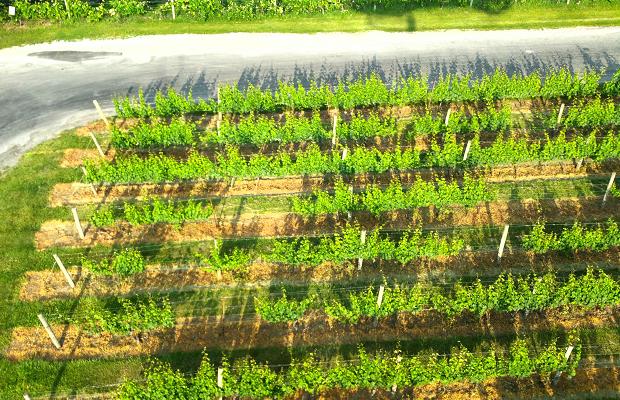
The vines of Trius Estates at Hillebrand

The vines of Trius Estates at Hillebrand

Winemakers and from several Niagara wineries were on hand to join us at Trius. J-L Groux (Stratus), Arthur Harder (Westcott), Adam Pearce (Two Sisters), Ann Sperling (Southbrook), Kent Macdonald (Henry of Pelham) and Marco Piccoli (Jackson Triggs) extrapolated on the passion of their work, in their wines and for Niagara as a community. Four courses and fourteen wines were touched, nosed, tasted and assessed. But for the Trius and by extension Peller staff, ushered by the grace of uncompromising and unparalleled generosity at the hands of Magdalena Kaiser and Joanna Muratori from Wine Country Ontario, this was an event to commit to heart and to memory. On a very personal note that night now belongs and rests in reminiscence within this log.

WineAlign team at Trius

WineAlign team at Trius

Peller Estates

Signature Series Sauvignon Blanc 2013, VQA Niagara On The Lake, Ontario (405043, $24.95, WineAlign)

The 2013 Signature Sauvignon Blanc carries forth from the ripe, mature, oxidative and intensely flavourful 2012. This next vintage cements the full-on style, even while it candies the fruit, seemingly in reaction to temperatures and precipitation that came and went with inconsistent extremes. There is a kid in a candy store, multi-coloured ribbon of taffy sensation, curiously antithetical to the rusty, yeasty, platinum scenting elixir. The effects of barrel fermentation (80 per cent) and concrete egg fermenter (20) dispatch has this Sauvignon stretching, pulling and elastically boomeranging about the glass. Magnetic to be sure, not always a success, but encouraged. Drink 2015-2018.  Tasted June 2015  @PellerVQA

Soubrook Whimsy! Orange 2014 and Westcott Vineyards Violette Sparkling

Soubrook Whimsy! Orange 2014 and Westcott Vineyards Violette Sparkling

Westcott Vineyards

Lillias Unoaked Chardonnay 2013, VQA Vinemount Ridge, Ontario (Winery, $20.00, WineAlign)

Winemaker Arthur Harder makes no bones, excuses or sets the goals too lofty in this second Lillia’s unplugged. “What you get is what you get,” from seven year-old estate, pristine fruit in 2013. Infrequent but texture stirring lees has mottled the nose with glycerin and avoirdupois while bottling early in the spring in advance of warm days has locked in freshness. Expression arrives by way of herbiage and lime. Continues where ’12 left off, further akin of Chablis. Drink 2015-2017.  Tasted June 2015  @WestcottWines

Sparkling Wine ‘Violette’, VQA Niagara Peninsula, Ontario (Winery, $24.95)

Like the aviatrix muse Violette, the inaugural Westcott sparkler is pioneering and flies out of the glass. Made in the Charmat method at Vieni Estate where bubbles are quickly becoming a thing, this is from the 2012 vintage, though it is not noted on the bottle. Come down from the high horse and embrace the nascent, lambent breezes of Violette. After all, texture is rarely negotiated in Charmat as it is in this lemon concentrated fizz. It finishes with a dash of good bitters. In these respects the Violette has earned her wings. Drink 2015-2018.  Tasted June 2015

Estate Chardonnay 2013, VQA Vinemount Ridge, Ontario (Winery, $26.00, WineAlign)

The barrel fermented and aged Estate Chardonnay spent 12 months in two-thirds new and one-third second fill wood. Lees stirring is slightly increased as compared to the unplugged. Again, it’s about aromatic intensity leading the way to palate density. By the sounds of Westcott’s comments “we’re pleased with its remarkable irony — dry and sturdy, yet creamy and rather curvy,” you might think the team was stirring with impunity. Not so. The Estate Chard does the dance of mild spice and butter on toast to reach a texture that would appease savages. Unavoidable and typical low yields from the Vinemount Ridge picked at the right moment and handled with caring tabula rasa are the spirit in this wine. Delightful and charming. Drink 2015-2020.  Tasted June 2015

Estate Pinot Noir 2012, VQA Vinemount Ridge, Ontario (Winery, $30.00)

Once again, from the challenging and commercially impaired soils of the Vinemount Ridge, a wine of richness, layering, intellect and intrigue. Riesling and Cabernet Franc are the axiomatic varieties to speak of the Ridge’s terroir but this Westcott reinforces the Pinot habitation, defined by Tawse (Quarry Road, Lauritzen and Laidlaw), now complimented by Big Head, Le Clos Jordanne, Vieni and Westcott. Natural soil given tendencies to ferric aridity, spice and limestone silk fill this Harder composition, softened by the warmth of the vintage. Concentration talks, a touch of VA walks and expected tannic grip secures the lustrous, dark cherry fruit. This is a stygian version of a VR Pinot Noir with tones that go for big and structure that supports the hyperbole. It should not be ignored. Drink 2016-2020.  Tasted June 2015
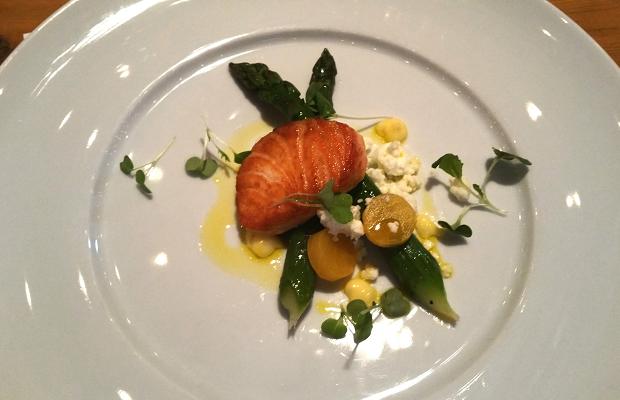
Ontario asparagus and hot smoked salmon

Ontario asparagus and hot smoked salmon

Stratus Vineyards

Tempranillo 2012, Niagara On The Lake, Ontario (Winery, $42.00, WineAlign)

In 2012 the J-L Groux take on the expatriate Spaniard is warm, rich, cake-driven and yet balanced in ways the 2010 was unable to exhort. This vintage appeases Groux’s ends of the earth search for aromatics, picking on them, executing vinification to encourage them and barrel-aging for the purpose of cementing them. The 2012 is an aromatic success. It exudes red fruit, flowers, baker’s kitchens and wet Niagara on the Lake earth. This is a clean and jerk Tempranillo, a bouquet to success. The palate, mouthfeel and mellow finish return the favour of 2010 when it was noted that the variety in this place is a stretch, overweening perhaps, certainly self-effacing if admittedly short of contumelious behaviour. Drink 2015-2019.  Tasted June 2015  @StratusWines

Cabernet Franc 2012, Niagara On The Lake, Ontario (Winery, $38.00, WineAlign)

A Cabernet Franc of settled, harmonious tones, of oak that sets sights and heights to heah, now integrated at such an early age. The grape succeeds and bleeds an exemplary, stalwart varietal suspension within the Stratus pantheon, a sanctuary where fiddles are yet played by other outfits across the region. Cabernet Franc will increase in the Stratus red, for good measure and reason. This ’12 is simply smothered in an embarrasment of red fruit, smoky from raspy reds to plugged in currants. It is of a favour in flavour that reminds of Swedish berries, in modulated hög, though not in sweetness. Drink 2015-2021.  Tasted June 2015

Beef Rib-eye and Pastrami beef shortrib

Beef Rib-eye and Pastrami beef shortrib

Two Sisters

Merlot 2012, VQA Niagara River, Ontario (Winery, $48.00, WineAlign)

“The river man runs, the river man runs.” With this turn a phrase and changing of a guard Merlot, winemaker Adam Pearce ushers in the new Two Sisters oeuvre, for the betterment of all. No longer over-produced yet still ambient, the ’12 sets the turntable for less oaky Sisters’ reds to come. With new barrels on the way out and older and ductile wood coming in, Bordeaux varieties in Pearce’s hands echo and play notes within notes, strum electric in mature chords, then finish with strings and saxophone brass. The 2012 is a true Niagara Riverman, adhering to intrinsic warmth and carrying with it the deep clay rich earth and a wild raspberry luxuriance. It will take seven to ten years to peel back the layers of uberty in this Noel cake Merlot from Niagara River. Drink 2017-2022.  Tasted June 2015  @2SistersVine  @KVH_Wine

Southbrook Vineyards

Whimsy! Orange Wine 2014, Niagara On The Lake, Ontario (Winery, $34.95, WineAlign)

The post blind-tasted discovery that Ann Sperling’s Orange was in fact a 100 per cent Vidal made perfect regional sense, something expertly opined at the time by Rick Van Sickle. Having poured the natural saffronage on tap at Barque Smokehouse for two months I was curious to view it through another lens, to see it tipped from bottle. It has settled now, the acidity squeegeed and rolled out a TA point or two. What was grapefruit in demand is now grape in fruit cup. Still viably fresh, it is now pretty, accessible, settled comfortably into its skin. The verve will yet persist through this temperate time in the temporal lobe. Drink 2015-2016.

From my earlier note of December 2014:

“We’ve been waiting to do small batch, stem fermentation,” Ann Sperling tells us as we have a good look at the lustrous, foggy glass of orange-yellow colour more micro-described as either croceate or gamboge. “Now we have the infrastructure to do so.” Stems add architecture (and a preservative effect), something that is otherwise compromised in a sulphite-free wine. This nameless natural wine was biodynamically-raised, indigenously-yeasted and freed from the constraints of temperature control. No wood was used, only stainless steel and glass carboys. The orange and natural classification comes by way of the complex ebullition (closest in style to the Collio hills wines of Josko Gravner), in colour, weight, elegance and the dichotomy of skin fermentation. Sperling used acumen derived from the concept at Argentina’s Versado, where skins are employed in a similar way when making Malbec with husband Peter Gamble. This young wine is filled with terpenes and is highly, desperately aromatic. Lemon curd is up front and centre. It’s got a tart tang and at (approximately) 11.8 per cent alcohol, the gravity is impossibly beautiful. Sperling’s take is “a fair reflection on the vintage” and it’s the mouthfeel that sets it apart. What’s the varietal make up, single or a blend? If the latter, was it co-fermented? Ann will only tell us that it was harvested over a two week period in October. The big question is will it receive VQA approval. Viognier and Pinot Gris should certainly be options but I’m not aware of Southbrook ever having employed their use. Sperling’s Whimsy! Winemaker’s White uses Muscat so perhaps we could go that direction but the aromatics don’t jive. Riesling is the simplest road to take and if the Southbrook Connect Organic White 2013 is any indication, the combined effect with Vidal could certainly steer this Orange ship. But If I were made to guess, to have some fun with concept, I would suggest that it’s a blend of white and red grapes, but Southbrook does not grow Pinot Noir so that should rule out Chardonnay as well. So I conjure up a song. “Well I had a dream I stood beneath an orange sky.” With a union of grape varieties standing by. Cabernet Franc and Sauvignon Blanc feed my Spidey senses, so under the auspices of that marriage, what we might have here is an offspring, a Cabernet Sauvignon. A very natural one. An orange one.

Last tasted June 2015

Poetica Chardonnay 2011, VQA Niagara On The Lake, Ontario (Winery, $49.95, WineAlign)

The 2011 has entered an uncommunicative phase though the soft tones and whispering harmony offer faint prefaces to honey and burgeoning viscocity. The next flip of the calendar will tell a story. Drink 2016-2021.

From my earlier note at Gold Medal Plates, Toronto, November 2014:

There is still a tough outer layer to crack. A poem of many stanzas has only just begun. Mute yet delicate, the stratified vineyard is the Poetica’s poetry; tight, yet forwardly futuristic towards the ephemeral and the aerified.

From my earlier note of July 2014 note:

Has integrated nicely though certainly persists as a big, lush Chardonnay. If there were splinters or sinewy bits they have melted away.

From my earlier note of May 2014:

The Poetica underwhelms at the present time, or perhaps hides in her youth. She’s a calm, buttery, mildly toasted, supportive softie and more accessible than her Sperling west coast sistren. Like a cool Chardonnay soffit hiding beneath a warm bench, the Poetica speaks not for the vintage but more for the current vineyard, a warm and hip spot in the Four Mile Creek appellation. The site remains (at least to me) understood but the unctuous aspect in texture and gathering sweetness with time in the glass will realize a richesse yet unseen. Poetica’s refrain is like “wind on the weathervane,” her tragically subdued fruit quiet, but able to travel long. Time will be the reveal, so be patient.

Last tasted June 2015

Poetica Red 2010, VQA Niagara On The Lake, Ontario (Winery, $54.95, WineAlign)

At the young adult age of five the Poetica ’10 has retreated and redacted from the heat of that scorching vintage, centred itself and found balance. Gravity no longer shackles the gathering, shaped from Cabernet Sauvignon (51 per cent), Cabernet Franc (31), Merlot (15) and Petit Verdot (3). The next Poetica (2012) used PV as an adjuvant, something the 2010 would now be singing along with were they to have known then what they know now. The ’10 now heli-glides, as if hovering in kind to a set of blades on high whirl, up to where energy is effortless and tension keeps the craft afloat. More of that intensity will continue for 18 months to two years, after which the blades will loiter and wind down for a five to seven years further finale. Drink 2016-2022.  Tasted June 2015  @SouthbrookWine  @AnnSperling
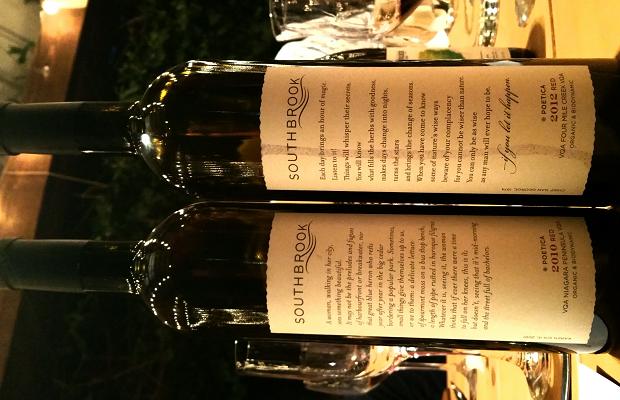
Southbrook Vineyards Poetica Red 2010 and 2012

Southbrook Vineyards Poetica Red 2010 and 2012

Poetica Red 2012, VQA Niagara On The Lake, Ontario (Winery, $54.95, WineAlign)

Now that the Poetica ’12 has seen release, it of course ironically submerges into slumber. The natural palate funk, chalk, talc and clay condensed grain are the gravity while pepper-savoury aromatics catalyze the supply. Credit time with future comings out. Drink 2020-2027.

From my earlier more of December 2014:

The Poetica Red ’12, slated for a Spring 2015 release, is amazing and intriguing on many levels. But for the fact that Petit Verdot (26.5 per cent) plays such a major varietal role, what must first be declared is the disseminated learning applied to this application. The dos and don’ts of previous (only produced in) warm vintage Poetica Reds will see a shedding of those don’ts in this 2012. Ann Sperling ushers in a new era for Niagara Bordeaux assemblage and if this wine is any harbinger, others will follow suit. Here celebrates a love for the land (environment), poetry and more specifically, Canadian poets. Chief Dan George, he of North Vancouver and the Hollywood screen, penned “Words to a Grandchild.” In it he wrote, “in the midst of a land without silence, you have to make a place for yourself.” Poetica Red ’12 will have done that when viewed retrospectively, 10-15 years from now. It will have grown old, but also wise. As for now it’s brooding, melancholy even. It’s all of that and this; endemic, entrenched, crenellated, ensconced and indoctrinated with Niagara knowledge. Has a dusty, earthy, even funky poetry. More depth than many, much realized acumen and will live long. Given 30 minutes of air it showed the ribbons of classic Niagara reds. All these concepts combine to see Poetica Red ’12 not so much as huge, but with depth and complexity.

Last tasted June 2015

Thirty Bench

Small Lot Benchmark Red 2010, VQA Beamsville Bench, Niagara Peninsula (winery, $60)

The landmark red from grit inducing Bench soils has added a splenetic pitch to its already peppery temper. Like “dry and wet ice, they both melt,” the modest Merlot plus two Cabs mix is in a frenetic, edgy place. Allow for three more years before having a new listen and taste. Drink 2018-2023.

From my earlier note of February 2014:

Indoctrinated Right Bank agglomerate built on 62 per cent Merlot, supported by equal parts Cabernet Franc and Sauvignon. Impressively warm and dusty, large, bursting berry dominated with a peppering dredge all around. So much flavour abounds, blanketed by a shaker full of vanilla spice, like “an endless ocean landing on an endless desert.” Still the Benchmark is modest, oaked (18 months) but not overly soaked, pure and in balance. The berry concentration renders it as a resident of the dark centre of the Niagara red blend universe.  Last tasted June 2015  @ThirtyBench

Trius Winery at Hillebrand

Trius Showcase 5 Blanc De Noirs 2009, VQA Niagara Peninsula, Ontario (420521, $55.00, WineAlign)

Auspicious opening for the top end, new Trius Sparkling wine, based on Pinot Noir (70 per cent) from Four-Mile Creek (Lawrie Vineyard), with support from Pinot Meunier (30). Five is the number of years slumbering on lees, a voyage into triage to transport this singular Niagaran into the stratosphere of the region’s pantheon. Arid, toasty and slightly oxidative as per the wild ferment, Craig McDonald style. The toast is spread with a tapenade of (more) lightly toasted nuts, tarragon, morel and earth. There is a feeling of berries, void of pigment, slightly tart and very fragrant. Also the not so pungent but forest emergence of basidiomycete fungus. Delicate, complex, creamy and simultaneously, so very dry. A wine to sip at a large gathering around an antique harvest table or deep into the next decade. Drink 2015-2028. Tasted May and June 2015  @TriusWines
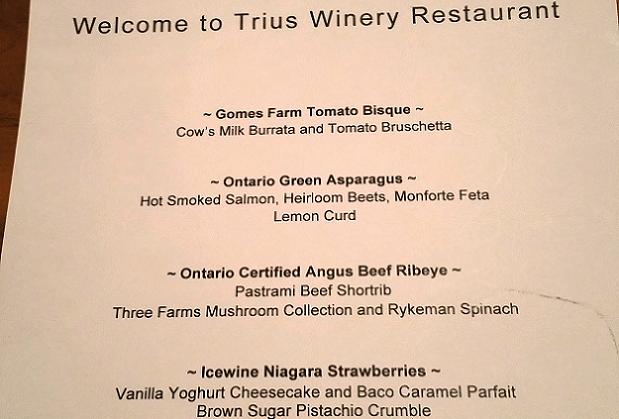
Dinner menu at Trius

Dinner menu at Trius

Good to go!
http://www.winealign.com/profile/2058-mjg

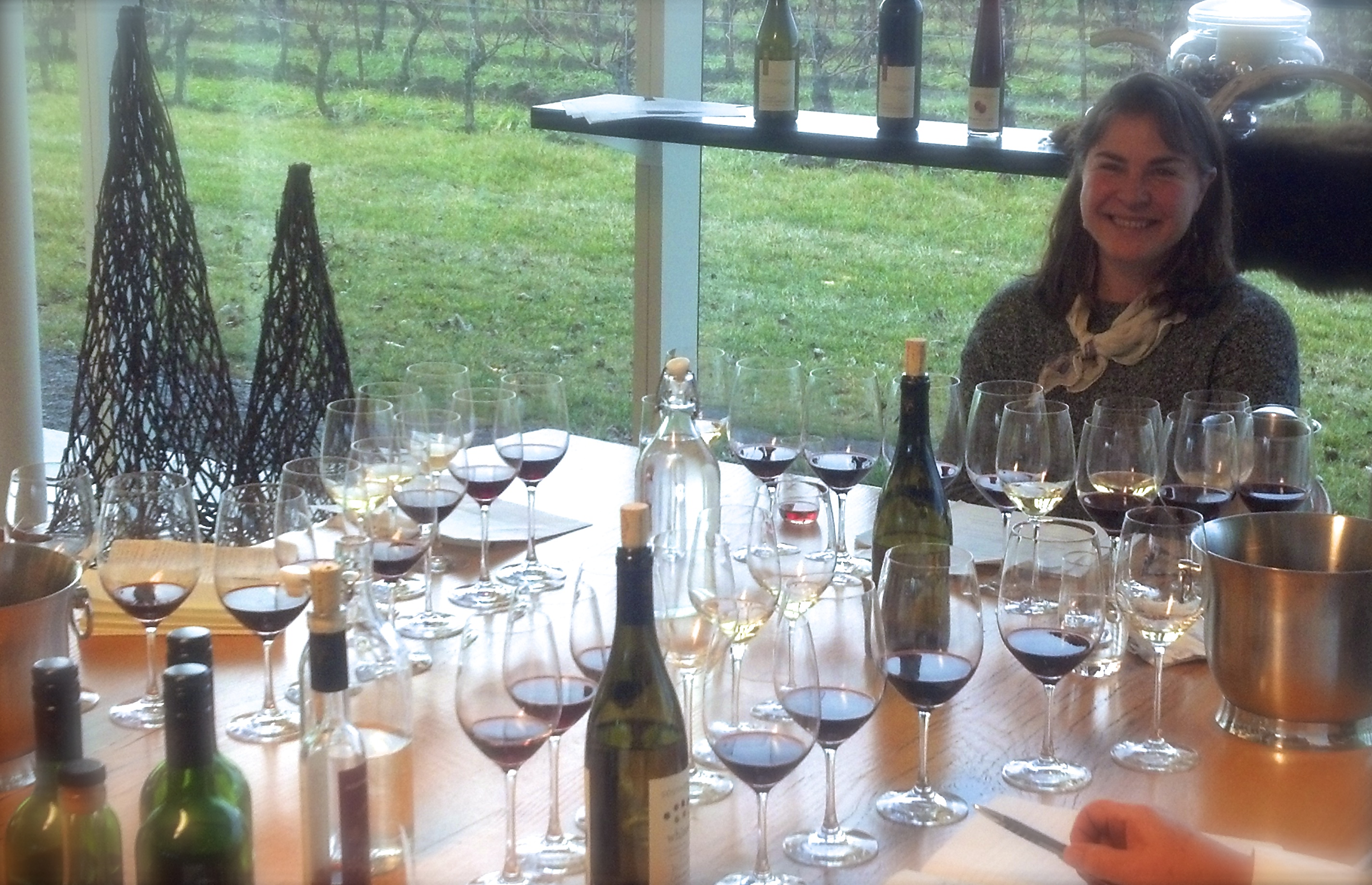
Red, white and orange at Southbrook Vineyards

Southbrook Whimsy! Reds, Whites and Orange

She says she’s making a similar wine in British Columbia, but Ann Sperling will tip no varietal hat, will offer up no hints, will not reveal the make-up in her new, all-natural Orange wine. That’s right. Orange wine.

To arrive at this (nothing rhymes with orange) juncture, a bit of background on the winemaker and her Ontario employer, Southbrook Vineyards. Sperling is from B.C., where she makes Riesling, Pinot Noir, Chardonnay and piercing Sparkling Wines at Pioneer Ranch, the family heritage farm under her eponymous Sperling Vineyards label.

Related – A cultivated tale of two Okanagan wineries

Southbrook as a winery and a vineyard is a leader in Ontario’s increasingly developing biodynamic and organic direction. Ann Sperling introduced proprietors Marilyn and Bill Redelmeier to the sprawling property in Niagara-on-the-Lake and it is there that their commitment to farming organically and biodynamically is managed in the vineyard by Scott Jones and in the winery by Brian Hamilton and Regan Kapach.

The Redelmeiers are no strangers to the concepts and the agrarian way. Who does not remember making necessary stops at their farmstead and pumpkin patch on Major Mackenzie Rd. between Dufferin and Bathurst in Richmond Hill. Southbrook defined that concept in the 80’s and 90’s, by bringing a distinctly rural Ontario feel to the edge of Toronto civilization. People came from all four directions for their farm fresh produce. Chappell Farms, Chudleighs and Whittamore’s all owe a major level of their success to Southbrook’s pioneering concept.

The Redelmeier cattle farm on the 19th century property in Richmond Hill morphed into that roadside vegetable stand in the 1980s. Winemaking came next and then in 2005, Bill and Marilyn relocated to Niagara. Having chosen to pursue certifications for both the vineyard and the winery – including LEED, biodynamic and organic certification, the Redelmeiers have been instrumental in the revolution.

Ann Sperling is a natural fit for their manifesto, to produce high quality wine from estate fruit under the strict O & B directive. The upper echelon Southbrook wines are bottled under the labels of Triomphe, Whimsy! and Poetica. That she has now decided to make an orange wine is, well, natural. I think a great deal of Ontario wine drinkers, along with those beyond these borders don’t quite get Southbrook. Gaining insight as to why the Orange wine should be made is no less difficult than acquiring an understanding as to what the Southbrook portfolio is all about. You need to spend time with the wine and the winemaker. This point is essential.

Winemakers are intensely focused individuals. Their wines live and breath. As a parent to their children, winemakers feel their every step. Their hopes and dreams rise and fall with every breath they take. Sperling had thought about it for years but the 2014 vintage allowed her to take the experimental, all natural plunge.

She is not the first to do the orange wine thing. In his May, 2014 Macleans article, Orange is the new white (wine), John Szabo reported on his involvement with making such a beast in Ontario. Together with Norman Hardie and François Morissette, they have fashioned one from Riesling in Prince Edward County. Szabo wrote, “Ontario vintners are experimenting with an ancient Georgian technique and a 500-litre qvevri. “With an imported clay vessel their wine currently rests in a 500-litre qvevri in Hardie’s cellar. Szabo had also discovered that Richie Roberts of Fielding Estate was the first orangista in Canada. Roberts made 400 bottles of skin-fermented Viognier in 2012, though not in clay. Szabo had previously referred to Stanners Vineyard Pinot Gris Cuivré 2010 as “the first orange wine made in Ontario.”

Ann Sperling in the Oak Room at Southbrook Winery

Ann Sperling in the Oak Room at Southbrook Winery

The natural/orange wine debate is hot right now and not because of the reasons you might think. The smoke and mirrors of discussing the merits of making such wines or to question whether it’s rubbish is clouding the discussion. Or as Alexandra Gill reports in her most recent Globe and Mail article, “fault-indulgent hippie juice as a major scam,” or the smell of “stale, mouth-puckering morning breath.” The technique and the practice is ancient and has been kept alive. The only questions need asking are “is it good, is it well-made and would I like to drink it?”

Then along comes the Hosemaster of Wine, Ron Washam who insists “don’t publish anything about natural wine on your blog in 2015.” Washam is right when he comments on the hypocrisy of “natural wine shipped in an ocean-polluting tanker…loaded on an exhaust-belching truck…and you feel good about it because the guy who made it didn’t spray Roundup?” This N-word wine story, however, is allowed. Here we are discussing an Orange wine made with attention to ancient detail, in our Niagara backyard, the one I travelled to the source to taste and you know something, it’s pretty fucking good? You’re a funny man and a really good writer but let me ask you something. You got a problem with that Ron?

I sat down with Ann, Wines In Niagara writer Rick VanSickle and Paul DeCampo, Southbrook’s Director of Marketing & Sales on Sunday, December 28th to taste the new or yet released Triomphe ’13’s, Whimsy! ’12’s and Poetica ’12’s. A ’13 Cabernet Franc Icewine and the mysterious, ubiquitous and enigmatic Orange wine rounded out the tasting card. The experience went a long way towards adding Southbrook Vineyards to the loftier queue’s cerebral vinous database. Going forward, I’ll surely never look at these wines in the same light.

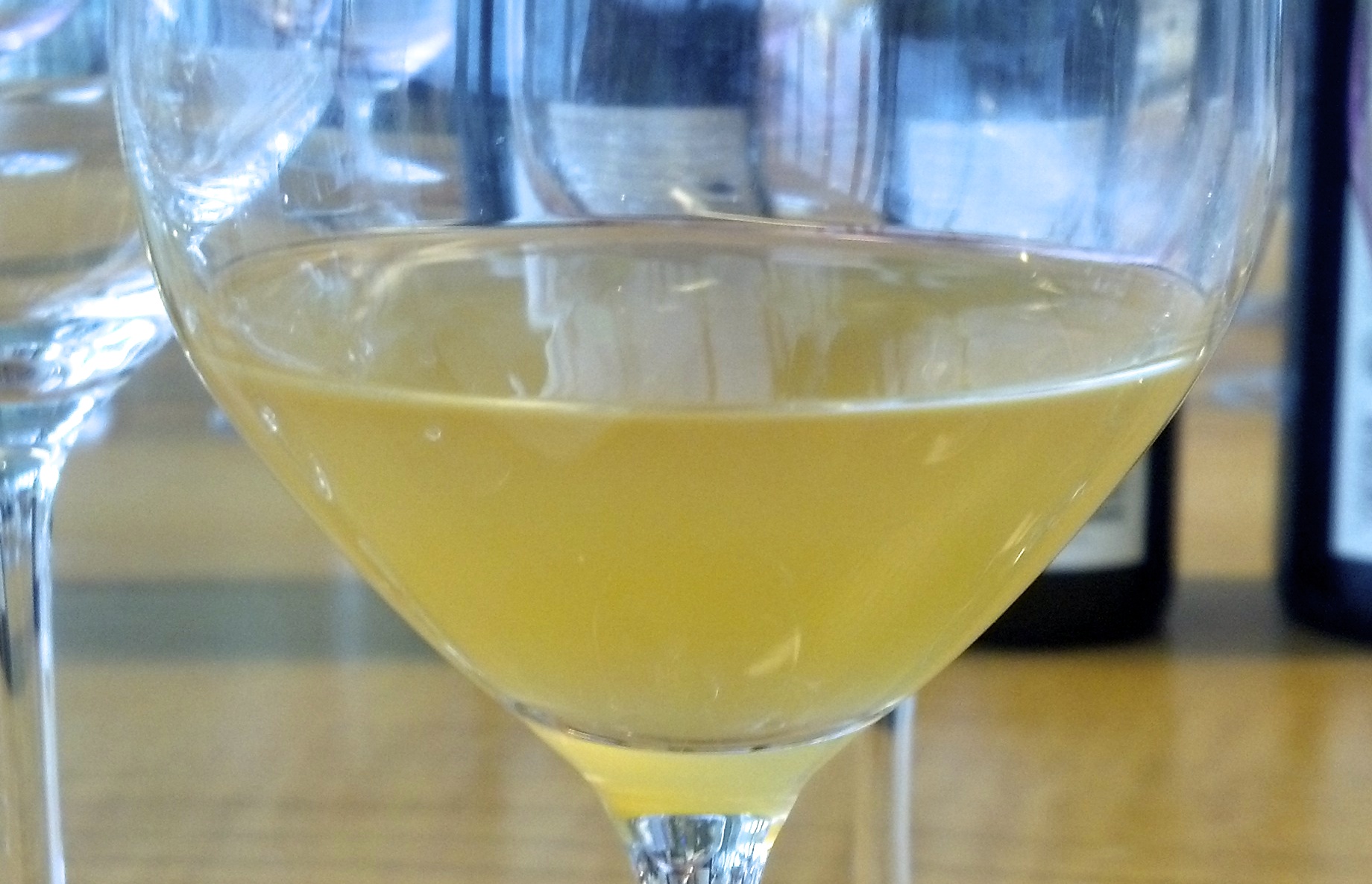
Southbrook Whimsy! Orange wine 2014

Southbrook Whimsy! Orange wine 2014

Whimsy! Orange Wine 2014, Niagara On The Lake, Ontario

“We’ve been waiting to do small batch, stem fermentation,” Ann Sperling tells us as we have a good look at the lustrous, foggy glass of orange-yellow colour more micro-described as either croceate or gamboge. “Now we have the infrastructure to do so.” Stems add architecture (and a preservative effect), something that is otherwise compromised in a sulphite-free wine. This nameless natural wine was biodynamically-raised, indigenously-yeasted and freed from the constraints of temperature control. No wood was used, only stainless steel and glass carboys. The orange and natural classification comes by way of the complex ebullition (closest in style to the Collio hills wines of Josko Gravner), in colour, weight, elegance and the dichotomy of skin fermentation. Sperling used acumen derived from the concept at Argentina’s Versado, where skins are employed in a similar way when making Malbec with husband Peter Gamble. This young wine is filled with terpenes and is highly, desperately aromatic. Lemon curd is up front and centre. It’s got a tart tang and at (approximately) 11.8 per cent alcohol, the gravity is impossibly beautiful. Sperling’s take is “a fair reflection on the vintage” and it’s the mouthfeel that sets it apart. What’s the varietal make up, single or a blend? If the latter, was it co-fermented? Ann will only tell us that it was harvested over a two week period in October. The big question is will it receive VQA approval. Viognier and Pinot Gris should certainly be options but I’m not aware of Southbrook ever having employed their use. Sperling’s Whimsy! Winemaker’s White uses Muscat so perhaps we could go that direction but the aromatics don’t jive. Riesling is the simplest road to take and if the Southbrook Connect Organic White 2013 is any indication, the combined effect with Vidal could certainly steer this Orange ship. But If I were made to guess, to have some fun with concept, I would suggest that it’s a blend of white and red grapes, but Southbrook does not grow Pinot Noir so that should rule out Chardonnay as well. So I conjure up a song. “Well I had a dream I stood beneath an orange sky.” With a union of grape varieties standing by. Cabernet Franc and Sauvignon Blanc feed my Spidey senses, so under the auspices of that marriage, what we might have here is an offspring, a Cabernet Sauvignon. A very natural one. An orange one.  Tasted December 2014

Triomphe Merlot 2013, VQA Niagara On The Lake, Ontario (Winery, $22.95, WineAlign)

From 100 per cent estate fruit (so it’s organic and biodynamic), the accesibility here is immediate and gratifying. So ever-very raspberry, like berries and savoury flower dust rehydrated into a sweet yet tart and viscous tisane baked into a pie. That does not articulate a cooked component, but rather a concentrated vehemence. As far as Peninsula Merlot goes, this really finds both its varietal and vintage capitalized way. It’s both cool and critical, exemplary and snappy. Early thought leads towards a five to seven-year run.  Tasted December 2014

Triomphe Cabernet Franc 2013, VQA Niagara On The Lake, Ontario (Winery, $22.95, WineAlign)

Still organic through and through, despite only a small portion of estate fruit contributing to the overall design of the Triomphe Cabernet Franc ’13. Contracted growers fuel and fulfill the Southbrook ideology, to seek purity in healthy berries. The red fruit here shines on with Daliesque impunity. Its agglomeration makes a juicy, gregarious offer to sip. The vanilla-lavender streak brings elegance, more so than in ’12, along with an elevated sense of savour and really compounded red, red fruit. A natural sweetness and long finish are easy on the gustatory senses. Will be available at VINTAGES in February 2015, when the ’12 runs dry.  Tasted December 2014

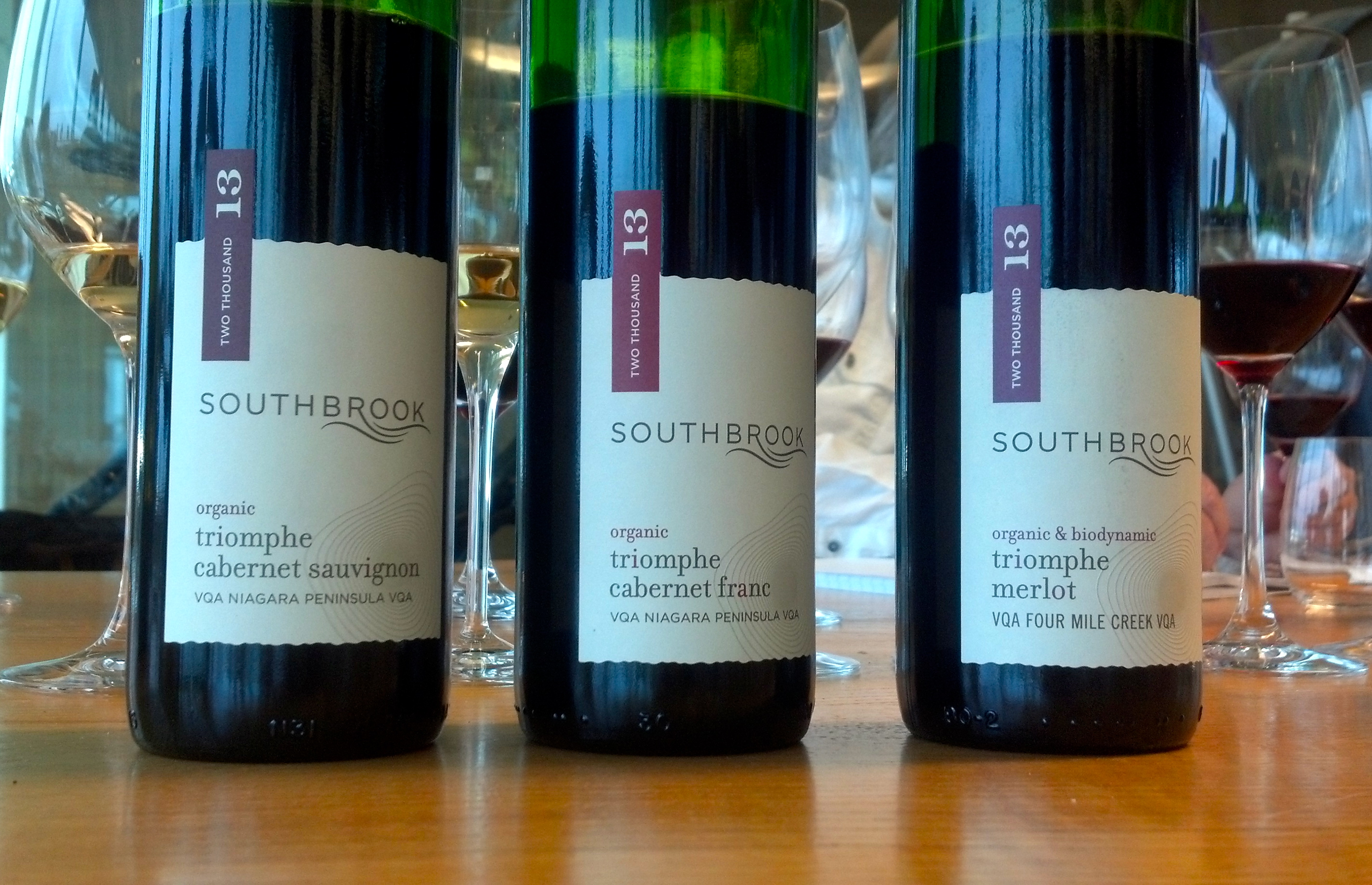
Southbrook Triomphe '13's

Southbrook Triomphe ’13’s

Triomphe Cabernet Sauvignon 2013, VQA Niagara On The Lake, Ontario (Winery, $22.95, WineAlign)

The VINTAGES Essential is fashioned from mostly estate fruit (making it mostly biodynamic) save for a tonne or two grower’s supplementation. The 13’s are just beginning to hit shelves as ’12 stock depletes and in many ways the new vintage excels and exceeds the success of the split decision ’12. Where the ’13 lags is in showy complexity, though I’m not sure that is the Triomphe Cab Sauv’s most distinguishing or valuable asset. The new year brings a darker, pitchier, heavier brooder and as a second thought, a slower build to complexity. If ’12 was the rare marble, this is the braising cut. The triumph is now an impression as a sum of parts, not outwardly obvious and live. Not so easy to disseminate, the ’13 could likely have benefited from a less urgent rush to market. The drive to appease the sellers may inhibit a quick response understanding of its fruit intent so consumers should be aware of the need to exercise just a half-year or so of patience.  Tasted December 2014

Whimsy! Sémillon 2013, VQA Niagara On The Lake, Ontario ($34.95)

A getable Sémillon of plenary indulgence, of deep-seated intent, already blessed and blissful of honey. From a two-barrel lot, fermented in stainless steel with lees contact. This is an Ann Sperling special, both biodynamic and unfined, so it serves public notice as a Southbrook affiche in promotion of naturalism. And then it really begins to rock. Sulphites are present and perceptible but so are the more panegyrizing notes of salinity, mineral and rocks with ideas. Single-varietal Sémillon is an amazing thing, possessive of a clarity few can match. It ages with ease and it knows it. “When you know that your time is close at hand, maybe then you’ll begin to understand.” The ’13 Whimsy! Sémillon is an iron maiden, luminescent metal intense with even more honey on the back-end. Sémillon, hallowed be thy name.  Tasted December 2014

Whimsy! Chardonnay ‘Minerality’ 2012, VQA Niagara On The Lake, Ontario (Winery, $34.95, WineAlign)

Slated for release in January or February 2015, “Minerality” as sister to “Richness” is the wilder of the two, less weighty (though up there at 14 per cent alcohol), possessing nothing in any discernible or palpable, tropical void. This little sister is “shakin’ like a tree. rollin’ like a log, shakin’ and a rollin’ now, that ain’t all.” Minerality occupied (40 per cent new, 12 per cent one-year and 48 per cent older) French oak barrels for 12 months, then sat in bottle for 12 more. Until now. Ray of power here unleashed, like a rock ‘n roll genie, finger-picking god ranging all over the map of scales. Though her sulphur edges to watering eyes, the aqueous emulsion from barrel selections leading to tight, reductive early life tendency will one day be forgiven. In fact, Minerality was rejected by the VQA panel on her first go round, bad girl as she was, but she’s now settling into her band-aid skin. She’s now a release away from being almost famous. The rigidity in redux has stirred through, having trod beyond pyridine freshness, though you can still feel the ghosts. Acts seemingly evolved but it manifests as an aromatic nougat. “Reduction is an indication of aging potential, or verve,” says Sperling. A comparison might be made to a 2000 Mosel, which was untouchable early on, but is now a classic. Could Minerality stand the weather? It has a very particular profile, a tactile mouthfeel and great, sweet length, from soul to soul. So yes, this is 2012 Chardonnay on the Peninsula.  Tasted December 2014

Whimsy! Cabernet Franc 2012, VQA Niagara On The Lake, Ontario ($34.95, WineAlign)

Slated for a January/February 2015 release, the 100 per cent estate (organic and biodynamic) ’12 Whimsy Cabernet Franc spent time in (41 per cent) new wood. The significance of the barrel imprint is not lost on territorial influence as related to texture, more than anything else. A warming trend is balanced by a layering of savoury savoir faire and citrus (or the thought of). A repetitive drumming tang drives this tome with trepidation in reserved activity and acidity. Lacking any discernible tobacco, currant or notes of piquancy, this will request consumer patience before it comes into its own and out to the party. Though quite elegant and possessive of better than good length, I prefer the freshness and personality of the (’12 and ’13) Triomphe, for the money. Here I am reminded of some Tuscan CCR’s. Like a time-clocked, sui generis oaked and stately Chianti, this Whimsy will offer more charm when it reaches middle age, at least five years down the road and it will display plenty of caramel, wood polish and charcuterie cure at that time.  Tasted December 2014

Whimsy! Cabernet Sauvignon 2012, VQA Niagara On The Lake, Ontario ($34.95, WineAlign)

In a warm year like 2012, the perfect Southbrook synoptic storm for Cabernet Sauvignon gives cause for thought. Awash in agriculture (organic and biodynamic), of fruit (100 per cent estate) and from barrels (nearly half new and just Four Mile Creek shy of two years), this winemaker’s vagary palavers on verve, torpid integration and inevitable aging. The rich berry and earth weave is a veritable, variegated loaf of aggie layering. But it’s more than that. The centre is filled with cool runnings; mint, eucalyptus and chains of pyromorphite. All tolled you can feel the showiness of the vintage in this Whimsy’s emphatic overall statement.  Tasted December 2014

Whimsy! Petit Verdot 2012, VQA Niagara On The Lake, Ontario (Winery, $34.95)

Welcome to the new world of single-varietal junkets and Four Mile Creek Petit Verdot. Cabernet Sauvignon (13.3 per cent) and Merlot (1.3) offer up contiguous Bordeaux support for this Southbrook first (under the full varietal name – this used to be called “Who You Calling Petit”), slated for an April or May 2015 release. Culled from the estate’s biodynamic and organic vineyard. Musty, dusty and undomesticated, Sperling’s take is a swirling mistral of wild berries, sauvage, herbs, garrigue and even mushroom. It has yet to recede from its barrel play, showing nary a sign of evolution. Big tannins, high concentration and abrupt ministrations are the crux of its personality. It seems that it will stride out in two years, score early and often, then retire to the bench. The late candied flavours indicate a successful, if short career. Less than 70 cases were produced.  Tasted December 2014

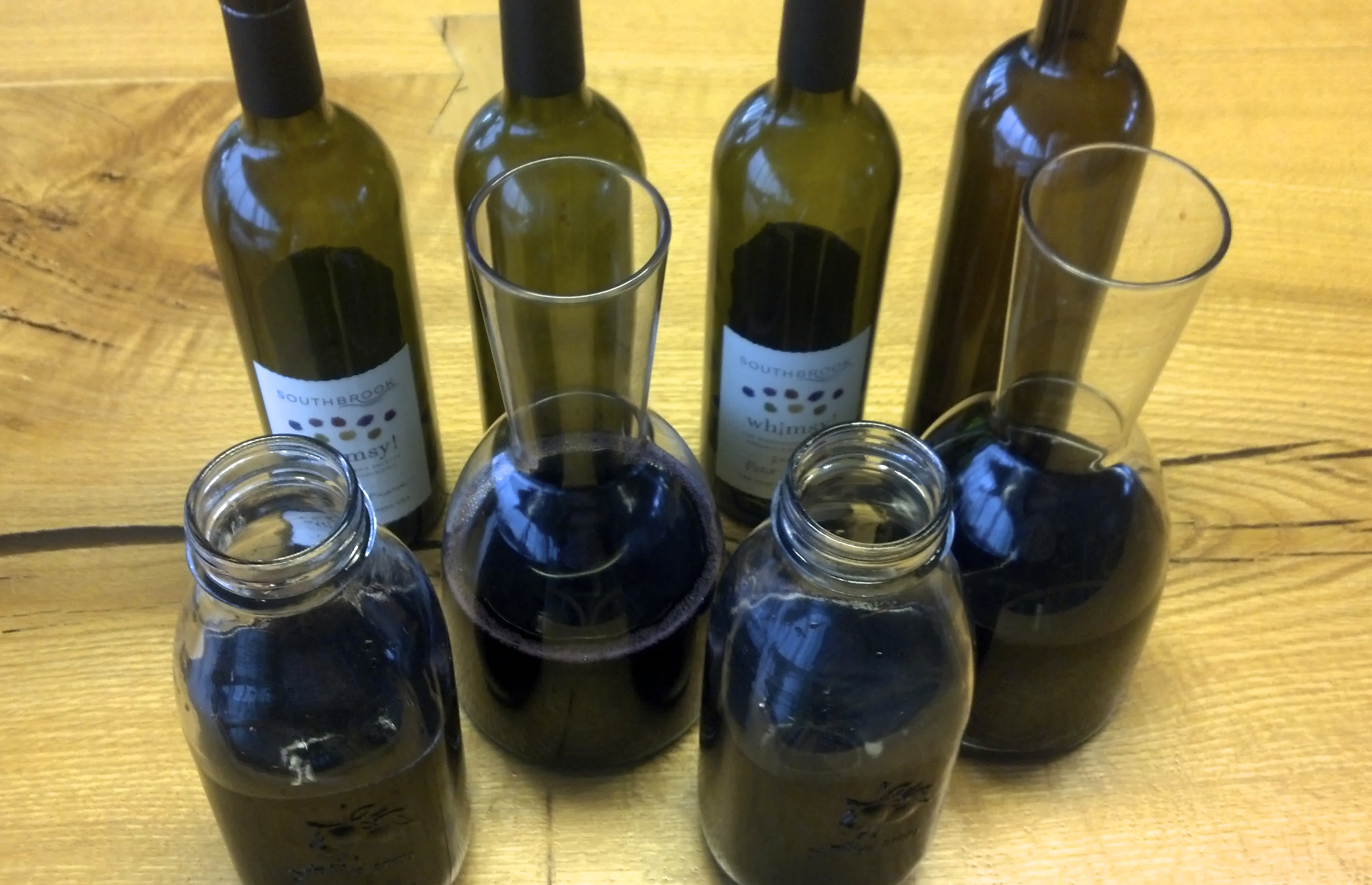
Southbrook Whimsy! and Poetica decanted

Southbrook Whimsy! and Poetica decanted

Poetica Red 2012, VQA Niagara On The Lake, Ontario ($54.95, WineAlign)

The Poetica Red ’12, slated for a Spring 2015 release, is amazing and intriguing on many levels. But for the fact that Petit Verdot (26.5 per cent) plays such a major varietal role, what must first be declared is the disseminated learning applied to this application. The dos and don’ts of previous (only produced in) warm vintage Poetica Reds will see a shedding of those don’ts in this 2012. Ann Sperling ushers in a new era for Niagara Bordeaux assemblage and if this wine is any harbinger, others will follow suit. Here celebrates a love for the land (environment), poetry and more specifically, Canadian poets. Chief Dan George, he of North Vancouver and the Hollywood screen, penned “Words to a Grandchild.” In it he wrote, “in the midst of a land without silence, you have to make a place for yourself.” Poetica Red ’12 will have done that when viewed retrospectively, 10-15 years from now. It will have grown old, but also wise. As for now it’s brooding, melancholy even. It’s all of that and this; endemic, entrenched, crenellated, ensconced and indoctrinated with Niagara knowledge. Has a dusty, earthy, even funky poetry. More depth than many, much realized acumen and will live long. Given 30 minutes of air it showed the ribbons of classic Niagara reds. All these concepts combine to see Poetica Red ’12 not so much as huge, but with depth and complexity.  Tasted December 2014.

Poetica Chardonnay 2012, VQA Niagara On The Lake, Ontario ($49.95, WineAlign)

Whole cluster pressed, all estate fruit spent 18 months in only 15 per cent new (100 per cent French, mainly 300L) barrels. Indigenous yeasts saw more rotation than stirring and classic Chardonnay fermentation, which is code for “they always stick.” As a result, there was no need to impress a finish on fermentation. As per the Poetica practicum, poetry sidles up to the Estate’s flagship white, joined in ’12 by Chief Dan George, the Burrard Inlet, B.C. Tsleil-Waututh Nation chief. The Little Big Man (Old Lodge Skins) academy-award winning actor and poet penned “Keep a Few Embers From the Fire.” The final line “for a new life in a changed world” alludes to the Poetica’s destiny, affirmed by the success of this vintage. When it is released in the Spring of 2015, it will strike an immediate accord with tasters and consumers alike because it is markedly more accessible than previous vintages. Rich and unctuous, it is neither as tropical nor as misunderstood as Poeticas that have come before. Focus is laser sharp, balance is key and integration realized. The level of osmosis in its parts is just awesome. Though reductive, power will propel this Poetica to parts native and familiar, with élan in evolution. Tannins are great but certainly yet spun by sunburst. In 20 years time, words will describe this Poetica as best ever. That much is certain.  Tasted December 2014

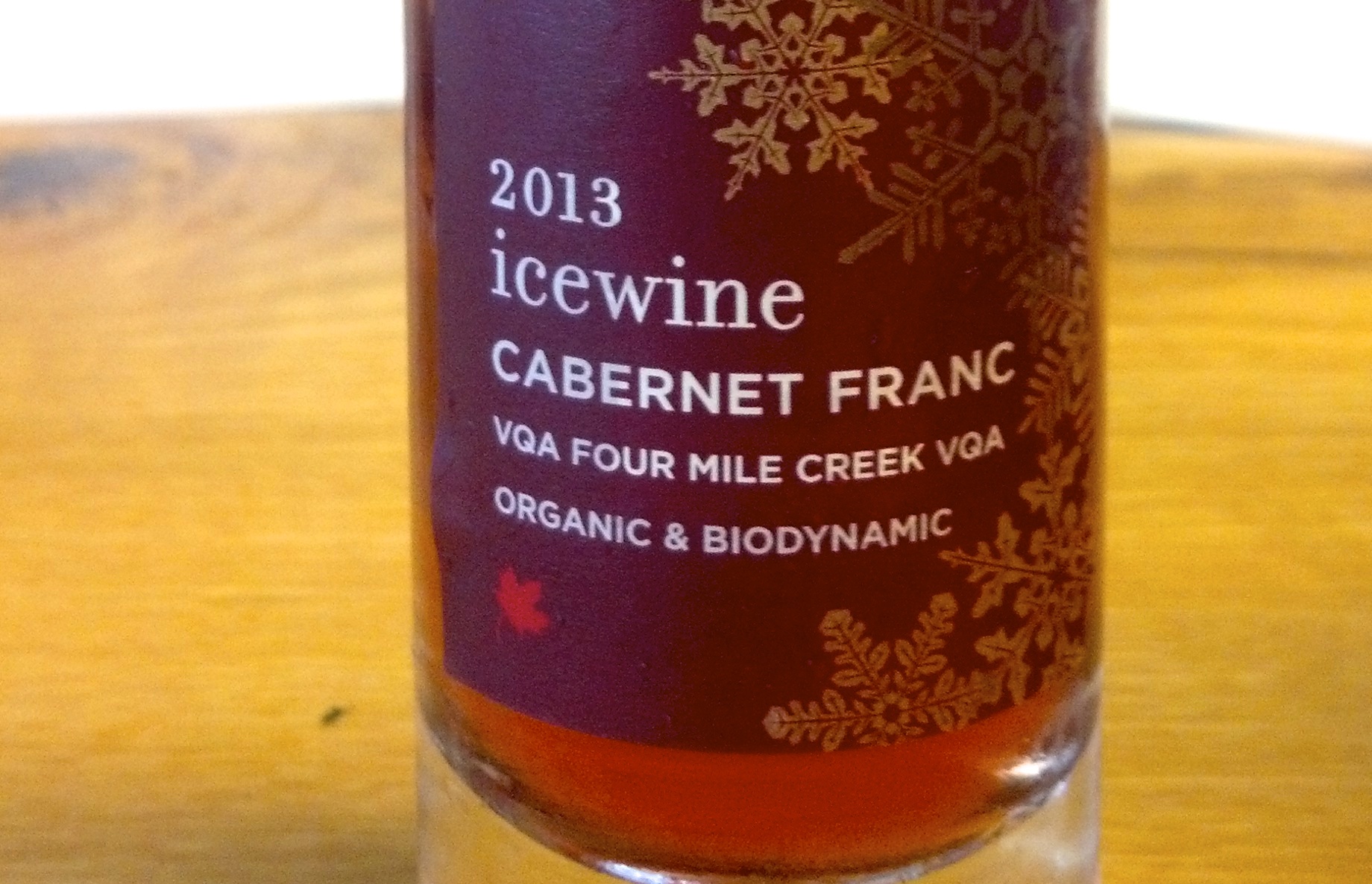
Southbrook Cabernet Franc Icewine 2013

Southbrook Cabernet Franc Icewine 2013

Cabernet Franc Icewine 2013, VQA Niagara On The Lake, Ontario ($69.95, WineAlign)

An all estate, indigenous and inoculated Icewine, even if it were not thought possible to do so. Spoons out pure raspberry and apricot distillate, this Cabernet Franc is a product of happily fermented yeast because of a clean, natural and healthy vineyard. Bacteria neither takes a prominent seat nor dominates in the fermentation. Plenty of nutrition (or just enough, depending on the angle) is available in the fermentative state and then again in barrel. No trouble will come running. No Brettanomyces nor acetic negativity can survive. There is orange, pomegranate molasses and cinnamon stick in here. Goes straight to the cavity, with sugars and acidity set on high, along with structure and length. Really as good as Cabernet Franc gets in the idiom and finishes alternatively, distinctly dry. Will not turn Bretty like some older vintages. A thinker of clean, clean Icewine thoughts, from a desert of fermentation to realize a dessert garden of eden. I took a sip and “I got taken away, by a heavenly host, to a heavenly place.”  Tasted December 2014

Good to go!

Deep freeze: Controversies, polar vortex and icewine

Extreme Lows, Niagara Peninsula, December 2013 and January 2014

Extreme Lows, Niagara Peninsula, December 2013 and January 2014
Photo: Weather INnovations Consulting LP (WIN)

as seen on canada.com

The physiological and emotional roller coaster heaped upon grapes and growers these past 55 days has been nothing short of exhilarating, frightening and exhausting. First this monster climatic Dementor known as the Polar Vortex. Along with the demonic weather came the devastation of an ice storm, followed by record low temperatures. More recently, thaw and re-freeze. Consequences and challenges have abounded. Also, a silver lining. Freezing temperatures can kill grape buds on vines unprepared and left to fend for themselves. Those little vine kinder can also just be unlucky enough to grow up in the wrong place at the wrong time. Some Niagara growers are reporting heavy losses to Riesling, Cabernet Franc and Chardonnay vines. Here are the numbers as reported by Wines In Niagara’s Rick VanSickle.

I spoke with winemaker Paul Pender of Tawse Winery in Vineland, Ontario yesterday. Paul is both unconcerned and not yet ready to make any sort of call on damage to his crops. “It’s still too early to tell,” he notes, “I won’t really head out to assess any potential damage until early March.” While Beamsville vineyards are reportedly hard hit, Pender is confident that his team’s strident and prudent vineyard management will see the vines through.

Balanced pruning means leaving a specific number of buds during the winter on a dormant cane for this year’s crop, the number based on the amount the vine grew the previous season. Tawse’s canes are cut back to two feet, the dead wood removed before winter’s freeze can hit. Buds this season were thinned from 12 to six, giving those tender bits a fighter’s chance to survive. And while Pender will not enter into an unequivocal conversation with respect to the heartiness of his vineyards as a consequence of 100 per cent organic and biodynamic farming, I can hear the surety in his voice and imagine the twinkle in his eye at the thought.

Other growers concern themselves with what may happen inside the many parts of the vine when there are freezes, thaws and re-freezes. Again, Pender is not concerned. Proper pruning should prepare a vine for a harsh winter, whether or not they are protected by a warm blanket of snow. In New York’s Finger Lakes region, Lenn Thompson is reporting “some minor bud damage to vinifera vines, but little to no vine death.” Steve Shaw of Shaw Vineyards on Seneca Lake had this to say. “Yes, this winter is definitely presenting itself in a rather volatile manner. As far as I can tell from checking a number of varieties and many buds, there does not seem to be any catastrophic primary bud kill. There is damage, but not too bad so far. I do not think that with things being this wacky that we can really rest easy until most of the winter has passed.” Brock University’s Cool Climate and Viticulture Institute in St. Catherines helps local growers with much needed information and infrastructure to deal with damaging weather. Their VineAlert program helps protect vineyards during frigid temperatures.

Icewine Hours 2013

PHOTO: Weather INnovations Consulting LP (WIN)
Icewine Hours 2013

The news is not all bad. According to many icewine makers in Niagara, 2013 will shape up to be what many are forecasting the best ever vintage for the province. Temperatures dipped to the requiem in late December and most picked their shriveled, sugary berries before the new year. That is unprecedented, allowing this season’s icewine to remain high in necessary balancing acidity and well ahead of the fermentation arresting challenges from most years. Wine Country Ontario reported that “early icewine harvest in Wine Country Ontario starts the festival fever.” Look for the most balanced icewines out of 2013. Not to mention the Grape Grower’s of Ontario reporting the province’s grape growers gathered a record 79,756 tonnes of grapes in 2013 valued at nearly $100 million.

The Niagara Icewine Festival encompasses three weekends in January dedicated to the region’s beloved ambrosial elixir, wines that have become the calling card beyond the broader confines of Canadian borders. Icewine has been made since 1981 and in that short span of 33 years, Ontario and B.C. winemakers have challenged, and in many cases lapped their counterparts in Germany and Austria. Canadian icewine is globally renowned, even if it is not the most important wine resource bequeathed upon the rest of the world.

Icewine 101. Simply put, made from grapes that have been left to freeze naturally on the vine. Ontario’s stringent Bolshevik Initial Decrees-like laws insist that icewine must be made from approved grape varieties; the most popular are Vidal Blanc, Riesling and Cabernet Franc. Some small lots include Gewürztraminer, Chardonnay and Cabernet Sauvignon.  Grapes are left on the vine until a sustained temperature of -8°C or lower is reached and then picked from those vines encapsulated in nets to protect them from birds possessive of a sweet tooth.

A national icewine debate is ongoing, inflamed by a recent Macleans Magazine article discussing the ideological differences between the VQA law preventing vine and grape separation before pressing and the Quebec practice of letting the grapes freeze in nets. Quebec growers do this out of necessity for fear of their fruit being smothered by excessive snowfall. Ontario’s old guard vehemently oppose the practice. The irony of VQA Ontario’s website low volume statistic, “with average yields of 500 litres for each acre netted,” is not lost on the curious. Two questions arise. How many grapes in Ontario nets end up in bottles of VQA labelled icewine and how can a culture of Canadian icewine be brought together without some form of compromise and collaboration? Yet again, is togetherness integral to the success of Canadian icewine, or more specifically, Ontario’s industry?

According to Klaus W. Reif of Reif Estate, apparently there are 3,750 berries needed for one bottle of 375ml icewine. Just consider the concentration for a moment, the hand-picked (though not all) labour involved and the specificity of the practice. The sweetest wine known to Canadians can indeed be re-worked as a palindrome for Niagara Ice Wine Festival.

A wet vial is fine nice agar

PHOTO: Michael Godel
Rick James Ice Sculpture, Niagara Icewine Festival

On Friday, January 10th, 2014 I was a most elated guest at the Xerox Icewine Gala: A Bacchus Evening of Icewine and Revelry. For a list of continuing events this weekend and next, here is a link to the festival site. More information here. With kind thanks to Magdalena KaiserSmit and Wine Country Ontario, I had the good fortune to taste a host of Niagara’s finest renditions, along with some very special bottles of sparkling and still wines. Here are notes on six wines sampled at the Fallsview Casino Grand Ballroom last Friday night.
From left: PELLER ESTATES SIGNATURE SERIES ICE CUVÉE, CREEKSIDE ESTATES WINERY SYRAH RESERVE BROKEN PRESS 2010, RAVINE VINEYARD RESERVE RED 2008, PILLITTERI ESTATES CABERNET SAUVIGNON ICEWINE 2011, and VINELAND ESTATES RIESLING VIDAL ICEWINE 2012

From left: PELLER ESTATES SIGNATURE SERIES ICE CUVÉE, CREEKSIDE ESTATES WINERY SYRAH RESERVE BROKEN PRESS 2010, RAVINE VINEYARD RESERVE RED 2008, PILLITTERI ESTATES CABERNET SAUVIGNON ICEWINE 2011, and VINELAND ESTATES RIESLING VIDAL ICEWINE 2012

PELLER ESTATES SIGNATURE SERIES ICE CUVÉE, VQA Niagara Peninsula, Onatrio (284547, $31.95, WineAlign)

This is Peller’s most versatile fizz, a blend of traditional method Chardonnay and Pinot Noir sweetened by a dosage of Vidal icewine post disgorgement of its lees. The lees has been left to linger in the bottle, in spirit. Sapid, savoury bubbles tingle the senses to the bone and will offer the most comforting and proper pleasures to those discriminating and otherwise. Appealing to a large common denominator, this Peller Sparkling can really do no wrong.  90  Tasted January 2014  @PellerVQA

CREEKSIDE ESTATES WINERY SYRAH RESERVE BROKEN PRESS 2010 (202127, $39.95, WineAlign)

The floral lift from three to four percent Viognier gives notice to bend the brawny, savoury black olive and blistered Ancho fruit into balance. Syrah in a sunshine state but not from concentrate. Would accept a glass of this Brokenpress at any beck and call. “Grab your wine, take me where you been, with the violin time and the moon gettin’ thin.” From my earlier note: “Offers up gorgeous pine and pepper-laced correctness and so much juicy, fresh warmth from a terrific Syrah vintage in Ontario and even more parochial so on the St. David’s Bench. This Queenston Road Vineyard red is winemaker Rob Power’s secret weapon, absolutely freakin’ delicious stuff and the epitome of what Syrah should be like from Niagara. Verve, rigor and yet also flirtatious with expertly judged wood and tannin to re-fresh its spirit and lengthen its life. Love it.”  91  Tasted twice, October 2013 and January 2014  @CreeksideWine

PILLITTERI ESTATES MERLOT FAMILY RESERVE 2002, VQA Niagara Peninsula, Ontario (71753, $39.95, WineAlign)

Served from Jeroboam, one of 23 produced and a testament to the precocious, facile touch of then winemaker Sue-Ann Staff. The extreme five litre format has certainly been kind to the hermetic 11-year slumber of this Merlot, as has the above average red Niagara growing season. Charlie pulled out this rare behemoth “for the special occasion” and despite and with thanks to the perfect vintage meets size storm, it has held up with dramatic fortitude. Unmistakably predicated Pillitteri chocolate perfume, brushed violet, mulberry and oven-warmed baking spice. Holding in sustained concentration, the toffee, caramel and umami of wizened, oxidized fruit not yet a twinkle in its soapy sandalwood eye. How could Sun-Ann have known what time-cheating lengths her Merlot would see to?  93  Tasted January 2014  @Pillitteriwines

RAVINE VINEYARD RESERVE RED 2008, St Davids Bench, Niagara Peninsula (20483, $55.00, WineAlign)

This Bordeaux style blend (40 per cent Merlot, 33.3 Cabernet Sauvignon and 26.7 Cabernet Franc) is clothed in a coat of arms all about texture. A drawn and raised relief of dried, candied bramble fruit and charcoal lines of savoury, earthy hickory and herbs. Hearty warmth from a cool vintage, meat on a stick in a glass, charred, roasted and smoking. A spit of gamey goodness. Holding strong but drink now.  90  Tasted January 2014  @RavineVineyard

PILLITTERI ESTATES CABERNET SAUVIGNON ICEWINE 2011, Niagara On The Lake (46557, 375 ml, $60.00, WineAlign)

A most unique and striking rendition, wearer of many hats, confounding and curious. There is a funk about him that stands apart from the rest. Like a really well-aged, superb piece of washed rind cheese, then turning unabashedly sweet, with verve and symphonic tone. An orange sky of an icewine, anti-bittersweet, accented by mace and anise, carob even. “Here is what I know now brother. Here is what I know now sister.” Cabernet Sauvignon, in a vintage equipped with striking acidity, can turn into something to look forward to. One of the more interesting icewines to date.  91  Tasted January 2014  @Pillitteriwines

VINELAND ESTATES RIESLING VIDAL ICEWINE 2012, VQA Niagara Peninsula, Ontario (163018, 375 mL, $60.00, WineAlign)

This represents the icewine revolution, for the first time adding 15 percent Vidal juice into the Riesling mix. In 2012, the normally stand alone Riesling needed a shot in the arm, provided by the Vidal, a dose of icewine magic by winemaker Brian Schmidt. Lifted tree fruit blossom and added weight are the result, without hyper-sweet flavours. Riesling is the rock, Vidal the roll as this RV crashes into me. The pit orchard fruit is reduced and recognizable to taste, yet reserved and in phonic harmony. “Sweet like candy to my soul, sweet you rock and sweet you roll.” Brotherly love icewine, full of Schmidt wisdom.  93  Tasted January 2014  @benchwineguy

Good to go!