Is Kosher wine being passed over?

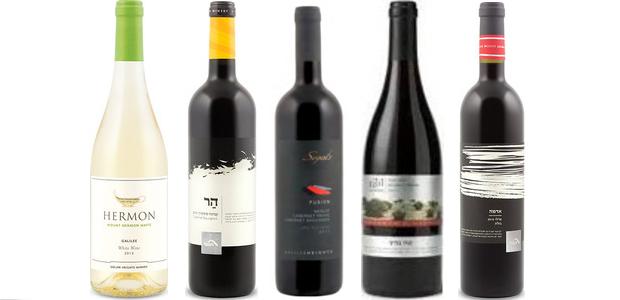
From left to right: Hermon Mount Hermon White Kp 2013, Tabor Galil Cabernet Sauvignon Kp 2013, Segal's Merlot/Cabernet Franc/Cabernet Sauvignon Kp M 2011, Galil Mountain Pinot Noir Kp 2012 and Tabor Adama Merlot Kp 2010

From left to right: Hermon Mount Hermon White Kp 2013, Tabor Galil Cabernet Sauvignon Kp 2013, Segal’s Merlot/Cabernet Franc/Cabernet Sauvignon Kp M 2011, Galil Mountain Pinot Noir Kp 2012 and Tabor Adama Merlot Kp 2010

Passover is the hardest working holiday in Jew business. Trust me, I know. Having spent 20 years cooking professionally for the eight-day week commemorating the Exodus from Egypt, I know the trials, tribulations and strict adherence that must be followed to satisfy the Jewish soul. I have also followed the Kosher for Passover wine evolution for equally as long. I have spent time deliberating about the feast without yeast. It’s a fascinating study.

In 2012 I noted that “recommending wines that are Kosher for Passover used to be similarly daunting, (a science and an art unto itself), but the field has certainly improved.

Related – KP Duty – Kosher For Passover Wines

In 2013, optimism increased and I wrote, “a Jew’s worst, ’11th plague’ wine nightmare, the nights of suffering through cooked and stewed dry table wines, is (mostly) a thing of the past. I’m not suggesting that the golden age is upon us, but you may want to don the shades. The future is bright for Passover Kosher wine.”

The rules for Passover wines begin with the basic tenets. “All wines labelled “Kosher for Passover” are Kosher, but not all Kosher wines are Kosher for Passover. Kosher for Passover wine must be handled by Sabbath-observant Orthodox Jews and the wine can never come into contact with any leavening (grain, dough, bread) products, including yeast.” For the full story, read on.

Related – New wave under $20 wines go kosher for Passover

In 2014 I spent more time taking about the individual’s choice on how they go about observing the laws of Passover. Passover wine is particularly specific to a Jew’s level of Kosher. From Reform, to Conservative, to Orthodox, all Jews have different variances of belief. A Reform Jew will likely drink any wine on Passover and then again, may not. But, he or she will almost certainly not require the bottle to be Mevushal. A Conservative may only drink Mevushal but in more cases than not, Kosher is good enough. An Orthodox Jew goes it only one way, or the highway. Strictly Mevushal KFP, do not pass go, do not collect Afikoman (the broken Matzah) money.” In last year’s post I discussed the recent trend towards bigger and bolder Passover reds, so read on.

Related – Passover that big glass of red

In the 2013 column I made five recommendations for the Passover table from a longer list laid out for tasting by the LCBO. At least eight were offered (and I seem to remember more, spread across more than one VINTAGES release). At that time the press release made mention “of the 33 seasonal products being released through the LCBO and VINTAGES in time for Passover, 26 are new listings, featuring traditional kosher wines, fortified wines, dessert wines and sparkling wines.” Thirty-three? Impressive number.

In 2014, the LCBO release said this. “In time for Passover, which begins on April 14, the LCBO is adding 27 seasonal releases to an already diverse selection of kosher products. In addition to the approximately 40 kosher products available throughout the year, a mixture of new listings and familiar favorites is being released through the LCBO and VINTAGES to coincide with Passover.” The number presented in the tasting lab for media and product consultants was down from 2013, but still a solid set of wines to try. Things were looking up again.

The eve of Passover and first Seder night is only a week away and yet the 2015 press release from the LCBO came out just yesterday. Preparing for the Passover festival, dinner and eight days of transforming homes into Kosher safe houses takes weeks of forethought. That includes buying wine. I can think of no reason why the press release could not have been prepared a week earlier. It would have been helpful to many.

For those who need to know, varied quantities of Kosher products are available in more than 500 LCBO stores across the province, with the largest selection available at three GTA stores: 180 Promenade Circle (Promenade Mall) in Thornhill, 1838 Avenue Road (south of Wilson Avenue) and 675 Wilson Avenue in North York.

There are 42 wines labeled Kosher for Passover on the current inventory list from the LCBO’s website. Some are older releases and so low in stock that they don’t really count at all. The true number is more like 30. The March 26th press release notes that 43 products are available year round and that “a mixture of new listings and familiar favorites is being released through LCBO and VINTAGES to coincide with Passover.” The marketing department is not hiding anything. Transparency is not the issue. That only five wines were purchased and presented to product consultants and media in time for in store consumer consultation, as well as print and online Passover promotion, is curious to say the least. All five offerings are from the Galilee. What about the Judean Hills, Samson, the Negev and Shomron? Azureau Wine Agency has at least four or five quality wines available for Passover not currently in the LCBO coffers and yet they are all wines that had been purchased in the past. Why the snub?

Why has the pursuit of quality and quantity in Passover wine decreased instead of the opposite? Despite the growth worldwide and the dramatic increases in global quality and Passover wine sales, might it be that the LCBO has decided to drop the ball? Perhaps the feeling is that Passover wine was a trend whose time has come and gone.

So I asked some questions and the LCBO was very gracious to send me a list of all the Kosher products that were purchased and subsequently released in the past two months, in preparation for Passover. Seeing the list certainly shows that more credit is deserved for the support for the niche but three questions persisted to nag at me. I pointed out to the representative in charge of Kosher wines how the list notes products released on various dates which coincided with VINTAGES releases. Then I asked if there was there a reason why only the March 21st Israeli release items were presented to media and PC’s and also and how was the public informed of these releases?

It was explained that “the Kosher program is more akin to LCBO categories.  It’s not really part of the VINTAGES brand. Some of theses (Kosher) auxiliary purchases are only 30 to 40 cases with direct distribution to locations with major kosher kiosks. Customers who shop the kosher section in stores like Promenade in Thornhill or the Wilson and Dufferin location basically discover new products among the regulars while shopping in-store.” The idea is that only the five Israeli Kosher wines are marketed because they are “for wine lovers whether they keep kosher or not.” I have heard that point of view before. It’s wishful thinking. Show me a wine lover who buys Kosher wine at the LCBO but does not keep Kosher and I’ll show you a wine lover who eats nothing but stew. If higher quality wines were on offer, the philosophy might strike a more believable accord.

The end result of my interaction with the LCBO rep. was a suggestion that they might consider organizing a media tasting for more of the Kosher portfolio. Despite the extreme niche market that is KFP wines, the idea makes sense considering the size of Ontario’s (and especially Toronto’s) Jewish community and the amount of those types of wines that are purchased every year. A tasting would make even more sense if it involved any of the hundreds of high quality Kosher wines that are never seen in this market but are so prevalent in a place like New York State.

I spoke yesterday with a former Ontario agent who at one time was a leading importer of Israeli wines. Many of the wineries represented through his portfolio are no longer on LCBO shelves. Why is that I asked him? The answer is that the wines were too expensive for the LCBO and they gave up wanting to take the risk of trying to sell them. After Passover comes and goes, left over stock means for product that won’t move.

Selling quality KFP wines is now left to a handful of sacramental agents like Mazel Wines and Simcha Wines. Though they are required to sell by the case (like every other Ontario importer), the other eye is turned at the practice of selling single bottles. Why? Because they pose no threat to LCBO sales. Their customers are walking away with product the LCBO has no interest in selling. The wines in question are those the LCBO would rather not touch. They have washed their hands of the $40+ Kosher market and never had a true vested interest in Kedem and Manischewitz in the first place.

It is understood that buyers change and also that Israeli stubbornness translates to no offer of discounts, even to the world’s largest wine buyer. Quality wines from Eretz are no longer coming to Ontario and no one seems to really care. If there is no mandate to buy them, no one will. It’s quite simple. Yet in recent years it seemed as though the LCBO cared more about a certain level of quality in the KFP niche. In 2015, these wines are out of sight and out of mind.

Maybe part of the problem is the lack of Kosher wine production in Canada. If wineries and consumers across the country are not interested, why should anyone else bother?

There have been some informative Kosher wine investigations in Canada, though certainly few and far between. Brock University hosted Rabbi Nachum Rabinowitz, a Rabbinic Coordinator with the Kashruth Division of the Orthodox Union for his presentation, “Demystifying Kosher Winemaking” on Monday, Dec. 12, 2012.

This time last year Mark Mietkiewicz of the Canadian Jewish News discussed the “eclectic tour of kosher wineries.” Mietkiewicz noted that sadly, (if not entirely accurate), the only true Kosher winery across Canada is located in Newfoundland. “You’ll have to travel about hour west of St. John’s until you reach Rodrigues Winery of Markland, Nfld. There, you’ll find its certified kosher blueberry, plum, cranberry and other fruit wines, liqueurs and brandies.” Rodrigues is represented in Ontario by Amethyst Wines Agency.

The best source for Canadian Kosher wines can be found on the Wines of Canada website. Two wineries in Ontario had joined Rodriguez in Kosher wine production, albeit with fruit and honey. They are Rush Creek and Munro Meadery. Rush Creek has changed ownership, however, and it seems that Kosher is no longer on the table. Munro continues with their COR certification. In Quebec, Domaine Pinnacle produces a Kosher Iced Cider. In British Columbia, Summerhill Pyramid Winery, while not Kosher, does produce a Kosher wine. It’s an uncooked $100 Tiferet.

Here are the five wines presented for evaluation by the LCBO. None really qualify as exceptional but all will work with distinction at the Seder table.

Hermon Mount Hermon White Kp 2013, Galilee, Israel (611327, $20.95, WineAlign) Kosher For Passover, Non Mevushal

While this pseudonymous John Doe white varietal blend may not quite effect the idea of “puttin’ your hand in the hand of the man from-a Galilee,” it does offer an ocean of somewhat descriptive aromas to elicit a sip. Quite lactic, creamy and nondescript in terms of flavours. Well-made, though the guess at varietal make-up (Sauvignon Blanc, Riesling, Viognier…) doesn’t really matter. There is a capsicum bite and a grassy chew. So when all is said and done, it’s got “enough of what it takes to get you through.” Drink 2015-2017  Tasted March 2015

Tabor Galil Cabernet Sauvignon Kp 2013, Galilee, Israel (283838, $20.95, WineAlign) Kosher For Passover, Non Mevushal

Not to be confused with Oregon’s volcanic cinder cone, the city park on the volcano, and the neighborhood of Southeast Portland. This “small drum” (from the Latin), in consideration of its proximity to the cradle of civilization should constitute it being the original Mount Tabor. Tabor the mountain is situated on the border of Zebulun and Issachar, south-west of the Sea of Galilee (Joshua 19:22). There is no Hebrew word for the name Tabor but the likely etymology is from the verb ברר (barar), meaning to purge, purify or clean. So, what about the Cabernet Sauvignon? Another extreme and extracted expression from red fruit, with leather and rich blackberries atop Ugah Kushit. Some may count rubber reduction while others will simply feel the heat. The tannin and overall structure remind of Graves in a hot vintage. A funky green streak, like tea mixed with tobacco are part of the complexity, then more tobacco and more than decent length. This is a good choice for the shank and the rack. Drink 2015-2018.  @TaborWinery  @azureau

Segal’s Merlot/Cabernet Franc/Cabernet Sauvignon Kp M 2011, Galilee Heights,  Israel (157206, $22.95, WineAlign) Kosher For Passover, Non Mevushal

Red gelid fruits are floating with viscous separation in simple syrup and oozing to the perimeter. That outer circle is bricking to caramel. Hanging on, but just barely.

From my earlier note of March 2013: Though muted is quite pleasant, aromatically speaking. Baking spice, woodsmoke, cherry and plum, like satellite St. Emilion. Scarlet colour, as if derived from Tola’At Shani. Dusty and down-grain, no cooked sensation, well-structured.

Last tasted March 2015.

Galil Mountain Pinot Noir Kp 2012, Galilee, Israel (121228, $22.95, WineAlign) Kosher For Passover, Non Mevushal

Levity afforded for the sheer reason of ripe fruit. High octane Pinot is never a wise proposition but when the barrel lends spice and not a sheath of layer cake, that’s a positive. A warm west coast California style to be sure, with more than enough lavender cream to grease a squeaky canoli and then the rise of gaseous puddles blown by pipe smoke. Then there are the battling Epping Forests; of cedar and pine. Rich, spicy, smoky and forceful. Very ripe. Overripe and over extracted. Ready for prime time and with tannins that mean business. Just having entered its window of genesis, perhaps it would fare best next year when supper is ready in Jerusalem, “or, today is the day when they sort it out, sort it out.” Call it a draw. “So the Blackcap Barons toss a coin to settle the score.” Good enough. Drink 2015-2016.  Tasted March 2015  @azureau

Tabor Adama Merlot Kp 2010, Galilee, Israel (400820, $26.95, WineAlign) Kosher For Passover, Non Mevushal

He’s a wild one this Merlot and has come of age though he’s a bit licentious, carrying a load of liqueur and chewing on liquorice. Ferric and sugary red to black fruit melds with tubers grainy and cooked in a muddy cake with scorched earth buttercream icing. Prunes, figs and raisins are chopped into a mire poix and stuck in the frosting. Caramel time is here. Will work for Brisket. Drink as soon as possible. Drink now.  Tasted March 2015  @TaborWinery

Good to go!
http://www.winealign.com/profile/2058-mjg

WineAlign guide to VINTAGES April 4th and Easter recipes

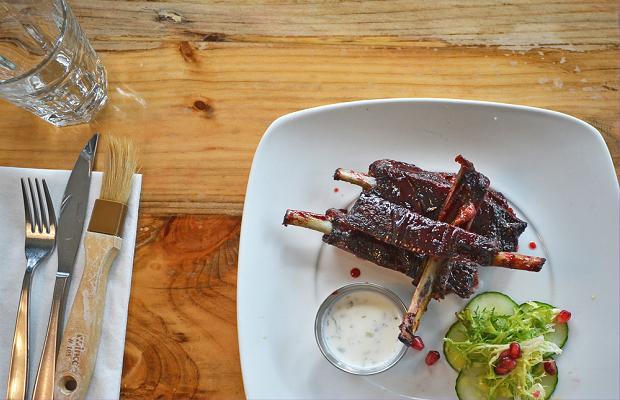
Lamb Ribs by Barque Smokehouse

Lamb Ribs by Barque Smokehouse

On January 18, 2013 I began adding wine reviews to WineAlign. Review ground zero was Mallory & Benjamin Talmard Mâcon Uchizy 2010, an inauspicious little Burgundy described in “the coat of white.” A Genesis of great #ffffff value.” Beginnings, Genesis, ground zero. The Godello thing.

Two plus years and 2,023 reviews later much has changed. The wisest of wine scribes David Lawrason and WineAlign head wineaux Bryan McCaw asked if I would like to become a part of the April 4th, VINTAGES release newsletter and buyer’s guide. With renaissance banzai and Master Sommelier John Szabo leading the charge, along with most generous guidance and help from cake baker and palate extraordinaire Sara d’Amato, I have joined the fray.

Buyers’ Guide to VINTAGES April 4th – Part One

This week’s guide leads WineAlign subscribers to Easter Lamb and red wine, plus pre-dinner whites and a glass for dessert. The three recipes cover everything  you could possibly want at your table on the resurrection weekend. The recipes are for Traditional Easter lamb by John, Moroccan lamb loin chops by Chef Michael Pataran and Barque‘s smoked lamb ribs.

Here is what John wrote in his introduction of me. “If at first you don’t understand Michael’s reviews, just drop a couple of hits of acid, smoke a joint or put on some classic 70s tunes and they’ll all make more sense. Maybe.” The irony is that amongst the seven wines I contributed to the newsletter I made only one musical reference. Oh, and one to the Grand Budapest. So, maybe you will understand them. Maybe.

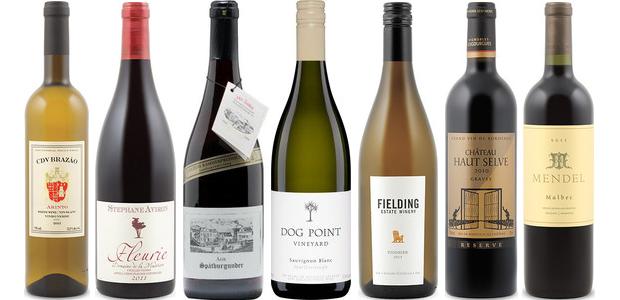
From left to right: Cdv Brazão Colheita Seleccionada Arinto 2013, Stéphane Aviron Domaine de la Madrière Vieilles Vignes Fleurie 2011, Mayschoss 140 Jahre Jubiläumswein Trocken Pinot Noir 2013, Dog Point Sauvignon Blanc 2014, Fielding Estate Viognier 2013, Château Haut Selve Réserve 2010 and Mendel Malbec 2011

From left to right: Cdv Brazão Colheita Seleccionada Arinto 2013, Stéphane Aviron Domaine de la Madrière Vieilles Vignes Fleurie 2011, Mayschoss 140 Jahre Jubiläumswein Trocken Pinot Noir 2013, Dog Point Sauvignon Blanc 2014, Fielding Estate Viognier 2013, Château Haut Selve Réserve 2010 and Mendel Malbec 2011

Cdv Brazão Colheita Seleccionada Arinto 2013, DOC Vinho Verde, Portugal (405217, $16.95, WineAlign)

A highly unique Vinho Verde that works as a sipper and as a solid, pair me with just about anything table wine. Savoury and blessed with a Bica de Queijo cheese aroma, you’ll be glad you gave it a swirl and a whiff. There is nothing shinking or violaceous about this. It’s medicinal like Moscato, toasty like Pouilly-Fumé and gangly like Garganega. Citrus juice and flesh add body and beautify its inherent male pattern baldness. Perhaps a bit of a river fish of a Vinho Verde but very fresh and a great catch. This Arinto will tie appetizers together and buy time until the bird, hock or shank is on the table with the feast’s big reds. Drink from 2015-2017.  Tasted March 2015  @vinhosverdes  @exCellarsWines

Stéphane Aviron Domaine de la Madrière Vieilles Vignes Fleurie 2011, AC Beaujolais, Burgundy, France (405779, $21.95, WineAlign)

Old vines and Fleurie scream holiday dinner wine in my books. Here struts out where it’s at Gamay from a terrific Cru, of maturity, chutzpah and depth. Bang on 13 per cent alcohol, most mature and munificent, so very forward and yet of a depth, richness and layering in fruit meeting acids. Black cherry with an accent of mint, sour citrus drop and blueberry. A minor chalky grain, just enough to evoke oak tenderness, but not enough to be cut by splinters. Very Burgundian, where it’s at and even better length. Talk about a red wine that could equally double down for the Easter and Passover table. Gamay that swings both ways, AC/DC, “it’s got two turntables and a microphone.” Drink 2015-2022.  Tasted March 2015  @DiscoverBojo  @warren_walden

Mayschoss 140 Jahre Jubiläumswein Trocken Pinot Noir 2013, Ahr, Germany (409649, $21.95, WineAlign)

Ahr Pinot Noir (as opposed to those from Germany’s Baden region) are just that much more accessible and wider table friendly. That’s because of volcanic soil and older vines like you find in this Qualitätswein. The fruit is richer, the cure more refined, the flavours full and the wine structurally sound. Give this some air and the roast swine will make an entry, with intoxicating aromas, balanced by earthy notes, ripe plums and berries. Structurally sound, the ripeness continues into a fleshy cure of wurst with good bite. The citrus tang is round and barkless. No matter the colour of your braise or roast, this Pinot Noir will compliment the hue. Drink 2015-2021.  Tasted March 2015  @LeSommelierWine  @WinesofGermany

Dog Point Sauvignon Blanc 2014, Marlborough, South Island, New Zealand (677450, $24.95, WineAlign)

So orderly and aligned, from ripe picked fruit with fervent acidity and all proportions in perfect working order. Four months in bottle has settled only worked to reinforce positive opinions. Grassless and flinty but no discernible elemental vagary, certainly no sulphur. This Sauvignon Blanc may just be the most consistent in every vintage, not only stylistically but also for the hedging of probability bets for guaranteed Marlborough quality. This is a superb vintage for the pied-à-terre phraseology. Like school in fall, winter and spring, the Dog Point is all class. Drink from 2015-2024.

From my earlier note of November 2014:

The prototypical Marlborough Sauvignon Blanc hitting all the classic numbers is right here in the Dog Point 2014. Low pH, high acidity, minuscule residual sugar and elevated aromatics. It’s ripe but ripped by citrus juice and zest. Like cubes of honeydew, bitter winter melon and dried lemongrass soaking in and flavouring a dish of briny scallop carpaccio with coarse sea salt and capers. The sapidity is palpable, the excesses vivid. I would avoid too much variegated gastronomy when sipping this wine. Opt for simpler fare because its talents would otherwise be mimicked and suppressed.

Last tasted March 2015  @DogPointWines  @TrialtoON  @nzwine

Barque Smokehouse Lamb Ribs - Spring 2014

Barque Smokehouse Lamb Ribs – Spring 2014

Fielding Estate Viognier 2013, VQA Niagara Peninsula, Ontario (142323, $25.95, WineAlign)

Winemaker Richie Roberts has worked tirelessly with Viognier to find out where it fits into the lexicon and ambience of Niagara Peninsula white grape varieties. The 2013 vintage marks a turning point in his and by extension, all of our understanding. The tropical fruit is now reigned in and the tension on the back bite a perfect foil to that well-judged, rich fruit. Trumps the layered ’12 with a new, aerified floraility that gives it more prototypal Viognier style. Short of leaving fruit to hang into late harvest (not recommended for the variety) this is like being wrapped in banana leaf along side young bamboo. Sip it joyously on its own or bring on the Easter Rijsttafel and a strolling procession down the cuisine of Kho San Road.  Drink 2015-2020.  Tasted March 2015  @FieldingWinery  @RichieWine  @Heidi_Fielding

Château Haut Selve Réserve 2010, Ac Graves, Bordeaux, France (235424, $27.95, WineAlign)

Who wouldn’t want to find a well-priced and expertly made Bordeaux to accompany an Easter feast? The abstraction is not as easy as it may have once been but once in a Paschal full moon a wine comes along and affords the opportunity. Stately structured, mid-range Graves that is so very much a combination of Cabernets. It reeks of currants, cool mint, Cassis, caramel and chocolatey oak. Kept shy in alcohol (13 per cent) and heat, the tannins are mildly grainy and though just a touch oxidative, it is a a most serviceable, generous and honest Bordeaux. From a workingman’s vintage of the century. This Graves will seal the Easter deal with its cool savour and chocolate hops. Drink 2015-2019.  Tasted March 2015  @BordeauxWines  @ProfileWineGrp

Mendel Malbec 2011, Mendoza, Argentina (108225, $27.95, WineAlign)

On the rare occasion when a Mendoza Malbec exhibits restraint, balance and all around congenial behaviour, it is imperative to sit up and take notice. This is finely fashioned juice, albeit rich, smokey red fruit swathed in good quality chocolate and a late kick of spice. Suppose there’s nothing really wrong with that. The Mendel will seduce, hypnotize and cause general swooning. Like a Grand Budapest Hotel box of treats, it will sooth even the savage beast. Ripe tannins will make this drinkable now to 2020. Tasted March 2015  @MendelWines  @TrialtoON  @winesofarg

Good to go!
http://www.winealign.com/profile/2058-mjg

March 7th seven blazon party

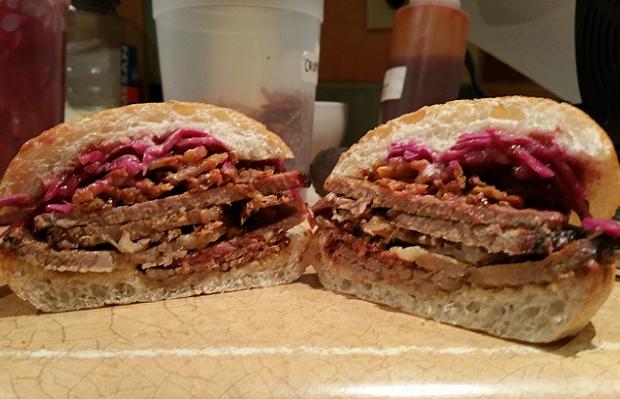
Home spun Barque Smokehouse brisket sandwich

Home spun Barque Smokehouse brisket sandwich

As VINTAGES rolls out another army of bottles in proclamations of blatant multiplicity and, as I mentioned yesterday, in duplicity, it is time to settle into the recommendations encampment. Trudging through the trenches of Sparkling, White, Red and Dessert the divisions are laid, dispatches ordered and strategies finalized. Staffers go here, front liners there and commanders bring up the rear.

Related – Why it matters to taste wines again

A little bit of everything, as always, defines the March 7th release. Tidy little sippers work the hardest and make sacrifices for the rest. In this release Kosher wines prepare to tackle Passover but that we will save for next week, or perhaps the week after. Italy is the focus, bellowing commands from the bull horn, making decrees like colosseum commentators at Hunger Games. “We have wines that are just too goddamn vivid!” “We have wines with language that is fairly formal and sometimes flowery!” “Occasionally we stop to smell the adjectives!”

Tuscan wines always seem to possess what has heretofore been referred to as collectively having “a firm jaw and an air of tragic nobility.” As a group they are confident, steeped in tradition and now, as much as any wine-producing region, captured within the heart of the state of the art. The sea is murky because the obvious separations between varietal and blend are hard to discern but one aspect is not under dispute. Overall quality has never been higher. Tuscan wines are just plain fun to drink.

The seven blazon party from March 7th attacks with Chardonnay, Yellow Muscat, Cabernet Franc, Sauvignon Blanc, Zinfandel and two rounds of Sangiovese. The notes, here, now.

From left to right: Fielding Unoaked Chardonnay 2013, Puklus Pincészet Tokaji Yellow Muscat 2013, The Good Earth Cabernet Franc 2012, Castelli del Grevepesa Panzano Chianti Classico 2008, Rocca Di Castagnoli Poggio A'frati Riserva Chianti Classico 2010, Château De Cruzeau Blanc 2009, Chateau Montelena Estate Zinafandel 2012

From left to right: Fielding Unoaked Chardonnay 2013, Puklus Pincészet Tokaji Yellow Muscat 2013, The Good Earth Cabernet Franc 2012, Castelli del Grevepesa Panzano Chianti Classico 2008, Rocca Di Castagnoli Poggio A’frati Riserva Chianti Classico 2010, Château De Cruzeau Blanc 2009, Chateau Montelena Estate Zinafandel 2012

Fielding Unoaked Chardonnay 2013, VQA Niagara Peninsula, Ontario (164491$14.95, WineAlign)

One of the best deals going in oak-less Chardonnay, a glug, glug, line up at the jug kind of guiltless white. Pure, cool-climate variegate, with the cool of the Peninsula overridden by the vacuous warmth in the saddle abutting the Escarpment. Very pear, all in slate, exit to daylight acidity for a Chardonnay that hit the switch. Spot on in 2013 with an even keel of personality, warm but never far from cool.  Tasted March 2015  @FieldingWinery  @RichieWine

Puklus Pincészet Tokaji Yellow Muscat 2013, Tokaj Hegyalja, Hungary (46508$15.95, WineAlign)

From Tokaj Hegyalja in Bodrogkeresztúr found tucked into the northeastern corner of Hungary. One could imagine the air thick as sweet cool soup in summer, perfumed by basil and lemon verbena. Designated “semi-sweet” the varietal is so much more than pedestrian when handled with this kind of poise and concern. Highly aromatic, viscous and wildflower floral. Honey and honeysuckle, fresh lemon, beeswax and citrus pith. Sweetness begins, abides, subsides and melts in the mouth. Buckley‘s medicinal to a fundamental degree but not to a fault. Delicate and delightful. Muscat of a grace that makes you feel and wish, “my kingdom for a kiss upon her shoulder.”  Tasted March 2015  @WineofHungary

The Good Earth Cabernet Franc 2012, VQA Lincoln Lakeshore, Niagara Peninsula, Ontario (164491$20.95, WineAlign)

While wood plays a prominent role it does not saturate to distraction. The barrel extract adds warmth and spice in contribution to balance. A high-toned syrup on the nose gives way to an evenly weighted palate. A scraped bean flavoured creamy toddy texture is topped with chocolate shavings, a dry of bell pepper and tobacco smoulder from out of the chamber. Nicely judged fruit, acidity and texture with admirable length. A necessary example of $20 Lincoln Lakeshore Cabernet Franc offering up every reason to drink it and demand that more me made.  Tasted March 2015  @goodearthtweets  @EpicW_S

Castelli del Grevepesa Panzano Chianti Classico 2008, Docg, Tuscany, Italy (972695$23.95, WineAlign)

A very honest take on Sangiovese and Chianti Classico. When it appeared from the 2006 vintage it had been a while since this Panzano came to market, having been a stalwart presence in late 1990’s vintages. Modern now, very much a child of 21st century winemaking but in retention of loyalties to red, sour cherry and dusty 90’s Sangiovese. Remains slightly austere, angular and tension-filled, as if a scraping noise could be heard as the fruit, acidity and tannins fight for purchase on the floor. Chalky lactic and really juicy. Drink now and for three to five further on.  Tasted March 2015  @chianticlassico  @ProfileWineGrp  Castelli del Grevepesa

Rocca Di Castagnoli Poggio A’frati Riserva Chianti Classico 2010, Docg, Tuscany, Italy (350751$29.95, WineAlign)

Very expressive aromatics in dried flowers, earthy red perfumed fruits, orange peel, clove and a full crumble of cinnamon fill the air. Rampant but not relegating (at this early, five-year juncture) acidity drives the engine, running on vineyard funk, a hint of game and fruit ripened to optimum clarity. This is faultless Sangiovese of guts and guile, really well-made, classic yet modern CCR. Dances like Sangiovese should, “well, you wiggle to the left, you wiggle to the right, you do the ooby dooby with all your might.” No factory made CCR here, nor from out of the cosmos. Just simply down to earth. Were $30 all that I had to spend and a Chianti Classico Riserva the only choice, this would have to make the shortlist. Tasted March 2015  @chianticlassico  @ProfileWineGrp

Château De Cruzeau Blanc 2009, Ac Pessac Léognan, Bordeaux, France (966010$31.95, WineAlign)

That VINTAGES was able to secure another sku of this Bordeaux Blanc is both fortuitous and a gift. For the cost of an I-Tunes song you can have a peak into the generosity of the 2009 Bordeaux vintage through the senses of a top-value producer. From Les Vignobles André Lurton comes this white beauty. Though slightly musty upon entry this shows immediate yet perfectly evolved poise. Ready to strike with much persistent verve and density in 100 per cent Sauvignon Blanc singularity. Wood is very involved (10 months in 35 per cent new oak barrels on full lees with bâtonnage) by adding precious layers of necessity. Very layered indeed, honeyed, anti-hackneyed, buttressed, really fine and generous. Most excellent work by oenologists Denis Dubourdieu and Valérie Lavigne.  Tasted March 2015  @AndreLurton  @KirkwoodDiamond

Château Montelena Estate Zinfandel 2012, Calistoga, Napa Valley, California (69633$49.95, WineAlign)

A rare, in the neighbourhood of elegant and exquisitely refined Zinfandel gives all red fruit with just a faint raise of raisining. Quite pure, with heaps of liquorice, smouldering cedar bough, brushed and bushy, big but shy of the peak. The English punk of Zinfandel but with melody and charm. Says to the world we have “our own raison d’etre we can’t see?” The quality is in, raising the Zin bar to a level not oft seen, with restraint and complexity. Never mind the bullocks, Montelena offers a buzzcock of a Zinfandel. Here lies a Zinaison d’être.  Tasted March 2015  @ChMontelena  @rogcowines

Good to go!
http://www.winealign.com/profile/2058-mjg

Why it matters to taste wines again

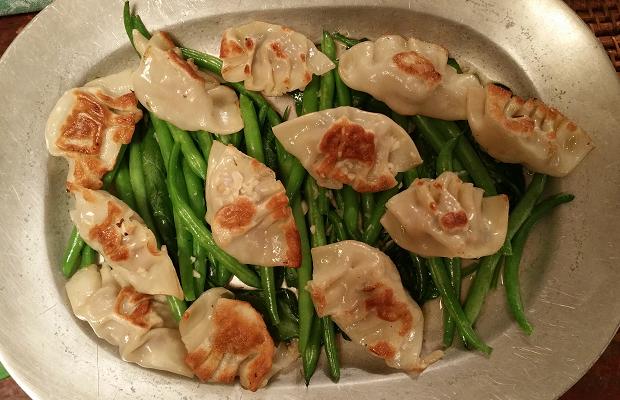
Dumplings

Dumplings

It would be foolish to think that a single taste or a brief assessment can ascertain everything that a wine will bring to the table. So many factors play into that moment in time; how that bottle came to arrive at this place, how long it had been open, its current temperature and certainly the temperament and mood of the taster.

The only true and valid important bits of information that we can cull from a fleeting meeting with a bottle of wine is whether or not it is marred by a fault, or faults. Is the wine tainted with TCA (trichloroanisole)? Does it contain high levels of Brettanomyces? Is it raging with volatile acidity? It is oxidized or reductive? Has lady bug taint found its way into the bottle? And so on and so forth. Quality can be guessed at with high probability but time is so essential to knowledge. This is why tasting for a second and third time matters.

Wines should always be afforded the opportunity to be reconsidered, especially after some bottle settling time. The fascination with seeing evolution from organic ferments is real. Wine changes, often for the better, that much we know. Wines deserve second chances, re-dos and re-tastes.

Writing updated notes is the essential by-product of re-tasting and the catalyst that acts as the chaperone to get to know a particular bottle and by extension, a winemaker’s portfolio. Here are seven new releases, coming into VINTAGES on March 7th. They are actually re-releases, having been previously made public by the winery or through the LCBO. I tried them all once again and can say with confidence, by way of the tasting note, that all seven have confirmed their quality and improved with time. These are the seven new notes for seven March 7th VINTAGES re-releases.

From left to right: Tawse Sketches Of Niagara Riesling 2013, Keint He Voyageur Pinot Noir 2012, Gray Monk Pinot Gris 2013, 13th Street Gamay Noir 2012, Sterling Vineyards Pinot Noir 2012, Bachelder Wismer Vineyard-Wingfield Block Chardonnay 2011 and Bachelder Pernand Vergelesses Premier Cru Creux De La Net 2011

From left to right: Tawse Sketches Of Niagara Riesling 2013, Keint He Voyageur Pinot Noir 2012, Gray Monk Pinot Gris 2013, 13th Street Gamay Noir 2012, Sterling Vineyards Pinot Noir 2012, Bachelder Wismer Vineyard-Wingfield Block Chardonnay 2011 and Bachelder Pernand Vergelesses Premier Cru Creux De La Net 2011

Tawse Sketches Of Niagara Riesling 2013, VQA Niagara Peninsula, Ontario (89029, $17.95, WineAlign)

Juicy, spirited and eminently approachable. Citrus and peach fruit beg to be gulped by the key keg load.

From my earlier, June 2014 note: “The gateway of the Tawse Riesling portfolio and first to be released is an omnipresent beacon for what is to come from the single-vineyard sistren. Built fruit forward from an orange zest, stone rose and lemon glade guide, this is the Sketches most juicy sensation yet. Incredible vacuum of citrus acidity waterfalling into a great white hole. Though surrounded by so many a Riesling with site specific personality, “she’ll carry on through it all.” Intensity in dry Riesling.”

Last tasted March 2015  @Tawse_Winery

Keint He Voyageur Pinot Noir 2012, VQA Niagara Peninsula, Ontario (373407, $18.00, WineAlign)

Carries the weight of the Peninsula within the bright frame of clarity that is the PEC oeuvre. In ’12 the warmth and the weight can’t help but break down to burrow into earth. Fine, grainy tannins and an increased structure will give this three more years of development but do not hesitate to enjoy it now.

From my earlier April 2014 note: “Tasted a second time, the floral lift is clearer than before, as is the understated earthiness. Also showing more body and verve so it appears the Voyageur is starting to come into its own. From my earlier February 2014 note: “Fruit here comes from two Niagara vineyards, Queenston and Malivoire. An earthy Pinot that positions itself in isolation away from its suave and handsome Portage and Benway brethren with a waft of merde. Taste brightens as a sweet cranberry, chalky, root beer float. Kudos deserved as it’s clearly recognizable as Pinot with a medium finish and a pinch of horseradish salt on a lithe 12.5 per cent frame.”

Last tasted March 2015  @KeintheWinery

Gray Monk Pinot Gris 2013, BC VQA Okanagan Valley, British Columbia (118638, $19.95, WineAlign)

Brilliant hue, like a ceiling fresco of gold-scrolled tiers. Has that feel of lemon peel shrivelling to scent. Was a Category Champion at the 2014 World Wine Awards of Canada.

From my earlier September 2014 note: “Pinot Gris with pears and more pears. A no hold barred, straight up, bring it with orchard fruit example. A spoonful of sweet lemon curd indicates a just post ripe picking and now oxidation, if not necessarily the intention. Off-dry with acidity that joins but does not round the shining fruit into absolute form.”

Last Tasted March 2015  @GrayMonkWinery

13th Street Gamay Noir 2012, VQA Niagara Peninsula, Ontario (177824, $19.95, WineAlign)

This is spot on, both as 13th Street and as Niagara Peninsula Gamay. Very ripe, to the edge of extracted distraction and less funky than previous vintages. Really defines the genre, acts the act, walks the walk, executes the execution. Drives the point, carves the cliché, go Gamay go.

From my earlier note when tasted at Gold Medal Plates Toronto, November 2014: “Spice and rich fruit head straight to Gamay welkin derived direct from the soil’s core, of Sandstone, Schwenker and the winery’s home vineyard at Fourth Avenue. Swirl away the gathered must and moss to reveal more Cru fruit than you can shake a stirring rod at. Such verve, said grit, such persistence. The thing about Gamay is, “if you want inside of her, well boy you better make her a raspberry swirl.” 13th Street has certainly made the raspberry sing in the ’12 Gamay so “raspberry swirl, mmm let’s go.”

Last tasted March 2015  @13thStreetWines

Sterling Vineyards Pinot Noir 2012, Napa Valley, California (396150, $29.95, WineAlign)

There are so many reasons not to find a thrill in this regional blend of Pinot Noir fruit but none of them stick. Sweetness, simple syrup silky fruit, brown sugar, every red and purple berry in all varieties of fields (plus ripe plums) and warm to temperate alcohol (14.5 per cent declared) all combine for full California sunshine effect. All this and I just can’t turn away. With all the excess fruit, texture and multiplicity in good times, how can I? I ask this Pinot, “how come you, how come you dance so good?” The answer lies in the feel and the ability to turn a Noir trick or two. Not to mention a rolling of barrels and Napa Valley stones through its very core. Well done.  Tasted January 2015  @sterlingwines  @Diageo_News

Bachelder Wismer Vineyard-Wingfield Block Chardonnay 2011, VQA Twenty Mile Bench, Niagara Peninsula, Ontario (345819, $44.95, WineAlign)

A new release, mindful of micro-plot. From out of a Bachelder barrel, the great mystery of wood is not that it smoulders, but that it rests on water, or in this case, on grape juice. To label this Wismer as Wingfield is to give this Chardonnay a scientific specificity, a concentration of fruit so capable of inducing the ethereal, to hover as if in suspension. This is Wismer-Wingfield. The Chardonnay that floats, like hope.

From my earlier July 2014 note: ‘Has Wismer found a cruising altitude? Has this Grand Cru vineyard from a most perplexing 2011 vintage entered the telephone booth in civilian clothes, only to soon emerge as a super hero? Will it sing, “I am, I am Superman and I can do anything?” Wismer has rounded out a bit, at present in a grounded form, but we know it will fly to greater heights and at faster speeds. From my earlier, February 2014 note: “Got game tonight, in auxiliary moxie, magisterial atmosphere and long strides up and down the ice.” Earlier notes: “Increased richesse and oomph and though I continue to hesitate to admit it, Saunders is the (Jackson Browne) elegant bottling in ’11. Wismer the (Warren Zevon) gregarious, mineral character werewolf of Niagara, what with it’s touch of anxiety, fuller texture and “bite down…draw blood!” From my earlier November 2013 note: “From the Wingfield Block within the 20 Mile Bench grand cru vineyard, ’11 Wismer is greener, in apple and sapid behaviour. The tension is palpable, quarryful, querulous, more calciferous. Fruit here is picked at an altitude as high as the lowest part of Flat Rock’s vineyard. Can a spot be pinpointed, anywhere on the peninsula that produces more piercing Chardonnay in 2011 as this Wismer micro-block?”

Last Tasted March 2015  @Bachelder_wines

Bachelder Pernand Vergelesses 1er Cru ‘La Creux De La Net’ 2011, Burgundy, France (LCBO 403485, $47.95, SAQ 12089524, $38.50, WineAlign)

Purity abounds, florals leap and the heart fills with an arrow of red fruit. So linear, so direct. Wears the crux of Bachelder integrity on its sleeve. The pinpoint accuracy of plot, the ubiquity of gypsy soul, the bandwidth of frequency. Yet another Bachelder “ere the bonnie boat was won, as we sailed into the mystic.” Acidity rears and rails right through. Tannin trails like a burning star. Ten more years will see this to a moondance of quietude.

From my earlier February 2014 note: A metallurgical slant this time around and iodine, though sweet, like a geologist’s preferred cocktail. The palette is Rothko maroon and in cohorts with what is ascertained by the palate, scheme fruits and hearts both red and black.

From my earlier note of November 2013: Has the sense to be subtle, effortless and akin to Chambolle. Not so much openly ripe fruit but more the flowers that come before. Cherries dabbed by a citrus fragrance, or the spritz of squeezed zest and an unusually smoky musk. Insinuates new world (think Oregon) though it tells a rubble tale of its limestone slope climat.

Last tasted March 2015

Good to go!
http://www.winealign.com/profile/2058-mjg

Pirates on a picnic

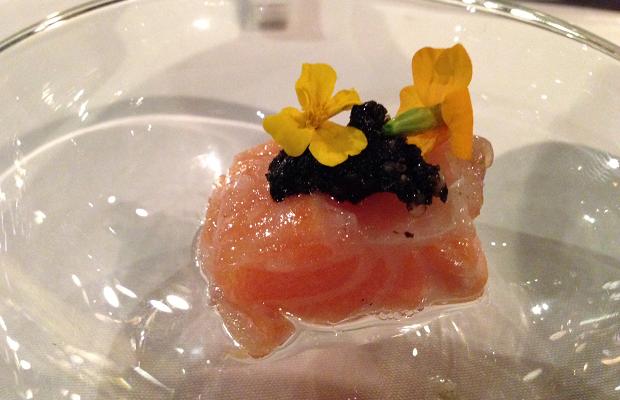
Salmon Amuse Bouche

Chef Victor Barry’s Salmon Amuse

The privacy, intimacy and relaxed atmosphere of a subterranean hashery is something we should all experience at least once in a gustatory lifetime. We should also be afforded the opportunity of a salubrious 12-course tasting menu designed by a reluctant superstar. Why ought we not be handled with extreme Sommelier care by the caress of a total professional? Give me a reason to not spend three hours locked in a room with eight others, all of generous wine and spirit?

The location was Splendido‘s downstairs dining room. The chef was Victor Barry. The Sommelier was Ellen Jakobsmeier. The company a group of friends and friends of friends with a common goal. Eat, drink and be merry. Maybe trash talk a little. Trade a few thousand e-mails ahead of time to fire the vinous juices. Get down to business. Taste fourteen wines blind, poured from paper bags, discuss and be humbled by knowing everything and yet nothing at all.

Chef Barry’s selections and his staff’s execution were beyond flawless, culled from trial, error and perfection, bobbing up into the ethereal. Ms. Jakobsmeier had less than 20 minutes to receive, prepare and pour in order, with timely precision, the agglomerated and cumulative progression of the wines. Like Euro rail time. Not a hair out-of-place. Big props Ellen.

One dinner companion said this. “Thank you so much for inviting me to join your Pirate festivities! The food was incredible, thanks for hosting us Victor. The wines were exciting, generous and delicious! Thanks to all of you for sharing the gems from your cellars. And thank you Ellen for doing such a great job pairing all the wines. A feast worthy of Pirates!”

Victor added his own words. “Thanks everyone. I had a blast. I really enjoyed sitting down stairs it made it much more enjoyable for me. Looking forward to the next event. PS that Tokai was fucking delicious. And the Premier Cru from that “Niagara appellation.”

I wrote this to the group. “Laid in bed last night thinking about every course. Too many details to comprehend. And then it was morning and my kids wanted their lunches packed. Good thing there was this pumpkin in my wine sleeve…generosity in wine just amazing. All thoughtful and just fucking generous. Fortunate to have met new faces. Looking forward to this again, and again. Great work JB and Victor, stars all around.”

And to you JB, you sure do know how to throw a party.

Champagne begins the pirates on a picnic dinner in the downstairs private dining space at Splendido Toronto

Champagne begins the pirates on a picnic dinner in the downstairs private dining vineyard at Splendido Toronto

Champagne Larmandier-Bernier Rosé de Saignée Premier Cru NV, Champagne, France

Just a wee coppery this rusty blush, savoury to solecism and uprooted by a tremendous fault that forces metamorphic salinity, no check that, bleeds from rock into the bottle. If Champagne could commandeer the senses to stop and take note, this LB is the one. Stoic, purposed, frank and blushing like a winter Olympic athlete after a gruelling race. This Rosé is as confident and masculine as can be for the genre. It opens the eyes, pores and heart for a long haul ahead of pulls, in corks, sips and gulps.  @LarmandierB

Larmandier-Bernier Champagne Rosé de Saignée Premier Cru NV and Domaine Dauvissat Chablis Premier Cru "Séchet" 2009

Larmandier-Bernier Champagne Rosé de Saignée Premier Cru NV and Domaine Dauvissat Chablis Premier Cru “Séchet” 2009

Vincent Dauvissat Chablis Premier Cru “Séchet” 2009, Burgundy, France

To be blinded by rocks is to taste such a wine without knowing what it is, slicing like Silex, cutting with a jagged edge of mineral take, yet gripping of aridity that must come from singular Chablis. Something whips like paraffin but again, the missing wood, the fennel talc, the absolute purity just says Chardonnay. With levity requested, gotta borrow from Burghound on this one because he was spot on, “way beyond the shadow of a doubt, yeah.” After 30 minutes the Sechet left the quarry to enter a sweat lodge of smoke and toast with an eventual pause at the charred Shishito capsicum station. The coarse wail is the young Dauvissat crooning but with fear set aside, the wine will soften in time, like the fashion poet, the prince of thieves. This Séchet, mythological in name, is Chablis brightly lit and accepts another sung substitute for yes. “Oh it cuts like a knife , yeah but it feels so right.”  @BIVBChablis

Oysters, popcorn, scallop dust

Oysters, popcorn, scallop dust

Popcorn dusted with dehydrated scallop dust? Damn straight.

Trout roe, maple, ice cream cone

Trout roe, maple, ice cream cone

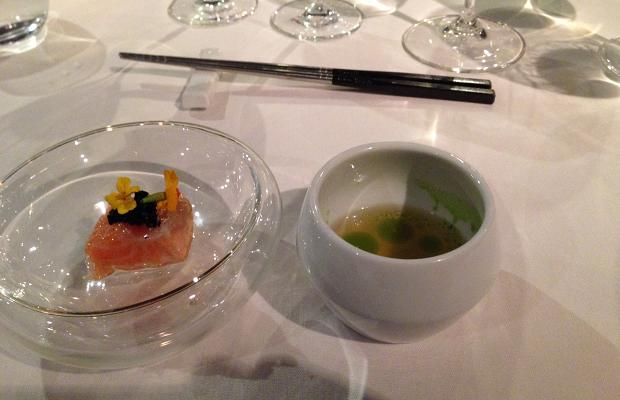
Salmon, skin, consommé

Salmon, skin, consommé

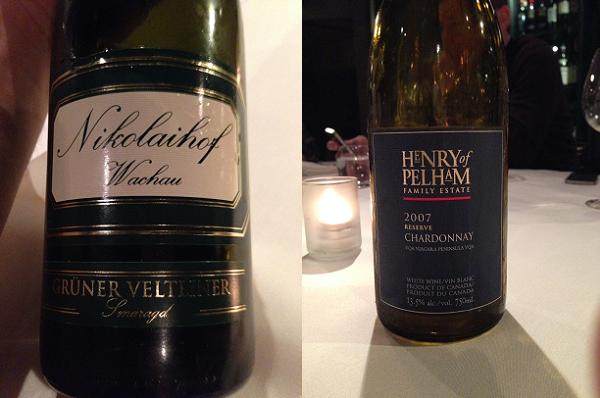
Nikolaihof Im Weingebirge Grüner Veltliner Smaragd 2007, Wachau, Austria (AgentWineAlign)

Something grand is brewing, of that there is no doubt, despite the skinny, indehiscent first moments. A petrol that comes with age, a suckling piggy with melifluous honeycomb in its mouth roasting away, tinned fruit cup of a jellied, agar-agar mandarin orange type; these are the bold scents of what must be Austria, possibly Riesling, certainly Wachau. Tannin and stone drip Alsace Grand Cru, of Riesling again, like Rangen, but the reveal of Grüner Veltliner makes so much sense. Crazy, mind-blowing example, as good as it gets, a bench and high-water mark from which a free fall off the high springboard makes a perfect splash into the glass. Ninety minutes later only a word is needed to stem the waves of petulant emotion. Unbelievable.  @TheLivingVine  @AustrianWine

Nikolaihof Im Weingebirge Grüner Veltliner Smaragd 2007 and Henry of Pelham Reserve Chardonnay 2007

Nikolaihof Im Weingebirge Grüner Veltliner Smaragd 2007 and Henry of Pelham Reserve Chardonnay 2007

Henry of Pelham Reserve Chardonnay 2007, VQA Niagara Peninsula (2013 268342WineAlign)

French oak kicks at the door, feeling young, dirty and fine though synchronicity is absent in most respects. This is certainly not Chassagne, definitely not Meursault, not even St. Aubin. Yet it is delicate and delectable despite its unkempt ways, selfless and if left to be, might settle into a relationship. To discover it’s the hot vintage of 2007 version of today’s Estate Chardonnay is nothing short of astounding and at the same time, disappointing, at odds, disassembled. After 20 minutes it falls apart, “in little pieces on the floor, too wild to keep together.” The wine’s inclusion was necessary, gave perspective and bent to receive the Uni, “and now the end has come.” The 2012 and 2013 will offer much more pleasure.  @HenryofPelham  @SpeckBros

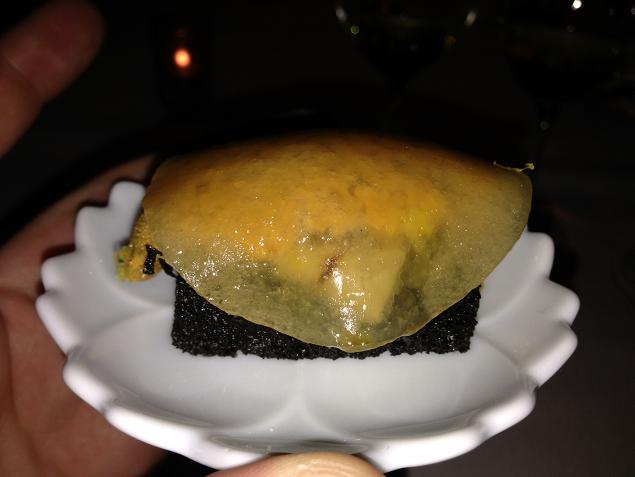
Sea urchin, toast, squid ink, lobster

Sea urchin, toast, squid ink, lobster

Domaine Valette Pouilly-Fuissé ‘Clos de Monsieur Noly’ 2002, Mâconnais, Burgundy, France

May as well be Josko Gravner Ribollo Gialla, or Ann Sperling’s Whimsy! Orange and yet in contempt of the oxidized and underripe cantaloupe be damned, Jura should be the call. But then there is the question of messing with the man acidity and a trippy delicacy as per the cook’s butcher. It is certainly not faulty, nor should it be faulted for developing au natural, on top of the sheets, on the bare side of the beach. OK, so really old Chenin Blanc and a very natural Outback white blend would make for good conversation, or not. Like mushrooms for toffee. Like mulled apples for cider done wrong. Dirty in the most righteous 12 year-old Sherry way. Love it with Lobster on a rock, octopus and some kind of sea cucumber.

Domaine Valette Pouilly-Fuissé 'Clos de Monsieur Noly' 2002 and Louis Latour Corton-Charlemagne Grand Cru 2009

Domaine Valette Pouilly-Fuissé ‘Clos de Monsieur Noly’ 2002 and Louis Latour Corton-Charlemagne Grand Cru 2009

Louis Latour Corton-Charlemagne Grand Cru 2009, Côte de Beaune, France (AgentWineAlign)

Can anything really be known from a fleeting moment spent with this? Classic, viscous, rich Burgundy and nothing but, with more mineral than should be gained from just a pass. The maker had the unconscious intent of remembering generations. When told that hey, it’s a Latour, in Beaune, of Corton Charlemagne, by Grand Cru, it’s hard to gather your inner we’re not worthy but focus and intent need be the outward act. You can really taste the limestone, imagine walking the Corton hillside, feeling the maximum exposure of the sun. When you know what it is you know to take a slice of humble pie and remember the soil, the soil, the soil. In Burgundy since 1797.  @LouisLatour1797  @LouisLatourInc

Equipo Navazos La Bota de Manzanilla Pasada 2011 nº 30 Capataz Rivas

Equipo Navazos La Bota de Manzanilla Pasada 2011 nº 30 Capataz Rivas

Equipo Navazos La Bota de Manzanilla Pasada 2011, nº 30 Capataz Rivas, D.O. Manzanilla Sanlúcar de Barrameda, Spain

Tasted blind this pours as a glass of briny capers, sea peas, vetches and liquid basalt. It speaks a language that contains the ancient loneliness of ruins. Thoughts easily lean Manzanilla or Old Fino. Great nuts, bitters, horseradish, dry tang, daikon and like a dirty martini. Not to mention orange rind and lime rind, zest and akin to a Vin Doux. It’s origins are at the hands of capataz master Rafael Rivas, from juice originally preserved to add kick to more commercial releases but the decision instead was made to “touch” the 15 solera butts with “testimonial sacas” of only four or five arrobas (roughly 5 x 16 = 80 litres), to make a wine such as this. This is old school Manzanilla, the third saca, with a reductive flor, uniquely oxidative and an average age of around 15 years.  @EquipoNavazos  @SherryWines  @JerezXrsSherry

Pop can seafood

Pop can seafood

Intermezzo of smoked oyster and foam…

Carrot

Splendido’s Five-hour carrot

“Friends – ridiculous dinner last night, in the best way. Great wines with great friends is my favourite way to spend a night. Already looking forward to the next one – at which I will bring more than one wine.”
Hamachi collar, black bean paste

Hamachi collar, black bean paste

Podere Rocche dei Manzoni Barolo Vigna Cappella Santo Stefano 1997, Piedmont, Italy

Here the soprano sings, in bold, rich, deep tones, with a sense of entitlement and a swagger. It’s a royal, goodfella, masculine depth. The notes are sung, even danced in bourrée, crescendo, sostenuto and ritardando. The luscious bing cherry richesse gives it youth, intimating Sangiovese but true hematic Toscana can’t be this dark. The modernity of Nebbiolo it must be. Seamless, tireless and impossibly rose petal delicate with the omnipresent tar. Would be willing to go back to 1999 but for the black forest layering, though to find out it’s ’97 shatters myths, confidence and legend. Still dusty and tannic, with more years needed to shed the grains of sand chain. After 20 minutes it goes to candied flowers, oranges and Alba truffles. Bring on the soft scrambled eggs.

Podere Rocche dei Manzoni Barolo Vigna Cappella Santo Stefano 1997 and Marchesi di Barolo Sarmassa 1997

Podere Rocche dei Manzoni Barolo Vigna Cappella Santo Stefano 1997 and Marchesi di Barolo Sarmassa 1997

Marchesi di Barolo Sarmassa 1997, Piedmont, Italy

Smells like spirited, youthful, though decidedly modern Nebbiolo. Rich, chalky, dense, viscous, unctuous and yet the opposite of the Manzoni grit. More feminine, of more voices, in fugue, at times in tarantella, then into arpeggio. The notes play from a radio in my head. “In the deepest ocean, the bottom of the sea, your eyes, they turn me.” That it’s my contribution, this weird fish of a Nebbiolo, makes me amazed at the complex world of Piemonte and the absurdity of knowledge. Sensory appreciation rocks, spoken through this Sarmassa, like a chant from an ancient tribe, sitting cross-legged upon the clays of Lugagnano. It seems there may be 20 years left on the Marchesi’s Nebbiolo. I can’t believe how well it showed.


Venison loin, heart, mushroom, beet, pig's blood chocolate sauce

Venison loin, heart, mushroom, beet, pig’s blood chocolate sauce

“Amazing night! Everything was spot on, from the food to the wines to the company. Thanks to all, looking forward to the next one.”
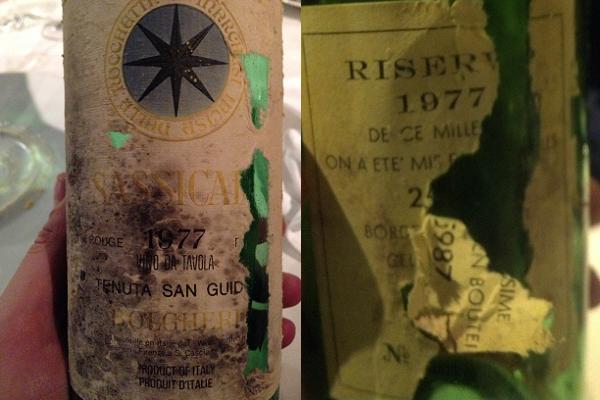
Tenuta San Guido Sassicaia 1977

Tenuta San Guido Sassicaia 1977

Tenuta San Guido Sassicaia 1977, Doc Bolgheri, Tuscany, Italy (2011 480533, WineAlign)

Though the vintage was reported to be less than exceptional, the chance to taste this 37 years in/on and the longevity it displays combines for full, blow me away effect. The first vintage of Sassicaia was 1968 and this 10th try hits the mark of experience. A blend of Cabernet Sauvignon (85 per cent) and (15) Cabernet Franc, the fruit came from vines over top soils of clay and limestone. The wine spent 20 months in Yugoslavian oak barrels (half of it being new, and half used once or twice before), while for the remaining 60 per cent, French oak was used (2/3 new and 1/3 used once or twice before. Tasted blind, the swirling and searching thoughts of Genesis retrospection assimilate aromas of truffle and mushroom, but at first there is no reply at all. Landing on a plot of excellence somewhere between Bordeaux and Piedmont, Tuscany rises from its hills. A silent conversation ask the Sassicaia “I get the feelin’ you’re tryin’ to tell me; Is there somethin’ that I should know?” Its condition is near perfect, its body full, its nature pristine and finally, so obviously in balance. After 30 minutes it begins to slide, to no surprise, but you can’t believe the expression it gives and the impression it leaves. And so, it is confirmed. 1977 was a fine vintage for Sassicaia.  @Smarent


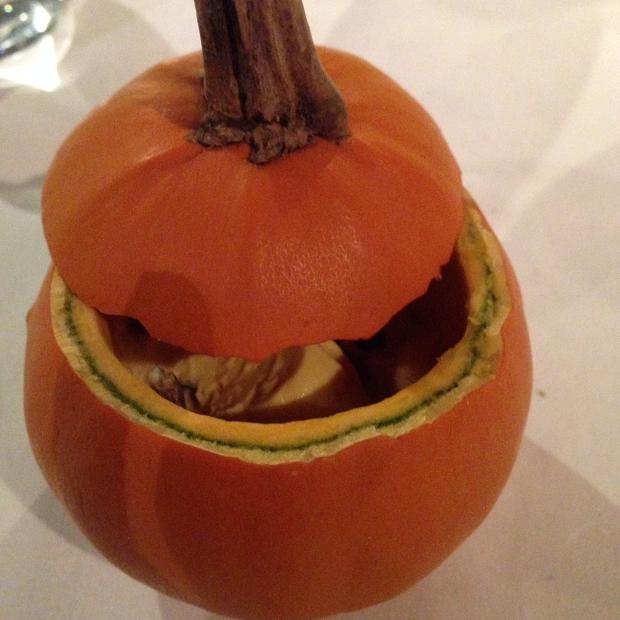
Pumpkin in a pumpkin

Pumpkin in a pumpkin

Marchesi Antinori Solaia Toscana IGT 2003, Tuscany, Italy (2010 987586WineAlign)

The crowd leans modern, young, New World Cabernet Franc or Bordeaux blend. Can’t help but concur. Turns out to be a blend, of Cabernet Sauvignon (75 per cent), Sangiovese (20) and Cabernet Franc (5). First produced in 1978, the Sangiovese was only introduced to Solaia in 1980. In 2003, the weather could be described with a single word. Hot. Limited rainfall and a record total of 2400° in daytime heat summation has brought this Solaia to its full on gain, 12 years in evolution. The vintage caused a full draw from stony calcareous soil of marl and friable albarese rock. The collective soul can appreciate its charms but the heavy aspect ratio can’t be denied. We sipped and “the punches came fast and hard.” Warm smacks to the face, rushes of heat and an ensanguined rush of chocolate fruit through the system. For now there is no caramel, no brûlée, no denoument. In the present there are caverns of tannin, the ‘sunny one’ playing the crowd, on a sunset strip. Soon and in the end, times fades away.  @AntinoriFamily  @HalpernWine

Marchesi Antinori Solaia Toscana IGT 2003 and Royal Tokaji Aszú 5 Puttonyos 1993

Marchesi Antinori Solaia Toscana IGT 2003 and Royal Tokaji Aszú 5 Puttonyos 1993

Royal Tokaji Aszú 5 Puttonyos 1993, Tokaj-Hegyalja, Hungary (2008 972836,, WineAlign)

Here the caramel unctuousness and apricot in chains of liquid gold is the work of a legendary purveyor, the Royal Tokaji company. With sweetness upwards of 150 g/L and acidity pushing the 10 g/L mark, this is no shrinking violet of a dessert wine. With 12 years of road under its belt, the blend of predominantly Furmint and Hárslevelú grape varieties (with a small percentage of Muscat) is firing on all cylinders. Racy and intense, this captures the essence of the 1st growth Nyulászó vineyard and brings it to the world. Bullies the desserts a bit, but all is forgiven considering the range of flavours within and complimented from without.  @Royal_Tokaji  @HHDImports_Wine

Then one more dessert course…”Milk and Cereal,” chamomile and maple tea gel, buttermilk quenelle, flaxseed granola.
Final treats

Final treats

A case for half bottles

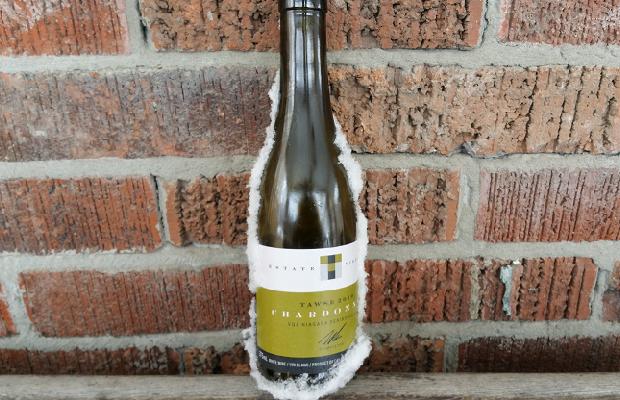
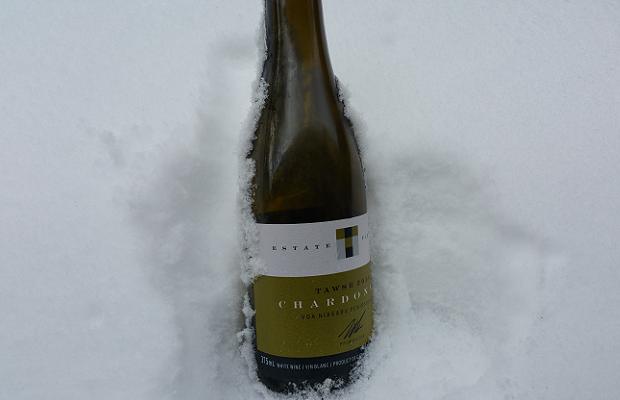
Tawse Estate Chardonnay 2010 from a 375 mL bottle

Tawse Estate Chardonnay 2010 from a 375 mL bottle

It was Oscar night and I was paying very little attention to Hollywood. I was, however, in the kitchen as usual, storming about, strumming my chef’s knives and scrumming five dishes together. I had inadvertently left a case of wine just purchased hanging out on the church pew on the porch outside my kitchen door.

Just in time, or just a few minutes too late, depending on whether you believe in kismet or just plain bad luck, I grabbed the case and hauled it indoors, away from the negative one zillion degrees celsius this Ontario winter was wreaking upon the night. Checking through the case I was relieved to find no apparent damage. No frozen bottles…wait, what’s this? The cork of a half-bottle of Tawse Estate Chardonnay 2010 was forcing its way upwards and crinkling the foil capsule on route to its exit.

I had to make a choice. I could force the cork back in and put the small bottle in the cellar, then hope for the best. Or, I could have a taste right here and now. I chose the latter and voila, here I am to tell the tale.

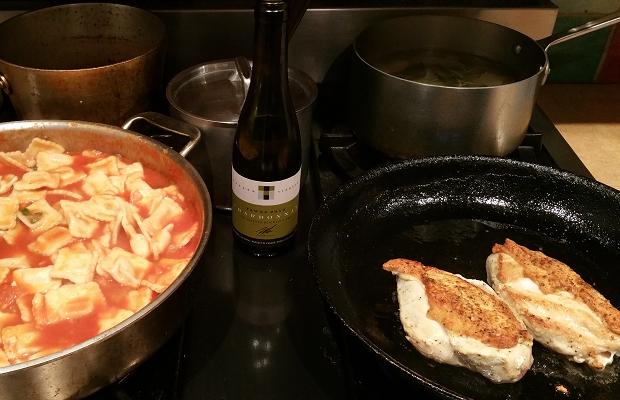
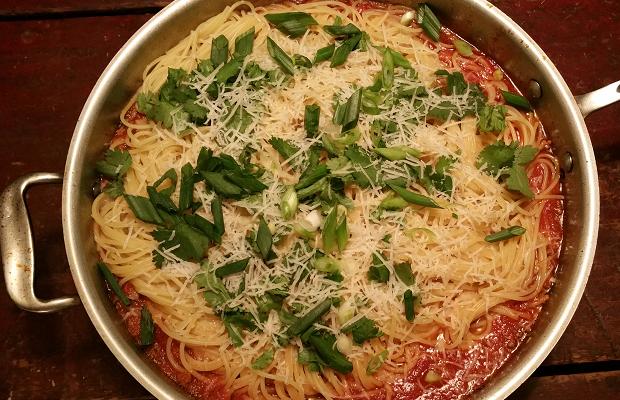
Tawse Estate Chardonnay 2010, Two Chicken Breasts and Red Sauce

Tawse Estate Chardonnay 2010, Two Chicken Breasts and Red Sauce

This sip from a 375 mL was revelatory. Not only did Paul Pender‘s exceptional blend of Quarry and Hillside Vineyards not show any ill effects of an hour in deep freeze, it shone like never before. The aromatics were bursting, the flavours compact and cold toasty, the texture mouth filling and expanding.

Why don’t we drink more from the 375 mL, half-bottle format. To me, it’s like listening to music on vinyl. Wine from these minis has more layers of texture, more nuance, more groove. The expedited evolution and compact formula make cause for a bottled up compression, a concentration, not a reduction.

More winemakers should bottle in the 375 mL container. There are so many reasons for it. Space, quality, half the cost and best of all, nothing left at the end of the night, just the empty bottle. I re-wrote my note for the Estate Chardonnay and upped my score. You can read it at WineAlign or, right here.

Tawse Estate (375 mL) Chardonnay 2010

Tawse Estate (375 mL) Chardonnay 2010

Tawse Estate Chardonnay 2010, VQA Twenty Mile Bench, Ontario (253518, 375 mL $20.95, WineAlign)

Tasted from a 375 mL, the Estate ’10 has come to fruition, at least in this format. Fruit, wood and texture are seamlessly integrated. The wine is fleshy and has reached a pure state of mineral meets residual concentration. This is Chardonnay of a charming combination of maize and acuity. Has raised the bar and the score. From my earlier note of January 2013: “Like its half-sister Quarry Road, stands firm and smacks stubbornly up to the heat of the vintage. Opaque green of agate stone. Combines the apples and citrus from Quarry with Robyn’s musk and pear, but also the searing, mineral tang of Hillside. The assemblage is the most fleshy and forthcoming Chardonnay of the lot. Promises the best of all Tawse’s worlds, without stealing the spotlight from its single vineyard sistren.”  Last tasted February 2015  @Tawse_Winery  @Paul_Pender

Good to go!
http://www.winealign.com/profile/2058-mjg

Why drink that?

Eat this, drink that

Eat this, drink that

We’re really just like moths, we seekers of wine, slaves to a fiery obsession, stopping occasionally to smell the adjectives, taking unnecessary financial risks and with any luck, happening into and finding enchantment. To remember generations. Is this why we drink wine?

We are looking for heroic entablature and architectural wonder in bottles of wine. We see them as DNA and in their liquids we can read their entire future. We sip them again and again until we taste them for the first time. We derive textures and flavours so solid, so tangible, it seems we can reach into the glass and grab handfuls of it. The glass itself has become the varietal, the engineering having expanded the notes and completed them, amplified and contained them. Is this why we drink that?

Not really. Sure we are looking for relevant encounters but what we really want is pleasure. Pleasure and escape. What we seek is value for our money. When we hit the stores and open or wallets we want honest juice at the lowest price. Bullshit aside, here are seven great values, in stores, by agents and down the road in our Niagara backyard.

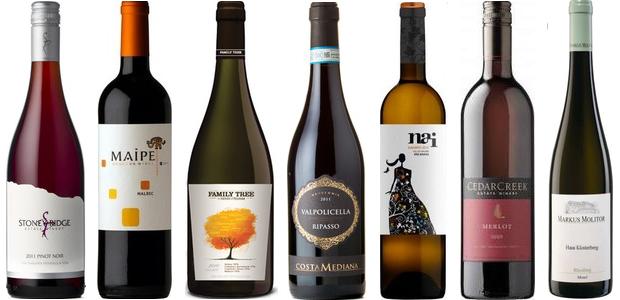
From left to right: Stoney Ridge Pinot Noir 2011, Maipe Malbec 2013, Henry Of Pelham Family Tree Red 2012, Costa Mediana Valpolicella Ripasso 2011, Nai E Senora Albariño 2013, CedarCreek Merlot 2012, Markus Molitor Haus Klosterberg Riesling 2013

From left to right: Stoney Ridge Pinot Noir 2011, Maipe Malbec 2013, Henry Of Pelham Family Tree Red 2012, Costa Mediana Valpolicella Ripasso 2011, Nai E Senora Albariño 2013, CedarCreek Merlot 2012, Markus Molitor Haus Klosterberg Riesling 2013

Stoney Ridge Pinot Noir 2011, VQA Niagara Peninsula, Ontario (156125, $13.95, WineAlign)

Classic Niagara Peninsula aromas, of tart berries, pomegranate, cherries and wet clay exude and display. Stoney Ridge is simply giving this Pinot Noir away. Vinified bone dry (1.9 g/L residual sugar), pricked with acidity (7.2 g/L) and kissed by (eight months) of oak, this acuminates, as opposed to dials, in. The honing is crystalline, in bright and vibrant tones. There is a refined sugar aspect to its ratio but it’s really quite clean and nervy. The length impresses and sweeps to seal the $14 deal.  Tasted February 2015  @stoneyridgewine

Maipe Malbec 2013, Mendoza, Argentina (93823, $14.95, WineAlign)

Quite intense, juicy and peppery for a $15 Malbec. A mix of red and black berries is accented by liquorice. Some chalky overlay, which goes short on integration, would do well to play nicer were it an underlay. A bit musky with cool savoury reserve and a very effective use of high (3000m) altitude fruit.  Tasted February 2015  @chakanawines  @oenophilia1  @Chakana and Maipe: wines with an andean spirit​

Henry Of Pelham Family Tree Red 2012, VQA Niagara Peninsula, Ontario (247882, $15.75, WineAlign)

Only 945 cases were made of this Shiraz (48 per cent), Cabernet Franc (23), Cabernet Sauvignon (20) and Merlot (9) blend. And that’s a shame. Some further bottle time has brought out the best in show. There is as much clear class and enjoyable drinking as a Niagara red blend is likely to earn by wing. The concept is quite OZ, the coalescence very Niagara and the sensibility so sly, Speck family. The brightness, oak influence and acidity linger as one to stretch and bound about in elastic joyeuse. Crosses Charlemagne-like stone swords of accessibility and put me aside confidence with vintage gain and restraint. Keen winemaking decisions by outgoing winemaker Ron Giesbrecht have produced great results. Made for everyday people, were the Family Tree Red pouring from keg it would fill my glass on a daily basis.”And so on and so on and scooby dooby doo.”  Tasted February 2015  @HenryofPelham  @SpeckBros

Costa Mediana Valpolicella Ripasso 2011, Veneto, Italy (377648, $16.95, WineAlign)

Re-taste. Beautiful red fruit, in density. clarity and showy Valpolicella dress. Thinks good clean fun and thoughts, open-knit and its tannins mingle with multiplying acidity. Would benefit from two to three years more time in bottle. It will then drink as it was intended and as it should. From my earlier, September 2014 note: “Solid if newfangled Veneto that swivels from sulphur to sweetness. Has a Niagara Peninsula varnished quality, not so typical for the homeland. Also presses from both vineyard earthy and barrel stinky notes. Somewhat this and insipid but the late influx of fresh cherry brings it back and stretches its length.”  Last tasted February 2015  @Select_Wines  @C_Valpolicella  @MGMMondodelVino​

Nai E Senora Albariño 2013, Rias Baixas, Spain (Agent, $16.95, WineAlign)

A very mineral driven Albariño with little fruit expression to ascertain. Though the grapes give way to fine-grained chalky salinity, is that not coequality from and for the quarry? Soil and stone lead a path to cool and collected acidity, not one so linear but more extrapolated, as if from lime in pith, not zest. A very composed Rias Baixas but not overly accessible. Rich broth with small bits of fresh fish would pair delectably and foil perfectly; keep it from doing the “rise up, rise up,” into aerified, out of this world, parachute club territory. A nip of this and “spirits time has come.”  Tasted February 2015  @LeSommelierWine  @RiasBaixasWines

CedarCreek Merlot 2012, BC VQA Okanagan Valley, British Columbia (BCLDB and BCVQA 408666 $19.95, WineAlign)

Quite the glass of liqueur, with fully ripe, rich and dense fruit. Admittedly on the twiggy and good green side of the varietal, in the right ways, with Merlot bells of chalk, grain and tannin in whistling interplay. A correct correlation and in certain kinship with St. Emilion but with Okanagan footprints. Handles its 14.5 per cent alcohol quite easily and transfers its weight through a cool centre and into an even cooler finish. Along that route are notes of mint, eucalyptus and graphite, not unlike Coonawarra or Stellenbosch. Fun Merlot at an attractive price. Another gem from CedarCreek.  Tasted February 2015

Markus Molitor Haus Klosterberg Riesling 2013, Mosel Valley, Germany (Agent, Approx. $25.00, WineAlign)

Architecturally precise, of cleanly drawn lines, like the Mosel Vinothek acquired and restored by Molitor in 1984 and winner of the “Architekturpreis Wein 2013.” The Riesling mimics the juxtaposition of historical and modern, seemingly steeped in the past and transposed to the present by state-of-the-art winemaking. This has slate, steep steppes rising from subterreanean acquired salinity and ingrained aridity. There is no way to hide from the scree of the past, avoid the incline towards the future, nor can it exist without the run-off of mineral left behind. Brilliant hue, matched density, matchstick wisp and wild tang. Honeyed and suckling porcine in an early roasting stage, with terrific texture. The beautiful arid length is purposed and linear, with much oomph in its gait. Will linger for five to 10 years easy.  Tasted February 2015  @TrialtoON

Good to go!

http://www.winealign.com/profile/2058-mjg

Have wine forget winter

Plantain, strawberry and blueberry

Plantain, strawberry and blueberry

Now for a few argumentative words on logomachy, interpretive synergies and general rambling. Lets talk about wine and how it can make us forget about being chilled to the bone. Lets discuss the ways in which wine can bring forth a future being remembered with each passing sip.

Like stones as heavy, some winters are so stinging only silence helps you portage them, or soldier on through them. That and wine. When winter pisses and moans with a cold, cold heart, the purity and silence of wine can ease the pain. Fruit of the vine that remembers the eskers of the earth, minerals that have not forgotten magma, wine that gives an ancient, suspenseful feeling. Cold forgotten.

In July of 2012 the suggestion was to chill red wines for another hot weekend to ease the suffering in the throes of a sweltering, Ontario summer. A year on the thematic was pursued once again.

Related – A midsummer night’s chill red wine

“Just a slight frost mind you, like clipped diction, for warm, not hot weather.” Here we find ourselves in the opposite chasm, the anti-Hades, a seemingly endless void of polar hell. Perpetually stuck inside a frozen hadron collider. So history is the gradual intent. What to do? Drink wine.

February can be displaced with wine because the ferment has no beginning and no end. No sense of horizontal progression of time. Wine is set in a fractal globe, in which no facet of its character has a life of its own. Scale succumbs to intention.

Related – Feb. 21 wine and song salute

Tomorrow brings another VINTAGES release, a February 21st agglomeration with wines I suggest have discovered a remarkable balance achieved. Open them in a room and their blood will posit a similar temperature, one of warmth, so that soon, you will neither notice the alcohol or the heat, nor the deep freeze of winter. Here are eight more values to kick winter upside its proverbial ass.

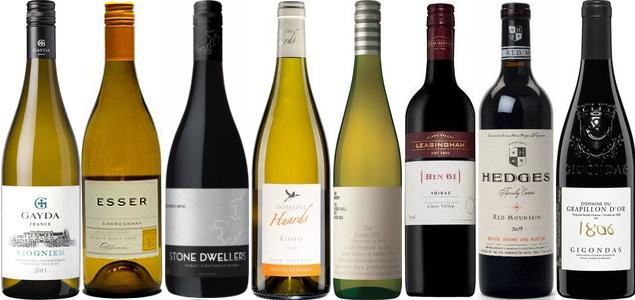
From left to right: Gayda Viognier 2013, Esser Chardonnay 2012, Fowles Stone Dwellers Shiraz 2012, Domaine Des Huards Romo Cour Cheverny 2010, Jim Barry The Lodge Hill Dry Riesling 2012, Leasingham Winemakers Selection Bin 61 Shiraz 2012, Hedges Family Estate Three Vineyards Red 2011 and Domaine Du Grapillon D'or Gigondas 2012

From left to right: Gayda Viognier 2013, Esser Chardonnay 2012, Fowles Stone Dwellers Shiraz 2012, Domaine Des Huards Romo Cour Cheverny 2010, Jim Barry The Lodge Hill Dry Riesling 2012, Leasingham Winemakers Selection Bin 61 Shiraz 2012, Hedges Family Estate Three Vineyards Red 2011 and Domaine Du Grapillon D’or Gigondas 2012

Gayda Viognier 2013, Igp Pays D’oc, Languedoc-Roussillon, France (395129, $13.95, WineAlign)

Simple, proper, sturdy and in certain respects, essential Viognier. Three sites each purpose a layer; chalk from limestone La Livinière, grain by clay-limestone Côteaux du Languedoc and metal tang through slate Roussillon. Florals are southern French Viognier obvious and spice adds a global touch. Quite versatile, well-made and complex beyond its simple roots. A nutty note rounds out the lean with a touch of fat. Good length takes it beneath the surface.  Tasted February 2015  @DomaineGayda  @TandemSelection

Esser Chardonnay 2012, Monterey County, California (675017, $18.95, WineAlign)

The musky and musty aromas in this off-chance gem from cooler Monterey draws fruit from the Riverview and Viento Vineyards in the north of Salinas Valley. The bottled up compression is relieved shortly after the cap is unscrewed, melting into a creamy textured Chardonnay and into the wind gaps of tall redwoods and pines. Round, sweet unctuous, easy to consume sips are both tropical and anything but buttery, heavy mouthfuls. Quite cool-classic actually, persistent, whiffing Monterey cone and framed by mineral adjunct meaning. More than impressive for the cost involved.  Tasted February 2015  @EsserVineyards  @DionysusWines

Fowles Stone Dwellers Shiraz 2012, Strathbogie Ranges, Victoria, Australia (265967, $19.95, WineAlign)

In Victoria’s Strathbogie Ranges cooler temperatures and heads prevail in this savoury, meaty, cured, grounded and earthy Shiraz. Dried flowers, caper berry and a bitterish angst are the Mediterranean accents from a low-yielding vine proviso. Though the wine is quite concentrated as a result of the peanut produce, the fruit is anything but baked. It may be a dweller on the threshold but it has lift, a natural acidity that emphasizes the freshness. The stone turned, this has “the music of the spheres,” a gaining in gathering momentum, beautiful vision and a background of accompanying voices.  Tasted February 2015  @FowlesWine  @vonterrabev

Domaine Des Huards Romo Cour Cheverny 2010, Ac, Loire, France (401257, $21.95, WineAlign)

A wildly original, not quite Loire white made from 100 per cent Romorantin, of a brilliant golden yellow colour and great metallic expression. Like sweating rocks, all sorts of soft and precious metals, a cool medallion around the neck. A tang that gets beneath the surface, though oxidative, remains fixed, in suspended animation. The length cements the fixation, with white flowers, their petals strewn about. A most uncomfortable pungency might frighten some olfaction, though the reek is just a by-product of calcareous clay with a lime reaction, not necessarily chalky but more like a lick of Blaisois loam on metal. Nutty, drying out on the finish but with acids stringing along in ability and pride.  Tasted February 2015  @MarkCuff    @TheLivingVine

Jim Barry The Lodge Hill Dry Riesling 2012, Clare Valley, South Australia, Australia (262469, $25.95, WineAlign)

Clare Valley Riesling is one of those caché varietal in locale entities revered by so many. Fact is not all CVRs are sensational but when one is made like the 2012 Lodge Hill, the grape in place is nothing short of spectacular. A rather flinty meets petrol continuum vintage is massively forward and upward, getting right down to back of the skull business. Herbal yet stony, so arid, so much citrus and a tang of salinity bled from metal. Highly complex and blessedly dangerous length. But flack is cut because despite the anxiety the Lodge Hill “sang as if he knew me…singing clear and strong.” Riesling that soothes and delights, killing me softly with Riesling kindness and his song.  Tasted February 2015  @Jimbarrywines  @MikeAikins1  @ChartonHobbs  @Wine_Australia

Leasingham Winemakers Selection Bin 61 Shiraz 2012, Clare Valley, South Australia, Australia (448241, $25.95, WineAlign)

The history of the Bin 61 is a long, storied and reliable one to hang a perennial Shiraz hat on. In the late nineties and early 2000’s the fruit was darker, more extracted, the wines tannic and needing a dozen years to reach nirvana. Times have gradually shifted the fruit paradigm to red, fresh and vibrant. In 2012, immediate gratification increases, though the tempering vintage has not advanced the progression like in the most recent years. Here the stretched, busy and cake Leasingham persists, so five to seven years of justified evolution should be expected. Tightness grips with further sips so despite the current requiem for red fruit and acidity, this will need a brief taming. Not a Bin 61 for the ages but another winner to be sure.  Tasted February 2015  #Clarevalley

Hedges Family Estate Three Vineyards Red 2011, Red Mountain, Yakima Valley, Washington (1594, $32.95, WineAlign)

A year later this Yakima Valley red has concentrated further, like sweet cherry tree gum resin and sap. Desert climate and high pH loess in coarse flood debris, once entirely gritty in the blend, are now beginning to integrate. Acidity remains on high amid diplomatic balance. From my earlier, February 2014 note: “A most interesting Washington blend out of a vintage worth seeking out. Abstruse fruit package in five varieties, conjoined like a semi-sweet chocolate dessert of flourless proportions and marked by a grain and an exceptional, altitudinous presence that can’t be denied. Berries of all colours and levels of sweet/tart, evergreen verdigris, velvety texture, richesse, luxury magic mountain air. “Walk in the sun, up on Magic Mountain, Red mountain wine, everybody laughs.” This Hedges has that effect. A more than sensible price for all that’s going on and anything but a burden.  Last tasted February 2015  @hedgeswine

Domaine Du Grapillon D’or Gigondas 2012, Southern Rhône, France (981787, $32.95, WineAlign)

Grenache dominant Rhône such as this from the Chauvet family goes deep into the ripest territory, with gorgeous aromatics that burst of red fruit incarnate. The large ancient barrels bring a subtle oak spice and a funk du cave unique and necessary to the Gigondas application. Alcohol is checked at the mid-palate, stepping aside for the vermillion fruit layering while so many spice accents, so Rhône, old and new, spike the zesty orange skin. The leathery hide will see to a decade of age, at the very least.  Tasted February 2015  @grapillondor

Good to go!
http://www.winealign.com/profile/2058-mjg

Post Valentine’s polar vortex wines

Tawse Unoaked Chardonnay 2013 with Pho Cuu Long Mien Tay

Tawse Unoaked Chardonnay 2013 with Pho Cuu Long Mien Tay

Valentine’s Day came and went yet again. The 2015 edition of the polar vortex coincided with Cupid’s annual marketing juggernaut, bursting pipes, freezing the tails off brass monkeys everywhere and making life especially hell for those left out in the cold. Hearts were broken, mended and hopefully in more cases, joined as one.

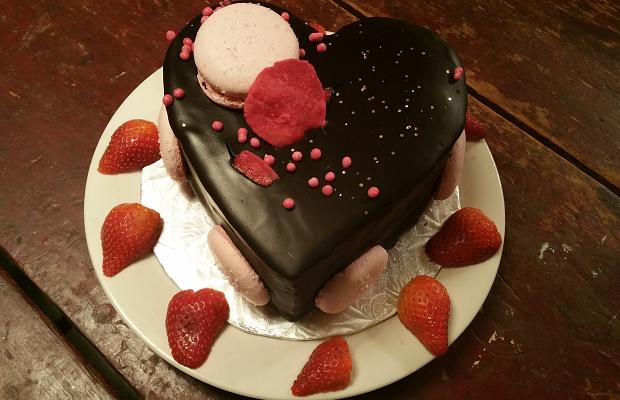
Dundas Park Kitchen Valentine's Cake

Dundas Park Kitchen Valentine’s Cake

I was under the assumption you did not need my recommendations this year so I didn’t provide a pre-VD column to parade out a list of painfully obvious pink and sparkling wines. In the past I messed with the gratuitous holiday, first with just say no to pink wine for Valentine’s:

My advice is to just say no to pink. This year, you gotta be cruel to be wine for Valentine’s.

I followed that up by stating your man wants these wines for Valentine’s:

If you ask me, all I really want this Thursday, like any other day of the year, is a decent bottle of wine.

Last year I said You can kiss my sweet pink wine, Valentine:

February 14th is so hyper-candied that ingredients like salinity, minerality, positive bitterness, animale and tannin are essential in the name of balance. Just don’t pair your dry red wine with chocolate.

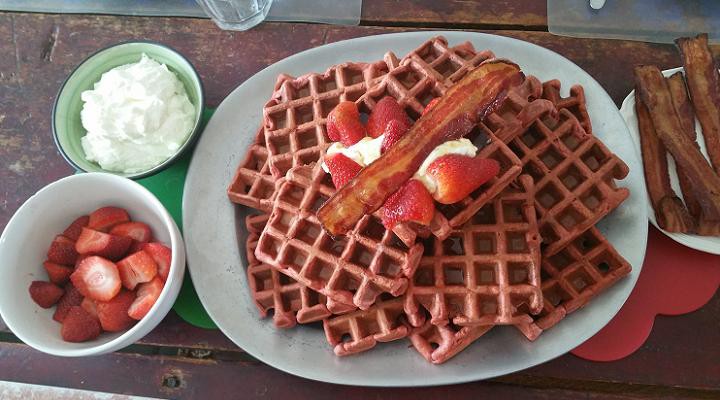
Red Velvet Waffles

Red Velvet Waffles

In early retrospect, my take on 2015 remains frozen like the crust of precipitation on my windows and my copper pipes. Nothing much to say but wait for the thaw. There were of course the proverbial dinners, chocolates, desserts and all you need is love; enough to go around for the whole family. And there was wine. The family day weekend offered ample opportunity to sample and take note of a dozen bottles, none earth shattering or iconic but most aimed to please. Here are some notes.

The wines of Grange-Barbastre

The wines of Grange-Barbastre

Château De La Grange Barbastre Muscadet Sur Lie 2013, Cotes De Grand Lieu, Loire, France (Agent, $14.00, WineAlign)

Little in the way of aromatics here. Were Honeydew Melon dried like mango, this Melon de Bourgogne might be its simple sweet candied flavour. That and a chalky, thin leesy residue. The texture improves as a by-product of the tangy finish on that palate that turns musky melon funky, like whiskey in the jar. Like an ole’ Irish ballad singing “musha ring dumb a do dumb a da,” this Muscadet is characterful if nothing else and good value at $14.  Tasted February 2015  @LoireValleyWine

Domaine De La Grange Barbastre Sauvignon 2013, Igp Loire, France (Agent, $14.00, WineAlign)

Here is a very effective, oleaginous tank simple Sauvignon Blanc with a white flower and candied salt dominant nose. The candy replays on the palate though in a more medicinal and saccharine way. The sweetness is one that drowns, submerges, without a sound. More salinity and blanched nuts round out the smooth finish. Succulent if one dimensional Loire specimen.  Tasted February 2015

Domaine De La Grange Barbastre Pinot Gris Sauvignon 2013, Igp Loire, France (Agent, $14.00, WineAlign)

This 50/50 split between Sauvignon Blanc and Pinot Gris is a rare sighting indeed from out of the Loire Valley. In this instance the Alsatian elevates the Loire game with its ability to draw mineral and salinity from the earth, not to mention extract and the achievement in balance. Here the fruit leaves the salty stones in the dirt and then reaches higher, into the branches of the orchard, for zest and flesh, of pear and lemon. A gradated layering and roundness prevails. Sweet without being sweet, salty without being salty, in the end, all about flesh and bone. Good length.  Tasted February 2015

From left to right: Waterbrook Pinot Gris 2013

From left to right: Lanciola Chianti Colli Fiorentini 2012, Boutari Grande Reserve Naoussa 2008, Liberty School Chardonnay 2013, Eos Estate Petite Sirah 2012, Henri Ehrhart Gewürztraminer 2012, Dei Rosso Di Montepulciano 2013, Waterbrook Pinot Gris 2013

Lanciola Chianti Colli Fiorentini 2012, Tuscany, Italy (330761, $16.95, WineAlign)

Entry level pricing rarely affords complexity and here, in this glycerin, shimmering Colli Fiorentini is an intoxicant of red fruit Sangiovese. Smells like warm celluloid and lamb. The “wool is soft and warm, gives off some kind of heat.” The plums within are charred, fleshy, clement and battered by a bretty funk. The carpet of texture is crawling with cellar micro-nutrients and gamey notes. There is nothing simple in the lamb’s coat and braised shank character. Wood splinters in the glass and the somewhat acquired flavours spread ambience through its broadway Florentine grooves. Another genesis Chianti Docg provides fodder for the further breaking down of appellations and designations of denominazione.  Tasted February 2015  @Collifiorentini  @LeSommelierWine

Boutari Grande Reserve Naoussa 2008, Naoussa, Greece (140111, $17.95, WineAlign) A VINTAGES March 21, 2015 release

In this Xinomavro there is beauty and bog consistence, like wild calla palustris. Imagine a wine thick as consonants, dense and defined by solid rock bubbling like stew, from out of a marsh. Wood adds intricate layers and a mothering of leather hiding and protecting dried cherries. Game, spice, liquorice, funk and things that heal flavour the wine’s liqueur. Silky smooth with a run of grain and the salinity of ancient longing. Racy acidity intrudes, puts in a charge and takes care to see six to eight years more life will be a guarantee. Easily and possibly 10 will pass before it sheds the chalky loops. Terrific vintage with impressive depth and range of flavour.  Tasted February 2015  @boutari  @KolonakiGroup  @DrinkGreekWine  @winesofnaoussa

Liberty School Chardonnay 2013, Central Coast, California (960120, $18.95, WineAlign)

A perfectly well-made, crowd-pleasing and sufficiently balanced Chardonnay with tree fruit notes in many shapes and sizes. The forward aromatics and restrained PG flavours are made for MOR, broad appeal. Though the texture and length are unexceptional, there is a spicy bite that slips more sips into the cards. A move along and return to again and again Chardonnay.  Tasted February 2015  @TrialtoON  @hopefamilywines

Eos Estate Petite Sirah 2012, Paso Robles, California (Agent, $19.95, WineAlign)

Petite Sirah is so often inelegant and black as night so the Eos take is refreshing and relatively tame in comparison. Here defined by a multitude of red fruits and a varietally timid 14.3 per cent alcohol declaration that is more than believable. Has a large stone flecking earth character that reminds of Vacqueyras, amplified by liquorice, bramble and pseudo-garrigue. Fine-grained acidity and tannin add depth and linear, progressive attitude. The inherent hunches of ferric and sanguine seem Tuscan, when considered by way of comparative mythologies. The sole glaring detractor is folksy oak that will not fully integrate before fruit decline. Leans sweet without veering to cloying and all tolled, adds up to complexity for value at under $20.  Tasted February 2015  @EOSwinery  @LeSommelierWine

Henri Ehrhart Gewürztraminer 2012, Alsace, France (392118, $19.95, WineAlign)

From Klevener de Heiligenstein, this is surely a step up in the Alsace Gewurz take.  Some reserve in the nose, holding back the far east florals and the sugar. There’s an aerified feel to this, an ethereal complement, a savoury edge. Really interesting and surely more than versatile aromatic white.  Good texture with creamy mangosteen and vanilla pod and then tight, even spicy, bracing acidity. Great deal here. Will live for a decade.   Tasted November 2014  @AlsaceWines  @drinkAlsace

Dei Rosso Di Montepulciano 2013, Tuscany, Italy (919430, $19.95, WineAlign)

Caterina Dei’s red fruit Rosso di Montepulciano is a noble seductress of necessity, younger and approachable, engaging for its purity and for its freshness. When compared to the Prugnolo Gentile that frames a Vino Nobile, it falls short, obviously, but its immediate appeal is what matters. Clean, clear and pristine juice is dropped with a tincture of beneficial medicine notes, for good sense, in place, measure and thought. A maquillage smear of sweet anise liqueure adds a dense streak in herbiage. The rehydrated fruit of tree pods is imagined, along with a vestige of Val D’Orcia garden shrub excretions. A malleable, permeating and nearly intoxicating Rosso. Drink now, now and again.  Tasted February 2015  @LeSommelierWine

Tawse Unoaked Chardonnay 2013

Tawse Unoaked Chardonnay 2013

Tawse Unoaked Chardonnay 2013, VQA Niagara Peninsula, Ontario (Winery, $19.95, WineAlign)

The Tawse take on Unoaked Chardonnay is definitive, exemplary, righteous stuff. It does not clock you over the back of the head, nor does it beg for attention. Its stainless steel raising causes a dichotomous sensation, merging fruit seemingly drawn directly from the apple and pear orchards to melt into a mineral bath. It’s like a collision of hot and cold, like lightning. One taste of this pale, pure Gegenschein elicits the idea of a relevant encounter and one willing to be experienced again and again.  Tasted February 2015  @Tawse_Winery

Waterbrook Pinot Gris 2013, Columbia Valley, Washington (918242, $22.95, WineAlign)

Very Gris (as opposed to Grigio), pure as Walla Walla running spring water, with mineral salts on the nose, juicy stone fruit on the palate and some tonic on the surprisingly long finish. Sweetness spoons over and lingers, perhaps trying just a bit too hard but “she brings the sunshine to a rainy afternoon.” Waterbrook’s PG is a yes wine, with components that are all expressive, if a bit scattered and not always in synch. If Washington Pinot Gris were progressive art rock, this Columbia Valley specimen might sing its song, with length to last out an album side.  Tasted February 2015  @WaterbrookWine  @LeSommelierWine

Boxwood Estate Trellis 2012

Boxwood Estate Trellis 2012

Boxwood Estate Trellis 2012, Middleburg, Virginia (Agent, $39.00, WineAlign)

A blend of Merlot, Cabernet Sauvignon and Cabernet Franc produced at John Kent Cooke’s historic estate, the Trellis spent 12 months in one to three year-old French oak. Classic nor-eastern aromatics share a kinship with North Fork clarets, but here warmer, riper and fuller of flesh. The advance comes by way of the 2012 heat day quotient and the latitude. The swath is a fresh coat, not sublimated from dried fruit. The plumpness is in fig, prune and plum, hydrated, dense and twisted with ties of tannin and acidity. The unmistakeable feel of cool-climate, new world expatriate Bordeaux-styled reds is explicitly fresh and clean. If it were $20 instead of $40 it would be an absolute no-brainer. As it stands, it’s worth a look though at the price its audience will not be large.  Tasted February 2015  @boxwoodwinery  @TrialtoON

Good to go!
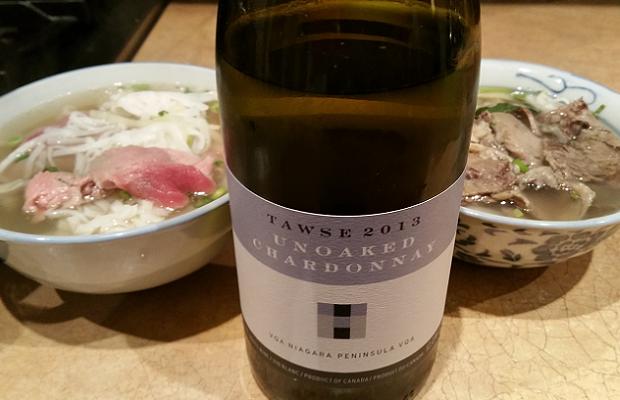
http://www.winealign.com/profile/2058-mjg

Du bon Bachelder: Burgundy, Oregon, Niagara

Bachelder Wines tasting. December 28, 2014 Photo: (Elene Galey-Pride, www.winestains.ca)

Bachelder Wines tasting: December 28, 2014
Photo: (Elena Galey-Pride, http://www.winestains.ca)

Québec native and Niagara Peninsula resident Thomas Bachelder makes Pinot Noir and Chardonnay in three countries. He may not be the only gypsy winemaker on this planet but he certainly ranks as the most focused. Over the past few years I have had many opportunities to taste and be privy to the diversity, overlapping and incrassation of his portfolio. By now I know so much and understand so little.

There is one thing I do know for sure. Bachelder and partner Mary Delaney form a formidable wine-producing juggernaut. Together they are the vine and the fence. The question is which one is the vine and which one is the fence. If asked they and their guests would likely all produce different answers.

Thomas Bachelder Photo: (Elene Galey-Pride, www.winestains.ca)

Thomas Bachelder
Photo: (Elena Galey-Pride, http://www.winestains.ca)

Thomas and Mary invited a group of us to taste through the Bachelder 2012’s just after Christmas. Ever the great hosts, Thomas and Mary not only poured 16 wines, they also offered up a most excellent feast and left us (Rick VanSickle, Michael Pinkus, Evan Saviolidis and Elena Galey-Pride) amazed and satiated.  Rick’s take on the tasting should be read here: Poetry in motion: Thomas Bachelder unveils his 2012 Pinots and Chardonnays from Niagara, Burgundy and Oregon.

Bachelder Wines Photo: (Elene Galey-Pride, www.winestains.ca)

Bachelder Wines
Photo: (Elena Galey-Pride, http://www.winestains.ca)

In Oregon Bachelder made wines at Ponzi and Lemelson Vineyards. In Niagara he was best known for creating a world-renowned portfolio of Pinot Noir and Chardonnay through an artfully applied science at Le Clos Jordanne. Beyond Bachelder there is now the Thomas effect at Domaine Queylus. He’s like the Chicken Man, “he’s everywhere, he’s everywhere.”

In Ontario his Pinot Noir fruit mainly comes from the St. David’s Bench vineyard owned by the Lowrey family. The Chardonnays are drawn from the Wismer Vineyard on the Twenty Mile Bench and the Saunders Vineyard closer to Lake Ontario. In Oregon, the sturdy contrariness of the vines show a marked preference for the sandstone and volcanic (Basaltic) strata, in Yamhill-Carlton and the Willamette, rhymes with dammit – thanks Mary … ;), Valley. In Burgundy the terroir in micro-plots diversify the stratagem even while some are considered lesser locales for growing great Burgundy. But one thing is clear. The lieu-dits that give of their fruit all qualify as appellative wonders of the Bachelder diaspora.

Thomas Bachelder loves his map of Bourgogne. He would crawl inside it if he could.

Thomas Bachelder loves his map of Bourgogne. He would crawl inside it if he could.

For a brief history on the Burgundy, Oregon and Niagara terroirist, check out my two previous posts on the Bachelder project.

Related –  Vineyards, winemakers and their sense of place: Bachelder and Leaning Post

Related –  Synchronicity in three terroirs

Wine writers hard at work. Clockwise from bottom left. Godello, Rick VanSickle, Evan Saviolidis and Michael Pinkus Photo: (Elene Galey-Pride, www.winestains.ca)

Wine writers hard at work. Clockwise from bottom left. Godello, Rick VanSickle, Evan Saviolidis and Michael Pinkus
Photo: (Elena Galey-Pride, http://www.winestains.ca)

Order is an extreme obsession for Thomas Bachelder, in an organized, chaotic way. For this reason, the wines were tasted in the following progression, to make sense of the complexity and variegation in each country from the three distinct yet wholly antithetic bon (Burgundy-Oregon-Niagara) terroirs.

Bachelder 2012 Whites

Bachelder 2012 Whites

Bourgogne Aligoté Champs Pernot 2013, Burgundy, France (SAQ 12089559, $24.00, WineAlign)

From old vines in the commune of Puligny-Montrachet, Bachelder’s Aligoté is a flinty, indiscreetly pinching and itinerant example. More complex than it needs to be, it can be accused of being a risk taker. If Chardonnay is considered in terms of finding excellence out of cool climates, this Aligoté is downright gelid. The wine doth go both ways, at once reductive and then terpenic. Lime citrus concentrates aromas and flavours within a very platinum, mineral frame. Speaks several languages that can be related to but only if you can pry through the cracks in the hard protective shell. Confounding really, yet a fascinating study. Bachelder could do for varietal Burgundy Aligoté in ways similar to Sylvaner in Alsace.  Tasted December 2014

Pinot Noir Oregon 2012, Willamette Valley, Oregon, USA  (333278, $34.95, WineAlign)

Primarily constructed from the fruit of Yamhill-Carlton vines, a third of which is Lazy River, an apropos moniker because by harvest time it hardly moves. The warm vintage adds a calm dimension to a Pinot Noir more Burgundian than the Bachelder’s Niagara and also more table friendly. Pure perfume and like life in layered, rosy hues, a vie en rose, from the land and the river’s subtle flows. The terra mobilis. The underlying dream in Thomas Bachelder’s Oregon movement is mineral, like salinity, not limestone but something ambiguous from the river’s pull and under the river. Elegance lived and relived. Here is a wine from a very available warm vintage, with a mess of fleshy fruit, yet Thomas does not obfuscate the terroir. In 2012 and needfully so, it is served from a light hand. Currently available at the SAQ in Quebec and coming to VINTAGES in Ontario, Spring 2015.  Tasted December 2014

Pinot Noir Niagara 2012 and Pinot Noir Lowrey Vineyard 2012

Pinot Noir Niagara 2012 and Pinot Noir Niagara Lowrey Vineyard 2012


Pinot Noir 2012, VQA Niagara Peninsula, Ontario ($29.95, WineAlign)

The fruit for Bachelder’s local environ comes from Wismer Parke within the essential Niagara vineyard. By way of setting bearings straight, the Park is contiguous to the Foxcroft and Wingfield sections of the Lowrey Vineyard. A precocious and most positive net gain Pinot Noir most of which, as Thomas so adroitly points out, will be consumed before being allowed to hit its prime. Despite the generic labelling, this is not a mass-produced bottling by any stretch and was swallowed up by licences. It’s a hallmark expression of warmth, texture, vintage and the capability of Pinot Noir in this specific place. What Thomas has achieved, with effective persuasion, is a cloning from intimate belongings; earth, fruit, Lowrey.  Tasted December 2014

Côtes De Nuits Villages Aux Montagnes 2012, Burgundy, France ($45, WineAlign)

Named for La Montagne, to recognize it for place because local rules forbid calling it what it really is, nudge, nudge, wink, wink. So what was ‘La’ is now ‘Aux’ and with the change, in this vintage, comes something formidable, eliciting a response of aux la la. Let’s talk about this, with no mocking tone, just real thoughts. Anything but regional, this Bachelder is so very Villages, specifically lieu-dit, with its depth of earth and release of perfume. A piercing sort of Pinot Noir from a which a sauce could be fashioned out of its sheer intensity, to bathe meats. The concentration has a citrus feign, bright, in the back, along with a giving and Burgundy forgiving mineral funk. In this Burgundy, the mountain lurks, in spirit torque. Will unwind for up to 10 years. Available at the SAQ in Quebec.  Tasted December 2014

Pinot Noir Johnson Vineyard Oregon 2012 and Côtes De Nuits Villages Aux Montagnes 2012

Pinot Noir Johnson Vineyard Oregon 2012 and Côtes De Nuits Villages Aux Montagnes 2012

Pinot Noir Johnson Vineyard Oregon 2012, Willamette Valley, Oregon (SAQ 12065338, $44.50, WineAlign)

A hard-working wine that reaches for fibres not available for weave in the Bachelder ‘basic’ Oregon Pinot, the Johnson digs into the salty waters beneath the earth. Draws up its hydration, the astonishing fidelity of minerals magnetized and then redacts the smokey, splintering spokes of wood. The juice in 2012 flows and follows the inconsistencies of the skin and the barrel like the river travels along the irregularities of the land. Rich, dusty, brooding and intuitive. The Johnson is bent on serious intent, like a sculptor’s dentil relief, with increased shadow, less mannerist in 2012, deeper, darker and of more solemnity. When the ’11 was at first hard to figure then soon after revealed its charms, this ’12 will take much longer to unravel. The brightness of Oregon Pinot Noir is perhaps its greatest attribute so here that light is not yet known. Wait three to five years to find out its truth.  Tasted December 2014

Pinot Noir Lowrey Vineyard 2012, VQA St. David’s Bench, Niagara Peninsula, Ontario (361816, $44.95, WineAlign)

A balanced and thoughtful wine, from five rows of mostly mysterious, and unknown clones. There simply is no other locale in Ontario that you can grow Pinot Noir any further away from lake and river and still unearth such depth. Though terroir-driven, this shares little with other geographical perimeter outliers, like Ravine and Coyote’s Run. Can only be Lowrey; folkish, demotic, St. David’s Bench vernacular. From my earlier, October 2014 note: “To those who wonder aloud about the annual love affair with this vineyard, suck it and see. This connectivity and this wine renew again. Same time, this year. Bursts of all that have come from it before, are here now and in temptation of what will be for years to come. Has “the type of kisses where teeth collide,” a Sam Cooke ages to Arctic Monkeys kind of reckless serenade. It’s also a balladeer, this scaled back Bachelder, if that can be said to be done. Here now soft, elegant, perfumed, demurred, sweet, downy, pretty, not yet fleshed, surprisingly void in tannin, anxiety and tension. Work with it for 10 minutes and it will then begin to bite back, show its teeth, pearly white as they are, grind it out. There will be 10 years of development in this Lowrey, if not less, but in ’12, that is more.”  Last tasted December 2014

Nuits St Georges La Petite Charmotte 2012, Burgundy, France (357228, $49.95, WineAlign)

Here grinds a wine that could want for some decant, a pause for thought while the imbibers assess their ways through Oregon, Niagara, Johnson and Lowrey. A pent-up perfume, when allowed to breath in and then out, results in a concentration of aromatic certainty. Tight and bracing, with cedar and bitumen, cherry and rose, this single-vineyard NSG hugged up on a northern slope is both adamantine Nuits and the pretty dame of Beaune. Straddles the arrondissement’s Burgundian twain, the Neaune, from iron to sublime. The imprint of yearning and distance.  Tasted December 2014

Les Bas Liards Savigny Lès Beaune 2012, Burgundy, France (SAQ 12089567, $38.25, WineAlign)

Only two barrels (one and two year-old, zero per cent new oak) were procured of this 100 per cent Pinot Blanc. “I’m a barrel fermenting maniac,” admits Bachelder. He might also say “I’ve got a job, I explore, I follow every little whiff and I want my life to smell like this.” Stone fruit is in resolution and integration, fully, completely. This quenches thirst, like chewing on raw fish. Why Pinot Blanc in Savigny Lès Beaune is the $64K question with an answer tragically not really known. Its taste is not just Pinot Blanc, it is the flavour of Savigny Lès Beaune. It is PB looking for a place to happen. The argument is logomachy, the reality is Savigny. What it delivers is a clean, hip Burgundian message and at the same time asks, “do you taste Chardonnay?” Yes? No, I taste Savigny Lès Beaune.  Tasted December 2014

Bachelder Chardonnay Johnson Vineyard 2012, Willamette Valley, Oregon, USA ($44.95, WineAlign)

From the best four of twenty barrels (and 15 – 18 per cent new oak). The salinity drawn is deeper still, like a bone from the skin of the sea. Rich tones, components, tannic texture, filibuster Chardonnay. From my earlier, May 2014 note: “More specifically a product of its ocean meets sous terre soil than Bachelder’s basic (term used loosely) Chardonnay, the Johnson nicks more richesse, around and around fullness. Not to mention the cerebral wisdom of two Scots and a Charlemagne. Johnson’s progressive and forward thinking maker works with inconspicuous wood and the science of introducing oxygen into wine in a controlled manner.  He might say “for it is wisdom that we have for sale.” Like a white-winged dove, the 2012 will trod lightly towards a long walk to a very long life. It can be imagined aging to the edge of seventeen. The earthy feel, the salinity, not from tannin but from soil, “the music there, well, it was hauntingly familiar.” This is iridescent Oregon in a Bachelder voice. No doubt.”  Last tasted December 2014

Niagara Chardonnay 2012, VQA Niagara Peninsula, Ontario (VINTAGES Essential 302083, $29.95, WineAlign)

Primarily fruit sourced from Wismer-Foxcroft and Wismer-Wingfield plots, the oak treatment is 15 per cent new. Shows so much more warmth than Oregon. More honey and tropical notes than many peers as well. And still limestone crusted apple is the major finishing key in a Chardonnay that sings a familiar Niagara hymn. From my earlier May 2014 note: “Bottled just one month ago, contrary to the monk’s assertion, there is nothing shocky about her. Her fruit is downy soft, round without being fat because as Bachelder maintains, real as always, you “can’t have the minerality of that perfect 2011, I’m not going to bullshit you.” The 2012 is a wine unconscious in its own obviousness, ready for anything. Gregarious, golden, fresh fruit that was ready to roll out of its barrel and into the waiting glass long before its maker was prepared to open the valve. And of course there is a mineral finish. It can’t help but be.” Last tasted December 2014

Bourgogne Chardonnay 2012 and Niagara Chardonnay 2012

Bourgogne Chardonnay 2012 and Niagara Chardonnay 2012

Niagara Chardonnay Saunders Vineyard 2012, VQA Niagara Peninsula, Ontario (324103, $44.95, WineAlign)

From a site 2.5 km’s from the lake, right on the highway at 30 Bench. Derives its plushness from mere proximity so “serve it first,” pleads Thomas. So much lush, more richesse and yet today, Saunders is a bit closed, primary even. Will yet need some time to find its way. Coming to VINTAGES, Spring 2015. From my earlier, May 2014 note: “Though presently showing a bit inferential, no amount of Bachelder reduction can keep good fruit down nor can it dismantle the mastery of mineral impart. An arras of texture conceals the portal to both vineyard and barrel with streaks of salinity, charcoal and chalk. The 2012 rendition is a canvas laden with pure golden paint, concealing “hidden forms and shifting states.” Thomas has found a rhythm in Saunders through thick brush strokes, full and advancing. This warm vintage is not a receding one, its flavours and its texture do the opposite. They jump out at you in waves. For Thomas, the sublime is now.”  Last tasted December 2014

Niagara Chardonnay Wismer Vineyard 2012 and Niagara Chardonnay Saunders Vineyard 2012

Niagara Chardonnay Wismer Vineyard 2012 and Niagara Chardonnay Saunders Vineyard 2012

Niagara Chardonnay Wismer Vineyard 2012, VQA Niagara Peninsula, Ontario (345819, $44.95, WineAlign)

An appraisal of Wismer, much further up on the Bench as compared to Saunders, is always fraught with side by each guilt. The two coax and dissuade each other in every respect, from vintage to vintage and in flip-book oscillation. Once again, the reversal is complete in 2012. Wismer gives not just power and warmth, but layering. Its voice is an astonishing fidelity of native rock magnetized. Wismer finds a way to make grace necessary and to make necessity graceful. While Saunders made yeoman’s work of 11’s crazies with precision and poise, Wismer takes the glow of ’12 and turns it into cool sunshine. This Chardonnay of wealthy fruit, controlled oak, olivine and feldspar tannin will slowly wash up like driftwood on the gravelly beach of life. Give it a year or two to assimilate the components and drink it for 10 more.  Tasted December 2014

Bourgogne Chardonnay 2012, Burgundy, France (272005, $35.95, WineAlign)

From lower Puligny, this is rich, forward and expressive Chardonnay. While it may gangle out with a fierce, pierce of the tang, a change fills the air after much discussion about a barrel, how it is used and to what effect, both for its current and predictable future. Has that honeyed, lemon toasty unctuousness, a weave that is weighty and glazed. Some wood spice and a colourable, creamy curd of citrus. Oak compounds the sweetness and layering. Puligny runs through its wooden veins and pumps micro-oxygenated nutrients to the important, internal organs. The eventuality here is the alleviation of pressure and a retrofit of fruit to elegance. Strike another notch up and step forward for the Bachelder Burgundy sojourn. There is still so much to learn and even this will seem pedestrian compared to what will come but for now it’s just fine, thank you very much.  Tasted December 2014

Savigny Lès Beaune Les Bas Liards 2012 and Marsannay Clos du Roy 2012 

Savigny Lès Beaune Les Bas Liards 2012 and Marsannay Clos du Roy 2012

Marsannay Clos du Roy 2012, Burgundy, France ($39.25, WineAlign)

The ‘King’s Hill’ which is just half of the misnomer because how can a plot of such ability be considered so low on the Cru pole. Half of a new barrel went into the minuscule (two barrel) blend. Chardonnay like lace, from nothing less than an appellation prepared to offer up fine drink, in pastry and in textile. Tropical tree fruits hang in rows, connected by cream and the contending forces of smoke and bite. Always the end game of rock envelops the whole, like gabbroid nodules, permeating every fissure.  And so, because a Bachelder Chardonnay must comply, as the earth invisibly prepares its vines for successes and failures, so history is the creeping intent.  Tasted December 2014

Good to go!