Post ProWein tasting crawl trough the Ahr, Mosel, Nahe and Rheinhessen

In March of 2024 Godello reprised a Düsseldorf redux by attending the annual ProWein Wine Fair and then hitting the road for a three-day, four region transversal of German wine-growing regions. Prowein, Messe Düsseldorf and the German Wines Institute brought international journalists through the Ahr, Nahe, Mosel and Rheinhessen. The producers visited were Weingut J.J. Adeneuer (Bad Neuenahr-Ahrweiler); Weingut Forster (Rümmelsheim), Schlossgut Diel and Piri Naturel Christine Pieroth (Burg Layen) and Weingut Anette Closheim (Langenlonsheim); Four producers from Der Ring 1899, a.k.a. the Bernkasteler auction company hosted the group at Die Mosel Vinothek und Winebar, Traben-Trarbach; Weingut Franzen (Bremm), Weingut Walter (Briedel), Weingut Rebenhof (Hochheim am Main) and Weingut Erben Von Beulwitz (Mertesdorf); Last stop was with Weingut J. Neus (Ingelheim am Rhein) in Rheinhessen and finally the press tour concluded with a fascinating Rheinhessen tasting at the Ingelheim Vinothek, presented by Sommelier Shanna Reis. Special thank you goes out to Christiane Schorn, Senior Manager Press & PR, ProWein, Michael Mandel, Messe Düsseldorf and Carola Keller, Marketing Manager, German Wines (DWI). These are the estates, their makers and notes on a collective 80 wines tasted between the 12th and 14th of March.
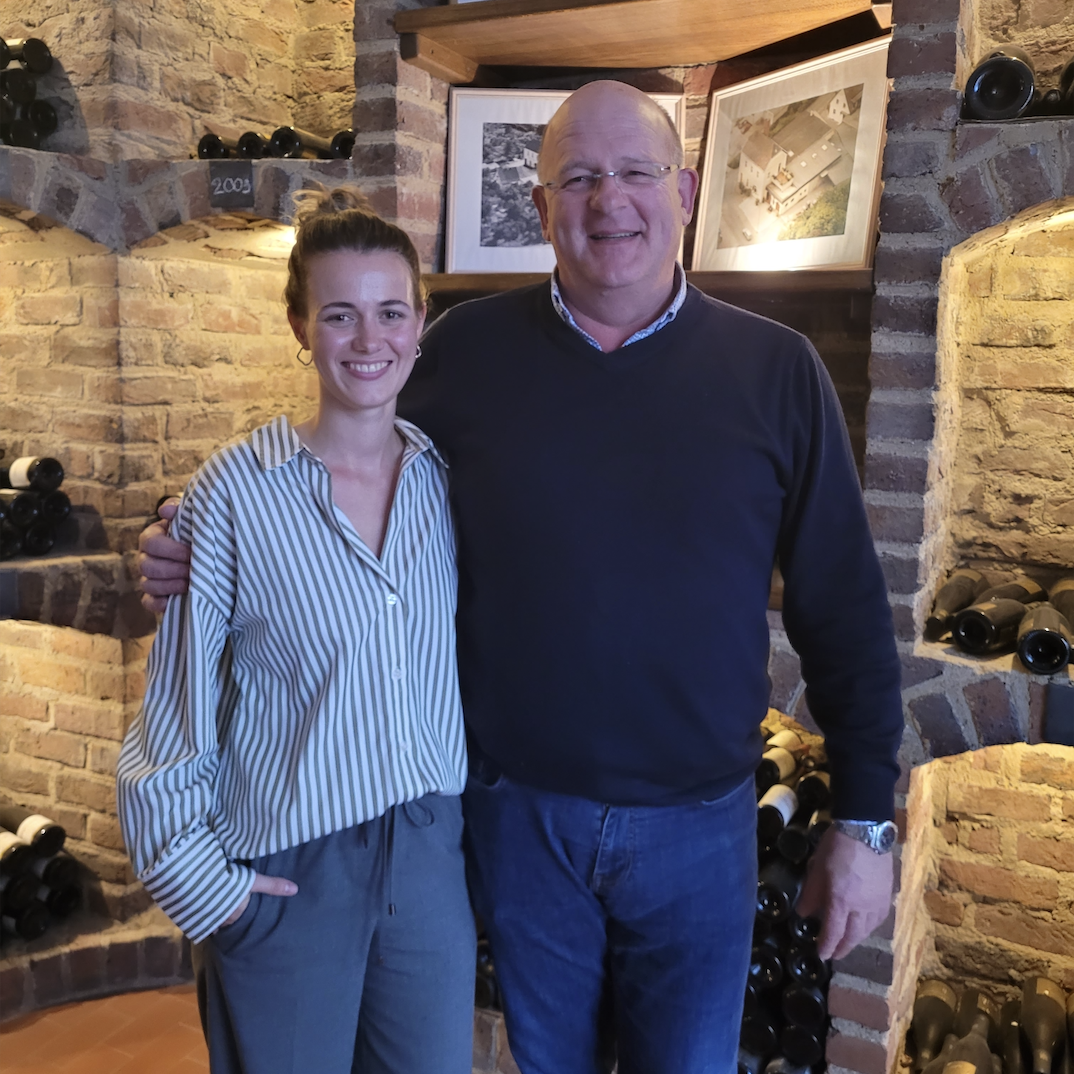
Marc Adeneuer with daughter Francisca – J.J. Adeneuer

Ahr Valley

Weingut J.J. Adeneuer –  Bad Neuenahr-Ahrweiler

Weingut J.J. Adeneuer Blanc De Noir Purist 2022, Ahr Valley

Saignée method Blanc de Noir, reduced from the Grosses Gewächs spätburgunder, finished at three g/L of RS. Simple, fresh and dry. Quite pure as Rosé with a mild pith bitters finish. Drink 2024-2025.  Tasted March 2024

Weingut J.J. Adeneuer Weissburgunder Purist 2022, Ahr Valley

Juts a month on the lees for pinot blanc, now a year in bottle, more about texture and mouthfeel than primary fruit. About as crisp and clean as it gets but again with a mild lime pith bitter finish, much like the Rosé. Length adds to the refreshment of the wine. Drink 2024-2025.  Tasted March 2024

Weingut J.J. Adeneuer Spätburgunder 2022, Ahr Valley

Mildly reductive and also a factor of Ahr Valley terroir, making pinot noir flinty and taut while still this youthful. As with all the Adeneuer pinots they all fall in at 13 percent alcohol, the wood factor only from Bourgogne forests and just 10 percent new. A mix of red berry fruit, more flint stone character and the faintest touch of red fruit but also almond bitters. Would never see this as jammy and chilling it down for maximum freshness is wholly encouraged. Drink 2024-2026.  Tasted March 2024
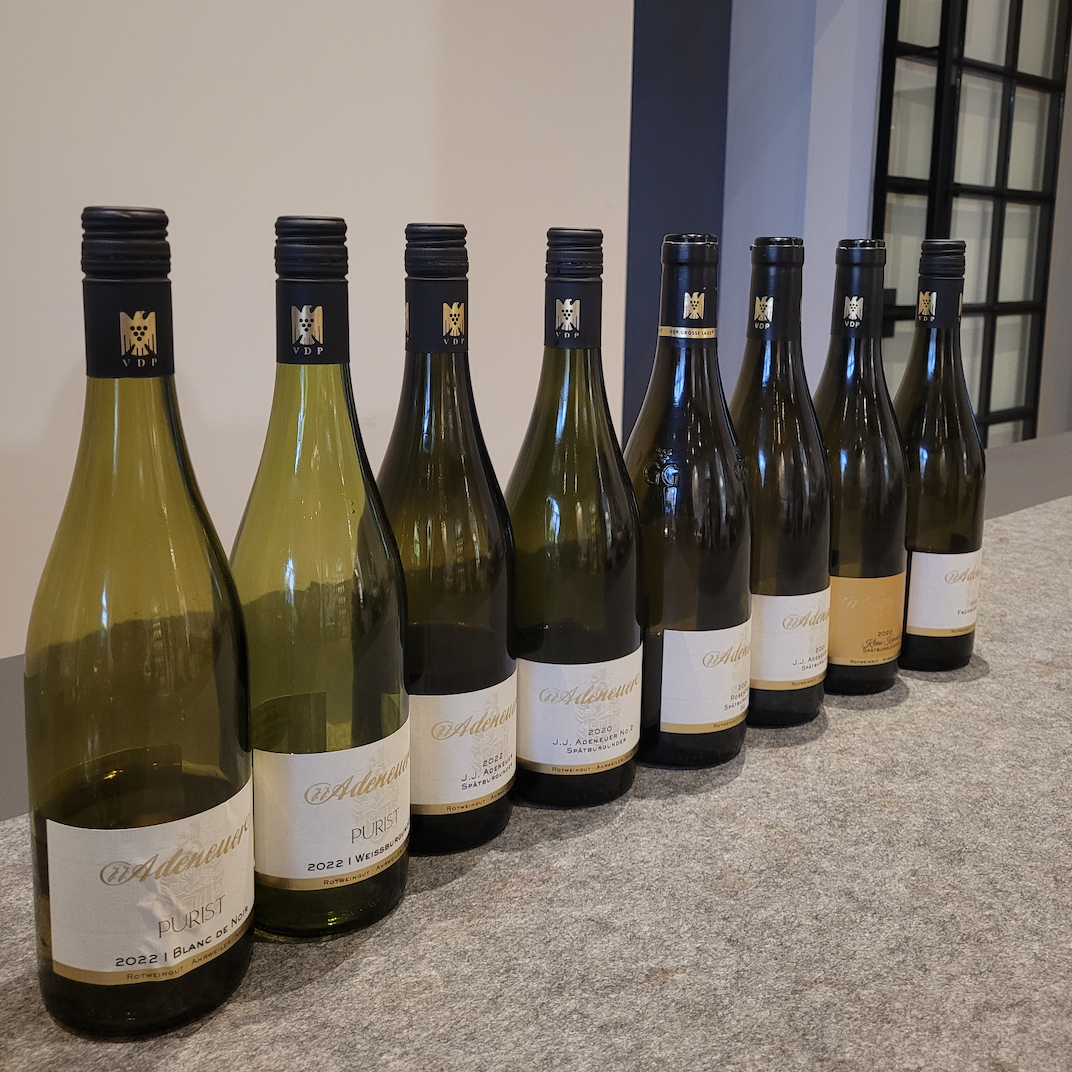
Weingut J.J. Adeneuer Spätburgunder No. 2 2020, Ahr Valley

A pinot noir from after the floods of 2021 and normally bottled after 12 months. Circumstances meant that after the barrels were saved the vintage had to remain in wood for 18 months, only able to be bottled after the clean-up. Caused the alcohol to finish at 13.5 percent instead of the usual 13 and there is more texture as a result. Feels like a bigger and creamier pinot noir with tang and more red berry plus a toastier quality than that of the coming ’21s and ‘22s. Drink 2024-2026.  Tasted March 2024

Weingut J.J. Adeneuer Spätburgunder No. 1 2021, Ahr Valley

A later harvest, two weeks later the 2018-2020 but also the flood vintage when on the night of July 14th and into the 15th the waters filled the cellars and basements plus halfway up the ground floor of the winery. The No. 1 always remains 18 months in barrel, fruit coming from the lower Ahr Valley vineyards in three villages. The soils are 60 percent volcanic rock and the basaltic reek is felt in palpable aromatic display. Much more lactic and blood red citrus style plus this porcine smokiness, like Speck bacon. More structure and only GG plots are used – three of them. Drink 2025-2029.  Tasted March 2024

Weingut J.J. Adeneuer Spätburgunder Kleine Kammer 2022, Ahr Valley

J.J. as in Johannes Josef (ancestor from the 18th century, dating to 1776). Kleine Kammer, meaning “small (fermentation) chamber.” This Adenauer pinot noir comes off of soils of only pure slate with sandy loam, the second choice from a GG site, a terraced plot measuring only 0.68 hectares in size. The rule in Germany for GG is such that you can’t use a site’s name twice, thus the fantasy name. Vines are 50-60 and 80-100 years of age with the younger vines giving fruit for this wine. Ages in 1,800 to 2,000L barrels, namely Taransaud. No real toast to speak of, nor new wood feels or bitters in any notable way. Classic slate example that expresses its terroir and since 1776 as a Monopole. from vines with deep roots that never see their berries get sunburnt. A beauty and grace about this, quite getable and with sneaky structure. Made with the Kastenholz clone, grandchild of a pinot noir original. Drink 2024-2028.  Tasted March 2024

Weingut J.J. Adeneuer Spätburgunder Rosenthal GG 2021, Ahr Valley

J.J. Adenauer is now Marc Adeneuer with daughter Francisca and together they farm 13 of 540 hectares in the region, third most from the fourth smallest region in Germany. A red wine specialist with 90 percent red grapes, mainly pinot noir while the rest is weissburgunder and now just starting with chardonnay. Basically a place where Bourgogne grapes thrive. Rosenthal is mainly sandy loam and graywacke soils to gift pinot noir with a purity, crispiness and liveliness. You simply will not find more fresh fruit purity from any of the other Adeneuer pinot noirs. Comes from 2.5 hectares in the GG vineyard and the acid structure here is sensational – the catalyst and reason why this will age longer and slower than the other wines. This was the flood vintage too so kudos to the estate for sticking with it and creating this delight of a pinot noir. Drink 2025-2031.  Tasted March 2024

Weingut J.J. Adeneuer Frühburgunder 2022, Ahr Valley

Varietal frühburgunder, fresh and clean, clean, clean. Floral, without musculature, gamay like and though labeled at 13 per cent it’s really 12.7. Chill this and put away the serious talk. More than go gamay go – it’s fly frühburgunder fly. Approximately 1,500 bottles produced (plus 500 of the GG). Drink 2024-2025.  Tasted March 2024
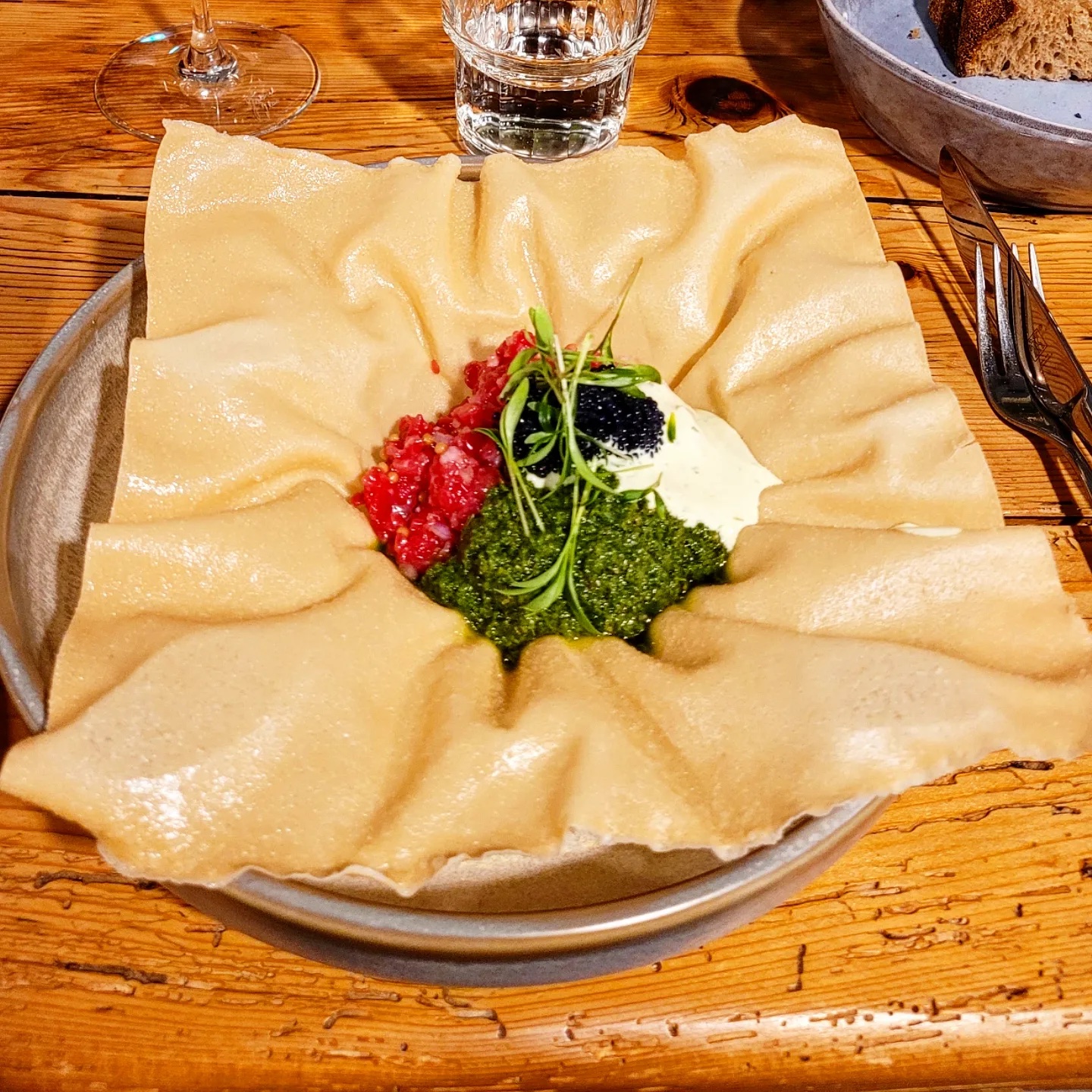
Beef Tartar – Kräter Sauce, Pinienkerne, Koriander, Chips – Die Mosel Vinothek und Winebar, Traben-Trarbach

Mosel

Der Ring 1899 at Die Mosel Vinothek und Winebar, Traben-Trarbach

Weingut Franzen – Bremm

Weingut Franzen Riesling Der Sommer War Sehr Groß 2022, Gutsweine, Mosel

A dry Mosel riesling which means 10.2 g/L of RS, 7.3 TA and finished at 11 percent alcohol. “Winegrowing on a razor’s edge” for a riesling “summer project” begun in 2011, “a cuvée that presents the cross-section of our vineyards and combines all the advantages of the individual locations in one wine.” Spontaneous ferment, as with all the wines, not far from Cochem where the steepest vineyard in Europe slopes to 68 degrees. A riesling of what feels like crazy conversion rates coming from red slates and seasoned with many spices. You would literally have no idea there is any sugar in this wine and the length is exceptional. Drink 2024-2027.  Tasted March 2024

Weingut Franzen Riesling Bremmer Calmont Großes Gewächs 2022, Lagenweine, Mosel

Bremmer Calmont delivers far more spice and power than the Franzen blend, here off of pure slate on a 65-degree slope which happens to be one of the steepest vineyards in Europe. Calmont is about as dry as riesling gets and its scintillant-mineral quality delivers true Großes Gewächs distinction. Extreme aridity perceived matched by intense sapidity that only this specific Mosel red slate provides. A riesling of trenchant intention, compact and stone cold concentrated. Serious wine. Drink 2024-2029.  Tasted March 2024
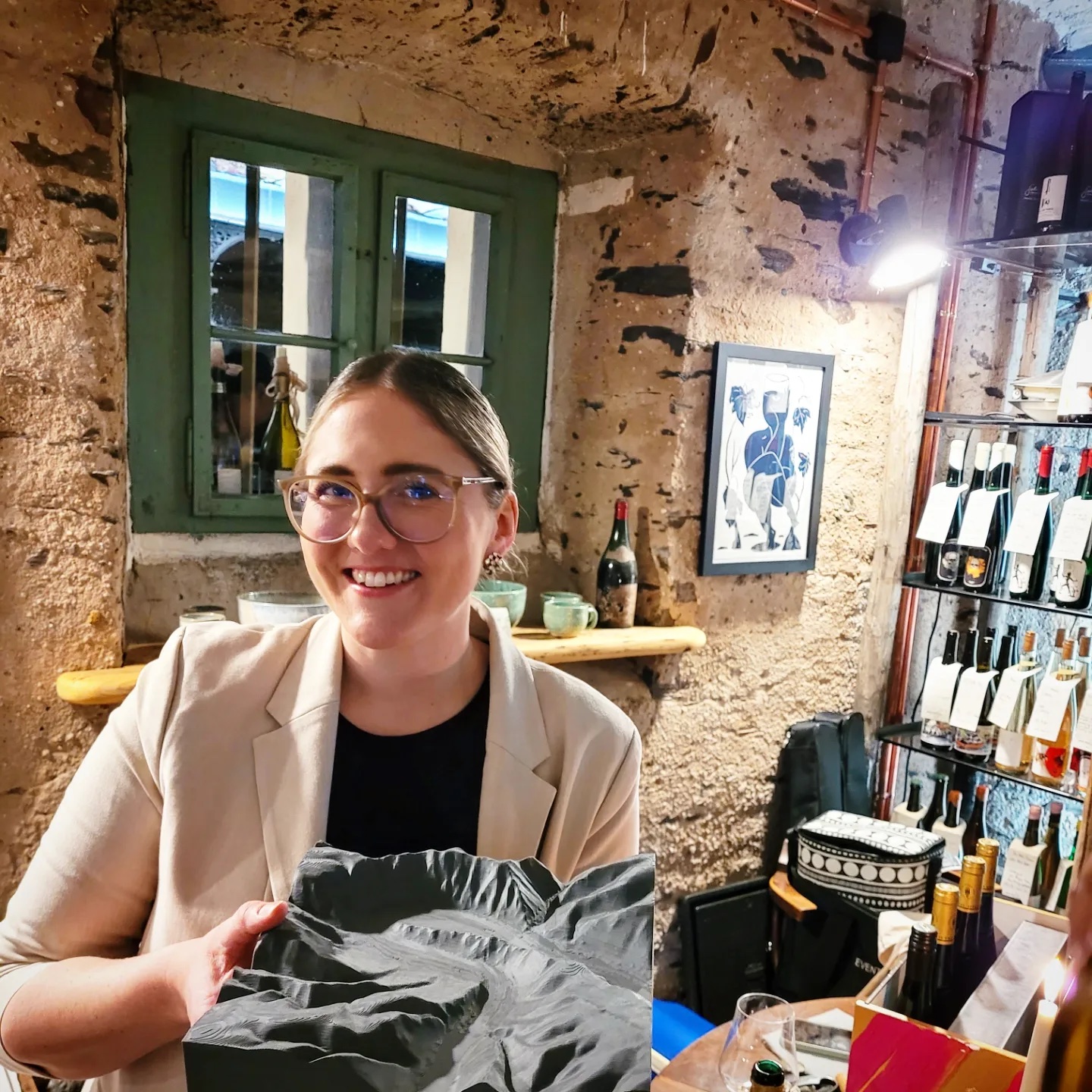
Angelina Franzen – Weingut Franzen

Weingut Franzen Riesling Calmont Trocken 2021, Lagenweine, Mosel

Dry riesling from the steepest 65 degree vineyard of oxidized red Devonian slate and quartzite raised only in steel. The specs are 8.5 g/L of residual sugar matched by 7.6 g/L of acidity with 11.0 percent alcohol and as far as vintages are concerned this would be one to really age. Namely because of palate density but also because the acidity is as fine and finessed as it gets for this composition. May not pierce your riesling heart, or soul but it will age well. Drink 2024-2030.  Tasted March 2024

Weingut Franzen Riesling Fachkaul Großes Gewächs 2020, Große Lagen, Mosel

Fachkaul is the parcel which forms a kind of mini-amphitheater-shaped bowl where at the end of the 1990s Kilian Franzen’s father Ulrich restored and replanted the vines. The epitome of Killian and Angelina’s story, a Calmont tale fraught with adversity, challenges and heartache, but this small (1.6-ish hectare) plot means everything. Mineral that matters, red slate and the steepest slope where all that is important, essential and profound result in singular riesling. Not quite as dry as the Bremmer but higher in acid, more stark, expletive and magical. Sapid lime intensity, long, significant, precise, consequential and just recently bottled in January. Drink 2025-2032.  Tasted March 2024
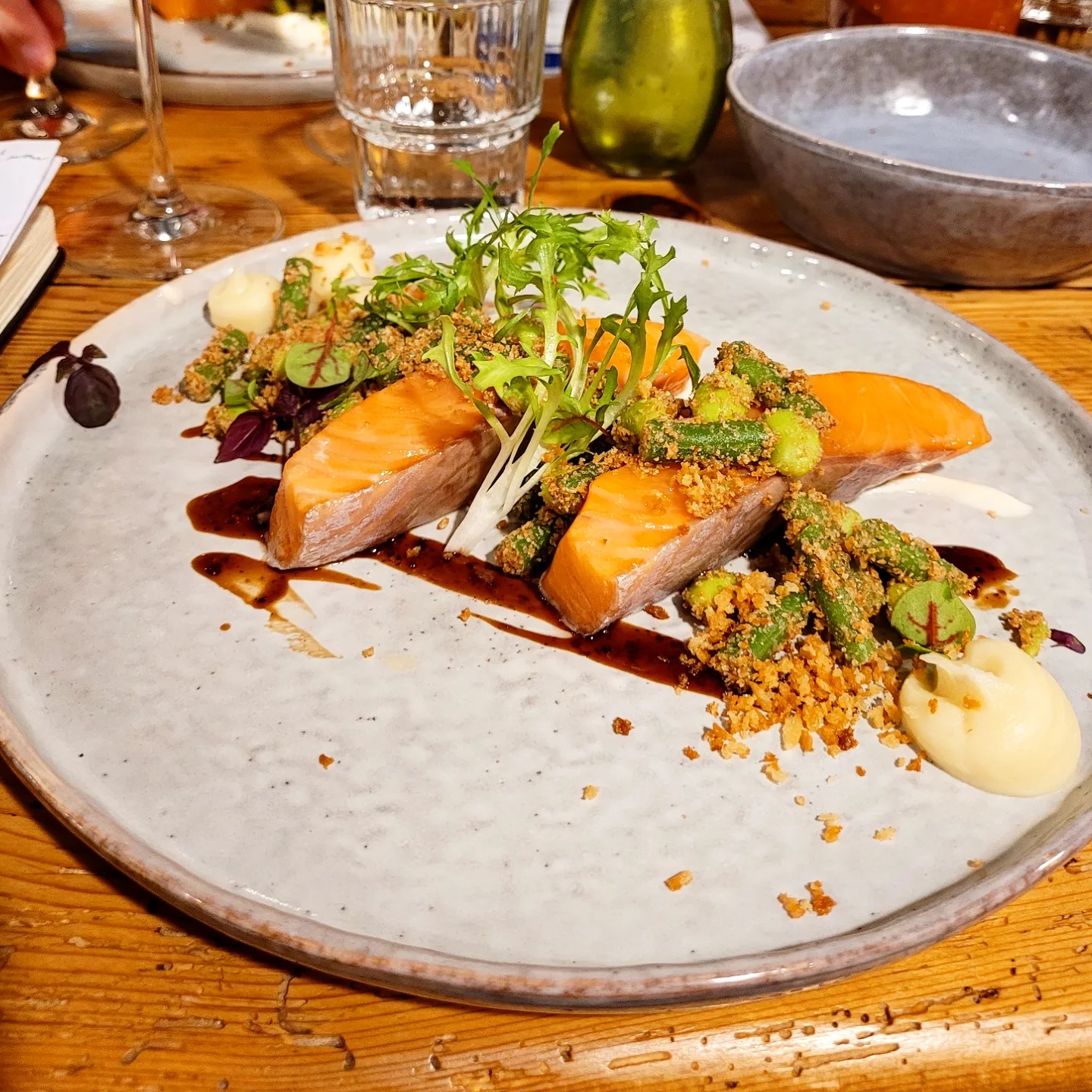
Lachs – Tofu Puree, Edamame, Bohnen, Dijon Sauce – Die Mosel Vinothek und Winebar, Traben-Trarbach

Weingut Franzen Riesling Fachkaul Großes Gewächs 2017, Große Lagen, Mosel

In a perfect place at this six to seven year stage, from one of the warmest seasons with lots of rain at harvest. Picking began in the second week of September and required many passes in the vineyard with a stringent selection to create (an overall) 15 skus for 11 hectares. The work of Killian and Angelina, students from Geisenheim who began this journey of family necessity at the ages of 23 and 20. A softer Fachkaul but that is the maturity speaking for riesling of a sapid tug on red slate, one and a half hectare mineral-varietal heartstrings. Quite remarkable and with three great years still laid out ahead. Drink 2024-2027.  Tasted March 2024

Weingut Franzen Riesling Sterneberg Großes Gewächs 2020, Große Lagen, Mosel

Killian and Angelina Franzen’s best plot in the Neefer Frauenberg is called Sterneberg. Vines were planted in 1938 on grey slate for a different, next level mineral quality and quotient for Mosel riesling. These are own-rooted vines, old, experienced and wise, their resulting dry wine coming away like the desert because sugar and acids near-equal come together seamlessly. The most viscosity and texture of the Franzen rieslings, from a hot vintage and so concentration, unctuousness, flesh, pulp and glissade are all at peak performance. Glorious and confident, outspoken but only to make sure we understand its origins and Franzen abides by its voice. Drink 2024-2033.  Tasted March 2024

Gerrit Walter and Angelina Franzen

Weingut Walter – Briedel

Weingut Walter Riesling Trocken 2022, Gutsweine, Mosel

From Briedel, next village out of this tight turn in the Mosel from Pünderich where Clemens Busch farms their riesling. The Walter Trocken is just 6.5 g/L of residual sugar pretty much hidden by 6.9 of TA. Six to eight hours of skin contact for a phenolic, taut, lime doused example off of the grey slate of the Briedel Vineyard. Solid effort and notably modern. Drink 2024-2025.  Tasted March 2024

Weingut Walter Riesling Feinherb Briedeler 2022, Ortsweine, Mosel

Villages quality wine from Briedel, not as dry as the Trocken with three times the residual sugar, here at 10 g/L. A floral-herbal expression, fresh, light and modular. The acidity functions to make the malleable wine travel to the back palate and structure is formed because of this movement and interaction. Very well made Feinherb style by Gerrit Walter for simple pleasure, especially with a piece of cheese or beef tartare with pine nuts and a high acid mustard sauce . Drink 2024-2026.  Tasted March 2024
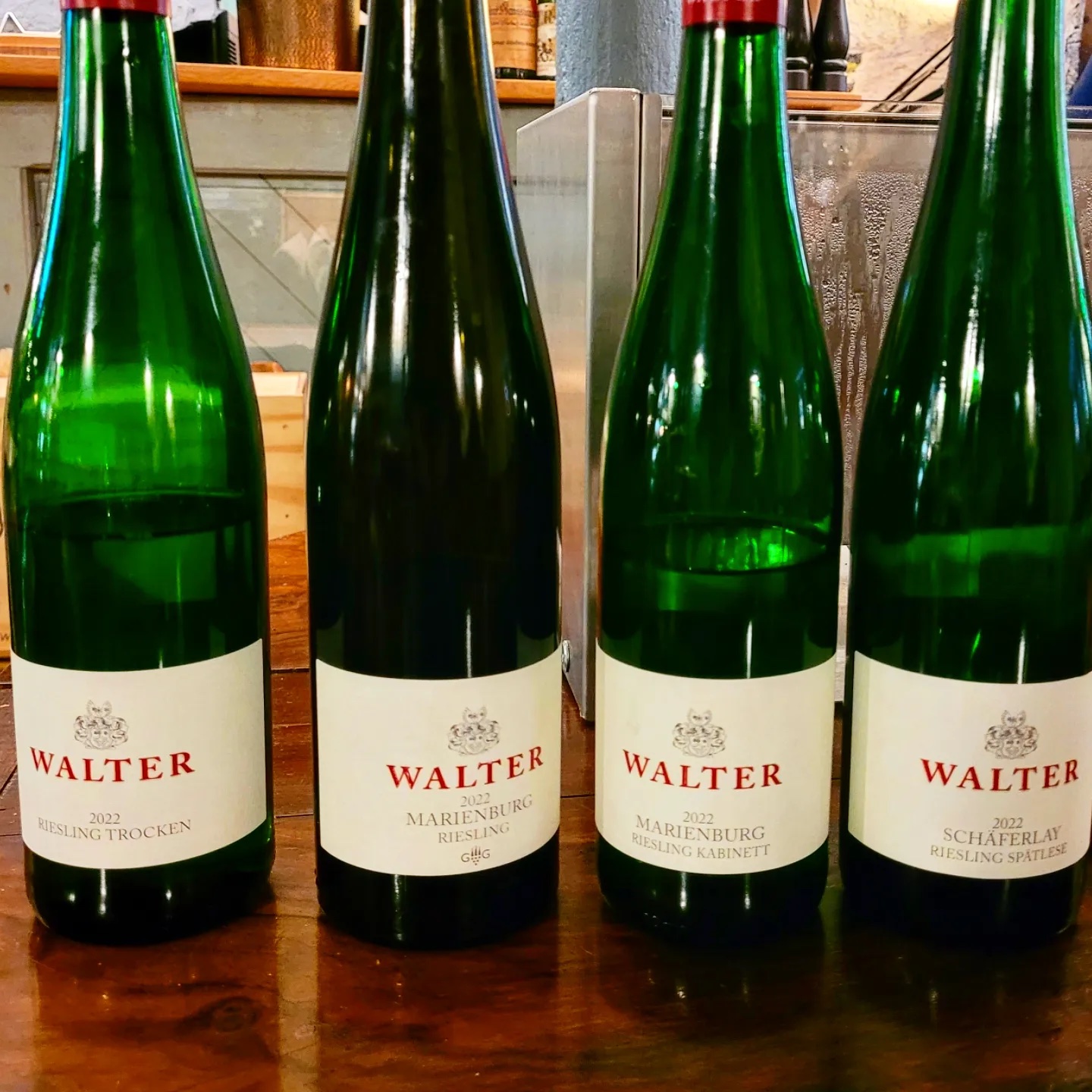
Weingut Walter Riesling Pünderricher Marienburg Großes Gewächs 2022, Mosel

Gerrit Walter is the next generation producer of this GG riesling out of Briedel’s grey slate vineyard. Sees a longer maceration of 12-15 hours, comes away super dry (3.1 g/L), matches the Trocken’s acidity and finishes at a Mosel high 12.6 per cent alcohol. This is not about fruit but rather the type of mineral focus that comes from Marienburg, with increased seasoning, spice, elements and tonic-edgy florals, though it is not the most phenolic of rieslings. Cracker example, truly dry and in command of the palate. Drink 2024-2028.  Tasted March 2024

Weingut Walter Riesling Kabinett Pünderricher Marienburg 2022, Lagenweine, Mosel

One of two recognizable styes of riesling made by Gerrit Walter to carry on with Mosel tradition even while he and many young generation winemakers are turning to drier and drier. This from an early harvest resulting in 45 g/L of residual sugar, far from searing 8.0 TA and low-ish alcohol at 8.6 percent. There is more fruit here in a light, refreshing yet in its own way also intense style that the estate has been making for 10 years. “Kabinett means light, vibrant and elegant,” explains Gerrit and his Pünderricher is without any real skin contact, but the tangerine-orange peel aroma really kicks things off. The length is indeed outstanding. Drink 2024-2029.  Tasted March 2024

Weingut Walter Riesling Kabinett Marienburg 2016, Lagenweine, Mosel

When talking about his 2022 Pünderricher from Marienburg Gerrit Walter noted that “Kabinett means light, vibrant and elegant,” three things this 2016 most surely had been. Not anymore because age has exaggerated the aromas if also softened the palate flavours. This divergence has resulted in maturity and a dispersion of parity. There is some interest for this fine if past prime look at a Marienburg riesling.  Tasted March 2024

Weingut Walter Riesling Spätlese Briedeler Schäferlay 2022, Lagenweine, Mosel
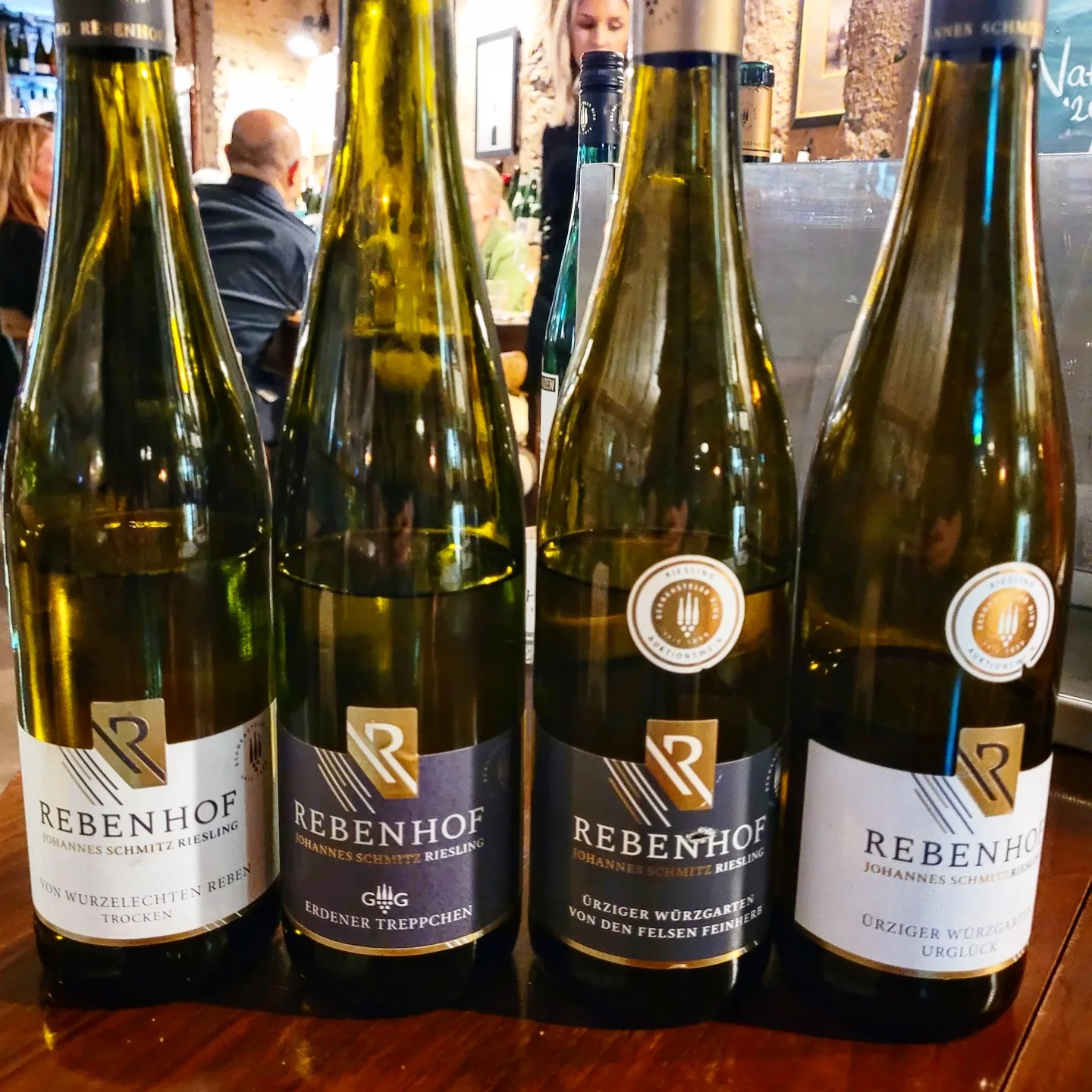
No botrytis came about for Walter’s late harvest riesling with 63.2 g/L of RS, higher 9.3 at TA and 8.6 percent alcohol. Elegant, concentrated and optimum if unassuming ripeness for this lime cordial, mineral salts and cracker acidity style. In fact the blade swipe makes for an intensely serious and stood up to be counted riesling that demands attention. Serious but as mentioned also elegant which is a very good combination. Drink 2025-2031.  Tasted March 2024

Weingut Rebenhof – Hochheim am Main

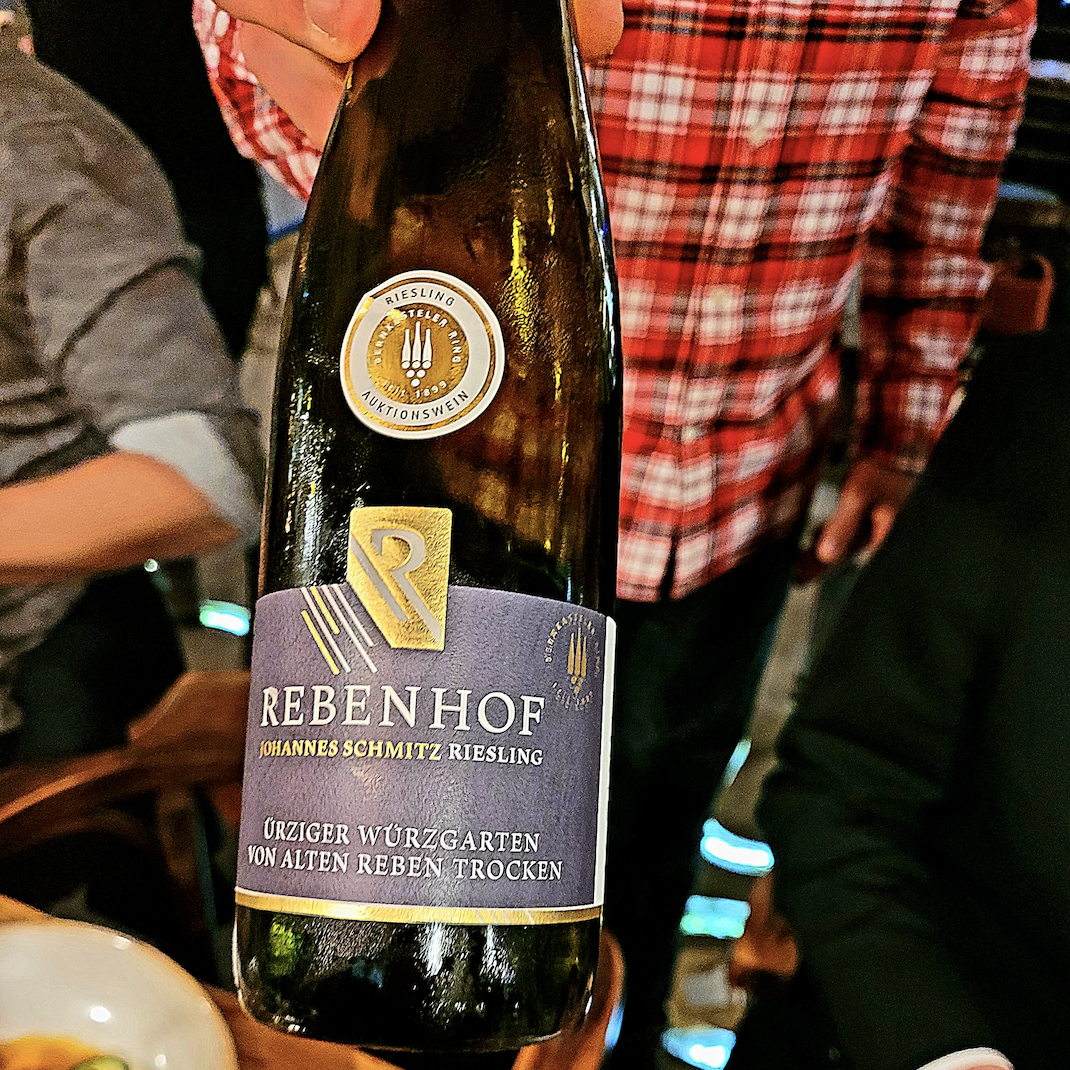
Weingut Rebenhof Riesling Kabinett Trocken Ürziger Würzgarten Von Wurzelechten Reben 2022, Hochheim am Main

Ürzig is a village in the Bernkastel district of the Mosel and the Ürziger (vineyard) is a place of red slate, often lending a spicy or salty character to the riesling grown there. Wurzelechten basically means “own or unrooted,” a significant case because there are between 50-60 hectares of un-grafted vines in all of Germany, about half of them planted between 1910 and 1935. Topsoil must exist over stoney soils for Phylloxera to attack and the slate in this part of the Mosel is not one of those locations. Rebenhof’s Kabinett is the truest form of Trocken and one of the zestiest you are ever likely to encounter. Matching sugar and acidity numbers create the equilibrium, both at 6.8 g/L with alcohol right there in the median sweet spot at 11 percent. Tons of lime, mostly zest and the intensity never relents. Still there is a fulsome aspect and so time should soften the attack and coax out some flesh. Unique riesling in any case. Drink 2025-2029.  Tasted March 2024

Weingut Rebenhof Riesling Großes Gewächs Auktionswein Erdener Treppchen 2020, Hochheim am Main

A riesling with the Auktionswein classification which means it its part of the Bernkasteler Ring E.V., which is the oldest wine auction company in Germany. A Großes Gewächs (a mark of quality by top producers from best sites making dry wines) from the iron-rich, red slate soils of the Erdener Treppchen (village of Erden in the Mosel’s Bernkastel area). The 2020 is a wine of dichotomies, still on the dry side but with elevated numbers as compared to the Ürziger. Here riesling is at once salty but the acid presence (as a quotient of this vineyard’s minerals) creates an opposing sense of sapidity. Diversity from start to finish, a wine of waves and oscillations, multifold mineral movements and a gelid texture to the palate. Higher alcohol contributes to the elevated weight. Drink 2024-2028.  Tasted March 2024

Weingut Rebenhof Riesling Spätlese Ürziger Würzgarten Von den Felsen 2018, Hochheim am Main

A new style of Spätlese riesling, well ahead of its time from 2018 out of the Ürziger Würzgarten with just a bit more than one-third of the residual sugar of the Kabinett. Here at 29.5 g/L and higher alcohol (11.0 percent) than might have been thought. This modern approach makes for a sapid riesling despite the sweetness, quite phenolic, ripe and grippy, rich and creamy yet intensely mineral. A lime cordial meets sherbet style with backbone, attitude and potential. Drink 2025-2031.  Tasted March 2024
Weingut Rebenhof Riesling Kabinett Auktionswein Ürziger Würzgarten Urglück 2022, Hochheim am Main

Fabulous nose with exceptional aromatics mark the entry of this very sweet riesling made in a singular Kabinett style. A riesling of nectarine and peach stone, creamy like the Spätlese but more bodied and emulsified as texture with acidity really buoying the fruit. The method, application and intention might suggest a challenge but Rebenhof does their best work when sugars are elevated because that is how they see riesling and its capabilities. Drink 2024-2030.  Tasted March 2024

Charlie and Caroline Weis – Weingut Erben Von Beulwitz

Weingut Erben Von Beulwitz – Mertesdorf

Weingut Erben Von Beulwitz Riesling Kaseler Nies’chen No. 15 Im Steingarten 2023, Mertesdorf, Mosel

Caroline Weis describes the steep and exposed Nies’chen vineyard as the “mountain,” an extreme and specific Steingarten site with blue slate and sparse stony topsoil. It is anything but a “garden” of a vineyard to farm. Labeled Trocken and while anything but severely dry it is the intensity of this riesling’s acidity that plays tricks upon both the nose and palate. The TA is in fact higher (at 7.9) than the sugar (at 7.5 g/L). The new (and local) winemaker Phillip Steffes likes this style, more open than rigid and definitely sapid without any gratuitous generosity. Drink 2024-2027.  Tasted March 2024

Weingut Erben Von Beulwitz Riesling Großes Gewächs Trocken Mertesdorfer Herrenberg No. 14 2022, Mertesdorf, Mosel

As with the Nies’chen there is slate in the topsoil of the Mertesdorfer (Mertesdorf Village) Herrenberg but more blue on the lower slope, as opposed to black at the “mountain” top. Also a dry riesling though even more so (at 5.5 g/L) in this Großes Gewächs edition with an acidity number (at 6.7) that dominates to make this feel like one of the most arid Mosel rieslings around. A modern and modish take that commands attention, broadens the mouthfeel and so that fruit-mineral swirl becomes one of serious breadth. A credible example with acidity that is not sharp, but certainly powerful, impeccable balance and high level age-worthiness in the Trocken idiom. Drink 2025-2032.  Tasted March 2024
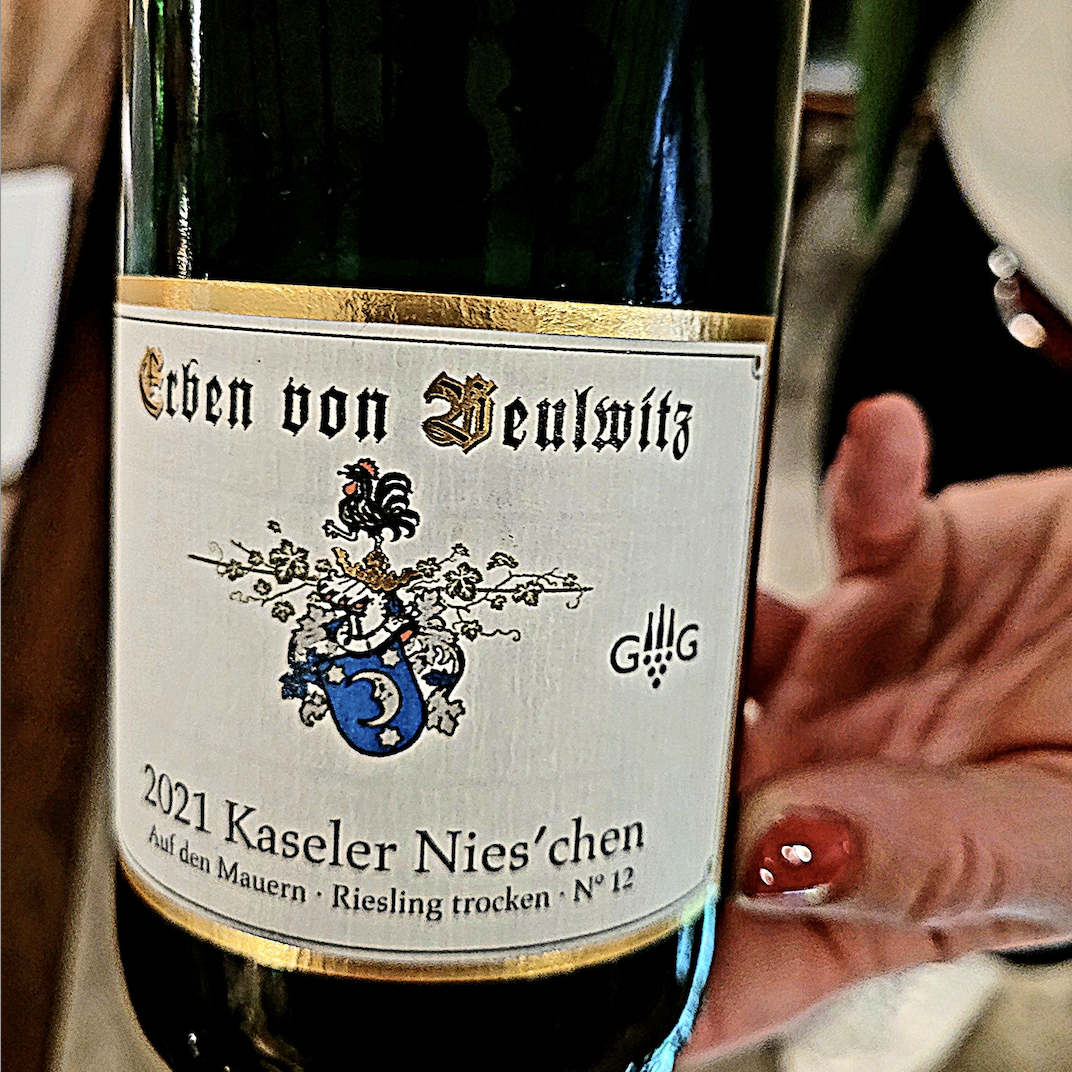
Weingut Erben Von Beulwitz Riesling Großes Gewächs Trocken Kaseler Nies’chen No. 12 Auf Den Nauern 2021, Mertesdorf, Mosel

Auf Den Mauern is a 60 percent steepness portion of the Nies’chen Vineyard and considered to be the most important riesling section where high slate walls support the slope. Though this does come across as dry there is more sugar (at 8.6 g/L) and also acidity (7.2) as compared to the Herrenberg. What stands out now is the saltiness in a way only this riesling from Erben Von Beulwitz is want to show. A different expression results, also because it’s still young, reductive and yet to open. Caroline Weis notes its 10-year potential and truth be told there will be two more years of waiting before any significant changes begin to occur. It could be suggested to open bottles at the 2,4, 6, 8, 10 and 12 year marks to see the evolution. It was a rainy summer of 2021 in this part of the Mosel and so things slows down for riesling. Drink 2026-2034.  Tasted March 2024
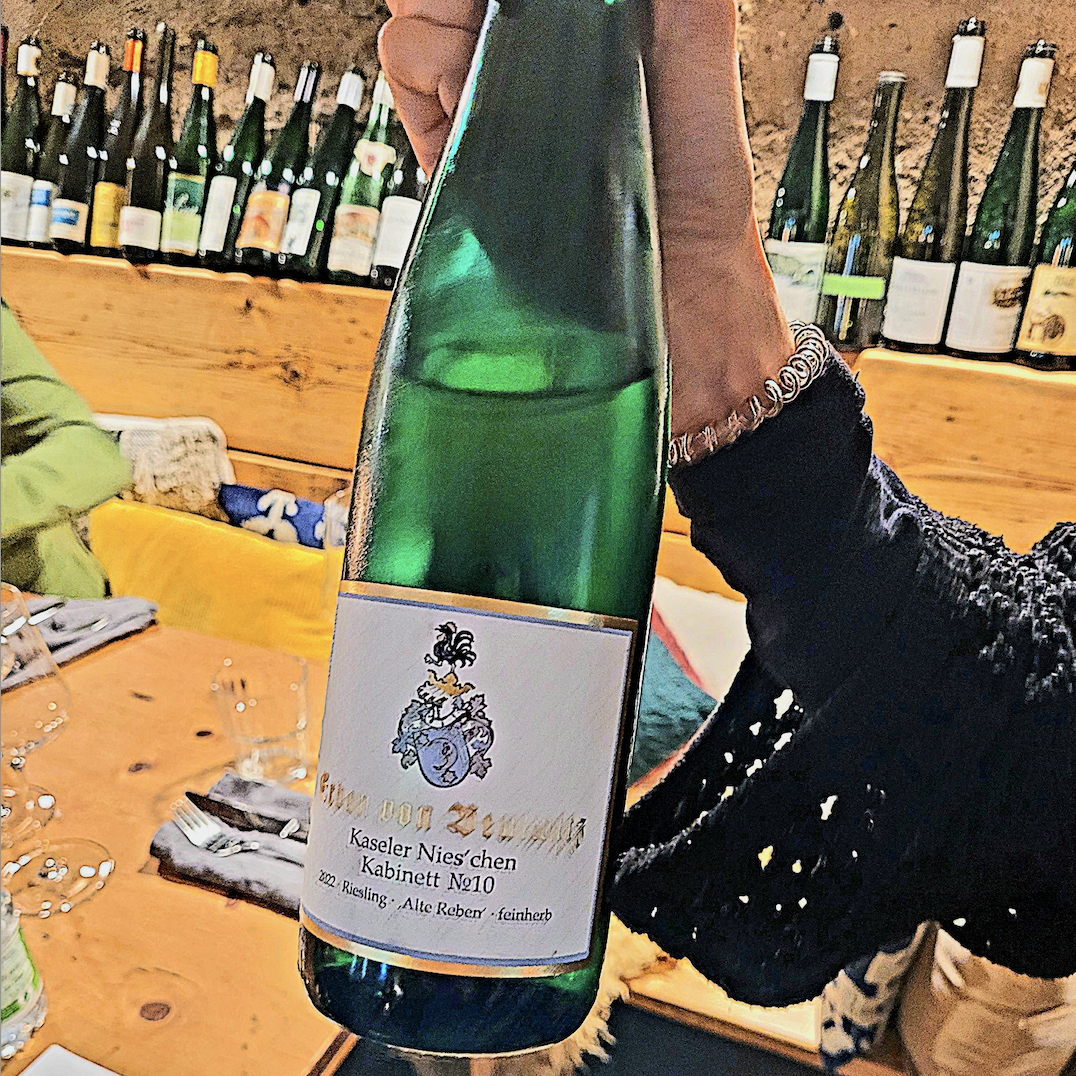
Weingut Erben Von Beulwitz Riesling Kabinett Feinherb Kaseler Nies’chen No. 10 2022, Mertesdorf

Classic Mosel style in the ways of the 90s and 2000s and “Dad’s favourite,” tells Charlie Weis. The kind that expertly balances high sugar and acid, layered like mille-feuille pastry, light on its feet and melting with ethereal ability in the mouth. Creates a symbiotic relationship with the Spätlese, the other Herbert classic styled riesling. The combination of 150 years of history and a family’s efforts since 1982 are what make a riesling like the Kaseler Nies’chen No. 10. Drink 2024-2029.  Tasted March 2024

Weingut Erben Von Beulwitz Riesling Spätlese Alte Reben Kaseler Nies’chen No. 6 2023, Mertesdorf, Mosel

Now into late harvest territory, old-school if you will, “Dad’s riesling” admits both Caroline and Charlie, Weis daughters and face of the estate. What a contrast to the Trocken, fruity, pulpy and forward, blast from the past though a very recent one to be honest. No holding back, zero reduction and ready to please. The specs are 95.0 g/L of residual sugar, 9.1 TA and 7.1 percent alcohol. Classic in so many respects, namely the tart stone fruit, sweetness elevated by the specific kind of acidity and good energy all-around. A clean and protected riesling that should have no problem living a long and productive life. Drink 2024-2033.  Tasted March 2024

Weingut Erben Von Beulwitz Riesling Auslese Alte Reben Auktionswein Kaseler Nies’chen 2015, Mertesdorf, Mosel

Tasted side by side with the 2020, a wine so incredibly youthful it seems years too early to be tasted. This 2015 is just beginning to show the first early stage of maturity, an Auslese from a hot summer with heavy rains. This fortunately stopped and the harvest saw cooling temperatures with beneficial drying winds. The end result was small berries and low yields for highly concentrated riesling fixing high quality Auslese. The acidity is still ripping through, keeping the sugars low and at bay, way down below. Kaleo rhythm, pure Mosel aromatic if perhaps the melodic-Icelandic gelid coolness, and “whoa, we get what we deserve.” Drink 2024-2031.  Tasted March 2024
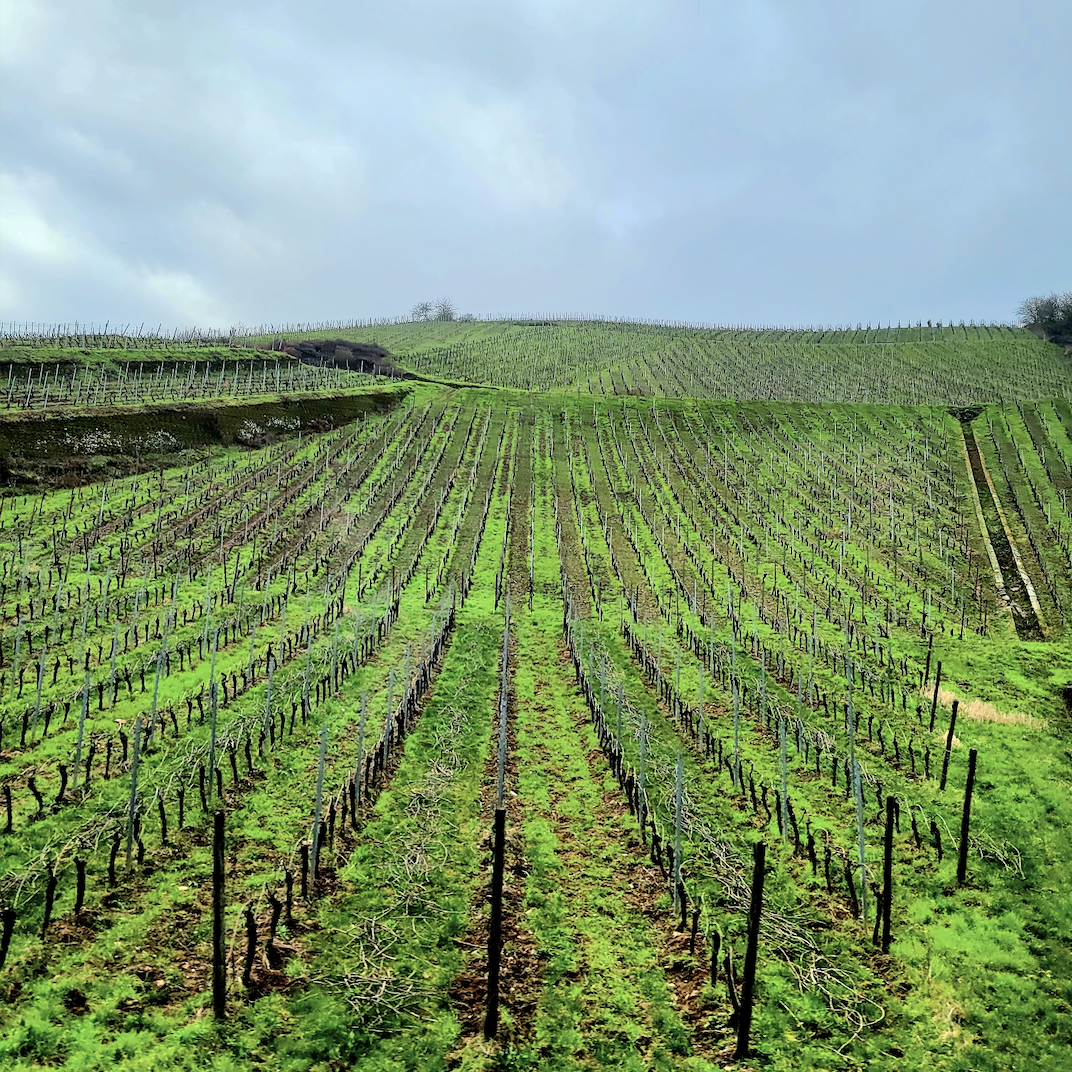
Nahe Vineyard

Nahe

Weingut Forster – Rümmelsheim

Weingut Forster Sekt Brut Nature Chardonnay and Weißburgunder 2016, Nahe

The 2016 Sekt of zero dosage spent 90 months on the lees. Still showing good freshness and aromatics are more than joyous. The wine turns quite botanical and it’s all sweet herbs throughout the second half of this unique sparkling wine. Drink 2024-2026.  Tasted March 2024

Weingut Forster Weißburgunder Dry 2023, Nahe

Fermentation is 70 percent in stainless and (30) in wood. A few hours of skin contact, bâttonage and lees contact for a few months. Organic, with neutral yeasts in the steel and spontaneous in the barrels. Low sulphur, vegan and unfined. Just grapes, no additions, proper ripeness, tasting like fruit and admittedly never creamy, oaky or gratuitously soft. Clean, satisfying, of medium acidity and surely just a matter of healthy grapes out of a good pinot blanc vintage. Well thought out, environmentally and sustainably conscious white wine. Drink 2024-2025.  Tasted March 2024

Weingut Forster Riesling KABInett 2023, Nahe

A German word play, the use of KABI in bold, as in “I’d like to have a Kabi, short for Kabinett.” One of the first riesling harvested at lower sugar and higher acidity though like all Kabinetts the residual sugar is essential, though here it’s in the lower range at 36.2 g/L. A cool climate vineyard that is now warming to be able to make this style in the Nahe, plus Laura Forster wanted this style to be made, especially because of the low alcohol. Only the third vintage, a fine mix of peach and lime, richness and tang. Well balanced though not one to age like many from the Mosel. Only 3,000 bottles made. Drink 2024-2027.  Tasted March 2024

Weingut Forster Riesling vom Kies Dry 2022, Nahe

From gravel (kies) soils and the aromatic profile is not only so opposite to the Schiefer but to 99 percent of rieslings made in Germany. A botanical tonic and a cheese rind that really expounds on the idea of this being a natural wine. Yes the soil comes through but also the vinification process, of 10-12 hours of skin contact, first press juice only, spontaneous fermentation in steel, finished at Christmas. Very dry, lime finish and just a bit “horsey.” Drink 2024-2025.  Tasted March 2024
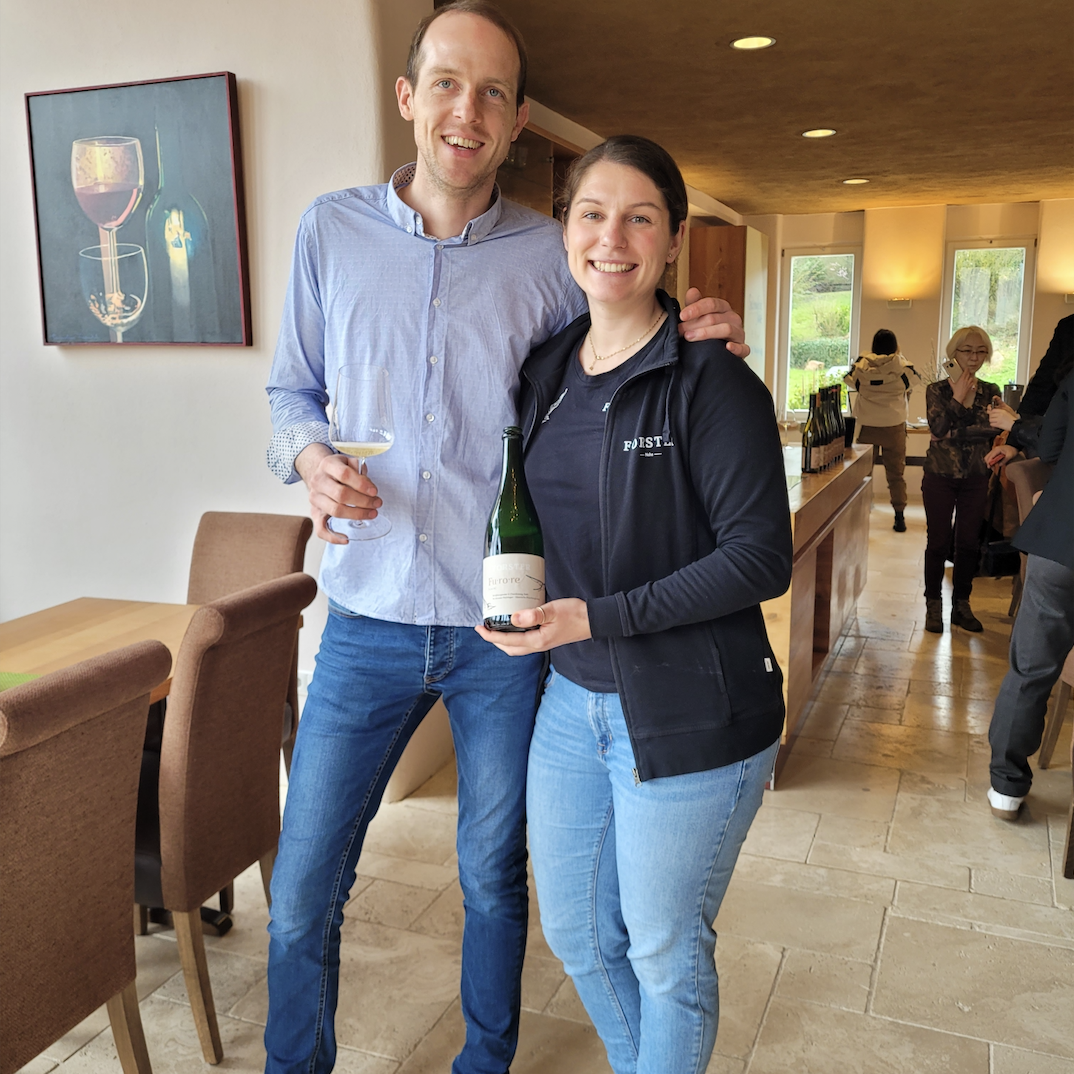
The Forsters

Weingut Forster Riesling vom roten Schiefer Dry 2022, Nahe

From red slate soils, same fermentation-vinification process as the Kies (granite) riesling. Less lactic and more phenolic, dry as can be and in better balance with thanks to the soil. Still it is the mix of style, use of compost, organics and low intervention, including sulphuring that creates this very natural scenting, a notably earthy and cheese rind notated riesling. Drink 2024-2026.  Tasted March 2024

Weingut Forster Riesling Burg Layer Schlossberg Dry 2018, Nahe

Warm, south facing red slate hill, 52 degrees of steepness, right behind the winery. Warm vintage though cooler than 2019, higher in sugar though still just about bone dry at 2.9 g/L. Also higher in alcohol at 13.5 with more flesh and body and the balance afforded this clean riesling from clearly healthy soils is just right there where we want it to be. Tannins and structure aided by long lees aging (up to a year) in stainless steel. Freshness fully captured, longevity a true matter of potential and acidity still a great catalyst for all that is happening and will continue to develop in the wine. Drink 2024-2028.  Tasted March 2024

Weingut Forster Riesling Burg Layer Schlossberg Dry 2019, Nahe

Mild though detectable TCA. Warm, south facing red slate hill, 52 degrees of steepness, right behind the winery. A complete and utter apposite vintage to the cooler 2018, here warm and dry, the sugar under 1.0 g/L and the acids also a point lower. Alcohol 1.5 less at 12 and overall the balance afforded by 2019 was surely more of a challenge. Warm nights up to harvest sacrificed some acidity and so structure overall here, included tannin is lessened. Just not as balanced and without the top energy of 2018 but still well and naturally made. Drink 2024-2025.  Tasted March 2024
Weingut Forster Grauburgunder Réserve Dry 2022, Nahe

Short 12 hour but effective skin contact for pinot gris, fermented in 500L tonneaux, 12 months of lees contact and healthy alcohol at 13.5 though less than much warmer vintages. Grows on the red slate soil of the Rotenberg (red mountain), sun richness and good metallurgy in the aromatics. Juicy, fleshy and just enough acid to keep things moving swimmingly along. Great diversion from a sea of pinot grigio ubiquity. Drink 2024-2026.  Tasted March 2024

Weingut Forster Frühburgunder Burg Layer Johannisberg 2022, Nahe

A single vineyard red from the rare variety (only 440 hectares planted in all of Germany), a cru frühburgunder not oft seen in the Nahe. Early ripening grape planted by Johannes Forster’s father 20 years ago. Softer tannin structure as compared to spätburgunder and grown in the cooler site where the riesling for Kabinett also grows. Some whole bunch, fermented on skins for four weeks and yes just enough tannin has come through. Some aging in low toast new barrels, a bit more structure than some though it stays below the threshold of too much extraction and tannin. Just a bit of spice and again gamay or perhaps even pelaverga is the mind’s launching point. Just a hair ambitious for what the grape is want to deliver. Drink 2024-2026.  Tasted March 2024

Weingut Forster Spätburgunder Kies 2022, Nahe

Grown on the Kies (granite) soil, four weeks of skin fermentation, very little wood usage, soft but still just enough grip to effect structure. Similar natural feel like many of the rieslings and more viscous mouthfeel than the frühburgunder, liquid chalky and again the cheese rind note, Also a verdancy and red citrus tang, desiccated roses and minty cool savour at the finish. Tannins are just a bit hard, chalky-grainy and friable. Drink 2024-2026.  Tasted March 2024
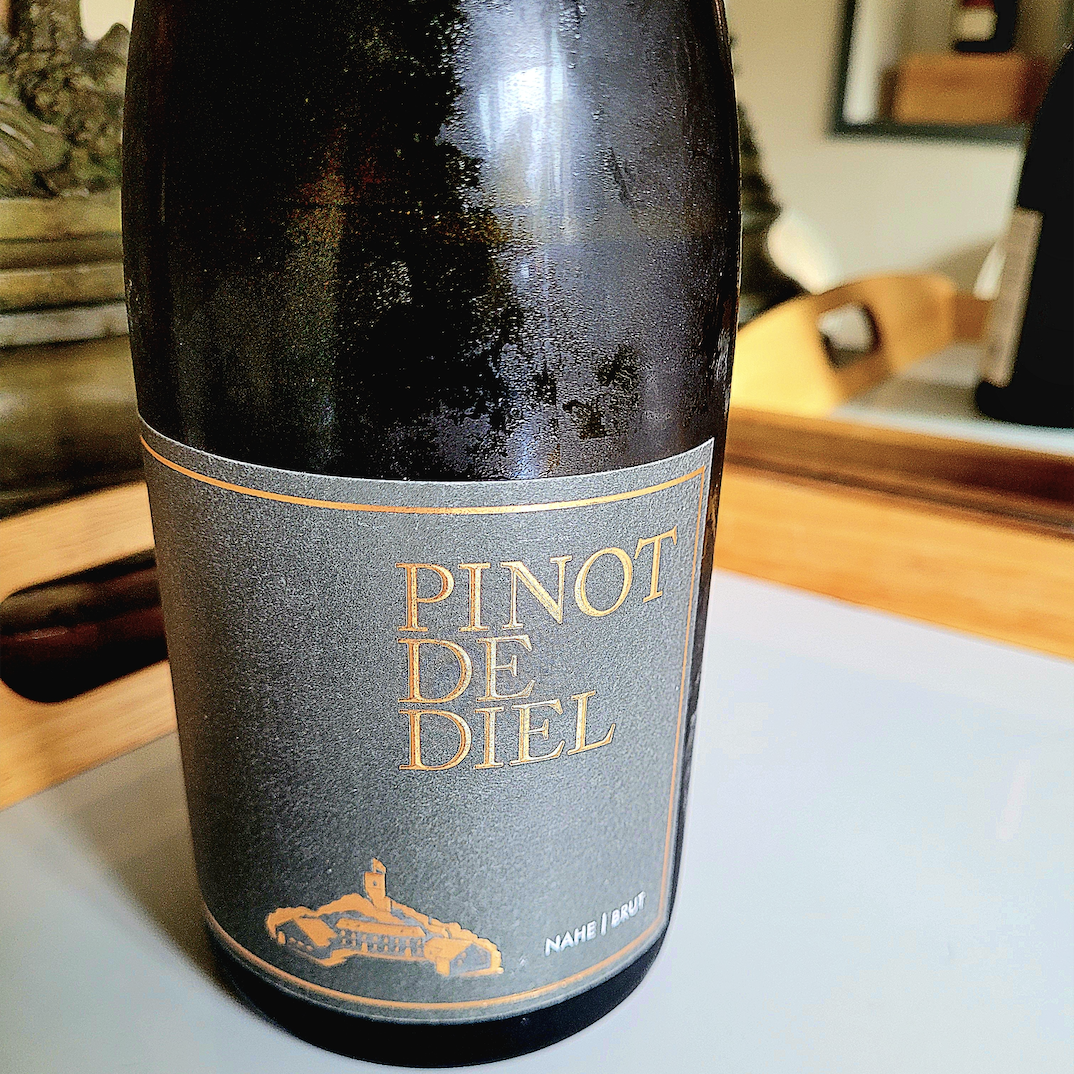
Schlossgut Diel – Burg Layen, Nahe

Schlossgut Diel Pinot De Diel, VDP.Sekt, Nahe

A vibrant mix of pinot noir and pinot gris from Caroline Diel, seventh generation winemaker at Burg Layen which came into the possession of the Diel family in 1802. The base wine is 2020 fruit with some residual 2019 involved, two years on the lees and of an aperitivo intent. Easy drinking and on the dry side which feels like another Brut Zero style is well within Diel’s capable reach. Like a bite into a tart and juicy green apple with a drip of red fruit and a fairly tart finish. Satisfying bubble all around. Drink 2024-2026.  Tasted March 2024

Schlossgut Diel Dry Riesling Dorsheim 2017, VDP.Orstwein

Villages organized riesling from neighbouring village Orstwein with seven-plus years of age, dry and now pretty much in the perfect zone. Has aged beautifully, sitting up vertical and straight, giving generously with a clear and present amount of grace in restraint. The balance between extract and tannin, fruit and acid is simply structured, allegedly and unequivocally spot on. Drink 2024-2027.  Tasted March 2024
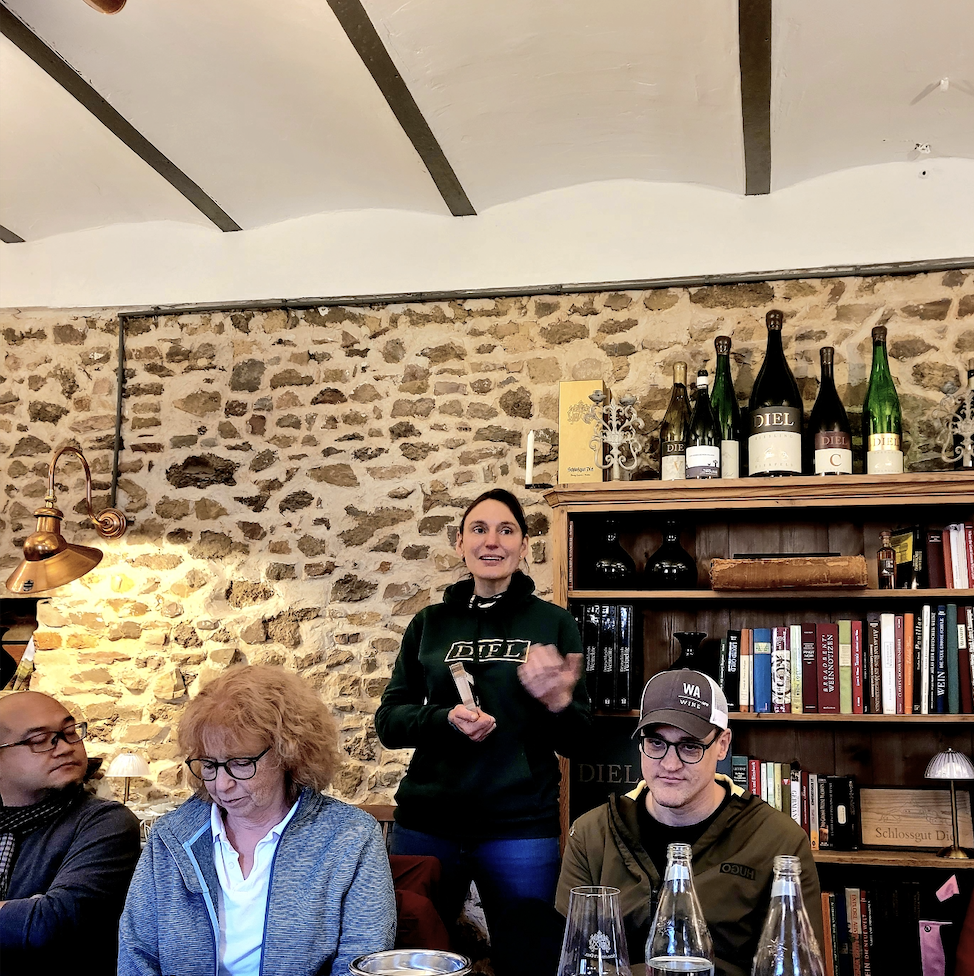
Caroline Diel – Schlossgut Diel

Schlossgut Diel Cuvée MO Brut Nature 2014, VDP.Sekt Prestige

“I believe sparkling wine does not need any dosage,” and Caroline Diel followed this when she joined the family in 2007, continuing what started going all the way back to the 2004 beginning of this project. Cuvée MO Brut Nature is ninety months on the lees, made with pinot noir and chardonnay. Developed richness for a sparkling wine made at the time in an oxidative style,. Showing aldehydic notes, of brioche to the end of a smoky and really old style of Champagne. Should actually stay this way for a few more years to come. Drink 2024-2027.  Tasted March 2024

Schlossgut Diel Pinot Noir Réserve 2020, Nahe

Most of the vines were planted in the mid to late 90s by Caroline Diel’s father Armin. Approximately 20 percent whole cluster, the rest hand de-stemmed, all vineyards in the cuvée fermented naturally and kept separate. A year and a half in barrel, spontaneous malolactic settling, racked now and then and no filtration. Rich fruit, high acid, truly complex aromatics, meaty perfume, full, juicy, lively and finally a truly substantial finish. Neither derivative nor imitative. This is Caroline’s mid-level pinot noir for a 7th generation winemaker who would go on to do the 2022 harvest at Romanée Conti. Mid-level will surely rise up to even greater heights. Drink 2024-2028. Tasted March 2024
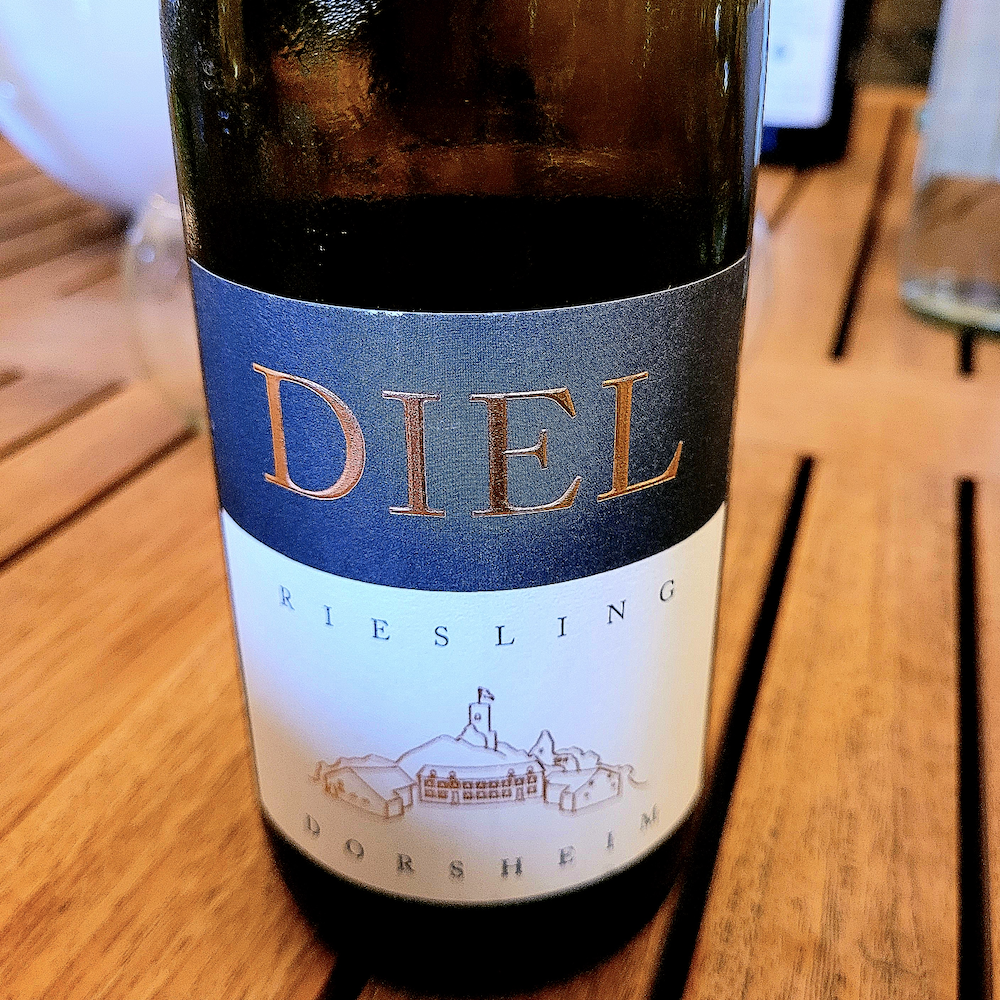
Schlossgut Diel Dry Riesling Pittermännchen GG 2022, VDP.Grosses Gewächs

The tiny one hectare cru Pittermännchen is a name that dates to the middle ages with a connection to the people of Köln and Düsseldorf. Grand cru site of weathered grey (Devonian) slate atop Rotliegend conglomerate that dates back several million years. The geo-agricultural texture is small decomposed particles as opposed to the larger stones of the Mosel. Expressive flint stone aromatics undeniably soil related and not much fruit to discuss, save for some variegate currants but you really have to conjure imagination. There is a mille-feuille density to this riesling that peels away and delivers waves in layers without boundaries. Complexities are revealed without pause and dryness results because purity and grip replace the necessity for sugar-acid balance. So stony, long and our palates are held captive. Top shelf riesling within the idiom. Drink 2026-2033.  Tasted March 2024

Schlossgut Diel Riesling Kabinett Goldloch 2022, VDP.Grosse Lage

When she returned to the family in 2007 Caroline Diel’s first order of business was to not use herbicides “and it was a disaster,” she remembers, “not being prepared with staff, machine and experience.” Good things take time and now organic certification will come in 2024. The 2022 vintage was not the hottest but was an extremely dry one that saw vines on steep hillsides have to work hard to resist the dangers. Healthy vines can in fact digest the climatic extremes and this riesling of Kabinett style is a testament to facing the challenges head on. The gravelly bedrock of Dorsheimer Goldloch is of the Permian age and its rieslings are juicy as it gets, fruit forward and truly antithetical to the über mineral of the Pittermännchen. Makes sense that Kabinett is the choice for this naturally sweet meeting equal factored acidity that connects for a kick mix of sweet, salty, sapid and savoury. A quotient of 42 g/L of RS so hidden by the acids, grip and energy of the wine. Drink 2024-2031.  Tasted March 2024
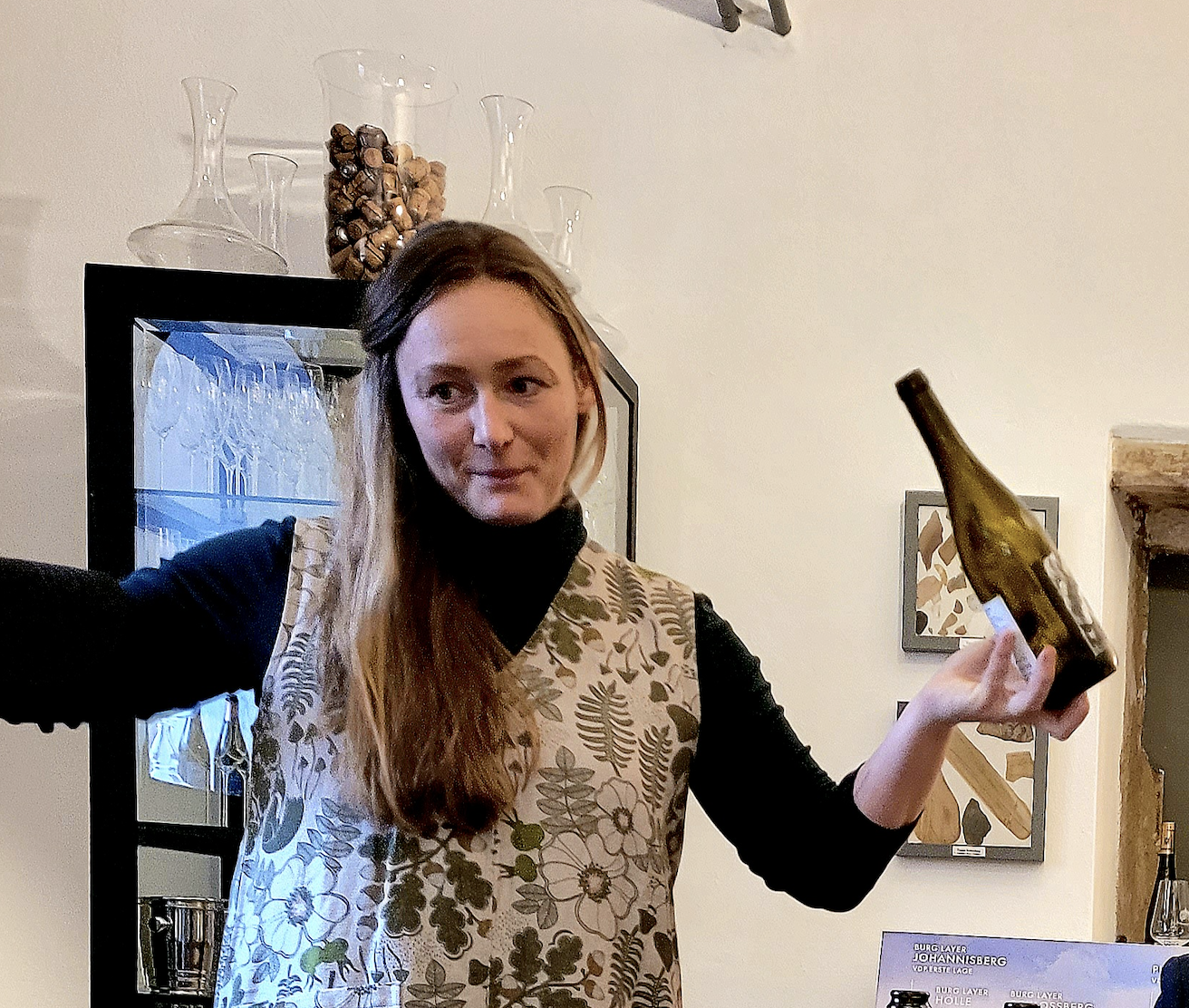
Christine Pieroth – Piri Naturel

Piri Naturel Christine Pieroth – Burg Layen, Nahe

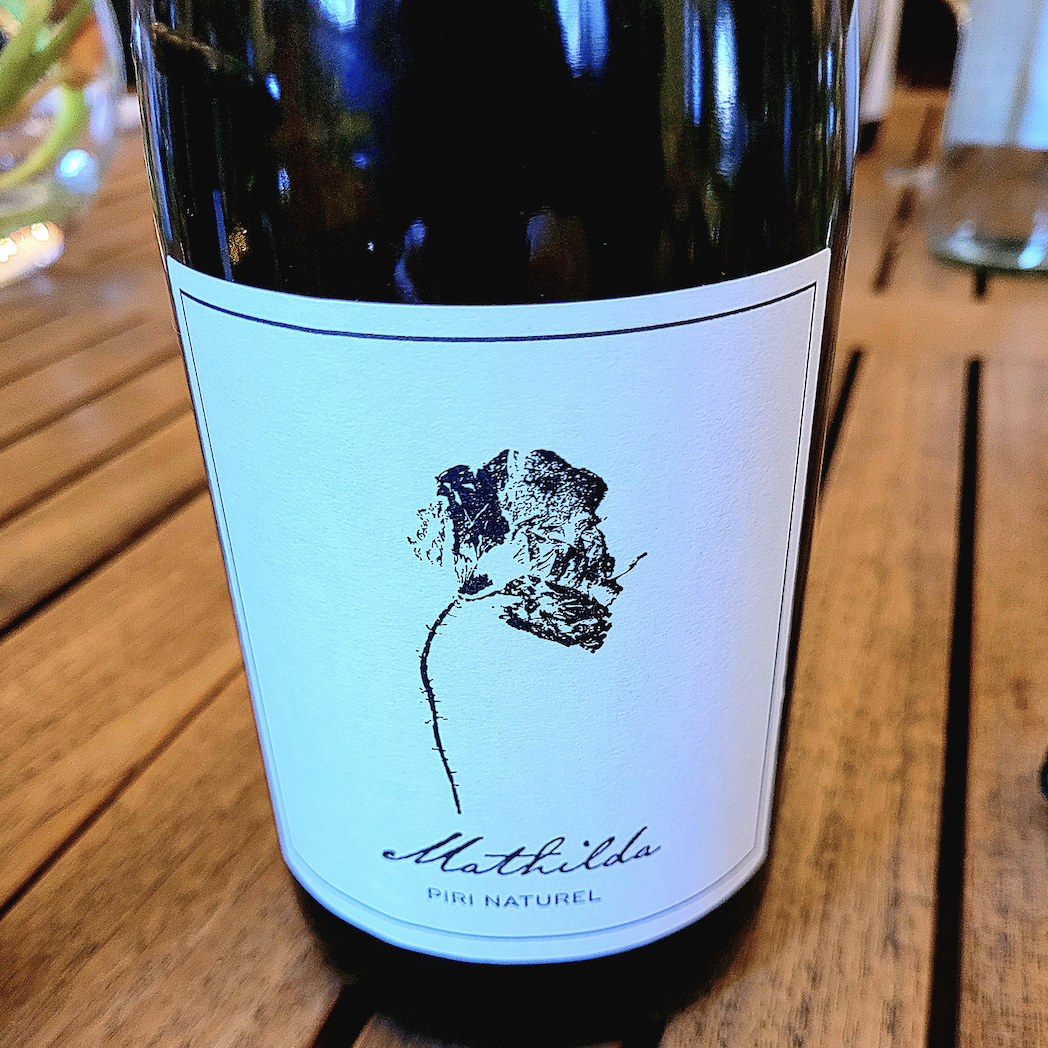
Piri Naturel Christine Pieroth Mathilda 2021, Nahe

Christine Pieroth is 7th generation for a winery dating back to 1789. Mathilda is a blend of sylvaner, riesling and kerner, made for simple drinking pleasure. Bottled under screwcap to capture the natural effervescence, skin contact and cloudy character for a characterful example of what a nurturing and deft touch can do for grapes that just want to be together. Clean and well made without any pretence, trend or commercial design. Natural for the simple reason of pour me a glass. Drink 2024-2025.  Tasted March 2024

Piri Naturel Christine Pieroth Riesling 2021, Nahe

Christine Pieroth studied at Geisenheim and worked in the Okanagan. Her philosophy is really quite direct. “Agriculture is really separated from nature.” Piri Naturel is riesling grown on granite-based, (ancient) sandy seashore pebbles called the Kieselstein. Macerated on the skins for one day, to capture the cool climate region, especially with riesling, then ages two years on full lees in big Stückfässern. “One of the vintages (2021) with the highest acidity I’ve ever experienced” she remembers. Beautiful purity captured without oxidative or any idiomatic orange ornateness. Brilliant riesling work in the style for those who like and want, but also those skeptical of what this kind of wine can be. Acids are captured, tamed and on time release. Drink 2024-2028.  Tasted March 2024
Piri Naturel Christine Pieroth Ponderosa 2021, Nahe

A family nickname for the vineyard and incidentally also the Matsutake mushroom, a.k.a. Armadillo Ponderosa. Comes from a schist slope that changes colour from top to bottom, here for a single vineyard though it can’t be labeled this way. Not filtered and so it can’t have a classification. “In the last year I’m turning things upside down” says Christine Pieroth. Ponderosa is 90 percent pinot gris with (10) pinot noir treated to carbonic maceration and my if this isn’t the pink juice you really want to drink. Pink grapefruit, jelly belly, pomelo and guava, dry and tropical, crunchy and tart though never searing. Drink this with a grilled striploin – seriously. Forget Rosé or chardonnay – the acid structure, grip and tannins will do well especially, with a marbled cut. After all it is called Ponderosa. Drink 2024-2027.  Tasted March 2024

Piri Naturel Christine Pieroth Pinot Blanc 2019, Nahe

Piri farms 7.5 hectares for an average of 80,000 bottles, mostly estate. Permaculture and regenerative farming are practiced with organics as the basis for everything, including no fining or sulphites. The pinot blanc is from 70 yer-old vines, “a very special vineyard, planted by my grandpa,” tells Christine Pieroth. Red schist soil to gift passion and texture to pinot blanc that sees three years in oak, all the while on its lees. No complication, a wine of perfume and nuance, abstract expressionist style, an incredible natural sweetness. A unicorn wine, infinite in ways that can and also can’t be described. The most alcohol of Christine’s wines at 13.5 percent but acidity and spices share the stage and spread the wealth. A slight amount of oak flavour, but fermentative notes have all resolved. Drink 2024-2027.  Tasted March 2024
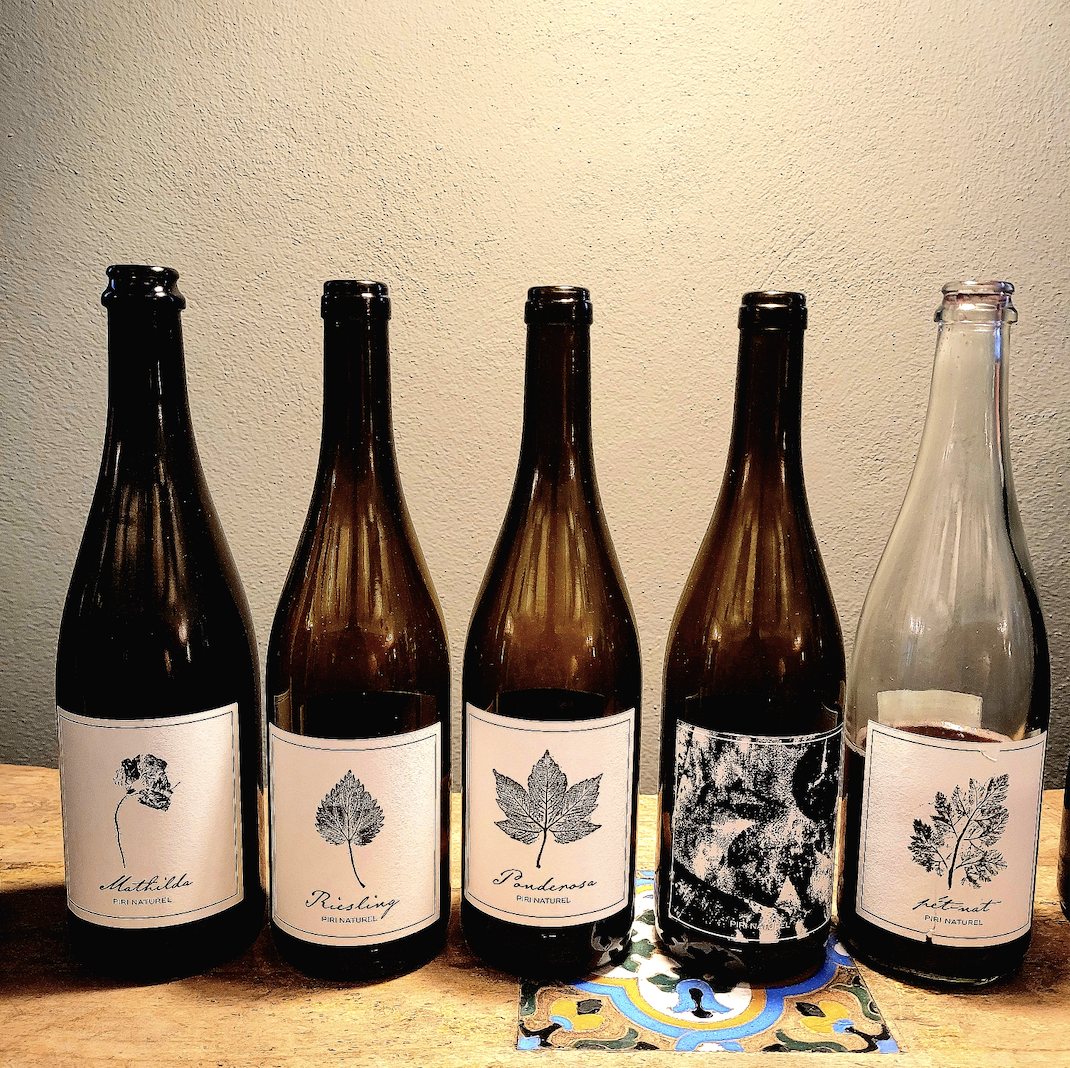
Piri Naturel Christine Pieroth Pét-Nat 2021, Nahe

A Germanic-styled Pétillant-Naturel in the Lambrusco idiom, bone-dry, made from Piwi grapes planted 20 years ago. They being dornfelder and regent (the piwi variety). Talk about foresight and seeing the challenge ahead of the curve. Leesy and cheesy, the most reductive and natural of all Christine’s wines. The kids will love this.  Tasted March 2024

Weingut Anette Closheim – Langenlonsheim

Weingut Anette Closheim Calardis Blanc Dry 2023, Nahe

Calardis is a Piwi variety crossed with bacchus (as opposed to sauvignon blanc or cabernet sauvignon especially) and this is just the second vintage of trying it. Quick  on skins, fermentation and just bottled in February. Picked on the 22nd and 23rd of September after a picture perfect season. A muscat aromatic way about this unique hybrid example, light, fresh, clean and this elastic push-pull between fizzy and botanical. Bit of white peach and peach pit too. Finished at 12.5 percent alcohol with 4.7 RS and 5.8 TA. Drink 2024-2025.  Tasted March 2024

Weingut Anette Closheim Riesling With Friends Dry 2022, Nahe

For friends who are or may not be friends with riesling, but they can be. Acts dry but there is 7.0 g/L of residual sugar and a near equal amount of acidity. Entry riesling in style, juicy, high citrus, only steel raising and uncomplicated. Lime in every way, especially the juice and the zest. Bit of a Mojito you might say. Drink 2024-2025.  Tasted March 2024

Weingut Anette Closheim Riesling Fifteen Dry 2022, Nahe

From Langenlonsheim, Nahe. A long and narrow, “street village” a.k.a. the Naheweinstraße that lines the Nahe. Anniversary riesling of the label, a blend of two single vineyards, planted in 1963 and 1965, red limestone and Nahe gravel. Vinified separately in old wood and in the 2022 there is some residual sugar because one half did not quite finish its fermentation. Seems like rising pH numbers in a vintage like 2022 is the reason for lower acidities and while riesling still seems immune you can’t say the same about pinot grigio and pinot noir which are hitting numbers at or exceeding 3.5. Quite a balanced riesling, a bit higher in RS than the “With Friends” but also more vibrant, less rounded and more quenching. Drink 2024-2026.  Tasted March 2024

Weingut Anette Closheim Riesling Pastorei Dry 2018, Nahe

The last vintage of this near 40 year-old south facing riesling vineyard which has since been re-planted to chardonnay because it’s just too warm a place and 2018 was such a vintage. Finished at 13.5 percent which is about as high as you’re going to accept from riesling, with acidity at a healthy 6.3 though anything but creating a searing experience. Lime juicy, ripe and reduced, like a creamy cordial, sapid as it gets, sweetly botanical upon the finish. Drink 2024-2026.  Tasted March 2024
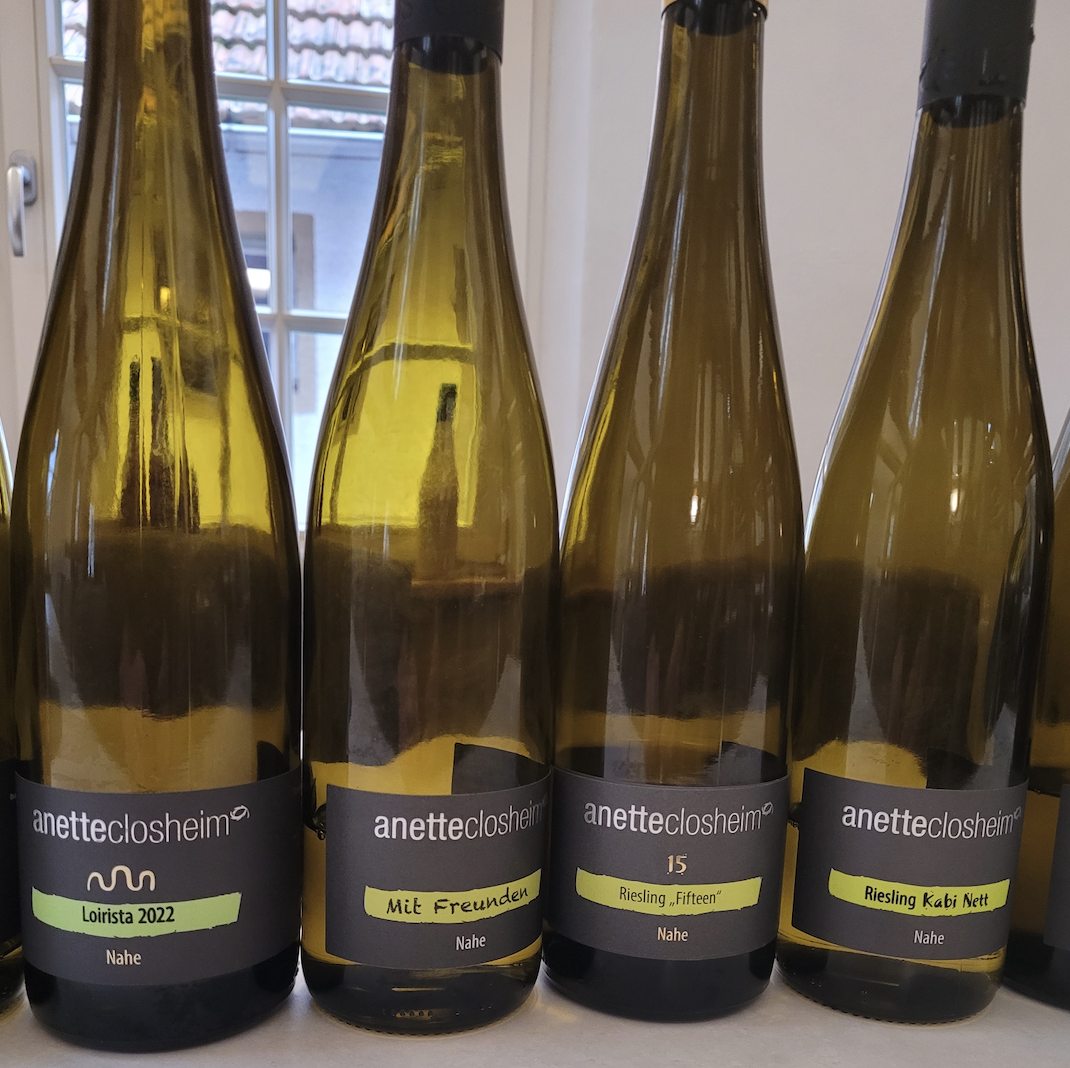
Weingut Anette Closheim Riesling Kabinett Löhrer Berg Medium Sweet 2022, Nahe

From the right side gravel soils for a different mineral experience and while sugar (at 36 g/L) runs high in the Kabinett style you can’t deny how forceful the (8.1) acidity really is. A good if not highest level vineyard site, vines 10-12 years of age, nectarine and lime, well integrated and such a grippy wine. Will hit its balanced stride in a year or two. Drink 2025-2028.  Tasted March 2024

Weingut Anette Closheim Sauvignon Blanc Maturis Dry 2022, Nahe

Single vineyard sauvignon blanc called Maturis, as in ripe, well matured and experienced. The clones are mostly from Alto Adige but also some from France, the vines now 16-18 years of age, in seven vineyards, picked across a week’s time. Verdant, botanical and there is a CO2 buzz on the palate. Lime intensity with just six percent wood aging. One of the most unique SBs ever tasted, like green eggs and ham. Tonic fuelled finish. Drink 2024-2025.  Tasted March 2024

Weingut Anette Closheim Sauvignon Blanc Lorista Dry 2022, Nahe

Higher, drier, similar acidity to the Maturis and now the barrel aged version, with the latest picked grapes (near to the end of September) and a much preferred iteration for Langenlonsheim. From a quickly settled, cloudy and protected pressing that clarifies itself and delivers this amazing richness in spite of the austere aridity. The acidity feels closer to riesling for the Lorista and yet there is some roundness, a creamy consistency based on lime because of the wood. Really unique for the variety, made with the Leimbourg (LB) 36 clone out of Alto Adige. Drink 2024-2026.   Tasted March 2024

Weingut Anette Closheim Pinot Noir Dry 2020, Nahe

Pretty big pinot noir, not exactly traditional German spätburgunder, from German research clones with bunches of small berries and space. Results in more airflow, less botrytis and good ripeness. Low yielding and good colour. Stays on the skins for 16-18 days and then wood for 14-16 months, mainly from François Frères, 25-35 new, plus second, third and fourth fill. Dark berries, sweet savour (with help from 30-40 percent stems added back) for a level of verdancy expected and well integrated. Solid work here. Drink 2024-2027.  Tasted March 2024
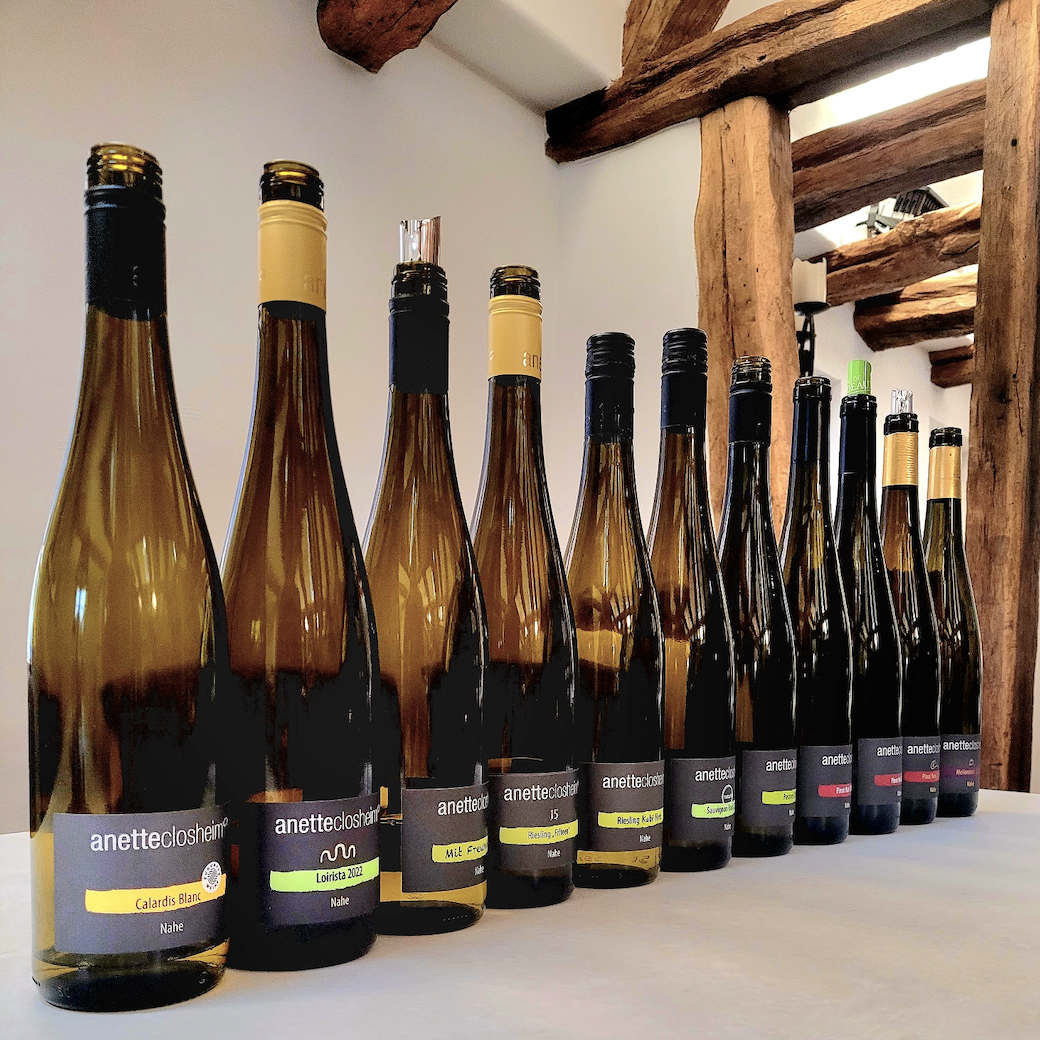
Weingut Anette Closheim Pinot Noir Dry 2016, Nahe

Considering the ripeness, well integrated chemistry and complexity of 2020 it should be really fascinating to look back at 2016. Still peppery reductive and surely a matter of vintage meeting winemaking that both changed within two years after this one. Quite a bit lower in alcohol, here at 13 percent and a perceivable verdant-savoury accent with no shortage of salt and pepper seasoning and added spice. Beyond the reduction this is showing really well, with cool freshness and what could be called a classic German vintage. A pinot noir naked to the world of beauty and that could not be hidden. First vintage was 2008 and since 2012 the same two vineyards have been making this wine. Drink 2024-2025.  Tasted March 2024

Weingut Anette Closheim Pinot Noir Dry 2019, Nahe

Higher percentage of stems (over 50) as compared with 2020, with moderate alcohol (at 13 percent like 2016). Now things are really interesting, also more new oak involved and clearly the thought was that this combination of ripeness and moderation could handle more structure and anti-jam developing fruit. Which turns out to have been the correct move because the wood is hidden, the succulence raised and the overall effect one of best balance. Truly well made, judged and effected pinot noir. Drink 2024-2027.  Tasted March 2024

Weingut Meilenstein 2020, Nahe

Meilenstein, meaning milestone and a wine that marked a big step from a wine that used to be based on point noir with st. laurent. A richness and a pyrazine quality, mildly smoky and really warming on the back end going down. A mix of 65 percent cabernet franc, (25) merlot and 10 acolon (a crossing of dornfelder and lemberger). A quarter new wood and 24 months for a spicy red blend with good energy. It’s woody and a bit awkward still but another year or so will do well to get it into a good place. Drink 2025-2028.  Tasted March 2024
Rheinhessen

Weingut J. Neus – Ingelheim Am Rhein

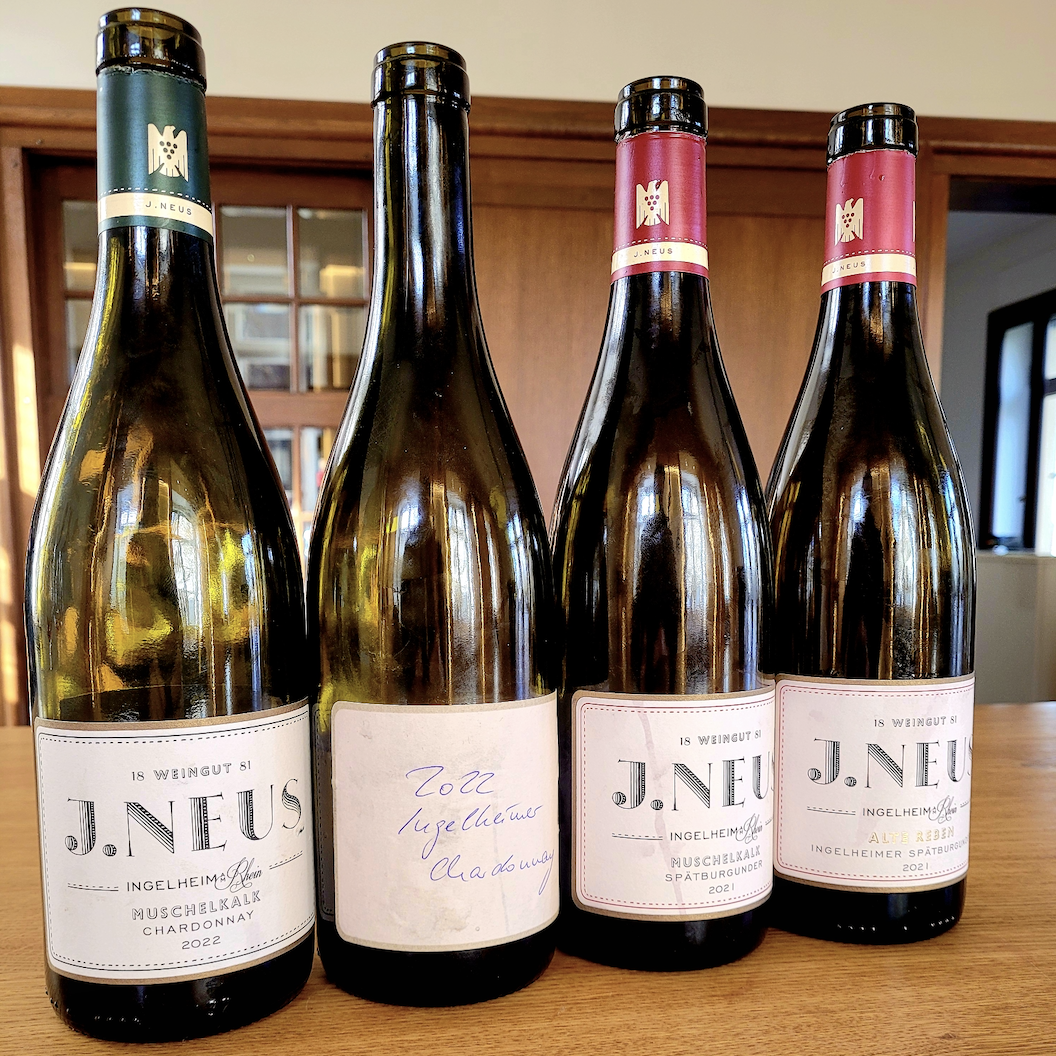
J. Neus Chardonnay Muschelkalk 2022, Ingelheim Am Rhein, Rheinhessen

Chardonnay is increasingly important at J. Neus and while pinot noir represents 70 percent of the portfolio it is this kind of entry-level varietal wine that speaks to what is possible. All chardonnay is barrel fermented and aged in 500L tonneaux and some German wood. Simple but proper, subtle in all the important ways, especially texture. Impressive work for a barrel fermented and aged, full malolactic chardonnay. Good crunch, energy, vitality and persistence. Pure chardonnay expression, the new Rheinhessen personified for what white wine can be, especially in and around Ingelsheim. Drink 2024-2026.  Tasted March 2024

J. Neus Chardonnay Ingelsheimer 2022, Ingelheim Am Rhein, Rheinhessen

Ingelheim is the village and this is currently the higher tier chardonnay though a third is on the way so it will soon fall into the middle. Certainly shows more newer tonneaux and compactness on the aromatic front, less forthcoming and yet clearly more stylish. Smells richer and more expensive, transitions with tighter grain and intensity, fills the spaces in between with riper, woven and textured fruit. Then it’s all chalky limestone strikes with spice over the last moments of the wine. Vanilla rests and settles on the finish. Drink 2025-2029.  Tasted March 2024

J. Neus Spätburgunder Muschelkalk 2021, Ingelheim Am Rhein, Rheinhessen

The introductory pinot noir with a great part of it made with Neus clone grapes, genetically selected by Josef Neus who came from the Mosel and started the winery in 1881. Full on berry aromas in red but also blues, still quite primary as if it just recently come out of its fermentative machinations. So fruit forward and floral, truly unique oi the world of pinot noir and the vintage must have more than something to do with this result. Drink 2024-2026.  Tasted March 2024

J. Neus Spätburgunder Alte Reben Ingelheimer 2021, Ingelheim Am Rhein, Rheinhessen

Eminently and immediately notable to recognize more reduction, flint stone and less fermentative aromas as compared to the entry level Muschelkalk spätburgunder. The wood lends an early and persistent toasty quality while dried herbs and botanicals remind of the phenolics that a Neus pinot noir has been showing for a decade. That said the style has for sure softened and refined over the last seven years to arrive at this well founded time in its tenure. Many people will be surprised at this high level of Rheinhessen quality. Drink 2025-2028.  Tasted March 2024

J. Neus Spätburgunder Pares GG 2021, Ingelheim Am Rhein, Rheinhessen

A hot summer though the Grosses Gewachß spätburgunder are made from fruit grown in the coolest spots and picking was done in mid September ahead of the rains. Lively and spicy aromatics with acidity showing up even before a sip is taken. Red fruit of many ilk, from stone through citrus and yet the palate is quiet, namely because Pares is a much more mineral example than the other GG called Horn. Again the refinement compared to vintages such as 2014 shows the progression and evolution of Neus’ work with pinot noir. Approximately 3,000 bottles are produced between the two GGs. Drink 2026-2031.  Tasted March 2024

J. Neus Spätburgunder Horn GG 2021, Ingelheim Am Rhein, Rheinhessen

One of two single vineyard sites (along with Pares) on the Meinsebach side of the river and Ingelheim village. Horn is the warmer of the two sites and so the great immediacy of the Pares acidity gives way to greater depth of gratifying fruit maturity on Horn. More stone and less citrus but really the differences are subtle even while the breadth here surely elevates this unique GG. The vineyard faces southwest and texture really concentrates in a pinot noir that still shows off sweet acidity with top level spiciness and energy. Ripest stems are added back and again it just feels like this process has been refined over the last seven years to come to this really stylish point. Drink 2026-2032.  Tasted March 2024
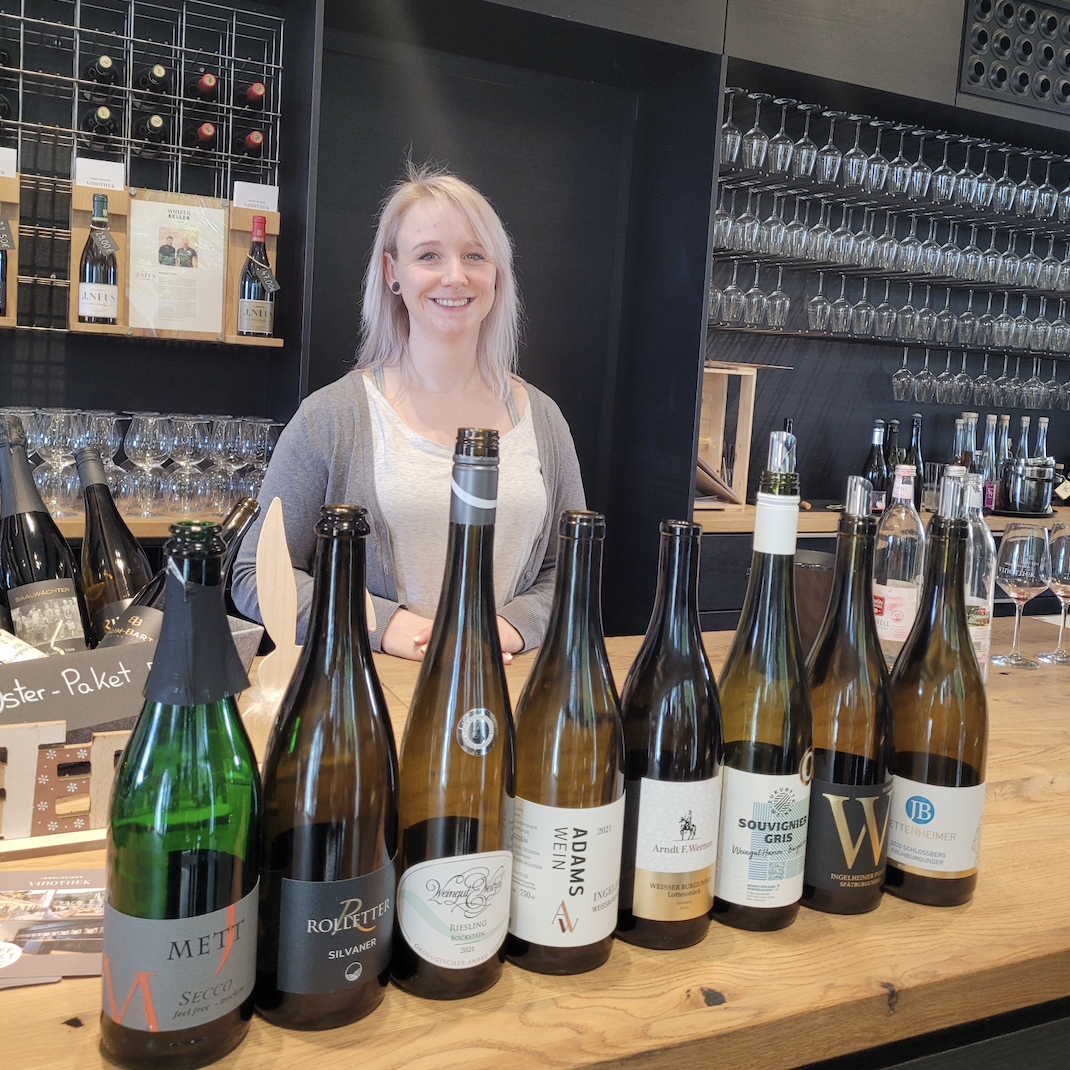
Shanna Reis – Ingelheim Vinothek

Rheinhessen tasting at the Ingelheim Vinothek with Shanna Reis

Organic Weingut Weitzel Riesling Spätlese Trocken Bockstein 2021, Rheinhessen

The work of Elke & Eckhard Weitzel with riesling of late harvest (somewhere between Kabinett and Spätlese) designation though also classified as dry. A bit of an oxymoron but this is in fact of a much lower residual sugar content for a late picked riesling. Lacks the energy and drive in the sugar-acid relationship of true or classic late harvest and so the simplified style drinks easily with straight lines and one-dimensional lime. Drink 2024-2025.  Tasted March 2024

AdamWein Weißburgunder Trocken Ingelheim 2022, Rheinhessen

Simona Adam is the winemaker, having taken over from her parents nearly 10 years ago. Creamy wood on the nose and even more so on the palate. Spice and pencil lead first, followed by lactic peach and vanilla after. A shot of tonic at the finish for a nicely complex if easy drinking white. Drink 2024-2026.  Tasted March 2024
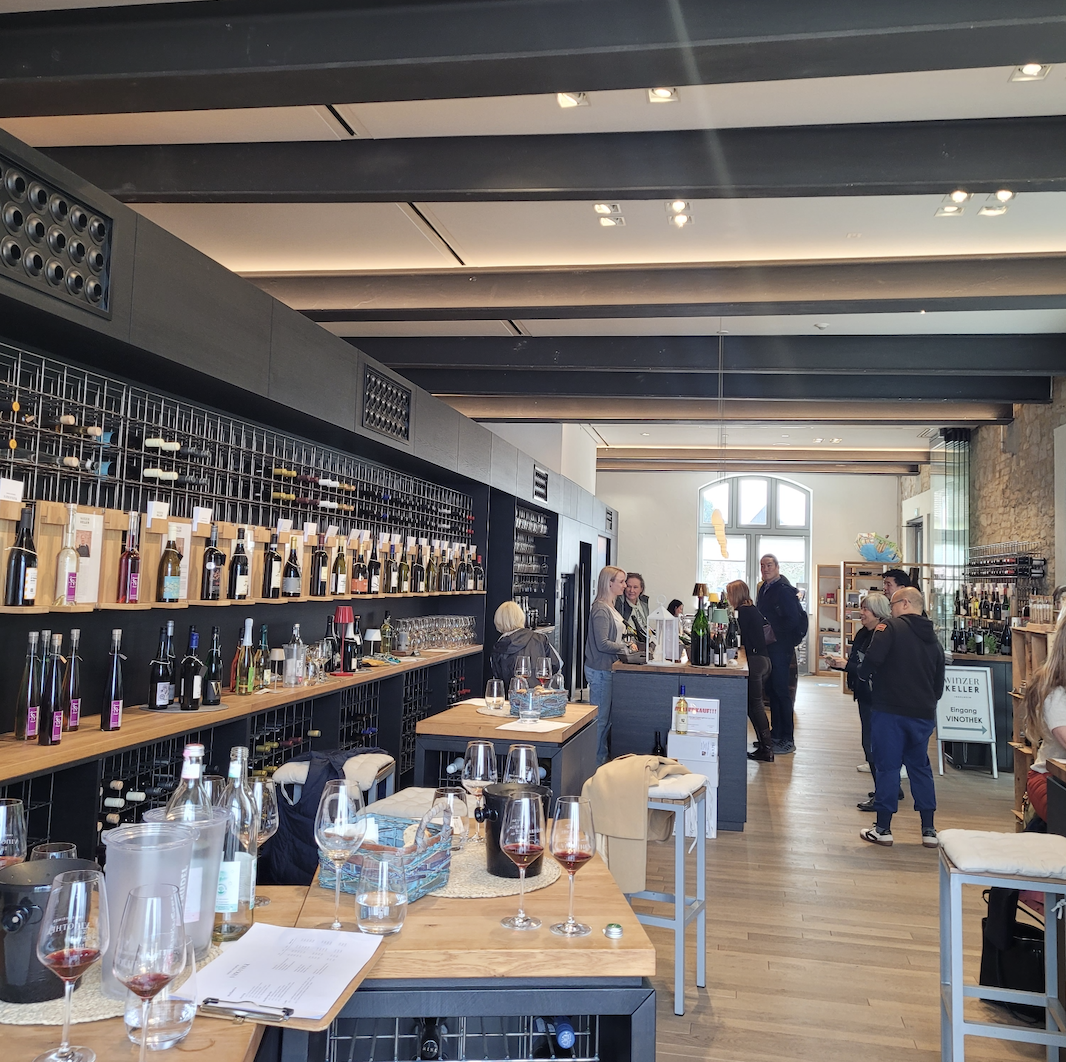
Ingelheim Vinothek

Weingut Arndt Werner Weißer Burgunder Trocken Lottenstück 2022, Rheinhessen

One of two local organic wineries doing weißburgunder (though for the consumer confusingly labeled “Weißer Burgunder) and a much fruitier, almost fruit punch, up front and round style of pinot blanc. Lower in acid and really just about the fruit. It’s weisser, meaning whiter, so the question is, how much more white can this pinot be? The answer is none more white. Drink 2024-2026.  Tasted March 2024

Weingut Hamm-Burgkirsch Souvignier Gris Weiss Trocken Zunkunftswein 2022, Rheinhessen

A Piwi grape, German cross between seyval blanc and zähringer created in 1983 by Dr. Norbert Becker. Strange that it was originally thought to be a cross between cabernet sauvignon and bronner and maybe because the grapes are quite dark pink in colour. The idea is sauvignon gris meets viognier and the style is not far from that type of union. The palate is more tropical and unctuous than what the nose might have indicated but there is a pungency and passion fruit-like note that advances aromatically after a sip is taken. Some sweetness and good acidity. Could really see people enjoying this. Drink 2024-2025.  Tasted March 2024
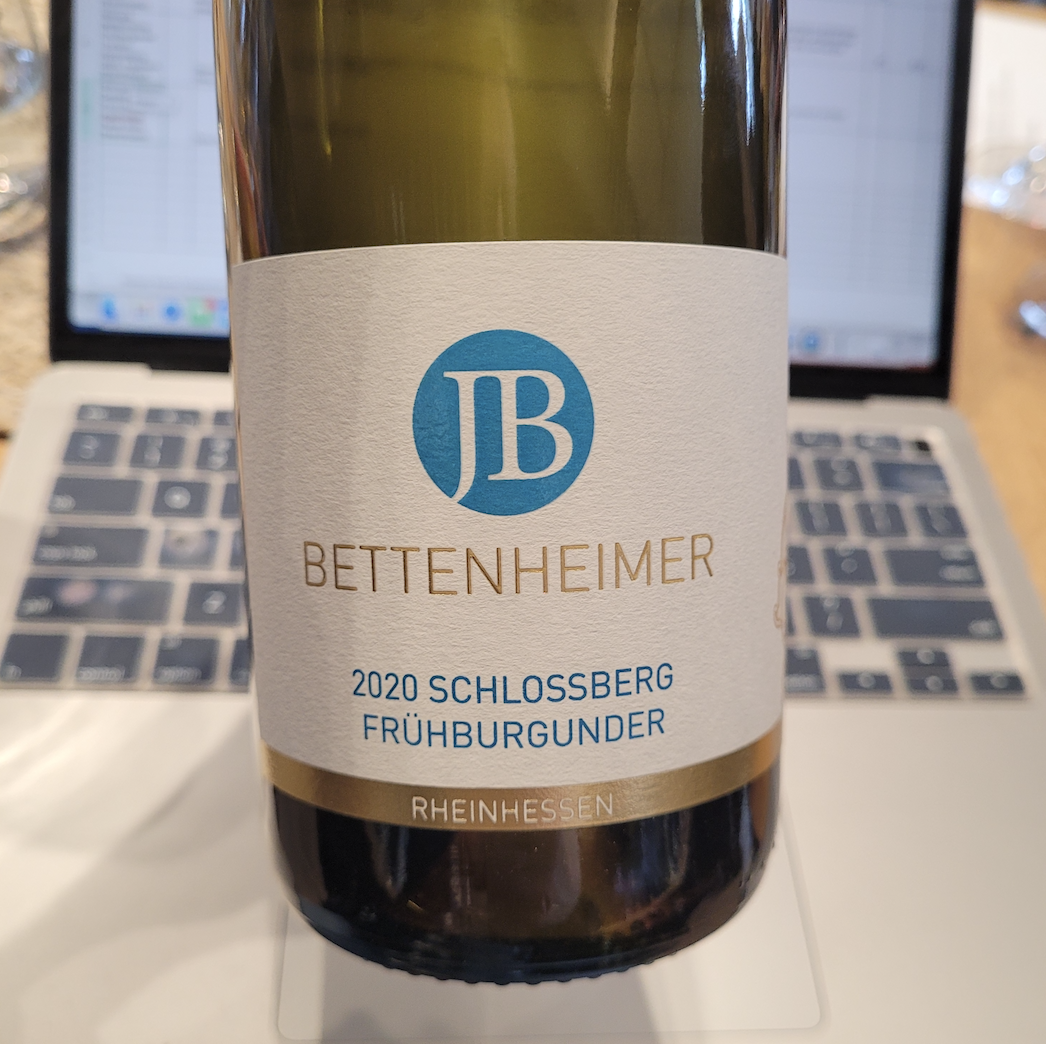
Weingut Bettenheimer Frühburgunder Trocken Schlossberg 2020, Ingelheim, Rheinhessen

Germany’s most interesting grape and perhaps its red future is frühburgunder, a.k.a pinot noir précoce or pinot madelaine, a cultivar that needs to be treated without great oak or pressed ambition. This is neither lithe nor heavy but some not so perfect wood makes the texture quite pasty and it settles uncomfortably on the palate. Some green tannin as well – pressed just a bit heavy it feels. Drink 2024-2025.  Tasted March 2024

Weingut Wasem Doppelstück Pinot Noir Trocken Ingelheimer Pares 2020, Rheinhessen

Some micro oxidative notes at this three-plus year stage though also a taut and compact sensation both on the nose and palate. Rich glycerin and viscous, plenty of cherry and cherry stone bitters for complexity but also a harshness at the finish. Doppelstück is a barrel name where more than one family makes wines but this pinot noir is made by two sisters of the family’s next generation – Doppelstück, meaning twice as big as a regular sized barrel. Very promising varietal wine, just a bit heavy pressed at this stage in its tenure. Drink 2024-2026.  Tasted March 2024
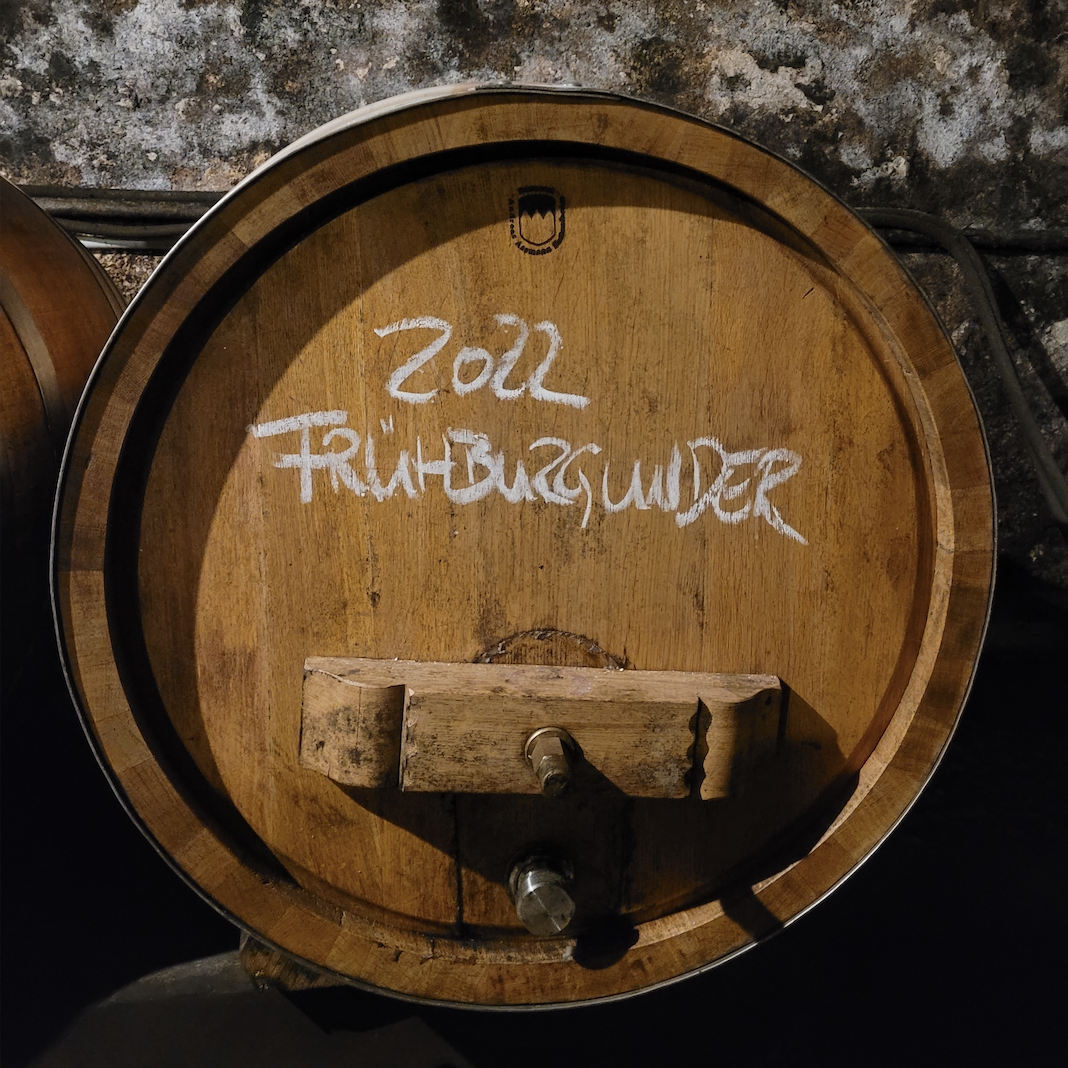
Menk Frühburgunder Trocken 2021, Ingelheim, Rheinhessen

Fresh and energetic frühburgunder with a briny note but some nice fresh raspberry fruit with leafy accents. Palate is a bit syrupy while overall acidity and drive are quite good. Drink 2024-2025.  Tasted March 2024

Baum-Barth Ingelheimer Frühburgunder 2021, Rheinhessen

Good ripe fruit, a bit oxidative but the bottle has been open for a few days. That said the tannic structure and energy are clearly based on an uptick of quality and overall intensity is really fine. Drink 2024-2025.  Tasted March 2024

Sebastian Münster Frühburgunder Cosmographia 2020, Ingelheim, Rheinhessen

Fine and well made frühburgunder with a lactic way about it and fruit really well connected to the structural aspect of the wine. A bit of red fruit paste and austere tannins so there is potential and the pressing was done with some fine restraint. No overriding green tannin but a tisane quality is part of the deal. Drink 2024-2026.  Tasted March 2024

Good to go!

godello

Twitter: @mgodello

Instagram: mgodello

WineAlign

Twenty-two mind-blowing wines of 2022

Godello in the Stellenbosch heather, Reyneke Wine Estate

We are who we are and we choose to live in a world according to wine. Within its walls are endless permutations and revelations, of the dark moments and the light, the romantic entanglements and the failures. We witness cycles of passion, highs and lows, endless accounts of quirky little episodes that reveal how grapes really live under the circumstances of a vintage. How they survive and thrive, eventually turning into the wine they become. A wine’s history is a lovely aside accompanied by a recorded and constructed account through the lens of someone who observes its transformations. We are messengers who take the land, plant and maker into consideration and always abide, recounting the story to those who would choose to listen. According to WineAlign I reviewed more than 3,000 wines in 2022, which means I tasted at least 3,500, if not more. In order to surmise this final list from a shortlist of more than 100 mind-blowing wines it meant another 2,900 are not even in the running and yet surely no less than a quarter are exceptional wines in their own right. That is how difficult, personal and stringent an exercise this annual choosing has become. I find it near impossible these days and yet somehow feel compelled to continue the drill. 

Godello in Chianti Classico

Related – Twenty-one mind-blowing wines of 2021

The year 2022 afforded multiple opportunities to get back on the road in search of great wines in places across the ponds and beyond. To Tuscany in both February and March, for the for the Chianti Classico Collection and also as chaperone to La Squadra Canadese for a week of exploration throughout the 11 UGAs of the territory. Forever in Chianti Classico included a masterclass presented by Italian wine expert Filippo Bartolotta and Consorzio President Giovanni Manetti titled Il Chianti Classico in 9 Decadi. This year-end summary includes one of those Chianti Classico wines dating back to 1949 but a few more could been here as well, including the fascinating Badia A Coltibuono Chianti Classico 1958. At Laura Bianchi’s estate the Castello Di Monsanto Sangioveto 1986 was one to blow my mind, as did Luca Martini di Cigala’s San Giusto a Rentennano Percarlo 2018 and VinSanto del Chianti Classico 1998. As a proud, card-carrying Ambasciatore there are dozens upon dozens of Classico and affiliate sangiovese that move me each and every calendar year. Il Molino Di Grace Gratius 2018 is an example and just one of many.

Related – Twenty mind-blowing wines of 2020

After that Tuscan adventure I moved on to Sicily for a five day exploration of The five estates of Planeta earth and my stay turned into two weeks. Covid-19 had caught me and yet the humanity of Alessio Planeta, Patricia Tòth and several winemakers aboard L’Etna turned a challenging test result into many days of discovery and deeper volcanic understanding. In fact L’Etna and Parco Statella saved my Sicilian quarantine. So many producers’ wines could and should be on this list: Azienda Agricola Sofia, Calcagno, Donnafugata, Eduardo Torres, Feudo Pignatone, Girolamo Russo, Graci, Scirto, Tascante, and Vigneti Vecchio. Oddly this was not a year for nebbiolo with likely the least amount of opportunities made available and yet a month from now I will spend 10 days in Piemonte to make up for the absence in 2022. That said there can be no forgetting Réva Barolo Cannubi 2018, from which impartiality is off the table because if you do not fall in love with this Barolo then you are not setting your palate free.

Travels in June and Abruzzo in four-part harmony included a bucket list visit with Emidio Pepe where I found that an unwavering commitment to land is everything that matters in making exceptional and memorable wine. It’s not only what you do but also who you are. Ahead of that trip I had tasted La Valentina Montepulciano d’Abruzzo DOC Bellovedere Riserva Terre Dei Vestini 2017, and there can be little doubt that it is a wine that resides at the top of the montepulciano food chain because this Riserva hails from a most specific and important terroir. After Abruzzo and then Rome I moved on to attend the first ever Anteprima for Simply Red: Rosso di Montalcino where the Brunello were set aside for one day only and the 2020 vintage of Rosso got directly under my skin, including Lorenzo Magnelli’s mind bending Le Chiuse Rosso Di Montalcino DOC 2020. Dieci Anni di Rosso di Montalcino (Ten Years of Rosso di Montalcino) and Selezione di Rosso di Montalcino (Rosso di Montalcino Selection) showed wines of age-ability and purpose; my if Alessandro Mori’s Il Marroneto Rosso Di Montalcino DOC Jacopo 2019 did not blow my mind. A visit with Violante Gardini Cinelli Colombini meant a pour of Donatella Cinelli Colombini Brunello Di Montalcino DOCG Io Sono Donatella 2015 for the most profound barrel expression of Le Donne’s Brunelli. 

Menfi

Related – Nineteen mind-blowing wines of 2019

In October the Cape Wine congress resumed after a four year absence and now more than ever this is what I have to say. South Africa is the most exciting and mind-expanding wine universe alive today. There are no less than 40 Western Cape wines from two dozen or so producers tasted in 2022 that could have made this list: A.A. Badenhorst, Alheit, Beaumont, Boekenhoutskloof, Crystallum, David and Nadia Sadie, Hamiilton Russell, Huis van Chevallerie, Kanonkop, Ken Forrester, La Motte, Leeu Passant, Klein Contsantia, Meerlust, Momento, Mullineux, Old Road Wine Company, Porseleinberg, Raal, Raats, Radford Dale, Restless River, Reyneke, Savage, Sijnn, Storm and The Sadie Family. To name but a few. Other southern hemisphere wines were killer in 2022, namely Torbreck Grenache Hillside Vineyard 2019, a special Barossa block to be sure.

With John Szabo MS and Rosa Kruger at the Old Vines Project tasting

In November a return to Montalcino for Benvenuto Brunello 2022 meant a look at the 2018 vintage but also the Riserva of 2017. At Col d’Orcia the Conte Francesco Cinzano Marone and his son Santiago led yet another vertical tasting, this time on the 8s and it was Brunello Di Montalcino Riserva DOCG Poggio Al Vento 1988 that stood both out and also the test of time. From Montalcino it was on to Vienna and then a Wagram-Traisental discovery tour that was both too short and mind-expanding – A return must and will happen soon. Meanwhile a tasting at home in the WineAlign office showed this Rheingau gem to the crü. Leitz Berg Schlossberg Grosses Gewächs Riesling Trocken 2019 is grand Rüdesheim indeed. 

These are the wines that blew my mind in 2022

Most of all 2022 was a year when associates, colleagues, wine professionals and especially friends reunited to break bread and taste great wines together. At a birthday party I had the opportunity to taste the following in one evening; Château Lafitte 1986, Château Mouton-Rothschild 1986, Chave Hermitage 2010, Guigal Côte-Rôtie La Turque 1999, Paul Jaboulet Aîné Hermitage La Chapelle 1990, Dom Perignon 2000, Veuve Cliquot La Grand Dame 1995 to name just seven of 20-plus icons. Bordeaux made several prominent appearances in ’22; Château Margaux 1989 (and 2004), Château Haut-Brion 2012 and Château La Mission Haut-Brion 2012. More importantly in 2022 we shared bottles of all ilk, pedigree and origin, not only the expensive and famous labels but all the great wines, big and small. Thank you to every person who poured, for every sip and taste, with heartfelt thanks. These are Godello’s 22 mind-blowing wines of 2022.

Markus Huber Grüner Veltliner Berg 1ÖTW 2021, Traisental, Austria

Highest and coolest vineyard of the Traisental Erste Lage because by three or four pm the forest casts shade over the vineyard. Limestone based soil as well, upwards of 380m and the only portion that has iron rich red elements in the earth. Actually finding a richness in this, surely vintage related and that is unexpected but it’s also the most savoury, minty cool, eucalyptus accented, or the like. Curious by comparison to Alte Zetsen and Zwirch, in what is assessed as almost dark, smoky, spicy volcanic-simulate stuff. Brings whole and utter meaning to grüner veltliner at the Grand Cru level. Drink 2023-2028.  Tasted November 2022

Godello with Charla Bosman

Sijnn White 2019, WO Malgas, South Africa

Up above the Breede River there are vines of chenin blanc, viognier, roussanne and verdelho, varieties that have been working towards a common goal, to eventuate at something great. Then 2019 comes along and the world changes. This is the vintage from which David Trafford, Sijnn and winemaker Charla (Hassbroek) Bosman take full reign of their collective charge. To be truthful the agriculture, winemaking and face of the brand is Bosman and were I in the market to hire someone of her passion, ability and professionalism I could not help but remunerate her like a top European footballer. But lucky we all are that she and Sijnn are together because she is at one with this impossible yet absurdly beautiful environment where wines like this White Blend are made and will blow your proverbial mind. They attach themselves and get so close to that personal part of you. Imagine Châteauneuf though I’d much rather consider Malgas because that is what this is. Rich and perfectly viscous, spicy, structured and fine. Drink 2024-2030.  Tasted October 2022

Girolamo Russo Etna Bianco DOC San Lorenzo 2020, Sicily, Italy

From the single vineyard at 730-740m of elevation and vinified in tonneaux. The 2009 was the first vintage of San Lorenzo Bianco for a wine that leads amongst the 80-90 thousand total bottles made by Giuseppe Russo from 18 hectares. A strong selection from the plants of carricante with cattaratto and grecanico. The carricante are the oldest and they provide the breadth in the mouth, the texture in unction and the presence that really makes you feel the vineyard. The difference between it and Nerina is really in the selection of the grapes. Giuseppe wants his whites to speak for his territory, here to be a bit more generous and 2020 obliges first because it was easier and second because it is such a vintage specific to the white wines. Such beauty and emotion is purity and life. No stress and a wine you want to drink. Drink 2022-2028.  Tasted March 2022

David And Nadia Sadie Wines Plat’Bos Chenin Blanc 2021, WO Swartland, South Africa

At a tasting where everything is Old Vines Project certified there must be something extraordinary about a wine to stand out from a crowd of greats. David and Nadia Sadie are in fact turning heritage vines chenin blanc (amongst other varietal explorations) into content born of context harboured though never paraded. They are rhythmic and scientific with just enough fantasy and romanticism, but never too much. Plat’Bos stands above Skaliekop and Hoë Steen because 2021 asks it to do so, not because it is better or more important, but it is surely chenin blanc profound. The 1981 Swartland planting is in the steady zone, shed of the mercurial and in ’21 so very linear yet salty of the earth in its sombre-sepulchral tone. There is reduction here because the poor soil nutrients demand that this chenin begins this way. The levels of tension and intensity are most elevated, sufficing to say as high as any from the Western Cape. Attention is paid unwavering to detail, sequencing is in order, purity incarnate, grape and place together pristinely kept. In Plat’Bos 2021 the palate is taken down to the whipping post by a wine built to endure. Given time there will be calm, healing and reward in the end. Drink 2024-2036.  Tasted October 2022

The Sadie Family Die Ouwingerdreeks Mev. Kirsten Wyn Van Oorsprong Stellenbosch Die Sadie Familie Wyne 2021, Stellenbosch, South Africa

The vines that supply Mev. Kirsten Wyn are the oldest chenin blanc in the country, out of Stellenbosch and planted in 1905. In 1947 every second row was pulled out to make room for tractors and the configuration still exists this way. “If South Africa has a true apex white Grand Cru vineyard then this is it” insists Eben Sadie. Facts are facts are you just can’t accede these levels of power, concentration, extract and tannin anywhere else. The nose communicates as an intoxicant of sublime forces and these grapes bestow chenin blanc 2021 are those that transcend fruit, deliver ethereality and a heightened sense of awareness. An awakening from necessary tension, crisis and personal freedoms, existential off the charts, poetic and epic. One hundred and sixteen stanzas recorded, in the books and the finest verse written right here in the most recent vintage. If enlightenment is to be gained from chenin blanc in the Western Cape, Mev. Kirsten would provide the fodder. “The grail. End of fucking story” concludes Sadie. All hail. Long live the queen. Drink 2025-2040.  Tasted October 2022

Iconic Bourgogne

Domaine De Bellene Vosne Romanée Premier Cru Les Suchots 2020, AC Bourgogne, France

“Suchots” originates from “souches,” the name given to the woods before the land was prepared to house these vines. Les Suchots is but a small 13 hectare part of the larger 220 in total for Vosne Romanée and was first planted in 1937. La Romanée and Saint Vivant are the closest plots, south of Echezeaux, north or Richebourg and though just six per cent of the appellation it is actually the largest Premier Cru Climat therein. The vineyard is divided in two by a road. The eastern part below lays just above the cemetery and the village terroir called Hautes Maizieres. The top part is located below Les Beaux-Monts. The 2019 was a dream, crème de la crème and yet 2020 seems to embrace the powerful vintage with a most extraordinary level of perfume. That and fruit concentrated to a maximum degree without falling into any of the trappings associated with hyperbole. The concept of pinot noir reaching regional levels like this seems counterintuitive to the variety-appellation contract but the balance and harmony at the top is something the likes almost never seen. This will surely be one of the wines that explain with hyper clarity what 2020 is as a vintage. Drink 2026-2040.  Tasted May 2022

Graci Etna Rosso DOC Arcurìa Sopra Il Pozzo 2017, Sicily, Italy

Sopra il Pozzo describes a special portion of the signature Arcurìa vineyard (and contrada of the same name), a block “above the well,” 100 per cent nerello mascalese picked in the last week of October. Treated to the same maceration and elévage as the Rosso for the same spontaneous style and time as Feudo di Mezzo. However Sopra il Pozzo’s “refuse” soil composition is different and requires patience in the name of time, due to its alternating layers of decomposed volcanics in stone and coarse sand. This is a section of recast material and the corresponding mascalese is both emasculated and chivalrous. The degree to which layers of fruit, mineral and umami incorporare and completare is finite and contiguous yet also lengthy, scorrevole and endless. There is rare Etna glycerin texture and perfectly timed acid tang. Tempismo perfetto. Grande. Drink 2024-2032.  Tasted April 2022

Elisabetta Foradori

Foradori Granato Teroldego 2019, IGT Vigneti Delle Dolomiti, Trentino-Alto Adige, Italy

Granato from Elisabetta Foradori resides at or near the peak of the Trentino-Alto Adige wine chain, a Dolomite force of varietal nature, richness incarnate and cragged to gain your full attention. Fruit comes at a great premium, not by absence of the heart but because so much site, land and space speak louder than words. A static red stuck in a state of cryogenic freeze, immovable and surely able to handle immobility and also time. Will drink beautifully for a decade and a half, or possibly more. Drink 2024-2034.  Tasted February 2022

Garage Wine Co. Truquilemu Vineyard Lot 97 Dry Farmed Old Vines Field Blend Carignan 2018, DO Maule Valley, Chile

The eastern facing side of the Coastal Range where the old vines grow, in places where you had to make wines for the Catholic Church, “to save souls.” The most aromatic of Derek’s wines, a true field blend with a je ne sais quoi of varieties bursting off of dry farmed bush vines. Showy with that combination of outright juiciness juxtaposed against iron-fisted structure. A wine that comes from a place where the farmer worked to break up the “los camellones”, strange diagonal lines drawn and a framer who shows how to separate the land so that making great wine is easier. This is a remarkable example of old, bush and real. Drink 2024-2030. Tasted July 2022

Barone Ricasoli Castello Di Brolio Chianti Classico 1949, Tuscany, Italy

Tasted as part of “Il Chianti Classico in 9 Decadi” led by Filippo Bartolotta with Giovanni Manetti at Stazione Leopolda in Florence at the Chianti Classico Collection. The oldest wine in the flight. apropos and just when you consider the Ricasoli heritage and lineage. A mineral layering which instinctively mimics the compaction of argiloso, macigno and calcari from Brolio’s soils, no longer feeling the separation or mille-feuille effect but now just all morphed into one and the same. There were surely some white wines in this mix, as per the formula written decades earlier by Bettino Ricasoli. Probably helped keep the freshness for some time and while this is now all earth and stone the wine is very much alive. There’s even some sweetness and citrus showing, indicative of blood orange some 73 years later, finishing with a trebbiano and malvasia Vinsanto tang.  Tasted March 2022

Isole E Olena Chianti Classico Gran Selezione DOCG 2016, Tuscany, Italy

“I did not like Gran Selezione, I did not have anything against Gran Selezione but the discussion about UGA (sub-zones) was already underway so why not wait for this next change to the appellation?” The thinking for Paolo de Marchi was more about the wines that did not qualify for the appellation becoming wines that now qualified, the issue being a new rule could not apply to only 30 or so producers. So what is needed for that to happen? “All grapes born here should be able to travel with a passport.” If it is more complicated than that then there is much more to discuss. A Chianti Classico from a long, linear and fortifying vintage delivers equally appropriate and extending tannins, gripping the composition while proposing to become elegant and fine. The seamlessness and never wavering focus keeps on keeping on, in the ways of emotion in motion. Will remain in bottle one year more before being released to the market. Drink 2023-2027.  Tasted February 2022

Great anticipation to taste La Casaccia and Montosoli side by each from a vintage carrying no option but to act out the passion play through the glaring clarity of a sense of place. There are facts involved and there is no hiding the truth formed by these plots of sangiovese in this vintage. By now it is understood how 2018 exists on its own accord at one with nature though Francesco Ripaccioli will tell you there are similarities with 2013, if only because that vintage was greatly ignored and is drinking well at this time. La Casaccia in the località of Canalicchio is the wildcard of Montalcino and tasting several wines from the frazione reveals a collective affinity supplied by the year’s gifts. Nothing was portioned or taken away from the ’18 Annata and yet this Vigna sings with even more range and depth than that wine. The acids are simply out of this proverbial world, the linear aspects drawn with precise architectural or even, in Old English speak, a Cutter’s line. Remarkable reserve in concentration and forward slicing finesse. Forever long. Forever young. Drink 2025-2038.  Tasted November 2022

Biondi Santi Brunello Di Montalcino Riserva DOCG 2016, Tuscany, Italy

Riserva 2016 is the 42nd such vintage since 1888 from estate vineyards and the oldest parcels therein. Meanwhile olive trees and other compatible local species grow in those places and there always seems to be lower pH and higher bright acidity coming off the grapes. The Federico Radi team seeks to broaden biodiversity with unlimited scope and more vineyards would benefit by following such a plan. When Biondi-Santi gets to their next position we can expect even more refined and higher quality wines. Meanwhile the harmony and extant abilities in this ’16 Riserva are almost impossible to believe. A Riserva of fruit termed as the locus of the points drawn at an equidistant from the centre. Sangiovese of no stops and starts existing on a special kind of ellipse in which the eccentricity is zero and the two foci are coincident. Simple descriptors like crunch, chew or crust are not in the lexicon nor do service to speak about the texture of this remarkable sangiovese. Subtlety and strength, a dappling of early morning light, patterning and shimmering as if on water. The phenolics are spot on, coherent and the connection with both palate and tannins perform as an unbreakable bond. A canvas flooded with colour and while there is a level of transparency there are no white spots. Everything is filled in. Clocks in at 14 per cent abv. Drink 2025-2040.  Tasted November 2022

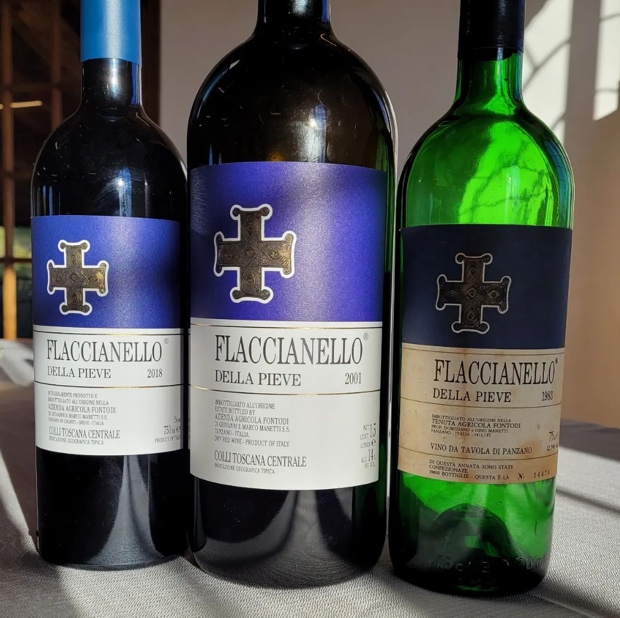
Fontodi Flaccianello Della Pieve 2001, IGT Toscana Centrale, Tuscany, Italy

Youthful is the proverbial understatement, zesty and full of Panzano life the other. A sangiovese in strike of ideal accord, freshness captured in bottle and development low, easy and slow accrued. Just like the season, stress-free, never too hot, never too wet. Stellar autumn of warm days and retentive cool nights. A late harvest and full phenolic character. It all shows in this 20-plus year-old Flaccianello, singing a ballad, verse after verse, refrain post refrain. After 20 minutes a sweet porcini perfume emits and one wishes for a 50 day dry-aged Chianina Fiorentina. What fortune! Along with the special effects of smoky rosmarino and wild fennochio. Drink 2022-2029.  Tasted February 2022

Sassicaia 2019, DOC Bolgheri, Tuscany, Italy

Priscilla Incisa’s Tenuta San Guido is located one hour south of Pisa, going back many generations. The surface area covers 2,500 hectares in a “classic Tuscan agricultural estate, of vines, olive oil, cereals including wheat and feed for thoroughbred horses. There are 500 hectares towards the seashore dedicated to a wild life refuge “paradise” free from hunting and for migrating birds coming from northern Europe and heading to Africa, especially because a good part of the land is covered by water during the winter. Before 1994 the appellation was Vino da Tavola. The grand vin Sassicaia is always a minimum 80 per cent cabernet sauvignon (as per the appellation) with cabernet franc. The youthful perfume of Sassicaia is really something other, an invitation to the plume of a great and mighty bird that will soon migrate or not be seen or heard from until another season. The fruit is both wound taut and also layered, a mix of liquids, gasses and decomposed mineral, turning on its axes, literally the earth itself. The effort put in speaks volumes about the quality and yet the seamless transitions are as if there are no transitions at all, only one contiguous entity. Will release in Ontario as an Online Exclusive by lottery on October 20th. Drink 2025-2034.  Tasted September 2022

Emidio Pepe Montepulciano d’Abruzzo DOC 2002, Abruzzo, Italy

The subtle and gentle elegance of 2002 is almost mystifying, if at least a surprise that kinda hypnotizes. Memory serves up a case of conflict and adversity, if also vintage envy for the bookends of 2001 and 2003. And yet the cool of the night prevails to elongate a montepulciano for our pleasure and make it sing 20 years later. It was also decanted to reduce the lees sediment and then re-corked for our benefit. Words cannot express what a beautiful place this 2002 EP is found to be. It is a treat to taste and also behold, exactly as of right now. Drink 2022-2026.  Tasted June 2022

Planeta Santa Cecilia 2005, DOC Noto, Sicily, Italy

Finding oneself in a state of utter disbelief upon nosing an older Santa Cecilia has just happened with thanks to this 2005 and the unthinkable aromatics it possesses. There have been some older examples like 2007, 2008 and 2011 which all showed morphological magic but this, this is something other. The state of perfumed preservation is impossible, the floral emanations and fruit continuance implausible and in suspension of belief. The 2005 is almost perfect, dark berries and red citrus alive, acids in perfect condition, wood dissolved, resolved and walked straight out the door. The life and vitality reside in the arena of the flawless, faultless and achievable. This is what nero d’avola, Santa Cecilia, Noto and Planeta can be, at its collective finest. Will drink this way (and also that) for five more years and with ease. Drink 2022-2027.  Tasted April 2022

Château Cheval Blanc 1998, Saint-Émilion Grand Cru Classé, Bordeaux, France

The 24 year-old 1998 has been argued and predominantly defended as a Right Bank vintage, especially for merlot based wines, which the 1998 Cheval Blanc happens to be. Clocks in at 65 percent plus (35) cabernet franc and the two combine for hypnotic aromatics to put mind and palate in an immediately dizzying and gratifying tizzy. Dark, dark fruit of the “cimmérienne” kind yet of a grace and genteel manner shared by other profoundly distinguished red wines. Thoughts can wander and wonder as a result of tasting this blind and considering the depth it is nebbiolo that is imagined. Only for a moment because the numerous dual-toned vibrations direct towards knowing this to be a blend and so Right Bank combinations lead by their impression. Both of ’98 Cheval Blanc’s are blessed of ripenesses, acids and structural bones all having peaked at a shared summit. The conclusion can only be a two-part perception, of balance and beauty. Drink 2022-2042.  Tasted November 2022

Mullineux Schist Syrah 2019, WO Swartland, South Africa

Vines planted in 1999, mature if still 12 years away from being classified as “Old Vines.” Schist is the home Brownstone Vineyard, shallow and rocky of less than 20 cm of soil. An extreme site in which vines attempt to grow, but so much comes down to the where and how. Rows are close together and planted in an almost race track configuration within an amphitheatre. The roots spread and dig deep within the stripes of schist interspersed with iron and the grapes are harvested plant by plant to create two apposite cuvées. Visually these are small vines with smaller leaves and an airiness – physically speaking. The skeletal backbone here is upright, towering and commanding, the juiciest of varietal fruit hanging as flesh, taut and muscular upon these bones. Unyielding yet never brooding nor astringent, but bountiful and beautiful. Drink 2024-2032.  Tasted July 2022

Penfolds Grange 1981, South Australia

Poured blind and easily recognized as a wine of great depth with at least two decades of maturity. Either older or hastily advanced but there are indicators to the former, namely high tones, substantial crunchy acids and full on perfume. There is a touch of Brettanomyces but only a feathery tickle and the wine still has something left to give and also to prove. Great depth is provided by wood notes, of soy, balsamic, wild fennel and all together now a reduction keeping its form, a foxy liqueur, once Cassis but now Amaro, finishing with flavours bloody and gamy. The reveal as Grange 1981 explains that while shiraz is always the game and king it had been a season for which the cabernet sauvignon portion exceeded 10 percent. Winemaker John Duval felt that ’81 was a tannic one but they left the building long ago. Both Barossa and McLaren Vale were involved and so this look back at blending expertise matters in the context of all Aussie blends being tasted today. Being present to be poured a taste of Grange represents good fortune and from 1981 there abides a full and fair suck of the sauce bottle.  Drink 2022-2025. Tasted November 2022

Donnafugata Ben Ryé 2019, Passito Di Pantelleria DOC, Sicily, Italy

Ben, as in “son of” and Ryé, a Sicilian riff on the concept of making strong mocker from the wheat grass. Think of grapes instead, in this case zibibbo (muscat of Alexandria) grown off the southwestern coast of Sicily on the Island of Pantelleria. Passito di Pantelleria DOC is one of the world’s great sweet wines, found only on this windswept promontory where the grapes concentrate, drink in the sea and express a view to which only this place commits. The warmest of vintages develops and comprises these particular sugars into something surreal. Extraordinary orange-ginger crème brûlée, perfectly embittered and made viscous in the most natural of ways. Layers of dedication and spice, health affirming herbs, respiratory fixing drops and sweetness captured, effortlessly and to gift plaisir. Apricots ripe and glazed, zen zero limone, giusto intenso. Nearly perfect. Drink 2025-2039.  Tasted April 2022

Vintage Port (c) Sarah Goddard/WineAlign

Niepoort Vintage Port 2019, DOP Douro, Portugal

Expect top concentration in Vintage Port from what Niepoort calls a “return to balance in the vineyard” type of season. Summer was unseasonably cool and the timely rainfall on the 26/27th of August was invaluable, allowing fruit maturity to go to completion. A recall to 2008, of natural, acid driven, balanced musts. Foot trodden in circular granite lagares with 100 per cent stems, racked soon after harvest, aged in “tonéis” (large oak vats) in the Douro over the winter, and then moved to the cellars in Vila Nova de Gaia in the Spring of 2020. Acid vintage indeed, fruit caught by circumfuse so as to be surrounded, ignited and eventually dispersed for decades of slow release power. The liquid chalkiness of tannin is so fine-grained you swirl and mull over just how hypnotizing it is. Truly great Vintage Port will act out this passion play. Drink 2025-2048.  Tasted October 2022

Good to go!

godello

Twitter: @mgodello

Instagram: mgodello

WineAlign

Meyer-Näkel, Ahr Valley, March 2017

The village of Dernau, Ahr Valley

The Ahr Valley is one of Germany’s furthest northern wine regions (out of 13), more so than the Mosel. The total area is 150 hectares (of 100,000 total in Germany). Meyer Näkel is a young winery by Ahr standards, now at the fifth generation, with sisters Meike and Dörte Näkel at the helm. Before that there was a winery (Meyer) and a restaurant (Näkel). When the grandparents (Paula Meyer and Willibald Näkel) married the entities merged. In 1982 Meike’s father and mother (Werner and Claudia) took the winery and her uncle the restaurant. Started with 1.5, now there are 15 hectares under vines. Meike interned at the Dr. Heger winery in Baden and later with Weingut Fürst in Franken.

With Meike Näkel, Ahr Valley March 2017

The slopes are ridiculously steep. So difficult to work. Dangerously steep inclines, contours, weathered (in some cases blue) slate and greywacke define the grape-growing. “In our case it is both the shape and stone of the valley,” tells Meike. The Ahr runs west to east as a deep valley, creating canyon like topography. Just the southern part is planted to vines. Dark slate warms and conserves heat, returning it to the air very slowly. It’s a glass house in essence. The focus of the tasting was the varied ways in which Meyer Näkel makes use of spätburgunder, in sparkling, rosé and pinot noir varietal wine. I visited with Meike Näkel after attending the Prowein wine fair in March 2017. These were the nine wines she poured and my notes.

Meyer Näkel Rosé 2016

A 100 per cent pinot noir, one of two Rosés allowed under German law, no longer called weissaste, in which you need to use 100 per cent of that variety to say it on the label. Despite the old-school reputation (like the old aunt drinking sweet sherry) so the word Rosé gives credibility towards dictating quality. Intensely floral and full of strawberry essence there is also something very stony and certainly some sweetness. Summer refreshing with such capable acidity. Flavours promise citrus and candied flowers. It’s also just a bit crunchy. Success is not predicated on a stark and dry expression. The acidity sees to the balance and the energy. Just bottled too weeks ago. De-stemmed, crushed and two hours skin contact. Only stainless steel. RS 7.9 g/L ABV 12.5 TA 7.0. Drink 2017-2019.  Tasted March 2017

Meyer Näkel Spätburgunder Blanc De Noir “Illusion” 2016

Spätburgunder Blanc de Noir “Illusion” is obviously not Rosé like, but just a hint though not even Vin Gris. Half is made saignée, then 10-15 per cent is removed. The second half is crushed bunches of pinot noir. If just saignée the lack of tannins would lead to a tannin-less, potentially dull wine. Ten per cent in new barriques. Bottled two weeks ago. It just smells viscous, beyond berries and into peaches. You can imagine toasty and creamy notes on the palate, even if those notes are not yet present. Just an illusion, “looking over your shoulder.” Just hints at effervescence but it’s more like an analgesic tingle on the tongue. The citrus is like pure lime with acidity inward and intense. Very long and should really develop with two years of concentrating, fleshing time. The lack of bitters when you consider how much pure lime and tight acidity is a factor of the dual process, two connecting systems, blending acumen. An illusion because it had to be sold as table wine for eight years, but today it’s fine to call it and sell it as Blanc de Noir. A perfectly cleaner version of a Jean-Pierre Frick. 7 g/L RS and TA. 13 ABV. Drink 2018-2022.  Tasted March 2017

Ahr Valley slope

Meyer Näkel Spätburgunder Ahr Valley 2015, Deutscher Qualitätswein

The entry-level pinot noir was bottled in the summer of 2016, after a hot season and dry elsewhere but in the Ahr it rained and it was cool overall. Picking was actually late and the aromatics show off the long, cool, floral temper. De-stemming and fermentation is immediately initialized but the maximum fermentation is 10 and usually six days. The pips are just a quick doo-wop to keep both green and bitter away. A focus on fruit, an absence of tannin and a pure varietal expression. Red trumps green, large wooden casks (15-20 years) also impart no tannin so the finality is simply cherry. That said, this carries some almond pit and green strawberry on the palate. It’s really what basic German spätburgunder is and expected to be. Nicely balanced and in at 13 per cent alcohol. Drink 2017-2019.  Tasted March 2017

Steep grade of Ahr Valley vineyards

Meyer Näkel Spätburgunder Blauschiefer 2015

Spätburgunder Blauschiefer is from blue slate, from the steepest slopes with highest percentage of slate in the earth, to get it in the glass. A collection of all the blue slate sites in the two villages, this and the sister neighbour. “The stale gives us the specific micro-climate to grow grapes up here,” tells Meike Mayer, at 50 degrees of latitude, but also in the Rheingau and parts of the Mosel and the Nahe. “In our case it is both the shape and stone of the valley.” The Ahr runs west to east as a deep valley, creating canyon like topography. Just the southern part is planted to vines. Dark slate warms and conserves heat, returning it to the air very slowly. It’s a glass house in essence. Glass Houses. Billy Joel. Needs to be on the label. As a thank you and to tell the people. A niche wine locale and yes, there is this metal feel on the nose and even more so on the palate. It’s an intense impression, deep and mined. Vinified by a de-stem, followed by three days of cold soak, then heat and 18 days skin contact. Just new barriques, two to four years old. The tannins are long and indeed elegant with the stones imparting a constant warming blanket across the palate. This goes cool and warm then back again. Idiosyncratic and highly drinkable pinot noir. Drink 2018-2022.  Tasted March 2017

The weathered slate and greywacke of Ahr strata

Meyer Näkel Spätburgunder “S” 2015

The good problem to have is that as you grow and buy up land the accumulated hectarage become disparate, spread apart and generally all over the Ahr. Small pieces of land owned by older growers who stopped farming. The holdings are not contiguous. These small parcels need to be gathered and made in cuvées or blends. The plots are just too small for single-vineyards but the “S” is made from those tiny disparate plots. Also from some fruit “stolen” or bled from the three single-vinyard GG blocks, especially from fruit taken from younger vines. Small barriques and 40 per cent new oak after 21 days skin-contact maceration. You can’t write Selection on the label so you use the letter “S”. The nose shows tonic and cherry and a beautiful inhalant/liqueur. The fruit is made darker and more unctuous by the barrel but that fruit was clearly classified to begin with. The first pinot noir with true tang is here in this “S” so this and the wise Ahr bitters design the structure with long lasting intent. Drink 2018-2024.  Tasted March 2017

Meyer Näkel Spätburgunder Sonnenberg GG 2013

The VDO follows the Bourgogne cru system, looking for the climats of highest quality. Ostensibly Granc Cru, known as GG (Grosses Gewächs). Sonnenberg is a single vineyard from the “sunny mountain,” in the lower part of the Ahr Valley. From steep slopes though not the most, the underbelly is rock, with loess-loam aboard. That top layer of earth brings the fruit to mix with the minerality. Ice age, glacial pinot noir, fertile and for the first time, a Burgundian presence, if only because of the sweet extract concentration. Five to seven days of cold maceration, followed by a slow warming for seven days and 23 days maceration. Barriques, 75 per cent new oak. It carries that barrel with remarkable ease, like the vintage, ripe, easy phenolic development ensured and by picking. Drink this at your whimsy. Drink 2017-2021.  Tasted March 2017

The cemetary in Dernau

Meyer Näkel Spätburgunder Pfarrwingert GG 2013

From the high part of the valley, on Grauwacke slate, a highly decomposed slate (in the area known as Fabrigatte) easier to crush so the soil is filled with fine pieces of this stone. There is so much break down that the soil becomes loose, like sand. A crunchy, crispy and fragmented pinot noir, in acidity at least. Means “church vineyard,” of the local dialect in origin. Once belonged to the Catholic church. More mineral, less fruit, a touch more oak then the Sonnenberg, spice but less so with thanks to the quicksand soil work in the development of this wine. Once again the sweetness created by extract from a top quality vineyard is impressive. Drink 2019-2024.  Tasted March 2017

Meyer Näkel Spätburgunder Kraüterberg 2013

Kraüterberg meaning “herbal mountain,” going back to the Romans who created the terraces and began the wine making processes. The thought is that the reference is in to gardens where herbs were planted along with vines. In the upper Ahr, very steep old terraces, this seems a combination of the first two but more body, with thanks to an increase of clay to go along with the stones. Complexity is a step above, as is fleshy, ripe and elegant character. There is a medicinal quality which is the herbs speaking and a texture as silky as the Ahr is long. It’s a beautiful wine, from 80 per cent new oak but I really do think that the terroir will speak louder with a bit less oak. Drink 2019-2025.  Tasted March 2017

Meyer Näkel Spätburgunder “SR” 2013

A “Selection Reserve” made from one selected barrique, not made in every vintage. Looking for plants which suffer blossom loss, plants that only produce small bunches of the smallest berries. Mostly skin, small pips and very little juice. Not possible every year and the concentration is really noted on the nose. Again it can’t be called Selection Reserve so “SR” is the moniker. The first vintage was 2009, then 2012 and now here in ’13. Sees 24 months in a new barrel, a total of three years aging and now just released. Very creamy, pretty ambitious and likely costs double to make what it sells for. This shows oak way more (and in the tannin it delivers) because there just isn’t the juice to support it. It’s certainly ripe though the wood makes it seem so sweet. Drink 2018-2022.  Tasted March 2017

Good to go!

godello

The village of Dernau, Ahr Valley

Twitter: @mgodello

Instagram: mgodello

WineAlign

Thörle Riesling, Truly Rheinhessen

Some of Germany’s finest #riesling coming to @TerroirTalk May 29th #thorle #Terroir2017 #christophthorle #saulheim #rheinhessen #terroirsymposium #holle #agotoronto

I first met Christoph Thörle when Wines of Germany rolled their Next Generation Germany roadshow through Toronto in May of 2014. I know that he knew based on my reactions to his Rheinhessen rieslings that we would need to rekindle the relationship at a later date. That opportunity came again in May of 2015, albeit briefly but it was this past March of 2017 that the true immersion took place. Even then it was too quick and too short. But that’s OK because Christoph and his brother Johannes have really only just begun their lifelong journey of winemaking and understanding in Saulheim.

Related – Godello’s March through Prowein, The Ahr Valley and The Rheinhessen

On day three of ProWein I jumped on the großer Magie Bus with 17 international journalists and headed for the Ahr Valley, followed by the Rheinhessen. We stopped in for a visit with Christoph Thörle at Weingut Thörle in Saulheim, the most progressive winery he started with his brother in 2006 after taking over from their parents. Thörle concentrates on natural ferments and they farm organically without certification. The vineyards are planted to 50 per cent riesling, 25 pinot noir and 25 mixed varietals; including silvaner and pinot blanc. The estate structures are narrow and long, mimicked in the vineyards, a leftover from Napoleonic times. This history must be kept in mind because there are so many different terroirs that all need to be kept separate. Fossilized oysters and mussel shells are found in the limestone, plus there is clay, iron-oxide, loam and yellow sands. The blocks roll out on wave-like, hilly landscapes over land that was once submerged beneath an ocean.

Godello with Christoph Thörle at Ball’s Falls, Ontario

The Thörle brothers make full use of their mixed vines ages and variegated terroir qualities to craft a range of riesling from Villages through Premier Cru and into Grand Cru level wines; Trocken, Feinherb, Kabinett, Spätlese and single-vineyard GGs from Hölle and Schlossberg. Their bottles of Weissburgunder and Spätburgunder are anything but afterthoughts and with climate change gaining speed, pinot noir will only increase in importance, not just at Thörle but across the Rheinhessen.

Two class @terroirtalk #riesling fellas, @RavineVineyard Sultan of St. David’s @marty_werner and the Rheinhessen’s Souverän of Saulheim #christophthorle #terroir2017 #terroirsymposium

Christoph came back to Ontario this past May as a special guest speaker of the Terroir Talk Symposium. In advance of that Monday congress we spent a day in Niagara tasting at Flat Rock Cellars with cellar master Allison Findlay and then at Henry of Pelham with Daniel Speck, Ryan Corrigan of Rosewood Estates and Suzanne Janke of Stratus Vineyards. Terroir afforded the opportunity to revisit two of Christoph’s rieslings, the Kabinett and the Schlossberg GG. Back in March I tasted 11 wines at Thörle. Here are the notes.

The mythology of #thorle #riesling in Beerenauslese and Trockenbetenauslese #weingutthörle #gabsheim #rheinhessen #holle

Thörle Riesling Feinherb 2016, Rheinhessen, Germany (420091, Agent, $18.95, WineAlign)

Off-dry riesling does not always have to be bottled as such but in the Rheinhessen and at Thörle the category of Feinherb is anything but an afterthought. This started as a side fermentation in its first years but is now an important wine in the estate’s multi-tiered processes. The cuvée is gathered from younger vines plus one barrel of premier cru Saulheim fruit. A slight skin maceration (12-18 hours) is employed which helps to temper the tartaric acid though this will be swapped for whole bunch fermentation in warmer years. Hides some of its sugar, especially on the nose which is quite floral, of white flowers and honeysuckle. Honey and wax with sweet herbs bring all into playful light to taste, with plenty of sweet lime and lik-a-maid sour touches. For every Indian Food list in the world. Drink 2017-2020.  Tasted March 2017  thorle_c  thorleestatewinery  univinscanada  @thoerle  @UNIVINS  @germanwineca  @gen_riesling  

Thörle Riesling Saulheim 2015, Rheinhessen, Germany (WineAlign)

The Trocken and Feinherb bottles aside, this riesling denoted as Saulheim is the signature Thörle product and with succinct style represents this corner of the Rheinhessen, a renaissance region in west-central Germany, due south of Rheingau and southwest of Frankfurt. The fruit sources are several parcels and soils around the village, from vines 28-37 years old and an élèvage in 50 per cent old oak barrels. The avoidance of oaked flavours is part of the ultimate goal, that and balance in a riesling seemingly quite dry. A slight petrol aroma (perceived, or not, towards its future) submits to pure, crisp orchard fruit. Some glycerin and a mineral saltiness will aid in developing these notes over time. As opposed to other regions in Germany and their four levels of quality definitions, the Saulheim here sits between a villages and a Premier Cru, as it is written on the label and as it is defined by its soils. Drink 2017-2020.  Tasted March 2017

Thörle Weissburgunder Saulheim 2015, Rheinhessen, Germany (WineAlign)

Weissburgunder from Saulheim is dubious here as a very dry pinot blanc, presented in that between villages and cru level. The Thörle oeuvre is all about combing and combining soils, “to show the other grapes of Germany,” and expressly important for Rheinhessen. The ’15 went into 500L French Beaune (Allier) Tonneaux. A hot summer so clearly lifts ripeness but says Christoph, “we left it a little bit shorter under the flame.” The oak is 30 per cent new and it really hides it, despite the lower acidity but the wood helps to usher it along and replace the tannins not always originally there. The net function is one third naturally unforced malolactic and good crisp orchard fruit with crunch and persistence. Drink 2017-2019.  Tasted March 2017

Thörle Riesling Hölle 2015, Rheinhessen, Germany (WineAlign)

Hölle is a single-vineyard of high limestone at 35 degree steepness and housing 42 year-old vines, planted by Christoph’s grandfather. Minimal air flow in this valley during the day makes for a warm, still place. So dried fruit results; peach, apricot and plum. I find this streaking in liquid limestone chalk, glistening in glycerin consistency, nearly bone dry and popping in pearls of fine acidity. So focused and precise. This shows precocious acumen, wisdom and patience. Both the fruit and the mineral are never shadowed or will one defeat the other. Let it rest a year or two because the secondary notes will blow you away. Drink 2018-2026.  Tasted March 2017

Thörle Riesling Schlossberg 2013, Rheinhessen, Germany (WineAlign)

Schlossberg is a vineyard in the north of the (Saulheim) village, closer to the Rhine, on clay, iron-oxide and further down, limestone. With converse effect (in relation to Hölle) this higher and cooler spot carries with it more wind and airflow. This and the tenet of a cool 2013 vintage results in quite the floral riesling but it’s also noted by the hint of smoke, flint and therefore, great potential development. The nose is full of flowers to suggest glycerin and petrol even if it’s not quite yet in tune. The body is graced by more structure and variegated soil tang. It’s not dry but it acts dry without austerity or unnecessary intensity. More roundness, body and soul. Drink 2019-2028.  Tasted March 2017

Thörle Spätburgunder Saulheim 2015, Rheinhessen, Germany (WineAlign)

Spätburgunder Saulheim is villages level, aged in 20 per cent (225L) barriques and 80 per cent old barrels for 12 months. It’s a blend of three vineyards, 30 year old and 15 year old vines. Typical for northern Rheinhessen pinot noir, with no stem inclusion, done in open top fermenters and with no added yeast. It’s a palpable mouthful of glycerin fruit, morello cherry, raspberry and a touch of sweet orange. Made in a reductive style, in avoidance of volatile acidity. Quite silky with a liquid limestone, dusty chalk feel. Much prettier and brighter than most and just enough fine grain tannin to make it last five plus years. Drink 2018-2022.  Tasted March 2017

Thörle Spätburgunder Hölle 2014, Rheinhessen, Germany (WineAlign)

Hölle is pinot noir at the Grand Cru (Grosses Gewächs, Großes Gewächs, or GG) level, from the middle part of the slope where plantings owe their history to the 1971 German clone. The élèvage is 20 months in 50 per cent new barrels, similar to the Saulheim but fortified by an extra year in respect to the single vineyard. The cherries and the raspberry repeat but in a deeper liqueur with bigger grains of tannin. Though a comparison is fruitless this is the most NSG of the German pinot noir. Smoky, meaty, and blessed with full on density in structure that will allow it to travel long. Drink 2019-2025.  Tasted March 2017

Thörle Riesling Kabinett 2015, Rheinhessen, Germany (WineAlign)

Thörle’s estate level Riesling Kabinett 2015 comes from young vineyards and is harvested at the beginning of October. It’s a matter of natural fermentation in the cold cellar (at a maximum 22 degrees) and takes 8-10 weeks, then cooled further at seven to eight per cent alcohol. Green tinged, green citrus, crisp and fresh like a bite out of both a green apple and a ripe peach. Pure and refreshing Kabinett to drink by the bucketful, on the beach or wherever works, from now through its 10th birthday. Drink 2018-2024.  Tasted March 2017

Thörle Riesling Spätlese 2015, Rheinhessen, Germany (WineAlign)

The Spätlese was harvested two to three weeks after the Kabinett and with no botrytis, in other worlds, fully healthy grapes. Looking at it now it shines lucent in a yellow-orange hue. The aromatics and flavours repeat what the colour tells them to. A bit less gregarious than the Kabinett, the nose hints at stone fruit and also a smoky, flinty note. More citrus to taste than you’d expect but this added complexity goes along with ripe peach, apricot, passion fruit and even methinks some guava. So focused, of clean lines, pure, precise, linear and inwardly intense. Drink 2019-2027.  Tasted March 2017

Thörle Riesling Beerenauslese Hölle 2011, Rheinhessen, Germany (WineAlign)

Only 350 bottles were produced of the 2011 Riesling Hölle BA (Beerenauslese), an intense Rheinhessen late harvest with “not only a little botrytis but the perfect weather for sweet wine.” Rain in September and the intangible brought on the botrytis and then warm weather persisted through the harvest. The residual number 150 is the minus for sugar but this reached 186 g/L. So much stone fruit with good acidity. Apricot, longan and mangosteen but also this sweet basil note. A wine of clarity, the freshest botrytis, so juicy and as clean a BA as you are ever going to taste. A bit of spice at the end shows further complexity. I’d like to see three years of development so that these notes all contrive to morph and begin anew. Drink 2020-2036.  Tasted March 2017

Thörle Riesling Trockenbeerenauslese Hölle 2011, Rheinhessen, Germany (WineAlign)

The Hölle TBA 2011 is a minuscule 180 bottle single-vineyard production and the vintage was simply perfect for the effort. The process involved the collection of a few berries at a time over the course of three weeks, started in the fridge and was then pressed when the amount of approximately 100L could be obtained. “This is the king’s discipline for creating such a riesling” explains Christoph Thörle. Thick like honey, full of unctuousness and viscosity. It is expressly noticed how the colour and the development have not advanced considering the six year mean. The exoticism is what separates this, with fruits far east, creamy and perfectly easy to assimilate, in flavour, consistency and understanding. Sweet herbology, of thai basil and thyme and candied mandarin rind. Here, a piece of history and legacy from Christoph and Johannes. Drink 2021-2041.  Tasted March 2017

Good to go!

Godello

Twitter: @mgodello

Instagram: mgodello

WineAlign