
Alessandro, your grandfather was a very good winemaker @luiluiano @chianticlassico #fattoriadiluiano #chianticlassicoriserva #1979 #sangiovese #alessandropalombo #antoniopalombo #luiano
By the time I landed in Florence and had settled into the Kraft Hotel it was pushing 3:00 pm and I needed to be ready just a few hours later to meet my Chianti Classico hosts for dinner. It had been 21 years since I last wandered aimlessly, holistically and believe me, blissfully through the streets of Cosimo I de’ Medici’s Florence. Greater men than me had walked these narrow strade. Pietro Cimabue, Giotto di Bondone, Dante Alighieri, Arnolfo di Cambio, Desiderio da Settignano, Donatello, Lorenzo “The Magnificent” de’ Medici, Michelangelo Buonarotti, Botticelli, Lorenzo “The Magnificent” de’ Medici, Giovanni Boccacio, Raphael Sanzio, Vincenzo Danti, Leonardo Da Vinci, Francesco Furini and Filippo Brunelleschi. Twenty-one years should distort and disorient one’s sense of direction but I found myself at home, mapless, confident in finding my way from landmark to landmark. Ponte Vecchio, Piazza della Signoria, Santa Croce, Santa Maria Novella, Palazzo Pitti, Palazzo Vecchio and Il Duomo. Hours later, wide-eyed and energized, the dinner bell sounded and then forward, for three extensive immersion days, it was all Chianti Classico.

Godello and #brunelleschi together at last #firenze #piazzadelduomo
I spent some time in Chianti Classico at the beginning of May. I had been to Toscana before, in 1986, 1989 and in 1995. With twenty years having passed, so much had changed and in some ways, nothing at all. What I learned this time around can’t be found in a book, online or in scattered, random tastings here in Toronto. I found people, I found place and I found progression. The wines of Chianti Classico have embarked upon an ascension into their contemporary golden age.
On September the 24th, 1716 the Black Rooster was born. A notice was given by the Grand Duke Cosimo III de ‘Medici who decided to demarcate the territories dedicated to the production of high quality wines. To protect and to safeguard this special place, found in the hills and valleys between Siena and Florence. Chianti Classico. Three hundred years later the Gallo Nero, quintessential symbol synonymous with the Chianti Classico DOCG, is celebrating its birth.
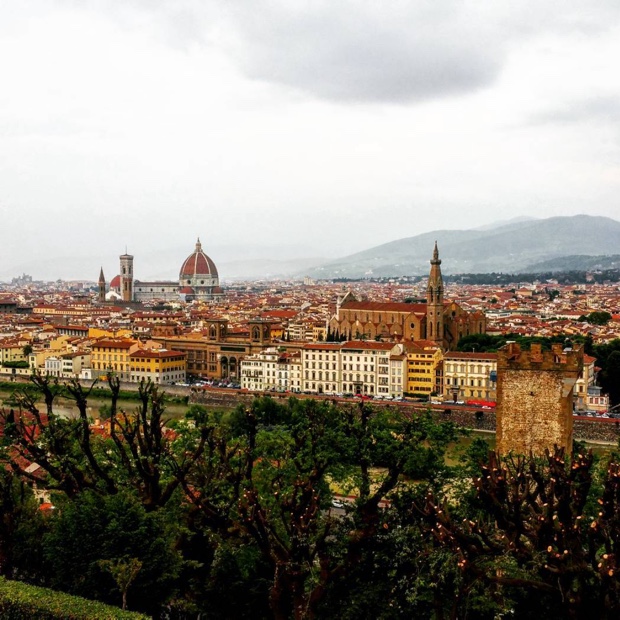
The sheer breadth of #ilduomo is just amazing #firenze #piazzamichelangelo #brunelleschi #toscana
All who serve to ride shotgun as sentinels to the profound history and quality of Chianti Classico are very sensitive and protective of the term, so the use of the full name “Chianti Classico” is essential. In Tweets, Instagram and Facebook posts, as well as press releases, articles and conversation, the omission of “Classico” is akin to liking it to that other lesser wine that shall not be named, and could result in being taken outside and subjected to some dark arts. The two names, as a matter of fact, represent two DOCG with distinct and separate production territories, histories and consortia.

#tranquillo #greveinchianti #ChiantiClassico
Chi-anti Classi-co. Two very important words. Classic Chianti. Classical Chianti. Take away the demonstrative qualifier and what do you have. You have Chianti. With no disrespect to some very honest, simple and pleasurable Chianti produced outside of the boundaries that define Chianti Classico, the difference between the two is night and day. When you travel through the verdant, rolling hills, in and out of wine estates and villages of the region, you can’t help but feel the sense of tranquillo. Calm. You are also hyper aware of the singularity, diversity and quality of the produce. This is Chianti Classico. You do not get lazy and say I am in Chianti or I have travelled through Chianti. Per favore, Chianti Classico. In fact, the moment you leave Chianti Classico and pass through the terra-cotta villages just south of Firenze the landscape changes immediately. It’s just not the same.

Dropped in on some old friends today @VilladiGeggiano @BarrelSelect #bianchibandinelli #castelnuovoberardegna
Image, perception and finalmente, reality, these are the truths all who feel the soul of Chianti Classico are in search of today. Today and moving forward, explaining to the world that Chianti Classico is not what you thought or think it to be. In my three full days of exploring the region I visited eight wine estates, and no two were the same. Each have vines growing on different soils, each vinify with varying techniques and all eight treat l’élevage of their wines with surprisingly divergent approaches.
Related – Chianti Classico’s Gran Selezione plan
My visits to these eight estates (plus one 21-year later reunion with Andrea Bianchi Bandinelli at Villa di Geggiano) was made possible and with thanks to the Consorzio di Vino Chianti Classico. In particular President Sergio Zingarelli, Director Giuseppe Liberatore, Christine Lechner and Silvia Fiorentini. Last week I published links to 21 tasting notes on Chianti Classico Gran Selezione over at WineAlign. The full notes will go live on Godello next week. This week you can read 28 tasting notes on the non-Gran Selezione wines I tasted In Chianti Classico back in May.
Luiano
Luiano as from the Latin, “janus,” where all begins from Jaunary, with an eye to the past and forward to the future. Located in San Casciano in Val di Pesa, through Impruneta due south of Firenze. Passed down from grandfather Alberto, now Alessandro and father Antonio Palombo’s vineyards fan out to an amphitheatre with four distinct (cru) climats. The use of merlot and cabernet sauvignon is employed to achieve roundness with the tannic and tougher sangiovese, to avoid the classic, firm and historically at times infirm and instead go for the amenable. Representation in Ontario is with Tre Amici Wines.

Alessandro @luiluiano Palombo announces @chianticlassico quality #luiano even before you have ascended his drive
Luiano Chianti Classico 2014, Docg Tuscany, Italy (Agent, $24.50, WineAlign)
From a challenging vintage and winemaker Alessandro Palombo admits readily to much fruit purposefully languished on the vine. Field selection was the sine qua non, inexorable and moral imperative to seek this floral sangiovese from a less than homogeneous vintage. With a father’s wise voice resonating in his ear it was the inborn proclivity to resist temptation and not to over press and to focus on freshness. Some cabernet sauvignon and merlot urges the chamomile, jasmine, black tea and candied orange peel with some healthy contrariety by underbrush (mushroom and forest floor) and truffle shaved over black cherry. A bit iron rich though righteously clean, with no exaggerations, in avoidance of arbitration, greenness or pepper pyrazine. “It’s not the greatest Chianti Classico I’ve ever made but it’s one I’m very proud of.” 60,000 bottles made. Drink 2016-2021. Tasted May 2016
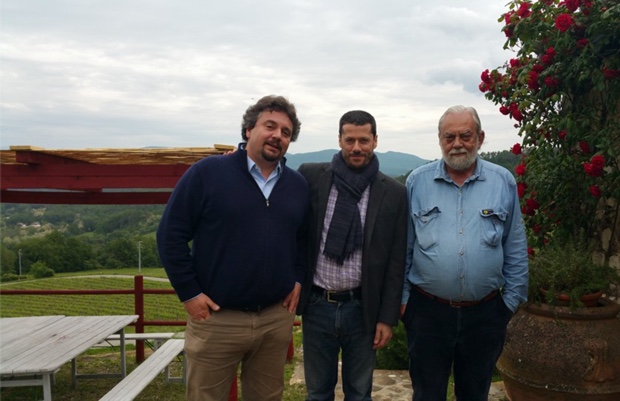
With Alessandro and Antonio Palombo
Luiano Chianti Classico Riserva 2013, Docg Tuscany, Italy (Agent, $39.95, WineAlign)
There was some rain and cold at the climax of maturation, so here the sangiovese is grittier, shivered with sweetmeat and somewhat bitter tannins, but otherwise a “normale” vintage. Here we have 100 per cent sangiovese of the best selections and the first vintage not in true French oak. It is in fact larger barriques (French but made in Italy). Still the forest floor and a hint of truffle, albeit slathered with a deeper richness, whiffing some leather and tobacco. The wood is present but respectful to the fruit, as is the verdant streak running through the tremendous San Casciano in Val di Pesa acidity. The bitter and drying tannins will require time to help soften the astringency and relent they will though not completely, but age will certainly help. 13,000 cases made from a vintage with no Grand Selezione. Drink 2017-2022. Tasted May 2016
Luiano Chianti Classico 1979, Tuscany, Italy
Alessandro Palombo is skeptical at first, one eyebrow raised but with the look of possibility on his face. Takes me very little time to acknowledge that this ’79 is very much alive, fruit not predominant (and surely some prune) but neither cooked nor bruised. The brown nose (earth and spice) purports a full concentration of anthocyanins, acidity still full in, dried fraises de bois, black liquorice, dirty leather and worth repeating, still very good acidity. Truffle, forest floor and then black olive tapenade on the palate. This is 70-80 per cent sangiovese with colorino and canaiolo and for 1979 it’s quite incredible. It should not have lasted this long. Antonio says that up to 10 per cent could have been malvasia blanca and trebbiano because at the time it was a field blend, co-planted with the sangiovese, which could explain some of the variegation in the colour. This is a Chianti Classico to lend credence to the idea of using multiple fruit, vegetal and animale descriptors when assessing an old wine. It’s also the reason why you put them away and open them with friends who’s eyes are wide open. Thank you Alessandro for the opportunity and for the connection to your grandfather Alberto. He was a very good winemaker. Drink 2016. Tasted May 2016
Lornano
Fattoria Lornano had been a Napoleanic French property taken from the church and re-assigned. Like many properties in Chianti Classico the 180 hectare estate was originally a church, in Lornano’s case a privilege of Pope Innocent III who was entrusted with the administration of other neighbouring churches and adjacent agricultural lands. The Taddei family-owned Lornano is located on the south west hills of Castellina in Chianti and Monteriggioni, five kilometres from Siena.
Nicolò Pozzoli’s great grandfather bought Lornano in 1904 after making a fortune in matches followed by owning a glass factory in Empoli. This from Nicolò’s mother’s side of the family and it was aunt Katerina who ran the winery, now in the hands of Pozzoli. In 1998 they re-planted six hectares and in 2013, replaced seven hectares of Chianti Classico on the upper hill. Today the team is led by General Director Pozzoli, Agronomist Silvio Campatelli and Enologists Franco and Matteo Bernabei. They are represented in Ontario by Frontier Wine Merchants.

Structured and getable @chianticlassico via @LornanoChiantiC Il piacere è stato mio #NicolòPozzoli #SilvioCampatelli #montereggioni
Lornano Chianti Classico 2012, Tuscany, Italy (211599, $17.95, WineAlign)
Lornano’s Chianti Classico benchmark endeavours from lock, stock and barrel sangiovese and is held back from market longer than most, to soften the 100 per cent edges and give the round, plumate feel. The vintage is nothing if not consistent with the Lornano house style, divaricated rich and dishing out some evolution. The fifty-fifty small and large barrel split and 12 months of aging following a 22-day fermentation at 25-28 degrees is more than just a jumpstart and a kicker. The integral technical play celebrates and elevates the elegant vintage of very pure fruit, almost biting, ricercato crack spice and finally, very silky tannins. A seven to 10 years Chianti Classico with significant poise for so little salvo. Drink 2017-2023. Tasted May 2016
Lornano Le Bandite Chianti Classico Riserva 2011, Docg, Tuscany, Italy (230672, $19.95, WineAlign)
Le Bandite, “the banned,” is a cru special for its content of white sand. This is the place “where the hunters went hunting,” notes Direttore generale Nicolò Pozzoli, Monteriggioni territory in which, for public tender are prohibited hunting, fishing or grazing. So what is the significance with respect to Chianti Classico Riserva? Simple. The hunter’s loss is the wine consumer’s gain. Here a wine that spent 21 months in barrels, of wise character, evolved and integrated inherent, thanks to an extra year in bottle before release. Sangiovese from clay, of earthy density settled, on the palate, with three to five years left for prime drinking. When tasted alongside the 2009 Le Bandite, it shows more is less vitality and acidity than when that vintage was last tasted in November 2013. This 2011 will soon revive a pop and a feeling that brings leather and liquorice into the fray. Drink 2017-2024. Tasted May 2016
With thanks to Nicolò Pozzoli e Silvio Campatelli #inowfeellikenew @LornanoChiantiC @chianticlassico #fattorialornano #castellinainchianti
Lornano Commendator Enrico 2011, Igt Toscana, Italy (211615, $29.95, WineAlign)
In reference to a time in Lornano’s history when the property was placed in trust as a commendam, “the temporary holding of an ecclesiastical benefice.” The Igt blend is sangiovese (50 per cent), merlot (25) and cabernet sauvignon (25) housed for 20 months in new barrels and large barriques. Nothing but rich and intense with the most spice and also the notion of liquid violets. As an aside to the Chianti Classicos there is here a new texture, the merlot giving dusty brushes, the cabernet blackberry, Cassis and with a savoury side. Drink 2016-2020. Tasted May 2016
Lornano Vin Santo Del Chianti Classico 2008, Docg Tuscany, Italy (244947, 375ml, $29.95, WineAlign)
So very nutty, of almonds and hazelnuts and then marzipan. Succinctly apricot and ripe peach with acidity that hits during the initial shot of fresh fruit into frutta secca and then again at the back end. A dessert wine unique to its own character, perfectly clean and pure. From the oldest plantings of trebbiano and malvasia, one hectare of each, aged for up to six years. Picked in late October, brought in and hung up in a well-ventilated room with humidity and mildew control, then sorted before fermentation. Up to 30 per cent is lost or discarded. Drink 2016-2028. Tasted May 2016
Villa Trasqua
Located north of Siena in Castellina in Chianti with Monteriggioni rising majestically above the estate, Villa Trasqua is built around the ancient and exceptional vineyard known as Nerento. The estate dates back to 1965 and cultivates its 120 hectares and 10 vineyards in the oldest part of Castellina in Chianti. Trasqua is owned by Swiss brothers Sven and Alan Hulsbergen. Organically farmed vines and the gravity fed winery built on several levels are overseen by oenologist Franco Bernabei and Director Armand Metalla. The estate is represented in Ontario by Frontier Wine Merchants.
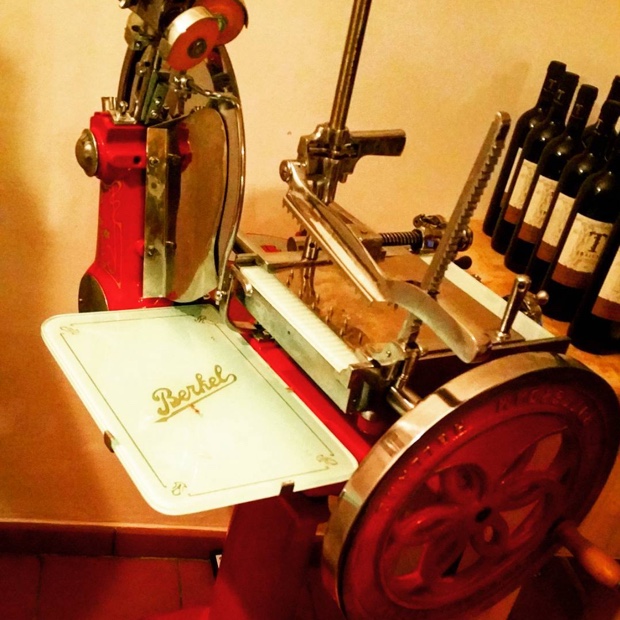
How about this beauty at Villa Trasqua? #berkel #1912 #slicingmachines
Villa Trasqua Trasquanello Rosé 2015, Docg Tuscany, Italy (Agent, $13.95, WineAlign)
A 100 per cent sangiovese designed out of a quick bleed for minor colour and the result is great elegance. Saline, savoury and with a bit of sweetness, sexy, easy going Rosé with oomph. Drink 2016-2017. Tasted May 2016
Villa Trasqua Chianti Classico 2012, Docg Tuscany, Italy (Agent, $19.95, WineAlign)
From serene Castellina in Chianti wide open spaces vineyards and built upon sangiovese plus (five per cent) colorino and malvasia nera. Leaf savour of and with the tart sweetness of frutti di bosco. Spicy oak and depths plumbed but ultimately fresh elegance with acidity to lift, clean and place this in the new echelon of Chianti Classico. Drink 2016-2019. Tasted May 2016
Losi Querciavalle
If any Chianti Classico estate speaks of family values, tradition and a deeply profound, contiguous lineage it is Losi Querciavalle. Located a stone’s throw across a few valleys southeast towards Siena in the Comune di Castelnuovo Berardenga, the Losi family are the custodians of the purest Albarese soils in the hills of Pontignano. The Albarese here is so pronounced and so defined from plot to plot and vine to vine that Pietro Losi is able to distinguish and differentiate specific vines for the purpose of choosing identified bunches of grapes for each of his wines. Pietro and daughter Valeria take the torch from Cavaliere Tranquillo Losi, mezzadro (cropper) and a man who pioneered farming and winemaking methods to make wines that purely and clearly define the region’s Chianti Classico. Tranquillo’s transference of indispensable Chianti Classico information came from his father Emilio Losi and from Brunello of Montalcino’s Tancredi Biondi Santi.
Pietro continues the work of his forefathers, along with Valeria and brother Riccardo. The Querciavalle farm, acquired in 1954 with the establishment of the company, covers 35 hectares of vineyards while Pontignanello farm, acquired in 1998, bordering on the Querciavalle farm, covers 15 hectares. The estate is represented in Ontario by Natural Vines.

Mirror to classicism, history and tradition. Purity from @valerialosi #querciavalle @chianticlassico #agricolalosi #sangiovese #granselezione #pontiganello
Malvasia Nera 2015 (Barrel Sample)
Aged in tonneaux barriques, the blending grape on a possible solo mission gives green vegetal and floral aromatics, violets, like petit verdot in a way, with great acidity. Pietro Losi is considering producing a single-varietal wine, is cloning to try and plant more for such a purpose. Tannins are grainy but sweet, fine and delicate. Three words for you Pietro. Go for it. Tasted May 2016
Losi Querciavalle Chianti Classico 2011, Docg Tuscany, Italy (Agent, $19.95, WineAlign)
The historical south-facing “Leccino” family vineyard is situated at 300-350 above sea level, from sandstone in the higher areas and from Galestro and Albarese, so typical from the lower areas of Chianti Classico. Sangiovese (90 per cent) and canaiolo see 18 months in 50 hectolitre barrels and in concrete. Here the natural world and the particular poetry of “old school” dialectical sangiovese speech is heard. It is certainly traditional and pure, clean, crisp, structured, taut and of that wise liqueur. The verbiage is all that plus what feels like dusty ancient mountain brush mixed with albarese soil minerality. In the end it is the canaiolo that brings the perfume. Drink 2016-2021. Tasted May 2016
Losi Querciavalle Chianti Classico Riserva 2010, Docg Tuscany, Italy (Agent, $24.95, WineAlign)
With five per cent canaiolo instilling just enough potpourri into the fine-grained sangiovese, this could be easily pass for Gran Selezione from an inelastic vintage. The 30 months in 20hL barrels has crafted a structured, elegant, firm and classic Riserva. More than sixty vintages have gathered up the albarese and here, from Querciavalle’s “Vigna del Pino” vineyard. Forest floor, vanilla and berries cull the traditional, resting calm, balanced, noiseless and bitterless. The aftertaste comes out the habits of generations, with a sweet amaro finish, a smooth digestivo. Drink 2018-2026. Tasted May 2016
Losi Querciavalle Vin Santo Del Chianti Classico 2000, Docg Tuscany, Italy (Agent, $95.00, WineAlign)
Every drop poured and considered from this ambrosial elixir solicits memories from and for a family’s history and tradition. From trebbiano and malvasia, the grapes picked on the 15th and dried from September to December. The pick has graduated to become earlier over the years, and the new, soft press to fermentation heads directly into the cartelli. Querciavalle’s patience exceeds the the five years (as required by the DOCG), usually waiting eight and making use of stainless steel to lower the natural sediment. “An immortal wine, already in paradise,” smiles Pietro Losi, knowingly, of dried fruit and of course almonds. There also challenges a depth and an aridity amongst this sugar, a depth of intensity through acidity that lines and then rounds without a moment of searing. This is true gran selezione calm, gorgeous and alone, warm and full of love. A dessert wine that takes minutes to finish, stays warm in the belly, helpful, coating and comforting. The best and correct story for Vin Santo is of the black plague when the monks believed it held the power to cure. What’s not to believe? Drink 2016-2040. Tasted May 2016
Barone Ricasoli – Castello di Brolio
The history of Chianti Classico, Tuscany and for that matter, Italian wine can’t be discussed or put into perspective without mention of Barone Ricasoli. That name has been linked to wine since 1141, when Brolio Castle passed into the hands of the Ricasoli family. The first 700 years of Tuscany’s most famous castle and the family aside, it is the work of Baron Bettino Ricasoli, Prime Minister of Italy, researcher, innovator and first marketing expert for the regions wines. Bettino is credited with having invented the Chianti formula in 1872. When I visited the Ricasoli family crypt in May I was struck by the fact that the Iron Baron passed away on my wife’s birthday. Then shivers travelled down my spine when I noticed a second Bettino Ricasoli shared a birthday with me.
Francesco Ricasoli, 32nd Baron of Brolio has been at the helm of the castle and the family business since 1993. In the past 20 years he has overseen the re-planting of vineyards, isolated exceptional soils, plots and exposures. The five types of soils found on the estate; sandstone, argilliti, montemorello, pliocene and fluvial deposits all play major rolls on vineyard demarcations and which blocks are used for which wines. This research with nearly 1000 years of experience in the current hands of Francesco Ricasoli has transformed an historic estate into a new golden age as one of Chianti Classico’s most important producers. Massimiliano Biagi is now head of winemaking and Commercial Director Stefano Capurso is responsible for bringing Ricasoli’s exceptional wines to the world. Churchill Cellars is the Ontario Agent.
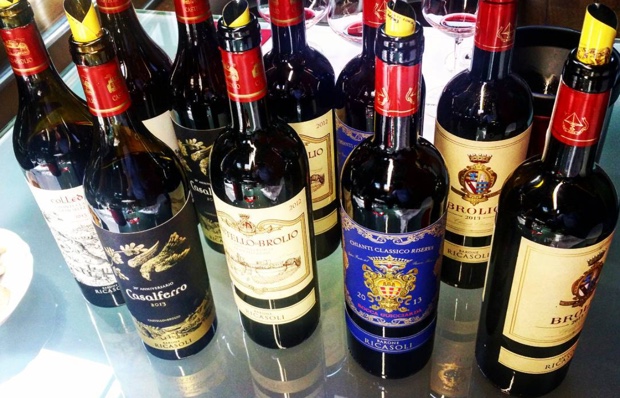
Delivering purity with deep respect to exceptional vineyards @barone_ricasoli @chianticlassico #sangiovese #granselezione #merlot
Barone Ricasoli Brolio Chianti Classico 2013, Docg Tuscany, Italy (3962, $23.95, WineAlign)
When you consider that this Chianti Classcio enjoys a production of 8000,000 bottles, you might think it a huge salad of over determination. It’s not but instead gleefully full of coincidence and implausibility. Sangiovese (80 per cent) mingles with merlot and cabernet sauvignon for nine months in barrique and tonneau. The goal is freshness from fruit with Chianti Classico character. The exactitude of resolution is a full expression, of cherries, dusty character and a meeting point from and for all five terroirs across the estate. Carries its full fleshy fruit with some liquorice in a dichotomous combo of exceptional quality and high quantity, incorporating diversity, brought together with simple but highly technological vinification. This is now as much a vision of Toscana, even as it resonates as Chianti Classico, than what it used to be. That is to say internationally stylized, but isn’t this in effect true of all sangiovese, not especially of Chianti Classico? Drink 2016-2021. Tasted May 2016
Barone Ricasoli Brolio-Bettino Chianti Classico 2013, Docg Tuscany, Italy (Agent, $34.95, WineAlign)
This ulterior Chianti Classico label is dedicated to Bettino Ricasoli who invented the formula for the production of Chianti in 1872. The Iron Baron must have been a hard-nosed, get things accomplished kind of Prime Minister-Researcher-Inventor-Marketer because the sangiovese (with a splash or two of colorino) is a gritty effort, firm and taut. Aged in refurbished old casks, this unfiltered and bullish Chianti Classico is built upon a full-frontal fun nation of black cherry fruit. There is a textile texture that is not quite the CC leather of old but something newer, modern, hand-crafted and woven, silky and gentile. This is the elegance of such a form ridable sangiovese, on the tongue, to the touch and the feel. Bettino’s ode is dark and brooding but it is so very sangiovese. Drink 2018-2022. Tasted May 2016
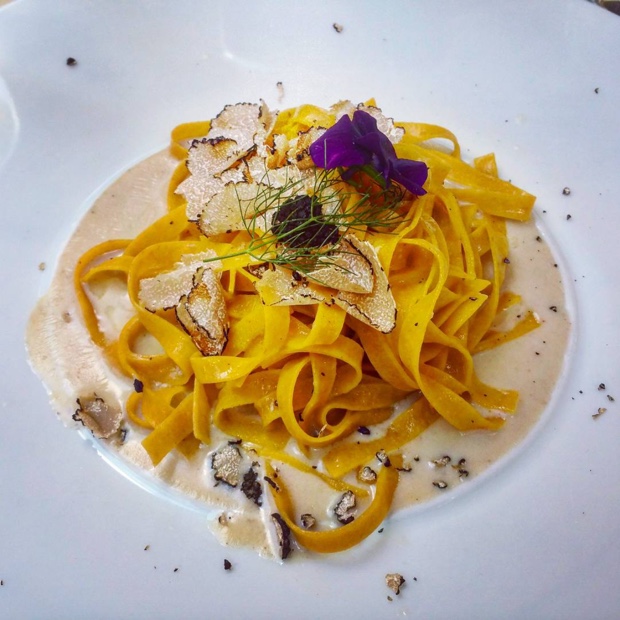
Fettuccine con #crema di #tartufo #osteriadelcastello @barone_ricasoli #madonnaabrolio #gaioleinchianti
Barone Ricasoli Rocca Guicciarda Chianti Classico Riserva 2013, Docg Tuscany, Italy (943613, $24.95, WineAlign)
The blend for the Riserva (first introduced out of the exceptional 1999 vintage) is very similar to the Brolio (beginning with 80 per cent sangiovese), but here the l’élevage sees time in large casks with some canaiolo in the mix. Carries the Brolio gene and the torch, takes the diversity of sangiovese from the cinque terroirs and distills it into a very fresh (especially for CCR) but certainly rich and velvety red. Firm, taut and finishing on its recurring entry note of round acidity and sweet tannin. Drink 2017-2022. Tasted May 2016

Not all #terroir is created equal. Cinque #cru @barone_ricasoli #granselezione #castellodibrolio #ChiantiClassico #massimilianobiagi #francescoricasoli #stefanocapurso
Barone Ricasoli Casalferro 2013, Docg Tuscany, Italy (122598, $51.95, WineAlign)
Casalferro is 100 per cent merlot wrought from a southeast exposure, single vineyard cru for a total of 27,000 bottles. New barriques for 18 months are filled from fruit picked in late september (after the rest) and eight or nine further months in bottle before release. Here despite the wood and the varietal, this is as much a study in Chianti Classico as it is merlot, chiantified so to speak, of pure sweet acidity and red cherry like no other Tuscan merlot will espouse to show. This is surely not Redigaffi, Galatrona, Masseto or L’Apparita. None of them. It may not be the richest or silkiest but it is very pure and it has a naturally cured, sandstone and schisty feel. At a modest 14 per cent alcohol it feels light and ethereal. A great vintage for Casalferro. Drink 2018-2022. Tasted May 2016
Il Molino Di Grace
Frank and Judy Grace purchased the vineyards in the mid 1990’s and restored an abandoned 19th century ruin into what is now the cantina of il Molino di Grace, named for the centuries-old historic water-mill. The first vintage out of the new winery was in 1999. MdG became a certified organic winery in 2013, something they and indeed the entire 20 viticultural Panzano-in-Chianti producers are extremely proud of, all together as one. It took 20 years to get this way, with no spraying and even the workers who work the roads will cut, but never spray.
Tim Grace runs Il Molino di Grace along with Director Iacopo Morganti. Their consulting oenologist is none other than Franco Bernabei. To say that Il Molino di Grace is an authentic producer of terroir-driven Chianti Classico would be an understatement. Their vineyards are set upon some of the finest Galèstro soil in all of Chianti Classico. The permeations and permutations from that soil have separated this estate from so many others with a portfolio of wines constructed with power, finesse and yes, grace.

Galèstro and #panzano in every pour. With Iacopo Morganti @IlMolinodiGrace @chianticlassico #toscana #organic #granselezione #ilmargone #gratius
Il Molino Di Grace Chianti Classico 2012, Docg Tuscany, Italy (85209, $19.95, WineAlign)
Sangiovese running 100 per cent solo, but from a vintage that surrendered 50 per cent of the crop in the spring to frost. The absence of quantity is quality’s coup for a mere 48,000 bottles of Molino di Grace’s normale. Aging happened in Botti (25 hL) for one year. There is a distinct opposition to the other house stylistics, here fresh and fruit massive meets a beautifully dusty, high quality, straight and taut line. Drink 2016-2020. Tasted May 2016
Il Molino Di Grace Chianti Classico 2013, Docg Tuscany, Italy (85209, $19.95, WineAlign)
The 2013 point blank sangiovese Chianti Classico is a softer, rounder version of its normale self, with less spice and dust and as a matter of course, from double the output. A dreamy downy growing season saw to 100,000 bottles and each are so eminently drinkable. There is a soil in there that seeps through because of the vintage, that combination of marl and limestone known locally as galestro and so while the concentration is wontedly in measure to 2012, it is ultimately just a matter of differing result. One wine’s pale is another one’s edge. This ’13 will present for immediate pleasure while ’12 spends one more year coming into view. Drink 2016-2019. Tasted May 2016
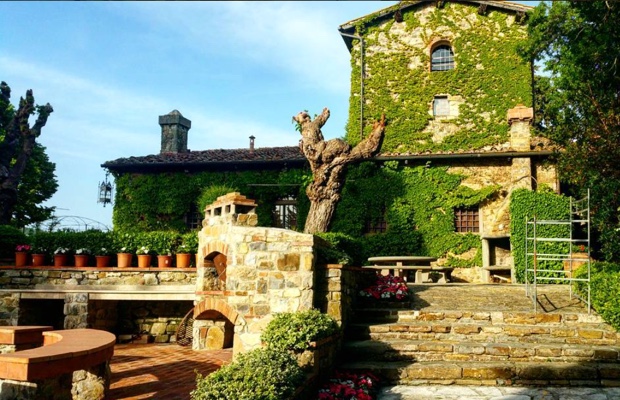
“Just need a place where I can lay my head.” #panzano #ChiantiClassico
Il Molino Di Grace Chianti Classico Riserva 2009, Docg Tuscany, Italy (382945, $23.95, WineAlign)
From a hot vintage you can feel straight away on the nose, augmented corporeal and heavy hued. A perspicuous selection from the vineyard is kept in old tonneaux (2nd and 3rd fill), then tasted through those barrels to decide on the Riserva’s final blend. Another Il Molino di Grace 100 per cent sangiovese and the last vintage produced of the regular Riserva. Here again you note the house-style liqueur, the deep seep of cherry and the indubitable vineyard. The culmination of the calefactive vintage offer, from fruit to strength, inclusive with deep intent and a burrowing into the galestro. This the rooted riserva, firm and stretched to elegant. The spice and the tannin are late arriving, tied up in sapidity, graced by comfort. Still so very young, with chards nicking and drawing blood, in need of three years for the fragments of stone to peel away and dissolve into the liquid. Drink 2018-2023. Tasted May 2016
Il Molino Di Grace Gratius 2010, Docg Tuscany, Italy (Agent, $49.95, WineAlign)
Gratius, meaning more pleasing, the author of a poem on hunting, opponent of the poet Archias and a contemporary of Ovid. The other sangiovese from Il Molino di Grace whose first vintage was 1999, of “a nose incredible,” says a wistful Iacopo Morganti and he is not wrong. From the Panzano-Greve in Chianti slopes of Montefili, at 500 meters, a 2.2 hectare single vineyard of old vines (70 years) co-planted with some colorino and canaiolo. So in that sense it’s a field blend but essentially sangiovese. Tuscan climat of rock and poor soil, where the wind blows and grapes whose fate is two weeks later maturation. Aromatics and elegance are in a calm struggle and like two brothers, rolling but not fighting. Such a wine of clean, pristine purity does not exist just anywhere. The inviting perfume solicits readiness and a willingness to be generous. No need to wait. Drink 2016-2022. Tasted May 2016
Il Molino Di Grace Gratius 2009, Docg Tuscany, Italy (Agent, $49.95, WineAlign)
Darker, exuding more heat and vineyard funk with an emphatic oomph. You can’t help but notice it, the Galestro, screaming to be heard. This has that natural cure, that wisdom, the kind of feeling that the wine was always as it is now, borne this way. From the windy Montefili, 500m limestone and marl single-vineyard. Usually late maturing but warmer from 2009 and slightly obscuring but not smothering the Gratius “more pleasing” perfume. Very ready sangiovese field blend intensified in augmentation by canaiolo and colorino. Ready for drinking alongside the enchanting 2010. Drink 2016-2019. Tasted May 2016
Il Molino Di Grace Gratius 2005, Docg Tuscany, Italy (Agent, $49.95, WineAlign)
The Gratius 2005 shares DNA with 2009 aromatically speaking but in texture and expression the litheness is pinot noir like, with a bit of bretty volatility as an impression that is vineyard funk derived. Just now beginning a drinking window in performance for the art of perfect timing but why not imagine the installation persisting for 10-12 more years? Here the Montefili Galestro vineyard is clearly iterated in a funk-soil-chalk-liquid rubies way. A brilliant peek back because the tart is just so right. Ask the question, “what was the old wine like?” The answer is “it was like old wine, that is to say, like all old wines.” Drink 2016-2022. Tasted May 2016
Colle Bereto
The Pinzauti family have transformed one of Chianti Classico’s most idyllic settings into an architectural and wine-producing estate of the highest elegance and excellence. Bernardo Bianchi is winemaker and the estate’s total production is 80,000 bottles per year. “The 60 hectares of the estate, of which 15 are devoted to grape growing, are skillfully arranged and tended to obtain excellent quality wines.” Sangiovese, the area’s “noble vine,” is used for Chianti Classico and Chianti Classico Riserva, while the Pinot Noir and Merlot grapes give their best in Il Cenno and Il Tocco, respectively.”
The approach is through a very careful selection in the vineyard, stems removed and the thickest skinned sangiovese selected for Riserva. The avoidance of green berries is exercised with extreme prejudice, they do no crushing and only work with gravity fed juice followed by the gentlest fermentation. The Ontario agent is Nokhrin wines.
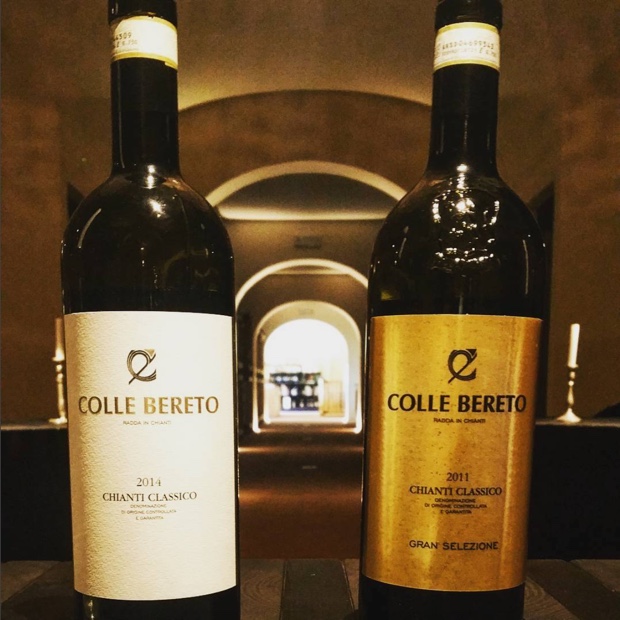
At the intersection of @chianticlassico and #singlevineyard there is #granselezione #collebereto
Colle Bereto Chianti Classico 2014, Docg Tuscany, Italy (Agent, $31.15, WineAlign)
From a vintage with no Riserva or Gran Selezione, so 50,000 bottles of sangiovese (97 per cent) and colorino (3) were produced. Fermented in botti, finished in stainless steel and bottled the first week of February. Includes fruit from the single-vineyard “la vigna del Convento” that lays beneath il convento di Radda in Chianti, now the restored home of the Consorzio del Vino Chianti Classico. The ’14 CC is possessive of the most liberal import and impart of local mineral. “We are very lucky, it is all Galestro,” says winemaker Bernardo Bianchi. This is Chianti Classico of tradition and progress defined, with the better and best grapes instilling structure, full of the kind of fruit that will last for 10 years. Who needs Riserva when you have this. Liquid concentrated must and dust, mineral and mouthfeel. Great round acidity and finally, blessed bitters. Drink 2018-2024. Tasted May 2016
Castello di Gabbiano
Castello di Gabbiano was built in the 12th century, just south of Florence in the heart of the Chianti Classico region. The estate has been protecting its estate-grown grapes since 1124. The castle remained in the possession of the Florentine banking family Bardi until the early part of the 15th century when it passed to the Soderini family, one of the most politically influential families in Florence. It was the Soderini who were responsible for the conversion of the turreted manor house of Gabbiano in Fattoria, already completed by the late 15th century.
Today the 147 hectare estate is in the hands of Treasury Wine Estates, one of the most progressive wine companies in the world. The vineyards are divided up into DOCG Chianti Classico (109 hectares), IGT (35) and Vin Santo. Winemaker Federico Cerelli has dedicated the best blocks of exceptional aspect and exposure upon the finest clay and limestone rock-filled soils for Gabbiano’s most important cuvées. Cerelli pays painful attention to both his agronomy and his winemaking. He is constantly analyzing the soils, carefully selecting the choice of rootstocks and clones, as well as pruning back in a careful, skillful handling of the vines. In the winery and in the cellars he exercises the balanced epitome of melding a natural approach to traditional methods and technical innovation to both large and small productions.
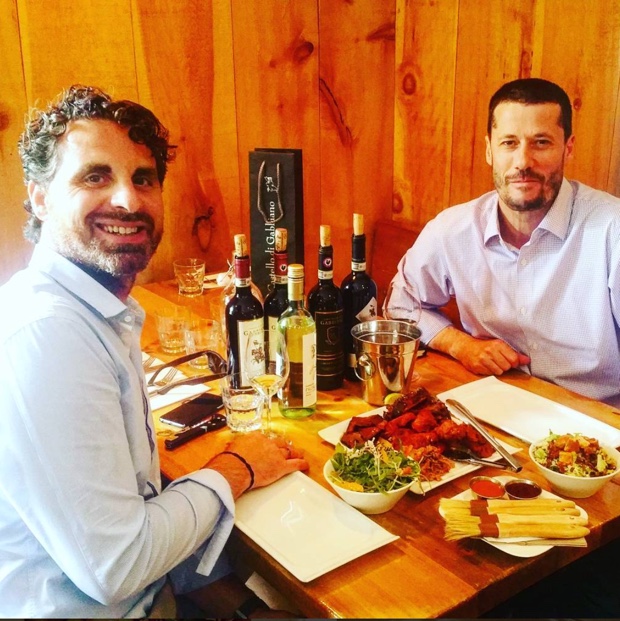
Federico Cirelli brought the @CastelloGabbiano & @barquebbq supplied the sampler #treasurywineestates #greatmatch #chianticlassico #sangiovese #granselezione #bellezza #chianti #chianticlassicoriserva
Castello Di Gabbiano Chianti Classico 2013, Docg Tuscany, Italy (219808, $18.15, WineAlign)
Classic red sauce pasta appendage, for Monday and Tuesday, along with Wednesday, Thursday and Friday. Though the varietal and regional specificity floats in the Tuscan wind, the local tension, tang and tannin make for some robust Chianti Classico moments. Fashioned from 90 per cent sangiovese, the rest merlot with some colorino and canaiolo, moist from the fresh maker Branca vintage of deep, fertile soil. Partial carbonic fermentation after five days of cold (15c) maceration. Aging done in 70 per cent (five tonnes) cask and some 3-4 year old barrels plus 30 per cent in cement. The latter gives the exposure of freshness in fruit. Quite pure, clean and soil driven, earthy enough to soak up swimming pools of sugo all’arrabbiata or amatriciana. Drink 2016-2018. Tasted February and May 2016
Castello Di Gabbiano Chianti Classico Riserva 2013, Docg Tuscany, Italy (216309, $22.95, WineAlign)
First and foremost it is the wood, or the lack of wood that stands out in the CCR 2013. It may be observed as a different kind of wood, less polished and more natural but what really wins out is the fruit. The cherries are surfeited by impressed tannin and linger with good tonic for a good length of time. Great restraint shown by winemaker Federico Cerelli. Drink 2018-2024. Tasted June 2016
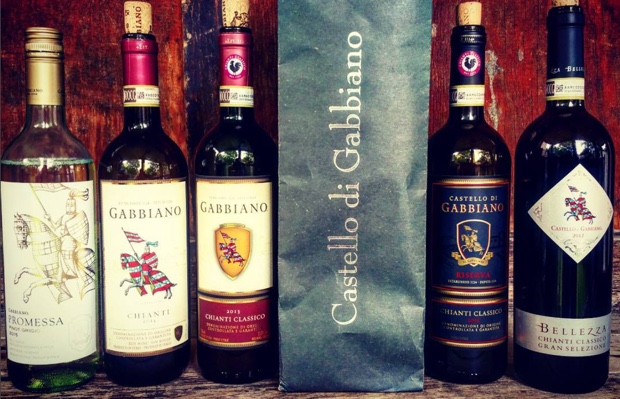
Really getting to know these guys @CastelloGabbiano #chianticlassico #chianti #granselezione #bellezza
Castello Di Gabbiano Chianti Classico Riserva 2012, Docg Tuscany, Italy (216309, $22.95, WineAlign)
Winemaker Federico Cerelli’s 2012 Riserva goes at the ancient ideal with (95 per cent) sangiovese and (5) merlot, of which 70 per cent of all estate grapes are used to produce this wine. From the Mercatale Val di Pesa castle vineyards, the CCR is a work of time, energy and investment spent in the vineyard. The elevated tonality can’t help but be assessed as compared with the ‘normale,’ here fermented in small (10 tonne) tanks, of a wild ferment, a warmer maceration and 20-25 days of skin contact. The new and improved state of the art incarnation of this Gabbiano is a by-product of Cerelli’s major reduction in pump overs (like, zero), a bit extra delestage, sangiovese malolactic in cement and merlot in barrel. Then into wood (20 per cent new French) plus (80) in third and fourth fill. A minor amount sees large cask. The totality is 12 plus 12 months (wood and bottle). Such a smooth operator with spice accents, again that classic rolling hills red fruit, great length, remarkable breadth and quality for the price. It’s amenable to immediate consumption with some air but will benefit from two more years imagined aeration. Drink 2018-2023. Tasted May 2016

Ambassadors of @chianticlassico to the world. 2013 #castellodigabbiano #granselezione (not pictured) will blow your mind #treasurywineestates #sancascianovaldipesa #ilbellezza #chianticlassicoriserva
Castello Di Gabbiano Alleanza 2011, Igt Toscana, Italy (Agent, $39.95, WineAlign)
A single block alliance between merlot and cabernet sauvignon, less than 10,000 bottles per year, from low lying vines on clay soil, consummated out of a late harvest. “I like to pick when the vine has lost their leaves,” notes winemaker Federico Cerelli, “that is the right time to pick. It’s not too hot so this is when the phenolics are ripe.” Just a few hectares of cabernet see a separate, mostly wild ferment, mostly in concrete and normally 40-45 days of skin contact. It then spends 14 months in (100 per cent) new French oak. So very, very vanilla, caky but not milk-shaken, urged am biliously forward by crazy acidity, (5.7 tA) and high pH (3.9). The nose wields blackberry and Cassis and then the palate seems to veer wholly Merlot, dusty, silky and sandalwood soft. Just a faint note of dill pickle and it’s quite cool and savoury, of some black olive and brine, no animale, clean, almost anti-super Tuscan. There is no beast here. There is tannin and an edgy level but no brood. There is drinkability and it uses its wood well. A real improvement for this bottle, with thanks to Federico. Drink 2016-2020. Tasted May 2016

The river #arno beneath a #florentine night @WestinFlorence
Good to go!
Twitter: @mgodello
Instagram: mgodello








 Godello