Chianti Classico Collection 2025 part two: The visits

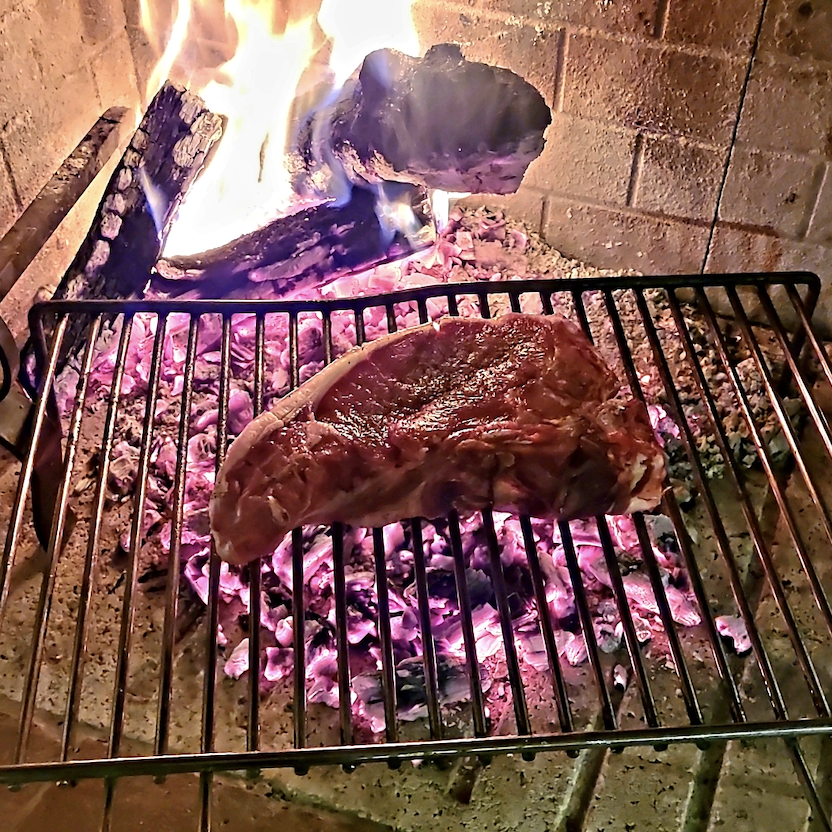
Critics and journalists can get their fill by attending wine events in their home city, taste wines at the office space or in the comfort of their homes. This type of work situation has been a standard for decades and sure there are moments when just the writer and the bottle together can combine to produce some solid prose – but it’s not enough. To go further, to find the goods and get at the heart of the matter it is essential to travel, to visit with families and wine producers in their element. Climb hills, walk vineyards, get mud on your boots, touch vines, consider pruning decisions, crumble soils between the fingers. This is where the real stories come from, magnified in purpose when visits involve sitting down for a meal. Godello has been doing this with Chianti Classico producers consistently for the past 10 years and that is how he is able to write on this very subject without pause and about more than just the wines. People, roots, heritage and land are the impetus and catalyst for how the big picture is revealed.

Related – Report and reviews from the 2025 Chianti Classico Collection
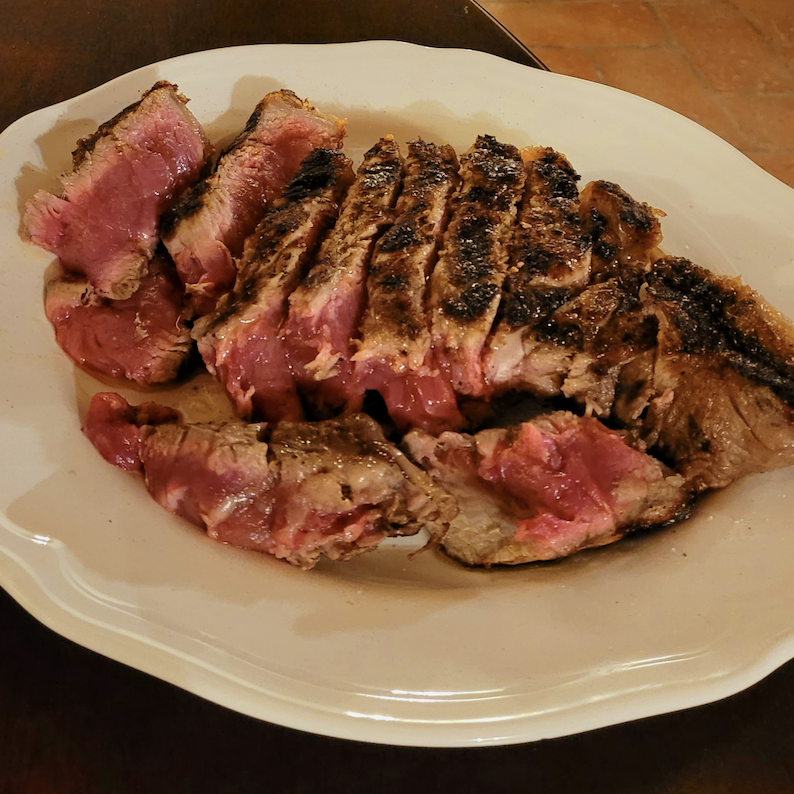
Twenty trips and 52 articles based on more than 300 visits with 100-plus producers later and here we are with the latest set of wine reviews covering 10 visits made at estates producing Chianti Classico wines. Tenuta Casenuove (Panzano), Castello di Meleto (Gaiole), Poggerino (Radda), Calcamura (San Casciano), Il Poggiolino (San Donato in Poggio), Richiari Porciglia (Greve), Poggio Torselli (San Casciano), Fontodi (Panzano), Volpaia (Radda), Ricasoli (Gaiole), Nardi Viticoltori (Castellina), Castello di Verrazzano (Montefioralle), Castello di Ama (Gaiole) and also tasted in Montalcino, the small production wines of Baciate Me (San Casciano). An apology goes out to Castelnuovo Berardenga, Lamole and Vagliagli for being the UGA left out this time, although they have all been the focus of many previous excursions and will again soon. These are the 92 wines tasted with the 13 estates back in February of this year.

Related – Harvest report 2024: Retro Chianti Classico

Related – 100 Years of Chianti Classico and Collection Previews 2024
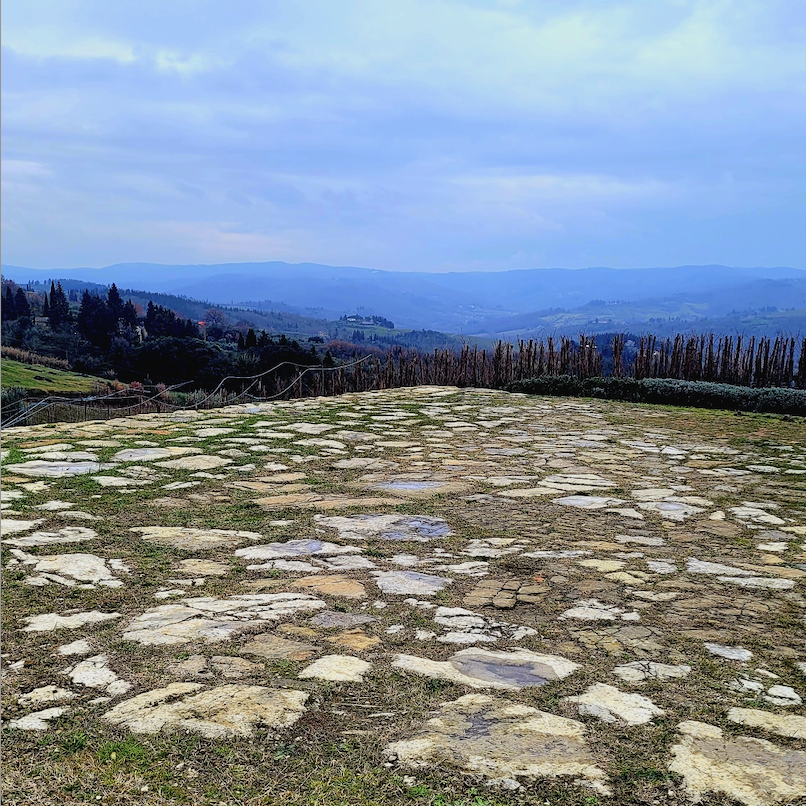
L’aia at Tenute Casenuove

Tenuta Casenuove – Panzano

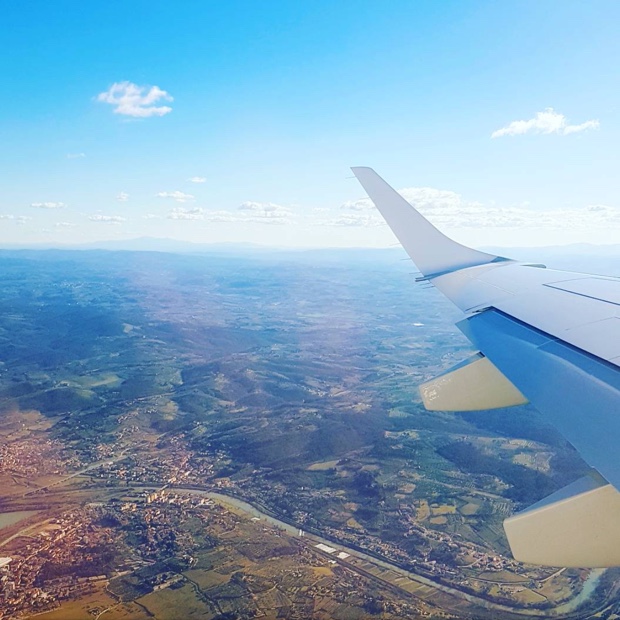
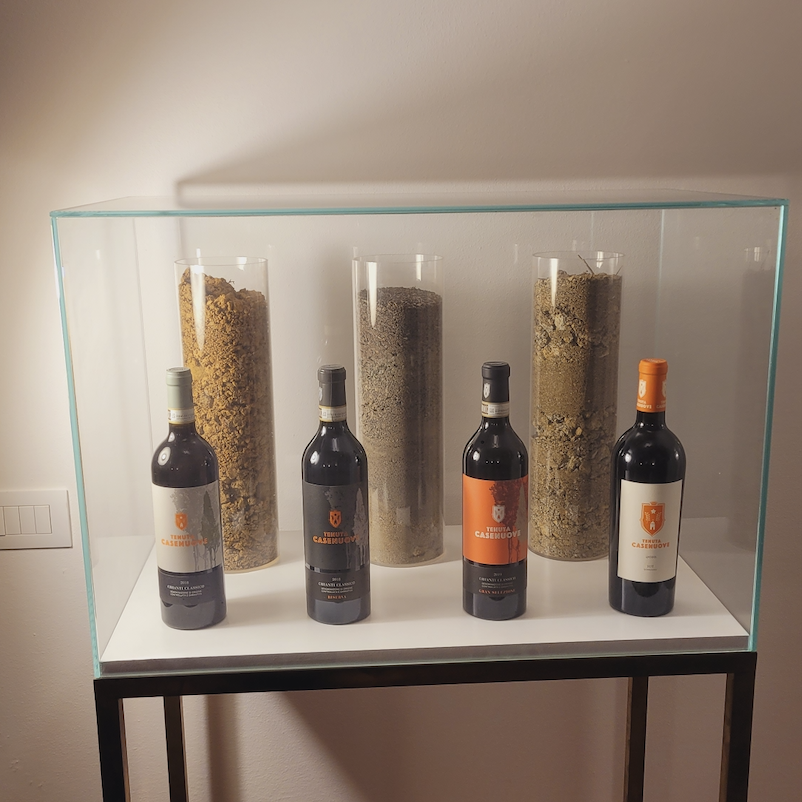
Out of Firenze’s Peretola Airport and direct to Panzano for a long overdue visit with winery director Alessandro Fonseca, enologist Cosimo Casini and cellar master Maria Sole Zoli. Under the ownership of Philippe Austruy, 35 hectares are at elevation between 370 to 490 metres. Previously owned by Chianti Classico négoce Pietro Pandolfini from 1954-2015. We stood on the small stone square, “l’aia,” where the grain was once worked, looking south over the Pesa River, towards Castellina. In 2015 there were 15 hectares of vineyards, now doubled to 30, including a new site at the top on Alberese stone planted to sangiovese, colorino, canaiolo, malvasia and ciliegiolo. The top of the (east) ridge is a soil led by Pietraforte, the rest argilla and schist with a manifestation of compact, purple-veined Galestro. Identified vineyards are Poggio Asso, Vigna Somassa which comes from Arenaccio, an iron sandstone block, Vigna San Martino (fine decomposition of Galestro) and Vigna Camperi (calcareous clay).
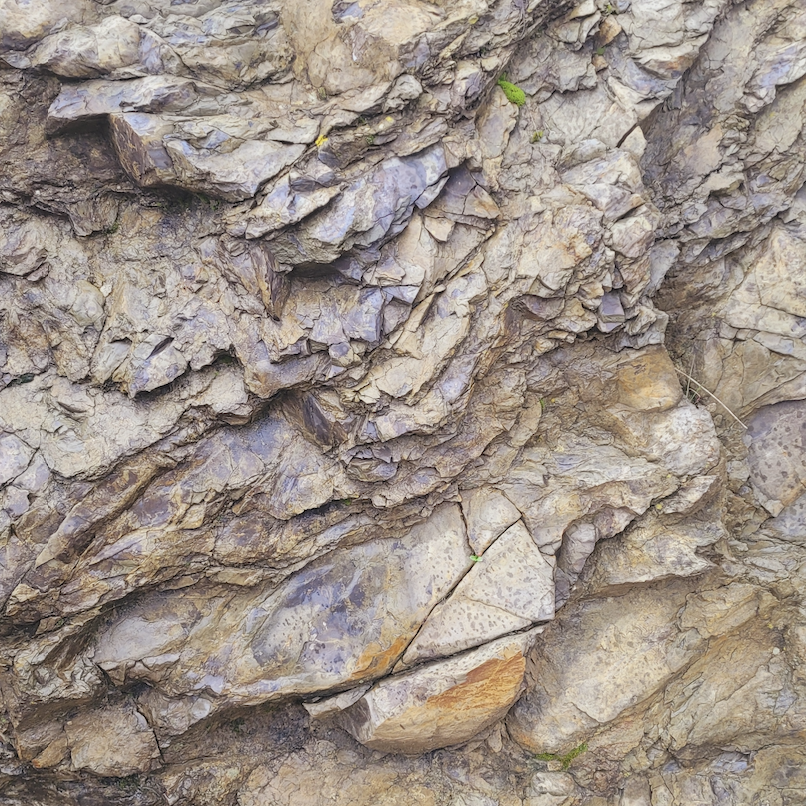
Purple-veined Galestro of Tenuta Casenuove

Tenuta Casenuove Chianti Classico DOCG 2021, Panzano

Another beautiful season, not at the beginning because of the April 7th frost which delayed development by a month – though in the end the wines showed with great balance. In part because of less bunches and bunch weight per plant but also because of a great September rain that followed a hot summer for the latest finish to harvest in recent times – September 25th. Everything in this wine moves in unison, all parts working together for a polished and luxe example of Chianti Classico. Drink 2025-2028.  Tasted February 2025

Tenuta Casenuove Chianti Classico DOCG 2020, Panzano

The vintage following that seminal 2019 marking a transition for Casenuove away from aging in small wood and making use of various larger format casks. Once again you get the feeling of highest level of extraction and here the most glycerol and silken texture to date. A warm vintage with 12 days exceeding 35 degrees to stress the vines, especially the young ones. Drink 2025-2028.  Tasted February 2025

Tenuta Casenuove Chianti Classico DOCG 2019, Panzano

Here the new plantings began to be used in the Classico. The first vintage to represent the transformation away from Cordone Speronato to Guyot training resulting in bunches not as tight for a shot at the juiciest sangiovese expression to date. Tannins are still working with grip and force, acidity is high and the wine has a serious chewy quality as well. Also with thanks to Maria Sole in her second vintage in the capacity of managing the cellar. Tells Cosimo “you can see the transition, the new sensibility and the extraction level in the wines.” This certainly marks new territory and an understanding of the potential for the estate.  Last tasted February 2025.

Fruit quite mature of 90 percent sangiovese with five each merlot and cabernet sauvignon, a focused expression and very much the warmest of (western) Panzano style. You can taste the Bordeaux grapes in here, with a Cassis for sure but also some desiccation of small berries. Minty and a cherry stone bitterness on the palate with drying tannins. Give an hour of air and drink over the next three years. Drink 2023-2026.  Tasted February 2023
Tenuta Casenuove Chianti Classico DOCG 2018, Panzano

Plenty of rain, humidity and cooler temps and “it scared me,” admits Cosimo though the shift from humidity with the northeastern Tramontana wind brought about a great day for night temperature excursion. High solar radiation and cold nights at the end of September, especially here in Panzano created this truly unique set of harvest ripening circumstances. Feel the mix of ripenesses in both the fruit and acidity, the long-chained tannins and talons that hold on to your palate. Still acting this way six years later.  Last tasted February 2025

Fruit quite fresh for 2018 and in a way more so than the following 2019, here again from a consistent blend of 90 percent sangiovese with five each merlot and cabernet sauvignon. Juicy Panzano expression, ready and willing to please, tannins softening now and acidity captured with truth. Raspberry and blueberry, fruit captured at peak and here an Annata with silky tannins, everything in line and ready to roll.  Tasted February 2023

Crunchy Panzano Annata here from Tenuta Casenuove, peppered as opposed to peppery, as if with freckles or micro-sized bits of earth. Plenty of salt and pepper seasoning but again nothing sharp or spicy about it and fruit so very berry red.  Tasted March 2022

From the southwest corner of Greve in Chianti, southwest of Montefioralle and close to Panzano. Modish and modern for 21st century sangiovese is just this, stylish, chic and highly motivated. Quite fully developed and felt red fruit of glycerin, pectin and mouthfeel but you want more and more. Impressive magnitude in bringing so much fruit into the mix. Not overtly high in acid or tannin so use this early and often.  Drink 2020-2022. Tasted twice, February 2020

Tenuta Casenuove Chianti Classico DOCG 2017, Panzano

The experience of 2015 and 2016 were critical towards dealing with the hot 2017 season, especially because the south by southwest expositions at Casenuove are what they call “a hot spot.” Yes you can feel the desiccation but the 80mm of rain that fell between September 4th and 8th really saved the day. As smart producers are want to do the harvest was delayed, started two weeks after the rain and continuing through to the 15th of October. Acidity is different and special though the fruit is now just starting to fall away. Drink 2025-2027.  Tasted February 2025

Tenuta Casenuove Chianti Classico DOCG 2016, Panzano

From 2016 all the blocks of the estate were now being vinified separately. The season began in a different way, first with a cool and humid Spring which delayed development by a month and then things sped up during the warm summer. Harvest began on Sept. 26th, finishing at the same time as 2015 which means just two and a half weeks for the same 13 hectares. A wine of more density and development than 2015 though still tannic and today maintaining an important level of freshness. Drink 2025-2029.  Tasted February 2025
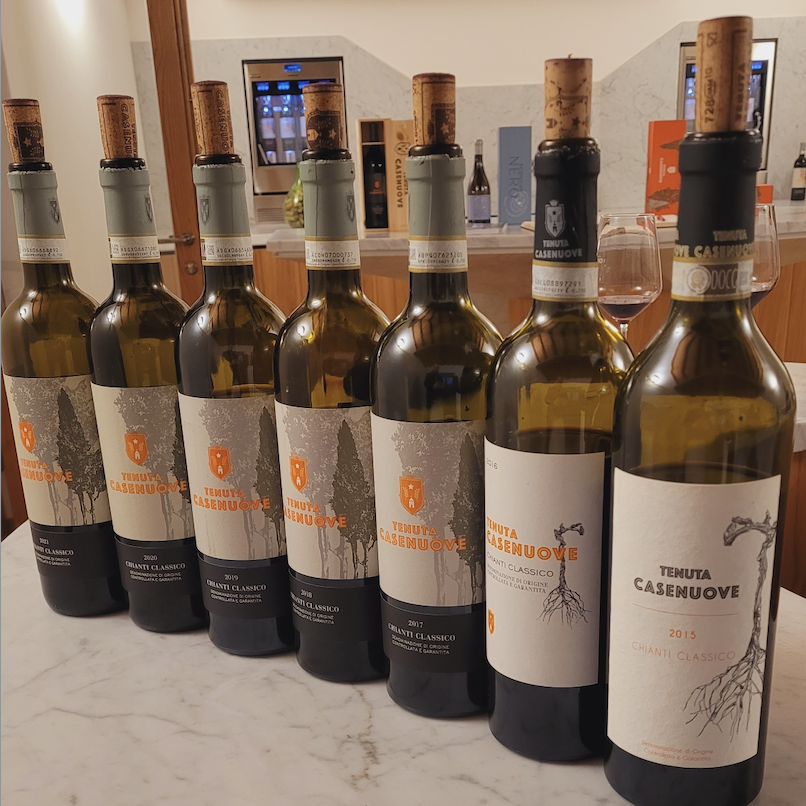
Tenuta Casenuove Chianti Classico DOCG 2015, Panzano

First year of production under the new ownership of Philippe Austruy and Oenologist Cosimo Casini arrived in June just a few months after the acquisition. His grandmother was born in Panzano and so this was a true return to his roots. Very much a part of this first vintage that he describes as “almost too easy” which suggest he thinks some things were taken for granted. Harvest from September 12th to October 10th, 13 hectares in total. “But I’m waiting for a season like 2015 to happen again.”  Last tasted February 2025

The first vintage, 80 sangiovese with 15 merlot and 5 cabernet sauvignon. The sangiovese was raised in 25hL botti and the international grapes in tonneaux. Darker and deeper than the ’16 to come. Good acidity keeps it moving through the waves of vanilla and graphite. Drink 2019-2020.  Tasted September 2019

Tenuta Casenuove Chianti Classico Riserva DOCG 2019, Panzano

Riserva at 100 percent sangiovese is a change from the Classico where smallest bits of colorino, canaiolo and merlot are involved. Riserva comes from a strict selection of the best part of estate vineyards where clay-schist soils spill over with iron-rich Galestro outcroppings. As in Panzano in all its glory for a true expression of Casenuove’s warm location. Creates this clean sangiovese of utmost clarity. Last tasted February 2025

Riserva is 100 per cent sangiovese, a bit dusty and reserved, acids and tannins very much in charge. Crisp and crunchy for Riserva with notable fennel and balsamic notes with a nuttiness that is a palate extension from palate sweetness. A factor of new and used barriques with baking spice that in conjunction with full on ripeness to the edge creates a feeling of sleepiness. Enervating sangiovese. Drink 2023-2025.  Tasted February 2023 and February 2024

Tenuta Casenuove Chianti Classico Gran Selezione DOCG 2019, Panzano

The first vintage of Gran Selezione happened in 2018 after a cask tasting in the cellar where the team found something different from fruit taken out of a single vineyard. A place called Sopra Torre above the base of a hill up and away from the humidity at the lowest part, a place where the wind slashes through, and the exposition is pretty much perfect. Makes for the richest of all Casenuove sangiovese, longer in wood and you feel it but who feels it knows it.  Last tasted February 2025

Serious, experienced, structured and vertical example of Gran Selezione. Maturity of fruit but also layered acids and most impressively developed tannins. This walks with great stature, sure of its meaning and intent. As a Panzano sangiovese it knows exactly what it wants to be. Drink 2024-2028.  Tasted October 2024
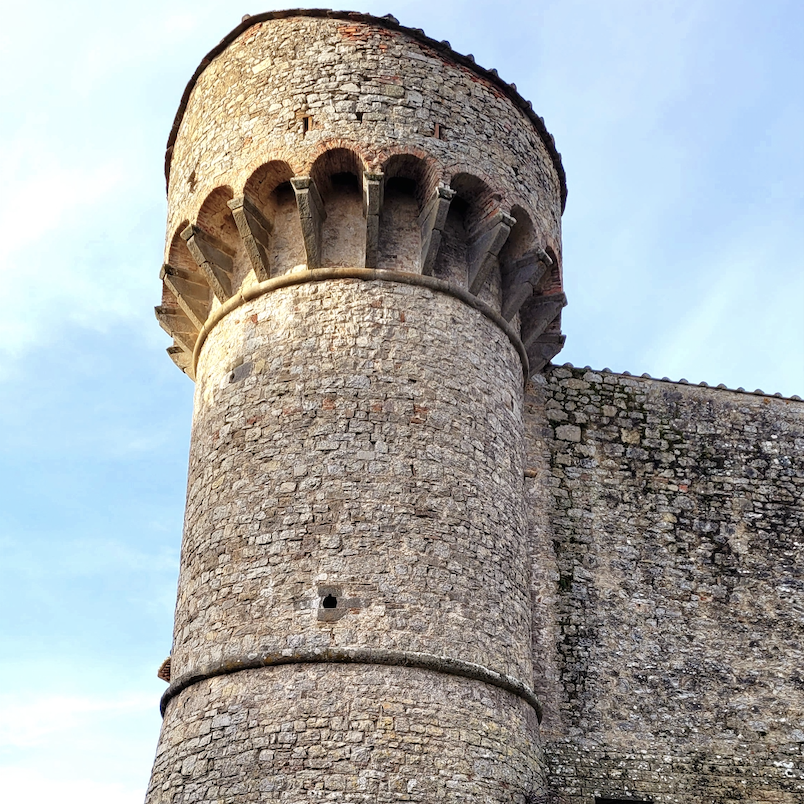
Castello di Meleto

Castello di Meleto – Gaiole

A studious and vigna intensive first visit with Victor Camilo Duque Crociani, GM Francesco Montalbano and agronomist Mattia Achenza. Gaiole’s famous Castello di Meleto has been a territorial guardian watchtower and fortress since 1256 with 1000 hectares, nearly 800 of which are forested. There are 130 hectares of vines in two località, Meleto and San Pietro, 80 percent planted to sangiovese, with merlot, cabernet sauvignon, trebbiano, malvasia and (0.5 ha) san colombano. The team has gone all in to isolate and exult the identified single vineyards, now with three Vigna labels; Trebbio, Poggioarso and Casi, the last one located on the road to Radda. Trebbio is collee, with red argilla soils. Poggioarso (the arid hill) is higher elevation with Alberese and outcroppings of Galestro out of the clay. Casi is in a ventilated zone with Galestro out of Macigno (sandstone) soils but it’s uniqueness comes from some alterations involving some Alberese and sandstone-based Pietraforte. The vines have been in transition since 2020 from Cordone to Guyot training, organic now for 10 years and largest such estate in the territory. Consulting oenologist and agronomist are Valentino Ciarla and Giacomo Sensi.
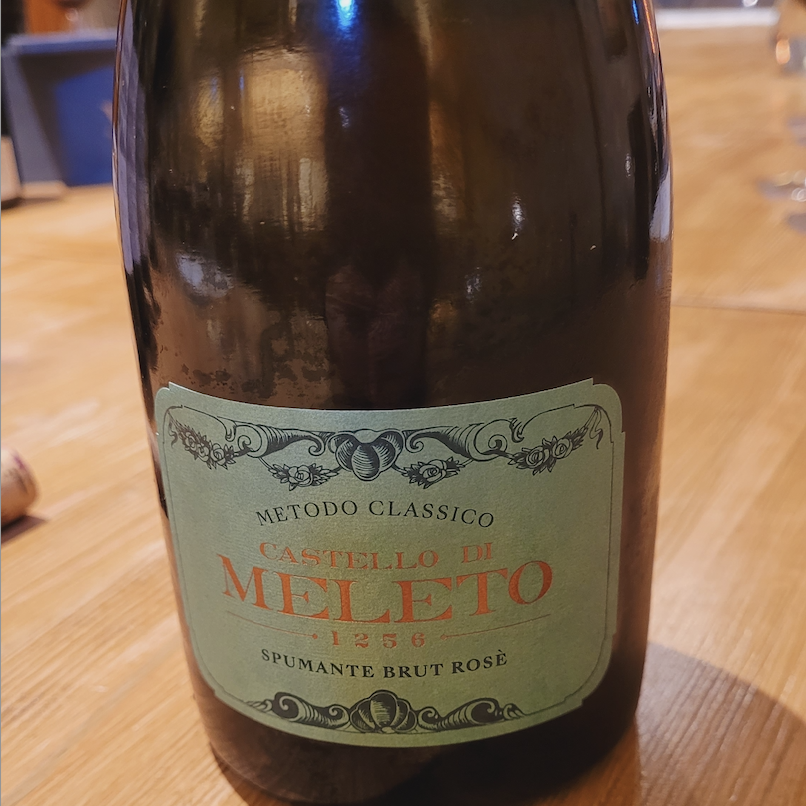
Castello di Meleto Método Classico

A traditional method sparkling that began 12 years ago. A spot of TCA on the first bottle. Only sangiovese, harvested early, usually late August, soft whole bunch pressed with minimal skin contact if just enough to give this Spumante a Rosé hue. Get the freshness and complexity. Drink 2025-2028.  Tasted February 2025

Castello di Meleto Chianti Classico DOCG 2022, Gaiole

Just five percent merlot softens the sangiovese with many vineyards of the 130 hectares in total contributing. Usually the youngest vines and also some of the plots that experience the warmest climate for the season. Ages 15 months, half in cement and half in large (really old) French cask. No tannic impart and this is about as correct, clean, acid retentive and well adjusted a Chianti Classico as you are want to find. Warm vintage yet freshness and fruit quality is knowably ripe and easy. Less savoury and more fruit centric than in years past.  Last tasted February 2025

Intensity of red fruit, almost searing while this young and immovable but surely a far cry from overly pressed or done. Surely a matter of Gaiole and vintage with Meleto sure to respect and deliver what it’s meant to bring. Another ’22 that must be waited on, again confirming how different these are to 2017. Drink 2025-2029.  Tasted February 2024

Castello di Meleto Chianti Classico Riserva DOCG 2021, Gaiole

The first vintage where Riserva is certified organic, also with five percent merlot and fruit drawn from many areas of the estate, maximum two week maceration. Ages in large French cask (up to 500L) and plenty of fruit ripeness fills the mouth, with a local Balsamico specific to and expressive of a Meleto sangiovese. Clean and precise with all the attributes of Riserva in pocket from the finest mixing and matching of vineyard fruit as a true example of Chianti Classico assemblage. You can drink this anytime. Drink 2025-2029.  Tasted February 2025
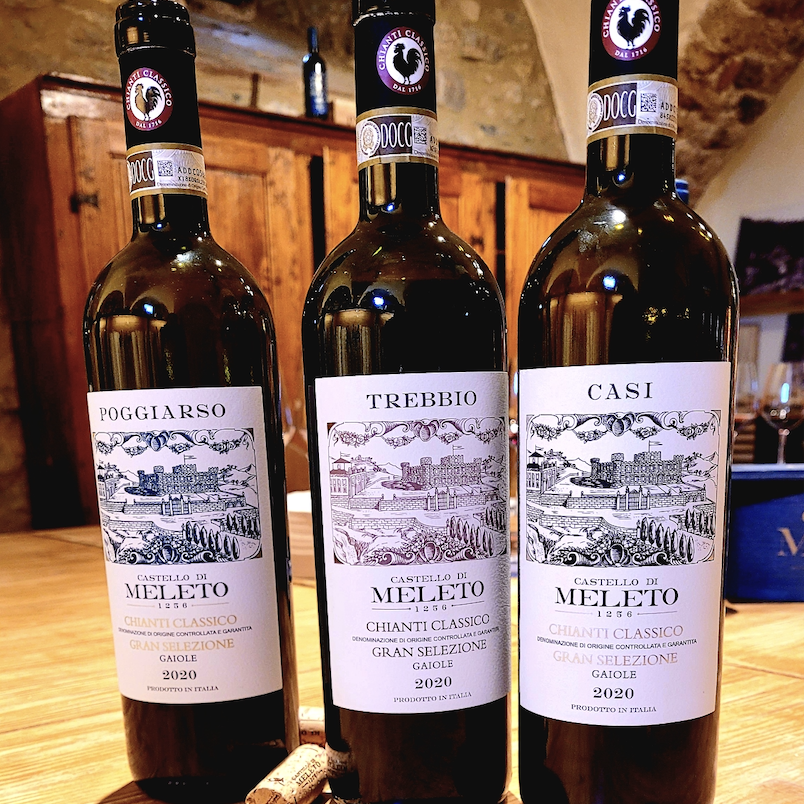
Castello di Meleto Chianti Classico Gran Selezione DOCG 2020, Gaiole

For Gran Selezione there is only sangiovese taken from the most important identified blocks from which the three cru are made. These are the grapes not chosen from and for the Casi, Poggioarso and Trebbio ultra specific expressions. Sees 10 days of maceration post fermentation and like the other wines (Classico and Riserva) there is a silky smooth character to the Selezione. More concentration is what separates this from the others but also a refinement of the Balsamico, spice and herbals of the wine. Sapid to a good degree, almost ready to rock and the kind of sangiovese that will age slowly, incrementally and long. Drink 2025-2028.  Tasted February 2025

Castello di Meleto Chianti Classico Gran Selezione DOCG Poggioarso 2020, Gaiole

The first vintage labeled as Poggioarso was 2017 and here for 2020 the vintage to launch with the UGA Gaiole on the label. Poggioarso is at the highest elevation, from 450-530m and the freshness matched by stony-mineral quality is truly high. The vineyard with the most temperature excursion, high solar radiation during the day and cold at night. Unique aromas that separate this cru from the others with a sulphur sensation that’s not sulphur. You can sense the sandstone derived mix of lime and Pietraforte that gives this mix of salinity and mineral flavour. It’s namely potassium and that is the unique perfume of Poggioarso. Drink 2025-2030.  Tasted February 2025

Castello di Meleto Chianti Classico Gran Selezione DOCG Trebbio 2020, Gaiole

Trebbio is the new cru designation for Castello di Meleto, medium of elevation between 380 and 410m located to the northeast of the castle. A very clay soil with some Alberese (limestone) and Galestro. Also iron in the ground with red hues throughout the soils. More sanguine and sweeter notes, in the fruit and with spice. Only sees the largest (3000L) French casks and the Balsamico presence can’t be denied. More density and intensity here, bigger wine, stronger and with more grip. Older schooled in a sense yet the red fruit quality is dominant as well. Drink 2025-2028.  Tasted February 2025

Castello di Meleto Chianti Classico Gran Selezione DOCG Casi 2020, Gaiole

One of two Castello di Meleto cru artists that originally existed as Riserva. Elevation from 450 to 530m and a really concentrated sangiovese high in poly-phenolic character. A smoulder here with tobacco that comes from the interaction between grapes and wood, compounded by the longest maceration. The most tannic and without a doubt the most potential of the three. A serious wine, profound expression of the vineyard and the sort of Gran Selezione that will live through to the next decade. Drink 2026-2032.  Tasted February 2025
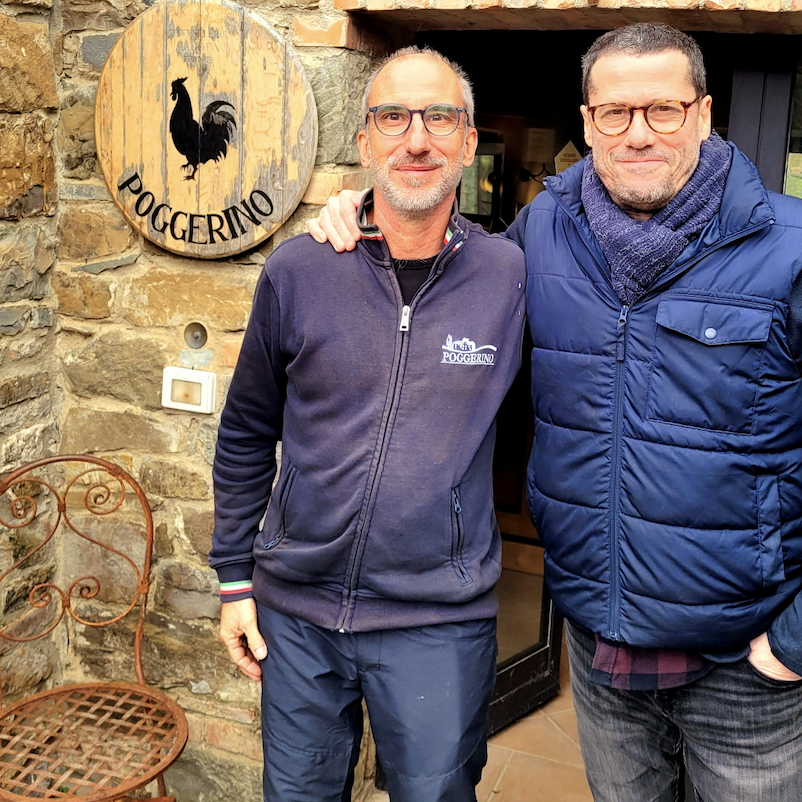
With Piero Lanza – Poggerino

Poggerino – Radda

Piero Lanza has embarked on a shorter pruning window because of the warming climate and is now keeping more bunches on the vines (1.2 to 1.5 kg per plant), to slow down ripening and to result in balanced, juicy wines. “There are no rules, not any more.” For Lanza it has been a slow evolution, a step-by-step process. As for which artistic winemaking period he’s now in, with 20 years on his back he says “it’s been about 15 years that I’ve been doing things this way.” The 2024 vintage was challenging, like 2013 with heavy Spring rains which made it hard to get into the vineyard and then a warm March encouraged early budding, but thankfully no frost followed in April. Rains ended in early June with none until the 26th of August. Veraison started early but by the 15th of August the water table had dried up and the vines shut down. Rains came just before harvest, a good thing and yet it was necessary to remove leaves to reveal bunches and speed up ripening. More importantly to reduce humidity around the bunches. Lanza finished picking on the 14th of October and mould was everywhere. One day fine, the next not so much – sometimes just a mater of six hours. “The evolution of the grapes was changing hour by hour. It reminded me of the 1990s,” said Piero, “but the most challenging vintages make the best wines.”
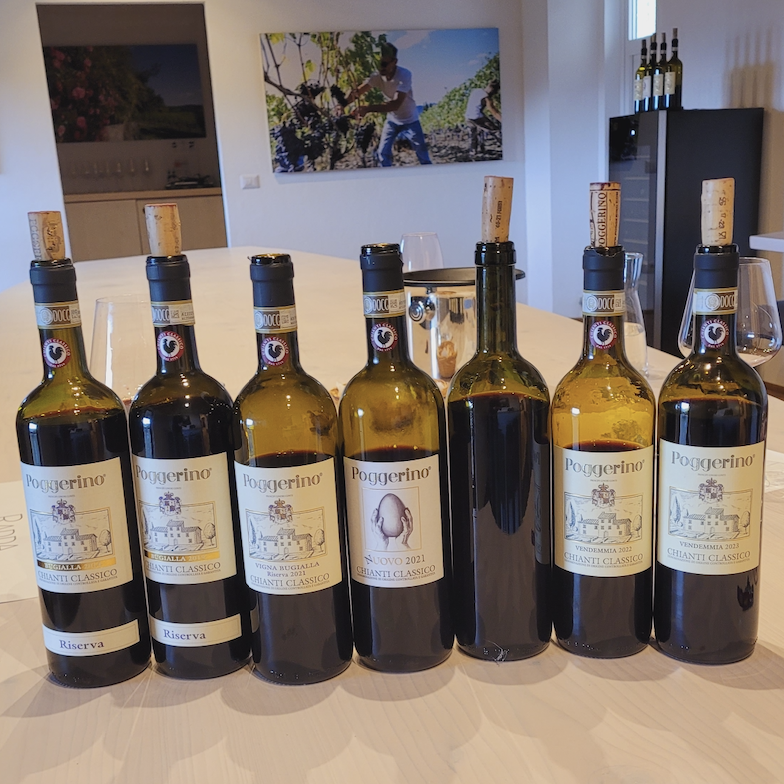
Poggerino

Poggerino Chianti Classico DOCG 2023, Radda

The Perenospera (resulting in downy mildew) vintage but Piero Lanza only lost 10 percent of his production. Yes – he fared much better than many in the region. He remembers the 24th of June, at the time of the festival of San Giovanni in Florence. “I woke up on the 24th, a foggy morning, I went in the vineyard and everything was white. We sprayed and managed it.” The 2023 is only sangiovese, of 15 different clones and vineyards, a sweetly herbal example, oh so glycerin textured, holding more Bugialla (Riserva) fruit because none was made in 2023. Freshness from concrete aging mixes with wood spice for an easy drinking, balanced and well made Classico. Just recently bottled in December 2024. Drink 2025-2028.  Tasted February 2025

Poggerino Chianti Classico DOCG 2022, Radda

The 2022 has been in bottle just a little bit more than a year now and has settled comfortably into its Classico skin. Quite a warm year with high level fruit and more importantly phenolic development with less herbal and tobacco notes that come from the very young ’23. Concentration is higher and again the red fruit is everything. There is a chalky underbelly of tannin and despite the vintage heat you have to remember this is Radda and so freshness is still a guarantee. Piero Lanza tried to have great respect for the grapes by pressing easy and macerating short. As s result the wine will go long, not 2016 or 2021 long, but it will last. Drink 2025-2030.  Tasted February 2025

Poggerino Chianti Classico DOCG 2014, Radda

It’s incredible! The longevity of 2014 is justified and now solidified. Adds Piero Lanza, “the quality and balance between the acidity and phenolic (compounds) have allowed the wine to age,” and age so well.  Last tasted February 2025

The vines date back to 2004 and 1994 for Poggerino’s Chianti Classico, a 100 per cent sangiovese that sits at a zenith where the most red limestone earth and sour intensity is noted above all 14s almost anywhere, not just from Radda but for all of the territory. Almost over the top in this regard but stand up and counted is what this amounts to. Then it grooves forward and rebounds with warmth and depth before returning to that earthy calacari bonding. Gathers itself, the moving parts and glides along with solid length. Very interesting, honest, organic and naturally curated work from Piero Lanza. Drink 2018-2022.  Tasted September 2017

Poggerino Chianti Classico DOCG Nuovo 2022, Radda

Nuovo is the new-ish Chianti Classico label, first made in 2013 as the sangiovese aged in concrete eggs. The 2022 is now one year in bottle and a manifestation of what Piero Lanza looks at “like being a chef in a fine dining restaurant.” That is to say trying a recipe 20 times before it is perfected. The roots came from Lambardier in Champagne where they aged their wines in eggs ahead of the secondary fermentation in bottle. In 2010 Piero put sangiovese in one empty egg after removing the previous wine intended for Sparkling Rosé and the experimentations began. Year two fibreglass fermentation and egg. Beginning in 2016 the fermentations happened in the new (5,000 and 8,000) concrete tanks then transferred to eggs in December. Ten years later there are 4,500 Nuovo bottles made and my how this sangiovese emits a very specific aroma. Certainly a matter of the natural swirl inside the concrete eggs but also a seriously oxygenated wine that shows no signs of oxidation. Feels like a wine of località hyperbole and says Lanza, “the egg increases the terroir.” This is the limit of quantity and yet more bottles would be a blessing. More terroir is expressed from egg in a warm vintage. Drink 2025-2029.  Tasted February 2025

Poggerino Chianti Classico DOCG Nuovo 2021, Radda

A top vintage and a fortunate one for Poggerino where the prevailing frost in Chianti Classico did not affect this località. A warm yet temperate year with heat but nothing like 2017 and just a perfect season from which to put sangiovese into concrete eggs. “For me it was a fantastic vintage, normal but the big difference was September with great temperature fluctuations between day and night.” The result is top level Raddese acidity and finest quality in the tannins. No this is neither Riserva nor Gran Selezione but being the unique wine that it is – it could very well be a manifestation of the latter. But we won’t name that and so for now we’ll just call it Classico-plus.  Last tasted February 2025

One thing you can count on is for Piero Lanza’s sangiovese to come out ripe as any in the territory and 2021 would surely not be an exception to the rule. The fruit is remarkable and the structural parts equally formative and formidable so I’m not sure Lanza has made such a wine in quite some time. Years are needed to settle the pieces, parts and puzzles of this magnanimous affair. Don’t care that Annata is the appellation. Drink 2025-2032.  Tasted February 2023

Poggerino Chianti Classico Riserva DOCG Vigna Bugialla 2021, Radda

First vintage of Bugialla as Riserva was 1990 though it was made as far back as 1985. Now labeled as Vigna Bugialla which puts this in cru territory and a wine that has come about after Piero Lanza’s 20 plus years of making wine, including many mistakes. It would be easy to simply think about the concentration but the true nature of Bugialla is the vineyard and its predilection for growing the finest Poggerino sangiovese. Quintessentially Raddese with the highest quality tannins available from the vineyard planted in 1994, surrounded by forests. Only the smallest and perfect bunches are chosen, like Lorenzo Magnelli at Le Chiuse for Diecianni and Luca Martini at San Giusto Rentennano for Percarlo. Aged in old Slavonian cask for two years, this 2021 is now in bottle just one year. Drink 2027-2036.  Tasted February 2025

Poggerino Chianti Classico Riserva DOCG Vigna Bugialla 2019, Radda

Not a cool vintage but is was in September and so the finishing concentration is not quite, well let’s say 2021. Allows the Raddese Balsamico and herbal qualities to come out a bit more. Tons of character, very expressive and time in the bottle have allowed for this coming out party and makes one wonder how 2021 will show in time. Drink 2025-2030.  Tasted February 2025
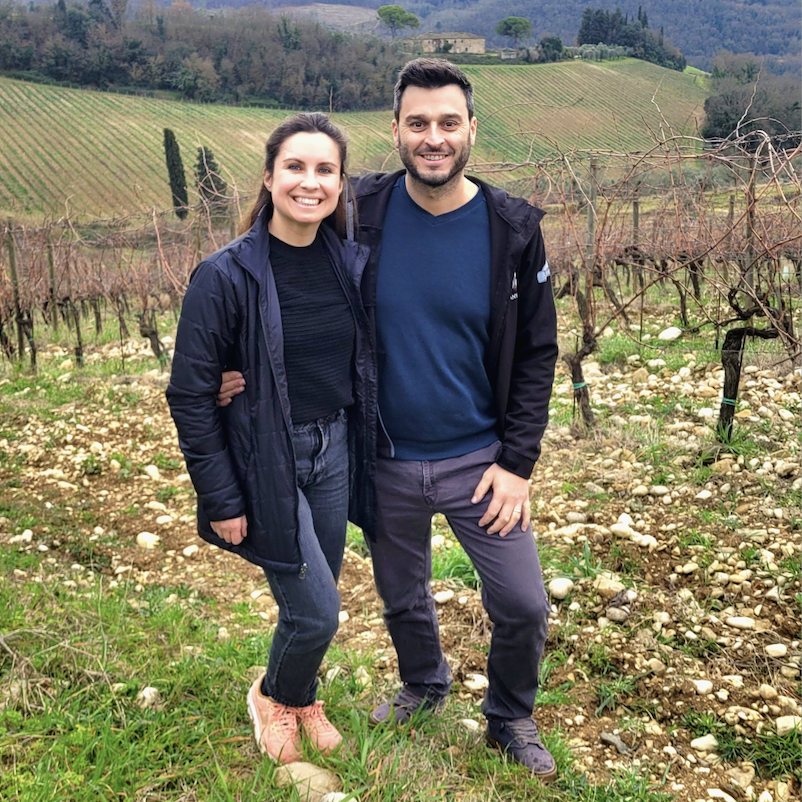
Andreita Rojas and Stefano Marinari – Calcamura

Calcamura – San Casciano

The semi-virtual winery co-owned by partners Andreita Rojas (from Chile) and Stefano Marinari, winemaker at Castello di Bossi. The two met in 2014 while working harvest abroad. Calcamura, a vineyard located between two poderi, Calcaorelli and Mura, both located on Via Mura. A conjunction of the two, as opposed to calling the brand “Stefandreita.” The località of their vineyard is Poggio ai Grilli over and down the hill from Villa Le Corti and sharing the same topography plus geology, that being the famous San Casciano river stone strewn vineyard reminiscent of Les Galets in Châteauneuf-du-Pape. Their’s is a 25 year-old, 0.5 hectare block owned by their immediate neighbour to the west with a second 6,000 square metre block rented since 2021. A third will be a 1.05 hectare plot, they will be certified organic (on their labels) as of 2024 are are still currently crushing in Radda at Istine.
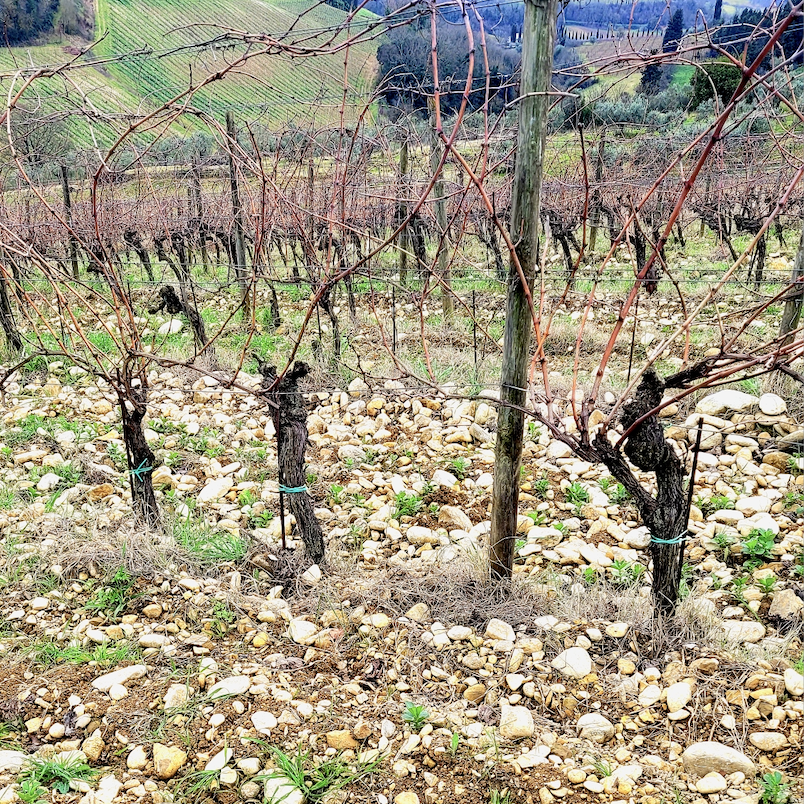
River stone strewn vineyard at Calcamura

Calcamura Sussolto

Sussulto, as in “to gasp or being startled,” but in a good way. A reaction as if to say, “oh my God, I’ve been jolted by something.” Made from the first passage of 100 percent sangiovese Calcamura grapes picked in late August. The idea came from a dinner with friends, to use these grapes and never consider a green harvest. Quite a phenolic sparkling wine and also one of incredible richness. This is matched and balanced by the smoky mineral, rustic style and a light mushroom consommé. So unique and worthy of any sort of fizz detour you are willing to make. 4,000 bottles produced. Drink 2025-2029.  Tasted February 2025

Calcamura Chianti Classico DOCG 2022, San Casciano

Now in the third vintage for Calcamura the aging is only in tonneaux, two Slavonian and one French. Only sangiovese from a vineyard in the middle of nowhere but a località called Poggio ai Grilli. Could that be the name of a coming Gran Selezione for Stefano and Andreita? The Annata will be a grand total of 430 bottles that spent a year in Slavonian tonneaux and one in ceramic Tava terracotta. A light touch for a San Casciano sangiovese for which acidity is tempered with 10 percent canaiolo to affect a sangiovese between salinity and sapidity. A wine made by experienced hands not trying to coax too much from the rockiest river stone soils available to anyone in the whole of Chianti Classico. Never ambitious, always respectful and a feeling gained from out of the receded waters (so to speak) to make Annata as pinot noir Burgundian, nebbiolo Piedmontesino or nerello mascalese Etnean as any in the entirety of the territory. A more precise and verging on profound Chianti Classico with that terrific combination of drinkability and structure. Drink 2025-2030.  Tasted twice, at Borgo Machiavelli and The Chianti Classico Collection, February 2025

Calcamura Chianti Classico DOCG 2021, San Casciano

Only sangiovese (because the cabernet sauvignon was grafted over with canaiolo) and now aged in used tonneaux (plus two barriques). Picked earlier than 2020, in mid-September at a time when alcohol can be kept at 13.5 percent and to a softer extraction in this second vintage. What results is a red citrus-styled sangiovese with a bit of sussulto of its own, in other words an acidity so very San Casciano and in a bridge year between cabernet sauvignon and canaiolo to soften, raise pH and lower acidity. Indelible vibrancy, “a style that we want – drinkable,” says Andreita. Even though the tannins are lower it is the acidity that will preserve the wine. And with no sense of overripeness or over-extraction. Represents the place and its makers.  Last tasted February 2025

Campione: Limited production, 100 percent sangiovese of San Casciano bones, saltiness and energy. Notable as always for the herbs and verdancy but this edges up in volatility before descending into its tannic well. Taut finish and in need of two years to settle. Drink 2026-2030.  Tasted February 2024
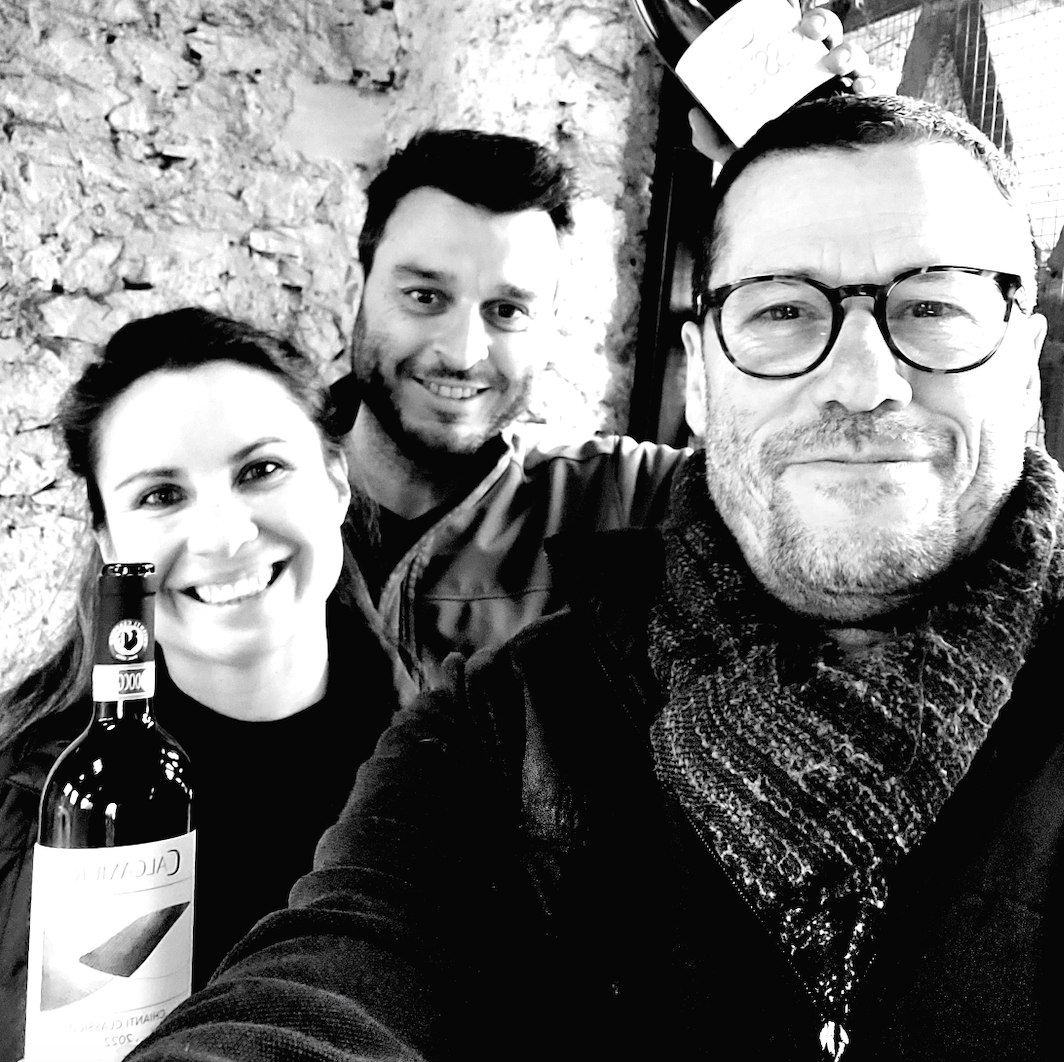
With Andreita Rojas and Stefano Marinari – Calcamura

Calcamura Chianti Classico DOCG 2020, San Casciano

c First vintage for Stefano and Andrea with the vineyard they purchased in 2019. “We were very happy with the result but we knew we could do better. People told us the wine was great but we also knew it was important to maintain quality.” Yes this is an impressive first kick at the can and there is some greenness in the tannin but it’s exaggerated somewhat by the cabernet’s pyrazine. Aged in used barriques for a year. This first Calcamura sangiovese reminds a bit of a Castello di Bossi Chianti Classico mixed with a Renieri Brunello. Wink, wink, say no more. Drink 2025-2028.  Tasted February 2025
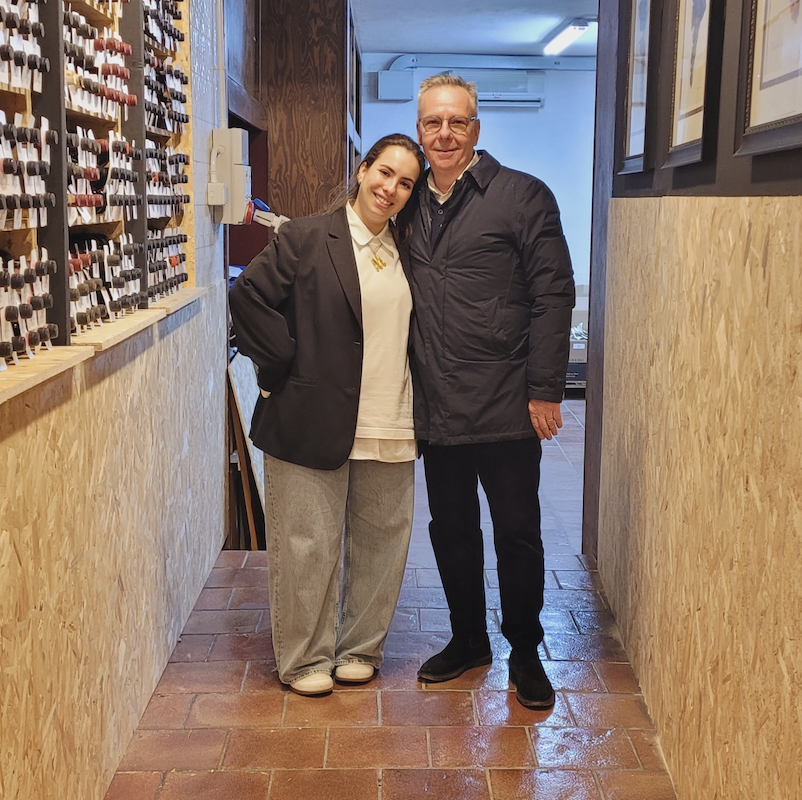
Martina and Alberto Fabbri – Il Poggiolino

Il Poggiolino – San Donato in Poggio

First visit to one of San Donato and Chianti Classico best kept secrets on the hill above and across the river from Sambuca with another more famous neighbour, Badia a Passignano. Carlo Pacini purchased the farm in 1974 and today his daughter Alessandra Pacini, Alberto Fabbri and family run the 18 hectares with with vines planted between 320 and 400m. The seminal plot is a north by northeast vineyard up on the hill overlooking the winery called Le Balze, a.k.a. “the terraces.”
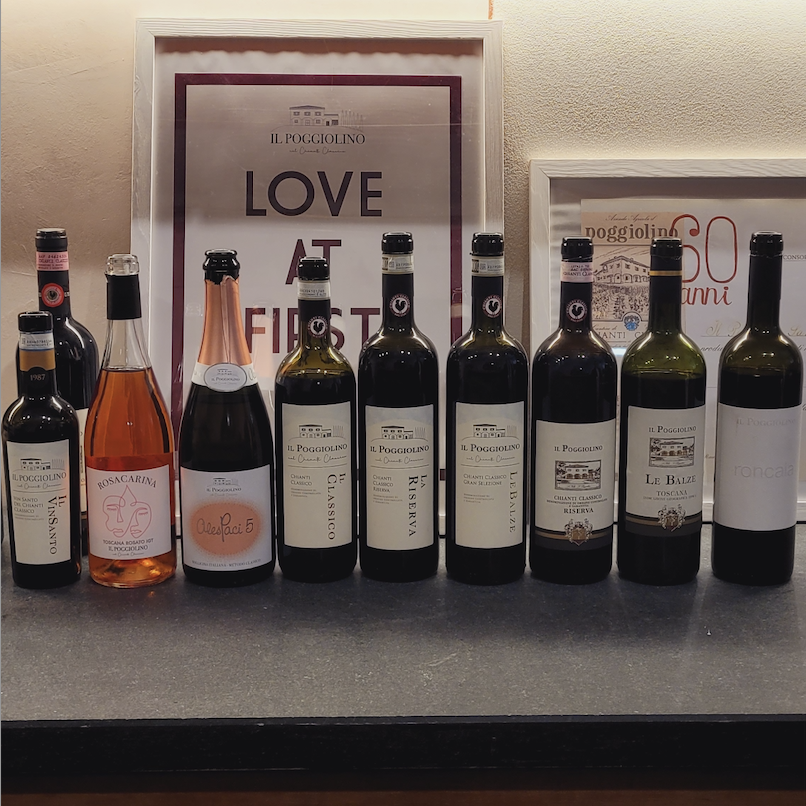
Il Poggiolino AlesPaci5 Bollicina Italiana Método Classico

AlesPaci5 stands for Alessandra Pacini, better half to Alberto Fabbri and her birthday being December 5th. Solo sangiovese 30-36 months on the lees made in Rosato form with just a few years of Il Poggiolino experience augmented by greater experience from consulting oenologist Giacomo Cesare. Really aromatic and autolytic with the finest tight bubble, scraped orange skin and ginger. Truly well made. Drink 2025-2028.  Tasted February 2025

Il Poggiolino Rosacarino 2023, Toscana Rosato IGT

Rosato made in the salsasso method (a.k.a saignée) run-off from the Gran Selezione maceration. A Rosé not focused on colour and not even aromas but with the intention of flavour as the driver. The nose is expressive of some formaggi, an aged Pecorino meets Beemster sort of thing and yes the taste is what draws you in. Rhubarb and orange with a lot going on with respect to taste. High in tang and needing food for balance. Drink 2025-2026.  Tasted February 2025

Il Poggiolino Chianti Classico DOCG 2022, San Donato in Poggio

The vineyards at Il Poggiolino may reside at moderate elevations between 250 and 350m but there are no south by southwest expositions and so in a hot vintage like 2022 the freshness remains a guarantee. Just three percent colorino goes a long way to raise up character of a Classico that only sees concrete and stainless steel for aging. Sweet acids match the fruit stride for stride and what you want is what you get – A level of drinkability that represents Classico and this northwest corner of San Donato in Poggio. Drink 2025-2028.  Tasted February 2025

Il Poggiolino Chianti Classico Riserva DOCG 2021, San Donato in Poggio

A terrific vintage and yes many estates in Chianti Classico lost production to the April frost but at Il Poggiolino the maximum loss was 10 percent. And so come for the quantity and stay for the quality. Rich and concentrated, lightly chalky with a clay and stony feeling. Structure asks that we wait a year before opening the window and set this sangiovese with three percent colorino for aging through to the end of the decade. Drink 2026-2030.  Tasted February 2025

Il Poggiolino Chianti Classico Gran Selezione DOCG Le Balze 2021, San Donato in Poggio

From a north by northeast vineyard up on the hill overlooking the winery which may have been a expositional detriment 20 years ago but no longer. The change of climate puts this steep single vineyard sangiovese in great light today and so welcome to the third in a row of vintages that may just shock as to its character and quality. Le Balze 20 years ago was organized as large terraces and in Tuscany you say “le balze,” when you take a giant leap. This Gran Selezione has improved and grown by leaps and bounds in the last few years to join other greats to reside near the top of the appellative pyramid.  Last tasted February 2025

Another perfumed and expressive Le Balze comes with as much if not more pulp and flesh a la mode than those San Donato in Poggio Gran Selezione that have come before. The depeche florals are Spring bloom fresh, the volume set at ideal pitch and you just need to keep putting glass to nose because, well you just can’t get enough. Richness is never compromised but it is belied by the beauty of a tannic caress about as graceful and gracious as there are. This is Il Poggiolino’s finest GS to date and that is saying a lot. “Just like a rainbow.” Drink 2025-2034.  Tasted October 2024
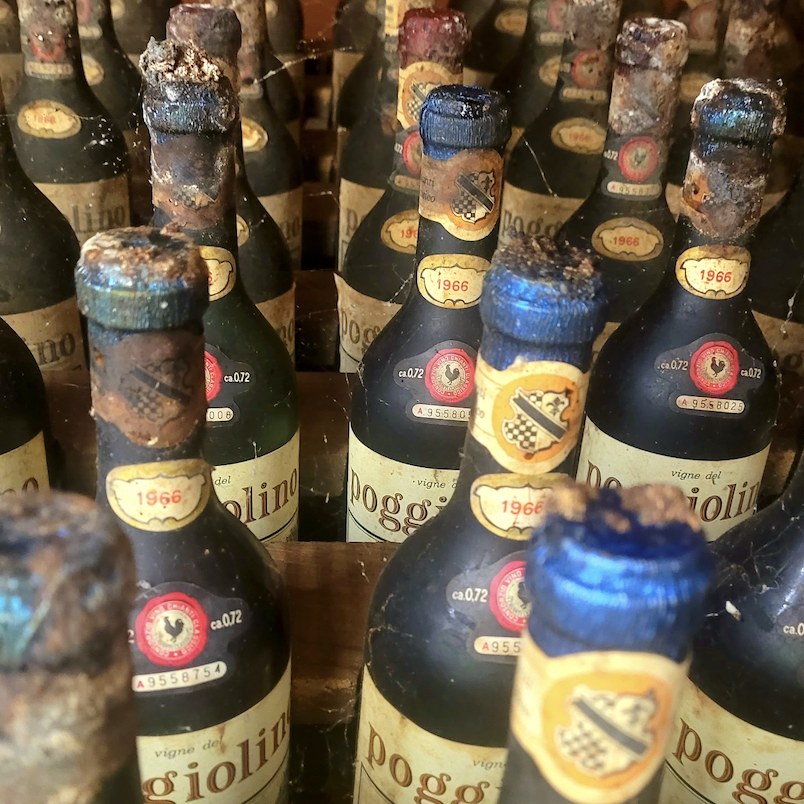
Il Poggiolino Chianti Classico Riserva DOCG 2001, San Donato in Poggio

Wow. Seriously wow from a 23-24 year-old sangiovese that speaks in such a clear vernacular. A language so specific to the space of this place nearest to Sambuca in the UGA of San Donato in Poggio. Yes this is from another era and the wood (though it has disappeared) and tannins (which have melted) have set this up for the longest run through history. The freshness of primary fruit lingers and merges with an ideal window of softening secondary notes. Soft yes but refreshing sip after comforting sip. Just a lovely linger of Chianti Classico as Riserva the way it was surely intended, with or without luck would have it. Drink 2025-2027.  Tasted February 2025

Il Poggiolino Roncai 2020, Toscana Rosso IGT

From the 20 year-old vineyard right in front of the house and cantina facing the village of Sambuca that ages 30 months in mostly, but not all new barriques. A wine conceived approximately 10 years ago and Roncaia is the name of an old label produced at Il Poggiolino back in the 1970s, resurrected four decades later with this single vineyard fruit. The meaning comes from roncola, a traditional viticultural knife used to cut grape bunches off of the vine. Rich and chalky, well-structured, elegant and poised for merlot put to new wood for as long as it is. Remarkable really and only produced in years “when the grapes are truly perfect.” Drink 2025-2027.  Tasted February 2025
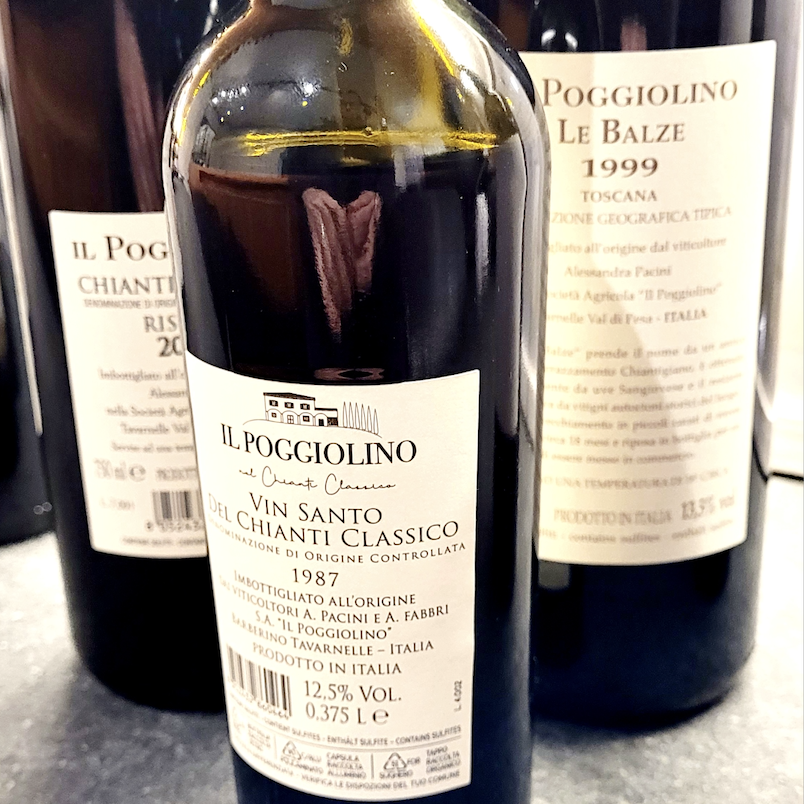
Il Poggiolino Le Balze 1999, Toscana IGT

The artist has always been known as Le Balze, a.k.a. “the terraces,” to the wine that would eventually become Gran Selezione. What matters is the steps’ north by northeast facing vineyard and here from what was considered a top vintage at the time. The sweetness of fruit is still so evident and while there should be zero complaint about how well this has aged – the wine still feels like its maturing into the beginning of its denouement. The 2001 (Chianti Classico Riserva) feels much younger and still there is great pleasure to gain from 1999. Great fortune to taste, the wood very much a master of the flavour and sweetness through the entirety of the wine.  Tasted February 2025

Il Poggiolino Vin Santo del Chianti Classico DOCG 1987, San Donato in Poggio

Current vintage on the market. Yes, that is not a typo. A 27-28 year-old labour of love that from trebbiano and malvasia but in the late 1990s the switch was made for sangiovese as Occhio del Pernice. An elixir so silken and smooth, no rusticity and seemingly untouched by human hands. A Vin Santo as if made by the bees, with apricot, guava, jasmine, lemon, Japanese orange and lavender. Fine, fine spice and just so special. A dream, demure and engaging. On the right side of vivid. One of the finest ever and know that you can drink this meravigliosa dessert wine forever. Drink 2025-2050.  Tasted February 2025
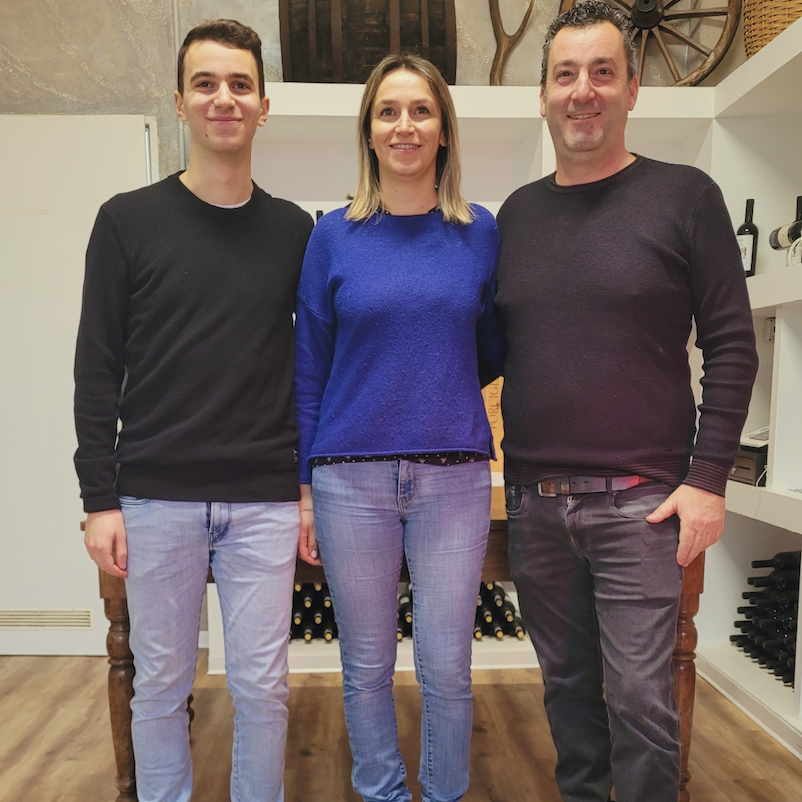
Federico, Martina and Leonardo Tattini – Richiari Porciglia

Richiari Porciglia – Greve

One of the most intriguing and rewarding discoveries of the last 10 years in this family estate on the east side of the Greve River at the base of the Ruffoli hill. The origon is 1980 and 1985 was when Greve in Chianti’s Emilio Tattini and his wife Lidia Martinelli established the winery with the first commercial wines having been bottled in 2009. Brothers Leonardo and Alessandro are now in charge of the vineyards, winemaking and cellar. Leonardo’s wife Martina runs the business and their precocious son Federico is now working alongside his parents and uncle when he not studying oenology at the University of Florence. Considering the continuity of the local and familial, there should be no surprise if daughter Irene joins the team seven or so years from now. The single vineyard or cru “Il Paccio” Classico comes from the oldest vineyard of 40 years of soils based upon Alberese and Pietraforte.
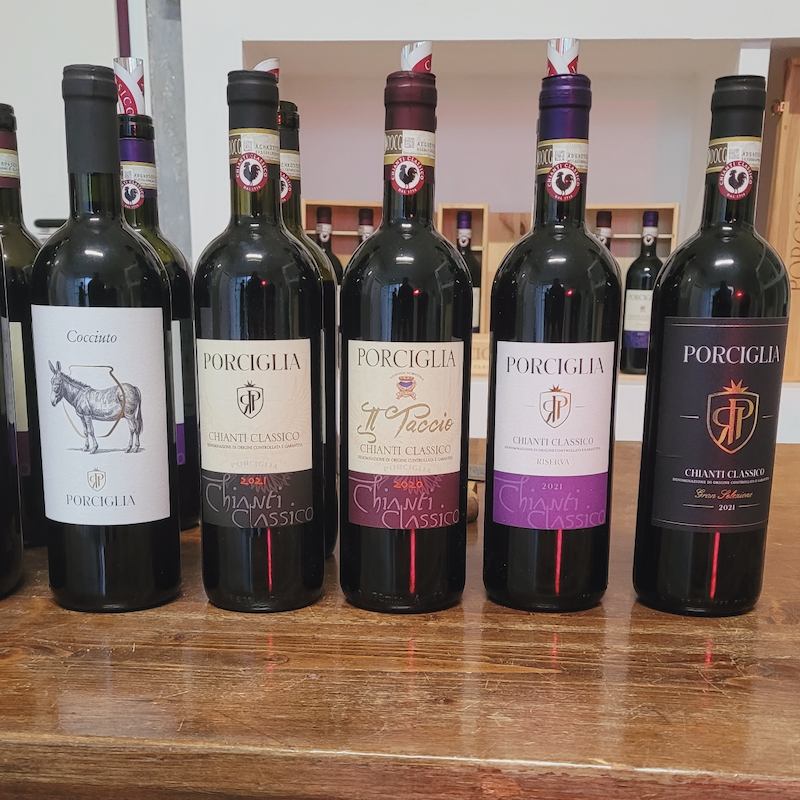
Richiari Porciglia Chianti Classico DOCG 2021, Greve

First vintage of the “regular,” non single vineyard Chianti Classico was 2009. An Annata conceived from vines between 250 and 350m at the base of Greve’s Ruffoli hill. A perfectly correct Classico, dark of fruit, easy to enjoy, fine though never tart, acidity spot on and smooth. Clean as there could be and a clarity that speaks to style, precise winemaking and place. Made with 95 percent sangiovese with (5) canaiolo. Drink 2025-2028.   Tasted February 2025

Richiari Porciglia Chianti Classico DOCG Il Paccio 2020, Greve

The single vineyard Classico from the oldest vineyard of 40 years where Alberese and Pietraforte predominate the soils. Not made in every vintage because, well quality and passion matter dearly to brothers Leonardo and Alessandro. You can clearly see the choices passed down from father Emilio and the stubbornness to only make quality wines with the season dictating the choices. Made in ’20, skipped in ’21 (though Riserva was made) and aged for six months in 15hL Botti after fermentation in stainless, followed by one year in cement vats. Il Paccio the name is just what every generation called this vineyard and place but no one really knows why it is called this. Such a proper Classico and representation of the designation “cru” because there is something so specific and distinct about this sangiovese (with eight percent canaiolo) in its sapid style. Ready to drink though you can see this aging five more years without any real change and certainly zero decline. Drink 2025-2030.  Tasted February 2025

Richiari Porciglia Chianti Classico DOCG Il Paccio 2016, Greve

Though already eight-plus years old there has been almost no movement in Il Paccio 2016 from a warm vintage making for stronger and deeper sangiovese. You can smell the place with such expressive strength, the Piteraforte and Alberese stone committing to a local Balsamico with grip that does not come from the 2021. This is Chianti Classico in a nutshell, fine-grained and exceptional of prescriptive tannins for great longevity. You can tell just how gentle the press and maceration process were because for 22-28 days this is Chianti Classico with the finest and sweetest tannins around. Drink 2025-2032.  Tasted February 2025

Richiari Porciglia Chianti Classico Riserva DOCG 2021, Greve

Riserva is a selection of specific vines and so the choices are made in the fields for 95 percent sangiovese with (five) cabernet sauvignon that makes up just a half hectare of the 14-15 total on the estate. There is more of a Ruffoli feel to Riserva albeit of a darker and exaggerated Balsamic profile from lower elevations. More tart intensity and higher acidity noted as compared to the Classico and the style, or better yet the result is actually quite different. Tannins are grippier as well, fine yet with some austerity here. Needs time, at least two years further in bottle. Reminds somewhat of a Castello di Querceto. Drink 2027-2032.  Tasted February 2025

Richiari Porciglia Chianti Classico Riserva DOCG 2012, Greve

A pleasure of fascination to taste a 12-plus year-old Riserva from this part of Greve and once again the longevity is remarkable. The combination of clones chosen in the 1980s and 90s matched to this terroir clearly decides the fineness of tannin but even more so the incredulous acidity that drives the Balsamico and savour of this sangiovese. This reminds of Lamole more than Ruffoli but 2012 is unique as a vintage and therefore a wine like this will stand up to be counted from an accord forged on its own. Drink 2025-2028.  Tasted February 2025

Richiari Porciglia Chianti Classico Gran Selezione DOCG 2021, Greve

The first year of Gran Selezione for Porciglia with decisions made in the field for sangiovese with (inclusive of five percent colorino). The best grapes are chosen and left on the vines two more weeks for the final harvest. A combination of best solar exposition, highest quality and smallest bunches are isolated for the Selezione. Sees 12 months in cement vats and then 18 months in second use barriques. A clear line is drawn from the Classico but especially from the Riserva because that is the wine used to season the barriques before they are passed on to the Gran Selezione. The intensity of the Balsamico and fine grained tannins here are a hyperbole of the other wines with so many years needed to soften and integrate the parts. More old school behaviour while up there with other fine GS examples in terms of precision and focus. Drink 2028-2035.  Tasted February 2025

Porciglia Cocciuto 2023, Toscana Rosso IGT

A play on words, first on the Coccio stone but also cocciuto which describes a stone-headed Tuscan, like a donkey. There was a donkey on the farm (belonging to Martina’s father) named Cocciuto though he’s no longer with us. The blend is 70 percent sangiovese with (15 each) merlot and canaiolo co-fermented in Manetti (Impruneta) terracotta. Once again the use of of aging vessels puts a Porciglia wine in vineyard light which means that time spent hidden away does nothing to take the land and soil out of the wines. As here with an IGT of acidity and tannins meant to express what the vines request. This is a very fine example of an ulterior Greve in Chianti (Classico) style. Drink 2026-2031.  Tasted February 2025
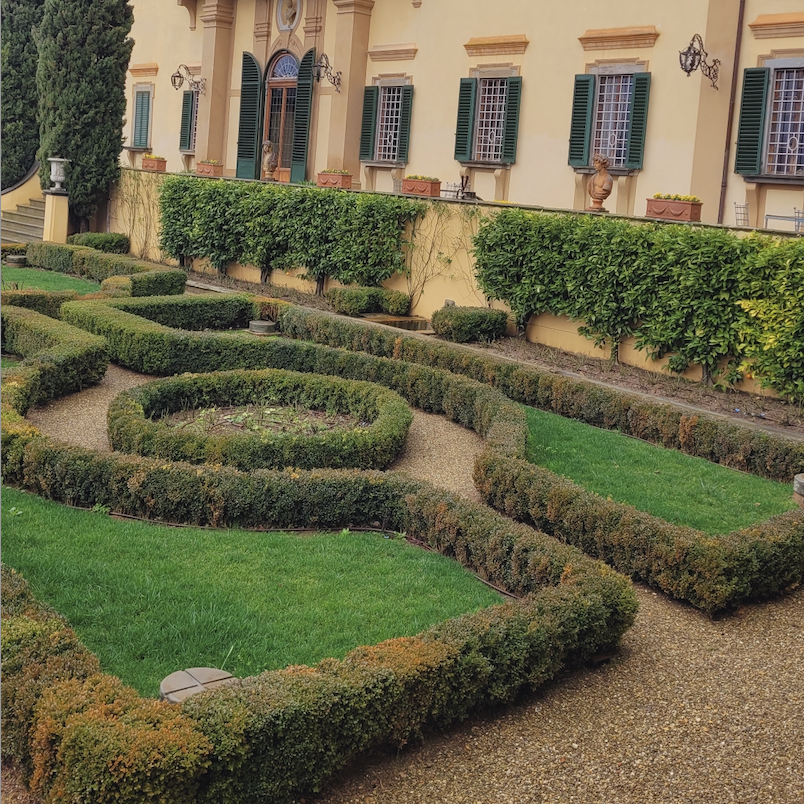
Poggio Torselli – San Casciano

Poggio Torselli – San Casciano

A return visit to Poggio Torselli but this time with the new branding is called “Il Contadino Cusano” under the ownership of Italian-Canadian Pasquale Cusano from Puglia who moved to Vancouver after the famous Florentine flood of 1966. Cusano is a jeweller, publisher of Nuvo Magazine and proprietor of Poggio Torselli since 2021. There may be 83 hectares of vineyards but just 25 percent are used to bottle the wines and the rest is sold off as bulk.
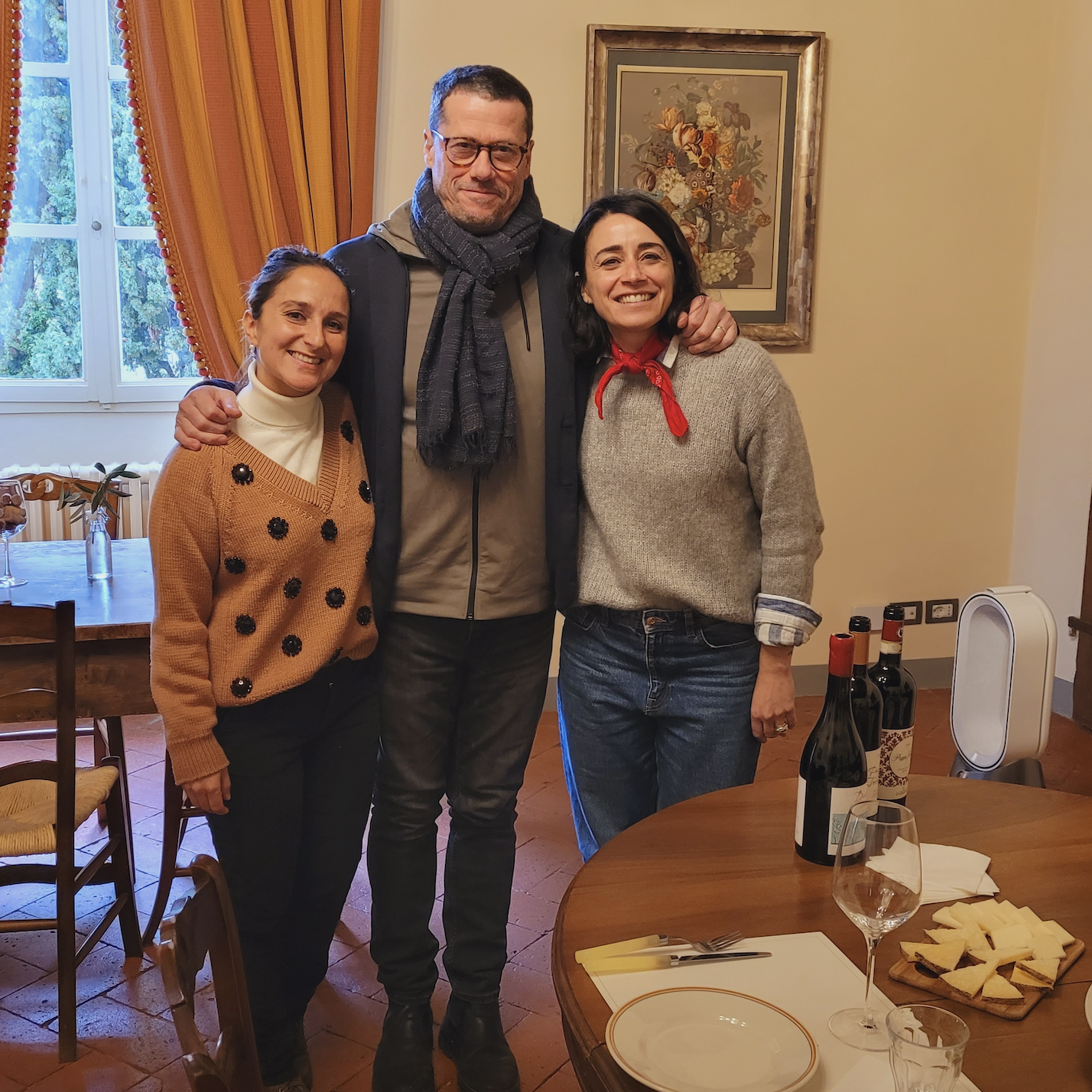
With Cristina Fonte and Margherita Romagnoli – Poggio Torselli/Il Contadino Cusano

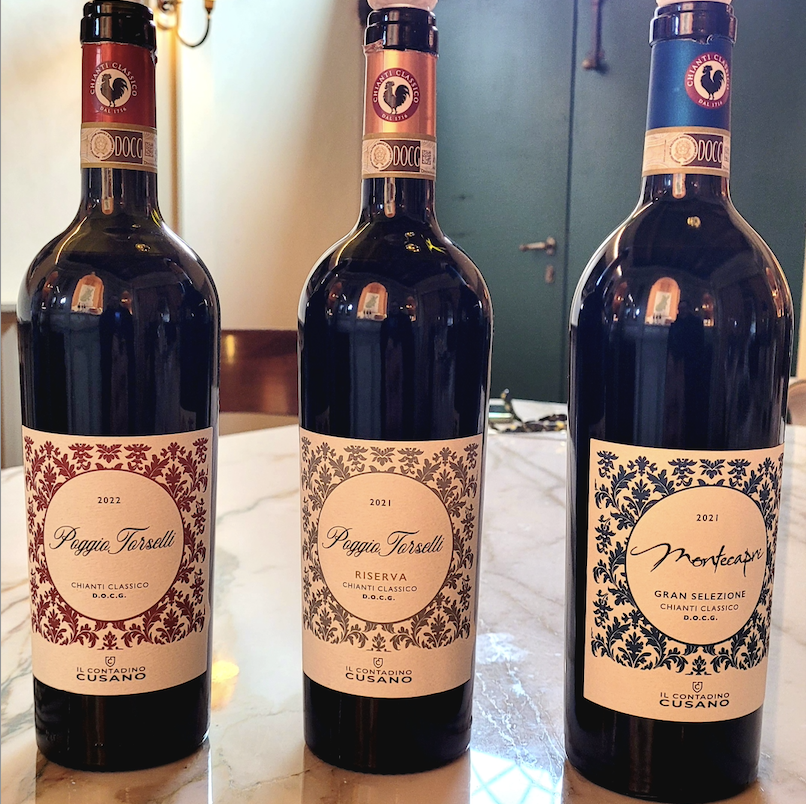
Poggio Torselli Chianti Classico DOCG 2022 Il Contadino Cusano, San Casciano

The 2022 Annata and ’21 Riserva/Gran Selezione are the first set of wines to be made strictly as 100 percent sangiovese. As a reaction to the 2021 season’s severe reduction of yields there was no Annata produced and so this is the follow-up to the previous 2020. A new age of style and quality really begins with this vintage, of such sweet Balsamico character in a Chianti Classico of equally positive acidity and simple, if fine tannins. Great length on the Annata and a pleasure to drink.  Last tasted February 2025

Campione: Second vintage with oenologist Carlo Ferrini with a different process and yes the difference is immediately obvious. New tonneaux and 30 hL botti now housing the Annata, old barriques tossed out the window and the new balance is felt in the most palpable way. Rosso di Montalcino comes to mind and while that comparison may seem sanctimonious or anti-Classico, well just taste the style and level of quality. Juicy, blood orange in that regard and pretty much a finished wine. Stands up to be noticed. Drink 2024-2027.  Tasted February 2024

Poggio Torselli Chianti Classico Riserva DOCG 2021 Il Contadino Cusano, San Casciano

The new brand “Il Contadino Cusano” takes flight in 2021 with Riserva (and no Annata produced) because of frost-related reduced yields. An exaggeration of the local Torselli Balsamico and also really tightly wound acidity matched with equal force by grippy tannins. This is a different wine than the Torselli Riserva of the past, now with greater vibrancy and energy. At this stage the wines are made by Alessandro Campatelli with consultancy assistance by Carlo Ferrini. Something special begins and brews with ’21. Drink 2026-2030.  Tasted February 2025

Poggio Torselli Chianti Classico Gran Selezione DOCG 2021 Il Contadino Cusano, San Casciano

The new branding is called “Il Contadino Cusano” under the ownership of Italian-Canadian Pasquale Cusano from Puglia who moved to Vancouver after the famous Florentine flood of 1966. Now a jeweller, publisher of Nuvo Magazine and proprietor of Poggio Torselli since 2021. There may be 83 hectares of vineyards but just 25 percent are used to bottle the wines and the rest is sold off. The wound intensity of Riserva gives way to greater concentration and depth in Gran Selezione but the nervous energy is not the same. Here a more settled and luxe 100 percent sangiovese that will age well yet drink beautifully pretty much all the way through. Sneaky tannins creep onto the back palate and take hold. Drink 2026-2032.  Tasted February 2025
Poggio Torselli Il Contadino Cusano Bizzarria 2023, Toscana Rosso IGT

Just sangiovese, no wood, fermented and aged only in brand new concrete tanks. Carbonic maceration meets alcoholic fermentation. Made by Carlo Ferrini from fruit out of the Gentilino Vineyard purchased by Cusano in 2022 on the edge of San Casciano village behind the COOP grocery, direction Sant’Andrea in Percussina. The name refers to the “Citrus Bizzarria and fittingly the name translates as “oddity.” Bizzaria is the only citrus tree that produces three kind of fruits, a lemon, bitter orange and a third that combines the qualities of the two. That said there is nothing truly bizarre about this wine. Served chilled it might create a buzz on the palate and the uninitiated might see it as a surprise effect but in today’s vinously hip world this fits right in. The dictionary entry of glou-glou – and clean. Drink 2025-2026.  Tasted February 2025

Poggio Torselli Il Contadino Cusano 2020, Toscana Rosso IGT

A blend of cabernet sauvignon, cabernet franc and merlot at that time made by winemaker Alessandro Campatelli, fermented in steel and aged one year in barriques. A rich, concentrated, spiced, aromatically spicy and woody Bordeaux blend, but the local Balsamico can’t be denied entry into the overall character. Some toast in the barrels is broadly evident and this reminds of a South African red. Got that soil funk and earthy/peaty quality, finishing at ground espresso. Needs another year to integrate though the stuffing will only give it three more after that. Drink 2026-2029.  Tasted February 2025
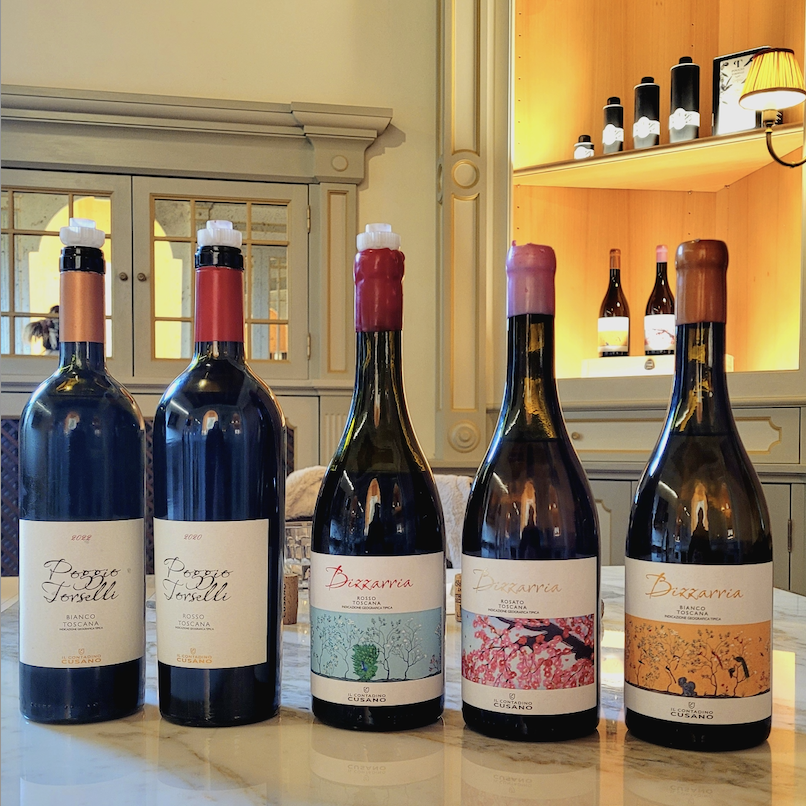
Poggio Torselli Il Contadino Cusano Bizzarria 2023, Toscana Rosato IGT

The Bizzarria is a grafted tree combining Florentine citron with sour orange, was studied in the Medicean Gardens in the mid-17th century and produces separate branches of both citrus fruits. This Rosé. is made with equal parts sangiovese and pugnitello by way of a micro-generous two hour macerate skin-contact style so that the cheese rind and musky citrus skin combine for something you’ve experienced before. Extract and tannin compound the earthy complexity to mean that food is pretty much necessary as an accompaniment. Sformatino di Zucca with goat cheese just has to be the pairing. Drink 2025-2026.  Tasted February 2025

Poggio Torselli Il Contadino Cusano Bizzarria 2023, Toscana Bianco IGT

The last of the Citrus Bizzarria trees were discovered in 1980 by Paolo Galeotti, the “Citrus Archaeologist.” He grafted a twig from his find and waited three years before announcing the find of the strange citrus tree that grows lemon, orange and a fruit that is a combination of both. Il Contadino Cusano is an apt producer to use the name considering Poggio Torselli’s passion and aptitude for growing citrus in their incredible gardens. Bizzarria as Bianco is made with trebbiano and (less than five percent) malvasia with a long skin maceration and only stainless steel to age the wine. Negligible cheese and musky citrus as compared to the Rosato but also less extract and tannin because the grapes do not call for or are want to deliver the same kind of results. A clean and direct Bianco with ultra vibrant frescezza for refreshing use. Much easier to drink and a wine that would not necessarily require food alongside. Drink 2025-2026.  Tasted February 2025

Poggio Torselli Il Contadino Cusano 2022, Toscana Bianco IGT

Of chardonnay, sauvignon blanc and gewürztraminer growing and picked together, co-fermented and aged for six months in tonneaux. This being the second vintage from fruit out of just one hectare for the mildest of orange wines, sharp, tart, quite focused and developing texture as it goes. Like the juices of lemon, mandarin and something tropical (guava perhaps) with the consistency of a simple syrup. An unusual wine, semi-aromatic and the gewürz does not take any real control. There is a hint of rosewater and yet the chardonnay takes the lead. Pretty easy to knock back. Drink 2025-2026.   Tasted February 2025

With Bernardo Manetti, Jessica Dupuy and Giovanni Manetti

Fontodi, Panzano

Conca d’Oro, Vigna del Sorbo, Terraze de San Leolino, Pastrolo, Pietraforte, Macigno di Marne, Dino, Amphora, Flaccianello delle Pieve, Il Presidente del Consorzio and Manetti. So much has been written on these Godello pages about Fontodi over the years and so this link should sufficiently fill you in.

Related – Fontodi’s one hundred per cent sangiovese
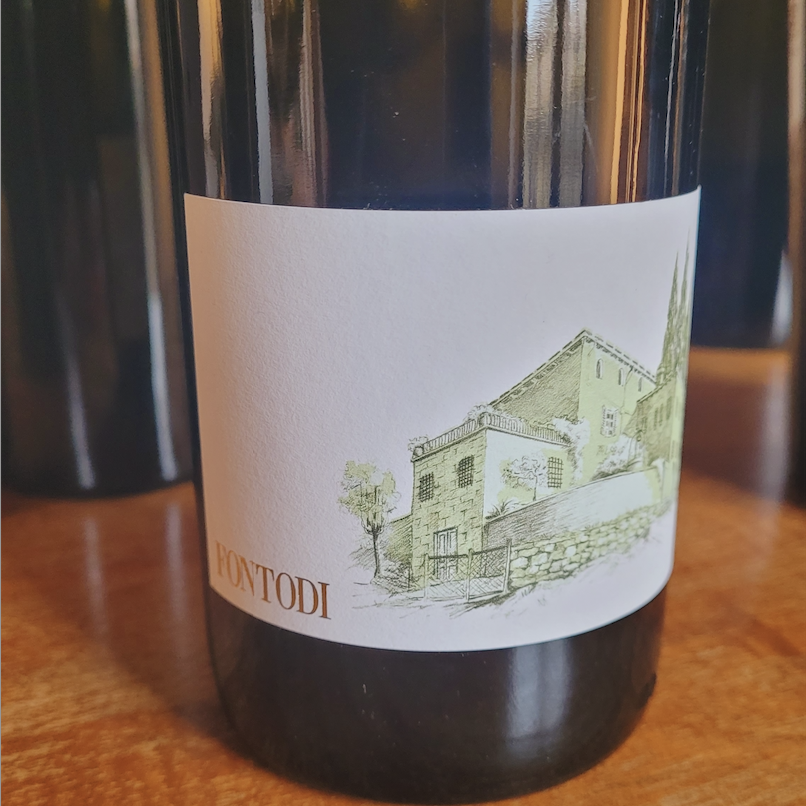
Fontodi Bianco Vino Biologico 2022, Colli Toscana Centrale IGT

From a mixed vineyard, mainly of trebbiano and san colombano but just the trebbiano is chosen from the 50 year-old vines for a project that started in 2016 in response to climate change and a vineyard more consistently ripening the fruit. “You need to put your glasses on to find it,” says Bernardo Manetti and this being the sort of white that sees a maximum alcohol potential of 12.5 percent alcohol. Picked in mid October, aged in used 600L casks for six to eight months. Higher pH and lower acidity as compared to the sauvignon blanc and so a sapid white, never vivid or dramatic, chosen to develop character through wood and not maceration. Still the wine travels on an upward trajectory up the sides of the palate and back down again. “Effete tampone” is a sponging that happens with thanks to the lees naturally cleaning the wine to get it to this place of clarity. Just 800 bottles are produced.  Last tasted February 2025

A new sku for Fontodi and the inspiration comes from the next generation, that being Bernardo Manetti. Made with vermentino, 50 year-old vines, fermented in 600L barrels, 2nd passage (previously used for sauvignon blanc Merrigio). Low temps, every day bâttonage, whole cluster pressed, no skin contact and use of dry ice. Picked at high acid and this is just about spot on but thankfully a dry if not exceptionally hot season has resulted in great freshness, piquant personality and a truly linear Bianco. This is smart and focused. Just a bit more than 12 percent alcohol. 780 bottles produced. Drink 2023-2024.  Tasted October 2023

Fontodi Chianti Classico DOCG 2022, Panzano

Just only recently bottled, a 100 percent sangiovese from a very hot season and the challenge faced because of a devastating hailstorm that occurred on the night of August 15th. Thirty hectares (of 105 total) were lost to this rarest, once in a century happening. “It was revolting,” says Bernardo Manetti, “if you smelled the grapes after the hail.” The approach for 2022 became one of lower extraction and less aging, the wines taken out of wood in July after just nine months. The severely reduced crop yielded this concentration and inedible stamp of Conca d’Oro richness with a fine tannic presence and ripeness at peak both adding to the compaction of the wine. Drink 2026-2031.  Tasted February 2025

Fontodi Chianti Classico DOCG Dino 2022, Panzano

Dino is the sangiovese fermented and aged in amphora, from the southwest facing vineyard lower down in the Conca d’Oro overlooking the Chianina stables. A strangely low alcohol wine at 13 percent “and we don’t fully know why,” says Bernardo Manetti, but it is in fact a cooler site where temperatures really drop down in the night. Bottled in June of 2024 after three months of maceration and just a year and a half of aging. Always the push-pull between earthy and musky, as here with high poly-phenolic character. There is a presence to the 2022 with thanks to the lithe frame housing fleshy red fruit. Drink 2025-2029.  Tasted February 2025
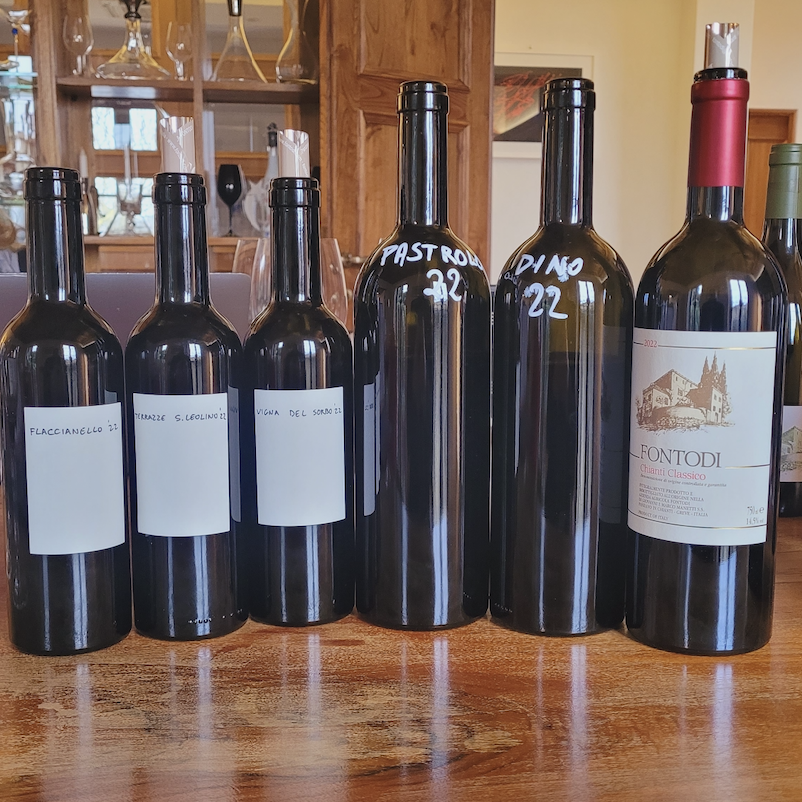
Fontodi Chianti Classico Gran Selezione DOCG Pastrolo 2022, Panzano

Like Dino (in amphora) the aging time in wood for Pastrolo is shorter and so this 2022 put to bottle in June of 2024. From the Lamole (UGA) vineyard pruned in a variation of alberello or goblet training style but the vines run higher due to Pastrolo’s steep terraces. The soils are unique, marine in origin and called marna di macigno, in other words a Galestro type of cracked or flaky manifestation, but in this case from sandstone. The grace and harmony of ’22 Pastrolo is soothing with a delicasse that no other Gran Selezione will ever show. It’s remarkable from this more than warm vintage and the 14.5 percent alcohol is barely perceived. This will wake you up, especially if you are tasting in the first part of the morning. Thank you Pastrolo. I needed that. Drink 2027-2035.  Tasted February 2025

Fontodi Chianti Classico Gran Selezione DOCG Vigna del Sorbo 2022, Panzano

A finished wine because today is bottling day and what serendipity to taste it on the day. Vigna Del Sorbo is one of the vineyards that escaped the August 16th hail because it’s on the other side of the (Conca d’Oro) valley. Full quantity as a result, approximately one-third matured in new wood, the second year spent in older cask. Freshness captured and as always Vigna del Sorbo is the spiciest of the Gran Selezione but also the one of the three with the finest, if grainiest tannic profile. This after an aromatic wave of floral and mineral before giving way to a sangiovese that integrates with impunity. You’ve got to figure that the age of the vines are responsible for handling the heat of 2022. Drink 2027-2036.  Tasted February 2025

Fontodi Chianti Classico Gran Selezione DOCG San Leolino 2022, Panzano

Just being bottled as we speak and the quietest opening pronouncement as compared to Pastrolo (Lamole) and Vigna del Sorbo (Panzano – Conca d’Oro). This from the terraces below and in surround of the Pieve up on the hill where Alberese soil predomimates, unique to Fontodi because schisty clay (with Galestro), Pietraforte (calacreous sandstone conglomerate) and Marna di Macigno (marine sandstone) define the other wines. The Alberese limestone makes for a crispier and more croccante sangiovese, magnified in 2022 and while this is also quite tannic the catalyst to exaggeration is made by the highest acidity of the three. Vinoso but even more succulenza, a very specific character that is San Leolino. In fact this Gran Selezione will take longer to come together, but again the vintage dictates and solicits this response. Drink 2028-2037.  Tasted February 2025

Fontodi Flaccianello delle Pieve 2022, Toscana Colli Centrale IGT

“Flaccianello for us is always the finest expression of Fontodi terroir and sangiovese grown in our territory,” says Giovanni Manetti. Truth and still a certain sense of irony as coming from the President of Chianti Classico consortium. Flaccianello was struck by hail in 2022 and so one third of the crop was lost because the western vineyard Poggio was obliterated on August 16th. The other two (Pecille and La Cappellina) survived and in the end the Pietraforte that runs through still granted the freshness, structure and especially acidity. There is a more immediate floral bloom and perceived balance from 2022, also sneakier tannins than the previous few vintages of Flaccianello. The longevity is a veritable guarantee, for 20-25 years and quite possibly more. Drink 2027-2042.  Tasted February 2025
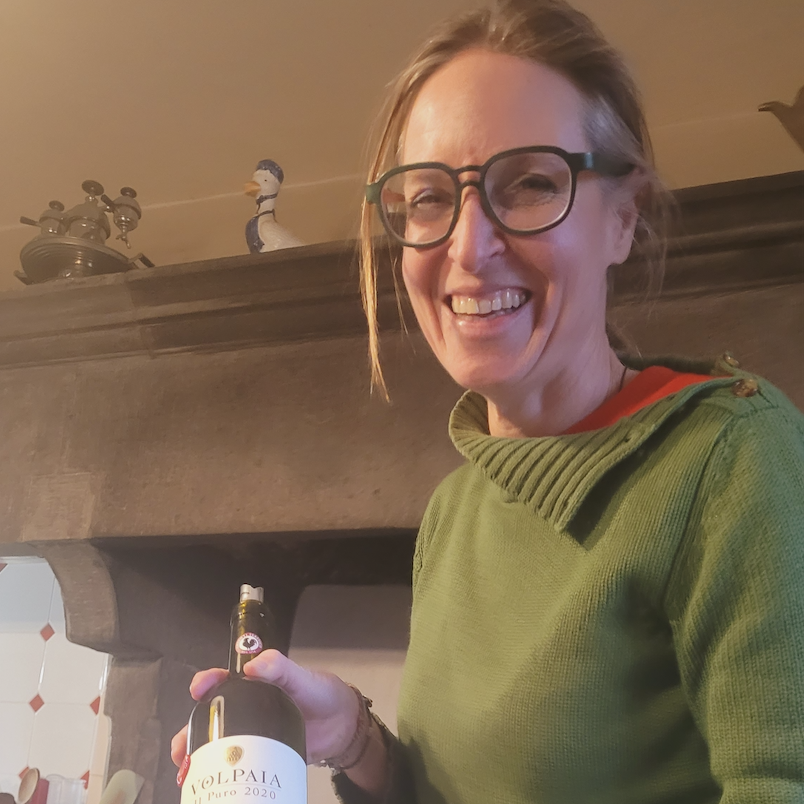
Federica Mascheroni – Volpaia

Volpaia – Radda

There are times when it feels as though in the Chianti Classico territory “all roads lead to Volpaia,” a saying that mimics the most famous one of “all roads lead to Rome.” Yet apropos in the context of Castello di Volpaia, meaning “fox’s lair,” though not actually a castle but formerly a walled in medieval village. Also the gateway to Monte San Michele at the peak of the Monti del Chianti. Historically significant within Radda and much of the village is owned by the Stianti-Mascheroni family, makers of Volpaia wine and oil. There is La Leggenda, the great tale of how the Gallo Nero came to be the symbol of Chianti Classico and then there is another La Leggenda, that being the matriarch of Volpaia, Giovanella Stianti. Her daughter Federica Mascheroni brings the family’s work to the world.
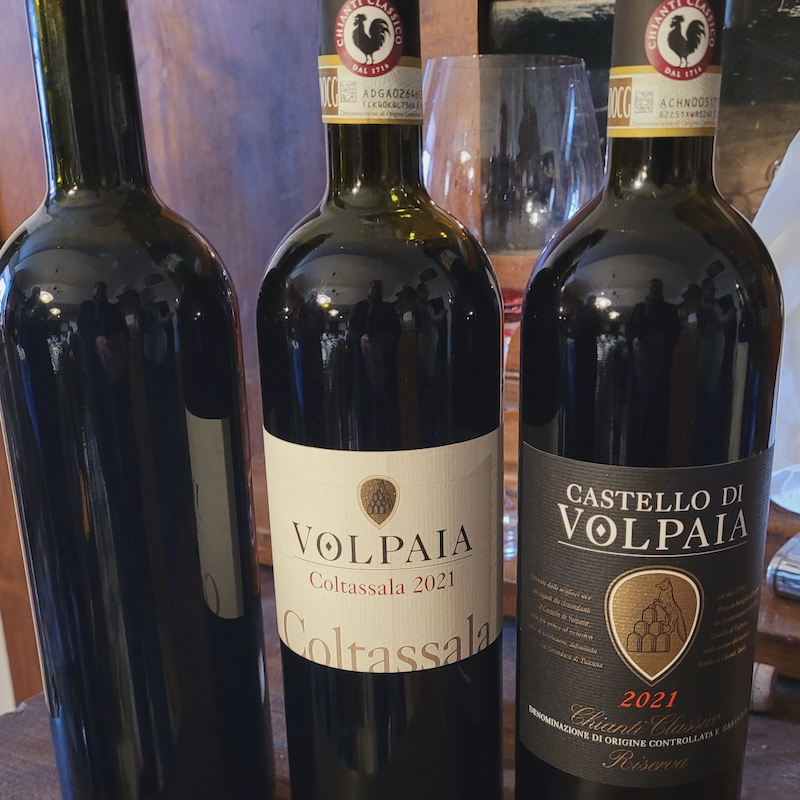
Volpaia Chianti Classico Riserva DOCG 2021, Radda

Surprising perhaps because 2021 and well, Riserva but acidity is tops from Volpaia. Then again it’s sangiovese and should there really be any surprise? Just three-plus years in but my goodness how the holy trinity has come together to make this work right here, right now. Fruit, acid, tannin, all aligned horizontally, the first sliding into the second and in turn to the third. Ready and willing.  Last tasted February 2025

Fine swirl of sangiovese with the highest quality 2021 fruit that must and will show the fineness of Volpaia’s high elevation Radda no matter the quantity gained or lost. And the vintage was not easy though the estate’s position was a plus for making cool and fresh Riserva from the vaults of a hot vintage. For Volpaia this is darker fruit, not full-on 2020 dark but thankfully the location is there to keep deep breathes alive with the freshest of Raddese air. Still this is bigger for Riserva and bones are truly strong. Drink 2025-2032.  Tasted February 2024

Volpaia Chianti Classico Riserva DOCG 2000, Radda

Twenty-four years (and 25 to the vintage) later the Riserva from a cool-ish vintage shows its predicted predilection to arrive with acidity intact. The fruit is fully into chewy leather as dried plum and liquorice with the baking spice cupboard providing the accents. One of the first years of Lorenzo Reggoli’s tenure at Volpaia and very much one of his vintages – so there will always be an affinity for 2000 to be connected to the present day wines. Drink 2025-2028.  Tasted February 2025

Volpaia Chianti Classico Gran Selezione DOCG Coltassala 2021, Radda

The artist formerly known as Riserva and previous to 1999 also Toscana IGT is now become Gran Selezione, as of the 2015 vintage. Still it’s always been Coltassala, sangiovese inclusive of (five percent) mammolo. Like Riserva there is acidity more than merely qualified as Raddese but with this label extrapolated as Volpaia. Volpaia the hill below the Chianti mountains where structure is texture and mouthfeel is length. The Gran Selezione that speaks clearly in youth and so long as the catalyst driver leads the way it will persist like this for another 20 years.  Last tasted February 2025

Always a concentrated sangiovese, from high elevation, solar radiated and night cooled vineyards. Still a five percent mixing in of ultra specific mammolo, spice bringer and catalyst to create this unique interaction with sangiovese. A fulsome vintage, fruit and tannins thick as thieves, luxe behaviour guaranteed and time on side for one of the longest runs to be had in Chianti Classico. The palate and mouthfeel are already showing signs of great activity and you could actually drink this now with the correct salty protein alongside. Drink 2025-2032.  Tasted October 2024

Volpaia Chianti Classico Riserva DOCG Coltassala 2000, Radda

Impressive freshness persists because of Volpaia acidity, owing to location, location and location. Compared to the first Riserva 2000 there may not by any more concentration but there is more specificity and cool factor herbal notation. The Coltassala feels like it comes from a cooler vintage, even more so as compared to the non etichetta label and that puts it in a more complex situation. Drink 2025-2028.  Tasted February 2025

Volpaia Chianti Classico Gran Selezione DOCG Il Puro 2021, Radda

The refinement of Il Puro is apparent from the start for a sangiovese as Gran Selezione 100 percent worthy of its grape and name. The pure one is Volpaia perfume incarnate, cool and floral, Chianti Classico spice masala developed low and slow, acidity as unctuous as any but always di Volpaia. Hypnotizing elements make this wine go straight to your head though there is clarity of thought. Also beating of hearts because of its philanthropy. The focus and finesse are grand, the hypnotic effect causing a loss for words. Il Puro 2021 is a thing of great beauty – what else needs to be said? Drink 2029-2040.  Tasted February 2025
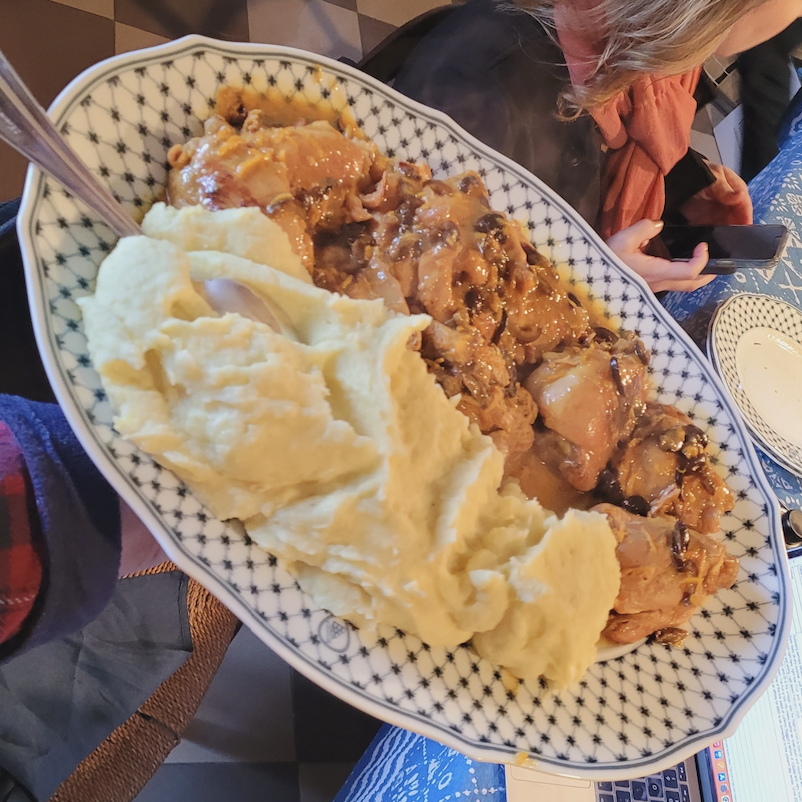
Roast Chicken and Mash Comfort lunch by Giovanella Stianti

Volpaia Chianti Classico Gran Selezione DOCG Il Puro 2020, Radda

Truly a different vintage for Il Puro as compared to 2021 for the Gran Selezione transformed in 2010, first made in 2006 after having been planted in 2000. This the GS understood to be worthy a full five years before Coltassala because the single vineyard concept and the greatness of the plot was noted earlier on. More herbology, dusty Balsamico quality and a notable aroma of wild “finnochio.” More rugged by comparison, rough and tumble, crunchy and taut. Tannins will take long to resolve and roasted protein is currently (and for the next five years will be) a must alongside. Drink 2027-2036.  Tasted February 2025

Volpaia Balifico 2021, Toscana IGT

Still and always two-thirds to one sangiovese and cabernet sauvignon, here from a wine almost too young to appreciate and yet at Volpaia there is always a window of accessibility because, well acidity. Location, elevation and the natural world conspire to allow every wine a chance at speaking about itself, even before the elements have come together to truly do so. The Mascherone-Stianti family always knew that sangiovese could speak for the place, to be understood by people who knew Bordeaux varieties better and to this day the IGT is based that way. This Balifico plays a part in the estate basilica for a vintage of many gifts abided by with utmost respect and expertise. Drink 2028-2036.  Tasted February 2025

Volpaia Balifico 2000, Toscana IGT

Oh the delight of a chocolate “After-Eight” mint in a 24-25 year-old IGT from high elevation in Chianti Classico territory at the upper steps of the Chianti Mountains. Many local reds at the stage will just feel old or at least taste like a mouthful of liquid truffle but Balifico’s acids are intact, even though the aromas are already losing their lustre. One-third cabernet meets sangiovese and by now they may as well be equally dispersed because together they conjoin as one. Just a hint of tannin remains, likely not real but sensed anyway. Drink 2025-2026.  Tasted February 2025
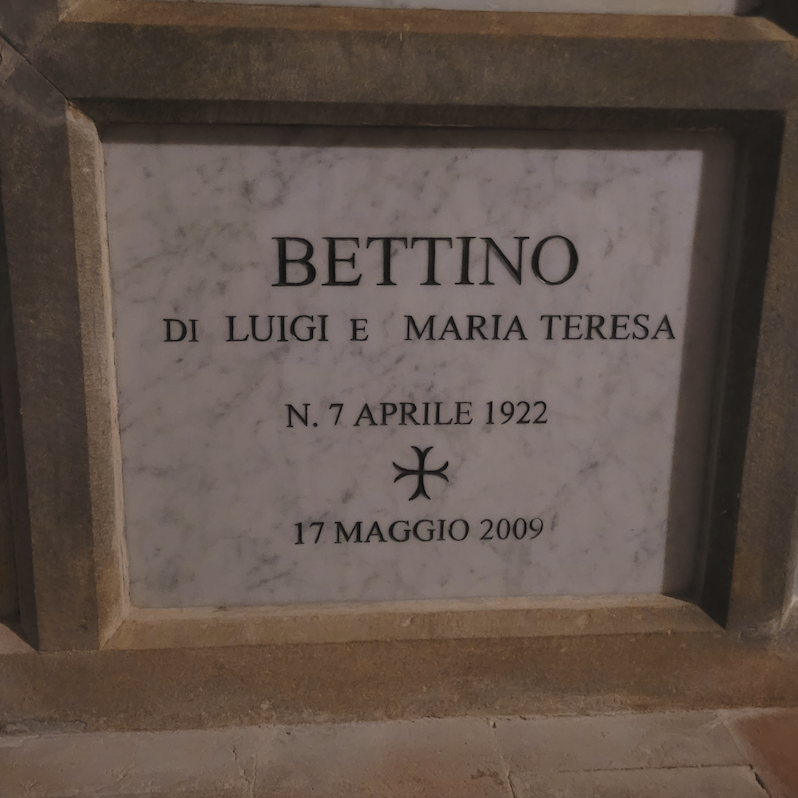
Shared birthday between Godello and Bettino Ricasoli

Ricasoli – Gaiole

Ricasoli and Castello di Brolio are two historic locations that have been visited on several occasions. This link will bring you back.

Related – Ricasoli, Barone Ricasoli

The last decade has been dedicated to the cru investigations above and beyond Gran Selezione. The three Gran Selezione are now Colledilà, Roncicone and CeniPrimo, each a unique and distinct iteration of Ricasoli’s most important identified blocks of their large amassment of Gaiole’s Chianti Classico terroir. Relatively recent news for Ricasoli is that the company now owns nine hectares in the UGA of San Donato in Poggio and also recently purchased two point five in Vagliagli, at 350m of elevation just below the Tolaini estate.
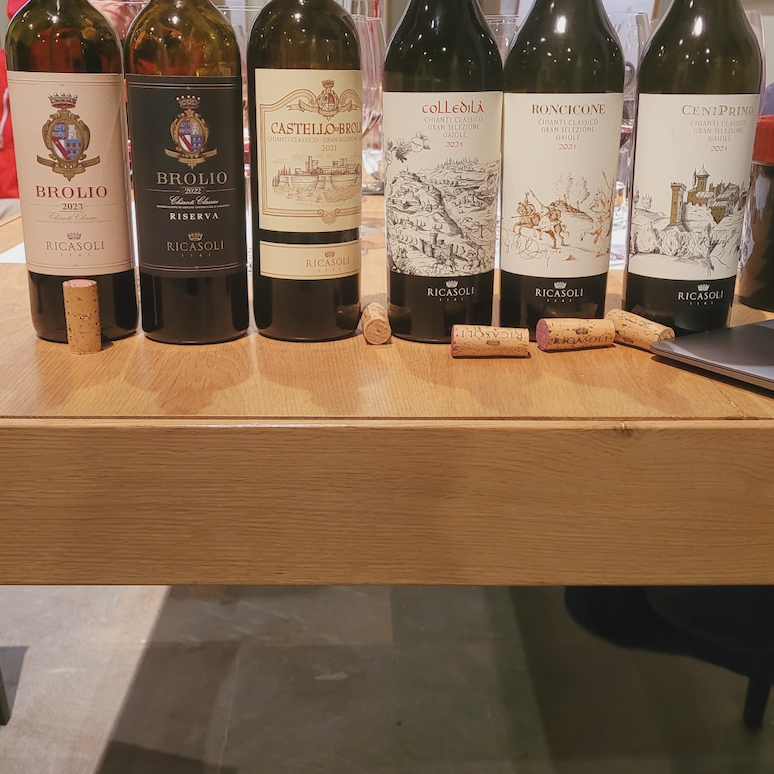
Ricasoli Brolio Chianti Classico DOCG 2023, Gaiole

Francesco Ricasoli sets the 2023 up by describing it as “crispy,” which translates as freshness but who could not think of Brolio ‘23 as juicy. Classic black cherry for this label of 600,000 bottles encompassing all five soil types, 250 hectares and everything that is collected, layered and transcribed as the Ricasoli estate. Drink 2025-2027.  Tasted February 2025

Campione: Youthful, still a bit reductive in a sweet bell peppery way, herbal amaro yet to stretch and let the fruit speak first. Good fruit however, substantial and showing Gaiole’s abilities for 2023.  Tasted at The Chianti Classico Collection, February 2025

Ricasoli Chianti Classico Riserva DOCG Brolio 2022, Gaiole

Riserva is truly the extension of Annata, from across the entirety of the Ricasoli estate and aged longer. Accedes to more concentration but still the Ricasoli style must be attended to; sharp, clean, drinkable and a provider of joy. This much is true and yes, the clarity is on display, so obvious in its openly generous and frank transparency. If there were rustic aspects 10 years ago they have long since left the building. It has been a matter of fine tuning, vintage after vintage. Drink 2025-2028.  Tasted February 2025

Ricasoli Chianti Classico Gran Selezione DOCG Castello di Brolio 2021, Gaiole

The jump from Riserva to Gran Selezione is a significant one though the conceptualization remains similar, to draw from the various soils, of Alberese, Macigno and schistous clay manifesting as Galestro. There are other places within Chianti Classico that hold the cards to all the major soil groups but Ricasoli holds the great advantage of being able to variegate out of several micro-zones and climates. This makes for the most rounded Gran Selezione but also one with more layers than that of the other two appellative wines. And tou can drink this non-cru GS straight away. Drink 2025-2031.  Tasted February 2025
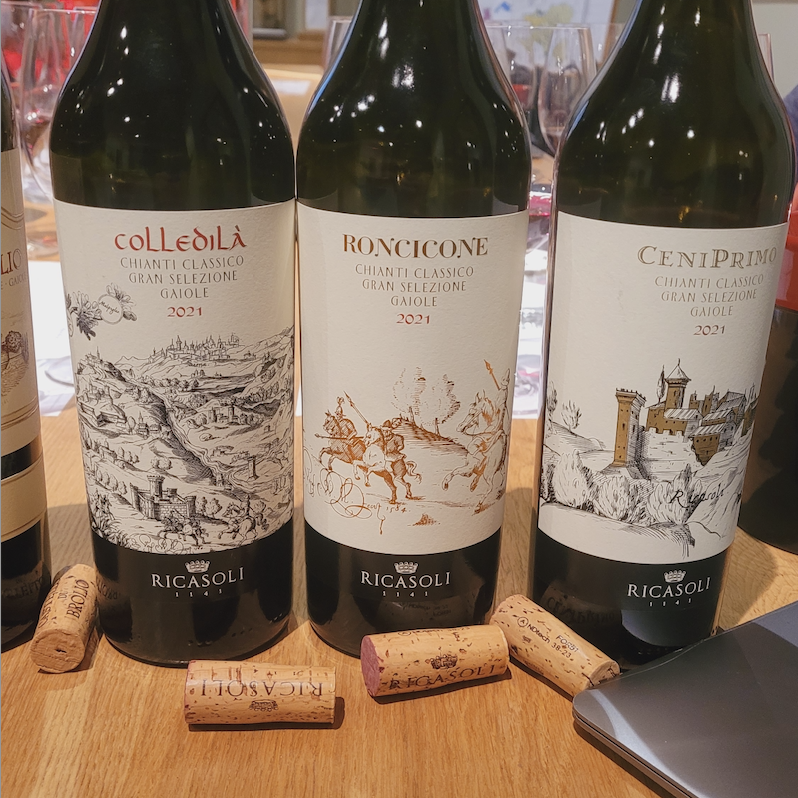
Ricasoli Chianti Classico Gran Selezione DOCG Colledilà 2021, Gaiole

The first single-focused Gran Selezione (and one of four) is at its most floral and juiciest. In other words a sangiovese of great succulenza, accessible and no doubt the sort to attract great international attention, gracing top vintage and year-end lists, and for great reason. It draws you in and nurtures the palate with philanthropic generosity. No longer shy, already open and forthright, its character wise and strong. Drink 2025-2032.  Tasted February 2025

Ricasoli Chianti Classico Gran Selezione DOCG Roncicone 2021, Gaiole

The soils are marine in origin, sandstone based with fossils present. The most sapidity of the three single-focused Gran Selezione, driven by soil, profound of conception, deeper thought and finally understanding. The sapid one indeed, taut and botanical, the soil type bringing out an herbal, verdant and tonic-inflected style. Baritone, with a low rumble and cool pool of fruit with seriousness of acidity. High level poly-phenolic sangiovese, recognizable as such to the greatest degree. Drink 2026-2033.  Tasted February 2025

Ricasoli Chianti Classico Gran Selezione DOCG CeniPrimo 2021, Gaiole

Comes from the vineyard with a west facing hill leading down to the Arbia River with fluvial terraces. The terroir of a geologist’s dream, pebbly with silt deposits on steep slopes that require three harvest passages, mainly due to the different fertilities of lower, middle and high parts. Like the Roncicone the phenolic presence is strong and in connection with the Colledilà the generosity is so very attractive. CeniPrimo might be a terrific mix of the two but soil and style conspire to make sure it’s a Selezione of its own accord. That is also defined by the highest tannins of the three and more time is needed to release its charm. Drink 2027-2035.  Tasted February 2025
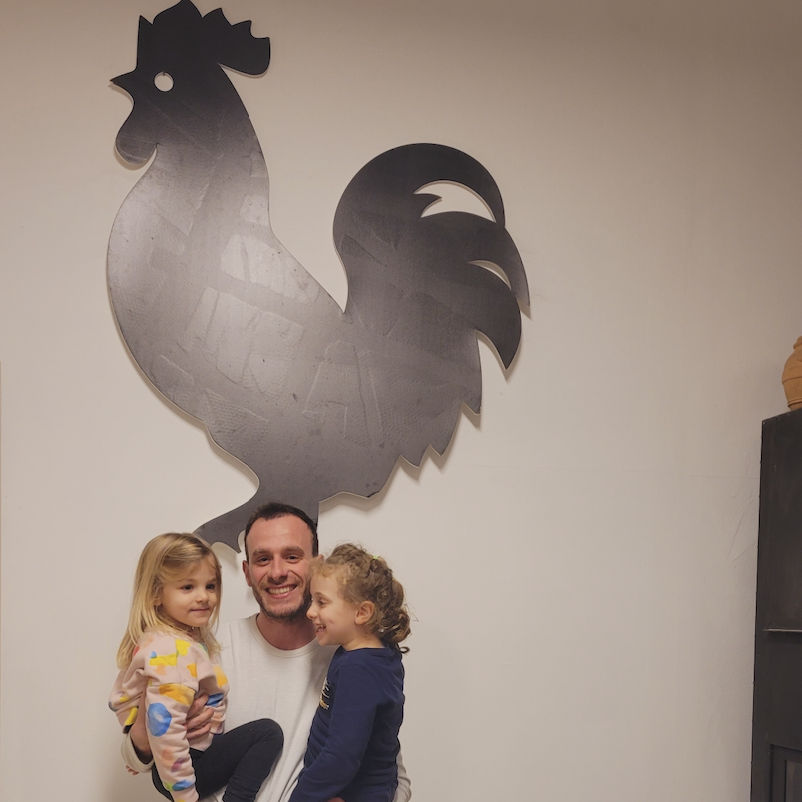
Proud dad, uncle and Gallo Nero producer Giacomo Nardi

Nardi Viticoltori – Castellina

Giacomo Nardi worked at Castellare in Castellina and his brother at Casanova di Neri in Montalcino. Giacomo takes great pride in the wines being made at Nardi Viticoltori and when asked for what he considers to be a list of top winemakers, this was his response. Alessandro Cellai (Castellare), Carlo Ferrini (Pietradolce, Giodo, etc.), Gioia Cresti (Carpineta Fontalpino) and Paolo Salvi (Montevertine and Gagliole).
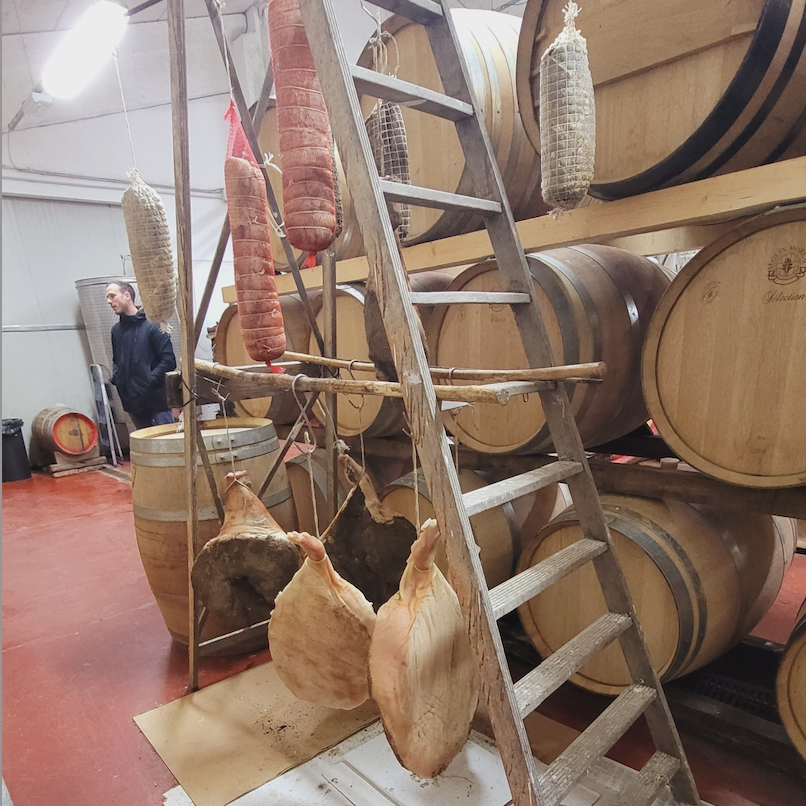
Curing salumi at Nardi Viticoltori

Nardi Viticoltori Farfaro 2024, Toscana Bianco IGT

Made with 85 percent trebbiano and (15) malvasia just bottled three weeks ago. Simply meant as a white of “easy drinkability.” Sapid, mineral-metallic and well, juicy. Just 11 percent of alcohol, a bit leesy and quick to the point. Drink 2025-2026.  Tasted February 2025

Nardi Viticoltori Baccheri 2022, Toscana Rosso IGT

Baccheri was the name of Giacomo Nardi’s great-grandparents that lived on the farm more than 100 years ago. A 60-40 sangiovese and merlot blend, six months in wood. “Must be a gastronomic wine – 100 percent.” Red fruit, merlot softness and sangiovese acidity. Restaurant by the glass. Drink 2025-2026.  Tasted February 2025

Nardi Viticoltori Chianti Classico DOCG 2022, Castellina

Sangiovese with five percent colorino and canaiolo first produced in 2014 now with the image of Siena’s skyline on the label. Soils are clay with some limestone and for Giacomo “the 2022 is better in the mouth.” Aged in a mix of Tuscan, Slovenian and French oak, “essential for aromatic complexity.” Now just in bottle for a bit more than a month, expressive of fruit in a broad way and the tannins are present in two parts, of softness and then in fine grains. Nardi picks on skin and alcohol – not on the pips. He insists they don’t necessarily have to be crunchy and brown. Surely a reaction to climate change and because he wants to make a wine of drinkability. Makes sense in Castellina and yes, there is more than ample ripeness in his 2022. Well done, Giacomo. Drink 2025-2028.  Tasted February 2025
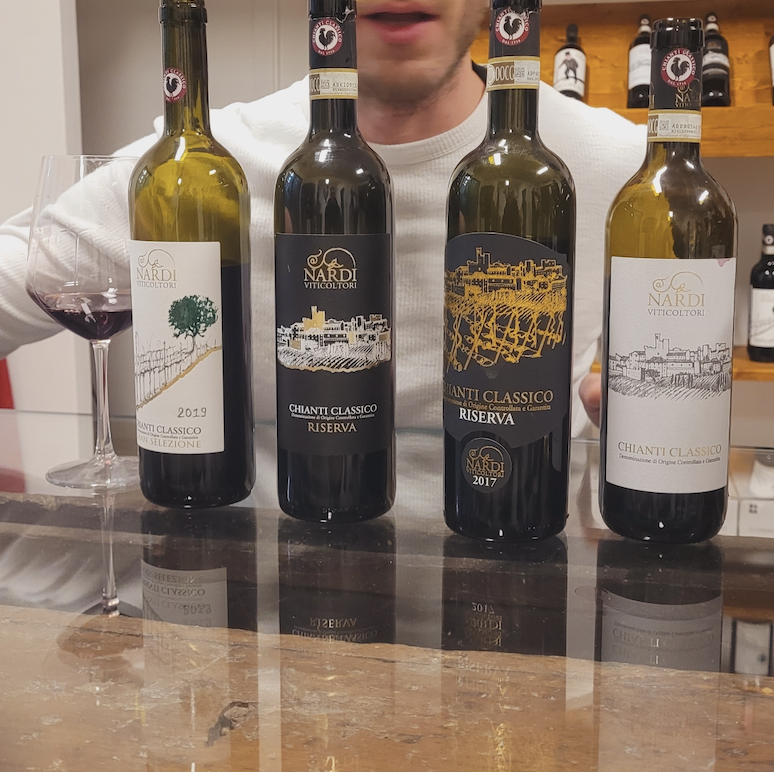
Nardi Viticoltori Chianti Classico DOCG 2021, Castellina

Quite a different vintage now that the 2022 has been tasted and it sure seems like Giacomo Nardi and his brother took another step forward in 2022. This 2021 is a bit more rugged and just not as finessed in the mouth.  Last tasted February 2025

For Giacomo the Classico is a “traditional blend and vinification.” Elevated and lifted aromatics from Castellina for Annata, aromatically charged, lifted, phenolic and allied to the palate with well ripened fruit. Sees time in Botti (Tuscan from near Ruffina) and Slavonian wood. Not so much a matter of volatility as about freshness, but a verdant stripe does run thorough the perfume’s middle. Cool, minty savoury, sapid and salty with a feeling of the endemic ethereal. Great curiosity and controlled intensity for Nardi’s 2021. Drink 2024-2029.  Tasted twice, February 2024

Nardi Viticoltori Chianti Classico Riserva DOCG 2021, Castellina

The first vintage was 2016, the following vintage was so hot and dry but Nardi did the yeoman work and made a truly drinkable wine. The 2021 is blessed of the good if basic red fruit vintage, here with more polish and refinement as compared to the Annata. You can feel the passion and the piety in this work. Drink 2025-2028.  Tasted February 2025

Nardi Viticoltori Chianti Classico Riserva DOCG 2017, Castellina

Now five to nearly six years in bottle and still going strong, with thanks to moderate alcohol and even though Giacomo does not feel like the acidity is up to par – it still does what matters. There is in fact some elegance and plenty of life left in this challenged wine.  Last tasted February 2025

Hot year and one of the great recent challenges for a Chianti Classico vintage but Nardi’s Riserva comes out at 13 percent alcohol. What is this witchcraft? What kind of wizardry or magic is practiced on this farm? Finished harvest on the 22nd of September, two full weeks after rains finally came and nearly fulfilling the requiem to arrive at phenolic maturity. Still this is Castellina and waiting through to October would have been impossible. Yes acidity is lower but still very present and the wine has aged beautifully. You feel here that you are drinking the attention and passion of a small production with this being the very best that could have come from such a challenge. Fundamental instincts followed and sangiovese that speaks to the connection between family and place. Just a touch of drying maturity coming out at the finish. Drink 2024-2026.  Tasted February 2024

Nardi Viticoltori Chianti Classico Gran Selezione DOCG 2021, Castellina

Annata is a bit burly, Riserva more refined and Gran Selezione 2021 takes the finesse and focus to another level altogether. Certainly a more approachable GS as compared to the 2019 and again you can see just how much the Nardi brothers have figured out from one vintage to the next. Still vertical and yes the structure is serious but the integration of the Slavonian wood is more in tune with the fruit. Balsamico and croccante crunch for a special Gran Selezione out of 2021. Just 1,800 bottles produced. Drink 2028-2033.  Tasted February 2025

Nardi Viticoltori Chianti Classico Gran Selezione DOCG 2019, Castellina

The first vintage, from Vigna del Pino to mark the pine tree at the top part, with only clay and no limestone in this block. Typical Castellina soil in this valley, a top vintage for Nardi and the fruit separated. “Old style of sangiovese that my father planted to the D12 clone.” Long maceration, up to 35 days after alcoholic fermentation and the style is indeed old school, vertical, fruit as purple as they come and it was Alessandro Cellai who identified the block when the grapes were being sold to Castellare. Sees 20 months in Slavonian Botti, acidity maintained is really high and the structure rumbles low below. Wait two more years for the grip to relax and the tannins to integrate.  Last tasted February 2025

First vintage from the one hectare vineyard, “our vision of the different sangiovese,” the dark soul and D12 (Emilia-Romagna) clone planted by Giacomo’s father back in 2002. Small bunches, strong and thick-skinned leading to a requiem of longer macerations (as many as 30-35 days). Darker of colour and a richer version of Nardi but more important is the croccante and graffiante nature of the tannins. Great acidity captured (at 6.2 tA), a full half to three-quarters higher than the Annata and Riserva. Th exposure is northeast (which makes dad look like a genius) and the soil is a very strong clay. Sees 20 months in Slavonian oak and evolution is low, slow and relatively forever. Balsamico finish and acidity (more than tannin) is the driver. Think Brunello if you like but this is purely Chianti Classico Gran Selezione. A father is and a grandfather would surely be proud. Drink 2026-2033.   Tasted February 2024
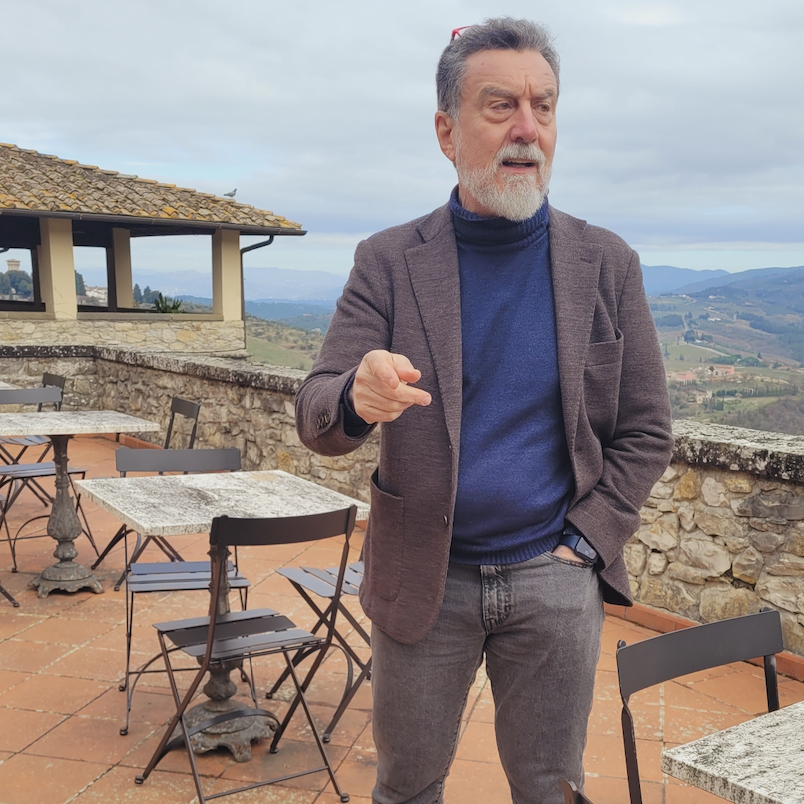
The one and only Luigi Cappellini – Castello di Verrazzano

Castello di Verrazzano – Montefioralle

There is arguably no visit in the Chianti Classico territory with more ambience, thrills, history, humour, top Tuscan comfort cuisine and quality wines than at Castello di Verrazzano. A few hours spent with Luigi Cappellini and daughter Maria-Sole Cappellini can’t be repeated enough. It all began with Giovanni da Verrazzano, Italian navigator and explorer for France who was the first European to sight New York and Narragansett bays and today the The Verrazzano-Narrows Suspension Bridge connects the New York City boroughs of Staten Island and Brooklyn. Verrazzano wa known as a humanist and man of science, much like Cappellini who came along 500 years later.

Castello di Verrazzano Chianti Classico DOCG 2022, Montefioralle

Worthy exercise to taste 2022 next to the settled 2021 because you see how much bolder this next vintage really is. Silky sangiovese impurezza as it is said, warm and sun-ripened at elevation with a look to the Chianti Mountains due east. A syrup of fruit and acidity swirled and seductive, acids purely Montefioralle and a balance discovered throughout. Deeper and darker fruit, sinking into brooding and a sangiovese that will need time to shed it’s weight and rise up again. The acidity will see to that rising and when the weather warms in 2027 this Verrazzano will begin to drink as it should. Fine Annata and one that resembles the Gran Selezione, albeit as parts of the appellative whole. Drink 2027-2031.  Tasted twice, at the winery and at The Chianti Classico Collection, February 2025

Castello di Verrazzano Chianti Classico DOCG 2021, Montefioralle

Seems appropriate to taste ’21 almost exactly one year to the day later because this exact amount of time has settled the score. The energy has not waned even an iota and today’s pulse is triggered yet measured, like an athlete at rest. Behold a definitive Annata.  Last tasted February 2025

For Verrazzano a complicated and in the end balanced vintage but who could have forecasted the restrained power and elegance. A 100 percent sangiovese vintage and one of somewhat shortened vindication to capture the grace and especially acidity of the vintage. A bit of maceration that hints at carbonic but no fizzy pulse. Almost a spicy sensation on the palate but really a matter of total energy. Bravo. Drink 2024-2028.  Tasted February 2024

Castello di Verrazzano Chianti Classico DOCG 2008, Montefioralle

Aromatics indicate an older wine, pleasant and in the throes of primary to secondary transference, but the palate remains immersed in freshness. Succulence and energy in the mouth, cool, sweetly herbal and the fruit still pops. Ignore the historical thought of naysayers who said the 2008s would not age well – Verrazano’s has travelled through life without obstacle because its balance is impeccable. Why not imagine three more years at this level? Drink 2025-2028.  Tasted February 2025
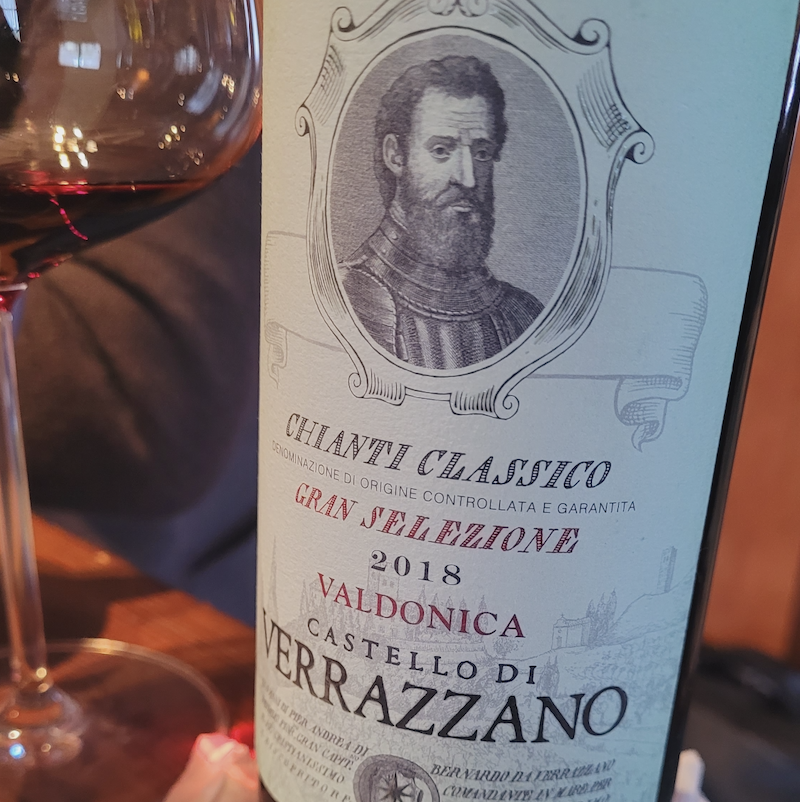
Castello di Verrazzano Chianti Classico Gran Selezione DOCG Sassello 2018, Montefioralle

Not sure if any significant movement was expected but none is forthcoming for Sassello 2018. Persistently punchy and grippy with tannins still at their peak. Feels formidably sapid at this stage and perhaps another six months will lighten the load.  Last tasted February 2025

Not yet released and will have at lest three more months in bottle before that can happen. A strong vintage and normally the release would be the fall but both wood and fruit need to time to find each other. The substance in Sassello 2018 is, well substantial, in fact something more than that. Richness at the height of Verrazzano’s abilities but my goodness this packs a punch while also showing off the modernity and harmony that define this estate today. Bravissimo. Drink 2026-2033.  Tasted February and October 2024

Castello di Verrazzano Chianti Classico Gran Selezione DOCG Valdonica 2018, Montefioralle

More delicate than Sassello and the contrast is even more obvious from 2018 than it had been for 2017. Though the season developed darker fruit it is the freshness, luminosity and sweeter style of Balsamico that see great lift in this Gran Selezione. In a way a true expression of the word “onica” for mineralogy, “a variety of agate with concentric black and white streaks, or, more generally, with areas that present strong contrasts in colour.” As here from the wine’s core to its edges, in hue and feel, vinous meets gemstone and stony cool.  Last tasted February 2025

The thing that connects Sassello and Valdonica is the vintage, the power and the full on substantial effects compactly packed yet carefully multi-layered. A swarthiness really separates this GS from Sassello in ways that put this in its own light. The aromas and flavours also bring in exotic spices but also a succulence that show how special and different this sangiovese truly is. It walks a fine line, flirts with danger and comes out singing. Drink 2026-2036.  Tasted February 2024
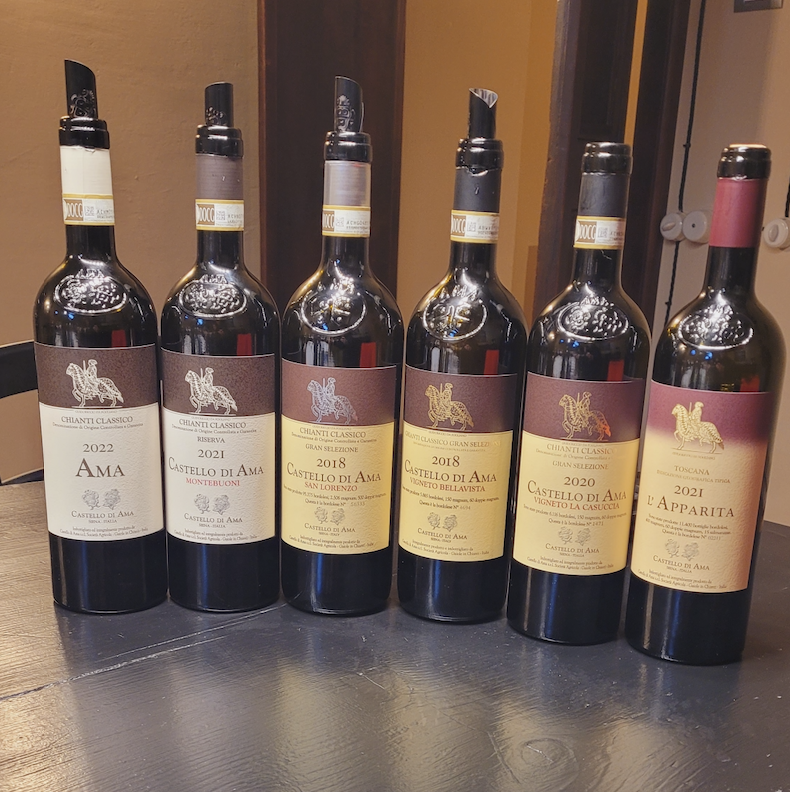
Castello di Ama

Related – Castello di Ama’s state of the art
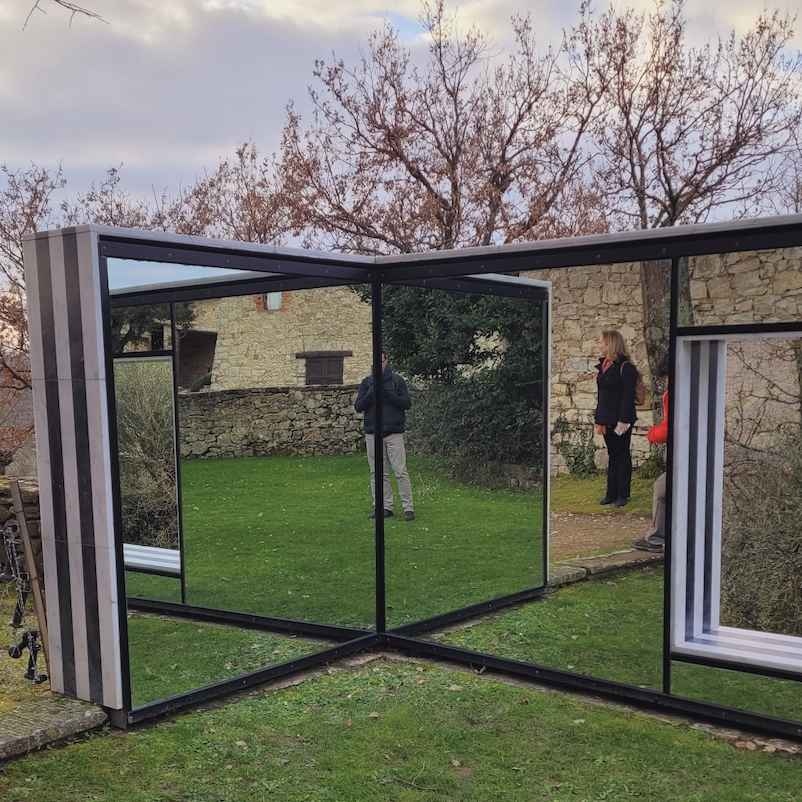
Questa non è una finestra at Ama – Daniel Buren, Sulle vine punti di vista

Castello Di Ama Ama Chianti Classico DOCG 2022, Gaiole

Only Ama could pull and gift this much upfront fruit to draw us in as quickly as we do. Richness accrued and balance incarnate, more than juicy acidity and fully encapsulating tannin. If this is what Annata is all about the ceiling is unlimited for San Lorenzo and the more interlocutory and focused single vineyard Gran Selezione. Drink 2025-2032.  Tasted February 2024 and 2025

Castello Di Ama Chianti Classico Riserva DOCG Montebuoni 2021, Gaiole

A mouthful of acidity, tannin and mineral direct and defining Ama’s Montebuoni 2021, a wine not yet mature enough to say the window has opened. Quite woody at this age while the dark fruit is so very substantial and so time is needed to melt them into one another. That acidity and seriousness of Balsamic quality speaks to the Gaiole origin as the source for this level of appellation. Drink 2026-2030.  Tasted twice, at Ama and at The Chianti Classico Collection, February 2025

Castello Di Ama Chianti Classico Gran Selezione DOCG San Lorenzo 2021, Gaiole

San Lorenzo the concept comes from the vineyard with that name and now the ideal conceives of Gran Selezione as a wine to speak for all of Ama’s Gaiole. The vintage is renowned to be important and so arrive expecting fullness of everything involved, but also a fortress yet to be breached. A tough one indeed still at this stage with verticality and immovability. Needs at least two more years. Drink 2027-2032. Tasted at The Chianti Classico Collection, February 2025

Castello Di Ama Chianti Classico Gran Selezione DOCG San Lorenzo 2018, Gaiole

Aromatic, spicy, lifted and genuine. Extra layers, fruit of course and then floral, calcareously white peppery, luxe as per the appellative level and a matter of time. Vintage but also patience, the latter needed to understand the former, warm and developed, compact and yet never dense. To achieve this kind of acidity is remarkable. A matter of matching same parts to make up a whole. As per Marco Pallanti’s decades of dedication. “I am not a flying winemaker, I am a pedestrian one.” Drink 2024-2034.  Tasted May 2023 and February 2025

Castello Di Ama Chianti Classico Gran Selezione DOCG Vigneto Bellavista 2020, Gaiole

Bellavista is first and foremost the Gran Selezione only made in select vintages, inclusive of 20 percent malvasia nera and also the one of ripest fruit with a view. The depth in 2020 is serious, the wine at once grounded and then acidity of a Gaiole nature kicks in to lift and see this Bellavista rise. Full and beautiful, seamless, orchestrated by a master of decades and artistic appreciation while delivering a modernist’s virtuoso performance. Drink 2027-2035. Tasted at The Chianti Classico Collection, February 2025

Castello Di Ama Chianti Classico Gran Selezione DOCG Vigneto Bellavista 2018, Gaiole

Bellavista the Gran Selezione is only made in select vintages and 2018 marks the first of three consecutive (likely with a fourth 2021 coming soon) after 2017 was passed over. A rare example of GS to include 20 percent malvasia nera and the beautiful view comes replete with riper than ripeset fruit. The depth from 2018 is akin to 2020 but with two further years having come and gone there is now a soft middle in between two grippy pieces of structure. This unique high elevation sector of southern Gaiole with its formidable ridges delivers the acidity of a località which always lifts Bellavista up to its precipice. At this stage it does already feel like looking back at a wine with its window fully open and the breezes blowing in. Drink 2025-2032.  Tasted February 2025
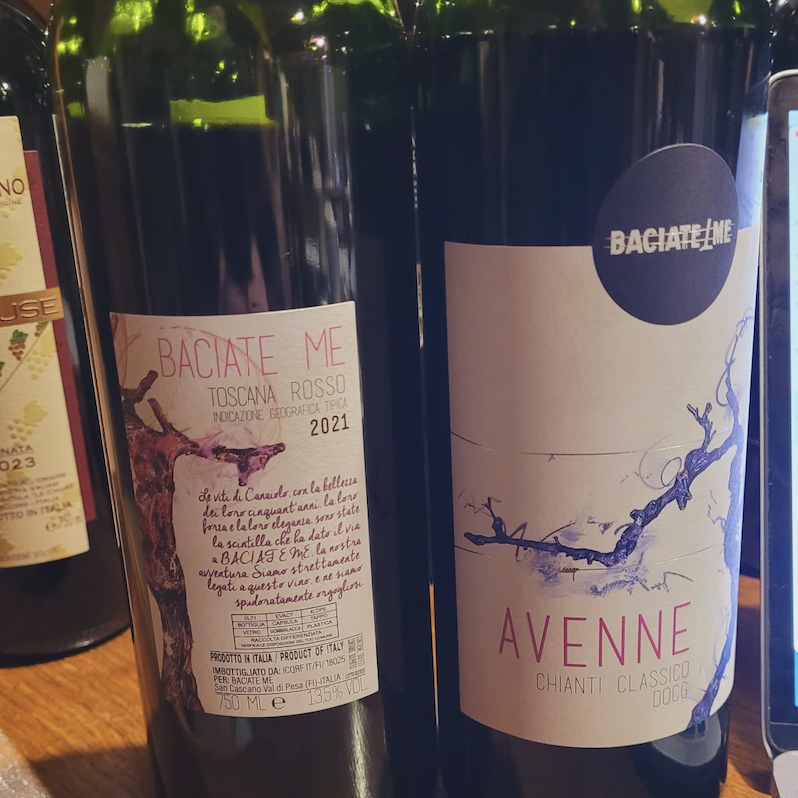
Baciate Me, San Casciano (Tasted with Lorenzo Magnelli at Le Chiuse in Montalcino)

Baciate Me Chianti Classico DOCG Avvenne 2020, San Casciano

“Kiss me,“ a play on words for the three men who own the winery, including Le Chiuse and Castello di Meleto oenologist Valentino Ciarla and a vineyard he purchased in San Casciano during Covid. Avvenne loosely translates as “please let me have some more of something, but in one word” and truthfully that is how you will feel after a glass of this wine. It’s is a sangiovese with some canaiolo of very old vines, truly San Casciano with a feeling of the local macchia and a natural wild quality, of great temper matched by restraint. The wine rolls and oscillates in waves, acts juicy, very aromatic, light, at times dusty and yet the texture is flowing. Never sharp and just the right balance from a super tiny production. Drink 2025-2029.  Tasted at Le Chiuse in Montalcino, February 2025

Baciate Me 2021, Toscana Rosso IGT

An old vineyard and from the aromatic grape higher in pH and lower in acidity but when really old vines are involved the balance is better. Tasted with Le Chiuse’s Lorenzo Magnelli who believes that canaiolo should be bottled under glass cork (or why not screw cap) because under nature cork “the wine will lose more then it will gain.” In other words the grape can oxidize faster than sangiovese but here the freshness of the vintage persists and there is a unique, almost corrugated tannic profile. Currants and the Tuscan Corbezzolo, a unique expression that is in fact really expressive. Drink 2025-2027.  Tasted February 2025

Good to go!

godello
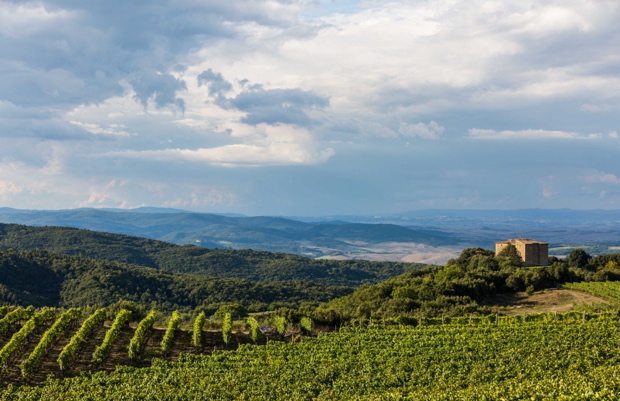
Instagram

Facebook

Diversity in Brunello di Montalcino

Montalcino
(c) Consorzio Vino Brunello di Montalcino

Benvenuto Brunello is the highlight of many people’s calendar, for good reason, because there are few wines that can match its depth, class, character and structure. No one of sound mind passes up the opportunity to taste a pile of Brunello from Montalcino. And those who know understand the remarkable fact that it is indeed quite special to find such a level of consistency across a spectrum of very high end wines.

For a look at our reports published over at WineAlign where John Szabo and I offer opinions on the 2013 Brunello, please click on these links.

Coming Home With Brunello di Montalcino

Feature Report: Brunello di Montalcino 2013 Vintage and Buyer’s Guide

The travelling Brunello experience is taking place in the Consorzio’s 52nd year, now in the hands of Patrizio Cencioni, Chairman and President of The Consorzio Vino Brunello di Montalcino and Vice Presidents Tommaso Cortonesi, Andrea Machetti and Riccardo Talenti. On March 5th, 2018 the 27th road show came to the Carlu in Toronto and I had the ambassadorial pleasure of presenting the wines alongside Brunello Consorzio Director Giacomo Pondini. The session was just the third international presentation of the new vintage of Brunello, the first having taken place in New York and Chicago in late January and the second just over two weeks ago in the Chiostro Museo Montalcino. That the Consorzio continues to view Canada as such an important market and partner speaks volumes about our longstanding relationship with Italia, Toscana and Montalcino.

Benvenuto Brunello

Related – Benvenuto Brunello 2017 report: Rethinking Rosso and disciplined Brunello

We all remember our first love. We may hide the memory away and rarely speak of it but it’s always there. For me, Brunello di Montalcino was my first. In the spring and summer of 1987 I was a naive young McGill University student living in Siena. Bad hair, bad clothes, not a care in the world. My professor from the University of Toronto knew quite a lot about the wines of Toscana so when we made a class pilgrimage to Montalcino he asked if anyone would like to join him for wine tasting at the Enoteca di Fortezza during the afternoon break. All of my classmates opted for a siesta in the July shade and this at a time when there were no cell phones, computers or tablets to distract us from actually learning something. I was the only one who chose to accompany Professor Wollesen to the fortress.

In retrospect, what happened over those next few hours changed my life. It might have done the same for my classmates were they to taste, guided by a man of sangiovese experience, though 30 samples of Brunello di Montalcino 1982. If only I knew then even a fraction of what I have learned since, what value that would be for me now. No matter, for I have Professor Wollesen to thank for introducing me to the world of Brunello. And here we are.

A #benvenutobrunello2018 discussion with @marcora85 on all things #montalcino means there is lots of thinking to do ~ #benvenutobrunello #brunellodimontalcino

Last month I came to Montalcino for the second straight year to assess the presentation of the current Annata and along with tasting more than a hundred of those architectural 13s I went out into the field to visit important vineyards. Because two ears are better than one mouth I also spent time listening in with other journalists and with producers to get a consensus on the vintage. In 2018 there isn’t one and in my view, that is a very good thing.

The mixed messaging coming from talk about the 2013 Brunello may seem confounding but as Mark Twain wrote, “it were not best that we should all think alike; it is difference of opinion that makes horse races.” Thinking about a year like 2013 makes for a terrifically exasperating enigma because it presents a very particular kind of challenge. To some it was a case of extreme or at least unusual and unsettling weather patterns and the many shifts made harvest and winemaking decisions crucial, but also far from universally obvious. The vintage is to me a head scratcher because of how many opinions I’ve heard expressed as to its overall quality. I like to refer to the wines as ones of structural expressionism but however you choose to qualify them, the Annata wines are perhaps the most diverse that Montalcino has produced in a very long time.

The hill that is Montalcino. The look that is Godello. The argilo of the northern vineyards #tuttoèpossibile

The 2013 vintage began with a rainy and snowy winter. The spring was cold and the rain played havoc on bud break and development. Veraison was very slow. The harvest for many took place in late September through the first week of October. A common play for journalists or anyone trying to assess a vintage like 2013 is to lay blame on and conversely congratulations to producers who choose to pick their fruit at one junction or another. In this case, either before or after the September rains. If we have learned anything from Montalcino, where your estate vineyard or vineyard holdings are located will determine when, how and why you make your decisions. Every cru, block, plot and row carries a specific picking window and in 2013 even further under the microscope. It would be fruitless to try and generalize and to say that the greatest wines were made because they were picked before or after one pinpointed day during harvest.

So, are the 2013s much better than the 2012s?  Do they exhibit more character, structure and depth? I would say better is the wrong word, especially because we are discussing sangiovese, all of which, as I’ve said many times before, are snowflakes. As for character, structure and depth? Many wines speak of all three and many more will, in time, even if many of you are not yet convinced that this will happen. I am confident that history will be kind, even apologetic, to the 2013 Brunelli and in turn, the wines and their producers will look forward to reconciling with the early naysayers. Diplomacy, kindness and patience will reward us all.

#montalcino

Brunello di Montalcino is referred to as “a very modern and ingenious intuition,” a phrase that so aptly depicts how it has separated itself from other sangiovese producing neighbours, namely Chianti Classico and Vino Nobile di Montepulciano. Only the Brunelli are possessive of a very certain and special sort of sangiovese aromatic liqueur, an amalgamation of deep, dark cherry, fresh leather, earth and flowers that differs from the others. Brunello also carries its own unique type of acidity and a fineness of tannin that speaks to how the grapes develop on the slopes and in the valleys below.

What about the long-employed term sangiovese grosso? The word we know as Brunello translates loosely to “little dark one”, in reference to the local vernacular name for sangiovese grosso, “fat sangiovese,” the large-berried form of sangiovese which grows in the area. While Brunello di Montalcino and the clonal sangiovese grosso have been symbiotically synonymous for decades, with clonal selection so varied, in today’s modern Brunello lexicon it is simply sangiovese that speaks to the grape of the famous wines.

As with anywhere grapes are grown, your vineyard passes must act on phenolic ripeness and when it hits, the qualities that come along for the ride in that package are the ones you must work with. The best wines are the ones that speak this truth so if your site achieves optimum ripeness with dark fruit and generous alcohol, make that wine. If its ripe centre includes transparent, lithe and verdant fruit, make and own that elegant style of sangiovese. Be true to variety and location. In Montalcino this is the greatest compliment you can pay to your vines and your fruit.

#Repost @michaelawine・・・Because I just can_t get enough of Brunello di Montalcino – and @mgodello @brunellodimontalcino #brunello #benvenutobrunello #bbcanada2018 #tuscany #tosc
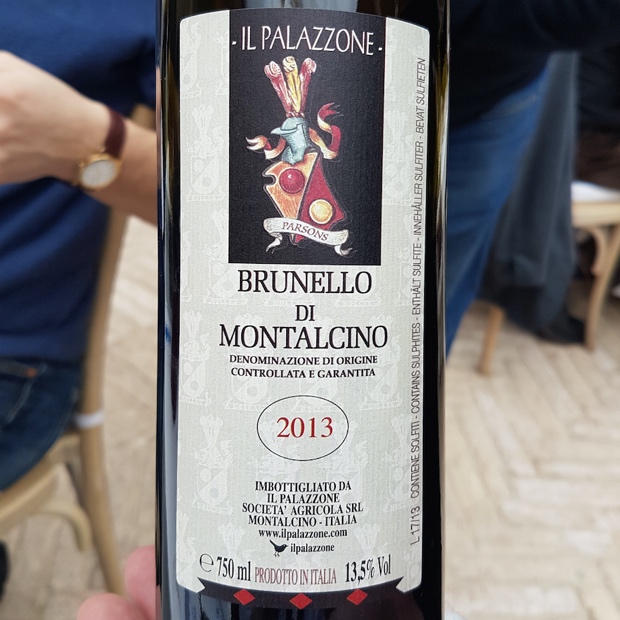
To gain a keen understanding of what separates one bottle of Brunello di Montalcino from another, especially when trying to compare and contrast from a specific Annata, I would suggest you concentrate on the location of the vineyards that produce the fruit. In some cases it’s a cru or a single estate set of blocks and in others a gathering of sangiovese from several locations. The advantage of the latter is the ability of multiple fruit sources to mitigate the deficiencies of one through support by the others. It also helps to create a house or estate style.

You have to know where you are relative to the hill of Montalcino; south, north, northeast, northwest, far south and even more specifically, from which block and micro-climate you farm within that zone. You have to consider the zones; running clockwise from the centre of the region, first on the hill of Montalcino (together with La Croce and Canalicchio), next to the north we have Montosoli, then to Torrenieri in the northeast, to the east – Pianelli, the southeast – Castelnuovo dell’Abate, extreme south-southwest – Sant’Angelo in Colle, southwest – Tavernelle and Camigliano, to the west Casanuovo and finally Bosco, to the northwest. While some zones are more widely recognized than others it is important to associate each with the style of wines they are prone to produce. Our goal here is not to dwell too much on sub-zones and it often requires great generalizations to try and do so, but it is still a very useful tool to align your palate and to gain an understanding of Montalcino’s diversity through multiple places of origin.

(c) Consorzio Vino Brunello di Montalcino

In the 1970s the number of Brunello di Montalcino producers increased to 25 vintners producing approximately 70,000 cases. According to the Consorzio del Vino Brunello di Montalcino, 120 producers made 300,000 cases of wine in 1995. Today, there are well over 200 producers in the Consorzio producing more than 500,000 cases of Brunello.

Before I get to the 83 Rosso and Brunello tasted and reviewed in Montalcino, at the Toronto seminar we poured, compared and contrasted 10 Brunello di Montalcino, eight from the current Annata, including one Cru, plus a 2011 Vigna and 2012 Riserva. Here are my tasting notes, replete with background information on those 10 wines.

Tasted through all 60, you know, for your safety #brunellodimontalcino

Altesino Brunello Di Montalcino DOCG Montosoli 2013, Tuscany, Italy (Agent, $129.00, WineAlign)

From the northern hillside vineyard of five hectares facing south next to Caparzo’s La Casa and one of the most historical vineyards in all of Montalcino. Montosoli is blessed of an ancient limestone soil and an exceptional 360 degree exposure. It combines 380m of elevation and great quality Galestro in clay, was first produced in 1975 and only in years deemed worthy of its abilities. It is traditionally aged for four years prior to release; at least two years in Slavonian oak barrels, three to four months in medium-toast Allier barriques, and four months in bottle. If the normale is rich and elegant this is fuller, bigger, uncanny of that omniscient blueberry fruit and unlike any other Brunello in all of Montalcino. Is it the clone, the rocks, the place? What is it? Is is a different grape? No, it’s the terroir. But how? The Montosoli clone, mixed with the land and farmed by the people. True-blue, more than just climat-esque in Montalcino? Yes. How else to explain it. Drink 2021-2035. Tasted February and March 2018  altesino_winery  rogersandcompanywines    @rogcowines  Altesino Srl  Rogers & Company

Cupano Brunello di Montalcino DOCG 2013, Tuscany, Italy (Winery, WineAlign)

In Montalcino you can find Cupano on 34 hectares of land in Tavernelle on the stony hill of a rolling plain above the Ombrone River. Their seven hectares of vines (three of which are new) grow at an average altitude of 200 metres on terroir with good drainage and high mineral content at the far edges of the territory. Their organic and biodynamic estate is a cultural marriage between Ornella Tondini, an Italian, and her husband Lionello Cousin, a Frenchman. They credit great mentors; Henri Jayer from Bourgogne who is a firm believer that wine is made in the vineyard, no chemical fertilizers or pesticides, low yields, native yeasts, malolactic on the lees and aging in French barriques over Botti. Carlo Ferrini selected the land for the vines and the vine-stocks, the growth system and the height of the vines. François Bouchet introduced the idea of biodynamics and finally, approval from the great sangiovese enologist Giulio Gambelli. From “a regular Tuscan summer which led to a good ripeness and structure,” Lionello Cousin feels “pretty confident of 2013’s potential.” If the early presence of even-tempered and richly endowed fruit showing its flesh through well-aligned teeth is any indication than longevity will be a real asset to this Brunello. Everything points forward and there is zero doubt as to the passion, attention and provenance paid to the method, the gurus and the teachers. This is sangiovese worked by the hands of agriculturalists and winemakers on the ball, present at all times. It does not speak of consulting oenology popping in and out of view. Very special and singular in kind. Drink 2020-2030.  Tasted March 2018  cupanomontalcino  @Cupano_Brunello  @CupanoMontalcino

Donatella Cinelli Colombini Brunello Di Montalcino DOCG 2013, Tuscany, Italy (113357, $64.95, WineAlign)

In 1998 when she went out on her own to create a new project and in reaction to the fact that wineries in Montalcino did not trust a female cellar master, Donatella created the first all-female run winery in Italy. It is now an estate run by a team of no fewer than eight passionate women. The restored Casato Prime Donne is on the northern side of Montalcino, with sandy clay soils and has been in Donatella Cinelli Colombini’s family since the end of the 16th century. Of the total surface of 40 hectares, 16.5 are planted to sangiovese and are cultivated organically. Aging for the first year was in (5-7 hL) tonneaux and then continued in (15-40 hL) Allier wood and Slavonian oak casks. The wine comes from six small vineyards in a 10 hectare area surrounding Casato Prime Donne. Donatella describes 2013 as “an old style vintage, a Brunello that is elegant, complex, deep and harmonious, that will last decades. The scarce vintages are nearly always the higher quality ones.” There have been exceptional wines from Donatella in the recent past but the most impressive thing she can do is make a great wine in a challenging vintage. This 2013 does what needs; it’s delicately passed fruit avoids the intensity and drying angst of others, keeping the bright faith, binding it to tannin through the coursing dialectical collection of acidities and then making a valid request for patience. All 2013 Brunello need time, some will never come into their marriages and others, like the ’13 from Casato Prime Donne are already there. It will go further than many. Drink 2020-2029.  Tasted February and March 2018    donatellacinellicolombini  lesommelierwine @news_donatella  @LeSommelierWine  Donatella Cinelli Colombini  @LeSommelierWine

Fanti Brunello di Montalcino DOCG 2013, Tuscany, Italy (112607, $72.00, WineAlign)

Fanti’s 10 hectares of 20-30 year old vines have been developed in the amphitheatre of the south facing hills of Castelnuovo dell’Abate, at 350-430m, a part of which are quite proximate to the Roman Basilica of Sant’Antimo. This seems to be the optimum age for vines in Montalcino and for the production of a classic, estate or house style. Also a matter of manual harvest and the use of the sorting tables. Their Brunello is a classic expression of a gathered terroir. Ageing is done in part French oak barriques and partly in medium capacity (3,000L) casks for a minimum of 24 months (usually 28). Before release the wine is bottle-aged for a minimum of four (but usually up to 12) further months. Fanti’s 2013 is a deeply swelling affair of cherry liqueur and fresh leather, rich, decisive and quite intense. The liquid gelée is fully and completely welling in fruit and earth with more tonic and fine bitters in linger than most. This is a very specific sangiovese with a composed and singular style, chalky, variegated and gregarious. It will have many fans on restaurant lists all over the greater diaspora for Brunello. Drink 2019-2024.  Tasted February and March 2018  tenuta_fanti  lesommelierwine  @tenutafanti  @LeSommelierWine  Elisa Fanti  @LeSommelierWine

Il Grappolo Brunello di Montalcino DOCG Sassocheto 2013, Tuscany, Italy (Agent, $58.00, WineAlign)

On 25 hectares with 16 planted south of Montalcino around Camigliano, in an area dense with Mediterranean scrub lying between the Tyrrhenian Sea and the Val d’Orcia. The vines look south towards Monte Amiata and west towards the valleys of the Maremma. Sassocheto is Il Grappolo’s iconic Brunello made from 20 year-old vines in the south-facing Piano Nero vineyard, planted at 300 metres of elevation in deep, pebble-rich schist soils with decomposed rocks of galestro, alberese, and sandstone.  The wine ferments in temperature-controlled open vats and is given a lengthy maceration; it then matures at least 24 months in French and Slavonian oak barrels and a further 6/12 months in the bottle. Without equivocation and to keep us comfortably seated in the plush authenticity of traditional Brunello it is Sassocheto that confirms our notion of a sangiovese-Montalcino world. Should Il Grappolo’s be considered as more traditional than most? Yes, but just as this 2013 tells us with utmost clarity, the vernacular is spoken through an ever evolving and forward thinking lens. No pretence and all in for the right reasons. Drink 2020-2029.  Tasted March 2018  #ilgrappolo  @GrappoloFortius  @IlGrappoloFortiusMontalcino

La Colombina Brunello Di Montalcino DOCG 2013, Tuscany, Italy (445650, $69.95, WineAlign)

La Colombina di Caselli Anna Maria is the full name, a small three hectare estate in Castelnuovo dell’Abate, bordering on both the Ciacci and Uccelliera estates. The vineyards have been in the Caselli family for generations. Though they had always chosen to sell the grapes rather than bottle their own wines it was in 1997 when they converted to specialist wine growing with the planting of the three hectares and released their first wines in 2001. The Brunello is aged in a combination of barriques and tonneaux plus Bottle aging for eight to 10 months. Castelnuovo dell’Abate is one of Montalcino’s hottest sub-zones, protected from cold easterly winds by the extinct Amiata volcano and open to briny hot Mediterranean winds on from the west. The speciality of this zone and micro-climate bring great structure to La Colombina’s sangiovese though in 2013 a concentrated effort to emit amenable and enjoyable fruit puts this in an earlier frame of mind. That said it will outlast the ’12, a wine of fine liqueur. This is surely a consistent follow-up to that wine. Drink 2019-2023.  Tasted March 2018  #lacolombina  wineonline_ca    @wineonline_ca  WineOnline.ca

Tenute Loacker Corte Pavone Brunello Di Montalcino DOCG 2013, Tuscany, Italy (237263, $59.00, WineAlign)

Since 1996 Corte Pavone has been owned by Rainer Loacker and his sons, Hayo and Franz. Hayo is the winemaker. It is located in the Casanuova area to the west of Montalcino with hillside clay soils upwards of 450-500m, certainly one of the higher elevations in the territory. Much of the 90 hectares of the estate is covered with meadows and forests. Only four hectares are dedicated to vineyards with vine age 30-35 years old and with a plan of converting another four also blessed with the best exposures. The organic wines are aged in Slavonian casks, French Barrique and Austrian oak barrels. Rainer Loacker is from the family that owns Biscotti Loacker and Remedia Loacker which produces and markets enzymes and other natural nutrients. He also owns Tenuta Schwarthof near Bolzano in Alto-Adige and Valdifalco in the Maremma. We often think about Brunello as coming from either northern or southern vineyards. In Casanuova and what separates it from other zones is the consideration of its western position and how the vineyards are affected by a closer proximity to the sea. More than this is the great altitude so that a cooler prevalence and diurnal temperature swing means Brunello of higher acidity. Though quite approachable for Montalcino sangiovese this ’13 is also reductive, fresh, energetic and its tones are set to high. Great food Brunello. Drink 2018-2026. Tasted March 2018  #cortepavone  

Villa Poggio Salvi Brunello Di Montalcino DOCG 2013, Tuscany, Italy (363028, $49.95, WineAlign)

Pierluigi Tagliabue purchased the “healthy hill” Villa Poggio Salvi in 1979, now 21 hectares of vineyards owing its name to its historical location on the south side of Montalcino, overlooking the Tyrrhenian Sea. The altitude is between 300 and 500 meters, with a rich weave of clay soils and a beneficial breeze. Pierluigi Tagliabue’s grandson Luca Belingardi is the winemaker. The Brunello spends 30 months in oak casks plus a minimum 6 months in bottle. The 2013 is an agriculturally clean, sound and precise wine meeting a viniculture on the same, extended plain for sangiovese of substance, passion and flare. This is quite tart and angular though only because the structure is meant for a launch forward, beyond the turn of the decade and forward to the next. Drink 2021-2028.  Tasted February and March 2018  #villapoggiosalvi  halpernwine      @HalpernWine  Winery/Vineyard  @halpernwine

Barbi Brunello Di Montalcino DOCG Vigna del Fiore 2011, Tuscany, Italy (Agent, $79.95, WineAlign)

Having tasted the follow-up 2012 a year earlier in Montalcino made for more than a curious moment to look at this 2011 one year later and in Toronto. Nothing against the rock solid ’12 but this vintage is simply glorious. Waiting 12 months was not just worth it but clearly essential. The walls have come down, the sea departed, volcano stepped aside and all that is right in a Castelnuovo dell’Abate Brunello world is also righteous and beautiful. Some of Montalcino’s most famous and iconic wines have come from Stefano Cinelli Colombini and Fattoria Barbi, the oldest of which date back to 1870. There are two centuries of history with thanks to Francesca Colombini. The Vigna del Fiore “vineyard of the flower” or maybe “flower garden vineyard” is unique to Castelnuovo dell’Abate, one of the oldest (and furthest south) in Montalcino. The block is just under six hectares from an area where vines have been cultivated since the XVI century. It sits on the top of a hill that descends toward the Asso and Orcia rivers and faces Mt. Amiata. The hill is a natural corridor between Montalcino and Mt. Amiata and it connects the Crete Senesi in the Val d’Orcia and the basin of the Ombrone valley as you head to the sea. The production varies a lot; in some years it is not produced and at a maximum it reaches the 13,000 bottles range. The first vintage was 1981, chosen to celebrate the 50th anniversary of Francesca Colombini Cinelli. Aged in small to medium size (that is 5-20 hL) oak barrels for the first months, it completes the aging in larger oak barrels for a total period of two years and then is bottled at least four months before it’s released. The oenologist is Paolo Salvi. This represents what matters in terms of Vigna-designate Brunello and what it means compared to broader expressions drawn from and combining several vineyards. So close to drinking perfectly but to tell you the truth, you don’t have to wait. Drink 2019-2033.  Tasted March 2018  fattoriadeibarbi  noble_estates  @FattoriaBarbi  @Noble_Estates  @FattoriadeiBarbi  @NobleEstates

Castiglion Del Bosco Brunello Di Montalcino DOCG Riserva 2012, Tuscany, Italy (Agent, $222.00, WineAlign)

Massimo Ferragamo purchased the 2,000 hectare estate in 2003. With close to 60 hectares planted at 350-450 metres to sangiovese, Castiglion del Bosco produces three wines: Brunello di Montalcino, the single-vineyard Campo del Drago and this Millicento Riserva. Located in the northwestern part of the zone, an isolated tract of wild forest surrounds the vineyards, all part of the Val d’Orcia Artistic, Natural and Cultural Park. The organically farmed vines were planted in 1998 and some new planting took place after the purchase in 2003. There are two distinct growing sections, the 20-hectare Gauggiole vineyard, just beneath the borgo and Capanna, with 40 hectares. As for soils, it was five million years ago that sea levels dropped leaving sand and clay deposits across the Val d’Orcia. The Radicofani and Amiata volcano eruptions also spread a dark magma known as trachite, resulting in a soil mixture perfect for growing sangiovese. Marl and Galestro predominate. Since the debut vintages, winemaker Cecilia Leoneschi has decreased both the predominance of barriques and the amount of new oak. Since the 2012 harvest the Millicento Riserva has only been aged in 33 hectoliter casks, but sees an additional year in bottle. This is just the third vintage of this bottling and the first to set the record straight because the vintage is a true barometer of what it is to benefit from an extra year of aging. The effect of altitude and a surround sound of forest solicits the gelid savour and cool, elemental, semimetal, crystalline coal streak that runs through the luxuriance of mahogany fruit. Brunello has the ability to layer density and weightlessness in a way that is impossible yet understood. Like here, in the Castiglion del Bosco Millicento 2012. Drink 2019-2030.  Tasted March 2018  castigliondelbosco     @LiffordON  liffordgram  @castigliondelbosco  @liffordwineandspirits

(c) Consorzio Vino Brunello di Montalcino

The future so sub-zone we’ve got to draw maps

“Montalcino is too small for micro-zones,” explains La Mannella’s Tommaso Cortonesi. “We have to communicate about winery crus or zones, this will be beneficial for the territory, but 95 per cent of consumers have no idea where Montalcino is, so why do we need to divide it up into micro-zones? Cru, but nut sub-zones.” It’s true, each producer knows the soil, the vines, the specifics of their cru and what needs to be done to make the best wine possible from that cru.”You have to exult the main characteristic of your single-vineyard. You can talk about freshness in the north, but not in the warmer parts of the south. And you have to work in the right way to exult the freshness or conversely the big body possibility of that area. Work woith what the zone gives you.” Generally speaking, the northern side has much more vigour, on more clay and more water, where green harvest at least once or twice must be performed. On the southern side the yields are lower.

My friend and colleague Monty Waldin wrote “there’s no better way to understand this intriguing wine than to seek out the single-vineyard expressions.” Identifiable single-vineyard Brunello will more than likely be completely different from one other, “proof, if it were needed, that differences between Brunello terroirs are something that can unite rather than divide the region.” But there is also the concept of single vineyards versus single terroirs. The latter is also a good way to divide and make sense of the region.

Many have raised the question “to zone or not to zone,” a debate hotly contested for years but still with no clear answer. Is Montalcino ready for sub-zones or is it still far too early, decades early even, to be expecting this shift? Does zoning runs the risk of giving imprecise and misleading evaluations? Are many more years of experience required to figure out where (as in Bourgogne) are the locations of the best soils and cru? Is it not generally agreed already which ones these are? Remember that sangiovese is the only grape allowed in Brunello, is notoriously site-sensitive and performs differently depending on its environment. Do the producers know with certainty where it consistently works the best?

Annata 2013 #benvenutobrunello2018 highlights from a confounding vintage with some inspired upside. Wait for it. #benvenutobrunello #brunellodimontalcino #poggiodisotto #salvioni #sanpol

One way to look at Montalcino is as an inverted cone with its peak just south of the town of Montalcino (think of dividing the square into four isosceles triangles as shown on the map, with the center forming the apex of the cone). From the center, the slopes generally descend out- ward across the region. It thus becomes apparent that one of the most influential variables in the character of these wines is altitude. This wine zone enjoys a Mediterranean climate as well as high altitudes that provide a cooling effect that is beneficial to the grapes and prevents disease. The differences in altitude and exposition throughout the zone play a substantial role in the vegetal cycle of the vines. Due to high altitudes, cooling conditions from winds and evening temperature drops sustain a slower cycle in vineyards. It is important to note that all variables are not constant and generalizations can oversimplify a complex subject. Individual site soil, exposure, viticulture and vinification technique, producer style, and vintage conditions can change these characteristics.

Here are the notes on the wines tasted in Montalcino; 62 Brunello and 21 Rosso.

Brunello di Montalcino

Altesino Brunello Di Montalcino DOCG 2013, Tuscany, Italy (994095, $63.00, WineAlign)

Lovely exotic spice on the nose of the Altesino Brunello ’13, something the ’12 did not at first and continues not to show, but this is not too dissimilar to some other 13s. This northern song of multi-vineyard, micro-climate and terroir fruit carries itself admirably, with admiration for its variegated origins and for what you do with such a complex and volatile subset of territory. The dark fruit meeting rich and warm texture quotient trips off the tongue like E Più Ti Penso in what is surely of the more beautiful classica annata 13s. “Non ha l’acqua per nuotare.” Drink 2020-2028.  Tasted February 2018  altesino_winery  rogersandcompanywines    @rogcowines  Altesino Srl  Rogers & Company

Altesino Brunello Di Montalcino DOCG Montosoli 2012, Tuscany, Italy (Agent, $126.00, WineAlign)

A year makes an incredible difference. No dissipation of the richness and deep liqueur though now the emergence of marked elegance and of course, the Montosoli blueberry. Still a calcareous pietraforte vein runs through in chalky liquidity but a year makes such a difference and now the breathing is calm, undisturbed, lovely. Last tasted February 2018.

In its present state Montosoli is a beast. There, I’ve said it. Shut tight, chains securely in place, reduction the retaining wall to keep predators out and so good luck on unearthing any early secrets. You know there is classic and earthy red fruit hiding but you can’t quite feel it. The palate is chewy, crunchy, propitiously and indubitibly enriched. This is a massive Brunello with underlying elegance and charm but ultimately all-powerful. Drink 2021-2037. Tasted February 2017  altesino_winery  rogersandcompanywines    @rogcowines  Altesino Srl  Rogers & Company

Emotional tasting through #altesino & @caparzowines with #elisabettagnudiangelini #brunellodimontalcino #montosoli #vignalacasa

Altesino Brunello Di Montalcino Riserva DOCG 2012, Tuscany, Italy (Agent, $126.95, WineAlign)

Let’s talk about what changes in a year, with the settling of tannin and acidity still working its magic, munching away on the wood and the fruit, combining and alone united front getting all together. Unlike Montosoli however, Altesino’s Riserva ’12 exhibits a high level of spice that is still biting, like a Riserva does. Though I prefer to drink the Vigna, usually, but especially with Motosoli, there is no doubting the layering and age forward ability of a Riserva like 2012. Drink 2021-2030.  Tasted February 2018  altesino_winery  rogersandcompanywines    @rogcowines  Altesino Srl  Rogers & Company

Antinori Pian Delle Vigne Brunello Di Montalcino DOCG 2013, Tuscany, Italy (65114, $64.95, WineAlign)

More wisdom is readily apparent from Pian Delle Vigne through the art of estate blending to amalgamate, mitigate and ultimately realize the best for the vintage. Deep cherry, smoky to smoldering fruit solder but with a sense of calm beneath the warm. A swarm of red fruit and then this marly mineral streak running deep into the drupe. Absolutely defining, no matter how few or many you will taste from 2013, this is how it happened and will continue to do so for a decade more. Drink 2020-2030.  Tasted February 2018  marchesiantinori  halpernwine  @AntinoriFamily  @HalpernWine  @MarchesiAntinori  @halpernwine

Argiano Brunello Di Montalcino DOCG 2013, Tuscany, Italy (154609, $55.00, WineAlign)

With five centuries in place and 130 years of Brunello making history on side Argiano is the model of Montalcino consistency. The estate vineyards benefit from a micro-climate situated between Poggio alla Mura and Sant Angelo in Colle on a plateau at 300m. In 2013 a stolen vintage warmth is readily apparent on the nose, with a fine elemental streak through thick air willing and able to carry this sangiovese through its formative years. The palate and texture are next to brilliant with the great feeling of plush, silken tapestry, woven for complexity and thinking about the future. Drink 2020-2029.  Tasted February 2018  @Argianowinery  @Noble_Estates  cantina_argiano  noble_estates  @argiano  @NobleEstates

Fattoria Dei Barbi Brunello Di Montalcino DOCG 2013, Tuscany, Italy (928028, $49.95, WineAlign)

If there is another estate in Montalcino with more ode in pocket to tradition and history while always moving and thinking forward then I’d like to meet it. Barbi’s ’13 takes an express leap ahead, away from where it came but with notes and stories that recall its past. This fruit is serious, wise, salumi-frutta di bosco meets fragola based, chewy, ropey and exact. The tannins are drying over round and bounding acidity while the age potential never wavers. It’s a baby, like so many, but in a Brunello as here, as always, there is no speculation, only certainty. Drink 2020-2027.  Tasted February 2018  @FattoriaBarbi  @Noble_Estates  fattoriadeibarbi  noble_estates  @FattoriadeiBarbi  @NobleEstates

Podere Brizio Brunello Di Montalcino DOCG 2013, Tuscany, Italy (WineryWineAlign)

Though not yet convinced that 2013 will be a the vintage of the century it is always a pleasure and indeed an honour to taste a house moving from strength to strength. You can feel the give and take of the grippy framework, certainly before all else but behind a textured weave of a curtain there is the fruit lying in patient wait. The whole package brings about a well-thought out design, from that calm and collected fruit through very fine acidity and into the masonry of supporting structure. Drink 2021-2031. Tasted February 2018  @PodereBrizio  poderebrizio  @poderebrizio

Camigliano Brunello Di Montalcino DOCG 2013, Tuscany, Italy (WineryWineAlign)

This is bright, cheery, wild cherry and fresh leather sangiovese with a medium body meets semi-plush texture, medium acidity and some drying, grippy tannins. It’s extremely correct for its take on 2013 and ostensibly tells the story of the vintage. You can use a Brunello like Camigliano’s to benchmark wines in either or all directions. It offers a vantage point at the centre of a four-corner intersection with traverses in right angles and on diagonals in all directions. Drink 2019-2025.  Tasted February 2018  commercialecamigliano    @camiglianomontalcino

Canneta Brunello Di Montalcino DOCG 2013, Tuscany, Italy (Agent, $59.95, WineAlign)

From a most challenging 2013 vintage, this can only be Brunello di Montalcino, with ripe, intense, dusty and edgy fruit wrapped up in grippy tannin. There is a verdant streak running through the tannin, not surprising considering the vintage and there too is the black cherry, leather and cypress savoury liqueur. The acidity is well-managed, the typicity bang on and in the end, a perfectly correct example of vintage and place. Drink 2018-2020.  Tasted February 2018  #canneta    Società Agricola Canneta Srl

Capanna Brunello Di Montalcino DOCG 2013, Tuscany, Italy (Agent, 378513, $47.00, WineAlign)

It is here where so much collision occurs, terroir, weather, climate and agriculture are all involved, without recourse, to machinate a sangiovese of deep warmth and wealth by fruit and earth. This is the deep liqueur of Brunello di Montalcino, extreme of vintage and skilled as only this place can be. The fruit ability is equally matched by ministrative acidity, maneuvering the moving parts and delivering them into the grippiest of tannin. What a formidable mouthful this is, at present lacking a bit of charm but hopefully, in time, will all balance out. Drink 2020-2027.  Tasted February 2018  #capanna    @capannamontalcino

Caparzo Brunello Di Montalcino DOCG 2013, Tuscany, Italy (579094, $49.95, WineAlign)

The Caparzo Brunello 2013 is the label with the signature of Elisabetta Gnudi, a celebratory anniversary wine that spent three years in botti grandi. Caparzo’s Classic sangiovese gathers fruit from several sources, including the northern vineyard where La Casa is borne. This deep inhalant and liqueur also delves into earthly sand, Galestro and clay microbes in which earth and fruit challenge the notion of complexity and to which direction it pulls the senses. The earthy funk sifted though black cherry rich and always fresh and elegant fruit assumptions tells us this is part of the vintage package. High acidity into slightly volatile air confirms and eventually carries the visa to conform. Drying tannins are not a huge surprise considering the pressing matters of this wine. The low alcohol, easy to access, fresh and fleshy sangiovese carries a feeling, final and calm. Lovely wine. Drink 2020-2026.  Tasted twice, February 2018  caparzo_winery  @CaparzoWines   @TheCaseForWine  Caparzo

La Casa, Montalcino

Caparzo Brunello Di Montalcino DOCG Vigna La Casa 2013, Tuscany, Italy (Agent, $114.95, WineAlign)

Tasting Caparzo’s home block Vigna La Casa 2013 this young may be even more difficult an assessment than looking at 2012 this time last year. But if noting what a year further in bottle did for that 2012 than some plenitude must be afforded the more confounding 2013. From the south-facing vineyard on the north quadrant of Montalcino, La Casa sits next to sister Montosoli (Altesino) and its pure fruit doles out high-level Montalcino elegance and in more ways than the normale Caparzo. It also behaves with more calm and collected demeanour. Though reduced with early bite and taut finings this is clearly a very refined Caparzo for the people. Drink 2019-2026.  Tasted February 2018  caparzo_winery  @CaparzoWines   @TheCaseForWine  Caparzo

Caparzo Brunello Di Montalcino DOCG Vigna La Casa 2012, Tuscany, Italy (Agent, $114.95, WineAlign)

From the south-facing vineyard on the north quadrant of Montalcino, quicker to amalgamate and settle than many in the region, the ’12 single-vineyard La Casa is a true ambasciatore of Caparzo terroir, rich and regaling but lithe and elegant. If you are trying to gain an understanding of the Caparzo way this is the place to start, in 2012, from a living, breathing Vigna, out of the storied vineyard. Perfume and finesse are special and this is how it’s done, without pretension and with class. So much to learn from an extra year in bottle. Drink 2019-2026.  Last tasted February 2018

Caparzo’s Vigna La Casa is quite rich and more approachable than many at such an early stage with the home vineyard ready to provide both the beauty and the stuffing almost before you realize you can sit down with a bottle to enjoy. It is refreshing to take a Vigna-designate bottle and be offered the immediacy of fruit though La Casa is more than capable with structure to take it through a five year primary stage. Some interest will develop after that but these early years will be the best. Drink 2017-2022.  Tasted February 2017  caparzo_winery  @CaparzoWines   @TheCaseForWine  Caparzo

Caparzo Brunello Di Montalcino Riserva DOCG 2012, Tuscany, Italy (Agent, $112.95, WineAlign)

Caparzo Brunello di Montalcino Riserva 2012 is from a producer with parcels all over Montalcino, even though the estate is located in the northern sector. This seems today like a very smart forward-thinking decision. The bringing together of multi-geographical and climatic fruit helps to mitigate variability and vintage variation and towards keeping away from the heat, jam and heavy concentration to raisining of the southern vineyards. This is particularly poignant in an age of climate change or more important, weather extremes, but it is Elizabetta Gnudi’s holdings all over Montalcino that put together the balanced blends that Caparzo can do. Case in point this noble Riserva from which the very idea of freshness and light wines are always the result. The ideal is furthered with a set of wines, even at Riserva level that relatively speaking are always affordable. Drink 2020-2028.  Tasted February 2018  caparzo_winery  @CaparzoWines   @TheCaseForWine  Caparzo

Castiglion Del Bosco Brunello Di Montalcino DOCG 2013, Tuscany, Italy (956391, $54.95, WineAlign)

Warmth to nose and a deep inhalant of sangiovese liqueur are a calling card of the northwest regional house in a Brunello of proper wealth and massive appeal. Yet another wine to define vintage it is the house style that truly takes centre stage, from grippy tradition through exfoliated structure and down the deep well of varietal elixir. Castiglion del Bosco carries baggage with purpose and extends an outstretched tannic hand forward as we and they are making plans for the future. Drink 2020-2028. Tasted February 2018  castigliondelbosco     @LiffordON  liffordgram  @castigliondelbosco  @liffordwineandspirits

Castiglion Del Bosco Brunello Di Montalcino DOCG Campo del Drago 2013, Tuscany, Italy (SAQ 10708424, $63.25, WineAlign)

Campo del Drago is Castiglion del Bosco’s cru from the finest vineyard in the Capanna area, a hectare and a half at 450m, marking the highest elevation. Structure, refinement and pure sangiovese expression are the intent through content and goal by execution. The dragon keeps it old-school, travelling loyal to tenets of experiences learned and known. A bigger oak presence is felt in the tannic architecture so that the wine is still in chains, but also in love. The clay-shale and gravel-pebble terroir decides what this Brunello can do. It speaks to you, “all these changes everywhere, just go ahead and take my hand…we can try to learn to make it through, cover the other side.” Density and high acidity determine the plan so looking ahead, the feeling and deeper understanding will come, in three years time. Drink 2020-2027.  Tasted March 2018  castigliondelbosco     @LiffordON  liffordgram  @castigliondelbosco  @liffordwineandspirits


Col D’orcia Brunello Di Montalcino DOCG 2013, Italy (306852, $49.95, WineAlign)

Classic is the operative for Col D’Orcia and in this vintage, a deeper understanding of Brunello di Montalcino and how feeling determines expectation, that no matter the pain we may or may not want to feel this early, the eventuality will be a positive affair. The structure in here is nothing short of pyramids strong and so know this. You will drink this is 15 years and have nothing but positive, wistful things to say. As for right now, perhaps not so much. So grippy. Wow. Drink 2021-2030.  Tasted February 2018  @Coldorcia  @DionysusWines  coldorcia  dionysuswines  @coldorcia.brunello  Dionysus Wines & Spirits Ltd

Collemattoni Brunello Di Montalcino DOCG 2013, Tuscany, Italy (Agent, $61.99, WineAlign)

Take a trip away from all you have noted, felt and perceived in the first 25 Brunello tasted from this 2013 vintage and begin anew. Imagine you know nothing of sangiovese nor how it translates from the Montalcino terroir. Take in this Collemattoni with open eyes, nose and mouth. It’s traditional, you would have to say and the most layered and variegated sangiovese imaginable. It transcends ubiquity and suggests a very personal affair. This is a religious, personal imposition from which there is no escape. The fruit is characteristic of vintage and specific to Sant Angelo in Colle but it comes replete first as a swell from the western sea and then a squall in the eastern wind. The fruit wave is massive, the stiff breeze of acidity equal to task and the tannins building, aboard ships whose masts flutter upon these seas. But it’s both a comfort and a charm, under a spell that you will not be able to avoid, not for a decade or more. Drink 2021-2033.  Tasted February 2018  @collemattoni  @StemWineGroup  collemattoni  stemwinegroup  Collemattoni Brunello  @stemwine

Cortonesi La Mannella Brunello Di Montalcino DOCG 2013, Tuscany, Italy (279083, $70.95, WineAlign)

The vintage posed more than one problem but success has been won by the Montalcino producer who after the heat waited out the rain, followed by a few weeks of settling and thus allowed their grapes to complete the phenolic journey. Case in point Tommaso Cortonesi’s 2013, a modern, many steps forward taken Brunello with little to no fear of a world hard to figure. It remains calm and focused in light of the challenging vintage. The fruit is intensely driven, the acidity equally so and the finale a continuance of linger in the face of great tension and demand. A northern location and an expertly farmed estate block (as opposed to single-vineyard) is the catalyst to this ’13’s success. The composure and details of minutiae acquiesced add up to a fine effort, not presently a matter of delicasse but certainly a result that is sure and exacting. This will be one of those fortunate Brunelli built to outlast a bigger group conjoined by jammy fruit, green tannin and astringency. Drink 2019-2027.  Tasted February 2018  @LaMannella  @Nicholaspearce_  marcora85  nicholaspearcewines  Tommaso Cortonesi  Nicholas Pearce

With @nicholaspearce_ the #brunellodimontalcino man himself @marcora85 poured his exceptional #sangiovese so we fed him the archetypal @barquebbq wings. And it was good #poggiarelli #lam

Cortonesi La Mannella Brunello Di Montalcino DOCG I Poggiarelli 2013, Tuscany, Italy (Agent, $95.95, WineAlign)

Tommaso Cortonesi’s 420m high, single-vineyard Brunello hails from the southeast section of Montalcino. Warmth is not the only advantage/alternative to growing conditions but also soil which is rocky and rich in marl, as opposed to the clay-sandstone earth of the northern vineyards. The expectation persists for richer, deeper and darker, at least in terms of fruit. There is in fact this aphasic maroon sensation felt at the heart of the Poggiarelli matter. The rocks are so important to the southern vines, notably Galestro because it streaks through the tenebrous dimension with a clarity of cool savour. Power is kept in tow so that notes in mind of things like svelte and grace are given due consideration. This southern slice shows Tommaso’s specific mentality, as will the other, but here it’s one of care and precision. Poggiarelli as a cru is not La Mannella, but they are inextricably tied together by their one maker. Drink 2020-2027.  Tasted March 2018  @LaMannella  @Nicholaspearce_  marcora85  nicholaspearcewines  Tommaso Cortonesi  Nicholas Pearce

#Repost @nicholaspearcewines (@get_repost) ・・・ Serious Brunello talk going down #therealmontalcino #cortonesimontalcino @mgodello @marcora85 @barquebbq @brunellodimontalcino
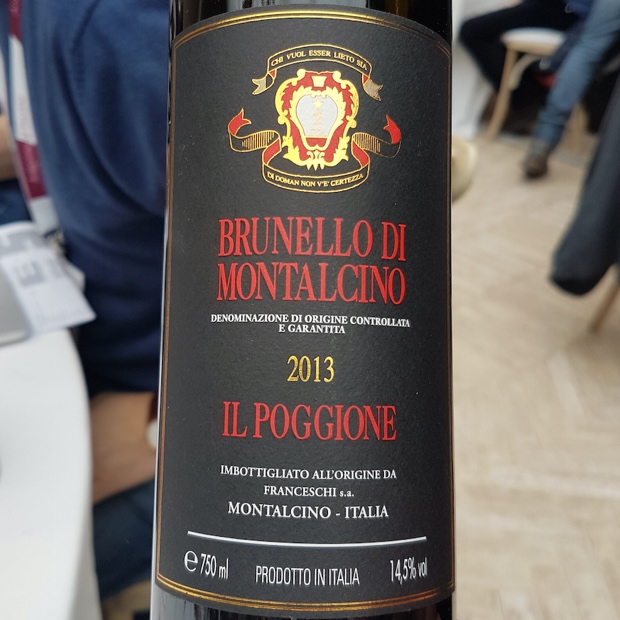
Cortonesi La Mannella Brunello Di Montalcino Riserva DOCG 2012, Tuscany, Italy (Agent, $202.95, WineAlign)

La Mannella Riserva ’12 is composed of grapes taken from the oldest vines though by a predetermined decision communicated to the consorzio one year before release, whether it turns out to be a vintage from which a Riserva is made or not. This is an essential rule that prohibits producers from not giving a wine an identity. Riserva is a completely different wine than the Annata, as always with more mature notes though here in salumi hyperbole, long aging oak spice and fruit elongation. Cortonesi’s spent four years in large Slavonian oak barrels and at this five point five year mark it turns to wild strawberry, chocolate and cocoa. It’s both elegant and taut while just now beginning to stretch its legs. Even if you can’t quite imagine or envision what will be, there has to be some level of blind-spotting or just plain denial to not see this is as pure magic. Drink 2022-2034.  Tasted March 2018  @LaMannella  @Nicholaspearce_  marcora85  nicholaspearcewines  Tommaso Cortonesi  Nicholas Pearce

Fanti Brunello di Montalcino DOCG Vallocchio 2013, Tuscany, Italy (Agent, $89.95, WineAlign)

Vallocchio is Fanti’s single (Vigna) expression from Castelnuovo dell’Abate fruit gained off of vines up to 35 years old from what the estate refers to as their mosaic of uniquely gifted plots; Vigna Bellavista, Vigna Sassone, Vigna Casabandi and Vigna Macchiarelle Nuova. The two hectares produce only 10,000 bottles (in many but not all vintages) in what can only be translated as “the valley of the eye,” or it is these highly perceptive vines that see the forest for the trees. Always a rather grand and impressive expression of Brunello with big bones, fruit and alcohol, Vallocchio is remarkable for how it smells and even more so tastes like limestone, with thanks to the presence of Galestro in sand. The focused and precise 2012 is aged mostly in large casks with just a few barriques, an elévage stylistic that will only continue to trend in the direction of older wood restraint as time goes by. Drink 2020-2031.  Tasted March 2018  tenuta_fanti  lesommelierwine  @tenutafanti  @LeSommelierWine  Elisa Fanti  @LeSommelierWine

Fanti Brunello di Montalcino Riserva DOCG Le Macchiarelle 2012, Tuscany, Italy (Agent, $139.95, WineAlign)

Two and half hectares of old vines (averaging 35 and some as old as 40 years) at 250m is Fanti’s cuore di sangiovese vineyard called Le Macchiarelle, or shall we say “the little thicket.” The soil is critical to this sangiovese, sandy with scattered Galestro rock in the marl. Like the Vallocchio the terroir is very much the same but the wine so very different. Structure rich, layered and extrapolated is the understatement but “raffinato” is exactly what this Riserva should be called. That it speaks to refinement or “sottile” is amazing considering how much its size, wildness and density attempt to obscure or blemish (macchia) the beauty of its red fruit. A broad expression it surely is but one that will stretch, extend and unwind over a decade or more of time. Drink 2021-2031.  Tasted March 2018  tenuta_fanti  lesommelierwine  @tenutafanti  @LeSommelierWine  Elisa Fanti  @LeSommelierWine

Fattoi Brunello Di Montalcino DOCG 2013, Tuscany, Italy (33498, $39.95, WineAlign)

It gets neither more modern nor accessible than this fruit-centric Fattoi, a sangiovese of primary charm and acidity to manage that precocious, boyish charm. Expect early returns from this succulent sangiovese but less structure for longevity. This needs to be expressed and turned into a positive because some Brunelli need to offer immediate gratification. Perhaps not too many but this is the one to take one for the team. Drink 2018-2021.  Tasted February 2018    @BrunelloImports  #fattoi  brunelloimports  Lucia Fattoi  Brunello Imports Inc.

Fuligni Brunello Di Montalcino DOCG 2013, Tuscany, Italy (245225, $92.00, WineAlign)

Fuligni’s is classic Brunello, as expected, because it really celebrates its acidity more than it presses for tannin to lead it into a long future. Though the tannins could not be accused of not drying a bit and the fruit may not live for two decades it is the fine acidity that will keep it very much alive. I for one will look forward to seeing how this particular Fuligni keeps the energy alive. Drink 2020-2027.  Tasted February 2018    @HalpernWine  Fuligni  halpernwine  @halpernwine

Gianni Brunelli Brunello Di Montalcino DOCG Le Chiuse Di Sotto 2013, Tuscany, Italy (Agent, $89.00, WineAlign)

The push-pull, ying-yang workability of density and elegance move to and frow in Gianni Brunelli’s 2013, a wine of substance and finesse. The Le Chiuse Di Sotto estate fruit from an area south of La Croce and north of Castelnuovo dell’Abate has a lovely freshness about it, fully expressed in chalky cherry liquidity and a side addendum of smoulder and wood spice. Good to very good structure will deliver a long run into the next decade and beyond. Drink 2019-2030.  Tasted February 2018  giannibrunelli  brixandmortarwineco  @brixandmortar  Laura Brunelli (Le Chiuse Di Sotto)  @brixandmortarwineco

Il Palazzone Brunello Di Montalcino DOCG 2013, Tuscany, Italy (Winery, WineAlign)

If you wish to be quick to point out a sangiovese as acting as a classic poster child for the vintage almost before it has even lived, this from Il Palazzone could very well be the one. It’s as fresh as a 2013 can be though also compresses deep down into the syrupy Brunello well. Once again it is a vintage related affair that speaks quite clearly through the opaque lens of 2013 eyes. Young by territorial standards with the first vintage having been produced in 1990, the estate’s (just southwest in direction) close proximity to the village of Montalcino links it to the centre of the regional psyche. I would not hesitate to make use of Il Palazzone as a yardstick from which to measure the 2013 Annata in every and all directions. Drink 2019-2027.  Tasted February 2018  ilpalazzone  @ilpalazzone  Il Palazzone

Il Poggione Brunello Di Montalcino DOCG 2013, Tuscany, Italy (Agent, $62.50, WineAlign)

This is found to be a dense, compressed and intense sangiovese and as a result the tannins are quite formidable at this youthful early stage of its evolution. Nothing says strutura like this angular and impressive Brunello but anything less than five years of patience will do little to offer an immediate or near-term reward. Plus the necessity for fruit longevity is part of the package of hope. Drink 2021-2029.  Tasted February 2018  @IlPoggioneWines  @LiffordON  ilpoggione  liffordgram  @villailpoggione  @liffordwineandspirits

Vini Lazzaretti Brunello Di Montalcino DOCG 2013, Tuscany, Italy (318352, $53.95, WineAlign)

The deeply hematic, ferric and brooding nature of Lazzretti’s 2013 demands attention and time though there is hardly that much available at this early stage. This is one of the grippiest and firm of the lot, a wine of intensity, full throttle activity and ambitious-driven functionality. Everything here is grand; fruit flesh, strong bones and heavy footprint. Drink 2020-2027.  Tasted February 2018  @ViniLazzeretti  @ViniLazzeretti

La Màgia Brunello Di Montalcino DOCG 2013, Tuscany, Italy (Agent, $59.95, WineAlign)

Modernity for 21st century Brunello is truly forged from sweetly ripe, perfectly phenolic fruit. Just as noted in the estate’s ’12 Cilegio I once again imagine the winemaker walking the vineyards at harvest, chewing on seeds, waiting for that optimum combination of tannin resolution and crunch. Sweet spot found once again. In 2013 there is also a new found spice, so much it bites but the precision, finesse and elegance remains. The fruit is of a deep red clarity, at times downy soft but then the pique moments strike, again and again. So much fun. Drink 2019-2031.  Tasted March 2018  lamagiamontalcino  @fattorialamagia  @lamagiamontalcino

La Màgia Brunello Di Montalcino DOCG 2012, Tuscany, Italy (Agent, $59.95, WineAlign)

Brunello di Montalcino La Màgia is aged for three years mainly in 500 litre French oak tonneaux with an eye towards grip and a construct to age, all the while staying true to the ripe and the elegant. This 2012 tasted side by side with 2013 is quite similar and the consistency is bred from great phenolics. It is admittedly firmer here in ’12 but the red berry fruit and spice are both hushed in quieter tones. Tangy tart edging mixes with grippy, chalky tannin. The two wines will age in similar fashion. Drink 2018-2029.   Tasted March 2018  lamagiamontalcino  @fattorialamagia  @lamagiamontalcino

La Màgia Brunello Di Montalcino Riserva DOCG 2012, Tuscany, Italy (AgentWineAlign)

La Màgia the name is likely from “magione” a Tuscan rendition of the French “maison.” The house produces exceptional south-central Montalcino Brunello and this Riserva from vineyards at an altitude of 400-450m is only produced in exceptional years, from the very best old vines (35-40 years) grapes. It’s aged in new (500 litre French oak) casks for a period of three and a half to four years. The profile from Annata through Riserva and into the estate’s Cilegio is consistently uncanny and with subtle variegation, also magical. The Riserva highlights and perhaps even hyperbolizes the liquid chalky and talcy feel of the others, along with an elevated tonality and acidity. It’s age proposition is boundless. Drink 2020-2033.  Tasted March 2018  lamagiamontalcino  @fattorialamagia  @lamagiamontalcino

La Palazzetta Brunello Di Montalcino DOCG 2013, Tuscany, Italy (Winery, WineAlign)

From Luca and Flavio Fanti’s 20 hectares of vineyards on the hill overlooking the Badia valley of Sant’Antimo, southeast from Montalcino in Castelnuovo dell’Abate. La Palazzetta’s is the rare and elusive Brunello at once full-throttle yet still elegant enough to remind that it can only be a factor of sangiovese. Even with a full-pressed compliment of fruit and acidity it’s actually quite pretty and certainly full of flesh and charm. The acidity is in fact quite striking, as are the grippy and hydration stripping tannins. Some time will be required to bring it all together. Drink 2020-2026.  Tasted February 2018  lapalazzetta  pillitteriwines    @Pillitteriwines  La Palazzetta  Pillitteri Estates Winery

Le Ragnaie Brunello Di Montalcino DOCG 2013, Tuscany, Italy (Agent, $114.00, WineAlign)

Le Ragnaie farms four vineyards in the central zone of Montalcino; Vigna del Lago, Vigna Fonte, Vigna Cappuccini, Vigna Vecchia but also plots in Castelnuovo dell’Abate and Petroso close to the village. It is the gathering of contrastive and complimentary fruit that deals in defining an estate stylistic for the Classica Brunello. Le Ragnaie’s emits the most exotic perfume of almost any of the oft-stingy ‘13s, in fact this brings a level of fragranza that’s almost impossible for the vintage. I will admit to having waited the entire morning to come across such a floral sangiovese from a vintage that seems reluctant to give such aromatics away. The palate follows along, with smoky smoulder and spice, then turning wonderfully savoury, sapid, salty and herbal. This is the complexity we’ve come to covet from Montalcino, along with a fineness of acidity and lightness of touch. Drink 2019-2027.  Tasted February 2018  #laragnaie  lesommelierwine    @LeSommelierWine  @leragnaie    @LeSommelierWine

Le Ragnaie Brunello Di Montalcino DOCG Fornace 2012, Tuscany, Italy (Agent, $171.95, WineAlign)

Tasted one year later the special selection, 2,000 bottle lot from the Castel Nuovo Vigna Loreto vineyard has come to teach us a thing or two about Montalcino patience. If only the Benvenuto could skip a year to allow vintages like 2012 to gather themselves in bottle then the unresolved angst of fruit heft, wood and structure might never be noted. Fornace is now a matter of layering, stratified by mille-feuille intersectionality of earth, acidity and dark fruit. The pieces fit snugly together and move as one, without the sort of tension that makes you hold your shoulders high. The relaxed state is such a better way to go. Imagine the weightlessness two years from now.  Last tasted March 2018

Le Ragnaie’s Fornace (the furnace) is riper than the old vines but lower in warmth, and I suspect, alcohol. Also prevalent on the nose is some reduction, along with more obvious wood than many. The intent here is clearly for size so more than a few years will be needed to settle the heavy door on its hinges and nearly immoveable parts. The reduction will dissipate in a few and the tannins should begin to relent in two more. Drink 2021-2028.  Tasted February 2017  #laragnaie  lesommelierwine    @LeSommelierWine  @leragnaie    @LeSommelierWine

Le Ragnaie Brunello Di Montalcino DOCG V.V. 2012, Tuscany, Italy (Agent, $171.95, WineAlign)

The 60-70-year-old vines (Vigne Vecchie) Brunello planted at 620m in Ragnaie’s Vigna Vecchia make it the highest altitude vineyard in Montalcino. The more you discuss with winemakers what makes for and separates great sangiovese from its peers, the more altitude comes up in such discussions. Winds from the Maremma, vineyard situation with respect to Monte Amiata, soil composition (with or without Galestro marl) are all matters of importance as well but it is the winds and temperature fluctuations at heights that producers are so keen to impress. Ragnaie’s trump card is this vineyard and that is exactly why this wine, especially from a vintage like 2012 (and 2013 won’t change this attitude all that much), why this wine needs time. I did not understand or see the clarity through the clouds when I tasted it last year. The skies have cleared, the polish and the beauty have emerged and the heat by day has turned over to a great sapidity and cool savour of the night. Traditional and old-school ideals are still the order of the day with the old vines digging deep into the dirt and keeping a compression of the faith. The window will not open for a while yet but when it does the air will be fresh, sweet, pure and honest. Last tasted March 2018

I sense an increase in alcohol from the old vines and perhaps this is completely necessary because of what they do in terms of compression and density. As a rule I am not finding high alcohol in 2012 even as I do find richness and ripeness that is not always easy to manage. These old vines are not a problem for the latter but the heat on the nose mutes the fruit and is ill prepared to set up the palate for acidity and tannin management. A bit rustic and old-school and certainly right for fans of the style. Drink 2019-2026. Tasted February 2017  #laragnaie  lesommelierwine    @LeSommelierWine  @leragnaie    @LeSommelierWine

Mastrojanni Brunello Di Montalcino DOCG 2013, Tuscany, Italy (Agent, $69.95, WineAlign)

This is thicker, deeper and well-pressed Brunello, now typically vintage-driven, with sharp acidity and drying tannin. The fruit is generous and up front so though some time will be needed to fully realize the potential, that fruit will fade and morph into an artful, earthy, truffled and leathery mix before it travels too long. Enjoy this in the mid-term. Drink 2020-2024.  Tasted February 2018  @MastrojanniWine  @MajesticWineInc  #mastrojanni  radalinke  majesticwinesinc  @MastrojanniWine  @majesticwinecellars

Mocali Brunello Di Montalcino DOCG 2013, Tuscany, Italy (64956, $44.95, WineAlign)

Mocali’s 2013 is a warm, rusty and dried fruit roll-up compressed sangiovese, with grippy tannins and a fleshed-up corporeal feel. Seems to be most typical of ’13, with some time needed to feel its way through to the amenable side. Drink 2020-2026.  Tasted February 2018  #mocaliwine  liffordgram    @LiffordON  Mocali Azienda Mocali  @liffordwineandspirits

Piccini Villa al Cortile Brunello Di Montalcino DOCG 2013, Docg Tuscany, Italy (434696, $37.00, WineAlign)

A fruit first, copacetic and highly floral sangiovese from the Villa al Cortile estate southwest from Montalcino in the Tavernelle zone. Winemaker Santo Gozzo accesses varietal purity through sincere concentration on place, altitude (350m), climate (breezes that blow in from the Maremma coast) and soil (limestone with schist and clay). Red fruit honesty and exquisite texture lubricated by wood build this Brunello home with solid intent. Villa al Cortile is a true, honest and lithe expression, using the vintage with exact and correct complication. Drink 2019-2023.  Tasted at the estate February 2018  picciniwines  picciniwine  wineloversca  @PicciniWinesUK  @WineLoversCA  PICCINI WINES  Piccini Wines UK  Wine Lovers Canada

Piccini Villa al Cortile Brunello Di Montalcino Riserva DOCG 2012, Docg Tuscany, Italy (Agent, 205724, WineAlign)

When you consider how firm and grippy the 2012 Riservas can be this Villa al Cortile is just beautiful. Winemaker Santo Gozzo comments “we don’t need café or vanilla. These things are not about the identity of the sangiovese or the place.” And so wood is not used to flavour but rather to slowly oxidize, develop flavours and exchange information with the outside world. The fruit swells forward accompanied by gentle and mild developing spice. Still just a baby and not yet morphed into its true character but the assurance for longevity is assumed by a taut structural quotient understood. It’s layered yet elastic and will be easily adjustable to and the ups and downs laid out by the adversities of time. Is it an example of a five-star Brunello vintage? “Stars are for meteorologists,” notes Santo, “not for rating vintages.” Then quips Mario Piccini “I have wine, women and music. Which one do I give up first? I give up music. Next? Depends on the vintage.” Drink 2020-2029.  Tasted at the estate February 2018  picciniwines  picciniwine  wineloversca  @PicciniWinesUK  @WineLoversCA  PICCINI WINES  Piccini Wines UK  Wine Lovers Canada

Podere Le Ripi Brunello Di Montalcino DOCG Cielo d’Ulisse 2013, Tuscany, Italy (Winery, WineAlign)

Impressive debut for a new Ripi Brunello, from schist and limestone just northeast of Castelnuovo dell’Abate. Quite a closed and reserved for 2013, built on promises and ideas, with a chalky vein, salty even, and a temptation for a sensuous future. Le Ripi is in no hurry to give anything away for free, choosing structure over all else though the complete absence of astringency says so much about the strength of the agriculture and the winemaking. This promises to be beautiful. Drink 2022-2033.  Tasted February 2018  podereleripi  @PodereLeRIpi   Podere Le Ripi

Poggio Antico Brunello Di Montalcino DOCG 2013, Tuscany, Italy (Agent, $70.00, WineAlign)

Really forward, beauty before beast ’13 Brunello that speaks to the fineness of sangiovese. This strikes as coming from an estate that chose to do less is more from the dangerously confounding and mistake tempting vintage, with a celebration of fine fruit balanced by equal and supportive acidity. Would have really climbed to a next level elegance by restraint away from the modernity of sweet oak, but still there is much to learn from this early enjoyment style and approach. Drink 2019-2025. Tasted February 2018  tenutadelpoggioantico  halpernwine  @poggioantico  @HalpernWine  @tenutadelpoggioantico  @halpernwine

Poggio Antico Brunello Di Montalcino DOCG Altero 2013, Tuscany, Italy (AgentWineAlign)

First made in 1983, the Vigna-designate Altero spent two years in French Oak, so at the time it couldn’t be labeled Brunello. Then in 1995 the regulations were brought down from three years to two, so it left IGT and became labeled as a second Brunello. Altero is the one of the two Annata gifted greater structure, deeper notes that think of the wood and how it spices the fruit and finally, what happens down the road. The smoulder and spice are much greater, the shoulders broader and the musculature ready for bigger fights. The composure is quite something, the confidence great and the results striking. Drink 2021-2029.  Tasted February 2018  tenutadelpoggioantico  halpernwine  @poggioantico  @HalpernWine  @tenutadelpoggioantico  @halpernwine

Poggio Antico Brunello Di Montalcino Riserva DOCG 2012, Tuscany, Italy (AgentWineAlign)

In terms of the structured and the formidable it is this Poggio Antico Riserva that sits in the upper reaches of such a stratified realm. If the Altero is broad shouldered (in either or both 2012 and 2013) than it is this ’12 Riserva that walks with fierce confidence. With an extra year to show for its troubles Poggio Antico’s Riserva 2012 has accumulated more body, what seems like greater acidity and certainly a wild side. Here the reminder that more is sometimes more comes out in Riserva level impression. The oak is massive and intense, fully in charge, in a how do you say, a Silver Oak Napa Valley way. This is a massive expression of top quality selected fruit and its youthfulness is only exceeded by its over the moon acidity. Just a massive construct that will take 10 more years to begin to break down. Why anyone would touch this before 2022 would fail to teach me anything. Drink 2022-2034.  Tasted twice, February 2018  tenutadelpoggioantico  halpernwine  @poggioantico  @HalpernWine  @tenutadelpoggioantico  @halpernwine

Poggio Antico Brunello Di Montalcino Riserva DOCG 2007, Tuscany, Italy (AgentWineAlign)

With six more years in the rear-view mirror the wood has integrated substantially and so the beauty and the charm is beginning to be revealed though the barrel will always be a part of the equation. There is this sense of savour and sapidity now that would not have been in the mix before. Even still the cask strength quality dominates and so the largesse and impressive concentration can not be denied, though the finish is all sweet digestif and demerera sugar. Big oaky Brunello, very international in style, in adherence to time and more specifically, vintage. Drink 2018-2025.  Tasted February 2018  tenutadelpoggioantico  halpernwine  @poggioantico  @HalpernWine  @tenutadelpoggioantico  @halpernwine

Poggio Di Sotto Brunello Di Montalcino DOCG 2013, Docg Tuscany, Italy (337774, $180.00, WineAlign)

A highly serious, concentrated, richly endowed and full-fruit acquiesced sangiovese with extremely fine tannins overtop just as fine acidity. The style is by now well-known and persistent though it would not be a stretch to note that it’s also something almost impossible to repeat with fruit from anywhere else. The confidence and quiet ego of this wine is owned by Poggio di Sotto and Poggio di Sotto alone. Drink 2019-2026.  Tasted February 2018  #poggiodisotto    Poggio di Sotto

Poggio Di Sotto Brunello Di Montalcino Riserva DOCG 2012, Docg Tuscany, Italy (WineryWineAlign)

There is no shortage of grandiosity in Poggio di Sotto’s Riserva though it does not reach for too much hedonism or flamboyance. Fruit is a wealthy player while acidity ranges from wild to extreme. There is a feeling of tonic embrace and plumped up stone fruit bitters though fleshy and spirited is really the operative. There is this juicy orange note on the back end of the acidity with a long, stretched and syrupy finish. Really big Riserva. Drink 2021-2033.  Tasted February 2018  #poggiodisotto    Poggio di Sotto

Salvioni Brunello Di Montalcino DOCG La Cerbaiolo 2013, Docg Tuscany, Italy (WineryWineAlign)

The utter freshness of sangiovese is the ideal and the rasion d’être in Giulio Salvioni’s most important work, with little to no encumbrance. This is a Brunello that eschews bright, clear and deeply honest work from out of the shadows cast by years of adulteration. Salvioni is the never wavering producer, continues to dream lightly and without panic, in the most calm and collected manner. The vineyards southeast of Montalcino at 420 meters are a collection of exceptionally rocky, friable marly soils and from 2013 they open the window into fruit, structure and longevity. It’s cool and soothing sangiovese for the beautiful in everything that is Montalcino. Drink 2021-2034.  Tasted February 2018

San Polino Brunello Di Montalcino DOCG 2013, Tuscany, Italy (Agent, $89.95, WineAlign)

Certainly one of the more aromatic sangiovese from 2013, with exotic scents, floral and spice, far from feral and dangerous. There is warmth to be sure but not out of a compressed or angry place. There is also a bit of brettanomyces, well beneath the threshold and serves to develop character within the fine-grained chalky network. This needs several years to integrate and ultimately come into balance. Drink 2021-2028.  Tasted February 2018  #sanpolino  thelivingvine  @SanPolinoVino  @TheLivingVine  #SanPolinoBrunello  The Living Vine inc.

San Polino Brunello Di Montalcino Riserva DOCG 2012, Tuscany, Italy (Agent, $169.95, WineAlign)

San Polino. This is just beautiful. Though the richness of juicy, fleshy and tangy fruit is so important to the core, it is this sweet earthy compost that really brings the character and the charm. The acidity is rounder than some though its integration is seamless. How this will evolve into a wise and curative secondary sangiovese will come about because of the turning to nuts and dried fruit stone. Finally it will fade into a truffle and tea sunset. Drink 2020-2038.  Tasted February 2018  #sanpolino  thelivingvine  @SanPolinoVino  @TheLivingVine  #SanPolinoBrunello  The Living Vine inc.

Scopetone Brunello Di Montalcino DOCG 2013, Tuscany, Italy (WineryWineAlign)

In certain Montalcino vintages a house will craft a sangiovese that pulls no punches nor pushes the river. Scopetone’s is really big, warm and clearing of the throat speaking sangiovese, with smoulder by tobacco and deep black cherry fruit, pressed to deliver quicker access and hopefully, success. So we can get down to the real tang and the real soul. Drink 2019-2024.  Tasted February 2018  #scopetone    Scopetone

Fattoria Scopone Brunello Di Montalcino DOCG 2013, Tuscany, Italy (WineryWineAlign)

Another deep and pressed 2013 with a very drying impression so there is no question about the tannic quality and age potential. The fruit too is a bit dried, with a currant-salumi-pomegranate mix that takes quick, sharp turns as if along angles of geometry. This needs time to gather its thoughts and to take fuller advantage of its greater cool abilities, of herbology and savour. Drink 2020-2026.  Tasted February 2018  

Sesti Brunello Di Montalcino DOCG 2013, Tuscany, Italy (Agent, $89.00, WineAlign)

From Giuseppe Sesti who planted his vines at Castello di Argiano in 1991, a 13th century property with Etruscan origins just west of Sant Angelo in Colle. Now in the hands of Elisa Sesti the élevage is territorially appropriate and necessary thirty-nine months in 30 hL botti. The result is quite a gregarious one this Sesti, with really bright acids circling the sangiovese wagons and tying the fruit up in ropes and casings. You can sense the alcohol though it’s not really a heavy, pulling or dragging feeling. It persists as airy and free in spite of the early heat spikes. Should float on, through the skies for a decade or more. Classic finish of deep red cherry liqueur. Drink 2020-2031. Tasted February 2018  #sesti  lesommelierwine    @LeSommelierWine  Le Sommelier, Wine Agency

Talenti Brunello Di Montalcino DOCG 2013, Tuscany, Italy (Agent, $76.00, WineAlign)

Talenti’s Annata comes from vineyards in the area of Castelnuovo dell’Abate and like the Rosso but 10 times more concentrated and focused this is sangiovese of a most intense aromatic, flavourful and textured liqueur. Cherries never came swelling and macerating so succinctly pure and fascinating as they do here, taking every advantage of vintage and how it works in conjunction with place. This is what happens when vines spend long hours in an arid yet humid place to develop grapes for the purpose of variegation and structure. The layers will take two years to peel away and expose the true character, followed by five more for a classic transparency of expression. Talent’s 2013 builds like a jet engine preparing the craft for take-off. The two years will pass and you’ll then feel the angle skywards while you press back in your seat. This is the effect created by truly tactile Brunello. Drink 2020-2028.  Tasted March 2018  talentiriccardo  brixandmortarwineco    @brixandmortar  Talenti Montalcino  @brixandmortarwineco

Talenti Brunello Di Montalcino Riserva DOCG Pian di Conte 2012, Tuscany, Italy (Agent, $120.00, WineAlign)

Two of the 20 estate hectares in Castelnuovo dell’Abate are dedicated to the the vineyard Paretaio, planted to a sangiovese clone selected by Pierluigi Talenti. Pian di Conte is only made in years deemed worthy of carefully selected grapes from 20-plus year-old vines out of this highly specific, 400m of altitude micro-climate block. It’s a wow Riserva from 2012, perfumed with classic extra time in barrel that Annata Brunello only seems to reach. Notes like dark berries, pipe smoulder and rich ganache, the 2012 is already showing some maturity signs of integration. It’s a fineness of tart dark citrus styled-sangiovese wrapped so tightly around the structure’s finger, indelibly inked, modern and with all parts fine-tuned in synchronicity. Riservas will often sting until they pass at least a ten-year mark but Talenti’s croons romantically with stand-up base note ease. For Montalcino it’s a hit of the vintage and to it I can safely say “I can see the destiny you sold turned into a shining band of gold.” Drink 2020-2030.  Tasted March 2018  talentiriccardo  brixandmortarwineco    @brixandmortar  Talenti Montalcino  @brixandmortarwineco


Tenuta Buon Tempo Brunello Di Montalcino DOCG 2013, Tuscany, Italy (WineryWineAlign)

This is a most beautiful, composed and seamlessly constructed southern Brunello di Montalcino 2013, with exceptional blending of vineyard fruit for balance and pure pleasure. What is so special here is the realized Castelnuovo dell’Abate area phenolic ripeness and the way in which great Galestro marl and sandstone terroir, exceptional micro-climate and hands free viniculture conspire for such elegance. Tenuta Buon Tempo delivers the vintage warmth with grace and the deeper understanding. It is precise and focused for what needs to be accomplished, in a modern world with so much temptation but ultimately it is restraint and doing things the right way that matters most. Drink 2020-2033.  Tasted February 2018  tenutabuontempo    @TenutaBuonTempo  Carpe Vinum

Tenuta Crocedimezzo Brunello Di Montalcino DOCG 2013, Tuscany, Italy (WineryWineAlign)

A lovely freshness in the wild berry fruit of Crocedimezzo’s ’13 brings fine definition, that and bright acids with chalky, grippy tannins. The purity and honesty in this focused sangiovese is a breath of fresh, not connected with before air. The relationship should continue for a decade, then on to subsequent anticipatory vintages. Drink 2020-2028.  Tasted February 2018  tenutacrocedimezzo  @crocedimezzo  Tenuta Crocedimezzo

Tenute Silvio Nardi Brunello Di Montalcino DOCG 2013, Docg Tuscany, Italy (922054, $44.95, WineAlign)

Extreme unction and sultry personality separate Nardi’s ’13, in definition and construct away from so many peers. Oenologist Emanuele Nardi draws his classic Brunello from the fluvial Cerralti parcel, a mix of jasper which is a type of opaque, granular quartz, along with shale and clay. There is no sense of drying fruit and tough tannin in this luxurious sangiovese, no, rather its bright, effulgent and outwardly sexy. Classic liqueur and modern texture give way to grippy acidity and more than necessary structure. This is one of those Brunello that speak with fruit early but with a knowing nod to longevity. Drink 2019-2028.  Tasted February 2018  tenutenardi  majesticwinesinc  @TenuteNardi  @MajesticWineInc  @tenutenardi  @majesticwinecellars

Tommasi Brunello Di Montalcino DOCG 2013, Tuscany, Italy (483800, $49.95, WineAlign)

The Casisano Estate is found eight kilometres south of the town in Sant’Angelo in Colle, incidentally of population 204, as noted by a 2011 census. At 500m the vineyards benefit from temperature swings and the necessity of prevailing cool winds from the sea to the west. The Brunello developed here (like Ragnaie) turns out classic red clay and stone derived deep cherry liqueur but of a constitution and flavour unlike any other sangiovese on earth. It’s almost brambly and even a bit scorched. It’s rich, proper and righteous. Best of all, the best years still lay ahead. Drink 2019-2024.  Tasted March 2018  tommasiwine  univinscanada  @Tommasiwine  @UNIVINS  @tommasiwines  Univins et Spiritueux / Univins & Spirits

Tommasi Brunello Di Montalcino DOCG 2012, Tuscany, Italy (483800, $49.95, WineAlign)

From Casisano in Sant’Angelo in Colle, to the south of the village. Tomassi’s Montalcino situation is another one of altitude and therefore a great choice of location from which to develop a strong and structured Brunello ideal. This ’12 is not unlike the ’13 but perhaps with a bit more hyperbole, at times of warmth and at others, elegance. It’s not completely sure of its position, but that is both a matter of vintage and still getting to know the lay of this land. The follow-up 2013 will continue to cement the altitude influence and the understanding of these exceptional vineyards. This ’12 is a great building block for the future of what will be one of the more storied cru in Brunello di Montalcino. Drink 2018-2022.  Tasted March 2018  tommasiwine  univinscanada  @Tommasiwine  @UNIVINS  @tommasiwines  Univins et Spiritueux / Univins & Spirits

Tommasi Brunello Di Montalcino DOCG Colombaiolo 2011, Tuscany, Italy (WineryWineAlign)

Tommasi’s Colombaiolo Brunello is the pinnacle of their tier from grapes sourced out of the 1991 planted, hectare and a half single vineyard on the Sant’Angelo in Colle Casisano estate. This 2011 is Tomassi’s first vintage though a wine has been made from Colombaiolo fruit since 1996. Fermented in wood vats and then aged ion Slavonian casks. No French wood is used, as per the direction of oenologist Emiliano Falsini. The ’11 dovetails as only Riserva can so “dream, if you can, a courtyard, an ocean of violets in bloom.” This is an ethereal prince of Brunello di Montalcino thieves, thick as black cherry liqueur, sumptuous, chalky, coming down like purple rain. It’s the juice of a revolution, now integrated, evolved but as music that stands the test of time. It’s also hard to get in its very structured way so you may find it too demanding or that you’re yelling at each other. More time and reconciliation will bring you and it together. “This is what it sounds like, when doves cry.” The finish is just on point, between balance and perfect. Drink 2019-2027.  Tasted March 2018  tommasiwine  univinscanada  @Tommasiwine  @UNIVINS  @tommasiwines  Univins et Spiritueux / Univins & Spirit


Ventolaio Brunello Di Montalcino DOCG 2013, Doc Tuscany, Italy (WineryWineAlign)

Ventolaio’s leads with a new age earth wealth of grippy charm and accentuated perfume right from the word smell though the rock layers are many and the well runs severely deep. This is an ambient sangiovese of seriously condensed and compressed liqueur, hematic and poignant, dense and yet somehow the eventuality of the ashra electrical meets the minimalist ethereal will be found. In the deep distance. Drink 2021-2030.  Tasted February 2018    #ventolaio  @Ventolaio

Rosso di Montalcino

Altesino Rosso Di Montalcino DOC 2015, Tuscany, Italy (Winery, WineAlign)

Certainly richer and deeper than cousin Caparzo but really just a different child for Elisabetta Gnudi and just as important in its own right. This Altesino Rosso exhibits the ’15 freshness but with a year further under wing it has settled and added some weight, albeit in liquidity, sweet, viscous liquidity. So much joy here. Drink 2018-2021.  Tasted February 2018  altesino_winery  rogersandcompanywines    @rogcowines  Altesino Srl  Rogers & Company

Antinori Pian Delle Vigne Rosso Di Montalcino DOC 2016, Tuscany, Italy (467787, $31.95, WineAlign)

Pian delle Vigne is quite a perfumed affair in 2016, raspberry to plum fruity and then a courtyard of exotic flowers in early bloom. The fruit is very primary, almost fresh from the tank and so early in its evolution. This will smell and taste so completely different in six months but looking past this should act and play out as an ideal indicator for the fleshiness and grippy nature of the vintage. Drink 2019-2025.  Tasted February 2018    marchesiantinori  halpernwine  @AntinoriFamily  @HalpernWine  @MarchesiAntinori  @halpernwine

Argiano Rosso Di Montalcino DOC 2016, Tuscany, Italy (Agent, $29.95, WineAlign)

With new winemaking ideals in place since 2013 Argiano is now coming into its new own, into a place and position of deep confidence and mature mastery. Though tighter and grippier than many this persists as a joyous bit of Rosso, albeit more in a young Brunello vein than many. Should live with its tart fruit and grippy acidity for five years minimum. Drink 2019-2024. Tasted February 2018  @Argianowinery  @Noble_Estates  cantina_argiano  noble_estates  @argiano  @NobleEstates

Podere Brizio Rosso Di Montalcino DOC 2016, Tuscany, Italy (WineryWineAlign)

Brizio’s is a strong candidate for one of the firmest 2016 Rosso that delivers a distinct and serious impression. It too seems so recently drawn from the barrel with piqued notes that bite and sting overtop not yet developed fruit. This is a serious Rosso, ambitious, woody and wise. Drink 2019-2025.  Tasted February 2018  poderebrizio  @PodereBrizio  @poderebrizio

Caparzo Rosso Di Montalcino DOC 2015, Tuscany, Italy (333575, $20.95, WineAlign)

Caparzo’s 2015 is a red fruit forward, ropey, rosy and wild citrus Rosso di Montalcino done up in botti grandi for one year. In replay of that aromatic intensity it follows with a vivid and bright red acidity and a flavour run in the pomegranate-currant-sweet basil vein, pretty and fresh and all in all, just a lovely rendering. Drink 2018-2019.  Tasted February 2018  caparzo_winery  @CaparzoWines   @TheCaseForWine  Caparzo

Caparzo Rosso Di Montalcino DOC La Caduta 2013, Tuscany, Italy (SAQ 857987, $34.95, WineAlign)

Caparzo Rosso di Montalcino 2013 is from fruit in La Caduta vineyard, the name the place used to have, on the west side of Montalcino, where vines take advantage of the winds from the sea. The Rosso is aged in tonneaux and then after in bottle. It’s quite a fresh and fragrant Rosso, not taking itself too seriously but certainly with more power and for certain intents and purposes, may as well be Brunello. A terrific expression that would just make grilled and roasted meets rock and sing. Drink 2019-2026.  Tasted February 2018  caparzo_winery  @CaparzoWines   @TheCaseForWine  Caparzo

Castello Romitorio Rosso Di Montalcino DOC 2016, Tuscany, Italy (Agent, $28.99, WineAlign)

The finest of fruit-acidity-tannin continuums comes through in Romitorio’s Rosso ’16, a wine of more structure than most. This is a Rosso from whose lens will really help to imagine where the Brunello will come from and to where they will go. Firm, strong, grippy and intense, not only for Rosso but Romitorio has crafted a sangiovese to stand as a beacon for the greater Montalcino good, whole and exemplary of the vintage. Drink 2020-2028.  Tasted February 2018    @WineLoversAgncy  castelloromitorio  wineloversagency   Castello Romitorio  @wineloversagency

Cortonesi La Mannella Rosso Di Montalcino DOC 2016, Tuscany, Italy (Agent, $31.78, WineAlign)

Lovely effulgent fruit in this Cortonesi family Rosso radiates to extrapolate for a 2016 Brunello future, in many ways. First it is this Rosso that benefits from the particular handling, showing in an immediately gratifying plus available sangiovese that drinks with fast-forward Rosso promise and does so on its own terms, for the right Montalcino reasons. Second, even though the producer’s approach to Brunello is another matter in which generally speaking it deals only with older vines, it is this youthful exuberance and wealth of amenability meeting attack that bodes well for the impending grandi vini. It is here that we see the present and the future of Rosso di Montalcino and the respect it is both given and deserved. Drink 2019-2025.  Tasted February 2018  @LaMannella  @Nicholaspearce_  marcora85  nicholaspearcewines  Tommaso Cortonesi  Nicholas Pearce

Donatella Cinelli Colombini Rosso Di Montalcino DOC 2016, Tuscany, Italy (Agent, $29.95, WineAlign)

Of the first couple of dozen Rosso tasted this is the one with some true, purposed reduction, if only as an early veil of protection, to lock in freshness and deliver this forward. Some pretty firm and fleshy fruit directs the body politic so that the first two years will seem hushed and suppressed. It will open like a flower and reveal some charm, soon after that. Another clear winner of purpose and focus from Donatella Cinelli Colombini. Drink 2020-2026.  Tasted February 2018  donatellacinellicolombini  lesommelierwine @news_donatella  @LeSommelierWine  Donatella Cinelli Colombini  @LeSommelierWine

Gianni Brunelli Rosso Di Montalcino DOC Le Chiuse Di Sotto 2016, Tuscany, Italy (Agent, $44.00, WineAlign)

Le Chiuse di Sotto ’16 is blessed of lots of firm flesh and full fruit extraction to mark a territory of style, a wine as much in common with Brunello as any Rosso from the vintage. This runs deep, into macerating cherry and a real feeling of wet argilo filling in as mortar in the crevices of brix. Not exactly formidable but this is certainly one of the bigger and more structured wines of the Annata. Drink 2019-2025.  Tasted February 2018  giannibrunelli  brixandmortarwineco  @brixandmortar  Laura Brunelli (Le Chiuse Di Sotto)  @brixandmortarwineco

Mocali Rosso Di Montalcino DOC 2016, Tuscany, Italy (286260, $19.95 WineAlign)

Quite fresh and reeling Rosso from Mocali in 2016 brings the energy of 2015 and adds another stratified layer to the appellative compendium. If this is any indication then it would suggest more structure, grippy and drying tannin will come from the 16s. Drink 2019-2022.  Tasted February 2018    #mocaliwine  liffordgram    @LiffordON  Mocali Azienda Mocali  @liffordwineandspirits

Piccini Villa al Cortile Rosso Di Montalcino DOC 2016, Docg Tuscany, Italy (460295, $20.00, WineAlign)

It is here that we see Rosso having been produced in the right way with honest intentions and correct handling. It just has to be fresh like this, rich but responsible, ripe and just a bit firm. This is exactly how a three to four year Rosso should and can act. Excellent work from Villa al Cortile with a deep respect for the vintage. Drink 2019-2022.  Tasted February 2018  picciniwines  picciniwine  wineloversca  @PicciniWinesUK  @WineLoversCA  PICCINI WINES  Piccini Wines UK  Wine Lovers Canada

Poggio Antico Rosso Di Montalcino DOC 2016, Tuscany, Italy (AgentWineAlign)

As with all wines, Poggio Antico’s Rosso, like everything is vinified separately, along with Annata, Riserva and Altero. A sharp and fleshy Rosso from a longer fermentation after a longer ripening period, with clearly more structure than 2015 and this cool, almost minty savoury streak. It’s darker and surely carries a deeper intensity and in the end, a nice Rosso is made. Drink 2019-2025.  Tasted February 2018  tenutadelpoggioantico  halpernwine  @poggioantico  @HalpernWine  @tenutadelpoggioantico  @halpernwine

San Polino Rosso Di Montalcino DOC 2016, Tuscany, Italy (Agent, $48.95, WineAlign)

San Polino’s is a beautifully earthy, funky and natural Rosso with a fleshy red fruit upside and fine, liquid chalky grains of acidity meeting tannin. There are some Rosso that really need to be considered and assessed as Brunello and it is only where such structured sangiovese fit relative to the estate’s other Brunello that need qualify it as Rosso. In today’s Montalcino one’s Rosso is another’s Brunello. It’s now more than ever a matter of location, soil and altitude. This San Polino is quite a tart affair that needs two years to soften and ultimately please. Drink 2020-2026.  Tasted February 2018  #sanpolino  thelivingvine  @SanPolinoVino  @TheLivingVine  #SanPolinoBrunello  The Living Vine inc.

Talenti Rosso Di Montalcino DOC 2016, Tuscany, Italy (Agent, $30.00, WineAlign)

Riccardo Talenti’s is Rosso for Rosso addicts, a pure, unaffected, grippy cherry liqueur welling sangiovese of ultra-precise focus and deliciousness. That it manages to acquiesce the holy trinity of Rosso di Montalcino ideals of flavour, texture and structure means that it can accomplish the two most important aspects of sangioveseness. Drink and enjoy now or wait five years for it to begin breathing anew. Drink 2019-2023.  Tasted March 2018  talentiriccardo  brixandmortarwineco    @brixandmortar  Talenti Montalcino  @brixandmortarwineco

Tenuta Buon Tempo Rosso Di Montalcino DOC 2016, Tuscany, Italy (WineryWineAlign)

Tenuta Buon Tempo offers up just a lovely aromatic profile in delivery of what 2016 should and could, with exotic florals, red citrus starlight and a sense of airy breaths. The best of 2016 acidity is brought out, alongside and of hands intertwined and interlaced with the fruit. The slightly firm finish indicates a few years of low and slow development. Drink 2020-2027.  Tasted February 2018   tenutabuontempo    @TenutaBuonTempo  Carpe Vinum

Tenuta Crocedimezzo Rosso Di Montalcino DOC 2016, Tuscany, Italy (WineryWineAlign)

There is a nice bright freshness in this 2016 Rosso by Crocedimezzo, a sangiovese of great presence radiating in its effulgent nature. You really have to appreciate the round acidity circulating to encompass the red fruit and then the earthy quell that helps to soften the firm composure. A really correct, clean and pure Rosso. Drink 2019-2025.  Tasted February 2018  tenutacrocedimezzo  @crocedimezzo  Tenuta Crocedimezzo

Tenute Silvio Nardi Rosso Di Montalcino DOC 2016, Docg Tuscany, Italy (AgentWineAlign)

Radiant, fresh and effulgent Rosso is a wonderful thing and although this has yet to shed its barrel fat it offers a great glimpse into its fruit-filled, long-lasting and expressive future. There is much to admire in how this puts the fruit at the forefront and then welcomes both fine acidity and some fineness that incorporates structure. Solid Rosso from a range of vineyards by winemaker Emanuele Nardi. Drink 2019-2026.  Tasted February 2018  tenutenardi  majesticwinesinc  @TenuteNardi  @MajesticWineInc  @tenutenardi  @majesticwinecellars

Tommasi Rosso Di Montalcino DOC 2014, Tuscany, Italy (WineryWineAlign)

Pierangelo Tommasi notes that they began making Brunello but decided mid-gear to declassify and only make a Rosso instead. With best available fruit in hand Tomassi went ahead with this firm, grippy, saucy, sassy and forest-scented verdant sangiovese. It’s oh so drinkable but with more structure than many of the fresh, spirited and tart red fruit specimens that populate the Rosso spectrum. The ’14 is like Brunello but with the vintage savour and who knows how long this can go. Just might fool us all. Drink 2018-2021.  Tasted March 2018  tommasiwine  univinscanada  @Tommasiwine  @UNIVINS  @tommasiwines  Univins et Spiritueux / Univins & Spirits

Val di Suga Rosso Di Montalcino DOC 2016, Docg Tuscany, Italy (455683, $24.95, WineAlign)

Val di Suga offers a lovely turn for the 2016 vintage and for the house, clearly making a statement of fruit first and all else second. There is an airy freshness about this Rosso and still the sensible firmness of backbone to carry it forward. A shot of juniper tonic marks the final stages of its youth. Should develop into next stage character with a lovely secondary impression. Drink 2019-2025.  Tasted February 2018  #valdisuga  churchillcellars    @imbibersreport  Val di Suga  Churchill Cellars Ltd.

Ventolaio Rosso Di Montalcino DOCG 2016, Doc Tuscany, Italy (WineryWineAlign)

Ventolaio tries neither too hard nor does it try to be exaggerate in the direction of either too lithe or too strong. It’s this candid and focused confidence that shows the strength of resistance to speak in a Brunello voice. The precision and clarity make this sangiovese certainly act Brunello-like but this always remains grounded in the Rosso culture. Just terrific as the previous vintage was, so consistency from Ventolaio persists in the guarantee. Drink 2019-2026.  Tasted February 2018    #ventolaio  @Ventolaio

Montalcino
(c) Consorzio Vino Brunello di Montalcino

Good to go!

Godello
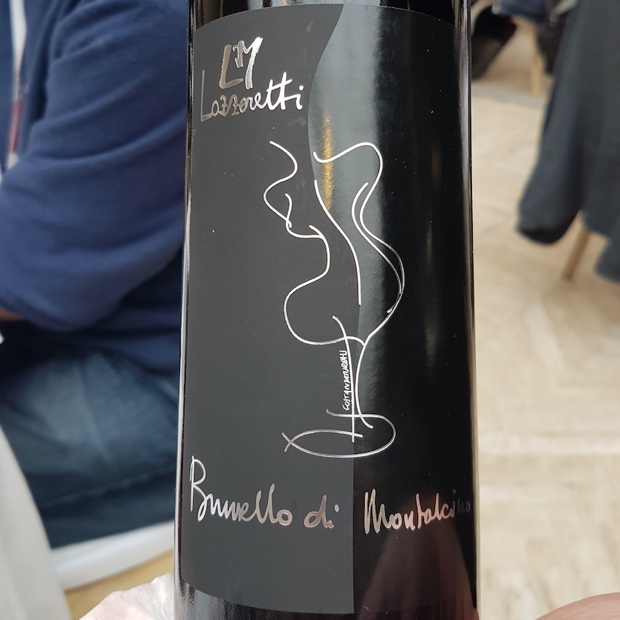
Twitter: @mgodello
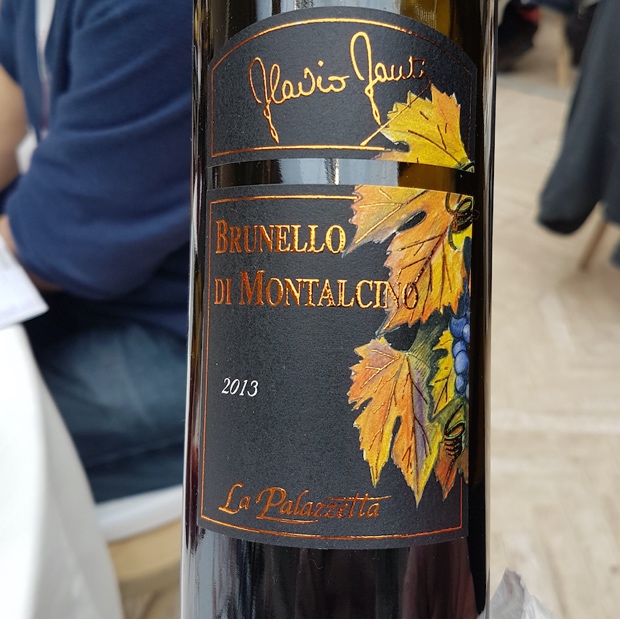
Instagram: mgodello

WineAlign

VINTAGES preview April 1st

When you see one grand cru you’ve seen another grand cru #nierstein #rheinhessen #rhein

Globe-trekking critics, be a fool for value, plug in to musical Ontario and align with new world pioneers

as seen on WineAlign

Last Thursday I flew home from Germany after attending Prowein 2017, a massive wine fair in Düsseldorf that has to be seen to be believed. Picture nine immense convention halls each the size, depth and breadth of a Canadian football field, connected to one another and circling a courtyard like hangars in surround of incoming and outgoing flights at a major airport. The sheer quantity of human power and logistical planning required to facilitate and execute such a congress is in fact not unlike what happens every day at Frankfurt International. There may not be 100,000 employed to run Prowein, but at least that many wine stems are engaged.

It’s also hard to believe that this time yesterday I was standing on the crest of the red sandstone Grand Cru Neirstein vineyards overlooking the Rhein River. In advance of my trip to Germany I had the chance to taste through next weekend’s VINTAGES April 1st release and you will be pleased to find no shortage of quality wines under $20, many of which will solve your in advance of Easter needs. A token pinot noir with an anything but token twist and two hopping chardonnays are included for classic holiday food and wine association but I dig deeper into soils, varietal diversification and terroir for holiday pairing perfection.

There is no secret that Spain and Portugal sit at or near the pinnacle of Ontario consumer go to picks in the genre occupied by bargain reds. While the two recommendations below will certainly pair well with a feast of festive proportions, they also resurrect some grape varieties you might not automatically consider. Alentejo in Portugal and Castilla Y Léon in Spain offer great opportunities to discover local, endemic, world-class red wines. This early spring Ontario cold snap will soon be a thing of 2017’s winter past so I would suggest to get that BBQ tune-up completed because these wines are perfect foils for anything you can throw on the grill.

Travelling brings us together with the leaders and pioneers of fast-tracking and emerging wine regions and it is the global nature of this industry that through their own travels, they are brought to us. In September of 2015 I had the great fortune to spend a night and better part of a day with South Africa’s Ken Forrester. You will have noticed that Western Cape chenin blanc has taken the world by value storm over the last three to four years. There are several reasons for the varietal explosion, two of which are geology and climate. The third worth mentioning is Ken Forrester himself. When I tasted with Ken in Stellenbosch we travelled through half a dozen or more blocks, plots, vineyards and stylistically framed steen. Each and every year his Old Vines Reserve passes through VINTAGES. It is perfectly consistent and sets the benchmark for inexpensive and excellent South African chenin blanc genius.

Nicolás Zapata Catena and his daughter Dr. Laura Catena have pioneered similar if even deeper industry-leading work in Mendoza, Argentina. The father-daughter dream team have crafted terroir-focused Malbec and other well suited to time and place varietal wines. Over the past few years the Catena brand has expanded their portfolio by narrowing their focus into micro-terroirs in highly specific spots all over Mendoza. It’s not just Catena that has taken this brilliant South American approach to branding and this April 1st VINTAGES release is chock full of such precise varietal wines. Though I of course would be thrilled to offer up credit to the power brokers and buyers that be I’m not sure I’d give in to the idea that the grouping was executed with any preconceived plan. The patterning, by coincidence or not is nevertheless highly welcomed and I’m pleased to share these wines with you.

The Ontario presence is strong, as it should be, on the heels of a terrific Taste Ontario that was as promising as it was not surprisingly expected. Stratus hits the riesling mark with Wildass abandon, Flat Rock plays its annual MTV chardonnay tune and Thirty Bench does a varietal two-step that may just blow your mind. We should all be thankful for our local talent and in constant awe of Ontario’s wine ability to step out of its comfort zone, consistently improve on what it already does best and find ways to re-invent the wheel.

With the incantevole @chianticlassico hills fading from view, thank you #toscana #anteprime2017 #anteprimeditoscana #chianticlassico #vinonobiledimontepulciano #brunellodimontalcino

Speaking of Ontario, David Lawrason and I are still reeling from three days spent with an impressive Canadian ambassadorship contingent stationed in Düsseldorf’s Messe Prowein centre, sent there to spread the cool climate wine gospel to the world. The enthusiastic demands on our collective time were great. We will expand on the success of Canada’s presence on this important world stage in the coming weeks. John and Sara have also been on the road, globetrotting to the far reaches of the wine diaspora. It’s getting hard to track who might be where at any given time but in the first three months of 2017 we’ve had at least California, Oregon, Uruguay, Chianti Classico, Montepulciano, Montalcino, Lazio, The Ahr Valley, The Rheinhessen and every corner of New Zealand covered.

Through the course of our travels we are granted the opportunity to meet producers and winemakers, taste their wines and we often come across exciting products not seen before in Ontario. These discoveries are becoming increasingly important because the agents in Ontario receive an assisted head start on finding new wines. With the WineAlign Exchange inching closer and closer to bringing the reality of expert curation to wine buying and purchasing in Ontario, the connections we forge to these values and gems may soon see to finding their way into your cellars and your glass.

Godello’s Buyer’s Guide to VINTAGES April 1st:

Musical Ontario

Stratus Vineyards Riesling Wildass 2015, VQA Niagara Peninsula, Ontario (129700, $16.95, WineAlign)

It’s really hard to say whether Stratus Vineyards’ J.L Groux is more adept as a varietal impresario or as a master of assemblage so we’ll just call it a tie. Here into the riesling game he goes in the mere mortal affordable Wildass range and in 2015 he plays a smart varietal tune. You’ve just got to get some Wildass.  @StratusWines

Flat Rock Chardonnay Unplugged 2015, VQA Niagara Peninsula, Ontario (68015, $16.95, WineAlign)

The record keeps playing in rotation and the string remains unbroken with yet another quality vintage for the unoaked from Flat Rock. The crunchy apple and righteous waves of pertinence make this perennial best buy a required spin without any wonder why.  @Winemakersboots  @brightlighter1  @UnfilteredEd  @wine_gems

Thirty Bench Winemaker’s Blend Double Noir 2015, VQA Niagara Peninsula, Ontario (493973, $18.95, WineAlign)

The nomenclature is just so perfectly chosen and as you will find, this is a seamless joint between pinot and gamay noir. Double Noir performs the passe tout grains oeuvre from Ontario in combining two expatriate Burgundy grapes. I’ve long ago agreed these two make anything but strange bedfellows and the two grapes work seamlessly in Emma Garner’s new and idealistic red. Well done Thirty Bench. Pass the two grapes over, SVP.  @ThirtyBench

Align with new world pioneers

Ken Forrester Chenin Blanc Old Vine Reserve 2016, WO Stellenbosch, South Africa (231282, $17.95, WineAlign)

Reserve is a funny term for wines like this because it speaks to the idea that it should be put aside fore further use. I don’t think that is Ken Forrester’s plan and here he once again raises his old vines game with the 2016 chenin blanc. Stellenbosch continues to dole out some of the planet’s most striking and finest whites with chenin blanc at the centre of it’s value universe. With major thanks to Ken Forrester.  @KFwines  @WOSACanada  @WOSA_ZA  @Noble_Estates

In Situ Reserva Carmenère 2015, Aconcagua Valley, Chile (37952, $16.95, WineAlign)

In case you were wondering too, “In Situ is crafted from grapes that ripen on steep slopes alongside mysterious rock drawings from ages past.” The only expansion on that bit of ambiguity I can share is the purity and clarity levels of carmenère are fully explained in this Reserva. Another fine BBQ wine for April flowers and showers.  @InSituWine  @WinesOfChile_CA  @WinesofChile

Echeverria Cabernet Sauvignon Limited Edition 2011, Central Valley, Chile (389221, $24.95, WineAlign)

Though labeled as cabernet sauvignon the Limited Edition is generously supported by syrah and carmenère, resulting in a layered and grossly rich red blend. The individual varieties don’t really stake any obvious claim and while their integration is not exactly seamless, the layering back and forth over one another does work some Central Valley magic. Complexity wins points.  @VinaEcheverria  @LiffordON  @WinesOfChile_CA  @WinesofChile

Catena Malbec Appellation Paraje 2014, Mendoza, Argentina (492413, $22.95, WineAlign)

Last November Dr. Laura Catena told a small Ontario press audience “it’s a fact. Different soils give different flavours.” The WineAlign team had previously sat down with winemaker Ernesto Badja for a full-on, wide-scale investigation into a climat-precise and compendious look at the proselytism of Catena culture. Paraje Altamira was one of these such looks into single-vineyard terroir.  @CatenaMalbec  @LauraCatena  @Noble_Estates  @ArgentinaWineCA  @winesofarg

Trapiche Malbec Perfiles Calcareous 2015, Mendoza, Argentina (482083, $18.95, WineAlign)

The savvy marketed Trapiche foray into soil matters with malbec divines the intention that calcaire (calcareo) brings speciality to these Uco Valley vines. It’s not a huge stretch to sense some limestone in this malbec’s make-up and I am wholly impressed by its countenance, its continuity from nose to tail and yes, its mineral feeling. So glad Trapiche is onside. @TrapicheWines  @Dandurandwines  @ArgentinaWineCA  @winesofarg

The best of the rest

Paulo Laureano Reserve Tinto 2014, Vidigueira, DOC Alentejo, Portugal (488775, $19.95, WineAlign)
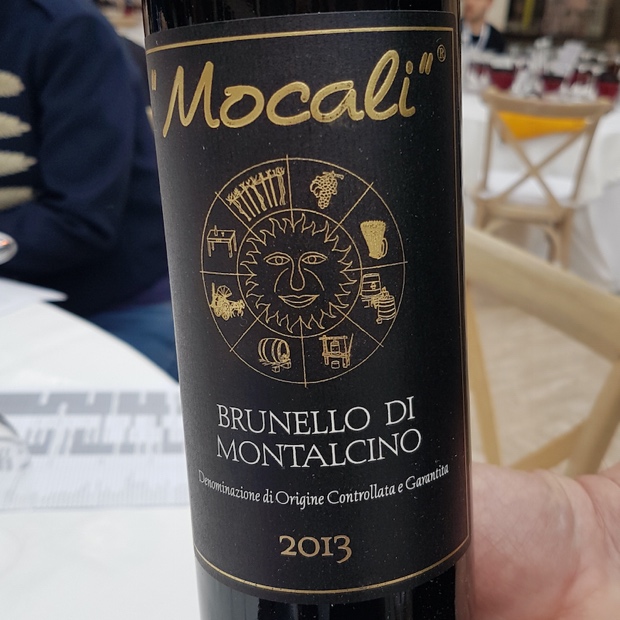
From the still somewhat unheralded and rising to stardom Alentejo the grape expectation here from vidigueira is no shrinking Reserve. This would make for a curious consumer side step into something different but at the same time so obvious and comfortable. At this price you can’t afford to do neither.    @winesportugalCA  @wines_portugal  @Nicholaspearce_

Senorio de la Antigua Mencía 2012, IGP Castilla y Léon, Spain (481549, $13.95, WineAlign)

Some solid and in some circles, very old estate vines (30-50 years) in Villafranca del Bierzo gift mencia for a pittance. Rarely does a $14 old world red give so much for so little. Great round acidity and length off the cuff of a vibrant tune. Simply great value. One of the best you will find all year.  @WinesofSpainSL  @Wines_fromSpain

Groth Chardonnay Hillview Vineyard 2014, Napa Valley, California (225672, $57.95, WineAlign)

From a 44-acre Yountville vineyard founded in 1982 and (mostly) re-planted in 1996. This is a perfect and prime example of all the right directions Napa Chardonnay has taken in the last 10 years, with kudos to Suzanne Groth for embracing the ideal, from restraint, for elegance and in balance.  @GrothWines  @suzgroth  @CalifWines_CA  @CalifWines_US  @NapaVintners  @TheVine_RobGroh

Dutschke Shiraz GHR Neigbours 2013, Lyndoch, Barossa Valley, South Australia (247296, $26.95, WineAlign)

You just have to let go and find the fun in this Gods Hill Road shiraz, a wine of deep-rooted flavour. The utter deliciousness and unctuousness of Barossa is capitulated and catapulted into Lyndoch space. To say that charred meats hot of the grill would work perfectly right now would be utterly correct. To see this age for up to 10 years and eke out more elegance is also true. I would suggest endeavouring in both.  @DutschkeWines  @Wine_Australia

Glaetzer Shiraz Bishop 2015, Barossa Valley, South Australia (627869, $39.95, WineAlign)

Ben Glaetzer’s incredible value Heartland cabernet sauvignon from this same release is not to be missed but I’ve chosen to focus on his flagship shiraz. From son Ben in ode to mother Judith, Bishop the maternal maiden name is the rock of the estate’s Barossa Valley reds. Bishop is a serious wine to be sure and this really leaves so much behind in the mouth long after it’s been sipped.  @GlaetzerWines  @Wine_Australia  @TheVine_RobGroh

Louis Moreau Chablis Domaine de Biéville 2015, Burgundy, France (106161, $27.95, WineAlign)

Just last week I stood in Moreau’s booth at Prowein and I talked with Frédérique Chamoy. She noted how excited buyers are about the 2015 Chablis. If you were ever to take the kimmeridgian plunge this quintessential Moreau and this vintage are the place to start, Pure, classic mineral Chablis with more fruit than I’ve ever seen.  @MoreauLouis1  @vinsdechablis  

Brancaia Chianti Classico Riserva 2013, DOCG Tuscany, Italy (260802, $36.95, WineAlign)

Brancaia goes all in to exploit sangiovese and the for broke style solicits some patience to wait out in extra time. Though 16 months in barrel is nothing to call nothing it is not the wood that dominates these gregarious 2013 grapes. With time this swirls into a grosso sangiovese like liqueur with plums, cherries and spice. Really Riserva in style but not of the recent past, more like the older ways but translated to modern times.  @CasaBrancaia  @chianticlassico  @ChiantiClassUSA  @Noble_Estates

La Lecciaia Brunello di Montalcino Riserva 2010, DOCG Tuscany, Italy (241307, $69.95, WineAlign)

From the giving 2010 vintage and so beautifully so gifted here with La Lecciaia’s 2010 Riserva. Sangiovese that rests in such an ethereal nether-land will evolve with decades long grace. Classic would be one way of looking at it, heart-warming another and it’s remarkably ready to drink.      

It’s been a whirlwind of a start to 2017 and I am personally glad to be home, for now, even if it’s only for a short time. After all, there are too many wine discoveries out there and if were to let them pass me by I would not be Godello. So before too long I will head back out on the road, join the fairs, searches, digs and bring some love back home. As for now it is the April 1st release that deserves our full attention. Sara will bring best buys and new finds next week. Looking forward to April 15th David and John will return with your first in line VINTAGES picks. Until then, good luck with the hunt, have a Happy Easter and an equally happy Passover.

Good to go!

Godello

Twitter: @mgodello

Instagram: mgodello

WineAlign

Quick link to Michael’s WineAlign Mix

The Italian cometh

They diverge and divulge so much @FattoriaBarbi @Noble_Estates @mrkcstr Raffaela Guidi Federzoni #brunellodimontalcino #2004 #vignadelfiore #riserva

They diverge and divulge so much @FattoriaBarbi @Noble_Estates @mrkcstr Raffaela Guidi Federzoni #brunellodimontalcino #2004 #vignadelfiore #riserva

As we head into the March break, here is a little something to think about in advance of next weekend’s VINTAGES March 19th Italian themed release. The offer is substantial and it comes on the heels of last week’s brilliant display of Sangiovese Grosso at the Art Gallery of Ontario for the recent coming of Benvenuto Brunello 2016.

Two of my favourite actors (Lee Marvin and Jeff Bridges) played pivotal roles in John Frankenheimer’s adaptation of Eugene O’Neill’s famous play. The Iceman Cometh is set in 1912 America with hard characters who live a pipe dream in their collective search for political and religious salvation. In one way or another they seek the sentimental reminiscences of their glory days and form a covenant to return to them tomorrow. The Iceman represents a sort of messiah meets grim reaper, killing the fantasy of the “tomorrow movement,” offering not salvation, but death.

So what does this have anything to do with Italian wine? Pretty much absolutely nothing, except for the plain and simple analysis about the Italians on offer for March 19. I recommend some beauties so don’t think that the death or the apocalypse of Italian wine is upon us. In fact, the greater category is booming, selling more product in Ontario and Canada as a whole then it ever has. Last month’s Vancouver International Wine Festival laid testament to the fact.

No, it’s just that so many of the reds and whites in the themed release walk a straight, boring and predictable path right down the middle of the road. Italy’s vast pool of talent would love to send us the best of the best, at $15, $50 and $150, if only the monopoly would receive. And so my friends, today I choose to consider the LCBO as the Iceman, all in good fun, of course. Who takes me seriously anyway? Certainly not me, fool as I am.

Here we have six stars from the VINTAGES release and six ethereal Brunelli still ringing in my ears and singing in my mouth. Sangiovese with the uncanny and impossible ability to linger for four days. There were many more worth mentioning because when you are holed up in a room full of Brunello, life is perfectly grand.

Where for art thou Brunello?

La Fiorita Brunello di Montalcino

La Fiorita Brunello di Montalcino

La Fiorita Brunello Di Montalcino 2009, Tuscany, Italy (Agent$65.00WineAlign)

La Fiorita’s 2009 normale is a special bottle of Brunello from a best of all worlds vintage. It exhibits the charms and shares the gifts of a posit tug between firmness and elegance. At this seven-year stage it evidences the first signs of secondary character, with spices dissolved in mulled liqueur and a new fathom of depth perceived. The measure of intensity is not one of dank, darkness or even pitch but rather profundity. The translation reads as both Sangiovese chapter and verse. Excellent 2009 example just beginning to drink as it should. Drink 2016-2023.  Tasted March 2016  @vadoapiedi

Col D’orcia Poggio Al Vento Brunello Di Montalcino Riserva 2008, Tuscany, Italy (0965525, $129.00WineAlign)

Only 8,000 bottles were made of Col D’Orcia’s always formidable and classically structured Brunello. Elegance offers a glimpse of hopeful emergence even while its firmness is still fully intact. The added determination and epic struggles of the vintage translate to a singular Sangiovese type of funk from a vineyard, like so many other south-facing Montalcino slopes, of what may just be the greatest physical involuntariness in the world. The fruit and texture are delicate, of a veritable Tuscan gastronomy, pure vernacular and of a leathery lightness of brogan being. The youth in this Brunello is palpable, nearly awkward but certainly not backward. It is progressing as it should, lentamente, lentamente. Three more years minimum is needed to coax it out of its coriaceous hide. Drink 2019-2028.  Tasted March 2016

Fattoria Dei Barbi Brunello Di Montalcino Riserva 2004, Tuscany, Italy (Agent$100.00WineAlign)

The Riserva contains no single vineyard (Vigna del Fiore) fruit and is composed of a selection dictated by different vineyard qualities, not necessarily all on equal footing and all brought in to be vinified separately. As per the directive, an average of three years is spent in oak, followed by a transfer into stainless tank. The aim is a traditional, classic, typical, true masculine expression of Sangiovese Grosso. With the firm intent kept in mind, the 2004 is unstirring, closed, macho and fist clenched, even after all these years. An hour later it extends an outstretched finger or two of kept fruit and bred in the bone funk in your direction, but no more. This Riserva is gripped by a fine dust and even finer, senescent and patrician grains of tannin equal in quantity to the stars in the sky. If 2004 is not one of Barbi’s better to greater vintages for Riserva the constellations will have to be re-drawn. To me this represents a foregone conclusion to purchase, further cellar briefly and open when the skies are blue. Drink 2018-2029.  Tasted March 2016  @FattoriaBarbi  @Noble_Estates

Fattoria Dei Barbi Brunello Di Montalcino Vigna del Fiore 2004, Tuscany, Italy (Agent 93609$100.00WineAlign)

The Vigna del Fiore single-vineyard designate Sangiovese tells an engraved, emblematic and heraldic Montalcino story. First made in 1981, the infamous Barbi Grosso was originally crafted as a celebration for Francesca Colombini’s 50th birthday. Previous to that inaugural release the grapes from the most southeastern part of the property were used in the blend of the Brunello Riserva. Inferential importance exists within the context of familial connectivity in this Blue label Barbi. Ancestral lineage matters, as does the nurturing femininity of the undertaking. Spends its first, early developing year in older French barriques, followed by two years in traditional, regionally employed (700L) traditional Slavonian oak. If the 2004 (or subsequent vintages) are perceived as expressive of an international style, chalk that up to effete but so much vineyard and next stage, secondary through tertiary evolution agrees to confound. The ’04 lays in soft exude with the wise smell of its original, naturally curated state, of cherries, roses and earth. Today the texture floats in the optimum buoyant air above a contiguously circled round globe, begs for and speaks of aged Tuscan cheese, like Brillo Pecorino DiVino or Toscano Stagionato. The next few years will be the best. Drink 2016-2020.  Tasted March 2016

La Mannella Brunello Di Montalcino 2010, Docg Tuscany, Italy (279083, $47.95, WineAlign)

Tasted alongside La Mannella’s 2010 Riserva this seems tame, elegant and baby-faced in comparison but it is no shrinking Sangiovese Grosso violet. No, sir. Assessed on its own it is in itself a wholly complex and beastly thing. The tonality is stratospheric, with a distant, amplified and magnified set of cherry to leather parameters. Very floral and blessed by holy drops of liquor. All that said, this 2010 Brunello of basic and modest means can be approached in the here and now provided a good decanting is strictly followed. Drink 2016-2022.  Tasted March 2016  @LaMannella  @Nicholaspearce_

Oh #brunello where art thou? You are here @PodereLeRipi listening to the vines @agotoronto #benvenutobrunello #brunellodimontalcino #50thanniversary #italiantradeagency

Oh #brunello where art thou? You are here @PodereLeRipi listening to the vines @agotoronto #benvenutobrunello #brunellodimontalcino #50thanniversary #italiantradeagency

Podere Le Ripe Lupie Sirene Brunello Di Montalcino Riserva 2009, Tuscany, Italy

A classy and classic, traditionally-styled, pure and ripe Sangiovese. Cherries, leather, sweet liqueur and anise confer in perfume. What a revelation, with late spice and a chocolate-laced finish. Lovely and really fine. The right stuff and though on the sweet side, that should dissipate with five to eight years in bottle. Drink 2017-2024.  Tasted March 2016  @PodereLeRIpi

The Italians cometh

Jerzu

Jerzu Chuèrra Riserva Cannonau Di Sardegna 2011, Doc Sardinia, Italy (270272, $17.95, WineAlign)

Lovely dry, dusty, musty and prickling Sardignian, properly Grenache rustic and approaching a level of divine. Cannonau of chew, leather, carbon fruit sketch, arid and rehydrated in residual freshness endowment. Get behind all $18 of this honest weighted red and put your char on. Drink 2016-2020.  Tasted March 2016  @AntichiPoderi

Greco di Tufo

Terredora Di Paolo Loggia Della Serra Greco Di Tufo 2014, Docg Campania, Italy (983197, $19.95, WineAlign)

Herbal is the understatement, saline the connecting cable, texture the conduit for extreme unction. Cumulatively intellectual qualities that endow this Greco di Tufo with more sumptuousness than it had achieved in recent times. Aromatic wealth comes by way of citrus preserved, pressed and layered. The overall impression is warmth, stress without breakdown and excessive personality. Still somehow its strikes as endemic, ancient, weird and wonderful. Drink 2016-2019. Tasted March 2016  @Terredorawines  @HalpernWine  @Reg_Campania

Il Molino Di Grace Il Margone Chianti Classico Gran Selezione 2010, Tuscany, Italy (435115, $39.95, WineAlign)

In a VINTAGES feature of more MOR Italy then should be rolled out in one media tasting, at least here we have multiple semblance of personality. Not quite sure we’ll call to celebration $40 of dynamism but there are inherent deep invested Sangiovese characteristics nonetheless. Tight angles, rigid corners and a Brunello-Sangiovese-like liqueur. Grosso in as much as CCR can be, with some dedicated rusticity and tannins still in action. Dries out nicely on the finish. Put some away for a 2020 rainy day. Drink 2018-2024.  Tasted March 2016  @Ilmolinodigrace  @chianticlassico

Donatella Cinelli Colombini

Donatella Cinelli Colombini Brunello Di Montalcino

Donatella Cinelli Colombini Brunello Di Montalcino 2008, Brunello Di Montalcino, Tuscany, Italy (431718, $56.95, WineAlign)

A vintage perceived as tough, difficult, demanding and volatile is just now entering the zone of changing perceptions. It has taken all this time to realize its abilities. Longevity for one. Beauty behind the mask, the other. Concentration is not so much ripeness and richness but of deeper meaning than that. Nothing here sits on the surface. Peel away a layer of orange, spice bark and bulb husk to taste from the inner fruit. From the core. “There is fire, there is life, there is passion, fever and fury.” That is Brunello. The tannins persist with near nastiness but there is so much to look forward too. Wait two more years. Drink 2018-2028.  Tasted March 2016  @news_donatella  @ConsBrunello  @LeSommelierWine

Giuseppe Quintarelli Rosso Ca’ Del Merlo 2007, Igt Veneto, Italy (722470, $99.95, WineAlign)

Rich Ca’ del Merlo from Quintarelli heeded with volatility and consumption. Veneto of war and peace, light, bracing, angular, seeping, steeping, macerated, tea leave studded and tannic for further thought. In this 2007 it is hard to not get caught up in the amalgamation’s bright sweep. Corvina, Corvinone, Rondinella, Cabernet Sauvignon, Nebbiolo, Croatina and Sangiovese, like reading Tolstoy, all together “alive, and very much so.” Will live for quite some time, but wait two years before embarking on the journey. Drink 2018-2030.  Tasted March 2016  @RegioneVeneto  @LiffordON

Tenuta dell’Ornellaia Ornellaia 2012, Doc Bolgheri Superiore, Tuscany, Italy (722470, $195.50, WineAlign)

Takes the purity of 2011, furthers the integration and mimics the precision, then pumps up the volume. Takes a breath and then, with soluble efficiency it refines the intricately woven lines a few steps furtrher, if that is even possible. I will say that the tannins are a bit tougher in ’12, with a tight string wound depressively around the fruit’s long and elegant tendrils. Fruit is the determinate factor, pure, blossoming and fragrant. It adds up to a consensus of one thought, that this vintage is yet another legend in the making, a fine and linear Ornellaia that should travel 30 plus years, perhaps longer. What liqueur, such botanicals and endless valleys passing through fertile hills. Drink 2019-2045.  Tasted November 2015  @Ornellaia  @AuthenticWineON  @AuthenticWine

Good to go!

Twitter: @mgodello

Instagram: mgodello

WineAlign: Michael Godel

Facebook

The wine diaries: Italian masters

Photograph by bartuchna, Fotolia.com

Importers Robert Tomé and Tony Macchione are serious about wine, especially of the Italian variety. Who wouldn’t be bound and determined to taste through a portfolio that includes Siro Pacenti, Valdicava, Collemattoni, Argiolas, Masciarelli and their most recent addition, Gaja.

as seen on canada.com

On Monday, October 1st I joined the throng of thrill seekers at the Shangri-La Hotel, Toronto, to engage in some grape stem cell therapy. Here are my notes on 20 wines from seven noble Italian producers at the Stem Wine Group 7th Annual Family of Wines Gala Tasting 2012.

Azienda Agricola Masciarelli, Abruzzo

Trebbiano D’Abruzzo 2011 ($14.99) resounds fruit forward and redolent as grape must, more treble than bass, a chiave di violino. The ‘G’ clef is music to my sense of smell, straightforward and honest to taste. A snapshot to winemaker Marina Cvetic on a Sunday afternoon, relaxed, on the terrace, with a view of the sea to the east.  87

Montepulciano D’Abruzzo 2011 ($14.99, $14.80 in Quebec) of aromatics pointing to volcanic ash, smoke, tar and lead feels like ancient wine yet goes vanilla cool and silky down the hatch. Made in the shadow of the Apennines, “even when mountains crumble to the sea,” there would still be Marina and me. Thank you Abruzzo.  88

Montepulciano D’Abruzzo ‘Marina Cvetic’ 2007 ($28.99, $27.35 in Quebec) shows more evolution since my previous tasting note, “long, harmonious expression of a much maligned grape. Jumping aromas as if an opened jar of raspberry jam on a winter’s morning. Great value from this winemaker mother of three’s (22, 13 and 3) namesake bottling.” Now in peak form, some splinters, nearing the plank.  90

Montepulciano D’Abruzzo ‘Villa Gemma’ 2005 ($74.99) of grace and flawless visage is, as I mentioned previously built of “major league fruit and ferocious grip but in danger of creeping over the edge. Time may be the factor but why wait. The MC is $40 cheaper and offers everything you could ask for in an MD’A.  91

Argiolas, Sardegna

Vermentino ‘Costamolino’ 2011 ($16.99, $21.99 in British Columbia) lives by the sea which makes Sardegna a bit like  “a land called Honah Lee.” There is tangy, tropical fruit and a puff of mineral salts, unquestionably typical of the Argiolas style. Pure Mediterranean white magic.  88

Cannonau “Is Solinas” 2009 ($24.95) from vines on the beach is still so young so “those seagulls are still out of reach.” The crystal salinity of the sea clings to the grape leaves, says Export Manager Beppe Pinna, imparting a minerality to the grapes unlike anywhere else. Made from 95% tough Carignano, the hipster Solinas needs time before it’s ready to face the crowd.  Should be a star.  89

Boroli, Alba, Piedmont

Barbera D’Alba 2008 ($15.99) is, as Mr. C. notes, so underrated, especially at this entry-level. A ripe bowl of cherries dusted with dry, ground cherry powder. Delivers the dry and dusty goods.  88

Barolo 2006 ($49.99) advances with rancorous grit and coarse determination. Tart red fruits prickle with feeling and analeptic assistance from their perch high up on a mountain of tannin. Expect nothing less than time from this gutsy effort.  88

Barolo ‘Cerequio’ 2004 ($87.99) from the prestigious Grand Cru single vineyard seems wise beyond its years. Dried cherries, flowers, orange peel and licorice salmagundi with a weedy dill overtone. The herbaceousness is not off-putting, as can be the case in some austere Nebbiolo or Brunello. Stately effort and not shy.  92

Collemattoni, Montalcino, Tuscany

Rosso Di Montalcino 2009 ($24.99) the teenage princess dai capelli scuri of shoulder length and silky red fruit is irresistible. Full on ripeness and glowing with genetically imprinted joy.  88

Brunello Di Montalcino 2006 ($52.99) is likewise approachable and sets forth to perfume the room with Pelargonium Zonale. But the ‘Mattoni is also bent on perpetuating a dogged determination befitting the dogmatic Sangiovese Grosso. A queen to the Rosso’s princess, confident of red fruit, built of solid brick befitting the house of its ancestry.  90

Siro Pacenti, Montalcino, Tuscany

Brunello Di Montalcino 2007 ($89.99, $87.25 in Quebec) is a closed wall of doom, aroma wise, save for a malinger of merda. Nothing a good swirl can’t aerate. A tactical deployment and early blending of north and south Montalcino grapes will help to harmonize this Brunello within a reasonable amount of time. While difficult to assess so young, speculation as to its future is not so obtuse a concept. Ripe cherries and plums are just a few years away from crawling out of the hoi polloi of leather and game. The wine will shine in 2015.   93

Valdicava, Montalcino, Tuscany

Rosso Di Montalcino 2009 ($33.99, $44.99 in British Columbia) extolls the winery’s virtue that cleanliness is next to godliness, echoing Tony’s story about WErproprietor Vincenzo Abbruzzese’s obsession with a clean cellar. Despite Valdicava’s omnipresent perfume of sheep off the vineyard floor, this Rosso is clean, pure and indicative of great Brunello.  90

Brunello Di Montalcino 2004 ($119.99) is the most benevolent and democratic of Valdicava’s Brunelli. Balanced design of smoky, red fruit, earth, spice, licorice and that unmistakable Valdicava perfume. Expertly crafted, impossible not to like. Like I wrote before, “softer, loaded with licorice, pureed sweet peppers and ruby minerality. Seductive, sensuous and really put together. “If she asks me, do i look alright? I say yes, you look wonderful tonight.”  93

Brunello Di Montalcino 2005 ($104.99) obliges the vineyard’s tenet with great intention and of a congenial nature. The red fruit, spice, panna and terra cotta notes are all in check but the vigor is buried in invisible circumstance. Basic for Valdicava but only because the other vintages are so extraordinary.  88

Brunello di Montalcino 2006 ($104.99, $137 in British Columbia), again, from an earlier note. “Initially softer in the mouth begins rolling furiously then is found going down hard stone lines. Finishes with gritty, chalky tannins. Crack one in ten years and it’s “gonna open up the throttle…bust another bottle.”  94

Brunello Di Montalcino 2007 ($139.99) is a romance of cheese and animale with its dueling scents of Pecorino di Pienza and pecora nera. Damp earth, wool and unwashed rind combine for the most unique set of Sangiovese smells. Sniff on past and note tobacco, licorice, black cherry and the mineral core beneath the hills.  Complexity of complexities.  95

Brunello Di Montalcino Riserva Madonna Del Piano 2005 ($134.99) is intensely concentrated, a dreamy and creamy correlated affair between fruit and oak. The sheep’s redolence returns and combines with the meracious, subterranean earth. The ubiquitous Valdicava perfume can only be brined to this level from the historic single vineyard set in the valley north of Montalcino.  Score is consistent with last year’s note. “Monstrous, hunts down the taste buds and renders them comfortably numb. Feeling down? This Madonna will, years from now, “ease your pain, get you on your feet again.”  95

Brunello Di Montalcino Riserva Madonna Del Piano 2006 ($169.99) is sacred Sangiovese, an inviolable reliquary of immaculacy deep beneath Montalcino’s altar. A vamp of essential Tuscan fruit. If you were to stand on a hill in Montalcino in winter time and listen carefully, you would hear a low sipping sound. That is the sound of the entire town drinking of the Madonna Del Piano.  97

Gaja, Barbaresco, Piedmont

Barbaresco 2008 ($218.95, $199 in British Columbia, $199 in Quebec) has not yet unfurled from earthly slumber. Subtle yet discernible greatness as previously noted. “Whiffs smoked beef tongue from the great merchant delicatessen in the sky. A maze of flavours complex like a Venetian neighborhood with interlocking canals and bridges set to and fro. Not your queen’s Barbaresco, nor Bardolino neither. More Shylock than Antonio. Currently a villain with its tongue lashing tannin. Fast forward 15 years to to act four when the integration of fruit causes the wine to become a victim of happy imbibers.”  94

Good to go!

The Italians are coming

Photograph by dutourdumonde, Fotolia.com

as seen on canada.com

Tuscany’s landscape swells with rolling hills, grapevines, cypress and olive trees. It prospers with pine forests and rugged coastlines. Rosemary, basil and lavender grow wild, everywhere. Medieval hilltop towns brim with the castello, the torre, the fortezza and the piazza. The masters’ frescoes and sculptures hang and preside in the duomo, the museo and the palazzo. Land of quintessential cultural convergence. Panorama, art, architecture, food and wine. Who would question the temerity or not gesture in obeisance to its pleasures. “We’re not worthy!” Now imagine my little boy excitement as I approach a table set with an armament of 16 Tuscan reds. Bliss of anticipation.

Have you ever been asked, “if you were stranded on a desert island with only one bottle of wine, what would it be?” Mon dieu, certainly not a greatest vintage of the century Bordeaux. An exclamatory colour of the Virgin Mary’s cloak no!, not Grand Cru Burgundy. Quel désastre! Not even vintage Champagne.

My go to is Tuscan. Dry as the desert Sangiovese. It presented me 25 years ago with my true, romantic, prima facie wine experience. I did study and live there once upon a time and the Zoltan did refer to me as one last week at a Barque Smokehouse, Marc Kent wine dinner. I also have a very soft spot for foods ending in “ini” but no, I am not Italian.

Modernization and metanoia have brought a new Renaissance to a place of  “antiquity ennobled by the Christian faith.” The wines of Chianti, Montalcino, Montepulciano, Bolgheri, Maremma and Morellino di Scansano all celebrate the venerable Sangiovese. The addition of international varietals like Cabernet Sauvignon, Merlot, Syrah and Cabernet Franc has proselytized Tuscany to a whole new religion.

The contemporary Etruscans in bottle are potions (concerti, arie) so composed (tight knit, fluent) it’s as if their ends seems to scream beginning. Pure Tuscan wines are Sangiovese’s shot at the firmament.

Look for these Tuscan wines this coming weekend

VINTAGES September 29th release

Triacca Spadino 2010 (288001, $15.95) brings the Maremma to the world and the world to the Tuscan coast. A sheep in dog’s clothing, Sangiovese so modern you might swear there was Garnacha or Syrah in the mix. A Maremmano of citrus zest and acidity sidling seeping, weeping cherries. The wood effect is not chocofied but rather toasty vanilla. Really good effort with broad appeal.  88

Michele Satta Bolgheri Rosso 2009 (39834, $19.95) is resplendent in reverse. This blend of Cabernet Sauvignon, Sangiovese, Merlot, Teroldego and Syrah acts like a top quality Chianti Classico. The expectation was for a rich, mocha driven IGT but the wine is actually old school; reserved, gravity defying, “un po di grazie.”  88

Ruffino Modus 2008 (912956, $28.95) displays more elegance and restraint in ’08. The ’07 was flat out gorgeous but also oaked to the hilt. Here Brunello-like scents of roses, sweet cherries and cedar together walk the IGT Toscana line. The future doffing of a running current of iron minerality will be welcome. Will break away and flesh out with time too.  “Certo! All the Italians do it.”  90

Dei Vino Nobile Di Montepulciano 2008 (285510, $28.95) is a wow wine. Viscous, sweet nectar, full on concentrated berries and polished rocks au jus. An opus dei call to vinous holiness and sanctity. Rapturous feeling of punch drunk love falls over me after sipping this noble Sangiovese (Prugnolo Gentile).  92

Le Pupille Poggio Valente Morellino di Scansano Riserva 2007 (230680, $29.95) hails from the appellation’s pilgrim winemaker Elizabetta Geppetti’s fattoria straordinario. Crocodile teeth and molto plenitude in Sangiovese form. A screen star of Tuscany’s newest stage, a Euro, Neo-Classical, Olafur Arnalds composition in bottle, über-Tuscan, full of mineral verve and transcendent beauty.  91

Other wines tasted

Toscolo Chianti Classico Riserva 2006 (69369, $24.95) at it’s core is elemental, reductive, jumpy.  88

Antinori Pian Delle Vigne Brunello Di Montalcino 2006 (651141, $59.95) appears rusty and old school but is oleaginous, glycolic licorice and anise with a case of hyperglycemia. Best since ’99.  93

Livio Sassetti Brunello Di Montalcino 2005 (287284, $39.95) is essentially a riserva in this vintage. Funkified but does dissipate with a swirl, yet still wound tight.  90

Silvio Nardi Brunello Di Montalcino 2007 (922054, $41.95) is laid back but aching to burst and bleed red-blooded Sangiovese. Earth, pine and cool in the centre.  91

Poggio Al Tesoro Sondraia 2008 (292391, $44.95) is rich, dark and modern. Pure as mocha-driven snow. Fleeting and confounding, refined almost to a fault.  90

Luca Della Vite Luce 2009 (685263, $99.95) is crazy stuff. Berry filled truffles, licorice liqueur drops and carob from the tropics. Sensual, voluptuous, Sophia Loren.  92

Tenuta Sette Ponti Oreno 2009 (735597, $71.95) is a mouth full of chocolate covered crushed rocks. Animal waste scent adds a tragicomic note.  Not sure about this O.  89

Good to go!

Wine or beer on the long weekend? Both

Photograph by Fotolia.com

as seen on canada.com

Wine and food captures most of my imagination and this space is in tune with that straight and narrow path. Diversions are always present, but rarely of Pinterest. This past weekend I came across something new in beer. Not so much in terms of brand or flavour, but in closure. Molson Coors has launched a wide mouth can with a resealable screw cap closure. I am certainly not a behemoth beer company advocate but I do applaud the innovation.

Related story: ‘Beerology’: Mirella Amato’s exploration of beer

Three beers are being bottled, well canned, in this fashion. Coors Light, Molson Canadian and Coors Light Iced T. Coors Light in a can, well, that’s res ipsa loquitur. The MC absolutely resembles its Don Cherry self. The Iced T is quite refreshing, on the acrostic poetry, feminine side of beer and quite frankly, I don’t mind it at all.

Courtesy of Chris Schryer, TorontoBeerBlog.com

Courtesy of Chris Schryer, TorontoBeerBlog.com

The can and closure are the rub. Nothing new here, this beer in a can thing, but they get iced cold faster and hold that cold better than bottles. No light transfer means no skunk, so there is a reduction in spoilage. And while the larger opening certainly means you can drink more and faster, the resealable option means nothing can crawl inside between sips. The light weight can also floats so they are perfect for camping and the cottage dock.

If you want to read more about the new line, check this out and this.

OK. Enough about suds. On to the main event.

The grape: Priero Picudo

The history: Rosé from the Tierra de Léon in the south of Spain

The lowdown: Don’t be frightened by the Dayglo colour. This pinky is perfect for hot weather

The food match: Fluke or Medium-rare Tuna Tacos with Pico de Gallo Salsa

Pardevalles Prieto Picudo Rosado 2011 (274449, $12.95) of huge hue is a veritable candy shoppe of licorice, gum drop, strawberry Lola and Kool-Aid. Funky cheese, currant jam and bracing acidity combine for an odd yet invigorating IVR*, Rosé experience.  87

The grape: Chenin Blanc

The history: Loire varietal has become the signature white of South Africa

The lowdown: MAN Vintners out of Paarl employs the original name “Tormentoso,” meaning storm, for the Cape of Good Hope

The food match: Paad Thai with Chicken and Shrimp

Tormentoso Old Vine Chenin Blanc 2011 (278366, $14.95) is outright Victorian where revivalist Gothic meets modern steel. A dark and stormy cocktail of flint, mineral, Paarl granite and Chakalaka. Tomato leaf, fried-green tomato and dusty chalk round out this perfect tempest of purple prose.  Fomenting and fascinating Chenin.  88

The grape: Moscato D’asti

The history: Italian Muscat from Asti, a northwestern province in Piedmont

The lowdown: Very low in alcohol with a slight effervescence. Ideal served well-chilled on a hot summer’s day

The food match: Grilled Chicken Breast with goat cheese and grilled peaches

Dezzani Morelli Moscato D’asti 2010 (187997, $14.95) with its sacchariferous, honey spritz glides quickly past grapefruit and into everything orange. Fresh squeezed juice, rubbed blossom, pith and rind. Light, refreshing and altogether satisfying quencher.  88

The grape: Sangiovese Grosso

The history: Younger sibling to Brunello, meant for early consumption

The lowdown: Esteemed producer and the lowest possible price for a Rosso. Much better choice than the $18 Vino Nobile by Casetllani in neighbouring Montepulciano, the sample of which happened to be corked anyway

The food match: Fresh Tagliatelle with Wild Boar Ragu

La Velona Rosso Di Montalcino 2009 (285429, $17.95) of medium girth is sturdy, taut, spot on. Tar, rose petal and cherry stand out. “My little pretty one” has got the knack just like good Brunello for bringing me back to Montalcino’s intoxicating reds, again and again. My Velona.  89

The grapes: Muscat, Perle of Csaba

The history: As in Moscato D’asti from Piedmont mixed with a smaller amount of the Hungarian Vinifera derived grape

The lowdown: Nova Scotian sparkling wine made in the traditional Champagne style and at a remarkably low 6.5 % alcohol by volume

The food match: Salmon Tartare, salmon roe, crème fraîche and homemade crackerbread

Benjamin Bridge Nova 7 2011 (256289, $25.95) the sweet-smelling starlet is seductive and wholly unique to the world of bubbles. The aleatory contract between unknown sparkling wine and imbiber turns to stone after just one sip. Causes me to react with a start and a coup d’oeuil.  I have been here before; in Champagne, in Moscato D’asti. “Here’s a little agit for the never-believer.” In Nova Scotia they can put a man on the moon. They can make great, if unusual sparkling wine.  89

The tease

The grape: Nebbiolo

The history: Royal red grape of Piedmont

The lowdown: The cheapest Barolo at VINTAGES since the 1990’s seems too good to be true. That’s because it is

The food match: Low and Slow Veal Roast with Nebbiolo, black currant sauce

Patrizi Barolo 2008 (653527, $23.95) is not the weekend wine you might hope it to be. Already bricking like a rural Woodbridge faux-mansion, the Patrizi would have best been consumed in its first year of business. An LCBO buy up for teasing purposes, this Nebbiolo carries a Jarrian curse. “Clichés are the armature of the absolute.” Typically and varietally correct but with fruit already fading. You get what you pay for.  86

The splurge

The grapes: Cabernet Sauvignon, Merlot, Cabernet Franc, Malbec and Petit Verdot

The history: Bordeaux blend in true Napa Valley Meritage form

The lowdown: Though more than just a Cab, it’s essentially a “second” wine to Beaulieu’s Georges Latour Reserve. A loyal servant to the 1980’s heyday of California red wine

The food match: Grilled New York Strip finished with olive oil and a baked potato

Beaulieu Vineyard Tapestry Reserve 2008 (50393, $34.95) is an elegant and masterful blend unmasked and unblinded by oak. There is rusticity, antiquity and servitude to history. A woven carpet of cherries, forest scents and morning coffee. Makes me “feel the earth move under my feet.” You’ve got a friend in Beaulieu.  90

IVR* – Vintage Direct intrigue-to-value ratio

CVR** – Vintage Direct curiosity-to-value ratio

Good to go!