As you all know I am one of the five principle critics for WineAlign in Ontario. This is a position I am extremely proud of and very fortunate to hold. That I am able to work alongside Ontario’s most notable experts is something I say thanks for and appreciate every single day. David Lawrason, John Szabo M.S., Sara d’Amato and Steve Thurlow are my friends and colleagues. I could not ask for association with a finer group of writers.
Which brings me to why you need to know that I am making some changes at godello.ca. Since February of 2012 I have been posting VINTAGES release recommendations and notes on this website. Though in March of 2014 I eliminated scores on Godello I have continued to publish full tasting notes. Every single one of my VINTAGES release picks has been simultaneously published on WineAlign (with scores), along with dozens more on wines that don’t make the shortlist.
I will no longer be publishing my current VINTAGES release tasting notes on Godello. You can still read them on WineAlign though there is a paywall behind which only premium paying subscribers are able to see the most recent reviews in the first 30 days. This is necessary and I hope you will all understand why I feel so strong about the time being right to effect such a change. WineAlign is the most important, comprehensive and trusted source in Ontario for critical review of VINTAGES wine releases. I fully support and endorse our protocol and hope that you will visit the website for your Ontario wine purchasing needs.
For those of you who wish to read my full tastings notes, I would highly encourage you to pay the WineAlign $35 yearly subscription fee (or $9.95 per quarter) to read the reviews and get the scores as they are published, to the second, in real time. You can still access my bi-weekly list of picks and to do so all you have to do is sign up as a non-paying member. I have a link called “Michael’s Mix” and my VINTAGES recommendations are assembled there.
As for now, here is my list for November 26th, if only as a teaser so that I don’t leave you all high and dry.
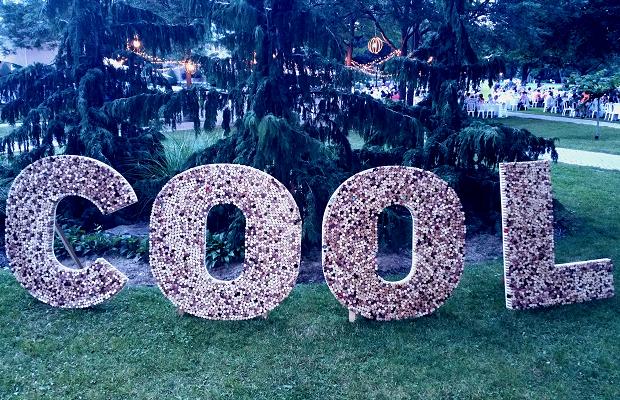
In 2016 and for the first time in its brief yet facund tenure, Ontario’s International Cool Climate Celebration will include some other cool-climate varietal representation; pinot noir, gamay and cabernet franc. Yes it is true. Plus has joined the i4c, an ideogram of addendum, a character of diversity for the fluently persuasive and forceful congress. This gathering will open its arms for colour and to allow its constituents to regale with what they do best. For an event-driven pure as single-varietal snow and formerly known exclusively as chardonnay, is this really a shocker? This is the reality of democracy.
In August of 2015 I asked the question, can chardonnay get any cooler? My immediate answer to myself was this. “Five is a big number. Any annual convention that survives and thrives into a fifth caucus must be divined by some unseen force, a guiding hand perhaps, by avatar or prosopopoeia. And something other. The International Cool Climate Chardonnay Celebration has priceless equity on its side. Three aces in the hole. Canadian climate and geology, adroit farmers and winemakers, simpatico of communities.” That answer was not exclusive to chardonnay. It held the door open for more.
Niagara’s Cool Chardonnay Conference will take place between July 22nd and July 24th. It begins on Friday with the annual School of Cool, Viticultural and Winemaking Sessions in the Grand Room at White Oaks Conference Resort & Spa. Ian D’Agata (Decanter, Vinous.com), John Szabo (MS) and twenty of the brightest talents in the world of Cool Climate viticulture and winemaking will explore three provocative topics. Two seminars from Wines of Chablis and Riedel Canada will follow.
Friday’s main event, “Flights of Chardonnay” will be hosted at Niagara District Airport. Sixty winemakers from nine countries and 75 wines will be poured at this “boots and blue-jeans” event. The new culinary marché will offer dishes from Niagara’s top chefs and the mainstage will feature live bands as the sun sets over the airstrip. On Saturday night the Cool Chardonnay World Tour Tasting & Dinner will return to Ridley College in St. Catharines, Ontario.
When I reflected back on i4c 2015 I wrote this. “Yes, we thought these things and then year number five blew our minds. We had been wrong. We found out that the bar had yet been breached. Further was still out there, not yet claimed, hovering in the realm of the possible and still, going forward, yet remains plausible.” And so in 2016 there will be reds. Oh, the blasphemy, the bastardization, the spurious board gone askew. Really? Can this multifarious variegation really cause such angst? Must we express ourselves with varietal racism just to be heard? Just take it easy man.
The internal red invasion comes at an appropriate time, by coincidence or not with “TanninAlert” a new Brock University Cool Climate Oenology and Viticulture Institute (CCOVI) program that will track tannin levels in red wines which impact bitterness and astringency. The joint CCOVI and Ontario Grape and Wine Research Inc. (OGWRI) concept will provide Ontario grape growers and winemakers with information on the ripeness of these flavours to help consistently create rich and robust Ontario red wines. Red wines and cool chardonnay living together like cats and dogs. What a revelation.
At the end of this week I will prep my chardonnay palate in Chablis for six days. Last week I tasted, assessed and judged more than 40 Canadian chardonnays in Penticton at the WineAlign National Wine Awards of Canada. Now I count down the days (22 of them) and in anticipation I’ve drawn up more cool tasting notes as the great #i4C16 event nears. Many will become available through VINTAGES next week for the July 9th release. After Canada Day. Notes that include chardonnay, gamay, pinot noir and gasp, riesling. Imagine the horror of tasting such an intruder at a cool chardonnay conference sometime soon.
Tawse repeats itself in 2014 with a gamay noir that breathes deeply and breeds consistency. From a vintage that few varietals could find great shine, gamay seems the outlier and Tawse does what was required. The firm, dark and tasty taut fruit is really all that matters, a result of a driven desire to celebrate the simplicity of the grape In Niagara when uncertainly lurks. Eight months in oak committed neither diversion nor crime. Drink 2016-2018. Tasted June 2016 @Tawse_Winery@DanielatTawse@Paul_Pender
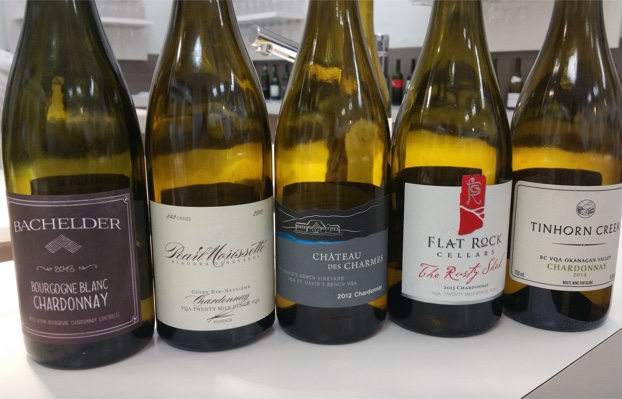
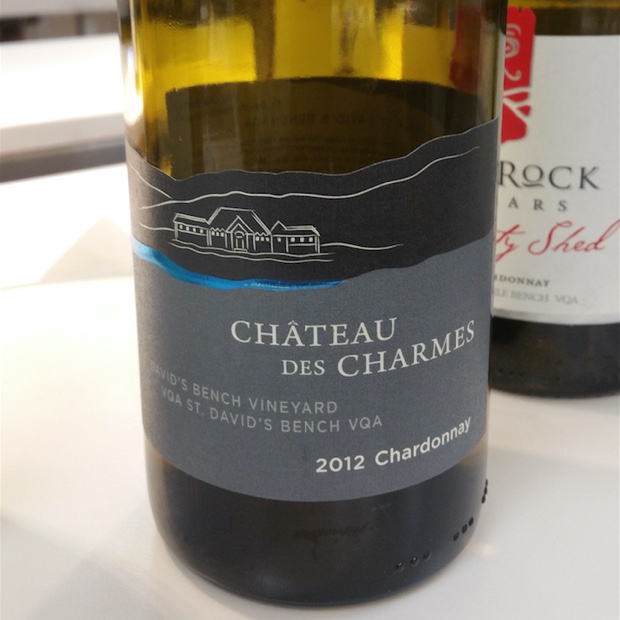
Château Des Charmes St. David’s Bench Vineyard Chardonnay 2012, VQA St. David’s Bench, Niagara Peninsula, Ontario (430991, $19.95, WineAlign)
Tasting the CdC SDB chardonnay a year after it may have been held up with halting reduction is the best thing I could have done and props are fisted forward to the folks at the winery for timing this perfectly. It’s so very mineral-driven and may have stung like a bee in 2015, now fluttering and dancing like a butterfly instead. The barrel presented texture is all marzipan and honey butter with a crunchy bite of rye toast under-spread. Dramatic for the vineyard and exceptional as a price with quality quotient from a polarizing chardonnay vintage. Exceptional timing is exemplary and day assessing uplifting. Drink 2016-2021. Tasted June 2016 @MBosc
Oak Bay Pinot Noir 2012, BC VQA Okanagan Valley, British Columbia (267146, $19.95, WineAlign)
The Oak Bay pinot noir by St. Hubertus has drifted into settled middle age at a time when whatever high tones may have once spoken loud have now faded away. This is light, truffled and whiffing of a vanilla cigar. Blackberries and currants too. Simply complex enough to offer up some value that exceeds decent and enters the realm of great. Drink 2016-2017. Tasted June 2016 @St_HubertusWine
Tinhorn Creek Chardonnay 2014, BC VQA Okanagan Valley, British Columbia (378489, $19.95, WineAlign)
Classic cool-climate please all camps Okanagan chardonnay. From here and there, with this and that; Black Sage and Golden Mile Bench fruit. New oak and stainless steel, wild and cultured yeasts. Herbs and spices, fruit and mineral, ying and yang. Lean, green verdancy and warm, textured liquor. Cool and boozy. All in for $20. Drink 2016-2019. Tasted June 2016 @TinhornCreek@SandraOldfield
Flat Rock The Rusty Shed Chardonnay 2013, VQA Twenty Mile Bench, Niagara Peninsula, Ontario (1552, $24.95, WineAlign)
It’s as if this label had bided all this time to be the benefactor of 2013 fruit. This Rusty Shed, this 20 miler with the track record to age, a wine that sheds baby fat over a 10 year mineral through echelon stratum, in ways few other peninsula to bench chardonnay can do. This Jay Johnston handled surfer of a wine, buoyant and balanced, centred and able to withstand turbulence, oscillation and tidal sway. Here with sumptuous and spiralled fruit gaged in lode intervals and a tartness held in lope and line by a membrane of extract and tannin. Best ever. Showing well, repeatedly and to forecasted repute. Impressing critics and consumers alike. Bravo. Drink 2016-2025. Tasted June 2016 @Winemakersboots@UnfilteredEd@brightlighter1
Charles Baker Riesling Ivan Vineyard 2015, Niagara Escarpment, Ontario (395921, $27.20, WineAlign)
In 2015 Ivan delivers the labour of ripe, concentrated fruit, by lower yield, alcohol and spine, concomitantly and conversely to elevated, amenable juicy potability. I can think of 100 reasons to drink this repeatedly over the next three years while the more structured ’13 and ’14 Ivans continue to mature. Three good reasons would be breakfast, lunch and dinner, from scones, through croques and into fresh, piquant and herbed shrimp rolls. Drink 2016-2019. Tasted June 2016 @cbriesling@StratusWines
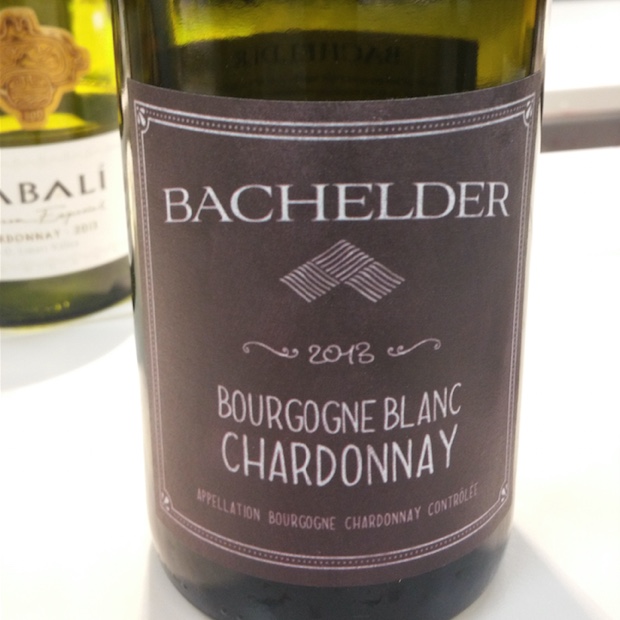
Bachelder Bourgogne Blanc Chardonnay 2013, Burgundy, France (416602, $28.95, WineAlign)
The winemaking gypsy Thomas Bachelder “flies from coast to coasts” and his 2013 French foray into basics and the essential tenets of white Burgundy is a trip replete with a sunbeam shining through your hair. A sweet Melissa of a chardonnay, an ode to what is pretty, simple and carefree about Bourgogne Blanc, but also the idea of chatting up and producing pure driven varietal wine from ideal terroir. Bachelder does this, albeit with romantic vision, here with phenolics, dry extract and mineral of organza sheathing. The vintage speaks clearly and the wine responds with thanks, in kind. “Crossroads, will you ever let him go?” Drink 2016-2020. Tasted June 2016 @Bachelder_wines@LiffordON
Henry Of Pelham Speck Family Reserve Chardonnay 2013, VQA Short Hills Bench, Niagara Peninsula, Ontario (616466, $29.95, WineAlign)
The barrel toast is a gift of the highest order, dispensing a twinge neither wholly lucid nor abstruse, but somewhere on the demurred line in between. Exposes flint in mineral over fruit in its younger development, with elements of sunshine, forest glade and some herbal tones. Not to say it is balmy in any perceptible way, its lees layered body pops fresh in happily reductive design, in a real Ontario way. So representative of the regional, modern, cognoscenti connection. Drink 2017-2023. Tasted blind at the WineAlign National Wine Awards of Canada, June 2015 @HenryofPelham@SpeckBros
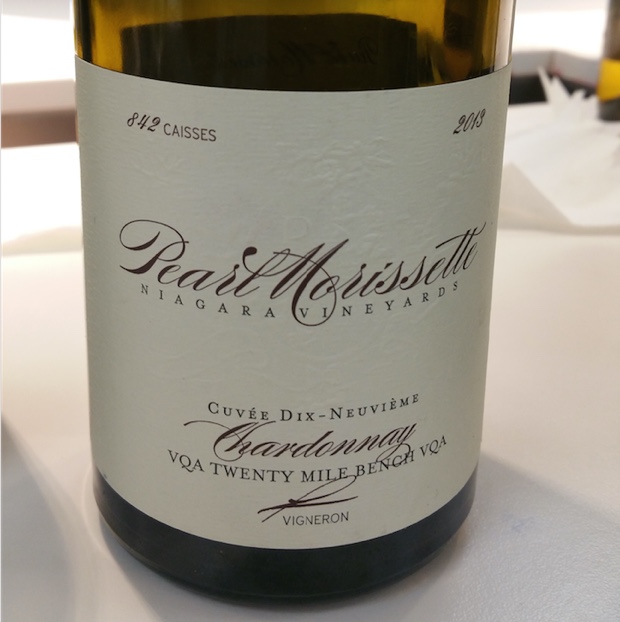
The greatest surprise is a skeptic’s dream, that is, no surprise. The vintage was a gift for chardonnay as we all know and so Francois Morissette does what a wise winemaker does. He lets the fruit from such conditioning speak on its own behalf. The less is more approach allows his fruit to do more than most, to condense into pure elixir of terroir, to inflate with airy, philosophical heir and to exhale a perfume so very, very Cuvée Dix-Neuvieme. Like marzipan but more umami and like stone fruit but crossed with the orchard. The palate and the texture speak of resolution after the revolution and the level of calm post chaos is quietly dramatic. Hypnotizing clarity is what it is. Drink 2017-2027. Tasted June 2016 @PearlMorissette
“Sun come up it was blue and gold.” #cuvee2016 #pictureinaframe #niagarafalls
The Ontario wine industry has powered through many big weeks during the tenure of its young but wise, short howbeit concentrated history. None seemed larger than the first week of March, beginning with Taste Ontario at the Royal Ontario Museum and ending with the 28th edition of Cuvée at the Scotiabank Convention Centre in Niagara Falls.
And now #cuvee2016 @CCOVIBrockU #vqa @winecountryont #scotiabankconventioncentre
In between and as a preamble to Ontario’s annual gala celebration there was the presentation of the Tony Aspler Cuvée Award of Excellence, presented by Mr. Aspler to viticulturist Lloyd Schmidt, for advancing viticulture in Ontario by accessing the best vinifera varietals from nurseries around the world and fighting bureaucracy to do it.
Tony Aspler Cuvée Award of Excellence winner for 2016 viticulturist Lloyd Schmidt and Tony Aslper (c) Brock University
Father and son grape growers Howard and Wes Lowrey from St. David’s were honoured with the Cuvée Vineyard of Excellence Award sponsored by BASF Canada Inc. The 2016 category was best red vinifera and the Lowrey’s were recognized for their Cabernet Sauvignon vineyard. The winner is chosen by an expert panel that makes field visits throughout the growing season to monitor quality.
Cuvée Vineyard of Excellence Award winners Wes and Howard Lowery are flanked by grower Matthias Oppenlaender and Julia Harnal, BASF Canada Inc. (c) Brock University
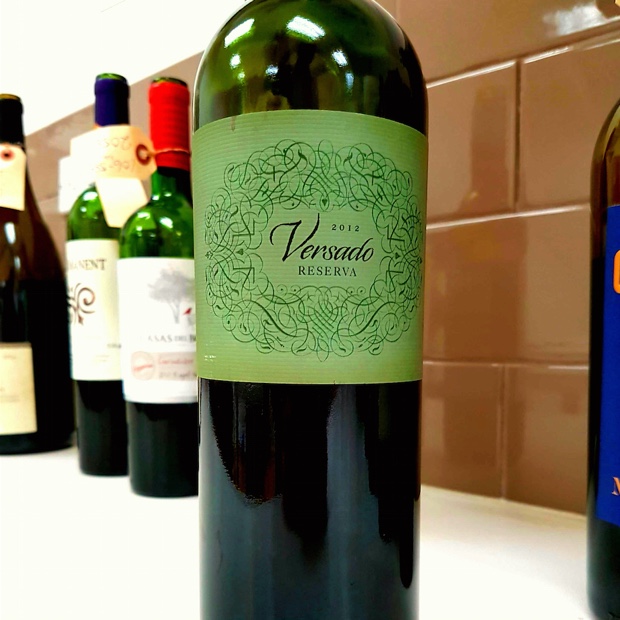
The VQA Promoter’s Awards are designed to recognize exceptional contributors to Ontario’s wine industry. The honours were endowed as follows. For Education, Peter Blakeman of The Canadian Food and Wine Institute at Niagara College. The Promoter-at-Large, Norm Hardie of Norman Hardie Wines. In the LCBO category, Nina Hofer, Product Consultant. In Hospitality, Peter Elmhirst of Elmhirst Resort. For Lifetime Achievement, Peter Gamble, formerly of Hillebrand, VQA, Stratus and Ravine, now consulting winemaker at Benjamin Bridge, Lightfoot & Wolfville and Versado Wines.
Proceeds from the Cuvée Grand Tasting go to support the Cuvée Legacy Fund established after the 2015 event. The fund has already awarded $15,000 in academic scholarships and contributed $13,000 toward industry-driven research projects. At the awards ceremony, the 2015 scholarships were also handed out.
Cuvée 2016 was orchestrated by Brock University’s Cool Climate Oenology and Viticulture Institute who will also play host to the Expert’s Tasting of Ontario wines in April. At this year’s reception 52 VQA wineries each poured one carefully selected wine for the Grand Tasting and were joined by 13 culinary partners. Earlier that week, Taste Ontario was hosted by VQA Wines of Ontario and Wine Country Ontario. Upwards of thirty producers contributed more than 125 wines to the media and trade event.
Taste Ontario reds
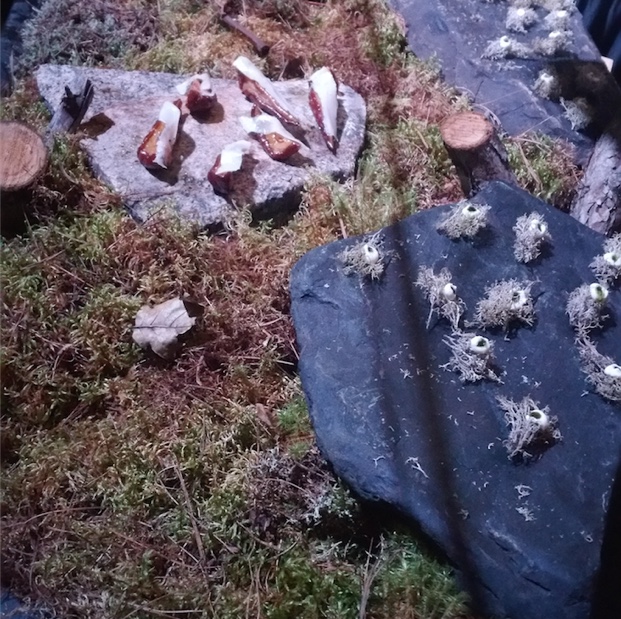
The food establishments on hand were granted the space and signage to show off and showcase their talents. Having their names projected onto the walls around the perimeter of the room made it very easy to locate who was placed where. The wineries received no such similar sort of spotlight signage so happenstance played a significant role on what got tasted. Still it was nice to see a Toronto neighbourhood friendly face in Ossington joint Actinolite Restaurant with chef Justin Cournoyer acting out his special brand of an Ontario forest passion play.
Forest flavours of Actinolite
The pork belly ‘Lollipops’ from Vintage Inn – Escabeche by Chef Chris Smythe, Korean fried chicken by Garrison House Chef David Watt and Duck Mu-shu from Golden Lotus Restaurant’s Chef Sing How were exceptional. Also on hand was omnipresent Niagara events food contributor Artisan Ontario presented by Chef Mark Hand and Mario Pingue. I somehow missed out on Backhouse Chef Ryan Crawford’s burrata and braised beef short rib ravioli tasting plates. No chef had a longer line-up all night long.
Pork belly ‘Lollipops’ from Vintage Inn – Escabeche Chef Chris Smythe
Insofar as an assessment of Ontario wines is concerned, from a varietal point of view, Riesling and Chardonnay have not relinquished any stronghold on their domination, nor should they any time soon. I can’t help but feel and notice that winemakers continue to reach for the big red machine and wish upon an intangible Bordeaux star when they should be concentrating on fresh, gulpable Cabernet Franc and Gamay. They should also take some chances with these necessary, best Ontario option red varieties. Press less, reveal freshness and let natural ferments find low-alcohol impressions of impossible, ethereal beauty.
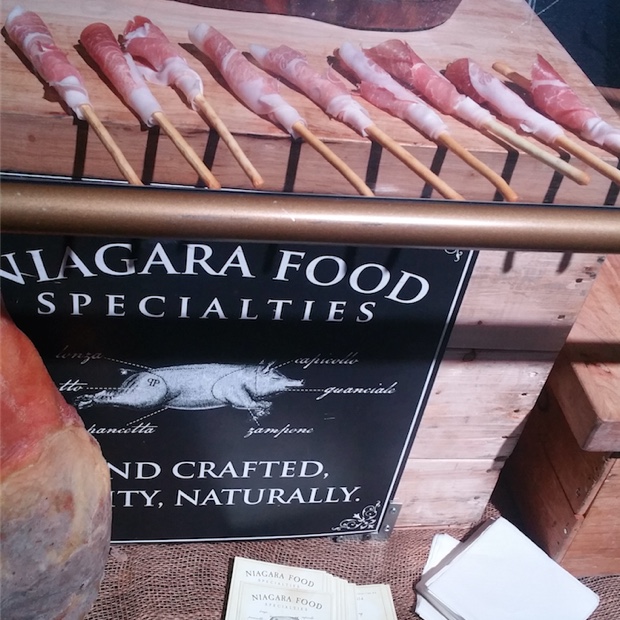
Pingue Prosciutto
At Cuvée there was no shortage of Riesling, Chardonnay, Pinot Noir and big red blends. Where was the Cabernet Franc? Kudos to Brian Schmidt of Vineland Estates for his varietal choice, albeit in a perfect little tidy $15 package. It was the only one. That is a travesty. Kacaba’s 2013 Cabernet Franc was a Platinum Award winner at the 2015 WineAlign Awards of Canada. They can’t be blasted for pouring their 2012 Syrah and you can only pick on but others should have seized the opportunity. J-L Groux of Stratus Vineyards offered up his 2013 Gamay from magnum. Brilliant! Where was the rest of Ontario’s Go Gamay Go arsenal? Varietal lampoonery I tell ya.
Perhaps I can be accused of filtering my view of the evening through the oculus of an infundibuliforms installation. Just maybe I’m a wee bit harsh in my assessment of choices made but there were several wines poured at Cuvée that we’ve seen many times before. While the inevitable will influence choices because of inventories and the bottom line, the event is not about finding buyers. The purpose and long-term vision should focus on teaching, on educating and ultimately on celebrating what Ontario does best. Not just what, but where. Choosing what to pour must come out of a disseminated varietal necessity so that sub-appellations can be further defined and understood.
My top ten wines tasted at the two bookending events were these.
Cattail Creek Small Lot Series Old Vines Riesling 2014
Cattail Creek Small Lot Series Old Vines Riesling 2014, VQA Niagara On The Lake, Ontario (Winery, $21.95, WineAlign)
A Cattail Creek joint starring Roselyn Dyck and consulting winemaker Steve Byfield, from a block of Clone 21 (Weiss) Riesling planted in 1976, one of the oldest in Ontario. This OV loitered in subdued maturation because of a brutal winter, a cold spring and a cool summer. A beautiful fall abrogated what came before and brightened the possibilities. Dyck and Byfield took full advantage, channeled their inner Mosel science of the mind, dialled back the sugar and submitted to the vintage’s desires. The result is a scintillant of Riesling with texture and acidity getting together to”grab a piece of something that you think is gonna last,” reelin’ in the year and shining like new. Steely Riesling at its Niagara flats finest, short of bracing and far from cloying. Though a long ways from the Bench, put this ’14 in the vineyard cru discussion with Picone, St. Urbain, Carly’s Block, Triangle, Steelpost and CSV. Drink 2016-2020. Tasted March 2016 @CattailWinery@TerroirLover
If the 2013 from Fielding Estate helped decipher the code of the how, where and why of Peninsula Viognier, this follow up 2014 speaks at the symposium. Sourced from the Four Mile Creek sub-appellation, a locale fast becoming the consensus ground zero for the option, this single-vineyard is farmed by grower Rick Smith. Low-cropped and hand-picked, this is the cleanest Viognier in town.The spice kick starts au fait late, sneaks up the backside and boom. Gotcha! Winemaker Richie Roberts has a vested investigated interest in this white variety amongst Niagara choices deeply pondered and painstakingly explained. Some off-roading chances taken going forward will elevate this wine into territory occupied by the excellent and the outstanding. Drink 2016-2020. Tasted March 2016 @FieldingWinery@RichieWine
Henry Of Pelham Speck Family Reserve Chardonnay 2014, VQA Short Hills Bench, Niagara Peninsula, Ontario (Winery, $29.95, WineAlign)
Vintage in and out this is the manifestation of an unequivocal Niagara icon for Chardonnay. An unwavering, stylistically consistent, best fruit first cuvée from Pelham’s oldest (1988) estate vineyards in the Short Hills Bench. Quite reductive and dramatic Chardonnay in 2014 with multi-macerated flavours. Needs some time for the barrel and the malo to get together with tangy, soil-driven fruit. A bit clunky at the present time. Should be fascinating to watch it develop, oscillate, flip-flop and ultimately settle into something fine over five years time. Drink 2016-2021. Tasted February 2016 @HenryofPelham@SpeckBros
Call this an experiment if you will and while winemaker Regan Kapach was blessed with a perfect ferment (and one that would not, could not be repeated in 2014 and 2015), don’t believe for a moment that divine skill was not integral to making this wine happen. Like an early 1990’s MTV production of Neil Young, David Bowie and Nirvana all wrapped up into one unplugged special, here is what happens when unfined, unfiltered and unsulphured jam as one. One major “un” omission, or inclusion in this case is French oak, the catalyst and the glue to keeping this freak of Chardonnay nature together. True, this is the one grape that can handle such a hands off winemaking process, but in Ontario? Not so simple. From the Little Vineyard up on The Bench, the Tenacity is not so much. It’s dreamy, creamy, lightly toasty and full of gelato texture and flavour. It glides and slides, lifts and cleanses. It’s a beautiful impossibility. Drink 2016-2019. Tasted March 2016 @16milecellar
Rosehall Run Ceremony Blanc De Blanc Brut, Prince Edward County, Ontario (Winery, $34.95, WineAlign)
A little ceremonial joy in the division here with Dan Sullivan taking some fizz chances to create a new PEC sparkling order. A multiple vintage cuvée from estate grown fruit of weight, substance, tang, drive, a shot put of citrus, servitude to PEC Chardonnay, certitude to B de B style and structure. Just enough pierce to go through and come out clean, even in the face of oxidative time, on the other side. Dips into the well of Champagne to recover its fearless tactility. These are bubbles that “travel first and lean towards this time.” Timing is everything. Drink 2016-2021. Tasted February 2016 @Rosehall_Run@sullywine
Oh, the accessibility of Quarry Road in 2012. Still totes the emerald shine, the gemstone tannic scrape and yet the flesh is rendered rich, ripe, ratcheted and riled up. This has tonality like never before, layered and strudel buttery. At this point the vines for Quarry are 17 years of age, sophic and erudite, compounded by the organic, biodynamic and prudent pruning practices that have cemented its vigour. The clay-limestone, fresh-mineral, push-pull is a veritable careening of expression. Though its longevity may not pile towards a compressed future like that of ’09 or ’11, the earlier and often response will act both as Chardonnay charming and Quarry Road magnetizing. For the next five years it will be very hard to turn away. Drink 2017-2020. Tasted April 2015 @Tawse_Winery@DanielatTawse
Cave Spring CSV Blanc De Blancs Brut 2008, Beamsville Bench, Ontario (237198, $39.95, WineAlign)
As expected the Cave Spring 2008 Chardonnay Sparkling solicits thoughts and ideas centred around age. It elicits a complexity response and one taste means a succumbing to the contagion of its vitality. With its autolytic character shining bright, Cave Spring’s BdeB acts out a fantasy up on a silver screen. Another seven year itch is realized in guaranteed Ontario age ability. Has acted way past simple citrus and yet remains a little closed, just now entering the window of showmanship. Another year or two and this will vie for an Oscar. The bubble program production is unparalleled at Cave Spring, perhaps more than any studio in Ontario. Tasted February 2016 @CaveSpring@TheVine_RobGroh
Creekside’s website waxes about the vintage, noting “the 2012 growing season felt like it had been imported up from California.” This is a type of pragmatic truth (as opposed to correspondent or coherent) because it is useful in applying winemaker Rob Powers’ gathering of phenolic ripeness in lieu of extraneous matter to make this Broken Press. When perfect provisos give you perfect fruit you listen to the winds of the vintage and just go with it. Viognier conditions the mess of richness with more pragmatism in 2012, lifting the aromatics and hooking the rug, up and away from drought conditioning. This BP dips into the earth of the northern Rhône to recover its fearless tactility. And so you feel the autumn’s moderate, crucial rainfall in this wine, its warm days and cool nights. The harvest on October 2nd from the St. David’s Bench Queenston Road Vineyard amounted to nine barrels, eight older French and one new Hungarian, leading to 210 cases. This is the best Syrah from QRV made to date. It will live long because of that aforementioned pragmatic truth. Drink 2016-2024. Tasted March 2016 @CreeksideWine@hobbsandco@AMH_hobbsandco
Oh yes the vineyard speaks, like previous vintages but with clenched teeth and a hyperbole of natural yeast and soil funk. The most charcuterie salts and dehydrates from the middle sibling in 2013, with wisdom and a tale of future memories created in the here and now. Then you will return, to this time that will be its past, when things were so different and the assessment a figment of later imagination. At least three years (and possibly five) will pass before things are set straight for this past to be revealed. The level of smarts and savvy riches are amplified in the Réserve 2013. It is the strongest reminder that reconciliation takes time. Drink 2016-2022. Tasted June 2015 @QueylusVin
Beautifully floral Lowrey from Thomas Bachelder, squeezed with restraint and pressed for pitch perfect Niagara Pinot fashion. Lowrey at its elegant best, ripe red though on the edge of anxious, eyes rolling and persuasions lolling though just shy of any sentimentality. Another layer of lovely infiltrates a taster’s psyche, grabbing hold of the heartstrings and then relents, lets go, stays on the righteous path of peurility. The ’13 Lowrey Vineyard gifts such texture and tannins that flirt with danger. It is a wine of life-affirming footnotes. I ask of it, “oh ye teasing beautiful Pinot Noir. When can I drink of thee?” Soon, but not yet. There is no greed from this vineyard and in these hands. As always, Thomas does the right thing. Drink 2017-2022. Tasted March 2016 @Bachelder_wines@LiffordON
The British, reports Aaron Saltzman, are developing a taste for fine Canadian vintages, and not just Icewine. “It’s a niche market, but it’s being received quite well.” Even though Icewine still accounts for 75 per cent of sales in England (1.2 out of a total 1.59 million Canadian dollars), in 2015, Canada sold $168,500 worth of table wine to the U.K. That number was five times lower in 2013, at $34,889.
In Decanter Magazine’s April 2016 issue they discuss “The best Pinot Noirs in the world (outside Burgundy).” Five from Canada are nominated out of more than 80 total. Ian d’Agata included the Bachelder 2013 Lowrey Vineyard, along with two others from Ontario, Flat Rock Cellars Gravity 2012, Twenty Mile Bench and Norman Hardie Winery, Cuvée L 2012, Prince Edward County. The two recognized from the Okanagan Valley in British Columbia are Meyer Family Vineyards 2013, McLean Creek Road Vineyard and Tantalus Vineyards 2012.
The Canadian wine renaissance is attributed to high-end, artisan winemakers like Norman Hardie and Thomas Bachelder. That’s the cool factor. The truth of the matter is that Canadian winemakers have realized and capitalized on the significance and exceptionality of their terroirs in regions such as Niagara, Prince Edward County and the Okanagan Valley. Journalists and buyers from around the globe know it and have begun to spread the Canadian gospel.
Dr. Jamie Goode has had a profound effect on alerting fellow Brits to the Canadian thing and that ambassadorship has filtered through to the wine shop owners and trickled down to the consumer. Much of the education is attributed to Dr. Janet Dorozynski, Global Practice Lead for Canadian Wine, Beer and Spirits, Foreign Affairs and International Trade Canada in Ottawa. Dr. Dorozynski has brought the wines and their makers to England and pried open the doors to perception.
Last week I tasted through a hundred or more Ontario wines at Taste Ontario and at Cuvée 2016 in Niagara. Those notes are coming soon. For now let’s concentrate on the VINTAGES March 19th release. Here are some of the Canadian wines up for grabs.
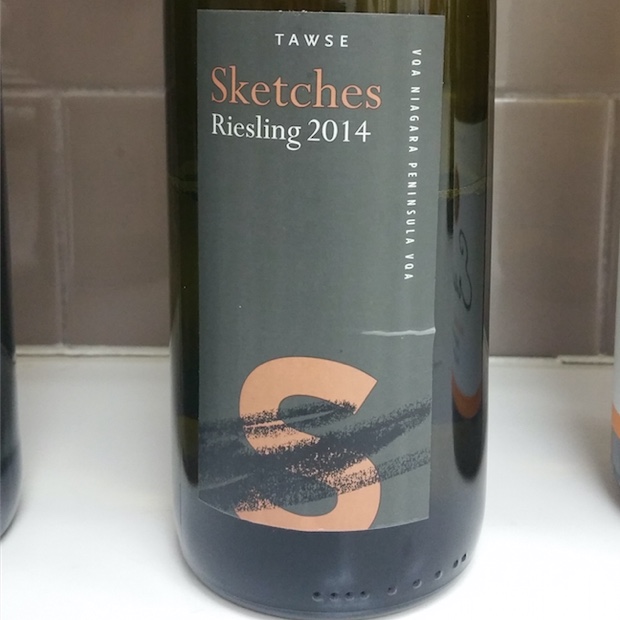
Really striking Sketches Riesling here in 2014, aromatically wild and full of complex flavours. So representative, lemony beyond lemon and full of juicy acidity. Almost too much of a good thing but it should settle a bit and replace some of that stark contrasting acidity with copacetic sweetness. Great fruit in 2014. Drink 2016-2019. Tasted March 2016 @Tawse_Winery@DanielatTawse
Culmina Decora Riesling 2014, BC VQA Okanagan Valley, British Columbia (444836, $24.95, WineAlign)
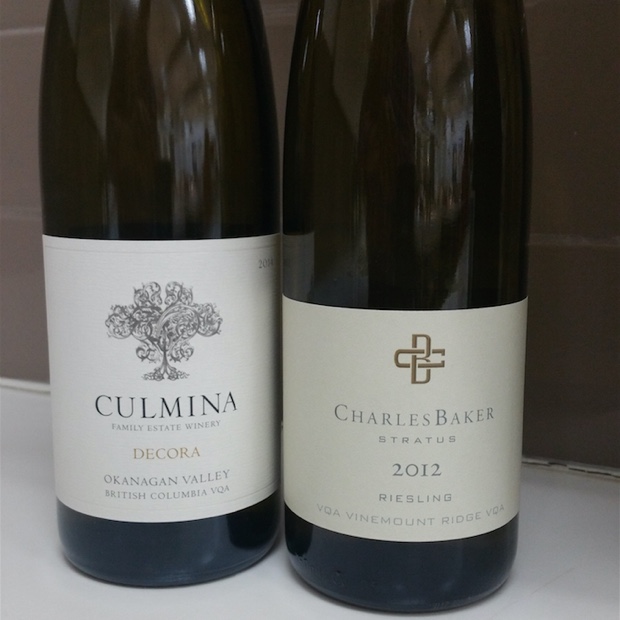
Judging from the ripeness, strength, density and effective grape tannin this may as well be noted as pulchra, decor, charissima, that is, powerful, beautiful, charming. All three are apropos in this really forward and mineral tangy Riesling. Could this come from anywhere but the Okanagan Valley? Should develop with intellect into a honeyed, elastic expression. Drink 2016-2022. Tasted November 2015 and March 2016 @CulminaWinery@winebcdotcom
Riesling squared- Culmina Decora 2013 and Charles Baker Picone 2012
Henry Of Pelham Estate Cabernet/Merlot 2012, VQA Short Hills Bench, Niagara Peninsula, Ontario (395855, $24.95, WineAlign)
Exceeds elegant expectations with poise and presence, a Bordeaux blend so refined it pleases. Effectively restrained and remedies with tonic. Circulating acidity ranges while chocolate whips, but wholly within reason. Spice accents assist in the celebration (why not?) to effectuate this red’s firm grip and grasp of Claret reality. Drink 2015-2020. Tasted blind at WWAC15, August 2015 and March 2016 @HenryofPelham@SpeckBros
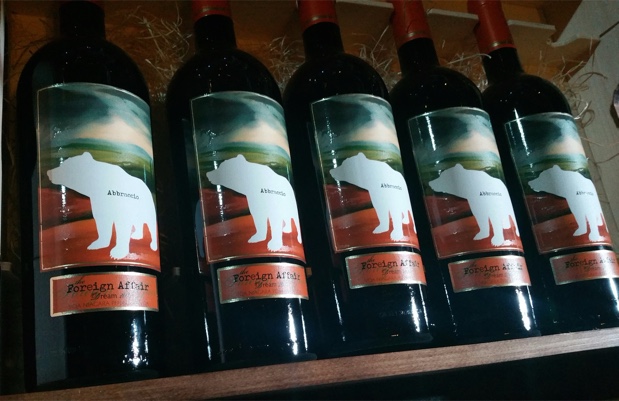
The Dream is a ripping, layered and well executed appassimento from Barclay Robinson. Much oak influence but with that fencing there is more than the spice is right. Sweetness is valued in the context of ripeness, acidity and burgeoning tannin. Here we find a big wine and well within the parameters of the sensibility. Tasting and thinking on the dried and rehydrated grape approach can leave you “lost in the dream, or just the silence of a moment, it’s always hard to tell.” With the ’12 Abbraccio, “Il Sogno” shares the passion for the planning and shows that “love’s the key to the things that we see.” And a little bit of unknown appassimento magic. Drink 2017-2020. Tasted March 2016 @wineaffair@BarclayRobinson@EpicW_S
A vintage that begged to be protected in the vineyard, meaning no leaf plucking and no thinning. A most excellent goal of (0.691895068 kg / m2), or 2.8 tons an acre was realized, as opposed to one in 2010. Heavy vigor slowed down the ripening (leaving that kind of tonnage on the vine), to an elongated balance. Comes from terroir Baker nods to as “a barren tundra,” which you don’t get down the hill. In 2012 there was no waste, no rot, no problems. Its residual climbs to 15 g/L but you’d never know it. There is a confit of citrus, a mellifluous sensation of preserved lemon. Total count is 600 cases. From my earlier, March 2014 note: “Baker’s iconic child yet breathes in unsettled, spumous emission from out of a warm vintage. So primary and such a hard act to follow. Vanguard Vinemount Ridge, arid as the desert and citrus, carbonic tight. Treated with cool, cooler and colder methods to seek result and strike balance in an opulent, lees-appertained, tangy finish. A Picone that says I don’t live today, so it is told and canvassed, “uh, get experienced, are you experienced?” Last tasted March 2016 @cbriesling@StratusWines
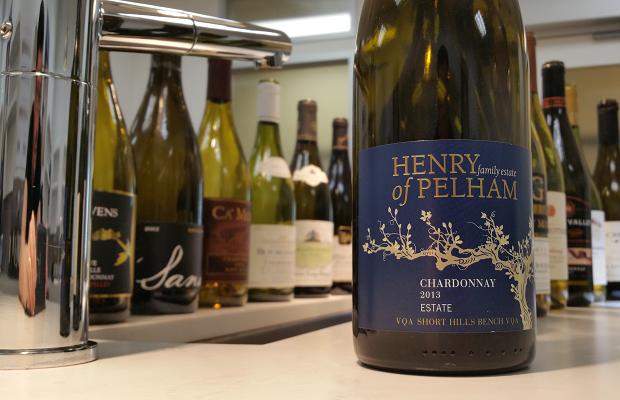
Henry of Pelham Estate 2013 amid a sea of April 4th, 2015 VINTAGES Chardonnay
You can find them from coast to coast. This coming Saturday six VINTAGES Canadian releases, four from Ontario and two from British Columbia, are wines that speak on behalf of exceptional vineyards, out of important places. These are bottles made by winemakers entrenched in their territory and from grape varieties purposed to grow there.
The Creekside Estates white blend known as Laura’s White has become a poster child for varietal blends on the Niagara Peninsula. Winemaker Rob Power has found a way to make a consistent expression in every vintage.
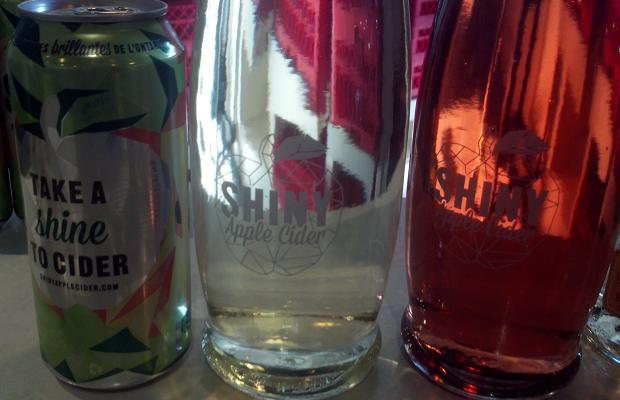
Shiny Apple Cider by Small Talk Vineyards
Angela Kasimos was the winemaker at Riverview Cellars and is now leading the charge at Small Talk Vineyards. The Small Talk Syrah is yet another example to speak on behalf of pushing for more plantings, especially down by the Niagara Lakeshore. But that’s not all. Kasimos is also making Cider at Small Talk. It’s called Shiny Apple Cider, made from Grey County apples and Niagara grapes. You heard me. The White Cider is augmented by 10 per cent Riesling, the Rosé with 15 per cent Pinot Noir. You should try it on tap at Barque Smokehouse.
The Cuvée Black Ball Riesling by François Morissette failed on several occasions to pass through the VQA panel’s strict discretion. The atypical one has finally broken down the barrier and it’s now your turn to decide if it pleases or causes consternation. My chance to opine is laid clear in the review below.
From B.C., Gehringer Brothers out of Oliver offers a unique, Golden Mile take on Pinot Gris. More than just coincidence to be here today as yesterday marked a new direction for British Columbia‘s wine industry. The #GoldenMileBench just became the province’s first sub-appellation.
Sandra Oldfield of Tinhorn Creek called the day momentous. She wrote this on her blog. “Something as elemental as the brown given to vineyard stones by a passing universe. In casual simplicity, I toast to you, the Golden Mile Bench, British Columbia’s first sub appellation.”
The five recognized wine regions in British Columbia are The Okanagan Valley, Similkameen Valley, Fraser Valley, Vancouver Island and the Gulf Islands. The new designation was announced by the provincial government on March 30 and will legally identify where grapes are grown. In this case, the escarpment southwest of Oliver which runs south from Fairview Road and near Highway 97.
So long as 95 per cent of the grapes were grown in the area, wineries will now legally be allowed to indicate the Golden Mile on their labels. The list includes CC Jentsche Cellars, Checkmate Artisanal Winery, Culmina Family Estate Winery, Fairview Cellars, Gehringer Brothers Estate Winery, Hester Creek Estate Winery, Inniskillin Okanagan Vineyards, Golden Mile Cellars, Rustico Farm and Cellars, Tinhorn Creek Vineyards, and Willow Hill Vineyards.
In Jauary I wrote about Burrowing Owl Winery. I talked about the extreme nature of their location and what is does for their wines. “That the winery is situated on the most northern outpost of the Sonoran desert, an arid and agriculturally inhospitable stretch of terroir that originates in Mexico, is not exactly so well-known. That the Owl can produce such wines of extraction spinning on a compass of intensity is one of the wonders of the Okanagan Valley.”
Here are notes on six new local releases coming to stores this Saturday.
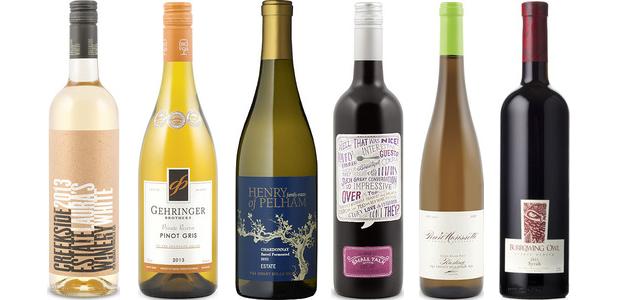
From left to right: Creekside Estates Laura’s White 2013, Gehringer Brothers Private Reserve Pinot Gris 2013, Henry Of Pelham Estate Chardonnay 2013, Small Talk Vineyards Recap Syrah 2012, Pearl Morissette Cuvée Black Ball Riesling 2013 and Burrowing Owl Syrah 2011
When I tasted the 2012 Laura’s White again with winemaker Rob Power two weeks ago my last note said “this has the grab, tempered by the warmth of the vintage, so look for ’13 to nail it with a hook.” That it does, along with the most balm and herbs of the last five vintages. This blues traveller goes deeper into complexion and white varietal compilation. The fruit is very tropical in 2013, softer, easier, lighter in complexity, but it has that musical trigger, the jingle, the popper, the hook. If ’12 was the revivalist blend, then ’13 will try to be the proselytizer. “Because the hook brings you back, ain’t tellin’ you no lie. The hook brings you back, on that you can rely.” Everyone can drink this. While it may not stand up a decade or longer later, you will be able to look back on it fondly and remember it was a wine for the times. Drink 2015-2020. Tasted March 2015 @CreeksideWine
Gehringer Brothers Private Reserve Pinot Gris 2013, BC VQA Okanagan Valley, British Columbia (347203, $18.95, WineAlign)
A concrete set of aridity rules are the modus operandi here in a reserved, stoic and aerified sort of Okanagan Pinot Gris. Paler and thus less oxidative then the last vintage to pass through these parts. Very much cut into pear, less so of white peach. The grape tannin is noticeable, even obdurate. Generous alcohol contributes to the mulish attitude though with the aridity and slight citrus push you’d be hard-pressed to really notice the call. Tasted March 2015 @GB_Wines@UncorktheSun
Henry Of Pelham Estate Chardonnay 2013, VQA Short Hills Bench, Ontario (268342, $19.95, WineAlign)
Sunlight is the key to this ripe Chardonnay, snatched from vines that grow on the most easterly of the Niagara Escarpment’s sub-appellation. Here Henry of Pelham calmly puts its hegemony over Short Hills Bench Chardonnay on display. The fruit layering is very impressive, compressed even, with just a spiced spirit injection from the barrel. The Estate Chardonnay is in a mid-range class of its own, this gatherer of heat days, hoarder in spring water retention, cleanser in sand and gravel drainage. The vintage just seems perfect for this niche bottling, balanced, primed to finespun texture, stretched for length and good to age at least five years. Last tasted March 2015 @HenryofPelham@SpeckBros
Small Talk Vineyards
Small Talk Vineyards Recap Syrah 2012, VQA Niagara On The Lake, Ontario (415612, $24.95, WineAlign)
In the hands of new winemaker Angela Kasimos, Small Talk Vineyards should consider going with and increasing their plantings of Syrah. It’s clear that Kasimos has inherited good solid fruit and the Small Talk (formerly Stonechurch Wines) treatment in ’12 is a very good start towards what should become a great varietal relationship. Smokey, savoury and full of positive brine vibrations, this has body but no overripe or caramelizing denouement. Nor is it green, though it exhibits tonalities that whisper volatility and chews that say sinew. Yet it persists healthy and clean. This is Syrah of lovely curves, rounded shapes, bright peaks and gently sloping valleys. Who doesn’t like Syrah young and infectious like this? Tasted March 2015 @SmallTalkWines@AngelaKasimos
Pearl Morissette Cuvée Black Ball Riesling 2013, VQA Twenty Mile Bench, Ontario (416073, $32.20, WineAlign)
Let’s get something immediately out of the way. The wines of François Morissette are not meant to please curmudgeons, skeptics, contrarians or members of the wine media. This Riesling has no desire to kiss ass. This will not appeal to late harvest lovers, from Kabinett to Auslese. Is it ripe? Not quite. Is it different? Absolutely. This compares to almost nothing. Like a Champagne ginger, lime and bronze filings cocktail, the Blackball ’13 is so very developed and despite the colour, is a hyperbole in primary existentialism. That it has essentially no residual sugar and an achieved 11.5 per cent alcohol is a complication only the clinical doyenne has the answers to. Riesling in between dreams, “never knowing shocking but we’re nothing.” The Blackball has struck, is not yet stricken and will offer remore pleasure for another six months. Then it will deconstruct, dissolve and devolve into darkness and funk. Five years later it may emerge like a phoenix, jack up like a Rangen Riesling, into the ethereal. Will it happen. I couldn’t possibly tell you. We may never know. But I can say that then, and only then, will it truly tell its story. Drink 2020-2025.Tasted March 2015 @PearlMorissette
Burrowing Owl Syrah 2011, BC VQA Okanagan Valley, British Columbia (73072, $39.95, WineAlign)
Just when it seems that Burrowing Owl could not coax beyond the perceived maximum in ripeness and richesse out of desert sage country Syrah, the envelope pushes higher in this ripping 2011. An absolute circum whirl of dark fruit, crushed peppercorns, Cassis and candied violets draw syrupy into bottle. Big, brawny and modern, styled like Syrah from peak perches overlooking the French Riviera with a small percentage of mitigating northern Rhône sensibility. Texture is pure silk. Acids are tame but very present. Tasted March 2015 @BurrowingOwlBC@winebcdotcom@LeSommelierWine
The privacy, intimacy and relaxed atmosphere of a subterranean hashery is something we should all experience at least once in a gustatory lifetime. We should also be afforded the opportunity of a salubrious 12-course tasting menu designed by a reluctant superstar. Why ought we not be handled with extreme Sommelier care by the caress of a total professional? Give me a reason to not spend three hours locked in a room with eight others, all of generous wine and spirit?
The location was Splendido‘s downstairs dining room. The chef was Victor Barry. The Sommelier was Ellen Jakobsmeier. The company a group of friends and friends of friends with a common goal. Eat, drink and be merry. Maybe trash talk a little. Trade a few thousand e-mails ahead of time to fire the vinous juices. Get down to business. Taste fourteen wines blind, poured from paper bags, discuss and be humbled by knowing everything and yet nothing at all.
Chef Barry’s selections and his staff’s execution were beyond flawless, culled from trial, error and perfection, bobbing up into the ethereal. Ms. Jakobsmeier had less than 20 minutes to receive, prepare and pour in order, with timely precision, the agglomerated and cumulative progression of the wines. Like Euro rail time. Not a hair out-of-place. Big props Ellen.
One dinner companion said this. “Thank you so much for inviting me to join your Pirate festivities! The food was incredible, thanks for hosting us Victor. The wines were exciting, generous and delicious! Thanks to all of you for sharing the gems from your cellars. And thank you Ellen for doing such a great job pairing all the wines. A feast worthy of Pirates!”
Victor added his own words. “Thanks everyone. I had a blast. I really enjoyed sitting down stairs it made it much more enjoyable for me. Looking forward to the next event. PS that Tokai was fucking delicious. And the Premier Cru from that “Niagara appellation.”
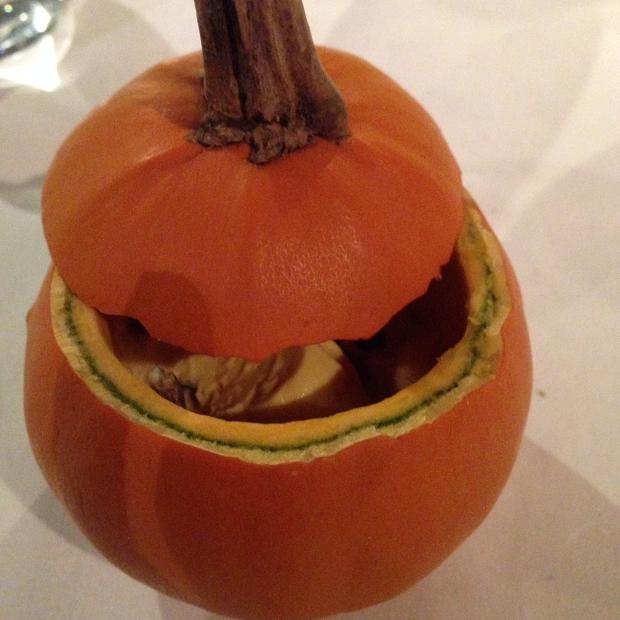
I wrote this to the group. “Laid in bed last night thinking about every course. Too many details to comprehend. And then it was morning and my kids wanted their lunches packed. Good thing there was this pumpkin in my wine sleeve…generosity in wine just amazing. All thoughtful and just fucking generous. Fortunate to have met new faces. Looking forward to this again, and again. Great work JB and Victor, stars all around.”
And to you JB, you sure do know how to throw a party.
Champagne begins the pirates on a picnic dinner in the downstairs private dining vineyard at Splendido Toronto
Champagne Larmandier-Bernier Rosé de Saignée Premier Cru NV, Champagne, France
Just a wee coppery this rusty blush, savoury to solecism and uprooted by a tremendous fault that forces metamorphic salinity, no check that, bleeds from rock into the bottle. If Champagne could commandeer the senses to stop and take note, this LB is the one. Stoic, purposed, frank and blushing like a winter Olympic athlete after a gruelling race. This Rosé is as confident and masculine as can be for the genre. It opens the eyes, pores and heart for a long haul ahead of pulls, in corks, sips and gulps. @LarmandierB
Larmandier-Bernier Champagne Rosé de Saignée Premier Cru NV and Domaine Dauvissat Chablis Premier Cru “Séchet” 2009
Vincent Dauvissat Chablis Premier Cru “Séchet” 2009, Burgundy, France
To be blinded by rocks is to taste such a wine without knowing what it is, slicing like Silex, cutting with a jagged edge of mineral take, yet gripping of aridity that must come from singular Chablis. Something whips like paraffin but again, the missing wood, the fennel talc, the absolute purity just says Chardonnay. With levity requested, gotta borrow from Burghound on this one because he was spot on, “way beyond the shadow of a doubt, yeah.” After 30 minutes the Sechet left the quarry to enter a sweat lodge of smoke and toast with an eventual pause at the charred Shishito capsicum station. The coarse wail is the young Dauvissat crooning but with fear set aside, the wine will soften in time, like the fashion poet, the prince of thieves. This Séchet, mythological in name, is Chablis brightly lit and accepts another sung substitute for yes. “Oh it cuts like a knife , yeah but it feels so right.” @BIVBChablis
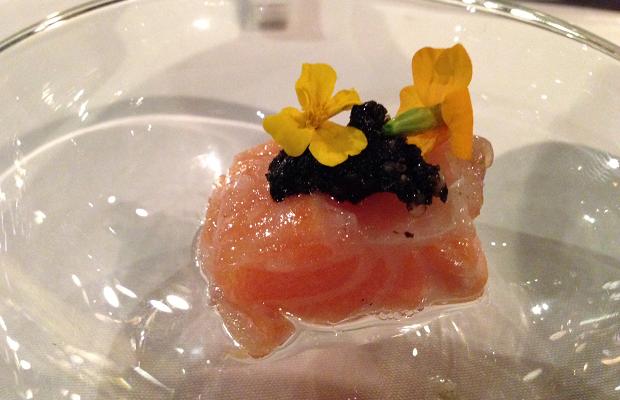
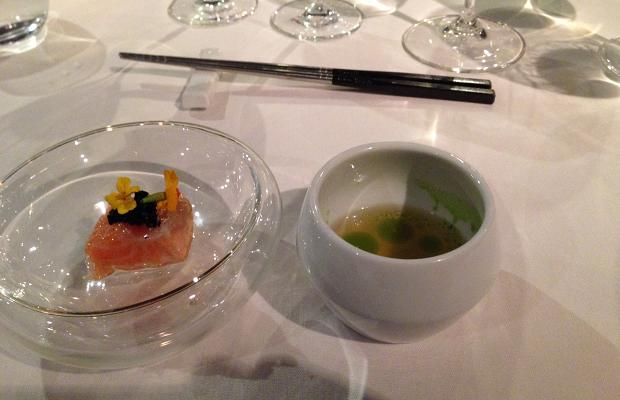
Oysters, popcorn, scallop dust
Popcorn dusted with dehydrated scallop dust? Damn straight.
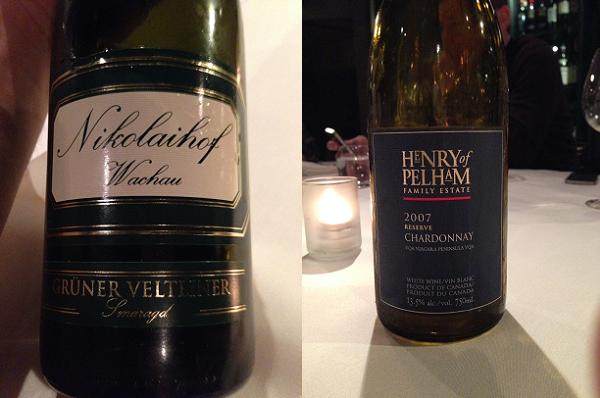
Nikolaihof Im Weingebirge Grüner Veltliner Smaragd 2007,Wachau, Austria(Agent, WineAlign)
Something grand is brewing, of that there is no doubt, despite the skinny, indehiscent first moments. A petrol that comes with age, a suckling piggy with melifluous honeycomb in its mouth roasting away, tinned fruit cup of a jellied, agar-agar mandarin orange type; these are the bold scents of what must be Austria, possibly Riesling, certainly Wachau. Tannin and stone drip Alsace Grand Cru, of Riesling again, like Rangen, but the reveal of Grüner Veltliner makes so much sense. Crazy, mind-blowing example, as good as it gets, a bench and high-water mark from which a free fall off the high springboard makes a perfect splash into the glass. Ninety minutes later only a word is needed to stem the waves of petulant emotion. Unbelievable. @TheLivingVine@AustrianWine
Nikolaihof Im Weingebirge Grüner Veltliner Smaragd 2007 and Henry of Pelham Reserve Chardonnay 2007
Henry of Pelham Reserve Chardonnay 2007, VQA Niagara Peninsula (2013 268342, WineAlign)
French oak kicks at the door, feeling young, dirty and fine though synchronicity is absent in most respects. This is certainly not Chassagne, definitely not Meursault, not even St. Aubin. Yet it is delicate and delectable despite its unkempt ways, selfless and if left to be, might settle into a relationship. To discover it’s the hot vintage of 2007 version of today’s Estate Chardonnay is nothing short of astounding and at the same time, disappointing, at odds, disassembled. After 20 minutes it falls apart, “in little pieces on the floor, too wild to keep together.” The wine’s inclusion was necessary, gave perspective and bent to receive the Uni, “and now the end has come.” The 2012 and 2013 will offer much more pleasure. @HenryofPelham@SpeckBros
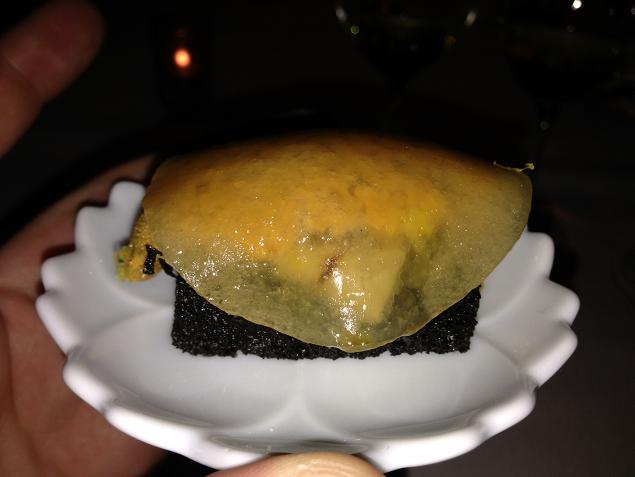
Sea urchin, toast, squid ink, lobster
Domaine Valette Pouilly-Fuissé ‘Clos de Monsieur Noly’ 2002, Mâconnais, Burgundy, France
May as well be Josko Gravner Ribollo Gialla, or Ann Sperling’s Whimsy! Orange and yet in contempt of the oxidized and underripe cantaloupe be damned, Jura should be the call. But then there is the question of messing with the man acidity and a trippy delicacy as per the cook’s butcher. It is certainly not faulty, nor should it be faulted for developing au natural, on top of the sheets, on the bare side of the beach. OK, so really old Chenin Blanc and a very natural Outback white blend would make for good conversation, or not. Like mushrooms for toffee. Like mulled apples for cider done wrong. Dirty in the most righteous 12 year-old Sherry way. Love it with Lobster on a rock, octopus and some kind of sea cucumber.
Domaine Valette Pouilly-Fuissé ‘Clos de Monsieur Noly’ 2002 and Louis Latour Corton-Charlemagne Grand Cru 2009
Louis Latour Corton-Charlemagne Grand Cru 2009, Côte de Beaune, France (Agent, WineAlign)
Can anything really be known from a fleeting moment spent with this? Classic, viscous, rich Burgundy and nothing but, with more mineral than should be gained from just a pass. The maker had the unconscious intent of remembering generations. When told that hey, it’s a Latour, in Beaune, of Corton Charlemagne, by Grand Cru, it’s hard to gather your inner we’re not worthy but focus and intent need be the outward act. You can really taste the limestone, imagine walking the Corton hillside, feeling the maximum exposure of the sun. When you know what it is you know to take a slice of humble pie and remember the soil, the soil, the soil. In Burgundy since 1797. @LouisLatour1797@LouisLatourInc
Equipo Navazos La Bota de Manzanilla Pasada 2011 nº 30 Capataz Rivas
Equipo Navazos La Bota de Manzanilla Pasada 2011, nº 30 Capataz Rivas, D.O.Manzanilla Sanlúcar de Barrameda, Spain
Tasted blind this pours as a glass of briny capers, sea peas, vetches and liquid basalt. It speaks a language that contains the ancient loneliness of ruins. Thoughts easily lean Manzanilla or Old Fino. Great nuts, bitters, horseradish, dry tang, daikon and like a dirty martini. Not to mention orange rind and lime rind, zest and akin to a Vin Doux. It’s origins are at the hands of capataz master Rafael Rivas, from juice originally preserved to add kick to more commercial releases but the decision instead was made to “touch” the 15 solera butts with “testimonial sacas” of only four or five arrobas (roughly 5 x 16 = 80 litres), to make a wine such as this. This is old school Manzanilla, the third saca, with a reductive flor, uniquely oxidative and an average age of around 15 years. @EquipoNavazos@SherryWines@JerezXrsSherry
Pop can seafood
Intermezzo of smoked oyster and foam…
Splendido’s Five-hour carrot
“Friends – ridiculous dinner last night, in the best way. Great wines with great friends is my favourite way to spend a night. Already looking forward to the next one – at which I will bring more than one wine.”
Here the soprano sings, in bold, rich, deep tones, with a sense of entitlement and a swagger. It’s a royal, goodfella, masculine depth. The notes are sung, even danced in bourrée, crescendo, sostenuto and ritardando. The luscious bing cherry richesse gives it youth, intimating Sangiovese but true hematic Toscana can’t be this dark. The modernity of Nebbiolo it must be. Seamless, tireless and impossibly rose petal delicate with the omnipresent tar. Would be willing to go back to 1999 but for the black forest layering, though to find out it’s ’97 shatters myths, confidence and legend. Still dusty and tannic, with more years needed to shed the grains of sand chain. After 20 minutes it goes to candied flowers, oranges and Alba truffles. Bring on the soft scrambled eggs.
Podere Rocche dei Manzoni Barolo Vigna Cappella Santo Stefano 1997 and Marchesi di Barolo Sarmassa 1997
Marchesi di Barolo Sarmassa 1997, Piedmont, Italy
Smells like spirited, youthful, though decidedly modern Nebbiolo. Rich, chalky, dense, viscous, unctuous and yet the opposite of the Manzoni grit. More feminine, of more voices, in fugue, at times in tarantella, then into arpeggio. The notes play from a radio in my head. “In the deepest ocean, the bottom of the sea, your eyes, they turn me.” That it’s my contribution, this weird fish of a Nebbiolo, makes me amazed at the complex world of Piemonte and the absurdity of knowledge. Sensory appreciation rocks, spoken through this Sarmassa, like a chant from an ancient tribe, sitting cross-legged upon the clays of Lugagnano. It seems there may be 20 years left on the Marchesi’s Nebbiolo. I can’t believe how well it showed.
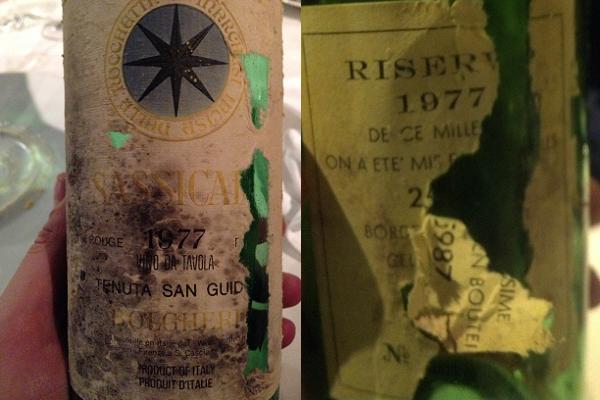
Though the vintage was reported to be less than exceptional, the chance to taste this 37 years in/on and the longevity it displays combines for full, blow me away effect. The first vintage of Sassicaia was 1968 and this 10th try hits the mark of experience. A blend of Cabernet Sauvignon (85 per cent) and (15) Cabernet Franc, the fruit came from vines over top soils of clay and limestone. The wine spent 20 months in Yugoslavian oak barrels (half of it being new, and half used once or twice before), while for the remaining 60 per cent, French oak was used (2/3 new and 1/3 used once or twice before. Tasted blind, the swirling and searching thoughts of Genesis retrospection assimilate aromas of truffle and mushroom, but at first there is no reply at all. Landing on a plot of excellence somewhere between Bordeaux and Piedmont, Tuscany rises from its hills. A silent conversation ask the Sassicaia “I get the feelin’ you’re tryin’ to tell me; Is there somethin’ that I should know?” Its condition is near perfect, its body full, its nature pristine and finally, so obviously in balance. After 30 minutes it begins to slide, to no surprise, but you can’t believe the expression it gives and the impression it leaves. And so, it is confirmed. 1977 was a fine vintage for Sassicaia. @Smarent
The crowd leans modern, young, New World Cabernet Franc or Bordeaux blend. Can’t help but concur. Turns out to be a blend, of Cabernet Sauvignon (75 per cent), Sangiovese (20) and Cabernet Franc (5). First produced in 1978, the Sangiovese was only introduced to Solaia in 1980. In 2003, the weather could be described with a single word. Hot. Limited rainfall and a record total of 2400° in daytime heat summation has brought this Solaia to its full on gain, 12 years in evolution. The vintage caused a full draw from stony calcareous soil of marl and friable albarese rock. The collective soul can appreciate its charms but the heavy aspect ratio can’t be denied. We sipped and “the punches came fast and hard.” Warm smacks to the face, rushes of heat and an ensanguined rush of chocolate fruit through the system. For now there is no caramel, no brûlée, no denoument. In the present there are caverns of tannin, the ‘sunny one’ playing the crowd, on a sunset strip. Soon and in the end, times fades away. @AntinoriFamily@HalpernWine
Marchesi Antinori Solaia Toscana IGT 2003 and Royal Tokaji Aszú 5 Puttonyos 1993
Here the caramel unctuousness and apricot in chains of liquid gold is the work of a legendary purveyor, the Royal Tokaji company. With sweetness upwards of 150 g/L and acidity pushing the 10 g/L mark, this is no shrinking violet of a dessert wine. With 12 years of road under its belt, the blend of predominantly Furmint and Hárslevelú grape varieties (with a small percentage of Muscat) is firing on all cylinders. Racy and intense, this captures the essence of the 1st growth Nyulászó vineyard and brings it to the world. Bullies the desserts a bit, but all is forgiven considering the range of flavours within and complimented from without. @Royal_Tokaji@HHDImports_Wine
Then one more dessert course…”Milk and Cereal,” chamomile and maple tea gel, buttermilk quenelle, flaxseed granola.


















 Godello