The meaning of Chardonnay: You’ve gotta be cool to be kind

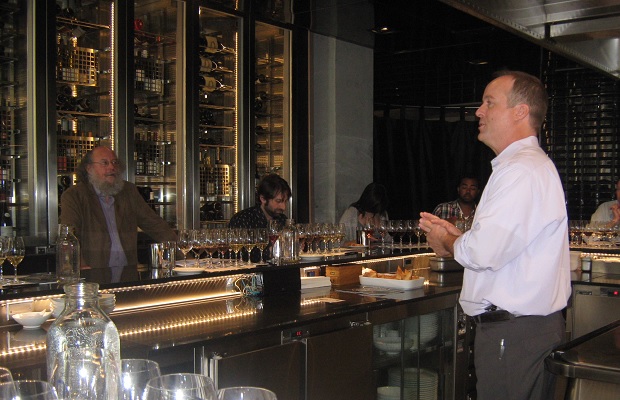
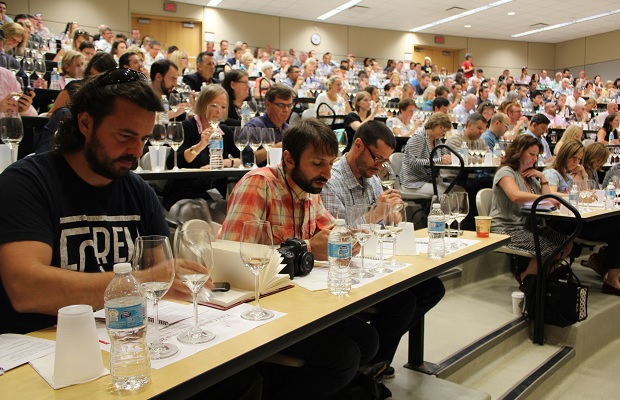
The School of Cool at #i4c14, Brock University: Studying Chardonnay with Zoltan Szabo, Mike di Caro and Godello,

The School of Cool at #i4c14, Brock University: Studying Chardonnay with Zoltan Szabo, Mike di Caro and Godello, photo (c) Kaitlyn Little

Tell me, why Chardonnay? Who can explain the exultantly singular science behind the world’s most wontedly planted, easily recognizable and widely endorsed white grape variety? How can something that seems so commonplace consistently blow people’s minds and convince them to have a go, over the course of a weekend in venues scattered about the Niagara Peninsula, at more than 100 samples in 50 hours? Where else is it possible that the fruit of one vine can be the sole proprietor to lead such a fervent tailgate of amaurotic yearning? What is the meaning of this Chardonnay?

The quest begins in Burgundy, centre of the Chardonnay universe, home to the icons, built upon centuries of micro-plotting and the act of influencing patrons, friends and enemies. At this point in history, success out of French vineyards is a given, blatant and obvious. Chardonnay’s foray into the global diaspora and subsequent boon is yet another matter.

Related – ‘I4C’ a future filled with Chardonnay

The most recent Cool Chardonnay conference is the parochial focus of attention so for the sake of local argumentation, lets connect a line direct from Burgundy to Niagara. Peninsula winemakers (along with those from Prince Edward County and British Columbia’s Okanagan Valley) draw inspiration and knowledge from the mother land. The fourth annual #i4c14 celebration in July is the stuff of Chardonnay dreams because of the cool visions of vignerons like Thomas Bachelder, Harald Thiel, Norman Hardie, Ann Sperling and Peter Gamble, Martin Malivoire, Ed Madronich, Bill Redelmeier, Doug and Karen Whitty and Moray Tawse. Not to mention the foresight of Niagara’s biggest players; Inniskillin Wines, Peller Estates (Trius), Stratus Vineyards, Chateau des Charmes, Vineland Estates and Cave Spring Cellars.

To give Chardonnay its due and to build a stage from which it can parade about, belting out its songs, there must first be assembled a team of passionate folks. In addition to the winemakers and winery proprietors there is an army of volunteers. Their contribution is immeasurable. This group is led by the #i4c14 concierge; Dorian Anderson, Trisha Molokach, Britnie Bazylewski, Elena Galey-Pride and Wine Country Ontario’s Magdalena Kaiser. Thanks must always be given to Barbara Tatarnic of Brock University, along with CCOVI director Debbie Inglis and Marketing and Communications Officer Kaitlyn Little. Event chair Del Rollo brings the A-game, as does Peter Bodnar-Rod, life giver to Everyman and every Chardonnay. The ambassadors of cool are lead by a team of sommeliers; Bruce Wallner M.S., Will Predhomme, Mark Coster, Serge Janjic, Emily Pearce, Sheila Flaherty, Lindsay Groves, Brett Fraser, Heather MacDougall, Bob Latham and Peter Lavoie.

The generosity of the event hosts come to praise Chardonnay. Wine Country Ontario, Brock University, The Grape Growers of Ontario, White Oaks Conference Resort & Spa, 13th Street Wines, Cave Spring Cellars, Tawse Winery, Flat Rock Cellars, Southbrook Vineyards, Henry of Pelham Estate Winery, Peller Estates Winery, Malivoire Wine Company, Reif Estate Winery, Vineland Research & Innovation Centre and Ravine Vineyard. The LCBO and VINTAGES join the party, setting aside time and space at the same time to sell some cool Chardonnay.
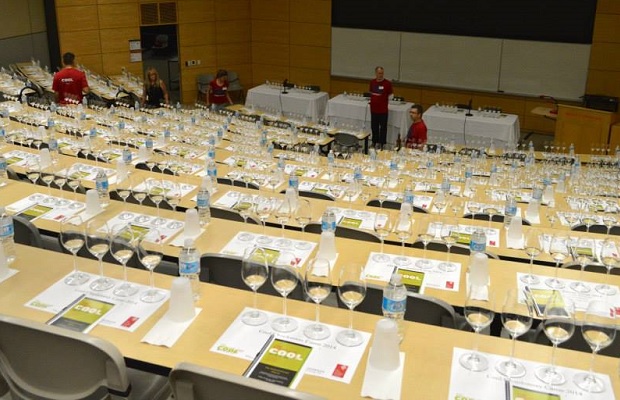
The School of Cool,  Photo (c) Elena Galey-Pride — at Brock University.

The School of Cool,
Photo (c) Elena Galey-Pride — at Brock University.

The weekend begins on Friday, July 18th with #TheSchoolofCool at Brock University. Luminaries are flown in to speak on behalf of the great grape. Tim Atkin (MW), Christy Canterbury (MW), W. Blake Gray (wine journalist, cool climate advocate) along with eleven panelists (winemakers, growers and researchers) of cool climate viticulture and winemaking explore, debate, provoke and disseminate.
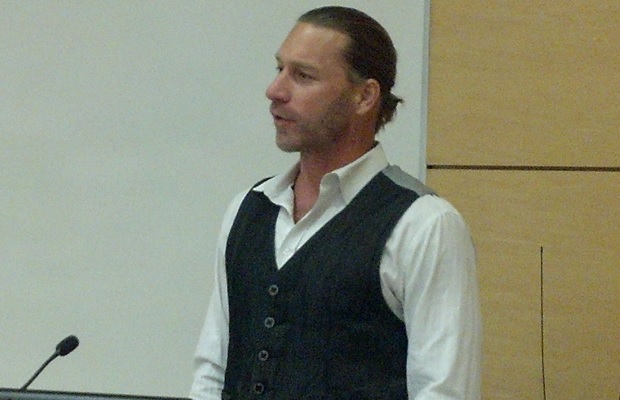
John Szabo opens the Chardonnay Camp 2014 at Brock Univeristy Photo: Michael Godel

John Szabo opens the Chardonnay Camp 2014 at Brock Univeristy
Photo: Michael Godel

Three interactive sessions feature this global panel of experts. Renowned Master Sommelier John Szabo is the chair and most in control moderator of the panels. Here at Chardonnay Camp he is talk show host, politically motivated comedian and all-knowing Yoda wrapped into one Renaissance man package. Szabo notes that “quality, at the top end has diversified, especially in Burgundy.” He then wants to know “who is an acid lover?” The answer to that question is the first clue towards an understanding of the meaning in (cool) Chardonnay. “Does anyone here regret planting any variety? No? Nobody? Everything works in Ontario.” The sportive tone succeeds in marking a first strike for the grape guest of honour. As does his notation that “the panel is chosen to speak on the zeitgeist topics of Chardonnay.” A walk-around tasting of all 117 bottles being poured at the 2014 event following the sessions helps to build early Friday momentum.
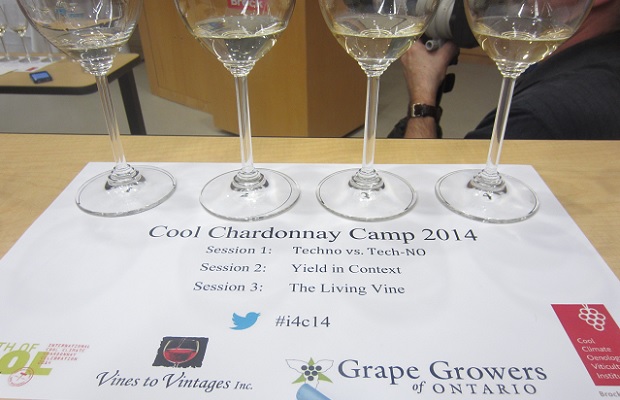
Cool Chardonnay Camp Photo: Michael Godel

Cool Chardonnay Camp
Photo: Michael Godel

Tim Atkin begins. “We are here to have fun.” The British journalist spends his time defending the oft maligned variety, insisting that “the target of Riesling lovers should not be Chardonnay. It should be Pinot Grigio.” Atkin reminds that Chardonnay is still the fastest growing white variety in the world but that “even worse things have befallen this noble grape variety. It’s a victim of its own ubiquity and adaptability.” What makes it so special then? “Chardonnay expresses place, as well as production, terroir as well as technique.”

Grower Matthias Oppenlaender: “I like growing Chardonnay. It adapts to the different soil conditions in the sites I own. But I like drinking it even more.” The panelists debate Techno vs. Tech-No. Atkin’s take? “Recreating balance is a bad practice. All these things (manipulations in the winery) are fine if they are done sensitively. Overripe plus water equals bad.” Jeremy Dineen of Josef Cromy Wines in Tasmania says “wine should taste from a place, but also from a time.” His idea of technology “is to try to make my life simple. It’s a hell of a lot easier to plant in the right spot.” On reverse osmosis: “Technically, yes. Ethically, no.”

The panel seems to think it interesting that consumers consider that wine should be a natural and non-manipulated product, but food can be handled and bastardized in unlimited ways and be called gastronomy. First of all…consumers…really? Wine geeks, more like it. Secondly, wines comes from one ingredient: Grapes. Well, three if you count yeast and sulphur. Food composition is contrived out of a plethora of ingredients. Manipulation and over-handling is the norm, not the exception. Wine should follow the exact opposite course.

Manipulations, according to former Henry of Pelham winemaker, now of Niagara College Ron Giesbrecht include sorting, spraying, osmosis, acidification, de-acidification, overripe diluting, wood chips, adding tannin…the list goes on. He admits that “some degree of finessing and correction is OK. Add sometimes, but not any time.” Shiraz Mottiar of Malivoire is a purist. “When it comes to techno, I like (the ideas) of Calvin Harris (anyone get that…?). Add as little as possible, that’s my position. It would be unjust to the consumer to create something awkward and unusual.”

Giesbrecht brings out base wines with the addition of “winemaking tricks.” One is lactic, lean, mean and filled with cheap acidity. Another is terpenic, gum leesy and full of rounder acids. A third is volatile, medicinal, sacchariferous. A fourth is done very lightly, yet thin. Oak chips, micro-barrels, gum Arabic, these are all tricks of the trade and they all lead to faults.

Session two discusses Yield and Context. Mattias Oppenlaender discusses the Ontario opportunity of growing grapes for the high end, quality market. “If I grow Pinot Noir at (only) two tons per acre, it’s pretty difficult to make it economically viable.” Dr. Jim Willwerth, CCOVI Brock University adds, “in Ontario it’s important to have low yields from late ripening varieties. Vine balance is the key.” Willwerth cautions against stereotyping the vine vigor quotient. “Lower yields to highest quality is not a direct linear relationship. We know it’s not the case.”

Yet Dimitri Bazas of Maison Champy in Burgundy concedes that zero yields is not the best. “You can make good Premier Cru wine with yields of 40-45 L/hl. Szabo then asks, “and you can taste the quality difference based on these number?” Bazas replies, “yes, yes I can your honour.” Matthew Lane of Peter Lehmann in Australia adds a trump card. “There’s an old vine factor that has to be considered when talking about yields.” Lane believes you can extract quality from fruit at higher yields. Like Willwerth, he believes in the ‘Sesame Street’ word of the day. “If you’ve got a warm year and vine health, you can get great balance.”

Christy Canterbury reminds that crop yields are relative from variety to variety. Chardonnay in general is low (two to three tons per acre) as compared to Pinot Grigio and Riesling. “Perfect. An MW position there,” chides Szabo. Canterbury leads the room through four Chardonnays of various yields.

Maison Champy Corton Charlemagne Grand Cru 2011, Burgundy, France (377705, $215.00, WineAlign)

Opposites attract and this urges the fruit-wood compendium forward in a direct, unabashed way, followed by a sledgehammer clubbing of formidable acidity. The yield for this 12 barrel salute to upper echelon Burgundy is 30 hl/L. There are waves of richness that jab, poke and stamp their way into your Chardonnay heart. Pierces and injects by way of a hypodermic, splintered syringe filled with creamy, smoky oak. The balance is currently upended though there can be little doubt bottle age will calm the high extract and lead it to a calmer future.  Tasted July 2014

Maison Champy Pernand Vergelesses En Caradeux Premier Cru 2011, Burgundy, France (344143, $49.95, WineAlign)

The technical specs (sugar, acidity, PH, natural alcohol) on this PV are very similar to Champy’s Corton Charlemagne. The yield out of marl and limestone soil was 50 per cent (45 hl/L) higher and the fruit was picked seven to 10 days ahead of the CC. There exudes plenty of peeling citrus perfume in sunshine and some essential oil release, in wood, though it is by no means excessive. Very much citrus stoked, also reeking in green apple, forest glade, even more sunshine. Holds a tight, angular texture. Needs time to flesh and convert those phenols into gold. Most attractive is its subtlety and balance, from shoot to bottle. A Chardonnay very cool for school.  Tasted July 2014

Peter Lehmann H&V Eden Valley Chardonnay 2012, Eden Valley, Australia (agent, $20.00, WineAlign)

Surprisingly green, herbal and cool spirit driven Chardonnay. There’s a lime spark and texture woven by shavings of slate and chalk. Pure, ripe fruit, picked prudently early, means for a tang and a half, in all the right back of the mouth ways. The nervous energy component gives the wine a divine fit, “sends a permanent shiver down my spine.” Clean expression out of the Eden Valley and so well made.  Tasted July 2014

Trius Winery Showcase ‘Single Barrel’ Heubel Estate Chardonnay 2011, VQA Niagara Peninsula, Ontario

Though the soil for this rare and tiny production Chardonnay is sandy-loam, the mineral component is both pronounced and uncanny. A difficult vintage for the variety, wet, not so warm, noted by winemaker Craig McDonald, “we didn’t really get a summer.” He concedes that the wine was an experiment, “mainly out of curiosity, as a collaboration with the grower.” Like so many Niagara ‘experiments’ this Trius will teach and pave roads to a tart, direct, firm tartaric future. A wine that will act as a beacon for forward thinking ideas on thinning, canopy management and how the viticulturist must “dial into the frequency of what the vineyard is saying.”  Tasted July 2014
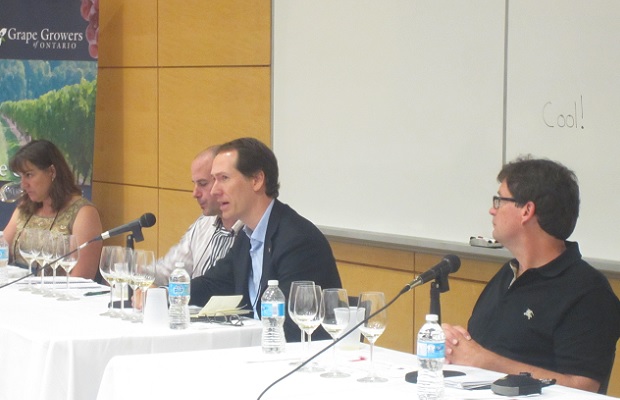
Chardonnay panel with Ann Sperling, Sébastien Jacquey, Miguel Torres Maczassek and W. Blake Gray Photo: Michael Godel

Chardonnay panel with Ann Sperling, Sébastien Jacquey, Miguel Torres Maczassek and W. Blake Gray
Photo: Michael Godel

Session three, The Living Vine: The Viticultural Continuum begins with W. Blake Gray. “If I buy an Ontario Chardonnay that you say has protected the earth but it’s not (organically) certified, I don’t know what that means.” In the world according to Gray, talk is cheap. Harald Thiel believes organics and biodynamics are much more complicated, beyond certification. “What is the buffer between organic/biodynamic vineyards and conventional ones,” he asks. “In Burgundy the rows are one metre apart. One sprays next to another.” Livelihoods are affected, compromised and yet who is policing the offenses?

Miguel Torres Maczassek admits “my family is a bit divided on organic and biodynamic but I am a great defender of organic viticulture.” Torres agrees and expands on Thiel’s concerns. “Being organic today is not enough. Organic needs to make an evolution. The problems are not the same anymore.” Sébastien Jacquey of Le Clos Jordanne: “Organic, biodynamic, sustainable. It’s about making wine that expresses something. We all need to work together.” Then John introduces Ann Sperling of Southbrook and Sperling Vineyards. “Ann, let me guess where you stand.” It is no secret that Sperling is a Canadian leader in this hotly debated field. “Biodynamics is something that allows me to connect with the vineyards.” Enough said.

Christy Canterbury wants to know who pays for the cost of lab analysis for wines looking for an organic affidavit. “The producer,” insists Sperling. “The consumer,” think many in the room. Four more wines are poured.

Le Clos Jordanne Le Grand Clos Chardonnay 2011, VQA Niagara Peninsula, Twenty Mile Bench, Ontario (34561, $65.00, WineAlign)

From sandy loam and limestone soils, here is a Chardonnay that winemaker Sébastien Jacquey is looking to fashion with low PH and elevated tannin. A most commendable effort in the enigmatic ’11 vintage, clean, anything but lean and un-gassed by a jet engine’s aerified stream. Chardonnay running instead on the vineyard’s biofuel, a chalky lees and lime texture that turns green in a savoury way towards the back end. Full, rich, gaining in stature as it breathes, thinks and feels. Atop the green there is an ambrosial aroma and a honeyed sense of flesh. A wine of great respect and biodynamic energy.  Tasted July 2014

Sperling Chardonnay 2012, VQA Okanagan Valley, British Columbia (378570, $31, WineAlign)

High altitude expression from a vineyard perched atop a gravel bed, a rocky pool of stone that seems to toss up pebbles at Sperling’s window to see if she would like to sneak away for a midnight drive. A crisp, clean and linear style, full of night-air freshness, white flowers and white fruit. This is undeniably picked early and ahead of any possible oxidative or overripe window, yet there is a rich quality about it that rages against the machine, calm like a bomb, “its narrative fearless.” Very mineral in its direct back and to the side of the mouth attack, full of salinity and lemon-lime acidity. Long, long Okanagan that will flesh with five years time. The slate bass line will soften, allowing the white fruit to further shine.  Tasted July 2014

Southbrook Poetica Chardonnay 2011, VQA Niagara Peninsula (366500, $50, WineAlign)

Has integrated nicely though certainly persists as a big, lush Chardonnay. If there were splinters or sinewy bits they have melted away.  From my earlier, May 2014 note: “The Poetica underwhelms at the present time, or perhaps hides in her youth. She’s a calm, buttery, mildly toasted, supportive softie and more accessible than her Sperling west coast sistren. Like a cool Chardonnay soffit hiding beneath a warm bench, the Poetica speaks not for the vintage but more for the current vineyard, a warm and hip spot in the Four Mile Creek appellation. The site remains (at least to me) understood but the unctuous aspect in texture and gathering sweetness with time in the glass will realize a richesse yet unseen. Poetica’s refrain is like “wind on the weathervane,” her tragically subdued fruit quiet, but able to travel long. Time will be the reveal, so be patient.  Lat tasted July 2014

Miguel Torres Milmanda Chardonnay 2011, Conca de Barbera, Spain

Milmanda was part of a route of medieval castles that gave shelter to Christians during the time of the Reconquest. This is the estate’s top varietal bottling, a warm honeybee of a Chardonnay. The toast is set on high, the malolactic pull in elastic heaven and the lemon/lime in curd form. From deep clay soil, this is the least cool of the lot and though harvested early (late August), the oak quotient steals the show.  Tasted July 2014
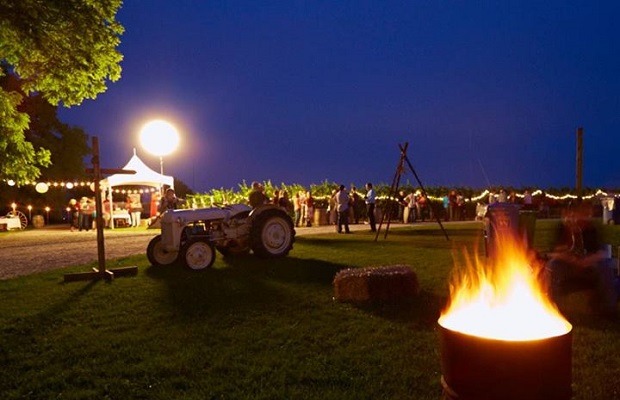
Barrels and Bonfires at 13th Street Winery, Photo (c) Steven Elphick & Associates

Barrels and Bonfires at 13th Street Winery, Photo (c) Steven Elphick & Associates

On Friday night the host is 13th Street Winery for Barrels and Bonfires. The credo is this: “Join the twelve winemakers who congregated around that fated bonfire in 2009 as they celebrate their vision as its come to life five years later.” Many more than 12 pour their wines from barrel tops in the heat of a July evening while the band plays. Meanwhile in another part of 13th Street’s town, Peter Bodnar-Rod holds court with an impromptu blind tasting. I fail miserably. Thanks Peter.
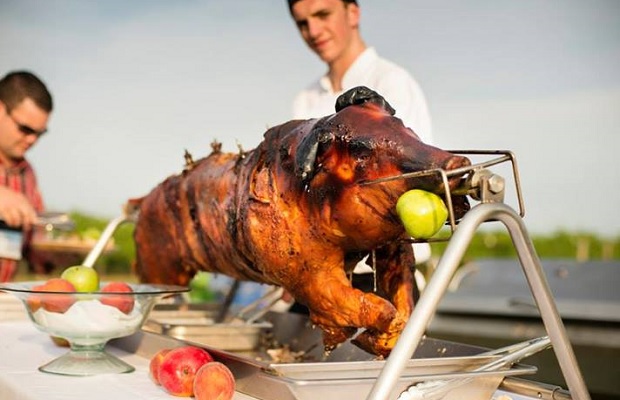
Niagara's own PigOut Roasters, Image (c) Sherry Galey Photography

Niagara’s own PigOut Roasters, Image (c) Sherry Galey Photography

13th Street’s B & B party is a resounding success, complete with a pig roast by Niagara’s PigOut Roasters and a setting to combine casual, pastoral and The Hamptons, all in one stunning piece of real estate.
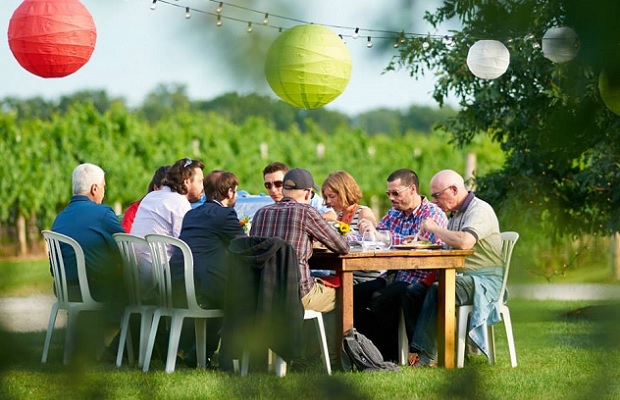
Godello with Zoltan Szabo, Tony Aspler, Mike Di Caro, Ben Macphee-Sigurdson and Nicholas Pearce,  Photo (c) Steven Elphick & Associates

Godello with Zoltan Szabo, Tony Aspler, Mike Di Caro, Ben Macphee-Sigurdson and Nicholas Pearce,
Photo (c) Steven Elphick & Associates
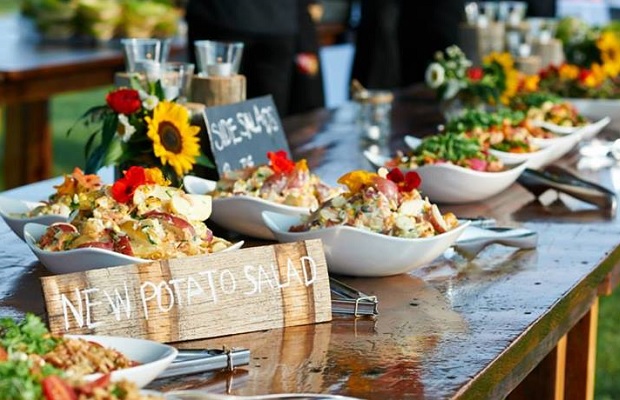
Chef Therese deGrace of Good Earth Food and Wine, Photo (c) Steven Elphick & Associates
Chef Therese deGrace of Good Earth Food and Wine, Photo (c) Steven Elphick & Associates

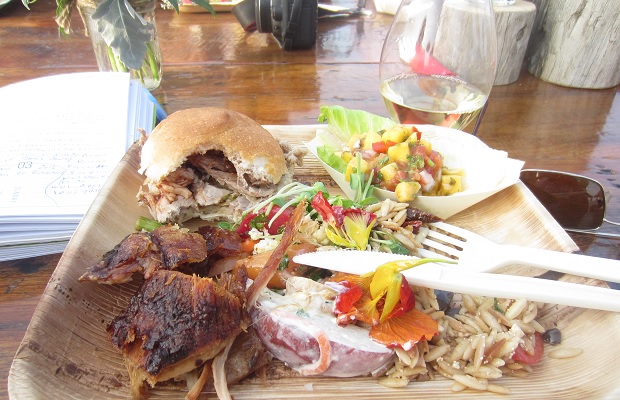
Dinner at 13th Street Wines,  Photo: Michael Godel

Dinner at 13th Street Wines,
Photo: Michael Godel

On Saturday a group of winemakers convene at Camp Cave Spring for some Chardonnay and mobile Pizza oven fun. Kistler, Talley, Maycas Limari and Cave Spring also do the #i4c14 unthinkable. They pour something other than Chardonnay. Shocking! Pinot Noir and Riesling are on hand. What a refreshing, if fleeting change. Thanks is owed the Pennachetti families, winemaker Angelo Pavan, Rob Groh from The Vine and the culinary team at the Stratford Chef School.

https://twitter.com/mgodello/status/490511793802866689
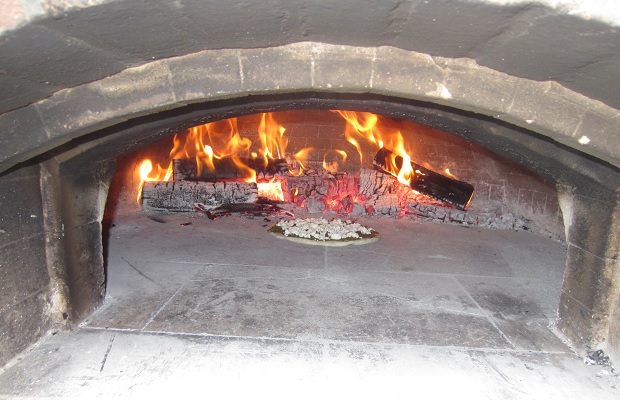
Stratford Chefs Mobile Pizza Oven Photo: Michael Godel

Stratford Chefs Mobile Pizza Oven
Photo: Michael Godel

Talley Vineyards Pinot Noir 2012, Arroyo Grande Valley, California, USA 

The Estate Pinot is composed of fruit from three vineyards, Rincon (50 per cent), Rosemary’s (47) and Las Ventanas (3), then fermented for 13 months in 20 per cent new French oak barrels. Typically, even quintessentially California Pinot Noir with a developed, nearly candied palate made more complex by the earth of the Arroyo Grande Valley. Very ripe black cherry, some tar and plenty of warm spice. The alcohol reads 14 per cent but it manages to reflect a cool image in the mirror. Refined if expected Pinot Noir.  Tasted July 2014
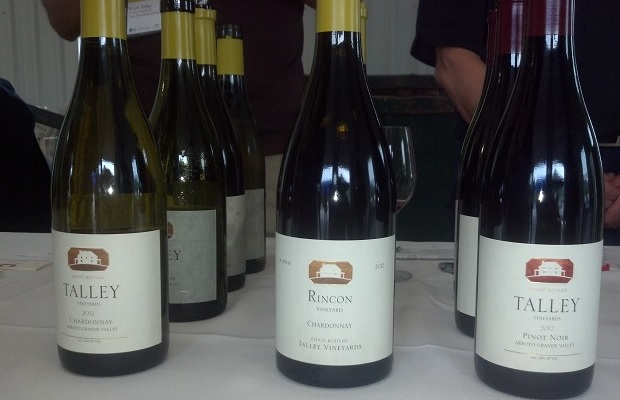
Talley Vineyards at Cave Spring Winery

Talley Vineyards at Cave Spring Winery

Kistler Pinot Noir 2012, Russian River Valley, California (330274, $77.95, WineAlign)

In yet another outstanding vintage Kistler flaunts its Pinot acumen, leaving other RRV neighbours to mire in a sickly, sweet and dusty trail of cola, syrup and black ash. Kistler’s take is rooted in wisdom, in plenitude and also restraint. “We remove any berries that are overripe,” announces Geoff Labitzke. This ’12 is singing, pinging and binging in red cherry. Picked in the cool of the night with a big crew, the RRV Pinot is tart, tight, intense and pure. The finish leaves with a slightly tannic, chalky residue, yet one that will integrate with five plus years time.  Tasted July 2014
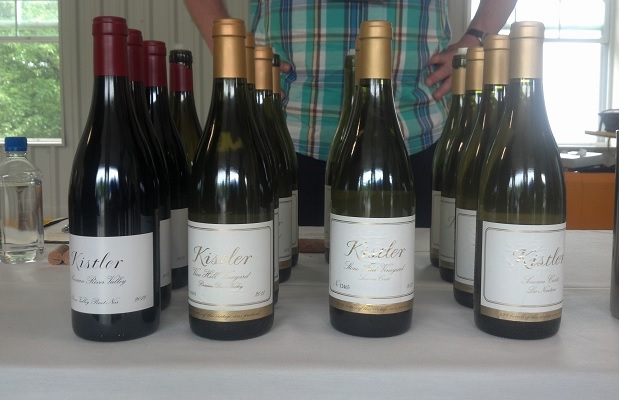
Kistler at Cave Spring Winery

Kistler at Cave Spring Winery

Cave Spring Riesling ‘The Adam’s Steps’ 2013, VQA Beamsville Bench, Niagara Peninsula, Ontario (26372, $24.95, WineAlign)

According to Cave Spring’s website this newer Riesling from older (18 to 35 Year-old plantings) is from “a single block of vines in the shadows of a limestone outcrop near the crest of the Niagara Escarpment, known as ‘The Adam Steps’. Really apropos, for this Riesling is the cantilever, the one with the outstretched arm. At 10.5 per cent alcohol and with an unmistakably stony, sweet and sour whiff the wine speaks of its off-dryness. The juiciest of all the Cave Spring Rieslings, with rounder acidity and good persistence. This is the all-around good guy, the one with an open invitation, the bridge from Estate to Dolomite to Csv. The well-adjusted one steps up its game to help win one for the team, especially out of the convivial 2013 vintage.  Tasted July 2014
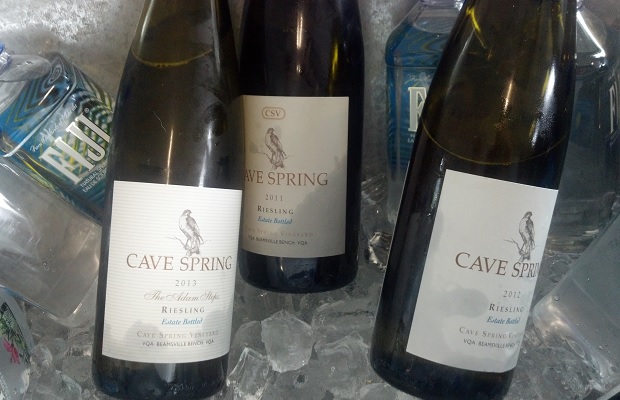
Cave Spring Wines

Cave Spring Wines

On Saturday night the scene changes to the big show. Vineland Research and Innovation Centre is the host once again for the Cool Chardonnay World Tour Grand Tasting & Dinner. In civilized fashion, it launches with bubbles and oysters by Katrina Steeves and Mike Langley, Tide and Vine Oyster Company.
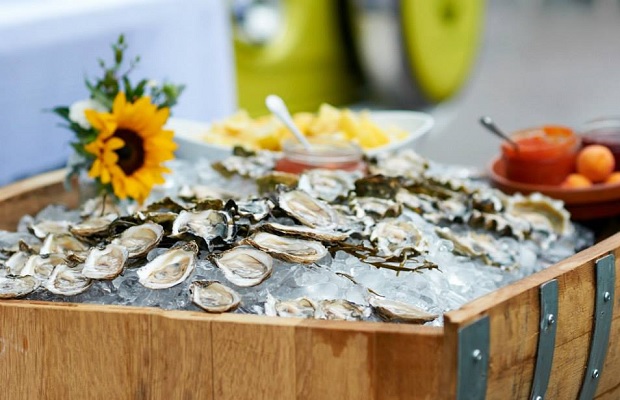
Katrina Steeves and Mike Langley, Tide and Vine Oyster Company Photo (c) Steven Elphick & Associates

Katrina Steeves and Mike Langley, Tide and Vine Oyster Company
Photo (c) Steven Elphick & Associates

Saturday’s menu featured the Vineyard Chefs: Adam Hynam-Smith of el gastrónomo vagabundo, Andrew McLeod, Jason Parsons of Peller Estates Winery, Justin Downes of Vineland Estates Winery, Ryan Crawford of Gastrohomestead, Paul Harber of Ravine Vineyard Estate Winery and Craig Youdale of The Canadian Food and Wine Institute. The selection of pies for dessert were from the 13th Bakery & Marketplace and Whitty Farms.
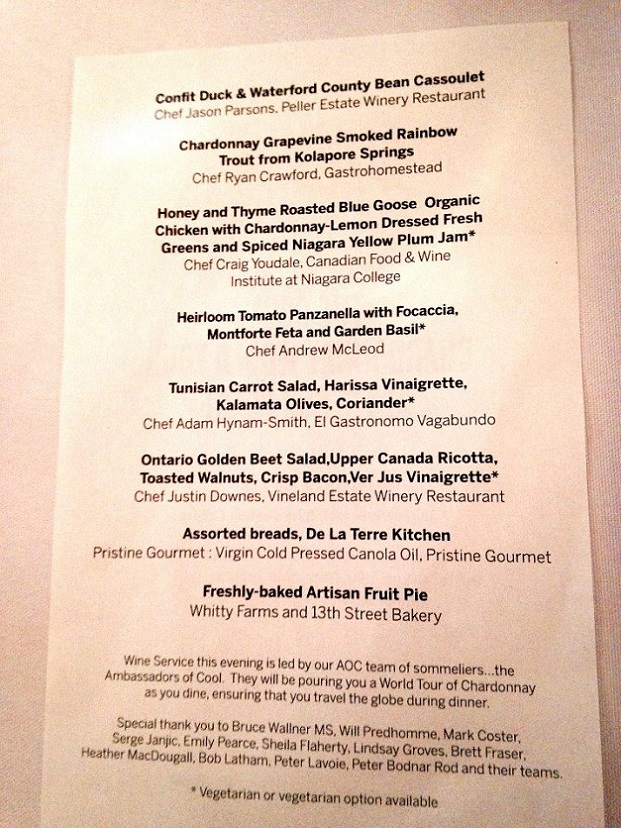
Saturday Menu at Vineland Research Station
Saturday Menu at Vineland Research Station

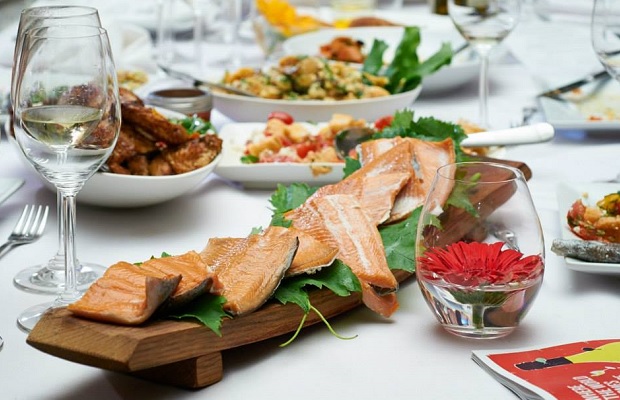
Saturday dinner, Photo (c) Steven Elphick & Associates

Saturday dinner, Photo (c) Steven Elphick & Associates

Dick Snyder and Magdalena Kaiser at Vineland Research Station

Dick Snyder and Magdalena Kaiser at Vineland Research Station

On Sunday, the Cool Chardonnay weekend wrapped up at Ravine Vineyards, with one last chance to taste a Chardonnay or 117, if for some reason there remained an elusive bottle.
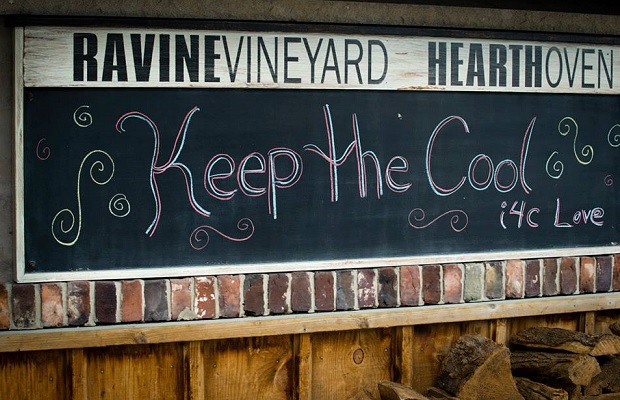
keep the cool i4c love!, Photo (c) Sherry Galey Photography — at Ravine Vineyard Estate Winery.

keep the cool i4c love!, Photo (c) Sherry Galey Photography — at Ravine Vineyard Estate Winery.

Events at #i4C14 are made possible by Wine Country Ontario, LCBO, Grape Growers of Ontario, Vineland Research and Innovation Centre, White Oaks Resort & Spa, Cool Climate Oenology and Viticulture Institute, Vines to Vintages Inc., Riedel Canada, Kerry Ingredients, Hope & Harder, A1 Label, The Canadian Food and Wine Institute, Richard Marazzi Design, Rempel Electric, cellar•tek, Lakeview Vineyard Equipment Inc., Winestains, Hunter Bottling, Special Event Rentals, Q water, De La Terre Kitchen, Dairy Farmers of Canada and Leslie Stowe Fine Foods.

The quantity of Chardonnays made available to taste through the course of the weekend was officially announced at 117. A number of them were wines that I have previously tasted and reviewed. Some I felt compelled to re-taste and update. For the sake of those I did not redo, I am including them here as contributing members of the Cool Chardonnay weekend and the links to their corresponding tasting notes, published at WineAlign.

13th Street June’s Vineyard Chardonnay 2012, VQA Creek Shores, Niagara Peninsula

Bachelder Oregon Chardonnay Johnson Vineyards 2012, Yamhill Carlton District

Bachelder Niagara Chardonnay 2011, VQA Niagara Peninsula

Bachelder Oregon Chardonnay 2011, Willamette Valley

Château Des Charmes Estate Bottled Chardonnay Musqué 2012, Estate Bottled, VQA Niagara On The Lake

Flat Rock The Rusty Shed Chardonnay 2012, VQA Twenty Mile Bench, Niagara Peninsula

Le Clos Jordanne Village Reserve Chardonnay 2011, VQA Niagara Peninsula

Norman Hardie Unfiltered Chardonnay 2012, VQA Niagara

Norman Hardie County Chardonnay Unfiltered 2012, VQA Prince Edward County

Stratus Chardonnay 2012, VQA Niagara On The Lake, Niagara Peninsula

Tawse Quarry Road Chardonnay 2011, VQA Vinemount Ridge, Niagara Peninsula

Returning back to the original question, what is the true meaning of Chardonnay? It’s really quite simple. You’ve gotta be cool to be kind.

Stay tuned for tasting notes on 50 more #i4C14 Chardonnay. Coming soon.


Good to go!
https://twitter.com/mgodello

The Stratus-Momofuku continuum

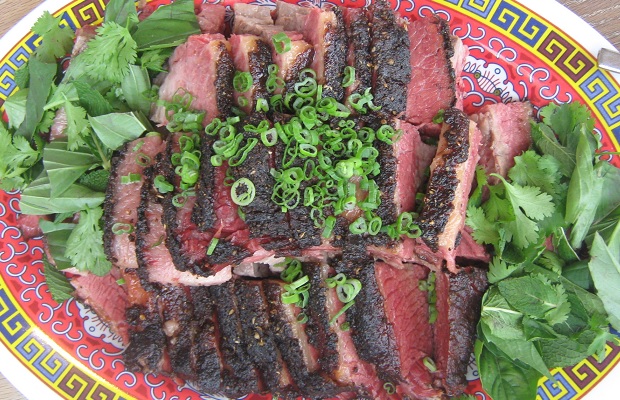
Momofuku Daisho Toronto's Beef Brisket (McGee Farms, ON)

Momofuku Daisho Toronto’s Beef Brisket (McGee Farms, ON)

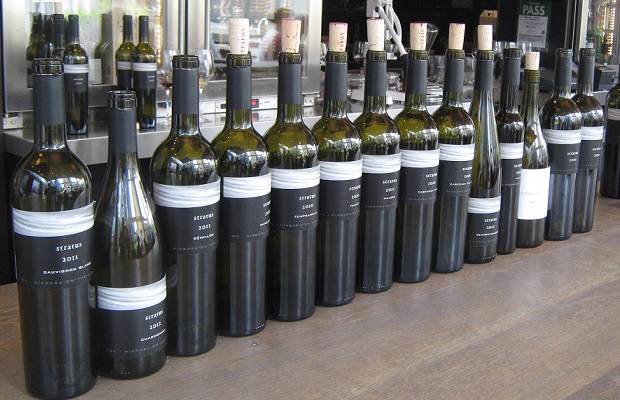
The wines of Stratus Vineyards and the cuisine of Momofuku Toronto. On Monday, May 26th and for the second straight year they conspired together in a beautiful collision of mutual beneficence. The single varietal mad science of winemaker J-L Groux and the singular, multifarious snacks of Momofuku Daishō. The food and wine play leaves wine writers satiated, thankful and speechless.

Stratus Single Varietal Tasting at Momofuku Daisho

Stratus Single Varietal Tasting at Momofuku Daisho

Related – Stratus and Momofuku: Modernity Incarnate and Select tasting through years of the Stratus Red and White

This 2014 media lunch dubbed Stratus, the right to free assemblage forged yet another treat of the highest order, once again with the necessity in participation of Charles Baker, Suzanne Janke and Sarah Walker of Stratus, along with Momofuku Beverage Director Jonathan Gosenhauser, Service Director Steve De Sousa, Assistant FOH Manager Nicholas Papadatos and the Daishō team.

An introduction by Charles Baker of Stratus Wines

An introduction by Charles Baker of Stratus Wines

Wildass Rosé 2013, Niagara On The Lake, Ontario (Winery, $16.95, WineAlign)

At 13.9 per cent the kitchen sink blend is unwittingly light on its feet, with uplifting floral and stony scents. The patronage seems as though it could be a shot (or more) of an aromatic white addition like Viognier. This ’13 is a new approach to the Wildass Rosé, a metallic meets orange and berry citrus flavour explosion. Will be an August VINTAGES release at this modest and honest tag, certainly more accessible than in years past.

Stratus at Momofuku Daisho

Stratus at Momofuku Daisho

The single varietals

Sauvignon Blanc 2011, Niagara On The Lake, Ontario (Winery, $29.00, WineAlign)

Technically Niagara Lakeshore but labeled Niagara on the Lake, winemaker J-L Groux insists this is the anti-New Zealand Sauvignon Blanc, a truism to get behind in this ’11’s more tropical style. “Depending on the year we adapt to the climate,” so here J-L’s classic boxwood seeking stands out. The combination of picking time and barrel aging on the lees has everything to do with style. The Stratus hangs (picked October 11th) and hangs out (641 days in French oak). Shows off the most metal mineral that Niagara can give to the variety, from a season with a totally rainy spring and fall but a torrid summer in between. “On whites it was certainly a better year to work with,” though the lack of acidity is due to a wet fall. It’s high-octane, “I’m not running after alcohol. I’m picking on aromatics. If I’m making barrel aged Sauvignon, I have to be patient, otherwise it’s not worth putting in barrel.” Nutty, toasty and full. The middle reaches for the end in an elastic and stretched full chain and connection. Rounder as opposed to acidic, it’s character comes by way of a periodic, numbers game in aromas. Zero hay, high phenols, very ripe.

Chardonnay 2012, Niagara On The Lake, Ontario, (Winery, $48.00, WineAlign)

A change in direction is duly noted with J-L Groux’s 2012 Chardonnay, from fruit picked six weeks earlier than in 2010. The program is scaled back and the wine is more “typical” of the region, in weight, in barrel effect and in alcohol. Still quite defined by natural yeasts that “sometimes go a bit wild, but I’m getting better at it,” concedes the clinician of vinous letters. Those feisty microbes are difficult to work with, like dealing with a wine that lacks natural clarity. “You have to shut down the bacteria, teach the yeast to stop stealing the lees. In 2013 I really got it.” The ’12’s altered course is welcome and encouraged and the world should wait with bated breath for what ’13 will bring. Here the complexity of aromatics is matched only by the intensity of tropical fruit. Has balance and a soft, round feel. Again, more texture and aromatics than natural acidity. Classic J-L style. “It’s not about trying to imitate anyone. It’s about making the most interesting and most complex Chardonnay in Niagara.”

Sémillon 2011, VQA Niagara On The Lake, Ontario, (Winery, $32.00, WineAlign)

The warmth of those July and August days has brought a combination of grapefruit and honey to the 2011 Sémillon, a highly aromatic vintage. Typically you don’t have very high acidity with this variety and though this was a difficult vintage to work with, here it teases late harvest, straight from the hip. The in-glass progression scales back and walks the wire with semi-high (6.9) acidity. “With illusions of someday, cast in a golden light,” the ’11 Sémillon will need time to marshal the erudition of (627 days) in barrel. At present the tragically declared fact that 24.6 brix equates to 11.6 per cent alcohol might just be lauded as another conversion rate, ahead by a century.

Sangiovese 2010, Niagara On The Lake, Ontario, (Winery, $42.00, WineAlign)

A variety that can be picked much earlier than others, like Cabernet Sauvignon and Cabernet Franc. Do the aromatics do Sangiovese? Yes, but in a mutated, concentrated and highly floral, expressive way. Clean, clear and embossed by surprising freshness and purity. The notes of typicity involve red fruits and a scorch of the earth. Handsome Sangiovese actually, anything but rustic and of a middle fleshing that threshes to mulct a citrus note on the end. This effort shows the most promise of the three expatriates (along with Tempranillo and Tannat) vying for J-L Groux’s new slang, varietal attention.

Tempranillo 2010, Niagara On The Lake, Ontario, (Winery, $42.00, WineAlign)

Were Rioja to come and take over Niagara this introduction would succeed in fulfilling expectations but not necessarily dreams. I will confess that it functions in ways California (where it’s simply too warm in places like Paso Robles and Santa Barbara) does not. Likewise Australian takes (“cool” Victoria and New South Wales) have yet to convince. Niagara’s climate is not such a stretch (though in most vintages too wet), but in 2010 the conditions were ripe for this experiment. The wine is admittedly lumbering, backward and chunky. It has that dusty, nearly funky nose, but it should be extolled in the name of character. High on vineyard aromatics and the density of wood, in ways so much more defined than the Sangiovese. Strangely Riojan and tasted blind would make for a curious ringer. Not huge by any stretch and blessed with good acidity and persistence.

Tannat 2010, Niagara On The Lake, Ontario, (Winery, $42.00, WineAlign)

The wooden slumber (555 days) in 50 per cent new oak is just what the dark-skinned grape doctor ordered for the Niagara debut. You know it will be pitchy and tannic but the goal is to be looking for some striking acidity and balance of concentration. Violets are prominent in the highly floral aromatics. There is certain density and fine structure and so while Tannat is an integral Stratus assemblage variety it shows here that it can be very expressive and long on its own. Perhaps the equal of Malbec for Niagara and with great potential.

Malbec 2011, Niagara On The Lake, Ontario, (Winery, $42.00, WineAlign)

If the Stratus 2010 Malbec’s blue note belted out Philly Soul, the delicacy and structure of the ’11 plays a softer sound, a Stax, Memphis Soul. Stylish, funky and uptown without conceding to pop. Active but with less brawn and higher acidity than previous years. An and now aromatic session of so much tobacco and even more cigar box, in wafts, waves, puffs, billows and club clouds of smoke. A soul jam of black fruit, Booker T. finger roll acidity and tannin.

Cabernet Franc 2010, Niagara On The Lake, Ontario, (Winery, $42.00, WineAlign)

Some white pepper dust, not too much mind you, works with the sun “and that’s what makes Cabernet Franc find its ripeness.” That it has in spades here in ’10, giving it fullness without raisins, density without being plugged in. A rich and near berry chalk sample but finely judged. This is one of the best SV’s J-L has made. Incredible aromatics. From my earlier April 2014 note: “Patient as ever with the cool-climate, slow and low ripening Cabernet Franc, winemaker J-L Groux stuck with belief, regardless of the warm 2010 vintage. The Stratus single varietal space and time continuum of let it hang (though not to December), 20ish months of aging, nearly half in French oak barrels, has brought forth the most dense and luxe Cabernet Franc to date. “It’s never old school, all brand new,” with Groux so this red swells in wholly pure black currant fruit and is as big as it gets for J-L, which is saying something. This beastie boy will age over a 20-year period. Style is the thing, and yes, the aromatics.”

Cabernet Sauvignon 2010, Niagara On The Lake, Ontario, (Winery, $55.00, WineAlign)

The declared alcohol on this is 14.6 per cent but to all of me, that is really hard to believe. Really elegant, 100 per cent Cabernet Sauvignon, perfectly unabridged in phenolic ripeness but in such fine rhythm and blues. Were it a score it would be euphonious without encumbrance and void of splinters. The most subtle and gentle J-L Groux crafted red wine I’ve yet to encounter, with a back palate combination of mushroom and citrus to follow pure red fruit. Resoundingly circular with curves, no hard edges and “perfect imperfections.” This Cabernet goes at it with Graves character and poise. It will be a Niagara legend.

Gewürztraminer 2012, Niagara On The Lake, Ontario, (Winery, $29.95, WineAlign)

Early harvested and vinified with the least amount of winemaker intervention, this is Gewürztraminer left to find its own way. In 2012 the natural sugars speak in clear and clean tones without needing too much attention. Has the most off-dry sensibility yet. It’s very floral, nearly medicinal and tacking. A zigging and zagging Gewürz, wavering, weaving, oscillating between its personalities, on one hand new and progressive, on the other, a nod to Alsace. There is really nothing dry about it. Dense on the palate, this Stratus single white varietal is textured and quickly making friends.

Mosaic Late Harvest 2013, Niagara Lakeshore (375ml), Ontario, (Winery, $25.00, WineAlign)

The 2010 was the first and only one made at the time. When asked if he would make one again, J-L Groux replied “perhaps.” Well, three years later the 2013 enters considerably drier than that ’10 but full of stone tree fruit. The profile here is so different, now Gewürztraminer (78 per cent) dominated, with less residual assistance from Riesling (17) and Sémillon (5). The aromatics are medicinal and ashen before the attack turns so palate sweet, in marmalade and with a finish of noble bitterness.

Mystery Pour

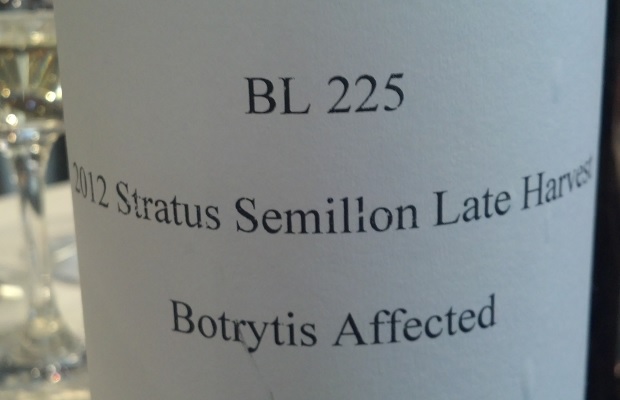
Botrytis Affected Sémillon Late Harvest 2012, Niagara On The Lake, Ontario

Tasted blind this non-clarified sticky is high on grapefruit for sure, smells (for a fleeting moment) a bit like cat pee, is decidedly smoky and once again, is grapefruit all in. Stony sauternes, Niagara style. This can be used to great advantage. With 70 plus g/L of residual sugar and 7.9 of total acidity the sugar-acid continuum is expertly lucky. The grapes were picked on December 14th, causing another exclamation of WTF? Really delicious. Really.

Botrytis Affected Sémillon Late Harvest 2012

Botrytis Affected Sémillon Late Harvest 2012

Following the single-varietal tasting, Momofuku Daisho rolled out eight signature dishes.

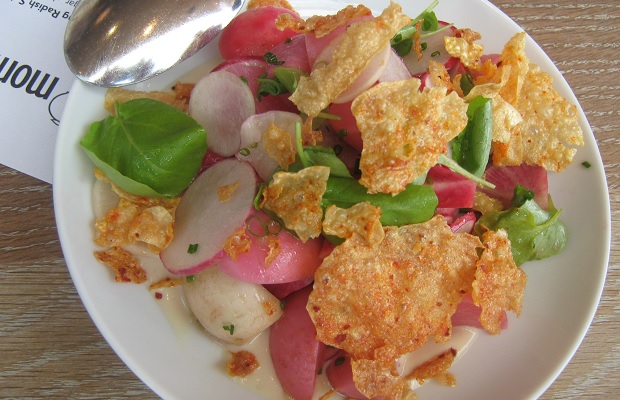
Spring Radish Salad, sherry vinegar, chive, crispy yuba

Spring Radish Salad, sherry vinegar, chive, crispy yuba

Spring Radish Salad, sherry vinegar, chive, crispy yuba

Snap Pea Salad, horseradish, jowl bacon, lily bulbs

Agnolotti, asparagus, ricotta, black truffle

Whole Speckled Trout (Kolapore, ON), morels, ramps, smoked buttermilk

Whole Speckled Trout (Kolapore, ON)

Whole Speckled Trout (Kolapore, ON)

Stratus White 2010, VQA Niagara On The Lake, Niagara Peninsula, Ontario, (660704, $44.00, WineAlign)

From my September 2013 note: “Sends me immediately towards Bordeaux, in neo-marmalade, but also buoyed in perfume and body by 25 percent Viognier. “This variety worked so well in the vineyard in 2010,” notes Groux. Niagara honey and near-botrytis via Semillon and Sauvignon Blanc void of grass, full of vigor. A sharp note, neither metallic nor mineral, but a combination of the two is present in this so very concentrated ’10. Of a warm vintage (self-explanatory) fully picked by October 23. Though loaded with early Spring maple sap, foie gras and appley terpines, its sharp and framed by “tannic” tang and protracted length.”  Last tasted May 2014

Beef Brisket (McGee Farms, ON), steamed buns, crab mayonnaise, green papaya slaw

Broccoli, lap cheong, black vinegar, tea egg

Nugget Potatoes, togarashi, kewpie, spiced ham

Stratus Red 2010, VQA Niagara On The Lake, Niagara Peninsula, Ontario, (131037, $44.00, WineAlign)

Tasted again, I do declare this to be the reigning bomb of Ontario red blends. Showing even better than I judged it two weeks ago. Intense ruby meets claret in every facet of its make-up. Rouge tomate, fresh and racy at the same time, with just enough chalk to lengthen the chain. You can actually imagine the hum in the clang and rhythm of its magic. Fleet of foot, mac-nanimously rendered red blend. “Chain keep us together, running in the shadow.” From my earlier note: “A study in restrained, gilt-edged use of only 15 per cent new oak during assemblage, especially with Cabernet Sauvignon in the lead and so prudent considering the extreme warmth of the vintage. Cabernet Franc imparts simple but intense spice. Red talented, fresh finesse, the oak in support as a James Dean, cherry stained leather jacket. De facto fresh, with just enough trenchant acidity.”  Last tasted May 2014

Tart, ricotta, honey apricots


Good to go!


Wine experts Brock and roll, Brock on

Wine tasting

The Expert’s Tasting is more than just a study on Niagara wine.
Photo: JEAN-PIERRE MULLER/AFP/Getty Images

as seen on canada.com

Part two: 25th anniversary of the Cuvée 2014 Expert’s Tasting at Brock University

Flights three, four and five: Pinot Noir, Red Blends and Wine Options.

Related – When experts break wine together

The Expert’s Tasting is more than just a study on Niagara wine. It eulogizes what came before, reflects back on what is lost and ultimately asks the questions, “Where do we go from here? Which is the way that’s clear?” Grow grapes, make wine. Rock on.

The Brock University Cool Climate Oenology and Viticulture Institute now lays claim to being the central hub of information and guidance for Niagara’s wine industry. In partnership and in sharing expertise with Wine Country Ontario, the Grape Growers of Ontario, the Vineland Research and Innovation Centre, VQA Ontario and Niagara Culinary College, Brock’s CCOVI is the go to rock, central to Niagara’s world-class wine growing soil.

In 2015, the annual Cuvée gala weekend, one of the most prestigious celebrations of Ontario wine and food, will now be organized by Brock University’s Cool Climate Oenology and Viticulture Institute (CCOVI). The theme will be a look forward to Ontario’s significant wine styles and emerging varieties. Props to that.

The #CCOVI event continued the task of celebrating the annual VQA Promoters awards, handed out to the individuals who supported and promoted the industry through media, the LCBO, at large and over the course of a lifetime.  The 2014 awards were handed out to William Mancini, Lloyd Schmidt, Erik Peacock, Shawn McCormick, David Lawrason and posthumously, care of his wife Rose Lamas-Churchill, to David Churchill.

#CCOVI Expert's Tasting Pinot Noir Flight

PHOTO: Michael Godel
#CCOVI Expert’s Tasting Pinot Noir Flight

At the Expert’s Tasting wines were poured blind. The third and fourth flights (Pinot Noir and Red blends respectively) showcased just how far Niagara has travelled in fashioning quality reds. The Pinot Flight was all about balance and elegance. Bench Pinot stands out like a beacon on the Escarpment’s shelves. Blends centred around Merlot, Cabernet Sauvignon and Cabernet Franc are excelling with each passing vintage, in kind to the ever-increasing wine acumen of the growers and winemakers. That and the macro-intense studies of Niagara’s micro-terroirs.

This final flight of five wines (in order, Chardonnay, Pinot Noir, Syrah, Riesling and Cabernet Sauvignon-based blend) made for a less confounding competitive round, which was not the case in 2013. I clearly found vicarious fortune through the mates at my table. It’s not just who you know, but who’s palate you draft behind.

Here are my notes on the final 19 wines poured at the Expert’s Tasting 2014.

FLIGHT #3 – YOU’VE BEEN PINOT’D!!

From left: Devil’s Corner Pinot Noir 2012, Flat Rock Gravity Pinot Noir 2012, Inniskillin Pinot Noir Reserve 2011, 13th Street Essence Pinot Noir 2010, and Fielding Estate Pinot Noir Jackrabbit Flats Vineyard 2010

From left: Devil’s Corner Pinot Noir 2012, Flat Rock Gravity Pinot Noir 2012, Inniskillin Pinot Noir Reserve 2011, 13th Street Essence Pinot Noir 2010, and Fielding Estate Pinot Noir Jackrabbit Flats Vineyard 2010

Presented by Dr. Belinda Kemp, CCOVI Scientist, Oenology. “There is nothing funny about Pinot Noir,” she complains in deadpan humour, “it’s the unfunny grape. Fascinating, but nothing to laugh at. It’s not funny at all.”

Devil’s Corner Pinot Noir 2012, Tamar Ridge, Tasmania, Australia (317966, $23.95, WineAlign) From the VINTAGES March 1, 2014 Release

A good fresh start to the flight. At first earthless, weightless, cran-raspberry scented. Feminine, warm, inviting and then turning temperamental, difficult, evolving. Ultimately maternal, clay-influenced, brought down to mother earth. Vanilla ringer.  87  Tasted March 2014  @BrownBrothers

Un bon nouveau départ à la (troisième de l’expert de dégustation) vol. Au début Earthless, en apesanteur, cran-framboise parfumée. Féminine, chaleureuse, accueillante et puis, se tournant capricieux, difficile, en constante évolution. En fin de compte maternelle, argile influencé, ramené à la terre mère. Vanille sonnerie.  Dégusté Mars 2014

Flat Rock Gravity Pinot Noir 2012, VQA Twenty Mile Bench, Niagara Peninsula (1560, $29.95, WineAlign)

In a vintage potentially muddled by warmth and a humidor of radio frequency, duplicating berry phenolics, Flat Rock’s Gravity remains a definitive, signature house Pinot Noir. In 2011, the head of the FR class from its most expressive barrels shared the limelight (and top juice) with the Pond, Bruce and Summit one-offs. In ’12, Gravity’s sandbox was its own. The style is surely dark, extracted, black cherry bent, as per the vintage. Yet only the Rock’s soil does earth in this variegate, borne and elevated by the barrel’s grain. There are no fake plastic trees in a Flat Rock Pinot. “Gravity always wins.”  90  Tasted March 2014  @Brighlighter1

Dans un millésime potentiellement confus par la chaleur et une cave de la fréquence de la radio, la duplication des composés phénoliques des baies, la gravité de Flat Rock reste un définitif, maison de signature Pinot Noir. En 2011, la tête de la classe FR de ses barils les plus expressifs partage la vedette (et le jus dessus) avec les mesures ponctuelles Pond, Bruce et Summit. En ’12, bac à sable de gravité était son propre. Le style est certainement foncé, extrait, pliée de cerise noire, selon le millésime. Pourtant, seulement le sol de la roche ne terre dans ce variegata, porté et élevé par le grain du baril. Il n’y a pas d’arbres en plastique faux dans un Flat Rock Pinot. “Gravity gagne toujours.”  Dégusté Mars 2014

Inniskillin Pinot Noir Reserve 2011, VQA Niagara Peninsula (winery, $24.95, WineAlign)

A by-product of a rain-heat-rain, cold soak-warm ferment-16 month French barrel childhood. The ’11 Reserve Pinot is impressively floral while simultaneously brooding and serious. The middle palate binds citrus and savoury, gilded, dulcet rose, Langhe-like. Breakdown happens late, in syrupy alcohol and charred pulp. “In that case I’ll have a rum and coca-cola.” Complex Pinot for the common people88  Tasted March 2014  @InniskillinWine

Un sous-produit d’une pluie-chaleur-pluie, le froid tremper-chaud ferment-16 mois baril français enfance. Le ’11 Réserve Pinot est alors impressionnante floral simultanément couvaison et grave. Le milieu de bouche se lie d’agrumes et salé, doré, rose suave, Langhe-comme. Répartition arrive en retard, dans l’alcool sirupeux et pâte carbonisée. “Dans ce cas, je vais avoir un rhum et de coca-cola.” Pinot complexe pour les gens ordinaires.  Dégusté Mars 2014

Domaine Queylus Pinot Noir ‘Le Grande Reserve’ 2011, VQA Niagara Peninsula (winery, $65, WineAlign)

The Thomas Bachelder mentored, two-vineyard assemblage Grande Reserve Pinot Noir grinds more cracked pepper than any predecessor. Every barrel from the Twenty Mile Bench (formerly Le Clos Jordanne’s, Neudorf Family La Petite Colline Vineyard) and Mountainview vineyard were scrutinized to determine the final blend. Bachelder sees black fruit in the early life yet despite the ebullient seasoning, the LGR’s genes are intrinsically feminine. Red cherry, tellus fertility and a mother’s strength hold the family of barrel children together. This is an ambitious and hard to read Pinot Noir. Judgement reserved for five years before the word classic will be used.  92  Tasted March 2014  @QueylusVin

Le Thomas Bachelder mentor, l’assemblage de deux vignoble Grande Réserve Pinot Noir broie poivre craqué plus que ses prédécesseurs. Chaque baril de Lincoln Lakeshore (anciennement Le Clos Jordanne de, Neudorf famille La Petite Colline Vineyard) et le Twenty Mile Bench (Mountainview) appellations ont été examinées attentivement afin de déterminer l’assemblage final. Bachelder voit fruits noirs dans le début de la vie et pourtant, malgré l’assaisonnement bouillante, les gènes de la LGR sont intrinsèquement féminin. Rouge cerise, tellus la fertilité et la force de la mère détiennent la famille des enfants de baril ensemble. Il s’agit d’un Pinot Noir ambitieux et difficile à lire. Jugement réservé pendant cinq ans avant le mot classique sera utilisé.  Dégusté Mars 2014

13th Street Essence Pinot Noir 2010, VQA Niagara Peninsula, Ontario (237222, $44.95, WineAlign)

Five months have aged the Essence with more bronzing minerality and core strength. Imagine the old-world chemistry it will enumerate after five more years. Previous note: “Only the second coming of The Essence. Lucid, willing and able Pinot Noir from an assemblage of fruit sourced across the region. Atypical in that sense, speaking to a broader range of terroir and to a wider audience. Breadth and depth much like a Côte de Beaune, earthy of serious dirt layered over top a cherry core. Attention now and for five plus years is needed because though to taste it’s currently confounding, time will see more complexity, development and emerging emotion. It will then solicit a cry of  ”baby, sweet baby, you’re my drug. Come on and let me taste your stuff.”  91  Tasted October 2013 and March 2014  @13thStreetWines

Cinq mois ont vieilli l’essence avec plus de minéralité de bronzage et la force de base. Imaginez la chimie du vieux monde, il va énumérer après cinq années de plus. Note précédente:… “Seule la seconde venue de l’Essence Lucid, désireux et capables Pinot Noir à partir d’un assemblage de fruits provenant de toute la région atypique en ce sens, parler à un plus large éventail de terroir et à un public plus large étendue et la profondeur un peu comme un Côte de Beaune, terreuse de terre grave posés sur le dessus une cerise noyau. attention maintenant et pour cinq ans et est nécessaire parce que le goûter est actuellement confondre, le temps voir plus de complexité, le développement et l’émotion émergents. Elle sera ensuite solliciter un cri de “bébé, bébé doux, tu es ma drogue. Venez et laissez-moi goûter vos trucs.”  Testé Octobre 2013 et Mars 2014

Fielding Estate Pinot Noir Jackrabbit Flats Vineyard 2010, VQA Lincoln Lakeshore (winery, $24.95, WineAlign)

Though a recent phenomenon, a Bench area winemaker’s keen interest in the Lincoln Lakeshore as a unicorn Pinot growing locale has come out of the forest’s shadows. From dual-vineyard plots and specific barrel choosing, the JRF expressly microwaves its agminate gathering, that is, 14 months on lees in barrel, a warm vintage and virtually unfiltered ferment. Completely free of its closet, there is coffee, toffee and strong tea overtop rufescent fruit close to its earthly roots. An austere, tough and gritty Pinot Noir, from the Burgundy side of the pond, echoing the presenter’s choice of words. “It’s fascinating but nothing to laugh about.”  89  Tasted March 2014  @RichieWine

Bien que d’un phénomène récent, le vif intérêt d’un vigneron de la zone du Banc de la Lincoln Lakeshore comme un Pinot locale croissante licorne est sorti de l’ombre de la forêt. Des parcelles à double vignoble et choix de canon spécifique, la JRF tout micro-ondes expressément sa collecte de agminate, soit 14 mois sur lies en barriques, un millésime chaud et ferment pratiquement non filtré. Complètement libre de son placard, il ya du café, caramel et thé fort overtop Rufescent fruit proche de ses racines terrestres. Un austère, dur et graveleux Pinot Noir, du côté de l’étang de Bourgogne, en écho le choix du présentateur de mots. «C’est fascinant, mais pas de quoi rire.”  Dégusté Mars 2014

The Foreign Affair Pinot Noir 2009, VQA Niagara Peninsula (winery, $43.95, WineAlign)

An ambitious and in retrospect streetwise project now in the golden age of its life. From fruit grown both on the estate’s Crispino Vineyard and at the Vineland Research Centre. Then winemaker Ilya Senchuk dried 40% of the grapes which subsequently spent 15 months in French and Hungarian oak. The modest 13.1 per cent alcohol has realized a resolved, gentle and effortless balance of figgy/raisin-driven fruit and clear spirit. The beaver is not so different from a Tawny meets Reserve Port, Pinot-style. Appassimento, you’ve been Pinot’d.  ‘Ciao’ for hello and goodbye because now is the time to drink.  88  Tasted March 2014  @wineaffair

Un projet ambitieux et débrouillard, rétrospectivement, maintenant dans l’âge d’or de sa vie. De fruits cultivés à la fois sur Crispino Vignoble de la succession et au Centre de recherche de Vineland. Puis vigneron Ilya Senchuk séché 40% des raisins qui a ensuite passé 15 mois en fûts de chêne français et hongrois. Le modeste alcool 13.1 pour cent a réalisé une résolu, équilibre doux et sans effort de figgy / fruités raisins secs et l’esprit clair. Le castor n’est pas si différent d’un Tawny Port répond Réserve Pinot style. Appassimento, vous avez été Pinot’d. «Ciao» pour bonjour et au revoir parce que c’est maintenant le temps de boire.  Dégusté Mars 2014

FLIGHT #4 – RED ROAD TEST – ARE WE ON THE RIGHT TRACK?

From left: Konzelmann Estate Winery Heritage Reserve 2012, Hillebrand Trius Red 2011, Fielding Estate Winery Cabernet Merlot 2010, Trius Grand Red 2010, Stratus Red 2007, Creekside Estates Reserve Meritage 2004, and Henry Of Pelham Estate Cabernet/Merlot 2002

From left: Konzelmann Estate Winery Heritage Reserve 2012, Hillebrand Trius Red 2011, Fielding Estate Winery Cabernet Merlot 2010, Trius Grand Red 2010, Stratus Red 2007, Creekside Estates Reserve Meritage 2004, and Henry Of Pelham Estate Cabernet/Merlot 2002

Presented by Trius Winery at Hillebrand winemaker Craig McDonald. McDonald makes one of Niagara’s now flagship red blends, the Trius Grand Red. He brings red blend experience to the table in spades and hearts, particularly from his work at Penfolds in the Barossa Valley, but McDonald is an ardent voice for the relationship between varietal and land. He wants you to decide for yourself, are red wines working and excelling in Niagara? In this flight, Craig’s advice is “I want you to think about the dominant varietal.” Not as easy as you might think.

Konzelmann Estate Winery Heritage Reserve 2012, VQA Niagara Peninsula (149179, $30, WineAlign)

A Merlot-based blend with support from Cabernet Sauvignon and Cabernet Franc. The dominant varietal is the blend’s soft presence, lifting up an otherwise ground espresso, black pepper, currant and verdigris paste in its 14 per cent frame. Yet so young and unsettled, with Franz drive, chalky extract and hard bite. In this Heritage’s “edges and lines your engine’s alive,” so as a first red road-test, it sets a solid course.  88  Tasted March 2014  @KonzelmannWines

Un mélange à base de Merlot avec le soutien de Cabernet Sauvignon et Cabernet Franc. Le cépage dominant est la présence douce du mélange, soulevant un espresso moulu contraire, de poivre noir, de cassis et vert de gris coller dans son cadre de 14 pour cent. Pourtant, si jeune et instable, avec Franz entraînement, extrait calcaire et morsure dur. Dans ce patrimoine “des bords et des lignes en vie, de votre moteur” de manière un premier rouge route-test, il établit un plan solide.  Dégusté Mars 2014

Hillebrand Trius Red 2011, VQA Niagara Peninsula  (303800, $22.95, WineAlign) VINTAGES ESSENTIAL

Most of the 47 per cent Merlot, 40 Cabernet Franc and 13 Cabernet Sauvignon fruit was sourced from the Clark and Carlton Vineyards in Four Mile Creek. From the outset age is the focus point. Is this already showing wear and tear or is the sinewy, cassis, toffee, sweet balsamic and emulous acidity congregation preparing a long road ahead for this Niagara exhibit? Crisis? What crisis? It’s just a normal day and this Meritage will say, “maybe I’ll find my way.”  87  Tasted March 2014  @TriusWines

La plupart des 47 pour cent Merlot, Cabernet Franc 40 et 13 Cabernet Sauvignon fruits provenait de les Clark et Carlton Vignobles à Four Mile Creek. Dès l’âge de départ est le point de mise au point. Est-ce montre déjà l’usure ou est le nerveux, de cassis, de caramel, balsamique doux et jaloux acidité congrégation prépare un long chemin à parcourir pour cette exposition Niagara? Crise? Quelle crise? C’est juste une journée normale et ce Meritage dira, «peut-être que je vais trouver mon chemin.”  Dégusté Mars 2014

Fielding Estate Winery Cabernet Merlot 2010, VQA Niagara Peninsula (winery, $35.20, WineAlign)

Does anybody really know what wine this is? Does anybody really care? The experts do, as do I. Chosen for back-to-back Expert’s Tastings by a panel of Niagara’s finest palates? AYFKM? What does that say? Today Richie Robert’s CF (42), Merlot (33) and CS (25) master stroke from Lincoln Lakeshore (warm), Beamsville Bench (warmer) and St. David’s (Lowrey Vineyard – warmest) is singing. Charred cherries, animale game and soft funk like top IGT. Raises its own bar. Previous note: “Alights in lithe tendrils before adding coffee, meritage mid-weight. Currants, nasturtium and red fruit compote buoy this cooler Niagara blend that combines fruit from the Lincoln Lakeshore, St. David’s and Beamsville Benches. A good dancer with “the kind of body that would shame Adonis.” Expertly balanced with the spine to age.”  90  Tasted March 2013 and 2014  @FieldingWinery

Quelqu’un sait-il vraiment ce vin ce que c’est? Est-ce que quelqu’un se soucie vraiment? Les experts font, comme moi Chosen pour Dégustations Expertises dos-à-dos par un panel des meilleurs palais du Niagara? AYFKM? Qu’est-ce que cela veut dire? Aujourd’hui Richie FC Robert (42), Merlot (33) et CS (25) coup de maître de Lincoln Lakeshore (chaud), Beamsville (plus chaud) et Saint-David (Lowrey Vineyard – le plus chaud) chante. Cerises carbonisés, jeu animale et funk doux comme haut IGT. Déclenche son propre bar. Note précédente: “. Descend en vrilles agiles avant d’ajouter le café, meritage mi-poids Groseilles, capucine et compote de fruits rouges bouée ce refroidisseur mélange Niagara qui combine les fruits de la Lincoln Lakeshore, Saint-David et Beamsville Bancs Un bon danseur.” L’ type de corps qui honte Adonis. “experte en balance avec la colonne vertébrale de l’âge.”  Dégusté Mars 2013 et 2014

Trius Grand Red 2010, VQA Niagara Peninsula (winery, $55.00, WineAlign)

Roll out the best barrels from the same Four Mile Creek Clark and Carlton Vineyards. Gravity drip freshly-pressed juice directly into barrel, wait 18 months and voilà, the flagship red from winemaker Craig McDonald. The 45/33/22 Merlot/Cabernet Franc/Cabernet Sauvignon blend radiates of everything under the sun. It’s rich and lush, marked by huge extract and yet it’s also graced by sweet, limber tannins. The middle ground gives faint notes of soy and dill though it can be imagined they will be smothered as the chain lengthens and the flesh becomes more pliable. I’ve one put aside for a visit in 2018.  89  Tasted March 2014

Etaler les meilleurs fûts de les mêmes Four Mile Creek Clark et Carlton Vineyards. goutte à goutte par gravité jus de fruits fraîchement pressés directement dans le cylindre, attendre 18 mois et voilà, le rouge phare de vigneron Craig McDonald. Le 45/33/22 Merlot / Cabernet Franc / Cabernet Sauvignon mélange rayonne de tout sous le soleil. Il est riche et luxuriante, marqué par d’énormes extrait et encore il est également honoré par des tanins doux et souple. Le terrain d’entente donne des notes faibles de soja et aneth si on peut imaginer qu’ils seront étouffées comme la chaîne s’allonge et la chair devient plus souple. J’ai un mets de côté pour une visite en 2018.  Dégusté Mars 2014

Stratus Red 2007, VQA Niagara On The Lake, Niagara Peninsula (winery, $44.20, WineAlign)

On a day like today, the 2007 Stratus Red’s long, long sleep (644 days in mostly new French Oak) seems particularly magnified. Today the moody tincture is a cocktail shaker filled with peat, clay, iodine, strawberry compote, sangria and divaricated tannin. No other red blend today is as complex, shows more road rage or tries to speed off the track. Previous note: “Puts a twinkle in Groux’s eye. “Still very enjoyable, agreeable and ageable,” he smiles and I note it’s not candied like it may have once been perceived.  A healthy and high 88 per cent dose of new oak but it’s not the encumbrance you might expect. Still quite tight, eking strawberry and plum, and indubitably a unique amalgamation. Will offer up five more years of pleasure.”  91  Tasted September 2013 and March 2014  @Stratuswines

En un jour comme aujourd’hui, long, long sommeil de 2007 Stratus Rouge (644 jours dans la plupart neufs de chêne français) semble particulièrement agrandie. Aujourd’hui, la teinture de mauvaise humeur est un shaker rempli de tourbe, de l’argile, de l’iode, compote de fraises, sangria et les tannins divaricated. Aucune autre mélange de rouge aujourd’hui est aussi complexe, montre plus de rage au volant ou tente d’accélérer la piste. Note précédente: “. Met une étincelle dans l’oeil de Groux” Toujours très agréable, agréable et gérable “, il sourit et je constate que ce n’est pas confits comme il peut avoir été une fois perçu une saine et haute 88 par dose cent de chêne neuf, mais il est. pas la charge que vous pourriez vous attendre. toujours très serré, eking fraise et de prune, et sans aucun doute une fusion unique. offrira jusqu’à cinq années de plaisir “.  Dégusté Septembre 2013 et Mars 2014

Creekside Estates Reserve Meritage 2004, VQA Niagara Peninsula (sold out, $45, WineAlign)

A straight up self-starter, 55/45 Cabernet Sauvignon/Merlot, Left Bank galvanized blend. Craig McDonald noted that he and Rob Power “had no idea what we were doing.” What they had was a four year-old vineyard on the Queenston Road, St. David’s Bench in Four Mile Creek. They made this Bordeaux in a challenging vintage when there might not have been a sound mind around (who was paying them any attention) for guidance or encouragement. Though it has crossed the threshold into resinous mannerisms and elements of an armamentarium, the two mad scientists found a way to take 12 per cent alcohol and real fruit on a 10-year journey to the museum. Shows what potential there has always been and where the distinction of the 2014 Niagara reds will be in 2024.  89  Tasted March 2014  @CreeksideWine

A vous auto-démarreur droite, 55/45 Cabernet Sauvignon / Merlot, Rive Gauche galvanisé mélange. Craig McDonald admis que lui et Rob Power “n’avait aucune idée de ce que nous faisions.” Ce qu’ils ont trouvé un vignoble de quatre ans sur la route de Queenston, la Cour du Banc de Saint-David à Four Mile Creek. Ils ont fait ce Bordeaux dans un millésime difficile quand il pourrait ne pas avoir été un esprit sain autour (qui les paie aucune attention) pour obtenir des conseils ou des encouragements. Bien qu’il a franchi le seuil de tics et éléments d’un arsenal résineux, les deux savants fous ont trouvé un moyen de prendre 12 pour cent d’alcool et de vrais fruits sur un voyage de 10 ans pour le musée. Montre ce potentiel, il a toujours été et où la distinction de 2014 rouges Niagara sera en 2024.  Dégusté Mars 2014

Henry Of Pelham Estate Cabernet/Merlot 2002, VQA Short Hills Bench, Niagara Peninsula (winery, $34.95)

A Cabernet Sauvignon and Merlot split with 12 per cent support from Cabernet Franc. Right up there with other classic H of P blends, in ’98, ’05 and ’07. All three levels, the basic Cab/Merlot, this Reserve and the Speck Family Reserve have stood the test of time, perhaps better than any other Bordeaux blends from the region. You can tell this was an enormous wine at one time. Has gently and slowly evolved into its comfortable skin yet the tannin and grit are still in working order. He’s a crooner this CM2, with a soulful Roy Orbison voice. There aren’t many like him. “That’s why I sigh and sip my lonely wine.” If anything has been learned and if anyone had been paying attention to Ron Giesbrecht while he made his wines, there should be many more to come.  91  Tasted March 2014  @HenryofPelham

FLIGHT #5 – WINE OPTIONS

From left: Stratus Chardonnay 2009, Rosewood Estates Pinot Noir 2011, North Shore Project Syrah 2012, and The Foreign Affair ‘The Conspiracy’ 2012

From left: Stratus Chardonnay 2009, Rosewood Estates Pinot Noir 2011, North Shore Project Syrah 2012, and The Foreign Affair ‘The Conspiracy’ 2012

Presented by Peter Bodnar Rod Sommelier and member of the Brock WSET Team. After four serious and wind-sapping flights, the ice was again broken by the jocose Bodnar Rod when he made comment to the hand coverings of a wine pourer. “Maybe Jamie and I can go out tonight with black latex gloves?” Not a word in response from Mr. Drummond but if I were a betting man I’d say he just might join in that fun.

Stratus Chardonnay 2009, VQA Niagara Peninsula (winery, $55)

Comes off like a white blend, aka Stratus White but this is the outright, unchaste vintage talking. Winemaker J-L Groux crafted three wines with viticulturist Paul Hobbs. Here they split the project 50/50 with Hobbs including wild yeast fermentation and whole bunch pressing and J-L adding short skin contact, controlled yeasts and no whole bunch pressing. From extreme low yields, this one puts on a show after only 10 months in barrel. High on aroma, brazen in texture, ambient in flavour bites. Very Niagara if inexactly Chardonnay.  Tasted March 2014  91  Tasted March 2014

Se détache comme un mélange blanc, aka Stratus Blanc mais c’est la pure et simple, parler cru impudique. Oenologue JL Groux conçu trois vins viticulteur avec Paul Hobbs. Ici, ils partagent le projet 50/50 avec Hobbs y compris sauvage fermentation de la levure et le groupe entier urgent et JL ajoutant un bref contact de la peau, des levures contrôlées et pas toute la bande de pressage. De rendements extrêmement faibles, celui-ci met sur un spectacle après seulement 10 mois en barrique. Haute sur l’arôme, la texture d’airain, ambiant dans les piqûres de saveur. Très Niagara si inexacte Chardonnay.  Dégusté Mars 2014

Rosewood Estates Pinot Noir 2011, VQA Beamsville Bench (112177, $21.95)

What an arid specimen, tasted blind so distinctly Bench Pinot though the earthy, cranberry and cherry dust had me leaning Short Hills. The Rosewood reveal reminds of “little lonely eyes open and radiant,” berries from acidity victorious Wismer blocks on the Twenty Mile Bench. Previous note: “…and her libidinous solid core of red fruit habituated by a fencing of skin-tight acidity will see prolonging returns. Will run on like a Dave Matthews jam, in wine years scads longer than the temperate Rosewood ’10. An Escarpment’s native flint rocky note whispers “hey little dreamer’s eyes open and staring up at me…wait until I come I’ll take your soul.” Halloween wine indeed.”  89  Tasted September 2013 and March 2014  @RosewoodWine

Quel spécimen aride, dégustés à l’aveugle Banc si distinctement Pinot bien terrestre, la canneberge et de cerise poussière m’avait appuyé Short Hills. Le Rosewood révéler rappelle “petits yeux solitaires ouverts et rayonnants,” baies de l’acidité victorieux blocs Wismer sur le banc Twenty Mile. Note précédente: “… et son noyau solide libidineux de fruits rouges habitués par une clôture de l’acidité de la peau étanche verront rendements prolongeant sera exécuté sur une confiture comme Dave Matthews, dans les années à vin scads plus long que le tempéré Rosewood ’10.. silex natif notes rocheux chuchotements d’un escarpement “hey les yeux du petit rêveur ouverte et les yeux fixés sur moi … attendre jusqu’à ce que je viens je vais prendre votre âme.” vin de Halloween en effet. ”  Dégusté Septembre 2013 et Mars 2014

North Shore Project Syrah 2012, VQA Lake Erie North Shore (sold out, $22)

A project part Will Predhomme (off the charts Sommelier), Hinterland Wine Company (head of the class Sparkling Wine producer) and Colio Estates (top of the heap Lake Erie North Shore red wine maker). More than impressive first outing with a burst of pretty flowers, varietal perspicuity and articulation. As Predomme notes, this is “pure, naked Syrah.” Farmed at Colio, crushed in LENS and fermented at Hinterland. There is a hint (what can best be described as) carbonic maceration in banana sweetness but it does not linger and the lightness of being meets intensity shows adventure and promise.  87  Tasted March 2014  @northshoreproj

Cave Spring Cellars Riesling ‘CSV’ Estate Bottled 2010, VQA Beamsville Bench, Niagara Peninsula (566026, $29.95, WineAlign)

Was not so easy to return to Riesling 25 wines and three hours later but thanks goodness it was this old (35 years give or take) vines CSV. From the east Bench where limestone rules and rocks, there are apples upon apples in this vintage in waves of luxurious fruit. While Bench Riesling can be so tragically austere, racy and piercing, often in a state of hip “melancholy wine-soaked tenderness,” this CSV ’10 is bathed in luxury and pure pleasure. It’s so much more Germanic in an off-dry way and never forgets its limestone roots. Not necessarily classic Beamsville but not to be missed.  90  Tasted March 2014  @CaveSpring

N’était pas si facile de revenir à 25 Riesling vins et trois heures plus tard, mais Dieu merci, c’était ce vieux (35 ans donner ou prendre) vignes CSV. De la magistrature est, où les règles et les roches calcaires, il ya des pommes sur les pommes dans ce millésime dans les vagues de fruits de luxe. Bien Banc Riesling peut être si tragiquement austère, racé et perçant, souvent dans un état de hanche “mélancolique tendresse de vin trempé,” ce CSV ’10 est baigné dans le luxe et le plaisir pur. C’est tellement plus germanique de manière demi-sec et n’oublie jamais ses racines de calcaire. Pas nécessairement classique Beamsville mais à ne pas manquer.  Dégusté Mars 2014

The Foreign Affair ‘The Conspiracy’ 2012, VQA Niagara Peninsula (149237, $19.95, WineAlign) From the VINTAGES Feb. 15, 2014 Release

Young, huge, rich and oozing in oak soaked spice. Currants, pepper, whole grain, berries and chalk. All in for $20. Previous Note: Quickly reminiscent of its 2011 predecessor but also different, in a basking, vintage-related warmth and reductive currency. This could not have been an easy wine to temper in 2012 considering the ripasso methodology. Just softened plum is painted all over its sheen with the poaching aromas steaming away. Grilled, melting licorice, caramelizing and disapparating before your eyes. Not to mention a French vanilla creamy garagiste waft, like nuts and bolts ice cream. But I will admit the tang, acidity and tenacity increases with each sip and swirl. Such a unique bottling to Ontario. Is there anything else like it not from Lake Erie North Shore?  89  @wineaffair  Tasted February and March 2014

Jeune, grand, riche et suintant en chêne imbibé d’épices. Groseilles, poivre, grains entiers, fruits et craie. All-in pour 20 $. Note précédente:. “Vite rappelle de son prédécesseur 2011, mais également différente, dans un pèlerin, de la chaleur vintage liés et monnaie réductrice Cela n’aurait pas été un vin facile à tempérament en 2012 compte tenu de la méthodologie de ripasso prune juste ramolli est peint partout. son lustre avec les arômes de braconnage vapeur loin. grillé, fondant réglisse, caraméliser et disapparating devant vos yeux. Sans oublier une vanille française crémeuse garagiste bouffée, comme les écrous et boulons de la crème glacée. Mais je vais admettre la saveur, l’acidité et la ténacité augmente avec chaque gorgée et remous. telle une bouteille unique à l’Ontario. Y at-il quelque chose de semblable pas du lac Érié Côte-Nord? ”  Dégusté Février et Mars 2014

Good to go!

Top wines shine at Taste Ontario 2013

Mary Catherine Wasilik, (Merry Bee) the Assistant Winemaker of Rosewood Estates Winery checking out the Pinot Noir pick at Wismer Vineyard in Balls Falls, Ontario
PHOTO: KRYSTINA ROMAN, QUEEN SOCIAL BEE/ROSEWOOD ESTATES WINERY

as seen on canada.com

Taste Ontario is a special event. The VINTAGES prescribed gathering of Ontario wine, the makers and the marketers should never be missed. The Royal Ontario Museum is a terrific setting for such a palooza and the Bronfman Hall a cozy, comfortable and airy room to showcase the wines.

That this gathering is conspicuous as much for its omissions as it is for the unparalleled quality and consistency of the wines does not need to be overly debated. The figure of “80 wines from over 30 of Ontario’s most passionate and talented winemakers” is certainly a drawing card despite VQA Ontario‘s contention “there are over 125 Ontario wineries producing VQA wines of various appellations – all backed up by VQA Ontario’s assurance of origin and quality.”

The VINTAGES say in what specific bottles should be poured was certainly in evidence last Thursday and succeeded for the purposes of presenting the licensee and the consumer with a cross section of Ontario’s signature grapes. Chardonnay was not high in representation but considering the recent run from and following #i4C2013 (Cool Chardonnay) that was to be expected. What the general public does not know for certain is the quality potential in and necessity of Ontario’s production of Sparkling wine, Gamay and Syrah. Three categories virtually ignored at Taste Ontario 2013.

PHOTO: Michael Godel
Red wines at Taste Ontario 2013

Taste Ontario was held in Ottawa (The Westin Hotel) on Monday, October 7th and in Toronto (ROM) on Thursday, October 10th with essential support from Wine Country Ontario. Thanks must go out to Hilary Dawson and Magdalena KaiserSmit for their pampering and generosity. The grand tastings were partnered with the LCBO “SHINE {ON}” campaign that ran from September 15 through October 12.

My reviews of wines that shone is specific to the event and let it be known there are dozens more to form best of lists, from producers represented and those who were not involved. Here are 16 top wines from Taste Ontario 2013.

From left: Jackson-Triggs Entourage Grand Reserve Méthode Classique Brut 2009, 2027 Cellars Riesling ‘Falls Vineyard’ 2012, Thirty Bench Small Lot Woodpost Vineyard 2006, and Charles Baker Wines Riesling ‘Picone Vineyard’ 2011

Sparkling

Tawse ‘Spark’ Riesling 2009 (winery only, $18.95) may just be that bottle of persuasive interrogation and torture to turn even the toughest hold-outs against Sparkling Riesling. A veritable homeland crush of signature grapes, put to a not so traditional test, emerge in piercing, capital dry scintillation. Sparks fly in Beamsville when winemaker Paul Pender and team, “the boy prophets walk it handsome and hot.” This sparkler does the E street shuffle and dances in the dark. The new deal in Ontario bubbles.  “You can’t start a fire without a spark.”  89  @Paul_Pender  @Tawse_Winery

Jackson-Triggs Entourage Grand Reserve Méthode Classique Brut 2009 (234161, $22.95) in just under a year has evolved to a grandiloquent level of sophistication.  Fino arid bubbles, with an elevated level of aromatic sweetness, ginger spice, lime and charcoal. Quite complex, jumpy, with pepper on the finish.  90  From my earlier note: “is a sweet-smelling misty mousse waterfall where white grapefruit replays from vapor to flavour. Driest fizz yet playing the Angostura angle. Good length.”  88  @Jackson_Triggs

Riesling

Cattail Creek Estate Winery Riesling 2012 (241547, $14.95) from Four-Mile Creek suggests peaches in every way; juice, flesh and pit. A battle cry bottle for the adage and generational anthem, “when in Niagara I drink Riesling for peace.” Really fine evolutionary Creek example for the price, located somewhere on the dry to off-dry line.  Palate cleansing, with solid rhythm and length, like Les Brers in A Minor. Makes me want to eat a peach.  88  @CTCWinery

2027 Cellars Riesling ‘Falls Vineyard’ 2012 (294041, $18.95) in contrast to brother Foxcroft, is the more serious vineyard in my estimation. Falls compresses less limestone chalk and instead thunder rolls out glacial boulders. Here there is less grass, herbs, citrus and sea, but rathergarrigue blanc, the windswept plain studded with gorse and deeper, sweeter, earthly purity.  91  @2027Cellars

Thirty Bench Small Lot Woodpost Vineyard 2006 (winery only) has achieved green patina and diesel in D minor as the wine is just beginning to act its age. A crisp, crunchy green apple bent persists and the fruit remains confidently perched on top of the wood pile. A smoulder of wood seems ghostly present, or at least as rusty ties keeping it upright. A self-supporting slice of Beamsville Bench recent history here. Really quite fantastic.  92  @ThirtyBench

Charles Baker Wines Riesling ‘Picone Vineyard’ 2011 (241182, $35.20) does not so much pick up where cracking ’09 left off (with no offence meant to the soothing and tuneful ’10) but rather re-writes the Baker book. From the almost famous windswept vineyard atop the Vinemount Ridge, this Picone, from older Riesling plantings is crazy lively. That ’10 is now imbued with rich, oily glück. The ’11 will realize such a future, but much further along and in combination with its inborn tension. Right up there with Baker’s “perfect vintage” 2006.  93  @cbriesling

Chardonnay

Lailey Chardonnay 2011 (193482, $19.95, Alberta, 739220, $35.67) butters toast with delectable lemon curd and a sprinkle of brown sugar. Well-articulated, bundled Chardonnay fruit, in spice cadence, big but never brawny. A measure of Niagara balance.  90   From my earlier note: “is right on brother Derek. This not only joins the right excellent Chardonnay club; it’s the incumbent President. Lifted honeysuckle, honey and bright lemon aromas, the deftest kiss of oak and just a punch of spice. Tingles and lingers.  If ’10 was “almost great,” ’11 is. Mikey likes this very much.  90  @laileywinemakr

Tawse ‘Quarry Road’ Chardonnay 2011 (111989, $34.95) carries that classic Paul Pender perfume; rocks and stones, flaxen, refulgent toast and the verdure Vinemount terroir. A free flying, linear, atmospheric smear of thermal fortitude and backbone. A polemic Bowie Chardonnay to make you believe “the strangest things, loving the alien.”  92  From my earlier (barrel tasting) note: “resides on the mineral, slate and lime side of the tracks. The calcareous quality imparted by its eponymous SV terroir makes it the antithesis of David. Creamy, 24-karat fruit.”  91-93

From left: Rosewood Estates Winery Sémillon 2012, Coyote’s Run Pinot Noir ‘Red Paw Vineyard’ 2011, Flat Rock Cellars Gravity Pinot Noir 2011, Norman Hardie County Pinot Noir Unfiltered 2012, and Fielding Estate Winery Gamay 2012

Sémillon

Rosewood Estates Winery Sémillon 2012 (winery only, $18.00) drifts along, like a city swan, a white Beamsville white cut from a different cloth, wholly unique. Rosewood’s Sem is the case and the point for others to follow, to plant, cultivate, embrace and perfect this grape in Ontario. The ’12 is immense, articulate, hungry. It makes cause to say, ”I’m starving in your gravity. You’re made from something different than I know.”  90  From my earlier note: “is their most intense ever. An exceptional growing season amps the honey sounds to 11, speeds up the sugars to 33 and while there is obviously no sign of chapitalization, added acid stabilizes the high tropical nuance. Huge style for Sémillon, mulched in miele, fruit flavours amplified and lengthened by 14.6 per cent alcohol. Une cousine to J.L. Groux’s Stratus SV, if less grapefruit and increased value.”  90  @Rosewoodwine

Pinot Noir

Coyote’s Run Pinot Noir ‘Red Paw Vineyard’ 2011 (79228, $22.95) gets the best value nod because it’s just oh so pretty, in hue, bouquet, essence and mouth feel. Four-Mile Creek dusty wind, dried leaf grain and a unique sense of soil imparts earthly elegance and poise. Excellent stuff.  90  @coyotesrun

Flat Rock Cellars Gravity Pinot Noir 2011 (1560, $29.95) may at first strangely seem that it had ”stepped out of the wilderness all squint-eyed and confused” but my how a swirl elicits gorgeous red berries and an emphatic oomph, even without a sip. Impressively ripe, blooming red rose and cinnamon from the heart of a winemaker’s boots. A mineral streak brings to mind Volnay, in spirit and tragically hip Pinot essence.  92  @Winemakersboots  @UnfilteredEd

Norman Hardie County Pinot Noir Unfiltered 2012 (125310, $35.00) cuts a rug with immense, stepping out juicy behaviour. It’s both turntable old-school, astatic in smooth groove rotation, but also digitally forward thinking towards a perdurable future. The nose is Norm’s most intense floral burst to date, with incredible brightness and sparkling acidity in the key of fresh plum. This brings to mind indelible Burgundy, enveloped in PEC’s warm ’12 blanket. Hardie’s measure of consistency abides in a Pinot of parity and undemanding polish.  93  @normhardie

PHOTO: Michael Godel Bachelder Pinot Noir ‘Lowrey Vineyard’ 2011

Bachelder Pinot Noir Lowrey Vineyard 2011 (361816, $44.95) springs eternal from an ocean of cranberry and an island of spice. The somewhereness of this St. David’s vineyard can’t be denied, and in the hands of Thomas Bachelder the extraordinary happens. I am simply blinded by the light, by the weight and the weightless gravity. By a sweetness that just isn’t sweet, like exotic red fruit that knocks you sideways upside the cerebral cortex. Not to mention an iron madness that “plays that song with the funky break.”  94  @Bachelder_wines

Cabernet Sauvignon/Merlot/Cabernet Franc

Lailey Vineyard Wines Cabernet Merlot 2011 (winery only, $15) speaks the language of vinous accommodation. Abundant very berry fruit if less knotty and peculiar and more accessible than most Niagara Bordeaux blends. No bones about it, languid Lailey in mind of its own wonder. Could drink it straight from the tap.  89  @Laileywinemakr

Cave Spring Cellars Cabernet Franc Estate Bottled 2011 (72751, $24.95) attains a level of varietal purity near categorically Niagara Escarpment perfect. A mess of sweet and tangy red fruit, namely berries, currants and cherries cut fine to licorice and the evolutionary effects of magnesium-rich limestone. Imagine cutting a cross-section of rock to project a swirl of this multifarious Cabernet Franc. An example to examine at an Expert’s Tasting 10 years on.  91  @CaveSpring

Gamay

Fielding Estate Winery Gamay 2012 (winery only, $17.95) is, without question, Richie’s best to date. A gleaming, ebullient, shining glass of rich Gamay fruit with an undercurrent of currant and gleaning vineyard floor. A Buddy and Gene snare drum attack. Takes the baton and parades about the province. Will lead the #GoGamayGo charge for the rest of 2012 and well into 2013.  89  @Fieldingwines  @RichieWine

Good to go!

Solar flares and justice for wine

canada.com

While the move is just a baby step towards free wine trade in this country, the federal government is stepping away from the inter-provincial wine business. The repeal of a 1928 Prohibition law is hardly earth shattering news but it is a positive gesture and an ideological note aimed at the provinces to consider a similar and progressive course.

Shout out to the Henderson sisters, Courtney and Erin, for voicing their opinion, minus the grating, wine geek whine, concerning the passing of Bill C-311. Without this all important first chess move there is no future on the subject. The provincial monopolies are adamant that direct shipping of wine across borders will remove up to $300 million per year from the tax coffers. The law reform now opens the debate to prove that theory wrong.
The law allows you to order a firearm and have it shipped to your door, by courier. That’s what Sandra Oldfield of British Columbia’s Tinhorn Creek Winery did. Not a prosecutable offence! Cautiously optimistic kudos goes to an Ontario commission currently addressing wine shipping regulations. Arthur Kirkland would note “at this point, I would just like to say that what this committee is doing in theory is highly commendable. However, in practice, it sucks.” Arthur, let’s hope you’re wrong.
Now I turn my attention to the sun which continues to unleash its power upon the earth in the form of solar flares. Sun-kissed wine values continue to flourish at price points affordable to all.
The grapes: Carignan, Grenache and Syrah

The history: From the largest Appellation d’origine contrôlée in Languedoc-Roussilon

The lowdown: A microcosmic tour of southern France in a single bottle of wine

The food match: Fresh ground brisket, flat-iron and chuck sliders with cheddar, bacon and tomato jam

Chateau Ollieux Romanis Cuvée Classique Corbières 2009 (VINTAGES 281162, $15.95, SAQ 10507163, $17.65) betters le nez de Cyrano by a Pinnochio. Might just be the wood talking but the depth and girth is uncanny. Carignan, a.k.a., the hunchback of red French grapes, carries the load. It’s beauty is unearthed by the royalty of 30% Grenache (acidity) and 30% Syrah (tannin). A bouquet garni wafts through the Romanis cathedral and the orchestra’s A Day in the Life note holds on for the bows. Midi IVR* at its finest.  89

The grape: Chardonnay

The history: Oak plays no role. Think rocks, minerals and sharp fruit instead of butter and toast

The lowdown: If it’s not Premier Cru, Chablis is often disappointing. Geoffroy makes good from non-classified, less than estimable vineyard fruit

The food match:

Alain Geoffroy Domaine Le Verger Chablis 2010 (181289, $18.95) built of a “cold steel rail” is not accidentally, tragically on the verge of maximum dryness. Three pistols strong and searing Burgundy, mouth-puckering with green apple chalk.  Brings “on the brand new renaissance” so I wish you were here. Hip IVR* performance, vintage in, vintage out.  89

The grape: Sangiovese

The history: Producer of pedigree remembers its past but has a foot firmly cemented in the present

The lowdown: The Poliziano VNM had been closer to the $30 mark since 2004. This is a great vintage IMHO. Don’t miss it.

The food match: A great steak (Porterhouse or Rib-Eye) on the BBQ with Kosher salt, pepper and extra-virgin olive oil.

Poliziano Vino Nobile Di Montepulciano 2007 (988055, $25.95) should never be ignored. Does VNM get any better than this? Circumnavigates the Tuscan code, both ancient and modern. Assigns meaning to anagogic red fruit and flashes like a solar flare. Puzzling paradox of transparency and rich tinct. Chianina Bovi strength will need aeration or five plus years to relax.  90

The Splurge Wines

The grape: Chardonnay

The history: Ed Spragia was the winemaker at Beringer. His personal Chardonnay is biscuitous but good CVR**

The lowdown: This release adds an emphatic notch on the side of fair pricing

The food match: Steamed P.E.I. Lobsters and a twice-baked potato

Sbragia Home Ranch Chardonnay 2009 (52720, $34.95) from on the range in the Dry Creek Valley, “where seldom is heard a disparaging word.” Water-buffalo type comes out to play with buttered corn and elegant oak integration as the muted smell of smoked casks. A nearly $10 price reduction stares down in the face of the California price-fixing, conspiracy theorists.  89

The grape: Pinot Noir

The history: Transplanted Burgundian style shows most true to form in Oregon’s Willamette Valley

The lowdown: This is Lemelson’s most elegant bottling

The food match: Braised, plum glazed and crispy roasted pork bellies

Lemelson Thea’s Selection Pinot Noir 2009 (278721, $36.95) is a beautifully balanced effort. Coal smoke, meed, griottes and comestible tree fruit fragrance. Thyme and sage rubbed through fingers.  Sweet, resinous low country heartbreak.  90

Good to go!