Composing a year-end, these are the most thrillin’ wines tasted in the last 12 months list is kinda akin to scribbling up a little warble, if you get the director’s drift. The question begs, what’s the cause, what’s the meaning and ultimately why bother? Reminiscences are part of the human condition and while there is little amusement however in watching a wine critic taste wines, there just may be some interest in reading said list, checking it twice and coming to a personal conclusion as to which choices are worthy, and which are merely nice.
You will find a notable cadent shift in this year’s melody away from there being a substantial number of older wines chosen as having been the year’s most exciting. Not to mention a concentration of certain grapes and their OG places. It’s just, well, natural. For 2023 more of the choices are directed towards hopelessly romantic youthful wines in their extant moments still years away from entering their right proper drinking windows. No shortage of opportunities in 2023 to taste top examples – Of sangiovese, nebbiolo, nerello mascalese, nero d’avola, pinot noir, cabernet sauvignon, merlot, cabernet franc, grenache, syrah, chardonnay, riesling, assyrtiko and chenin blanc – Are but a range within the lion’s share of varietal moments.
Old wines can elicit epiphanies but a conscious effort is made to include as many current vintages as possible, provided they represent a winery’s best of the best. This is the state of winemaking today because deeper understanding, the consummate use of technology and a passionate willingness to always improve are qualifying so many of the world’s finest wines at poll positions to a greater degree than before. There is little surprise that Italian wines coexist in highest favour if only because the author spends more than 25 percent of a 365-day timeframe in that country. Italy’s long, deep and intimate relationship with success is a serious attraction and so being afforded the opportunity to taste 2,000 Italian wines in a calendar year will almost certainly result in experiencing no less than 50 thrilling examples. A Bordeaux trip in September to 25 growth properties could and should rightly deliver wines to dot this list. Same could be said for many other palate awakening wine regions worldwide. All this and yet overall travels and tastings were less diverse and more focused in 2023. The author is known to follow the work.
Act one: Nebbiolo Prima. Act two: Two weeks later, the Chianti Classico Collection. Act three: Three months later, Sicilia en Primeur and a Canadian Sommelier boot camp with Chianti Classico. Act four: Summer in Paris with Lambrusco, judging at the Nationals in the Okanagan Valley for WineAlign, shooting video in Florence, up to Collio and Hungary and finally 113 degrees in the smoky shade of Washington. Act five: Europe all fall, from Bordeaux to Monferrato, Chianti Classico to Montalcino, Piedmontazine Alta Langa and back to Chianti Classico. These decisions are not taken lightly, nor are they apocryphal fabrications, but they are Godello’s 23 mind-blowing wines of 2023.
The 2013 vintage is the turning point to this 60 percent pinot noir and (40) chardonnay becoming and being labeled Alta Langa, recently disgorged in 2022. Previous disgorgements were labelled Vino Spumante di Qualità. Now into wildly vivid and famous complexity, toasty yes but there’s a crème frâiche and an almost strawberries and cream component. Eonologists GianMario Cerrutti, Guiliermo Grasso and Vittorio Pescarmona conspired to see this age 85 to 90 months on the lees, almost unprecedented around Asti. Has hit its stride, in the right place between crunchy and the kind of sparkling wine that you begin to ruminate with in the mouth. Cerebral wine in every respect. Drink 2023-2027. Tasted January 2023
Upper echelon aromatic stage presence, stoic and static as riesling must be if it wants to set a gold standard. Dry entry that sides and morphs into natural sweetness of peach and Forelle pear, almost lime cotton candy scented. From the original vineyard planted in 1976 closer to the lake where tender varieties excel. The elastic extension and tension together coexist as long as Seneca runs from the snow belt to Watkins Glen. Drink 2023-2030. Tasted April 2023
Old vines over 50 years of age (planted sometime in the 1970s), right below the estate, just nine rows and once belonging to the cooperative. Named after a landowner from the 1920s (or 30s) connected to the local governmental administration. Crunchy as only a Gilvesy rizling can be, lime doused, acids so bloody intelligent and making sure fruit is put into flight. Aged in steel, Austrian Stockinger cask and Flex-Cube. There is no doubt that the single vineyard Tarányi delivers a richer and luxe expression of rajnai rizling but also one of flint, petrol and scintillant emission. This flashes across the palate like a supernova and lingers long after the wine is gone. That is powerful rizling. Drink 2024-2030. Tasted July 2023
Of course 100 per cent assyrtiko, picked and collected between six and eight AM, straight into the press, stainless steel vinified, no cooling, no passing go, no collecting 200 drachmas. All about preserving essential freshness, finesse and elegance. Spontaneous fermentation, a year on lees, in bottle six months. It is right here where we are to understand why Yiannis Valambous gave up a life 14 years ago that was not focused on Santorini, chose to return and altered his history. Santorini once a place of summers spent without purpose or tension is now all encompassing, focused on assyrtiko and for good reason. It is the variety to which all white grapes now aspire. Gramina sheds distraction and focuses on purity and 2021 is a great vintage. It celebrates assyrtiko from where it thrives and conveys that all important message of place. After tasting the Vassaltis Cuvée Des Vignerons 2021 winemakers around the world will ask their farmers to plant the grape in the place where they are. They will do so because even a fraction of this excellence will be worth pursuing. Drink 2023-2033. Tasted February 2023
From Vigneto Maroccoli, The Didacus home where vines were planted in 1997 and 1998. The connection with chardonnay “Classico” is obvious but whole bunch fermentation and seriously selected oak barrels change the complexion and even more so the spice cupboard of this high caste wine. It may seem that Didacus would fare at its best in the warmest of vintages but it does not really need the extra sunshine and ripeness. Didacus gets there quite easily thank you very much and so the slightly cooler and more classic 2020 is ideal for a wine of exceptional depth and weight. Harmony is the result. Che equilibrio! Drink 2023-2028. Tasted May 2023
The artist formerly known as Red Mountain Reserve became Le Haute Cuvée with the 2012 vintage. Hedges was both ahead of their time (because the word Reserve was already losing its wine world lustre) and respectful of family history by labelling in a Champagne or at least a French vernacular. Here is a nearly 24 year-old red blend that has aged remarkably well and though thinking miraculously was a momentary thought – there is no miracle but something more profound at play. The Mountain for one thing and a family at least a decade ahead of the curve. Early Washington organics, no reverse osmosis, no mechanical filtration and no lobotomizing a bottle of red wine. Yes the secondary notes are present and they are settled in a state of absolute proprietary grace. Very little trace of tannin, nor any barrel that is but a superfine mountain induction that makes for a silky feeling in the mouth. There is a chance this will live another 24 years but the fruit is already leaving and so 12 should be the maximum with half that the truest and most honest recommendation. Drink 2023-2027. Tasted August 2023
From Justin and Brooke Neufeld who first bottled their cabernet sauvignon in 2008. “In my opinion the Yakima is the state’s most diverse terroir,” explains Justin. “By focusing on one variety it forces me to concentrate on the nuances of the sites here in Rattlesnake Hills and the Upper Valley.” A cooler clime for a less granular if also reduced austerity as compared to what comes from Red Mountain. Here the ridges run east to west and Two Blondes is as cool a site as there is the Upper Valley where the cataclysmic glacial lake outburst Missoula Floods peaked at 1,200 feet. Early concrete raising for a cabernet of place above all else, conspicuously aromatic with a whole helluva lot of things (and love) going on. Famously and indelibly connected to the winemakers who created it. A cerebral cab that makes you perk up, ponader and pay attention. The wood factor is quite present, the wine is so young and this feeling of delicasse, grace and repose are on the indigo horizon. Should take about three years time to get to a point of heartsease and another three to gain serenity. Drink 2025-2033. Tasted August 2023
As Trailside Vineyard from Heitz will always do, is it the acid that is preserved. This was the case in both the ’06 and the ’07 but back in 2008 the aromatics were expressed in extra level florals, savoury elements and a charming layering of swarthiness. Five years of bottle aging before release plus nine more since have gathered the necessary elements and when you nose but then taste this wine you just know that it is Heitz, by style and out of a context that speaks to what the vineyard is want and purposed to say. Fine position, time and place right here, right now, ready, willing, able to please and without any moment of equivocation. Might just stay this way for another five, perhaps even ten years. Drink 2023-2031. Tasted October 2023
Opened after a near 20-year stay in the cellar and just a few days after tasting the 2010 and 2020 with Beth Weber Novak in Toronto. The vintage has not been considered as one to hold as long as either 2001 or 2003 but there can be no questioning this 2002’s longevity on this very day. Inventiveness without reinvention because this scents as fresh as it must have been at the essence of its very nascence. All that can be crushed to express in aromas for which imagination conjures berries, stones, clay and flowers. Spottswoode ’02 defines a Napa Vally posit tug between power and grace while existing in a controlled state of confidence and calm. A wine that gently, privately seduces the palate, body and mind into the gentlest slumber of our lives. Drink 2023-2028. Tasted October 2023
The southwest corner of Graci’s Arcurìa cru is Vigna Sopra Il Pozzo, identified as a most important block within a larger vineyard already qualified as something of great Etna Versante Nord value. Challenging season and every iota of energy captured and encapsulated inside a nerello mascalese of supreme freshness. The palate is the profound matter of this wine’s supreme expressive nature, with soft, graceful and subtly powerful tannins. An Etna Rosso that lays in waiting, not to pounce but to slowly and persistently keep hold of our attention. No density from Sopra Il Pozzo ’18 but compact layers of slow-release tension – and also energy. Drink 2024-2035. Tasted May 202
Piano delle Colombe is a single block (or vineyard if you like) identified within San Lorenzo aged in tonneaux and barriques. Not a different take on the contrada but one that considers some rows of nerello mascalese whose separated vinifications have consistently performed well (and more often than not better) in many consecutive vintages. Concentration and hyper purity is incredulous, encouraged to the point of hyperbole by the vintage. Would say yet another Girolamo Russo ’20 that opens the floodgates of Etna Rosso fruit potential so that this waterfall of beauty crashes over the palate. Which in turn abides if only because it has no choice or else be drowned in fruit. Submit and be graced with a fineness of structure that can only feel the condition of greatness. Texture and finish are tops. Drink 2025-2038. Tasted May 2023
Il Poggio, Castello di Monsanto, San Donato in Poggio
There can be little doubt that Gran Selezione is the wine to explain style from a place within a place, that being Monsanto’s Il Poggio Vineyard inside the UGA of San Donato In Poggio. Il Poggio is four things; famous, respected, stunning and structured to design formidably age-worthy sangiovese. Stylistically speaking this Gran Selezione is so very different than Riserva because older-school austerity and unrelenting tannic structure keep fruit locked in tight while also interpreting place with pinpoint precision. But 2018 is a warm and accumulating vintage and so all things being equal there are strong determining factors for the fate of this place. Highly aromatic, tripping with light, energy and the science of the soils, of Galestro and schisty fragments that must be a part of the make up, from stones through vines and vines to fruit. This Monsanto Selezione smells like the place’s dust kicked up by heels and hands dragged through the dirt. With 2018 in bottle there could be an argument that San Donato in Poggio’s are some of the richest of all the UGAs, but this is Monsanto where destiny is all. Drink 2025-2037. Tasted February and May 2023
Colonia Vineyard is a short jog up the hill past Rancia and through the woods. In 1966 Domenico Poggiali found a cellar set into the “tufa” hills of his Fèlsina estate. It was small, built of stone and with a wide brick vault. It was a start. In 1967 he chose to plant Colonia in an impossibly challenging and extreme Alberese limestone rocky location. He used dynamite because that was the thing at the time but it was soon outlawed and made clearing the land near impossible. Twenty-four years later Giovanni Poggiali resumed the project and planted its first vines in 1993, just before Domenico passed away. Colonia 2009 is La Prima, the first Gran Selezione and this look back is one to recall roots (tethered to 2006), familial traditions and passing of the Chianti Classico torch. This vintage separates and leaves its original designations in the rear-view mirror. At 14 years of age it remains austere but austere can be beautiful. As here, with severe and chiseled features though the savoury elements differ from Rancia. More resinous evergreen and forested aromas but also a chalkiness that speaks directly out of the Alberese. The thing is Colonia remains still young and fresh, while the powdered mineral persists unresolved. One of the most fascinating retrospective looks at aged Chianti Classico. Drink 2023-2036. Tasted October 2023
Gratius will make a very high quality Gran Selezione and the time is nigh to accord it the designation. All the qualities are inherent and intrinsic to the coming status, namely concentration, finest silken grains of texture and balancing tannin. Come now, the future is poetic and gracious. Last tasted October 2023
Choosing not to compare Gratius to Chianti Classico at any level, let alone Gran Selezione, is wise and for several reasons. For one thing the blending in of canaiolo and colorino changes dynamics by setting and settling acidity, elevating pH and stabilizing colour. For more reasons check out the manual but here are the Coles notes. Gratius delivers two-toned liquorice, more direct solar radiated brightness, finer and yet less immediately understood structure and a chewiness that sets it apart. What matters is here is that Gratius is the representative for the single San Francesco vineyard and so it is a profound IGT ready, willing and able to become a wine graced with the Gallo Nero and labeled as Panzano. Two new Austrian casks will conceive 3,900 bottles going forward and the future is all about DOCG quality at the highest appellative level. Drink 2024-2030. Tasted February 2023
Paolo’s first tasting of this finished 2021 Cepparello since bottling back in May is this right here. The frost vintage, namely on April 7th, with secondary buds on the Cordone vines being the source of most of the wine’s fruit. Not a disaster at Isole e Olena, maybe 35 percent loss in total but the quality was high and so less Chianti Classico was made. “That wine is less about the vintage for us,” says de Marchi and so this as the decision made to cope with the small crop. Once again (and since forever) Paolo employs the aromas and proteins inducing method of soft maceration, long délestage and skins connected back with already half fermented juice. The ’21 is a wine of “frescezza” and yet saying freshness does not do the description justice. There is tension and a nervous energy buzzing from Cepparello 2021 and one to really hold your attention. There may be no Italian word for texture but were there one that made any real sense it might be the dramatic threads of “weft” from this 2021 youthful work in progress. This will be a Cepparello for the ages, Buy it and bank on it. Drink 2026-2040. Tasted December 2023
Tenuta Nuova is something next level and you know this from the moment you put nose to glass. It consumes the senses straight away with its intoxicating perfume as deep as it is strong. Muscular in that regard and exponentially so at the intersection of palate and structure. The stuffing, intensity, power and layers are what we call “off the charts” and there are but a few vintages that create, instil and then leave this kind of impression. Drink 2027-2038. Tasted November 2023
Take a moment, reflect even before this has even begun, focus the senses and prepare for a long connection with a 2019 from Andrea Costanti. A Brunello di Montalcino that graciously requests full attention paid because vineyard, experience and vintage have taken no liberties as it pertains to what is the necessary requiem. Aromatic wealth void of force and punch without gratuity comes out of the glass like an apparition gliding through the halls of a medieval edifice. They are sweet, flowing and casually swift. The palate and mouthfeel are one in the same – in most wines made everywhere around the world this is simply not the case. Acidity is right and it is bloody correct – whatever that means but in this case it’s true. Costanti tannins are always their best self but then there are 2019 tannins which elongate with elastic ease, always stretching forwards and return they will though it is hard to say when that will happen. It just does not happen on the finish, which is something impossibly so. Who would not wish to be frozen in this youth, impeccably fresh, limber and athletic? May act this way with generosity and charm for decades. Drink 2026-2040. Tasted November 2023
It is very important to be reminded that Biondi-Santi is the original but also the estate that practiced early harvesting before just about anyone else. At the time the sangiovese grosso vines from the estate BBS11 clone (mainly intended for Riserva) would have been 25 years of age and while considered then and also now as a great vintage it is worth noting that in 1988 the final alcohol was 11 percent. When the estate style is reflected upon there is just something about the continuity which begins with the 1980s and especially the 1985 forward to the later part of that decade, all the way through to 2018 more than thirty years later. Yes there is in fact a connection despite the gap, the huge change in climate and the challenge to maintain identity. The last point is key because the contiguous teams focus on this ahead of all else. The ’88 now shows dried red fruits but also the wild strawberry and then frutta di bosco that are the hallmarks of an older Brunello that has not fallen over into the porcini and truffle zone. Not Biondi-Santi because wood was never the axis nor the focus and fruit was always carefully selected before being gently coaxed to arrive at this kind of secondary level. No matter the age the style persists as fresh red fruit, with fine acids more than alive and a specific succulence specific to place. Il Greppo the estate – which means the people abided by their charge to preserve this heritage. The original endowment of Montalcino. Respect. Drink 2023-2027. Tasted November 2023
The 2017 is part of a life’s work and now legacy defining Barbaresco by Renatto Vacca of Cantina del Pino who three years ago was lost to the nebbiolo, Barbaresco, Piedmontese and Italian world, but most of all to his adoring family. For now and wishfully forever there is Aldo Vacca of Produttori del Barbaresco who will not just transition but consult in perpetuity to this great estate. In the meantime Renatto’s 2017 Ovello from the Grand Cru vineyard overlooking the Tanaro River is sumptuous, silken textured, fruit maximized and elegance incarnate. Easy to be romantic in this situation but also wistful and somber – yet the wine speaks so clearly and emphatically it’s all that matters at this very moment. These are complete, distinct and forward carrying tannins to take Ovello ’19 deep into this and well further through the next decade. Solo cose belle Cantina del Pino. Drink 2025-2034. Tasted January 2023
Tasted with Cesare Benvenuto in Alba from the Serralunga cru and a vintage of round fruit set against a backdrop of understated if surely intense tannin. A year for which a winemaking team had to reset and not push anything too hard, lest there creep in notes of volatility and astringency. Jam as well and the report on Ornato by Pio Cesare speaks nothing of these things. A softness in the beginning and also a state of grace with the force of structure waiting in the wings, respectfully and knowing now is the merely the time for introductions. Some fruit from 1947 planted vines takes part in this nebbiolo play and the rest seem to follow, fill and support, dutifully in the tradition of this menzione. Though those vines are hard to define in how they affect overall concentration there is the unspoken aspect of experience and strength. Of character which leads to probability to say this Ornato will live long and prosper for decades. Another stunner from the world of Pio Cesare. Drink 2026-2039. Tasted January 2023
Not entirely sure why there is a need or desire to show a Riserva 2017 from a cask sample but frankly this feels ready to be in bottle. The aromatics are resolved, the fruit laid in a state of preparedness and the nebbiolo character intact, with tact and in display of its varietal guarantee. No other 2017 exhibits this much acidity and while some might see it as edgy to verging on volatile, the reminder is this. Bricco Boschis, Castiglione Falletto and an old school soul for Barolo that will outlast them all. What a glorious Barolo, without holes and one hundred percent in charge of its emotions. Ours submit to the character of this great nebbiolo. Drink 2025-2040. Tasted blind at Nebbiolo Prima, January 2023
First vintage where the malolactic fermentation was done 100 percent in tank before being racked to barrel. Some simultaneous spontaneity overlapping with alcoholic fermentation but more often than that there will be control to have them happen one after the other. The fact that 35 percent of the vineyards at the top of the hill are filled with the hardest clay anywhere in Bordeaux, coupled with limestone all over creates the most mineral quotient around. This transmits as contained and controlled power, especially from the generously wooded 2019 but my goodness the saline freshness, chalky quality and silken tannin wrap up the fruit with a ying-yang of nurture and grip. Whether you are familiar with, an expert on or just arriving at a Troplong Mondot Grand Cru Classé for the first time – it just doesn’t matter. This 2019 will blow your mind. Drink 2025-2039. Tasted September 2023
Extremely different vintage but not like ’17, here with much darker, riper and developed fruit. Freshness would have to have been a challenge but at 13.5 percent alcohol and high pH there comes this ulterior freshness with texture imposed by great and forceful will. More active infusion earlier on because there was so much colour and extraction on hand from a vintage where the blend was nearly the same as that of 2017. That being 38 percent cabernet franc, (35) cabernet sauvignon and (27) merlot. There really is no other chateau that creates this style, a mix of salt and pepper seasoning over blue to black fruit and in 2018 the whole bunch inclusion was 60 percent. If you are buying high end Bordeaux from 2018 then Château Les Carmes Haut-Brion is the place to be, though it’s likely sold out wherever you may live. Just about nothing else in the Left Bank finds this level of quality, balance and success. The whole bunch “infusion” methodology controls the heat and excess of the vintage to deliver finesse, precision, restraint and honesty. Drink 2025-2038. Tasted September 2023
“Bourgogne vs. Burgundy: A critic’s take on the “plus” side of Bourgogne – the Best Places for Value”
Please join me on Tuesday, June 30th via Instagram for a Bourgogne video in which I talk about LesHautes, “the plus side of Bourgogne,” where vineyards and producers of quality can be found. Bourgogne du Haut, “The Upper Bourgogne.”
I will also make a case for “Bourgogne against Burgundy: A critic’s take on why language is so essential to messaging, for preserving identity and tradition. Finally I will pose the question, What is Climat?
Then, on Monday, July 13th, from 10:30 to 11:15 am I will be hosting a Bourgogne webinar on Regional Appellations. The 45 minute seminar will be directed at sommeliers and the trade industry.
Searching for Bourgogne-Plus
Bourgogne holds many secrets yet discovered and that is why in November of 2019 my colleague and friend John Szabo M.S. and I travelled to France’s most revered wine region. The Bourgogne Appellation d’Origine Contrôlée (AOC) was authorized in 1937, for white wines extending to the three departments of Yonne, Côte-d’Or and Saône-et-Loire and for reds, to pinot noir from 299 communes throughout wine-growing Bourgogne. Designations have been immovable since the year dot for Bourgogne’s five wine-producing regions; Chablis and Grand Auxerrois, Côtes de Nuits, Côtes de Beaune, Côtes Chalonnaise and the Mâconnais. Opinion has come to expect a certain fixed and comprehensible understanding of the hierarchy of appellations; Grand Cru, Premier Cru, Village, Appellation Régionale Bourgogne. The latter to many simply translates as the ubiquitous Bourgogne AOC, though it is but one of six that fall within the category of La Région Bourgogne, the others being Coteaux Bourguignons, Bourgogne Aligoté, Bourgogne Passe-Tout-Grains, Bourgogne Mousseux and Crémant de Bourgogne. The deeper delve is all about the multiplicity of LesAppellations Régionales in the study of what collects beneath the larger umbrella referred to as lesdénominations géographiques.
It’s 8:46 am, we’re at #latâche and that’s not our dog #canadiansinbourgogne #vindebourgogne #vosneeromanee #domainedelaromaneeconti
They the outliers have not been truly considered, at least not until recent times. At the head are LesHautes, the parts of Bourgogne thought to exist in the nether realms and so previously passed over. “The heights,” out of sight fringe locations, places unseeable, host to wines untenable and from vines unsubstantiated. Or with some investigation, perhaps something else? There too are the siblings, Côte Chalonnaise, Côtes d’Auxerre, Côtes du Couchois, Chitry, Coulanges-la-Vineuse, Epineuil, Vézelay, Tonnerre, Le Châpitre, La Chapelle Notre-Dame, Montrecul and Côte Saint-Jacques. In the latterly days of November 2019 the opportunity was presented to visit these shadowy appellative entities, perchance to uncover their truths, they by vineyards and producers of Bourgogne-plus quality. Bourgogne du Haut, “The Upper Bourgogne.” High times in Bourgogne indeed.
I penned that 2017 article in the last days of November, two years ahead of the trip that would rework my internal vision of a Bourgogne world order. At the time a choice was made to focus on the central theme that ties the Bourgogne room together. Climat. I asked the 50,000 euro question. What is Climat? Please read that post for the 10,000 word answer but the irony of my conclusion went like this. “The only true intrinsic reality gained through a discussion about Climat is accessed by the tasting and assessment of examples that represent a full cross-section of Bourgogne. The appellations of Chablis et du Grand Auxerrois, Côtes de Nuits and Hautes Côtes de Nuits, Côtes de Beaune and Hautes Côtes de Beaune, Côtes Chalonnaise and Couchois, the Macônnais and the Châtillonnais are best understood by comparative studies of Pinot Noir and Chardonnay. With more than 100 appellations (84 officially recognized) it would take a lifetime and then some to cover them all and several more to come to grips with the very specific meanings and interpretations of their personalized Climats. By that time the moving target would change so much that starting again would be the only option. Make the most of the time there is, which is the way of the Bourguignons.” Ironic because exactly two years later I returned to Bourgogne to begin my education anew in the light of a trip gone deep into the Hautes Côtes and satellite appellative explorations. The findings are remarkable, as I will elucidate in due course.
Beaune
Would a rose by any other name smell as sweet?
Bourgogne, now there’s the rub. In this case the party line and profound argument emphatically says no. Pause to consider the infallible cogency of the nuanced word. Then cringe at the platitude of an overused and confusingly perpetuated Brittanica translation that need not be named. Never could or should have but it must now be stressed that the imposter can no longer be considered a viable alternative for it changes meaning and even more importantly, emotion. If we must say it aloud then we may as well point the culprit out in matters point of fact. Burgundy takes its name from the Burgundians, an East Germanic people who moved westwards beyond the Rhine during the late Roman period and settled in Bourgogne. The seat of the Duc de Bourgogne was to be found west of the Saône along the narrow spit of land between Dijon to the north and the area just south of Mâcon. The reference “Duke of Burgundy” is but a translation. The first Google result that answers the query “Is Burgundy the same as Bourgogne” goes like this. “Burgundy is wine made in the Burgundy region in eastern France, in the valleys and slopes west of the Saône, a tributary of the Rhône.” The proper response to that would be to scream, to shout “answer the bloody $&**!!??&$@ question!” And to offer a strict reminder not to believe everything you read. The first recorded use of “burgundy” as a colour in English was in 1881. Making the argument that the word Burgundy dates back 300 years? Puh-lease. Who but the blind believer and the colonialist heeds this fallacy. These are the eyes of the old. They have seen things that you will never see. Leave it to memory. Dare the Bourguignons to breathe.
At Domaine de la Romanée-Conti’s La Tâche Vineyard, In the heart of Bourgogne
Plus grand est l’obstacle, et plus grande est la gloire de le surmonter
Just a little bit more than a year ago the Bourgogne Wine Board (BIVB) made the plea, on behalf of and at the behest of le vraiment Bourguignon, for a firm and clear pronouncement to take back their name, as is their right to do. “To re-affirm its identity as one of the most iconic vineyards of France, the region and its producers are reverting back to the original French iteration of its name: Bourgogne. Historically Bourgogne is the only French appellation that adopted an alternate identity for export markets with the use of the ‘Burgundy’ designation for the English speaking markets, or Burgund for the German speaking and many other translations according to the country. Today, this traditional ‘Bourgogne’ designation has already been adopted by nearly all the wines produced here – either via appellation designation or wine region labeling. By maintaining this one true identity, Bourgogne returns to its historical roots as the consummate vineyard treasured by consumers the world over.”
The devil might advocate for inclusion, to allow for levity and to argue against a parochialist stance. The contrarian might say, “why exclude a greater population when it might be to the detriment of market share. Tell the people they have to speak the language and they may feel alienated or worse, choose not to participate because it’s harder work, or just too much to ask.” They will say that language is merely colloquial, a matter of repetitive utterance, developed slang and simply a matter of evolution. Why fight it? Would it not make most sense to worry about making good wine and concentrating on selling the product?
“Plus grand est l’obstacle, et plus grande est la gloire de le surmonter. “The greater the obstacle, the greater the glory of overcoming it.” Indeed were Molière here today he would abide in support of the usage. Besides, un savant imbécile est plus un imbécile qu’un imbécile ignorant, “a learned fool is more a fool than an ignorant fool.” Bourgogne, name of the territory and also the name gracing each and every bottle conjoining all its appellative wines. Practice your pronunciation and become comfortable with using it. Do so with unequivocal conviction, daily, written, typed and in the vernacular of spoken word. Glad we got that out of the way.
Things were going so well. Sales were up, wine importers and consumers the world over were beginning to embrace the affordable Bourgogne, these partisan orbiters in surround of their better established kin, these fine pinot noir, chardonnay, aligoté, sauvignon blanc and gamay blends of qualities and quality not seen before. No one ever really worries about the rising prices of the established and their place within the establishment. The new work concentrates on the new world and upwardly mobile millennial spending. Get the regional appellative wines of geographical designation to these new buyers, they of dollars aimlessly doling away to Argentina, Chile, South Africa and Australia, to the cheap and cheerful Italian and Spanish wines. Teleport these varietal outliers into their minds and the golden era will usher in. Then COVID-19 rears its ugly viral head.
Fear not for this will pass and while trade shows are an essential aspect of selling wine, they can be circumvented. Education is the key. There are educators around the world aching to tell a Bourgogne story and fill cups with the wines. The Bourgogne tome is a magnificent one, filled with centuries of great reality, overflowing with heartbreak, victory and desire. The viral hiccup is indeed dangerous, surely dramatic and as great a mortal nuisance as there is but it will leave as fiercely as it came. A trail of debris and sorrow will be left behind but the Bourguignons are a resilient people to get past and move on.
Dinner at Le Bistro des Cocottes in Beaune
Dovetailing and Denominations
In algorithm design, dovetailing is a technique that interweaves different computations, simultaneously performing essential tenets. Bourgogne moves in such rhythm, not only from Côtes de Nuits north to Maçonnais south but also in vortex web design that incorporates LesAppellations Régionales. In Bourgogne the greater territory is tied together by threading all its constituent appellative parts through a mortise, designed to receive corresponding appellations on another part so as to join or lock the parts together. The chardonnay and pinot noir of Les Hautes-Côtes are tenoned through Côtes de Beaune and Côtes de Nuits, just as the reds of Irancy and Bourgogne Epineuil are threaded through the whites of Chablis to define a northerly Yonne-Serein section of Bourgogne. The same applies to the Côtes de Couchois with the Côtes Chalonnaise.
The Grand Auxerrois covers a multitude of very old small plots which are today sorted into four terroirs:
• The Auxerrois covers around a dozen communes to the south and southeast of Auxerre
• Farther to the east, beyond Chablis, the vines of the Tonnerrois are found in the valley of the Armançon, the river that runs through the little town of Tonnerre.
• In the south of the Grand Auxerrois region is the Vézelien, which covers Vézelay, Asquins, Saint-Père and Tharoiseau
• The slopes of the Jovinien look down over the town of Joigny, to the north of Auxerre
On these limestone soils, the wines are mainly produced from the traditional Bourgogne varietals of chardonnay and aligoté for whites, and pinot noir and gamay for the reds. Smaller quantities of césar for reds, and sacy or melon for whites are used, while the very old Bourgogne varietal césar sometimes makes a minor appearance in certain Irancy wines. There is an exception in Saint-Bris, where the winemakers produce very aromatic whites from the sauvignon grape.
The Grand Auxerrois brings a wide palette of appellations to the Bourgogne winegrowing region, mainly specific appellations Régionales:
Appellations Régionales specific to Grand Auxerrois: Bourgogne Chitry, Bourgogne Côte Saint-Jacques, Bourgogne Côtes d’Auxerre, Bourgogne Coulanges-la-Vineuse, Bourgogne Epineuil, Bourgogne Tonnerre
Bourgogne Coulanges-la-Vineuse
The education begins in Bourgogne Coulanges-la-Vineuse, south of Auxerre in northwestern Bourgogne at the hamlet of the same name surrounded by five valleys; les vallées de Chanvan, de Douzotte, des Champs, de Chamoux, de Droit à Vente and de Magny. There are just over 135 total planted hectares, only 18 of which are chardonnay, with seven producers in the village and 15 overall in the appellation. Unlike virtually all other appellations in Bourgogne the wines produced here all come from the regional appellation, save for a small amount of Côteaux Bourguignons.
Exploring the @vinsdebourgogne of #coulangeslavineuse with great curiosity, emerging engaged, engrossed and charmed. Instructive tasting at Domaine du Clos du Roi.
Domaine du Clos du Roi
Red, White and Rosé are produced at Domaine du Clos du Roi from 16 hectares of chardonnay, pinot noit and césar. Founded in 1969 by Michel and Denise Bernard the domaine has been run by Magali Bernard and her husband Arnaud Hennoque since 2005. Magali is in charge of winemaking and sales while Arnaud the business and the vines. Chardonnay are gifted by generous bâtonnage and raised in demi-muid. The pinot noir purports to be the most typical from these lands, somewhat glycerin rich and clay-chalky with relatively soft and easy tannin. Raised in foudres de chènes (44 hL), the barrels introduced by Ludovin’s father and made in the traditional and historic way of the domain. César is the varietal wild card as noted by the 15 per cent whole cluster worked into pinot noir for the Clos du Roi “Coline” Nos Origines.
Click here to see all reviews for the wines of Domaine du Clos du Roi
From viticulturist Bernard Magali Nos Origines ia a wine of generous bâtonnage a much easier vintage required less stirring and more accounting from naturally fortifying lees. This exceptional child must have loved its comforting and nurturing stay in demi-muids so now the imagination runs wild with gently rolling spice and thoughts of well-deserved aperitíf moments, especially with a semi-soft, almost firm Epoisses. Has lost little energy at this point in fact it’s still fresh as can be. Tells us something about the future for the ’18 though ’16 and ’17 will outrun the latter. Drink 2019-2021.Tasted November 2019.
The only cuvée in the portfolio that contains some cézar, at 15 per cent mixed into the pinot noir. Coline, Magali’s daughter. Carries a foot-treading tradition, perhaps more Portuguese than Bourgignons but this is the playful wine, not necessarily the serious one. More floral and quite full of citrus, namely pomegranate and especially blood orange. Falls somewhere in the middle, not between red and white but within a red spectrum of its own. Can see this as the correct one to drink with charcuterie. That’s the sort of structure it considers, especially because of the whole bunch workings inside. Drink 2019-2022.Tasted November 2019
Saint-Bris and Côtes d’Auxerre
Bourgogne Côtes d’Auxerre, Saint-Bris and Irancy
The Auxerre vineyards (pronounced “Ausserre”), lying on either side of the river Yonne, boast ancient lineage, thanks to the abbey of Saint-Germain and a proximity to Paris. Today they are very much alive. In 1993, wines from the communes of Auxerre, Vaux, Champs-sur-Yonne, Augy, Quenne, Saint-Brisle- Vineux and Vincelottes were granted the right to add a local identifier to the appellation Régionale Bourgogne.
Lying alongside the river Yonne in the heart of the Auxerrois region, Saint-Bris-le-Vineux is an old stone-built village beneath which are extraordinary medieval cellars, running everywhere, the most astonishing examples of their kind in Bourgogne. They cover 3.5 ha, 60 metres underground. The quarries at nearby Bailly supplied the building stone for the Pantheon in Paris.
Irancy, in the Grand Auxerrois region, stands on the right bank of the Yonne river, some fifteen kilometres South of Auxerre and South-West of Chablis. It is typical of the wine-growing villages of the district. It boasts a majestic church, as well as the house where G. Soufflot, architect of the Paris Panthéon, was born. The handsome winemaker’s houses make a fitting setting for a red wine with such a long-established reputation. It was raised to the status of an appellation Village, which it shares with the neighboring villages of Cravant and Vincelottes, in 1999.
Guilhem Goisot
Goisot Guilhem et Jean-Hugues
The family tree of the Domaine Guilhem & Jean-Hughes Goisot traces roots back to the 14th century and today the estate raises vines biodynamically in the communes of Saint-Bris-Le-Vineux and Irancy. They are unique on a hill position that straddles both the Saint-Bris and Côtes d’Auxerre appellations enabling production of both sauvignon blanc and chardonnay. Irancy is the source for pinot noir. Their cellar lays beneath the 11th-12th century village. Guilhem’s parents Ghislaine and Jean-Hughes took over production in 1979 while he and his wife Marie assumed the lead in 2005. Guilhem’s collection of calcareous rocks and especially ancient seabed shells and fossils is perhaps the most incredible in Bourgogne. His translation of three terroirs is concise and exacting. These are some of Bourgogne’s most focused wines that elevate the power, precision and status of these three furthermore there appellations.
The precise, focused and compact pinot noir, chardonnay and sauvignon blanc of @guilhemgoisot from out of the @vinsdebourgogne proximate terroirs of #cotesdauxerre and #saintbris ~ Plus some of the great rocks anywhere.
Click here to see all reviews for the wines of Goisot Guilhem et Jean-Hugues
A Villages wine from and for Irancy from 100 per cent pinot noir. Aromatically quiet, not unusual for the appellation and especially without any of the allowable 15 per cent cézar in the mix. Quite pure and similarly structured to the Côtes d’Auxerre in that it’s not full-bodied but is in fact tightly compact. More implosive intensity and idiosyncrasy with a chalky underlay from white to grey soil high in calcaire and layered with arglieux. Yet another very refined wine. This man knows how to use his sulphur properly. Clean, focused and very precise. Benchmark for Irancy. Drink 2020-2026.Tasted November 2019
The next Climat behooves the already pronounced adage that these wines increase upwards from one to the next in delicasse, precision and possibility. There is an earthy grounding in La Ronce that seems absent in Le Court Vit and here makes for a new structure, or rather a more complex one. Now taking another step into variegated terroir replete with all the fossils, shells and epochs of clay, limestone and multi-hued soils all filling up the elemental well. These vines draw from it all and it shows with precise sapidity, aridity, salinity and validity in the aromatic character and flavour profile. A conditioning that is sweet because the fruit is pure and savoury with thanks to the acid-tannin structure that makes this sing. Amazing purity, grace and possibility. Drink 2022-2031.Tasted November 2019
A soil of kimmeridgian and marl of white and blue, with great layering of fruit and that is in fact what you feel from Gondonne. There is something rich and overtly expressive here and while it’s anything but simple it could be imagined that so many consumers would understand this chardonnay, love it and want to drink it with abandon. That said the structure, gout de terroir and de vivre are just exceptional. The wood and the land just melt right in. Drink 2020-2029.Tasted November 2019
Usually this is a Climat reserved for holdings in Côtes d’Auxerre but in this case the northwest exposure is indeed within the appellation of Saint-Bris. In fact there’s more affinity with chardonnay here and also conversely more terpenes in the notes. Also pyrazines which is more than curious. Ripe too and ultimately a most curious expression of sauvignon blanc. It’s got everything in here, in hyperbole and more. Drink 2020-2028.Tasted November 2019
Bourgogne Epineuil, Chablis and Bourgogne Tonnere
The Tonnerrois region lies in the southern Yonne not far from Chablis. Épineuil the commune won the official right to identify its wines by name within the general appellation Bourgogne in 1993. The word Épineuil may only be appended to the word Bourgogne in the case of red or rosé wines produced within the defined area of the appellation. On the label, the word Épineuil must follow the word Bourgogne. The soils, full of white pebbles, resemble those of the nearby Chablis region (Kimmeridgian or associated limestones) and have definable qualities. Where the vineyard district is broken up into valleys, the vines are sheltered from the cold winds of the Langres plateau and reap the benefit of a favourable microclimate.
I’ve considered Chablis many times before. “There is little about Chablis that is not drawn up in contrasts. It begins with Left Bank versus Right Bank, the Serein River and the village of Chablis acting as the interface between. Petit Chablis giving way to the more important Chablis and then Premier Cru the varied and always impressive interloper separating the villages wines from the Grand Cru. Chablis as a varietal concept, as opposed to and unlike anywhere else in the world, seemingly unrelated to chardonnay.”
“The greatest paradox of all is written in stone along a few ridges and across the most important set of hills above the river. Deep-rooted, inveterate purlieu of geology in eight names; Les Preuses, Bougros, Vaudésir, Grenouille, Valmur, Les Clos, Blanchot and unofficially (depending on political affiliations), La Moutonne. Les Grand Crus of Chablis are singled out not only for their exceptional terroir and climat but also for the impossibility of what happens when fruit is pulled from their chardonnay vines. The Grand Cru are oracles in complex riddles, transcendent mysteries and the most enigmatic of all Chablis. I suppose it’s because the rich fruit versus exigent stone is the epitome of Chablis paradox.”
Domaine Jean-Claude Courtault, Lignorelles
Domaine Jean Claude Courtault and Stéphanie & Vincent Michelet
Stéphanie Courtault-Michelet is the daughter of Jean-Claude and Marie-Chantal Courtault. She and her husband Vincent Michelet farm 20 hectares in the appellations of Bourgogne Epineuil and the four that comprise Chablis. The business dates back to 1984 and today both Domaine Jean-Claude Courtault and Stéphanie & Vincent Michelet produce Chablis from vineyards in Beines and Lignorelles, at a windy and cool spot on the top of the hill above the Vau Ligneau. Their Bourgogne Epineuil Climat is the Côte de Grisey from a valley and off of vines that face west.
Click here to see all reviews for the wines of Domaine Jean Claude Courtault and Stéphanie & Vincent Michelet
From only one hectare of vineyards right on the line between Lignorelles and Villy and much of the vines are in and about 60 years of age. A very concentrated yet somehow delicate and quite precise Chablis that weighs in above it’s appellative status, if only because it’s not considered one of the more coveted terroirs. Here at the limits of Chablis there is a micro-climate that speaks a Premier Cru vernacular, categorized or not. Very much a calcareous child, fresh, darting, never tiring and innocent. That means it’s focused and pure. Drink 2020-2026.Tasted November 2019
From young vines and certainly quality fruit that comes across as simple, sweet and charming. From a valley and vines that face west with a darkening cherry profile, mainly clay induced with just a little stoniness from the limestone. Finishes with just a touch of tannin in a notably dried herbs and arid way. Find your food match, like a little pot au feu of tête de veau. Drink 2020-2022.Tasted November 2019
Dominique Gruhier
Domaine Gruhier (Domaine de L’Abbaye du Petit Quincy)
More often than not it should be a conscionable imperative to trust a man with a great hat. Dominique Gruhier in Epineuil walks around the Abbey of Quincy in a characteristic, dashing calibre lid. The Abbey was founded in 1212 by Cistercian monks, sold in 1792 as a natinal asset ands was preserved in pastoral and viticultural terms through 1914. Though it fell to Phylloxera and disrepute there was activity through 1970. Twenty years later The Gruhier family began the resurrection and today create Bourgogne Epineuil and Tonnerre wines that lead for the appellations. Dominique’s Sparkling Wine program is at the head of Bourgogne’s new world order for classic method Crémant de Bourgogne AOC preparations.
Click here to see all reviews for the wines of Domaine Gruhier (Domaine de L’Abbaye du Petit Quincy)
Named for Dominique Gruhier’s eldest daughter Juliette. A lighter, more delicate and refined Tonnerrois with floral cherry and cherry blossom aromatics, moving away from the darker ultra-violet notes of the following vintage and also two forward based on what’s in barrel. The tannins are fine like those 2019s but the wine has more tension than 2018. Righteous structure in a wine to last well past the namesake’s 21 birthday.Drink 2020-2024.Tasted November 2019
The eminent one or rather the grand eminent. His eminence is a zero dosage, 100 per cent Crémant of zero put on. From an accumulated amount of solare the make up is 85 per cent 2015 and the other 15 a sparkling wine with everything up front, on its sleeve and one that just screams “won’t you come and join the party, dressed to kill.” A second, just opened bottle reveals the great strike, right from the opening keyboard whirl to the final shout. Drink 2019-2024.Tasted November 2019
Côtes de Beaune
The Côte de Beaune vineyards lie on the upper slopes of the Montagne de Beaune just above the Premier Cru plots at heights of 300 to 370 metres and on brown limestone and calcium-rich soils, Oolitic and Rauracian (Jurassic) in origin. The special value of these vineyards is attested by the fact that one of the Climats belonging to this appellation, located on Mont Battois, is a dedicated part of Bourgogne’s vine-science research program. When Beaune’s twins AOCs were instituted in 1936, it was the higher altitude vineyards which became the Côte de Beaune appellation. Unlike the appellation Côte de Beaune-Village, with which it must not be confused, it refers to one commune only – Beaune. Within this relatively restricted area, the appellation Côte de Beaune produces one third white wines (chardonnay) to two-thirds red (pinot noir).
A night in Beaune. Thank you Nico. Je me souviendrai toujours.
Bourgogne Hautes Côtes de Beaune
The Bourgogne Hautes Côtes De Beaune Régionale appellation covers still red, white, and rosé wines produced in an area covering 29 villages that was defined in 1961. The vines are located at the foot of the limestone cliff on the sunny slopes of a ribbon of valleys perpendicular to the Côte de Beaune, from Les Maranges to Ladoix-Serrigny heading west. Wine from the Hautes Côtes de Beaune was drunk at the coronation of Philippe Auguste in 1180. The vines underwent a period of expansion, linked to economic growth throughout the 19th century, until phylloxera struck. Between 1910 and 1936, almost half of the vineyard disappeared. Its renaissance stemmed from the reestablishment of the winegrowers union of the Hautes Côtes de Beaune in 1945, which was responsible for the creation of the appellation on 4 August 1961.
Domaine Alexandre Parigot
Marie et Régis Parigot have handed the reigns to Domaine Parigot to their son Alexandre who is clearly poised to become a star for pinot noir threaded from Hautes-Côtes de Beaune through Savigny, Volnay and Pommard. Today Domaine Alexandre Parigot cultivates 18 hectares in total, 15 of which are pinot noir. The Hautes-Côtes de Beaune vines are of south, southwest expositions on very fine argileux-calcaire, quite sandy and causing wines of elegance and finesse. Le Clos de la Perrière is a benchmark for the appellation. Two to three weeks of classic remontage from which the closing of the tanks and raising of temperature to 32 degrees post fermentation brings this and these pumped over Parigot pinot noir into their silky and seductive state.
Click here to see all reviews for the wines of Domaine Alexandre Parigot
The Domaine cultivates 18 hectares in total. The Hautes-Côtes de Beaune vines are of south, southwest expositions on very fine argileux-calcaire, quite sandy and causing wines of elegance and finesse. A fresh and silky pinot noir with 2017’s great purity and transparency of fruit. Transparency but subtle glycerin texture which is truly an extension of the sweet aromatic profile. A perfectly enlivening nine o’clock in the morning Haut-Côtes. Drink 2020-2024.Tasted November 2019
From the plot just beneath the village at the height of Pommard. The particularity of 2017 grapes is their fineness of skins and perfectly phenolic gifts donated with great philanthropy by the perfectly ripened seeds. But in this case the laces are once again pulled tight, with great power in even greater finesse. There’s an elegance opposed by a controlled tension that puts this in a position of posit and positive tug, though always charged with something higher and opposing. Drink 2022-2032.Tasted November 2019
The 2010 is incredibly fresh, showing negligible evolution, with no advancement into mushroom or truffled territory. Certainly no blood orange and still welling with cherries. No desiccation, only fresh fruit and high acidity. Very impressive showing for a nine year-old Hautes-Côtes de Beaune. Drink 2019-2024.Tasted November 2019
And of course in Beaune we tasted 30 Bourgogne with Nico @johnszaboms @nicholaspearce_ @domaine_de_bellene
Beaune to be wild – Maison Roche de Bellene
There really is nothing Nicolas Potel can’t do, does not touch or lacks kinship with all things Beaune. Potel’s father Gérard was larger than life, local hero and legend, one of Bourgogne’s most cherished and beloved, the King of Volnay and who’s legacy can’t ever be forgotten. While at dinner in Beaune in November Nico suddenly disapparated to teleport 20 minutes home and back, to retrieve and then share his dad’s 1964 Domaine de la Pousse d’Or Pommard Premier Cru Les Jarollières. Why? It was suddenly the right time and it was sublime. In fact the city of Beaune was called Bellene back in the Middle Ages and this is the reason Potel chose the name for his brand/wine merchant/négoce domaine. Maison Roche de Bellene is a force to be reckoned with, a seer of all things and provider of a cross-section of many terroir to educate us all on the power of Bourgogne multitude and multiplicity. Nicolas does have a reputation for being the wild child of Beaune and yet he is also known for his generosity, mainly of spirit. One never forgets a night in Beaune with the infamous Nicolas Potel.
Tasting with Nicolas Potel at Maison Roche de Bellene
Click here to see all reviews for the wines of Maison Roche de Bellene
Larger than life, at least by normal Brouilly standards, here from Stéphane Aviron’s hands transferred into Nicolas Potel’s arms. There’s a blowsy, boisterous and open-handed handle in this gamay, ready for anything. Was ready, remains ready and will always be ready. Rich, fatter and appealing. Drink 2019-2022.Tasted November 2019
Tastelune is a play on Tastevin in ode to how labels of Nuits-Saint-Georges Bourgogne were brought on an Apollo mission to the moon. Quite firm, grippy and near glycerin in texture, quite rich for 2017. Generally speaking the winemaker makes use of 30-40 per cent whole bunch, no punchdowns and just pump-overs. The result is a true sense of grip and grit. Drink 2020-2026.Tasted November 2019
A high quality fruit year means one major thing in Nicolas Potel’s hands and that’s 100 per cent whole bunch in the fermentation. These lignified brown stems add the sort of complexity that great Bourgogne just has to have. Plenty of fine tannin, grip for the future and real swagger. Drink 2022-2030.Tasted November 2019
The old vines chardonnay, just as Nicolas Potel has managed to effect with the pinot noir is a matter of bringing Bourgogne to the market. The old vines carries a purpose and an intendment to speak as a by the glass matter with a classic regional styling, clean, crunchy and white cherry fruit designed. Made reductively and for freshness to consume with great immediacy. That’s exactly what it does. Buy into the program. Drink 2019-2021.Tasted November 2019
Why Trés? Because they are. They meaning the vines which are more than 80 years old. Wisdom, acumen and inbred understanding translated and transported into this Bourgogne of chic stature and the sort of class only Nicolas Potel can gift. Balance is spot on. Drink 2021-2031.Tasted November 2019
Ludovine Ambroise, Maison Ambroise
Maison Bertrand Ambroise
Maison Ambroise dates its origins to the 18th century and 1960 is about the time the family begins making a life around the vineyard after two and a half centuries of unsettled times. The location is Premeaux-Prissey, across the road and proximate to Nuits-Saint-Georges on a dividing line that separates the two Côtes, de Beaune and de Nuits. In 1987 Bertrand Ambroise takes over management of the 17 hectare domaine which he now runs with his family; Martine, Ludovine and Françoise. These are chardonnay and pinot noir in the space between, dualistic, generous and austere, bold and forgiving, demanding and generous. Truly Bourgogne.
Click here to see all reviews for the wines of Maison Bertrand Ambroise
A step up in height and tension for a reductive one that may not speak in the same fruit terms as the regional chardonnay of higher calling, but welcome to the new and exciting Hauts denomination. This is crackerjack Bourgogne, with real strength in tension. So much fun, joy, excitement and delight. Drink 2020-2024.Tasted November 2019
From near the village of Villers there’s a refinement about this pinot noir that speaks to the chic abilities of the Haut-Côtes de Nuits. Black cherry and high acidity all oozing, welling and pulsing out of concentration. If the whites are crunchy then the reds are chewy and this sits at the top of the spectrum. The top pinot noir for sure and equipped with the finest tannins. Drink 2020-2026.Tasted November 2019
A Villages Nuits-St.-Georges (sans Climat) with a peppery reduction that will blow off with time, just not in these few minutes of dating. In fact some hand-covered agitation does the trick and releases the florals you’d imagine would be present. The firm grip is just outstanding, as is the liquid velvet mouthfeel with true argiluex underlay. From fruit just north of the village and clearly a spot that delivers some of the appellation’s great finesse. Terrific pace and compact structure while also rich for 2017 but not so unexpected from the place. Drink 2021-2031.Tasted November 2019
Côte Chalonnaise
Côte Chalonnaise
The appellation Bourgogne Côte Chalonnaise dates from 1990 and recognizes the distinct personality of wines from the 44 communes in the northern part of the department of Saône-et-Loire, an area some 40 km long and between 5 and 8 km in width. Lying between the valleys of the Dheune and Grosne and open towards the South, the Côte Chalonnaise offers a less rugged landscape than those of the Côte de Nuits to the North. These gentle hills are outcrops of the Massif Central thrown up by the creation of the rift valley known as the Bresse Trench. In the North, limestone forms the East-facing slopes and there are outcrops of lias and trias formations (Saint-Denis, Jambles, Moroges). South of the granitic block formation at Bissey, the hillsides slope either to the East or the West until they reach the hills of the Mâconnais. The soils below the Bajocian limestone corniche are marly, with sands and shaly or flinty clays at the foot of the slopes where there are also some gravel outcrops. Altitudes vary from 250 to 350 metres.
Pruning in the Côte de Couchois
Bourgogne Côtes du Couchois
The Bourgogne Côtes du Couchois Régionale appellation covers still red wines produced in an area covering six villages that was defined in 2000. An application for AOC-status for the white wines is currently ongoing. The vines of Bourgogne Côtes du Couchois are located to the south of the Côte de Beaune and the Hautes Côtes de Beaune, on the left bank of the River Dheune, which separates it from the Côte Chalonnaise to the east. They grow on the best slopes in this rolling landscape, offering some remarkable viewpoints. The vines are divided up across south- and southeast-facing slopes at between 280-420m above sea level, with a climate marked by continental influences that leads to relatively late ripening. The soil is characterized by granite from the Primary period, clay sandstone and clay from the Trias, and limestone from the Lower Jurassic. Most of the vines in the Bourgogne Côtes du Couchois appellation sit atop versicoloured clay from the Trias.
Château de Couches, a.k.a Marguerite de Bourgogne, Chagny
Cave de Mazenay
Jean-Christophe Pascaud is the Directeur of the Cave de Mazenay, Union des Producteurs at Négociants de l’AOC Côtes du Couchois, located in Saint-Sernin-du-Plain in Saône-et-Loire. Their most particular wine is the Blason de Vair from the Château de Couches vineyards. Although located since its creation in the very heart of the Couchois appellation, the cellar’s approach is not limited to the work of a single PDO. But also to the production of a complete range of Bourgogne wines, mainly from Côtes de Nuits to Côtes Chalonaises, and of course also including Côtes de Beaune. Their range is extensive and includes the sale of bulk wines. Production includes Bourgogne Pinot Noir et Hautes-Côtes, Maranges et Santenay, Savigny les Beaune, Pommard et Meursault, Gevrey Chambertin, Vin des Hospices de Beaune, Bourgogne Aligoté, Viré-Clessé, Rully, Givry et Mercurey, Crémant de Bourgogne.
The Cave is intrinsically tied to one of Bourgogne’s most famous castles and medieval fortification, the Château de Couches, known as Marguerite de Bourgogne, near Chagny and classified as a historic monument. The château is a former fortress of the Dukes of Bourgogne dating back to the 11th century, with a dungeon, underground, garden and of architecture designed between the end of the 11th and the 19th century. Acting as a form of protection for the route between Paris and Chalon-sur-Saône, over the centuries, the château underwent many changes, but its defensive character remains intact. This fortress dominates the road and the surrounding countryside from the top of its crenellated towers and its keep.
Marguerite of Bourgogne was the granddaughter of King Saint Louis and daughter of the Duke of Bourgogne. She spent part of her youth in this place. Her marriage to the future Louis X le Hutin made her a queen of France but, convicted of adultery, she was locked away in the fortress of Château Gaillard in Normandy. Legend claims that after the death of her royal husband, secret negotiations between the crown and the powerful Duchy of Bourgogne would have enabled her to end her days in Château de Couches.
A wood at the forefront chardonnay for now with a greater reductive freshness than the ’17. A similar ripe, sun-worshiped quality though more structure and integration it would seem. The winemaking is better in this second incarnation of the company’s top chazrdonnay. This would impress the Bourgogne seeker of higher end chardonnay. Drink 2020-2024.Tasted November 2019
Nathalie and Jean-Claude Theulot, Domaine Theulot-Juillot
Domaine Theulot-Juillot
Few producers in Bourgogne will offer a more profound, deep, philosophical and über historical delve into the triumvirate of terroir, lieu-dit and Climat as Jean-Claude and Nathalie Theulot. Their Mercurey estate is one of the regions great sleepers, founded more than 100 years ago by Émile Juillot. Granddaughter Nathalie and her husband Jean-Claude run the 12 hectare farm of Mercurey Villages and sense of place pinot noir that can age 20-25 years.
Click here to see all reviews for the wines of Domaine Theulot-Juillot
From Nathalie and Jean-Claude Theulot, their négoce part of the estate’s production, here a transparent and simple expression of chardonnay. Drawn from Mercurey vineyards though outside of the limit to name this Mercurey AOC, this is fruit grown specifically for basic consumption. The richesse and finesse take it further than many with traditional and classic touching great modernity. Just a bloody delicious and balanced chardonnay. That’s the proper stuff. Drink 2019-2022.Tasted November 2019
A red terroir planted to white now 35 years ago, then and now, without fear. Clearly a more mineral, saline and fine brine inducing plot of Mercurey for chardonnay. Truly rich and developed with ideal, precise and extract sidling phenolics. Ripeness is truly a virtue and exclamation exercised with confidence and also restraint. The wood is necessary and invited, always present while finding a balance between thermal amplitude and cooling comfort. Very young, in structure and at heart. Drink 2022-2029.Tasted November 2019
From two words, “Mi” and “Pont,” meaning a milestone or military marker at the bridge on the ancient Roman road from Chalon to Autun. The house or fort would have been a dwelling on the plot where the stone was set and now the lieu-dit carries the name. This is still Villages appellation and yet there’s a climb above in quality, from texture for sure but also calcareous excitement. It’s a complicated spot to define but there is more limestone because the soil washes away in a section due to the exposition and the “plunge” of that part. There’s a tension but not an anxious one, no rather the lift is simply of joy in a rapid heartbeat, from love, not consternation. Drink 2022-2028.Tasted November 2019
A blind pour without knowledge of Climat, lieu-dit or vintage. Certainly older than 2010, now with mushroom and truffle involved but still high in acidity. There is also the ferric quality that was noted in the Cailloute. The tannins are so limestone driven with a red earthiness that converts sugars to savouriness and fruit to umami, Life affirming, longevity defying and quality of all its constituent parts. This is why Jean-Claude and Nathalie do what they do and share it with people like us. Drink 2019-2024.Tasted November 2019
The Côte Chalonnaise from Domaine de L’Évêché Quentin & Vincent Viticulteurs
Domaine de L’Évêché Quentin & Vincent Viticulteurs
In the 17th century the Clos de L’Évêché was part of a larger property owned by the Bishop of Autun. Vincent Joussier purchased Domaine de L’Évêché in 1985 and runs the estate today with his wife Sylvie and son Quentin. The Côte Chalonnaise vineyards cover 14 hectares across several appellations: Mercurey, Bourgogne Côte Chalonnaise, Crémant de Bourgogne, Coteaux Bourguignons and Bourgogne Aligoté. Most of the production comes from pinot noir (80 per cent) and chardonnay (15) but also small amounts of aligoté and gamay.
Click here to see all reviews for the wines of Domaine de L’Évêché Quentin & Vincent Viticulteurs
Just the terroir makes the difference,” explains Vincent Joussier, “and the age of the vines.” They are in fact 10 years older and handle their wood compliment with greater acceptance and ease. Still quite a creamy chardonnay but this time with lemon curd, dreamy demure and finer spice. A much more refined and defined wine with much greater sense of place. Certainly the Premier Cru of Vincent’s blancs. Drink 2021-2025.Tasted November 2019
Now into a pinot noir with some tension as purposed by a calcaire Mercurey terroir, as opposed to the simpler argile in the Côte Chalonnaise. Not just grip, tension and tannin but a fineness in those chains to extend the future’s possibilities. Fruit is relatively dark but there is a persimmon flavour and texture mixed with something citrus undefined. Maybe pomegranate but also wooly-earthy, like red Sancerre. Quite a complex wine with a sour complexion. Needs time to integrate to be sure. Returns to earth and fineness at the finish. The length is outstanding. Drink 2021-2025.Tasted November 2019
Cave des Vignerons de Buxy
Bourgogne’s most impressive cooperative producer is none other than Cave des Vignerons de Buxy, established in 1931 and easily the largest in the Côte Chalonnaise. Located in the North of the Mâconnais, the “cave” groups together fifty or so family producers associated with the Cave des Vignerons de Buxy since 1976. The range of wines from the Mâconnais and the Côte Chalonnaise is nothing less than extensive. At least 20 white, red and rosé appellations are bottled and represented. At the forefront of it all is the passionate Rémi Marlin, he of knowledge encompassing all things Mâconnais and especially Côte Chalonnaise.
Click here to see all reviews for the wines of Cave des Buxy
A very different vintage but more backbone in 2017. Even fresher and even now than the 2018 with more than 90 per cent of the growers’ fruit the same. Less than 10 per cent fermented in barrel because the vintage served up the possibility and the chance taken was a prudent and ambitious one. Fresh and snappy, really and truly perfectly Côte Chalonnaise. Drink 2019-2021.Tasted November 2019
On the plateau up to the village of Culles (des Roches) only seven kilometres from the Cave. Champ Cardin makes use of its higher elevation at 300-plus metres above sea level. There is more fruit and acid attack along with a longer chain of extractgiving sharp mineral notes that also come through caused by less topsoil and more exposed rock in the upper reaches of the vineyards. Well-balanced chardonnay from a solid lieu-dit. Drink 2020-2023.Tasted November 2019
Located at the entrance of “the circus,” in front of the amphitheatre, oriented south and southeast. At 350m and with the aspect it’s an early maturing Climat, of 12.3 hectares on steep hillsides with the vines are planted at the top of the slopes. Quite “clayeux,” as in chalky with that great Montagny richesse. You feel like you’re chewing this chardonnay long after it has left your mouth. Drink 2020-2026.Tasted November 2019
The vintage for pinot noir to deliver and express the best of both worlds it is the sense of piquing spice that separates this Côte Chalonnaise from the pack. There’s also an earthy volatility that grounds, elevates and keeps it real. Chalky finish as expected in a pinot of really solid architecture. Drink 2020-2024. Tasted November 2019
A high level of iron-oxide is contained withy the clay of Cur Clos Jus, just below the road from Givry to Mercurey. It’s a seven hectare plot re-planted in the late 70s early 80s and farmed by only five growers. Two years of age (more than the ’16) is finally showing some advancement and even a moment of relenting behaviour. A few portents for the future are hidden and then released in this bloody, meaty and piquillo-paprikas of a Givry. Drink 2020-2026.Tasted November 2019
Côte de Nuits
The Côte de Nuits and Hautes Côtes is predominately cultivated with pinot noir and holds most of the region’s Grands Crus. Much of the small production of white wine is chardonnay though aligoté is also grown. The reputation of the appellations of the Côte de Nuits is firmly established. Some have even gone so far as to name this exceptional terroir the Champs-Elysées of the Bourgogne winegrowing region. This sophisticated pseudonym also explains the reality of the terrain. Between Dijon and Corgoloin, the wines grow along a narrow strip of hillside that is around 20km long and in parts, just 200 meters wide.
Andouillette
Bourgogne Côte d’Or
The vines of the Bourgogne Côte d’Or appellation extend across an area 65km long and between 1-2km wide, from Dijon to the Maranges. Geographically speaking, the Côte d’Or (golden slope) covers the Côte de Beaune and the Côte de Nuits. The reputation of the wines grown here is such that the department was named after the area during the Revolution. Vines have been grown here since antiquity, and were subsequently expanded by religious orders, the Dukes of Bourgogne, the wine merchants.
In the 19th century, new means of transportation facilitated and modernized the sale. The establishment of the AOC system led winegrowers to build a hierarchy of terroir on the Côte, thus marking out specific areas and protecting their Crus. In 2017, producers of the Régionale appellation Bourgogne from Côte de Nuits and Côte de Beaune were granted the extended name of “Bourgogne Côte d’Or”, their wines thus becoming Bourgogne Identifiés within the Régionale Bourgogne AOC, limited to specific geographical areas within the Bourgogne appellation.
If you ever find yourself in Bourgogne, Côte-d’Or, Nuits-Saint-Georges and Curtil-Vergy do not miss the cuisine and the playlist of Olivier Lebail. Grand jour! ~ #aupetitbonheur #aubergebourguignonne
Domaine Bart (Pierre)
Fifty years after André Bart was farming only six hectares of vines, sixth generation Pierre Bart is now the custodian in Marsannay-la-Côte, working 22 hectares of vines. After André’s children Martin and Odile arrived in 1982 they founded a farming association for combined operations in 1987, to continue operating as the GAEC. Pierre Bart is a community leader in the process to recognize the more important vineyards of the Marsannay appellation as Premier Cru. Approximately one in four identified blocks in separated bottlings of the appellation are up for Premier Cru status consideration and while his intention is to highlight these Climats, he is also pragmatic about which ones should remain in the Village appellation. The most likely to suceed are Champs Perdrix, Champ Salomon, Clos du Roi, Longeroies and Montagne.
Click here to see all reviews for the wines of Domaine Bart (Pierre)
Bourgogne Côte d’Or AOC began in 2018 after years of incremental appellative movement. There was Bourgogne AOC in 1965, followed by Marsannay AOC in 1987. The entire cuvée comes from fruit grown in Marsannay, mostly on sandy soils created by washes coming down from the hills. In this case Combe Grand Vaux and Combe Semetot. If 2018 seemed open than ’17 is fully un-shuttered and doing great business. Interesting how on the calcareous soils you always get a chalky feel but here just smooth, silky and immensely amenable. What a great pour by the glass right here in so many ways to justify this from Marsannay in Bourgogne Côte d’Or AOC clothing. Fine and delicate.. Drink 2019-2021.Tasted November 2019
Marsannay Rosé AOC began in 1987 after years of incremental appellative movement. There was Bourgogne AOC in 1965, followed by Marsannay AOC in 1987. It can be drawn from both the Villages and the Bourgogne appellations, a particularity specific to labelling it Marsannay Rosé. The fruit is drawn from sandy soils and made from the Marsannay pinot noir. Two thirds direct press and one third (48 hour ) maceration. Not a huge quantity made in the appellation and here with plenty of fruit undercut by a current or streak of sweet salinity. Tons of flavour and unlimited drinkability. Drink 2019-2020.Tasted November 2019
From a very small, seven barrel cuvée and a tiny parcel near the northern limit closest to the hill. There is some primary calcaire mixed into the white oolite dominated soil. Twenty per cent whole bunch fermentation and 20 per cent new oak with the accumulation result being a notable raise and rise in this Marsannay Villages Climat’s fine acidity-tannin relationship. There’s a study in here in consideration of Premier Cru though one that sits on the fence. A little too amenable and subtle of appellative grip to be in the running. Drink 2020-2026.Tasted November 2019
From near the mountain and the place (Champ) where people were killed. Here is the Marsannay that I personaly have come to know and expect, laced pulled so tight but there is a quality to Bart’s fruit that is consistently woven through the Climats. Clearly a matter of hands off/hands on winemaking playful of whole bunch, new wood, temperature adjustment and easy movement work. These are wines of great pleasure and while the structure here moves the needle to a 10-15 year aging potential there is no question the pleasure is early and almost instant. There’s something very special about that. Drink 2021-2030.Tasted November 2019
Signs and portents. First an afternoon Chevannes rainbow and then more examples of on-a-want-to-know-basis #hautscotesdenuits @vinsdebourgogne ~ Oh, some pretty stylish Climat and Grand Cru as well from Domaine #DavidDuband
Bourgogne Hautes Côtes de Nuits
At one time apparently doomed to disappear the vineyards of the Bourgogne Hautes Côtes de Nuits have since the 1950s undergone a patient, courageous, and ultimately successful restoration. They are situated overlooking the slopes of Gevrey-Chambertin and extending as far as the wood of Corton, the Hautes Côtes de Nuits. Little villages nested in the forest fringes lay waiting to be discovered. The vineyards located on a plateau behind the famous Côte de Nuits and village of Nuits-Saint-Georges at altitudes of 300 to 400 metres cover all these slopes which enjoy favourable exposures and proudly preserve their proof of nobility going back to Vergy and the abbey of Saint-Vivant.
High-level discussion at Domaine David Duband
Domaine David Duband
The domaine was created in 1991 in the footsteps of David’s father Pierre who first started in 1965. From 1995 on and after his father’s departure the estate made several purchases and extended to making wines off of 17 hectares of vineyards. No less then 23 prestigious appellations are employed, including important Côtes de Nuits Premier and Grand Cru. The wines cover the Grand Cru of Echezeaux, Chambertin, Charmes-Chambertin and Clos de la Roche; the Premier Cru of Chambolle-Musigny Les Sentiers, Nuits-Saint-Georges Les Procès, Aux Thorey and Les Pruliers, Morey-Saint-Denis Clos Sorbè; Villages from Vosne-Romanée, Gevrey-Chambertin; Hautes Côtes de Nuits. The farming is organic since 2004.
Click here to see all reviews for the wines of Domaine David Duband
Tasting with Laurent Berger. Located in the village of Chevannes, next to the Côte de Nuits with some vineyards in Nuits-Saint-Georges and some in Savigny. A négoce of most of the important Côte d’Or and Côtes de Nuits appellations. Here from the Hauts-Côtes at the top the south facing hill off of 35 year-old vines growing on full calcaire slopes. Mixes a wealth of fruit and tart acidity sent straight to the cerebral cortex, crux and cross of the heart. Well made, clean and ideally balanced. Drink 2020-2024.Tasted November 2019
Clos Sorbè the Climat is located right in heart of Morey’s interior, right next to the cemetery. Now the rose’s petals are macerating with the cherries in a pinot noir of classic Bourgogne depth and understanding. The structure is quite elegant in a focused and rich way while weight seems developed by vine age in the 50-55 year range. An impressive Premier Cru of true blue cause, personality and effect. Drink 2022-2028.Tasted November 2019
Taking a side step from Chames-Chambertin is the more transparent and seemingly lighter and more delicate Chambertin. Looks and first impressions are deceiving for the power lies in the aromatic complexity, garden and wild field floral plus a gastronomy that incites memories but also machinations of the great demi-glacés imaginable, The fruit pectin and sweet cerebral enhancements are at the top of this portfolio so if others were seductive and enticing this Chambertin is off the charts. Seamless, endless and utterly fine. Structure just at the precipice of pinot noir. Drink 2023-2036.Tasted November 2019
Wholly antithetical to the 2018 with much more Bourgogne, Duband and Charmes fruit in the delicate vein of great and sheer transparency. This takes an organza line along a finely threaded and woven seam. There can be no mistaking the understatement of the vintage and while it may not strike an arrow into the hearts of the deducted and seduced there can be no mistake found here. This is the pinnacle of this appellation in fine dress and perfectly classic vernacular. Drink 2022-2034.Tasted November 2019
Julien Cruchandeau and his Pinot Noir
Domaine Cruchandeau
The estate was established in 2003 by Julien Cruchandeau and his first vines were purchased in Bouzeron. In 2007 expansion saw to the buying of a house in the village of Chaux, located in the Hautes Côtes de Nuits, with large cellars and an extensive vat room. In 2009 and 2010 investment helped to establish an agricultural land group (GFA) “Aux Saint Jacques,” thus extending the estate from Nuit-Saint-Georges to Savigny-les-Beaune. Julien grows chardonnay, pinot noir and some pinot blanc in the Hautes Côtes de Nuits, with four and a half hectares in the appellation that includes two parcels in the Villa Fontaine, a.k.a the mini Corton. Red parcels are Les Cabottes and Les Valançons, the latter being one you can see straight from the tasting room window at the estate of David Duband. Whites are made from Bourgogne Aligoté, Bouzeron and Puligny-Montrachet. In addition to the Hautes Côtes de Nuits other reds produced are from Savigny-Les-Beaune, Ladoix and Nuits-Saint-Georges.
Click here to see all reviews for the wines of Julien Cruchandeau
From four and a half hectares in the appellation, including two parcels in the Villa Fontaine, a.k.a the mini Corton. Villa Fontaine plus if you will. It’s a top essence soliciting exposition that makes for a great floral chardonnay and one of pretty impressive finesse. Takes care of the vintage with great care and no ambition to overdue or over-exaggerate. Wood is in the background and at the finish, spices are very far eastern. Reminds of Indonesian sasak fruit as only a few chardonnay can and do. Different and exotic stuff. Drink 2019-2022.Tasted November 2019
Very close to Meursault in every way and the smoulder is so very Puligny, as it should be with Julien’s exotic twist and turn of the storied fruit. A parcel like this does not come along every day so the coup is in Julien’s hands and the wine celebrates the possibilities. Takes your breath away for a fleeting moment but stays with you for minutes. Just 900 bottles were made and there are notes of toasted kernel or nut plus a recently extinguished candle. The suggestion says that the future may hold out for the possibility of a touch of honey. Drink 2021-2027.Tasted November 2019
You can see Les Valançons straight from the tasting room window at the estate of David Duband. Here you find one of Bourgogne’s great terroirs deemed a satellite and not considered worthy of others fetching 10 times the price. Thirty to 40 year-old vines equate to exquisite south facing slope fruit to this glass and the mineral streak running through violets is just what you want and what you can drink for 10 plus years. Pay attention to the threefold relationship between Haut-Côtes de Nuits, Cruchandeau and Valançons. Superb. Drink 2021-2030.Tasted November 2019
Th Climat is next to Vosne-Romanée at the northern limit of Nuits-Saint-Georges and clearly raised on great promises. Julien has taken the exceptional ripenesses of the vintage and turned those promises into possibilities with pinot noir that effects juicy behaviour without maximum effort. And so probable is quickly becoming a reality. Very primary however and almost like it’s still in barrel. Just has that feel, like it’s not finished yet, still working, just a child. Speaks to the structure and what the future more than very likely holds. Just need the wood to begin a settling for the next phase to begin. Welcome to modern Bourgogne with one foot always entrenched in the past. Drink 2021-2029.Tasted November 2019
It had been many months since my last ‘producer specific’ wine dinner, so I took it upon myself to organize a sequel. Focused around the wines of the two great Chablis producers Francois Raveneau and Vincent Dauvissat; we called it the Ravissat dinner.
There was a second theme for the evening too, much less specific however, Red Burgundy.
We started the evening with one of the world’s most misunderstood wines, a Chateau Chalon’s Vin Jaune, which paired perfectly with a decadent charcuterie board.
Dinner itself was of a slightly modified menu prepared for a Confrerie des Chevaliers du Tastevin by Chef Sheen. Given our white and red themes for the evening, chef’s creations were extremely appropriate.
The Chablis:
2009 Domaine Adhémar et Francis Boudin Chablis 1er Cru L’Homme Mort
2006 Domaine William Fèvre Chablis 1er Cru Fourchaume
2008 Vincent Dauvissat (René & Vincent) Chablis 1er Cru La Forest (flawed)
2004 François Raveneau Chablis 1er Cru Vaillons
2003 François Raveneau Chablis 1er Cru Butteaux (corked)
2004 François Raveneau Chablis 1er Cru Butteaux
2005 Simonnet-Febvre Chablis Grand Cru Les Preuses
It was nice to have such a range of different styles from the same region. Equally impressive were the Ravissat wines (at least those that were sound). They’re made to such a high standard that tasted blind, their 1er cru wines could easily be mistaken for Grand cru. With tremendous fruit density, complexity and incredibly low yields usually reserved for the Grand cru vineyards, these wines showed poise and finesse that other producers just can’t match.
In my humble opinion, best in show was the 2004 Butteaux from Raveneau which made me want to kick everyone out of the restaurant so that I could be alone with the wine. Breathtaking.
The reds followed:
2006 Domaine de Montille Beaune 1er Cru Les Perrières
2004 Domaine de Courcel Pommard 1er Cru Grand Clos des Épenots
2004 Bouchard Père et Fils Volnay 1er Cru Caillerets Ancienne Cuvée Carnot
All wines showed exceptionally well. The Clavelier being the most anticipated and the biggest letdown (corked). Once again, in my humble opinion the best red in show was the Barthod, Les Cras (which was my red contribution to the evening – and a little redemption since my Dauvissat had been flawed).
We finished the evening with a lovely sweet one.
1994 Dr. Fischer Ockfener Bockstein Riesling Beerenauslese (Germany, Mosel Saar Ruwer)
The wine wasn’t quite showing the vibrancy that we had expected, but then again it may have been palate fatigue.
All in all, a lovely dinner with great friends and a great lesson in the importance of buying producer specific wines in Chablis and Burgundy.


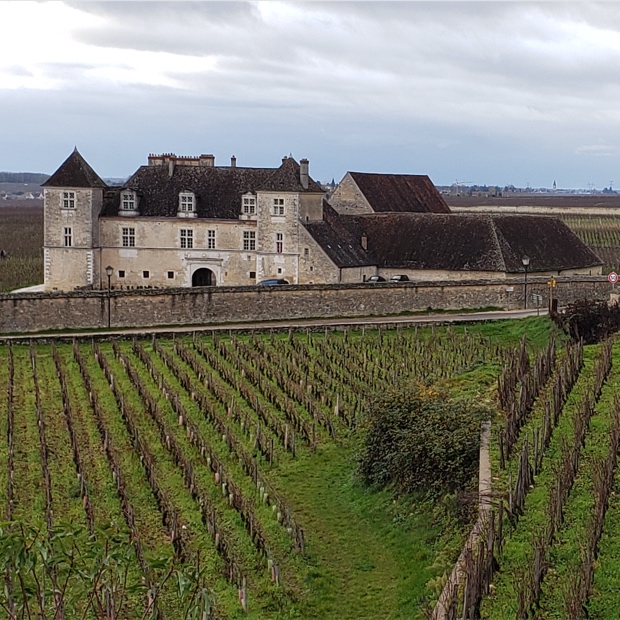

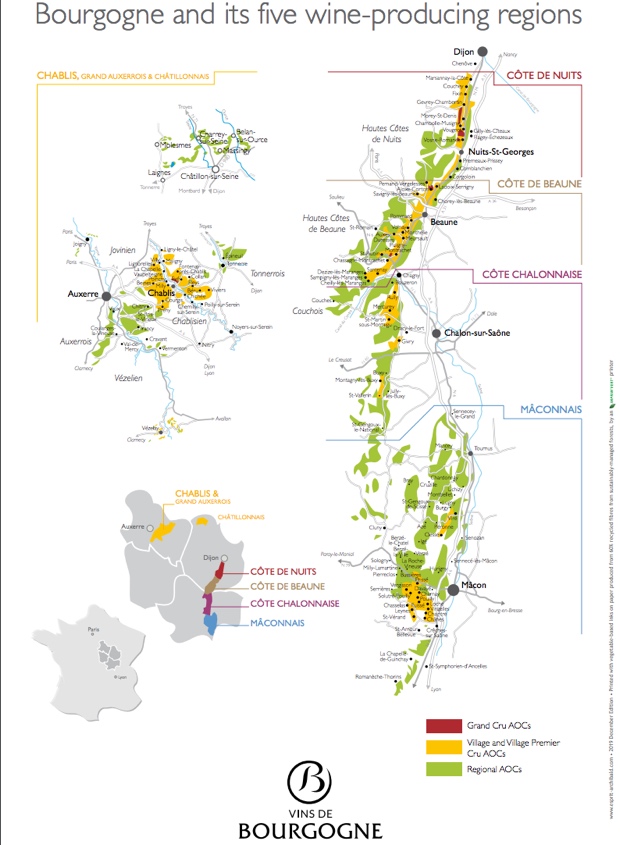


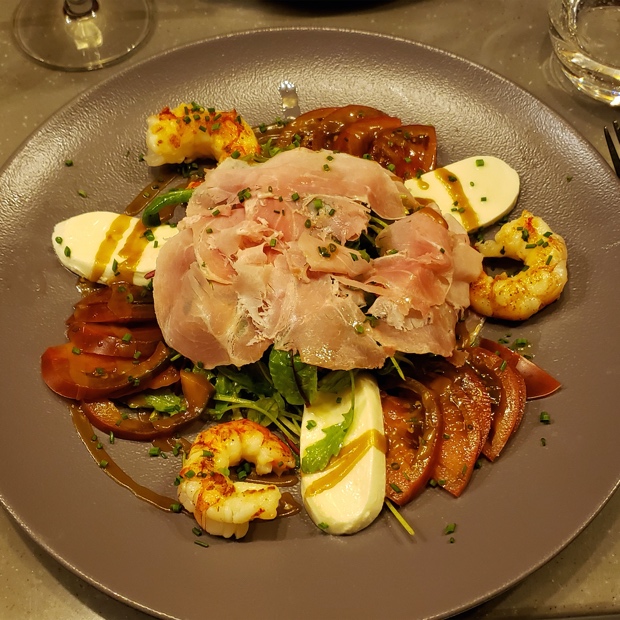
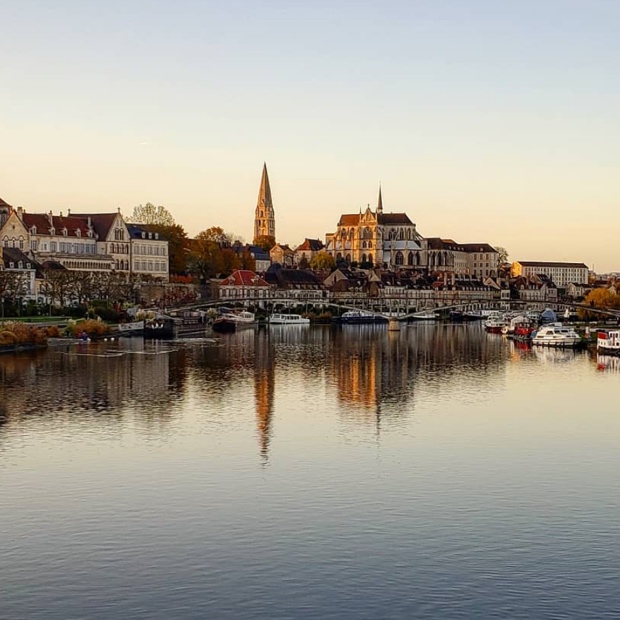


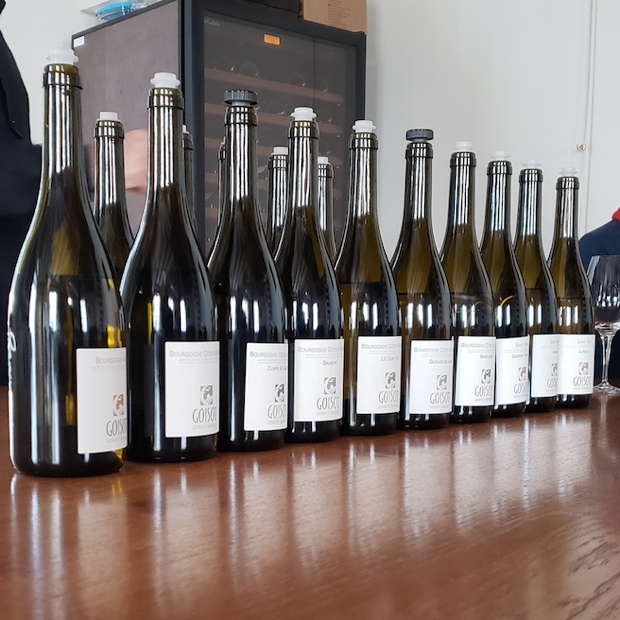

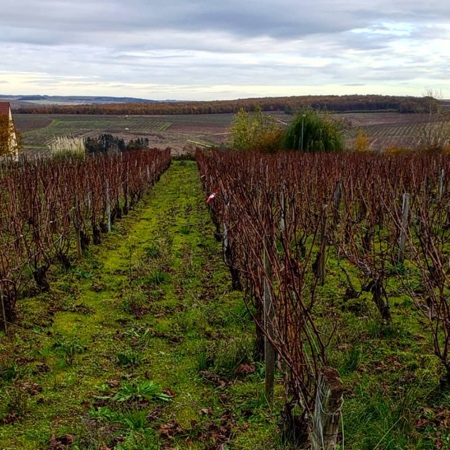
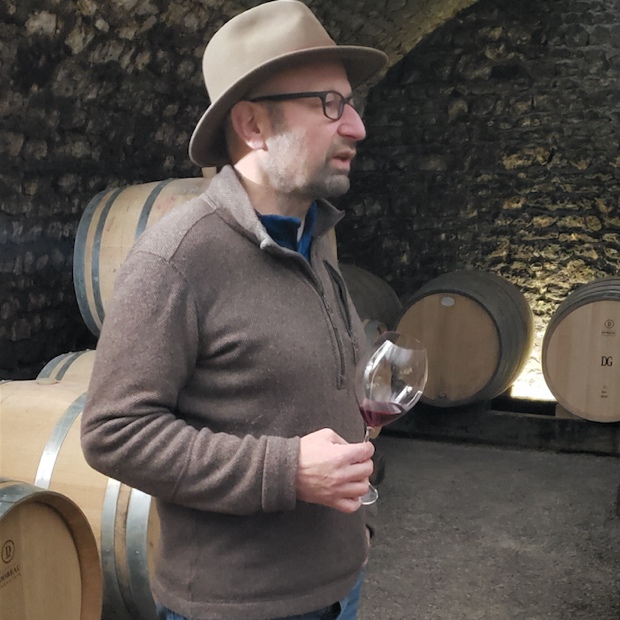
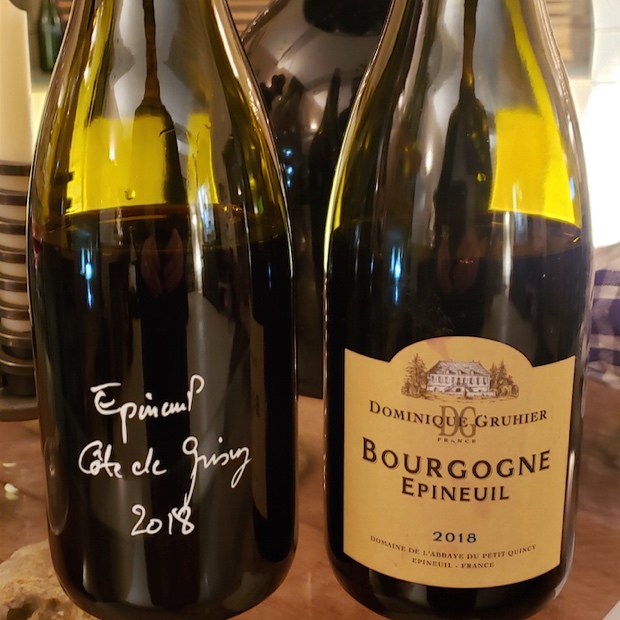

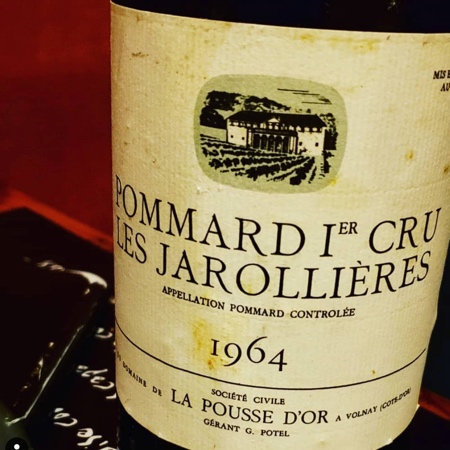


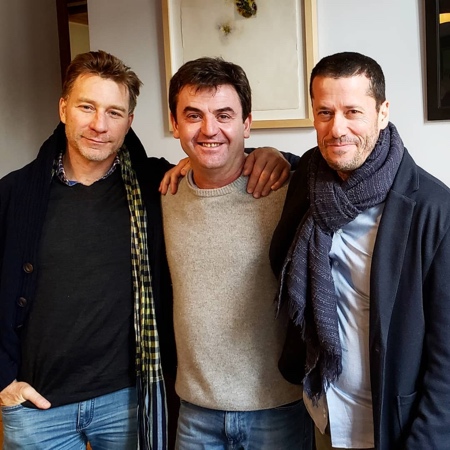


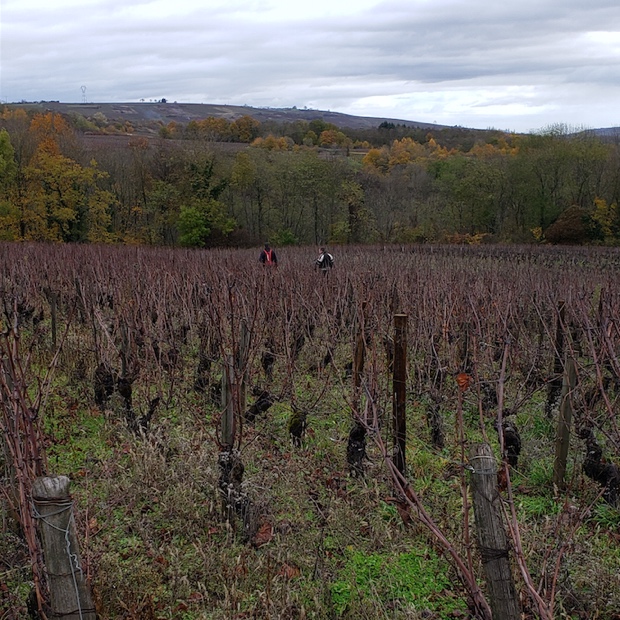


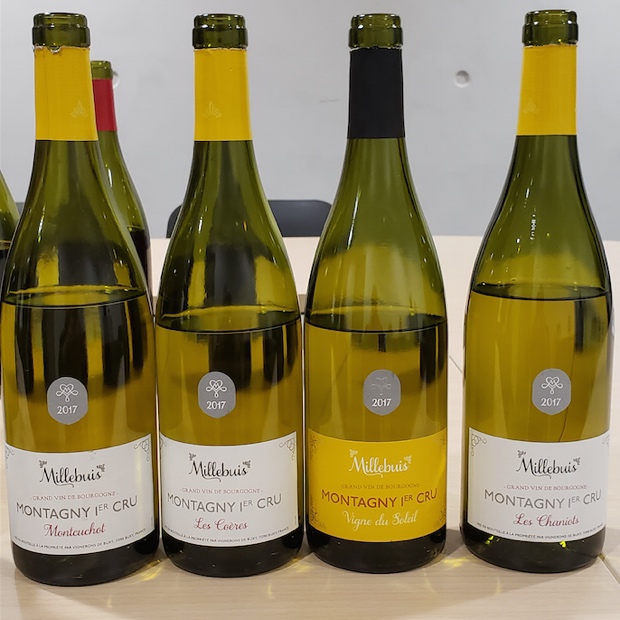

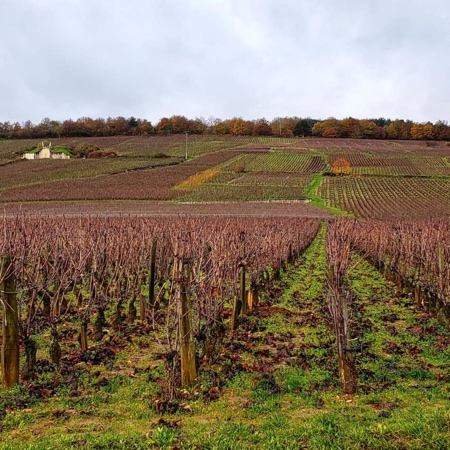
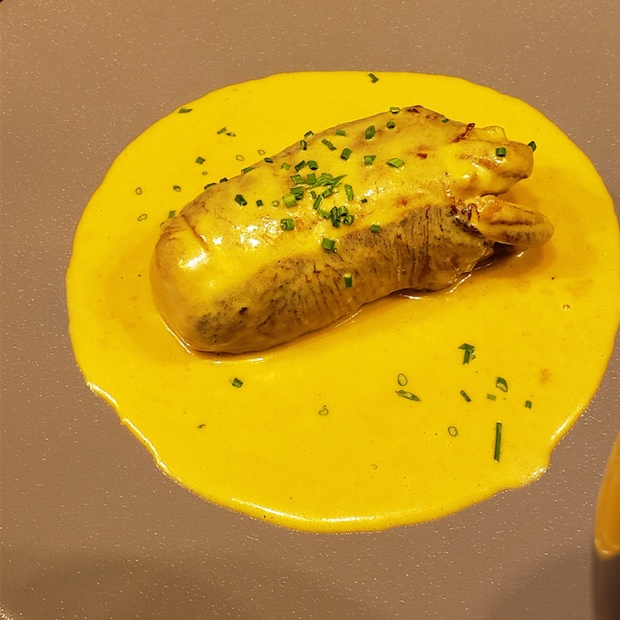


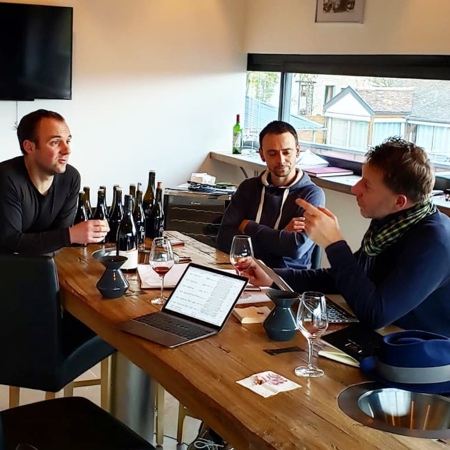


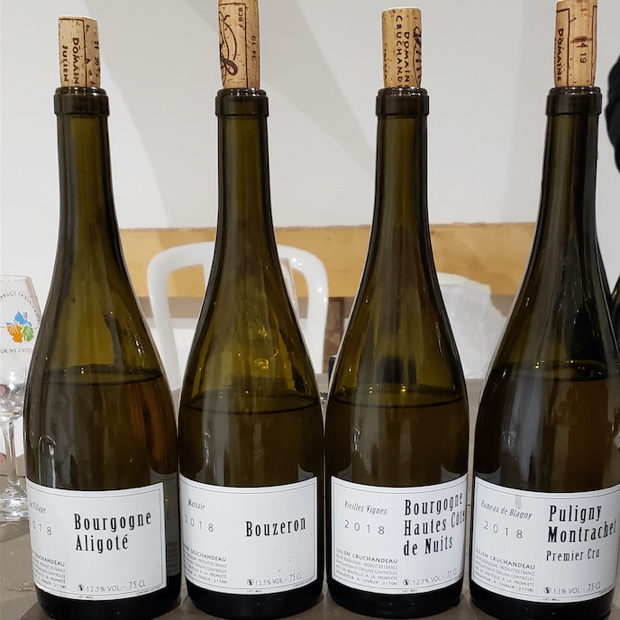


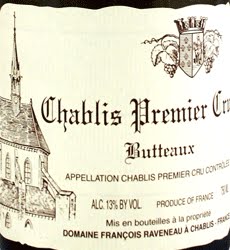
 Godello