Godello with Zoltan Szabo, Tony Aspler, Mike Di Caro, Ben Macphee-Sigurdson and Nicholas Pearce, Photo (c) Steven Elphick & Associates
In eleven days, as the Chardonnay grows, the coolest wine conference will return to the Niagara region on Friday, July 17th. The School of Cool will call to assembly with the annual intendment to recalibrate a global palate at Brock University’s Cool Climate Oenology and Viticulture Institute (CCOVI).
In anticipation of my third consecutive trip to taste and report on upwards of 100 variants in the name of ichneutic varietal centralism, 11 tasting notes are here laid out in preparation of the hunt. Too much Chardonnay you say? Bah. Allow me to paraphrase the lads from London.
“Wanna tell you about the Chardonnay I love, my she looks so fine. She’s the only Chardonnay that I been dreamin’ of, maybe someday she will be all mine.” Yes I do love Chardonnay, especially cool climate Chardonnay. Chardonnay with acidity, backbone, texture and aromatics. Chardonnay made by monks who know.
The Cool Chardonnay concierge notes that “It’s Cool to the Cool – it says so in the LCBO#VINTAGES circular for July 11. Six pages of Cool Chardonnay and i4C info, including a one-on-one with keynote speaker Matt Kramer, 10 great i4C Chardonnays” and a photo of Godello and friends at last year’s Barrels and Bonfres event at 13th Street winery.
These picks are from the VINTAGES July 11th release, as well as some Cool Chardonnay samples that arrived floating on a cool climate carpet into the WineAlign office. These combined 11 whites are cumulatively capable of Chardonnay foreplay. On the weekend of July 17-19 hundreds, perhaps even thousands will descend in a beeline down to the Peninsula at the valley foot and foothills of the Escarpment to gather, to do nothing but celebrate the intricacies and the base pleasure of the most planted white grape variety. For a full schedule of and essential sundry information on i4C15, click here. See you in Niagara.
From left to right: Robert Oatley Signature Series Chardonnay 2013, Westcott Vineyards Lillias Unoaked Chardonnay 2013, Flat Rock The Rusty Shed Chardonnay 2012, Bachelder Oregon Chardonnay 2012 and Pearl Morissette Cuvée Dix Neuvieme Chardonnay 2012
From the VINTAGES July 11th Release
Robert Oatley Signature Series Chardonnay 2013, Margaret River, New South Wales, Western Australia (350900, $18.95, WineAlign)
Flinty and cool, gathering up Margaret River righteous Chardonnay fruit and weathering an encouraging, blanketing and receptive barrel storm. Comes out a child of good climate, with green apple and gemstone crispness and simple, matching acidity. Not overly constructed to kneel down in the name of holy complexity but effective like a hand knit shawl in lieu of prayer. At $19 the River might have given a “girl with the parking lot eyes,” a Chardonnay in which “Margaret is the fragment of a name.” At $19 this over-achieves and makes a strong case for all that is produced from this cool regional place. Signature signed emphatically and with cool, downcast beauty, like Neko, if she were Chardonnay. Drink 2015-2020. Tasted June 2015 @RobertOatleyAUS@EpicW_S@WestAustralia@MargaretRiverWi
Winemaker Arthur Harder makes no bones, excuses or sets the goals too lofty in this second Lillia’s unplugged. “What you get is what you get,” from seven year-old estate, pristine fruit in 2013. Infrequent but texture stirring lees has mottled the nose with glycerin and avoirdupois while bottling early in the spring in advance of warm days has locked in freshness. Expression arrives by way of herbiage and lime. Continues where ’12 left off, further akin of Chablis. Drink 2015-2017. Tasted June 2015 @WestcottWines
Flat Rock The Rusty Shed Chardonnay 2012, VQA Twenty Mile Bench, Niagara Peninsula, Ontario (1552, $24.95, WineAlign)
Accumulated cognizance exudes from the laid back Shed, here as relaxed and user-friendly as it has ever been. If the texture is not vintage induced and made of low yield than I’ll sell my LP’s and switch outright to Songza and Neil’s PonoMusic. The herbs are basil and chervil sweet, the verbena and lemon balm redolent, the flavours beaming, bolstered by preserved lemon and candied ginger. The stuffing must be questioned, but not the elegance. This Chardonnay is porous, blessed, void of rust and of an interior with plenty of space in the shed. Let it fill.
From my earlier note of February 2014:
There will be 660 cases of this barrel cherry-picked, now iconic Bench Chardonnay. The warm vintage called for a combo-malo approach, part batch all in, part arrested development. Gravity influenced top down blending also work to seek a svelte elegance and this ’12 really straddles the humid line. Thinks to be ribald but remains chaste, only allowing a kiss from the barrel and a caress from the rocks beneath the soil. Accept immediate but know that deferred gratification is the hallmark of this bottling.
Bachelder Oregon Chardonnay 2012, Willamette Valley, Oregon (273334, $29.95, WineAlign)
When you taste an Oregon Chardonnay made by Thomas Bachelder you must first picture yourself somewhere. At lunch, with Lucy, on a promontory overlooking the sea, gazing up at a cloudless sky, in a dream. The warmth and kaleidoscopic layering of the 2012 might put you “in a boat on a river with tangerine trees and marmalade skies.” The sweet scents are like blossoms, with the air thick and palpably perceived in texture by way of an omnipresent Oregon salinity. This is the effect of the Bachelder diamond tannin, as pronounced and geologically-driven as any set of Chardonnays from out of the Willamette Valley. The personality of this villages is bright. The Single-Vineyard Johnson iridescent. This is a fine vintage for Oregon, more about ripe but early fruit and even more about soil. The algebraic cauldron that is the barrel simplifies the equation in ’12, to allow for a smooth climb out of a clean, pristine and rocky earth. Drink 2016-2022. Tasted May 2014 @Bachelder_wines
The style has changed for this Chardonnay though it is now more in line with other Pearl Morissette varietal wines. The oxidative, natural bent has increased with anti-furor, succour and sublimity of a sordid sort. It remains to be seen what will happen because 10 years will be needed to fully denote the PM evolution, but what remains from the larder is true blue lemon that will turn, curdle and hold honey tight in five to six years time. Could be earlier considering the vintage. The flint and natural yeast are big on the nose while the palate is softer than most years. More like ’10, nothing like ’09 and yet full bodied to the maximum density it can be. So much flavour and yet at present the acidity plays anything but a vibrant tune. Story to unfold. Drink 2017-2022. Tasted June 2015 @PearlMorissette
From left to right: Bachelder La Grande Châtelaine Côte De Beaune 2011, Hamilton Russell Chardonnay 2013, Saintsbury Chardonnay 2012, Westcott Vineyards Estate Chardonnay 2013, Lailey Barrel Select Chardonnay 2013 and Le Clos Jordanne Claystone Terrace Chardonnay 2012
Bachelder La Grande Châtelaine Côte De Beaune 2011, Ac Burgundy, France (332536, $37.95, WineAlign)
The last of the Beaune mohicans to grace the Ontario market is the least understood, the quiet type, the cool underground dweller. This has weight and dug presence. Quite an underground salinity. Chisels into rock and friable earth, burrows into wood and still has not emerged. A floral sense of confection caused by gelid solids popped from Chardonnay tannin, like marigold petals frozen in dry ice, is a sniff to behold. La Grande Châtelaine is a precise and slightly bitter Beaune with life yet lived. With this level of Beaune complexity Thomas and Mary have smartly priced La GC a mere cut above the basic Bourgogne, Niagara and Oregon bottles yet coyly beneath the single-vineyard and lieu-dit offers in the Bachelder diaspora. Drink 2016-2020. Tasted June 2015 @Bachelder_wines@LiffordON
Hamilton Russell Chardonnay 2013, Wo Hemel En Aarde Valley, Walker Bay, South Africa (931006, $37.95, WineAlign)
Perpetuates the typically, stunningly effective flinty, deeply aggressive and layered Hamilton Russell style, here as warm and unctuous as its ever been. The candied flower and acacia aromas are early dusk intoxicating, the flavours of lime, honey and hard limestone candies reminders of life flashing before one’s eyes. The winemaking is so desperately clean, the diamond precision cut with perfect sight and the length driven by acidity and pure, essential grape tannin. Yet another chapter on the Hemel-en-Aarde Valley Grand Cru site is written, with prodigy and legacy authored work by vigneron Anthony Hamilton Russell. Drink 2017-2025. Tasted June 2015 @OliveHR@WOSA_ZA@WOSACanada@TrialtoON
Saintsbury Chardonnay 2012, Unfiltered, Carneros, California (359281, $39.95, WineAlign)
A dream from Carneros. Soft, buttery, creamy, demurred and slightly toasty, full on flavour nougat goodness of nuts and creamy tropical fruit. The pre-positioned, sequestered minimal age has come to this; texture, composition and length ready to please and willing to accompany an open-minded variety of summer fare. Take this west coast, well-structured Chardonnay to the east coast and seek out a Digby scallop, a Malpeque Bay oyster or a fleet of lobster along any maritime crag. Come to think of it, stop at all points in between and drink it alongside whatever comes to the table. Anything. Drink 2015-2020. Tasted June 2015 @saintsbury@TandemSelection@CarnerosWine
The barrel fermented and aged Estate Chardonnay spent 12 months in two-thirds new and one-third second fill wood. Lees stirring is slightly increased as compared to the unplugged. Again, it’s about aromatic intensity leading the way to palate density. By the sounds of Westcott’s comments “we’re pleased with its remarkable irony — dry and sturdy, yet creamy and rather curvy,” you might think the team was stirring with impunity. Not so. The Estate Chard does the dance of mild spice and butter on toast to reach a texture that would appease savages. Unavoidable and typical low yields from the Vinemount Ridge picked at the right moment and handled with caring tabula rasa are the spirit in this wine. Delightful and charming. Drink 2015-2020. Tasted June 2015
Not only carved out of a careful selection of Lailey’s barrels but this ’13 is an eco-rich barrel expression. The toast mind you is mild and so both elegance and structure are avowed of glissade and glide. There is nary a heavy note here. The aromatics are compact, the flavours expansive and the finish lingering to effortless. If the vintage afforded more fruit the overall composition would champion with the best of them, but the understatements are laudable and stamped in approval. Drink 2016-2020. Tasted July 2015 @laileywinemakr
In 2012 there is a weight in the aromatics that belies any recent recollections of the Claystone style. The vintage warmth is a major player here, a cement and a glue that adheres to the adage of vintage being the driver for making wine. Winemaker Sébastien Jacquey listens to the wind, putting aromatics, texture and structure at the fore while allowing the sun to say its peace. This glides dutifully and seamlessly to the palate which is just as fleshy as the nose. The honey continues from ’11, as does the candied flower. Wood remains as unobtrusive as before, allowing a fruit to mineral continuum to find harmony. Though acidity lays lower, there is plenty of push to see this evolve for up to five or more years. Drink 2016-2021. Tasted July 2015 @LeClosJordanne@CBrandsCareers
Québec native and Niagara Peninsula resident Thomas Bachelder makes Pinot Noir and Chardonnay in three countries. He may not be the only gypsy winemaker on this planet but he certainly ranks as the most focused. Over the past few years I have had many opportunities to taste and be privy to the diversity, overlapping and incrassation of his portfolio. By now I know so much and understand so little.
There is one thing I do know for sure. Bachelder and partner Mary Delaney form a formidable wine-producing juggernaut. Together they are the vine and the fence. The question is which one is the vine and which one is the fence. If asked they and their guests would likely all produce different answers.
In Oregon Bachelder made wines at Ponzi and Lemelson Vineyards. In Niagara he was best known for creating a world-renowned portfolio of Pinot Noir and Chardonnay through an artfully applied science at Le Clos Jordanne. Beyond Bachelder there is now the Thomas effect at Domaine Queylus. He’s like the Chicken Man, “he’s everywhere, he’s everywhere.”
In Ontario his Pinot Noir fruit mainly comes from the St. David’s Bench vineyard owned by the Lowrey family. The Chardonnays are drawn from the Wismer Vineyard on the Twenty Mile Bench and the Saunders Vineyard closer to Lake Ontario. In Oregon, the sturdy contrariness of the vines show a marked preference for the sandstone and volcanic (Basaltic) strata, in Yamhill-Carlton and the Willamette, rhymes with dammit – thanks Mary … ;), Valley. In Burgundy the terroir in micro-plots diversify the stratagem even while some are considered lesser locales for growing great Burgundy. But one thing is clear. The lieu-dits that give of their fruit all qualify as appellative wonders of the Bachelder diaspora.
Thomas Bachelder loves his map of Bourgogne. He would crawl inside it if he could.
For a brief history on the Burgundy, Oregon and Niagara terroirist, check out my two previous posts on the Bachelder project.
Wine writers hard at work. Clockwise from bottom left. Godello, Rick VanSickle, Evan Saviolidis and Michael Pinkus Photo: (Elena Galey-Pride, http://www.winestains.ca)
Order is an extreme obsession for Thomas Bachelder, in an organized, chaotic way. For this reason, the wines were tasted in the following progression, to make sense of the complexity and variegation in each country from the three distinct yet wholly antithetic bon (Burgundy-Oregon-Niagara) terroirs.
From old vines in the commune of Puligny-Montrachet, Bachelder’s Aligoté is a flinty, indiscreetly pinching and itinerant example. More complex than it needs to be, it can be accused of being a risk taker. If Chardonnay is considered in terms of finding excellence out of cool climates, this Aligoté is downright gelid. The wine doth go both ways, at once reductive and then terpenic. Lime citrus concentrates aromas and flavours within a very platinum, mineral frame. Speaks several languages that can be related to but only if you can pry through the cracks in the hard protective shell. Confounding really, yet a fascinating study. Bachelder could do for varietal Burgundy Aligoté in ways similar to Sylvaner in Alsace. Tasted December 2014
Pinot Noir Oregon 2012, Willamette Valley, Oregon, USA (333278, $34.95, WineAlign)
Primarily constructed from the fruit of Yamhill-Carlton vines, a third of which is Lazy River, an apropos moniker because by harvest time it hardly moves. The warm vintage adds a calm dimension to a Pinot Noir more Burgundian than the Bachelder’s Niagara and also more table friendly. Pure perfume and like life in layered, rosy hues, a vie en rose, from the land and the river’s subtle flows. The terra mobilis. The underlying dream in Thomas Bachelder’s Oregon movement is mineral, like salinity, not limestone but something ambiguous from the river’s pull and under the river. Elegance lived and relived. Here is a wine from a very available warm vintage, with a mess of fleshy fruit, yet Thomas does not obfuscate the terroir. In 2012 and needfully so, it is served from a light hand. Currently available at the SAQ in Quebec and coming to VINTAGES in Ontario, Spring 2015. Tasted December 2014
The fruit for Bachelder’s local environ comes from Wismer Parke within the essential Niagara vineyard. By way of setting bearings straight, the Park is contiguous to the Foxcroft and Wingfield sections of the Lowrey Vineyard. A precocious and most positive net gain Pinot Noir most of which, as Thomas so adroitly points out, will be consumed before being allowed to hit its prime. Despite the generic labelling, this is not a mass-produced bottling by any stretch and was swallowed up by licences. It’s a hallmark expression of warmth, texture, vintage and the capability of Pinot Noir in this specific place. What Thomas has achieved, with effective persuasion, is a cloning from intimate belongings; earth, fruit, Lowrey. Tasted December 2014
Côtes De Nuits Villages Aux Montagnes 2012, Burgundy, France ($45, WineAlign)
Named for La Montagne, to recognize it for place because local rules forbid calling it what it really is, nudge, nudge, wink, wink. So what was ‘La’ is now ‘Aux’ and with the change, in this vintage, comes something formidable, eliciting a response of aux la la. Let’s talk about this, with no mocking tone, just real thoughts. Anything but regional, this Bachelder is so very Villages, specifically lieu-dit, with its depth of earth and release of perfume. A piercing sort of Pinot Noir from a which a sauce could be fashioned out of its sheer intensity, to bathe meats. The concentration has a citrus feign, bright, in the back, along with a giving and Burgundy forgiving mineral funk. In this Burgundy, the mountain lurks, in spirit torque. Will unwind for up to 10 years. Available at the SAQ in Quebec. Tasted December 2014
Pinot Noir Johnson Vineyard Oregon 2012 and Côtes De Nuits Villages Aux Montagnes 2012
Pinot Noir Johnson Vineyard Oregon 2012, Willamette Valley, Oregon (SAQ 12065338, $44.50, WineAlign)
A hard-working wine that reaches for fibres not available for weave in the Bachelder ‘basic’ Oregon Pinot, the Johnson digs into the salty waters beneath the earth. Draws up its hydration, the astonishing fidelity of minerals magnetized and then redacts the smokey, splintering spokes of wood. The juice in 2012 flows and follows the inconsistencies of the skin and the barrel like the river travels along the irregularities of the land. Rich, dusty, brooding and intuitive. The Johnson is bent on serious intent, like a sculptor’s dentil relief, with increased shadow, less mannerist in 2012, deeper, darker and of more solemnity. When the ’11 was at first hard to figure then soon after revealed its charms, this ’12 will take much longer to unravel. The brightness of Oregon Pinot Noir is perhaps its greatest attribute so here that light is not yet known. Wait three to five years to find out its truth. Tasted December 2014
A balanced and thoughtful wine, from five rows of mostly mysterious, and unknown clones. There simply is no other locale in Ontario that you can grow Pinot Noir any further away from lake and river and still unearth such depth. Though terroir-driven, this shares little with other geographical perimeter outliers, like Ravine and Coyote’s Run. Can only be Lowrey; folkish, demotic, St. David’s Bench vernacular. From my earlier, October 2014 note: “To those who wonder aloud about the annual love affair with this vineyard, suck it and see. This connectivity and this wine renew again. Same time, this year. Bursts of all that have come from it before, are here now and in temptation of what will be for years to come. Has “the type of kisses where teeth collide,” a Sam Cooke ages to Arctic Monkeys kind of reckless serenade. It’s also a balladeer, this scaled back Bachelder, if that can be said to be done. Here now soft, elegant, perfumed, demurred, sweet, downy, pretty, not yet fleshed, surprisingly void in tannin, anxiety and tension. Work with it for 10 minutes and it will then begin to bite back, show its teeth, pearly white as they are, grind it out. There will be 10 years of development in this Lowrey, if not less, but in ’12, that is more.” Last tasted December 2014
Nuits St Georges La Petite Charmotte 2012, Burgundy, France (357228, $49.95, WineAlign)
Here grinds a wine that could want for some decant, a pause for thought while the imbibers assess their ways through Oregon, Niagara, Johnson and Lowrey. A pent-up perfume, when allowed to breath in and then out, results in a concentration of aromatic certainty. Tight and bracing, with cedar and bitumen, cherry and rose, this single-vineyard NSG hugged up on a northern slope is both adamantine Nuits and the pretty dame of Beaune. Straddles the arrondissement’s Burgundian twain, the Neaune, from iron to sublime. The imprint of yearning and distance. Tasted December 2014
Les Bas Liards Savigny Lès Beaune 2012, Burgundy, France (SAQ 12089567, $38.25, WineAlign)
Only two barrels (one and two year-old, zero per cent new oak) were procured of this 100 per cent Pinot Blanc. “I’m a barrel fermenting maniac,” admits Bachelder. He might also say “I’ve got a job, I explore, I follow every little whiff and I want my life to smell like this.” Stone fruit is in resolution and integration, fully, completely. This quenches thirst, like chewing on raw fish. Why Pinot Blanc in Savigny Lès Beaune is the $64K question with an answer tragically not really known. Its taste is not just Pinot Blanc, it is the flavour of Savigny Lès Beaune. It is PB looking for a place to happen. The argument is logomachy, the reality is Savigny. What it delivers is a clean, hip Burgundian message and at the same time asks, “do you taste Chardonnay?” Yes? No, I taste Savigny Lès Beaune. Tasted December 2014
Bachelder Chardonnay Johnson Vineyard 2012, Willamette Valley, Oregon, USA ($44.95, WineAlign)
From the best four of twenty barrels (and 15 – 18 per cent new oak). The salinity drawn is deeper still, like a bone from the skin of the sea. Rich tones, components, tannic texture, filibuster Chardonnay. From my earlier, May 2014 note: “More specifically a product of its ocean meets sous terre soil than Bachelder’s basic (term used loosely) Chardonnay, the Johnson nicks more richesse, around and around fullness. Not to mention the cerebral wisdom of two Scots and a Charlemagne. Johnson’s progressive and forward thinking maker works with inconspicuous wood and the science of introducing oxygen into wine in a controlled manner. He might say “for it is wisdom that we have for sale.” Like a white-winged dove, the 2012 will trod lightly towards a long walk to a very long life. It can be imagined aging to the edge of seventeen. The earthy feel, the salinity, not from tannin but from soil, “the music there, well, it was hauntingly familiar.” This is iridescent Oregon in a Bachelder voice. No doubt.” Last tasted December 2014
Primarily fruit sourced from Wismer-Foxcroft and Wismer-Wingfield plots, the oak treatment is 15 per cent new. Shows so much more warmth than Oregon. More honey and tropical notes than many peers as well. And still limestone crusted apple is the major finishing key in a Chardonnay that sings a familiar Niagara hymn. From my earlier May 2014 note: “Bottled just one month ago, contrary to the monk’s assertion, there is nothing shocky about her. Her fruit is downy soft, round without being fat because as Bachelder maintains, real as always, you “can’t have the minerality of that perfect 2011, I’m not going to bullshit you.” The 2012 is a wine unconscious in its own obviousness, ready for anything. Gregarious, golden, fresh fruit that was ready to roll out of its barrel and into the waiting glass long before its maker was prepared to open the valve. And of course there is a mineral finish. It can’t help but be.” Last tasted December 2014
Bourgogne Chardonnay 2012 and Niagara Chardonnay 2012
From a site 2.5 km’s from the lake, right on the highway at 30 Bench. Derives its plushness from mere proximity so “serve it first,” pleads Thomas. So much lush, more richesse and yet today, Saunders is a bit closed, primary even. Will yet need some time to find its way. Coming to VINTAGES, Spring 2015. From my earlier, May 2014 note: “Though presently showing a bit inferential, no amount of Bachelder reduction can keep good fruit down nor can it dismantle the mastery of mineral impart. An arras of texture conceals the portal to both vineyard and barrel with streaks of salinity, charcoal and chalk. The 2012 rendition is a canvas laden with pure golden paint, concealing “hidden forms and shifting states.” Thomas has found a rhythm in Saunders through thick brush strokes, full and advancing. This warm vintage is not a receding one, its flavours and its texture do the opposite. They jump out at you in waves. For Thomas, the sublime is now.” Last tasted December 2014
An appraisal of Wismer, much further up on the Bench as compared to Saunders, is always fraught with side by each guilt. The two coax and dissuade each other in every respect, from vintage to vintage and in flip-book oscillation. Once again, the reversal is complete in 2012. Wismer gives not just power and warmth, but layering. Its voice is an astonishing fidelity of native rock magnetized. Wismer finds a way to make grace necessary and to make necessity graceful. While Saunders made yeoman’s work of 11’s crazies with precision and poise, Wismer takes the glow of ’12 and turns it into cool sunshine. This Chardonnay of wealthy fruit, controlled oak, olivine and feldspar tannin will slowly wash up like driftwood on the gravelly beach of life. Give it a year or two to assimilate the components and drink it for 10 more. Tasted December 2014
Bourgogne Chardonnay 2012, Burgundy, France (272005, $35.95, WineAlign)
From lower Puligny, this is rich, forward and expressive Chardonnay. While it may gangle out with a fierce, pierce of the tang, a change fills the air after much discussion about a barrel, how it is used and to what effect, both for its current and predictable future. Has that honeyed, lemon toasty unctuousness, a weave that is weighty and glazed. Some wood spice and a colourable, creamy curd of citrus. Oak compounds the sweetness and layering. Puligny runs through its wooden veins and pumps micro-oxygenated nutrients to the important, internal organs. The eventuality here is the alleviation of pressure and a retrofit of fruit to elegance. Strike another notch up and step forward for the Bachelder Burgundy sojourn. There is still so much to learn and even this will seem pedestrian compared to what will come but for now it’s just fine, thank you very much. Tasted December 2014
Savigny Lès Beaune Les Bas Liards 2012 and Marsannay Clos du Roy 2012
Marsannay Clos du Roy 2012, Burgundy, France ($39.25, WineAlign)
The ‘King’s Hill’ which is just half of the misnomer because how can a plot of such ability be considered so low on the Cru pole. Half of a new barrel went into the minuscule (two barrel) blend. Chardonnay like lace, from nothing less than an appellation prepared to offer up fine drink, in pastry and in textile. Tropical tree fruits hang in rows, connected by cream and the contending forces of smoke and bite. Always the end game of rock envelops the whole, like gabbroid nodules, permeating every fissure. And so, because a Bachelder Chardonnay must comply, as the earth invisibly prepares its vines for successes and failures, so history is the creeping intent. Tasted December 2014
From the Middle English octobre and the Latin October, meaning “eight,” just how the month of October became the Julian and Gregorian 10th is a matter of bad juju. The corporate bumbling by way of the insertion of January and February into the Roman calendar screwed up all available etymological kismet. Perhaps in abbreviation or acronym, October, shortened to OCT, means “On Company Time.” That might explain its delay and parlay to 10th month status.
October has made its sad and beautiful way into song, rarely in joy or rebirth, almost always in tragedy and death. What’s up with that? With leaves turning to every shade of a Tom Thomson watercolour amid Ontario’s landscape that is all pan and even more orama, why the long faces? James Mercer writes, “to hell again and back,” and Amy Winehouse “today my bird flew away.” The lyrics in these songs are anything but uplifting but the tunes themselves are scrappy.
Then there is the October as envisioned by U2, well, there’s an entire album of oppression, repression and depression. “And the trees are stripped bare, of all they wear, What do I care.”
The good news, through tough times and innocence lost, is the availability of wine. VINTAGES is our facilitator and we are the benefactors, to concentrate on seeking solace in the living, breathing and most complex organism that genies into great bottles of grape ferment. This coming weekend one of my favourite releases on the perennial calender rolls out more value and less plonk than usual. On the heels of anything will sell for Thanksgiving and predating the shelves emptying free for all that is Christmas, October 25th is ideal and satiating. Here are 16 new releases, guaranteed to restore faith in this most troubled month.
From left to right: Andreza Reserva 2011, Flat Rock Unplugged Chardonnay 2013, Morandé Gran Reserva Cabernet Sauvignon 2011, Château Rigaud 2012, Loimer Grüner Veltliner 2013
Andreza Reserva 2011, Do Douro, Portugal (385849, $16.95, WineAlign)
This blend of Touriga Nacional, Touriga Franca and Tinta Roriz (Aragonez) from Lua Cheia em Vinhas Velhas is certainly funky and vineyard driven so that’s a bit of all right, isn’t it? Its phrasing is indelicate and slightly hot but its message is quite clear. Former winemaker for Offley Port and Technical Director for all the Sogrape Vineyards in Portugal João Silva e Sousa and consultant winemaker Francisco Baptista bring forth honest Douro red fruit, along with some mineral and righteous wood spice. Dark, deep and with a wonderful level of anxiety and tension. Gives purpose to modernity. Tasted October 2014 @FreeHouseWine@wines_portugal
A stoic and fruit aplenty Unplugged, less aromatic than some, equally magnanimous as others. Juicy, orchard fruit that is ripe and then elongated, with just enough acidity to keep it honest through the middle acts of savoury balm. Late tonic pungency lines the output. A very good, if not the finest ever unoaked Chardonnay at the hands of Jay Johnston and Ed Madronich. Then again, the ’07 tasted in February 2014 was a revelation. Who knows what the future may hold for this aloof ’13. Tasted October 2014 @brightlighter1@Winemakersboots
Morandé Gran Reserva Cabernet Sauvignon 2011, Maipo Valley, Chile (389254, $17.00, WineAlign)
Despite the 14.5 per cent alcohol this is beautifully bright, fresh, red cherry fruity and with nary a sign of abstruse chocolate or coffee. The southern hemisphere pulsates in here like a chromosphere of massive, meaty fruit. There is a funk per se but in earth, not wood. Good grain, honest grain, de facto grain. Spice from wood but just as an accent. A romantic one. Admittedly more Maipo than Cabernet but well thought on with the texture of haptic contours. Will satisfy a hunt for October reds to drink right now. Tasted October 2014 @MajesticWineInc
Château Rigaud 2012, Ap Faugères, Languedoc-Roussillon, France (393561, $17.95, WineAlign)
A bold and beautiful southern French rapport of 55 per cent Syrah, 26 Mourvèdre and 19 Grenache, so very modern and explicitly floral. A veritable Midi garden salad lives in the glass; chicory, acacia, iris, black cherry and lemon. Brassy blend from Languedoc-Roussillon, tangy and of the earth in cohorts for simple, if semi-hedonistic pleasure. Nothing about this screams oak and if the shed was open for a lay down it kept its splintered mits buried within the pockets of its staves. The ’12 Rigaud is meant for near-term luxury, alone or with sundry kinds of protein. Tasted October 2014 @oenophilia1@VinsAOPFaugeres
Loimer Grüner Veltliner 2013, Dac Kamptal, Austria (142240, $19.95, WineAlign)
Can any entry level (used with latitude) Grüner speak more clearly of varietal truth than Fred Loimer’s Kamptal? Saline, herbal, juicy and mineral all roll off the golden carpeted tongue. A ripe merging to oxidative line is straddled but acidity keeps reeling in the fruit so no harm, no foul. Flavours of citrus and white peach. Heads medicinally sweet on the finish and lasts longer than could ever be expected. From my earlier April 2014 note: “Increased hang time has put this Kamptal in a deeper state of focus and understanding concerning the intricacies of Langenlois Grüner Veltliner. Continues the pure, clean and crisp axiom of the basic Lois but here the aromatics are spoken in acroamatic terms, obvious to disciples and yet available for all to comprehend. Though five per cent big wood barrel aging does not seem significant, that practice along with four months of aging on the fine lees has had a textural impact. The added weight is a questionable thing, though arguably just splitting hairs. Will help carry this vintage through five to seven years of graceful settling. Last tasted October 2014 @FredLoimer@LeSommelierWine
From left to right: Bordón Gran Reserva 2005, Dog Point Vineyard Sauvignon Blanc 2013, Domaine Hamelin Beauroy Chablis 1er Cru 2011, Giacosa Fratelli Bussia Barolo 2009, Giacosa Fratelli Bussia Barolo 2009, Le Clos Jordanne Claystone Terrace Chardonnay 2011, Le Clos Jordanne Claystone Terrace Pinot Noir 2011
Bordón Gran Reserva 2005, Doca Rioja, Spain (114454, $22.95, WineAlign)
If it were so because of cryogenic preserved must or an accidental tipping and topping up into an unused barrel by recent vintage juice I would not be left hanging with mouth fully agape. Considering the amount of time this flat out delicious Gran Reserva saw in barrel, the mystery must somehow be explained, how it came to be so surprisingly modern and bright (for its age), especially at $23. But it has been seen many times before, with no greater example than the Montecillo 1991 GR that drank fortuitously well into the last years of the previous decade. This is the magic of Rioja. That said, there is some sinew and some raw character here as well – that’s the old school treatment and style talking. Red cherry fruit. Ripe fruit roasted, rested and now sliced, showing its perfectly cooked rare cut. Juicy and with sanguine notes still running through its grain. Wonderful old school yet bright Rioja. Riotous red wine with a calming aura of quietude. Tasted October 2014 @RiojaBordon @Eurovintage@RiojaWine
Dog Point Vineyard Sauvignon Blanc 2013, Marlborough, South Island, New Zealand (677450, $24.95, WineAlign)
Dog Point’s principals Ivan Sutherland and James Healy know the innuendo of that ever present Marlborough SB subtlety by allowing the vineyard to show up in the glass. That sussuration is the hallmark of this most righteous bottle. The VINTAGES October 25th release indicates a 2014 debut when in fact it is the ’13 that was presented for tasting and likely that vintage will show up on shelves. This ’13 bring elegance, less weight and more fruit. Round and rippling, spiced but in spicy check. Not the finest but persistent in class and crowing achievement for the stomping ground. Tasted October 2014 @DogPointWines@TrialtoON
Thierry Hamelin and his son Charles (no, not the Olympic Speed Skating gold medalist) are eighth generation family winemakers and their 2011 Beauroy, one of the most underrated vineyards in Chablis, or anywhere Chardonnay is made, is both an ode to tradition and an immaculately clean look at the future. Prototypical steely Chablis in every nook of its lithified being and befitting of a 1er Cru designation. Fruit comes by way of some pretty wizened vines (30-plus years) and steep, south-facing slopes. The exposition is both fresh and flinty, the logic sound and spotless. If a creamy, leesy note is felt it’s just a case of genes. In every other respect this is Chablis as both a child of the present and the future. Quality vineyard, vines and fruit given the gift of no mask. This will drink well for five plus years. Tasted October 2014 @BIVBChablis
From the hills of Monforte d’Alba in Piemonte, Bussia is laid out like an amphitheater, the soil is all clay and the Nebbiolo is rich and often austere. Now, here is what temperance and a reliability in attention to classicism is all about. Cherries and ferric earth. Roses and funky beet beats. Tannins stuck on 10, winding and unwinding, but mostly winding. Wild herbs, sweet candied flowers, tight angles, tough and beautiful. Needs many years to wind down. Exceptional value for the real deal in Nebbiolo. Tasted October 2014 @stradadelbarolo
The Claystone 2005 made by Thomas Bachelder was the single-vineyard ringer that shocked the Chardonnay world when it trumped international competitors in a Montreal grand tasting. The 2011 made by Sébastien Jacquey recently won a Silver Medal at the Decanter World Wine Awards. This Jordan, Ontario vineyard is a key clay-limestone foundation for both the Claystone and Village Reserve botttlings. Yet another exemplary ’11 Chardonnay with the omnipresent Jacquey handling for aromatic freshness and layering; candied flower, fresh morning glade and lemon drop, amplified to 11 in ’11. Moreover there is a level of honey not previously witnessed. It smells like natural sugars and like a bloom of sunflower lollipops. Very little (15 per cent new) oak was used so the texture is fluid and palpable, with just a touch of stone/toast/wood spice, but ultimately it’s the top quality fruit allowed to speak its own language. Tasted October 2014 @LeClosJordanne@20ValleyWine
Oh so pretty Claystone. Like a butterfly, delicate and gossamer. How can you not mark the change in direction to a most inviting and positive way for the Pinot program with Sébastien at the helm? The paint fumes are dissipating with each passing vintage. These vines belong in Jacquey’s hands – they were made for his touch. He understands them and they are now speaking so clearly, sweetly, with texture that underscores their elegance. When fruit is this subtle, acidity magnified and tannins feigning dry in the early stages of development, a wine can confound and sometimes even seem to be failing. In my view, it is the obtuse that are perhaps guilty of being under appreciative of the Pinot Noir paradox. Like the rest of the ’11’s in the LCJ stable, this is a terrific Claystone with 10 years ahead in sublimity. Tasted October 2014
From left to right: Ramey Chardonnay Sonoma Coast 2012, Besserat De Bellefon Cuvée Des Moines Brut Champagne, Jean Gagnerot Meursault 2011, Château Cantenac Brown 2010, Ornellaia 2011
Ramey Chardonnay Sonoma Coast 2012, Sonoma County, California (288035, $45.95, WineAlign)
Buttered toast and lemon meringue are clear and concise in this inner-coastal, altitudinous Chardonnay. You just know there is a pent up, wound intensity lurking. Somewhat slow to start, it not being a jump to the front of the pack, first furlong leader. Then it gathers horsepower from texture and power from acidity. While the fruit remains unreleased beneath the moving parts, it’s the spice, lime tang and bitters that propel this Sonoman from sheer wildness in complexity. Impeccable equine balance. Likes the longer track to make the most out of its endurance. Will show its best down the stretch, at the end of the decade. Tasted twice, October 2014 @RameyWineCellar@BarrelSelect
Besserat De Bellefon Cuvée Des Moines Brut Champagne, France (724955, $54.95, WineAlign)
This Cuvée Des Moines Brut is fashioned in a decidedly aerified yet grappling crémant style, of firm jaw and air of tragic nobility. Low pressure and dosage in this Chardonnay (35 per cent) , Pinot Noir (20) and Pinot Meunier (45) mix make cause for a new Champagne slang. More than a pinch of ginger burrows into the waft of baking apple scones, marked by sody saleratus and more (two and a half years) leesy tang than you can dip a canoe paddle into. The flavours continue with something akin to pickled apples and sweet pork, if there were such a souse. Really tangy and overtly complex, with a long, long finish, if just a shade on the oxidative side of town. Tasted October 2014 @BesseratB@DionysusWines
Jean Gagnerot Meursault 2011, Burgundy, France (390369, $57.95, WineAlign)
Gorgeous and subtle yet clearly spoken aromatics; just a hint of tonic piques some ripe orchard fruit, along with a crisp spike of very little citrus. Round, moving, enveloping and circling, parts unified and oscillating. Great round acidity as a membrane to a full, fleshy Chardonnay that returns again and again, to strength and from strength. The length goes on and snaps back to the beginning. Most excellent Meursault. Tasted October 2014 @grapewines@BourgogneWines
Château Cantenac Brown 2010, Ac Margaux, 3e Cru, Bordeaux, France (259424, $89.00, WineAlign)
Whether or not you have left the modern Bordeaux market, attention needs to be paid when an incredible wine at a fair price is made available. Not to be found for any less cash south of the border or across seas, the 2010, 3rd Growth, Margaux Cantenac Brown is the best $50-100 Bordeaux buy of the vintage. Composed of 66 per cent Cabernet Sauvignon and 34 per cent Merlot, the wine saw its fair share soak in 60 percent new oak. This classic beauty is the epitome of lush and welcoming Bordeaux from a vintage with more sun than 2005. It will make you stop to smell the adjectives. Rich red and black fruit, so very floral and void of any harsh moments about it. I don’t imagine this is to be the longest lived because of its inviting immediacy but it is no shrinking violet. The fruit is in charge and will give it five to 10 years of that parsimonious pleasure. Great late spice and line dancing energy. Tasted October 2014 @Cantenac_Brown
Hasn’t lost a moment of time through six months in bottle. This should give an indication as to its near-unprecedented longevity. Six years will cast a moment’s advancement, sixteen a fortnight. Not saying it can go 60 but half of that is in the realm of the serious and for certain. Candied yet tempered violets, rocks crushed and sprinkled on cryogenic frozen and restored heirloom berries of yesteryear. Huge tannins. From my earlier, June 2014 note: “The blend of the 2011 Rosso Superiore is Cabernet Sauvignon (51 per cent), Merlot (32), Cabernet Franc (11) and Petit Verdot (6). From a near-sweltering vintage, tempered by a cooling spell in June and July. The late August heat spike brought on early ripening which explains the intense aromatic waft that fills the AGO’s tasting room air. Though following the same (post 12-month) assemblage and return to barriques for a further six months, the richesse in fruit quality and 70 per cent new oak envelopes this ’11 with so many structured layers there remains many years to see where it will go. The rose petal meets violet florality can elicit no parochial parallel, the anxiety in hematological ooze neither. A consideration of the phenolic exceptionality follows suit. Chalky tannins follow chains in a world spinning ’round in lush circles. This is the reference point for such assemblage in Bolgheri. The breakdown will not begin for a minimum 10 years and evolution will continue comfortably, gently and effortlessly for 15-30 after that.” Last tasted October 2014 @Ornellaia@sherry_naylor
I arrived at Brock University for the Cool Chardonnay conference on Friday and we began tasting the first of 117 sometime around 11:00 am. On Friday night we convened under the stars st 13th Street Winery for the Barrels and Bonfires event. On Saturday I taxied up the Cave Spring Road runway for an afternoon in the Cave Spring vineyard with the Pennachettis and on Saturday bussed over to Vineland Research and Innovation Centre for the grand Cool Chardonnay dinner.
On Sunday we wrapped up at Ravine Vineyard. In between events, we tasted Chardonnay in the Media Room at White Oaks Resort and Spa. All of this not would not have been possible without the efforts of Wine Country Ontario. I posted 20 or so tasting notes in Monday’s column, scribbles apropos to the events associated with the presented wines.
Here are 50 more tasting notes in 5,000 Godello words, add or subtract a few hundred. If you follow doctor’s orders and take one Chardonnay every hour for 50 hours, this is the result.
I’ve fallen and I can’t get up. @mikedicaro channelling his inner MacGyver to save #i4c14
The long hanging fruit left to develop sugar and richness, the new oak, the eight months rest on the lees. These are all winemaker favourite things, stylistic choices that contribute to a viscous mess of a Chardonnay. A full take has been liberally advantaged from the hot vintage. The alcohol is listed at 13.5 per cent but the wine sweats higher, in a sun-caramelized toast, leaning to oxidative, even bruised and battered orchard fruit territory. As a consequence and in retreat, the acidity dot does follow. The new wood has melded well and good so in terms of texture, the old vines feel right. Tasted July 2014
The Mountainview, despite being a value offering as compared to the Old Vines just seems to be in better temper. There is more mineral on the palate, too. Angles here are less extreme, fruit not as languid or encumbered. The persistence in length seems greater, thanks in most part to freshness, even if the fruit is not quite as fleshy as the OV. Tasted July 2014
Has Wismer found a cruising altitude? Has this Grand Cru vineyard from a most perplexing 2011 vintage entered the telephone booth in civilian clothes, only to soon emerge as a super hero? Will it sing, “I am, I am Superman and I can do anything?” Wismer has rounded out a bit, at present in a grounded form, but we know it will fly to greater heights and at faster speeds. From my earlier, February 2014 note: “Got game tonight, in auxiliary moxie, magisterial atmosphere and long strides up and down the ice.” Earlier notes: “Increased richesse and oomph and though I continue to hesitate to admit it, Saunders is the (Jackson Browne) elegant bottling in ’11. Wismer the (Warren Zevon) gregarious, mineral character werewolf of Niagara, what with it’s touch of anxiety, fuller texture and “bite down…draw blood!” From my earlier November 2013 note: “From the Wingfield Block within the 20 Mile Bench grand cru vineyard, ’11 Wismer is greener, in apple and sapid behaviour. The tension is palpable, quarryful, querulous, more calciferous. Fruit here is picked at an altitude as high as the lowest part of Flat Rock’s vineyard. Can a spot be pinpointed, anywhere on the peninsula that produces more piercing Chardonnay in 2011 as this Wismer micro-block?” Last Tasted July 2014
Blue Mountain Chardonnay 2012, Okanagan Valley, British Columbia (350108, $23.95, WineAlign)
Juicy and immediately perceived as existing in unwavering balance. The juxtaposition of the stainless steel and (three year-old oak for seven months) barrel aging intertwines fresh and reductive aromas to a common meld. More orchard fruit than I remember, more linear acidity, more expression. Raises the bar and the score. From my earlier, April 2014 note: “Half barrel-aged, this Chardonnay has a silky mouth feel and as much nip as can be assimilated in a single mouthful. Green apple, blanched nuts and a metallic tickle give the sensation of chewing on crumbling stones. There is considerable girth and texture here, spicy folds and tangible tension. The alloy trumps the fruit so consider drinking up now and for another year or two.” Last tasted July 2014
Blue Mountain Chardonnay 2011, Okanagan Valley, British Columbia (350108, $23.95, WineAlign)
A thick, rich and medicated goo this ’11 Blue Mountain Chardonnay. “Mother Nature just brewed it and there’s nothing really to it I know.” A traffic of oak waves in not so much woody but more so simply tannic. The palate is clenched, those tannins angular and ever so slightly bitter, intense and want to be bigger than the fruit would be willing to allow. This is Chardonnay with personality and ability, if just a bit big for its own head. Tasted July 2014
Cave Spring wines
Cave Spring Blanc De Blancs Brut, VQA Niagara Escarpment, Ontario (213983, $29.95, WineAlign)
Today a fine misty Blancs, looking very much the coppery, crisp slice of apple it need be. Slate stone tone directive, grapefruit very much in play. A slice of tart key lime pie. From my earlier May 2014 note: “The freshest style of the #ONfizz B de B flight. Fruit, escarpment bench stone layering, richesse, biscuits and toast are all in. Acidity meets complexity.” From my earlier, December 2012 note: “Sees no malolactic fermentation and sits at the top end of dry (12-14 dosage). Most of the fruit is 2008, despite the NV designation. A soda fountain of argon and nitrogen bunsens forth through clean lines and carries an entire cider house orchard of Spartan apple. This one certainly hints at Champagne-like characteristics, of brioche and toast. The apples never relent.” Last tasted July 2014
The Dolomite is the eponymous CS Chardonnay via 86 per cent Beamsville Bench (Cave Spring Vineyard) and 14 per cent Lincoln Lakeshore . Driven to the licensee market, this is 25 years of winemaking in a nut (or limestone) shell. Made in a fresh, clean, juicy and oh so approachable style, the Dolomite finishes with a slight bitter pith, very obvious citrus zest slant. Remains clean and pure throughout, thanks in large part to the 26 percent more aromatic and very presentable portion of Chardonnay Musqué. Tasted July 2014
Never get out of the bus. On the road to @CaveSpring for Vistas and Vintages and, wait for it…Chardonnay. #i4c14
Cave Spring Estate Bottled Chardonnay Musqué 2011, Cave Spring Vineyard, VQA Beamsville Bench, Niagara Peninsula, Ontario (246579, $15.95, WineAlign)
Musqué is slowly creeping into the Niagara consciousness and into the hearts of winemakers across the peninsula. The aptitude with which it accedes to perfumed heights and respectable complexity without needing excessive coercion makes it both necessary and inviting, especially when a vigneron like Cave Spring is attempting to produce so many levels of quality juice. Chardonnay made easy and without compromise, exemplified here, though the CS take heads straight to the mandarin-clementine stage. Dry, direct, linear, fine and knowing Musqué, not unlike basic yet effective Gruner Veltliner. Tasted July 2014
Cave Spring Estate Chardonnay 2012, Cave Spring Vineyard, VQA Beamsville Bench, Niagara Peninsula, Ontario (256552, $18.95, WineAlign)
The vine age on the Estate runs between 18 and 35 years, a wisdom not to be ignored. Usage of older Hungarian oak lends spice to Chardonnay on-line and always climbing the right and proper varietal tower. From my earlier, May 2014 note: “Terrific balance to the warm and inviting fruit, certainly orchard driven and kissed by the Spring’s obvious mineral slate. Clean, open-knit, ready, willing and able.” Last tasted July 2014
Though currently subtle and reserved, if the Csv were once in a wonky phase, the doors to a new perception are now open. Soaked orchard fruit, the underlay of stone and a surround sound of chalky tenderness leads to length, for time is what this Chardonnay has got. From my earlier, May 2014 note: “Here is a vibrant and wild at heart expression of Bench Grand Cru terroir, the Cave Spring Vineyard. While the first impression may be a warm one it seems (for the vintage) that is because it’s big, boisterous and a bit clumsy in wood right now. The acidity seems buried at times and at others on top. It is also a touch reductive so this will need more years to settle and to play nice. The aromas indicate green apple meets metal pipe, the flavours orchard and salinity by way of limestone minerality. The length is more than admiral and admirable.” Last tasted July 2014
Clois du Bois Calcaire Chardonnay 2011, Russian River Valley, California, USA (421941, $28, WineAlign)
Inserting the calcaire nomenclature into your RRV label is to announce that your Chardonnay is influenced by calcium carbonate and the ancient, long ago decomposed bones of coral and foraminifera. A heady designation for sure and Clos Du Bois backs it up with its sedimentary and chalky textured ’11. There is a fine stone-ground spice and floral lilt, not to mention a demurred wave, like an under water coral and vegetative scene in slow motion. Clean, pure, lively fruit, picked just in time and left to develop low and slow. I can see this Calcaire gaining complexity for 10 plus years and always living up to its name. Tasted July 2014
Creation Chardonnay 2012, WO Walker Bay, South Africa (379297, $29, WineAlign)
A macadam drafts from the Creation drawn from what might provocatively be a pair of gravel pits at the base of the Hemel En Aarde Valley. A soul 2012 brother to the Sumaridge though grounded and layered by the lower slopes. That said it does the heavy lifting, offers up more green apple driven fruit and less tannic mineral activity. A bigger wine but by no means a serf to its wood liege. Another stellar ’12. Tasted July 2014
Creation Chardonnay 2013, WO Walker Bay, South Africa (378554, $32, WineAlign)
Creation brightens in 2013, lifts up to more intense rose flower and potpourri aromas. The intensity follows on the very viscous palate, bringing an increased ocean breeze salinity and scraped rock sensibility. There is a granitic feel that reminds of Rangen Riesling in its own tannic way. In the end the elegance factor takes over and the wine perseveres for a spell. Tasted July 2014
Decelle Villa Savigny Les Beaune Blanc 2012, Ac Burgundy, France (378208, $40.95, WineAlign)
From low-yielding (20 hL/l) vines, like all of Burgundy (wink, wink, nudge, nudge), as opposed to the 40-45 quotient that might be expected from much of ‘lighter’ Savigny Les Beaune, especially for Chardonnay. Aged for 12 months in two year-old, 500l barrels, there is an alluring and rich feel here, though the wine is fresh, inviting and immediately integrated. A more than approachable White Burgundy to relish now and for a quick tour of the village. Tasted July 2014
Decelle Saint Aubin 2012
Decelle Villa Saint Aubin 1er Cru Sur Gamay 2012, Saint Aubin, Burgundy, France (377713, $69, WineAlign)
From the partnership of Olivier Decelle, Pierre-Jean Villa and the confidence of winemaker Jean Lupatelli. The town is Gamay, the variety Chardonnay. Only five barrels (125 cases) were produced by a trio of men with zero interest in speculating over land, fruit or success. Barrel fermentation is key, natural yeast a must and a kinship with Puligny uncanny. Not surprising considering the famed locale is but three kilometres away. This cooler fruit spent 15 months in two year-old barrels and though only bottled five weeks prior to tasting there is nary a shocky note. Such a well-adjusted Gamay. Entrancing and engaging Chardonnay. Tasted July 2014
Domaine Dublère Savigny-Lès-Beaune Aux Vergelesses 1er Cru 2011, AC Burgundy, France (376095, $58.95, WineAlign)
Unusual nose that begins with white candy floss, transforms to gun powder and finishes into the toasty mystic. Unexpectedly warm, buttery and tingling on the tongue, though that is just a faint and fleeting notion. A taste brings out apple-butter terpenes, though once again, that’s just for an instant. While looking for richness their instead ticks intelligence but everything is in foreign tongue shorthand. Balance is key and that it has but ultimately there lacks a certain level of depth. Tasted July 2014
Domaine Dublère Les Terres Blanches Nuits-St.-Georges 1er Cru 2011, AC Burgundy, France (376079, $105, WineAlign)
Big, boisterous and highly terpenic, so steroidal in apples. MdC “Donut wines…a hole in the middle.” A tang as well that just doesn’t sit right, a dog that bites. Bitter, tight, bracing, non repentant for its sins. Don’t really get it. Tasted July 2014
Gérard Bertrand Domaine De L’Aigle Limoux Chardonnay 2012, AC Midi, France (377671, $33.00, WineAlign)
Rich, honeyed and seemingly sweet, not from sugar (3 g/L) but rather the pressing, squeezing and juicing of stones. That limestone tannin is a trick only grape must and its parent vines know, wondrous and inexplicable. Great body and mouthfeel come from this baby Aigle, a Chardonnay with locally incomparable structure, if not quite the elastic length and girth of the Bertrand Royal. Exceptional quality from the Midi. Tasted July 2014
Gérard Bertrand Aigle Royal Chardonnay 2012, AP Limoux, Midi, France (377689, $75.00)
Anxiety in high caste mineral, in ingot and in southern French platinum rock. Full textured beauty of attitude and high-slope altitude, with formidable weight, smouldering, perfumed toast and exceptional texture. Full in every way, taking every liberty in the name of equality, and quality. A who knew such bounds could be leaped by the warmth of the place. Tasted July 2014
Yet rigid in its youth, the wood is not yet settled. Bottled in September of 2012, the ’12 will need every day of its first year to be ready, willing and able to please upon release. From my earlier, May 2014 note: “Always aromatically embossed and texturally creamy, the Estate Chardonnay finds a way to elevate its game with each passing vintage. The uplifting elegance factor acquiesces the poise needed to battle the effects of ultra-ripe fruit out of a warm vintage. In ’12 the middle ground exchanges more pleasantries though the finale speaks in terse, toasted nut and piquant daikon terms. Not harshly or witchy, mind you, but effectively and within reason of the season. When you look in the window at Harald (proprietor Thiel) and Marlize’s (winemaker Beyers) Chardonnay, “you’ve got to pick up every stitch.” Last tasted July 2014
Bottled in March of 2014, the Felseck draws fruit from vines planted in 1988. Proprietor Harald Thiel notes a three-pronged picking regimen, early, mid and late, vinified separately and brought together to bring layering and tapestry out of this extraordinary vineyard and into the finished wine. The many folds and clay-silt soil provide a tannic structure dichotomously “champlant” in style, pastoral even, subdued and ethereal. The nerve in this Chardonnay comes by way of the active limestone, highest in Felseck as compared to any other HB block. This may be the most direct Chardonnay in all of Niagara, the house of permanent cards, the as of yet not witnessed balance achieved. This is the check that affirms a stand and a step towards a legacy. Tasted twice, July 2014
Godello and Jeremy Dineen of Josef Chromy Wines
Josef Chromy Chardonnay ‘Pepik’ 2012, Tasmania, Australia (378240, $22)
Chardonnay of stainless steel from Chromy’s estate vineyard at Relbia in northern Tasmania, cool, savoury green, spirited and grinding in tight, sharp angles. From what winemaker Jeremy Dineen describes as “a pungent must,” the Pepik is entry-level and anything but. There is a gentle, stable and clarified zesty personality in ‘er, fragrant, snappy and poignant. Versatile for a walkabout with many a pre-dinner flavour. Tasted July 2014
Josef Chromy Chardonnay 2013, Tasmania, Australia (378232, $32, WineAlign)
In a world where 30+ degrees celsius is a veritable anomaly and the maritime winds spray salt to and fro, there can be little argument against the celebration of (winemaker) Jeremy Dineen’s Chardonnay at a cool climate conference. Sulphured early and housed in one-third new French oak, his lees were stirred often and always. Highly textured, he is succinctly clean, cutting and crunchy with an underlying chalky rationale and smokey, tonic toast. The Chromy ’13 is a demanding croon that must creep up to get a hold of you. Though you tell him “you treat me badly, I love you madly,” there is a miracle in his non-malolactic ways. Tasted July 2014
Kistler Les Noisetiers 2012, Sonoma Coast, California (251223, $80, WineAlign)
Long distance runner built for endurance, a cool customer able to withstand the heat from a season’s relentless, though moderate, gentle sun, from start to finish. No shortage of ripe fruit and certainly not wanting for the micro-oxygenated slow release of a prized barrel. This might be the two-bit Kistler bottling but it offers up exemplary Sonoma fruit with the temperament and conceit of high caste Burgundy. The style is culled from two poles and pulls in two directions. At once sharp and piquant, then golden and in mirth. All in all it’s exactly what should be wanted for the buyer who wants what it has to give. Tasted three times, July 2014
Kistler Stone Flat Vineyard 2012, Carneros, California (agent, $80, WineAlign)
The Carneros vineyard of Tuscan clay is filled with giant river stones. It consequently offers up more of a stone groove, but also an everglade humidity, a lemony spray and a rub of savoury, evergreen. The palate brings a crisp, cool, mountain morning, a rushing stream of fresh water and the cool mountain air. There is a piercing bite on the mid-palate, a peppery spice that lingers than releases for a full wash, a cleanse in mineral. Amazing balance in tightrope tension and length to a horizon out of sight. Great wine. Finds its elegance and its cool without any effort, like the power lift of a ballet dancer. Tasted three times, July 2014
Kistler Vine Hill Vineyard 2011, Sonoma Coast, California (agent, $89.95, WineAlign)
This is from the vineyard in surround of Kistler’s home base and from soil anything but flattering to the host vines. Sandy, deficient in nutrients, “like beach sand,” says Geoff Labitzke, MW, that seemingly has no bottom. Irrigational tubing is employed and perhaps some nitrogen in mid-summer but as per the Kistler stratagem, the VH is dry-farmed. This has the most golden sunshine of the three Chardonnays tasted at #i4C14. It’s brighter, with linear acidity and a very toasty, nutty feel. Sitting with it a while is necessary to appreciate its charm and gathering power. Tasted July 2014
Derek Barnett, Lailey Vineyard at 13th Street Winery
From a vineyard planted in 2004 on the east end of the Lailey property, right next to the river. The red clay soil, the cooler nights and the longer growing season produced just 70 cases of this highly singular and stupidly inexpensive Niagara Chardonnay. This is a vineyard transformed over 10 years from a brickyard and cherry tree farm, now rich yet elegant in simultaneous motion, not to mention seamless in transition, within and without. Brother Derek Barnett is generously giving this rare, small lot Chardonnay away, all the while “talking, about the space between us all…and life flows on,” along the Niagara River. Tasted July 2014
Lailey Vineyard Chardonnay Old Vines 2012, VQA Niagara River, Niagara Peninsula (Winery, $40.20, WineAlign)
The old Vines were planted between 1974 and 1978, ancient by Niagara standards. Only gnarly old, gristle veteran dudes like these could handle the beastly burden of 16 months in 50 per cent new French oak, not to mention all the while sitting on top of the lees heap. It may ask you “am I hard enough, am I rough enough, am I rich enough?” You may tell it “you’re tropical, you’re subtle, you’re sweet yet cool in mouthfeel, you’re elegant and you’re “not too blind to see,” but you carry that oak with ease. Tasted July 2014
Essentially bone-dry, kissed by a minor peck of new oak and consistently established, here from fruit out of Estate, Moira and (10 per cent) Vinemount Ridge vineyards. The latter adds flinty complexity by way of an intangible, aeriform note, magnified by the warmth of the vintage. The humidity is very minor, thanks to prudent early (September 1 to 12) picking of Beamsville Bench grapes in ever-present rooted stability. Here is hospitable Chardonnay gaining traction and interest with each passing vintage, showcasing the work of winemaker Shiraz Mottiar and as a portal to the investigations of Small Lot, Moira, Mottiar and Cat on the Bench. Tasted July 2014
In admiral control this summer, rich in stone-churned butter and in residence of a right honourable place. From my earlier, April 2014 note: “Gamay may be winemaker Shiraz Mottiar’s decisive resource but Chardonnay is his thing. The Moira’s ranks as one of Niagara’s best, vintage in, vintage out and this Mottiar, from the winemaker’s home vineyard is the trump card. This Malivoire special agent is set in 2 – 5 year old 300 L French oak hogsheads and aged on the lees in barrel for 10 months. The result? Texture. With the use, or lack thereof in new oak, Mottiar’s Chardonnay becomes a study in compages, with strong abilities and the accents of green orchard fruit and a faint sensation of blanched nut. Nothing toasty mind you because it’s all about density and girth; a Shiraz thing. I find his Chardonnay is all about texture.” Last tasted July 2014
Manciat-Poncet Crémant de Bourgogne Brut NV, Burgundy, France (378653, $28)
A tragically gingered peach, a candied rhinestone, a ready to bake hip cake for the easy oven. Safe bubbles here, “pale as a light bulb hanging on a wire, sucking up to someone just to stoke the fire,” from a distance, with simplicity and caution. Like getting caught in New Orleans with a sinking feeling. Tasted July 2014
Marie-Pierre Manciat Les Morizottes Mâcon 2012, Burgundy, France (376137, $27, WineAlign)
There are some unhinged and unusual aromas in this Mâcon, of carbon copies, a stainless tank and Musa. Pears too, pinballing and ready for poaching. Faux or perhaps near-mineral texture, slightly saline, with flint and slate. The complexities are boundless and confounding. Highly expressive but the expressions are not all created equal. Tasted July 2014
Marie-Pierre Manciat Les Petites Bruyères Pouilly-Fuissé 2012, Burgundy, France (376129, $39, WineAlign)
There is a deep rust, faded jeans vine wisdom in the Pouilly-Fuissé. It steps out with more richness and tension than the Mâcon. Balanced energy and stretched length. Tasted July 2014
Marimar Estate La Masía Don Miguel Vineyard Chardonnay 2010, Russian River Valley, Sonoma, (331918, $49, WineAlign)
First notes are high in the hills of the tropics, in pineapple, mango and papaya. A veritable smoothie of very ripe, creamy fruit and though it carries a 14 per cent mark in alcohol there rests a jury of acceptable behaviour. Finesse has won the argument, leaving bits of white pepper, reduction and vineyard funk behind. There is a persistence that belies the price on this judiciously-oaked Chardonnay, complete with its avocation of high-powered notations in an expensive suit. Tasted July 2014
The Chardonnay of #i4c14
Maycas Del Limarì Sumaq Chardonnay 2013, Limari Valley, Chile (Agent, $15.00, WineAlign)
This unoaked Chilean is fresh yet herbal, though mildly so and lime-accented, but certainly not spiked in any Tequila or other southern hemisphere distilled spirit from a large seeping plant kind of way. Fine and subtle actually, so not overtly cool or lifted by altitude influenced climatic acidity. Peacefully, Pacifically tempered Chardonnay. Tasted July 2014
Maycas Del Limarí Reserva Especial Chardonnay 2010, Limarí Valley, Chile (162040, $20.00, WineAlign)
This unoaked Chilean is fresh yet herbal, though mildly so and lime-accented, but certainly not spiked in any Tequila or other southern hemisphere distilled spirit from a large seeping plant kind of way. Fine and subtle actually, so not overtly cool or lifted by altitude influenced climatic acidity. Peacefully, Pacifically tempered Chardonnay. Tasted July 2014
Maycas Del Limarì Quebrada Seca Chardonnay 2011, Limari Valley, Chile
Known as the “dry cliff” this is from a southern parcel (Pinot Noir comes from the north), a calcium carbonate plot that leads to this stone-driven Chardonnay. Nearly 200 metres above sea level, the altitude brings more cool to this bottling, more ventilated salinity, an almost wet-air, asthmatic sense of breathing. Really defined by oyster shell, this has more fruit than the value-based offerings, increased density, more citrus, both dried and condensed. A lot going on here, quite unique and worth a good look. Tasted July 2014
Niagara College Teaching Winery Balance Barrel Fermented Chardonnay Donald Ziraldo Vineyard 2011, VQA Niagara Peninsula, Ontario ($19.15, WineAlign)
From the St. David’s Bench, this avant-garde label saw 11 months in French and American barriques, along with regular lees stirring. Certainly hovering and circulating in wide-ranging textural graces. A whole lotta love and learning is in this bottle; it’s round and golden with a high-spirited tang. At once typical and contrived, it’s also reeking and soaking like a sponge. Many an orchard makes an aromatic class audit. A high-toned citrus exam demands attention and focus. The wood is obvious but it too will learn. All in all this is cool Chardonnay, well-made and ready for the world. Tasted July 2014
Winemaker Martin Werner’s 2012 may just be the hardest working Chardonnay in showbiz and in Niagara. Winnowed from Estate (St. David’s Bench) and (Niagara) river fruit, there lurks within, a 20-30 percent perfumed compression of Chardonnay Musqué. The additive is a tonic fanned from the wine’s olfactic communicative nerve centre, adding tree fruit notes no more serious than should be gathered. Werner picked real early, like five weeks ahead (first of September) and the resulting noisome perfume makes for some funk. “It’s these little things, they can pull you under,” but they blow away and settle into a rich, viscous Chardonnay for the palate to collect, contain and command. “Oh, oh, but sweetness follows.” This Ravine works automatically, of the people, for the people. Tasted July 2014
From 100 per cent hillside Estate fruit, a limestone and slate parcel in St. David’s on the Niagara Escarpment. This is fruit from low yields that spent 24 months of unabashed pleasure in French oak. Though highly concentrated and bent in an oxygenated stratosphere, the reduction is in elevated citrus aromas and piercing mineral flavours. Bigger than many, than your head, than a yottabyte. The complex notations are elevated in so many ways. Strung tighter than a leer kite, the heterocyclic aromatic organic compounds are years away from settling so put this Ravine away. Come back next decade to see where it’s at. Tasted July 2014
Rex Hill Dijon Clone Chardonnay 2011, Willamette Valley, Oregon (378455, $46.00, WineAlign)
Palate cleansing Chardonnay, an attribute that can’t be stressed or praised enough when tasting 117 renditions in a span of 50 hours. The Rex Hill is lithe, crisp and pure, a wine with a sense of wisdom. He is a subtle act of wine generosity. He smells like clove-scented, fine-casted ingot and is full of health increasing salinity and minerality. A wine of direct discovery, simple professionalism, restraint and impeccable balance. There is a green apple flavour, gently pressed and juiced. There is a texture from quarry rocks, the creamed kind, slightly piquant, merely dusted. The Rex is a very fine, calm representative with a sure sense of place. Tasted July 2014
Southbrook Vineyards Whimsy! “Richness” Chardonnay 2012, VQA Niagara On The Lake, Ontario (winery, $34.95, WineAlign)
This special, specific and idiosyncratic batch by winemaker Ann Sperling is a whirlwind of terpene, wood and lees, all in a whorl. Though all three demanding notions make a play to bully the fruit, this is no ordinary fruit and touched by no passive hands. Complex and textured like angelic cake, there is a distinct aroma coming from the righteous barrel, a high octane, tropical nuance, in smouldering pineapple, creamy mango and mangosteen. This Chardonnay spits the vintage heat out through the gap in its front teeth, goes all tense and nervous, does not relax. There is chalk and stone, like slate, like Calcaire Riesling, all in at 14.3 per cent abv. An all out intense effort, a wow bit of Niagara, but what exactly is this monster? The amazing thing is that there is just a ton of fruit so you can let this settle down for 10 years or more. As BMS notes, “it’s raw and unleashed.” Tasted July 2014
Has integrated nicely though certainly persists as a big, lush Chardonnay. If there were splinters or sinewy bits they have melted away. From my earlier, May 2014 note: “The Poetica underwhelms at the present time, or perhaps hides in her youth. She’s a calm, buttery, mildly toasted, supportive softie and more accessible than her Sperling west coast sistren. Like a cool Chardonnay soffit hiding beneath a warm bench, the Poetica speaks not for the vintage but more for the current vineyard, a warm and hip spot in the Four Mile Creek appellation. The site remains (at least to me) understood but the unctuous aspect in texture and gathering sweetness with time in the glass will realize a richesse yet unseen. Poetica’s refrain is like “wind on the weathervane,” her tragically subdued fruit quiet, but able to travel long. Time will be the reveal, so be patient.” Last tasted July 2014
Sumaridge Chardonnay 2012, Wo Upper Hemel En Aarde Valley, South Africa (378760, $35, WineAlign)
In direct antithesis to what was a more than commendable 2011, this follow-up takes the Sumaridge illustrious Cru torch and raises the Hemel En Arde bar to the most complex portion of the ridge. Proprietor Holly Bellingham notes the near perfect vintage, with rain falling gracefully and slowly throughout, unlike the heavy shelling just before the 2011 harvest. Here the seamless connections of ocean winds, granite give and beatific vines mean this ’12 is super bad. Sunshine intensity, cool godfather of soul moves and dancing nerve are all as one. This is like a mineral sponge, sopping up fresh fruit and the slightest notion of toasted nuts. “Gimme, gimme, gimme, gimme, gimme, gimme, gimme. Heeeeey, (scream). Uh, come on!” How will Sumaridge top this? Tasted July 2014
Sumaridge Chardonnay 2011, Wo Upper Hemel En Aarde Valley, South Africa (378760, $35, WineAlign)
Though it lacks the elegance of the astonishing 2012, there is a freshness and a vigor that still defines the Valley. The aromatics create an expectation despite the heavy rains at harvest, a deluge that had a thinning effect on the fruit. The kick or punch in the pith caused neither dilution nor disease and this ’11 rebounded to carry the fire. From my earlier, May 2014 note: “Though it would be naïve to think every Chardonnay produced out of the Hemel En Aarde Valley is the stuff of grand cru, recent examples have done nothing but impress. Sumaridge joins Hamilton Russell and Creation on the Walker Bay dream team. Ocean breeze-cooled slopes and deprived soils of decomposed granite loam with quartzite manage rich fruit with cool ease. In this 2011 a most excellent trifecta of dryness (1.7 g/L), acidity (6.9 g/L) and PH (3.45) brings together texture and tannin. Though seemingly sweet it is anything but a cloying example. Buttery but mild in toast, quite piercing yet tempered by an herbal quality, not warm or balmy, but inexorably herbal. Schematically waxy, splashed by lemon and piqued by zest.” Last tasted July 2014
Talley Vineyards Chardonnay 2012, Arroyo Grande Valley, California, USA (agent, $41.95, WineAlign)
Tasted with proprietor Brian Talley at Cave Spring Vineyard in a setting to do justice for a wine with an irrigated gully of heart. Barrel fermented, using wild yeasts and aged for 10 months in French oak, 20 per cent of it new. Pours thick, rich and viscous into the glass with a reality that is pure, light and elegant. This is so much cooler in direction than could be perceived or believed. “I want to make wine that tastes like our grapes and not someone else’s barrels,” insists Talley. That philosophy equates to a pansophy of orange citrus and the misty spray of its scored skin, so aromatic, so in blossom, so floral. Not sure there has been nosed such succulence in restraint from Arroyo, from California or from anywhere Chardonnay grows in warm climes. Tasted July 2014
Talley Vineyards Rincon Vineyard Chardonnay 2012, Arroyo Grande Valley, California, USA (winery, $61.95, WineAlign)
The Rincon Block was planted in 1984, the “home” vineyard next to the winery. Tight, bracing, savoury and bound by a tannic, mineral extraction. Only 17 barrels (just under 500 cases) were produced of this 100 per cent (14 months in 20 per cent new oak) barrel fermented Chardonnay marked by wow intensity. “Jump back, what’s that sound, here she comes, full blast and top down.” Wailin’ Halen Chardonnay trampled underfoot, what can you say, like chanting “Panama ah-oh-oh-oh-oh.” Talley’s Rincon ’12 never relents, stays on the throttle, puts the pedal to the metal and speeds the van towards a persistent, consistent finish. Bring on the Digby, Nova Scotia scallops, from coast to coast. Tasted July 2014
Tantalus Chardonnay 2012, VQA Okanagan Valley, British Columbia (VINTAGES 378821, $42, BC VQA, 114884, $29.90, WineAlign)
The immediacy of this Chardonnay is felt, in perfumed poise, in palate roundness, in a velvet wrap of texture. A finely balanced and over-achieving elegance from out of a single vineyard, specifically “block 6,” which sits above a gravel bed, on an eastern aspect in South East Kelowna. A mild toast, a blanch of nuts and creamy citrus coagulate to create a transcendent B.C. Chardonnay experience, one that seems like it could be eaten with a spoon. “It peels off and ties that bind me,” and after tasting I saw the light. Chardonnay with an unconscious redirection of feelings, a transference unique and welcome. Tasted July 2014
Thelema Mountain Blanc de Blancs 1994, WO Stellenbosch, South Africa (376111, $28)
Méthode Cap Classique fine bubbles still motivated and in blender motion that if fading can be excused with a thousand pardons. With no more than 2 g/L of residual sugar it’s an Extra Brut style that has survived two decades. Far eastern spices and orange melon that remain cool, juicy and unfermented give it youthful aromas. One of those hard to believe 20 year-old success stories that will continue to give to 25. Wild yeast and grated wasabi square off the peg in this Stellenbosch ringer for vintage Champagne. Buy one now at VINTAGES Shop Online, bring it to a party, be the coolest Chardonnay cat around. Tasted July 2014
A selection of international and Ontario sparkling wines on ice. Photo (c) Steven Elphick & Associates
Tinhorn Creek Chardonnay 2012, Okanagan Valley, British Columbia (20431, $23, WineAlign)
Fruit divides time and space from the (sandy, Black Sage) Diamondback Vineyard and the (sandy gravel, Golden Mile) Tinhorn Creek Vineyard. So what? So let’s dance to Andrew Moon and Sandra Oldfield’s fresh recognisance mission, to offer up a slight oak and stirred lees textural sui generis, but mostly the intent to keep things crisp and real. The sugar and PH are low, the acids medium to high. Overall there generates a cool orchard fruit blooming breeze and a south-west feeling of ease. Bring it on. Tasted July 2014
The School of Cool at #i4c14, Brock University: Studying Chardonnay with Zoltan Szabo, Mike di Caro and Godello, photo (c) Kaitlyn Little
Tell me, why Chardonnay? Who can explain the exultantly singular science behind the world’s most wontedly planted, easily recognizable and widely endorsed white grape variety? How can something that seems so commonplace consistently blow people’s minds and convince them to have a go, over the course of a weekend in venues scattered about the Niagara Peninsula, at more than 100 samples in 50 hours? Where else is it possible that the fruit of one vine can be the sole proprietor to lead such a fervent tailgate of amaurotic yearning? What is the meaning of this Chardonnay?
The quest begins in Burgundy, centre of the Chardonnay universe, home to the icons, built upon centuries of micro-plotting and the act of influencing patrons, friends and enemies. At this point in history, success out of French vineyards is a given, blatant and obvious. Chardonnay’s foray into the global diaspora and subsequent boon is yet another matter.
The most recent Cool Chardonnay conference is the parochial focus of attention so for the sake of local argumentation, lets connect a line direct from Burgundy to Niagara. Peninsula winemakers (along with those from Prince Edward County and British Columbia’s Okanagan Valley) draw inspiration and knowledge from the mother land. The fourth annual #i4c14 celebration in July is the stuff of Chardonnay dreams because of the cool visions of vignerons like Thomas Bachelder, Harald Thiel, Norman Hardie, Ann Sperling and Peter Gamble, Martin Malivoire, Ed Madronich, Bill Redelmeier, Doug and Karen Whitty and Moray Tawse. Not to mention the foresight of Niagara’s biggest players; Inniskillin Wines, Peller Estates (Trius), Stratus Vineyards, Chateau des Charmes, Vineland Estates and Cave Spring Cellars.
To give Chardonnay its due and to build a stage from which it can parade about, belting out its songs, there must first be assembled a team of passionate folks. In addition to the winemakers and winery proprietors there is an army of volunteers. Their contribution is immeasurable. This group is led by the #i4c14 concierge; Dorian Anderson, Trisha Molokach, Britnie Bazylewski, Elena Galey-Pride and Wine Country Ontario’s Magdalena Kaiser. Thanks must always be given to Barbara Tatarnic of Brock University, along with CCOVI director Debbie Inglis and Marketing and Communications Officer Kaitlyn Little. Event chair Del Rollo brings the A-game, as does Peter Bodnar-Rod, life giver to Everyman and every Chardonnay. The ambassadors of cool are lead by a team of sommeliers; Bruce Wallner M.S., Will Predhomme, Mark Coster, Serge Janjic, Emily Pearce, Sheila Flaherty, Lindsay Groves, Brett Fraser, Heather MacDougall, Bob Latham and Peter Lavoie.
The generosity of the event hosts come to praise Chardonnay. Wine Country Ontario, Brock University, The Grape Growers of Ontario, White Oaks Conference Resort & Spa, 13th Street Wines, Cave Spring Cellars, Tawse Winery, Flat Rock Cellars, Southbrook Vineyards, Henry of Pelham Estate Winery, Peller Estates Winery, Malivoire Wine Company, Reif Estate Winery, Vineland Research & Innovation Centre and Ravine Vineyard. The LCBO and VINTAGES join the party, setting aside time and space at the same time to sell some cool Chardonnay.
The School of Cool, Photo (c) Elena Galey-Pride — at Brock University.
The weekend begins on Friday, July 18th with #TheSchoolofCool at Brock University. Luminaries are flown in to speak on behalf of the great grape. Tim Atkin (MW), Christy Canterbury (MW), W. Blake Gray (wine journalist, cool climate advocate) along with eleven panelists (winemakers, growers and researchers) of cool climate viticulture and winemaking explore, debate, provoke and disseminate.
John Szabo opens the Chardonnay Camp 2014 at Brock Univeristy Photo: Michael Godel
Three interactive sessions feature this global panel of experts. Renowned Master Sommelier John Szabo is the chair and most in control moderator of the panels. Here at Chardonnay Camp he is talk show host, politically motivated comedian and all-knowing Yoda wrapped into one Renaissance man package. Szabo notes that “quality, at the top end has diversified, especially in Burgundy.” He then wants to know “who is an acid lover?” The answer to that question is the first clue towards an understanding of the meaning in (cool) Chardonnay. “Does anyone here regret planting any variety? No? Nobody? Everything works in Ontario.” The sportive tone succeeds in marking a first strike for the grape guest of honour. As does his notation that “the panel is chosen to speak on the zeitgeist topics of Chardonnay.” A walk-around tasting of all 117 bottles being poured at the 2014 event following the sessions helps to build early Friday momentum.
Cool Chardonnay Camp Photo: Michael Godel
Tim Atkin begins. “We are here to have fun.” The British journalist spends his time defending the oft maligned variety, insisting that “the target of Riesling lovers should not be Chardonnay. It should be Pinot Grigio.” Atkin reminds that Chardonnay is still the fastest growing white variety in the world but that “even worse things have befallen this noble grape variety. It’s a victim of its own ubiquity and adaptability.” What makes it so special then? “Chardonnay expresses place, as well as production, terroir as well as technique.”
Grower Matthias Oppenlaender: “I like growing Chardonnay. It adapts to the different soil conditions in the sites I own. But I like drinking it even more.” The panelists debate Techno vs. Tech-No. Atkin’s take? “Recreating balance is a bad practice. All these things (manipulations in the winery) are fine if they are done sensitively. Overripe plus water equals bad.” Jeremy Dineen of Josef Cromy Wines in Tasmania says “wine should taste from a place, but also from a time.” His idea of technology “is to try to make my life simple. It’s a hell of a lot easier to plant in the right spot.” On reverse osmosis: “Technically, yes. Ethically, no.”
The panel seems to think it interesting that consumers consider that wine should be a natural and non-manipulated product, but food can be handled and bastardized in unlimited ways and be called gastronomy. First of all…consumers…really? Wine geeks, more like it. Secondly, wines comes from one ingredient: Grapes. Well, three if you count yeast and sulphur. Food composition is contrived out of a plethora of ingredients. Manipulation and over-handling is the norm, not the exception. Wine should follow the exact opposite course.
Manipulations, according to former Henry of Pelham winemaker, now of Niagara College Ron Giesbrecht include sorting, spraying, osmosis, acidification, de-acidification, overripe diluting, wood chips, adding tannin…the list goes on. He admits that “some degree of finessing and correction is OK. Add sometimes, but not any time.” Shiraz Mottiar of Malivoire is a purist. “When it comes to techno, I like (the ideas) of Calvin Harris (anyone get that…?). Add as little as possible, that’s my position. It would be unjust to the consumer to create something awkward and unusual.”
Chardonnay is highly expressive but the expressions are not all created equal #i4c14
Giesbrecht brings out base wines with the addition of “winemaking tricks.” One is lactic, lean, mean and filled with cheap acidity. Another is terpenic, gum leesy and full of rounder acids. A third is volatile, medicinal, sacchariferous. A fourth is done very lightly, yet thin. Oak chips, micro-barrels, gum Arabic, these are all tricks of the trade and they all lead to faults.
Session two discusses Yield and Context. Mattias Oppenlaender discusses the Ontario opportunity of growing grapes for the high end, quality market. “If I grow Pinot Noir at (only) two tons per acre, it’s pretty difficult to make it economically viable.” Dr. Jim Willwerth, CCOVI Brock University adds, “in Ontario it’s important to have low yields from late ripening varieties. Vine balance is the key.” Willwerth cautions against stereotyping the vine vigor quotient. “Lower yields to highest quality is not a direct linear relationship. We know it’s not the case.”
Yet Dimitri Bazas of Maison Champy in Burgundy concedes that zero yields is not the best. “You can make good Premier Cru wine with yields of 40-45 L/hl. Szabo then asks, “and you can taste the quality difference based on these number?” Bazas replies, “yes, yes I can your honour.” Matthew Lane of Peter Lehmann in Australia adds a trump card. “There’s an old vine factor that has to be considered when talking about yields.” Lane believes you can extract quality from fruit at higher yields. Like Willwerth, he believes in the ‘Sesame Street’ word of the day. “If you’ve got a warm year and vine health, you can get great balance.”
Christy Canterbury reminds that crop yields are relative from variety to variety. Chardonnay in general is low (two to three tons per acre) as compared to Pinot Grigio and Riesling. “Perfect. An MW position there,” chides Szabo. Canterbury leads the room through four Chardonnays of various yields.
Maison Champy Corton Charlemagne Grand Cru 2011, Burgundy, France (377705, $215.00, WineAlign)
Opposites attract and this urges the fruit-wood compendium forward in a direct, unabashed way, followed by a sledgehammer clubbing of formidable acidity. The yield for this 12 barrel salute to upper echelon Burgundy is 30 hl/L. There are waves of richness that jab, poke and stamp their way into your Chardonnay heart. Pierces and injects by way of a hypodermic, splintered syringe filled with creamy, smoky oak. The balance is currently upended though there can be little doubt bottle age will calm the high extract and lead it to a calmer future. Tasted July 2014
Maison Champy Pernand Vergelesses En Caradeux Premier Cru 2011, Burgundy, France (344143, $49.95, WineAlign)
The technical specs (sugar, acidity, PH, natural alcohol) on this PV are very similar to Champy’s Corton Charlemagne. The yield out of marl and limestone soil was 50 per cent (45 hl/L) higher and the fruit was picked seven to 10 days ahead of the CC. There exudes plenty of peeling citrus perfume in sunshine and some essential oil release, in wood, though it is by no means excessive. Very much citrus stoked, also reeking in green apple, forest glade, even more sunshine. Holds a tight, angular texture. Needs time to flesh and convert those phenols into gold. Most attractive is its subtlety and balance, from shoot to bottle. A Chardonnay very cool for school. Tasted July 2014
Peter Lehmann H&V Eden Valley Chardonnay 2012, Eden Valley, Australia (agent, $20.00, WineAlign)
Surprisingly green, herbal and cool spirit driven Chardonnay. There’s a lime spark and texture woven by shavings of slate and chalk. Pure, ripe fruit, picked prudently early, means for a tang and a half, in all the right back of the mouth ways. The nervous energy component gives the wine a divine fit, “sends a permanent shiver down my spine.” Clean expression out of the Eden Valley and so well made. Tasted July 2014
Though the soil for this rare and tiny production Chardonnay is sandy-loam, the mineral component is both pronounced and uncanny. A difficult vintage for the variety, wet, not so warm, noted by winemaker Craig McDonald, “we didn’t really get a summer.” He concedes that the wine was an experiment, “mainly out of curiosity, as a collaboration with the grower.” Like so many Niagara ‘experiments’ this Trius will teach and pave roads to a tart, direct, firm tartaric future. A wine that will act as a beacon for forward thinking ideas on thinning, canopy management and how the viticulturist must “dial into the frequency of what the vineyard is saying.” Tasted July 2014
Chardonnay panel with Ann Sperling, Sébastien Jacquey, Miguel Torres Maczassek and W. Blake Gray Photo: Michael Godel
Session three, The Living Vine: The Viticultural Continuum begins with W. Blake Gray. “If I buy an Ontario Chardonnay that you say has protected the earth but it’s not (organically) certified, I don’t know what that means.” In the world according to Gray, talk is cheap. Harald Thiel believes organics and biodynamics are much more complicated, beyond certification. “What is the buffer between organic/biodynamic vineyards and conventional ones,” he asks. “In Burgundy the rows are one metre apart. One sprays next to another.” Livelihoods are affected, compromised and yet who is policing the offenses?
Miguel Torres Maczassek admits “my family is a bit divided on organic and biodynamic but I am a great defender of organic viticulture.” Torres agrees and expands on Thiel’s concerns. “Being organic today is not enough. Organic needs to make an evolution. The problems are not the same anymore.” Sébastien Jacquey of Le Clos Jordanne: “Organic, biodynamic, sustainable. It’s about making wine that expresses something. We all need to work together.” Then John introduces Ann Sperling of Southbrook and Sperling Vineyards. “Ann, let me guess where you stand.” It is no secret that Sperling is a Canadian leader in this hotly debated field. “Biodynamics is something that allows me to connect with the vineyards.” Enough said.
Christy Canterbury wants to know who pays for the cost of lab analysis for wines looking for an organic affidavit. “The producer,” insists Sperling. “The consumer,” think many in the room. Four more wines are poured.
Le Clos Jordanne Le Grand Clos Chardonnay 2011, VQA Niagara Peninsula, Twenty Mile Bench, Ontario (34561, $65.00, WineAlign)
From sandy loam and limestone soils, here is a Chardonnay that winemaker Sébastien Jacquey is looking to fashion with low PH and elevated tannin. A most commendable effort in the enigmatic ’11 vintage, clean, anything but lean and un-gassed by a jet engine’s aerified stream. Chardonnay running instead on the vineyard’s biofuel, a chalky lees and lime texture that turns green in a savoury way towards the back end. Full, rich, gaining in stature as it breathes, thinks and feels. Atop the green there is an ambrosial aroma and a honeyed sense of flesh. A wine of great respect and biodynamic energy. Tasted July 2014
Sperling Chardonnay 2012, VQA Okanagan Valley, British Columbia (378570, $31, WineAlign)
High altitude expression from a vineyard perched atop a gravel bed, a rocky pool of stone that seems to toss up pebbles at Sperling’s window to see if she would like to sneak away for a midnight drive. A crisp, clean and linear style, full of night-air freshness, white flowers and white fruit. This is undeniably picked early and ahead of any possible oxidative or overripe window, yet there is a rich quality about it that rages against the machine, calm like a bomb, “its narrative fearless.” Very mineral in its direct back and to the side of the mouth attack, full of salinity and lemon-lime acidity. Long, long Okanagan that will flesh with five years time. The slate bass line will soften, allowing the white fruit to further shine. Tasted July 2014
Has integrated nicely though certainly persists as a big, lush Chardonnay. If there were splinters or sinewy bits they have melted away. From my earlier, May 2014 note: “The Poetica underwhelms at the present time, or perhaps hides in her youth. She’s a calm, buttery, mildly toasted, supportive softie and more accessible than her Sperling west coast sistren. Like a cool Chardonnay soffit hiding beneath a warm bench, the Poetica speaks not for the vintage but more for the current vineyard, a warm and hip spot in the Four Mile Creek appellation. The site remains (at least to me) understood but the unctuous aspect in texture and gathering sweetness with time in the glass will realize a richesse yet unseen. Poetica’s refrain is like “wind on the weathervane,” her tragically subdued fruit quiet, but able to travel long. Time will be the reveal, so be patient. Lat tasted July 2014
Miguel Torres Milmanda Chardonnay 2011, Conca de Barbera, Spain
Milmanda was part of a route of medieval castles that gave shelter to Christians during the time of the Reconquest. This is the estate’s top varietal bottling, a warm honeybee of a Chardonnay. The toast is set on high, the malolactic pull in elastic heaven and the lemon/lime in curd form. From deep clay soil, this is the least cool of the lot and though harvested early (late August), the oak quotient steals the show. Tasted July 2014
Barrels and Bonfires at 13th Street Winery, Photo (c) Steven Elphick & Associates
On Friday night the host is 13th Street Winery for Barrels and Bonfires. The credo is this: “Join the twelve winemakers who congregated around that fated bonfire in 2009 as they celebrate their vision as its come to life five years later.” Many more than 12 pour their wines from barrel tops in the heat of a July evening while the band plays. Meanwhile in another part of 13th Street’s town, Peter Bodnar-Rod holds court with an impromptu blind tasting. I fail miserably. Thanks Peter.
Niagara’s own PigOut Roasters, Image (c) Sherry Galey Photography
13th Street’s B & B party is a resounding success, complete with a pig roast by Niagara’s PigOut Roasters and a setting to combine casual, pastoral and The Hamptons, all in one stunning piece of real estate.
Godello with Zoltan Szabo, Tony Aspler, Mike Di Caro, Ben Macphee-Sigurdson and Nicholas Pearce, Photo (c) Steven Elphick & Associates
Chef Therese deGrace of Good Earth Food and Wine, Photo (c) Steven Elphick & Associates
Dinner at 13th Street Wines, Photo: Michael Godel
On Saturday a group of winemakers convene at Camp Cave Spring for some Chardonnay and mobile Pizza oven fun. Kistler, Talley, Maycas Limari and Cave Spring also do the #i4c14 unthinkable. They pour something other than Chardonnay. Shocking! Pinot Noir and Riesling are on hand. What a refreshing, if fleeting change. Thanks is owed the Pennachetti families, winemaker Angelo Pavan, Rob Groh from The Vine and the culinary team at the Stratford Chef School.
Stratford Chefs Mobile Pizza Oven Photo: Michael Godel
Talley Vineyards Pinot Noir 2012, Arroyo Grande Valley, California, USA
The Estate Pinot is composed of fruit from three vineyards, Rincon (50 per cent), Rosemary’s (47) and Las Ventanas (3), then fermented for 13 months in 20 per cent new French oak barrels. Typically, even quintessentially California Pinot Noir with a developed, nearly candied palate made more complex by the earth of the Arroyo Grande Valley. Very ripe black cherry, some tar and plenty of warm spice. The alcohol reads 14 per cent but it manages to reflect a cool image in the mirror. Refined if expected Pinot Noir. Tasted July 2014
Talley Vineyards at Cave Spring Winery
Kistler Pinot Noir 2012, Russian River Valley, California (330274, $77.95, WineAlign)
In yet another outstanding vintage Kistler flaunts its Pinot acumen, leaving other RRV neighbours to mire in a sickly, sweet and dusty trail of cola, syrup and black ash. Kistler’s take is rooted in wisdom, in plenitude and also restraint. “We remove any berries that are overripe,” announces Geoff Labitzke. This ’12 is singing, pinging and binging in red cherry. Picked in the cool of the night with a big crew, the RRV Pinot is tart, tight, intense and pure. The finish leaves with a slightly tannic, chalky residue, yet one that will integrate with five plus years time. Tasted July 2014
According to Cave Spring’s website this newer Riesling from older (18 to 35 Year-old plantings) is from “a single block of vines in the shadows of a limestone outcrop near the crest of the Niagara Escarpment, known as ‘The Adam Steps’. Really apropos, for this Riesling is the cantilever, the one with the outstretched arm. At 10.5 per cent alcohol and with an unmistakably stony, sweet and sour whiff the wine speaks of its off-dryness. The juiciest of all the Cave Spring Rieslings, with rounder acidity and good persistence. This is the all-around good guy, the one with an open invitation, the bridge from Estate to Dolomite to Csv. The well-adjusted one steps up its game to help win one for the team, especially out of the convivial 2013 vintage. Tasted July 2014
Cave Spring Wines
On Saturday night the scene changes to the big show. Vineland Research and Innovation Centre is the host once again for the Cool Chardonnay World Tour Grand Tasting & Dinner. In civilized fashion, it launches with bubbles and oysters by Katrina Steeves and Mike Langley, Tide and Vine Oyster Company.
Katrina Steeves and Mike Langley, Tide and Vine Oyster Company Photo (c) Steven Elphick & Associates
Saturday dinner, Photo (c) Steven Elphick & Associates
Dick Snyder and Magdalena Kaiser at Vineland Research Station
On Sunday, the Cool Chardonnay weekend wrapped up at Ravine Vineyards, with one last chance to taste a Chardonnay or 117, if for some reason there remained an elusive bottle.
keep the cool i4c love!, Photo (c) Sherry Galey Photography — at Ravine Vineyard Estate Winery.
The quantity of Chardonnays made available to taste through the course of the weekend was officially announced at 117. A number of them were wines that I have previously tasted and reviewed. Some I felt compelled to re-taste and update. For the sake of those I did not redo, I am including them here as contributing members of the Cool Chardonnay weekend and the links to their corresponding tasting notes, published at WineAlign.
One Moment, One Bourgogne Wine…www.bourgogne-wines.com
I would never turn down an invitation to taste des Grands Crus de Bourgogne. I would not hesitate to partake in a free for all of Premiers Crus. If the call came to experience the village heart and the regional soul of Burgundy’s Appellation wines, I would run, not walk to the show.
Bourgognes
So, that’s what I did. At the gracious invitation of The Siren Group and Sopexa Canada Ltée I attended the One Bourgogne Wine event at Hôtel Le Germain, along with François Labet, Burgundy viticulture pioneer and chairman of the Bourgogne Wine Board (BIVB) and Communication Commission. Mr. Labet expounded on terroir; from climats to lieux-dits. Burgundy is a geographical and geological landscape of Jurassic age and proportion. Its heritage is ancestral and has been shaped by twenty centuries of activity. The appellation d’origine contrôlée (AOC) acts as its guarantor of quality, of terroir, production methods and what typifies the most famous Chardonnay and Pinot Noir anywhere on the planet.
Master Sommelier John Szabo of WineAlign presents 15 wines from Burgundy at Toronto’s Hôtel Le Germain Victor Restaurant on April 8, 2014
The Bourgogne event was presented and moderated by Master Sommelier and WineAlign principal critic John Szabo. At the heart of the presentation was the regional diversity that defines real and affordable Burgundy. Mr. Szabo’s chosen wines delved deeper into the soul of the village and regional appellations beyond the Côte de Nuits and the most iconic parts of the Côte de Beaune. Textbook examples from Chablis to the Côte Chalonnaise and the Mâconnais were chosen to offer a true representation of the immensity that is the region.
Bourgogne Menu, Victor Restaurant
The lunch that followed by way of Hôtel Le Germain’s Victor Restaurant was a reconnect for me and the cuisine of Chef David Chrystian. I first encountered chef’s raw and rooted flavours when he assuaged the Garlands at Café Societa on College Street. I remember with fond confusion his earthly layering foiled by the sterile mall, futuristic canvas of the Colonnade (Patriot). After Chef Anthony Rose left the Drake it was dead to me so mistakenly missed Chrystian’s lauded stint. Thanks to the Siren Group for luring me to Victor to reconnect with Chef David Chrystian once again.
Chef David Chrystian’s Sushi Pizza
Here are notes on the 15 wines poured and discussed at One moment, one Bourgogne wine.
Domaine Gautheron Chablis 2012, Burgundy, France (207902, $24.95, WineAlign) From the VINTAGES February 15, 2014 release
Canonical Chablis by the hands of independents. Family farmed and fruit fastidiously judged in timely picking and traditional vinification methods. Produced in allegiance to regional typicity, its nose is pierced by limestone’s necessary metallic tang. Apple tart yet ripe and balanced by plumbic weight. Proper, enjoy it all summer long, Chablis. @ProfileWineGrp
La Chablisienne Montmains Chablis 1er Cru 2010, Ac, Burgundy, France (265090, $28.95, WineAlign) From the VINTAGES November 23, 2013 release
La Chablisienne alone represents nearly 25 per cent of the region’s plantings. The orchard’s juicy fruit brings expression to this Chablis though it’s more savoury than many and it’s document is read in an angular accent. That and patina transposing into aroma, like the smell of a wet, platinum pipe breaching the fruit’s ability to flesh out. Lubricant at the pipe’s elbow and a moment of quince, even melon, offer weight. This is very good but lacks heft and only shows fossilized mineral on the back palate. Good length but a bit carbonic and needs more flesh and bone to elevate its stratus. Tasted twice, October 2013 and April 2014 @purechablis
Louis Jadot Chardonnay Bourgogne 2013, Ac, Burgundy, France (933077, $20.95, WineAlign)
Jadot’s Bourgogne Blanc is so essential it calls itself Chardonnay. From a vintage in which weather wreaked some havoc and fruit maturity was anything but consistent, the Jadot enterprise found a continued way to get it right, no small feat considering the quantity of triage required for a wine of such quantity. This entry-level white made full use of the warm summer heat, picking was clearly done in advance of the October chill and sorting found the right mix. It’s buttery, nut-browned and figuratively bubbly. The thick and rich texture is key to romancing the fruit into a riper realm than it likely really is. Commendable success from Jadot. @ljadot
Joseph Drouhin Mâcon Villages 2012, Burgundy, France (356956, $17.95, WineAlign) From the VINTAGES February 15, 2014 release
Simple, pleasant, solid and effective Chardonnay. A true and literal portrayal of the Bourgogne goût de terroir. Warm, gently expressed fruit along with requisite mineral, chalk and lime. Made of a quick resolve to satisfy, quench and move on. An open door to true Chardonnay with nothing shocking, striking or problematic. @JDrouhin
From the holdings of Chablis specialist Bernard Defaix, the domain’s variegated clay/chalk vineyards are located in the south of Côte de Beaune. The Mont-Palais vineyard comes from the Niepce family, winegrowers since the 16th century. Now managed by Hélène Jaeger-Defaix, this Rully is utterly unique to Chardonnay. There is a steely, patina Chablis quality to it, but also a concentration in magnetic aroma, whirling in an unstoppable centrifuge, not yet ready to spill those aromas forth. Screams both southern and cool climate, new world Chardonnay, in forward ways like South Africa and like Niagara on the Lake. Not to mention a silty, white salinity. Roger Wilco that. “There’s a light, what light. There’s a light, white light.” @liffordnicole
Château Vitallis Vieilles Vignes Pouilly Fuissé 2010, Burgundy, France (360495, $27.95, WineAlign)
From 45-70 year old vines, from clay and limestone (Marls). Really, really smart, succulent and mathematical Chardonnay. A stony example who’s tangent space is complexified by a vector of gritty, spiked leaden aromas, like lime, ginger and lemon zest but also by a second vector of herbiage, as in torn, sweet basil leaf. Length stretched by a scalar multiplication, engaging another consideration. Would such a fine example not benefit, at least in theory, from a Premier Cru classification? Surely the winemaker and the vintner would abide.
Château De Beauregard Vers Cras Pouilly Fuissé 2010, Burgundy, France (agent, $48.99, WineAlign)
The famous “Cras” climat on the windy and chalky plateau of Beauregard means “chalk” in the local dialect. Not surprisingly, the chalky mineral impart takes centre stage and the oak treatment fleshes the fruit out in the early stages of the wine’s life. This Pouilly Fuissé solicits attention, love and engagement. An example in clarity of débourbage, the strict sorting technique employed before pressing. Exuberant fruit acts as if it were of a higher caste, a higher Cru. This is a testament to treatment, to extreme minerality. This makes the expression. A very good vintage, ready to consider and expect it to keep on seducing to at least 2020.
Vincent Girardin Vieilles Vignes Chassagne Montrachet 2011, Burgundy, France (364141, $55.95, WineAlign)
The quality of Girardin’s Chassagne Montrachet is clear, the age and maturity of the vines explicitly noted. There is an increased sense of depth and density that clearly required attention and coaxing. The 14-month, scaled down (15 percent) new oak barrel concept pushes substance to the forefront and wood to the rear. This is rich without being fat, textured but not splintered. The stirred lees add layers to the essentia, accruing a woven tapestry of phenols, lunar-driven gravity and anaerobic activity. Tasted twice, January and April 2014 @HalpernWine
From left to right: Domaine Gautheron Chablis 2012, La Chablisienne Montmains Chablis 1er Cru 2010, Louis Jadot Chardonnay Bourgogne 2013, Joseph Drouhin Mâcon Villages 2012, Château Vitallis Vieilles Vignes Pouilly Fuissé 2010, Château De Beauregard Vers Cras Pouilly Fuissé 2010, Vincent Girardin Vieilles Vignes Chassagne Montrachet 2011
André Delorme Bourgogne Pinot Noir 2010, Burgundy, France (366427, $20.95, WineAlign)
The thought here is catholic Burgundy, entry-level, old-school, from antiquity and for the people. Smells like and tastes like grand-père’s Bourgogne Rouge. Cherry fruity, dare I say, Gamay like and marked by tannin that doubles the astringency on the drying finish. Nothing scandalous and well-plundered.
Domaine Thénard Givry 1er Cru Cellier aux Moines 2008, Burgundy, France (Agent, $32.50, WineAlign)
The Thénard family has owned land in Givry since 1760 and this Cellier aux Moines vineyard dates to 1258, named by the Cistercian Monks of the Abbey of Ferte. This is iconic 1er Cru for Givry, from relatively old vines (35-40 years) on a single plot, in mid-slope of southern exposure. Straight out notes of sinew, stem and savour. Esses all around. A vegetal and rustic infirmity comes across and travels through the wine as you work with it. Smells oddly like…hemp. Or perhaps it’s a more delectable weed than that, like rapini, or dandelion. The charred back-end scent reminds of a just extinguished joint. The flavours are dubious, maritime and of the antediluvian earth. For the brave Burgundy heart. Perhaps five to 10 years will soften its edges, peel away the foreign matter and allow a hidden fruit purity to shine.
Bouchard Père & Fils Beaune Du Chateau Rouge 2009, Burgundy, France (325142, $36.90, WineAlign)
If today is the day to splurge on red Burgundy but crossing to the dark side of the VINTAGES section is not going to happen, take comfort in this LCBO general (Signature) listing. Dictionary entry actually, but also something funky this way Beaunes. Produced from a whole whack (17 parcels) of Premier Cru, the animal is strong but decidedly feminine. Clear, precise, distinct perfume with each swirl and replayed with every sip. Like raspberries and the sweet smell of the trodden earth after the dew subsides. Could drink this for breakfast with organic bacon post morning stroll and before a dreamy nap.
Maison Roche De Bellene Beaune 1er Cru Les Grèves 2010, Burgundy, France (Agent, $46.95, WineAlign)
So very primary, this Beaune, from the work of Nicholas Potel and winemaker Matt Chittick. Some of Les Grèves vines are nearly 110 years-old and there is clear wisdom beyond the edgy, masculine fruit. Those vines are selected for selection massale, a propagation technique that breeds perpetual health and consistency of style for present and future wines. A different sort of animal resides in this one, of musk, and mineral. Like the Beaune equivalent to traditional Brunello. Yet this Beaune from a very desirable vintage is nimble, moves with quick steps and cat-like reflexes. @RochedeBellene
Albert Bichot Domaine Du Pavillon Clos Des Ursulines Pommard 2011, Burgundy, France (23820, was $49.95, now $40.75, WineAlign)
The funk in this Pommard is unflappable, modish, flirting and so elevated in stained high-acid and tone. Incredibly tight and sour upon sour. A strenuous Pinot Noir to ponder and even harder to ignore. If the tasting were to last for hours into the afternoon I could imagine a resurgence but often the old adage is true. If it isn’t there to begin with, it will never be. Would like to look ahead and say “it’s not what it was before,” but this is either lacking fruit or it’s just so far away. The texture is plush, the mouthfeel aching, breaking hearts. Mineral, astringent long finish. Tough as nails. Tasted twice, November 2013 and April 2014
AurélienVerdet Morey Saint Denis ‘En La Rue De Vergy’ 2010, Burgundy, France (353416, was $44.95, now $36.25, WineAlign) From a storied vineyard just above the very famous Clos Du Tart in the Côte de Nuits. This producer may not be a household name for its holdings in this Burgundy plot but step aside Bruno Clair, Lignier-Michelot and Pascal Marchand. Verdet can handle the terroir of Morey-St.-Denis. Was and still is an unexpected gem. Rich, textured, layered cran-raspberry and earthy flavours. Persistent though sweet and engaging tannins. From my earlier, September 2013 note. “Noses my kind of MSD aromatics. Soft vanilla, black cherry, smoke and obdurate limestone toughness. Coated in fine, tinny tannin and stretchy length, this represents big value for the appellation.” Last tasted April 2014
Daniel Rion & Fils Vieilles Vignes Nuits St Georges 2011, Burgundy, France (356600, $53.95, WineAlign) Classic and as representative as it gets for the appellation, this is firm, time-honoured Burgundy. The old vines, the earth beneath its tendrils and the medieval forest are all in the glass. Though terse and tense, this Pinot Noir will come around to fill glasses with humanistic pours 10 to 15 years down the road. That extended wait will be needed to integrate the earthiness into the formidable tannins so that the lurking red fruit can rise to the top. A fine example with a model, lengthy finish.
From left to right: André Delorme Bourgogne Pinot Noir 2010, Domaine Thénard Givry 1er Cru Cellier aux Moines 2008, Bouchard Père & Fils Beaune Du Chateau Rouge 2009, Maison Roche De Bellene Beaune 1er Cru Les Grèves 2010, Maison Roche De Bellene Beaune 1er Cru Les Grèves 2010, Aurélien Verdet Morey Saint Denis ‘En La Rue De Vergy’ 2010, Daniel Rion & Fils Vieilles Vignes Nuits St Georges 2011
Chablis Mont De Milieu Premier Cru 2012, Pommard Rugiens Premier Cru 2012, Meursault Genevrières Premier Cru 2012, Nuits St Georges Les Cailles Premier Cru 2012, Chablis Les Clos Grand Cru 2012, Beaune Grèves Premier Cru Vigne De L’enfant Jésus 2012, Corton Charlemagne Grand Cru 2012
In a geographically focused world defined by its very own diacritic caste system, in climat, in villages, premier et grand cru, the wines from Burgundy will always be royal. The Pinot Noir and Chardonnay are entrenched in such status not because of wealth or conceit, but because of “humility and unassailable references” from hills, plots, rocks, soils, sun exposure and the test of time. They are, as Woodman Wines and Spirits’ Jason Woodman notes, from a place “where history, religion and quality intersect.”
From Wine-Searcher.com “Burgundy (Bourgogne in French) is an historic and highly respected wine region in eastern France. Burgundy wines have long had devout followers throughout the world and continue to do so today. Although Bordeaux produces about four times as much wine every year, Burgundy’s estimated 74,000 acres (30,000ha) of vineyards are considered to be of equal importance, producing some of the most exclusive wines on Earth.” Equally important? We’ll see about that.
To most wine-loving mere mortals, great Burgundy is inaccessible, a prepossessing supposition that supersedes reality. The pragmatic wine buyer imagines the best Pinot Noir and Chardonnay to personify greatness, without ever owning one. Most of the rest are viewed in a light of feigned eminence. The overpriced and the under-delivered. Quality time is spent sniffing out the paragons, the most difficult of all wines to find.
The song, Royals “is about how today’s music is all about what is considered the “good life,” filled with riches and fame, but not everyone can live that life, and so the average person is desperately reaching…” The wines of Burgundy certainly gravitate into the hands of a wealthy minority but behind the dollar signs they are simply bottles of farmed and fermented grapes.
The wines of the Côte de Nuits, Côte de Beaune, Chablis, Côte Chalonnaise and the Maconnais speak more clearly of their terroir than anywhere else in the world. They need not boast nor flaunt their wares. They simply are what they are and Burgundy is what it is. Affordable to so few, disregarded as out of league and untouchable by the rest. “That kind of luxe just ain’t for us,” might be the complaint of the anti-Burgundian wino. Regardless of where you sit in the Burgundian aperçu, you are not alone. The Brannigan will always be debated.
There are more expensive Burgundies. There are bigger names. Houses like Jayer, Romanée-Conti, Leflaive, Roumier, Leroy, Faiveley, Coche-Dury, Comte Liger-Belair, Dugat-Py, Ramonet and Rousseau. Golden escarpment producers that fetch higher prices for their top wines. There are just as productive and wide-reaching Burgundy conglomerates, like Latour and Boisset. But at the end of the day, is there a producer of red and white Burgundy that combines quality and quantity like Domaine Bouchard Père & Fils? The estate stretches over 48 km from north to south and is composed of 450 different vineyards. The Bouchard family has “been telling the history of Burgundy’s wine and its great appellations for over 280 years.” In Chablis, the rock stars may be Dauvissat and Raveneau, but who can argue the aggregate éclat of Domaine William Fèvre?
On March 24, 2014, Woodman Wines brought the two need no introduction Burgundy producers to the Royal Canadian Yacht Club for a very grand tasting. The “rare and miraculous” 2012’s from Domaine Bouchard Père & Fils and Domaine William Fèvre. Pinot Noir and Chardonnay of pedigree and learning. Producers with holdings in Burgundy as historic and regal as the domains of Kings and Queens. From places where winemaking is religion, where terroir is everything. The wines are expensive (in some cases frighteningly so) but they are a treat to taste.
Domaine Bouchard Père & Fils
Aligoté Ancien Domaine Carnot Bouzeron 2012, Burgundy, France ($28.00, WineAlign)
From the Côte Chalonnaise between Chagny and Rully this was a rare chance to taste Aligoté and from the first village to receive AOC status for the variety. Bouzeron sits in what Bouchard describes as a “windswept funnel,” which might explain its crazy, natural acidity and spirited character. Begins “with a low whisper, windswept on the air.” To nose it is smooth, creamy, soft and fruity. To taste it’s tight, racy and lifted by a metallic tang. For the price it ferries exceptional quality and personality. “Windswept is on the tide, a feeling only or state of mind?”
Montagny Premier Cru 2012, Burgundy, France ($79.00, WineAlign)
From the Côte Chalonnaise, the most southerly portion of the Côte d’Or. A higher amount of Marly soil mixed with White Burgundy-loving limestone imparts richness and a soft, Malo creamy texture. At present there is a sulphur presence that stretches its legs and hides beneath a level of tart fruit. The wood effect is in a spicy radish tone adding complexity to the lightly dressed salad flavours. Finishes with terrific length.
Meursault Genevrières Premier Cru 2012, Burgundy, France ($119.00, WineAlign)
Bouchard’s Genevrières speaks in a definitively, regional tone, a Côte-d’Or oriental vernacular with absolute and utter clarity. A wine this pure and at the head of its class means “time flies, doesn’t seem a minute.” From East and Southeast vine exposures above obvious and necessary limestone that vacuums a metallurgy mixed with the finest, circular centrifuge of acidity. This is the wrapping that envelopes richness, depth and fresh produce of a fruit/vegetable continuum. One night in Genevrières “makes a hard man humble.” A contemplative moment with this ’12 Bouchard may cause longing, to look east. “Don’t you know that when you play at this level there’s no ordinary venue.”
Chassagne Montrachet Morgeot Premier Cru 2012, Burgundy, France ($130.00, WineAlign)
From a plot of land that was called Morga, from the Latin margo which means edge border, in this case between the Côte d’Or and Saone-et-Loire. The soils in this mid-slope vineyard with a south-easterly exposure combine limestone and Marl and so Bouchard’s 2012 take shows an increased richesse and concentration. A Chardonnay with drive, determination and delineation. Noticeably toasty and though mostly quiet now, even it its youth it is already showing resurgent citrus and nutty tones. It will oscillate back and forth between the poles for five years or so and come together for many more beyond.
Corton Charlemagne Grand Cru 2012, Burgundy, France ($250.00, WineAlign)
The Bouchard description of “a scarce and promising vintage” will apply to this flagship Grand Cru as much as it will to any in the stable. Corton’s ode to King Charlemagne’s not to be stained white beard is the most difficult to contemplate, assess and articulate in its steely, whispering youth. This rare vineyard planted to both Pinot Noir and Chardonnay, if just by chance it “crossed the diamond with the pearl,” is no cause for concern. This Charlemagne is just a kid, yet unaware of how it will rule with purity, personality and impunity. It does not yet know this and when it matures, it might be asked “did you realize that you were a champion in their eyes?” The creamy texture, subtle toast and extraordinary flavours are all there. Lay it down for 10 years and relive its limestone treasures for 20 more.
Gevrey Chambertin 2011, Burgundy, France (661330, $49.95, WineAlign)
With the largest number of Grand Crus is the area, is it any wonder how one Gevrey Chambertin finds a way to set itself apart from the others? This 2011 Bouchard does so with this refined, restrained and cleansing Pinot Noir. Earthy and sugary beet flavours echo similar aromas. Picking time was certainly key. Foregoes grit, girth and a belt’s tannic lash for elegance and a directive to balance along a straightforward, pleasing line. Will do its best work in short-term gains, from now to 2018.
Savigny Lès Beaune Les Lavières Premier Cru 2012, Burgundy, France ($62.00, WineAlign)
From a limestone and clay vineyard in Bouchard’s control for just over 100 years. Filled with “laves,” the big flat stones that characterize the land, this 1er Cru is painted by the soil, with a charred, mineral glaze. It’s also sweeter and scented by high-toned red fruit, less refined than other Beaune vineyards but all the while offering near-immediate gratification. Could use a couple of years to settle and will drink well for five or more.
Gevrey Chambertin 2012, Burgundy, France ($66.00, WineAlign)
In this vintage the Gevrey is a magnified version of itself, seemingly drawing every atom of mineral and fossil from its Triassic limestone bed. The table of clay potassium, phosphorous and iron are all in this bottle, expressed in earthy Pinot Noir character. This might be the Bouchard blazon and secret weapon; dangereux, tight, sharp and pointed. The fruit is pure and clearly defined but will require time to shed its tough outer layer. Put the 2012 Gevrey away for five years and look to see it open up to 2022.
Chambolle Musigny 2012, Burgundy, France ($76.00, WineAlign)
From the shallowest of Côte-d’Or soils, Bouchard’s Chambolle Musigny is extracted from delicate berries that rely on its vine’s roots to crawl down into limestone’s fissures in search of nutrients. Though many a Chambolle exhibits tenderness and elegance, this Bouchard hard-working vine has produced a quilted, tactile wine of texture and contour. It opens with its own special vineyard stink, a note of subterranean terroir that dissipates with a swirl. A wildly woven combination of chalk, grain and chewy licorice makes for a varied and salubrious mouthful. As big as it gets for the appellation and surely worth a go from 2018 and for a decade more.
Volnay Ancienne Cuvée Carnot Caillerets Premier Cru 2012, Burgundy, France ($118.00, WineAlign)
Caillerets and the term tête de cuvée go back as far as 1855 and with this iconic bottling there is proof in perpetuum that Bouchard knows Volnay. This is the house’s first vineyard dating to 1775 so it goes without saying that 237 years of experience is nothing to dismiss. The 2012 Cuvée Carnot is refined in a state of heightened awareness. The aromas are smoky, meaty and the favours concentrated. Distinctively opaque like a Pensieve with a swirling torrent of tannin pushed along by centrifugal force. Will need 10 years to immobilize, then to age rhythmically for 10 more.
Pommard Rugiens Premier Cru 2012, Burgundy, France ($146.00, WineAlign)
Bouchard’s Pommard Rugiens goes at the Pinot Noir diapason from every angle. At once fibrous and rigid, it is also highly perfumed by flowers, most notably violets. The rich iron-red soil imparts a large measure of ferrous aroma but the pure fruit sustains the mineral and the wine remains a good conversationalist. A metrosexual, acting out both masculine and feminine parts. The rest of the Bouchard red Burgundies tend to choose one side or the other but the gregarious Pommard lives on the edge. A streak of char and chalky tannin shows late and lingers throughout the lengthy finish.
Nuits St Georges Les Cailles Premier Cru 2012, Burgundy, France ($146.00, WineAlign)
A gorgeously refined wine built on finesse, clarity and concentration. All its graceful parts move in synch through structured stages of class, refinement and with a goal towards a realized, long evolution. Noticeable but sweet tannins are gained by a bleeding of the terroir‘s oolithic chalk by way of hard stones. Silky and feminine perfumed red fruit never wavers from its intent, to seduce and give pleasure. No dying quail this Nuits St Georges, nor a frozen rope, the wine hangs in balance effortlessly and for a long, long time. Enjoy it for 10-15 years.
Beaune Grèves Premier Cru Vigne De L’enfant Jésus 2012, Burgundy, France ($146.00, WineAlign)
From the just a shade under four hectare, formerly owned by Carmelites vineyard within the famous 32 hectare “Roi Soleil” Grèves appellation. Like its namesake (in reference to Louis XIV), this Bouchard is the red that displays the most control and Type-A personality. A wine that draws every bit of modern terroir from the gravelly clay. A wine of great excess, state-of-the-art, jeweled, luxurious and crafted with the heaviest hand. The sun king goes for much glory, but at what price? The price of needing to be loved in its youth. The question is will that cost L’enfant Jésus 2012 long-term success? With more abundant fruit than a Versailles Trianon and the guts to soldier on, it’s hard to imagine it not aging for 20 or more years.
Domaine William Fèvre
Saint Bris 2012, Ac, Burgundy, France ($25.00, WineAlign)
From the commune of Saint-Bris-le-Vineux, this is light, cool-climate tension Sauvignon Blanc. A wine of impetuous and quick-step moments. The rush of just opened soda, the spray of a freshly bitten green apple, the knife cutting through juicy lemons and limes. A hyper-clean rendition of the Loire grape, this northern rendition will work an oyster with ease.
Chablis Les Lys Premier Cru 2012, Burgundy, France ($58.00, WineAlign)
Of the Fèvre Premier Cru designations, Les Lys exhibits the softest, downy touch and the more muted or demurred personality. The fine lees is distributed through the texture and the limestone gives way to chalk on top. Offers up more spongy fruit than Montmains or Monte de Milieu and finishes with charm.
Chablis Mont De Milieu Premier Cru 2012, Burgundy, France ($69.00, WineAlign)
The Fèvre Mont De Milieu is the smallest of the domain’s Premier Cru holdings with a struck by flint personality that is quite intense. Neither Les Lys or Montmains show such dynamic mineral effect. The most righteous of the Chablis Serein River banks brothers maintains that matchstick loving feeling, though it is temporarily relinquished to a honeyed moment. It’s “a love you don’t find every day, so don’t, don’t, don’t let it slip away.” Fear not, for the gathering is beautifully concentrated and the rocky, mineral bent never fully dissipates. A Milieu to savor from 2017 to 2025.
Chablis Bougros Grand Cru 2012, Burgundy, France ($97.00, WineAlign)
While the appellation may not be the most sought after in terms of Chablis Grand Cru, the dominant Fèvre presence, experience and dedication to making Chardonnay in Bougros can’t be ignored. A good, if not exceptional vintage, 2012 is appropriate and defining. The sensations are of precious gems and metals and the exuberance restrained, but this Chablis seems on the verge. It’s as if a match has touched the strip and is about to alight. A powdering of Kimmeridgian clay is saturated by a smack of late lashing acidity. The Fèvre Bougros rises with energy from a standstill to high-speed. It will age harmoniously into the next decade.
Chablis Les Clos Grand Cru 2012, Burgundy, France ($143.00, WineAlign)
The Fèvre take on Les Clos is the cradle of all the domain’s wines, in every respect. Intensely concentrated, this is Chardonnay expressive in every facet of its surroundings. The impart from compressed white limestone, ancient fossils and Jurassic minerals in distillate may seem abstract in description but how else can the feeling of a mouth full of rocks be conveyed? The remarkably complex Les Clos and its structured palate that goes on forever has come out of its Chablis vineyard cradle and will live on as one of the best ever. “It’s not a place, it’s a yearning. It’s not a race, it’s a journey.” There is no rush to drink it up. It will offer immense pleasure for 20-25 years.
The winter that never ends. White out conditions, snow squalls, wind advisory and chill warnings. Everything just feels heavy. The OPP’s request? Just stay home, Ontario. Prepare for the worst, hunker down and warm the belly with full-bodied wines, strong mocker, beer and hearty winter meals. The weather will step aside in April. Until then, satiate yourself.
Here are six strength fortifying libations to ride the final wave of winter’s brutal conditions.
Clockwise from left: Innis & Gunn Irish Whiskey Finish, 13th Street White Palette 2011, Ara Single Estate Pinot Noir 2011, Planeta Chardonnay 2010, Bachelder La Petite Charmotte Nuits Saint Georges 2011, and Antinori Pian Delle Vigne Brunello Di Montalcino 2008
Stout matured over American Oak Heartwood and infused with Irish Whiskey. A Cimmerian entry in hue and hunger peels back to a curious lightness of being. The wood tends to an Arabian mocha aroma, the whiskey to molasses and gingerbread baking spice. The 7.4 per cent alcohol is integrated though an incendiary smoky magic weighs in to toast biscuits and braise a beefy pot au feu. “The Smoky Life is practiced everywhere,” in the I & G. A beer of good charm, smooth, silky, singing in melodic grace and with confidence. 90 Tasted March 2014 @InnisandGun
The grapes: Riesling, Sauvignon Blanc, Gewürztraminer and Chardonnay Musqué
The history: Niagara winery founded in 1998. Chablis native Jean-Pierre Colas joined 13th Street as winemaker in 2009. Co-owners of the winery, the Whitty family has been farming fruit in Niagara for well over 100 years
The lowdown: Much of the fruit comes from the estate’s Creek Shores appellation vineyards, sedimentary, well-drained lighter soils on a landscape highly dissected by its many streams.
The food match: Fish Tacos
13th Street White Palette 2011,VQA Niagara Peninsula (207340, $15.95, WineAlign) From the VINTAGES March 15, 2014 release
JP’s who’s who bottle of white grapes, a mad scientist’s blend, the flask filled with Riesling, Sauvignon Blanc, Gewurztraminer and Chardonnay Musque. A re-release and much improved with a year’s extra weight, its “got your body right now.” Fortified by a carapace of grape spirits and purposeful in a white meritage sense of community, plus citrus, pith and a far-reaching, right correct absinthian length. You better you bet. 88 Tasted October 2013@13thStreetWines
Fish Tacos Photo: Michael Godel
The grape: Pinot Noir
The history: From Marlborough on the western side of the Waihopai Valley. The name is both the indigenous Maori word for “pathway” and Latin for “altar”
The lowdown: “With rugged mountains on either side and two icy rivers cutting through, it’s a pretty extreme place. The very definition of raw, cool climate conditions.”
Ara Single Estate Pinot Noir 2011, Marlborough, New Zealand (361279, $23.95, WineAlign) From the VINTAGES March 15, 2014 release
Immediate impressions are of a user-friendly Pinot Noir in conceit of black cherry, chocolate and blueberry spice. These are surface notes quickly displaced by an adventurous senses of living on the edge. The wine dips into a brine and lithic earth saturated by glacial melt. This is a different sort of Marlborough Pinot that speaks a modern english, if too young to be understood. “I’ve seen some changes but it’s getting better all the time.” Will try the Ara again in a year or two and likely say I melt with you. 89 Tasted February 2014 @AraWine_UK
The grape: Chardonnay
The history: Planeta first made this wine 20 years ago in 1994. It has become “the image illustrating the changes taking place in Sicilian wines.”
The lowdown: From Ulmo (calcareous with sections of deep vegetable matter) and Maroccoli (medium clay soil rich in limestone) vineyards in the area of Sambuca di Sicilia. Powerful Chardonnay.
The food match: Taco Night
Planeta Chardonnay 2010, Sicily, Italy (109652, $38.95, SAQ 00855114, $39.15, WineAlign) From the VINTAGES March 29, 2014 release
Wantonly lavish, heavy and tropically delicious. If ever there were a red wine substitute this is the one for the wishful thinker. Tasting this Sicilian is like liquid breathing sweet and salty, drawn butter. It’s a glass of dessert Chardonnay, dichotomous and oxymoronic in congealed warmth like cold-stabilized, oxygen-rich, perfluorocarbon. The tropical warmth is a combination of honey and lemon-glade, like Savennières with an unexpected aged Jura, oxidized, herbal angle. There can be no arguing the complexity of this Sicilian dream. Extreme humidity, with a bitter middle streak and ground nut flavours. 90 Tasted March 2014 @Noble_Estates@PlanetaWinery
Taco Night Photo: Michael Godel
The grape: Pinot Noir
The history: Thomas Bachelder, flying winemaker, architect of the Bachelder Project, of trois terroirs, in Niagara, Oregon and Burgundy
The lowdown: “Burgundy is my favourite place to make wine,” admits Thomas Bachelder. “The large négociant control all (44) 1er cru vineyards so there are not a lot of small growers working with Beaune fruit.” Enter terroirman.
The food match: Roast Chicken, Potatoes, Swiss Chard
Bachelder La Petite Charmotte Nuits Saint Georges 2011, Burgundy, France (357228, $49.95, WineAlign) From the VINTAGES March 15, 2014 release
Is so floral, mineral, intense and hypnotic it might be dubbed the Serpent Charmer. Iron and wine indeed, the iron of Nuits, the perfume of Beaune. This provocative bottling represents the third year of production, is conspicuous in Anisde Flavigny and an underlying gate. If montagnes is the harming one, this is the charming one. These are all from the same barrels, so what really affects the wines the most? Land and hand. 93 Tasted November 2013 @Bachelder_wines
Roast Chicken, Potatoes, Swiss Chard Photo: Michael Godel
The grape: Sangiovese Grosso
The history: The family has been in the wine business since Giovanni di Piero Antinori joined the Florentine Guild of Vintners in 1385. The Antinori estate is responsible for some of Tuscany’s most famous wines; Solaia, Tignanello and Guado al Tasso.
The lowdown: As stalwart a Brunello as any, Pian Delle Vigne is not immune to critical conjecture. Applying kudos to any big house in this polarizing vintage will raise an eyebrow or two. Why not Antinori?
Antinori Pian Delle Vigne Brunello Di Montalcino 2008, Docg, Tuscany, Italy (651141, $59.95, Nova Scotia 1006431, $64.80, WineAlign) From the VINTAGES March 15, 2014 release
Goes at it older, bolder, tried and truer than had recently been the case, especially in 2007. Leather, cherries, seeping tea and peppery, earthy, funky dates. Purity of fruit, obviousness in Sangiovese Grosso aromatics and it is only when you taste that you are dealt with the full effect of its power and girth. Quite viscous on the palate, tough, gritty chain of tannin and qualified, felicitous bitters on a very long finish. Best Pian delle Vigne in some time, at least back to 2001. 93 Tasted November 2013 @AntinoriFamily
On Bachelder’s choice of grapes: “The great thing about making Pinot and Chardonnay is they take 16 months so you have to leave them alone, go away and let them be.” Photo: PAO joke/Fotolia.com
Thomas Bachelder is a quote sprinkler. Like this: “It’s not because you can’t tell something blind that it doesn’t exist.” On Monday, February 10th, the Quebec native courted and mesmerized a room of 50 Ontario Wine Society members, guests and wine writers at the University of Toronto’s Faculty Club. If there is another winemaker’s brain that can dish out dissertations with gifted, hypnotic babble like Bachelder, I’ve yet to hear it. All so unbelievable and believable at the same time. Whatever the former Le Clos Jordanne and Lemelson winemaker is selling, I’m buying.
I would crawl up any staircase, rearrange busy schedules and mobilize the troops to taste the wines of Thomas Bachelder. So, when the call came from OWS President Ken Burford to join Bachelder and partner Mary Delaney for another tasting of the Bachelder Project, mobilize I did.
For a brief history on the Burgundy, Oregon and Niagara terroirist, check out my November 2013 tasting report, with thanks again to Tony Aspler.
The nine-deep tasting focused on the 2011 vintage, with one (2010) exception. While it was not a perfect storm of the entire (15 wine) Bachelder portfolio, it was a pretty damn good attempt. It’s hard to believe that a Canadian citizen who happens to make wine in three countries is forbidden to hoard enough of his own wines to conduct tastings at his leisure. Canadian cross-border restrictions meant Bachelder had to deliver his Oregons to a New York post office box and then carry them across at Fort Erie. Imagine the scenario. Customs officer: “What are the wines for?” Bachelder: “I am the winemaker and they are for a tasting in Toronto and for my cellar.” Beyond absurd. The rest were sourced from SAQ and LCBO stores scattered about the two provinces.
Tasting these '11 @Bachelder_wines for the 2nd, 3rd and in some cases 4th time, I am struck by the feeling I am becoming friends with them
The serendipity and synchronicity of the three winemaking regions has meant the stars have aligned in Bachelder’s favour. These tastings simply write themselves. The year 2010 was warm in Burgundy, Oregon and Niagara, classic in 2011 and in 2012 warm again. The 2013 vintage looks to be another trifecta classic. “If the wines are all of a similar weight, you can really see each country’s terroir for what it is.”
Ontario Wine Society Bachelder Tasting
“Burgundy is my favourite place to make wine,” admits the flying vintner. ”I’m not ashamed to say that (in a room full of Ontario Wine Society members) it’s exciting to be tasting wines from other places.”
On Pinot Noir: “If you push too hard and try to make that darker Pinot, you lose elegance. You can’t try to make a hot vintage an elegant one. You have to live with it.”
On Niagara: “Are we still prejudiced against Ontario wines? If you are standing in a store with Oregon, Niagara and Burgundy in front of you and $50 in your pocket, what are you going to choose? No one ever passes a $50 Burgundy my way because I look like a nice guy.”
On barrel aging: “It’s not about the oak flavour, it’s about the texture. That’s aging Chardonnay in oak. What’s happening in the barrel is a reduction sauce, a demi-glace, sucking the moisture out of the wine. Humidity leaves the wine and the alcohol stays. It’s a permeability stage, in the fight against residual sugar and low acids, which are poison to balance.”
On his choice of grapes: “The great thing about making Pinot and Chardonnay is they take 16 months so you have to leave them alone, go away and let them be.”
On Stelvin (screwcap) vs cork, he avoids the question and says it’s the bottle with the thick neck he wants, the one that pours with ceremony.
1,500 cases is just about the maximum Bachelder intends to make in each of the three regions. On expansion: “There’s only so much you can do in a person’s cellar without them saying what the hell are you doing here.” These refreshed tasting notes are transcribed in the prescribed order poured by Bachelder and though I’m still not sure of the method behind the line-up’s madness, call me crazy if I wasn’t transfixed.
From three blocks, Wismer, Saunders and Wismer-Foxcroft. Has gained fleshy weight and waxy polish in three short months, despite the tightness of the vintage. Juicier now, with zest akin to Clementine. Should this upward trend continue, cool down often and always with this exemplary Niagara Chardonnay. From my earlier November 2013 note: “Lean and mean Niagaran, in a hue and a style that brings Burgundy to mind. Comblanchien layers of limestone salinity, like a villages from Côte de Beaune. Tang, pine forest, Warheads sour candy and just a hint of the barrel but you know it’s there. A simple, Chuck Berry three chord arrangement. “I was anxious to tell her the way I feel,” even if I had no particular place to go.” 90
Pinot Noir Oregon 2011, Willamette Valley, Oregon, USA (333278, $34.95, WineAlign)
On a night like this Bachelder’s recently gravelly Oregon Pinot ’11 seems to have shed its tough outer layer. Signals the evolutionary advance with a Parliament Cordell Boogie Mosson space bass note, which then blows quickly away. The wine exudes spirited cherries, Barbarescish tar and duly scented rose. Thomas notes that Burgundy should be the reference point though it does not specifically emulate Chambolle-Musigny. Built of a specific Oregon mindset but with a broad inter-connectivity to Bachelder’s other terroirs, especially considering the 2011 vintage kismet between the mothership convention of Niagara, Oregon and Burgundy. Thomas describes this Pinot as, “just shy of perfect ripeness, but not green, which is a perfect indicator of terroir.” She is perhaps advancing quickly. Is she too beautiful.? From my earlier September 2013 note: “Bleeds Willamette terroir. Punctiliously phenolic from marine sediment and seemingly obvious early-ripening. Provocative in ruby, sugar-sour cranberry meets redolent raspberry. Chalky, tannic and serious. It’s tough on me right now. Come on Thomas, would ya please lighten up? I don’t want to have to wait to drink the first case.” 90
Pernand Vergelesses 1er Cru ‘La Creux De La Net’ 2011, Burgundy, France (SAQ 12089524, $38.50, WineAlign)
A metallurgical slant this time around and iodine, though sweet, like a geologist’s preferred cocktail. The palette is Rothko maroon and in cohorts with what is ascertained by the palate, scheme fruits and hearts both red and black. From my earlier November 2013 note: “Has the sense to be subtle, effortless and akin to Chambolle. Not so much openly ripe fruit but more the flowers that come before. Cherries dabbed by a citrus fragrance, or the spritz of squeezed zest and an unusually smoky musk. Insinuates new world (think Oregon) though it tells a rubble tale of its limestone slope climat.” 90
Legerdemain from what must be posited as a parcel capable of proliferating the richest and most structured Niagara Pinot Noir. Remarkable purity out of this magic vineyard, lissome tannins and an unmistakeable blooming rose note here now, fragrant like never before. Yet unknown but very known vineyard, especially if you have also made the acquaintance of Five Rows and Leaning Post. Peerless local Valentine’s Pinot. From my earlier October 2013 note: ”Springs eternal from an ocean of cranberry and an island of spice. The somewhereness of this St. David’s vineyard can’t be denied, and in the hands of Thomas Bachelder the extraordinary happens. I am simply blinded by the light, by the weight and the weightless gravity. By a sweetness that just isn’t sweet, like exotic red fruit that knocks you sideways upside the cerebral cortex. Not to mention an iron madness that “plays that song with the funky break.” 94
Pinot Noir Johnson Vineyard 2011, Willamette Valley, Oregon, USA (SAQ, 12065338, $44.25, WineAlign)
Devastating underestimation on my part when first sampled back in November. How could I have been so blind to the depth, density and irresistible pastry chef layering. The Bachelder Chardonnay may be the stuff of demi-glace but the Pinot is so much more a thing of chemistry. A wall of sound, of no moving parts, with no separation and if an astringency was ever there, it has since departed. Since November, this has improved more than any other wine in the room. From my earlier November 2013 note: “Here there wafts an increased “blister in the sun,” more terroir from a tight vintage full of pumped over tannins. An accented aromatic membrane envelops this Johnson, of orange zest and studded rind, in violet tendency, with more flesh. Even if she speaks in Frainc-Comtou dialect when she walks through the door, she walks out distinctly Oregonian singing as a Violent Femme. Pure and clean up front, she builds, then leaves a trail of tangy fruit behind. Tangled web of Pinot. 93
Chardonnay Oregon 2011, Willamette Valley, Oregon, USA (273334, $29.95, SAQ, 11845359, $29.95, WineAlign)
Yet another three months later re-taste to show Bachelder’s Oregon terroir may be the most difficult to assess in its infancy. This short slumber has changed everything. Oregon distinction, smell it, commit it to memory and you’ll never forget it. “Picture yourself staring at a loved one in a restaurant,” says Thomas. “Would you be able to pick this out as Chardonnay?” Some ciderish activity, from sedimentary and volcanic soils that used to mingle with ocean waters, give this a sea salt and fossilized lava stillness. More buttery (dare I say, popcorn) goodness than the rest. And restrained tang. And length. Wow. From my earlier November 2013 note: While Burgundian in hopes and dreams, this is very much a $29 Oregon white. No mask, no hidden altruism, simply the right Chardonnay for the right price. Bone dry, orchard driven, high acid, void of harmful terpenes. There is a salinity and piquancy not influenced by PH, perhaps by the ocean, by sandstone, but regardless it’s unique to place, unlike Niagara, Prince Edward County, or for that matter Burgundy.” 91
Saunders is quiet right now, in cool waiting and in display of the most elegance I’ve encountered from any Bachelder Chard, at anytime, anywhere. Background spice, backing vocals are in the isolated spotlight. This I am keying on as much as any note, in any wine here tonight. Not giving it up as easy as before. Extra swirl time required. Will re-visit in the summer. Right, Thomas? From my earlier July and November 2013 notes: “From Beamsville, right beside 30 bench, has a texture, a depth and a mouth feel in ’11 that bounds and leaps towards the ethereal. A dancing stag, displaying, performing a mating ritual dance. Melons, ripe and fleshy are in this Saunders. “What’s carrying this wine is site, site and site.” A great clay slice of the Beamsville Bench. From my earlier note: ”Takes the baton from Wismer ’10 in a transfer of power, tension and excitement. Clarity of textural fruit is driven by Beamsville Bench clay-silt soil. Highly dependent on yeast chains, sticking, spreading and expanding. Savoury, buttered stones show negligible encumbrance due to vines that will not carry an excess of new oak.” 93
Increased richesse and oomph and though I continue to hesitate to admit it, Saunders is the (Jackson Browne) elegant bottling in ’11. Wismer the (Warren Zevon) gregarious, mineral character werewolf of Niagara, what with its a touch of anxiety, fuller texture and “bite down…draw blood!” From my earlier November 2013 note: “From the Wingfield Block within the 20 Mile Bench grand cru vineyard, ’11 Wismer is greener, in apple and sapid behaviour. The tension is palpable, quarryful, querulous, more calciferous. Fruit here is picked at an altitude as high as the lowest part of Flat Rock’s vineyard. Can a spot be pinpointed, anywhere on the peninsula that produces more piercing Chardonnay in 2011 as this Wismer micro-block?” 91
Bourgogne Chardonnay 2010, Burgundy, France (272005, $29.95, WineAlign)
Bathed in medicinal permeate, a white rose mingling with marigold floral tone. Waves the hot flag of the vintage draped like a humid blanket over the wholly palatable, imbued netherweave, mineral tang. Still the omnipresent Bachelder acidity tempers the heat. It’s not oxygen on the nose, it’s more carbonic, oleaginous too, with a solar aromatic, malolactic presentation that gives this Chardonnay soft, stable, holistic age. Qualities unique to Puligny and Mâconnais. 90
In Ontario wine folks are constantly and consistently in debate as to what grape varieties should be farmed and on which tracts of land. PHOTO: ELENATHEWISE/FOTOLIA.COM
Winemakers are very much like architects, in fact they are the architects of the agricultural world. They survey every square metre and scrutinize each handful of dirt to decide where to plant and cultivate their vines. No other farmed produce requires such specificity as grapes and where they are grown.The winemaker postulates with deep consternation the notion of terroir, the attributes that enable a plot of land as a conducive and necessary place to grow grapes. They consider the soil, the rocks within and beneath, the slope, the proximity to water, the air temperatures and the prevailing winds.
In Ontario wine folks are constantly and consistently in debate as to what grape varieties should be farmed and on which tracts of land. Cabernet Sauvignon, Merlot and Cabernet Franc are often at the centre of the discussion, as are Riesling, Chardonnay and more recently, Syrah. The most controversy concerns Pinot Noir. Passionate Pinotphiles can get outright irate at the thought of the difficult grape being cultivated in the wrong place. In Niagara, no variety receives more attention, causes growers and producers to lose more sleep and requires so many years of trial and error to gain headway into it’s mysteries.
Two local winemakers have made career decisions, to educate themselves and to discover what makes Pinot Noir tick. Thomas Bachelder produces wines in three countries, each imbued with its own unique sense of terroir. Ilya Senchuk of Leaning Post Wines is just a few years shy of launching a project that is both new and unique to Niagara. Three distinct Pinot Noirs produced out of three disparate and specific locales.
The common ground here, both figuratively and literally is the land. Micro-block Pinot Noir. Bachelder and Senchuk both make wines from a St. David’s Bench vineyard owned by the Lowrey family. Wilma Lowrey came to Thomas 10 years ago and said, “I think we’re going to grow a single vineyard, and call it Five Rows.” Thomas followed it from the start. It turns out that Wes Lowrey, their son, “is a great winemaker in his own right, and boom, he makes a brilliant Pinot at $50 a bottle,” says Thomas. “They define small grower.”
Small grower. Senchuk and Bachelder want to define what a négociant is, as opposed to a small grower. When it comes to Burgundy, the general idea says that the Beaune négociant is bad while small growers are good. Not necessarily. Notes Bachelder, “Jadot has, at most times been beyond reproach. Has Drouhin ever faltered? Their wines may sometimes be light, but they last, and are elegant.” The large négociant control all (44) 1er cru vineyards so there are not a lot of small growers working with Beaune fruit. Here Bachelder shows the other side of the conglomerate tracks. “At any big domain, how often is the winemaker in the vineyard? You can’t do it all. You have to be in contact with and trust your vineyard managers and growers. You have to let them farm.” This is where a farmer such as Lowrey creates and defines the niche in Ontario. Grand Cru terroir and a small grower paying loyal, careful attention to their fruit.
Over the past two weeks I had the opportunity to taste wines with these forward thinking men of wine acumen. They both share a desire to seek out essential soil and to manufacture exemplary wines that speak of the land from which they have come. Here are my notes on a group of crazy, gifted Pinot Noirs, along with a fascicle of consummate Chardonnay and one truly exceptional Merlot.
“My origins are Quebecoise, in Burgundy and coming to Ontario.” So says Thomas Bachelder, flying winemaker, architect of the Bachelder Project, of trois terroirs, in Niagara, Oregon and Burgundy. Missing from that statement is a stopover in Oregon, making memorable wines at Lemelson Vineyards. Not to mention the more than significant detail of establishing a world-renowned set of Pinot Noir and Chardonnay while running the wine show at Jordan’s Le Clos Jordanne.
Thanks to the generous wine enabler Tony Aspler, Bachelder and partner Mary Delaney procured last week’s comprehensive tasting– literally a one-off only chance to taste the wines comparatively, in one room, side by each. The LCBO missed the boat on the Bachelder Burgundian reds, all scooped up by the SAQ. The single-vineyard Pinots from Oregon and Niagara are already library bound. Bachelder quips, in quite serious tone, “I’d like you guys to have an influence on the tasting but we can only go one way.” Terroir over pedigree.When talking about Ontario wine, he’s adamant that technique should reveal Niagara terroir, the caveat being that he uses French oak. ”If we had a superb Cooper in Ontario, we could put all the wines on the same stage.” On Oregon, “if you don’t like their wines, it’s because they are being made by an American palate.” Burgundy vs Niagara? “If you know it’s my favourite, I’m not pushing Niagara out of chauvinism.” Thomas is all about “bringing up your children the same way, but letting them express themselves in their own way.” Most importantly, he begs the question “how do you define an elegant, refined Pinot that has staying power.” Let the wines answer the question.
In its first year is mostly Johnston Vineyard fruit. Warm plum, cool femininity, linear acidity. A base and primal building block as foundation for future excellence. Licorice, a mother earth’s perfume, and I must disagree with the group. This can be nothing but Oregon. Reminds me of Lemelson Thea’s 2001. 89 Tasted Nov. 6, 2013
PINOT NOIR JOHNSON VINEYARD 2011 (SAQ, 12065338, $44.25)
Here there wafts an increased “blister in the sun,” more terroir from a tight vintage full of pumped over tannins. An accented aromatic membrane envelops this Johnson, of orange zest and studded rind, in violet tendency, with more flesh. Even if she speaks in Frainc-Comtou dialect when she walks through the door, she walks out distinctly Oregonian singing as a Violent Femme. Pure and clean up front, she builds, then leaves a trail of tangy fruit behind. Tangled web of Pinot. 91 Tasted Nov. 6, 2013
Defies logic in laying out the welcome mat. Fleshy St. David’s fruit, relentless aromatics, a glue of tannins pushing on the pedal. From my earlier note in Top wines shine at Taste Ontario 2013 “springs eternal from an ocean of cranberry and an island of spice. The somewhereness of this St. David’s vineyard can’t be denied, and in the hands of Thomas Bachelder the extraordinary happens. I am simply blinded by the light, by the weight and the weightless gravity. By a sweetness that just isn’t sweet, like exotic red fruit that knocks you sideways upside the cerebral cortex. Not to mention an iron madness that “plays that song with the funky break.” 94 Tasted Oct. 10 and Nov. 6, 2013
Beaune
PERNAND VERGELESSES 1er CRU ‘LA CREUX DA LA NET’ 2011 ($39.95)
Has the sense to be subtle, effortless and akin to Chambolle. Not so much openly ripe fruit but more the flowers that come before. Cherries dabbed by a citrus fragrance, or the spritz of squeezed zest and an unusually smoky musk. Insinuates new world (think Oregon) though it tells a rubble tale of its limestone slope climat. 90 Tasted Nov. 6, 2013
BEAUNE 1er CRU ‘LES RÉVERSÉES’ 2011 ($44.95)
Concentrated with cocked flowers in aperture and libanophorous floral lift. Juicier cherries still, with emerging, higher grained tannin. Chewy throughout, with increased anatomy but also clean and pure. Leans to Pommard, noted by an austerity on the finish in demand for patience towards realizing a settled future. 91 Tasted Nov. 6, 2013
Cotes du Nuits
CÔTE-DE-NUITS-VILLAGES AUX MONTAGNES2011 ($37.95)
A yeomans work performs on the nose, though there is a fullness lacking on the palate. Still there is tension to tie the drone together. He’s a mason, hard-working, full of sauvage. Anti-plush,agréable mince, noted by Mr. Aspler, “a blue-collar Burgundy.” 88 Tasted Nov. 6, 2013
NUITS-ST.-GEORGES LA PETITE CHARMOTTES 2011 ($58.95)
Is so floral, mineral, intense and hypnotic it might be dubbed the Serpent Charmer. Iron and wine indeed, the iron of Nuits, the perfume of Beaune. This provocative bottling represents the third year of production, is conspicuous in Anisde Flavigny and an underlying gate. Ifmontagnes is the harming one, this is the charming one. These are all from the same barrels, so what really affects the wines the most? Land and hand. 93 Tasted Nov. 6, 2013
While Burgundian in hopes and dreams, this is very much a $29 Oregon white. No mask, no hidden altruism, simply the right Chardonnay for the right price. Bone dry, orchard driven, high acid, void of harmful terpenes. There is a salinity and piquancy not influenced by PH, perhaps by the ocean, by sandstone, but regardless it’s unique to place, unlike Niagara, Prince Edward County, or for that matter Burgundy. 88 Tasted Nov. 6, 2013
Increased in perpetual density, butter, tine and philosophy. The barrel ferment has moreagréable onctuosité (verbal sic), like Meursault or Côte de Nuits Villages. Renders thenormale (classique) pedestrian by comparison, but only in relative, neo-tropical terms. Bachelder’s barrel ferments concentrate on micro-oxygenation, on air passage. That’s what matters. These Chardonnay may be the least favourite for Thomas, but he is amazed at how well they mature when treated properly. 91 Tasted Nov. 6, 2013
Niagara
Bachelder: “When you are absolutely sure you that you can’t put all of a single vineyard into one bottle, that you only need some of the barrels, you move the ones that smell too much of specific things (butter, popcorn, lanolin) and send them to the blend, the classique. The ones that speak of the vineyard, the terroir, they become Saunders and Wismer.”
Lean and mean Niagaran, in a hue and a style that brings Burgundy to mind. Comblanchienlayers of limestone salinity, like a villages from Côte de Beaune. Tang, pine forest, Warheads sour candy and just a hint of the barrel but you know it’s there. A simple, Chuck Berry three chord arrangement. “I was anxious to tell her the way I feel,” even if I had no particular place to go. 90 Tasted Nov. 6, 2013
From Beamsville, right beside 30 bench, has a texture, a depth and a mouth feel in ’11 that bounds and leaps towards the ethereal. A dancing stag, displaying, performing a mating ritual dance. Melons, ripe and fleshy are in this Saunders. “What’s carrying this wine is site, site and site.” A great clay slice of the Beamsville Bench. From my earlier note: ”Takes the baton from Wismer ’10 in a transfer of power, tension and excitement. Clarity of textural fruit is driven by Beamsville Bench clay-silt soil. Highly dependent on yeast chains, sticking, spreading and expanding. Savoury, buttered stones show negligible encumbrance due to vines that will not carry an excess of new oak.” 93 Tasted July 20 and Nov. 6, 2013
From the Wingfield Block within the 20 Mile Bench grand cru vineyard, ’11 Wismer is greener, in apple and sapid behaviour. The tension is palpable, quarryful, querulous, more calciferous. Fruit here is picked at an altitude as high as the lowest part of Flat Rock’s vineyard. Can a spot be pinpointed, anywhere on the peninsula that produces more piercing Chardonnay in 2011 as this Wismer micro-block? 91 Tasted Nov. 6, 2013
Mines mineral in a funky key and electrolyzes the slightest bruise of a crisp apple upon a swirl. Goosed by a boisterous and tickling palate, a masticate of buttered toast, crunch of popcorn and a mercurial temperature as if St. Aubin. Brings in the inner cheeks with held suction. 89 Tasted Nov. 6, 2013
BEAUNE ‘LES LONGES’ 2010 ($44.95)
This Chardonnay is forged sarcophagus tight and concurrently plush. Rocks for cubes in the glass, this a fantastic elastic Beaune, full of stretched and wound tension. Pulls on the palate and snaps it sharply back. Sometimes you taste the Beaune, sometimes it tastes you. 93 Tasted Nov. 6, 2013
PULIGNY- MONTRACHET EN CORVÉE DE VIGNES 2011 ($63.00)
Is an enigma, its parts ensnared in current astriction. Fruit just scratching the surface, trying so hard to come up for air, “so far you have nothing to say.” I dare to say there is a hint of tropical fruit or a decoy posing as such (because it’s so tight). Classic stony salinity runs a direct line across its marbled façade. Very difficult to assess but in five years the saga will begin to unfold. 92 Tasted Nov. 6, 2013
Leaning Post Wines
Ilya Senchuk may as well be Niagara’s fresh face poster boy for the young and brilliant but he already holds a wealth of Niagara winemaking experience. He worked for Daniel Lenko going back to 2002 and has made the wines at Foreign Affair Winery since 2008. In February 2011 Senchuk and his wife laid it all on the line and bought property in Winona, defined as Hamilton/Grimsby by geography, Lincoln Lakeshore by appellation.
Senchuk began making (virtual) wines under his private label in 2009 on premise at Foreign Affair. He made a 2009 Pinot Noir from the Lowrey Vineyard and a Riesling from the Foxcroft block of the Wismer Vineyard. In 201o there came another Lowrey Pinot and also a Merlot, from the McCleary block on the Wismer property. In 2011 there was only the Lowrey Pinot and 2012 was the first vintage he made on site in Winona, “in a barn” he notes. Just this past month he opened the tasting room. Virtual no more.
To the uninitiated, Senchuk’s chosen Winona locale may seem unconventional, curious and even peculiar to make wine in Niagara. Make no mistake about it. Ilya Senchuk is obsessed with Niagara soil and terroir. Set right off 50 road and straddling drawn circles within a Hamilton/Lincoln lakeshore Venn diagram, five of the 11 acres (10 plantable) were planted the past spring. Senchuk used clone 777 (reliable) along with 115, 667 for Pinot Noir. The Chardonnay are from clones 96 and 548.
Leaning Post has added Pinot Noir from the Mcnally Vineyard (Beamsville). By the time the 2015 harvest has come and gone, Senchuk will have made Pinot Noir from three Niagara terroirs. How many other Niagara winemakers will have that claim to make? There will also be Syrah from Keczan, from the east side of Beamsville and adjacent Tawse Winer’s David’s Block (formerly Thomas & Vaughan Estate). This unique spot is a clay bowl of climatic specificity, with a natural slope and dubious, vigorous vines.
I sat down with Ilya and tasted through four wines from his Leaning Post line-up. I was struck by the concentrated flavours but even more so by the language of the land clearly spoken in the vernacular of each sample. I have no doubt that Senchuk’s experience and deft hand will make the most from his soon to be realized young vines.
PHOTO: Michael Godel Leaning Post Wines
CHARDONNAY FOXCROFT 2011 ($34, winery)
Sourced from fruit split 50% each north and south blocks and picked a bit (September 26th) later than Bachelder, towards the end of a very warm vintage. Sharp, piquant and kissed ever so tenderly by older (100 per cent) oak. Full malolactic gauging, this 14 per cent ’12 comes across ripe, without pushing the envelope. A minute trace of tropical fruit draughts in a mineral wake. Quite an astonishing first solo Chardonnay effort, in constitution and viscidity where the solder is king. 170 cases. 91 Tasted Nov. 7, 2013
PINOT NOIR ST. DAVID’S BENCH ‘LOWREY VINEYARD’ 2009 ($38, winery)
From a tight, late-picked vintage (Oct. 25th), this Lowrey pushes chance’s unpredictable climatic envelope and scores a crouched, subjacent, slowly gained ripeness. Grapes come from the most sloped part of the farm, rows that are actually a hybrid of St. David’s Bench and flats of Niagara-on-the-Lake. Perfumed of the earth, where soil and beet meet raspberry. Wears its vigor on the palate’s sleeve, in spiking spice, as if new world Burgundy. “If central Otago and Pommard had a child,” this ripe but earthy Pinot were it. Tannins are still in effect so four plus years of downtime need be part of the package. 160 cases. 92 Tasted Nov. 7, 2013
PINOT NOIR ST. DAVID’S BENCH ‘LOWREY VINEYARD’ 2010 ($38, winery)
Can’t say I’m all that surprised but this is so much more approachable, pretty and glamorous. From an unrelenting hot vintage (picked Sept. 11th), a full six weeks earlier than ’09 and from the same vineyard. This was necessary as a means to preserve freshness. More sunshine, less earth but still there’s a cure and metal tendency that really defines Lowrey. Could of course be considered more of a crowd pleaser but it’s not as simple as that. That I can taste these twomano a mano, in my life is a rubber soul stamp. ”All these places have their moments.” 125 cases. 92 Tasted Nov. 7, 2013
MERLOT ’MCCLEARY VINEYARD’ 2010 ($38, winery)
Uniquely cultivated and fashioned at the top of the Escarpment, this “Niagara Peninsula” designated Merlot is lush, dusty, full of phite and barn door tannins. It’s cool, minty, cast by an iron, sanguine tendency and chalky, metal funk. No simple song this McCleary, whacking away at the shins. Were it listening, you might say to him, “I know that things can really get rough when you go it alone, don’t go thinking you gotta be tough, and play like a stone.” Never mind. Senchuk gets it right: “Merlot has to be in the right spot, treated the right way.” 115 cases. 91 Tasted Nov. 7, 2013
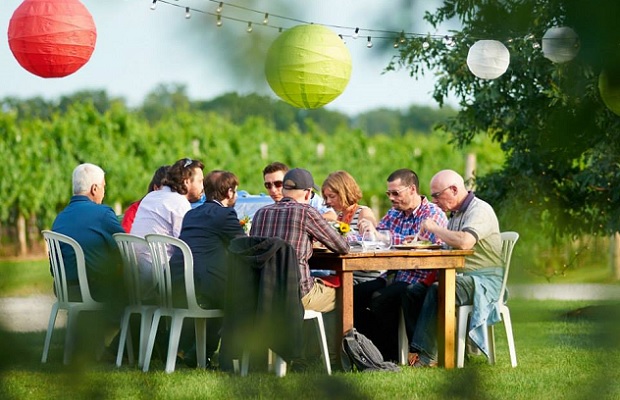
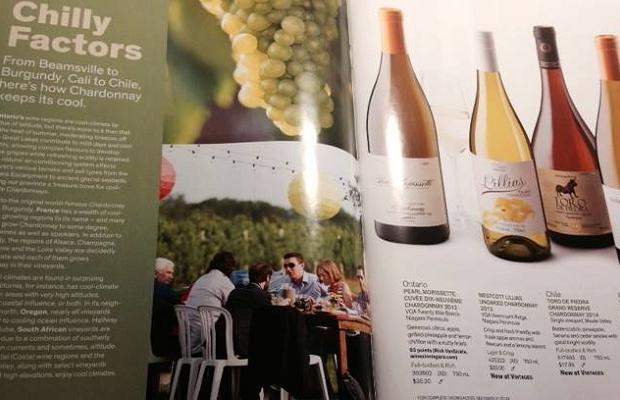
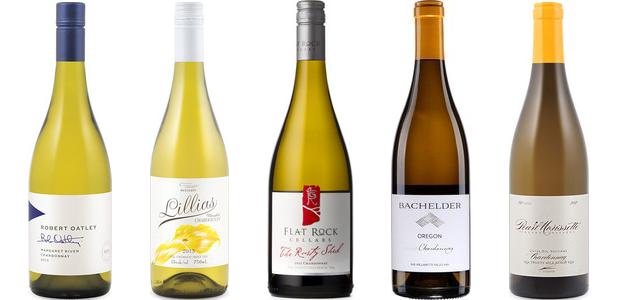
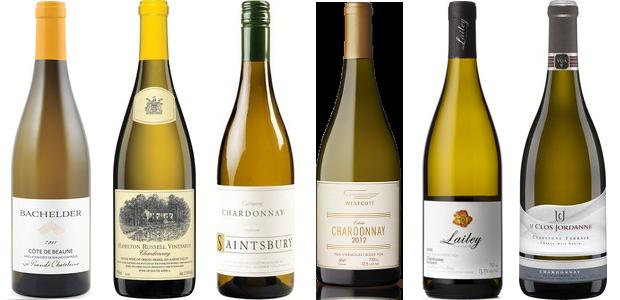
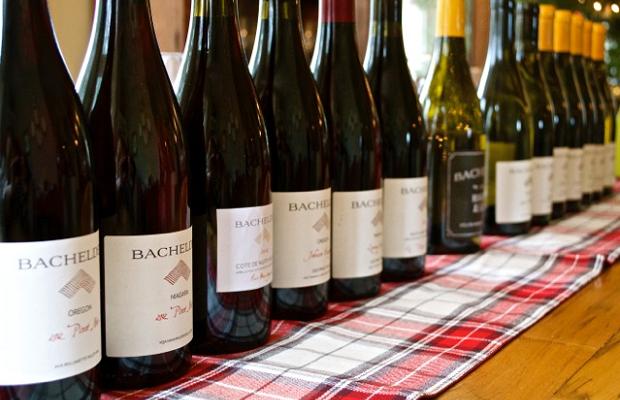
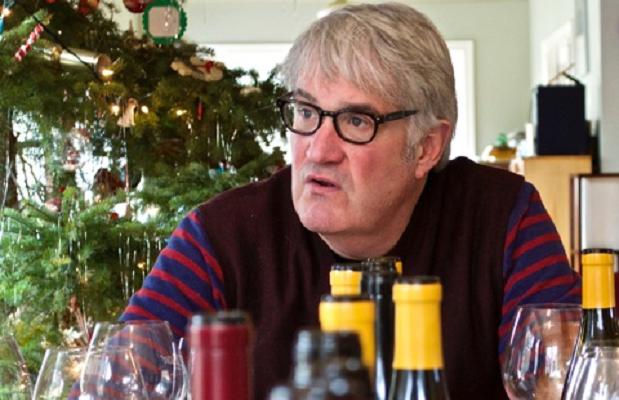
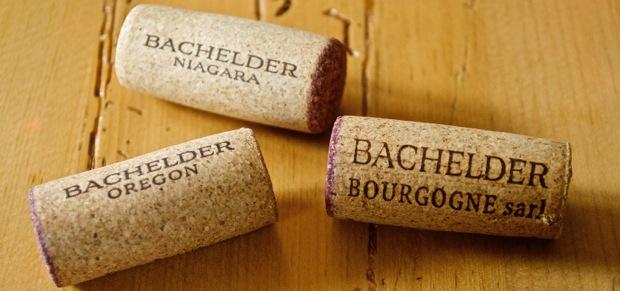
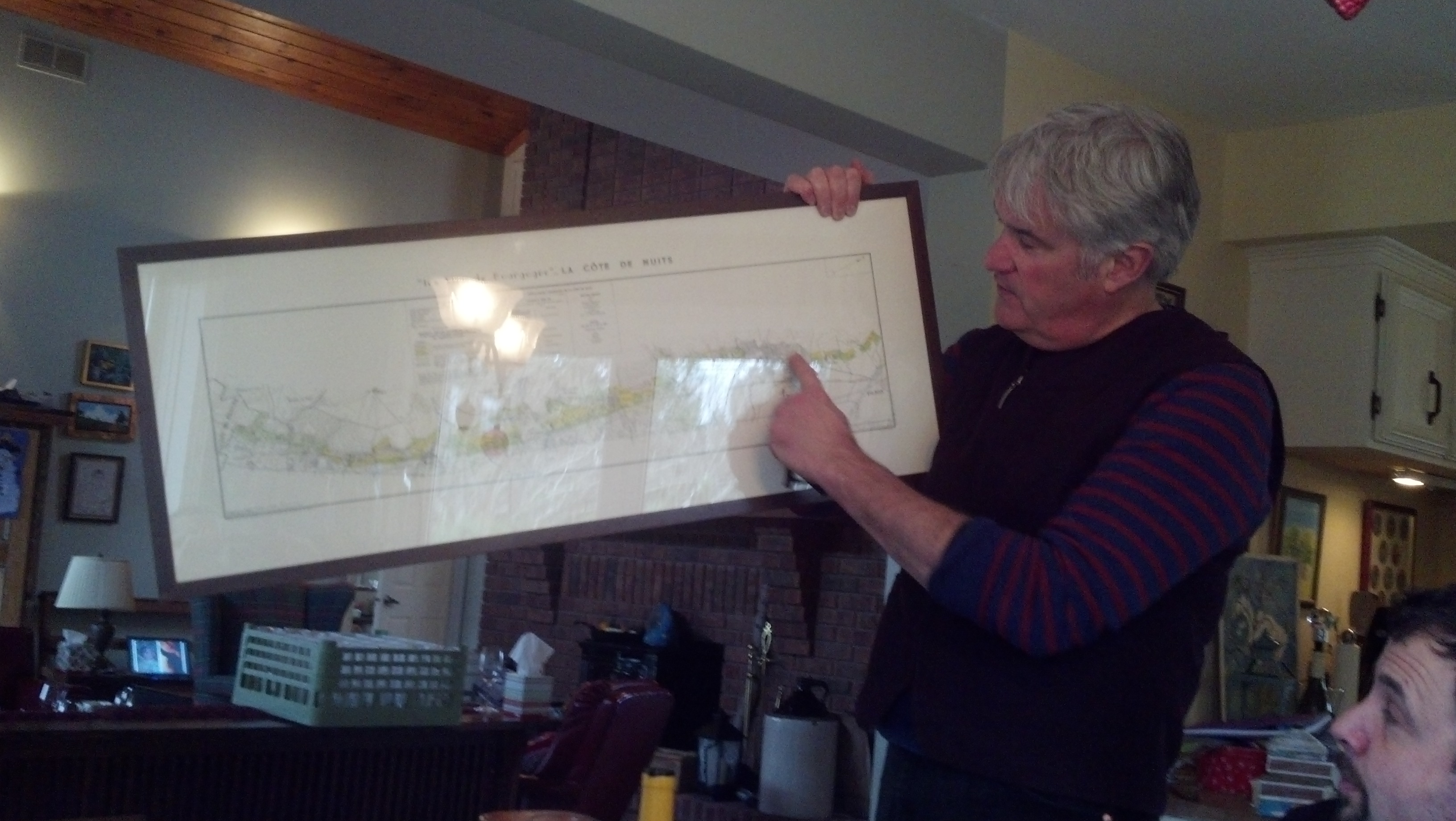
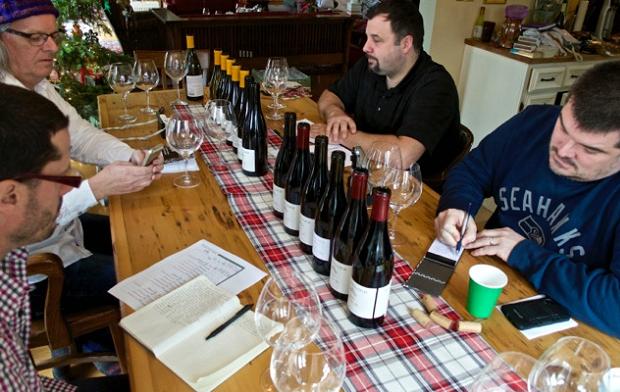
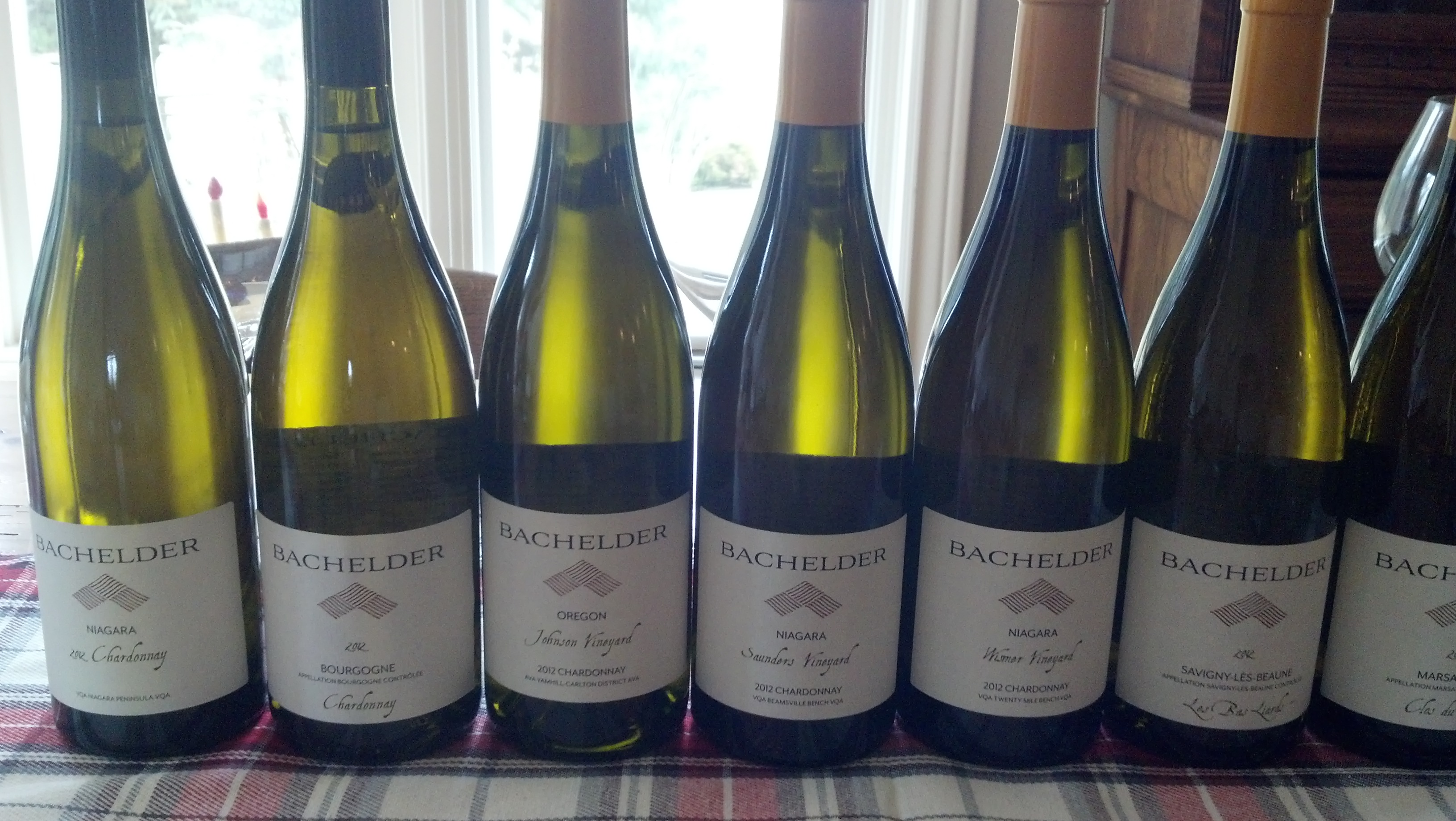
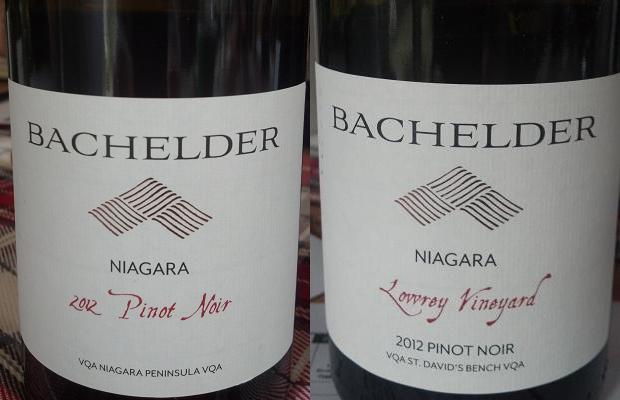
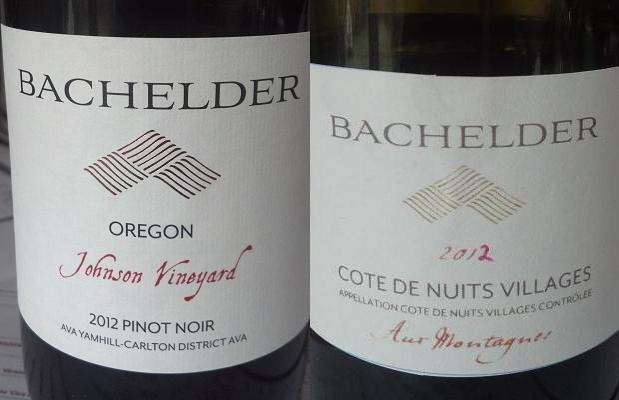
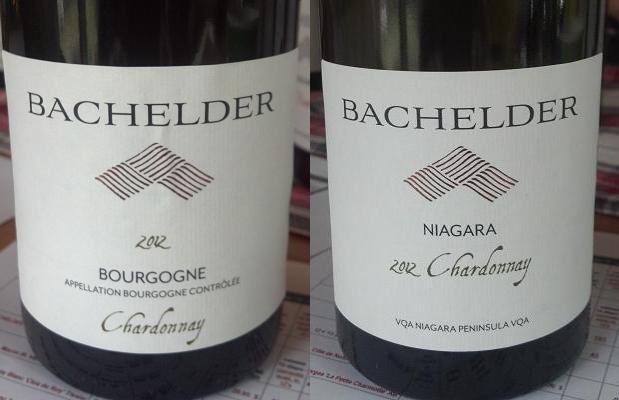
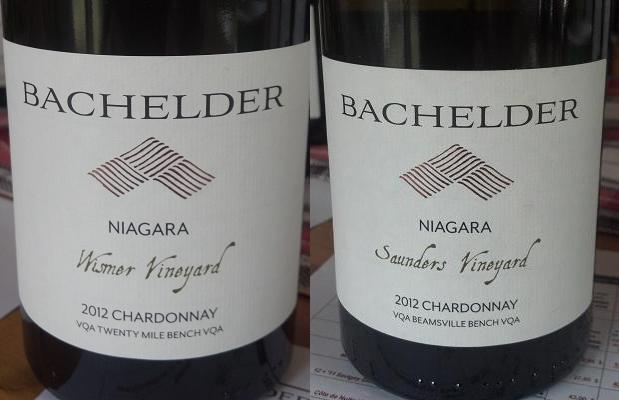


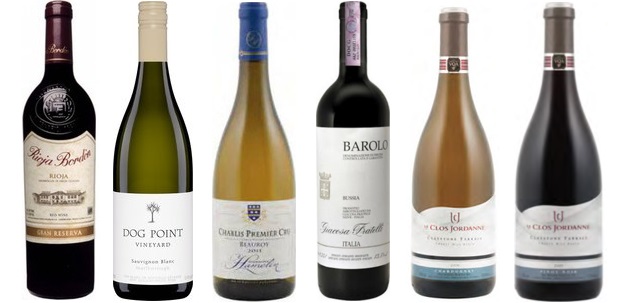
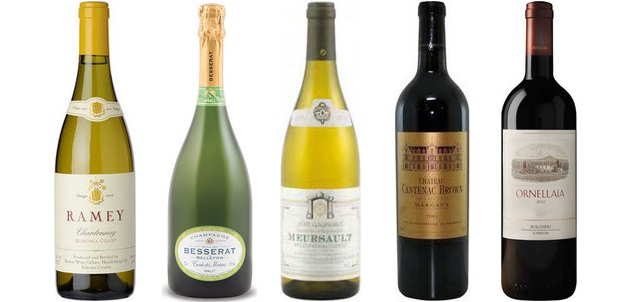


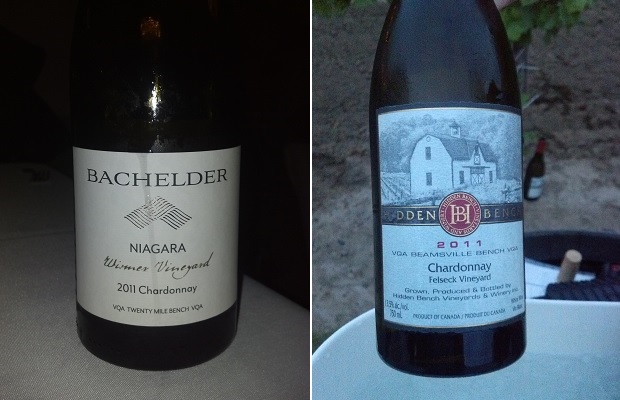


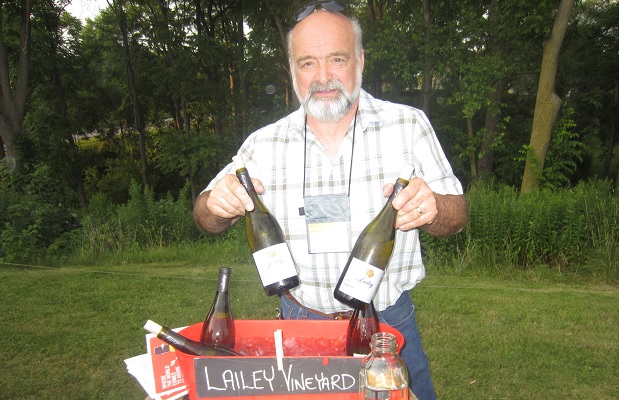

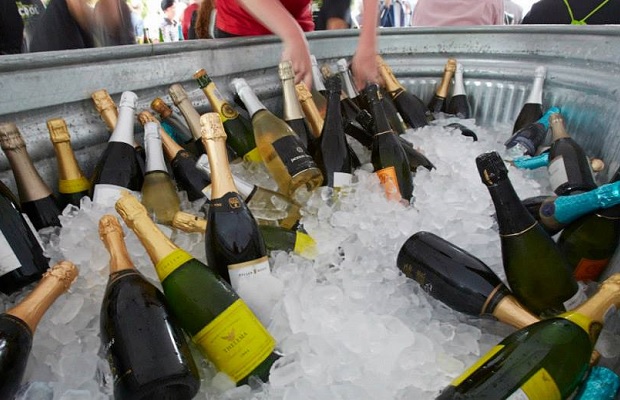
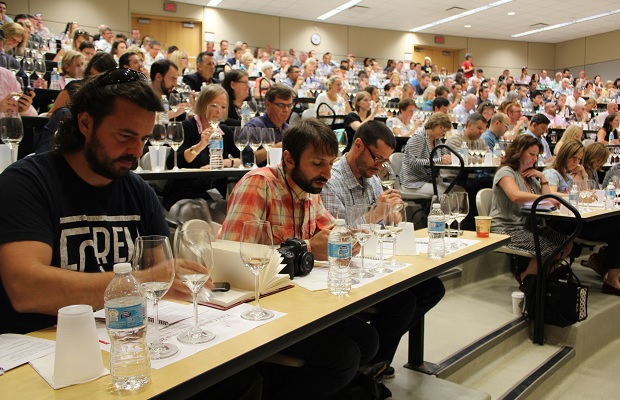
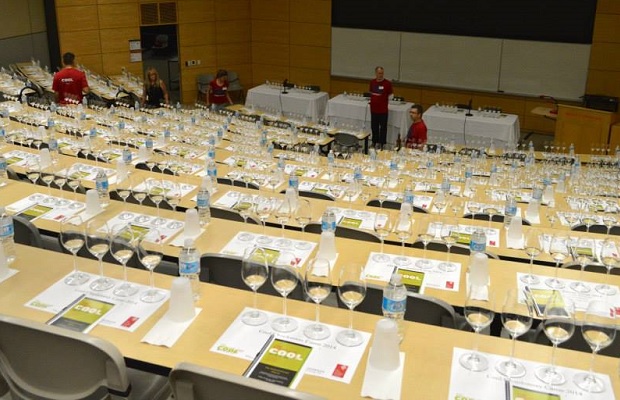

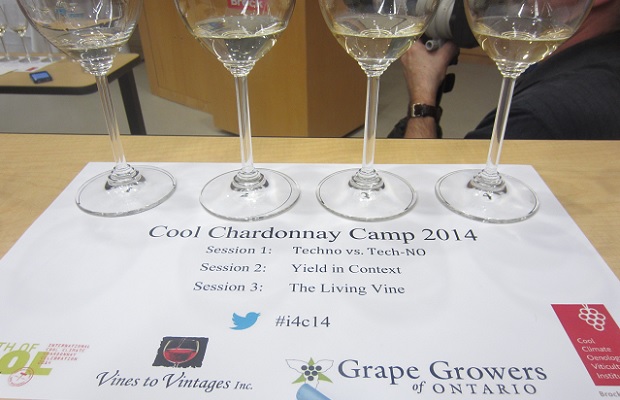
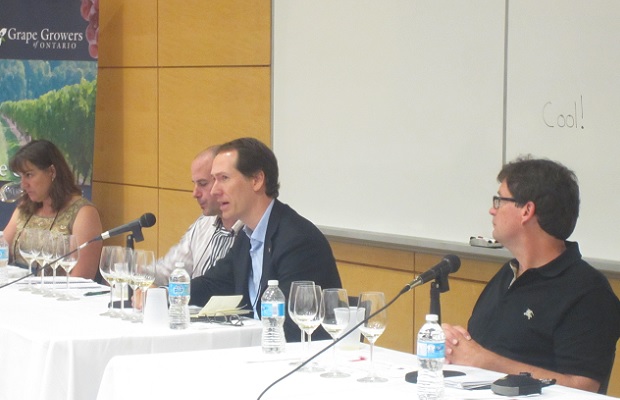
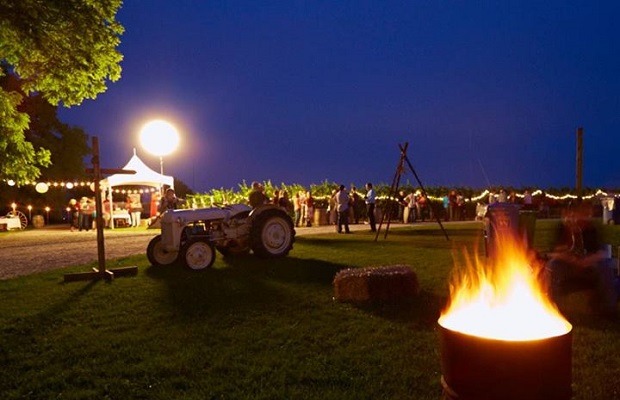
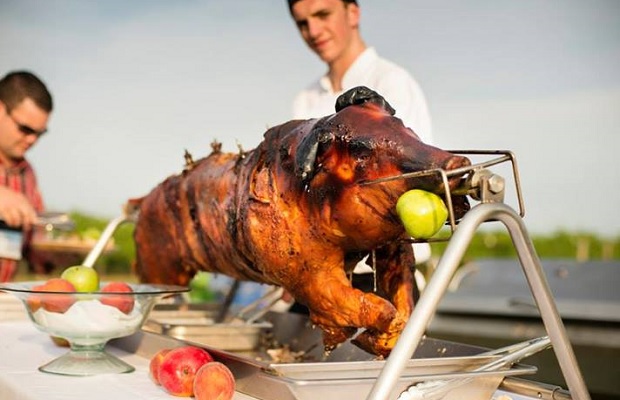
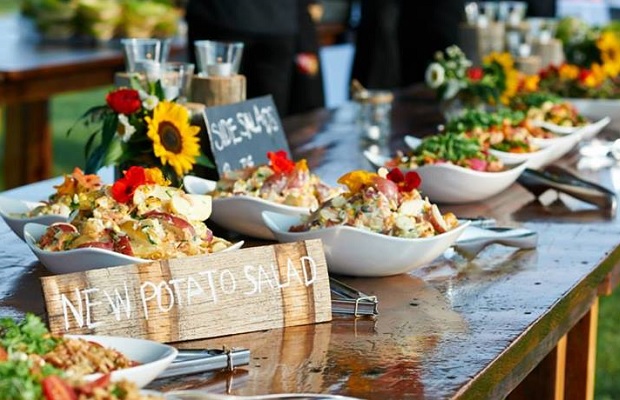
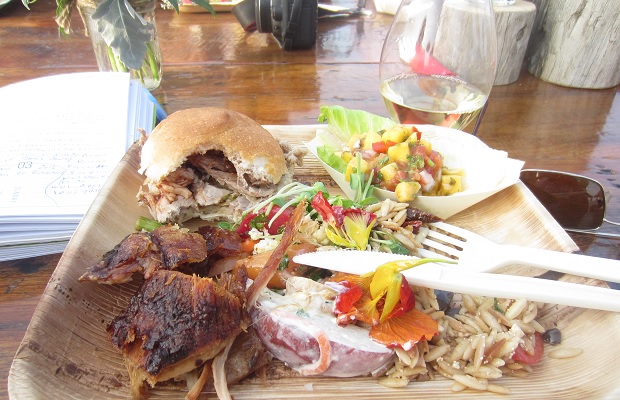
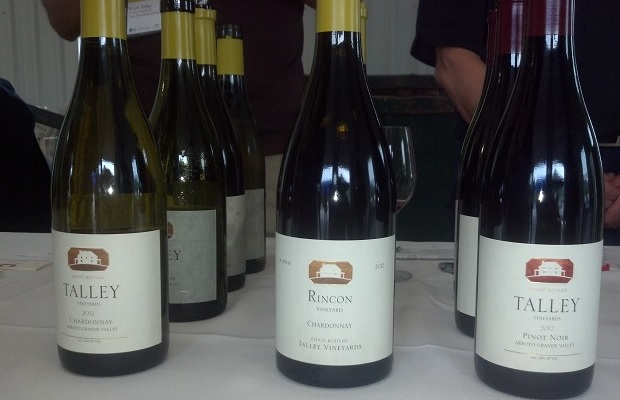
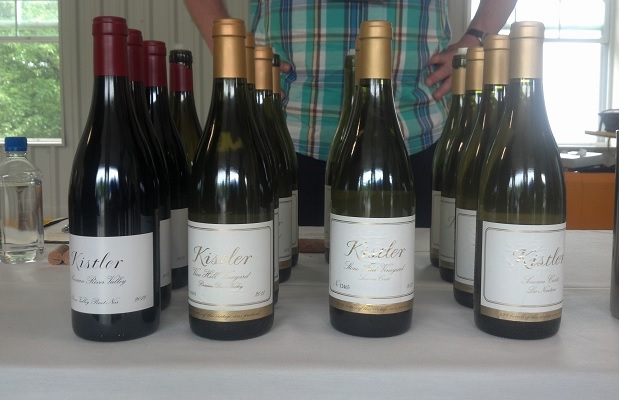
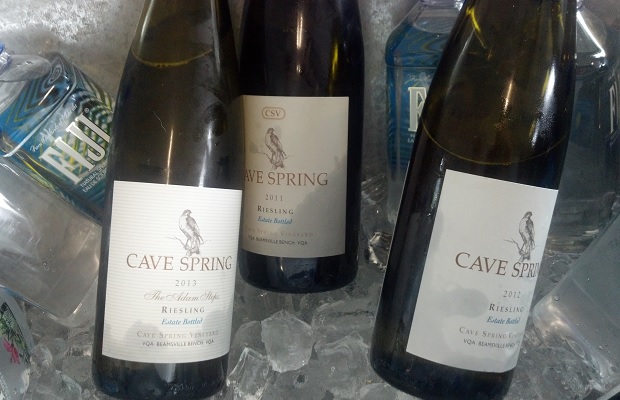
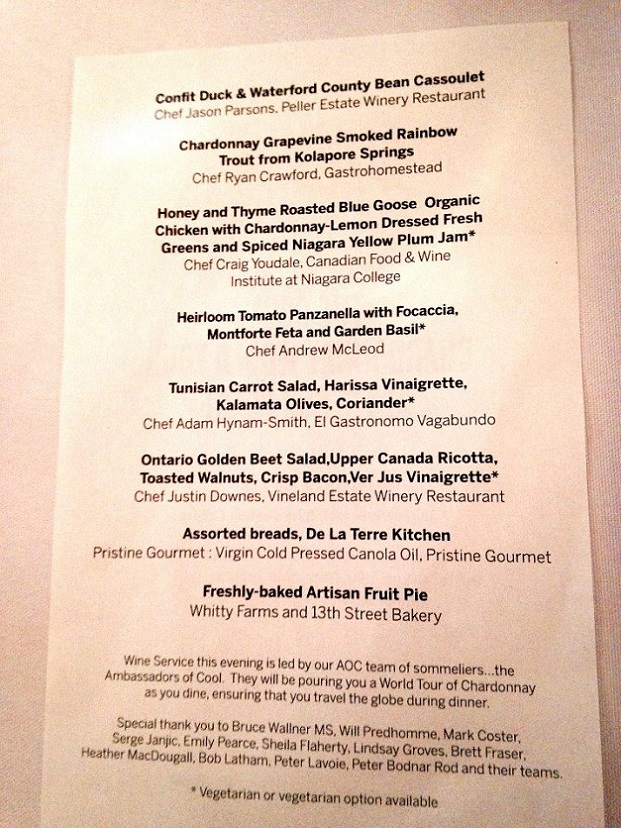
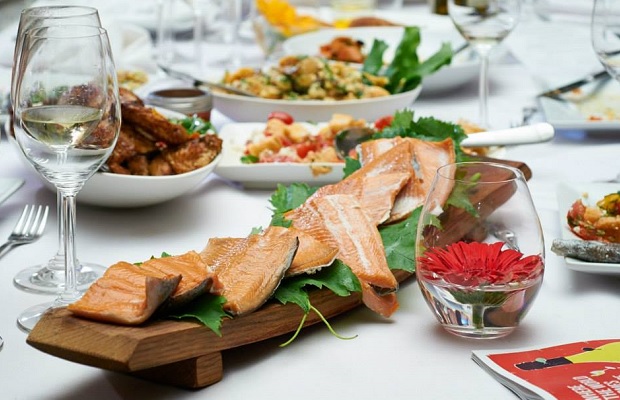



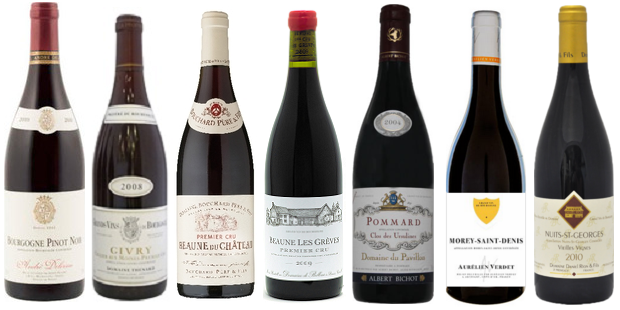
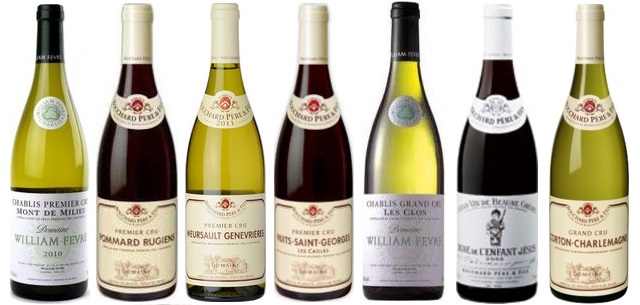




 Godello