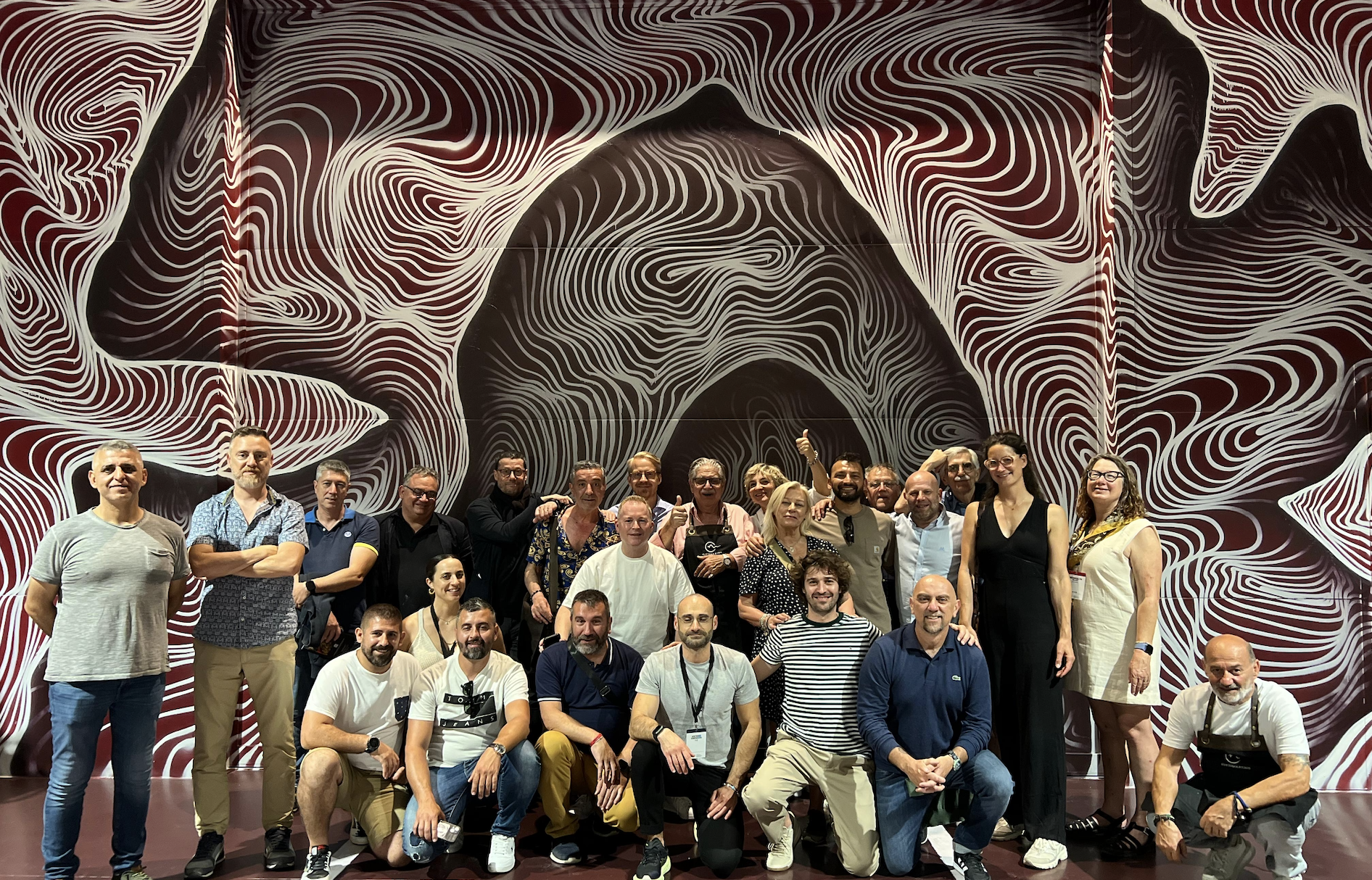
 Squadra 2025, Radici del Sud
Radici del Sud
At the behest of friend, colleague, mentor, journalist, educator and master Italian wine specialist Richard Baudains, Godello travelled to Bari and then to Gioia del Colle to be a party to, tour and judge southern Italian wines at the 20th edition of Radici del Sud. The events took place from June 4-9, 2025, including the blind tasting wine competition inside the Former Distillery, now renovated events space of Paolo Cassano. Over the course of five days a group of writers and buyers transversed the Gioia del Colle and Mandurian landscapes, walked the hallowed streets of Bari, broke bread with the Apulian natives and engaged with the Nepente di Oliena Cannonau of Sardegna. At the competition four national and international panels blind tasted more than 100 southern Italian wines in two sessions, but only after zeroing in on and celebrating the multifarious wonders found within the 500,000 annual bottle production of primitivo, inclusive of a Baudains led Gioia del Colle Masterclass. See below for Godello’s 90 tasting notes from the week.
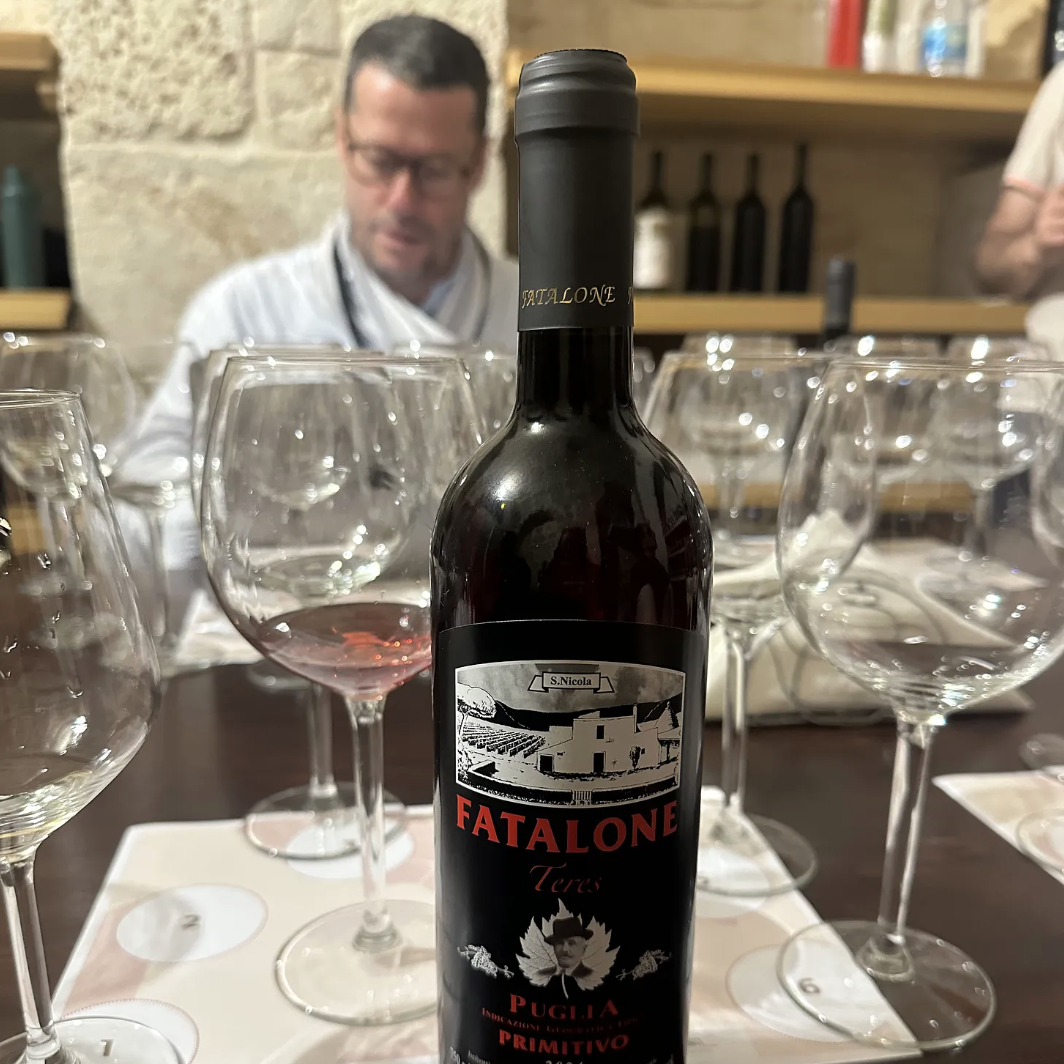
Godello at Fantalone, Image (c) Nikki Dickerson
The Radici del Sud wine competition is an annual international event that showcases and judges wines made from indigenous grapes grown in the southern regions of Italy, including Puglia, Sardinia, Sicily, Campania and Calabria. The competition is part of a multi-day festival, featuring the judging by national and international wine journalists, plus a separate B2B meeting event for buyers and importers, all of which culminates in an awards ceremony and a grand public tasting. The focus of the event highlights and promotes the wines and olive oils of Southern Italy and the ultimate goal of the Radici del Sud competition is to increase international recognition and market access for sometimes overlooked Southern Italian wines.
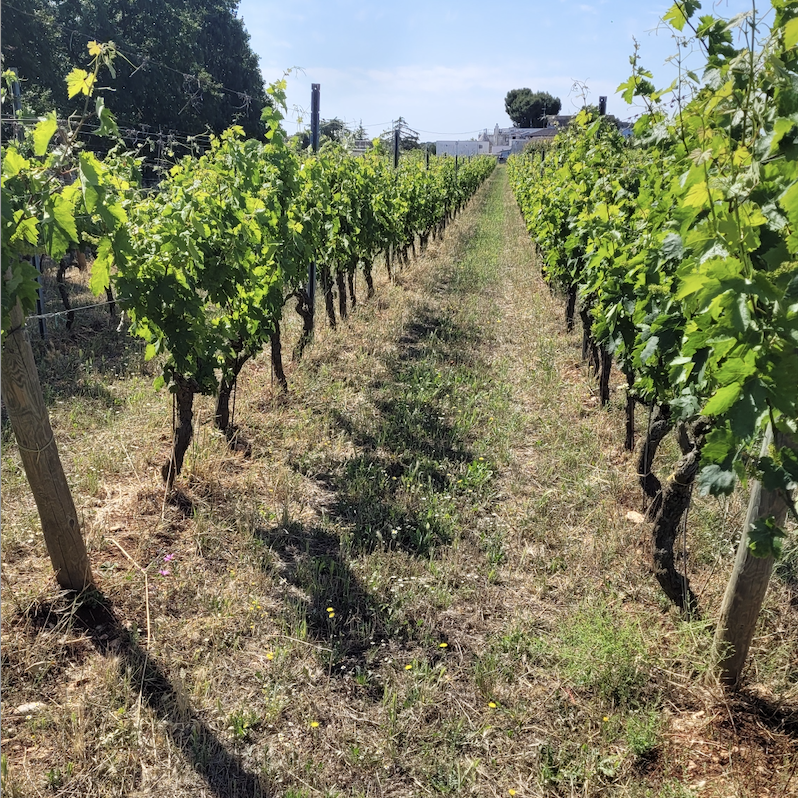
Gioia del Colle Primitivo @ Fatalone
Gioia del Colle: Limestone, Primitivo and Racemi
The touring focused on Puglia’s karstic countryside, the Murgia Plateau, Valle d’Itria, Salento peninsula and most specifically the area of Gioia del Colle, smack dab in the heart of Puglia. Here the landscape is characterized by the dissolution of soluble rock, mainly limestone and a surface of fertile soil, dry-stone walled rural architecture and many masserie (farmhouses). Gioia del Colle is a seemingly flat plateau ranging just a few kilometres from the sea but with ample elevation to capture more freshness in the wines than most growing areas of Puglia. Giovanni Aiello is one such proprietor at Cantina Enologo per Amore di Giovanni Aiello, where he has been making modernist wines for 10 years, first as a garagiste and now with a full winemaking facility. He studied in Udine and France, worked in Veneto, Friuli, California and Australia, then heeded a calling to return and make wine on his land. There was no winemaking history in his family, but his roots travelled within him and then returned alongside this prodigal son.
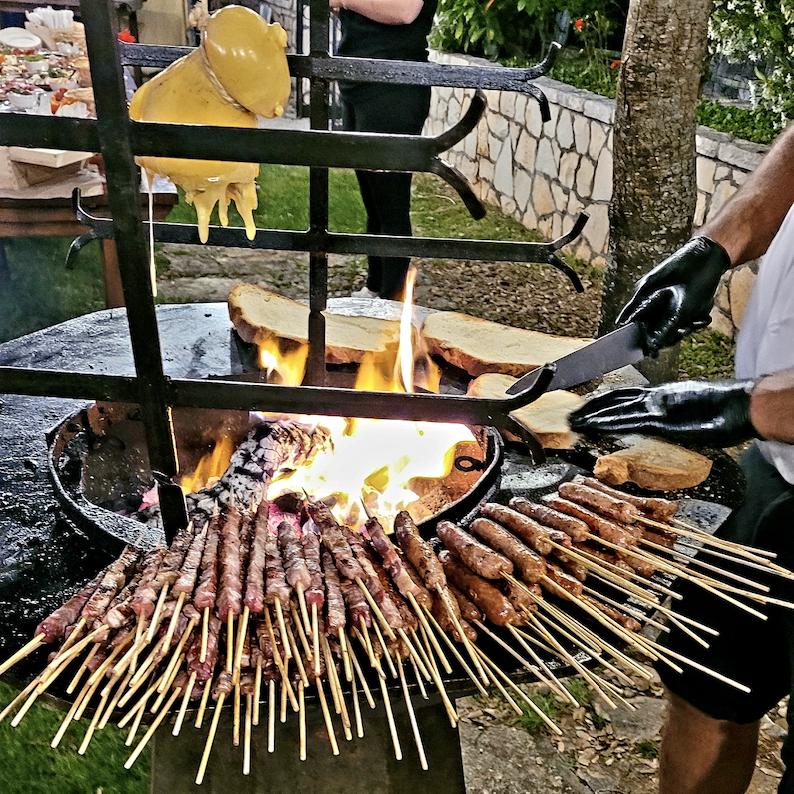
Arrosticini at Aiello
Gioia del Colle’s 2024 season was hot and dry and yet Aiello’s primitivo are of the freshest kind and his Blue Label Bubbles capture a lemon zesty energy using the local verdesca (a.k.a. verdeca) in a white blend. There is no missing the fine bitters and sweet herbs in this classic method sparkling wine, more than a quick lees accumulation for texture and a flavour profile right where you want it to be. Tenuta Viglione was founded in 1937 and remains a family-owned operation, run by third-generation proprietor Giovanni Zullo and his offspring. The location is the Altopiano delle Murge, a plateau at 450m, farmed organically on the classic karst soils of limestone over clay.
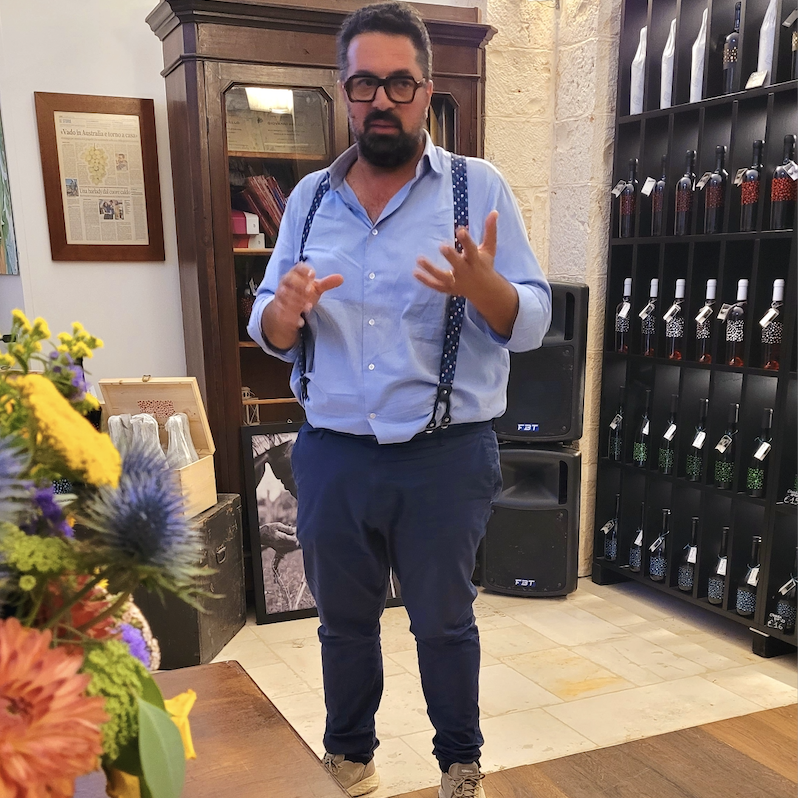
Giovanni Aiello
Masseria Cuturi dates to 1881, just four kms from the sea and where a river flows beneath 300 hectares with primitivo vines first planted in this area of Manduria’s Conca d’Oro. The vine cuttings were part of the dowry when Tommaso Schiavoni Tafuri married the countess Sabini. In 2007 the Masseria no longer held a vineyard and the family of Camilla Rossi Chauvenet decided to restore the property where an impressive hospitality now exists next to vineyards of 40 hectares of vines, compared with the original 100. Cuturi’s intensive attention to agriculture, led by Rossi Chauvenet, agronomist Angelo Bagorda and winemaker Roberto Cardilli, amalgamates the historical past, present and future winemaking of Manduria.

Pasquale Petrera, Fatalone
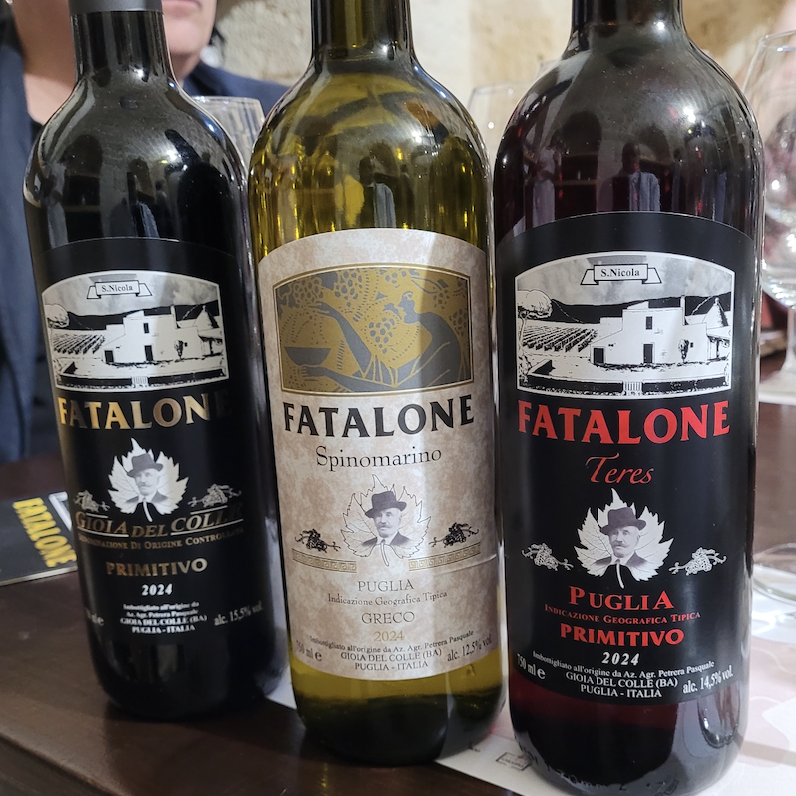
Meanwhile, at Fatalone Pasquale Petrera is fifth generation on his farm set at 400m on the edge of the Murgia Plateau. The tertiary soil rich in limestone and fossils, sea breeze influence and two-arm-trained open Alberello vines are the trifecta determination for 12 hectares of primitivo and one of greco. The first vintage was 1987 and Pasquale likes to play music to his wild fermented, organic wines in the cellar. He is a pioneer of making Racemi, a second harvest of primitivo that comes from the lower hanging feminnile bunches, taken a month after the main pick. The Accademia dei Racemi is a collaborative project of several small estates in Puglia that focuses on the technique and the lighter-bodied, Rosato style of wine made from the Racemi. There is a kinship between these Rosé and the Cerasuolo di Montepulciano of Abruzzo, if only in style and not by method. Explains Petrera, “the presence of Racemi on the vines helps in avoiding over-ripening of the main grapes.” There was a time when these wines were stored in cold caves and brought out to be consumed in summer time. As for primitivo, the monks chose it for the region because it is a late budding variety, usually after Spring frosts, even though it is also an early ripener. Though typically high in alcohol, Fatalone’s primitivo maintains high acidity and shows great potential for aging, again with help from the presence of the Racemi.
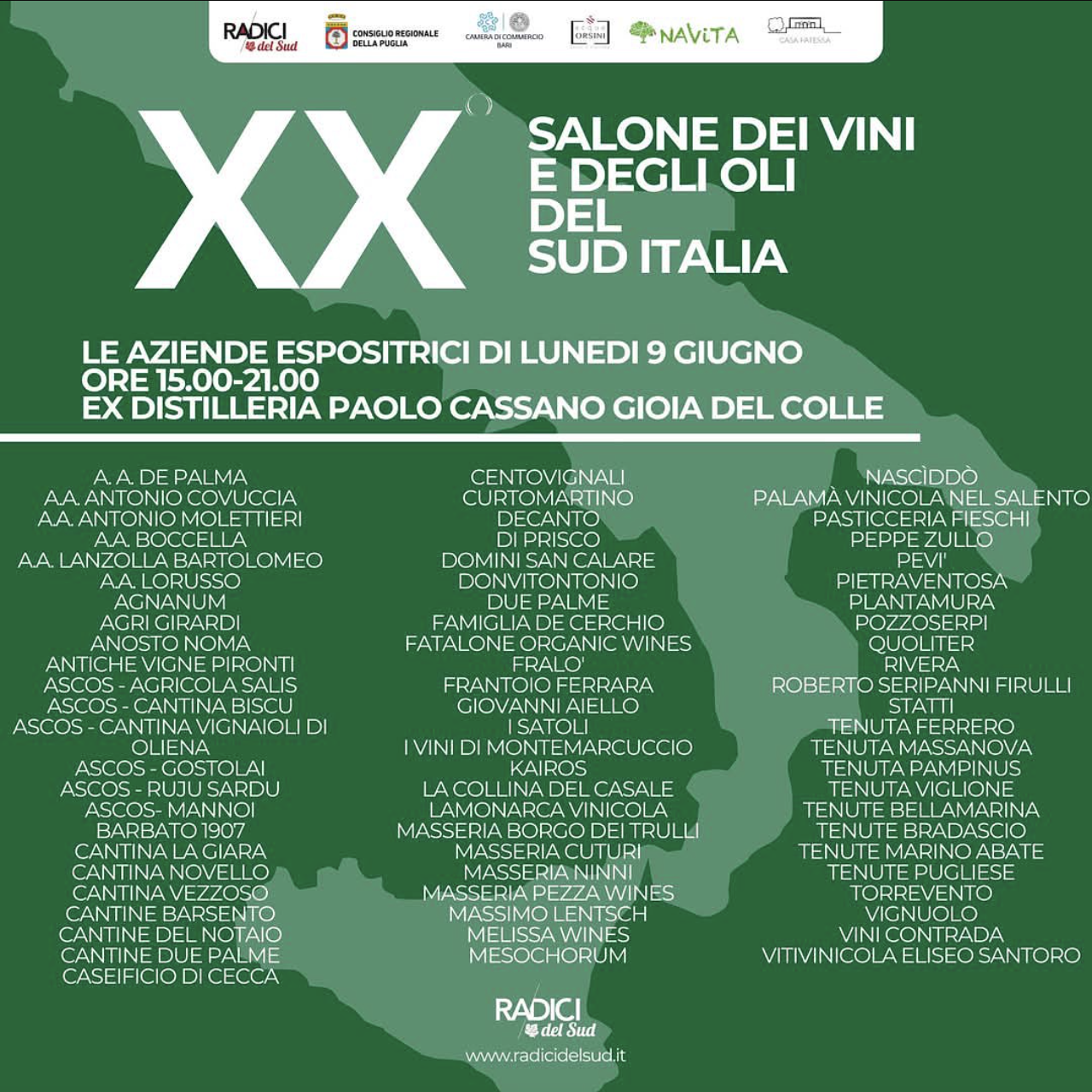
Wine Competition Winners 2025
Tasting notes on Radici del Sud Wine Competition Winners as Chosen by National and International Judges
Cantina Santadi Solais Brut NV Vino Spumante Di Qualità, Sardegna
Vermentino aromatics, marine airy and salty, somewhat neutral without any floral or herbal notes. Good presence of bitters and a push-pull posit tug between the salty and the sapid. The length is really quite good. Drink 2025-2027. Tasted blind at Radici del Sud, June 2025
Cantine Benvenuto Sughero Storto Vino Spumante Bianco Zibibbo, Calabria
A Calabrese zibbibo with a forceful entry part Limoncello, part rosewater and part diesel. Palate is most interesting, racy and savoury, quite herbaceous and full of character, Good concentration as well, lots of citrus flesh, zesty and bitter at the finish. Drink 2025-2027. Tasted blind at Radici del Sud, June 2025
Cantine del Notaio La Stipula Rosé Metodo Classico Millesimato Brut Aglianico 2014, Basilicata
Lees character all over the top as should happen from a 10-plus year-old sparkling wine. Made with aglianico from Basilicata, clearly ambitious or perhaps still with bottles to sell. It’s come away quite clean and characterful with some raw almond, decent concentration and complexity. Mature, settled and elegant. Drink 2025. Tasted blind at Radici del Sud, June 2025
Vignuolo Primavera Frizzante Da Bombino Nero 2024, Puglia
A bombino nero giving a blush hue to this curious sparkling wine. Ok on the nose with a cherry-yeasty character though the palate walks with a funky gait. Not perfectly clean and the flavours are hard to get along with. Acidity is detached from the body and those flavours. Drink 2025. Tasted blind at Radici del Sud, June 2025
Santa Lucia Gazza Ladra 2024, Fiano Puglia IGT
Notable fiano nose, also Pugliese of warmth and sun cumulate platinum gold. Good extract and balance, acids captured and expressive with fine almond bitters arriving late. Higher quality example than many though perhaps just a bit of residual sugar distraction. Drink 2025-2027. Tasted blind at Radici del Sud, June 2025
Tenute Bellamarina Galè 2024, Fiano Puglia IGT
Fresh, lemony Pugliese fiano with just a faint hit of aromatic bitters. Not particularly concentrated, herbal and with ample if nothing striking about its acidity. Drink 2025-2026. Tasted blind at Radici del Sud, June 2025
Tenuta Massanova Ziopì 2021, Cilento Fiano DOP
Named for Davide’s Uncle Pino, a quick maceration, reductive, golden and mature nose, a style perhaps but as a 2021 fiano the evolution is more than obvious. The toasty quality suggests wood somewhat overused but in fact the wine only sees steel. While it’s fine and nice enough as a wine and also surely past prime, there is so much glycerol for a white wine. Drink 2025-2026. Tasted twice, including first blind at Radici del Sud, June 2025
Vini Contrada Selvecorte 2021, Fiano Di Avellino DOCG
Pleasantries and complexities with persistent freshness in the fiano aromatics of a 2021 from Campania. Still crisp, zesty and savoury, hanging tough, grippy and strong with its extract and tannin in tow. Showing stage presence, tension, verve and drive. Drink 2025-2026. Tasted blind at Radici del Sud, June 2025
Casa Comerci Greco Bianco Rèfulu 2024, Calabria PGI
A rich and well formulated, orchestrated and effectuated greco from Calabria. Some spice and zest, already at maturity and for now a fine and deliverable example. Drink 2025-2027. Tasted blind at Radici del Sud, June 2025
Fine enough though not quite showing its varietal character as it might. Lemon-lime and good though not exceptional acidity. Less showy and needs time to open up, getting better with air and time. Natural, working through its machinations organically and coming away fine. Drink 2025-2028. Tasted blind at Radici del Sud, June 2025
Palamà Vinicola nel Salento Negroamaro Metiusco Rosato 2024, Salento IGP, Puglia
Fine use of negroamaro as Rosato, Tavel hue acceded like red roses and there is both fruit plus grip on this really proper example. Ticks the boxes and pleases in the way it should and will. Acidity is spot on to seal the deal. This is well made Salento all the way. Drink 2025-2028. Tasted blind at Radici del Sud, June 2025
Plantamura Primitivo Rosato 2024, Puglia IGP
Soft and candied primitivo Rosato, semi-candied in the sweet spun sugar way and the residual sugar felt in the flavours confirms the style. Commercial. Fine enough and accessible if no excitement or curiosity aboard. Also a bit high in VA. Drink 2025-2026. Tasted blind at Radici del Sud, June 2025
Agri Girardi Primitivo Pirok 2024, Puglia Rosato IGP
Light and fuzzy strawberry peach version of Rosato with primitivo on the right track, though there is a pinch or two extra residual sugar that feels unnecessary. More than ample fruit and concentration meet up with acidity for what would have been a pretty fine example. In any case there will be plenty of likes and takers for this wine. Drink 2025-2027. Tasted blind at Radici del Sud, June 2025
Fralo’ Cassandra Rosato 2023, Puglia IGP
Tang and sweetness define the style of a joint Rosato between nero di troia and malvasia nera. Getting the carob and liquorice in an over leathery fruit and caramel flavour way. Odd, to be honest and close to oxidative. Drink 2025. Tasted blind at Radici del Sud, June 2025
Statti Batasarro 2020, Lamezia Riserva DOC, Calabria
A sour edged gaglioppo, full on tang, tart stone fruit and dangerously close to reaching the acetic threshold. Quite vivid in regard to palate tension, somewhat wood-induced, chalky and challenging. Drink 2025-2027. Tasted blind at Radici del Sud, June 2025
I Vini di Montemarcuccio Ottavianello Elpis 2024, Valle d’Itria IGP, Puglia
Crunchy and fresh ottavianello, ripe and ready, inviting and full of energy. A correct and modern enough way to express the ancient grape as it would wish to be. Clean and so bloody correct. Drink 2025-2028. Tasted blind at Radici del Sud, June 2025
Famiglia De Cerchio Susumaniello Lampu 2022, Puglia IGT
Could only be a Pugliese red akin to primitivo and yet here as susumaniello there is more frutta di bosco as part of its personality. Also more Mediterranean, of black olive tapenade and coarse tannins, with enough fresh fruit to balance the rough and tumble profile. Perhaps just a bit of sweetness but the spice and tension truly work things out. Drink 2026-2029. Tasted blind at Radici del Sud, June 2025
Tenute Pugliese Aleatico Naumanni 2019, Puglia IGT
Unmistakable smell of mint mouthwash which translates as medicinal and surely a winemaking fault on this aleatico. It takes 20 minutes to open and once it does the macchia comes out, as does the residual sugar. Parochial red with little joy or charm at first but improves with air. Drink 2025. Tasted blind at Radici del Sud, June 2025
Cantina La Giara Bovale La Giara 2022, Isola Dei Nuraghi IGT, Sardegna
A 100 precent Sardegnan bovale, not particularly aromatic but surely curious. There is a grenache like character with juicy red fruit and a simplicity for where its from. Mildly chalky beneath and a peppery liquid warmth but all in all the balance is quite good. Wood is used and done well. Needs a another year to settle in. Drink 2026-2029. Tasted blind at Radici del Sud, June 2025
Massimo Lentsch Etna Rosso DOC 2022
Solo nerello mascalese, bright enough and also more tannic than many. Does not smell like volcanic Etna but more like something from the centre of Sicily. Perfectly fine and getable without any great defining character or depth. Drink 2025-2027. Tasted blind at Radici del Sud, June 2025
Massimo Lentsch Etna Rosso DOC Feudo Di Mezzo 2021
Only nerello mascalese and with some age which only serves to exaggerate the lift in this particular example. Maturing with drying fruit and tannin. Drink 2025. Tasted blind at Radici del Sud, June 2025
Pietraventosa Primitivo 2019, Puglia IGT
Reductive, dirty and ultra natural on the nose. Also cloyingly sweet and hot. Peppery hot. Over the top. Not really showing its age as of yet. Perhaps time will heal some of the wounds. Drink 2026-2028. Tasted blind at Radici del Sud, June 2025
Agri Girardi Primitivo Bartolo Riserva 2019, Gioia del Colle DOC
Very much a big and ambitious primitivo, heavy of extraction, pressing and elévage. Some barriques surely, also new and mixed with other vessels delivering a full complement of modernity in primitivo. Will really appeal to those who like a clean, big and full-bodied expression. There is a sweetness here though nothing out of order and seemingly natural. Drink 2025-2028. Tasted June 2025
A.A. Boccella Aglianico Rasott 2022, Campi Taurasini DOC, Campania
Cantine del Notaio Aglianico Il Sigillo 2017, Aglianico Del Vulture DOC, Basilicata
Maturing, dried fruit and sweet acidity with some residual sugar. Brown sugar and that caramelization meeting unique curiosity continues giving the wine some potential. In fact it seems hard to believe it’s as old as 2017, seeing as how certain parts have yet to fully emerge from the tannic shell. There is an aura to Sigillo, a.k.a “the seal,” as by a notary, wink, wink. Note the chalky mineral expressed in the sanguinity of this unique aglianico. Drink 2025-2028. Tasted twice, including first blind at Radici del Sud, June 2025
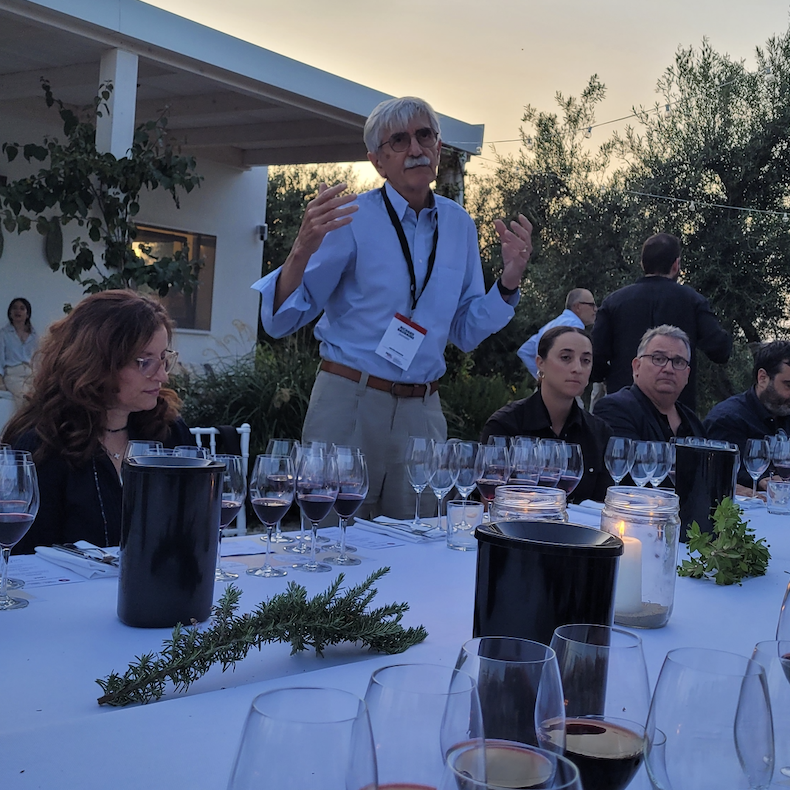
Richard Baudains – Primitivo Masterclass
Gioia del Colle Primitivo Masterclass
Curtomar Tino Primitivo Terracava 2023, Gioia del Colle DOC
Perfumed primitivo in the violet range and a lightness in the aromatic space followed by acidity and succulence for a mouthwatering proposition. Does well to cover and keep its alcohol (15 percent) from presenting as anything but a normal part of the package. Bit chalky but really quite easy to like. Drink 2026-2028. Tasted June 2025
Tenute Bradascio Primitivo Le Graie 2022, Gioia del Colle DOC
A primitivo that presents itself with the barrel above all else and while the alcohol here is lower (13.5 percent declared) it does not come across as a lighter style. The wood is on top, emulsifying the middle and spicing the finish. Some green hide behind which explains the style. Not perfectly phenolic in ripeness. Drink 2025-2027. Tasted June 2025
Tenuta Viglione Primitivo Marpione Riserva 2022, Gioia del Colle DOC
Well extracted and clearly the source of an older vineyard with the experience of vines laying the groundwork and foundation for top quality fruit. The spicing is omnipresent, both from quality primitivo and also the casks that give and keep on giving. Will gain an advantage with some years in bottle. Drink 2027-2032. T asted June 2025
A.A. Lanzolla Bartolomeo Primitivo Le Mugè 2021, Gioia del Colle DOC
Also violet perfume and fruity eau de vivre or vape liquid, a juicy aromatic quality although wood once again makes itself known. Quality acids but something is off and the tannins are brittle, falling apart at the finish. Flawed primitivo, likely a combination of over maturity meeting excessive VA. Tasted June 2025
Masseria Ninni Primitivo Càmila 2021, Gioia del Colle DOC
Juicy through and through, a primitivo that offers up a transparency about who it is and where it’s from. Crispy and crunchy with its own Balsamico, liquid chalky, purple fruit, concentrated though not over extracted. Well made, clean, lengthy and a charming success. Drink 2025-2029. Tasted June 2025
Plantamura Primitivo Etichetta Nera/C.da San Pietro 2021, Gioia del Colle DOC
Rich and brimming with savoury elements in an exaggeration of Balsamico riches befitting the local macchia. Juicy and succulent to find some necessary balance. A crispy quality and a year will bring better times although five will usher in a time of truffles and earthiness. That said it is only the terroir that will bring this effect because no wood is used in aging this primitivo. Chimes in at 14.5 percent alcohol and pleases with fruit from its natural calcareous charges. Drink 2026-2029. Tasted June 2025
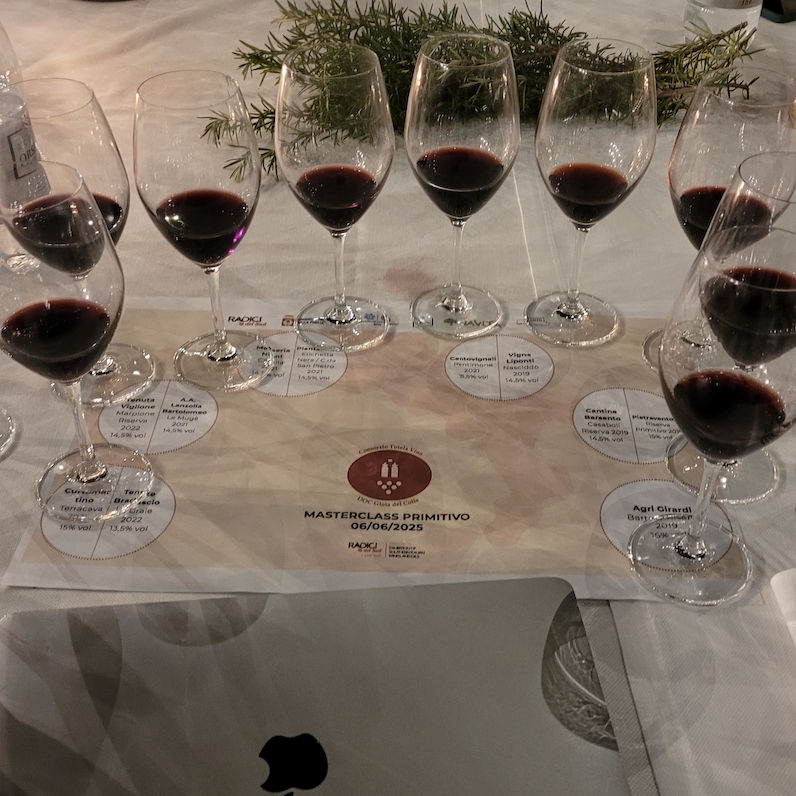
Primitivo Masterclass
Centovignali Primitivo Pentimone 2021, Gioia del Colle DOC
Quite a savoury primitivo with a fullness of barrel straight away on substantial fruit from what feel like experienced if not quite old vines. It’s a bit hot frankly and oddly peppery, like certain syrah from south-central Sicily. Ambitious and gangly, some awkwardness and not quite finding its syncopation. Clocks in at 15.5 percent (declared). Drink 2025-2027. Tasted June 2025
Vigna Liponti Primitivo Nascìddò 2019, Gioia del Colle DOC
Time has done well to bring this 2019 into place and see it showing at peak in 2025. Tannins have resolved, acidity continues to thrive and the parts have all melted into the fabric of the wine. Chocolate is strong and dark but mint (Balsamico) and fruit have really come together as one. Alcohol is proper and integrated at 14.5 percent. The producer only makes primitivo for a total of 4,000-4,500 bottles per year. From 4,000 vines in one hectare. Drink 2025-2028. Tasted June 2025
Cantine Barsento Primitivo Casaboli Riserva 2019, Gioia del Colle DOC
Very woody, was, is and will always be. Still very chalky beneath with tannins which remain unresolved. Seriously dark chocolate, very extracted and a bit too vivid overall. Drink 2026-2028. Tasted June 2025
Pietraventosa Primitivo Riserva 2019, Gioia del Colle DOC
Quiet aromas, still or perhaps not ever having been of gregarious nature. Wood holding court and then the wine opens on the palate. Reminds of many other dark and structured Italian wines, including montepulciano from Abruzzo. Drink 2025-2027. Tasted June 2025
Agri Girardi Primitivo Bartolo Riserva 2019, Gioia del Colle DOC
Very much a big and ambitious primitivo, heavy of extraction, pressing and elévage. Some barriques surely, also new and mixed with other vessels delivering a full complement of modernity in primitivo. Will really appeal to those who like a clean, big and full-bodied expression. There is a sweetness here though nothing out of order and seemingly natural. Drink 2025-2028. Tasted June 2025
The visits in Gioia del Colle and Manduria
Fatalone Greco Spinomarino 2024, Puglia IGT
Single vineyard of one hectare aged on lees for up to eight months and this 2024 was just bottled last week. A richness and creamy character through limestone mineral and with some fine bitters that define the finish. Vines with age and wisdom do well to concentrate and bring precision to this “lady killer,” a.k.a Pasquale’s grandfather. Drink 2025-2027. Tasted June 2025
Fatalone Primitivo Teres U Pr’Matìv’ 2024, Puglia IGT
The Rosato-styled primitivo comes from the Racemi, the later harvest of second bunches, a.k.a the feminile, direct pressed and coming away like a Cerasuolo as opposed to an early harvested, paler and first pressed Rosé. Definite phenolic presence and like in the old days a summer red to be chilled and spilled. Really liking the spiciness on the tip of the tongue. The alcohol is 14.5 percent and just so you know, this is not Rosé. Drink 2025-2027. Tasted June 2025
Fatalone Primitivo U Pr’Matìv’ 2024, Gioia del Colle DOC
Campione: The first batch was already bottled and this is the second, a tank sample but essentially a finished wine. Phenolic ripeness is achieved with dark if just a bit sour cherry, mint and mulberry, developed and locally proper at 15.5 percent alcohol. The presence of Racemi, the second buds and bunches on the vines harvested later is what keeps the acidity strong, the jam kept away and the prospect for aging also strong. The finish is all about a salty pique on the finish, an aftertaste of toasted almond and the Gioia del Colle Balsamico. Drink 2026-2029. Tasted June 2025
Fatalone Primitivo Riserva U Pr’Matìv’ 2022, Gioia del Colle DOC
Just bottled, longer micro-oxygenation in Slavonian (Garbellotto) cask, an exaggeration of riches with impacting acidity which is common to all of Fatalone’s wines, necessary to handle the 16.0 percent alcohol. Not overripe or overwhelming, but just the fact that primitivo buds late and is then harvested early. The wood certainly concentrates and thickens the fruit and though there is more creamy texture there is also an inherent ability to age well forward. Drink 2026-2032. Tasted June 2025
Fatalone Primitivo Riserva U’Pr’Mat’ve 2015, Gioia del Colle DOC
Ten years of age but really youthful, as predicted but still a surprise. The anti-oxidant properties of primitivo (when worked in this respectful way) will find the path to long aging and that is precisely what’s happened here. Notes stay consistent with the 2022 but the density and concentration have stretched with great elastic ability. Lovely natural sweetness meeting the finishing bay spice and local Gioia del Colle Balsamico. Was 15 percent alcohol back in 2015. Drink 2025-2026. Tasted June 2025
Fatalone Primitivo Riserva Speciale U’Pr’Mat’ve 2001, Gioia del Colle DOC
Now 24 years ago and fully secondary with only a hint of tertiary where the mint chocolate is now fully out there, expressed and defining this old primitivo. The toasted almond bitters are also present if fading and softened. Very good showing for a wine of this age, tannins log gone, acidity also softened and persistently sweet, frutta di bosco all in. Just 15 percent but still, already at 15 in 2001. Tasted June 2025
Tenuta Viglione Susumaniello Morso Rosa 2024, Rosato Puglia IGP
Return of an old Brindisi variety now fashionable again, made here in a pale style with the name that recalls the local Puglian donkey – susumaniello. Stony and salty, truly unique, a fine grapefruit bitterness and really no connection or resemblance to Rosé made with primitivo. A little bit of wood (two weeks at the end of fermentation) and bâttonage bring a certain no lo so to this curious Rosato. Drink 2026-2027. Tasted June 2025
Tenuta Viglione Johe 2021, Rosso Puglia IGP
A fifty-fifty joint between primitivo and aleatico, the latter being an aromatic red grape usually made as a dessert wine. The power meets the flower and spices run amok on the nose, of clove, cinnamon and nutmeg. Quite punchy and foxy for a wine that harkens a time when the two varieties would have been co-planted in the vineyards. Some sweetness for sure with 13 g/L of residual sugar and as a result lower alcohol at 13 percent. Needs to be chilled. Drink 2026-2027. Tasted June 2025
Tenuta Viglione Primitivo Riserva Marpione 2021, Gioia del Colle DOP
The highest level of quality for primitivo for Tenuta Viglione aged in 3000L cask and also barriques, always since 2021. Most of the fruit comes from the oldest alberello vineyard planted by Giovanni’s grandfather 80 years ago. The vineyard now produces only 3,500 kilos per hectare and so another older vineyard is sourced to be able to make more production. An exaggeration of Balsamico riches, seriously toasted almond bitterness and darkest of black cherries. Acids are more than ample and this 2021 should age well for a further five to seven years. Drink 2025-2031. Tasted June 2025
Tenuta Viglione Primitivo Riserva Marpione 2011, Gioia del Colle DOP
Nearly 14 years of primitivo age for the top label as Riserva holding well although the varietal identity is starting to merge into the secondary character of the wine. Balsamico and toasted almond still there, fruit vaguely hanging around and more mineral from this vintage. Proper interpretation of the (at the time) 65-plus yer-old alberello vineyard. Drink 2025-2026. Tasted June 2025
Tenuta Viglione Primitivo Riserva Marpione 2004, Gioia del Colle DOP
From the alberello vineyard planted 60 years before this vintage and with twenty years of age there is now a full on tertiary with the Balsamico showing as chocolate mint so typical of primitivo at this age. Historical time, grape and place were clearly more about the barrel and here that really shows. Wood had lasted longer than fruit. Tasted June 2025
Masseria Cuturi
Masseria Cuturi Femi Negroamaro Rosato 2024, Salento IGP
Early harvested negroamaro and this 2024 is the first vintage for the new label. Indelible stamp of Cuturi and scent of fresh strawberry, spicy, herbal, salty and savoury, relentless in its intensity. Drink 2025-2027. Tasted June 2025
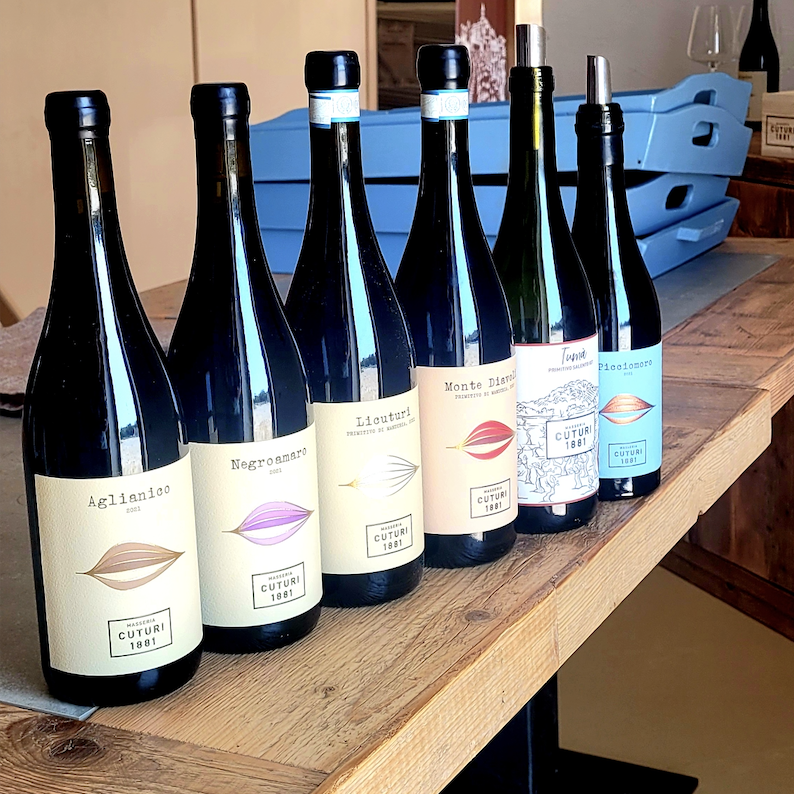
Masseria Cuturi Negramaro Zacinto 2021, Salento IGP
Quite the full aromatic expression of the local negro, dry, upwardly mobile acidity, lower pH and Macchia Medditeranea from the place with a lot of rock. A year of tank aging followed by another year in bottle for ultra freshness and a varietal drinking ability second to none. Not only a brilliant rendition of the relationship but surely the sort of example to reach out far and wide to tell the world. Drink 2026-2029. Tasted June 2025
Masseria Cuturi Aglianico 2021, Salento IGP
Camilla Rossi Chauvenet, owner in Valpolicella at Massimago and here with Masseria Cuturi believes in this grape for Manduria. As with the negroamaro the raising is a year in steel tank followed by one in bottle. More upfront tannic presence that carries the structure of a wine unable to avoid its nature but nurture here is as strong a driver with thanks to care put in by agronomist Angelo Bagorda and consulting oenologist Valentino Ciarla. Intensity of acidity and a brightness on the palate of dark red citrus from pomegranate to an electric current of red currants. A relentless palate attack but without Campania’s drying and demanding style of tannins. Drink 2027-2031. Tasted June 2025
Masseria Cuturi Primitivo di Manduria DOC Licuturi 2021
A modest primitivo is many ways, especially with respect to the ways in which the world perceives how the grape is expressed and yet vintage is so essential as being the determining factor. In this case less than the hottest, acidity bursting upwards of 6.5 g/L and alcohol pleasant, present and restrained at 14 per cent. Even if it’s actually closer to 14.5 it does not matter because it would be hard to find a more balanced varietal wine like this anywhere in Puglia. The hard work, focus, respect and abiding by nature and place are so apparent and must be recognized. In the face of climate and time of history this is simply brilliant. Drink 2027-2033. Tasted June 2025
Masseria Cuturi Primitivo di Manduria DOC Monte Diavoli 2020
From the most important vineyard, here out of a drier vintage with more heat than the following 2021. The alcohol is a half point higher and has to be but the exaggerations of macchia, Balsamico and general Cuturi savour (including the uncanny scent of fenugreek) coming along for the more concentrated ride. There is spice but no heat, terrific acidity and when tasted alongside Licuturi, but also the aglianico and negroamaro, well the diversity in the wines is quite impressive. All show freshness that’s distinctive and so welcome. For Angelo this is what Cuturi can do in a shadowed comparison to pinot noir, albeit with darker fruit from higher mineral meets calcari soil. If we must pick a place it would be Chambolle-Musigny but this is southern Puglia with primitivo and so think what you will. Drink 2027-2035. Tasted June 2025
Masseria Cuturi Tumà 2023, Salento IGP
Named after Don Tommaso, here in Manduria affectionately known as Tumà for a primitivo of the sharpest red fruit in full on sapid tang. The one that is both salty and phenolic, an intensity captured through acidity and limestone rich soil for another unique Masseria Cuturi expression. Drink 2026-2030. Tasted June 2025
Picciomoro Aleatico 2021, Passito Salento IGT
The estate’s best use for the local aleatico variety is a sweet wine made in the tradition of Valpolicella by drying grapes and then reviving them for a finish at 17.5 percent alcohol. Rich and spicy, a thread woven from the dry reds through to a Recioto ringer in Manduria. Everything here is spiced and piqued, tart and sparked. Great interest here for sure. Drink 2025-2029. Tasted June 2025
Masseria del Borgo dei Trulli Metodo Classico Millesimato 2022
Early picked chardonnay grown in the commune of Maruggio in Taranto, Manduria four kms from the Ionian Sea. First vintage was 2019, 36 months on lees. Leesy, autolytic, textured and warm chardonnay style. Lemon curd with a phenolic meets tonic twist. More than curious, clean and complex. Drink 2025-2027. Tasted June 2025
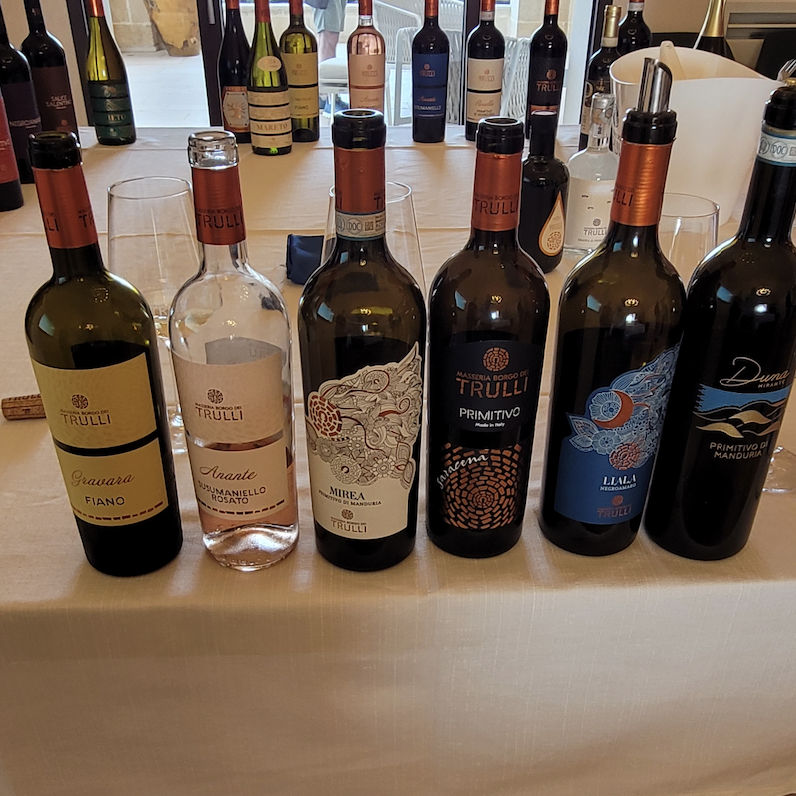
Masseria del Borgo dei Trulli Fiano Gravara 2024
Steel only, on lees just a few months and bottled in March. The name comes from the rocky soil and the area where most of the white wine grapes have been planted. Lemony and phenolic, a sapid white of clean bitters and tonic. Simple and just a bit tannic. Drink 2025-2026. Tasted June 2025
Masseria del Borgo dei Trulli Ananta Susumaniello Rosato 2024
A resurrection of the once much used Pugliese variety now popular for Rosato and here with 10 percent aged in wood. Bright and salty, light and pale pink, very much a summertime drink when primitivo does not fit the weather. Clean, fit, dry and quenching. Drink 2025-2026. Tasted June 2025
Masseria del Borgo dei Trulli Mirea 2023, Primitivo di Manduria DOP
From 60-70 year-old alberelli grown primitivo where vines and fruit conspire for elevated alcohol upwards of 17.5 percent. To be fair it hides it quite well with the effects of American oak involved, of vanilla and a toasted coconut but cooled, minty and without finishing heat. The vessels used are barriques, tonneaux and botti. No lacking fruit, not particularly jammy and about as balanced as could be with a wine of this maturity. Still be careful because a Port-like red will get on top of you quickly. Drink 2025-2028. Tasted June 2025
Masseria del Borgo dei Trulli Primitivo Saracena 2023, Primitivo di Manduria DOP
Late August picked primitivo that create their own natural appassimento, put to wooden crates to dry for 10 days for more fruit concentration. Forty percent of the grapes’ water evaporates and then the wood aging begins. The mix of concentration and barrel makes for the biggest mouthful in primitivo. Drink 2026-2029. Tasted June 2025
Masseria del Borgo dei Trulli Negroamaro Liala 2023, Salento IGP
Chosen from 80 year-old alberello vines growing near the town of Salice Salento where the estate farms five hectares. Formidable concentration with spice run here, amok and everywhere, dark and deep, tannic and brooding. Minty spice as well, the macchia if you will and a notable sweetness. Seventy percent sees seven to eight months in a combination of barriques and 3,000L botti. Thickly textured, juicy and just elastic enough “to not go boom” says Elena. It’s a style and balanced within its broad parameters. Drink 2026-2030. Tasted June 2025
Masseria del Borgo dei Trulli Primitivo Duna Mirante 2022, Primitivo di Manduria DOP
Literally from the seaside near the town of Campomarino, planted on Ionian sands on the dunes of Monaco Mirante just 300m from the ocean on 60-70 alberello-trained vines. Lowest of yields for concentration and thick texture cut by marine air, salts and oyster meets anchovy umami. Still it comes in at 17 percent and shrinks away from nothing, but the most curious note is that of Worcesteshire. Also Vegemite meets tapenade. There is nothing like it, comes across mildly oxidative and yet feels fortified, able to age some years going forward. Nearly no sugar by the way and also no sulphites used. Finish goes to chocolate in the 50-55 percent range. 5,292 bottles produced and only in best vintages. Drink 2026-2031. Tasted June 2025
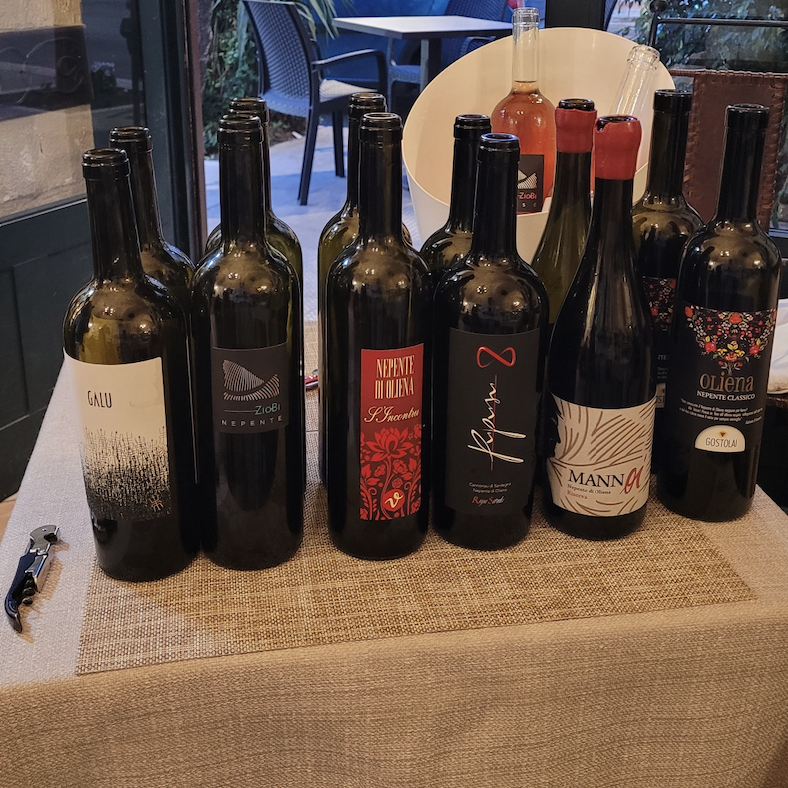
Masterclass: Nepente di Oliena Cannonau di Sardegna DOC
From the mix of granite and limestone soils in the area of Oliena in the very centre and heart of Sardinia. The village is located in Barbagia, a region often referred to as the “Sardinian Dolomites” because of its white rocks and sheer cliffs that resemble those of northern Italy. Nepente is the term for Oliena’s wine coined by Poet Gabriele d’Annunzio, loosely translating as “that which takes pain away,” something the Greeks prized from the area’s cannonau. This class looked at six definitive examples for one of only four allowable varietal DOCs in Sardinia in the shadow of Monte Corrasi, the “big grey mountain,” with vines between 120 and 700m.
Agricola Salis Cannonau Nepente di Oliena DOC Galu 2023, Sardegna
Light on its feet and in the glass from 14.5 percent alcohol and a cannonau upwardly aromatic and mobile. Pays heed to place, that being Monte Corrasi, the ‘big grey mountain,” in full concentration, if a bit jammy. From granitic soils and their want to lend a bitter black cherry note and a wine not particularly woody while needing another year to settle in. There is density all the way through. Drink 2026-2029. Tasted June 2025
Cantina Biscu Cannonau Nepente di Oliena DOC Ziobì 2022, Sardegna
Hot vintage and it shows in the peppery warmth, especially on the nose. Healthy grapes beget density of aromatic volume and the wine is in balance because of its juicy character. Mineral feels come from the calcareous soil in a well made, albeit big and brawny cannonau. Will be better a few months into next year. Drink 2026-2028. Tasted June 2025
Vignaioli Oliena Cannonau Nepente di Oliena DOC S’Incontru 2022, Sardegna
From big to bigger, dark to darker, dense to denser. Can’t miss the heat of the vintage with a cannonau clocking in at 15.5 percent alcohol, of dark chocolate, a full-bodied style and solid structure. Will drink well with salty protein although oxidation and truffling will happen sooner rather than later. Drink 2026-2028. Tasted June 2025
Ruju Sardu Cannonau Nepente di Oliena DOC Pupusu 2022, Sardegna
Darkest fruit and dustiest character of these six Cannonau Nepente Di Oliena DOC reds. Also a serious threat of tannic freight and so full of the local Balsamico. Plenty of barrel here, but also high quantitative and qualitative acidity to buoy the entirety of the wine. This is serious Sardegna. Drink 2027-2031. Tasted June 2025
Gutthiddai Cannonau Nepente di Oliena Riserva DOC Mannoi 2021, Sardegna
A more rustic example of cannonau for Nepente Di Oliena DOC, of dustiness and unresolved wood. Dark chocolate with sharp and again, rustic acidity. From young vines growing in granite soil, gangly, youthful, awkward and a work in progress. Drink 2026-2027. Tasted June 2025
Gostolai Cannonau Nepente di Oliena Classico DOC 2019, Sardegna
Age has crept in and well upon the character and fabric of this aged cannonou. Seems to prove a theory that a couple of years are needed to settle the youthful heat of Nepente Di Oliena DOC but five or six sees the wines become a bit long in the tooth. This 2019 is now oxidative and fungi soupy. Drink 2025. Tasted June 2025

Michele and Michele, Kairos Vini
More wines tasted at the walk-around at Paolo Cassano
Kairos Vini Francé Bianco Frizzante, Sicily
Astral Ancestrale method sparkling with inzolia and carricante, sweet and intense, also leesy but not in a knowable or expected way. More like the natural yeasts present on orchard fruit, as a bite into musky skins and experienced on the palate. Produce a sparkling wine in weeks and the results can be naturally invigorating. Oh, the lemon…and the water. “And It stoned me to my soul.” Drink 2025-2026. Tasted June 2025
Kairos Vini Giosè Rosato Frizzante, Sicily
Charmat (Italian) method Rosé sparkling made with perricone and catarratto, freshest of strawberries scented, creamy and texturally soft. Unfiltered with a fresh ricotta salata flavour, vaguely peachy, useful and purposeful. Drink 2025-2026. Tasted June 2025
Kairos Vini Attia Bianco NV, Sicily
Non-vintage white blend of inzolia and chardonnay from the western lands of the Sicilian island purposefully made turbidly cloudy. Phenolic, metallic, of lemon gelée, mineral salts and sea kelp. Bloody natural and interesting, in a different league than but curiously hoding something in common with the Italian MWs Officina del Vento grillo. Drink 2025-2027. Tasted June 2025

Kairos Vini Aurora NV, Sicily
Varietal catarratto, 100 percent performing as a vino di macerata, in other words skin-contact for eight days. Aged in steel for six months with constant bâttonage. Comes away perfectly clear and serviceable but also much more. Orange zest, ginger, cardamom, pistachio and galangal for such a creative wine. No natty dread here whatsoever but only precision. Drink 2025-2028. Tasted June 2025
Kairos Vini Ammia 2021, Sicily
Varietal syrah from the southern part of Sicily, specifically Licata di Campobello and macerated for 10 days. A spontaneous fermentation, aged with bâttonage in stainless steel and cement vats, bottled unfiltered after two years. All the dark red berry fruits, all natural and clearer than many Rosso. Quite proper actually. Drink 2025-2027. Tasted June 2025
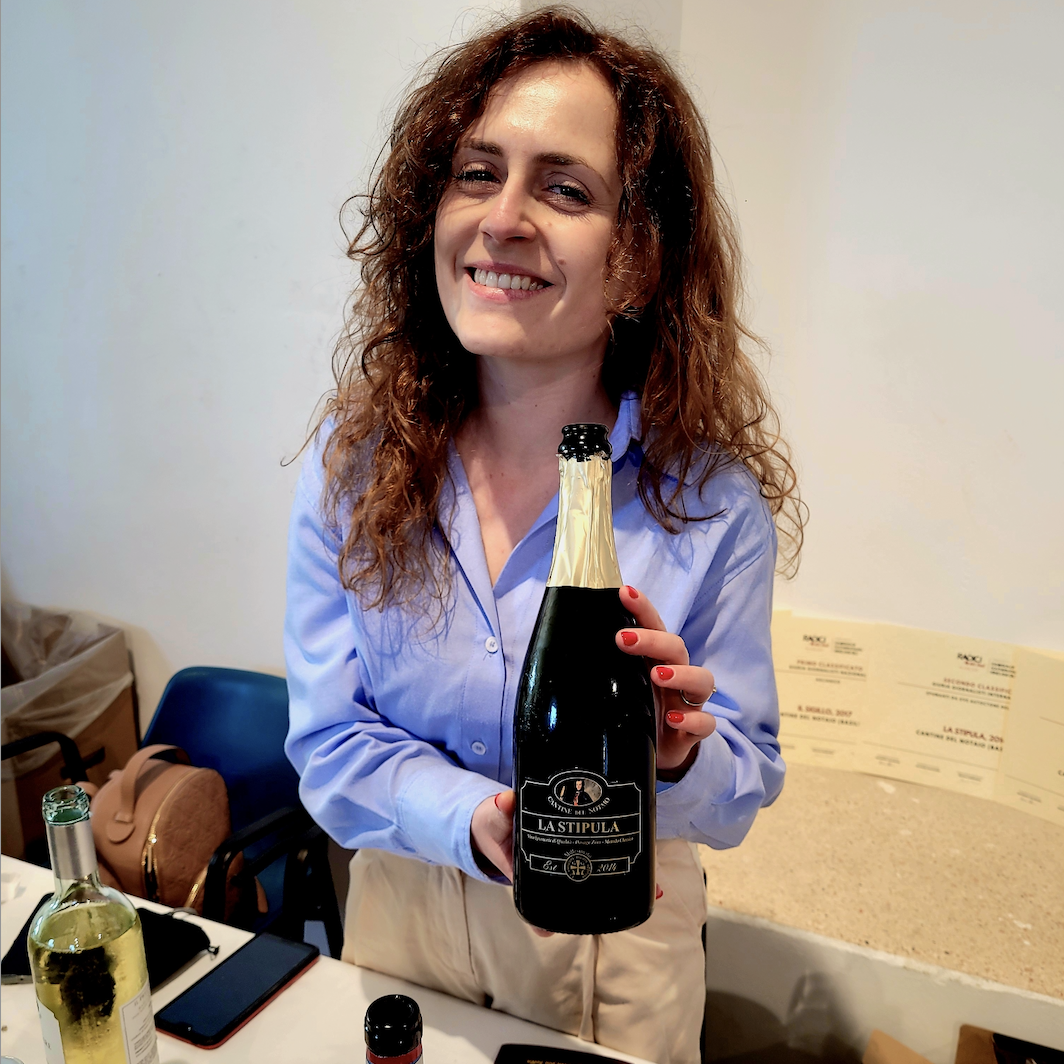
Solo aglianico, 10 years on the lees with warmth and maturity meeting an unlimited amount of complexities that reminds of South African


Cap Classique. Nervy with persistent energy and vivacities. A candid southern Italian sparkling wine with naturally wavy-curly hair. Drink 2025-2029. Tasted June 2025
Cantina Del Notaio Il Priliminare 2024, Basilicata Bianco IGT
A relatively rare white vinification of aglianico with splashes of malvasia and chardonnay, each important contributors, first for aromatic heightening and second to add some much needed orchard fruit bite. Neither can tame the tannic presence of the aglianico, nor should they try to fight the power. Though it feels like the recipe could use some adjustment, there is something curious happening here. Potential as well. Drink 2025-2026. Tasted June 2025
Cantina Del Notaio Il Rogito 2024, Basilicata Rosato IGT
Candied, semi-cimmerian hue in the style of Tavel, most definitely the furthest thing from Provençal. A pretty Rosato in all respects, from aglianico only, some sweetness, not particularly phenolic and balanced by its overt fruitiness. Like a bowl of fresh cherries. Drink 2025-2026. Tasted June 2025
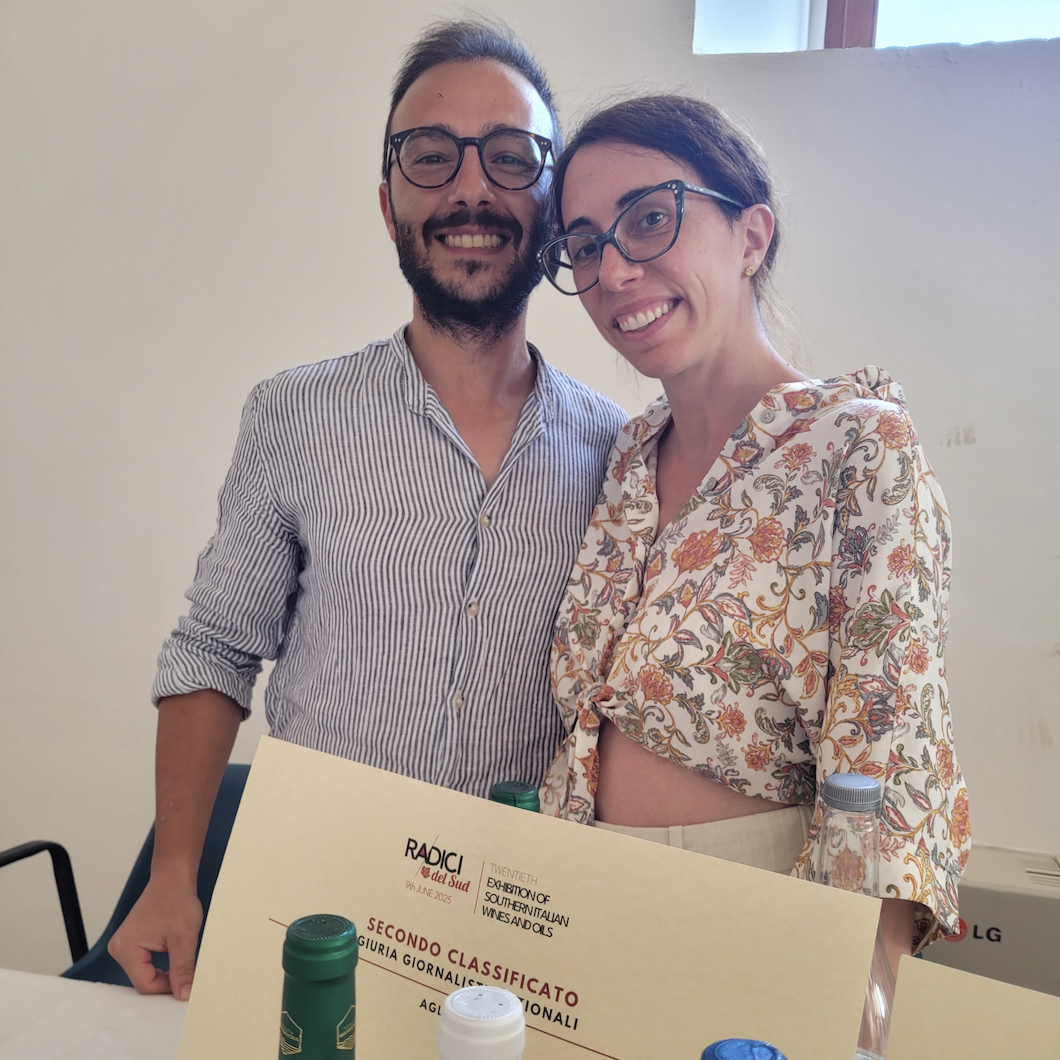
Davide and Maria, Tenuta Massanova
Tenuta Massanonova Rosato Frizzante Mary’s Flower 2023, Campania
From Campania near Cilento, the work of Davide and Maria, certified organic since 2022. A second vintage effort with 100 percent primitivo Rosato from the young vines, incredibly tart and of full on white cherry and red currant tang. Amazing freshness and quenching ability. Molto dissetante! Drink 2025-2027. Tasted June 2025
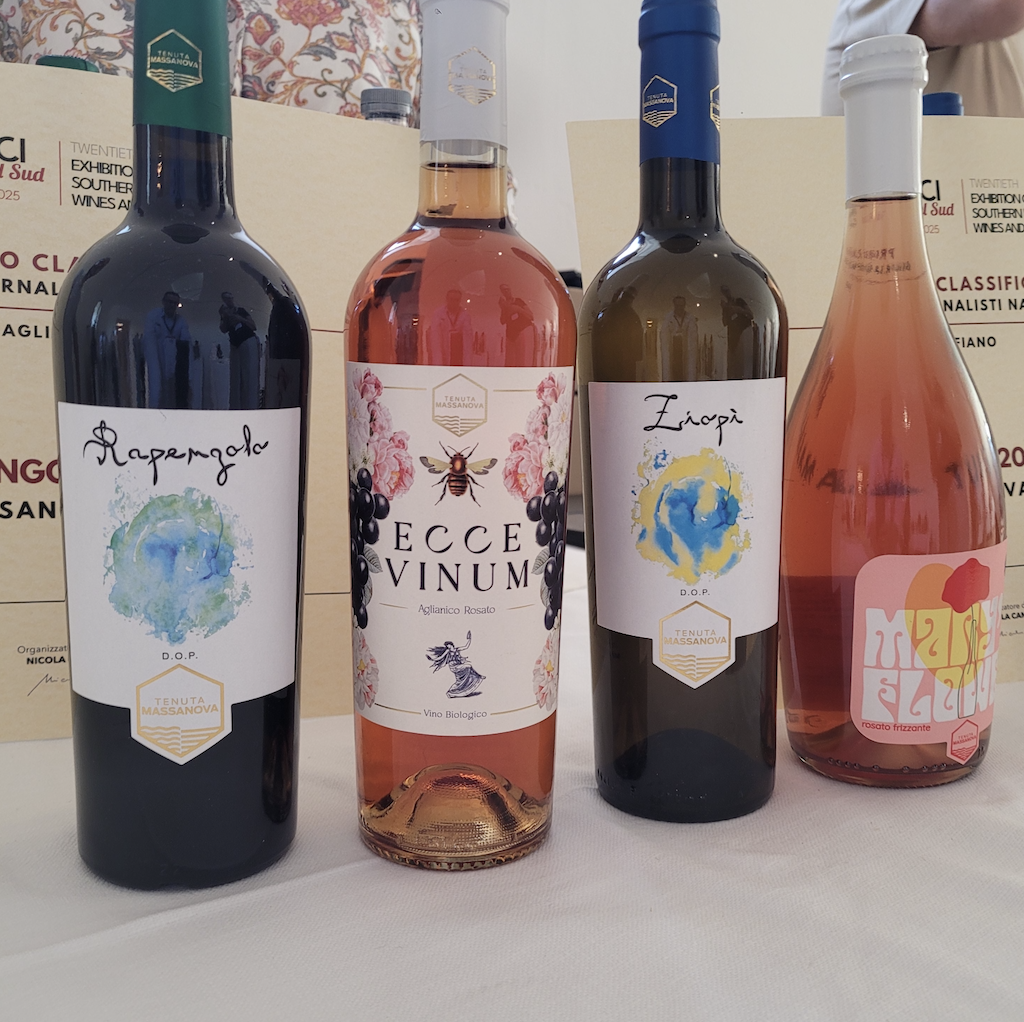
Tenuta Massanova Ecce Vinum Aglianico 2024, Rosato IGP
A polar opposite to the Spumante Rosato, just one hour on the skins for a paler southern French style yet juxtaposed against some kept power and structure of the aglianico. A mix of roses and Sherry qualities from a Rosé meant for simple gastronomy that involves ricotta or mozzarella di buffala. Tastes as much like an orange wine as it does a Rosato, clocking in at 12.5 percent. Curious. Drink 2025-2027. Tasted June 2025
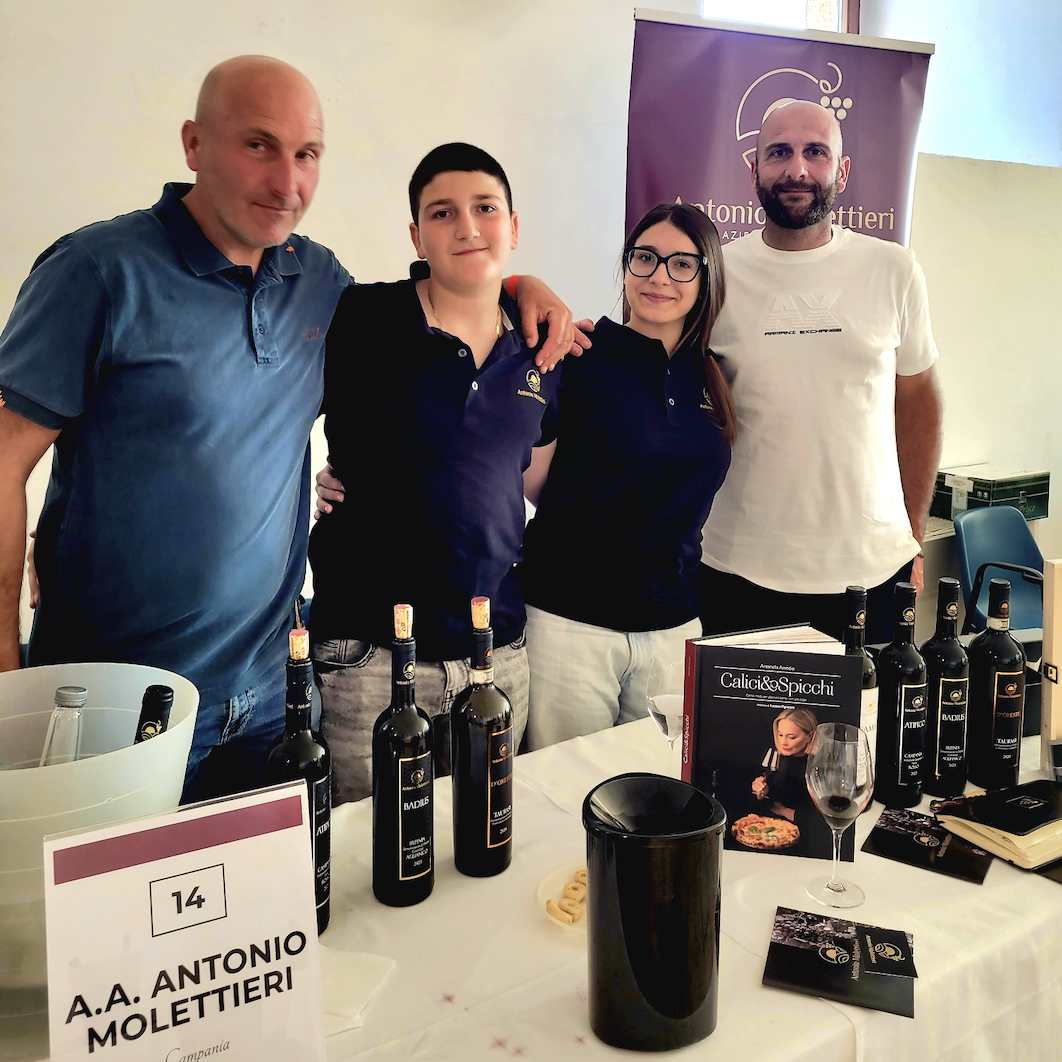
Molettieri Family
Azienda Agricola Antonio Molettieri Coda Di Volpe 2024, Irpinia DOC, Campania
Part of the five hectare, 8,000 total bottle production from Campania, of coda di volpe growing on century vines aged only in steel for six to seven months. Ultra fresh, clean, fine and with that all-important posit tug between salty and sapid. Emits and emotes a true terroirist’s volcanic sensibility. Drink 2025-2027. Tasted June 2025
Azienda Agricola Antonio Molettieri Atipico 2021, Rosso IGT, Campania
The family work of Antonio, Daniele and Sofia for one of the very few merlot raised in the area of Castelfranci within Avellino and the varietal profile here is seriously unique. Luxe and ripe as if Napa Valley were the source – It’s just right there. Crazy! Drink 2026-2029. Tasted June 2025
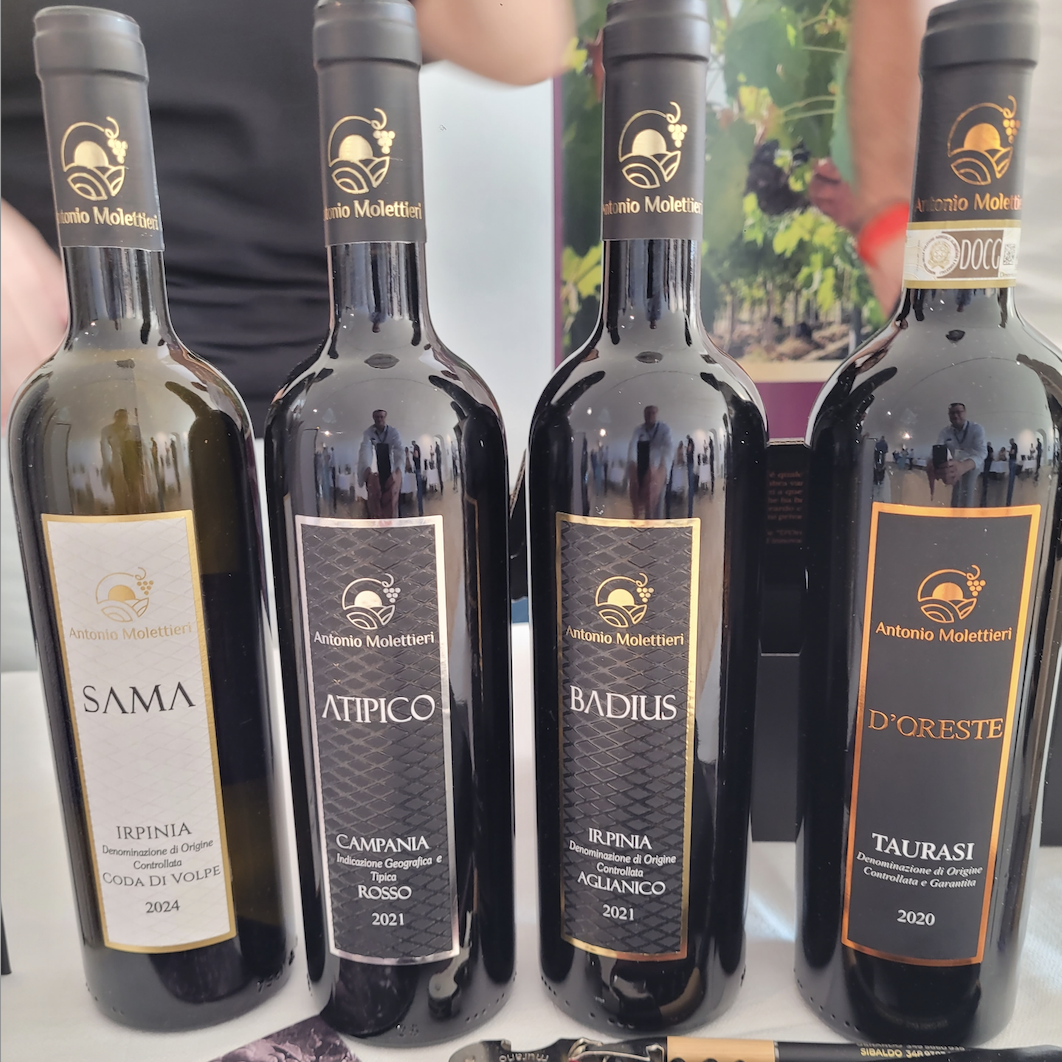
Azienda Agricola Antonio Molettieri Badius 2021, Aglianico Irpinia IGT, Campania
Opposite to merlot, from black to red fruit, tannins exuding with confidence and power from the glass. The intertwine between fruit and tannin is a strong bond, a union of opposing forces meant for one another, capable of growing old together. Cherries are obvious, depth impressive and the dark mystery unsolved. Seriously sweet tannins. Drink 2027-2032. Tasted June 2025
Azienda Agricola Antonio Molettieri D’oreste 2020, Taurasi DOCG, Campania
An aglianico of poise and depth with wood aging time, acidity and alcohol that exceed the Irpinia, as do both the substantial fruit and powerful tannins. Freshness from 2020 but also the feeling of experience which says a 2010 would likely not act much different – That’s easily how long a wine like this will take to change, open and express its true sense. The layers are many and intensity is off the charts. Promise is the limit. Drink 2027-2035. Tasted June 2025

The Di Prisco family grows
Di Prisco Coda di Volpe 2024, Irpinia DOC
Produced since 1996, a wine “from the vineyard” oriented south and southwest, done up through whole bunch fermentation. Juicy, clean, orange zested, simple, coolly gelid and with acidity dutifully maintained. Different than the “other” coda di volpe, never a matter of being a blended wine. Drink 2025-2027. Tasted June 2025
Di Prisco Fiano Di Avellino DOCG 2024
Sees only stainless steel for eight months to come away pure, clear and juicy with fresh squeezed citrus. Bloody quenching with premium spicing and über proper pacing. Drink 2025-2027. Tasted June 2025
Di Prisco Fiano Vigna Rotole 2024, Irpinia DOC
The Avellino may be the DOCG classified Fiano but this single vineyard Irpinia is the more serious wine of the two. Higher extract, finer tannin, elevated fleshy texture and this amazing mix of mellifluous natural sweetness and volcanic minerality. Not to mention length and consequently potential. Speaks to a place, not a cuvée. Drink 2026-2030. Tasted June 2025
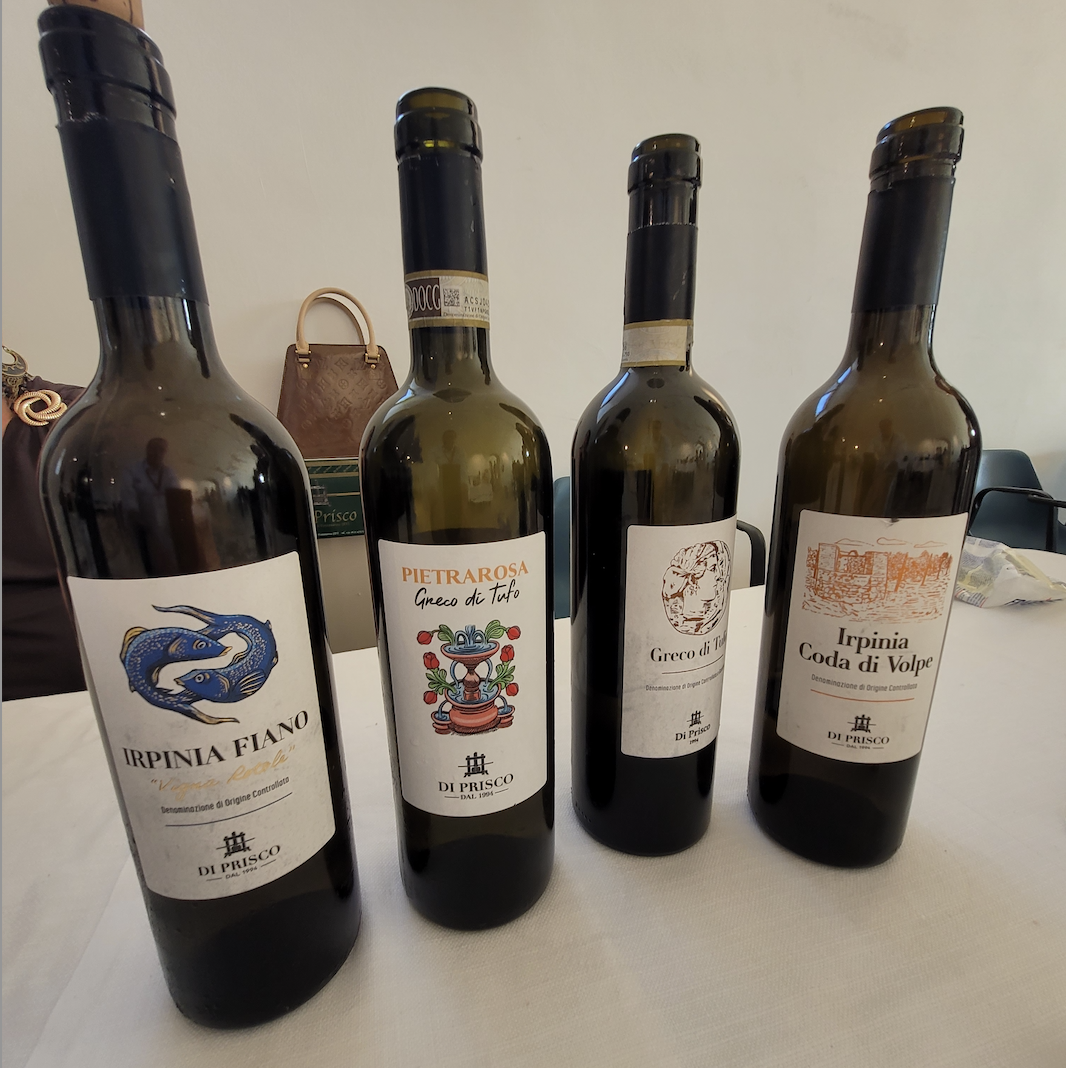
Di Prisco Greco Di Tufo DOCG 2022
From two hectares of vines growing at 600 and 630m of elevation split by a road with the lower part chosen for greco. Sees only steel but for 12-18 months with regular bâttonage. Feels and acts like Chablis in greco clothing – tastes that way too. At the very least texturally speaking and then this goes full on lemon-orange, finishing dry and tannic. Drink 2026-2029. Tasted June 2025
Di Prisco Greco Di Tufo DOCG Pietrarosa 2020
The upper cru section of greco above the road at 630m, more calcareous soil to deliver an increase of both extract and specified mineral. Age has brought about more platinum gold in the hue, a gentle oxidation and the sentiment is like older sémilon. More life still to live and perhaps next year will bring about honey and paraffin smoulder. Drink 2025-2028. Tasted June 2025
Di Prisco Brothers Aglianico ‘Nplugged 2021, Irpinia DOC
From two brothers, Giuseppe and Michele, together moving forward after their father Pasqualino with this experimental aglianico, 75 percent of which is raised in steel. A next generation Avellino red for which the latter stages of fermentation is done without skins, a departure from the norm. Results in an elegant, nurturing and just bloody lovely aglianico, without angst or unrelenting grip. Drink 2025-2028. Tasted June 2025
Cantina La Giara Semidano di Sardegna Superiore DOC 2021
Some might question the indigenousness of semidano while others, including Cantina Giara will say the grape is a rare, native white variety from Sardinia. Here it acts musky aromatic as a relatively soft yet mineral white with a step up from merely moderate alcohol (at 13 percent). Acts with an almost chenin blanc like personality out of Sardinia where just 10 hectares exist for this great curiosity of a white wine. Drink 2025-2027. Tasted June 2025
Good to go!
godello
Squadra 2025, Radici del Sud







 Godello