High times in Bourgogne

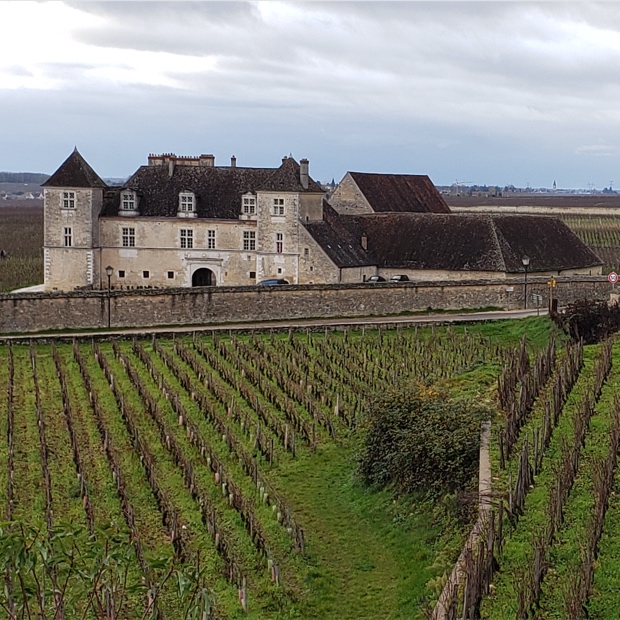
Château du Clos de Vougeot, Côtes de Nuits


“Bourgogne vs. Burgundy: A critic’s take on the “plus” side of Bourgogne – the Best Places for Value”

Please join me on Tuesday, June 30th via Instagram for a Bourgogne video in which I talk about Les Hautes, “the plus side of Bourgogne,” where vineyards and producers of quality can be found. Bourgogne du Haut, “The Upper Bourgogne.”

I will also make a case for “Bourgogne against Burgundy: A critic’s take on why language is so essential to messaging, for preserving identity and tradition. Finally I will pose the question, What is Climat?

Then, on Monday, July 13th, from 10:30 to 11:15 am I will be hosting a Bourgogne webinar on Regional Appellations. The 45 minute seminar will be directed at sommeliers and the trade industry.

Searching for Bourgogne-Plus

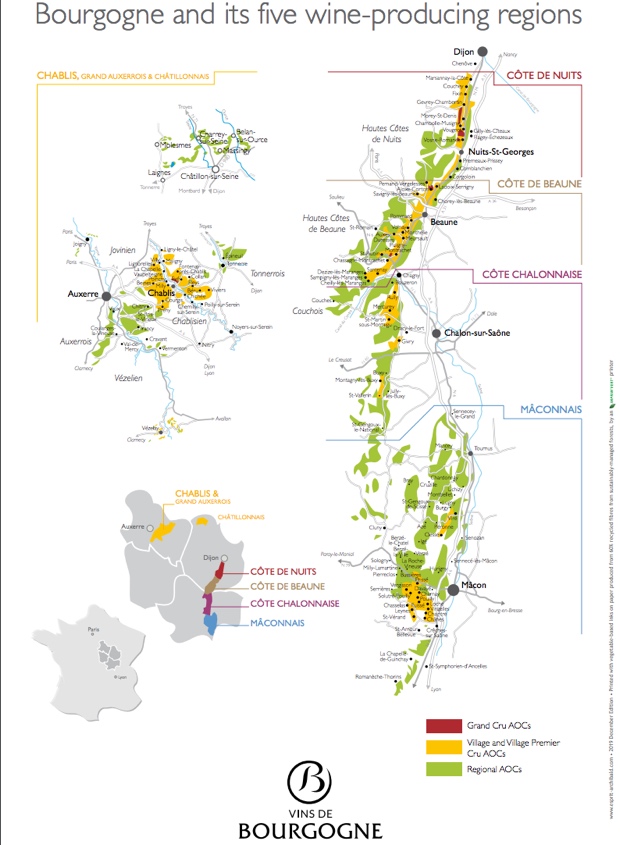
Bourgogne holds many secrets yet discovered and that is why in November of 2019 my colleague and friend John Szabo M.S. and I travelled to France’s most revered wine region. The Bourgogne Appellation d’Origine Contrôlée (AOC) was authorized in 1937, for white wines extending to the three departments of Yonne, Côte-d’Or and Saône-et-Loire and for reds, to pinot noir from 299 communes throughout wine-growing Bourgogne. Designations have been immovable since the year dot for Bourgogne’s five wine-producing regions; Chablis and Grand Auxerrois, Côtes de Nuits, Côtes de Beaune, Côtes Chalonnaise and the Mâconnais. Opinion has come to expect a certain fixed and comprehensible understanding of the hierarchy of appellations; Grand Cru, Premier Cru, Village, Appellation Régionale Bourgogne. The latter to many simply translates as the ubiquitous Bourgogne AOC, though it is but one of six that fall within the category of La Région Bourgogne, the others being Coteaux Bourguignons, Bourgogne Aligoté, Bourgogne Passe-Tout-Grains, Bourgogne Mousseux and Crémant de Bourgogne. The deeper delve is all about the multiplicity of Les Appellations Régionales in the study of what collects beneath the larger umbrella referred to as les dénominations géographiques.

It’s 8:46 am, we’re at #latâche and that’s not our dog #canadiansinbourgogne #vindebourgogne #vosneeromanee #domainedelaromaneeconti

They the outliers have not been truly considered, at least not until recent times. At the head are Les Hautes, the parts of Bourgogne thought to exist in the nether realms and so previously passed over. “The heights,” out of sight fringe locations, places unseeable, host to wines untenable and from vines unsubstantiated. Or with some investigation, perhaps something else? There too are the siblings, Côte Chalonnaise, Côtes d’Auxerre, Côtes du Couchois, Chitry, Coulanges-la-Vineuse, Epineuil, Vézelay, Tonnerre, Le Châpitre, La Chapelle Notre-Dame, Montrecul and Côte Saint-Jacques. In the latterly days of November 2019 the opportunity was presented to visit these shadowy appellative entities, perchance to uncover their truths, they by vineyards and producers of Bourgogne-plus quality. Bourgogne du Haut, “The Upper Bourgogne.” High times in Bourgogne indeed.
 

Related – Bourgogne in a word: Climat

I penned that 2017 article in the last days of November, two years ahead of the trip that would rework my internal vision of a Bourgogne world order. At the time a choice was made to focus on the central theme that ties the Bourgogne room together. Climat. I asked the 50,000 euro question. What is Climat? Please read that post for the 10,000 word answer but the irony of my conclusion went like this. “The only true intrinsic reality gained through a discussion about Climat is accessed by the tasting and assessment of examples that represent a full cross-section of Bourgogne. The appellations of Chablis et du Grand Auxerrois, Côtes de Nuits and Hautes Côtes de Nuits, Côtes de Beaune and Hautes Côtes de Beaune, Côtes Chalonnaise and Couchois, the Macônnais and the Châtillonnais are best understood by comparative studies of Pinot Noir and Chardonnay. With more than 100 appellations (84 officially recognized) it would take a lifetime and then some to cover them all and several more to come to grips with the very specific meanings and interpretations of their personalized Climats. By that time the moving target would change so much that starting again would be the only option. Make the most of the time there is, which is the way of the Bourguignons.” Ironic because exactly two years later I returned to Bourgogne to begin my education anew in the light of a trip gone deep into the Hautes Côtes and satellite appellative explorations. The findings are remarkable, as I will elucidate in due course.

Beaune

Would a rose by any other name smell as sweet?

Bourgogne, now there’s the rub. In this case the party line and profound argument emphatically says no. Pause to consider the infallible cogency of the nuanced word. Then cringe at the platitude of an overused and confusingly perpetuated Brittanica translation that need not be named. Never could or should have but it must now be stressed that the imposter can no longer be considered a viable alternative for it changes meaning and even more importantly, emotion. If we must say it aloud then we may as well point the culprit out in matters point of fact. Burgundy takes its name from the Burgundians, an East Germanic people who moved westwards beyond the Rhine during the late Roman period and settled in Bourgogne. The seat of the Duc de Bourgogne was to be found west of the Saône along the narrow spit of land between Dijon to the north and the area just south of Mâcon. The reference “Duke of Burgundy” is but a translation. The first Google result that answers the query “Is Burgundy the same as Bourgogne” goes like this. “Burgundy is wine made in the Burgundy region in eastern France, in the valleys and slopes west of the Saône, a tributary of the Rhône.” The proper response to that would be to scream, to shout “answer the bloody $&**!!??&$@ question!” And to offer a strict reminder not to believe everything you read. The first recorded use of “burgundy” as a colour in English was in 1881. Making the argument that the word Burgundy dates back 300 years? Puh-lease. Who but the blind believer and the colonialist heeds this fallacy. These are the eyes of the old. They have seen things that you will never see. Leave it to memory. Dare the Bourguignons to breathe.

At Domaine de la Romanée-Conti’s La Tâche Vineyard, In the heart of Bourgogne

Plus grand est l’obstacle, et plus grande est la gloire de le surmonter

Just a little bit more than a year ago the Bourgogne Wine Board (BIVB) made the plea, on behalf of and at the behest of le vraiment Bourguignon, for a firm and clear pronouncement to take back their name, as is their right to do. “To re-affirm its identity as one of the most iconic vineyards of France, the region and its producers are reverting back to the original French iteration of its name: Bourgogne. Historically Bourgogne is the only French appellation that adopted an alternate identity for export markets with the use of the ‘Burgundy’ designation for the English speaking markets, or Burgund for the German speaking and many other translations according to the country. Today, this traditional ‘Bourgogne’ designation has already been adopted by nearly all the wines produced here – either via appellation designation or wine region labeling. By maintaining this one true identity, Bourgogne returns to its historical roots as the consummate vineyard treasured by consumers the world over.”

The devil might advocate for inclusion, to allow for levity and to argue against a parochialist stance. The contrarian might say, “why exclude a greater population when it might be to the detriment of market share. Tell the people they have to speak the language and they may feel alienated or worse, choose not to participate because it’s harder work, or just too much to ask.” They will say that language is merely colloquial, a matter of repetitive utterance, developed slang and simply a matter of evolution. Why fight it? Would it not make most sense to worry about making good wine and concentrating on selling the product?

“Plus grand est l’obstacle, et plus grande est la gloire de le surmonter. “The greater the obstacle, the greater the glory of overcoming it.” Indeed were Molière here today he would abide in support of the usage. Besides, un savant imbécile est plus un imbécile qu’un imbécile ignorant, “a learned fool is more a fool than an ignorant fool.” Bourgogne, name of the territory and also the name gracing each and every bottle conjoining all its appellative wines. Practice your pronunciation and become comfortable with using it. Do so with unequivocal conviction, daily, written, typed and in the vernacular of spoken word. Glad we got that out of the way.

Iconic Bourgogne

Related – Les Grands Jours de Bourgogne 2020 are suspended

Uncertain times

Things were going so well. Sales were up, wine importers and consumers the world over were beginning to embrace the affordable Bourgogne, these partisan orbiters in surround of their better established kin, these fine pinot noir, chardonnay, aligoté, sauvignon blanc and gamay blends of qualities and quality not seen before. No one ever really worries about the rising prices of the established and their place within the establishment. The new work concentrates on the new world and upwardly mobile millennial spending. Get the regional appellative wines of geographical designation to these new buyers, they of dollars aimlessly doling away to Argentina, Chile, South Africa and Australia, to the cheap and cheerful Italian and Spanish wines. Teleport these varietal outliers into their minds and the golden era will usher in. Then COVID-19 rears its ugly viral head.

Fear not for this will pass and while trade shows are an essential aspect of selling wine, they can be circumvented. Education is the key. There are educators around the world aching to tell a Bourgogne story and fill cups with the wines. The Bourgogne tome is a magnificent one, filled with centuries of great reality, overflowing with heartbreak, victory and desire. The viral hiccup is indeed dangerous, surely dramatic and as great a mortal nuisance as there is but it will leave as fiercely as it came. A trail of debris and sorrow will be left behind but the Bourguignons are a resilient people to get past and move on.
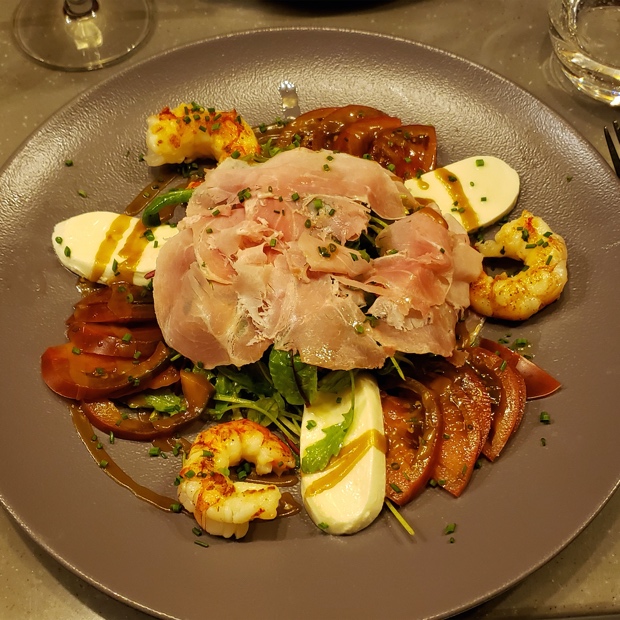
Dinner at Le Bistro des Cocottes in Beaune

Dovetailing and Denominations

In algorithm design, dovetailing is a technique that interweaves different computations, simultaneously performing essential tenets. Bourgogne moves in such rhythm, not only from Côtes de Nuits north to Maçonnais south but also in vortex web design that incorporates Les Appellations Régionales. In Bourgogne the greater territory is tied together by threading all its constituent appellative parts through a mortise, designed to receive corresponding appellations on another part so as to join or lock the parts together. The chardonnay and pinot noir of Les Hautes-Côtes are tenoned through Côtes de Beaune and Côtes de Nuits, just as the reds of Irancy and Bourgogne Epineuil are threaded through the whites of Chablis to define a northerly Yonne-Serein section of Bourgogne. The same applies to the Côtes de Couchois with the Côtes Chalonnaise.

Jump to:

Chablis and Grand Auxerrois
Côtes de Beaune
Côte Chalonnaise
Côte de Nuits
Bourgogne Coulanges-la-Vineuse
Bourgogne Côtes d’Auxerre, Saint-Bris and Irancy
Bourgogne Epineuil, Chablis and Bourgogne Tonnere
Bourgogne Hautes Côtes de Beaune
Bourgogne Côtes du Couchois
Bourgogne Côte d’Or
Bourgogne Hautes Côtes de Nuits

Producers:

Domaine Jean Claude Courtault and Stéphanie & Vincent Michelet

Domaine du Clos du Roi
Goisot Guilhem et Jean-Hugues
Domaine Gruhier (Domaine de L’Abbaye du Petit Quincy)
Domaine Alexandre Parigot
Maison Roche de Bellene
Maison Bertrand Ambroise
Cave de Mazenay
Domaine Theulot-Juillot
Domaine de L’Évêché Quentin & Vincent Viticulteurs
Cave des Vignerons de Buxy
Domaine Bart (Pierre)
Domaine David Duband
Domaine Cruchandeau
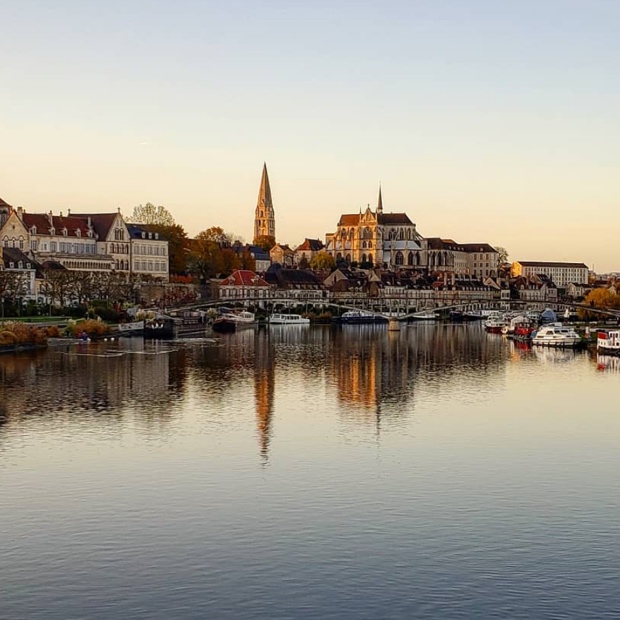
Quai de l’Yonne, Auxerre


Grand Auxerrois

The Grand Auxerrois covers a multitude of very old small plots which are today sorted into four terroirs:
• The Auxerrois covers around a dozen communes to the south and southeast of Auxerre
• Farther to the east, beyond Chablis, the vines of the Tonnerrois are found in the valley of the Armançon, the river that runs through the little town of Tonnerre.
• In the south of the Grand Auxerrois region is the Vézelien, which covers Vézelay, Asquins, Saint-Père and Tharoiseau
• The slopes of the Jovinien look down over the town of Joigny, to the north of Auxerre

On these limestone soils, the wines are mainly produced from the traditional Bourgogne varietals of chardonnay and aligoté for whites, and pinot noir and gamay for the reds. Smaller quantities of césar for reds, and sacy or melon for whites are used, while the very old Bourgogne varietal césar sometimes makes a minor appearance in certain Irancy wines. There is an exception in Saint-Bris, where the winemakers produce very aromatic whites from the sauvignon grape.

The Grand Auxerrois brings a wide palette of appellations to the Bourgogne winegrowing region, mainly specific appellations Régionales:

  • Appellations Villages: Irancy, Saint-Bris, Vézelay
  • Appellations Régionales specific to Grand Auxerrois: Bourgogne Chitry, Bourgogne Côte Saint-Jacques, Bourgogne Côtes d’Auxerre, Bourgogne Coulanges-la-Vineuse, Bourgogne Epineuil, Bourgogne Tonnerre


Bourgogne Coulanges-la-Vineuse

The education begins in Bourgogne Coulanges-la-Vineuse, south of Auxerre in northwestern Bourgogne at the hamlet of the same name surrounded by five valleys; les vallées de Chanvan, de Douzotte, des Champs, de Chamoux, de Droit à Vente and de Magny. There are just over 135 total planted hectares, only 18 of which are chardonnay, with seven producers in the village and 15 overall in the appellation. Unlike virtually all other appellations in Bourgogne the wines produced here all come from the regional appellation, save for a small amount of Côteaux Bourguignons.

Exploring the @vinsdebourgogne of #coulangeslavineuse with great curiosity, emerging engaged, engrossed and charmed. Instructive tasting at Domaine du Clos du Roi.


Domaine du Clos du Roi

Red, White and Rosé are produced at Domaine du Clos du Roi from 16 hectares of chardonnay, pinot noit and césar. Founded in 1969 by Michel and Denise Bernard the domaine has been run by Magali Bernard and her husband Arnaud Hennoque since 2005. Magali is in charge of winemaking and sales while Arnaud the business and the vines. Chardonnay are gifted by generous bâtonnage and raised in demi-muid. The pinot noir purports to be the most typical from these lands, somewhat glycerin rich and clay-chalky with relatively soft and easy tannin. Raised in foudres de chènes (44 hL), the barrels introduced by Ludovin’s father and made in the traditional and historic way of the domain. César is the varietal wild card as noted by the 15 per cent whole cluster worked into pinot noir for the Clos du Roi “Coline” Nos Origines. 

Click here to see all reviews for the wines of Domaine du Clos du Roi

Clos du Roi Cuvée Charly Nos Origines 2015, Coulanges La Vineuse AOC

From viticulturist Bernard Magali Nos Origines ia a wine of generous bâtonnage a much easier vintage required less stirring and more accounting from naturally fortifying lees. This exceptional child must have loved its comforting and nurturing stay in demi-muids so now the imagination runs wild with gently rolling spice and thoughts of well-deserved aperitíf moments, especially with a semi-soft, almost firm Epoisses. Has lost little energy at this point in fact it’s still fresh as can be. Tells us something about the future for the ’18 though ’16 and ’17 will outrun the latter. Drink 2019-2021.  Tasted November 2019.

Clos du Roi “Coline” Nos Origines 2017, Coulanges La Vineuse AOC

The only cuvée in the portfolio that contains some cézar, at 15 per cent mixed into the pinot noir. Coline, Magali’s daughter. Carries a foot-treading tradition, perhaps more Portuguese than Bourgignons but this is the playful wine, not necessarily the serious one. More floral and quite full of citrus, namely pomegranate and especially blood orange. Falls somewhere in the middle, not between red and white but within a red spectrum of its own. Can see this as the correct one to drink with charcuterie. That’s the sort of structure it considers, especially because of the whole bunch workings inside. Drink 2019-2022.  Tasted November 2019

Saint-Bris and Côtes d’Auxerre


Bourgogne Côtes d’Auxerre, Saint-Bris and Irancy

The Auxerre vineyards (pronounced “Ausserre”), lying on either side of the river Yonne, boast ancient lineage, thanks to the abbey of Saint-Germain and a proximity to Paris. Today they are very much alive. In 1993, wines from the communes of Auxerre, Vaux, Champs-sur-Yonne, Augy, Quenne, Saint-Brisle- Vineux and Vincelottes were granted the right to add a local identifier to the appellation Régionale Bourgogne.

Lying alongside the river Yonne in the heart of the Auxerrois region, Saint-Bris-le-Vineux is an old stone-built village beneath which are extraordinary medieval cellars, running everywhere, the most astonishing examples of their kind in Bourgogne. They cover 3.5 ha, 60 metres underground. The quarries at nearby Bailly supplied the building stone for the Pantheon in Paris.

Irancy, in the Grand Auxerrois region, stands on the right bank of the Yonne river, some fifteen kilometres South of Auxerre and South-West of Chablis. It is typical of the wine-growing villages of the district. It boasts a majestic church, as well as the house where G. Soufflot, architect of the Paris Panthéon, was born. The handsome winemaker’s houses make a fitting setting for a red wine with such a long-established reputation. It was raised to the status of an appellation Village, which it shares with the neighboring villages of Cravant and Vincelottes, in 1999.

Guilhem Goisot


Goisot Guilhem et Jean-Hugues 

The family tree of the Domaine Guilhem & Jean-Hughes Goisot traces roots back to the 14th century and today the estate raises vines biodynamically in the communes of Saint-Bris-Le-Vineux and Irancy. They are unique on a hill position that straddles both the Saint-Bris and Côtes d’Auxerre appellations enabling production of both sauvignon blanc and chardonnay. Irancy is the source for pinot noir. Their cellar lays beneath the 11th-12th century village. Guilhem’s parents Ghislaine and Jean-Hughes took over production in 1979 while he and his wife Marie assumed the lead in 2005. Guilhem’s collection of calcareous rocks and especially ancient seabed shells and fossils is perhaps the most incredible in Bourgogne. His translation of three terroirs is concise and exacting. These are some of Bourgogne’s most focused wines that elevate the power, precision and status of these three furthermore there appellations.
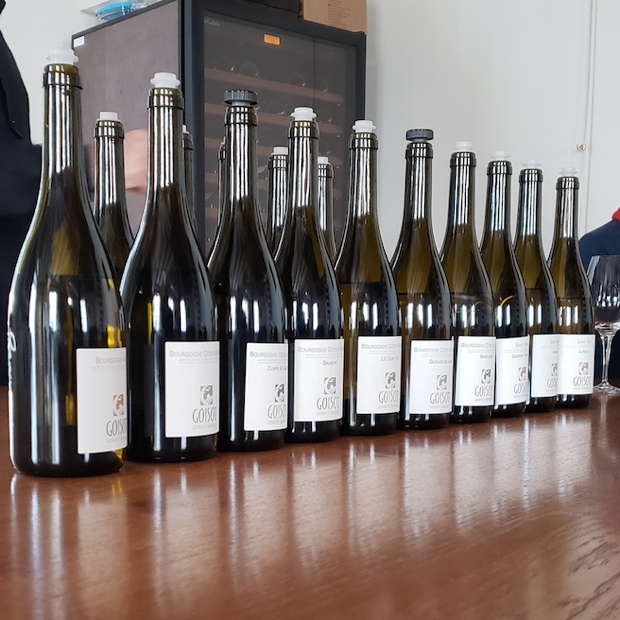
The precise, focused and compact pinot noir, chardonnay and sauvignon blanc of @guilhemgoisot from out of the @vinsdebourgogne proximate terroirs of #cotesdauxerre and #saintbris ~ Plus some of the great rocks anywhere.

Click here to see all reviews for the wines of Goisot Guilhem et Jean-Hugues

Goisot Guilhem et Jean-Hugues Les Mazelots 2017, Irancy AOC

A Villages wine from and for Irancy from 100 per cent pinot noir. Aromatically quiet, not unusual for the appellation and especially without any of the allowable 15 per cent cézar in the mix. Quite pure and similarly structured to the Côtes d’Auxerre in that it’s not full-bodied but is in fact tightly compact. More implosive intensity and idiosyncrasy with a chalky underlay from white to grey soil high in calcaire and layered with arglieux. Yet another very refined wine. This man knows how to use his sulphur properly. Clean, focused and very precise. Benchmark for Irancy. Drink 2020-2026.  Tasted November 2019

Goisot Guilhem et Jean-Hugues La Ronce 2017, Bourgogne Côtes d’Auxerre AOC

The next Climat behooves the already pronounced adage that these wines increase upwards from one to the next in delicasse, precision and possibility. There is an earthy grounding in La Ronce that seems absent in Le Court Vit and here makes for a new structure, or rather a more complex one. Now taking another step into variegated terroir replete with all the fossils, shells and epochs of clay, limestone and multi-hued soils all filling up the elemental well. These vines draw from it all and it shows with precise sapidity, aridity, salinity and validity in the aromatic character and flavour profile. A conditioning that is sweet because the fruit is pure and savoury with thanks to the acid-tannin structure that makes this sing. Amazing purity, grace and possibility. Drink 2022-2031.  Tasted November 2019

Goisot Guilhem et Jean-Hugues Gondonne 2017, Bourgogne Côtes d’Auxerre AOC

A soil of kimmeridgian and marl of white and blue, with great layering of fruit and that is in fact what you feel from Gondonne. There is something rich and overtly expressive here and while it’s anything but simple it could be imagined that so many consumers would understand this chardonnay, love it and want to drink it with abandon. That said the structure, gout de terroir and de vivre are just exceptional. The wood and the land just melt right in. Drink 2020-2029.  Tasted November 2019

Goisot Guilhem et Jean-Hugues La Ronce 2017, Saint-Bris AOC

Usually this is a Climat reserved for holdings in Côtes d’Auxerre but in this case the northwest exposure is indeed within the appellation of Saint-Bris. In fact there’s more affinity with chardonnay here and also conversely more terpenes in the notes. Also pyrazines which is more than curious. Ripe too and ultimately a most curious expression of sauvignon blanc. It’s got everything in here, in hyperbole and more. Drink 2020-2028.  Tasted November 2019


Bourgogne Epineuil, Chablis and Bourgogne Tonnere

The Tonnerrois region lies in the southern Yonne not far from Chablis. Épineuil the commune won the official right to identify its wines by name within the general appellation Bourgogne in 1993. The word Épineuil may only be appended to the word Bourgogne in the case of red or rosé wines produced within the defined area of the appellation. On the label, the word Épineuil must follow the word Bourgogne. The soils, full of white pebbles, resemble those of the nearby Chablis region (Kimmeridgian or associated limestones) and have definable qualities. Where the vineyard district is broken up into valleys, the vines are sheltered from the cold winds of the Langres plateau and reap the benefit of a favourable microclimate.

I’ve considered Chablis many times before. “There is little about Chablis that is not drawn up in contrasts. It begins with Left Bank versus Right Bank, the Serein River and the village of Chablis acting as the interface between. Petit Chablis giving way to the more important Chablis and then Premier Cru the varied and always impressive interloper separating the villages wines from the Grand Cru. Chablis as a varietal concept, as opposed to and unlike anywhere else in the world, seemingly unrelated to chardonnay.”

Related – Paradox in Chablis

“The greatest paradox of all is written in stone along a few ridges and across the most important set of hills above the river. Deep-rooted, inveterate purlieu of geology in eight names; Les Preuses, Bougros, Vaudésir, Grenouille, Valmur, Les Clos, Blanchot and unofficially (depending on political affiliations), La Moutonne. Les Grand Crus of Chablis are singled out not only for their exceptional terroir and climat but also for the impossibility of what happens when fruit is pulled from their chardonnay vines. The Grand Cru are oracles in complex riddles, transcendent mysteries and the most enigmatic of all Chablis. I suppose it’s because the rich fruit versus exigent stone is the epitome of Chablis paradox.”
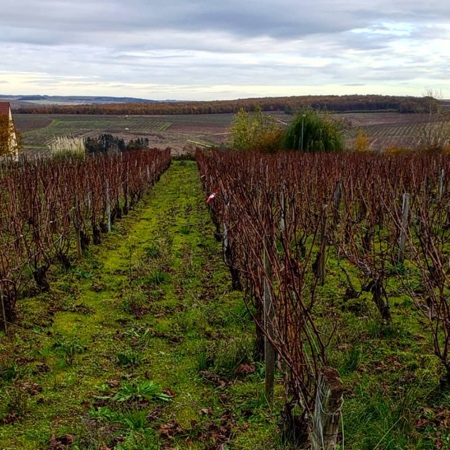
Domaine Jean-Claude Courtault, Lignorelles


Domaine Jean Claude Courtault and Stéphanie & Vincent Michelet

Stéphanie Courtault-Michelet is the daughter of Jean-Claude and Marie-Chantal Courtault. She and her husband Vincent Michelet farm 20 hectares in the appellations of Bourgogne Epineuil and the four that comprise Chablis. The business dates back to 1984 and today both Domaine Jean-Claude Courtault and Stéphanie & Vincent Michelet produce Chablis from vineyards in Beines and Lignorelles, at a windy and cool spot on the top of the hill above the Vau Ligneau. Their Bourgogne Epineuil Climat is the Côte de Grisey from a valley and off of vines that face west.

Click here to see all reviews for the wines of Domaine Jean Claude Courtault and Stéphanie & Vincent Michelet

Stéphanie & Vincent Michelet Chablis AOC 2018

From only one hectare of vineyards right on the line between Lignorelles and Villy and much of the vines are in and about 60 years of age. A very concentrated yet somehow delicate and quite precise Chablis that weighs in above it’s appellative status, if only because it’s not considered one of the more coveted terroirs. Here at the limits of Chablis there is a micro-climate that speaks a Premier Cru vernacular, categorized or not. Very much a calcareous child, fresh, darting, never tiring and innocent. That means it’s focused and pure. Drink 2020-2026.  Tasted November 2019

Domaine Jean Claude Courtault Chablis Premier Cru AOC Mont De Milieu 2017

From young vines and certainly quality fruit that comes across as simple, sweet and charming. From a valley and vines that face west with a darkening cherry profile, mainly clay induced with just a little stoniness from the limestone. Finishes with just a touch of tannin in a notably dried herbs and arid way. Find your food match, like a little pot au feu of tête de veau. Drink 2020-2022.  Tasted November 2019
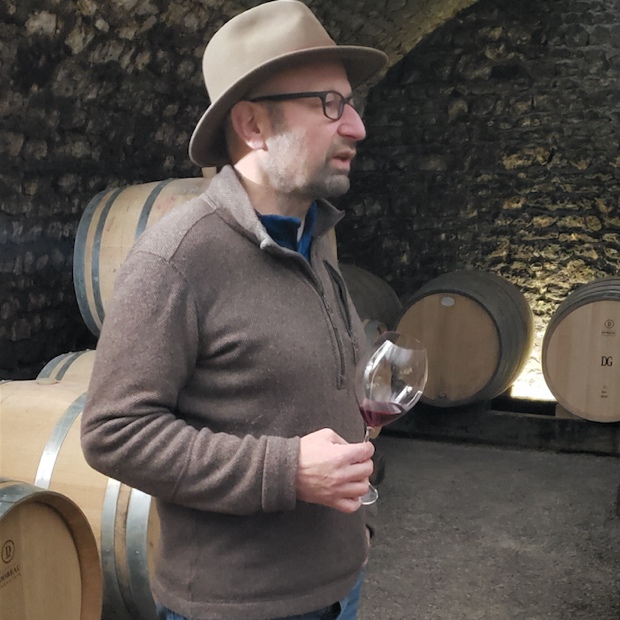
Dominique Gruhier


Domaine Gruhier (Domaine de L’Abbaye du Petit Quincy)

More often than not it should be a conscionable imperative to trust a man with a great hat. Dominique Gruhier in Epineuil walks around the Abbey of Quincy in a characteristic, dashing calibre lid. The Abbey was founded in 1212 by Cistercian monks, sold in 1792 as a natinal asset ands was preserved in pastoral and viticultural terms through 1914. Though it fell to Phylloxera and disrepute there was activity through 1970. Twenty years later The Gruhier family began the resurrection and today create Bourgogne Epineuil and Tonnerre wines that lead for the appellations. Dominique’s Sparkling Wine program is at the head of Bourgogne’s new world order for classic method Crémant de Bourgogne AOC preparations.
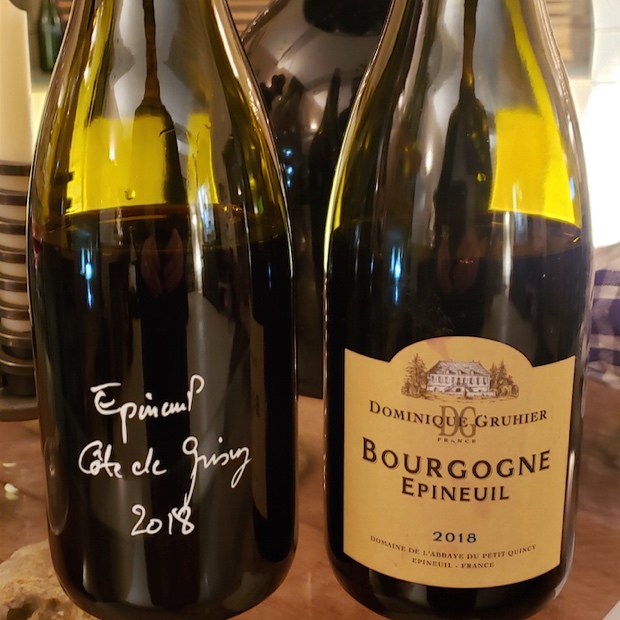
 

Click here to see all reviews for the wines of Domaine Gruhier (Domaine de L’Abbaye du Petit Quincy)

Domaine Gruhier (Domaine de L’Abbaye du Petit Quincy) Cuvée Juliette 2017, Bourgogne Epineuil AOC

Named for Dominique Gruhier’s eldest daughter Juliette. A lighter, more delicate and refined Tonnerrois with floral cherry and cherry blossom aromatics, moving away from the darker ultra-violet notes of the following vintage and also two forward based on what’s in barrel. The tannins are fine like those 2019s but the wine has more tension than 2018. Righteous structure in a wine to last well past the namesake’s 21 birthday.  Drink 2020-2024.  Tasted November 2019

Domaine Gruhier (Domaine de L’Abbaye du Petit Quincy) Grande Cuvée Pur Chardonnay Brut Nature, Crémant de Bourgogne AOC

The eminent one or rather the grand eminent. His eminence is a zero dosage, 100 per cent Crémant of zero put on. From an accumulated amount of solare the make up is 85 per cent 2015 and the other 15 a sparkling wine with everything up front, on its sleeve and one that just screams “won’t you come and join the party, dressed to kill.” A second, just opened bottle reveals the great strike, right from the opening keyboard whirl to the final shout. Drink 2019-2024.  Tasted November 2019


Côtes de Beaune

The Côte de Beaune vineyards lie on the upper slopes of the Montagne de Beaune just above the Premier Cru plots at heights of 300 to 370 metres and on brown limestone and calcium-rich soils, Oolitic and Rauracian (Jurassic) in origin. The special value of these vineyards is attested by the fact that one of the Climats belonging to this appellation, located on Mont Battois, is a dedicated part of Bourgogne’s vine-science research program. When Beaune’s twins AOCs were instituted in 1936, it was the higher altitude vineyards which became the Côte de Beaune appellation. Unlike the appellation Côte de Beaune-Village, with which it must not be confused, it refers to one commune only – Beaune. Within this relatively restricted area, the appellation Côte de Beaune produces one third white wines (chardonnay) to two-thirds red (pinot noir).
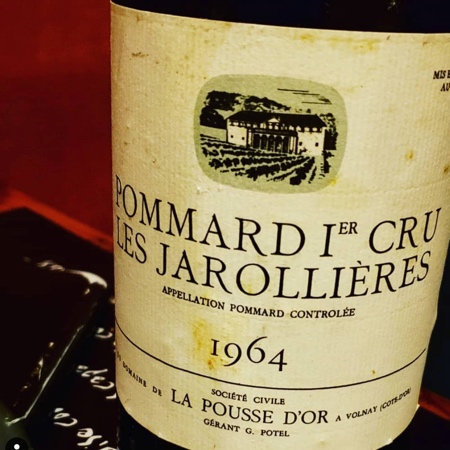
A night in Beaune. Thank you Nico. Je me souviendrai toujours.


Bourgogne Hautes Côtes de Beaune

The Bourgogne Hautes Côtes De Beaune Régionale appellation covers still red, white, and rosé wines produced in an area covering 29 villages that was defined in 1961. The vines are located at the foot of the limestone cliff on the sunny slopes of a ribbon of valleys perpendicular to the Côte de Beaune, from Les Maranges to Ladoix-Serrigny heading west. Wine from the Hautes Côtes de Beaune was drunk at the coronation of Philippe Auguste in 1180. The vines underwent a period of expansion, linked to economic growth throughout the 19th century, until phylloxera struck. Between 1910 and 1936, almost half of the vineyard disappeared. Its renaissance stemmed from the reestablishment of the winegrowers union of the Hautes Côtes de Beaune in 1945, which was responsible for the creation of the appellation on 4 August 1961.


Domaine Alexandre Parigot

Marie et Régis Parigot have handed the reigns to Domaine Parigot to their son Alexandre who is clearly poised to become a star for pinot noir threaded from Hautes-Côtes de Beaune through Savigny, Volnay and Pommard. Today Domaine Alexandre Parigot cultivates 18 hectares in total, 15 of which are pinot noir. The Hautes-Côtes de Beaune vines are of south, southwest expositions on very fine argileux-calcaire, quite sandy and causing wines of elegance and finesse. Le Clos de la Perrière is a benchmark for the appellation. Two to three weeks of classic remontage from which the closing of the tanks and raising of temperature to 32 degrees post fermentation brings this and these pumped over Parigot pinot noir into their silky and seductive state.

Click here to see all reviews for the wines of Domaine Alexandre Parigot

Domaine Alexandre Parigot Clos de la Perrière 2017, Hautes Côtes de Beaune AOC

The Domaine cultivates 18 hectares in total. The Hautes-Côtes de Beaune vines are of south, southwest expositions on very fine argileux-calcaire, quite sandy and causing wines of elegance and finesse. A fresh and silky pinot noir with 2017’s great purity and transparency of fruit. Transparency but subtle glycerin texture which is truly an extension of the sweet aromatic profile. A perfectly enlivening nine o’clock in the morning Haut-Côtes. Drink 2020-2024.  Tasted November 2019

Domaine Alexandre Parigot Pommard-Charmots Premier Cru AOC 2017

From the plot just beneath the village at the height of Pommard. The particularity of 2017 grapes is their fineness of skins and perfectly phenolic gifts donated with great philanthropy by the perfectly ripened seeds. But in this case the laces are once again pulled tight, with great power in even greater finesse. There’s an elegance opposed by a controlled tension that puts this in a position of posit and positive tug, though always charged with something higher and opposing. Drink 2022-2032.  Tasted November 2019

Domaine Alexandre Parigot Clos de la Perrière 2010, Hautes Côtes de Beaune AOC

The 2010 is incredibly fresh, showing negligible evolution, with no advancement into mushroom or truffled territory. Certainly no blood orange and still welling with cherries. No desiccation, only fresh fruit and high acidity. Very impressive showing for a nine year-old Hautes-Côtes de Beaune. Drink 2019-2024.  Tasted November 2019
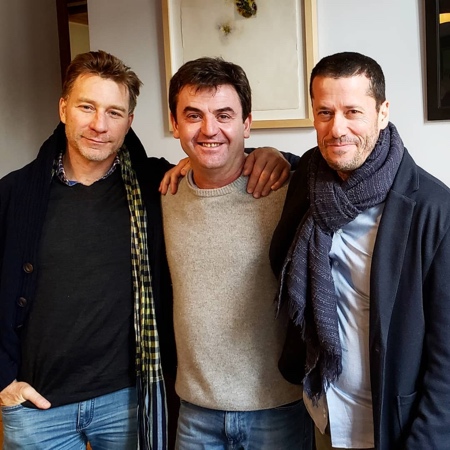
And of course in Beaune we tasted 30 Bourgogne with Nico @johnszaboms @nicholaspearce_ @domaine_de_bellene


Beaune to be wild – Maison Roche de Bellene

There really is nothing Nicolas Potel can’t do, does not touch or lacks kinship with all things Beaune. Potel’s father Gérard was larger than life, local hero and legend, one of Bourgogne’s most cherished and beloved, the King of Volnay and who’s legacy can’t ever be forgotten. While at dinner in Beaune in November Nico suddenly disapparated to teleport 20 minutes home and back, to retrieve and then share his dad’s 1964 Domaine de la Pousse d’Or Pommard Premier Cru Les Jarollières. Why? It was suddenly the right time and it was sublime. In fact the city of Beaune was called Bellene back in the Middle Ages and this is the reason Potel chose the name for his brand/wine merchant/négoce domaine. Maison Roche de Bellene is a force to be reckoned with, a seer of all things and provider of a cross-section of many terroir to educate us all on the power of Bourgogne multitude and multiplicity. Nicolas does have a reputation for being the wild child of Beaune and yet he is also known for his generosity, mainly of spirit. One never forgets a night in Beaune with the infamous Nicolas Potel.

Tasting with Nicolas Potel at Maison Roche de Bellene

Click here to see all reviews for the wines of Maison Roche de Bellene

Maison Roche de Bellene Beaujolais Côte de Brouilly 2015

Larger than life, at least by normal Brouilly standards, here from Stéphane Aviron’s hands transferred into Nicolas Potel’s arms. There’s a blowsy, boisterous and open-handed handle in this gamay, ready for anything. Was ready, remains ready and will always be ready. Rich, fatter and appealing. Drink 2019-2022.  Tasted November 2019

Maison Tastelune Monthelie AOC 2017

Tastelune is a play on Tastevin in ode to how labels of Nuits-Saint-Georges Bourgogne were brought on an Apollo mission to the moon. Quite firm, grippy and near glycerin in texture, quite rich for 2017. Generally speaking the winemaker makes use of 30-40 per cent whole bunch, no punchdowns and just pump-overs. The result is a true sense of grip and grit. Drink 2020-2026.  Tasted November 2019

Maison Roche de Bellene Volnay AOC Vieilles Vignes 2016

A high quality fruit year means one major thing in Nicolas Potel’s hands and that’s 100 per cent whole bunch in the fermentation. These lignified brown stems add the sort of complexity that great Bourgogne just has to have. Plenty of fine tannin, grip for the future and real swagger. Drink 2022-2030.  Tasted November 2019

Maison Roche de Bellene Bourgogne AOC Chardonnay Vieilles Vignes 2017

The old vines chardonnay, just as Nicolas Potel has managed to effect with the pinot noir is a matter of bringing Bourgogne to the market. The old vines carries a purpose and an intendment to speak as a by the glass matter with a classic regional styling, clean, crunchy and white cherry fruit designed. Made reductively and for freshness to consume with great immediacy. That’s exactly what it does. Buy into the program. Drink 2019-2021.  Tasted November 2019

Maison Roche de Bellene Chassagne-Montrachet Premier Cru AOC Trés Vieilles-Vignes 2016

Why Trés? Because they are. They meaning the vines which are more than 80 years old. Wisdom, acumen and inbred understanding translated and transported into this Bourgogne of chic stature and the sort of class only Nicolas Potel can gift. Balance is spot on. Drink 2021-2031.  Tasted November 2019

Ludovine Ambroise, Maison Ambroise


Maison Bertrand Ambroise

Maison Ambroise dates its origins to the 18th century and 1960 is about the time the family begins making a life around the vineyard after two and a half centuries of unsettled times. The location is Premeaux-Prissey, across the road and proximate to Nuits-Saint-Georges on a dividing line that separates the two Côtes, de Beaune and de Nuits. In 1987 Bertrand Ambroise takes over management of the 17 hectare domaine which he now runs with his family; Martine, Ludovine and Françoise. These are chardonnay and pinot noir in the space between, dualistic, generous and austere, bold and forgiving, demanding and generous. Truly Bourgogne.


Click here to see all reviews for the wines of Maison Bertrand Ambroise

Maison Bertrand Ambroise Bourgogne Chardonnay Haut-Côtes de Nuits AOC 2018

A step up in height and tension for a reductive one that may not speak in the same fruit terms as the regional chardonnay of higher calling, but welcome to the new and exciting Hauts denomination. This is crackerjack Bourgogne, with real strength in tension. So much fun, joy, excitement and delight. Drink 2020-2024.  Tasted November 2019

Maison Bertrand Ambroise Bourgogne Pinot Noir Haut-Côtes de Nuits AOC 2018

From near the village of Villers there’s a refinement about this pinot noir that speaks to the chic abilities of the Haut-Côtes de Nuits. Black cherry and high acidity all oozing, welling and pulsing out of concentration. If the whites are crunchy then the reds are chewy and this sits at the top of the spectrum. The top pinot noir for sure and equipped with the finest tannins. Drink 2020-2026.  Tasted November 2019

Maison Bertrand Ambroise Nuits-Saint-Georges AOC 2017

A Villages Nuits-St.-Georges (sans Climat) with a peppery reduction that will blow off with time, just not in these few minutes of dating. In fact some hand-covered agitation does the trick and releases the florals you’d imagine would be present. The firm grip is just outstanding, as is the liquid velvet mouthfeel with true argiluex underlay. From fruit just north of the village and clearly a spot that delivers some of the appellation’s great finesse. Terrific pace and compact structure while also rich for 2017 but not so unexpected from the place. Drink 2021-2031.  Tasted November 2019

Côte Chalonnaise
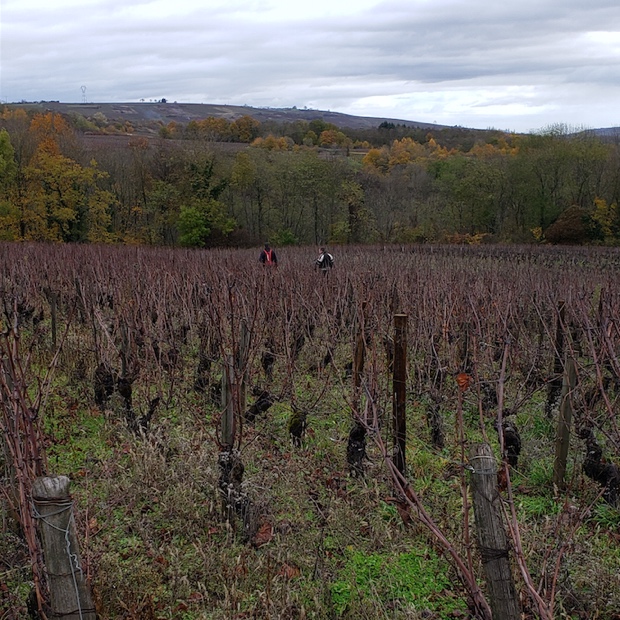

Côte Chalonnaise

The appellation Bourgogne Côte Chalonnaise dates from 1990 and recognizes the distinct personality of wines from the 44 communes in the northern part of the department of Saône-et-Loire, an area some 40 km long and between 5 and 8 km in width. Lying between the valleys of the Dheune and Grosne and open towards the South, the Côte Chalonnaise offers a less rugged landscape than those of the Côte de Nuits to the North. These gentle hills are outcrops of the Massif Central thrown up by the creation of the rift valley known as the Bresse Trench. In the North, limestone forms the East-facing slopes and there are outcrops of lias and trias formations (Saint-Denis, Jambles, Moroges). South of the granitic block formation at Bissey, the hillsides slope either to the East or the West until they reach the hills of the Mâconnais. The soils below the Bajocian limestone corniche are marly, with sands and shaly or flinty clays at the foot of the slopes where there are also some gravel outcrops. Altitudes vary from 250 to 350 metres.

Pruning in the Côte de Couchois


Bourgogne Côtes du Couchois

The Bourgogne Côtes du Couchois Régionale appellation covers still red wines produced in an area covering six villages that was defined in 2000. An application for AOC-status for the white wines is currently ongoing. The vines of Bourgogne Côtes du Couchois are located to the south of the Côte de Beaune and the Hautes Côtes de Beaune, on the left bank of the River Dheune, which separates it from the Côte Chalonnaise to the east. They grow on the best slopes in this rolling landscape, offering some remarkable viewpoints. The vines are divided up across south- and southeast-facing slopes at between 280-420m above sea level, with a climate marked by continental influences that leads to relatively late ripening. The soil is characterized by granite from the Primary period, clay sandstone and clay from the Trias, and limestone from the Lower Jurassic. Most of the vines in the Bourgogne Côtes du Couchois appellation sit atop versicoloured clay from the Trias.

Château de Couches, a.k.a Marguerite de Bourgogne, Chagny


Cave de Mazenay

Jean-Christophe Pascaud is the Directeur of the Cave de Mazenay, Union des Producteurs at Négociants de l’AOC Côtes du Couchois, located in Saint-Sernin-du-Plain in Saône-et-Loire. Their most particular wine is the Blason de Vair from the Château de Couches vineyards. Although located since its creation in the very heart of the Couchois appellation, the cellar’s approach is not limited to the work of a single PDO. But also to the production of a complete range of Bourgogne wines, mainly from Côtes de Nuits to Côtes Chalonaises, and of course also including Côtes de Beaune. Their range is extensive and includes the sale of bulk wines. Production includes Bourgogne Pinot Noir et Hautes-Côtes, Maranges et Santenay, Savigny les Beaune, Pommard et Meursault, Gevrey Chambertin, Vin des Hospices de Beaune, Bourgogne Aligoté, Viré-Clessé, Rully, Givry et Mercurey, Crémant de Bourgogne.

The Cave is intrinsically tied to one of Bourgogne’s most famous castles and medieval fortification, the Château de Couches, known as Marguerite de Bourgogne, near Chagny and classified as a historic monument. The château is a former fortress of the Dukes of Bourgogne dating back to the 11th century, with a dungeon, underground, garden and of architecture designed between the end of the 11th and the 19th century. Acting as a form of protection for the route between Paris and Chalon-sur-Saône, over the centuries, the château underwent many changes, but its defensive character remains intact. This fortress dominates the road and the surrounding countryside from the top of its crenellated towers and its keep.

Marguerite of Bourgogne was the granddaughter of King Saint Louis and daughter of the Duke of Bourgogne. She spent part of her youth in this place. Her marriage to the future Louis X le Hutin made her a queen of France but, convicted of adultery, she was locked away in the fortress of Château Gaillard in Normandy. Legend claims that after the death of her royal husband, secret negotiations between the crown and the powerful Duchy of Bourgogne would have enabled her to end her days in Château de Couches.


Click here to see all reviews for the wines of Cave de Mazenay

Cave de Mazenay Château de Couches Blason de Vair Clin d’Oeil 2016, Côtes du Couchois AOC

The fruit meeting acidity seam is woven properly in this right proper grippy pinot noir with less wood notice and more up front terroir in the transparency of this wine. These are the Bourgogne cherries and sense of terroir piques we’ve come to expect and translate to our own language of understanding. Tightly wound with much finer tannins than the other wines. A much better vintage in this particular case. Drink 2020-2025.  Tasted November 2019

Cave de Mazenay Château de Couches Chardonnay Clos Marguerite Passonnément 2018, Côtes du Couchois AOC

A wood at the forefront chardonnay for now with a greater reductive freshness than the ’17. A similar ripe, sun-worshiped quality though more structure and integration it would seem. The winemaking is better in this second incarnation of the company’s top chazrdonnay. This would impress the Bourgogne seeker of higher end chardonnay. Drink 2020-2024.  Tasted November 2019

Nathalie and Jean-Claude Theulot, Domaine Theulot-Juillot


Domaine Theulot-Juillot

Few producers in Bourgogne will offer a more profound, deep, philosophical and über historical delve into the triumvirate of terroir, lieu-dit and Climat as Jean-Claude and Nathalie Theulot. Their Mercurey estate is one of the regions great sleepers, founded more than 100 years ago by Émile Juillot. Granddaughter Nathalie and her husband Jean-Claude run the 12 hectare farm of Mercurey Villages and sense of place pinot noir that can age 20-25 years.


Click here to see all reviews for the wines of Domaine Theulot-Juillot

Vignobles Nathalie Theulot Côte Chalonnaise AOC 2018

From Nathalie and Jean-Claude Theulot, their négoce part of the estate’s production, here a transparent and simple expression of chardonnay. Drawn from Mercurey vineyards though outside of the limit to name this Mercurey AOC, this is fruit grown specifically for basic consumption. The richesse and finesse take it further than many with traditional and classic touching great modernity. Just a bloody delicious and balanced chardonnay. That’s the proper stuff. Drink 2019-2022.  Tasted November 2019

Domaine Theulot-Juillot Mercurey Premier Cru AOC Les Saumonts 2018

A red terroir planted to white now 35 years ago, then and now, without fear. Clearly a more mineral, saline and fine brine inducing plot of Mercurey for chardonnay. Truly rich and developed with ideal, precise and extract sidling phenolics. Ripeness is truly a virtue and exclamation exercised with confidence and also restraint. The wood is necessary and invited, always present while finding a balance between thermal amplitude and cooling comfort. Very young, in structure and at heart. Drink 2022-2029.  Tasted November 2019

Domaine Theulot-Juillot Mercurey AOC Lieu-Dit Château Mipont 2018

From two words, “Mi” and “Pont,” meaning a milestone or military marker at the bridge on the ancient Roman road from Chalon to Autun. The house or fort would have been a dwelling on the plot where the stone was set and now the lieu-dit carries the name. This is still Villages appellation and yet there’s a climb above in quality, from texture for sure but also calcareous excitement. It’s a complicated spot to define but there is more limestone because the soil washes away in a section due to the exposition and the “plunge” of that part. There’s a tension but not an anxious one, no rather the lift is simply of joy in a rapid heartbeat, from love, not consternation. Drink 2022-2028.  Tasted November 2019

Domaine Theulot-Juillot Mercurey AOC Premier Cru La Cailloute 1999

A blind pour without knowledge of Climat, lieu-dit or vintage. Certainly older than 2010, now with mushroom and truffle involved but still high in acidity. There is also the ferric quality that was noted in the Cailloute. The tannins are so limestone driven with a red earthiness that converts sugars to savouriness and fruit to umami, Life affirming, longevity defying and quality of all its constituent parts. This is why Jean-Claude and Nathalie do what they do and share it with people like us. Drink 2019-2024.  Tasted November 2019

The Côte Chalonnaise from Domaine de L’Évêché Quentin & Vincent Viticulteurs


Domaine de L’Évêché Quentin & Vincent Viticulteurs

In the 17th century the Clos de L’Évêché was part of a larger property owned by the Bishop of Autun. Vincent Joussier purchased Domaine de L’Évêché in 1985 and runs the estate today with his wife Sylvie and son Quentin. The Côte Chalonnaise vineyards cover 14 hectares across several appellations: Mercurey, Bourgogne Côte Chalonnaise, Crémant de Bourgogne, Coteaux Bourguignons and Bourgogne Aligoté. Most of the production comes from pinot noir (80 per cent) and chardonnay (15) but also small amounts of aligoté and gamay.


Click here to see all reviews for the wines of Domaine de L’Évêché Quentin & Vincent Viticulteurs

Domaine de L’Évêché Quentin & Vincent Viticulteurs Mercurey AOC Les Ormeaux 2017

Just the terroir makes the difference,” explains Vincent Joussier, “and the age of the vines.” They are in fact 10 years older and handle their wood compliment with greater acceptance and ease. Still quite a creamy chardonnay but this time with lemon curd, dreamy demure and finer spice. A much more refined and defined wine with much greater sense of place. Certainly the Premier Cru of Vincent’s blancs. Drink 2021-2025.  Tasted November 2019

Domaine de L’Évêché Quentin & Vincent Viticulteurs Mercurey AOC Les Murgers 2017

Now into a pinot noir with some tension as purposed by a calcaire Mercurey terroir, as opposed to the simpler argile in the Côte Chalonnaise. Not just grip, tension and tannin but a fineness in those chains to extend the future’s possibilities. Fruit is relatively dark but there is a persimmon flavour and texture mixed with something citrus undefined. Maybe pomegranate but also wooly-earthy, like red Sancerre. Quite a complex wine with a sour complexion. Needs time to integrate to be sure. Returns to earth and fineness at the finish. The length is outstanding. Drink 2021-2025.  Tasted November 2019


Cave des Vignerons de Buxy

Bourgogne’s most impressive cooperative producer is none other than Cave des Vignerons de Buxy, established in 1931 and easily the largest in the Côte Chalonnaise. Located in the North of the Mâconnais, the “cave” groups together fifty or so family producers associated with the Cave des Vignerons de Buxy since 1976. The range of wines from the Mâconnais and the Côte Chalonnaise is nothing less than extensive. At least 20 white, red and rosé appellations are bottled and represented. At the forefront of it all is the passionate Rémi Marlin, he of knowledge encompassing all things Mâconnais and especially Côte Chalonnaise.
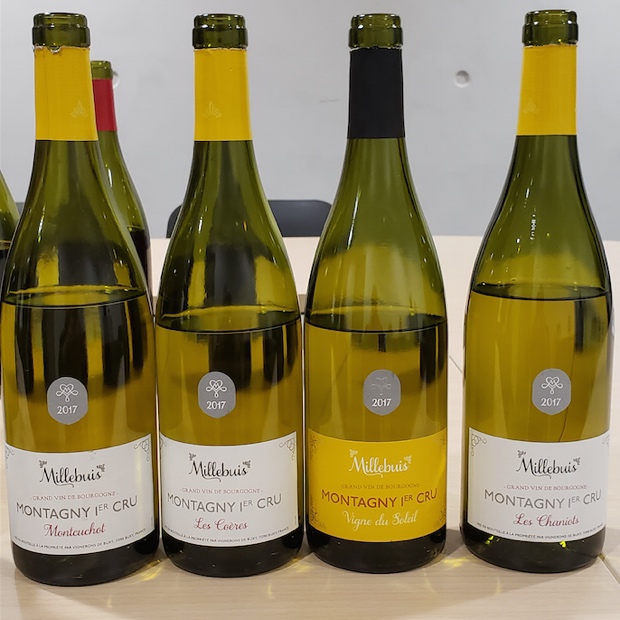
 

Click here to see all reviews for the wines of Cave des Buxy

Cave des Buxy Millebuis Côte Chalonnaise AOC 2017

A very different vintage but more backbone in 2017. Even fresher and even now than the 2018 with more than 90 per cent of the growers’ fruit the same. Less than 10 per cent fermented in barrel because the vintage served up the possibility and the chance taken was a prudent and ambitious one. Fresh and snappy, really and truly perfectly Côte Chalonnaise. Drink 2019-2021.  Tasted November 2019

Cave des Buxy Millebuis Côte Chalonnaise AOC Champ Cardin 2018

On the plateau up to the village of Culles (des Roches) only seven kilometres from the Cave. Champ Cardin makes use of its higher elevation at 300-plus metres above sea level. There is more fruit and acid attack along with a longer chain of extract  giving sharp mineral notes that also come through caused by less topsoil and more exposed rock in the upper reaches of the vineyards. Well-balanced chardonnay from a solid lieu-dit. Drink 2020-2023.  Tasted November 2019

Cave des Buxy Millebuis Montagny AOC Premier Cru Montcuchot 2017

Located at the entrance of “the circus,” in front of the amphitheatre, oriented south and southeast. At 350m and with the aspect it’s an early maturing Climat, of 12.3 hectares on steep hillsides with the vines are planted at the top of the slopes. Quite “clayeux,” as in chalky with that great Montagny richesse. You feel like you’re chewing this chardonnay long after it has left your mouth. Drink 2020-2026.  Tasted November 2019

Cave des Buxy Millebuis Côte Chalonnaise AOC 2016

The vintage for pinot noir to deliver and express the best of both worlds it is the sense of piquing spice that separates this Côte Chalonnaise from the pack. There’s also an earthy volatility that grounds, elevates and keeps it real. Chalky finish as expected in a pinot of really solid architecture. Drink 2020-2024.  Tasted November 2019


Cave des Buxy Millebuis Givry AOC Cur Clos Jus 2016

A high level of iron-oxide is contained withy the clay of Cur Clos Jus, just below the road from Givry to Mercurey. It’s a seven hectare plot re-planted in the late 70s early 80s and farmed by only five growers. Two years of age (more than the ’16) is finally showing some advancement and even a moment of relenting behaviour. A few portents for the future are hidden and then released in this bloody, meaty and piquillo-paprikas of a Givry. Drink 2020-2026.  Tasted November 2019
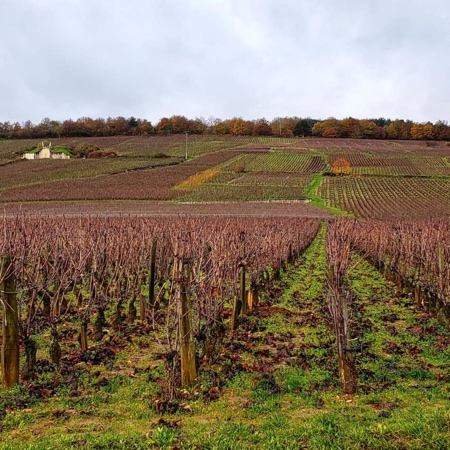

Côte de Nuits

The Côte de Nuits and Hautes Côtes is predominately cultivated with pinot noir and holds most of the region’s Grands Crus. Much of the small production of white wine is chardonnay though aligoté is also grown. The reputation of the appellations of the Côte de Nuits is firmly established. Some have even gone so far as to name this exceptional terroir the Champs-Elysées of the Bourgogne winegrowing region. This sophisticated pseudonym also explains the reality of the terrain. Between Dijon and Corgoloin, the wines grow along a narrow strip of hillside that is around 20km long and in parts, just 200 meters wide.
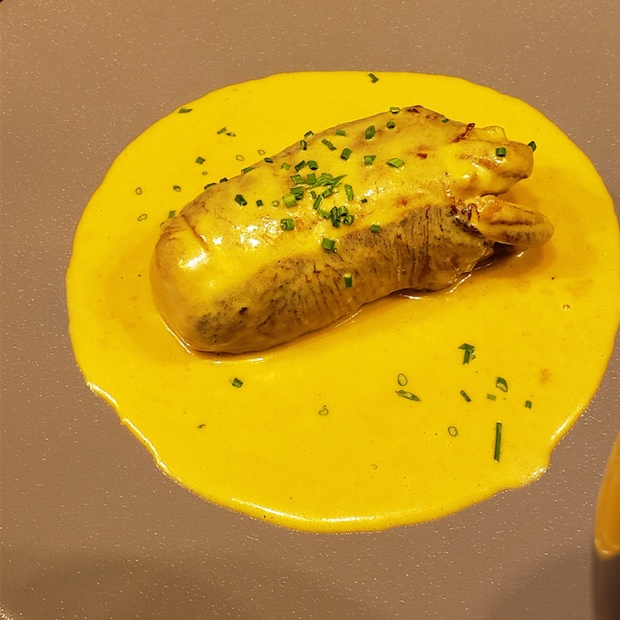
Andouillette


Bourgogne Côte d’Or

The vines of the Bourgogne Côte d’Or appellation extend across an area 65km long and between 1-2km wide, from Dijon to the Maranges. Geographically speaking, the Côte d’Or (golden slope) covers the Côte de Beaune and the Côte de Nuits. The reputation of the wines grown here is such that the department was named after the area during the Revolution. Vines have been grown here since antiquity, and were subsequently expanded by religious orders, the Dukes of Bourgogne, the wine merchants.

In the 19th century, new means of transportation facilitated and modernized the sale. The establishment of the AOC system led winegrowers to build a hierarchy of terroir on the Côte, thus marking out specific areas and protecting their Crus. In 2017, producers of the Régionale appellation Bourgogne from Côte de Nuits and Côte de Beaune were granted the extended name of “Bourgogne Côte d’Or”, their wines thus becoming Bourgogne Identifiés within the Régionale Bourgogne AOC, limited to specific geographical areas within the Bourgogne appellation.

If you ever find yourself in Bourgogne, Côte-d’Or, Nuits-Saint-Georges and Curtil-Vergy do not miss the cuisine and the playlist of Olivier Lebail. Grand jour! ~ #aupetitbonheur #aubergebourguignonne


Domaine Bart (Pierre)

Fifty years after André Bart was farming only six hectares of vines, sixth generation Pierre Bart is now the custodian in Marsannay-la-Côte, working 22 hectares of vines.  After André’s children Martin and Odile arrived in 1982 they founded a farming association for combined operations in 1987, to continue operating as the GAEC.  Pierre Bart is a community leader in the process to recognize the more important vineyards of the Marsannay appellation as Premier Cru. Approximately one in four identified blocks in separated bottlings of the appellation are up for Premier Cru status consideration and while his intention is to highlight these Climats, he is also pragmatic about which ones should remain in the Village appellation. The most likely to suceed are Champs Perdrix, Champ Salomon, Clos du Roi, Longeroies and Montagne.

Click here to see all reviews for the wines of Domaine Bart (Pierre)

Domaine Bart (Pierre) Bourgogne Côte d’Or AOC 2018

Bourgogne Côte d’Or AOC began in 2018 after years of incremental appellative movement. There was Bourgogne AOC in 1965, followed by Marsannay AOC in 1987. The entire cuvée comes from fruit grown in Marsannay, mostly on sandy soils created by washes coming down from the hills. In this case Combe Grand Vaux and Combe Semetot. If 2018 seemed open than ’17 is fully un-shuttered and doing great business. Interesting how on the calcareous soils you always get a chalky feel but here just smooth, silky and immensely amenable. What a great pour by the glass right here in so many ways to justify this from Marsannay in Bourgogne Côte d’Or AOC clothing. Fine and delicate.. Drink 2019-2021.  Tasted November 2019

Domaine Bart (Pierre) Marsannay Rosé AOC 2018

Marsannay Rosé AOC began in 1987 after years of incremental appellative movement. There was Bourgogne AOC in 1965, followed by Marsannay AOC in 1987. It can be drawn from both the Villages and the Bourgogne appellations, a particularity specific to labelling it Marsannay Rosé. The fruit is drawn from sandy soils and made from the Marsannay pinot noir. Two thirds direct press and one third (48 hour ) maceration. Not a huge quantity made in the appellation and here with plenty of fruit undercut by a current or streak of sweet salinity. Tons of flavour and unlimited drinkability. Drink 2019-2020.  Tasted November 2019

Domaine Bart (Pierre) Marsannay AOC La Montagne 2017

From a very small, seven barrel cuvée and a tiny parcel near the northern limit closest to the hill. There is some primary calcaire mixed into the white oolite dominated soil. Twenty per cent whole bunch fermentation and 20 per cent new oak with the accumulation result being a notable raise and rise in this Marsannay Villages Climat’s fine acidity-tannin relationship. There’s a study in here in consideration of Premier Cru though one that sits on the fence. A little too amenable and subtle of appellative grip to be in the running. Drink 2020-2026.  Tasted November 2019

Domaine Bart (Pierre) Marsannay AOC Au Champ Salomon 2017

From near the mountain and the place (Champ) where people were killed. Here is the Marsannay that I personaly have come to know and expect, laced pulled so tight but there is a quality to Bart’s fruit that is consistently woven through the Climats. Clearly a matter of hands off/hands on winemaking playful of whole bunch, new wood, temperature adjustment and easy movement work. These are wines of great pleasure and while the structure here moves the needle to a 10-15 year aging potential there is no question the pleasure is early and almost instant. There’s something very special about that. Drink 2021-2030.  Tasted November 2019

Signs and portents. First an afternoon Chevannes rainbow and then more examples of on-a-want-to-know-basis #hautscotesdenuits @vinsdebourgogne ~ Oh, some pretty stylish Climat and Grand Cru as well from Domaine #DavidDuband


Bourgogne Hautes Côtes de Nuits

At one time apparently doomed to disappear the vineyards of the Bourgogne Hautes Côtes de Nuits have since the 1950s undergone a patient, courageous, and ultimately successful restoration. They are situated overlooking the slopes of Gevrey-Chambertin and extending as far as the wood of Corton, the Hautes Côtes de Nuits. Little villages nested in the forest fringes lay waiting to be discovered. The vineyards located on a plateau behind the famous Côte de Nuits  and village of Nuits-Saint-Georges at altitudes of 300 to 400 metres cover all these slopes which enjoy favourable exposures and proudly preserve their proof of nobility going back to Vergy and the abbey of Saint-Vivant.
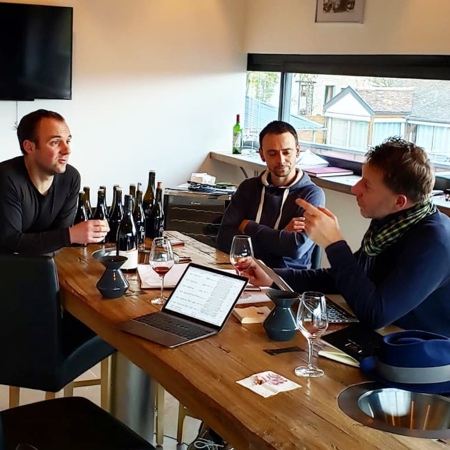
High-level discussion at Domaine David Duband


Domaine David Duband

The domaine was created in 1991 in the footsteps of David’s father Pierre who first started in 1965. From 1995 on and after his father’s departure the estate made several purchases and extended to making wines off of 17 hectares of vineyards. No less then 23 prestigious appellations are employed, including important Côtes de Nuits Premier and Grand Cru. The wines cover the Grand Cru of Echezeaux, Chambertin, Charmes-Chambertin and Clos de la Roche; the Premier Cru of Chambolle-Musigny Les Sentiers, Nuits-Saint-Georges Les Procès, Aux Thorey and Les Pruliers, Morey-Saint-Denis Clos Sorbè; Villages from Vosne-Romanée, Gevrey-Chambertin; Hautes Côtes de Nuits. The farming is organic since 2004.

Click here to see all reviews for the wines of Domaine David Duband 

Domaine David Duband Pinot Noir Louis Auguste Bourgogne Haut-Côtes de Nuits AOC 2017

Tasting with Laurent Berger. Located in the village of Chevannes, next to the Côte de Nuits with some vineyards in Nuits-Saint-Georges and some in Savigny. A négoce of most of the important Côte d’Or and Côtes de Nuits appellations. Here from the Hauts-Côtes at the top the south facing hill off of 35 year-old vines growing on full calcaire slopes. Mixes a wealth of fruit and tart acidity sent straight to the cerebral cortex, crux and cross of the heart. Well made, clean and ideally balanced. Drink 2020-2024.  Tasted November 2019

Domaine David Duband Morey-Saint-Denis AOC Premier Cru Clos Sorbè 2018

Clos Sorbè the Climat is located right in heart of Morey’s interior, right next to the cemetery. Now the rose’s petals are macerating with the cherries in a pinot noir of classic Bourgogne depth and understanding. The structure is quite elegant in a focused and rich way while weight seems developed by vine age in the 50-55 year range. An impressive Premier Cru of true blue cause, personality and effect. Drink 2022-2028.  Tasted November 2019

Domaine David Duband Grand Cru Chambertin AOC 2018

Taking a side step from Chames-Chambertin is the more transparent and seemingly lighter and more delicate Chambertin. Looks and first impressions are deceiving for the power lies in the aromatic complexity, garden and wild field floral plus a gastronomy that incites memories but also machinations of the great demi-glacés imaginable, The fruit pectin and sweet cerebral enhancements are at the top of this portfolio so if others were seductive and enticing this Chambertin is off the charts. Seamless, endless and utterly fine. Structure just at the precipice of pinot noir. Drink 2023-2036.  Tasted November 2019

Domaine David Duband Grand Cru Charmes-Chambertin AOC 2018

Wholly antithetical to the 2018 with much more Bourgogne, Duband and Charmes fruit in the delicate vein of great and sheer transparency. This takes an organza line along a finely threaded and woven seam. There can be no mistaking the understatement of the vintage and while it may not strike an arrow into the hearts of the deducted and seduced there can be no mistake found here. This is the pinnacle of this appellation in fine dress and perfectly classic vernacular. Drink 2022-2034.  Tasted November 2019

Julien Cruchandeau and his Pinot Noir


Domaine Cruchandeau

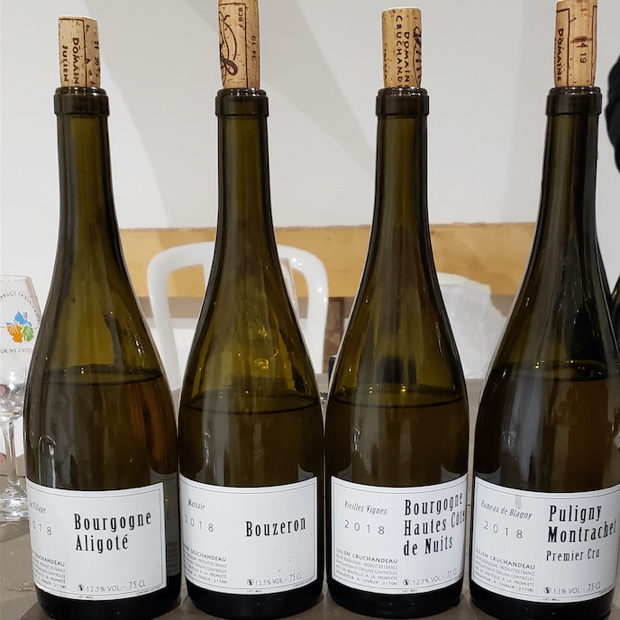
The estate was established in 2003 by Julien Cruchandeau and his first vines were purchased in Bouzeron. In 2007 expansion saw to the buying of a house in the village of Chaux, located in the Hautes Côtes de Nuits, with large cellars and an extensive vat room. In 2009 and 2010 investment helped to establish an agricultural land group (GFA) “Aux Saint Jacques,” thus extending the estate from Nuit-Saint-Georges to Savigny-les-Beaune. Julien grows chardonnay, pinot noir and some pinot blanc in the Hautes Côtes de Nuits, with four and a half hectares in the appellation that includes two parcels in the Villa Fontaine, a.k.a the mini Corton. Red parcels are Les Cabottes and Les Valançons, the latter being one you can see straight from the tasting room window at the estate of David Duband. Whites are made from Bourgogne Aligoté, Bouzeron and Puligny-Montrachet. In addition to the Hautes Côtes de Nuits other reds produced are from Savigny-Les-Beaune, Ladoix and Nuits-Saint-Georges.
 

Click here to see all reviews for the wines of Julien Cruchandeau

Julien Cruchandeau Haut-Côtes de Nuits AOC Vieilles Vignes 2018

From four and a half hectares in the appellation, including two parcels in the Villa Fontaine, a.k.a the mini Corton. Villa Fontaine plus if you will. It’s a top essence soliciting exposition that makes for a great floral chardonnay and one of pretty impressive finesse. Takes care of the vintage with great care and no ambition to overdue or over-exaggerate. Wood is in the background and at the finish, spices are very far eastern. Reminds of Indonesian sasak fruit as only a few chardonnay can and do. Different and exotic stuff. Drink 2019-2022.  Tasted November 2019

Julien Cruchandeau Puligny-Montrachet Premier Cru AOC Hameau de Blagny 2018

Very close to Meursault in every way and the smoulder is so very Puligny, as it should be with Julien’s exotic twist and turn of the storied fruit. A parcel like this does not come along every day so the coup is in Julien’s hands and the wine celebrates the possibilities. Takes your breath away for a fleeting moment but stays with you for minutes. Just 900 bottles were made and there are notes of toasted kernel or nut plus a recently extinguished candle. The suggestion says that the future may hold out for the possibility of a touch of honey. Drink 2021-2027.  Tasted November 2019

Julien Cruchandeau Haut-Côtes de Nuits AOC Les Valançons 2018

You can see Les Valançons straight from the tasting room window at the estate of David Duband. Here you find one of Bourgogne’s great terroirs deemed a satellite and not considered worthy of others fetching 10 times the price. Thirty to 40 year-old vines equate to exquisite south facing slope fruit to this glass and the mineral streak running through violets is just what you want and what you can drink for 10 plus years. Pay attention to the threefold relationship between Haut-Côtes de Nuits, Cruchandeau and Valançons. Superb. Drink 2021-2030.  Tasted November 2019

Julien Cruchandeau Nuits-Saint-Georges AOC Aux Saint Jacques 2018

Th Climat is next to Vosne-Romanée at the northern limit of Nuits-Saint-Georges and clearly raised on great promises. Julien has taken the exceptional ripenesses of the vintage and turned those promises into possibilities with pinot noir that effects juicy behaviour without maximum effort. And so probable is quickly becoming a reality. Very primary however and almost like it’s still in barrel. Just has that feel, like it’s not finished yet, still working, just a child. Speaks to the structure and what the future more than very likely holds. Just need the wood to begin a settling for the next phase to begin. Welcome to modern Bourgogne with one foot always entrenched in the past. Drink 2021-2029.  Tasted November 2019

With John Szabo at La Tâche

Good to go!

Godello

Château du Clos de Vougeot, Côtes de Nuits

Twitter: @mgodello

Instagram: mgodello

WineAlign

Tasting Ontario Part Five: Varietal Whites and Appellative Blends

There were 33 medals handed out to White Blends at the 2018 WineAlign National Wine Awards of Canada; seven Golds, 17 Silvers and nine Bronze. Quietly, stealthily and without great fanfare the strength of the white blend category has taken NWAC18 by storm. The quality of the wines entered has never been higher, visibly and notably spread across the country. The time has come to establish party lines, to create truly parochial white appellative blends under appropriately chosen names. Nova Scotia has long been there with their apt-scripted Tidal Bay. Ontario and British Columbia should heed the economic and marketing success enjoyed by their maritime cousins and join the appellative party.

Related – Results of the 2018 WineAlign National Wine Awards of Canada (The Nationals): Best of Blends: Red, White and Tidal Bay

The French regions of Bordeaux and the Rhône Valley are clearly the benchmarks and the inspiration for Canadian-made emulative examples, first from a sauvignon blanc-sémillon connection and then with blends that make use of marsanne, roussanne and viognier. A testament to expatriate excellence is noted in the seven overall Gold Medals in this year’s judging and no less than six others finishing at high Silver status on the cusp of Gold. I for one awarded five 90-plus scores to wines I clearly deemed worthy of such accolade and esteem.

It is interesting to note that White Blends centred by sauvignon blanc in the Okanagan Valley rely on much higher percentages of sémillon than their counterparts in Ontario. The simplest explanation tells us that the grape variety has trouble surviving harsh Ontario winters, especially when we look back at 2015 and 2016 when much of the province’s vines were killed by sub-25 degree temperatures. But it’s more than that. In B.C. sauvignon blanc can get pretty ripe, tropical and zaftig so it is sémillon that helps to mitigate, temper, inject a flinty-smoky-mineral streak and ultimately bring balance to the relationship.

There was a time not too long ago when after the best juice was chosen for varietal wines producers then needed to find a way to use up the dregs of their white ferments. White blends came about out of economic necessity, but like Rosé production in this country so many are now produced with a purpose. As a farmer, if you know specific blocks of sauvignon blanc are destined to join with other plots of sémillon you’re going to prune, pluck, green harvest and ultimately pick in very specific ways. Appellative blends have become a year round occupation. That much is clear.

Related – Tasting Ontario Part Four: Gamay

The top scorers at this year’s Nationals have been awarded to seriously and thoughtfully crafted wines. The winners are not entry-level, introductory products at the lower or lowest common denominational levels. They are not simple aromatic blends of vague fruit and sweet impression, in fact many are graced by beneficial and forward thinking structure. The future certainly looks white blend bright. Here are 36 recently tasted Ontario varietal whites and appellative white blends.

Summer spread

Sprucewood Shores Pinot Grigio 2017, VQA Lake Erie North Shore, Ontario (426577, $14.95, WineAlign)

Just a hint of contact it would seem, leading to a not so obvious result in platinum gold hue but more so into the floral nature of its aromatics. Some sweet melon and pear fruit with good concentration and equal if necessary acidity. Can certainly drink a glass of this. Drink 2018-2020.  Tasted blind at NWAC18, June 2018  sprucewoodshores  @SprucewoodWine  @SprucewoodShores

Château Des Charmes Aligoté 2017, VQA Niagara Peninsula, Ontario (296848, $15.95, WineAlign)

The Château des Charmes self-proclaimed “pinot grigio” alternative was never more truthfully written than in reference to this 2017 aligoté. Screwy wet summer merging into crazy hot autumn weather made for one of the latest harvest dates in the estate on the York Road in St. Davids storied history. The rare Niagara Peninsula varietal vines are planted primarily at St. David’s Bench and Paul Bosc Estate vineyards but more are going in, surely out of testimony to the sales of this more than apropos local grape. Surely no one knows aligoté like the Bosc family and yet even they could not have seen this peachy, melony, fleshy and ripe one coming. It’s like a hyperbole of Val do Salnés in Rias Baixas albariño, crisp, aromatic and marched along by natural acidity. It seems sweet but trust me it’s not. It’s the long-hung, fully phenolic fruit and higher pH talking. This is not your average Bourgogne aligoté, searing, taut and intense. It’s a departure for the house but if it could always be made this way I think they would gladly go for the style. Waxy finish too, bringing an added note of complexity. Very cool. Drink 2018-2020.  Tasted July 2018  chateaudescharmes  @MBosc  Château des Charmes

Nyarai Cellars Pinot Gris 2016, VQA Niagara Peninsula, Ontario (Winery, $20.95, WineAlign)

This is quite a striking, rich, creamy and yogurt-leesy, a.k.a. Loire chenin blanc, fixedly in the guise of pinot gris. More skin contact then some plus so much yeasty texture combine to make for the fullest of an Ontario gris expression. This is the sort of feeling that normally comes from multi-varietal, dry white appellative Niagara blends but in a solo pinot gris it’s nothing short of remarkable. Drink 2018-2020.  Tasted February 2018  #nyaraicellars  @NyaraiCellars  Nyarai Cellars

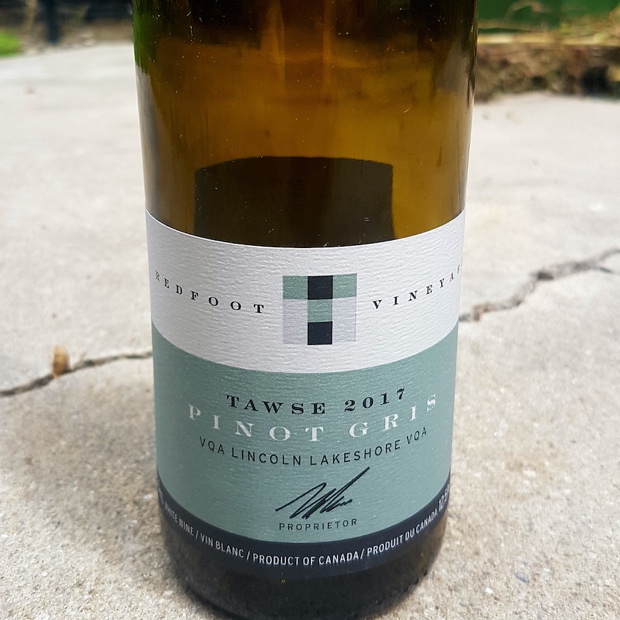
Tawse Winery Pinot Gris Redfoot Vineyard 2017, VQA Lincoln Lakeshore, Ontario (Winery, $24.95, WineAlign)

From out of the dense Lincoln Lakeshore clay comes this flush and luxurious pinot gris, literally rolling in it. It makes for a highly aromatic take on the grape, all in for gris and not to be confused with lighter, less meaningful grigio. The Redfoot Vineyard is clearly earmarked for such a purposed way of interpretation and though the clays of the double L sub-appellation are best with syrah and cabernet franc there can’t be any reason not to allot 10-15 per cent of acreage to white plantings. In the hands of Paul Pender it seems obvious that pinot gris is the one. This dry take is just about perfectly right, with citrus and wet stone hanging around the fruit. Leaner might be more suitable but ultimately it’s balance that is most important for this rich fruit raised by the pottery soil. Drink 2018-2020.  Tasted June 2018  tawsewinery  @Tawse_Winery  @tawsewines

G.Marquis Sauvignon Blanc The Red Line 2016, VQA Niagara Peninsula, Ontario (Winery, $13.95, WineAlign)

Big love, big fruit, all about texture and juicy fruit on the palate but with some fine, wound acidity. Excellent. Drink 2018-2021.  Tasted blind at NWAC18, June 2018   g.marquisvineyards  @GMarquisWines  @G.MarquisVineyards

North 42 Degrees Estate Winery Sauvignon Blanc North 43 2017, VQA Niagara Lakeshore, Ontario (547836, $14.95, WineAlign)

Quite the character this North 43/North 42 degrees sauvignon blanc, fruit amassed on the nose, from canteloupe to underripe passion fruit with a wet, coppery alloy build that translates across latitudinal lines onto the palate. The metallic flavours are undercut by an herbal tonic with a spoonful of tinned fruit cup. Drink 2018-2019.  Tasted April 2018  north42wines  @StratusWines  North 42 Degrees Estate Winery & Bistro 42  @north42degrees

Château Des Charmes Sauvignon Blanc 2017, VQA Niagara Peninsula, Ontario (296848, $15.95, WineAlign)

Interesting take, quite a mineral salt wiring through the green apple fruit, here some feel of barrel but not the malo-creamy effect created. Goes quite juicy and crunchy without resorting to tart. A bit more acid intensity would have sealed the deal. Drink 2018-2020. Tasted blind at NWAC18, June 2018    chateaudescharmes  @MBosc  Château des Charmes

Lakeview Cellars Sauvignon Blanc 2016, VQA Niagara Peninsula, Ontario (483958, $17.95, WineAlign)

An interesting sauvignon blanc for the Peninsula because the pungency is quite Marlborough but the relaxed state and relative weight is all Niagara. Very easy drinking as far as SB is concerned with notable extraction and a green streak, herbal mostly, running through. Drink 2018-2019.  Tasted April 2018  lakeviewwineco  @LakeviewWineCo  @LakeviewWineCo

Kacaba Susan’s Sauvignon Blanc 2017, VQA Niagara Peninsula, Ontario (Winery, $17.95, WineAlign)

Quietude in such a lovely way, mineral meets orange blossom, soft and amenable through the middle, quiet and mellow, fades off slowly, into the sauvignon blanc sunset. Drink 2018-2019.  Tasted blind at NWAC18, June 2018  kacabavineyards  @KacabaVineyards  Kacaba Vineyards and Winery

Stratus Wildass Sauvignon Blanc 2016, VQA Niagara Peninsula, Ontario (376814, $18.95, WineAlign)

t’s more Stratus than sauvignon blanc, even by regional varietal standards, whatever that is, due to the ripe flavours and long-developed phenolic ripeness. Ultimately it is the quotient of a cup of fruit cocktail and an energy level that serves to encourage a sitting back with a glass in meditative state more than a mind stimulated to invigorate. Drink 2018-2019.  Tasted April 2018  stratuswines  @StratusWines  @StratusWines

Organized Crime Sauvignon Blanc 2016, VQA Beamsville Bench, Niagara Peninsula, Ontario (396275, $18.95, WineAlign)

Sometimes sauvignon blanc goes tropical and green at the same time, or at least it is the two poles by picked grapes that combine for such a layering. Citrus and bitters mix into the two sides and all the components walk along, separate and alone together, without making any real contact. Maybe a year will tie the room but the acidity is low so waiting is a counterintuitive idea. Drink 2018.  Tasted April 2018  organizedcrimewinery  Organized Crime Winery

Henry Of Pelham Fumé Sauvignon Blanc 2016, VQA Short Hills Bench, Ontario (444268, $19.95, WineAlign)

With a wink and a nod to Mondavi this lays the lumber in smoulder upon sauvignon blanc with just a wisp, like cold smoking salmon so that it breathes cool and mentholated, without char and a real smoky feeling. The fruit is light and even a bit precious, the weight quite lithe and the overall notation one of gentle demure. You have to appreciate the deft, slight of winemaking hand approach. Drink 2018-2020.  Tasted February 2018  henryofpelham  @HenryofPelham  Henry of Pelham Family Estate Winery

Meldville Wines Sauvignon Blanc 2016, VQA Lincoln Lakeshore, Ontario (Winery, $20.20, WineAlign)

Derek Barnett’s sauvignon blanc may be the fleshiest of the Ontario lot, ripe, tropical and impressively coaxed from off the vine. The phenolic aggregate is a 2016 triumph even while it dances a funky step into botrytis-like rhythms. Notes here and there of herbs and tonics add to the mystique and the rapport. So bloody interesting, singular and meditative for the grape. Drink 2018-2021.  Tasted February 2018  meldvillewines  @meldvillewines  Meldville Wines

Peller Estates Private Reserve Sauvignon Blanc 2017, VQA Niagara Peninsula, Ontario (Winery, $20.20, WineAlign)

Massively fruit aromatic sauvignon blanc, all gathered in a tin cup found in the exotics isle. Juicy melon meets passion fruit and so much more in between, then with a side of metalloid. Raps so commercially viable and succesful it hurts my ears and my eyes. “Any awards show or party I’ll get fly for it, I know that it’s coming I just hope I’m alive for it…I just wanna be, I just wanna be.” Remarkable success for sauvignon blanc, in Ontario. Drink 2018-2020.  Tasted blind at NWAC18, June 2018   pellerwines  @PellerVQA  @PellerEstates

Redstone Sauvignon Blanc Limestone Vineyard 2016, VQA Twenty Mile Bench, Ontario (Winery, $23.15, WineAlign)

There isn’t a ton of sauvignon blanc grown up on the Limestone Ridge but as a top level Twenty Mile Bench riesling terroir it changes the varietal course with considerable concern. As far as it goes this is quite an alloy challenged, mineralized expression, not quite flinty but certainly feeling like a mouthful of richly compressed, calcareous stones. The fruit is so anti-tropical it’s almost reductive and most certainly draws its tang from the soil. Such a curious sauvignon blanc with almost no frame of reference, save for a moment to consider Sancerre, but yet another successful effort from winemaker Rene Van Ede. Drink 2018-2021.  Tasted February 2018  redstonewinery  @RedstoneWines  Redstone Winery

Traynor Sauvignon Blanc 2016, VQA Prince Edward County, Ontario (Winery, $25.00, WineAlign)

Reductive, not flinty or smoky, but reductive. This carries the gooseberry-passion fruit suitcase of fruit. I like the fruit-acid balance and the way it delivers semblances of tart and tangy. Really nicely judged wine. Drink 2018-2021.  Tasted blind at NWAC18, June 2018   traynorvineyard  @TraynorVineyard  @traynorfamilyvineyard

Hidden Bench Fumé Blanc Rosomel Vineyard 2016, Niagara Peninsula, Ontario (68825, $29.95, WineAlign)

The vineyard gains another year, the farming and winemaking too and so fumé blanc out of Rosomel gets better, as things often do with age and wisdom. ’Twas a great year for growing grapes on this amphitheatre of a vineyard block up on the Bench and no love lost for sauvignon blanc neither. There is tension, wound intensity and fierce competitiveness in the ’16, perhaps the most Sancerre and least Pouilly-Fumé it has ever been and so the declaration leans to saying it is “a mineral year.” Nothing against the fruit because the personality cult of lean, crisp and crunchy is in full order, though each sip after sip speaks in those Sancerre or Chablis by way of Saint Bris terms. Stellar, as always, in continuance, moving towards the best it can be. Drink 2019-2024.  Tasted May 2018  hidden bench  markanthonyon  @HiddenBench @MarkAnthonyWine  Hidden Bench Estate Winery  Mark Anthony Wine & Spirits

Trius Showcase Clean Slate Sauvignon Blanc Wild Ferment 2016, Niagara-on-the Lake, Ontario (Winery, $31.95, WineAlign)

Quite flinty, barrel-aged sauvignon blanc, buttery nearly, banana and cantaloupe. So much fruit along with the toasty-creamy barrel. Almost perfectly in balance but it’s wildness and sweet-yeasty lees cumulative turns to a bit of caramel and only accentuates the vanilla. A really cool take on the grape with exceptionally developed flavours. Drink 2018-2019.  Tasted blind at NWAC18, June 2018   triuswines  @TriusWines  @TriusWines

Not all screw cap closures are created equal

Two Sisters Sauvignon Blanc 2017, VQA Niagara Peninsula, Ontario (Winery, $34.00, WineAlign)

Excessive tightness of screw caps does not allow any kept reduction to blow off so winemaker Adam Pearce closed here with a screw cap threading just a bit less rigid. A fine detail but an important one and the only wine to receive this attention, so just a minute amount of oxygen transfer can occur. Just released 11 days ago. The big change is now a fruit vineyard blend that is 70 per cent Four Mile Creek and (30) Twenty Mile Bench. From a cool, wet and rainy season so really it’s all about the grower in a vintage where the varietal struggled with mould and mildew. Eight per cent barrel ferment was used to augment the leanness, for body and peace of mind. A bit reductive and tight with good acid structure to the peach-yellow-plum-kumquat fruit. Good linger. Delicious. Drink 2018-2021. Tasted July 2018    twosisters_vineyards  @TwoSisters_wine  Two Sisters Vineyards

Fielding Estate Gewürztraminer 2016, VQA Niagara Peninsula, Ontario (146753, $19.95, WineAlign)

Fielding’s pays respect to how gewürztraminer has to be made in Ontario with a fleshy, off-dry style though making sure to counterbalance with a fine dose of acidity. From dosage to dose it dances the do-si-so with high quality peach-litchi fruit and grapefruit acidity. If you’re in need of a white to compliment some high-octane, multi-seasoned and possibly spicy food, Fielding’s is textbook and will do the work. It’s a gewürztraminer you can trust. Drink 2018-2020.  Tasted January 2018  fielding winery  richiewine  @FieldingWinery  @RichieWine  Fielding Estate Winery

Redstone Gewürztraminer 2016, VQA Niagara Peninsula, Ontario (Winery, $21.95, WineAlign)

A sip sends a warm shiver through from a simple off-dry gewüztraminer attack more flat than round earth, trying hard to stay on the dry though the bitters and creamy fruit deliver more sweetness than what might have been intended. Some skin contact deals peach skin and those bitters while the acidity quietly abides. It’s nearly, almost and close to cloying by honey mixed in concentrate with a note of alkali. Everything lingers. Drink 2017-2019.  Tasted October 2017  redstonewinery  @RedstoneWines  Redstone Winery

@mackbrisbois brought the past, the present and the future @trailestatewine to taste. Thanks Mack! Indeed, to my pleasure and my education.

Trail Estate Gewürztraminer 2016, VQA Niagara Peninsula, Ontario (Winery, $30.00, WineAlign)

Few winemakers in Ontario are as curious, aloof and serious about making gewürztraminer like this,”looking through that window, into the delicate place.” The changing of mind is so important during the process because it shows an understanding of both mistake and possibility. Mackenzie Brisbois takes a spoon of Niagara Lakeview fruit (Glen Elgin/Wismer farmed), puts it through a whole cluster press, a fermentation in old oak and then wait a minute. An about face transfer to stainless steel tank (just after a few days) because it is too reductive, but then sends it back to old wood where it remains for about nine months. Bottles back in September of 2017. The result is a gewürz that finishes dry (under 3 g/L) so delicate for a customer’s palate, with lots of lemon and lime but never searing, perfect for cold smoked or tataki prepared salmon. Bitter pith note but it dissipates, as does the acidity so keep in mind this is floral and fine. “The delicate place. The questions it raise. The delicate place yeah.” Enjoy it now and gimme fiction. Drink 2018-2021.  Tasted April 2018  trailestatewine  mackbrisbois  @TrailEstateWine  @MackBrisbois  Trail Estate Winery  Mackenzie Brisbois

Trail Estate Skin Contact Gewürztraminer 2016, VQA Niagara Peninsula, Ontario (Winery, $40.00, WineAlign)

The 2016 gewürztraminer fruit is from the Werscht’s (Between the Lines) Niagara farm, super ripe at 24 brix and aromatics on steroids. It clocks in at a healthy 13.5 alcohol, after 13 days on skins and beyond. Close your eyes and the warm pungency will simulate a sensory experience, like standing inside the butterfly conservatory, with all the dessicating fruit, secretions and balmy, humid aromas wafting around. Or maybe even more exotic, like walking past stalls in a south asian market, with fruits cut open so you can see what they are, mangoseteen, marquesa, jackfruit and durian. There is great fun to be had in acidity and spice. Lush, floral and nicely funky. By now an understanding and a level of maturity to think on is as a classic Brisbois white. Drink 2018-2021.  Tasted April 2018  trailestatewine  mackbrisbois  @TrailEstateWine  @MackBrisbois  Trail Estate Winery  Mackenzie Brisbois

Malivoire Viognier Stouck Vineyard 2016, VQA Lincoln Lakeshore, Ontario (Agent, $24.25, WineAlign)

From vines planted in 2010 the magic of excitable youth with just a hint of maturity has brought this block of the terrific Lincoln Lakeshore vineyard to this vintage. Warmth and ultimately ripeness have released the aromatic blessedness of viognier, which along with an unpurposed number of residual sugar will allow this to gain some further complexity with age. May just be the most varietal viognier ever produced out of Niagara but it’s obviousness as a regional example can’t be denied. It exudes confidence without even trying, is naturally oily and grippy because its acidity matches the high notes. It’s a touch boozy at 13.5 alcohol, at times metallic and at others, tropical, because that’s what viognier wants to be. It’s just a terrific effort from winemakers Shiraz Mottiar and Dan Stouck. Drink 2018-2022. Tasted February 2018  malivoire  noble_estates  @MalivoireWine  @Noble_Estates  Malivoire Wine  Noble Estates Wine & Spirits

Lakeview Cellars Viognier 2015, VQA Niagara Peninsula, Ontario (Winery, $24.95, WineAlign)

Pretty tart stuff from the get go, full of tangerine and beautifully dry. Gently pressed and kept in spirit high through the use of stainless steel tanks. Quite floral, not potpourri mind you but a fresh blossoming breath of a bouquet. Simple viognier, effectively executed and perfectly correct. Drink 2018-2019.  Tasted February 2018  lakeviewwineco  @LakeviewWineCo  @LakeviewWineCo

Redstone Viognier Redfoot Vineyard 2016, VQA Lincoln Lakeshore, Ontario (Winery, $28.95, WineAlign)

The barrel is a big time influence here, offering a combination of creamy vanilla and yet some reduction. There must be some lush viognier fruit back there somewhere but the wood is really in control. Subtle hints of varietal florals, far eastern fruit and spice linger behind the veil. Tasted blind it is the creamy texture and vanilla that makes cause for it to be considered so much like California chardonnay. Good acidity however rescues and thinks about the future. Drink 2018-2021.  Tasted twice, June 2018 and then blind at NWAC18, June 2018  redstonewinery  @RedstoneWines  Redstone Winery

Calamus Estate Winery White Night 2014, VQA Ontario (484014, $13.95, WineAlign)

A very good use of vidal (85 per cent) gets an apple jolt from chardonnay in this very peach and grapefruit oriented white. It’s like fruit cocktail in a glass but drier than off-dry and quite savoury. Stage right spicy too, like clove and capsicum, in a way akin to Kiwi sauvignon blanc but in the end it’s white appellative blend in hybrid dominance, running all the way. Drink 2017-2018.  Tasted January 2017  #calamuswinery  @calamuswinery  Calamus Estate Winery

Featherstone Four Feathers 2017, VQA Niagara Peninsula, Ontario (341586, $14.95, WineAlign)

Varietal birds of four feathers (riesling, chardonnay, gewürztraminer and sauvignon blanc) flock together for a wild ride in aromatics, texture, tang and acidity. Here a notable waxiness from the gewürztraminer does oily, glück potpourri with outgoing nature and a sweet meets sour set of flavours. Runs from orchard fruit with bite into the tropical and then some bitters. Nothing simple and quite stirred. Drink 2018-2019.  Tasted April 2018  #featherstonewinery  @featherstonewne  Featherstone Estate Winery

13th Street White Palette 2016, VQA Niagara Peninsula, Ontario (207340, $15.95, WineAlign)

White Palette is at the top of its hyperbole game in 2016 with a light’s glare flooding a room of high aromatic and flavour intensity. Glade, polish, wax and major citrus all max factor the scents and smells. Lemon and caramel well through the palate and funky emissions deal in Peninsula clay with obvious earth. It’s a case of the curious and not fully expected in 2016. Worth a look nevertheless, with fresh seafood off the coals. Drink 2018-2019.  Tasted May 2018  13thstreetwinery  @13thStreetWines  13th Street Winery

Rockway Vineyards Chardonnay/Riesling 2015, VQA Twenty Mile Bench, Niagara Escarpment, Ontario (545905, $16.95, WineAlign)

The varietal get together is both convenient and seamless, in delivery of a cool climate nose and a ripeness to imagine a warmer climate palate. It’s layering is one stacked by alternating textures and walks straight ahead, simple and for the sake of nothing, but for to enjoy.  Drink 2018-2020. Tasted April 2018  rockwayvineyards  @RockwayVineyard  Rockway Vineyards

The Hare Wine Company Crown Land White 2016, VQA Niagara On The Lake, Ontario (Winery, $18.95, WineAlign)

The blend of 60 per cent gewürztraminer and (40) riesling is a lovely mix of lemon, apricot and mild barrel notes. It’s a pithy affair, mildly battered and of a soft demeanour. Fresh with fruit skin scents, a passion fruit tang and acidity that’s pretty darn close to spot on. Chewy texture, finishing strong and long. Drink 2018-2020.  Tasted February 2018  theharewineco  @TheHareWineCo  The Hare Wine Co.

Kew Vineyard Estate Marsanne 2016, VQA Beamsville Bench, Ontario (Winery, $18.95, WineAlign)

The dominant marsanne (90 per cent) is joined seamlessly by viognier in a white blend rich with barrel notes, nutty and toasty. Perhaps a touch less interesting on the palate but it’s welling with presence and persistence. Metallic and effective, with great finishing bitters. Drink 2018-2020. Tasted blind at NWAC18, June 2018  kewvineyards  @kewvineyards  @kewvineyard

Tasting at Pearl Morissette, July 2017

Pearl Morissette Cuvée Blu 2016, VQA Niagara Peninsula, Ontario (Winery, $25.00, WineAlign)

Cuvée Blu is an appellative blend like no other, amphora fermented, 100 per cent whole cluster chardonnay, with pinot gris, riesling and sauvignon blanc. The group spent three and a half (no, not a typo) months on skins, pressed and aged in foudres. I taste this and self-reflected that I would need to taste this once a day for two weeks to wrap brain, heart and imagination around its mythology. I’d also need to understand how it pushed further then just about anything and to see what would happpen, over and over, again and again, each time anew. You can drink this immediately or anytime over the next six years. What’s the difference? How can you know what to do? Self-described by the PM team as “a chameleon charmer and a poem built from the taste of colours.” Memories of a 2017 summer recall the whimsy of hues. “Yellow, orange,” smiled Svetlana Atcheva, “it might as well be blue!” Drink 2018-2024. Tasted July 2017  pearlmorissette  @PearlMorissette  Pearl Morissette

Southbrook Vidal Skin Fermented White 2016, Small Lot Natural Wine, VQA Ontario (Winery, $29.95, WineAlign)

The first time I tasted this blind (at Terroir Symposium) I noted it to be “vidal-like,” a touch oxidative, of this elegant paste or salve, with notes of green plum and just a touch of grapefruit. The second pass confirms it to be a fine vidal orange wine, with more texture than should or would be expected. It delivers lemon and tannin, plus a calculated layering of ample and enough acidity to carry it along. A fine example. Really mouth coating and so tannic. Takes what was learned from 2014 and 2015 experiments and with VQA category approval in its back pocket, begins the true journey forward. Drink 2017-2020. Tasted blind at NWAC17, June 2017 and February 2018 southbrookvineyards  thelivingvine  @SouthbrookWine  @TheLivingVine  Southbrook Vineyards  The Living Vine inc.

Stratus Vineyards Stratus White 2014, VQA Niagara Lakeshore, Ontario (660704, $38.20, WineAlign)

White assemblage under the Stratus label is not like spinning a single record, it’s like Rock ‘n Roll radio. Opening a bottle brings great excitement and anticipation, with a sense of wonder. What songs am I going to hear or more to the point, which grape varieties am I going to taste, in which percentages and in what order? In 2014 it’s a medley of chardonnay, sauvignon blanc, viognier, sémillon and gewürztraminer. The blend spent 21 months in (15 per cent) new oak. The fruits are varied and each one (or mélange of several) represented a hit in their own right. Tutti frutti, orange blossom special, little green apples, the lemon song, kiwi, peach, tangerine and forbidden fruit. In the end I heard it through the grapevine, by way of a conduit provided by great and necessary acidity. A top quality Stratus White, worthy of repeat plays. Drink 2018-2025.  Tasted twice, May and June 2018    stratuswines  @StratusWines  @StratusWines

Hidden Bench Nuit Blanche Rosomel Vineyard 2016, VQA Beamsville Bench, Ontario (Winery, $40.00, WineAlign)

It’s primarily sauvignon blanc (94 per cent) but don’t discount the effect created by sémillon. This is a really lovely barrel fermented stroll through a fresh morning glade, with ripe fruit everywhere and a perfectly pointed and lifted flinty nose. A bit reductive and fresh, as it should and absolutely must be, with hints of vanilla and caramel. Quite ambitious and serious with a focus and a precision that speaks to the acumen of a specific cru that in the end, instructs for sauvignon blanc meets sémillon education. Drink 2019-2024. Tasted blind at NWAC18, June 2018    hiddenbench  markanthonyon  @HiddenBench @MarkAnthonyWine  Hidden Bench Estate Winery  Mark Anthony Wine & Spirits

Good to Go!

Godello

Twitter: @mgodello

Instagram: mgodello
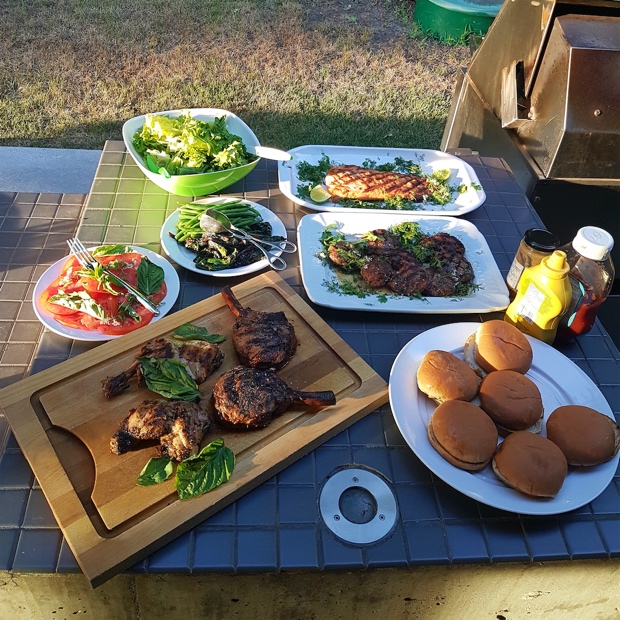
WineAlign

Enlightened Chablis of Château De Béru

monopole

Clos Béru Monopole

We disembarked in the warm, golden, glowing light of a July afternoon. No one around. The tiny village sat motionless, in less than a whisper. Béru. Knock on the door. Athénaïs de Béru welcomes us in. At no other entry point into a domaine in Chablis did it feel like this, like crawling through a portal, back in time, crossing a threshold into a different, magical world.

Béru. Small village southeast of Chablis, to the west of Viviers, tucked into an amphitheatre nook below the Z-curve of the Route d’Auxerre and three valleys, Vau du Puits, Vallée de la Fontaine and Vallée de Foulignot. Béru. Mother in custody of Luke Skywalker. Béru. One of 16 South Pacific islands in the Southern Gilberts, according to legend created by Nareau the Wise and migrating, tree-dwelling Samoan spirits carrying branches from Te Kaintikuaba. Béru. The Left Bank domaine farmed by Athénaïs de Béru, organically, biodynamically and spiritually. Chablis from the tree of life.

chateau-de-beru

Château De Béru

The family history of the five hectare Château De Béru is one recorded back 400 years, a quintessential 300m high Chablis plot on Kimmeridgien, calcareous-clay soils inlaid with fossilized shells dating back 150 million years.  Written history tells of the vineyard first tended by first century Romans, ninth century Pontigny Abbey monks and the historical walls of the Clos Béru as having been erected in the 11th or 12th century. All to celebrate and demarcate the quality of the Béru terroir.

Then, in 1887 the phylloxera crisis ended nearly three hundred years of vinous prosperity. Late in the 20th century Count Eric de Béru replanted the vineyards and with loyal concentration on his family’s famous Clos Béru. He passed away suddenly when Athénaïs de Béru was just a child. Years later she returned from Paris to resurrect the vineyard work and produced her first vintage in 2005. A taste of 2015 ten years on marks a new era for Château De Béru. A walk through the underbelly of the winery confirms the direction and the enlightened future, through barrel trials, vin nature experimentation and concrete egg fermentation.

athenais

Athénaïs de Béru

The rows outside the 11th-12th century monk’s wall demarcate Le Clos de Béru Vineyard. All of Athénaïs de Béru’s wines are single-vineyard Chablis save for the Terroir de Beru, a wine that gathers all the vineyards to express the all-encompassing Béru terroir. Organic was completed in 2006, biodynamic in 2009. Everything was lost in 2016 to the frost of late April. Béru hardest hit in Chablis. Athénaïs sprayed Chamomile tea on her vines, with love, repeatedly and with utter confidence. They survived. The future remains bright.

We tasted four Chablis with Athénaïs that day, along with an Aligoté and an Irancy. Here are the notes.

thoroughly-enamoured-with-the-purechablis-made-by-athenais-at-chateau-de-beru-chablis-monopoleleclosberu

Thoroughly enamoured with the @purechablis made by Athénaïs at Château de Béru #chablis #monopoleleclosberu

Château De Béru Chablis Clos Béru Terroirs De Béru 2015, Ac Burgundy, France (Agent, $49.95, WineAlign)

A mere 400 years of family history lays astern of Béru Chablis and what white light now shines is due to the innate and spontaneous hands of Athénaïs de Béru. In the pantheon of the Chablis range from Terroirs through Montserre and to Clos Béru Monopole, this is the conversant spokesperson for the house. Terroirs the child is wild, natural, intrepid and convinced, from a ferment that sees only stainless and bottled as early as December. Trusting and self-sufficient from kimmeridgian limestone, only it as Chablis whiffs such a mix of iodine and smoke and bears witness to its small, windy and concentrated vineyard. A place that bestows low pH meets high acidity. Though warm and gracious 2015 is the catalyst, this is at first lean, then struck from rock and finally the weight of that rock impresses into the wine. Getting white flowers is real and works to foil the recurrence of smoky beats and bites upon the palate. This is new, something akin to imagining the acidity offspring of grüner and assyrtiko but with weight and a metallic minerality. A Béru salinity. An iodine laced salt. Wow. Drink 2016-2022.  Tasted July 2016     @TheLivingVine  @vinsdechablis  @purechablis  @vinsdebourgogne  @BourgogneWines

Château De Béru Chablis Clos Béru Montserre 2015, Ac Burgundy, France (Agent, $55.95, WineAlign)

Montserre is a child of special Chablis geology up on the flat of Béru, primarily limestone with sharp, jagged fragments of rock. Athénaïs de Béru points to the benign nature of this plateau’s climat but the glint in her eye predicts with wine wicca’s wisdom that in 2015 this Chablis will simply be unreal, comme d’habitude. But it’s more than that, the “greenhouse mountain,” smoky single-vineyard Chablis, of white flint hyperbole and dense limestone smoulder. It is striking, intense, trenchant and lingers with arboretum puissance. Gourmand chardonnay, salivating, a success from 100 per cent malolactic conditioning and despite the intensity, blessed of impeccable balance. The bon ton Béru Chablis history now in the oenological hands of Athénaïs de Béru marches to an organic and biodynamic drum. But again, it’s more than that. In the sanctuary of Chablis, Montserre is a connection forged between woman and terroir. It makes perfect sense. Drink 2018-2027.  Tasted July 2016

terroirs-de-beru-chablis-has-arrived-via-thelivingvine-49-956-packs-chateaudeberu-chablis-athenaisdeberu

Terroirs de Béru Chablis has arrived via @TheLivingVine #chateaudeberu #chablis #athenaisdeberu

Château De Béru Chablis Clos Béru Monopole 2013, Ac Burgundy, France (Agent, $87.95, WineAlign)

The organic and biodynamic vineyard sits like an earthwork garnison outside the walls of the Béru castle, south facing and slightly southwest at the bottom of the hill. Few are as capable to define the wine monopole as lieu-dit, exclusive, specific and genetic to the 400 year family roots of Athénaïs de Béru. It is in here that the atomic, atmospheric elevation works like an elevator, carrying oozes of liquid limestone up to the surface, passed through the vines into fruit and eventuating in bottle. So very natural and intense, the barrel here is fully felt, in fact still (after three years) dominating the stainless steel. The stones at the surface pulse and quiver from intermingling with marine fossils and sea shells in direct contact with the upper roots. There is a mandarin zest and reduced juice in this, mixed with the saline, Béru-specific note of iodine. The best is yet to come for the Clos Béru Monopole, partly because two improved vintages are up next but also because Athénaïs will have furthered her connection with the exclusive Béru terroir. Drink 2017-2025.  Tasted July 2016

Château De Béru Chablis Clos Béru Monopole 2012, Ac Burgundy, France (Agent, $87.95, WineAlign)

In 2012, less density and iodine matchstick is on display in performance for the historic, south facing vineyard beyond the Château’s walls. From this her eighth vintage in the resurrection of the family’s estate wines, Athénaïs de Béru has assembled fruit from Kimmeridgian limestone in rapport with a vintage of portent and intent towards elegance. The acidity is much more linear (than 2013) and the limestone sensations less metallic. Here the feeling is more of a liquid chalk and the balance is much improved. Also less evolved, bright and a much more amenable of a bitter pith, more citrus (lemon and lime) and not as earthy. Longer finish too. What 2013 lacks this ’12 gains and vice versa. The comparative literature and parenthetical study is duly noted as apples to oranges so the wines are exempt of one another. Neither answer all the questions asked and both express their terroir from their time spent on it. This ’12 story will become clearer in another year or two. Drink 2017-2023.  Tasted July 2016

attention-thelivingvine-this-amphora-chablis-from-athenais-de-beru-chateau-de-beru

Attention @thelivingvine this amphora Chablis from Athénaïs de Béru @ Château de Béru

Château De Béru Aligoté 2015

One month skin contact, pressed and then set in (200L) amphora for approximately eight months. Transferred to tank for settling before bottling. Gives away apple and pear with exotic spice and the most minor bitter pith. Shares the aligoté acidity with impunity which turns on the varietal light of choice. Tannin and white flowers. Meant for sipping while cooking and into the first part of the meal. Drink 2016-2018.  Tasted July 2016

Château De Béru Irancy 2015

Irancy is a partnership with friends who work organically, from their high-end cooperative, highly thoughtful picking and operation. Aged in tonnerre, obviously Burgundian (with 15 per cent pinot gris co-planted with the pinot noir). Traditional and typical but simply, unequivocally Béru. A wine loyal to the old co-plantation tradition in a world of Irancy where only pinot noir is re-planted. A balance between pretty red flowers and spicy, near bitter pithy white fruit. Whole bunch (100 per cent) fermentation but no pressing whatsoever. A slight passage under foot but the gentlest approach, suppressing tannin but looking for structure. This is so very crushable and what would likely translate to $75 CAN is something to think about.

Vin Nature of Château De Béru

Vin Nature of Château De Béru

Good to go!

Twitter: @mgodello

Instagram: mgodello
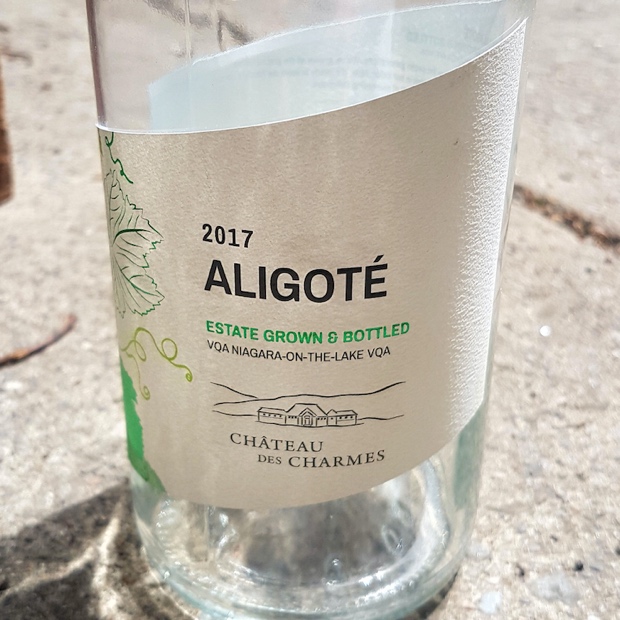
WineAlign

Du bon Bachelder: Burgundy, Oregon, Niagara

Bachelder Wines tasting. December 28, 2014 Photo: (Elene Galey-Pride, www.winestains.ca)

Bachelder Wines tasting: December 28, 2014
Photo: (Elena Galey-Pride, http://www.winestains.ca)

Québec native and Niagara Peninsula resident Thomas Bachelder makes Pinot Noir and Chardonnay in three countries. He may not be the only gypsy winemaker on this planet but he certainly ranks as the most focused. Over the past few years I have had many opportunities to taste and be privy to the diversity, overlapping and incrassation of his portfolio. By now I know so much and understand so little.

There is one thing I do know for sure. Bachelder and partner Mary Delaney form a formidable wine-producing juggernaut. Together they are the vine and the fence. The question is which one is the vine and which one is the fence. If asked they and their guests would likely all produce different answers.

Thomas Bachelder Photo: (Elene Galey-Pride, www.winestains.ca)

Thomas Bachelder
Photo: (Elena Galey-Pride, http://www.winestains.ca)

Thomas and Mary invited a group of us to taste through the Bachelder 2012’s just after Christmas. Ever the great hosts, Thomas and Mary not only poured 16 wines, they also offered up a most excellent feast and left us (Rick VanSickle, Michael Pinkus, Evan Saviolidis and Elena Galey-Pride) amazed and satiated.  Rick’s take on the tasting should be read here: Poetry in motion: Thomas Bachelder unveils his 2012 Pinots and Chardonnays from Niagara, Burgundy and Oregon.

Bachelder Wines Photo: (Elene Galey-Pride, www.winestains.ca)

Bachelder Wines
Photo: (Elena Galey-Pride, http://www.winestains.ca)

In Oregon Bachelder made wines at Ponzi and Lemelson Vineyards. In Niagara he was best known for creating a world-renowned portfolio of Pinot Noir and Chardonnay through an artfully applied science at Le Clos Jordanne. Beyond Bachelder there is now the Thomas effect at Domaine Queylus. He’s like the Chicken Man, “he’s everywhere, he’s everywhere.”

In Ontario his Pinot Noir fruit mainly comes from the St. David’s Bench vineyard owned by the Lowrey family. The Chardonnays are drawn from the Wismer Vineyard on the Twenty Mile Bench and the Saunders Vineyard closer to Lake Ontario. In Oregon, the sturdy contrariness of the vines show a marked preference for the sandstone and volcanic (Basaltic) strata, in Yamhill-Carlton and the Willamette, rhymes with dammit – thanks Mary … ;), Valley. In Burgundy the terroir in micro-plots diversify the stratagem even while some are considered lesser locales for growing great Burgundy. But one thing is clear. The lieu-dits that give of their fruit all qualify as appellative wonders of the Bachelder diaspora.

Thomas Bachelder loves his map of Bourgogne. He would crawl inside it if he could.

Thomas Bachelder loves his map of Bourgogne. He would crawl inside it if he could.

For a brief history on the Burgundy, Oregon and Niagara terroirist, check out my two previous posts on the Bachelder project.

Related –  Vineyards, winemakers and their sense of place: Bachelder and Leaning Post

Related –  Synchronicity in three terroirs

Wine writers hard at work. Clockwise from bottom left. Godello, Rick VanSickle, Evan Saviolidis and Michael Pinkus Photo: (Elene Galey-Pride, www.winestains.ca)

Wine writers hard at work. Clockwise from bottom left. Godello, Rick VanSickle, Evan Saviolidis and Michael Pinkus
Photo: (Elena Galey-Pride, http://www.winestains.ca)

Order is an extreme obsession for Thomas Bachelder, in an organized, chaotic way. For this reason, the wines were tasted in the following progression, to make sense of the complexity and variegation in each country from the three distinct yet wholly antithetic bon (Burgundy-Oregon-Niagara) terroirs.

Bachelder 2012 Whites

Bachelder 2012 Whites

Bourgogne Aligoté Champs Pernot 2013, Burgundy, France (SAQ 12089559, $24.00, WineAlign)

From old vines in the commune of Puligny-Montrachet, Bachelder’s Aligoté is a flinty, indiscreetly pinching and itinerant example. More complex than it needs to be, it can be accused of being a risk taker. If Chardonnay is considered in terms of finding excellence out of cool climates, this Aligoté is downright gelid. The wine doth go both ways, at once reductive and then terpenic. Lime citrus concentrates aromas and flavours within a very platinum, mineral frame. Speaks several languages that can be related to but only if you can pry through the cracks in the hard protective shell. Confounding really, yet a fascinating study. Bachelder could do for varietal Burgundy Aligoté in ways similar to Sylvaner in Alsace.  Tasted December 2014

Pinot Noir Oregon 2012, Willamette Valley, Oregon, USA  (333278, $34.95, WineAlign)

Primarily constructed from the fruit of Yamhill-Carlton vines, a third of which is Lazy River, an apropos moniker because by harvest time it hardly moves. The warm vintage adds a calm dimension to a Pinot Noir more Burgundian than the Bachelder’s Niagara and also more table friendly. Pure perfume and like life in layered, rosy hues, a vie en rose, from the land and the river’s subtle flows. The terra mobilis. The underlying dream in Thomas Bachelder’s Oregon movement is mineral, like salinity, not limestone but something ambiguous from the river’s pull and under the river. Elegance lived and relived. Here is a wine from a very available warm vintage, with a mess of fleshy fruit, yet Thomas does not obfuscate the terroir. In 2012 and needfully so, it is served from a light hand. Currently available at the SAQ in Quebec and coming to VINTAGES in Ontario, Spring 2015.  Tasted December 2014

Pinot Noir Niagara 2012 and Pinot Noir Lowrey Vineyard 2012

Pinot Noir Niagara 2012 and Pinot Noir Niagara Lowrey Vineyard 2012


Pinot Noir 2012, VQA Niagara Peninsula, Ontario ($29.95, WineAlign)

The fruit for Bachelder’s local environ comes from Wismer Parke within the essential Niagara vineyard. By way of setting bearings straight, the Park is contiguous to the Foxcroft and Wingfield sections of the Lowrey Vineyard. A precocious and most positive net gain Pinot Noir most of which, as Thomas so adroitly points out, will be consumed before being allowed to hit its prime. Despite the generic labelling, this is not a mass-produced bottling by any stretch and was swallowed up by licences. It’s a hallmark expression of warmth, texture, vintage and the capability of Pinot Noir in this specific place. What Thomas has achieved, with effective persuasion, is a cloning from intimate belongings; earth, fruit, Lowrey.  Tasted December 2014

Côtes De Nuits Villages Aux Montagnes 2012, Burgundy, France ($45, WineAlign)

Named for La Montagne, to recognize it for place because local rules forbid calling it what it really is, nudge, nudge, wink, wink. So what was ‘La’ is now ‘Aux’ and with the change, in this vintage, comes something formidable, eliciting a response of aux la la. Let’s talk about this, with no mocking tone, just real thoughts. Anything but regional, this Bachelder is so very Villages, specifically lieu-dit, with its depth of earth and release of perfume. A piercing sort of Pinot Noir from a which a sauce could be fashioned out of its sheer intensity, to bathe meats. The concentration has a citrus feign, bright, in the back, along with a giving and Burgundy forgiving mineral funk. In this Burgundy, the mountain lurks, in spirit torque. Will unwind for up to 10 years. Available at the SAQ in Quebec.  Tasted December 2014

Pinot Noir Johnson Vineyard Oregon 2012 and Côtes De Nuits Villages Aux Montagnes 2012

Pinot Noir Johnson Vineyard Oregon 2012 and Côtes De Nuits Villages Aux Montagnes 2012

Pinot Noir Johnson Vineyard Oregon 2012, Willamette Valley, Oregon (SAQ 12065338, $44.50, WineAlign)

A hard-working wine that reaches for fibres not available for weave in the Bachelder ‘basic’ Oregon Pinot, the Johnson digs into the salty waters beneath the earth. Draws up its hydration, the astonishing fidelity of minerals magnetized and then redacts the smokey, splintering spokes of wood. The juice in 2012 flows and follows the inconsistencies of the skin and the barrel like the river travels along the irregularities of the land. Rich, dusty, brooding and intuitive. The Johnson is bent on serious intent, like a sculptor’s dentil relief, with increased shadow, less mannerist in 2012, deeper, darker and of more solemnity. When the ’11 was at first hard to figure then soon after revealed its charms, this ’12 will take much longer to unravel. The brightness of Oregon Pinot Noir is perhaps its greatest attribute so here that light is not yet known. Wait three to five years to find out its truth.  Tasted December 2014

Pinot Noir Lowrey Vineyard 2012, VQA St. David’s Bench, Niagara Peninsula, Ontario (361816, $44.95, WineAlign)

A balanced and thoughtful wine, from five rows of mostly mysterious, and unknown clones. There simply is no other locale in Ontario that you can grow Pinot Noir any further away from lake and river and still unearth such depth. Though terroir-driven, this shares little with other geographical perimeter outliers, like Ravine and Coyote’s Run. Can only be Lowrey; folkish, demotic, St. David’s Bench vernacular. From my earlier, October 2014 note: “To those who wonder aloud about the annual love affair with this vineyard, suck it and see. This connectivity and this wine renew again. Same time, this year. Bursts of all that have come from it before, are here now and in temptation of what will be for years to come. Has “the type of kisses where teeth collide,” a Sam Cooke ages to Arctic Monkeys kind of reckless serenade. It’s also a balladeer, this scaled back Bachelder, if that can be said to be done. Here now soft, elegant, perfumed, demurred, sweet, downy, pretty, not yet fleshed, surprisingly void in tannin, anxiety and tension. Work with it for 10 minutes and it will then begin to bite back, show its teeth, pearly white as they are, grind it out. There will be 10 years of development in this Lowrey, if not less, but in ’12, that is more.”  Last tasted December 2014

Nuits St Georges La Petite Charmotte 2012, Burgundy, France (357228, $49.95, WineAlign)

Here grinds a wine that could want for some decant, a pause for thought while the imbibers assess their ways through Oregon, Niagara, Johnson and Lowrey. A pent-up perfume, when allowed to breath in and then out, results in a concentration of aromatic certainty. Tight and bracing, with cedar and bitumen, cherry and rose, this single-vineyard NSG hugged up on a northern slope is both adamantine Nuits and the pretty dame of Beaune. Straddles the arrondissement’s Burgundian twain, the Neaune, from iron to sublime. The imprint of yearning and distance.  Tasted December 2014

Les Bas Liards Savigny Lès Beaune 2012, Burgundy, France (SAQ 12089567, $38.25, WineAlign)

Only two barrels (one and two year-old, zero per cent new oak) were procured of this 100 per cent Pinot Blanc. “I’m a barrel fermenting maniac,” admits Bachelder. He might also say “I’ve got a job, I explore, I follow every little whiff and I want my life to smell like this.” Stone fruit is in resolution and integration, fully, completely. This quenches thirst, like chewing on raw fish. Why Pinot Blanc in Savigny Lès Beaune is the $64K question with an answer tragically not really known. Its taste is not just Pinot Blanc, it is the flavour of Savigny Lès Beaune. It is PB looking for a place to happen. The argument is logomachy, the reality is Savigny. What it delivers is a clean, hip Burgundian message and at the same time asks, “do you taste Chardonnay?” Yes? No, I taste Savigny Lès Beaune.  Tasted December 2014

Bachelder Chardonnay Johnson Vineyard 2012, Willamette Valley, Oregon, USA ($44.95, WineAlign)

From the best four of twenty barrels (and 15 – 18 per cent new oak). The salinity drawn is deeper still, like a bone from the skin of the sea. Rich tones, components, tannic texture, filibuster Chardonnay. From my earlier, May 2014 note: “More specifically a product of its ocean meets sous terre soil than Bachelder’s basic (term used loosely) Chardonnay, the Johnson nicks more richesse, around and around fullness. Not to mention the cerebral wisdom of two Scots and a Charlemagne. Johnson’s progressive and forward thinking maker works with inconspicuous wood and the science of introducing oxygen into wine in a controlled manner.  He might say “for it is wisdom that we have for sale.” Like a white-winged dove, the 2012 will trod lightly towards a long walk to a very long life. It can be imagined aging to the edge of seventeen. The earthy feel, the salinity, not from tannin but from soil, “the music there, well, it was hauntingly familiar.” This is iridescent Oregon in a Bachelder voice. No doubt.”  Last tasted December 2014

Niagara Chardonnay 2012, VQA Niagara Peninsula, Ontario (VINTAGES Essential 302083, $29.95, WineAlign)

Primarily fruit sourced from Wismer-Foxcroft and Wismer-Wingfield plots, the oak treatment is 15 per cent new. Shows so much more warmth than Oregon. More honey and tropical notes than many peers as well. And still limestone crusted apple is the major finishing key in a Chardonnay that sings a familiar Niagara hymn. From my earlier May 2014 note: “Bottled just one month ago, contrary to the monk’s assertion, there is nothing shocky about her. Her fruit is downy soft, round without being fat because as Bachelder maintains, real as always, you “can’t have the minerality of that perfect 2011, I’m not going to bullshit you.” The 2012 is a wine unconscious in its own obviousness, ready for anything. Gregarious, golden, fresh fruit that was ready to roll out of its barrel and into the waiting glass long before its maker was prepared to open the valve. And of course there is a mineral finish. It can’t help but be.” Last tasted December 2014

Bourgogne Chardonnay 2012 and Niagara Chardonnay 2012

Bourgogne Chardonnay 2012 and Niagara Chardonnay 2012

Niagara Chardonnay Saunders Vineyard 2012, VQA Niagara Peninsula, Ontario (324103, $44.95, WineAlign)

From a site 2.5 km’s from the lake, right on the highway at 30 Bench. Derives its plushness from mere proximity so “serve it first,” pleads Thomas. So much lush, more richesse and yet today, Saunders is a bit closed, primary even. Will yet need some time to find its way. Coming to VINTAGES, Spring 2015. From my earlier, May 2014 note: “Though presently showing a bit inferential, no amount of Bachelder reduction can keep good fruit down nor can it dismantle the mastery of mineral impart. An arras of texture conceals the portal to both vineyard and barrel with streaks of salinity, charcoal and chalk. The 2012 rendition is a canvas laden with pure golden paint, concealing “hidden forms and shifting states.” Thomas has found a rhythm in Saunders through thick brush strokes, full and advancing. This warm vintage is not a receding one, its flavours and its texture do the opposite. They jump out at you in waves. For Thomas, the sublime is now.”  Last tasted December 2014

Niagara Chardonnay Wismer Vineyard 2012 and Niagara Chardonnay Saunders Vineyard 2012

Niagara Chardonnay Wismer Vineyard 2012 and Niagara Chardonnay Saunders Vineyard 2012

Niagara Chardonnay Wismer Vineyard 2012, VQA Niagara Peninsula, Ontario (345819, $44.95, WineAlign)

An appraisal of Wismer, much further up on the Bench as compared to Saunders, is always fraught with side by each guilt. The two coax and dissuade each other in every respect, from vintage to vintage and in flip-book oscillation. Once again, the reversal is complete in 2012. Wismer gives not just power and warmth, but layering. Its voice is an astonishing fidelity of native rock magnetized. Wismer finds a way to make grace necessary and to make necessity graceful. While Saunders made yeoman’s work of 11’s crazies with precision and poise, Wismer takes the glow of ’12 and turns it into cool sunshine. This Chardonnay of wealthy fruit, controlled oak, olivine and feldspar tannin will slowly wash up like driftwood on the gravelly beach of life. Give it a year or two to assimilate the components and drink it for 10 more.  Tasted December 2014

Bourgogne Chardonnay 2012, Burgundy, France (272005, $35.95, WineAlign)

From lower Puligny, this is rich, forward and expressive Chardonnay. While it may gangle out with a fierce, pierce of the tang, a change fills the air after much discussion about a barrel, how it is used and to what effect, both for its current and predictable future. Has that honeyed, lemon toasty unctuousness, a weave that is weighty and glazed. Some wood spice and a colourable, creamy curd of citrus. Oak compounds the sweetness and layering. Puligny runs through its wooden veins and pumps micro-oxygenated nutrients to the important, internal organs. The eventuality here is the alleviation of pressure and a retrofit of fruit to elegance. Strike another notch up and step forward for the Bachelder Burgundy sojourn. There is still so much to learn and even this will seem pedestrian compared to what will come but for now it’s just fine, thank you very much.  Tasted December 2014

Savigny Lès Beaune Les Bas Liards 2012 and Marsannay Clos du Roy 2012 

Savigny Lès Beaune Les Bas Liards 2012 and Marsannay Clos du Roy 2012

Marsannay Clos du Roy 2012, Burgundy, France ($39.25, WineAlign)

The ‘King’s Hill’ which is just half of the misnomer because how can a plot of such ability be considered so low on the Cru pole. Half of a new barrel went into the minuscule (two barrel) blend. Chardonnay like lace, from nothing less than an appellation prepared to offer up fine drink, in pastry and in textile. Tropical tree fruits hang in rows, connected by cream and the contending forces of smoke and bite. Always the end game of rock envelops the whole, like gabbroid nodules, permeating every fissure.  And so, because a Bachelder Chardonnay must comply, as the earth invisibly prepares its vines for successes and failures, so history is the creeping intent.  Tasted December 2014

Good to go!

Burgundy will always be royal

Chablis Bougros Grand Cru 2012, Pommard Rugiens Premier Cru 2012, Chablis Mont De Milieu Premier Cru 2012, Beaune Grèves Premier Cru Vigne De L'enfant Jésus 2012, Meursault Genevrières Premier Cru 2012, Nuits St Georges Les Cailles Premier Cru 2012, Chablis Les Clos Grand Cru 2012, Corton Charlemagne Grand Cru 2012

Chablis Mont De Milieu Premier Cru 2012, Pommard Rugiens Premier Cru 2012, Meursault Genevrières Premier Cru 2012, Nuits St Georges Les Cailles Premier Cru 2012, Chablis Les Clos Grand Cru 2012, Beaune Grèves Premier Cru Vigne De L’enfant Jésus 2012, Corton Charlemagne Grand Cru 2012

In a geographically focused world defined by its very own diacritic caste system, in climat, in villages, premier et grand cru, the wines from Burgundy will always be royal. The Pinot Noir and Chardonnay are entrenched in such status not because of wealth or conceit, but because of “humility and unassailable references” from hills, plots, rocks, soils, sun exposure and the test of time. They are, as Woodman Wines and Spirits’ Jason Woodman notes, from a place “where history, religion and quality intersect.”

From Wine-Searcher.com “Burgundy (Bourgogne in French) is an historic and highly respected wine region in eastern France. Burgundy wines have long had devout followers throughout the world and continue to do so today. Although Bordeaux produces about four times as much wine every year, Burgundy’s estimated 74,000 acres (30,000ha) of vineyards are considered to be of equal importance, producing some of the most exclusive wines on Earth.” Equally important? We’ll see about that.

To most wine-loving mere mortals, great Burgundy is inaccessible, a prepossessing supposition that supersedes reality. The pragmatic wine buyer imagines the best Pinot Noir and Chardonnay to personify greatness, without ever owning one. Most of the rest are viewed in a light of feigned eminence. The overpriced and the under-delivered. Quality time is spent sniffing out the paragons, the most difficult of all wines to find.

The song, Royals “is about how today’s music is all about what is considered the “good life,” filled with riches and fame, but not everyone can live that life, and so the average person is desperately reaching…” The wines of Burgundy certainly gravitate into the hands of a wealthy minority but behind the dollar signs they are simply bottles of farmed and fermented grapes.

The wines of the Côte de Nuits, Côte de Beaune, Chablis, Côte Chalonnaise and the Maconnais speak more clearly of their terroir than anywhere else in the world. They need not boast nor flaunt their wares. They simply are what they are and Burgundy is what it is. Affordable to so few, disregarded as out of league and untouchable by the rest. “That kind of luxe just ain’t for us,” might be the complaint of the anti-Burgundian wino. Regardless of where you sit in the Burgundian aperçu, you are not alone. The Brannigan will always be debated.

There are more expensive Burgundies. There are bigger names. Houses like Jayer, Romanée-Conti, Leflaive, Roumier, Leroy, Faiveley, Coche-Dury, Comte Liger-Belair, Dugat-Py, Ramonet and Rousseau. Golden escarpment producers that fetch higher prices for their top wines. There are just as productive and wide-reaching Burgundy conglomerates, like Latour and Boisset. But at the end of the day, is there a producer of red and white Burgundy that combines quality and quantity like Domaine Bouchard Père & Fils? The estate stretches over 48 km from north to south and is composed of 450 different vineyards. The Bouchard family has “been telling the history of Burgundy’s wine and its great appellations for over 280 years.” In Chablis, the rock stars may be Dauvissat and Raveneau, but who can argue the aggregate éclat of Domaine William Fèvre

On March 24, 2014, Woodman Wines brought the two need no introduction Burgundy producers to the Royal Canadian Yacht Club for a very grand tasting. The “rare and miraculous” 2012’s from Domaine Bouchard Père & Fils and Domaine William Fèvre. Pinot Noir and Chardonnay of pedigree and learning. Producers with holdings in Burgundy as historic and regal as the domains of Kings and Queens. From places where winemaking is religion, where terroir is everything. The wines are expensive (in some cases frighteningly so) but they are a treat to taste.

Domaine Bouchard Père & Fils

Aligoté Ancien Domaine Carnot Bouzeron 2012, Burgundy, France ($28.00, WineAlign)

From the Côte Chalonnaise between Chagny and Rully this was a rare chance to taste Aligoté and from the first village to receive AOC status for the variety. Bouzeron sits in what Bouchard describes as a “windswept funnel,” which might explain its crazy, natural acidity and spirited character. Begins “with a low whisper, windswept on the air.” To nose it is smooth, creamy, soft and fruity. To taste it’s tight, racy and lifted by a metallic tang. For the price it ferries exceptional quality and personality. “Windswept is on the tide, a feeling only or state of mind?”

Montagny Premier Cru 2012, Burgundy, France ($79.00, WineAlign)

From the Côte Chalonnaise, the most southerly portion of the Côte d’Or. A higher amount of Marly soil mixed with White Burgundy-loving limestone imparts richness and a soft, Malo creamy texture. At present there is a sulphur presence that stretches its legs and hides beneath a level of tart fruit. The wood effect is in a spicy radish tone adding complexity to the lightly dressed salad flavours. Finishes with terrific length.

Meursault Genevrières Premier Cru 2012, Burgundy, France ($119.00, WineAlign)

Bouchard’s Genevrières speaks in a definitively, regional tone, a Côte-d’Or oriental vernacular with absolute and utter clarity. A wine this pure and at the head of its class means “time flies, doesn’t seem a minute.” From East and Southeast vine exposures above obvious and necessary limestone that vacuums a metallurgy mixed with the finest, circular centrifuge of acidity. This is the wrapping that envelopes richness, depth and fresh produce of a fruit/vegetable continuum. One night in Genevrières “makes a hard man humble.” A contemplative moment with this ’12 Bouchard may cause longing, to look east. “Don’t you know that when you play at this level there’s no ordinary venue.”

Chassagne Montrachet Morgeot Premier Cru 2012, Burgundy, France ($130.00, WineAlign)

From a plot of land that was called Morga, from the Latin margo which means edge border, in this case between the Côte d’Or and Saone-et-Loire. The soils in this mid-slope vineyard with a south-easterly exposure combine limestone and Marl and so Bouchard’s 2012 take shows an increased richesse and concentration. A Chardonnay with drive, determination and delineation. Noticeably toasty and though mostly quiet now, even it its youth it is already showing resurgent citrus and nutty tones. It will oscillate back and forth between the poles for five years or so and come together for many more beyond.

Corton Charlemagne Grand Cru 2012, Burgundy, France ($250.00, WineAlign)

The Bouchard description of “a scarce and promising vintage” will apply to this flagship Grand Cru as much as it will to any in the stable. Corton’s ode to King Charlemagne’s not to be stained white beard is the most difficult to contemplate, assess and articulate in its steely, whispering youth. This rare vineyard planted to both Pinot Noir and Chardonnay, if just by chance it “crossed the diamond with the pearl,” is no cause for concern. This Charlemagne is just a kid, yet unaware of how it will rule with purity, personality and impunity. It does not yet know this and when it matures, it might be asked “did you realize that you were a champion in their eyes?” The creamy texture, subtle toast and extraordinary flavours are all there. Lay it down for 10 years and relive its limestone treasures for 20 more.

Gevrey Chambertin 2011, Burgundy, France (661330, $49.95, WineAlign)

With the largest number of Grand Crus is the area, is it any wonder how one Gevrey Chambertin finds a way to set itself apart from the others? This 2011 Bouchard does so with this refined, restrained and cleansing Pinot Noir. Earthy and sugary beet flavours echo similar aromas. Picking time was certainly key. Foregoes grit, girth and a belt’s tannic lash for elegance and a directive to balance along a straightforward, pleasing line. Will do its best work in short-term gains, from now to 2018.

Savigny Lès Beaune Les Lavières Premier Cru 2012, Burgundy, France ($62.00, WineAlign)

From a limestone and clay vineyard in Bouchard’s control for just over 100 years. Filled with “laves,” the big flat stones that characterize the land, this 1er Cru is painted by the soil, with a charred, mineral glaze. It’s also sweeter and scented by high-toned red fruit, less refined than other Beaune vineyards but all the while offering near-immediate gratification. Could use a couple of years to settle and will drink well for five or more.

Gevrey Chambertin 2012, Burgundy, France ($66.00, WineAlign)

In this vintage the Gevrey is a magnified version of itself, seemingly drawing every atom of mineral and fossil from its Triassic limestone bed. The table of clay potassium, phosphorous and iron are all in this bottle, expressed in earthy Pinot Noir character. This might be the Bouchard blazon and secret weapon; dangereux, tight, sharp and pointed. The fruit is pure and clearly defined but will require time to shed its tough outer layer. Put the 2012 Gevrey away for five years and look to see it open up to 2022.

Chambolle Musigny 2012, Burgundy, France ($76.00, WineAlign)

From the shallowest of Côte-d’Or soils, Bouchard’s Chambolle Musigny is extracted from delicate berries that rely on its vine’s roots to crawl down into limestone’s fissures in search of nutrients. Though many a Chambolle exhibits tenderness and elegance, this Bouchard hard-working vine has produced a quilted, tactile wine of texture and contour. It opens with its own special vineyard stink, a note of subterranean terroir that dissipates with a swirl. A wildly woven combination of chalk, grain and chewy licorice makes for a varied and salubrious mouthful. As big as it gets for the appellation and surely worth a go from 2018 and for a decade more.

Volnay Ancienne Cuvée Carnot Caillerets Premier Cru 2012, Burgundy, France ($118.00, WineAlign)

Caillerets and the term tête de cuvée go back as far as 1855 and with this iconic bottling there is proof in perpetuum that Bouchard knows Volnay. This is the house’s first vineyard dating to 1775 so it goes without saying that 237 years of experience is nothing to dismiss. The 2012 Cuvée Carnot is refined in a state of heightened awareness. The aromas are smoky, meaty and the favours concentrated. Distinctively opaque like a Pensieve with a swirling torrent of tannin pushed along by centrifugal force. Will need 10 years to immobilize, then to age rhythmically for 10 more.

Pommard Rugiens Premier Cru 2012, Burgundy, France ($146.00, WineAlign)

Bouchard’s Pommard Rugiens goes at the Pinot Noir diapason from every angle. At once fibrous and rigid, it is also highly perfumed by flowers, most notably violets. The rich iron-red soil imparts a large measure of ferrous aroma but the pure fruit sustains the mineral and the wine remains a good conversationalist. A metrosexual, acting out both masculine and feminine parts. The rest of the Bouchard red Burgundies tend to choose one side or the other but the gregarious Pommard lives on the edge. A streak of char and chalky tannin shows late and lingers throughout the lengthy finish.

Nuits St Georges Les Cailles Premier Cru 2012, Burgundy, France ($146.00, WineAlign)

A gorgeously refined wine built on finesse, clarity and concentration. All its graceful parts move in synch through structured stages of class, refinement and with a goal towards a realized, long evolution. Noticeable but sweet tannins are gained by a bleeding of the terroir‘s oolithic chalk by way of hard stones. Silky and feminine perfumed red fruit never wavers from its intent, to seduce and give pleasure. No dying quail this Nuits St Georges, nor a frozen rope, the wine hangs in balance effortlessly and for a long, long time. Enjoy it for 10-15 years.

Beaune Grèves Premier Cru Vigne De L’enfant Jésus 2012, Burgundy, France ($146.00, WineAlign)

From the just a shade under four hectare, formerly owned by Carmelites vineyard within the famous 32 hectare “Roi Soleil” Grèves appellation. Like its namesake (in reference to Louis XIV), this Bouchard is the red that displays the most control and Type-A personality. A wine that draws every bit of modern terroir from the gravelly clay. A wine of great excess, state-of-the-art, jeweled, luxurious and crafted with the heaviest hand. The sun king goes for much glory, but at what price? The price of needing to be loved in its youth. The question is will that cost L’enfant Jésus 2012 long-term success? With more abundant fruit than a Versailles Trianon and the guts to soldier on, it’s hard to imagine it not aging for 20 or more years.

Domaine William Fèvre

Saint Bris 2012, Ac, Burgundy, France ($25.00, WineAlign)

From the commune of Saint-Bris-le-Vineux, this is light, cool-climate tension Sauvignon Blanc. A wine of impetuous and quick-step moments. The rush of just opened soda, the spray of a freshly bitten green apple, the knife cutting through juicy lemons and limes. A hyper-clean rendition of the Loire grape, this northern rendition will work an oyster with ease.

Chablis Les Lys Premier Cru 2012, Burgundy, France ($58.00, WineAlign)

Of the Fèvre Premier Cru designations, Les Lys exhibits the softest, downy touch and the more muted or demurred personality. The fine lees is distributed through the texture and the limestone gives way to chalk on top. Offers up more spongy fruit than Montmains or Monte de Milieu and finishes with charm.

Chablis Mont De Milieu Premier Cru 2012, Burgundy, France ($69.00, WineAlign)

The Fèvre Mont De Milieu is the smallest of the domain’s Premier Cru holdings with a struck by flint personality that is quite intense. Neither Les Lys or Montmains show such dynamic mineral effect. The most righteous of the Chablis Serein River banks brothers maintains that matchstick loving feeling, though it is temporarily relinquished to a honeyed moment. It’s “a love you don’t find every day, so don’t, don’t, don’t let it slip away.” Fear not, for the gathering is beautifully concentrated and the rocky, mineral bent never fully dissipates. A Milieu to savor from 2017 to 2025.

Chablis Bougros Grand Cru 2012, Burgundy, France ($97.00, WineAlign)

While the appellation may not be the most sought after in terms of Chablis Grand Cru, the dominant Fèvre presence, experience and dedication to making Chardonnay in Bougros can’t be ignored. A good, if not exceptional vintage, 2012 is appropriate and defining. The sensations are of precious gems and metals and the exuberance restrained, but this Chablis seems on the verge. It’s as if a match has touched the strip and is about to alight. A powdering of Kimmeridgian clay is saturated by a smack of late lashing acidity. The Fèvre Bougros rises with energy from a standstill to high-speed. It will age harmoniously into the next decade.

Chablis Les Clos Grand Cru 2012, Burgundy, France ($143.00, WineAlign)

The Fèvre take on Les Clos is the cradle of all the domain’s wines, in every respect. Intensely concentrated, this is Chardonnay expressive in every facet of its surroundings. The impart from compressed white limestone, ancient fossils and Jurassic minerals in distillate may seem abstract in description but how else can the feeling of a mouth full of rocks be conveyed? The remarkably complex Les Clos and its structured palate that goes on forever has come out of its Chablis vineyard cradle and will live on as one of the best ever. “It’s not a place, it’s a yearning. It’s not a race, it’s a journey.” There is no rush to drink it up. It will offer immense pleasure for 20-25 years.

Good to go!

Holiday wine weathers the ice storm

Ice tree after the storm

Ice tree after the storm
Photo: Michael Godel

as seen on canada.com

What a strange, trying and beautiful holiday season it has been. If you are still without power and heat, here’s hoping you can climb out of the darkness as soon as possible.

Ice storm 2013 tree Down

Ice storm 2013: Tree down in the middle of my street

Go figure that wine helped add warmth to a cold week. These past few nights I’ve been fortunate to share some memorable bottles with family and friends. I held in self-possession some ready to pop and pour Boxing week wines, but you may not have been so fortunate. Was the LCBO open to find them? No. Could you walk into a private wine shop to seek them out? Not so much. Is there a VQA wine store with its doors wide open to offer up these local beauties? Not a chance. Though the stretch between Christmas and New Year’s can seem like a purgatorial void where nothing seems to happen, it does offer the opportunity to take a trip down the QEW or across the 401 and find perfectly beautiful wines for sale at the source. My advice? Stay away from the malls and go in search of local wine. Niagara, Prince Edward County and Lake Erie North Shore are waiting for you. Just be sure to check winery hours first!

From left: Chateau des Charmes Aligote VQA St. David's Bench 2011; Rosehall Run Pinot Gris Cuvée County 2012; Rosewood Estates Merlot 2011; Pillitteri Estates Cabernet Sauvignon 'Exclamation Series' 2010.

PHOTO: Handout/Michael Godel
From left: Chateau des Charmes Aligote VQA St. David’s Bench 2011; Rosehall Run Pinot Gris Cuvée County 2012; Rosewood Estates Merlot 2011; Pillitteri Estates Cabernet Sauvignon ‘Exclamation Series’ 2010.

CHATEAU DES CHARMES ALIGOTE VQA ST. DAVID’S BENCH 2011, St. David’s Bench, VQA, Niagara Peninsula, Ontario (296848, $13.95, WineAlign)

A product of wise vines with a nose so tropically-scorched, in pear and banana bubble gum. Glycerin saturate texture, indelible, edible white, immersed and immeasurable for food connectivity. Amenable, personable, diplomatic daughter of aromatic proportions, doting and full of flavour. A Mayer Aligoté, in joule raised heat capacity and major Meyer lemon. “She puts the color inside of my world but, she’s just like a maze.”  88  Tasted twice, March and December 2013  @MBosc

A solar tobaggan walk

A solar tobaggan walk

ROSEHALL RUN PINOT GRIS CUVÉE COUNTY 2012, VQA Prince Edward County, Ontario ($21.95, winery)

Puts the exclamatory headline previously written for other 2012 County PG’s back on top of the front page. The band’s ’12 members include Norman Hardie and Hubbs Creek and now Winemaker Dan Sullivan’s effort joins the already raging party, “with ripples and the rhymes,” climbs the stage and dances on the tongue and in the mouth. Like a refreshing glass of water, with so much orchard fruit goodness, in cold play pear and citrus, with more crazy acidity than before. This despite the equatorial balm of the vintage. A Grise Fiord of Pinot goodness, a cool drink of Gris that never thaws.  90  Tasted December 2013  @Rosehall_Run

Ice Tree

Ice Tree

ROSEWOOD ESTATES MERLOT 2011, VQA Niagara Escarpment, Ontario (211896, $22.00, winery)

From Renacaeu and Wismer Vineyards fruit on the upper reaches of the promontory, plots of land vital and calculated to produce exceptional Niagara Merlot. The granular and green nature that can sometimes mar byland Merlot dissolves away into an elastic coulee of berry coulis and savoury syrup. Carob, star anise and the intoxicating effects of chewed myrrh and betel nut round out the eastern philosophy. Attains a new level of pansophy in 2011, building a bridge from the naïve ’10 towards a perspicacious future.  90  Tasted December 2013  @Rosewoodwine

Ice storm forms

Ice storm forms

PILLITTERI ESTATES CABERNET SAUVIGNON ‘EXCLAMATION SERIES’ 2010, VQA Niagara On The Lake, Ontario ($38.00, winery only, WineAlign)

While exercising an option for plenitude wood use finds its way for the vine to make the savour of the earth intelligible to the imbibers. The poverty of the soil is this Cabernet’s prose and a taste brings out its poetry. Runs a fruity line from blue to black and digs deep, for the rocks beneath the clay. Drinking in expert evolution now and will do so for another few years, then angle towards a graceful decline. Offers shelter from the storm, “in a world of steel-eyed death, and men who are fighting to be warm.” Really fine by the fire, surrounded by an icy, unforgiving winter’s tale.  90  Tasted December 2013  @PillitteriWines

Good to go!