Why you don’t know jack about B.C. wine

Culmina Family Estate Winery, Oliver, B.C.

Culmina Family Estate Winery, Oliver, B.C.

Some folks in Ontario know quite a lot about the B.C. wine industry but they are few and far between. Wine professionals with decades of experience and those who have travelled extensively to the Okanagan Valley and Vancouver Island have their fingers pointed in the right western direction. But most of us living and imbibing here in Ontario are clueless as to the breadth of B.C.’s wine culture. It’s not our fault. Our government is keeping us in the dark.

Ontario still refuses to agree that it should not be illegal to carry or ship wine for personal use across provincial borders. That issue is at the forefront of what keeps Canada’s wine regions isolated from one another. The Canadian Vintners Association (CVA) recently met for their annual AGM in Kelowna, B.C. The CVA is the industry’s governing board that deals with national regulatory issues, standards and policies. The idea of direct to consumer interprovincial shipping was again tabled and discussed with five MP’s from Ontario and B.C. in attendance. WineAlign’s David Lawrason was there.

“The politicians and CVA members were most vocal about getting Canadian wine moving freely and directly across all provincial boundaries in Canada. Alas, there was no breakthrough to announce in terms of more provinces dropping their opposition, but I was surprised by how loud, frequent and public the CVA and its members, as well as the politicians, have become – insisting that action be taken sooner rather than later. There was a mood in the room.” Still Ontario consumers continue to be ignorant about the wines of British Columbia. It remains to be seen if the recent CVA meeting will help constitute a step forward.

Related – B.C. wine: From Vancouver to your table

Back in June we took the WineAlign National Wine Awards of Canada on the road and hunkered down in Penticton, British Columbia to assess and pick winners from over 1,500 Canadian produced wines. And we did so much more. First we paid a visit with The Wines of British Columbia for the Judgement of B.C. The second annual cage match was hosted by the B.C. Wine Institute and took place on Tuesday, June 21, pitting 12 B.C. Wines against 12 acknowledged global benchmarks. Riesling and Pinot Noir squared off, curated by DJ Kearney and judged by a who’s who of Canadian wine writers, critics and educators, along with international WineAlign Awards judges Dr. Jamie Goode and Elaine Chukan Brown.

Showtime! #judgementBC @WineBCdotcom @djwines #BCWine @WineAlign #nwac16 #bcwineinstitute #bcvqa #bcdna

Showtime! #judgementBC @WineBCdotcom @djwines #BCWine @WineAlign #nwac16 #bcwineinstitute #bcvqa #bcdna

Max Ferd. Richter Graacher Himmelreich Riesling Kabinett 2013 from the Mosel Valley, Germany placed first in the Riesling category, followed by two B.C. entries, CedarCreek Platinum Block 3 Riesling 2014 BC VQA, Okanagan Valley, B.C. and Wild Goose Stoney Slope Riesling 2013 BC VQA, Okanagan Falls, B.C. Three international Pinot Noirs medalled, Bouchard Père Premier Cru Beaune Clos de la Mousse Monopole 2012, Burgundy, France, Bachelder Oregon Pinot Noir 2012, Willamette Valley AVA Oregon, USA and Felton Road Bannockburn Pinot Noir 2014, Central Otago, New Zealand. B.C. Pinot Noir took the fourth, fifth, sixth, seventh and (tied for) eighth spots. “What was really interesting when I tasted through those 12 wines blind, I couldn’t pick out the BC Wines which tells me they belong in their peer group which is a ringing endorsement for BC Wine that we’re on the right track,” noted Dr. Jamie Goode.
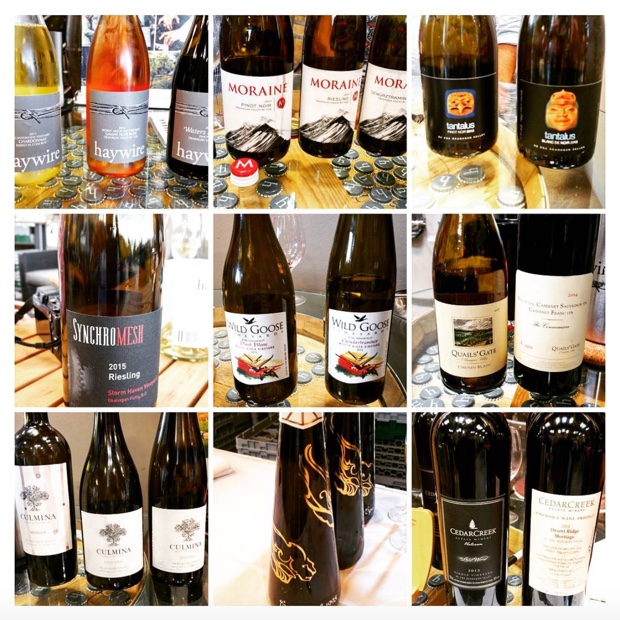
Faultless evening @OKCrushPad above reproach and the wines beyond #nwac16

Faultless evening @OKCrushPad above reproach and the wines beyond #nwac16

As the week progressed, the WineAlign judges paid visits to Okanagan Crush Pad Winery in Summerland, Culmina Family Estate Winery in Oliver, Tantalus Vineyards in Kelowna, Rustic Roots Winery with the Similkameen Wineries Association and Deep Roots Winery on the Naramata Bench. I tasted more than 100 wines over the course of the five days from the appellations of Okanagan Valley, Okanagan Falls, Oliver-Osoyoos, Golden Mile, Similkameen Valley and Naramata Bench. Whatever I thought I knew and understood about wines coming from B.C.’s diverse and variegated landscapes has been tossed out the window and diapason replaced with an entirely renewed subset of thought. It is even clearer to me now, from an Ontario perspective with limited access to B.C. wines and an even smaller vocabulary that here in this province we really don’t know shit about B.C. wines.

Exceptional eats @CulminaWinery in adroit by @Quintoquorto and @hooydonk_van

Exceptional eats @CulminaWinery in adroit by @Quintoquorto and @hooydonk_van

In talking and reflecting recently with Elaine Brown she told me how “Canada’s Provincial restrictions around wine have created what are essentially isolated sovereignties of wine. There is a lot of good wine made throughout Canada but speaking with wine lovers across the country I am impressed with how little access they have to wines from other provinces.” Brown hits the proverbial screwcap right on the head. In a country where distance makes community so difficult, the only way to seek unity is to tear down trade barriers and that is something our provincial government has outright refused to docket. As a result, the consumer in Ontario has little access to the diversity that the B.C. wine industry has to offer.

So much @WineBCdotcom amour in the @tantaluswine cellar last night #nwac16

So much @WineBCdotcom amour in the @tantaluswine cellar last night #nwac16

One of the great B.C. revelations on the June trip was all about riesling. In his recent WineAlign column, Rhys Pender wrote the following. “It feels to me that the last few years have seen a really strong focus towards quality in BC. Not that good wines weren’t made, but most of the riesling seemed to be aimed at being a low price, broad crowd pleaser. More and more wines are a little pricier but a lot more intense and quality focused. This was evident in the recent judging of the National Wine Awards of Canada. To be honest, Ontario riesling has pretty much always been superior to BC in these competitions and while there were still many great Ontario wines, this year things were different and many of the best rieslings I personally tasted in my flights were from BC. Less simple, fruity wines and more serious, intense and concentrated examples. Seven of the top ten riesling overall were from BC this year including the Gray Monk 2013 Riesling which won a Platinum medal. An impressive showing.”

Related – From coast to coast: Top 40 wines from the 2016 WineAlign National Wine Awards of Canada

Another adumbrate scoop came outlined in out-of-the-box white varietals, with very interesting results by albariño, grüner veltliner, muscat ottonel and trebbiano. The same quality of wines made from these grape varieties can’t be found in Ontario, nor can the success of red blends from the Similkameen Valley and from single varietal reds in the Okanagan Valley as a whole. When B.C. winemakers begin to dial back the oak and take full advantage of ripe, fresh fruit, the world won’t know what hit them. In his National Wine Awards of Canada report, David Lawrason noted that “two B.C. wineries, Moon Cursor and Stag’s Hollow, are worth watching for their medal winning experiments with grapes like tempranillo, grenache and petit verdot.” Another nod to experimentation.

I liken the Okanagan to South Africa, a varietal playground where just about anything can achieve phenolic ripeness in almost any given vintage. B.C. has one distinct advantage and that is a cooler climate. It should be exploited to the fullest, in the name of balance and quality. Though I tasted many more, in the name of 5,000 words or (slightly more) brevity, here are notes on 40 wines tasted and reviewed in June.

Sincerity @CulminaWinery from Elaine & Don Triggs and a superfluity of @WineBCdotcom pours #ohwhatanight #hospitality #nwac16

Bartier Bros. Cabernet Franc Cerqueira Vineyard 2013, Okanagan Valley, British Columbia (Winery, $30.00, WineAlign)

A rich, savoury mess of red fruits comes clean if surreptitiously divided by barrel on the nose on this gently intended cabernet franc from the gentle Cerqueira slope. More than a modicum of concentration of dusty raspberry and some new leather jacket. Silky smooth mouthfeel and the condensed tangy extraction really pops up on the finish. Another crunchy, chewy, smoky, serious cabernet franc turning bitter and tough with alcohol and bramble on the finish. More freshness would be ideal so let it rest for two years instead. Drink 2018-2022.  Tasted June 2016  @bartierbros

Semillom

Bench 1775 Semillon 2015, BC VQA Okanagan Valley, British Columbia (Winery, $19.90, WineAlign)

A virtually bone-dry, stainless steel raised semillon that is quintessentially fresh and varietally correct though even more attentive to the Okanagan Valley. There is an abundance of fruit in the green mango/citrus realm and a je ne sais quoi spirit. All in all quite amenable and no reason to seek a future dripping with honey. The sense of anti-austerity, fruit over mineral reaction means drink it young. Drink 2016-2019.  Tasted June 2016  @bench1775

Black Hills Viognier 2014, BC VQA, British Columbia (Winery, $25.00, WineAlign)

A very impressive viognier from a mother nature conspired vintage to make it shine. This is so very viognier as much as it is B.C. which is a great thing. White floral, viscous and split between honey suckle and white pepper-edged, green apple bite. Against all odds in a way and certainly a top example for the region. Drink 2016-2019.  Tasted June 2016  @BlackHillsWine

Nota Bene

Black Hills Nota Bene 2014, BC VQA, British Columbia (Winery, $52.09, WineAlign)

This Nota Bene can be espied as of the Okanagan Valley’s most ambitious reds filled with good notes, in winemaking conditioned real tones, as opposed to pure, simple acoustic ones. The Black Sage Bench blend of cabernet sauvignon (52 per cent), merlot (33) and cabernet franc (15) is pulled from two vineyards, Double Black and Sharp Rock. The proprietary junction is criss-crossed where rich chocolate takes up address at a certain genre of Napa ideology. Black Hills’ premium wine is big and full of brawn, backbone and guts. The three real tones played together express pronounced dissonances between many of their harmonics. Dissonance is related to (barrel developed) spice so I would think that a minimum of five years will be needed to connect and make seamless the overlapping harmonics. Drink 2019-2025.  Tasted June 2016
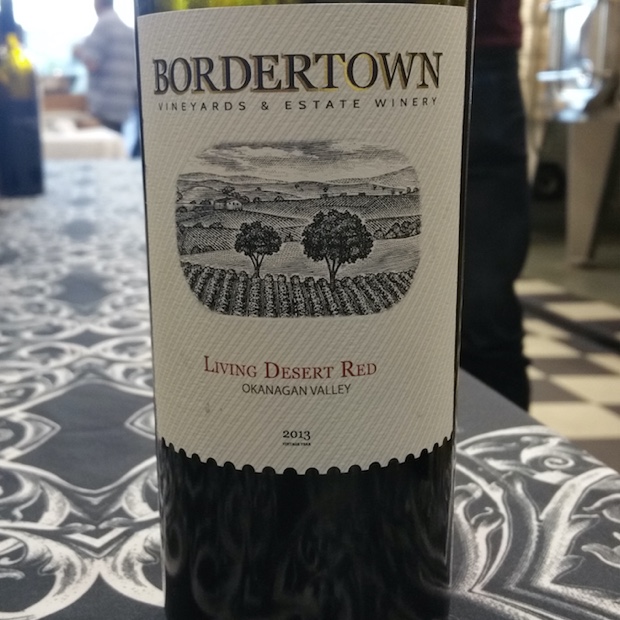
Bordertown

Bordertown Living Desert Red 2013, Okanagan Valley, British Columbia (Winery, $25.00, WineAlign)

The first vintage of Mohan Gill’s 600 case merlot and cabernet franc blend is one of the more curious and engaging Osoyoos reds that is really worth some study. The 18 months spent in all new French wood should ring the alarms but instead it seems a combination of vaguely engaged and greatly spectatorial. Reduction and volatility strike an accord with the wood and the result is a rich, meaty, full on expression from which fruit emerges virtually unscathed. “It’s the first vintage,” shrugs Gill, “what else could I do?” More of the same Mohan. Drink 2017-2020.  Tasted June 2016  @BordertownWine

CedarCreek Amphora Wine Project Desert Ridge Meritage 2014, Okanagan Valley, British Columbia (Winery, $60.00, WineAlign)

Winemaker Alexis Moore inherited the (Chianti sourced) clay amphora from former winemaker Daryl Brooker and this (second vintage) meritage is her first kick at the urn. The co-fermented, all natural, don’t even think about peeking and sneaking a taste blend is cabernet sauvignon (54 per cent), cabernet franc (35) and malbec (11). The hallmark desert notes of rich, caky and dusty are necessarily present but it is the preservation of red earth savour that gives this formidable flagon of magic juice its inimitable personality. Mature rows of fruit are to blame and thank for the just desert reward. Transferred to amphora the fruit is preserved in such a way no B.C. reds have ever really seen and the new territory is not so simple for making quick, on the spot judgements. I have thought about this wine for quite some time and the conclusion is positive for two important reasons. Spice and tannin. Together they combine for an infinite finish. Here is the crux of the vessel’s power, to preserve fruit and slowly release its charms within the structure provided. Drink 2018-2024.  Tasted June 2016  @CedarCreekWine
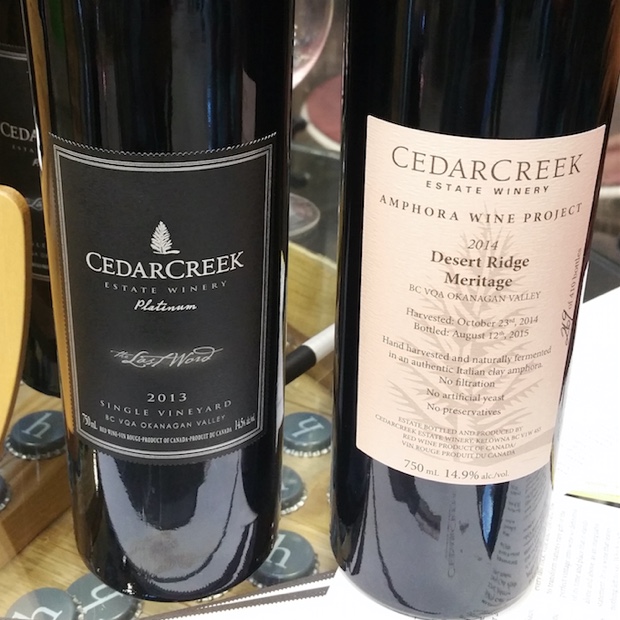
CedarCreek

CedarCreek Platinum Series “The Last Word” 2013, Okanagan Valley, British Columbia (Winery, $77.99, WineAlign)

The “Last Word” is at the pinnacle of CedarCreek’s Platinum Series, single-vineyard wines and only made in “nature conspired,” exceptional vintages. The biggest and baddest red is a “wine that leaves nothing left to say,” thus the moniker. The blend is cabernet sauvignon (34 per cent), merlot (32), cabernet franc (24) and malbec (10) in true Meritage style. Talk about big reds, talk about the passion. Plan on getting extra hours of REM sleep after a glass, after the punch, the ripest fruit, tempered chocolate, grip and after the heavy hitting acidity. Every crevice is filled in with a jangle of notes and few winemakers can find balance with such a wealth of material. There is simply no way not to make a bold, tannic statement. “Not everyone can carry the weight of the world” but CedarCreek has managed to grin and bear it. Drink 2018-2026.  Tasted June 2016
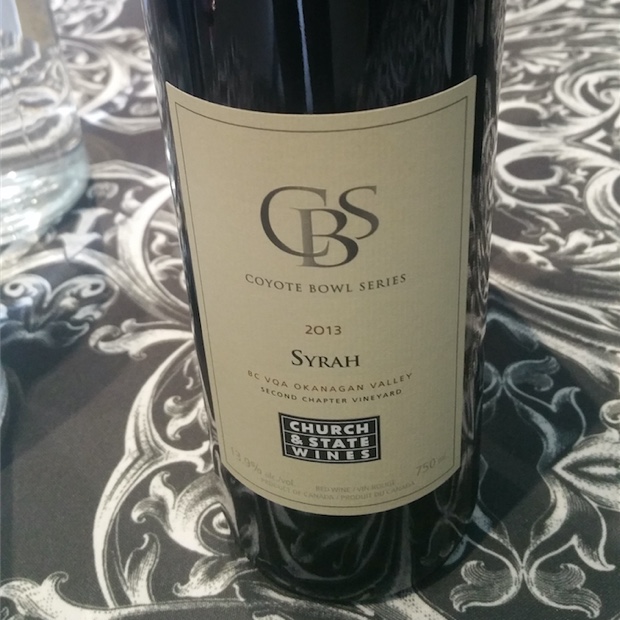
Church

Church & State Coyote Bowl Series Syrah 2013, BC VQA Okanagan Valley, British Columbia (Winery, $35.00, WineAlign)

NWAC_Silver2016_web

Reductive, dark, stormy raging and off the charts spicy syrah but there is terrific ripe fruit and cool, cool savour. Edgy but tannic within range. After the violets come sweet purple palate fruit but it’s a feigning sweetness. Long drifts of acidity and tannin but again, like so many Okanagan peers the finish dusts with espresso and not the mocha. The spice lingers well after all else has resolved. Drink 2016-2020.  Tasted June 2016  @ChurchStateWine

Clos du Soleil

Clos Du Soleil Estate Reserve Red 2012, Similkameen Valley, British Columbia (Winery, $58.90, WineAlign)

The apropos named winery, the “Vineyard of the Sun,” describes British Columbia-Okanagan-Similkameen so well. That and what can happen when Bordeaux varietals are the recipients of proper sun-worshipping phenolic journeys is the crux to understanding and enjoying such a proper and righteous red. Tasting this Michael Clark characteristic fruit handling facture with Spencer Massie sheds enlightened light on the Clos du Soleil passion project and the red ability of the Similkameen Valley. Taken from the Estate Vineyard on the Upper Bench of the Similkameen Valley, the prettiest and most inviting nose pops up here, led by cabernet sauvignon and in usage of all five Bordeaux varietals. The best red fruit, the hint of mineral and sage, the aridity of the land, the restraint from wood. It’s all correct and truth be told. Solid red blend. Drink 2016-2022.  Tasted June 2016  @ClosduSoleil  @spencemassie

Corcelletes

Corcelettes Menhir 2014, Similkameen Valley, British Columbia (Winery, $31.90, WineAlign)

NWAC_Silver2016_web

It’s hard not be endeared into the red blend culture of the Similkemeen Valley and the variegation various positions occupy on the slopes of its benches. This ode in OZ style of cabernet Sauvignon (62 per cent) and syrah (38) is pulled from vines set on the rocky soils of the Corcelletes Middle Bench Vineyard. Though the herbal, savoury, currant and tobacco laced cabernet should dominate it does not with witness thanks to a more than peppery edge and black fruit ooze of the syrah. Only the Similkameen can bring such shared duality and find common ground like this in the overall B.C. genre. Like Beamsville in Ontario and with grace in wood usage, here the two varieties co-exist with copacetic simpatico. The ancient monolith believed to date back 2741-2488 BC on the Baessler family farm off the shores of Lac de Neuchatel, Switzerland gives this blend its name. This wine is no monolith, nor does it strike as ancient or antediluvian, but it does stand out as singular for the Similkameen and for B.C. Drink 2016-2021.  Tasted June 2016  @corcelettes

Culmina Dilemma 2014, VQA Okanagan Valley, British Columbia (Winery, $35.65, WineAlign)

The road taken for this chardonnay should have led to rich, buttery and fat because the approach mimics a throwback west coast style. Alcohol, pH, new barrel usage are all generous but so is acidity. So this could have emerged huge but it’s impossibly restrained. The cool-climate metal factor sings with austerity and the gemstone crunch folds with richness. The Margaret’s Bench land speaks and gives so all tolled Culmina’s signature chardonnay is a study in heutagogical learning because it teaches knowledge sharing. This is chardonnay and in many ways, this is Burgundy. Chances taken have landed reward, if a bit unexpected, but certainly appreciated. Drink 2016-2019.  Tasted June 2016  @CulminaWinery  @CulminaSara

Culmina Merlot 2013, VQA Okanagan Valley, British Columbia (Winery, $31.00, WineAlign)

Red over green merlot to substantiate a vintage called better on the Golden Mile (Arise) Bench. Here is bone-dry, full malolactic, high acidity merlot, so very vacuous, inward, implosive and wild. The wood blankets with purpose in lieu of reckless abandon and because the fruit is just ripe enough to defend itself the return is an effusive one. Would love to taste this merlot in a best vintage with 20-25 per cent less new oak and a number close to this healthy 6.4 g/L of acidity. Now we’re talking, in tones red over green. Drink 2017-2021.  Tasted June 2016

Unicus

Culmina Unicus 2014, VQA Okanagan Valley, British Columbia (Winery, $31.05, WineAlign)

B.C. is a playground for experimentation, a place not unlike South Africa where phenolic ripeness is almost always accomplished yet it has a distinct advantage. Cooler sites and the availability, if embraced, of equally ripe acidity. So grüner veltliner, along with trebbiano, muscat ottonel, auxerrois, sylvaner and others should be investigated. Culmina’s work with grüner is fought properly, in a combination of concrete amphora, egg and steel, allowing varietal to share equal ground with terroir. A sense of some white-ish rhubarb here is noted in the most complimentary vegetal sense, along with white flowers and a dash or two of white pepper. This is a gustatory and gastronomic grüner with intensity and vitality that good slope Marlborough sauvignon blanc will similarly give. The difference here is the absence of searing citrus which is a good thing, all things considered. Drink 2016-2018.  Tasted June 2016
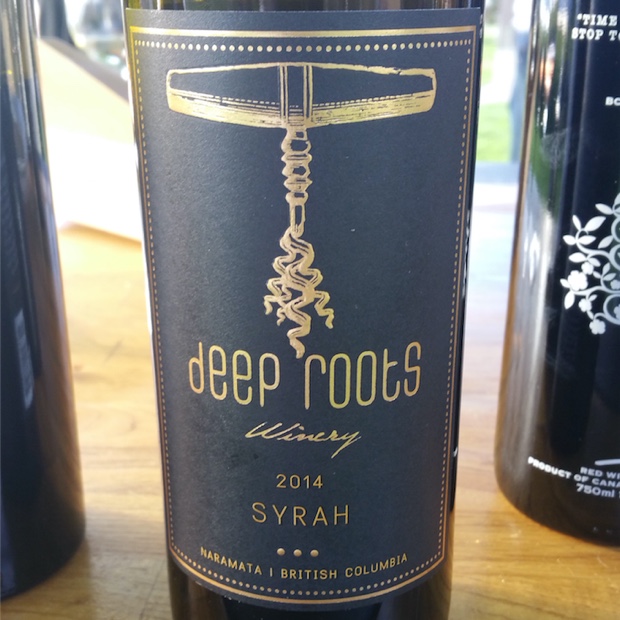
Deep Roots Syrah

Deep Roots Syrah 2014, Naramata, British Columbia (Winery, $34.00, WineAlign)

NWAC_Silver2016_web

Tasted twice, first blind at #NWAC16 and then at the winery, this is syrah with a dual northern intent, more Naramata than Rhone though the bent is a soulful repent in the church of St. Joseph. Beautifully savoury and smoky, like a big meat and smoulder sandwich with great fruit and a silken texture. The peppery bite is a sure tell sign of well-made syrah. Drink 2016-2020.  Tasted June 2016  @DeepRootsWine

Gehringer Auxerrois 2015, BC VQA Okanagan Valley, British Columbia (Winery, $13.29, WineAlign)

Despite the off-dry (11 g/L RS) directive because that is what auxerrois always wants to do and though the vintage brings much warmth, this persists as a delicate and fresh wine. Auxerrois as a grape variety is set in an imprecise past, shaded by myth, carried forward and planted decades ago in B.C. These old vines could tell stories but today its fruit expresses itself simply, with richness and with plenitude. I wouldn’t tie a cellophane bag around one and leave it in the cellar to revisit in 30 years. I’d rather hook some trout, pan roast it and work in some acidity. The auxerrois will compliment such a move just fine. Drink 2016-2018.  Tasted June 2016  @GB_Wines

Haywire Chardonnay Canyonview Vineyard 2013, BC VQA Okanagan Valley, British Columbia (Winery, $22.90, WineAlign)

NWAC_Silver2016_web

From the Summerland vineyard, raised in concrete and emerged with a semi-unoaked feel. There is a certain sort of sweet condense as if a tank and a barrel had merged. Clearly managed in the slow, micro-oxygenated way, with notes of curd, cream and whey. A chardonnay smoothie with many beneficial enzymes running wild, the yeasts working and munching away. Still retains a cool-climate feel regardless of the vat influence with top notch acidity and tannin to lengthen the chain. Drink 2016-2019.  Tasted June 2016  @Haywirewine  @OKCrushPad  @brixandmortar

Haywire Pinot Noir 2014, BC VQA Okanagan Valley, British Columbia (Winery, $27.00, WineAlign)

NWAC_Silver2016_web

From the steep limestone and granite Waters & Banks Vineyard, this is a limber, lissome and rusty pinot noir, gently pressed, caressed and left to find its own singular way. Reminds me of the salinity graced Willamette Valley, set upright and alert on the bright side of life. Their is a musky lime aroma and a lithe tartness that belies its mineral gifting. Well done. Don’t envision this losing its charm any time soon. Drink 2016-2020.  Tasted June 2016
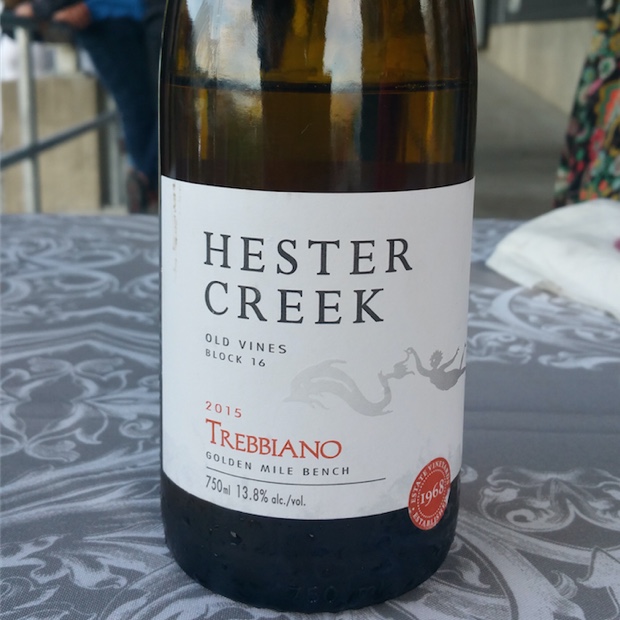
Trebbiano

Hester Creek Trebbiano Old Vines Block 16 2015, BC VQA Okanagan Valley, British Columbia (Winery, $22.95, WineAlign)

From vines planted in 1968 which in itself is a wild and mind-blowing proposition. Trebbiano has well-adapted to the Okanagan Valley, or at least these two acres have and only fools would not try to get their hands on one of the 1100 cases produced. No it’s not Emidio Pepe nor is it your nonno’s trebbiano but it is a singular expression for B.C. Terrific acidity layers over rich and viscous stone-orchard fruit. Something creamy evolves, not like similar styled Okanagan viognier but in another realm. It’s a derivative sensation, like the way children look like their mothers, so the connection to Abruzzo is really there. This is a special proprietary moment and good on Hester Creek for brokering the proviso. I will agree to abide. Drink 2016-2020.  Tasted June 2016  @HesterCreek

Hillside

Hillside Muscat Ottonel 2015, BC VQA Okanagan Valley, British Columbia (Winery, $24.99, WineAlign)

NWAC_Silver2016_web

Floral, as expected, but in contrast to the globally spoken style, this does orange blossom and mineral mining with equal and opposing ease. Acidity rings round, not overtly meaningful but nonetheless wild. From 30-plus year-old vines (circa 1982), to not find fun, joy and pleasure would be to miss every pertinent point. Hillside presents a provincial comic flick of a muscat phrase and does so with lighthearted resourcefulness and ingenuity. Drink 2016-2018.   Tasted June 2016  @hillsidewines

Fortissimo

La Stella Fortissimo 2014, BC VQA Okanagan Valley, British Columbia (Winery, $35.00, WineAlign)

In 2014 Fortissimo is mostly merlot with sangiovese playing a vital role along with a splash of cabernet sauvignon. This is found to be softer, more amenable and structured with bungalow sprawl. Bright, maximum juiced red berry fruit resemblance is anti-savoury, friendly, and ready to roll but still with some smoky spice. The 21 per cent sangiovese is significant (up seven points from 2013) so the Classico factor runs high. This is the alternative world case of Fortissimo where in some years you make Chianti Classico and in others, Gran Selezione. Though she may not consider 2014 to be her most accomplished Fortissimo, winemaker Severine Pinte will have to accept that she has procured a very elegant red blend. A Classico. Drink 2016-2020.  Tasted June 2016  @LaStellaWinery
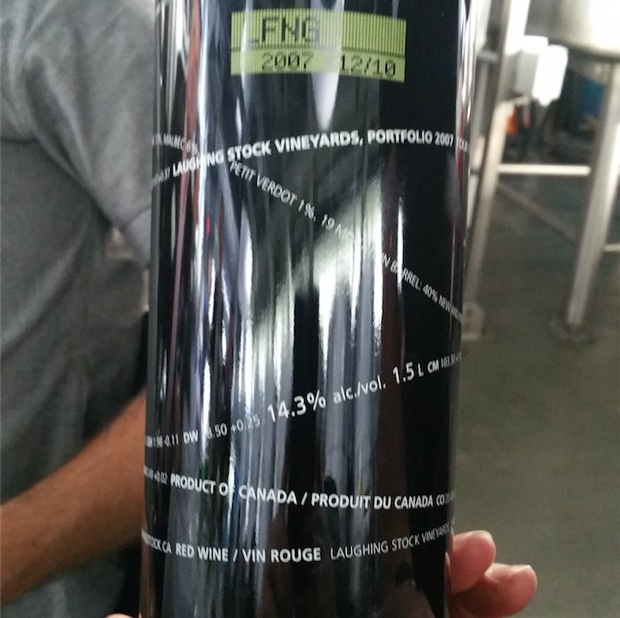
LFNG

Laughing Stock Portfolio 2007, Naramata Bench, British Columbia (Winery, $52.95, WineAlign)

Poured from Magnum the LSV ’07 has resolved from cool vintage and micro-oxidation into cool-climate meets right bank stylistic personality. Soy, Chinese five-spice, cassia, balsamic, fig and a caramelization that lists to part vegetal and part demerara sugar. The palate is expressly vital still, carrying a torch that for a cabernet-merlot Okanagan blend is fun to reason with. Magnum is obviously a major plus for this nine-year advancement. Sweet with no noticeable heat finish. Drink 2016-2018.  Tasted June 2016  @lfngwine

Maverick

Maverick Syrah 2013, BC VQA Okanagan Valley, British Columbia (Winery, $35.00, WineAlign)

Winemaker Bertus Albertyn bottled a meagre 200 cases of this Golden Mile Bench sourced syrah after 18 months in three to four year-old French Oak. If you are a fan of fresh, well-spoken, confident and blessedly transparent syrah then look for the next vintage of this sold out beauty. So gauzy gossamer textured, peppery but of scant bite and driven by a northern, smoky beat. The cure and depth in its make-up nearly adds up to beefy but its form of athleticism is built upon the quiet politesse of its maker’s execution. The comparison must be made to septentrional Rhône and the lack of new oak is so appreciated. This is a wine to watch for. Drink 2016-2020.  Tasted June 2016  @MaverickWinery

Moraine Gewürztraminer 2015, Okanagan Valley, British Columbia (Winery, $17.90, WineAlign)

Classic Okanagan Valley gewürztraminer with a touch of mute reserve relative to more forward peers. The aromatics pause at traditional exoticism then veer to pear and apricot. The palate concentrates the off-dry varietal tendency with a furthered spin out of the seed orchard and into the pit. Not necessarily a gewürztraminer with extended play acidity but highly pleasurable nonetheless. Drink 2016-2018.  Tasted June 2016  @MoraineWinery

Moraine

Moraine Riesling 2015, Okanagan Valley, British Columbia (Winery, $19.90, WineAlign)

Slightly airy and hyper-opiated riesling up to here, of burgeoning talent, suggesting what is yet to come from Moraine with respect to the great varietal Okanagan potential. On the off-dry scale this falls somewhere in the middle, going at it with heavy Mosel fuel. Quite intense with acidity to match. Hip riesling, “addicted to approval, addicted to the air. It was see if you like it or see you up there.” Drink 2016-2020.  Tasted June 2016

Moraine Pinot Noir 2013, Okanagan Valley, British Columbia (Winery, $25.95, WineAlign)

Moraine’s Okanagan Falls pinot noir is lambent with great rust and conversely vapid in desert dust. The entire red fruit spectrum is seemingly sung and stung with range and breadth; cranberry-cherry-pomegranate-strawberry-raspberry, from tart all the way to sweet. Taut, tight and bracing. This will work with pairing pride for short to mid-term enjoyment. Drink 2016-2020.  Tasted June 2016

Quails’ Gate Chenin Blanc 2015, BC VQA Okanagan Valley (Winery, $18.95, WineAlign)

NWAC_Silver2016_web

The fruit hails from both Quails’ Gate Estate and Osoyoos vineyards. Tasted just three months after bottling, the sweet (whole bunch pressed) serenity of chenin blanc has already settled in with equal and opposing acidity in tact. An angle of bitters works the lush fruit (thickened by a small percentage of older wood) and weaves the two as one in this eager and enthusiastic young (albeit early sulphur persistent) white. A splash or two of sauvignon blanc helps in the ushering. Drink 2016-2020.  Tasted June 2016  @Quails_Gate  @  @hobbsandco
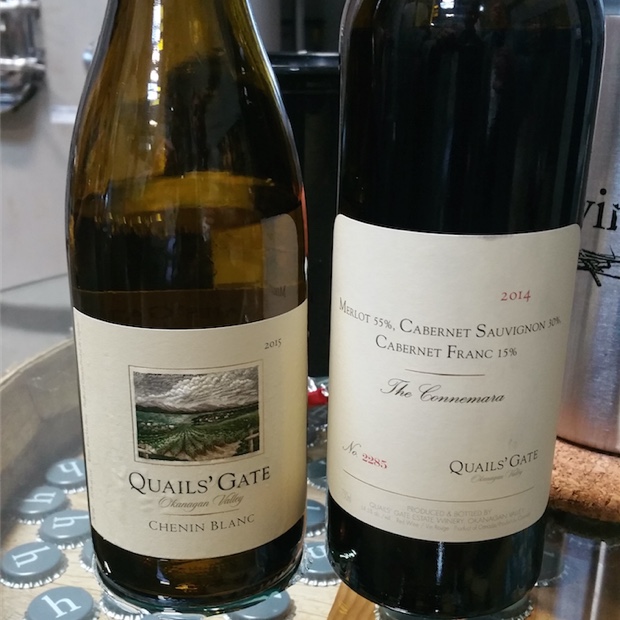
Quails' Gate

Quails’ Gate Connemara 2014, BC VQA Okanagan Valley (Winery, $64.00, WineAlign)

The inaugural vintage and first ever Quails’ Gate Bordeaux-style blend is winemaker Nikki Callaway’s ode to her stage/cellar hand/winemaking time spent in Bordeaux. The cumulative of merlot (55 per cent), cabernet sauvignon (30) and cabernet franc (15) is formidable in its perplexing youth, taut, rigid and so very tannic. The minor’s current approach is virtually unapproachable but look for something to grab for, like perfectly ripe fruit or structure. The beatitude is easily found in these two essential components. You’ll then think “if you were another pretender, oh I’d pass you by,” but in the case of the Connemara, put in the effort and the time. The reward will come later. Drink 2018-2028. Tasted August 2016

Quails’ Gate The Boswell Syrah 2014, Okanagan Valley, British Columbia (Winery, $61.05, WineAlign)

Named in ode to grandparents, The Boswell is a deep, brooding and extreme-bodied syrah that is actually quite floral. Smoky, meaty, chewy fruit mixes with tar and roses in a heightened, variegated state. Rich and piqued by peppery spice and then the chocolate warmth settles in on the finish. Sip again and note that every pass circles back to the beginning. Though it nods to the northern Rhône and wells up like Barossa, you can’t take the Okanagan out of the Boswell. It wins every time. Would prefer to see this again in three years. Drink 2019-2025.  Tasted June 2016
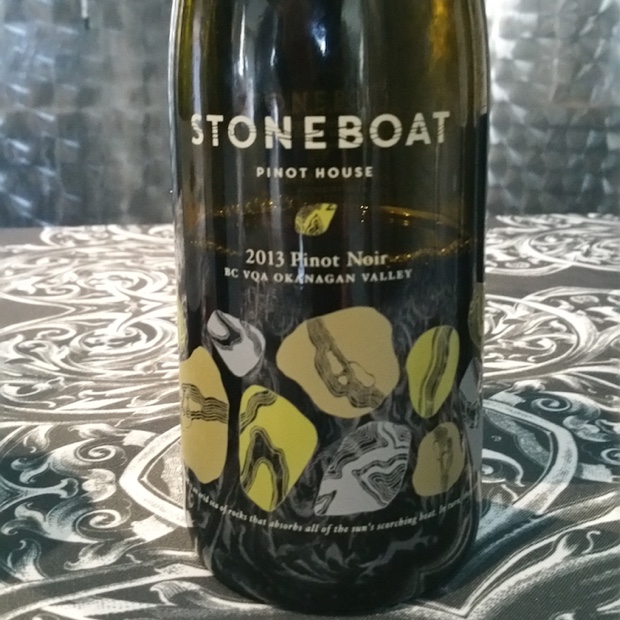
Stoneboat

Stoneboat Vineyards Pinot Noir 2013, VQA Okanagan Valley, British Columbia (429332, $29.95, WineAlign)

I tasted this blind at #NWAC16 and with Larry Martiniuk that same week and both times was struck by the electric pinosity, density and beneficial volatility. The pre-integration period is apparent so I’d hazard a guess that 18 months more are needed to assimilate the 18 months spent in (20 per cent new) French oak. To whiff it’s like peat moss mixed with a cassia-cassis cocktail. Black cherry sweetish on the palate and quite spicy. This neon pinot is quite volatile and yet closed, but it carries a downy pilosity texture. Very west coast. Though I return to thinking it out of whack, still feeling the alcohol and wondering why it has to be so loud, the texture and the complexity always bring me back. The raindrops are alive. Drink 2018-2022.  Tasted June 2016  @stoneboat  @Noble_Estates

Synchromesh Riesling Storm Haven Vineyard 2015, BC VQA Okanagan Valley, British Columbia (Winery, $31.90, WineAlign)

If this riesling is sweet I couldn’t say. That is the first thought that comes to mind. From Alan Dickinson’s home property, this is his baby, an Okanagan Falls derived riesling that lives an entirely holistic existence. No spraying, none, nada, niente. Not ever. The wine could not get any cleaner. Purity is its cognomen. The vineyard is subject to the highest diurnal temperature swing than just about anywhere in the valley. That might explain the risk-reward probability factor. The technical specs are a triumvirate of implausibility; 46 g/L RS, 11.5 g/L TA and pH below three. What? This is the most impossible wine made in B.C. In its concentrated velocity it wheezes like something ancient. We could almost be drinking Greek debina or 20 year-old Alsatian auxerrois. Dickinson makes three passes over each of the two blocks so even if the hands are off, the meticulous picking breeds asepsis. Citrus such as found in the Storm Haven fruit does not happen very often, if rarely. It’s like citrus soma. Citrus unknowable out of determination unthinkable. Direct misunderstanding by indirect whimsy. And so the vintage offers good fun but not greatness. Imagine the possibilities. Drink 2018-2027.  Tasted June 2015  @SynchromeshWine

Synchromesh

Synchromesh Riesling For Shadows Vineyard 2015, BC VQA Naramata Bench , British Columbia (Winery, $23.00, WineAlign)

Like its brethren Storm Haven Vineyard, this Synchromesh draws blood from stone in holistic ways that few Canadian riesling seem to do. The Four Shadows is different in that it chooses wisdom over risk. A clear, clean and precise nose reveals lemon drop and a honey drip. Though the sugar is more noticeable than the SHV, the older world (Germanic) impression is filled with a sense of tradition. The vineyard is in fact of very high elevation on an extremely steep slope (think Mosel) of gravel and clay layered over fractured bedrock and granite. The sugar is also elevated (50.93 g/L) and the acidity lower (8.4 g/L) so what you get may seem to lower the impossibility factor. Don’t be fooled into thinking this a riesling of privilege and lassitude. It does not drip with sleep but rather rages with life. The stones seem to speak. And the riesling listens. Drink 2016-2022. Like its brethren Storm Haven Vineyard, this Synchromesh draws blood from stone in holistic ways that few Canadian riesling seem to do. The Four Shadows is different in that it chooses wisdom over risk. A clear, clean and precise nose reveals lemon drop and a honey drip. Though the sugar is more noticeable than the SHV, the older world (Germanic) impression is filled with a sense of tradition. The vineyard is in fact of very high elevation on an extremely steep slope (think Mosel) of gravel and clay layered over fractured bedrock and granite. The sugar is also elevated (50.93 g/L) and the acidity lower (8.4 g/L) so what you get may seem to lower the impossibility factor. Don’t be fooled into thinking this a riesling of privilege and lassitude. It does not drip with sleep but rather rages with life. The stones seem to speak. And the riesling listens. Drink 2016-2022. Tasted June 2016.Tasted June 2016

Tantalus Brut

Tantalus Blanc De Noir 2013, Okanagan Valley, British Columbia (Winery, $31.90, WineAlign)

NWAC_Silver2016_web

Winemaker David Paterson “squeezes it like Champagne” and lets it rest for six months in chardonnay barrels. Two years of triage and boom! Freaking elegant Blanc de Noir. Rusty, rosy, the absolute spot on ripe vernacular spoken, the right tart exposed. It’s curious and foreshadowed thinking to know that 100 cases have been set aside for a five to seven year disgorgement. D’ya think Paterson is high on the vintage? Tasted June 2016  @tantaluswine

A single block of Clone 93 pinot noir planted in 1985 is responsible for this breath of fresh Okanagan Valley Blanc de Noir. Fashioned with the omnipresent Tantalus acidity, this rages out with aridity, salinity and palpable tension. Only pinot noir can act like this, with layers of sous bois and fraises du bois. The age of the vines, the early-picked necessity and the allowance for needful and natural expression has resulted in a wine simply stressed as terroir and boîte. Carries the acidity and the tension across and through the palate. Finishes as dry as it started. Drink 2016-2020.  Tasted April 2016

Tantalus Pinot Noir 2013, Okanagan Valley, British Columbia (Winery, $29.90, WineAlign)

The vintage was not shy to gift dark, optimum-achievement in phenolic fruit and along with that ripeness comes even deeper tonal intent. Red hyperbole is elevated by striking acidity, setting this Pinot Noir up for really high expectations. The palate does not disappoint. Flavours range from black cherry to charred meat making for a highly gustatory experience. Chewy and enjoyable describes the time spent with this wine. It will offer great pleasure in the short term. Drink 2016-2018.  Tasted April and June 2016
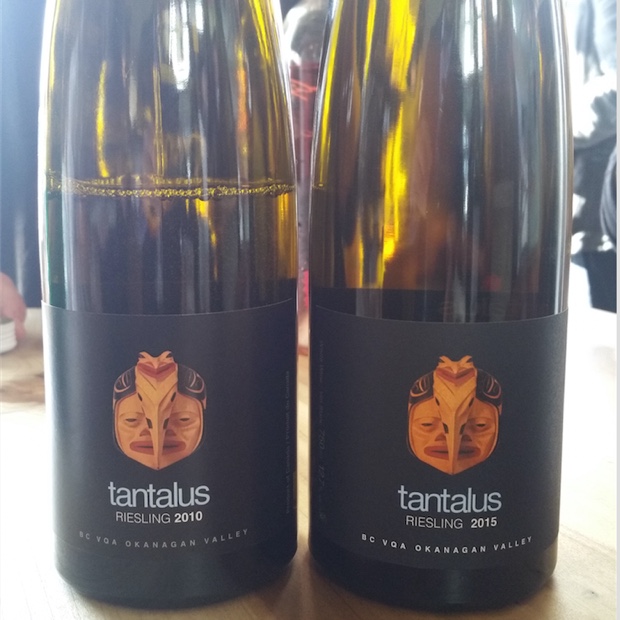
Tantalus

Tantalus Riesling 2015, Okanagan Valley, British Columbia (Winery, $23.00, WineAlign)

Two months later things have changed and yet not at all. There are more tricks and inducements (as compared to 2010) but don’t be fooled because with a difficult (sweltering) vintage the wine makes you think you can get close. But you can’t. You are further away than you think mostly due to incredible citrus and wild rhythms swimming through raging riesling waters. Change of plans. Drink 2018-2024.  Tasted June 2016

Well with the arena of aridity, salinity and sheer marketability, here is a showy Tantalus with super searing lemon flavours emerging out of great atmosphere and aromatic intensity. Some Riesling taketh away and some are mouth watering, like this. The stone fruit goodness attacks and sticks to the tongue like sap, then glides effortlessly down. Tantalus might make me think of things that are out of reach, “standing in water, but dying of thirst, this is my thanks and this is my curse.” Yet this early to market 2015 Riesling offers an antithetical view, ready, willing and able to please. Drink 2016-2019.  Tasted April 2016

https://www.youtube.com/watch?v=pWXdhkE1MLo

Tantalus Riesling 2010, Okanagan Valley, British Columbia (Winery, $22.90, WineAlign)

I’m thinking that no other B.C. riesling tries, trips and tricks with intense tribulation like the Tantalus, especially with a look back at this 2010 ripper. Though just now emerging from out of its saline crusted shell, the liquid stone injection will always render this a tantalizing wine so while it seems to open a door a part of it will always remain just out of reach. This 2010 can retrospectively be looked at as a genre defining riesling at the hands of an engaging young winemaker to be.  Tasted June 2016

Tinhorn Creek Oldfield Series 2bench Red 2012, BC VQA Okanagan Valley, British Columbia (Winery, $29.99, WineAlign)

Naturally south Okanagan crunchy, chewy, spicy and taut red blend. From two benches, the Golden Mile (Tinhorn Creek Vineyard) and the Black Sage Bench (Diamondback Vineyard). This is quite a ripper in that magical $30 middle ground with power to impress as much as many peers two times the price. That said it certainly retains its tangy, two-step, red fruit freshness, with cool savour, like two mints in one. Kind of reminds me of Coonawarra, especially the Penfolds Bin 169, so perhaps when brought together there is a Bench similarity with the Terra Rosso soil. Or perhaps just a stab at clouds. Either way this 2012 takes over from the vital 2011 and runs with the baton. Drink 2016-2021.  Tasted June 2016  @TinhornCreek @Andrew_Tinhorn  @SandraOldfield

Zweigelt

Upper Bench Zweigelt 2014, BC VQA Okanagan Valley, British Columbia (Winery, $25.00, WineAlign)

I’ve not had the opportunity to taste the go between 2013 but progression and evolution are found in the bright red fruit of this 2014 zweigelt from Upper Bench. The aromatics travel east and west, as if coast to coast and on a global trek. I get the foraged berries, baking scents and the felled evergreen mixed with fresh cocoa. I also sense garrigue, as well as jasmine in the early evening. Though the sugar is elevated (an insignificant 0.6 g/L up to 2.9) the wine was picked at lower brix (23.5 as opposed to 24.2) and so the acidity is given the chance to feign higher. The alcohol is hefty (14.4 per cent) but the overall balance is improved. Dialled back a bit but another notch or two would really do justice to the grape. Early consumption is still the order and fresher remains the promise. We’ll see what the warm 2015 vintage will bring. Drink 2016-2018.  Tasted June 2016  @upperbench
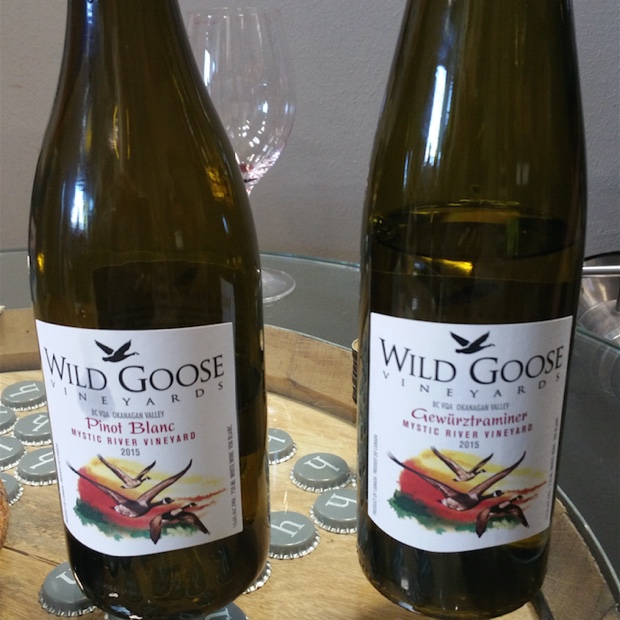
Wild Goose

Wild Goose Pinot Blanc Mystic River 2015, Okanagan Valley, British Columbia (Winery, $19.00, WineAlign)

A few clicks north of Oliver comes this maximum juice master of a pinot blanc, like a tart gooseberry cake with a warm, yeasty crust. It’s like autolytic sparkling wine without the bubble, foiled by a sauvignon blanc faux botrytis thing going on. The acidity is well suited to match the exuberant fruit. Roland Kruger points a finger to the vineyard (right along the south Okanagan River) to explain the aromatics. The addendum of 20 per cent barrel fermentation is the key that turns the textural screws. As far as pinot blanc goes, “it’s open mike, punk rock, (it’s natural), red, white and blue.” This Wild Goose. Drink 2016-2019.  Tasted June 2016  @wildgoosewines

Wild Goose Gewürztraminer Mystic River 2015, Okanagan Valley, British Columbia (Winery, $19.00, WineAlign)

Wild Goose is proving to be a gewürztraminer leader in the Okanagan Valley not just for its adherence to rose petal and lychee varietal correctness but also for aromatic elegance. Terrific texture marks the ’15’s territory (a trademark of Wild Goose whites) and here you get drying wax still pliable and malleable. The aura is distinct and the wine so very amenable. Really well made Mystic River output. Drink 2016-2020.  Tasted June 2016
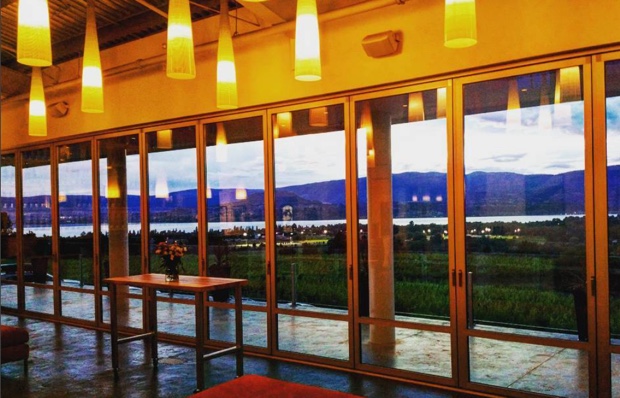
Good night and many thanks @tantaluswine #kelowna #nwac16

Good night and many thanks @tantaluswine #kelowna #nwac16

Good to go!

Twitter: @mgodello

Instagram: mgodello

WineAlign

All suss terroir

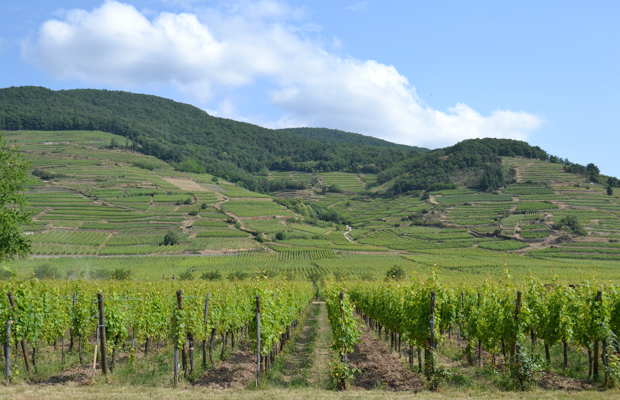
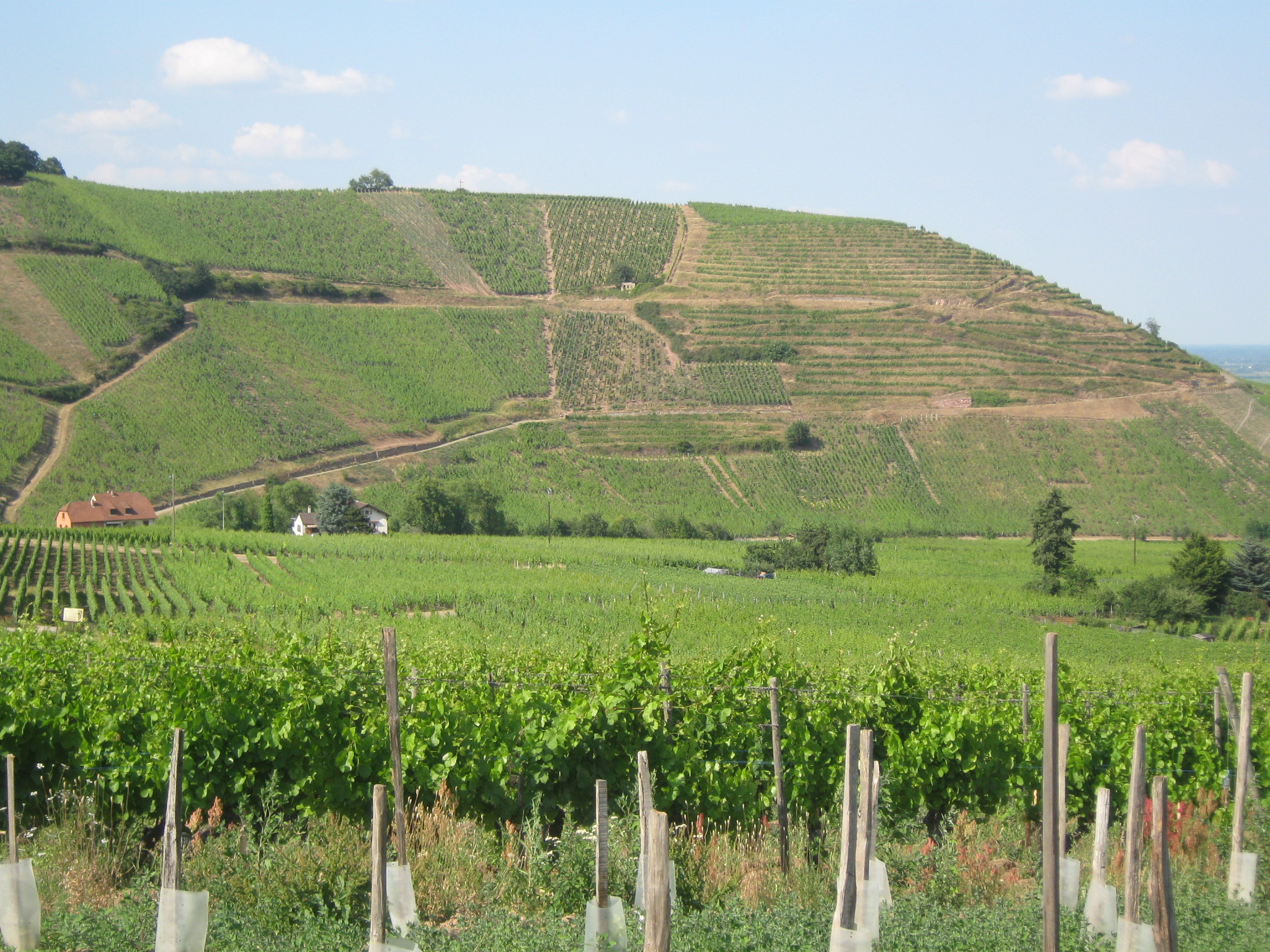
Niedermorschwihr and Sommerberg Grand Cru Vineyard, Alsace

Niedermorschwihr and Sommerberg Grand Cru Vineyard, Alsace

It has been more than 15 months since I returned from a pivotal, seminal and transmogrifying week in Alsace. The thoughts transposed to words continue to flow freely and with crystalline clarity. This may be the curtain call on that trip. Or not.

Type in the words “Alsace” and “philosophy” into a Google search page and the results will tell a Grand Cru story. The Alsace home page launches from terroir. It has to. Every winery, trade, marketing or governing organization’s website is ingrained to emphasize the rubric, to explain the true essence of Alsace wine. The local philosophy, indicating the cerebral and the spiritual component for producing exceptional wine, is both necessary and fundamental. There is nothing remotely parenthetical about the notion of terroir, not in Alsace.

Schlossberg Grand Cru, Kientzheim, Alsace

Schlossberg Grand Cru, Kientzheim, Alsace

Related – In a Grand Cru State of mind

As wine geeks we are constantly seeking it out and sometimes we imagine it, chat it up when it’s not really there. After we are immersed in Alsace, we cannot deny its existence. Terroir, defined as “the complete natural environment in which a particular wine is produced, including factors such as the soil, topography and climate.” Or, goûts de terroir, as intaste of the earth.” Wherever wine is made around the world, soil is always as important, if not more important than any facet of the winemaking oeuvre. In Alsace, it is religion. I suss it, you suss it and in Alsace, they might say, “we all suss terroir.”

Alsace presents as a long strip of stupidly beautiful, verdant vistas, wedged between the faults and valleys forged with the Vosges Mountains on its west side and the Germany buffering Rhine River to the east. To consider its location as a province of France, drive 500 kilometres east of Paris and draw a line south from Strasbourg, to Colmar and to Basel. Wars have seen to make sure the region can never be too comfortable with its identity, causing an ever-annoying oscillation in governance.

Godello and Restaurant Laurea Montreal's Fred Fortin
Godello and Restaurant Laurea Montreal’s Fred Fortin
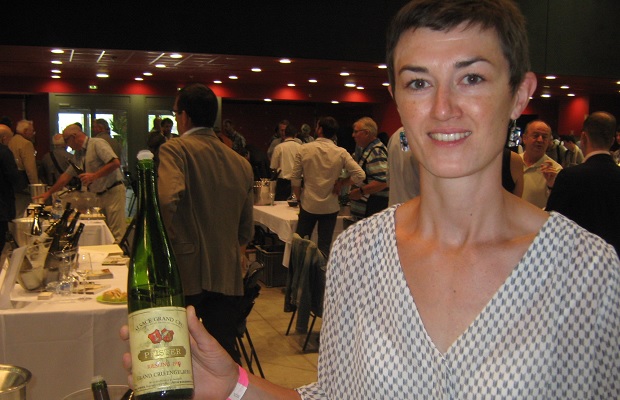
Alsatians are the possessed refugees of Europe, tossed around like orphaned children from one foster family to another. That they can be so comfortable in their own skin is to accept their conceit as a French paradox, through ignoring its Franco-Germanic past, its passage back and forth between hands and its current state as a region governed by France. The confluence of cultures and of shared borders (and airports) would think to cause a crisis of identity. The names of towns and villages may act out a who’s who or what’s what of French sobriquet and German spitzname. None of that matters. The people, the places, the food and the wine are purely and unequivocally in ownership of their own vernacular, dialect and culture: Alsatian.

Phillipe Blanck in the Schlossberg Photo (c): Cassidy Havens, http://teuwen.com/

Phillipe Blanck in the Schlossberg
Photo (c): Cassidy Havens, http://teuwen.com/

Related – A Blanck slate in Alsace

When a winemaker wants to lay an insult upon you he will say something like “oh, that’s so Anglo-Saxon.” Ouch. He will mean it, for sure, but he will also grace you with a wink and a smile. He likes you and he respects your choice to come from far away to learn something of his wines. And you like him. The winemaker will also complement you when your palate aligns with his, when your thoughts intuit something about his acuity and his groove. His flattery will be genuine. The winemaker will pour old vintages and without a hem or a haw. She will share generously, not because she wants to sell more, but because she wants better people to drink her wine.

To ascertain a grip on the Alsace codex it must begin in the vineyard. The steep slopes, zig-zagging ridges and fertile valleys are composed of highly intricate, alternating and complex geological compositions. The landscape switches repeatedly from clay to marl, from calcaire (limestone) to schist, from volcanic to granitic rock. Each vineyard and even more parochial, each plot contributes to define the wine that will be made from that specific micro-parcel. The wine grower and winemaker’s job is to treat the soil with utmost respect. To plow the land, to add organic material, to refuse the use of fertilizers and to spray with solutions composed of non-chemical material.

Organic and biodynamic viticulture is widespread across the globe but Alsace is a leader in the practices, particularly in the latter’s holistic, asomatous way. Though more than 900 producers make wines, including many who do not partake in a bio-supernal and subterraneal kinship with the vines and the earth, the ones who do are fanatical about their winegrowing ways. Alsatian winemakers bond with their fruit, by employing the Austrian philosopher Rudolf Steiner’s teachings as a predicate from which to apply spiritual connections to the physical act of tending vines.

Godello and Christophe Ehrhart, Domaine Josmeyer, Kientzenheim
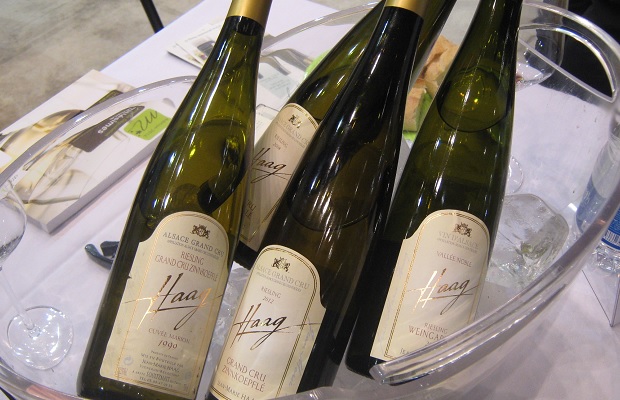
Godello and Christophe Ehrhart, Domaine Josmeyer, Kientzenheim

Related – It was Josmeyer’s imagination

The belief is that great wine can only be made from healthy, natural and disease resistant plants. Steiner’s studies on chemical fertilizers looked into the effect on plants growing near bombs in the earth. The growth was observed to be abnormal and unhealthy. Christophe Ehrhart of Domaine Josmeyer compared this to humans, who eat too much salt and thus need to drink too much. I tasted more than 150 naturally made wines from biodynamically farmed soils. The proof of quality and complexity is in the glass.

The winemaker of Alsace shows a respect for the earth that might be seen as a verduous variation on the teachings of theologian, philosopher, physician, medical missionary and humanitarian Albert Schweitzer. The Alsatian-born Schweitzer gave to the world his theory on the “reverence for life,” a term he used for a universal concept of ethics. “He believed that such an ethic would reconcile the drives of altruism and egoism by requiring a respect for the lives of all other beings and by demanding the highest development of the individual’s resources.” The biodynamic approach, through its human to vegetable relationship, echoes the concept. Careful care not to disrupt the balance of nature allows the vines to develop the strength to survive and to flourish in less than optimum climatic conditions, especially during times of drought. The quality of grapes and in turn, the complexity of wine, is the result.

Grand Cru Riesling, Alsace

Grand Cru Riesling, Alsace

The focus on soil and terroir is ultimately disseminated into the idea of tasting minerality in wine, a most contentious aspect of the wine tasting and writing debate. Nary an expert will admit that the impart of trace minerals can be ascertained from a wine’s aroma and most believe that it can be found in taste. An American geologist debunked the mineral to taste theory at the annual meeting of the Geological Society of America held in Portland Oregon. “The idea is romantic and highly useful commercially, but it is scientifically untenable,” wrote Alex Maltman, a professor at the Institute of Geography and Earth Sciences at Aberystwyth University. Maltman’s claim is simple. Vines absorb minerals from the earth but the amount is far too small for human detection.

Christophe Ehrhart of Domaine Josmeyer in Wintzenheim agrees to disagree. Ehrhart concedes that the quantitative number is small (only three to five percent) for a vine to derive its personality, divined though the earth’s brine. The remainder is a consequence of photosynthesis. Ever the spiritual and natural advocate, Christophe borrows from the writings of David Lefebvre. The journalist and wine consultant’s The minerality from David Lefebvre tells the story of why natural wines without sulfur express minerality. Lefebvre makes clear the argument that naturally-farmed (biodynamic and/or, but necessarily organic) vines are qualitatively richer in (salt minerals) than those raised with chemicals. “All fermentation, from milk to cheese, from grape to wine, is accompanied by the appearance of the component saline, one could say mineral, in the taste of the fermented product.” Chemicals and fertilizers inhibit growth and vigor, ostensibly wiping out an already minuscule number. If food is available at the surface, vine roots will feed right there. They will then lose their ability to create the beneficial bacteria necessary to metabolize deep earth enzymatic material. They essentially abandon their will to fight for nutrition deep within the fissures of the rock. Lefebvre’s conclusion? “All biocides and other products that block mineralization, such as SO2, inhibit the expression mineral.”

At the end of the day Lefebvre is a wine taster and not a scientist and the argument must be considered within the realm of the natural world. “The taste of stone exists in Alsace, Burgundy, the Loire (all France) when the winegrower uses organic farming and indigenous, winemaking yeasts.” American made wine rarely does this, though change is occurring. Ontario winemakers are different. Taste the wines of Tawse or Southbrook and note the difference. Or, taste the difference a vegetable, like a tomato, or a piece of fruit, like a peach tastes when picked straight from the garden, or orchard, as opposed to the conventional piles of the supermarket. There can be no argument there.

Wihr au Val Photo (c): Cassidy Havens, http://teuwen.com/

Wihr au Val Photo (c): Cassidy Havens, http://teuwen.com/

A week tasting through nearly 300 wines in Alsace may sound exhausting when in fact it is an experience that had me constantly, “as the expression goes, gespannt wie ein Flitzebogens,” or as it is loosely employed from the German in the Grand Budapest Hotel, “that is, on the edge of my seat.” I watched Wes Anderson’s film on the Air France flight over from Toronto to Paris and enjoyed it so much that I watched it again on my return. That kind of spiritual, dry European humour is not unlike that of the fraternity of Alsatian winemakers and how they discuss their wines. From Olivier Zind-Humbrecht to Pierre Blanck, to MauriceBarthelmé and to Jean-Pierre Frick there is an Edward Norton to Bill Murray, Tom Wilkinson to Harvey Keitel, Adrien Brody to Ray Fiennes affinity. Or perhaps it’s just me.

Alsace is distinguished by a very specific set of vinous attributes. No other area in France is as dry and only Champagne is further north in latitude. The aridity of the summer months, followed by the humidity of the fall fosters the development of a beneficial fungus called Botrytis cinerea, the fungus better known as noble rot, which concentrates the sugars and preserves acidity. Pierre Gassmann of Rolly Gassman says all of his wines are noble rot wines, but he calls them Riesling.

The uninitiated into the wines of Alsace think it is one big pool of sickly sweet and cloying white wine. If perhaps this were, at least to some extent, once true, it is no longer. The progressive and philosophically attentive producer picks grapes (especially the particularly susceptible Pinot Gris) before the onset of botrytis. If a dry, mineral-driven style is the goal, picking must be complete before what Phillippe Zinck refers to as D-Day. Pinot Gris goes over the edge in an instant, even more so because of the advancing maturation due to the warm temperatures induced by Global Warming.

Sommerberg Grand Cru

Sommerberg Grand Cru

The global wine community’s ignorance to the multeity of Alsace wines, “as mutually producing and explaining each other…resulting in shapeliness,” needs addressing and so steps in the valedictorian, Christophe Ehrhart. The Josmeyer viniculturalist devised a system, a sugar scale to grace a bottle’s back label. Whites are coded from one to five, one being Sec (Dry) and five Doux (Sweet). The codification is not as simple as just incorporating residual sugar levels. Total acidity is taken into consideration against the sugar level, like a Football team’s plus-minus statistic. In Alsace the relationship between sugar, acidity and PH is unlike any other white wine region. Late Harvest (Vendanges Tardives, or Spätlese in German) is Late Harvest but Vin desprit sec or demi-sec in Alsace should not generally be correlated to similar distinctions in Champagne or the Loire. In Alsace, wines with vigorous levels of acidity and even more importantly PH bedeck of tannin and structure. Perceived sweetness is mitigated and many whites, though quantified with residual sugar numbering in the teens, or more, can seem totally dry.

Returning to the idea of increasingly warmer seasonal temperatures, the red wines of Alsace have improved by leaps and bounds. “We could not have made Pinot Noir of this quality 20 years ago,” admits Maurice Barthelmé. Oh, the humanity and the irony of it all.

The Vineyards of Domaine Albert Mann photo (c) https://www.facebook.com/albertmannwines

The Vineyards of Domaine Albert Mann
photo (c) https://www.facebook.com/albertmannwines

Related – Giving Grand Cru Pinot Noir d’Alsace its due

This sort of quirky response to nature and science is typical of the artisan winemaker. There is more humour, lightness of being and constater than anywhere else on this winemaking planet. There just seems to be a collective and pragmatic voice. Maurice makes a 10,000 case Riesling called Cuvee Albert, “because I have to make a wine for the market.” Yet Maurice is also a dreamer and a geologist. To him, “Pinot Noir, like Riesling, is a mineralogist.”

Domaine Albert Mann’s Jacky Barthelmé: “Before Jesus Christ was born we have had vines here in the Schlossberg. So it is a very old story.” The Alsace vigneron is only human and works in a vinous void of certitude. They do not fuck with their land or attempt to direct its course. The young Arnaud Baur of Domaine Charles Baur insists that you “don’t cheat with your terroir or it will catch up with you. You will be exposed. You can make a mistake but you will still lose the game.” What an even more wonderful world it would be if he only understood the complexity in his multiple entendre.

Philippe Blanck is a philosopher, a dreamer, an existentialist and a lover. He is Descartes, the aforementioned Bill Murray and Bob Dylan rolled into one, a man not of selection but of election. He is both prolific and also one who buys the whole record catalogue, not just the hits. He opens old vintages freely and without hesitation. When asked how often does he have the opportunity to open wines like these he answers simply, “when people come.”

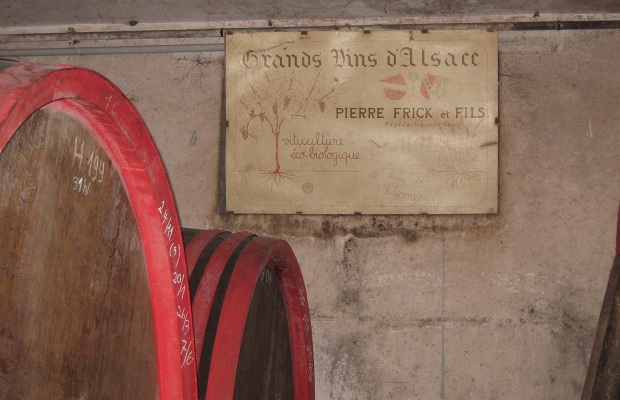
Pierre Frick et Fils

Pierre Frick et Fils

Then there is the far-out Jean-Pierre Frick, the man who let a 2006 Auxerrois ferment for five years before bottling it in 2011. “After one year I check the wine and he is not ready. I see him after two years and he says I am not ready. So I wait. After five years he says, I am finished. So I put him in the bottle.” On his Riesling 2012 he says, “This is a wine for mouse feeding.” Upon cracking open his remarkable, natural winemaking at its peak 2010 Sylvaner he chuckles like M. Gustave and smirks, “he is a funny wine.”

Few wine regions tell their story through geology as succinctly and in as much variegated detail as Alsace. The exploration of its Grand (and other vital) Cru (for the purposes of this trip) was through soils (or not) variegated of clay, sandy clay, marl, granite, volcanic rock, limestone and sandstone. To complicate things further, a Cru can be composed of more than one type of terra firma and still others have more than one arrangement within the particular plot. All very complicated and yet so simple at the same time. The Crus tasted came from the following:

Schlossberg Grand Cru, (c) Cassidy Havens, http://teuwen.com/

Schlossberg Grand Cru, (c) Cassidy Havens, http://teuwen.com/

  1. Granitique/Granite (Brand, Herrenreben, Kaefferkopf, Langenberg, Linsenberg, Schlossberg, Sommerberg)
Henri Schoenheitz and Godello

Henri Schoenheitz and Godello

Domaine Schoenheitz Linsenberg Riesling 1990, Ac Alsace, France (Winery, 196618, WineAlign)

During a picnic, on a plateau up on the Linsenberg lieu-dit set above the Wihr-au-Val, this 24 year-old bottle acts as a kind of Alsatian Trou Normand. A pause between courses, which involves alcohol and you need to ask for its proof of age. Culled from deep dug vines out of stony and shallow granite soil. Soil rich in micas with a fractured basement. From a dream vintage with marvellous semi-low yields and a student of south-facing, self-effacing steep steppes. A sun worshipper prodigy of winemaker Henri Schoenheitz, a child of terroir du solaire. Rich and arid in simultaneous fashion (the RS is only 8-10 g/L), the years have yet to add mileage to its face and its internal clock. It may ride another 15, or 20. Drink 2015-2030. Tasted June 2015  @VinsSchoenheitz

Schoenheitz Picnic, Wihr-au-Val

Schoenheitz Picnic, Wihr-au-Val

Domaine Albert Boxler Pinot Blanc Reserve 2013, Ac Alsace, France (SAQ $27.70 11903328WineAlign)

From fruit drawn off the granitic Grand Cru of the Brand but not labeled as such. Laser focus (what Jean Boxler wine is not) and texture. Possessive of the unmistakable Brand tang, like mineral rich Burgundy. The minerality ann the acidity from the granite are exceptional in a wine known as “Pinot Blanc Reserve.” As good a developing PB are you are ever likely to taste. Drink 2015-2019.  Tasted June 2014

Domaine Albert Boxler Riesling Old Vines Sommerberg Grand Cru 2013, Ac Alsace, France (SAQ, 11698521WineAlign)

A direct expression of winemaker (since 1996) Jean Boxler and his 150 year-old casks. This is Riesling suspended in the realm of dry extract, texture and a precision of finesse rarely paralleled in Alsace. It reads the truth of facteur for Sommerberg, its face, slope and pitch. Exceeds the clarity of the younger parcel in its contiguous continuance of learning, of pure, linear, laser styling. There is more maturity here and the must had to have been exceptional. “The juice must be balanced when it goes into the vats or the wine will not be balanced,” insists Jean Boxler. And he would be correct. Drink 2016-2025.  Tasted June 2014

Domaine Albert Boxler

Domaine Albert Boxler

Domaine Albert Boxler Tokay-Pinot Gris Sommerberg Grand Cru 1996, Ac Alsace, France (Alsace)

From volcanic and granitic soils together combining for and equating to structure. A matter concerning “purity of what you can do from a great ground,” notes Master Sommelier Romain Iltis. Perception is stronger than reality because despite the sugar, the acidity reign to lead this to be imagined and reasoned as a dry wine. Ripe, fresh, smoky, with crushed hazelnut and seamless structure. Stays focused and intense in mouthfeel. Takes the wine down a long, long road. Quite remarkable. No longer labeled “Takay” after the 2007 vintage. Drink 2015-2026.  Tasted June 2014

  1. Calcaire/Limestone (Engelgarten, Furstentum, Goldert, Rosenbourg, Rotenberg, Schoffweg)

Domaine Albert Mann Pinot Gris Grand Cru Furstentum 2008, Alsace, France (Winery)

The Marl accentuated Hengst and its muscular heft receives more Barthelmé limelight but the always understated Furstentum Grand Cru is a special expression of the variety. As refined as Pinot Gris can be, with a healthy level of residual sugar, “like me” smiles Marie-Thérèse Barthelmé. The sugar polls late to the party while the acidity swells in pools, but the finish is forever. “Pinot Gris is a fabulous grape but we serve it too young,” says Maurice. “It needs time to develop its sugars.” Truffle, mushroom, underbrush and stone fruit would match well to sweet and sour cuisine. Flinty mineral arrives and despite the residual obstacle, is able to hop the sweet fencing. The potential here is boundless. Drink 2018-2026.  Tasted June 2014  @albertmannwines

Dinner wines at La Table du Gourmet, Riquewihr

Dinner wines at La Table du Gourmet, Riquewihr

Domaine Paul Zinck Gewürztraminer Grand Cru Goldert 2010, Alsace, France (Agent)

From the village of Gueberschwihr and from soil composed of sandstone, chalk and clay. The vines average 50 years in age and the wine saw a maturation on the lees for 11 months. Philippe Zinck notes that “the terroir is stronger than the variety.” If any grape would stand to contradict that statement it would be Gewürztraminer but the ’10 Goldert begs to differ. Its herbal, arid Mediterranean quality can only be Goldert talking. Though it measures 20 g/L of RS it tastes almost perfectly dry. It reeks of lemongrass, fresh, split and emanating distilled florals. This is classic and quintessential stuff. Drink 2015-2025.  Tasted June 2014  @domainezinck  @LiffordON

Domaine Zind-Humbrecht Gewürztraminer Vendanges Tardives Goldert Grand Cru 1985

Tasted from magnum at Les Millésimes Alsace, a wine described by Caroline Furstoss as “unusual for late harvest,” because the terroir is simply stronger than the variety. Another economically non-viable low yield LH, “from a vintage more on the reductive than the oxidative side.” Even at 30 years it requires aeration and time to open up. Travels from spicy to smoky with that air. There is a density in bitterness, an attrition miles away from resolve and a promise for rebate, if further patience is granted. The spices inherent are ground, exhumed and combine with the base elements to rise atomically. A spatially magnificent wine of sugars not yet clarified and an acquired taste not quite elucidated. A taste of an ancient kind. Drink 2015-2035.  Tasted June 2014

  1. Marno-Calcaire/Marl-Limestone (Altenberg de Bergheim, Clos Hauserer, Eichberg, Hengst, Kappelweg de Rorschwihr, Mambourg, Mandelberg, Osterberg, Pfersigberg, Sonnenglanz, Steingrubler)

Marcel Deiss Schoffweg “Le Chemins Des Brebis” 2010, Bergheim, Alsace, France (Agent, $60.95, WineAlign)

A pulsating and metallic, mineral streak turns the screws directly through this spirited Bergheim. From Schoffweg, one of nine Deiss Premier Crus planted to Riesling and Pinots. A pour at Domaine Stentz Buecher from fellow winemaker Carolyn Sipp simulates a trip, to stand upon a scree of calcaire, the earth below a mirror, reflecting above a multitude of stars. “He’s a character,” smiles Sipp, “and perhaps even he does not know the actual blend.” The amalgamate is surely Riesling dominant, at least in this impetuous ’10, a savant of fleshy breadth and caracoling acidity. The Schoffweg does not sprint in any direction. It is purposed and precise, geometric, linear and prolonging of the Deiss magic. This is a different piece of cake, an ulterior approach to assemblage, “a bigger better slice” of Alsace. It should not be missed.  Tasted June 2014  @LeSommelierWine

Marcel Deiss Mambourg Grand Cru 2011, Bergheim, Alsace, France (Agent, $114.95, WineAlign)

In a select portfolio tasting that includes a trio of highly mineral yet approachable 2010’s (Rotenberg, Schoffberg and Schoenenbourg), the ’11 Mambourg stands out for its barbarous youth. It seems purposely reductive and strobes like a hyper-intensified beacon. Rigid, reserved and unforgiving, the Mambourg is also dense and viscous. Acts of propellant and wet concrete circulate in the tank, compress and further the dangerous liaison. This is a brooding Deiss, so different than the jurassic citrus from Rotenberg, the terroir monster in Schoffberg and the weight of Schoenenbourg. In a field of supervised beauty, the Mambourg may seem like punishment but there can be no denying the attraction. Five years will alter the laws of its physics and soften its biology. The difficult childhood will be forgotten. Drink 2019-2026.  Tasted June 2014  @LeSommelierWine

Marcel Deiss Langenberg “La Longue Colline” 2011, Bergheim, Alsace, France (Agent, $48.95, WineAlign)

Rogue Alsace, classic Deiss five varietal field blend specific to one hangout. The steep, terraced, granite Langenberg, terroir from Saint Hippolyte. Deiss coaxes, expects and demands precocious behaviour from four supporting varieties to lift and place the Riesling, with the intent being a result in “salty symphony.” This is approachable, something 2011 could not have been easy to accomplish. The accents are spice, sapidity and acidity, from the granite, for the people. Isn’t this what a mischievous brew should be about? Drink 2015-2022. Tasted June 2014  @LeSommelierWine

Léon Beyer Riesling Cuvée Des Comtes D’Eguisheim 1985, Alsace, France (316174, $50.00, WineAlign)

I wonder is any Alsace Riesling sublimates history, religion and occupation more than Cuvée Des Comtes D’eguisheim. It breathes the past; of popes, Augustinians of Marbach, Benedictines of Ebersmunster, Cistercians of Paris and Dominicans of Colmar. From the limestone-clay for the most part of the Grand Cru Pfersigberg and only produced in exceptional vintages. In 1985 low yields, same for botrytis and then 29 years of low and slow maturation. In 2014, is the herbal, aromatic, limestone salinity a case of vineyards, grape or evolution? All of the above but time is in charge. It has evolved exactly as it should, as its makers would have wished for. It is ready to drink. The defined minerality, with fresh lemon and a struck flint spark has rounded out, without the need for sugar. Drink 2015-2017.  Tasted June 2014  @TandemSelection

Charles Baur Riesling Grand Cru Eichberg 2009, Ac Alsace, France (Winery)

Arnaud Baur understands his place and his family’s position in the Alsace continuum. “You can make a mistake and you can still lose the game.” His use of entendre is subconsciously brilliant. In 2009 the warmth went on seemingly forever and so Baur did not even bother trying to make a dry Riesling.  “We really respect the vintage,” says Arnaud. Meanwhile at 18 g/L RS and 7.0 g/L TA the balance is struck. Many grapes were dried by the sun, ripeness was rampant, flavours travelled to tropical and acidity went lemon linear. The 14.2 per cent alcohol concludes these activities. Matched with foie gras, the vintage is marinated and married. There is certainly some crème fraîche on the nose and the wine plays a beautiful, funky beat. As much fun and quivering vibration as you will find in Alsace Marno-Calcaire. Drink 2015-2024.  Tasted June 2014

Dinner wines at L'Epicurien, Colmar

Dinner wines at L’Epicurien, Colmar

Charles Baur Gewürztraminer Grand Cru Pfersigberg 2007, Ac Alsace, France (Winery)

A good vintage for Riesling and considering the heat, an even better one for Gewürztraminer. The vineyard offers 50-70cm of clay atop Jurassic yellow limestone where roots can penetrate the rock. They suck the life into this enzymatic white. This, of digestibility, “a wine you don’t want to drink two glasses of, but three.” Delicious, clean, precise Gewürz that Mr. Baur recommends you “drink moderately, but drink a lot.” Arnaud is very proud of this ’07, for good reason. Two actually. Balance and length. Drink 2017-2027.  Tasted June 2014

Domaine Albert Mann Pinot Gris Grand Cru Hengst 2013, Alsace, France (SAQ $41.50 11343711, WineAlign)

Tasted not long after bottling, the yet labeled ’13 is drawn from a vintage with a touch of botrytis. “We don’t sell too much of this,” admits Maurice Barthelmé. Along with the sweet entry there are herbs and some spice, in layers upon layers. Almost savoury, this interest lies in the interchange between sweet and savour, with stone fruit (peach and apricot) elevated by a feeling of fumée. A playful, postmodernist style of short fiction. Drink 2017-2024.  Tasted June 2015  @albertmannwines  @Smallwinemakers

Domaine Albert Mann Pinot Gris Grand Cru Hengst 2008, Alsace, France (SAQ $41.50 11343711WineAlign)

In 2008 the brothers Barthelmé used the Hengst’s strength and the vintage to fashion a remarkable Pinot Gris. It is blessed of antiquity, like concrete to bitters, with power, tension and a posit tub between fruit and sugar. At 34 g/L RS and 7.6 g/L TA there is enough centrifuge to whirl, whorl and pop, culminating in a healthy alcohol at 14 per cent. Quite the reductive Pinot Gris, to this day, with a sweetness that is manifested in mineral flavours, glazed in crushed rocks. “It smells like mushroom you threw into a dead fire,” notes Fred Fortin. This is the bomb. Needs four more years to develop another gear. Drink 2018-2033.  Tasted June 2015  @albertmannwines  @Smallwinemakers

Domaine Albert Mann Gewürztraminer Grand Cru Steingrubler 2008, Alsace, France (Winery)

From marly-limestone-sandstone, “a fa-bulous terroir,” says Maurice with a smile. The “stone carrier wagon” is mostly calcaire, especially in the middle slope. This has a roundness, an approachability. It really is clean, clean, Gewürztraminer. It’s erotic, gorgeous, certainly not slutty or pornographic. The colder limestone preserves the freshness, with a need for magnesium, to cool the factor further and to develop the terpenes. Gelid and stone cold cool wine. Drink 2018-2035.  Tasted June 2015  @albertmannwines  @Smallwinemakers

Bott Geyl Riesling Grand Cru Mandelberg 2010, Alsace, France (Agent)

The Mandelberg receives the early morning sun and so this Grand Cru is an early ripener and the first of the Bott-Geyls to be picked. The added warmth of 2010 introduced noble rot into a vineyard that often avoids it so the residual sugar here is elevated to an off-dry (even for Alsace) number of 30 g/L. The rush to pick in this case preserved the natural acidity, allowing the flint to speak. Additional notes of cream cheese and formidable dry extract have helped to balance the sweetness. Truly exceptional Riesling from Christophe Bott-Geyl. Drink 2015-2025.  Tasted June 2014  @bott_geyl  @DanielBeiles

  1. Calcaro-gréseux/Limestone-Sandstone (Bergweingarten, Zinkoepfle)

Pierre Frick Sylvaner Bergweingarten 2010, Alsace, France (Winery)

The vines of southeast exposure are in the 35 year-old range for this Vin moelleux, “young vines” says Jean-Pierre Frick. “I am a defender of Sylvaner.” This ’10 is freshly opened, as opposed to the ’09 poured after sitting open a week. That ’09’s healthy amount of noble rot is not repeated in this ’10, what Frick refers to as “a funny wine.” A two year fermentation and a potential for 17 per cent alcohol (it’s actually in the 14-15 range), a touch of spritz and no sulphur means it goes it alone, natural, naked, innocent. It’s a passionate, iconoclastic Sylvaner, distilled and concentrated from and in lemon/lime. It may carry 53 g/L of sugar but it also totes huge acidity. Enamel stripping acidity. Full of energy, that is its calling, its niche, its category. The honey is pure and despite the level of alcohol it’s as though it has never actually fermented. Natural winemaking at the apex, not out of intent but from a base and simply purposed necessity. Drink 2015-2025.  Tasted June 2014  @LeCavisteTO

Fleischanaka at Domaine PIerre Frick

Fleischanaka at Domaine PIerre Frick

  1. Sablo-Argileux/Sandy-Clay (Schlossberg)

Domaine Albert Mann Riesling Schlossberg Grand Cru 2008, Alsace, France (SAQ 11967751 $48.25, WineAlign)

What a fantastic expression of the Schlossberg, like a cold granite countertop. A Riesling that tells you what is essentiality in granite from what you thought might be the sensation of petrol. Full output of crushed stone, flint and magnesium, but never petrol. Now just beginning to enter its gold stage, just beginning to warm up, in energy, in the sound of the alarm clock. “You can almost see the rock breaking and the smoke rising out,” remarks Eleven Madison Park’s Jonathan Ross. A definitive sketch with a 12 g/L sugar quotient lost in the structure of its terroir. A Schlossberg a day keeps the doctor away. Drink 2015-2025.  Tasted June 2014

Related – Arch classic Alsace at Domaine Weinbach

Domaine Weinbach, (c) Cassidy Havens, http://teuwen.com/

Domaine Weinbach, (c) Cassidy Havens, http://teuwen.com/

  1. Argilo-calcaro-gréseux/Clay-Limestone-Sandstone (Goldert, Vorbourg)

Pierre Frick Auxerrois Carrière 2006 (Embouteille en 2011), Alsace, France (Winery)

“He has fermented five years,” says Jean-Pierre Frick, stone faced, matter of factly. “That’s how long he took.” Here, one of the most impossible, idiosyncratic and unusual wines made anywhere in the world. On on hand it’s a strange but beautiful experiment. On another there can be no logical explanation as to why one would bother. The third makes perfect sense; allowing a wine to ferment at its own speed, advocate for itself and become what it inherently wanted to be. Auxerrois with a little bit of sweetness (16 g/L RS) and a kindred spirit to the Jura (and with a potential of 15 per cent alcohol). This is drawn from the lieu-dit terroir Krottenfues, of marl-sandstone soils in the hills above the Grand Cru Vorbourg. Tasting this wine is like slumbering through a murky and demurred dream. Drink 2015-2021.  Tasted September 2015

Pierre Frick Auxerrois Carrière 2006 (Embouteille en 2011)

Pierre Frick Auxerrois Carrière 2006 (Embouteille en 2011)

  1. Argilo-calcaire/Clay-Limestone (Eichberg, Engelberg, Kanzlernerg, Pflaenzerreben de Rorschwihr, Steinert)

Paul & Phillipe Zinck Pinot Blanc Terroir 2011, Alsace, France (BCLDB 414557 $15.79, WineAlign)

From 35 year-old vines on Eguisheim’s argilo-calcaire slopes with straight out acidity, trailed by earth-driven fruit. Less floral than some and pushed by the mineral. A difficult vintage that saw a full heat spike to cause a mid-palate grape unction. Pinot Blanc with a late vintage complex because of that sun on the mid slope. Drink 2015-2017.  Tasted June 2014  @domainezinck  @LiffordON

Paul & Phillipe Zinck Pinot Gris Terroir 2012, Alsace, France (Agent, $22.99, WineAlign)

From chalk and clay soils surrounding the Eichberg Grand Cru, this is a decidedly terroir-driven style and far from overripe. In fact, Philippe Zinck is adamant about picking time, especially with Pinot Gris. “The most tricky grape to harvest in Alsace,” he tells me. So hard to get serious structure and many growers are duped by high brix. Philippe tells of the 24-hour varietal picking window, the “D-Day” grape. Zinck’s ’12 is pure, balanced and bound by its earthy character. Drink 2015-2017.  Tasted June 2014  @domainezinck  @LiffordON

Pierre Frick Muscat Grand Cru Steinert Sélection de Grains Nobles 2010, Alsace, France (Winery)

“I like acidity, whoo-ahh,” says Pierre Frick, dry as Monsieur Ivan. The sugar on top of acidity here, it’s exciting. This one is a gift from nature, for culture. So interesting, a dream, a story. This has a citrus sweetness, telling a story never before experienced. There’s a depth of reduced apricot syrup, pure, natural, holy. “Tell no one. They’ll explain everything.” Drink 2015-2040.  Tasted June 2014

  1. Volcano-gréseux/Volcanic sandstone (Kitterlé, Muenchberg)

Pierre Frick Pinot Gris Sélection de Grains Nobles 1992, Alsace, France (Winery)

From Argilo-Calcaire vineyards flanking the Rot Murlé, at a time when a minor amount of sulphuring was employed (1999 was their first sulphur-free vintage). Was Demeter certified, in 1992! This is all about intensity and acidity. An incredibly natural dessert wine, upwards of 150 g/L RS but balanced by nearly 10 g/L TA. The power is relentless, the finish on the road to never-ending. Drink 2015-2022.  Tasted September 2015

Domaine Ostertag Tokay Pinot Gris Grand Cru Muenchberg 1996, Alsace, France (Agent, $65, WineAlign)

From clay and limestone, fully aged in barrel, taking, sending and stratifying in and away from its own and everyone else’s comfort zone. Only the best barrels would do and yet the quality of the wood thought aside, this is Ostertag’s unique and fully autocratic take on Tokay-PG. Stands out with a structure wholly singular for the overall prefecture, with a twenty year note of white truffle, handled and enhanced by the wood maturation. Yellow fruits persist as if they were picked just yesterday but the glass is commandeered by the complex funk. It’s nearly outrageous, bracing and yet the flavour urged on by the aromatics return to their youth. To citron, ginger and tropical unction. This is oscillating and magnificent. Drink 2015-2026. Tasted June 2014  @TheLivingVine

  1. Argilo-Granitique/Clay-Granite (Kaefferkopf, Sonnenberg)

Audrey et Christian Binner Grand Cru Kaefferkopf 2010, Alsace France (Winery)

A blend of Gewürztraminer (60 per cent), Riesling (30) and Muscat (10) that spent two years in foudres. Christian has no time for technicalities, specs and conventions. “I just make wine.” At 13.5 per cent alcohol and 20 g/L RS the expectation would be vitality and striking lines but it’s really quite oxidative, natural and nearly orange. “But it’s OK. It’s the life,” he adds. An acquired, unique and at times extraordinary taste, complex, demanding, like Frick but further down a certain line. “For me, to be a great Alsace wine, it must be easy to drink. You have to pout it in your body.” Drink 2015-2019.  Tasted September 2015

Related – Walking an Alsace mile in their Riesling shoes

  1. Volcanique/Clay-Granite (Rangen)

Related – Colmar and the volcano: Domaine Schoffit

  1. Marno-Calcaire-gréseux/Marl- Limestone-Sandstone (AltenbourgKirchberg de Ribeauvillé)
  1. Volcano-sédiment/Volcanic Sediment (Rangen)
  1. Graves du quaternaire/Alluvial (Herrenweg de Turckheim)

Related – The cru chief of Alsace: Zind Humbrecht

Olivier Humbrecht and Godello PHOTO: Cassidy Havens, http://teuwen.com/

Olivier Humbrecht and Godello
PHOTO: Cassidy Havens, http://teuwen.com/

  1. Roche Volcanique/Volcanic rocks (Rangen de Thann)
  1. Marno-gypseux/Marl-gypsum (Schoenenbourg)
Jean Boxler, June 2014

Jean Boxler, June 2014

You see, no wine is poured, tasted and deliberated over without the introduction of the soil (or lack thereof) from which it came. To confine any study to just the Grand Cru would do the entire region an injustice. Though the original 1975 appellative system set out to define the plots of highest quality and esteem, many wines not classified GC are fashioned from terroir comingling with, surrounding, located next or adjacent to a vineyard called Grand Cru. Serious consideration is being given by CIVA and the winemakers to establish a Premier Cru and Villages system. While this will certainly increase levels of definition and understanding for Alsace, it may also disregard some quality wines, not to mention further alienate some producers whose artisanal and progressive wines go against the norm. A further consequence may result in elevating some average wines currently labeled Grand Cru into undeserved stratospheres.

Related – Trimbach, rhythm and soul

The Grand Cru story is heavy but not everything. Rarely has there been witnessed (outside of Burgundy) the kind of symbiotic relationship between vineyard and village. Perfect examples are those like Schlossberg and Furstentum with Kintzheim, Sommerberg and Niedermorschwihr, Hengst and Wintzenheim, Brand and Turckheim or Steingrübler and Wettolsheim. Domaine Weinbach’s cellars sit across and just down the road from both Kitzheim and Kayserberg. Albert Boxler’s cellar is right in the fairy tale town of Niedermorschwihr, just like Albert Mann’s location in Wettlosheim.

It is time, finally and thankfully, for a return to the reason for such a rambling on. With respect to the “cerebral and the spiritual component for producing exceptional wine” being “necessary and fundamental,” examples tasted in June of 2014 indicate that the notion of terroir grows from nature and is nurtured by the vigneron. These 25 wines surmise and summarize, either by connecting the dotted lines of constellatory figuration or by Sudoku interconnectivity, the imaginable chronicle that is Alsace.

Good to go!

http://www.winealign.com/profile/2058-mjg

The froth on Crémant d’Alsace

Colmar Canal PHOTO: Cassidy Havens, http://teuwen.com/

Colmar Canal
PHOTO: Cassidy Havens, http://teuwen.com/

The production of fizz by way of secondary fermentation in bottle is nothing to be ignored in Alsace. More than one in every five wines forged from the region’s vines is filled with bubbles. Most recently (in the past 18 to 24 months), certain things have come to light. A salient spike has been witnessed, with Sparkling wine increasing from 15 to more than 20 per cent of the region’s annual wine production. This means that Alsace now ranks second in France with a yearly production of more than 30 million bottles.

Six grape varieties are permitted for the production of Crémant d’Alsace; Auxerrois, Chardonnay, Pinot Blanc, Pinot Gris, Pinot Noir and Riesling. Chardonnay can only be used for Crémant and only Pinot Noir may be fermented to bottle a Rosé. More rules must be followed like grapes having to come from vines into its’ 3rd growing season and wines must rest a minimum nine months on the lees before bottling. Most lay longer, which helps to define this genre of Crémant’s creamy texture, matched in contrast by its stony, flinty and mineral style.

The effervescence of Crémant d’Alsace is known as prise de mousse. Basic wine is bottled with liqueur de tirage for second fermentation. Bottles are left to rest sur latte. Autolysis occurs and the dead yeast is removed by way of remuage. After aging on the fine lees, bottles are turned, deposits form in the collar, brought to the freezing point, evacuated by carbonic gas and replaced in volume by liqueur de dosage or liqueur d’expedition which yields a Crémant d’Alsace of three styles; Brut, Sec, or Demi-Sec. A balanced vintage for sparkling in 2012 yielded 270,000 hl of Crémant d’Alsace.

During my week in Alsace and with thanks to the Conseil Interprofessionnel des Vins d’Alsace (CIVA) I was able to taste more than 30 producer’s Crémant. Here are my notes on 14.

Crémant d'Alasace at Domaine Steuntz-Buecher

Crémant d’Alasace at Domaine Steuntz-Buecher

Jean-Marie Haag Crémant d’Alsace, tasted at Domaine Stentz-Buecher with Les diVINes d’Alsace

Exemplary bubbles from Soultzmatt in la Vallée Noble, 20 km south of Colmar, from out of clay-limestone soils. Grapes here are Pinot Blanc, Pinot Auxerrois, Riesling, Pinot Gris and Pinot Noir. A close-knit aridity and platinum tang are pronounced in an idiomatic lees-inflected language with a lightly oxidized lilt. A retaining wall of freshness and a slice of bitter honey-almond tart round out the complexity, intended or not, with elevated levels of Pinot vibrations making themselves known. Calls for a must return to see if it’s a one-off or a truly significant house style. Drink alongside a salty buffet.

Valentin Zusslin Crémant D’Alsace Sans Souffre Brut Zero, tasted at Domaine Stentz-Buecher with Les diVINes d’Alsace

The old vines blend from Clos Liebenberg is predominantly Pinot Auxerrois (95 per cent) with minor amounts of Chardonnay and Pinot Gris. It’s important to note the non-sulphur designation in that the not insignificant practice takes the wine to another level of Crémant sophistication. There is a savoury nut character to the Auxerrois but never in a fat, round or blanched way. The caryopsis are not like an almond but more like a roasted pistachio upon the mid-palate. Moving forward it’s like the smell of a nut-based, warm cereal. It’s quite intoxicating and lingers well into the finish.

Louis Hauller Crémant D’Alsace, tasted at Domaine Stentz-Buecher with Les diVINes d’Alsace

From 100 per cent Chardonnay, this is a fine, subtle, stylish, finessed and elegant interpretation that is a different sort of Alsace discrimination. Spent 11 months on the lees and sports more citrus than most others. Subtle bubbles here, with less froth and more Chardonnay character. Very good length.

Sipp Mack Crémant D’Alsace Rosé, tasted at Domaine Stentz-Buecher with Les diVINes d’Alsace

The smell of strawberry cream and the crème fraiche sapidity by way of sudoric lees. Fun and characterful if a bit of an ancestral taste.

Restaurant Le Théâtre, Colmar

Restaurant Le Théâtre, Colmar

Albert Mann Crémant D’Alsace Brut 2011, tasted at Restaurant Le Théâtre, Colmar with Albert Mann’s Marie-Thérèse Barthelme

A four-squared Pinot affair, in Blanc (66 per cent), Auxerrois (16), Noir (12) and Gris (6). This from a bottle that had just been disgorged one week prior to tasting. Out of clay-limestone and sand soils in vineyards from Kientzheim and Wettolsheim. Like album art, the Mann label is a crucial, sixth sense aspect of the wine experience. The 2011 Crémant is the artwork of François Bruetschy, “like a turnstile of fireworks while projecting fine sparks.” The 2011 Mann is very fine, misty, delicate, wistful and waiting in longing for an amuse bouche of mackerel with choucroute in a can. The wine makes me long for a walk in the vines.  @albertmannwines

Mackerel and Choucroute, Restaurant Le Théâtre Colmar

Mackerel and Choucroute, Restaurant Le Théâtre Colmar

Gustave Lorentz Crémant D’Alsace, tasted at Restaurant Le Théâtre, Colmar with George Lorentz

Though the label denotes this as non-vintage, the blend of Chardonnay, Pinot Noir and Pinot Blanc is essentially from the 2011 vintage. This is what Lorentz describes as 2nd-tier house sparkling, with more ripeness in this bottle. That fruit maturity is all apple, with a minor note of oxidation and the full effect of 16 months on lees felt through texture. Once again the inclusion of Chardonnay takes the Crémant schematic condition to another level. Bring on the top-tier.

Louis Sipp Crémant D’Alsace Rosé, tasted at Restaurant Le Théâtre, Colmar with Etienne Sipp

The Sipp Crémant comes from various parcels in Ribeauvillé, from Weinbaum, Sulz and Rengelsbrunn. Etienne tells us it is made from Pinot Noir and Pinot Noir, playfully mocking the AOC’s rule that only that variety can be used for sparkling Rosé. Sipp’s Pinot is grown in mainly heavy and deep clay soils. Picked at optimum ripeness, this is fizz that has spent 18 months aging in bottle after not having gone the way of malolactic fermentation. The result is a dry, dense, savoury and layered Pinot Noir Rosé. This third Crémant in a group with Mann and Lorentz proves that though tonight is not a competition, we see that all three have won.

Hummus, La Table de Gourmet, Riquewihr<br />

Hummus, La Table de Gourmet, Riquewihr
PHOTO: Cassidy Havens, http://teuwen.com/

Paul Zinck Crémant D’Alsace, tasted at La Table du Gourmet, Riquewihr with Phillippe Zinck

An efficient, sparkling requiem for success in a blend of three vintages and varieties; Pinot Noir (60 per cent), Chardonnay (30) and Pinot Blanc (10). A soft receptive, inviting and proper amalgamation in which mousse apropos peach and soft French cream delight without needing to be tough or street savvy in any way. Crémant giving like une crème de luxe, to sip with Hummus, La Table de Gourmet style and with nary a difficult moment.

Domaine Bott-Geyl Crémant D’Alsace Cuvée Paul-Edouard Brut Millésime 2007, tasted at La Table du Gourmet, Riquewihr with Jean-Christophe Bott  @JLBrendel   

Jean-Christophe Bott’s may be the most complex and intriguing bottle of Crémant you would have a chance to taste in the course of a week in Alsace. Bott gathers top quality Pinot Blanc, Chardonnay and Pinot Noir from growers then lays the fruit low for four years on their lees. The rich and sunny vintage is vinified in what is really an Extra Brut style without any dosage whatsoever. This is small production Alsatian bubbles (2500+ bottles) disgorged in 2011 and in very early stages of development. The acidity stands in upright attention while the fruit submits to wait. The rocks and salinity raise upwards to march in extreme lengths. A sublime match to an Amuse Bouche of Cured Watermelon, pistachio, basil and mustard flower.

Foie Gras at Restaurant L'Épicurien, , Colmar

Foie Gras at Restaurant L’Épicurien, , Colmar

Charles Baur Crémant d’Alsace, tasted at Restaurant L’Épicurien, Colmar with Arnaud Baur

After its second ferment this blend of Pinot Blanc (40 per cent), Auxerrois (40) and Chardonnay (20) spent a compages-inducing 24 months on the lees. This is Baur’s main cuvée for Crémant, always made from two vintages, in this case 2009 and 2010. Most definitive and classic for the appellation. Falls within the aromatic white fruit/white flower spectrum with flavours that tease ripe Mirabelle, apricot and peach. Soft, elegant, feminine, demurred and clean. Baur’s take is a Catherine wheel of Alsatian bubbles with “all the things you dream while spinning ’round.”

Audrey et Christian Binner Crémant d’Alsace KB, tasted at Restaurant L’Épicurien, Colmar with Christian Binner 

Binner’s exotic-scented sparkling is from Kayserberg, “the emperor’s mountain,” next to the Schlossberg Grand Cru site. Old vines out of colder parcels more appropriate for making Crémant consist of Auxerrois, Pinot Blanc and Pinot Gris. The terroir here is granitic and poor in soil, if that is what it can be called. The house style is quite oxidative and distinctively earthy, as if the rocks were breaking down into a fine, funky soil remineralization. The most terpenes yet from bubbles tasted in Alsace, with a bruised apple hematoma, a pickle of some colonialist kind and a spice cupboard to fill a curry recipe. In the end this is unusual, yet vivid and jazzy fizz.

Schoenheitz Picnic<br />

Schoenheitz Picnic
PHOTO: Cassidy Havens, http://teuwen.com/

Vins Schoenheitz Crémant d’Alsace Millesimé 2007, tasted on the steep slopes of the valley of Munster with Dominique, Henri and Adrien Schoenheitz

Primarily focused upon Pinot Auxerrois and righteously so, with just a 10 per cent buoyancy from Pinot Blanc. The combination of striking Auxerrois fruit grown on the estate’s (400-500m) high altitude steep slopes and a memorable Alsace vintage is just deadly. The varietal choice in low acidity out of a vintage with character and temper here translates to aridity (1 g/L residual sugar) and long on lees texture. Like a Ron Sexsmith ballad, a listen, one look at its bronze patina, one taste and you will “see the forest for the trees,” because there’s gold in them hills. Perfect timing to break out an all-natural, no dosage ’07, marked by gratuitous acidity and mountain verve. An auspicious start to a picnic in the hills.  @VinsSchoenheitz

Pierre Frick Crémant d’Alsace 2013, tasted at Domain Pierre Frick with Jean-Pierre Frick

Jean-Pierre Frick poured two just bottled yet raw examples meant to set a perspective table for the 2013 finished wine that followed. The 50/50 Pinot Blanc et Noir (NV and 2013) were both picked ripe (nearly overripe), pressed direct and treated with nothing, nada, niente, zilch, rien. No sulphites, yeast or sugar. With zero dosage and opening too soon in evolution, these bottles were marked by arrested fermentation. The absence of the second fermentation meant for a flat, oxidative result. The experiment may have meant no Crémant but it helped to organize, define and ultimately assess the ’13. Same minimalist method but with a secondary ferment, this bottle (though warm) offered high citrus and biting, forceful, sharp acidity. When returned to an hour later and from a cold bottle, the wine was much brighter and atomically fresh. Frick’s method and style mean his sparkling must spend a minimum one year in bottle before it can be sold.

Casks at Jean-Pierre Frick

Casks at Jean-Pierre Frick

Pierre Frick Crémant d’Alsace 2012, tasted at Domaine Pierre Frick with Jean-Pierre Frick

One of JP’s “funny wines.” Once again, no sulphur but this time with natural yeasts. Notated by a slight coppery, salmon tinge and minimally oxidative, though in no way over the top. “My idea was a dry Crémant but he’s not dry. C’est la vie.” To Frick this is a wine for young and really old people. Toasted brioche, buttered toast and almond extract are joined by a late arriving, very interesting, savoury sweetness. The finish smoulders, with that ever-bearing herbiage adding another layer. This Pinot Noir and Pinot Blanc split comes in at 12.5 – 13.5 per cent alcohol. Frick doesn’t really know. “I write 13 per cent because I just have to put something on the bottle.”

Good to go!

In a Grand Cru state of mind

Grand Cru Riesling, Alsace

Grand Cru Riesling, Alsace

I have been in Alsace now just over 48 hours and already feel as though I have been introduced to a lifetime of wine. Yet with every taste of the Alsace pansophy I am reminded just how long the unfathomable road to the region’s enlightenment remains to be. The combination of nuance, complexity and acuity of the Alsatian wine spirit may have no equal. Some highlights of the first two days in Alsace with SOPEXA and CIVA.

Domaine Steuntz-Buecher

Domaine Stentz-Buecher

What a way to be introduced to Alsace in 2014. Les diVINes d’Alsace, an organization of 70 industry women and Domaine Stentz-Buecher rolled forth a genealogical pedigree of Alsace past and present with food station matching in the winery’s garden and in the barrel rooms. First Crémant, then whites of many incarnations; Pinot Gris, blends, Gewürztraminer and many, many Rieslings. The final prize at the end of a long scroll of grand achievements were Grand Cru Riesling from the vintage 2000. The eight acted out a Grand Cru finale of generous spirit via and the women of

Louis Haller Brut Crémant D'Alsace / @diVINeSDaLSACE

Louis Haller Brut Crémant D’Alsace / @diVINeSDaLSACE

Les vigneronnes Mélanie Pfister and Carolyn Sipp introduced the three year-old organization, the winemakers, winemaker’s wives and sommeliers that form the membership of l’Association des Femmes de la Vigne & du Vin d’Alsace. “We are feminine but not feminism,” quipped Sipp. The idea began in 2009, following in the footsteps of similar women in the Rhône, Bourgogne and the Southwest of France. Women who have banded together to promote their region’s wines.

Laurence Hauller showed the 100 per cent Chardonnay Louis Hauller Crémant d’Alsace, a fine, subtle, stylish, finessed and elegant interpretation of Chardonnay that is a different sort of Alsace discrimination. Eliane Ginglinger presented her bone dry, citrus in laser focus Ginglinger Riesling Vieilles Vignes 2012. Myriam Haag offered up Domaine Jean-Marie Haag’s Riesling Grand Cru Zinnkoepfle 2011, an enervating wine with richness bled from rocks and a finishing noble bitterness. Myriam Schmitt brought her Domaine François Schmitt Riesling Grand Cru Pfingstberg 2012 that though in sweet emotive intention remains buoyant in the persevering air of aridity. It defines the transformative trend towards Dry Alsatian Riesling. Josiane Griss of Domaine Maurice Griss’ Riesling Sonnenberg 2010 if asked the question, “how long have you been a Riesling” would surely answer simply, “from creation.”

Grand Cru Riesling 2000

Grand Cru Riesling 2000

The Riesling Grand Cru from 2000 were a varied and electric bunch. The Caves François Schmitt Riesling Grand Cru Pfingstberg 2000 is a baby still and in hallmark readiness of its necessary terroir. The Domaine Sipp-Mack Riesling Grand Cru Rosacker 2000, also young and primary teases and feigns late harvest but don’t be fooled by its sunshine. This chew of salted stones has a long, long finish. the show stealer was the Magnum of Riesling Grand Cru Kaefferkopf 2000 by Vins Jean-Baptiste Adam. Incredibly atomic with a vineyard flinty stink that exhumes and exudes the benevolent bitterness of time. Wildness and purity.

Godello and Pierre Gassman of Rolly Gassman

Godello and Pierre Gassmann of Rolly Gassmann

The main event of Monday, June 16th was the Millésimes Alsace, the professional trade fair for Alsace, Wines. Nearly 90 exhibitors showed off their terroir, in Crémant d’Alsace, Riesling, Pinot Gris, Gewürztraminer, Pinot Blanc, Sylvaner, Auxerrois, Muscat and Pinot Noir. A morning Master Class seminar featured eight world-class Sommeliers leading the room through seven “typical” Alsace wines. Maison Rolly Gassmann’s Riesling Kappelweg de Rorschwihr Vendanges Tardives 2000 is late harvest mineral expression in bitterness unchained yet restrained.

Trimbach Cuvée Frédéric Emile 1990 and Domaine Weinbach Gewurztraminer Furstentum 1994

Trimbach Cuvée Frédéric Emile 1990 and Domaine Weinbach Gewurztraminer Furstentum 1994

The afternoon Master Class covered older vintages. Trimbach Riesling Cuvée Frédéric Emile 1990 lays in an evolution that has come to a balance in weightlessness. Domaine Weinbach Gewürztraminer Furstentum 1994 has a tannic impression and smells like flowers from warmer France. Caroline Furstoss reminded everyone that it is “an expression of a daughter.” Impeccable balance.

Mélanie Pfister

Mélanie Pfister

The third of a most excellent Alsatian vintage trilogy was represented by Domaine Pfister’s Riesling Grand Cru Engelberg 1990. With a clotted cream note the wise Cru remains youthful and nearly primary.

The wines of Jean-Marie Haag

The wines of Jean-Marie Haag

Domaine Jean-Marie Haag’s Riesling Cuvée Marion 1999 showed rich, viscous complexity with the sensation of star anise and menthol.

Kuentz-Bas Riesling 1983 and Domaines Schlumberger Riesling Grand Cru Kitterlé 1945

Kuentz-Bas Riesling 1983 and Domaines Schlumberger Riesling Grand Cru Kitterlé 1945

The high point of the day came with a rare and beautiful chance to taste the Domaines Schlumberger Riesling Grand Cru Kitterlé 1945. The heart and the hearth. Just the thought of producing this wine at that time is unfathomable. There are no superlatives to do it justice. This must end on that note. More on the Kuentz-Bas Riesling 1983 another day.

Good to go!

Hot weekend wines and cool Chardonnay

Malivoire Wine Company
PHOTO: STEVE ELPHICK, MALIVOIRE.COM

as seen on canada.com

My skies of late have espied no dark clouds and no rain. While torrential storms and unprecedented flooding hit Toronto last week I was fortunate to be basking in six days of Vancouver sun. I returned home to those same kind of skies, only now the mercury has climbed north of 30 degrees Celsius and the humidity well beyond the perspiration line.

There are two things you need to beat this kind of summer heat. Wine and wine. Start with Rosés and crisp, refreshing, aromatic whites. My current release recommendations also include a few reds (for the grill) and most are so hot that you’d better act fast because blink and they will be gone.

The second is to seek out Chardonnay. Cool, cool Chardonnay. This weekend I will be gathering with wine lovers making a pilgrimage to Ontario’s Niagara Peninsula to celebrate Cool Chardonnay, three vinifera and exceptional cuisine packed days (July 19-21, 2013) in my backyard’s great wine region. The international cool climate celebration is known as #i4c2013, an unprecedented gathering “spent exploring seductive shades of the most planted grape on earth.” The event’s mantra is simple. “40,000 acres can’t be wrong.” Cool Chardonnay will be three days of wine tasting and food pairing bent on altering and furthering the perception of the grape and just how incredible it can be in the hands of the cool climate winemaker. More than 120 wines from 60-plus wineries worldwide will be represented, including the greats from Niagara, Prince Edward County and British Columbia’s Okanagan Valley.

To celebrate the re-birth of cool, seek out any of these suggested wines and raise a toast to the cool climate winemaker, the gift of their land and the fine Chardonnay made by their hands.

Clockwise from left: Château Des Charmes Chardonnay Musqué 2010, Poplar Grove Chardonnay 2011, Flat Rock Pinot Noir Rosé 2012, Domaine Corne-Loup Tavel Rosé 2012, Chateau D’Angles Le Clape Rosé 2012, Rolly Gassmann Auxerrois Rotleibel de Rorschwihr 2007, Stratus Tollgate Fumé Blanc 2009, and Sister’s Run Shiraz Epiphany 2011

The Chardonnays

Château Des Charmes Chardonnay Musqué 2010 (318303, $16.95, B.C. 230961, $18.99) intensifies in juicy, bright, nearly candied fruit cut by sour patch and blanched nut. Clean, cool Chardonnay and right on. My earlier note, from ‘It’s Only Rock ‘n Roll’ (but I like wine) is the unoaked result of aromatic Clone 809 combed from the heavier clay-based soils from the St. David’s Bench Vineyard and the silty, mineral rich soils from Seven and Seven Vineyard. Tropical, strutting stunner with “a thousand lips I would love to taste.” Tell Ms. Musqué if you can’t rock me, nothing can.  90  @MBosc

Poplar Grove Chardonnay 2011 (338434, $27.95, B.C. 732958, $21.90) sees minimal (15 percent new French) oak influence and while there is a ripe coconut tang, a sense of creamy butter and a spike of citrus, there really isn’t too much of anything at all. Tasted this fresh Okanagan a second time in Vancouver, alongside Another Side of Bob Dylan at Salt Tasting Room, I decided I could drink a barge full of the stuff. “All I really want to do, is, baby, be friends with you.”  90  @poplargrovewine

Bachelder Wismer Chardonnay 2010 (345819, $44.95,) is so sumptuous, presumptuous and precocious. Ahead of the curve, effortless and full of 20 mile mineral length. The ripe green apple never quits. My earlier note from Top juice flows at Cuvée 25th anniversary from the Twenty Mile (Vineland) Bench is the most righteous, understated charred butterscotch remoulade sauce of dreams. Richly textured and built upon a sneaky, slow and stretched breath of wild yeasts. A creeper, gatherer and traveler of both knowledge and persistence. The journey with Thomas Bachelder as related by partner Mary Delaney, from out of Quebec, by way of Ponzi and Lemelson in Oregon and to Niagara is the stuff of dreams. Tasted twice same night and hypnotized both times.  94  @Bachelder_wines

The Rosés

Flat Rock Pinot Noir Rosé 2012 (39974, $16.95) achieves pink Pinot nirvana by way of foxy strawberry, vanilla crème, and orange rind. Peppery red currants bring balance, some sizzle and spice.  88  @Winemakersboots

Domaine Corne-Loup Tavel Rosé 2012 (71209, $17.95) is the hot weather cold maker, big in ripe, strawberry fruit, citrus and red apple. Imagine a glass’ glistening condensation by the seawall on a hot afternoon, the wine deliquescing like dew, Hemingway open at page one.  89

Chateau D’Angles Le Clape Rosé 2012 (323386, $15.95) goes classic holy trinity Midi in Mourvedre, Syrah and Grenache. Creamy, frosty and savoury in strawberry, rhubarb, balmy tarragon and shrubbery. Finishes with salinity pressed like a salt herring.  91  @chateaudangles

The Aromatic Whites

Rolly Gassmann Auxerrois Rotleibel de Rorschwihr 2007 (328872, $19.95) elevates the grape to great heights. Gold carat, rich golden marmalade and aromatics simulating Sauternes. Pencil leads apricot and clementine in this life-sustaining sap. Has lived well and will live long.  90

Stratus Tollgate Fumé Blanc 2009 (335711, $24.95) gives a goblet of lavish, good pleasure in honey and near Gewürztraminer, lychee-ish tropical fruit. Not so smoky but pulchritudinous in yellow candy apple and its fumé comes from a scotch oak flavour. Replicates upon itself in rich and viscous waves. Total and utter unique Ontario white.   89  @Stratuswines            

Charles Baker Riesling Picone Vineyard 2010 (241182, $35.20) from the Vinemount Ridge appellation can’t help but froth forth in soda and A16 out of such a warm vintage but still, only CB perfumes like this. Ahhh, that Baker perfume. No level of encomium can express the intoxicating effect of Picone, vintage in, vintage out. So much apple, great acidity but more nut warmth than ’09. Shuns lassitude and shines bright.  90  @cbriesling

The Reds

Sister’s Run Shiraz Epiphany 2011 (269464, $16.95) is mineral prone like the northern Rhône in iron and bloody intense in sanguine rush. Not sure I could drink too much but it’s a study for sure.  Long on blueberry, pencil and though McLaren Vale issue, it seems reminiscent of older, Great Western Seppelt Shiraz, circa 2000.  89

Malivoire Cabernet Franc 2011 (310383, $24.95) reaches deep into the well to draw up an elixir of incredible luxuriance bolstered by a tart and tight, ripe red currant depth. Layered by Christmas and Black Forest cake with a sour black cherry glaze and a garth of earth and bushes.  91  @MalivoireWine

Good to go!

Masters wines in purple, yellow and green jackets

Photo: Melinda Nagy/Fotolia.com

as seen on canada.com

White and red. These are the two descriptors that separate and define wine. But the pigmentation in wine runs a colour spectrum way beyond the black and the white. Whites wines can appear pale or silvering, in platinum and argentate. They can be yellow and gold, in marigold and saffron. They can also be green, in jade, malachite and patina. Red wines are so often purple, in magenta, amethyst and amaranthine. They are also black, in slate and in charcoal. I employ this word salad rubric all the time, because that is what I see.

Have you ever really taken the time to look closely at the actual colour of your wine? To do so, the first order of necessity is a proper wine glass with a good-sized bowl and certainly not smaller than 16 ounces. Increasing the viewing area allows you to not only see hues but also nuance and variegation, especially when a wine has some age on it. The visual aspect of wine is huge. Don’t let it pass you by.

There will be many colours and golf attire styles on display this coming weekend at The Masters. You’ll see the Luke Donald Ralph Lauren GQ. The Ian Poulter English plaid, retro-kitsch. The Sean O’Hair Ashworth Nantucket. The Freddie Couples Masters green. The Ben Crane Hugo Boss, Mad Men yellow, green and orange. The Ricky Fowler Puma, day-glow yellows and greens. The Masters offers a sensory experience focused on colour unlike any other made for television sporting event. So many shades of green and so many moments of reflection. Reminds me of wine.

I’m certainly not suggesting to revolve your purchasing decisions around fashion and colour, but the next time you pour a glass, take note of its sheen. I guarantee it will add to the experience. Whether or not you care at all about the golf, here are six masterfully made drops to look for this coming weekend.

Clockwise from left: Hinterland Whitecap 2012, Dr. Hermann Ürziger Würzgarten Riesling Spätlese 2007, Fielding Estate Cabernet Franc 2011, Resta Salice Salentino 2009, Viewpointe Estate Auxerrois 2011, Bachelder Bourgogne Chardonnay 2010

The Silver

Hinterland Whitecap 2012 (332809, $22) looks like lustrous sterling and that visual promotes a feeling of confidence. Tender spindrift and a Vidal, honeyed sweetness to smell. Waxy Muscat balm and a hint of draff. Riesling ties it all together in a well-structured sparkler crafted by Prince Edward County winemaker Jonas Newman. Like top quality Prosecco. Please do not mock the Charmat. Versatility be thy name!  89  @hinterlandwine

The Patina

Viewpointe Estate Auxerrois 2011 (327239, $14.95) is something completely different, unique and intriguingly surprising from the Lake Erie North Shore Appellation. Nice nose, despite a wet, though not a record rainfall season. Notes of stone fruit, flowers, equatorial like Gewürztraminer but not in lychee, candied but not cloying. Downy glycerin texture with nutty overtones and even key lime pie. Indicates a decemberist, classic, off-dry style. You can “rake your thumbnail across the stretch of the patina” but what you will find is balance and restoration.   88  @viewpointewines

The Marigold

Bachelder Bourgogne Chardonnay 2010 (272005, $29.95) oozes gossamer oak at the outset. Golden like an organic egg yolk, flocculent, thick and rich. Bests the ’09 with more smokey verve and struck stone guts. This one is very neurological, in colour, texture and feel.  90  @Bachelder_wines

The Jade

Dr. Hermann Ürziger Würzgarten Riesling Spätlese 2007  (313528, $16.95) clocks in at a mere 8 per cent abv and is a nasal microchamber filled with dry ice but taste it and be soothed by its unguent goodness. Minerals, spice and everything nice out of red sandstone, slate soil and just barely beginning to act its age. OK, it may be a touch disjointed but at $17 they are giving it away. I could drink it like wheat grass all summer long.  90

The Charcoal

Resta Salice Salentino 2009 (324731, $14.95) is a modest Negroamaro mouse of currant, coal, olive and terrene. Powdery, cretaceous limestone and leather make this Puglian painfully arid and yet it is remarkably juicy. Funk monster too. “My brain’s the burger and my heart’s the charcoal.”  For lounging at closing time.  88  @DavidBowlerWine

The Magenta

Fielding Estate Cabernet Franc 2011  (36194, $21.95) sets the pepper mill on speed dial and certainly knows the inside of a barrel but what more could you possibly ask for? Unabashed, unbridled purple goodness. From my earlier note: “…has to be the best yet from Richie Roberts.  From a 35-acre Grand Cru (Five Rows) vineyard in the making in the heart of the warmest Niagara locale (St. David’s Bench). Zanthoxylum, capsicum and pencil shaving. Ropy grain, chewy, sylvan charm. On the card at Barque 90  @FieldingWinery  @RichieWine

Good to go!