Godello’s guide to holiday effervescence

Over the past few years I’ve published some pieces on Sparkling wine, from technical to fluff and from focused horizontal tastings to scattered, random accumulations. The one aspect about bubbles I’ve not concentrated on, whether it be Champagne or from Ontario, is vintage.

Related – ”Ten Sparkling wines “to life!”

Vintage dated fizz is all the rage and I for one can’t really understand why. The most consistent Sparkling wine made anywhere and everywhere is the non-vintage produced stuff. Drawing the majority of juice from a single vintage and topping it up with a smaller amount from one or more previous (or even book-ending years) allows the winemaker to strike a seamless accord in continuity. It proliferates a house style. I had this to say in 2012: “The production of vintage-dated fizz in Ontario is certainly fashionable, as witnessed by more than 60% of the wines present, but for the purposes of consistency, local weather conditions should see the future trending a non-vintage path.”

Related – Lock, stock and sparkling wines

Vintage issued Sparkling wine has lost its luster. If the vintage is anything less than ideal, whether it be too cold or too warm, under ripe or over ripe grapes are hard to hide. Keep in mind that the grapes for bubbles are the first to be picked, no matter where you are, to preserve acidity. In funny climatic years modifications must be made. The blender will have to resort to either chapital or acid tricks of the trade. Another argument for non-dated fizz.

Related – New fizz on the Brock

Does the average, or even effervescence geek care about vintage bubbles? British wine journalist Jamie Goode doesn’t seem to think so. On vintage dated bubbles, Goode spoke (at the 2014 Brock University Technical Wine Symposium) from an unequivocal marketing perspective. “People don’t really care about vintage.” On the emerging Canadian and British sparkling wine industries. “Do English or Canadian wines need a special name?” No.

On the puffery side of the tracks I gave this: “Sparkling wine, fizz, bubbles, bubbly. Champagne. Mousseux, Crémant, Asti Spumante, Espumante, Cap Classique, Cava, Prosecco, Franciacorta, Oltrepò Pavese Metodo, Brachetto, Sekt. Méthode champenoise, charmat, méthode ancestrale. Chardonnay, Pinot Noir, Pinot Meunier, Chenin Blanc, Arbois, Riesling, Pinot Blanc, Pinot Gris, Auxerrois, Macabeu, Parellada, Xarel-Lo, Glera. It’s all just an amazing confluence of pressed juice, yeast, sugar and carbon dioxide. Nothing in the world screams “party!” like an effervescent bottle of fermented grapes. Who isn’t looking for a Sparkling wine to pop open this month? Should we put up our hands so we know who we are?”

A year later, back into the throes of the holiday season, a new batch of bubbles are on the scene. Here are 12 new picks, from $17 to $95, from Crémant d’Alsace to Champagne, to tolerate winter and ring in the new year.

From left to right: Pierre Sparr Brut Rosé Crémant d'Alsace, Freixenet Elyssia Gran Cuvée Brut Cava, Jackson Triggs Entourage Grand Reserve Brut 2011, Hinterland Ancestral 2014, Flat Rock Cellars Riddled Sparkling 2009, Josef Chromy Sparkling 2008

From left to right: Pierre Sparr Brut Rosé Crémant d’Alsace, Freixenet Elyssia Gran Cuvée Brut Cava, Jackson Triggs Entourage Grand Reserve Brut 2011, Hinterland Ancestral 2014, Flat Rock Cellars Riddled Sparkling 2009, Josef Chromy Sparkling 2008

Pierre Sparr Brut Rosé Crémant d’Alsace, Méthode Traditionnelle, Ac Alsace, France (39016, $17.95, WineAlign)

Graceful and pink lithe, like cold smoked salmon, delightful Pinot Noir Rosé fizz. Nothing earth shattering, breath-taking or barrier breaking, just well made blush bubbles. The structure and balance are really spot on. Finishes strong and with confidence. Helps to define this genre of Crémant’s creamy texture, matched in contrast by its stony, flinty and mineral style.  Tasted November 2014  @ProfileWineGrp

Freixenet Elyssia Gran Cuvée Brut Cava, Do Penedès, Spain (392548, $19.95, WineAlign)

A stonking Cava this one, or the Spanish (enervante) equivalent. Relishing in quite high acidity, which is necessary and useful, considering the residual sugar left behind. Good tang, verve and a with a push to succeed in elevating everything it seeks to uphold; aroma, flavour and tannic texture. As good an example of Cava as I’ve tasted in recent times.  Tasted November 2014  @freixenet  @DionysusWines

Jackson Triggs Entourage Grand Reserve Brut 2011, Méthode Classique, VQA Niagara Peninsula, Ontario (234161, $22.95, WineAlign)

This is a very effective bottle of bubbles, consistently produced, vintage after vintage. Some reserve on the nose, notable in its pear and yeasty aromas. Crunchy feel for fizz with a replay in flavour much like prickly pear and the tropical esters of yeast. Really good length. Simply well made.  Tasted November 2014  @Jackson_Triggs

Hinterland Ancestral 2014, Prince Edward County, Ontario (Winery, $25,00, WineAlign)

Just released today, the anterior sniff and first sip procure a sense of immediacy in declaration: This is Jonas Newman’s finest Ancestral to date. Amethyst methustos bled from Prince Edward County Gamay. If a continuing study on such sparkling wine were to be conducted in the méthode ancestrale diaspora, the anthropologist would lose time in the County. Say what you must about the method and the New World place, this elevates an old game, in fact it creates a new one. Strawberry is again at the helm with the sugar number high and balanced by three necessary portents of chemistry; low alcohol, savor and acidity. The finish is conspicuously dry, conditioning the palate to activate the phenotypic sensors. Hits all the right bells, traits, whistles and behaviour. Careful, it will make you want to go out and make babies.  Tasted November 2014  @hinterlandwine  on the card at @barquebbq

Flat Rock Cellars Riddled Sparkling 2009, VQA Niagara Peninsula, Ontario (187377, $29.95, WineAlign)

Skips the cork, avoids the taint and caps with a crown. A king’s bubble in here, a king of pop perhaps, with “a mind like a diamond.” Like a fine, flat rock that cuts through crap and “red tape fast, thorough, and sharp as a tack.” I want a fizz that gets me up early. I want a Sparkling wine that knows what’s right. I want bubbles with “uninterrupted prosperity and smooth liquidation.” I want a sparkler “with a short skirt and a long, long jacket.” I want bubbles with tang, tang, tang, apples, pears, ginger and cardamom. One that I can drink with cake. Yes, perhaps the Riddled ’09 is just a bit abrupt, at times monotone, awkward in chord changes, tempo switches and suffers from a twittering finish. But it’s twitchy and characterful along the way. Tasted November 2014  @Winemakersboots  @UnfilteredEd

Josef Chromy Sparkling 2008, Méthode Traditionnelle, Tasmania, Australia (393629, $29.95, WineAlign)

Love the balance and graceful point this has come to six years post much fine lees staging. So very elegant and demurred, like an actress on a silver screen imagined in a near-falsetto progressive rock singer’s croon. A strange but beautiful mismatch, given ambiance and vindication by a classical musician’s playing. Silent stardom take on cool climate bubbles to sip along with “early thirties gangster movies, set to spellbind population.” A friend to Mr. Cairo with a palate adding weight and a texture lustful in a creamy affair. Just a hair across the oxidized threshold, holding steady, acting very much like Champagne. Flies like a Mediterranean bird of prey, a Maltese falcon everyone is searching for. Always “shoots between the eyes.”  Tasted November 2014  @JosefChromy
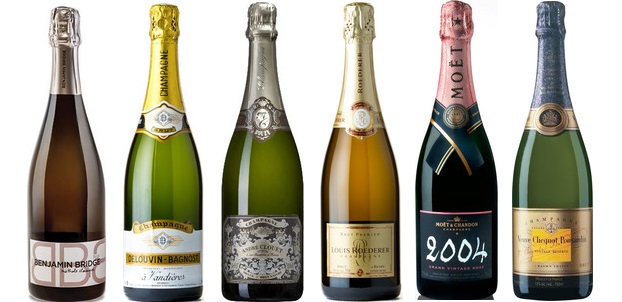
From left to right: Benjamin Bridge Brut Methode Classique 2009, Delouvin Bagnost Brut NV, André Clouet Silver Brut Nature Champagne, Louis Roederer Brut Premier Champagne, Moët & Chandon Grand Vintage Brut Rosé Champagne 2004, Veuve Clicquot Ponsardin Brut Vintage Champagne 2004

From left to right: Benjamin Bridge Brut Methode Classique 2009, Delouvin Bagnost Brut NV, André Clouet Silver Brut Nature Champagne, Louis Roederer Brut Premier Champagne, Moët & Chandon Grand Vintage Brut Rosé Champagne 2004, Veuve Clicquot Ponsardin Brut Vintage Champagne 2004

Benjamin Bridge Brut Methode Classique 2009, Gaspereau Valley, Nova Scotia (381533, LCBO $47.95, 1018464, NSLC $44.99, 313106, B.C. $49.97, WineAlign)

L’Acadie used for a parochial teaching moment effect. Winemaker Jean Benoit Deslauriers embracing its Gaspereau ability, coaxing acidity within a context of optimum fruit attention. Brings a level of texture and structure rarely, if ever seen from the region, this contrived blend and the imagined attempt. The parts roll into and through one another seamlessly. This impresses from a point of expression, that being the BB vineyard. From my earlier, July 2014 note: “Essentially, or at least philosophically a Blanc de Blancs, the blend is 57 per cent L’Acadie Blanc, 25 Chardonnay and 18 Seyval Blanc. The acidity is key and certainly elevated (12.8 g/L), keeping line tabs on the stone ground, clean fruit in gingered mousse. A defined elegance and accumulated synergy of site comes from a lower-slope perceived sweetness, down by the river. By no means piercing, there is a length here that lays down the foundation for the high-end, Vinifera-driven Sparkling wine program. The Brut ’09 conveys the growing environment, in freshness and in ripeness. A wine with such a refreshing upside. ” Last tasted November 2014  @Benjamin_Bridge  @jbdeslauriers

Delouvin Bagnost Brut NV, Récoltant Manipulant, Ac Champagne, France (385369, $47.95, WineAlign)

The level of baking apples and yeasty aromas are overwhelming, at first, then settle down. Yeasty boy, screaming its oxidative angst. Big acidity, wild ginger tang, whipping and gesturing wildly as it raps in your mouth. Speaks its mind this one, breaks down stereotypes, wins the crowd.  Fans go wild. From my earlier, August 2014, WWAC 2014 (tasted blind) note: “Tends to a trend in sweet aromatic beginnings which is nothing but endearing. A leesy pear and ris de veau nose split by a bowie and filled with pearls of sugary syrup. To taste there is the metallic gaminess of uncooked other white meat. Sweet meat, sweet thing. The gathering sensation is an elemental display of ethereal, aerified climatic conditions. Though made in an oxidized style, the complexity of character is not to be denied.  “Runs to the center of things where the knowing one says, boys, boys, it’s a sweet thing.” In the end the burst of energy is invigorating and heart piercing.”  Last Tasted November 2014

André Clouet Silver Brut Nature Champagne, France (Agent, $57.95, WineAlign)

Zero dosage, 100 per cent Pinot Noir, grower produced and affordable. These are the attributes of Jean Francois Clouet’s Champagne. If any three are what you look for in righteous fizz, you have found what you need, for any occasion. The Clouet Silver (Blanc de Noir, Grand Cru from Bouzy) has that stark reality of aridity so necessary for Sparkling wine to knock you upside of the cerebral cortex. Sweetness is superfluous because the fruit is so exceptional. There are dried spices and ginger in many incantations; exotic, wild, dried and slowly dripping into every sip. The vacuous voids are filled with combustion, the lingering strands of texture elegance defined. This is exceptionally made Champagne, to the point and with confident, boyish presence.  Tasted November 2014  @GroupeSoleilTO

Louis Roederer Brut Premier Champagne, France (268771, $64.95, WineAlign)

A most expressive house style, crowd pleasing and one step further into complex territory than many of a similar ilk. Creeping aromas, big flavours, enveloping texture, noble bitter finish. Citrus pith and darkening honey. So well made. Score an extra point. From my previous, August 2014 note: “The house style in this Pinot Blanc (55 per cent), Chardonnay (30) and Pinot Meunier (15) is amped on yeast and baked brioche. The elevation is of a modern and ambitious producer with a wild, expansive and yeast-moussy feel in the mouth. Spiced and spicy accents really help to open up the wine. An exemplary rendition of Sparkling wine if not quite willing to last as long as others.”  Last tasted November 2014  @LouisRoederer_

Moët & Chandon Grand Vintage Brut Rosé Champagne 2004, Ac Champagne, France (69831, $91.95, WineAlign)

Sometimes Champagne is blessed with a dirty presence that is just beautiful. This Moët could go either way. Struts with a copper hue and metal cruelty in its every move. Like cheese melting on a pipe. Like bonito flaking off a rusty anchor. Earthy and really into the oxidative souse but on a tasting line-up day when everything seems oxidized. Bitter pith and grapefruit flavours with a hint of coriander and a texture so damn divine. Is that corpulence enough to rescue it from the depths of bitter disdain? If at first you are not so sure, Rosé up and try again. This ’04 will take advantage of your every insecurity and grow on your unconscious.  Tasted November 2014  @MoetUSA

Veuve Clicquot Ponsardin Brut Vintage Champagne 2004, Ac Champagne, France (508614, $93.95, WineAlign)

This Veuve 2004 just keeps coming, does it not? Fashioned in an evolved style, typical for the house, not so atomic and not so wild. Ginger beer and tropical fruit aromas give simple pleasure, followed by more ginger and green mango on the palate, drying and turning to a fine, pungent powder re-hydrated on a whippy, elastic finish. Better vintage than would have been expected.  Tasted November 2014  @VeuveClicquot  @ChartonHobbs

Good to go!
Niagara delivers everbearing quality in November releases

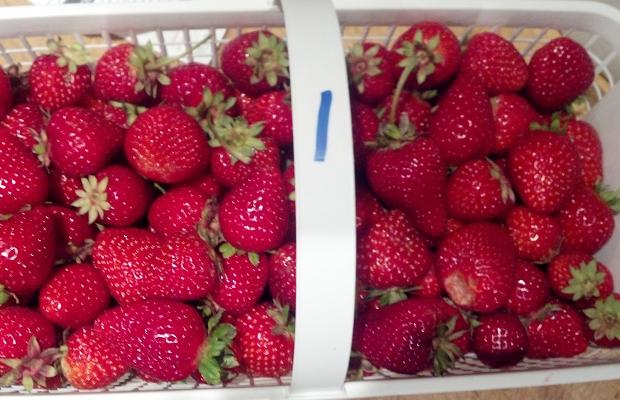
Ontario Everbearing Strawberries

Ontario Everbearing Strawberries

Like the strawberry, yet on countless further levels, Ontario wines have elevated in quality with exponential consistency in recent times. I can remember rushing out to Simcoe County to pick strawberries in late June at Visser and Barrie Hill farms, only to see the season end as abruptly as it began, after just a few weeks of plump, flame-red, succulence. Times have changed. Like the plant belonging to the family of Fragaria genus, Ontario wines, across the board, have evolved. The Everbearing Strawberry can be picked well into the Fall. Was it not so long ago the consumer chose Ontario wines with sporadic indifference? To Japan, exports of Canadian wine have doubled in the last five years. This is no small feat and with thanks to an all Canadian wine store owned by Jamie Paquin called Heavenly Vines. Domestically speaking, purchases of local wine are as strong in October as they are in July. Times has changed.

Ontario winemakers have figured it out. The “world-class” comparative humanities of aging and longevity aside, the comprehensive and widespread phenomenon of excellence, regardless of vintage, is now an Ontario reality. I would not make the call that 2013 was a vintage of the decade but very good wines were made. There are no bad vintages in Ontario. That concept is mired in the pessimistic rhetoric of the past. The winemaking camaraderie excogitates to mature as one big happy guild in pursuit of the common good. Vintners are focused and intense; on terroir, micro-climate, canopy management, picking times, pure and clean fruit, élevage and on honest wine.

The industry is currently fixated on making great product. Whatever beefs critics and consumers have with varietal choices, marketing failures or suffocating consumer systems, what is happening in bottle is nothing short of brilliance. Morale is at an all-time high. How else to explain the ability to weather the storm of a brutal winter in 2014? Enzo Barresi of Colio Estates told me yesterday that he does not bemoan the loss of vines. Less Merlot? So what? The ability to make polished wines from other grape varieties replaces fear, dread and loathing. The same goes for Rosewood Estates. No more Sémillon? “What can you do.”  says Krystina Roman. Concentrate on excellence elsewhere. Soldier on.

The November 8th VINTAGES release coming up this weekend is a prime example of the strawberry in the room that is Niagara wine. I count no fewer than eight examples of an eminence front in output. From Riesling and Sauvignon Blanc to Chardonnay and from Pinot Noir to a Bordeaux-styled blend, these eight wines are elephantine examples of what Ontario does best.

From left to right: Hidden Bench Chardonnay 2012

From left to right: Featherstone Black Sheep Riesling 2013, The Foreign Affair Sauvignon Blanc Enchanted 2013, Tawse Spark Limestone Ridge Riesling Sparkling Wine 2012, Hidden Bench Chardonnay 2012

Featherstone Black Sheep Riesling 2013, VQA Niagara Peninsula, Ontario (80234, $16.95, WineAlign)

The vintage delves into older school territory, elemental and elevated skywards, to atmosphere the Sheep has not recently climbed to. This airy void allows the Vineland rocks beneath to grind their way into all aspects of this Riesling. “Three bags full.” The lime rind and overall citrus circumvention brings the typical back to earth. This is a lean but fine Featherstone. Exemplary of the vintage, with plenty of wool.  Tasted October 2014  @featherstonewne

The Foreign Affair Sauvignon Blanc Enchanted 2013, VQA Niagara Peninsula, Ontario (389767, $19.95, WineAlign)

Appassimento-style Sauvignon Blanc is both curious and an open target for accusations of vivid excesses. The detractor will look for swift “walls of insincerity,” the complimenter will say “I was enchanted to meet you.” Foreign Affair’s take has been injected with a cocktail of intensity; steroidal, hormonal and from concentrate. All the juicy orchard fruits are there; plum, apple, pear, nectarine, lemon, lime and grapefruit. This passes the appassimento SB test, if only and commodiously because it spreads fruit like confiture on warm toast.  Tasted October 2014  @wineaffair

Tawse Spark Limestone Ridge Riesling Sparkling Wine 2012, Twenty Mile Bench, Ontario (370361, $19.95, WineAlign)

The Spark’s fermented in the bottle, cheesy, leesy warm ’12 turn, like melted Fontina on Formica, does dissipate following a moment or two and a bubble-bursting swirl. To taste there is much to delight in this inaugural release. Like the days leading up to ripe picked pears and a squeeze of striking, tart lemon. Good persistence is crackling, misty and even mysterious. Sparks squeezed from frenetic rhythm.  Tasted October 2014  @Tawse_Winery  @Paul_Pender

Hidden Bench Chardonnay 2012, VQA Beamsville Bench, Ontario (68817, $28.95, WineAlign)

Shows its finesse from the start. Though today I sense a slightly candied nose it’s wrapped in a warm and fuzzy coat, gifted by the vintage but without heat. This may be the prettiest of Marlize’s (Estate) Chardonnay; enchanting, honeyed, floral. Yet there is a pulsating note, portending the time needed to bring this to an intended fruition. Stretches for conscious movement length. From my earlier, July 2014 note: “Yet rigid in its youth, the wood is not yet settled. Bottled in September of 2012, the ’12 will need every day of its first year to be ready, willing and able to please upon release. From my earlier, May 2014 note: “Always aromatically embossed and texturally creamy, the Estate Chardonnay finds a way to elevate its game with each passing vintage. The uplifting elegance factor acquiesces the poise needed to battle the effects of ultra-ripe fruit out of a warm vintage. In ’12 the middle ground exchanges more pleasantries though the finale speaks in terse, toasted nut and piquant daikon terms. Not harshly or witchy, mind you, but effectively and within reason of the season. When you look in the window at Harald (proprietor Thiel) and Marlize’s (winemaker Beyers) Chardonnay, “you’ve got to pick up every stitch.”   Last tasted October 2014  @HiddenBench  @BenchVigneron

From left to right: Flat Rock Gravity Pinot Noir 2012, Le Clos Jordanne Village Reserve Pinot Noir 2011, Hidden Bench Terroir Caché Meritage 2010, Le Clos Jordanne Le Grand Clos Chardonnay 2011

From left to right: Flat Rock Gravity Pinot Noir 2012, Le Clos Jordanne Village Reserve Pinot Noir 2011, Hidden Bench Terroir Caché Meritage 2010, Le Clos Jordanne Le Grand Clos Chardonnay 2011

Flat Rock Gravity Pinot Noir 2012, VQA Twenty Mile Bench, Ontario (1560, $29.95, WineAlign)

Seven months have softened and mothered Gravity’s adolescence in ways to now see it as the most feminine, certainly of the last four vintages. Pretty dabs, perfumes of natural conditioning, warm days and warm nights in the bottle. More accessible than previous takes and of a new modernity perceived. Sweet dreams and sweet fragrances, roses and cinnamon, nothing fancy here mind you, with no bite and no gathering moss. Cherries and vanilla, lavender and simple pleasures. Straight up Gravity, no pull down, no drag and no excess weight. At $30 and from the best barrels, this trumps $40-50 most locales not called Lowery, La Petite Vineyard, Central Otago, Hengst or Pfinstberg. From my earlier, March 2014 note: “In a vintage potentially muddled by warmth and a humidor of radio frequency, duplicating berry phenolics, Flat Rock’s Gravity remains a definitive, signature house Pinot Noir. In 2011, the head of the FR class from its most expressive barrels shared the limelight (and top juice) with the Pond, Bruce and Summit one-offs. In ’12, Gravity’s sandbox was its own. The style is surely dark, extracted, black cherry bent, as per the vintage. Yet only the Rock’s soil does earth in this variegate, borne and elevated by the barrel’s grain. There are no fake plastic trees in a Flat Rock Pinot. “Gravity always wins.”  Last tasted October 2014  @Winemakersboots  @UnfilteredEd  @brightlighter1

Le Clos Jordanne Village Reserve Pinot Noir 2011, VQA Niagara Peninsula, Ontario (33894, $30.00, WineAlign)

A refined ’11 Pinot Noir, of combined vineyard fruit or not, this shows attention to clean, precise winemaking detail. Punches suffered during fermentation mean a fully healed wine in bottle. Good structure and grain in tannin with just a minor fleeting paint is only a fleeting reminder of previous VR’s. Sweet plum fruit, just ripe, skin cracking, flesh oozing and dripping of pure juice. From my earlier, February 2014 note: “Something’s missing, or rather something is happening here. The LCJ omnipresent warm Pinot coat of harm is conspicuous in its absence, or has it been reigned in? This 2011 is so much more friendly, more soft-spoken, expertly judged and picked ripe fruit richer than before. Plenty of tang and tannin but the pronouncement is in a savoury basil/chervil kind of way. Not just another high made by just another crazy guy. A most excellent, bright, roxy Village Reserve, full of atmosphere and ambient music.”  Last tasted October 2014  @LeClosJordanne

Hidden Bench Terroir Caché Meritage 2010, VQA Beamsville Bench, Niagara Peninsula, Ontario (505610, $38.00, WineAlign)

Has shifted ever so slightly, as if injected by a bolus to effectively level off the intensity in concentration. With another summer beneath its brooding belt, the aromatics are now in full flight. From my earlier, June 2014 note: “The richest Terroir Caché to date, making use of its barrel in judicious but never obnoxious ways. Huge Bench wine, needs 10 years for sure. From my earlier, April 2014 note: “No other Niagara red and for sure no alternative Peninsula Bordeaux blend exists in such a vacuum of dichotomous behaviour. Act one is an out-and-out boastful, opulent show of Rococo. Act two a gnawing and gnashing by beasts. The pitch and pull of the Terroir Caché 2010 optates and culls the extraordinary through the practice of extended délestage, what Hidden Bench notes as “a traditional method of gently draining the wine and returning it to tank with its skins during fermentation.” The ’10 is about as huge as it gets, highly ferric and tannic. Still chemically reactive, you can almost imagine its once small molecules fitfully growing into long chains. Berries of the darkest night and he who should not be named black fruit are confounded by minerals forcing the juice into a cold sweat. Will require a minimum of 10 years to soften its all-powerful grip. From my earlier March 2013 note: “Has rich, voluptuous Napa Valley written all over it. Sister Merlot dominant, Beamsville Bench sledge monster. Plumbago, mineral, blackberry and coffee in a wine that will be the ringer in a blind tasting 10 years on. Harald may be saying “this is our family jewel.” Mr. Thiel, you make good wine.”  Last tasted October 2014

Le Clos Jordanne Le Grand Clos Chardonnay 2011, VQA Niagara Peninsula, Twenty Mile Bench, Ontario (34561, $65.00, WineAlign)

Certainly plays the most hard to get of the ’11 Chardonnays of fruit so fine and pure. Layered like Phyllo or Puff pastry, gathered and set back upon itself. Gains traction and intensity through developed flavours and overlays of texture, both solid like shale and lacy like organza. From my earlier, July 2014 note: “From sandy loam and limestone soils, here is a Chardonnay that winemaker Sébastien Jacquey is looking to fashion with low PH and elevated tannin. A most commendable effort in the enigmatic ’11 vintage, clean, anything but lean and un-gassed by a jet engine’s aerified stream. Chardonnay running instead on the vineyard’s biofuel, a chalky lees and lime texture that turns green in a savoury way towards the back end. Full, rich, gaining in stature as it breathes, thinks and feels. Atop the green there is an ambrosial aroma and a honeyed sense of flesh. A wine of great respect and biodynamic energy.”  Last tasted October 2014

Good to go!

Wine on company time

Algonquin Park, October 2014

Algonquin Park, October 2014

From the Middle English octobre and the Latin October, meaning “eight,” just how the month of October became the Julian and Gregorian 10th is a matter of bad juju. The corporate bumbling by way of the insertion of January and February into the Roman calendar screwed up all available etymological kismet. Perhaps in abbreviation or acronym, October, shortened to OCT, means “On Company Time.” That might explain its delay and parlay to 10th month status.

October has made its sad and beautiful way into song, rarely in joy or rebirth, almost always in tragedy and death. What’s up with that? With leaves turning to every shade of a Tom Thomson watercolour amid Ontario’s landscape that is all pan and even more orama, why the long faces? James Mercer writes, “to hell again and back,” and Amy Winehouse “today my bird flew away.” The lyrics in these songs are anything but uplifting but the tunes themselves are scrappy.

Then there is the October as envisioned by U2, well, there’s an entire album of oppression, repression and depression. “And the trees are stripped bare, of all they wear, What do I care.” 

The good news, through tough times and innocence lost, is the availability of wine. VINTAGES is our facilitator and we are the benefactors, to concentrate on seeking solace in the living, breathing and most complex organism that genies into great bottles of grape ferment. This coming weekend one of my favourite releases on the perennial calender rolls out more value and less plonk than usual. On the heels of anything will sell for Thanksgiving and predating the shelves emptying free for all that is Christmas, October 25th is ideal and satiating. Here are 16 new releases, guaranteed to restore faith in this most troubled month.

From left to right: Andreza Reserva 2011, Flat Rock Unplugged Chardonnay 2013, Morandé Gran Reserva Cabernet Sauvignon 2011, Château Rigaud 2012, Loimer Grüner Veltliner 2013

From left to right: Andreza Reserva 2011, Flat Rock Unplugged Chardonnay 2013, Morandé Gran Reserva Cabernet Sauvignon 2011, Château Rigaud 2012, Loimer Grüner Veltliner 2013

Andreza Reserva 2011, Do Douro, Portugal (385849, $16.95, WineAlign)

This blend of Touriga Nacional, Touriga Franca and Tinta Roriz (Aragonez) from Lua Cheia em Vinhas Velhas is certainly funky and vineyard driven so that’s a bit of all right, isn’t it? Its phrasing is indelicate and slightly hot but its message is quite clear. Former winemaker for Offley Port and Technical Director for all the Sogrape Vineyards in Portugal João Silva e Sousa and consultant winemaker Francisco Baptista bring forth honest Douro red fruit, along with some mineral and righteous wood spice. Dark, deep and with a wonderful level of anxiety and tension. Gives purpose to modernity.  Tasted October 2014  @FreeHouseWine  @wines_portugal

Flat Rock Unplugged Chardonnay 2013, VQA Twenty Mile Bench, Niagara Peninsula, Ontario (68015, $16.95, WineAlign)

A stoic and fruit aplenty Unplugged, less aromatic than some, equally magnanimous as others. Juicy, orchard fruit that is ripe and then elongated, with just enough acidity to keep it honest through the middle acts of savoury balm. Late tonic pungency lines the output. A very good, if not the finest ever unoaked Chardonnay at the hands of Jay Johnston and Ed Madronich. Then again, the ’07 tasted in February 2014 was a revelation. Who knows what the future may hold for this aloof ’13.  Tasted October 2014  @brightlighter1  @Winemakersboots

Morandé Gran Reserva Cabernet Sauvignon 2011, Maipo Valley, Chile (389254, $17.00, WineAlign)

Despite the 14.5 per cent alcohol this is beautifully bright, fresh, red cherry fruity and with nary a sign of abstruse chocolate or coffee. The southern hemisphere pulsates in here like a chromosphere of massive, meaty fruit. There is a funk per se but in earth, not wood. Good grain, honest grain, de facto grain. Spice from wood but just as an accent. A romantic one. Admittedly more Maipo than Cabernet but well thought on with the texture of haptic contours. Will satisfy a hunt for October reds to drink right now.  Tasted October 2014  @MajesticWineInc

Château Rigaud 2012, Ap Faugères, Languedoc-Roussillon, France (393561, $17.95, WineAlign)

A bold and beautiful southern French rapport of 55 per cent Syrah, 26 Mourvèdre and 19 Grenache, so very modern and explicitly floral. A veritable Midi garden salad lives in the glass; chicory, acacia, iris, black cherry and lemon. Brassy blend from Languedoc-Roussillon, tangy and of the earth in cohorts for simple, if semi-hedonistic pleasure. Nothing about this screams oak and if the shed was open for a lay down it kept its splintered mits buried within the pockets of its staves. The ’12 Rigaud is meant for near-term luxury, alone or with sundry kinds of protein.  Tasted October 2014  @oenophilia1  @VinsAOPFaugeres

Loimer Grüner Veltliner 2013, Dac Kamptal, Austria (142240, $19.95, WineAlign)

Can any entry level (used with latitude) Grüner speak more clearly of varietal truth than Fred Loimer’s Kamptal? Saline, herbal, juicy and mineral all roll off the golden carpeted tongue. A ripe merging to oxidative line is straddled but acidity keeps reeling in the fruit so no harm, no foul. Flavours of citrus and white peach. Heads medicinally sweet on the finish and lasts longer than could ever be expected. From my earlier April 2014 note: “Increased hang time has put this Kamptal in a deeper state of focus and understanding concerning the intricacies of Langenlois Grüner Veltliner. Continues the pure, clean and crisp axiom of the basic Lois but here the aromatics are spoken in acroamatic terms, obvious to disciples and yet available for all to comprehend. Though five per cent big wood barrel aging does not seem significant, that practice along with four months of aging on the fine lees has had a textural impact. The added weight is a questionable thing, though arguably just splitting hairs. Will help carry this vintage through five to seven years of graceful settling. Last tasted October 2014  @FredLoimer  @LeSommelierWine

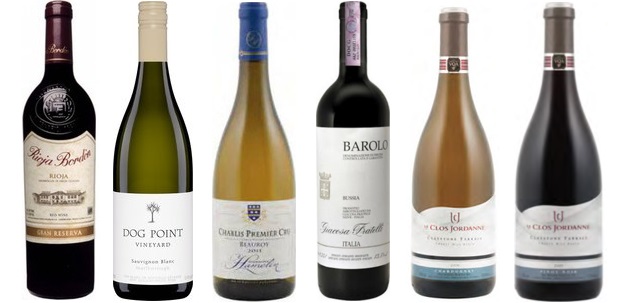
From left to right: Bordón Gran Reserva 2005, Dog Point Vineyard Sauvignon Blanc 2013, Domaine Hamelin Beauroy Chablis 1er Cru 2011, Giacosa Fratelli Bussia Barolo 2009, Giacosa Fratelli Bussia Barolo 2009, Le Clos Jordanne Claystone Terrace Chardonnay 2011, Le Clos Jordanne Claystone Terrace Pinot Noir 2011

From left to right: Bordón Gran Reserva 2005, Dog Point Vineyard Sauvignon Blanc 2013, Domaine Hamelin Beauroy Chablis 1er Cru 2011, Giacosa Fratelli Bussia Barolo 2009, Giacosa Fratelli Bussia Barolo 2009, Le Clos Jordanne Claystone Terrace Chardonnay 2011, Le Clos Jordanne Claystone Terrace Pinot Noir 2011

Bordón Gran Reserva 2005, Doca Rioja, Spain (114454, $22.95, WineAlign)

If it were so because of cryogenic preserved must or an accidental tipping and topping up into an unused barrel by recent vintage juice I would not be left hanging with mouth fully agape. Considering the amount of time this flat out delicious Gran Reserva saw in barrel, the mystery must somehow be explained, how it came to be so surprisingly modern and bright (for its age), especially at $23. But it has been seen many times before, with no greater example than the Montecillo 1991 GR that drank fortuitously well into the last years of the previous decade. This is the magic of Rioja. That said, there is some sinew and some raw character here as well – that’s the old school treatment and style talking. Red cherry fruit. Ripe fruit roasted, rested and now sliced, showing its perfectly cooked rare cut. Juicy and with sanguine notes still running through its grain. Wonderful old school yet bright Rioja. Riotous red wine with a calming aura of quietude.  Tasted October 2014  @RiojaBordon  @Eurovintage  @RiojaWine

Dog Point Vineyard Sauvignon Blanc 2013, Marlborough, South Island, New Zealand (677450, $24.95, WineAlign)

Dog Point’s principals Ivan Sutherland and James Healy know the innuendo of that ever present Marlborough SB subtlety by allowing the vineyard to show up in the glass. That sussuration is the hallmark of this most righteous bottle. The VINTAGES October 25th release indicates a 2014 debut when in fact it is the ’13 that was presented for tasting and likely that vintage will show up on shelves. This ’13 bring elegance, less weight and more fruit. Round and rippling, spiced but in spicy check. Not the finest but persistent in class and crowing achievement for the stomping ground.  Tasted October 2014  @DogPointWines  @TrialtoON

Domaine Hamelin Beauroy Chablis 1er Cru 2011, Burgundy, France (391805, $29.95, WineAlign)

Thierry Hamelin and his son Charles (no, not the Olympic Speed Skating gold medalist) are eighth generation family winemakers and their 2011 Beauroy, one of the most underrated vineyards in Chablis, or anywhere Chardonnay is made, is both an ode to tradition and an immaculately clean look at the future. Prototypical steely Chablis in every nook of its lithified being and befitting of a 1er Cru designation. Fruit comes by way of some pretty wizened vines (30-plus years) and steep, south-facing slopes. The exposition is both fresh and flinty, the logic sound and spotless. If a creamy, leesy note is felt it’s just a case of genes. In every other respect this is Chablis as both a child of the present and the future. Quality vineyard, vines and fruit given the gift of no mask. This will drink well for five plus years.  Tasted October 2014  @BIVBChablis

Giacosa Fratelli Bussia Barolo 2009, Piedmont, Italy (344721, $39.95, WineAlign)

From the hills of Monforte d’Alba in Piemonte, Bussia is laid out like an amphitheater, the soil is all clay and the Nebbiolo is rich and often austere. Now, here is what temperance and a reliability in attention to classicism is all about. Cherries and ferric earth. Roses and funky beet beats. Tannins stuck on 10, winding and unwinding, but mostly winding. Wild herbs, sweet candied flowers, tight angles, tough and beautiful. Needs many years to wind down. Exceptional value for the real deal in Nebbiolo.  Tasted October 2014  @stradadelbarolo

Le Clos Jordanne Claystone Terrace Chardonnay 2011, VQA Twenty Mile Bench, Ontario (56929, $40.00, WineAlign)

The Claystone 2005 made by Thomas Bachelder was the single-vineyard ringer that shocked the Chardonnay world when it trumped international competitors in a Montreal grand tasting. The 2011 made by Sébastien Jacquey recently won a Silver Medal at the Decanter World Wine Awards. This Jordan, Ontario vineyard is a key clay-limestone foundation for both the Claystone and Village Reserve botttlings. Yet another exemplary ’11 Chardonnay with the omnipresent Jacquey handling for aromatic freshness and layering; candied flower, fresh morning glade and lemon drop, amplified to 11 in ’11. Moreover there is a level of honey not previously witnessed. It smells like natural sugars and like a bloom of sunflower lollipops. Very little (15 per cent new) oak was used so the texture is fluid and palpable, with just a touch of stone/toast/wood spice, but ultimately it’s the top quality fruit allowed to speak its own language.  Tasted October 2014  @LeClosJordanne  @20ValleyWine

Le Clos Jordanne Claystone Terrace Pinot Noir 2011, VQA Niagara Peninsula, VQA Twenty Mile Bench, Ontario (33951, $40.00, WineAlign)

Oh so pretty Claystone. Like a butterfly, delicate and gossamer. How can you not mark the change in direction to a most inviting and positive way for the Pinot program with Sébastien at the helm? The paint fumes are dissipating with each passing vintage. These vines belong in Jacquey’s hands – they were made for his touch. He understands them and they are now speaking so clearly, sweetly, with texture that underscores their elegance. When fruit is this subtle, acidity magnified and tannins feigning dry in the early stages of development, a wine can confound and sometimes even seem to be failing. In my view, it is the obtuse that are perhaps guilty of being under appreciative of the Pinot Noir paradox. Like the rest of the ’11’s in the LCJ stable, this is a terrific Claystone with 10 years ahead in sublimity.  Tasted October 2014

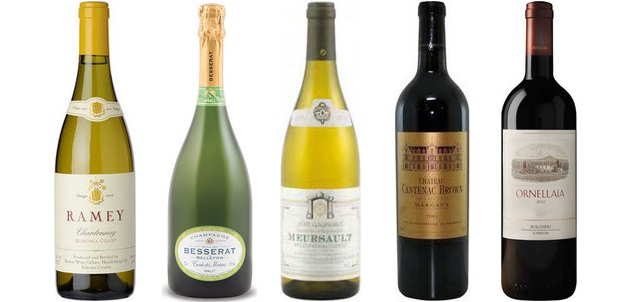
From left to right: Ramey Chardonnay Sonoma Coast 2012, Besserat De Bellefon Cuvée Des Moines Brut Champagne, Jean Gagnerot Meursault 2011, Château Cantenac Brown 2010, Ornellaia 2011

From left to right: Ramey Chardonnay Sonoma Coast 2012, Besserat De Bellefon Cuvée Des Moines Brut Champagne, Jean Gagnerot Meursault 2011, Château Cantenac Brown 2010, Ornellaia 2011

Ramey Chardonnay Sonoma Coast 2012, Sonoma County, California (288035, $45.95, WineAlign)

Buttered toast and lemon meringue are clear and concise in this inner-coastal, altitudinous Chardonnay. You just know there is a pent up, wound intensity lurking. Somewhat slow to start, it not being a jump to the front of the pack, first furlong leader. Then it gathers horsepower from texture and power from acidity. While the fruit remains unreleased beneath the moving parts, it’s the spice, lime tang and bitters that propel this Sonoman from sheer wildness in complexity. Impeccable equine balance. Likes the longer track to make the most out of its endurance. Will show its best down the stretch, at the end of the decade.  Tasted twice, October 2014  @RameyWineCellar  @BarrelSelect

Besserat De Bellefon Cuvée Des Moines Brut Champagne, France (724955, $54.95, WineAlign)

This Cuvée Des Moines Brut is fashioned in a decidedly aerified yet grappling crémant style, of firm jaw and air of tragic nobility. Low pressure and dosage in this Chardonnay (35 per cent) , Pinot Noir (20) and Pinot Meunier (45) mix make cause for a new Champagne slang. More than a pinch of ginger burrows into the waft of baking apple scones, marked by sody saleratus and more (two and a half years) leesy tang than you can dip a canoe paddle into. The flavours continue with something akin to pickled apples and sweet pork, if there were such a souse. Really tangy and overtly complex, with a long, long finish, if just a shade on the oxidative side of town.  Tasted October 2014  @BesseratB  @DionysusWines

Jean Gagnerot Meursault 2011, Burgundy, France (390369, $57.95, WineAlign)

Gorgeous and subtle yet clearly spoken aromatics; just a hint of tonic piques some ripe orchard fruit, along with a crisp spike of very little citrus. Round, moving, enveloping and circling, parts unified and oscillating. Great round acidity as a membrane to a full, fleshy Chardonnay that returns again and again, to strength and from strength. The length goes on and snaps back to the beginning. Most excellent Meursault.  Tasted October 2014  @grapewines  @BourgogneWines

Château Cantenac Brown 2010, Ac Margaux, 3e Cru, Bordeaux, France (259424, $89.00, WineAlign)

Whether or not you have left the modern Bordeaux market, attention needs to be paid when an incredible wine at a fair price is made available. Not to be found for any less cash south of the border or across seas, the 2010, 3rd Growth, Margaux Cantenac Brown is the best $50-100 Bordeaux buy of the vintage. Composed of 66 per cent Cabernet Sauvignon and 34 per cent Merlot, the wine saw its fair share soak in 60 percent new oak. This classic beauty is the epitome of lush and welcoming Bordeaux from a vintage with more sun than 2005. It will make you stop to smell the adjectives. Rich red and black fruit, so very floral and void of any harsh moments about it. I don’t imagine this is to be the longest lived because of its inviting immediacy but it is no shrinking violet. The fruit is in charge and will give it five to 10 years of that parsimonious pleasure. Great late spice and line dancing energy.  Tasted October 2014  @Cantenac_Brown

Tenuta dell’Ornellaia Ornellaia 2011, Doc Bolgheri Superiore, Tuscany, Italy (722470, $189.95, WineAlign)

Hasn’t lost a moment of time through six months in bottle. This should give an indication as to its near-unprecedented longevity. Six years will cast a moment’s advancement, sixteen a fortnight. Not saying it can go 60 but half of that is in the realm of the serious and for certain. Candied yet tempered violets, rocks crushed and sprinkled on cryogenic frozen and restored heirloom berries of yesteryear. Huge tannins. From my earlier, June 2014 note: “The blend of the 2011 Rosso Superiore is Cabernet Sauvignon (51 per cent), Merlot (32), Cabernet Franc (11) and Petit Verdot (6). From a near-sweltering vintage, tempered by a cooling spell in June and July. The late August heat spike brought on early ripening which explains the intense aromatic waft that fills the AGO’s tasting room air. Though following the same (post 12-month) assemblage and return to barriques for a further six months, the richesse in fruit quality and 70 per cent new oak envelopes this ’11 with so many structured layers there remains many years to see where it will go. The rose petal meets violet florality can elicit no parochial parallel, the anxiety in hematological ooze neither. A consideration of the phenolic exceptionality follows suit. Chalky tannins follow chains in a world spinning ’round in lush circles. This is the reference point for such assemblage in Bolgheri. The breakdown will not begin for a minimum 10 years and evolution will continue comfortably, gently and effortlessly for 15-30 after that.”  Last tasted October 2014  @Ornellaia  @sherry_naylor

Good to go!

https://twitter.com/mgodello

Fourteen wines that should be on your restaurant list

Fish and Chips at Small Town Food Bar

Fish and Chips at Small Town Food Bar

I taste a lot of wine. Lots of wine. Were I to manage a restaurant list with room for everything that deserves a place to call home, to share with the world the honest and the natural, a long list I would indeed create. The wine list at Barque Smokehouse I build is predicated on that premise but you can count on two hands the number of wines we offer by the glass. Necessity is our master.

Related – A resolution to drink honest wine

At the start of 2014 I penned that column and looking back eight months later, the ideas put out within that post-ice storm, mild January day apply to the concept of formulating a restaurant wine list. For the most part, a wine card should endorse the virtuous and the sincere. “Honest wine is juice that conveys the salient facts of a grape’s life. For a bottle of wine to be on the up and up it must not be disguised by the unnatural ways of artificial intervention nor should it make itself so available as to be obvious. Fruit should reside in the realm of the sequestered and the sacred. I am not alone in hoping for table wines to be stirring, gripping, unsweetened and unencumbered by an excessive coat of oak. My hard-earned dollars should earn the right to be stimulated .”

If your job title includes choosing what wine is poured at your restaurant, you should never dial it in. VINTAGES releases more than 100 new wines every two weeks. If 95 are what you might consider wantonly microdontic or overly tangential in influence, so be it. Five new wines every two weeks is more than enough to keep your list rocking, rolling, current and fresh. In Ontario the choices are many and the options endless. If driving the construction-riddled streets of Toronto is for you the time spent equivalent of root canal surgery in a Chilean coal mine then call an agent, request a tasting and let the cases be shipped to your doorstep.

“Wine only recognizes two temporal states. Fermentation and party time.” Be creative, read Tom Robbins, listen to the Tom Tom Club, mix it up a little, try new wines and add a spark to your wine program. Give it the genius of love. Guests just want to have fun. Here are 14 new releases, from VINTAGES and through some really terrific agents here in Ontario.

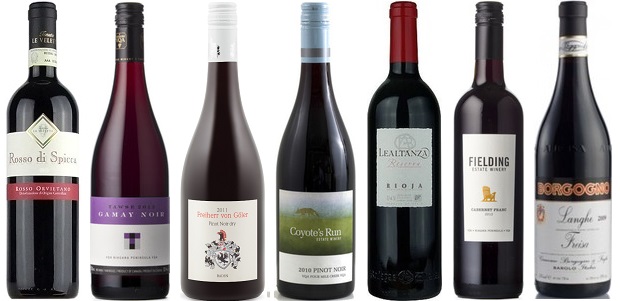
From left to right: Tenuta Le Velette Rosso di Spicca 2012, Tawse Gamay Noir 2013, Freiherr Von Göler Pinot Noir 2011, Coyote's Run Pinot Noir 2013, Lealtanza Reserva 2009, Fielding Estate Cabernet Franc 2012 and Borgogno Langhe Freisa 2012

From left to right: Tenuta Le Velette Rosso di Spicca 2012, Tawse Gamay Noir 2013, Freiherr Von Göler Pinot Noir 2011, Coyote’s Run Pinot Noir 2013, Lealtanza Reserva 2009, Fielding Estate Cabernet Franc 2012 and Borgogno Langhe Freisa 2012

Tenuta Le Velette Rosso di Spicca 2012, Umbria, Italy (Agent, $16)

The “Spicca” family owned the farm where the vines now grow. For a Rosso, from Umbria, Toscana or Piemonte for that matter to stand out (spicarre), it must have something unique and noticeable. Le Velette’s understated Umbrian blend of Sangiovese and Canaiolo is all about aromatics. Spicy cherries, leather and cinnamon with an underlying petrichor that seemingly bleeds fresh piquant juice straight from concrete. Like the oil exuding from lavender and rosemary growing out of the fissures of cracked terracotta over clay, after a warm summer rain. The palate gives a wee bit of spirited spritz and pizzazz. All this for $16 and change for a finishing espresso.   Tasted October 2014  @Noteworthywines

Tawse Gamay Noir 2013, VQA Niagara Peninsula, Ontario (322545, $18.95, WineAlign)

Darker berries define the Paul Pender take on Gamay for Niagara and in ’13 there is a level of tension and girth not yet approached. This third Tawse Gamay is overt in attitude, connotative of Beaujolais Cru staging, an ovule of rebellion and a disposition just as though in the grips of Asmodeus. The Tawse effect is entrenched in clay and possessive of  knowledge as if derived by an invitation only junket to the Gamay motherland. If the stance seems serious, the fruit is up to the task. A Gamay for now and fully capable of aging five or more years.  Tasted October 2014

Freiherr Von Göler Pinot Noir 2011, Qualitätswein, Baden, Germany (390971, $18.95, WineAlign) From the VINTAGES October 11, 2014 Release

You can take the Spätburgunder out of the nomenclature but you can’t take the nomenclature out of the Spätburgunder. The porcine dry, crunchy bits are front and centre, the pig offal under the crust. This is Baden red wine of a bitter and surprisingly sweet palate nature, a modern take on old male Pinot pattern baldness. So worth trying towards gaining a deeper understanding of varietal diversity.  Tasted October 2014  @HalpernWine

Coyote’s Run Pinot Noir 2013, VQA Niagara Peninsula, Ontario (53090, $19.95, WineAlign)

The Estate bottle represents a balanced amalgamation of terroirs with essential Niagara On-The-Lake Pinot Noir aromas, accents and distinction. Highly floral, thanks in kind to the red Trafalgar clay loam of the Red Paw Vineyard, as much as it has and will ever be. Extracted with reserved prejudice, with props to the dark Toledo clay loam of the Black Paw Vineyard, showing as a robust and retentive treacle, rich in tangy licorice and cherry pie. Much flavour is found in this Pinot Noir, so it will be well deserving of accolades and sales. If the sweetness prevails it is only because the fruit is shepherded in clean and Shepparded with blending acumen.  Tasted October 2014  @coyotesrun

Lealtanza Reserva 2009, Doca Rioja, Spain (208223, $20.95, WineAlign) From the VINTAGES October 11, 2014 Release

Old, old school Rioja ramped up, given a natural injection of rock brine and garriga then sent out to play. Rarely does Lealtanza give so much fresh conjecture, so much considered condensation and dense consideration. Soft and muddled palate, mottled rocks seeping berries and an accent of candied tomato leaf. Funky finish keeps it real.  Tasted October 2014  @ProfileWineGrp

Fielding Estate Cabernet Franc 2012, VQA Niagara Peninsula, Ontario (36194, $21.95, WineAlign)  NWAC14 Silver Medal Winner

A dusty and gilded Cabernet Franc from one of the warmest Niagara vintages in recent memory. Vivid in Bench specific varietal tendency, as if the berries on the black currant bush were ripening and bursting in the late afternoon sun, right into the glass. A blueberry by you CF, spiced by the faint childhood memory of grandfather’s unlit pipe on the coffee table. There have been more tense and exciting Cab Franc’s by Richie Roberts but none so suave and grown-up as this 2012.  Tasted September 2014  @FieldingWinery  @RichieWine

Borgogno Langhe Freisa 2012, Doc, Piedmont, Italy (388660, $24.95, WineAlign) From the VINTAGES October 11, 2014 Release

Don’t worry Mr. Parker, this rare chance at assessing a Langhe made from the Freisa grape will not join the 100-point club but I can say with certainty that this take is anything but “totally repugnant.” Borgogno’s Freisa is rustic, with dried figments of raisin and fig, though zero notes of reduction. More dried fruit, in carob and licorice with biting, spicy notes and the seeping of black tea leaves. The whole Mediterranean potpourri seethes in altitude and attitude. A dry and sensual red with enveloping chalk and acidity. Perhaps “Bobbo” Butch Cassidy should give this Langhe a whirl.  Tasted August 2014  @TrialtoON

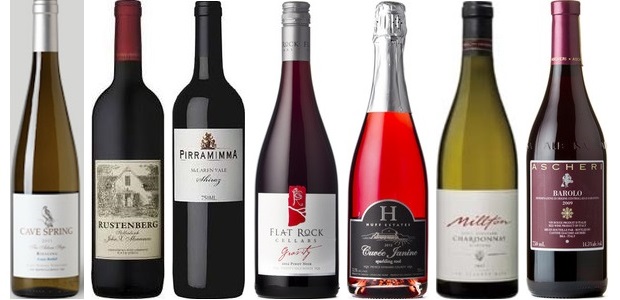
From left to right: Cave Spring Riesling ‘The Adam’s Steps’ 2013, Rustenberg John X Merriman 2011, Pirramimma Shiraz 2011, Flat Rock Gravity Pinot Noir 2012, Huff Estates Cuvée Janine 2012, Millton Opou Vineyard Chardonnay 2009, Ascheri Barolo 2010

From left to right: Cave Spring Riesling ‘The Adam’s Steps’ 2013, Rustenberg John X Merriman 2011, Pirramimma Shiraz 2011, Flat Rock Gravity Pinot Noir 2012, Huff Estates Cuvée Janine 2012, Millton Opou Vineyard Chardonnay 2009, Ascheri Barolo 2010

Cave Spring Riesling ‘The Adam’s Steps’ 2013, VQA Beamsville Bench, Niagara Peninsula, Ontario (26372, $24.95, WineAlign)

A classic Adam, amplified in 2013, riper and not as piercing as previously noted vintages. Still the layering is omnipresent but there is more juicy fruit and texture then ever before. This is a consumer friendly Adam, gregarious, outgoing, off-dry as never before. New slang for the bottling.  From my earlier, July 2014 note: “According to Cave Spring’s website this newer Riesling from older (18 to 35 year-old plantings) is from “a single block of vines in the shadows of a limestone outcrop near the crest of the Niagara Escarpment, known as ‘The Adam Steps’. Really apropos, for this Riesling is the cantilever, the one with the outstretched arm. At 10.5 per cent alcohol and with an unmistakably stony, sweet and sour whiff the wine speaks of its off-dryness. The juiciest of all the Cave Spring Rieslings, with rounder acidity and good persistence. This is the all-around good guy, the one with an open invitation, the bridge from Estate to Dolomite to Csv. The well-adjusted one steps up its game to help win one for the team, especially out of the convivial 2013 vintage.”  Last tasted October 2014  @CaveSpring

Rustenberg John X Merriman 2011, Stellenbosch, South Africa (707323, $24.95, WineAlign) From the VINTAGES October 11, 2014 Release

Despite the colour as dark as monster’s gore this is a relaxed X Merriman, not overly painted or rubbed by charcoal and rubber tree plant. The Bordeaux-styled blend of Cabernet Sauvignon (55 per cent), Merlot (37), Petit Verdot, Cabernet Franc and Malbec from South-West slopes of the Simonsberg Mountain, Stellenbosch opens its tight angled gates to reveal a cool centre, with juicy, rich, iced espresso, though in decomposed granite grit it’s tannic as hell. Makes judicious use of its (41 per cent) new and (59 per cent) 2nd and 3rd-fill 225L French oak barrels, along with balance in alcohol (14.3 per cent) integration. Solid South African red with just enough primal activity to pleasantly alter the temperature in the brain, without causing concussion or grey matter to go totally askance. Will drink well into the next decade.  Tasted October 2014  @WoodmanWS

Pirramimma Shiraz 2011, Mclaren Vale, South Australia, Australia (987784, $24.95, WineAlign) From the VINTAGES October 11, 2014 Release

A Pirramimma in the new vein from a warm and rich vintage. So hard to scale back when nature gives you this much fruit. Though 15 per cent is hardly a twinkle in its alcohol eye, there is only so much elegance that can be coaxed from this kind of hedonism. It’s big, juicy and just so alive. As simple as a candle, without magic and void of mystery. It will range hither and thither for 10 years before it makes the long, slow journey back home.  Tasted October 2014  @bwwines

Flat Rock Gravity Pinot Noir 2012, VQA Twenty Mile Bench, Niagara Peninsula (1560, $29.95, WineAlign)

Seven months have softened and mothered Gravity’s adolescence in ways to now see it as the most feminine, certainly of the last four vintages. Pretty dabs, perfumes of natural conditioning, warm days and warm nights in the bottle. More accessible than previous takes and of a new modernity perceived. Sweet dreams and sweet fragrances, roses and cinnamon, nothing fancy here mind you, with no bite and no gathering moss. Cherries and vanilla, lavender and simple pleasures. Straight up Gravity, no pull down, no drag and no excess weight. From my earlier, March 2014 note: “In a vintage potentially muddled by warmth and a humidor of radio frequency, duplicating berry phenolics, Flat Rock’s Gravity remains a definitive, signature house Pinot Noir. In 2011, the head of the FR class from its most expressive barrels shared the limelight (and top juice) with the Pond, Bruce and Summit one-offs. In ’12, Gravity’s sandbox was its own. The style is surely dark, extracted, black cherry bent, as per the vintage. Yet only the Rock’s soil does earth in this variegate, borne and elevated by the barrel’s grain. There are no fake plastic trees in a Flat Rock Pinot. “Gravity always wins.”  Last tasted October 2014  @Brighlighter1  @Winemakersboots  @UnfilteredEd

Huff Estates Cuvée Janine 2012, Prince Edward County, Ontario (Winery, $29.95, WineAlign)

Looks can be deceiving so much so Janine might look as is she were leading a bubble to red dye number 40. Not the case, rather the expressive hue is winemaker Frédéric Picard’s colourful bleed from 100 per cent Pinot Noir fruit. So, it must be sweet and tasting cloyingly like a bowl of sugared strawberries. Again, not so. Janine’s aromas are very berry and her texture is certainly cheese and crème fraiche-inflected from a 12 month lees mattress, but dry she goes. Much demonstrative behaviour and perspiring humidity comes from vintage warmth and here results in layering. Janine is an earthy, funky squared sparkler, with nothing shy or demurred about her, but all of the outwardly screaming smells and tastes are in check. Strawberry cream and shortcake cease from wrapped tight acidity coming in from the backside. Big bubbles.  Tasted October 2014  @HuffEstatesWine

Millton Opou Vineyard Chardonnay 2009, Gisborne, North Island, New Zealand (92478, $30.00, WineAlign)

From estate fruit on a single vineyard planted in 1969 on the Papatu Road, Manutuke, Gisborne. On Waihirere soils of heavy silt and Kaiti clay loam. A most mineral driven Chardonnay thanks in part to some Riesling in the mix. This varietal symbiosis, along with a co-planted orange grove gives what James Milton calls “the sharing of astrality.” The five year-old biodynamic Opou does whiff orange blossom, along with crisp green apple and the wet rocks of a summer rain. Quite full on the palate with a bite of black pepper and olive oil drizzle over toasted Ciabatta, smeared by churned, salted butter. The length indicates five more relish piqued years and five furthermore in slow decline.  Tasted October 2014  @TheLivingVine

Ascheri Barolo 2010, Piedmont, Italy (341107, was $35.25, now LTO $32.25, WineAlign)

Standard issue Barolo of a canonical character so bankable as Nebbiolo and nothing but. Classic Piemontese funk comes wafting out, along with licorice in as many ways as can be described; anise, Sambuca or fennel. The palate is creamy and slightly sweet, accented with pepper and a dusty, grainy sensation. This is Barolo of old with a cough syrup confection, wild herbs and grit. It could not be mistaken for Malbec though its disjointed ways could use some finesse and polish.  Tasted October 2014  @liffordwine

Good to go!

Bottles, barrels, tanks and a vertical

Flat Rock Vineyard, Twenty Mile Bench, Niagara Peninsula

Flat Rock Vineyard, Twenty Mile Bench, Niagara Peninsula
Photo: Brian Barton

as seen on canada.com

Listening to Flat Rock Cellars’ winemaker Jay Johnston rattle off the numbers and particulars of his 2013 Pinot Noir harvest you can’t help but survey the odds of something preternatural. Vintage speculation for 2013 in Niagara has met with tempered interpretation, a play down on the effects of weather and generalizations that it was just another normal meets classic year. Nothing to see here. You sure about that?

This according to VQA Ontario. “2013 was an interesting year with some significant weather variations through the growing season…weather conditions during the 2013 season were quite variable…with some isolated late frosts in Niagara…temperatures through September and October were slightly higher than normal but October was wet putting pressure on harvest schedules and many wineries worked long hours to optimize harvest strategies around the weather.” Sound the alarm?

Flat Rock’s vineyard is a wondrous bit of topography. Peer out from the conclave tasting room and witness a rolling set of undulating and breaking waves, ascending, descending and demarcating the landscape. Let Ed Madronich point out individual plots and blocks. Imagine each sub-section of the vineyard as its own little hermetic world, with its own soil biology and guided by its own little set of rules. Now taste Pinot Noir tank samples from 19 disparate parcels. Internalize, disseminate, deconstruct and reconstruct. As if you were the master of single varietal assemblage. Mind blowing actually. Nerdy, but mind-blowing.

House and Home Food Editor Eric Vellend and I sat down with Johnston and Madronich at the winery for a comprehensive look at those ’13 Pinots, fresh out of their infancy and just beginning to offer a glimpse of what they will be. A total of 185 tonnes were harvested at a more than modest 24 to 24.5 brix, a sugar quotient effectuated by timing as much as sunshine. Nineteen chapters delineate the story, in 160 barrels and in the end there will be two wines. The 2011 Block Series experiment will once again go unrepeated, though Jay notes a return could be considered for 2014.

2013 Vintage Flat Rock Pinot Noir Samples

PHOTO: Eric Vellend
Flat Rock Cellars Pinot Noir samples from the 2013 vintage

The tank room was very cold on this last day of February 2014 (you don’t say) so Johnston brought up the samples in what can only be described as a highly classified, secret society of winemakers, high-tech way; in plastic water bottles and Erlenmeyer Flasks. The goal was to offer a representation of the fingerprint of the vineyards and the fermentation management through full composite blends of each batch. We tasted through eight of the 19. The first three are from batches that end up in the Flat Rock Estate Pinot Noir. Clonal selections are noted in brackets.

Flat Rock Cellars 2013 Tank Samples

PHOTO: Michael Godel
Flat Rock Cellars 2013 Tank Samples


South (115)

Tang at the forefront, a mineral streak, red berries and a lingering whisper of citrus squeeze from recent (X-mas) sulphuring.

Horseshoe (777)

Dusty and also juicier, from an icy, polar beginning to come back around, calm down and seek a softer, common (to South) end.

Road (777)

Beastly, meanest sucker of the three, speaking with the most rock. The only one (of the first set of three) with some funk.

Monster (A blend of clones)

Funkadelic funky but also the fresh maker. Cherries and high-toned perfume, a feral hint in a leafy, good compost way.

Pond (667/777)

Most like cousin Monster, with increased ferrous activity and striking as the most recognizable to be Flat Rock Pinot Noir, even at only four months of age.

Mountain (667)

The darkest hue yet, with more smoke, heavy rock and a fuller structure.

Bruce/Summit

Bottom and top of the (west) vineyard collide with a mineral tie connecting the two. Grit and toughness here, depths of Mordor and Prunus Serotina, cherries gone black. The combo effect confuses the fruit, rendering the B/S the least subtle and distinctive.

Bruce West

Back to dust but also tang and bigger tannins. Vines with less vigor and smaller berries to thank.

These eight samples all begin in antipodal and far away places but come together to seek common ground. As a window to the outlook for 2013 I can say with unequivocal doubt that if these wines were in bottle they could all be enjoyed right here and now. Pinot Nouveau. They are possessive of a computation in complexity to each tell an individual story. It would be hard to figure Jay and Ed waiting a full 12 months to see them into bottle, especially from the showy blocks. Look for Flat Rock to knock some off to racking in late spring to preserve their amazing level of freshness. The 2013 vintage looks to offer immediate gratification. Its longevity remains to be seen.

Vineyard view, Flat Rock Cellars

PHOTO: Michael Godel
Vineyard view, Flat Rock Cellars. Note the warmest rows.


Notes on (not yet released) 2012′s and 2013′s

Pinot Noir 2012, VQA Niagara Peninsula (1545, $18.95, WineAlign) VINTAGES Essential

Nearly 4000 cases will be available of this nearly-unfiltered, very established and always well-thought out Pinot Noir. A consideration of the plots and barrels micro-management that determine the crasis of this Estate wine demands an extrapolation in full-on assessment. The medium-coarse Chinois filtering lends to a tannic chain of texture thick in grain and chalk. A heavier Estate because when the weather gives you heat you make a climate appropriate wine. This monkey is not a product of arctic air and it “got too deep, but how deep is too deep?” Thermal vintage melt, ritzy ripe cherry stuff in 2012. From the Ritz to the Rubble, if you like, or the Flat Rock.  88

The Rusty Shed Chardonnay 2012, VQA Twenty Mile Bench, Niagara Peninsula (1552, $24.95, WineAlign)

There will be 660 cases of this barrel cherry-picked, now iconic Bench Chardonnay. The warm vintage called for a combo-malo approach, part batch all in, part arrested development. Gravity influenced top down blending also work to seek a svelte elegance and this ’12 really straddles the humid line. Thinks to be ribald but remains chaste, only allowing a kiss from the barrel and a caress from the rocks beneath the soil. Accept immediate but know that deferred gratification is the hallmark of this bottling.  89

Nadja’s Vineyard Riesling 2013, VQA Twenty Mile Bench, Niagara Peninsula  (578625, $19.95, WineAlign)

From a sample just pulled from the tank. Jay Johnston’s concept for Nadja is to create many fermentations together, using 2000L tanks and some barrels. The ferments are arrested when they achieve balance and then blended. Nadja still has her young fizz on and she’s exaggerated in Metallica meets a wondrous kind of sour. Already showing an unfurling of (mostly citrus) fruit but also spice and hurried depth. Frantic Riesling, will she “stop to warm at karmas burning, or look ahead, but keep on turning?”  89-90 

Pinot Noir Rosé 2013, VQA Twenty Mile Bench, Niagara Peninsula (39974, $16.95, WineAlign)

Tasted from a tank sample. The 2013 Rosé marks a change in direction and approach. No longer a one-dimensional, typical method blush made by saignée, bled off cold soaks, the ’13 goes at it half and half through skin fermenting. As soon as the skins dry out they are removed. The result (though not really apparent four months in) will be aridity with the sweet balance arriving by way of a six to seven percent sulphured dose of Gewürztraminer. The sample swims both upstream and down, through waves of salinity and dulcitude. Will lay claim to being one of the more interesting Rosés from the vintage.  87-88

Red Twisted 2012, VQA Twenty Mile Bench, Niagara Peninsula (86918, $19.95, WineAlign)

Tasted from a barrel sample, this singular Bench brew of Syrah, Merlot and Pinot Noir. After 14 months in barrel, all separated at birth, the varieties were blended in mid-January and will be bottled this March. Yet unsettled, there is a level of unctuousness and cake layering. A big red for the believers, for those who lust for big reds. Currently showing its wood, freshness, acids and potential for balance.  87-88

Sparkling Brut 2006, VQA Twenty Mile Bench, Niagara Peninsula (0238311, $35.00, WineAlign)

Tasted with proprietor Ed Madronich at the winery. This was Flat Rock’s first ever Sparkling wine made in a challenging vintage. The base wine was fermented dry and sent to neutral barrels. Sugar and yeast were added after eight months and it then entered the bottle. Newer vintages may see time stretched to 20 months. At this stage it is very much alive, showing the whole orchard and nothing but the orchard, albeit with some fallen fruit. Some sugar lingers but not enough to pull it from dry. With time the orchard gives to grapefruit. In the end it’s big and biscuitous. Says Madronich, “Our wines can go 15 years, no problem.” We’ll see about that.  89 

Unoaked Chardonnay 2007, VQA Twenty Mile Bench, Niagara Peninsula (68015, $16.95, WineAlign)

Tasted with proprietor Ed Madronich at the winery. Six and a half years have done this unoaked Chardonnay six and a half years of wonder. Green herbs and apple jam spread on a whole wheat cracker. To believe there is not a day of oak on this wine is to bury one’s head in the sand and begin again. It’s that stubborn Bench limestone doing the fooling. “We have great soil,” grins Ed. A few minutes and a few more swirls in it begins talking in the vernacular of Chablis, in a matchstick tone. It’s also fleshing as it goes. Six plus years and $17? “It’s crazy.”  90

Flat Rock Cellars Rusty Shed Vertical

PHOTO: Eric Vellend
Flat Rock Cellars Rusty Shed Vertical


Rusty Shed Chardonnay Vertical 2011-2006,  VQA Twenty Mile Bench, Niagara Peninsula (1552, $24.95)

Barrel fermented, barrel aged, gravity fed. No other Niagara winery can offer up a vertical like this, in this price range. If there is another, let me know and I’m there.

2011 (WineAlign) Conspicuous by its texture from a mild to middling vintage “when you picked before or after the rain.” Though combined, the antechamber of acidity and good cheer trumps the mudroom of funk and doldrums. A Guns ‘n Roses vintage, a pull in two directions, with a potential for breakdown. “Ev’rything was roses when we held on to the guns.” A soft, buttery note tempers the tang and yet that tang lifts the fruit. The tension is what sets the ’11 up for a classic run.  91

2010 (WineAlign) Increased sugar from a hot year with early ripening. Picking decisions played a crucial role, the prudent winery avoiding the heat of the day. This was key to preserving freshness and acidity. Though the aromas are soft and muted, the palate is lush and plush with a mid-section of adolescent body fat.  89

2009 (WineAlign) A slow and even ripening season culminated with a warm and dry harvest. Ideal harvest conditions. This ethereal ’09 has that late harvest come of age feel but is unwavering from a dry sense of humour. Acting as fresh as the day it was bottled, ole’ blue eyes is in ownership of the best of all the surrounding vintages. It was a very good year for the old Rusty Shed, like “life as vintage wine from fine old kegs, from the brim to the dregs and it poured sweet and clear.” A classic crooner, with wood now neutral and supportive, that will last alongside fruit, to the autumn of its years.  91

2008 (WineAlign) From a cooler, wetter, “Burgundian” vintage. Noticeable terpenes and delineated streaks in the aroma, palate continuum. Like mild cider in a diluted but not watered down way. A matter of elegance and refinement. The oak integration may be the most calming yet and the wine has maintained its freshness. A vintage to measure with clonal ancestors and distant cousins if not Flat Rock siblings.   90

2007 (WineAlign) From a very warm and dry vintage with low yields. Dichotomous, with clean fruit working with and against some barrel and earthy notes. Was a tough year to “manage acidity and freshness,” a fight that was paramount to success. Flint and matchstick also work this ’07, as much like Riesling as Chablis so in that sense this is reminiscent of the Unplugged. In another way, the earth says this is as much of a Brett-influenced vintage as any.  89

2006 (WineAlign) Like the 2007, this has that golden hue so it appears that seven to eight years is the marker for the apogee of consumption. A vintage tough on reds, good on whites. Though not high on opulence, the ingot sheen is like fool’s gold and the trickery works to great effect. A fortune is won in patience because this elegant ’06 eventually sheds its rust, gives up fresh apple and palate cleansing acidity. A show of age and propriety.  90

One more for the road.

Pinot Noir 2003, VQA Niagara Peninsula (WineAlign)

Less than a case is left of this first Pinot Noir made by Ed Madronich. At the time Flat Rock made just 500 cases, including two Rieslings (Estate and Nadja) plus two barrels (43 cases) of Chardonnay. From a cool vintage, 11 years on this Pinot is reddening to maroon, with sour cherry flavours submitted to earth. A hint of soy and toffee. Herbaceous, young vine minted, accented by dill and mushroom. Holding on and showing that older vintages had (not known at the time) depth and structure. Creamy texture if not the cleanest Pinot ever made. First world problem.  88

Good to go!

What’s in a wine vintage?

What\'s in a wine vintage?

The question is always being asked, what’s in a wine vintage?
Photo: Rostislav Glinsky/Fotolia.com

as seen on canada.com

There was a time when Ontario wine held no candle to my thoughts, filled no glass in my tasting regimen and occupied no place in my cellar. My how time and five years of enlightenment have changed me. Rarely does a day go by when that holy trinity of wine attention does not focus on something from Ontario.

My current obsession lies in the white wines from the 2012 vintage. The two previous years were so different, 2010 at first seemingly hot and bothered, then having emerged from its shell it has since clearly spoken in a language of elegance. The 2011 that followed gave wines of piercing acidity, verve and even austerity. Chardonnay, Riesling and Semillon all grabbed my acidulated attention.

First encounters with 2012 provided great skepticism. I continue the journey of ’12 discovery and the doors of perception are beginning to open. As a white wine vintage in Ontario, 2012 is shaping up to be a classic. Candour and acidity are there, but it is the rich, fullness of the wines that have taken the industry’s prowess to a whole new level. Riesling is brilliant. Pinot Gris the best ever. Though conditions may have not produced the coolest Chardonnay, winemakers who exercised restraint made beautiful wines. White blends that made use of highly aromatic varieties made their best wines to date. Reach out and touch Ontario’s 2012 whites.

The question is always being asked, what’s in a wine vintage? Not long ago I was emphatic to state there are no longer bad vintages in Ontario. The wisdom, experience and winemaking acumen has rendered that notion obsolete. There are challenging years for sure and this harshest of 2014 winters will certainly test the mettle of winemakers. Vintage variation is real and yes, there are no bad vintages, only different ones.

The new Kew Vineyards in Beamsville is on to something and 2011 was a terrific vintage to sidle up to their unique production of red wines. While appassimento remains an Ontario enigma, not quite like growing and producing a southern Italian grape like Aglianico, but the method is still a bit of a side-show. Kew reigns in the practice and matches it to the parameters of the Ontario vineyard and the climate. Kew the new red in Ontario.

Here are six new releases, a new Kew, a Prince Edward County classic Sparkling and four definitive whites from the 2012 vintage in Niagara.

From left: FLAT ROCK TWISTED 2012, TAWSE SKETCHES OF NIAGARA RIESLING 2012, KEW VINEYARDS SOLDIER'S GRANT 2011, FLAT ROCK NADJA'S VINEYARD RIESLING 2012, SOUTHBROOK VINEYARDS TRIOMPHE CHARDONNAY 2012, and HUFF ESTATES CUVÉE PETER F. HUFF 2007

From left: FLAT ROCK TWISTED 2012, TAWSE SKETCHES OF NIAGARA RIESLING 2012, KEW VINEYARDS SOLDIER’S GRANT 2011, FLAT ROCK NADJA’S VINEYARD RIESLING 2012, SOUTHBROOK VINEYARDS TRIOMPHE CHARDONNAY 2012, and HUFF ESTATES CUVÉE PETER F. HUFF 2007

FLAT ROCK TWISTED 2012, VQA Niagara Peninsula (1578, $16.95, WineAlign) VINTAGES ESSENTIAL

Though the warmth of the 2012 vintage could have suffocated a blend such as this Twisted, to the contrary, this harmonious white unfolds as a cold play. Cool, crisp, wonderfully tart and full of citrus zest. Plenty of sunshine but no burn. Waxy and rich like excellent Moscato along with the creamy confection of mango and the tang of what pale, trenchant pineapple used to be, before it went golden. The blend of Riesling, Gewurztraminer and Chardonnay magnetizes the opposing forces of residual sugar and modest alcohol. “And you are not wrong to ask who does this belong to? It belongs to all of us.” Best Twisted to date.  89  @brightlighter1  Tasted January 2014

TAWSE SKETCHES OF NIAGARA RIESLING 2012, VQA Niagara Peninsula, Ontario (89029, $17.95, WineAlign) From the VINTAGES, February 15th, 2014 Release

Frothing at the glass, full on soda aromatic entry, verging to off-dry white peach and yellow plum flavours. Full of tang and zest, enriching flavours that render the soda irrelevant. All in, vigorous ’12, most ever perhaps. From my earlier note: “s’got quite the tropical warmth for Bench Riesling. When considered in terms of the vintage, this is nearly a Riesling in the service of a Pinot Gris. Very juicy fruit, dry but bursting in fricative verve. Extreme quality, low-cost. Now on tap at Barque Smokehouse.  89  Tasted August 2013 and January 2014  @Tawse_Winery  @Paul_Pender

KEW VINEYARDS SOLDIER’S GRANT 2011, VQA Niagara Peninsula  (367318, $18.95, WineAlign) From the VINTAGES, February 1st, 2014 Release

Winemaker Philip Dowell draws upon his Aussie roots, delves into a northern Italian technique (appassimento) and along with Beamsville grower Graham Rennie, does the practice proud. Vineland Research Institute has been working towards developing a Niagara appassimento thing, already embraced by the likes of Foreign Affair, Pillitteri and Colaneri. Now Kew takes the torch but with an altered finesse and restraint. Raspberry and the wet warmth of spring sun, saturated earth give way to dusty, sour cherry with an accent of peppery, herbaceous Loire-style Cabernet Franc. The dust ultimately trumps the sharp and then submits towards a metallurgical length. Would work with eclectic flavours, like Buffalo Chicken Nachos. It’s true.  88  @kewvineyards  Tasted November 2013 and January 2014

FLAT ROCK NADJA’S VINEYARD RIESLING 2012, VQA Twenty Mile Bench, Niagara Peninsula (578625, $19.95, WineAlign)  From the VINTAGES, February 1st, 2014 Release

A champion cyclone of forces combined to elevate the already incumbent position of this Twenty Mile Bench Riesling. An ideal growing season magnified transmission upon a paradigmatic two and a half-acre block. This southern-most and highest altitude section of Flat Rock’s vineyard rests aboard a solid bed of limestone and wake me up if that rock was not drawn up into the vines in this stellar Riesling vintage. Sure its warm and nearly off-dry but such an effortless squeeze of lemon hydrates and elevates orchard fruit and honey out of the year of the lemon. After each sip its “every time you kiss me, lemon crush.” Love this prince of a Twenty Mile white in 2012, the dynamism smiling on the tart, succulent fruit. The length is one of outright bravado. This will develop for 20 years, of that I am convinced. There is just so much fruit. A Nadja for the ages.  92  @Winemakersboots  @UnfilteredEd  Tasted January 2014

SOUTHBROOK VINEYARDS TRIOMPHE CHARDONNAY 2012, VQA Niagara On The Lake (172338, $22.95, WineAlign) From the VINTAGES, February 15th, 2014 Release

A sachet of fiendish raising agent and scotch kindled toast seem initially atypical for the vintage but are kept in check and work alongside one another to great effect. Halfway in there are notes of lemon butter, saltwater-marked wooden ship, pine forest on a warm morning and organic smells of the world outside. The glow and ardor of what Chardonnay can rightfully be in 2012 take the lead at the mid-point and carry Triomphe through to an eco-rich, full-bodied good glass. “On the water, very free, and easy.”  89  Tasted February 2014  @SouthbrookWine

HUFF ESTATES CUVÉE PETER F. HUFF 2007, Traditional Method, VQA Prince Edward County, Ontario (198754, $39.95, WineAlign) From the VINTAGES, February 15th, 2014 Release

This is a glorious vintage for the classic Chardonnay and Pinot Noir flagship Huff bubbles. Lees affected in waves of chewy, fernetty, lime sherbet, ginger, coriander seed and apical almond butter. The humidity of the vintage plunges this complex sparkler into the brewing smells of a late fall apple orchard. Bronzing in attitude to middle age, a kind of medieval bubbles, hard on you, not letting go of its barbaric hold. The colour speaks of age but there is a huge amount of verve and life left yet. Your full attention is required to gather Huff’s traditional thoughts and this is quite possibly the most rambunctious PEC fizz I’ve ever encountered.  So different from the 2008 ”austere, dry, flinty wine of slate.”  92  Tasted February 2014  @HuffEstatesWine

Good to go!

In a Pinot Noir province of mind

Niagara

Save for the Oregonian version, Ontario has become the place to produce Pinot Noir out of soils not called Côte de Nuits or Côte de Beaune
Photo: Rilasata/Fotolia.com

as seen on canada.com

No other grape causes more of a stir, is responsible for more hair to fall and breaks more hearts. It doesn’t play well with others. It refuses to share, to be blended, to give anything less than 100 per cent. For many, there is no other variety. How often does a conversation begin with “what is your favourite wine” and end invidiously with “Burgundy?” End of argument. Nothing more to discuss. While Burgundy certainly persists as the historic locale possessive of the title “when it’s great, it’s the best,” Pinot Noir has flown the coop. The expatriate extraordinaire has migrated about the globe and is no longer always a wannabe facsimile where it’s now grown and bottled.

A bold statement to be sure is coming, now. Save for the Oregonian version, Ontario has become the place to produce Pinot Noir out of soils not called Côte de Nuits or Côte de Beaune. The argument finds root in the climate (cool) and the terroir (ideally suited). The anomaly that is this season’s Polar Vortex notwithstanding, Ontario’s weather is Pinot weather. The thin-skinned variety thrives in Ontario’s typical autumn conditions, maturing evenly and with a phenolic ripeness necessary to fulfill complex tendencies. Soil could not compose itself any better. The huge rock beneath the surface in Prince Edward County screams Pinot Noir, if by way of Burgundy. The Niagara Escarpment and its foothills beg to support Pinot vines. No, really. Go stand in the Lowrey Vineyard on the peninsula. The land beneath your feet will whisper sweet Pinot nothings into your ear.

Arguing the meritorious benefits of grapes and specific sites is an exhausting though compulsory one. I have been a staunch supporter of the need for planting Riesling and Gamay everywhere. Ontario can and will do no wrong with these varieties, whether it be PEC, LENS or any Niagara Peninsula terroir. Chardonnay too, though it produces the greatest wines in the appellations of the Beamsville Bench, Twenty Mile Bench and Vinemount Ridge. The benches likewise work wonders for Cabernet Franc, though many producers make terrific renditions down by the lake.

Pinot Noir requires more site-specific consternation. The learning curve inhabited by our top Pinot producing stars has pinpointed certain neighborhoods that support their clairvoyance and expensive habits. Norman Hardie knows the Pinot innuendo of both Prince Edward County and the Niagara Peninsula. Hardie’s Unfiltered 2012 ”brings to mind indelible Burgundy, enveloped in PEC’s warm ’12 blanket.” Thomas Bachelder makes Pinot in Burgundy, Oregon and Niagara, but it is his Lowrey Vineyard 2011 that blows my mind. “The somewhereness of this St. David’s vineyard can’t be denied, and in the hands of Thomas Bachelder the extraordinary happens.” The micro-terroir studies of Ed Madronich and Jay Johnston is the stuff of quantum eonology. The Summit Block 2011 does “impossible Burgundy,” between a Flat Rock and an escarpment.

So where is the best site for making Pinot Noir in Ontario? Prince Edward County? Twenty Mile Bench? Beamsville Bench? Vinemount Ridge? St. David’s? Has the industry matured to such a level that a Cru system should now be defined? The answer may not be forthcoming today but it’s just around the corner. Pinot needs to be cultivated and fostered so that plots can continue to be identified and qualified. The future of the industry depends on it.

I have recently tasted more than 30 Ontario Pinot Noir. Many are worthy of a second look and more than a dozen a place in my cellar. Here are notes on five more, all deserving of their place in the Pinot sun.

From left: CAVE SPRING PINOT NOIR DOLOMITE 2011, INNISKILLIN MONTAGUE VINEYARD PINOT NOIR 2011, TAWSE GROWER'S BLEND PINOT NOIR 2010, HIDDEN BENCH ESTATE PINOT NOIR 2010, and 13TH STREET ESSENCE PINOT NOIR 2010

From left: CAVE SPRING PINOT NOIR DOLOMITE 2011, INNISKILLIN MONTAGUE VINEYARD PINOT NOIR 2011, TAWSE GROWER’S BLEND PINOT NOIR 2010, HIDDEN BENCH ESTATE PINOT NOIR 2010, and 13TH STREET ESSENCE PINOT NOIR 2010

CAVE SPRING PINOT NOIR DOLOMITE 2011, VQA Niagara Escarpment, Ontario (26351, $21.95, WineAlign)

Part Beamsville Bench (70 per cent) and part Twenty Mile Bench (30), this best of both worlds Pinot is full of calcium magnesium carbonate, Jurassic bark. Playful as opposed to angry, this is not so much Snoop Dogg’s Dolomite but more like an animated Futurama. Seduces with a sweet red berry entry and bound by a really fine acid/tannin/fruit balance. Admittedly not overly complex but for the price it shows good structure. As far as Pinot goes, this one is a made for beef or rack of veal.  89  Tasted October 2013  @CaveSpring

INNISKILLIN MONTAGUE VINEYARD PINOT NOIR 2011, VQA Four Mile Creek, Niagara Peninsula, Ontario (997353, $24.95, WineAlign)

Montague is a single-vineyard child of rain and heat. The flux of the growing season translates to a troubled and disjointed youth; musty, earthy and unforgiving. Still this Inniskillin is thick, unctuous, sharp, chewy and while currently situated on the darker side of Pinot, all this will change. Not yet showing what he is, the ’11 will “keep on keepin’ on, like a bird that flew,” and eventually be tangled up in blue.  89  Tasted October 2013  @InniskillinWine

TAWSE GROWER’S BLEND PINOT NOIR 2010, VQA Niagara Peninsula, Ontario (130989, $26.95, WineAlign)

The univocal Pender perfume permeates the Tawse stable of Pinot Noir and seems only magnified in the multiple site Grower‘s Blend. Vintage related warmth and inferable incrassation of fruit. Delves into a deep connection to disparate lands possessive of a common goal.  As if making wine is “your taste combined with all the years of wasting time.” Graceful Pinot Noir with moments touched by hot rocks, toasted red rice, a gentle smoulder and delicate grains of sand.  90  Tasted October 2013  @Tawse_Winery

HIDDEN BENCH ESTATE PINOT NOIR 2010, VQA Beamsville Bench, Niagara Peninsula, Ontario (winery, $40, WineAlign)

Clean, pure and crisp. As if raspberries covered in Beamsville dirt with an underlying lurk of grain and tannin. Crackling Pinot studded by caper berry and a sheer Mediterranean point of view. From an earlier note: “Takes my previous impressions to a higher plane. Standing correct by calling it a “a vintage relative release” but it’s so much more than “a quaffable, generous fruit sui generis.” Beets turn into plums. Opaque hue reminds of graceful Nebbiolo with a dancer’s legs in aperture. Wins in judicious use of French wood. Tannins persist in the rear-view mirror. Big ’10 that speaks of another level in Beamsville Pinot Noir. “Think about it, there must be higher love.” 91  @HiddenBench  @BenchVigneron 

13TH STREET ESSENCE PINOT NOIR 2010, VQA Niagara Peninsula, Ontario (237222, $44.95, WineAlign)

Only the second coming of The Essence. Lucid, willing and able Pinot Noir from an assemblage of fruit sourced across the region. Atypical in that sense, speaking to a broader range of terroir and to a wider audience. Breadth and depth much like a Côte de Beaune, earthy of serious dirt layered over top a cherry core. Attention now and for five plus years is needed because though to taste it’s currently confounding, time will see more complexity, development and emerging emotion. It will then solicit a cry of  ”baby, sweet baby, you’re my drug. Come on and let me taste your stuff.”  91  Tasted October 2013  @13thStreetWines

Good to go!

Between a Flat Rock and an escarpment

Flat Rock Vineyard, Twenty Mile Bench, Niagara PeninsulaPhoto: Brian Barton - Guelph, Ontario

Flat Rock Vineyard, Twenty Mile Bench, Niagara Peninsula
Photo: Brian Barton – Guelph, Ontario

as seen on canada.com

I attend many tastings but none are better than the ones accompanied by the growers, the negociant and the vintner. To a maker, the adage is repeated again and again. Wine is made in the vineyard. Here is part two in the series on land, vineyard and terroir.

Related – Vineyards, winemakers and their sense of place: Bachelder and Leaning Post

Flat Rock Vineyard

PHOTO: Flat Rock Cellars
Flat Rock Vineyard

Assuming the essential information about Flat Rock Cellars proprietor Ed Madronich is on a need to know basis, know this. Madronich is entirely sure about what matters to him, his vineyard and how he approaches the science of making wine. He and winemaker Jay Johnston have embarked upon a new Pinot Noir project. The Block Series investigates the magic of Pinot Noir through a series of a vineyard’s three blocks and plots. Flat Rock’s is a study in soil, slope and altitude.

Notes Johnston: “We can’t learn or get better about our Pinot unless we enter into this type of experimentation.” Adds Madronich, “just don’t screw it up.” They don’t call him Unfiltered Ed for nothing. On Pinot Noir? “When I think about it, I think Burgundy, Oregon, New Zealand and Niagara.” On winemaking? “Jay may be hands on in the vineyard but we are strictly hands off (in the winery).” On closures? Only screwcaps. “The alternative closures are the only way to ensure the wine we make is the wine you’ll drink.  Simple as that.” On taking risks in Flat Rock’s locale as compared to Beamsville? “He’s always had a crop,” says Madronich about a fellow Bench grower. “I’ve always made a better wine,” confirms the unfiltered one.

Flat Rock Cellars

PHOTO: Flat Rock Cellars
Flat Rock Cellars

Soil. Flat Rock’s vineyard set on the Twenty Mile Bench is built of deep clay and till, limestone and shale. The Micro-block Pinot Noir share a commonality from that composition but each plot is possessive its own variation on the rock to soil ratio.

Slope and altitude. Flat Rock lays claim to the biggest elevation change (60 metres from top to bottom) of any vineyard in Niagara. Located approximately (as a function of proximity) 7 – 7.5 km from the lake, propitious air flow dries out the vineyard and mediates humidity. Yields are lower and vines are more vigorous on this part of the Bench, with more rocks dotting the earth. “A super vineyard, great for ripening,” notes Madronich. It’s all about the elevation.

Flat Rock’s Pinot Noir blocks would normally produce 100 or more barrels. Launched with the 2011 harvest, the Block Series encapsulated a selection of 12 barrels, four each from what Ed and Jay considered the “best expressions” of the grand cru determined blocks. Neutral oak was employed to guarantee a fresh, direct and unhindered capture of Flat Rock’s top Pinot fruit. Will this experiment persist vintage after vintage, regardless of cold winters and/or warm summers? Notes Johnston, “we can mine for gold, from block to block, but not necessarily in every year. We’re not trying to razzle dazzle with alchemy in the winery.”

Flat Rock at Crush Wine Bar

Flat Rock Cellars The Block Series Pinot Noir 2011 tasting

Crush Wine Bar, 455 King St W, Toronto, ON M5V 1K4, 416.977.1234 @CrushWineBarTO

BRUCE ($29.95)

From the northern most block, up at the Escarpment/Bruce trail. Thin, one foot deep soil meshes flaky limestone at this elevation. Smallish berries predominate and an earthly mote accents the flowers, cherries, strawberry and classic purity of this bonny Bruce. A Oregonian lightness of being, if you will. From one of the few south-facing slopes in Niagara (because of 20 Mile Creek), where the limestone chalk imparts fine-grained tannin so apparent to taste.  91  Tasted Oct. 23, 2013

SUMMIT ($29.95)

This block’s base is slightly deeper, spreading over dolomite limestone. Diminished average temperatures mean berries develop lower and slower, hang longer (up to three weeks) resulting in higher phenolic ripeness. Summit may be the caveman of the three, seemingly in dire straits, covered in leaves, snapped twigs, truffles and porcini mushroom but damn if impossible Burgundy does not come to mind. This is one to ask where do you think you’re going? It will surely reply, “if you ain’t with me girl, you’re gonna be without me.” 92  Tasted Oct. 23, 2013

POND ($29.95)

Crosses the twain between Bruce and Summit. A cottony touch, most pronounced perfume and of the three, the lowest acidity. Mellow, easy, J.J. Cale peaceful, void of chalk, grain or angst. Speaks in a cherry voice, smells like cherry and returns that cherry to taste. Ripe and soft. “Sweet as a morning sunrise, fresh as a mountain dew.”  89  Tasted Oct. 23, 2013

Two more Pinot Noir

ESTATE 2011 (1545, VINTAGES Essential, $19.95)

A blend of all 13 blocks, made in a rounder and more accessible style, but still consistent with the Blocks and Gravity. Hand-picked, gravity fed, naturally and in a search for fruit truth. Bottled early (August of 2012), the earth, cherries and plant phenol are all here. Blessed with 20/20 Bench vision, in price and location. Really pure expression and unsevered length from beginning to end.  88  Tasted Oct. 23, 2013

GRAVITY 2011 (1560, $29.95, Coming to VINTAGES Nov 23rd.)

From a blend of eight different blocks, 25 barrels were held back for the Gravity. Less made in ’11 due to the Block Series initiative. Magnified pierce, plum, freshness, flow and complexity, a completely gathered Pinot feeling Gravity’s pull. “Reason had harnessed the tame.” A fable of reconstructed Pinot Noir, the Gravity is Flat Rock’s most complete expression.  From my earlier note: Top wines shine at taste Ontario 2013, “may at first strangely seem that it had ”stepped out of the wilderness all squint-eyed and confused” but my how a swirl elicits gorgeous red berries and an emphatic oomph, even without a sip. Impressively ripe, blooming red rose and cinnamon from the heart of a winemaker’s boots. A mineral streak brings to mind Volnay, in spirit and tragically hip Pinot essence.” 92  Tasted Oct. 10 and 23, 2013

Good to go!

Money back guarantee wines

Here are five wines that will present no reason to be looking for a refund or an exchange. PHOTO: ARCADY/FOTOLIA.COM

as seen on canada.com

Ever opened a bottle of wine, had a sip or two and decided you just didn’t like it? Happens all the time, right? The thing is, in most cases you can return that wine, especially if it was purchased at one of the many provincial monopolies in Canada. Here’s a short primer on refund, return and exchange policies across Canada.

Related – more current releases

“The SAQ exchanges or refunds any product purchased in an SAQ outlet less than a year before. You must present the sales receipt when requesting a refund. For exchanges, the sales receipt is optional.” The LCBO used to offer their customers that same level of respect to offset the negative impact a monopoly’s policies can effect upon a helpless consumer (monochromatic and or lack of quality choice, lottery selections for small lot and hard to acquire selections, indifferent deference to local product, hyperbolic inflation on comparable US supermarket wines, archaic laws towards inter-provincial shipping, import agent strong arming, to name a few). As of April of 2012, you now have only 30 days to return a bad bottle and unlike the SAQ, you need the receipt for a direct exchange. For LCBO returns, wines “must be in ‘saleable condition’ and accompanied by the original receipt. Saleable means that the product must be unopened and have the label intact, for example.  Defective product is treated differently.” Manitoba follows suit. Who brought these guys to the party?

The same applies to defective products; wines with perceptible flaws, such as TCA (cork taint) or VA (volatile acidity). The 30-day LCBO rule is a sham, I mean shame. The open-ended return policy made up for so much of the monopoly’s shortcomings. Alas, no more.

British Columbia’s Liquor board is no piece of cake either. You can only “return a product in B.C for a full refund, provided the product is unopened, in saleable condition an official BC Liquor Stores receipt for the product is presented.” At least they’ve thrown a bone to caterers who can now return unopened liquor products. Nova Scotia follows Quebec’s policy. “Defective or broken product may be returned to any NSLC store for full exchange or refund and does not require a receipt. All customers returning defective or broken product must be willing to provide name, address and telephone number to the NSLC store representative.”

In Saskatchewan it appears that only “permittees can return any unopened spirit and wine bottles and sealed, full beer cases that were purchased for the event provided they provide the original sales receipt.” Remind me not to purchase defective wine in that province. As far as New Brunswick is concerned “at the discretion of the Liquor Store Manager, Alcool NB Liquor will accept product returns for full refund. The sales slip should accompany the returned item.”

Newfoundland’s system, at least on paper, is very fair and civilized, though all returns seem to be in the powerful hands of a store manager. “NLC will accept product returns, at the discretion of the Liquor Store Manager. In the case of defective merchandise, NLC will permit product returns or exchange, at the discretion of the Liquor Store Manager for a full refund where the product is no more than half empty and he product was listed by NLC within the last 12 months. Better than the LCBO. Best of all may me Prince Edward Island. “At the discretion of the Liquor Store Manager, the PEILCC will accept product returns for full refund. The sales slip should accompany the returned item. All returns will be on a “bottle-for-bottle” basis.” Civilized.

Alberta’s Gaming and Liquor Board only accepts “refunds for the following types of faulty products; returned due to customer complaint; a sealed bottle(s) which: is partially filled; has a damaged cap or cork; or is contaminated with a foreign material. A claim for a refund for a faulty product must be received by the AGLC Product and Pricing Department within 30 days of receipt of product by the claimant.” Quality retailers in provinces with a private system (like Alberta) will also take back an unwanted bottle, though they might not be so lenient when you try to bring back that bottle of First Growth Bordeaux. Some wines are sold with an unwritten rule. You lay down your money and you takes your chances.

Everybody’s got a hungry heart. “Lay down your money and you play your part.” So, to avoid disappointment and disappointing your local monopoly or retailer, here are five bargain wines, one for each day of the week beginning today, Monday June 10th. Five wines that will present no reason to be looking for a refund or an exchange.

From left: Place In The Sun Shiraz 2012, Fielding Estate Gewürztraminer 2010, Lealtanza Crianza 2009, Flat Rock Cellars Riesling 2012, and A & G Papaioannou Estate Agiorgitiko SV Nemea 2007

The Grape: Shiraz

The history: New range of fair trade and sustainable wines from 321 year-old Stellenbosch winery Zonnenbloem

The lowdown: This is not a cheap bottle of fermented sugar. A breath of restrained, balanced and fresh grapes awaits

The food match: Grilled Rib-Eye Steaks and Local Asparagus

Place In The Sun Shiraz 2012 (286088, $13.10) is a balanced effort “at half the price” of many similar South African wines, here crafted by the Cape’s Zonnenbloem Winery from vineyards cooled by False Bay. Campfire smoke, grilled meat, spice and antipasti char attribute this chewy, biltong red. Characterized by a musical, magical, folk spirituality. A Hoodoo Guru88  @APlaceintheSunSA

The Grape: Gewürztraminer

The history: Grape King Curtis Fielding and winemaker Richie Roberts are swiftly crafting a mid-range, diverse portfolio into the Ontario wine industry, unparalleled in execution and success

The lowdown: This Gewürz leans Alsace in a sweet sense but not in heft or a serious, contemplative way

The food match: Grilled Cumin Salmon

Fielding Estate Gewürztraminer 2010 (146753, $15.95) acts likes lees dessert as almond vanilla pudding with a side of lychee preserve. While I heart more the Riesling and Pinot Gris from winemaker Richie Roberts, this sugarplum Gewürztraminer has earned a rightful place at the table.  88  @FieldingWinery  @RichieWine

The Grape: Tempranillo

The history: Tempranillo specialist from Spain, located in Fuenmayor, in the heart of Rioja

The lowdown: Consistent value Tempranillo from a modern facility crafting wine with a foot in the austerity of the past

The food match: Barque Smokehouse Brisket

Lealtanza Crianza 2009 (114835, $16.95) exhibits more heat and caramelization than previous vintages. Vivid Sangria, pumped up by cherries in simple syrup and fleshy plum fruit. Accented by fennel and basil. Good length and even better value.  89  @bodegasaltanza  @ProfileWineGrp

The Grape: Riesling

The history: Founded in 1999 on the Jordan Bench and operated today by Ed Madronich and his father Ed Madronich Sr. Winemaker is Jay Johnston

The lowdown: This just might be the most trocken Ontario Riesling on the market today

The food match: Grilled Veal Chops and Wild Leeks

Flat Rock Cellars Riesling 2012 (43281, $16.95) is a single varietal conundrum, intensely dry, dusty yet dripping in grape concentration. Huge soda nose, I mean a crazy proboscis. Love the dry entry and off-dry tangent. Twenty Mile Bench issue reminiscent of Rheinhessen. Admirable length and trebled finish.  90  @Winemakersboots @UnfilteredEd

The Grape: Agiorgitiko

The history: Main cultivar from a modern winery of the Ancient Nemea, located in the district of Corinth

The lowdown: A 100% indigenous Greek varietal, aged for one year in oak barrel and further matured in the bottle for six months

The food match: Halloumi

A & G Papaioannou Estate Agiorgitiko SV Nemea 2007 (47977, $19.95) has reached a ripe oxy age but this weathered and sensuous, sun-kissed by gods Greek red is still a classic beauty. Quintarelli-like toffee, tobacco acetic reduction and spiced plum seem like high praise I know but the acidity renders it a wash. Look out, buckets of cherries, tart currants and tar join the fun in this very interesting and intriguing Nemean single vineyard stunner.  89  @KolonakiGroup

Good to Go!

‘London Calling’ for Canadian wine

PHOTO: NASKO/FOTOLIA.COM

as seen on canada.com

Just in case you were under the impression that Canadian wine is made solely for and consumed only by Canadians, think again. The world is hungry for our prized grapes and unbeknownst to 99 per cent of the 35 million inhabitants of this vast country, the A-Team is out there in the field.

As I write this, Canada is re-introducing itself to the world by way of an essential and comprehensive tasting hosted today by The Canadian High Commission at Canada House, Trafalgar Square, London. A group of wine luminaries and emissaries are pouring sparkling wines, red wines produced from Pinot Noir, Bordeaux blends or varietals, Syrah or Gamay, white wines produced from Chardonnay or Riesling and Icewine. REDISCOVER Canadian Wine is an unprecedented event, working in conjunction with London’s Westbury Communications to remind and renew a European media and trade contingent of the quality and international viability of the wines from Ontario, British Columbia and Nova Scotia.

Canada House, London (Photos: Janet Dorozynski)

The dream team is led by Dr. Janet Dorozynski, Global Practice Lead, Canadian Wine, Beer and Spirits, Global Business Opportunities Bureau, Foreign Affairs and International Trade Canada. Dr. Dorozynski’s deputies along to help promote the Canadian wines in London are the Wine Council of Ontario’s Magdalena Kaiser-Smit, Director of PR and Linda Watts, Project Manager, Canadian wine expert ambassador Tony Aspler and Barb Tatarnic of Brock University’s Cool Climate Oenology & Viticulture Institute.

Winemakers, owners, vignerons, wine consultants, international sales directors, export directors and marketing consultants have made the trek after wineries from across Canada were invited to submit their wines in a blind tasting judged by a panel of Canadian judges. The panel previewed over 250 Canadian wines and selected 89 wines from 37 wineries to qualify for the London, England tasting.

With help in partnership with Foreign Affair and International Trade Canada, Wine Country Ontario, support from The Cool Climate Oenology & Viticulture Institute (CCOVI) at Brock University and from The Ontario Ministry of Agriculture and Food, the Canada House event is fully and completely positioned to raise the profile of the Canadian wine industry abroad.

London Calling: REDISCOVER Canadian wine

British wine scribe Stephen Brook notes, “Canada has long been out of the ‘promising newcomer’ category. These are wines we all need to discover.” Gerard Basset OBE MW MS adds, “I have discovered some superb wineries and producers with both flair and talent.”

For more information on the event click here.

In celebration of the calling to London, here are tasting notes on eight wines being poured today in London.

Flat Rock Cellars Gravity Pinot Noir 2010 ($30, 1560winery) from A wine pentathlon reels in Twenty Mile Bench fruit in a warm vintage as well if not better than any of its peers. Founder Ed Madronich is clearly slope and soil obsessed and this Pinot Noir is a study in topography and geology. To paraphrase Madronich, it’s  ”more Pommard than Volnay, in a deeper and more masculine way than the Estate bottling.” Pinot barrels most representative of the Gravity style were chosen for the final blend, in this case noted by woodsy black cherry and spiced root vegetable. “Get a little savagery in your life.” 90   @Winemakersboots  @UnfilteredEd

Cave Spring Cellars Riesling ‘CSV’ Estate Bottled 2009 ($29.95, winery only) from Come together, over wine comes from the oldest, lowest-yielding vines at the estate grown on the limestone, Beamsville Bench terrace. A three month rest on its lees imparts honey on the nose though the palate is dryer than off-dry. Mineral, pop-driven even. A hoovering, wizened Riesling, puckering, turning inward, yet to hydrate. Unique for Escarpment ’09 and will realize a quenching later than most. I for one will put this aside and revisit at the end of the decade, when “golden slumbers fill your eyes.” 89  @CaveSpring

Charles Baker Riesling ‘Picone’ 2011 ($35, winery only) from Come together, over wine trembles with nervous energy and will need some bottle time to shed its shocking, A16 soda popping feeling. Right now “he got joo joo eyeballs.” Give it a year, or even two for the Vinemount Ridge clint (citrus and flint) to come together in a fit of focused, piercing acidity. This is Baker’s sharpest, knife-edge Riesling in the block and while I never thought it possible, this one is sure to outshine 2009. For Charles Baker ”one and one and one is three.”  93  @cbriesling

Exultet Chardonnay ‘The Blessed’ 2011 ($35, winery only) from You can lead a county to the city is exemplary even if it may not be proprietor Gerard Spinosa’s favourite vintage. Commands an ineffable presence in gold sheen and parses meaning through balance and poise. The new oak is very noticeable but the ’11 acidity is grand. Their integration is seamless, the wine shines and a few years time will only increase its lustre.  92  @ExultetEstates

Pillitteri Estates Cabernet Franc Reserve ‘Exclamation’ 2010 (Alex Kolundzic, $35, winery only) from Top juice flows at Cuvée 25th anniversary from family vineyards in Niagara-on-the-Lake ventures into voluptuous, black forest, fruitcake territory. A 24-month soak in French oak imparts espresso and leather and it’s as if this CF was raised in Napa or designated IGT. But this is NOTL were talking here. Improbable and believable. Tasted twice.  91  @Pillitteriwines

Hidden Bench Estate Pinot Noir 2010 ($38, winery only) from A wine pentathlon takes my previous impressions to a higher plane. Standing correct by calling it a “a vintage relative release” but it’s so much more than “a quaffable, generous fruit sui generis.” Beets turn into plums. Opaque hue reminds of graceful Nebbiolo with a dancer’s legs in aperture. Wins in judicious use of French wood. Tannins persist in the rear-view mirror. Big ’10 that speaks of another level in Beamsville Pinot Noir. “Think about it, there must be higher love.” 91  @HiddenBench  @BenchVigneron

Château Des Charmes Equuleus 2010 (Paul Bosc, $40, ONT, winery only, SAQ,  11156334, $41.25) from Top juice flows at Cuvée 25th anniversary from the Paul Bosc Estate Vineyard is a classically styled blend of 50% Cabernet Sauvignon, 25% Cabernet Franc and 25% Merlot, only made in exceptional years. Apropos choice from 25-year old vines (in 2010) from the warmer St. David’s Bench for Cuvée’s 25th show.  Poised, balanced and regal yet this mare is temporarily a head-shy, sensitive equine red. Will trot out furlongs of tobacco and meaty aromas from now and through maturity in five plus years. A saddle of round, red fruit will age gracefully.  92  @MBosc

Stratus Syrah 2010 ($48) from Stratus and Momofuku: Modernity incarnate is picked early as compared to other well-known varieties like the Cabernets and this vintage saw a 25% yield decrease/concentration increase. Pretty, focused and indicative of candied flowers in replay with a note of citrus blossom. A Syrah that clearly speaks of Groux’s infatuation with aromatics. “What I do know, my Syrah is improving overall.”  90  @twineswines  @Stratuswines

Good to go!