Montalcino Previews 2023: Brunello DOCG 2019, Brunello Riserva DOCG 2018 and older vintages

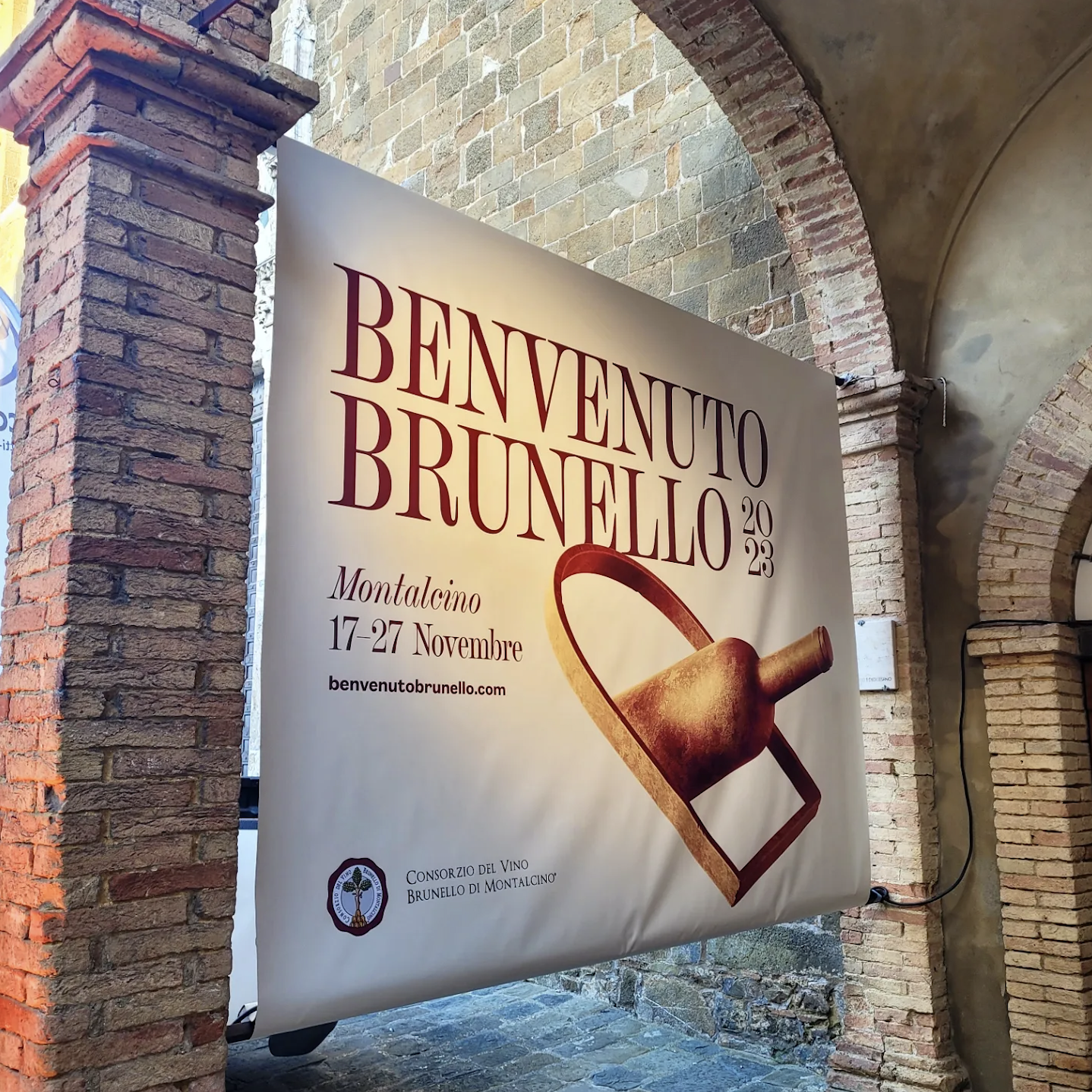
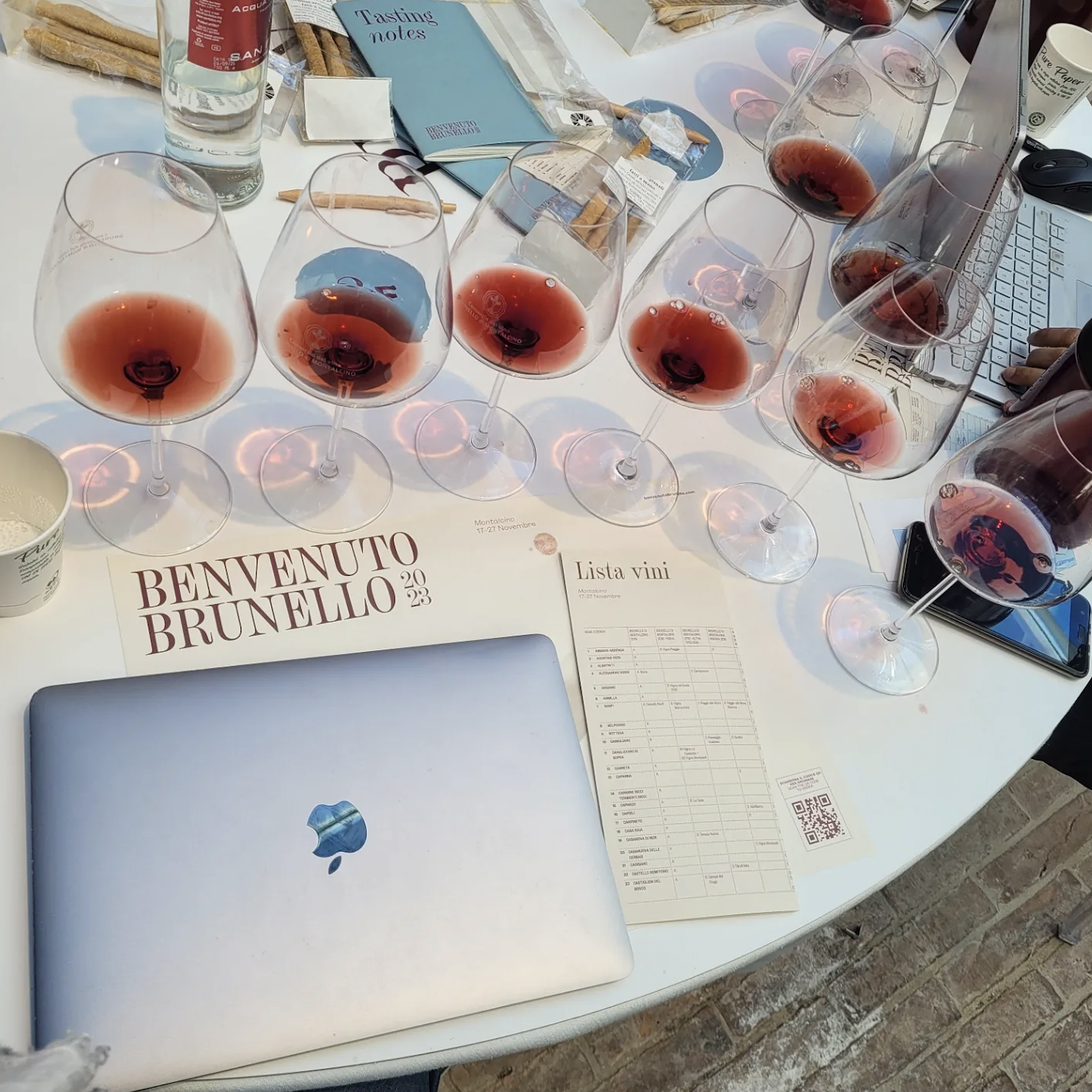
Benvenuto Brunello 2023, Montalcino

Benvenuto Brunello 2023 in Montalcino and Toronto, the 2019 vintage, extreme climate events, preventative agricultural measures and 285 wines tasted

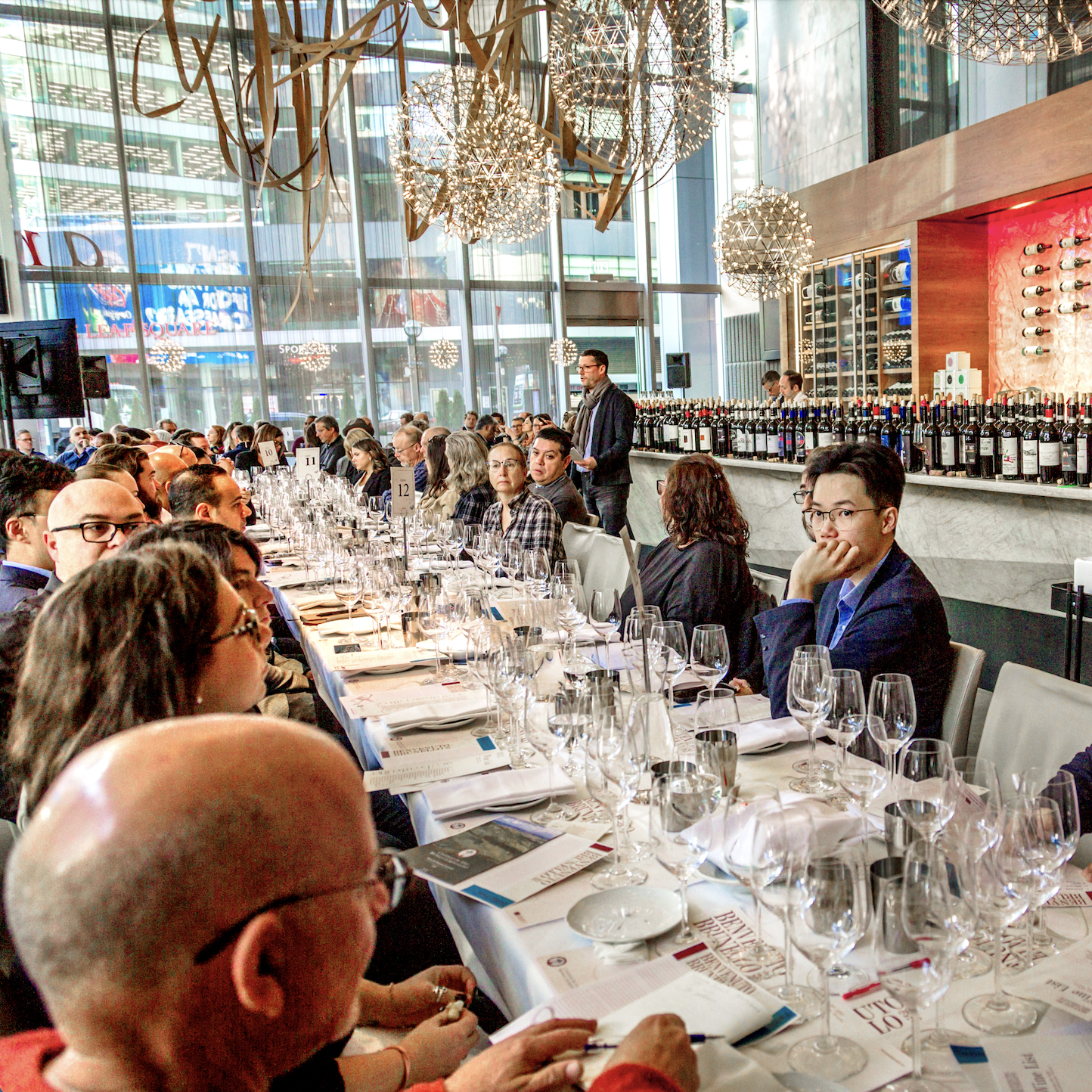
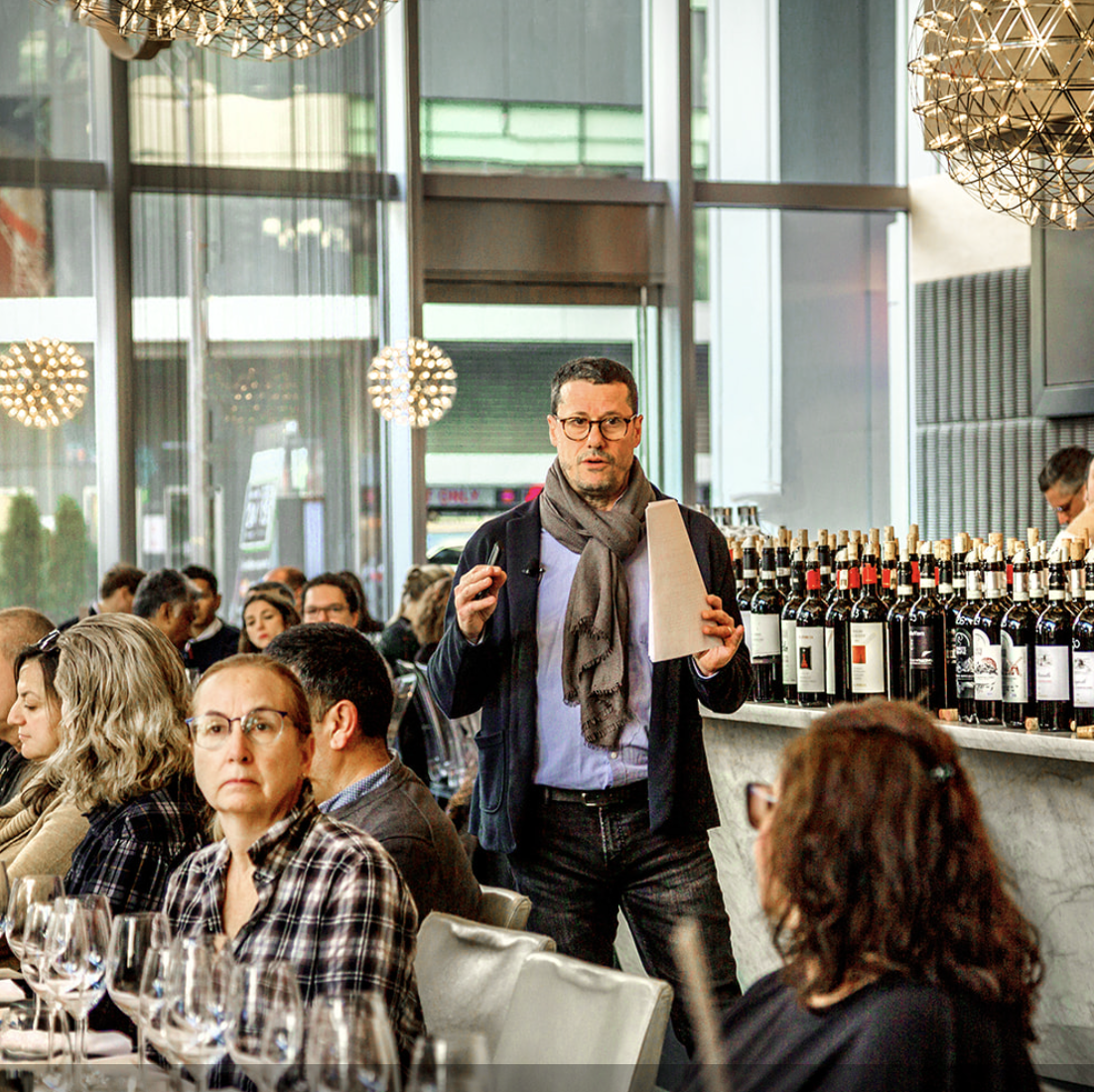
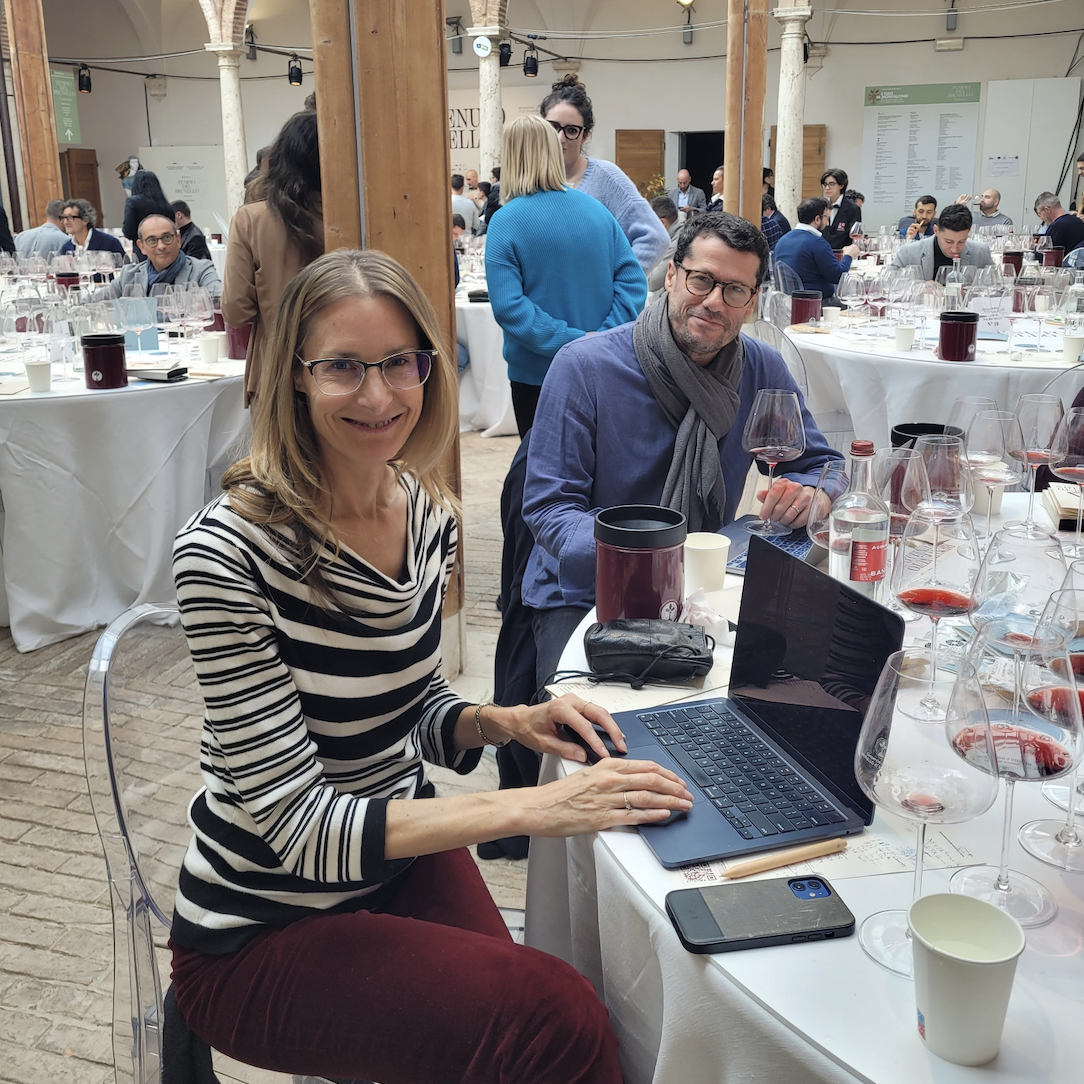
This lengthy report is Godello’s most comprehensive coverage of Montalcino to date. On November 28th, 2023 Benvenuto Brunello events took place worldwide, including in the two Canadian cities of Vancouver and Toronto. It was Godello’s honour and indeed his privilege to present the 2019 Brunello di Montalcino DOCG and 2018 Brunello di Montalcino Riserva DOCG to more than 150 sommeliers, trade, media and staff at Aria Ristorante in Toronto. The tasting was a big deal. There were many attendees in the room room who had heard Godello say this before. “No one of sound mind passes up the opportunity to taste Brunello from Montalcino.” The Toronto event received more than 350 requests for seats and those who secured a spot were afforded the opportunity to taste more than 70 Brunello di Montalcino in a very civilized way. A dozen sommeliers were on hand to pour and allow every taster to get through all the wines in the most efficient manner, to discover two vintages of these profound wines. The sangiovese available were an impressive collection from 34 archetypal producers.

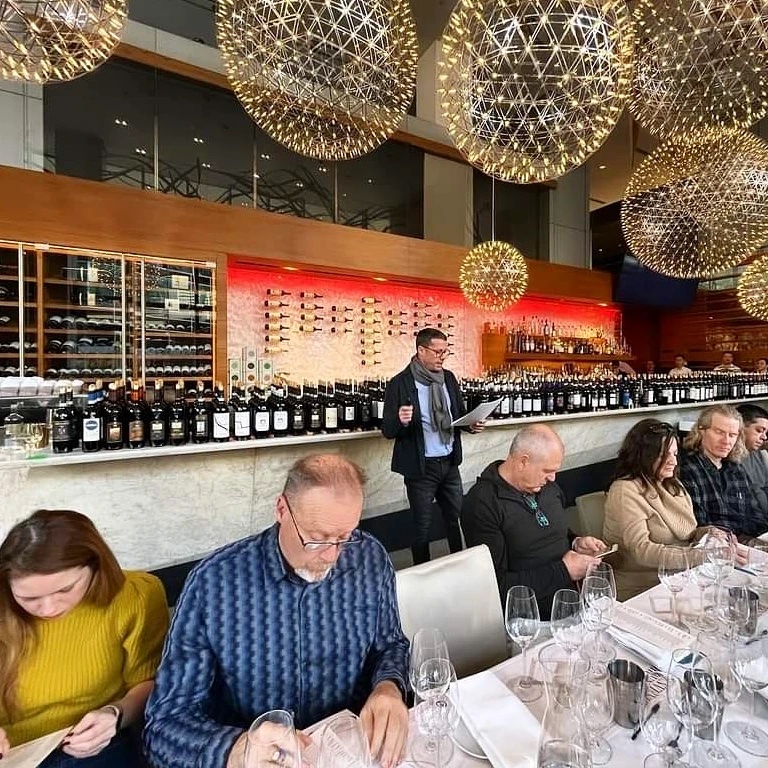
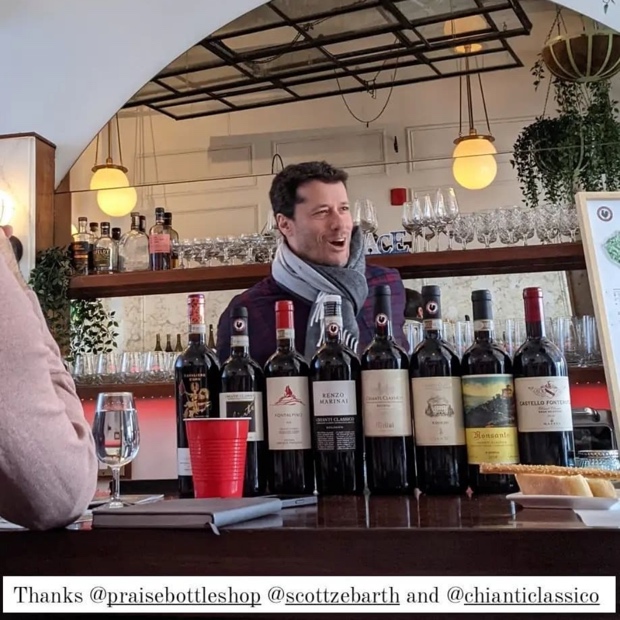
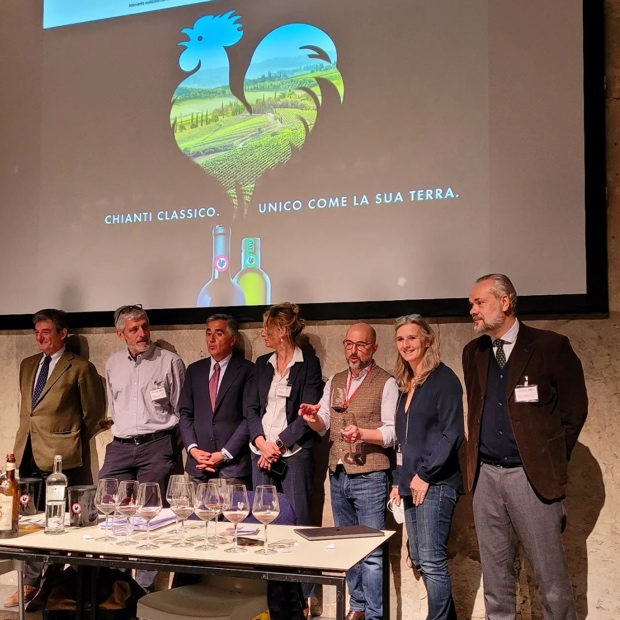
Presenting at Benvenuto Brunello at Aria Ristorante in Toronto – November, 2023
Image (c) Draga – Front Row Images Inc.

Related – Montalcino Previews 2022: Brunello DOCG 2018, Brunello Riserva DOCG 2017

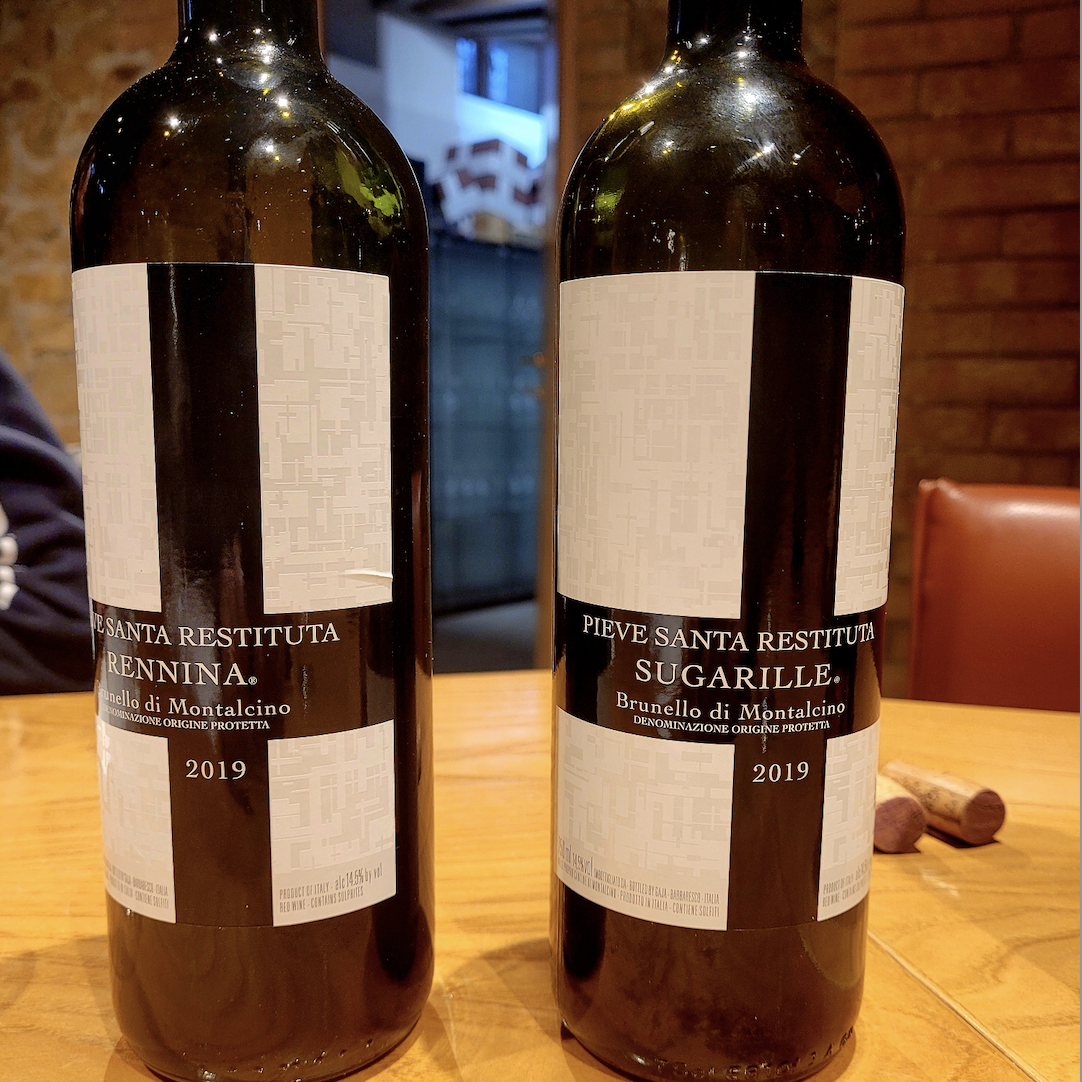
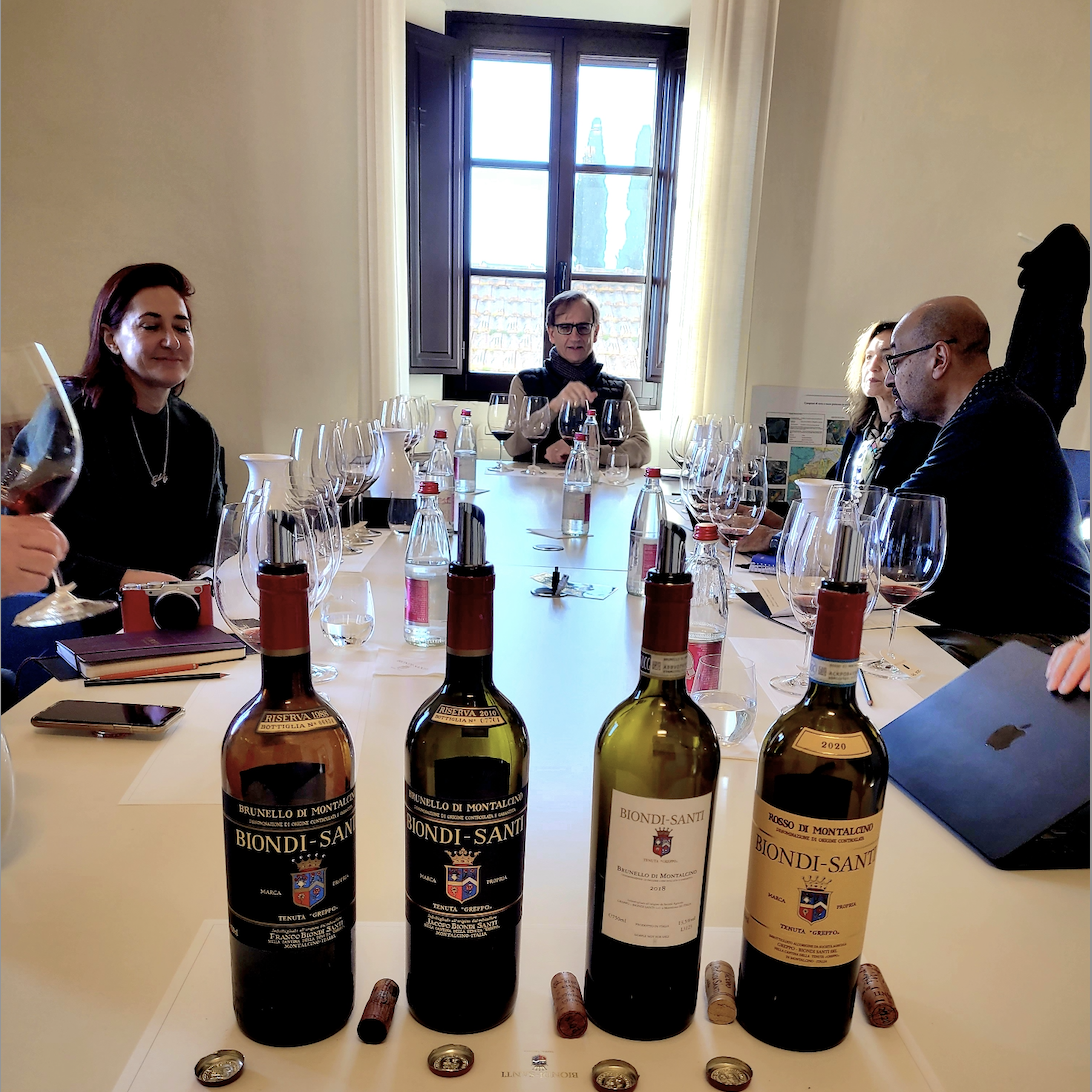
Godello’s presentation happened less than a week after returning from eight days spent at Benvenuto Brunello in Montalcino where he tasted more than 280 sangiovese. Of that number 60 percent were from the 2019 vintage, including the Annata split between the Classica, Vigna, Etichetta and Altra Tipologia. He also tasted two dozen 2018 Riserva along with some older vintages at estate visits to Biondi-Santi, Canalicchio di Sopra, Cortonesi, Gaja – Pieve Santa Restituta, Giodo, Il Marroneto, La Magia, Le Chiuse, Le Potazzine, Podere Le Ripi, Poggio Anitico, Salicutti, Talenti and Valdicava. At the anteprima in Montalcino 118 producers were represented with multiple wines available from each, including for the DOCs of Rosso di Montalcino and Sant’Antimo. Less than half that could have been there but there are several reasons for the absences. For some producers the quality of the wines do not arrive at peak form when the November anteprima comes around. Many bottle their Brunello in May because “that’s when the Annata are ready” but it also allows a rest period for six months in bottle ahead of Benvenuto Brunello and eight before a January release. Then there is the control factor – not being able to test each bottle yourself and to trust other professionals to make sure your wines are showing at their best. It’s tricky and is not a system or timing that works for everyone.

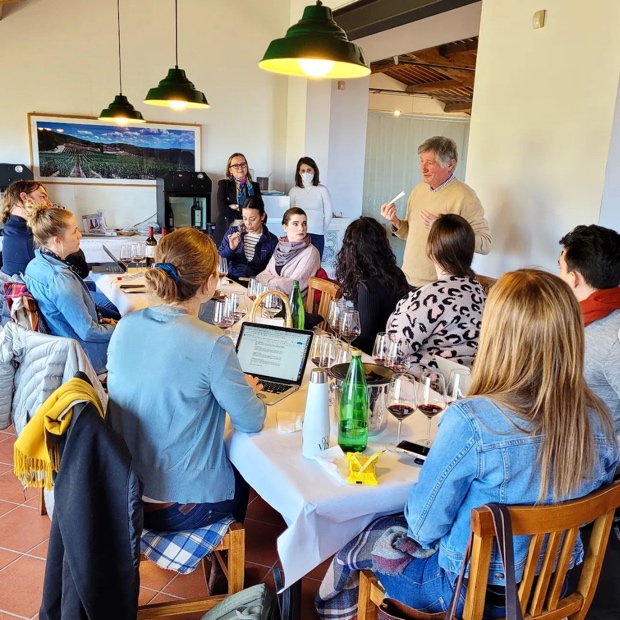
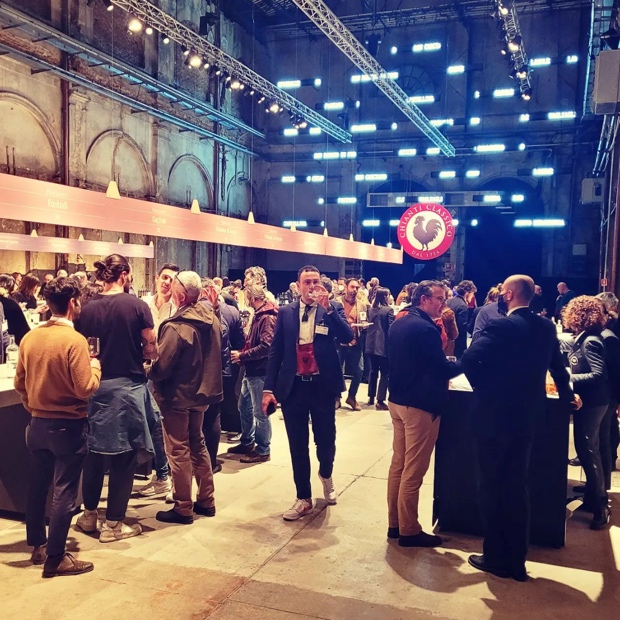
Benvenuto Brunello at Aria Ristorante in Toronto – November, 2023 Image (c) Draga – Front Row Images Inc.

Extreme climate events and preventative agricultural measures

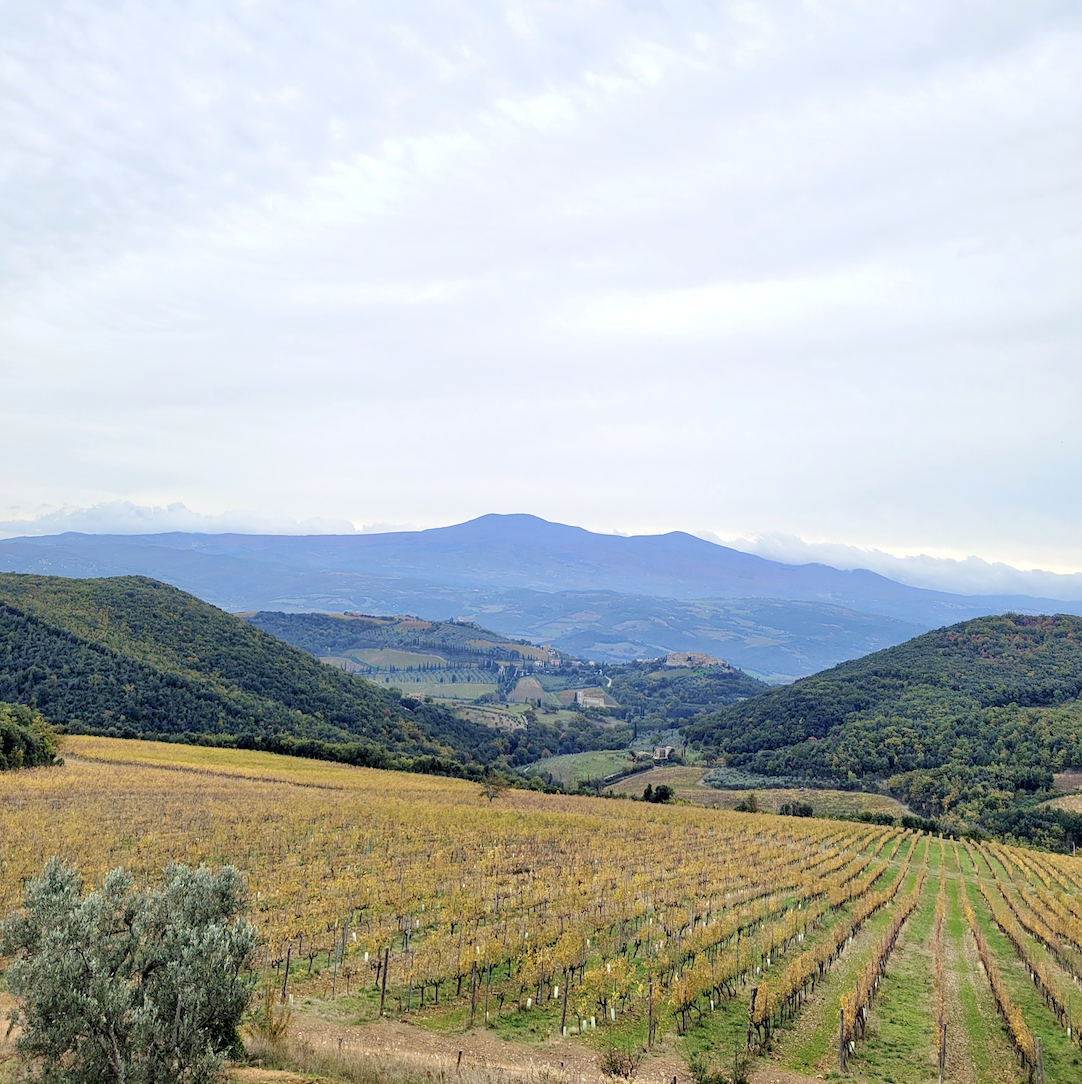
Montalcino is just 73 kms to the seaside village of Marina di Grosseto and so while it may be an inland growing area it’s proximity to the sea and its protection to the immediate south from Monte Amiata do create a recognizably prominent Mediterranean climate. It will snow in the winter and it will get oppressively hot in summer. Rainfall numbers have lessened but they have not reduced to a trickle. What has changed are the extremes of climate. Consider a few recent vintages, 2017, 2021 and 2023. In 2017 there was no precipitation between January 1st and August 31st. That is full on drought. In 2021 there were April 6th and 7th frosts that wiped out vast tracts of just budded vines. The current vintage is an unmitigated disaster. Some frosts early, again in August which also experienced a heatwave that caused a significant rise in PH. From May 15th to June 15th rainfall every afternoon made the control of the Peronospera fungus almost impossible. We call this Downy Mildew, oomycete microbes that are obligate parasites of plants induced by an unrelated fungus called Plasmopara Viticola causing the powdery mildew.

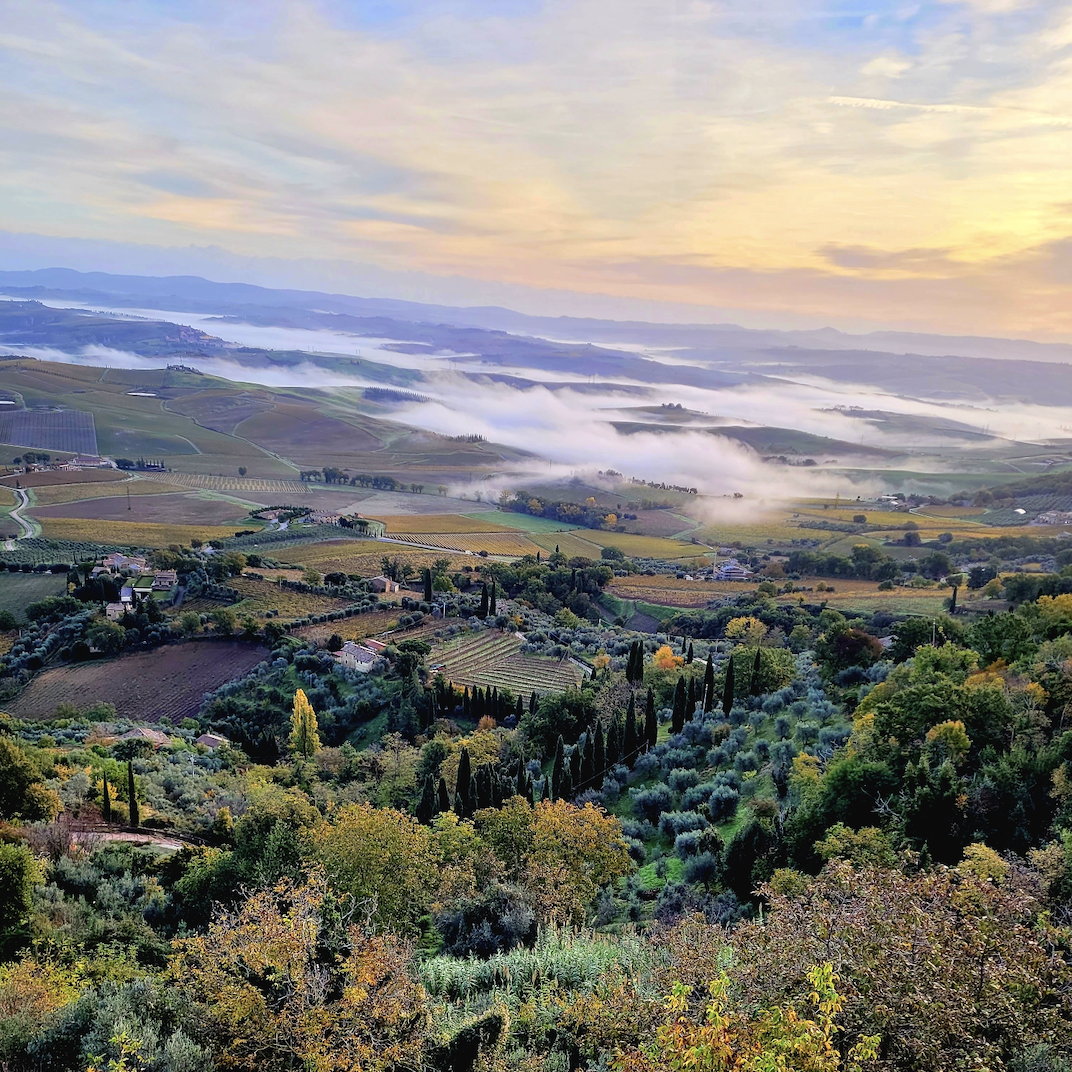
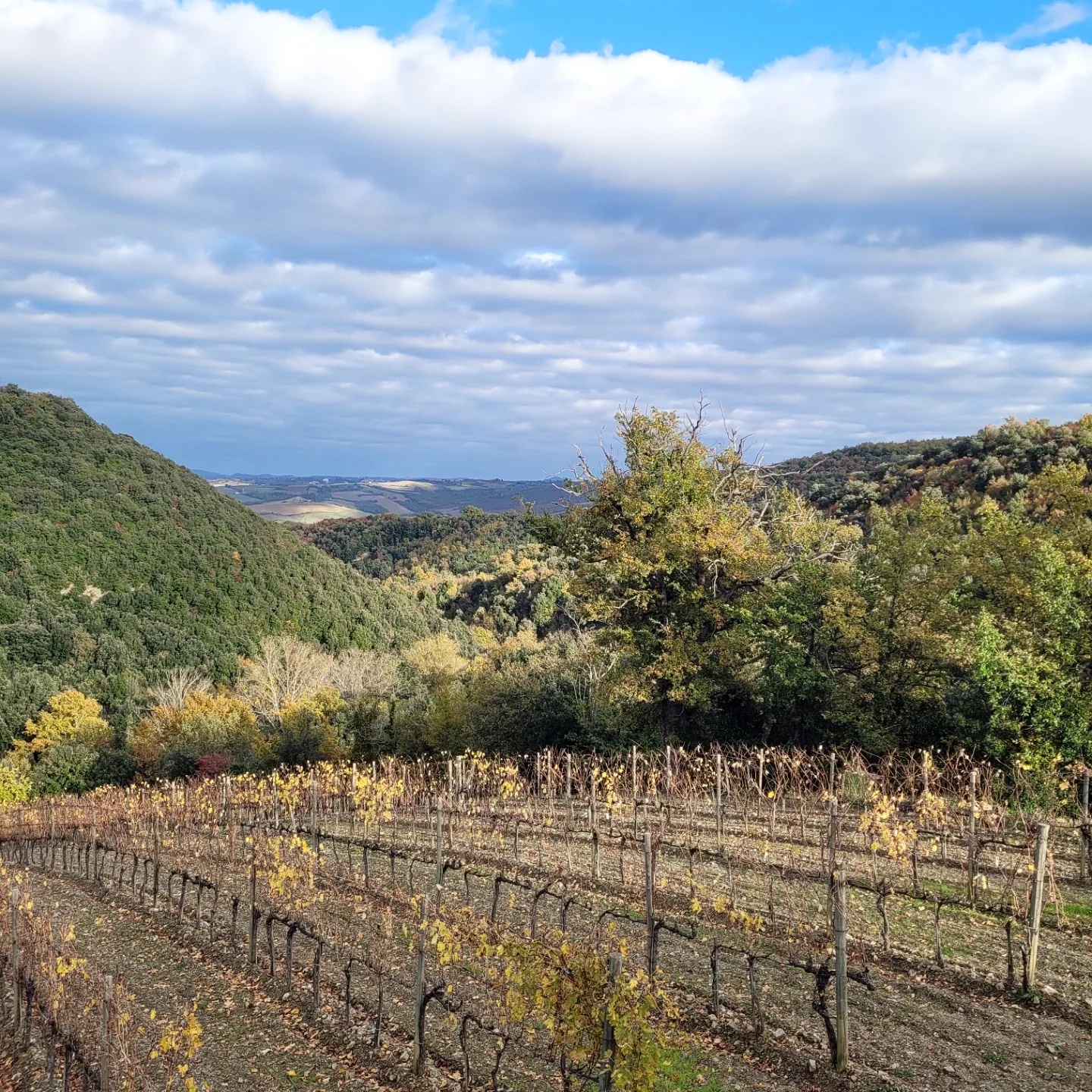
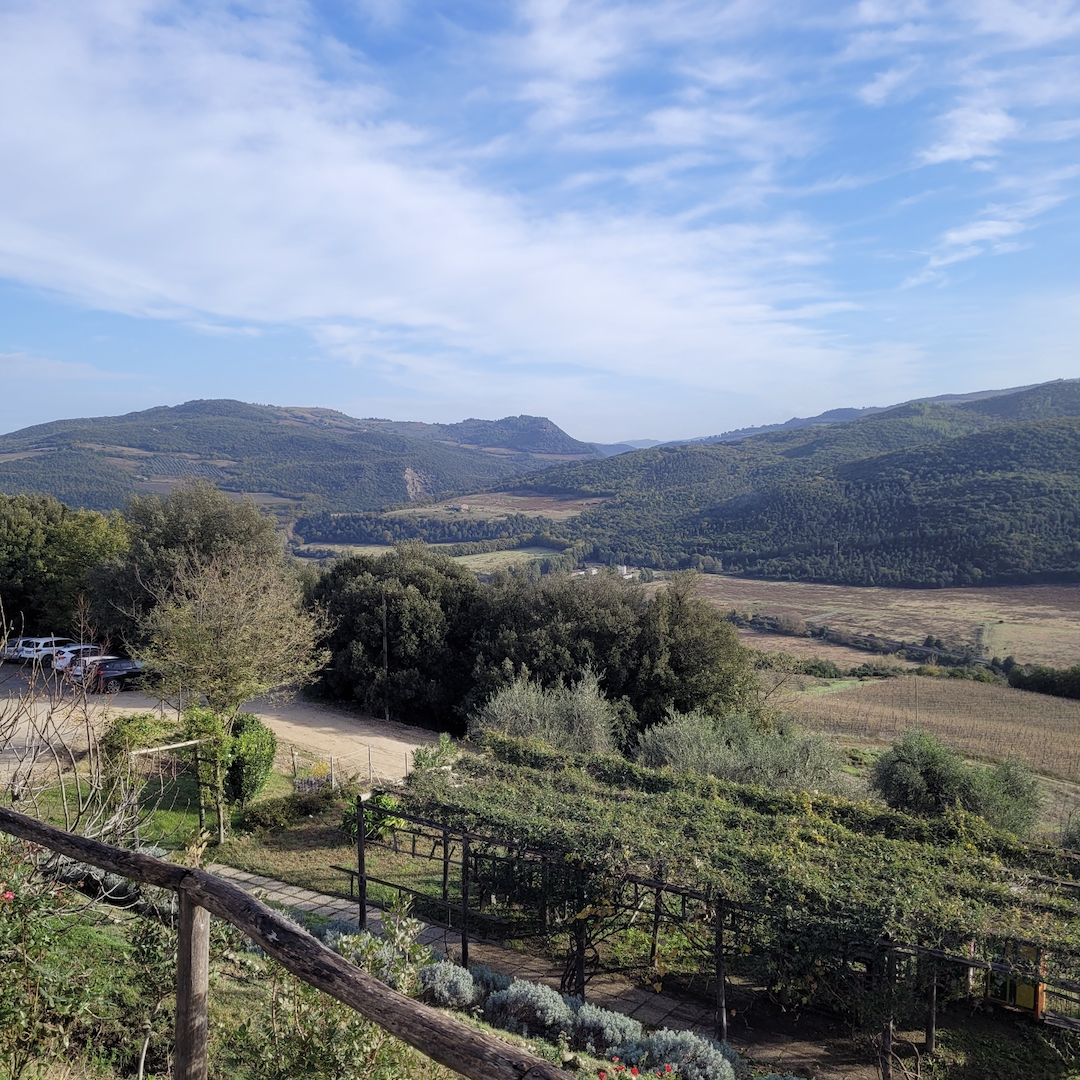
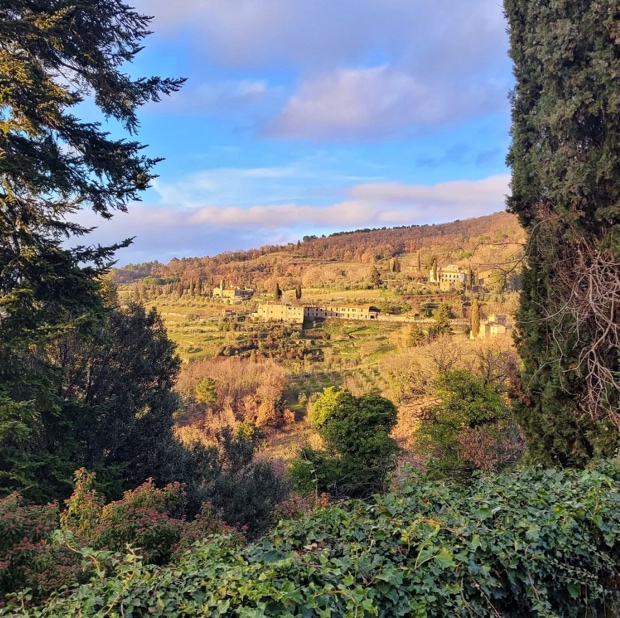
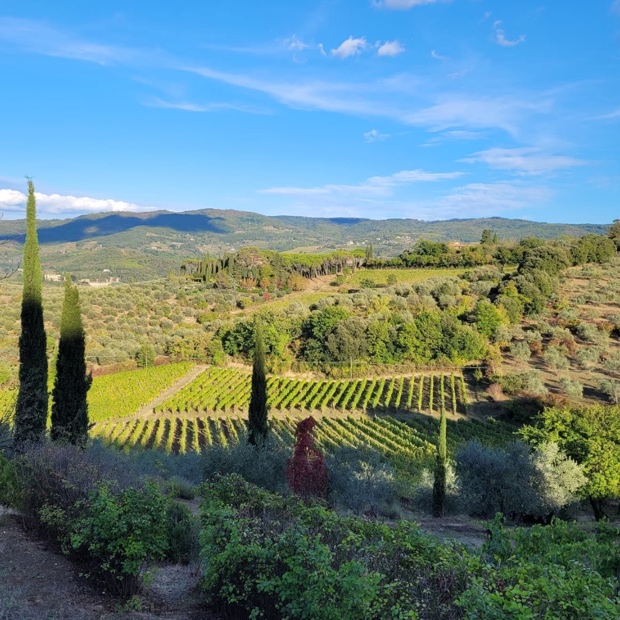
Montalcino’s Upper Orcia Valley

The problem in ’23 was that the mildew by-passed the leaves and went straight to the flowers on the bunches, but the fungus also chooses to not discriminate between the organic and conventional producer. Some areas escaped, especially that of the Sesta Valley between Castelnuovo and Sant’Angelo. The estates in this area (Ciacci Piccolomini d’Aragona, Collosorbo, Agostina Peri and Piancornello) were very fortunate to enjoy a good quantity of healthy grapes. Nothing to do with organics mind you, perhaps specific airflow coming from the Orcia Valley, or just dumb luck. Other estates were not so lucky. Fabian Schwarz of La Magia siad he would normally spray copper and sulphur eight to 10 times per season – in that 30 day stretch alone he had to spray 20 times. Maximilian Hildebrandt of Salicutti noted that production was down 35 percent because of the Peronospera and two hailstorms in August and so no Sorgente Vineyard Brunello was made. The challenges faced made it hard to reach their aim “to create the wine on the plants” from a vintage when the usual four sulphur and copper treatments per year were increased to a staggering 22. That’s more heavy metal on the ground than Wacked Open Air. If you missed that reference it’s the most famous Heavy Metal festival held in Germany.

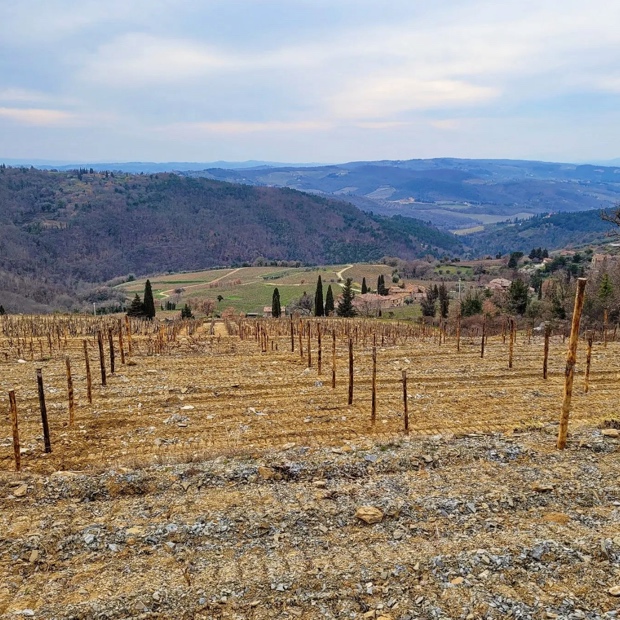
New Alberello plantings at Valdicava

The combined losses of these extreme climate events has been heavy. Up to 90 percent in northeastern Montalcino and anywhere from 10-50 in most other parts. At La Magia the number was 40 percent due to the Peronospera, but also hail. The 2023 vintage was also higher in pH at 3.7, mainly due to a very hot August and the number is normally down at around 3.3. “Maybe winter will see it drop,” said a wishful Schwarz. Vincenzo Abruzzese of Valdicava shrugged off the disaster. “I’m sad of the situation, but I’m not cutting off my arms.” Resiliency is strong, the people and plants will rebound and so much has been learned. Alberello planting is on the comeback “because you are working with three dimensions and every plant is by itself,” explained Fabian Schwarz, “including how it reacts to wind and rain.” But unfortunately that does not include dealing with animals like wild boar and deer. For Abruzzese Alberello vines require less water and can improve sangiovese’s ability to combat climate change, especially at a density of 6,000 vines per hectare. Guyot is replacing Cordone Speronato in many vineyards and almost no one is shoot topping anymore. Giampiero Bertolini of Biondi-Santi elucidated the concept of how plant structure and canopies are managed in a new way, with two parts coming up and together, to have the ability to change trajectory, to open and or close depending on the needs in relation to the weather. At Salicutti they are no longer cutting off the tops of the plants. This to protect them and keep the arches down, “like having a picnic under a big tree,” explained Hildebrandt, “so your butter is not melting.”

Lorenzo Magnelli, Le Chiuse

Lorenzo Magnelli at Le Chiuse is looking at creating micro-oxygenation in the soils to promote vine root growth. Cover crops help with this. Also less passages with the tractor to avoid compaction. Fabian and others have begun a two-step pruning process, the first in winter and the second after Easter, well past the time when the first buds had already emerged. This helps to delay the total number of buds before the typically potential Easter frosts though it will not help if a freak occurrence comes in May. And the way climate is trending that will surely happen. However “when you speak about quality,” reminds Schwarz, “it is not because of training systems, it’s from soil and micro-climate.” At La Magia he is also experimenting with anti-fungal activity using Bacillus Amyloliquefaciens, a root-colonizing biocontrol bacterium. “You buy one package and replicate it with a bioreactor,” explains Fabian. He makes a solution to spray in the vineyards as an organic way to ward of odium. The machine was originally purchased to replicate indigenous yeasts for fermentations but now serves a dual purpose.

Bioreactor at La Magia

A territory of four slopes

The northwest slope of the Montalcino hill is where poderi like Cortonesi’s La Mannella, Capanna, Pertimali from Sassetti Livio and the lower side of the Montosoli hill are located. There is great interest in this quadrant because the soils are some of the most variegate from farm to farm and places where really fresh wines are made. The southwestern slope is where you will find producers like Pietroso, Il Palazzone and Le Ragnaie but also the gateway further west to Castiglion del Bosco, Le Potazzine, Corte Pavone and Romitorio. And further southwest you reach Pian delle Vigne and Pieve Santa Restituta.

Poggiarelli Vineyard

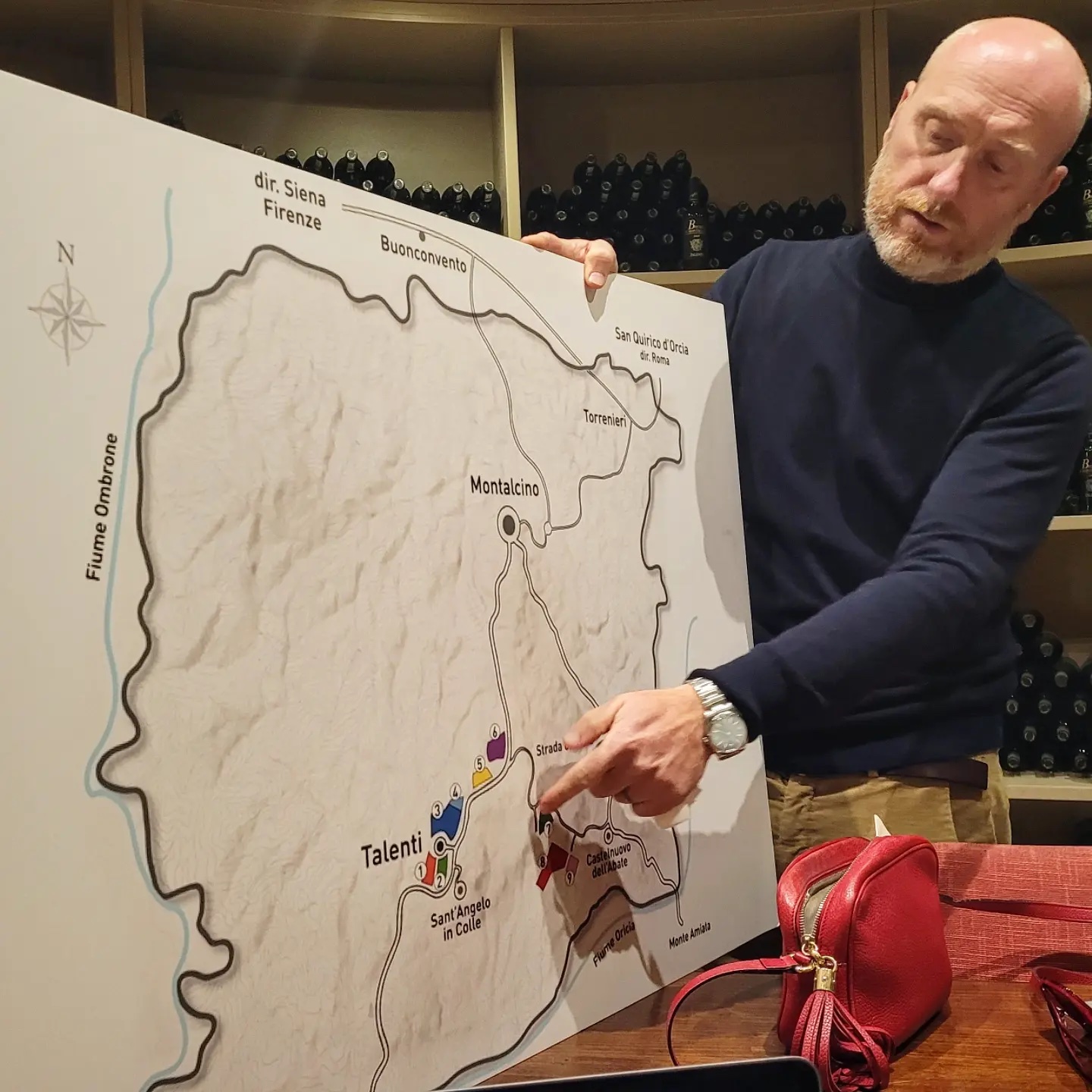
The northeastern slope is a unique location with the Orcia Valley spread out to the east and the south. These are the wide-open spaces and rolling hills of Montalcino where the clays are less compact, the calcaire can be quite prevalent and the elevations relatively lower. Here you will find producers like Il Marroneto, Casanova di Neri, Le Chiuse, Ridolfi, Canalicchio di Sopra and Franco Pacenti. The southeastern slope covers everything south and southeast of Montalcino, characterized by steeper slopes, profound changes in elevation, thick forest and windswept plateaus. These are where estates leading down to the villages of Castelnuovo dell’Abate and Sant’Angelo in Colle are located. The highest concentration of farms are here, beginning with Constanti and Biondi-Santi. Then there are Talenti, Salicutti, La Magia, Poggiarelli Vineyard, Fanti and Poggio di Sotto, among many others.

Montalcino

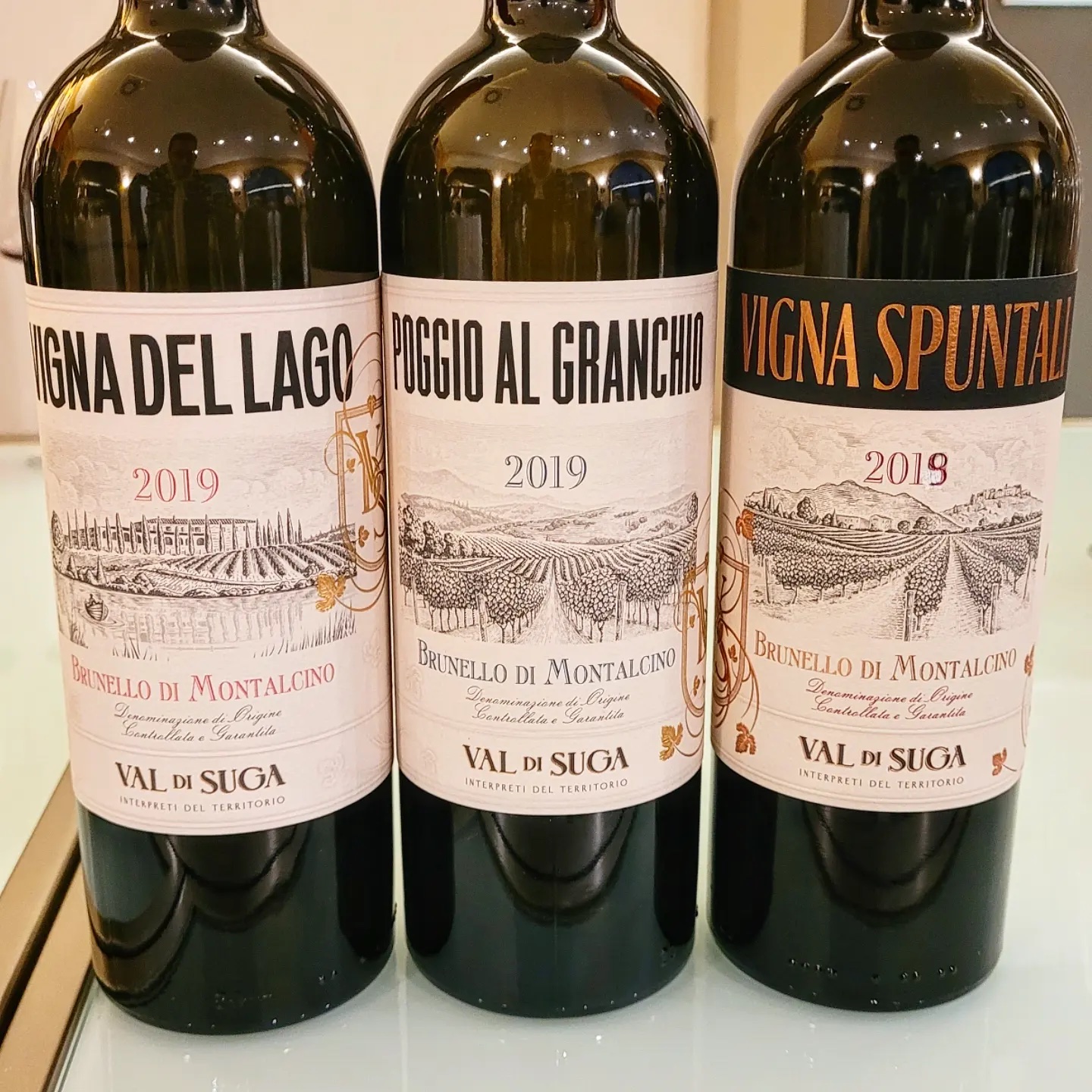
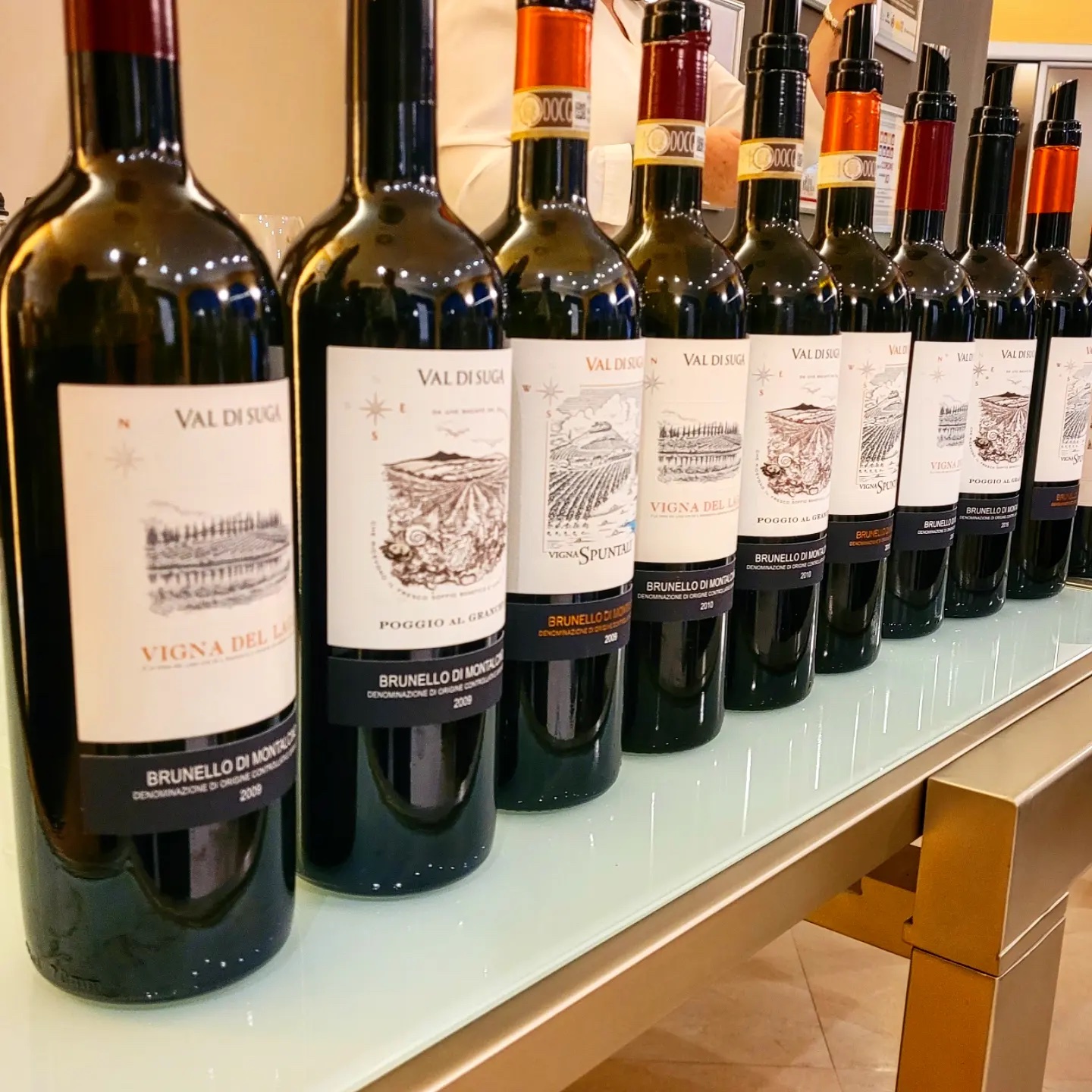
Andrea Lonardi is Italy’s most recent MW and joins Montalcino’s Gabriele Gorelli with that unique distinction. Andrea is the COO of Angelini Wines and Estates and during Benvenuto Brunello week in Montalcino he led a vertical tasting of four vintages from three crus for Val di Suga Brunello. Three different locations, three micro-climates and soils. Lonardi asked “how many places in the world have such a change in landscapes around such a small area?” It tells us that Montalcino producers are focused on Cru, on Vigna and this pinpointing of how and why sangiovese comes away distinct from which place.

With Andrea Lonardi MW

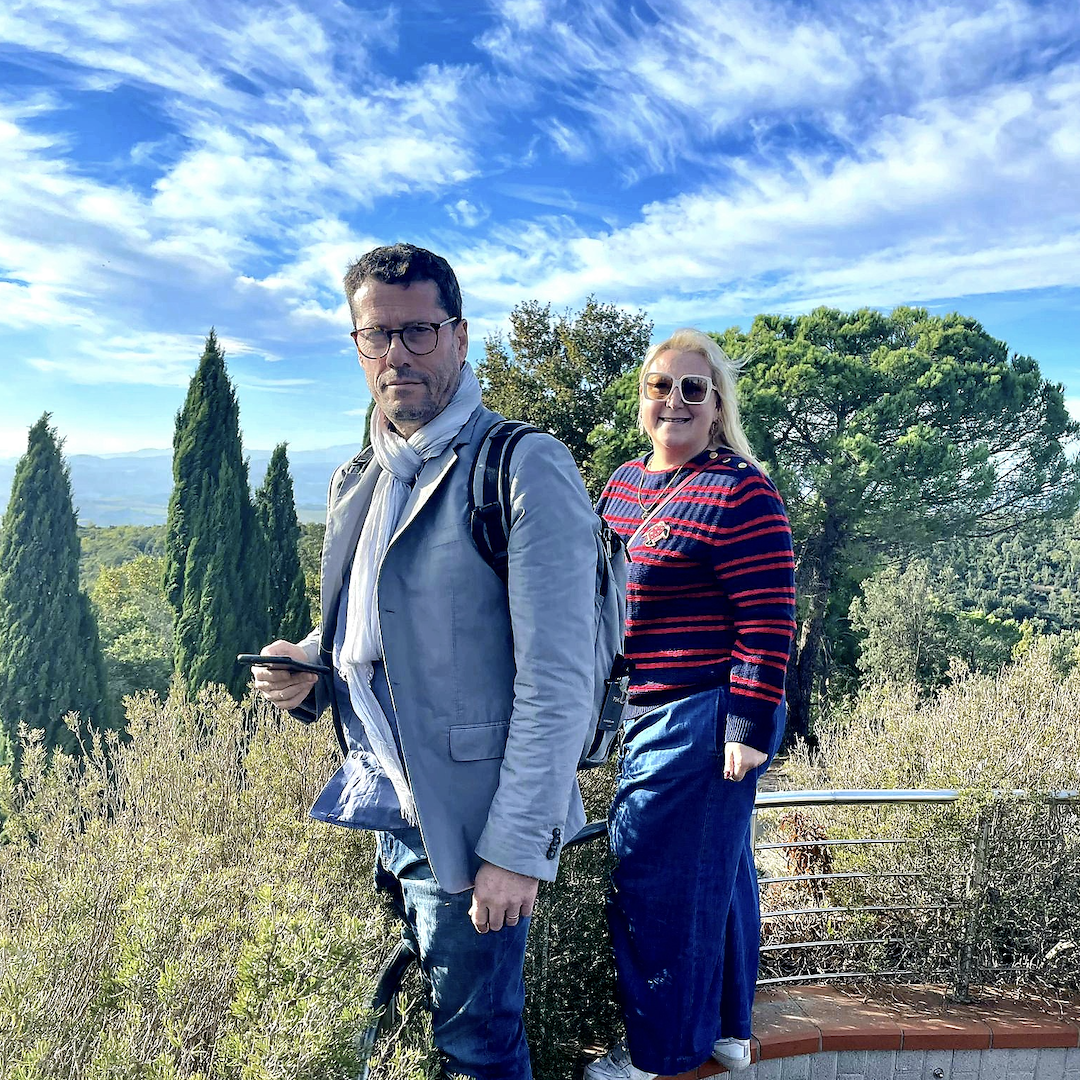
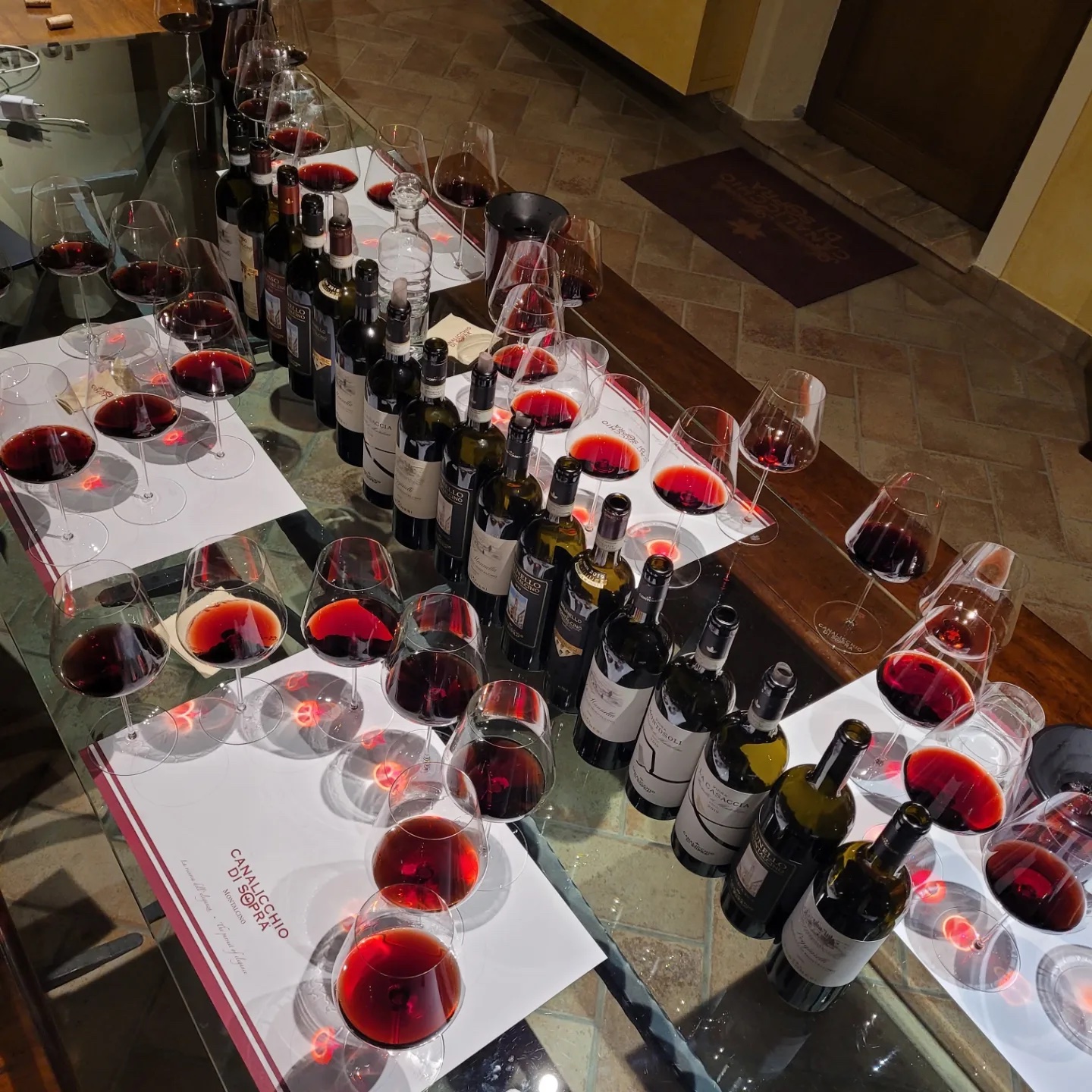
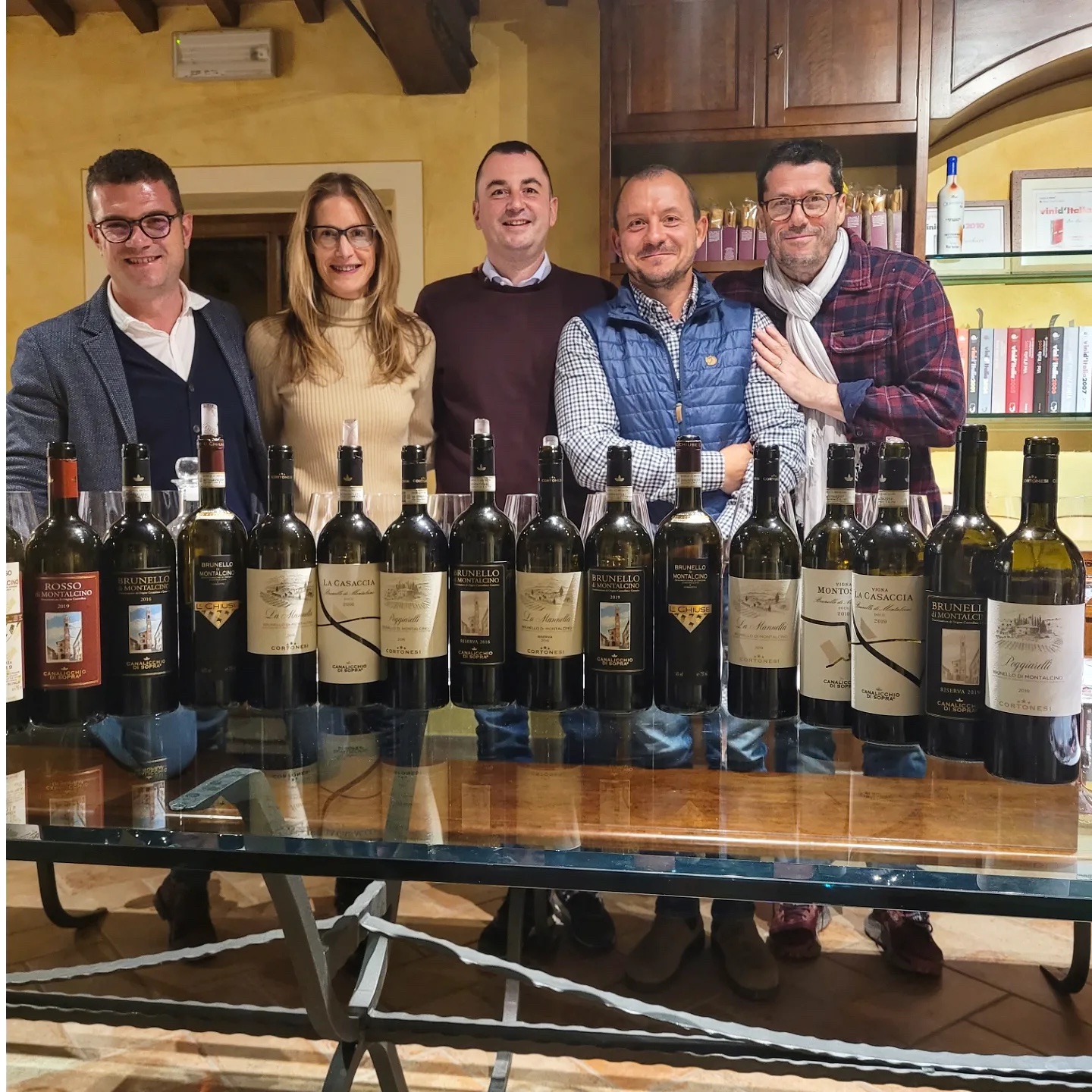
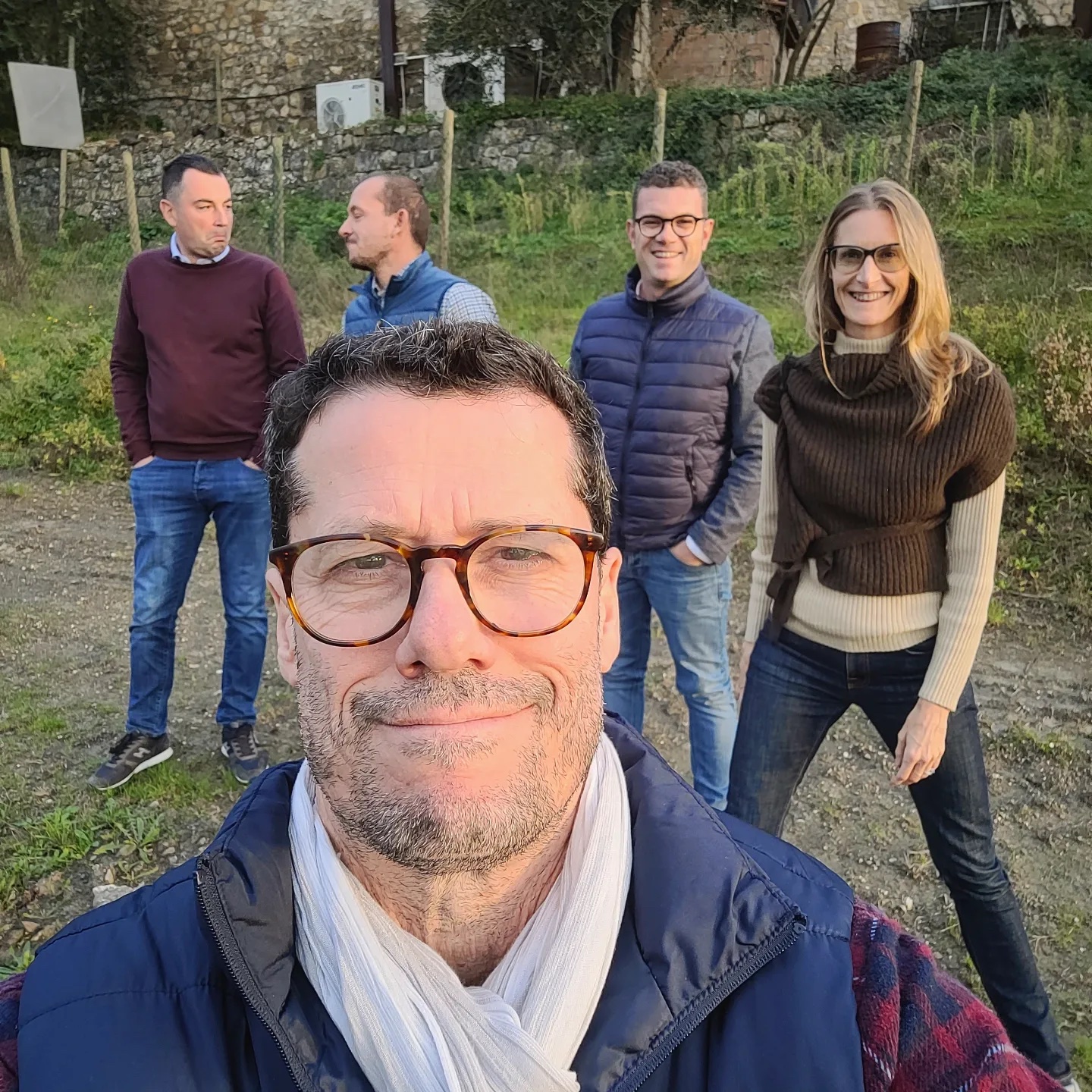
During the final November weekend Godello made a tour of the combined five vineyards worked by the Brunello boys: Lorenzo Magnelli of Le Chuise, Tomasso Cortonesi of La Mannella and Francesco Ripaccioli of Canalicchio di Sopra. The purpose was to join them for a look at soils and taste the wines of each place. Francesco talked about La Casaccia as a place of high (8.2-8.3) pH characterized by the clay. “For me it’s sleekness in the wines,” he says “not opulence and less heaviness than from (a vineyard) of dense clay.” Walking the vineyard of Poggiarelli and the windy landscape overlooking the Orcia Valley within the forests will tell you so much about the freshness and also power of those Brunello. Tomasso Cortonesi says “it’s very important for me that a producer has to exult the identity of each single vineyard, including the Rosso.” Montalcino does not like to talk in terns of frazione, Villages, MGA or UGA, but they do like their cru. There motto is that great wine has a secret: “Vineyard, vineyard, vineyard.”

Vines at Talenti

Soils and Sangiovese

All of Montalcino is predicated on sand, clay and stone, like all of Tuscany but the sandstones are its predominant feature. These are mainly Arenaria, which is about as pure as sandstone gets and also Pietraforte, a much harder conglomerate rock that will contain other elements like schist, clay and calcium carbonate. But Montalcino has much less limestone than a region like Chianti Classico. There is some Alberese (and Palombino) stone but the sands are key. Everyone uses the term Galestro but it is not a type or epoch of soil – it’s a type of structure. The term Galestro refers to a manifestation of sedimentary soils at the surface as flakey outcroppings. Galesto mainly comes from schists but also sandstones and appears as flakes of those rocks in layers that fall to pieces, like bits of stony sand. We can say that Galestro soils have a great effect on these sangiovese – but true geological origins matter most.

La Casaccia Vineyard, Canalicchio di Sopra

The thing about sangiovese is that it loves rainfall but does not love really hot seasons. That messes with its natural acidity but Montalcino lives and dies by the variety as the only denomination where every wine is 100 percent sangiovese. There are other grapes grown around Montalcino but only sangiovese makes Rosso and Brunello di Montalcino. In Montalcino sangiovese vines don’t really produce as they once did after reaching 50-plus years of age. But there are many who care to preserve the memoria storica, that is the historical DNA and character of the vines. So they do so with massal selection. Keep in mind that Montalcino was a place where today’s producer is the grandchild of wine producers who woke up the morning, walked to the market to sell some form of goods, walked back down the hill to attend school and then worked the vineyard and the cellar for the rest of the day. Two dozen of them formed the Consorzio – both their descendants and their vines’ descendants are what make Brunello today. The village was along a Roman trading route and everyone knew Montalcino as the place where great wine was worth stopping for. Clemente Santi produced the first true commercial bottling in the 1880s, the Consorzio was formed in 1967, DOCG status awarded Brunello in 1980 and DOC to Rosso in 1984.

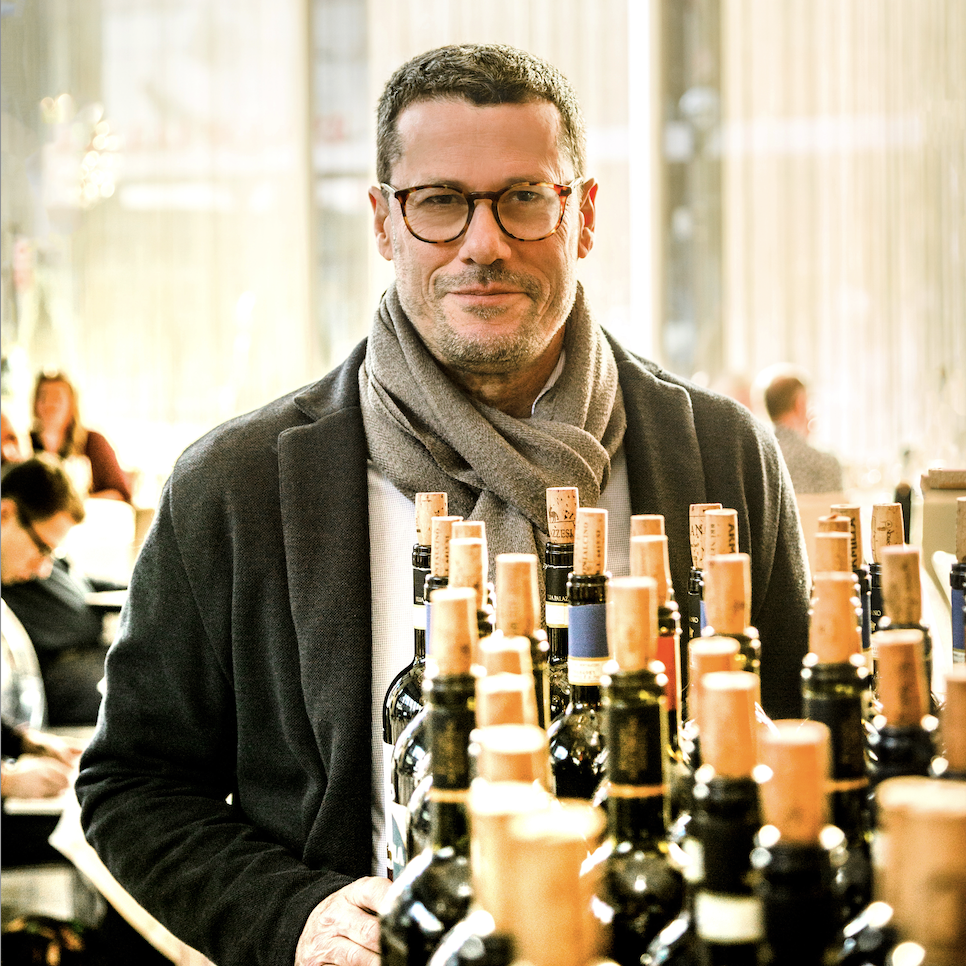
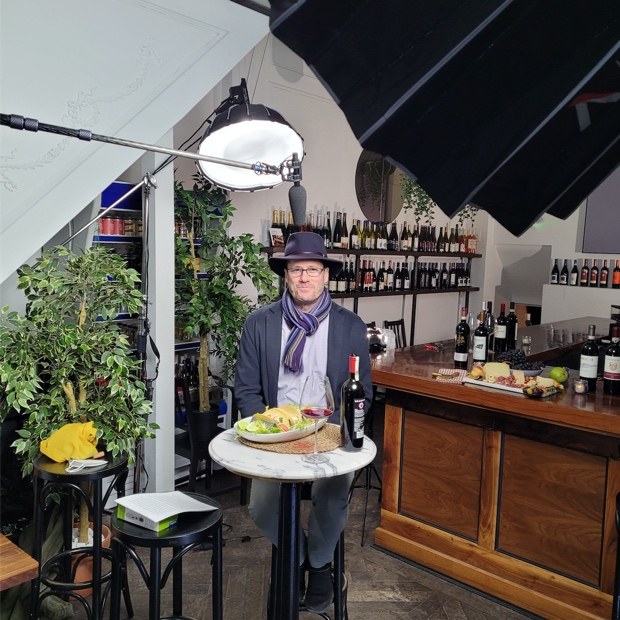
Godello, Benvenuto Brunello in Toronto – November, 2023
Image (c) Draga – Front Row Images Inc.

Rosso di Montalcino

Culturally speaking Rosso di Montalcino is the most important wine. It’s what the Montalcinese drink daily. Many winemakers will tell you that Rosso must reflect sangiovese’s character more than any other wine. In today’s Montalcino one’s Rosso is another’s Brunello. It’s now more than ever a matter of location, soil and altitude. There are many ways to skin a Rosso but these days it is always a wine treated with respect. There is enough Brunello to go around and the world needs a lot more Rosso di Montalcino. Godello was able to taste three dozen Rosso that week, covering vintages 2022 going back to 2016.

Benvenuto Brunello in Toronto presentation – November, 2023
Image (c) Draga | Front Row Images Inc.

The “top” 2019 vintage

Which brings us to 2019. Ah yes, the already famous vintage and for many reasons, 99 percent of them good. Comparable to 2016 in the sense in that quality and quantity were both running high. The very famous oenologist Carlo Ferrini of Giodo described the weather as calda but not caldissima. A statement of the obvious says that the key to a great wine in Montalcino is the relationship and balance between phenolic maturity and acidity. Achieving this kind of success was challenging in the two previous vintages. The problem with climate extremes is rising pH numbers, loss of acidity and when this happens you can’t make adjustments after harvest to correct deficiencies. This vintage was a literally a breeze. All the correct winds blew through and yes it was a warm vintage, but with no heat spikes upwards of 40 degrees as there had been in 2015 and also 2016. That is why producers are very happy with and also relieved by 2019. Terms like quality and quantity, easy, uncomplicated, fresh and substantial were tossed about. Even the usage of “The Goldilocks vintage,” not too hard or too soft. Not to dry and not too wet. It was just right. Francesco Ripaccioli noted that on September 15th there was 45-50 mm of rain. “It didn’t affect the vintage,” he insisted, “but the rain cleaned the grapes before they came into the cellar. Tomasso spent three weeks at the beach.” He was joking. Mostly.

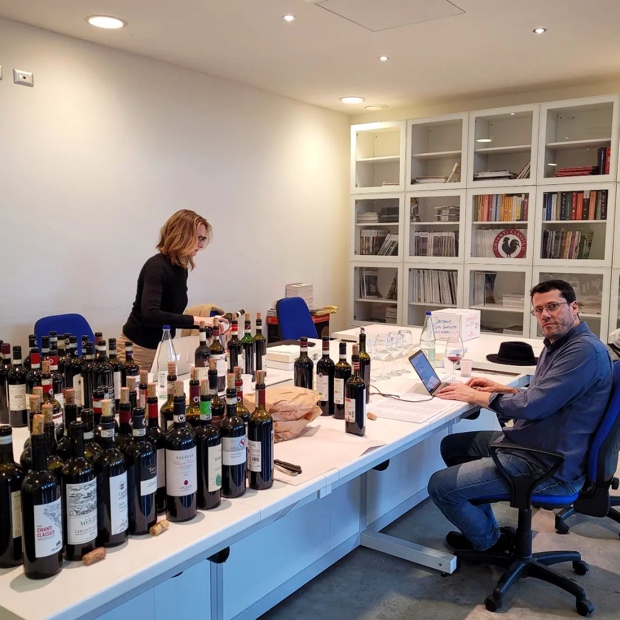
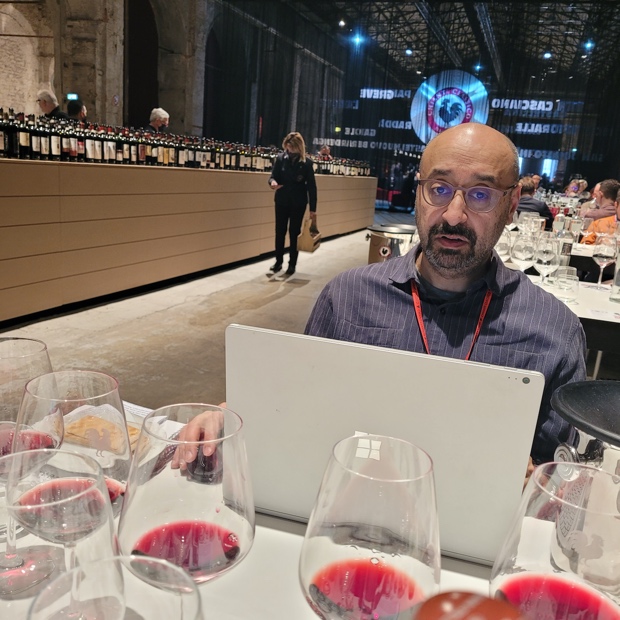
Tasting through 426 bottles of Brunello di Montalcino DOCG 2019 at Benvenuto Brunello in Toronto – November, 2023
Image (c) Draga | Front Row Images Inc.

If 2018 was the vertical vintage then 2019 was one of breadth and depth, this as far as Riccardo Talenti is concerned. What a vintage like 2019 allowed a Montalcino winemaker was the choice and the chance to make individual wines, not just good wines. To celebrate the spirit living within each vineyard and farm. To find richness from an uncontaminated place, because climate did not get in the way. To make a style of sangiovese leaning towards the oxidative and not the reductive because the fruit was so untainted. Brunello that carries the DNA of each farm and levels of acidity to see the prospect of the best examples aging for 30 years or more. Alessio Sostegni of Poggio Antico said “you should taste the freshness and concentration, especially because of the winds. The days may be have been hot, but the sea winds blew in each afternoon.” He added that “after a late August rain what followed were high daytime temperatures and nighttime lows. In fact the optical sorter at harvest eliminated almost no berries.” Higher temperatures but no major spikes and rainfall came at all the right times, first in the winter and then with that spike in mid-summer that cooled the vines but happened after the potential danger of funguses like Peronospera. A vintage that Gigliola Giannetti of Le Potazzine said was simply regolare and thank goodness because these days that is increasingly rarer and rarer. Sebastian Nasello of Podere Le Ripi said “it is also rare to find a vintage where both the western and eastern sectors performed in a positive way.” Vegetative growth was slow and steady and harvest stretched over a few weeks of time. The end result was slow and even ripening which could not be said for either 2017 or 2018.

Francesca Granelli Hakulinen and Alessandro Mori

What about Riserva 2018?

The wines are not the most concentrated, at times edgy and volatile, but their transparency makes them some of the most terroir-connected of the last 15 vintages. Twenty eighteen is a pure sangiovese vintage and there is nowhere for the wines to hide. There are many that could be referred to as sneaky structured. Many writers were and remain skeptical. Godello holds much respect for the hard work put in, the selective processes and the potential of these wines. Less Mediterranean as a vintage, lit from behind. Of course there are more impressive and also structured vintages but the guarantee here is in the consistency of farming and winemaking teams with a dedicated set of values. Today we are dealing with Riserva as a wine that only nature can decide whether or not it will become one. Alessandro Mori of Il Marroneto said that “it has a to be a monster to become a Riserva.” His might have been the outlier and not the norm for 2018. Giacomo Bartolommei of Caprili noted that the weather was the complete opposite of 2017. Winter snow, even in the southern part of Montalcino, cooler temperatures and consistent rainfall. “Lighter wines with potential for aging, not unlike 2013. They are showing well right now. We think 2018 will be the same. Even expecting greatness.”

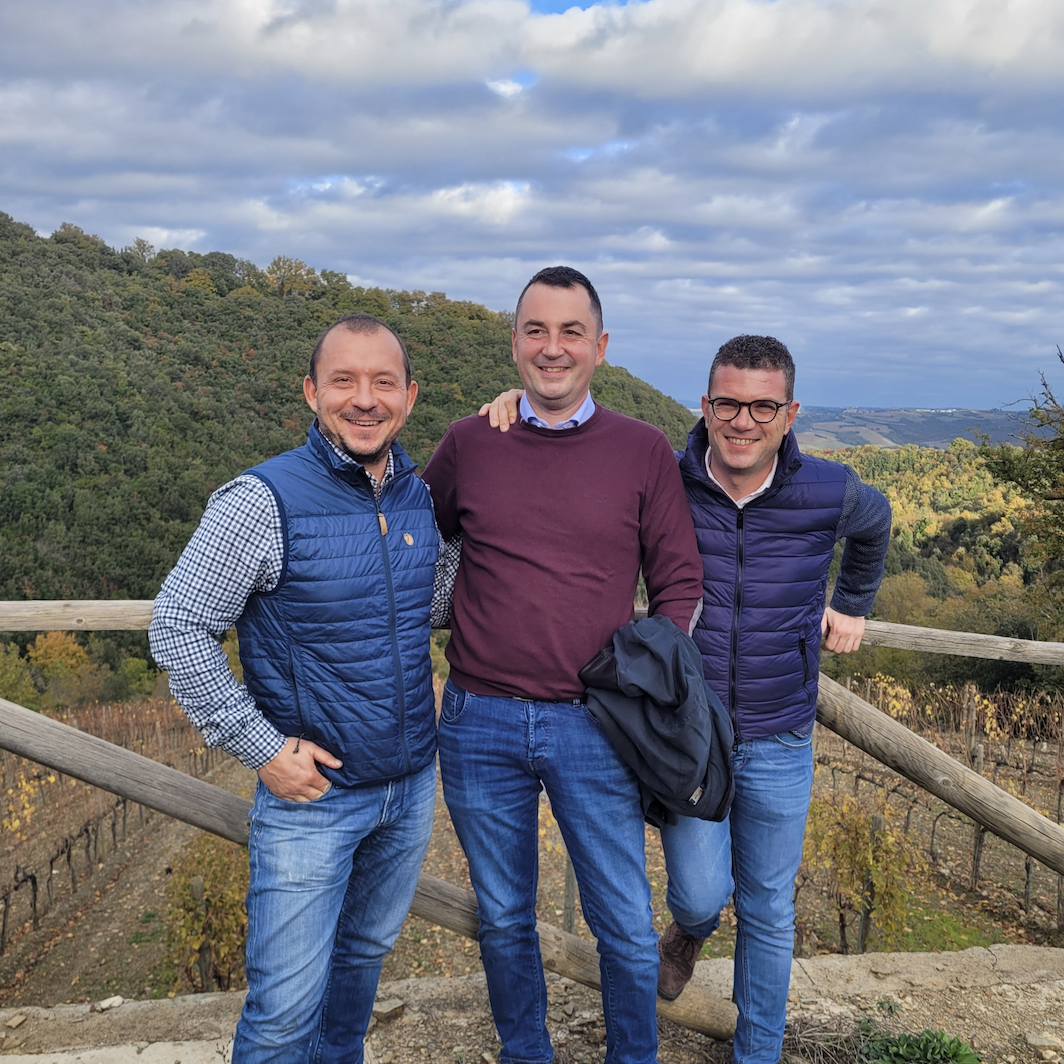
The Brunello Boys: Lorenzo Magnelli, Tomasso Cortonesi and Francesco Ripaccioli

Tommaso Cortonesi: “A vintage where you can recognize the link between the producer and the terroir. The vintage does not show potential during he first two years in bottle. The wines of 2007 were like this. I taste the real Galestro of southeast Montalcino in Poggiarelli. Usually the northern areas do this but in 2018 the southern sectors do this and in balance.” Francesco Ripaccioli of Canalicchio di Sopra: “The first harvest was September 10th – a green one, to concentrate the best bunches. Then heavy rains on September 16th, followed by strong tramontana winds to dry out the vines and keep mildew away.” Producers needed to wait a few days and so harvest began on the 20th, at first looking for what Francesco calls “dimension in the bunches.” Phenolic ripeness and acidity were not developed chronologically but in a more chaotic way. Francesco puts the average ripeness number at 7.5 or 8 out of ten. “Ten doesn’t exist and if it did I would not want it because pH levels would be way too high. Maybe 8.5 is perfect.” This is really important information. Just as picking too early in a hot year is problematic, the chase to optimum phenolic ripeness is also wrought with dangers. High pH, low acidity, over-extraction, which depending on the season can bring exaggerations, mainly astringencies. Balance, that’s the key, regardless of what that equates to in any given year. And place.

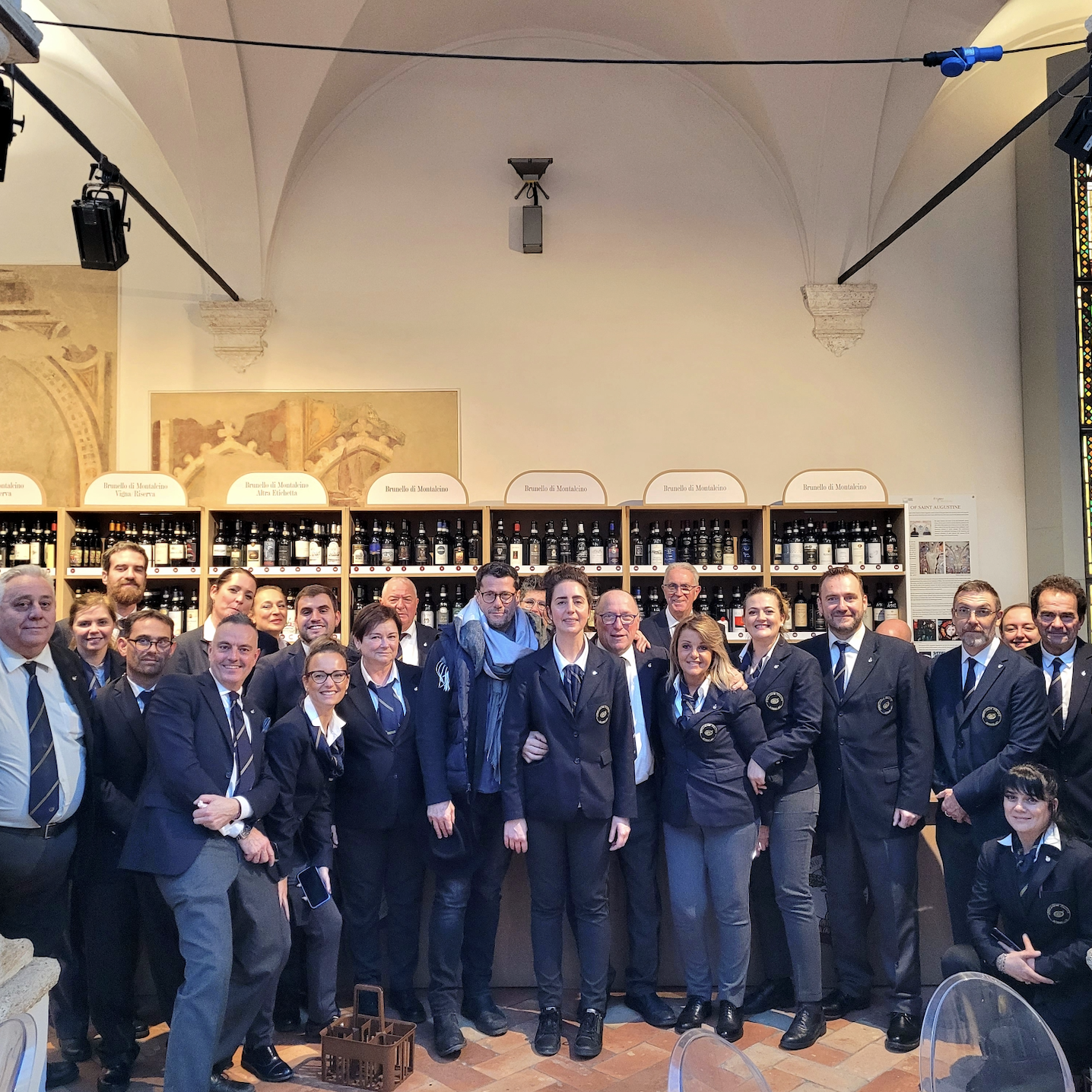
The Italian Sommeliers of AIS Siena at Benvenuto Brunello in Montalcino

The sommeliers, consorzio and tasting notes

The success of the Benvenuto tastings would be impossible without the Italian AIS Sommeliers and in Montalcino that means the women and men of the AIS Siena division. These are the professionals who serve the wines in Montalcino. They are a tasters’ best friend because they quickly become aware of a taster’s needs even before the taster knows that their needs are needed. Being nice, patient, courteous, friendly and respectful of them is everything. They are there to help in the the best way they can.

Godello presenting at Benvenuto Brunello Toronto, November 28, 2023

The Consorzio del Vino Brunello di Montalcino President is Fabrizio Bindocci and the Director is Andrea Machetti. Giacomo Bartolommei, Riccardo Talenti and Enrico Viglierchio are the three Vice-Presidents. At the top of the list of those who put in the greatest amount of dedication is Carlotta Salvini who just might be the hardest working person in Montalcino today. Collectively they and their staff make Benvenuto Brunello one of the most important and best organized events on the anteprime schedule. If you would like to jump past this 40,000 word report and straight to the highest rated wines in order, please click here. The 285 wines reviewed are broken down as follows: Brunello di Montalcino 2019 (96), Brunello di Montalcino Vigna + Etichetta + Altra Tipologia 2019 (72), Brunello di Montalcino Riserva 2018 (23), Other Vintages and Campione di Botti (4), Older Vintages (45), Rosso di Montalcino (36) and Toscana IGT (9).

Brunello di Montalcino DOCG 2019

Agostina Pieri Brunello di Montalcino DOCG 2019

An Ontario mainstay over the last two decades and as of late a move into ethereal wines from Agostina Pieri. In the old days the cost was affordable and to an extent still is but these latest vintages should fetch much more. Case in point the elegant beauty of this 2019 with floral perfume that is in a Montalcino league of its own. Flavours and texture are no different or maybe they are as they move with such fluid grace. This may come as a surprise to some tasters and then there are those who already know that Pieri’s sangiovese is movement and tension together in one lovely Brunello package. Will look forward to a glass 10 years forward, much in the same way many 2013s are delivering with poise today. Drink 2026-2033.  Tasted November 2023

Altesino Brunello di Montalcino DOCG 2019

Irrefutably Altesino aromatics with that extra bit of ripeness and stuffing though for 2019 a very rounded expression. Purity of fruit as sangiovese once again in the clear Altesino style. Modern and plush though neither opulent for lush. The ease of vintage makes for naturally sweet Brunello that is clearly 2019 and also Altesino. That last comment is everything you need to know. Drinking well already and will continue this way. Will be a great restaurant bottle choice for six years easy. Drink 2024-2030.  Tasted November 2023

Armilla Brunello Di Montalcino DOCG 2019

In 2019 terms this from Armilla offers up as much if more fruit than many with a swirling of multifarious masala seasoning and spice, but also wood resins and extracts. Vanilla from the French component but also that which is bled from nuts – almond namely while blossoms are floral here and also there. A very promising Brunello that can actually be enjoyed in the present tense though a decant and pause will be needed to open up the grit and chalk of the tannins. Drink 2025-2030.  Tasted November 2023

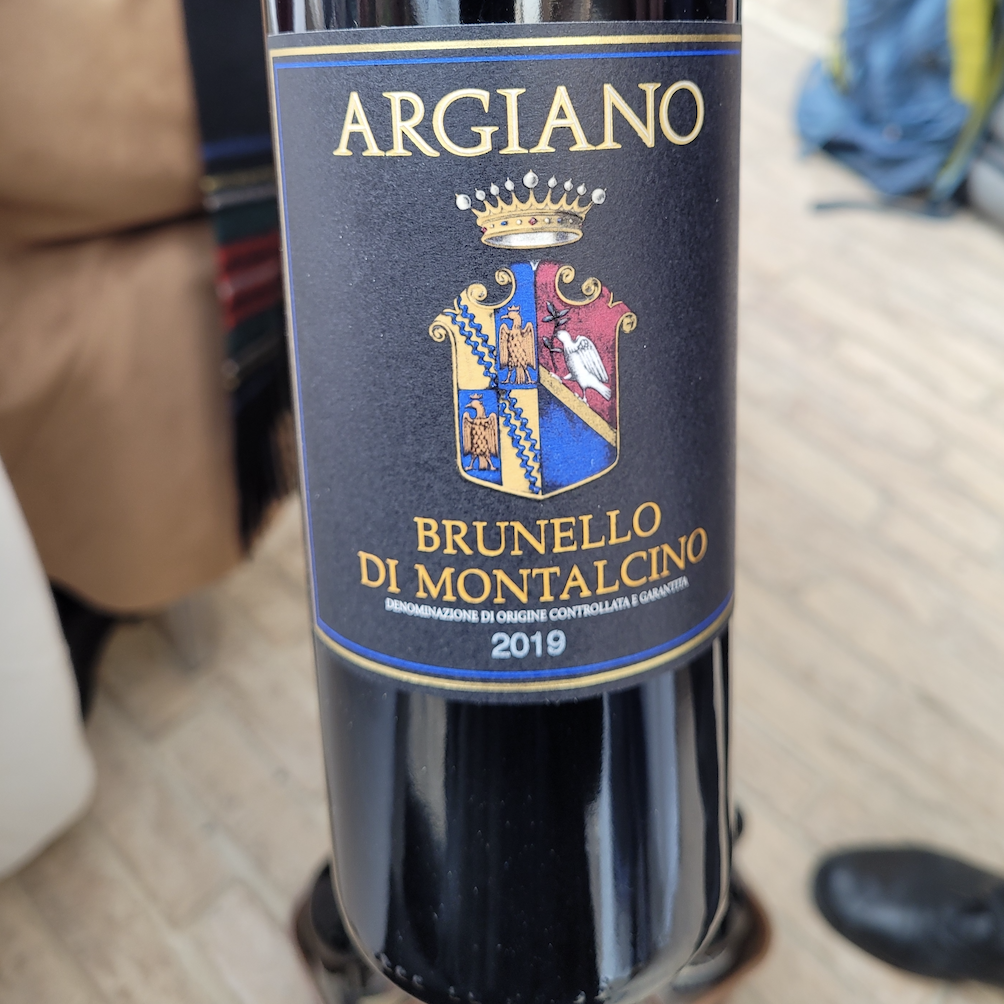
Argiano Brunello Di Montalcino DOCG 2019

An important sangiovese here for Argiano out of 2019 because Vigna del Suolo is once again a wine named as a Brunello of the Year and so what remains of its unsold and unallocated bottles will be the most difficult to find. Which leaves the world with this Annata in their glass, of a grounded, seasoned and fruitful Brunello that opens the door to the estate, memories in history of a castle up on another hill nearby and as a general dictionary rule, to the rest of the territory. It is a beacon and the dictionary entry for the vintage and while it may seem like hyperbole to say, also the simple existence of the appellation. Fruit, lift, perfume, tart red fruits, chalky tannin, sandstone, a Galestro feel here and there and finally balsamic. Vintage direct. Drink 2025-2031.  Tasted November 2023

Belpoggio Brunello di Montalcino DOCG 2019

Cherry fruit more black cherry quite ripe and also aromatic, including the pit with some nutty bitters. A bit too much Brettanomyces unfortunately which both distracts and turns the palate with brittle to hard tannins. A bit too much I’m afraid to ever feel clean and free of itself.  Tasted November 2023

Camigliano Brunello di Montalcino DOCG 2019

Quite a rich, macerated, fruit developed and well formulated Brunello from Camigliano that celebrates vintage with distinction if traditionally up and along the middle of the road. Nothing austere about this sangiovese with clean, pure and chewy red fruit. Fresh but of a leathery fruit texture, more than ample and fine acidity before allowing some tannin to take charge. A hint of green at the back end and so the contrast makes the aromatics and flavours come across as jammy in the end. More than solid and representative enough. Drink 2025-2029.  Tasted November 2023

Tasting at Canalicchio di Sopra

Canalicchio Di Sopra Brunello Di Montalcino DOCG 2019

The most recent plantings at Canalicchio were executed in 2009 next to the 1990 La Casaccia vineyard. These vines are maturing and will likely seek entrance into the Vigna label but for now they are picked for this classic Brunello. They may not be grapes of enigma or mystery but they are the epitome of purity and the Brunello represents a high-casted estate style to explain so much about the house of Ripaccioli and Canalicchio di Sopra. The 2019 Brunello is a wine of silkiness but not opulence. A sangiovese that is an extension of a producer’s hands and there is no separating the wine from its maker. As for place well yes because all the vineyards are close enough to one another to combine for unmistakable identity. Drink 2023-2026.  Tasted November 2023

Canneta Brunello di Montalcino DOCG 2019

Wildly aromatic, fruit for the most part ripe and dripping their running juices. Mature fruit however and that is too bad because the wine will turn and move Ito secondary notes before too long. Will feel stewed and roasted within two years as noted by the drying tannins.  Tasted November 2023

Carpineto Brunello Di Montalcino DOCG 2019

Carpineto is classic in every vintage because well it’s the scent of Carpineto but 2019 expresses hyperbole of all that is this estate’s Brunello. The winds and high elevation brush upwards of 500m, the herbs and plants that grow around the hill and lift, above all else it is lift that makes this sangiovese what it can never help but be. One sip and the truth is clear because here is a vintage from which Carpineto wishes to take full advantage with sour cherry at the fruit core and new leather hides everywhere on the backside and finish of the wine. More than solid and agreeable, of fullness and fine lines, as precise as it gets for the producer. This will begin its best days in 18 months or so until it begins to morph and express secondary notes five to six years ahead. Drink 2025-2032.  Tasted November 2023

Capanna Brunello Di Montalcino DOCG 2019

The 2019 Annata by Capanna comes from solid reasoning and sweet seasoning with a gentle touch. A matter of the Montosoli area as iterated through a savoury liquid sangiovese in surround of a great core of fruit. Though the tannins are important what stands out in this wine is lift, elevating the wine to a place of brightness and more lightness than many of the vintage. Restrained and of subtleties to allow more complexity a chance to emerge as each of these next eight years pass by. When food is ordered and Brunello is desired this by Capanna will act accordingly and deliver super amenability. Drink 2024-2030.  Tasted November 2023

Capanne Ricci – Tenimenti Ricci Brunello Di Montalcino DOCG 2019

Rich and mature 2019 from well developed sangiovese of a warm and arid place. Spicy notes are those that fill the aromas without hesitation or trying too avoid getting too hot and heavy. The volatile acidity presents high, even if it’s a factor in relative position to fruit yet it distracts from the overall experience. The heat keeps coming and peppers the palate. All in all a tiring Brunello. Drink 2024-2026.  Tasted November 2023

Tasting in the Chiostro with La Morris

Caparzo Brunello di Montalcino DOCG 2019

Fine and red chalky Caparzo 2019 that brings its mix of soil and climate origins to layer beautifully in fruit, for acidity (especially) and finally tannin. Trim in one sense but impressive nonetheless because of its purity, with well orchestrated pitch and motion. Delicate but that acidity is the core of the wine. Drink 2025-2030.  Tasted November 2023

Caprili Brunello Di Montalcino DOCG 2019

Very curious to taste Annata 2019 by Caprili side by each with its 2018 Riserva because style matters and the matters of heart are inseparable. That ’18 Adalberto is seriously unctuous sangiovese, as is this ’19 Annata, two peas in a pod, two ripe cherries together forever. No matter when you decide to open this wine and also the other you will see their connection, feel their familial pull and intuit just what matters for this estate. Beauty above all else and fruit. Tannins are fine if unresolved, length is very good and the future surely bright. Drink 2025-2030.  Tasted November 2023

Casanova Di Neri Brunello di Montalcino DOCG 2019

A major aromatic triumph from the Neri family out of 2019 with the signature, multi-plot cuvée of Casanova Di Neri standing vertically tall as the spokesperson for the estate. Actually quite traditional for Montalcino as far as that is considered in terms of bones, structure and heritage, but the flesh is all modern juiciness. More understood culture comes by way of the gentle swirl of swarthiness that gives this a most natural feel, as if the wine simply made itself. The chalky underbelly in the lower architecture tells a different story that concerns a Brunello to wait on, age for five or more years and then share with those you care deeply about. That is the dearth of this wine – it requires attention and company. Drink 2026-2034.  Tasted November 2023

Casanuova Delle Cerbaie Brunello di Montalcino DOCG 2019

More than curious and singular aromatic profile from the Casanuova Delle Cerbaie Annata and location just has so much to do with the style. Quite herbal with an Amaro note, but also pencil shaving, graphite and other infiltrate smells that the botti are want to provide. There is pleasure on the palate and very good length to this wine. Feels like it may be polarizing because it is different, but with two years it should likely settle and come back to the centre where many 2019s exist. Drink 2026-2031.  Tasted November 2023

Casa Raia Brunello di Montalcino DOCG 2019

A firm and dusty if very floral aromatic sangiovese with balsamic in every nook, crick and cranny of this Sant’Antimo proximate vineyard. Richer and darker than memory serves to some recent vintages. Classically styled, raised like Brunello of heritage with high rising acidity and no wavering from the mean. Drink 2026-2030.  Tasted November 2023

Castello Di Banfi Brunello Di Montalcino DOCG 2019

The widest cuvée breadth of vineyard hectarage accumulation for Montalcino sangiovese is Castello Banfi. What other Brunello (along with Frescobaldi’s Castelgiocondo) over the last three decades has helped to spread the gospel and form the map? Banfi is a matter of consistency of course and said in plurality – locations, locations, locations. Of course a masters in blending with 2019 resting at the pinnacle of these kinds of machinations. There is richness and there are layers from fruit but also the many vessels involved, making sure to include the sweet emotion of wood tannins, saps and resins. This may be the most rounded Castello Banfi with the most accumulations and while it shows little austerity it will surely gain complexity with some age. Drink 2024-2028.  Tasted November 2023

Castello Romitorio Brunello di Montalcino DOCG 2019

Very present Brunello from Castello di Romitorio, grippy and firm in aromatics so that it’s a bit of a tough nut to crack. Not an open book here from Filippo Chia’s 2019 but one where graces are hidden in the shadows of the wine. Very structured for the vintage and the upper reaches sector within a clear sky’s view of the village’s west side fortifications. A wine of passion and emotion, chiaroscuro and a full cupboard of spice. Not a toasty sangiovese but a meaty one, surely specific to place and also weather, as it happened at Romitorio through the course of 2019. Drink 2026-2032.  Tasted November 2023

Castiglion Del Bosco Brunello di Montalcino DOCG 2019

Open, generously modern and very available aromatics of western Montalcino fruit and forest. The scent of wet and fresh Spring woods, plummy fruit and a creosopte-graphite-tobacco mix. Some austerity and verdancy on the palate, in part because of location but also because of an ambitious style that maceration and aging conspire to effect. Solid, well built with that ever so slight brittleness in the tannic profile. Drink 2025-2030.  Tasted November 2023

Celestino Pecci Brunello Di Montalcino DOCG 2019

Celestino Pecci’s is a high-toned, lifted and fiery 2019, a bit acid elevated for the vintage if on par with the idea that perfume, seasoning and lighter styling is correct for very specific areas of production. Here is a Brunello that’s meant for food, aching for the right pairing and equipped with the sort of tannins that request this kind of planning. Some dusty cocoa and chocolate shavings to resolve and yet there is good promise for the next seven to 10 years of this proper vintage exploration. Drink 2024-2030.  Tasted November 2023

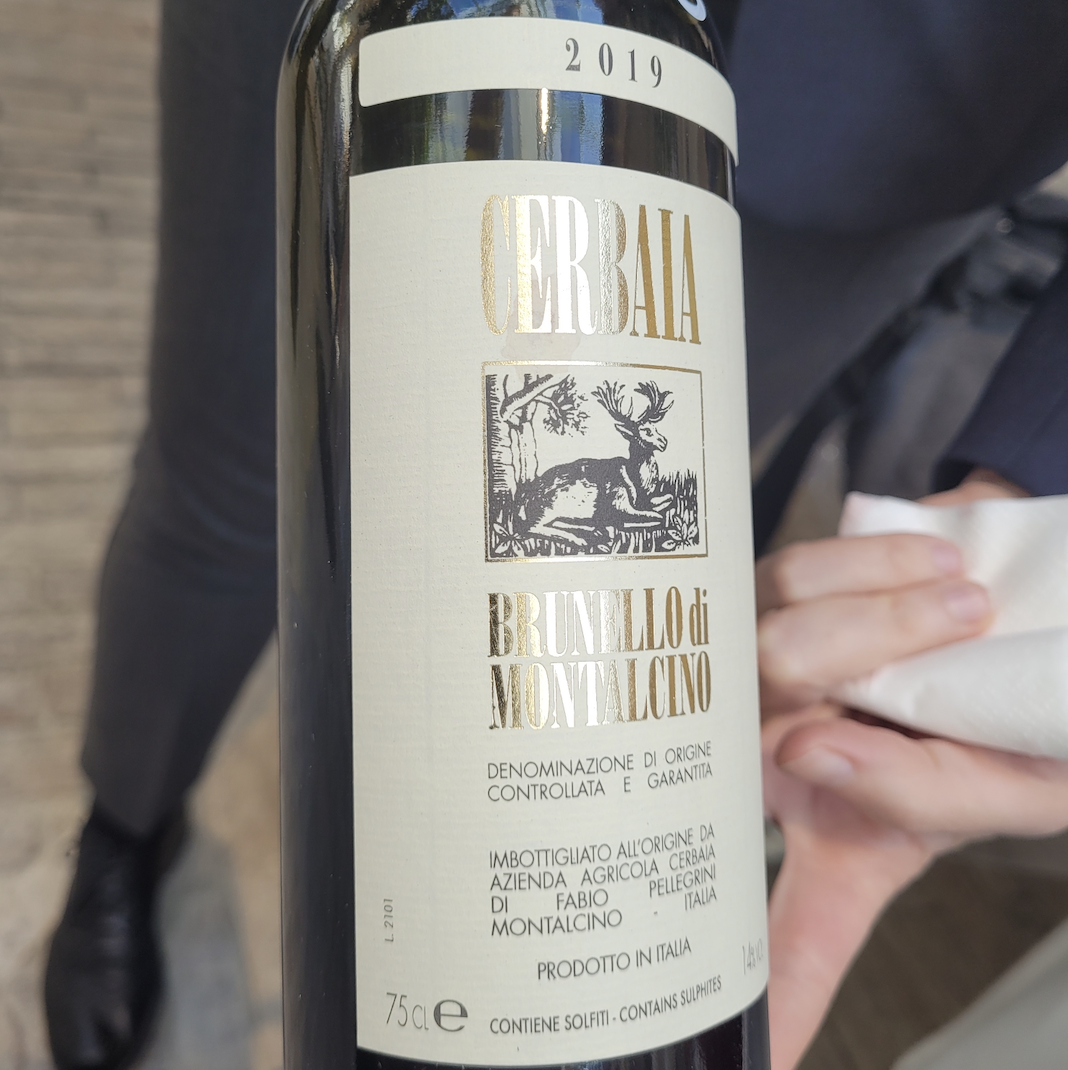
Cerbaia Brunello di Montalcino DOCG 2019

Cerbaia is so very curious and aromatically candid though we really do have to think for a few minutes before we figure out what we have in the glass. The estate is present and accounted for, as Cerbaia, grippy and firm in the aromatics, if consciously and accurately so. Not exactly wide open as far as a 2019 goes, nor one whose graces hidden in the structure are quick to emerge. Yet another one of those structured sangiovese for the vintage, here from mid-slope Montalcino elevation within a short climb up the north facing rise up to the village. Drink 2026-2031.  Tasted November 2023

Chiusa Grossa Brunello di Montalcino DOCG 2019

High toned and spirited Brunello here from Chiusa Grossa with wild strawberry and more so like than many. The acetone wins because it runs so high while the balsamic is notably hot and heavy. Crunchy Brunello, acid is everything and fruit concentration just does not keep up. Imbalanced though the length is very good. Drink 2024-2026.  Tasted November 2023

Ciacci Piccolomini d’Aragona Brunello di Montalcino DOCG 2019

Will admit to a personal conundrum with the two previous vintages of Ciacci Piccolomini d’Aragona’s Brunello but 2019 comes back to connect with a carefully selected, thought out and restrained Annata. Speaks to the vintage and the estate vineyards in what is an ideally structured, thematically orchestrated and hermetically sealed nutshell. Just the right amount of salumi cure, musky fruit, earthy drama and volume. Unequivocally Ciacci that reminds so much of 2016 if just a bit more spiced and seasoned. Drink 2026-2032.  Tasted November 2023

Col di Lamo di Giovanna Neri Brunello di Montalcino DOCG 2019

Col di Lamo’s is a plumb of concentration and unction from a vintage so bright and generous you may need to don shades while sipping through a glass (or three). No lack for substance or texture because the season put it out there and a Brunello like this took full advantage of weather, ripe fruit and tannin. There is some wood to resolve here but density and emotion run high for a sangiovese that is sincere, always ready to provide hospitality, enjoy the company and give of itself. There is a softness in this wine and who could not want to spend quality time with it, any time and any place. Drink 2024-2028.  Tasted November 2023

Collemattoni Brunello Di Montalcino DOCG 2019

The place comes first and so one nose into Collemattoni’s 2019 is as if the strike from glass could be from Sant’Angelo in Colle itself. Rings a bell for to gain such an important initial impression leading to profound understanding. Their’s is one of aromatic vintage richness but also the kind of lift that’s not only possible but necessary to see this Brunello age for a good length of time. Collemattoni’s is the sort to make a taster feel guilty for wanting to share a bottle today because the bones are strong and the flesh well developed for a decade and a half of age worthiness. Tasting this 10 years forward will show just what all this all really means. Drink 2025-2034.  Tasted November 2023

Collosorbo Brunello di Montalcino DOCG 2019

An aromatic masala of spices here with all the nutmeg, cinnamon, clove, coriander and cumin that can be imagined on the nose of a sangiovese. Plenty of fruit for those spices to pique and accent so happy we all are they are part of the mix. Sense of place for sure but also a toasting they receive from the casks. Complex Brunello no matter how you see this and one to have fun pairing with complex braised meat preparations. Guinea Fowl and also cinghiale come first to mind. Drink 2025-2030.  Tasted November 2023

Godello and La Fede at Poggio Antico

Corte Dei Venti Brunello Di Montalcino DOCG 2019

We often talk about distinct expressions of Brunello and few stand alone as does Corte die Venti, not for any idisosyncratic reason but just because their’s are perfumes unlike neighbours’ or other sangiovese near to far. This from 2019 stays that course and expresses south-central Montalcino proximate land just as it always has, with fragrance, roses, red fruit and lift. A crispy Brunello and that is said with great praise because the truth spoken is unchallenged in a 2019 that does not stray from what came before, nor will it likely roam too far from home. Heritage and tradition are integral to this wine and the taster who dreams of such Brunello will have come to an exact location and at a frozen moment in time. Because this is timeless Montalcino. That’s just a fact. Drink 2025-2035.  Tasted November 2023

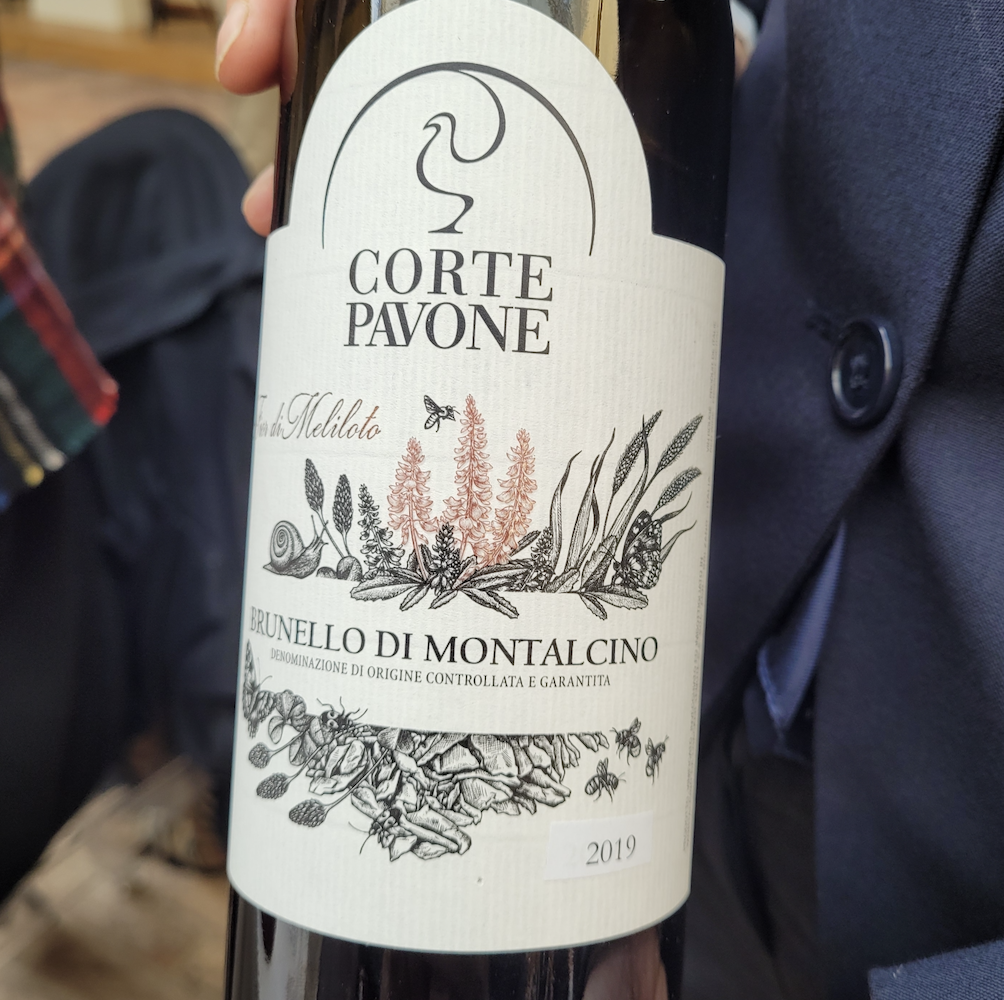
Corte Pavone Brunello Di Montalcino DOCG 2019

There are several Corte Pavone expressions of Brunello produced by the Loacker family and this is the cuvée, of fruit that does not make its way into Campo Marzio, Poggio Molino al Vento, Fior di Meliloto and Vigna Poggio Molino al Vento. This could mean lesser sangiovese quality but when all your fruit is high quality from high elevation vineyards – the standard is a relative one. The Annata is pure and if straightforward then so be it because this should be the Loacker 2019 to get at as soon as the wine will make itself ready. That said there are some tannins that could use settling, refreshening and integration. At the end of the day 2019 classico is both amenable and promising, which means the Etichetta labels should be exemplary. Drink 2024-2030.  Tasted November 2023

Cupano Brunello di Montalcino DOCG 2019

Cupano’s is truly concentrated, consolidated and far from restless sangiovese with all the necessary elements of the vintage in place. A Brunello very much set up for success and one to seek because the vim, relish and vigour are all on side. The wood is a bit aggressive and in charge if only noted this way because the acid lift and energy run high alongside. Let this settle and integrate before rushing not opening your bottles. Drink 2026-2031.  Tasted November 2023

Donatella Cinelli Colombini Brunello Di Montalcino DOCG 2019

Finding the Donatella Annata quite a different sort of Brunello than the Primedonne, not necessarily surprising and yet they are two sangiovese children of the same mothers. Plural because their makers are collective nurturers to prepare them for equality, equanimity and also surprise. You just never know where they will go but this much can be said. The 2019 Donatella Annata is perfectly clear, clean and handsomely beautiful in a way that may have never been noted before. The fruit is pure, managed to be ready as a tough and grippy sangiovese, but so very pure. Just that typical and knowing swarthiness lays low, gentle and subtle as a reminder of the who, where, what and why of this wine. Squadra davvero straordinaria. Drink 2025-2030.  Tasted November 2023

Elia Palazzesi Brunello Di Montalcino DOCG 2019

As 2019 Brunello goes this from Elia Palazzesi is expressive of as much aromatic grip as any, with great seasoning infiltrative of the perfume. Not so much a matter of luxe et volupté but more so this masala of peppery spices that create a most frank and vivid sangiovese experience. What follows is full mouthfeel with a sappy mix of fruit and barrel but also an intensity that the acidity effects up, down and across the palate. A glaring example of sangiovese and the kind that should and likely could never be confused with any other variety. Full capture here of 2019 by Palazzesi. Drink 2024-2028.  Tasted November 2023

Fanti Brunello Di Montalcino DOCG 2019

From 2019 Fanti does what Fanti does, staying a course that makes modern wines from traditional means and most importantly out of a heritage of heart. Though the fruit is admirably developed what makes this sangiovese tick is its high quality acidity, neither sweet nor savoury but one that leaves another sensory impression best described as that of umami. Clearly complex Brunello from 2019, high caste and stylish but never abandoning its profound roots. Bravo Fanti, come sempre. Drink 2025-2032.  Tasted November 2023

Fattoi Brunello di Montalcino DOCG 2019

Lovely, forthright, juicy and full vintage generosity capture here from Fattoi. Hard not to see this as (and it must be said out loud) how much one will almost surely want to drink this sangiovese without waiting for it to age. It really is that perfumed and open up front so don’t feel guilty if you feel this way. There is no lack of substance and structure so keeping bottles is obviously a smart idea but my how this seduces quickly and without hesitation. It is also clearly, credibly and more than ostensibly Fattoi, a classica of red fruit liqueur, gentle lift and composure.  Drink 2024-2030. Tasted November 2023

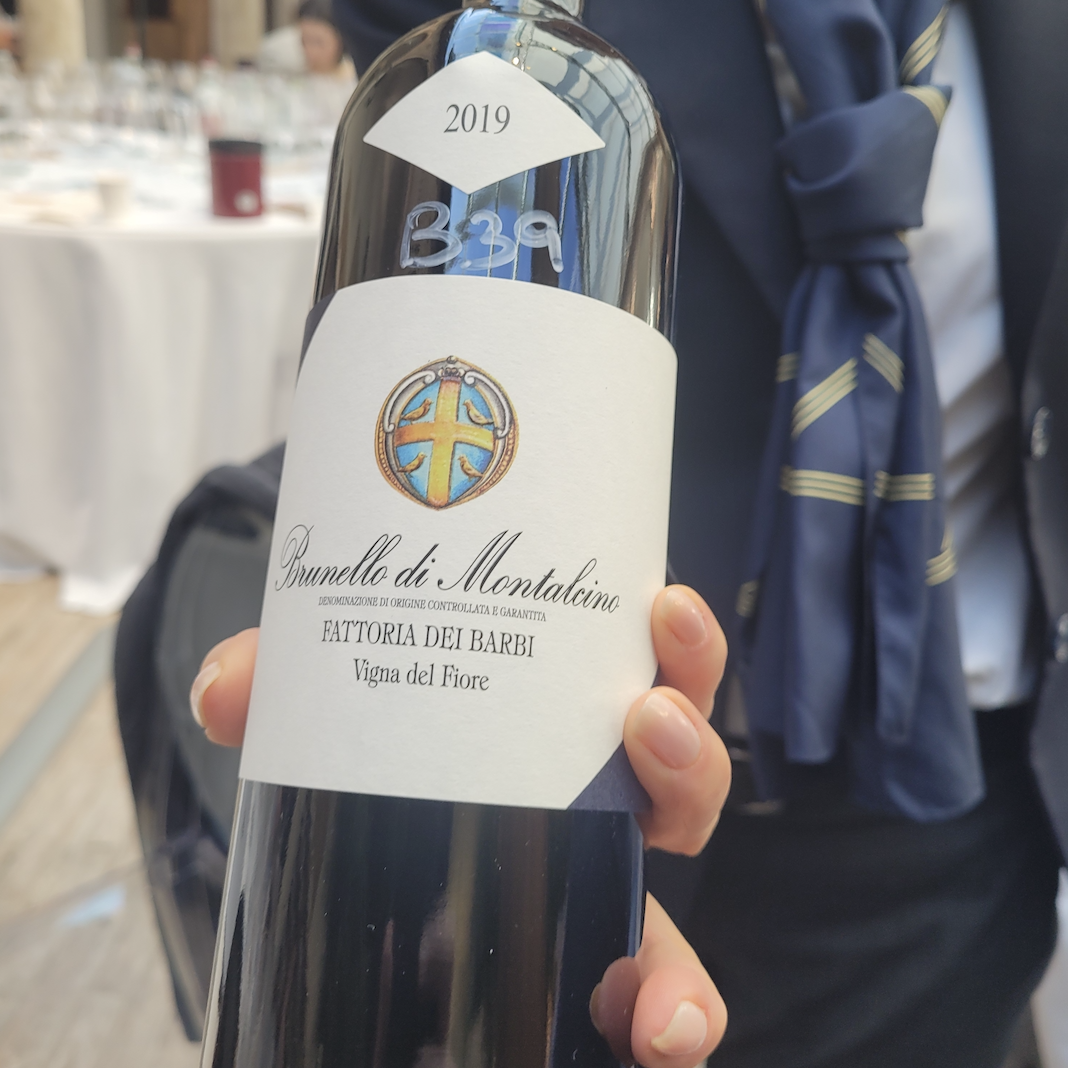
Fattoria Dei Barbi Brunello di Montalcino DOCG 2019

The first two concepts that arrive in mind for Fattoria deli Barbi’s 2019 Annata are respect and tradition because this insistent sangiovese is just what has been and should always be. Fruit and acidity straight away, together and equal which means there will almost certainly be balance in effect all the way through. That is in fact the case for a 2019 that pays duty to vintage and homage to history. The wood is a bit aggressive mind you and that too adheres to lines of necessity to see a sangiovese from a very good Montalcino vintage with the ability to age. Drink 2025-2030.  Tasted November 2023

Ferrero Brunello di Montalcino DOCG 2019

Notably perfumed up front, jumping from the glass with fruit confiture like few other 2019 Brunello. Rich and unctuous in that regard without the immediacy of knowing or imagining this to be a vertical or structured sangiovese. The acidity is grand while the jammy nature continues on the palate. Quite mature when added up and not a Brunello to hold for even another two years. Make haste people. Drink 2023-2024.  Tasted November 2023

Fossacolle Brunello di Montalcino DOCG 2019

Truly proper 2019 Brunello from Fossacolle, simply assembled for an uncomplicated look at and pure enjoyment of the positive vintage. Fruit is ripe and well managed, acids maintain freshness and the construct is a solid if easily accessible one. Never austere if just some drying moments late to indicate a year or two is needed before this sangiovese rises to its peak. Drink 2025-2030.  Tasted November 2023

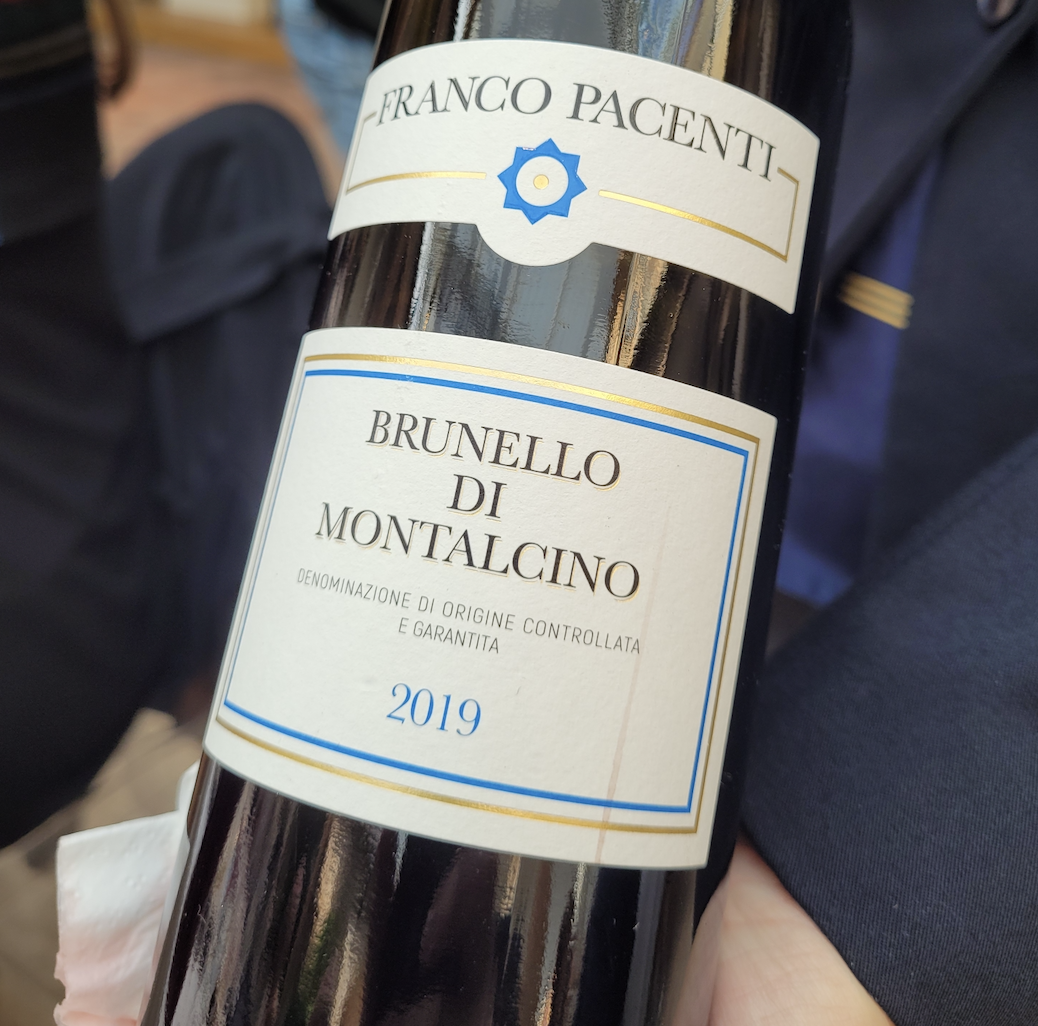
Franco Pacenti Brunello Di Montalcinio DOCG 2019

The vintage is a generous one, also easy as they come, that much we know. Some sangiovese come away clean, fruity and free, others dense and tannic. Then come the Brunello ‘19s that combine every element, or at least a plethora of possibilities to exact Annata in ways that are full, layered and balanced. Some may say the best estates are the ones that succeed in the most challenging vintages and France Pacenti is one of those, but true excellence comes from those who achieve their goals both ways. Allow to be intrigued and introduced by a Brunello di Montalcino so very whole and built for all the ways that these sangiovese are capable of expressing their territory. The past and the future connected, forged and for all the right reasons. Drink 2025-2034.  Tasted November 2023

Fuligni Brunello di Montalcino DOCG 2019

Fuligni has always been, will likely continue to be but also thrive as its very own Brunello di Montacino animal. Classic, cultural and traditional as it is but finding a way to ever so slowly and incrementally sidle forward with the times. There are austere vintages and this is not one of them so come into a glass expecting some generosity – which this 2019 philanthropically provides. Crispy vintage and that is written with greatest compliment because that’s just what biting into this sangiovese feels like you are doing. Tannins are a bit grippy so time is essential towards coaxing out the best in Fuligni’s 2019. Drink 2025-2032.  Tasted November 2023

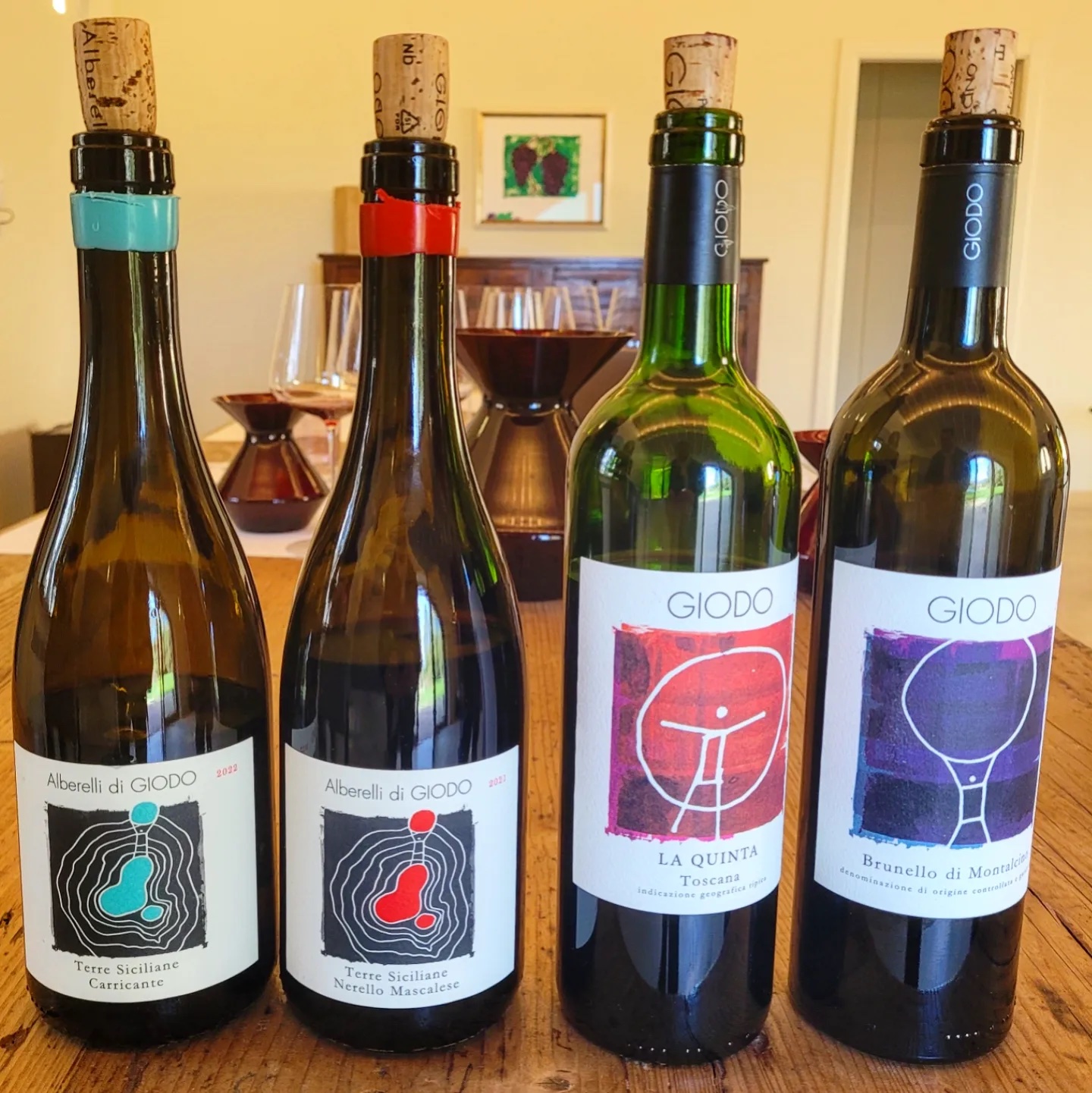
Giodo Estate

Giodo Brunello di Montalcino DOCG 2019

Yes, the famous vintage, already and for many reasons, 99 percent of them good. Comparable to 2016 in the sense that quality and quantity were both high and weather “calda” but not “caldissima.” In other words no highs or lows but just what you need and when you need it. From the word nose you get the Giodo Località Casanova in Sant’Angelo in Colle spice and terroir components; herbals and herbs, all the scents, exotic and even those suspected of being exotic. “Molto profumato,” such beauty and a glass of Giodo that conjures imagery, like walking on a dusty Montalcino road as it enters onto grounds scattered with freely manicured perennials in rosemary, lavender, thyme and sage. Nor can the ripe cherry and note of liquorice be missed. Here Brunello finds itself in easy, ideal and effortless harmony while the French wood in particular needs to settle in and allow the optically perfect fruit to be the star. This will happen in two or three years. Just that hint of late balsamico adds to the reminder of what this is and where its from. Drink 2025-2035.Tasted November 2023

With Jacopo and Alessandro Mori

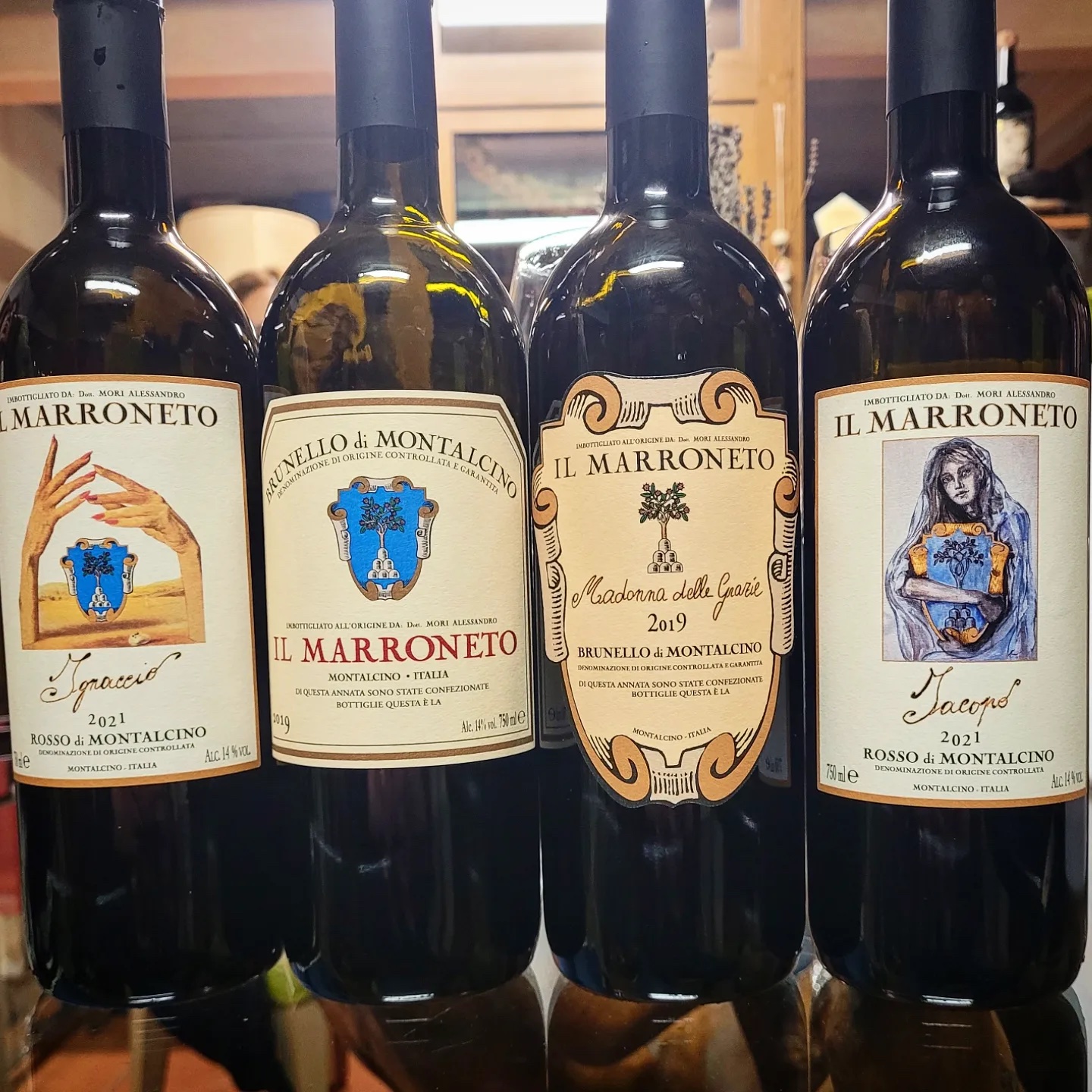
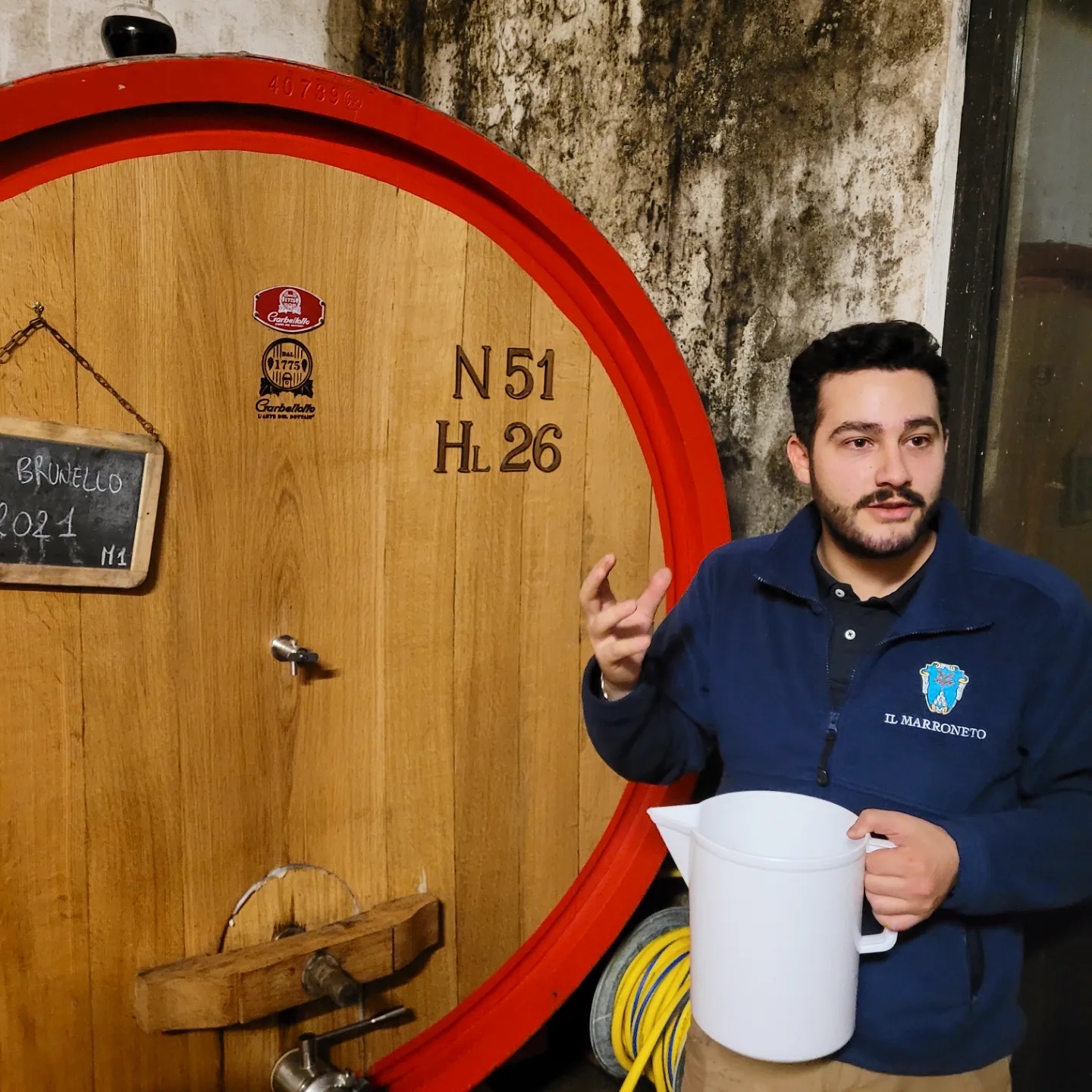
Il Marroneto Brunello Di Montalcino DOCG 2019

“This is the historical line of Il Marroneto,” begins Alessandro Mori. “The wine that has always been made,” beginning in 1994, originally under the tutelage of Giulio Gambelli. Each vintage should and in fact increasingly will show the evolution of Mori’s work as a pupil and winemaker now in his 28th vintage. A real life and truth for Brunello, never a participant as a designer or connected to trends but achingly out of a mix of passion, lunacy, sagacity and devilishly boyish attitude. This is what you will taste from Mori’s ’19, carried in its DNA from the farm that holds acidity at a level unparalleled and Montalcino secrets only known to this family. The sweet structure will see this sangiovese live 30 years from the deepest of vintages as good as it gets for modern times. This because its makers do right by fruit and not by what markets ask it to chase. Hard not to be moved by this sort of glaring truth but it can’t be helped. The knowledge of evolution is already there, the feeling that this Brunello has already arrived but won’t mature with any obviousness or in any way over the next 10 years. It’s true – keep some bottles for 30. Drink 2026-2040.  Tasted November 2023

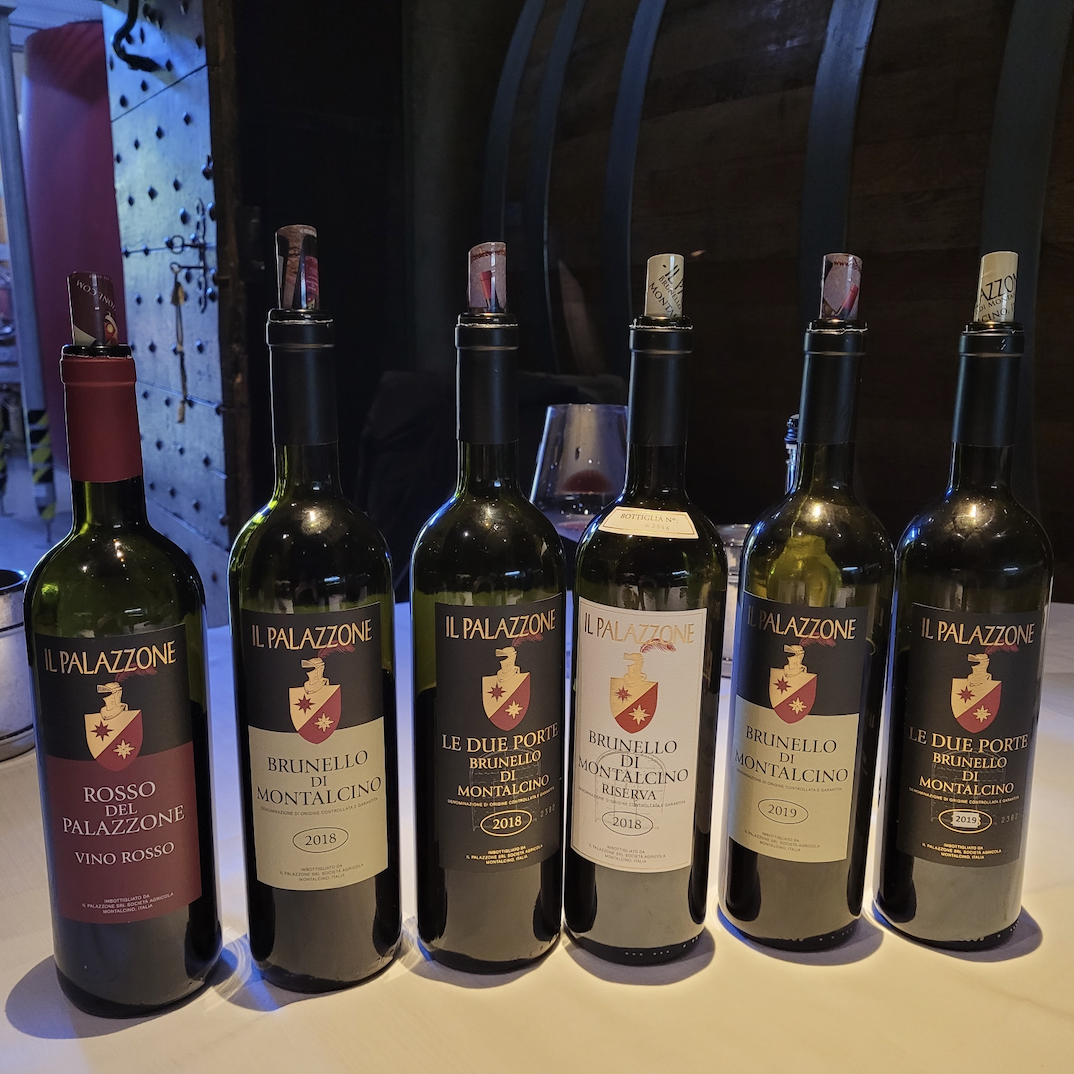
Il Palazzone Brunello di Montalcino DOCG 2019

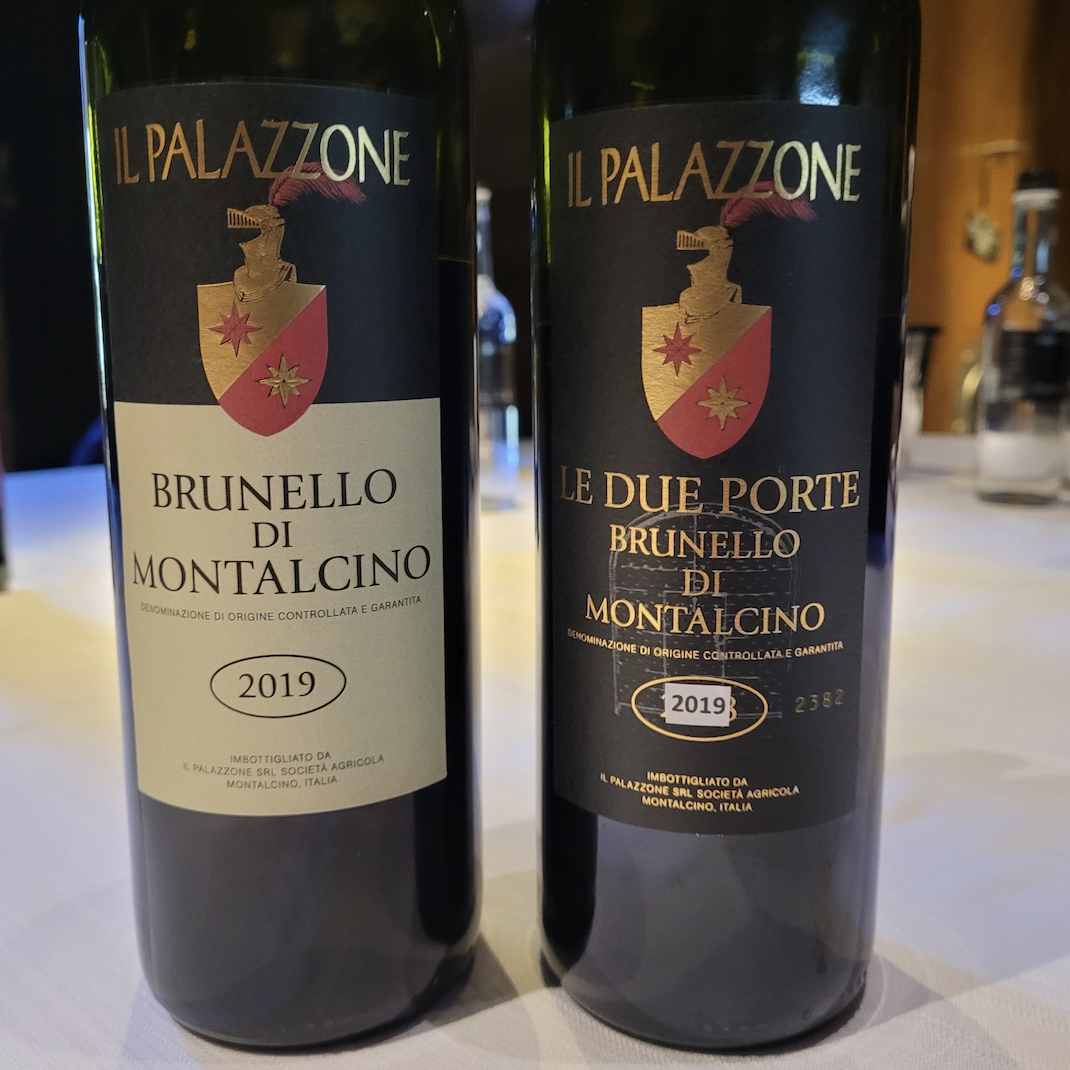
Quite recognizable as Il Palazzone, in fruit and style, here a step forward in concentration but also phenolic maturity as far as sangiovese grapes are concerned. The vintage allowed for a highly traditional vinification process because such a regular, easy and stress-free growing season (so unusual these days) meant no major adjustments or reactions needed to be made in the cellar. Saw 38 months in Botti, followed by a few more in neutral or raw (“crudo”) cement tanks for refinement. A spontaneous vintage and so all the usual aromatic, flavour and textural aspects are present in the wine; brushy herbs, fennel pollen, vanilla and balsamico for a true to form and place Il Palazzone Brunello di Montalcino. Drink 2025-2030.  Tasted November 2023

Il Poggione Brunello Di Montalcino DOCG 2019

Straight off the top great work from Il Poggione 2019 with all the aspects and gains of the vintage on full aromatic display. Fruit as ripe as should be, seasoning, perfume and a saltiness in the air. Fruits of labour and perfumes that indicate red drupe we recognize and also that which is a bit exotic. From plum through corbezzolo and also the musky quality of skins equally ripe and lending character to true blue sangiovese. Acids right there, some good and proper tension, plenty of energy and then finally an austerity that indicates age ability. Finest Il Poggione in quite some time. Drink 2026-2034.  Tasted November 2023

La Casaccia Di Franceschi Brunello Di Montalcino DOCG 2019

Plenty of fruit concentration from this edible 2019 with a note of Ribena and roses moving from freshness to desiccation. Also a note of Brettanomyces that puts the tannins under some drying distress, turning hard and brittle so thankfully the fruit is in a good position. Will look forward to trying another bottle. Drink 2023-2025.  Tasted November 2023

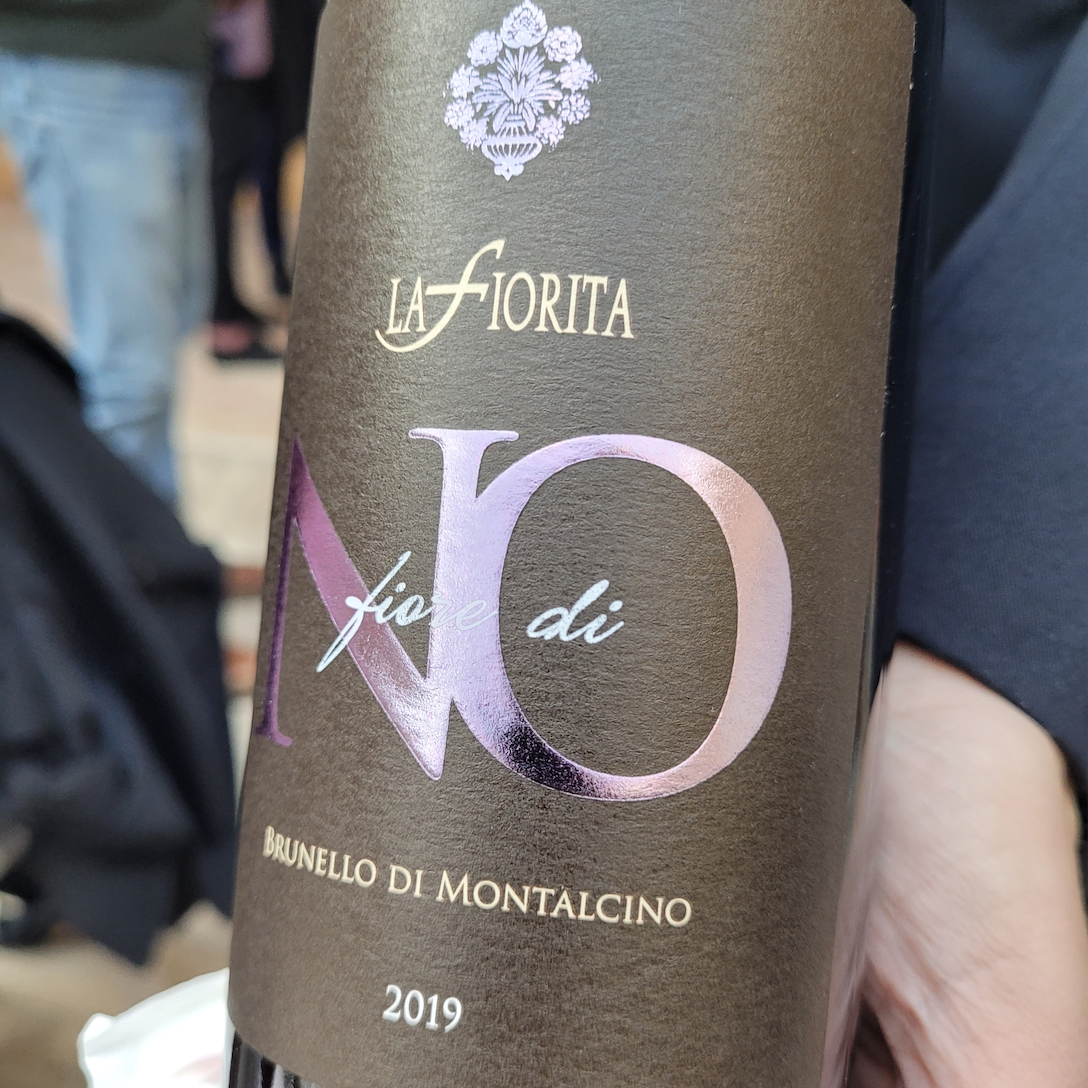
La Fiorita Brunello Di Montalcino DOCG 2019

A rich and developed fruit set from 2019 and one to make sure you know exactly where you are and what time of history you are tasting Brunello di Montalcino. An intensity of floral perfume, a well organized trilogy of that fruit with sweet acids and fine tannins all conspiring to make this a most generous and also promising wine. Pure and respectful sangiovese, significant of place and no gratuities taken. Brava. Drink 2025-2030.  Tasted November 2023

La Fornace Brunello Di Montalcino DOCG 2019

Bright and top fruit capture for vintage without going over to put a 2019 in a light that shines demure if bright. White peppery heat on the nose so just some imbalance in that regard but stuffing is elastic and quite seamless throughout. Crispy vintage here for the furnace and in a good place, without tannins or tension too demanding. That white pepper through – it is a little distracting. Drink 2024-2027.  Tasted November 2023

La Fortuna Brunello Di Montalcino DOCG 2019

Nothing shy or held back about 2019 La Fortuna in a wine of great vintage fortune because the layers are all texture and more. Some sappy and resinous wood to qualify and integrate so time will need to be the ally. Good fruit is substantial and the structural parts are supportive. Wait 18 months and keep for up to a decade more. Drink 2025-2032.  Tasted November 2023

La Gerla Brunello di Montalcino DOCG 2019

A bit extreme lift and acetic tone from La Gerla, more than usual and so some air time is necessary here. A great balsamic stress, pomegranate and currants hard juiced and their levels turned up to the max. The wood here is sappy and resinous for a Brunello that arrives with high acidity if other parts also vivid, glaring and overly substantial. Drink 2024-2026.  Tasted November 2023

La Lecciaia Brunello di Montalcino DOCG 2019

Quite a luxe and rich sangiovese from La Leccaia’s 2019 Classica which bodes really well for what will almost surely follow in extrapolation by way of Vigna Manapetra. In some vintages the Vigna can cannibalize the normale but when the latter is this well developed the opposite will occur. This is pure and succulent liquidity because by the grace of the vintage acids melt and lift fruit where it wants to be. There is a bit of excess “grasso” texture and wood on this sangiovese but it too will melt into the fabric of what the aromatic and flavour profiles have showed in the first. Ideal mid-term Brunello. Drink 2026-2032.  Tasted November 2023

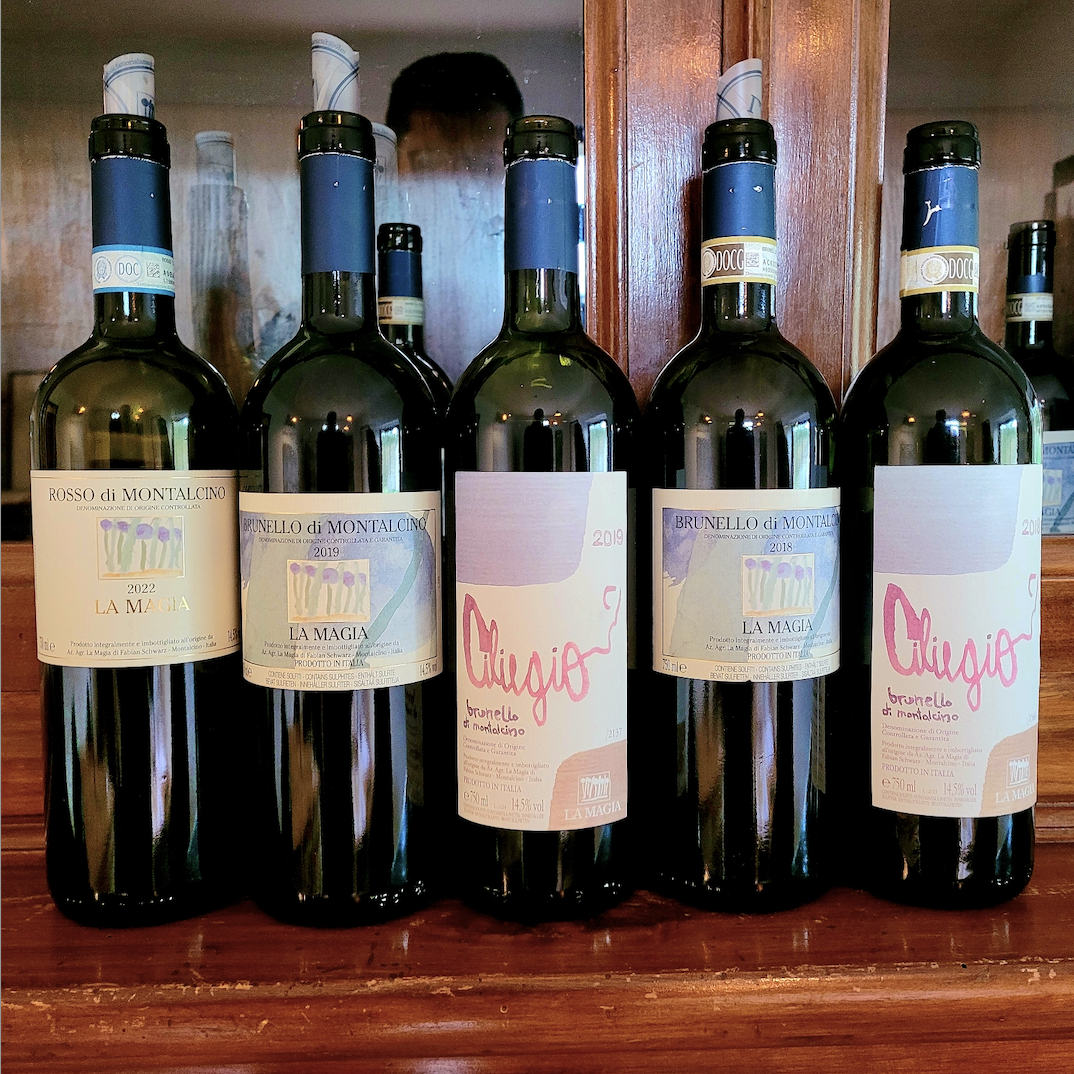
La Magia Brunello di Montalcino DOCG 2019

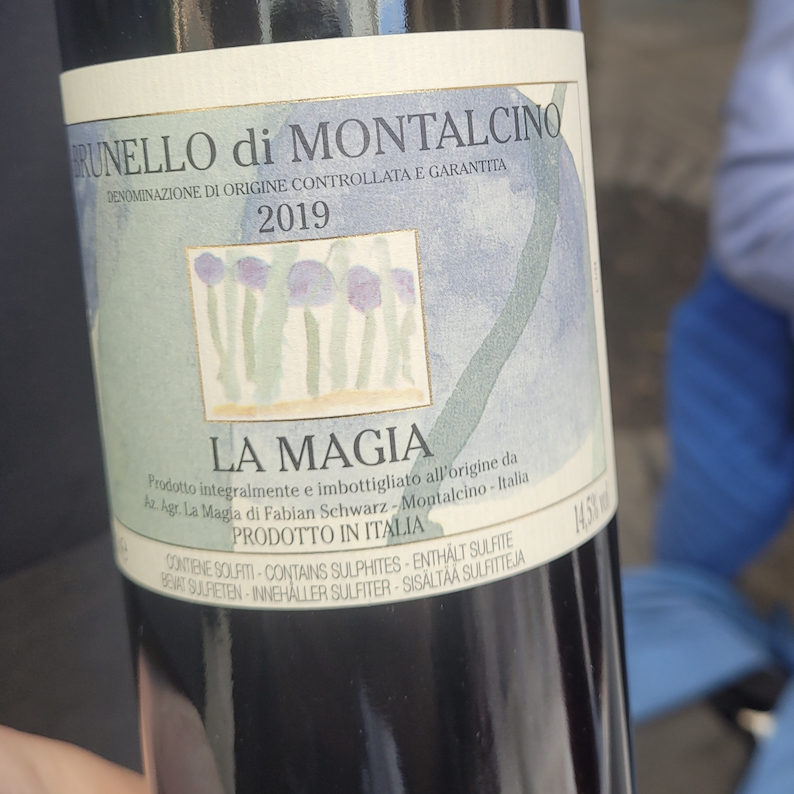
“It was a very easy vintage,” echoing what most producers have said but you can see in his eyes that for Fabian Schawrz this was the truth. Floral is the understatement and distillate expressive might be an over, but there is real liqueur on the nose of this 2019 Brunello. “A normal vintage” he reminds and normal sangiovese means classic, once upon a time style of wines. This includes lift, a thing that’s disappearing from Brunello and better today when purity and clarity are just as strong, but also important. Surprise is a good thing but so too is recognition and the aromatics of La Magia are just that, earth fragrant and brush savoury with fruit a willing participant in the agrarian game. The aromatic rising will surely settle because the palate is more that way and so it sure feels like everything well eventually get together. The work of Fabian Schwartz in on and in motion with this a matter of 2019 sangiovese fruit that leaves an impression. The wood is very much a part of the activity and the wine needs a few years to integrate but that it will with spices and seasoning always the accents to exact intricacy and entanglement. Fine work here, well received with a look forward two to three years. Classic 10 year Brunello if not one to lose in the cellar for 20 or more. Drink 2025-2032.  Tasted November 2023

La Rasina Brunello di Montalcino DOCG 2019

Brushy and savoury Mediterranean scented sangiovese is really exactly this and La Rasina fulfills its classica 2019 course in the delivery of this sort of aromatic profile. The palate follows suit and balsamico is everywhere, infiltrating all pores and punches of this wine. Very specific style, not ancient but traditional to say the least. Drink 2025-2029.  Tasted November 2023

La Serena Brunello Di Montalcino DOCG 2019

Tight and wound, tart red fruit led Annata from La Serena. High toned with acids creating the lift and a white pepperiness that also leads, if thankfully does not dominate the nose. The quality of palate mouthfeel is high though the back end of the wine shows some greenness in the extracted tannins. As a by-product of this phenolic presence this does come across as a bit of a jammy Brunello separated from its structure. Drink 2025-2028.  Tasted November 2023

Montalcino from Le Chiuse

Le Chiuse Brunello Di Montalcino DOCG 2019

Le Chiuse separates from the pack in many ways but first and foremost by levels of precision and purity to condition its sangiovese’s profound character and concentration. Always remember and keep in mind that there is no Vigna Brunello from Le Chiuse so Riserva aside (which was made in 2019) the finest small to medium-sized berries are chosen for this classica Brunello. The top of top level substance and so much profundity packed into the body and flesh of the wine. The kind of sangiovese that will take decades to unwind and yet the sleekness but also the purity are appreciated from the very first stages. The quality and sophistication of the tannins in Le Chiuse’s 2019 are nearly unparalleled. This is the truth and finally it is time that will help this vintage to continue to show the individual identity of the zone where Le Chiuse is born and raised. Drink 2028-2043.  Tasted November 2023

Le Gode Brunello Di Montalcino DOCG 2019

A corner has been turned and a next epoch for Le Gode comes into view with this Brunello 2019’s purity of fruit and a newfound clarity that makes the sangiovese sing. Feel the coolness of northerly fruit and a liqueur of really gentle maceration in such a sweet spot you feel like all is right in the world. While the acidity is right in line and well beyond the threshold of being openly lifted it is the tannins that show a sweet softness and demure nature. Most important is the fruit and how it has been coaxed with a gentle if fulsome touch. Structure is not most prescient from 2019 Annata and that seems to matter little. There should be many who seek Le Gode out in its first five years of fresh and primary life. Drink 2024-2028.  Tasted November 2023

Le Macioche Famiglia Cotarella Brunello di Montalcino DOCG 2019

As spiced, spicy and exotically charged aromatic entry as any from a 2019 Brunello. Also a thickness of palate texture, wood that feels grainy and dark chocolate, yet within reason. There is a minor note of Brettanomyces that turns the tannins a bit hard. Not egregious though a bit separated from that rich textural fabric. Drink 2024-2027.  Tasted November 2023

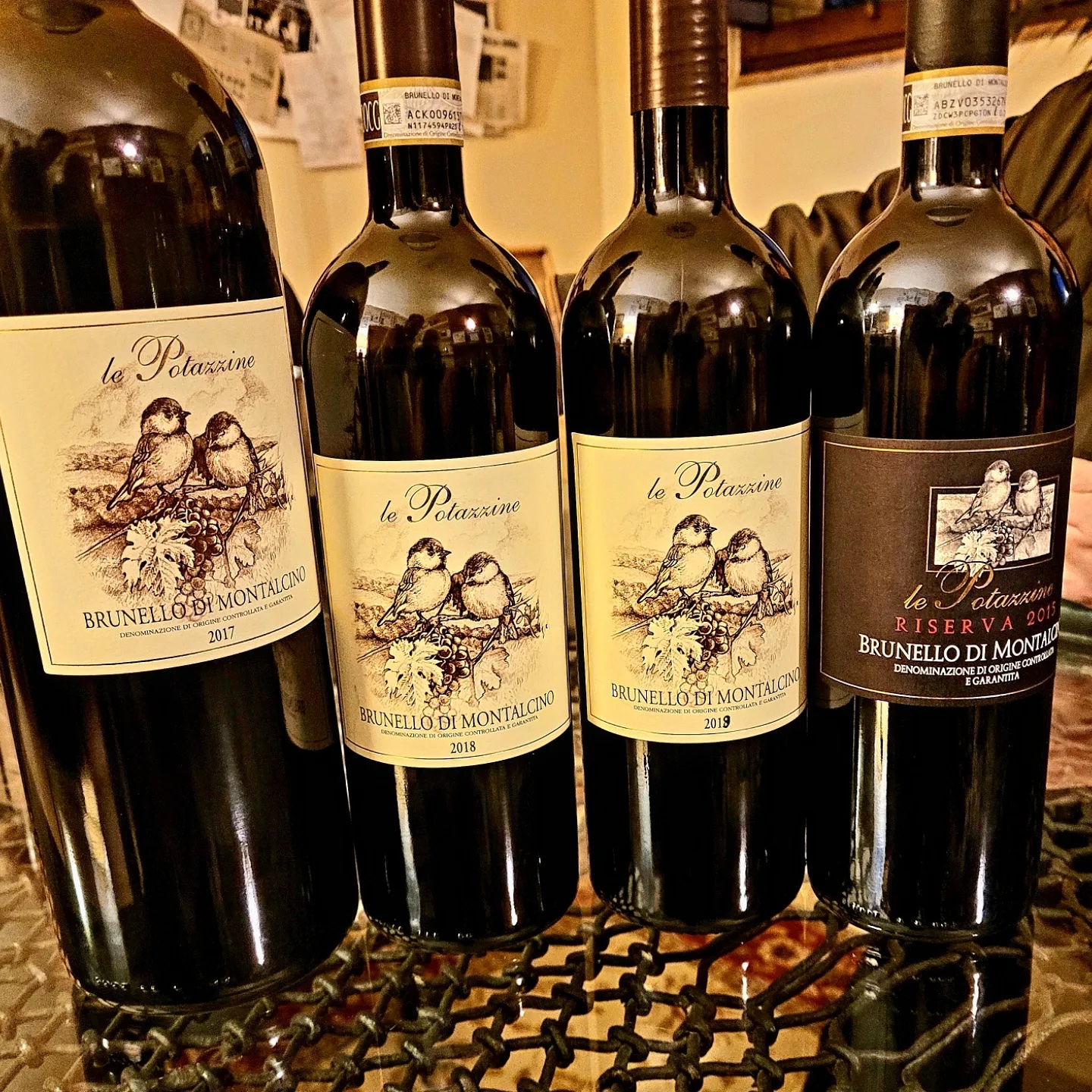
Le Potazzine’s Viola Gorelli, Sofia Gorelli and Gigliola Giannetti

Le Potazzine Brunello di Montalcino DOCG 2019

A vintage Gigliola Giannetti says was simply regolare. Thank goodness because in these days that sort of respite is increasingly rarer and rarer. Which means that fruit and phenolic ripeness are just about as good as it gets, never a 10 out of ten because what is that, but this gets close. Also a sangiovese of concentration, full and substantial amplitude, while clearly built with some stuffing that certifies its appellative, cultural and heritage status. What you won’t quite find in ’17 and ’18 but surely will out of this ’19 is succulence as a by-product of varied fruits and acidities. This precocious Brunello will not quit, comes at the palate in waves and yet the Potazzine perfume pervades and outlasts all else. As fine as there has ever been bottled from this estate. Seems a shame to open and consume a bottle this young but how to stay away? There is no fault in wanting just a sip today. The sangiovese epitome of forbidden fruit. Drink 2025-2036.  Tasted November 2023

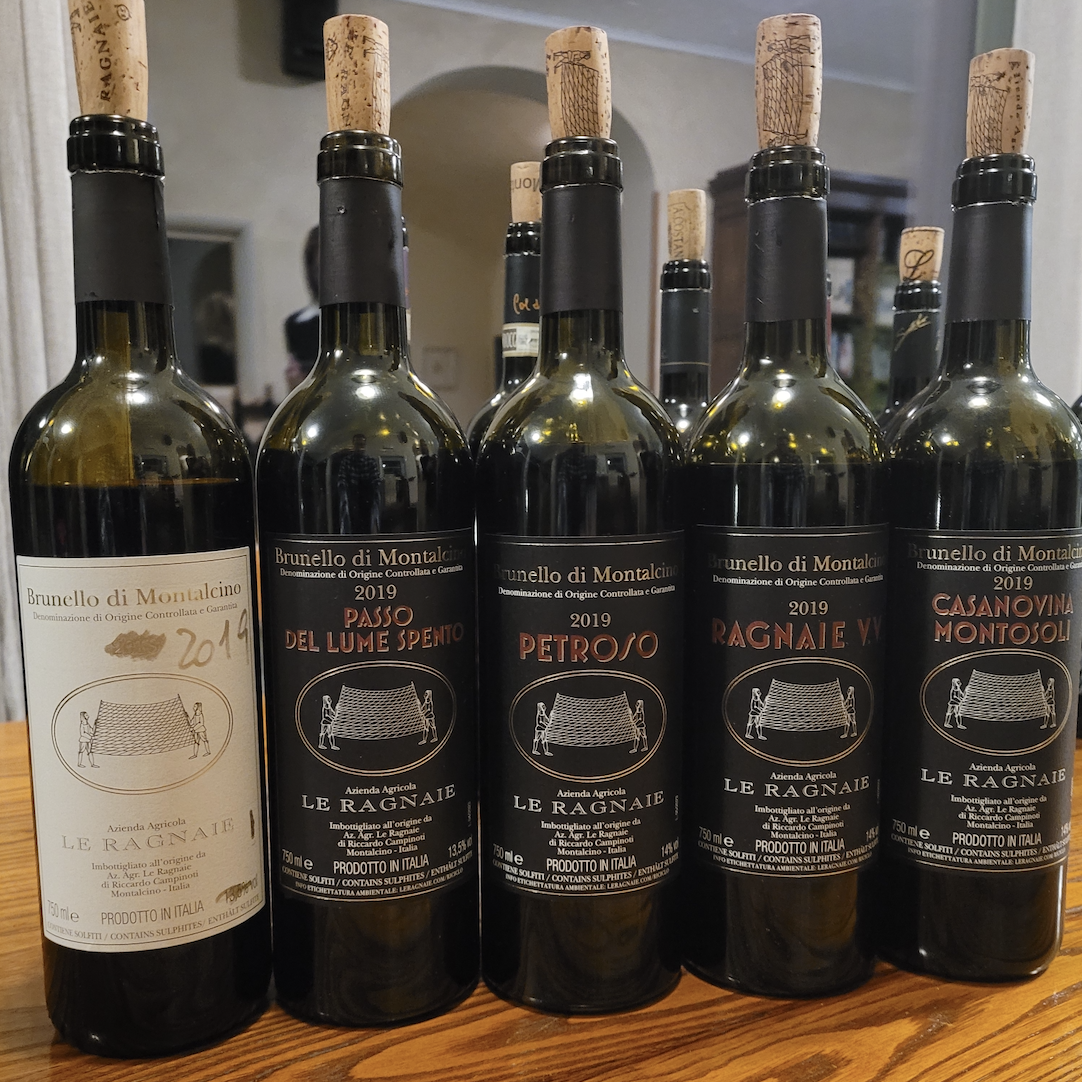
Le Ragnaie Brunello di Montalcino DOCG 2019

Would always expect Le Ragnaie to express its conditioning through estate elevation (on par with the village itself) and that it does, regardless of vintage. Yet this is 2019 and so depth is noted from the word go even while freshness, pitch prompt acidity and fine tannins are clearly present and dutifully accounted for. Sanguine if less so than some sangiovese in vineyards a bit further south on the same road that winds down towards Sant’Angelo in Colle. Youthful as Brunello here in the sense that the perfumes have yet to fully rise and pronounce their floral-herbal-mineral mix. Some glycerol makes for a mouthfeel that is the talk of the vintage. This is so correct for a Riccardo Campinoti Classica Brunello. Drink 2025-2034.  Tasted November 2023

Lisini Brunello di Montalcino DOCG 2019

Ultra fresh and aromatically juicy Brunello for 2019, not unusual though this is a particularly expressive level of pulchritude through perfume. Feels like the nose is possessive of glycerol though we know it is what follows that really delivers such a vintage sensation. Yes the repeat on the palate is an act of contiguous sensibility with more transitions seamless and very good natured. There is restraint in power and grace under pressure. Fine 2019 that should have been easy to make happen though it truly never is. Drink 2024-2030.  Tasted November 2023

Mastrojanni Brunello di Montalcino DOCG 2019

Lovely adherence and respect shown here from Mastrojanni with crisp red fruit notes and herbals complimentary and sweet. Quite a modern take because the mouthfeel is quite silky and there really are no angles or unnecessary tension in the wine. Quite amenable, spiced by wood but here is nothing extraordinary or austere about this 2019 whatsoever. Early drinker in any case. Drink 2024-2027.  Tasted November 2023

Máté Brunello di Montalcino DOCG 2019

A very specific sort of red fruit makes a Máté and 2019 is the epitome of that kind. It being layered and citrus scraped, of orange to blood orange, zesty and piquant with more red citrus notes arriving and joining the specificity of this sangiovese mix. The palate brings wood and more than expected quite frankly but not as cakey texture, no its just an espresso-cocoa powder that will eventually stir into the liquid and emerge as a fine cream of 2019 Brunello. Drink 2025-2031.  Tasted November 2023

Molino Della Suga Brunello di Montalcino DOCG 2019

TCA. Second bottle also laden with Brett.  Tasted November 2023

Padelletti Brunello di Montalcino DOCG 2019

Impressive showing for Padelletti’s 2019 with great perfumes and an airy breeze blowing through the light, bright and transparent red fruit. Just the right level of tart and acidity though not the most structured sangiovese from the vintage. No matter because there are some needed to service in the first few years after release while the bigger wines are finding their legs. Drink 2024-2027.  Tasted November 2023

Patrizia Cencioni Brunello di Montalcino DOCG 2019

Darker if transparent within that notation and a deeper well of macerated red fruit is what comes from Brunello 2019 by Patrizia Cencioni. Sangiovese of really well developed ripe fruit in singular and volumetric dimension. The cask is really well integrated, the acidity well forged and one that should continue forward for a decade plus. The length on this vintage is really quite outstanding, freshness and purity as well. Improves with each moment in and out of the glass. Drink 2025-2031.  Tasted November 2023

Pian Delle Querci Brunello di Montalcino DOCG 2019

Quite a tart set of red fruit scents, of pomegranate and blood orange in this very citrus forward Brunello. On the lighter side in terms of substance and concentration to speak of location in the northern and veering western side in relation to the hill. The evergreen note seems to confirm this contention and the wine never fleshes but instead stays the citrus course. Will likely develop some amaro and mint notes with age. Drink 2024-2029.  Tasted November 2023

Pietra Brunello di Montalcino DOCG 2019

Higher tonalities out of a Pietra sangiovese heightened by the 2019 Brunello vintage. Dusty quality to the fruit, not deep enough to imagine plum but more so citrus in a fresh squeezed pomegranate way. There is balsamic everywhere, a piqued accent on the nose, a reduction on the palate and a richness at the finish. Speaks to the multiplicity of acidities involved which may peak to a threshold for some. It’s right there, keeping the freshness and though I believe this to be a specific kind of Brunello it will be one that remains preserved for a very long time. Drink 2026-2035.  Tasted November 2023

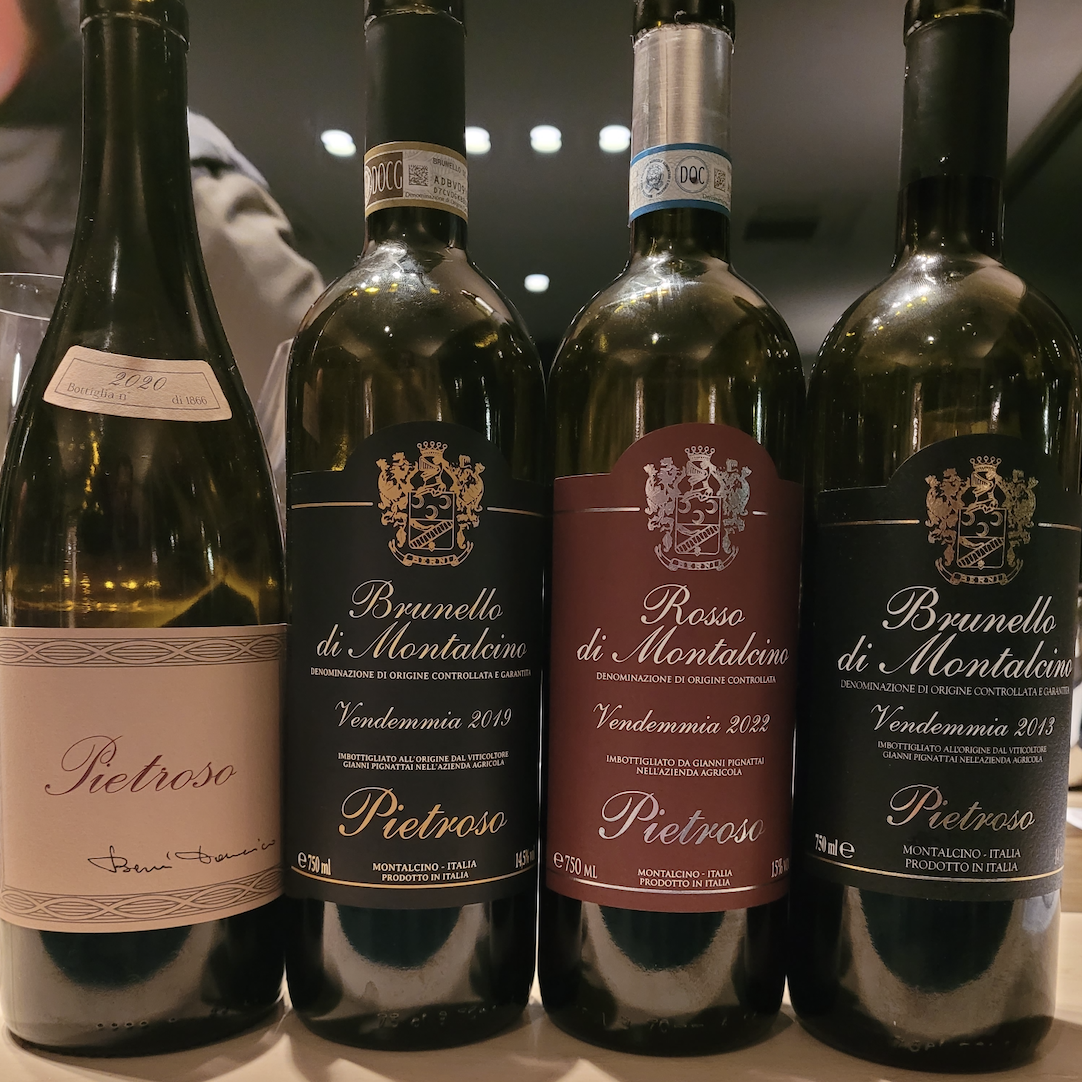
Pietroso Brunello di Montalcino DOCG 2019

There are five vineyards from which the Pietroso Brunello cuvée can be made, they being (Casa) Pietroso, Petroso, (northerly) Montosoli, Fornello and Colombaiaolo near Castelnuovo dell’Abate. For 2019 only the older part of Montosoli and Petroso are not in here. Plenty of discussion and tastings about the hottest vintages and how the regulations for the elevation limits for growing sangiovese need to be adjusted but then along comes a vintage like 2019. A season so ideal and unassuming we might all think that everything is perfectly OK. On the contrary, but the focus is this fine 2019, half a point less alcohol (maybe more) than Rosso 2022, ebullient of perfume and so harmonic with all its voices in synch. It’s funny to say but today the perfect vintage is the one that’s just normal. Nothing out of sorts, no highs and lows, agreeable, in delivery of amenable fruit, happy acidity and tannins powerful yet in great restraint. This is Pietroso from 2019, a mix of Montalcino sectors, micro-climates and soils stacked and layered for all that could be wanted. Crispy, crunchy, a freshness incarnate, expertly judged and adjudicated. Have not tasted more than a handful of Pietroso Brunello and while all thus far have made an impression, this 2019 is in another league. Drink 2025-2036.  Tasted November 2023

Pinino Brunello di Montalcino DOCG 2019

Spicy and toasty nose on Pinino’s 2019 with so much wood resin, sap and spice. Hard to see the forest through the trees here and this will not likely change. Unusually heavy handed feel, especially for the vintage which likely indicates a troublesome bottle, which is a bit of a pity. Will hope to re-taste.  Tasted November 2023

Podere Brizio Brunello di Montalcino DOCG 2019

Brizio 2019 is great expectation met through a sangiovese of red fruit multiplicity, like a cuvée of citrus, currant and corbezzolo, juiced and stirred with freshness incarnate. Tart and at the maximum tang for the vintage with expensive wood working so well to nurture, raise and release the precocious fruit. Stylish and well made in every way. Drink 2025-2030.  Tasted November 2023

Poggio Alle Forche Brunello di Montalcino DOCG 2019

More than what should be needed wood on this Brunello takes centre stage to shroud and cloud fruit and create a milkshake of a 2019 sangiovese. Hard to figure where in the territory this might come from because its ubiquity, make-up and made character just won’t allow it to talk freely. Seems like a yeoman try but it comes across sappy, sweet and thick textured. A work in progress perhaps and later vintages may tone it down to see the Montalcino light.  Tasted November 2023

Poggio Antico

Poggio Antico Brunello di Montalcino DOCG 2019

The Annata is a blend of all estate sangiovese blocks except the lowest vineyard which goes to Rosso. The classic Poggio Antico Brunello of the past were always concentrated and substantial wines but in many vintages they softened relatively early, say after five to seven years before secondary character and creaminess would set in. This is changing for an estate possessive of vines at some of Montalcino’s higher elevation and this 2019 is proof of how increased solar radiation bathed by great technical (and also intuitional) work has equipped this sangiovese with more accumulated structure. Nothing against past vintages but we are here made privy to a wine that will not truly begin to morph in the first 10 years post harvest. The intricacies are many, the intertwine of fruit and sweet acid-tannin layers something other, or better still something next. This is a new epoch level style for Poggio Antico in the hands, minds and hearts of a team moving in a most profound but humble and well spoken direction. The attention to detail and respect for different blocks is evident. The 30cm of winter snow followed by perfectly timed quantity of rain in Spring when warm yet not too hot temperatures prevailed all added up to a near perfect start to the vintage. After a late August rain what followed were high daytime temperatures and nighttime lows. In fact the optical sorter at harvest eliminated almost no berries. “We will have to check the evolution over the next two years,” says Alessio Sostegni, but he’s quite sure it’s the best he has seen since taking the reigns full time starting back in 2012. 40,000 bottles were produced. Drink 2025-2033.  Tasted November 2023

Poggio Di Sotto Brunello di Montalcino DOCG 2019

There are but a few dozen Brunello teams that show this level of restraint and respect for their properties and despite the potential for ambition it is Poggio di Sotto not straying from that ideal. The vintage is great but that does not mean extraction and aging should try to max out on weight or power. This does not and instead delivers purity, refinement and grace. Its great charm is born of details, focus and a high regard for clean, clean precision. Hits the correct località notes and processes the quality of fruit through an acid to tannin information continuum like an artist with a keen sense of science. So expertly judged and designed. Once a sketch, then a stencil, now in full animation. Drink 2026-2035.  Tasted November 2023

Poggio Landi Brunello di Montalcino DOCG 2019

A bright, airy and cool Brunello for 2019, not surprising considering the northwesterly localitá. Still there is next level richness for the estate and a sign of what the future will bring when vintages are warm and fruit achieves top phenolic ripeness. As here with a red fruit scintillant but acids so fresh and ripe they really tie the sangiovese threads together. Essential style and effect if simple but all that makes this a really fine Brunello, one to relish and really want to drink. Drink 2024-2028.  Tasted November 2023

Renieri Brunello di Montalcino DOCG 2019

Renieri’s is reductive of pepper and rubbery aromas above average for the vintage. The alcohol also stands out on the nose which makes for a rough and tumble experience. Time will settle and heal some wounds but as a rule 2019 Brunello should show more charm and grace. Drink 2025-2027. Tasted November 2023

Ridolfi Brunello Di Montalcino DOCG 2019

Brunello from a cooler Montalcino sector and always a savoury one, with more verdancy in brush and evergreen than many. A bit of stem sensation as well, some variegation in the fruit but also the tannin. Crunchy sangiovese, plenty of buzz and energy, then real length. That is a traditional Brunello’s strength. Drink 2026-2032.  Tasted November 2023

Roberto Cipresso Brunello di Montalcino DOCG 2019

Rich but not powerful, fulsome if not exactly exploding and overall a very complete Annata sangiovese from Cipresso. The great liquidity by way of glycerol red fruit and structural components that are quite similar in potency, surely out of design. Fine and giving, steps up from the “normale” norm and a satisfying mouthful in the end. Drink 2025-2030.  Tasted November 2023

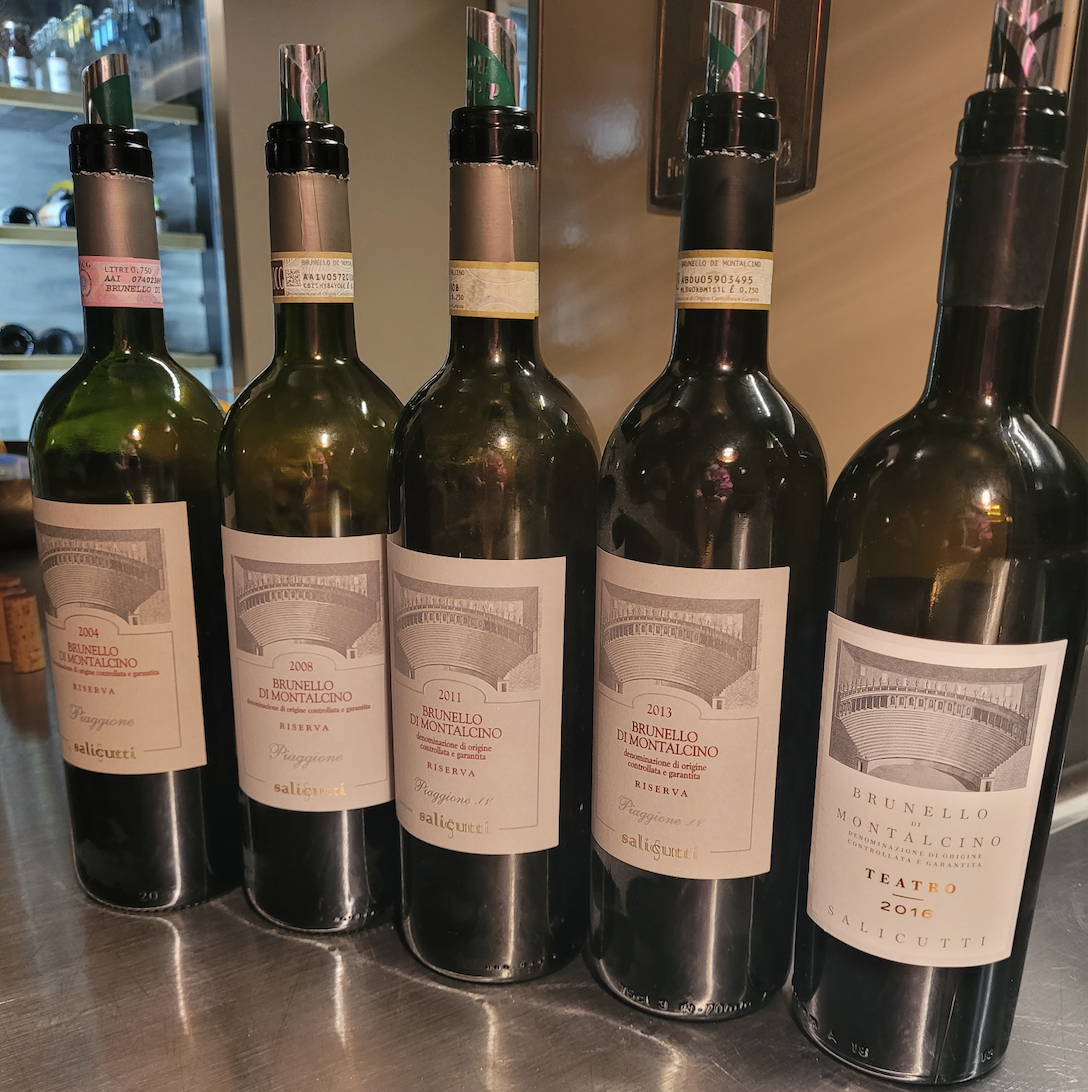
Salicutti Brunello Di Montalcino DOCG 2019

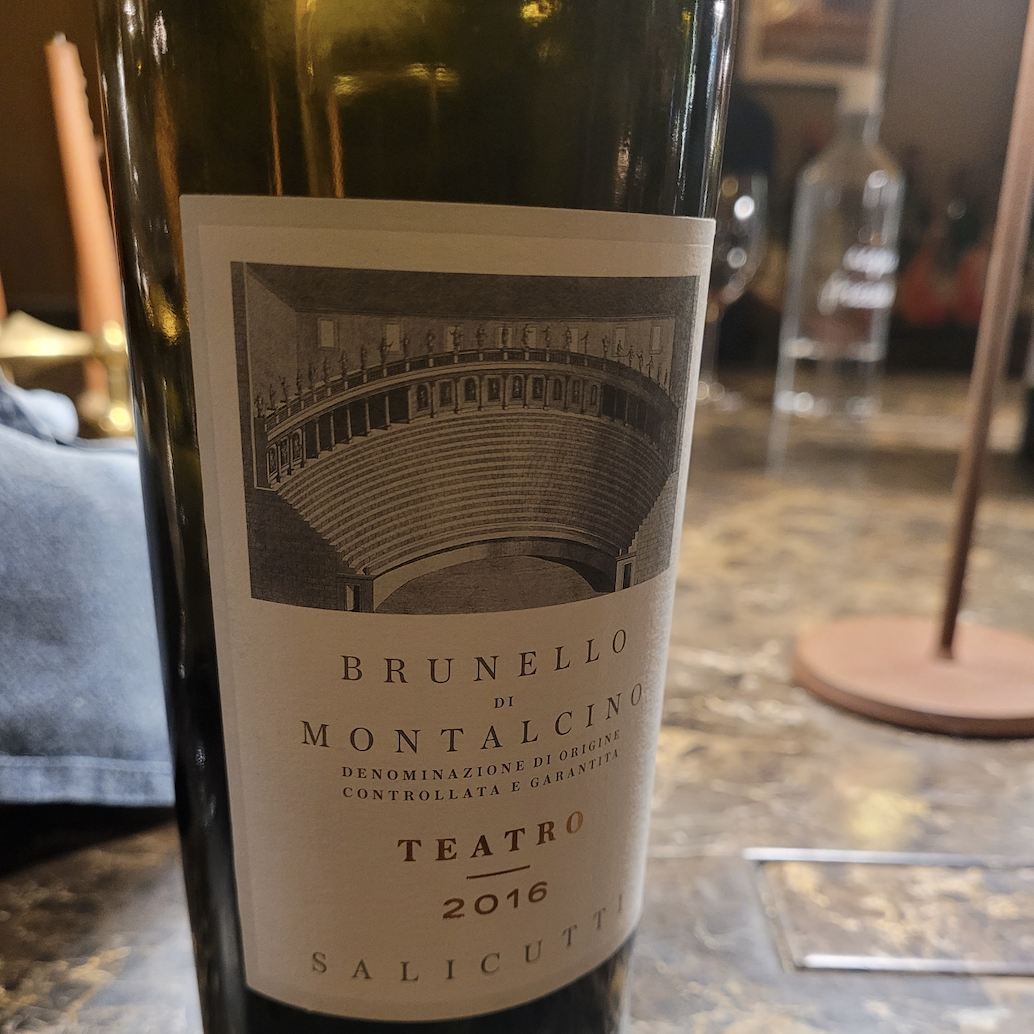
Salicutti’s Annata 2019 is quite restrained, a bit closed, somewhat demure, fresh and youthful. Perhaps surprisingly so but this is no fruit bomb or Brunello of immediate gratification. I have the distinct memory of tasting this fruit in October of 2019 within two weeks of it coming off of the vines and there is little surprise that it’s showing four years later in this way. Fruit comes from the three single vineyards off of 4.5 hectares; Piaggione, Sorgente and Teatro and this is the first vintage out of which no Rosso di Montalcino was produced. Tension above all else and tightly compact structural parts that keep the freshness and fruit locked in tight. Just a touch of swarthiness and even a moment of Brett are noted on the back palate but there is no compromise to tannin. It’s austere but not drying so time will most certainly aid, abet and break the tie to see this drink well after a few years of time. Drink 2026-2033.  Tasted November 2023

Salvioni – La Cerbaiola Brunello di Montalcino DOCG 2019

Not so difficult to establish the range of Brunello from a vintage like 2019, from the traditional to the ultra modern, the ambitious from the respectful. Salvioni’s is a complex matter, of the first and then the last, a sangiovese of heritage imperative and one that listens to both the vintage and also località wind. Most wines do not exhibit this kind of elastic tension but 2019 by Salvioni is exacting in its measure, focused in pliant ability and capable of eliciting a wide range of emotion. Catches the light in just the right way, makes ideal use of ripeness met by equal and supportive acidity and seeks something further than most that try to capture a vintage. This is the correct season experienced in a world where that gets harder every year. Drink 2026-2035.   Tasted November 2023

San Felice Campogiovanni Brunello Di Montalcino DOCG 2019

Not so much a bright 2019 Brunello but ones that breathes quite free and easy. A wine so comfortable in its warm skin and a result for the vintage that is just what should occur from an estate moving forward with more vertical wines year after year. Wood is well managed and there is a lightness this time, a,k.a. freshness, without ambition or excess. Great result for southern Montalcino.  Last tasted November 2023

An anteprima but bottled six months ago and the vintage to be shown at Benvenuto Brunello 2023 before being released in January 2024. Near to Argiano and Il Poggione below Sant’Angelo in Colle. Massive wine in ever respect with fruit that has not been seen in a few years, matched effortlessly by sweet acids and high caste tannins. Hefty throughout, sleek, silken and full throttle. Wait seven years to seek the open window of gratification. Drink 2026-2035.  Tasted October 2023

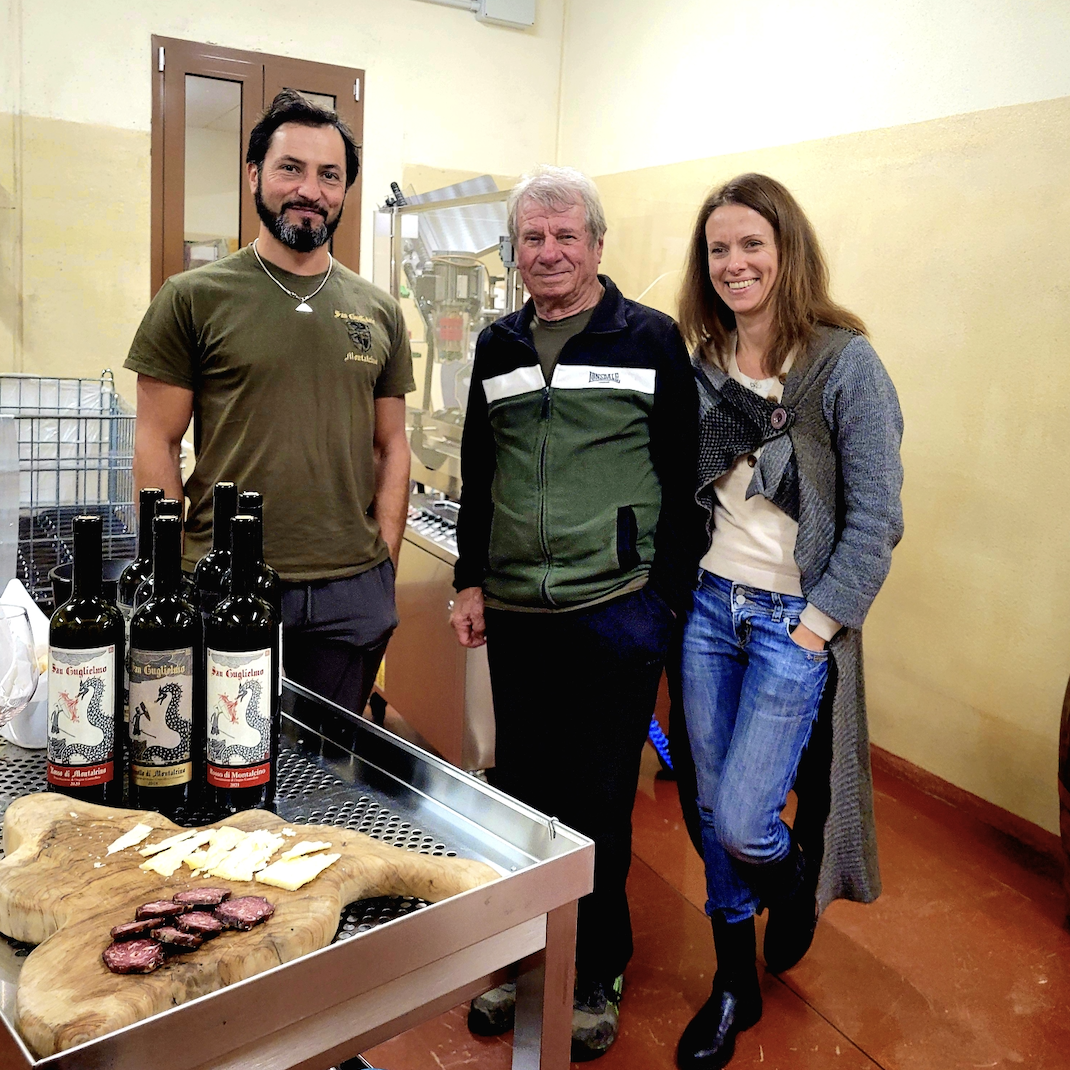
San Guglielmo Brunello Di Montalcino DOCG 2019

As for Brunello by Ilaria Martini and her Transylvanian husband Michael (Mike, or Michele), well this may just be the launching point for their tenure as seriously important Montalcino producers. Ilaria’s heritage is entrenched in the founding of the Consorzio, of which her grandfather Guglielmo was an original member. Here they are three to four vintages in, at 470m at elevation in a micro-climate and terroir shaped by and contained within its own bubble, where the Galestro and Palombino litter the surface at Località il Chiesino. Where feels like the middle of nowhere the land is a local matter of “macchia mediterranea,” the brushy Mediterranean scrub that these wines can’t help but express. If the smell of schist and soil could be noted in a wine then this would be it and so San Guglielmo’s is sangiovese born of the earth. Red fruit and clarity but never a Brunello that imposes its will. No, it simply translates and transposes the vineyard. Hard not to fall in love with this dirt. Drink 2024-20230.  Tasted November 2023

Sanlorenzo Brunello di Montalcino DOCG 2019

Traditional, lighter and brighter sangiovese in the Brunello idiom, tart red fruit and structure. The construction is like an immovable natural stone terrace of Pietraforte to control erosion and that is the design for where this is going. It’s not that Brunello di Montlacino as a rule is a mineral wine per se but if any were to be described as one to imitate the geological nature of this land – Sanlorenzo may just as well be one of those such wines. Top vintage for the estate. Drink 2026-2035.  Tasted November 2023

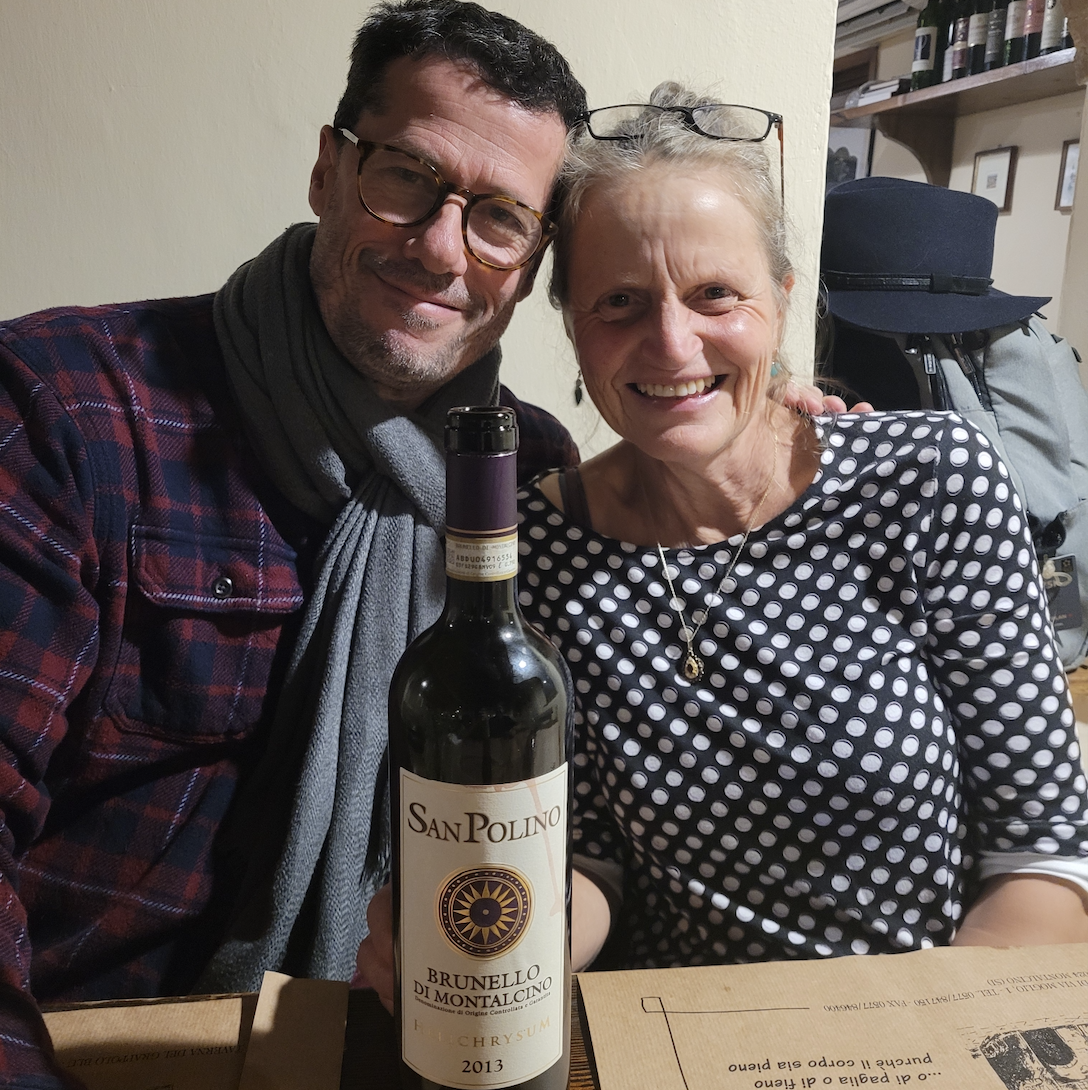
San Polino Brunello di Montalcino DOCG 2019

Rich and spicy nose for San Polino, red cherry fruit so ripe, spot on and comfortable within its skin. Freshness from those skins, no musk or must and simple divinity as it pertains to sangiovese. Such a well judged and rounded Brunello with just enough tension to create elasticity between that fruit and fine tannins. Acidity is the driver to see this live longer than the average, if not a few years more than that. Drink 2026-2033.  Tasted November 2023

San Polo Brunello Di Montalcino DOCG 2019

Middle range of elevation on a high plateau where winds blow softly and weather comes in great waves is the place where San Polo’s Annata get its wings. Some of the reddest cherry fruit of the appellation, swiftness of foot and smoothness of consistency put this in great, amenable and correct steading. There is also a soft sappy sapidity to the interaction and resulting texture yet it too will effect a lovely result for the consumption of this wine in its earliest years. Drink 2024-2028.  Tasted November 2023

Sassetti Livio Peritamali Brunello di Montalcino DOCG 2019

Oh my what sweet and seductive perfume from Sassetti Livio’s 2019 that is simply beautiful hyperbole of the previous six vintages having arrived and culminating at this. Some will note the fact that matched against those gorgeous fruit aromas is a mild amount of Brettanomyces that to others will take away from the beauty. There is quite a bit of concentration out of extraction and tannins follow suit with confident steading. They are austere as well, drying quite measurably and so time will tell if the minor distraction will hinder or fade to allow the best of this sangiovese to shine. Drink 2025-2032.  Tasted November 2023

Scopone Brunello di Montalcino DOCG 2019

Not one of the most luxe or lush fruit substantial 2019 Brunello di Montalcino but in this instance a seamlessly fluid one. Fruit is good quality though hard not to intuit some greenness extracted in the tannin. Either some of the fruit was not quite ripe or the sangiovese was pressed with a bit of force. Either way the dichotomy is noted and the wine will always play as two parts. Drink 2025-2028.  Tasted November 2023

Sesta Di Sopra Brunello di Montalcino DOCG 2019

Bit of a brooder this ’19 by Sesta di Sopra, neither dense nor pressed but a matter of soil it seems. Must come from a place of compact clay and hard stone as opposed to a soil of sand and Galestro. The structure is formidable and the wine sinks into its own maceration but also its phenolic austerity. More than ripe enough and serious sangiovese, built for aging and not in any sort of comfortable place at this time. A wine of potential and a certain part of 2019 is achieved here. Drink 2026-2033.  Tasted November 2023

Sesti Brunello di Montalcino DOCG 2019

Ah Sesti, demure, soft-spoken, elegant, all descriptors not used lightly or taken with any gratuity. Sesti’s Brunello, understated and sure of its place, even while it wonders and we consider about this and that. Pensive and thoughtful, not the same thing, but one that follows the other. A beautiful example of lightness and grace, fluidity as it glides across the palate, turns to smile and moves away. There really does not need to be much more said save for the idea that this will live for decades. Drink 2026-2039.  Tasted November 2023

Siro Parenti Brunello di Montalcino DOCG 2019

Pacenti’s is wisdom from Montalcino with experience for Brunello that starts and finishes with sangiovese at the crux and heart of the matter. A 2019 that captures the entire history, style and function of Siro Pacenti in one bottle. These are wines of a period that do not depart from their own fashion because they are the creator of what they are. There is no chase of design or trend but just the depth and plumbing of cool, savoury liquidity for this kind of sangiovese. Pacenti’s is what you expect if you know what Pacenti is. Like the 1997 recently opened it is this 2019 that connects that wine threaded to all that were produced in between. They are all one. Drink 2025-2034.  Tasted November 2023

With Michaela Morris and Riccardo Talenti

Talenti Brunello Di Montalcino DOCG 2019

If 2018 was the vertical vintage then 2019 is one of breadth and depth, this as far as Riccardo Talenti is concerned. Specific to this Talenti vineyard cuvée which means all nine plots from every location, some obviously more than others. A mix of all five soil types and micro climates and no other recent vintage has layered, complicated and concentrated like the 2019. Variability sure but how seamless is this? Freshness and fulsome character are in synch as much as these two disparate ideas can be so that the Annata will express all that Talenti’s fruit has to offer. Good liquid peppery grip and length as long as the road from Montalcino to Amiata. Grande Riccardo. Drink 2025-2034.  Tasted November 2023

Tenuta Buon Tempo Brunello di Montalcino DOCG 2019

Can’t miss the warm location result on the aromatics of Tenuta Buon Tempo’s ‘19 with a wisdom and maturity of fruit notes. Plum and pomegranate of a citrus intensity, a molasses of other juices if you will, with a drizzle of reduced balsamic. Like a sweet meets savoury plate, ying and yang, king and queen, balanced and dry as the desert despite the natural sugars that persist – even as they are not ones of residual effect. Some will find the resins and others will see the flesh. ’Tis is southern Montalcino effect from out of a warm vintage. There is no other way. Drink 2025-2029.   Tasted November 2023

Tenuta La Fuga Brunello di Montalcino DOCG 2019

Plenty of up front stuffing noted straight away from La Fuga’s Annata, a heavy set of fruit and fuel to see this ’19 travel a good distance. Bing cherry and orange, a reduction of fruit with a citrus angle and the sense is of a sangiovese subjected to a long maceration. Has brought about the glycerol feel while tannins are also of a fully developed nature. There is weight and also length, some astringency as well but time should be an ally. Drink 2026-2032.  Tasted November 2023

Tenute Silvio Nardi Brunello Di Montalcino DOCG 2019

Nardi’s 2019 Annata is a big and proud one, macerated long and brought into a place where it seems to be enjoying having consumers embrace this very moment of largesse. Plenty of sweet barrel flavours but also spiciness that take centre stage. Here and there the scents of roses and a return of the seasonings makes sure to remind abouth the matters of sangiovese, sense of place and ultimately what Brunello di Montalcino is all about. That wood needs to melt and disappear some and when that happens the real Nardi sangiovese should do what it was intended to do. Drink 2025-2029.  Tasted November 2023

Tommasi Casisano Brunello Di Montalcino DOCG 2019

Casisano presence and perfume, big gains from 2019 and a sangiovese feeling through fruit and all the things that give it its silken texture. Glycerol and pectin for natural emulsification to coagulate all the ripenesses developed by a vintage. A bit salty this one and that is not perfectly indicative of vintage or style, but there it is to make this a most unique and also complex Annata. This must be the place. Drink 2025-2029.  Tasted November 2023

Uccelliera Brunello Di Montalcino DOCG 2019

Uccelliera is wisdom and it is experience but most of all it is a Brunello of agriculture. The 2019 feels like a solid rock of sangiovese with emotions in check and this essential understanding that Brunello di Montalcino is half heritage and half longevity. Immediate gratification is not the sum of these fresh, youthful and organized parts, but long-term gains should be a great part of your purchasing and tasting goals. This is serious and expertly produced Brunello, tight and compact, lending or rather insisting on the feeling of soil, climate and human touch. All intrinsically connected and so this my people is a fine wine of terroir. It is purely and significantly Montalcino. Drink 2026-2039.  Tasted November 2023

Valdicava Brunello Di Montalcino DOCG 2019

Valdicava, literally the name of the località, “valley of the cave.” Dates back to 1953 when Vincenzo Abbruzzese’s father Bramante Martini founded the podere. He would walk up the hill to sell farmed goods at the Montalcino market, return for school and work the fields in the later day. A cow breeder who sold his early grapes to Biondi-Santi. Brunello is a mix of all parts of Valdicava’s 10 parcels, “something unique and complete,” tells PierFilippo Abbruzzese. The ’19 has been in bottle six months, from a vintage of good production, doubly important because there was no ’18 and just 10 percent of ’23 produced. Refined in cement vats lined with fibreglass, for a result that is neither reductive nor oxidative and to maintain balance. Prominently profound in so many ways, magnanimous of character, substantial fruit in waves, solvent acids, brunet complexion and sombre finishing tones. Shadows of Bretty-yeasty-toasty character, complexities in and out of every pore and a specific character that is simply Valdicava’s. “We choose to make individual wines, not good wines,” insists Vincenzo. Drink 2025-2032.  Tasted November 2023

Val di Suga

Val Di Suga Brunello Di Montalcino DOCG 2019

Plenty of perfume and impressive stuffing from the classica Val di Suga 2019, a Brunello open and lifted, fulsome of fruit times acid squared. Shows these elements with great energy and then the barrels though not with tannins loading up as a result of its elévage. There are some, but they are not from the wood – only from super ripe and proper skins. Truly well composed and promising Annata – especially considering there are three more etichetta/Vigna wines to discover in the Val di Sugar portfolio. Drink 2025-2030.  Tasted November 2023

Ventolaio Brunello di Montalcino DOCG 2019

Ventolaio has a lot of aromatic goings on that tease and titivate the olfactory senses as much as any Brunello from the vintage. Richly perfumed, seasoned and spiced, piquing with peppery jolts and red lightning fruit strikes. But it’s deeper than that and the palate wells with macerations, moves through machinations and delivers a full vintage effect. Some chaos here but things will eventually settle down and come together. Drink 2026-2032.Tasted November 2023

Voliero Brunello Di Montalcino DOCG 2019

Like Uccelliera there is wisdom, acumen and experience gained from Andrea Cortonesi’s Voliero. While perhaps a bit less concentration there is indeed more energy and mineral sear in this sister label. More sweetness of fruit, less but still solid tension and higher acidity thus the buzz puts this in an earlier drinking window but still there is longevity in the fire. Really solid and proper Brunello, respectful of place and vintage, expertly put together and a perfect Brunello to drink while Uccelliera readies itself for the future. Drink 2025-2033.  Tasted November 2023

Riccardo Talenti

Brunello di Montalcino DOCG 2019 Vigna + Etichetta + Altra Tipologia

Alessandro Rossi Brunello di Montalcino DOCG Aisna 2019

Some reduction and vinyl shower curtain on the nose in what is not the most perfectly clean Brunello di Montalcino. Too bad because both fruit and acidity are right there in equal if opposing ripenesses but the distractions are at the head. Give it some time to clean itself, integrate and soften. Drink 2025-2027.  Tasted November 2023

Altesino Brunello di Montalcino DOCG Vigna Montosoli 2019

Altesino’s part of the Galestro-strewn Montosoli hill is one of the bigger blocks in a very small area (of 30-plus hectares) where 10-ish producers create Brunello labels within the cru. A special northerly part of Montalcino that benefitted greatly from the vintage though truth is 2019 was good for everyone just about everywhere in the denomination. This is Altesino and the connection with the Classica is noted, but being Altesino-Montosoli there is more, something other, unnamed yet founded, underlying, streaking and trussing through. A sticking of soil and micro-activity that makes this wine and the others from this place a band of brothers and sisters. These are sangiovese and Altesino’s are included that have “been workin’ every night, travelin’ every day” to arrive at a vintage like 2019. It’s never been this calming to make a top quality wine from the hill that are not glaringly different than others in Montalcino. That’s both but not importantly good or bad because Montosoli as Altesino pleases the palate and sets up for long life. This is but one vintage that hints at the future which will brighten if perhaps tighten less and less. Drink 2025-2032.  Tasted November 2023

Antinori Pian Delle Vigne Brunello di Montalcino DOCG 2019

Antinori’s foresight looked at this southwestern section of Montalcino where elevation is high and austerely savoury wines used to be the order of business in vintage after vintage. That intelligence has led to and seems to culminate at this 2019 because sweetness of fruit and acidity like never before transform Pian delle Vigne into a new epoch of the estate’s Brunello. As substantially ripe and full as never before and something so modern in construction it will attract a large audience, at least from they who can afford such wines. There are many and if marketing succeeds they will be found. Drink 2025-2030.  Tasted November 2023

Antinori Pian Delle Vigne Brunello di Montalcino DOCG Vignaferrovia 2019

As for the single Vignaferrovia the exaggeration and hyperbole for modern terms in Pian Delle Vigne is wrought times two with density, thick texture and also thankfully a wild side. No estate vineyard sangiovese from Antinori has ever reached this pinnacle of luxe, not Tignanello, not Badia a Passignano, not Pian delle Vigne. It just has to be a triumph for the team and Piero Antinori’s vision. Once again those who seek the modern style and can afford such a sangiovese will be very pleased with this top 2019 result. Drink 2026-2035.  Tasted November 2023

Baricci Brunello di Montalcino DOCG Montosoli 2019

Baricci’s Montosoli is indicative of the northern hill but perhaps the most singular of all the expressions from there. Their fruit darkens, feels at first aromatically baritone but then brightens and turns soprano on the palate. It’s an amazingly curious dichotomy of expression while the transition from one to the other is both seamless and appropriate. All the notes are in place, connected and complimentary but there are fills and subtly added transitions both inside and outside of the main frame. Cool, savoury and yes mineral even if those who wish this concept be eliminated from the Montalcino lexicon. The finish shows quite a bit of wood and so Baricci’s Montosoli should be held for a few years, to see expedited integration ahead of further investigation. Drink 2027-2039.  Tasted November 2023

Castello Di Banfi Brunello Di Montalcino DOCG Poggio Alle Mura 2019

The scent of south by southwest Montalcino in a perfect bubble is here captured by Banfi’s storico label “Poggio alle Mura.” So intrinsically sangiovese aromatically and vintage uttered with a 2019 of high tonality and quite obvious lift. All the tart red fruits and more, especially the balsamic finish blowing in the winds of Banfi’s magnanimous vineyard holdings. A classic. Drink 2025-2030.  Tasted November 2023

Banfi Brunello Di Montalcino DOCG Poggio Alle Mura Vigna Marrucheto 2019

High hopes, well actually expectations from Vigna 2019 and this is Banfi’s top iteration in that regard. Vigna Marrucheto owns itself and its perfumes open the discussion, ringing and singing of what is right and recognizable. There is clear depth and intendment from Marrucheto, of tannins so austere and unyielding yet they speak in unequivocal terms. Terms to request for time and only patience will exact any semblance of reward. Drink 2026-2033.  Tasted November 2023

Three estate tasting at Canalicchio di Sopra

Canalicchio Di Sopra Brunello Di Montalcino DOCG Vigna La Casaccia 2019

La Casaccia is a brown clay with a prominence of calcium carbonate that gives this single vineyard sangiovese its colour. A place of high (8.2-8.3) pH characterized by the clay. “For me it’s sleekness,” tells Francesco Ripaccioli, “not opulence and less heaviness than from (a vineyard) of dense clay.” La Casaccia from that calcareous clay is no simple Rosso or classic Brunello for that matter and it is immediately apparent that concentration and depth of all parts manage the wine’s breadth at levels those drink earlier propositions do not. Similar grip to Riserva but not the same power although without tasting Riserva at the same time it would be hard to imagine how this could be improved or extrapolated upon. Simple but crazy complex and a most evocative elucidation to see this Brunello wooing with as much substance and intensity as it does – but these are the 2019s. A matter of deliberately annotating sangiovese and Casaccia through this interaction with a Brunello that enhances a taster’s understanding, recall and reaction to the vintage. Drink 2027-2038.  Tasted November 2023

Canalicchio Di Sopra Brunello Di Montalcino DOCG Vigna Montosoli 2019

A 1959 vineyard was no longer delivering any significant production and so it was re-planted in 2009 though this fruit joins the classic Brunello. The Montosoli fruit is from 1995-1996 vines and the total quantity is usually 35-40 hL of juice. Canalicchio di Sopra shares the hill/cru with several others including Altesino, Baricci, Caparzo, Casanova della Cerbaie, Le Gode, Le Ragnaie and Pietroso. The 2019 is not the most open expression of sangiovese but it is crunchy and saline Montosoli. Admittedly so young as a Vigna Brunello so take as much time as needed to breath in the air. Montosoli is clearly exceptional out of 2019 and tasted against La Casaccia it feels much more savoury and even a bit brooding. This is the relative assessment that makes Montosoli feel a bit salty. Drink 2026-2035.  Tasted November 2023

Caparzo Brunello di Montalcino DOCG La Casa 2019

La Casa is the fortunate recipient of intensely factored and woven Montosoli fruit from some of Montalcino’s greatest Galestro-strewn vineyards. The levels of red scintillate-lightning fruit and mineral acidity here are simply off the charts. Magnificence and munificence, all pertness, no pretence or gratuity, simply definition, assembly and intendment. A trenchant wine that speaks in pure, unequivocal and grippy vintage voice. Drink 2027-2036.  Tasted November 2023

Casanova Di Neri Brunello Di Montalcino DOCG Tenuta Nuova 2019

Tenuta Nuova is something next level and you know this from the moment you put nose to glass. It consumes the senses straight away with its intoxicating perfume as deep as it is strong. Muscular in that regard and exponentially so at the intersection of palate and structure. The stuffing, intensity, power and layers are what we call “off the charts” and there are but a few vintages that create, instil and then leave this kind of impression. Drink 2027-2038.  Tasted November 2023

Casanuova Delle Cerbaie Brunello di Montalcino DOCG Vigna Montosoli CdC 2019

A most curious and intriguing Montosoli hill sangiovese out of 2019 and one to spur the debate as to whether the northernly hill fares best in cooler, wetter, more challenging or easier vintages like this. The answer is complicated and always dependent on estate but Montosoli the cru is shared by many so most pertinent to the discussion. In this case the vintage makes for positivity because the phenolic character of this sangiovese is right there at the precipice between fruity and sapid. They can coexist so that the words adds up to flavour and that is this case in a nutshell. Acids are of a supportive quality and while wood lends just a bit too much sap and toast – these extras will dissolve and eventually become allies to the important matters of the wine. Drink 2026-2033.  Tasted November 2023

Castello Romitorio Brunello di Montalcino DOCG Filo di Seta 2019

Same vintage but another matter altogether from Romitorio’s 2019 fantasy of Filo di Seta. The Annata is a meaty, darkly sanguine and almost brooding affair while FdS breathes with more marine salty air which means freshness is its introduction. An embarrassment of aromatic riches is one thing but definition and precision are another. Filo is expressive of all this and the romance on the palate plays with heartstrings but also empirically evident emotion. You could calculate a sangiovese algorithm by the numbers, exponential extrapolations and physical science of this greatly structured sangiovese. A profound sangiovese and while the classic is a very good wine its holds no candle to the Seta. Drink 2027-2038. Tasted November 2023

Celestino Pecci Brunello Di Montalcino DOCG Poggio Al Carro 2019

The single vineyard (or Vigna) Poggio al Caro is near and dear to a Celestino Pecci heart and so the name rings clear and true. A focused sangiovese as ever has been cleared for tasting from this Montalcino house. A vigna sangiovese of great perfumes and seasoned to the hilt. This is the thing about 2019 Vigna out of which producers of a sensitive focus were able to coax clarity and finesse. This example hits the high notes and plays cool chords so that the wood stays background tough its drying notes will need a few years to integrate. Should hit its stride late in 2025. Drink 2025-2032.  Tasted November 2023

Castiglion Del Bosco Brunello di Montalcino DOCG Campo del Drago 2019

Heavy set fruit, sappy wood notes and plenty of forest all combine for a weighty, complex and ultra open-knit Brunello for the vintage. Nothing held back from Campo del Drago in fact it’s one of those all in 2019 Brunello that deliver up front seduction, even at the expense of long term gains. The goal here is an expression of impressive character that can be poured at tables where guests will be impressed by the size and star power nature of the wine. Drink 2024-2029.  Tasted November 2023

Ciacci Piccolomini d’Aragona Brunello di Montalcino DOCG Pianrosso 2019

The single entity Pianrosso (the red plateau) is a clear and very present extension of the very classic 2019 with more grip, girth, intensity and power, though it too shows admirable restraint. This is southern Montalcino richness incarnate without heat, overarching weight or transgressions of the flesh. A very fine Etichetta labeled Brunello should be like this – confident and strong but never demanding too much from our palates. We the tasters are keenly aware of this sangiovese condition and respect what’s in this bottle. Drink 2026-2035.  Tasted November 2023

Coesioni Brunello di Montalcino DOCG 2018

A three-part blend between three Montalcino producers and friends; Riccardo Talenti, Tomasso Cortonesi and Francesco Rippacioli, with the proceeds of their projects going to local hospitals. Three farmed plots in very different parts of Montalcino and so whether the fruit comes from La Mannella, I Poggiarelli, Montosoli, Canalicchio di Sopra, Sant’Angelo in Colle, Castelnuovo dell’Abate, Ciacci Piccolomini, Collemattoni or Giodo is not the point. The combinative fruit sources will change from vintage to vintage but they are always high quality fruit sources. Here from 2018 the linearity and verticality of the vintage is captured and expressed as a Brunello that is a true cuvée composed by three studious Montalcino minds. There are times when three men like this could and likely should not agree how to layer and stick their fruit to create something special, but this is the exact opposite. It is a seamless wine with three-part tannic harmony (though not yet resolved) and all parts falling along a line with one trenchant purpose. Plenty of savour, a classic balsamic finish, some resins and drying notes too. This may as well be Riserva because it carries itself in such regard. Drink 2025-2033.  Tasted November 2023

Col di Lamo di Giovanna Neri Brunello di Montalcino DOCG A Diletta 2019

“A Diletta,” dedicated to Giovanna Neri’s daughter and a Brunello of one vineyard only two hectares in size. The fruit is indeed richer, deeper and in a way more vibrant than the Annata but it’s also equipped with finer tannins that stand up to the fleshiness of the sangiovese. There is also more wood involved and that aspect will need a few years to melt, settle and resolve. Could be five or more before that work is finished. This carries a feeling that is usually one from Riserva conceived Brunello so that should give you an idea of where it is and where it will go. Milk chocolate on the finish. Drink 2025-2030.  Tasted November 2023

Conti Costanti Brunello Di Montalcino DOCG Colle Al Matrichese 2019

Take a moment, reflect even before this has even begun, focus the senses and prepare for a long connection with a 2019 from Andrea Costanti. A Brunello di Montalcino that graciously requests full attention paid because vineyard, experience and vintage have taken no liberties as it pertains to what is the necessary requiem. Aromatic wealth void of force and punch without gratuity comes out of the glass like an apparition gliding through the halls of a medieval edifice. They are sweet, flowing and casually swift. The palate and mouthfeel are one in the same – in most wines made everywhere around the world this is simply not the case. Acidity is right and it is bloody correct – whatever that means but in this case it’s true. Costanti tannins are always their best self but then there are 2019 tannins which elongate with elastic ease, always stretching forwards and return they will though it is hard to say when that will happen. It just does not happen on the finish, which is something impossibly so. Who would not wish to be frozen in this youth, impeccably fresh, limber and athletic? May act this way with generosity and charm for decades. Drink 2026-2040.  Tasted November 2023

Corte Pavone Brunello Di Montalcino DOCG Campo Di Marzo 2019

Singular, unassailed and yet availing 2019 Vigna from Campo Marzio that may just be the most mature fruit set from a Brunello that digs deeps into sangiovese’s Montalcino depths. Fleshy yet not exactly unctuous and certainly far from cloying but this leaves an impression of red fruit aromas followed by substantial mouthfeel. Tannins are layered, variegate and in their grippiest moments severely intense. Does not mean austerity but does indicate several years are needed to untether ties, unfold creases and embolden bonds that will make this the Vigna 2019 it surely wants to be. Drink 2026-2033.  Tasted November 2023

Corte Pavone Brunello di Montalcino DOCG Fiore del Vento 2019

Fiore del Vento is not Campo Marzio, nor should it be and yet their connection and bond are what put them in the same family of Vigna Brunello from vineyards that share location but also elevation and winds. As in this one where Fiore thrives and so Brunello di Montalcino is represented from a unique perspective. Fiore delivers more natural fruit sweetness and less lift, similar wood texture and in the end a softer, rounded and quicker to enjoy experience. Drink this ahead of Campo Marzio, though after the classico label. Drink 2024-2029.  Tasted November 2023

Corte Pavone Brunello di Montalcino DOCG Fior di Meliloto 2019

Fior di Melioto is almost entirely unique though of course the DNA is shard with the four other ‘19s by Corte Pavone. This is expressive of the greatest aromatic perfume and lift of them all in a sangiovese of so much accumulation and concentration. It would appear that the sun and the best of the vintage shone on this parcel, not to the defect of others but this just shows more. Everything falls into place with Fior di Melioto and here is the Brunello that breaches the line to put Loacker’s deep dive into vineyard investigations into a whole new light. The next is here, the impression left one that will linger for longer than memory ever remembers and in the end we are moved by this next level of transformation.  Drink 2026-2034. Tasted November 2023

La Mannella Vineyard

Cortonesi Brunello Di Montalcino DOCG La Mannella 2019

Tomasso Cortonesi’s quip is messaged through the mouth of Francesco Ripaccioli: “When you have no space you have money. So you build a cellar and then you have space – but you have no money.” Appropriate irony from a northwestern Montalcinese winemaker whose La Mannella history has been one of Tetris – but that will soon change. The quality of his wines from this property arrive at peak form with an outstanding 2019 and going forward new cellar space will help to raise the bar. A bar set by these two Brunello boys who bottle in May because “that’s when the Annata are ready.” Also allows a rest period for six months in bottle ahead of Benvenuto Brunello and eight before a January release. Tomasso’s ’19 is fragrant but the kind at dusk on a cool November day in Montalcino, just like an hour ago. The most natural sweetness in a La Mannella sangiovese that has ever been noted and that makes for a Brunello you can find early gratification, but deeper down is the understanding concerning a sangiovese with fortified structure. Purely, expressly La Mannella, fresh and of a Brunello with great purpose. Drink 2027-2038.   Tasted November 2023

Poggiarelli Vineyard

Cortonesi Brunello Di Montalcino DOCG Poggiarelli 2019

The artist formerly known as I Poggiarelli dropped the “I” in 2012 because, “like Facebook,” jokes Tomasso Cortonesi. These vines were planted in 1990 by father Marco and the original block furthest northeast in the vineyard from 1972 was put in by Tomasso’s grandfather. A windy place overlooking the Orcia Valley and surrounded by heavy forest. A fresh location and from ’19 comes the uncanny scent of a just bitten into fresh peach. It’s almost unfathomable how openly aromatic Poggiarelli is, for itself and also for any that have been tasted over the years. Walk the vineyard (which we did today) and the landscape within the forests will tell you so much about what is needed to know. Worth noting this is the first vintage with 15-20 percent of whole bunches in the fermentation (lasting 15-20 days). The bunches are small and the stems come out brown and dark. This was the suggestion from consulting oenologist Paolo Caciorgna. “If we don’t try, we never know,” says Cortonesi and the purpose is to induce some more volume on the wine. A risk because Brettanomyces can creep in to munch on sugars trapped inside the whole berries, especially when you rack. The attack can occur in the blink of an eye so timing and the quickest transitions must be executed, some sulphites added, all the while keeping care of pH. These are the actions that can be done to keep the microbes away. Success in 2019 without any doubt because the clarity, purity and precision of this Vigna Brunello are all in peak form. May be the earliest accessibility of a Poggiarelli yet longevity should not be questioned. Drink 2026-2037.  Tasted November 2023

Donatella Cinelli Colombini Brunello Di Montalcino DOCG Progetto Prime Donne 2019

Sidestepping away from the Annata here into the Primedonne for a Donatella sangiovese that is their vintage Brunello incarnate, rich and seasoned, vertical and expressive because it is made with reason. Lends credence for an example of what Brunello can be if more importantly become out of a gathering fixed into a moment in time. This is exactly the kind of 2019 that will act, look and taste differently each and every time because it is fickle, emotional and the most moving target in Montalcino wine. Note the acidity is never warm or cool, but always clean. For now the structure locks fruit tight and shows no sign of movement. Important for the vintage because there are many that did not find this gear, nor the potentiality of targets. Primedonne owns some and looks at many. Drink 2026-2035.  Tasted November 2023

Fanti Brunello Di Montalcino DOCG Vallocchio 2019

Vallocchio the vineyard is a prized hillside block and expectation calls for excitement ahead of a taste, if also because the vintage should likely deliver top quality fruit. That it does but also supplies a structural set dubitably more serious from Valocchio for ’19. A verticality imagined as statuesque and so curious because many Brunelli of the vintage are ones of deep fruit impression, yet this is clearly not. There is austerity and trenchant intendment from Fanti, not entirely out of character but it shows that the family really wanted to make a serious sangiovese of longevity from and for the vintage. In this regard the classicism and heritage are followed so be aware, stay alert and exercise some patience. Drink 2027-2039.  Tasted November 2023

Fattoria Dei Barbi Brunello di Montalcino DOCG Vigna del Fiore 2019

If the large quantity label of Annata-Classica will show youthfulness, wood and structure to need a few years further age than the single vineyard sangiovese will require two times the amount, at the very least. Vigna del Fiore fruit is deeper but also darker, richer in terms of texture and full of parts more developed. More than that are perfumes and spicing that demand attention while the interaction between fruit and structural parts are working through their motions. Having tasted the 2015 just the night before and finding it just beginning to reveal scenes two through four within act one notes tells us that 2019 VdF is likely 10 years away from that launching point. Sure it can be enjoyed to the fullest in five to seven years but the best will be a few more after that. Drink 2027-2033.  Tasted November 2023

Fattoria La Magia Brunello di Montalcino DOCG Ciliegio 2019

Substantially increased concentration and suitably more depth from the canasta of Ciliegio while we understand that specific vineyard fruit is responsible for such a sangiovese excitation. If 2019 classica is youthful and not quite ready then getting a load of these sangiovese laces pulled tight in a Ciliegio is impossibly immovable. Some minutes in the glass makes a good difference but not nearly enough to coax out full grace and charm. There’s that lift once again but this time the acidity is both sweeter and dustier so that balsamic really makes a play. The style is modern that much is known and the riches luxe because ripenesses and extractions are each their partner for what is a very focused plan. Mouthfeel is exceptional, neither too silken or emulsified but somewhere elegantly hovering in the space between. Feels like air or space above and also below but also to both sides because this is not a round but rather a linear constructed wine. There is no happenstance but there is coincidence, as a La Magia Brunello and also as it connects and expands from the Annata label. An extra year would be preferred and the end point looks further ahead, as it must. More solid work from Fabian Schwarz. Should outlive the classica by five years at minimum. Only 2,000-2,500 bottles are produced, on the higher end with thanks to the vintage. Drink 2026-2038.  Tasted November 2023

Franco Pacenti Brunello Di Montalcinio DOCG Rosildo 2019

The Etiquetta Rosildo is an easy and understandable transference from Franco Pacenti’s Annata label in Brunello for the 2019 vintage. What separates this sangiovese more than anything are its hyperbole of perfumes, aromatic fruits and seasoning that jump from the glass so much stronger with heightened expression. Neither peppery nor spicy but more so the effect felt from smelling the roses and opening jars to see which fragrance your intuition tells to spice what dish you are preparing. And so yes what you have here is a Brunello of gastronomy, a wine the chef has prepared and it is a complex one. The tannins here are very taut and compact, the probability for ageing much higher and potential truly serious. Impressive ’19 this Rosildo, up there with the vintage’s best. Drink 2026-2037.  Tasted November 2023

Frescobaldi Brunello di Montalcino DOCG Castelgiocondo 2019

Such a lovely and forthright perfume to Castelgiocondo with fruit well extracted if judiciously so. This means balance from the get go and that is most appreciated with knowledge of there being ambitious potential from a vintage so high in quality. Yet the Frescobaldi team stays the course and delivers another consistent Brunello di Montalcino for loyal consumers and then to the budding adoration of a new generation alike. Such a solid wine of fruit, acid and tannin each equally and naturally sweet, one after another around the circumference, in perpetuity. Just a touch sappy at the finish but that is neither a distraction nor is it a crime. So well representative of the denomination and vintage. Quantity and quality. Drink 2024-2028.  Tasted November 2023

Pieve Santa Restituta

Pieve Santa Restituta – Gaja Brunello di Montalcino DOCG Rennina 2019

For Angelo Gaja Rennina is akin to Barbaresco while Sugarille is like Barolo but this is Tuscany, the grape are sangiovese and so the wines are each their own entity. This Rennina is from a classic vintage when such a thing is rare these days, which means true località savour, cool herbal notes and wood that does not obfuscate Rennina’s reality. A pied de cuve alcoholic fermentation, followed by a week or two (as in 2019) of malolactic fermentation, “to fix the poly-phenolics” explains winemaker Nicola Vaglini. This happens half and half in wood and steel but the former is preferred to fix colour and stabilize the wine. Tonneaux is very much involved and bâtonnage has created an emulsified, filled in mid palate but overall the expression is from a mix that works empirically out of a sense of place. A richness and an impeccably dressed quality about this Brunello but it’s the more grounded and accessible of the two. You really do have to appreciate the freshness of the sangiovese. Feels warm on the finish which is the tannin speaking so allow two to three years for Rennina to find its calm. After that it should linger for 10 more without really changing much at all, with thanks to its terrific tension. Should also outlast Sugarille because it’s more elastic. Drink 2025-2035.  Tasted November 2023

Pieve Santa Restituta – Gaja Brunello di Montalcino DOCG Sugarille 2019

Sees 24 months in wood (tonneaux and 30-60 HL botti) then six months in concrete. There are vintages however, especially warm ones when the wines need to be put back to tonneaux for a few extra aging months, given further bâtonnage and back to Botti again. This happened in 2019. The bigger, broader, more muscular and also austere of the two Brunello is Sugarille, the Barolo if you will but again Tuscan sangiovese is emphatically not nebbiolo. The truth is at first in the pudding of the aromas, sweetly herbal and floral, but then the palate is another matter altogether, built with layers upon layers of micro-oxygenated fruit and the kind of tannins that are compact, demanding and as mentioned – austere. Everything is elevated and magnified in Sugarille – you can surely see why it will age longer or more importantly once that happens it will change and move through secondary motions with greater haste then Rennina. Oxidative notes will usher in bosco, the forest floor, porcini and tartufo after 10 years or so. Drink 2026-2033.  Tasted November 2023

Gianni Brunelli Brunello di Montalcino DOCG Le Chiuse di Sotto 2019

Classic perfumes from Laura at Gianni Brunelli and its Le Chuise di Sotto origins where red cherry fruit and balsamic accents coexist, heightened and fortified with 2019 fruit. A vintage of both intensity and also layering, seamless integration of all parts that can’t help but be rendered into some form of ethereal liquidity. Juicy and of a particular Montalcino twang because place and vintage come together for this tart red fruit molasses with singularly exotic spiced accents. Style and necessity are in the house for Gianni Brunelli. Drink 2025-2034.  Tasted November 2023

Gorelli Giuseppe Brunello di Montalcino DOCG 2019

Gorelli’s 2019 is unlike any other and while that can be said about many Montalcino Brunello in this case the clarity of that comment makes great and knowable sense. The aromas are particular, high casted, tonal, lifted and akin to scraping hard red fruit skins, getting their citrus musk under your nails and staying with you as you work through your day. Long lasting aromas part agricultural and part gastronomical. The Gorelli 2019 is also economical with neither gratuitous nor wasted moments. There is no distraction save for some botti texture that needs to melt a bit and find union with the excellent perfumes. The balsamic note late confirms the circle of sangiovese life to say longevity will be the right kind. Drink 2026-2034.  Tasted November 2023

Il Marroneto Brunello Di Montalcino DOCG Madonna Delle Grazie 2019

The label of Alessandro Mori’s Madonna Delle Grazie had not ever changed but today the name of the farm is more prominent than the denomination. This is now essential to Mori because things and times have changed. In his opinion too many Brunello di Montalcino are not representative or respectful of heritage, familial and estate culture but especially the genius loci of place. Too many that have lost the way and are brands, built by marketing and hollowness. The question here and of more importance with respect to Madonna Delle Grazie is do we like the wine? The answer is an emphatic and quite frankly epiphanic yes. The MdG’s power is not about killing you softly but instead holding onto and gripping the senses by explaining with unequivocal doubt what it means to be sangiovese grown at 420m on the northeastern slope of the Montalcino hill. This 2019 gains your full and complete attention at first with scents kicked up from underfoot on a moonless November night, but then by truth explained through differences made abundantly clear. Depth and profundity exceeding the majority of wines from this vintage, even while many of them would try to sku the mind to want to believe. You may until you taste a Brunello like this and Alessandro insists that you shouldn’t allow “50 percent of the wines make you think think the vintage is not great, because 2019 is fantastic.” He would of course be correct and his Vigna is hyper real but also generous. Acidity is essential and here dominant to help keep this sangiovese see to decades of enjoyment. What’s so incredible is how we don’t even talk about tannin in Il Marroneto’s Brunello, not because they are not there, nor are they taken for granted. They are pure and woven into the fabric, as they should be. Keep in mind this is not Riserva. “Only nature can decide what will become a Riserva. It has to be a monster.” Drink 2027-2045.  Tasted November 2023

Il Palzzone Brunello di Montalcino DOCG Le Due Porte 2019

Le Due Porte is the name of the vineyard taken from the località of that name and the vineyard geology is unique, based on two variations of sandstone. One is Arenaria, ubiquitous to Tuscany and the other Pietranera, the Montalcino way of saying Pietraforte. Just like what happens from vintage to vintage with the Annata (classico) the same occurs for the “two doors.” In other words an exaggeration of Il Palazzone riches, from scents specific to these lands through silken glycerol mouthfeel and finally the knowable balsamic that is this place. More wood is felt to no surprise from truly traditional Brunello di Montalcino that sticks to its heritage in the production and refinement of sangiovese that could only come from this estate. The age abilities for Le Due Porte will indeed be long and fruitful. Drink 2026-2032.  Tasted November 2023

La Fiorita Brunello Di Montalcino DOCG Fiore Di NO 2019

Notably next step up and level for 2019 sangiovese with more aromatic presence and especially seasoning which is clearly the calling of Etichetta and even more so Vigna-designated wines. Shows off more and more special parts, expresses more feelings of place and doubles down on culture with respect to heritage and tradition. This too takes nothing for granted and so Fiore di NO should and will be respected for its gentle and restrained nature. Fine sangiovese is a good thing. Drink 2026-2033.  Tasted November 2023

La Fortuna Brunello Di Montalcino DOCG Giobi 2019

Etichetta labeled 2019 Giobi is a fine step forward and up for La Fortuna, fruit of a similar if surely richer ilk. You can really feel the extra levels and layers of constituent parts that form, build and mold this sangiovese into the full and substantial edifice it is. Should drink well for a decade and a half from now. Drink 2026-2035.  Tasted November 2023

La Gerla Brunello di Montalcino DOCG La Pieve 2019

More settling and caution comes from La Pieve of fruit quite proper and well utilized in a dozen ways that best the Annata label for La Gerla. Still the tones and lift run high but that fruit is respected and the cask aging of much less distraction. This would be a very solid classica and as a Vigna Brunello it’s serviceable if unexceptional. Not the most ideal vintage for La Gerla where some challenges were surely faced.  Drink 2025-2029. Tasted November 2023

Le Gode Brunello Di Montalcino DOCG Montosoli 2019

Single sight stage presence is Le Gode’s 2019 act, of ripeness, cooling effects, sweet savour, clarity and purity. Like the Annata but a bit more concentrated while also expressive of the place, that being the important hill just to the northern sector of the higher and more historic centre. Everyone wants a pice of Montosoli and the Ripaccioli part in the hands of precocious makers like Carlotta Ripaccioli is a big deal. It’s real responsibility and this 2019 shows just how much care, sweat, passion and especially maturity are how collective respect is being shown to these crucial Montalcino vineyards. Once again tannins are not the driver and acidity lifts fruit up higher but still within a sphere of influence, gentle touch and style. A well made and frankly volupté Montosoli if not really one to lose in the cellar. Drink 2025-2030.  Tasted November 2023

La Lecciaia Brunello di Montalcino DOCG Vigna Manapetra 2019

As expected and predicted Vigna Manapetra takes up where the classica label leaves off and squares the parts for an ideal extrapolative extension that speaks so well this young. The fact that such substantial fruit comes swelling out of vineyard and into glass means that wood and tannins act calmer, sweeter, finer and more developed. Here is just lovely and full Vigna Brunelllo that will drink well as early as La Leccaia and also longer though it will be hard to avoid consuming whatever bottles are ever popped and whenever that happens. Drink 2026-2034.  Tasted November 2023

La Rasina Brunello di Montalcino DOCG Persante 2019

Lovely swirl of fruit richness in Le Rasina’s Etichetta Brunello 2019 and acidity that marches along stride for stride. Gentle swarthiness as well, an effect of all kinds of soil, weather and conditions but in harmony no matter the sidestepping of subtle sauvage. Chewy wine with crispy edges, angles if not sharp ones and some proper austerity in the drying tannins. Drink 2025-2032.  Tasted November 2023

Le Ragnaie Brunello di Montalcino DOCG Casanovina Montosoli 2019

There is the temptation to say that northern Montalcino vineyards are no longer cooler, even while they are surely that as compared to the south. Montosoli is still a cool place and the sangiovese may be ripe from 2019 but its structural backbone is one of austere tannins and near raging acidity. Though this is true the vintage gifts some pretty succulent and fleshy fruit with orange zest, tart peach and red citrus running amok. Bit off a wild vintage for Casonovina, not in a sauvage, funky sausage or swarthy way, but the austerity meeting juicy tang and a feeling of “animale” makes for a seriously notable act of sangiovese intensity. The potential is for the whole and the profound so exercise patience, come back in three years and then let the games begin. Drink 2026-2035.  Tasted November 2023

Le Ragnaie Brunello di Montalcino DOCG Passo del Lume Spento 2019

Passo del Lume Spento is the newest addition though by now an experienced Vigna Brunello from 620m which puts it at the perch of elevation for sangiovese in Montalcino. No surprise there is more light, extreme freshness and also tightly wound sangiovese which means that of the five Brunello made by Riccardo Campinoti it is this that seems the least vintage obvious. Consistency is ingrained into this sangiovese’s nature and perfumes are what define not only its entry but its destination. That and tannin which is drying, austere and profound – this is what puts this near unicorn of of Montalcino wine in vintage light because fruit, flesh and texture will almost certainly keep up for what could be a very long and slow process on the path to maturity. This is a really ideal vintage for this wine to find its next gear with a coursing mineral mix of karst and also flesh from bone. Drink 2026-2037.  Tasted November 2023

Le Ragnaie Brunello di Montalcino DOCG Petroso 2019

Petroso is the newer of vineyard plantings at the estate just to the south of Montalcino village and like Passo del Lume Spento is now coming into its own. High elevation though not quite like PDLM but still height matters in terms of solar radiation, day for night temperatures and freshness incarnate. A deeper tone here both from clay and sand but also vintage with 2019 delivering all the goods so that plenty of flesh hangs on these sangiovese bones. This has so many layers to peel away and to reveal what more there is to be discovered. It would be wise to point out how many people will likely fall in love with this most unctuous of Riccardo Campinoti’s Petroso but it currently lacks the complexity of the other Vigna wines. Just a bit of chalky bitterness at the finish suggests the tannins need to resolve to bring in the question of age. Drink 2025-2031.  Tasted November 2023

Le Ragnaie Brunello di Montalcino V.V. DOCG 2019

Yes V.V. stands for Vecchie Vignes, old vines in other words and so come for the concentration, stay for the vintage party. Richness out of ripeness squared and yet acidity preserved for freshness kept no matter the Brunelllo by Le Ragnaie. There is that blood orange juiciness again, not quite 2013 sanguine but it’s there in an almost succulent and mouth-watering way. Though there is austerity there is so much to back it up and the parts are each in their correct place. Makes for a focused sangiovese with great potential. The tannins here are riper and less chalky than Petroso, the finish cleaner, again fresher and the final result quite satisfying. Drink 2025-2033.  Tasted November 2023

Mastrojanni Brunello di Montalcino DOCG Vigna Loreto 2019

A similarity or thread comes into the single Loreto vineyard label though this is clearly amplified and more substantial sangiovese. Fuller and also more tannic with some tension between the fruit and its structural parts. More wood obviously and the modern sort that needs to dissolve before occupying new areas of a Brunello that shows really good length. Drink 2026-2033.  Tasted November 2023

Mastrojanni Brunello di Montalcino DOCG Vigna Schiena d’Asino 2019

Top parcel for Mastrojanni on two adjacent slopes in declension from a shared ridge between with 360-390m of elevation. One faces southeast and the other southwest, planted together in 1975. Just about 45 years of age and in 2019 picking was on October the 2nd. Sees 42 months in 16hL Allier barrels though you’d never know it because the French wood is so beautifully integrated. Surely herbal, brushy and balsamic on the nose but that is just a fraction of the generosity and the complexity this Vigna (or in a sense Vigne) Brunello is wanting to give. Crunchy sangiovese is just this type and if it’s not yours then you may not be paying attention. A serious glass of Brunello here, layered with variegate stony terroir feels and fruit captured in its veritable essence. Vigna Schiena d’Asino is one of the wines that define the vintage, especially for the southern reaches of Montalcino. Those who choose to afford a bottle should purchase at least two because the temptation is real and one may just have to be sacrificed early to see what all this fuss is about. Drink 2026-2038.  Tasted January 2024

Máté Brunello di Montalcino DOCG Veltha 2019

Veltha is altra tipologia as in a fantasy name for a Brunello that essentially means a “selection” of vineyards, vines or casks. Imagination kicks in because this is what Veltha (from Etruscan mythology, Voltumna or Veltha was the chthonic – relating to or inhabiting the underworld deity) who became the supreme god of the Etruscan pantheon, the deus Etruriae princeps, according to Varro. Essentially a more calm if luxe, suave and silken version of a Máté Brunello with more juiced orange and blood orange than the classica. Veltha’s structure is already softening and so the drinkability is high though agea-ability less so. Drink 2025-2032.  Tasted November 2023

Patrizia Cencioni Brunello di Montalcino DOCG Ofelio 2019

Ofelio is altra tipologia as in a fantasy name for a Brunello that essentially means a “selection” of vineyards, vines or casks. Clear, present and devilishly dangerous sangiovese because like the Classica there is volume, dimension and great acidity. What takes it further is the spice component and the intoxication of fragrance. A much fuller expression but also one with great fantasy. This Ofelia will age and it may be really important to let that happen. Drink 2026-2033.  Tasted November 2023

Pinino Brunello di Montalcino DOCG Vigna Pinino 2019

Vigna Pinino of an iteration that was gifted all the best vintage fruit so that the classica label is really all wood and not much else. The Vigna is a better if still spiced and toasty example. Still it’s more wood than anything else and quite lactic within the overall mix of wood and lavender paste. Drink 2025-2028.  Tasted November 2023

Podere Giardino Brunello di Montalcino DOCG Le Tracce 2019

Highly unusual for a 2019 Brunello and in this case also for the declamation in general. Sappy, resinous and artificially constructed aromas indicate faults, non-traditional style and suspect winemaking practices. From southerly vines near Sant’Angelo in Colle and a long (36 month) aging time spent in French wood. Soaked up too much, clouded the fruit and in the end there is high alcohol and a lack of balance.Tasted November 2023

Sebastian Nasello

Podere Le Ripi Brunello di Montalcino DOCG Cielo di Ulisse 2019

A team of 33 strong manages a 100,000 total bottle production for Francesco Illy’s Podere Le Ripi. In 2016 the estate grew from 12 to 34 hectares and is today under the guidance of CEO and Winemaker Sebastian Nasello. Two terroirs for Brunello, to the east Castelnuovo and Camigliano area in the west. Cielo Di Ulisse is Brunello from the latter, bottled back in May. This alluvial terroir is shared with Antinori’s Pian delle Vigne, of lower elevation down by the river with a surround of forest. A place that struggles in rainy seasons with an average yield of 6-7 tonnes per hectare. Other estates here are Cupano and Elia Palazzesi. This is a terroir where the ancient retreating river moved and left behind sand, outcrops of Galestro, erosion and run-off down from the hill of Campo del Drago and Capanna. Some Pietraforte is also found. Has settled in with six months refinement and the vintage is one “where both the (western and eastern” sectors performed in a positive way.” No real stressors, quality and quantity, higher yields in their alluvial area where that schisty Galestro and also the Pietraforte have their place. Fine, clean and precise for Montalcino, a transparent red juiciness and succulence that shows early picked sangiovese and captured acidity, both at their ripest for the time and place. There is an underlying earthiness, neither chalky nor sous bois but something sweetly vegetal. Fine and also a beef bone marrow quality, a bit grasso” grassy and oily. Flows naturally and lingers long. Likely some this label’s better to best tannins though pH is under control and the aforementioned acidity stays strong. Drink 2024-2029.  Tasted November 2023

Podere Le Ripi Brunello di Montalcino Amore e Magia DOCG 2019

At Castelnuovo in the east the challenge is in the hot vintages where the silty, sandy calcarativo terroir is not high in limestone nut more like a calcareous dust. Also a calanico of clay so the geology is quite diverse. The key overarching plan is to find balance between phenolic maturity and acidity. “We are one of the first to pick,” tells Sebastian Nasello, starting at the beginning of September, even the end of August. “I want to work on the pH as best I can and not lose the spicy acidity.” He also insists on capping alcohol at 14.5 percent, especially when working with natural ferments and low use of sulphites. “Amore E Magia” is Brunello from Le Ripi’s estate vineyards, specifically the single plot of Magia and so here is a label that combines love and the place. A warmer place and because of the easy and low stress vintage this would have been picked very early, right at the advent of September when acids ran high, pH had yet to rise and tannins were still just a bit green. Fermented in foudres, aged in grandi botti (by Bozen) for 28 months, followed by concrete for eight or nine more. Shows fuller body but also depth of fruit than the Cielo though less brightness and excitability. It’s a matter of place and it should be supposed also style though cousins are kin and these wines know one another very well. The variegate tannins express character and lend this Brunello its personality. Mixed geology at this farm has much to do with the wine’s final result. Ageing should be long. Drink 2024-2031.  Tasted November 2023

Tasting Poggio Antico

Poggio Antico Brunello di Montalcino Vigna I Poggi 2019

Poggi is the cru within the cru, the vineyard at the highest point of the estate (upwards of 600m) and planted in 2005. “Ten years ago the wines that came out of this vineyard were too fresh,” admits Alessio Sostegni. The evolution of the vineyard has come to act out a meeting of concentration and acidity for a guarantee of freshness and so deserves to be a Vigna-designate Brunello. Aging includes some 23 hL Stockinger botti and this is a wine that shows the recent beneficial changes made at Poggio Antico. Speaks to climate change but also higher attention paid to organics, sustainability and the fact that the estate is an isolated one and every vintage is very different. Replaces the more ubiquitous Altero label which was a barrel selection and now Vigna is both a reflection of change but also necessity, if only because PA doesn’t need to rely on the idea of barrel selection to make a next level wine. It means the team is evolving and doing what is right today. Lots of limestone and schist derived Galestro, poor soils and the sangiovese delivers citrus, like blood orange (including zest and pith), the idea of bergamot, but also a very unique mineral chalkiness that streaks through the entirety of the wine. That is the language of soils talking and it is a taster’s imperative to pay close attention. The days of Altero were those that tried to impress but I Poggi changes the discourse and now the wine is about making an impression. This is very worth getting hands on a few bottles. There are not so many available. Approximately 7,000 bottles produced. Drink 2026-2035.  Tasted November 2023

Ridolfi Brunello Di Montalcino DOCG Donna Rebecca 2019

Donna Rebecca Etichetta Brunello 2019 is a sangiovese of great hyperbole as it pertains to the Annata of the same season. More of the cooler climate perfumes, upticks in acidity and lift, uptakes of seasoning and all the green elements from low lying bushes and high arching trees. Also an element of glycerol and unctuous texture. Finding the VA and the wood resins a bit over the top in this vintage. Drink 2026-2032.  Tasted November 2023

Ruffino Brunello Di Montalcino DOCG Greppone Mazzi 2019

Greppone Mazzi is in fine form from 2019 with about as much cherry red fruit capture as ever before. A haute couture of Brunello from Ruffino and their eastern Montalcino estate where warm days and nights for days on end add up to so much sun accumulation for ripe and ready Brunello. No lack of flavour and texture here, nor acidity and austere tannin neither. Needs time, food and the best situation. Drink 2026-2032.  Tasted November 2023

Salicutti Brunello Di Montalcino DOCG Piaggione 2019

The estate was sold to Sabine and Felix Eichbauer in 2017 but all four Brunello (including three single vineyard labels) continue to hold great respect for the work of Francesco Leanza. Piaggione was Leanza’s Riserva and while the Eichbauers have transferred that power into Teatro, there is no loss of love for this single vineyard. Not hard to notice the extra layer of concentration and fruit layering from Piaggione and so that austerity and compactness in the Annata is lessened and forgiven through this Brunello. A finer expression that feels rounder and more natural but recent history does remind us that Piaggone’s tannins are sneaky ones waiting in the wings and shadows of the hidden meaning of the wine. Once again I am reminded of tasting the freshest pre-alcoholic fermentation fruit from the vat and with this kept in mind there is power in the knowledge of prediction. Piaggione also shows the slightest lift and Bretty moment but its tannins are sound and the sangiovese stays juicy from beginning to end. Drink 2027-2036.  Tasted November 2023

Salicutti Brunello di Montalcino DOCG Sorgente 2019

The most substance and power comes from Sorgente, much more than Piaggione and clearly as compared to the classica Annata. What’s also evident is the tension between parts, all elastically tied in tether to one another, stretching, expanding and contracting on what seems like an endless or perpetual basis. Moments of acting crispy, chewy and crunchy are on the cycle and so fruit, acid and tannin all take turns, one after another, then back to the beginning again. The wheel keeps on turning and we don’t know where Sorgente will be tomorrow but the ferment, elévage, aging and now bottle time have all gone extremely well. This will age somewhat indefinitely and become a Brunello for the ages. Drink 2028-2040.  Tasted November 2023

San Polino Brunello di Montalcino DOCG Helichrysum 2019

More volume and substance of course when you taste Helichrysum side by each with Katia Nussbaum’s classica but still the restraint and the stream of consciousness charm is what you seek in this fantasy of a wine. The cask is yet to fully integrate and the piques of spice fill the spaces in between, but given four years this will show its grace. At 10 it will accompany you for a memorable meal. Drink 2027-2034.  Tasted November 2023

San Polo Brunello Di Montalcino Podernovi DOCG 2019

Podernovi takes perfume and aromatic seasoning to another level for a San Polo Brunello and 2019 answers the call for such effect-reward. Spiced with salt and pepper, red pepper flakes, an almost kimchi spiciness and complexities running hither, thither and amok. A fine example of Etichetta from a prized vineyard location and all the possibilities in effect for probabilities going forward. Really well made. Drink 2025-2033.  Tasted November 2023

San Polo Brunello Di Montalcino DOCG Vignvecchia 2019

Next level richness and concentration from the old vines Annata, above and beyond both classica and Podernovi. That said the Vignavecchia also holds cards for things Podernovi does not and lacks parts that its sister uses to great effect. The old vineyard knows experience and makes use of that acumen for a sangiovese of depth and complexity. It misses the precocious nature and liveliness of Podernovi but truth is this wine is years away from being ready and will outlive the others for a long and generous life. The tension in this wine tells us about these matters and so put them away, forget about them and return in four or more years time. Drink 2027-2037.  Tasted November 2023

Siro Parenti Brunello di Montalcino DOCG Pelagrilli 2019

There is some surprise in the higher tonality and lift out if Siro Pacenti’s Pelagrilli because as an Etichetta label the expectation might have been richerm more baritone and somber style. Not the case in fact it’s the purity and transparency that sets this sangiovese apart from the Classica bottle. There is in fact more wood that is noted on the palate and the wonder will be if more than just Botti are used. The lavender, graphite and violets suggest otherwise and while major complexities are emitted there is this sense that a grand amount of time will be needed to integrate the parts of this ’19. A full expression of Brunello indeed, oscillating and moving in circles, especially on the palate. Drink 2027-2036.  Tasted November 2023

Talenti Brunello Di Montalcino DOCG Piero 2019

Always bears reminding that Piero is a single vineyard at the estate below the village of Sant’Angelo in Colle that spends 24 months in tonneaux (new, second and third passage). The finale becomes a blend of these vessels in whatever increments are necessary to invoke and cement harmony. This vineyard designate wine also delivers the greatest sweet acids that make the fruit seem as ripe as is conscionable but the truth is something different. A marriage of cherry and peach with spicy pomegranate and it is the freshness of this sangiovese that piques the nose with a peppery tickle. It’s uncanny how Piero’s concentration always seems to have this effect. Solid if ever so tantalizingly salty, micro-climate conspicuous and then you add in this omnipresent quality of near perfect grapes out of a season that gifted everything – the consensus attitude and conclusion is of a wine that speaks in the clearest Montalcinese vernacular as if it were the language itself. Hard to find any fault or letdown in its presentation and architecture. The tannins are just about 100 percent ripe and as for issues, well there are none. Drink 2026-2037.  Tasted November 2023

Tassi Di Franci Franca Brunello Di Montalcino DOCG Tassi Franci 2019

Rich, spicy and developed fruit with high if cooling acidity for a full aromatic complement that does just that for the vintage. Notable wood to assimilate and resolve before Tassi’s 2019 reaches its goal. Fine work once again and a sangiovese that speaks in very correct terms for its place and time. Drink 2026-2031.  Tasted November 2023

Tassi Brunello di Montalcino DOCG Vigna Colombaiolo 2019

One of a few Colombaiolo single vineyard sangiovese in Montalcino and from Tassi a high toned and mildly swarthy one with a note of Brettanoymces present. Not a large one but it does dry out the finish after what began as an aromatically gregarious sangiovese with knowable potential. Need to find the right food pairing, preferably a traditional cinghiale or coniglio braise with a rich, wine-developed sauce. Drink 2024-2027.  Tasted November 2023

Tenuta San Giorgio Brunello di Montalcino DOCG Ugolforte 2019

Poggio di Sotto’s sister property lower down the hill and under the auspices of the Collemasari group has grown out of its adolescence into a southerly Montalcino adult. The 2019 Ugolforte is ripe fruit cumulate, sweet acid driven and quite structured as compared to most of its first vintages. Wood spice and also those in the cupboard are present in masala form, dried at present while slowly working their way into the rich liquidity of the sangovese. Promise and potential are high with a future that should develop some earthy baritone notes. Drink 2025-2031.  Tasted November 2023

Tenute Silvio Nardi Brunello Di Montalcino DOCG Poggio Doria 2019

Magnifying classica is often what Vigna and/or Etichetta will do, as here with Nardi’s Poggio Dora. Much more profound fruit richness and layers to peel away but what matters more is how well the concentration stands up to the wood it is more than willing to receive. There is great richness here and there is one much needed tension to see this travel several years into the future. A long finish speaks to that regard. Drink 2026-2033.  Tasted November 2023

With Vincenzo Abbrusseze of Valdicava

Valdicava Brunello Di Montalcino DOCG Montosoli 2019

Up until the 1970s Vincenzo Abbruzzese’s maternal grandfather Bramante Martini owned most of the Montosoli hill but he sold it off and in 2008 Valdicava purchased a small piece back, later to make a first Brunello in 2015 with the cru written on the label. Full south facing 1.3 hectare plot that was originally only bottled in 1,500 magnums but the first Classica size comes with this 2019 vintage. It begins with Abbruzzese saying that all great wines have a secret. “Vineyard, vineyard, vineyard,” meaning location, location, location. Montosoli was bottled more recently than the “normale” but still at least a few months back. Considering it has not traveled anywhere (except to the next room) it is surely settled. One of Valdicava’s labels (of a character half man and half woman) is a depiction by the Sienese Renaissance painter Domenico di Pace Beccafumi who painted the Archangel Michele in that tradition. At the time the artist was at odds with his church commissioners. The Montosoli label is of Jesus in Limbo, a then blasphemous image because it was something that did not exist. Abbruzzese is passionate about horses (he owns 30 of them) and also the arts and so the allegories help explain when he says his sangiovese are made “to celebrate that spirit living in a place.” That being Montosoli which from 2019 is rich, structured and immovable, like a Beccafumi that hangs through the centuries. Seriously Galestro-Pietraforte flaky and chalky, so far away from its intended destination. Some yeasty distraction but nothing more, a Montosoli produced with respect to neighbour Elisabetta Gnudi and her holdings at Altesino. Many layers are here to unfold during what will be a long and steady climb before the true notion of sublime and ethereal can be discussed. True balance is in order. Drink 2026-2036.  Tasted November 2023

Val Di Suga Brunello Di Montalcino DOCG Poggio Al Granchio 2019

In the words of Angelini Wines and Estates COO Andrea Lonardi MW, Poggio Al Granchio from the eastern side of Montalcino is all about citrus and often unripe, angry tannins. In other words a Brunello of great potential. Poggio al Granchio is clearly high level Etiichetta-Vigna Brunello though in 2019 also rounder and less tension filled than Vigna del Lago. Here the smoothness of style and richness of parts gather for full and substantial sangiovese from which wood is a much greater factor. ‘Tis quite chocolaty and while time will help integrate that wood it will also continue to soften the overall impression we will get form the wine. Goo finishing spice and complex flavours remind us of grape and place but also season. Notable gaminess that is ostensibly and veritably Granchio take over the palate. A sanguine 2019, more than any of the others. a very good Brunello to try, especially in line with the other Val di Suga 2019s. Drink 2025-2031.  Tasted November 2023

Val Di Suga Brunello Di Montalcino DOCG Vigna Spuntali 2019

Crunchy Vigna Spuntali from the southwest slope, a place of Mediterranean fauna, especially olive trees and Ginestra. Sols are sandstone and harder Pietraforte that deal in grapes that are spicy, with notes of orange candy and relatively softer tannins. Spuntali exists somewhere on a line between Vigna del Lago and Poggio al Granchio or maybe it is better viewed as a Brunello that combines the best of those other two worlds. Plenty of substantial fruit, more than notable wood, spice and seasoning but also great energy and focus. This Brunello is alive with the season and the fruit it was blessed to provide. There is a bleed of sanguinity but also lift from really high acidity. A cooler collection of sangiovese selected it would seem to result in a 2019 that both rises high and then seeks patience for time. This may just be the pearl in Val di Suga’s oyster and that of its wisdom. Hard not to notice the evergreen on the finish, typical of heavily forested western Montalcino and the always present mint at the finale. Drink 2027-2037.  Tasted November 2023

Val Di Suga Brunello Di Montalcino DOCG Vigna Del Lago 2019

It may be the coolest of the three vineyard locations but this 2019 Vigna del Lago is special. It is here hat fruit compounds, layers and develops great richness, like the skins of the grapes within the bunches, keeping the flesh within so fresh and ready to burst. These must have been grapes that needed almost no pressing or “svinatura” because the plumpness and exceptionally clean clarity is near the top of the echelon in Vigna-designate wines. More than ample to generous acidity and also wood takes this to another place altogether for Brunello 2019 that impresses but the next level of impression is several years away. This is as near complete a 2019 Vigna as they come – the future will be really interesting. Drink 2026-2034.  Tasted November 2023

Brunello di Montalcino Riserva DOCG 2018

Capanna Brunello Di Montalcino Riserva DOCG 2018

Capanna Riserva is just that from 2018, befitting of the appellative profile having taken full advantage of the best fruit available to adhere and to fix a style. This is unctuous and also luxe sangiovese though not as tannic and unforgiving as some. Less crunchy and more silken though those tannins do express a certain expectation as a request for at least two more years of waiting. When they resolve they will do so quickly and so there will be a five year window where this wine will be at its finest before submitting to notes dominated by tartufo and “bosco.” Drink 2026-2031.  Tasted November 2023

Caprili Brunello Di Montalcino Riserva DOCG Adalberto 2018

“To Alberto” is a fine ode of Riserva and while the 2019 Annata are shining bright it is important to appreciate these next year retrospective looks at a vintage of variability. Riserva from Caprili is true blue appellative sangiovese because its swirl and fruit ooze are part of the distillate liqueur style that define the operation. This is Riserva richness incarnate and anyone looking to be pleased by a style which is precisely how they see it, well ’18 Adalberto will satisfy. Unequivocally a wine that was made with the best selection in order to fulfill promise and gift reward. Drink 2025-2029.  Tasted November 2023

Carpineto Brunello Di Montalcino Riserva DOCG 2018

Highly stylized sangiovese from Carpineto and clearly worthy of the Riserva calling if impossible not to notice the place at elevation with as mush southern brassiness as there is in Montalcino. Richness from fruit, sweet acids and wood resins all combine for true Riserva capability and the effort is duly noted. Lovely and stylish ’18 by Carpineto and worthy of accolades to any degree that is wished to be forthcoming. Drink 2024-2028.  Tasted November 2023

Collemattoni Brunello Di Montalcino Riserva DOCG Fontelontano 2018

A healthy liqueur in this Fontelontano Riserva Brunello from Collemattoni and a sangiovese expressive of something more than Annata can provide. A Brunello of major fruit and near equal cask, swirling if also oozing with naturally sweet red fruit flavours and a complimentary sweetness that wood is want to provide. This is very specific and beautiful in its very own way, neither lifted nor austere but in a way rounded, smooth, creamy and as mentioned, highly distinct. Some are vertical and some travel the circumference of a circle, creatively and not on a strict line but with the ability to move as a pack of its parts. Such is Collemattoni and many will relish the fineness but also the softness of its style. The source may be from far away but it’s surely one of inspiration, fonte di ispirazione. Drink 2024-2032.  Tasted November 2023

Collosorbo Brunello di Montalcino Riserva DOCG 2018

Like the 2019 Annata this Collosorbo Riserva from the previous vintage provides an aromatic mess of spice that dominate within the exotic perfume. Once again this combination of place and winemaking does everything to encourage such a wild masala emission. That would be a località most proximate to Castelnuovo dell’Abate and the abbey of Sant’Antimo is the southeastern part of Montalcino. A place of V-shaped valleys that might be compared to certain parts of Barolo where warm seasons are contrasted and tempered by soils that offer cool respite to vines. A crunchy Riserva here from Collosorbo that uses its spices to make sure the wine is expressed with great complexity no matter the austerity or mild astringency of tannins and the finish. Drink 2026-2036.  Tasted November 2023

Corte Pavone Brunello Di Montalcino Riserva DOCG Poggio Molino Al Vento 2018

The front label does not mention Poggio Molino al Vento, a.k.a. the windmill on the hill but that and this is Riserva with 2018 as its benefactor. A high toned one at that with fruit lifted by acidity that is without compromise a product of western Montalcino elevation and very exposed vineyards. To counteract and balance that effect there is quite a lot of barrel on this 2018 PMaV that trips the switch and transfers light onto the palate. Also a sappiness and richness of wood, not quite creamy but certainly gelid or thickened. Challenging vintage to effect Riserva when several Annata (and Vigna) are produced and this does well to find its legs. Drink 2024-2028.  Tasted November 2023

Elia Palazzesi Brunello Di Montalcino Riserva DOCG Collelceto 2018

A wise and by now quite settled example of 2018 Riserva that presents with just about ready to drink amenability. Softening fruit and tannins are on the same page whereby a quick decant or aeration will ready this to be poured. Softer and simpler with easy and rounded corners, a caressing texture and nurturing glass of knowable red fruit sangiovese. Drink 2024-2026.  Tasted November 2023

Fattoi Brunello di Montalcino Riserva DOCG 2018

Next level fruit from 2018 Riserva but nothing out of the ordinary for Fattoi or the vintage and yet it’s hard not to see this as a most generous expression of that topsy turvy season. Just as 2019 Annata makes itself available the same can be said for 2018 Riserva. A fine wine of fluidity and brace, comfort and nurturing. Lovely swirl around and around, a round sangiovese but yet there are some tense moments because it is after all sangiovese. Fulsome and plenty of energy in the body politic to dance and please for years to come. Brava once again from the very philanthropic estate and always wine of great heritage. Drink 2024-2030.  Tasted November 2023

Frescobaldi Brunello di Montalcino Riserva DOCG Ripa al Convento di Castelgiocondo 2018

Full ripeness, concentration and gravitas fills the bottles of Frescobald’s Riserva label for the historic edifice of Ripa al Convento di Castelgiocondo. Here is a Brunello di Montalcino so right and exacting for the times, full advantage of the best aspects of 2018 captured and disseminated by a team of experts. Readier than most ‘18s because of natural fruit sweetness but even more so acidity of a similar if even higher ilk. The tannins are surprisingly unaggressive which allow for access this early in a Riserva’s tenure. Drink 2024-2031.  Tasted November 2023

Il Palazzone Brunello di Montalcino Riserva DOCG 2018

Not all estates produced Riserva out of 2018 and yet those who did usually made the decision because their vineyard would have reframed better than many. Il Palazzone’s oldest vineyard of 50-plus years is such a place and worthy of gifting fruit for said purpose. This 2018 is blessed of both an aromatic and also textural liqueur that speaks to experience, concentration and finally refinement. There is almost no comparison between the Annata and Vigna ‘18s and this Riserva. Things are both heightened and finer in Riserva though the wine is far from dense. The mouthfeel is silken like organza textile and the fruit beautifully resolved. Acids are quite sweet and the only distraction comes from some vanilla candle-scented, as yet unresolved four and a half years spent aging in wood. Drink 2025-2031.  Tasted November 2023

La Fiorita Brunello Di Montalcino Riserva DOCG 2018

Fruit is worthy and wood is greater in Riserva from 2018 and memory says that Annata was just as expressive if more to the Montalcino point. Still there are important tenets and aspects to Riserva 2018, perhaps even some history in its shadows and things we just don’t know or understand. It’s a wine of the past, or feels like one and hard to predict when it will act more open in the future. Give it a few years to heal its tannic wounds and open up further. Drink 2026-2033.  Tasted November 2023

La Lecciaia Brunello di Montalcino Riserva DOCG 2018

On a roll is how to best describe La Leccaia’s trajectory because retreating retrospectively back into Riserva 2018 there are emotions in reflections that speak about great Brunello from an estate that is doing yeoman work. Respectful work if modern and the kind of Brunello that appeal to the potential of a growing audience. If Brunello di Montalcino wishes to attract new consumers and lovers than La Leccaia’s wines are part of that plan. Riserva is beautiful, luxe and lovely. That is all. Drink 2025-2030.  Tasted November 2023

La Serena Brunello Di Montalcino Riserva DOCG Gemini 2018

A much fuller and richer expression of fruit and structure for La Serena and so it is clear that Gemini is the best selection of the estate’s fruit. On top of this fine layering comes quite a bit of wood in saps and resins to make for a Brunello that shows its makers’ hands. Will live a promising life though the wood will always be front and centre and if bottles are opened too distant in the future that fruit will have faded along. Drink 2025-2030.  Tasted November 2023

Patrizia Cencioni Brunello di Montalcino Riserva DOCG 1-2-3 2018

Perhaps, well in fact more fantasy from the imagination of Patrizia Cencioni and this time in Riserva from the 2018 season. One of success because extra care was surely taken to seek out and select the finest fruit available when less of that substance was available. Full with some thin or at least linear middle ground in which the wood adds weight and resinous fleshiness to make sure the whole package is delivered. Not a top vintage but one done up well and right. Drink 2025-2030.  Tasted November 2023

Podere Le Ripi Brunello di Montalcino Riserva Lupi e Sirene DOCG 2018

Podere Le Ripi’s location in southeastern Montalcino is key to understanding the positive outlook for a Riserva made out of the 2018 vintage. This from a single vineyard though the vines were still a bit stressed in the year following the extremely hot and dry 2017. And yet they bounced back enough to gift high level concentration of both fruit and tannin, one succulent, the other sweet. “The problem of the climate of today,” explains Sebastian Nasello “is that acids are lost and there is nothing you can do about it.” Nasello does not care about colour or tannins that are not perfectly ripe. Concrete stabilizing and longer aging can correct these things to a certain degree. “High pH is a warning for me.” His philosophy means that in 2018 the pick happened in the middle of September and aging was just about 30 months in the Bozen casks, not much longer than the Annata. That said it was released a full year later (as per the disciplinare) and yet this does in fact show more wood, vintage related for sure as the wine is weightier, unexpected, simply what it is. Still a bit shy and closed but some fatness and roundness will set a sangiovese that drinks dutifully in fine Riserva style not much more than six months from now. Drink 2024-2030. Tasted November 2023

Tasting with Poggio Antico winemaker Alessio Sostegni

Poggio Antico Brunello di Montalcino DOCG Riserva 2018

I Poggi is the highest part of the vineyards while Riserva comes from the vines right in front of the cellar, south exposed and the highest concentration of fruit. “Our thinking behind the Riserva is a wine that can last over the years,” first iterated by Riccardo Bogi and oenologist Alessio Sostegni is in total accord. From the “plateau,” and half of the grapes become this volumetric and structured Riserva. Vinification in only stainless steel, four weeks of maceration and just two years in wood; small amount in tonneaux, old 25 hL Slavonian oak and one cask of 40 hL Grandi Botti. “We don’t have a recipe for every year,” says Sostegni. “It depends on the vintage.” You feel the density and the aromatic spice – you will have to be patient with this Brunello because the sauce and the alcohol on the nose are quite peppery strong. Also vanilla, graphite and mix of Amari liqueurs. Right now the lightest fruit elements are rising to the top but with time the wine will swirl, integrate and emulsify. It will come together and show much finer harmony. Approximately 5,000 bottles produced. Drink 2025-2031.  Tasted November 2023

Poggio Di Sotto Brunello di Montalcino Riserva DOCG 2018

The Riserva is usually aged for 45 months in one 30 hL cask but the vintage requested that amount of time be reduced and the makers heeded the advice to leave this 2018 fruit for 30 instead. A wise choice because the wood would have almost surely given more than its share to bother and smother the fruit. Why not even less is the obvious question but this is the finest fruit in the finest casks still deserving of a good long slumber. Not to mention 30 years of experience by a team with most members having all been there together. Clearly, unequivocally and universally Poggio di Sotto Montalcino, with the most vertical sangiovese from upwards of 500m at elevation and fruit so pure it aches with reality. Restrained at 14 percent as per the vintage call and acids so precise they give off a sheen that hits when the light is just right. The balsamic is a catalyst and the tannins express as much bright succulence as both the fruit and acids, both of which linger long after the wine has gone. A top 2018 by all accounts.  Last tasted January 2024

For Montalcino the 2018 Riserva, as with the Annata before, are extremely variable sangiovese. The best are those born of careful selection after ensuring farming was executed as flawlessly as possible due to the challenge of a wet vintage. Not until 2023 will these great rains repeat though in 2018 they were much later, affecting harvest for those who were unlucky, out of synch or not on time. Poggio di Sotto put in the work and so their ’18 sangiovese was top notch and this Riserva equally so. Well dressed, seasoned and cut like a fine julienne, linear and vertical as a sangiovese must enact for this very particular vintage. Not one for the ages but a fine Riserva that will drink well 10-15 years forward. Drink 2025-2035.  Tasted November 2023

Poggio Landi Brunello di Montalcino Riserva DOCG 2018

Riserva 2018 is very different to Annata 2018 because of vintage obviously but also stylistic decisions. The extra level of spiciness and peppery piques on the nose indicate string cask usage and a sangiovese that has yet to cool itself before it pours as it was intended to. Still the bones are strong and the wine well structured if not entirely an example viewed as truly complex. Good Riserva with good length is always a proper thing. Drink 2025-2031.  Tasted November 2023

Poggio San Polo Brunello Di Montalcino Riserva DOCG 2018

Quite the emotion to taste San Polo Riserva alongside its three Annata ‘19s and while some estate’s lose the connection or DNA – that is far from the case for San Polo. This clearly shows that 2018 fruit was spread to all of the children with equanimity but maybe just a bit more love was headed Reserva’s way. Its concentration is on par with Vignavecchia 2019 and it bones as vertical as Podernovi of that same vintage. What it really expresses is blanketing, nurturing and covering warmth. The fruit is exceptional, the length equally so and for the vintage this is a very fine example of the appellation. Drink 2026-2038.  Tasted November 2023

Sesti Brunello di Montalcino Riserva DOCG Phenomena 2018

A closed phase for Siesta’s ’18 Riserva which is not entirely surprising, nor is it any great phenomenon. It is a however great Phenomena, of nature, surely once having been ready and forthcoming, now stubborn and set in its ways. This will change and things will change again. A Phenomena of heritage and tradition but always some fantasy I suppose with chalky tannins and greater structure than the pellucid character might otherwise suggest. Not sneaky because what is sneaky but shall we say a sangiovese that waits its turn. Let’s project just for fun and say three to fours years forward with six up to 10 blessed years of sipping after that. Drink 2026-2036.  Tasted November 2023

Tenuta La Fuga Brunello di Montalcino Riserva DOCG Le Due Sorelle 2018

Bit of a struggle here with Riserva 2018 that’s quite lifted and unsettled. Big mess of fruit and acids, reduced if still quite intensely balsamic out of a very traditional Brunello that shows some vintage ambition. Crunchy to the nth degree, must be accompanied by cultural Montalcino (or Tuscan) cuisine and enjoyed with a group willing to pay close attention to the details in a parochial style of the local sangiovese. Drink 2026-2033.  Tasted November 2023

Tenuta San Giorgio Brunello di Montalcino Riserva DOCG 2018

On the lighter and less ambitious side of the Riserva spectrum, not unusual and in fact appreciated from the vintage. A take what 2018 is want to give and pay respect to the levels of fruit concentration and structure made available. There is some sweetness to the acids and a repeat in the tannins with spices and cinnamon heart spiciness to carry fruit energetically forward. Not what some would consider proper in terms of Riserva but drinking really well nonetheless. Drink 2024-2028.  Tasted November 2023

Other Vintages and Campione di Botti

Salicutti Brunello di Montalcino DOCG Piaggione 2021 (Campione)

Beautioful perfume that speaks to ’21’s gentle swarthiness. Hard to believe what a settled place in which this has already come to pass. Tells Maximilian Hildebrandt, “if it wasn’t for the frost this would have been a very balanced vintage.”

Salicutti Brunello di Montalcino DOCG Teatro 2021 (Campione)

Just so much more serious, structured and poised, not to say anything negative about Piaggione but it does not hold a vertical candle to Teatro. This is the epitome of finding succulenza reduced in a botte sample, Precision is drawn with an architectural line and if this is in fact muscular you would only know by the verticality of its tannins. A special vineyard but many people think the opposite. The question begs, is Teatro akin to Bourgogne? Perhaps – it’s depth and length are finest.

Salicutti Brunello di Montalcino DOCG Teatro Finari Alti 2021 (Campione)

From the highest (alto) reach of the vineyard, now separated unto itself, smaller berries and like the approach of Lorenzo Magnelli at Le Chiuse who directs this special fruit into Brunello and when the season is right, also Riserva. These small bits of sangiovese fruit of low juice to skin ratio will make an entirely different wine. Crunchy mineral salts and soil elements that induce a particular aftertaste but only after the palate has been fully engaged. Flavours awaken the senses and distract from the tannins, for a spell, but their attack is both delayed and less sever. The fineness here presents the string possibility for epiphanies to come later.

Tasting with Michaela Morris and The Brunello Boys

Canalicchio di Sopra Brunello di Montalcino Riserva DOCG 2019

Actually from a single vineyard called Vignavecchia Mercatale and the oldest vines planted in 1987 at the border with Ridolfi. Riserva 2019 will not be released for another year plus a few months so this bottled Canalicchio poetry has yet to write its next stanzas after just a few that have been put to memory. And yet the story has a beginning, is moving through its first few maneuvers, schemes and intrigues towards the delivery of much, much more before any final lines are read aloud. Does this Riserva traverse at least the same chasm as between Rosso and Brunello? The answer is emphatically yes and in fact the gap is equally doubled because the sangiovese in cask must have been a monster while it was transferring from post alcoholic fermentation through malolactic fermentation and finally into the final wine it has become. Or not because what is now will not be in a few more years and that refrain will be repeated several times before it is nosed and tasted with any real developed maturity. What we do know is that Riserva 2019 is powerful while elegant, which is the ultimate goal. Drink 2028-2042.  Tasted November 2023

Tasting at Biondi-Santi

Older Vintages

Biondi-Santi Brunello di Montalcino DOCG Tenuta “Greppo” 2018

“We are in transition period, with new vineyards going in” explains Giampiero Bertolini. He talks about a new approach. “In the vineyard the plant structure and canopies are managed in a new way, with two parts coming up and together, to have the ability to change its trajectory, to open and or close depending on the needs in relation to the weather.” The last vintage and this one are perfect polar opposites of why this new methodology is key. Whereas 2019 is the new release for 90-plus percent of Montalcino producers the Biondi-Santi is always a year later, not because of botti time but because the entire process is measured, structured, painstaking and ultimately timeless. Not really surprising how this ’18 is quiet, demure and slow to release all there is. A cool season overall with 44 days of rain (out of 180 total) from May through to harvest. The second for the new Biondi-Santi team, with the finale postponed to the end of September, after the winds arrived from the north to dry out the vines and then what followed were warmer days and cooler nights. The result is as fresh and aromatically sapid a Biondi-Santi for many vintages as there has recently been. May have been a moody season but the wine is clean, airy, unencumbered and what is referred to as vertical. Fruit yes but not dripping from the flesh because it’s taut, quite this side of leathery and the alcohol quite low at 13.5 percent. When you talk about being careful to respect Biondi-Santi style combined with the concept of a classic vintage then this is exactly the combination of those two ideas. Not an easy vintage but the 180 plus 30 more days of work on this and this alone has made for a wine of perfect response. Will age very well. Drink 2026-2038.  Tasted November 2023

Col D’orcia Brunello Di Montalcino DOCG Vigna Nastagio 2018

Not Riserva but rather a late single vineyard release from Col d’Orcia while many others are showing their 2019 Vigna Brunello at the 2023 anteprima. A full and focused sangiovese that does not so much exist between the ’19 Annata and ’18 Riserva Poggio al Vento but in its very own space because that is the nature of a proper and correct single vineyard wine. Noticing some extra stuffing out of 2018 which is notable for the vintage and this extra year has really softened the tannins which from memory are the least austere of the estate’s Brunelli. Lovely Nastagio out of 2018 and worthy of filling glasses for now to seven years forward. Drink 2024-2031.  Tasted November 2023

Vineyards at La Magia

Fattoria La Magia Brunello di Montalcino DOCG 2018

The largest vineyard faces south between 420 and 480m with Sant’Antimo and Castelnuovo dell’Abate in the valley and distance below. The vineyard was planted west to east between 2005 and 2009, with neighbours being Colombaiolo (Tassi) and Pietroso to the ooposite hill. A bit surprised by how settled the 2018 Brunello is at this stage, quite something considering how youthful it was exactly one year ago. But it has not matured or started out from home. Here a sense and even a moment of truth to prove why we should be tasting and assessing Brunello di Montalcino five years (and not four) after vintage. Breadth of mouthfeel and length on this 2018 is not on par with 2019, but this is something you are already wanting to drink – if you dare because better days do still lay ahead. The current status is very positive and also proper.  Last tasted November 2023

A Brunello that clearly separates itself from the pack namely because of the place, at elevation 400-500m in the south-central part of Montalcino surrounded by so much forest, with few neighbours and a wind gap that draws in the right breezes. These are quality tannins, powdery and yet somewhat demanding of the fruit that must work to keep up. It does without suffering, showing more fortitude and punch than many to most, Will live as long as any, in part because of it swarthy swagger. Drink 2024-2032.  Tasted November 2022

Fattoria La Magia Brunello di Montalcino DOCG Ciliegio 2018

No doubt about the uptick inconcentration, quality acidity and overall impression from Ciliegio in La Magia’s 2018. Even this is in a beautiful spot and drinking beautifully but the tannic grains are finer, tighter and less likely to extend into softer days. Give this another two years for that to really begin.  Last tasted November 2023

Mostly Basso fruit, meaning the lower part of the old vine, most important vineyard. Quite a large part of new barrel is used, upwards of 80 per cent and the integration is nothing short of remarkable. Fabian is a different sort of winemaker for Montalcino, following his own regime, working by feel and with confidence. Fruit purity is elevated and exulted by the wood and while the barrels simply can’t be hidden there is an impressive display in this age-worthy wine. Drink 2023-2029.  Tasted November 2022

Frescobaldi Brunello di Montalcino DOCG Luce 2018

Luce is the top (Annata) Brunello drop for Frescobaldi with all of its parts extrapolated and hyperbolizing Castelgiocondo in just about every way. Pure fruit gets no riper even while it is stretched, acids no sweeter and tannins are a factor of the first times the second, but also squared. Cherries macerating in their own über ripe liqueur and a fantasy of the juiciest red melon imagined, bled through this sangiovese with a squeeze of reduced blood orange for good measure but also tang. My goodness this Luce is full of light, flesh and intensity. Magnanimous in every respect, candidly seductive and built to live very long. Wood also delivers a tannic punch above and beyond the fruit. The sample is from a 2018 bottle which is labeled at 15 percent alcohol with this feeling every bit of that number. Style is everything and this is expertly made within that ideal. Drink 2025-2033.  Tasted November 2023

Looking west from Il Palazzone

Il Palazzone Brunello di Montalcino DOCG 2018

From an aromatic and volumetric view the 2018 Annata is quite typical for Montalcino, however as it should the aromatic profile is expressly parochial, meaning it smells like a sangiovese from Il Palazzone. This speaks to a team not trying to put their stamp too direct or with unwarranted ego on the fruit collected to create a cuvée of different vineyard plots. This is the first vintage finished by incumbent consulting oenologist Maurizio Castelli and it’s quite pure, gently evolved and mature for Brunello. Truth is the vintage is a “traditional” one, cool and elongated, regular in the ways of what most winemakers remember about yesteryear Montalcino. The flavour profile is very pomegranate, the acids high and the finish quite balsamic. Tart and angular yet nurturing if at the hands of firm parents and tannins in their rearing. Will come into drinking window in another six months to a year.  Last tasted November 2023

Notable for earthy-savoury elements and grip in a righteously composed Annata of purpose and structure. Grabs attention, delivers that fennel-rosemary-garriga and cereal grain that Brunello can be, especially when location is considered. The herbaceousness and evergreen feeling persists for minutes on end. Curious and singular in every respect. Drink 2023-2026.  Tasted November 2022

Il Palzzone Brunello di Montalcino DOCG Le Due Porte 2018

Up and above or perhaps better said to one side, back across and to the other is this Brunello of a località (local name for the place) to ameliorate a top selection from within a vineyard at the doorstep of the podere. Takes a step up in concentration but also stage presence with extrapolations of fruit, acids and structure. Nothing dense or overfilled about Le Due Porte but the sangiovese more clearly expresses culture and place. Ages longer than the classico Brunello, not in wood but in bottle before release. Again there is something typical here for the vintage and the finish shows the balsamic if also dried herbs and some austerity in the tannins. Highly specific to place, still holding and showing its wood, in need of an extra year above and beyond the Annata. Only produces 2,500 bottles. Drink 2025-2030.  Tasted November 2023

Le Potazzine Brunello di Montalcino DOCG 2018

The 2018 Brunello is simply lovely, easy, gibbous and generous. To call it a normal vintage for Le Potazzine may be simplifying things too much but the Italian word facile and also spigliata deliver the right message from a sangoivese of the nurturing kind. With a glass one feels comfortable, at home, unstilted, never startled and present in the moment. There is also more structure than 2017 and so the wine will linger, evolve at a measured, incremental pace and drink with love for more than a decade’s further time. Such a settled wine of emotion and feeling though never too high, and definitely never too low. Have a glass and you will feel like you are in the home of a Brunello tasting with a family that cares. Drink 2024-2032.  Tasted November 2023

The San Guglielmo-Martini family

San Guglielmo Brunello Di Montalcino DOCG 2018

They are only labels but they send a message. The Rosso depicts a dragon breathing red fire but for the Brunello the colour is gold. Like the sangiovese in this bottle, of more obvious richness as compared to 2019, or perhaps just a bit looser in combination with having aged a year further. Also a matter of picking time from a more challenging vintage with plenty of rain. “Like a race car,” says Michele, “if you have a great car you can win, but you don’t have to always win that way.” Which means you have done something right, as he and Ilaria surely have. This ’18 may not translate the vineyard as knowingly and with the same finesse as ’19, but it’s beautiful nonetheless. Drink 2023-2026.  Tasted November 2023

Sant’Angelo in Colle from Talenti

Talenti Brunello di Montalcino DOCG 2018

In Riccardo Talenti’s estimation 2018 is a very linear and vertical vintage while 2019 shows more breadth and wide shouldered anatomy. So very true as the nose is both mature but also strict, nearing the idea of austere. Also a blood orange note and yes this is quite a sanguine vintage for the Brunello Annata that draws fruit from all nine estate plots. Even the tannins show some austerity and so while this ’18 does not approach the ripeness and generosity of the ’19 it does remind us that Brunello is in the glass, of heritage, culture and tradition. Classicists will adore this vintage of Talenti’s classico.  Last tasted November 2023

One of the finer perfumes of any and all from a 2018 Annata by way of Talenti as sangiovese that draws you in with fineness from the start. That said there are aromatic and even more flavour profile notes so singular and unlike just about any other wine. Like pine and porcini, for the first time, freshly plucked needles and fungi pulled direct from the earth. Kind of wild and earthy in that regard with beauty occupying the mind. Bravo Riccardo for this snapshot of your collected vineyards in a wine so silky and of humble design. Drink 2023-2029.  Tasted November 2022

Talenti Brunello Di Montalcino DOCG Piero 2018

Impressione calma, explains Riccardo Talenti. That is where this 2018 Piero exists at this time. Interesting in that shy and closed is the sensorial translation. Not such a surprise considering the timing and the quality of its elements. It was more expressive this time last year and yet the palate shows very good weight and full substance. A vertical vintage but at this point the wine is quiet, demure and we’re not certain which direction it will travel next. So fascinating and something to look forward to when we hope to have the opportunity this time next year to look at it with Talenti once again.  Last tasted November 2023

Quite obviously a rich and beautiful 2018 Piero from Riccardo Talenti, so deserving of its name and ode to a grandfather. Fully resolved, here from the vintage following the heat but really it’s something other, or ulterior yet still exhibitive of intense concentration. Piero is a matter of ultimate respect to the finest and best selected berries. The ’18 is marked or indelibly stamped with Riserva quality tannins, slow developed and only ready well, when they will be ready. Hard to exercise and discover more incremental construction of structural identity than what Piero administers. Drink 2023-2032.  Tasted November 2022

Le Potazzine Brunello di Montalcino DOCG 2017

Tasted side by each with 2018 and the two vintages could not be more different from one another. Here the heat is on but as with those Brunello that did the vintage well, acidity is super high and freshness therefore preserved. There is a sense of porcini broth as well to mingle with the classic fragrance only present and surely prevalent in the sangiovese of Le Potazzine. This is neither a wine of super maturation or concentration but the Giannetti-Gorelli family has found the right direction and says Gigliola, “the scent is watermelon.” How can that be, from a vintage where it did not rain for five straight months? Well it is here and it is quenching. Fine, entering its best drinking window and lovely, especially for the season.  Last tasted November 2023

From the moment the Potazzine perfume comes from the glass it is known that few if any Montalcinese 2017 Brunelli will be like this. The advantages are manyfold, a northwest location, high elevation above 500m, later picking times, natural and longer fermentation, no filtration. Even in a vintage like this the women of Le Potazzine, Gigliola, Viola and Sofia can look to take risks for eventuation at reward. More herbal and savoury than ’16 and less concentrated than ’15 but still exhibits characteristics consistent with those bigger and easier vintages. As cool, fresh and salty as it can get but always with that perfume. Le Potazzine style, unassuming and bellissima. Drink 2023-2031.  Tasted November 2021

San Guglielmo Brunello Di Montalcino DOCG 2017

From one extreme to another, throwing away fruit (in 2018) due to mould, then to a vintage so dry and hot you just can’t afford to toss anything in the compost. No worry about concentration, “so you play with the lees,” explains Michele, “keep the (fermentative) cap wet and macerate less.” Such a well made, composed and gift of Brunello, ample of concentration, fine acidity preserved and more focus than many. Found harmony that will clearly be a mainstay of future vintages in Brunello but also known because of tasting Rosso 2020 and 2021. Drink 2023-2027.  Tasted November 2023

Talenti Brunello Di Montalcino DOCG Piero 2017

A year later and 2017 is very expressive, showing its wares and character worn on both sleeves. Rich as any 2017 was and could still be, acids better than anyone could have ever imagined and indeed predicted from the hot and dry vintage. Yet this ’17 Piero sweeps with a mess of perfectly managed Talenti fruit. The blood orange and sanguine character, the spicy palate and finally the taut chalky tannic push. There are many years of life left on Piero and this is not considered or written flippantly. Structurally speaking this wine is as permanent as they come.  Last tasted November 2023

Riccardo Talenti’s Brunelli spend over two years ageing in fine Allier and Slavonian oak. Pian del Conte is a Riserva from the oldest vineyards, near the centre of the estate (400m above sea level) and only made in exceptional years. This selezione Piero comes from two of the 20 estate hectares in Castelnuovo dell’Abate dedicated to the vineyard Paretaio, planted to a sangiovese clone selected by Pierluigi Talenti. Fruit gets no more developed and carried along to this level of ripeness and while Talenti’s Piero is showing evolution so early in its tenure the purity, honesty and admonition here must be noted. Not just a remark but an opening for props, kudos and general lauding. No pretence and absolute Talenti heart worn on a Vigna sleeve to say this is the vintage, deal with it, work with it and run with it. No forevers but drinking windows open and ready as soon as anyone feels the necessity for ready. Drink 2022-2027.  Tasted November 2021

Godello and La Squadra Montalcinese

Canalicchio di Sopra Brunello di Montalcino Riserva DOCG 2016

A Riserva of great depth, taut and youthful still with so much time ahead for much living yet to do. A matter of vine age at Vignavecchia Mercatale, the old rootstock and different clones mean that the mineral and elements drawn up will effect the wines differently. We can talk all we want about minerals, salts, elements, aromatics and flavours but the real transmission is tannin and the overall structure of the wine. These tannins are compact, not necessarily tight but they are not as elastic as Casaccia and surely the classica Brunello are loose by comparison. 4,200 bottles made.  Last tasted November 2023

Some 2016s come out at and with great force, or speak so vividly. Riserva by Cannalicchio di Sopra is not so much quiet as it is confident, linear, upright and perfectly sturdy. A wine of great force but only willing to use that power incrementally, one essential step at a time. This is 2016 in a perfectly captured and preserved photograph, a mix of eastern and northern vineyards that gather with near perfect equanimity. Nothing left behind, all there and yet not quite ready, a preserve of Montalcino 2016 that will always persevere. Bank and bet on such a wine to pour with strength and elegance for decades.  Tasted November 2021

Barrel Sample. A deeper well filled with that cherry liqueur and clearly more extract and concentration. The tannins are still fierce, intensely chalky and fine bitters are very much a part of the mix. A furthered texture Brunello with no less strength than most 16s will surely exhibit but the power is tempered by this feel and polish. Quite a potential here for 20 plus years of longevity. Drink 2024-2035.  Tasted February 2020

Canalicchio di Sopra Brunello di Montalcino DOCG 2016

A wine with a mind of its own and still in what Francesco Ripaccioli calls “a preserving state” because its anything but an extrovert. Give it enough agitation so that both character and charm are encouraged to emerge from out of this hard-nosed wine’s shell. Just the faintest note of scraped orange zest signals to a place (showing some affinity with Val di Suga’s Vigna del Lago) and yet this is made in a conservative slash reductive way, and so the wine is still so fresh and youthful. A wine with so much integrity and air is the thing to coax out what the wine is willing or rather will eventually be wanting to express. Nice piques and smacks of spice on the finish.  Last tasted November 2023

Canalicchio di Sopra Brunello di Montalcino DOCG La Casaccia 2016

La Cassacia on the east slope steppe below Montalcino village is brown clay wth a high percentage of calcium carbonate. Gives the earth and the wine its particular hue with high pH (between 8.2 and 8.3) that reinforces the colour contrast in the sangiovese. “For me it’s sleekness,” tells Francesco Ripaccioli. “Less heaviness than what comes from dense clay.” Still today one of the finest Cassacia’s made at Canalicchio di Sopra and one expressive of all its strengths right now. A completeness that is an extension of the original grounding that have made this La Casaccia one of the better vintages in the last couple of decades.  Last tasted November 2023

Barrel Sample: Now this is something exceptional. This is what Casaccia is obviously capable of producing, The sweetest Canalicchio fruit of all, to date and with a rising low and slow angling of acidity (as opposed to straight verticality) that carries the fruit to great heights. This will be a triumph and in fact it is already tasting like a piece de Canalicchio resistance while it sings a long maestro song. A soloist that needs no accompaniment although food, company and peace would not hurt at all. Obviously this is more than just the northern side of Montalcino and more than Canalicchio. This is Casaccia. Drink 2025-2039.  Tasted February 2020

Cortonesi Brunello di Montalcino DOCG Poggiarelli 2016

Poggiarelli is a magnificent tract to behold, of very wide rows so typical of Montalcino when it was planted in 1990. The clay is only 10 percent and the stone indomitably Pietraforte, a dry soil ain a dry xone of Montalcino. A windy place overlooking the Orcia Valley and a place where disease pressure, including Perenospera ia not an issue. This look black at 2016 Poggiarelli really sees a separation or more importantly a very different expression to La Mannella because less energy and more grounding puts this vineyard in great vintage light. Poggiarelli ’16 is vintage and also Cortonesi, with more brightness and spirit than so many and again, not quite but akin to what you find in La Mannella.  Last tasted November 2023

It seems that Poggiarelli will always be subjected to comparison because of the contrasting style to Cortonesi’s homefront La Mannella. Here the single-vineyard sangiovese rewrites itself in every vintage from the auspices of a warmer, southeasterly Montalcino location at 420m of elevation. Galestro sandy-grey is the ante-soil structure building block whereas La Mannella’s clay gifts earlier charm and elegance. Furthered élevage is a necessity, to instigate depth and structure but not to encourage too much power. Lastly Poggiarelli is almost always picked a minimum seven days after La Mannella. In 2016 this all adds up to one important, profound and vintage defining word. Fluidity. That’s the ideal to emulate, replicate, relipucate and remunerate. Tommaso’s ’16 Vigna is a fluid mosaic of sangiovese, as if its components were composed of phospholipids, cholesterol, proteins and carbohydrates. Even if they are seen simply as fruit, acid, texture and tannin they all move seamlessly as one, within one membrane, a perfect biological model, effortlessly layered elastic and fluid. Poetic structure. La liquidità di Montalcino. Drink 2024-2036.  Tasted November 2021

Tomasso Cortonesi, Lorenzo Magnelli, Francesco Ripsccioli and Michaela Morris in Poggiarelli Vineyard

Cortonesi Brunello di Montalcino DOCG La Mannella 2016

At La Mannella as you head east up the Montalcino hill the steep steppe of the northeastern slope is embedded with river stones. This makes for more energy in residual effect than the other ‘16s tasted side by each and while those wines may live longer it is this La Mannella that is drinking beautifully right now. Tomasso Cortonesi is a bit critical of it but he’s always like this and as with any passionate winemaker the expectation is higher than that of anyone else. This is a great time and place for La Mannella 2016, spirited, rich and juicy, a real Montalcino succulence and length. Says Tomasso, “our goal is to exult the character of each single vineyard. We are not a modern winery.”  Last tasted November 2023

La Mannella is Cortonesi’s home estate property on the flat just northeast and below the village of Montalcino where a warm and ideal vintage like 2016 could not help but raise near perfect fruit. Almost certainly an 8.5 out of ten ripeness that comes equipped with some of Montalcino’s finest tannins of well, forever. This 2016 Brunello would have been austere and crusty up until let’s say 12-15 months ago and is just now beginning to express its sangiovese in opening bloom. The triangle is traced with ease today, from fruit through acidity and tannin, now cycling through whereas before the movements would have been up and down, linear and retraceable. There is only forward if circular motion now and in the winter of 2023 this will be absolutely singing, continuing for four to six more after that. Drink 2023-2023.  Tasted December 2022

Cortonesi Brunello di Montalcino Riserva DOCG 2016

Like so many Cortonesi sangiovese there is great energy and spirit with this 2016 Riserva and today is one of those moments where you feel this way. Ebullient aromas, including chocolate mint and dark fruits of a liquid peppery kind. Still young and the tannins continue their aggressive drive so more years are needed to see this get to where it needs to go. There were 3,891 bottles made says Tomasso Cortonesi.  Last tasted November 2023

Having an understanding that Tommaso Cortonesi knows how to make his wines and though Riserva is only made in what are deemed “suitable” vintages then 2016 is not an unexpected happenstance. Just so happens to emerge from that stellar growing season and if memory serves correct comes replete with a La Mannella upbringing poised and paused into the very fabric of this wine. A sangiovese of veritable home-front DNA, a torch passing from father and son with oenological consultancy aid and abetting by Paolo Caciorgna. Cortonesi’s Riserva is a linear one, firm of backbone built by later picked fruit and kept acidity. Neither dust nor agitated affectation presides as tannin over juice and in fact this is a very expressive Riserva. One of depth but also one that rises with constant upward movement. Onwards as well with 2016 a high point in the pantheon of the last 15 vintages. Tombola! Drink 2024-2032.  Tasted November 2021

Le Chiuse Brunello di Montalcino DOCG 2016

Le Chiuse nothern location is of a similar micro-climate to the Montosoli hill but with very different soils. Less schist, more sandstone and the percentage decreases as you fall further and northerly away from the Montalcino hill. The first Biondi-Santi vineyard was planter here in 1946 – previous to that was wheat and olives. Ferella (a Biondi-Santi) was Lorenzo Magnelli’s grandmother and her daughter took over the winemaking. The BBS11 clone was grafted by Franco (B-S) onto the Le Chiuse vineyards., Lorenzo is looking at dreatring micro-oxygenation into the soil, to create space for vine roots, but also through cover crops. Results in less passages with the tractor. His 2016 emits the uncanny scent of fennel but more so true liquorice with mint in the background for what is truly aromatic Le Chiuse and in a most special if newly discovered way. There feels to be great wisdom and experience in this vintage of Lorenzo Magnelli’s Brunello, right, correct and important for the vintage. It’s really informative to taste this vintage alongside the current 2019s because you see just how grounded and stoically profound these wines are now, but truth is must have always been. Drink 2023-2036.  Tasted November 2023

Le Potazzine Brunello di Montalcino Riserva DOCG 2015

Twice the perfume and all the concentration from Riserva, not a surprise nor should it be unusual to think such a thought because is this not the intention and perchance the goal for this level of Montalcinese appellative wine at Le Potazzine? Feel the glycerin on the palate to mix with über fresh red fruits in swaths, swirls and layers. Yet the aging is not finished, not yet and some unresolved aspects of the how and what that put this wine together need to evolve, mature and settle. Could be a few years before this all comes about but that’s part of the exercise and expectation. There are some wild and exciting flavours in Riserva to the extent that time is the action out of which beauty will become the just result. Drink 2025-2037.  Tasted November 2023

Podere Salicutti Brunello Di Montalcino Riserva DOCG Teatro 2016

Though this is a Salicutti that would have been influenced by the two decades of work put in by Francesco Leanza it does define a shift in direction under the ownership of Sabine and Felix Eichbauer. In the past it was Piaggione that was destined for Riserva but today and looking back to 2015 it has become Teatro. This 2016 speaks in the current appellative language and being privy to tasting campioni from 2021 and 2022 barrels connects the dots and submits to the transfer of power. This sangiovese is in a condition of swarthy beauty, a bridge to the past and a harbinger for the future. Great acidity, tart edges, lift and danger but fruit long, strong and tall. The future shines in this Riserva’s crystal ball and thoughts of 2019 can’t help but be forecasted. Drink 2023-2029.  Tasted November 2023

Col d’Orcia Brunello Di Montalcino Riserva DOCG Poggio Al Vento 2016

Col d’Orcia would not be the sort of producer to hold back all of its great fruit solely for Poggio al Vento Riserva and so with memories of the Annata and Nastagio labels (one tasted a year ago and the other 10 minutes prior) it comes to knowing equality was and still is the main focus. That will mean PaV will almost surely be a Riserva of subtlety and restraint. It is just that, with an extra two or three levels of richness by way of fruit concentration but even more so the elements of tradition, family heritage and what is yet unknown, a.k.a. the elements of surprise. Poggio al Vento 2016 will not seek immediate gratification but it will promise longevity. Anyone who has spent time tasting these wines over the years will have no doubt about the sentiment. Drink 2026-2038.  Tasted November 2023

San Guglielmo Brunello Di Montalcino DOCG 2016

The 2016 sangiovese is a product of nervous energy and excitement. A matter of a resurrected estate bottling Brunello 53 years after a grandfather once made wine from this place. “You don’t know if this would have been a dream,” tells granddaughter Ilaria Martini. The fact is he can’t be here to participate and he would be very proud. Some maturity already from ’16 and tasting subsequent vintages shows just how much will have already been learned and so quickly. A sangiovese from 2016 that came out to market in 2021 to very little fanfare or even anyone knowing it was there – and yet its makers have persevered through the trepidation, fear and anxiety, to make finessed wines, in a better place and from a top terroir. These are sharp and exciting acids, precursors that will work with fruit translating soil. Fruit is persistent but getting leathery and the overall feeling is just a bit too much lift. Keep dreaming. Drink 2023-2024.  Tasted November 2023

Valdicava Brunello Di Montalcino Riserva DOCG Madonna Del Piano 2016

Riserva comes from the vineyard behind the winery on the north slope of the Montalcino hill and yields are in the range of a maximum 3.0-3.5 tonnes per hectare. Madonna Del Piano is THE Brunello that speaks about a producer (Vincenzo Abbruzzese) that believes in the term genius loci, a Roman concept that predates the idea of terroir. He refers to the “richness and non-contamination of the place.” Well, if La Madonna ’16 is not in a most incredible situation at this moment in November of 2023. Juiciest of fresh red fruit but also acidity that imagines blood orange, which is quite classic for certain areas of Montalcino from that season. This northerly steppe looking west to the Montosoli hill is one of the territory’s most historic and specific, creating some of Brunello’s freshest and sturdiest sangiovese. Linearity and verticality are a given in any vintage but this 2016 hyperbolizes the dimensionality, confirms the highest level of restraint and straps the wine in for long aging. Still rising yet years away from reaching its peak and simply very, very good Riserva. Like the queen of pop, “I’m tough, I’m ambitious, and I know exactly what I want.” Drink 2025-2036.  Tasted November 2023

Val di Suga Brunello di Montalcino DOCG Poggio al Granchio 2016

Nicely mature and straddling the line between fresh and developed, reductive and oxidative. From what Andrea Lonardi calls “the Saint-Éstèphe side of Montalcino.” A place where iron in the soils leads to a gamey meatiness in the sangiovese and the winemaking is of a Bordeaux approach. Soft extraction, long maceration and no intention to try and extract tannins. Showing some maturity and while the acids are quite fine the caramelization and earthy woodiness are very much ahead of the fruit which now lags behind. Drink 2023-2025.  Tasted November 2023

Val di Suga Brunello di Montalcino DOCG Vigna del Lago 2016

“Our conversation was short and sweet, it nearly swept me off-a my feet. And I’m back in the rain, oh, oh, and you are on dry land.” Hard to believe 2009, 2010 and 2016 are from the same vineyard because while the change in weather is said to be extreme the emotions of the two earlier vintages are so connected. Blood on the tracks it feels, this visage a new one, fresh as the morning, cool, sweet glycerin red fruit and a sapidity of phenolic bite meeting toothsome flavour and texture. Not salty but spicy and long. Very good showing if perhaps an outlier for the location. Vigna Del Lago, “you made it there somehow. You’re a big girl now.” Drink 2023-2025.  Tasted November 2023

Val di Suga Brunello di Montalcino DOCG Spuntali 2016

As for Spuntali the comparison would be pinot noir and here on the western side of Montalcino in sandy soils the structure is less and so the technique attempts to pull out some tannins. The comparative concept is not so farfetched because this is an elegant expression so from 2016 the Rhône is not really what we are looking at here. Not the most structured Brunello but surely the kind of grace, char, precision and elegance that is something we all want to see. So much appreciation for 2016 and the first vintage for the new ownership group from which they really felt they were affecting the wines in the way they wanted.  Last tasted November 2023

A combination of variegated fruit, red, also some orange and then this deep rooted earthiness. Hematic and a brush with forest floor success. Up level acids foil the earthbound nature and emotions run high in a Vigna Brunello of great parochial curiosity with much moving, stirring and complex behaviour. Drink 2023-2027.  Tasted October 2021

Pietroso Brunello di Montalcino DOCG 2013

Ten years old and perfectly fresh, indelibly stamped with the Pietroso perfume and as high level succulence for fruit and acids in Brunello can seemingly conspire to procure. There just seems to be no way this is a ten year-old sangiovese. It’s a what the fridge moment and while many need years to resolve their wood before opening perfumes and others are just bullies to age forever – well this tasted blind would be guessed as 2019, or younger. A testament to this cuvée of three Montalcino vineyards brought together from a vintage that shines when in the hands of a producer in total respect to climate and soil. Blown away by this showing. Even Andrea Pignattai smiles at a taste of this one. Drink 2023-2033.  Tasted November 2023

Podere Salicutti Brunello Di Montalcino Riserva DOCG 2013

As with so many Brunello 13s the freshness has been quantitatively preserved. This would have been picked late at the highest available ripeness, something that previous proprietor Francesco Leanza always wanted. It was his last wine, released in 2019 (under the ownership of Sabine and Felix Eichbauer) and now it is showing top echelon citrus, site specific (Piaggione) acidity and a soft caramel slide. It too will likely come out more expressive with time in the glass. Truth spoken and a look back now is of a vintage that knew moving 10 years forward it would be a blessing. Swan song of a fine and memorable ilk. Drink 2023-2027.  Tasted November 2023

With Katia Nussbaum, San Polino

San Polino Brunello di Montalcino DOCG Helichrysum 2013

Ten years forward and truth be told this ’13 has held up extremely well, if indeed as well as any Brunello from the variable vintage. A sangiovese of impressive concentration from which you feel the fluid consistency of macerated, visceral and varietal fruit with knowledge of the gentle way you know it must have been pressed. The last vestiges of primary stage are giving way to secondary elements, especially in the aromas and yet the palate is full. Silky best describes that feeling and Helichrysum is no doubt an important Montalcino Vigna institution. Still there is some persistence of drying tannin so look for the right food match, braised rabbit being a wise choice, to keep the wine lively and encouraging of sip after sip. In the end this ’13 goes down smooth and easy, clearly indicative of what the vines and maker both wanted to gift. Drink 2023-2027.  Tasted November 2023

PierFillipo Abbruzzese of Valdicava

Valdicava Brunello Di Montalcino DOCG 2013

A well discussed vintage that was at times polarizing, especially within the sphere of critics during and immediately following the anteprima. There were admittedly some odd wines made in 2013, some that were disoriented or off course and then others that knew the way. As here with Valdicava’s vintage classica easily vindicated today. Secondary notes have begun, of frutta di bosco, chestnut, acacia and macadamia all toasted, a swirl of pomegranate molasses and dried fruit. The cast of characters are pretty and combine for complex wiles by design, but most importantly they celebrate the Valdicava fields. Having collectively come together this is today an elegant, elastic and refined Brunello. Not a wine to hold for ten years further but the next three or four will be grand. Drink 2023-2026.  Tasted November 2023

Valdicava Brunello Di Montalcino Riserva DOCG Madonna Del Piano 2013

Tasted side by each with the classica ’13 presents a whole other matter, of richness multiplied but also secondary notes more pronounced. The stylistic and result are very different, the depth in tapestry woven, of fruit and wood treated by pressing and wood in ways no longer attempted today. This sangiovese has fully settled and moved into its next phase in ways that will please Montalcino purists because this is the epitome of full bodied Brunello. Fleshy, substantial, textured and offering the feeling of an older wine. Will impress because there is nothing light nor moderate alcohol about it, tannins have softened, the barrel creaminess in full effect and the vintage is less noticeable as a final result. Drink 2023-2028.  Tasted November 2023

Podere Salicutti Brunello Di Montalcino Riserva DOCG 2011

As with the 2004 and 2008 tasted together the initial reaction is maturity but wait, watch, smell and see. Little to no flavour bursts in the first few minutes because the wine has to wake up – remains to be seen if it will. The vintage was a hot one and the Piaggione sangiovese would have been one of musculature and power but in 2023 it’s in a disjointed state. Begins to refresh itself tough dried fruit dominates, with notes of carob while acids are fine, mint-toned and persistently in support. That said they are not the catalyst for energy.  Tasted November 2023

Biondi Santi Brunello Di Montalcino Riserva DOCG Tenuta Il Greppo 2010

A wine straight from the heart of Franco Biondi-Santi, opened last night (say 15 hours earlier) and a very important vintage. Created from a specific clone, the BBS11 which is a sangiovese grosso selected at Tenuta Greppo in the 1970s. A library wine from the storica cellar and just about as perfumed as it gets, not just for the estate but especially for the time. In a line-up of 50 Brunello di Montalcino this would stand out because of its originality and respect, but then again that would not be fair. There is pleasantry on the nose and yet the palate shows some austerity and cracking tannin, not because the wine is fading but because a gentle Bretty swarthiness is in the mix. A lovely look back, not the epiphany of some older estate wines but something special for sure. Drink 2023-2028.  Tasted November 2023

Valdicava Brunello Di Montalcino Riserva DOCG Madonna Del Piano 2010

The 2010 Madonna del Piano is in finer condition (today) as compared to 2013, in part because of how Riserva is treated, especially in the cellar. Vintage always matters but less so for this style of wine, heavily barrel influenced, compact and concentrated. This is specific to the appellative discipline because conversely it is the ’13 Annata that is singing. This ’10 falls into line with 2001, 2004 and 2006 (reiterated confidently by Vincenzo Abbruzzese) in terms of great if also the notion of “complete” vintages, which 2016 and 2019 will also populate that list. Warm seasons that were able to deliver balance. Polite and nurturing vintages that make the wares of length and complexity ideal and this Valdicava is a mix of purity and persuasiveness showing at peak 13 years forward. There is ease and also vibrancy. Succulenza, finezza and scorrevole – the holy trinity of sangiovese incarnate. Drink 2023-2029.  Tasted November 2023

Andrea Lonardi MW presentation at Val di Suga

Val di Suga Brunello di Montalcino DOCG Poggio al Granchio 2010

It is well known that 2009, 2010 and 2016 were the vintages with the best average rainfall and the least number of 30 degree days, which will happen again in 2023. Poggio al Granchio is in a V-shaped valley where slates predominate in layers with clay and sand. Though a warm area it is this soils that cool and create potential for sangiovese. Andrea Lonardi refers to this as the Barolo of Montalcino areas where poor soils do well with sangiovese. Cordone Speronato system predominates for pruning at Poggio Al Granchio. The 2010 Granchio is much fresher than the 2009 and so it would seem the poorer soils did well with the conditions of a warmer and wetter vintage. From 2010 the structure is impressive and the finish really long. Drink 2023-2027.  Tasted November 2023

Val di Suga Brunello di Montalcino DOCG Vigna del Lago 2010

Andrea Lonardi sees Montalcino and is serious when he asks, how many places in the world have such a change in landscapes around such a small area? Val di Suga considers three of them and Vigna del Lago is very clay which means vines struggle in the extreme vintages, whether too hot and dry or wet and cold. The regular vintages are best for the clay and locally it is the Guyot system that predominates for pruning. Not a grand difference between 2009 and 2010 because the orange citrus is consistent but in 2010 there is also a caramelization, a shot of Amaro more like Spuntali and also a moment of saffron. The guess would be warmer than 2009 but also wetter – this feels like a touch of botrytis went into the fermentation.  Tasted November 2023

Val di Suga Brunello di Montalcino DOCG Spuntali 2010

Vigna Spuntali in the west is closest to the seas and you have the longest hours of light. A breezy place and mostly not stressed by challenging conditions. Sandy soils, well draining and good for oxygen, even more important for than water for sangiovese. Volume without density and not a place that creates structure. The Châteauneuf du Pape of Montalcino, powdery character included. Gobelet system predominates for pruning. “Sangiovese loves rainfall and does not love really hot seasons” tells Andrea Lonardi MW. He also reminds that Galestro is not a type of soil – it’s a type of structure. “Thanks God Montalcino does not have salinity and minerality. But it does have succulence.” Earth and cheese rind, high acidity and three toned citrus – can really see the connection with the southern Rhône in a wine 10-15 years of age. There is that mint on the finish again!  Tasted November 2023

Vertical tasting at Val di Suga

Val di Suga Brunello di Montalcino DOCG Poggio al Granchio 2009

When he first arrived in Montalcino on September 17th, 2012, Tenimenti Angelini COO Andrea Lonardi MW made some observations. Lonardi noted how Granchio on the eastern side was a site that gave sangiovese citrus, unripe, angry tannins and lots of potential. Granchio is the warmest of the three climes, what Andrea Lonardi describes as “a Chianti Classico area for Montalcino,” of warm days, cool nights and lesser winds for this part of Toscana. The soils are Galestro structured from clays and the maturity here is well past prime. Quite earthy with porcini and olive tapenade, no real fruit to speak of, persistent acidity and long ago left the building tannins.  Tasted November 2023

Val di Suga Brunello di Montalcino DOCG Vigna del Lago 2009

Vigna del Lago is the coolest of the three Val di Suga vineyards to the north of Montalcino and there is really no big surprise that 2009 has not only lasted but sings at this 14 year mark from just after the current 2023 harvest. The orange citrus and lavender honey scents are not only a meaning of place but also a matter of style. Val di Suga wines are of a historical character and looking back at this vintage of ample rain and no heat spikes shows off that flavour. The wine is in great condition and is a joy to drink. Drink 2023-2026.  Tasted November 2023

Val di Suga Brunello di Montalcino DOCG Spuntali 2009

Andrea Lonardi introduces “crunchy Vigna Spuntali” off of the southwest slope where olive trees, the Mediterranean Ginestra, Sandstone and Pietraforte mark the terroir. In 2012 he found the grapes were spicy, tasting of orange candy, with soft tannins. The 2009 is neither fresh like Vigna del Lago nor mushroom-earthy like Poggio al Grancho and also not in between – but adjacent to both, if more so relatable to Granchio. This is because the earth, mycelium and tartufo shavings are in control with fruit having already faded. Not as muddy as PaG because there is a citrus element involved. Evolved in a real oxidative chatter now with amaro and then all mint at the finish. Drink 2023-2024.  Tasted November 2023

Podere Salicutti Brunello Di Montalcino Riserva DOCG 2008

Why did Francesco Leanza choose Piaggione for his Riserva? “He was in love with the vineyard,” explains Felix Eichbauer. “It was the character of Salicutti.” Eichbauer feels (at least today) that it produces sangiovese closer to the care of an American palate. Back in 2008 is is spiced by orange and lemon zests, was late harvested, higher in pH (than today) and the ’08 was the 14th vintage. Now soft and creamy chocolate in delivery of a slice of Tiramisu. Quite evolved to little surprise. But…give 2008 some time in the glass, odd perhaps to say but it matters. The aromas begin to burst, allowing for a release of toasted, roasted vegetal notes, like eggplant and peppers, skins charred, blistered and peeling, flesh caramelized beneath. Full change of perception, pace and mind. The ’04 woos straight away while the ’08 shows greater complexity given some time. Drink 2023-2026.  Tasted November 2023

Podere Salicutti Brunello Di Montalcino Riserva DOCG 2004

For Francesco Leanza Riserva was always 100 percent Piaggione Vineyard fruit. When he made the decision to make a Riserva it was usually in a vintage when no one else did and he would put one barrel aside. For one thing these 19 year-old acids are still in full active swing and fruit is nearly faded but that’s not an issue because the wine sings with the near falsetto whisper of a Pino Daniele ballad. Mint, chocolate and reduced orange liqueur. Amazing.  Tasted November 2023

Biondi Santi Brunello Di Montalcino Riserva DOCG Tenuta Il Greppo 1988

It is very important to be reminded that Biondi-Santi is the original but also the estate that practiced early harvesting before just about anyone else. At the time the sangiovese grosso vines from the estate BBS11 clone (mainly intended for Riserva) would have been 25 years of age and while considered then and also now as a great vintage it is worth noting that in 1988 the final alcohol was 11 percent. When the estate style is reflected upon there is just something about the continuity which begins with the 1980s and especially the 1985 forward to the later part of that decade, all the way through to 2018 more than thirty years later. Yes there is in fact a connection despite the gap, the huge change in climate and the challenge to maintain identity. The last point is key because the contiguous teams focus on this ahead of all else. The ’88 now shows dried red fruits but also the wild strawberry and then frutta di bosco that are the hallmarks of an older Brunello that has not fallen over into the porcini and truffle zone. Not Biondi-Santi because wood was never the axis nor the focus and fruit was always carefully selected before being gently coaxed to arrive at this kind of secondary level. No matter the age the style persists as fresh red fruit, with fine acids more than alive and a specific succulence specific to place. Il Greppo the estate – which means the people abided by their charge to preserve this heritage. The original endowment of Montalcino. Respect. Drink 2023-2027.  Tasted November 2023

At Giodo with Carlo Ferrini, Michaela Morris, Federica Schir and Bianco Ferrini

Rosso di Montalcino DOC (36)

Altesino Rosso Di Montalcino DOC 2022

Warm vintage for sangiovese in Montalcino and as always Rosso acts as the harbinger for the Brunello that will follow when the Anteprima wines are presented in November of 2026. Consumers will find darker, concentrated and luxe fruit, some but not formidable structure and generosity matched by equal and supportive sweetness in acidity. You can drink this straight away. The overall style really works for Altesino in 2022 Rosso – eventually it is the Brunello that will dutifully follow suit. Drink 2024-2026.  Tasted January 2023

Caprili Rosso di Montalcino DOC 2022

Somewhat deeper and therefore next level for Caprili while one will never forget the great 2020s and how their ferments were so sluggish before completing into high, high quality Rosso di Montalcino. This was surely quicker to the finish line and therefore also to the point but there is some structure involved. The third in a string of really well established and relayed Rosso vintages bodes well for the Brunellos to come. Drink 2024-2027.  Tasted November 2023

Col d’Orcia Rosso di Montalcino DOC 2022

This Rosso may finds its way onto by the glass restaurant lists in 50 countries but know this. The scent is purely Col d’Orcia, the potential for aging guaranteed and the secret lays in the trees, bushes, riverside brush and overall Orcia Valley location. Red fruit incarnate and a Rosso that speaks as clearly as it does confidently. Will look forward to tasting it on the 2’s in 2026 along with other Rosso, Brunello and Poggio al Vento ’22, ’12, ’02, ’92, ’82 and ’72. Drink 2024-2029.  Tasted November 2023

Elia Palazzesi Rosso di Montalcino DOC 2022

Very warm vintage for Rosso and so alcohols risen can mean heaviness but most producers will have surely found a way to exact balance in their wines. As here with Palazzesi’s ’22, rich and so full of fruit but neither heavy nor cloying and the result is something quite satisfying. Ready to roll with negligible tannin and acids as sweet as the fruit that precedes them. Drink 2023-2025.  Tasted November 2023

Fabian Schwarz, La Magia

Fattoria La Magia Rosso di Montalcino DOC 2022

The oldest part of La Magia’s vineyard was replanted in 2018 to Alberello – “Becasue uou are working with three dimensions in every plant,” says Fabian Schwarz. “Every one is by itself, incurring its reactions to wind and rain, but not animals.” Just released after bottling early September. Very primary still, a work in progress, not so much reductive but on hold. In part because it was fixed to settle in newly acquired concrete tanks for a month or so, but it’s not predictive or explaining about what will become its eventual character. Really primary and at least six months should be needed to see this Rosso move into a fully finished state. Very fruity and fresh, ante-fresh actually with good purity and clarity. The weight is at the finish, another reason to give this wine some time. Drink 2024-2027.  Tasted November 2023

Le Potazzine Rosso di Montalcino DOC 2022, (Campione)

Talk about timing – this Rosso 2022 will be bottled tomorrow! It may be a Campione but this is as close to a finished wine without looking backwards or forwards as there can be. Nose and taste the sangiovese of Le Potazzine and you will know that their perfume is omnipresent, all-pervasive, a factor of place and necessity of style. Stylish sangiovese with a shadowy hint of Balsamico. A Rosso of fineness and finesse, grace and controlled chaos. This from the most sluggish and slow ferment on record – 57 days! How can a winemaker and a family sleep through such a time? How can their hearts survive? Well they do and the end result is beauty incarnate. Acidity and moderate structure, first one and then the other, layered and intertwined. Spot on for Le Potazzine. Drink 2024-2028.  Tasted November 2023

Pietroso Rosso di Montalcino DOC 2022

A Rosso from one of the hotter vintages on record and from vineyards that heat up when this happens despite being at elevation just outside of and at an almost similar height to the Montalcino hill. Clocks in at 15 percent while in studious balance but what stands out is the silky texture with high level glycerol involved. Some of the highest levels of naturally sweet fruit and acidity rolling together as one in what is just so very drinkable if at the same time weighty Rosso di Montalcino. Big wine, some structure that shows its power and yet not a wine to lose in the cellar. 17,000 bottles produced. Drink 2023-2027.  Tasted November 2023

Poggio Antico Rosso di Montalcino DOC 2022, (Campione, will be bottled in December)

Barrel sample: “In the past we used to make little Brunellos,” admits winemaker Alessio Sostegni, “but that has changed.” Now simply about freshness and a sangiovese to drink. Well if gently extracted, like an infusion with punching down only done in the earliest stage of the fermentation process. Really just to keep the cap wet. Surely in part because of the very warm vintage just 10 days maximum for Rosso. There is some wood but mostly stainless steel aging, but it is the barrel that brings the overall softness. As crisp and easy as it has ever been for Poggio Antico and yes, this is what you want to drink. Silky, smooth and pretty seductive for Rosso. Harvested by the middle of September, approximately a week ahead of 2021. Will be labeled at 14.5 percent alcohol. Approximately 20,000 bottles produced. Drink 2024-2026.  Tasted November 2023

San Felice Rosso di Montalcino DOC Campogiovanni 2022

Youthful Rosso from San Felice which is key because the hot vintage was doubly so at a località ike Campogiovanni. The juicy nature of sangiovese from young vines is captured with acidity in tact for a Rosso that is fine-tuned and full of tact. Also tactile because texture is like that of emulsifications and the wine finishes with a small attack of swarthy bites. Suggest to drink this easy because that will increase as the fruit fades off. Drink 2024-2025.  Tasted November 2023

San Polino Rosso di Montalcino DOC 2022

Feel the glycerin straight away from San Polino’s Rosso ’22 which is what happens to sangiovese from this località when the weather is warm and the vines work to concentrate fruit. Not hot like 2021 mind you but more than ample textural stuffing fills this glass. Solid, a bit grippy and chalky with late bite. Good complexity here. Drink 2024-2026.  Tasted November 2023

Talenti Rosso di Montalcino DOC 2022

Rosso comes from the part of the azienda where the youngest vines are maturing yet deliver a remarkably rich and concentrated level of sangiovese. A Rosso of expressiveness for the vintage and also one of length. It’s about fruit for Talenti and the specialty of a season, in this instance quite warm but there is succulenza and some of Montalcino’s finest Rosso charm. Vertical as needed, persistent as desired. That’s the crux of this Rosso situation and this 2022 expertly communicates what needs and wants. Expressive while full of freshness because the acidity is so well caught and in turn preserved. Drink 2024-2028.  Tasted November 2023

Tenuta Buon Tempo Rosso di Montalcino DOC 2022

Über fresh as if the wine is still working through its machinations and a carbonic maceration process is in the works. There is a gummy bear quality to the aromas to tell us the fruit has yet to fully integrate with the rest of this sangiovese’s parts. Wait six months and all will be right because there is some structure, purity and finally sweetness, as opposed to drying austerity in the tannins. Drink 2024-2026.  Tasted November 2023

Val di Suga Rosso di Montalcino DOC 2022

Fine Rosso here from the warmth of 2022 but Val di Suga has the great fortune to draw fruit from three areas, micro-climates and geological terroirs of Montalcino. The layering seems so right because here the heat is cooled by grapes that infiltrate and integrate with those that matured through more humid and arid days. Makes for a well-rounded Rosso that may feel thicker in texture than some but one than maintains ample freshness for its success. Drink 2024-2026. Tasted November 2023

Ucceliera Rosso di Montalcino DOC 2022

Though so bloody young and not yet close to be ready for drinking this Rosso by Ucceliera is already telling us everything we pretty much need to know. A wise and knowing example of fruit freshness, purity and that most sought after sangiovese aspect of Montalcino; succulenza. This is so real and properly made it should be on every Rosso list that anyone who wants to understand Montalcino will compile. Drink 2024-2029.  Tasted November 2023

Valdicava Rosso Di Montalcino DOC 2022

Rosso is made from the grapes that don’t qualify for Brunello and incidentally no top wines were made in both 2014 and also 2018. The first was a question of quality and the second a matter of allowing the vines to rebound and regenerate following the drought and heat of 2017. Vincenzo Abbruzzese says he “likes to think we have a very high bottom level,” a statement that could allude to both Brunello and this Rosso. The ’22 is just about to be bottled, within the coming weeks which makes it more of a finished wine than a campione. Another warm vintage for a juicy cherry red sangiovese, liquid chalky, northerly representative for the clay and Galestro landscape. Harmonious throughout, from entry through mid-palate to finish. A fine restraint and one with stuffing to travel long in the cellar. Drink 2024-2029.  Tasted November 2023

Voliero Rosso di Montalcino DOC 2022

A similar Rosso to Ucceliera but more on the side of simple, correct and easy. Take a stab at a glass on repeat over a year or so before looking at the readiness of sister property Ucceliera’s Rosso 2022. This is quite settled and good to go. Drink 2023-2025.  Tasted November 2023

Argiano Rosso di Montalcino DOC 2021

Easy, facile and grooving Rosso from Argiano, made from quality grapes conditioned and intended to please above all else. A simple expression of Rosso that speaks in everyday language, no matter the time or place for pop and pour activities. Very correct. Drink 2024-2026.   Tasted November 2023

Castello Romitorio Rosso di Montalcino DOC Colto 2021

From go the complexities out of Romitorio’s Rosso abound and bounce around the olfactory like kernels in the kettle or balls in a lottery machine. The activity is repeated on the palate from ripe and energetic sangiovese so unsettled it falls under the adjunct of needing time. The requiem calls for nurturing and guidance to find the way to tranquility. These seem like fresh acids and also the kind that may never relent but that’s perfectly fine! With food this will already sing a song of elevation. Sleepless in love, “the morning air was crisp as a brand new bank note. He swaggered like a surfer.” Joe Ely Rosso love and danger. Drink 2024-2027.  Tasted November 2023

Collemattoni Rosso di Montalcino DOC 2021

Purely and classically Collemattoni Rosso di Montalcino illumination with their ostensible sensibilities instilled into making the most dual-functional type. This means getable and put-away-able or as it is said by someone of German-Italian descent “two catches in a row,” though that is never something actually uttered in English. Nevertheless Collemattoni’s 2021 Rosso is such an ideal sangiovese we want in our glass today and will be pleased to have the same looking two, three, four and five years down the road. Drink 2023-2026.  Tasted November 2023

Donatella Cinelli Colombini Rosso di Montalcino DOC 2021

Perfectly Rosso, bright and fresh with just that extra bit of substance and texture to put this in mind of drinkability but also a class of super sustenance. Crisp, crunchy, beautiful, delightful and strong. What more could you wish for from Rosso di Montalcino? Drink 2024-2027.  Tasted November 2023

Fattoria dei Barbi Rosso di Montalcino DOC 2021

Barbi’s Rosso is spot on 2021 juicy, fresh and high acid to gift what is right and correct. Having tasted samples and also a finished bottle of the Stefano Cinelli Colombini’s Toscana Rosso Senza Sulfiti there is no doubt about the connection between the two wines. Puts each in good light and makes sense of their complimentary positions as kinfolk each so fine to sip. Drink 2024-2026.  Tasted November 2023

Franco Pacenti Rosso di Montalcino DOC 2021

Franco Pacenti’s Rosso ’21 straddles the line, on one side there is freshness and breaths of early morning Montalcino air. On the other the architecture is Etruscan, established and immovable. Take a sip and note the sway towards the side of amenability because after all this is Rosso and FP does what is essential for a wine of this appellation. The balsamic touch at the back end is just spot on and correct to accent the concluding actions of this Rosso. Drink 2024-2027.  Tasted November 2023
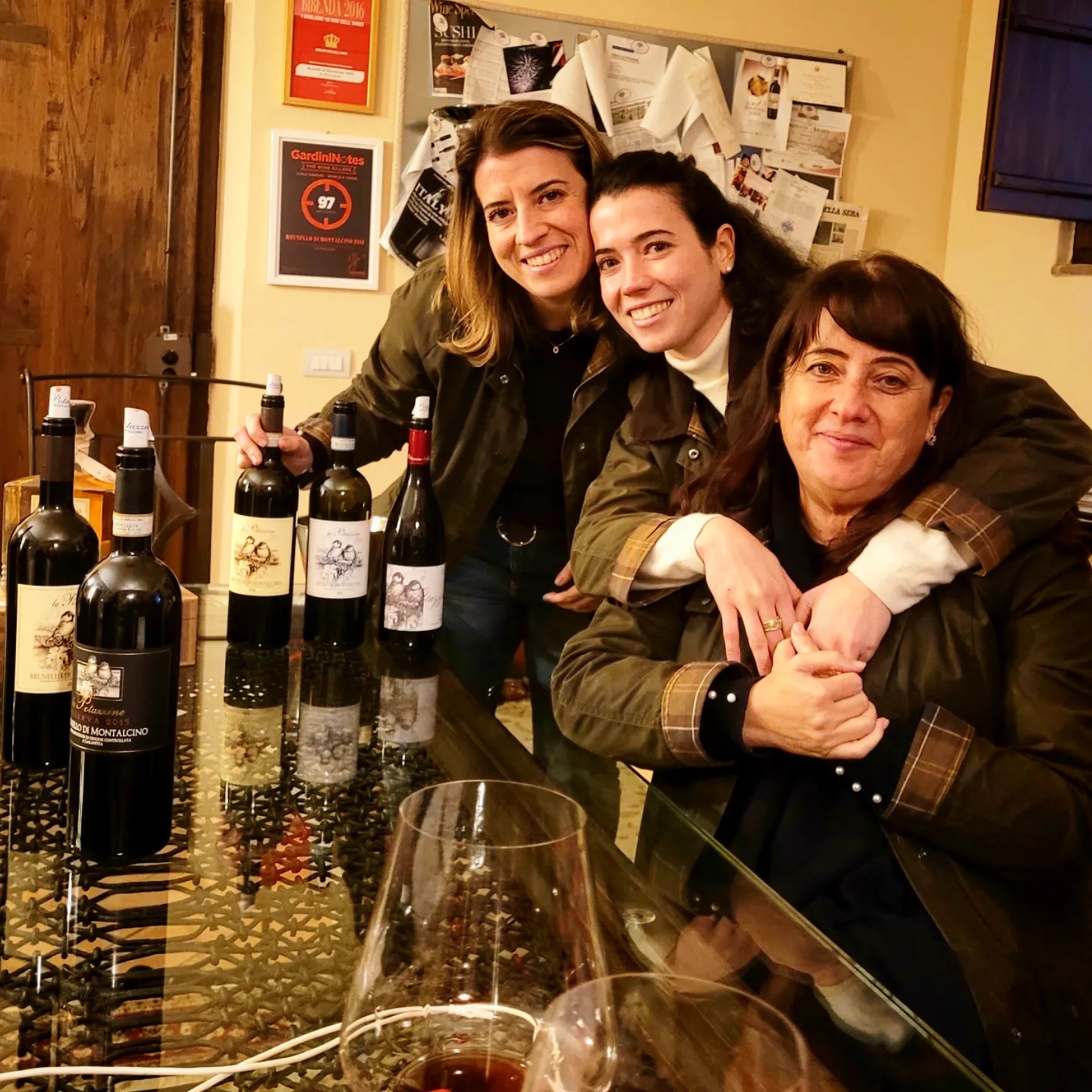
Giuseppe Gorelli Rosso Di Montalcino DOC 2021

That rare and favourable combination of rich and drinkable, a Rosso certifiably composed or Rosso sake. Perfectly ripened, fruit and acidity, classic if modern and clean, pure and reputable Rosso style. A mix of spice and sweetness so that all falls into place, especially for the palate. Drink 2023-2026.  Tasted November 2023

Jacopo and Alessandro Mori of Il Marroneto

Il Marroneto Rosso Di Montalcino DOC 2021

Ignaccio is one of two Il Marroneto Rosso, “the classic” tells Alessandro Mori, compliment to son Jacopo’s next gen iteration. From a 0.7 hectare block farmed specifically for Rosso di Montalcino on the northeast side of the hill. The vines are 100 metres below the cru of Madonna delle Grazie at 420m and they deliver fruit that just simply tastes of the earth, naked and strong. There are no other Rosso that unites and coalesces this level of heritage, crazy and genius. Drink 2024-2029.  Tasted November 2023

Il Marroneto Rosso Di Montalcino DOC Jacopo 2021

The second Rosso, named for and now created by Alessandro Mori’s son as a next generation cultural take on Montalcino’s most important wine. It’s what the Montalcinese will open daily and Jacopo wants to make the kind you want to drink. “When I started to choose through the barrels to make the selection,” he explains, “my mind went to crunchy wines with beautiful structure and no aggressiveness. I wanted to make a red wine.” This Jacopo, is it. A red wine. Something that dares to reach out to personal taste, to what is right for the palate. The vintage hits the mark because it does exactly what the winemaker wanted. It’s what we want as well and ask that we can continue enjoying it for a while before moving on to the Brunello. Drink 2023-2026.  Tasted November 2023

Le Gode Rosso di Montalcino DOC 2021

For 2021 Rosso is a rich tapestry woven of acidity through fabric for a most textured Rosso. The lift and swarthy funk are up at that line where danger lurks but Le Gode keeps things formal with as much posit tug pull as it can muster. Brett lays high and tries to infiltrate but precocious luck and structural fortune are there to save the day. There are tannins here and they are brittle. That is OK because this is not a technically sound Rosso nor does it have to be. It will be loved by any who desire vim, relish and vividness – more importantly it is a stepping stone on the road to truly great Rossos to come. Drink 2024-2026. Tasted November 2023

Le Potazzine Rosso di Montalcino DOC 2021

The fact remains that a Potazzine is a Potazzine and here is not a rare one but clearly a Rosso that stands apart, set to an aromatic standard of hypnotic grace that makes Rosso so special. That said there are levels of richness and especially glycerol in 2021 that may not have been present in the last few vintages. How anyone could not fall in love with these scents, flavours and especially textures would be inconceivable. There is a chalky underlay as well and so structure is a part of this vintage. Wait a year and then drink over the following seven, perhaps even 10. Drink 2024-2030.  Tasted November 2023

Roberto Cipresso Rosso di Montalcino DOC 2021

Quite a rich, mature and fruit forward if developed Rosso with lower level acidity and roundness than a good many. Fruit is lovely and the mouthful quite creamy but also soft. Drink up what bottles you have or may soon acquire.  Tasted November 2023

San Guglielmo Rosso Di Montalcino DOC 2021

Sparkling clean, tight and an intensely red citrus Rosso. Just about as tart and acid lightning struck as it gets for Montalcino. Real, deliberate and delectable. Three week maceration and very gentle extraction for sure – no pressing involved. Not a bit. Pure, unadulterated and focused as sangiovese, exacting for Rosso to seduce the modern, discriminate and wishful palate, with no density or heaviness involved. For the kind of consumer in search of simple truths and respect for heritage in the cleanest way. Imagine the possibilities when better vintages provide the source. Drink 2023-2025.  Tasted November 2023

Biondi-Santi Rosso di Montalcino DOC Tenuta “Greppo” 2020

The first wine tasted inside the newly renovated aging room, a sangiovese fermented in concrete vats and aged in classic Slavonian botti. Here the vintage that will be available in 2024. “What we are looking for in a Rosso is to preserve the history of the estate,” says Giampiero Betolini. “It took nine blending sessions to arrive at what the team was happy with, to enact the style of Biondi-Santi.” The 2020 is freshness and acidity first and foremost, from five levels of selection in the vineyard. Just put your nose in the Rosso and you will know it is Biondi-Santi, lighter than 2019, reflective of a vintage, moderately low in alcohol and perfumed. The “stampa” of Tenuta Il Greppo with circulative acids, not swirling but seemingly travelling the palate in mimic of a classic hydro-biodynamic pattern. Pure, clean and piercing. The kind of impression that is warranted, especially with so much new cask involved. Length is greater than 75 percent of denominational Brunello DOCG which explains three things; selection, tireless trials and longevity. Drink 2024-2032.  Tasted November 2023

San Guglielmo Rosso Di Montalcino DOC 2020

A different vintage to both 2019 and 2021 but San Guglielmo’s micro-climate is so unique to weave a constant thread in the wines from vintage to vintage. A warmer place that needs just the gentlest extractions, no pump-overs nor stirring neither, because ripeness need not be magnified and holes need not be filled. You feel the aromatic texture that seamlessly repeats on the palate. Direct, taut, lightning red fruit, finessed with the best of the area’s Rosso. In this style mind you, of clarity, intensity and focus. A sangiovese you desperately want to drink but you have to love acidity, this acidity and style. Why would you not? Drink 2023-2025.  Tasted November 2023

Canalicchio di Sopra Rosso di Montalcino DOC 2019

Hard to argue against the idea that in 2019 the Rosso and the Brunello are closer together. Here there is some opulence and definitely more substance than the “average” Rosso so that some grapes could have theoretically gone either way. The difference is structure and so the Rosso vines will not deliver the kind of material for 15 years of aging. Also just slightly less acidity than the Brunello. In this vintage “the bottle makes the function of the barrel,” explains Francesco Ripaccioli. But this could trick many people because on the surface and in these first few years the identity is one of concentration and intensity. Drink 2023-2027.  Tasted November 2023

Le Chiuse Rosso di Montalcino DOC 2019

“A sangiovese from Montalcino is going to learn a lot from being in the bottle,” tells Lorenzo Magnelli. “It doesn’t matter if it’s a Brunello or a Rosso.” Never has this been more prescient and true (other than perhaps dfrom 2016) as this 2019, a wine where the chasm to Brunello is lessened but you have to look at the two wines in a completely different way. Magnelli’s approach is not single vineyard but a matter of size and site. The biggest berries matched with the location. If you can find a better Rosso than Le Chiuse’s 2019 there should be trens of thousands of sangiovese lovers that would like to know. Aromatic sound and vision, fruit matched by savoury qualities in perfect synch and so bloody harmonious in every way possible. Power and beauty, grip and elasticity. The biggest of Le Chiuse’s berries make for the juiciest Rosso that delivers an effect that is sweeter than Brunello. Drink 2023-2033.  Tasted November 2023

Podere Le Ripi Estate

Podere Le Ripi Rosso di Montalcino DOC Sogni de Follia 2019

Rosso di Montalcino comes from Le Ripi’s vineyards to the west, a good Rosso area where the berries are bigger, the alluvial terroir gifts intendment and the sangiovese acts truly fresh. No hydric stress, plenty of q vs Q and PDQ, I’s dotted and T’s crossed. Total and also specific heat transfer for an acid-tannin relationship supportive by keeping this wine linear and it’s really quite salty. The 24 months aging in cask has equipped a Rosso with quantified structure and combined with the mineral salts puts it in a really gastronomical position. This should be poured with antipasti and primi, especially in the late fall when truffles and mushrooms are available. Sogni di Foglia, words of Francesco Illy, translated as “dreams of madness.” Up to interpretation, perhaps just words that make sense in the context of all the names of Le Ripi’s wines. Drink 2023-2027.  Tasted November 2023

San Guglielmo Rosso Di Montalcino DOC 2019

The first Rosso of the new age under the guise of Ilaria and Michele at San Guglielmo. Some age and maturity showing on this ’19, but also more ripeness, phenolic presence and weight for what will follow out of the next two Rosso vintages. Good development, less red lightning fruit, ever so slightly jammy and certainly without the tension of 2020 an 2021. Drink 2023-2024.  Tasted November 2023

Cortonesi Rosso di Montalcino DOC La Mannella 2016

Tomasso Cortonesi says “in my opinion from this bottle there is a little bit too much evolution on the nose” but the tasting group of producers and tasters believes to give it some air and more will come. The palate is perfectly vibrant with less maturity, acids in pique shape and fruit showing no fatigue. Tomasso is his own biggest critic and I’ve heard him say this before so he clearly tries to create and is always looking for top freshness. There is plenty here for a seven year-old Rosso and there will be a few years of very positive drinking ahead.  Last tasted November 2023

Not simply freshness but unction, fruit culpability and basic perfection. The young vines of five years are just now coming into their speciality, that being quality fruit meeting and melting into more than a modicum of grip and structure. You could pour this Rosso for young Brunello seekers and old Rosso knowers. It will solicit and win over their collective hearts.  Tasted October 2019

Lovely effulgent fruit in this Cortonesi family Rosso radiates to extrapolate for a 2016 Brunello future, in many ways. First it is this Rosso that benefits from the particular handling, showing in an immediately gratifying plus available sangiovese that drinks with fast-forward Rosso promise and does so on its own terms, for the right Montalcino reasons. Second, even though the producer’s approach to Brunello is another matter in which generally speaking it deals only with older vines, it is this youthful exuberance and wealth of amenability meeting attack that bodes well for the impending grandi vini. It is here that we see the present and the future of Rosso di Montalcino and the respect it is both given and deserved. Drink 2019-2025.  Tasted February 2018

Toscana IGT

Fattoria Dei Barbi Senza Solfiti 2021, Toscana IGT

Stefano Cinelli Colombini’s idea has been to produce sangiovese without sulphites, not to make a natural or trendy wine but something that speaks to both heritage and the realities of today. A sangiovese made the way it once was, naked and alive but with the advantage of 2020 technology. This project had been in the works for several years and we tasted through young unfinished samples together back in October of 2021. This wine’s genesis and though ’21 is no longer the current release it makes the most sense to taste as a ready to drink wine. From concepts developed with the University of Pisa, clean as it could possibly be, a hint of carbonic pulse, extreme freshness, lightning red fruit, cracker acidity and an ideal match as an aperitivo with Barbi’s sharp cheeses coming out of the Caseificio dei Barbi. Drink 2023-2024.  Tasted November 2023

Giodo La Quinta 2021, Toscana IGT

Sangiovese from Montalcino vines, “un piccolo Brunello,” smiles Carlo Ferrini if instantly insistent in terms of this not being a Rosso. Exotic in its aromatic profile, of young vines that can’t help but express a cupboard of spices but also a dusty, brushy and southern Montacino mountain tea. Translates as herbal and floral but the grace and lightness of being feed imagination like Villages or Hautes-Côtes Bourgogne. May as well be a young Brunello or whatever your fantasy may be dreamed because that just is this sangiovese. If it smells like Brunello and tastes like Brunello then it must be…well never mind. Plenty of mimicry on offer so dream away at will. Drink 2023-2027.   Tasted November 2023

Il Palazzone Rosso di Palazzone Vino Rosso NV, Toscana IGT

The idea of Laura Gray who worked at Il Palazzone for more than two decades and a Rosso for “Rosso sake,” a “table wine” in the tradition of that concept, Montalcinese culture and also vernacular. To give a sangiovese credibility without appellative legality from bits and pieces of all the vineyards, including the IGT vineyard. No vintage on the label though the fruit is mainly 2021, yet there is some de-classified 2018 Brunello fruit. Amazing how primary it scents, juxtaposed by fresh rose petals, both curious considering it went to bottle in September of 2022. Lovely purity if not much complexity and just the right amount of volume, surely as intended. Drink 2023-2025.  Tasted November 2023

Andrea and Gianni Pignattai, Pietroso

Pietroso 2020, Toscana IGT

Only Montosoli fruit and made as an IGT though you have to figure will one day, some day become a Vigna Brunello. The vines are young and the size of the vineyard small (as per the hill) with only 1.3 hectares farmed on the typical sandy Galestro as per the way these rocks are defined and described in Montalcino. Such a different expression for Pietroso, not in terms of style but surely aromatics and mouthfeel coming across apposite to the three-vineyard Brunello. More savour, sweet herbals and what can be best described as liquoroso. Amaro, sweet in perfume yet intensely dry on the palate. The name is in ode to the patriarchal grandfather, Berni Domenico, aged in Botti and tonneaux for two years. Quite the riches but my goodness such red fruit and so in the end this could only be Pietroso, no matter the vineyard. Always reminded of Montosoli’s savour and structure and so the longevity of this wine may be without bounds. Won’t be released until June of 2024. Smart choice. Drink 2025-2035.  Tasted November 2023

Podere Le Ripi Canna Torta 2021, Toscana IGT

Podere Le Ripi CEO and Winemaker Sebastian Nasello begins by saying “we have traditional Brunello but we also make wines for the next generation of wine drinkers. We have to care of them.” A mix of trebbiano and malvasia, six to eight months in vats on skins, followed by an additional six to eight in concrete. Grapes come from the western side of Montalcino, some of them purchased. A nickname meaning “a bad (or dull) shooter,” given to an employee who’s charge it is to control the deers. And so they dance on the label, as this does on the palate. Indeed this is a clean and rich example with just the right hints of tart fruits, herbs and shadows with hidden bits of umami. 2,000 bottles, more or less.  Drink 2023-2026. Tasted November 2023

Podere Le Ripi Cappuccetto 2022, Toscano Rosato IGT

One night (maybe two) of skin contact, not a salasso, a Rosato at heart, salty and a veritable salsa of sangiovese. It’s really, actually, ostensibly, allegedly if truly Montalcinese, of savoury sapidity (in reference to taste) and ultimately a piquancy. This Rosé does not chase any specific or established style but just something you want to drink. It’s fucking delicious is what it is. Lovely touch of green and that’s just right. Also a bitter nectarine, not quite ripe but tart and satisfying. Who would not want to drink this?? Drink 2023-2025.  Tasted November 2023

Sebastian Nasello, Podere Le Ripi

Podere Le Ripi Attenti al Lupo 2022, Toscana IGT

Sebastian Nasello is trying to create some wines that can pe poured and enjoyed at wine bars that show another side of what can be done n Montalcino. Introducing whole cluster sangiovese in its fourth vintage but the first that is fully being brought to market, of approximately 4,000 bottles. Raw and unfiltered, fine and pulsating measure of sauvage, a light and knowable amount of Brettanomyces that crept in at the end of fermentation. Lacks precision as a result but more than makes up for it with unbridled and gangly personality. The following vintage temperature was lowered during the svinato to avoid this occurrence. The texture is attractive yet the tannins are brittle and drying at the finish. Those who seek out the natural and the hands off as much as possible will want this vintage. Yet faults are faults and they happen. Drink 2023-2024.  Tasted November 2023

Podere Le Ripi Attenti al Lupo (Campione) 2023, Toscana IGT

Cask sample: Sebastian Nasello is deep into machinations with whole bunch and carbonic macerations, but in the cleanest way possible, Not gratuitously natural wines. This fifth vintage of the whole cluster is no longer experimental sangiovese because this is the one where things are really figured out. The carbonic fermentation, cooling at the time of svinatura and finished without any confining or gripping of tannin puts this in cru gamay Beaujolais territory. The terroir is alluvial from the western sector of Montalcino and now we are gifted a sangiovese of precision, succulent juiciness and long, sweetly natural finish. No Brett and this lovely carbonic buzz on the finish. Nice and clean. Will be bottled around harvest in 2024. Drink 2023-2026.  Tasted November 2023

Tenuta Le Potazzine Sangiovese 2021, Toscana IGT

Youngest and freshest of the sangiovese, fragrant and of a perfume as intoxicating as it is demure. It’s just everywhere in this light and understated wine. Roses and bergamot, a hidden message of balsamico, simplicity if something hidden in the shadows to hint at or tease what will be possible for Rosso (especially) out of the warm 2022 vintage. The possibilities are evident, the promise palpable. Drink 2023-2025.  Tasted November 2023

Good to go!

godello

Benvenuto Brunello 2023, Montalcino

Twitter: @mgodello

Instagram: mgodello

WineAlign

Forever in Chianti Classico

Gallo Nero at the Chianti Classico Collection 2022, Stazione Leopolda, Firenze

An ambassador’s return, Chianti Classico Collection 2022, 4 LCBO videos, 11 UGAs, 37 estate visits and 450 tasting notes

The story of two hats

The last pre-pandemic supper in Panzano takes place in the Officina della Bistecca at Dario Cecchini’s Antica Macelleria Restaurant on the 19th of February, 2020. Little could any one of the revelers that night have any inclination what lay ahead. Who could foresee less than a week later there would be a Casablanca-esque slipping out of Faenza in the middle of the night, heading to Firenze for a flight out of Italy before first light. A funny thing happens in between. Tutti Matti Chef Alida Solomon from Toronto is already feasting at the long Bistecca harvest table when the party Canadese arrives. A wonderful surprise save for the fact that Tuscany is actually her home. That night the writer surreptitiously leave his Sienese cappella in the officina and the next day no one at Cecchini is able locate it. Hat vanishing act. On route to Montalcino a necessary stop is made in Siena, specifically the Piazza del Campo, for a Spritz and the purchase of a new hat. Borsalino is closed so Cappelleria Bertacchi is the next best option and a brand new, similarly styled hat is procured. The following day, while sitting upstairs tasting Brunello on the terrazza of Caffè La Fortezza in Montalcino who walks in but Solomon, tosses up the aforementioned and abandoned hat, nothing is spoken and away Chef goes. This is the story of being the owner of two hats.

Tasting with Michaela Morris at Il Consorzio Vino Chianti Classico, March 2022

A prodigal ambasciatore‘s return

This may be considered an inflated way to refer to one’s self in the third person but truth is that third person recounts with the fondest of memories 10 pre-pandemic Tuscan excursions in four years before the world shuts down to travel. The restart launches in October 2021 with the first of four more over the course of six ’21-’22 abridging months. There are extroverts and introverts but there are also ambiverts, those who exhibit tendencies in roughly equal proportions. Some are in the middle or on the fence when it comes to Chianti Classico wines. If one is to refer to oneself as a proud ambassador for said wines then there must be synergistic feelings of belonging. There will be connectivity with the wines, territory and a most profound connection with the people. In October of 2021 a rebirth takes place in the guise of travel renascence, a re-entry for the first time in 20 months made available by the most erudite, generous and hospitable folks at Gambero Rosso. An ambassador who sits not on a fence has zero trepidation in making a decision to fly first to Firenze for three days of arranged visits in the Classico zone to precede the Tre Bicchieri’s festivities in Rome. When a month later a special edition of Benvenuto Brunello is organized it makes super sense to follow that up with three more days of visits in the territory shared by Firenze and Siena. To see great Consorzio friends and colleagues again restores faith in this world. Car rides, lunches, dinners, tank, barrel, latest release and archived tastings, caffès and chats in the sun. Grazie tantissimo to Giovanni Manetti, Carlotta Gori, Silvia Fiorentini, Christine Lechner and Caterina Mori, as always, sempre e per sempre.

Related – Chianti Classico goes to eleven

Chianti Classico Education in Toronto

The UGA designation, LCBO videos and continuing Chianti Classico education

In June of 2021 the Consorzio Vino Chianti Classico announces the shift to 11 additional units of geographical designation to carve out new parameters and progressiveness for the territory. These Ùnita Geografiche Aggiuntive allow producers to make mention on labels of Gran Selezione wines. A first step towards full disclosure across all Chianti Classico wine labels in the future. This information comes to the writer on the heels of keeping busy during lockdowns and pandemic restrictions that sees the proliferation of tastings and education via platforms like Zoom. Connecting producers with sommeliers and prospective agents is key to continuity and Godello obliges whenever the call to duty arrives. The return in person late in 2021 and through the first four months of 2022 sees restaurant education sessions reach dozens upon dozens of sommeliers, front of house and back of house staff, denizens of Toronto’s restaurant industry eager to resume their absorption of wine information, especially as it pertains to tasting sangiovese. The filming of four educational videos for the LCBO is particularly gratifying, capped by a win of an LCBO Elsie Award for said videos. In three weeks time the producers will arrive in Toronto to participate in the WineAlign critic and Ambasciatore‘s Masterclass. They will also pour their wines at both trade and consumer walk-around tastings. The Toronto Island Chianti Classico Cup happens on Tuesday, May 31, 2022 and “Experience the Wine, Olive Oil & Food of Chianti Classico,” Monday, May 30, 2022 at The Globe and Mail Centre.” Click on the link for more information. Forever in Chianti Classico, even while at home.

Filming Chianti Classico videos for the LCBO, at Praise Bottle Shop, Toronto

End of season reaction to the April frost of 2021

For Luca Martini di Cigala of San Giusto a Rentannano the first vintage when he realized something was not right was 1998, when the skin of the berries were burned by the sun. Climate change, events and extremes are not something that just popper up in the past few years. 

Paolo de Marchi does not so much look at yields before high density but rather yields that are a quotient of each square metre as a function of bunches per plant. In a frost year like 2021 Guyot produces more fruit from secondary buds. Paolo makes use of a selection of clones but more importantly a massal vineyard. “This is how you get rid of vines that are not good and replicate those that are. Bud break is often so early and we will never escape the frost anymore. The real problem starts with earlier winter and Spring.”

UGA in reverse, Chianti Classico Collection 2022, Stazione Leopolda, Firenze

At Casa Emma Paolo Paffi admits to a 35 per cent loss in 2021 due to the April frosts, a vintage when even problems occurred even in the higher reaches. “You would have to go back to 1995 to find another vintage where this happened,” tells Paffi. At Villa Le Corti Principe Duccio Corisini and Oenologist Claudio Giglioni noted that in 2021 the single vineyard Guliae, nicknamed the Figo, produced seven tonnes per hectare. It remained safe from the frost, perhaps because of biodynamics, perhaps because of Guyot training, perhaps because of position. Maybe all three but regardless it was not caught in the April frost zone.

At Il Molino di Grace in Panzano their particular frost zone resulted in a 50 per cent reduction in yields.  There was a good quantity of water in the winter, a cool spring, warm and ideal summer, rain in the second half of August. “A perfect situation for quality and quantity,”  had the frosts not come. Says Iacopo Morganti, “we need to build artificial lakes.”

Related – When frost strikes, Chianti Classico responds

Chianti Classico Experience in Toronto

Fontodi and Consorzio President Giovanni Manetti owns over 20 hectares of over 40 years. He explains that even if there are 20-30 days separating the picking from start to finish in a vintage there is always a marker, especially with sangiovese. “And with old vines they are not nearly as susceptible to stressors,” says Manetti. “Vigna del Sorbo will succeed even with all of what is mentioned here.” At Bindi Sergardi I Colli is where Alessandra Casini Bindi Sergardi was born and grew up. Built in the 1400s for the family, lower in elevation (350m) as compared to Mocenni (500m), still rich in Alberese but also high in iron content across the road in the Chianti Colli Senesi. Some frost kill but not significant enough to mention. For Angela Fronti of Istine, “this year 20-25 per cent less, part frost and part cinghiale, qualcosa nell-aia.” Something in the yard.

Alone with Chianti Classico Sangiovese, rooftop terrace, Hotel Plaza Lucchesi, Firenze

Roberto Bianchi of Val delle Corti: “It’s been a difficult year and we’re very lucky to be in Radda. We did not fear the frost. Most Radda producers escaped loss due to frost but the animals are another matter all together. Drought pushes the animals (wild boar, deer the size of cows), out of the forest and grapes are there biggest resource recourse.” Bianchi is still looking higher and a few years ago planted Malpensa Vineyard upwards of 650m. As did Fedecrica Mascheroni of Volpaia. Their new vineyard is planted at 650m, using five clones of sangiovese from Il Puro with two chosen for planting as half of the small (one hectare vineyard) and also malvasia and trebbiano for Vinsanto. It was finished in the Spring of 2021.

Educating the LCBO Buyers, February 2022

What about Canaiolo?

“Canaiolo is an underestimated variety,” insists Isole e Olena’s Paolo de Marchi. “It ripened so early this (2021) season and was picked before the chardonnay. It just may be the future” While that may sound like sacrilege in a land where sangiovese is the (literal) life blood of the wines, de Marchi is not the only one focusing extra energy on the endemic variety. L’Erta di Radda’s Diego Finocchi sees canaiolo as essential to blending into sangiovese because of its higher level of pH, a catalyst for balancing not only the high acidity of sangiovese but also helping to temper and even hide alcohol in warm and dry vintages. Both Robin Mugnaini and Claudio Gozzi of Fattoria le Masse would surety agree. Their Timeo is a 100 per cent canaiolo from 60 year-old vines (planted in 1961), picked in late September but before the hottest final days. A wine that is truly a matter of pH waving over the palate.

Learning with Paolo de Marchi, Isole e Olena, San Donato in Poggio

Angela Fronti of Istine in Radda has planted some canaiolo and malvasia nera, the latter replacing cabernet to return to roots and grow what is meant for this part of the territory. Salt and pepper if you will also to have more diversity going forward into the ever-changing climate change unknown. Canaiolo is more vigorous and so can add some good balance, both more quantity and for freshness in warmer vintages. At San Giusto a Rentennano 15 of 30 hectares are on tufo soil, not exactly volcanic but the left over from a receding ocean that left a mix of sand and pebbles of six or so inches over a bank of clay. This plus many large fossil shells makes for sangiovese of medium hue, specific mineral saltiness and a very specific Chianti Classico profile. Canaiolo is not a factor here.

Estate Vineyard, Monte Bernardi, Panzano

Old is the new agriculture?

There was a profound and at time controversial but always enlightening discussion with Monte Bernardi’s Michael Schmelzer. Michael talked of green harvest, rootstocks, Pietraforte, whole bunch fermentation and instincts. Standing in his Retromarcia Vineyard on a cool but perfectly blue mid-November day I asked him about climate change and what needs to be done about it. Can’t say his answers were what I expected. He began with the concept of dropping fruit. “We haven’t dropped since 2007.  We have to think like the old farmers thought. The new way was to have you reduce fruit to make better wine. It’s like losing nutrients in the ground. I look at the wine bunches as on a scale, they’re not unripe, they’re just less ripe. They help me come up to 55 quintali per hectare. I still get acidity and sapidity. For me the concept should be re-examined and re-thought. I look at everything as an asset. You should be using your fruit. What other industry drops 30 per cent of their produce? We should be seeing 30-35 year-old vineyards going to 50-55 years. Overall we’ve lost more than we have gained.”

New Fontodi vineyard, Lamole

Schmelzer continues onto the idea of choosing 110 Richter, instead of the commonly used 420A rootstock, showing how internodes should be the size of a fist and canes as pencil thinness or bigger. “People are compromising because they’ve chosen the wrong rootstocks,” he explains. “Granted we’re picking earlier than before but mid to late September is not extreme. We haven’t seen anything yet.”

“The only thing I don’t like is people telling me how to make my Riserva,” are the words of a winemaker who has seen his fair share of rejection. Perhaps I encourage the minor rant because there are two sides to every story. Maybe it’s the fault (or the advantage, depending on your perspective) of the rocks. “Brenna Quigley (Napa Geologist) came and made a study of all the famous soils of Chianti Classico and Monte Bernardi was identified as the plot with the hardest Pietraforte of all.” Sa’Etta Vineyard was planted in 1968, now 53 years old (similar to both Monte Bernardi and Tzingana) and trained in double (doppio) Guyot. For Castello di Monsanto’s Laura Bianchi the constant posit tug is Guyot vs Sperrone and both exist in a vacuum where necessity is the mother of invention. 

Macigno di Marne, Lamole

In terms of stems Schmelzer’s decisions are essentially instinctual, like that of a cook. “I don’t look at numbers. I feel as a winemaker it’s important to free yourself from technicalities and use your instincts. If you follow numbers you will always make a mistake that has to be later corrected.” As for barrel use, “if there is wood in a wine I want it to be so subtle. (Again) thinking like a cook. I’ve more stems, for longer, in post and of course also during maceration. Natural tannins come from the stems in that post-maceration state.” The conclusion lies in how stems are catalysts for the polymerization of tannin, without a trace of humidity. Completely secco.

Wines of Lamole

Nowhere is the “old is the new agriculture” refrain spoken with greater clarity than in the Greve frazione and newly minted UGA of Lamole. The spectacular amphitheatre is home to high elevation vineyards of a particular geology where Macigno del Chianti, schist and marl gift a most specific perfume to the sangiovese. Lamole is home to I Fabbri, Lamole di Lamole, Podere Castellinuzza, Castellinuzza e Piuca, Le Masse Di Lamole and Castello di Lamole. The UGA also houses one of Chianti Classico’s most famous vineyards, Paolo Cocci’s Vigna Grospoli Antico Lamole, from which several producers have rented fruit to make über-Lamole scented wines. Still others are looking to the frazione to expand on their portfolios, including Podere Poggio Scalette (of Jurij Fiore) and Querciabella from the Ruffoli hill in Greve. It is well known that Fontodi’s Giovanni Manetti produces Filetta di Lamole from his cousin’s vineyard but the latest project will take Lamole to an entirely new and different level. Manetti’s new plantation on Macigno di Marne, a wholly singular marine sandstone geology, will be a game changer.

Conzorzio President Giovanni Manetti and Filippo Bartolotta presenting Il Chianti Classico in 9 Decadi at the Chianti Classico Collection 2022, Stazione Leopolda, Firenze

Estate visits, the Chianti Classico Collection and Il Chianti Classico in 9 Decadi

This is the author’s most comprehensive Chianti Classico report to date. Nearly half of the wines chosen to taste were Annata and this is because there were numerous opportunities during estate visits to recall “lost” vintages as a result of the pandemic, along with the newer 2020s and 2019s presented at the collection. In February 2020 the Ambassador Ad Honorem from Canada organizes and acts as chaperone to nine compatriots (plus one favolosa Americana) for five days of exploration throughout the 11 UGAs of the area. Casa Chianti Classico, President Manetti, the Consorzio and the producers host La Squadra Canadese of sommeliers; John Szabo MS, Nadia Fournier, Scott Zebarth, Kristi Linneboe, Joris Garcia, Caroline Beaulieu, Hannah Egan-Lee, Natalie Pope and Paige McIntyre. A memorable trip. A month later on day two of the Chianti Classico Collection a masterclass is presented by Italian wine expert Filippo Bartolotta and Consorzio President Giovanni Manetti titled Il Chianti Classico in 9 Decadi. Chianti Classico wines dating back to 1949 are poured during a most fascinating presentation and study, replete with historical images on screen depicting political, religious, cinematic, pop cultural, artistic and iconic scenes of Italian heritage, civilization and society. There are moments of white grapes mixing with their counterpart reds, old wines gifting scents and textures as if by Vin Santo and others so clearly a product of when they were made. That the wines show incredibly well owes to the longevity of sangiovese and its perseverance in the poise of Chianti Classico. More on this tasting will be shared through a separate article in the coming days.

The producers with Filippo Bartolotta and Il Chianti Classico in 9 Decadi at the Chianti Classico Collection 2022, Stazione Leopolda, Firenze

Over the course of the four trips to the region in October, November, February and March, 34 estates are visited; Bindi Sergardi, Cantalici, Casa Emma, Carpineta Fontalpino, Castell’In Villa, Castello di Monsanto, Castello di Radda, Castello di Volpaia, Cigliano di Sopra, Fattoria dell’Aiola, Fattoria Le Masse, Fattoria di Pomona, Fattoria San Giusto A Rentennano, Fontodi, I Fabbri, Il Molino di Grace, Il Palagio di Panzano, Isole e Olena, Istine, La Sala, Le Fonti di Panzano, L’Erta di Radda, Monte Bernardi, Montecalvi, Podere Capaccia, Quercia al Poggio, Querciabella, Rocca delle Macìe, Rocca di Montegrossi, San Felice, Tenuta di Carleone, Val delle Corti, Villa Calcinaia – Conti Capponi and Villa Le Corti – Principe Corsini. During the coming weeks further reports in greater detail will appear on Godello concerning several of these visits.

Walk-around tasting at the Chianti Classico Collection 2022, Stazione Leopolda, Firenze

Over two days at the 2022 Chianti Classico Collection more than 650 different wines from 180 gallo nero estates are made available to journalists and trade; 364 Annata, 161 Riserva and 125 Gran Selezione, along with 39 barrel samples from the 2021 vintage. Sales of Chianti Classico wines continue on an upwards steady trend. In 2021 the growth is plus-21 per cent versus 2020 and plus-11 relative to 2019. Through February of 2022 the increase is plus-seven per cent over the same time period of 2021. Grape prices are up 20 per cent, the United States holds strong at 33 per cent sales while Canada sits in third place with their 10 per cent share. A prediction towards 11 per cent by the end of 2022 holds strong. The great emergence is South Korea where sales have doubled and quadrupled relative to 2020 and 2021. Not surprising Seoul-based journalist Jung Yong Cho becomes the latest appointee as Chianti Classico Ambassador for 2022.

Godello in Firenze

The structure of the tasting notes remains consistent in terms of running through the three appellative levels but here for the first time each listing includes a mention of the associated UGA. Without attempting to review wines that would result in equal footing there is a good level of equanimity in that all 11 UGAs are well documented. The following 450 tasting notes are broken down as follows: Castellina (48); Castelnuovo Berardenga (32); Gaiole (59); Greve (30); Lamole (18); Montefioralle (10); Panzano (39); Radda (55); San Casciano (28); San Donato in Poggio (34); Vagliagli (25) and IGTs (72). By appellation the number of reviews are: Chianti Classico (201); Chianti Classico Riserva (113) and Chianti Classico Gran Selezione (59). By vintage the breakdown is Chianti Classico 2020 (46); CC2019 (110); CC2018 (24); Older vintages (20). Chianti Classico Riserva 2019 (15); CCR2018 (45); CCR2017 (10); CCR2016 (10), Older vintages (33). Chianti Classico Gran Selezione 2019 (2); CCGS18 (24); CCGS17 (12); CCGS16 (13); Older vintages (9). Vin Santo del Chianti Classico (7). Finally there are sangiovese from 137 estates reviewed in this report, the largest number covered to date.

Chianti Classico Collection 2022, Stazione Leopolda, Firenze

Chianti Classico DOCG 2020

Arillo In Terrabianca Chianti Classico DOCG Sacello 2020

Radda

Open and fragrant, south Raddese acidity on display, light and breezy with no oak interference whatsoever. Sacello in località Terrabianca is a sangiovese joy to sip, so long as someone else is lifting the heavy bottle and pouring your glass. Drink 2022-2025.  Tasted March 2022

Banfi Chianti Classico DOCG 2020

Castellina

Banfi is another semi-closed and reductive 2020, not uncommon for the vintage and also surely caused in part by just how little time the wine has been in bottle. Cherry fruit and the mild bitterness of the pit dominate the aromas (at this early stage) while texture is pectin and glycerin, strawberry smoothie and a few drops of blood orange bitters. Not getting a real sense of location, perhaps herbal like Gaiole and red fruit centric like Castellina though savoury as if by San Casciano. Take your pick. Regardless of vineyard place this is so very sangiovese, acids et al. Drink 2023-2025.  Tasted March 2022

Bertinga Chianti Classico DOCG La Porta Di Vertine 2020

Gaiole

Gaiole savour in all its woods and brush comes clear into aromatics and view through this ’19 Annata, almost vividly so. Deep well of varietal fruit, über sangiovese but more so Gaiole. Good and sweet ’19 tannins are plentiful and there is some green astringency as they pass over the palate. Wait a year and then drink for two more after that. Drink 2023-2025.  Tasted March 2022

Cacio e Pepe on a perfect February day in Firenze

Bibbiano Chianti Classico DOCG 2020

Castellina

Bibbiano’s is at the forefront of youthfulness in that there is a closed aromatic launch and some reduction needing to blow off before the hounds of charm can be released. Head straight to the palate to be graced with the interspersions of texture and structure, first liquid Castellina chalky, then wound around the body of this wine. Sangiovese needs the bottle and with eyes closed those words of Tommaso Marrocchesi Marzi play in refrain over and over again. Be patient and kind to his wine and in turn you will be kindly rewarded. Drink 2024-2028.  Tasted March 2022

Brancaia Chianti Classico DOCG 2020

Radda and Castellina

Brancaia 2020 takes the torch from 2019 in so many ways and then again, not in every way. Same fruit exposition and multi-site expression but deep and soulful for 2020, as opposed to bright and airy. More texture and crunch in 2020 while also finest of fine acids. A bigger wine and yet things travel consistently from one vintage through to the next. The new era continues for Barbara Widmer and team. Drink 2022-2026. Tasted March 2022

Cantine Guidi Chianti Classico DOCG 2020

San Donato in Poggio

From Poggibonsi and a 2020 showing stewed fruit and oxidation. Tasted from two bottles, each showing the same problematic notes.  Tasted March 2022

Artichokes, San Casciano

Carpineto Chianti Classico DOCG 2020

Greve

Carpineto’s Greve sangiovese is both unmistakable and akin to wines from another time, of thyme and incense, acids and innocence. You might swear this wine is wearing bell bottoms and preaching about peace and love. Love for the territory and especially the land underfoot. This smells like things that grow, of herbs and tea, resins and saps. Light and with a fluid glycerol feel. Lovely and herbal vintage for the Zaccheo team. Drink 2022-2025.  Tasted March 2022

Casa Emma Chianti Classico DOCG 2020

San Donato in Poggio

Distinctly Casa Emma from their corner of San Donato in Poggio though a bit deeper and darker of a blood orange sanguinity in 2020. Not the lightest or brightest vintage interpretation and really quite smooth, round, even lower in acid. One bottle shows this calm quality and surprising ease but a second bottle exhibits more acid, sharpness and clarity. Still there is a density of fruit and settling that’s a bit inconsistent with previous vintages while the tannins do take charge at the finish. Drink 2023-2027.  Tasted March 2022

Castagnoli, Castellina

Castagnoli Chianti Classico DOCG 2020

Castellina

A reminder that Jacopo di Battista is sitting on one of the most striking properties and vineyard at elevation in Castellina so proximate to both Radda and Panzano. Here a striking Annata, sharp and also weighty, reductive behind which florals clearly lurk. Rich, luxurious even and with sour acids that infiltrate the drupe. Lots going on here and surely needs tome to settle in. Strange perhaps, misunderstood to a degree and yet all will fall into place. Drink 2023-2026.  Tasted March 2022

Castellare Di Castellina Chianti Classico DOCG Castellare 2020

Castellina

Dusty, high acid, crunchy and lightly acetic sangiovese, not unusual for Castellina and Castellare, especially when the wine is so young. Tart is the understatement and tight the over, while some sweetness in the structure indicates there will be some fine push pull moments not too far way. Drink 2023-2026.  Tasted March 2022

Castelli Del Grevepesa Castelgreve Chianti Classico DOCG 2020

San Casciano

From the cooperative in San Casciano and their Castelgreve label, new and improved and a darker if more extracted version for the vintage. Not so much the light and bright example but one extracted, juicy, variegated of several points of acidities and really quite dense in texture. Gravity has a gain on Castelgreve and this will drink earlier than many. A touch of green and grey is already showing. Drink 2022-2024.  Tasted March 2022

Castelli Del Grevepesa Clemente VII Chianti Classico DOCG 2020

San Casciano

The San Casciano cooperative’s knowable and most recognizable bottle is this Clemente VII, who incidentally was Giulio Zanobi di Giuliano de’ Medici, head of the Catholic Church and ruler of the Papal States from November 19, 1523 until his death on September 25, 1534. The wine has not been made quite that long but it is one of the territory’s elder sangiovese statesmen and the 2020 version is a heady and fulsome one indeed. Higher in alcohol than some, concentrated to the fullest extent of the year (and Papal law if you like) with silky texture and sour acids. Classic really. Drink 2022-2024.  Tasted March 2022

UGAs of the Chianti Classico Collection 2022, Stazione Leopolda, Firenze

Castello Di Ama Ama Chianti Classico DOCG 2020

Gaiole

A sign of the vintage is at first the declared alcohol (13.5 per cent) but also more than that a dichotomous relationship between lightness of actionability and creeping structural accountability. Castello di Ama’s Gaiole sangiovese exhibits these push-pull traits with both dictionary and thesaurus reality. A chiaroscuro Chianti Classico if ever there was, dappling of light against a darker shaded background, fruit swelling in the foreground with chalky grains liquifying throughout and behind. Time is essential and this wine has plenty of time. Drink 2023-2028.  Tasted March 2022

Castello Di Meleto Chianti Classico DOCG 2020

Gaiole

Moving from strength to strength here we arrive at 2020 with a fruit-centric Castello di Meleto although like many recently bottled of the vintage there is some reduction to blow through. That said there is a depth to Meleto’s ’20 that holds attention for quite a stretch of time. Full and with palpable intensity in a desirably structured sangiovese. Also recognizable as Gaiole in origin, in a nutshell and so exemplary for the UGA. The clarity and understanding of changes are more than evident. Drink 2023-2026.  Tasted March 2022

Castello Di Querceto Chianti Classico DOCG 2020

Greve

No shocker that Castello di Querceto’s Dudda Valley location has produced a light and open-knit sangiovese from the less than round 2020 vintage. Like many others however there is a sly and crafty set of structural circumstances happening and running through this low alcohol (13 per cent declared) wine. Dare it be said old-school Chianti Classico but with modern clarity and charm. Could drink this every day of the week. Drink 2022-2026.  Tasted March 2022

Castello di Vicchiomaggio Chianti Classico DOCG San Jacopo 2020

Greve

San Jacopo is a Vicchiomaggio understudy, staying at the ready to step in, an Annata that knows all the parts and lines of the estate with it’s range of lead wines. This is straightforward and sure as sangiovese Annata, sturdy, solid and playing a perfectly reasonable support role. Well seasoned but never a wood-driven wine, salt and pepper got just right. The appetizer. Drink 2022-2024.  Tasted March 2022

Castello di Vicchiomaggio Chianti Clasico DOCG Guado Alto 2020

Greve

Guado and Alto, meaning “a shallow crossing-place in a river” and “high” which seems like an oxymoron but allow me to explain. This second and arguably more important of two Annata by Vicchiomaggio is an über fresh one, lightly carbonic and juicy as a medieval quench from the Greve River. Tart and pulsating, oddly reminding me of poulsard. All this to mean Guado Alto is high-toned while creating a horizontal stretch of Chianti Classico openness.  Drink 2022-2024. Tasted March 2022

With Federica Mascheroni, Volpaia, Radda

Castello Di Volpaia Chianti Classico DOCG 2020

Radda

Freshness incarnate exudes from Volpaia’s 2020 Annata and in fact the wine seems like it has barely achieved its alcohol and malolactic fermentation. In fact at a realistically labeled 13.5 per cent this from Radda is as beautiful and honest as it gets. Modern as well, stylish, of great attitude and delicious. The Raddese acidity is of course present and accounted for but that fruit. My. Oh My. Drink 2022-2025.  Tasted February 2022

Castello La Leccia Chianti Classico DOCG 2020

Castellina

Castello La Leccia’s Castellina location close to Macìe is northerly yet halfway between Lilliano and Fonterutoli. Certainly a Galestro soil happenstance and with 2020 that geology stands out. Classic and that is meant with the most complimentary commune and UGA commentary, blessed by perfectly local, parochial and conventional wisdom. Red to hematic blueing and blackening fruit, quite firm and grippy, tart, nearly searing and really driven. Needs time and when it arrives should persist for three to five proper drinking years. Drink 2023-2027.  Tasted March 2022

Castello Monterinaldi Chianti Classico DOCG 2020

Radda

No other 2020 seems to scent like this from Monterinaldi and so it is more than worth commenting on the sense of place that is their southwestern Radda location. Herbal and dried flower potpourri but also something unknowable, intangible, even mysterious. Yes there is some early reduction but it can’t suppress the open-air meets underbrush perfume. Equanimity between maceration and fermentation makes this a candidate for top mid-term aging Annata, in other words begin drinking soon and make great use for three to four years thereafter. Drink 2023-2026.  Tasted March 2022

Colombaio Di Cencio Chianti Classico DOCG Monticello 2020

Gaiole

Colombaio di Cencio presents a Gaiole herbology that’s always indicative and distinctive, sometimes by way of faintly sweet Amaro liqueur. That’s the first and then recurring feeling coming from this 2020, chalky and with acids that slide along with the red fruit speckled with fresh and also dried herbs. The tannins follow the latter with some pretty austere aridity. This will drink well in a few years, that much is certain, but unfortunately the bottle will not get any lighter. Drink 2024-2028.  Tasted March 2022

Famiglia Nunzi Conti Chianti Classico DOCG 2020

San Casciano

So young and impressionable, hematic, red blood of sangiovese while fresh, nervy and exciting. Also deep and concerned, dusty brood of San Casciano fruit, sottosuolo and fully nuanced earthy flavours. Big, big wine that needs to be looked at again a year forward because the youthfulness distracts from the potential. Drink 2023-2027.  Tasted February 2022

With Michaela Morris, Matteo Vaccari and Maddalena Fucile, Cigliano di Sopra, San Casciano

Fattoria Cigliano Di Sopra Chianti Classico DOCG 2020

San Casciano

The emergence of 2020 is real, right now and while who knows for how long going forward, perhaps with luck and fortuitous execution, the suiting could be seemingly forever. What transpires here is nothing short of an epiphany and even perhaps a Chianti Classico miracle. How the most precociousness and hard work can conspire to make such a beautiful wine is beyond comprehension. But it does not matter because it has happened. Grande Maddalena. Bravo Matteo.  Last tasted March 2022

Will be bottled in December so essentially a finished wine. From 10 plots (of 11, one is merlot) facing southeast to southwest. Includes a small part of Vigneto Branca, the name of the fattoria and of who was working there. Here the fifth vintage for Matteo Vaccari and Maddalena Fucile is not only mature from a perspective of energy but also both succulence and sapidity that comes from changes, risks and learning what is possible. A bit oaky at this time but really showing what all these plots can effect, with solo sangiovese. No longer about precociousness but instead two winemakers who have arrived. “We don’t care about perfect phenolic maturity,” explains Vaccari, “when we feel the bitterness is gone, the tannins are good, then let’s extract.” Extract away young phenoms. Drink 2023-2027.  Tasted November 2021

Viola Meacci and Alessandro Polombo, Luiano, San Casciano

Fattoria Di Luiano Chianti Classico DOCG 2020

San Casciano

Classico San Casciano as a notion of fresh and aromatic hillside reality, a purity of localized perpetuity through a glass of light and shadow, dappling, chiaroscuro. Wood creaming the red to black cherry, swirling, making it gelid. Stylish sangiovese in every respect, suave and instructive. Drink 2022-2026.  Tasted March 2022

Fattoria Poggerino Chianti Classico DOCG Nuovo 2020

Radda

Piero Lanza’s 2020 is a bright, effusive and luminescent version of itself in that there seems to be a lightness of being and avoidance of rich density. Quite the aromatic lift this early and time around, floral, like roses, hibiscus and fresh tar, not unlike some Tortonian raised nebbiolo. As sangiovese there is sneaky structure in quantifiably knowable admonition and that is said in the most complimentary of ways. Radda chalk, sand and whole bunch verdancy bring complexities and the struggle is real. Disregard the appellative concept of Annata in part, because this should go long. Drink 2024-2029.  Tasted March 2022

Fèlsina Berardenga Chianti Classico DOCG 2020

Castelnuovo Berardenga

Notably dusty and structured right of the top, feeling the wide open Castelnuovo airiness, sunshine and tart red fruit substantiality. Poised and restrained by extraction and pressing yet the Annata is a very taut and tight wine when assessed this young. Fèlsina always needs time and 2020 is far from the exception to that rule. Drink 2024-2028.  Tasted March 2022

I Collazzi I Bastioni Chianti Classico DOCG 2020

San Casciano

Dark if high-toned sangiovese, not atypically San Casciano with first a musky note. Rich and filled with wood salve, creamy and textured, liquid chalky and sweetly tannic. Early signs of soy and tar so drink this early before the fruit turns to earth and mulch. Drink 2022-2024.  Tasted March 2022

Angela Fronti, Istine, Radda

Istine Chianti Classico DOCG 2020

Radda and Gaiole

Just bottled last week, One hundred per cent sangiovese, “a wine to be drinkable,” insists Angela Fronti, “like my grandfather did in the past, at lunch.” A wine of freshness and acidity but also one that can age 10-12 years. Istine was planted in 2000, Cavarchione in 2010 and Casanova dell’Aia just a few years ago. All contribute to this Annata and all play a prominent role. If a bit (bottle) shocky no matter because Fronti, whether by purpose or promise manages to coax the best of all her fruit sources. What is showing early is this sort of herbaceous cabernet franc in sangiovese reality character, fleeting for sure and soon to come into a beautiful place. A reminder that 2020 was THE Covid vintage and so Angela was able to spend every waking moment with her vineyards and the season was neither hot nor cold but just perfectly somewhere in between. Drink 2023-2027.   Tasted February 2022

Campione da Botte, L’Erta di Radda

L’Erta Di Radda Chianti Classico DOCG 2020

Radda

From a sample labeled campione da botte, in other words a tank sample. Freshness abounds, Radda style, from the breath of the woods, the cool of the stones and the rise of the hills. Herbal like fresh Genovese basil, spicy that way with a hint of anise and cinnamon. A co-fermentation of sangiovese and canaiolo (five per cent), the latter adding le forma, volume and expansione, all of which are self-explanatory. An opposite of linearity, not roundness but a sapid expanse across the palate and in the mouth. This is the harmony pulled and coaxed from the ’20 Annata in a wine that makes you feel but more importantly exists by the dint of how it feels. Full. Not yet bottled but will be soon and truth is while the wine is tight the aromatics and mouthfeel are good to go. Worth a full review. Drink 2023-2027.  Tasted March 2022

Maurizio Brogioni Chianti Classico DOCG H’Amorosa 2020

Greve

H’Amarosa as in “a love affair” or perhaps “I have a lover,” which could be sangiovese, perhaps Greve in Chianti or in a more broader sense, Chianti Classico. Can’t help but think about Jackson Browne, ballads, a splash of merlot and what’s happening these days. In 2020 that would be truth, openness and clarity with respect to the wines which are the storytelling by the producers. Brogioni’s is forthright, specific, real and for everyman. Juicy and in touch with both reality but also emotions. “I had a lover, I don’t think I’d risk another these days, these days.” Drink 2023-2027.  Tasted March 2022

Monte Bernardi Chianti Classico DOCG Retromarcia 2020

Panzano

Michael Schmelzer’s 2020 takes up right where everything he had been working on and through in 2019 left off. That is to say full on agricultural indemnity with all fruit all the time in use and winemaking that is afraid of nothing. The silky swarthiness of his ’20 Retromarcia endorsement and structural surety combine for freedom, exception and security. This Retromarcia ushers fruit in waves, oscillations, acetic sweeps and swells, coming at the palate with the full force of laws provided by nature. What happens at Monte Bernardi stays at Monte Bernardi, where calculated inventiveness experiences living life on the edge. Drink 2023-2028.  Tasted March 2022

Alessandra Deiana and Michele Braganti, Monteraponi, Radda

Monteraponi Chianti Classico DOCG 2020

Radda

Monteraponi from Michele Braganti breathes in the high elevation Radda air and exhales with clarity, not to mention exclusivity. Yet another reductive 2020, albeit mildly so and not difficult to coax out of its savoury candied shell. While tart and even intense there is something mysterious and shadowy in the recesses of this sangiovese’s temperament and intelligence. Something guarded and misunderstood but time will make it all work out right. Keep this away and allow it to soften as it slowly gets to know you. Drink 2024-2029.  Tasted March 2022

Montesecondo Chianti Classico DOCG 2020

Gaiole

A baritone beginning, low held Gaiole notes below with red to black fruit above. Not closed yet not expressive or generous either, reticent even and holding out because the tannins are in charge. Fruit quality and fleshiness are substantial, as is the wood and so the malic, creamy and sheathing sensation will need to settle before integration opens up the wine. Drink 2023-2026.  Tasted March 2022

Podere Castellinuzza Chianti Classico DOCG 2020

Lamole

Big but not dense and for Lamole a heady sangiovese from the not so magnanimous Chianti Classico vintage. More than anything it is essential and encouraged to concentrate on the floral aspects of this wine, perfumed to the hilt with that Lamole commodity. Like all the bushy herbs in bloom, of purples and pinks, scenting the air at dusk even if one fails to brush on by. Lovely texture in 2020, mildly glycerol and giving the impression of almost gelid but surely sweet sangiovese fruit. Drink 2023-2027.  Tasted March 2022

Podere Poggio Scalette Chianti Classico DOCG 2020

Greve

There can be no surprise that Jurji Fiore’s 2020 is one of the more transparent and striking scintillants of sangiovese to emerge from out of the verifiable and veritably airy 2020 vintage. Sharp and pointed red limestone fruit off of the Ruffoli hill, rich undercurrent of currants red and also some black, intensity of right bank Greve acidity and tannins to carry this Annata longer than most. Drink 2024-2030.  Tasted March 2022

Quercia al Poggio, San Donato in Poggio

Quercia Al Poggio Chianti Classico DOCG 2020

San Donato in Poggio

The combination of definable and deliverable San Donato in Poggio terroir mixed with vintage compaction makes for this solid, chewy and fulsome Annata. Liquorice and blood orange, a deeper sentiment that for some reason seems to be a frazione thing for this vintage because this consistency of full emotive and textural sentiment runs through many of the wines. Look to San Donato in Poggio for more of everything in 2020. The wines are bigger than some of the other UGAs. Drink 2023-2026.  Tasted March 2022

Querceto Di Castellina Chianti Classico DOCG L’Aura 2020

Castellina

This is not a Riserva, that is made quite clear from a 100 per cent sangiovese that used to include some merlot. Now a matter of picking and choosing plots from the steep and sloping vineyard starting from the bottom at 450m and rising up to 510. Sees 12 months in 3rd and 4th passage French wood. L’Aura is Iacopo Di Battista’s mother, as in the “aura of Laura” and a label produced since 1998. Not red but ochre-purple limestone literally begets and becomes this Annata, a.k.a fully completely Alberese soil. What comes from 2020 is a doubling down, regardless of appellative level, a wow factor of laser sharp stone cut by even sharper acidity. Edgy balsamic tannins increase the seriousness of this wine. Sell it now if you must but this Annata needs time. Drink 2024-2028.  Tasted February 2022

Riecine Chianti Classico DOCG 2020

Gaiole

Riecine from Gaiole is the most radiant and glycerin version of itself, clean and concise, grippy yet available almost whenever you find yourself ready and in the sangiovese mood. Not a tart or intense Riecine by any stretch of the imagination, nor is there any real tannic demand. This is meant for now and should be embraced that way. Drink 2022-2025.  Tasted March 2022

Rocca Delle Macìe Chianti Classico DOCG 2020

Castellina

Incorporates five per cent merlot into the sangiovese, the grapes coming from all four Rocca delle Macìe estates. Essential, consistent and knowable for Castellina and especially a style that is unwavering as Rocca delle Macìe. A wine of layered commune earth, deep and even a bit brooding, so very sangiovese and with real Annata depth. Drink 2022-2025.  Tasted February 2022

Rocca Di Castagnoli Chianti Classico DOCG 2020

Gaiole

Young, taut, impressionable, high-toned and bright red fruit Gaiole Annata, rich in 2020 polyphenols and thiols, quite vibrant and intense. Less herbal than many of its locale and even past iterations of itself while the fruit concentrates and works through the earliest stages of its youth. Fine and meshing the way Annata should and offering beauty above all else. Will drink at peak next year and for four after that. Drink 2023-2027.  Tasted March 2022

Marco Ricarosli Firidolfi, Rocca di Montegrossi, Gaiole

Rocca Di Montegrossi Chianti Classico DOCG 2020

Gaiole

Always 90 per cent sangiovese, here with (8) canaiolo and (2) colorino. “Quite a regular growing season, warm but never too much,” says Marco Ricasoli, “and very cool nights.” The main character is first colour in a Classico never stressed by heat and so fruit freshens, with acidity sure to follow. A crunchy Annata, not too hard and not too soft. Picked in the last week of September, late enough for full maturity. Monti (in Gaiole) is a warmer area and while the alcohol checks in at 14 per cent it’s a well-managed and balanced wine all the way through. Drink 2022-2026.  Tasted March 2022

Ruffino Chianti Classico DOCG Santedame 2020

Castellina

Always a different and purposefully designed Annata from Ruffino, so very cherry liqueur, thickened by soil chalk in liquid varietal form. Here sangiovese with help from smoothing international varieties makes for a consistency of Chianti Classico to draw a crowd. Just a bit reductive and hypo-fresh, tart and sour-edged. Not edgy though and smooth as silk. Very professional wine and a good vintage from which to make that happen. Drink 2022-2025.  Tasted March 2022

San Felice Chianti Classico DOCG 2020

Castelnuovo Berardenga

A blend of sangiovese, pugnitello and colorino, the same dating back to 2009. Yet another warm vintage though with great changes in agricultural practices this Annata now shows great juicy freshness, especially from 2019 and now through this 2020. The acidity is more than maintained, the wood kept well in the back and this is just up front, accessible and on point. Drink 2022-2025.  Tasted February 2022

Tenuta Di Campomaggio Chianti Classico DOCG Campomaggio 2020

Radda

Raddese from the start, acids singing, zinging and slinging the lightning red fruit to the fore. In youth clearly dusty while a clarity and purity exists in a vacuum where lightness mixed with barrel make for a truly spirited Chianti Classico. Expressly and dutifully Radda sangiovese. Drink 2023-2027.  Tasted March 2022

Terra Di Seta Chianti Classico DOCG 2020

Castelnuovo Beradenga

From Castelnuovo Beradenga and the Pellegrini farm where the wines are constructed with strict adherence to Glatt Kosher rules. Tart and chewy red fruit with a toasted and roasted quality, in other words cooked but with a light touch and sense of sangiovese gastronomy. As fas as Kosher for Passover wines are considered this Terra di Seta should reside at the top of anyone’s list. As for Chianti Classico it is real and exemplary of place albeit needing food alongside to tame the tannins and prepared food quality of the wine. Drink 2022-2024.  Tasted March 2022

Tolaini Chianti Classico DOCG Vallenuova 2020

Castelnuovo Berardenga

Vallenuovo from Castelnuovo Berardenga’s Tolaini is an extracted, generously macerated and humorously concentrated 2020. There is just something about Tolaini, an aromatic potpourri specific to this wine in great hyperbole. A bit reductive as many are so early in this vessel and yet agitation really does release the charm. A really well constructed Chianti Classico that will appeal to those who look for fullness, especially through the texture and the finish. Drink 2023-2027. Tasted March 2022

Pizzeria Lo Speso in Il Ferrone

Chianti Classico DOCG 2019

Azienda Agricola Mori Concetta Chianti Classico Morino DOCG 2019

San Casciano

Purely, expressly and properly San Casciano, structured woolly and snugly wrapped around fruit kept warm and nurtured in a blanket of care. Fragrant with fine tannins, “legno,” as it is said. A touch of green that is San Casciano because of the particular kind of savour and temper. Some minor austerity and demand in these tannins but mostly a sangiovese of land and air to express where it comes from. Drink 2023-2026.  Tasted February 2022

Badia A Coltibuono Chianti Classico DOCG 2019

Gaiole

Immediate attention is paid to the herbs and resins in the aromas of Badia a Colibuono’s 2019. From the outset this is clear and present Gaiole sangiovese, local, parochial and a sign of the time. No question the fruit is healthy and substantial but the vinoso quality of all that surrounds is just too blatant to ignore. As are the crisp acids and finely austere tannins. Transparent clarity is a given, as is a structural belief that this Chianti Classico Annata will live long with the best of them.  Last tasted March 2022

A distinctly herbal Annata from Badia a Coltibuono out of 2019, so very Monti with herbs and brush of all iterations. Notably rosemary with undertones of sage, cypress and gariga. The fruit keeps up with the greens but there is no mistaking the minty and pine forest behaviour of this wine. Super herbal, tart cherries and good fruit ripeness. Well managed tannins but those herbs! Drink 2023-2027.  Tasted February 2022

Belvedere Campòli Conte Guicciardini Chianti Classico DOCG 2019

San Casciano

Again it is San Casciano that opens up the select savoury gates in an openly fragrant and knit sangiovese that is clearly and unequivocally 100 per cent just that. With thanks to a generous vintage and what is clearly a site that ripens ahead of many, the wine comes out smooth, itself also quite generous and even what could be called morbido. As easy as varietal Classico gets and ready to go. Drink 2022-2024.  Tasted March 2022

Bibbiano Chianti Classico DOCG 2019

Castellina 

Bibbiano’s Annata moves to the rhythm of infinite wisdom, coagulation, conjoining and come together, of dual terroirs, bright red fruit alighting with stern, edging to austerity tannin. The vintage rebelled against is one from which Tommaso Marocchesi Marzi sticks to his guns and creates an Annata of undeniable estate conviction. Needing time and yet smiling that Castellina smile, finishing with that spicy Bibbiano spice. Can’t think of more than three other Classico at this price that are equal in representation to pour by the glass. Drink 2023-2027.  Tasted February 2022

Bindi Sergardi, Vagliagli

Bindi Sergardi Chianti Classico DOCG La Ghirlanda Tenuta Mocenni 2019

Vagliagli

Exuberant Mocenni perfume and one could not help but to be fully cognizant of how expressively floral and stone cool it is. For Annata it gets neither more concentrated nor more in tune with a vineyard than this. So transparent and connected to Mocenni which is how and why Annata’s naked character is so important to explain an estate’s riches and what is possible with the other elevated, concentrated and investigative appellations. Wood is ambitious and justified in such a case, even at this Annata level, for later on. As for now or just around the corner, well that works as well. Drink 2023-2028.  Tasted October 2021

Bindi Sergardi Chianti Classico DOCG Ser Gardo 2019

Vagliagli

Taken solely from the I Colli Estate’s vineyards in the UGA zone of Vaglialgi at the western edge of Castelnuovo Berardenga commune, adjacent the Chianti Colli Senesi, 10 kilometres from Mocenni Estate, 15 minutes house to house. Makes for an antithetical Classico expression to what comes from the Mocenni amphitheatre. The difference is dramatic, higher in pH, lower in acidity, velvety, easier, readier. This 2019 vintage is a prime example, lush, 100 per cent sangiovese ripe, aged no more than six months in used barriques. Picked near to the last week of September, without exception, a week before Mocenni. Just a hint of phenolic chalkiness repeated on the back palate. Drink 2022-2025.  Tasted October and November 2021

Borgo Salcetino Chianti Classico DOCG 2019

Radda

Radda in 100 per cent sangiovese kicks into high acid and elevated tones, lifted and placed in the air above. Quite tart and also tannic, drying over the palate, feeling arid, dusty and enervating. Not a tired wine per se but one that makes you feel this way. Drink 2022-2023.  Tasted March 2022

Borgo Scopeto Chianti Classico DOCG 2019

Vagliagli

Vagliagli is the UGA and a 10 per cent combination of same-same colorino and merlot bring some colour and also softness to Borgo Scopeto’s sangiovese face. Crunchy sangiovese that is, well developed from the happy vintage though not without some austerity and grip in the tannin. More so than many vintages for this western Castelnuovo estate and the interest lies in how they will integrate and resolve. Drink 2023-2025.  Tasted March 2022

Cafaggio Chianti Classico DOCG 2019

Panzano

Cafaggio so beautifully and comfortably represents Panzano from 2019, fruit at the front, mild structure settling in easily at the back. A pure frazione expression of sangiovese and from a vintage that laid such possibility out on a silver platter. Cafaggio clearly heeded the call and jumped on the opportunity. Finest Annata from the estate in quite some time. Drink 2022-2025.  Tasted March 2022

Cantalici Chianti Classico DOCG Baruffo 2019

Gaiole

Full on Gaiole from Baruffo in 2019, unsurprising and in effect expected from an estate that looks for fullness, wellness and acceptance from their generous wines. All sangiovese and nothing but the great red hope in desire for Cantalici and Chianti Classico. Crisp in fact, well seasoned while noticeably tannic yet there is a feeling that you are requested to drink this as soon as possible. Find some Prosciutto di Parma, Fennocchiona and Pecorino for best results. Drink 2022-2025.  Tasted March 2022


With Filippo and Gioia Cresti, Carpineta Fontalpino, Castelnuovo Berardenga

Carpineta Fontalpino Chianti Classico DOCG 2019

Castelnuovo Berardenga

“A wonderful harvest for us and for the farm” tells Gioia Cresti. In terms of UGA this is Castelnuovo and as a broad expression this Annata is a micro-version captured in bottle, of wide open space and air. There are three vineyard locations, 10 hectares in Castelnuovo near to the winery, seven in Dofana (Vagliagli) and three in Montaperti. So fresh, 20 (normal) days on skins and the sweetest tannins available, even for a Carpineta Annata. Linear and long, elastically fleshy and just well, perfect. Yes, Gioia Cresti is a very good winemaker. Drink 2022-2027.  Tasted November 2021

Casa Emma Chianti Classico DOCG 2019

San Donato in Poggio

A ninety per cent sangiovese with five per cent each canaiolo and malvasia nera, fermented in stainless steel and concrete vats, aged one year in tonneaux (500ml), yet 40 per cent remains in barrel. An ideal and balanced vintage, slower to ripen than ’18 with no rush too fast to “fruitiness and complexity.” Also because the sub-zone of San Donato in Poggio performs better in warmer vintages. Great freshness, blood orange and intense red fruit but it’s just uncanny how this could be nothing but Casa Emma sangiovese. Tannins are denser, longer and impressive, the overall feel one that tells us this Annata can go deep. Drink 2023-2029.  Tasted October 2021

Casaloste Chianti Classico DOCG 2019

Panzano

Notable ripe fruit and also a verdant austerity makes for a wine of two positions, angles and disparate emotions. A sangiovese of floral and also avian display while in delivery of liquorice and bitter herbs. Almost Riserva in style, glycerol and concentration at the fore, the rest waiting in the wings. Needs time. Drink 2023-2026.  Tasted February 2022

Ristoro di Lamole

Castagnoli Chianti Classico DOCG 2019

Castellina

Castagnoli procures a deeply satisfying and fulsome Annata, ripe and at the ready through a coupling to acidity and a tripling because the tannin is fully engaged. Tripped and let loose more like it in a sangiovese of swirls, thrills and intensity. Feels like Castellina at elevation with serious Galestro effects for an eventual date with elegance. Five years down the road from vintage it would seem. Drink 2023-2028.  Tasted February 2022

Castellinuzza E Piuca Chianti Classico DOCG 2019

Lamole

Clearly, unequivocally and unmistakably Lamole because that perfume jumps from the glass to gain your immediate attention. Part Macigno and part Calcari, so much vinous resin and a walk through a pine forest. Cool Lamole liqueur, fine capture of 2019 and really just an ideal vintage for e Piuca of Castellinuzza lineage in their native Lamole habitat. Drink 2023-2026.  Tasted March 2022

Castello Dei Rampolla Chianti Classico DOCG 2019

Panzano

Highest level of Panzano richness, depth of fruit and Pietraforte infiltration, allowed to emanate in natural highlights throughout. All these elements are together exhibited in great co-conspiratorial desire. Full on push-pull of sliding scale piques and roundness in a sangiovese that wants to be both and have it all. Caky too with merlot plus cabernet sauvignon for surety and fruit explosiveness. Substantial and even if some vintages include petit verdot methinks not this one. A “clean” one for Rampolla, as it is said, international in the best possible way. Drink 2022-2025.  Tasted March 2022

Castello della Paneretta, San Donato in Poggio

Castello Della Paneretta Chianti Classico DOCG 2019

San Donato in Poggio

From the San Donato in Poggio property with 404 years of experience behind this upstanding, generous, careful and thorough Annata from the 2019 vintage. The blood orange, red currant and chalky Galestro-Alberese chime can only be from this additional geographical unit, a frazione so distinctive, like the 11:30am Sunday bells that ring through Florence. A perfect time to taste by the way, refreshing, affirming and ready to set one on their way. Drink 2023-2027.  Tasted February 2022

Castello Di Bossi Chianti Classico DOCG C. Berardenga 2019

Castelnuovo Berardenga

Clear, ernest and caressing fruit is captured from the open generosity of the 2019 vintage. This Castelnuovo Berardenga example shows what 100 per cent sangiovese of warmth and substance can effect for über drinkable Chianti Classico. Bossi’s is readier than many, seasoned by spice more than it exhibits qualities urged on by structure. A slight drying finish indicates a few years of life lay ahead. Drink 2022-2026.  Tasted March 2022

Castello Di Cacchiano Chianti Classico DOCG 2019

Gaiole

Really parochial and specific, a Monti in Chianti Galestro gifted CC, aromatic yet wound quite tight. Sheds some perfumed Gaiole light on the state and possibility in this mainly sangiovese wine that receives minor support from endemic and pH supporting roles provided by canaiolo and malvasia nera. Good promise may just result in better fortune should you give this and the austere tannin some time. Drink 2023-2026.  Tasted March 2022

Castello Di Gabbiano Chianti Classico DOCG Cavaliere d’Oro 2019

San Casciano

While Gabbiano produces large volumes of other denominational wines it needs reminding that their Chianti Classico numbers are significantly lower and the attention paid to these wines spares no emotion, attention or expense. Economies of scale allow for bargain pricing and the wines over deliver at all appellative levels. Case in point the Cavaliere d’Oro 2019, fragrant and graceful, salutary acids riding shotgun to promising fruit like a well orchestrated pack with Galestro-driven tannin. Everything together, delivering the goods and for the money. Almost unbeatable. Drink 2022-2026.  Tasted March 2022

Castello Di Meleto Chianti Classico DOCG 2019

Gaiole

With 763 years existence and experience behind this 2019 Annata you just know someone has a distinct territorial advantage. Castello di Meleto’s is quite rich, luxe and creamy for Annata and especially Gaiol, but is comes replete with great and preserving parochial acidity. That and sweet herbs, brushy savour and long strides. Solid, fresh for the vintage and the estate. Drink 2023-2026.  Tasted February 2022

With Laura Bianchi, Castello di Monsanto, San Donato in Poggio

Castello Di Monsanto Chianti Classico DOCG 2019

San Donato in Poggio

A vintage with more Riserva in a five to one ratio (to Annata) when usually the numbers are four to one. Of course more savour and grip than 2018 and long-chained tannins. The length is not merely outstanding in fact it resonates through all the senses, including there at which the quotidian and fantastic converge. Drink 2021-2024.  Tasted October 2021 and February 2022

Castello Di Radda Chianti Classico DOCG 2019

Radda

Mainly sangiovese with 10 per cent colorino and canaiolo, from a diplomatic vintage, promising of quality and generous of quantity. For estate director Stefano Peruzzi it is harmonious and very much like 2016. Such a professionally composed and pragmatically styled Chianti Classico, not what could be called luxe or lush though clearly balanced in its fruit to acid compendium. Delivers a purity of citrus crunch and is surely a design of tradition and place. While you feel a slight malo creaminess this is not a question of texture but one that speaks in fresh sangiovese tones specific to these lower hills of Radda.  Last tasted March 2022

A fine vintage here for Castello di Radda with their well-judged, sweetly sumptuous and succulent sangiovese. Shows a level of consistency in place that may have or would not have been possible just ten years ago. Warmer vintages and dedicated agricultural concern elevate the year after year game. In 2019 the acids and spices merge, unite and fixate on the fruit for a lovely circular swirl of freshness, vim and flavour. Really fine in nine. Drink 2022-2026.  Tasted October 2021

Castello Di Verrazzano Chianti Classico DOCG 2019

Montefioralle

Really sweet perfumed Montefioralle entry from Verrazzano’s endemic and impartible Annata, mainly sangiovese with five per cent “other” autochthonous varieties. One of the most cherry red Chianti Classico in every respect; hue, aroma and flavour, then finishing with the slightest bitter pit. Just that touch of green in the tannin mixed with the purity of acidity makes this really sing. A song for Montefioralle. Drink 2023-2027.  Tasted March 2022

Castello Di Volpaia Chianti Classico DOCG 2019

Radda

No doubt that Chianti Classico will always be fresh and spirited from Volpaia but it somehow finds a way in every vintage to become increasingly fluid, silky, clear and beautiful. The upper vineyards are helping more and more every year, plus a team working the vines and the wines together for more than 20 years. Yet this vintage still shows some backbone while overall much of the story remains to unfold and be told. Re-visit next year and the one after that for the emergence of the full story. Drink 2022-2027.  Tasted October 2021

Filippo Bartolotta presents Il Chianti Classico in 9 Decadi at the Chianti Classico Collection 2022, Stazione Leopolda, Firenze

Castelvecchi Chianti Classico DOCG Capotondo 2019

Radda

Lovely textured vintage for the Capotondo in full capture of rich and ripe fruit. Some grip in tannin but mainly acidity that elevates and perches the substantial sangiovese up where it belongs in the Radda ether and with 2019 as the backdrop. Great work for the vintage. Drink 2022-2025.  Tasted February 2022

Cinciano Chianti Classico DOCG 2019

San Donato in Poggio

An ancient sea salty and airy western Chianti Classico sangiovese from Cinciano does Poggibonsi/San Donato in Poggio proud if in just a bit of its owns speacial and ulterior way. Always that silky, glycerol and substantial fruit ahead of all else. Beauty and purity, ease and such drink-ability. At the height of that ideal from 2019. Drink 2022-2024.  Tasted March 2022

Colle Bereto Chianti Classico DOCG 2019

Radda

So very Radda from Bernardo Bianchi’s ’19 Annata, fruit and acid structure in the arena of the cool while plenty of both preside. Only a small percentage of colorino shades the sangiovese from red to further red and the palate is simply sangiovese. There are parts iron and others blood orange out of 2019, fruit sorted to optimum purity and the least amount of bitters pressed into the hull of the wine. Quite structured and as always, impressive. Drink 2024-2028.  Tasted March 2022

Concadoro Chianti Classico DOCG 2019

Castellina

Concadoro is Castellina on the western front, quietly aromatic and shilling the high toned, almost acetic style from the western edge of the central valley. Quite tart and astringent, more parts that make this tough and out of balance. Drink 2022.  Tasted March 2022

Conti Capponi/Villa Calcinaia Chianti Classico DOCG 2019

Montefioralle

Fine and far from presumptuous Annata here from Il Conte, exemplary of a Greve, digging a bit deeper into Montefioralle sangiovese. Firm of dark and even dusty fruit, antsy and a bit racy while still this youthful, unsettled and needing time. Firm and grippy for the vintage, absolutely Calcinaia in style and a true representation of the multifarious estate soils. Drink 2024-2027.  Tasted February 2022

Dievole Chianti Classico DOCG 2019

Vagliagli

From the geographical zone of Vagliagli in the western section of Castelnuovo Berardenga commune and a sangiovese augmented by seven per cent canaiolo plus (3) colorino grown at 335m. Spends 13 months in 41 hl (untoasted) French oak barrels. Classicism incarnate for the territory with a Vagliagli twist, über savoury, youthful and fuelled by stone-strewn Alberese (limestone) vineyards. Creates a tannic austerity and a request for allowing this sangiovese Annata time to flesh out and settle in. Two years minimum, after which the very cherry fruit will act more aromatically expressive. Drink 2023-2026.  Tasted December 2021

Dievole Chianti Classico DOCG Petrignano 2019

Vagliagli

Petrignano is what Dievole assigns the lede of “a nuova voce del Chianti Classico,” a new voice, especially at the Annata level. The Gran Selezione is from Vigna Sessina and here 2019 is spoken through the younger vines and more precocious if not fully yet understood vineyard of Petrignano. Certainly a fresh and savoury Annata, sour citrus chalky and very primary. Almost nouveau but without the carbonic yet still this is as light and potentially sumptuous as it gets. Drink 2022-2023.  Tasted February 2022

Matteo Vaccari and Maddalena Fucile, Cigliano di Sopra, San Casciano

Fattoria Cigliano Di Sopra Chianti Classico DOCG 2019

San Casciano

This the fourth vintage of Maddalena Fucile and Matteo Vaccari’s Chianti Classico takes the next step, with a level of sweet acidity that really moves your palate and also because decreased wood does less to distract as much as in ’17 and ’18. Also de-stemmed by hand (as opposed to a new machine that will do a much better job in 2020), so here there is also some crushing. While there is some efficacy and esculente essence in the tannins there is also a delicate nature about this San Casciano sangiovese. Very good energy, very river stone, sand-felt and also by a little bit of Galestro rolled into one fine and lengthy Chianti Classico. Good tannin management is executed with precocious acumen with help from adding the previous year’s lees in the bottle. Drink 2022-2026.  Tasted November 2021

Fattoria della’Aiola Chianti Classico DOCG 2019

Vagliagli

Mainly sangiovese with 10 per cent merlot and colorino aged in large botti plus stainless steel. Pitchy purple, Galestro meeting Macigno silk, mid-weight compaction and concern. Tannins are equalizing with the wood making a textural statement in a Vagliagli with good linger. Not a flashy Chianti Classico but one entrenched in the UGA soil. Drink 2022-2025.  Tasted February 2022

Fattoria Di Montecchio Chianti Classico DOCG 2019

San Donato in Poggio

The Annata of Montecchio always express a deeper San Donato in Poggio, classically citrus and red fruit meeting salumi cure, but there is always more. To the story and the point, Annata from 2019 gives earth, juice bled through stone and clay. If other UGAs are akin to Santenay than this Barberino Tavarnelle could be compared to say, Volnay. In sangiovese of course and Montecchio accedes to a Villages level, here in their suitably hyperbolic Annata. Drink 2023-2027.  Tasted February 2022

Fattoria La Leccia Chianti Classico DOCG 2019

Castellina

Beautifully blood orange sangiovese from Castellina’s La Leccia, fully equipped with red citrus, even some pink grapefruit. Then the structure and the verdancy take charge, especially on the palate, with some tannin unresolved and yet other structural parts that will work overtime to make the grade. Wait a year or two in any case. Drink 2023-2025.  Tasted February 2022

Claudio, Cristina and Sole, Fattoria Le Masse, San Donato in Poggio

Fattoria Le Masse Chianti Classico DOCG 2019

San Donato in Poggio

“To me, one of the best years for grapes,” tells winemaker Claudio Gozzi and the wood tank used for fermentation and now aging makes this noticeably a year wiser (than 2018) and so much more suitable to making this 100 per cent sangiovese. Even without tasting you can tell there’s a refinement, a calm and a settling that 2018 does not have. Cleaner, much more precision and seamless behaviour. Perfect volatility, sweet acidity and long, fine chains of tannin. Pure and honest, exacting, readier and will be just ideal with another year or so of time. Approximately 7,500 bottles produced. Drink 2022-2028.  Tasted October 2021

Fattoria Poggerino Chianti Classico DOCG Nuovo 2019

Radda

Fulsome and so purposefully developed sangiovese from Piero Lanza’s roll and sway of a Radda vineyard. Gelid yet tumbling and even a bit cumbersome while this youthful but what Poggerino is given is what Poggerino gives back. Strength over power, headiness over density, reality over headlines. A full and satisfying Chianti Classico with so much integrity in correct alignment with this place. Drink 2023-2027.  Tasted February 2022

Fattoria Pomona Chianti Classico DOCG 2019

Castellina

Yet another Pomona Annata pretty in pulchritude, handsome in heavenly sangiovese and grande by the goodness of grace. The blood orange by jove of sangiovese juiced for success. Trust when you hear that Monica Raspi’s cloudy ferments look like they will never clarify, purify and deliver the message of her Castellina vineyards but they have and they do. There is risk and leaps of faith in her work but she is a true scientist with artistic style and merit. She makes great Annata and more with 2019 being a new launching pad to prove the point.  Last tasted February 2022

The flesh and full palate address continues where 2018 left off though there is an openness to ’19 that speaks to more warmth and a weightiness of developed tannin. Of comports in structural components, polymerizing commotions and long chains of conveyance. Bread as sustenance and life from a 100 per cent sangiovese Annata out of Monica Raspi’s Sant’Ilario and Vigna del Termine vineyards teaming up for caress and no distress. Oh sweet Chianti Classico surrender, “I’d be a fool to try to escape you.” Drink 2022-2027.  Tasted October 2021

Fattoria Santo Stefano Chianti Classico DOCG 2019

Greve

Greve and 100 per cent sangiovese, super Greve in fact, heady, sturdy, red lightning cherry and volumetric in terms of substance, alcohol and structure. Linear, translucent, dusty-savoury with more texture and silky consistency than what may have first been ascertained. Quietly aromatic yet attractively informative. Not what should be considered or called a crushable wine because all the constituent parts are solid, in tact, tactful and together. Almost seamless and perhaps an estate en route to being (almost) famous. Drink 2024–2028.  Tasted February and March 2022

Felciano Chianti Classico DOCG 2019

Panzano

Panzano and 100 per cent sangiovese, without a shadow of a doubt on either front, chewy and fulsome fruit, lots of sun and ripeness, chalky Galestro and perhaps even Pietraforte-induced structure. Acids are quite high for 2019 but then again it’s all sangiovese so why be surprised. Drink 2023-2026.  Tasted March 2022

Giovanni and Bernardo Manetti, Fontodi, Panzano

Fontodi Chianti Classico DOCG 2019

Panzano

Giovanni Manetti explains “I have over 20 hectares of over 40 years. Even if there are 20-30 days separating the picking from start to finish in a vintage there is always a marker, especially with sangiovese. And with old vines they are not nearly as susceptible to stressors. This Vigna del Sorbo will succeed, even with all of the (climate events and vintage stressors) mentioned here.” Annata 2019 was bottled in July and is not yet released. “The vintage of balance, pleasant wines, very charming.” That said also toned musculature, grip, fineness of tannins. Plenty of acidity, here at 6.50 tA, chalky liquidity, round enough to offer an immensity of early pleasure. Don’t be fooled into thinking ’19 is simply for the here and now as longevity is a guarantee. This was known from the start when the wines were in tank, showing great perfume and tasting with Fontodi freshness and acidity. Not easy drinking but drinkable, with Panzano resin and parochial acidity. Drink 2022-2027.  Tasted October 2021

Lamole di Fontodi

Fontodi Chianti Classico DOCG Filetta Di Lamole 2019

Lamole

Filetta waits its turn, always the last picked vineyard in Lamole and as with 2018 October 10th was the date for Fontodi’s fruit. Giovanni’s cousin owns the vineyard and records date back to 1045, rare and historic for Chianti Classico. A restrained, elastic and finessed vintage is 2019, blessed with the Lamole perfume, blood orange addendum and Fontodi body. Not a vintage of power or strength and so much more so Lamole which makes one wonder just how cool climate accentuated the other producers’ 2019s will be. Other vintages of Filetta have been fine, even caressing and reaching levels of deep understanding but 2019 is more of a pop and pour vintage with true frazione acids and a harmonizing palate creaminess. Drink this while ’18 continues to settle in. Drink 2022-2029.  Tasted February 2022

Frescobaldi Tenuta Perano Chianti Classico DOCG 2019

Gaiole

Frescobaldi’s Tenuta Perano takes full advantage of the white calcareous soils to set upon a path for and with great vintage promise. The sangiovese in this bottle is smooth, suave and mineral, tart and full on gregarious of a specific Gaiole tang. A drinkable Annata, tried and true, delicious, accessible and yet nary a moment of flaccidity or softness abounds. Ideal for three years on without any concern for devolution or change. Drink 2022-2025.  Tasted February 2022

Gagliole Chianti Classico DOCG Rubiolo 2019

Panzano

Panzano sangiovese does not get any more pure, transparent and fulsome than Rubiolo, all the while spoken in utmost clarity. Not full, nor heady, nigh density neither. Think sweetness, aromatically calling, fruit speaking. Seasoning, not salt and pepper necessarily but spices unnamed, unthought, undeclared. An old friend dressed so dapper, not perfectly pressed but characterful and timeless. Like music played as adagio with very slight dynamic change, aesthetics and script expressed in equally essential concentration. The Annata you want. Drink 2022-2027.  Tasted March 2022

I Collazzi I Bastioni Chianti Classico DOCG 2019

San Casciano

Woody, savoury and sour-edged sangiovese, tart and oddly confected. Quick and if stylish in its own way the San Casciano aspect is covered by the wood and the work. Drink 2022-2024.  Tasted February 2022

Susanna Grassi, I Fabbri, Lamole

I Fabbri Olinto Chianti Classico DOCG 2019

Lamole

Olinto, always from the highest elevation, Lamole perfume up to 11 where there is also some merlot planted, at 12 per cent part of the blend and again no barrel. Freshness at the highest premium and with the merlot so ripe with thanks to vine age and warmer climate conditions, a wine so drinkable you could hardly believe the truth. Beauty in florals incarnate, especially violets and candied iris, juicy if peppery pansy and nasturtium. Last tasted February 2022

Aside from the upfront, obvious and always beautiful I Fabbri as a function of Lamole perfume there is this incredulous ripeness and sweetness of fruit. Disbelieving because of the elevation and how it was once virtually impossible to achieve such sugar and phenolic ripeness in this part of Greve for Chianti Classico wines. The 20 per cent merlot is just so apropos for blending into sangiovese, from this most generous vintage and to tame the high level of acidity. While this classic normale from Susanna Grassi is about as crushable as any 2019 one can’t help but wonder if sangiovese needed no help this time around. No matter really. Just enjoy. Drink 2021-2024.  Tasted October and November 2021

I Fabbri Chianti Classico DOCG Lamole Olinto Grassie E Figlio 2019

Lamole

Not that other vintages are lacking the clarity of Lamole perfume and terroir but 2019 brings the want and desire beyond the frazione’s intangibles. They being flesh and mid-palate, again not absent in other years though magnified, elastic and extra from 19’s warm generosity. Great thanks and aromatic response, more than this in the ways of accession, reach and scope. Purely Lamole plus, plus. Drink 2022-2027.  Tasted February 2022

La Squadra Canadese at I Fabbri, Lamole

I Fabbri Chianti Classico DOCG Terra Di Lamole 2019

Lamole

The top “tier” Annata in Susanna Fabbri’s range is this main terroir sangiovese, the Terre di Lamole. Lamole at heights, in hyperbole, expressive and of course, so very perfumed. A veritable potpourri of Macigno del Chianti and all the florals imagined, tied up in one red petalled, native herb and mineral bouquet. Grace and understated charm, seamlessness and the sort of structure that build and builds but does so without mortar between the stones. Natural and beautiful. Drink 2023-2029.  Tasted March 2022

Il Molino Di Grace Chianti Classico DOCG 2019

Panzano

The Solo Sangiovese Annata (and listed as such only on American labels), bottled just three weeks ago, über fresh, a picture perfect vintage for all appellative levels but beginning here with sangiovese. So easy to drink, very pure, balanced, all things “it has to be because this is Chianti Classico, not Gran Selezione,” explains and insists Iacopo Morganti. Less acidity than ’18 but more than ample amount to strike an accord with ideally reasoned and ripened fruit. Picked in October and you’d know but not know it. Really like the liquorice chew in this sangiovese, it sticks to and along with you. Drink 2023-2027.  Tasted February 2022

Il Palagio Di Panzano Chianti Classico DOCG 2019

Panzano

More than promising and beautiful vintage for Monia Piccini’s Annata but a true Panzano expression of the swift and the sweet, patterned and handsome. Draws from vineyard blocks ever evolving and not from those one step short of necessary ripeness. Even keel and a knowledge meeting emotion just right for a wine like this. Drink 2023-2026.  Tasted February 2022

Istine Estate Vineyard, Radda

Istine Chianti Classico DOCG 2019

Radda and Gaiole

Made from the first pass in all of Angela Fronti’s vineyards, two in Radda and three in Gaiole, although the philosophy is to concentrate on Radda because that is the home-front and there is a prejudice provided by what happens through the vintage. That said Angela waits a full year before deciding where the grapes end up, as “the most objective approach.” A decent yielding vintage comparatively speaking and a Chianti Classico in 2019 as generous and round as Fronti has ever made. But in truth the Radda plus Gaiole freshness times savour multiplied by sapidity results in a quotient of great cumulative respect. Drink 2022-2025.  Tasted October 2021

Istine Chianti Classico DOCG Vigna Istine 2019

Radda

One must have to look at, walk this and stand in awe of of this vineyard, the steepness at 30-50 per cent grade with a terrace in the middle to break it up. Heavy in Alberese inclusive of massive yellow calcareous boulders and also Galestro. In fact the medium stones removed were transferred to create terraces for olive trees on the other side of the cantina (by Angela Fronti’s father no less). The vineyard faces north so the freshness is off the charts, while the ripeness is so matter of purposeful vintage fact. The label represents the position of the vines in coordinates, echoed in the machicolations of a Fronti sangiovese that drops all the Radda stones on unsuspecting palates through fruit openings between supporting acid corbels of a projecting tannic parapet. Vigna Istine is at the forefront of Chianti Classico’s battle to win over the world. Follow this example. Drink 2023-2029.  Tasted October 2021

Istine, Radda

Istine Chianti Classico DOCG Vigna Casanova Dell’Aia 2019

Radda

Smaller stones in Alberese and Galestro soils, in Radda, a four hectare plot where trebbiano and malvasia bianca are also planted. The older plantings, their clones and density were not up to snuff so Angela restored and re-planted several years ago. The vines are just now coming into Raddese fruition. That zonal acidity is wholly unique and really shows through in this single-vineyard sangiovese, even if the breadth, complexity and power are not yet there, though elegance, charm and great possibility surely are. Look to 2021 for high end results. Drink 2022-2026.  Tasted October 2021

Istine Chianti Classico DOCG Vigna Cavarchione 2019

Gaiole

Less rocky than the Radda vineyards, here a single steep block surrounded by forest everywhere and picked ahead of Casanova, therefore for 2019 in mid-September. The richest of the single vineyard Classico crus, a wine of texture, integration and qualcosa di Cavarchione, a fullness and a feeling of Gaiole woods, herbals, distillate and brush. The under, over and what’s growing all round. Drink 2022-2028.  Tasted October 2021

Isole E Olena Chianti Classico DOCG 2019

San Donato in Poggio

The 2019 has some spice, that much is true and that is the result of selection, ideally suited sangioivese clones and the pH directive brought about by some of Chianti Classico’s finest canaiolo. Fermented in stainless, aged in medium sized oak barrels, but older ones. Has entered a more structured and tannic stage and it may be wondered if that is the norm. Yes tells Paolo, when first in bottle there is freshness and fruit, then after a few months it closes in before opening up again the following summer.  Last tasted February 2022

Bottled only one month ago and a vintage that brings a pragmatic smile to Paolo de Marchi’s face, with thanks to good volume meeting even better quality. As a vintage “easier than 2015,” tells de Marchi, “which for Cepparello was a cabernet vintage.” Wink-wink. Here 15 per cent canaiolo intersects with sangiovese for a perfectly timed and executed balance between pH and acidity. “There’s always canaiolo in my Chianti Classico,” says Paolo and the truth lies in the generosity of both aromatics and structure. The 2018 was a more uneven season and the wine it produced is actually quite ready to drink, so why wait on it? The 2019 on the other hand has it all, from a growing period so facile and while more difficult to manage during fermentation (not to mention de Marchi’s battle with pneumonia) the end result is a Chianti Classico emblematic of Olena and one to see evolve slowly over a ten to 12 year stretch. Drink 2023-2030.  Tasted October 2021

Casole, Lamole

Lamole Di Lamole Chianti Classico DOCG Duelame 2019

Lamole

The yellow to brown (or tan) label from Lamole di Lamole is the high-toned, highest of UGA acid sangiovese. Even a five per cent of pH balancing canaiolo does not seem to tame the acidity in this lightning red sangiovese. That said the wood brings a creaminess and an accentuation of malic meets morbido texture. Curious Lamole, characterful to be sure. Drink 2022-2024.  Tasted March 2022

Lamole Di Lamole Chianti Classico DOCG Maggiolo 2019

Lamole

From 2019 the UGA’s estate coupling of nomenclature and doubling of additional geographic denominational vernacular finds beauty and silk road length. This sangiovese digs deep into the Macigno, Galestro and Alberese for a wide-ranging, multi-layered and form fitting Chianti Classico. Drink early. Drink 2022-2024.  Tasted February 2022

La Sala Chianti Classico DOCG 2019

San Casciano

Mainly sangiovese (95 per cent) and merlot in large format wood, because tells oenologist Stefano di Blasi “in general in Chianti Classico we are moving away from small barrels and into large cask.” Gateway sangiovese drug in that there is a plushness, softness and accessibility but also a purity and a San Casciano honesty. If the intention is honourable then you can drink this right now but also five years forward for a most positive result. An exacting wine from La Sala nel Chianti Classico, a comment so suitable for an estate in territorial description. Drink 2022-2026.  Tasted February 2022

Le Cinciole Chianti Classico 2019

Panzano

The Panzano work of Valeria Viganò and Luca Orsini travels from strength to strength and while this ’19 Annata was only bottled one month ago it shows the best freshness and right kind of crunchiness here at the Chianti Classico Collection. Indelibly stamped with Le Cinciole and Panzano terroir, a combination of earth and fruit showing as well as any these days. Can’t help but relish the level of tart and eye-popping flavours with an immediacy of early drinking possibility. Terrific Annata in every respect. Drink 2022-2025.  Tasted March 2022

Le Miccine Chianti Classico DOCG 2019

Gaiole

Le Miccine is truly, ostensibly and unequivocally Gaiole sangiovese what with the herbs and brush coming straight out of the forests of the UGA’s hills. It is also an Annata of great vintage ripeness, generosity and flesh. Deliciously delivered, well crafted and perfectly suitable for now plus five years forward. Drink 2022-2027.  Tasted February 2022

Le Muricce Chianti Classico DOCG Leccione 2019

Greve

Le Murrice is a producer from Greve in Chianti with wines also made from lands north of the territory. The Greve (100 per cent) sangiovese is this Leccione, tart and lactic, old-school yet with a young and promising heart. Lacking some fruit and relies on winemaking to create a Chianti Classico experience, mostly succeeding though not really delivering Greve. Drink 2022-2023.  Tasted March 2022

L’erta Di Radda Chianti Classico DOCG 2019

Radda

Same work as is done in 2020 with five per cent canaiolo in a vintage of more body and yet similar soul to the year that will follow. Definitely fuller and just as expansive but a touch rounder in 2019. Was a 25-27 day maceration, a week longer than L’Erta di Radda norm. Was released in September 2021 and will soon be sold through to allow the ’20 Annata to hit the market, likely in June.  Last tasted March 2022

Grown together so essentially a field blend and Diego Finocchi likes to use some canaiolo (five per cent) because it adds more pH to the wine, up to 3.5-3.65 compared to the 3.0-3.1 of sangiovese. But just the five per cent because it brings up that pH so that there is a salty sensation on the palate while the sapidity and freshness are guaranteed as well. Diego has also figured out over the last five years to allow his fruit to hang for seven to 10 more days, finding balance and with that extra pH, total harmony in his Chianti Classico. Alcohol is not considered and need not be because balance is everything, as witnessed by this pitch perfect Annata. Co-fermented and in terms of next up for Chianti Classico this is the one you have to try, taste and understand. Of structure that suspends for so long. A Classico epiphany. Only 14,000 bottles made. Drink 2022-2028.  Tasted November 2021

Mazzei Fonterutoli Chianti Classico DOCG 2019

Castellina

Fleshy and refreshing will best describe the Mazzei Annata from 2019, a sangiovese-plus example from Castellina well heeded of fruit and looking to be given immediate attention. In return it will offer immediate gratification. Drink now and tomorrow, and tomorrow. Drink 2022-2024.  Tasted February 2022

Michael Schmelzer, Monte Bernardi, Panzano

Monte Bernardi Chianti Classico DOCG Sangió 2019

Panzano

Panzano vineyard purchased in December of 2018, of Pietraforte and Galestro. Sala is the name of the property, in conversion to organics and biodynamics, this being the first vintage of this wine from that property. Ripens at or earlier than Monte Bernardi, a place of higher winds and also sun. No stem usage yet in the first year because Michael Schmelzer feels that he needs to get a grip on the place but starting from 2020 stems are in the mix. Comes across like blood orange, a factor of heat and wind, with ripe tannins as a brightness from a young vineyard’s fruit. A sangiovese moving towards complex dynamism yet for now the opposite of cyclical viscous movement, angles rounded and such a crunchy wine. Brightness incarnate. Drink 2021-2025.  Tasted November 2021

Monte Bernardi Chianti Classico DOCG Retromarcia 2019

Panzano

A vintage of great fruit and acidity so heavy stem usage and also because Michael Schmelzer learned from a minor mistake in 2017. That vintage had better acidity then anticipated and so more stem use should have been employed. “I love the vintage, though I like the classic vintages more, like ’16 and ’18.” Here the high tannin quality and that acidity is really about as good as it gets. “I want people to think I make great wines but then find out they happen to be natural. It’s not a goal.” Everything is in check and all the edginess is just right there, lift, animal, swarthiness and grip. “Anaerobic winemaking is to me a broken idea. We see this in wines that preserve oxidative character.” And so this is a wine that will not fall apart as it ages. Here an Annata that will go well into ten-plus years.  Drink 2022-2028. Tasted November 2021

Montecalvi Chianti Classico DOCG 2019

Greve

A portion is whole cluster somewhere in the 20-25 per cent range, at once a precise number and yet vague enough to not be held accountable. Also a portion left on skins for more than two months time. Clearly a wine in which the winemaker (Tim Manning) held no fear of volatile acidity and this sits well under the threshold. Not exactly a 100 per cent sangiovese because there are some rows of canaiolo and also canina nera but not enough to quantify a percentage. Surely a wine of texture and what feels like a “thickened” acidity meaning there is no sear, certainly not out of fear and as a sangiovese is really quite near and dear. Darker cherry incidentally in a Chianti Classico that feels like tradition albeit new and in a very tactile way. I feel the touch.  Last tasted March 2022

Just a lovely, calm and inviting entry into Classico Annata, equalized by a harmoniously seasoned palate w,ell-integrated and equanimous set of sweet acidity and fine tannin. Modern and beautiful, fresh and refreshing, wood a player while also serving to make things whole. Drink early and often. Drink 2022-2024.  Tasted February 2022

Montefioralle Chianti Classico DOCG 2019

Montefioralle

Getting to know the eponymous producer Montefioralle’s arch classic and definitive Montefioralle Classico is not easy because when you make so few bottles only a select number of people can actually access to taste. They are now in Ontario and if fortune smiles you will note the stealth savoury character and lithe swarthiness, the candid accessibility and clean groove running throughout. If 2019 is a perfect vintage for this Annata I cannot say but it naturally fits the Montefioralle UGA’s vernacular, softly spoken, in clarity and also humility. What may be referred to athletically as a natural. Drink 2023-2029.  Tasted February 2022

Monterotondo Chianti Classico DOCG Vigna Vaggiolata 2019

Gaiole

Dusty in youthful tonality for this 85 per cent Gaiole sangiovese in which canaiolo and malvasia nera bring the extra added seasoning into the multi-endemic varietal mix. Baking spice, of cinnamon and nutmeg, then savouries, by cumin and coriander, finishing with grasses, of stem and hay. Liquid wood salve texture changes the gears, adds to the credibility and creativity, even the complexity. Needs time to try and come together. Drink 2023-2026.  Tasted March 2022

Chianti Classico Education in Toronto

Nittardi Chianti Classico DOCG Casanuova Di Nittardi La Doghessa 2019

Castellina

Full juiced, pressed and throttled Annata here from 2019, deep, toasty and firm. All the fruit and more, berries, cherries and plum, tart and dependent on acids for support. That they receive and then some, especially with the level of tannic thrush so purposefully aligned. This is sangiovese that needs the bottle as much as any so oblige and set what bottles you own aside. Drink 2024-2028.  Tasted February 2022

Ormanni Chianti Classico DOCG 2019

San Donato in Poggio

Talk about the passion and sangiovese needing the bottle. Thankfully Ormanni and so many Chianti Classico have time. Thankfully the world is opening to a deeper understanding that sangiovese must be given respect and an open-ended line. The dust and the cries in this wine need to settle, the tannins calm down and the fruit be allowed to shine. It is there, all red leathery, juicy and tart, finishing on a quivering astringent string note. Bof Compte A Rebours. Drink 2024-2029.  Tasted March 2022

Panzanello Chianti Classico DOCG 2019

Panzano

High level of volatility surrounds and distracts from quality richness in fruit aching to be heard. Panzano does not often exhibit this high level of VA and so the maceration here went on just a bit long, followed by a pressing off that brought some angst along for the ride. Drink 2022-2023.  Tasted March 2022

Pasolini Dall’onda Chianti Classico DOCG Pio 7 2019

San Donato in Poggio

Here from San Donato in Poggio comes a lovely if modern sangiovese augmented by “other varieties” but the push-pull, acid-pH balance seems to be a blessing of canaiolo in disguise. Merlot likely, as well if in addition to another international party due to the verdant and creamy swirl running through the blood orange and sanguine expression of this wine. Either way this is strawberry-cherry San Donato in Poggio as filling in a savoury polenta cake. Drink 2022-2025.  Tasted March 2022

Pensieri Di Cavatina Chianti Classico DOCG 2019

Castelnuovo Berardenga

The sangiovese from Castelnuovo Berardenga is always another animal, openly fragrant, expansive and then deep on the palate. Just look at the place and then it would be impossible to wonder why. Pensieri di Cavatina’s is just this, full of air, sandy-salty and then fruit that layers in leathery roll-up style. Thought the tannins were just a bit gritty but they roll along and cover the fruit with equally proper style. Good work here and one to really consider. Drink 2024-2028.  Tasted March 2022

Poci Chianti Classico DOCG 2019

Radda

Poci is located in the southwest corner of Radda in close proximity to parts of Castellina, Castelnuovo (Vagliagli) and also Gaiole. A unique location and one to inspire characterful if singular sangiovese. There is a warmth and a depth to this ’19 Annata, and an affinity with Brancaia in the way it combines freshness with that depth. There is a good amount of chew here in a wine to really sink your teeth into. Seems a bit toasty now but that should settle down before too long. Drink 2023-2027.  Tasted March 2022

Winemaker Alyson Morgan, Podere Capaccia, Radda

Podere Capaccia Chianti Classico DOCG 2019

Radda

Not only is 2019 an über fresh Annata vintage but see where is lands when tasting it side by side and each with the previous ’18 and before that ’17, both of which remain just about as fresh as they were last year and the one before. The level of aromatic concentration here is simply off the charts, olfactory opening and mind expanding. That said you feel the botti still, something that has melted away from the others even while their fruit remains fully intact. Part early life and part bigger vintage but ultimately the bar is raised and the 2019 is just a gorgeous wine. Flavour and texture work in cahoots to carry the load and allow this Annata to exhale and then inhale for several years of confidence and pleasure. Drink 2023-2027.  Tasted March 2022

Podere Castellinuzza Chianti Classico DOCG 2019

Lamole

Lamole perfume straight away, up front and knowable, floral but more so a matter of herbs and fungi, legumes and grasses all mulched into an aromatic potpourri. Silky and savoury, a sangiovese of clarity with thanks to vintage mainly, serving to accentuate but also openly calculate a sense of place. Drink 2022-2025.  Tasted February 2022

Podere Cianfanelli Chianti Classico DOCG Cianfanello 2019

Greve

From Greve and understandably so, fruit well developed, ripe and full, good depth overall. Not overtly aromatic yet a broad potpourri emits. Quite concentrated, pressed and tannic. Traditional and knowable. Drink 2023-2025.  Tasted March 2022

Podere La Cappella Chianti Classico DOCG 2019

San Donato in Poggio

Ah the beauty and grace of San Donato in Poggio and in these Rossini hands a stunning 2019 Annata. Aromatic elation, exultant floral lift and mineral euphoria. Fruit so stylish and defined, a dignity of stone and elements run through, nothing out of place, all following a line as if on a circle. A wine that always comes back to where it started while fleshing and gaining traction, picking up subtleties but most of all concentrating in succulence. While the expression is clearly San Donato in Poggio, Podere La Cappella’s particular limestone terroir just can’t be missed, especially in an open and generous vintage such as this from 2019. Juiced orange, bloody, tart and health affirming, bled white stone and a soil gifting purity speak pure Colombino. There is so much to love and appreciate about the grace in this sangiovese. This is Bruno and Natascia Rossini’s land and style. Drink now and whenever, even forever. Drink 2022-2029.  Tasted February and March 2022

Podere Lecci E Brocchi Chianti Classico DOCG 2019

Castelnuovo Berardenga

From Castelnuovo Berardenga and dramatically so, big and open hearted, well filled with red fruit syrup of sangiovese liqueur. Lots of pressing here, concentration and some heavy, weighty and full tannins are the result. Drink 2023-2026.  Tasted March 2022

La Locanda Di Pietracupa, San Donato in Poggio

Poggio Al Sole Chianti Classico DOCG 2019

San Donato in Poggio

From San Donato in Poggio and a sanguine mix of iron and orange, mixed soil sensations and really quite classic frazione feels. Builds tannins, climbs, develops and shows off its range. Plenty of wine her, quite exemplary and designed to hold steadfast for up to five years. Drink 2023-2026.  Tasted March 2022

Poggio Bonelli Chianti Classico DOCG 2019

Castelnuovo Berardenga

Poggio Bonelli’s Annata from 2019 is quite advanced and so ready to drink as if a three or four year-old sangioivese were in your glass. Earth and musky animale lead the aromatic front with a minor amount of Brett to naturalize and synthesize with the chewy red fruit. Acids are sour-edged and follow right in line. Drink 2022-2023.  Tasted February 2022

Pratale Chianti Classico DOCG 2019

San Casciano

Gets neither brighter nor further blessed of red fruit than this star of San Casciano. No missing the mineral element neither, in fact there is a schist, marl and river stone stream running through the plush and succulent fruit in this stellar example of Classico sangiovese. Good tannic delivery at the end is tart and drying yet properly austere. Drink 2023-2027.  Tasted March 2022

Principe Duccio Corsini, Villa Le Corti, San Casciano

Principe Corsini Le Corti Chianti Classico DOCG 2019

San Casciano

A “complicated spring,” tells Duccio Corsini, not an overheated summer and good harvest, done before the end of the first week of October. Good yielding though for Le Corti it rests at just under six tonnes per hectare, well below the appellative “disciplinare,” i.e. production code. Sealed under Diam #5, classically Le Corti river stone savoury, with five per cent colorino. Full textured while maintaining the Corsini seasoning and San Casciano vim. Succulent acids, lengthy tannins and early integration. Especially for 2019, urged on by aging in concrete tanks. Drink 2021-2025.  Tasted October 2021

Pruneto Chianti Classico DOCG 2019

Radda

Seems to be the Pruneto Annata vintage we’ve all been waiting for. Such sangiovese air and breaths of freshness are welcome with arms and palates open wide. Great fruit man, pure cherries and then this feeling of distillate. Crisp and fresh with Raddese acidity and also herbology safely tucked within. Approach with naïveté and also know that aging is within the communal cards. Drink 2023-2027.  Tasted February 2022

Querceto Di Castellina Chianti Classico DOCG L’Aura 2019

Castellina

Similar to the upcoming 2020 in that the heavy prevalence of Alberese soil wants to take control, even at the Annata level. A 2019 of wild berry, balsam and full peppery piqued sangiovese seasoning and enough freshness if rounded in ways that make for a most accessible Annata. Already evolving ever so slightly this way and it is said that L’Aura rounds by wood, if on a scale so incrementally minor as compared to 2020. Truth be told this is as much like Radda than it is Castellina. Border proximity and elevation are responsible for this very fact. Drink 2023-2027. Tasted February 2022

Winemaker Manfred Ing, Querciabella, Greve

Querciabella Chianti Classico DOCG 2019

Greve, Gaiole and Radda

Changes are in the air as always in perpetual and forward thinking motion and felt with most palpable readiness of promising concern in the Querciabella Annata. A wine of amalgamation, a triad of territorial delivery, each contribution as valid and poignant as the next. More to the point is how the grapes arrive and are poised to compliment, layer and celebrate each other. A wine of balance but understanding is a deep and wonderful thing. Note the brush with places, the layers of elevation and fluidity from red fruit flavours through textural tranquility. Seriously, serious and not so much. Just knowing, ready and willing to please.  Last tasted February 2022

As always 100 per cent sangiovese from Radda, Greve and Gaiole, most of its life spent in larger format casks. At this point 25-30 hL with what would be even more purity extracted were there 50-70hL sizes involved. The level of transparent concentration is at what feels like the peak of Querciabella Annata. Every vintage is different and requires so much attention and that detail for fine tuning is so indelibly and intensely pitch elegant captured in the generosity of this wine. Clearly a balance in the vineyards but also in how here they layer and come together. Really young, tannins wound and yet not so compact, fruit singing with sliding scale through three communes in succession. Drink 2023-2033.  Tasted November 2021

Quercia Al Poggio Chianti Classico DOCG 2019

San Donato in Poggio

From 2019 the Annata is über savoury, of pine forest and a sangiovese with 20 per cent other endemic grapes that take turns delivering herbs, underbrush, wild herbs and forest mulch. Finer tannins even if the wine is tight after all those aromatics emitting from the wine. This is the epitome of a sangiovese in Chianti Classico form needing time, not just in elévage but also in the bottle. Drink 2024-2028.  Tasted November 2021

Ricasoli 1141 Brolio Chianti Classico DOCG 2019

Gaiole

Like the ’19 Riserva tasted last month in Firenze there is a rounded and getable nature about the Brolio Annata that just speaks to a combination of vintage and place. That being 270 hectares of well thought out Gaiole intendment, including in Monti where the grapes should help create harmony in Ricasoli’s biggest volume Chianti Classico wine. Can’t miss the Gaiole savour, herbals dried and also sweet, fruit layered from five distinct soils, each contributing and forming the basis for a pentangle of sangiovese righteousness. All in all a great modern era formula that would make the Iron Baron Bettino Ricasoli proud.  Last tasted April 2022

Ricasoli’s ’19 is really quite open, gregarious, sumptuous and available. A magical blend of five terroirs and one to enjoy with just about anything in the here and now. Certainly shows a sour cherry and red citrus angle caused by elevated volatility but that’s where the food will come in. Drink 2022-2025.  Tasted February 2022

Riecine Chianti Classico DOCG 2019

Gaiole

Grande Gaiole compass, cinch and girth in naturally swarthy sangiovese from Riecine in 2019, crunchy and tart. Inching up towards the volatile but such is the word in pace for the vintage. The fruit can handle the stark reality and veritable truth, equipped with grip and ready for the inevitable circumstance. Maybe wait a year for further resolution. Drink 2023-2027.  Tasted February 2022

Rocca delle Macìe, Castellina

Rocca Delle Macìe Chianti Classico DOCG Tenuta Sant’Alfonso 2019

Castellina

From the second property purchased by Sergio Zingarelli’s father Italo in 1973, the largest of the four estates, a place of clay and at times wet soil. Much higher tones and acidities than the Famiglia Zingarelli, in the Castellina air as opposed to mulched in the sottosuolo below. More specific, 100 per cent sangiovese and rounded out by fruits of all ilk; fresh, dried and everywhere in between. Drink 2023-2026.  Tasted February 2022

Rocca Di Montegrossi Chianti Classico DOCG 2019

Gaiole

As calcareously tight and wound like a wire around a steel coil this Annata 2019 may be there is something other here, a feeling immediate, insightful and profound. Not just any sangiovese from Montegrossi and perhaps the vintage to explain a Gaiole notion for appellative Chianti Classico DOCG wines. A blend of 88 per cent sangiovese, (10) colorino and (2) canaiolo. A reminder that Marco Ricasoli makes this and he makes Gran Selezione with no Riserva bridge and so at the Annata level there is great fruit, observation and intent. Yes it’s true that three years minimum in bottle are required to release the hounds of charm, but the sangiovese here has done its work silently and the result is a ’19 we can depend upon. Domestic and secure, a wine of warm diplomacy that will certainly bring people together, even those of differing philosophies. Brilliant harbinger for the vintage and what’s to come from the community at large. Grande, once again. Drink 2024-2032.  Tasted July and November 2021

San Fabiano Calcinaia Chianti Classico DOCG 2019

Castellina

Rich and chalky, red fruit glare in the classic Castellina way and quite structured for a 2019 Annata. Drink now if you must and with some air this will open, release and please but two years will do well to soften the edges and also integrate the wood spice. Drink 2023-2026.  Tasted February 2022

San Giorgio A Lapi Chianti Classico DOCG 2019

Castelnuovo Berardenga

Flawed. Acetic well above 1.0, in fact this is acetic 1.0, likely upwards of 1.5 in volatile acidity. Hard to find any fruit or nuance as a result. Certainly no sense of Castelnuovo Berardenga. Drink 2022.  Tasted March 2022

Tasting with Luca Martini di Cigala and Silvia Fiorentini at San Giusto a Rentennano, Gaiole

San Giusto A Rentennano Chianti Classico DOCG 2019

Gaiole

“For us it was a bit different than the rest of Chianti Classico,” explains Luca Martini di Cigala. “There was a big hail in July, delaying ripeness and three layers of green harvest was necessary, to reduce yields and allow the plants to regenerate.” Meant for a late pick that finished on the 16th of October. The final count was 20-25 per cent down yet there are very few Chianti Classico that combine aromatic concentration, flavour complexity, textural glycerin and compaction of tannin like this. Every part of the cherry and cool herbals persist throughout. Prompts the question as to when Luca first saw signs of climate change, events and extremes. Luca’s response is that he realized something was not right in 1998, when the skin of the berries were burned by the sun. In 2017 the vintage brought early frost and then dry heat, with the coming 2021 being another frost year yet again. Drink 2022-2027.  Tasted November 2021 and February 2022

San Leonino Chianti Classico DOCG Al Limite 2019

Castellina

Direct spike of red lightning Castellina fruit in a right proper and openly fragrant, upright, generous and perfectly seasoned ’19 Annata. The fruit soars like an eagle, takes it as far as Annata will go. Lovely texture and generous mouthfeel. A wine senza limite. “So put me on a highway, and show me a sign. And take it to the limit, one more time.” Drink 2022-2025.  Tasted March 2022

Stomennano Chianti Classico DOCG 2019

Castellina

Stomennano’s western Castellina sangiovese is not merely one that delivers a juicy, fleshy and red citrus bleed but even more the kind that speaks to terroir as much as any in the UGA. This Annata screams Galestro, clay accessibility mixed with grippy schist. Literally smells and tastes like calcareous clay, wet and stony, like Villages pinot noir from Santenay, in a way, but sangiovese is sangiovese and yet this can be consumed just about any day. Drink 2022-2025.  Tasted February 2022

Tenuta Di Campomaggio Chianti Classico DOCG Campomaggio 2019

Radda

Herbal and tight, creamy and yet austere. A wine of disparate parts, true Raddese acids and a true altitude crunch. Fruit is substantial and invigorating, overall emotion kept in relative check. Bounces around and about so it will interesting to see where this will land. Drink 2023-2026. Tasted February 2022

A winemaker, an angel and two ambasciatori walk out of a bar ~ Il più grande piacere to taste, talk, break bread and resurrect with these heroes amongst us, @seanilguercio and the King. Sangiovese, maneuvers and the Lucarelli cuisine.

Tenuta Di Carleone Chianti Classico DOCG 2019

Radda

In 2016 the two entities of Karl Egger’s Tenuta di Carleone and Brit Séan O’Callaghan’s Il Guercio combined and they took over Podere L’Aja’s Radda vineyards, opposite Vertine. Retroactively it was 2015 that was the first vintage of Chianti Classico (made by Istine’s Angela Fronti) and then in 2016 O’Callaghan made his first as oenologist and winemaker for the project. “I make one Chianti Classico because I have to and I want to,” tells Séan. That said it is a sangiovese that does not pass the tasting panel at first try but eventually the slightly elevated volatility gets under the skin and lifts the spirit. Light? Not really but luminescent and a true scintillant of sangiovese. “The most important wine we make,” he adds, “because it’s the one that needs to grab your attention.” My goodness this is Niagara bench-land Bachelder pinot noir/gamay but in Radda! Crunchy and perfectly stemmy from 30-35 per cent whole bunch and two to three months maceration, depending on the vineyard. The lightest and elegant and fresh go into (the 100 per cent sangiovese IGT) Uno and everything remaining from Radda goes into the Chianti Classico. And yet this is light so Uno will be even lighter! Approximately 42,000 bottles are produced. Drink 2022-2026.  Tasted March 2022

Tenuta Di Lilliano Chianti Classico DOCG 2019

Castellina

Nine months later and full confirmation guaranteed. Pretty and red fruit fleshy in a 2019 Annata with full compliment and support by those sweet lightning Castellina sangiovese acids. Just what to except, appreciate and even adore in straightforward, linear and crispy Chianti Classico for now and up to five years. Perfectly executed in lithe style by Lilliano.  Last tasted February 2022

The just released Ruspoli 2019 from western Castellina in Chianti’s Tenuta Di Lilliano takes off where the most amenable 2018 sangiovese left off and runs with the great vintage vibe. A traditionally blended Annata with five per cent each colorino and merlot, for old and newer school bookending and with this stacked vintage in pocket there will be some drawing upon the state’s track record for aging Annata level Chianti Classico. Ruspoli is an aristocratic family from Rome (and palace of the same name), but is originally from Florence. Giulio and Pietro Ruspoli are the proprietors of Lilliano and it was Princess Eleonora Ruspoli Berlingieri who first bottled Lilliano’s wines in 1958. This is just beautiful appellative sangiovese, full of ripe Castellina fruit balanced against a backdrop of inviting territorial acidity and sweet, sweet tannins. The essence of sangiovese is brought straight to the surface with immediate gratification available in a wondrous example that may not need any further development time in the bottle. Drink 2021-2025.  Tasted May 2021

Tenuta Di Nozzole Chianti Classico DOCG Nozzole 2019

Greve

Quite the herbal hyperbole here from Greve, pine forest and the resin oozing off the trees. Syrupy in the mouth, thick red liquidity in sangiovese that draws the aura of the land, lends it sweetness and thickness its plot. It’s a soup metaphor for a reason. Drink 2022-2024.  Tasted March 2022

Tenuta Orsumella Chianti Classico DOCG 2019

San Casciano

Really firm San Casciano sangiovese from Orsumella though the grip and also depth are in cohorts with quite the impressive vintage gather of fruit. You sense realism and intention in this wine, nothing overdone or gone too far. There is something strong and in charge for sure though everything is about structure and controlled longing. Impressive across the board. Drink 2022-2025.  Tasted March 2022

Tenute Squarcialupi La Castellina Chianti Classico DOCG Squarcialupi 2019

Castellina

For the record The Squarcialupi Codex (housed in the Biblioteca Medicea Laurenziana) is an illuminated manuscript compiled in Florence in the early 15th century. It is the single largest primary source of music of the 14th-century Italian Trecento (also known as the “Italian ars nova”).The first of two Tenute Squarcialupi Annata out of Castellina is the one more textured, of glycerol and subjected to pectinization. A hematic and ferric depth is noted in the way a sanguine current runs through this sangiovese and it just feels like it comes from red earth. Fluid and structured, serious in a way but surely composed. Really well made wine. Drink 2024-2028.  Tasted March 2022

Tenute Squarcialupi La Castellina Chianti Classico DOCG Cosimo Bojola 2019

Castellina

Further to what must be a connection with the Squarcialupi Codex, the first folio in the codex states: “This book is owned by Antonio di Bartolomeo Squarcialupi, organist of Santa Maria del Fiore.” On the following pages, added later, are humanistic poems in praise of Squarcialupi.” The second of two Tenute Squarcialupi Annata out of Castellina is this Cosimo Bojola, lighter, brighter and less texturized as compared to the Squarcialupi. Also more serious in the intensity of the elements, minerals and currents that run through, while also grippier, compact, linear and streamlined. This is the one that reminds of Bourgogne of a high-caste village and if any Castellina wine indicates where it comes from, this focused Cosimo Bojola is that one. My goodness. Drink 2024-2029.  Tasted March 2022

Terreno Chianti Classico DOCG 2019

Greve

A very specific quadrant of Greve is accessed and acquiesced in Terreno’s Classico Annata, not shy but yes restrained, upwardly mobile and with an understanding of how to reach markets old and new, young and old. A great family member this Terreno, hospitable and generous, open and yet respectful of traditions, acquired and also introduced. Best Annata ever for the house. Drink 2022-2026.  Tasted February 2022

Chianti Classico rocks

Tolaini Chianti Classico DOCG Vallenuova 2019

Castelnuovo Berardenga

Some merlot augments the sangiovese in this Castelnuovo Berardenga Annata and it shows in the lithely verdant plus creamy smoothness noted, from nose to palate. Also a 2019 of more tannin than many, felt and understood as the wine dries away with classic sangiovese austerity. Savour, acidity and brushy flora are all there, up front and at the finish. Drink 2023-2027.  Tasted February 2022

Triacca La Madonnina Chianti Classico DOCG Bello Stento 2019

Greve

Bello Stento, literally “hardly beautiful” is just a perfectly traditional example of Chianti Classico, especially in Annata form, finding a modernity of freshness, accessibility and beauty without compromise or giving in to trend. Aromatically brushy and Amaro herbal while also in delivery of real glycerol and sap running texture. Neither crunch nor chew but something in between. Drink 2022-2024.  Tasted February 2022

Vallepicciola Chianti Classico DOCG 2019

Vagliagli

Always fulsome, concentrated and so well developed, texture in sangiovese defined, climbing to syrup and jam but staying just shy of that consistency. Concurrently and expressly Vagliagli, hinting at the volatile and again remaining comfortably in check. Very blood orange and red currant with mineral earth running through the wood flavours. Drink 2022-2025.  Tasted March 2022

Vignamaggio Chianti Classico DOCG Terre Di Prenzano 2019

Greve

Perfect medium weight and sweetly initiated entry into Classico is just this from Vignamaggio’s multi-terraced, tiered and controlled Annata 2019. A sangiovese plus parts thereof in varietal addendum to squeeze ripenesses and pack them in like punch. Fills by barrel and parts equalized amount to an easy CC that knows just what to do. Simple and forthright. Drink 2022-2024.  Tasted February 2022

Viticcio Chianti Classico DOCG Vendemmia 54 2019

Greve

Not on the lighter side of Greve so near to Monterioralle per se but surely a Classico picked and rendered in a fresh, come and get it style. That said there is some mild peppery jolts mixed with spiciness that shows up both on the nose and also the palate. Continues into some sangiovese austerity with dried herbs and drying tannin at the finish. Drink 2022-2024.  Tasted February 2022

Chianti Classico Experience, Restaurant Education

Chianti Classico DOCG 2018

Bindi Sergardi Chianti Classico DOCG La Ghirlanda 2018

Vagliagli

A beautiful and open-knit Mocenni Annata from 2018, not exactly lithe or shrinking but already quite available at this time. That said the acidity is in full control and while the tannins are ones of grip and fortitude they sidle in and connect with the other constituent parts. Further to that this is a wine that continues to roll forward, collecting matter and growing in stature and as a result complexities. Ok enough about that.  Last tasted October 2021

La Ghirlanda is the Bindi Sergardi Annata from the Tenuta Mocenni (estate) in Castelnuovo Berardenga and if any one single bottling from Alessandra Casini Bindi Sergardi should act as the spokes-wine, this would have to be it. The authentic and exacting sangiovese of full regale and ornamentation, the ”garland,” celebratory Chianti Classico of purpose for proprietors and place. Pulls from Mocenni’s Alberese and Galestro, managing structure while exulting succulence of fruit. The most getable and beautiful Chianti Classico Annata is here, bright and balanced. So ready to be taken advantage of which might act contrary to sangiovese messaging but do not fear because enough Alberese meddling equips this 2018 to offer its best through the middle of the decade. Drink 2021-2026.  Tasted May 2021

Ser Gardo, Bindi Sergardi, Vagliagli

Bindi Sergardi Chianti Classico DOCG Ser Gardo 2018

Vagliagli

I Colli Estate’s Vagliagli vineyards abutting the Chianti Colli Senesi are the source and so different to that of the Mocenni amphitheatre. A higher pH and a lessening of acidity make for a silky smooth and lush Classico. The 2018 is a perfumed vintage, with brushy herbs and local flora. So much more perfume, lovely florals and a resolution of the tannins into the middle points and parts of the wine. Beautiful work with one hundred per cent sangiovese to express this southwestern corner of the Vagliagli sub-zone.  Lastt asted October 2021

Ser Gardo, sibling to La Ghirlanda, both Annata wines but here from Bindi Sergardi’s I Colli estate. Same Castelnuovo Berardenga zone but slight alteration in soil. Still the Alberese but less Galestro. Not as glycerin and luxe as Ghirlanda and even with a lighter to easy vintage like 2018 there is little doubt that sangiovese like this will need some time. The sensation taken here is lime-chalky, sapid in nature, less give and more demand. Not seriously tense but a year would assist in softening the grip and integrating the lighter 2018 fruit. Seemingly more traditional, herbal and savoury sangiovese to be sure and yet always with that post-modernist’s Bindi Sergardi thick brushstroke of style. Drink 2022-2027.  Tasted May 2021

Cantalici Chianti Classico DOCG Baruffo 2018

Gaiole

Baruffo the dog, one of twenty currently on the property. Baruffo the 100 per cent sangiovese of increased concentration, richness and breadth as compared to the blended Cantalici. Ages for one year in 20 hL barrels, plenty of development for what is a late-picked, fully reasoned and seasoned Annata. Will resolve and show its best in two years. Another step forward taken, consistent within the estate style. Drink 2024-2028.  Tasted February 2022

Carpineta Fontalpino Chianti Classico DOCG 2018

Castelnuovo Berardenga

Castelnuovo Beradenga’s Carpineta Fontalpino farms vineyards at the estate and also in Montaperti plus Dofana within the Vagliagli UGA of the commune’s western butterfly wing. Winemaker Gioia Cresti so magically and intrinsically marries the mix of fruit for a classico that resides apart from her cru sangiovese. Low yields for Annata off of mixed clay, sand and also (Alberese) limestone come from mixed elevations between 380-420m picked across the entirety of the month of September. A true stacked ferment concept, an honest and exemplary estate wine to get right at what Cresti and her estate are all about. Gioia is a cru fanatic but this sangiovese really matters. The succulence, salumi meatiness and forza della natura are all you need to know about her skills, humility and humanity. Drink 2022-2027.  Tasted November 2021

Castello Di Radda Chianti Classico DOCG 2018

Radda

A unique and particular vintage, unlike others in the recent past or what would come from 2019. More important is how here at Località Il Becco along with nearby Il Corno the conditions were so different from the rest of the territory. Arid and warmer in this area, making for dry, tight and plum dusty sangiovese, even a bit austere. The warmth has not resulted in density of concentration as it might in some other vintages, take 2015 as an example. While it may be missing the sweet harmony of 2019 there is a clear message of Raddese acidity and likely a good long life ahead.  Last tasted March 2022

A sangiovese from Radda in Chianti that in Annata form and out of a vintage that requires less time in order to express its terroir. The vineyards are located in the lower part of the valley, below the Macigno sandstone and away from the more calcareous eastern and southern sections. This is the place of “formazione geologica particolare,” a schisty area where Galestro is common. A very pretty version of Castello di Radda’s sangiovese is exactly this, crispy and spicy, acid circulating and turning the fruit from soil earthy to creatively succulent. Crunchy too and ready for immediate work, best to match alongside grilled Tuscan sausages, eggplant and zucchini. Drink 2021-2024.  Tasted April 2021

Fattoria Cigliano Di Sopra Chianti Classico DOCG 2018

San Casciano

Still a good leesy reduction to start, wine of extraction and in the third year so different from before but not yet in discovery of the balance and especially tannic extraction. The wine has come into a much better place, the tannins have lost much of their astringency and the wood has melted in. Drinking well right now.  Last tasted November 2021

From a place (San Casciano) that gifts perfume but in the most savoury of ways. There too is a deep red darkness to the fruit and here the full advantage of 2018 is taken into consideration. Everything here is done with acumen intention, including maceration, pressing and extraction. The redundancy effects the outcome, restricts the subtleties and brings immediate gratification. Fourth vintage for the estate’s young winemakers and expect two steps forward from 2019. Drink 2020-2022.  Tasted February 2020

Fattoria della’Aiola Chianti Classico DOCG 2018

Vagliagli

Has lightened through linear design and really shows that it was not a vintage of great generosity. More so one of savour and direct impression though now feeling a bit closed. It’s a phase and should resume an open door policy from late ’22 through early ’26.  Last tasted February 2022

The field work put in by the team at Fattoria della Aiola in the most challenging 2017 vintage pays double dividends with the ease and amenability of ’18. The Annata arrives from low in the valley below Radda where the location looks easterly through the true Castelnuovo Berardenga UGA. If that ’17 carried the air of refreshment and lightness of Castelnuovo sangiovese then get a whiff and a taste of this ’18. Sharp, tight, composed, finessed and always shining bright. The depth of fruit and structure is magically subtle, hidden in shadows and at present allowing the pleasure factor to reign supreme. There is grip and determination behind that pretty scene and so some sangiovese longevity is surely promised. Drink 2021-2026.   Tasted August 2020

Fattoria Le Masse, San Donato in Poggio

Fattoria Le Masse Chianti Classico DOCG 2018

San Donato in Poggio

First vintage with new (large format) wood and it shows on the nose, from the vineyards in Morrocco, a land totally different from Le Masse’s estate lands. Not exactly like the Classico soils of Galestro and Alberese but still rocky, hard soil that drains easily and very different than Chianti nearby. Solo sangiovese, land directed, soil funky, fresh and vital. Partially fermented in wood tanks, a touch Bretty and notable tannic. Needs to and will settle in nicely. Drink 2023-2027.  Tasted October 2021

Fattoria Montecchio Chianti Classico DOCG ‘Primum Line’ 2018

San Donato in Poggio

Montecchio’s 2018 has come around, having strayed away and found how to amortize, acclimatize and ultimately prioritize what needs to settle and feel just right. A textural, liquid San Donato in Poggio red soil, Ligurian wind and stony sangiovese if ever there was, rounded by grapes that soften, including in their colour. A lovely drop at this age and perfectly present day drinking Annata. Drink 2022-2024.  Tasted March 2022

Fattoria Pomona Chianti Classico DOCG 2018

Castellina

Sold out already and truthfully a carbon copy, albeit lighter on its Castellina feet, of the Pomona Vineyard Gran Selezione. In this case fruit comes from Sant’Ilario and Vigna del Termine vineyards. Here in Annata terms with readied, steadied and intuitive ease. Different and dual vineyard impart and more elastic movement than the GS but also the two vintages that came before. Crafty Classico, of a caring knowable in the idiosyncratic Pomona stability of style. A smaller vintage than 2019 to come but says Monica Raspi, “such is life.” Drink 2021-2026.  Tasted October 2021

Fontodi Chianti Classico DOCG Filetta Di Lamole 2018

Lamole

No one picks before October 10th in Lamole and Fontodi’s Filetta was the last. Always is, that’s the pecking order and Giovanni Manetti’s cousin who owns the vineyard goes back to 1045 in Chianti Classico, the oldest in recorded history. That Lamole perfume is unmistakable, with all the character of Lamole and the palate structure of a Fontodi wine. Bigger than most in Lamole and yet more graceful and caressing than those of the Conca d’Oro. As complex and fine as Filetta can be, ushering in a new level of deeper understanding, resolution and completion for Manetti and Lamole. A harbinger for the great and symbiotic relationship between Lamole and the vintage, leaving an impression that says this is the Unità Geografiche Aggiuntive place to be in 2018. Drink 2023-2031.  Tasted October 2021

Il Molino Di Grace Chianti Classico DOCG 2018

Panzano

Great freshness in abundance and despite some critical vintage theory there is so much to find in a Panzano Annata like this from Il Molino di Grace. Piquancy and an open door policy, classicism for the UGA in an ideal snapshot and Chianti Classico profile. Memory recalls the violet perfume and purity of fruit when tasting this 48 hours after it left the vine. Nothing has been lost or sacrificed to virtue or clarity in solo sangiovese that begs to be seen, heard and tasted. Will require less time than some vintages, to ready itself for piacevolezza e gustosità. Drink 2022-2026.  Tasted October 2021

Le Cinciole Chianti Classico DOCG 2018

Panzano

Le Cinciole’s 2018 benefits from two things: Less than heavy vintage result and one extra year in bottle to soften the Panzano-Galestro tannins notably present in this chalky wine. Red schisty-clay-limestone consistency, texture and presentation with high toned, lifted and red citrus behaviour. Quite a vintage snapshot mouthful in emotion but never heaviness. Still a bit oak dominant which should pass in another year or so. Drink 2023-2026.  Tasted February 2022

Le Fonti Di Panzano Chianti Classico DOCG 2018

Panzano

Every time I taste a Le Fonti sangiovese there is instant recognition of Panzano but even more so the north and northeast oriented vineyards of Vicky and Guido’s fine, fine estate. This from ’18 is purely, expressly and unequivocally Le Fonti. Cooler, more linear, precise, focused and intentional than broader Panzano and surely a child of craft, the chase and chaos. Bravo Guido, brava Vicky, thank you for this honest act of Chianti Classico humility and humanity. Drink this every day.  Last tasted March 2022

In Vicky’s world “a very alcoholic year,” hot and dry but an expected extreme. Came out at 15 per cent with great fruit to counteract and balance this out. Light chalkiness and long chains of tannins, full palate exposure and much pleasure to find. Picked between the 28th and 3rd of October so took all and full advantage of a late September Panzano 25-plus degree fluctuation of daytime heat spike to nighttime lowest lows Therefore not hard to know what to attribute the alcohol to, relating to evaporation, humidity or anything else that happens when grapes flash develop that late in the season. Drink 2022-2026.  Tasted October 2021

Lornano Chianti Classico DOCG 2018

Castellina

The year is 2022. The vintage of this Lornano Annata is 2018. Why is it in this glass and being assessed is anybody’s guess. “Sangiovese needs the bottle,” is said with a shrug and the simple utterance remains etched in mind forever. Nicolò Pozzoli said this five years ago, well before this wine was even a twinkle in his Lornano eye. The vinous, herbal essence and essential oils have yet to integrate. The tannins have to assimilate and the wine knows not yet where it will go. Or perhaps it does and has chosen to stay quiet, in slumber and protected. When it emerges there will be the same classic Castellina cool and savoury sweetness as ever. The vintage will offer this gift of Lornano. Drink 2024-2028.  Tasted March 2022

Nardi Viticoltori Chianti Classico DOCG 2018

Castellina

Nardi’s 2018 is purely and confidently Castellina sangiovese, richly glycerin, sweetly herbal and parochially viscous. This is Castellina red fruit incarnate, croccante, seamlessly woven with fine if understood acidity and gentle, equally getable tannins. An Annata meant for putting in your glass, anytime, anywhere.  Last tasted March 2022

Nardi in Castellina in Chianti is found below Lilliano and Macìe covering an area of ​​forty hectares of property. Ten are vineyards and the rest is divided between olive groves, various crops and the farm for breeding Chianina cattle and Cinta Senese pigs. The work of Angelo and Giacomo, sons of Enrico. Their striking ’18 Annata scintillant is 90 per cent sangiovese plus five each canaiolo and colorino. It is truly Classico marl-Galestro Castellina, bleeding cherry red fruit, acids that travel up and down the sides and then further serve to circulate the succulent and juicy fruit as it moves around the mouth. It’s the full sangiovese from a specific commune allowed to shine experience. Dictionary entry, spot on and satisfying. Drink 2021-2026.  Tasted January 2021

Podere Capaccia, Radda

Podere Capaccia Chianti Classico DOCG 2018

Radda

Winemaker Alyson Morgan uses only large format cask to age her Annata and like the previous 2017 this 2018 comes from an arid and very warm vintage though not quite as extreme. That ’17 is still so fresh and this ’18 is outrageously youthful, not closed but vinoso, cinnamon dusty and giving this feeling of sangiovese scorrevole. In other words it clings to but also slides as if tethered to the inside of the mouth. Acid level is still strong and yet supportive with thanks to how and when the grapes are chosen to be picked. If ’17 is chewy then ’18 brings the crunch, easy to say when you know that ’19 will fall harmoniously in between. Drink 2022-2025.  Tasted March 2022

Podere Castellinuzza Chianti Classico DOCG 2018

Lamole

Lamole with an extra year’s settling is always a wonderful plan especially when executed with precision to a cumulative point of no return. Castellinuzza’s Annata is at exactly that place and is that place, a perfumed frazione sangiovese of well-ripened and judged fruit, floral tones both under and over. Succulent and textured if just a bit green, not unusual and in fact concurrent, at least at times here and there, with the UGA’s way. Drink 2022-2026.  Tasted March 2022

Quercia Al Poggio Chianti Classico DOCG 2018

San Donato in Poggio

Youngest vineyards are 15-20 years old so they are all able to defend themselves in dry or challenging vintages. An average year really and not all the grapes are picked to be bottled, making sure to always maintain quality. All the vineyards contribute to the Annata, even some from Vigna Le Cataste, the 1997 planted vineyard, two sides over two valleys, argiloso on north side and Galestro to the south. Mostly 500L tonneaux with new 28 hL botti installed two years ago. “Organic with biodynamic undertones.” All five wines smell so completely different. Up to 20 per cent are mixed endemic grapes, including 10 of ciliegiolo, plus canaiolo, colorino and malvasia nera. Adds up to a multi-national and savoury blend, a parochial gathering that layers a true sense of place, dusty, plum peppery and a true sense of forest airs in this wine. Good weight, balance and length. Drink 2022-2026.  Tasted November 2021

Renzo Marinai Chianti Classico DOCG 2018

Panzano

Marinai’s Panzano is one of the richest, most fruit cumulate sangiovese of the UGA’s lot. From 2018 there is warmth, development, spice and Amaro viscosity. Viscidity too, rightfully tacky while also full of gems and precious metals. Such a Panzano delight, full and ropey, resistant to sheer forces and ready for the main course. Drink 2022-2025.  Tasted March 2022

Tenuta Casenuove Chianti Classico DOCG 2018

Panzano

Crunchy Panzano Annata here from Tenuta Casenuove, peppered as opposed to peppery, as if with freckles or micro-sized bits of earth. Plenty of salt and pepper seasoning but again nothing sharp or spicy about it and fruit so very berry red.  Last tasted March 2022

From the southwest corner of Greve in Chianti, southwest of Montefioralle and close to Panzano. Modish and modern for 21st century sangiovese is just this, stylish, chic and highly motivated. Quite fully developed and felt red fruit of glycerin, pectin and mouthfeel but you want more and more. Impressive magnitude in bringing so much fruit into the mix. Not overtly high in acid or tannin so use this early and often. Drink 2020-2022.  Tasted twice, February 2020

Val Delle Corti Chianti Classico DOCG 2018

Radda

Picked at the end of September and into the first week of October after a stretch of time from which humidity rose at night. There were some problems with mould and insects. And so the early picking (for Radda) lent finesse and Radda acidity for some of the Classico’s light and direct wines. Yet another moment of diversification from UGA to UGA and vintage to vintage. This is not a massive sangiovese of alcohol and grosso attitude. This is exactly the opposite, while 10 minutes drive away in Panzano some wines are big and bullish, pushing and exceeding 15 per cent alcohol.  Last Tasted October 2021

Roberto Bianchi’s steep hillside slope is where he farms a quietly dramatic terroir to conjoin or congiungere with Radda’s many high elevation localizzazione. These once not long ago too cool for ripening sangiovese vineyards are now the place to be and Bianchi takes full account, responsibility and risk to make the most of his new world Chianti Classico possibilities. Long macerations are often over 45 days, even longer for Riserva, though in this easy and lighter vintage perhaps not quite so long. Still there is a development of texture, glycerol and the finest tannins in his glistening sangiovese. The inescapable Raddese acidity shines just as bright, carries the light and infuses the pure compound cherry genere with a hyper real sense of varietal and location. As they say, posizione è tutto. If Chianti Classico is the future, the man who might be dubbed double B has delivered an Annata già arrivato. Drink 2022-2027.  Tasted September 2021

Villa Di Geggiano Chianti Classico DOCG 2018

Vagliagli

Geggiano’s Vagliagli Annata is just a baby, like the faces of the brothers Bianchi-Bandinelli, charismatic, timeless and chiseled. The forces of Galestro and Alberese nature conspire to equip this linear and focused wine with the necessary attributes for an impressive run through sangiovese life. As for now focus on the seamlessness of the structural ascension and a fruit quality so pure it can only plan to be there every step of the way. The ten year Annata run is special and that is this Geggiano’s plan. Drink 2024-2030.  Tasted March 2022

Villa Trasqua Chianti Classico DOCG 2018

Castellina

Here in the year of her majesty 2022 a look at the 2018 vintage for this Trasqua Annata is so early. And yet here it is in this glass and so here goes nothing. The Castellina company knows its terroir and understands that sangiovese must take it slow, ease into grace and away from structural pain. Trasqua’s is like the curious case of Castellina, born as an old soul then transversing through life into middle age, adulthood and finally youth. An inverse Classico relationship with time, crisp, crunchy and crusted now, so very tannic and four years away from settling into comfort. Drink 2025-2030.  Tasted March 2022

An American and six Canadians at La Sala, San Casciano

Chianti Classico DOCG (older vintages)

Cantalici Chianti Classico DOCG 2017

Gaiole

Sangiovese blended with 15 (merlot and cabernet sauvignon) and the “international” one, less aggressive and pure than the varietal Baruffo. As Chianti Classico the character augmented by Cassis, smoke and bell pepper changes the approach and then the result. Smooth, round and creamy while truth be told there is still a Gaiole sentiment running through. Drink 2022-2024.  Tasted February 2022

Carpineta Fontalpino Chianti Classico DOCG Dofana 2017

Vagliagli

The Dofana stone is sandy, more Arenaria then Macigno, with Alberese and clay. Faces southeast at 350m, planted to new clones of sangiovese, as opposed to Montaperto. All adds up to a sangiovese cru of musculature, great if slightly austere tannins, fleshier, cherries of deeper maceration and profound tang. All parts are raised, elevated, punchy and there is an intensity that really makes one think and feel. The vineyard was acquired in 2004, now at the point of Gioia Cresti having come to really understand the make-up, to claim the future of the wine, for what is going to happen. The classicism of needing to give sangiovese time is entrenched into Dofana, around which “the corners in this wine are personality,” tells Filippo Cresti. A wine to watch what happens with 12 bottles over the years. Even 30 years. Dofana’s tannins are that tight and compacted, even from arid 2017. Drink 2025-2037.  Tasted November 2021

Carpineta Fontalpino Chianti Classico DOCG Montaperto 2017

Vagliagli

A grey to light yellow calcareous plot, mainly Alberese facing northeast at 420m. Even in 2017 it will not get much more elemental and linear, balanced, fresh and the definition of an elegant cru-designate Chianti Classico. The oldest vines are 40 years and the vineyard is re-planted in stages, slowly, Bordeaux style. All sangiovese, remarkably bright, getable and cool. Hard to find more of this ilk from the aridity that 2017 gave to the territory’s vines. Drink 2022-2027.  Tasted November 2021

Le Fonti Di Panzano Chianti Classico DOCG 2017

Panzano

More or less picked at the same time as 2018 (18th to 28th of September), give or take a few days and while the alcohol is felt more than in 2018 there is also a dry extract elevation and less grip as a consequence. More peppery spice and wood sensation, here in an Annata of tightly wound impression. Drink 2022-2025.  Tasted October 2021

Podere Capaccia Chianti Classico DOCG 2017

Radda

Only sees Grandi Botti, allowing the wine to breathe and expresses the appellation’s purest form. Has kept its fruit and energy without a moment of change since last tasted 25 months ago. Seriously no evolution, acting fresh as the day it was first popped. Represents top structure in Annata.  Last tasted March 2022

Things turn brighter in a sangiovese like this from Radda, not so much lighter as one from which fruit can shine. Light in terms of tannin but sneaky enough to elevate and extend. More chew than crunch in a pressed fruit roll-up carnival of the heart ’17. Drink 2020-2024.  Tasted February 2020

Villa Di Geggiano Chianti Classico DOCG 2017

Vagliagli

Spiced to the hilt which is neither shock nor surprise from a pair of Castelnuovo brothers and their newly minted Vagliagli UGA. Men who allows allow and encourage their terroir to speak in clarity, regardless of vintage and no matter the circumstance. Warm and luxe, deep and profound, an exegesis of structure delivered by grapes of local, traditional and serious concern.  Last tasted February 2022

Truth be told this 2017 from Geggiano persists as a youthful and too early to call Annata. The particular Galestro and Alberese in these micro-climate championed western wing of Castelnuovo vineyards make for some of the communes’ most charming meets structured sangiovese. Why should the heat and the challenge effect anything otherwise. So much here, so many levels of Chianti Classico to unfurl. Drink 2022-2030.  Tasted February 2020

Alberese, Il Palagio di Panzano

Il Palagio Di Panzano Chianti Classico DOCG 2016

Panzano

Includes fruit from the San Martino Vineyard, composed of Galestro, rich in iron, morphologically very different to the soils around the winery. Spends 12 months in large format casks, followed by 12 months in bottle. As an Annata Palagio’s is released late, certainly as compared to most in the territory. Still firm with notable tannins and yet to be resolved structural elements. There is a dryness on the upper palate, a case of clones and soils, still a closed door to the grace and possibility of this wine. There are grapes coming from the oldest (late 1980s planting) part of the vineyard and beginning in 2017 these grapes will all move to the old vines Rosato. This will mark a profound change in not only style but accessibility, especially for the Annata.  Last tasted October 2021

Upon further consideration, thoughts drill down and clarity comes into more micro view, six months after last tasting and 14 months after first tasting PdP’s 2016. It took some time but now the perfume is pure Panzano and in this case, right at the heart of the village. The essence of a northeastern corner of Conca d’Oro sweet savour, a purity and a concentration of sangiovese that carries the culture and tradition of its fruit, safely and securely. The tannins here are sneaky, creeping in, aiding and abetting, for longevity. This should become one of the longer lived Annata of the vintage.  Last tasted November 2020

Only sangiovese as is the plan for the entire estate. That Panzano perfume and glycerin though there is some more weight and bones than others. Reminds of the style that’s constant from Fontodi to be honest. These are some of Chianti Classico’s finest acids, sweet and refined, They compliment and support. Drink 2021-2027.  Tasted September 2019 and May 2020

Looking south towards Castelnuovo Berardenga from San Giusto a Rentennano, Gaiole

San Giusto A Rentennano Chianti Classico DOCG 2016

Gaiole

For Luca 2016 is a true sangiovese vintage, equanimous from start to vintage and one from which the terroir and territory take control of the grape. Indeed this is Chianti in ideal if not the purest perfection of Classico form, deeply transparent and matched by an honest to greatness inner mineral wave in full command. There is a sense of blood orange but also red currant and ripe cherry. A classic year in which the ample but amenable tannins allow for early access but also plenty of time ahead. Drink 2022-2032.  Tasted February 2022

I Fabbri Olinto Chianti Classico DOCG 2014

Lamole

Even back in 2018 ands 2019 there was already something intuited for the beautiful, ulterior and even ethereal if much maligned 2014s and more than anything a sense of wonder to see how well they could age. Now in 2022 enough time has passed to take deeper judgement and if I Fabbri’s Olinto is any indication then the vintage will deliver many quality wines for many more years to come. The Lamole perfume is front, open, lifted and centre. The sangiovese has only moved forward to a place where the classicism of Greve’s amphitheatric frazione stands right before us. Susanna Grassi has done it again, as she always does, filling her wines with realism and grace. This Olinto is in a really great place. Drink 2022-2026.  Tasted February 2022

Full tasting of San Giusto a Rentennano, Gaiole

San Giusto A Rentennano Chianti Classico DOCG 2013

Gaiole

Not an easy harvest with recurring rain, on repeat from what happened during the spring. In a way like 2014 but the weather was much more fortuitous in between. The liveliness and grippy acidity wrapped up in persistent tannin keeps this a bit closed and two years further should really open things up. Incredibly fresh sangiovese and that specific San Giusto blood, part orange and part sanguinity. Will be just right around the corner. Drink 2023-2029.  Tasted February 2022

San Giusto A Rentennano Chianti Classico DOCG 2012

Gaiole

At the outset there is some animale, a cooked rabbit per se, a smaller animal, not bovine or porcine. such a curious and complex aromatic swell. In the vintage a big rain arrived at the beginning of September but not all of the vineyards were able to recuperate from the long dry spell and as such the tannins are a bit dry. That said they are settling now and it has taken this much time to get to this point. The fruit shines, the wine is just now in its window and while hydric stress clearly played a role there is much to gain at this time. Drink 2022-2027.  Tasted November 2021

Cantalici Baruffo 2011

Cantalici Chianti Classico DOCG Baruffo 2011

Gaiole

Holding the fort and going strong for a 10-11 year old sangiovese, same vineyard and specs as the ’18 tasted side by side. This was the third vintage labeled Baruffo, though the present day Cantalici dates back to 2002. Yes, still in very good form, notes surely secondary, tannins almost fully softened, some tartufo just emerging now. Far from oxidative, acids really quite sweet and true blue cool savour fully in charge and control. The finish is truly enjoyable, neither drying nor cloying, but with frutta seco and long, menthol cool. Drink 2022-2025.  Tasted February 2022

I Fabbri Chianti Classico DOCG Terra Di Lamole 2010

Lamole

A blend of sangiovese and canaiolo, acid and pH in cohorts for a Lamole of true timeless terroir and of a time when the naked transparency of the frazione could never be denied. Not that hiding Lamole in 2022 is a thing but the linearity, stark reality and absolute transparency of the day is on full display from Susanna Grassi’s 2010. That and the barrel she would have augmented Terra di Lamole with to create a kind of Selezione for the time. Now in the waning stages with thanks to a warm vintage when such a thing was not the average or contiguous norm. Drink 2022-2023.  Tasted February 2022

With Winemaker Manfred Ing, Querciabella, Greve

Querciabella Chianti Classico DOCG 2010

Greve

Immediate waft of frutta di bosco from what was Manfred Ing’s first vintage at Querciabella, having arrived on the 3rd of May. An auspicious start because it rained the entire month. The heat never came and even in retrospect the team will say it was the worst vintage ever. Guido di Santi was in charge of winemaking (and in a way still is). The season continued despite the rains and lingered well into the fall. Was also the year new cement tanks and wood vats arrived for fermentation, plus the inaugural one as a 100 per cent sangiovese. Only four months into his tenure Ing urged the team to wait longer before picking. The fact is that’s all sangiovese needed and usually needs. Time. So now 11 years forward the cured salumi style of Chianti Classico is just what this is pleased to be. A vanishing point of previous stylistic expression for a future that began with the advent of a new unfolding story. Not much fruit to talk about but plenty of Ruffoli and gastronomic pleasure in many ways. Well matched to Fuoripiazza Ristorante Enoteca in Greve. Drink 2021-2024.  Tasted November 2021

Conti Capponi/Villa Calcinaia Chianti Classico DOCG 2009

Montefioralle

Holding firm and quite well for an 11-plus year old Annata from a vintage not too dissimilar to what is coming from 2019. Bodes well for Capponi’s ’19 and so many kin. This retrospective look feels so very Montefioralle with the addition of down by the river Greve alluvial silt and clay deposit generosity. Airy yet grounded, high-toned yet also able to go baritone. Linear yet well-rounded, freshness in acidity persistent while never getting too high. A wine to sit down with, learn some history and stay in the present. Drink 2022-2024.  Tasted February 2022

I Fabbri, Lamole

I Fabbri Olinto Chianti Classico DOCG 2009

Lamole

Full disclosure: This bottle has been open for 20 hours and by every logical sense of reality and the imagination should be lost to the nether world of sangiovese days gone by, but alas no! Susanna Grassi’s 2009 is glorious and texturally rounded, not to mention aromatically lifted and sound. The secondary elements are gracious, delicious and firmly entrenched in next level structure. There is no sense of demise or decline and as a vintage the overall sensation is one of climb, ascension and incline. Brava e grande Susanna. Drink 2022-2025.  Tasted February 2022

I Fabbri Chianti Classico DOCG Lamole Olinto Grassie E Figlio 2009

Lamole

The Lamole label is a different animal than the Olinto when it comes to a retrospective look side by side with the Olinto 2009. More wood, evolution and secondary bleeding into tertiary character but most of all this cinghiale-animale note that can’t be denied. Earthy and hematic, a tale of brush, porcini and the sauce reduced after slow cooking the shoulder, hours later and complex. Lamole herbal, perfumed and fine. Past prime but a window into the recent past. Drink 2022-2023.  Tasted February 2022

A vintage from which the tannins seemed very hard and needed a long time to improve. Actually shocked at how this has yet to truly evolve, with almost no oxidation or dried components. No frutta secco or bosco but yes glycol and Amaro. Silken and mineral, as Luca’s sangiovese (with varying percentages of canaiolo and colorino always are). Will still drink beautifully for six to 10 years further. Drink 2022-2028. Tasted February 2022

Villa Calcinaia 1975, Montefioralle

Conti Capponi/Villa Calcinaia Chianti Classico 1975

Montefioralle

Tasted as part of “Il Chianti Classico in 9 Decadi” led by Filippo Bartolotta with Giovanni Manetti at Stazione Leopolda in Florence at the Chianti Classico Collection. TCA. A matter of clay and limestone and in Calcinaia’s vineyard the type of stone is Colombino, not rare but highly specific to certain Chianti Classico vineyards. Looking past the TCA there is a wild strawberry sense of fruit that while stymied and suppressed there is a persistence and longevity in this forty-seven year old wine. Truly sangiovese with mineral scents and an unkempt wildness about its disposition.  Tasted March 2022

Barone Ricasoli Castello Di Brolio Chianti Classico 1949

Gaiole

Tasted as part of “Il Chianti Classico in 9 Decadi” led by Filippo Bartolotta with Giovanni Manetti at Stazione Leopolda in Florence at the Chianti Classico Collection. The oldest wine in the flight. apropos and just when you consider the Ricasoli heritage and lineage. A mineral layering which instinctively mimics the compaction of argiloso, macigno and calcari from Brolio’s soils, no longer feeling the separation or mille-feuille effect but now just all morphed into one and the same. There were surely some white wines in this mix, as per the formula written decades earlier by Bettino Ricasoli. Probably helped keep the freshness for some time and while this is now all earth and stone the wine is very much alive. There’s even some sweetness and citrus showing, indicative of blood orange some 73 years later, finishing with a trebbiano and malvasia Vinsanto tang.  Tasted March 2022

Gurvinder Bhatia, Chianti Classico Collection 2022

Chianti Classico Riserva DOCG 2019

Bibbiano Chianti Classico Riserva DOCG 2019

Castellina

My or should I say man is Bibbiano’s Riserva’s ’19 the most naturally sweet sensation of Castellina fruit that Tommaso Marrocchesi Marzi  has ever produced. A well of sangiovese liqueur and liquidity of seasonings, fine spices, Mediterranean and even a bit exotique. I imagine he is most proud of this wine, traditionally Riserva but so above ground, out there and capable of running with his single-vineyard, one side of the estate or other, Gran Selezione wines. Drink 2023-2029.  Tasted March 2022

Buondonno Chianti Classico Riserva DOCG Casavecchia Alla Piazza 2019

Castellina

Hard not to appreciate the double entendre in Gabriele Buondonno’s wines, at once big and boisterous with well developed alcohol but then high elevation salty, airy and expansive. They are what they are what they need to be, from his place in Castellina, nearly Panzano in temperament, substantiality and fully equipped with measure. The ’19 is a bit more than tannic so let it rest another couple of years. Drink 2024-2029.  Tasted March 2022

Castello Di Albola Chianti Classico Riserva DOCG 2019

Radda

Castello di Albola’s Radda at elevation Riserva is quite tight and compact, especially this early in its assessment. Clearly a wine of Galestro with plenty of Calcari influence, glycol liquidity and just that classic sense of regional liqueur. Quite viscous and generous, tart at this stage with a hint of balsamica. Will settle in and drink with Riserva pride. Drink 2023-2027.  Tasted March 2022

Castello Di Ama Chianti Classico Riserva DOCG Montebuoni 2019

Gaiole

“Direct descendant of Castello di Ama Riserva in a return to the appellation with this being the second such vintage. Falling somewhere between the Ama Annata and San Lorenzo Gran Selezione, Ama’s Montebuomi is so very Calcari, regardless of the level of appellation, intensely woven, idealized and structured. Such mineral virtuosity at the Riserva level captured however, linear, vertical and compact. A compression exists by dint of those vineyard soils and also the living and breathing Gaiole terroir. Drying for now, fleshing to come, settling in later. Drink 2024-2029.  Tasted March 2022.

Castello Di Volpaia Chianti lassico Riserva DOCG 2019

Radda

Tank sample but a finished wine. Phenomenal poly-phenolics and sensory gifting from a sangiovese 100 per cent in delivery of the Volpaia sweetness of fruit, cool sensibility, silky texture and equally tactile tannins. If a hole or an unresolved moment exists it would be impossible to unearth and in some ways, at this stage, Riserva is almost readier than Annata. But that shouldn’t really be possible with the grapes coming from the same vineyard, here in the upper part. The winemaking is exceptional and the vineyard’s voice is perfectly heard. Drink 2023-2029.  Tasted October 2021

Fèlsina Berardenga Rancia Chianti Classico Riserva DOCG 2019

Castelnuovo Berardenga

A bright, lightning red fruit and herbal oil Rancia Riserva here in ’19, working through pine and cedar, rosemary, sage and elderberry, fennel too. All the resins are here in their youth, circulating and formulating an exit strategy. At this point the fruit, sweet as it is, is wrapped up in the bramble, impossible to reach without getting bitten by the thorny tannins of this wine. Just wait, and wait some more because there is so much happening and still to come. Drink 2024-2032.  Tasted March 2022

Gagliole Chianti Classico Riserva DOCG 2019

Panzano

Nothing scents like a Gagliole and nowhere in Castellina does this sense of fruit compaction, timed and tidy acidity and then fineness of sweet, evolved and intelligent tannins co-exist. Herbal yet delicately so, dripping and oozing of terroir, spice infiltrate of every zone, pocket and pore. Not sure there can be recalled a Riserva with this much personality and oomph but here it is in all glory. Also not sure there has been an example that needs as much aging time as this generously structure ’19. Don’t touch and return five years forward. Drink 2026-2033.  Tasted March 2022

Le Miccine Chianti Classico Riserva DOCG 2019

Gaiole

Le Miccine 2019 is intrinsically Gaiole but also very personal. It feels like and comes with a sensation you will intuit whether or not you taste this wine alongside winemaker (and Québecoise) Paula Cook, or not. What amazing and exceptional fruit from ’19, building and building, fleshing and fleshing in a most beautiful glass of sangiovese Riserva wine. And you can access sooner than many, as you wish. Grande Paula. Veramente. Drink 2023-2029.  Tasted March 2022

Diego Finnocchi, L’Erta di Radda

L’Erta Di Radda Chianti Classico Riserva DOCG 2019

Radda

Also a campione da botte, cask sample of 100 per cent sangiovese from a cru, of a very specific terrain. A parcel of Galestro and Alberese on a hillside though here a red earth and where two specific clones of sangiovese are grown. F9 and R4 to be specific, both producing very small bunches. So reminds of Montalcino’s Lorenzo Magnelli and Le Chiuse, in methodology and also result for which an intensely fine acidity defines and directs but here a Raddese variety to which there is no compare. Hard to find Chianti Classico sangiovese more profumato that does not come from Lamole and perhaps its a matter of the in-land, off-shore breezes that blow here and through this vineyard called La Casina. Another cask sample that is so expressive and so close to being ready, in fact they are drawn from their final resting vessel just waiting to be bottled. Drink 2022-2026.  Tasted March 2022

Luiano Chianti Classico Riserva DOCG 2019

San Casciano

Luiano’s tannins are variegated in 2019, specific to Alessandro Palombo’s San Casciano terroir, layering sweet, tart, savoury, salty, verdant and even umami notability. The fact that fruit is at the top of the local pyramid and spectrum will ensure a long and slow integration, without angst or difficulty. There will be no stops and starts but only forward movement and development. The overall succulence and incremental oscillations between acid and tannin confirm the plan. Drink 2024-2030.  Tasted March 2022

Riecine Chianti Classico Riserva DOCG 2019

Gaiole

Crisp and crunchy like the Annata of same vintage yet less high toned and volatile. Also missing the swarthiness but what it lacks in wild revolution is gains in clarity and purifying resolution. Riecine is in fact a place of resolute and cool wines coming from and speaking the vernacular of mainly old vines’ vineyard ways. Will drink this way for five more and with great complexity on display for a further five. Drink 2024-2029.  Tasted February 2022

Sergio Zingarelli, Rocca delle Macìe, Castellina

Rocca Delle Macìe Famiglia Zingarelli Chianti Classico Riserva DOCG 2019

Castellina

Brighter if also possibly lighter than the previous vintage and in such regard a more accessible and amenable Riserva. As with the 2018 the complimentary grapes are five per cent each colorino and cabernet sauvignon, both bringing colour and the latter some black fruit sweetness. Drink this ’19 of lower acidity, lees brood, depth and easier feeling for now while the ’18 continues to settle in. Drink 2022-2026.  Tasted February 2022

Rocca Delle Macìe Chianti Classico Riserva DOCG Sergioveto 2019

Castellina

Rocca delle Macìe delivers the most substantial fruit to texture compendium that can be recalled from recent and even further back then recent memory. The fact that there is this iron-mineral swell and hematic underbelly being so strongly involved with the fruit means so much more than before. A magnanimous Rocca delle Macìe in the present that will surely become a Castellina of vim, relish and layered attraction in the future. Drink 2022-2025.  Tasted March 2022

San Felice Chianti Classico Riserva DOCG Il Grigio 2019

Castelnuovo Berardenga

Still the current climate and execution for juicy freshness, of fruit on the berry, pomegranate and plum scale but also Castelnuovo dried herbs running amok. More chew, of liquorice namely and then the juiciness returns, persists and delineates the direction of the wine. No shock this is a very good Riserva vintage, one that will age well, not more than 10 years mind you and best between four and seven from vintage. Drink 2023-2026.  Tasted February 2022

Tenuta di Arceno, Castelnuovo Berardenga

Tenuta di Arceno is located in San Gusmé, a hamlet of 250 people in the far eastern part of the eastern butterfly wing of Castelnuovo Berardenga. It is a Jackson Family Estates property with Lawrence Cronin was hired as the Winemaker in 2002. Here we are 17 years later with an Annata to perfectly represent this part of the territory with dark and compressed fruit, full on Berardenga savour and a sandy-stony-clay composite feeling. Not a sentimental sangiovese but one entrenched in realism and depth. Drink 2023-2027.  Tasted February 2022

Enoteca Fuori Piazza, Greve

Chianti Classico Riserva DOCG 2018

Ambrogio E Giovanni Folonari Chianti Classico Riserva DOCG Nozzole 2018

Greve

From Greve in Chianti and a representative sangiovese not just for commune but also for the appellation. Truly Riserva in capture, rich and luxurious, fully complete in texture and for mouthfeel, concentrated and strong. Carries an estate and greater authority credibility in consistency throughout the years and were you to close your eyes you could guess 1998, 2008 and then 2018. Actually big for the vintage which indicates a late September pick inclusive of a hot spell during which nighttime temperatures did well to preserve acidity. Listed at 14 per cent though feels higher. Drink 2022-2026.  Tasted November 2021

Bibbiano Chianti Classico Riserva DOCG 2018

Castellina

Next step, level and terraced sangiovese appreciation comes from Bibbiano’s Riserva, a wine of high tones, lightning fruit along with well versed and rehearsed Riserva lines. Linear that is, vertical and promising, not a promiscuous sangiovese but one that considers its time, place and future with profound regard. Juicy to be sure and also grippy for to see seven years forward and a softer time arranged. Drink 2024-2028.  Tasted February 2022

Mocenni, Bindi Sergardi, Vagliagli

Bindi Sergardi Chianti Classico Riserva Calidonia DOCG 2018

Vagliagli

Calidonia is surely the more structured of the Bindi Sergardi Riservas, weighted in fruit, lifted by the succulence of Alberese drawn acidity and showing what this Mocenni sector of Vagliagli is capable of demonstrating. The 2018 is Bindi Sergardi’s Riserva of fortitude, not just in opposition to brothers and sisters but also as compared to several recent vintages. It requires time and will live for 10 years or more.  Last tasted March 2022

Calidonia’s is like I Colli’s power though not in strength but rather in depth. Immense depth, a gathering of all the vineyard’s stone mineral wealth, of Alberese, Galestro and Macigno at the confluence of Mocenni’s amphitheatric crossroads, with Radda and Castellina so near by. The beauty of fruit and exquisiteness of tannins are so evident, no matter how youthful this wine may be and so the future exists in a manner quite the matter of already knowable guarantee. Drink 2023-2029.  Tasted October 2021

Bindi Sergardi I Colli Chianti Classico Riserva DOCG 2018

Vagliagli

A solo I Colli Estate Riserva, from vineyards in the UGA zone of Vagliagli at the western edge of Castelnuovo Berardenga commune. The vines are planted 10 kilometres away from Bindi Sergardi’s Mocenni Estate and like the home vineyard counterpart this mimics if extends from Annata but with elevated acidity and also power. This bottle could not have been in Ontario more than a week or so and so it seems a bit closed, unwilling and perhaps in a minor state of shock. The previous one tasted at the winery took off where Annata left off but truthfully Riserva is higher in acidity and power but without hitting one hard, more about strength of character. Once again the sweet flowers as in Annata but of course . Drink 2021-2024. Tasted October 2021.Never the matter because Vagliagli’s florals, sweet scented and candied fruit, high tonality and grippy sub-structure are all locked in tight. Captures the late September pick but just before alcohol levels would have risen, here for a harmonious and graceful turn of Riserva phrasing. Drink 2022-2027.  Tasted October and November 2021

Brancaia Chianti Classico Riserva DOCG 2018

Radda

Brancaia’s munificent and substantial ’18 Riserva grabs texture by the scruff of its neck and introduces it to that fruit which can only be described as ripe. Hard to recall recent vintages that do Radda this way, with grip, strength and power. Dark orange to red orange fruit, more blood than naturally orange, big, bouncy and intense. A notably heeded and competitve Raddese wine at the present moment capable of becoming a beautifully attractive Brancaia before too long. Drink 2023-2028.  Tasted March 2022

Carpineto Chianti Classico Riserva DOCG 2018

Greve

Classic, distinct and ideal as Carpineto’s Greve Classico, full of brush and local flora, from wild fennel through rosemary and into sage all over the palate. And then the textural composition sets in, running the sangiovese sap of ointment and viscosity through and through the body corporeal of Carpineto’s Riserva wine. This is neither thick nor jammy, shows the land with idealism and while drying at the back end there is plenty of stretched and elastic stuffing to see this age five-plus years. Drink 2023-2027. Tasted February 2022

With Paolo Paffi, Casa Emma, San Donato in Poggio

Casa Emma Chianti Classico Riserva DOCG Vignalparco 2018

San Donato in Poggio

Expectation dictates that a Casa Emma Riserva will deliver true and substantial San Donato in Poggio fruit but double what the Annata chooses to give. That is exactly the point in the ’18 Vignalparco, a blood orange smoothie with minerals running straight on through. Taut, tart, intense, fulsome and ranging in so many ways. Impressive ’18 to be sure. Drink 2023-2027.  Tasted March 2022

Castagnoli Chianti Classico Riserva DOCG Terrazze 2018

Castellina

To be honest Terrazze is not like Castagnoli’s Annata, if not because of appellative level then surely a matter of vintage. Riserva is deep, brooding and profound, a sangiovese of acid intensity and fruit compression. More dried and leathery than fresh with plenty of wood spice but also that which is derived from the fruit source, namely the skins themselves. No lack of imagination, drive nor trenchant desire neither. Hard to know exactly where this will go. Drink 2024-2028.  Tasted February 2022

Castelli Del Grevepesa Chianti Classico Riserva DOCG Clemente VII 2018

San Casciano

A 100 per cent San Casciano in Val di Pesa sangiovese from schists and limestone, mainly Galestro at 250-350m. Sees 24 months in Slavonian oak and French barriques. A Riserva of concentration and notably healthy pH for sapid texture mixed with dark fruit. Picked late into October so thereby gainful of a mini late September heat wave and converse diurnal nighttime temperature dips for healthy ripeness well foiled by sweetly kept acidity. Moments of verdancy in between swaths of sapid texture and dark chocolate make for a Riserva of diversity and variegation of an overall expression true to San Casciano and also vintage. Drink 2022-2025.  Tasted December 2021

Castello Della Paneretta Chianti Classico Riserva DOCG 2018

San Donato in Poggio

As with the upcoming thorough and thoughtful 2019 Annata there is a next level depth of craft and understanding intuited by way of Riserva 2018. The fruit seems so well timed, picked late in the season, developed and yet braced in the moment, frozen in time. Feels cured and dried by cellar air, the vintage captured and preserved. This will live a long life, that much is sure and always drink up on the ridge, with the image of San Donato in Poggio demure in the distance. Drink 2024-2029.  Tasted February 2022

Castello Di Albola Chianti Classico Riserva DOCG 2018

Radda

Great fruit Scott or rather great Scott what fruit! Here Albola captures 2018 in Riserva form with great, sheer and utter distinction. Hyperbole of red tree fruit, chew like liquorice and bokser too. Well positioned, proportioned and perfectly suited to all. A five year wine if ever there was.  Last tasted February 2022

The ’18 Riserva continues a thread of Radda-Classico consistency for Albola, stringing great wines from 2015 on through. This next Riserva shows excellent linearity and quality, namely at the hands of fine tannins, ripe and thriving, adding pulse and drive to already buzzing acidity. The fruit is well equipped to hang, participate, contribute and collaborate. Warming at the finish suggest spice and an Albola ability to age. Drink 2022-2027.  Tasted October 2021

Castello Di Bossi Berardo Chianti Classico Riserva DOCG 2018

Castelnuovo Berardenga

Youthful, high-toned, crisp and crunchy Riserva 2018 here from Bossi. Big Berardenga bones, Classico castello vibes. pomegranate and currants on high alert. Hematic as well, herbal to a degree and full of wood-fruit-acid swirls. Drink 2023-2026.  Tasted March 2022

Castello Di Gabbiano Chianti Classico Riserva DOCG 2018

San Casciano

Kind of surprised at how apposite this next bottle is showing. Young and nearly untouchable. not the accessible and easy drinking Gabbiano of last month’s bottle and recent vintages past, here dripping with tonics and concentrated fruit essence tinctures. More herbs too, a swell of minerality and wave after wave of acid-tannin breakers. Wait two years.  Last tasted March 2022

Sweet fruit and acids are compelling together in their Galestro-infused succulence and style. Here a Riserva of easy attitude and gratitude, well stretched and showing off the understated Cerelli style. Riserva of humility and humanity, cool and gelid, fine and harmonious. Drink 2023-2026.  Tasted February 2022

Castello di Meleto, San Casciano

Castello Di Meleto Chianti Classico Riserva DOCG 2018

Gaiole

So informative to taste Meleto’s Riserva sandwiched between their Annata and Grand Selezione but also as 2018 between ’19 and ‘17. As if on cue Riserva acts, exacts and reacts right up the middle of that Gaiole road, equally rich and parochial, accessible and yet capable of aging, progressing and emerging with potpourri fully captured and kept. Riserva is a perfect compromise and offers the best of both worlds. Drink 2023-2027.  Tasted February 2022

Castello Di Monsanto Chianti Classico Riserva DOCG 2018

San Donato in Poggio

A “thanks God cooler vintage” tells Laura Bianchi with an appreciative smile, in which not only the wines but also the San Donato in Poggio vines were able to re-balance. Laura believes it’s not only a vintage of great freshness and acidity but also one that can age well. Classic Monsanto grip as well, though style, flavour and sophistication of ripeness, plus an energy inherent as a factor of brightness and vitality. A great educative study involving a sangiovese of both incandescence and longevity, two things seemingly apposite but binary by definition. Knowing what Bianchi’s Monsanto can do there is no question about the possibilities that lay ahead. Drink 2022-2029.  Tasted October 2021 and February 2022

Castello Di Querceto Chianti Classico Riserva DOCG 2018

Greve

Something about Greve’s Dudda Valley brings a distinct and higher level of aromatic concentration to sangiovese, especially in Chianti Classico Riserva form. This from 2018 is one of the the lighter, effusive and more lyrical ones with so much emanation of perfume. Still a savoury character with knowable rattle, tone and hum. Plenty of desire and hope with a good six to eight year run ahead, making this a perfect little mid-term cellar dweller at an attractive price. Drink 2023-2028.  Tasted January 2022

Castello Vicchiomaggio Chianti Classico Riserva DOCG Agostino Petri 2018

Greve

Everything about the Matta family’s 2018 Riserva screams late picked fruit in early October. After the late September day heat and nighttime lows, there’s just so much of all parts set to full in this wine. Wild and exotic perfume, fruit fleshy and so bloody ripe, body more muscular than this Riserva sometimes shows and alcohol well-developed. All are in synch, balance and complimentary condition. Crazy delicious Agostino Petri this time around with classic values and traditional character kept in a true Greve style. Drink 2023-2026.  Tasted January 2022

A Count in his natural habitat – Sebastiano Capponi, Villa Calcinaia, Montefioralle

Conti Capponi/Villa Calcinaia Chianti Classico Riserva DOCG 2018

Montefioralle

Not all Riserva are created equal and if nothing else Sebastiano Capponi’s could only be his from Montefioralle at Calcinaia. Not exactly sweet natural fruit endowed but surely herbal and the kind of Riserva that takes stock of your senses, sticks to your tongue, leaving behind an impression that will not dissipate. Even if you never take a second sip you are left with a Greve left bank, over the hills and far away into Montefioralle impression. “Maybe more than enough.” Nearly fulsome and yet wound quite tight, tannins not so much drying as compounding by land and zeppelin temper for a ride off into the proverbial sunset. Get the led out with this one. Drink 2024-2029.  Tasted February 2022

Dievole Chianti Classico Riserva DOCG Novecento 2018

Vagliagli

Dievole is located within the newly minted Chianti Classico UGA Vagliagli and is in fact situated as close to the village as just about any estate. Clay, marlstone and limestone in Alberese soil holds the fort for a 95 per cent sangiovese with small amounts of equally endemic canaiolo and colorino. Spends time in no toast 41 hL French casks for upwards of 18 months and in bottle for the remaining six. Hard to match the depth of the great Novecento ’16 but this 2018 is no small Riserva. It is pure Vagliagli of a specific fruit and acid sweetness with breadth, girth and structure. Drink 2024-2028.  Tasted February 2022

Fattoria Della Aiola Chianti Classico Riserva DOCG 2018

Vagliagli

Far more aromatic output as compared to the Annata but also less reduction from a Riserva that spends 24 months in second to fifth and six usage French and Slovenian wood. Not a single vineyard wine but “a blend of botti,” and the percentage is the same, 90 sangiovese plus some merlot and canaiolo. The barrels are in charge and will be for at least another 12 months, if not 24. Laden with chocolate and espresso and time is really the essence and the operative. Recent track record indicates that Riserva will open for business in its third year after release so look at this in 2024 and beyond. Drink 2024-2028.  Tasted February 2022

Monica Raspi, Fattoria Pomona, Castellina

Fattoria Pomona Chianti Classico Riserva DOCG Bandini 2018

Castellina

Monica Raspi’s Riserva 2018 was only bottled five months ago so don’t come expecting immediate gratification or revelation. Do come knowing this is sangiovese from a special place, that being the west Siena facing Castellina vineyard in front of the villa called Uomino, “the little man.” Only Pomona produces Riserva that scents and tastes like this and only Monica Raspi’s deliver peak wine experience moments that nearly always occur in repose, never connected with work. Such is the ease of her ’18 Riserva, big and focused, light and understanding. Given time it will also act charming, gracious and nurturing. Drink 2024-2030. Tasted March 2022

Gagliole Chianti Classico Riserva DOCG 2018

Panzano

A famous Panzano (in the commune of Greve) estate and a manuscript in the State Archives in Siena reveals that the son of the Langobard King Berengarius, who had fallen in love with the Tuscan countryside, bequeathed the Gagliole Estate to his wife in 994 A.D. This Riserva comes to us from a most curious vintage 1,024 years later and just two years earlier Riserva was called Gallule, but that ancient terraces reference is now reserved for Gagliole’s Gran Selezione. Riserva ’18 was picked on the 10th of October and this is significant because a late September heat spike nearing 30 degrees with opposite nighttime lows near zero meant more fruit ripeness and kept acidity for bigger but also balanced 100 per cent Panzanese sangiovese. These Galestro and Alberese vineyards at 450m picked well after the extreme climate moment, followed by 10 months in small, used French oak barrels has resulted in the most precise and focused Riserva imaginable. The acidity travels up the sides inside the mouth all the way to the eyes, or so it is imagined and then sends shivers down the spine. Warm, inviting, luxurious and so very real. This is exceptional Chianti Classico, intimating everything now yet with the knowledge that the best showing is still years away. Drink 2024-2030.  Tasted December 2021

Tasting Il Molino di Grace, Panzano

Il Molino Di Grace Chianti Classico Riserva DOCG 2018

Panzano

I will personally implore you to look and think past anything you have heard about 2018, just as it would have been prudent to do so with both 1998 and 2008. The sneak of structure and linger in the name of longevity will conspire for a slow release of emotion, something seemingly absent in the wines’ early days of life. A bit high in acid and also drying, from knives cutting through tannin and this is is the essence of naked sangiovese. Not as supple and succulent as 2019 but will almost certainly last longer. Was bottled just ahead of harvest in September 2021.  Last tasted February 2022

Despite the great diversion and division between vintages that came before and will follow, the consistency of Il Molino di Grace’s Riservas are a testament to changes made and promises kept. The team has allowed these wines to crawl from barrel and into the light. The heat and drought of ’17 was followed by a lithe freshness from ’18 though sangiovese chosen to hang well into September and even the first days of October have come about and into some heady wines. Begin with Riserva’s perfume in a Panzano bottle, Galestro and Pietraforte bled, red berry made flinty by stone. Focus and expression are right on point and while both Panzano and proximate Radda are the additional geographic thought, Il Molino di Grace is the pinpointed place. Still emitting early life freshness and vigour, lovely for ’18, forward and structured to travel onwards. Drink 2023-2028.  Tasted October 2021

Istine Chianti Classico Riserva DOCG Levigne 2018

Radda and Gaiole

Angla Fronti’s mix of vineyards results in one of the most generous and layered Chianti Classico of any and all in the oh so generous 2019 vintage. Not sure whether fruit or structure are more up front and in charge but either way the compound effects of Galestro and Alberese meeting Istine’s multiple vineyard greatness puts this in a class all of its own. Drink 2024-2031.  Tasted February 2022

Stefano di Blasi at La Sala, San Casciano

La Sala Chianti Classico Riserva DOCG 2018

San Casciano

Made with 10 per cent cabernet sauvignon. Some estates thread consistency and replicative DNA through their wines and one nose into this ’18 Riserva confirms La Sala’s situation within this ideal. Not that Riserva conforms to any sort of norm but the plush, soft and handsome beauty in such a wine can’t help but stay connected to the Annata, regardless of vintage. The aromas express more or shall we say a different sort of saltiness, more potassium graded through Galestro soil structure, from the same vineyard source yet imparted in hyperbole when it comes to Riserva. Flavours deliver more berries and balsamic, higher pH helps to soften the tannins and along with the location make them sweeter, softer and melted into the plush sofa. A gorgeous Riserva, succulent in fruit and acids, fineness of tannin and so very inviting. Ex-cellar price is 7.8 euro. Drink 2022-2026.  Tasted February 2022

L’Erta di Radda

L’Erta Di Radda Chianti Classico Riserva DOCG 2018

Radda

In Diego’s mind 2018 was quite the perfect little vintage, one of piaggio e giusto, flattery and truth. Not that it was easy but it was transparent and real. That said it was a stop and go one, with changes in weather, temperature and demand. A vintage to keep agriculturalists on their toes and make them earn their pay. L’Erta di Radda’s Riserva has now entered a great place, just now beginning to show its charm and also breadth. It’s chewy and also croccante, chiseled and generous. Freshness is encouraged by this vineyard abutting a small river giving breath to the sangiovese.  Last tasted March 2022

Riserva is of a cru in the hills più basso, in poor red soils, very rich in iron, planted in 2009 to two clones suitable to this cru, but with rootstock worth its salt in vigour. Clones that offer lower quantities, in one hectare, which produces only 25 quintali per hectare. or 2,500 hL per hectare and the average in Chianti Classico is easily at 40. Five or six small bunches per plant, tiny bunches, “molto spargolo.” Picked in the first week of October also because it’s only sangiovese with higher pH (at 3.1 or 3.2), 35 days of time on skins, ages two years, first in 2000L grandi botti, 2nd in barriques and tonneaux. Diego Finocchi likes the micro-oxygenation, but in the second year. There is a liquid peppery note but also the smoothest body and caress with grace across the palate. You simply do not feel the wood on this Riserva and that tells you everything you need to know about the winemaking and the way this represents the cru. Drink 2021-2027. Tasted November 2021.

Maurizio Brogioni Chianti Classico Riserva DOCG 2018

Greve

Very young and even reductive Riserva here from Greve with good fruit substance behind and in waiting. Needs air and time to blow off yet not having enough of that, at least not yet. A linear, high acid and even crunchy, sangiovese, especially in Riserva form. Drink 2024-2029.  Tasted February 2022

Monte Bernardi, Panzano

Monte Bernardi Chianti Classico Riserva DOCG 2018

Panzano

“In ten years this is going to look like magic.” To thank are stems (60 per cent) and the post-macerative consciousness at a time when the catalyst manifests itself in youthful aggressiveness, to see a softening that now becomes something easier to understand. “We bring out the generosity sooner without sacrificing longevity,” is how Michael Schmelzer looks at and explains the situation. The slow release of complex aromas and also flavours is extended by the long maceration, post maceration and aging in concrete plus botti grandi. Has already entered the first stage of grace, grip surely present though not overtly or overly demanding and even if a bit shy. There is a roll off the tongue, a scorrevole in this sangiovese. Smooth, sliding and scaled for slow release. Drink 2023-2033.  Tasted November 2021

Monte Bernardi Chianti Classico Riserva DOCG MB1933 2018

Panzano

One hectare of “traditional field blend” at over 500m, high (7,000 plants per hectare) density plantation, co-fermented and it makes 3,000 bottles aged in used tonneaux for 18 months. Obviously sangiovese with what could very well be canaiolo, colorino, malvasia nera, calabrese, ciliegiolo and uva di ragnana (locally named). The freshness and salinity plus what must be named as mixed pH created sapidity surely speaks to white varieties as well, including malvasia and trebbiano. The label depicts a corbezzola, delicate of fruit, high in seeds, a great representation of this traditional wine. Will express equal freshness 10 years forward and without any sacrifice to acidity. No stems here, again wanting to understand the wine before going into that kind of catalyst meets polymerization intendment. More graceful brilliance with some drying tannin this time from Monte Bernardi. The lens is completely different so wait till Michael Schmelzer really gets a handle on this one. Drink 2023-2033.  Tasted November 2021

Winemaker Tim Manning, Montecalvi, Greve

Montecalvi Chianti Classico Riserva DOCG 2018

Greve

Riserva is 100 per cent sangiovese from what is called the Montecalvi alto block (one of seven on the farm). From a particular tonneaux that winemaker Tim Manning just liked how it was so decided to keep it back extra time and bottle the estate’s first Riserva. While you feel the extra time (26 months in used wood) it is anything but a barrel driven wine. It seems it just accentuates the texture tactility and makes you feel more, including emotion. There is a suave sensibility here, silken and structured but never precious. It does feel like Riserva though the volatile acidity is just a touch elevated, not problematic and if anything reaching for another level of complexity. Drink 2023-2028.  Tasted March 2022

Montefioralle Chianti Classico Riserva DOCG 2018

Montefioralle

Imagine a vintage where cool, sometimes wet and not exactly ideal summer weather is followed by a lovely if again not exactly sunshine drenching September. Keep the reverie going and see a heat spike by day, followed by low nighttime temperatures, eventuating in late-picked, fully reasoned and ripened Montefioralle fruit. This is Lorenzo Sieni’s Riserva, liquid chalky, low and slow cooked spice threading through every stitch of sangiovese fibre. Pragmatic Riserva that also incites emotion makes for a great and winning combination. Drink 2023-2029.  Tasted February 2022

Nittardi Chianti Classico Riserva DOCG 2018

Castellina

Firm, tannic, swarthy and grippy Riserva with thickness and deeply profound fruit here from Nittardi. Chalky and edgy into handsome volatility with many unresolved parts. A big Riserva constructed for the long haul that will aim to please with ropey red Castellina fruit as impressive as any in the UGA. Drink 2024-2028.  Tasted February 2022

Podere Capaccia, Radda

Podere Capaccia Chianti Classico Riserva DOCG 2018

Radda

Capaccia farms four hectares of vineyards at 500-550m on a spectacular promontory quite proximate to Castello di Volpaia. Of the four vineyards (Il Cortaccio, Il Prato, Lo Scopiccio and Le Capanelle) it is the latter’s 2007 planted sangiovese that is used for Riserva. From 2018 the Riserva shows more wood harmony with the handsome fruit and a settled feel, complimentary while also so bloody fresh, exceptional even for the UGA and appellation. Chewy this ’18, liquorice leathery but also like persimmon hung to a dried and toothsome consistency. Some dustiness but not the vinous aspect of 2017 and really quite calming otherwise. Tannins are gritty but not coarse and very close to settling into what would be called fine. Wait another year. Drink 2023-2029.  Tasted March 2022

Podere La Cappella Querciolo Chianti Classico Riserva DOCG Unfiltered 2018

San Donato in Poggio

In Riserva form Podere La Cappella really sees a long developed through late picking sangiovese come to full fruition. Beautiful flesh and texture, fulsome fruit and sweetening acidity. Very fortifying with that blood orange to limestone bleed in great hyperbole. Drink 2025-2029.  Tasted February 2022

Fattoria Poggerino Chianti Classico Riserva DOCG Bugialla 2018

Radda

Piero Lanza has not made a small wine in Riserva from Radda for 2018. The ripest rows or rather the vines that grow in rows that find the highest level of phenolic development are chosen for a sangiovese of cool warmth, dripping grape resin and grippy tannin. Big, sumptuous, gangly at present, layered and so far from acceding to time and your palate. Wait seven years, trust the science and see this Riserva come out as bountiful and beautiful as they make them. Drink 2025-2032.  Tasted February 2022

Querciabella, Greve

Querciabella Chianti Classico Riserva DOCG 2018

Greve

Not a shock that Riserva is so very young, “and for us even as Riserva it’s still about fruit expression,” tells Manfred Ing, with only 20-25 per cent having spent time in new wood. Plenty of Botti Grandi usage but again it’s about best vineyard fruit selection. The choices are made all the way along, even if the team really knows going in what the best vineyard sections really are. Sees 18 months in barrel. The depth of fruit also shows breadth and width, a three-dimensionality for sangiovese that reaches past aromas and onto the entirety of the surface area on the palate. Aided and abetted by picking that spreads across an entire month, only adding to the layers, especially in the tannins which are not simply of one ilk or another. There lies the crux of a Querciabella Riserva, when happened upon there comes about a squad of tannic complexities that cause a raciness and early tasting chaos. It’s wildly stimulating. Stupendo. Drink 2024-2037.  Tasted November 2021

Ruffino Chianti Classico Riserva DOCG Riserva Ducale 2018

Greve

Ever since the Riserva Ducale Oro showed up in Ontario as a Gran Selezione it seems this appellative level of similar distinction as fallen by the release schedule wayside. Which really is too bad because the original Riserva is eerily similar and drinks with closely resembling distinction as the Gran Selezione. Like looking in the mirror and seeing a reflection of your father, so to speak. Good fruit from 2018, on the lithe and easy side, ripe and medium bodied. Quite middle road taken all the way through and simply classic in design. Drink 2022-2025.  Tasted February 2022

Santo Stefano Chianti Classico Riserva DOCG Drugo 2018

Greve

Quiet, even stoic Riserva, surely designed for slow release so patience and even aeration can only serve this well. Quite a compliment of barrel converges and smothers the fruit in this earliest of stages, only adding to the idea of time being a friend, not an enemy. Chewy Riserva, laden with liquorice, welling with macerations, cherries and herbals swirling in the limboed abyss. Save it for later. Drink 2024-2028.  Tasted February 2022

Greve in Chianti

Tenuta Poggio Al Mandorli Chianti Classico Riserva DOCG 2018

Greve

Traditional, rustic, old school beauty. Riserva as imagined passed on through generations taken to a present day level and situation. Riserva as Greve, of sand and clay, alluvial deposits and sunshine. Cool and slightly wet as well, a vintage ever-changing and if misunderstood then simply exercise some patience. This will reward in two to three years time once the austerity of the necessary tannin settles in. Drink 2024-2027.  Tasted February 2022

Triacca La Madonnina Chianti Classico Riserva DOCG 2018

Greve

Big punch and high acid crunch from sangiovese with deep cherry fruit and not much more than a modicum of Riserva density. An elastic one, of juicy tang and quite readily available at this early stage in time. Get at this before many others and feel the love. Drink 2022-2025.  Tasted February 2022

Villa Le Corti Principe Corsini Chianti Classico Riserva DOCG Cortevecchia 2018

San Casciano

Same cépage as Le Corti and here aged in 27hL casks. A selection in the first weeks after fermentation, tank by tank, vineyard by vineyard. The “final” decision is made after the “spezzaturra.” There is always a grounding and an earthiness (carnale as opposed to animale) to Cortavecchia that separates it from the Annata and has it move into singular territory and 2018 is a Riserva vintage indeed. Higher in acidity, vim and vigour. More elegance, elastics and elongation. Even if there was no showiness before there is now. “There is a time to taste wine and every wine has its time.” Today is a good time to taste. Drink 2022-2028.  Tasted October 2021

With Winemaker Leonardo Bellacini, San Felice, Castelnuovo Berardenga

San Felice Chianti Classico Riserva DOCG Il Grigio 2018

Castelnuovo Berardenga

Classic Leo Bellaccini styling, hung long on the vine, maximized phenolic ripenesses equal to sugars and developed berries for full on competition. Alcohol and wood move at a balanced if heavy set pace and all the necessary parts keep up with head high, esteem and quiet swagger. All in control through every stage, full on the palate, silky feel, concentrated, sophisticated, up to the minute. Resides at the top of this game, genre and idiom in Castelnuovo Berardenga. Drink 2021-2026.  Tasted October 2021

San Giusto A Rentennano Chianti Classico Riserva DOCG Le Baròncole 2018

Gaiole

San Giusto A Rentennano’s singular corner of Gaiole’s climate of 2018 was a carbon copy of 2016 (in summer) but in September the sugar ripeness was happening way too fast. Luca Martini di Cigala knew to wait. Three passages were made and in 2018 this began on September 22, concluding on October 16th. Results in a higher alcohol at 15 per cent and a really, really ripe sangiovese. Big in every respect and yet totally in balance, a San Giusto wine exactly representative of time and place. Fine tannins, really fine, no drying to speak of and the kind that will take this wine well into the next decade. True blue Riserva, stylistically as per the conceptual idiom but also for the tufo and clay of this once volcanic place. Drink 2024-2032.  Tasted November 2021 and February 2022

Tenuta Orsumella Chianti Classico Riserva DOCG Corte Rinieiri 2018

San Casciano

A true blue Riserva of San Casciano grip, wit, charisma and style, cool and savoury, granita of texture, sip-able yet age-able. Black cherry flesh and pit, amaro biters and a pinch of sangiovese’s austerity from place, vintage and ways set in eras gone by. Settle for two or three years and drink for two or three after that. Drink 2024-2027.  Tasted February 2022

Villa A Sesta Chianti Classico Riserva DOCG 2018

Castelnuovo Berardenga

Expands on the sand and clay richness found in the 2016 Castelnuovo Berardenga Riserva while finding more fruut-acid balance in this regaling example for 2018. Villa a Sesta’s is always warming, caring and silky smooth so that luxe and and piqued spice activity are always driving the Riserva style. Matters of the heart, purity and savoury intensity gather for great Riserva promise. Drink 2023-2028.  Tasted February 2022

Gnudi, Le Panzanelle, Lucarelli, Radda

Chianti Classico Riserva DOCG 2017

Cantalici Chianti Classico Riserva DOCG Baruffo 2017

Gaiole

Like much of the territory it was dry and hot, the vines shut down in August but one day of rain in the late part of the month reignited the maturation process. Here a saturated and concentrated, smouldering and spicy sangiovese, implosive and tightly wound.High tannic vintage, picked mid-September, alcohol warm and all together needing time to settle down. At least two more years. Drink 2024-2028.   Last tasted February 2022

Casa Emma Chianti Classico Riserva DOCG Vignalparco 2017

San Donato in Poggio

Despite the vintage of no rain there was very little hydric stress with thanks to the soils, heavy in Alberese, blue argiloso and northern facing slopes. Also the sub-zone San Donato in Poggio and three to four degrees cooler than most others. Similar fermentation in concrete and stainless steel but 26 days on skins and then two years in tonneaux. TA is 5.90, an impressive number for 2017 and yet the wine is muscular, big-boned and structured with no way to fully get out the vintage way. “What you see is what you get,” tells Paolo Paffi, a 100 per cent sangiovese of firm grip and forest proximate savour; of sage, rosemary and underbrush. Really shows in the herbal and spice masala at the finish. A definitive expression of vineyard. Cru as Riserva and Riserva as Cru. Drink 2024-2033.  Tasted October 2021

Fattoria Pomona Chianti Classico Riserva DOCG Bandini 2017

Castellina

Riserva comes from what can be called the “little man vineyard or il omino,” vines at Villa Pomona of 20 years where a true mix of all the rocks litter the decomposed soil. Almost unlike anywhere else where Chianti Classico is raised; Galestro, Alberese, Piteraforte, calcium carbonate and quartz. All there, all infiltrating vines, grapes and wines. In some cases all these parts are integrated into one fist sized stone. The unity is remarkable and makes Monica Raspi’s Riserva so bloody special. She has quite a bit to do with that too while her soils’ nutrients and vines’ absorption of elements allows her to nurture as only she can do. There goes that Pomona perfume in a stylish sangiovese of palate essence, succulence and an emulsification with acidity sliding into tannic fluidity. Such a lovely Riserva for ’17. Truly. Drink 2022-2028.  Tasted October 2021

Iacopo Moranti, Il Molino di Grace, Panzano

Il Molino Di Grace Chianti Classico Riserva DOCG 2017

Panzano

Fulness, richness, full throttle savour, all captured and assembled. A wien picked so late in September the rear-view mirror was filled with Chianti Classicos jammy and green. Here phenolic ripeness and swelling fruit reigns in wood, with all cracks and crevices filled. Clarity and precision prevail which can only bode well for the future.  Last tasted October 2021

Only from the upper vineyards closest to the cellar, one of the more pristine Riservas, of freshness, purity and clarity that Molino di Grace sangiovese did not used to show, but changes have led to this. You don’t think about the transitions or the structure because they just present themselves effortlessly and seamlessly. A remarkably fresh ’17 that was picked late, on time and best decisions were made in the cellar.  Last tasted February 2020

Wow ’17 Riserva could handle waiting until 2021 to be released. So grippy, such acidity, so much concentration and while quality is exceptional still the vintage quantities are so low. A number in and around 40 per cent of normal. Wooly tannins, so in control and very fine. Remember there was also a frost in May that decimated the vines, followed by three months of intense heat. Vineyard management and the most pragmatic, accepting and realistic team in place made sure to do everything right. “Corretta” to the nth degree. As is this organic and biodynamic Riserva. Drink 2021-2029.  Tasted September 2019

La Squadra Canadese at Istine, Radda

Istine Chianti Classico Riserva DOCG Levigne 2017

Radda and Gaiole

The driest and hottest of vintages, as will happen in 2021 but this year some cold weather arrived in late September. The mix of the three in Riserva form takes all the best grapes and in 2017 a great portion comes from the Istine Vineyard, “because of freshness.” This with great thanks to the forest surrounding the steep vines, something essential and very real in especially Radda and also to a solid extent in Gaiole. Istine faces north and this is the trump card in Radda, for Angela Fronti and many others. Drink 2022-2028.  Tasted October 2021

Levigne from Angela Fronti delivers a duality that talks in a vernacular made of more than a commune. The concept is Gaiole meets Radda and each has its say though their mingle and intersectionality layering clouds the distinction in the way you’d hope they would. There’s a softness and a brut strength behind the exterior that tells something conceptual and educational is happening. Forget light, bright and easy. Bring on the ambition, the execution and the swagger. Drink 2023-2032.  Tasted February 2020

Le Fonti Di Panzano Chianti Classico Riserva DOCG 2017

Panzano

Riserva 2017 is so very similar to Annata in that the extract feels heightened and the wine is just now settled after one year in bottle. The peppery spice is lessened as compared to the Annata while the density on the palate is increased. Dusty espresso and chocolate surround the classicism of Le Fonti’s particular Panzano red fruit. This is quite ready to go. Drink 2022-2026.  Tasted October 2021

Monte Bernardi Chianti Classico Riserva DOCG Sa’Etta 2017

Panzano

“I don’t think of it as a problem year. I had bigger problems in 2011 and 2015. Complaints about heat stress are all about the wrong rootstock,” insists Michael Schmelzer. “I didn’t see any hydric stress in 2017. Comparably speaking it was a walk in the park.” OK, not quite a classic vintage of coolness, cloud cover and in fact it ranks low on the challenging pole. Therce was a loss of Retromarcia (50 per cent) but the Riserva was untouched by frost in 2017. Sa’Etta is a hyperbole of transparency and also concentration as compared with the normale Riserva. What really separates these from Classico Annata is age of vines and Monte Bernardi is from Galestro while Sa’Etta is from Pietraforte. Thus the grip, circumstance, higher tonality and concentration of perfumes. Tannins are a little austere but that too is a matter of conglomerate rock co-efficient fact. Morbido is for some, Sa’Etta for others and true to a sense of place. Drink 2023-2033.  Tasted November 2021

Podere Capaccia Chianti Classico Riserva DOCG 2017

Radda

Podere Capaccia in Località Capaccia is owned by Belgian Herman de Bode with American Alyson Morgan as winemaker. The ’17 Riserva is seriously aromatic, yet unreleased and a good thing in more than one way. The herbals are powerful, vinous as with all of Capaccia’s wines, wood very much at the head, high acid as always, never lacking, the true component in charge. If ’17 Annata is chewy then Riserva is the opposite, crunchy, tart and grippy. Such a composed wine, very Riserva, seriously Radda. The mix of botti and 300L French barrel need to melt, dissipate and integrate before this really hits its stride. Drink 2024-2028.  Tasted March 2022

Val delle Corti, Radda

Val Delle Corti Chianti Classico Riserva DOCG 2017

Radda

There was a section every September night when the plants could breath, helped by the woods, Radda’s “lung,” and “so we waited and waited while September and October were refreshing,” explains Roberto Bianchi. Keep exhaling after each sip to feel the freshness.  Last tasted October 2021

The 2017 was a scorcher in Tuscany, no less demanding in the Chianti Classico territory and yet Val delle Corti’s Radda was one of the cool spots to be. No rain from January to the end of the first week of September and yet desiccation in these vineyards were not like some other low lying areas. Lower yields yes but really high quality fruit. Roberto Bianchi’s use of long macerations, as much stainless steel as oak and older (and larger) wood at that makes for one of the coolest and freshest Riserva one is ever likely to find. Indeed this may be the most openly fragrant, unencumbered and blessedly humanistic 2017 in the entirety of the Chianti Classico lot. Hyperbole perhaps but nature and nurture conjoin for breathtaking results. Taste, consider and exhale. Drink 2023-2032.  Tasted September 2021

Villa A Sesta Chianti Classico Riserva DOCG 2017

Castelnuovo Berardenga

Producers who got it right in the hot 2017 are Chianti Classico heroes and Villa a Sesta is one of that ilk. Dry conditions through adversarial times there is a will and a way with sangiovese hung well into September, even in the sun radiant wide open spaces of Castelnuovo Berardenga. Strong and dry sangiovese gets fruit-filled centre help from seven per cent cabernet sauvignon, all grown on steep slopes at good (450m) elevation for the commune. This Villa a Sesta Riserva ages for two years in Slavonian and French oak of 500L and 40 hL. Acid crunch and pH sapidity are perfectly in balance with fine grains of tannin following in ideal suit. The winemaking is on point. Five to seven year wine beginning right now. Drink 2021-2027.  Tasted November 2021

With Dario Cecchini and Fontodi’s Giovanni Manetti ar Antica Maccelleria Cecchini, Panzano

Chianti Classico Riserva DOCG 2016 (and older)

Bindi Sergardi Chianti Classico Riserva DOCG I Colli 2016

Vagliagli

Quite a ripe vintage with well-developed fruit in causation of so many days of warm but not hot and humid weather. This ’16 also carries a high level of lift and acidity working the real room of many red and blue fruit. Yes, the sensation of a blue fruit vintage, cool, salt-mineral licked and sweetly savoury. Long and linear, swirling through fruit with Vagliagli savour.  Last tasted October 2021

The second of two Riserva from Bindi Sergardi, one coming from the Mocenni estate and this from I Colli, both in Castelnuovo Berardenga. Not just the name of the estate but also the old “borgo,” the family hamlet going back 23 generations. As with Mocenni there is ample Alberese limestone in this soil and I don’t know if any other producer in the commune can craft silkier or more glycerin sangiovese from this soil type. While Mocenni may gift more textural presence it is I Colli that lifts, elevates, rises and shines. Not that lightness of being is the dominant character trait but there is an emanating radiance. Blood orange coming across the palate speaks to the estate’s location and geological mix, that and persimmon, summer savoury and rosemary. Not herbal per se but more so than Mocenni. The two worlds collide and yet stay so apart. That is the beauty of having two singular Castelnuovo Berardenga vineyards from which to develop two dissimilar and diverse Riserva. Drink 2022-2030.  Tasted April 2021

Brancaia Chianti Classico Riserva DOCG 2016

Radda

Coming upon nearly four years since first tasting Barbara Widmer’s classic and that is said in the most complimentary of ways with respect to Chianti Classico. Now as a sangiovese with bottle time under its belt this Riserva has had emerged as the kind of wine it was meant to become. Right there and right now. A great timing for local release and a terrific red for the upcoming holidays at an affordable high end price.  Last tasted November 2021

The vintage is the succulent one for Brancaia’s Riserva, an (80 per cent) sangiovese, (20) merlot Radda in Chianti beauty that saw 16 months in a combination of barriques and tonneaux. Here we feel the point where 2013 and 2014 intercede, propagate and deliver a child that is observed to grow up so fast. While so tart, it’s primary concern is to deliver pleasure with a substantive and toothsome payoff. The wood is still a bit heavy but necessary to carry the ecumenical fruit forward three to five years. Drink 2019-2023.  Tasted February 2018

Castell’In Villa, Castelnuovo Berardenga

Castell’in Villa Chianti Classico Riserva DOCG 2016

Castelnuovo Berardenga

Poured in two different glasses, one in the classic Chianti Classico consortium glass and the second in a hand-blown Grassl Liberté of Balkan origin. The aromatic launch in the latter is hyperbolic but also precise. Yes the land above is in this glass but also the iron mineral sottosuolo below. While 2016 Riserva is equipped with all the body, texture and depth anyone could be looking for (including the Principessa Coralia Leonini Pignatelli), there is more to this wine than just oomph but more to the profound point the intangible that sangiovese can deliver. “I never wanted to be a wine merchant,” so well describes the plan, ideal and what the Principesa wanted to get out of Castell’In Villa sangiovese. Complexity is the matter, some things already spoken and so many more to eventually become revealed. This 2016 has found it. “It’s nearly to what I consider very good and I don’t think I will produce anything like it anymore.” This a comment about one’s mortality and especially the climate. “You don’t know what you are going to get anymore.” Each time you taste this wine over the next 15 years something new will emerge. It will always change. Drink 2024-2036.  Tasted March 2022

Castello Di Radda Chianti Classico Riserva DOCG 2016

Radda

Riserva sees 24 months in Grandi Botti and also second passage Tonneaux, very much exactly halfway between the elévage of the Annata and the Gran Selezione. Again a professional and pragmatic methodology and by extension, result. Harmony is the ideal, to bring fruit, acidity and structure into a linear and extrapolative oeuvre. Hard not to see 2016 as a perfect example of an executed plan. There is a depth to this vintage and in its sixth year this sangiovese has entered its finest years of life. Won’t get any better than now to take full advantage of this wine. Drink 2022-2025.  Tasted March 2022

Il Palagio di Panzano

Il Palagio Di Panzano Chianti Classico Riserva DOCG 2016

Panzano

More refinement and sangiovese liqueur while maintaining a dryness and unresolved structure as found in the Annata that is caused by the older vines and their variegated fruit. Older clones that deliver a more rustic and grippy sensation in the wine. Like the Annata only bigger casks are used, no tonneaux. Chewy Riserva, gripped by real Panzano stage presence, pietraforte and arenaria soils with just a streak of calcari. Wait two more years in this.  Last tasted October 2021

A warm and fuzzy Panzano feeling felt straight away, humid, spicy, Galestro instructed. Some pretty serious tannin, weight, magnitude and a considerably deep impression. Quality with high acid notes acting as a foil to the formidable thing of it all. Bigger that ’15 in so many respects. Drink 2021-2026.  Tasted February 2020

Istine Chianti Classico Riserva DOCG Levigne 2016

Radda and Gaiole

The vintage while very good was not high in production for the Frontis due to more rain than wanted. And yet there is a fulsome sensation and really tannic thrush to ’16, far from resolved, deep and profound. A real liqueur that does not always happen in Fronti’s wines but beauty and power can co-exist. Feels like a good portion of Cavarchione from Gaiole, nearly as much as Istine with some bit parts of Casanova.  Last tasted October 2021

Losi Querciavalle Chianti Classico Riserva DOCG 2016

Vagliagli

Sangiovese from Vagliagli with five per cent canaiolo, ideal for raising the pH just enough to tame and balance the wild acidity in sangiovese’s crazy heart. Though it’s a 2016 it is yet to be released because tells Valeria Losi, “we believe it will still improve in the bottle.” Hard to argue with the logic because the tannins are not just UGA focused but so very Losi in temperament. And yet they are also sweet and suave in spite of being so forceful. Finally there is the persistence and length, qualities embraced by ’16 and especially through Riserva appellative form. Drink 2023-2029.  Tasted March 2022

Piemaggio Chianti Classico Riserva DOCG Le Fioraie 2016

Castellina

A certain and specific kind of Riserva concentration here from the Castellina rossa, direction Poggibonsi. Some beauty in tradition and rusticity, full on complement of acids and impart by the dusty track. A good interaction and integration overall where parts intersect and compliment in spite of the dry and high-toned character. Very Castellina Riserva in that regard and from an identifiable place within a place. Drink 2023-2026.  Tasted February 2022

Podere Capaccia Chianti Classico Riserva DOCG 2016

Radda

Fruit comes from the “vineyard down below,” the flysch, sandstone, marl, shale and clay 0.92 hectare old (2007 planted) vines of sangiovese block known as Le Capanelle. Not only was 2016 a vintage of promise and growth it also allowed for lengthy hang time and fully kept acidity. The ’16 has actually fleshed out since last tasted 25 months prior and yet the tannins have barely broken stride. Less new oak then ’15 (after no Riserva made in ’14) led to ’16 being a more balanced elévage (at 30 per cent). Radda is here in all its awe-inspiring vista glory, at 500m elevation, on a steep southern slope, breezy and making for seriously vinous wines.  Last tasted March 2022

The bright light and fresh face of Capaccia is something exceptional, exciting and new. So much fruit and rose petal emits from the nose and while comparing sangiovese to other important grape varieties is neither necessary or my style I have to say that the Premier Cru (Nuits-Saint-Georges) feeling of this fruit can be imagined in pinot noir terms. Rarely do I feel the need to do this but this Riserva takes me there and then comes home. Huge stride forward for the estate. Drink 2022-2032.  Tasted February 2020

Quercia al Poggio’s Michela and Vittorio Rossi, San Donato in Poggio

Quercia Al Poggio Chianti Classico Riserva DOCG 2016

San Donato in Poggio

Though 2016 is not equipped with the fruit set that 2015 surely owns there is no shortage of substance to match Quercia al Pogggio’s packed house of herbs, savour, long-chained tannins and slow release from structure. Like the difference between Annata from 2018 to 2019 there is a similar change from Riserva 2015 to 2016. Night and day in a way, from perfume to a wine of finer compaction of tannins that will take even longer to release. You can really see the refinement in the Riservas, especially in the 2016. This will live longer than the 2015, that much is clear.  Tasted November 2021

Surprising or not the ’16 Riserva from small batch Quercia al Poggio is a pretty heady and serious wine, reductive, rich and a tough nut to crack. Plenty of wood sheathing at this very stage brings texture, silken and quite creamy. A whole lot of everything that will require time. Drink 2022-2028.  Tasted February 2020

Bindi Sergard Chianti Classico Riserva DOCG I Colli 2015

Vagliagli

Holding strong and from 2015 a complexity emerging, of the I Colli earth and more elemental punch than noted in either ’16 or ’18. This is where Alessandra Casini Bindi Sergardi was born and grew up. Built in the 1400s for the family, lower in elevation (350m) as compared to Mocenni (500m), still rich in Alberese but also high in iron content as across the road in the Chianti Colli Senesi. The wood and its fortifying spice are quite notable in this glass. Perhaps a vintage push or perhaps time related. Either way Riserva ’15 is more than ready and also willing to linger for five years further. Drink 2021-2024.  Tasted October 2021

Cantalici Messer Ridolfo Chianti Classico Riserva DOCG 2015

Gaiole

A single vineyard sangiovese Riserva, from 45 year-old vines, aged two years in 20 hL barrels. Next level concentration but also movement, here from 2015 showing almost as much development as both ’11 Annata and ’10 Riserva. That is surely a matter of wood and vineyard, a soft, creamy and evolved sangiovese, chocolate and dried fruits throughout.  Last tasted February 2022

Apposite to Barrufo in that Messer Ridolfo sees 18 months in 70 per cent small 20hL French oak and the rest in stainless steel. Also 100 per cent sangiovese from soils of Alberese and Galestro though slightly lower down on the Gaiole slopes, near the 300m mark. Richness, coniferous forest resin and wood accents in tobacco and dark chocolate make for a deeper, more resonant and even barbarous Chianti Classico Riserva. One of balsamico, tartufo and a certain era’s chic islands in the stream style. This will really take you back. Drink 2020-2025.  Tasted November 2020

Castell’in Villa Chianti Classico Riserva DOCG 2015

Castelnuovo Berardenga

That sweet Castell’In Villa Castelnuovo Berardenga volatility is elevated and exceptional in 2015 Riserva, as is the fruit substance, overall extract and concentration. That feeling of growing sangiovese amongst 200 hectares of woods is palpable, like herbs, forest nuts and shrubs injected into the DNA of this singular wine. As if sun and savour were threaded through plants, vines, trees and grapes, things trampled underfoot and spices by wood making for a full and credible sangiovese. True local liqueur and years to young to even consider where this will go, or to think about current exceptionalities. Drink 2023-2029.  Tasted October 2021

Castello di Radda Riserva

Castello Di Radda Chianti Classico Riserva DOCG 2015

Radda

Riserva sees 24 months in Grandi Botti and also second passage Tonneaux, very much exactly halfway between the elévage of Annata and Gran Selezione. A bit more acetic acidity in 2015 which seems counterintuitive to the vintage but such is the singularity of the sangiovese that grows on the vines in this and neighbouring località. Dusty, plum and currant fruit, not unlike 2018 Annata, less “Riserva” than ’16 in sentiment though will age quite well. There is an affinity here with Castelnuovo Berardenga, in a way like Villa a Sesta and even Castel’InVilla. Wholly unique Chianti Classico Riserva (Radda) expression. Drink 2022-2025.  Tasted March 2022

Quercia Al Poggio Chianti Classico Riserva DOCG 2015

San Donato in Poggio

A selection of all the vineyards around al Poggio but also a true factor of all the different soils and their vines needing many passes, for picking across 25 days. Aged in tonnaeux like the Annata, longer of course and the secret lies in the custom made sorting table, slanted, vibrating and allowing to find the most perfect fruit. The wine opens incrementally with each and every moment and with these passages of time the perfume really blooms. Time and timing is everything. Drink 2022-2027.  Tasted November 2021

Castello Di Radda Chianti Classico Riserva DOCG 2014

Radda

Talk about a strange and challenging vintage. In many parts wet and cold, even here but by using more grapes from Il Corno and allowing them to hang longer, well into October, the ripeness just about made the grade. A “balsamic” vintage, really fresh and with sneaky structure. Showing well, really savoury, no departure from the Castello di Radda style and with dusty, musky and dusky tannins that still bear their teeth. Just a little crunchy. Drink 2022-2026.  Tasted March 2022

Fattoria Poggerino Chianti Classico Riserva Bugaialla 2014, Radda

Fattoria Poggerino Chianti Classico Riserva DOCG Bugialla 2014

Radda

Tasted as part of “Il Chianti Classico in 9 Decadi” led by Filippo Bartolotta with Giovanni Manetti at Stazione Leopolda in Florence at the Chianti Classico Collection. A wine as a child of cappello sommerso, stylistically Piedmontazine in origin, long maceration and from a really wet and cool vintage. Always elegant, always a matter of vineyard rows that ripen just bit earlier, better and with phenolic completion as compared to the rest of Piero Lanza’s fruit. Chewy, especially for the vintage but also layered and palate caressing. This has the no lo so of Chianti Classico, the umami found in just certain wines of understanding and humility. Lanza gets it and that’s important. It means he cares. Bravo Piero.  Tasted March 2022

Monte Bernardi Chianti Classico Riserva DOCG Sa’Etta 2014

Panzano

It was my request to look back at an older version of Sa’Etta, to see how the earlier lift, animale and swarthy behaviour has either settled down or remained an integral part of a wine steeped in character as place. Things can be circumstantial and sometimes they simply are not. Now, 2014 has indeed settled but we are very aware of some beautifully feral character looking back. The newer vintages of 2017 through 2019 surely speak in more graceful tones or rather those edgy notes slide and integrate with greater subtleties. What has really come about is how the fruit and acid intertwine roll with tidal bio-endo-dynamism across the palate. That is because the extra few years of polymerized tannins have served to sweeten the once shy Pietraforte raised sangiovese. As it is said, timing is everything. Drink 2021-2023.  Tasted November 2021

With Angela Fronti, Istine, Radda

Istine Chianti Classico Riserva DOCG Levigne 2014

Radda and Gaiole

Made from the three Istine vineyards and the best grapes from each though the percentage changes each vintage because the vineyards have strong identities and show differently from year to year. “It was 2014 that made me stronger so it is my favourite vintage,” tells Angela Fronti. Rained so much, disease pressure and botrytis were in effect and so the soil needed to be repeatedly cleaned, the grapes thinned and the harvest pass three times over. Talk about the passion and the ability to age Riserva into what is now a timeless exposition and impression, a liquidity now viscous and fluid like a cold stream of fresh water you so desire to drink. Savour captured, Raddese acidity set to the future, Gaiole threaded through and time so very much on this Riserva’s side. Drink 2022-2027.  Tasted February 2022

San Giusto A Rentennano Chianti Classico Riserva DOCG Le Baròncole 2014

Gaiole

All together a different vintage for the Classico, cool, salt-licked, mineral, linear and ethereal. Not an orange or cherry one and quite frankly not one of fruit at all. “In our case the base Chianti Classico suffered a bit, but the ones picked later in October for Riserva were high quality.” Work with this 2014 in the glass for 10-15 minutes and it will flesh, silken and lengthen. No jam or concentration but elegance personified.  Last tasted February 2022

In 1957 San Giusto A Rentennano was inherited by Enrico Martini di Cigala and in 1992, by his nine children. Today Anna, Lucia, Elisabetta, Francesco, Alessandro and Luca are partners in the estate company. Riserva le Baròncole 2014 is composed from 97 per cent sangiovese plus canaiolo, the 14th Baròncole of a Riserva that was first bottled in 1975. The rains of summer did not deter this determined Chianti Classico, thanks to great farming practices, favourable weather conditions at harvest and under the circumstances, the strictest grapes selection possible. A beautiful liqueur wells in this rich and aromatic, spiced and spicy CC, quite exceptional for 2014. The top of the quality pyramid is reached with its rich constitution and age conscious ability. Chalky in fine grain and sweet tannins, no green notes, good acidity and properly rendered (20 per cent new) barriques and big (5 hl) barrels. Get with the baron. It’s a prime “esempio” for Gaiole in Chianti. Drink 2018-2024.  Tasted September 2017

Le Vigne, Istine, Radda

Istine Chianti Classico Riserva DOCG Levigne 2013

Radda and Gaiole

As for 2013 it shows so much more evolution and the blood orange juicing simply can’t be missed. Here the lovely hint of oxidation creeps in, a feeling of warmth eight years later and yet there are some refreshing moments too. The tannins persist even while the fruit is on the wane and the end of the best years is nigh. Drink this for two three more years with confidence and pleasure.  Last tasted February 2022

Levigne is considered the top wine of the estate and it is one of two assemblage-forged sangiovese. Angela Fronti produces three single-vineyard Chianti Classico, a CC that combines all three vineyards and this Riserva. Since the 2012 harvest Fronti has opted for separate vinifications of sangiovese according to each vineyard of origin. Through different wines the characteristics of each specific vineyard, as in exposure, soil and altitude, are exploited. Fronti notes “we tell our reality through the best sangiovese harvested in the Vigna Istine (between Radda and Castellina), the one collected in the Vigna Casanova dell’Aia (near Radda) and the one in the Vigna Cavarchione (in Vertine, Gaiole). Riserva is a story of assemblage and it seems to me, not the wine of Angela’s greatest passion. This CCR is chosen from her best fruit and spent 18 months in large botti. The fruit is raisin chewy and a bit stewed to be sure but with good acidity and tart, tight tannins to keep the faith. It’s disjointed and I would bet the single-vineyard CCs are more precise and focused. Should SV Riservas be the wave of Istine’s future? Only Fronti can answer that question, if adding more diversity to the portfolio is even a possibility. All that said this high quality blend will turn and morph for a more than interesting secondary CCR display of personality. Drink 2017-2022.  Tasted September 2017

Istine Chianti Classico Riserva DOCG Levigne 2012

Radda and Gaiole

Angela’s first vintage, a very dry one (similar to what would come out of 2017) and also the first from fully organic vineyards. Also a warm one (just as ’17 would also be) and the evolution is upon this very moment. The feeling of wood wells into a chocolate melt from 2012, something neither ’13 nor ’14 seem to possess or process. Full and satisfying, acidity intact and keeping the ripeness alive.  Drink 2022-2025.  Tasted February 2022

Cantalici Chianti Classico Riserva DOCG Baruffo 2010

Gaiole

In Riserva form and from a year earlier as compared to the ’11 Baruffo Annata it is this 2010 that has fully and completely entered its secondary stage of development. All umami, in porcini and tartufo but also plum pudding and tells Giovanni, “the evolution we want.” This is a very handsome wine, in a calm and relaxed state, but with acids very much intact. The wood has melted and integrated so beautifully and while its excess is a concept of time, there is no doubting how well it was used. Drink 2022-2025.  Tasted February 2022

Castell’in Villa Chianti Classico Riserva DOCG 2010

Castelnuovo Berardenga

A look back 12 years and the memories are mostly in notes for a vintage of strength but not necessarily the body of some others immediately before and also after. Expediently secondary and holding that way now for a few years, not yet truffled but plenty of wood and woods, oak and bosco, nuts mostly, with layers of chocolate. Residing in between, not a wine of real age but well past its youth. There is nothing earthy about this whatsoever, rather it’s cheery and almost sweet. Good fruit vintage and generous oak are obvious and that is why the wine has survived so well though the latter plays a starring role. Still some unresolved yet resolute tannin for a few more years. Drink 2022-2026.  Tasted March 2022

The bright perfume is elevated out of 2010 and brought to present day prominent, scintillant life. A sangiovese out of which the Principessa “feels the sense of the earth.” You somehow still feel the sweet naïveté of maceration, from a very promising now realized vintage of both fruit wealth and structure. Just a moment’s porcini breath characterizes the present, coming through to speak of a turning point and the next aromatic phase. Just a baby really. Drink 2018-2024.  Tasted November 2018

Castell’in Villa Chianti Classico Riserva DOCG Poggio delle Rose 2010

Castelnuovo Berardenga

A nearly two hectare single vineyard or if you like the Castell’In Villa cru and really just a fraction of what is made in the “other” Riserva. Similar aging profile but with more depth and also complexity, here in the 15th vintage (first in 1996) from a vineyard created by the cuttings of the best vines identified around the estate. Getting the the iron mineral in addition to the brush and herbs which make this feel younger and more alive. These tannins are impressively resolute and trenchant, trading blows with your palate but en route to their soft moment in the sun. Extraordinary really, a wine about a place within a place within a place. The proverbial enigma, wrapped, shrouded, etc., etc.  Last tasted March 2022

From the hill parcel planted in 1990 to the old selezoine massale clones, from the original property, not the current “Chianti Classico” clones. “And there is a difference,” insists Principessa Coralia. Three or four years in grandi botti and older tonneaux so no, it’s not even close to ready. Yet the fcat that you don’t explicitly notice the tonneaux is its magic. A big and complex vintage with variability in temperature and precipitation but at the crucial moments it gave what was needed. There is a special presence about this sangiovese, because of the source but also how alive, bright-eyed and expressive it is. This pulses, vibrates and reverberates with ancient seabed salinity. No loss to finesse but more time will be required, to turn back time and back pages, for the true clarity and calm disposition to settle in. Extraordinary wine of restrained power and exceptional sangiovese. Has always been Riserva and “will never be Gran Selezione.” Drink 2021-2035.  Tasted November 2018 and February 2019

San Giusto A Rentennano Chianti Classico Riserva DOCG Le Baròncole 2010

Gaiole

The 2010 is a big and concentrated wine for San Giusto, acidity running high, tannins still ruminating and spice all over the proverbial tufo map. A highly seasoned sangiovese with drying notes and sensations. This seems like a Riserva vintage that hit its stride at the 10 year mark as opposed to others where 15 is the bench. At least in terms of fruit that is. Drink 2022-2024.  Tasted February 2022

Villa Pomona Bandini 2009, Castellina

Fattoria (Villa) Pomona Chianti Classico Riserva DOCG Bandini 2009

Castellina

Tasted as part of “Il Chianti Classico in 9 Decadi” led by Filippo Bartolotta with Giovanni Manetti at Stazione Leopolda in Florence at the Chianti Classico Collection. Just a baby in many ways, especially with Pomona’s particular Castellina character and specificity of acidity acting as backbone for this gently tannic wine. There is some tropical fruit on the nose, almost guava but more so persimmon and pomegranate, still very Italian but surely exotic. The wood has melted and it lingers in soft tones, not earthy but woodsy. Chocolate finish, not surprising and not overpowering.  Tasted March 2022

Val delle Cort’s Roberto Bianchi in the wilds of Radda

Val Delle Corti Chianti Classico Riserva DOCG 2009

Radda

From the upper Riserva block and now at 11-12 years of age, a wine of perfume and such porcini, tartufo and umami it is really quite amazing. From another time in Radda history and a vintage able to withstand the test of time. The acidity persists but truth is a fat year and yes, conceptualized Raddese will always be there. Lovely drop at this stage and with thanks to place. Posizione. Sempre. Always. Drink 2021-2024.  Tasted October 2021

Conti Capponi/Villa Calcinaia Chianti Classico Riserva DOCG 2008

Montefioralle

Tasted alongside the 2018 and like the 9s there is also great affinity between these 8s, if a bit less so. This previous decade gave a vintage cool and elongated if perhaps a former one as well. The once commanding tannins are done working the room and glass while the grippy acids persist and dominate the dusty plum fruit. There is some acetic meandering behaviour here and also some soy, balsamic and deep baritone notes. Imagined as once reductive the 2008 now sees its best days in the rear-view mirror. Drink 2022.  Tasted February 2022

Conte Capponi/Villa Calcinaia Chianti Classico Riserva DOCG Vigna Bastignano 2008

Montefioralle

Sebastiano Capponi’s Vigna Bastignano was the single vineyard Riserva back in 2008, now one of three Gran Selezione wines bottled at Calcinaia. The structure and grip back then must have been something formidable because while these elements of architecture and control have relented and mostly subsided the sangiovese stands like a Florentine edifice with the Capponi crest up top, front and centre. Clearly a wine of drive and design, calculated and restored each and every time. The balsamic and earthy brewed notes are most noted while fruit wanes and hangs as if in a Baroque still life painting. Drink this with confit, preferably sauced and accompanied by a side of cavolo nero and white beans. Drink 2022-2023.  Tasted February 2022

San Felice Chianti Classico Riserva DOCG Poggiorosso 2008

Castelnuovo Berardenga

Expectation dictates a much more advanced character for Poggiorosso (which predated the Gran Selezione at that time) but it is in fact a fresh and youthful example of a right and proper single vineyard wine. The tannins persist but reside in the arena of fine design with wood seasoning piquing the persistent fruit. Finishes with a meal ending shot of dusty espresso. Remarkable longevity. Should drink well easily for five more years. Drink 2022-2027.  Tasted February 2022

San Giusto A Rentennano Chianti Classico Riserva DOCG Le Baròncole 2007

Gaiole

Though the secondary notes are just now fully in emerging form the fruit quality and persistence is just a bit more in linger than the three years younger 2010. This 2007 has held up remarkably well for a wine that for all rights and purposes should have begun to wane and fade away. Some good quality tannin also persists and while more wood effect comes through in chocolate there is a lovely balance and swimmingly beautiful character in true Riserva style. Drink 2022-2025.  Tasted February 2022

Riserva Le Barōncole 2006, San Giusto a Rentennano, Gaiole

San Giusto A Rentennano Chianti Classico Riserva DOCG Le Baròncole 2006

Gaiole

2006 was a very good vintage. People were worried at the end of August but in the middle of September there was a rain of 100mm and then for the last two weeks high temperatures (27 degrees) by day and cool (10) at night. Finished harvest on the 9th of October. Like 2012 there is a faint scent of cooking animal but here the tannins are really sweet and oh so fine. This is almost perfect Chianti Classico at 15 years old, exactly secondary, industrially complex and opening up the world of possibility, imagination and mostly emotion. Wildly aromatic and a bottle that represents Le Barôncole, Riserva and the vineyards of San Giusto in the best way. Could hardly be better. Drink 2021-2027.  Tasted November 2021

Il Poggio, Castello di Monsanto, San Donato in Poggio

Castello Di Monsanto Chianti Classico Riserva DOCG Il Poggio 2004

San Donato in Poggio

Ideal vintage, not too hot or cold and aged in tonneaux. Clearly a sangiovese from a time when extraction and oak aging conspired not necessarily for huge wines but those of full-body, flesh and creamy flavours. If there is some chocolate and café so be it because the graceful rusticity, waning blood orange and traditional ambience are all more important than anything the wood (two thirds new) might have eventually wanted to say. A seasoned linger thanks the Galestro and acids for the drift. Drink 2022-2025.  Tasted February 2022

Castell’in Villa Chianti Classico Riserva DOCG 2000

Castelnuovo Berardenga

“With sangiovese I never get bored. I drink it in all its versions. It gives you full satisfaction.” The words are those of Principessa Coralia Leonini Pignatelli. This from 2000 is one of those unique iterations, a cool vintage as they come, especially at that time. There is a sweetness to the fruit, matched with an equal and opposing savour, the polar opposite to the 1994 tasted last night. Almost blood orange but not quite, certainly not the iron-mineral notes of that ’94 or especially 2010. There is delicacy and grace from 2000, a fineness and a precision but nothing gangly or powerful at all. Drink 2022-2025.  Tasted March 2022

Monsanto, Castell’In Villa e Brolio, I 9 Decadi

Castell’in Villa Chianti Classico Riserva DOCG 1995

Castelnuovo Berardenga

Tasted as part of “Il Chianti Classico in 9 Decadi” led by Filippo Bartolotta with Giovanni Manetti at Stazione Leopolda in Florence at the Chianti Classico Collection. Quite excited to taste this ’95 Riserva from Principessa Coralia because the last time it was slightly tainted by TCA. This bottle is in much better condition, vibrant and bright, full of fruit. Full on Castelnouvo savour, brush and vineyard dirt. An older Castell’In Villa that so reminds of some older, oxidative and terrifically characterful Greek reds. Especially xinomavro from Naoussa. Yet the acids are higher and the texture more salve viscous.  Last tasted March 2022

Every memory of the summer that was 1995 in Chianti Classico is important, not the least of which are 17 days spent there and the terrible weather that followed the communes all summer long. Perhaps that is why this 23-plus year-old sangiovese has lingered into the most finessed and pleasure gathered state of grace. It’s an older bird to be sure and even not the cleanest example there is or was but its tertiary place is still marked by fine acidity and grippy tannin. Classic Castelnuovo sangiovese with dried porcini scattered amongst the leaves of autumn. Drink 2019-2020. Tasted February 2019. (The slight TCA in this example really means the wine is not rated)

Castell’in Villa Chianti Classico Riserva DOCG 1994

Castell’in Villa Chianti Classico Riserva DOCG 1994

Castelnuovo Berardenga

Looking back the style shows as a wood directed vintage and so not entirely aromatic at this 28 year point. Notable at the fore are soy, balsamic, tar and iodine. Acidity and structure are holding the fort though this really does feel like a sangiovese of a particular oak regime time. Mid-nineties IGT-ism if you will and yet the wine is showing really well. Full and having aged slowly to this point and degree, pitchy as it gets and really quite a heady wine. Pairs beautifully with cervo (deer) loin. Truly. After 30 minutes everything changes. The wood integrates and fades to the background, now spice up front and a sweetness emerges. Finally it is Castell-In Villa, intrinsic, automatic, for real. Drink 2022-2024. Tasted March 2022. Drink 2022-2024.  Tasted March 2022

Lamole di Lamole 1993

Lamole Di Lamole Chianti Classico Riserva DOCG 1993

Lamole

Tasted as part of “Il Chianti Classico in 9 Decadi” led by Filippo Bartolotta with Giovanni Manetti at Stazione Leopolda in Florence at the Chianti Classico Collection. Curious to assess this with the ’93 Annata in mind from September 2018, a wine that sat in quite good standing. Both are from Andrea Daldin’s first vintage at Lamole di Lamole. The Riserva is impressive with kept freshness and spirit of life in a 1993 filled with Lamole’s profumi in pocket and more so brushy herbs, especially sage noted on the nose. The wine is in terrific shape, easily hanging in as compared to tasting the 1993 Annata three and a half years ago.  Tasted March 2022

Castello Di Monsanto Chianti Classico Riserva DOCG Il Poggio 1986

San Donato in Poggio

A forgotten or passed over vintage 1986, right after 1985 and vintage of the century, like 1997, but not. Cool and equipped with great longevity, of bokser pod, fennonchiona, all leading to liquorice. But most of all a very pronounced San Donato in Poggio blood orange and sanguinity, with classic Monsanto tannins that likely fully resolved about 10 years ago. In fantastic condition, drinking with love and precision, generous and comforting. Drink 2021-2024.  Tasted October 2021

Antinori 1985, San Casciano

Marchese Antinori Chianti Classico Riserva DOCG Marchese Antinori 1985

San Casciano

Tasted as part of “Il Chianti Classico in 9 Decadi” led by Filippo Bartolotta with Giovanni Manetti at Stazione Leopolda in Florence at the Chianti Classico Collection. Only the second year in DOCG (Chianti) status. Fully completely tertiary Chianti Classico and quite charming at that. Really scents and tastes like chestnuts, lightly roasted, also hazelnuts, gently toasted. A wine of barriques and San Casciano herbology, of mandarin orange, vanilla and baking spice. Chocolate is all over the finish with a sense of drying tannin still very a part of the mix. As much an older expression of Toscana as it could be Chianti Classico.  Tasted March 2022

Sangioveto and Il Poggio, Castello di Monsanto, San Donato in Poggio

Castello Di Monsanto Chianti Classico Riserva Il Poggio 1969

San Donato in Poggio

From a bottle that was re-corked in 2005 and no surprise to be found in pristine condition. As much akin to a Sangioveto as to the 1968 Il Poggio due to a level of mulch and forest underfoot but also the blood orange fruit, dried nuts and high acid. You can feel the malic acid in the bottle, creamy and even more so like aged pecorino. Would have been very tight and closed for likely two decades and the three years in chestnut cask has also served to increase the longevity of this 1969. Not a big vintage, light on its 50-plus year old frame and with flavours that repeat over and over again. Drink 2021-2027.  Tasted February and March 2022

I 9 Decadi di Chianti Classico, Stazione Leopolda, Firenze

Badia A Coltibuono Chianti Classico Riserva 1958

Gaiole

Tasted as part of “Il Chianti Classico in 9 Decadi” led by Filippo Bartolotta with Giovanni Manetti at Stazione Leopolda in Florence at the Chianti Classico Collection. A unique expression of a time in Chianti Classico’s history, removed from the war and yet still well ahead of the abolishment of the Mezzadrie. A deeply plum-earthy sangiovese, connected to oenologist Maurizo Castelli. The most profound and dominant sensation derived is that of toasted nuts and dried fruit, two Classico characteristics that work so well alongside antipasti of salumi in all its Tuscan iterations. No citrus or white grape feelings are gained, only fruit in a fully dehydrated, raisin stage. The finish lingers and tells much about the 60-plus years of this special wine.  Tasted March 2022

Officina Bistecca, Antica Maccelleria Cecchini, Panzano

Chianti Classico Gran Selezione DOCG 2019

Rocca Delle Macìe Gran Selezione Chianti Classico DOCG Riserva Di Fizzano Single Vineyard 2019

Castellina

Take the 2018 Riserva di Fizzano and move ahead with forward and current conditions acumen to open a new door, that being Tenuta di Fizzano. Makes great sense and so ideal to use this round, beautiful and amenable vintage for the change to make even greater sense. Sweetly concentrated fruit, good quality ’19 acids that never sear nor steal the spotlight all fall into a round and soft structural line. Even better value if not the vintage to cellar too long. Drink 2023-2026.  Tasted February 2022

With Camilla Bellini and Nadia Fournier, Enoteca Bellini, Firenze

Chianti Classico Gran Selezione DOCG 2018

Antinori Badia A Passignano Gran Selezione Chianti Classico DOCG 2018

San Casciano

From 2018 and San Casciano the Antinori winemaking team has looked to fill this bottle with great concentration and all the vintage was capable of completing. As such there is some very late picked fruit and it shows through the mature development of those grapes. Also some variegation in that fresh, dried, chewy, crisp and toasty notes are all layered through this Gran Selezione. It comes from the Passignano vines but it all blends and blurs into a smouldering example of top level Chianti Classico. Drink 2023-2027.  Tasted February 2022

Barone Ricasoli Chianti Classico Gran Selezione DOCG Colledilà 2018

Gaiole

Tasted in Rome with Francesco Ricasoli, a Colledilà picked just ante the final moments of September, ahead of the last days of heat and cold nights. And so a freshness that defines that very specific part of the vintage dictates how this Gaiole Gran Selezione will express what it means to be of itself. “For me one of the most creative times in the last ten years,” tells the Barone, “sharing decisions with the team.” Ricasoli refers to Covid-era collaboration, when members of the viticultural and vinicultural staff had more time. So perfumed, of roses and of course cherries but most of all a natural sweetness that pervades, prepares and readies the palate. Elegant, balanced and really as good as it gets for Colledilà, mimicking “the elegance of the Chianti landscape, its hills dotted with strongholds.” Drink 2022-2029.  Tasted October 2021

Casale Dello Sparviero Chianti Classico Gran Selezione DOCG Paronza 2018

Castellina

Paronza is a buoyant and almost weightless, gravity defying Gran Selezione, easy of mind, body and alcohol. Aromatically reticent and a wine so young you really have to play, swirl and agitate to get any kind of emotive response. Perfume, red fruit and fresh sanguinity do emerge, followed by a sappy, almost syrupy texture dominated by liquid Galestro-willed tannins. Very Castellina, wholly vintage related and will drink well beginning two years or so from now. Drink 2024-2028.  Tasted February 2022

Podere Castellinuzza Chianti Classico Gran Selezione DOCG Vecchie Vigne 2018

Lamole

Vines that are quite old accentuate and concentrate the Lamole perfume, that much must be obvious but it also serves to emulsify and thicken the fruit wrapped in savoury bacon for a true roasted nightshade and meaty experience. This may not be for the vegetarians in the crowd but it packs a punch of high caste complexity and takes Castellinuzza’s work to an entirely new level. Full flavoured and throttled bottle with all the herbs, wood spices and florals fully in the mix. Drink 2023-2028.  Tasted February 2022

Castello Di Bossi Chianti Classico Gran Selezione DOCG 2018

Castelnuovo Berardenga

Tasted as part of “Operatori Canadese,” in a tasting of Castelnuovo Berardenga wines for “La Squadra” from Canada. Bossi’s is knowable, highly effective and teachable Gran Selezione. The sangiovese right at the heart of the appellation and crux of the matter. Wide open, air filled, breezy, sunny and blue sky dreamy. Depth of fruit, smart, creamy and juicy as Classico summer Berardenga fruit. Concentration finds balance alongside structure. Ideal 10 year wine. Drink 2023-2028.  Tasted February 2022

Castello Di Fonterutoli Chianti Classico Gran Selezione DOCG 2018

Castellina

A blend of more than 90 per cent sangiovese, with colorino and malvasia nera on predominantly Alberese plus Galestro soils aged for 20 months in small French barrels (225 and 500L, 60 per cent of them new). Finished for four months in concrete tanks to stabilize and capture that last moment of preserving freshness. A wily and exotically wild Gran Selezione, perfumed, high acid and stimulative. Attacks the buds and the senses with ferocity and with wholly operational spice piques due to the wood. Needs four years. Drink 2025-2030.  Tasted February 2022

Castello di Vicchiomaggio Chianti Classico Gran Selezione DOCG La Prima 2018

Greve

Vicchiomaggio’s La Prima is singular and distinctive out of the potentially adverse and yet available for capture 2018 vintage. The fruit acts like sangiovese et al hung long on the vine, well-developed while in contact with roots, legumes, herbs and brush. From the savoury Greve, fully intact and in tact for a Gran Selezione that is linear, upright and long. Needs time, a whole lot of precious time. Drink 2024-2029.  Tasted February 2022

Conti Capponi/Villa Calcinaia Chianti Classico Gran Selezione DOCG La Fornace 2018

Montefioralle

The Furnace made friends with 2018, heating up just enough but keeping its emotions in check to make this suave, emulsified and tempered Gran Selezione. Feeling the fully developed ripenesses is not a difficult task, nor is there any impediment to accessing what silky texture and even silkier tannin are available in full regale and display. Perhaps the least austere, demanding and grippy La Fornace ever produced at the hands of Sebastiano Capponi but the structure is indeed sneaky and built for a haul both stretched and long. Drink 2023-2029.  Tasted February 2022

Conti Capponi/Villa Calcinaia Chianti Classico Gran Selezione DOCG Vigna Contessa Luisa 2018

Montefioralle

There is little doubt that of the three Calcinaia Gran Selezione it is Vigna Luisa Contessa that exhibits the most elastic, lithe and calm character. Not that it lacks in concentration and in fact it exudes the feeling of long fermentation time with great quality sangiovese skins. Despite the high and haute tripling levels of fruit substance, sweet acidities and finest tannins there is just something single and stony vineyard stretched about how all parts react to and interact with one another. Luisa is both luxe and elongated, lush and forever. A Contessa’s vintage this 2018. Drink 2024-2032.  Tasted February 2022

Fattoria Pomona Chianti Classico Gran Selezione DOCG Il Omini Vineyard 2018

Castellina

The little man was planted in 1998 and this is the first Gran Selezione for Monica Raspi. Based on the solo sangiovese and single-vineyard ideal with fruit that had previously only been sent to Riserva. As with all of Raspi’s wines there is this excitement of risk-reward, of living on the edge but with a controlled calm. They set out on their own, flying free from the nest, but always seem to find their way home. And so Gran Selezione is both rebellious and edgy in youth. Some time will be needed to clean up, dress for success, act all charming and elegant. This is surely an auspicious GS beginning, fruit picked in October, preemptive in postscript of the vintage, late arriving, playing “forza e equilibrio,” acidity running high and tannins low. Not small or simple tannins but baritone, “grave e robusto,” in other words, austere. A low and slow sangiovese braise, developing, far from ready. Drink 2024-2030.  Tasted October 2021

Vigna del Sorbo, Conca d’Oro, Fontodi, Panzano

Fontodi Chianti Classico Gran Selezione DOCG Vigna Del Sorbo 2018

Panzano

Showed a bit astringent and tannic grippy at the 20-25 day mark during fermentation, but bold and concentrated. Very thick-skinned vintage and those grains of tannin are very fine. Bottled in February and not yet closed in but that will likely follow soon. The dry extract and concentration are off the charts. More than that the alcohol (15.5) and acidity (6.5) are so elevated because at the end of September the temperature rose to 30 degrees, down to 1 at night and then back up the next day. “Something I have never seen in my life,” tells Giovanni Manetti. And so Vigna del Sorbo (and many of the top wines) that were picked later and in this case after that crazy 48 hours are no shrinking violets. If one thinks 2018s are soft and easy wines, think again. Even at this level of largesse there is balance and as always, the old vines of Vigna del Sorbo. Drink 2023-2032.  Tasted October 2021

Gran Selezione Il Margone, Il Molino di Grace, Panzano

Il Molino Di Grace Chianti Classico Gran Selezione DOCG Il Margone 2018

Panzano

Bottled in May of 2021 so for Gran Selezione a very young wine. “It’s difficult to make a wine that is so very different, between Riserva and Gran Selezione.” You simply must take fruit from the best vineyard and keep the quantity at a consistent (approximately 6,000 bottles) level. Mainly Al Sole and Jack vineyards with a small portion from Raphaela. Actually too young, guarded and unavailable but see the forest for the trees and imagine the concentration meeting at the place where structure and balance collide, or get together. This will happen in three or four years.  Last tasted February 2022

“Everyone knows it depends on when you harvest,” chimes estate director Iacopo Morganti, echoed immediately by Daniel Grace. “That is when you make the wine.” And so picking started in October, after the late September heat and crazy isolated intervals of day to night temperature fluctuations. Picking in October is essential to making Il Margone what it is. A Gran Selezione made whole and knowing where to be. Il Margone regulates itself as time passes by, of temperature and pulse. A Gran Selezione of regular heartbeat, non-plussed, vigorous and fine. Given the word, changing the scene, getting better all the time. Who could not already drink 2018 all the time? If anyone knows, remembers and appreciates the relish and longevity of 1998, they will be able to imagine this 2018 and its similar qualities. They will begin with soon to act on haste and with experience in pocket, know to keep drinking this wine for two decades time. Drink 2024-2034.  Tasted October 2021

Lamole Di Lamole Chianti Classico Gran Selezione DOCG Vigna Grospoli 2018

Lamole

Vigna Grospoli is an old vineyard and one of Chianti Classico’s true cru where Lamole’s favourite son Paolo Socci also has also produced a Gran Selezione under his Fattoria di Lamole name. So yes, vineyard specific, offering a sense of sand in Macigno del Chianti form but so much more so a matter of intensity and austerity interned or in turned by the hard limestone effect of Alberese. The Lamole perfume hides in the wings while wood seasoning and stone grip take centre stage. Here a sangiovese caught between a rock and a hard place, working through the grains and fissures to eventuate a clean break and openness of generosity. Forget about it, it’s Gran Selezione. Drink 2025-2031.   Tasted February 2022

La Sala, San Casciano

La Sala Chianti Classico Gran Selezione DOCG Il Torriano 2018

San Casciano

Il Torriano, “the tower,” enemy lookout likely destroyed during WW2. The thread and the lineage continues, here with Gran Selezione that takes all the purity of fruit, saltiness from the soils and plushness of sweet tannins to an entirely top level. A single vineyard of 1.5 hectares, tiny by any standards. Now the salinity is liquid, dissolved in water and the resulting solution is a drink well suited to receive fine acids and sweet tannins. Large non toasted casks help to stabilize the colour and further soften the tannins but virtually nothing else. The GS is the wine that truly incorporates all three soil types; Alberese, Galestro and Macigno del Chianti. The artist painted Casablanca and the sketch for this label, the four roosters and the importance speaks for itself. Just a touch unresolved so wait two years. Drink 2024-2032. Ex-cellar cost is 13.2 euro.  Tasted February 2022

Le Miccine Chianti Classico Gran Selezione DOCG 2018

Gaiole

Le Miccine is perhaps the most perfumed of all the 2018 Gaiole Gran Selezione. The aromas include those of the forest and the herb garden but they reach florals more in bloom and quite frankly they that are profound. Violets in the way of sangiovese but also roses and exotics so radiant you’d have trouble separating from nebbiolo were this poured blind. An explosive display and also a grace, integration and style that sets this so readily apart. Will eventually flesh, depart from the current state of conflagration, slowly deflate and yet always emanate with that perfume. Drink 2024-2031.  Tasted February 2022

Piccini 1882 Valiano Chianti Classico Gran Selezione DOCG “6.38” 2018

Vagliagli

By now Piccini’s Valiano in Castellina style is so consistently obvious and the hallmark red chalky flavours uncanny in their replicated design. The 6.38 Gran Selezione oeuvre is one of aromatic hyperbole mixed with textural charm. There is density and also weight but more so breadth in this volumetric appellative example. It is a sangiovese force to be reckoned with and earlier estimates wholly undervalued the structure. Wait two more years.  Last tasted February 2022

Bottled in December of 2020, expressive and knowable as a Vagliagli sangiovese, ripe and spicy on the nose. A child of late-picked, full phenolic development and very generous wood. The new label reflects the organic movement and future of the Gran Selezione category, not to mention the additional geographic unit (UGA) of Vagliagli (in the western section of Castelnuovo Berardenga) that will almost surely grace the 2019 release. High level quality, well made, full on and in, deep and long. Drink 2022-2027.  Tasted October 2021

Principe Corsini – Villa Le Corti, San Casciano

Principe Corsini Villa Le Corti Chianti Classico Gran Selezione DOCG Don Tommaso 2018

San Casciano

“Thomas” was Duccio Corsini’s grandfather, and his before him. The first vintage labeled as Don Tommaso was 2013, here in 2018 bottled under natural cork. Gran Selezione is 30 months with a few at the end in bottle before release. Like with Riserva the vintage is a boon for GS, not bust due to the acidity, amenability and vigour sensibilities. A drink earlier Selezione to be sure, accessible and saline delicious. Dark fruit yes and more wood to be sure but also the 20 per cent merlot that softens, texturizes and accentuates with the best grapes available. Shows this part of the territory in spite of or despite the amount of merlot. Drink 2022-2028.  Tasted October 2021

Zac, Principe Corsini – Villa Le Corti, San Casciano

Principe Corsini Villa Le Corti Chianti Classico Gran Selezione DOCG ZAC 2018

San Casciano

The top of the pyramid in all respects, second vintage after the inaugural 2016 with no production (across the board) in 2017, though it was first made in 2008. Varietal sangiovese from the eastern section of a Pliocene river stones vineyard just down right from the winery, away from the village of San Casciano. Labeled as San Casciano in Val di Pesa, a precursor to the new UGA initiative with sub-zones now allowed on the labels of Gran Selezione Chianti Classico. A biodynamic as well as organic vineyard split into three plots. More seasoning and spice, chalky, fine-grained texture (with thanks to the barriques) and yes more structure. Wood is a big factor but the acidity and freshness can handle it. Let this rest three years. Drink 2024-2031.  Tasted October 2021

Jacopo di Battista, Querceto di Castellina

Querceto Di Castellina Chianti Classico Gran Selezione DOCG Sei 2018

Castellina

Iacopo di Battista began this journey in 1997 with a unique high elevation vineyard at the triangular geographic confluence of three UGAs; Panzano, Radda and his Castellina. He planted new vineyards in 2003 and 2008, including cabernet franc and a small plot of viognier and marsanne on a terraced hill above the house and cantina. Sei is a selection of two sections of the main (450-510m) vineyard and they form a cru. Two parcels that shine and excel in their commonality and also complimentary sangiovese desire. From 2018 Sei doubles down on the laser Alberese cut and balsamic front. There is no mistaking the searing intensity and full throttle, high acid limestone lead. Time is a must to give these tannins their due and to request they settle down. Not sure Iacopo has fully figured out his vineyard but when he does look out. As a reminder Sei is 6.6 hectares of 6,666 plants and Iac’s mama Laura was born on June 6, 1946. Not to mention 100 litres makes 666.666 bottles. Whaaat!?! Drink 2025-2032.  Tasted February 2022

Rocca Delle Macìe Gran Selezione Chianti Classico DOCG Riserva Di Fizzano Single Vineyard 2018

Castellina

The addendum of 10 per cent colorino brings hue and sweet freshness to sangiovese that takes a clear and knowable step forward with not just concentration but also depth and open knit generosity. Constantly the most accessible and value to price winning Gran Selezione sangiovese on the market and here from a vintage that offers plenty of fullness, plush tannin and bang for the buck.  Last tasted February 2022

Hard to imagine more amenability and immediate gratification from sangiovese at the Gran Selezione level than from this single estate/vineyard Fizzano out of Castellina in Chianti. A sangiovese deeply hued with aid and abetting by 10 per cent colorino, all raised off of this (of four) Rocca delle Macìe estates on Miocene deposits with a sandy-loamy texture, deep and calcareous. Good if not obtuse elevation at 280-300m and a classic Macìe elévage of 20 months in French barrels of 30-35 hl, while a small proportion (10 per cent) is aged in 225L barriques. What is most striking is this push-pull, see-saw integration between open-knit and approachable fruit but also a sapid mouth-filling glycerol with thanks to a healthy pH versus acidity symbiosis. Can’t beat the price to offer customers an open window into the Gran Selezione category. Drink 2021-2025.  Tasted December 2021

Rocca Delle Macìe Chianti Classico Gran Selezione DOCG Sergio Zingarelli 2018

Castellina

The team at Rocca delle Macìe surely heeded the vintage call and did nothing to press the situation. The pedal is not laid down to the metal and a slow travelling grace does indeed fill the glass from this 100 per cent sangiovese. Sweet berry and plum fruit in season, ripe and juicy lead to an easy glide and these are the softest Gran Selezione tannins from any Sergio Zingarelli made so far. Drink these young while the bigger and more demanding ’16 and ’17 take their time. Drink 2023-2027.  Tasted February 2022

Tenuta Di Arceno Chianti Classico Gran Selezione DOCG Strada Al Sasso 2018

Castelnuovo Berardenga

Tenuta di Arceno may be Castelnuovo and Siena is the closest city in the province but it exists as a world of its own, despite being referred to as “the most Senese Chianti Classico.” Strada al Sasso wholly and expectedly represents the remarkable diversity of soils including clay, sandstone, basalt and hard schist. They range from sediment-based near the riverbanks to extremely rocky in the higher elevations. Here drives but also drifts a deeply resonant and yet carefree Gran Selezione, if it may be said almost as if like Napa mountain fruit stylistically speaking. Where depth and air collide, from roots digging deep into the strata and fruit coming up for air. All parts walk the road. Drink 2023-2027.  Tasted February 2022

Tolaini Chianti Classico Gran Selezione DOCG Montebello Sette 2018

Castelnuovo Berardenga

While there is some merlot in Annata, Gran Selezione is single vineyard and 100 per cent sangiovese. Lots of sun, facing south and the ability to develop wines of high everything: ripeness, acidity, alcohol and tannin. Not far from Monti within Gaiole and also the clay and tufo terroir of San Giusto a Rentennano. All in all a place where powerful wines are also made but also so well balanced. The amphitheatre-shaped vineyard is at Montebello and Francesco Rossi is the winemaker. Even more transparent, grippy, dusty and linear than previous vintages with great climbing ability. Expressly yet rung upon rung rising tannic presence and persistently traditional to represent sangiovese in the most classico way. Wait eight years from vintage to take full advantage. Drink 2026-2032.  Tasted February 2022

Coltassala and Il Puro, Volpaia, Radda

Volpaia Chianti Classico Gran Selezione DOCG Coltassala 2018

Radda

Less openly fragrant and giving then 2017, only serving to show that some ‘18s are bigger and grander than too many people think, or have given them credit for. Regardless of a year having passed or not there is no doubt about the backbone in Coltasalla 2018, in Volpaia’s highly specific Raddese acidity and a tannic structure as long as a Radda autumn. In fact this was picked on October 22nd, a full month after 2017. The chains of command run deep and the connectivity remains unbroken for a Coltasalla that will undoubtedly stand the test of time, stay relevant and stay within secondary elements well into the next decade or more. Drink 2024-2036.  Tasted October 2021

Godello and Zebarth, San Felice, Castelnuovo Berardenga

Chianti Classico Gran Selezione DOCG 2017

Barone Ricasoli Castello Di Brolio Chianti Classico Gran Selezione DOCG 2019

Gaiole

As a reminder Ricasoli makes several iterations of Gran Selezione, including Colledilà, Ceniprimo and Roncicone. That would make this Castello di Brolio the most rounded, deliverable and marketable of the four. Less profound and precise perhaps but surely the one to teach about and express the multifarious aspects of Ricasoli’s five distinctive soils. Take a little trip around the property and you will see there is in fact more earth than sea. Deposits of clay, limestone, shale, schist and silt all contribute to this fulsome, composed and concentrated example of Gran Selezione. Finding understanding and if also compromise it is simply a matter of many soil voices, hands and personalities heard and combined for great Gaiole diplomacy. Drink 2023-2027.  Tasted February 2022

Casa Emma, San Donato in Poggio

Casa Emma Chianti Classico Gran Selezione DOCG 2017

San Donato in Poggio

Casa Emma farms 25 hectares in the San Donato in Poggio UGA (unità geografiche aggiuntive) at 430-500m, with plenty of north facing vineyards. Organic practices began in 2015, certified in 2017. There was a 35 per cent loss in 2021 due to the April frosts, a vintage when even some of the higher reaches were affected. You would have to go back to 1995 to find another vintage where this happened. Gran Selezione is 100 per cent sangiovese, not of a cru but best bunches from the best places in the vineyards. Fermented in open top barrels and then spends three years in 1000L Austrian barrels, starting from 2015. First vintage was 2010, not made in ’11 and ’14 and only “when there is sense to make it.” More lightness of being, elegance and elasticizing than the single-vineyard “cru” Vignalparco. This is the persistent, complex, refined and elongated one, the Casa Emma version of Gran Selezione, a made wine and turning the appellative category on its head. Drink 2024-2033.  Tasted at Tasted October 2021

Castello Di Meleto Chianti Classico Gran Selezione DOCG 2017

Gaiole

Meleto 1256 from 2017 is a pure, openly fragrant and transparent snapshot of the vintage, especially in the context of Gaiole. Quite bright and very lifted, a veritable potpourri of reds and greens, perfumes and herbs, tart fruits, nuts and brush. If light then also balanced within the context of what was possible out of hot, arid and unpredictable 2017. Meleto made good if best work with the product available. Drink 2024-2027.  Tasted February 2022

Castello di Monsanto, San Donato in Poggio

Castello Di Monsanto Chianti Classico Gran Selezione DOCG Vigneto Il Poggio 2017

San Donato in Poggio

Two harvests for Il Poggio, one for Riserva and one for this Gran Selezione. There is a different and specific clone aboard Il Poggio, planted to two thirds of the hill, a larger type, a sangiovese grosso kind and so in drier vintages it really helps a lot. Great freshness, like it was just bottled, fruit on the darker red spectrum and savour equal, sidling, unloosing and so supportive. The defining marker of Il Poggio for Laura Bianchi is the Galestro, “terra bagnata,” wet stone and arancia. On the palate it is the grain of Il Poggio, difficult to describe but you know “grana diversa,” a tannic grain and saltiness, then a long aftertaste. Brilliant Il Poggio at the pinnacle for 2017. Drink 2023-2034.  Tasted October 2021 and February 2022

Castello di Volpaia Chianti Classico Gran Selezione DOCG Coltassala 2017

Radda

No need to go on about the challenge of the vintage with the plants dropping much of their flowers early on and the stresses continuing throughout. Small bunches with small grapes was the result and in the end the stress was quite incredible on the vines. And yet Volpaia made this Coltasalla because the quality was very high and ecco, here is the result. An openly fragrant vintage, at least at this moment, fruit well strewn across a purple spectrum, spice cupboard open with vials emitting their sweetly pungent smells and tannins upright, vocal, accounted for. Teaching moment in Gran Selezione from a challenge and coming out as roses. Drink this fully in the first 15 years after vintage. Last tasted October 2021

Volpaia’s Coltassala is a really concentrated Gran Selezione and one of the vintage’s early risers. That tells us it will go to bed equally early and slumber for quite some time. The architectural wonders of Radda heights are acclimatizing as we speak but will not open up the shutters and the doors for years it seems. A full compliment of ready and willing fruit is there but kept and suppressed. The emergence will be a vintage exceptionality and live that way for longer than the average ’17. Drink 2023-2032.  Tasted February 2020

Castello di Volpaia Chianti Classico Gran Selezione DOCG Il Puro 2017

Radda

From the vineyard (Casanova) next to Coltasalla at almost similar elevation (between 400 and 450m), here more east facing but also essentially south. A much younger vineyard, planted in 2001 and here showing more exuberance if less skeletal elements than Coltassala. Like a teenager with boundless energy and passion for life, Il Puro makes one’s nose tingle and then comes the liquid peppery pique. A wine of purity in sangiovese with a joie de vivre, zest for life and honesty. Drink 2022-2028.  Tasted October 2021

Fattoria Dell’aiola Cancello Rosso Chianti Classico Gran Selezione DOCG 2017

Vagliagli

The single vineyard of vines aged 17 years clearly put the best fruit in the bottle. Every sip offers a new challenge, tempered now and then by more pleasant distractions, namely rich sepulchral scents of raw earth.  Last tasted February 2022

Adding Gran Selezione to the mix was an easy decision for Fattoria di Aiola, first because they are a property that has gone through many changes in the 620-plus years history. Second because their Castelnuovo Berardenga terroir is some of that commune’s finest with its mix of Alberese, Galestro and Arenaria soils. One whiff of this perfume and taste of concentrated Castelnuovo fruit is all it takes to be wooed, hypnotized and captivated by what sangiovese can be. As a Gran Selezione this hits all the right buttons while dotting I’s and crossing T’s. “The red gate” shows how those who got it right are well aware that Gran Selezione holds the greatest advantage over Riserva in 2017. The concentration of fruit and acidity never allows the tannins to dry or lash out. Here they remain sweet, integrated and helpful. Cancello Rosso is indeed one of the vintage’s finer efforts. Drink 2023-2030.  Tasted July 2020

With Guido Vitali and Vicky Schmitt-Vitali, Le Fonti di Panzano

Le Fonti Di Panzano Chianti Classico Gran Selezione DOCG 2017

Panzano

Feels like Annata multiplied by Riserva and coming out as this Gran Selezione. A happy Gran Selezione at this stage even if it takes longer (being sangiovese), though has already come to near fruition. Fruit, acids and tannins drinking as they are, who they are and who they will be for the next three, possibly five years. After that the wane caused by vintage acceleration will be quicker than somewhere between a few and many. Drink 2022-2027.  Tasted October 2021

Querciabella Chianti Classico Gran Selezione DOCG 2017

Greve

Bottled two years ago, a high elevation Ruffoli interpretation of Gran Selezione. The genesis is in experimentation going back to 2010, ever since single high altitude Greve (essentially Ruffoli) wines have been aged and bottled as themselves. Radda and Gaiole as well but let’s face it Greve is the core. Along the way a textural component was noted, fruit associated at its inner sentiment and then in 2017 it was found and assessed to be something really exceptional. Not a wine of wood (and this was aged in old Grandi Botti), but a Gran Selezione about transparency. The soil is Arenaria sandstone and Galestro which can’t help at this elevation to gift a hint of orange rind and an uncanny flintiness. Only Ruffoli smells like this and with tannins so tightly wound mixed with the intense liveliness of that 2017 acidity. The vintage was warm and dry from the beginning but plant adaptation meant no true suffering and these are vines at peace. Vibrancy at peak mixed with pure fruit emotion makes this Gran Selezione a true force of place and nature. Drink 2025-2038.  Tasted November 2021

Rocca Delle Macìe Chianti Classio Gran Selezione DOCG Sergio Zingarelli 2017

Castellina

As far as Gran Selezione is concerned and especially in 100 per cent sangiovese form there are few Chianti Classico wines that show such consistency from 2016 to 2017 as this RdM Sergio Zingarelli. This from the challenge of a warm and extremely dry vintage but all three parts remain virtually the same; fruit, acids and tannin. While they work in tandem there is much work to be done. Wait two to three years for the integration to begin. Drink 2024-2028.  Tasted February 2022

Rocca di Montegrossi, Gaiole

Rocca Di Montegrossi Chianti Classico Gran Selezione DOCG Vigneto San Marcellino 2017

Gaiole

San Marcellino has been in bottle three years but is still not yet released. “It’s an example of what we can do with a warm vintage,” explains Marco Ricasoli. Fruit is very much alive, hanging casually with freshness and acidity, nary a tired moment making waves or causing distress. Even now the combined fruit of 51 plus 25 year-old vineyards of mainly sangiovese with a few points of pugnitello equip this Gran Selezione with purity and also armour. San Marcellino can withstand the new era of aridity and hot demands. Good temperament is key with help to some bunches that were removed so as not to over-stress the vines. Spent 25 months in barrique (40 per cent) and tonneaux (60). Remarkably cool, rich and a fine juggle (giocoliere) between natural sweetness and Monti savour, salt and sour, tart and smooth. Drink 2025-2032.  Tasted March 2022

San Felice Il Grigio Gran Selezione Chianti Classico DOCG 2017

Castelnuovo Berardenga

While the thread clearly runs from Annata through Il Grigio Riserva and into Gran Selezione there is the early feeling of some new (30 per cent actually) tonneaux still swirling through the consistency of this rich and creamy sangiovese. A confected citrus in a way, like pomegranate syrup or the centre of a cherry blossom. Lots of barrel feel, fine tannins and as a quotient there is a really really good potential by result. Plenty of chew in 2017. Drink 2024-2029.  Tasted February 2022

San Felice, Castelnuovo Berardenga

San Felice Il Grigio Gran Selezione Chianti Classico DOCG Poggiorosso 2017

Castelnuovo Berardenga

In the single vineyard Poggio Rosso Gran Selezione (which used to be Riserva) the inclusion of other endemic varieties (in this case pugnitello, abrusco, malvasia nera, etc.) really changes the imagery, drama and vivid personality of this ulterior wine. More depth, complexity and a vinous grapey-ness, surely a result of the inclusion of especially the pugnitello. Deep purple, rich, luxe and volupté. Nothing rustic about it and a completely different way for which the wood is used, felt and exposed. More excitement and intensity to be sure, if perhaps less structure. Drink 2023-2028.  Tasted February 2022

The Chiannna of Fontodi, Panzano

Chianti Classico Gran Selezione DOCG (older vintages)

Bindi Sergardi Chianti Classico Gran Selezione DOCG Mocenni ’89 2016

Vagliagli

A Gran Selezione from the Mocenni Estate in a wonderful state of equilibrium and almost calm suspension, of fruit at the pinnacle of vineyard selection with only two passages whereby the “lesser” grapes are taken out and the finest fruit is left until the first week of October to fully mature. Two years in large Gamba oak vats, Was an IGT from 2006, first GS vintage 2010. Sure these grapes from this vintage were some of the most consistent and non-variable of any recent vintage but the uniformity makes for a string and true set of wines, especially from Mocenni and up to this appellative level.  Last tasted October 2021

Mocenni takes all the advantage that 2016 can possibly pass its way and runs carefree into the wind. The fruit is pretty much as ripe as there can ever be in sangiovese struck by silver acidity and gold tannins, so you can imagine the result. This needs 10 years to fully unfurl, unwind and unfold. Please give it at least half that much time. Drink 2024-2034.  Tasted February 2020

Cantalici Chianti Classico Gran Selezione DOCG 2016

Gaiole

A vineyard selection, from the best vines in what is considered the best sections of Cantialici’s vineyards. Longer fermentation and stabilization to maximize the concentrated and structural effects, done up in all sorts of medium and large format casks, up to 600L for 27 months. Refined further in bottle and so 2016 is the current vintage. Big yet balanced, surely a peak vintage performance, a noble sangiovese no matter how you look at it. Freshness from fine acids and less chocolate though a few shots of espresso reign in the finish. 38 euro at the winery. Drink 2024-2029.  Tasted February 2022

Il Becco, Castello di Radda

Castello Di Radda Chianti Classico Gran Selezione Il Corno DOCG 2016

Radda

From the single vineyard just above the cantina facing the village of Radda and Vertine. Aged in tonneaux but not new, 30 months and while the expression is from one vineyard there is a real connection with Riserva, in a brother and sister way, not surprising since most of the Riserva’s fruit is Il Corno in 2016. Harmonious and agreeable Selezione is just this and this wine is just a baby. Great Raddese acidity, fine and long chained tannins, taut and yet to unfurl. The wine is far from ready and it is now easy to understand why this is the current vintage just now being released to the market. Drink 2024-2028.  Tasted March 2022

Il Molino Di Grace Chianti Classico Gran Selezione DOCG Il Margone 2016

Panzano

Pure balance. I love this wine. Not just a compromise between two bookending vintages but for all vintages. Here you feel the great grip but not brut strength or power. You really do feel the venosity and the sangiovese purity. Good but lessened acidity and austerity. You can keep this for 15 years but not 30. As mentioned, a compromise.  Last tasted February 2022

The first “true” vintage from which freshness reigns, marking a change in farming and winemaking. Evolution to focus, incisions to precision, a succulence noted as never before. Fragrant and flavourful, an intensity of spice, all coming together and into harmony.  Last tasted October 2021

Extremely youthful ’16 but the clarity of that vintage’s fruit can’t help but be up front and present. The accountability begins right here, with 2016s out of which fruit was allowed to stay fresh and yet in Gran Selezione form there has to be time. Allow for development and the accumulation of flesh, but also succulence. This sumptuous Margone comes replete without the old style of hammer on head mentality. It’s the new and elegant one. Tasting this offers a clear picture into how Iacopo Morganti has impressed his talents and his will onto the wines of this estate. Sip one here and there over the next 15 years and it will be as close as one gets to standing in these Panzano vineyards in a pair of the Grace’s shoes. Drink 2023-2036.  Tasted February 2020

With Monia Piccini, Il Palagio di Panzano

Il Palagio Di Panzano Chianti Classico Gran Selezione DOCG Le Bambole 2016

“I’m not an oenologist but I have to be critical,” tells Monia Piccini. “We are lucky to have an oenologist who is humble and took us by the hand.” Monia’s husband Franco is also from Panzano and knows every inch of this (Conca d’Oro) land. Aged in tonneaux and a smaller production than 2015. The combination of clone and soil type make for small berries that produce cimmerian ink with the most intensity of sangiovese concentration. A very argiloso and calcari block with the presence of Galestro which translates to a depth and breadth of grace but also structure. You can immediately tell that the grittiness of the old vines are not here but more importantly you feel the salinity, sapidity, minerailty and most of all the feeling of the land. It’s sand and limestone, phosphorous and magnesium, focus, precision and clarity. A true expression of place at the pinnacle for the Gran Selezione appellative category. Palagio and Panzanese. Drink 2023-2028.  Tasted October 2021

Isole e Olena, San Donato in Poggio

Isole E Olena Chianti Classico Gran Selezione DOCG 2016

San Donato in Poggio

“I did not like Gran Selezione, I did not have anything against Gran Selezione but the discussion about UGA (sub-zones) was already underway so why not wait for this next change to the appellation?” The thinking for Paolo de Marchi was more about the wines that did not qualify for the appellation becoming wines that now qualified, the issue being a new rule could not apply to only 30 or so producers. So what is needed for that to happen? “All grapes born here should be able to travel with a passport.” If it is more complicated than that then there is much more to discuss. A Chianti Classico from a long, linear and fortifying vintage delivers equally appropriate and extending tannins, gripping the composition while proposing to become elegant and fine. The seamlessness and never wavering focus keeps on keeping on, in the ways of emotion in motion. Will remain in bottle one year more before being released to the market. Drink 2023-2027.  Tasted February 2022

La Sala Chianti Classico Gran Selezione DOCG Il Torriano 2016

San Casciano

Those two years of needed resolution are on such open display in this generous and gifting 2016 Gran Selezione from the thoughtful, organic and considerate team at La Sala. Il Torrione as a reminder is from the word torre, “the tower,” a garrison/fortress term so common for the area. Great Galestro saltiness if missing an identity that has achieved a level of cult status but perhaps this team is eight years into a plan that will come to full fruition in another seven. Perhaps less or more but the incense, perfect linearity and true identity is developing and approaching the profound. “I think we are between the river crossing,” says oenologist Stefano di Blasi, somewhere between the UGA of San Casciano and the new emotion of La Sala. This ’16 may be a launching point but it’s also just one rung on the ladder. Still a bit tight and the Alberese holds firm so the best is yet to come. Drink 2023-2033. Ex-cellar cost is 19.8 euro.  Tasted February 2022

Valeria Viganò, Le Cinciole, Panzano

Le Cinciole Chianti Classico Gran Selezione DOCG Aluigi Campo Ai Peri 2016

Panzano

A first, meaning Aluigi used to be Riserva and out of 2016 becomes a Gran Selezione. The name refers to the trees that grow around the Panzano vineyard, a two hectare block for a wine that is a 100 per cent sangiovese. A selection of an already identified selected area of Le Cinciole’s vines. Valeria Viganò and Luca Orsini made the decision to bottle by choosing a small section and with no distraction by international varieties. Rich and youthful, even a bit Galestro dusty and salty, savoury overall yet with flavours that recall or will soon express as Cassis. A grand beginning for Le Cinciole’s commitment to the appellation, with great fruit and acidity, linearity, verticality and oh so very Classico. Not just another GS but one authentic and real. Veramente. Drink 2024-2032.  Tasted March 2022

Le Fonti Di Panzano

Le Fonti Di Panzano Chianti Classico Gran Selezione DOCG 2016

Panzano

Still behind, not as on a schedule but as compared to 2017 holding firm, taking control of your palate, senses and general world. A beautiful wine with grip, structure, sensory domination and circumstance.  Last tasted October 2021

Begins at a point just exactly where the Riserva ’16 takes its leave and carries the torch of purity and delicacy. Efficacy too, efficiency for sure and an effusive level of strength that belies its lightness of being. Yes it takes richness in sangiovese from Panzano and this estate to another level but never forgets the heeded understatement it demands to pay forward. Another outstanding effort and worthy of 20 plus years in the cellar. Drink 2023-2035.  Tasted February 2020

Quercia Al Poggio Chianti Classico Gran Selezione DOCG Vigna Le Cataste 2016

San Donato in Poggio

Gran Selezione comes from the small 1997 planted two hectare vineyard on argiloso soils, called Vigna Le Cataste that is the Quercia al Poggio cru. The name actually means a pile of wood, an old expression at a time when all things were given a name. A cool and savoury Gran Selezione that is clearly years away from showing the fleshiness that only the clay vineyard gives to this northern side of the estate’s promontory. Wood is a factor, mostly due time and three years will be needed to let this truly begin to breath. The first vintage was 2012 and regardless of what came before the idea here is surely not about making the biggest and most dramatic wine but one that represents a very specific sense of place, done so with confidence and for all the correct reasons. Really it’s all about the fineness of the tannins which Le Cataste surely shows. Drink 2023-2030.  Tasted November 2021

Rocca Delle Macìe Chianti Classio Gran Selezione DOCG Sergio Zingarelli 2016

Castellina

Settling in with distinction, crisp and croccante, tannins still smiling their wry smile knowing two more years are needed to get this SZ to where it wants to be. Feeling the classic liquorice chew to match and mix with the crunchy bits.  Last tasted February 2022

Sergio Zingarelli the Grand Selezione is the rock, the gentle giant, the patriarch of the company’s wines. As a Grand Selezione it allows its actions to speak for the rest of the portfolio to follow. It leads the estates; Macìe, Sant’Alphonso, Fizzano and La Tavelelle. In 2016 the sangiovese is so different and yet so Castellina in that red cherry fruit core teased by spice. Smells like roses and the feel in the mouth is swelling, rising like a tide increasing as it barrels in. In the scheme of timing it would be prudent to allow those waves in years to go out several times before looking for that window of Grand Selezione opportunity to begin. Drink 2024-2034.  Tasted February 2020

Rocca Di Castagnoli Chianti Classico Gran Selezione DOCG Stielle 2016

Gaiole

Stielle is Gaiole and Gaiole is the heart, savour, savoire-faire and soul of this Gran Selezione. Rocca di Castagnoli has captured the essence of their elevation, vintage elongated freshness and full aged in vessel personality through the appellative oeuvre and into the beyond. A tightly composed and well-structured sangiovese here but also one that is fruitful, generous and so very, very long. The real deal and idealism incarnate from a vintage that truly marks a transition to greater things for the territory. Drink 2024-2029.  Tasted January 2022

Rocca Di Montegrossi Chianti Classico Gran Selezione DOCG Vigneto San Marcellino 2016

Gaiole

From the classic to Montegrossi blend of 92 per cent sangiovese with eight per cent pugnitello, bottled in December of 2018 so now nearly three full years settled. A Gran Selezione at the peak of vintage accumulation and the longest imaginable tethering of tannin to substantial fruit. Also an acid vintage though to be honest the tannic wind and compactness of Marcellino’s power makes this wine easily two years away from the earliest stages of its softening. Drink 2024-2032.  Tasted November 2021

Castello di Radda

Castello Di Radda Chianti Classico Gran Selezione Il Corno DOCG 2015

Radda

A very different vintage for the Gran Selezione, much further along than the 2016 though still less so than many other estates. Connectable to ’15 Riserva in that (in GS) it really is a balsamic year but there is more concentration and gritty tannins in the GS. Lightning red fruit here, of currants and pomegranate with true Arenaria sandstone expressiveness. Also a liquorice tone with more texture and bite than the 2016. And yet the advancement is noted in spite of the high acidity and those grippy tannins. In the window of opportunity and again despite what strong feelings there are in this unique wine.  Last tasted March 2022

Deep toned and lifted together, fruit of many layered splendour and full throttle acidity. Big and bigger components working separately at present. Give this five years for the weight of the early ferment to aerate, re-coagulate and tie il all together. Drink 2021-2028.  Tasted September 2019

Paolo de Marchi, Isole e Olena, San Donato in Poggio

Isole E Olena Chianti Classico Gran Selezione DOCG 2015

San Donato in Poggio

Bigger and broader vintage, a bit unpredictable, perhaps a temperamental teenager, in and out of emotion but equipped with the necessary tools, ideas and nurtured parts to find balance throughout its life. Now a bit clumsy, high in tone like the flagship Cepparello, herbal and tart citrus edgy. Not a closed phase per se but also not an openly gregarious one either.  Last tasted February 2022

“Chianti is not a territory that gives minerality in wines. The low pH and high acidity are the factors that matter most. Here the back palate has bite, but it’s not salinity.” So says Paolo de Marchi as he introduces a series of Gran Selezione. In 2015 the difference between this GS and the Cepparello is not an enigmatic one, nor is it a mystery that de Marchi was not in favour of creating a new category. Still he foresaw and excepted the outcome, so  decided to make something special. “In time, after me, it will be a single-vineyard.” Barrel selected from the Cepparello selection, this is not a 100 per cent sangiovese but rather something still in transit, even moving. So tight and tannic, fine-grained, with a new fineness of acidity, but just missing something. Like cabernet franc it is quipped, but no, it wouldn’t have worked anyway. So what then? Time, that is all. Drink 2020-2029.  Tasted February 2018

Gran Selezione, Le Fonti di Panzano

Le Fonti Di Panzano Chianti Classico Gran Selezione DOCG 2015

Gaiole

The 2015 Gran Selezione is ahead of both 2016 and 2017 yet behind 2014, a big fat, far from lean sangiovese, muscular puffed up chest and square shouldered. Showing some oxidative notes, tartufo, fungi and chocolate. Way ahead of projected schedule. Drink up.  Last tasted October 2021

Thirty months in wood and a year in bottle later, this top estate wine is the pinnacle of the Le Fonti aromatic certainty. A big vintage to be sure and one that extrapolates in every which way but loose. Taut, tight, firm, grippy and every other subset of structure you can imagine. The 100 per cent sangiovese ideal is acquiesced and believe it or not it failed DOCG designation on the first try. Who might see this as light, atypical or not ready for international prime time is surely missing the point. Drink 2021-2028.  Tasted February 2019

Losi Querciavalle Chianti Classico Gran Selezione DOCG 2015

Vagliagli

“I like ’15 more because of equilibrium in the aromatics and the structure,” tells Valeria Losi and note that she’s in part comparing to ’16 Riserva and in part to ’15 Gran Selezione not yet released. The 2016s may be more aromatic but the ’15s in Vagliagli and at Querciavalle shows great balance between all its parts. The GS is found to be fuller and if not weightier its fruit surely oozes, swirls and swells. More spice as well, tart but never gratuitously sour and a liquid chalky expression just now beginning to hit stride. An Alberese to sangiovese expression like no other. Drink 2023-2030.  Tasted March 2022

Querceto di Castellina, Castellina in Chianti

Querceto Di Castellina Chianti Classico Gran Selezione DOCG Sei 2015

Castellina

Sei ’15 is still showing those sweet balsam wood notes and searing Alberese behaviour so it’s definitely still two or three years away from its opening salvo. Not a shock when you consider the character and structure of both ’17 and ’18 tasted over the last two years. Tannins still show a level of austerity, growl and bared teeth. Despite this rigidity the fruit substance swells, persists and remains the dream of the future. Wait for it. Drink 2024-2029.  Tasted February 2022

Fontodi, Panzano

Fontodi Chianti Classico Gran Selezione DOCG Vigna Del Sorbo 2014

Panzano

Vigna del Sorbo from 2014 is showing some perfectly secondary character and while that may seem forward the truth is that seven or eight years is spot on for this type of evolution. Just arriving now at this next stage, something sanguine fruity merging into salty and floral concentration.  Last tasted February 2022

As a racer the ’14 Vigna del Sorbo might as well be Giuseppe (Beppe) Saronni, winner in 1978 of three stages in the Giro d’Italia, 24 overall and champion in 1979 and 1983. In 1982 he won the world cup with Paolo Rossi. Sorbo is a global sangiovese, the people’s “campione,” beloved sprinter, collaborator and legacy definer. Today the sangiovese from Fontodi’s Conca d’Oro vineyard smells like rabarbaro (rhubarb), black cherry and cut grass. Beautiful combination.
Tasted September 2018

The older vines are between 52 and 54 years old, the first vintage being 1985 and until 2011, contained some cabernet sauvignon, vines that have since been pulled out. The now site-specific, 100 per cent sangiovese Vigna del Sorbo may have been muscular in 2012 but no such hyperbole exists in 2014. The vintage determined this and despite the deep black cherry chalkiness the true spirit and stripped down honesty of sangiovese is in display. Purity has returned, floral like an artistically-rendered natural, realist and perpetual field of flowers in bloom, in installation, of violet light and rose-scented glass. I can imagine drinking this for decades, with its albarese-galestro saltiness and effortless concentration. Sometimes sangiovese never relents and at the same time never tires. Meraviglioso. Drink 2020-2038.  Tasted September 2017

Cantalici Chianti Classico Gran Selezione DOCG 2013

Gaiole

Not a shocker considering the vintage but three years further (as compared to the current Gran Selezione release) shows quite a next level development with greater expediency. Dried fruits, woody notes, mild baking spice and plenty of chocolate, much closer to the Messer Ridolfo than the future iterations of Gran Selezione. Drink 2022-2023.  Tasted February 2022

Isole E Olena Chianti Classico Gran Selezione DOCG 2010

San Donato in Poggio

The 2010 has indeed entered a new of next phase, now into the underbrush and what vegetal magic grows underfoot. Chewy and still a matter of great blended intensity, 10 per cent other grapes bringing the fruit and the spice. Could vey well be argued that 2010 is a syrah vintage.  Last tasted February 2022

According to Paolo de Marchi Gran Selezione “has to be a wine of Super Tuscan roots, set in a Chianti Classico setting.” Just a little bit more than 80 per cent sangiovese with cabernet sauvignon and syrah. The acidity and transparency is Chianti Classico while the gentler touch is in a way, not. This turns the entire Gran Selezione idea on its head. It’s the antithetical one, in opposition to what or where the category seems to be going but at the same time fully entrenched within the ideal and the rules. It’s a rich and complex liqueur, truly red cherry and new leather, truly high-toned and truly a matter made by a master of assemblage. Truly Gran Selezione. From and for a moving target, out of vineyards and through the cellar. At least in terms of today. The enigma, the past and the future. Puts the question before the answer.  Tasted November 2018

Isole E Olena Gran Selezione 2010 graces a factor in which “the blend lifts up the quality,” a noble venture or undertaking that balances the angles and trips into light. The reductive one is, as per the firm and grippy vintage, tannic and taut, wound still in the present, with the carob and the savour. The minty one, in a way, and with graphite and creosote. Very sapid, tight and intense. The most brooding of the four (’15, ’13 this and ’06). Drink 2021-2030.   Tasted February 2018

Vinsantaia, Vin Santo del Chianti Classico, San Giusto a Rentennano, Gaiole

Vin Santo Del Chianti Classico

Castello Di Radda Vin Santo Del Chianti Classico DOCG Occhio Di Pernice 2015

Radda

Occhio di Pernice is made from red grapes, here having rested in caratelli for five years. Mainly sangiovese with 10 per cent canaiolo, keeping the pH up with acidity by slightly early picked fruit in Vin Santo terms. Only 1,000 bottles are made of the first vintage, the “lavorato do amore,” labour of love. A savoury one, built on Radda herbs and brush, Raddese acidity, with toasted nuts and roasted chestnut. Even a mild olive brininess. The flavours are centred on wild strawberry in a Vin Santo that is clearly balanced and elegant. Drink 2022-2028.  Tasted March 2022

Castello Di Volpaia Vin Santo Del Chianti Classico DOCG 2015

Radda

A warm vintage for Vin Santo, from trebbiano and malvasia, hung for three months and a definite cheese wine. Far from a thick and syrupy example, a snapshot of the vintage, warming, caressing, more than full enough to fill up and coat the palate. Once again the diversity of the appellation (even more so than the Chianti Classico reds) is evident with Volpaia’s finessed and generational wine. Like glazed nuts meeting praline halfway, as if the nuts are braised, softened and made into a gelée or curd. One of the most unique aromatic profiles and textures in Vinsanto. Drink 2021-2035.  Tasted October 2021

San Giusto A Rentennano Vin Santo Del Chianti Classico DOCG 2013

Gaiole

Very youthful, only in bottle now 18 months. A classic trebbiano and malvasia blend with just a few percentage points of sangiovese and canaiolo. A Vin Santo of 400 g/L residual sugar which is nothing short of remarkable. A glass of treacle, with just enough acidity for buoyancy. Right in the wheelhouse at 5.8-5.9 TA but truth is (confirmed by Luca Martini di Cigala) is the volatile acidity number at 1.9, more than high enough and the one that matters most. A most fragrant VS as a result and one from which the complexities are truly experienced. No chance of decline for 20 more years. Drink 2025-2042.  Tasted November 2021

In Lamole, with Michaela Morris and Giovanni Manetti

Fontodi Vin Santo Del Chianti Classico DOCG 2012

Panzano

At the top of the concentration and full throttle sweetness pyramid is this from Fontodi and the vintage does bring super purposed acidity, thanks God. Not sure it can fully keep up with the sugars but the lemon, rooibos and orange marmalata do the yeoman work to bring flavour complexity and texture to this traditional dessert wine. Poached pear in trebbiano and malvasia, caramelized and levelling in brushstroke across a creamy palette. Our palate is thankful for the finale alongside Margarita’s tiramisu. Drink 2023-2027.  Tasted February 2022

Rocca Di Montegrossi Vin Santo Del Chianti Classico DOCG 2011

Gaiole

At just about nine years of age this is Vin Santo in its infancy, likely around 320 g/L and let’s say 4.5-5.0 of total acidity, but it is so very young. Everything about it is primary, aromas of fresh fruit, just a hint of dried apricot and fig, maple syrup and not really caramelized at all. Orange fleshiness and lemon meringue, biscotti with almonds and just a hint of fennel. Great length. Drink 2024-2039.  Tasted November 2021

San Giusto A Rentennano Vin Santo Del Chianti Classico DOCG 2001

Gaiole

So resolved and yet so fresh, exciting and of acidity seemingly perched at an all time high. “The aging of Vin Santo is ten times longer than the sangiovese,” explains Luca Martini di Cigala. That means 20 years for Chianti Classico DOCG is like two for VinSanto, which puts this 2001 into infancy, one still emitting primary aromas and flavours. Orange skin, caramel, fig and dried caci (persimmon), not yet into the molasses, brown butter nor toasted nuts. Not really showing much dried fruit complexities as of yet. Hard to fathom but it can be done. Consider the lack of botrytis and caratelli that carry the wisdom of Vin Santos of Chianti Classico past. Drink 2021-2039.  Tasted November 2021

San Giusto A Rentennano Vin Santo Del Chianti Classico DOCG 1998

Gaiole

All the necessary ingredients swim engrossingly and energized together; sweet, sour, salty, nutty and tart. The acidity runs high right in the face of the honeyed and caramelized flavours of great reserve matched by intensity. The volatility is wholly in check, the maple aspect uncanny and the spice cupboard truly infiltrated throughout, within and beyond. Magnificent Vin Santo. Drink 2022-2035.  Tasted February 2022

With Michaela Morris and Sean Il Guercio O’Callaghan, Tenuta di Carleone, Radda

Sparkling, White and Rosé IGTs

Castell’in Villa Rosato Gazzara 2021, IGT Toscana

From the vineyard where the agriturismo is located and a sangiovese of a few hours of skin contact, no saignée. Grapes are picked early to preserve acidity, the wine is laden with citrus and they are many; lemon, orange and grapefruit namely and a saltiness urged on by the shells found in this vineyard. So much flavour, positive sweetness, not too dry and very complex. “The secret of this wine is that you want it again,” palate cleansing, pleasing and long. Drink 2022-2024.  Tasted March 2022

Rocca Di Montegrossi Rosato 2021, IGT Toscana

A tender Rosato, salty, dry and über fresh. Beautifully run from Monti fruit in a vintage out of which an April frost could have spelled disaster but Marco Ricasoli’s sangiovese, canaiolo, colorino and pugnitello did prevail. The Marchi di Monti, brand name varietal signatures that fashion some of the Chianti Classico territory’s most crushable Rosato. If this 2021 is any harbinger for what’s to come in the Annata and Gran Selezione of Rocca Di Montegrossi then great things are on the way. Drink 2022-2024.  Tasted March 2022

Cantalici Petali Rosato Toscana IGT 2020

Purposed grown sangiovese for Rosato and just the free-run juice as witnessed by the pale hue and subtle floral aroma. Richer and creamier to taste but suitably salty and refreshingly satisfying. High acids keep the sugars down below and freshness is never compromised. Most excellent Rosato. 11 euro at the winery. Drink 2022-2024. Tasted February 2022

Fattoria Le Masse Camporella 2020, IGT Toscana Bianco

A blend of all the trebbiano available in a year ravaged by hail (grandine) and raised in amphora (from Impruneta). Skin-contact through to January (so approximately three plus months) and a wine of ease, not to mention comfort. When you go in Camporella you take wine, a blanket and food (…”and a girl”…) into a field. Purely amphora, a wine in the end calm, restorative and elegant. Drink 2021-2024.  Tasted October 2021

Fattoria Le Masse Forasacco 2020, IGT Toscana Bianco

Forasacco, a wild rye or cereal very dangerous when dried, especially to a dog. From the word Forare, “to make a whole” and how the grain might poke a whole in a sac. The three figures on the label represent three girls from Florence who came to help with the harvest. From the 1986 planted vineyard to pinot gris (25 per cent), chardonnay and oddly two or three rows of gewürztraminer. Natural ferment, a stack of fermentation, 2,000-3,000 bottles made depending on the vintage and just now coming into its happy place, even if the white is sold out. Bloody delicious and again, a calming and restorative wine. Distinct citrus, living, breathing, of blue sky clarity and changing. Spigoloso. Drink 2021-2023.  Tasted October 2021

Luca Martini di Cigala, San Giusto a Rentennano, Gaiole

Fattoria San Giusto A Rentennano Ruori Misura Rosato 2020, IGT Toscana

“My idea is to make Rosato by not throwing away any grapes” tells Luca Martini di Cigala. A white vinification is created to establish an acid base and then mixed with a wine of salas, for a bigger room of freshness mixed with acidity. In a sense a white sangiovese base wine meeting the last green harvest in September for really spirited and sapid Rosato. Dotato di arguzia vivace, in Renoir Rosé as The Thinker, poised and determined to seek and find the truth. Drink 2021-2024.  Tasted November 2021 and February 2022

Fontodi Meriggio 2020, IGT Colli Toscana Centrale

The blend is 90 per cent sauvignon blanc with trebbiano done up in a small percentage of wood for the one the Tuscans would refer to as the one meaning “it’s time to lay down under a tree and have a siesta in the afternoon.” A rich and sunshine dripping vintage for this singular Panzano white, aromatically nutty, of pine nut and then a pour of tropical fruit. Sweet herbal finish wraps up the package in a fine savoury bow. Drink 2022-2025.  Tasted February 2022

Principe Corsini Sparkling Rosé 2020, Vino Spumante Rosato

Sangiovese 100 per cent, a green harvest done one week later than most Rosé though even that’s changing. A project with Bisol in Valdobiaddene, base wines sent up there to undergo second fermentation, 12 weeks in tank (much longer than Prosecco). Good salt and pepper seasoning, just a touch elevated in sugar but certainly within a proper threshold (8 g/L) so easily Brut in style. If only they had these San Casciano in Val di Pesa pliocenic hills rich of river stones raised grapes in Prosecco. Drink 2021-2024.  Tasted October 2021

Principe Corsini Villa Le Corti Rosato Venusio 2020, IGT Toscana

Juicy, fruity, simple Rosé, well made, could use more seasoning but yes a saltiness comes through at the end. The label is designed by Duccio Corsini’s sister. Drink 2021-2022.  Tasted October 2021

Monte Bernardi Trebbiano, IGT Toscana

A varietal trebbiano, now basically two years since harvest, fermented in barrel, zero sulphites and connected with the must of 2020. Brut sauvage essentially. The hope is to see this reach 2 g/L or less, so essentially dry and it’s likely now in a five to six g/L number at this stage. Very pear and mint, wild fennocchio, really complex and good though surely not searing or striking acidity. White peppery finish on a really fascinating wine and yes Michael Schmelzer, surely a better use of trebbiano than accenting sangiovese for Rosato. It’s like sparkling chenin in so many ways, with that washed cheese rind notation. Approximately 600 bottles and 60 magnums produced. Drink 2021-2026.  Tasted November 2021

Tenuta Marsiliana Vermentino 2020, IGT Costa Toscana

“A vermentino without contamination,” explains Villa Le Corti in San Casciano owner Duccio Corsini, meaning no chardonnay, no pinot bianco, no nothing other. No wood, only stainless and straight to bottle after approximately five months. Straightforward, salty, well seasoned and thirst quenching. Essential coastal vermentino. Drink 2021-2023.  Tasted October 2021

Castello di Monsanto, San Donato in Poggio

Castello Di Monsanto Chardonnay Collezione Dai Vigneti Di Monsanto 2020, IGT Toscana

A painting by the Tuscan impressionist Andrea Borella from the 1800s was found in the house and so Laura Bianchi’s father Fabrizio decided to use it for the chardonnay. The first vintage of the Monsanto Collezione was 1990. A full malo, nearly half in barrel, fleshy and reductively creamy chardonnay. There is a linearity however in 2020 that surely makes this a chardonnay vintage. Quite tight, taut and making demands on the mind, body and soul. Plenty of fruit to back up the attitude and confidence. Drink 2023-2027.  Tasted February 2022

Castello Di Monsanto Chardonnay Collezione Dai Vigneti Di Monsanto 2019, IGT Toscana

Reminds of chardonnay that once was, used to be and here one of comfort from a happy vintage for 30 per cent to be aged in tonneaux. The rest in stainless and then a year of further bottle aging. The vines were first planted in 1976, then again in the 1990s and finally in 2020, bringing the total hectarage up from four and a half to seven. Laura Bianchi’s father once made a traditional method sparkling wine from this fruit called Bianco di Bianchi. Yes, a happy vintage this 2019, equal, balanced, rich and vigorous, smooth and salubrious. Monsanto wants to make chardonnay that will age and to do so must be picked at precisely the right moment. As here. Drink 2021-2026.  Tasted October 2021

Querciabella Batàr 2019, IGT Toscana

Bottled at the beginning of May and to be released around Christmas time or early January. A true anteprima tasting of this chardonnay and pinot bianco joint with some but still a real decreased amount of bâtonnage. The bungs are made of silicon but also threaded so that when they are secured the seal is just about perfect, less oxygen gets in and also maintains the sulphur level. They expand as they are inserted and what this effects is a decrease for sulphur usage and so it’s a white wine easy to certify organic and keeps the natural component through the use of a tool for fine tuning. Batàr 2019 shows as much fruit substance and creamed texture as ever before while also a chiselling that’s at the top of its very special game. Fine tuning always on the move and so focus, precision and finesse are unparalleled for white wine made from this land. Drink 2023-2032.  Tasted November 2021

Cantalici Cantavento 2018, IGT Toscana 

A varietal malvasia bianca, saline, green olive briny yet in tapenade, preserved lime in sherbet and avocado. Smooth and seductively metallic, crisp enough yet also creamy and even oily, with a good level of glück. Ages for six months in older French wood, Approximately a 5,000 bottles per year production. 14 euro at the winery. Drink 2022-2024.  Tasted February 2022

Castello Di Monsanto Chardonnay Fabrizio Bianchi 2011, IGT Toscana

A fascinating look back at Tuscan chardonnay, 10 years in reverse from Fabrizio Bianchi now to Laura. A warm vintage and it shows in the ripeness and development, of fruit leathered and weathered. Of great curiosity is the riesling-like petrol nose to travel alongside lemon curd, crème brûlee and baking apples. A chardonnay custard, soft and dreamy with a faint metallic note coming through. Demure in a glossy 10 year-old IGT. Drink 2021-2023.  Tasted October 2021

Castello Di Monsanto Chardonnay Collezione Dai Vigneti Di Monsanto 2002, IGT Toscana

This would be the third older vintage of the Collezione chardonnay I have tasted in the last four years and this is one of a specific acidity that has helped the wine stand the test of time. Was not a warm vintage by any stretch of the imagination in fact it was bloody awful one here and in most of Europe, save for Champagne and perhaps Bourgogne, a.k.a. cool climate regions or with varieties suited to cool years. Amazing and emotive if ideological in its persistence, moving through its denouement with grace, class and even a thought to the tune of suspended animation. Drink 2022-2024.  Tasted February 2022

Villa Calcinaia Mauvais Chapon Rosato Metodo Classico 2016

Sebastiano Capponi’s traditional method sparkling wine receives a tirage of VinSanto, almost Canadian in a way and three-ish years on the lees. The name is a funny riff, literally the “bad capon,” a gallo nero/Capponi family dualistic pun made in reference to the French siege of Florence in 494. An offer was made, refused and the trumpets sounded. Ancestor to Sebastiano named Piero led the revolt. France is the connection, family the conduit and toasty, gingered and oxidative bubbles the modern day result. Crisp citrus, herbal tonic and a rounder, luxe and fuller wine comes from the long and generous vintage. Good fun, pleasure, times and stories shared will be had by all. Drink 2022-2025.  Tasted February 2022

Castello Di Radda Vermouth

Made from a Rosé base wine with 36 herbs for a 5,000 bottle production, “to do something different during Covid.” Mainly rosemary, sage, lavender and elderflower, typical of the area in Chianti Classico. Really quite elegant, sweet and perfumed Vermouth, pretty and floral, just mildly bitter. Getting some citrus, verbena almost into lemongrass, orange peel and even fresh peach. Really expressive and blessed with glycerin texture. Would take a Negroni to the next level.  Tasted March 2022

Fontodi’s Giovanni Manetti with Michaela Miha Morris, Lamole

Solo Sangiovese IGTs

Casa Emma Harenae 2019, IGT Colli Della Toscane Centrale

Harenae as in sand (Arenaria) and the material used to make the terra cotta from Impruneta. A 100 per cent sangiovese, vinified entirely in (three) 1000L amphora, one year spent there, stirred twice daily, around 45 says capello sommerso. This is the second vintage and total production of 2,500 bottles per year. Changes face in different vessel, now a pure syrupy distillate, glycerin and the fruit heads into the tropical, white peach perhaps but always the blood orange, especially in this vintage. Could contain five per cent malvasia nera coming soon. A wine of great presence and truth be told almost too easy to enjoy. Faboloso. Drink 2021-2024.  Tasted October 2021

Sampling 2021 tank samples with Giovanni Manetti, Fontodi, Panzano

Fontodi Dino 2019, IGT Colli Toscana Centrale

Dino is natural sangiovese aged four months in Manetti amphora, textural like no other Fontodi wines spilling over the rounded brimming edges with blood orange and liquid peppery piques of pure, unadulterated joy. Moves easily and effortlessly through pools of Amaro liqueur before exiting at cured salumi savour. Drink 2023-2027.  Tasted February 2022

Montecalvi V.V. 2019, IGT Toscana

Just bottled a few weeks ago and from the 1932 planted vineyard. Essentially sangiovese though having been planted then it’s surely a field blend with a few plants of canaiolo, trebbiano, etc., The aromas are so different, lifted aromatics that sing while the volatility remains really low. Won’t be released for years with 2016 being the current vintage available. Talk about the texture and the passion (55 euro retail so 100-120 Canadian). Incredulous wine from a very specific old vineyard. Drink 2024-2031.  Tasted March 2022

Principe Corsini Villa Le Corti Figo Sangiovese 2019, IGT Toscana

Sometimes the opposite of expectation happens between sets of wines contrasted against vintages and thus the look at Per Filo and Figo from 2018 and 2019. A matter of emotional randomness, “but what happens doesn’t really matter.” You may compare to Gren Selezione Zac if you must because it a steadier and more consistent trajectory. That is due to more control, direction and hands on actionability. There is some meatiness to Figo in ’19, a minor gaminess, “selvatica,” raw and uncultured but that’s just early fresh bleeding happening. It may disappear next year. That will become the future because of the perfume, the sweetness of the palate and also the acidity. Takes your breath away at the finish. Calls out for a second glass and bottle. 115 euro retail. Drink 2024-2029.  Tasted October 2021

Principe Corsini Villa Le Corti Per Filo 2019, IGT Toscana

Immediately less reduction than 2018 and a fresher, more forthright expression of the single Guliae vineyard. Lifted perfume, a bouquet of florals, somewhere between violet and rose. A sweetness and a layering of fruit flavours and textures somehow obstructed in 2018. It would seem very quickly that 2019 was special for Per Filo and Figo, and therefore will also be for (Gran Selezione) Zac. 50 euro retail. Drink 2022-2026.  Tasted October 2021

Il Guercio, Tenuta di Carleone, Radda

Tenuta Di Carleone Il Guercio 2019, IGT Toscana Rosso

Il Guercio means bastard, essentially, a name given to oenologist Séan O’Callaghan by a chef friend, kind of like the one-eyed Notre Dame reference. O’Callaghan was born with only one and so his brand shares the story of his life. Like Uno the wine is 100 per cent sangiovese but here from the Mello vineyard in Gaiole in Chianti at 700m. That alone will make it different, fresher than most Classico and then there is the five months of Piedmontazine maceration. Then pressed off in February, “the wine we go to the border with,” of no oak, just cement, possibly an egg, or both. Only sangiovese and the wine that is asked to take the greatest risk. The pH is raised which is something Séan does not want, the colour drops (which he does not care about), but most important is the great polymerization of the tannins. It’s a complex weave of freshness and greens swimming in their pool of the finest bloody tannin. Even though the maceration is higher the integration and the aforementioned complex weave declares that volatility negligible, at most. A toss up between Il Guercio and Uno as to which offers the most appeal but here is not a place for splitting hairs, or putting on heirs. The world holds room for both. Drink 2024-2033.  Tasted March 2022

Sean “Il Guercio” O’Callaghan, Tenuta di Carleone, Radda

Tenuta Di Carleone Uno 2019, IGT Toscana Rosso

Uno must be put into context with three sets of ingredients contributing to the final account. First is sangiovese, raised in Radda. Second is the maker, Il Guercio himself Séan O’Callaghan, the man who carries in pocket three decades of making wine in this area. Third is the concept that if pinot noir and nebbiolo had a baby it would be sangiovese. Methodology sees to minimal extraction over a very long period with one or two pump-overs early on, for just five minutes and then you basically wait. First things first. Uno has some lift and volatility but conveniently, snugly and completely held in check. “The lighter the wine the more oak you can put on it,” explains Il Guercio. And so with the lift and volatility you get spiciness, not chocolate and coffee. That’s today’s epiphany. A 100 per cent sangiovese and the lightest wine of the lot put to a small amount of new oak. “The soul of sangiovese,” one grape, one love. Sure there is a litheness of being but there is an organza fabric sheathing of barrel and such spice one may have never come across in this territory. When Bourgogne is at its best the lightest, most transparent and infinite pinot noir is elevated and lifted by just a modicum of wood. But sangiovese? It’s never done this way. Séan’s Chianti Classico may tend to nebbiolo (if a comparison needs to be made) and so Uno looks at Burgundy. But really, what is this? Drink it or age it? Which is it? Flavour and texture. Umami and Zen. Reality and freedom. What else is there? Drink 2024-2033.  Tasted March 2022

Fontodi Flaccianello Della Pieve 2018, IGT Toscana Centrale

Once again hear this. The vintage 2018 is not a small, light and easy one. If Vigna del Sorbo proved this point then Flaccianello drives it home. This is the first vintage in which some younger vineyard fruit lower down in the Conca d’Oro near Giovanni Manetti’s house was used to regulate, make fluid and more succinctly “scoverrole” the grip of this wine’s tannins. Like a river’s flow, the fruit insertion causes the grippy juice to flow across the palate in a more caressing way. The 2018 is a serious wine and needs time, plenty of precious time and you must heed this call. To understand the breadth and depth this is completely necessary. Drink 2024-2033.  Tasted October 2021

Isole E Olena Cepparello 2018, IGT Toscana

Running like the eponymous stream through Isole under a September shower. In the words of Paolo de Marchi. “I like ’18 because I’m not looking for the biggest power in this wine. It’s also a matter of balance in the extraction and I expect this is a vintage that will age very well.” Showing with that expected revelry four months later, well short of that six to eight year premonition.  Last tasted February 2022

A different and great vintage, so apposite for Chianti Classico, here bigger, 100 per cent sangiovese benevolent, as always from the friable schisty marl, grey to blue Galestro soils at the top of the Olena hill, facing southwest. Much of the fruit is from the oldest vines where they foster a naturally low yielding premonition. In 2018 the fruit darkens and of an incombustible inhalant that instead moves with perfumed rhythm. Big, beautiful, charitable, altruistic and in another six to eight years will morph into something almost completely other. That’s the window to catch and taste what will be. Wait for it, don’t miss out and revel in the glory. Drink 2024-2029.  Tasted October 2021

Principe Corsini Villa Le Corti Figo Sangiovese 2018, IGT Toscana

Figo comes from the central part of the three-sectioned single vineyard, again organic and biodynamic, non sulphured and in line with Zac Gran Selezione and more so Per Filo. Figo makes reference to a fig tree and a “nickname” dedicated to Duccio’s son Filippo, also like Per Filo. These are wines conceptualized by Duccio though his hands are off of them, “until I become intimate with them.” There is sweetness to this fruit, an absence of earthiness and “carnale,” certainly no “animale.” A gorgeous and alone wine, singular, spirited, lifted, emotional and really fine. Only 800 bottles made from three barrels. 115 euro retail. Drink 2023-2028.  Tasted October 2021

Principe Corsini Villa Le Corti Per Filo 2018, IGT Toscana

From the same vineyard as Gran Selezione “Zac,” hand-picked and a selection of one of three plots, this from the western section, raised in tonneaux. No added sulphites, a natural expression of place, one hundred per cent sangiovese, reductive, needing air time. “Natural wines are like the sunset, the heat and situation changes and the process of evolution in the glass is greater than other wines.” Here the blood orange and sanguine notes are readily apparent, the post spezzatura in full aromatic and sensory swing. There is a sweetness and a transparency to the fruit that appears in ways only these wines from this vineyard are want to show. 50 euro retail. Drink 2022-2026.  Tasted October 2021

San Giusto A Rentennano Percarlo 2018, IGT Toscana

“The season was a copy of 2016, but the wines are not the same,” explains Luca Martini di Cigala. Mid-September was the difference. In Dylan’s words, “a change in the weather was said to be extreme,” high temperatures flew in by day and the ripeness came hard and fast. “But what’s the sense in changing horses in mid-stream” and so Luca did not react but sat back and let things happen because in his words, “what can you do about it?” And yet this elegant, satiny and harmonious sangiovese elicits a swoon, of scents misty and the grace lays sapid with succulence. Feels like a glass liquid of candied roses and violets. Tannins are there but they slide and glide along. Plenty of Percarlo sangiovese blood on the tracks. Drink 2025-2032.  Tasted February 2022

Riecine, Gaiole

Riecine Di Riecine 2017, IGT Rosso Di Toscana

Clearly combs the warm and arid vintage with a 100 per cent Gaiole sangiovese made by winemaker Alessandro Campatelli. A wine taken from barrel in September 2018 yet even still (and also the well-developed vintage) so far from steadying, readying and opening for business. Spices are omnipresent, depth of fruit, acidity and earth all pervasive. The freshness is more implosive inward then outward in expression. Almost takes your breath away. Time will offer reward. Drink 2023-2028.  Tasted October 2021

San Giusto A Rentennano Percarlo 2017, IGT Toscana

A Percarlo of 100 per cent sangiovese and in Luca’s opinion an arid vintage that shows much greater acidity than previous warm and similar near equivalents like 2011 and 2012. The ability in necessity to sort and eliminate sun-burnt berries makes this 2017 fresher and also enables it to age much longer. Freshness yes but also 2017’s solar accumulation and intensity of concentration. The acids are in fact raging and sweet, the tannins pretty fine and just at that drying edge. But the wine is very long and will indeed age very well. Drink 2023-2029.  Tasted November 2021

Castello Di Monsanto Sangioveto 2016, IGT Toscana

From a single vineyard called Scanni, planted by Fabrizio Bianchi to 100 per cent sangiovese vines in 1968, well before the concept was allowed. First harvested in 1974, calling the wine sangiovese grosso because the berries were larger and the bunches as well. Bianchi wrote it on the label really big to show people that the sangiovese grown in Chianti Classico was equal at the very least to that which was growing in Montalcino. Also bottled in Bourgogne shape to equate sangioivese to pinot noir. Aged in tonneaux, one-third new. Earthier and more of a gathering by hunters and foragers; alla campania, frutta di bosco, frutta secco, gariga and game. Not so ferric or hematic but perhaps a guinea fowl or pigeon note. Works so perfectly well with Pollo alla cacciatore. A revised drinking window: Drink 2023-2030.  Last tasted February 2022

Scanni Vineyard, not labeled as such (absurdity of Italian law for IGT wines) but a wine that has been vinified this way since 1974. Made from the larger berry clone found in Il Poggio but here 100 per cent sangiovese whereas the Chianti Classico have five per cent canaiolo. Darker fruit, a south-southwest facing vineyard with Galestro and calcari-argiloso content. Smooth grain of tannin so different than Il Poggio. A real curious and cool study in proximate space sangiovese contrast. Drink earlier and often. Drink 2021-2025.  Tasted October 2021

Working farm, Val delle Corti, Radda

Val Delle Corti Extra Vino Rosso 2016, IGT Toscana

The same experiment in 2016, old clones, a selection of fruit from the Riserva block. Four years in large barrel and honestly this could very well be labeled Gran Selezione as a 100 per cent sangiovese. Also fermented in open top wood fermenters with some oxidation and in this case only three weeks on skins capello sommerso style. So really a classic Chianti Classico fermentation though no, not there (yet) but a Vino Rosso. Reasoned glycerin and softly seasoned, elegant as much as that word can mean to sangiovese or rather how it may be used to describe a luxe and silky wine. Extra, extra, read all about it. A phenom of Radda acidity and extrapolation. Drink 2022-2027.  Tasted October 2021

Isole E Olena Cepparello 2011, IGT Toscana

No it’s not Côte-Rotie, nor is there any over abundance because a little bit of creativity makes Cepparello 2018 go pop. Also hard to believe this wine is 10-plus years old because the freshness rules and reigns. Will live in infamy.  Last tasted February 2022

“Molto parfumato,” binds an aromatic agreement between myself and Paolo de Marchi upon sniffing this ’11 found on Locanda Pietracupa’s wine list. “Cepparello needs time,” says Paolo, understatement of the obvious for the evening, year, decade and history with respect to sangiovese grown in the Chianti Classico territory. Also truth succinctly spoken, roses and violets exhaling and a 100 per cent varietal (or so it seems) profile of succulence and one to fully draw you in. Mint to conifers, multiplicity by complexity value, not to mention vigorous acidity sent straight to a mouth with a full compliment of wisdoms able to think about the situation. A linear Cepparello seeing its wide open window at the 10 year mark. And now a Paolo de Marchi story. “One side of the vine’s grapes were burnt and so I called up (Consorzio Direttore Giuseppe) Liberatore and asked are we changing the name of the appellation? Liberatore said what? To Chianti Amarone replied de Marchi, or sangiovese Port? Joking aside, a stringent selection and a five per cent inclusion of trebbiano did for this ’11 Cepparello what viognier might do for syrah. Not a Chianti Classico so perfectly kosher. A secret until now but all above board. Totally cool. Drink 2021-2026.  Tasted October 2021

San Giusto A Rentennano Percarlo 2007, IGT Toscana

Also a warm summer but without extreme temperatures. Not just early budding in March but also so quick to grow and spread. A September of escursione, diurnal shifts in temperature fluctuation to preserve acidity and keep freshness in the sangiovese. Now fully into secondary territory and more advanced than 2006 but close enough in showing persistent vitality. More balsamico, soy and developing character, bigger than 2006, less elegant. Drink 2021-2024.  Tasted November 2021

Isole E Olena Cepparello 2006, IGT Toscana

Since 2005 Paolo de Marchi started bottling Cepparello as 100 per cent sangiovese and without sulphites. The 2006 surely shows evolution while maintaining precision and purity, all without the need for heavy sulphites inside. Plenitude of fruit in more ways than one, some fresh and others dried like plum and persimmon hung on strings in a cold cellar. A rare Cepparello of liquorice and 15 year-old acidity that sings, spits and shines. Clearly kept under perfect cork, almost no oxidation which means true micro-incremental development. Dangerously high toned in the most beneficial way. Drink 2022-2026.  Tasted February 2022

Flaccianello della Pieve, Fontodi, Panzano

Fontodi Flaccianello Della Pieve 2001, IGT Toscana Centrale

Youthful is the proverbial understatement, zesty and full of Panzano life the other. A sangiovese in strike of ideal accord, freshness captured in bottle and development low, easy and slow accrued. Just like the season, stress-free, never too hot, never too wet. Stellar autumn of warm days and retentive cool nights. A late harvest and full phenolic character. It all shows in this 20-plus year-old Flaccianello, singing a ballad, verse after verse, refrain post refrain. After 20 minutes a sweet porcini perfume emits and one wishes for a 50 day dry-aged Chianina Fiorentina. What fortune! Along with the special effects of smoky rosmarino and wild fennochio. Drink 2022-2029.  Tasted February 2022

Fontodi Flaccianello Della Pieve 1993, IGT Toscana Centrale

A bottle with the most subtle amount of TCA but also one that should never be sent away. Acidity and freshness are far from peak performance, waning like a gibbous moon. Accessible and ostensibly intact, a matter of integrated tactile function, a massaging of south facing Conca d’Oro vines messaging through the auspices of mighty fine evolutionary powers. Offers up a way to talk about 1993 and recall the turbulent mid-1990s in general. To say this is a sangiovese from a time when anything and everything might happen helps to soften the Brettanomyces effect and to allow microbial bygones to be bygones. Just enjoy the silk textured ride. Drink 2021-2023.  Tasted October 2021

Castello Di Monsanto Sangioveto 1986, IGT Toscana

From the 1974 planted sangiovese grosso Scanni Vineyard and at the 12 year mark this 100 per cent sangiovese would have just been hitting its territorial stride. In fact at 35-plus years it should be said that Sangioveto only hit the top of its own aged hill perhaps six to eight years ago. The fruit is in tact, the acids sharp as a tack and the tannins just recently solved and resolved. And this is the original cork. Blessed. Earthiness and dried fruit plus nuts for what Sangioveto always shows and side by side with 2016 you could hardly tell more than a decade’s worth of distance. Happy birthday, buon compleanno and auguri to all you 1986s. Drink 2022-2026.  Tasted February 2022

E buono I say to Bernardo Manetti. “Of course it’s good” he answers, eyes rolled northwards, as if he’s responding to Dad Giovanni. Flaccianello 1983 was Manetti’s third vintage, a beneficial one with great potential and 38-plus years onwards the confirmation is indeed il budino. That and the hallmark of a wine aged, developed and inveterato by a Panzano and al tempo Chianti Classico freshness on the finish. Not to mention a parochial acidity still present, accounting for the super capacity to love and age. Truth be told more wood effect comes from ’83, even if the emotion is only now a matter of shadows. This truly does scent like dry aged beef and there is no doubt 2001 will access a similar funk but with even more succulenza. Here yet another Manetti sangiovese that slides with scorrevole ease across the nerves. Drink 2022-2024.  Tasted February 2022

Morino, San Casciano

Other endemic red and blended IGTs

Losi Querciavalle Ritmo Malvasia Nera 2020, IGT Toscana

After six years of trials this (red) malvasia from Losi has come to light and my oh my what an introspective introduction. Hard to imagine why more producers do not plant and champion this endemic variety with greater love and emotion. There are only 8,400 bottles made of this varietal Chianti wine in the Classico area, a succulent red of music and tannin, heart, headiness and soul. Drink 2023-2026.  Tasted March 2022

Sri Lankan born and Brit oenologist slash winemaker Séan O’Callaghan worked for years at Riecine with founder and Englishman John Dunkley, along with Carlo Ferrini. Riecine was sold in 1996 to American Gary Bowman and in 2012 to Russian interests, which is when O’Callaghan parted ways. That was 2016, when he created Il Guercio, with the first vintage being 2015 while also working with Austrian Karl Egger, owner of Tenuta di Carleone. For Randagio long macerations are up to five months and while it varies, here the usage is approximately 40 per cent whole bunch. Fascinating, hold your breath and cross your fingers stuff it would seem but this cat has nine lives. The blend is 50 per cent cabernet franc, (40) merlot and (10) sangiovese. “For me this tastes like gamay,” tells Séan. Randagio is a mixed up dog and a mash-up of French varieties. It should be Meticcio but instead it’s Randagio, i.e. “the stray.” Meticcio 2018 was the first, Randagio the second and life is mimicked, the wine laid back, really just about fun. The adage holds true that you can make a funky label and still make nice wine. Fruit-centric, perfectly leathery and swarthy. Drink 2022-2026.  Tasted March 2022

Timeo, Fattoria Le Masse, San Donato in Poggio

Fattoria Le Masse Timeo 2019, IGT Toscana Rosso

Timeo, the 100 per cent canaiolo from 60 year-old vines (1961) and 2,300 bottles made. Claudio feels that (based on their grapes) that 2019 is the best vintage of the last six. Picked in late September but before the hottest final days and so there is a relaxed and balanced feel, purity of red fruits and truly fine acid backbone. Linear wine but without angles, certainly not round and simply seamless. More so a matter of pH waving over the palate. A blood orange moment though not sanguine, really just a fine, lightly tannic and particularly expressive canaiolo. Drink 2022-2026.  Tasted October 2021

Dedicated to Santo Spirito, the church and the artistic centre of Florence. 6,600 bottles made. Absolutely! Sacred spirit alive, an old Chianti recipe, of sangiovese (80 per cent), with canaiolo, colorino, malvasia nera, malvasia bianca and trebbiano. Was and could still be a Chianti but thankfully not. The wine is simply too good and too fine, Clarity, fruit purity, freshness and drink-ability off the charts. Glug glug, back up the truck. Drink 2021-2025.  Tasted October 2021

L’Erta di Radda, November 2021, 2021

L’Erta Di Radda 2 E 2 2019, IGT Toscana Rosso

A most amazing four-poster blend of two red plus two white varieties, first with sangiovese and canaiolo, then trebbiano and malvasia, two plus two. An ark of Chianti Classico endemic varietal covenant, walking in two by two, 70 per cent reds and 30 whites. The dominance is of course sangiovese at 60 per cent in the co-fermentation but the “traditional” 10 per cent white inclusion is tripled while also gauged in an apposite methodology, with Diego Fennochi using the Governo method on only those white grapes. Makes for an intensely aromatic wine, floral of course, though in the freshest of bouquet. Concentrating the white contributors doubles or perhaps even triples down on the effect and creates the most lifted regional experience. The first vintage was 2014, back then having employed the 10 per cent white grapes in the first two vintages, after which Diego decided to go all in. Comes out at 13.5 per cent and the wine simply pops, with rocks and minerals, elements and stones. It’s really quite beautiful. Drink 2022-2026.  Tasted March 2022

Bottled just before the Chianti Classico 2019, so just three weeks ago. A blend of sangiovese with canaiolo and colorino, as it’s its nature and privilege. The sangiovese is taken from the vineyard on top of San Francesco’s hill, adjacent the canaiolo and colorino vineyards. A limited (3-5,000 bottle) production, a wine that’s all about selection (from two vineyards) and elevating craft to the highest of Il Molino di Grace levels. Still sees some barriques but going forward the plan should be to age only in large casks. The chewiest and most textural of the wines, with sapidity and colour matching salinity, acidity and savour. Drama but one in complete control, that is Gratius. Drink 2023-2030.  Tasted February 2022

As a solo artist pugnitello is extremely vinous, so very grape juicy and pitchy as a clear Castelnuovo night. Tons of flavour, depth and charisma, uniquely varietal and you can really see why Leonardo Bellacini and San Felice have invested so much experimental time and effort in to the grape. Gains richness and fleshes as it airs.  Drink 2023-2026. Tasted February 2022

San Felice Vigorello 2018, IGT Toscana

Vigorello comes from a time when Chianti Classico producers wanted to step up and away from disciplinare restrictions and make wines of freedom and artistic expression. It was a sangiovese and cabernet blend, then fully Bordeaux styled and finally From 2011 the pugnitello became the biggest (35-40 per cent) part of the blend. The 2018 comes away cimmerian dark and balsamic luxe with dark soy, high acidity and real international styling. Nothing Classico about Vigorello, only a kinship with Poggiorosso because of the pugnitello. For lovers of rich and luxurious Tuscan wines. Drink 2024-2028.  Tasted February 2022

Il Molino Di Grace Gratius 2017, IGT Toscana

It seems to be a repeated story ad nauseum but 2017 saw a small amount of rain after the frost and then none for three months, with some 40 degree days and 30 degree nights. The lack of diurnal fluctuation might have been an issue for many but allowing grapes to fully mature right through September, downgrade their sugar and alcohol and ultimately find balance was the key to success. Gratius found it and delivers a punch of fruit, kept acidity and a swath of chocolate ganache. More wood is felt from 2017 but that was unavoidable. The only adjustment would have been to put water into the wine. And so it goes that 2017 is what it is.  Last tasted February 2022

Gratius is actually a 90 per cent sangiovese blend with (10) canaiolo and colorino. A grand Gratius, finely chalky, with the additional grapes adding sublime complexities. The wine is an authentic expression of the Classico trinity of endemic varieties. Unaggressive yet knowable and powerful. Lots of ganache at the finish, the first of which incidentally is shed of distraction and excess baggage. The new label (and all of IMdG’s) were designed by the late sommelier Valentino Monticello, this ’17 to celebrate the 20th vintage he’d been apart of the winery’s work. Frank Grace met him at Harry’s in London.  Tasted October 2021

Gratius expresses the vineyard in ways the Annata, Riserva and Gran Selezione appellative sangiovese do not. This 100 per cent sangiovese reeks of the vineyard; fennel. rosemary and gariga. From the part of the vineyard at the peak of the hill where San Francesco’s hulking sculpture towers and watches over the sangiovese. Grip, intensity, signs, wealth of fruit, knowledge and portents. So fine. Drink 2025-2038.  Last tasted September 2019

A varietal cabernet sauvignon, “a slow burner” as winemaker Tim Manning calls it and so a wine that stays in bottle for a good long time. Yet it scents directly of cabernet sauvignon but just as much Toscana and I’d go so far as to say Greve in Chianti. Youthful is the understatement, complexity the operative over and actually quite the traditional wine. Surely some volatility and Brett but with this much going on there can be many hats worn and hung up to rest. Such a rich and chalky wine that tastes like nothing else but still just seems to be from here. Drink 2023-2028.  Tasted March 2022

Castell’in Villa Santa Croce Di Castell’In Villa 2009, IGT Toscana

“Our little bastard this one,” says the Principesa, a combination of sangiovese and cabernet sauvignon, more or less. Remarkable longevity from this “little” IGT blend, not really so little and after all an important wine for the estate. Expecting more evolution is normal and so imagine the surprise when you find out how little this has actually evolved. Sees barriques (as opposed to the grandi botti for the solo sangiovese) and while chocolate is everywhere, so is freshness and energy. Good vintage, great grapes and attentive winemaking work. Drink 2022-2024.  Tasted March 2022

San Felice Vigorello 2008, IGT Toscana

At the time Vigorello was a super tuscan blend of sangiovese and cabernet sauvignon. Vigorello does not go through the same kind of transformation as is witnessed in a Poggiorosso with the same soy, balsamic and pitchy depth showing in this 2008 as would emit by a recent vintage. Also less juicy freshness and more oxidation than the sangiovese yet plenty of lush, rich and hedonistic character. Drink 2022-2024.  Tasted February 2022

Il Molino Di Grace Gratius 2005, IGT Toscana

“I don’t think it’s 100 per cent sangiovese and I do know the wine has held up very well,’ tells Iacopo Morganti. Freshness persists with porcini and plum pudding, orange zest and balsamic. Many shades of chocolate and acidity not yet (maybe never will) abating. Keeps its groove and 17 year-old dance moves gliding across the palate. A very good older vintage for Il Molino di Grace, perhaps the best of its mini era.  Last tasted February 2022.

A next look nine months later confirms what Iacopo insists. “The acidity’s finished for me. It’s ready to drink now.” At this juncture Gratius 2005 has abandoned its fantasy in concession to a drink now reality.  Tasted February 2017

The Gratius 2005 shares DNA with 2009 aromatically speaking but in texture and expression the litheness is pinot noir like, with a bit of bretty volatility as an impression that is vineyard funk derived. Just now beginning a drinking window in performance for the art of perfect timing but why not imagine the installation persisting for 10-12 more years? Here the Montefili Galestro vineyard is clearly iterated in a funk-soil-chalk-liquid rubies way. A brilliant peek back because the tart is just so right. Ask the question, “what was the old wine like?” The answer is “it was like old wine, that is to say, like all old wines.” Drink 2016-2022.  Tasted May 2016

Isole e Olena IGTs

Merlot, Cabernet Sauvignon, Syrah and Red Blend IGTs

Carpineta Fontalpino Do Ut Des 2017, IGT Toscana

Do ut des brings cabernet sauvignon, merlot and petit verdot into mix, darker of fruit, herbal and full of both currants and roasted nightshades. A veritable caponata in a glass, Mediterranean, with black olive garnish. These are grapes that had an easier time in the dryness of the vintage and so the wine is soft but full, so very ripe and really gastronomic. Merlot pick started on the 21st of August, which is incredible, and yet it is soft and ripe. This wine is delicious now, won’t last like the sangiovese, but so ideal for restaurant pours. Drink 2022-2027.  Tasted November 2021

Castello Di Volpaia Balifico 2018, IGT Toscana

A field blend of sangiovese and cabernet sauvignon, roughly two thirds to one third and yet the showy expatriate variety acts like it runs the roost. A bigger wine on the nose but soft enough on the palate. A wine of pomp and pleasure, plenty of sweet wood fluidity and made since 1985. “To make something different, for a different palate.” Balifico grows up close to Coltasalla but it truly is the cabernet that takes it down a different path. For whatever anything is worth this is a truly proficient, beautiful and special red with confidence, purpose and style. Drink 2023-2029.  Tasted October 2021

Istine Merlot 550 2018, IGT Toscana

Merlot is not used for any other wine because Angela Fronti chooses to keep her Chianti Classico as sangiovese, although some recent plantings of malvasia nera and canaiolo could change this in the future. Merlot is a small plot at lower elevation in the Radda Istine vineyard. Lots of oak here, as is the want to match merlot, allow it to flesh out and age with distinction. That it will though the lavender is extreme and the vanilla welling on through. Drink 2023-2025.  Tasted October 2021

Isole E Olena Collezione Privata Syrah 2018, IGT Toscana

According to Paolo de Marchi “this is the most elegant syrah I have made.” He attributes the success directly to the vintage. It is in fact silk tethered, smooth textured, naturally sweet and just the easiest syrah. Seductive and again sweetly endowed in phenolic terms, a perfume of calm and beauty. So yes this is an elegant varietal wine, less structured, peppery and demanding than most. Drink 2021-2025.  Tasted October 2021

Spice, chocolate, dark fruit with nominative verdancy, wood control and big, bad tannins. A wine in total control, yet relenting, made full by a late September heat thrush matched by cool acidity preserving nights. A rare instance where merlot needs as much bottle time as sangiovese to integrate, settle and play fair. Drink 2022-2027.  Tasted October 2021

Capaccia Toscana IGT 2017

Capaccia is just that, the IGT that is this place, the name of the borgo that was and will always be here. A 50 cabernet sauvignon plus 25 each franc and sangiovese. Brings in fruit from Lo Scopiccio Vineyard on the southeast facing side of the hill. The sangiovese from the other blocks is kept separate while the cabs are fermented together. Distinctly Tuscan and also Radda, here from the driest and warmest of vintages. Black fruit, warmth, texture and spice from 300L French wood, some austerity in the tannins but mostly Raddese acidity. “Vinoso” like the sangiovese but also very much a child of sandy, Macigno del Chianti soils. Well structured and will live into a balsamic and truffled future. Drink 2023-2029.  Tasted March 2022

Querciabella Camartina 2017, IGT Toscana

The most consistent Querciabella IGT, at 70 per cent cabernet sauvignon with (30) sangiovese from the Ruffoli hillside, since 2003. Ages approximately 18 months and to be honest the cabernet suffered more in this hot dry vintage. Paying attention to avoiding over extraction, dropping temperature during fermentation and tannin management were key. A wine to handle with kid gloves and looking at it now there is no loss of liveliness, nor are the tannins hard to handle. Au contraire, there is grace and there are pleasantries in round abound with a red cherry to berry fruit compendium ready and willing to receive the structural parts. Surely a beneficial location for 2017 fruit, replete with that season’s acidity and so well managed fermentative activities bring about a really age-able Camartina. Drink 2024-2036.  Tasted November 2021

Querciabella Palafreno 2017, IGT Toscana

As always (since 2004) a one hundred per cent merlot, from Ruffoli facing west, thankfully not due south and lucky because this vineyard has a higher density and compaction to retain water. Much freshness retained and perhaps a slight hyperbole in merlot’s verdancy but also if you close your eyes, “I see something blue,” notes Manfred Ing, and yes as if a petit verdot blue fruit notation, with the soil idea coming through as a compact set of tannins in dense grains. A big vintage, very different vintage than 2016. Drink 2024-2035.  Tasted November 2021

Querciabella Turpino 2017, IGT Toscana

Has emerged from its hard shell, albeit incrementally with much further to go. A first stage of rounding out, fruit happier, and still this Mediterranean feel of all the Querciabella wines. A wilder component and a marine streak, a bit rugged and a sense of the Maremma very much indeed. No it’s still quite primary, the tannins at least, so wait another 18 months or so.  Last tasted November 2021

First commercial vintage was 2010 when at the time it was 50-50 Maremma and Greve. Since 2015 it identifies as 100 per cent Tuscan coast with more barrel exercise and power than Mongrana, now a cuvée of approximately 12,000 bottles. “Turpino,” as in a character from Sebastiano Cossia Castiglioni’s favourite poem, like his son Orlando (and also for the names Mongrana and Palafreno). Frost was a major problem in 2017, followed by heat, no rain and vines that just went crazy. Small pickings were done in the first week of September and then the rain came. The vines dropped in alcohol potential by a degree but the vines were tired and so the fruit could not hang in there like it could (better so) in Ruffoli. A blend of 40 per cent each cabernet franc and syrah with (20) merlot. Spiciness but not in a traditionally Tuscan syrah (Cortona) way and so the franc is to thank for the pique, sharpness and pointed directive of this ripe wine agitative of pricks and sway. In the end this is truly Tuscan coast, carrying the dried and bushy herbs but with an extended olive branch, muscular arm and structured savour. Only 10,000 bottles were made of this succulent, strange bedfellows (for Tuscany) red wine. House wine, Querciabella style. Drink 2023-2028.  Tasted May 2021

Rocca Di Montegrossi Geremia 2017, IGT Toscana

A blend of 82 per cent merlot and 18 cabernet sauvignon from the most arid and hot vintage though with grapes that can handle the extreme truth and consequence, at least relative to sangiovese. But it also makes for a much bigger expression, heady and weighty and yet the Montegrossi terroir can’t be removed from the DNA of this wine. Extremely youthful with rigorous and grippy structure, deep purple fruit hanging in the balance and a consistency of localized acidity always on side and in sight. Big wine made bigger by the vintage. Drink 2024-2029.  Tasted November 2021

Isole E Olena Collezione De Marchi Cabernet Sauvignon 2016, IGT Toscana

Though 2017 was just released here we are tasting what is a quintessential cabernet vintage for Isole e Olena. Truth be told it is a very difficult wine to make according to Paolo de Marchi because maintaining both sugar and phenolic ripeness is a never-ending challenge. Blended in 2016 with cabernet franc (eight per cent), plus two each of petit verdot and merlot. Pure Cassis, black forest cake and waves of both black current and cherry. All the dark fruits, silken and reminiscent of Napa Valley mountain cabernet, perhaps even specifically Atlas Peak. Drink 2024-2029.  Tasted October 2021

Rocca Di Montegrossi Ridolfo 2015, IGT Toscana

A 50-50 split between cabernet sauvignon and pugnitello, the first vintage of its kind, 25 months in barriques and three years in bottle. Also the first of its ilk and newly minted idiom, not so much because the two grapes are bedfellows of another mother but because they’ve never aligned in this manner. After fermentation Marco decided, perhaps as a joke, to mix the two grapes in his glass and the best percentage was half and half. Less than 2,000 bottles are produced of a wine with no real reference point. So what to make of it? The wood is very much in the mix, the aromas are in the vanilla, lavender and graphite vein. Stylish, obviously so well put together and yet one of those polished wines that will become much more interesting after five to seven more years time. Drink 2025-2030.  Tasted November 2021

San Giusto A Rentennano La Ricolma 2018, IGT Merlot Di Toscana

The vineyards are in six different parcels, the first having been planted in 1991. Followed by 2006 and so forth. The original idea was to plant and mix small percentages into the Chianti Classico but they didn’t like the results. Now make five to six thousand bottles. First vintage was 1993 and up until 2004 the vineyards were managed like sangiovese, but this was not right and so changes were made. Used to be a more vegetal wine and by slowing down ripening through pruning the wines improved dramatically. Six buds were left and when the buds opened they cut again to delay the vine by 7-10 days. Also more turning of the soil and for green harvest this has to be when the grapes are completely red. Not the best climate here because the expediency of ripening is in such a short window. Fine and silky tannins meet dark fruit full of berries and especially raspberry. Great merlot and an ideal vintage for it to work out right. Labeled 15 per cent but could be more. Drink 2024-2030.  Tasted November 2021

Le Fonti Di Panzano Fontissimo 2017, IGT Toscana

Also high wood influence but here a glycerin IGT with finer grain of tannin and sweeter glycerin slash pectin fruit substance. You need to work and hang out with this wine for some quality time to gain intel and a feeling of its potential grace and charm. Really quite fine and without some of the drying tendencies found in the more particular tannic vein of the Chianti Classicos. Drink 2023-2027.  Tasted October 2021

Bindi Sergardi Chianti Classico 91 Cabernet Sauvignon 2016, IGT Toscana

Rich and welling with Cassis, fulsome, so beautifully ripe and of exquisitely fine, sweeter tannins. Drink 2023-2029.  Tasted October 2021

Bindi Sergardi Chianti Classico 91 Cabernet Sauvignon 2015, IGT Toscana

Sharper, higher in acidity, once offering you a slap in the face but now settling ins though the tannins are grand and nearly grainy. The tannins are present for for 2015 and 2016 so discussing structural longevity is like discussing comparative mythologies. Drink 2022-2028.  Tasted October 2021

San Giusto A Rentennano La Ricolma 2015, IGT Merlot Di Toscana

Probably as easy a vintage as it gets for merlot and Luca prefers this, as opposed to ’16 being the preferred one for sangiovese. Still a big wine and unavoidable as merlot in this San Giusto’s very specific micro-climate and location. These are really fine, sweet and elastic tannins stretching out for a lunga camminata in what really is quite a beautiful merlot. Drink 2022-2028.  Tasted November 2021 and February 2022

Capaccia 2011, IGT Toscana

The 2011 Capaccia IGT cabernet sauvignon is in a terrific place, full of energy and fruit swells, almost no drying of that fruit or tannins, acids as always in charge. Lots of wood of course but it is that swell of fennel, rosemary, lavender and elderflower that dominates, permeates and seems to propagate through this warm and strong vintage wine. Really feels like an 11 year-old wine and one from the time. Also place so that is really what Capaccia is all about. Drink 2022-2025.  Tasted March 2022

Good to go!

Godello

Gallo Nero at the Chianti Classico Collection 2022, Stazione Leopolda, Firenze

Twitter: @mgodello

Instagram: mgodello

WineAlign

Grande, Chianti Classico

      Tasting through 175 Chianti Classico DOCG from the last three vintages confirms the territory’s ability to consistently achieve another level of quality

Passport to Chianti Classico

In February I made the annual pilgrimage to Tuscany for the Chianti Classico Collection to taste through a few hundred examples of the local sangiovese, a perennial workload that is my pleasure and indeed, my privilege. Feel free to scroll down past the next few thousand words to read the reviews. I have been repeatedly fortunate to take in the renowned history, food, olive oil and vineyards but most importantly have been the forged relationships with so many producers and custodians of what is affectionately called the Gallo Nero. At this time travel for work and also pleasure remains unknowable and it will be this way, at least for the immediate future. All of us have to wait and see when the next visit can be possible, to again take in the hills and landscapes where Italy’s most important grape variety is grown. That is why the partners at WineAlign have joined virtual hands with the Consorzio Vino Chianti Classico, Chairman Giovanni Manetti, the producers and sangiovese to orchestrate a different kind of sensory experience. They created an opportunity for the region’s wines to be delivered directly to the consumer’s doorstep. Two unique Chianti Classico mixed cases, each a masterclass in a box. A second set will follow in late summer/early fall.

The Passport cases are a culmination of years of learning, tasting and hard work. They are the first of their kind for WineAlign and the 12 wines chosen are foremost a decision made collectively after the critics each sat down to taste dozens of examples. The wines are also an extension of what new facets and nuances about Chianti Classico’s sangiovese John and I learned in Florence back in February. For me that continuing education goes back several years now. Since May of 2016 I have made nine visits to Chianti Classico and tasted more than 1,700 different wines. In February 2017 I was honoured as an official ambassador by the Consorzio Vino Chianti Classico. I take my role as ambasciatore to heart and feel the profound weight of the title and the endearment. It is a great professional honour to speak, write and educate on behalf of the region but the work and the messaging from and for the farmers, producers and the land is a two-way street. The people who bottle Chianti Classico are shepherds of place and I, along with many others, act as messengers of their wines, but more importantly, their story. We all take this journey together. The sentiment is a shared one, the relationship symbiotic and the feeling entirely mutual. And so the Passport Cases are a product of much thought, purple teeth, blood, sweat and joyous sangiovese tears.

Since 1716 Chianti Classico has preserved the unique qualities of its native land and soils and it is the Black Rooster that protects the wines from all imitations.

Chianti Classico Consorzio President Giovanni Manetti

Sangiovese and the quality pyramid

Sangiovese. The grape that defines Chianti Classico. Other endemic grape varieties may or may not augment the wines; canaiolo, colorino, pugnitello, malvaisa nera and others. So too might cabernet sauvignon, merlot or syrah but at the heart and the crux (at a minimum 80 per cent to qualify for DOCG status) of the matter there is always the local and unwavering sangiovese. Then I would imagine many of you are wondering about the levels of appellation that make up the tiers of Chianti Classico’s DOCG pyramid. There are three, Chianti Classico DOCG, Chianti Classico Riserva DOCG and Chianti Classico Gran Selezione DOCG. Each and every bottle that is made from 100 per cent grapes grown in the delineated Chianti Classico area is stamped with the Gallo Nero, a 304 year-old symbol of guaranteed quality for the territory. What separates the tiers is aging in barrel and bottle (12, 24 and 30 months minimum) but also thresholds for extract and alcohol. As a general rule the price rises as the pyramid is ascended but some Annata (as they are referred to) can be more expensive than Riserva and vice versa. Same goes for each of these levels in relation to Gran Selezione, but for the purposes of simplicity, for an estate that bottles one, expect the GS to be at the peak of importance and also cost the most. For others the traditional Riserva or perhaps a self declared cru rises to the top. Keep in mind that Chianti Classico is a region of vineyards farmed by single estates. You need to get to know them, one at a time. We all want to compare apples to apples but one producer’s silver may be another’s gold.

PDO Olive Oil is a guarantee of quality

Partnerships also travel across commodity lines and one of Italy’s most symbiotic affairs lies within the joint ventures of Chianti Classico DOCG and Olio DOP Chianti Classico. The two are inextricably linked, not just by territory but by a shared passion of estates. Winemaker and Olive oil producer are in so many instances one in the same. While many consumers don’t know the difference between a PDO oil, an Italian extra virgin oil, and non-Italian or even non-extra virgin olive oils, there are profound reasons to care. Looking at price without understanding the real value of a PDP product is key to the message.

Start with preventative benefits and a healthy lifestyle. Two spoons a day of Italian extra virgin olive oil, or better still, PDO oilcan prevent serious illnesses. Some Italian doctors have proved that oleic acid creates an anti-inflammatory barrier that can prevent, for example, some forms of tumour from growing. The Food and Drugs Administration (USA), also maintains that oil is, to all intents and purposes, a “medicinal food”, if it contains at least 70 per cent of oleic acid: Italian extra virgin olive oil certainly does. But although this information is easily accessible to everyone though multiple means of communication, there is still a great deal of confusion and even ignorance surrounding the oil sector.

The first organized (and voluntary) Consortium of Extra Virgin olive oil produced in Chianti Classico dates back to 1975. From the beginning this structure defined strict regulations to obtain a traditional, fine quality product. In the year 2000 oil produced in the Gallo Nero hills obtained European recognition with PDO certification, thanks to those very specific chemical and organoleptic features that link it inextricably to its terroir of origin. Twenty years on, PDO Chianti Classico olive oil is still a small niche production of very high quality.

Gallo Nero Lounge, Chianti Classico Collection 2020

Regulations and the 2019 harvest

The fruit must be processed within three days of harvesting, in temperature-controlled conditions. All PDO Chianti Classico oil is cold-extracted and the processing temperature may not exceed 27°C. Yields may vary from 2-3 kg per tree, depending on the number of olive trees per hectare (but it is actually much lower). As with sangiovese for DOCG wines PDO Chianti Classico must include at least 80 per cent of olives from the four main varieties grown in the production zone; frantoio, correggiolo, leccino and moraiolo. The year of the olive harvest must always be shown on the label. Lastly, it must correspond to certain chemical and organoleptic parameters which are an improvement on and/or more selective than those for non-PDO extra virgin olive oil.

In 2019 the total quantities were hugely affected due to the weather and compared to the previous year’s harvest PDO Chianti Classico suffered a 75 per cent loss of oil destined for certification and 50 per cent of non-certified extra virgin oil. Despite all this organoleptic qualities were high, showing the pleasant, piquant hints of fresh and aromatic herbs on the nose, typical of Chianti Classico PDO oil and the bitter olive/raw artichoke flavours with a spicy finish of rocket, chilli pepper and black pepper. All these features are typical of Gallo Nero PDO oil, and of the terroir, problematic for olive growing but generous in the complex sensations it offers.

Stazione Leopolda, Firenze

Come on up for sangiovese’s rising

When we look retrospectively back at the last seven vintages in Chianti Classico the upward trend in quality argues in favour of the law of increasing returns. Producers have invested time, money and hard work, small farms have moved from home-gardening to professional vignaioli and larger estates have ticketed block-specific projects to compliment commercial continuity. Chianti Classico’s agglomerated return is more than proportionate to investment. Any graph will show the rising, from market share through qualitative studies of ripeness, extract and balance, to critical praise across the board. Writers everywhere are on the bandwagon, circling the region with written hyperbole in recognition of the good becoming great with a kind of religious and spiritual belief.

Chianti Classico Ambassadors, 2020

Vintage reports

The 2013 vintage saw great variabilities, first from the weather, in spikes and storms, then in the resulting wines of which no two seemed the same. The “blood orange” vintage I like to call it and the first in recent memory to really speak of sangiovese’s great complexity, multiplicity and diversity. What followed might have ended things altogether and prevented the current streak from continuing. The 2014 growing season was fraught with challenge; inclement weather of frosts, rain and cool temperatures, not ideal to make impressive and strutting sangiovese, but producers hunkered down and their mettle tested, showed what experience, acumen and forward thinking could produce. Like 1998 and 2008 before, 2014 was and still is a vintage of sneaky structure.

Sommeliers of the Chianti Classico Collection

Then comes along the easy, breezy and close your eyes year that is 2015. Virtually no climate hurdles and wines that make themselves. Is ’15 one for the ages? In a word, no. Will these sangiovese drink beautifully and defend cellars everywhere from bottles snatched, their corks pulled and the wine spilled too early? In another word, yes. All wine regions need a 2015 in the throes of enigma and glory. That’s where 2016 fits in, after the calm and before the storm, or in the case of 2017, the fire. The 2016 vintage was about as perfect as it gets, allowing sangiovese to fully ripen at 600, 650 and even more meters above sea level, to turn vineyards in places like Radda, Ruffoli, Lamole and Monti into veritable Edens. The wines of 2016 are glorious and structured. They will live in infamy, respectfully, without grandstanding, low and slow in development, long into a sangiovese night. This is where Chianti Classico became the future.

John Szabo M.S., a.k.a. Il Professore

It may have rained some in the last months of 2016 but after the calendar turned there was no precipitation until the beginning of the second week in September. Imagine what the berries looked like on vines before those rains. Picture the desiccation, consider the sugars and know the unevenness of phenolic ripening. Once again the farmer’s imperative for digging deep to trust intuition became paramount to save the vintage. Patience encouraged those sangiovese clusters to swell and take advantage of three blissful weeks that followed. Warm by day, cool at night, phenolics hitting their peak. The sangiovese of 2017 are singular and in the most concentrated wines their tannins are really something, at times dire, aforementioned in terms like “so-called death squads.” At the base of the appellative pyramid they can be consumed early but as a general rule, the higher you climb, the wider the gap becomes and the longer you may need to allow for the structural components to settle in. A complete about face comes with 2018 in Chianti Classico of grace, understated beauty and ease of drink-ability. They are a fresh collective breath of sangiovese air, a break from adversity and a set of wines to enjoy in advance of another vintage that will bring yet another step up in quality and ultimately glory.

If nine were eight

In Chianti Classico we break the territory down by commune. Chianti Classico will always come first but in all of Toscana only it is possessive of such distinct communes. I am not alone in truly believing that the sangiovese changes from commune to commune. Even recently it may have been far too difficult to say that each commune has a specific set of characteristics, but with so much good wine on the market the qualifying of definitions is becoming clearer and easier to do. The sangiovese made by each producer are in fact singular and surely related to the soils, however complex they may be, within the boundaries of their commune.

Through to December 31st, 2018 there were nine communes. Greve in Chianti, Gaiole in Chianti, Castelnuovo Berardenga, Castellina in Chianti, Poggibonsi, San Casciano in Val di Pesa, Barberino Val d’Elsa and Tavarnelle Val di Pesa. On January 1, 2019 Barberino Tavarnelle became a new commune, thus reducing the total in Chianti Classico from nine to eight, by merging the municipalities of Barberino Val d’Elsa and Tavarnelle Val di Pesa. The joining is one of fourteen mergers of municipalities in Tuscany approved in recent years. These days of writing feature articles about a place within a commune inside a territory tells and potentially schools us about something highly profound. Riddles, mysteries and enigmas are now yielding to solutions, comprehension and understanding. The special nooks in Chianti Classico are geographically defined pockets where vineyards and villages align for organized, like-minded production and same-belief system marketing.

With Dario Cecchini and Nadia Fournier

The territory is commonly divided by commune but its tiers of structure do not end there. There lies within more specific sub-zones, zonazione, places of interest where microclimates and shared geologies bring land and producers together. Five of the nine Chianti Classico communes have their own Associazione Viticoltori or Vignaioli; Castellina in Chianti, Castelnuovo Berardenga, Gaiole in Chianti, Radda in Chianti and San Casciano Val di Pesa. San Donato in Poggio has also banded together within their commune of Barberino Tavarnelle. Greve is the notable exception because the precincts of Lamole, Montefioralle and Panzano in Chianti have each formed their own associations. These three exist inside the greater neighbourhood that is Greve in Chianti. Panzano may not be the only sub-zone of its kind but at this triennial level of the place within a place, within a place pyramid it is arguably the most unified and defined frazioni of all.

Chianti Classico Collection 2020, Stazione Leopolda, Firenze

The reviews

Which brings us to the wines. In February I tasted and reviewed the following 177 examples of sangiovese. Please feel free to advance forward to the DOCG level and vintage you wish to read about by right-clicking on their WineAlign-linked sub-headings.

Passport to Chianti Classico: Case #1

Passport to Chianti Classico: Case #2

Chianti Classico DOCG 2018 (31 Notes)

Chianti Classico DOCG 2017 (50 notes)

Chianti Classico DOCG 2016 (13 notes)

Chianti Classico DOCG 2015 (2 notes)

Chianti Classico Riserva DOCG 2017 (12 notes)

Chianti Classico Riserva DOCG 2016 (32 notes)

Chianti Classico Riserva DOCG 2015 (6 notes)

Chianti Classico Riserva DOCG 2014-2004 (5 notes)

Chianti Classico Gran Selezione DOCG 2017 (8 notes)

Chianti Classico Gran Selezione DOCG 2016 (16 notes)

Chianti Classico Gran Selezione DOCG 2015 (2 notes)

Chianti Classico DOCG 2018

Badia A Coltibuono Chianti Classico DOCG 2018 ($29.02)

Tasted with Roberto Stucchi from a tank sample ready to be bottled. Stucchi reminds of the 220mm of rain in August which causes a déja vu Gaiole reminiscence for me going back to August of 1995.  A wet and auspicious start fasts forwards to a a happy ending. So fresh. Light yes but back up the truck and imbibe with reckless if joyous abandon. You just want to drink this while Roberto quips, “and present it as Grand Selezione.” Wink wink, nudge, nudge for the tongue-in-cheek gamay of sangiovese vintage in Chianti Classico. Shine sangiovese shine. Drink 2020-2025.   Tasted February 2020

Bibbiano Chianti Classico DOCG 2018 (168286, $23.95)

The brightest Bibbiano to date is this 2018 from Tommaso, ripe to ripest and with an extended cappello sommerso feel to the glycerin fruit. Crunchy in as much as you could want, very Castellina (or at least Bibbiano’s two-pronged valley within) and perfectly positioned as a Chianti Classico sangiovese of character. Drink 2020-2025.  Tasted February 2020

Cantine Bonacchi Chianti Classico DOCG 2018

Fresh sangiovese from Castelnuovo Berardenga and quite heady in its rich constitution with a wooly character and sneaky thick texture. There is a sour if supportive edging to the acidity and it rolls right along with the fruit. New version of old school if a label needed to be put on what this is. Still crazy after all these years. Drink 2020-2024.  Tasted February 2020

Buondonno Chianti Classico DOCG Podere Casavecchia Alla Piazza 2018

You need to consider the micro-climate of these terraced vineyards of Casavecchia alla Piazza in the heights of Castellina at the western limit of Panzano’s Conca d’Oro. ’Tis a weightless weightiness, a crafty way to compose sangiovese with energetic blood orange winter lightness of citrus being and to make for a wild ride in Chianti Classico expression. Big and invisible simultaneously while conversely stretched, elastic and regaling. You must taste this to not understanding but smile trying to do so. The only living boy in Chianti Classico. Drink 2021-2027.  Tasted February 2020

Carpineto Chianti Classico DOCG 2018 (356048, $19.95)

Classic Carpineto, savour in and out of every red fruit poured pore, sip and savour. Long as a Greve in Chianti summer’s day and so worthy of carrying across and through several winters. Keep warm with this comforting and soothing Chianti Classico. Drink 2020-2024.  Tasted February 2020

Castagnoli Chianti Classico DOCG 2018

Extreme brightness of Castellina in Chianti sangiovese in Castagnoli’s 2018, tightly wound and crunchy herb and earth crusted, tart and properly focused on both its intentions and the small lot crafting it purports to tell. Good story right here and one worth knowing. Drink 2021-2025.  Tasted February 2020

Castellare Di Castellina Chianti Classico DOCG 2018 (970095, $24.95)

Solid work in 2018 from Castellina’s Castellare, fresh as you might desire and developed to a starting point that’s ready to enjoy as the words are spoken. Structure is somewhat sneaky, more so than initially realized. Drink 2020-2025.  Tasted February 2020

Castello Di Ama Chianti Classico DOCG Ama 2018 ($34.95)

Forget about launching points for 2018, Castello di Ama’s is the whole matter, all points 360 degrees on the compass covered, at the beginning, through the middle and extended at the end. More than just a fresh face there is a density of fruit-acid circling on the palate and then this slow simmering warmth developing late, later and latest. “I never, never wanted water once.” Quenching. Drink 2021-2028.  Tasted February 2020

Castello Di Querceto Chianti Classico DOCG 2018 ($24.95)

Quite the startling and striking sangiovese from Querceto’s Dudda Valley in Greve vineyards from 2018. Real savour over fruit attack, short perhaps of full glycerin though no slouch in terms of macerated texture. Just a touch, if properly volatile. Drink 2020-2023.  Tasted February 2020

Volpaia Chianti Classico DOCG Volpaia 2018 (953828, $28.95)

In terms of 2018 this from Volpaia is one of the harder vintage Annata to crack and in fact the traditional construct speaks to sangiovese’s need for time. A crunchy exterior protects the soft and layered interior to double down on suggestions that say wait five years before diving straight in. You of course can enter this Radda sanctum earlier but 2024 or 2025 will see the beginning of true glory. The worth will prepare, support and enrich the wait. Volpaia’s is truly one of the most structured Annata for the vintage. Drink 2022-2029.  Tasted February 2020

Vicchiomaggio Chianti Classico DOCG Guado Alto 2018

Guado Alto is indeed a high level Annata and spoken in upwardly mobile tones for Greve sangiovese. Rich as ’18 can thrust upon fruit and then really wound acidity that strides and even sings baritone along. Big wine, very red and layered with the tops of them. The smallest and the the first of four Vicchiomaggio cru that provides for only 50 hL (6,000 bottles). Drink 2021-2025.  Tasted February 2020

Coccia Giuliano/Castellinuzza E Piuca Chianti Classico DOCG 2018

Perfume of an ulterior sort, not just exotica but also something sappy, resinous, oozing even. Pine and more herbology than many this speaks to Lamole certainly but even more so altitude and all the Mediterranean shrubs that grow at altitude. Also speaks to wind and aromatics flying hither and thither. Such parochial stuff oh my. Drink 2021-2024.  Tasted February 2020

Colle Bereto Chianti Classico DOCG 2018 ($31.95)

Radda perfume for sure and certain, but the most pertinent aspect to note and ultimately take away from Bernardo Bianchi’s 2018 is architecture. His is structured Annata that cries for patience and expects to be at best three years forward from Anteprima. The fruit content and variegated intermingling with the structural parts is elastic in its seamlessness so you can envision a ten year or more development before real secondary character interjects. Drink 2022-2029.  Tasted February 2020

Journalist taste at Chianti Classico Collection 2020

Famiglia Nunzi Conti Chianti Classico DOCG 2018 ($27.95)

Floral and candied aromas, rose petal and a liquid, San Casciano Galestro melted and stirred into red juice. Quite juicy and liquid chalky in fact. Simple, quite pretty and very drinkable straight away. Drink 2020-2022.  Tasted February 2020

Fattoria Cigliano Di Sopra Chianti Classico DOCG 2018

From a place (San Casciano) that gifts perfume but in the most savoury of ways. There too is a deep red darkness to the fruit and here the full advantage of 2018 is taken into consideration. Everything here is done with acumen intention, including maceration, pressing and extraction. The redundancy effects the outcome, restricts the subtleties and brings immediate gratification. Fourth vintage for the estate’s young winemakers and expect two steps forward from 2019. Drink 2020-2022.  Tasted February 2020

Fèlsina Chianti Classico DOCG Berardenga 2018 (730788, $29.95)

Fèlsina’s Berardenga is a fully developed 2018 with massive attack of the greatest generosities offered and with zero inhibition. Crunchy, Castelnuovo fluff-earthy and in a world where “you drink my wine, so why don’t you make your world mine.” Trouble moves away with a sip of this ’18, leaving a feeling of warmth and settled intensity. This will develop remarkable secondary attributes in only ways Fèlsina can. Drink 2021-2027.  Tasted February 2020

Le Miccine Chianti Classico DOCG 2018

Subtly aromatic, seemingly brushy, forested and mountainous in origin. Gaiole in fact, surrounded by olive groves and plenty of cinghiale housing woods. You can feel the wood and the woods in the way it smothers, exhales and reels you in. Very rich and highly irascible in its voracious meatiness. Singular expression to be sure. Drink 2021-2025.  Tasted February 2020

Fattoria Di Luiano Chianti Classico DOCG 2018 ($24.50)

This is perhaps the most approachable, amenable and refreshing Luiano ever made by the unflappable Alessandro Palombo. Beautiful wine here made by the man with the mitts, the maestro from San Casciano. Fruit first, fulsome, flying and mouth-filling. What else needs to be said? Perhaps that this will live in a certain kind of infamy, to be opened in 2055 at which point Palumbo will taste, shrug and walk away. Drink 2020-2028.  Tasted February 2020

Brogioni Maurizio Chianti Classico DOCG 2018

Big, deep and low-toned sangiovese is just this, having taken full vintage advantage for the great welling effect. Dark, purposed and attacking. Leaves everything on the table, securely weighted and fastened. From Greve. Drink 2020-2022.  Tasted February 2020

Monte Bernardi Chianti Classico DOCG Retromarcia 2018

Let’s talk about the passion. Let us discuss the care, the careful consternation and the vineyard work that leads to something so effusive, effulgent and expressive. Let’s consider this southern Panzano perfume. Once we have exhausted all the shadowy hyperbole we can then begin to understand how Michael Schmelzer builds or rather stands back and watches as his sangiovese constructs itself. The present and the future are right here. Drink now, then and forever. Would love to see this in 15 years, or perhaps more. Drink 2020-2030.  Tasted February 2020

Monteraponi Chianti Classico DOCG 2018

There can be no denial or denying the knowing, no lack of understanding in fully accepting a Radda height accessed, performed and used for full effect. Sangiovese knows how to make über plausible use of its hillside altitude and by association the forested surroundings, but in certain cases it requires a sanctimonious winemaking intuition and that right re dihere is the crux of Monteraponi’s situation. A corner of Radda expressed by Michele Braganti in ways no one else may try and as such, exercised as it must be. This is Chianti Classico for what it is. Drink 2022-2029.  Tasted February 2020

Podere Poggio Scalette Chianti Classico DOCG 2018

If ever a Poggio Scalette adapted to, extended from and celebrated a vintage it is this from 2018 that hyperbolizes the context. Richesse like never before or perhaps memory serves short and blinders allow for new beginnings at every time and turn. Big sangiovese for Ruffoli in Greve here from Jurji Fiore and one that speaks to what can happen at heights in warm times. A bit apposite to expectation and causing some wild thoughts. Need to re-visit this time and time again. Drink 2021-2028.  Tasted February 2020

Poggio Regini Chianti Classico DOCG 2018

Quite resinous and sappy sangiovese, reminding of Lamole but without the accompanying floral perfume. A touch beyond, on top of and reaching over the subtle line. Fine enough and better to drink this young. From Castellina in Chianti. Drink 2020-2021.  Tasted February 2020

Riecine Chianti Classico DOCG 2018 ($28.95)

Fully conceived, attacked and modernized sangiovese in the brightest red fruit vein, of berry mixed with red lightning. Amazing Gaiole vineyard gives life to the 21st century. Fabulous acidity and freshness from the hands (or lack there) of Alesandro Campatelli. Structure creeps in and confirms without conforming to any static standard or typicality, in mixed levels of attack. Drink 2021-2026.  Tasted February 2020

Rocca Di Castagnoli Chianti Classico DOCG 2018 (222810, $19.95)

Full on attack from warm, ripe and concentrated 2018 fruit defines Rocca di Castagnoli’s 2018. This brings and delivers the whole lot of goods right from the top for immediate enjoyment. Total extraction to throw every iota of acidity and available tannin into the mix. Acts youthful and wise at the same time. Terrific three to five year Annata that expresses everything at once and all the time. Drink 2020-2023.  Tasted February 2020

Rocca Di Montegrossi Chianti Classico DOCG 2018 ($34.95)

Monti in Chianti is gathered, accumulated and condensed into this Annata with extreme prejudice. That which is left to the imagination in the work of Marco Ricasoli Firidolfi is sottosuolo, in the Galestro of his Gaiole vineyards. Not that the ’18 is less than intense because Marco’s sangiovese takes nothing for granted and leaves little behind on the canes, spurs and leaves of his vines. It’s all here in this Annata, boasting of great confidence and every rock that can be bled into sangiovese’s varietal lifeblood. Extreme tightness of acidity and structure for to speak of freshness, protracted towards potential. Drink 2021-2028.  Tasted February 2020

San Fabiano Calcinaia Chianti Classico DOCG 2018 (234308, $21.95)

Quite heady and excitable Castellina here in San Fabiano Calcinaia’s Annata out of 2018. Crunchy, classically rustic, in request of patience, time and the need to wait in bottle. Pretty traditional and fresh stuff right here for you who like what style of Chianti Classico you’ve known, seen and wish to continue drinking. Drink 2022-2026.  Tasted February 2020

San Felice Chianti Classico DOCG 2018 (282996, $19.95)

The most extracted and distracting sangiovese comes from San Felice and in 2018 the fruit is met, matched and driven by the barrels from whence it came. What a full bodied, throttle and concentrated Annata this is, truly, unabashedly and completely. The hands of Leonardo Bellaccini go all out to brings even bigger parts for the all in example. Drink 2020-2026.  Tasted February 2020

Tenuta Casenuove Chianti Classico DOCG 2018

From the southwest corner of Greve in Chianti, southwest of Montefioralle and close to Panzano. Modish and modern for 21st century sangiovese is just this, stylish, chic and highly motivated. Quite fully developed and felt red fruit of glycerin, pectin and mouthfeel but you want more and more. Impressive magnitude in bringing so much fruit into the mix. Not overtly high in acid or tannin so use this early and often. Drink 2020-2022.  Tasted twice, February 2020

Terra Di Seta Chianti Classico DOCG 2018

Reductive and peppery stuff here from Kosher Chianti Classico producer Terra di Seta in Castelnuovo Berardenga. Quite representative for the capabilities of the commune in warmth, strength and early tension. The shell needs to crack before the charm may spill forth. Drink 2021-2026.  Tasted February 2020

Panzano

Vallone Di Cecione Chianti Classico DOCG 2018

Newfangled and old-school actionable in simultaneousness Panzano activity, an entanglement of classic sangiovese and colorino in a web of reductive meets candied shell beauty. Very tannic in a surprising turn away from the fast and furious fruit welling. Wait for the twain to be met. Drink 2021-2025.  Tasted February 2020

Chianti Classico DOCG 2017

Bindi Sergardi Chianti Classico DOCG La Ghirlanda 2017

Such a pretty, focused and far from enigmatic 2017 is this comforting sangiovese, the floral and sweetly perfumed La Ghirlanda from Bindi Sergardi. Yes it’s an expression of Castelnuovo Berardenga but so much so a feeling of Mocenni, at least in great part. Also peppy, wryly and with a devilish smile, like an ironic Leonard Cohen song. “Is this what you wanted?” Not to worry, La Ghirlanda is not haunted by the ghost of you and me. Drink 2021-2027.  Tasted February 2020

Borgo La Stella Chianti Classico DOCG 2017

Warmth and altitude combine for Radda beauty in a modish sangiovese so much more fine than beast. The earliest onset of drinkable recognition comes straight from the charm of this well-made wine. Cracks the whip quickly to solicit structural notes for a fast interaction with fruit to find an immediate and insistent coefficient of existence. Drink 2020-2023.  Tasted February 2020

Borgo Scopeto Chianti Classico DOCG 2017 (23325, $16.95)

The warmth and the development make this the most approachable and get me now sangiovese you ever did encounter. Well done for 2017 in that the fruit was allowed to develop its phenolics across a broad spectrum of high yield vineyard fruit. Solid reasoning and seasoning makes this work. Drink 2020-2022.  Tasted February 2020

Ca’ Di Pesa Chianti Classico Riserva DOCG Burrone 2017

Quite wildly aromatic this from new and exciting Ca’ di Pesa with a deeper set of structural values than the initial fruitiness would have led you to believe. Just feels like a conglomerate bleed, full of Panzano Galestro, Alberese and even a streak of wispy Arenaria running through like dark cherry in its veins. Very impressive indeed. Drink 2021-2027.  Tasted February 2020

Cantalici Chianti Classico DOCG Baruffo 2017 (403733, $24.95)

Deep feelings from this Gaiole sense of sangiovese wonder. All that 2017 can gift is settling in with comfort, warmth and the R.E.M. subconsciousness of a Chianti Classico dream. Richly fruity, layered, dramatic and fine. Finest modern day Annata from the house in a vintage that makes the result even more impressive, poignant and important. Drink 2021-2028.  Tasted February 2020

Caparsa Chianti Classico DOCG 2017

In bottle from a tank sample and essentially a finished wine yet bottled. Picking started on September 19th. Quite heady for 2017, full of all the acids and Caparsa tannin that came of 2016. Lively sangiovese with drive, structure and one of the greater abilities to age. There’s a perpetual triangle of motion and precision that keeps the drive alive. An Annata in Radda that clearly benefited from the heat of the vintage. Drink 2022-2029.  Tasted February 2020

Tenuta Carobbio Chianti Classico DOCG 2017 ($33.60)

Tank sample – a finished wine but not yet bottled. The 2017 Annata from Carobbio comes as such a surprise, a complex equation identified with the sweetest tannins imaginable. Really quite unexpected, fresh and feels silky in the mouth, clearly one of the finer ’17 Annata’s produced. Structure’s candle may not hold up to the vintages that came before but that does not seem to matter. Don’t think too much, just drink this one and thank Dario Faccin for making it this way. Drink 2021-2026.  Tasted February 2020

Castelvecchi Chianti Classico DOCG Capotondo 2017

Classic Radda and savoury, dusty and quickly reached sangiovese for Capotondo and exacted as would have been expected. The traditional quotient is reached, breached and put into full effect. Drink 2020-2024.  Tasted February 2020

Casa Sola Chianti Classico DOCG 2017

From Barberino Tavarnelle. High tonality and dusty, reductive and closed young sangiovese. Pressed and picked early with heat and kept acidity though somewhat greenish tannins and not wholly formed phenols. Needs time and then not so much. Drink 2021-2023.   Tasted February 2020

Casale Dello Sparviero Chianti Classico DOCG 2017 (10358, $17.95)

Such a big and polished wine, like something out of reach neither in the immediate nor in the deep past. The barrel is everything and yet nothing at all. Fruit swoons and hides behind the wood and waits in wings, static, without wings. Strong and not far from balsamic and cedar notes of the next stage to quickly come. Drink 2021-2024.  Tasted February 2020

Casaloste Chianti Classico DOCG 2017

A subtle, quiet and reserved Annata from Panzano’s Casaloste, a bit in demure and not the 17s of many other. That said there is plenty of fruit traction and interaction. The warmth of the year is noticed, the pepperiness exaggerated and the acidity quite the same. Pretty big and boisterous. Drink 2021-2025.  Tasted February 2020

Castelli Del Grevepesa Chianti Classico DOCG Clemente VII 2017

All sorts of fruit collects and weighs down in this attacking sangiovese, of tart raspberry, strawberries red and green, currants and a spice masala that speaks to sources here, there and everywhere. Savoury dried nuts, meats and cures make this complex if a bit all over the place. Drink 2020-2022.  Tasted February 2020

Castello Della Paneretta Chianti Classico DOCG 2017 ($24.00)

San Donato is Poggio orange, hematic and of a specific tang and that makes for a notably distinct and obvious sangiovese. This aromatic recognizability is comforting and conditions the palate to accept the reality that one need’s to pair this wide open red so that it and all feel supported. Fresh pasta ands cinghiale would do right. Such a proper version of ’17 for the frazione. Drink 2021-2026.  Tasted February 2020

Castello Di Albola Chianti Classico DOCG 2017 (339937, $19.95)

Albola’s 2017 is one of the deepest sangiovese expressions, more flavourful than aromatic, fully formed, developed and realized. That means the vines, vintage and veins run deep in Radda’s blood and the feeling is of deep concentration. Nothing is left on the table. It’s all in the glass. Drink 2020-2024.  Tasted February 2020

Castello Di Gabbiano Chianti Classico DOCG Cavaliere d’Oro 2017 (219808, $18.95)

If the all-purpose Chianti Classico is what you seek from 2017 and for immediate gratification than you have arrived and that can be pronounced unequivocally. This is a Mercatale-San Casciano in Val di Pesa beeline straight to the right place. Crisp, clean, fresh and elastic fruit speaks of the grand time and place. Warm and inviting with a concrete freshness that does what needs. Drink 2020-2023.  Tasted February 2020

Castello Di Radda Chianti Classico DOCG 2017 ($22.95)

Quite bright and effusive in 2017 there’s a feeling of the gentle and the comforting in this from the Castello di Radda. The liquid chalky texture is a bit distracting while the wine strolls uncaringly along. A bit aloof and unremarkable but surely no offence meant or taken. Happy is a glass in hand. Drink 2020-2022.  Tasted February 2020

Castello Di Verrazzano Chianti Classico DOCG 2017 ($30.45)

Such a unique aromatic expression here from Castello di Verrazzano and the pattern is becoming a thing of great consistent beauty. The judgement is sound if nearly spot on from a challenge and so the structure supporting makes for a resounding drink of sangiovese speciality. Very impressive for the year. Drink 2021-2027.  Tasted February 2020

Castello Monterinaldi Chianti Classico DOCG 2017 (383604, $19.95)

The bulk of the juice ferments and ages in concrete vats and a mere 20 per cent sees time in old barrels. A house that travels from strength to strength says so much about the supporting cast of characters that have elevated the game over these last three vintages. Just as this has happened you wonder what will come next. In the meantime this ’17 walks lightly, speaks confidently and pours a charming glass of deliciousness. Drink 2020-2025.  Tasted February 2020

Tenuta Cinciano Chianti Classico DOCG 2017

Pretty wine here from Cinciano, ripe and really acting out the vineyard play of multi-faceted sangiovese coming together for a seamless estate expression. No holes, plenty of charm and more than what is needed from varietal, vintage and place. Drink 2020-2025.  Tasted February 2020

Conti Capponi/Villa Calcinaia Chianti Classico DOCG 2017 ($31.78)

Hard to imagine how a 2017 Chianti Classico can raise the bar across all its constituent parts as this from Conti Cappone is able to effect. The level of primary meeting intellectual notability is well, notable. Fruit rises up to meet acidity and acidity to rise for the challenge of sweet tannin., The bond and the chain is unbreakable. In Annata. No less. Drink 2021-2027.  Tasted February 2020

Dievole La Vendemmia Chianti Classico DOCG 2017 ($23.95)

A sweet and salty liqueur from Dievole’s 2017 with all the layers that great modern aging vessels can gift. A highly skilled effectuation and subsequent result gives this Annata such a drinkable and amenable feeling. Very polished and chic wine right here. Drink 2020-2025.  Tasted February 2020

Fattoria Di Valiano Chianti Classico DOCG 2017 (354019, $19.95)

A wide array of fruit qualities come together with hope, dreams and anticipation. Along with the pressing also comes a reductive and slightly baritone note thats speaks to the style as it repeatedly goes out, seeking love. It will find some, in time and for a few good drinking years. Drink 2021-2024.  Tasted February 2020

Fattorie Melini Chianti Classico DOCG Granaio 2017 (395145, $19.95)

Candied florals, a sour note with hard-pressed fruit and brittle tannins. Plenty of wood and a tough nut to crack. Drink 2020-2022.  Tasted February 2020

Lamole

Fontodi Chianti Classico DOCG Filetta Di Lamole 2017 ($36.95)

Un unmistakeable moment begins right away with I Parfumi di Lamole, forging an immediate connection by way of aromatic emissions from the always suave and conversely strengthening Filetta from Fontodi. The vintage is both fortifying and also hyperbolizing for the frazione and with this stellar house’s ability it just comes out equal and right. So long and never dissipating. Drink 2022-2027.  Tasted February 2020

Fontodi Chianti Classico DOCG 2017 (933317, $39.95)

Equally if oppositely aromatic to the Filetta from Lamole and so properly judged, with wood less interested in taking over the project in this vintage. The production seems to have taken a step away and just allows the lightness of structure to mellow along with the litheness of being. Great decision making puts this in a league of its own. Drink 2021-2026.  Tasted February 2020

I Sodi Chianti Classico DOCG 2017 (435123, $18.95)

Ripe and relatively pretty sangiovese from I Sodo, a touch pressed but within reason. Goes for all the marbles early and so that is when you must make use to pair, match, sip and enjoy. Drink 2020-2022.  Tasted February 2020

Il Molino Di Grace Chianti Classico DOCG 2017 (85209, $24.95)

Recently bottled and more than a pleasant surprise because 2017 is a vintage that you had to make exaggerated adjustments then wait to see if the chances taken would lead to positive results. For Il Molino di Grace the proof is in the depth of fruit expression but also in the consistency, or rather the torch taken and growth forward. The best 17s are those that adapted to challenge, adversity and were willing to change. In that way they resemble themselves and add new breath to the light that is sangiovese. Here Annata shows off idiosyncrasy, complexity and multiplicity. As fresh as 2017 can be with enough structure to keep moving forward. Drink 2021-2028.  Tasted February 2020

Il Poggiolino Chianti Classico DOCG Il Classico 2017

The savour and dustiness of sangiovese coupled with a challenge are on display from this deeply rendered wine. Il Poggiolino’s is not uncommon for the vintage and the fruit is dug in so deep, into ripeness and the earth. There’s surely a dried component, both fruit and herbs but also acids and tannins in their tight angles. Will settle a bit and drink well for three years. Drink 2020-2023.  Tasted February 2020

Isole E Olena Chianti Classico DOCG 2017 (704346, $34.95)

The vintage sends sangiovese in so many directions, some into the well filled with simple fruit and others over the wall into ultra-savoury territory. Paolo di Marchi’s does both and more. There’s a freshness and a depth to the not so serious but oh so serious conflagration. What’s special is the supple and actionable structure, of acidity embracing and unproblematic tannin. Works like an Isole e Olena Annata should, with imaginary Riserva folded in, with all stones rendered and all points looking north. Drink 2022-2031.  Tasted February 2020

Lamole Di Lamole Chianti Classico DOCG White Label 2017 (476317, $24.95)

A solidly constructed Annata from Lamole here with some advanced features that have it drinking well at exactly this juncture. Tart and rich in converse relationship but conjoined as required. Well made and a triumph for the estate. “Had to keep walking” to find the amazing. Sensei Lamole. Drink 2021-2026.  Tasted February 2020

Fattoria Le Masse Chianti Classico DOCG 2017

Very pretty wine again from Le Masse with greater acids and bigger tannins than many. That this was accomplished without too much consternation or pressed aggression is a true testament to all facets of the process. Commendable in many ways. Drink 2021-2026.  Tasted February 2020

L’erta Di Radda Chianti Classico DOCG 2017

A wild berry sangiovese if ever there was one from Radda and clearly a vintage matter coupled with the want of L’Erta to happen. So much fruit substance and not exactly a drive to age. Matters not in cases such as this. Crushable as a result. Drink 2020-2021.  Tasted February 2020

Montefioralle Chianti Classico DOCG 2017

Expect Montefioralle to deliver something other at all times but especially from this. Expect the unexpected, the idiosyncratic and the unusual. Look out for the beauty from things even if you have little frame of reference. Then take in the Damson plum and the dusty tannins. Most of all don’t be shocked at the acidity that can only come from Lorenzo Sieni’s parochial sangiovese.  Last tasted February 2020

Dry vintage, full fruit, deep red, almost out of cherry and into plum, better acidity than some of its ilk and says Lorenzo, “not greens tannins.” Agreed. Quite silky, almost glycerin and long. Well done Sieni, well done. Drink 2020-2025.  Tasted September 2019

Monterotondo Chianti Classico DOCG Vigna Vaggiolata 2017

One of the tougher sangiovese nuts to crack, Gaiole or otherwise and yet this Vaggiolata vineyard Annata is so very brushy and bushy Chianti Classico. This maker is that kind and the heart is soft beneath the stony exterior. A perfect example of Chianti Classico needing time to enter the fields of agreeable and charming. Drink 2022-2028.  Tasted February 2020

Podere Capaccia Chianti Classico DOCG 2017

Things turn brighter in a sangiovese like this from Radda, not so much lighter as one from which fruit can shine. Light in terms of tannin but sneaky enough to elevate and extend. More chew than crunch in a pressed fruit roll-up carnival of the heart ’17. Drink 2020-2024. Tasted February 2020

Podere Cianfanelli Chianti Classico DOCG Cianfanello 2017

Quite a boat filled with sweet and herbal notes are part fruit and part tannin though less so in terms of acidity. A bit soft that way even while the grains keep things seized at present. Drying late in that way and not ready to say three words, like yes, now and integrate. Drink 2021-2023.  Tasted February 2020

Podere La Cappella Chianti Classico DOCG 2017

A little bit of San Donato in Poggio goes a long way into defining a special sort of Chianti Classico with this by Podere La Cappella a prime example. The white Alberese is herein always a factor with the orange so deeply sensory and frankly distracting. In a good way to even better so think about fruit and acids as one with the strength to receive and work alongside structure. Rich 2017 here.  Last tasted February 2020

Sangiovese with merlot in two and three year old botti and barriques, to be bottled in two weeks. Smells like Colombino stone, licked by rain with the fruit at its highest La Cappella promise. It’s never been this rich or full but sapidity will always streak through these wines. It reminds me of really high quality mencìa, in a way, piqued by toasty spice, juicy and ready for great meats and roasted vegetables. Drink 2020-2028.  Tasted February 2019

Poggerino Chianti Classico DOCG 2017 ($26.75)

Almost always set at the centre of the heart, of richness and hematic depth. The warmth and development of Piero Lanza’s Radda sangiovese are never to be underestimated nor should there ever be shock from the accumulated results. They are made exactly as the vineyard and the vintage dictate. And they are in balance. This 2017 falls right into line. Drink 2021-2027.  Tasted February 2020

Poggio Al Sole Chianti Classico DOCG 2017

Tons of fruit and fruit pectin content in Poggio al Sole make for a delightful if quite sumptuous 2017. There is nothing light or lacking here and in the short term it’s a good a bet as you are likely to taste. Not all vintages and every estate need to provide structure. Seek, find and imbibe. Drink 2020-2022.  Tasted February 2020

Fattoria Pomona Chianti Classico DOCG 2017

The way of Pomona is carefree and natural yet knowing and exacting. The Castellina in Chianti sangiovese here may seem at ease, mellow and even soft but it can bite if it so chooses. The fruit sources are wise, the chance they are afforded high and the way the slow build careens then slides is magic. Few Chianti Classico can do what this can. Get to know the plan. Drink 2021-2027.  Tasted February 2020

Francesca Semplici and Riccardo Nuti, Fattoria Montecchio

Fattoria Montecchio Chianti Classico DOCG ‘Primum Line’ 2017

From 95 per cent sangiovese with colorino, picked smartly over the course of September, if a bit variable the stacking and layering saves and fills, covers and extends so that the middle palate gains flesh and the tannins are ripe enough. Going strong.  Last tasted February 2020

Spring frost has resulted in minuscule quantities from a very young vineyard (though 22 years of age). Pretty impressive for Annata, with enough freshness to balance the weight and the sheer presence of this wine. This is the Premium (Primum) alternative to the original and much larger production Chianti Classico DOCG. Drink 2020-2025.  Tasted February 2019

Quercia Al Poggio Chianti Classico DOCG 2017

Vineyard truths are spoken in a San Donato vernacular with exceptional grace and humility. This is a bit richer and pressing than might have been ideal so the tannins are somewhat brittle and drying but the overall togetherness is more than proper. Finds the ways to reach back for more when needed and to hold back when necessary. Mostly in balance as a result. Drink 2021-2026.  Tasted February 2020

Querciabella Chianti Classico DOCG 2017 (728816, $48.95)

The Querciabella warmth and relative hedonism is on display in 2017 but knowing what a year or two can effect on this sangiovese is so essential to looking at them in their youth. This 2017 will turn into one of the finest of the territory for two most important reasons. A collection of grapes from more than one commune source and a stringent sorting process that pulls out then combines the best. The tannins are really fine here. Let it rest and look for the great relish between five and ten years on. Drink 2022-2031.  Tasted February 2020

Renzo Marinai Chianti Classico DOCG 2017

Deep, hematic, rich and also ferric. This fully extracted and concentrated sangiovese brings it all up front, centred and with furious haste. Gives everything now and for all to want. Wants for nothing moving forward so use it, abuse it and don’t pause too much in case you are thinking to cellar and then reuse it. Drink 2020-2022.  Tasted February 2020

Risotto, Caffe dell’Oro, Firenze

Ruffino Santedame Chianti Classico DOCG 2017 (523076, $19.95)

The advantage in vintages like ’17 is clearly one enjoyed by larger estates because moving fruit around for cuvée speciality makes blending the crux of the matter. And so Ruffino’s is a well-managed, masterly arranged and all purpose Chianti Classico. This is a time to try Ruffino’s beautiful Annata. It will not disappoint. Drink 2020-2024.  Tasted February 2020

Val Delle Corti Chianti Classico DOCG 2017

Welcome to Roberto Bianchi’s wonderful world of sangiovese foraged, forged and formed by a cappello sommerso beginning. Creates a texture that captures Radda and the new Chianti Classico from out of the ashes of a hot vintage and a really old Piedmontese technique. Nowhere can locked in freshness and texture combine for such great effect. Dramatic and grounded, each with as much necessity as feeling and time will dictate. Drink 2021-2028.  Tasted February 2020

Vecchie Terre Di Montefili Chianti Classico DOCG 2017

Not so many reductive sangiovese in 2017 and those that are tend to be peppery with brittle tannin. Not the case in Vecchie Terre di Montefili’s as the shell protects freshness without compromise to safety. Aromatics therefore come through the cloud and talk in floral tones. This sits elevated at a lovely precipice but not so high as to extend volatility above and beyond the fruit. Organic, from Panzano and truth be told no other sangiovese smells as exotic as this. Just delicious and will age really well. A highlight of the year. Bravissimo. Drink 2021-2029. Tasted February 2020

Vignamaggio Chianti Classico DOCG Terre Di Prenzano 2017

The middle of the road is properly taken for a 2017 Annata of medium bodied notability. Hard to say what the winner is but going with fruit is a good bet. Acids and tannin are a bit soft and a bit hard, neither really winning or losing. Drink 2020-2022.  Tasted February 2020

Villa Di Geggiano Chianti Classico DOCG 2017 ($35.95)

Truth be told this 2017 from Geggiano persists as a youthful and too early to call Annata. The particular Galestro and Alberese in these micro-climate championed western wing of Castelnuovo vineyards make for some of the communes most charming meets structured sangiovese. Why should the heat and the challenge effect anything otherwise. So much here, so many levels of Chianti Classico to unfurl. Drink 2022-2030.  Tasted February 2020

Viticcio Chianti Classico DOCG 2017 (283580, $23.95)

Beautifully drinking 2017 Annata with a Montefioralle smile and charm. All the adjustments have been made so that acidity fully supports, surrounds and extends the fruit. Some tannin at the finish but thankfully quick and not the point that matters most. Drink 2020-2023.  Tasted February 2020

Giulia Bernini, Bindi Sergardi

Chianti Classico DOCG 2016

Bindi Sergardi Chianti Classico DOCG Ser Gardo 2016

The newer of the two Bindi Sergardi Annata is Ser Gardo, taken from vineyards on the producer’s I Colli Estate. Dedicated to Niccolò Sergardi, a.k.a. Sir Gardo, Governor of the city of Siena (1530) and guardian of the city. I Colli gives way to the IGT (Achille) and this Chianti Classico off of stony, calcium carbonate soils rich in Alberese. Epitomizes the Bindi Sergardi-Castelnuovo Berardenga cherries and roses freshness. If lighter then great, if sneaky structured even better and it is those roses (mixed with nasturtium) in an imagined spice that comes from chewing on fresh petals. Ripe, 2016 and intensely satisfying. Drink 2020-2024.  Tasted February 2020

Caparsa Chianti Classico DOCG 2016

Caparsa, name of the estate and the main house. One hundred per cent sangiovese aged mainly in cement. A straight ahead and crunchy Annata with a noblesse and a natural accountability that speaks in Paolo Cianferoni’s body language. Still a touch aggressive and yet the acid-tannin structure is quite impressive. Also tasted from a bottle open four days ago and truth be told the difference is negligible at most.  Last tasted February 2020

Lovely glycerin and elastic sangiovese not without a generous component from barrel. A touch of greenish tannin from that wood but plenty of fruit to swallow it up, or at least will do so in time. Drink 2021-2026.  Tasted September 2019

Tenuta Carobbio Chianti Classico DOCG 2016 ($33.60)

Stop in here for a rest and exult in the near perfect grace, charm and collective soul in the heart of an Annata. To say that the Novarese family and Dario Faccin should feel the greatest sangiovese reward from this appellation would be a grand understatement. This version of Panzano and Chainti Classico DOCG is what it is, what it can and must be. Should be. Has to be. Richly glorious and confidently understated. The cleanest sangiovese and the one that speaks most succinctly of the land. These are the reasons why Carobbio is the most underrated, but for how long? This ’16 will see proof to that and so much more. Drink 2021-2031.  Tasted February 2020

Castello Di Bossi Chianti Classico DOCG C. Berardenga 2016 (994608, $22.95)

The push-pull of conversion takes richesse and melts it into firm grip for sensations only a ’16 of such style can drift. The cherries of Chianti Classico are so magnified in maceration and liqueur, so much so this may just be the dictionary entry. Wild and so full of energy as if this were not Annata and yet not quite Riserva. Wow from this wine. Drink 2020-2027.  Tasted February 2020

Castello Monterinaldi Chianti Classico DOCG Dall’Anno Mille 2016 (383604, $19.95)

Five months in there is really not a huge amount of movement to speak of save for a rise in energy that indicates this Annata is coming out of its slumber. It also means that six more months should really see it blossom, flower and sing.  Last tasted February 2020

A huge leap in quality for the Radda producer, clearly a sign of work put in the vineyard and steps towards making the right, correct and delicious local sangiovese. A really textural wine and of really fine acidity. Molta buona. Drink 2019-2023.  Tasted September 2019

Castello Monterinaldi Chianti Classico DOCG Vigneto Boscone 2016

The single vineyard at the top of the hill at 450m is the Alberese dominant site for this stunning sangiovese of concrete and barrel, but the treatment is just about as hands off as it gets. The vineyard was planted in 1988 and these 28 year-old vines at the time are surely in their prime. Yes time is important but the actionable gestures are already playing with our emotions and tugging on our heartstrings. Such a focused wine. As a reminder there is no Gran Selezione produced at Monterinaldi and so think about the isolated cru in the best vineyard making this wine. Just think about it. Drink 2020-2025.  Tasted February 2020

Fattoria di Valiano Chianti Classico DOCG Poggio Teo 2016 (250563, $17.95)

A solid Annata in 2016, fruit already moving forward in development, acidity hanging strong and tannins melting in. One of the more silky, creamy and chocolatey of Chianti Classico. Well-made to be sure and offering plenty of maximum consumer friendly pleasure. Drink 2020-2023.  Tasted February 2020

Il Barlettaio Chianti Classico DOCG 2016

Quite an extracted and well-pressed 2016 from Il Bartellaio that has steamed straight ahead and come into drinking window view. Take this and use it now for best results. Solid sangiovese to clear the senses and begin anew. Drink 2020-2021.  Tasted February 2020

Lornano Chianti Classico DOCG 2016 (211599, $18.95)

Lornano is one of those Chianti Classico estates that requires patience, both from its makers and its buyers. The soils and the compounding elévage work insist that the wines remain in bottle before revealing their charms. This 2016 is exactly one of those wines that speak to the manifesto. The fruit is here and the possibilities are long and endless. Wait to embrace them. Drink 2021-2028.  Tasted February 2020

Losi Querciavalle Chianti Classico DOCG 2016 ($19.95)

Talk about time. Losi’s sangiovese demands it, insists it be granted and brings beauty when we are properly listening. The Alberese remains in charge and the fruit is aching, waiting, nearly ready to bust out. So crunchy and chewy in simultaneous rumination, so cherry hematic and full of vintage wealth. One of the estate’s best Annata to date. Drink 2021-2028.  Tasted February 2020

Piemaggio Chianti Classico DOCG Le Fioraie 2016 ($29.99)

A remarkably rich and layered 2016 from Piemaggio, full on with impressively concentrated fruit. The cherry ooze and chocolate melt are unrelenting, coating the palate with each subsequent sip. Leaves a mark in many coats. Drink 2020-2024.  Tasted February 2020

Tenuta Perano Chianti Classico DOCG 2016 (10360, $24.95)

The white and grey clay plus fine decomposed Galestro soil mixes with great 2016 promise for one of Gaiole and the greater territory’s most polished ’16s. Almost too good to be true and in just Frescobaldi’s second vintage. Almost feels like a peak has been reached so the question is, how far can this property go. Sky’s the limit? Drink 2020-2025.  Tasted February 2020

Villa A Sesta Chianti Classico DOCG Il Palei 2016 ($23.99)

Lovely wine from the kids at Catelnuovo’s Villa a Sesta in 2016 with so much grace and beauty. Not that this has been lacking before but this takes a wonderful step forward. Helps to wait another year to taste the pure cherries and the fine liqueur. Has really integrated and is ready to roll. Drink 2020-2024.  Tasted February 2020

Chianti Classico DOCG 2015

Castell’in Villa Chianti Classico DOCG 2015

The wait is almost over and the opportunity nearly upon us to seek and find what grace comes from Castell’in Villa’s Annata 2015. There are few peers that require this much attention to detail and patience but it is the Principessa Coralia Pignatelli della Leonessa who demands that she ands also we do this. The estate gifts sangiovese from so many plots, blocks and micro-climates and yet we still must wait for these parts to come together. They are and in rhyme will only slide in for the ultimate glide, in time from fruit, herbs, wood and in the fineness of what lives. Drink 2021-2027.  Tasted February 2020

Pruneto Chianti Classico DOCG 2015

Developed dried fruit resides in Radda space, oxidative and old-school. A charmer with a very specific style. Know what it is. Spice all over the finish, both from wood and in that dried drupe. Drink 2020-2021. Tasted February 2020

Chianti Classico Riserva DOCG 2017

Buondonno Chianti Classico Riserva DOCG Casavecchia Alla Piazza 2017

Gabriele Buondonno’s 2017 is what you might refer to as a tour de force, a recklessly controlled gangly and gregarious mulch of ripe fruit and massively structured maintenance. That it maintains its poise is remarkable considering the heft and the fortitude. Warm spot where these vines grow and so there was no avoiding the sun in this torching vintage. So young and far from innocent, fruit so priceless and anything but precious. Let it ride for a while. Drink 2022-2027.  Tasted February 2020

Castellare Di Castellina Chianti Classico Riserva DOCG 2017 (508507, $29.95)

So much cherry and so little time. Not the biggest expression of Castellina though surely one of the most effulgent there is. Rich in the faux sugary ways of sangiovese from warmth and in youth. Drink 2021-2025.  Tasted February 2020

Castello Di Volpaia Chianti Classico Riserva DOCG 2017 (705335, $40.00)

Quite reductive for a sangiovese from Volpaia and so indicative of what the land requests, matched be the efforts of the team. A liquid white pepper pique is so unique, so interesting and so much the catalyst to create the lift and the character. The possibilities for changes through the aging process are of a stronger potential here than from so many 17s, though time remains for the results to be seen. Real length from this high altitude sangiovese purports to promise that Volpaia’s ’17 Riserva is in true Radda form and charm. Drink 2022-2031.  Tasted February 2020

Fattoria Di Fèlsina Chianti Classico Riserva DOCG Rància 2017 ($55.75)

Few Riserva can seem so far away and yet so close to within reach. Rancia would have survived the 2017 crazies as unscathed as any, of that there can be little doubt. Quite reductive and youthfully challenging the matter here is one of no holds barred and options yet unexplored. The mild astringency is perfectly normal and Rancia Riserva will find its way out. Bank on it. Drink 2022-2029.  Tasted February 2020

Il Molino Di Grace Chianti Classico Riserva DOCG 2017 ($29.95)

Only from the upper vineyards closest to the cellar, one of the more pristine Riservas, of freshness, purity and clarity that Molino di Grace sangiovese did not used to show, but changes have led to this. You don’t think about the transitions or the structure because they just present themselves effortlessly and seamlessly. A remarkably fresh ’17 that was picked late, on time and best decisions were made in the cellar.  Last tasted February 2020

Wow ’17 Riserva could handle waiting until 2021 to be released. So grippy, such acidity, so much concentration and while quality is exceptional still the vintage quantities are so low. A number in and around 40 per cent of normal. Wooly tannins, so in control and very fine. Remember there was also a frost in May that decimated the vines, followed by three months of intense heat. Vineyard management and the most pragmatic, accepting and realistic team in place made sure to do everything right. “Corretta” to the nth degree. As is this organic and biodynamic Riserva. Drink 2021-2029.  Tasted September 2019

Luiano Chianti Classico Riserva DOCG 2017 ($39.95)

Luiano’s ’17 Riserva is a bad boy, a troubled youth of rebellion and great strength, its frontal cerebral cortex not yet fully formed. Massive attack of fruit and tannin, not to mention natural acidity of another mother. Really wants to see you and be with you, ‘but it takes so long my Lord.“ Hmmn my lord. What a formidable San Casciano Riserva, still full of innocence, searching for its elegance. May turn out to be one of the best. Drink 2023-2030.  Tasted February 2020

Marchese Antinori Chianti Classico Riserva DOCG Marchese Antinori 2017 (512384, $49.95)

Quite reductive and yet relenting for an Antinori Riserva with a dollop of cream silkening the formidable fruit and its shellac of structure. This is ’17 at the height of warmth and everything else that makes the vintage one of great interest, To some the tannins could be seen as unrelenting and more than challenging for balance. That they are yet when they give in the fruit should be at its peak. Drink 2022-2027.  Tasted February 2020

Monte Bernardi Chianti Classico Riserva DOCG 2017

“I’m happy with our 17s but I don’t know that i would classify them as Monte Bernardi wines, in fact Retromarcia was missing 50 per cent of its fruit due to frost.” The honesty of Michael Schmelzer. That said it’s as delicate and pretty as it gets for the vintage and while a bit of an anti-Riserva so to speak, I have to beg to disagree because the mild swarthiness is very recognizable, comforting and always lends to energy and excitement in the wines, especially when they are young. What wan’t necessarily noted in Monte Bernardi’s Annata that shows in Riserva is the silky and elastic woolliness of the texture and the coating tannins. This is a most unique expression of Panzano and the vintage, a coagulated, hematic and crunchy earth-driven sangiovese with some of the finest varietal tannins around. Crisp and taut, fresh and promising with a long future laid out ahead. If Monte Bernardi is what you seek, this will satisfy your every desires, and your means. Drink 2022-2029.  Tasted February 2020

Poggerino Chianti Classico Riserva DOCG Bugialla 2017 ($45.00)

Another hefty and balanced piece of Radda sangiovese heaven here from the Bugialla label, a Poggerino sign of true reality and success. A Riserva of the land, of the vineyards and of specific blocks, rows and vines. What tannins these are, demanding, of a time, certainly a vintage and a place. Make ‘em as they are given to you, That’s what winemakers like Piero Lanza do. Drink 2023-2031.  Tasted February 2020

Riecine Chianti Classic Riserva DOCG 2017

Such a fine liquid intensity with deeply sensorial acidity makes Riecine’s 2017 an unmistakably dramatic one. You have to appreciate the lightning fruit matched against the savoury herbal Gaiole backdrop and the sheer luminosity that brightens the fruit. This is a formidable Riserva but for reasons not usually noted. In a world and a class of its very own. Drink 2022-2028.  Tasted February 2020

Rocca Delle Macìe Chianti Classico Riserva DOCG Famiglia Zingarelli 2017 (930966, $24.95)

Rich and so developed, a Riserva for the people and one to hang an early hat on. So many have to wait but the Zingarelli is telling you the time is now to seek enjoyment. While the unapproachable ones work their way through trials and troubles this Famiglia will welcome you to the table. Drink 2020-2025.  Tasted February 2020

Rocca Di Castagnoli Chianti Classico Riserva DOCG Poggio A Frati 2017 (23358, $32.95)

Poggio a’ Frati is consistently layered with all its categorical character, beginning in the soil and finishing in the glass. Never overbearing and always filled to the tang in prim brim with ever-bearing berries. Quite tannic this 2017, less than ready, impressively structured and fashioned in a Gran(d) way of design. Could easily slide appellative categories, up, down, side to side. Drink 2022-2029.  Tasted February 2020

With the brothers Boscu Bianchi Bandinelli

Chianti Classico Riserva DOCG 2016

Cantalici Chianti Classico Riserva DOCG Baruffo 2016 (541078, $32.95)

Ahh, that Gaiole essence. The hills, the bush, the things that grow, all the scents and perfumes. All found tucked under the arm and laid beneath the skin of this glorious sangiovese. Carlo Cantalici is surely proud of this 2016 and he has pressed his fortune for a ticket to longevity. The wine is almost ready, almost but not quite. “Under my thumb, the girl who once had me down.” Won’t be for long.. soon the change will have come and it’s down to Baruffo. Drink 2022-2028.  Tasted February 2020

Capannelle Chianti Classico Riserva DOCG 2016

Few Chianti Classico Riserva exhibit this combination of heft and also hard to get demure. Mildly smoky and with a tar-roses-char like some nebbiolo and more so because of the gangly wood spice and tannic thrush. Big wine with years to go before the herbs and the grains relent. The fruit needs to be patient and hope holds for that to happen.  Drink 2023-2027. Tasted February 2020

Caparsa Chianti Classico Riserva DOCG Caparsino 2016

If you can’t smell and taste the Galestro soil specific to Carparsa’s corner of Radda than you may need to heed a bit more attention. There’s an elegance and a fortitude mixed with a fine sour cherry that makes this singular, specific and a wine that mimics the place. Very structured, acids sharp, pointed and fine, linearity sure and trustworthy. Clean, finessed and definite with all the organic, natural and compost plusses kept in mind. Carries all the necessary bones and attributes to arrive at a seven year mark up to double that time. Inimitable saltiness that’s not really noted anywhere else.  Last tasted February 2020

From Paolo Cianferoni on a 12ha Radda estate at 450m. A citrus note lines the aromatic front, almost white grapefruit but also bleeding red, of pomegranate and red currant. Lovely mid palate, pure and purely ’16, with purest Radda acidity and chaste laser focus. Great attention to detail in the vineyard is more than apparent, translating with utmost unalloyed and unsullied clarity straight down through the glass. Drink 2021-2028.  Tasted September 2019

Caparsa Chianti Classico Riserva DOCG Doccio A Matteo 2016

A single-vineyard Riserva from the plot above the smaller second house called Caparsino and filled with all the soils; argile, Galestro and Alberese. Surely an absolute about face expression with higher volatility and a high, near and nigh potential for advancing porcini notes. A deeper and darker black cherry. Characterful and mature in such a different way, The acidity is uncompromising even while the wine acts oxidative with more wood than the other Riserva. Drink 2021-2026.  Tasted February 2020

Carpineto Chianti Classico Riserva DOCG 2016 (47118, $29.95)

The classic Carpineto way, done in the vein of ancients with a look to the future. There’s a high tone running amok with a toast of the fruit and a plum maceration deeper down. High level acidity and “you can’t disguise” the type of work done here. Tell me lies? Not so much. The truth in clarity of a Carpineto CCR is always spoken. Drink 2021-2025.  Tasted February 2020

Casa Emma Chianti Classico Riserva DOCG 2016

A San Donato in Poggio vernacular comes closer into view with this Riserva from Paolo Paffi. The orange is studded with aromatics and the local limestone runs through every vein. It also bleeds from every pore before talking tannins and the probabilities for a long future. Tightly structured wine here, compact, versatile and voracious in its virtuous pursuit to eat, drink, sleep and extoll the vintage. Drink 2020-2025.  Tasted February 2020

Castello Della Paneretta Chianti Classico Riserva DOCG 2016

Castello di Paneretta strives for clarity and purity from a gorgeous vintage that could have allowed for more depth and density. The decision to stay clear of overdone and overwrought is a beautiful thing and so much pleasure is our fortune. Lithe, open, fragrant and sumptuous. A Riserva reserved strictly for drinking. Drink 2020-2025.  Tasted February 2020

Castello Di Bossi Berardo Chianti Classico Riserva DOCG 2016 (113316, $38.95)

A Riserva from Bossi is one that makes so much sense in what we’ve come to expect from the appellation, that is sweetly rendered fruit, spice primarily oak derived and great punch. A crunchy Riserva this is, taut, tight, tannic and worthy of time. Give it that and more. The fruit is 2016 after all and from the great wide open Castelnuovo Berardenga space. Drink 2022-2028.  Tasted February 2020

Castello Di Monsanto Chianti Classico Riserva DOCG 2016 (719864, $34.95)

Great godly perfume, San Donato to the nth degree, welling and simultaneously rising. The glass is full no matter the quality of the contents, the texture filling and seamless, the extension forever forward. What you have is the portal into Il Poggio and know this. That Riserva and that Gran Selezione can and must be extraordinary and off the charts. The launching point here seems plenty great enough for all combined and concerned. Drink 2023-2031.  Tasted February 2020

Castello Di Verrazzano Chianti Classico Riserva DOCG 2016 ($49.60)

Deep Riserva from Verrazzano in 2016, full of all things driven, ambitious and tonal. Volatile at this stage because of a reductiveness multiplied by fruit liqueur that can’t help but rage. Really needs to settle and become itself. For now there’s angst and intensity. Drink 2023-2028.  Tasted February 2020

Vicchiomaggio Chianti Classico Riserva DOCG Agostino Petri 2016 (993360, $29.95)

The appellative category is looked at, considered, scrutinized and a decision on its stereotype lands here. Petri is the cornerstone and the exactitude, especially for Greve in that it just acts in ways you expect there to always be. Earthy crunch, crusted fruit, herbs, Amaro and sweet tannins. Drink this early. Drink 2020-2024.  Tasted February 2020

Colle Bereto Chianti Classico Riserva DOCG 2016 ($41.95)

You really do need to pay a visit to Colle Bereto’s slice of the amphitheatre pie in their sector of Radda in Chianti because the soil, expositions and micro-climate beg for this response. How else to try and understand the tenderness and desire multiplied for such high level and full-bodied result. Few if any combine richness with elegance, mid-level volatility with down to earth sensibility. Clear and animal magnetic together. It’s remarkable. Drink 2022-2032.  Tasted February 2020

Castello Di Gabbiano Chianti Classico Riserva DOCG 2016 (216309, $24.95)

Come and get me is the quick, early and olive branch extension from Castello di Gabbiano’s ’16 Riserva with all the Mercatele in Val di Pesa confluence that can be jam packed into one voluptuous bottle of sangiovese. Plenty of stuffing and deep red flavours, into plums and a clafouti full of softened berries. Drink 2020-2023.  Tasted February 2020

Castello Di Monterinaldi Chianti Classico Riserva DOCG Dall’Anno Mille 2016

The Riserva is a highly refined wine but it is not wood that makes it this way. Concrete is the order of the way that wines are refined, with some old barrels and some amphora. No it is the vineyards the cause this Riserva to act so polished and stylish with so many herbal and woodsy hints it flashes before your nose, brain, taste and eyes. As a reminder there is no Gran Selezione produced at Monterinaldi and so think about the Riserva as being the wine of best selection and has always been this way. Hard to find a reason to change. Perhaps soon from another set of parameters (including concrete eggs and amphora) and vines.  Last tasted February 2020

Lovely vintage in Riserva form for Daniele Ciampi, of fruit sweetly developed, ripe and effusive. Full extract, tang and force all combine to grip the palate and keep it all swimming upstream. Drink 2020-2027.  Tasted September 2019

Castello Monterinaldi Chianti Classico DOCG Amphora 2016

From a tank sample. The in process sangiovese with no name that includes quite a compliment of concrete eggs and amphora raised fruit. Fermentation as with the others one year in concrete vats and then to the new vessels which could become the Monterinaldi answer to Gran Selezione. The fruit sources are part Boscone and part Riserva sites that are in the middle of the hill below the borgo. Same silk texture, same stylish classicism and yet the brushy, fennel savour is somewhat lost. Same but different and in this opinion completely worthy of the Gran Selezione appellation. Drink 2022-2029.  Tasted February 2020

Conti Capponi/Villa Calcinaia Chianti Classico Riserva DOCG 2016 ($43.95)

Still a youthful, closed and reductive 2016 in Riserva form there is a whole helluva lot going on in Capponi’s wine. Wooly, swarthy, volatile, uninhibited and nearly exhibitionist from all there is to nose and in showing its natural self. There’s something of a missive vernacular far from soft spoken in how this acts like whole bunches redacted in unstoppable fermentation. Like a waterfall rush of flavours, textures so wild and so free. What have you done here Sebastiano? Gotta give in and try, put some away and see if you can figure out the reasons why. Drink 2022-2029.  Tasted February 2020

Famiglia Cecchi Chianti Classico Riserva DOCG Villa Cerna 2016 (14200, $29.95)

Proper, rich and savoury, very soil driven Riserva, ubiquitous in that it speaks for a large set of parcels and remains focused. Chewy with fully developed fruit sets, some dried sweetly in leather jackets, some perfectly ripe and yet to advance. A verdant note mixes in. All there, layered and at times disparate but complex as needed. Drink 2020-2024.  Tasted February 2020

Fattoria Montecchio Chianti Classico Riserva DOCG 2016

Fashioned from 95 per cent sangiovese with a richness that reaches peak San Donato. Elevates so much so it speaks to layering, variegation and intention. Warm, inviting and alleviates any concerns about nervousness or undue tension. So carefully extracted, crafted and exacted. A house in flux of experimentation and the pushing of boundaries moves from strength to strength. Drink 2022-2028.  Tasted February 2020

Il Palagio Di Panzano Chianti Classico Riserva DOCG 2016 ($39.95)

A warm and fuzzy Panzano feeling felt straight away, humid, spicy, Galestro instructed. Some pretty serious tannin, weight, magnitude and a considerably deep impression. Quality with high acid notes acting as a foil to the formidable thing of it all. Bigger that ’15 in so many respects. Drink 2021-2026.  Tasted February 2020

Istine Chianti Classico Riserva DOCG Levigne 2016

Levigne from Angela Fronti delivers a duality that talks in a vernacular made of more than a commune. The concept is Gaiole meets Radda and each has its say though their mingle and intersectionality layering clouds the distinction in the way you’d hope they would. There’s a softness and a brut strength behind the exterior that tells something conceptual and educational is happening. Forget light, bright and easy. Bring on the ambition, the execution and the swagger. Drink 2023-2032.  Tasted February 2020

Le Fonti Di Panzano Chianti Classico Riserva DOCG 2016 (282921, $44.95)

The full compliment fills Le Fonti’s 2016, led by a purity of vintage fruit second to none and a fineness of aromatic spice that repeats with delicate bite after you taste and let it linger. So subtle and balanced, danced with agility and poise. A wonderfully understated and stealthily structured 2016. Remarkably delicate. Truly. 20 years easy. It’s the good shit from Guido Vitali. Drink 2021-2034.  Tasted February 2020

Ormanni Chianti Classico Riserva DOCG Borro Del Diavolo 2016 (435149, $44.00)

So you say you want a feeling for how things once were, how there was a time when steeping in tradition made for comfort, understanding and nobility. So you want to taste sangiovese with the intuition of ancients but you want crisp, clean and pure. So look to Ormanni, dual commune citizen, Poggibonsi meets Barberino Tavarnelle soil and climate. Big and gracious this is, magnanimous and generous too. Drink 2022-2030.  Tasted February 2020

Podere Capaccia Chianti Classico Riserva DOCG 2016

The bright light and fresh face of Capaccia is something exceptional, exciting and new. So much fruit and rose petal emits from the nose and while comparing sangiovese to other important grape varieties is neither necessary or my style I have to say that the Premier Cru (Nuits-Saint-Georges) feeling of this fruit can be imagined in pinot noir terms. Rarely do I feel the need to do this but this Riserva takes me there and then comes home. Huge stride forward for the estate. Drink 2022-2032.  Tasted February 2020

Poggio Torselli Chianti Classico Riserva DOCG 2016 ($29.95)

Just what you might, would and will expect from a 2016 Riserva in the hands of Poggio Torselli, leader for the modern San Casciano. Silken, sweet fruit filled, creamy, soft oak and mellow. A menthol note runs through and cools. Drink 2020-2023. Tasted February 2020

Quercia Al Poggio Chianti Classico Riserva DOCG 2016

Surprising or not the ’16 Riserva from small batch Quercia al Poggio is a pretty heady and serious wine, reductive, rich and a tough nut to crack. Plenty of wood sheathing at this very stage brings texture, silken and quite creamy. A whole lot of everything that will require time. Drink 2022-2028.  Tasted February 2020

Querciabella Chianti Classico Riserva DOCG 2016

Querciabella is entrenched deep in its roots in that Riserva is a true extension of Classico, stylistically speaking. While there are moments of density and hedonism the grounded nature keeps it cool, calm and collected. The level of development is something that has begun but the low and slow process is born of a structural guarantee. Aging potential is really there. Drink 2021-2030.  Tasted February 2020

Renzo Marinai Chianti Classico Riserva DOCG 2016

Once again the same 90 sangiovese with 10 per cent cabernet sauvignon mix, an extra six months in bottle with some barriques. More of the same, an extension from the Annata and with great consistency. Two peas in a pod. Wood off the top, spice, spicy and full of sultry notes. So specific to place and its just understood. Crafty Riserva with sweet tannin and an effortless swagger. Soft enough to begin drinking well in late Spring 2020. In Riserva the notation is a big wine, of big oak and with big plans that will take quite some time to unfold. Drink 2021-2028.  Tasted September 2019 and February 2020

Rocca Delle Macìe Chianti Classico Riserva DOCG Ser Gioveto 2016 (974964, $28.95)

Some Riserva need time and some are so fresh they beg to be had. Sergioveto is one unto itself, of a moniker that says I am a clone and a different sort of sangiovese. In fact the herbal and dried fruit notes mixes with graphite and incense make for a distinct Castellina affair. Drink this early and often for best results. Drink 2020-2024.  Tasted February 2020

San Felice Chianti Classico Riserva DOCG Il Grigio 2016 (716266, $29.95)

A Leonardo Bellacini sangiovese will always seek top ripeness and first rate barrel and so no shocker here. Reached the expected heights with 2016 fruit carefully crafted for best results. Leo did not press matters or go too far despite the vintage temptation and a really fine wine has been made. Classic, pristine and enticing. Drink 2020-2026.  Tasted February 2020

Terreno Chianti Classico Riserva DOCG 2016

Greve is the source and Terreno’s gorgeous fruit comes from a Right Bank spot that warmed to the task in 2016. The silkiness and quality glycerin texture is so inviting and truth be told, born of fruit so pure and true. A highly polished wine with so much upside. Drink 2020-2026.  Tasted February 2020

Villa A Sesta Chianti Classico Riserva DOCG 2016

Rich and high acid Castelnuovo Berardenga ’16 from Villa a Sesta, warming, caring and smooth. No fruit has been missed or harmed in making this lush and lightly spiced Riserva. Real quality and clarity with just a hint of local savour. Makes this the real deal. Drink 2021-2027.  Tasted February 2020

Viticcio Chianti Classico Riserva DOCG 2016 (599308, $31.95)

Montefioralle savour and development covers the phenolically parochial fruit for Viticcio’s well made 2016. Pressed for success, showing its full plume and locally developed flavours. Very much a sangiovese with a sense of place. Drink 2020-2022.  Tasted February 2020

Paolo Cianferoni, Caparsa

Chianti Classico Riserva DOCG 2015

Caparsa Chianti Classico Riserva DOCG Caparsino 2015

Warm, inviting, broad shouldered but on the leaner side of muscular. Rich liqueur, fine tannins and here sharp acids. Crunchy Alberese and Galestro earthiness and real savoury as a textural ideal. Just drinking right well in the here and now. Use it up while waiting for the great 16s. Drink 2020-2025.  Tasted February 2020

Lornano Chianti Classico Riserva DOCG Le Bandite 2015 (230672, $24.95)

Anyone who knows the Lornano oeuvre knows that looking at a 2015 Riserva so soon in its life is like looking at a stopped clock. Gets you thinking about wanting to leave. The zeppelin walls of tannic fortitude, faux reduction and rock led solid elemental credit are far from paying out. In this neck of the Castellina woods they make Alberese sangiovese the way they used to do. In five years time we’ll be able to say “I can hear it calling me back home.” Drink 2023-2031.  Tasted February 2020

Losi Querciavalle Chianti Classico Riserva DOCG 2015 ($24.95)

Losi Querciavlle, bastion of one of the globe’s most impressive Alberese landscapes and home to some of this territory’s finest chiselled sangiovese. Like marble structures slowly formed by only those who know how to separate the form from the mass. This is the intuition Pietro Losi and his prodigies know and gift to the world. Give their wines time and you will understand. Like this ’15 Riserva, strong, confident, understated, perhaps yet misunderstood but surely pure and true. Bravissimo. Drink 2023-2033.  Tasted February 2020

Lunch, Terre di Seta

Terra Di Seta Chianti Classico Riserva DOCG Pellegrini Della Seta 2015

A Kosher Chianti Classico Riserva made from 95 per cent sangiovese with cabernet sauvignon. Aged in tonneaux and barriques, half new. A smoky touch and very silky texture. A selection of grapes as opposed to the cru of the Gran Selezione. The first vintage was 2010 and while there persists the style of peppery reduction there too is a smoothness and a mentholated note to what happens when fruit hits wood. Sangivoese with agreeability, age ability and certainly a step up for the table when the category needs to be employed. Drink 2021-2025.  Tasted February 2020

Villa Di Geggiano Chianti Classico Riserva DOCG 2015

Now to introduce you to the Boscu Bianchi Bandinelli brothers, Alessandro and Andrea, two men who covet, own and articulate their western wing of Castelnuovo terroir. As custodians of these classic southern Chianti Classico Alberese and Galestro vineyards they have come to understand their nuance and their specialities. So, Riserva from 2015 now comes to its beginning having needed every bit of the extra two years in bottle it has received. Yes this Geggiano ’15 Riserva still needs time and if you abide by the premise it will come alive, surmise and in turn, surprise. In fact it will make a lasting impression and stay with you forever. Drink 2022-2030.  Tasted February 2020

Villa Trasqua Chianti Classico Riserva DOCG Fanatico 2015

Villa Trasqua Riserva comes into its own no less than five years after vintage so the window of opportunity for pleasure seeking is really just now opening. The glimpse into what it can be reveals a recent school of stylistic thought, rich and extracted, full of concentrated sangiovese with a savoury edge. This ’15 is one of the warmest yet, resolute and resilient to keep moving with energy and constant speed. Riserva in the marathon, not the sprint. Drink 2021-2027.  Tasted February 2020

Chianti Classico Riserva DOCG 2014-2004

Caparsa Chianti Classico Riserva DOCG Caparsino 2014

The quercetina vintage, from which vines protected themselves with flavinoid, anti-oxidant properties in response to solar radiation and changing weather. The crystals that form in the wines and on the corks are harmless and do not alter aromas or flavours and Paolo tells the world they are there. Funny because it was a cold and wet vintage. The Caparsa style, cool excitability, finesse and structure are here in the way they will be in ’16 albeit with more cool thoughts. Under appreciated and undervalued. Drink 2021-2028.  Tasted February 2020

Caparsa, Radda in Chianti

Chianti Classico Riserva DOCG Caparsa Doccio A Matteo 2012

Lovely bit of development from a vintage of great fortitude and possibility though seemingly only recently softened. Now smooth tannin and yet so, so very sangiovese. The red fruit carries a liquorice note not noted in later wines and here the complexities are blooming, changing and renewing their vows. Lovely look back and easy on the volatility scale. Drink 2020-2025.  Tasted February 2020

Castello Di Ama Chianti Classico Riserva DOCG 2007 (1500ml, $115.00)

There is a depth here and a development that says ’07 will not last another fortnight though while it acts this way it will continue delving in the sort of secondary truffled and porcini notes that dole great pleasure. Solid start right here to a 13 year-old Riserva that is simply a treat to behold, wonder and nod in agreement at the 2020 Chianti Classico Collection. Drink 2021-2023.  Tasted February 2020

Poggerino Chianti Classico Riserva DOCG Bugialla 2007

A warm vintage and Piero Lanza would say “similar to 2015,” higher in extract and well-developed phenolics. Has aged really well, the secondary notes fine and so closely recalling a dried strawberry mind. Acids are very persistent and strengthen the drying tannin and the longevity of this wine. Won’t travel another 13 years but should linger nicely for a few more. Drink 2020-2023.  Tasted February 2020

Poggerino Chianti Classico Riserva DOCG Bugialla 2004

While 2004 has aged considerably as compared to 2007 the style and character are so different you would almost think they are not linked at all. Deeper, stronger and of a plum fruit way, with balsamic and lightly truffled notes. More wood, wood spice and a brown butter nuttiness. The palate is staying alive with a Tuscan flavour that was the order of that time and eventually leaves the door open for a Raddese character 10 years forward to take its place. Drink 2020-2022.  Tasted February 2020

Chianti Classico Gran Selezione DOCG 2017

Castello Di Ama Chianti Classico Gran Selezione DOCG San Lorenzo 2017 ($48.95)

The first of the so-called death squads to be released, a.k.a 2017 Gran Selezione is this from Castello di Ama, collective soil of top estate Gaiole fruit and fully recognizing the soul from whence and where is came. Quintessentially Castello di Ama and full of all the warmth and succulence in the way that fruit can act out of such a heat-scorched and arid season. Crunchy and dusty, plenty of macerating plums and no lack of wishful tannin. Drink 2022-2026.  Tasted February 2020

Castello Di Fonterutoli Chianti Classico Gran Selezione DOCG 2017 ($75)

So apposite to the Fonterutoli Annata “normale” in that the tonality is high, mighty and still rising. More crisp notes, feathered ripeness and a liqueur that seeps, steeps and spills. Some might feel it hot, others bothered and here the sentiment is like indoor winter comfort. That must be the idea; farmhouse dining room, hearth alight, hearty fare, company, sangiovese to the maximum degree. Drink 2022-2027.  Tasted February 2020

Castello Di Fonterutoli Chianti Classico Gran Selezione DOCG Vicoregio 36 2017

Of the Fonterutoli Gran Selezione Vicoregio 36 is the biggest, baddest and most tannic beast of them all. The fruit seems worthy and task equal though time is of that essence in understanding. Such a wild ride and yet so like 2017 to make that happen. Drink 2022-2026.  Tasted February 2020

Castello Di Fonterutoli Chianti Classico Gran Selezione DOCG Badiola 2017

Badiola is an entirely new way to investigate Gran Selezione in that it hits all the high notes. Tripping the acidity light fantastic and sweet tannic grains of mighty proportion. Where the fruit is at is anyone’s guess but let’s assume it will emerge when the lights begin to dim. Drink 2023-2028.  Tasted February 2020

Castello Di Querceto Chianti Classico Gran Selezione DOCG Il Picchio 2017 (938738, $49.00)

Il Pichio 2017 is a fully formed, rich endeavour of concentrated fruit and a bastion of structure. Delivers all the necessary goods to develop, pivot, morph and turn into something secondary that will be no less interesting to behold. Watch it unfold and behold the pleasure. Top styling, balance and wonder that captures, subdues and puts a vintage in its place. Drink 2022-2029.  Tasted February 2020

Volpaia Chianti Classico Gran Selezione DOCG Coltassala 2017 ($84.00)

Volpaia’s Coltassala is a really concentrated Gran Selezione and one of the vintage’s early risers. That tells us it will go to bed equally early and slumber for quite some time. The architectural wonders of Radda heights are acclimatizing as we speak but will not open up the shutters and the doors for years it seems. A full compliment of ready and willing fruit is there but kept and suppressed. The emergence will be a vintage exceptionality and live that way for longer than the average ’17. Drink 2023-2032.  Tasted February 2020

Conte Capponi/Villa Calcinaia Chianti Classico Gran Selezione DOCG Vigna Bastignano 2017 ($74.95)

Magnificent and magnanimous perfume emanates from Bastignano 2017 in ways never noted, nosed or thought to be needed. Jackie Wilson Gran Selezione. A wine that can “step up and face the world.” Listen. The roses and violets mix with that ’17 savour and the dried notes match the fresh ones step for step. “Your love keeps lifting me higher and higher.” Drink 2022-2030.  Tasted February 2020

Querceto Di Castellina Chianti Classico Gran Selezione DOCG Sei 2017 ($57.95)

Querceto di Castellina’s varietal Gran Selezione sangiovese is the work of oenologist Gioia Cresti (Carpineta Fontalpino) and agronomist Valerio Grella. Sei is the number six in Italian and there were many instances of this number coinciding with the production of their Gran Selezione. The (Belvedere) single-vineyard wine comes from a special selection of grapes in a vineyard area measuring 6.6 hectares with a density of 6,666 vines per hectare. The tonneaux barrels predominantly used hold 666 bottles of wine and family matriarch Laura was born on 6/6/46. Another wild and carefree Gran Selezione from the Castellina estate brings acidity to new sangiovese heights, to no surprise at 480m, with a tone not oft seen in this territory. Serious tang and seriously tart, fruit buzzing of currants and citrus everywhere. Will evolve into the most singular GS that can be next level imagined. Drink 2022-2027.  Tasted February 2020

Chianti Classico Gran Selezione DOCG 2016

Bibbiano Chianti Classico Gran Selezione DOCG Vigna Del Capannino 2016

Capannino’s side of the Bibbiano tracks makes Gran Selezione that dissolves like good dark chocolate on the tongue. Never relenting, piquing of energy and spice, here the land makes sangiovese buzz and pulse with drive and intensity. Rich and rendered, still a meaningful two to three years away from integration. Drink 2022-2028.  Tasted February 2020

Bindi Sergardi Chianti Classico Gran Selezione DOCG Mocenni ’89 2016

Mocenni takes all the advantage that 2016 can possibly pass its way and runs carefree into the wind. The fruit is pretty much as ripe as there can ever be in sangiovese struck by silver acidity and gold tannins, so you can imagine the result. This needs 10 years to fully unfurl, unwind and unfold. Please give it at least half that much time. Drink 2024-2034.  Tasted February 2020

Cantalici Chianti Classico Gran Selezione DOCG 2016 ($60.00)

Just a lovely smooth, acidity supported, chocolate and spice Gran Selezione with stage presence and drawn by an artist’s fine line. Great attitude here, a mix of the new and the old. Presents Gaiole to the world in beautiful hyperbole and with accredited distinction. Drink 2022-2029.  Tasted February 2020

Carpineto Chianti Classico Gran Selezione DOCG 2016

Classic Carpineto with big juicy fruit, high acidity and a dusty volatility that speaks to youth like few others of its ilk. Will settle and turn into something lengthy, characterful and fine. Drink 2022-2028.  Tasted February 2020

Casa Emma Chianti Classico Gran Selezione DOCG 2016

From San Donato in Poggio and some of the territory’s juiciest sangiovese is magnified and hyperbolized in Gran Selezione form. Plenty of wood though not overly suppressive of the fruit. Nice balance and spice to boot. The vineyard is a piece of heaven on a hill and Paolo Paffi’s touch is full of grace. Drink 2021-2030.  Tasted February 2020

Castello Di Verrazzano Chianti Classico Gran Selezione DOCG Sassello 2016

The richest of Verrazzano’s wines is this Sassello and the story is a great one. One of history, progression and birds with great taste. Grapes gone from table wine to Annata through Riserva and now in Gran Selezione form grown at 480m. So much chocolate and wood derived spice. Thick and unctuous for the category and that’s really saying something. Drink 2022-2027.  Tasted February 2020

Dievole Chianti Classico Gran Selezione DOCG Vigna Disessina 2016

Vigna Dissesina occupies a Castelnuovo Berardenga world of high level fruit, acids and tannin encouraged and accumulated at the highest professional level around. All the necessities that resources can provide do what’s right necessary and abide by making high level Gran Selezione. All are here in this bottle. Exceptional wine with style, layering and class. Drink 2023-2031. Tasted February 2020

Fèlsina Chianti Classico Gran Selezione DOCG Colonia 2016 ($208.99)

The consistency of Fèlsina in terms of well pretty much everything reaches the summit, apex and summit of this Colonia. Fruit, acidity, style and effect are all accessed in a similar way while barriques fatten and enrich this Gran Selezione to the point of bracing. Perhaps the most accumulation ever in a Colonia fills this 2016 with supreme fruit quality and a base of acidity that drives the engine. Massive tannic extension and energy of intensity. Huge wine with big plans and twenty years lay ahead. Drink 2023-2033.  Tasted September 2019 and February 2020

Il Molino Di Grace Chianti Classico Gran Selezione DOCG Il Margone 2016

Extremely youthful ’16 but the clarity of that vintage’s fruit can’t help but be up front and present. The accountability begins right here, with 2016s out of which fruit was allowed to stay fresh and yet in Gran Selezione form there has to be time. Allow for development and the accumulation of flesh, but also succulence. This sumptuous Margone comes replete without the old style of hammer on head mentality. It’s the new and elegant one. Tasting this offers a clear picture into how Iacopo Morganti has impressed his talents and his will onto the wines of this estate. Sip one here and there over the next 15 years and it will be as close as one gets to standing in these Panzano vineyards in a pair of the Grace’s shoes. Drink 2023-2036.  Tasted February 2020

Le Fonti Di Panzano Chianti Classico Gran Selezione DOCG 2016

Begins at a point just exactly where the Riserva ’16 takes its leave and carries the torch of purity and delicacy. Efficacy too, efficiency for sure and an effusive level of strength that belies its lightness of being. Yes it takes richness in sangiovese from Panzano and this estate to another level but never forgets the heeded understatement it demands to pay forward. Another outstanding effort and worthy of 20 plus years in the cellar. Drink 2023-2035.  Tasted February 2020

Principe Corsini/Villa Le Corti Chianti Classico Gran Selezione DOCG Zac 2016

The transition from 2015 to 2016 takes Zac out of the IGT realm and into the appellative one occupied by Gran Selezione at the top of the heap. This new position atop the pyramid is the right and apropos one as a legacy of love and respect. Extreme juiciness defines this Zac from Duccio Corsini’s Le Corti and the amount of kudos it deserves has everything to do with how it has been given every opportunity to shine. Succulent acids and grand red ripeness are what you want and hope for. That and a long life ahead. Grande Duccio. Drink 2023-2033.  Tasted February 2020

Ricasoli Chianti Classico Gran Selezione DOCG Colledilà 2016 (293522, $59.95)

Of the three Ricasoli Gran Selezione Colledilà is the succulent and opulent one, of candied roses with spice and high quality, succinctly Gaiole acids. Sumptuous, unctuous and built for pleasure. Amore even. Drink 2022-2028.  Tasted February 2020

Ricasoli Chianti Classico Gran Selezione DOCG Roncicone 2016

The Monti in Chianti artist formerly known as IGT is now a knight in shining Gran Selezione appellative armour. The 2016 vintage marks the launching point for one of Francesco Ricasoli’s sangiovese explorations and believe when it is said that one thousand years of Ricasoli thought have led to this. Roncicone is varietal strength embodied, also wisdom, methodology and in potion terms, herbolgy. Mixed an elemental Amaro with chewy red fruit in hyper-sangiovese reality. Ripe and concentrated, a tour de GS force. Single vineyard, proud and opulent. Drink 2023-2032.  Tasted February 2020

Barone Ricasoli Chianti Classico Gran Selezione DOCG Ceniprimo 2016

As with the Roncicone, Ceniprimo moves from IGT to Gran Selezione in a catgory shift to peak pyramid appellative Chianti Classico that is, well, categorical. The dine first single terroir sangiovese exploration is the biggest of Ricasoli’s three and also the one submerged under the most amount of barrel. Gaiole and Monti are reasoned and seasoned in GS framing with richness and über smooth consistency. While surely a big big wine it too will silken and lengthen after enough time has elapsed. Sangiovese. It needs the bottle. Drink 2023-2035.  Tasted February 2020

Rocca Delle Macìe Chianti Classico Gran Selezione DOCG Sergio Zingarelli 2016 ($122.95)

Sergio Zingarelli the Grand Selezione is the rock, the gentle giant, the patriarch of the company’s wines. As a Grand Selezione it allows its actions to speak for the rest of the portfolio to follow. It leads the estates; Macìe, Sant’Alphonso, Fizzano and La Tavelelle. In 2016 the sangiovese is so different and yet so Castellina in that red cherry fruit core teased by spice. Smells like roses and the feel in the mouth is swelling, rising like a tide increasing as it barrels in. In the scheme of timing it would be prudent to allow those waves in years to go out several times before looking for that window of Grand Selezione opportunity to begin. Drink 2024-2034.  Tasted February 2020

Terra Di Seta Chianti Classico Gran Selezione DOCG Vendemmia Assai 2016

Assai is the estate cru, of the oldest vines on the property and 100 per cent sangioevse aged only in tonneaux A step up in fruit quality handles the wood and the category (including the Kosher angle) with more energy and finesse. Also a reductive rubberiness that so reminds of South Africa. Quite the dark chocolate component though also vanilla in waves. Drink 2022-2027.  Tasted February 2020

Chianti Classico Gran Selezione DOCG 2015

Castello Di Monsanto Chianti Classico Gran Selezione DOCG 2015

The acumen, wisdom and also the persistent reduction are formidable in this incredibly concentrated wine. So Monsanto, so in delivery of San Donato in Poggio, so Laura Bianchi. Seemingly equipped with the needed stuffing in the way that 1968 managed to accrue over 50 years of travels. Here in Gran Selezione form the tendencies and the abilities are multiplied tenfold. Magnificent and magnanimous, the concentration is foiled by focus and precision, from all that has come before, moving into the present and then going forward with everything that occupies, in hopes and dreams. Drink 2025-2037.  Tasted February 2020

Carpaccio at Terre di Seta

Terra Di Seta Chianti Classico Gran Selezione DOCG Vendemmia Assai 2015

Assai is the estate cru, of the oldest vines on the property and 100 per cent sangioevse aged only in tonneaux. A hyperbole of dark fruit, strong wood adage and fully reasoned meets seasoned Gran Selezione with all the protective, resinous, wood-spiced and tacky tannic bite. Really needs to settle and mellow. A top Kosher expression of firm, big-bodied reds will satisfy a high end corner of a very specific market. Drink 2022-2027.  Tasted February 2020

Good to go!

godello

Twitter: @mgodello

Instagram: mgodello

WineAlign

Gaiole’s great nuance

Gaiole Sangiovese

Every time I go to Gaiole something memorable happens. Mayor Michele Pescini knows what I’m talking about. He too recalls the deluge of August 1995. A walk through Castello di Ama’a art installations; a room with a view at Cappanelle; a moment of geologiocal, micro-block and micro-climatic epiphany with Angela Fronti in her Istine Cavarchione Vineyard; A perfect meal 25 years ago in San Polo; cooking dinner in the Coltibuono Abbey; sifting through epochs of Galestro and Alberese in Rocca di Montegrossi’s Monti in Chianti San Marcellino Vineyard; a drive with Francesco Ricasoli circumnavigating 270 hectares on a perfect Gaiole afternoon; a sombre moment in Castellio di Brolio’s crypts to find a shared birthday and death date with not one but two Bettino Ricasolis. Everything set to permanence and forever etched in memory.

Related – Because the night in Gaiole

Each and every commune in Chianti Classico carries a distinction that defines them, a set of character traits to speak of a collective past and a vision for the future. In Gaiole the sangiovese farmed and magically transformed is not immune to idiosyncratic behaviours and the southeastern sector proudly boasts some of the territory’s most singular spirit and peculiarity. The frazione question comes into focus inside of Gaiole because Monti in Chianti is one of Chianti Classico’s most prestigious, prodigious and policy defining. All this to say that gaining a deeper understanding into the nuance of Gaiole requires a heed of great attention.

The Gaiole Winegrowers Association was conceived in 2017 by Barone Ricasoli – Castello di Brolio’s Francesco Ricasoli and Badia a Coltibuono’s Emanuela Stucchi Prinetti. Created to promote the collective ideas and wines of the commune, The Associazione Viticoltori di Gaiole (AVG) held their first public tasting back in October of 2018. Upwards of 25 of the nearly 30 Gaiole producers participated. Fast forward two years and in September of 2019 13 Canadians met at the Coltibuono Abbey to taste through the work of 16 Gaiole Producers.

Badia a Coltibuono’s Roberto Stucchi

Related – They say all roads lead through Greve

There’s no such thing as being ‘not anti-menzione’ or believing in an ‘anti-menzione neutral’ policy

Gaiole is one of the three towns of what was once defined as Chianti Storico and remains at the heart of the Chianti Classico area. It is also the town within which the Iron Baron, Bettino Ricasoli defined the formula of the region’s “perfect wine” in 1872 after dedicating a great deal of time to research in the field of wine-growing and producing. It is also the host of the world’s most famous antique bike race, L’Eroica Gaiole in Chianti, “born for the love of the cycling that formed a good part of the history and literature of Italy. The idea was to seek out the authentic roots of this fantastic sport, with its great, popular heart, and rediscover the beauty of fatigue and the thrill of conquest.”

Related – San Casciano’s nascent time in Chianti Classico

There’s no such thing as being ‘not anti-menzione‘ or believing in an ‘anti-menzione neutral’ policy.” We’ve talked a considerable amount lately about the sub-zones that need to be addressed in adjunctive terms, not just for wine labels but also with regards to teaching and talking about Chianti Classico. The issue is that we are acting for or abstaining from the subject of menzione geografiche, or menzione geografiche aggiuntive (MGA). The middle ground proves that we’re in denial about the subject because there can be no such thing as being neutral. Saying you have no opinion or that this is not the time is saying that you are anti-menzione. Monti in Chianti is one of Gaiole’s most prized terroirs and it’s time to show up on labels is either now or not but either way it needs to be discussed with great pursuit. I can’t imagine Ricasoli, Stucchi or Rocca di Montegrossi’s Marco Ricasoli Firidolfi would disagree.

A writer and a winemaker walk out of a winery… #chianticlassicobootcamp #chianticlassicoeducation #chianticlassico

Related – Chianti Classico’s big Raddese

“Located in Siena province Gaiole is one of two sub-zones with exactly two neighbours, in this case Castelnuovo Berardenga to the south and Radda to the west/northwest. It is one of the more complicated, diverse and checkered Chianti Classico zones, with many switchbacks, elevation changes and soil types. That said a thread certainly runs through, of wines that carry their own confident and specific structure.” I wrote these words after a September 2018 tasting, one month ahead of that first official AVG gathering. The 2019 assessment once again confirmed that the sangiovese of Gaiole have great aging potential, albeit often wrapped up in robes of rusticity, shacked up with the finest of Chianti Classico.”

Before we convened at the Abbey on Gaiole Mountain the group paid a visit to Riecine, one of the commune’s more modern, forward thinking and avant-garde producers. The following 29 tasting notes cover that meeting and the nuanced Chianti Classico wines tasted with the association’s producers at Badia a Coltibuono.

Badia A Coltibuono Chianti Classico DOCG 2016 ($27.99)

Endemic grape varieties are always kept alive in Badia a Coltibuono’s Gaiole vineyards and always will be as long as Roberto Stucchi is around. And so his exemplary Annata is built upon a foundation of sangiovese with 10 per cent aiding and abetting by colorino, canaiolo and ciliegiolo. There is an unresolved chalkiness to the 2016, a textural and structural aspect owed to the forests, altitude and soils of the place. Clay limestone as per the party line but clearly a variegated mix of rocks, decomposition and blocks that give this distinct sangiovese its parts; bone, tissue and blood. All together the conveyance is an illusion of meticulousness and a frisson of simplicity. Stucchi will always keep us on our toes. Drink 2021-2028.  Tasted on several occasions throughout 2019

Badia A Coltibuono Chianti Classico Riserva DOCG 2016 (683474, $43.99)

It may not purport to act as single-vineyard or plot specific, nor does Roberto Stucchi’s appellative Riserva seek to glorify as a 100 per cent varietal sangiovese, but from a Gaiole abbey that does not venture into Gran Selezione territory this is indeed the top Chianti Classico expression of castle and house. Like the Annata it feeds with colorino, canaiolo and ciliegiolo and here is drawn from four Monti in Chianti (frazioni) vineyards; Poggino, Vignone, Montebello and Argenina. All the chalky aspects of the Annata are liquified, silkened and elasticized throughout this seductive sangiovese. Even if the proprietor may passive aggressively stalk the idea of eliciting a spatiotemporal dimension free of any striving for beauty I will tell you that this from Badia a Coltibuono is indeed beautiful. It surely is Monti, Gaiole and Chianti Classico incarnate and will drink dutifully for two decades. Drink 2021-2036. Tasted twice, October and November 2019

Barone Ricasoli Brolio Chianti Classico DOCG 2017

Impressive in how Ricasoli has taken the vintage and kept it intact, embracing the speed of ripeness and yet preserved as classic Gaiole in its spirited and savoury red fruit splendour. Lovely tang, plenty of drive, worthy of kudos for a positive cause and effect. Perfect for its ilk. Drink 2019-2022.  Tasted September 2019

Ancient Fluvial Terrace of the Ricasoli Estate

Barone Ricasoli Brolio Chianti Classico Riserva DOCG 2016 (418822, $34.95)

Riserva is but a bambino, locked tight, with great acidity, fruit agglomerated as one from a selection of all the vineyards. It’s the Ricasoli signature sangiovese dish, a true estate combinative Riserva. This is like taking a tour through all of the plots scattered around 270 hectares, to gain an understanding of what goes into making this Gaiole in Chianti body of work. The insight and grasp is yet unfulfilled because in this case it will take some time for all the moving parts to come together. Solid work in Riserva regardless, really really solid. Drink 2021-2026. Tasted February and September 2019

When you take a drive with @francescoricasoli you stop to breathe in the air. Castle behind sold separately ~ #gaioleinchianti #baronericasoli

This is the flagship Chianti Classico established in 1997, always the man, the most important and expensive wine of the estate. It’s also the first to shun the Super Tuscan commodities, eschewed to establish a Chianti Classico at the top of the game. Pioneer for a place that was once and can forever be great, now travelling retroactively back to the future of fame. In this context it surely makes sense that it then moved forward into the Gran Selezione category going back to 2007, always priced near the top. This generous and mostly easy vintage brings together classic Brolio cherries and acidity with powerful, linear and soliciting 2015 tannins. Draws you in, ties you up and keeps you around for the long run. Drink 2021-2029. Tasted September 2018 and September 2019

Cantalici Baruffo Chianti Classico DOCG 2016 (403733, $24.95)

Located in Castagnoli, organic since 2015. Baruffo the most beloved cinghiale hunting dog. Varietal sangiovese, rich, thick and on the dark plum side of Castagnoli. Good acidity keeps it swimming downstream. Drink 2019-2021.  Last tasted September 2019

Quite a barrel affected Annata with a richness of fruit that can handle the toasty wood and carry forward with expressive character, along with quite alimentary tannin. It’s not so much an older schooled Chianti Classico as much as it’s one of swagger, ambition and going hard for the vintage. Drink 2020-2025.  Tasted February 2019

Cantalici Chianti Classico Gran Selezione DOCG 2015

Varietal sangiovese selected from the oldest blocks and than selected again in the samples tasted in the winery. Not made in every vintage and was first made in 2013. Rich in fruit, chocolate and balsamic, high acidity and very solid architecture. Classic really for the early stages of the appellation. Controlled, professional and even slightly romantic work from Carlo Cantalici. Drink 2020-2025.  Tasted September 2019

Casa Al Vento Chianti Classico DOCG Aria 2016 (378026, $19.95)

The estate dates back to 1982 under the current ownership. The Annata is 100 per cent sangiovese, “to tell the people about this place,” at 450m in the southeast corner of Gaiole, on marl and clay. A really silky sangiovese, modern CC with real classic undertones. Tart, tangy, rich in acidity and tannin. Tells a commune story but a territorial one as well.  Last tasted September 2019

‘Tis a savoury and yet also rich Chianti Classico, pretty much what you’d want and expect from Gaiole in Chianti. At present it’s found somewhat in a shell with inherent structure from what seems like a pretty solid variegate of soil. You can sense Alberese, Galestro and clayey-marl in the layers of fruit and the blocks that stack one upon the other. An unmistakeable sangiovese albeit well-extracted and very modern. Drink 2021-2025.  Tasted February 2019

Casa Al Vento Chianti Classico Riserva DOCG FOHO 2015

Refers to Foco as in the fire, to give it a Gaiole+Casa al Vento accent, relating to a 175 year-old story. Here also 100 per cent sangiovese. From an estate micro-climate with vines at 500m and a windy, southern exposure. Rich and luxurious, very Riserva in the way of welling and layering, stylish and chic. Vanilla melting into white pepper Riserva is so known to be. Drink 2020-2024.  Tasted September 2019

Castello Di Meleto Chianti Classico DOCG 2017 (332114, $18.95)

All sangiovese and classic red fruit specific to Gaiole, dusty-savoury and cumulatively lush. Succulence for the commune, elongated and enough restraint considering the warmth. Drink 2019-2022.  Tasted September 2019

Fietri Chianti Classico DOCG 2017

Grown at altitudes between 460 and 580m in the “end of Gaiole” quite near to Castelnuovo Berardenga. If ’16 was classic Gaiole and Chianti Classico then ’17 is not but it is exactly what the vintage demands. And Fietri has dialled back the wood to make a more lightning red sangiovese with high tonality and lime-Galestro undertones. Once again really well made. Drink 2019-2023.  Tasted September 2019

Fietri Chianti Classico Riserva DOCG 2012

Grown at altitudes between 460 and 580m in the “end of Gaiole” quite near to Castelnuovo Berardenga. In Riserva form this sangiovese from a single vineyard called Cillegio is the seventh incarnation and at this time is showing more than expected age. Oxidative yet still with sharp acids the fruit is turning to umami in tartufo. Drink up. Drink 2019-2020.  Tasted September 2019

I Sodi Chianti Classico DOCG 2016 (435123, $18.95)

From Andrea Casini in the frazione of Monti in Chianti, in the woods southeast of Brolio and close to the village of Cacchiano. With seven per cent canaiolo, traditionally fermented and aged for 16 months in Slavonian oak. Rich, herbal and high in acidity. Proper, old-school, well-expressed. Drink 2020-2024.  Tasted September 2019

I Sodi Chianti Classico Riserva DOCG 2015 ($29.95)

From the best sangiovese and from an estate that makes no Gran Selezione. Deepens all the Annata’s exemplary old-school contributions; pressing, concentration, herbal qualities. A hyperbole in exactitude. Drink 2021-2026.  Tasted September 2019

Monterotondo Chianti Classico DOCG Vigna Vaggiolata 2016

From Arenaria sandstone and schisty clay Galestro soils. The name is a fantasy, a fantasia vecchia. From Saverio Basagni and very old school at the highest altitudes in Gaiole, at approximately 560m. Just lovely classic Gaiole with the absolute truth spoken in Gaiole savour, of the woods, the porcini and the perfume of wildflowers. Tart acids, sharp and elastic. Drink 2020-2025.  Tasted September 2019

Monterotondo Chianti Classico DOCG Vigna Seretina 2015

A Riserva from the Vineyard deemed to be the better of the two, more worthy of producing grapes that can handle the aging and the structure to age. Smells like cinnamon it’s uncanny. Drink 2020-2025. Tasted September 2019

Riecine Chianti Classico DOCG 2017 ($29.85)

Varietal sangiovese first made in 1973, fermented in concrete tanks and then sent to old tonneaux and grandi botti. Aged for 18 months. Final blend is done up in cement and released two years after the harvest in February the following year. A quick maceration makes for red lightning fruit, as far from cooked and jammy as there can be. Pure delight, exacting and proper for Gaiole and Riecine’s specific, iron-clad soils. Also the apposite of aggressive and overdone. That can’t be overstated and should never be under-appreciated.  Last tasted September 2019

Riecine’s is the true limestone sangiovese, of pure and striking, fast as lightning red fruit. This is without any equivocal wavering a Chianti Classico for purists, for those who look to tradition and who seek the truth, with the most clarity and modernist’s approach. The acids are perfectly succulent, defined and refined. An Annata that will live in infamy, fifteen to twenty years or more I should think. Drink 2021-2035.  Tasted February 2019

Riecine Chianti Classic Riserva DOCG 2016

Sangiovese 100 per cent, a selection, fermented in concrete tank, followed by large barrels for 24 months. Quite a departure from the Annata and also stylistically very different to Riecine di Riecine. So much more lush texture and weight though still the deep red fruit, just in hyperbole. Acids are developed, tangy and full.  Last tasted September 2019

Older schooled, tart, tangy, intense, welling and oozing Riserva. Very, truly, obviously Riserva. Like ’13 in a way but the vintage is almost a polar opposite so it’s clearly an estate style in as much as there ever could be. Built to age for a long time. Drink 2022-2029.  Tasted February 2019

Riecine winemaker Alessandro Campatelli

Rietine Chianti Classico DOCG 2015

Southern exposures at 450m. Sangiovese (80) and merlot. Sappy, jammy and layered though truth be told its ripe in both ways so works well and into balance. Very soft acidity, almost non-existent and easy. Drink 2020-2023.  Tasted September 2019

Rietine Chianti Classico Riserva DOCG 2015

Riserva is 100 per cent sangiovese and planted in 1997, five years after the first planting. Dark liqueur, fully rendered, daring and quite frankly a better acidity than the Annata. Rich and chalky, so full of barrel notes; graphite and especially vanilla. Good work. Drink 2020-2026.  Tasted September 2019

Rietine Chianti Classico Riserva DOCG 2012

Riserva is 100 per cent sangiovese and planted in 1997, five years after the first planting. Really beginning to show age, with balsamico notes and soy. Really getting past the point. Volatile too. Drink 2019-2020.  Tasted September 2019

Rocca Di Castagnoli Chianti Classico DOCG 2017 (222810, $19.95)

Vineyards are between 420 and 600m, very near to the village of Castagnoli. Plenty of imbalanced or at least inconsistent ripening from the driest of vintages, in vineyards planted between 1993 and 2018. Very fruity and I mean fruity, lively, red cherry bright and accentuated by colorino. Steely and sweetened by new big oak barrels. Low toast and high on soil. Spicy and raging with fun, mixing Alberese and Galestro for a very integrated style. Drink 2019-2021.  Tasted September 2019

Rocca Di Castagnoli Chianti Classico Riserva DOCG Poggio A Frati 2015 (23358 $32.95)

At 550m, Poggio A ‘Frati of 15 hectares planted to sangiovese and a small amount of canaiolo. A single-vineyard wine on Alberese soils, feeling the acidity, lightning tannins and grip into structure. That said this is made to be consumed so there is some soft, lush and plush sensations. It’s still grippy and really tangy regardless of what you say.  Last tasted September 2019

Poggio A Frati 2015 is primarily sangiovese though usually contains a few percentage points of canaiolo, for tradition. The vines grow on 12 hectares of schisty Alberese soil at Poggio Frati, “the hills of the friars.” The generous season is blessed of beautifully defined tannins, fine and sweet, with that vintage’s glycerin fruit and really intense acidity. This is such a baby but with tannins so accomplished there will be a really fine future, sooner and later. Drink 2021-2029.  Tasted February 2019

Rocca Di Montegrossi Chianti Classico DOCG 2017

“Not easy but in the end I’m very satisfied by the vintage.” The words of Marco Ricasoli Firidolfi. Only 11 per cent less production for Montegrossi. A mature but to the maximum without going over and a saltiness from Alberese soils rich in limestone. So very classic Montegrossi with balancing acidity and plenty of dark sangiovese fruit. So well made and precise Monti in Chianti, of kept humidity and energetic vigour out the vines.  Last tasted September 2019

Monti in Chianti is a special tour de force location for grooming sangiovese and the vintage takes this terroir for a real spin. The Galestro rocks heated up in a way they had not recently been accustomed to doing, having received so much intense sun and you can feel the accumulation in this 2017 Annata. The fruit is particularly sweet-scented and richly developed. It needs little settling time and with acids not overly demanding I would suggest early enjoyment. Drink 2020-2023.  Tasted February 2019

San Marcellino Vineyard, Monti in Chianti

Rocca Di Montegrossi Chianti Classico Gran Selezione DOCG Vigneto San Marcellino 2015

If you don’t know by now it is San Marcellino that defines the single-vineyard oeuvre for Gran Selezione and so many could learn about what needs to be done to elevate the category. Sangiovese from vines as old as 70 years is joined by six per cent pugnitello. It’s certainly rich and lush but the quality and maturity of the acidity is exceptional in ways only this Alberese corner of Monti in Chianti can gift. Fine tannins will help this develop complexities for two decades. Drink 2021-2035.  Tasted September 2019

San Vincenti Chianti Classico DOCG 2017 (399907, $19.95)

At Gaiole mountain at 400-450m, vinified in concrete then moved to 500L tonneaux. Texture first and a look at modernity within the classic oxidative red cherry liqueur sangiovese that we’ve come to know so well. Made for texture through planned execution. Drink 2019-2020.  Tasted September 2019

San Vincenti Chianti Classico Riserva DOCG 2015

At Gaiole mountain at 400-450m, established in 1984, vinified in concrete then moved to 500L tonneaux. Oxidative, lacking lustre and full of dried fruits, followed by a similar grain of tannin. Drink 2020-2023.  Tasted September 2019

Tenuta Perano Chianti Classico Riserva DOCG 2016 ($35.00)

There are no vineyard textures like Perano, white and yellow calcareous chalky, steep, well-draining, full of rocks and minerals. This sangiovese (with just a few points of merlot) reflects this composition, just as the soils reflect and collect the sun. Few Chianti Classico have as much lightning red fruit ripeness as this Riserva. It is simply chock full of flavour. Drink 2020-2027.  Tasted September 2019

Welcome #lambertofrescobaldi @frescobaldivini to Chianti Classico. So many reasons to smile ~ incredible vineyards #alberese #galestro #steepslope #gaioleinchianti #tenutaperano #peranoestate #collinedigaiole

Tenuta Perano Chianti Classico Gran Selezione DOCG Rialzi 2015

This first vintage of Rialzi “the terraces” reflects a plot with small berries of great colour and concentration. Three hectares that produces only 5000 kilos of grapes. And so Frescobaldi does right by the appellation with not just a single-vineyard but more so a single block for Gran Selezione. It took only a few years to isolate this block as having different and special fruit. Very ripe, very lush and high in acidity. Will age dutifully. Drink 2021-2029.  Tasted September 2019

Good to go!

godello

Gaiole Sangiovese

Twitter: @mgodello

Instagram: mgodello

WineAlign

Chianti Classico is the future

Panzano Sunset

Tasting notes and reviews on 125 sangiovese at the 2019 Chianti Classico Collection

by Michael Godel

Related – As seen on WineAlign

Sangiovese and the Black Rooster. The grape and the symbolic trademark are the inseparable and inextricable nexus of Chianti Classico. The Gallo Nero brands each bottle of sangiovese with a seal to guarantee the exacting territorial source of the contents inside, on the neck or the back label, for a conceit of quality. If the rooster is not there, it can’t be Chianti Classico. All three levels of DOCG classification are rubber stamped; Chianti Classico, Chianti Classico Riserva and Chianti Classico Gran Selezione. Deconstructed deeper there are San Casciano in Val di Pesa, Radda in Chianti, Poggibonsi, Greve in Chianti, Gaiole in Chianti, Castellina in Chianti, Castelnuovo Berardenga and the freshly renamed commune of Barberino Tavernelle. Deeper still there are frazioni; Panzano, Lamole and Montefioralle (Greve), Monti (Gaiole), San Donato in Poggio and Mercatale in Val di Pesa (San Casciano) and many more. These names grace some examples and you can expect more and more to join the menzione geografica wave.

#lacappella

Quick Links:

In Ontario Market Chianti Classico

Chianti Classico DOCG 2017
Chianti Classico DOCG 2016
Chianti Classico Riserva DOCG 2016
Chianti Classico Gran Selezione DOCG 2016
Chianti Classico DOCG 2015
Chianti Classico Riserva DOCG 2015
Chianti Classico Gran Selezione DOCG 2015

Not currently in Ontario market Chianti Classico

Chianti Classico DOCG 2017
Chianti Classico DOCG 2016
Chianti Classico Riserva DOCG 2016
Chianti Classico DOCG 2015
Chianti Classico Riserva DOCG 2015
Chianti Classico Gran Selezione DOCG 2015

putting my money on @beck to pair @johnszabo with #chianticlassico

Related – John Szabo’s Anteprime di Toscana report

The preview or anteprima tasting of current vintage releases known as the Chianti Classico Collection took place on February 11th and 12th at Stazione Leopolda in Firenze. Upwards of 200 producers were on hand to introduce their most recent (or imminent to be released) Annata, Riserva and Gran Selezione. Journalists from all over the world were present, including myself and WineAlign’s John Szabo M.S. Those who are commensurate with the Tuscan territory’s landscape, people, food and wines fondly remember the essential and tireless work lent to Chianti Classico matters by long-time friend and Consorzio past President Sergio Zingarelli of Rocca delle Macìe. In 2019 the focus is on where the territory will go, with the future squarely, capably and thankfully in the hands of the incumbent President, Fontodi’s Giovanni Manetti. It would be provocation and a challenge to express the sentiment any clearer. For Chianti Classico the future looks bright and so very sangiovese.

When I met with Manetti in both September and November of 2018 he had that look, the one of serious concentration mixed with great hope. Manetti told me that Chianti Classico is home to “one of the best red wines from all over the world, deserving of space in place with the best. I find great harmony in the wines.” His words and the things I myself have seen, nosed, tasted, felt and experienced over seven trips and 76 estate visits spread across 34 latter months have led to some serious genuflection. The important question is contemplated again and with great sincerity. Is Chianti Classico the most important red wine from Italy?

Which way with the Gallo Nero?

The sangiovese raised in Chianti Classico must and should not be assessed without considering what lays beneath the ground in conjunction with the people who work the vineyards. It was a discussion with Principe Corsini/Le Corti’s Duccio Corisini in which he mentioned the term genius loci that led me to regard the Chianti Classico Climat concept equivalence called acclimazione sottosuolo. Both are a matter of agriculturalists interacting with the stratified Chianti Classico layers beneath the vines. Four major types of mineral soils are present, prevalent and essential to how, why and where sangiovese acts and thrives in the territory.

Alberese (calcareous limestone), Galestro (schisty marl), Pietraforte (purple-brown shale) and Macigno (sandstone) fix and demonstrate the sub-soils but they are not the only significant rocks that contribute to regional character. River stones and marine fossil shells are also found in various vineyards and yet it is simply impossible to draw geological and geographical lines that explain exactly which soils exist and where. The master mapmaker himself Alessandro Masnaghetti has tried and while his rendering is the most accurate and complete for Chianti Classico even he has conceded that it is the most complex weave in all of Italy. Here is the rub and the essence of Chianti Classico’s set of exemptions and eccentricities. The complexity of soils results in the multiplicity of its sangiovese.

There’s 32 kilometres to Lamole, we’ve got a full tank of gas, a six pack of Chianti Classico, it’s dark out, and we’re wearing sunglasses.

In advance of February’s #CCC2019 I published tasting notes and reviews for all the wines I assessed at Chianti Classico estates in the Autumn of 2018.

Related – Chianti Classico Fall 2018: September and November, 25 estates, 150 wines reviewed in 18,000 words

Those September and November 2018 visits to 25 properties were my pre-anteprima to the February 2019 anteprima at the Chianti Classico Collection. In addition to the reviews I also dropped two posts, one that appeared on the Chianti Classico website so succinctly translated into Italian by the Consorzio del Vino Chianti Classico’s Silvia Fiorentini and Caterina Mori. This was no simple or easy exercise for them as any of you who know the meandering style of my prose. The second was in English, as I had originally composed.

Related – as seen in Chianti Classico Magazine, translated into Italian – Il sogno Canadese del Chianti Classico abbraccia il più nobile dei Sangiovese Italiani

Related – Chianti Classico’s Canadian dream

Chianti Classico

What did we learn from this most recent Chianti Classico Collection? For one thing we remarked upon the unprecedented level of attendance. The Collection is divided into two rooms, each a football pitch in length, one with the producer stands and the other with tables set for journalists to taste at the hands of a service dutifully provided by the hardest working Sommeliers in the business. There was this non-stop buzz and producers pouring to throngs lined up three or four deep. The Collection also marked the moment when the newest Chianti Classico ambassador award was honoured to none other than Decanter’s long-standing consultant editor and author of Wine – A Way of Life, Steven Spurrier. Spurrier joins the 2018 list and inaugural first five CC ambasciatori; Jeffrey Porter, Michaela Morris, Massimo Castellani, Isao Miyajima and…Godello.

In spite of the very hot growing season yet another successful vintage was noted from the small number of 2017 sangiovese poured, in particular those showing great freshness with help from communes and vineyards blessed of higher altitudes. The real focus at #CCC2019 was on the 2016 Annata, a vintage at once normal and then exceptionally generous to show the exponential, across the board increase in quality and ever-evolving multiplicity of the territory’s sangiovese.

Lamole, Greve in Chianti

So what will 2019 bring? Will it usher in a new era of Chianti Classico bottles noted by villages and crus on the labels? Will sangiovese long designated IGT come back to the appellation? Will Gran Selezione gain further ground and find itself endeared by the hearts of more women and men? Will the category seek 100 per cent sangiovese status? One thing is certain and that is Canada’s connection and bond to the territory will only grow stronger. When we convene at the end of 2019 the sales figures will prove that the process is moving in the right direction.

As you will note from the following tasting notes/wine reviews the number of Chianti Classico I rated 90 points or higher are the most I’ve ever awarded above that arbitrary threshold. Not that I take much stock in the 100-point system, or any numerical substantiation for that matter, but in the context of what consumers want and how they make purchasing decisions, these scores show just how many Chianti Classico are worth buying, drinking and adding to the cellar.

Ontario in market Chianti Classico DOCG

These are the wines from producers with importation agency representation in Ontario available for purchase either through LCBO channels (LCBO General List, VINTAGES, Classics Catalogue, VINTAGES Shop-Online or Destination Store) or through case purchases in the LCBO-Agent Consignment program. The list does not include producers’ wines represented in Ontario that are either brought in periodically through Private Order or have not yet been imported at all.


Chianti Classico DOCG 2017

I Fabbri Chianti Classico DOCG Lamole Olinto Grassie E Figlio 2017

“A true expression of this terroir,” says Susanna Grassi, from the organic vineyards, and the tiniest (3,000) bottles of production. At altitudes as high as any in Chianti Classico and from the warmest of vintages, the fresh factor is as high as there will be. The fruit goes beyond cherry, into what careens like raspberry and the savoury aspect is almost sweet, but not. Aged in concrete and just so pleasurable meets territorial. Exactitude for Lamole. Drink 2019-2024. Tasted February 2019  ifabbriclassico  roberto_codispoti  @ifabbrichianticlassico  Susanna Grassi

With Volpaia’s Federica Mascheroni

Volpaia Chianti Classico DOCG 2017

Pretty taut for Volpaia though truth be told this Radda sangiovese always requires some time. Fullness of fruit and equally supportive acidity meets the texture of altitude and the advantage of acumen. There are layers here that many ‘17s will just not have, exhibit or develop. A tour de vintage force really. Drink 2021-2028. Tasted February 2019  castellodivolpaia  rogersandcompanywines  @volpaia  @rogcowines  @volpaia

Castello Di Ama Chianti Classico DOCG Ama 2017

Aromatic freshness never had it this way and the flowers are in full bloom. It’s both violet and rose but more than that, an installation as a late summer/early fall garden having been respectfully groomed. The palate does nothing to change your mind because the texture and quelling constitution are almost hypnotic, capturing, spellbinding even. Acids are fine and timing even better. Drink 2020-2027. Tasted February 2019  castellodiama  halpernwine  @CastellodiAma  @HalpernWine  @castellodiama  @halpernwine

Rocca Di Montegrossi Chianti Classico DOCG 2017

Monti in Chianti is a special tour de force location for grooming sangiovese and the vintage takes this terroir for a real spin. The Galestro rocks heated up in a way they had not recently been accustomed to doing, having received so much intense sun and you can feel the accumulation in this 2017 Annata. The fruit is particularly sweet-scented and richly developed. It needs little settling time and with acids not overly demanding I would suggest early enjoyment. Drink 2020-2023. Tasted February 2019  #roccadimontegrossi  #roccadimontegrossi  @RoccadiMontegrossi

Bibbiano Chianti Classico DOCG 2017

Scintillant this ’17 fresh-maker from i Marrochezi Marzi at Bibbiano, lightning red fruit of clarity, transparency and pulse. High-toned early, out of the gate and surprisingly without foible despite the ripeness and while concentrated, not excitedly so. Well done Tommaso, really well done. Drink 2019-2023. Tasted February 2019  bibbianowines  lesommelierwine  @bibbianowines  @LeSommelierWine  Bibbiano Chianti Classico  Le Sommelier, Wine Agency

Filippo Mazzei in discussion with Brad Royale and Steven Robinson

Castello Di Fonterutoli Chianti Classico DOCG Fonterutoli 2017

A poster child for 2017, ripeness developed without trepidation, berries small and bursting with tart fruit, cherries on high and acidity wound so very tight. Some quality tannins, sweet and savoury, liquid chalky and always intense. All that said, try and find a better Tuscan cuisine matching early drinking Annata. It’s exactly that, to be sure. Drink 2019-2021. Tasted February 2019

Carpineto Chianti Classico DOCG 2017

Tough reductive nut to crack though a swirl, some agitation and air releases some classic Greve in Chianti Carpineto aromatics. Chewy sangiovese, after that initial rock solid wall broken through and full of rendered fruit, some leathery, very cherry and quick to speak. Such a mouthful with bones and a verdant streak run right through. Drink 2019-2022. Tasted February 2019  carpinetowines  univinscanada  @CarpinetoWines  @UNIVINS  Carpineto Wines  @agence.UNIVINS  


Chianti Classico DOCG 2016

Villa Di Geggiano Chianti Classico DOCG 2016

Sometimes there’s a sangiovese that’s really quite perfect for its place and time. In Geggiano’s case their land is a highly specific micro-climate in as far as the crow flies close to Siena at the western edge of Castelnuovo Berardenga. With terrific 2016 in pocket it adds up to immediate gratification giving way in credence to structural organization. This is the 2019 find from Annata so many of you will have been looking and waiting for. Precise and focused are certainties though it is the way its silky texture slides down and its fine tannins only limelight the layers the pleasure along that ride. Great work from field to table from the brothers Boscu Bandinelli Bianchi. Drink 2022-2033. Tasted February 2019  illadigeggiano  andreaboscu  barrelselect  @VilladiGeggiano  @BarrelSelect  @villadigeggianowinery  @barrelselect

Consorzio Vino Chianti Classico President Giovanni Manetti, Fontodi, Panzano in Chianti

Fontodi Chianti Classico DOCG 2016

There are so many attributable aspects at play upon arrival at 2016 for Fontodi. Tasting three times in 2018 with Giovanni Manneti lent much discussion to the anticipation of this vintage even though it hot not yet been poured. The newer vineyards have entered a new period of maturity, coupled with the older Conca d’Oro vines and in the breathing of 2016 all adds up to a pinnacle of sorts. This is an uncompromising Annata of fruit, acidity, oh acidity and all around structure. It’s actually a bit chalky at this stage and the finest tannins still dominate the scene. Will be one for the ages. Drink 2021-2028. Tasted February 2019  #Fontodi  rogersandcompanywines    @rogcowines  Az. Agr. Fontodi

Fontodi Chianti Classico DOCG Filetta Di Lamole 2016

Once again Lamole both astonishes and confounds. It’s make-up, constitution and display are unlike any other in Chianti Classico. It’s both liquid lava flowing and petrified, salumi cured and fresh as just picked red fruit. It’s quite a scene this Fontodi from land occupied by cousins to Giovanni Manetti, sangiovese that is chewy but linear, chalky while viscous, savoury but far from herbal. It’s the umami of Chianti Classico sangiovese I suppose. It’s so singular and needs to be investigated, nosed and tasted, again and again. Drink 2022-2029. Tasted February 2019

Paolo de Marchi, Isole e Olena

Isole E Olena Chianti Classico DOCG 2016

Was finally bottled in July, to be released in February. “I like 2016, it’s a very different vintage.” As usual there is 15 per cent canaiolo mixed in. Why Canaiolo? “Because it’s from here. And it’s a late ripening variety like sangiovese, and also not heavy and jammy like merlot.” Canaiolo is like sangiovese in that it must be selected and used in very particular ways. Paolo’s is actually a darker depth of fruit from 2016 while the spice is so much more sophisticated. There is so much wisdom now, more than even before and a calm, settling depth about this wine. Last tasted November 2018 and February 2019  #isoleeolena  @HalpernWine    halpernwine  Isole e Olena  @halpernwine

Chianti Classico 2016 is composed of 80 per cent sangiovese, (15) canaiolo and (5) syrah, which since the 1980s has always held a spot, in fact it may have been as much as 10 two plus decades ago. Paolo de Marchi explains.”Syrah in my opinion, was really about thinking, about blending in an earlier ripening variety.” It also added colour, not for quality necessarily, but for pleasure. “If I were a consultant I don’t think I would recommend to plant it anymore.” But Paolo loves it, its bright acidity and lower pH, and loves the warmth. You can feel the liquid peppery hug from the combination of canaiolo and syrah in the constitution of this CC and now a new texture evolved from a traditional one, clearly passed on through generations. It is spoken in the clarity of this 2016, but it has taken decades to arrive here. Finessed, soft tannins and an effulgent acidity wrap fruit chewy and yet very crisp. Singular again and alone but quicker to please, at least for now. Perhaps it too will shut down in 2019. Perhaps not. Drink 2019-2028. Tasted February 2018

Il Molino Di Grace Chianti Classico DOCG Solosangiovese 2016

”I think it’s a very good vintage,” announces Iacopo Morganti and that is all you really need to know, though take the time to glide along and feel the in synch moving parts. This is essential and partisan to gain an understanding ingrained of deepest knowing. There is something about this house style, this estate gathering and this layering of no-proviso, 100 per cent sangiovese. It walks you down all the way to Rimocine, down to the bottom of the Grace vinyards, looking up at San Francesco and the vines all around. This transports you to a place. Isn’t that what you want? That and great fruit, acids and fine tannin. Southeast Panzano sangiovese incarnate. Drink 2021-2028. Tasted February 2019

Colle Bereto Chianti Classico DOCG 2016

So accomplished, respectful and purposed. Knowable, knowledgeable and guaranteed to educate on the merits of growing, picking and sorting perfect fruit. The furthest from rustic that you will find or know. Dark fruit, succulent acids and some of Radda in Chianti’s finest tannins. Drink 2020-2027. Tasted February 2019  olleberetowinery   @NokhrinWines  Azienda Agricola Colle Bereto  Azienda Agricola Colle Bereto

Le Fonti Di Panzano Chianti Classico DOCG 2016

Officially still a tank sample but it is a finished wine, just awaiting DOCG approval. Very firm and juicy, replete with the classic Le Fonti aromatic profile, of salumi, fennel, herbs and salty savour. Fruit, acidity, structure all there in fineness and Panzano culpability. Needs a year to come together, at least, for sure. Essentially 90 per cent sangiovese give or take a point or two with merlot and cabernet sauvignon. Drink 2020-2027. Tasted February 2019  poderelefonti  thevineagency  @LeFontiPanzano  @TheVine_RobGroh  Fattoria Le Fonti – Panzano   @thevineto

I Fabbri Chianti Classico DOCG Lamole Olinto Grassie E Figlio 2016

From a normal vintage really, warm in Spring, hot in summer and back down to pleasant in the fall. A phenolic journey just right for Lamole, More savour, in fennel and gariga than ‘7, surely not as juicy sweet. Still so mouth watering in a way that most sangiovese doesn’t normally accede. This really sparks the taste buds and livens up the energy required to come back again and again. Succulence through acidity assured. Really proper. Drink 2019-2024. Tasted February 2019

Barone Ricasoli Chianti Classico DOCG Brolio Bettino 2016

There is no other name in Chianti Classico that speaks to tradition, formula and success like Bettino. Bettino ’16 is a clarity that is Ricasoli. Sits up at the peak of generosity at a vortex where the fine history of a terroirist’s prayers of intercession come together. As one voice they speak of acidity and structure, brought in to meet, engage and commune at a masterly rendered vanishing point. It’s a rich one Mr. Ricasoli, but one that can be shared and enjoyed by many in the congregation. Drink 2021-2026. Tasted February 2019

Querciabella Chianti Classico DOCG 2016

On the ripest side of 2016 life, Querciabella’s Annata is all in, developed, deep and pure. The fruit already there, unencumbered by holds barred and of a picking that pushes the envelop to gratify at the highest level. There’s nothing stopping the early enjoyment and while the tannins are anything but astringent they are there, albeit sweet and fine. Drink 2020-2023. Tasted February 2019   querciabella  grape_brands  @Querciabella  @querciabella

Luiano Chianti Classico DOCG 2016

Quite the extracted and pressed Annata of sangiovese florals and liquor so dark cherry and even a note of Cassis. A bit of cabernet methinks, along with warmth, a big San Casciano bear hug and all you could want from a wine meant to offer up some love. XOXO for sure. Last tasted February 2019  luianowine ale_luiano  tre.amici.imports  @LuiLuiano  @treamiciwines  Luiano®  Alessandro Palombo  Tre Amici Wines

While 2014 showed a winemaker’s ability to survive and ultimately thrive in spite of a great challenge and 2015 proved a different sort of sangiovese mettle, 2016 is more accented and accentuated. The tobacco mid-point on a crunchy mid-palate moves away from gelée and into gravelly pronouncements. Though only in bottle a few days you can’t help but feel the power, grit and structure from this youthful 2016. It’s so very primary and needs to be heard but I’ve asked for a rain-check, looking forward to a re-visit in late ’18 or early ’19. Drink 2019-2023. Tasted February 2018

Casa Al Vento Chianti Classico DOCG 2016

‘Tis a savoury and yet also rich Chianti Classico, pretty much what you’d want and expect from Gaiole in Chianti. At present it’s found somewhat in a shell with inherent structure from what seems like a pretty solid variegate of soil. You can sense Alberese, Galestro and clayey-marl in the layers of fruit and the blocks that stack one upon the other. An unmistakeable sangiovese albeit well-extracted and very modern. Drink 2021-2025. Tasted February 2019

Ruffino Chianti Classico DOCG Santedame 2016

Santedame is quite traditional Chianti Classico, straight ahead with tart red fruit, a tad sour-edged and one of the keepers of the words. Classico, as in what came before and needs to continue, plus Chianti, place in a territory where things are always what they are. Don’t expect much change from this wine. It is loyal to its lineage and proper. It’s also really well made in a very good vintage. Drink 2020-2024. Tasted February 2019

Villa Trasqua

Villa Trasqua Chianti Classico DOCG 2016

Trasqua’s Annata comes from a special sway of land, from a valley floor sweeping over gentle hills to create sangiovese of ease and drink ability. You can basically back up the truck for this one without needing to wait or expect later miracles. That said the acidity and tannin are fine, present and accounted for, so all the boxes are checked. Drink 2019-2023. Tasted February 2019     @tenutavillatrasqua  @HULSI_II  Frontier Wine Merchants  villatrasqua

John Matta and John Szabo at Vicchiomaggio, Greve in Chianti

Vicchiomaggio Chianti Classico DOCG San Jacopo 2016

A varietal sangiovese with full fruit freshness intentions though there is some sweet herbal aspects to go along. Quite fresh and youthful with minor tannic structure. Don’t lose these in the cellar. They are ready whenever you are. Last tasted February 2019

A syrup quells and wells on the nose in Vicchiomaggio’s Greve drawn San Jacopo, like an anaesthetic offering temporary numbing before the scents of fennel and baking spices shake you clear. Here the vintage is spoken early and with weight, density and deep impression. Everything fires on quick cylinders; fruit, wood spice, smoulder and verdant savour. It’s all in and immediate. Drink 2018-2021. Tasted February 2018

Cantalici Baruffo Chianti Classico DOCG 2016

Quite a barrel affected Annata with a richness of fruit that can handle the toasty wood and carry forward with expressive character, along with quite alimentary tannin. It’s not so much an older schooled Chianti Classico as much as it’s one of swagger, ambition and going hard for the vintage. Drink 2020-2025. Tasted February 2019  cantalici_winery__  @wineCantalici  Cantalici  Carlo Cantalici  Angela Butini  

Borgo Scopeto Chianti Classico DOCG 2016

Very getable 2016 sangiovese straight shooter with a glass full of cherries and quick to the point acids. Zero tannin means drink this as young as is humanly possible and let everyone enjoy the wholly ubiquitous, international and easy to appreciate style. Drink 2019-2020. Tasted February 2019  borgoscopetorelais  @BorgoScopeto  @rubenelmer  Borgo Scopeto  Ruben Elmer


Chianti Classico Riserva DOCG 2016

Villa Le Corti Principe Corsini Chianti Classico Riserva DOCG Cortevecchia 2016

A river of stones up on the Corsini hill provide the elemental fodder to generate vine health in a territory where altitude and exposure are everything. At least in the case of Cortevecchia. The richness of savoury edged cherries meets very fine tannin and a princely cohort of conscious movement. The old court is the wine for the decade at this very particular vantage place and place, in Riserva form. Drink 2021-2027. Tasted February 2019  principecorsini  artisanal_wine_imports  @PrincipeCorsini  @ArtWineGuru  Principe Corsini  Artisanal Wine Imports

Who does Il Molino di Grace’s Iacopo Morganti remind you of?

Il Molino Di Grace Riserva Chianti Classico DOCG 2016

Welcome to the new world Il Molino di Grace order. Here along, after and in addition to the Annata that changes everything is a crunchy and chewy Riserva of pure, laser focus. An extension of Annata with deeper fruit and confidently brighter than most Riserva. The selection is not merely impressive, it’s necessary. The opening farewell is just the beginning of the end. The fruit sits way up on high, on a hill where acidity and tannin live intertwined, transparent and monumental. Sangiovese on its own in Riserva might need help, a little bit of support to elevate and celebrate a little bit of everything. Not this IMG. Solo suffices with ease. It’s already got a little bit of everything. Marks the first of more steps to come for an estate ready to climb into a highest Chianti Classico echelon where it wants, needs and deserves to be. Drink 2021-2029. Tasted February 2019

Bibbiano Chianti Classico Riserva DOCG 2016

Bibbiano’s ’16 wears a robe of wood and wears it well. There are notes expected in lavender, vanilla, graphite and syrupy berries but all swim together in the same and forthright direction. As with the pervasive Bibbiano oeuvre there’s time ahead before learning will push forward to allow this great vintage fruit to poke through as sunlight through the trees. Please, I implore you to wait for that glorious moment. Drink 2022-2027. Tasted February 2019

Dievole Chianti Classico Riserva DOCG Novecento 2016

A highly focused, geographically compassed, navigationally composed and just plain oozing sangiovese in Riserva form. Many facets are at play and to thank; Vagliagli, Castelnuovo Berardenga and concrete eggs are just a few though truth be told, in Dievole’s case, are all larger than life. They all contribute for presence, texture and ultimately, dreaminess. Drink 2022-2028. Tasted February 2019  @dievole  profilewinegroup  @Dievole  @ProfileWineGrp  dievole  Profile Wine Group

Barone Ricasoli Brolio Chianti Classico Riserva DOCG 2016

Riserva is but a bambino, locked tight, with great acidity, fruit agglomerated as one from a selection of all the vineyards. It’s the Ricasoli signature sangiovese dish, a true estate combinative Riserva. This is like taking a tour through all of the plots scattered around 270 hectares, to gain an understanding of what goes into making this Gaiole in Chianti body of work. The insight and grasp is yet unfulfilled because in this case it will take some time for all the moving parts to come together. Solid work in Riserva regardless, really really solid. Drink 2021-2026. Tasted February 2019  ricasoli1141  francescoricasoli  churchillcellars  @ricasoli_1141  @imbibersreport  @ricasoli1141  @imbibersreport

Mazzei Ser Lapo Chianti Classico Riserva DOCG 2016

Big 2016 fruit from the Mazzei family, with a massive amount of concentration to meet a grip no honest man can pay. Clearly a wine of maceration, concentration and fine liquid tannic focus. Long and true in the context of the tradition of Ser Lapo. Drink 2021-2025. Tasted February 2019

Rocca Delle Macìe Chianti Classico Riserva DOCG Famiglia Zingarelli 2016

Classic firm and over delivering entry for a Zingarelli Riserva built to last. Succulent of red fruit rolling round beneath a hard savoury candy fruit shell. Such a rich edition with lights flared and motor running. I’d wait a couple of years for the richness of 2016 fruit, the warmth and the bones to get together. Drink 2021-2027. Tasted February 2019  @roccadellemacie  @roccadellemacie  @ProfileWineGrp  Profile Wine Group  roccadellemacie

@castellovicchiomaggio

Vicchiomaggio Chianti Classico Riserva DOCG Agostino Petri 2015

Riserva Petri is the largest of the Vicchiomaggio cru, in production of 500 hL so 60,000 bottles. Aged in used barriques and large barrels. A deeper and darker sangiovese so silky and smooth. There is now a balsamic and truffle aspect to the aromas, with some chocolate on the palate. Last tasted February 2019

Agostino Peri is an expressly and explicitly written Riserva from Vicchiomaggio, dusty, high in acidity and ultimately, ostensibly wholly, traditional. Sits on a perch above Greve in Chianti lands to tell the world. Drink 2019-2024. Tasted February 2018


Chianti Classico Gran Selezione DOCG 2016

Conti Capponi/Villa Calcinaia Chianti Classico Gran Selezione DOCG Vigna Contessa Luisa 2016

Now for something completely different. The Contessa’s vineyard is a lifelong dream and confounding sangiovese from which to grab attention. She’s immediately elegant and charming and then so closed. She is predicated on darkening red cherry fruit but her acidity is formidable and so the connection is severe to establish. She lingers with you for so long that you don’t know what to do because she was never really accessible to begin with. Teasing Gran Selezione, an incubus for now, but eventually you will realized the dream. FYI, the oldest estate 1959 planted Contessa Luisa vineyard was dedicated to matriarch Luisa Vonwiller. Drink 2023-2033. Tasted February 2019  @villacalcinaia  @Nicholaspearce_  villacalcinaia  nicholaspearcewines  @calcinaia  Nicholas Pearce

Castello Di Ama Chianti Classico Gran Selezione DOCG Vigneto Bellavista 2016

It’s worth noting that Bellavista is the Gran Selezione passed over in 2014 because it is only deemed worthy of being made in the most concentrated of vintages. Bellavista may be a brother to San Lorenzo but they really couldn’t be any different. Deeper, richer, more tannic and structured, with a chalkiness that speaks to white limestone. But it’s a not a lightning, bright red fruit sangiovese, no rather it’s strong, deep, grippy, brooding and built for the longest of of hauls. This fulfills the wishes of a very specific type of Chianti Classico, of an emperor’s structure in sangiovese clothes. Drink 2022-2030. Tasted February 2019

Conte Capponi/Villa Calcinaia Chianti Classico Gran Selezione DOCG Vigna Bastignano 2016

Capponi’s Bastignano is a Gran Selezione consistent and repetitively persistent to speak its singular truth. It is truly hematic, a sumptuous, oozing full-fruit sangiovese with above the left bank of the river Greve coursing through its blood. Very smooth, seamless, finely tannic and beautifully high in ripe acida. If all GS carried such acid then the category would float even higher. Drink 2021-2029. Tasted February 2019

Castello Di Ama Chianti Classico Gran Selezione DOCG San Lorenzo 2016

San Lorenzo will gift all that Ama has to offer with respect to sangiovese for the 2016 vintage. The fruit is quite dark cherry, perhaps exceeding acquainted expectation though truth be told expectation is easy to handle when vineyards, fruit and seminal acidity do what they do. Far from a tumult of tannin sacrifices nothing to pleasure. A great San Lorenzo many will simply want to drink. Drink 2020-2027. Tasted February 2019

Conti Capponi/Villa Calcinaia Chianti Classico Gran Selezione DOCG La Fornace 2016

Vigna Fornace, “The Furnace” is indeed the warmest of the Capponi Gran Selezione, full of gathered 2016 sunshine, ready to melt in the mouth acidity, tannins and in this case, chocolate. The acidity is very different to Bastigano, here cured, developed and dare it be said in such a young wine, assimilated. Drink this younger while ye wait for the bigger structure and high tonal Bastigano. Drink 2019-2024. Tasted February 2019

Rocca Delle Macìe Gran Selezione Chianti Classico DOCG Riserva Di Fizzano Single Vineyard 2016

In 2016 the cards all align for this ubiquitous and all pervasive get to market Gran Selezione, with a sweet fruit core and satiny viscosity to tell the tale of an estate and a category. This is so very stylish, cultured and rendered sangiovese with round edging, good quality acidity and a voice to last a generation. Drink 2021-2029. Tasted February 2019


Chianti Classico DOCG 2015

Tenuta Perano Chianti Classico DOCG 2015

The second harvest (though the first to enter the market) for Frescobaldi’s Tenuta Perano in Gaiole is a fortuitous one and you have to see these steep vineyards for yourself to believe what possibilities there can be. The unusual situation of a simultaneous release alongside the same vintage Riserva is necessary and understood because the ’14 fruit was de-classified and sold off. Chianti Classico Annata is proper when this much freshness abounds, with high acidity and Gaiole savour. So very and bloody Gaiole and I say this with blood orange in mind. There is also a forested nod and a wink in affinity over the hills to Radda but this remains secure in its Gaiole clothing. The angles, slopes and aspects of Perano’s steepness are echoed in the way this sangiovese ambles across the palate, expanding and contracting as sangiovese likes to and will often do. Temperature fluctuations will also impart this sense of breaths taken in and out. Great intrigue here and with no surprise why Frescobaldi coveted this impressive property. Drink 2018-2022. Tasted September 2018 and February 2019

Losi Querciavalle Chianti Classico DOCG 2015

Let’s talk about sangiovese needing time. Even this generous and rapturous 2015 from the Losi family is not ready to tell its Castelnuovo Berardenga, on the road to Pontignano truth. Not yet. Annata yes I know but structured like the chapels that take a decade or more to restore after many centuries of formidable architecture refusing to yield. Like this Alberese fed sangiovese. Always a firm one of honest and fair play. Drink 2021-2028. Tasted February 2019

Le Cinciole Chianti Classico DOCG 2015

Quite the tangy and chewy number this ’15, let bleed from Panzano Galestro, at once torn and frayed and then fully engaged in its business. This has got you by the cherries that much it’s true and while it’s a bit out of its musical element there’s a charm about it’s country twang. Drink 2020-2024. Tasted February 2019

Stefano Farina Le Bocce Chianti Classico DOCG 2015

Fleshy, somewhat morbido, dark red to black fruit sangiovese with some complications, notably acidity that stands apart. Fruit so savoury and tangy tart leaning into a raisin direction. There’s an intensity, a high tonality and also a depth of dried fruit. Drink 2020-2023. Tasted February 2019


Chianti Classico Riserva DOCG 2015

Le Fonti Di Panzano Chianti Classico Riserva DOCG 2015

Two years in the barrel (400 and 500L, one is Hungarian Kader), again approximately 90 per cent sangiovese and the new wood in ’15 was in the 20 per cent range. Here comes that Le Fonti aromatic profile again, as distinct as any sangiovese you will ever nose. Would like to think they could be picked out of a line-up anywhere. Savoury, salty, cured, elegant and pure pleasure available. The quietest 15 per cent alcohol anywhere and from the coolest part of Panzano, to the east. Drink 2021-2028. Tasted February 2019

Rocca Di Castagnoli Chianti Classico Riserva DOCG Poggio A Frati 2015

Poggio A Frati 2015 is primarily sangiovese though usually contains a few percentage points of canaiolo, for tradition. The vines grow on 12 hectares of schisty Alberese soil at Poggio Frati, “the hills of the friars.” The generous season is blessed of beautifully defined tannins, fine and sweet, with that vintage’s glycerin fruit and really intense acidity. This is such a baby but with tannins so accomplished there will be a really fine future, sooner and later. Drink 2021-2029. Tasted February 2019  roccadicastagnoli  profilewinegroup  @Roccacastagnoli  @ProfileWineGrp  Rocca di Castagnoli  Profile Wine Group

Castello Di Querceto Chianti Classico Riserva DOCG 2015

Classically styled 2015, honest, pure and welling with extracted sangiovese depth. Acidity, grip and then tension all consistently woven from and beyond Annata, but it too is silky smooth,with a liquid liquorice ooze. Smooth bitter balsamic finish. Drink 2020-2024. Tasted September 2018 and February 2019   castellodiquerceto  profilewinegroup  @CastQuerceto  @ProfileWineGrp  Castello di Querceto  Profile Wine Group

Tenuta Perano Chianti Classico Riserva DOCG 2015

In Riserva the essence of this Gaiole location is continued to be captured, along with a strong Frescobaldi identity instituted for an early defined Perano style. It’s a severe set of vineyard landscapes here and appropriating the place is necessary to making quality sangiovese. The sanguinity and orange citrus aspects speak of the white limestone and chalkiness in the soils, here accompanied by a Riserva glaze, slightly caramelized and charred al forno. The fruit multiplied by earth richness is properly rendered and texturally you can imagine this to feel like elastic pizza dough. Acidity is everything, the key to success and the director of the project. As it should be with sangiovese, Chianti Classico and this place. The focus begins right away with vintage number one and so the future of Gaiole is ensured inclusive with the talents of Frescobaldi. Truly. Drink 2019-2023. Tasted September 2018 and February 2019  frescobaldivini  philippedandurandwines  @FrescobaldiVini  @Dandurandwines  @FrescobaldiVini  @VinsPhilippeDandurand


Chianti Classico Gran Selezione DOCG 2015:

Volpaia Chianti Classico Gran Selezione DOCG Il Puro 2015

Il Puro takes her purity to another level in 2015 with fruit so silky fine and chalky tannins integrated into liquid even finer than that fine. The accumulation is just impressive and the charm meeting grace even more so than that. The Mascheroni-Stianti family has really found a stride in this GS to explain why it exists and how it can make many people happy. The structure here will take this through two or three decades of unfolding. There is a house record to prove it, ironically regardless and in spite of the bottle’s name. This is sangiovese. Drink 2023-2037. Tasted February 2019

Susanna Grassi of I Fabbri

I Fabbri Chianti Classico Gran Selezione DOCG 2015

A choice selection of sangiovese only from the oldest vineyards (1969 and 1984, planted by Susanna Grassi’s father Guiliano). The fine, fine lines, streaks and sets are all a matter of taking the best of the best. The two wines made before this were 2011 Gran Selezione and 2007 (special) Riserva. Texture is drawn from altitude, climate and states of grace. Susanna believes that a special bottle should be made in only the most special vintages. A pretty good argument for commerce in terms of the category, if not everyone were to make it every year. A serious argument. No make-up, no overblowing of extraction, wood or horns. Know this wine. It’s from Lamole. Drink 2021-2034. Tasted February 2019

Colle Bereto Chianti Classico Gran Selezione DOCG 2015

Here is a rich, rendered and Radda rocking Gran Selezione with dark fruit, high acidity and really sweet tannins. So very stylish with a keen sense of itself and who it aims to please. Colle Bereto’s bring the cleanest fruit and Bernardo Bianchi’s are very confident Chianti Classico, sempre e per sempre. Drink 2022-2031. Tasted February 2019

Il Molino Di Grace Chianti Classico Gran Selezione DOCG Il Margone 2015

Molino di Grace’s Margone 2015 perpetuates the previous and original epoch for the estate, healthy, ambitious, full-bodied and of a wealth by fruit multiplied through wood. While it has always been a celebration of its land, it has also always been a wine made big, bold, spicy and tannic through the ushering along of real men’s barrels. That said Margone ’15 is the most calm and layered one to date, full of textures, tapestry and chewy rapport. It marks a turning point, not a complete one, but surely the one where both feet are securely and confidently striding forward into the new dimension of re-invention. Drink 2022-2029. Tasted February 2019

Rocca Delle Macìe Chianti Classico Gran Selezione DOCG Sergio Zingarelli 2015

The 2015 Zingarelli Gran Selezione is a taut, youthful, fresh and also very tannic sangiovese. The toasty wood notes and chocolate are much in play with the fruit still tied up in youth. It’s one that takes all that ’15 wants to give, big, dense and and weighty. Will take five plus years to unfold and reveal, then five more to establish its territory. Castellina in Chianti. Drink 2023-2031. Tasted February 2019

Marchesi Antinori Badia A Passignano Chianti Classico Gran Selezione DOCG 2015

Instantly recognizable archetype of the continuum in Chianti Classico excellence and one of the original seven Gran Selezione. Badia a Passignano comes to life in 2015 with the generosity of fruit that not all in the top of the pyramid category will exhibit as best in show. The classically styled tenets of structure, acidities and tannins are qualified fine as fine can be. Purposefully produced to be this way, to dot every I, T and traditional Italian restaurant wine list. Very fine. Drink 2019-2025. Tasted November 2018 and February 2019  marchesiantinori  halpernwine  markanthonyqc  @AntinoriFamily  @HalpernWin e  @MarchesiAntinori  @halpernwine

Chianti Classico Riserva DOCG 2013

Villa Di Geggiano Chianti Classico Riserva DOCG 2013

Geggiano’s ’13 is certainly a sangiovese explicit of expression within a sub-category that falls inside the category of multiplicity that is Riserva. That it took five years to come to a place of accessibility is no shocker and shares yet another detail of this nook in the western edges of Castelnuovo Berardenga. The perfume is beginning to emerge with truly succulent red liqueur. Very prominent (and promising) which is funny to say for a wine now heading into middle age, but not for Geggiano where sangiovese needs as much time as any. Tannins are fine but still in charge. Clarity and purity are surely defined. Wait another year for the next level of perfume and presence, though to be fair the structure is just a shade below the ’12. Drink 2020-2028. Tasted February 2019

San Francesco in the vineyards of Il Molino di Grace

Not currently in Ontario market Chianti Classico

These are the wines from producers without importation agency representation in Ontario but also wines represented in Ontario that are not currently available. They may either be brought in periodically through Private Order or have not yet been imported at all.


Chianti Classico DOCG 2017

Riecine Chianti Classico DOCG 2017

Riecine’s is the true limestone sangiovese, of pure and striking, fast as lightning red fruit. This is without any equivocal wavering a Chianti Classico for purists, for those who look to tradition and who seek the truth, with the most clarity and modernist’s approach. The acids are perfectly succulent, defined and refined. An Annata that will live in infamy, fifteen to twenty years or more I should think. Drink 2021-2035. Tasted February 2019

Podere La Cappella Chianti Classico DOCG 2017

Sangiovese with merlot in two and three year old botti and barriques, to be bottled in two weeks. Smells like Colombino stone, licked by rain with the fruit at its highest La Cappella promise. It’s never been this rich or full but sapidity will always streak through these wines. It reminds me of really high quality mencìa, in a way, piqued by toasty spice, juicy and ready for great meats and roasted vegetables. Drink 2020-2028. Tasted February 2019  natnito  #poderelacappella  Natascia Rossini

Podere Poggio Scalette Chianti Classico DOCG 2017

Quite forward and viscous for a Jurji Fiore Annata at so young a moment which tells us that in the heat of 2017 the highest altitudes were able to not only get to maximum phenolics but also do it with an accumulation of next level texture. For those who love Scalette’s lighting sangiovese and for those who like it real and those also those who want crushable this hits every collective note. Drink 2020-2025. Tasted February 2019  PoderePoggioScalette  profilewinegroup     @ProfileWineGrp  Podere Poggio Scalette  Profile Wine Group

Castello Di Monsanto Chianti Classico DOCG 2017

Once again here is the Castello di Monsanto perfume, distinct, proper, self-effacing correct and then into a purity of taste and texture to carry the name. Sangiovese and the meaning of what is now known collectively as Barberino Tavarnelle. A bit crunchy this early, indeed it is very young and will officially go to bottle in two weeks, though the wine is clearly a finished one. Another gem from Laura Bianchi. Drink 2020-2027. Tasted February 2019   castellomonsanto  @castelmonsanto  @castello.dimonsanto

Fattoria Montecchio Chianti Classico DOCG ‘Primum Line’ 2017

Spring frost has resulted in minuscule quantities from a very young vineyard (though 22 years of age). Pretty impressive for Annata, with enough freshness to balance the weight and the sheer presence of this wine. This is the Premium (Primum) alternative to the original and much larger production Chianti Classico DOCG. Drink 2020-2025. Tasted February 2019

Fattoria Di Montecchio Chianti Classico DOCG 2017

The original, historical label, having been 140,000 bottles production. A year in grandi botti plus four months in bottle before release. Classic, savoury, San Donato bigger, silky and smooth style. Not hard to understand and easy to drink. Find some of this ’17, drink it while waiting for the more structured 16s and stay loyal to a fine, honest and hard working house. Drink 2019-2021. Tasted February 2019

Alessandra Casini Bindi Sergardi and Giulia Bernini


Chianti Classico DOCG 2016

Podere Cianfanelli Chianti Classico DOCG Cianfanello 2016

From David Cianfanelli in the most northeasterly corner of the territory in Greve. Tight and also reductive, or hand in hand in a way and über promising. Reminds me of the sangiovese styling by Luca Martini di Cigala at San Giusto e Rentennano, serious, in control and perfectly reasonable for what the vineyard wants to give. Lithe airiness in here, with clay and Galestro in the vineyard. From a warm location butted up against a cooling hill. Goes both ways, AC/DC, with savour and rich fruit but so in balance. Acids are prepared, round and supportive while tannins take charge in the long winded end. Drink 2021-2028. Tasted February 2019

Istine Chianti Classico DOCG Vigna Istine 2016

Eponymous winery vineyard facing northwest, surrounded by forest at 550m, rocky, steep, full of both Galestro and Alberese, bottled in May 2018 and will be sent to market in January 2019. The dusty, savoury and structured one, from the steep slope and if there is a vineyard that delivers more black olive tapenade and wild earthy complexity, please let me know. This needs time, loads of precious time to get into a charming place. It’s a matter of layers waiting to peel back, air and breath. It’s also a thing of powerful beauty, linear, direct and vines that breathe in the forest and bathe in the morning sun. Harvested third week of October, a month before 2017 and two weeks before what will be in 2018. Submits a new voice into the modern lexicon of Chianti Classico. Drink 2021-2028. Tasted September 2018 and February 2019  istine_raddainchianti  angela_fronti    @istineraddainchianti

Fattoria Pomona Chianti Classico DOCG 2016

Essentially 100 per cent sangiovese, from the better and higher part of the vineyards planted in 2004 and 1998. From hot days, cold nights and eight months in barrel. Beautiful. Fruit, fruit and more fruit. Calcareous marl and Alberese stone interchangeable for the make up the vineyard and the house, with pietraforte, quartz, everything all in, together in conglomerate. In the end, combined with organic farming and low pH, there is a salty vein running through the deeply rendered red fruit. Sapidity unique to this vineyard. Perfect with caponata, carpione and pecorino. This Annata needs to be drawn from every part of the estate because it’s terroir is one of the most variegated in all of the territory. Drink 2018-2022. Tasted September 2018 and February 2019  fattoria_pomona    @fattoriapomona

A result of our manic research on the quintessential search for #sangiovese in Radda and @valdellecorti. Roberto Bianchi’s sangiovese, now with even more consciousness.

Val Delle Corti Chianti Classico DOCG 2016

Just bottled and I mean just bottled, a sangiovese of bright red to purple fruit with a 30-40 per cent assistance by what Roberto Bianchi employs through fermentation called “piemontazino,” or macherazione carbonica a capello son merso.” Leaving 30-40 per cent of the fruit in stainless steel tank on skins for three to four months. Tames the Raddesse acidity for the Annata and makes it more than drinkable. In 2016 it’s crushable, back up the truck gulpable. Beauty in sangiovese, questa, è radda. This, is Radda. Drink 2019-2023. Tasted September 2018 and February 2019  valdellecorti  @ValdelleCorti  @valdellecorti

L’erta Di Radda Chianti Classico DOCG 2016

A tightly wound, sharp as a tack, robust, fascinating, lightning quick sangiovese with Galestro and altitude in its blood. Really forceful through the brightest red fruit in the book. Intensely red liqueur wowing with no loss of pulse, tempo or fast paced drum kit animale. Radda Sangiovese strike straight to the heart. Drink 2020-2027. Tasted February 2019
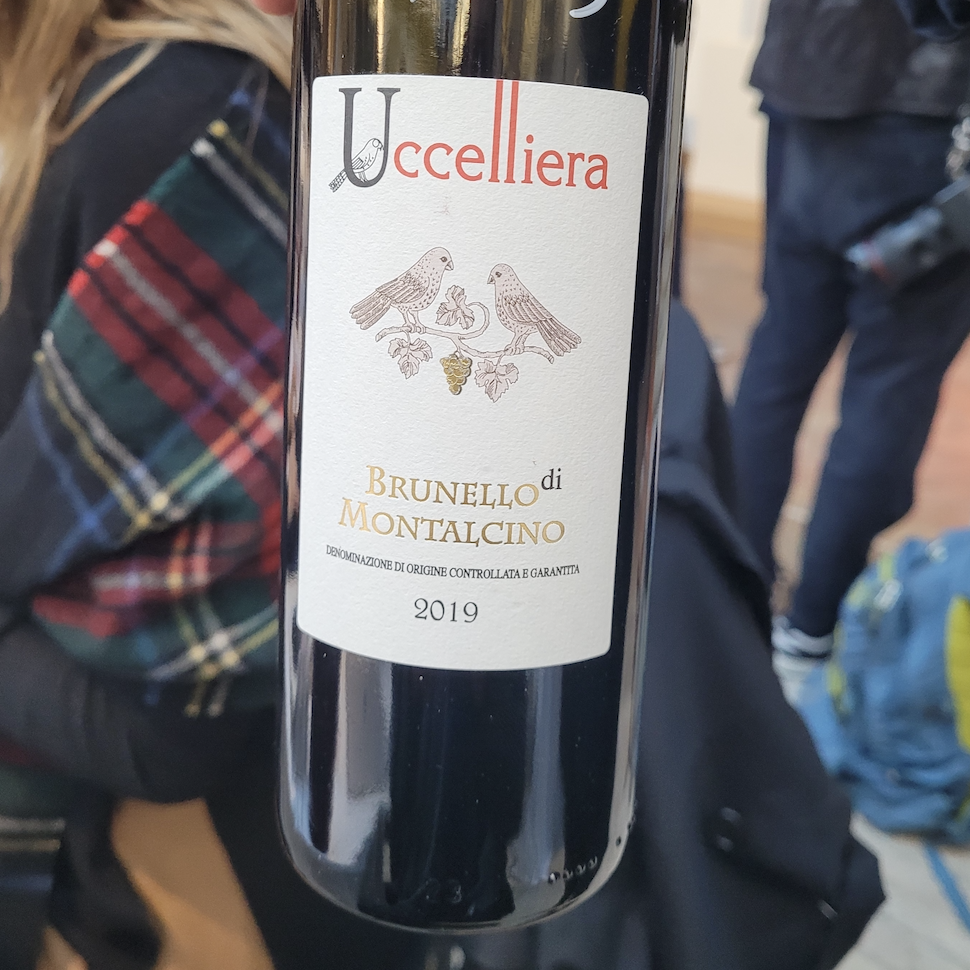
Poggerino Chianti Classico DOCG 2016

You must walk these Radda vineyards to understand what’s in this glass. Regard the way the rows of vines change colour in September and give up a variability of timing. It is these stops along the way where winemaker Piero Lanza makes his picks then crushes, macerates and collectively ferments. It results in the most seamless, albeit high alcohol, glycerin and textured sangiovese. It is Chianti Classico made precisely the way it needs to be made from this very specific place. Drink 2021-2028. Tasted February 2019 fattoriapoggerino  vins.balthazard   @vinsbalthazard  @poggerino  @VinsBalthazard

Poggiopiano Chianti Classico DOCG La Tradizione 2016

One of the new standard bearers and setters for San Casciano sangiovese. A massively structured Annata that will need rest and will eventually emerge in time. While more traditional than the sister ’16, this comes as no surprise considering the name. Tart and intense, Alberese demanding and purposed, asking for and being granted the request for a return engagement at a much later date. Drink 2022-2029. Tasted February 2019

Fattoria Montecchio Chianti Classico DOCG ‘Primum Line’ 2016

Quite reductive and wound with a tightness that moves the adage one step up the rung, the one that says sangiovese needs time. For ’16 it’s a matter more pressing and a story yet to be told. It’s tart but so very layered and there’s a feeling of Galestro here, with a darker chalky texture and mouthfeel. Perhaps not the same weight as 2015 but more power and structure by a mile. It’s about preference of style and vintage variation. You may have to drink 15s while this waits two or three years before seeing the glory unfold. Drink 2021-2027. Tasted February 2019  fattoriamontecchio  @FattMontecchio  Fattoria Montecchio

Fattoria Dell’aiola Chianti Classico DOCG Aiola 2016

High glycerin, chewy, textured, tangy and ropey red fruit Annata with great purity though certainly up there in ripeness, alcohol and ambition. Reminds of the dark and intense sangiovese from Galestro marl west of the Arbia River though it’s not as deeply rendered and the tonality is a bit higher. Surely seems like Castelnuovo (and turns out it is) but in the northeast, off of slopes abutted up against Radda. If you’ve not heard of Aiola you and I need to know this estate and their vineyards, which certainly present sangiovese right up there with some of Chianti Classico’s finest. Drink 2020-2027. Tasted February 2019

Ormanni Chianti Classico DOCG 2016

The combination of Poggibonsi and Barberino val d’Elsa is Ormanni’s trump card, a straddling of commune borders that creates the ideal estate Annata in perfect alignment. It’s really layered and sumptuous, old school at heart but clear, pure and honest, always looking straight ahead. There’s no rusticity but there is this red fruit beauty that reminds of days of yore. Drink 2021-2027. Tasted February 2019  #fattoriaormanni  rogersandcompanywines    @rogcowines  @fattoriaormanni  @rogcowines

Monte Bernardi Chianti Classico DOCG Retromarcia 2016

Retromarcia represents 75 per cent of the production from vines under 50 years old, averaging 13 years of age, from all four points on the estate. “The workhorse,” says Michael Schmelzer, giving perfume, tannin and a great chew. La matematica è bella; 75 per cent of 75,000 bottles on 75 hectares, of Galestro (70 per cent), purple-brown shale/pietraforte-sandstone (20) and Alberese (10). Made by adding stems back, but not before in the carbonic maceration way. “because that’s winemaking. I feel that I’m adding tannins and de-acidifying naturally, increased in cold years and decreased in the hot ones.” It’s a matter of potassium bonding with tartaric acid dropping out. Longer macerations occur in high acid (i.e. cooler) years and vice versa. Last tasted February 2019  michaelschmelzer  #montebernardi  @montebernardi  @Michael_MonteB  @montebernardi  Michael Schmelzer 

Retromarcia is like the Swahili “pole, pole,” a reminder to us all to slow down, gear down, chill out, take it easy. This Annata has been a 100 per cent, Panzano in Chianti estate grown sangiovese since 2010. The fruit is some of the sweetest and purest sangiovese out there, with a scent of anise, a whiff of tobacco. It’s unequivocally “molto frutto,” with glycerin texture, especially for the frazione and also nosing spiced floral notes. Fresh, light in the tannic department, light in weight and also in alcohol (13.5). Just a joy to drink. As a match to an Italian racer it’s a sprinter, Gino Bartali, Cavaliere di Gran Croce, Gino the Pious, 1950 winner in San Remo. Drink 2018-2021. Tasted September 2018

Vicchiomaggio Chianti Classico DOCG Guado Alto 2016

Guado Alto is the first, La Prima of four Vicchiomaggio cru, so small in fact that it delivers only 50 hL (6,000 bottles). In Annata it is so bloody fresh and perfectly tangy, modernist with really fine acidity. Matured only in large barrels it’s a stylish, chicca of a sangiovese with the kind of length needed to sooth and keep you coming back for more. Clarity and focus in Annata incarnate. Drink 2019-2023. Tasted February 2019  castellovicchiomaggio  @vicchiomaggio  @SignatureWS1  Castello Vicchiomaggio

Montefioralle Chianti Classico DOCG 2016

Harvested at the end of September from the warmest and most gracious gifting vintage. Stock in colour may be unnecessary but oh so beautiful this one, deeply hued, rendered of a purple that’s really just perfect. Grace in acidity meets depth of fruit and such polish. There is nothing rustic about this and yet the perfumed meets spice profile is exacting and pure for this Montefioralle terroir, which incidentally is three hectares of planted vineyards. Silk in sangiovese, honest and pure. Drink 2019-2025. Tasted September 2018 and February 2019  montefioralle  @MontefioralleWi  @montefioralle  Lorenzo Sieni

Vallone Di Cecione Chianti Classico DOCG 2016

Old school, volatile, earthy, funky and very, very real. From Panzano, organic, natural and all you want in sangiovese of this particular ilk. Dreamy. Long and immediately gratifying due to being battle ready. Drink 2019-2021. Tasted February 2019

Stomennano Chianti Classico DOCG 2016

The Grassi family borgo is in close proximity to the medieval town of Monteriggioni just outside of the Chianti Classico zone. Their vineyards are Castellina in Chianti, of sangiovese and colorino grown on loose and not very deep soils where beneath there is grey clay and tufaceous rock. Their’s is lovely rich and delicate sangiovese of ripeness and verdancy intermingling. Great presence, length, high acidity and texture fills the mouth. Cool, minty, savoury. Drink 2020-2026. Tasted February 2019

Renzo Marinai Chianti Classico DOCG 2016

One step closer to a deep, deep understanding is where Marinai has arrived with this welling, oozing and fully rendered Greve sangiovese. There’s some true depth and fullness to this fruit and this constitution, not to mention architecture. Certainly filled with warmth and spice for the lovers here. Drink 2020-2024. Tasted February 2019

Poggiopiano Chianti Classico DOCG 2016

Nothing hidden here about the level of texture, aromatic layering and tannic amenability, wholly consistent if much improved impression from San Casciano in Val di Pesa. It’s a big, nearly boozy and welling to oozing sangiovese of deep cherry and next level modernity. Will please many camps, especially Italian wine lists that must have this avant garde producer on board. Drink 2021-2028. Tasted February 2019  poggiopiano.galardi  @PoggiopianoFI  @FattoriadiPoggiopiano

Bindi Sergardi Chianti Classico DOCG La Ghirlanda 2016

Full sweet natural fruit, a reductive shell and real savoury Mocenni character add up to an Annata from the generous vintage without a tenebrous bone in its body. Chewy mouthful, collected acids and finely grained tannins. A step up again for the Castelnuovo house. Drink 2020-2025. Tasted February 2019

I Fabbri Chianti Classico DOCG Terra di Lamole 2016

Take the Lamole terroir and taste it again and again. Though it may be confounding the first 10 or 12 tries it continues to educate and with time you are unable to avoid the understanding and the temptation. There is a layer beneath the Greve level, of altitude and aspect but also a variability that deems sangiovese impermeable within a context of repeatable. Hard to explain, really. Sweet as original fruit, a genesis of Chianti Classico and a fineness that slides and grooves effortless and with succulence. Drink 2021-2027. Last tasted February 2019

Lamole in Greve is the source for this high toned, stone-tined and savoury aromatic young Annata, traditional, mildly volatile in its wise rusticity and surprisingly tannic. This is the sort of pressed sangiovese you’d find over the decades, from information and technique passed down and upheld by the current generation. Continues the thread with more microbes and real live tart notes to taste. Builds and builds upon its old-school foundation. Drink 2018-2021. Tasted February 2018

San Fabiano Calcinaia Chianti Classico DOCG 2016

Rich and earthy, full dark liqueur, lots of barrel and needing time. This is brawny but needs time. It will settle, eventually and offer great pleasure. The biggest Annata from Poggibonsi, deep in clay and consistently structured this way. Drink 2022-2026. Tasted February 2019  sanfabianocalcinaiasrl  @SanFabiano  Società Agricola “San Fabiano Calcinaia”  Soleil Fine Wines

La Querce Seconda Chianti Classico DOCG 2016

Nicely funky volatile, a rich cherry liqueur, full of spice both out of the vineyard and from the barrel. There is this chewiness that is also marked by a mouthful of spice, candied flowers and calcareous chalkiness from big variegated stones in the soil. Crunchy Annata out of San Casciano in Val di Pesa. Drink 2020-2026. Tasted February 2019  laquerceseconda  #laquerceseconda  La Querce Seconda

Borgo La Stella Chianti Classico DOCG 2016

Cool climate Chianti Classico on full display here with a vintage advantage though you can’t take the hill or the place out of the sangiovese. Seriously savoury, gariga style and a cherry liqueur that’s as much liquor and very much singular of its La Stella own. Quite fine. Drink 2020-2024. Tasted February 2019  borgolastella  #BorgoLaStella  Borgo la Stella

Podere Terreno Chianti Classico DOCG 2016

Terreno’s lights are flashing with sangiovese of bright fruit and ultra high tones. That said there is a macerated and extracted depth to this, with layered acidity and grippy tannins. It’s very youthful and not showing its best, at least not yet. Might allow the shell to be cracked in a year or more likely two. Drink 2021-2027. Tasted February 2019

Vecchie Terre Di Montefili Chianti Classico DOCG 2016

Talk about exotics. The aromatics are all perfume and spice; cinnamon, clove, liquorice, star anise and Szechuan pepper. It’s a veritable Pho broth in Greve in Chianti, sangiovese clothing. The barrel is an obvious influence but the fruit remains lightning quick and culpable for place. I find it a bit thin and lean for 2016 so it’s a bit of a disparate accumulation. Drink 2021-2025. Tasted February 2019

Castellinuzza E Piuca Chianti Classico DOCG 2016

From Greve in Chianti, the sangiovese di Lamole here is strong, youthful, firm and pure. Bright red fruit so typical of the frazione indicates limestone for cherries. Also a salumi of Mortadella and yes, that sort of connection is imaginable and possible. Very fresh with big acidity from the cool night air at 550m above sea level. The inclusion of 10 per cent canaiolo only accentuates the sapidity and the terraced sense of place. If it were a rider it would be Felice Gimondi, precocious and gregarious, a rookie who was a 1965 Tour de France winner in his first try. Drink 2018-2022. Tasted September 2018 and February 2019  castellinuzza.chianti.classico    @poderecastellinuzza

Terre Di Perseto Chianti Classico DOCG Albòre 2016

Sweet and candied, high acidity but not in a VA way, though alt-morbido malic and hard candy shelled. Needs some time for the crackling and the cracking to flake away. Drink 2019-2020. Tasted February 2019
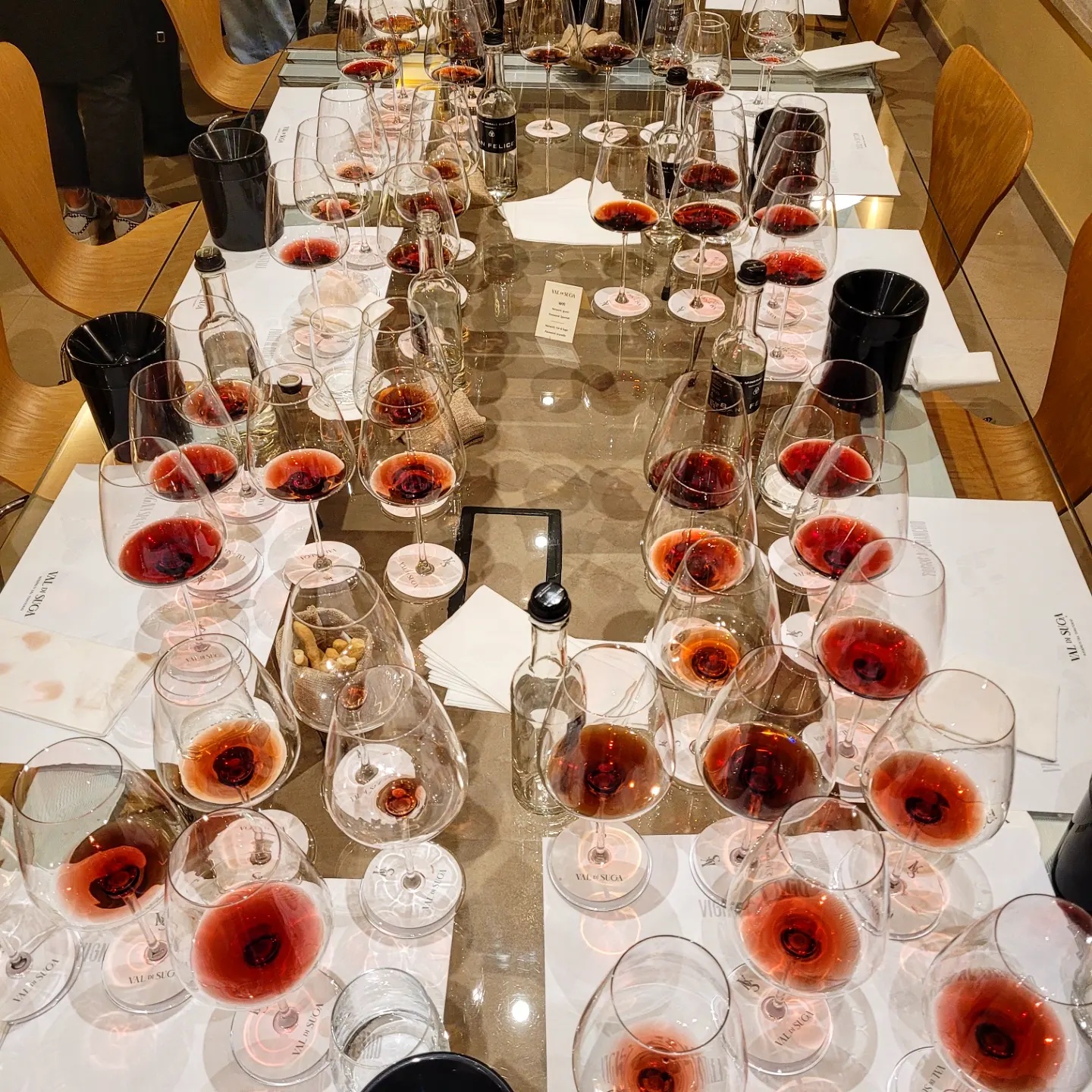
Montecalvi Chianti Classico DOCG 2016

A highly recognizable style of Annata, tangy, soil chalky and textured of sour cherries, ripe and a bit feral. Well on its way to celebrate a Greve in Chianti terroir with this sandy clay (and some Galestro) soil. Drink 2020-2023. Tasted February 2019

La Sala Chianti Classico DOCG 2016

Quite the traditional sangiovese offering up a seriously parochial San Casciano sense of place. Grounded in pace from that place in peace out to the Galestro and Argilla Rosa. Drink 2020-2024. Tasted February 2019
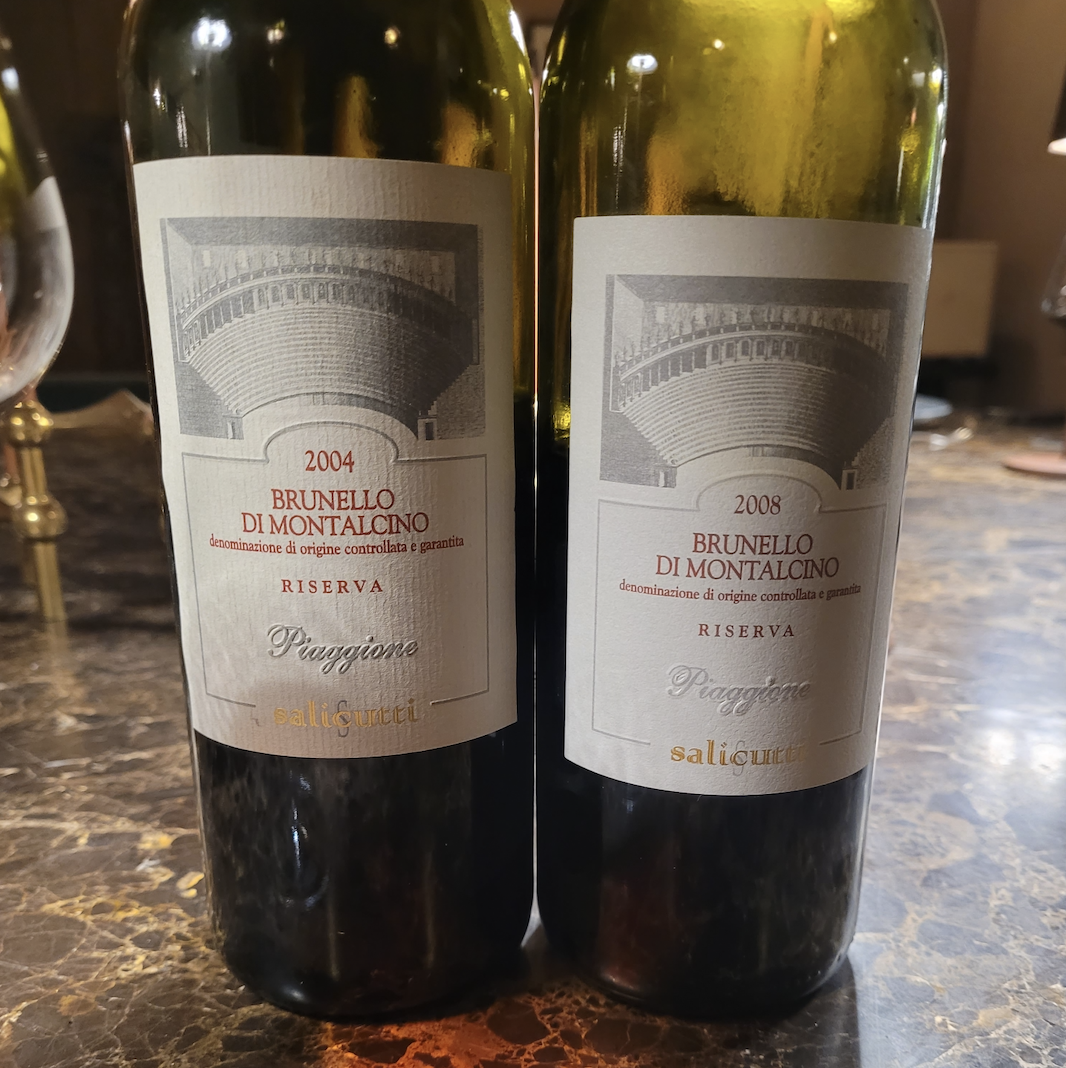
Le Masse Di Lamole Chianti Classico DOCG 2016

From Annamaria, great-granddaughter to founder Emilio Soccio, who with her husband Giuliano tend to some of Lamole’s highest vineyards at upwards of 650m. Their’s is a highly traditional, high acidity and sapid sangiovese at the rooftop of the territory, “il tetto del Chianti.” From the generous vintage and showing well early. Some canaiolo and colorino field blended in only accentuate the loyalty and the adherence to place. Authenticity incarnate right here. Drink 2019-2023. Tasted February 2019

Fattoria Rodáno Chianti Classico DOCG 2016

Dirty, peppery reductive and dark fruit, black earth, sharp, woody, old school and spicy. Storm clouds looming, threats on the horizon. Take shelter. Return in two years when the dust has settled. From Castellina in Chianti. Drink 2021-2025. Tasted February 2019

San Giorgio A Lapi Chianti Classico DOCG 2016

San Giorgio a Lapi is an unusually floral and aromatic sangiovese, much more so than many. It veers and teeters to the edge of geranium but manages the balance to hang on the right side of 2016. It’s a bit brittle on the palate but there is no oxidative or raisining tendency. Perhaps just a bit out of sorts at this time. Drink 2021-2025. Tasted February 2019


Chianti Classico Riserva DOCG 2016

Poggerino Chianti Classico Riserva DOCG Bugialla 2016

Piero Lanza’s selection is so smart, protracted and tidy within the framework of what a Poggerino Riserva just happens to be. It’s almost as you find yourself scanning the vineyards and your mind’s eye settles on a few perfect plants. You taste the berries from those vines and imagine them bound together in wine. This is the sangiovese mimic of those isolated points of a very special vineyard and also a perfectly constructed stone house in Gaiole, variegated, tightly intertwined and just beautiful to behold. Perfectly streamlined, built to last a few hundred years, but I would suggest to drink it 280 years before that. Drink 2022-2032. Tasted February 2019

Fattoria Pomona Chianti Classico Riserva DOCG Bandini 2016

Purity of handsome fruit lingers left, right and centre within a commission of structural components designed by nature on the road past Villa Pomona up through Castellina in Chianti. The vintage is a rich and elastic one for Monica Raspi and one she must have just delighted in simply being a part of. Elegance as the opposite of vice. Reaches all the essential peaks, plateaus and precipices where supple fruit settles and rests. Drink 2021-2028. Tasted February 2019

Tenuta Cinciano Chianti Classico Riserva DOCG 2016

Cinciano ’16 Riserva bleeds straight from the Annata in style though because of the berry concentration and extra aging it misses out on the transparency and the basic purity, at least at this so very early stage. Tannins are grippy while fluid and the vineyard waits in anything but vein. Drink 2022-2027. Tasted February 2019  fattoriacinciano  @fattoriadicinciano

Cigliano Chianti Classico Riserva DOCG 2016

A sleeper this vineyard, on a peninsula out into a great wide void of San Casciano set beneath fairy tales and vistas to set you straight. This is Riserva made to do the same, to ground you in a garden, on a perch, with nothing but tranquil surroundings. Succulent acids support ripe fruit egged on by the variegate of the soil. Drink 2022-2028. Tasted February 2019  Villa del Cigliano  dbwineandspirits    @VilladelCigliano  @dbwineandspirits

La Sala Chianti Classico Riserva DOCG 2016

What an absolutely lovely Riserva from La Sala in San Casciano, with purity, transparency and clarity. The acidity is perfectly uplifting and the fruit a loyal follower. The tannins are sweet, supple, supportive and once again the fruit tows the tannic line. Structured for a slow, soft and delicate incline, followed by a graceful decline. Drink 2020-2027. Tasted February 2019  cantinalasala  @LaSalaVini  @toohotrightnow  La Sala  Stefano Pirondi

Riecine Chianti Classic Riserva DOCG 2016

Older schooled, tart, tangy, intense, welling and oozing Riserva. Very, truly, obviously Riserva. Like ’13 in a way but the vintage is almost a polar opposite so it’s clearly an estate style in as much as there ever could be. Built to age for a long time. Drink 2022-2029. Tasted February 2019

Vicchiomaggio Chianti Classico Riserva DOCG Vegan 2016

This is note merely John Matta being whimsical or polite but a wine born of an idea to bring something to market that many people demand, want and need. A vegan wine from a specific vineyard area where no animal products are used. The whole process is certified, including the cork. There is a peppery reductive meets soil movement, here with a “natural wine” feel though it’s all red to black fruit with a stop at purple flowers. Very smooth, lightly tannic, not a rare beef pairing Riserva. Not just vegan friendly. Truly vegan. Good on you John Matta. Drink 2019-2020. Tasted February 2019


Chianti Classico Gran Selezione DOCG 2016

Vicchiomaggio

Vicchiomaggio Chianti Classico Gran Selezione DOCG Le Bolle 2016

Named for the small group of houses to which the vineyard abuts, a vineyard where the large gathering of stones resembles Les Galets of Châteauneuf-de-Pâpe. The total prodcution is 50 hL (6,000 bottles). Just going into bottle as we speak, there is a structural architecture to this Gran Selezione that stands apart. La Prima is the wine for everyman while Le Bolle will appeal to ye who wants edgy, artistic and deferential. The blood orange, cranberry, pomegranate and sapid-herbal attributes are all part of the extenuating mix. Terrifc single-block within a single-vineyard expression of solo sangiovese Gran Selezione. Drink 2022-2031. Tasted February 2019


Chianti Classico DOCG 2015

I Fabbri Chianti Classico DOCG Terra Di Lamole 2015

A blend of sangiovese and canaiolo, circa 10 per cent, including the vines planted in 1964 (by Susanna’s father Guiliano), plus 1989 and 2002. This is a whole ‘nother matter of fruit sumptuousness and exquisite tannin. There’s a fine bitters note and fruit that enters into an area where it’s almost a middle-aged, mature version of the Lamole sangiovese. The tannic structure is so very different than the “Lamole” surely because of the altitude 200m lower down the slope. There’s a bass note here apposite to the higher Lamole horns, but also something umami and salty. Wow did this need a year to open up. Last tasted February 2019

Into the Lamole lair we delve from I Fabbri with 90 per cent sangiovese (grosso) plus canaiolo nero of great potential and it should also be said, probability, if not right now then soon, very soon. This terroir is different and if we are not quite sure exactly how or why then perhaps the producers are not quite sure either. The fruit is 98 per cent ripe but I can’t help but wonder how greatness could have been were the number perfect. That may be asking too much but something is amiss, even while the dusty excesses and fine acidity support of wild red fruit is there to see, sense, feel and enjoy. That is the end game after all. Drink 2018-2022. Tasted February 2018

I Fabbri Chianti Classico DOCG Olinto 2015

From sangiovese (80 per cent) plus merlot, named after great-grandfather Olinto Grassi, nonno, patriarch and pioneer in Lamole. From vineyards at 500m and aged part in concrete plus part in barrels. A very different wine because of the merlot, more of a big hug, with sweeter and less tart acids, not the same caress in the mouth, but surely silky and easy. Get into the glass and note the orange, blood or just simply orange. Fresh and spirited regardless of merlot or not. Pair with Pino Daniele, the Italian Van Morrison. Drink 2019-2023. Tasted February 2019

Poggio Borgoni Chianti Classico DOCG Curva Del Vescovo 2015

From San Casciano, “Curve Of The Bishop” is a rich and nearly voluptuous sangiovese with more than enough fruit to withstand the triad of wood, acidity and tannin in great, systemic but manageable concentration. Yes, a truly concentrated CC to be clear and surely so, with extensions in many directions but mostly length. Drink 2020-2027. Tasted February 2019

Fattoria Montecchio Chianti Classico DOCG ‘Primum Line’ 2015

A sangiovese with five per cent Alicante Bouschet and the first of its kind in terms of Annata. Diverts 10 per cent fruit by way of selection from the original and traditional Chianti Classico and it’s quite a beautiful wine in 2015 though not as structured as 2016. It’s like a compromise between that ’16 and the coming ’17. Drink 2019-2024. Tasted February 2019

Villa Montepaldi Chianti Classico DOCG Tagliafune 2015

Very syrupy, sweet raspberry fruit, bled from San Casciano clay and some grey stone. A tannic wine too, older schooled though there is a clarity in that world it lives. Correct, proper and successful. Drink 2021-2025. Tasted February 2019

La Casa Di Bricciano Chianti Classico DOCG 2015

Pretty floral syrup that’s neither too viscous nor tart, not exactly right but certainly finding some balance. A bit resolved with melted barrel notes in vanilla and lavender. Smooth, silky, satiny, easy drinking sangiovese. There was more verve from the adversarial ’14. Drink 2020-2022. Tasted February 2019


Chianti Classico Riserva DOCG 2015

I Fabbri Chianti Classico Riserva DOCG I Fabbri 2015

From the first passage through the vineyard, when all the fruit is ripe and ready to go. Now Riserva gets serious, or not really at all, but the table is set anew with an entirely new look at the category. Chew on this fresh and leathery wine for awhile. Take your time, feel the heights and the aspects. The acidity is incredibly fine and the effect like a blood red sunset to the west of the Lamole valley. There may be five per cent canaiolo in here, hard to say because of the way and the timing of the picking. Sapidity and salinity are perfect streaks through the sunken, drunken, oxygenated red fruit. Length all the way up to Terrata and La Sala at 100m and back. Drink 2020-2029.  Tasted February 2019

Monte Bernardi Chianti Classico Riserva DOCG Sa’Etta 2015

From the sandstone (Pietraforte) soils, this is sangiovese (100 per cent) with canaiolo and malvasia nowhere to be found. The vines are also 50 years old and sure as the sun sets over the towers of San Gimignano the force of soil stone nature here is rigid, forceful and grippy. Still ripe in every which way; fruit, acids and those added back in stems that lift, strike and place. Two years in botti grandi and then another year in bottle. The perfume is blue and purple flower, i.e. violets and lavender but it almost matters very little because of the perfectly polished tannins. Straight as an arrow, chewy and sapid as the vein of that rock runs long. It’s all about instinct, long macerations and adding back those stems, because that’s the way Michael rolls. I get it because that’s the way I cook. Drink 2021-2027. Tasted February 2019

Monte Bernardi Chianti Classico Riserva DOCG 2015

It was 16 years ago that Michael Schmelzer came to Panzano with the idea to make pure and elegant wines that represent the territory. Monte Bernardi’s vineyards are in the “belly-button” at the heart of Chianti Classico, with vineyards spread out beneath the winery from 300-410m. Tannins from the Torchiatta are what Schmelzer calls “the best that you can get.” What you get from the pressings and then the ripe stems brings sapidity and longevity. The Riserva is a vineyard selection from only Galestro soils, across the road, 95 per cent sangiovese, with canaiolo and malvasia. Stems are added back in and the wine is aged in botti grandi plus tonneaux, if there is more than the botti can hold. The idea here is the soft constitution from rocks that absorb more solar radiation and yet the acidity is wound remarkably tight so imagine what’s coming next from the Pietraforte in the Sa’Etta. Sapidity is exceptional, in fact in spite of fruit right on the button it’s really quite everything. Drink 2019-2024. Tasted February 2019

Podere Campriano Chianti Classico Riserva DOCG Le Balze Di Montefioralle 2015

Exactly Campriano, distinct and luxurious in its own perfect way. it’s so very Riserva, unctuous with red fruit that seems almost completely absent of wood. because of the land, a vineyard set in the forest “and still so very present.” That also means it’s in the wine. recognizable every year. Always. The vineyard is west facing above the Greve River, on old terraces, with old stones. You can drink this now even if it’s so young. Last tasted February 2019  poderecampriano  @ElenaCampriano  Elena Podere Campriano Lapini(Podere Campriano )  Elena Lapini

Just put to market, the vintage will surely have so much to say and that it in fact already does, with a combination of perfume and spice. Still dusty, with fennel and endemic herbs, teas and brushy plants. There’s a raspberry to dried currant fruitiness that ’14 doesn’t have, also more mid-palate flesh and overall juiciness. A different sort of structure, still with long capabilities but will likely go into a drier fruit profile after the seven year mark. Elena Lapini is a very busy agriturismo and viticoltore proprietor these days and if these most recent 100 per cent sangiovese from two sides of the Greve river tracks are any indication, she’ll be busier than ever before. Drink 2019-2025. Tasted September 2018

La Cappella

Podere La Cappella Chianti Classico Riserva DOCG Querciolo Unfiltered 2015

Querciolo sees one year in barriques, of which 20 per cent is new. Takes off straight away from where the ’15 Annata wants it to, from a generosity and a perfume that stands apart because the vintage says so. There’s still a minor peppery reductive note and that will serve this wine so well going two decades further. One sip lingers so long on the back of the tongue, right in the middle, lingering like a bite of something marbled, a protein of layered flavour. Here you really get a sense of marine sediment and rocks one over the other, in perpetuity out of the soil. Drink 2021-2030. Tasted February 2019

Val Delle Corti Chianti Classico Riserva DOCG 2015

The 45 year old vines are responsible for this single cru, 100 per cent sangiovese that while older is yet bolder than the barrel sample tasted of 2016. Here you feel the hottest weeks of the summer, less elasticity, fluidity and fluency than that 2016. And yet it is so intuitively elastic, fluid and fluent in mineral rich, marly limestone soil. Here from the Corti Valley on the east facing slope above the river below. Richness, weight and red fruit so specific to this place meets the Radda acidity head on but can’t help but be submissive and respectful. Pure expression of estate, valley and commune. Truly. Drink 2020-2029. Tasted September 2018 and February 2019

Montecchio Chianti Classico Riserva DOCG Premium Line 2015

The Riserva is 95 per cent sangiovese with cabernet sauvignon and alicante bouschet. It ages for 26 months in grandi botti. Quite rich, even reductive, with its upside not yet available. As for Riserva it’s ripe, ripping, big, high in acidity and so necessary to wait at least two more years for it to settle down. Pulsates, quivers and sends shock waves around the mouth, with heavy-hitting sapidity and structural shudders. Quite amaro herbal and very, very long. There is some serious structure available for the log haul here. Impressive and demanding. Drink 2022-2028. Tasted February 2019

Podere Castellinuzza Chianti Classico Riserva DOCG 2015

Podere Castellinuzza’s Riserva is one of Lamole’s most generous (100 per cent) sangiovese though not without the very particular salty-mineral-sapid streak the hill always delivers. Only 1,500 bottles were produced of this highly traditional Greve-Lamole ’15 and it’s most certainly a perfect foil for fresh pasta with pumpkin, roast chicken, pork and rabbit. Drink 2020-2027. Tasted February 2019

Montefioralle Chianti Classico Riserva DOCG 2015

So very young and powerful, just a few months in bottle. Primary and beautifully perfumed with the liquified deep fruit chalk of the frazioni and a hit of exotic spice. An intensity that ’14 just did not show and the polish we know to be the kind mastered out of Montefioralle by this passion project house. The liqueur is again one of textured silk, a viscosity to nearing the vanishing point of glück and in the end, total domination. Drink 2019-2024. Tasted September 2018 and February 2019


Chianti Classico Gran Selezione DOCG 2015

Bindi Sergardi Chianti Classico Gran Selezione DOCG Mocenni ’89 2015

There’s pure unbridled surprise in the delicasse and the gentility of this Gran Selezione, one of the more and even most charming of them all. The Mocenni texture is very present, very full, no holes, no peaks or valleys, just a calm and easy nature that finds no reason for stress. Pure fruit, Galestro and Alberese interwoven freshness. Proper, sweet and forward thinking tannins with a future ahead indeed. Drink 2020-2029. Tasted February 2019

Tenuta Cinciano Chianti Classico Gran Selezione DOCG 2015

Cinciano’s is a true effort and tour de acidity force in 2015, with fruit drawn from the oldest blocks of great rock filled soils in Poggibonsi. It’s perfectly perfumed with exotica and the brushy herbs that grown on hillsides and in between rows. A wise and cultured GS that stands apart for its beauty and its power. Forged with great passion and insights to be clear and sure. Drink 2023-2033. Tasted February 2019

Le Fonti Di Panzano Chianti Classico Gran Selezione DOCG 2015

Thirty months in wood and a year in bottle later, this top estate wine is the pinnacle of the Le Fonti aromatic certainty. A big vintage to be sure and one that extrapolates in every which way but loose. Taut, tight, firm, grippy and every other subset of structure you can imagine. The 100 per cent sangiovese ideal is acquiesced and believe it or not it failed DOCG designation on the first try. Who might see this as light, atypical or not ready for international prime time is surely missing the point. Drink 2021-2028. Tasted February 2019

Fattoria Montecchio Chianti Classico Gran Selezione DOCG 2015

The vintage 2015 is the one for Montecchio ready and purposed for the category, done up two-thirds in barrel and one-third in amphora. You can feel it both in cured aromatics but also the texture, part salve and part hard savoury candy. Really takes on the Selezione category with charm and power, with ultra fine tannins and a balancing number of personality in acidity. Does what it must, by the reigns and drives a point. Here the terracotta amphora designed and built by the family business is employed to raise the character and the wonder of the sangiovese. The one third amphora adds great interest, something many other in the category could certainly use. The Riserva does not taste like this, nor does it carry this level of spice. Quite a thrill, long and rich. Drink 2022-2030. Tasted February 2019

Vallepicciola Chianti Classico Gran Selezione DOCG 2015

Chianti Classico and Gran Selezione get neither more modern nor more forward than this. The 2015 is a brooding boozy and stylish sangiovese. Dressed up of a flashy liqueur and a massive attack. Dark fruit, lots of wood, with notes of creosote, graphite and vanilla. Just wow. Drink 2022-2029. Tasted February 2019

Vicchiomaggio Chianti Classico Gran Selezione DOCG La Prima 2015

Made with a few percentage points of merlot, this is the a small-ish production Gran Selezione, a 100 hL output so the number is approximately 15,000 bottles produced. Really high-toned aromatically for Gran Selezione and then a palate of great richness and layering. Truly a selection created sangiovese, with drinkability and steak house amenability. Suits the style and the intent so perfectly. Drink 2020-2027. Tasted February 2019

Chianti Classico DOCG 2014

Castell’in Villa Chianti Classico DOCG 2014

Immediate amore for the aromatics and the lack of supposition, for how this 100 per cent sangiovese is naturally careful, subtly handsome and respectfully direct. Lean but without angles or sharp, pointed edges, nor overtly weighted down in tang. Floral notes are stated in grace and like all of the Principessa’s wines from these Castelnuovo Berardenga vineyards, the singularity of restraint for power and and purity is duly recognized. Drink 2018-2024. Tasted November 2018 and February 2019   Castell In Villa  Les Importations Olea inc.  marino_castellinvillarestauran

Chianti Classico DOCG 2013

Castello Di Lamole Chianti Classico DOCG Le Stinche 2013

From the Lamole producer connected to one of Tuscany’s oldest castle properties, going back one thousand years and a high altitude vineyard restored 16 years ago. This is the sangiovese of the Macigno (sandstone) soil terraces of Lamole, richer than many of the frazione and deeper in textures and transitions. Raised in cement and tonneaux there are floral as well as smoky notes, almost tobacco but more like wild herbs and wood smoulder. You’ve not likely ever whiffed (or tasted) anything quite like Le Stinche, also known as “carcere delle Stinche,” the prison on Via Ghibellina in Florence. Drink 2020-2024. Tasted February 2019

Chianti Classico Riserva DOCG 2013-2010

Castell’in Villa Chianti Classico Riserva DOCG 2013

A blend of parcels ”though we know more or less the fields from where they come,” says Principessa Coralia Pignatelli della Leonessa. Here we are introduced to the clarity and functionality of what Castell’in Villa has always purported to be, traditional while always moving in a forward direction of evolutionary necessity. There is no guessing game being played and the aromas are expressive of the property, in everything that grows, plus all that sits beneath and slowly rises to the surface of the fields. Flowers and rocks, together with grapes. It’s that simple really. Finesse and reality. Drink 2019-2028. Tasted February 2019

Chianti Classico Riserva DOCG Poggio Delle Rose 2010

From the hill parcel planted in 1990 to the old selezoine massale clones, from the original property, not the current “Chianti Classico” clones. “And there is a difference,” insists Principessa Coralia. Three or four years in grandi botti and older tonneaux so no, it’s not even close to ready. Yet the fcat that you don’t explicitly notice the tonneaux is its magic. A big and complex vintage with variability in temperature and precipitation but at the crucial moments it gave what was needed. There is a special presence about this sangiovese, because of the source but also how alive, bright-eyed and expressive it is. This pulses, vibrates and reverberates with ancient seabed salinity. No loss to finesse but more time will be required, to turn back time and back pages, for the true clarity and calm disposition to settle in. Extraordinary wine of restrained power and exceptional sangiovese. Has always been Riserva and “will never be Gran Selezione.” Drink 2021-2035. Tasted February 2019

Chianti Classico Gran Selezione DOCG 2013

Capannelle Chianti Classico Gran Selezione DOCG 2013

This first edition of Gran Selezione for Capannelle is an amzing combination of authenticity and polish, with Gaiole’s infamous acidity and herbology combining to deliver a promise of today and for the future. The estate produces no Annata because winemaker Simone has always felt that the acidity here would be over the top in the freshest wines of the year. This Gran Selezione confirms the ideology but the near future may change the plan. Meanwhile kudos for waiting before making Gran Selezione and matched to Tagliatelle con Funghi Porcini. Drink 2020-2026. Tasted September 2018 and February 2019  capannelle  @Capannellewines

Fattoria Di Lamole Gran Selezione Chianti Classico DOCG Vigna Grospoli Antico Lamole 2013

From Paolo Socci in Lamole who also produces the alternating Annata/Riserva “Le Stinche” and who just may be Chianti Classico’s greatest and long-winded storyteller. Socci’s high altitude Greve-Lamole Grospoli vineyard is filled with Macigno stone and while Le Stinche adheres to history and tradition (both in style and the ode to the Florentine Prison’s connection to Lamole), this Gran Selezione hyperbolizes and accentuates both sides of the equation. Very smoky, high dense texture and big acids with this underbelly of sandy, gritty and grippy tannin. Once again, a most singular expression of sangiovese and Chianti Classico. Drink 2021-2029. Tasted February 2019

Good to go!

Godello

Panzano Sunset

Twitter: @mgodello

Instagram: mgodello

WineAlign

Let the gems begin

Wine review at VINTAGES of Norman Hardie Chardonnay Niagara Unfiltered 2012 by Godello

Wine review at VINTAGES of Norman Hardie Chardonnay County Unfiltered 2012 by Godello

If the premature lashing of cold, snow and ice weren’t enough to get you thinking about holiday shopping, get thee to a Liquor Control Board Ontario store on the weekend. Same time, every year. The LCBO stocks the shelves, isles and pyramid displays with more booze than anyone should ever be faced with in one visitation.

Related – Holiday wine gems hit November shelves

The bi-weekly VINTAGES release calendar whirs, undulates and clutters in rataplan overload at just this very juncture in preparation of the Christmas rush. Shoppers will tear down the walls of wine, beer and spirits, only to hear the burloque fall silent when the clock strikes closing time on the evening of December 24th.

There are exactly 35 days left in 2014 to do the right wine thing for that father, cousin, colleague, mentor or loyal, long-time suffering employee. Please heed the warnings and do not buy crap for the one you love or think you should. No matter who you are picking up a bottle for, treat them well and with fermented grape respect.

There are three category of wines to look for, at least within the context of this buying guide. First there are the values under $20, wines made so properly they should cost double or triple what they do. Second are the expensive but honest wines. These are the true gems that make most $100 bottles look bad. Last are the $100 examples that are truly iconic, despite their cost. Though priced beyond the means of most, they are not a mistake to take a flyer and give as a gift. After the hand off is complete, the all-knowing, unspoken nod will follow.

Here are 22 picks from the VINTAGES November 22, 2014 release, in stores now.

From left to right: Cavino Grande Reserve Nemea 2008, Frescobaldi Castello Di Pomino Pomino Bianco 2013, Moris Morellino Di Scansano 2012, Louis Bouillot Perle D'aurore Brut Rosé Crémant De Bourgogne, McWilliam's Mount Pleasant Elizabeth Sémillon 2007, Josef Chromy Pepik Pinot Noir 2012

From left to right: Cavino Grande Reserve Nemea 2008, Frescobaldi Castello Di Pomino Pomino Bianco 2013, Moris Morellino Di Scansano 2012, Louis Bouillot Perle D’aurore Brut Rosé Crémant De Bourgogne, McWilliam’s Mount Pleasant Elizabeth Sémillon 2007, Josef Chromy Pepik Pinot Noir 2012

Cavino Grande Reserve Nemea 2008, Pdo Nemea, Greece (295618, $17.95, WineAlign)

Nemea strikes again. Dark rust, earth juiced on and of the rocks. Like Sangiovese with attitude, made by Romans, like Syrah the way it was made in mythological times, by Greeks. A classical garden. This is actually quite modern and expressive for Agiorgitiko. Acts as if it were a touch clay (or amphora) baked but it’s really just a Peloponnese take on oak aging (18 months) and further bottle rest (12 months). This is right in its window and will be friendly for three to five years more. What a steal.  Tasted November 2014  @DrinkGreekWine

Frescobaldi Castello Di Pomino Pomino Bianco 2013, Doc Pomino Bianco, Tuscany, Italy (65086, $19.95, WineAlign)

With thanks to Chardonnay, the Castello di Pomino 2013 elevates Pinot Blanc to a level not really found anywhere, save perhaps for one or two examples out of B.C. This one really leaves a tannic impression, not unlike some impossibly off-dry Pinot Gris from Alsace. There is a really sophisticated level of ambiance and a semblance of a distinctly rocky intent. Like high quality Sancerre or Chenin from Silex soils, the grain and veins running through the palate and the texture are coarse and cursive. This one writes a new script for Frescobaldi’s Florentine, Apennine mountain estate. Fresh, ventilated and airy as if breathing from blue skies at high altitudes. I can’t recall tasting this level of excellence before and would look forward to no less than five years of enjoying what it brings to the Tuscan table.  Tasted November 2014  @FrescobaldiVini  @liffordretail

Moris Morellino Di Scansano 2012, Docg, Tuscany, Italy (992560, $19.95, WineAlign)

A primarily (90 per cent) Sangiovese with smatterings, though not inconsequential, of Merlot and Syrah. From (non-estate) vineyards in Poggio La Mozza (Grosseto). Morellino Di Scansano, to a wine and exemplified here, sports a firm jaw and an air of tragic nobility. The question is why should it only find occasional psychic prominence as a Sangiovese go to. Moris Farms makes the lesser-known accessible, with a (sees no oak) modern accent of dark fruit and spice atop simple, pleasurable Sangiovese. Pleasantries exchanged, the 2012 MdS will work dinner, inside a Tuscan vernacular and out.  Tasted October 2014  @Morisfarms  @oenophilia1

Louis Bouillot Perle D’aurore Brut Rosé Crémant De Bourgogne, Ac Burgundy, France (48793, $19.95, WineAlign)

The Bouillot Rosé, for my $20 is the most impressive of their line-up, always tender and ripe as if just picked fruit, namely strawberry and raspberry. The Perle D’aurore is a faintly hued and lighthearted take but not light on effort. Elegance defined in Bourgogne bubbles with a savoury edge to give it strength.  Tasted November 2014  @JCB_Wines  @ChartonHobbs

McWilliam’s Mount Pleasant Elizabeth Sémillon 2007, Hunter Valley, New South Wales, Australia (724492, $19.95, WineAlign)

The 2007 is another fascinating study in Hunter Valley Sémillon. Like the ’06, egressing secondary notes have emerged, in equatorial garrigue and fruit having already met its aurulent stenosis. A honey note persists though less so in ’07, as does the level of tempering acidity. This vintage brings out the calm and the clam, though the petrol and the mineral are omnipresent, perhaps elevated. Must keep in mind it’s only $20 but it does fall a bit short in texture and acidity. There is lemon drop and the essential atomic Sémillon stoicism from the Hunter Valley, but it’s a bit thin and hollow up the middle. All that acknowledged, not having a look or two would be a shame. Tasted November 2014  @MtPleasantWines  @PRAXISpr

Josef Chromy Pepik Pinot Noir 2012, Tasmania, Australia (162990, $22.95, WineAlign)

Pepik has elevated aromatic tones and though it appears lithe it reads like a weighty tome. Unique and of its Tasmanian self. Plums come to mind, as does red earth. The phenolic ripeness and varietal indications are ushered in with managed exceptions and are simply spot on. This does not strike as a Pinot Noir that will be long-lived because its black cherry and spice are riper than many contemporary editions in a similar price range, but it will offer great pleasure for two to three years.  Tasted November 2014  @JosefChromy  @bwwines

From left to right: Klumpp Pinot Gris 2013, Creekside Estates The Trad Reserve 2011, Meerlust Rubicon 2008, Tenuta Sette Ponti Crognolo 2011, Faustino I Gran Reserva 2001, Cvne Gran Reserva 2008

From left to right: Klumpp Pinot Gris 2013, Creekside Estates The Trad Reserve 2011, Meerlust Rubicon 2008, Tenuta Sette Ponti Crognolo 2011, Faustino I Gran Reserva 2001, Cvne Gran Reserva 2008

Klumpp Pinot Gris 2013, Qualitätswein, Baden, Germany (394155, $23.95, WineAlign)

Thoroughly interesting study in German Pinot Gris despite the timid and reserved tonal nature. Aridity in as much as the variety can muster and in the largest, atmospheric sense. Though the palate has some fine-grained texture and feigned sweetness, it’s as if Baden can only do Pinots this way, in Gris and in Noir. Acidity is tempered and a willing accomplice to the diminished components of sugar and pH. A well designed Pinot Gris.  Tasted November 2014  @TheLivingVine  @WinesofGermany

Creekside Estates The Trad Reserve 2011, VQA St. David’s Bench, Niagara Peninsula, Ontario (390336, $28.95, WineAlign)

The Trad ’11 has a classic toast and yeast aromatic waft and so it goes that everything that follows is embraced with curiosity and an open mind. Ginger, citrus, bronze and the sweet scents of the inside of a candy machine, its candy long gone. Creekside’s winemaker Rob Power will never be accused of dialing this sparkler in. Tasting trials help determine the necessary, final blend. The single, Queenston Road Vineyard puts 56 per cent Pinot Noir and (44) Chardonnay, aged 2 years in bottle, together for a highly effective, expansive but not explosive fizz. At 8.7 g/L of residual its dry but not quite falling off the bone. The sweetness is tempered by elevated (9.98 g/L) acidity and tension. Spent 24 months on the lees and was bottled back in February. There is balance and pleasure and a good, stretchy finish. No band-aid. Clean, precise, fizz of the day.  Tasted October 2014  @CreeksideWine

Meerlust Rubicon 2008, Wo Stellenbosch, South Africa (64329, $34.95, WineAlign)

Rubber dust, road macadam and strawberry jam. Fierce Bordeaux Blend home from a hot climate. This has gritty obduracy and doggedness. Like a red blend with a gun, walking the mean streets. Acidity shot through the roof. Bordeaux meets South Africa in every shared, resplendent and promising way. Rasping tannins contain bursting dark fruit, the grain running in multiple directions. Respect. Wait two more years on this and drink comfortably to 2020.  Tasted November 2014  @TrialtoON  @WOSACanada

Tenuta Sette Ponti Crognolo 2011, Igt Toscana, Italy (727636, $34.95, WineAlign)

This is not the modern Crognolo as witnessed in the previous five vintages. In 2011 we have been granted the complex Crognolo. This has must and earth. It has grit and girth. Best Crognolo I have tasted. Tangy Sangiovese, with some chalk in tannin. Will live longer and offer unrequited love seven to 10 years down the road, to the patient and the faithful. Tasted November 2014  @TenSettePonti  @TrialtoON

Faustino I Gran Reserva 2001, Doca Rioja, Spain (976662, $35.95, WineAlign)

It amazes me how kept wines from Rioja keep appearing as if they were just bottled yesterday but not this famous Gran Reserva. Syrupy and caramelized, bright and earthy. Mulled plum and clove with citrus accents. Bretty like a barn’s floor. Cedar and leather, big oak doors. Real mutton Rioja, still tannic, energetic and searing. Kicking it old school but wild and alive. From my earlier, April 2014 note: “Were a full-term lecture taught on the pros and cons of the Brettanomyces brannigan, this Rioja might be exhibit A. Absolutely manifest fruit meets earth, meets game perfume compendium. Call it funky yeast if you must but here is a wine that can be approached by nose only and if the relationship were to end there, novels might be written. Lives on a fermented, catalytic and plucky edge but never submits to the bacterial spindrift. Leaden fruit, red and black, smooth and layered with a tension in tang that is paralyzing to the mouth. Thirteen years old and just hitting a secondary stride, with the oak slowly dissolving and not a hint of coffee or chocolate to be found. Sexy and down to earth at the same time.” Last tasted November 2014  @bodegasfaustino  @Select_Wines

Cune Gran Reserva 2008, Doca Rioja, Spain (393553, $38.95, WineAlign)

Old school. Smells like Rioja. Smells like Spanish spirit and weeds, sinew, gristle and braising pig, all parts in. Smells like cedar, like American oak and a soak in a tub of spa earth and mineral salts. Like “Spanish boots of Spanish leather.” This has already done the evolutionary dance so if you are looking for something to float your natural, honest boat, go here now. In a Rioja world where the times they are a changin‘, it will sail you back in time and away into a Mediterranean sunset.  Tasted November 2014  @Cvne  @vonterrabev

From left to right: Fattoria Dei Barbi Brunello Di Montalcino 2008, Dutton Goldfield Dutton Ranch Chardonnay 2012, Vincent Sauvestre Clos De La Platière Pommard 2012, Versado Malbec Reserva 2010, Laurent Perrier Millésimé Vintage Brut Champagne 2004

From left to right: Fattoria Dei Barbi Brunello Di Montalcino 2008, Dutton Goldfield Dutton Ranch Chardonnay 2012, Vincent Sauvestre Clos De La Platière Pommard 2012, Versado Malbec Reserva 2010, Laurent Perrier Millésimé Vintage Brut Champagne 2004

Fattoria Dei Barbi Brunello Di Montalcino 2008, Tuscany, Italy (928028$49.95, WineAlign)

Firm and in a rustic vein, as per the Barbi dole, this one a bit funkier at the outset than many. Welcome to the classic firmness of 2008, antithesis of the flamboyant ’07’s but plan for 20 plus years of slow food elegance emission. Classic rose petal, tea leaves, dates and earth caked metal in this guy. From my earlier, March 2014 note: “As expected, this is a gritty effort from Barbi, in part the impart of a testosterone-laden vintage, along with the dryer and cooler climate from Barbi’s southeastern Montalcino vineyards. A low and slow ripening will surely translate to extended longevity, but the rusticity and leather/cherry continuum will never disappear. No doubt a classic example and very well-priced for such authenticity, still it can’t be helped to see Barbi’s ’08 as entrenched in an earlier period of time. The wine will need 10 years to soften its edges and reveal the refinement and elegance of a well-documented Brunello.”  Last tasted November 2014  @FATTORIABARBI  @Noble_Estates

Dutton Goldfield Dutton Ranch Chardonnay 2012, Russian River Valley, Sonoma County, California (287854, $58.95, WineAlign)

A study in precision, exceptional quality and poise. Golden rays mixed with misty wisps, cool nights tempering warm days. Just a touch of wood spice pricks the finish. So much flavour.  Tasted November 2014  @DuttonGoldfield  @TheVine_RobGroh

Vincent Sauvestre Clos De La Platière Pommard 2012, Burgundy, France (390534, $59.95, WineAlign)

This Pinot Noir speaks for the two sides of every Burgundy argument, especially considering it comes from the gritty nook of Pommard. First impressions are floral and pretty, with spice and some sort of tropical flora whispering in cooing scents. The hill offers a buoyancy, a lifted spirit and a view of its own sweet regard. Travels through a mid-village weightless hover, then returns to terroir in prime time acidity and tannin to keep time. There is a sweet tart medicinal aspect ratio on the finish and overall this does things correctly. Does not finish with the same suave seduction that it teased at the start but it does continue to impress.  Tasted November 2014  @Select_Wines  @BourgogneWines

Versado Malbec Reserva 2010, Luján De Cuyo, Mendoza, Argentina (316984, $60.95, WineAlign)

Aromatics are racing and rising from the glass. A red rain pouring in and out. Has yet to change course. From my earlier, September 2014 note: “The floral emergence is a lodestar as periscope just now peering up from the seamless cake layering in Versado’s most liberally applied oak-imbued Malbec. The 2010 adheres in sticky savour though it remains two to three years away from finding its true gliding form. From my earlier notes through tastings on Oct. 25 and Nov. 14, 2013. “This ultra-premium Mendozan from the Canadian winemaking team of Peter Gamble and Ann Sperling boasts fruit from “the finest barrels from the finest blocks.” While certainly riding a splintered and jammy horse (what fully extracted Mendozan does not), this reserve Malbec has so much else happening, I owe it my time and focus. Dances to a triple jump height in oozing berry, compacted, brick wall infrastructure and overlapping delineation. Really like the consistency here, with no hollow middle, no umlaut, no pregnant pause. Very well made.” Last tasted November 2014  @VersadoWine

Laurent Perrier Millésimé Vintage Brut Champagne 2004, Champagne, France (983874, $84.95, WineAlign)

The reappraised vintage that was once considered good, now revealing itself as better than good uses examples like the Laurent Perrier Millésimé to drive the point. This is a classically symmetrical blend of Chardonnay and Pinot Noir possessive of much chaste class, incredible balance and held lotus posture. Through its waves of idiosyncratic brioche and linear citrus lines drawn in tactile angles this Champagne is unbent and unbroken. Its seamless transitions glide from delicate aromas, through a textured palate and groove forward in elastic length. Additionally graceful with an ever so slightly advanced and mature style from a mature world in vintage-dated Champagne.  Tasted November 2014  @ChampagneLPUSA  @Noble_Estates

From left to right: Mollydooker Carnival Of Love Shiraz 2010, Silver Oak Napa Valley Cabernet Sauvignon 2009, Château Malescot St. Exupéry 2010, Spottswoode Estate Cabernet Sauvignon 2011, Sassicaia 2011

From left to right: Mollydooker Carnival Of Love Shiraz 2010, Silver Oak Napa Valley Cabernet Sauvignon 2009, Château Malescot St. Exupéry 2010, Spottswoode Estate Cabernet Sauvignon 2011, Sassicaia 2011

Mollydooker Carnival Of Love Shiraz 2010, Mclaren Vale, Australia (242732, $114.95, WineAlign)

While the price is just about as absurd as a “yoga class for cats” or Raine Maida’s voice, it seems logical to wonder aloud how one could question this Carnival as not being one of the biggest and baddest Shiraz you will ever encounter. It’s a veritable run on sentence of Shiraz adjectives, adverbs and hyperbole. If your hankering remains entrenched in elevated alcohol, enormity of fruit, condensed and compressed mineral, lest to be forgetting the viscous ooze of Mclaren Vale syrup, well, then this jester should fill your stocking along with those of the rest of your circle of fortifying friends. From the maw of the beast here – blood gore and fruit guts. Holy crap is this extracted, tannic, mired in impropriety, full conceit and in zero jealousy of other Shiraz. It doth joust. Certainly no lady of peace. Wow.  Tasted November 2014  @MollydookerWine  @bwwines

Silver Oak Napa Valley Cabernet Sauvignon 2009, Napa Valley, California (936039, $139.95, WineAlign)

Magnificent and munificent wine. Really special, magnanimous in every way, ultra-luxurious but not over the top. Alcohol, oak and extraction judged and held in check, equity and in balance. The fruit is pure and delicate, marked by plum, blackberry and hovering licorice, anise and spices. Long in chain and really sweet tannins. Like gazing into a pool of real nineties Napa and across the pond to an older school of reasoning. Tasted November 2014  @SilverOak  @HalpernWine

Château Malescot St. Exupéry 2010, Ac Margaux, 3e Cru, Bordeaux, France (261552, $167.95, WineAlign)

A heightened sense of Margaux reality in 2010 comes from the château with the hybrid name; first from Simon Malescot, King’s Counsel to Louis XIV at the Parliament of Bordeaux. Second, from the post French Revolution château purchaser, Count Jean Baptiste St Exupéry, grandfather of the aviator and writer Antoine de St Exupéry. This has to be the most hedonism ever bottled in a Malescot, within reason of course. The house does not know from over the top, save perhaps for the cost of this 2010. Cassis is certainly here, as is a medicinal tension, firm acidity and the most formidable tannins known to Margaux. The grain, chalk and tincture combine for full effect. This will need 10 years to chill, then go 10 plus 10 more to much applause and the request for a final curtain call. Tasted November 2014  @VinsdeBordeaux

Spottswoode Estate Cabernet Sauvignon 2011, Napa Valley, California (399592, $167.95, WineAlign)

Wow. Aromatics are off the charts. Pine forest, leather, chestnut and cedar, savoury in every wild and sauvage way, but also pure. Berries, tobacco leaf, classical logic, structures and axioms lead me to imagine mid-nineties Paulliac. Seamless texture, ripe but not overripe, rich but never overly grainy. This is super fine and dialed back (with exotic spices and wood spice filling in the holes) in the cooler 2011 vintage. A Cabernet Sauvignon of the most savour and the most class. A ten to twenty year Spottswoode.  Tasted November 2014   @Spottswoode  @Smallwinemakers

Sassicaia 2011, Doc Bolgheri, Tuscany, Italy (480533, $199.95, WineAlign)

Certainly a Sassicaia borne of the earth and the vintage. Cooler, with increased sapidity and elevated aromatics. While not volatile there is certainly an intimation at acetic behaviour. Though supportive in only 15 per cent of the two Cabs blend, Cabernet Franc stands firm in its concentration of tobacco, peppercorns a-popping in the pan and a smoldering of currants over an open fire. This will age for decades and return to its beautiful natural state with time-weathered, rugged facial lines. A leathery Sassicaia this, with tight, drying tannins and in need of two decades to show off its birthright. The 2011 Sassicaia is a loyal, aristocratic example to the Marchese Mario Incisa della Rocchetta’s dream of creating a ‘thoroughbred’ wine where the ideal was Bordeaux.  Tasted November 2014  @Smarent

Good to go!