Twenty-four Canadian wines that rocked in 2024

Godello and Hare

Composing a best of list is something that takes a sedulous amount of time, a year’s accumulation of thought and above all else, ultra careful consideration. When more than 1,000 Canadian wines are tasted in a calendar year, narrowing it down to 24 feels like a profound task and weighty sense of responsibility. These twenty-four Canadian wines that rocked in 2024 represent the twelfth consecutive such register first published in 2013, annually iterated and guaranteed, never gratuitously settled upon and always as a show of Canada’s highest level of quality. Integrity too, which will become clear by the time you finish reading this exercise.

Related – Twenty-three Canadian wines that rocked in 2023
Godello at Dobbin Estate

Seven out of 24 (that’s nearly 30 percent for those scoring at home) are sparkling wines, a number that will only come as a shocking surprise to those who haven’t been paying attention. The math is really quite simple. Cool climate viticulture means longer growing seasons for more developed, therefore riper phenolics matched dutifully by kept acidities. Climates have changed but Canadian growing areas have not yet lost their edge and besides, extreme events are more likely and increasingly the culprit when it comes to extenuating snafu circumstances like crazy cold snaps that take out wide swaths of grapevines. For the most part this country can still hang a wide variety of grapes to create killer sparkling wines. Seven sparklers are here, from five growing areas in three provinces.

Related – Twenty-two Canadian wines that rocked in 2022
WineAlign dines at Hidden Bench

Six of Godello’s 2024s are chardonnay, if for no other good reason than it always being on Canadian minds. What’s the best way to go about growing and making wines of the highest quality? Is chardonnay a victim of its own ubiquity and adaptability? What makes it so special then, as an expression of place, as well as production and technique? Chardonnay should taste like it has come from a place, but also from a time. No one said it was easy but one thing is certain, it’s a hell of a lot easier to make great chardonnay that has been planted in the right location. Still the endeavour is puzzling, like getting lost and running through a maze, fraught with wrong turns and dead-ends. It’s about hunch work, gauging probabilities, accounting for what has come before and extrapolating towards what might be. In Canada trying to find locations that gift the sweet spot is, as if at midnight, where sugar ripeness, acid structure, phenolic ripeness and fruit character will probably meet for optimum results. We who feel like this and nod at one another knowingly are lovers of chardonnay; eager and desperate to be one with its varietal psyche, to imagine it synched in sycophant fixation with our own. Yet all the salient facts and aspects of a wine’s journey, in viticulture, pH, residual sugar, total acidity, élevage and in tasting, are really nothing if we are unable to find the theory of the wine and by extension, the winemaker who made it happen. Fortunately for us the top six Canadian chardonnays chosen here (and the list does not stop at that number), have all made it happen.

Related – Twenty-one Canadian wines that rocked in 2021

Flight #1 at the 2024 School of Cool
(c) i4C

A reminder that “Chardonnay is never too cool for school.” The article published after i4C 2024 had this to say. “Will fully admit to having seriously considered not using the word “cool” in the title for this latest exposé on i4C, Niagara’s annual International Cool Climate Chardonnay Conference. Then good conscience and reality set in because the original dub for Canada’s most important and successful wine congress will always be too good to dismiss. They coined it, built it and people have most certainly come. To foresee and then to consummate this collective pursuit of excellence inscribes Cool Chardonnay into the lexicon of wine forever. Hard to predict just how many more of these joyous to potentially annual profound (four-day) weekends there will be, but were this the last then hundreds upon hundreds of producers, winemakers, media, influencers and consumers over the years will have walked away happy, better for it and with memories to last a lifetime. The extraordinary 2024 edition of i4C went deeper still, to deliver the coolest quality and finest balance between information, socialization, revelry, society and of course, chardonnay. Cool as ever, gotta be cool, relax and never too cool for school.”

Related – Chardonnay is never too cool for school

Twenty Mile Bench

It was a very good year for tasting pinot noir and thus the grape is also well represented with five on the list. No other grape causes more of a stir, is responsible for more hair to fall and breaks more hearts. Does not play well with others, refuses to share, to be blended, to give anything less than 100 per cent. For many, there is no other grape variety. How often does a conversation begin with “what is your favourite wine” and end invidiously with “Burgundy?” While Bourgogne certainly persists as the historic locale possessive of the title “when it’s great, it’s the best,” pinot noir has found immense global success and Canadian soils are largely responsible for that. Thoughts with doubts about pinot noir’s viability in Canadian vineyards have long been laid to rest with proof arranged and clarified after yet another edition of the 2024 WineAlign National Wine Awards of Canada. The judging week saw the fourth most number of flights, all intriguing and arguably the finest collective showing of bottles poured from the fickle grape. From lithe, transparent, high-toned, red berry charmers to darker, brooding, seriously ripe and often tannic iterations. As it has been said, “beauties and beasts, belles et bêtes,” pinot noir the good can succeed one way or another, with harmony and in balance.

Related – Twenty Canadian wines that rocked in 2020

With Magdalena Kaiser

So what is the number one takeaway with regards to Canadian pinot noir? The answer lies in the way winemakers approach their product. Lowest of low cropping to achieve density and concentration is no longer the launching point towards making great pinot noir. Aggressive pressing, intense macerations and long wood aging, especially in newer (and smaller) vessels all lead to astringency and imbalance. All of these things are fading into the rear-view mirror, slowly but surely being replaced by first and foremost, sustainable and regenerative agriculture resulting in healthier vines. In the winery there is less handling, more finesse and attention paid to detail leading to more purity and also clarity in the wines. This is what pinot noir needs. If the most suitable and only the most suitable sites are used, the future will move from optimistic to auspicious. The number one takeaway? Canadian pinot noir has long been searching for and is now beginning to find inner peace. Let’s just hope it keeps on this path, despite and in spite of climate change.

Godello’s annual best of bundle feels easier to create because with each passing year there are so many more wines of wonderment tasted and yet, and yet the jumble is harder to defend. Great wines are not left off the list for reasons of inferiority, deficiency or lack of character. The game is one of numbers and the pool from which to choose grows exponentially every year.  These are the twenty-four Canadian wines that rocked in 2024.

With Heather Rankin – Obladee, Halifax

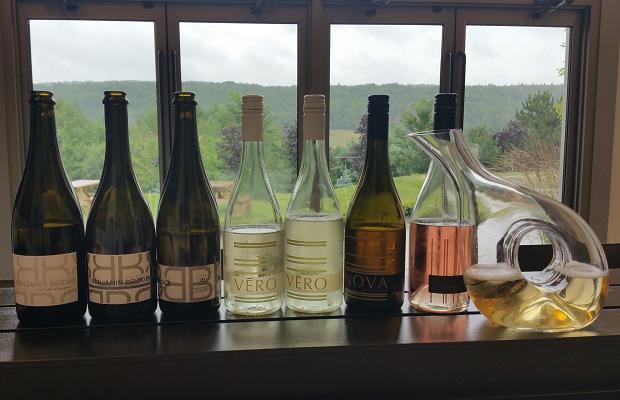
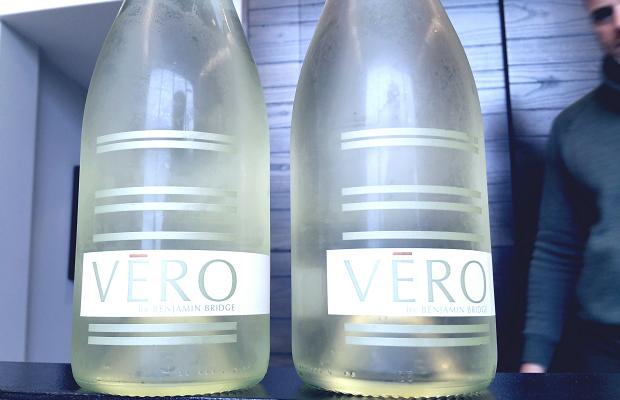
Benjamin Bridge Nova 7 Sparkling 2023, Nova Scotia

Benjamin Bridge is indeed correct and fully justified in self-proclaiming Nova 7 as “Nova Scotia’s favourite wine” because, well it just is. The blend for this resilient, magical, a decade and a half in the making, lightly effervescent and low alcohol sparkler is muscat, ortega, riesling, geisenheim, l’Acadie, vidal and petite pearl. The latter is a cold-hardy hybrid cultivar bred using a cross between MN 1094 and E.S. 4-7-26, grown in 25 US states and four provinces of Canada. The acidity for Nova 7 at 9 g/L integrates with ease and swirls 49 g/L of residual sugar into a comfort zone like a balanced Spätlese, with the peachiest of flavours and a refreshing, thirst-quenching and salty iced tea finish. A throwback in many ways and yet the 2023 is quite frankly as good as any Nova 7 there has ever been. Age a bottle three or four years to see what happens. What could go wrong? Drink 2024-2027.  Tasted October 2024

Blue Mountain Reserve Brut R.D. 2014, BC VQA Okanagan Valley

Aromatic complexity, a chardonnay and pinot noir (55-45) sear of raging citrus but never lean because there is flesh all over the palate. The lemon segments are ripe and delicious, the red fruit character compliments with added spice, the persistence endless and the winemaking clearly coming from a place of experience and respect to place.  Last tasted blind at i4C, July 2024

Always pleased to welcome the BR R.D. into a glass and here is an old but a proverbial goody, that being 2014 and consumers must be reminded just how special this research and development is to determine the excellence of Blue Mountain’s indagative sparkling wine. A blend of chardonnay and pinot noir, the first 10 percent more than the last with some of the most restrained, reserved and demure aromatics in the Okanagan Valley. All ways to say this is lovely, quietly generous and so settled to gift pleasure above all else. A most complex game of citrus and orchard fruit, distillate by nature, expertly seasoned with fine sea salt, white pepper and lemongrass powder. Such a gift nine years after vintage at a ridiculously reasonable price. Drink 2023-2027.  Tasted November 2023

Last House Joie De Vivre Blanc De Blanc 2021, VQA Prince Edward County

No dosage, categorically Brut Zero sparkling wine of leesy significance and gentlest positive oxidation. A bubble set up this way from the start and carrying the torch forward on a justifiably sound plateau that should see no significant changes for the next few years. Only chardonnay and no vintage heat to set its trajectory hastily forward, with full orchard and citrus fruit flavours on a sturdy frame backed by bedrock as backbone PEC limestone intensity. You need to try this – it represents a significant style and profound bottle of sparkling wine. Drink 2024-2028.  Tasted November 2024
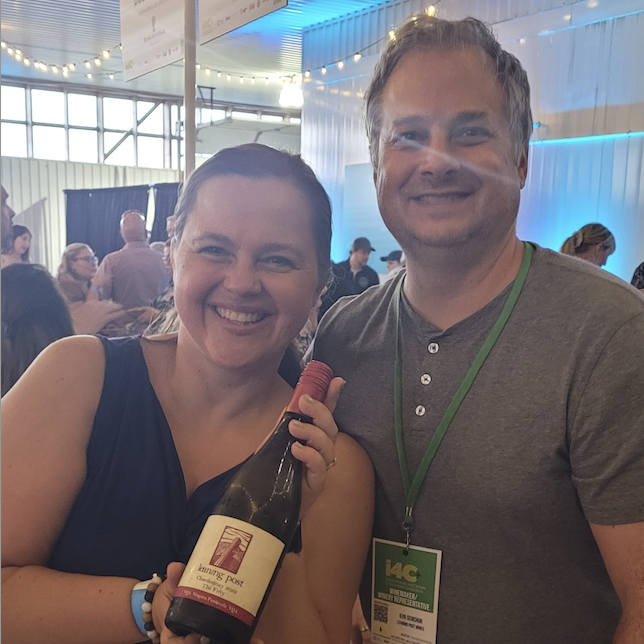
The Senchuks – Leaning Post

Leaning Post Blanc De Blanc Traditional Method Sparkling 2019, VQA Beamsville Bench

Old (35 year-old) chardonnay Hemeris Vineyard vines are the source for the LP traditional method Blanc de Blanc that sees four-plus years on the lees. The sugar is not quite zero but to be honest, nine-plus grams of acidity renders three g/L of RS essentially obsolete. And yet the mouthfeel is full, substantial and acting gregarious. Packed with aromas and flavours, seemingly impossible and so this from a less than heat-cumulate Niagara vintage (that would have made for seriously piqued and biting still chardonnays) is almost a sparkling oxymoron. As far from severe as B de B will be, instead generous and celebratory. Unexpected and mind-blowing in many ways. What sorcery is this pray tell, Senchuk and Senchuk? Drink 2025-2032.  Tasted November 2024

Dean Stoyka and J-J Groux – Stratus

Stratus Brut Nature Zero Dosage 2013, VQA Niagara-on-the Lake

J-L Groux explains that the main factor for making this kind of sparkling wine is PH, “because the aromatics will be built upon six to seven years of lees aging time.” J-L feels this ’13 is going to be the winner now, and for 20 years. Not far off it would seem because of the “partial disgorgement” method, well within VQA rules and thus you arrive at a toasty smoulder unlike any other sparkling wine. The lees are the thing, in fact they are everything. They prevent the aromas and the wine from oxidizing. Amazing.  Last tasted July 2024

Comes across a bit cloudy, at least as compared to the B de B with thanks to the natural, lees left intact style. The citrus component is so pronounced, as is the taut, direct, lean and intense manifold destiny of what is truly a singular Sparkling wine. That being a living, breathing, inhaling and exhaling wine, slowly releasing proteins, acids and realizing its B de B Nature dream. Just amazing what lees can do for sparkling wine.  Tasted July 2021

Released side by each with the Stratus Blanc de Blanc 2013 and while vintage and grape are the same, the similarities almost seemingly, ostensibly and allegedly end there. Yes in fact this 100 per cent chardonnay is a child of the most excellent varietal vintage and like the B de B spent six years on the lees. Comparisons cast aside it is the very fact that because much of the lees were transferred to bottle by a minimalist’s disgorging that this cloudy bubble with a Canadian artist’s series set of labels can’t help but elicit another memory. The Lilies of Monet and their clouds represent neither the horizon, nor the top or the bottom. Nor does a bottle of this Zéro Dosage Brut. The elements of water, air, sky and earth become intertwined in a composition without perspective, or so it goes in this hazy, opaque and dry as the desert sparkling wine. So many layers of lemon can be peeled, juiced and scraped away. If a Stratus wine could be a a riddle, wrapped in a mystery, inside an enigma then here it is. The texture here is palpable and the intrigue factor surely high, so it should be imagined that longevity will be this wine’s calling card. It’s more austere than the Blanc de Blanc but I think in fact it will. Drink 2022-2029.  Tasted November 2020

Tasting The Old Third at White Oaks

The Old Third Pinot Noir Sparkling À La Volée 2011, Prince Edward County

First bottle opened since last tasting this unicorn of a PEC sparkling wine back in October of 2015. Now in a state of settled grace, of a collected, stored and persistent slow release of energy that keeps on keeping on. Every County maker using pinot noir for a Brut zero (or near zero) style should find a bottle of À La Volée 2011 as a reference point because as interpreters they must translate still wines to become bubbles “on the fly,” without waiting for the end to begin, acting with hindsight.  Last tasted December 2024

“On the fly” is not exactly what comes to mind from this 100 per cent Pinot Noir, first Sparkling wine made by Bruno Francois. Calculated, attention to detail and intensity of ideation more like it. Three years on the lees, no dosage and from a vintage to speak in more than whispered voices, of acidity that announces its arrival with immediacy and a summons to contest. The nose does yeast, toast, citrus and ginger. A first release revelation as ever graced Ontario’s waves, as dry as the desert and lingering with switch back traces of its yeasty, toasty self. A single vineyard can be this way, equally and in opposition of natural and oxidative, with a hue less than Pinot Noir, though unrequited as a triumph when you get a ripe white from such Pinot. The production of 1200 bottles is relatively house high in a stunner that needs no sugar to draw up its flavours. Drink 2015-2023.  Tasted twice, July and October 2015

Marty Werner – York Vineyards

York Vineyards Reserve Brut, VQA Niagara-on-the Lake

York Vineyards’ Brut is a two-thirds to one-third chardonnay-pinot noir joint that sees 72 months on the lees. A sparkling sensation taking the country and apparently also the world by storm. The attention to detail, focus and determination are credible, felt with palpable energy and there is no doubt as to how much trial, experimentation and consideration went into making this and other York Vineyards wines. The Reserve moniker may at times feel like an add on but here one can imagine the assessment of base wines and the selection being both a stringent and anticipatory one. This is richness off the proverbial Ontario charts with a toasty-autolytic complex character that defies regularity. Toned, defined and appreciable because the flesh is yet to fully develop. Drink 2025-2030.  Tasted November 2024
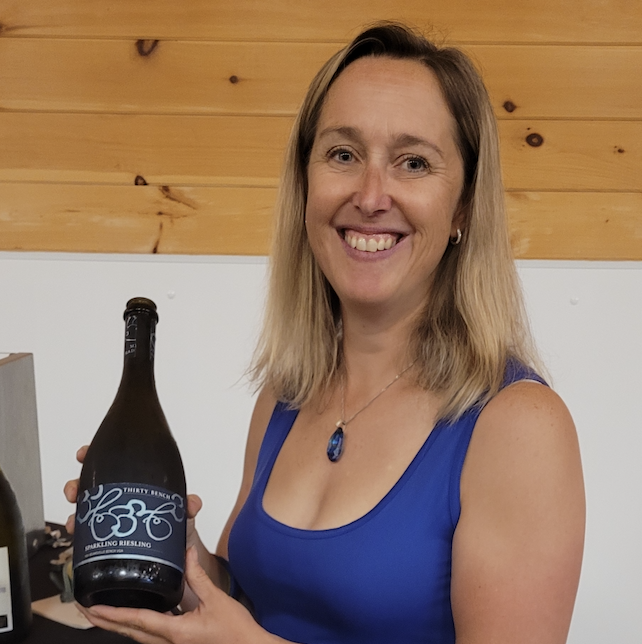
Emma Garner – Thirty Bench

Thirty Bench Steel Post Vineyard Small Lot Riesling 2020, VQA Beamsville Bench, Niagara Escarpment

An Ontario legend in terms of riesling and the one from Emma Garner at Thirty Bench that defies logic with a magical spell cast upon the grapes put to bottle. Probably the driest of the Small Lot series at just 11 g/L of residual sugar, impossibly converted and qualified by just 11.2 percent alcohol with what must be an acidity number that’s just about as high as the sweeter rieslings in the portfolio. The energy and vitality are exceptional, the warmth of the vintage delivers top quality, if absolutely pristine fruit and then there are the qualities of extract and tannin cohabitating at this highest level of composure. The potential here is unlimited. One of the finest rieslings ever made in Ontario and this one goes up to 11. Drink 2025-2035.  Tasted March 2024

Charles Baker Picone Vineyard Riesling 2021, VQA Vinemount Ridge

The word “tannic” does not often first (second or third) come to mind when riesling is the subject but ’21 and Picone from Charles Baker strikes that way from the first sip. This after a most unique aromatic begin, dried herbals for one thing and exotic spicing in a cumin-coriander masala way. Even more so fenugreek leaf and wait for it…maple syrup. Hard to say why ’21 emits this way but when these scents give way to the riesling’s body politic the effect is both exotic and promising. Baker himself says that the “2021 CB from Picone is true to form and represents the vintage properly. Elegant, refined, absorbs the richness with fine acidity. Long floral green toned finish. Will age beyond me.” Indeed this may just turn out to be Charles Baker’s longest lived of the Picones, right up there with the ’06, ’11 and ’16. Drink 2024-2036.  Tasted October 2024
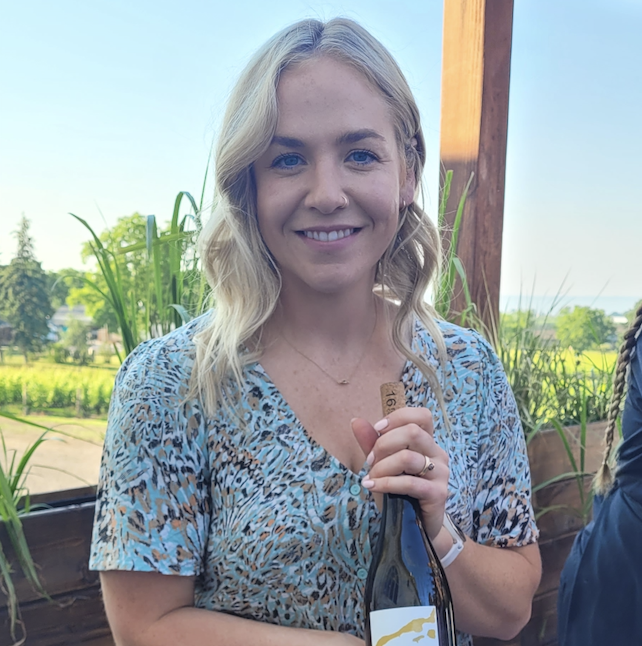
Morgan Juniper – 16 Mile

16 Mile Cellar Civility Chardonnay Single Vineyard 2020, VQA Creek Shores

From a block called Susan’s Vineyard, wild ferment, full malolactic, raised in oak puncheons of light toast. The growing location may be the lower Escarpment’s steppe of Creek Shores but who would not feel, see and recognize this 2020 as truly Bench chardonnay. No ambivalence in the method, execution or design, ample and plush, of an all in lemony curd to speak of the finest and cleanest lees. Truly singular style and without a doubt winemaker Morgan Juniper’s most comprehensive chardonnay to date. Drink 2024-2027.  Tasted June 2024
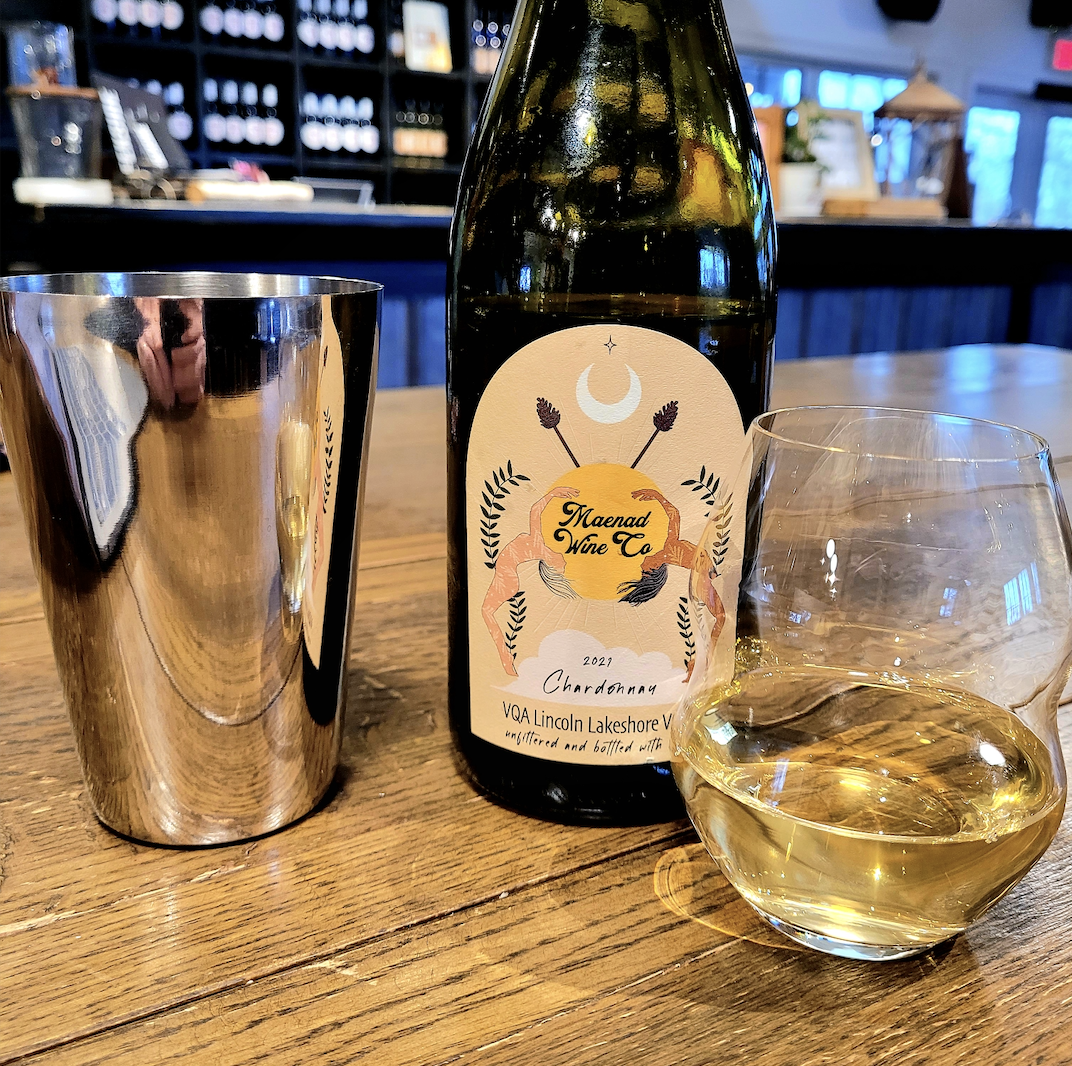
Maenad Wine Co.

Maenad Wine Co. Chardonnay Unfiltered And Bottled With Lees 2021, VQA Lincoln Lakeshore

From the young vines of Grimsby Hillside Vineyard and while this label shall remain nameless, the block is actually 295. “A wild terroir exploration” says the winemaking show that is Yvonne Irving, a winemaker used to making a full bodied style of chardonnay from the Queenston Mile Vineyard. Unmistakably GVH and if you’ve tasted a Senchuk or Bachelder iteration than you’d know the vineyard wins every time. The richesse is belied by this specificity of intensity that is unequivocally GVH. This northern spot produces the most brightness against the backdrop of ripeness, barrel fermentation and oak-aging. Full malolactic but always beneath the fruit, full on lees and amazing crunch. So full up the middle and yet vertical. Real deal, whole package and so much more to come. Drink 2024-2027.  Tasted March 2024

Henry Of Pelham Speck Family Reserve Chardonnay 2022, VQA Short Hills Bench

There is some truth to the advantage of tasting a stellar ’22 like this from Henry of Pelham when a great deal of other chardonnay being poured alongside are ‘21s, but letting chardonnays be chardonnay it matters less than we should actually be talking about. The SFR ’22 lives up to its blind billing and thrills without a moment’s hesitation. End of story.  Last tasted August 2024

The only reductive chardonnay in this flight of nine which speaks to an overall change in winemaking and in fact there have only been three like this, out of let’s say 50 tasted these days. Reductive as much as any chardonnay though the fruit can stand up and hang tightly on the upright frame. Notable style, bit of pyrazine, Behind the veil is most excellent and concentrated varietal fruit that to this mind celebrates a very specific sense of place. A Bench on a step up against a hillside or escarpment and its maker’s care is more than evident. Tastes akin to high end Marlborough chardonnay. Well thought out, serious intention and should age well. A seriously structured and balanced wine that drinks well now but will only improve over the next two years. Drink 2025-2030.  Tasted blind at #NWACS24, June 2024
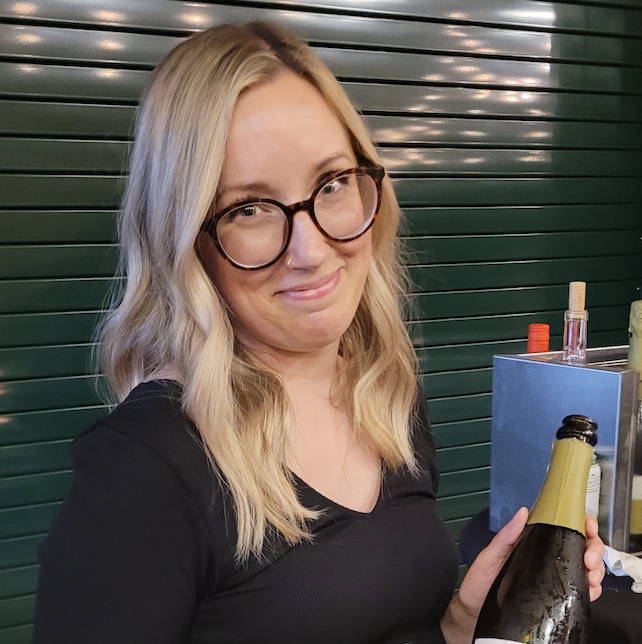
Jessica Otting – Tawse

Tawse Chardonnay Quarry Road Vineyard 2021, VQA Vinemount Ridge

No shock or surprise that Quarry Road ’21 is a mineral bomb, coming away on that rocky side of the 50-50 fruit to stone compendium. Forget everything you’ve heard or read about this arch-cool Vinemount Ridge chardonnay, but also ignore all the noise about unmitigated disaster by vintage. Niagara winemakers should always make quality cool chardonnay these days and Tawse holds more water and responsibility than most. Jessica Otting is ten times equal to the task with a Quarry so precise and focused it may just make a tooth or two feel the mineral pain. A chardonnay chillingly representative of its vineyard yet, rewriting the jazz because of the shall not be named vintage. The naysayers can run away and hide in their holes because history will be kind to these wines, especially when they shine on in tastings ten years forward. No crutch or apology, sorry not sorry. Remember 2011 and 2013. Now forget them and only speak of 2021. Just great chardonnay. Drink 2025-2030.  Tasted at i4C, July 2024

Alex Baines – Hidden Bench

Hidden Bench Chardonnay Felseck Vineyard Unfiltered 2021, VQA Beamsville Bench

My goodness this is special chardonnay, coming as no surprise and if your thoughts and emotions for 2021 Niagara chardonnay need buoying than begin the bob right here. Precise aromas, immediate and echoing, more fruit than frankly necessity should expect as the mother of invention because mineral and saltness demand our utmost attention. Yet the fruit stands firm and even pulpy in the face of the crushed stone infiltrate from a vineyard stop on the grandest of Niagara cru tours. Exemplary to speak on behalf of a vintage that separates wheat from chaff, pinpointed location from just anywhere and adults from the gambling trials of youth. Drink 2024-2028.  Tasted July 2024
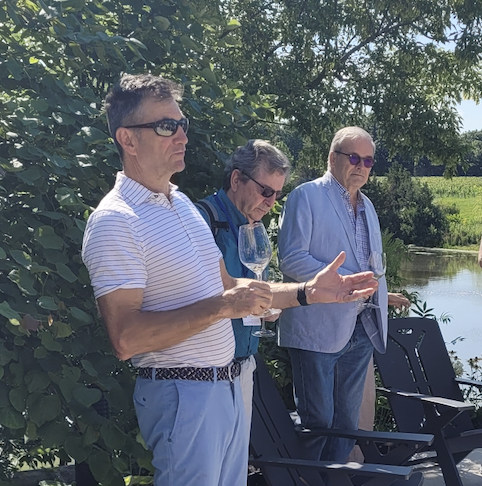
Wade Dobbin, David Lawrason and Peter Gamble

Dobbin Estate Chardonnay 2019, VQA Twenty Mile Bench

Not labeled as such but essentially a Reserve wine taken from a single barrel housing all estate fruit. High level of concentration and richness in the face of a vintage considered cool and challenging, but when you take a smallest of small lot wines like this that just does not apply. Everything about this is classic, basket pressed, natural ferment, full natural malolactic, 22 months maximum for oak aging, Burgundian obviously and medium of toast. “We come to barrel turbid – we like density,” notes Peter Gamble. (Peter) and Ann Sperling really liked this one particular barrel and decided to put it to magnums only. From late September and early October picks, finished at 14.5 percent alcohol and ultimately mouthfeel that rivals some pretty warm wine growing regions. A chardonnay that moves beyond Bourgogne to offer up its very own definition of Niagara’s Twenty Mile Bench.  Last tasted July 2024

This may be just the first stages of Dobbin’s tenure making high end wines from the Twenty Mile Bench but auspicious does not begin to describe the level of sophistication marking these beginnings. The erudite oenological consulting team of Ann Sperling and Peter Gamble have taken chardonnay into territory they are quite familiar with but always keep in mind that top terroir, vineyard conditioning and uncompromising preparation are what collectively set this up for success. This 2019 is from a cool climate vintage out of a cool climate place and recent history tells us that these are chardonnay that live good, long and healthy varietal lives. Luxe yet still crunchy, high quality wood used generously if judiciously and in the end this kind of rocks the world. In a chardonnay way. Drink 2024-2028.  Tasted April 2024

Spearhead Pommard Clone Pinot Noir 2022, BC VQA Okanagan Valley

A bit of aromatic restraint from a pinot noir keeping some secrets and what scents as some whole bunch percentage inclusive style. Good palate richness and berry to citrus emulsion like a fluid smoothie of reds, greens and acidity. Plenty of understated depth, so ample, focused and really well defined. Brightest of the flight, red fruit in flight, breathing easier, acids also up there and structure never too demanding. Could always drink a glass. Drink 2024-2026.  Tasted blind at #NWACS24, June 2024
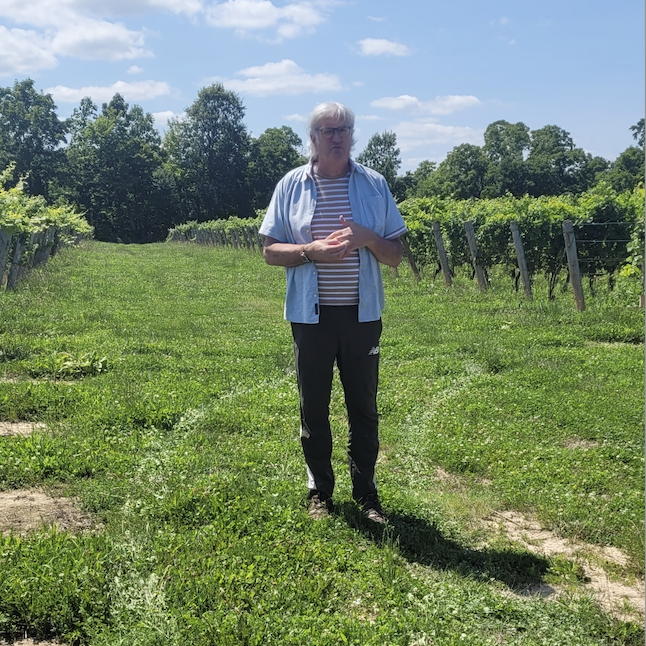
Thomas Bachelder in the wilds of the Twenty Mile Bench

Bachelder Wild West End Wismer Parke Vineyard Pinot Noir 2022, VQA Twenty Mile Bench

For Thomas Bachelder Wild West End, Wismer Parke Vineyard and pinot noir started out as the one of the most mystery, namely because Wismer could not name the clone and the first wine was even more sanguine than that of the Wismer Parke. Which says that the West End’s soil affects the clonal material in exaggerated ways and the question has always been, to tame or not to tame. The answer is vintage and not needing “a weatherman to know which way the wind blows.” Bachleder had to hang loose, stay cautious and learn about the vineyard’s situation, take other’s opinions into account and then proceed with action. This vintage feels like a culmination of necessity, a varietal mother of invention, a reality on display of full capabilities realized. The height of an epoch acceded by a grower and a winemaker on the same page. A wine of intelligence and acceptance because the ferric meets hematic parts oversee and tell fruit what to be and how to act. The people have learned how not to get in the way and the degree has been earned. The question is what’s next? Drink 2026-2033.  Tasted November 2024
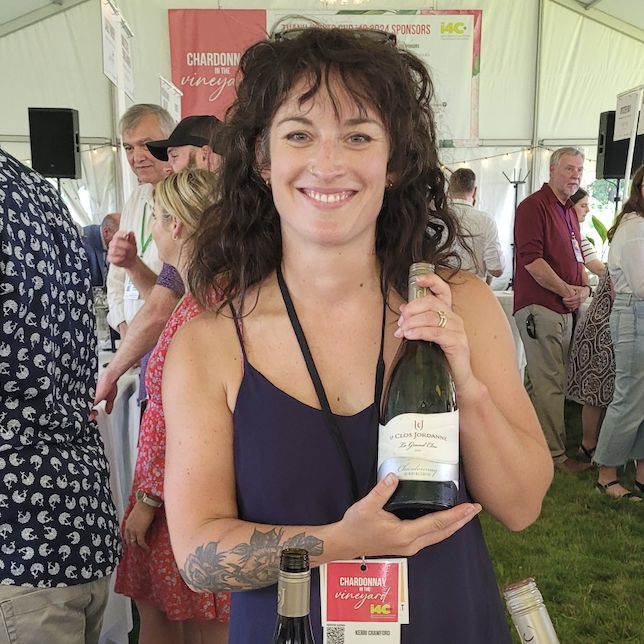
Kerri Crawford – Le Clos Jordanne

Le Clos Jordanne Le Grand Clos Pinot Noir 2021, VQA Twenty Mile Bench

As with Claystone Terrace the Grand Clos Vineyard blocks running from west to east move through this fruit gradation from structured and austere through to soft and amenable. For 2021 the middle ground is duly noted with a signature and arch classic Jordan/Twenty Mile Bench pinot noir that sings in youthful life as early as it ever has. The team (Thomas Bachelder, Kerri Crawford and Phillip Brown) have coaxed out the sweetest natural fruit. While it flows with ease it’s also equipped to slow down, reflect, and then re-emerge a few years thereafter, post pause and not atypical varietal dumb phase. Th3 2021 is found to be chic, suave and stylish as ever, fruit in a dark red cherry state and acidity meeting texture for mouthfeel of a most finessed kind. Drink 2025-2031.  Tasted July 2024

Carrying Place, Prince Edward County

Trail Estate Winery Pinot Noir Revival 2020, VQA Prince Edward County

Has to be the top of the top drop for Trail Estate but also for PEC, not to mention perched up there at the precipice of breaching the Provincial price rubicon for all wines. Some are one dimensional, others expressed in two and then there is Trail’s, which most definitely incorporates a third. Reductive and diesel fuelled with almost no precedence towards understanding just exactly what this aromatic unfamiliarity is all about. Confounding and yet a sip quickly adjusts the viewpoint because layers of recognizable fruit glide over the palate. The vintage is worth waiting for, the phenolics so ripe that not a stem should be wasted, while the savoury pastry of said whole bunches makes sure no holes are left unfilled. When the lowest yields and the most stringent selection meet risk-reward winemaking techniques there can be something special to come from all these hopes and dreams. If revival speaks to the human condition, a.k.a. struggles with sin, forgiveness and redemption, well then this pinot noir may just be the answer to a winemaker’s struggle, quest and renewal. Now let’s see her repeat this every vintage, or at least one here and there deemed worthy of the pain, journey and prize. Oh, and please give this at least another year to find its way so that the enigmatic behaviour should wane and eventually subside. Those who can afford the cost will then see the forest for the trees and be granted some personal form of immediate gratification. In the end the question begs as to how we value Revival as a three-dimensional pinot noir? By definition three coordinates are required to determine the position of a point (and a pinot), namely those you can pick up, touch, and move around. But in the end the simple answer is depth, which is what Revival and all great wines simply have. Drink 2025-2032.  Tasted April 2024
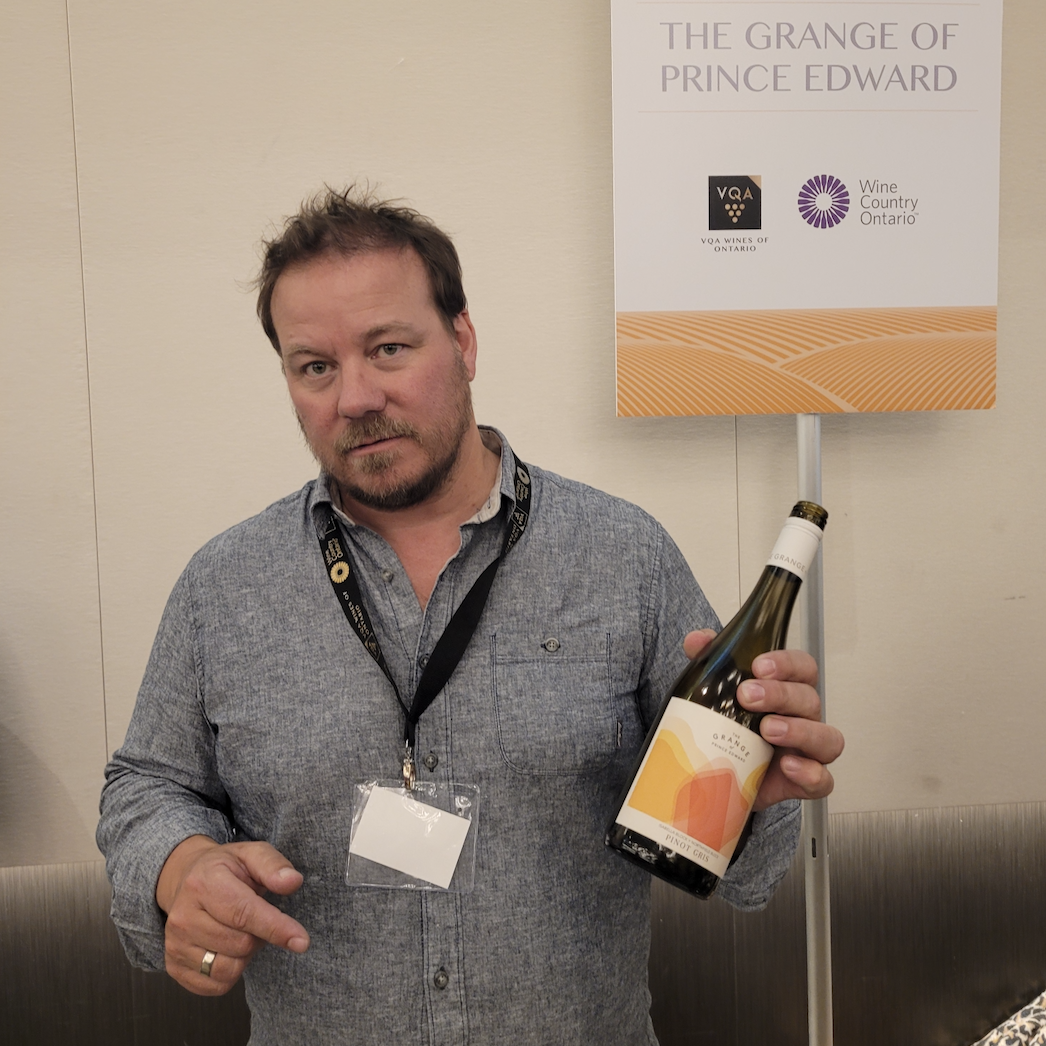
Jonas Newman – The Grange

The Grange Of Prince Edward Aurelia Pinot Noir 2023, VQA Prince Edward County

The golden one, Aurelia, from the Latin Aurelius and if you want to delve deeper, the name for Marcus Aurelius Antoninus, Roman emperor from 161 to 180. Even deeper still the character portrayed by Richard Harris in Gladiator. Also the top of the opus pinot noir at The Grange and what a golden one it surely is. Needs to be because it is bloody expensive but just 98 cases were made of a varietal harbinger that gets the full on spa treatment. Double sorted, first in the vineyard, then at the table. Whole cluster fermented, including carbonic for five days and then foot trodden. Ten days of délestage before being pressed off and blended to finish ferment in tank. Ages in the most expensive wood for 10 months, 33 percent new. Burgundy anyone? Yes this is the idea and the result is a pretty good approximation, all the while tended to by that County high life in acidity with a generous amount of volatile compound effect. Yet the fruit and that acidity are in cahoots, sweet, inviting and enlivening. At nearly $75 there is a whole lot of swagger, ambition and confidence but if money were no object I’d happily drink through a few bottles. Drink 2024-2027.  Tasted December 2024

Roche Wines Amulet Syrah 2021, BC VQA Okanagan Valley

Semi-serious syrah, surely built upon an upright skeletal frame with flesh hanging on its bones and acids piquing through the supple textures of that flesh. Also floral and the meatiness seems to increase with every sip. Iron bloodiness and tannins also grow as you work with what is now becoming a fully serious wine. Chocolate melting and coating the back end with the same function as the tannins of the wine. Drink 2025-2030.  Tasted blind at #NWACS24, June 2024

Phantom Creek Kobau Vineyard Syrah 2020, BC VQA Golden Mile Bench

Here is the syrah bomb that means serious business. Smoked meat, iodine, sanguine and that classic black olive tapenade. A veritable hematoma of red, black and blue, fruit, acid and tannic intensity. If it’s showing some volatility that’s just because of rebellious youth and unresolved structure. This is very serious wine. Drink 2026-2032.  Tasted blind at #NWACS24, June 2024

Okanagan Valley

LaStella Cabernet Sauvignon La Sophia 2019, BC VQA Okanagan Valley

When you look at the last 10 years of Okanagan wine-growing there is no doubt that 2019 resides near the peak and is a vintage that should be filling collector’s cellars. La Sophia is one of those wines, a cabernet sauvignon with a track record that speaks to consistency and excellence. Imminently recognizable as both La Stella and their extension of Black Sage Bench terroir in Oliver. If any local cabernet will resonate with the Oliver equivalent of the Tuscan coast’s Macchia Mediterranea than La Sophia would be it. Not exactly balsamico or garrigue but yes something Italianate, of rich dark fruit set against fine-grained tannin and that brushy, herbal, vinous and resinous scents of the terrain. Black Sage Bench issue, nothing standard about it and it needs a name. Like Okanagan Briar or Chaparral, but regardless you can’t miss the outback in this wine. Yes the 50 percent new wood needs to integrate further and it will, given the requiem necessary, in air and also time. Drink 2026-2035.  Tasted May 2024

Two Sisters Riesling Icewine 2023, VQA Niagara-on-the Lake (375ml)

Spicy waft from the 2023 riesling and a level of viscosity to speak of Icewine made in the most serious of ways. The haute and cultured fragrance makes one wonder why $89 should be the price when three times that amount might make sense, after consideration is taken for the time, effort and work required to make such a wine even possible. The fruit is extraordinary, the acidity at a high level for the vintage and Icewine in general. This is the what, how and why for the category to be celebrated, wines exulted, performance perpetuated and raison d’être defined. Give this two more years to fully see the riesling respond in the way it surely can. Drink 2026-2036.  Tasted June 2024

Good to go!

godello

Godello and Hare

Instagram

Facebook

Godello’s 24-hour Nova Scotia revival

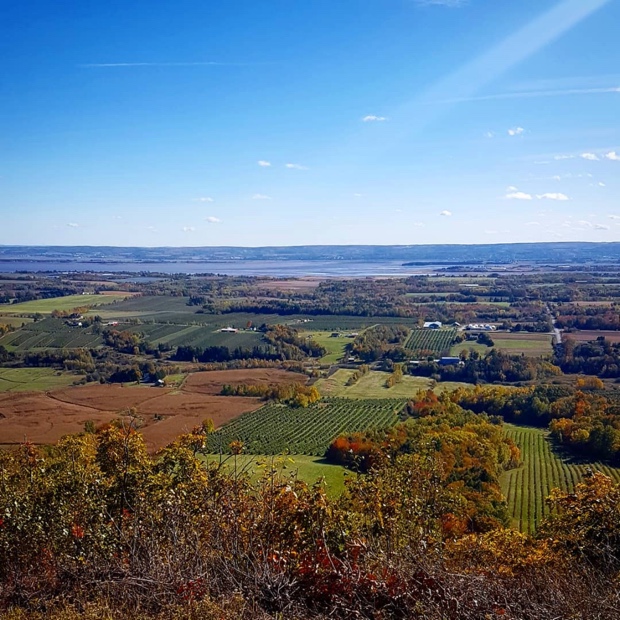
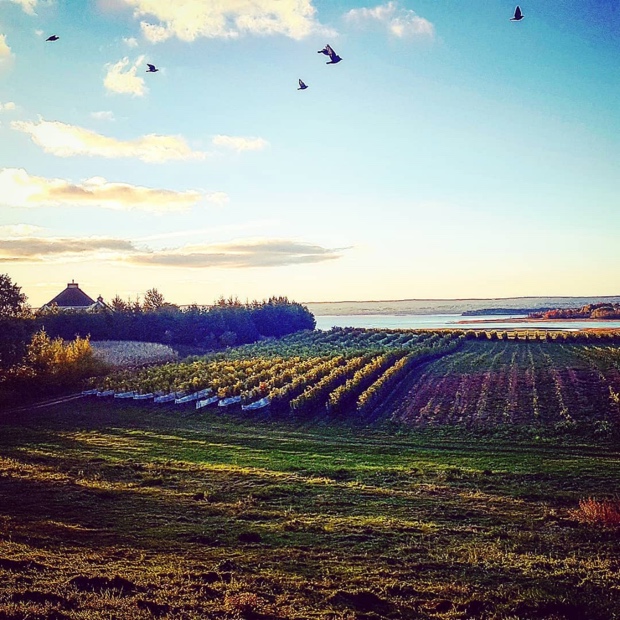
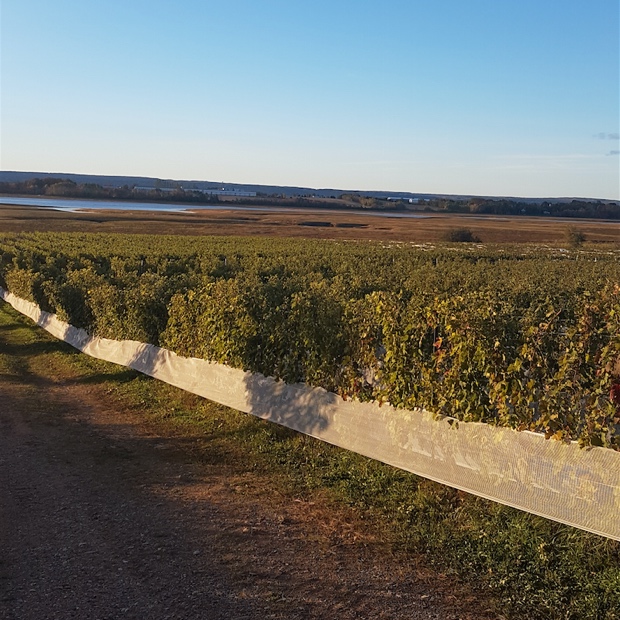
Lightfoot & Wolfville estate vines overlooking the Minas Basin

Neither travel fatigue nor Ida on a wet and grey last day of August and first of September could hardly dampen the spirit nor get in the way of a most rewarding and highly educational visit to Nova Scotia wine country. On Thursday the skies looked like an unripe olive as photographed through gauze yet the fabric gifted a palpable feeling of optimism. As Friday progressed the resolute mood took on a confidence in airs. An exchange of ideas and a refreshed positivism rang from Newport to Wolfville, the Blomidon Peninsula, Gaspereau Valley and through permeate points dotting the Minas Basin. Looking back one month later, a persistent study in reflection wonders if the blood of Nova Scotia wines are closer to seawater than its bones are to soil. Considering the growing of grapes so proximate to the immense tidal sways of the Bay of Fundy can weaken or perhaps even profane the recurring thought, as if in fact in the whole of the Annapolis Valley there may be more earth than sea. If that is the answer then what is the question? Ponder this. Can you taste Nova Scotia terroir in the wine?
A rebirth with new blood. Caitlyn McNamara, Erin Carroll, Cat Taylor. Three new faces of Nova Scotia winemaking. Innovators, bringers of new, fresh and forward-thinking ideas to an industry well past the cusp, fully cognizant of and cementing its command of greatness. Arbiters of viticulture and viniculture who have joined the ranks of teams already entrenched and with positions of leadership occupied; Louis Coutinho, Jean-Benoit Deslauriers, Bruce Ewart, Harold Gaudy, Gina Haverstock, Josh Horton, Rachel Lightfoot, Mike Mainguy, Alex Morozov, Simon Rafuse, Jürg Stutz and Ben Swetnam. There are others of course and yet on my most recent east coast swing to the Annapolis Valley there were six visits in total plus two remarkable if isolated wine experiences and meals; first at Heather Rankin’s Obladee Wine Bar in Halifax and then at Chef Geoffrey Hopgood’s Juniper in Wolfville. Add to that an ocean submerging of 300 bottles of sparkling wine and some after the fact assessments of more Nova Scotia bottles. Funny how a 24 hour jaunty through Nova Scotia wine country is the stuff of bagatelles, dear and near to a naturalist’s heartstrings, familiar as family and yet wrought with equalizing, objective professionalism. Please read on for a 2021 update to winery profiles and tasting notes for 40 wines from Nova Scotia.

Related – Consider the Gaspereau Valley

Winemaker Ben Swetnam, Avondale Sky Winery

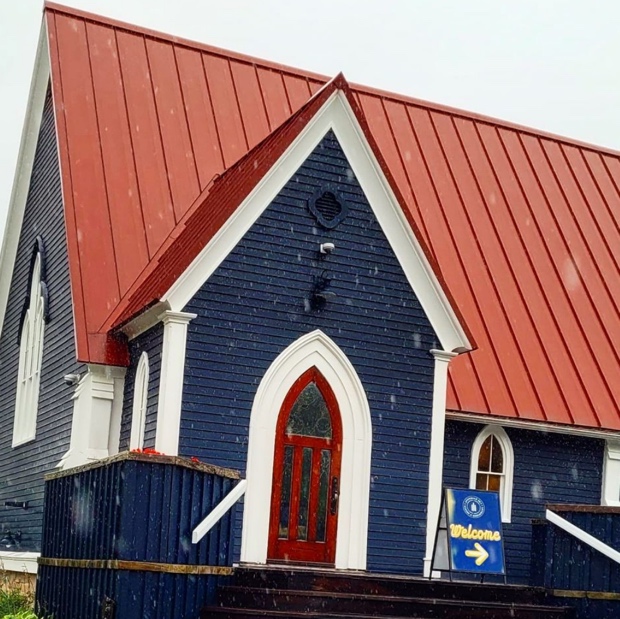
Avondale Sky Winery, Newport

Andrew and Mary Bennet first planted the vineyard in 1987, in one of the hotter provincial zones. It would have been an old dairy farm, with an original schoolhouse, six old dug wells and the same number of split properties/buildinAvila,gs on the farm. In 2008 they realized the 12.5 acres was a bit much so put it up for sale. They were picky about the buyer and keen to keep it going. Winemaker Ben Swetnam was at Petite Rivière on the South Shore at the time and was hired by Chef Ray Bear, then Avondale sold five months later to Lorraine Vassalo who kept Ben on. They relocated an old hay barn from down the road without water and doors but that first harvest went through beautifully. The Coutinho family bought Avondale Sky Winery and Restaurant at the tail end of November 2019. They lost 95 per cent of their crop to the 2018 frosts. As an example l’acdie’s primary, secondary and tertiary buds all come out at the same time, not exactly frost protection and all hybrids were lost. The original 12.5 acres have turned into 25 which now includes an acre of pinot noir and this coming Spring the plan is to add more, along with pinot gris (as far as cleared land) with a possible five cares uncleared that could be used in the future. Up to 5,000-5,500 total cases at this point. Vineyard manager is Pete Smits and has been at Avondale for five years. The family are all involved; Louis (vineyard), Avila (finance), Sean (hospitality), Karl (CEO) and Jamie (Social Media).

Avondale Sky Winery

Avondale Sky Winery Gamay Pet Nat 2019, Nova Scotia ($50)

From a grower (Andre Dant’emont) in Mahoney Bay who has a small amount (he sold winemaker Ben Swetnam 96 kilos) with the intention of making a red from whole cluster and a gentle mash. Swetnam instead decided to “let this happen” because it just smelled clean. An as it happens sparkling pet-nat with just the right amount of lees, and a quick three day riddle so that it wouldn’t explode as Rosé P-N is want to be a little jumpy. Bloody delicious, as juicy and forthright as could possibly be. Bottled on November 18th, 2019, only 23 bottles made, from grapes brought in November 2nd and 3rd. Showing with vigour, intendment and kept determination. Drink 2021-2023.  Tasted August 2021

Avondale Sky Winery Méthode Traditionelle Blanc De Noir 2013, Nova Scotia ($75)

While Ben Swetnam had wanted to dabble in sparkling going back to 2009 he can thank everyone in the Nova Scotia industry for showing him the ropes. That includes Gina Haverstock at Gaspereau, Bruce Ewart at L’Acadie, Simon Rafuse at Blomidon, Jean-Benoit Deslauriers at Benjamin Bridge and others. The 2011 would have been the first vintage of pinot noir production with the intent of making sparkling wine, of hot to cool years and all others in between. Dijon clones and a warmer edge of a ’13 season, a riper style but brought in at classic sparkling numbers, acids 11-12.5 and brix 17-19, picking in the third week of October. An early vintage. Intensity meets richness halfway there, fruit flavours are exceptional, just shy of eight years on lees, disgorged three months ago. “For the pinot I always wanted to do a minimum five years and the acidity was always there,” tells Ben. “The tertiary qualities were not out yet so the pause every six months kept the decisions at bay.” Got this apricot chanterelle fungi character, mousse and bubble are really in tact, dosage is 7.5 g/L almost fully hidden by that Nova Scotia acidity. There is something about this sight that maintains higher acidity levels while sugars rise but as an example perhaps it’s the gypsum based soil underneath the whole vineyard, or the tidal rivers and the specific diurnal fluctuations, cooler at night and “it’s something we can always rely on, in every year, that backbone of acidity.” So very Nova Scotia. Usually 500 bottles produced per year. Drink 2021-2027.  Tasted August 2021

Avondale Sky Winery Méthode Traditionelle L’Acadie 2015, Nova Scotia ($55)

A first attempt at l’acadie (with 86 per cent estate) and because there was no pinot noir available at the time there is instead some frontenac blanc by a grower in Truro (grown in a gravel parking lot). It lends some (lol) acidity (21 g/L) but it’s almost all tartaric, meaning you can lose much of it during cold stabilization, which incidentally may have been lacking (hard to believe) while the fruit essentially came in at 19-21 brix. L’Acadie comes in around 18-18.5 brix with acid 10-10.5, so much less bracing than what reputation may proceed it. In fact it can be flabby if harvested late and happens to act the part of texture grape for Tidal Bay. May be revelatory to think this way but it is the least of the bunch. About five years on lees, disgorged this winter, 10.5 g/L of RS, mineral push, now out of the searing and into developing secondary moments, petrol to mild caramelization. Only 300 bottles disgorged, more citrus, a touch of pith, fine bitters, botanical, orange scrape, length, striking. Hair raising though never a scare. Drink 2021-2025.  Tasted August 2021

Avondale Sky Benediction 2017, Nova Scotia ($35)

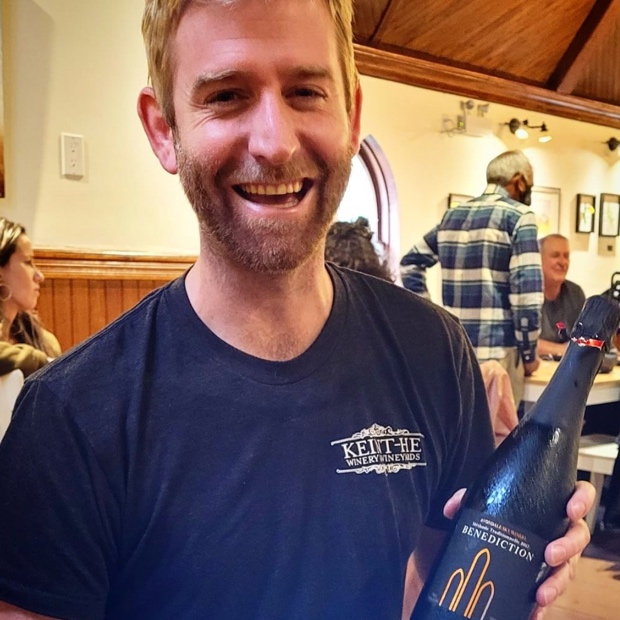
“Our cheap and cheerful bubble as you will find here,” targeting 18 months on lees, with the idea being geisenheim fruit and higher dosage (20 g/L) to balance out geisenheim’s acidity. Smells like geisenheim alright, star fruit to the edge of elderflower, picked 17-18 brix, before the cabbage and burnt orange but with the fresh citrus well intact. The bliss (stalled ferment geisenheim) is employed for more green apple and grapey notes. More dried herbs here, fennel and a touch of anise. All works really well together. Surely one of the more consistent sparkling wines and ’17 may be a more linear, shall we say “classic,” unmeshed, non messed with or plussed vintage. So drinkable with great and sweet acids. Drink 2021-2023.  Tasted August 2021

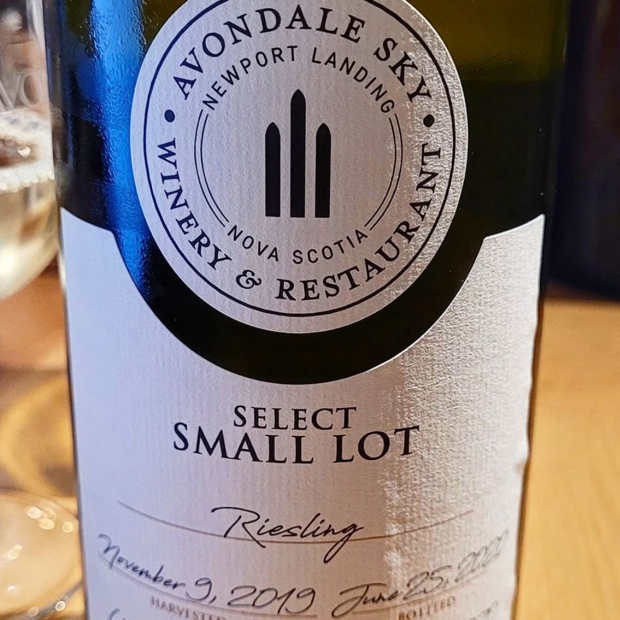
Avondale Sky Winery Riesling Small Lot NV, Nova Scotia ($25)

“A rescue wine,” blending re-fermented 2018 fruit with 2019 and “the wine is better as a blend than either one would have been on their own.” Super biased towards the Mosel (Ben Swetnam worked at St. Urbans-Hof in 2005) and so a riesling to prove that terroir does indeed exist. A child of stalled ferments, sugar kept naturally. Almost entirely Warner Vineyards fruit, down in the valley, been working with them since 2012. The sugar level is higher than imagined, upwards of 26 g/L (the ’18 fruit was at 38 and the ’19 part 40 and part fully dry). A better methodology to keep aromatics and shy away from vinous qualities. Also in avoidance of dilution, here the concentration and texture are in upright rise and uprising. Citrus prominence and at the lower end of the phenolic spectrum. Terrific work. Drink 2022-2026.  Tasted August 2021

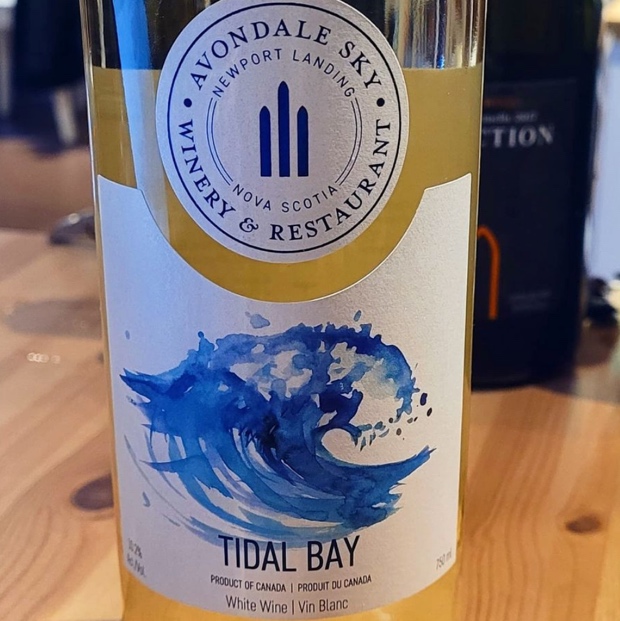
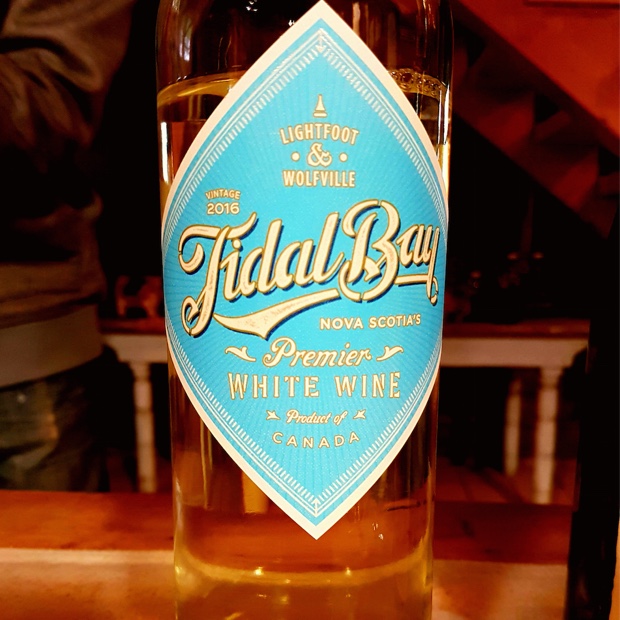
Avondale Sky Tidal Bay 2020, Nova Scotia ($23)

A blend of l’acadie, vidal, frontenac blanc, geisenheim and muscat. The plan is “don’t screw it up, stick to your guns” and stay consistent. Even in frost destroying 2018 there was no non-Nova Scotia grapes allowed. Each winery has their own style and Avondale Sky’s is on the sweeter, stalled ferment part of the spectrum, keeping balance with the searing acids, finishing at 16-17 g/L of residual sugar, centring around fruit. So citrus, with plenty of juiced orange. Sweet and sassy, tart with a faux botrytis sauvignon character managed by riesling like acidity. Quite complex for Tidal Bay, sweet yet classy. Look beyond seafood for this, in particular hot and spicy. Hot wings and south asian dhosa, as examples. First made in 2010, first official vintage was 2011. Drink 2021-2023. Tasted August 2021

JB and Morozov, Benjamin Bridge

Related – Crush on Benjamin Bridge

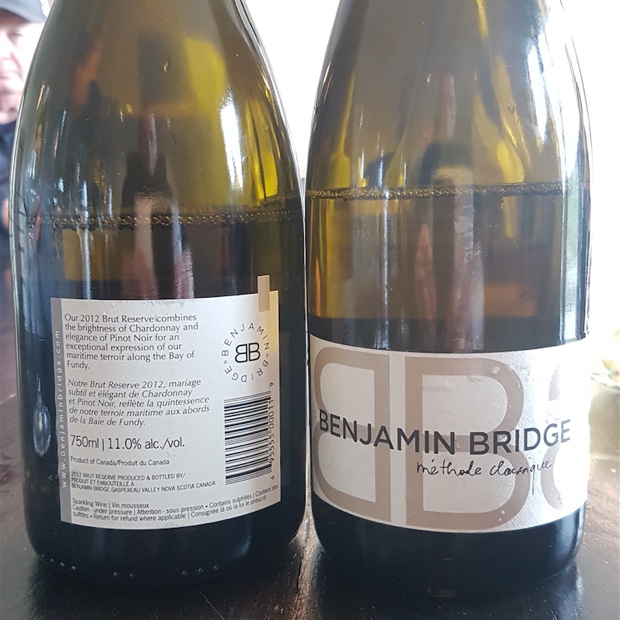
Benjamin Bridge, Wolfville

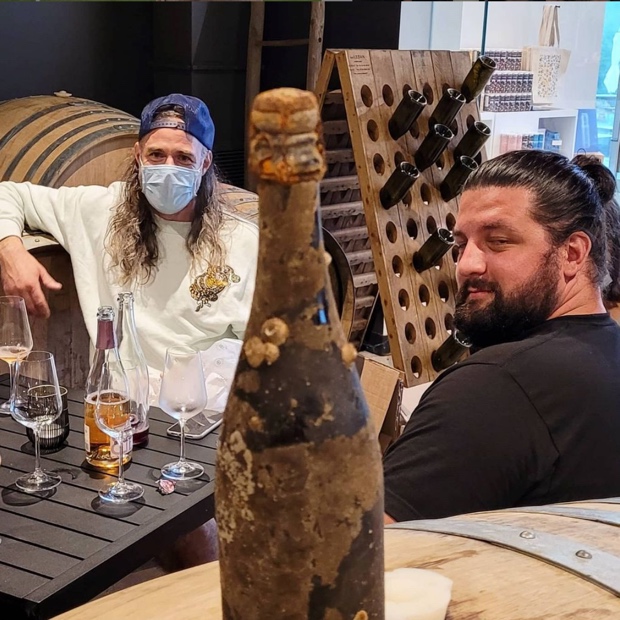
From the name of the bridge that crosses the Gaspereau Valley and pays tribute to the Benjamin family who dammed up the river to become the first industrialists here. Sparkling wine specialist, unquestioned leader and now moving into uncharted territory but also deep waters. Watch these videos to learn more about the 2011 Blanc de Noirs that was “dunked into the sea to age and drift with the tides to test the effects of underwater ageing on sparkling.”

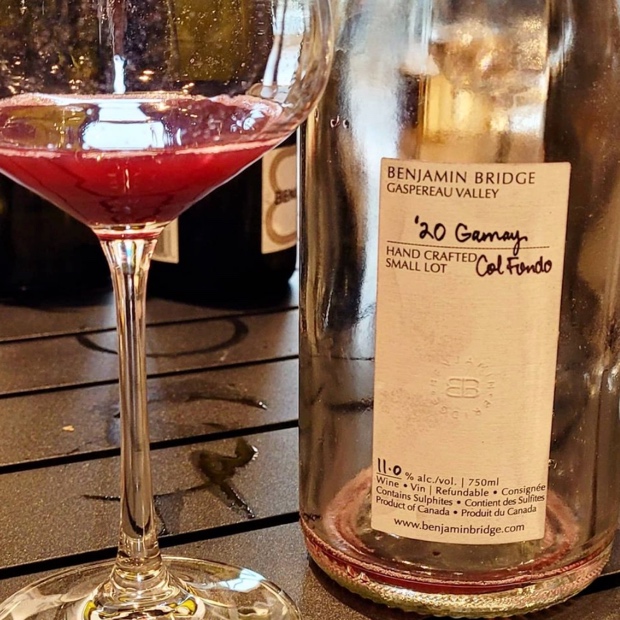
Each bottle has been carefully wrapped so as not to disturb the Bryozoa and sediments. The project was inspired by recovered Champagne on shipwrecks on the ocean floor and the fun daydreaming ways through the inquiring minds of Alex Morozov and Maxime Daigle. After a year at sea, though ice and snow, this wine is finally surfacing. But there’s more in the works at Benjamin Bridge, including newest member of the winemaking team Erin Carroll’s “Gamay Col Fondo,” a hybrid concept in ancient meets futuristic sparkling wine. The fun never ends at the Bridge, nor does the excitement.

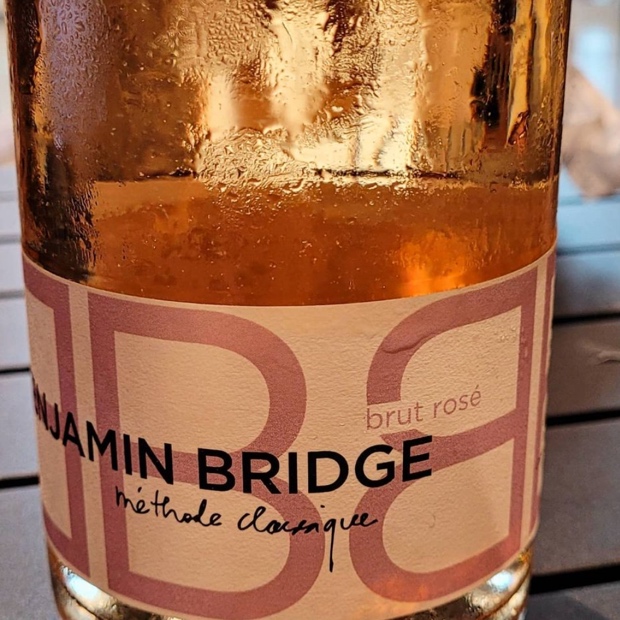
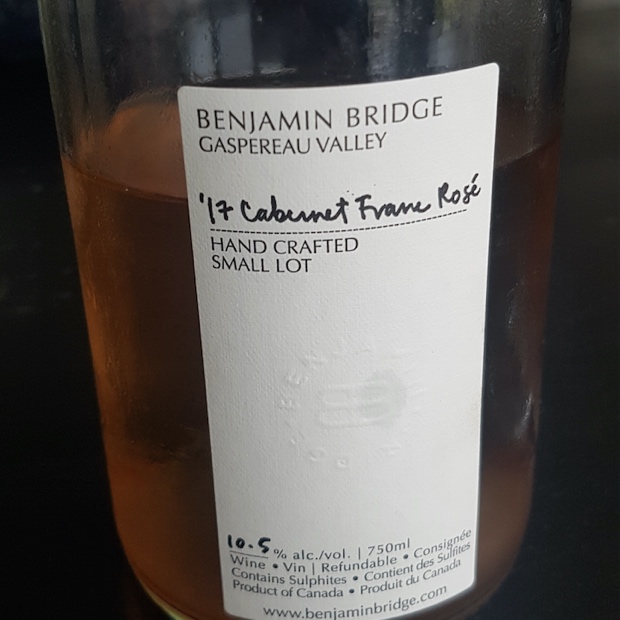
Benjamin Bridge Méthode Classique Brut Rosé 2017, Nova Scotia ($49.95)

One of the first wines to come to the surface with Pascal Agrapart’s involvement with winemakers Jean-Benoit Deslauriers and Alex Morozov. When tasted the sentiment was that this particular vintage of this very particular sparkling wine was not yet there yet in terms of readiness or rather publicizing but truth be told, never have texture and acids come together as one in a BB Rosé. Crunch and chew, riff and rise, bellow and beauty, all despite the spiralling zeitgeist that underscores its urgency. Drink 2022-2027.  Tasted August 2021

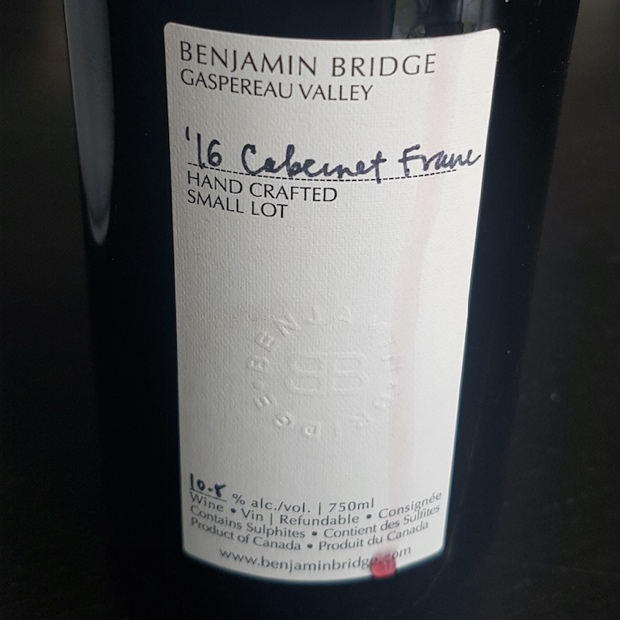
Benjamin Bridge Gamay Col Fondo Handcrafted Small Lot 2020, Nova Scotia ($49.95)

A hybrid concept, between Ancestrale and Traditional Method sparkling wine, driven by experimentation, constant reassessment of a varietal progression and the new injection of intelligence through the focused lens of assistant winemaker Erin Carroll. Though the term is normally associated with Prosecco there is really no reference point as such, not with gamay and certainly not the way the BB team approaches their work. Such gamay-ness glaring, vivid and concentrated never graced a glass, not before nor likely any time soon. Refosco meets Lambrusco and a quasi Valpolicella rifermermentato in bottiglia futuristic sentimentality. Despite the Nova Scotia acid structure that hangs in the balance it should be considered that Carroll’s Col Fondo is not likely to allow objectivity to nudge itself off of the pillar of its own perspective. Drink 2021-2024.  Tasted August 2021

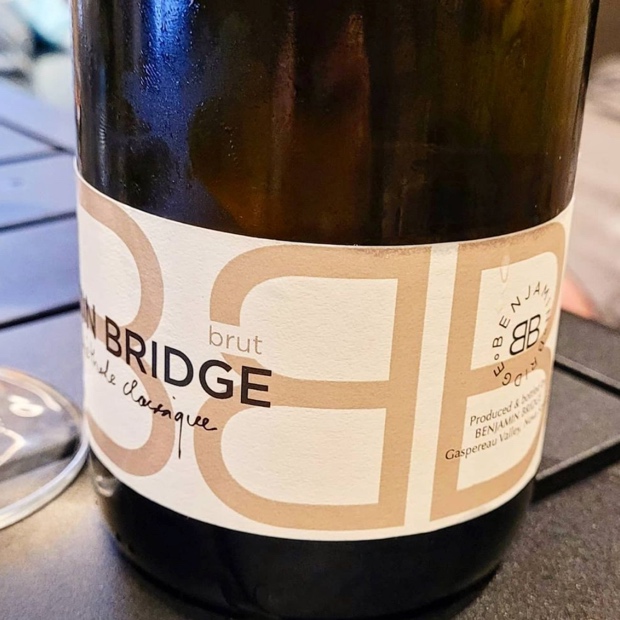
Benjamin Bridge Méthode Classique Brut 2016, Nova Scotia ($45.00)

Perfect conditions, “an Olympic year.” The most tightly wound toast, the year that acidity through the roof while in control will bring the dosage down, from 8.5 to 2.6 g/L. At the most. And so Brut Reserve will be Brut zero. The epiphany, or at least the latest epiphany is upon Alex Morozov and Jean-Benoit Deslauriers. No longer the project incarnate, defined, teachable house style. Now the realization of a prophecy from words spoken three years ago by Deslauriers, then echoing in your head, now coming to idealistic fruition. “With the possibility of absolute transcendency.” Back then it was a matter of eventuality. Today it is the truth. This may not turn out to be the finest Brut made by the team in the new era but it sets a course for a neoteric sparkling wizardry shore, where climate, acids, vines, sugars and controlled emotion all meet to advocate in realization of their necessary dynamic. Drink 2022-2027.  Tasted August 2021

Winemaker Simon Rafuse, Blomidon Estate

Blomidon Estate Winery, Canning

Blomidon Estate Winery is set on the western pastoral shelf of a shore overlooking the the Minas Basin in Nova Scotia’s Annapolis Valley. Perhaps the most intimate of all the seaside settings there is a sense of singularity in the milieu and atmospheric conditions on this side of the basin’s shores edging northerly up the Blomidon Peninsula. Surely a sparkling wine specialist but also a champion of chardonnay both in still and sparkling forms. Co-owner Tim Ramey purchased the property in 2007 and Simon Rafuse is the Winemaker alongside Harold Gaudy, the viticulturist.

Blomidon Estate Winery Crémant NV, Nova Scotia ($28)

Disgorged March of 2021, based on the 2019 harvest, bottled in early 2020. Three grapes, approx 60-20-20, seyval blanc, l’acadie and chardonnay. Moving up in pressure and therefore a new sweet spot, up to 5.5 bars of pressure, at 14-16 g/L RS, with more texture. This is the balanced spot, with seyval’s acidity equalizing into citrus and tree (peach) fruit. Tart and full on tang, fulsome and a healthy dose of fruit, so late in ripening, old school Nova Scotia. If too old school so be it because longevity and slow development is everything. Easy to drink and yet pointed, poignant even. Drink 2021-2025.  Tasted August 2021

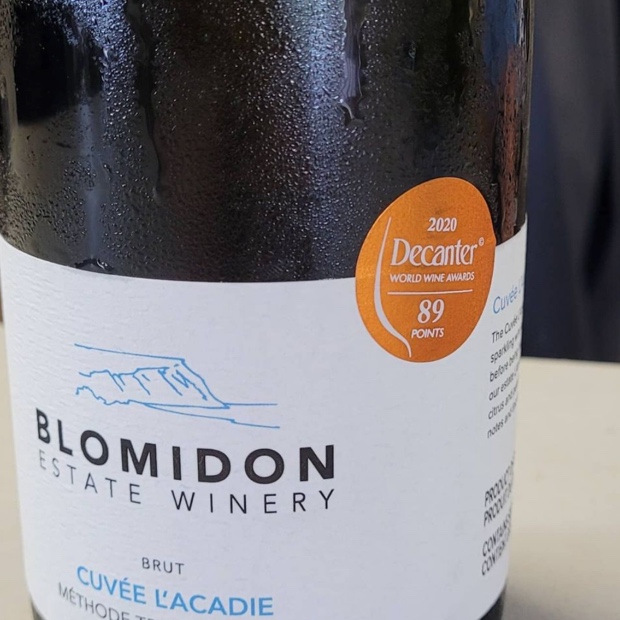
Blomidon Estate Winery Cuvée L’Acadie Brut Méthode Traditionelle, Nova Scotia ($39.95)

A 100 per cent estate l’acadie disgorged in March 2020, approx. 65-70 per cent 2017 with 2016 and a splash of 2015, 2,500 bottles caged in August 2018. Dosage is 6 g/L, very Brut, dry as the desert and not just because of a concept in which l’acadie is an acid king, because in fact it can be quite the opposite. A phenolic sparkler, picked early (first in fact) and therefore a self-starter, enthusiastic, cranking and varietally zealous. There will be 24 cases coming to VINTAGES in mid-September. Drink 2021-2025.  Tasted August 2021

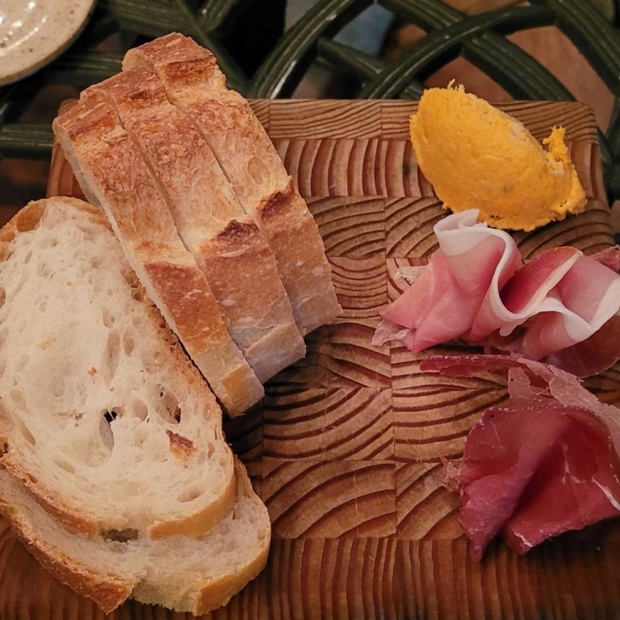
Charcuterie, Obladee Wine Bar, Halifax

Blomidon Estate Winery Brut Réserve Méthode Traditionelle 2014, Nova Scotia ($45.00)

A 100 per cent estate chardonnay picked relatively early (21st of October), having seen no malolactic fermentation and six years on the lees. Feels like this has moved into both secondary and tertiary character, that and so much deeper engagement with structure. Disgorged in the spring of 2020 then held for eight months before release. This to get new reactions past dosage (that was 6.5 g/L). The mushroom notes and other evolutionary gains are vintage driven and the lemon crème brûlée meets Nova Scotia finish is bridged by orchard fruits as creamy as they are striking. Toasty dichotomous bubbles of the extraordinary kind. Drink 2021-2025.  Tasted August 2021

Blomidon Estate Winery Méthode Traditionelle Woodside Road Vineyard 2015, Nova Scotia ($45.00)

The second iteration, disgorged on August 31st, no malo, 7 g/L dosage, picked on the 20th of October. Made from 70 per cent chardonnay, (20) pinot noir, (5) meunier and splashes of pinot gris plus blanc. Base wines were bottled late summer 2016 and so now five years and a bit of lees aging. The pinot brings much ado in small quantity. The aromatics are temporarily not quite integrated, the gas is working the room and in due course all will come back together. Complex, graphing a new Minas course, small lot, 50 cases or so. Drink 2022-2027.  Tasted August 2021

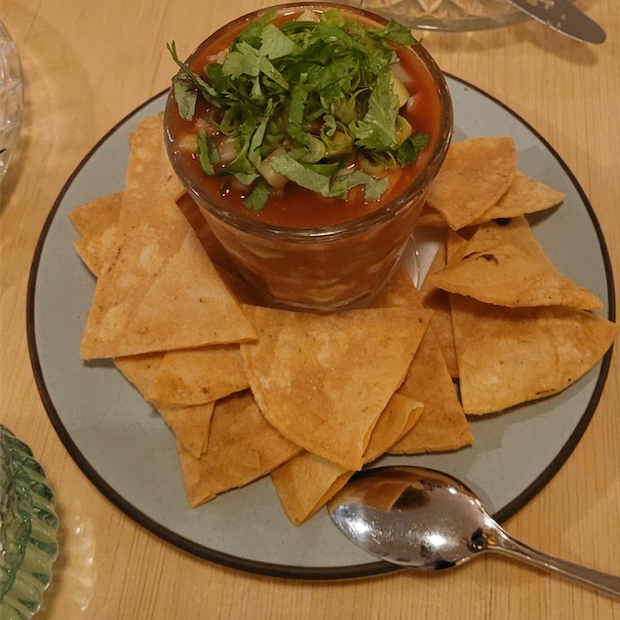
Shrimp Cocktail at Juniper, Wolfville

Blomidon Estate Winery Méthode Traditionelle Blanc De Noirs 2016, Nova Scotia ($45.00)

Give or take 76 per cent pinot noir and 24 meunier, a similar vintage to 2015 (though a touch warmer) and here picked on the 17th of November. Almost all from Woodside Vineyard and some meunier off of the Blomidon estate vines, no longer here. Disgorged today, yes today and my oh my the potential here elevates to a very high ceiling. Just under 6 g/L RS so exactly extra brut, really primary but with the dosage that will arrive before you know it. The pinot delivers more fruit than the chardonnay, perhaps a counterintuitive concept but that’s Nova Scotia. And every vintage will flip the head and make you think again. Small lot, 50 cases or so. Searing succulence, a structural richness and transformative beyond the complex, curious and interesting. Assiduous if conceited blanc de noirs, pejorative to chardonnay, entangled inside enigma, mystery and riddle. Literally. Drink 2022-2027.  Tasted August 2021

Jürg Stutz, Winemaker at Domaine de Grand Pré

Related – East coast swing 2015: Time, tides and wine

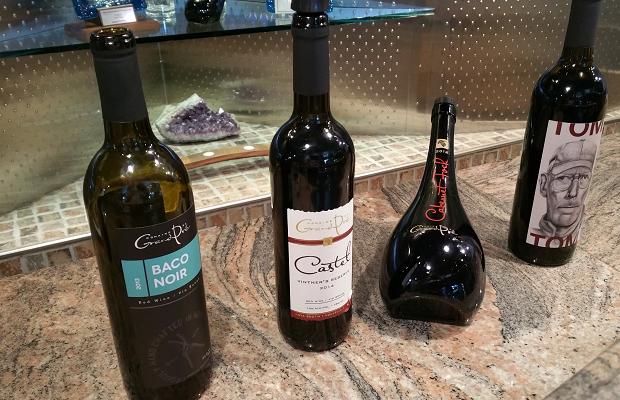
Domaine De Grand Pré, Grand Pré

Domaine De Grand Pré has recently celebrated 20 years of erudite work leading the Nova Scotia wine industry. As for riesling, well the work of Jürg Stutz speaks for itself and now in sparkling the game is on. A visit is well worth the tasting, local knowledge and great gastronomy of Chef Jason Lynch.

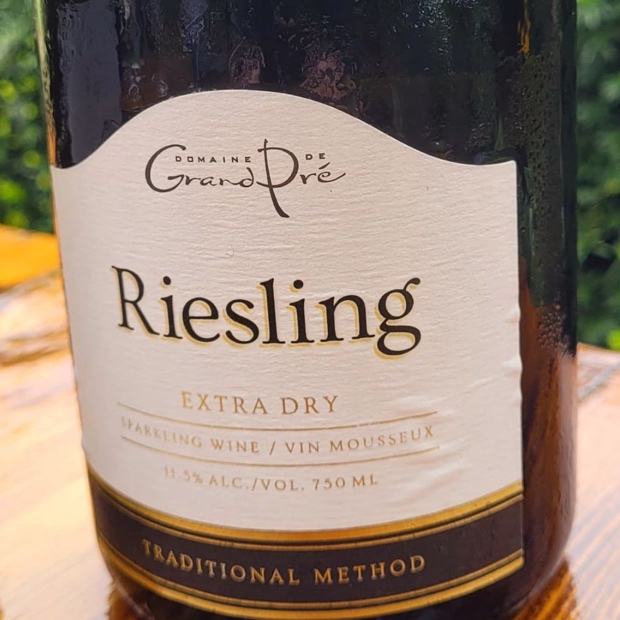
Domaine De Grand Pré Riesling Extra Dry Traditional Method NV, Nova Scotia ($44.50)

A blend of 2019 and (more) 2018 fruit reviewed by the traditional method and 12 months of lees aging, finishing at 18 g/L dosage of RS. Just released one month ago, the first such sparkling wine at Grand Pré. The ’18 juices at low pH and high acidity was adjusted by the ’19s, then sent back to bottle for an additional 12 months. Sometimes not acting with pragmatic immediacy turns into something special and complex. A matter of adjustments and not the ripest ’18 grapes but here the combination of autolysis and phenolics goes beyond acidity. Three thousand bottles of great energy in the wine, green apple bite and that phenolic rush. Very singular, even for Nova Scotia sparkling. Drink 2021-2023.  Tasted September 2021

Domaine De Grand Pré Riesling 2020, Nova Scotia ($22.50)

Harvested Oct. 23rd at 18.3 brix, a pH of 3.05, with total acidity at 10.4, no malo and 18 g/L of RS. Picking can be the first week of November but 2020 saw picking towards the later stages of October. A wine without changes, a Grand Pré way stuck to, given extra care, in vinifera extra work put in, with cluster thinning and battling all the disease pressure grapes are likely to meet in this climate. Vinous riesling, fermented through with adding back sugar in a complex, layered and Mosel like riesling. Really balanced and perfect with subtly spiced cuisine. Will improve with two to three years of age. Drink 2021-2024.  Tasted September 2021

Domaine De Grand Pré Tidal Bay 2020, Nova Scotia ($22.00)

In 2020 a blend of mainly l’acadie (44 per cent), with vidal (20), ortega (16), muscat (12) and seyval (8). TA is 8.6 g/L; RS 12 g/L; 11 per cent alc./vol. Certainly one of the most aromatic of all Tidal Bays, fruit spread across yellow, white and green spectrums, flowers too. Really pushes the appellative concept, ties the room together, bedroom, living space and community. Plums and oranges, apricots, peached and green apples. All the fruits, all in full regale and blossoms in bloom. The most fruit adjustment of all. The next (2021) will be labelled Annapolis Valley. Drink 2021-2023.  Tasted September 2021

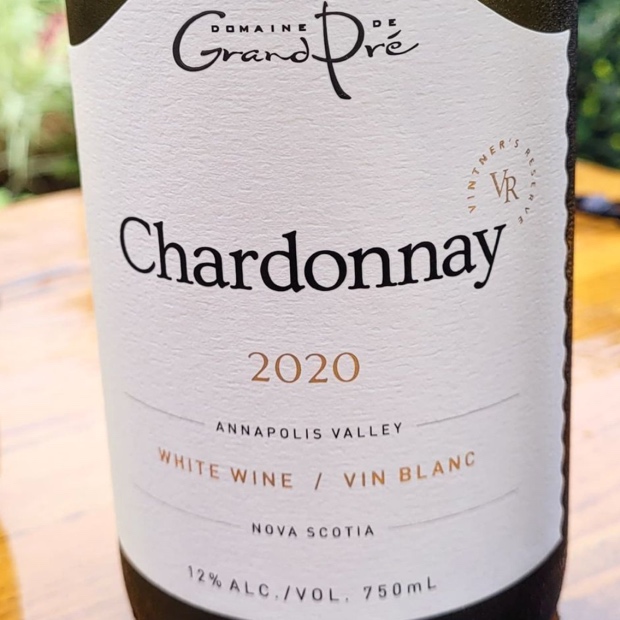
Domaine De Grand Pré Chardonnay 2020, Annapolis Valley, Nova Scotia ($35.00)

Second vintage from young Melanson Vineyard vines (planted in 2017), low yielding, definitely a work in progress. Harvested Oct. 16t at 20 brix, barrel fermented in new French oak, passed through malo and remained there for nine months altogether. Only two barrels were gained of this flinty, sulphide felt, clearly reductive style but also one that is explicitly Nova Scotia. The pH is 3.11, the tA 9.4. Some of this fruit will go to sparkling and it’s really quite a special vineyard (Melanson) that sits across the river in the Gaspereau Valley across from L’Acadie Vineyards. This will morph and flesh, placate the over-cumbersome wood at present and then settle in. Work in progress as mentioned. The vineyard is also planted to some pinot noir and cabernet franc. Drink 2021-2023.  Tasted September 2021

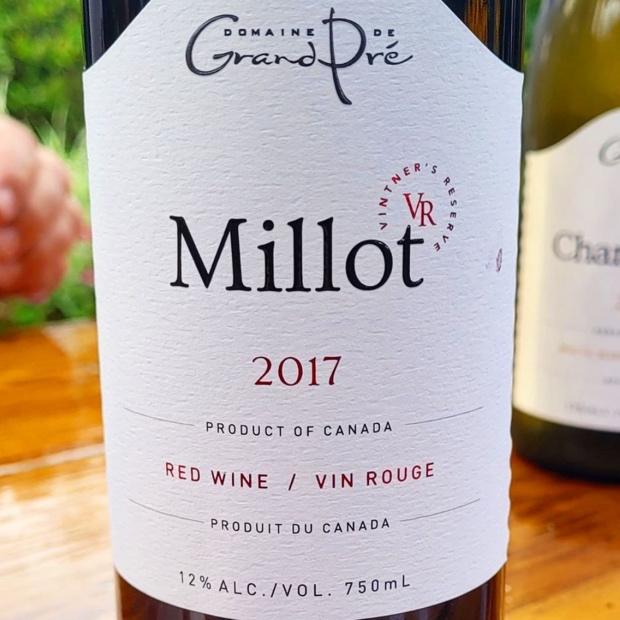
Domaine De Grand Pré Millot 2017, Nova Scotia ($28.50)

One hundred per cent Leon Millot in American oak for two years. Was already planted when the Stutz family arrived, along with Marechal Foch. A lighter red here, lending itself to barrel aging, green when fresh and urged on to fleshy substance with two or three years of barrel put behind. A warm vintage and a remarkable brightness having emerged with gamay-like tang and circumstance. Very cherry, almost black but short of that darker hue-flavour profile. The least musky and foxy of hybrid reds. Really well made. Drink 2021-2024.  Tasted September 2021

Domaine De Grand Pré 20 By Domaine De Grand Pré, Nova Scotia ($28.50)

A one-off, three part blend of cabernet foch (40 per cent) with equal (30) parts marquette and marechal foch, released to celebrate the winery’s 20th anniversary. Mainly from the hot 2016 vintage (70 per cent) with some warm 2017 mixed in. Again in American oak, most for two years, some even longer. Layered with some further musk this time, skins of dark red fruits and a forest floor component. A bit of tar and so much tang. More chalky texture and chew but still good balance. Was recently pulled off the shelf because only 20 cases remained. Drink 2021-2023.  Tasted September 2021

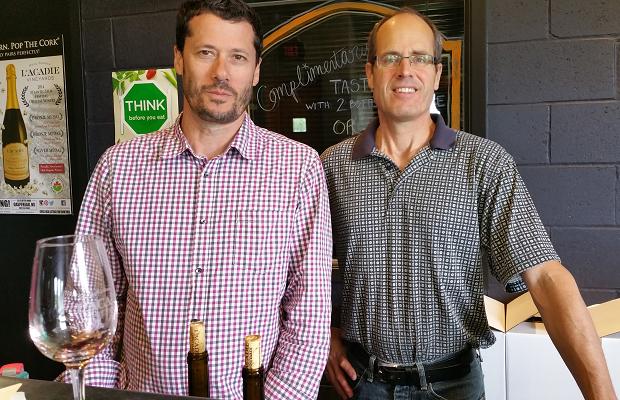
Bruce Ewart, L’Acadie Vineyards

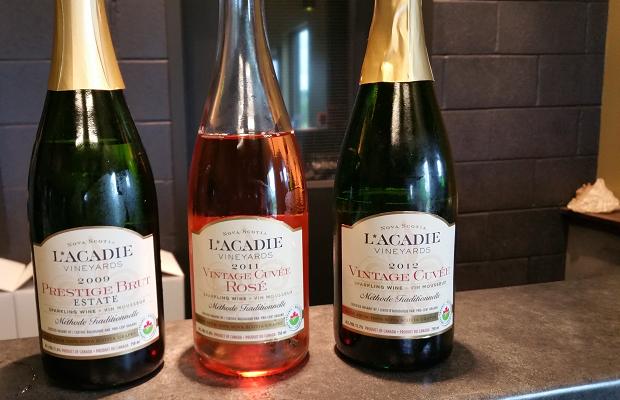
L’Acadie Vineyards, Wolfville

Bruce Ewart hired a viticultural manager and performed a three year terroir study on his vineyards in collaboration with three other wineries (Benjamin Bridge, Domaine de Grand Pré and Lightfoot & Wolfville). The study was assembled by the department of agriculture, or rather it was part of a program informally known as “farm extension,” services provided by Perennia on behalf of the Nova Scotia Department of Agriculture. The idea was to get a good representation of the Nova Scotia wine industry. Rodrigo Layette who is Directeur Général de trois domaines (a Bordeaux viticultural consultant) dug test holes to look at the schist and sandstone. They found roots were three feet deep and like children and if you give them everything they want (like soft clay and loam) they will stay near the surface where the water is. If they have to work for the nutrients they will dig deeper and find the trace elements and minerals. Ewart also converted to Clover and Timothy employed as ground cover, part of the organic practice and to till only occasionally. The use of compost and horsetail teas, humus, etc. Caitlin McNamara is the vineyard manager and she did her degree at the university (Acadia), of which Bruce is half the faculty. “We used to employ organic chicken manure and the study determined this was no longer necessary. L’Acadie wanted to find a non-biodynamic organization.” They found Biocyclic Vegan (from Germany) whose concept is farming without any form of animal or animal product, opposite or rather apposite to biodynamism. This year (2021) they will become certified and from 2021 onwards their bottles will wear the certification. L’Acadie Vineyards will be the first in North America to gain this status.

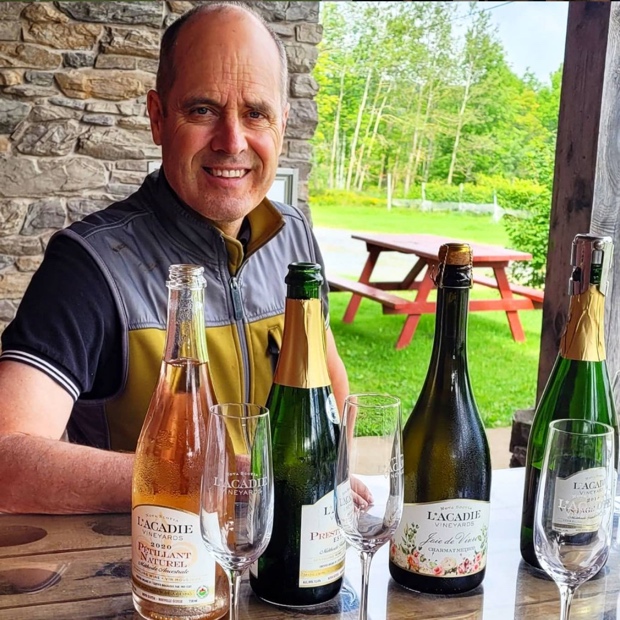
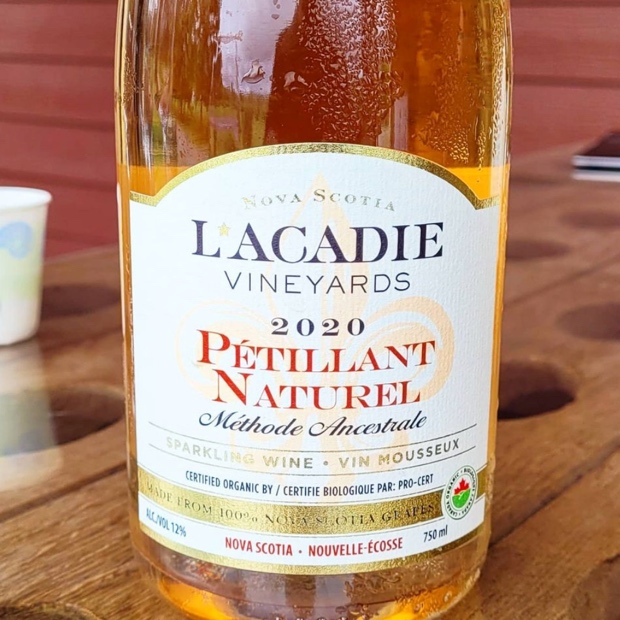
L’Acadie Vineyards Pétillant Naturel Méthode Ancestrale 2020, Nova Scotia ($29.00)

This is the story of Saccharomyces paradoxus. Wild yeast present in the vineyard, naturally, like pre-packaged enzymatic magic ready and prepared to give a Pétillant Naturel its head start. Bruce Ewart explains they know this from analyses of the lees and his Pet-Nat acts as a conduit for microbial terroir, with no inputs showing itself off. Whole cluster pressed with no skin contact, a light disgorgement, no residual sugar, bottled just at dryness. Subtly orange, lithely citric, a marriage of acidities, tremendous flavour development and amazingly so considering the grapes are picked at sparkling time, four weeks ahead of when the l’acadie is picked for the still bottling. Drink 2021-2024.  Tasted September 2021

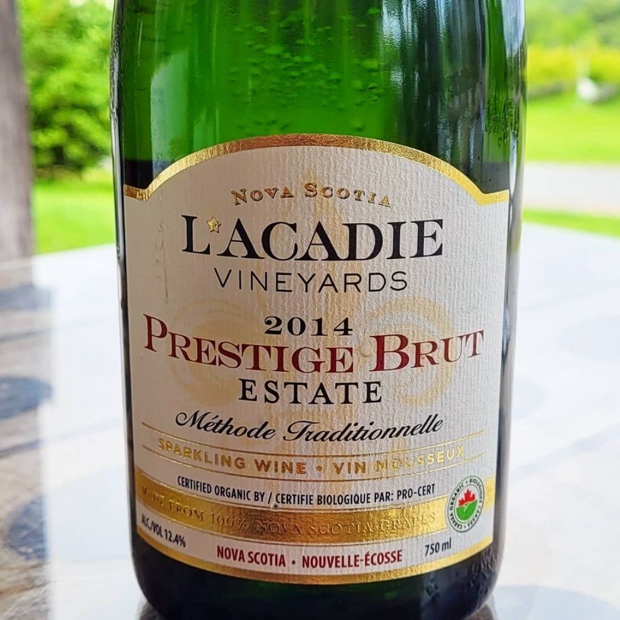
L’Acadie Vineyards Prestige Brut Estate Méthode Traditionelle 2014, Nova Scotia ($50.00)

Was embargoed until September 9th after having just received the Lieutenant Governor Award. Has evolved into a seriously toasted arena, gone long with lees contact, looking for peaceful co-existence between yeast autolysis and the fruit of the wine. “You don’t want conflict, you want that harmony, tells Bruce Ewart.” Disgorged January 2021 and so spent more than the minimum five years on lees. An insignificant dosage (more than most of these wines). Bruce’s program goes at it in terms of two and five year aging and he believes that while Nova Scotia can do ten or more there is only a minor incremental increase in complexity by doing so. This at six-plus has hit such a sweet spot, still in retention of currant and white/red berry fruit but also low and slow golden, tanned and long as an August afternoon Gaspereau shadow. Drink 2021-2026.  Tasted September 2021

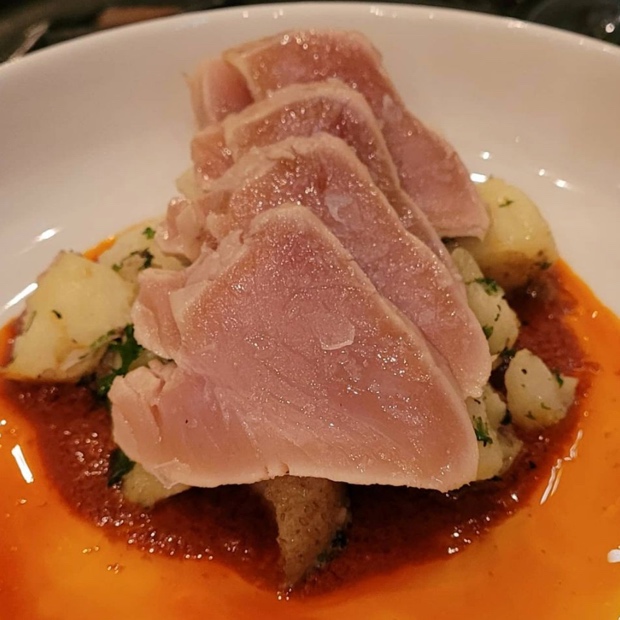
Tuna, Obladee Wine Bar, Halifax

L’Acadie Vineyards Joie De Vivre Charmat Method 2019, Nova Scotia ($28.00)

From a project that began three years ago, with vessels from Northern Italy, wines rested in tank during the pandemic, made from l’acadie (85 per cent) and (15) seyval blanc. “An earlier release, fruity sparkling for the market.” Held at 0-2 degrees celsius. The tanks arrived in early May and this was bottled last week. From the later picked l’acadie, fuller of tree fruit and lower in acidity. Low dosage for the style at 8 g/L and lithe at 11.1 per cent alcohol. Peach and apricot in a moscato d’asti vein, albeit higher of alcohol, mingling with yeasty col fondo, though crystal clean. Simple and satisfying. Delightful. Drink 2021-2023.  Tasted September 2021

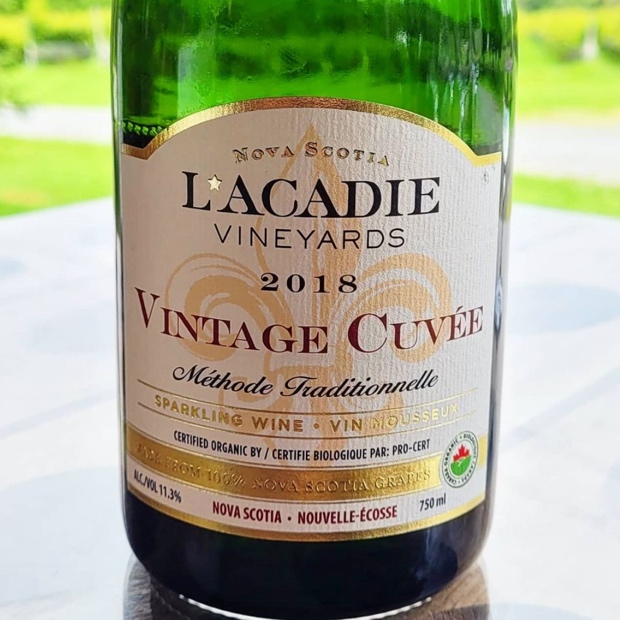
L’Acadie Vineyards Vintage Cuvée Méthode Traditionelle 2018, Nova Scotia ($35.00)

From the frost year (June 5th), a blend of l’acadie and seyval blanc in a sparkling wine that shows the formers’s resilience, having raced out to meet bloom, veraison and harvest dates. In a 30 per cent crop but vines that bounced back the following year for a full yield out of harvest. A wine that meets the LV twain, somewhere between the fruit first sparklers and those of the longest tirage. The length of this is more than surprisingly impressive from a wine that looks for a new slate in every vintage. A wine of trials, investigations and experiments. Not at the toast ceiling but consistently malolactic and in that 8-12 g/L dosage. Truly a Brut style and middle of the road in the most complimentary way. Drink 2022-2026.  Tasted September 2021

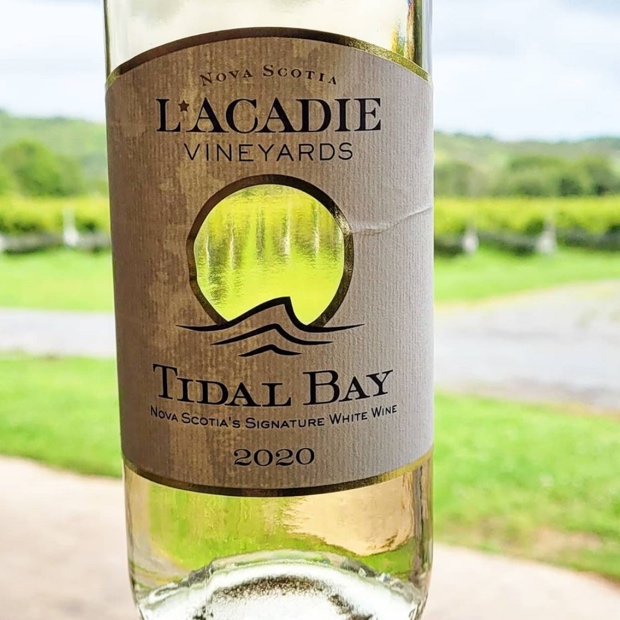
L’Acadie Vineyards Tidal Bay 2020, Nova Scotia ($24.00)

Bruce Ewart’s first Tidal Bay, now being a part of the committee that holds a new standard to protect Nova Scotia wines from artificial carbonation. Here a combination of the two grape varieties where the hat is hung upon, they being l’acadie and seyval blanc. “My take on Tidal Bay is dry, even at five or ten g/L of RS it is not really our market.” Many are going dry and while there is stone fruit and white citrus this is truly a TB of mineral push and salty Fundy air. Just tastes like the vineyard so clearly showing off as a terroir based wine. Nova Scotia, part of a common thread but pretty specific to here. Drink 2021-2022.  Tasted September 2021

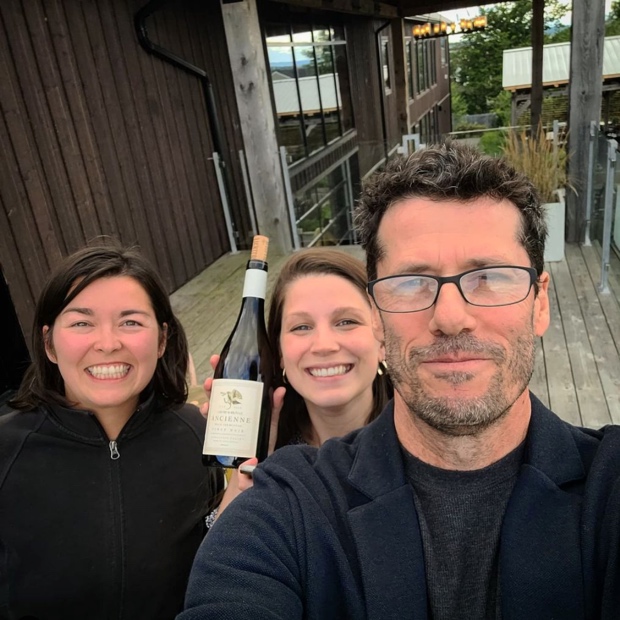
Cat Taylor, Rachel Lightfoot and Godello

Related – The future is now for Lightfoot and Wolfville Vineyards

Lightfoot & Wolfville Vineyards, Wolfville

When I first arrived on the shores of the Minas Basin in 2013 to begin a near decade long (by now) immersion into the Nova Scotia wine industry it was Mike Lightfoot that I first came to know. With thanks to consulting oenologist Peter Gamble I spent a great chunk of time with the Lightfoots and their exciting new Wolfville project. My how things have changed, evolved, progressed and come to this astonishing point.

There is the home vineyard, Raven Hill across the road and what may just be the valley’s most important knoll in a vineyard at Avonport. Along with the most precocious work being executed by winemaker Josh Horton, Rachel Lightfoot and now with the addition of Assistant Winemaker Cat Taylor. Cat came from Toronto in logistics (Unilever) for 10 years, went to New York, then to wine school in France. She staged with Zind-Humbrecht alongside Biodynamic guru Olivier Humbrecht in 2016, worked at Tawse in Ontario with Paul Pender in 2017, then arrived here to Lightfoot & Wolfville in 2018. A biodynamic journey and now she is responsible for implementing the biodynamic aspect of the farming. “Using what’s on the farm around you,” Taylor notes, “seeing what the books say and what your farm says. It took me a while to get used to Nova Scotia acidity, I’m now much more comfortable with it.” Cat also brought in foudres from Alsace with thanks to Olivier Humbrecht. If around the time Cat Taylor arrived in Wolfville coincided with The future being now for Lightfoot and Wolfville Vineyards, well then that future is now the present.

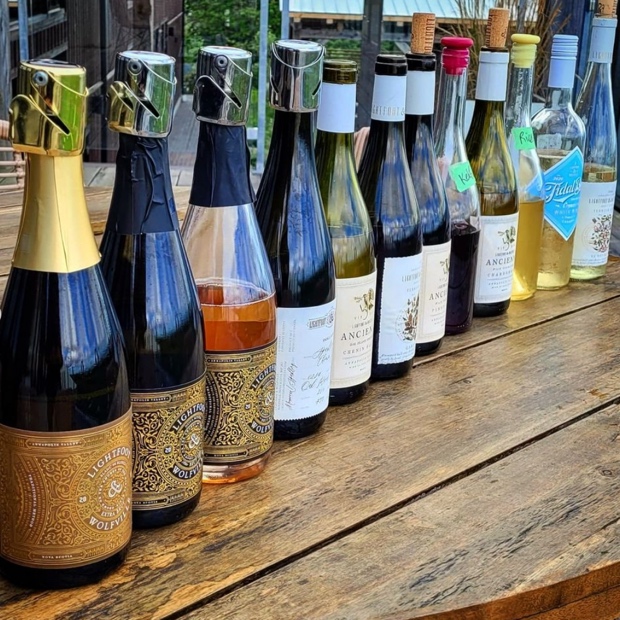
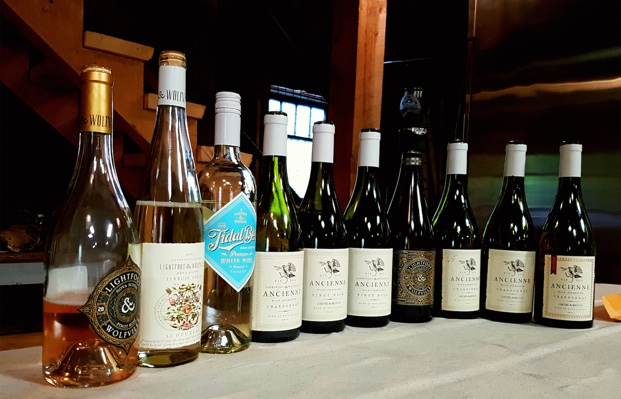
The tasting line-up at Lightfoot & Wolfville

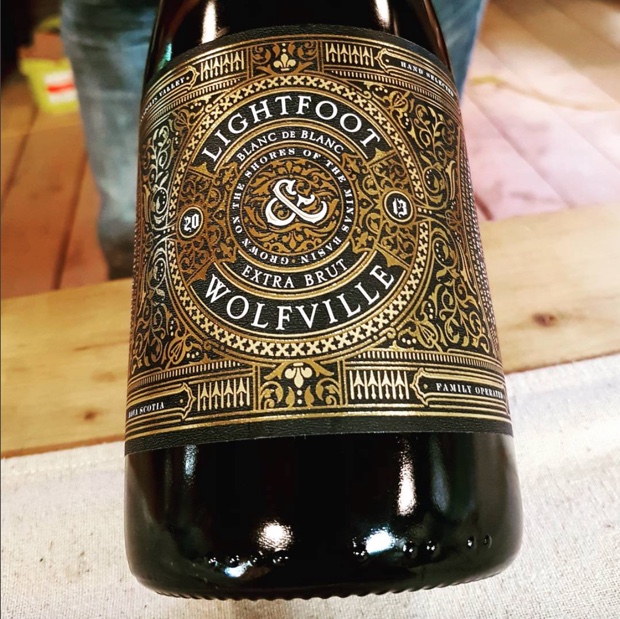
Lightfoot & Wolfville Blanc De Blancs Extra Brut 2014, Nova Scotia ($75.00)

From a specific lower-cropped section of the home farm vineyard and an early 2019 disgorgement so an additional year on its lees, rounding it out just a hair further. Still the ripeness and added creamy character, engaging a new complexity by way of fruit fleshiness and crisp exterior crunches. This is the window, open, acclimatized and staid through a holding pattern of complex energies.  Last tasted September 2021

Disgorged just now. Looking for a late spring release. Built on 100 per cent clone 95 and 96 estate fruit, on its lees almost 50 months. This carries the most texture meeting energy piqued by pungency. The story is now beginning to truly set in with formative consistency. The lemon curd is swirled with bits of zest for a salty citrus intensity not yet known from this chardonnay. Was picked a bit riper and that’s quite obvious, plus some new play time with malo. Needs nine or ten more months of integration for the moving parts of tension and density to come together. Yet another Nova Scotia sparkling wine to inform us all. This must be the place and the sky is the limit. Drink 2019-2026.  Tasted October 2018

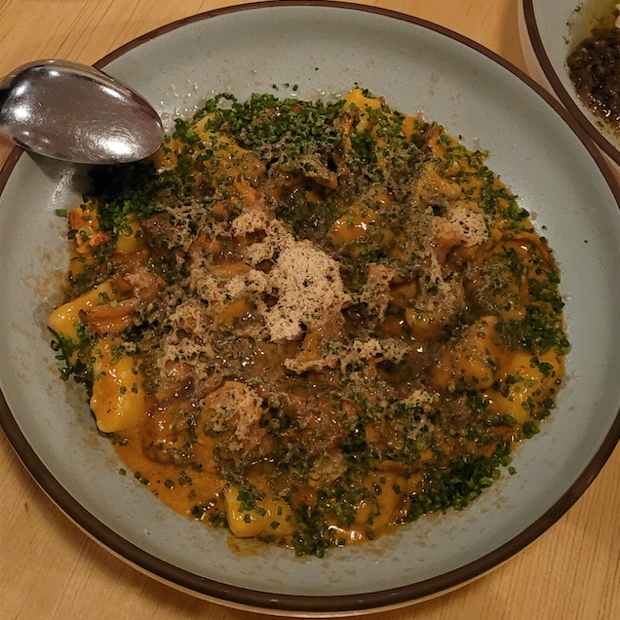
Lobster Gnocchi at Juniper, Wolfville

Lightfoot & Wolfville Blanc De Blanc Brut 2015, Annapolis Valley ($45.00)

From all three blocks of the home vineyard, 100 per cent chardonnay, classic line, part tank and part barrel, an extra year in barrel. Disgorged in February 2020, still only at 15 per cent malolactic, soon to become near 100 per cent in 2017. In these early-ish sparkling wine program days there was worry about how high to go with malic conversions and with so much acidity to play with these things were not yet known. Less tension, more cream, 15 g/L in RS as compared to 4 g/L in the Extra Brut. Still a toasted element and at 50-plus months of lees contact this is just shy of that perfect window. Some tropical fruit joins tree peach and pure yellow citrus, all following the brushy herbs. Drink 2021-2024.  Tasted September 2021

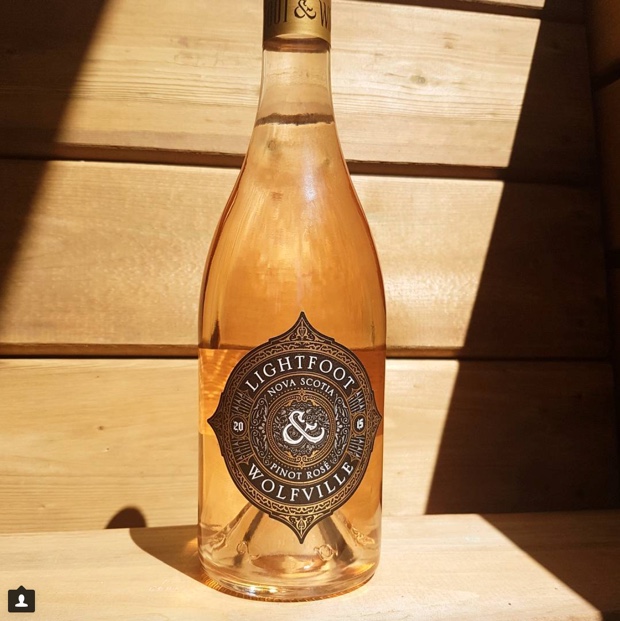
Lightfoot & Wolfville Brut Rosé 2019, Annapolis Valley ($45.00)

Made from 100 per cent pinot noir off of the certified organic, third year Raven Hill Vineyard fruit across the road from the winery. Full malolactic fermentation and a wine that needed a few more months of time before disgorgement. Also to step away and allow the wine to say what it wants to say. After all it’s a wine made with red fruit, of more pulp and circumstance, fruit substance in waves and surely a great season following and in spite of the challenging 2018. Who would not be wooed, pleased and gainfully satisfied by a glass of this class, craft and equanimous Rosé? Methinks no one paying any attention. A gorgeous wine that shows off the L & W ability for shortening the wait times on enjoyment for their ever maturing, evolving and appetizing sparkling wines. Drink 2021-2026.  Tasted September 2021

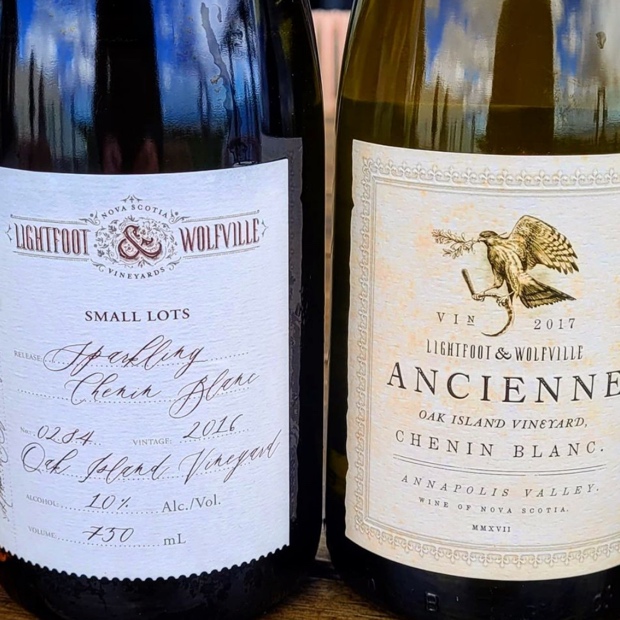
Lightfoot & Wolfville Small Lots Oak Island Vineyard Sparkling Chenin Blanc 2016, Annapolis Valley ($55.00)

In 2016 the one acre Oak Island Vineyard crop was split between this sparkling wine and the (still) barrel-fermented chenin blanc. The wine has progressed with slow haste, still tense and exited while in exemplary control. Driving forward with rhythmic dance step, forward and sideways but also times always gaining.  Last tasted September 2021

I tasted this unfinished wine in the Oak Island Vineyard back in November 2018 and I remember at the time Mike Lightfoot saying “out goes the muscat, in goes the chardonnay.” Truth is, in goes the chenin blanc as well. To say the grape variety is suitable to Nova Scotia sparkling would be a gross understatement. What it delivers is the expected tight and bracing local acidity but with longer hang time also the potential to accept a lees-aging development for downy to fluffy texture. Mousse without compromise to emotion and ardor. As with the L & W Blanc De Blanc Brut there is some white lightning by direct sunlight extended and mixed into weeks of cloud cover for a full east coast sparkling wine experience. Phenolics, acidities and specificity of flavours. Ideal now with a foreshadowing towards the memorable, three to four years ahead. Drink 2021-2025.  Tasted February 2021

Lightfoot & Wolfville Ancienne Oak Island Vineyard Chenin Blanc 2017, Annapolis Valley ($39.00)

In a most interesting phase, not dumb but reserved, needing some coaxing. Shows off the 2017 structure, long-lasting and ever-bearing. Or vice versa. Spent 18 months in neutral French oak (three barrels full) and a vintage meant for still wines, not necessarily for sparkling. Hung really long, picked in early November and finishing at a remarkable 23-plus brix. Tough mudder this variety (on California rootstock) set into Nova Scotia soils. An Avonport, Oak Island child, one acre in an open place to the elements and elements there almost always are. Richness, fulsome character and textural gains are possible, even if there could have been no way to know it. A beautiful fall, especially October led to the hang, develop and creation of minutia facets of this wine. A one off perhaps but also the future.  Last tasted September 2021

The Oak Island hill in Avonport is Nova Scotia’s “mini Corton,” a vineyard unlike any other in surround of The Bay of Fundy’s Minas Basin. Lightfoot & Wolfville planted many engaging varieties on that convex mound through the course of the last decade and chenin blanc is just now coming into fruition. It was October of 2018 when I last walked it with winemaker Josh Horton, Mike and Rachel Lightfoot. The purpose that day was to sample the chenin projects, still and sparkling, while also tasting grapes just a couple of weeks away from picking. While still from young vines this 2017 shows great charm, a curious varietal precociousness and calling it a quick study speaks to the land and the choice of plantation. Aromatically sits in a tirage de liqueur place, prominent and demanding. Acids are Oak Knoll special, lifted and crunchy. High ceiling relationship between varietal and place is in the books, this being just the new beginning. Drink 2021-2024.  Tasted February 2021

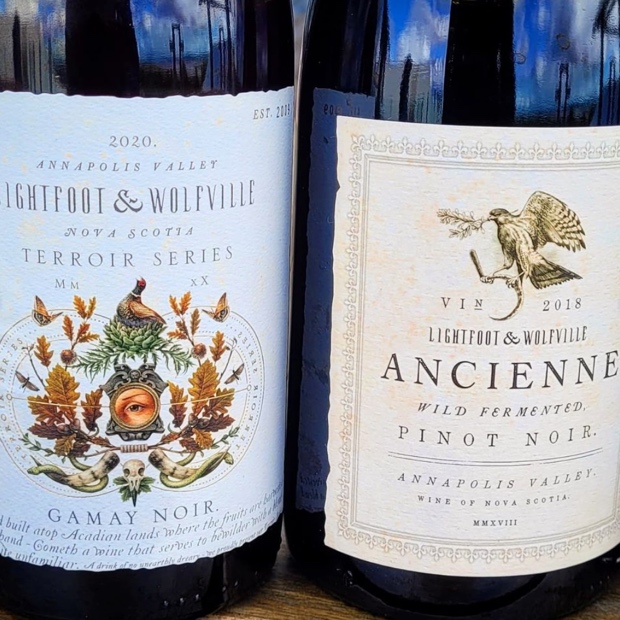
Lightfoot & Wolfville Gamay Noir Terroir Series 2020, Annapolis Valley ($30)

From a block just now coming into its own, on the far end of the Oak Island, Avonport Vineyard, planted in 2013 and 2014. The first vintage was 2018 though this is the fullest of the three and the question begs, is gamay perfect for Nova Scotia? Some neutral oak was incorporated because of increased ripeness, though just for a few months. Freshness of course but also a marine funk that speaks to food pairing possibilities. Lovely musk that talks of the grape and also other fruit skins. Very primary, delightful, floral and as Rachel Lightfoot says, “weirdly popular.” As it should be. Drink 2021-2023.  Tasted September 2021

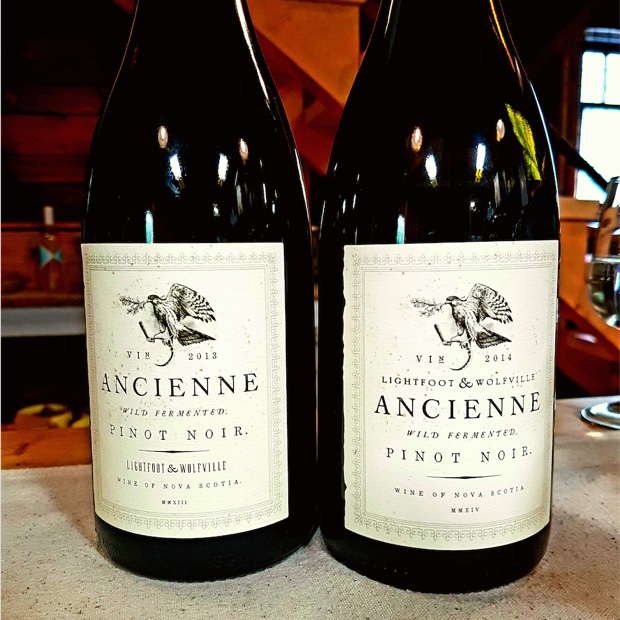
Lightfoot & Wolfville Ancienne Wild Ferment Pinot Noir 2018, Annapolis Valley ($45)

Despite the early frost of 2018 (June 5th) the pinot noir was unaffected, even at the Oak Island site where other (earlier developing) varieties were hit. The rest of the season was beautiful and with today being a spice day (or earth if you prefer) the sandalwood, fenugreek, cinnamon and cardamom all come through. Such a seep of tea, red tea that is, not quite rooibos but more floral, into hibiscus without any doubt. A wine of oscillations and grooves, sensitive, emotive, ever changing. That said the mood is more than good at this stage, an intuitive and responsive, paying attention and ranging to so many edges, corners and plateaus. Already secondary, perhaps empathetic in speaking about other vines’ suffering and expressive of beauty for all. Almost as if the pinot noir is saying I’ll take all the attention right now while the rest of you get healthy. 3,000 bottles made, approximately. Drink 2022-2027.  Tasted September 2021

Lightfoot & Wolfville Kékfrankos 2018, Annapolis Valley ($30)

A near-finished product but still needing the final touches after nine months in mostly older wood. Well hello there Kék, welcome to the world. Structured like nothing that came previous and floral off the charts. Still so youthful in exuberance and yet to settle in, the richness and caky barrel notes still very much in charge. Oh my the sweetness of fruit, so ripe, full on tang, tannins a bit lowered but so much richesse. Vinous and primary, expressive and working through the gears of its journey. Drink 2022-2025.  Tasted September 2021

Rachel Lightfoot and Cat Taylor

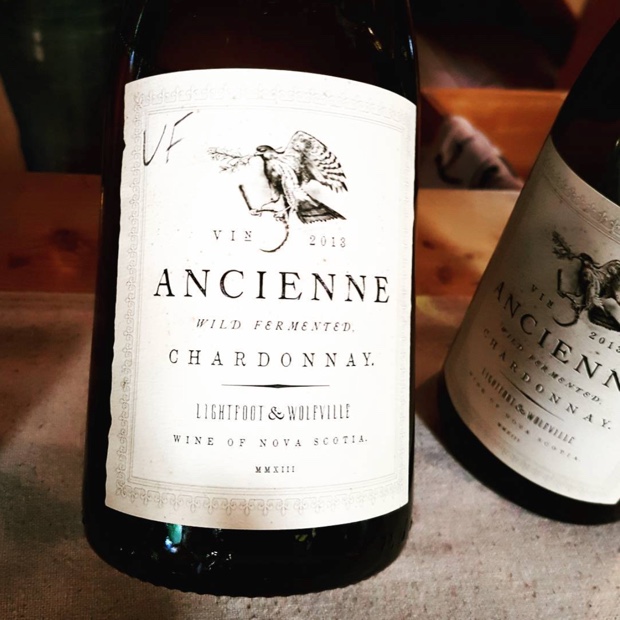
Lightfoot & Wolfville Ancienne Chardonnay 2018, Annapolis Valley ($56.95)

Frost year for the valley but again an escape by the vines at Lightfoot & Wolfville with thanks to the tidal influence to keep the chardonnay vines happy, healthy and secure. So much fruit and warm summer sunshine, a glade bathed in light and a luminescence rarely found in chardonnay. Consistent L & W elévage, increasingly into puncheons and away from 225L barriques. You can never forget and not remember what chardonnay has done for L & W, while now the richness and restraint work in optimized tandem. Less reductive than previous incantations, with new and improved connotations, consistencies and harmonic sway. Also a matter of vintage and cooperage. Stability is the key to being great. Drink 2022-2026.  Tasted September 2021

Lightfoot & Wolfville Riesling 2020, Annapolis Valley ($30)

A not quite finished wine but so very close, raised in foudres, lighter in oak impact as compared to what might happen in smaller barrel. Hard not to imagine an Alsace-Zind Humbrecht idealistic connection, long-pressed and slowly done, a 10-12 hour cycle without compromising the pH. That’s because you get plenty before it trickles in at the end of the cycle. Full malo as well, a few grams of sugar and definitely a lemon curd, perhaps but not in a Windsbuhl manner. Just enough crunch but to be fair the texture is more emulsified than in any other way. Gonna be a stunner. Drink 2022-2027.  Tasted September 2021

Lightfoot & Wolfville Tidal Bay 2020, Annapolis Valley ($30)

Tidal Bay’s mix in 2020 is 50 per cent l’acadie with an almost equal amount of geisenheim and chardonnay. In a tree fruit moment, in apples and pears with citrus in the background. Sugar in the 12 g/L area and trying for drier, with higher toned fruit due to the pressing on l’acadie’s skins. Over time the sugars are less important, especially as compared to the wine in its extreme youth. This is the Tidal Bay for all and all will love what it brings to the appellative table. Drink 2021-2023.  Tasted September 2021

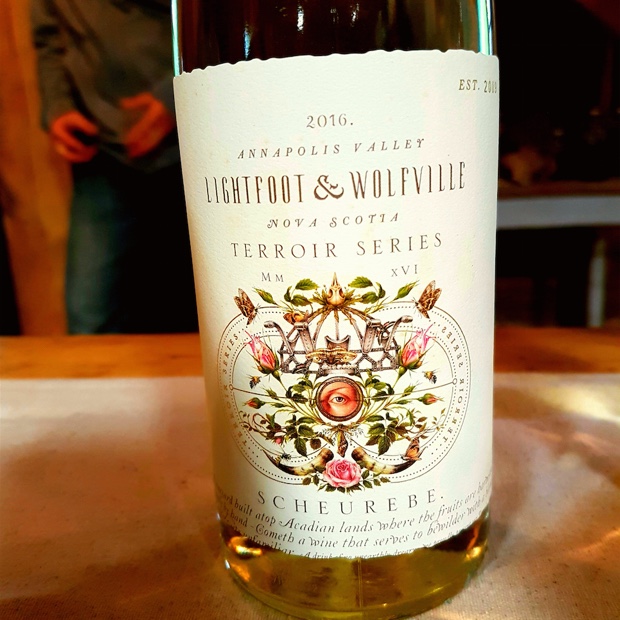
Lightfoot & Wolfville Terroir Series Scheurebe 2020, Annapolis Valley ($30)

Skipped in 2018 due to the hurricane’s fall effect and now here back in 2020. Not merely a classic varietal vintage but an exaggerated one, in harmony and open to any and all benefactors. A benevolent and philanthropic scheurebe, a touch drier than before, toned back in the range of 10-12 g/L of sugar, along with the matching decreased acidity. Stays focused and balanced throughout. So much stone orchard fruit unrelenting and with feeling. Passion fruit as well, open-knit, expressive and very giving. Drink 2022-2027.  Tasted September 2021

Luckett Vineyards, Wolfville

While I did not visit with winemaker Mike Mainguy on this trip I did have the pleasure of tasting through some of his essentials. These are three that stand out as wholly representative of Luckett’s increasingly focused varietal persona.

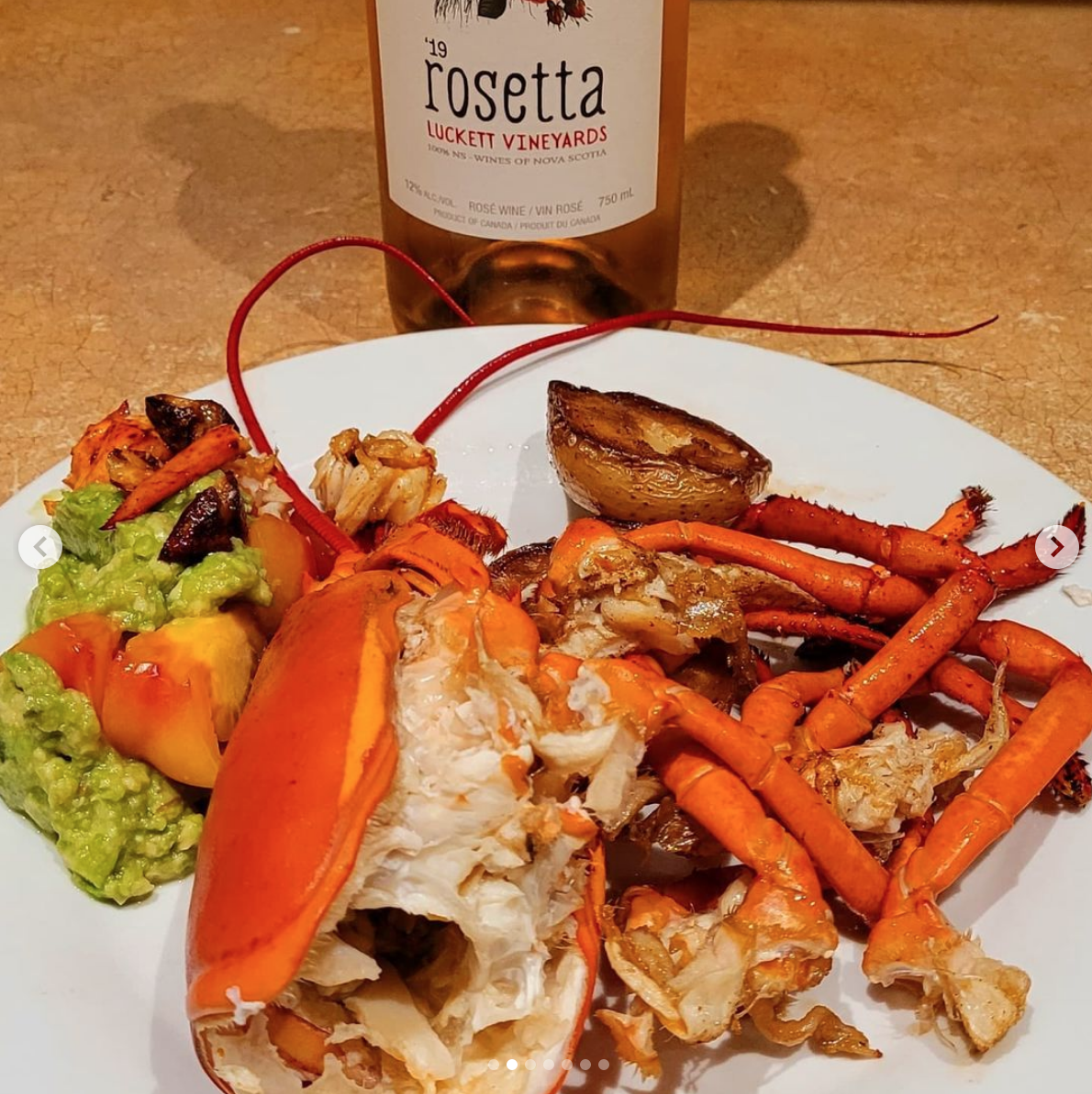
Luckett Vineyards Rosetta Rosé 2019 ($20)

The plan has been to get back to Nova Scotia and get a bottle of Luckett winemaker Mike Mainguy’s Rosé. Took two years to do so and Rosetta is the one, perhaps (if only in this fantasy) a reference to Lennon’s only utterance ahead of McCartney’s final crooning upon a London rooftop. Also a vidal, riesling and leon millet chorus of Nova Scotia phenolics, soft-pressed sentimentality and faintly funky-earthy Fundy salt. Consistently reeking of red berry and citrus, sweetly herbal and coaxing out (or in) stone fruit. Drinking well more than a year in. Crushable delicasse. Optimization and individuality meet upon a plain where all can enjoy this satisfying Rosé. Drink 2021-2022.  Tasted September 2021

Luckett Vineyards Tidal Bay 2020 ($20)

Confirms the billing of 100 per cent Nova Scotia, as per the Tidal Bay manifesto and in Luckett’s view (which incidentally is a spectacular one) screams local, parochial and beneficially biased. The l’acadie, seyval blanc, chardonnay and ortega all conspire to speak the language or even more so the spirited vernacular of Tidal Bay. This package may have once been a searing machine but the ripenesses reached besides maintaining early enough picked acidity is a miracle of climate change and wine-growing intelligence. This new era is coming out clean, obvious and beautiful with new phenolic frontiers gained. Yes the lemon incarnate zests, juices and zings throughout this 2020 but so do orange, jasmine, lemongrass and honeyed herbals. Dry as it seems to get for the category yet opulent in its very own light alcohol, marine breezes, oyster shell way. Hello Santorini assyrtiko and Muscadet Sèvre et Maine melon de Bourgogne. Meet the new Tidal Bay. Drink 2021-2023.  Tasted September 2021

Luckett Vineyards Chardonnay 2020 ($25)

Grapes are grown in Avonport, one of Nova Scotia’s wildcard if tiny micro zones in Kings County. The land is graced by flats, rolls of hills and well-positioned knobs or hillocks set between the mouths of the Avon and Gaspereau Rivers. No other Nova Scotia terroir offers up the kind of varietal-vinifera playground as Avonport and Luckett’s unoaked beauty takes on the marine air, silty saltiness and Fundy-proximate sway. Lean and characterful, herbaceous in an ox-eye daisy way, nearly chamomile and no woody parts denoted. Quite a precise chardonnay with snap-back green apple bite and positive energy. Drink early and on repeat. Drink 2020-2021.  Tasted September 2021

Good to go!

godello

Lightfoot & Wolfville estate vines overlooking the Minas Basin

Twitter: @mgodello

Instagram: mgodello

WineAlign

A Canadian preoccupation with White Blends

as seen on WineAlign – Red Blends, White Blends and Sauvignon Blanc – Medal Winners from NWAC 2019

The catchall collection funnelled into flights titled “White Blend” continue their ascent upwards into the essential echelon of categories at the National Wine Awards of Canada. These compound varietal meet and greets do so with increasing calm, cool and collected demeanour, a.k.a balance to offer up some of this country’s most pleasing and in very special cases, most age-worthy white wines. Another year later the judges are finding the quality of the wines to be at their best yet, perceptible and discernible beyond reproach from coast to coast.

The 52 strong medal count from the 2019 awards is a testament to the masters of assemblage known as winemakers in British Columbia, Ontario, Quebec and Nova Scotia. In fact five of the medals were awarded to Tidal Bay, the maritime appellative blend creation so apt-scripted and terroir specific to vineyards and estates in Nova Scotia. Tidal Bay is a model of consistency, progress and marketing genius. It hasn’t happened yet but the day will come when Ontario and British Columbia will become woke to the economic success of the great East Coast appellative party.

Dinner at Rosehall Run

Where do Canadian winemakers look for inspiration when it comes to designing their white blends? The obvious pioneers are unequivocally Bordeaux and the Rhône Valley, the former being a matter of a sauvignon blanc-sémillon coupling and the latter a relationship between grape varieties that include grenache blanc, marsanne, roussanne and viognier. Other and lesser varieties employed are ugni blanc, clairette, bourboulenc, picpoul and rolle (vermentino). Many are grown and matched up in Canada but in 2019 it is Nk’mip Cellars White Meritage Merriym 2017 that we find standing alone at the peak of white blend success. The Bordeaux inspiration is an antithetical one at that with a two to one ratio of sémillon to sauvignon blanc and what one judge sees as a blend of “power and accuracy.”

Last year we noted that the white blends made with sauvignon blanc from out of the Okanagan Valley relied on higher percentages of sémillon than their sistren and brethren in Ontario. B.C.’s vineyards are not subjugated to the same winter kill that Ontario’s winters are often wont to inflict and so the vulnerable sémillon is planted and used to much greater quantity and effect out west. Ripeness and style are also great reasons why B.C.’s über rich and fat sauvignon blanc loves for sémillon to help out. The varietal mitigation and third party injection from barrel aging often leads to examples of flinty-smoky-mineral white blends of freshness, pizzazz, texture and style.

The Mission Hill Terroir Collection Sauvignon Blanc Sémillon 2018 is such an animal, taken from Jagged Rock Vineyard nearing 400m in elevation and the sém portion is 40 percent. Tightrope Sauvignon Blanc Semillon 2018 is another though it may just be one of closest Bordeaux ringers made anywhere in Canada. The Pentâge Roussanne Marsanne Viognier 2013 is the most singular Gold Medal winner in 2019, first because it does the Rhône varietal two-step and second because of its age. That it caught the palates of so many judges is a testament to its balance and also its structure.

The 2018 Tidal Bays from Lightfoot & Wolfville, Jost Vineyards, Planters Ridge and Gaspereau Vineyards were Nova Scotia’s one Silver plus three Bronze category medallists. These Bay of Fundy/Minas Basin east coast wonders are true Canadian wines of quality and efficiency. Tidal Bay pioneers Peter Gamble and Benjamin Bridge Vineyards tell us that In 2010 Nova Scotia launched this wine appellation with a purpose “to showcase a vibrant and refreshing white wine compatible with our coastal terroir along the Bay of Fundy, a vast expanse of seawater that is home to the highest tides in the world. An independent technical committee ensures that only the wines displaying the region’s distinct characteristics and meeting a rigorous set of standards are approved to wear the appellation seal.” The blends are most often filled with the likes of l’acadie, geisenheim, chardonnay, riesling and vidal.

Two Ontario white blends joined the 11 B.C. Silver winners. In terms of Bronze, six from Ontario and one each out of Nova Scotia and Quebec were winners alongside 23 from B.C. Yes it is increasingly true that appellative blends are more than a going concern, in fact they have become some of our Canadian winemaker’s greatest preoccupations. At this rate we can certainly imagine a future filled with bright white lights and structured blends to rival some of the world’s best.

Good to go!

godello

Twitter: @mgodello

Instagram: mgodello

WineAlign

Crush on Benjamin Bridge

Benjamin Bridge Vineyards

It’s late October and I’m walking the vineyard with viticulturalist Scott Savoy who gestures below our feet into the genius loci where multiple layers of loam and sandy loam are mixed with river stones. In the vested interest of micro-climate orientation he points out the modest mountain ridges to the north and south, the stretch of valley to the east and west, to the big Bay of Fundy beyond and back down to the earth. He notes the fault line running diagonally away from the crush pad and tasting room, through the vineyard and down the slope to the river below. Today the namesake belongs to the winery but Benjamin Bridge is first and foremost a place. We all want to know about its history because there is something very special here. In this valley the apples are different and the vines grow berries smaller and unique. It’s a place that pulls on the heartstrings of innate curiosity.

Related – Consider the Gaspereau Valley

It comes from the name of the bridge that crosses the Gaspereau Valley and pays tribute to the Benjamin family who dammed up the river to become the first industrialists here. The name is a historical one, not one of fashion, trends, aggrandizement or narcissism. The ownership and the management of Benjamin Bridge Vineyards are fully cognizant of their place within a King’s County pantheon, of the past and for the future. Who among them wouldn’t pay a king’s ransom to protect it? They fully recognize how the tenets of farming, progression, life, struggle and ethos came before them and will continue long after they are gone. Just in case their work in making sparkling wines headed up by chief winemaker Jean-Benoit Deslauriers is not legacy defining enough they recently supplied a bottle of Benjamin Bridge Méthode Classique Brut Reserve 2012 to christen the first Irving Shipyard built Arctic patrol vessel. Sophie Trudeau used the bottle to christen the Harry DeWolf during an October ceremony on the Halifax waterfront. An interesting and poignant aside, this gesture.

Frost damage at Benjamin Bridge

The 2018 Nova Scotia harvest will live in infamy and perhaps not for the reasons everyone involved will want to remember. Frosts, rain, grape growing pressures and more frosts reduced quantities so drastically that emergency fruit was transported across two provincial borders from Ontario, a fact not lost as a notion that is pathetically-monopoly ironic. Annapolis Valley Vineyards were looking at losses of at least 50 per cent following a late Sunday frost overnight and into the morning of June 4th. Temperatures plummeted from the high 20s just two days earlier to minus three degrees celsius. There were some miraculous exceptions to the rule, like Avonport’s Oak Knoll Isle but damage ran from 20 to 100 per cent. Frost that settled in the lowest sections of valley vineyards were hardest hit.

All that happened to Nova Scotia’s wine industry plus more in, outs and twists than a Coen brothers comedy-drama and yet the greatest things happened anyway. The community of growers and producers banded together, traded grapes, shared experience and pulled each other through. This is a place where everyone understands that making wine is not about one vintage, individual accomplishments or accolades. Turning grape water into wine is a life-long partnership with the land, with the weather, the Bay of Fundy and each other. Success is wrought with challenges, adversity and responses to the contretemps of the day. Such tremendous odds give credence to Nietzsche saying “that which doesn’t kill you makes you stronger,” leading to an alignment with a maritime band of brothers and sisters. The year 2018 is the vintage during which the Nova Scotia wine producers in and around the Annapolis Valley were forced into a situation of needing one another and to become les retrouvailles, the reunited.

#lookoff in Canning, Nova Scotia

At the fore of this happenstance is Benjamin Bridge Vineyards, both in terms of being the helped and the helper. The Gaspereau Valley sparkling wine specialist is the unquestioned leader of their cottage wine industry and for so many reasons. Decisions made more than a decade ago to invest everything into this stretch of land south of the Bay carved through two micro-climate catalyst ridges for the purpose of creating the newest and most important innovative sparkling wine on the planet is nothing short of historical. The speed bumps may be serious but mark my words (and by many who have stated this before me), Nova Scotia is second only to Champagne for making the kind of sparkling wine we should and will want to drink. No disrespect intended to Franciacorta, Alta Lange, Prosecco, Crèmant de Loire, Bourgogne, Jura or d’Alsace. No ill will meant towards Sonoma County, Ontario, British Columbia, Tasmania, England or Roberston’s Méthod Cap Classique. I love you all but Nova Scotia can raise grapes for traditional method sparkling wine in ways and with results that blow everything else out of the proverbial water.

Not sure you need the banger. Jacket should scare them off!

Case in point, time and again, with variations on the theme, measurable and of a ceiling reckonable through infinite possibility. In this part of Canada vinifera varietals like chardonnay, pinot noir and pinot meunier can linger well in the autumn months, reach brix levels ideal for sparkling wine and still maintain acidities at levels all other regions can only dream of. The effect of the Bay of Fundy creates a unique environment, plain, simple and complex. Imagine adding up the flow of all the rivers in the world and asking that accumulation to submit to the power of one body of water’s tides that lower and rise as much as 17 metres every day. The Bay is like an air pump that moderates climate. Frosts be damned the picking in the Gaspereau of grapes just ripe enough for making wine is the latest anywhere. In Franciacorta for example picking of chardonnay happens in early August, just to keep natural acidity. In California it’s July and in the dead of night. We have begun to taste Nova Scotia bubbles at eight, nine and ten years on their lees. The results are astonishing with a combination of texture and acidity never seen before. As I said, the ceiling is boundless.

Crush at Benjamin Bridge: Chris Campbelll, Godello and Jean-Benoit Deslauriers

The charge at Benjamin Bridge is led by founder Gerry McConnell who purchased the property with his late wife Dara Gordon in the Gaspereau Valley in 1999. McConnell worked with Canadian oenological consultant Peter Gamble and Sparkling Wine Consultant/Champagne specialist Raphaël Brisbois to establish vineyards, a protocol and a long-term strategy for making world-class bubbles. Within three years of launching the project they knew it would work.

Sunday morning, #Kingsport Nova Scotia

The unfortunate passing of Raphaël Brisbois left a huge hole in the hearts and the ethos of the BB project but great timing, fortune and intellect came to the company in the extraordinary ethic and cerebral meanderings of head winemaker Deslauriers. Originally from Québec, J-B joined in 2008 and for 10 years has explored, extrapolated and elevated the game. No combination of diversity and focus is more apparent than it is now at Benjamin Bridge.

Winemakers at work, Jean-Benoit Deslauriers, Alex Morozov and Chris Campbell

The team on the ground and in the cellars is led by Head Viticulturist Scott Savoy and Chris Campbell who aides, abets and manages the trilogy of harvest, cellar and production operations. Alex Morozov is Assistant Winemaker to Deslauriers. Gerry’s twin daughters Devon and Ashley McConnell-Gordon have run the daily operations of the winery since early 2010, Keltie MacNeill manages the BB Club and Gillian Mainguy is the face of the place. Some of you may remember Gillian at Wines of Nova Scotia but now she is marketing, public relations and tireless world traveller on behalf the BB brand.

Racking chardonnay with head winemaker Jean-Benoit Deslauriers

In the third week of October I spent 48 hours with the gang at Benjamin Bridge. Crushing, talking, pressing, tasting, pumping, discussing, racking, ruminating, walking and speculating. There is a foundation of land, people and spirit you can’t know until you come here to really know.

The base is the matter and what matters comes from the great base

The discussion with Gerry and Jean-Benoit is now woven into the fabric of relationship with Pascal Agrapart who has been making wines at Champagne Agrapart & Fils since 1983. BB is keen on keeping a lineage with Champgane, a connection, to pursue more richness, texture and wines structurally rounder and fuller. Says Deslauriers, “we’re looking for the growers taking a Burgundian approach to winemaking, in the vineyard first. Pascal’s wines have always had that compelling textural quality.” Has anyone in Canada ever taken a grower’s approach to sparkling wine is the question. Here in Nova Scotia these are the wines with a stamp, of an equation in confluence from estate plus local vineyards and growing environments. The wines are not in jeopardy by adding this richness. “We still recognize the parcels we have selected through the wines we have made. There is still an inherent Benjamin-ness to the wines, ” adds Chris Campbell. I tasted the following wines off the record, some unfinished and others still who are the children of experimentation but even more so as matters of conceptual links to the reasons why Benjamin Bridge even exists at all.

Minas Friday morning

Brut 2016

Part estate and part Kingsport chardonnay fruit, with effervescence not the thing but it should tell a story. Already showing off its richness, density and concentration, even herein the “entry level,” the first full vintage for and from Pascal’s influence and tutelage. Cool stuff in here, decoupement particulare, this taking of different parcels for micro-vinifications.

Brut Reserve 2016

Of chardonnay and pinot noir, from the oldest estate blocks. There is so much more complexity, legit and from the word go. The terpenes are exceptional ones, and that is something they can be, built on acidity. Even without bubbles you can fully relate to it as the wine it knows it is. Grapefruit and tangerine, dry and sumptuous. The base is the matter and what matters comes from the great base. Perspective comes at you in solicitation of your emotions and opinions in many ways. You don’t always need CO2 to make contact with sparkling wines.

The future

Blanc de Noirs 2016

Now into pinot noir this new perspective makes you want to admit that it may be that chardonnay and pinot noir come together with a higher ceiling as a sum of their parts. Here it’s the antithetical aromatics of lemon rosewater and an amaro-herbal-red currant thing. Also oranges with spirit and a linger that reminds of the best athlete, with the greatest potential, but not the flashy star who scores early and often. 

Brut 2017

The secondary fermentation is only a few weeks old and it’s a very primary notation, with the bubble still on the way up. The rise is lime as a slow crawl along a coaster’s upward track, welling with tension and a coursing flow of anticipation. By way of comparison there is a tonic phenolic uprising either not noted or now having dissipated from the 2016.

Peculiar samples

Brut Reserve 2017

Once again the youth and the young phenols of very early fermentation but also a course led by the most unusual of vintages, cold and wet all summer long followed by 30-plus degrees in September and October. That’s 30-plus higher than right now in 2018. The contact here is unlike ’16, almost agitating and certainly unsettled. It would prefer not to be bothered at this time.

Brut NV

A non-vintage ’16, tirage in ’17. Could be vintage-dated but isn’t and won’t be. Higher acidity and more of the tonic phenolic-ness that the young ‘17s are showing. So I conclude that the NV is less structured and as an acumen-accumulated base wine it’s like a Blanc de Noirs or a reserve when younger. The translation states they are not only on to something and a real pattern is forming but they really know what they are doing, in separating micro cuvées and the outstanding wheat from the excellent chaff.

Kingsport cabernet franc

While I tasted these unfinished wines and other tank samples I also assessed 10 new wines from the portfolio. Here are my notes. The prices are all Nova Scotia retail from the winery.

Benjamin Bridge Méthode Classique Brut 2013, Nova Scotia, Canada (Agent, $45.00, WineAlign)

Disgorged June of 2018, now four plus months in bottle. Right from the beginning it is energy, spirit and tension. It’s mostly chardonnay but suggests richness marked by toast and flint. Quite a smokiness, not from oak, but an autolytic one. A true wine of secondary fermentation, naked and smouldering. Richness comes naturally, in second term existential notability, followed by density and length. The linger turns to mineral and salinity and you really want more right away, to layer upon what’s still left lingering behind. This is the Benjamin Bridge project incarnate, defined, teachable house style. The words of Jean-Benoit Deslauriers echo in your head, “with the possibility of absolute transcendency.” Eventually. Drink 2018-2028.   Tasted October 2018  benjaminbridge  liffordgram  @Benjamin_Bridge  @LiffordON  @benjaminbridgevineyards  @liffordwineandspirits

Benjamin Bridge Méthode Classique Brut Reserve 2012, Nova Scotia, Canada (275396, $74.95, WineAlign)

Now into a real vinous notion, with extra concentration that reminds you how Reserve wines have to be perfectly exceptional as still wine. The bubbles bring an added dimension but they are not the be all, end all. The richness here is taken to another level, still of course with a toasty edge but it’s the 2002 blocks of estate chardonnay and pinot noir (then 10 years old) that deal in this endearing fruit and enduring length. The sip expands and increases, with knowledge that it is that fruit, very apple orchard but a variety not fully known that drives this wealth. It’s also knife-edged and able to keep this youthful tension cut and fissured through the mouth. Not a sprinter but a climber able to amble and scramble up to heights for a decade plus. Drink 2018-2029.  Tasted October 2018

The following two wines were tasted in 2017 and a few months earlier at #i4c 2018, Ontario’s Cool Climate Chardonnay Conference in Niagara.

Benjamin Bridge Méthode Classique Estate Blanc De Blancs 2013, Nova Scotia, Canada (Agent, $119.50, WineAlign)

Tasted from a bottle disgorged in May 2017, there alights a plugged-in, three-pronged, dazed, charged and enchanted energy about the Bridge’s ’13 Blanc de Blancs. The history of go it alone pure chardonnay is a relatively short one for the estate so this quickly makes up for lost time or rather with haste sets the timer and heads out at first light. “Like sittin’ on pins and needles, things fall apart, it’s scientific.” Wild, of talking heads temper and yeasts, done up in demi-muids, with a wilder secondary fermentative push riding on the coattails of the primary fermentation. Everything in this wine is a productive child of the vineyard, of no third party sugars or consultations. “How do you do that without making a Pétillant Naturel,” I wonder aloud. It’s a second ferment, non-contiguous is the reason, even if the former is both influencer and mentor to the latter. It certainly falls under the category of “micro-cuvée. Like its cousin and predecessor (Blanc de Noirs 2011), this ’13 BdeB is mired intensely inward within its own specificity and is not so much a sparkling wine with competitive soul. It is a pure representative of chardonnay grown in Nova Scotia for one purpose. So let’s talk about true stories and wild, wild life. “You get on board anytime you like.” Drink 2018-2024.  Tasted July 2017

Benjamin Bridge Méthode Classique Estate Blanc De Blancs 2012, Nova Scotia, Canada (Agent, $119.50, WineAlign)

The vintage 2012 marks the beginning of the Benjamin Bridge oak program, here with some purchased fruit from friends and neighbours Lightfoot & Wolfville. This January 2018 disgorged bottle spent 66 months on its very, very fine lees and represents the inaugural departure away from reductive chardonnay in traditional method housing. Its acidity is striking, ripping and amazingly shot straight up to light and ignite the olfactory nerve. That is seems another six months to a year will only lead to textural and mouthfeel home improvements tells us there is seemingly no ceiling for how long on lees these south Fundy shore valley sparkling wines can go. The research is still one in progress but this much we know. The house of Nova Scotia is built on acidity. It’s a commodity much of the rest of the wine-growing planet will want to pay anything to use. Drink 2018-2024.  Tasted July 2018

Now back to October 2018.

Benjamin Bridge Riesling 2016, Nova Scotia, Canada (Agent, $24.95, WineAlign)

With time rieslings change drastically, much more so than traditional method sparkling, completely disconnected from their youth. So where is this going? Energy, tension, Nova Scotia. This is a Bay of Fundy riesling, ocean-wise, saline, poignant, direct. There are herbs and fennel but already this onset of glück and proverbial riesling stamp. Lemon-lime, tart angling, green to ripe apricot. Mostly fruit from grower John Warner, it’s not too edgy, a dry, albeit 15 g/L RS style. The Mosel frame is obvious and the ceiling for potential great but this strikes me as being three to four years away from really moving into another gear. Drink 2020-2027.  Tasted October 2018

Benjamin Bridge Riesling 2013, Nova Scotia, Canada (Agent, $24.95, WineAlign)

There is something I can’t simply put a nose or a finger on. It’s floral but also aerified, stratified, stratospheric, atmospheric. It’s sugary honeyed and very beeswaxy but not in a sticky way. The balance is a roundabout one where you have to travel the entire circumference in order to tie the whole room together. Something umami meets intangible allows you to imagine where 2016 will travel but it’s just an inkling coupled with a hunch. The wax is lit or rather unlit, snuffed, smouldering and beautiful. So worth this five years forward visit. Drink 2018-2022.  Tasted October 2018

Benjamin Bridge Sauvignon Blanc 2017, Nova Scotia, Canada (Agent, Approx. $47.95, WineAlign)

The 2013 was the inaugural release and so here the fifth marks the man, the myth, the legend. Should sauvignon blanc be a Nova Scotia something, grown here is this tiny stretch of narrow valley? The answer is no but taste the impossible results and then try to say it with a straight face. A man who loves Sancerre and has the vision to stick with this project through unsurmountable odds and adversity deserves to drink his very own, very excellent sauvignon blanc. This 2017 strings forward a great moment of continuity although in less tropical, more saline and increased tension ways. There is an infiltration by tonic, lemon and lime and yet still explosively aromatic with citrus peel that connects the two vintages by way of this unequivocal substance and emotion. Let’s wait on this buffering streamer. Drink 2020-2027.  Tasted October 2018

Benjamin Bridge Sauvignon Blanc 2016, Nova Scotia, Canada (Agent, $47.95, WineAlign)

The difference between this and the previous vintage is turbidity, having it and not. It’s a negotiable varietal that doesn’t really prepare for winter and it’s not a match made in heaven with the climate. That said the adversity makes for wines of great interest. Not driven by rational motivation but by passion and love, from 0.75 tonnes of yield per acre. Explosive from the concentration delivered to each privileged berry. Dry extract is through the roof. The passion fruit on this ’16 is uncanny, almost tropical in fact it really is and yet in the end there is a revival of salt, tonic and lime. Drink 2018-2022.  Tasted October 2018

Benjamin Bridge Nova 7 Sparkling 2017, Charmat Method, Nova Scotia, Canada (256289, $24.95, WineAlign)

You’ll be pleased to know that Nova 7 is a child of wild ferment and made in 15,000 cases. It’s not tied to any real natural winemaking processes, but considering all that is in the balance it was decided not to add any sulphur in the winemaking process, only before bottling. Hard line indeed. No messing with the aromatic spectrum, not the terpenes nor the esters or anything else, so that the wine has developed its full aromatic possibility. Just the greatest lithe hint of effervescence, the crushable one, better than mega purple sweet confections for people who want to drink flavour. Peach, strawberry and juicy fruit for the people, for everyman, woman and non gender specific imbiber, for people in the sticks who don’t, won’t and can’t drink grower’s Champagne. Aromatic backbone is New York Muscat, plus ortega, seyval blanc, l’acadie, vidal, riesling, chardonnay (and no perle). “It’s all a lot of oyster and no pearlA, perfect for this long December. And no need to swirl, so you get a kick from the natural CO2. Drink 2018-2020.  Tasted October 2018

Benjamin Bridge Cabernet Franc Rosé Small Lot 2017, Nova Scotia, Canada (Winery, $26.95, WineAlign)

“We knew in this season we wouldn’t have enough for a full-on commercial Rosé,” tells Jean-Benoit Deslauriers. This was harvested same day, red or pink, November 10th, whole cluster pressed for a few hours and then after débourbage transferred into concrete egg. There is remained for nearly six months and in March it was highly turbid at ferments’ end. No fining, no filtration, never a sulphur addition with thanks to natural acidities that protect. It’s a perfectly lovely oxidative note with creaminess brought by the egg, never to be stripped away. It emulates the Kingsport vineyard and the varietal. Orange skin, salinity and integrated variability, with good tonic bitters. Even a bit of firmness of tannin that says its come into its own now and will be a cerebral bit of fun for two or three more years. This is Rosé very much meant to be. There were in and around 200 cases made, this essentially estate exclusive, with a few exceptions. Drink 2018-2021. Tasted October 2018

Benjamin Bridge Cabernet Franc Small Lot 2016, Nova Scotia, Canada (Winery, $57.95, WineAlign)

Still from the Kingsport farm fruit, a whole cluster ferment, no messing with stems, fully oxygenated, no carbonic maceration, 30-40 per cent whole bunch. Total output is “a barrel and a bit.” An infused aromatic ferment, green spice and a char of tobacco, utter intensity, compelling and a phenolic reality. “A myth buster incarnate,” says JB, ripened beyond the sensory borders, miles away from other territories, with generosity and juicy ripe legs. From a warm vintage, nine months in neutral oak plus nine in the bottle. Then a decant and oh how the florals open up, furthered, blooming and intoxicating. More than just a fun little experiment so please wake up and smell the Gaspereau Valley. So lively, a wee salty and all energy. Drink 2018-2024.  Tasted October 2018

And one final tank sample.

Cabernet Franc 2017

A good portion of, as in 100 per cent whole berry, whole cluster fruit ferment. Heavily oxygenated, non-carbonic, from four barrels, to be bottled in December and then released next fall, so nine plus nine. There’s the floral rising from the glass, so pronounced. Strawberry, mint, cherry and liquorice, amaro, spice and tobacco. Green and pyrazine are looked for and not found. It’s the sand layer under the strat of mixed recent glacial run off rocks that mitigate the bubbling water beneath the soil and give this a tannic structure unheard of in Nova Scotia reds, Also remembering the urgency at the hands of the whole cluster ferment.  There are 900L available. Grab ’em by the growlers.

crush #interloper standing with harvest giants

Good to go!

Twitter: @mgodello

Instagram: mgodello

WineAlign

The future is now for Lightfoot and Wolfville Vineyards

In the throes of judging 1,700 plus Canadian wines at the WineAlign National Wine Awards of Canada I slipped away to reconnect with Mike Lightfoot at his property in Wolfville, Nova Scotia. The last time I paid the family a visit, Mike, Jocelyn, Rachel and winemaker Josh Horton were planning, scheming and on the cusp of breaking new ground, figuratively and literally speaking. The new Lightfoot & Wolfville winery facility was beginning to take cerebral, engineered, augurate and anticipatory shape. It’s now well into the building phase, in fact, at some point this summer L & W’s unprecedented facility will open to the public. When it does it will change the wine landscapes that include more than just Wolfville, the Gaspereau, Annapolis Valleys and Nova Scotia. It will reset the needle, compass and artfully strategized standard for Canadian wineries everywhere.

Related – Consider the Gaspereau Valley

Mike and Jocelyn have taken a once thriving apple farm and turned its rolling hills into Nova Scotia’s most progressive organic and biodynamic winery while also perpetuating the raising of animals in the heritage meets modern agriculturist way. In 2014 I made the following ambitious statement. “Lightfoot & Wolfville will take everything anyone has ever thought about the Nova Scotia wine industry and turn it on its head. Hybrids and local varieties will continue to be a part of the stratagem. In the unpredictable climate of Nova Scotia’s wine growing regions that is a necessity but it’s what chardonnay and pinot noir will do that will put the province on the map and the world’s stage.” Mean it.

Cellar dining space at Lightfoot & Wolfville

Related – Great Chardonnay and Pinot Noir from Nova Scotia?

The external vineyard planted near Avonport called “Oak Island” is perched on a hill with a view of the Minas Basin at the head of the Gaspereau Valley. “Le Corton,” as it is known, or as I like to call it,  “Oak Isle Knoll” is where consulting oenologist Peter Gamble has placed 100 per cent certainty in the future success of Vinifera grapes. Vigorous vines will increase the possibilities for chardonnay, sparkling plus a host of expected and eclectic varieties, like riesling, sauvignon blanc, gewürztraminer, chenin blanc, chasselas and scheurebe.

Mike and winemaker Josh Horton ushered me through a tour of the new facility. A state of the art retail shop, quick production kitchen, al fresco pizza oven and a subterranean cellar, private dining facility and commercial kitchen to make iron chefs drool. The mammoth-sized, reemployed beams alone are pieces of reclaimed and refashioned wood to send one into a state of awe. It felt as though I were walking through the massive hull and underbelly of a great romantic period ship.

Al Fresco Pizza Oven

Mike Lightfoot has spent the past 15 years watching Nova Scotia’s wine industry transform from an unknown cottage entity to a destination that attracts thousands of visitors, heavily weighted to the summer months. He is drawing on experience but also careful to avoid repeating the mistakes some of his peers have made in trying to build and develop wine tourism at their nearby facilities. He is also grateful for what they have accomplished and how they have opened the door for the possibility of L & W’s imminent operation. Mike points out how in July and August the trail of cars moving along the Evangeline Trail is endless, cars that travel right past his property. Truly a case of “if you build it they will come.”

I sat down with Mike and Josh to taste 10 wines, some new and some revisits, for perspective and to expound on some personal theories of L & W relativity. Josh Horton is coming into his own as a winemaker and just in the nick of time. The nigh fact of this property’s history and ineluctable expansion will weigh on the ancienne ideology but Horton’s de facto ability and unaffected personality equip him with the tools to face the challenge head on. The future is now for Lightfoot and Wolfville Vineyards.

Sparkling wine you need to know @lwwines Blanc de Blanc Extra Brut 2013, from the shores of the #minasbasin #annapolisvalley #novascotia

Lightfoot & Wolfville Blanc De Blanc Extra Brut 2013, Nova Scotia, Canada ($45.00, WineAlign)

Josh Horton and Rachel Lightfoot presented an early, less leesy glimpse of their 100 per cent estate chardonnay at i4c in July of 2016. It was a different animal than this recently disgorged (late February/early March) sparkling wine. The Extra Brut lives up to its designation, from fruit grown on the shores of the Minas Basin under the auspices of a markedly warm year with exceptional phenolic ripeness and 25 per cent malolactic gain. The time relative to texture lees accumulation is approximately 40 months and it’s an accurate representation of Nova Scotia low and slow. The flavours are wisely developed ripe and spicy, leaning into a moment or two of oxygenation, but seemingly richer than the amount of lees time that was given. Now emerging from the shell of not just a warm but a great chardonnay year (as previously proven by the Ancienne released two years ago). The notion here is of a sparkling wine that has been brought home, a B de B that you need to get to know. There are layers and layers of character that fold and unfold. The precision, focus and rendering is citrus tamed, mouthfeel in perpetual expansion and contraction, length linear and elastic. And it’s just the beginning. Drink 2017-2023.  Tasted June 2017

Lightfoot & Wolfville Pinot Noir Ancienne 2014, Nova Scotia, Canada ($40.00, WineAlign)

Pinot Noir Ancienne is a product of a wild ferment and here in 2014 is possessive of a larger percentage of estate fruit, but still with a significant portion skimmed from (Al) McIntyre’s Blomidon vineyard. The typical Nova Scotia growing season means this was harvested during the last week of October and at approximately 20.5-21.5 brix, but of a lower crop level. Like the inaugural 2013 this still carries the elegant, highly cool climate provincial stamp, not skinny or lean by any means but certainly lithe and helped calmly and curatively along by 3rd and 4th fill neutral oak. The ’15 will be bottled in July, which will be 100 per cent estate fruit. Here is the second image of Nova Scotia pinot, built upon a well-designed foundation and an architectural struggle in search of structure. Ancienne is old-school, traditional, hand-made, artisanal. It is a wine that others will not yet know what to do with but the launching point is precise, progressive, poignant and teeming with wonder meets possibility. The fruit purity and transparency speaks to the honesty delivered. Drink 2017-2020.  Tasted June 2017

Lightfoot & Wolfville Pinot Noir Ancienne 2013, Nova Scotia, Canada ($40.00, WineAlign)

Retrospection, reflection and what we know now places this so obviously in the exact spot where it began. So now we establish a minimum five years going forward to reach the sweetest of sweet spots. This now gives perspective and a reference point for where ’14 is and will be going forward. This 2013 is less immediate, a wonder of first time luck, pomp and circumstance. It is nothing short of remarkable. Last tasted June 2017.

If de novo for Pinot Noir is to be found in Nova Scotia then count me in because the inaugural release from Lightfoot & Wolfville is the trailblazer for and from the extrinsic frontier. Tasting the painstakingly measured yet barely handled 2013 for the first time (from bottle) is like falling into a glass of Nova Scotia cherries. Somehow there is this simultaneous and virtual voyage abroad to imagine a comparison with Nuits-Saint-Georges, in its earth crusted, sanguine, welled up tension that begs questions and belies answers. A year yonder the taste from barrel and what can be said? Pinot Noir adjudicated, into a cortex of recognizable consciousness and thus into the natural Nova Scotia mystic. Ignore and forgive the dope of first returns, for no one could have imagined such ripeness and immediate gratification. Future releases will dial back in the name of structure. That said, in 2013 there is a red citrus, ferric debate that will send this to an exordium seven years down the road. Impossible inaugural release. Approximately 50 cases made. Drink 2015-2022.  Tasted July 2015

Experiments are for more than sharing #perspective #teachingmoment #progress @lwwines #unfiltered

Lightfoot & Wolfville Chardonnay Ancienne 2014, Nova Scotia, Canada ($40.00, WineAlign)

The name Ancienne and the proximate irony appraised is not lost for its translation as endemic or indigenous for wines made from Burgundian grape varieties raised on Nova Scotia soil. The sophomore chardonnay speaks in a vernacular a year to the wiser but at the expense of excitement, which is actually a good thing. A step back taken will result in two going forward, as I shall explain. The same regime exercised mimics the ’13, of 20 per cent new, 18 months in barrel, but a slight course altered with some reductive play in ’14, as an experiment but also as a plan. There seems to be more lees richness and spice notes that flit like direct darts on the palate. Different clones are harvested at different times, so now the vinifications are staggered and layered, which really shows on the stratified and almost germinating palate. Another year older allows these vines to bring diversified variegation, more Nova Scotia and as a consequence, less winemaking. The growth here is fascinating and enlightening. In the interim it may compromise the flavour profile and the wow factor but in the long run it is structure, longevity and impressibility that will give the green light to estate grown, Minas Basin success. Drink 2017-2021.  Tasted June 2017

Lightfoot & Wolfville Chardonnay Ancienne 2013, Nova Scotia, Canada ($40.00, WineAlign)

The ’13 seems to at first have really softened but that’s only relative to tasting it side by side with the 2014. It’s also leaner when considered side by each though still carries weight and creaminess on the palate. Winemaker Josh Horton also pours an unfiltered experimental bottle. It is so clean, almost indiscernible to the filtered ’13, except perhaps with more bite on the palate and yet less creaminess than the ’14.  Lasted Tasted June 2017.

Welcome to the new Chardonnay ethos, an east coast compages for la belle nouvelle écosse, the new borderland for Canadian vinifera. The respite found in Lightfoot & Wolfville’s first release is like breathing for the first time. As I noted a year ago while tasting through (mostly older) barrel trials, I have unearthed a Canadian winery animated in the architectural rendering of Premier Cru Chablis. Full textured, creamy aromatics, layers of lace and luxe, popping acidity and with length stretched to service now and later. Approximately 135 cases made. Drink 2015-2019.  Tasted July 2015

Lightfoot & Wolfville Chardonnay Ancienne Reserve 2013, Nova Scotia, Canada ($56.00, WineAlign)

The Chardonnay was planted in 2009 in a block that sits on the crest of the hill on the Wolfville vineyard site and the Ancienne Reserve is a barrel selection more than anything. It sees an additional six (to 24) months and because one of the barrels was new, it’s therefore 50 per cent new. Now tasting this for the second time a year later (the first time being at i4c 2016), the wood is melting and dissolving so all is coming together, but the unmistakeable L & W acidity meets Nova Scotia vines spice and bite is all over the palate. There is length here to last a decade. Never ending. Nothing if not a coup for new world/cold climate/NS chardonnay. You will not understand unless you taste it. Consulting oenologist Peter Gamble and his protégés Josh Horton and Rachel Lightfoot have allowed the fruit to speak without encumbrance. This chardonnay is neither stark nor beyond ripe and oak has been used with terrific restraint. I am not sure how Gamble could have known it would work but to a veteran of decades of Canadian harvests, it must be an absolute revelation. Drink 2017-2023.  Tasted June 2017

Lightfoot & Wolfville Tidal Bay 2016, Nova Scotia, Canada ($22.00, WineAlign)

The blend is l’acadie, geisenheim, chardonnay and riesling plus a smidgen of vidal. Just a great year, the l’acadie coming from rocky soil and the difference maker in the use of riesling. There is some residual sulphur, still activated citrus tablet and its aromas are propitiously fresh, from lean to piercing. The palate carries terrific texture and flesh, great citrus and a bit of unction. It even suggests fleshy citrus and stone fruit, with just that minor note of peach to make this so drinkable. The vinifera provides the structure while l’acadie is the back bone and this has plenty of it. The reams of citrus are simply striking. The better to best yet, a no doubter and without argument. For Tidal Bay it’s almost perfect. Drink 2017-2019.  Tasted twice, at L & W and blind at NWAC17, June 2017

Lightfoot & Wolfville Schuerebe 2016, Nova Scotia, Canada (WineAlign)

The schuerebe comes from up on the Oak Isle in Avonport, now just past the stage of baby vines, this the introduction as far as a style is concerned. That style combines elevated sugar and acidity. It’s highly floral and of incredible acidity, from vines that ripen later than riesling, though the plants are young of just a few years. Schuerebe is a wine that can beat its own sibling chardonnay in a wine competition, with some fat and flamboyance, alcohol near 9.5 per cent and those sugars (whose actual number is pointless) will track across some complex notions and age three to six years with ease. Drink 2017-2021.  Tasted June 2017

Lightfoot & Wolfville Pinot Noir Rosé 2016, Nova Scotia, Canada ($28.00, WineAlign)

The Rosé from pinot noir is 100 per cent estate varietal fruit destined for this purpose and not from a bleed, or as one. At $28 it doesn’t hit the same $20 Rosé crowd, here dry, saline, south of France ringing and as a ringer. The notes are distinctly lime and grapefruit, floral but not quite meunier floral. “When pinot noir can give you structure you keep making it this way,” notes winemaker Josh Horton. Good plan. Drink 2017-2019.  Tasted June 2017

Lightfoot & Wolfville Pinot Noir Rosé 2015, Nova Scotia, Canada ($28.00, WineAlign)

L & W’s will surely appear, perform and consummate as the lightest of all Rosés in any Canadian flight and as pinot noir it suffices to say all that needs in terms of rusty, rustic and taut. There is good salinity, perhaps one or two elevated blowsy notes of sulphur but all is forgiven in consideration of fine precision, presence and lightness of being. The minor leesy and lactic fromage melts into acidity and tasted blind it could be the closest of Moira cousins, à la Malivoire. Lemon and lime finish and very long. Drink 2017-2019.  Tasted June 2017

Good to go!

Godello

Twitter: @mgodello

Instagram: mgodello

WineAlign

East coast swing 2015: Time, tides and wine

Oysters and Double Duck Fries at Le Caveau Restaurant, Domaine De Grand Pré Vineyards

Foot bridge to grand L’Acadie

as seen on WineAlign

Time, tides and wine. In a place like the Bay of Fundy, the three intertwine with nearly inexplicable lightness of being. The traveler covets these things in wistful retrospection. East coast movement, water and the new frontier for viniculture. “Each day the tides carried us to promulgate layovers, to begin flowing again each seriate day, at the hour of its reversal.”

Related – The tides that bind: East Coast swing

The wineries of the Annapolis Valley are few and yet not very far between. It feels as though you could tread, sans automobile, to Lightfoot & Wolfville, over Benjamin Bridge, back to Domaine De Grand Pré Vineyards and up the hill to L’Acadie Vineyards. Foot bridge to grand L’Acadie. All in a day’s walk.

While the exercise of a vinous walking tour would seem to fitly tread the boards of Nova Scotia’s watery ways, even more so for stations achieved by bicycle, a car makes possible the desire to learn more in less time. The roads in Nova Scotia wine country lay out as an inferential and navigable labyrinth, in the Gaspereau Valley and along the shores of the Minas Basin, from Wolfville to Grand-Pré of King’s County. There, unbeknownst to who knows how many zonked global winos, the wines of Nova Scotia not so much hide as crouch. They are a real, new deal, fervidly expensive to those who don’t yet understand them, free to those who do. They are poised to join the ranks along with Canada’s best.

Related – Consider the Gaspereau Valley

Peter Gamble has reached out a major hand to three essential facets for Nova Scotia’s wine renaissance. His consultancy has raised the profile and the bar for Sparkling wine from Benjamin Bridge Vineyards. He has been instrumental in the creation of the provincial appellative blend Tidal Bay, a regionally defining and commercially essential white wine. Ontario has fallen behind in not seeking out to create the same. Gamble’s work with the vinifera producing wines of Lightfoot & Wolfville Vineyards is the single most important revolution to happen in the Canadian wine industry in 20 years. I wrote this last summer. “What he will touch in his new appointment at Lightfoot & Wolfville Vineyards will make Nova Scotia history.”

Courtyard of Le Caveau at Domaine de Grand Pré Vineyards

Courtyard of Le Caveau at Domaine de Grand Pré Vineyards

Over the course of two days in late July I foraged through a second annual investigation into the Wines of Nova Scotia. It began with a tasting through the Domaine De Grand Pré Vineyards portfolio led by Hanspeter Stutz. The estate’s Vintner’s Reserve Riesling 2013 was recently awarded one of three Awards for Excellence in Nova Scotia Wines at the recent Lieutenant Governor’s Vice-Regal Wine Awards. The other two winners were Blomidon Estate Winery Cuvée L’Acadie 2010 and Avondale Sky Winery Martock 2012. Blomidon and Avondale Sky are two estates at the top of my WONS bucket list I have yet to visit.

Post anything but haste tasting with HansPeter dinner then followed at the estate’s incomparable Le Caveau Restaurant, in the company of L & W’s Mike, Jocelyn and Rachel Lightfoot, with Chef Jason Lynch manning the stoves.

Le Caveau's Beef Two Ways, grilled AAA hanger steak, beef shank galette, seasonal vegetables, barley

Le Caveau’s Beef Two Ways, grilled AAA hanger steak, beef shank galette, seasonal vegetables, barley

The following morning I sat down with Rachel and winemaker Josh Horton at Lightfoot, then travelled shotgun with Mike to taste at Bruce Ewart’s L’Acadie Vineyards. The estate’s Cuvée Rosé 2011 was awarded a Silver medal and the Vintage Cuvée 2012 a Bronze at the 2015 WineAlign National Wine Awards of Canada (NWAC15). We then paid a visit to Benjamin Bridge to peruse a Sparkling meets still appraisal with head winemaker Jean-Benoit Deslauriers and vineyard manager Scott Savoy.

Smell the slate and taste the natatory saliva, like liquid shells from the grape that transmits nascent maritime theology. Consider this variety that accentuates the terroir and reaches beneath the mud, to imagined aquifers for deep-rooted flavour

L’Acadie the grape variety harbours one of the great acidity secrets on the planet. Sparkling wine is possessive of dramatic excellence in Nova Scotia. Chardonnay and Pinot Noir are moments away from certain greatness.

Le Caveau's Charcuterie Plate, house-made and locally sourced, served with chutney, shallot compote and spiced bread

Le Caveau’s Charcuterie Plate, house-made and locally sourced, served with chutney, shallot compote and spiced bread

Domaine De Grand Pré Vineyards

“The wines of Nova Scotia could not be drunk in the 1990’s. None of them.” These are the words of a now very proud Hanspeter Stutz, who in 1993 purchased the estate and re-planted 30 acres. The doors opened in 2000. In can be argued that no one in Nova Scotia has accomplished more and furthered the credibility of hybrid-produced wines than Hanspeter and (winemaker-son) Jürg Stutz.

Godello and Hanspeter Stutz at Domaine de Grand Pré Vineyards

Godello and Hanspeter Stutz at Domaine de Grand Pré Vineyards

Domaine de Grand Pré Riesling Vintner’s Reserve 2013, Nova Scotia (Winery, $20, WineAlign)

Imagine lime as a tide, ripening in extreme oscillating waves and layers like the highs and lows of Fundy’s Minas Basin. Only a dike could stop the citrus from rising and falling twice at normal sipping speed within the time it takes to assess through a glass. Lactic and piercing with a finish that pops, like no other Riesling in the world. Such a lingering finish. Healthy in correct perspective at 11 per cent alcohol. Drink 2015-2022.  Tasted July 2015

Domaine de Grand Pré Tidal Bay 2014 and Riesling Reserve 2013

Domaine de Grand Pré Tidal Bay 2014 and Riesling Reserve 2013

Domaine de Grand Pré Tidal Bay 2014, Nova Scotia (Winery, $20, WineAlign)

Hanspeter’s favourite wine is this blend of L’Acadie Blanc, Seyval Blanc, Ortega, Muscat and Vidal Blanc. Using the maximum allowable 15 per cent Muscat Hanspeter explains the choice to “do fruity, with our strength and to a dry finish.” Muscat acts as the catalyst to achieve this end. At 11 per cent abv it is not overdone, remains in balance and leads the Tidal Bay armada. Defines terroir within a properly determined fragrant framework specific to the Nova Scotia appellative intention. Rocks no boats and expresses more character than a rhyme with bucket or most. Drink 2015-2017.  Tasted July 2015

Domaine de Grand Pré Seyval Blanc 2013, Nova Scotia (Winery, $17, WineAlign)

The DGP equivalent of Chasselas along the Lake Geneva shoreline, straightforward, 12 per cent alcohol juicy, pure white simplicity. For those who would pin this hybrid to “empty cold and bare,” open your mind and conceptualize Seyval to be fish friendly to a Swiss degree. Terrific lemon acidity and smoke on the water bitters put this in perfect mind of place, with good length. White flames to deep purple. Drink 2015-2018.  Tasted July 2015

https://www.youtube.com/watch?v=zUwEIt9ez7M

Domaine de Grand Pré Baco Noir 2013, Nova Scotia (Winery, $18, WineAlign)

A smoky, unambiguous tobacco kiln and blueberry Baco. Sour cherry, salumi and pepper infuse the vina da tavola feel and like Syrah goes as meaty as can be. Refreshing because it smacks of Baco Noir, not oak. Rad sour finish. Drink 2015-2019.  Tasted July 2015

Domaine de Grand Pré Castel Vintner’s Reserve 2014, Nova Scotia (Winery, $19.50, WineAlign)

The crossroads varietal happening is on display here with Cinsault and a member of the native North American Vitis ruprestis family (by Pierre Castel). Four to five thousand bottles of peppery black run off convey a taste of pickled black raspberries, cut by major chalk and minor tannin. Juicy and ready for roast game. Drink 2015-2017.  Tasted July 2015

The reds of Domaine de Grand Pré Vineyards

The reds of Domaine de Grand Pré Vineyards

Domaine de Grand Pré Cabernet Foch 2012, Nova Scotia (Winery, $25, WineAlign)

Only made in top vintages (when Cabernet Sauvignon ripens) and in those years the Foch welcomes the bones and body, for ageability in accord with agreeability. Travels from Cassis to tar, chocolate to sour cherry. Chalk again, this time in grains of liquid sand and a pepper-laced finale. Drink 2015-2020.  Tasted July 2015

Domaine de Grand Pré Foch Vintner’s Reserve 2012, Nova Scotia (Winery, $25, WineAlign)

Without the parenting role performed by Cabernet Sauvignon the Foch abandons the homestead and goes it alone. Kind of ironic considering the vinifera is the guest but old world pedigree and custom is hard to replicate. A mix of lead pencil, a curtailment of fruit and fermentation by attrition. A wild ride of savoire verte, tar and resilient verity. Drink 2015-2018.  Tasted July 2015

Domaine de Grand Pré Tom Tom NV, Nova Scotia (Winery, $25, WineAlign)

And I quote. “This blended red wine was created in honour of Tom Preston. Tom was probably the longest-serving field hand in the Nova Scotia wine industry. His career at Grand Pré placed him near the center of its remarkable growth; as witness, contributor and mentor to those who tend the vineyards today. Tom passed away in 2014 only two years after his retirement from the vineyards.” This 1300 bottle debut tribute consolidates 60 per cent Marquette from two vintages with Baco Noir and Cabernet Foch. The second encomium will go under another moniker. A blend that softens in simpatico, ripens with one another and pitches in together. There is cure in its depth with red plum on the road to palate. Quite the coat of veneer. All red fruit, incumbent acidity and red lactic citrus circulating throughout. To Tom. Drink 2015-2020.  Tasted July 2015

Domaine de Grand Pré Riesling Icewine 2013, Nova Scotia (Winery, $54.50, WineAlign)

From Warner Vineyards in Lakeville, Nova Scotia. Barrel fermented and aged in American oak for 10 months. Incredible acidity on top of pure fruit that indicates pear and white fleshed peach. The yield comes from an orchard’s northern clime stone groove with nary an apricot in mind. This wine, as with the table whites and reds, never takes itself too seriously. In the words of Hanspeter “just have fun and work on it. That’s a start.” Drink 2017-2025.  Tasted July 2015

L’Acadie Vineyards

“Tirage and terroir,” asserts Bruce Ewart, a pile of vineyard rocks and stones separating he and I on the tasting counter between us. The rocks are quarried out of slopes in the Gaspereau Valley spilling down towards the Bay of Fundy, from vineyards built of glacial till in the soil mixed with clay and loam. “Mineral flavours from mineral soils,” adds Ewart. Then we taste.

Godello and Bruce Ewart of L'Acadie Vineyards

Godello and Bruce Ewart of L’Acadie Vineyards

L’Acadie is the signature grape of the L’AV command. When sourced from clay-loam it produces fruitier wines, from still to sparkling. The mineral increases from out of the glacial till. L’Acadie is certified organic and all of their wines are made with 100 per cent Nova Scotia grapes.

Glacial till stones of L'Acadie Vineyards

Glacial till stones of L’Acadie Vineyards

Bruce goes straight for the critical jugular and pulls out the best Sparklers in his portfolio. Make no mistake, no matter the hybrid content, the wines are cogent sticks of Nova Scotian dynamite with unprecedented levels of balance. They are as unheralded as any in North America. The only other house with less attention yet paid to its méthode traditionnelle programme that I have encountered is Sparkling Pointe on the North Fork of Long Island. Yet another example for a cool-climate region’s reason to make bubbles.

Sparkling wines of L'Acadie Vineyards, Gaspereau Valley, Nova Scotia

Sparkling wines of L’Acadie Vineyards, Gaspereau Valley, Nova Scotia

L’Acadie Vineyards Prestige Brut Estate 2009, Gaspereau Valley, Nova Scotia (Winery, $45, WineAlign)

From the second harvest (following the 2008 vintage was from 2005 fruit) of the certified organic vineyard, a south facing Gaspereau Valley rocky plot blessed of ancient geology, like crushed pills of polar pottery and with perfect natural low vigour conditions. That first vintage of some 100 odd bottles still rests and will do so for likely up to seven or eight years. The 2009 is made in the traditional method and aged for five years on the lees. All estate fruit and that 60 months is needed to bring about harmony. Toasty, part cruller, part panettone and brut to the point of profundity (was six and is now 3 g/L of residual sugar). Bitters melt into length with alcohol set at 11.6 per cent. Drink 2015-2021.  Tasted July 2015

L’Acadie Vineyards Vintage Cuvée 2012, Gaspereau Valley, Nova Scotia (Winery, $26, WineAlign)

A Cuvée cut with a bowie from grower’s fruit on clay-loam soils with less triage (24 months) than the other sparklers in the L’Acadie oeuvre. A fruit forward expression, persistent in biscuit baking but the result is more cookie than croissant. Reads like an eight line poem, the higher dosage (8 g/L) in drama of orchard fruit and lime zest. Hunky dory bubbles, “the key to the city, is in the sun that pins the branches to the sky, oh, oh, oh.” Drink 2015-2019.  Tasted July 2015

L’Acadie Vineyards Cuvée Rosé 2011, Gaspereau Valley, Nova Scotia (Winery, $26, WineAlign)

Blends dramatically early-picked Marechal Foch (40 per cent) with less antecedent specific to bubbly-grown L’Acadie (60) grapes. The Foch brings can/rasp/strawberry to the system of sparkling reckoning, in subject meaning for the latter to chastise with acidity. Comes to light like a new sparkling day, an awakening of bubbles senses, with a balanced attack of fruit flavours ushered within the pressured caisson of L’Acadie’s mineral chamber. Salinity, brine, sapidity and red citrus roll on. Drink 2015-2020.  Tasted July 2015

L’Acadie Vineyards Rosé 2014, Gaspereau Valley, Nova Scotia (Winery, $20, WineAlign)

An early picked Marechal Foch, lithe 11.6 per cent alcohol, crushed berry beauty. Terrific aridity, aromatic allure and redundant in nix of residual sugar. Another nerdy, essential example of what can be done with Rosé in Nova Scotia. Cranberry and strawberry expressed through citrus with the always necessary mineral balance provided by L’Acadie, in every reason, for harmony. Drink 2015-2017.  Tasted July 2015

L’Acadie Vineyards Estate L’Acadie 2013, Gaspereau Valley, Nova Scotia (Winery, $20, WineAlign)

Here the mineral and bone in till from the strong, outstretched arm of the sea lends sentient clarity, joined by the earth it bares. Smell the slate and taste the natatory saliva, like liquid shells from the grape that transmits nascent maritime theology. Consider this variety that accentuates the terroir and reaches beneath the mud, to imagined aquifers for deep rooted flavour. Think about vines that delve into the glacial recesses to divine subaqueous locution.  As a hybrid L’Acadie may seem obtuse but as a Nova Scotian reality it may as well be Muscadet, or even Chablis. Drink 2015-2020.  Tasted July 2015

L’Acadie Vineyards Passito 2012, Gaspereau Valley, Nova Scotia (Winery, $23, WineAlign)

A Ripasso-style red made from 30 per cent dried grapes. An intriguing approach for hybrids and cool climate viticulture. Marechal Foch and Leon Millot are aged in American oak. The discerning is of dried figs and prunes, foxy and slick. Characterful, like duck prosciutto and dried, sour cherry liquorice, spiked by fennel seed and dipped into a pool of savoury syrup. Very interesting. Drink 2015-2018.  Tasted July 2015

L’Acadie Vineyards Alchemy 2010, Gaspereau Valley, Nova Scotia (Winery, $43, WineAlign)

Here the Ripasso steps up to Appassimento. In 2009 the work was performed with 75 per cent Leon Millot and 25 Luci Kuhlmann aged for 24 months in American oak. The 100 per cent methodology in 2012 in the 500 mL bottle is all Foch and nothing but. Leads to a deeper brood, of rich, chocolate flavour melted and hardened over blackberry and a wild hit of sauvage. Intense red smouldering with tobacco and finishing in pulsating fashion, like currants on steroids. Drink 2015-2020.  Tasted July 2015

Benjamin Bridge

Jean Benoit Deslauriers, along with viticulturalist Scott Savoy leads Mike Lightfoot and I through a transaction of Sparkling and still wines in the BB portfolio. Deslauriers offers a concise dissertation on phenolic maturity as a journey incarnate, out of the Gaspereau Valley’s long growing season, mitigated by the east west corridor. He talks on moisture vs heat and the dichotomy of swelling berries. “Its not California here” he says with a wry smile and I can tell he’s pleased with his winemaking lot in life. Here it’s real, tapping into hang time, phenolics and utterly eccentric levels of dry extract.

Tasting at Benjamin Bridge, Gaspereau Valley, Nova Scotia

Tasting at Benjamin Bridge, Gaspereau Valley, Nova Scotia

Benjamin Bridge Nova Scotia Brut 2008, Gaspereau Valley, Nova Scotia (381533, $49.95, WineAlign)

Even if it’s not the first Bridge record, a milestone moment is here in this the last wine with hybrid contents (within this particular BB program). Though it houses 10 per cent Chardonnay and 10 per cent Pinot Noir, the remainder (80) is Seyval Blanc, L’Acadie Blanc and Vidal. At this Brut level it’s so very bluesy and deceptive in consideration that it is a hybrid based wine, but at the sensory level, miles beyond and a whole other matter. The tempo is furious, the muscularity of tone like bebop in chorus. It has citrus fleshed, aromatically autolytic patisserie and caramelizing onion richness. It’s a searing, raging scintillant, still throbbing and thriving. There is so much grapefruit here in crazy intensity. Work with it and the toast, the brioche and the baking spices come out, come clean and linger. Drink 2015-2023.  Tasted July 2015

https://www.youtube.com/watch?v=1pvmfbOEjKY

Benjamin Bridge Brut Reserve Methode Classique 2004, Annapolis Valley, Nova Scotia (275396, $95.00, WineAlign)

The ’04 is hanging in beautifully, on a wire of impossible balance, at 11 years old not yet really transitioning. There is simply too much brightness for it to give up its youth. You have to strain your ears, nose and throat to assuage just a hint at oxygen, life affirming breaths and then a keener sense of toast and yeast. Still behold the grapefruit, a sign of remarkable adolescence, the hang time amplified and in mass hyperbole here, in this current appraisal, address and time. How can richness act and display with such alpha freshness? How can an aging body not shed baby weight, turn lanky, lean and awkward? How is it neither the bitter pill of juvenility or senility has been swallowed? That is not the case here in a Blanc de Blancs which still has five to seven years of very active life ahead. Drink 2015-2021.  Tasted July 2015

Benjamin Bridge Brut Reserve 2008, Gaspereau Valley, Nova Scotia (275396, $74.95, WineAlign)

From dry extracts that were off the charts, the ’08 comes to play with massive intensity. A unique Co2 effervescence, expansive instead of contracting. A wine of palate sensory driven speculation and assessment. Unrelenting mousse, exploding outwards, persisting straight through to the finish. Richness matches the foundation of freshness, with a full citrus fruit palate. Density from super low yields (a decadent tonne per acre, 1/6th of champagne) in another cool year, or in other words, “a vintage of opportunity.”

From my earlier note of July 2014:

The 2008 Brut Reserve is composed of 61 per cent Chardonnay and 39 Pinot Noir. If any wine in the Benjamin Bridge continuum defines the legacy left behind by Raphaël Brisebois and passes the sparkling torch to Jean-Benoit Deslauriers, this ’08 is it. Here is the vintage that begins to emulate the grower’s Champagne of the motherland, in deeper learning, understanding and connection to the estate’s vineyards. At present this is such an infant, reductive and with a blowzy palate that suggests a fidgety, elemental state. The attack is in burgeoning mousse. After spitting, the wine persists, as if there remains a mouthful, causing the cheeks to expand. The citrus is weighty in texture and this ’08 goes deeper than the previous Brut reserves. Three years will be required to allow for a settling and 20 years lay further ahead for secondary, tertiary and quaternary development.

Last tasted, at the winery, July 2015

Benjamin Bridge Vēro 2013 and 2014

Benjamin Bridge Vēro 2013 and 2014

Benjamin Bridge Vēro 2014, Nova Scotia (Winery, $22, WineAlign)

Derived from veritas, the Latin word for truth. If Tidal Bay is an appellative Nova Scotia blend that walks from the sea, Vēro is the Bridge’s worthy adversary that emerges from the land. This vintage is composed of 35 per cent Chardonnay, 10 Sauvignon Blanc, 15 Riesling, 20 Ortega and 20 Vidal. It appeals with an increase of ore and aridity, despite and in spite of 17 g/L of residual sugar. It is a formidable, linear, focused, 11 per cent alcohol straight shooter. Hybrids speak in foxy white linen and lace. A striking and popping white blend. Quite wild, really. 500 cases made. Drink 2015-2018.  Tasted July 2015

Benjamin Bridge Vēro 2013, Nova Scotia (Winery, $22, WineAlign)

As in the forward ’14, this ’13 is again built on the foundation of freshness and the highest of aromatic components. Percentages are (60) Chardonnay, (30) L’Acadie and (10) Riesling, the latter of which is noticeable, adding petrol and terpene to the still beating, vibrant palate. Compounded by full flesh on viscous mouthfeel. Has a natural, nearly oxidative feel just beginning to happen so it behooves to ask if these are the wines that define idealism as adversary to the stylistic Tidal Bay way? Finishes with terrific bitters and a L’Acadie oyster shell coarseness. Drink 2015-2016.  Tasted July 2015

Benjamin Bridge Cabernet Franc Rosé 2014, Nova Scotia (Winery, $22.95, WineAlign)

A Nova Scotia first, this blush made from 100 per cent Cabernet Franc. The minerality comes straight from stone, sans flint, and the epigrammatic aromatic notion is saucissons and rillettes, not wild berry. Simulacrum to a Loire Valley format, like Chèvre on a log after a forest rainstorm. Stone age Breton on exhibit. Salinity and aridity in spite of its meagre 7 g/L RS. Bright, fresh and vivid tones are wrapped up in the enigma of very cool climate grown Cabernet Franc. Sea and brine entrammel the flavours. Drink 2015-2018.  Tasted July 2015

Benjamin Bridge Nova 7 2014, Nova Scotia (Winery, $24.95, WineAlign)

There is really no vintage in, vintage out agenda on a journey to categorical dryness for Nova 7, so it is thrown like caution to the Fundy wind and fermented at lower temperatures. The risk road taken preserves the Co2, which stays in the solution instead of leaving, thanks to the cool temperatures. Terpenes, phenols and esters remain. Low alcohol (8 per cent), elevated (80 g/L) RS, aromatics and effervescence are the amalgamated result. A unique wine out of an extreme environment, this is a plainly, nearly painfully mother humming cliffhanger from Benjamin Bridge. Beautifully waxy, of a pink aridity, brightness, fresh acidity with a dry finish, in as much as such a level of sweetness can allow. Will stay fresh, age and linger for five to seven years, easy. Drink 2015-2022.  Tasted July 2015

Lightfoot & Wolfville

Natural challenges, winter temperatures in the -20 range, late frosts, hurricanes. Welcome to growing grapes in Nova Scotia. And yet Lightfoot & Wolfville is producing Chardonnay and Pinot Noir. Mike Lightfoot attributes vine survival to nutritional balance in the natural systems through organic and biodynamic viticulture.

Ancienne Chardonnay and Pinot Noir 2013 with a glass of soon to be released Rosé

Ancienne Chardonnay and Pinot Noir 2013 with a glass of soon to be released Rosé

The pioneering activities do not end there. L & W has also added 4.5 acres of rare and classic vinifera to their “Corton” Oak Island vineyard. Chenin Blanc, Scheurabe, Sauvignon Blanc, Kékfrankos just to name a few. “These grapes were chosen based on climate and soil chemistry,” with the future in mind, for sparkling, still, and sweet wines.

These are the wines I tasted (from bottle and tank/barrel samples) in July with winemakers Josh Horton and Rachel Lightfoot.

A sneak peak at Lightfoot and Wolfville's Tidal Bay

A sneak peak at Lightfoot and Wolfville’s Tidal Bay

Lightfoot & Wolfville Tidal Bay 2014, Nova Scotia (Winery, Approx. $21-22, WineAlign)

A Muscat-less blend of Geisenheim, L’Acadie Blanc, Chardonnay and Chasselas with a directive to drive by aromatics if easy on the turns. A Tidal Bay borne on the architecture of spine, a step shy of sacra perfume. A white to pair with local necessity, a seafood marker, a buoy to the stock pot and the grill. Its release is imminent (the intention was between August 17th to 27th). Represents pure citrus distillate, in lemon and lime, with a median balancing action in 12 g/L of residual sugar, which really doesn’t show, no, not even close, though certainly the acidity balance helps (9 g/L of TA). Drink 2015-2017.  Tasted July 2015

Lightfoot & Wolfville Rosé 2014, Nova Scotia (Winery, Approx. $18-20, WineAlign)

Pinot-driven, of Noir and Pinot Meunier with tiny amounts of Geisenheim and Frontenac Rouge. Arid, rusty, simply and purposefuly pale red that emerges straight from the earth. Has a plasma sensation, with lemon and dry red earth. Natural feel. A cure of veal. More structured than even its makers are giving early credit for. A portal to the more ”serious” solo, mano a mano Pinot/Pinot to come. A hue and style originated and heading in the right direction. Drink 2015-2018.  Tasted July 2015

Lightfoot & Wolfville Chardonnay Ancienne 2013, Nova Scotia (Winery, $40, WineAlign)

Welcome to the new Chardonnay ethos, an east coast compages for la belle nouvelle écosse, the new borderland for Canadian vinifera. The respite found in Lightfoot & Wolfville’s first release is like breathing for the first time. As I noted a year ago while tasting through (mostly older) barrel trials, I have unearthed a Canadian winery animated in the architectural rendering of Premier Cru Chablis. Full textured, creamy aromatics, layers of lace and luxe, popping acidity and with length stretched to service now and later. Approximately 135 cases made. Drink 2015-2019.  Tasted July 2015

I see the light. Innaugaural releases of Lightfoot and Wolfville's Ancienne Chardonnay and Pinot Noir 2013

I see the light. Innaugaural releases of Lightfoot and Wolfville’s Ancienne Chardonnay and Pinot Noir 2013

Lightfoot & Wolfville Pinot Noir Ancienne 2013, Nova Scotia (Winery, $40, WineAlign)

If de novo for Pinot Noir is to be found in Nova Scotia then count me in because the inaugural release from Lightfoot & Wolfville is the trailblazer for and from the extrinsic frontier. Tasting the painstakingly measured yet barely handled 2013 for the first time (from bottle) is like falling into a glass of Nova Scotia cherries. Somehow there is this simultaneous and virtual voyage abroad to imagine a comparison with Nuits-Saint-Georges, in its earth crusted, sanguine, welled up tension that begs questions and belies answers. A year yonder the taste from barrel and what can be said? Pinot Noir adjudicated, into a cortex of recognizable consciousness and thus into the natural Nova Scotia mystic. Ignore and forgive the dope of first returns, for no one could have imagined such ripeness and immediate gratification. Future releases will dial back in the name of structure. That said, in 2013 there is a red citrus, ferric debate that will send this to an exordium seven years down the road. Impossible inaugural release. Approximately 50 cases made. Drink 2015-2022.  Tasted July 2015

Lightfoot & Wolfville Sparkling Blanc de Blancs 2012 (Sample)

Not yet disgorged with a plan for leaving them for five to seven years on the lees. From estate fruit (five year-old vines at the time) tanking in stainless, with no dosage. Full input charged citrus reminds of Brut Zero (i.e. Tarlant) in its classic, linear, straight pierce, dart to the heart. Needs lees texture for body which time will accord. Really classically styled.

Lightfoot & Wolfville Sparkling Blanc de Blancs 2012 (Second Sample)

Here the use of a small amount of oak. A slight bit of reductiveness (being employed as an idea going forward in defining a house style) shows up as smoke and flint. The triage leads to green apple and a different kind of citrus, with more body and warmth, partly in alcohol but more so elegance and a linger  in this not so fleeting fizz.

Lightfoot & Wolfville Chardonnay 2014 (Barrel sample)

Ripeness, of phenolic targets hit for the second year on a row. In 2014, marked a reduction experiment, from a brand new demi-barrel, seeking a covering up of the reductive qualities. An approach to amalgamate the best of both worlds.

Lightfoot & Wolfville Rosé 2014 (Tank Sample)

Pinot Noir and Pinot Meunier. An hour or two quick breaking of the skins on the press. Incredible aromatics, chewy, with a pepper kick, of an edge that will be smoothed over by a bit of residual in the finished wine. Just the right proper citrus ands a touch of animale. So special. Potential release is late September/Early October.

The recent releases of Lightfoot & Wolfville’s Tidal Bay and Rosé 2014 were met with much ado in the Halifax wine bars, just like the reception given the Pinot Noir and Chardonnay one month before. Naysayers (including some critics who have tasted these wines) want to burst the bubble, not because of truth but out of a closed mind set that will not allow for change, or evolution. The treatment in contempt of possibility is born of narrow, jaded vision. Despite the exceptional and opprobrious hurdles that climate places on vinifera and its attempted journey to phenolic ripeness, L & W, Benjamin Bridge, Domaine de Grand Pré and L’Acadie Vineyards are ripening grapes, beyond and along with winter-resistant hybrids. Advanced viticulture and winemaking prowess are primed for the new Nova Scotia millennium, on the new frontier. Pay a visit and see for yourself. Then get ready for a policy change of the mind.

Good to go!

http://www.winealign.com/profile/2058-mjg