Ancient, state of the art Spanish wine

Barrels of wine are pictured in a cellar PHOTO: A.B.G./FOTOLIA.COM

as seen on canada.com

Argument suggests that the cradle of wine civilization, borne of Levant and of Mesopotamia should rightfully translate to talk of global influence and relevance as emanating from Greece and the Middle East. Not so much. The epicentre lies further west. A commonality shared by the modern romantic, European wine-producing nations is a mojo modus constructed of the most complex declensions. The language of the big three, France, Italy and Spain, inflects in case and number, the benchmark for fine and designed wine.

Spain’s vinous history stretches about as far back as that of its Western European neighbours and though it so often plays kissing cousin, Spanish winemakers do not pussyfoot in producing superannuated yet contemporary wine. My tastings over the previous two years of western (Latin) Europe’s 2009 and 2010 vintages have somewhat and hopefully only temporarily soured my palate for beloved southern Rhônes, especially from the village of Châteauneuf-du-Pape. Up until a year ago I would have put CdP up against any global comparatives for quality and value in the $30-50 range. So many current examples, especially those 2010′s, are hot, over-extracted and completely out of balance. That feeling is also coming out of Piedmont (in particular from a virus of cheap, under $35, traipsing and awkwardly ambling Barolo), but also newly endemic in a hyperbolic convoy of flamboyant and trashy-sexy Tuscan IGT and Brunello. This, sniff, from my first wine love.

PHOTO: Michael Godel Bodegas Beronia, Patria Restaurant, July 18, 2013

Winemakers in Spain (and zooming in more specifically) from Ribera del DueroRioja and Montsant are more careful not to fall into modish vinification traps like sugar and spice wood splintering (France) or terroir-void, vinous compost (Italy). They are masters of their wine technique domains, in control of reductive aromas and in deft touch with acidification. Don’t misunderstand me. France and Italy are blessed with brilliant wines and winemakers. Conversely, there are plenty of examples out there these days in high-octane, alcohol elevated, barrel age-leveraging in ultra-modern Spanish wine. There are also wine making superstars. Red and white wine heroes. Matias Calleja, Juan Carlos Vizcarra, Maria Barúa, Luisa Freire and Alvaro Palacios all achieve Iberian nirvana by striking a balance between old and new world, antediluvian and 21st century, all the while making large quantities of commercially successful wine.

Bodegas Beronia talks of their “commitment to quality wine that expresses the personality of theterroir.” Their goal? “A philosophy based on respect for the environment and an ability to adapt to new market trends, maintaining the essence of Rioja.” Matías Calleja defines it: ”We combine art technology with traditional methods of production.”

According to their Ontario agent, Woodman Wines and Spirits, “if anyone embodies the promise and spirit of “The New Spain”, it is Alvaro Palacios.” It has not been much more than 20 years since he took control of the esteemed empire built by his father, Jose Palacios Remondo, but Alvaro Palacios has already become one of Spain’s most famous and well-respected winemakers.

Here are 10 perfect Spanish wines to pour, ponder and debate the popularity vs. quality discussion and to open the door to ancient, state of the art Spanish wine.

From left: Alvaro Palacios Camins del Priorat 2011, Lan Gran Reserva 2005, Bodegas Vizcarra JC Vizcarra 2010, Beronia Crianza 2009, and Beronia Gran Reserva 2006

Alvaro Palacios Camins del Priorat 2011 (216291, $22.95) is composed from 50 per cent Samsó (Carinena), 40 per cent Garnacha and a 10 per cent split between Cabernet Sauvignon and Syrah. A child of young vines, ready to roll Spanish charmer with a mingling floral nose, in barberry and bursting blueberry. Outlined by notes of pencil and charcoal. Timely acidity helps ease the heavy alcohol with some essential balancing grace. Stealth, arid ride through calcareous rock, deciduous oak and viburnum. There is something historical here, crafted yet serious.  91

Lan Gran Reserva 2005 (928622, $27.95) and its makers may now just be a cog in the Sogrape empire but it continues to do its own thing. Has that evolution I look for in Rioja. The slightest oxidative note, heaps of herbs and the umami of salty clashes with smokey Jamon. Rioja expressive of one love and one heart. Caught bobbing, dancing and wailing right in its wheelhouse, giving everything it’s made of, no holds barred and no questions asked. “Is there a place for the hopeless sinner?” Yes, in a glass of a weathered, leathery and just flat out real as it gets red Rioja.  92  @BodegasLan

Bodegas Vizcarra JC Vizcarra 2010 (214650, $28.95) while 100 per cent Tempranillo could understandably be confused for Bordeaux or Châteauneuf-du-Pape. Wood driven to be sure, shrouded in tobacco, vanilla, coconut and the prevailing, hedonistic attributes of the Left Bank or the Rhône. Bounding in berries and liqueur with a hit of phite. JC works because it comes together by adhering to Tempranillo’s early ripening, Cabernet-like, savoury chain of command. Compliments all around to an under $30 powerful yet beauteous Ribera, all out contempo, flaunting and billowing gorgeous. Wow times ten for flavour, if a bit too much of a good thing.  91 @DrinkRibera

Bodegas Beronia, Patria Restaurant, July 18, 2013

presented by Woodman Wines and Spirits, (416) 767-5114, @WoodmanWines @BodegasBeronia

Beronia Viura 2012 (Coming to VINTAGES January 18th, 2014 – 190801, $14.95) exsufflates super ripe, fresh picked pear and emollient herbiage in pure, angled control. One hundred per cent, quick macerated and cold stabilized Viura of aromatics locked in tight. A pour that leads to a starburst of flavour. Complexity reaches the sea in an underlying tide of salinity.  89

Beronia Tempranillo 2010 (LCBO, 243055, $11.65) is a warm, tempered, six months in Sherry cask-driven “one-half Crianza” but not classified as such. Specifically crafted for the North American market, the oak is the protagonist, while the Tempranillo lies in macerated cherry state. At $12 it’s a no-brainer, crafted by a conscientious and forward-thinking vintner.  86

Beronia Crianza 2009 (Consignment, $16.95, Barque Smokehouse) offers more terroir and less barrel interference, in pursuit of a fruit/tension equilibrium. Redolent as if berries, cherries and plums were on the crush pad, with a touch of modernity as a result of both new and used barrels. Classic style (1970′s) Rioja, a five to seven-year wine.  89

Beronia Gran Reserva 1973 is both the dawn of a first vintage pathfinder and fountain of youth. Fast forward from the pre-disco vintage to ubiquitous 90′s soul-searching structure and know it was clearly there with untested confidence back in the beginning. Earth, Spanish bramble and aged expertly in barrel, you can ”tie a yellow ribbon ’round the ole oak tree” with this genesis of Rioja. Tempranillo, Graciano, Mazuelo and five per cent Viura. Twenty minutes in the glass and still so alive. Old school with the proviso to entertain.  93

Beronia Gran Reserva 1982 is highly evolved, gone milky, breaking down as by proteolytic enzyme. A study in caramel, fruit removed, out of tension, past. A second bottle not tasted was purportedly sound, though not corroborated.  NR

Beronia Gran Reserva 1994 spent 34 months in new and used barrels. The bridge from past to future, definitive for Rioja in every pertinent way. Fragrant in licorice, iron and bigarreau cherry. American oak to see a 2020 future in shag, snuff, tea and forest compost.  94

Beronia Gran Reserva 2006 (VINTAGES, Release date TBD – 940965, $34.95) is so youthful it actually gives me bubble gum and dark black cherry from just a swirl. American vanillin oak and terrible tannins in a frightfully tough to assess wine Calleja says “will maintain this intensity for four to six years.” Oh, and then “will continue to evolve for 20-25 more,” slowly modulating as a result of its natural acidity. Judgment currently reserved though the future looks extremely promising.  92

Good to go!

Money back guarantee wines

Here are five wines that will present no reason to be looking for a refund or an exchange. PHOTO: ARCADY/FOTOLIA.COM

as seen on canada.com

Ever opened a bottle of wine, had a sip or two and decided you just didn’t like it? Happens all the time, right? The thing is, in most cases you can return that wine, especially if it was purchased at one of the many provincial monopolies in Canada. Here’s a short primer on refund, return and exchange policies across Canada.

Related – more current releases

“The SAQ exchanges or refunds any product purchased in an SAQ outlet less than a year before. You must present the sales receipt when requesting a refund. For exchanges, the sales receipt is optional.” The LCBO used to offer their customers that same level of respect to offset the negative impact a monopoly’s policies can effect upon a helpless consumer (monochromatic and or lack of quality choice, lottery selections for small lot and hard to acquire selections, indifferent deference to local product, hyperbolic inflation on comparable US supermarket wines, archaic laws towards inter-provincial shipping, import agent strong arming, to name a few). As of April of 2012, you now have only 30 days to return a bad bottle and unlike the SAQ, you need the receipt for a direct exchange. For LCBO returns, wines “must be in ‘saleable condition’ and accompanied by the original receipt. Saleable means that the product must be unopened and have the label intact, for example.  Defective product is treated differently.” Manitoba follows suit. Who brought these guys to the party?

The same applies to defective products; wines with perceptible flaws, such as TCA (cork taint) or VA (volatile acidity). The 30-day LCBO rule is a sham, I mean shame. The open-ended return policy made up for so much of the monopoly’s shortcomings. Alas, no more.

British Columbia’s Liquor board is no piece of cake either. You can only “return a product in B.C for a full refund, provided the product is unopened, in saleable condition an official BC Liquor Stores receipt for the product is presented.” At least they’ve thrown a bone to caterers who can now return unopened liquor products. Nova Scotia follows Quebec’s policy. “Defective or broken product may be returned to any NSLC store for full exchange or refund and does not require a receipt. All customers returning defective or broken product must be willing to provide name, address and telephone number to the NSLC store representative.”

In Saskatchewan it appears that only “permittees can return any unopened spirit and wine bottles and sealed, full beer cases that were purchased for the event provided they provide the original sales receipt.” Remind me not to purchase defective wine in that province. As far as New Brunswick is concerned “at the discretion of the Liquor Store Manager, Alcool NB Liquor will accept product returns for full refund. The sales slip should accompany the returned item.”

Newfoundland’s system, at least on paper, is very fair and civilized, though all returns seem to be in the powerful hands of a store manager. “NLC will accept product returns, at the discretion of the Liquor Store Manager. In the case of defective merchandise, NLC will permit product returns or exchange, at the discretion of the Liquor Store Manager for a full refund where the product is no more than half empty and he product was listed by NLC within the last 12 months. Better than the LCBO. Best of all may me Prince Edward Island. “At the discretion of the Liquor Store Manager, the PEILCC will accept product returns for full refund. The sales slip should accompany the returned item. All returns will be on a “bottle-for-bottle” basis.” Civilized.

Alberta’s Gaming and Liquor Board only accepts “refunds for the following types of faulty products; returned due to customer complaint; a sealed bottle(s) which: is partially filled; has a damaged cap or cork; or is contaminated with a foreign material. A claim for a refund for a faulty product must be received by the AGLC Product and Pricing Department within 30 days of receipt of product by the claimant.” Quality retailers in provinces with a private system (like Alberta) will also take back an unwanted bottle, though they might not be so lenient when you try to bring back that bottle of First Growth Bordeaux. Some wines are sold with an unwritten rule. You lay down your money and you takes your chances.

Everybody’s got a hungry heart. “Lay down your money and you play your part.” So, to avoid disappointment and disappointing your local monopoly or retailer, here are five bargain wines, one for each day of the week beginning today, Monday June 10th. Five wines that will present no reason to be looking for a refund or an exchange.

From left: Place In The Sun Shiraz 2012, Fielding Estate Gewürztraminer 2010, Lealtanza Crianza 2009, Flat Rock Cellars Riesling 2012, and A & G Papaioannou Estate Agiorgitiko SV Nemea 2007

The Grape: Shiraz

The history: New range of fair trade and sustainable wines from 321 year-old Stellenbosch winery Zonnenbloem

The lowdown: This is not a cheap bottle of fermented sugar. A breath of restrained, balanced and fresh grapes awaits

The food match: Grilled Rib-Eye Steaks and Local Asparagus

Place In The Sun Shiraz 2012 (286088, $13.10) is a balanced effort “at half the price” of many similar South African wines, here crafted by the Cape’s Zonnenbloem Winery from vineyards cooled by False Bay. Campfire smoke, grilled meat, spice and antipasti char attribute this chewy, biltong red. Characterized by a musical, magical, folk spirituality. A Hoodoo Guru88  @APlaceintheSunSA

The Grape: Gewürztraminer

The history: Grape King Curtis Fielding and winemaker Richie Roberts are swiftly crafting a mid-range, diverse portfolio into the Ontario wine industry, unparalleled in execution and success

The lowdown: This Gewürz leans Alsace in a sweet sense but not in heft or a serious, contemplative way

The food match: Grilled Cumin Salmon

Fielding Estate Gewürztraminer 2010 (146753, $15.95) acts likes lees dessert as almond vanilla pudding with a side of lychee preserve. While I heart more the Riesling and Pinot Gris from winemaker Richie Roberts, this sugarplum Gewürztraminer has earned a rightful place at the table.  88  @FieldingWinery  @RichieWine

The Grape: Tempranillo

The history: Tempranillo specialist from Spain, located in Fuenmayor, in the heart of Rioja

The lowdown: Consistent value Tempranillo from a modern facility crafting wine with a foot in the austerity of the past

The food match: Barque Smokehouse Brisket

Lealtanza Crianza 2009 (114835, $16.95) exhibits more heat and caramelization than previous vintages. Vivid Sangria, pumped up by cherries in simple syrup and fleshy plum fruit. Accented by fennel and basil. Good length and even better value.  89  @bodegasaltanza  @ProfileWineGrp

The Grape: Riesling

The history: Founded in 1999 on the Jordan Bench and operated today by Ed Madronich and his father Ed Madronich Sr. Winemaker is Jay Johnston

The lowdown: This just might be the most trocken Ontario Riesling on the market today

The food match: Grilled Veal Chops and Wild Leeks

Flat Rock Cellars Riesling 2012 (43281, $16.95) is a single varietal conundrum, intensely dry, dusty yet dripping in grape concentration. Huge soda nose, I mean a crazy proboscis. Love the dry entry and off-dry tangent. Twenty Mile Bench issue reminiscent of Rheinhessen. Admirable length and trebled finish.  90  @Winemakersboots @UnfilteredEd

The Grape: Agiorgitiko

The history: Main cultivar from a modern winery of the Ancient Nemea, located in the district of Corinth

The lowdown: A 100% indigenous Greek varietal, aged for one year in oak barrel and further matured in the bottle for six months

The food match: Halloumi

A & G Papaioannou Estate Agiorgitiko SV Nemea 2007 (47977, $19.95) has reached a ripe oxy age but this weathered and sensuous, sun-kissed by gods Greek red is still a classic beauty. Quintarelli-like toffee, tobacco acetic reduction and spiced plum seem like high praise I know but the acidity renders it a wash. Look out, buckets of cherries, tart currants and tar join the fun in this very interesting and intriguing Nemean single vineyard stunner.  89  @KolonakiGroup

Good to Go!

Mother’s Day barbecue wines

Barque Smokehouse Dry-Rub Ribs PHOTO: JILL CHEN/FREESTYLEFARM.CA

as seen on canada.com

One year ago to the day, I extolled the virtues of Chardonnay and why it was the wine of choice to drink with mom on Mother’s Day. I would be skirting the channeling of my inner, anti-ABC if that universal variety was left out this coming weekend so click here for an unoaked beauty in stores right now.

Related – more current releases

The sudden dramatic shift in the weather has had an immediate and necessary impact, with all points leading to barbecue. In order to please everyone involved, including mom, dad and carnivorous kin, a range of wines will be needed this coming Sunday afternoon. Being the wine consuming and recommending diplomat that I am, here are four white, rosé and red wines to share time in the proverbial sun and to assist with what comes from the kitchen, off the grill or out of the Mother’s Day smoker.

From left: Muga Rosé 2012, Colaneri Estate Riesling ”Stellucha” 2009, Balbas Reserva 2001, and Domaine Thomas & Fils Cuvée Grand Chaille Sancerre 2011

The grapes: Garnacha, Tempranillo and Viura

The history: Rioja winery so famous for its rich, red wine tradition

The lowdown: Perennial quality in Spanish rosé always priced to please

The food match: Barque Smokehouse Smoked Shrimp, Smoked Salmon, Bacon and Eggs Tapas

Muga Rosé 2012 (603795, $12.95) offers up honest to goodness, straightforward value. Pale pink grapefruit, gentle spice and dried roses marked by juicy acidity. “It can’t be too grand,” just as it shouldn’t be. No dinosaur here, no disguise, no bones, just simple, tasty and amenable. Afternoon sipper.  87  @bodegasmuga

Barque Smokehouse Smoked Shrimp, Smoked Salmon, Bacon and Eggs Tapas (Photo: Jill Chen/freestylefarm.ca)

The grape: Riesling

The history: Winemaker Andrzej Lipinski is a Niagara pioneer in Appassimento-styled wines, made by adding modified kiln-dried grapes to the ferment

The lowdown: Was worth the price of admission at $15.95 upon release. Now it’s a steal. This is quite full-bodied for Riesling but low in alcohol (11.3 per cent)

The food match: Scallop Ceviche, grapefruit, orange, pickled wild leek, basil, olive oil

Colaneri Estate Riesling ”Stellucha” 2009 (279778, $13.15) is built on 70% (John Howard) Beamsville Bench and 30% (estate) Niagara-on-the-Lake fruit. Exceeds expectations, acting as bridge from day to night. Works the midnight sky in a passion momento while a “shimmering crescent moon recedes into working dawn.” Faint apple, peach pit, high in citrus and a fulgor accent of lit kiln. Time has been and will continue to be a friend to this lily of the midnight sky.  89 @ColaneriWinery

Scallop Ceviche, grapefruit, orange, pickled wild leek, basil, olive oil (Photos: Michael Godel)

The grapes: Tempranillo and Cabernet Sauvignon

The history: Founded in 1777, this may be the oldest winery in Ribera Del Duero with the most modern approach to winemaking

The lowdown: A $20 bottle of wine in a $40 suit. This is without a doubt the best deal in Spanish wine since the December 7th, 2001 VINTAGES release of the Montecillo Gran Reserva 1991 at $18.95

The food match: Chicken Breast and Top Sirloin Shish Kebabs, cremini mushroom, wild leek pesto marinade

Balbas Reserva 2001 (85183, $20.95) while mature is so alive and grooved by a Beckian beat you would be hard pressed to blindly consider it 12-years old. Deep purple fruit with a hint of caramel, cedar and cigar. Qué onda Duero? I’ll tell you what’s happening. Aged Ribera, structured, in balance and very much alive for $21. Makes me want to “sing a banda macho chorus.” Screaming value.  91  @DrinkRibera

Chicken Breast and Top Sirloin Shish Kebabs, cremini mushroom, wild leek pesto marinade

The grape: Sauvignon Blanc

The history: True SB from the southern Loire Valley run by a ninth generation husband and wife team, Jean and Ginette Thomas

The lowdown: Limestone, clay and silica form a flint and sand mixture known as silex, making these Loire vineyards one of the premier growing soils in the world

The food match: Barque Smokehouse Dry-Rub Ribs

Domaine Thomas & Fils Cuvée Grand Chaille Sancerre 2011 (320242, $28.95) begs for significance and presents a ritual immersion by virtue of its base representation of ideal Sauvignon Blanc. Walks the flint and rocks of two Loire vineyards, marries them, then talks the caulk and chalk of those sites. If just a touch reserved at the moment, the Grand Chaille will grow out of its acidic twang five years forward to realize itself as excellent Sauvignon Blanc.  92 @LoireValleyWine

Good to go!

Part Two: A 30 march of value reds

PHOTO: MONKEY BUSINESS/FOTOLIA.COM

as seen on canada.com

Today’s date may read April 5th, 2013 but as far as I’m concerned, it’s still March. Winter chill hovers like a suffocating raft over a simmering cauldron of consommé. We are the suds, the weather our nimbus and we can’t wait to rent our effervescent clothes, break free from the mackerel sky and walk into spring.

Related – More March wine reviews

The coming weeks worth of frosty nights and their refusal to hightail on out of here must then be quelled by belly warming, hearty meals shared in kind with big, bold red wines. Here is a 15-strong list available now and in a store near you.

From left: Domaine Les Yeuses Les Épices Syrah 2010, Calmel + J Joseph Faugères 2009, Château Gadet Terrefort 2010, Herdade Penedo Gordo Vinho Tinto 2010, and Otazu Premium Cuvée 2007

The French

Domaine Les Yeuses Les Épices Syrah 2010 (177584, $13.95) is a remarkable price for a Vin Pays d’Oc acting as a ringer for a Mark Kent (Boekenhoutskloof) Franschhoek meets the Northern Rhône. A dish of roasted pork belly, boar musk, lacquer, black olive and sun-baked earth would work. Good follow-up to the 2009 Septaguanarian of pork perambulations. Impossible balance for a pittance.  87

Château Agnel Cuvée Phillipe Minervois 2009 (309195, $15.95) is no pretender, this disciplined study in equilibrium. Blessed with a freestyle swimmer’s ability to master strokes in one varietal medley. More Grenache than Syrah, more Yannick than Michael. Exercises a learned rusticity, acts “old enough to face the dawn.” An angel of the morning bursting forth in floral scents and reaching out with a graceful length. Languedoc red as microcosmic study in an Olympian, southern French pool.  88  @FrontierWine

Calmel + J Joseph Faugères 2009 (310193, $16.95) conjures up full-on hedonism in roasted mutton, garrigue, black raspberry jus and a shot ‘o java. Full-bodied, mochafied richesse, juicy, easy to consume if  never to be seen again. All for $17.  89  @LanguedocWines

Château Gadet Terrefort 2010 (307231, $20.95) waltzes out in empeltre olive, plum sangria and creamy chocolate. Turns roast meaty in gritty tannin, struts great intensity for Médoc, like a “black-haired flamenco dancer,” de color rojo oscuro, not unlike modern Montsant. “Pass me a bottle, Mr. Jones.”  90  @ProfileWineGrp 

Château Senejac 2009 (193037, $28.85, 11350145, SAQ, $26.85) walks a rustic, oxygenated Bordeaux tightrope threatening to fray but an earth, tar tincture and Mediterranean sense of longevity keeps this Haut-Médoc wound tightly together. Olive, licorice and Sambucan spice infuse in smokey tones.  91

The Portuguese

Herdade Penedo Gordo Vinho Tinto 2010 (218339, $13.95) from Alentejo, Portugal is very modern, full of lush, dusty berry fruit and void of hard lines. Licorice tang, suet roasted meat built on local grapes (Alicante Bouschet, Touriga Nacional, Aragonez and Trincadeira). Refines the nature of its origins.  87  @winesportugalCA

Quinta Do Penedo 2009 (313676, $18.95) of Syrah-like sheen jonesing to purple sets out muted but after a swirl opens to black cherry bubble gum. Alfrocheiro and Touriga Nacional work effortlessly together to fashion a Dão whose “white clouds have turned it black.”  This one can come away with me anytime.  88  

The Spanish

Otazu Premium Cuvée 2007 (313809, $16.95, SAQ 11387298, $18.70) plays an intense, gritty Navarran riff full of earthy expletives. Addictive, salty, marinated olive, black cherry plethoric red that stops you in your tracks. Makes use of Tempranillo, Merlot and Cabernet Sauvignon. Reminds me of the Hecula or the Manga del Brujo but is so much edgier, crazed, frantic. Wild stuff.  88  @bodegaotazu

Beronia Gran Reserva 2005 (940965, $32.95) has smoothed its cigar smoked extremities with vanilla cream. The sour cherry tang is a necessary advocate for balance and structure. This classic and classy Riojan is ready and willing to sit at the dinner table along side Chorizo, Jabali and stuffed Piquillos.  89  @WoodmanWines

The Argentines

La Puerta Reserva Bonarda 2009 (67801, $18.95) is a serious, brooding, dark and mysterious gem from  Famatina Valley in the north-west of the Province of La Rioja. Red stone fruit, vanilla bean and an Andean rock face of tannin. Once you go cool-climate, altitudinous Argentinian Bonarda, you may never go back to Malbec.  88  @LaPuertaWines

Versado Malbec 2010 (317008, $24.95) takes on Argentina by way of Southbrook (Ontario) and Sperling Family Vineyards (British Columbia) in the estimable hands of winemaker Ann Sperling. Husband and oeno-guru Peter Gamble joins forces to beeline straight for Luján de Cuyo typicity in deep cherry, pitching to black, solder spice and herbs smoldering in oak.  Cool and minting in its alveolate void. Interesting to say the least.  88  @VersadoWine

Versado Reserva Malbec 2009 (316984, $59.95) seems to travel a Hobbsian path laid out like Cobos cobblestone. At nearly two and a half times the cost of the Versado normale you might expect a revelation and you get one or two, if you allow your senses to drift out-of-body, into a lead crystal, Malbec state of consciousness. Tons of charcoal clouding the infundibular annals of the wine. Emerges as a scherzo in velvety tones, texture and structure.  90  @ArgentinaWineCA

The Californians

Langtry Guenoc Petite Sirah 2011 (19935, $17.95) is a more than commendable example out of the less than glamorous Lake County. At only 13% abv, the Langtry is modest and shy by PS standards, heavenly scented by blueberry, white chocolate and eucalyptus. California PS can be formidable stuff but here “I got a California rainbow to come give them thunder clouds a rest.”  87  @LangtryGuenoc

Highway 12 Highwayman 2010 (319186, $27.95) is a proprietary blend of Cabernet Franc (50%), Cabernet Sauvignon (30%) and Merlot (20%) from Sonoman Michael Sebastiani. Present but not overbearing 14.3% alcohol, decadent despite its roots but tempered by good chocolate, olives and herbs. The kind of brambly, inky blend you might swear had some Zinfandel or Syrah in the mix but straight Bordeaux it is. A whack of wine for $28 originally released down south at $42.  90  @highway12winery

The Australian

Dandelion Vineyards Lion’s Tooth of McLaren Vale Shiraz/Riesling 2010 (311233, $19.95) is not a typo or a joke. Riesling does round out this McLaren Vale Shiraz, not Viognier. Only an Aussie would take this risk and help me Rhonda if it doesn’t work. “I can give you lots a reasons why” this works and number one is balance. The dash of white kicks the red into gear – it may be a strange sensation for which there is no prior frame of reference, but boy if it don’t put me on a beach.  88  @mrkcstr

Good to go!

Curl up with a good red

PHOTO: STEVE CUKROV/FOTOLIA.COM

as seen on canada.com

Canadians were warned that we would see some “harsh bites” this winter and while the attack has thus far been quite benign, there are signs that the worst is yet to come. The predictions were kind to Western Canada but not so for the east. The Atlantic provinces have already been subject to some harsh conditions and Ontario, well, no big deal thus far.

Earlier this week my lighthearted attempt to cheer up a few million cold and flu stricken Canadians certainly struck a chord. Thank you all for sharing. For those of you that prefer red wine to cozy up to on these bone-chilling nights, this one’s for you.

Here are six warm-bodied reds to look for this coming weekend.

Six warm-bodied red wines

The grape: Dolcetto

The history: The Gamay of Italy, from Piedmont in the Northwest

The lowdown: Boasso turns out a Dolcetto serious to its appellation not unlike how great examples from Morgon or Côte De Puy are to Beaujolais

The food match: Mexican beef brisket and winter squash chili

Boasso Meriame Dolcetto D’Alba 2011 (303461, $15.95) also reminds me of young Tempranillo from Montsant. This one acts like jam-dusty confiture, not sweet but fruit forward. Not typically plum and sour cherry searing and even a touch funky.  Like Cru Beaujolais there is further extraction and earth-resonant, secondary characteristics.  88

The grape: Malbec

The history: Cahors in the south of France makes the most pitchy Malbec on the planet

The lowdown: New world Malbec from an old world setting

The food match: Roast Sirloin Tip Roast Sliders, ciabatta roll, horseradish mustard

Clos Troteligotte Kor Malbec (299982, $16.95) is indeed a troglodyte, at least in colour and its’ caveman, musty odour, in an alpha male kind of way. Smoking cedar boughs, mint splinters, sweet, CDP Kirsch and blackberry smells lead to a very ripe, then dusty and chalky totality. Good bones, fine lines, great label.  89

The grape: Shiraz

The history: From the winery of founders Allan Jackson and Don Triggs, who established the winery in 1993

The lowdown: Winemaker Marco Piccoli embraces the generous ’10 vintage to craft a serious Shiraz

The food match: Smoked Lamb Sausages, roast garlic smashed potatoes

Jackson-Triggs Niagara Estate Grand Reserve Shiraz 2010 (317941, $19.95) impresses in pitch, kick and fleetness of foot. A middle of a moonless night depth allows for a keen sense of smell, of charred and roasted meat. Plays as much by Aussie rules as by a Canadian 110 yard thing and is very much Shiraz, as opposed to Syrah. Runs deep routes into red zones down under.  89

The grape: Cabernet Sauvignon

The history: From the “House of Momi,” legend Momi dea Bionda and the three Italians, including winemaker Dario de Conti, who is also in-house chef

The lowdown: Who isn’t weary of inexpensive Napa Cabernet? This one avoids cliché; the winemaking is honest, unencumbered and not masked by heavy oak

The food match: Grilled Beef Tenderloin Medallions, caramelized onion, brussels sprouts leaves

Ca’Momi Cabernet Sauvignon 2009 (315002, $22.95)  over does nothing, accomplishes everything. Napa berries lean blue out of a dry and dusty entry. The film is vanilla, not chocolate, the middle earth a bit rusty and rustic. At 13.9% abv the heat is so acceptable, the edges rounded and soft. The length lingers on. Perhaps you’re on one of those no-Cab diets? If you have balance in your life, why wouldn’t you buy this?  90

The grape: Tempranillo

The history: A re-release of a wine I referred to last April as “Titanic Rioja

The lowdown: A blend of 80% Tempranillo, 16% Grenache, 2% Mazuelo and 2% Graciano. Aged in American oak for 36 months. 13.5% abv.

The food match: Chicken Hashweh with Vegetable Stuffing

Bodegas Franco-Españolas Rioja Bordón Gran Reserva 2004 (114454, $22.95) is still classic Rioja. Smouldering cherry smoke now, deft wood touch. handled with care. Old school but user-friendly. My previous note: “Whiffs salve-scented snuff, “gets you hooked and trifles with your mind.” The spicy cereza blossoms and heads straight south to the heart, followed by a sexy, brown sugar, saxy, Bobby Keyes note. “I’m no schoolboy but I know what I like.” I wouldn’t hesitate to visit this every couple of years up to the age of 15.”  $22.75 at the SAQ.  90

The Splurge

The grapes: Cabernet Sauvignon, Merlot and Petit Verdot

The history: Marc Pages and son control this estate that dates back to the 16th Century

The lowdown: This is as good a “tier-two” level Left Banker as you are likely to find to peek into the mysterious world of top-vintage, look 10 years into the future Bordeaux

The food match: Butternut Squash Agnolotti w/ Brown Butter, Sage & Pecorino

Château La Tour De By 2009 (189233, $28.85) is firm, taut and gripped by grainy, chalky tannin. Quite pitchy and stormy for Médoc. Not offering much at this stage but it is structured from top to bottom and shows tons of potential. Awaiting the emergence of the fruit will require patience, but I think it’s there.  90

Good to go!

The year of drinking better wine

PHOTO: ONDREICKA/FOTOLIA.COM

as seen on canada.com

“I don’t mind the red wine or the pick-up line as long as it’s cheap.”

Only two days into the New Year and already the familiar refrain replays. So much talking up the wrong vine. That heinous recurrent smoke and mirror theme blurring the path to righteous wine.

VINTAGES January 5th, 2013 Release

In December caution gyrates in tossed abandon, swirling figure eights in the wind. Industry folk bear witness to a wild meritage month of over-spending and reckless wine activity. Then New Year’s is followed by a hangover that causes a confused, annual parade of resolutions. So many swear away indulgence and when it comes to wine, personal restocking gets stymied by rigid, penny-wise action. Know this ‘smart buys’ buyers and beware. You should never drink bad wine. Life really is too short.

Try drinking outside the box. Look to varietals and regions never before considered. Return to old favourites dissed for years. Broaden your wine mind. Take chances. Live a little. Your goal for 2013 must be to drink better wine. Here are five current releases under $20 to re-shuffle and reconsider in the New Year.

The grapes: Chardonnay and Viognier

The history: A South African twist on traditional Burgundy made unusual with the 5+% addition of a Northern Rhône white grape

The lowdown: Remarkably rich and robust for the price and at 14% abv it defies logic. And seriously, what’s in a name anyway?

The food match: Chinese-Style Steamed Tilapia

Bellingham Chardonnay With A Splash Of Viognier 2010 (295345, $13.95) is a chewy white, at first like bubble gum, with juicy fruit flavours that don’t quit. Melds butter into batter, slowly caramelizes and pops out toasty, seeking roast turkey. No Tom foolery here, this plugged in Wellington bruiser, Skinny Legs and All, sports a Jet Airstream design equipped with a battery that lasts and lasts.  87

The grapes: Tempranillo and Cabernet Sauvignon

The history: Stainless Steel fermented juice grown out of La Viña Cooperative in Valencia, at a range of altitudes from 300 to nearly 900 meters above sea level

The lowdown: 10% Cab elevates the Molet to mini, Super-Tempranillo status

The food match: Potato, Bacon and Gruyère Soup

El  Molet Tinto 2009 (305904, $14.95) goes optimum in freshness, ripeness and balance. A full complement of fruit; purple to red to black to blue. Vibrant, piquant, chalky and contused. Presses all the right Tempranillo buttons.  89

The grape: Pinot Grigio

The history: Euro trash wine often so hard to distinguish one from another

The lowdown: Hillebrand’s winemaker Craig MacDonald has come out and rolled a natural

The food match: BBQ Shrimp Grits, preserved lemon rouille

Trius Pinot Grigio 2011 (316414, $15.95) burnishes patina copper and works an unprecedented, osphretic angle for the Niagara Peninsula. Diced pear, lemon pepper, herbs and honey roll prodigally from the glass, pausing to allow for analysis and lingering longer than would be thought. Wholly unique and satisfying. Out of the shell Ontario white.  88

The grape: St. Laurent

The history: Varietal from Alsace, having made a stop in Germany before settling comfortably in Austria

The lowdown: Like Pinot Noir, this varietal sheens best by the light of day

The food match: Loaded Sweet Potatoes, roasted garlic

Rabl St-Laurent 2009 (301960, $15.95) is flat-out delicious, peppy, peppery and buoyed by bright flavours . The kind of wine that makes you wonder if it’s red or white, makes you “not sure if you’re a boy or a girl.” A rebel, pretty in a volcanic way, in full make-up, fresh yet firm. “Hot tramp, I love you so!”  88

The grapes: Sangiovese, Sagrantino and Merlot

The history: Sagrantino of Montefalco produces Umbria’s most iconic red. When blended (typically with Sangiovese), the result is the Rosso di Montefalco

The lowdown: Though Sangiovese leads with 70% in the blend, the Sagrantino’s blackberry and deep earth character cannot be held down

The food match: Smoked Paprika Braised Beef

Arnaldo Caprai Rosso Montefalco 2009 (303065, $19.95) simply has the ‘it’ factor. I’d walk over the hills and far away for this super-Umbrian. A high-flying Zeppelin of pencil lead and animale perfume balanced by ultra-ripe red berries, verging to rapturous black. “Hey lady you got the love I need.”  90

Good to go!

The Wine Diaries: A generous year

PHOTO: STILLKOST/FOTOLIA.COM

as seen on canada.com

When it comes to wine, the year 2012 was extremely kind and in so many ways. There are some who cringe at the term “generous” when employed in a tasting note to describe a particular wine. To me, there may not be a better word to wax dreamily and demurely about the year that was. The grapes were in fact generous in 2012, bursting better than ever with ripe, rich fruit, their ferment having flowed and poured freely at the hands of so many great people. Wine helped to fill the voids and soothed in times of stress, as if there were not a care in the world.

Wine events continued to proliferate. VINTAGES ramped up tasting opportunities, the importers shared lavishly and with munificent grace. There were mass assemblies of producers who came to share their wares from California, South Africa, New Zealand, Australia, Chile, Argentina, Italy, Austria, the list goes on. A Halpern portfolio tasting was stellar and Stem Wine Group’s gala brought me to my knees. A relentless trafficking of the grape persists, especially by the likes of Profile Wine Group’s Mark Coster who’s omnipotence seemed to find him pouring everywhere. Dinners with fellow geeks threw complementarity caution to the wind while the affair with my wine card at Barque Smokehouse continued its wanderlust.

Tasting through local portfolios and young juice in barrel with winemakers and vineyard representatives really highlighted the year. Norm Hardie and Dan Sullivan showed me what Prince Edward County is and will surely be. Paul Pender twice ran me through his promising casks at Tawse. Vintners in Long Island opened my eyes to the future of its two forks. I am looking forward to tasting around the world in 2013.

Never before have I been privy to a sound as buzzing as our local wine scene. Social media exploded in 2012, especially on the topic of Ontario wine. The elevated level of discourse and discussion became palpable and necessary. The Wine Council of Ontario opened MyWineShop, an initiative aimed at transforming the landscape of wine sold in Ontario. The current harvest looks to be of the ‘best ever” variety. VQA Ontario wrote “conditions were close to perfect going into harvest,” then followed up with “harvest reports on grape quality were excellent for all regions.”

I liken 2012 to 1998. This vintage will see Ontario to wines of stunning fruit quality, acidity, balance and finesse to match what we continue to experience from the exceptional ’98’s, including reds. The 1998 Henry of Pelham Cabernet/Merlot I tasted last winter can testify to this. “You’ve come a long way baby,” I will say to our local, vinous heroes. Ignore the naysayers and keep on the path of the Rockafellar Skank. Just as in 1998, the “funk soul brother” is on your side.

Of the most profound pleasure and fortuitous circumstance is the opportunity I am given to imbibe and to share of other’s treasures.

These are the best wines I tasted in 2012:

The Wine Diaries: 2012

Château Pichon Baron Longueville, Paulliac 1988 (March)This PBL is throwing rocks tonight. I am dazzled by its youth. Purity, clarity, vitality. Embodies Cclaret’s dictionary entry. Opened in the heart of its window. While ’89 and ’90 continue to hog that era’s spotlight, here lies reason number one to endorse ’88.  The turkey of the triple flight.  95  

Corimbo 1 2009 (April) is sweet thistle pie. A cracker jack Tempranillo and nothing but Tempranillo. Candy coated with red licorice and an inexplicable apple flower sensation as if molecular gastronomy of the Ferran Adrià or Heston Blumenthal kind. Exotic and spicy, seeing through me, it “knows my name but calls me ginger.”   95

Tawse Chardonnay David’s 2011 (March) coruscates like the glare of a Koon sculpture, lambient and luminous. Searing tang of citrus and green apple. A crime to show so well, Zen in its persistence and long finish. This vintage and this vineyard may unseat Robyn.  93-95 (barrel sample)

Valdicava Brunello Di Montalcino Riserva Madonna Del Piano 2006 (October) is sacred Sangiovese, an inviolable reliquary of immaculacy deep beneath Montalcino’s altar. A vamp of essential Tuscan fruit. If you were to stand on a hill in Montalcino in winter time and listen carefully, you would hear a low sipping sound. That is the sound of the entire town drinking of the Madonna Del Piano.  97

Château Fonroque St. Emilion Grand Cru 2000 (September) unseats Talbot as the non pareil Bordeaux coalescence of value and longevity from that vintage. Resolute to immaculate balance, black fruit steadfast against crumbling tannins and yet I can see this pushing on for 10 or more. “You like drinking ghosts,” says JM. Yes I do, yes I do.  93

Mas Doix Salanques 2006 (April) is a revelation. A Pegau-esque perfume aux gasseuse leans Rhône but an amazing (65%) Garnacha sweetness veers Priorat. Iodine (Syrah and Carignan) of black slate soil, tar, smoked meat and bacon. A Parker and Galloni thesaurus of descriptors must be bequeathed on this candied (Merlot) wine loaded with acidity in magnums.  CVR** WOTN.  93

Château de Beaucastel Châteauneuf du Pape 1998 (April) would be my wine of choice walking a boulder strewn vineyard on a misty morning in the Southern Rhône. Expressions are hurled around the table, “candified Pinot nose” and “tutti frutti.” For Beaucastel? I can’t believe the tripartite fruit freshness, ambient funk immersion and pencil lead sharpness. This ’98 is ”light as a feather, heavy as lead.” The Beaucastel will brighten up your tomorrow. WOTN  96

Château Léoville-Las Cases Saint Julien 1996 (March)Utopian, foxy, rubicund health. Voluptuous tomato, classy and luxurious on every level. Unabashed, showing off unblemished, curvy fruit. Pellucid, transparent, honest. A player, even if the highest caste keeps the dark LLC down. The sixth major.  94

Domaine Henri Perrot-Minot Morey-St.-Denis En La Rue De Vergy 1996 (March) The dark knight of the three red Burgundies. Smells like merde at first, a pumpkin left to compost long after the hallow night is done. A few swirls and the funk blows away, leaving behind a smashing MSD. Oracular utterances are in the air now. ”Lazer beam of acidity” says AM, “Pinot on a frozen rope” says I.  93

Castellare Di Castellina I Sodi di San Niccolo 1997  (May) of Colli Della Toscana Centrale IGT origins and the fountain of youth. How can it be so fresh? 85% Sangioveto and 15% Malvasia. The Sangiovese clone, also known as Sangiovese Piccolo is here a sweet and beautiful elixir. Polished deep purple Amethyst dipped in smokey, black raspberry water. No hard lines, void of animale and free from Tuscan iron. “No matter what we get out of this, i know, i know we’ll never forget.” Better with the cheese course to come.  93

Good to go!

Wine is the new coffee

Photographs by peshkova (left) and Igor Klimov, Fotolia.com

Photographs by peshkova (left) and Igor Klimov, Fotolia.com

as seen on canada.com

Coffee, the object of reverential and religious affection. Prayed to by the addict, the aficionado, the connoisseur. They sniff, they swirl and they savour their brews like First Growth Bordeaux or 50-year old Auslese.

If  Starbucks acted as harbinger to the North American phenomenon and found itself relegated to chain status then the torch has been passed. Proof lies in the extreme world that is the specialty coffee industry. Ezra Braves, owner of two Toronto boutique coffee destinations called Ezra’s Pound, recently commented , “we’re not re-inventing the wheel, but we just really embrace the cafe culture here.” Today your cup of Joe will likely be organic, fair-trade, responsibly grown, bio dynamic, Eco-friendly, a bag of ethical beans, bird-friendly, shade-grown and even triple-certified. It’s no wonder your red wine smells and tastes like coffee. It’s hip, it’s trending and it sells.

Wine geeks and critics have spent the last 10-15 years coming to terms with so much of their wine smelling and tasting of coffee, or variations thereof. The consumer can’t get enough of the stuff, even if they’re not sure why. The question is increasingly becoming one of secret consternation for the masses. Are wine makers infusing red wines with essence of, or actual brewed coffee?

The answer is no but more red wines than not these days will whiff or indicate a flavour profile that might include black coffee, espresso, cappuccino or mocha java. The use of new French oak and sometimes barrels that have been deliberately charred will impart coffee characteristics into red wine.

Bio dynamics and sustainable practices are now mainstream in the world of wine but in contrast to the coffee universe, many vineyards don’t necessarily feel the need to shout it out. The subliminal or vainglorious addition of coffee notes is far more effective for a ka-ching effect at the cash register. Modern vintners have so many progressive and manipulative techniques at their disposal so making “coffee wine” has become commonplace.

Iconic red wines from Bordeaux, the Rhône Valley, Napa Valley and Burgundy are heavily influenced by the barrels that house megalitres of famous juice, but for the most part, the premier or grand cru grape ferment is up to the splintered task. Value wine faces a much greater challenge.  Still, there are terrific examples out there that find the correct balance of fruit, oak and acidity. Here are five arriving VINTAGES releases that gracefully walk that fine line.

VINTAGES November 10th, 2012 Release

The grape: Malbec

The history: Blender of Bordeaux and ‘black” knight of Cahors in southern France

The lowdown: Mom and pop Mendoza outfit sells to big corporation but maintains parochial integrity

The food match: Pot Roast, roasted root vegetables

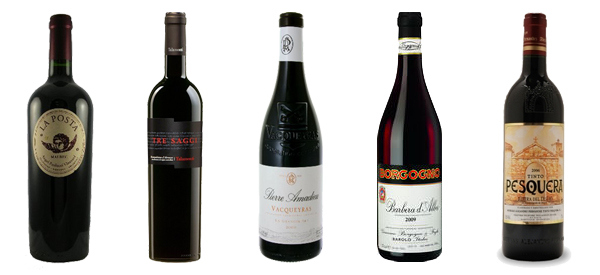
La Posta Angel Paulucci Vineyard Malbec 2010 (75515, $15.95) faintly hits at a mocha milkshake mentality. Smoking cedar boughs inside and blossoming purple Jacaranda outside. Volcanic and pitchy like Cahors or Etna. Mocha flavour finish brings it all full circle.  88

The grape: Montepulciano D’Abruzzo

The history: Not to be confused with Tuscany’s Vino Nobile Di Montepulciano, this one comes from Abruzzo

The lowdown: MD’A’s are making use of new oak like never before. Crowds of new wine lovers are embracing the sweet and concentrated elixirs as go to value drinkers

The food match: Spaghetti with Veal Ragu, reggiano parmesan

Talamonti Tre Saggi Montepulciano D’Abruzzo 2008  (204016, $15.95) is representative of the new age in Italian wine. A crooning Tommy that resides “here in my deep purple dreams.” Rich, lush, deep violet berry, oak-inspired MD’A. So much wine for $16 if a bit scary to a fruit dinosaur.  88

The grapes: Grenache and Syrah

The history: Typical southern Rhône blend, 80% G and 20% S

The lowdown: The Amadieu family has a storied history in the region dating back to the 1920’s, and are the owners of this incredible Cru vineyard

The food match: Hand Made Ravioli, mushroom filling, white truffles

Pierre Amadieu La Grangelière Vacqueyras 2010 (76398, $19.95) first seeps as a black and red fruit Texas tisane but before long the toasted oak turns the tea to coffee with a hint of balsamic wood. Complex from AA to ZZ but not over the top. Some astringent, chalky tannin and talcy acidity is conquerable because the fruit is so lush. “Have mercy, a haw, haw, haw, haw, a haw.”  89

The grape: Barbera

The history: One of Barolo’s historic houses, this Barbera represents an avante-garde shift for the house style

The lowdown: Modern but nothing revolutionary about it. Nothing but a little bit of oak

The food match: Osso Bucco, gremolata, polenta

Giacomo Borgogno Barbera D’Alba Superiore 2010 (285486, $19.95, SAQ 10388088, $19.40) screams simply wow, this is not what I expected from the ancient winery. When I think of Borgogno I envision Barolo circa 1985, red rose rusty and opaque like weak tea. This one is purple pretty, black cherry pie yet retains a dry Piemontese attitude in search of braised shanks. Best Barbera.  90

The Splurge

The grape: Tempranillo

The history: Alejandro Fernandez has convinced the world that entry-level can mean $27

The lowdown: This could be Ribera Del Duero’s finest Crianza

The food match: Braised Lamb Shank, shiitake mushrooms

Alejandro Fernandez Tinto Pesquera Crianza 2009 (341461, $26.95, SAQ 10273109, $26.35) is the shocking blue Venus of Ribera Del Duero, round, voluptuous, smooth and let me tell you, “she’s got it.” Licorice liqueur, blue plum, citrus and laser acidity for a red wine. Always spot on.  90

Good to go!

Pumpkin pairings from beer to wine

Photograph by HappyAlex, Fotolia.com

Photograph by HappyAlex, Fotolia.com

as seen on canada.com

Winter squash season is in full swing and with Halloween exactly two weeks away, it’s time to begin planning your wine and pumpkin pairings. Your neighbourhood friends will thank you for filling their travellers with the right stuff. Beer is much more commonly considered when it comes to Cucurbita and our local brew masters are running wild with it. Pumpkin Ales have proliferated province-wide. Here are four to look for.

Highballer Pumpkin Ale (132753, 500 mL, $3.95)

Great Lakes Pumpkin Ale (67710, 650 mL, $4.95)

St. Ambroise Pumpkin Ale (90738, 4x341mL, $9.95)

Mill Street Nightmare On Mill Street Harvest Sampler (313916, 6x 355 mL, $13.25)

My non-judgmental, personal mien will note that pumpkin beer should avoid most foods but rather match ceremoniously with decorative gourd season, also in full swing. When it comes to the edible ‘large melon’ and its savoury, sweet flesh my go to is wine, of course. Here are four smashing whites and three alt rock reds to pair with pumpkin seven ways.

The food match: Pumpkin Oatmeal, apples, flax seed, hemp hearts, maple syrup

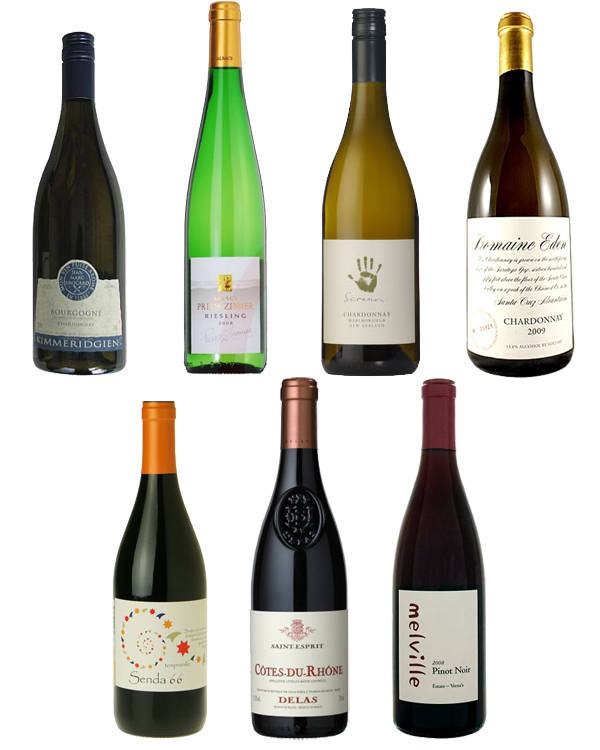
Jean-Marc Brocard Kimmeridgian Chardonnay 2008 (290049, $17.95) has the tropical fruit quotient of ripe banana meets chalky plantain to match up against an earthy morning porridge. There are lemon and apples sliced over Kimmeridgian, oatmeal soil. Could eat this Kimmer for breakfast, “mummy dear, mummy dear.” This supertramp of a Chardonnay explores new territory for villages Burgundy thanks to the efforts of a top-notch Chablis producer.  89

The food match: Pumpkin Pad Thai

Preiss-Zimmer Vieilles Vignes Riesling 2008 (292193, $18.95) handles spice with atomic soda ease, refreshes with a squirt of lime and garnishes with south Asian herbs. The balanced palate is off-dry and the finish is long, tangy and racy. Sails “through the changing ocean tides.” The wine smiles demurely, like a Pumpkin’s rendition of Landslide, palpitating in an unspoken message of humility and thanks.  88

Bryan Birch/Barque Smokehouse

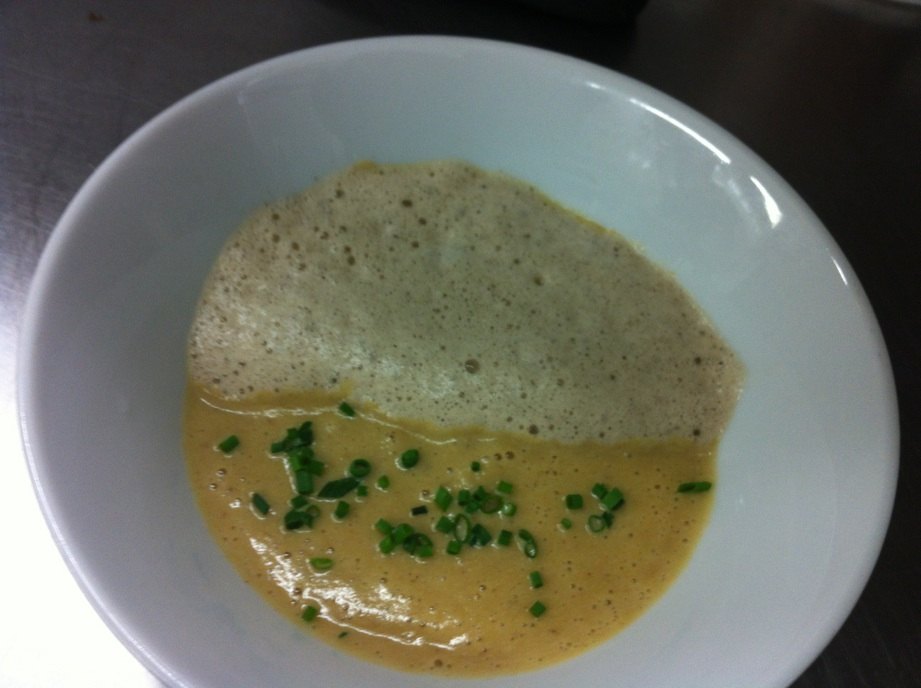
The food match: Pumpkin Soup, coffee foam

Seresin Chardonnay 2009 (19190, $24.95) goes golden capacious and brims with both marigold and malachite toast. Cashew butter, praline nectar and cantaloupe sweeten the pot. Acidity booms and if you like a Napa style, go Marlborough here at a fraction of the cost.  90

The food match: Pumpkin Ratatouille, zucchini, spicy tomato sauce

Domaine Eden Chardonnay 2009 (296145, $27.95) imparts saffron, mandarin orange, honey and Tiger Orchid in constant waves. The golden mineral hue prickles with feeling and the wine’s fat texture helps unlatch flavours. May not have the depth of Napa or Carneros but no other region does Chardonnay in such a casual elegance like the Santa Cruz Mountains.  91

The food match: Pumpkin and Roast Chicken Paella, manchego, jamón serrano

Senda 66 Tempranillo 2008 (296475, $13.95) of fragrant, smoked blueberry and vanilla bean martini is polished, rich and pure decadence for $14. A shaken, not stirred, bad boy bisexual Tempranillo, a skyfall of purple modernity that could sooth countryman and Bond villain Javier Bardem. Get your kicks on Senda 66.  87

The food match: Pumpkin and Pancetta Risotto, toasted pumpkin seed, reggiano parmesan, basil oil

Delas Frères Saint Esprit Côtes Du Rhône 2010 (729962, $15.95) shares enough black cherry and southern French garrigue to further cement its status as a perpetual good buy. So well made and boasting a puritanical litany of the terroir. Demands satisfaction in its origins of expectations.  88

The Splurge

The food match: Short-Rib and Pumpkin Braise, pearl onion, carrot

Melville Verna’s Estate Pinot Noir 2010 (291021, $34.95) speaks Santa Rita Hills vernacular, that is to say, its native tongue is that of red, very ripe fruit. The smell of baking spices (namely cinnamon and clove) stud a red plum bobbing in a spiked cola toddy. Exemplary Santa Barbara Pinot Noir.  90

Good to go!

The hunt for red October wine

Photo courtesy Kiowaman

as seen on canada.com

With the ides of October nearly upon us and cold winds blowing stronger out of the great white north, wine thoughts turn simply red. I’ve no plans to re-create the ancient Roman practice of the October Horse but I do intend to sacrifice a few slumbering bottles from the cellar. After all, there’s no point holding back the years.

Caution horses be weary you don’t crack open too many, not quite ready, aging wines. In order to defend that cellar, now is the time to get on the horse and pursue current release, bold bottles to fortify against the chill of impending inclement weather. Here are five rich reds to look for this coming weekend.

Related – VINTAGES October 13th, 2012 Release

redoctwines1 The hunt for red October wine

The grape: Petit Verdot

The history: Used in smallish quantities to round out Bordeaux blends. Has for more than a decade appeared as a single varietal species in Australia and now more recently, here in Chile

The lowdown: Something other varietal by way of Lontué Valley, a wine-producing sub-region of the Curico Valley, in the center of Chile

The food match: Chicken Liver Paté, french baguette, maldon salt

Korta Barrel Selection Reserve Petit Verdot 2010 (296608, $14.95,) like Carmenère pours a glass of tar and toast but here sidesteps green bell pepper and herb stem. In fact, this PV is  so polished the grape needs no blending as it is both the wine’s anchor and sail. Achieves a ripe fruit/briny olive dichotomy, where la figue meets les Lucques and la mûre connects with les Picholines88

The grapes: Carinena, Garnacha and Syrah

The history: Montsant lies in the province of Tarragona, forming a horseshoe around it’s more famous neighbour Priorat

The lowdown: Produced By The Can Blau Estate out of Catalunya, don’t expect a re-working of the wheel, but for the price at the gate, go to the show

The food match: Grilled Lamb Chops, mint, rosemary, garlic, olive oil

Bula 2009 (292094, $17.95, SAQ 11666852, $19.00) trots out of the stable of new wave Montsant blends at a lope. Poised, purposed and purple pretty. Ligneous influence to anodyne effect in coffee liqueur. Smooth and blended until everything has agreed to become red wine. Waves of flavour and makes evident that textural reconsideration can be your best friend.  89

Photo courtesy Kiowaman

The grape: Sangiovese

The history: Tuscany defined, Sangiovese is Chianti to the core

The lowdown: Make no mistake. Castello di Fonterutoli is going full throttle, international styling here and it’s just so damn irresistible

The food match: Braised Beef Short Rib Croquette, sangiovese jus

Mazzei Ser Lapo Chianti Classico Riserva 2007 (288530, $24.95) may cause intellectual and physical moiety due to a bold, morning mug of mocha driven, piazza juice but I wouldn’t kick her out of bed for eating biscotti. Say what you will but the Lapo displays a striking, Italianate, strada strut. A wine expansive and adorned as if she were the duchessa of an embellished palazzo90

The grape: Pinot Noir

The history: Burgundy’s heartbreak grape found true love in the Willamette Valley but Umpqua Valley is something other

The lowdown: Not fully tested southern climate for Pinot in Oregon increases the subtlety and  intrigue factors

The food match: Smoked Duck Confit, bliny, fig jam

Brandborg Bench Lands Pinot Noir 2008 (295238, $28.95) is bred from a locale not known for its speed out of the gate but when she spooks, she can pass any horse in the ring. Base and natural like bare hands and feet grazing the pasture. Cinnamon heart candy red and spice meets herbal, licorice twizzler. Perfect libation for the bright lights, social hour. “A festival every week, if this is what you seek.”  90

The hunt for red October wine. Photo courtesy Kiowaman

The Splurge

The grape: Tempranillo

The history: The greatest expression of the grape has to be in Spain’s Ribera Del Duero, bar none

The lowdown: Alejandro Fernández may be the wine world’s greatest unsung hero. His “basic” Crianza wines can age beautifully for 10-15 years. The Reservas? Forget about it

The food match: Braised Beef Brisket, caramelized onion, tempranillo gravy

Tinto Pesquera Reserva 2008 (323345, $39.95) ramps up the garriga tierra quotient. Savoury and spicy, flanked by chalky, grainy tannin and a pulchritudinous, primordial tobacco aroma that tendrils around, as tobacco smell will. Sickle hocked, over at the knee, toes in. Inviolable Tempranillo.  92

Good to go!