
Versante Nord, L’Etna
As an event Etna Days may only be four years in the making, but it is a great one. That it falls in the second week of September is a thing of brilliance, with weather warm and nurturing, grapes continuing to hang on the vines, the harvest on producers’ minds and yet still far enough away. The setting is spectacular, with ancient lava flows all-around, signs of new ones spewing from craters above 3,000 metres, vineyards marked by stone terraces and walls, century vines thriving here, there and everywhere. No two blocks look the same with each producing a unique Etna Bianco or Rosso. Confidence and morale feel to be at an all time high.
Related – The contempo pull of Sicilia en Primeur
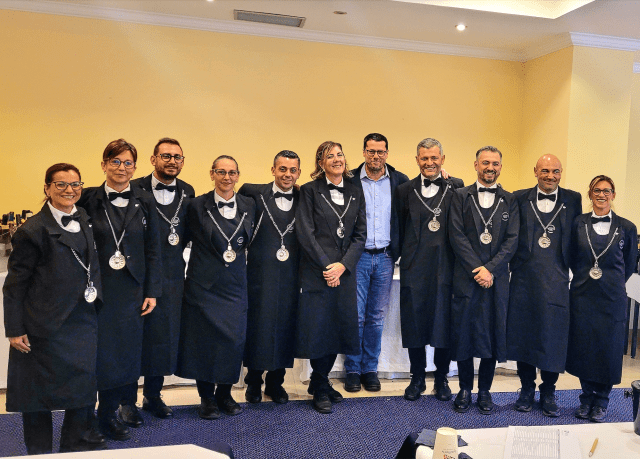
The Sommeliers of Etna Days
Never mind the challenges of 2023, including a May 3rd hailstorm, some but far from devastating presence of the Perenospera (mildew) virus and lower vine yields. What will follow the lower quantity and high quality of 2023 will by now have been the promise of a brilliant 2024 harvest. The Etna DOC Consortium suggests that the latest rains after the hot and dry summer have slowed down the ripening process, thereby helping to enhance phenolic and aromatic components. Slower and more gradual maturation proved to be decisive in terms of improvements in quantity and quality. The Consortium estimates a harvest of around 80,000 quintals (about 35/40% white grapes and the remainder red) and a likely production potential of more than 55,000 hectolitres. In terms of volume, the harvest is expected to be up by around 60 percent compared to 2023.
Related – Sicilia en Primeur 2023 Part One: L’Etna
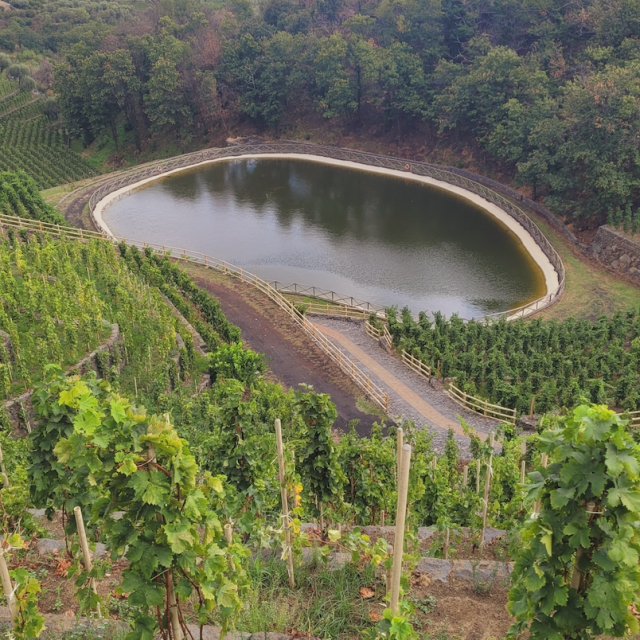
La Gelsomina Di Colombo
There is no understanding of modern Etna without a proper historical base and that begins with the ancient, but also more recent visualization of the Palmento. In some cases outdoor stone remains can be seen, including that of the 1300 year-old Palmento at Rupestre in Pietramarina, Castiglione di Sicilia. It was excavated out of one rock, a vasca carved from the sandstone, a lagares for treading on grapes used by the Sicel peoples, early settlers in eastern Sicily. The island is littered with archeological sites that prove the existence of winemaking going back three thousand years but on L’Etna it is the presence of restored stone buildings where, with the use of gravity, grapes would have been collected and fermented into wine. At Palmento Costanzo the buildings that housed the original wine making were restored in 2015 and finished in 2019. The technology is new but the gravity fed Palmento abides by the old ways.
Related – Sicilia en Primeur Part Two: Icons and Archetypes
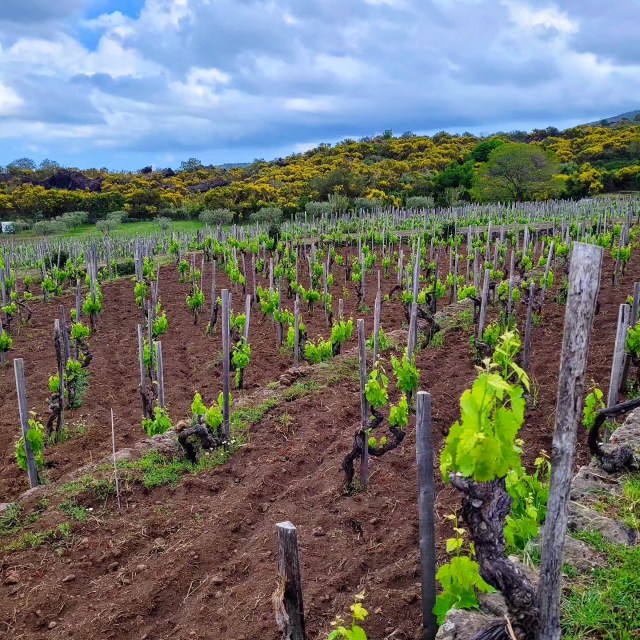
Alberello planted in pentangles, five per grouping all facing a central axis at Palmento Costanzo, Contrada Santa Spririto
For centuries I Catanesi would have come up the mountain to purchase in bulk where necessitous viticulture was born in harmony but also with respect to the landscape. In the 19th century approximately 100 million litres of wine was produced on Mount Etna, all from the various Palmenti. Wine born of a place with an active volcano rising above vineyards at 3,300m of elevation, a climate unlike anywhere else on Sicily and a terroir aboard geology conceived from hundreds of various lava flows throughout the course of its history. The differences in biodiversity from block to block, contrada to contrada and village to village are evident in the multifarious plant life growing on the extant slopes of the volcano.
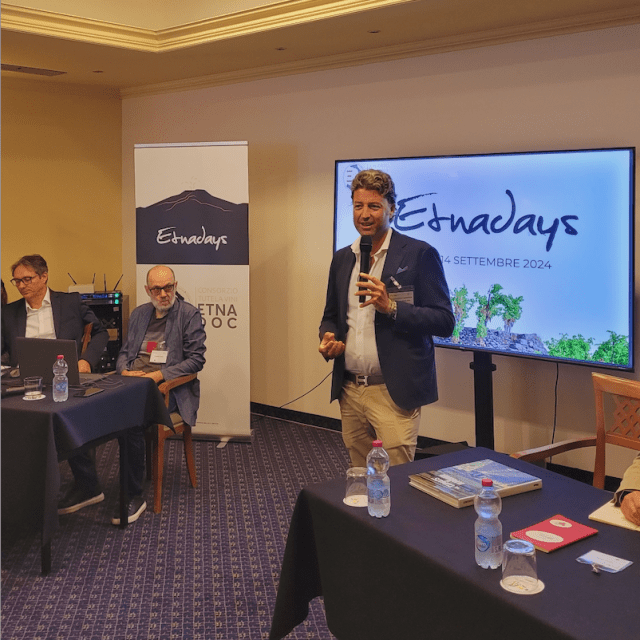
Consorzio President Francesco Cambria
The various lava flows, each with a unique set of stone in chronological stages of degradation, from the hardest lava rock through gravels and into sand are all characterized by a distinct set of weathered minerals and elements contained within. How each corridor and at what elevation affects the endemic grape varieties is a great mystery and so many of us will spend a lifetime trying to make some sense of the how and why. The Etnaese carricante, white and red minnella, nerello mascalese and nerello cappuccio are children raised and nurtured by the slope, elevation and geological make-up that is their home on the mountain.
Related – Notes from 2019 Sicilia en Primeur
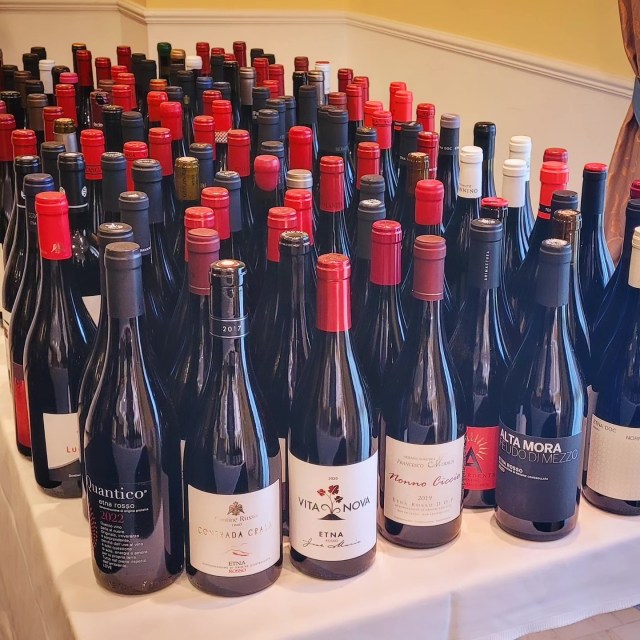
Etna Days Rosso
Whether by Alberello or modern day Guyot or Cordone Speronato training it is the age and disintegration of soil that seems to be the greatest influencer on their outcomes. Serena Costanzo talks of the innovative pruning method of Simon & Sirsch, of which “the principle rule is ramification – build a chronology of live wood; first year, second year, third year and so on” with a method that does not interrupt the lymphatic system. They remind that “a vine is not a tree, but a liana” and that “pruning, which is and remains a mutilating technical act for the plant, causes consequences within the plant…a rethinking of pruning, so that it was more respectful of the physiology of the plant.” There are ramifications, the necessity of continuance for sap flow, to make small cuts and hold a respect for the wood. They have observed “how the application of a dynamic and physiological pruning of the plant promote an increase in living wood over the years, with a consequent intact and efficient lymphatic system.” Their most essential reminder is that “there is no good or bad pruner but there is a trained and an untrained pruner. The Simon & Sirsch system “is a way to combat climate change,” says Serena, “especially during periods of extreme heat.” Nerello Mascalese trained by Alberello and planted in pentangles, five per grouping all facing a central axis works opposite to traditional rows and is Palmento Costanzo’s way of maximizing root structure and efficiency.
Related – L’Etna and Parco Statella saved my Sicilian quarantine
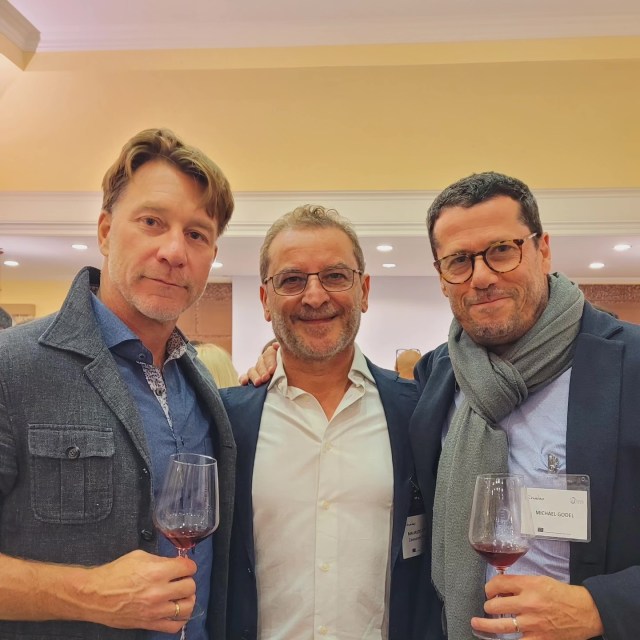
With John Szabo M.S. and Consorzio Director Maurizio Lunetta
It bears reminding that L’Etna is a an active volcano and so what spews out and forth from its craters will constantly affect viticulture. The new settling of wind-carried ashes and lapilli are perpetually adding new layers to old soils which in turn induces innate revisions and so from vintage to vintage Etna’s wines are always in flux, forever subjugated to constant change. One only needs to have tasted the last few vintages of the Etna Bianco Superiore from the village of Milo to intuit just how significant an effect these wind-blown fragments have had on the wines. They have never been more intriguing, exciting and frankly better. Studies of these eastern Etna soils in a cooler micro-zone show significant levels of silica, iron, magnesium and potassium in the soils, combining to gift the Bianco with much to digest.
Related – All the wines of Sicily
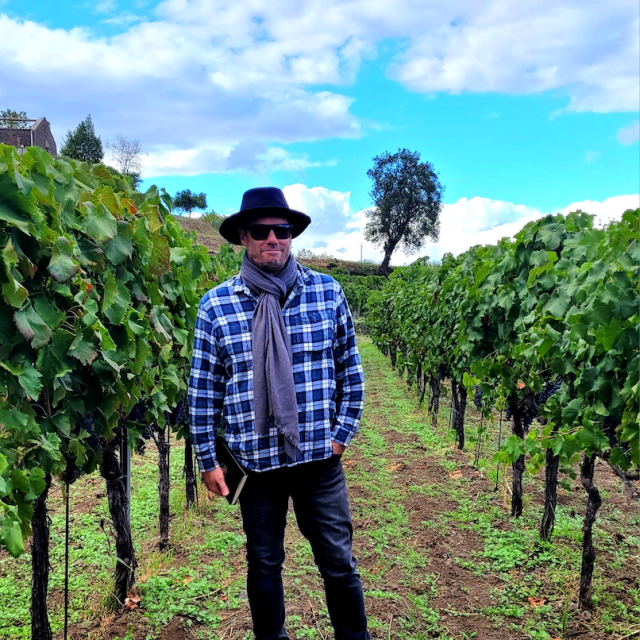
That is the past and from the start of the First World War through to the 1970s and 1980s the wine business aboard L’Etna fell away to pieces. It’s resurrection is but 30 years in the making and the transformation of the past 10-plus years is nothing short of remarkable. The oenologist, farmer and cellar dweller will say that the use of Palmenti and the Alberello are key to restoring dignity, faith in humanity and the true essence of what it means to produce Etna wines. Consorzio President Francesco Cambria will say that the most important project is to see the passage of the denomination transform from the Italian DOC to DOCG. These are all matters to consider and get behind, for some it’s about the heart and for others the reality of business and therefore life.

Carlo Flamini, Maurizio Lunetta, Luigi Moio, Bertrand Gauvrit and Francesco Cambria
Etna Days is an exceptionally well run and seamlessly orchestrated event with thanks to the teams involved. Consorzio Etna DOC’s Presidente Francesco Cambria, Direttore Maurizio Lunetta and Segreteria di Direzione Sarolta Stella Osvath. The team at Ispropress with Angiolino Lonardi, Bernardetta Lonardi, Simone Velasco, Sara Faroni, Marina Catenacci, Marta De Carli and Eleonora Alberti Cermison. The third edition of the 2024 Etna Days congress assembled for the first morning’s welcome with expanded perspectives and analyses of international dimension. Cambria and Lunetta hosted speeches by Carlo Flamini (Head of the Italian Wine Union Observatory), Bertrand Gauvrit (General Director of the Association des Climats du Vignoble de Bourgogne) and Luigi Moio (President of the International Organization of Vine and Wine). Sommelier assisted technical tastings, walk around chats with the producers and touring visits at estates all combined to deliver a profound sense of modern day Etna. High-level discussions were had on location with Tenuta delle Terre Nere’s Marc de Grazia, Benanti’s Salvino Benanti, Papa Maria Cuore Di Marchesa’s Pietro Giovanni, Rupestre and Terre Darrigo’s Rosario Raciti, Palmento Costanzo’s Valeria and Serena Costanzo, Quantico’s Giovanni Raiti, Tascante’s Michele Brusaferri and Vittoria Cerniglia and Planeta’s Patricia Tóth. For his part Godello made tasting notes on 150-plus wines. These are his reviews.

Etna Spumante DOC and Terre Siciliane IGT
Benanti Viticoltori Noblesse Brut Carricante Método Classico 2021, Terre Siciliane IGT
Twenty years into the (traditional method) sparkling wine program with help from a northern (Suditrol) sparkling wine company, 24 months on lees. Brut which here means 4-5 g/L of residual sugar, more than relatively dry with carricante. Reductive, high energy, tight and immovably youthful. Dried herbs, fennel, brushy and dusty savour. Acidity is quite fine, balance is struck and the lees aging time spot on for this widely appealing yet serious sparkling wine. Drink 2024-2027. Tasted September 2024
Benanti Viticoltori Noblesse XLVIII Brut Carricante Método Classico 2019, Terre Siciliane IGT
The Noblesse was named because Giuseppe Benanti saw himself as identifying with high level French sparkling wines and this next tier rise sees the wine remain on lees for 48 months. Similar RS (below 5 g/L) but the extra time brings quite a factor of autolysis as a by-product of time. Yeast-bready in just the correct way, harmony struck between the autolytic notes and acidity yet with a higher pH and lower acid profile. Quite a different expression of carricante as sparkling while co-existing within the same Benanti family. Both wines feel like they really carry a purpose, including for what sector of the market they are looking to make their appeal. Drink 2024-2028. Tasted September 2024
Benanti Viticoltori Lamorèmio Brut Rosé Método Classico 2020, Terre Siciliane IGT
Like the Noblesse Brut this sees 24 months on the lees with nerello mascalese as a Rosato which comes away feigning sweetness more than the carricante, even though the sugar (at 5-ish g/L) is just about the same. Acid structure carries the sweetness and the weight, length is good and this is surely the more all-around style taht offers wide ranging appeal. Drink 2024-2026. Tasted September 2024
Fischetti Etna Spumante DOC Método Classico Brut Librato 2020
Made with just a small part of nerello mascalese from Contrada Muscamento for a total blanc de noir production of 500 bottles. Livrato is poetry, in ode to Michaela Luca’s mother who was an avid reader. Base wines are kept on lees with bâttonage and the wine also spends 30 months on the gross lees. High energy, sharp, pointed and full on tang, enough freshness but also some weight to be sure. Citrus makes a statement and without any dosage there should be a piercing effect but that’s simply not the case. Quite impressive sparkling for L’Etna. Drink 2024-2026. Tasted September 2024
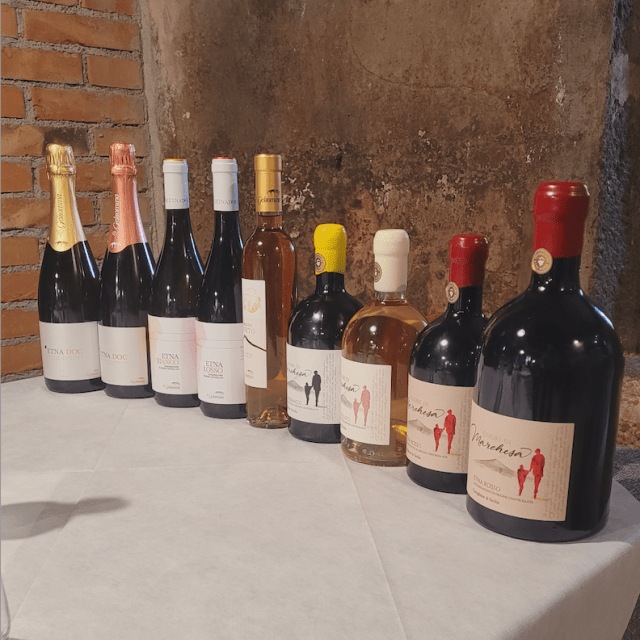
La Gelsomina Di Colombo Maria Adalgisa Etna Spumante DOC Brut Rosé Método Classico 2021
Lightest Rosato hue, in part because the Gelsomina style is all about clarity and freshness, as far away as possible from oxidation and especially autolysis. No brioche or yeast derivative aromas, just red fruit, primary and juicy. The lees aging time is minimum 36 months but the winemaking does everything possible to stay reductive and with minimum contacts or stagnancies. Rosato is a step more complex than Blanc de Noir if not quite as energetic. Drink 2024-2026. Tasted September 2024
La Gelsomina Di Colombo Maria Adalgisa Etna Spumante DOC Brut Blanc de Noir Método Classico 2021
When Etna DOC added Spumante to the disciplinare 10 years ago Gelsomina (partner of Tenute Orestiadi) was ready and was amongst the first to bottle under the allowable labelling. The blend is 80 percent nerello mascalese and (20) nerello cappuccio, minimum 36 months on the lees. Brut at six g/L of residual sugar. Good thing the acidity is captured and kept because there is no shortage of flesh, fruit ripeness and creamy texture. Clean, fresh, accessible and well made. The choice is clear, to avoid autolytic notes and so the yeasty and bready style is for someone else. A Gelsomina is the exact opposite. Drink 2024-2026. Tasted September 2024
Palmento Costanzo Etna Spumante DOC Método Classico Brut
A 24 months on lees traditional method sparkling wine, disgorged in February 2024, Brut style. Feeling like 5-6 g/L of residual sugar, tart and ably if typically carricante. Fine bubble, tight and sure with a botanical component. Clean and just feels right with a cheese plate. Drink 2024-2026. Tasted September 2024

Etna Rosato DOC
Alessandro Serughetti Etna Rosato DOC Lunabuona 2022
In 2022 Alessandro and Loredana Serughetti chose to invest in a small 1960 planted vineyard at 680m on the North slope of L’Etna in the village is Rovittello, a suburb of Castiglione di Sicilia in Contrada Dafara Galluzzo. Their Rosato is 90 percent nerello mascalese with (10 combined) minella nera and bianca. A unique Rosé, equal parts salinity an sapidity which essentially translates to 100 percent volcanic. This is currently their largest volume sku at 1,600 bottles and with the extra year of aging it drinks beautifully, at peak and with grace today. Drink 2024-2025. Tasted September 2024
Cottanera Etna Rosato DOC 2023
From Rosso vineyards, looking for freshness and very little sugar but also low alcohol. Only steel, three months, bottled in February. Rich of fruit, salty, crunchy and for Rosato also complex. Tons of flavour, strawberry and some leafy savour. Drink 2024-2025. Tasted May and September 2024
Palmento Costanzo Etna Rosato DOC Mofete Rosato 2023
Energy noted straight away, a carbonic nerello mascalese buzz that drives Rosato to stand up and be noticed. Comes right at the senses, aromatically floral and palate treble tremble to pique interest and taste sensations. Full fruit and mineral working together for flavour and character. That’s what it’s all about . Last tasted September 2024
Equally fruity and vegetal, of red berries and peppers, a tartness and also lactic cheese note. Herbal as well and so complexity as Rosato if on the acquired taste side of style. Crunchy and salty, briny to a degree, naturally wild and free. Drink 2024-2025. Tasted May 2024
Rupestre Etna Rosato DOC 2023
So similar to the Terre Darrigo Rosato made by Rosario Raciti with 100 percent nerello mascalese fermented and simply allowed to go from vine to glass. The difference is location and terroir. What does that mean? Contrada Pietramarina fruit, salinity and acidity, grip and tension. Otherwise just the Rosato and mascalese facts. Drink 2024-2026. Tasted September 2024
Tasca d’Almerita Tascante Etna Rosato DOC Tefra 2022
Aptly labeled “Vigne Custodite dalla Famiglia Tasca d’Almerita,” a statement to make sure we understand these nerello mascalese grapes are estate grown. Aromatic varietal volume, energy and spirit run high, yet most notable are the wealth and depth of flavours. Cherry moving into strawberry with a basic phenolic presence and that is very much all you want and need. Not a high acid Rosato, nor was that the intention. Drink 2024-2026. Tasted September 2024
Tenute Bosco Etna Rosato DOC 2020
Only nerello mascalese from the lower and most vigorous part of the vineyard and grapes are chosen specifically for the Rosato. No wood like the white, once again to preserve the volcano’s effect on the wine, which is essential and when Rosato is made like this, also profound. This is a specific kind of salty, to Bosco’s vineyard and the mascalese that grows. Just three hours or less skin contact, quick maceration, no thought to colour, as with every wine in this portfolio, the place on Versante Nord is the heart of each and every matter. Already two years old, evolving very slowly and there is no reason to think it will not continue this way for another two or three more. Tranquility but also energy. Drink 2023-2027. Tasted May 2023 and September 2024
Terre Darrigo Etna Rosato DOC 2023
Only nerello mascalese as per the norm for Etna Rosato DOC and another salty little number with satisfying juiciness and grip. Direct, unadorned, almost no barrel, perhaps just a few percent. Straight fermentation, let it sit and ride. Drink 2024-2025. Tasted September 2024

With Alberto Graci, Giuseppe Russo and John Szabo M.S.
Etna Bianco DOC
Alta Mora Etna Bianco DOC 2022
Nice and smoky Etna Bianco from Alta Mora though the fruit is equally adamant about gaining your trust. The smoulder equalized by the pulpy flesh of fresh bites into orchard fruit and a touch of finishing spice. Not the most complex but surely robust for the category. Last tasted May and September 2024
Solid and well made Etna Bianco in the ways of respect and tradition, ample, fulsome, substantial and structured for a wine that will drink well three-plus years forward. Citrus mainly, both lemon and lime, cool, not quite minty but surely like fresh summer basil and then a pinch of salt at the finish. Drink 2023-2026. Tasted May 2024
Antichi Vinai 1877 Etna Bianco DOC Petralava 2023
Soda and neutral fruit intro which is par for the Etna Bianco course and certainly not unexpected. In other words mineral led, volcanic obviously and yet cool, gelid, mildly if sweetly botanical. A shot in the dark, unexpected and how can you not be thankful for a wine of this stature you knew nothing about. Drink 2024-2026. Tasted September 2024
Azienda Agricola Ciro Biondi Etna Bianco DOC Outis 2022
Fruit up front but in a botanical way, less basaltic mineral salty and more sapid as a result. Still it carries a set of elements that conceptualize the Bianco, however the peachiness and sweet preserved citrus set this one up to be a mellow sort of affair. Drink 2024-2026. Tasted September 2024
Azienda Agricola Ciro Biondi Etna Bianco DOC Chianta 2021
A more important label for Biondi and therefore aged an extra year ahead of release. Chianta the top Bianco cru and clearly a matter of longer maceration magnified by the extra aging. Not only noticed in hue but that natural salve texture settling while also dissolving nicely on the palate. A more interesting and satisfying iteration to speak credibly for the winemaking intent and also a matter of style. Then some crispiness and crunch to speak for captured and persistent freshness. Fine work. Drink 2024-2027. Tasted September 2024
Benanti Viticoltori Etna Bianco DOC Contrada Cavaliere 2022
Sweetly aromatic waft in a memory of cotton candy at the fair sort of way. Palate tells another story, truly lemony and in a current one-dimensional phase. The carricante has gone into slumber, which is unsurprising and so best not to touch any bottles until the Spring of 2025. Last tasted September 2024
Reserved, not reductive but neither open nor gregarious. A smoulder of volcanics and wood aging, just an aromatic wisp of flint and notable verdancy. The greens are also driven by the place and Cavaliere gives in just this way. Low, slow and with a time lapse release of controlled power. Really quite remarkable Etna Bianco from this contrada. Drink 2025-2032. Tasted May 2024
Cottanera Etna Bianco DOC Calderara 2022
Calderara vineyards are 40-45 years of age and the harvest happens a week later, in the second week of October. Cement and large casks, 60-40, 10-12 months, brought back together and bottled. Saltier than the Bianco because the vineyard is so full of lava stone, a 100-plus year old eruption with brown basaltic stone. Very focused and precise though more power than 2021. Drink 2025-2029. Tasted May and September 2024
Donnafugata Etna Bianco DOC Sul Vulcano 2021
Quite a taut and wound Etna Bianco, not unusual for the vintage and though anything but lean – my this is tight. Mountain white in every respect and one of the finest if also precise Bianci ever produced at Donnafugata. Exemplary for the DOC, speaking to the mineral slats, elements and ways but also reasons for how lava flows have affected what will happen to vines farmed with industrious respect. Frames Etna Bianco in a serious if surely satisfying way. Drink 2024-2031. Tasted September 2024
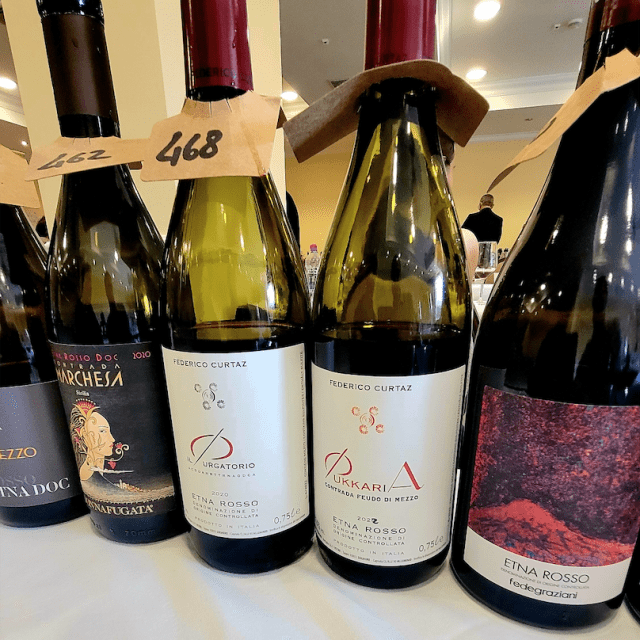
Federico Curtaz Etna Bianco DOC Gamma 2021
Gamma is more aromatic than most with its mix of candied and floral but also spicy and so nasturtium or marigold are considered. The transitions are bold if seamless and the next stage is where things really take a turn to excitement. Moving away from the tight reduction and into bold flavours, variegated and layered, of fruit but of course minerals and elements that deduce then decide what an Etna Bianco is all about. Crisp, crunchy, biting and lengthy, all decidedly essential attributes of a rebel Bianco. Drink 2025-2034. Tasted September 2024
Firriato Cavanera Etna Bianco DOC Contrada Zottorinotto, Balza Delle Poiane 2022
Some reduction from a specific cru and designation, that being Cavanera Balza delle Poiane within the northerly contrada of Zottorinotto. Herbal as well, fresh sprung spring glade of ferns and wild allium, trillium and the local Ginestra. Plenty of substantial fruit and truthfully so much going on. As far as Etna Bianco is concerned this should be considered a big wine, the kind that can be enjoyed by lovers of full-bodied chardonnay. Drink 2024-2029. Tasted May and September 2024
Fischetti Etna Bianco DOC Muscamento 2022
Purchased the palmento in 2006, fully restored and what Michaela Luca calls “a very romantic place.” A Bianco called “Muscamento” (due to labelling bureaucracy) from the Contrada “Moscamento” at 650m on the northeast part of L’Etna. Just three hectares and 8,000-9,000 total production with this being the single-vineyard label. A blend, of 60 percent carricante and (40) catarratto. As floral as it gets for Etna Bianco with honeysuckle and ginger root. Lemon and lime flavours, clean, fresh and truly amenable. Drink 2024-2026. Tasted September 2024
Giovanni Rosso Etna Bianco DOC 2023
The work of Barolo’s Davide Rosso who came to L’Etna in 2016. Straightforward Bianco, neither predictive nor oxidative, tight or loose but somewhere comfortably in between. Goldilocks, between hard and soft, fruit and mineral, an equality of both. Solid, unassuming and yet perfectly representative Etna Bianco. Wood spirit and spice is felt on the back end. Rosso may need to make Bianco for 10 years before greatness arrives. His past work with chardonnay in Bourgogne can only serve to speed up the understanding of carricante. Would not put it past him to get there even sooner. Drink 2024-2027. Tasted September 2024

Girolamo Russo Etna Bianco DOC Nerina 2023
Only Nerina, San Lorenzo and Feudo were made in 2023 due to a challenge from rain, mildew and less fruit availability. No worries about quality however and Nerina is about as full pulp-fleshy and developed as it has ever been. The acids travel up and down the sides of the palate in the ways of striking Etna Bianco and here Russo finds the road back, each and every time. Drink 2024-2029. Tasted May and September 2024
Girolamo Russo Etna Bianco DOC Feudo 2023
New Bianco for Giuseppe Russo, a selection of 100 percent carricante from three hectares within the Feudo di Mezzo vineyard and contrada. Feudo is not San Lorenzo but it is something remarkable in its own right. More botanical and phenolic but also a level of citrus preserve not noted anywhere but Feudo. Crazy level of implosive citric intensity and taut character. The behaviour is so different to San Lorenzo with flavours that mean business in the most impressive way imaginable. Intensity off the charts, concentration so impressive, energy that builds and builds. Drink 2024-2029. Tasted May and September 2024
Graci Etna Bianco DOC Muganazzi 2022
“A wine of mystery,” says Alberto Graci, “very intriguing for me.” Flinty and scrubby at the same time, energy and vibrancy laying in waiting, a buzz behind the curtain and a soil purposed into the 100 percent carricante that Graci’s team and now also we know the wine will want to explode with flavours a year, or more rightly two from now. So tight but you can feel it, the linear nature looking ahead and time will bring about something social form that mystery. Unquestionably one of L’Etna’s finest ’22s. Drink 2026-2035. Tasted Tasted May and September 2024
Graci Etna Bianco DOC 2023
A mix of all four contradas; Muganazzi, Arcurìa, Feudo di Mezzo and Santo Spirito. A mix of Mediterranean scrub and vibrancy, looking for that balance between and finding it. Really fine precision and salinity, length is outstanding for villages level Bianco. Drink 2024-2027. Tasted May and September 2024
La Gelsomina Di Colombo Maria Adalgisa Etna Bianco DOC 2023
Fruit is drawn from the steepest of slopes surrounding the pond within an amphitheatre that is an extinct volcanic crater on the Gelsomina property. Tiny micro-climate within the 15 hectares of the estate, mainly carricante (80 percent) with a smaller portion of cattaratto, neutral and primary when this young, needing time to find its expression. Again the clarity and freshness are proper but the neutrality makes it hard to see where this will go and what it will become. Drink 2025-2027. Tasted September 2024
La Gelsomina Di Colombo Maria Adalgisa Etna Bianco DOC 2022
The 80 percent carricante with (20) cattaratto grows on the steepest of slopes within the estate’s amphitheatre in surround of a natural pond that are all part an extinct volcanic crater on the Gelsomina property. A small micro-climate inside of 15 hectares for a Bianco fruit forward and when young, so easy to drink. Unsurprising to find this perfectly clean, fresh and direct, a matter of just five months in stainless steel. Perfect for the many and the willing. Drink 2024-2026. Tasted September 2024
Massimo Lentsch Etna Bianco DOC 2023
Sweet aromatic perfumes, candied florals and white peach per se, a preserved lemon edging to limoncello. Lemony flavours, fine, simple and preparative to set the Bianco up for a modicum of representative success. Good and plenty but not quite exciting, complex or wholly substantial. Drink 2024-2026. Tasted September 2024
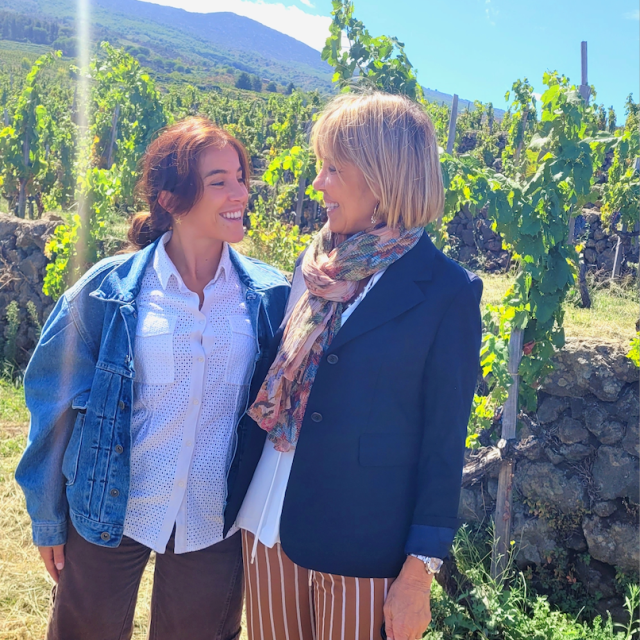
Serena and Valeria Costanzo – Palmento Costanzo
Palmento Costanzo Etna Bianco DOC Bianco Di Sei 2022
A cuvée of all parcels from different contrade, including the homefront Santo Spirito, along with Cavaliere. On average 90 percent carricante with (10) catarratto. Only raised in stainless steel, persistently fresh and if any region in the world might be compared with it would be Chablis AOC, direct, salty, smart and widely purposed. Last tasted September 2024
Just have to say wow because Bianco di Sei comes equipped with a level of intensity that was not quite expected from 2022. Not so much a volume or an explosion aromatically speaking but an extreme set of eccentricities that crash aboard the palate. Likely needing some rest and down time to integrate because the level of extract here (including volcanic activity) is simply off the charts. Etna incarnate, pointed and exciting. Drink 2025-2029. Tasted May 2024
Palmento Costanzo Etna Bianco DOC Contrada Santo Spirito 2022
High level aromatic volume and concentration from Santo Spirito ’22 and we know right away that this wine knows exactly who it is, where it comes from and where it wants to go. Volcanic salts are also present on the nose from a Bianco of great stage presence and such a smart textural weave that gains every bit of the palate’s confidence. The connection is prescient, reaction calming and conclusion poignant. This is how you make and present Contrada-specific Etna Bianco. Drink 2025-2033. Tasted September 2024
Palmento Costanzo Etna Bianco DOC Contrada Santo Spirito 2021
Note the colour of the lava soil on the label, lighter brown for Santo Spirito, from the contrada vineyard at 700m on the northern slope that comprises one out of three “islands within the island” of L’Etna. Still just an infant, implosive and insular, wound so tight, yet to explode. Give this another year, just as the first taste had indicated for months prior. Last tasted September 2024
A fine vintage and and even finer Contrada, that being Santo Spirito where carricante (and 10 percent cattarrato) are given every soil, geological and micro-climatic advantage. There is an accumulation of ripeness and stone cool mineral groove from location and acumen that make this move with incremental ability. It will slowly define itself over along period of time that will be fascinating to watch every step of the way. Drink 2025-2032. Tasted May 2024
Palmento Costanzo Etna Bianco DOC Contrada Cavaliere 2021
Note the colour of the lava soil on the label, darker brown for Cavaliere, from the contrada vineyard at 700m in the southwest “island” of L’Etna. A different expression to that of Santo Spirito, volumetric in terms of aromatics and less austere or rather locked tight. Here more sapid and botanical, less basaltic salinity and fleshier early on. More fruit forward, pulpy stone fruit like, amenability run higher and the Contrada-designate Bianco to drink while waiting for Santo Spirito to mature. Drink 2024-2027. Tasted September 2024
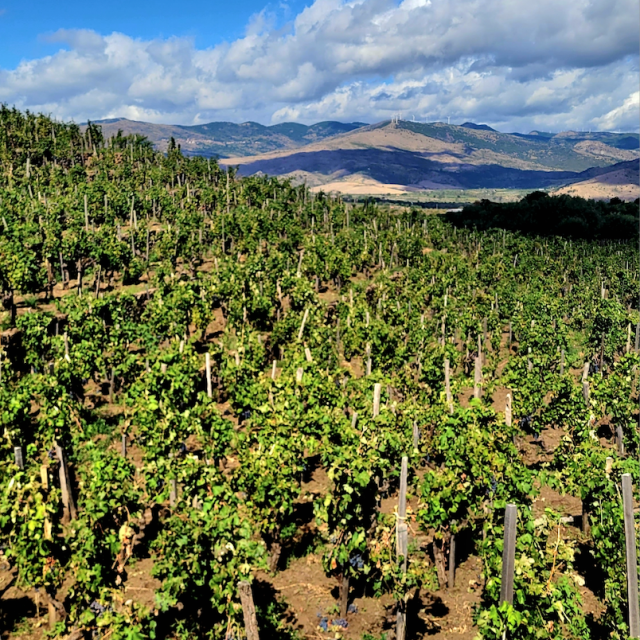
Papa Maria Cuore Di Marchesa Etna Bianco DOC Cuore Di Marchesa 2022
From Contrada Marchesa near Solicchiata at 750m, a property through Pietro Giovanni’s father-in-law with vines around 100 years old, of the passion and at the heart of the contrada. As unique as it gets for Etna Bianco, 100 percent carricante, ripe yet certainly not honeyed and wood a driver with a white cocoa note that alters perception at a certain level. Some savour as well, brushy style, curious and raising the overall levels of interest. The flavours and textures combine for substantial, if also layered appeal. This may turn secondary sooner rather than later but the level of intersecting interest should only increase. Drink 2024-2028. Tasted September 2024
Pietradolce Etna Bianco DOC Archineri 2022
Archinieri comes at us with that Pietradolce mix of confidence and generosity because well, vineyards and expertise. A Bianco that must be great because the makers demand top quality from field to table and all the markers here are present, defined and accounted for. Ideal reasoning, seasoning and style. Drink 2024-2028. Tasted May and September 2024
Planeta Etna Bianco DOC Contrada Taccione 2022
A singular Bianco labeled within Contrada Taccione for Planeta’s cantina located in Feudo di Mezzo and when you are the sole (known) contributor you make, transmit and valourize the rules. Pulp, acumen and circumstance establish and disperse layers of lava-fueled feelings, initiate discourse and bring about results to say this is Etna Bianco of balance and mountain reform. Not the acid intensity of some, nor the flowery pot gratuity of others. Nor does it reside indiscriminately or disinterestedly in between – no it makes a great pronouncement of elevation, mountain experience and intention. Exceptional Etna Bianco. Drink 2025-2033. Tasted September 2024
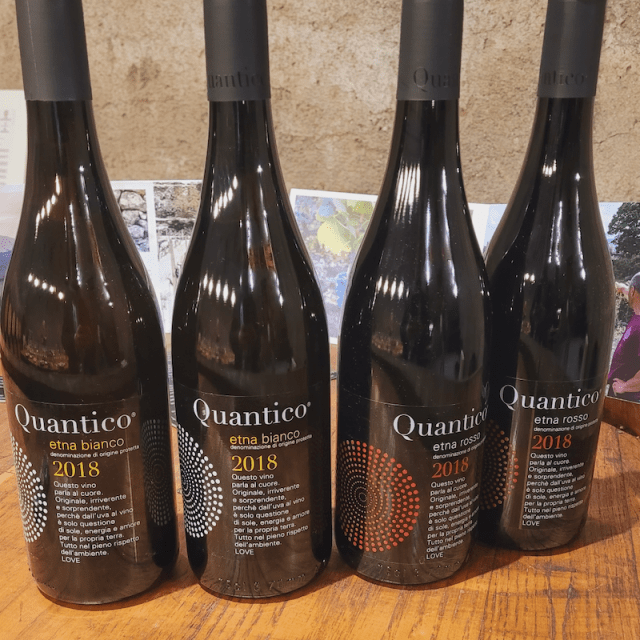
Quantico Etna Bianco DOC 2018
A few years have passed but my how this 2018 has hung onto its freshness despite some skin contact involved in the early process. Maturity is recognized in the platinum gold hue, subtle caramelization and next level developing complexities. May not keep for several years more but at nearly six years of age it is special. Last tasted September 2024
Just two years older than the ’20 and a marked difference, especially in aromatics. Much warmer year but the exotica and tropical fruit really stand out in this 2018. Cherry blossom, lime cordial and a litchi or longan effect, almost feeling boozy but the alcohol (at 13 percent) is the same as 2020. That said the palate is much more similar, less advanced and feeling fresher. Lots of fruit here, full of energy with a long lasting impression. Drink 2023-2025. Tasted May 2023
Rupestre Etna Bianco DOC 2023
The private label of Terre Darrigo winemaker Rosario Raciti grown in the Contrada of Pietramarina and vinified in the company’s cantina. Only carricante and an old lava flow location with 14 year-old vines planted by Rosario’s father. A unique saltiness and mineral intensity clearly attributed to the contrada despite the young age of the vines. Lean, direct and pointed, sharp and just the beginning of the story. Only 8,000 bottles in 2023. Drink 2024-2027. Tasted September 2024
Tasca d’Almerita Tascante Etna Bianco DOC Buonora 2023
Only carricante and just has that look of a wine you expect to be extremely cold when it’s really a matter of a strong, sweetly phenolic presence. Herbal, like basil granita and a different sort of salinity owing to the specificity of Tascante’s Pianodario gravelly volcanic sands. Also owing to harvest time after a most challenging vintage which gave smaller, more concentrated berries with high skin to pulp ratios. Sees only stainless steel, for good reason and the effect triples down on this Bianco’s style. Drink 2024-2026. Tasted September 2024

Tasca d’Almerita Tascante Etna Bianco DOC Contrada Sciaranuova 2022
Vinified and aged in Slavonian Grandi Botti, “to preserve the verticality and freshness of the carricante” explains Tasca d’Almerita agronomist Michele Brusaferri. Plays hard to get and acts demure inside the halls of its aromatic silence but you know that the elevation and fine basaltic soil are the portents of Tascante’s main Contrada Sciaranuova that will see to conditions for change. Though soft you feel the wood, present with confidence yet the thread of cool, herbal and botanical rins from Buonora into this Bianco. Fruit will soon peek through and announce a scintillant’s arrival, blossoms too, namely orange and then to salty lime later on. Just takes some air, agitation and swirl to coax out the excitement and up into the stratosphere. Turns out to be crunchy and seriously salty Etna Bianco, like flakes of Maldon or Slovenian platinum for what can best be described as living the high seasoned life of Etna Bianco. Structure is there and so this should age quite well. Drink 2025-2031. Tasted September 2024
Tasca d’Almerita Tascante Etna Bianco DOC Contrada Sciaranuova 2016
The 2016 carricante takes the ’22 tasted alongside to another extreme. Now a return to a full blown aromatically romanticized effect with honey, orange blossom, sweet concentrated herbs, then into a downy, mature and creamy softness. Curious if well past prime with no good reason to complain about a Bianco conceived during its earlier stages of experimentation and understanding. You can tell the first two to three years would have had no problem convincing of greatness within the style it was made. Tasted September 2024
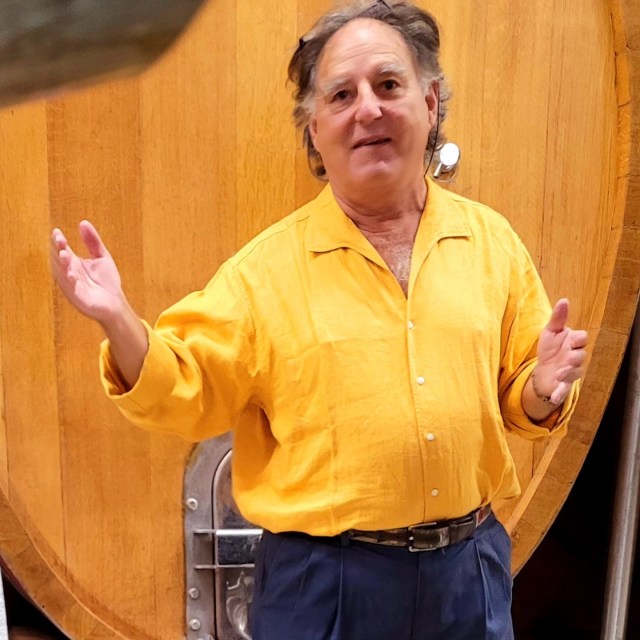
Marc de Grazia – Tenuta delle Terre Nere
Tenuta Delle Terre Nere Etna Bianco DOC 2023
The Santo Spirito area has traditionally been devoted to Rosso and so grapes need to be brought in to make the Etna Bianco. Not 100 percent carricante yet the single contrada whites are. Remember that old vineyards would house five to seven percent white grapes and so here 20-30 percent would include minella, cattaratto, inzolia and grecanico. There is a gelid solidity to the texture and structure, inclusive of the white grapes hand-plucked out of the red vineyards. Makes for a complicated yet complex cuvée, not about parochial purity but instead an assemblage that speaks to bio and varietal diversity. There is notable extract and even some tannin involved for a Bianco you would want to drink every single day. With thanks to salinity that does the work from acidity. If only there were more of 2023, but such is the nature of farming in adversarial vintages. Drink 2024-2027. Tasted September 2024
Tenuta Delle Terre Nere Etna Bianco DOC Calderara Sottana 2023
“Such a stunning vineyard that I believe will actually improve the Calderara,” says Marc de Grazia. Where Bianco can help to elevate the Rosso by association and osmosis. A carricante with more volume and depth than the wines from the south and east of L’Etna but we know many will not only appreciate but also prefer the style of those Bianci grown in warmer areas. As such the Calderara Sottana sees barrel fermentation, in 350L tonneaux and 10 hL foudres. Now we are getting into a Bourgogne comparison, Meursault first and foremost though some will consider Premier Cru, Right bank Chablis, Fourneaux coming to mind more than most. In the end all that matters is finding the sweet spot in every vintage to express place, in terms of wood size, time and methodology used. We can be reminded that Dibourdieu is a big influence on de Grazia, for whatever that is worth. “If you don’t have a compass it’s not sailing, it’s what Dibourdieu called vagabondage. You need to have an idea of the answer you’re looking for.” Drink 2025-2032. Tasted September 2024
Tenuta Delle Terre Nere Etna Bianco DOC Montalto 2023
Montalto, “high mountain,” a 950m plot on L’Etna’s southern slope. Another Bianco that does not like being fermented in wood and so steel only aids and abets to maintain carricante purity. For the first time a Terre Nere white just feels truly salty, mineral extraction expressed through Bianco, as opposed to elemental sapidity. “You have to go higher as the heat increases,” says Marc de Grazia, “to extract perfumes and find acidity.” There is a savoury honeyed aspect that reminds of chenin blanc and the length is determined by old vines. Silex again which takes a mind to Loire more than Chablis. Drink 2024-2030. Tasted September 2024
Tenuta Di Fessina Etna Bianco DOC A’Puddara 2022
Reductive in a most protective, protractive and progressive way because the burst of citrus screamed forth is seriously intensive. Well yes but it would behoove one to think in terms of elements and minerals over more than merely fruit. Wild and frantic even, excitability factor run off the charts and the palate, not to mention spirit seriously awakened. Drink 2025-2029. Tasted September 2024
Tenute Bosco Etna Bianco DOC 2023
The ’23 Etna Bianco artist formerly known as Piano Dei Daini comes out of a hard vintage because of rain in June with some Perenospera issues, “but the carricante can handle the attack” explains Sofia Ponzini. No loss of fruit, harvest and vinification all together very much in a field blend way. The ten percent endemic varieties settle the carricante, neutralize its power and make for a most wholesome but always elegant Etna Bianco. A rinse of salty sea air meets Macchia Mediterranea. Sofia ends up happy but admits the wine needs bottle time, to sleep a bit, calm the energy and the power. Vibrancy is needy, crunchiness too, feel of the volcano so crucial and so all that is great but the drippy phenolic presence needs taming. That’s what time will effect. Drink 2025-2032. Tasted May and September 2024
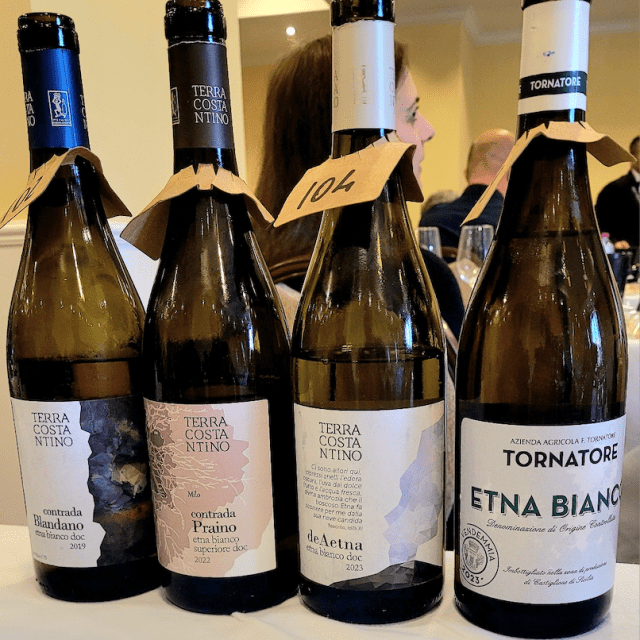
Terra Costantino Etna Rosso DOC d’Aetna 2023
Presumably a mix of of Blandano and Praino, which incidentally seem to be siblings from two different mothers and so the deAetna label is a blend in two-parts. More Praino is would seem, gelid and cool, a lemon-yellow plum granita of an Etna Bianco. Fine and solid enough though quite generalized as a local, eastern side of Etna expression. Drink 2024-2026. Tasted September 2024
Terra Costantino Etna Bianco DOC Contrada Blandano 2019
A few years now in bottle and so this 2019 has developed next level style, further character and stage presence. Honeyed and luxe, acids sweetened with a lively if sour edge and then comes that extract that urged the totality from the start. A fine and confident wine with time on its side and a healthy perspective for Etna Bianco as the kind to serve at dinners and tastings all over the world. Drink 2024-2026. Tasted May and September 2024
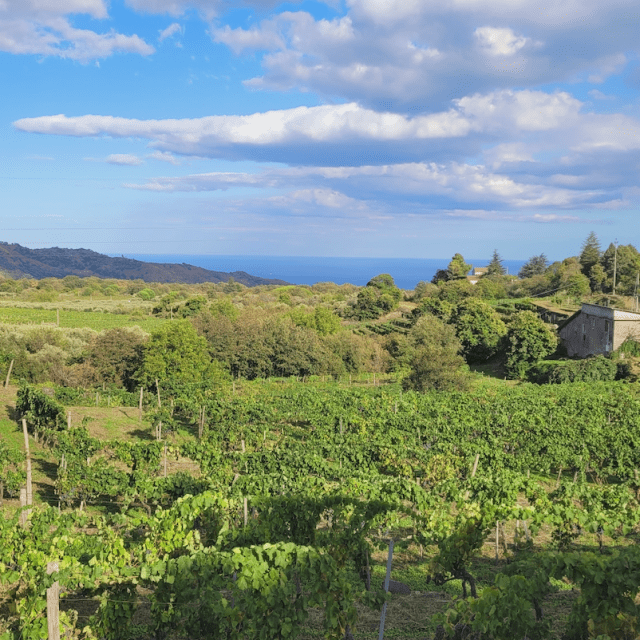
Terre Darrigo
Terre Darrigo Etna Bianco DOC 2023
A stone’s throw down the mountain is Lingualossa, of a terroir above 500 and upwards to 600m in a natural amphitheatre taken over by the Bacci family from a bankrupt farm and in disrepair. Restored to a beautifully rustic terraced set of vineyards set between the volcano and the sea. Salty carricante indeed with phenolic grip and yet acidity keeps the drive alive. So little was made because of a hailstorm in the first week of May that took out most of the vines even before rains and Perenospera mildew arrived to attack much of Etna’s northern vineyards. Drink 2024-2026. Tasted September 2024
Theresa Eccher Etna Bianco DOC Alizée 2021
As per the vintage and an estate taking full advantage this is quite ripe and open-knit Etna Bianco, simplified and moving forward into maturity with haste. Comes away with a bit of bitterness and honeyed savour but otherwise drinks well enough. Drink 2024-2026. Tasted September 2024
Tornatore Etna Bianco DOC 2023
Tornatore has simply, unequivocally and decidedly defined the genre that is Etna Bianco for world markets at an affordable price. The 2023 vintage was not so easy to do this way because mildew pressure and low yields were the obstacle. And yet like so many the acids are intense to insure true Etna mountain spirit is elevated as it needs be. This does precisely what wants and needs for a $25-30 Bianco. All must partake and become believers in what is possible. Drink 2024-2027. Tasted September 2024
Tornatore Etna Bianco DOC Pietrarizzo 2022
Pietrarizzo is both available and confident, not idiosyncratic like Zottorinotto and also richer of fruit. There is an herbal and botanical way about this cru Bianco with splashes of catarratto bringing seasoning to the carricante. A bit spicy and even humid though the fruit is the thing and the volcanics an accent making for even more spice entertained. Such a solid Contrada based Bianco. Drink 2024-2028. Tasted and September 2024
Torre Mora Etna Bianco DOC Chiuse Vidalba 2022
An Etna Bianco on the extreme volcanic side because the aromas and flavours just feel like sucking on a mouthful of basaltic lozenges. Cool, gelid and distinctly mineral on the outside, liquid ethereal and almost mentholated within. Don’t come looking for a burst of fruit, not by citrus, stone nor orchard though there is this green melon note coming late. Nor is this a high acid example, but also not so very botanical. Just bloody volcanic – which speaks to Chiuse Vidalba. Drink 2024-2028. Tasted May and September 2024
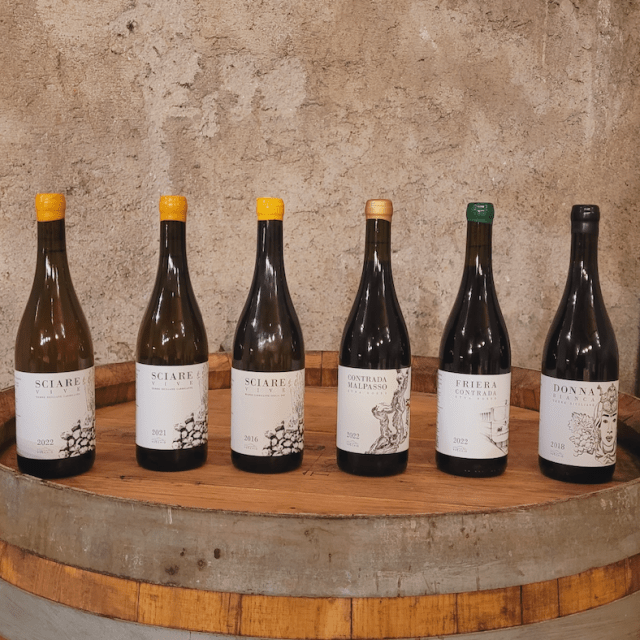
Vigneti Vecchio Carricante Sciare Vive 2022, Terre Siciliane IGT
Part of the production is from a vineyard located outside of the allowable (if arbitrarily and self-serving organization of geographic definition) for the DOC regulations. Yet the fruit from these 40 year-old carricante vines are special to Carmelo Vecchio. His is a true to real volcanic life skin-contact Bianco without the slings, constraints and arrows of pedagogical natural wine. Just the methodological facts to capture, elevate and celebrate the purity of grape variety come from where it lives. A well made example is a thing of beauty and in this case, a premise of perfection. Sapidity wins out over salinity and yet your palate may figure to feel more of the latter. Drink 2024-2029. Tasted September 2024
Vigneti Vecchio Carricante Sciare Vive 2021, Terre Siciliane IGT
Tasted side by side with the 2022 (and also 2016) but here the extra year on a skin contact carricante solicits the first stage of age development. Just on the nose really, quite honeyed with a Ginestra savoury spice and a vague saffron note considered. More so honeysuckle when you combine the two and so there feels like a connection, re-imaging or re-imagining of chenin blanc. Palate presence lingers and length is befitting of ’22. Drink 2024-2027. Tasted September 2024
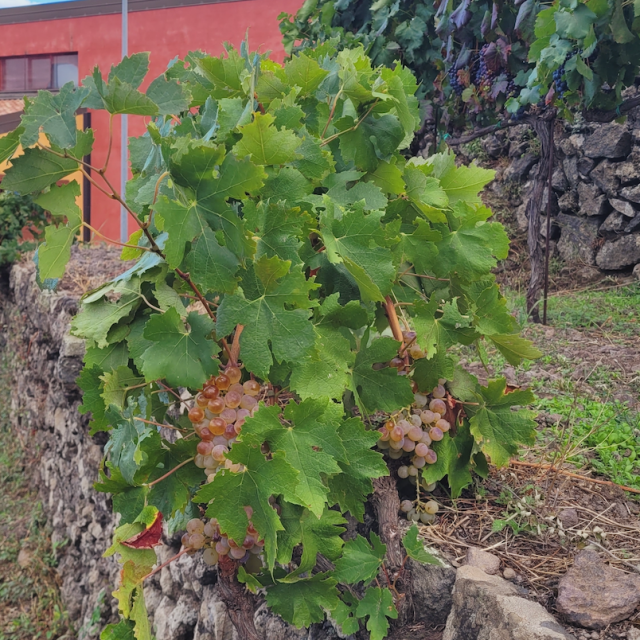
Piè Franco Carricante – Terre Darrigo
Etna Bianco Superiore
Barone Di Villagrande Etna Bianco Superiore DOC 2023
Aromatic volume is turned up through the combination of vintage and Superiore designation which both repeats and magnifies the great fleshy chew for the accessorized palate. Some greens here though they are sweet to commit and then induce satisfaction. Also a great basaltic saltiness that causes this Bianco to linger long after you thought it might not and you are extremely grateful for the extension. Drink 2024-2030. Tasted September 2024
Barone Di Villagrande Etna Bianco Superiore DOC Contrada Villagrande 2021
Just two years older than the ’23 Superiore (classico) and here the Contrada-specific Etna Bianco maintains freshness while defending the integrity of its municipal steading. This is a reduced volcanic saltiness but even more so it speaks to being a mountain wine in the most credible of ways. Rich and expressive, so finely tart and just so very impressive. Stays with your palate for minutes on end and for that you say brava. Drink 2024-2032. Tasted September 2024

Salvino Benanti – Viticoltori Benanti
Benanti Viticoltori Etna Bianco Superiore DOC Pietramarina 2019
A current release which follows the Benanti rule of waiting four-plus years. Only stainless and already hinting at aromatic volume but also length, with petrol coming around the corner. Kind of in the vein of say riesling but even more so sémillon and more Hunter Valley than Bordeaux in that regard. Acidity is obviously lower and phenolics broader – but you get the drift. Will gain curiosity, if at the expense of freshness but that feels like the Superiore point. Drink 2024-2027. Tasted September 2024
Calcagno Etna Bianco Superiore DOC Primazappa 2022
Important if also essential mountain label for Calcagno in Superiore clothing and ’22 shines brightly, even if this is not the summit of summits as far as vintage is concerned. No conceding or submissive behaviour mind you and instead great spirit, energy and vitality. Crisp bites of orchard fruit doused under lemon-lime citrus for real spark. A scintillant Etna Bianco with some fine chiseling and structured for aging. Drink 2024-2029. Tasted September 2024
Federico Curtaz Etna Bianco Superiore DOC Kudos 2021
Kudos is far more botanical than that of Gamma, of green herbs and some herbaceous meanderings. More tonic and fine bitters though truthfully lemon in so many ways with some pith and it tastes like roasted Greek lemon potatoes. A second bottle seems to ramp up the intensity though things stay relatively the same. Superiore is a different animal and it feels like Curtaz has gone a bit more pied du cuve natural in the approach. Surely not an accidental wine and the jury stays out, not hung, but not making a final decision. Will do so after tasting another bottle, preferably sooner rather than later. Tasted September 2024
Fischetti Etna Bianco Superiore DOC Rocca d’Alba 2022
First kick at the Fischetti can and it must be said where have these wines been in this life? In others’ glasses and now here for a look at possible grandezza. Big attempt at extraction, squeezing every bit of 100 percent carricante juice which means tomato leaf and water, but also acetic belief. Old wood is very present and leads the feels for a rustic Bianco that may not exactly find precision, nor finesse neither, but its character is built from soil, soil, soil. The earth is all in and it translates with the aforementioned acetic tang. Just 700 bottles are produced. Drink 2024-2025. Tasted twice, September 2024
Varietal carricante at 800m fermented in steel, put to barrel and then one year in bottle. So much corporeal flesh on the body of a seriously developed Bianco. Has come into a fine place but my goodness so much texture, citrus and length. Drink 2024-2027. Tasted May and September 2024
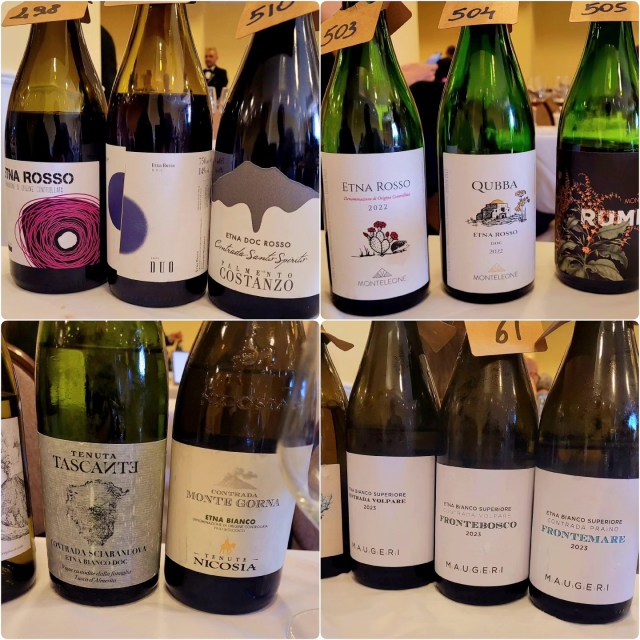
Maugeri Etna Bianco Superiore DOC Contrada Volpare 2023
Youthful is the understatement and Volpare the name, so say it loud. This is indeed singular Etna Bianco, as they should be but some are in a league of their own, as Mugeri’s eastern wines clearly are. The estate has taken it to the next level with an ascension of elevated mountain fortuity but also depth determined by terroir which can only be transmitted when agriculture abides. Abides because the maker makes it happen and Volpare delivers generously while also with precision and finesse. Leave this for 18 months or more to settle the relationship between rocks and acidity. After tasting Frontebosco and also Frontemare you realize the latter is the true catalyst to propel this cuvée selection. Drink 2026-2032. Tasted September 2024
Maugeri Etna Bianco Superiore DOC Contrada Volpare Frontebosco 2023
Versante est which separates Mugeri from not just the north but also the south and the future will surely look to this area for greatness. Not only Volpare contrada but a section within, here called Frontebosco, as in facing or in front off the forest and so the herbals here within are assumed to be elected by the nearby woods. Makes for freshness but also a fruit fleshiness that the more general Volpare does not show. A full, substantial and impressive Etna Bianco that might just appeal to everyone. Superiore indeed. Drink 2025-2033. Tasted September 2024
Maugeri Etna Bianco Superiore DOC Contrada Praino Frontemare 2023
Frontemare, “facing the sea,”as opposed to Frontebosco, “facing the wood.” As such this would be east facing from Etna’s east sector and so the block with the view creates a unicorn of an Etna Bianco as fascinating as it seemingly gets. The most crisp, crunchy, fresh and intense of Mugeri’s whites, citrus squeezed throughout and long as the zig-zagging wind of a single road down to Catania and into the sea. Just wow, with layers upon layers to unreel, unfurl and unroll for a long aging period ahead. Drink 2026-2034. Tasted September 2024
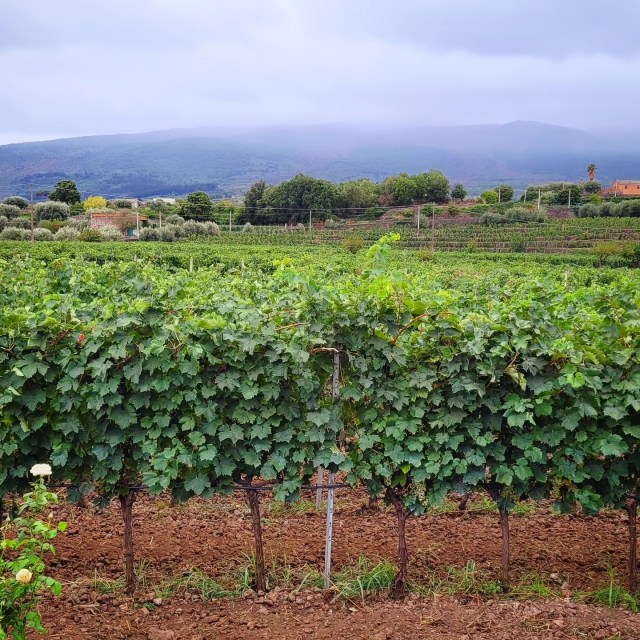
Tenuta delle Terre Nere
Tenuta Delle Terre Nere Etna Bianco Superiore DOC Salice 2023
Only carricante from the the town of Milo, five year-old vines in the place where more rain falls and reds can not really be made. No more than 1000 hectares of vineyard farmed by 20 producers recently and collectively coming into its own. Wines now made by high profile estates including Barone di Villagrande, Benanti and Marc de Grazia. Soils are unique, having come from the collapse odf the side of the volcano’s east side. Deep, fractured and then also shallow soils so compact it’s hard for roots to penetrate. Less humid as a result and the best for ripening carricante. Exposure is key because the sun disappears behind the mountain earlier than most, though says de Grazia, “650-750m is the sweet spot. Adding “a challenge but not a suicide.” Extremely steep, two years to rebuild the terraces and here is the result. Imagine the views of the Ionian Sea with a glass, wildflowers everywhere and a sapidity so different to the gifts of the northern slope. Salice is the willow and that weeping only adds to the demure, but in a botanical, mellow and properly astringent way. Just like silex, but volcanic from a wine with no wood in play. Drink 2024-2028. Tasted September 2024
Tenuta Di Fessina Etna Bianco Superiore DOC Il Musmeci Bianco 2021
Il Muscemi Bianco is another matter altogether because of two aspects. More taut reserve instigated by reductively protected ability plus an aromatic accountability that screams “mountain wine!” Scintillant behaviour, a bit eccentric mind you but how one could not be amused if clearly enthralled with the intensity. Once again we speak of volcanics and mysterious elements with fruit out of the conversation because it was picked early and with acidity in total mind, but in the end the lava matters most. Needs years to settle in, especially because of the need to assimilate its wood. Drink 2026-2032. Tasted September 2024
Terra Costantino Etna Bianco Superiore DOC Contrada Praino 2022
Eastern slope on Etna, in the town of Milo where only here the Etna Bianco can be labeled with the addendum “Superiore.” From young five year-old carricante vines grown on Alberello at 650m by Fabio Stantino and his family where the conditions are more humid, namely because of the closer proximity to the sea. Cool, gelid and stylish. The kind of Etna Bianco with that mineral, gemstone quality while also one of the more yellow-fleshed fruit pulpy examples juiced by Sicilian orange. Gets white pepper and mango powder exotic at the humid finish. Drink 2024-2028. Tasted May and September 2024
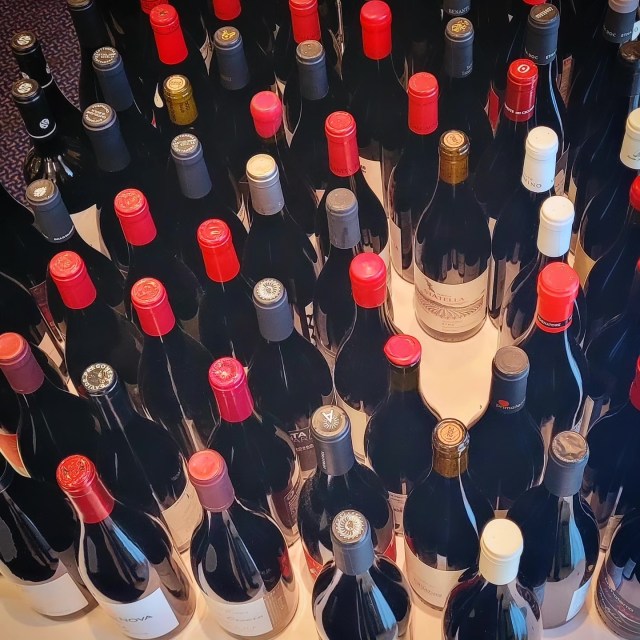
Etna Rosso
Etna Rosso
Alice Bonaccorsi Etna Rosso DOC Valcerasa Rosso 2019
Truly ripe cherry, maturing and for Bonaccorsi’s Rosso surely well into the drinking zone. Wealth of cloying oak, resins and overripe behaviour mean that zone should already be behind us. Drink 2024-2025. Tasted September 2024
Alta Mora Etna Rosso DOC Feudo Di Mezzo 2020
Middle ground traveled and promise delivered for the large Feudo di Mezzo as Contrada sizes come, with fruit able to defend itself against generous wood though all parts launch a collective attack on the senses and palate. Big Rosso for Etna, strong boned and willed with the intention to impress. Drink 2025-2028. Tasted September 2024
Alta Mora Etna Rosso DOC Guardiola 2020
Big barrel feel on Guardiola from Alta Mora and some fruit maturity to say the twain is yet to be abridged. As high toned as Rosso will come, red fruit swells and a dusty volatility that reminds of Rioja. Just feels akin to aging in American wood. Drink 2025-2029. Tasted September 2024

Alessandro and Loredana Serughetti
Alessandro Serughetti Etna Rosso DOC Venturo 2022
Only 700 bottles were made of Alessandro Serrugheti’s Venturo, which transliterates to “next” and generationally speaking that is exactly what he and wife Loredona are to L’Etna. Their corner of Rovitello is rich in volcanic ingredients, of potassium, iron, and magnesium in the lava flow soils of their old (and qualifiedly historic) nerello mascalese vineyard. Alessandro dates them back 60 years and admits there to be a few cappuccio plants mixed in for one of his first attempts at Rosso that is simply grippy, liquid chalky, textural, structured and brimming with dark fruit. Ages 10 months in tonneaux. It’s basically a profound basaltic matter of this place within the greater volcanic place. Greatness is coming. Coming up next. Drink 2025-2030. Tasted September 2024
Antichi Vinai 1877 Etna Rosso DOC Petralava 2019
Floral with a pretty perfume of fruit to join along and the effect is a fête for the olfactory senses. Neither lithe nor delicate in terms of flavour profile and punch yet the substantial and layered effect is something notable. Just a smidgen overdressed and no, subtlety is not the middle name but overall there are fine and appreciable aspects if this Rosso to get behind. Drink 2024-2027. Tasted September 2024
Azienda Agricola Ciro Biondi Etna Rosso DOC San Nicolo’ 2022
San Nicolo’ steps up more than a tier in Etna Rosso terms as compared to Outis because its freshness and fragrance are that much more intense. This smells like Etna should, with southeastern slope warmth behind its ripeness and acidity acting as the driver for that freshness. Still it presents a challenge to sort through and figure out the how, what and why. Drink 2024-2026. Tasted September 2024
Azienda Agricola Ciro Biondi Etna Rosso DOC Outis 2017
Notable wood on the nose, spiced and like the Bianco also savoury in an herbal-botanical way. Suits the fruit though the aromas lower, deepen into baritone and struggle to rise up with ease. The barrel is very involved with the flavours and somewhat unrelenting though one should not question the substance of this Rosso. Then again it’s already five to six years of age and so maturity will now beget declension. Drink 2024-2025. Tasted September 2024
Barone Di Villagrande Etna Rosso DOC 2021
Truly pretty Rosso perfume yet the palate’s hard shell is candied and a bit cloying. The barrel is used in a symptomatic way, driving the fruit to places it may not have wished to go. The combination of that and volatility not in check leads this down and artificial and medicinal path, as a result. The ’21 Bianco Superiore is glorious but the Rosso is a miss. Drink 2024-2025. Tasted September 2024
Barone Di Villagrande Etna Rosso DOC Contrada Monte Ilice 2020
Monte Illice 2022 is in better steading than the Rosso 2021 because its volatile compounds lay low and do much less to distract from the prize. Still the use of wood is heavy and so a resinous but also emulsified feeling is ascertained. Not quite soy but certainly lactic and creamy. A much better wine however and one that will age well over a five-plus year run. Drink 2024-2028. Tasted September 2024
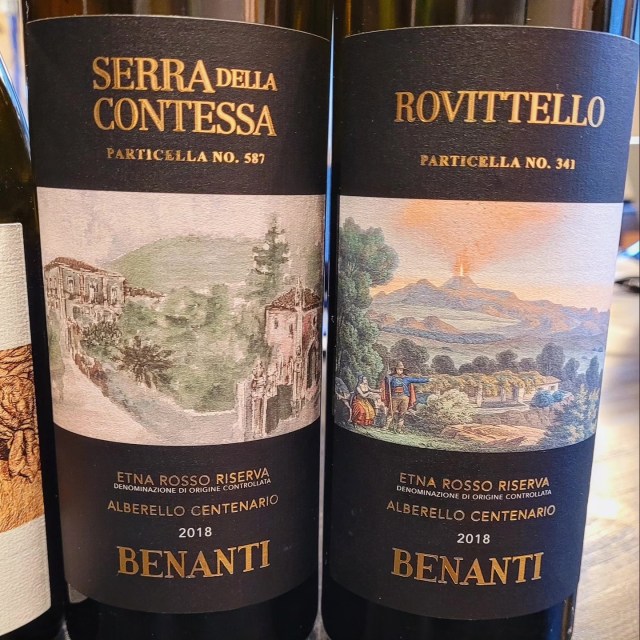
Benanti Viticoltori Etna Rosso Riserva DOC Serra Della Contessa Alberello Centenario 2018
Benanti Viticoltori was founded in 1988, one of the pioneers on L’Etna. Two Piedmontese oenologists, Gian Domenico Negro and Marco Monchiero, along with Prof. Rocco Di Stefano of the Experimental Institute for Oenology in Asti and Prof. Jean Siegrist of the Institut National de la Recherche Agronomique of Beaune combined to exert profound influence on Giuseppe Benanti and his wines. Oenological consultancy has molded and developed Benanti’s wines, from Salvo Foti to Enzo Calli, now with Benanti for 25 years. Serra Della Contessa is a field blend of the two nerello out of a 100-plus year-old bush vine vineyard (documents say 1910s), own grafted and original, bit of a unicorn for Benanti and a pioneer, just like Giuseppe Benanti. Not labeled as pre-phylloxera because “it’s difficult to prove,” but surely from resistant vines. The same vineyard (Monte Serra) also makes for a Contrada wine from the younger vines. Large barrels for two years, one in tank and then finally two in bottle, not unlike a Brunello di Montalcino Riserva. There is a chalkiness and serious structure here but the Grandi Botti do little to distract, thicken or overarch any semblance of density to this blend. Serra della Contessa dates back to the countess that owned the state in 1472. Cleary one of not only L’Etna’s but all of Sicily’s most important structured and age-worthy red wines. Would love to see this agin in 2033. Drink 2025-2034. Tasted September 2024
Benanti Viticoltori Etna Rosso Riserva DOC Rovitello Alberello Centenario 2018
From North Etna, as opposed to the sister Serra della Contessa label that comes from the home-front vineyard on the mountain’s southeast slope. Picked two weeks later from a cooler location and still the same concept, that being a field blend of nerello mascalese and cappuccio, planted in the 1920s and yes it’s possible there are other varieties mingling in the ancient material of these bush vines. Essentially pre-phylloxera and here Rovitello is softer and cooler, almost gelid and less warmth meets weight, though Monte Serra is not what you would call a wine of density. The acids, harmony and understatement are really fine but to be honest the Contessa is showing better and with more impressive structure today. And yet Rovitello is a magnificent red blend from old DNA in its own-right. Drink 2024-2031. Tasted September 2024

Viticoltori Benanti
Benanti Viticoltori Etna Rosso DOC Contrada Monte Serra 2022
From L’Etna’s southeastern sector on the mountain’s semi-circle and one of fine if also light glycerol texture. Truly pretty and delicate for Rosso, the kind we tell people about in the way we often describe pinot noir from the Côtes de Beaune. This is indeed as closely resembling that kind of varietal-appellation relationship as any on this volcanic mountain. Really fine, precise and softening though structure is not a problem. The feels are of older lava flows and how they effect nerello mascalese. Obviously not pinot noir. Drink 2024-2029. Tasted September 2024
Benanti Viticoltori Etna Rosso DOC Contrada Calderara Sottana 2022
Benanti is not just a southeastern Etna specialist but an estate that wrote the book on the making of fine, precise, finessed and structured wines from that sector aboard the mountain. There is more power (albeit restrained) from northern slope Calderara Sottana and a sense of rich chalky liquidity that speaks to the age of lava flows and how vines are raised on older volcanic soils. Also the 700m of elevation and a place that works best with nerello mascalese, especially with north-facing plantings. The transmission is purposed, trenchant and near formidable. More chewy texture here and more favourably or gainfully nerello mascalese but when you think of it alongside Monte Serra than the options laid out are yours to choose. Drink 2026-2035. Tasted September 2024
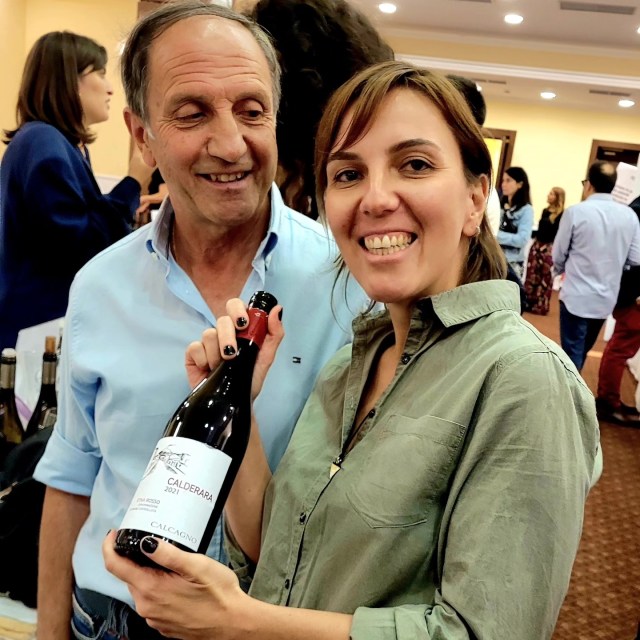
Franco and Giusi Calcagno
Calcagno Etna Rosso DOC Calderara 2021
Ah such an intoxicant of Calderara perfume coaxed and on exhibit just the way we would hope it should. Mind you there is some wood to deal with though high standard used will become quality worth resolved. More liquid chalky an Etna Rosso than many but again the execution will beget harmony because the wine is already expressive and frankly distinguished right there. Give this promising 2021 another 18 months and its canto will warble harmonic, pure and long. Drink 2026-2033. Tasted September 2024
Cottanera Etna Rosso DOC Diciassettesalme 2022
Solo nerello mascalese, made with the grapes from all three Contradas, 10 months in steel, followed by six months in bottle. Dictionary entry though it’s just the first vintage of this specific Rosso without Cappuccio. These are nerello plants grafted onto the old cappuccio and to be honest there is more purity and focus this way. Spicier, in a way and more energy. Will take a few vintages to find its solo artist stride. Drink 2024-2027. Tasted May and September 2024
Cottanera Etna Rosso DOC Contrada Feudo Di Mezzo 2020
Only nerello mascalese from 35 year-old vines, big barrel for 14 months. Even though Feudo di Mezzo is the largest Etna Nord contrada there is such consistency and a thread of wine effect that runs through the 20-plus producers. Cottanerà heeds and abides by the vineyard to produce a balanced FdM worthy of the name. Drink 2024-2027. Tasted May and September 2024
Cottanera Etna Rosso Riserva DOC Zottorinoto 2019
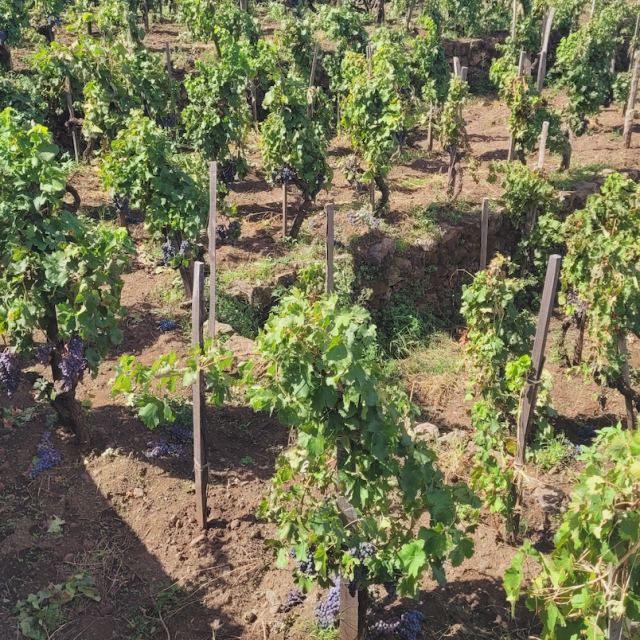
Nerello Mascalese
Plants are 85 years of age on four hectares but this wine is a selection from three tonnes of grapes to make only 1,800-2,000 bottles. Riserva, so it remained in cask for two years plus two more in bottle. Depth, breadth, spices and richness, the most full bodied and textural Rosso, tannins sweet and long-chained with time still needed to resolve all that is here. Drink 2026-2032. Tasted May and September 2024
Donnafugata Etna Rosso DOC Contrada Marchesa 2020
Marchesa 2020 seems to tell a contrada story in a most positive light with its effusive, fresh and yet also concentrated way. A specific style to be sure and a layered one but those layers are closely knit with their weave of ultra specific fibre. There is some reduction which is not a surprise and then some good old-fashioned structure to see this age quite admirably. A different charm and a good one from this well made Rosso. Drink 2025-2029. Tasted September 2024
Federico Curtaz Etna Rosso DOC Il Purgatorio 2020
Bold and trenchant Etna Rosso from the one and only legend that is Federico Curtaz and one to take great time getting to know. Ripe to be sure but also acids in stride with fruit influenced by Etna’s newer (relatively speaking) northern lava flows providing the freshness and finesse. There are some herbaceous moments that put this in a savoury place and in the end the diversity and complexity renders this a potent while oh so intriguing iteration of Etna Rosso. Drink 2025-2030. Tasted September 2024
Federico Curtaz Etna Rosso DOC Il Pukkaria 2020
Consistency and a thread of similarity runs from Purgatorio through Pukkaria but the latter is not the bold expression that is the former. Sweeter perfume, more glycerol texture and emulsified acidity make this closer to the heart and without the same level of grip by structure. Still the herbal-herbaceous feels are there and some reduction to hold a part of the wine back. Give it a year and the ties that bind will loosen to free this wine of brine and tang. Drink 2025-2028. Tasted September 2024
Federico Graziani Etna Rosso DOC 2022
Pretty much what they call Classico as far as Etna Rosso is concerned with a nerello mascalese of concentration yet delicate and shiny enough to speak generally if abidingly for an appellation. Wood is not nothing and will need some time to melt in but this is clearly a Rosso for Rosso sake, raised properly and equipped to live comfortably. A five year example that could be poured for anyone to explain the combination of style, varietal and place. Feels just a bit natural with faint Brettanomyces noted in the end. Drink 2024-2027. Tasted September 2024
Federico Graziani Etna Rosso DOC Rosso Di Mezzo 2022
A sturdy and well wooded Rosso from Feudo di Mezzo labeled as Rosso di Mezzo because why not though the nomenclature could suggest a second wine to some. Like Rosso di Montalcino or even lesser, Rosso di Toscana. We know the intent but when you look at some other Italian denominations this becomes somewhat perplexing. In any case this travels down the middle of the Mezzo road (wink, wink) to deliver a Rosso of medium body, acidity, structure and finish. On par with Graziani’s Rosso DOC, both good wines though with little to distinguish between the two. Drink 2024-2027. Tasted September 2024
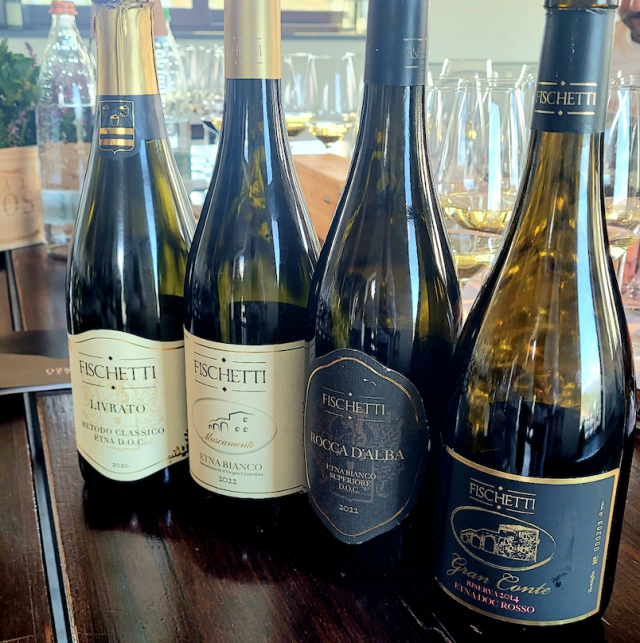
Fischetti Etna Rosso Riserva DOC Gran Conte 2014
An alberello-trained, pre-phylloxera nerello mascalese of century vines. A survivalist, having been through at least one world war. A mature, oxidative and fully resolved Rosso in secondary character with no going back. Gifts that old Amarone feel without the jam or density, but age has put this in a known time frame for they who fully appreciate old wines. Freshness is not part of the package. This ’14 is the current release and once again 700 bottles are produced. Drink 2024-2026. Tasted September 2024
Frank Cornelissen Etna Rosso DOC Munjebel 2021
As per the explanation of the erudite gentleman from Houston (by way of San Diego) the meaning of Munjebel informs us to be a “dialectal toponym for Mt. Etna and by the way akin to the Sicilian Muncibeddu or the Italian Mongibello, meaning monte bello or beautiful mountain.” And so it truly is in Etna Rosso form, of a purity and clarity that bemuses but also pleases us so. Chewy Rosso with that natural settling on the palate like a savoury salve slowly dissolving without dissipating or disappearing from consciousness. Stays with our thoughts and feelings for a good long time. Fine 2021, as expected and confirmed without a single moment of having conformed. Drink 2025-2033. Tasted September 2024
Giovanni Rosso Etna Rosso DOC 2021
Quite the bright and ultra fresh nerello mascalese number with what feels like fruit taken from young and impressionable vines, and as of yet to deliver full out structure. Easy access, fresh and free drinking, no big questions posed and a Rosso that simply drinks really well. The length and consistent presence of flavours and textures speak to the maker’s affinity with mutually relatable red varieties, in this case nerello’s spiritual and physiological connection to nebbiolo. Then again Davide Rosso’s work with both Domaine Jean Grivot and Domaine Denis Mortet have no doubt influenced and introduced the treatment of pinot noir towards his work with mascalese. Drink 2024-2027. Tasted September 2024
Girolamo Russo Etna Rosso DOC ‘A Rina 2022
A very warm and dry vintage making for a taut, chalky and savoury nerello mascalese (with 10 percent cappuccino). This next ‘a Rina takes off where 2021 left off and only Feudo is as consistent an Etna Rosso as this. Chalky red cherry, a leathery aspect and drying tannins that speak about 2022 in both toasty and positive ways. Crisp ’22, of bay and liquorice, salty volcanics and good length, though not in the league of Feudo and San Lorenzo. Drink 2025-2030. Tasted May and September 2024
Girolamo Russo Etna Rosso DOC San Lorenzo 2022
The gifts of San Lorenzo are of a slow release ilk the other cru and vineyards of Girolamo Russo are not, but this from 2022 is so full of riches it brings early joy. A great pleasure to have a glass even now with gregarious perfume and readied flavours, of red berries, liquid chalky to candied palate swaths and immediacy from this bottle of wine. San Lorenzo shows off the most glyercol and silken texture – it’s almost candied but of course it’s not. Spicy on the back side, sneakily structured and all the while with a glass we’re feeling fine. Can only improve and integrate with a couple of years time. Drink 2025-2030. Tasted May and September 2024
Girolamo Russo Etna Rosso DOC Feudo 2022
From the highest section in the Feudo di Mezzo vineyard, bush vines, very old. Delivers ultra light and conversely powerful di Mezzo freshness, but from this elevation at a much higher rate and with an extension of vibrancy plus energy. More verticality and sweetness of nerello fruit like almost no other. Resides in a state of grace upon the palate and though it hovers just a millimetre above, there still feels like the fruit, acidity and finest tannin are collectively making full contact. Remarkable. Drink 2026-2036. Tasted May and September 2024
Graci Etna Rosso DOC 2022
From estate vineyards at 650-750m, fermented and aged for 18 months in concrete though once in a while a little bit of big barrel is used. Linear, stoic, restrained and serious Etna Rosso for Rosso’s sake but also trenchant intention. Crispy and crunchy, vertical and youthful. Fresh, even a bit reductive, so peppery and a year away from that open window. Drink 2025-2029. Tasted May and September 2024
Graci Etna Rosso DOC Arcurìa 2021
The home vineyard, great vintage and that should not be questioned because frankly it simply can’t be denied. If nothing else the intensity of purpose comes through from the start. More depth and crunch, further concentration and breadth, still austere and working through its tasks, machinations and intentions. Big wine from 2021. Drink 2026-2033. Tasted May and September 2024
Graci Etna Rosso DOC Arcurìa Sopra Il Pozzo 2019
Longer maceration because these are stems that ripen better than anywhere else and so Alberto Graci tastes and decides how long to go. Usually 60 days and 2019 was right around that number. You can feel them, mostly though not 100 percent ripe and yet that savoury-verdant note works so well to create a spice mix and seasoning that extends the breadth of the fruit. Do not come here for heavy concentration or weight because there is restraint but also expect some austerity. Really needs time and will eventually settle into it’s technicolor skin. A compact wine that will deliver a slow release of energy. Drink 2026-2035. Tasted May and September 2024
La Gelsomina Di Colombo Maria Adalgisa Etna Rosso DOC 2021
A blend of 80 percent nerello mascalese with (20) nerello cappuccio, raised in 500L cask. Ascends with warm grape must character, fresh fig and tree pod fruit. On the warmer and darker side for Etna Rosso, already into some maturity with an almost Ripasso-like feel on the palate. Less typicity for Etna Rosso without a real sense of place. Either the grapes need to be picked (even) earlier or the winemaking will need to scale back and press as gentle as possible. Times have changed. Drink 2024-2025. Tasted September 2024
Massimo Lentsch Etna Rosso DOC 2021
Spice and resins on the aromatics, wood-derived and unresolved. Earthiness, of fresh laid sod and a chalky undercut of stone. A bit rustic, as they say. Drink 2025-2027. Tasted September 2024

Sebastiano Vinci – Mecori
Mecori Etna Rosso DOC Contrada Muganazzi Duo 2022
They are Serena & Sebastiano, Mecori’s “Duo,” reiterated from the special Muganazzi Contrada and vines planted in 1927 as a reductive one, protected and insular, unresolved and therefore undefined. Air is a friend of this nerello mascalese from one (soon to be two and a half) hectares and agitation an even more important accomplice to release what charm lays low and behind. There is real richness and layering beneath the shell which more than accidentally and incidentally defines the contrada and what it can achieve. Spicy and spiced, chalky, massively tannic and the kind of structure few Etna Rosso are wont to hold. A big wine so far away from ready, currently grippy and austere, tension in charge and time the operative to effect any kind of significant change. Average production is 4,000 bottles, soon to reach approximately 10. Drink 2026-2034. Tasted September 2024

Giulia Monteleone
Monteleone Etna Rosso DOC Monteleone 2022
Fine perfumes and just as promising spirit turn upwards with even further generosity from an Etna Rosso of fruit as pure as any. A wine of harmony and like a well-written song sung with grace. Not the most complex or complicated Rosso but who would not bask in the glow of a glass any place and any time. Clarity and purity are what matters for Etna Rosso with its feet on the ground. Drink 2024-2027. Tasted September 2024
Monteleone Etna Rosso DOC Rumex 2022
Rumex, a.k.a. Dock or Sorrel, a perennial culinary herb. Also Rumex, Giulia Monteleone’s sister Rosso to Qubba, of 100 percent nerello mascalese grown at 680m in the volcanic sand and gravels of Contrada Pontale Palino. The vineyard is a natural “clos” encircled by Sciara (mounds of magmatic scoriae formed along lava flows). Rumex is not Qubba what with its brighter entry but also high tonality and elevated acidity. This also means volatility, in check and important for the style and effect of this Rosso. While Qubba is a Rosso for which to peer through ornate windows, Rumex offers a converse approach with much to chew and mull upon, many facets to look deeper into, parts to unravel and feelings to unlock. Must wait two more years before more answers are provided. Drink 2026-2030. Tasted September 2024

Monteleone Etna Rosso DOC Qubba 2021
Perhaps the most famous Islamic architectural example of a Qubba is the Green Dome in Medina, a cupola-shaped shrine built in 1837. In a way Monteleone’s Qubba feels like the representation of Giulia Monteleone’s short history aboard Versante Nord, a journey that began in 2017 and perhaps this Rosso’s extra year in bottle has contributed to the story. A nerello mascalese from a fine vintage that has come to a very great place. There is charm but even more so there is depth to this ’21. A structured wine just about arrived though not quite ready to open its doors and yet we feel like we are peering through the stained glass window of Jerusalem’s Qubba al-Sakhra. Or more realistically the nerello’s aperture but this is clearly coming from fine northern Etna terroir that ripens fruit, maintains acidity and give generously of its vines. Fully developed flavours, plenty of grip and many years are left to give. Drink 2024-2029. Tasted September 2024
Palmento Costanzo DOC Etna Rosso Nero Di Sei 2021
Nero di Sei 2021 comes quicker to the point with near-immediate gratification because of vintage and also by way of the team allowig and even encouaging this to happen. Or abided more like it, with red berry fruit aromas that nerello mascalese can gift when the conditions are right. This is not to say that 2021 will fade into early light because it is in fact equipped with volume, concentration and backbone. A truly exceptional vintage that will appeal to all. Drink 2025-2030. Tasted September 2024
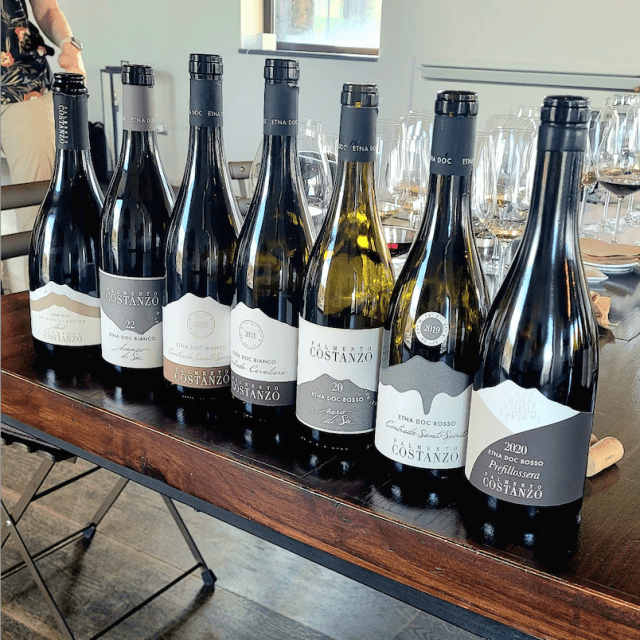
Palmento Costanzo DOC Etna Rosso Nero Di Sei 2020
A nerello mascalese that sees 24 months in the troncone wooden vats from a vintage with its specific challenges but there is volume and depth. A Rosso that draws from all the available plots farmed by Palmento Costanzo. Spice and that feeling you get when you bite into dried fruit tree pods like bokser or carob. The finish is Etna balsamico, a mix of wild fennel, oregano and mint, but also some other dusty gariga. Last tasted September 2024
Spicy and floral, aromatically crisp and taut, wood a factor with plenty of seasoning. A bit sappy and edging into tang with flavours quite sharp and also dense but time will settle the score for all parts involved. A big and inky version of Nero di Sei and one to really sink your teeth into. Wait two years to do so. Drink 2025-2028. Tasted May 2024
Palmento Costanzo Etna Rosso DOC Contrada Santo Spirito 2020
Always promising and spirited Rosso from the combination of producer and place which take full advantage of both its elevation and particular lava flow to effect beauty and age-ability. A swirl of glycerol comes away from sweet perfume and leads toward real time austerity to indicate not only a wine of substance but also one of aging probability. The concentration is buoyed by acidity and tannin in the ways of top shelf Etna Rosso. Fine vintage and work from the Palmento Costanzo team. Drink 2025-2032. Tasted September 2024
Palmento Costanzo Etna Rosso DOC Contrada Santo Spirito 2019
Three further months in and no further changes or gains but just the status quo of primary fruit and a Rosso come from vineyard health with thanks to organics and this 1879 eruption derived volcanic terroir. Last tasted September 2024
Evolving nicely, now nearly ready to go, fruit still fresh enough and structure beginning to subside. A full bodied Etna Rosso from Santo Spirito in delivery of what the contrada and the vintage held in hand. Tasted May 2024
A vintage out of which the pre-phylloxera was produced from the contrada so just imagine the possibilities as they come from this all in for the vintage nerello mascalese. Feels like an extended maceration because the glycerol and unctuous textural pool are both at the crest of Etna Rosso heights. Oranges and cherries but more than anything old vines spirit and what just happened from out of these volcanic sands carried through to century and a half vines is something wholly and unequivocally other. Hints at balsamic reduction but the tannins and also acids are so fresh and so years is what it will take to take this anywhere new. The finest chalkiness imitates the soil and puts this in a league with some of Italy’s most important red wines. Up to you too decide which they are or don’t bother at all. Drink 2025-2034. Tasted May 2023
Palmento Costanzo Etna Rosso DOC Contrada Santo Spirito Pre Phylloxera 2020
Same grapes, different style of vinification from the pre-phylloxera section of the vineyard, therefore from material grown on the oldest vines. The extended skin contact is followed by a great and instructive polymerization of the phenolic compounds and when the skins sink down in the troncone the wine is racked and sent on its way into Stockinger Foudres. The tannin quality from the grapes coming off of old Santo Spirito vines are a velvet crush of plush fortified by exquisite volume. The wine moves fluidly and in harmony from start to finish, pausing only to see if you are paying full attention, then continuing to command attention seemingly without trying at all. Rosso this fine is deserving of its own place and time. Drink 2025-2035. Tasted September 2024
Papa Maria Cuore Di Marchesa Etna Rosso DOC Cuore Di Marchesa 2020
The work of Pietro di Giovanni who also happens to be the oenological consultant to La Gelsomina. Papa Maria refers to first name and surname of the maternal grandmother and Pietro has been producing Cuore di (Contrada) Marchesa since 2016. From nerello mascalese grown at 750m near to Solicchiata with a look at varietal character in the vein of nebbiolo and sangiovese but the aging here is one third each steel, tonneaux and amphora. There is some depth to its hue but also proper Etnese transparency and being 2020 there is a sense of maturity on the nose. Amphora will add such an element, not to say the Rosso is passing over into secondary character but it is made with a specific style. Wood spice and amphora texture make this unique, again because Pietro di Giovanni is a winemaker free to choose his whimsy. Drink 2024-2026. Tasted September 2024
Papa Maria Cuore Di Marchesa Etna Rosso DOC Cuore Di Marchesa 2019
The work of Pietro di Giovanni who also happens to be the oenological consultant to La Gelsomina. Papa Maria refers to first name and surname of the maternal grandmother and Pietro has been producing Cuore di (contrada) Marchesa since 2016. From nerello mascalese grown at 750m near to Solicchiata and 2019 show no further maturity as compared to 2020. Speaks not only to vintage but Pietro di Giovanni’s abiding by his contrada and climate. The vineyard is small (1.5 hectare) and the yields extremely low (4 tonnes per hectare). There is surely a style and an honesty here though with time these wines should become exceptional when they are designed with a just bit more restraint. Drink 2024-2026. Tasted September 2024

Passopisciaro Etna Rosso DOC Passorosso 2022
Properly reductive, a redacted quality to hold back the tears and also the years. Concentration and aura are the cards held up by the artistic austerity held out with the final hand yet to play because bets are still arriving on the table. My goodness what structure and intensity so please, stay focused and patient because many years are needed to settle the score. Drink 2026-2032. Tasted September 2024
Pietradolce Etna Rosso DOC 2020
Fine perfume, handsome and inviting to set this up as a muscular yet taut and lean Rosso. Reductive and herbaceous, such a savoury and earthy example of a place within a place. Tannins are somewhat austere and gritty but they should settle and resolve. Palate presence does not follow a direct line from aromas but again, time will bring them closer and eventually together. Drink 2025-2028. Tasted September 2024
Pietradolce Etna Rosso DOC Santo Spirito 2020
The 2020 nerello mascalese from Contrada Santo Spirito is a meaty and gamy bruiser, sanguine and yet lifted with some fine volatility to nose. The right amount because the aromatic volume, palate depth and tannic freight are all equal partners working towards a common goal. That would be a full-bodied Etna Rosso with the stuffing and planning to age very well. Drink 2025-2031. Tasted May and September 2024
Pietradolce Etna Rosso DOC Barbagalli 2019
A unicorn Etna Rosso and here from 2019 there has been some development though the wine is still ways away from full integration. Talking formidable structure, inclusive of tannins of a tight and variegated grain, running crosswise and painless because they usher fruit and urge acidity to always be a part of the fray. A total weave of Rosso sentiment, bringing emotion and pleasure without fail, to exult a vineyard as special as any in the world. One only need to stand over it to understand its power, insistence on restraint and the keys to unlock potential. Will turn heads and remain in light for a good long time. “Facts are nothing on the face of things. “Still waiting, still waiting, still waiting, still waiting.” Drink 2026-2037. Tasted May and September 2024
Planeta Etna Rosso DOC 2022
Not a contrada specific Etna Rosso but more than 70 percent comes from Feudo di Mezzo in Passopiciaro. As juicy and glycol notable Rosso as there has ever been and silken would best describe the quality felt aboard the more than pleased and nurtured palate. Another wine that improves each vintage under the guidance of Patricia Tòth, in part because her favourite dogs hang around that winery next to the vineyard. Also because her experience and abilities have come to a most profound place. Love the spice masala on the finish. Drink 2025-2033. Tasted May and September 2024
Quantico Etna Rosso DOC 2018
“Tough vintage,” admits Giovanni Raiti, with rain at harvest in October and lots of it. Selection was essential, careful maceration and pressing as well. What has resulted is a glycerol glide through texture incarnate with a fab silken palate holding court and more concentrated strength than thought possible. A wine to nose quickly and move forward to linger on that mouthfeel. Drink 2024-2027. Tasted September 2024

Rosario Raciti – Rupestre
Rupestre Etna Rosso DOC 2022
The name Rupestre refers to the 3,000 year-old Palmento found on the estate’s site in Contrada Pietramarina and the word essentially means “ancient.” Rosario Raciti worked in Portugal, Spain, New Zealand, Australia, Tuscany and Puglia before returning to the family farm in Castiglione di Sicilia. The style is so very much Rosario’s, reductive and closed, yet from Contrada Pietramarina the glycerol, silky organza texture and length are what make the case for potential greatness out of such a wine. Again vine age is less than 20 and so the best days are still to come. Drink 2025-2029. Tasted September 2024
Rupestre Etna Rosso DOC 2021
This just the third vintage for Rosario Raciti’s Etna Rosso from Contrada Pietramarina in in Castiglione di Sicilia. A perfumed nerello mascalese, unadorned and pure with glycerol marking the mouthfeel. Sweet and savoury spices and just a lovely natural swirl to not just the fruit but the whole composition. Drink 2024-2026. Tasted September 2024
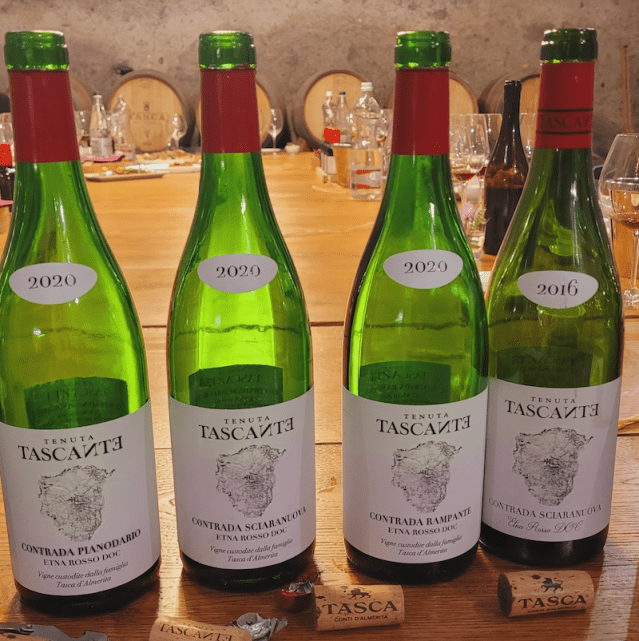
Tasca d’Almerita Tascante Etna Rosso DOC Contrada Pianodario 2020
Lighter of body but not aroma as it now enters with the volume turned up, a feeling of idiosyncrasy and high-level curiosity. Wild and exotic spicing owing to a 17th century lava flow now in a state of degradation to make certain the nerello mascalese growing in its sands are the recipient of its mineral profile. Last tasted September 2024
High-toned, spirited and transparent nerello mascalese from Tasca’s L’Etna Tascante out of Contrada Pianodario. Red berry shine, acids excited and fruit a willing participant. Tarragon and Basil herbal, so very basaltic stony and truly a wine of place. Crunchy and ever so slightly resinous with balsamico mixing into the sweetness of fruit and acidity. Drink 2024-2029. Tasted May 2024
Tasca d’Almerita Tascante Etna Rosso DOC Contrada Sciaranuova V.V. 2020
Old Sciaranuova vines are the impetus for concentration and experience in this soil-driven contrada specific Rosso for Alberto Tasca’s Tascante of L’Etna. A wholesome, fulsome and fully formed Rosso with the verity of a nerello mascalese-ness here that delivers the entirety of mountain experience with earthy, austere and drying tannins sure to elevate the long term goal and gain. Big Rosso but one of medium body that sets its heights and peaks to points achievable and five years forward will see real things indeed. Bravo to the team for getting this estate and this wine to where it needs to be. Drink 2026-2033. Tasted September 2024
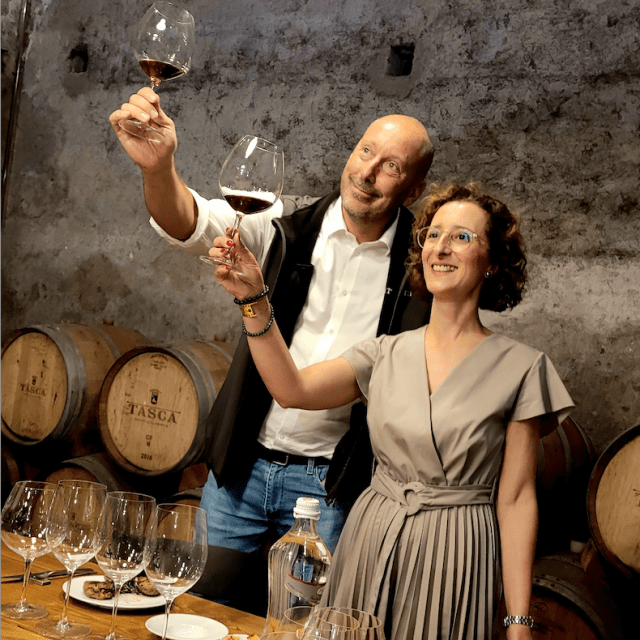
Michele Brusaferri and Vittoria Cerniglia – Tasca d’Almerita Tascante
Tasca d’Almerita Tascante Etna Rosso DOC Contrada Sciaranuova V.V. 2012
The inaugural vintage for the Tasca family’s Etna project and a more intense result because of initial experimentation with longer macerations. A very promising and in retrospect top quality but also age-worthy vintage, with lingering freshness battling against developing cherry stone bitters. As for overall maturity the ’12 has hung in admirably though wood and the pressed style have added up to this. Drink 2024-2025. Tasted September 2024
Tasca d’Almerita Tascante Etna Rosso Doc Contrada Rampante 2020
Rampante is the biggest and broadest of the three Contrada Tascante, less ethereal and with more gainful force but it does so with impressive pronouncement. A comparative study however and still thus Rosso is transparent like its brethren. The fullness is a matter of contrada soil and subsequent style. Really quite unique for Etna Rosso, glycerol and silken texture in delivery of mouthfeel that few others will gift. Rampante yes but also Tascante, a way of raising and looking at nerello mascalese fruit with an eye to expression and fineness of tannin. There is some grippy austerity in the last part of this Rosso but one can’t help but feel the promise in its ways. Should age beautifully for 10 years easy. Drink 2024-2034. Tasted September 2024
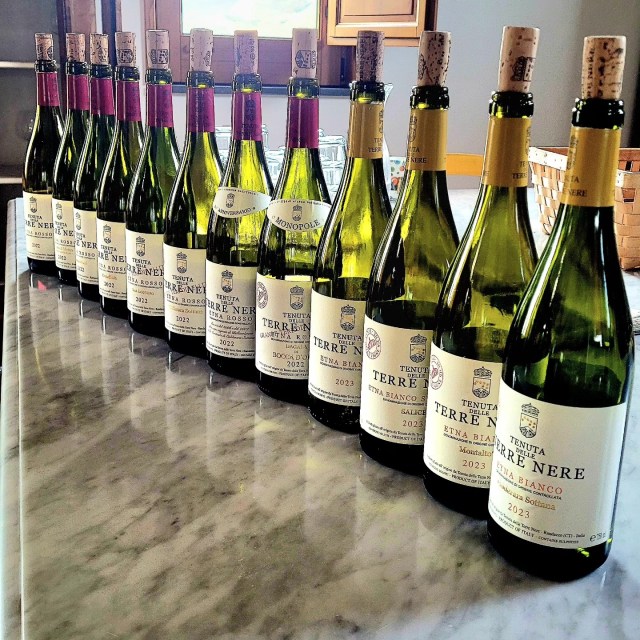
Tenuta Delle Terre Nere Etna Rosso DOC 20° Anniversario 2022
A single contrada Rosso from Terre Nere from the young vines within Calderara Sottana, to celebrate Marc de Grazia’s 20 years of delivering nerello mascalese from his Etna estate. “The young vines have a vigour and an enthusiasm,” he says. “Bless them.” A blend of these precocious parcels and a cuvée that he surely feels is representative of what has been accomplished thus far, without diverting too far way from what has already been done. Their cumulative hue is always lighter and brighter than the rest of the wines. A fine design and effort that stays true to purity and finesse. Fine wine indeed. Drink 2024-2027. Tasted (twice), September 2024
Tenuta Delle Terre Nere Etna Rosso DOC 2022
Aged 18 months instead of the usual 12, which the reds will almost always receive going forward. “The son of our vineyards and also neighbours that follow our protocol,” explains Marc de Grazia, “or those who are so good in their’s they don’t need to follow our protocol.” Fine introductory lesson in Etna Rosso now in session. Not so much a dictionary entry but more like the instructor itself to test our mettle and knowledge, to see if we are paying attention and gaining what we need to now and feel. Bright red fruit, some grip and structure with tannins that dry with preferable, positive and proper distinction. A wine that will see the single contrada wines of Terre Nere move from strength to strength. “A watershed vintage” says de Grazia. “The finest (non single contrada) Rosso we’ve ever made and will improve with age.” Last tasted September 2024
The “Villages” Rosso, blending youngest vines fruit from the various 50-plus parcels comprising half of the total production, including some cappuccio. There could be some montellado and other smallest quantities of red grape varieties involved. Interesting in that this effects a richer and naturally sweeter character than most Contrada or Cru wines. So getable and crushable, also a dictionary entry and teaching moment for what it means to be and taste like Etna Rosso. Drink 2023-2026. Tasted May 2023
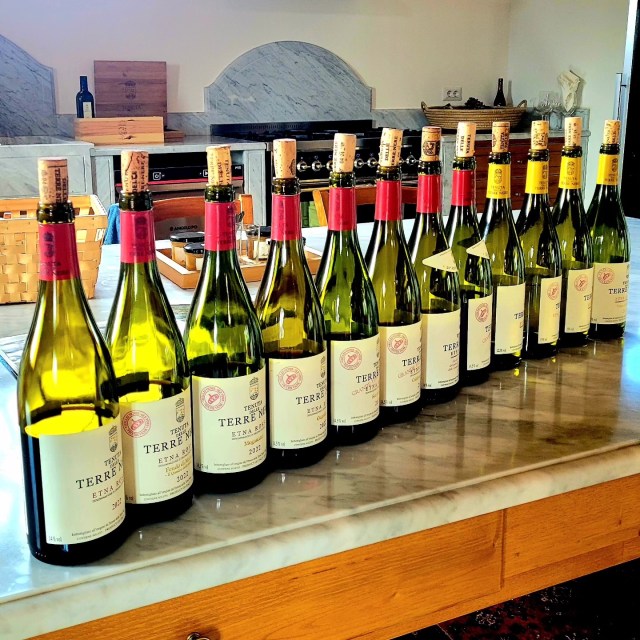
Tenuta Delle Terre Nere Etna Rosso DOC Feudo Di Mezzo 2022
Always the first to be harvested, almost certainly on October the 4th, give or take a few days of course. “Begins with harmony when young,” tells Marc de Grazia, “and born perfect.” Not entirely true and yet also not disengenous to say that because it will age extremely well. Yes 2022 is pretty, immediately gratifying and seductively perfumed already. Underneath are layers of feudal structure that may lay low below, unseen and unspoken, but they are there. The nerello mascalese equivalent of a hierarchical social structure characterized by a small ruling set of tannin over fruit peasantry working in exchange for protection. Maybe half the grip as compared to the other single contrada Etna Rosso but do not sleep on this subjugating power. Needs two year to initiate its integrations. Drink 2026-2032. Tasted September 2024
Tenuta Delle Terre Nere Etna Rosso DOC Moganazzi 2022
Moganazzi is a bit further east and slightly higher in elevation as compared with Feudo di Mezzo. All terraced, 70 year-old vines at 650-700m. Three parcels combining for one vineyard on the same hill. Marc de Grazia purchased them one at a time and he sees this wine in the vein of say Pommard or Nuit-Saint-Georges. In other words grip that needs two years to “mellow and obtain its luminosity.” True spirit of Etna Rosso’s grace and charm with as lithe and bright nerello mascalese as ever there could be. Fragrance and kick. Moganazzi is all that and secretly austere within the construct of its fine demure. A Rosso that makes you think but even more its makes you feel. Terrific emotion, control, concentration and expressiveness. Amazing wine. Drink 2025-2034. Tasted twice, September 2024

With Marc de Grazia – Tenuta delle Terre Nere
Tenuta Delle Terre Nere Etna Rosso DOC Guardiola 2022
Marc de Grazia considers Feudo di Mezzo and Moganazzi to be Premier Cru and while some producers feel that Guardiola is Grand Cru, he begs to differ. “Somewhere between the two,” he says. On the right hill and yet not quite there, maybe like the split opinion on Monte de Tonerre. Elevation up in the 900s transmits up as aromatic heights, expanse of perfume and yet also this sense of maturity. “A soprano of Rosso, a separation of crus with identity that implies discretion.” Refinement but also tannins that are compact, austere and like the bouquet, irreplaceable, in other words, not replicable. Drink 2026-2035. Tasted September 2024
Tenuta Delle Terre Nere Etna Rosso DOC San Lorenzo 2022
From 70,000 year-old soils which makes a connection with other Rosso raised on the same terroir, like Calderara Sottana. A place that consistently provides quality for fine wines, from Premier to Grand Cru. This is the oration from Marc de Grazia who repeatedly uses Bourgogne as the reference point. “San Lorenzo of all the wines is the one that requires more patience,” says de Grazia. “To reveal its glory.” There is an aroma that reminds of Guardiola as well, a mix of restrained bursts and maturity which tells us the wine will be more expressive after a bottle is open for 24 hours. Youthful is the understatement. Drink 2026-2035. Tasted September 2024
Tenuta Delle Terre Nere Etna Rosso DOC Dagala Di Bocca d’Orzo 2022
The tiny vineyard that survived the 1981 lava flow, a parcel that only produces a maximum of 1,800 bottles with a connection to San Lorenzo on the other side of the 100m wide lava swath. An old vines Monopole block dating back a century always made and the one that drinks with immediate distinction, maturity and acumen. Dagala di Bocca d’Orzo also deals in the sneakiest of tannins, more structure than you would surely think and that sort of Etna Rosso that arrives somewhere fast but stays comfortably in the same state for a dozen years. All that said it’s precision and beauty allow us to enjoy its charms straight away. Drink 2024-2035. Tasted September 2024
Tenuta Delle Terre Nere Etna Rosso DOC Calderara Sottana 2022
What Marc de Grazia considers to be the finest contrada on the north slope and yet there are micro plots within the eight parcels that can only be made into Rosato in humid vintages. This comes from the oldest vines, more than 80 years old and just one look sees a brightness and transparency inciting the senses as they take in a bouquet not having yet nosed in the other Rossi. Calderara Sottana is the most demure, the finest of sound and vision, the one you take in slowest, without haste, to allow unfurling and length to travel as far as it wishes, evocatively so. “It asks delicate questions,” says de Grazia. “Rose petal perfume and tannins that don’t cut off your palate.” Even more is this elastic meander, not aimless but with purpose and our palates follow every step. Like Giuseppe Russo’s (though de Grazia sees little comparison) this provides the exception to so many Etna Rosso rules. Drink 2027-2038. Tasted September 2024
Tenuta Ferrata Etna Rosso DOC Frevi 2020
From the area of Castiglione at 680m with 100 percent nerello mascalese. Aging in grandi botti for two years and then 10 months in bottle before release. A richness of style, liquorice and dried tree pod fruit, the wood very much in play and acidity less intense than many. A liquid chalky presence on the palate, still needing another year to resolve. Chewy example, confident and a slow delay of fruit, which is never really all that fresh. Drink 2024-2026. Tasted May and September 2024
Tenute Bosco Etna Rosso DOC 2021
Big French tonneaux, second passage and older for eight months. No recipe but that is this vintage, not as powerful as 2022 and Sofia sees it like 2016, but perhaps a different kind of balance, though not as ideal as 2016. The restrained power of the volcano runs throughout and you really feel it. Remarkable Etna Rosso in balance and of a grace that speaks to all there can be. What these wines are want to express and how they carry themselves, non-plussed, confident and free. The ripeness factor at the top of what is normal and beautiful without excess or greed. Sweetness of acidity and form-fitting structure but neither curves nor angles are exaggerated, nor drawn with any concentric circles or sharp lines. The wine flows and reaches the limits of what is right and proper. Just that much and no more. And we say thank you. Drink 2024-2030. Tasted May and September 2024
Tenute Bosco Etna Rosso DOC Vigna Vico Pre-Phylloxera 2017
From Sofia Ponzini in the area of Passopisciaro and her cru vineyard called Vico. Own-rooted, pre-phylloxera vines, more than 100 years old, nerello mascalese and also cappuccio. A reminder that 2017 was cooler than most of Italy, especially the centre and north, but still generally sunny and warm on Sicily, including aboard L’Etna. Just now beginning to open and emit its magnificent perfumes, followed by a textural weave of vinous fabrics and finally the much expected, energizing and aligning archetypal volcanic saltiness. Drink 2024-2030. T asted May and September 2024
Tenute Nicosia Etna Rosso DOC Contrada Monte San Nicolò Biologico 2020
A 2020 and so a few years in though the Monte San Nicolò is a bit quiet – somewhat aromatically subdued. Needs some coaxing to see and feel its joy, but fruit nor florals are what drive or cause the beats of the heart. In part because it’s somewhat reductive, of pencil shavings and notable botanicals, like an artiginale tonic water if you get the herbal drift. Solid if currently missing some spirit but time will make a difference. Drink 2024-2027. Tasted September 2024
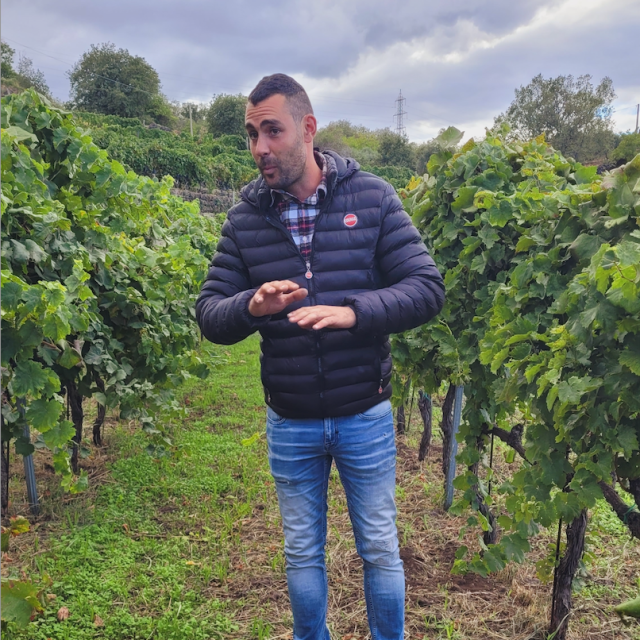
Rosario Raciti – Terre Darrigo
Terre Darrigo Etna Rosso DOC 2022
Proper and correct northeastern Etna road taken in terms of extraction and transparency, A good volume (upwards of 30,000 bottles) that will repeat in 2024 after the disastrous 2023. Real cherry fruit but also the stone that speaks to what Contrada Arrigo is want to lend in mineral terms for nerello mascalese. That mixed with some fruit from other sources but our palates get the drift. Good Rosso that will improve with vine age and agronomist/winemaker Rosario Raciti’s familiarity with this farm. Drink 2024-2027. Tasted September 2024
Terre Darrigo Etna Rosso DOC C. da Arrigo 2022
Etna Rosso from the single contrada (Arrigo) where Terre Darrigo’s amphitheatre grows nerello mascalese in a most beautiful rustic setting on southeastern facing, tightly packed terraces between the volcano and the sea. You can feel the great difference between this wine and the classico Rosso though if you are from this place you say it with sentito, that is with feeling, shouting out this is “the wine from L’Etna!” This single contrada wine elevated from that appellative discourse, softens the bitter cherry stone and smooths transitions. This because it’s a very well made Rosso from a place of great potential. Drink 2024-2027. Tasted September 2024
Tornatore Etna Rosso DOC 2021
The most understandable and straightforward Etna Rosso there could be, mature and layered, of riches and earth, fruit and soil all in the mix. A volcanic paint by numbers canvas of realism and beauty, easily accessible and generous to a perfectly reasonable degree. Entry point for the DOC and once in, never to look back. Drink 2024-2026. Tasted May and September 2024
Tornatore Etna Rosso DOC Pietrarizzo 2020
Some very ripe fruit here from Tonatore’s Pietrarizzo Rosso in the ways of late picking and good solid pressing. Makes for a chewy nerello mascalese that will ready itself for consumption quite a bit earlier than quite a bunch of its peers. Plenty of flavour and attraction for a wine that should be consumed over the next three years. Last tasted May and September 2024
North slope of Etna cru of nerello mascalese put to 50hl foudres, blended and then settled in concrete ahead of bottling. Consistently one of the finer Rosso values in Contrada-specific Etna and here the fruit ripeness and maturity is as fulsome as it ever gets. Makes for a drink really early proposition and provided that advice is followed there will be perfume, heady flavours and good acidity in your glass. A wine to lead off high-end tastings and dinners here, there and everywhere. Drink 2023-2025. Tasted November 2023
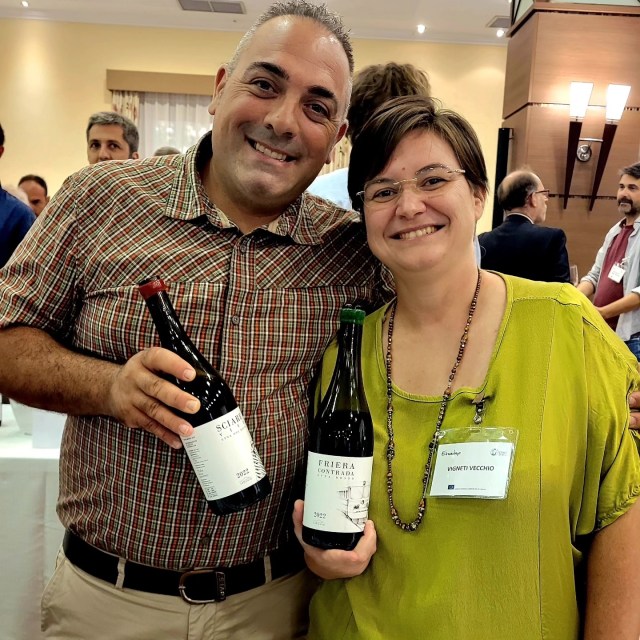
Carmelo Vecchio and Rosa la Guzza – Vigneti Vecchio
Vigneti Vecchio Etna DOC Rosso Sciare Vive 2022
The work of Rosa La Guzza and Carmelo Vecchio in Solicchiata on L’Etna’s northeastern slope and a blend of several contrade. The signature Rosso of highest production that sees concrete, botti and fibreglass. Some of the vines date back 150 years and there are many varieties involved in what is a true field blend, including the likelihood of ancient red and white varieties; minnella, inzolia, carricante, grecanico, catarratto and malvasia. But when it comes to grapes (if not perhaps location and elevation) the Etna DOC offers an inclusive and forgiving discipline. Rosa admits this Rosso to be “a little rough,” Carmelo nods in agreement and while also tumble there is just so much flippin’ personality. It may blow your mind and also lash your palate, but in the end nothing else on Etna, or anywhere else tastes like this Rosso. Drink 2024-2027. Tasted September 2024
Vigneti Vecchio Etna DOC Rosso Contrada Friera 2022
Contrada Friera is Carmelo Vecchio’s Etna Rosso from Lingualossa, of 95 percent nerello mascalese and a smattering of various endemic varieties (minnella, inzolia, carricante, grecanico and catarratto) from vines as old as 120 years of age. Less than one hectare provides this antediluvian hodge-podge of the varietal wild and the maker’s job is to simply gather and come what may. His vineyard is basically a monopole and so there is no frame of reference save for what the eastern Etna spirits might whisper in his ear. Material this old will do what it pleases and while there is a rusticity similar to Sciare Vive there is also more concentration, complexity and most importantly intuition. There could always be the possibility of importune happenstance but Friere knows what to do. It would seem. Drink 2026-2031. Tasted September 2024
Vigneti Vecchio Etna Rosso DOC Contrada Malpasso 2022
Classic and that means arch-classic texture brought forth from a Carmelo Vecchio nerello mascalese. Without a doubt the purest and cleanest Vigneti Vecchio Rosso to date made under his tenure. A challenge of vintage but a test passed with flying colours and sweet spot found. Allow this 2022 to rest on the palate for 20 seconds, to take in its weightlessness and ability to hover just above the senses. A signature of Malpasso that will repeat and be recognized going forward. Drink 2025-2032. Tasted September 2024
Vigneti Vecchio Etna Rosso DOC Contrada Malpasso 2020
As with Friere, the Etna blend from Contrada Malpasso (literally “bad step”), is a Rosso of 95 percent nerello mascalese with bits and bites of various indigenous varieties like minnella, inzolia, carricante, grecanico and catarratto, here from vines in the 120 year-old range. A Rosso that pulses, still with some residual CO2 and it feels like carbonic maceration was a part of the deal. Carmelo Vecchio in fact started with the method in 2020 so family and friends could get together and make a party of it. Malpasso shows great energy, fabulously so, alive and kicking. It is said that one wrong step can change everything but a mal passo might just result in a wildly entertaining wine like this. Drink this sooner than the other VV’s while this candle still burns. Drink 2024-2026. Tasted September 2024
Vigneti Vecchio Etna DOC Rosso Contrada Crasà 2022
Contrada Crasà for Etna Rosso is composed of 90 per cent nerello mascalese and a field blend of (10) local white varieties, in this case inzolia, grecanico and catarratto. The hectare and a half was planted in 1930 and so 92 years is the number for this vintage. Call it even and just say century vines because 1930 seems a bit arbitrary at this point for a vineyard that sits just one km away from another where vines are 130 years of age. Carmello Vecchio likes to use stems, co-ferment and give 15 days of skin maceration. The acts of pigeage and remontage are done lightly and so the sweetness and purity of fruit is kept in tact. Like the Malpasso this buzzes with energy but with more control, less wildness and yet remains very much alive. All the red berries are imagined to be represented and once again Vigneti Vecchio presents a unicorn wine. They always are. Drink 2025-2033. Tasted September 2024
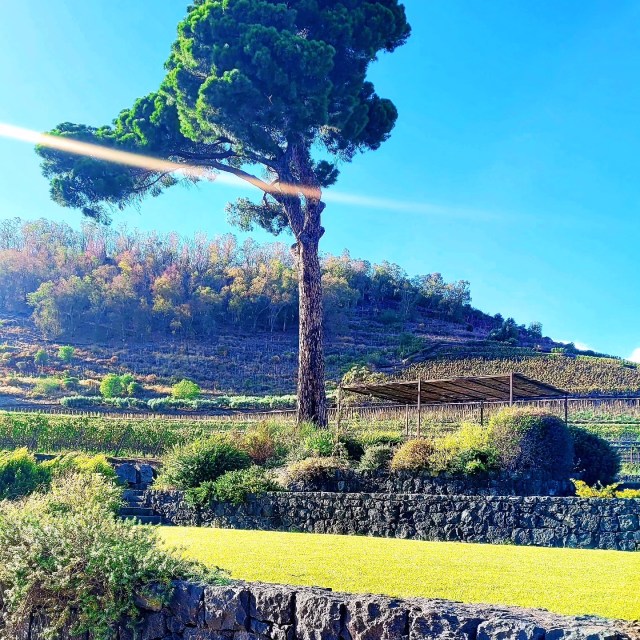
Benanti
Other Wines
Benanti Viticoltori Nerello Cappuccio 2022, Terre Siciliane Rosso IGT
A rare varietal nerello cappuccio, without oak since 2014, not always made and says Salvino Benanti, ”not a wine you can make a business from, but it’s worth showing to the world.” A versatile red to chill, very gamay like, or if you ike to compare locally, in the vein of frappato. Does not grow (perfectly) well in every vintage and there is surely a rusticity but you can see just how well Benanti tames the edginess, softens the structure and maintains a sweet herbal profile. Drink 2024-2027. Tasted September 2024
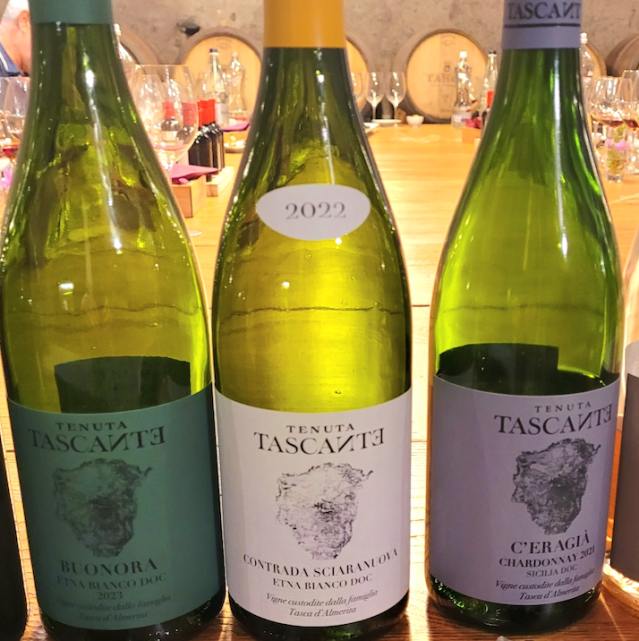
Tasca d’Almerita Tascante Chardonnay C’eragià 2021, Sicilia DOC
Tasca’s Etna interpretation of chardonnay comes from a one-acre vineyard in Contrada Rampante and no shock to sense the scents of barrel fermentation. There is vanilla, white caramel, honeysuckle, fennel pollen and lightly toasted biscuits with an autolytic wind ‘a blowing. A still chardonnay imagined as being subjected to a secondary fermentation in bottle and a sparkling method wine should be so lucky to have this fruit as its maker. The flavours feign sweetness accented by spice., energy runs high and in the end C’eragià which translates as “it was already there” is a fine interpretation of chardonnay. Drink 2024-2026. Tasted September 2024
Vigneti Vecchio Donna Bianca 2018, Terre Siciliane Rosso IGT
With fruit from outside of the defined DOC yet in Carmelo Vecchio’s world a most important vineyard at 820m of elevation. The mix of soil and climate make for a poignant and prescient nerello mascalese named for Donna Bianca, the snowcapped “lady,” a.k.a the volcano at 3,000-3,300 metres above. High-toned, free-spirited, big acid bomb and half the glycerin of some of Vecchio’s other reds. Far from volatile despite the lightning style with great potential and a truly high ceiling. Drink 2024-2028. Tasted September 2024
Dessert wines
La Gelsomina Di Colombo Maria Adalgisa Moscato Passito Di Terreni Vulcanici 2018, Terre Siciliane IGT
A moscato (bianco) but the variety is muscadelle, not moscato di alessandria, a.k.a. zibbibo. Dried fruit, never crushed, always infused after the stainless ferment and finishes at 110-120 g/L of residual sugar. Uniquely Sicilian if not defined or expressive of being from L’Etna but still a tradition is followed. Clean as Passito will be, without formaggi or yeasty notes, of apricot and fig, acidity enough though unassuming. Serves a purpose, preferably with a good bite into biscotti. Drink 2024-2028. Tasted September 2024
Visits with Planeta and Serra Ferdinandea
Planeta Syrah Maroccoli 2020, Sicilia Menfi DOC
Just the syrah facts, “in purezza” as they say, from an Ulmo site with a proviso for as much varietal perfume as anywhere in Sicily. “We were expecting some kind of natural catastrophe, “says Winemaker Patricia Tóth, “because it was 2020 – but it never arrived.” Good winter precipitation was followed by months of pleasant weather, much like 2014. Succulent acids and tart idealism combine to elevate, buoy and celebrate fruit. A syrah of a rising, balanced, long and true. Has already entered the drinking zone. Drink 2024-2028. Tasted September 2024
Planeta Burdese 2020, Sicilia Menfi DOC
A cabernet joint, of 70 sauvignon and 30 franc, each noticeable and notable for this Sicilian play on words. Burdese, as in Bordeaux for a wine grown on the left bank of the man made lake, once a river flowing through the valley below Ulmo in Sambuca di Sicilia. Forget the mimic or simulation because place supersedes idea with a mix of juicy and dusty fruit, succulent acids and fine tannins. No grittiness or grippy intensity but really more a matter of verticality and integration. Drink 2024-2027. Tasted September 2024
Planeta Merlot Sito Dell’Ulmo 2020, Sicilia Menfi DOC
A 100 percent merlot from the Ulmo Vineyard, owned since 1694 and a first harvest in 1995. From this part of Menfi where the sun shines bright and the breezes blow every day between the massifs to the north and Monte Cerami that separates the vineyard from the sea. Menfi where the typical reds of merlot outlast the opposing greens by 10 to one and so fruit is everything with the local limestone streaking through. Succinct wine, linear and direct, credibly structured and the cohort involving fruit and wood seamlessly integrated. Fine stuff, veritably reasoned and seasoned. Drink 2024-2027. Tasted September 2024
Planeta Cabernet Franc Didacus 2020, Sicilia Menfi DOC
Should there be a finer and more appropriate place to plant and raise cabernet franc on the entirety of Sicily that information should immediately be made public. Planeta’s Ulmo vineyard brings the grape to singular light, here 25 years after its introduction and it has become abundantly clear how it resides at the pinnacle and signature for reds out of Menfi. The 2020 is just now settling in and acting perfectly comfortable in its skin, fruit still swelling and always with the potential to burst free at any time. These are near perfect acids, sweet and sumptuous, allowing for movement and at this ideal stage, also development. There are hints at secondary character in the chiaroscuro shadows slow to reveal themselves. Sumac and pomegranate, a lightly browning and caramelizing eggplant before finishing with a wood encouraged dusting, as if by cocoa and clove. Drink 2024-2032. Tasted September 2024
Planeta Cabernet Franc Didacus 2019, Sicilia Menfi DOC
An extra year in bottle and at first there seems not to be the great difference that might have been expected when tasted side by each with Didacus 2020. In fact 2019 is a much more tannic and structured vintage with its intensity cross-examined by austerity. Indemnity for cabinet franc with an upwards trajectory of extending verticality and still it requests for more time. The fruit is far less succulent and lush as compared to ’20 and so when the wine falls into place there will be a faster intern into secondary character. Expect quicker to arrive fungi and a masala of spice directed by the wood. Wait another year at least and then drink this Didacus ’19 before the ’20 finishes its own run. Drink 2025-2029. Tasted September 2024
Serra Ferdinandea Rosato 2023, Sicilia DOC
First vintage of the 100 percent nero d’avola Rosé was 2020, grown aboard the serious limestone at 400-plus metres subjected to the south sea, Saharan and Mistral winds that blow through the Sambuca di Sicilia Valley. While southern France might seem to be the precursor that may no longer be the case, if namely because a blend now becomes a varietal wine. Better for the decision and change, now a step up in rich flavours, texture and presence. Fine and elegant. Last tasted September 2024
Next step taken for Rosé on the south coast at Menfi with this upright and linear ’23 inching towards the profound. A balance and a confidence with 100 percent nero d’Avola that defines the idiom and begins to perfect the workmanship. Satisfying and also delicious, inciting the salivary glands and asking for more. Will gain interst and intersect with further complexities after 18 months further time in bottle. Drink 2024-2027. Tasted May 2024
Serra Ferdinandea Bianco 2022, Sicilia DOC
Mezzo e mezzo, 50-50 grillo and sauvignon blanc grown at elevation like the nero d’avola, only stainless steel for fermentation. The grillo has always been a natural fermentation of a pied de cuve way, while the sauvignon follows dutifully along. A true bianco joint, friendly and smart, sapid and salty, phenolic and grippy. Brat not nat, not bratty and certainly not natty. Crisp and edging into herbal with a what just feels like place, that being Menfi. You can forage for salads in the fields and vineyards, reflected in the flavours of this Bianco. Last tasted September 2024
Mix of 50-50 grillo and sauvignon blanc, for now the only two white grapes and making up a third of the 17 hectares total. The most recent planting was 2021, the first back in 2015. All about freshness and salinity with just a bit of wood thanks to 25 percent, none of it new. The wood is present by only in subtle and oscillating tones on the mouth. Some phenolic presence yet again, not overdone or even remotely aggressive. A bit buttery at the finish, graced by piquancy and the sort of scorrevole that drifts slowly away. Drink 2023-2025. Tasted May 2023
Serra Ferdinandea Rosso Sicilia 2022, Sicilia DOC
Another 50-50 blend, here from nero d’Avola and syrah, equal partners in crime. The wines used to be 70-30, including the Rosato and now half an half makes much more sense for Rosso. And in turn it makes the Rosé that much better as a varietal nero. More syrah brings more spice and also meatiness matched by mineral, spice and elements of the earth. A hit of sanguine, a hint of iodine and then the floral nero kicking in. It continues with its freshness and necessary mix of sapid meeting salty, from limestone, sea and wind revivalist nature. The most complex and frankly interesting becoming delicious red blend in the winery’s short history. Just FYI the Serra Ferdinandea catalogue lists the wines from Rosso to Bianco to Rosato, in that order. Just the way tasting wine should be and yet we taste in the opposite order. Maybe we’ll switch that around in 2025. Last tasted September 2024
Equal parts syrah and nero d’Avola, straightforward, clean and with the idea being to make the purest iteration that exults two very important grapes. Increasing the concrete involvement though this is all done in wood with subsequent vintages to go in that cemented direction. Already croccante so imagine the freshness and crunch going forward. Purple violets, light chalkiness and what feels like sandy soil-effected freshness. Piquant and toothsome. Delicious. Drink 2023-2025. Tasted May 2023
Good to go!
godello
Versante Nord, L’Etna

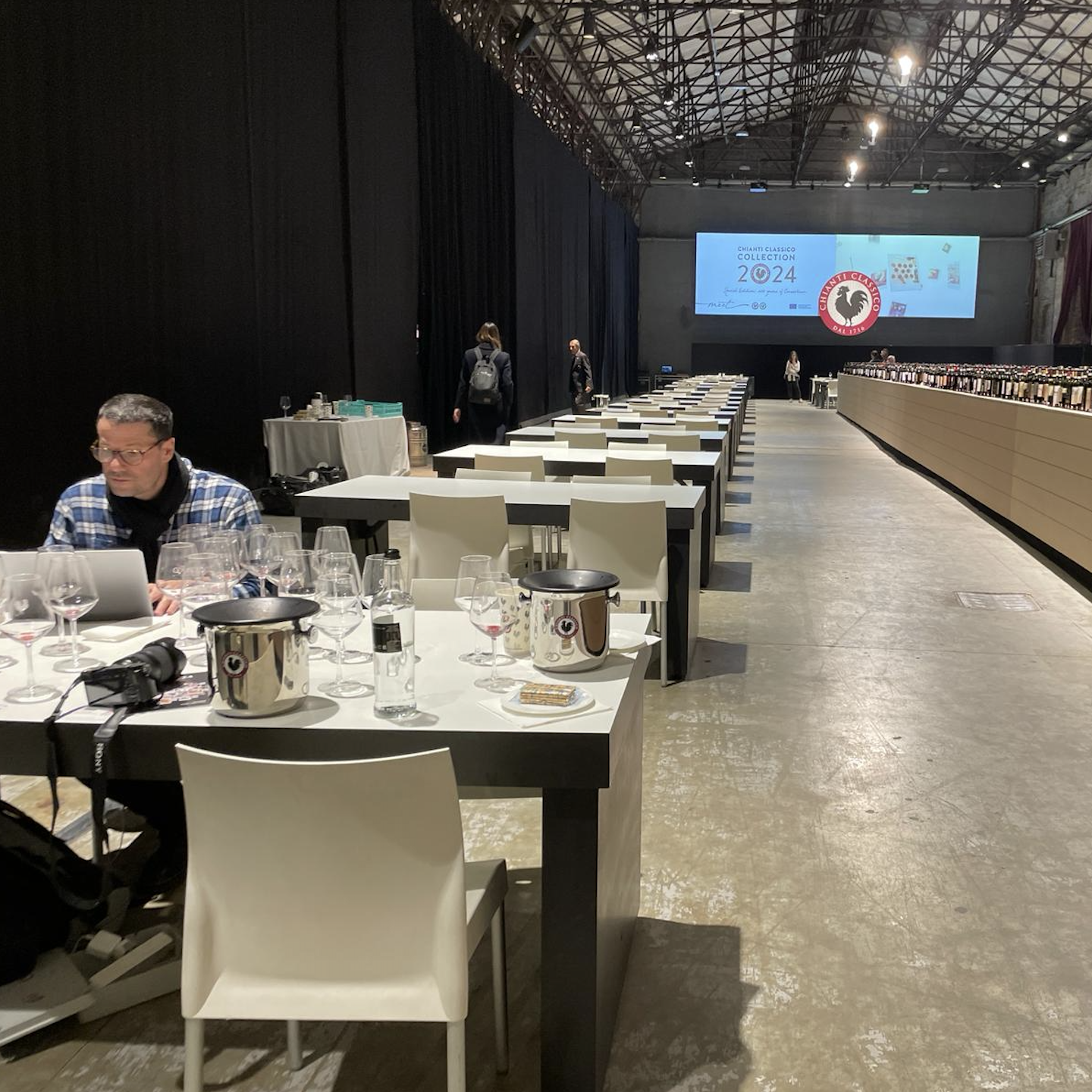

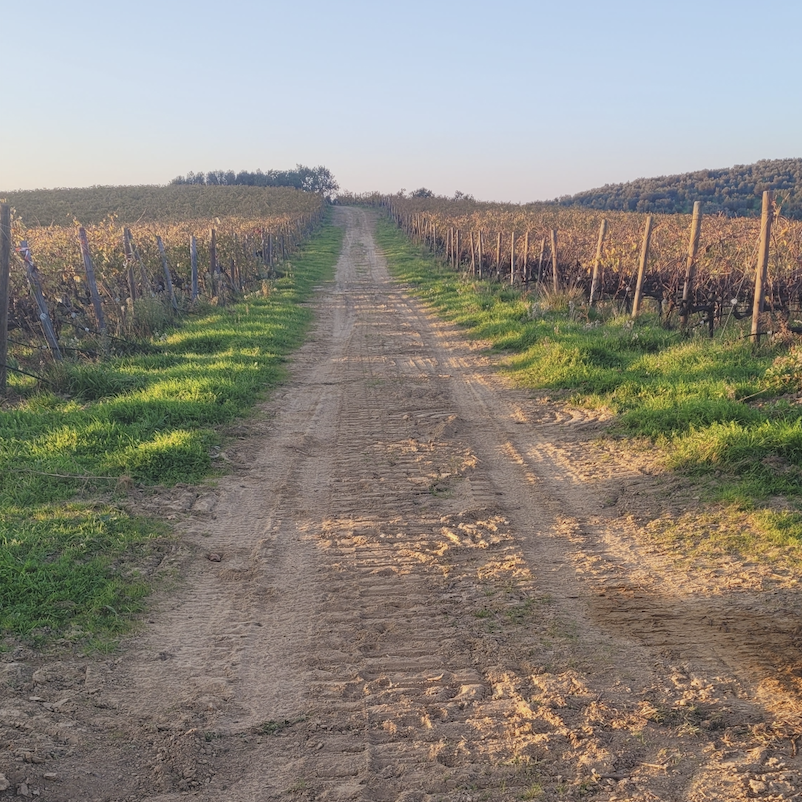

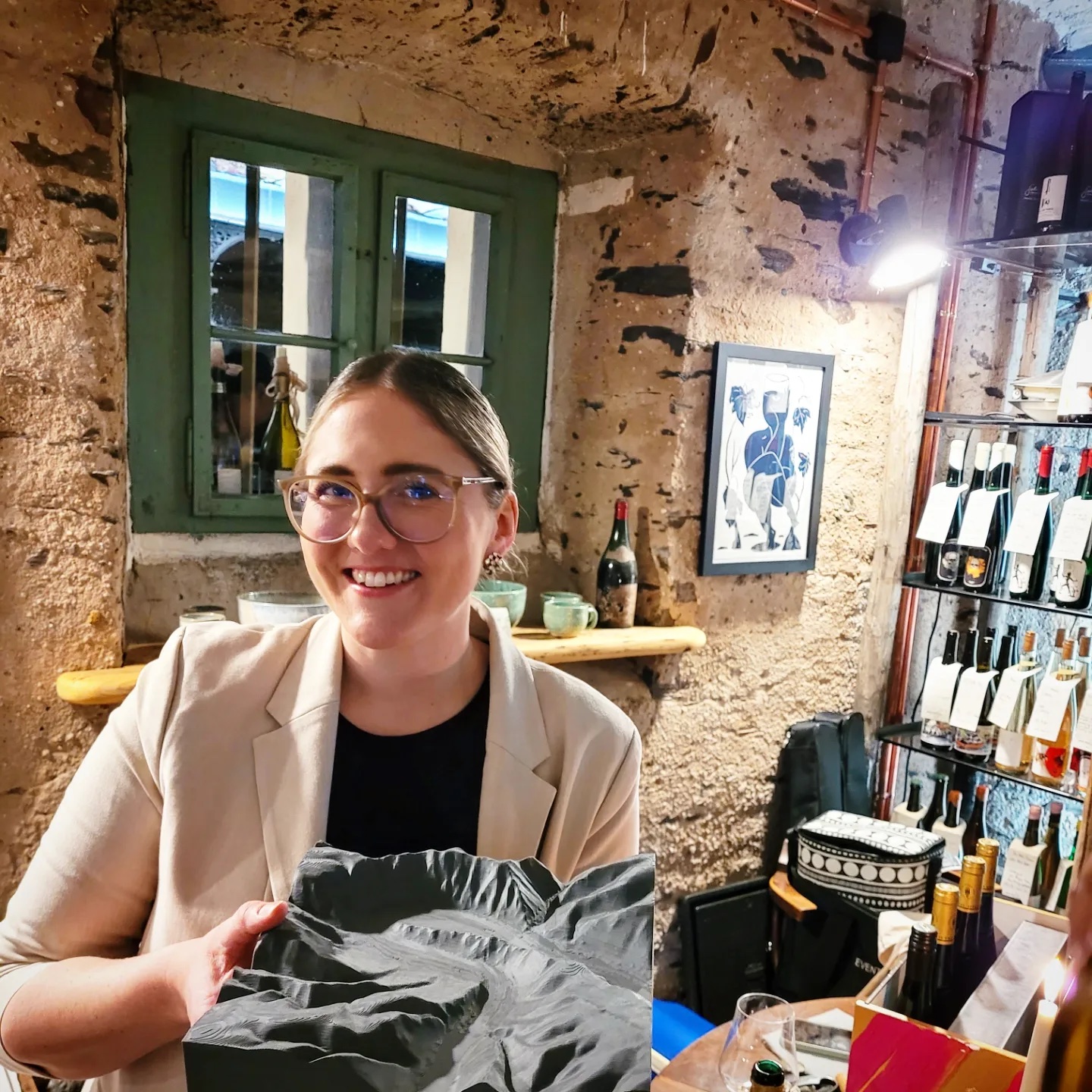
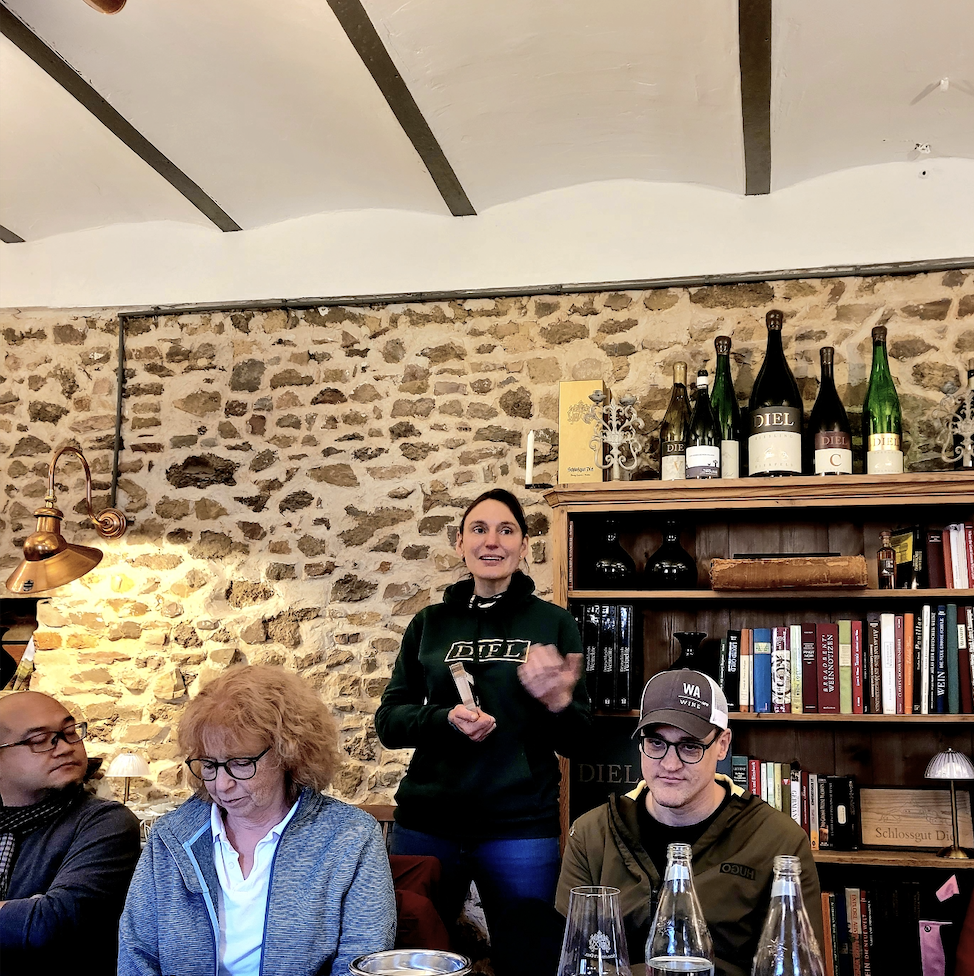

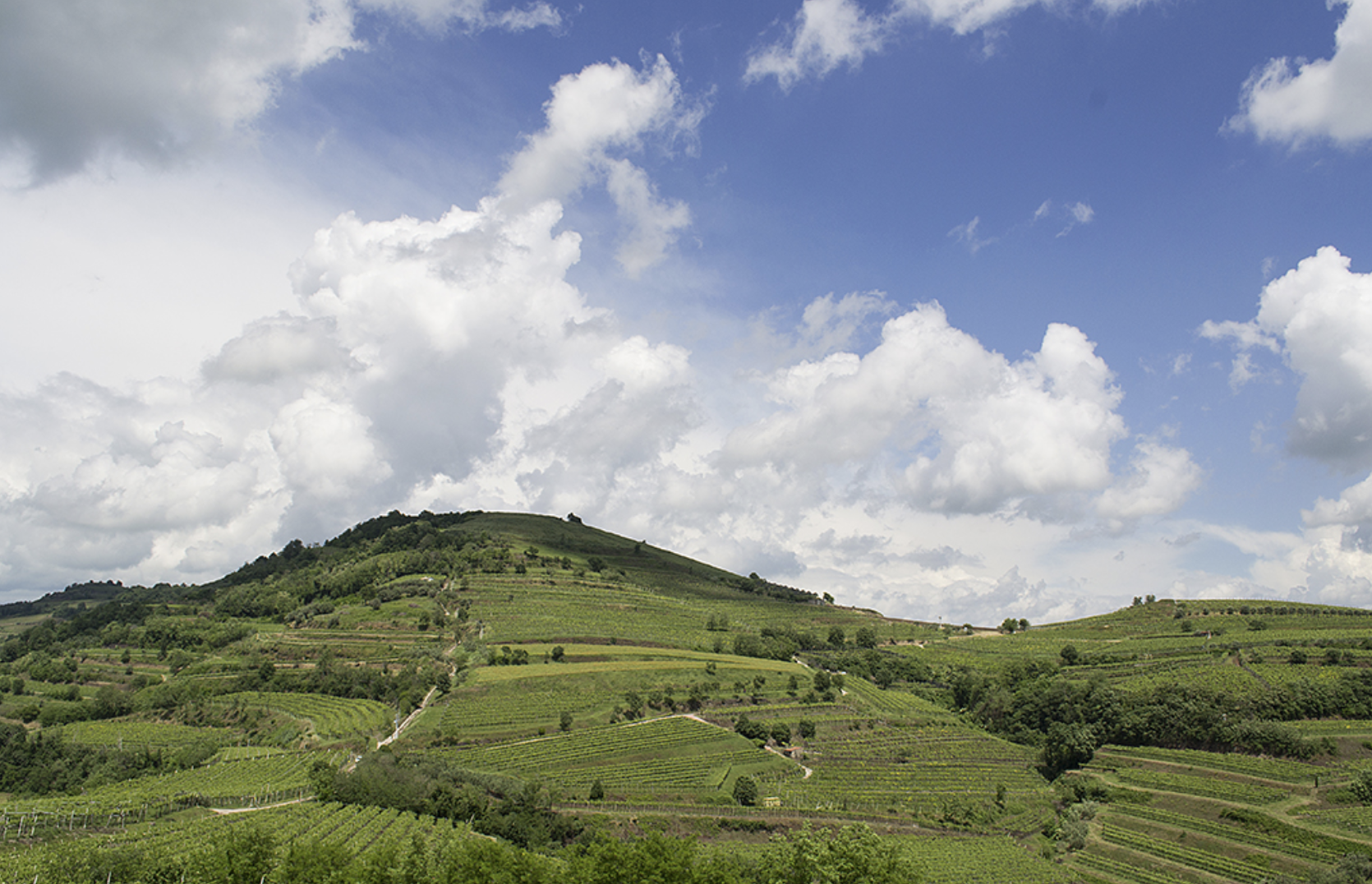
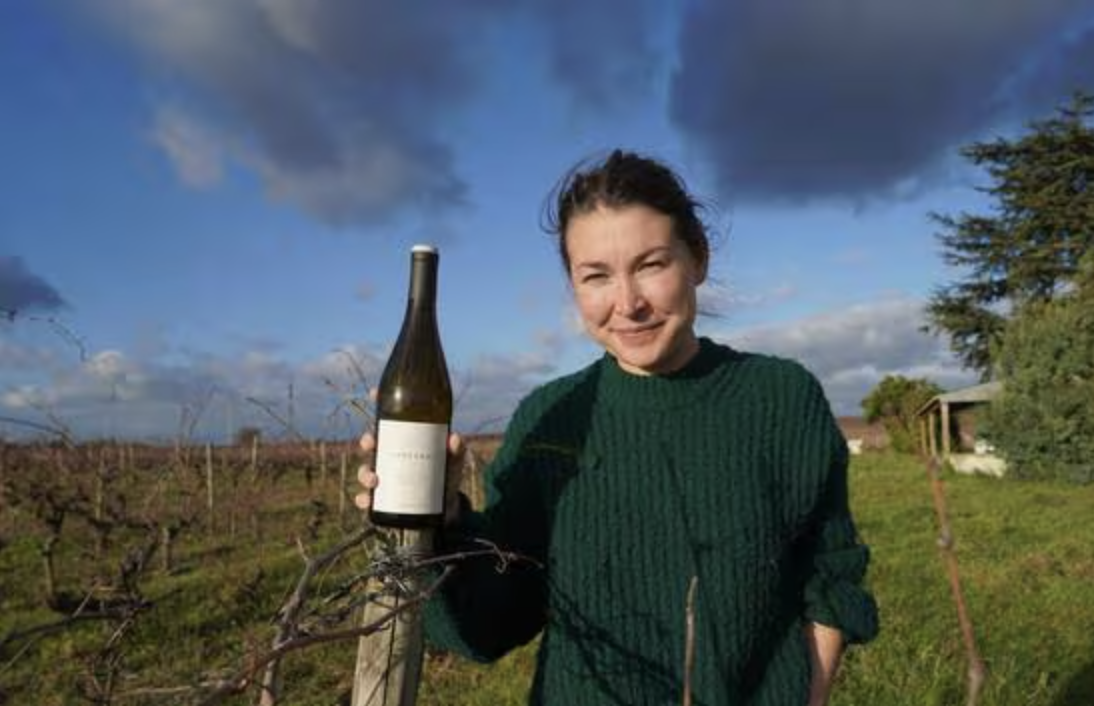

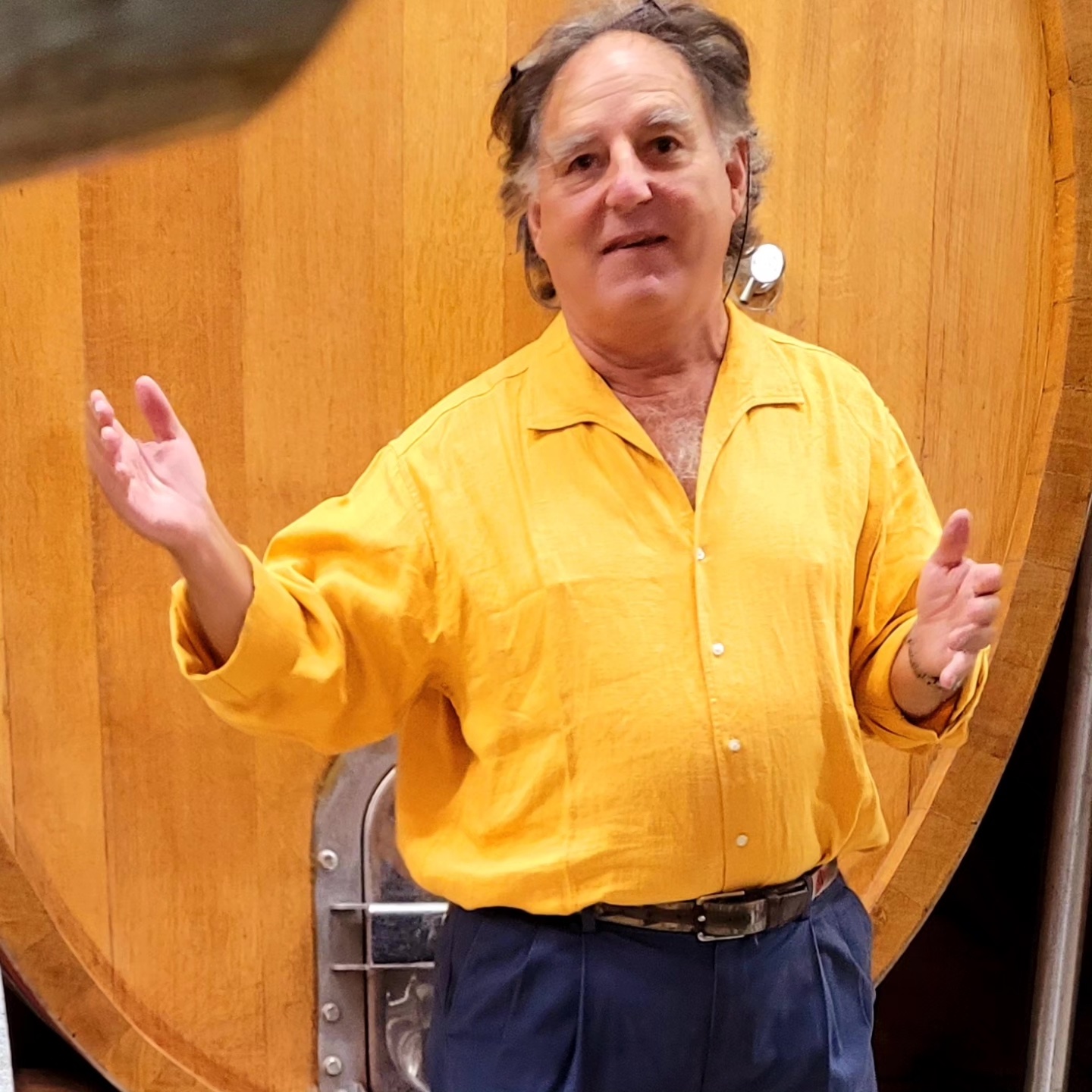

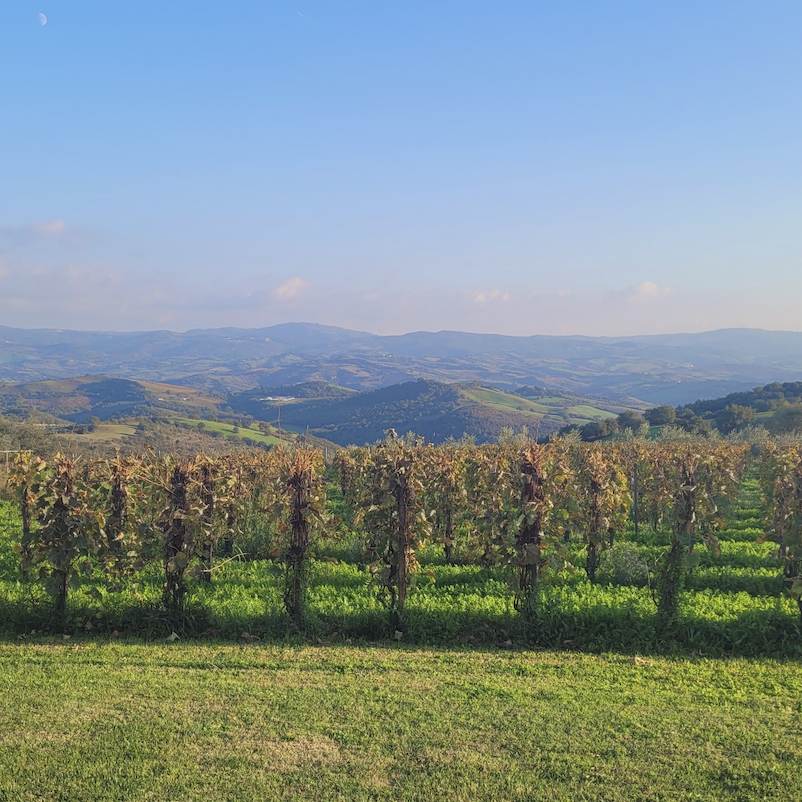



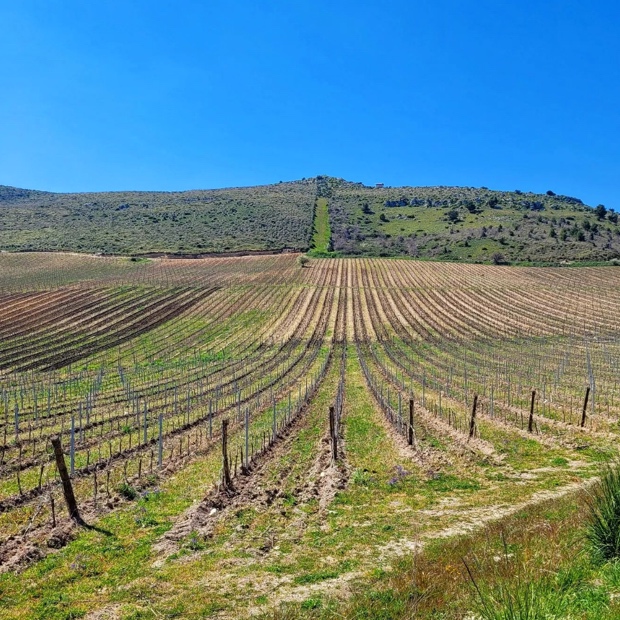


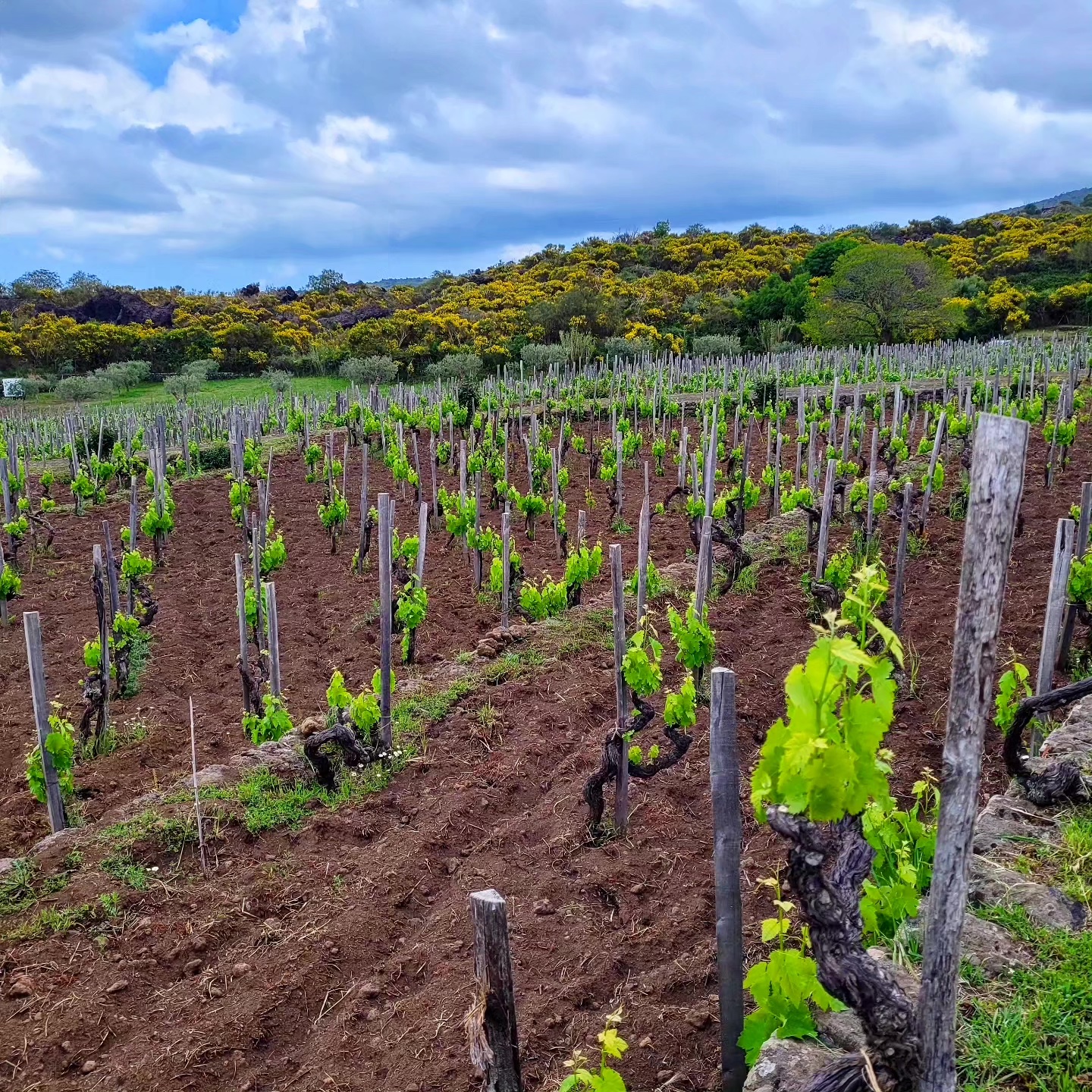
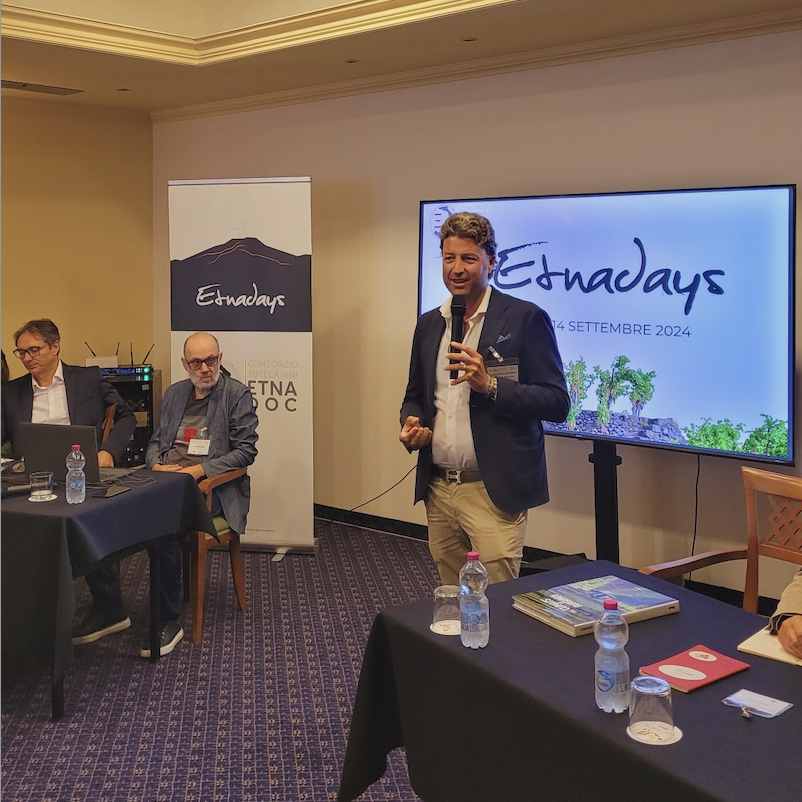
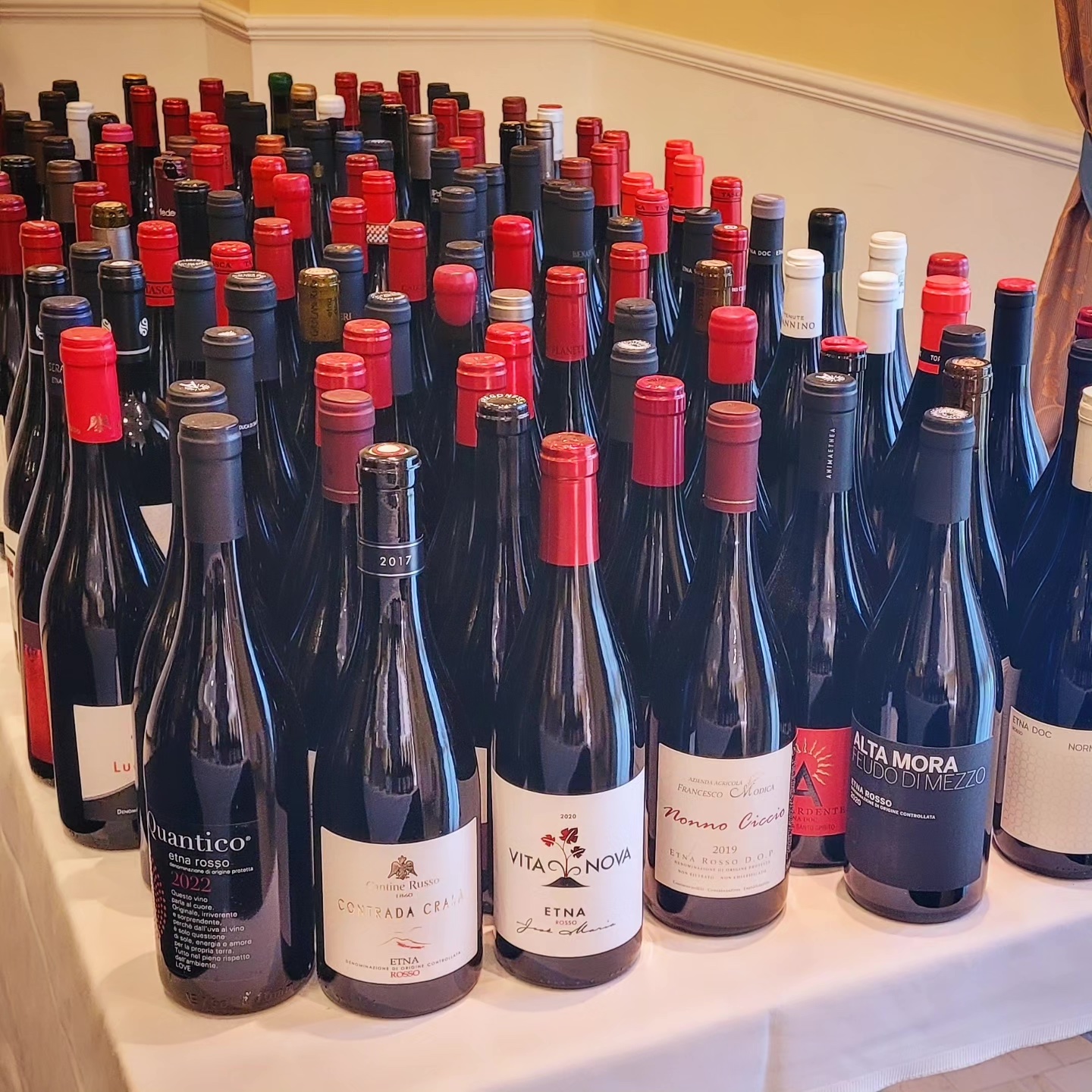
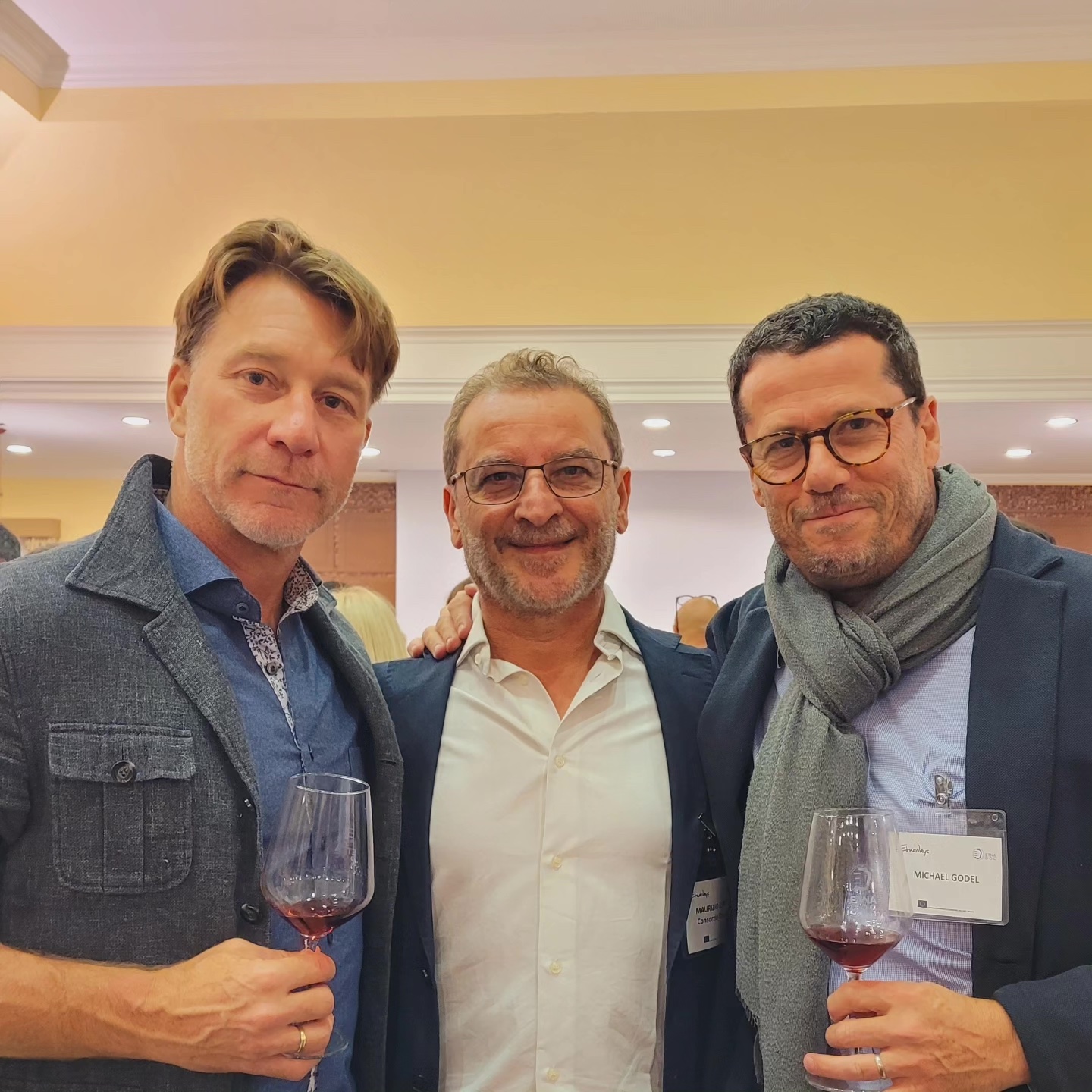
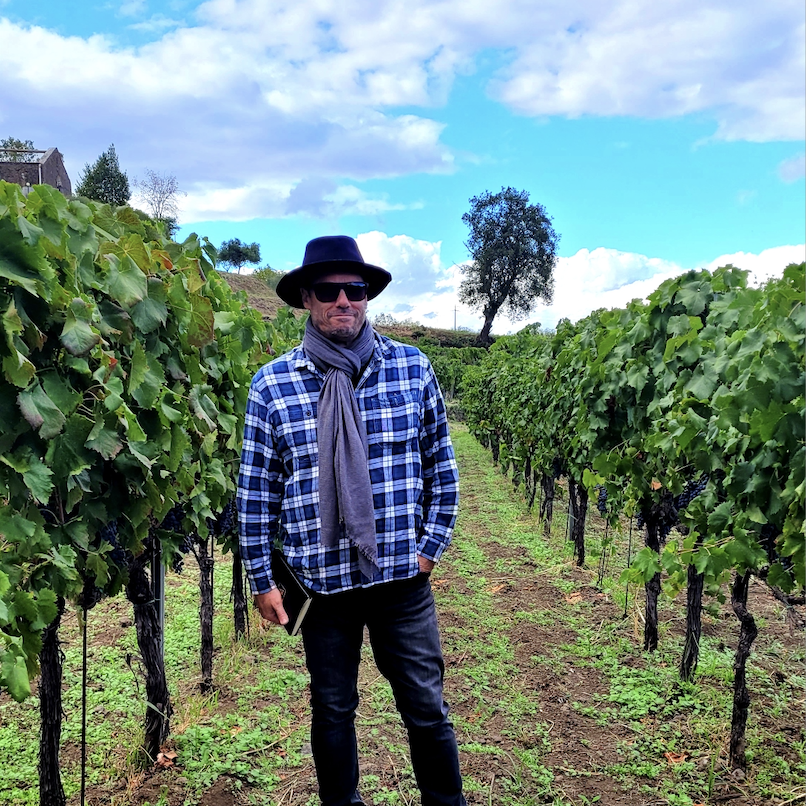

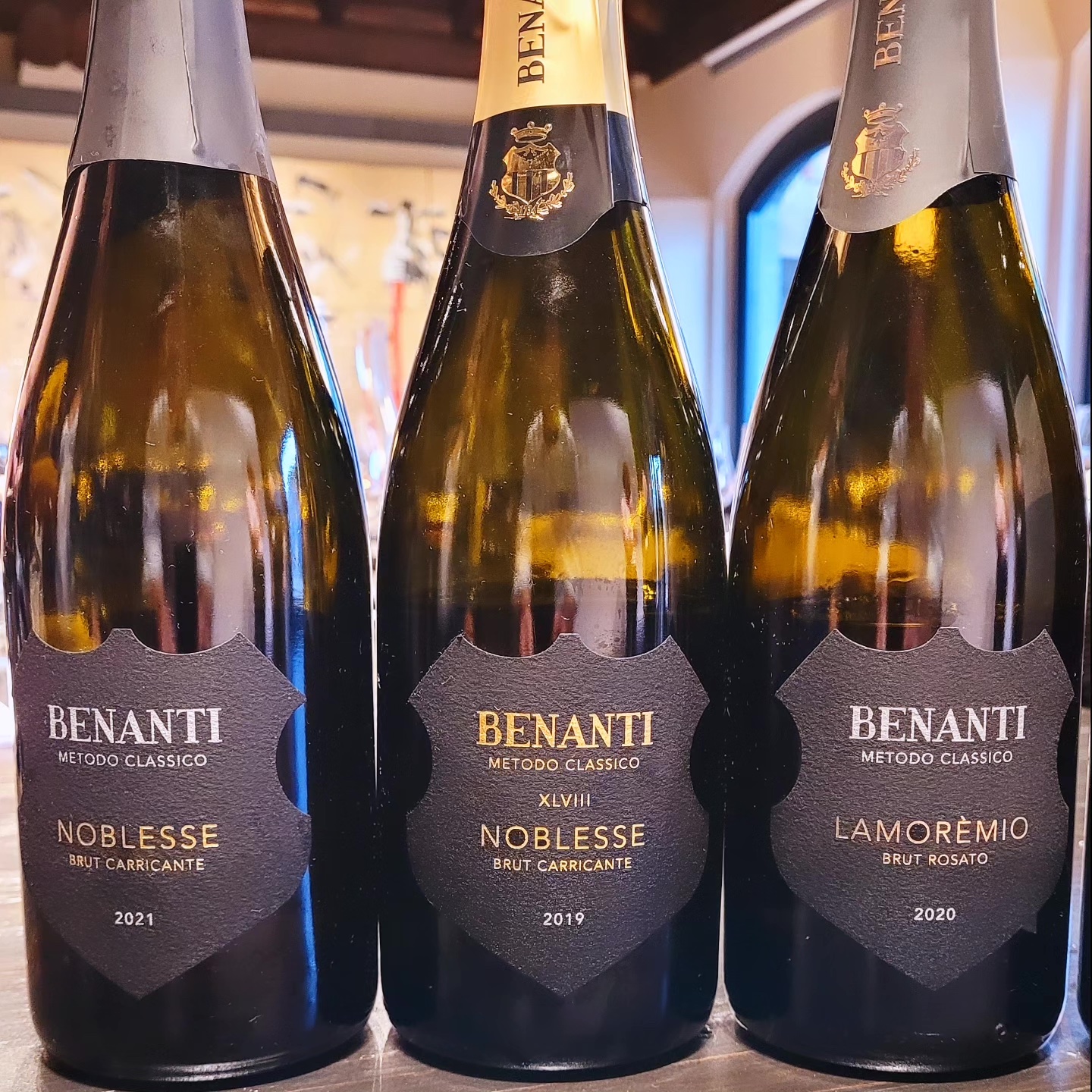
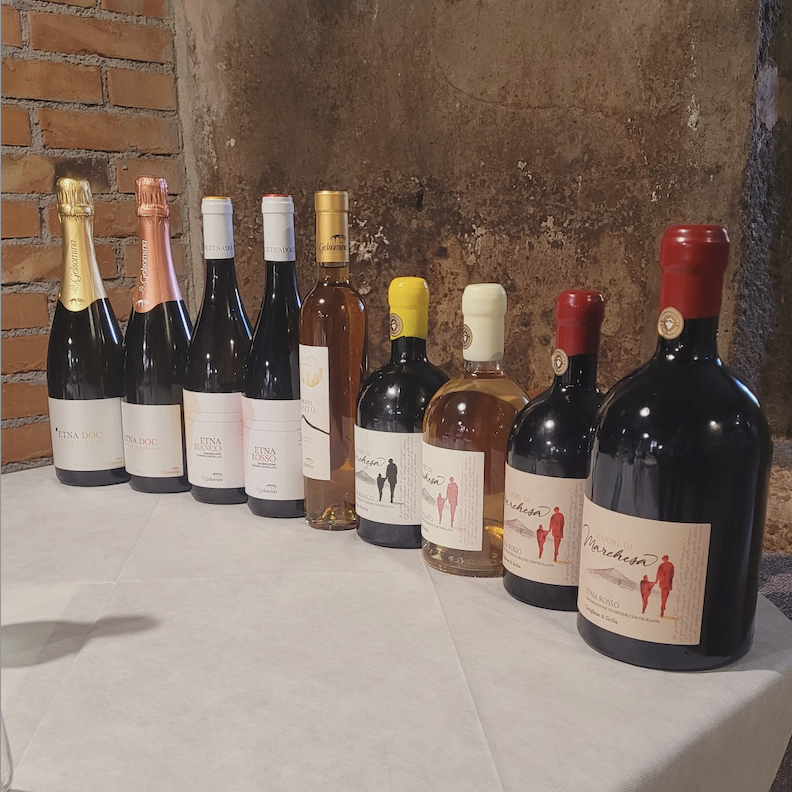
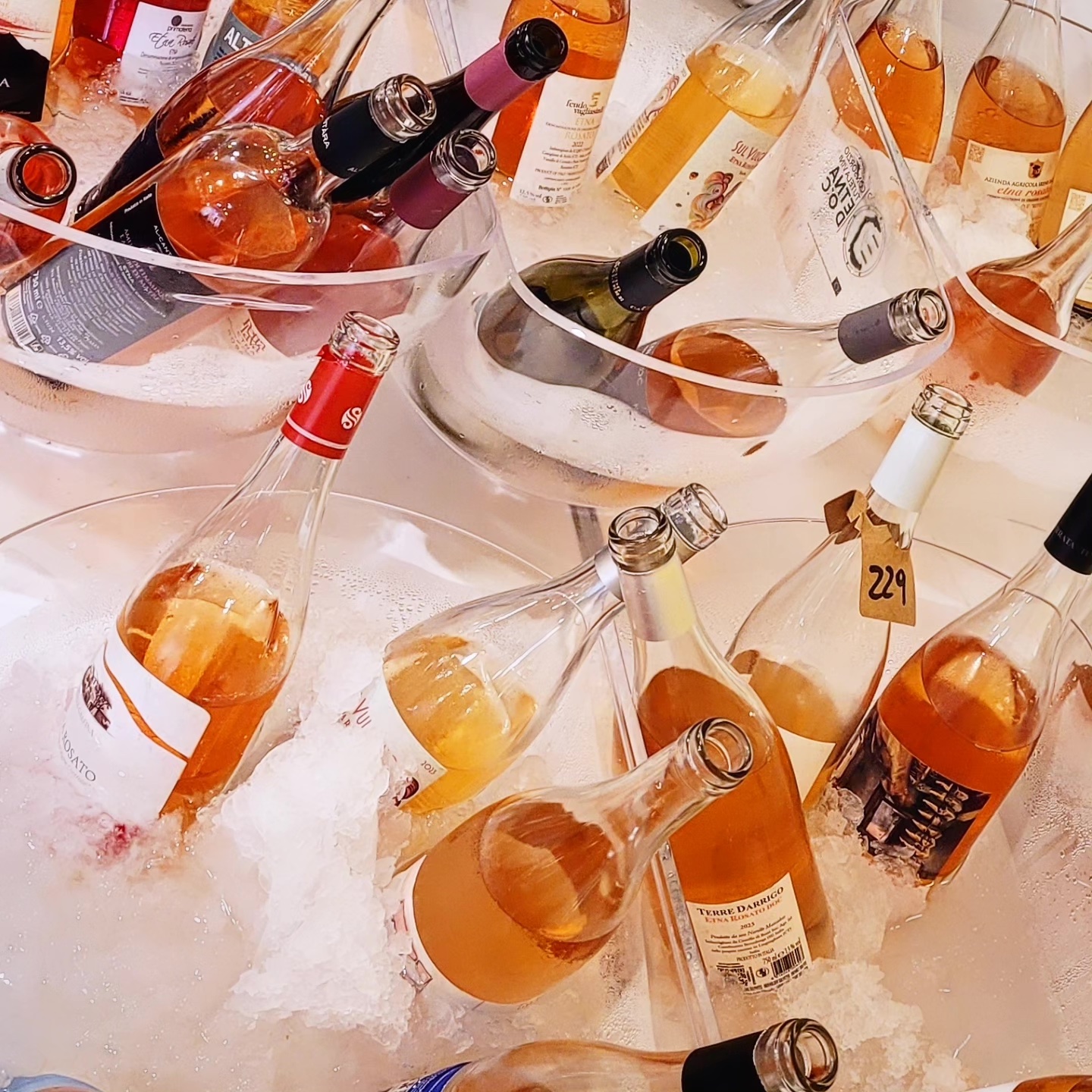


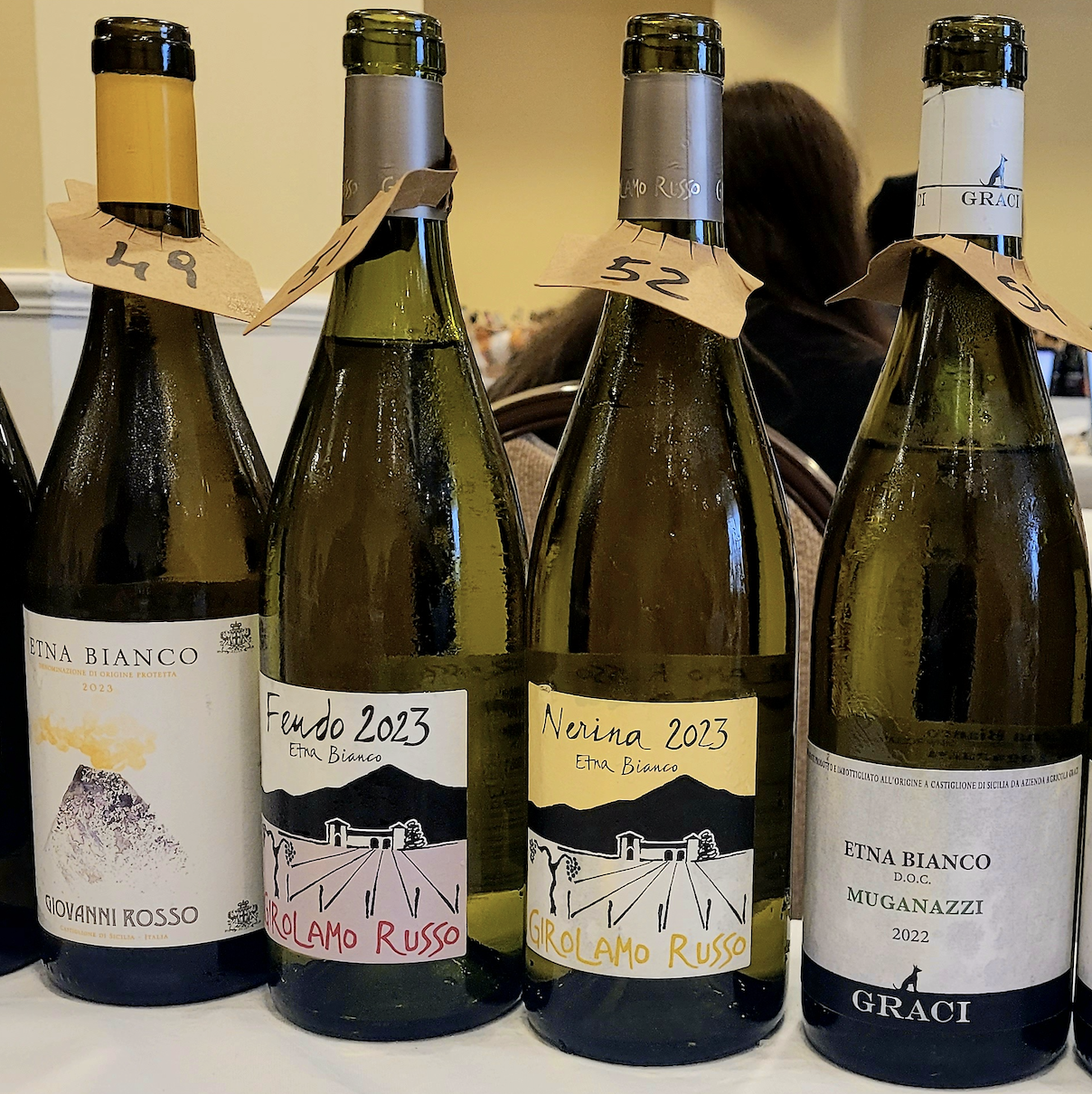
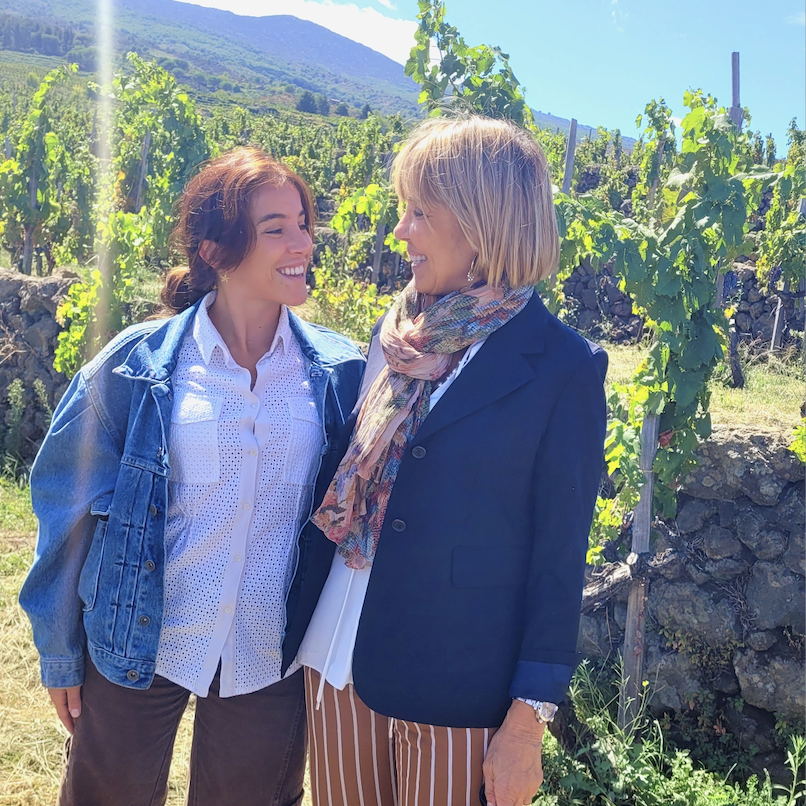
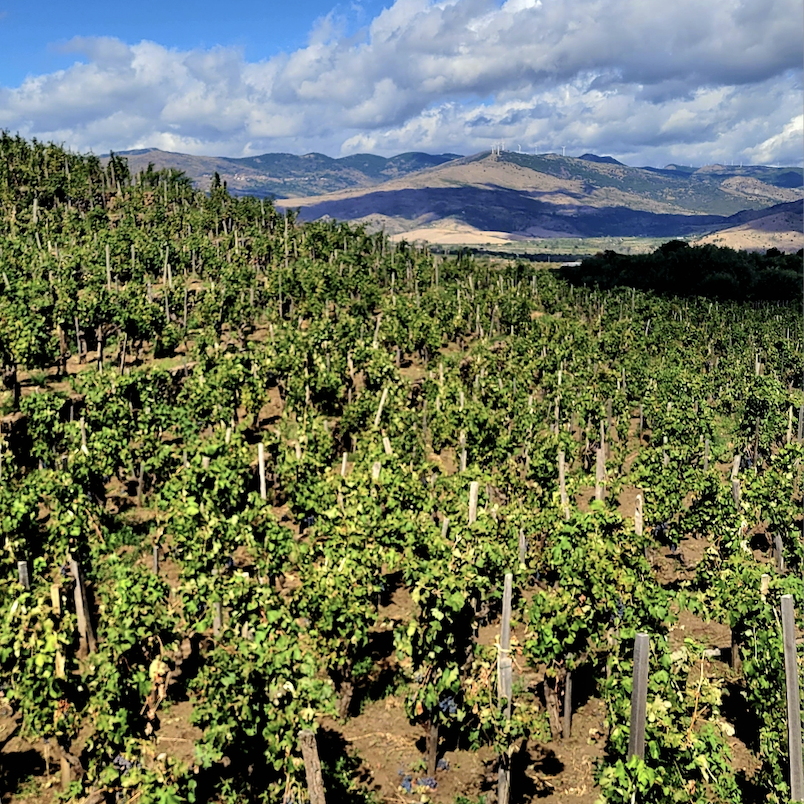
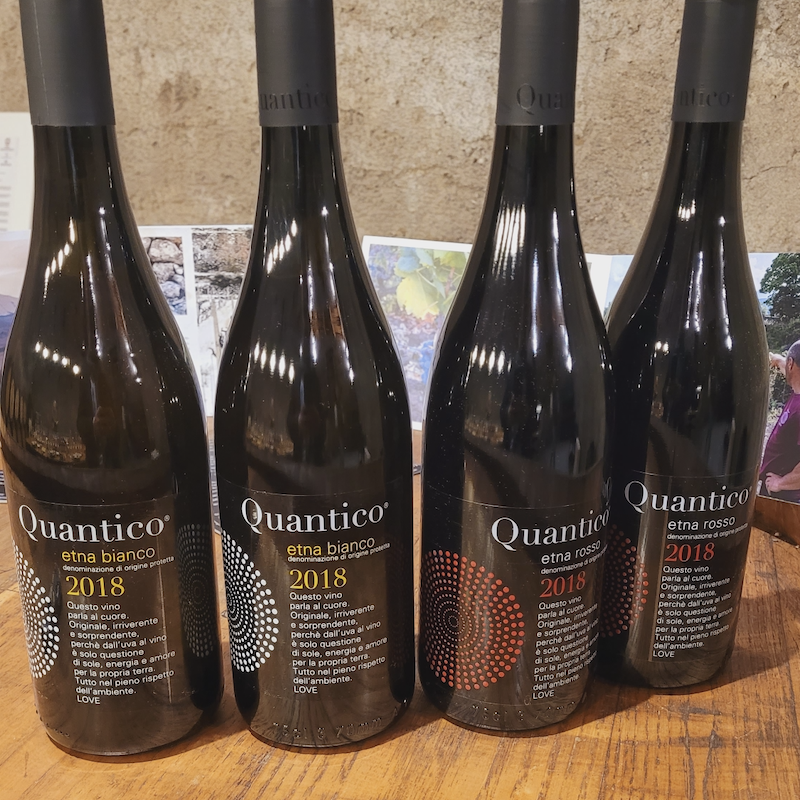
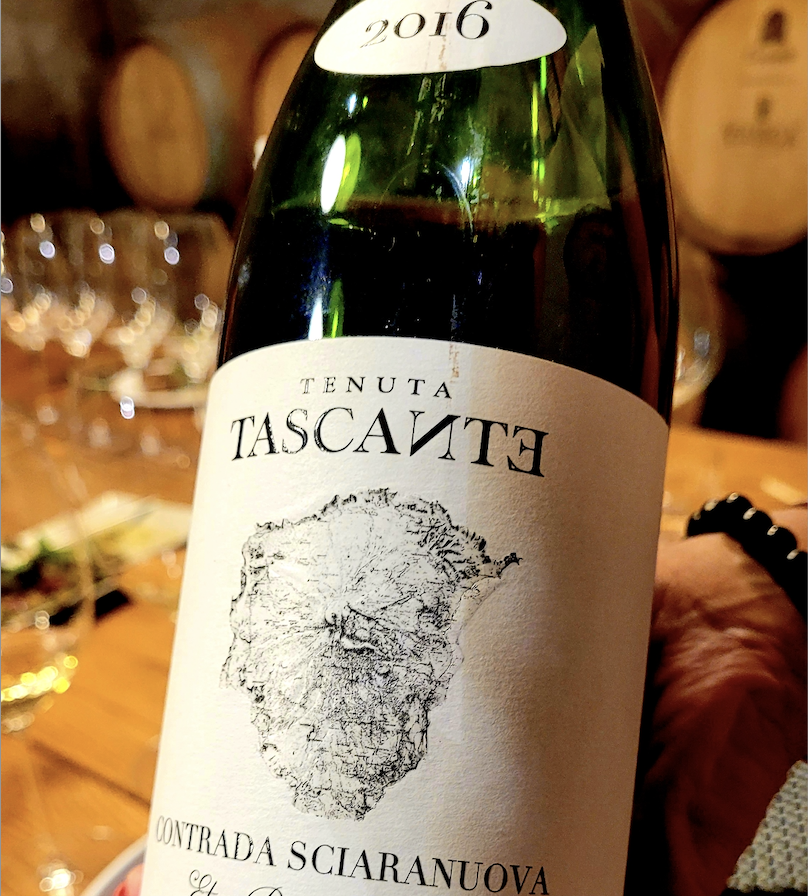
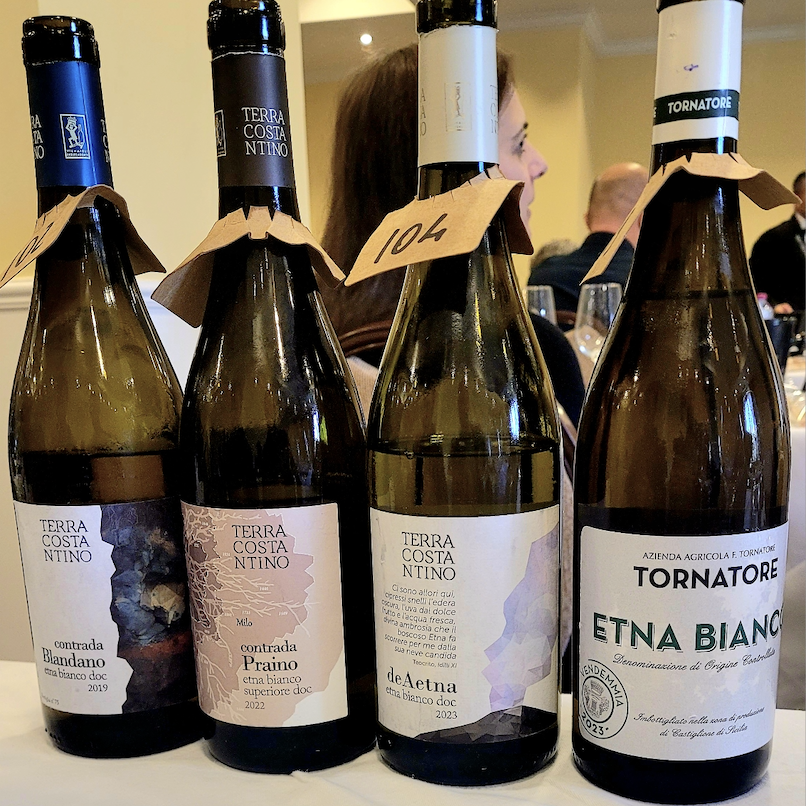
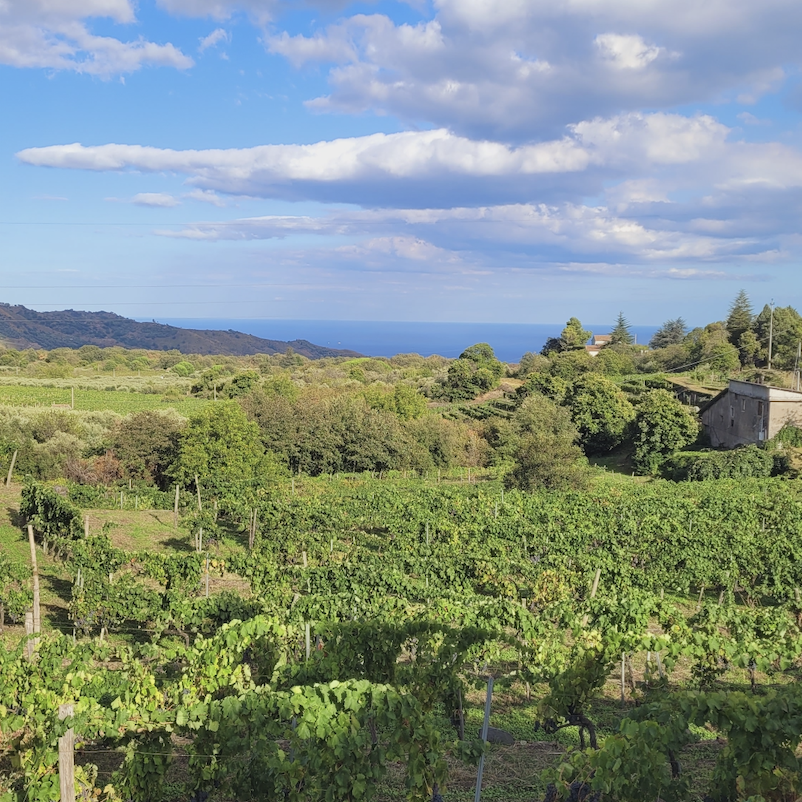
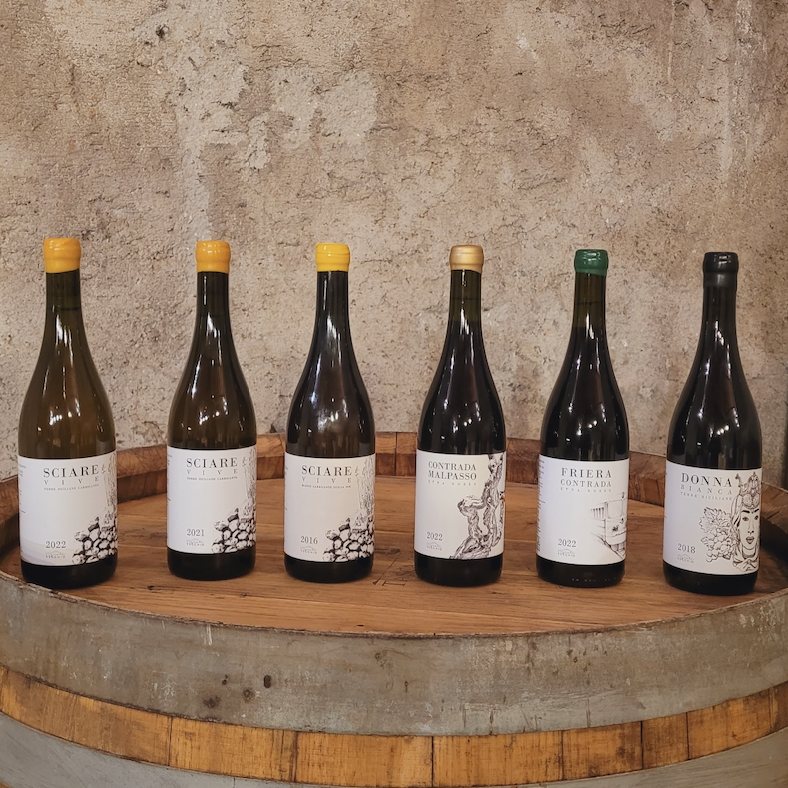
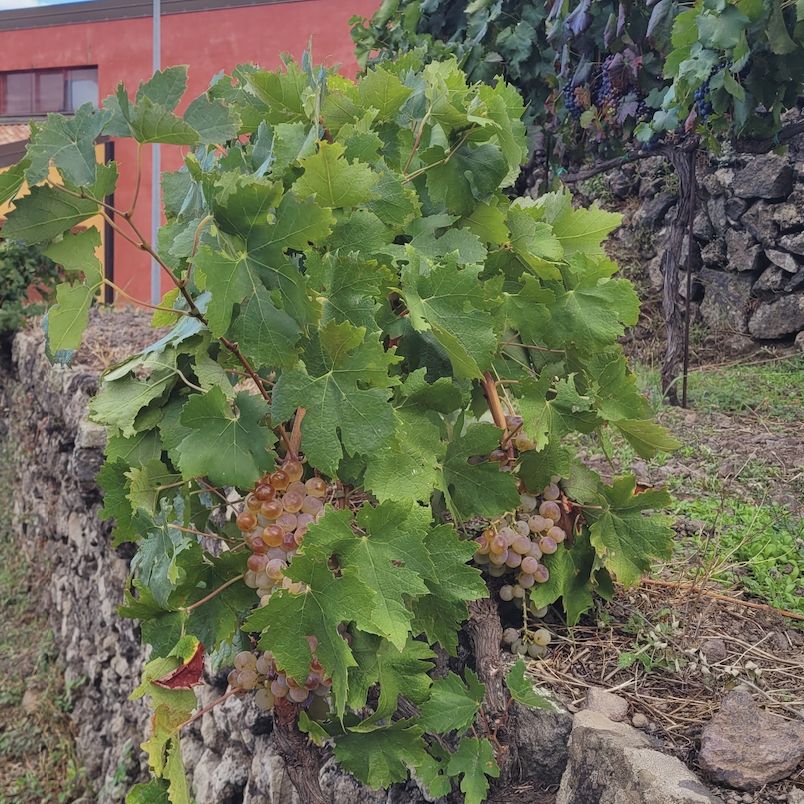

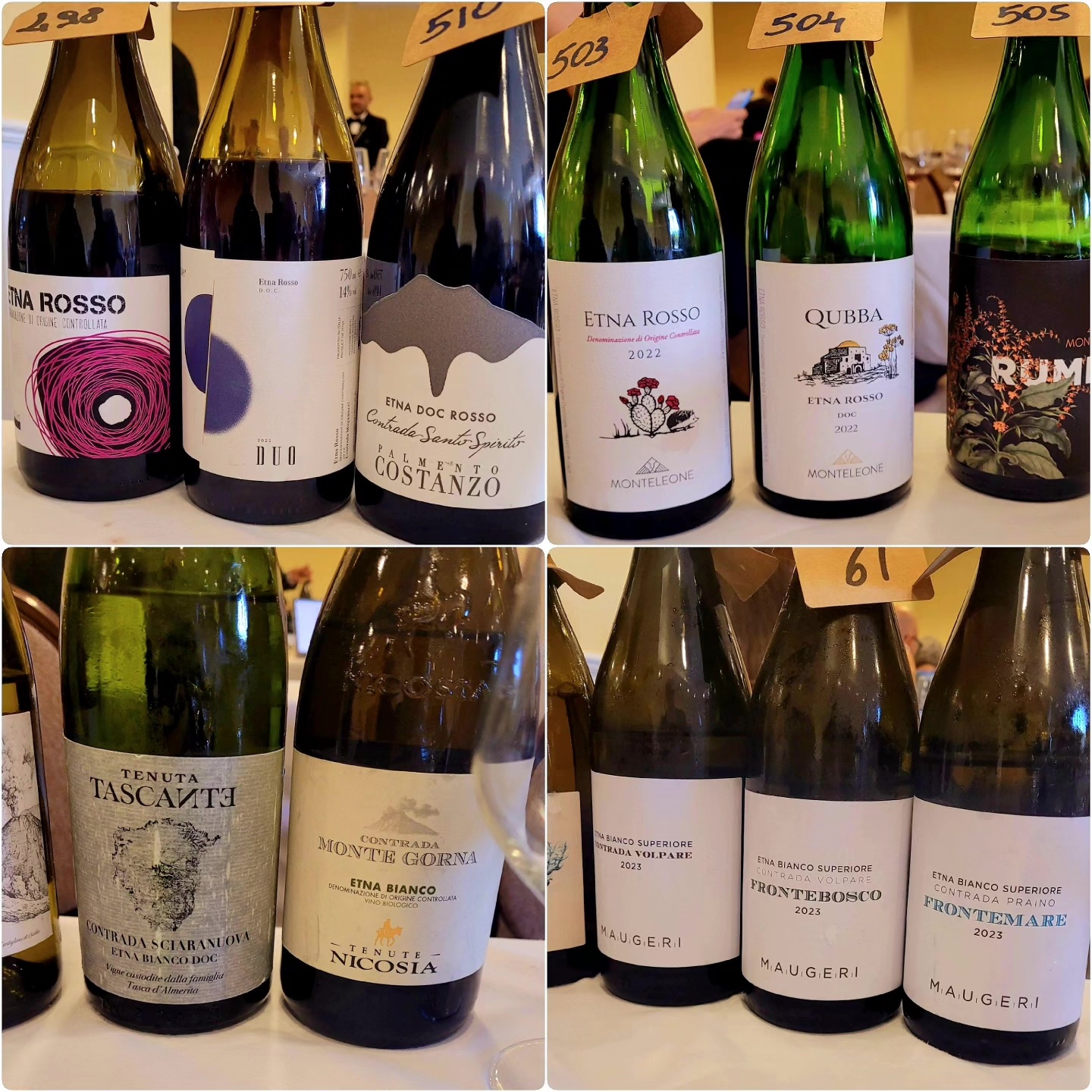
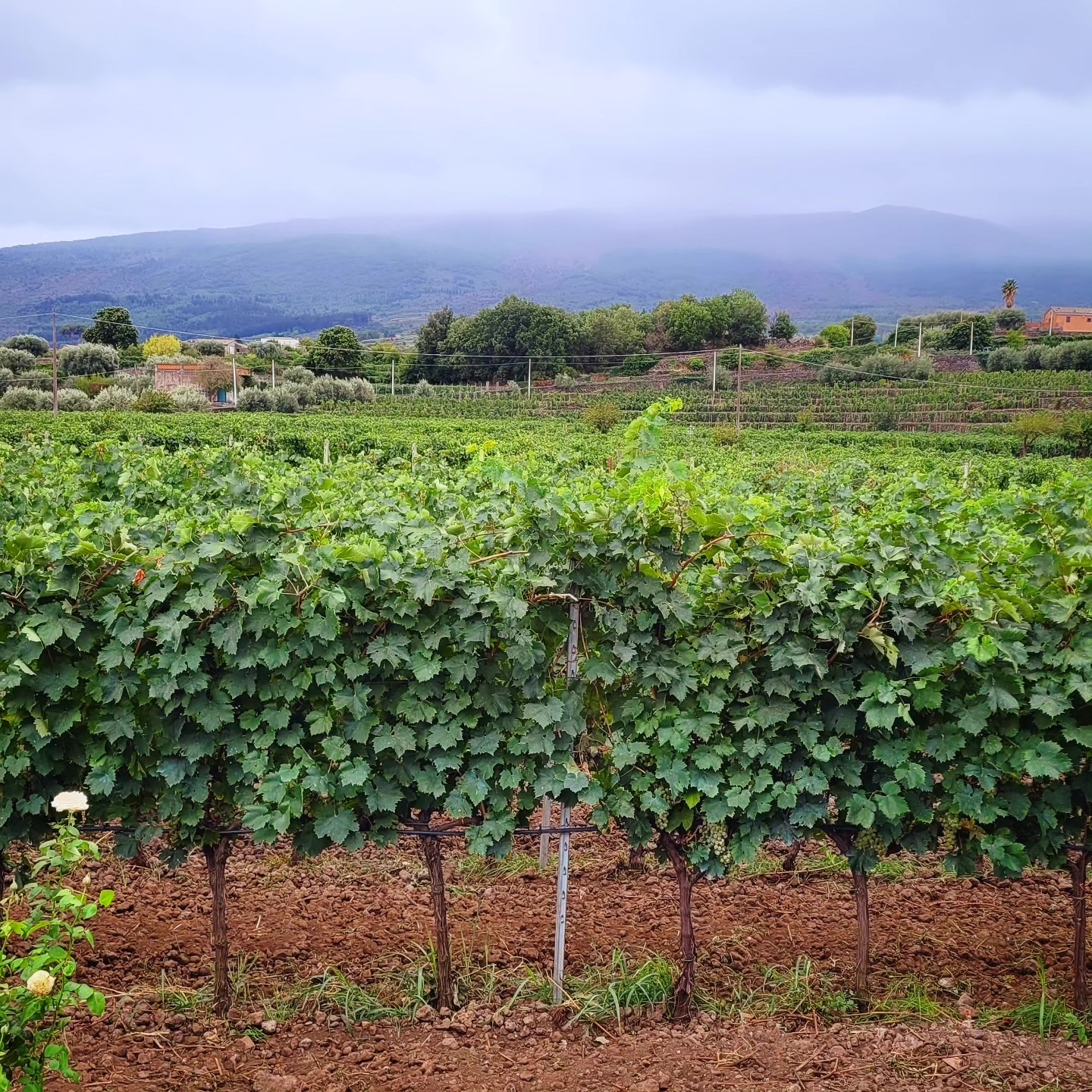
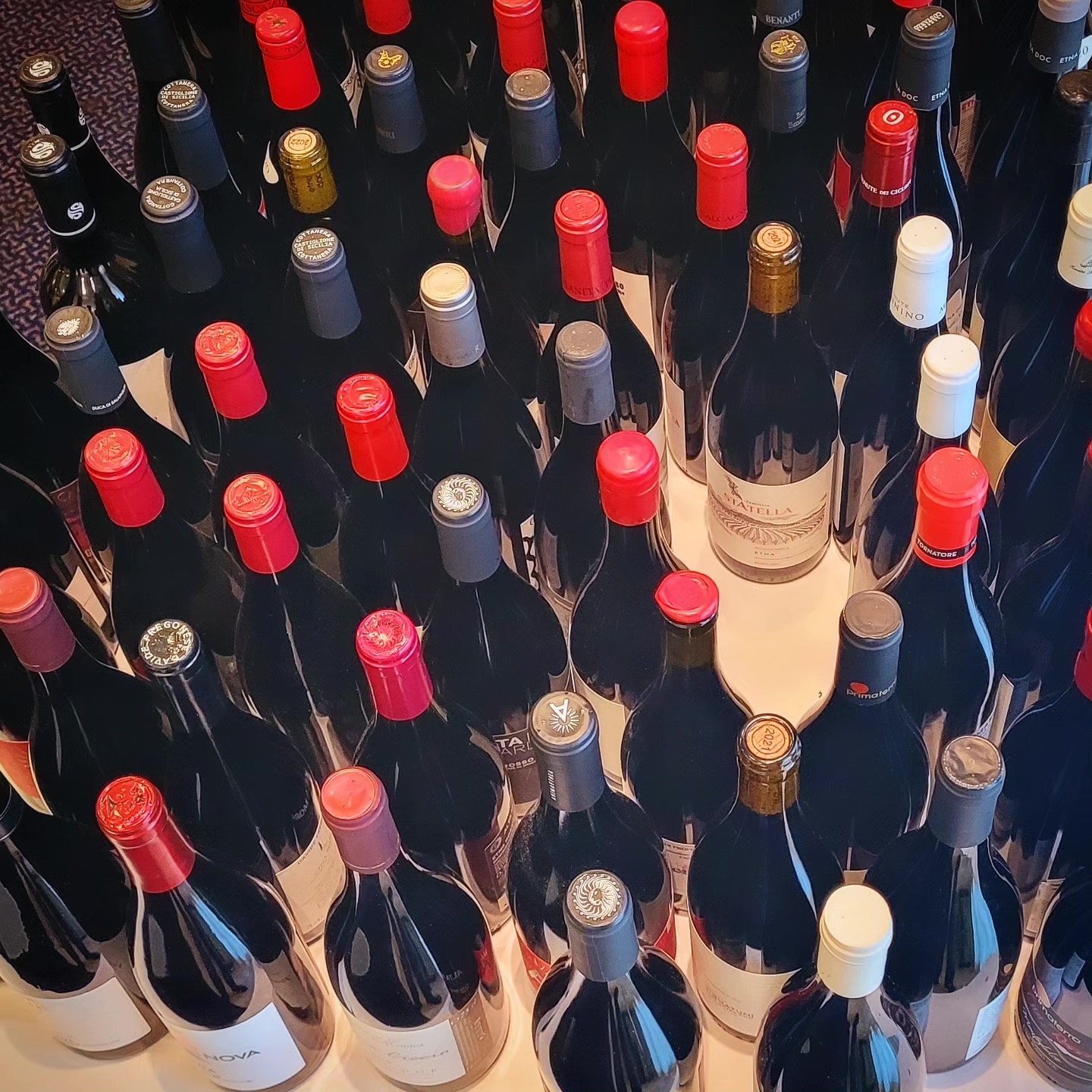



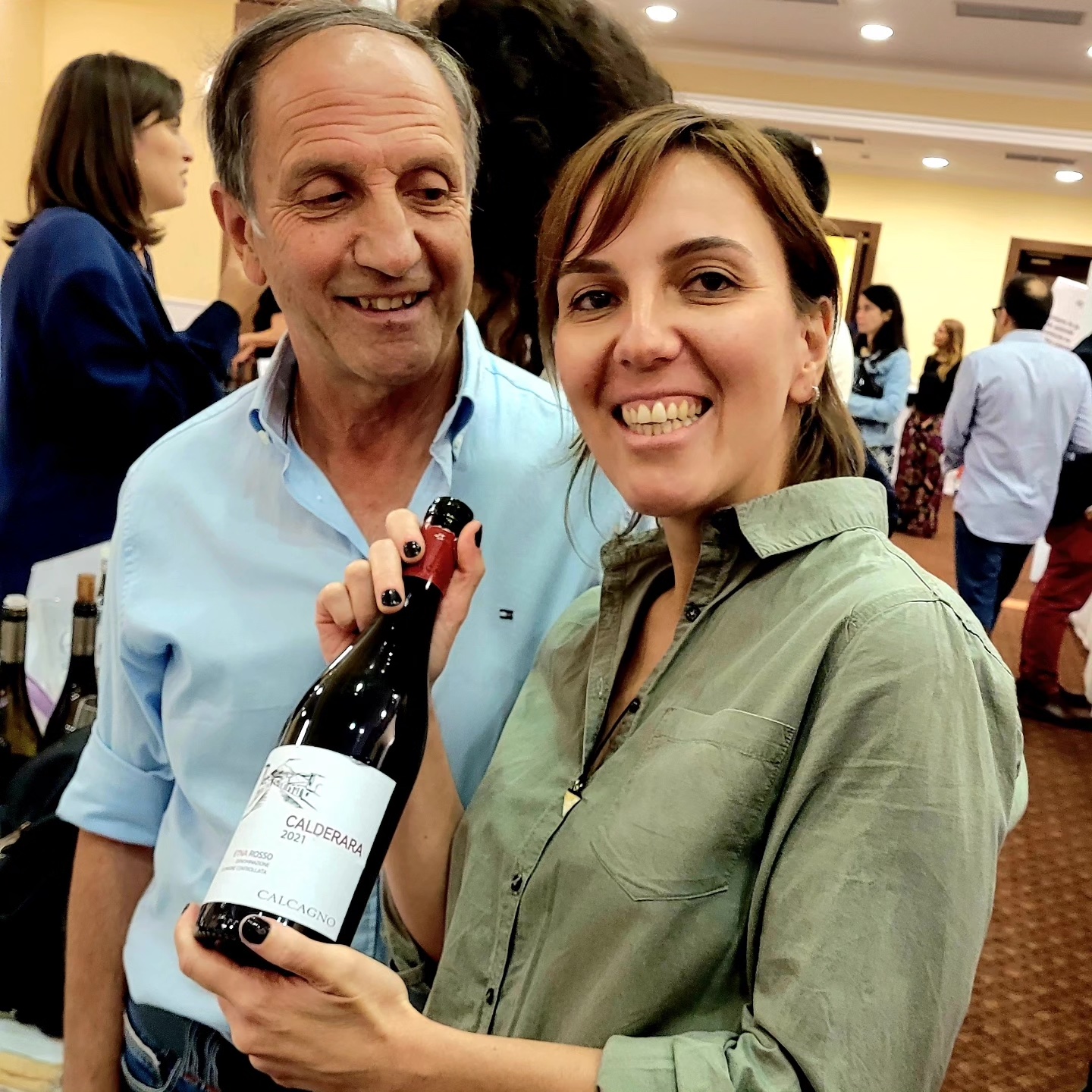
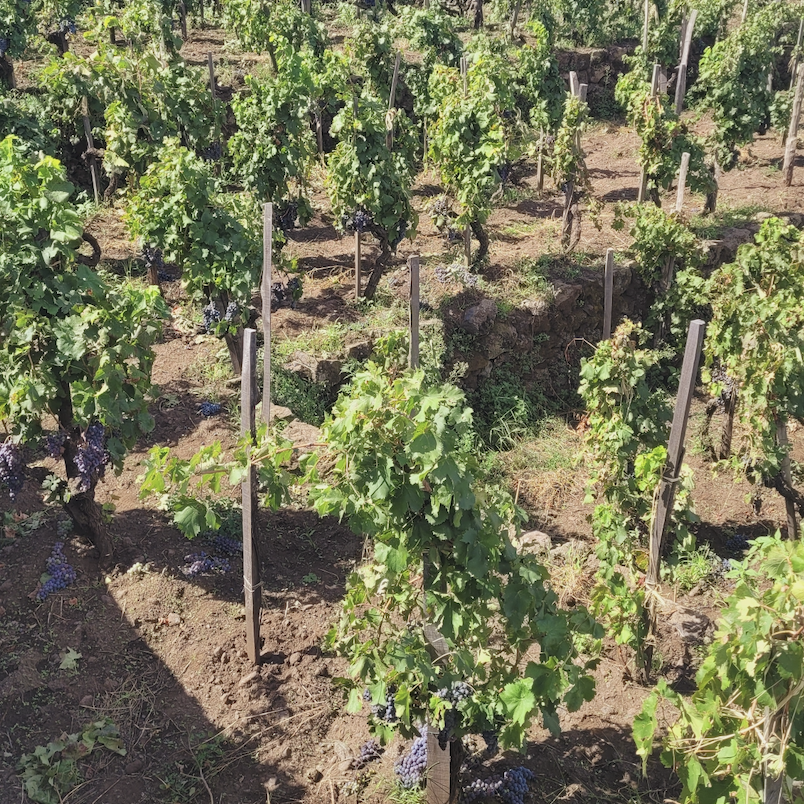
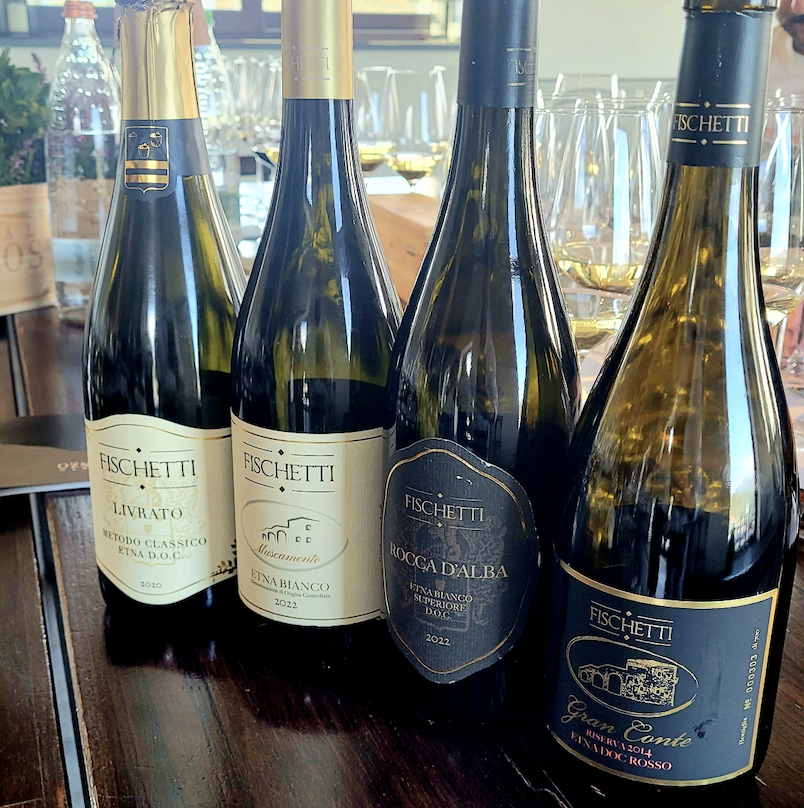

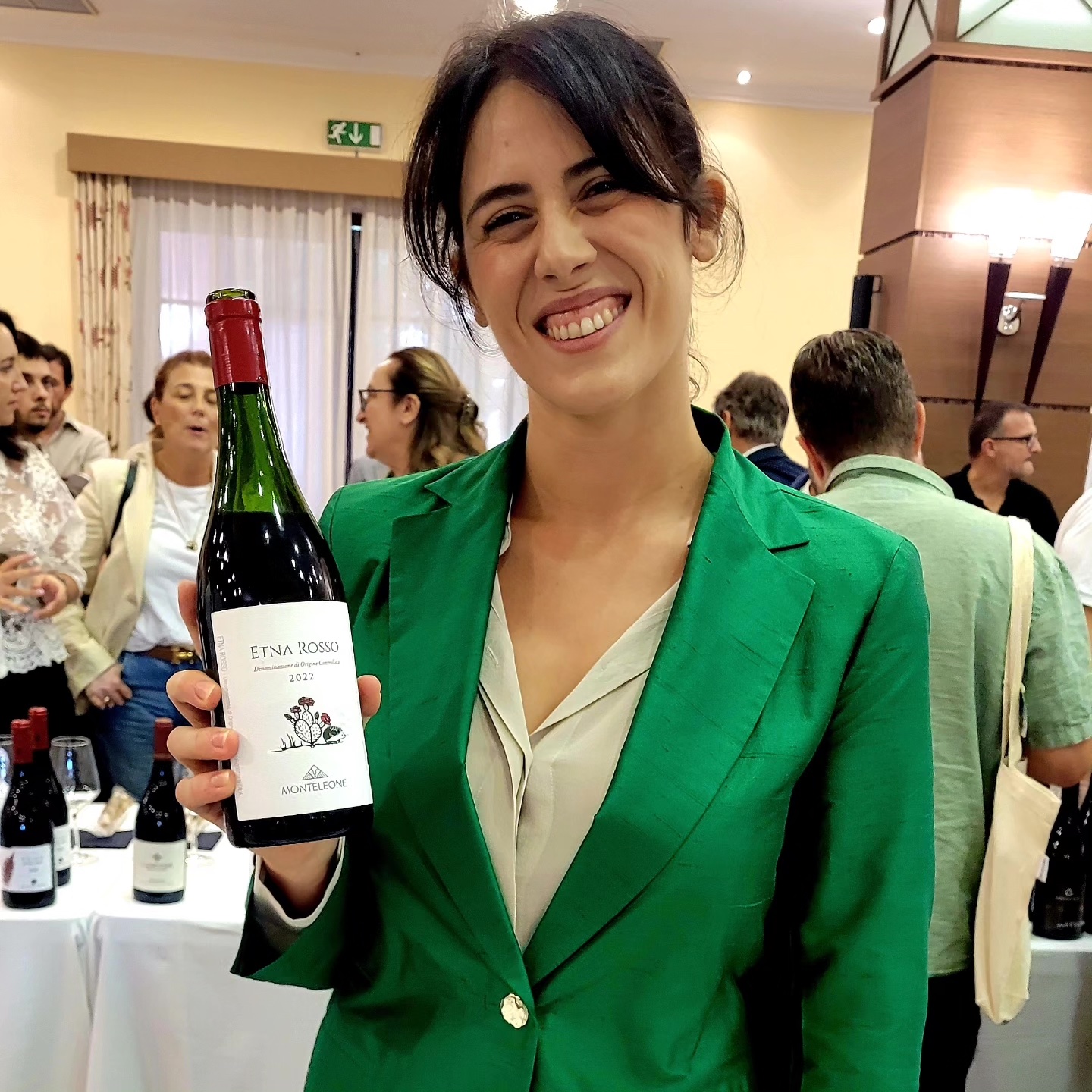

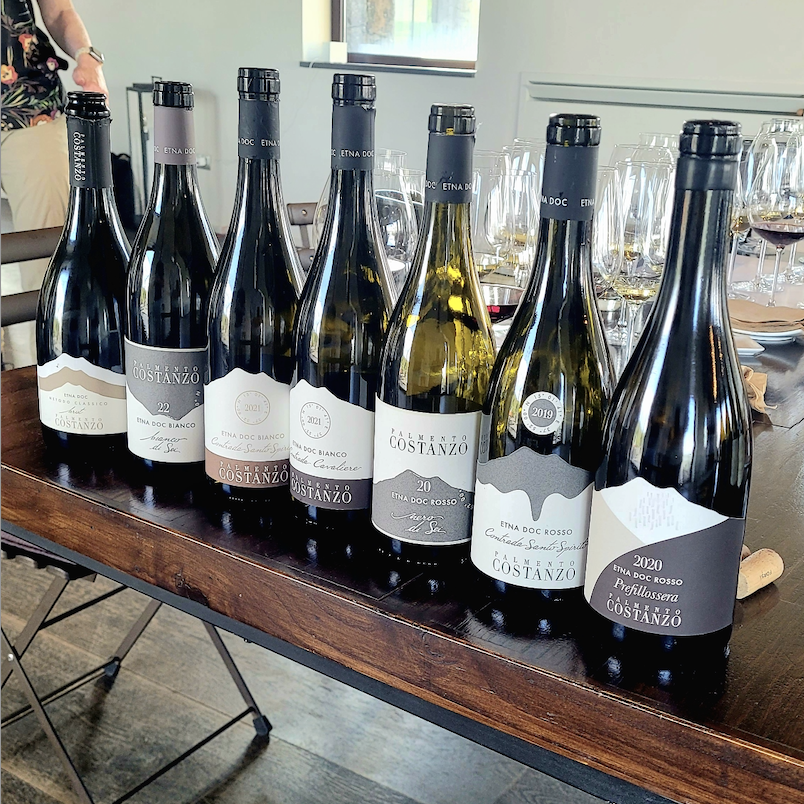

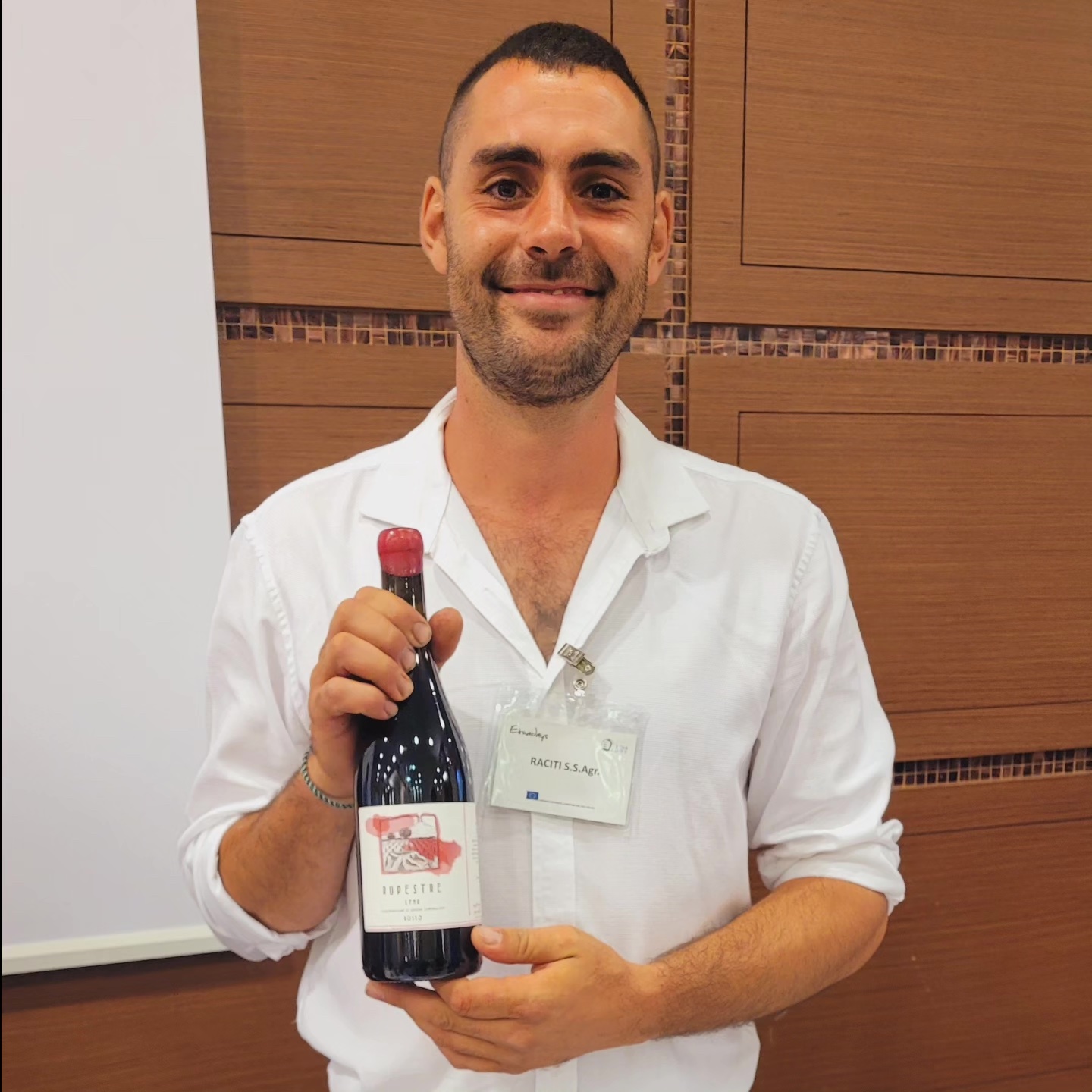
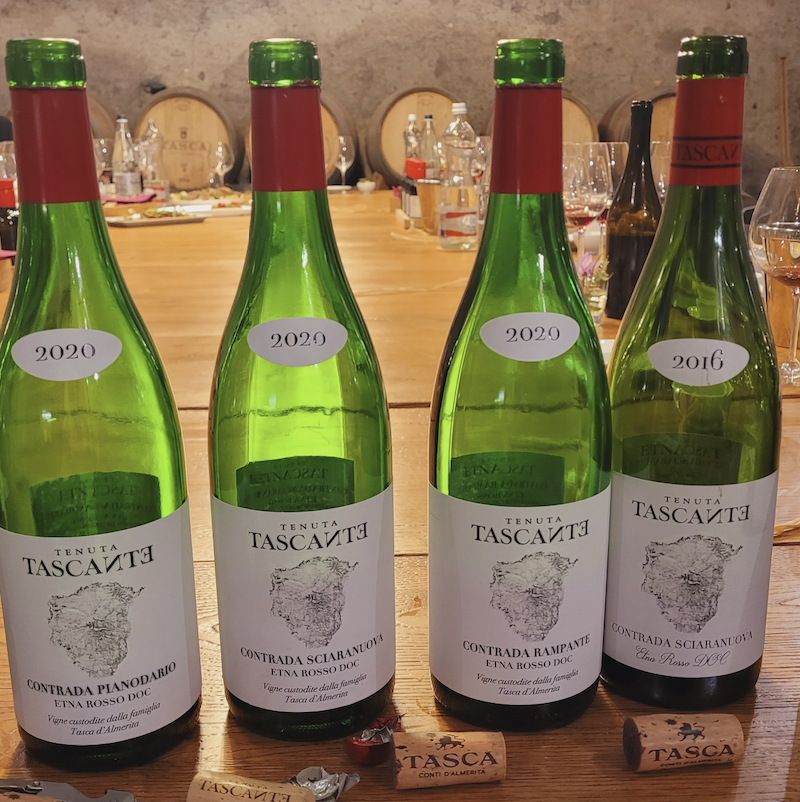
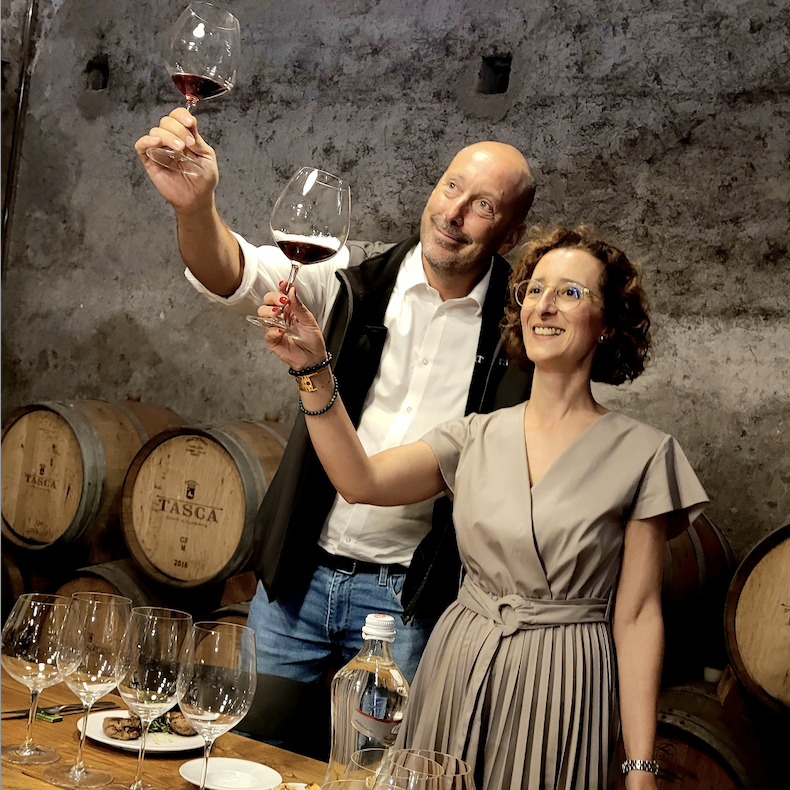
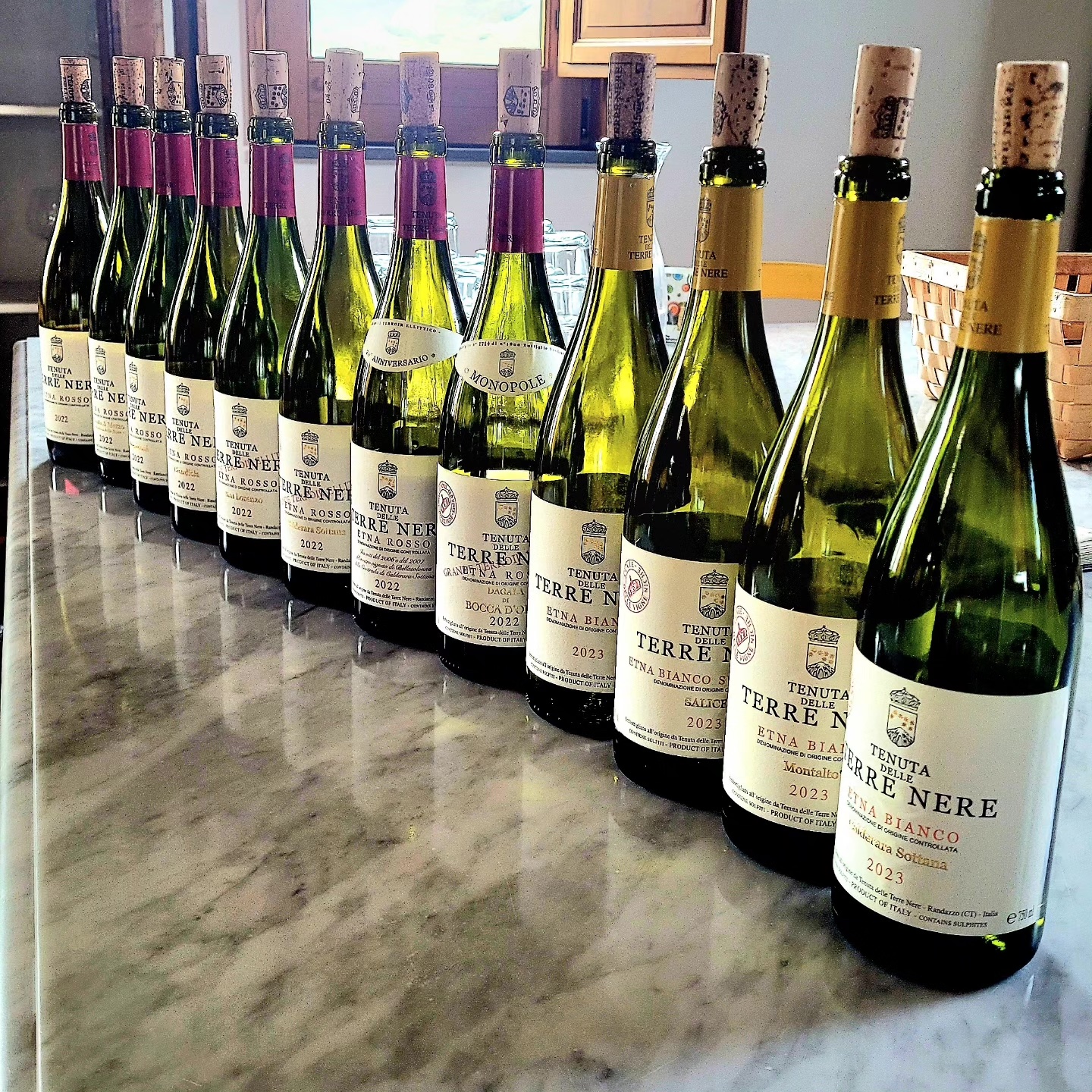
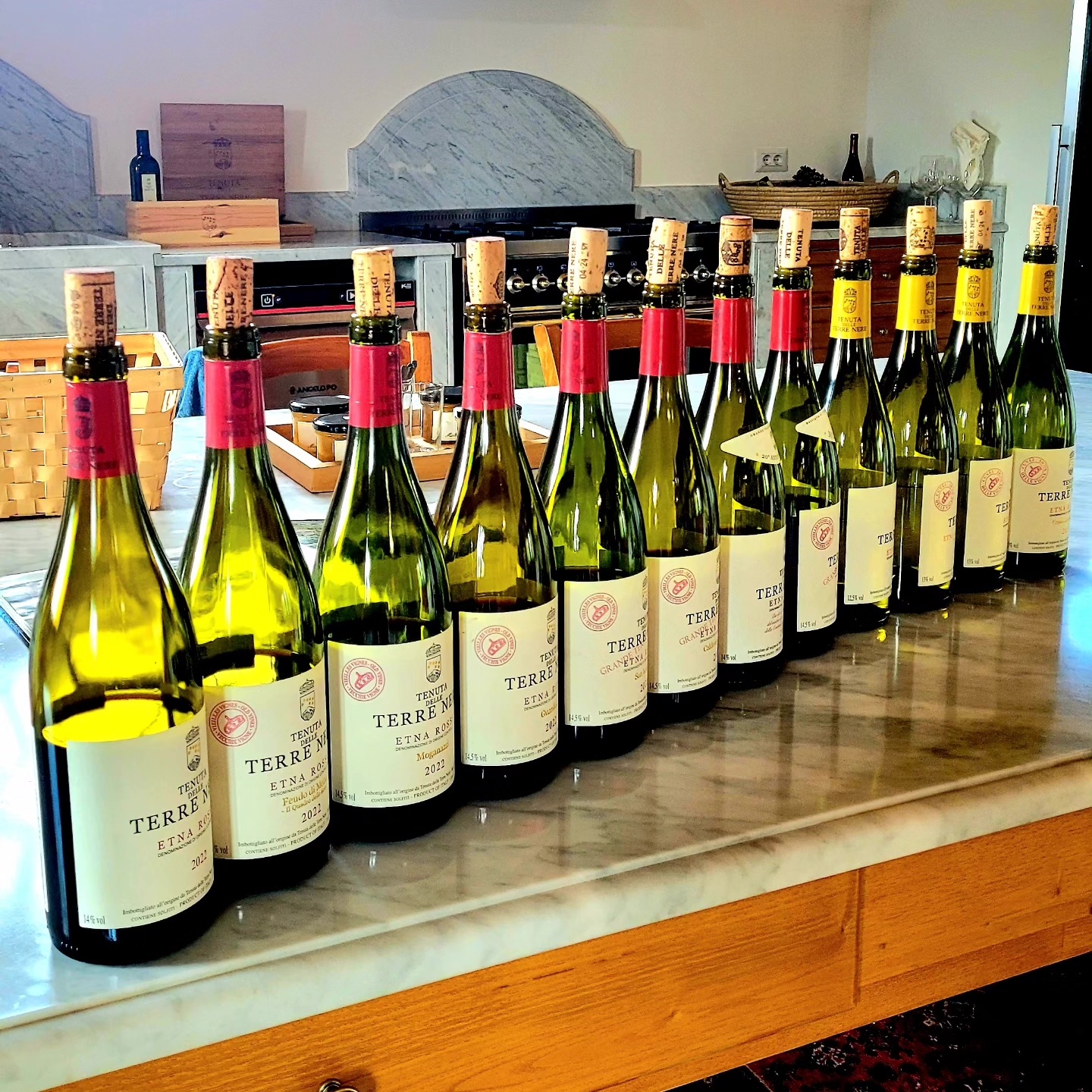
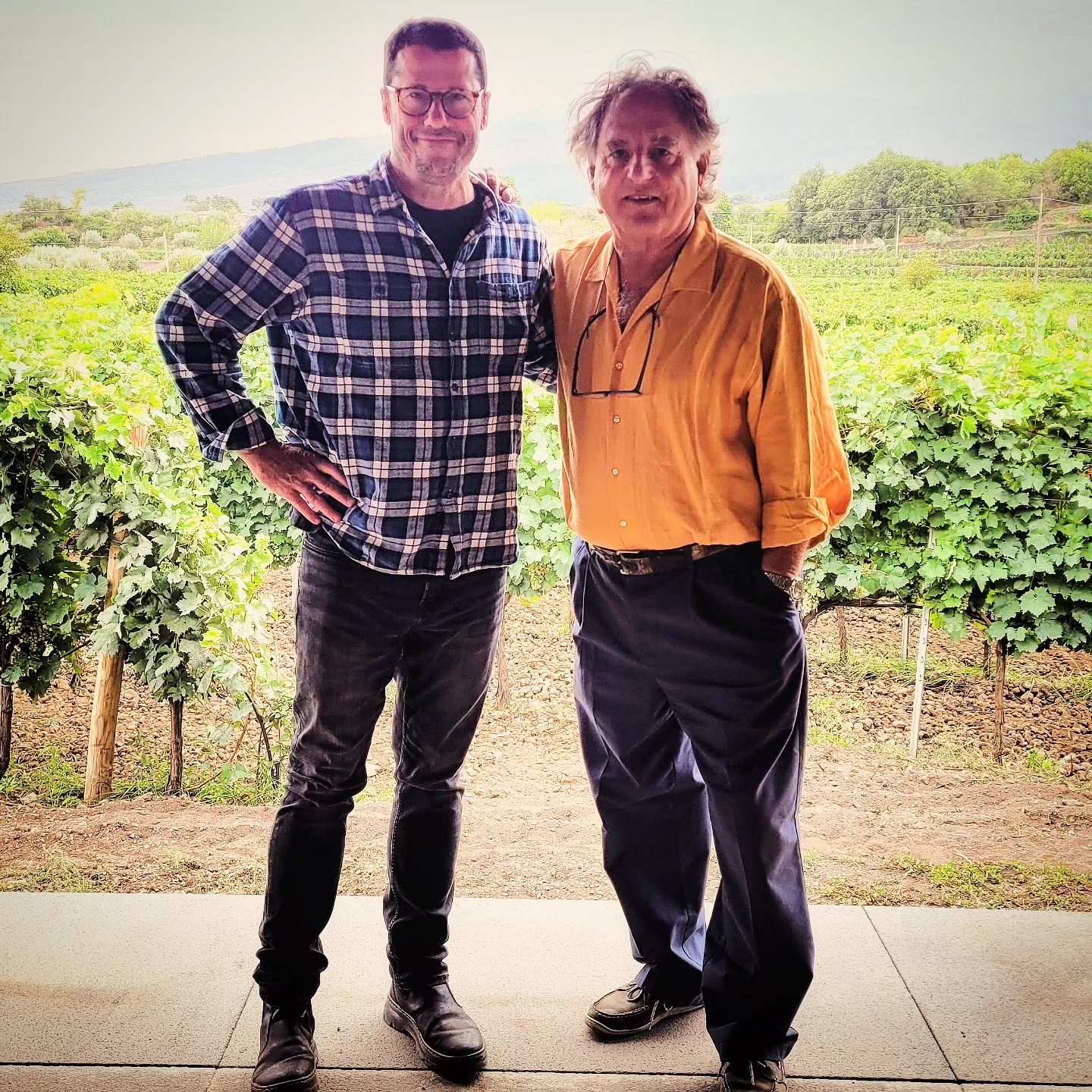
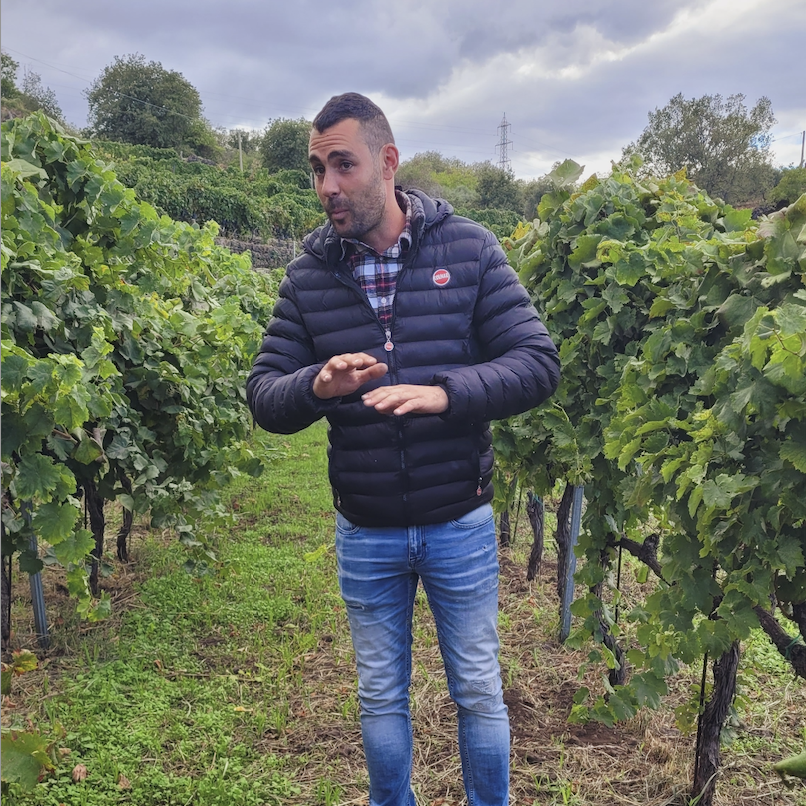
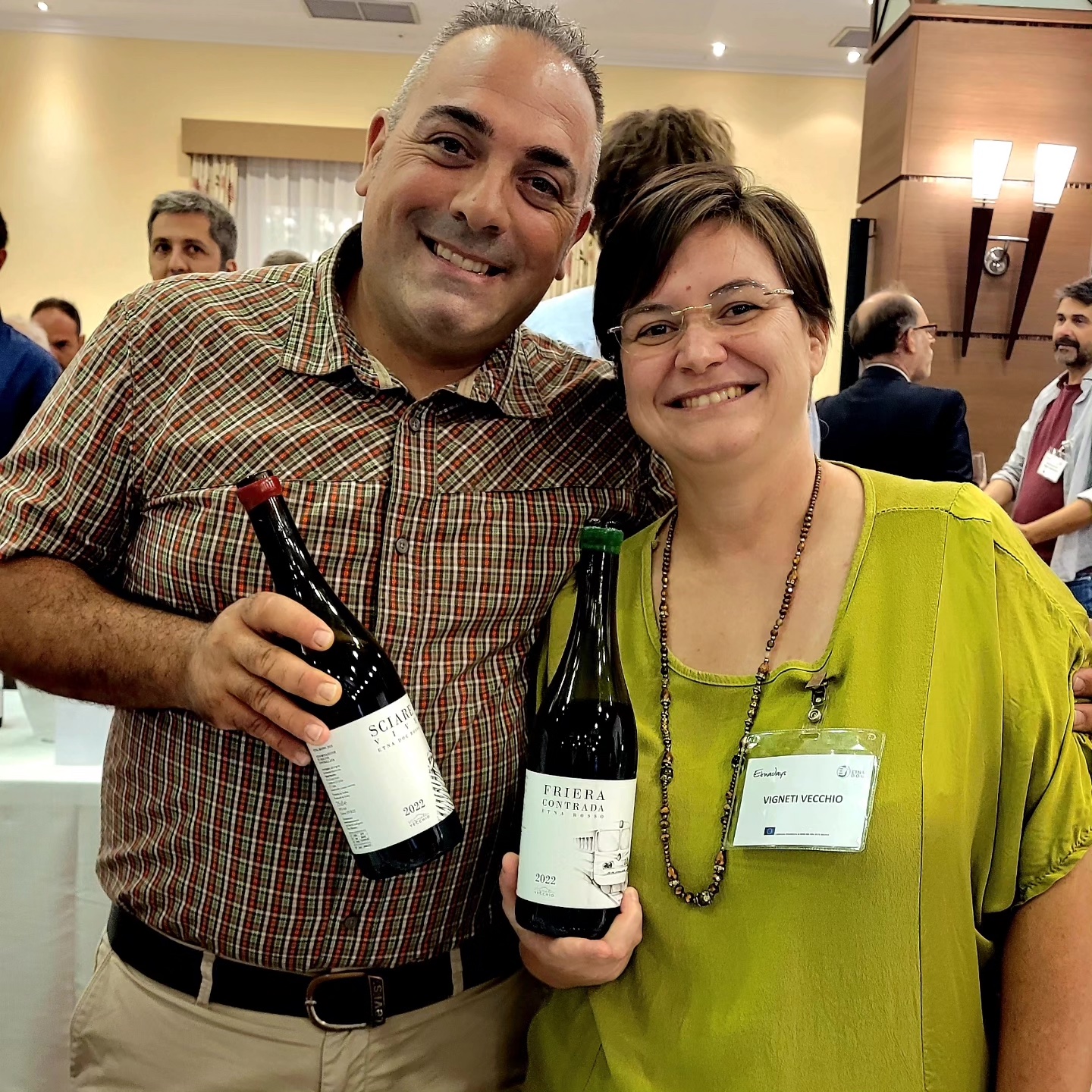
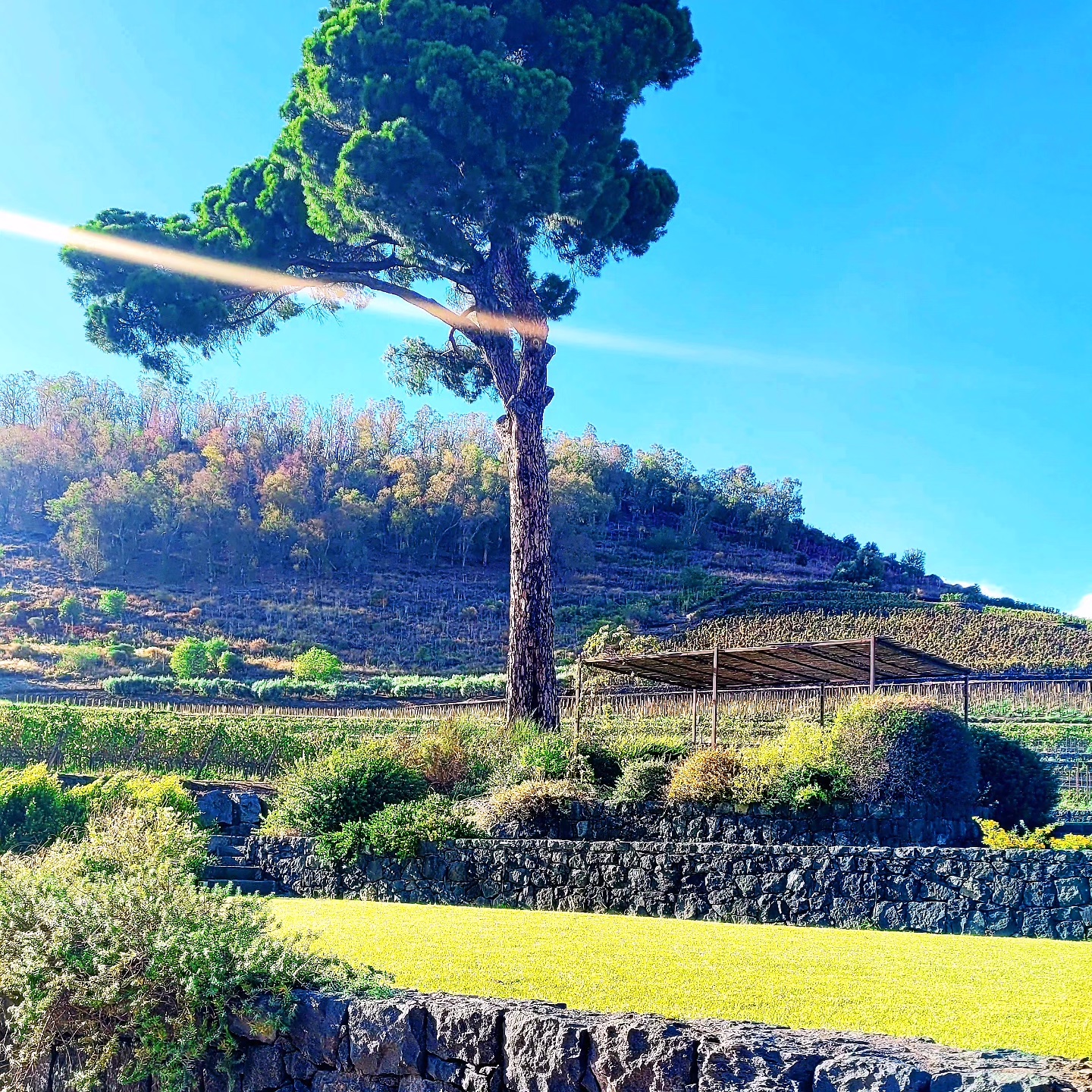
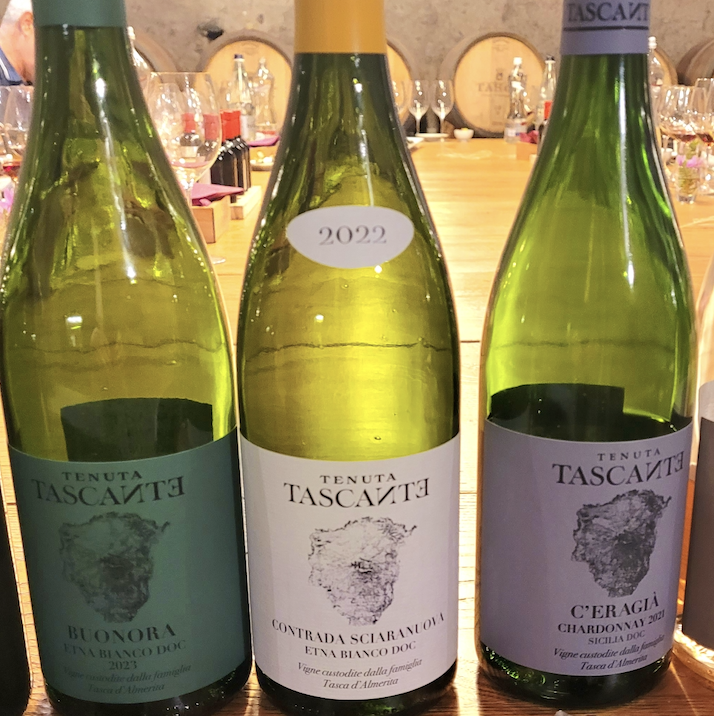




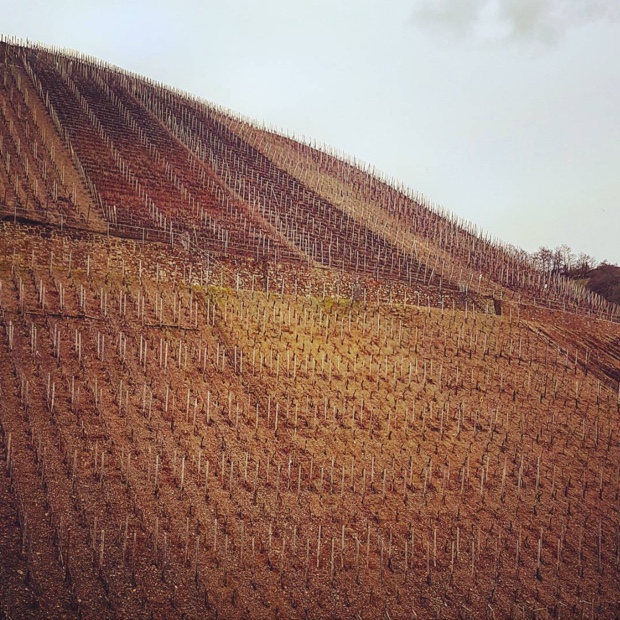
 Godello