De Rigueur Sicilia en Primeur 2025

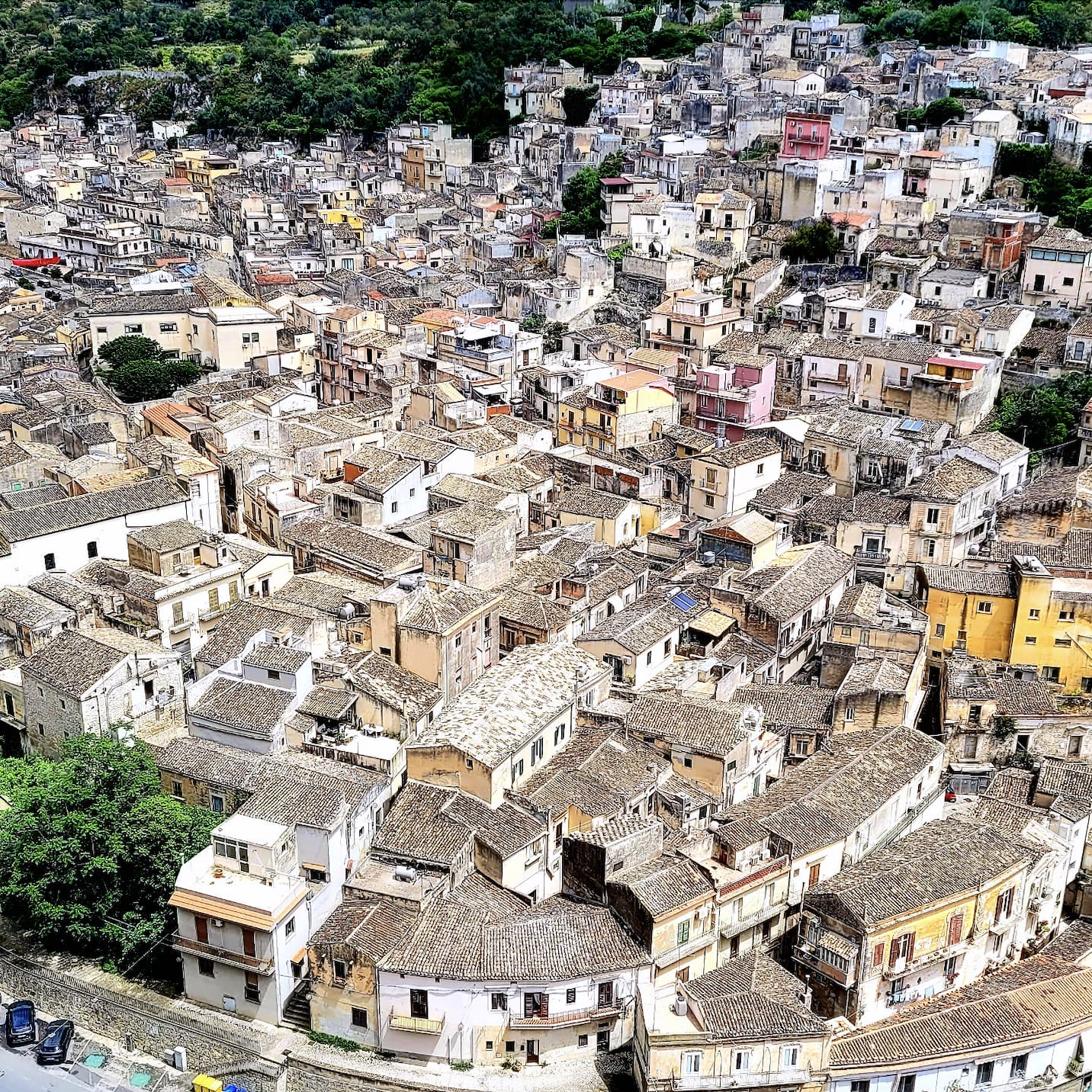
Modica

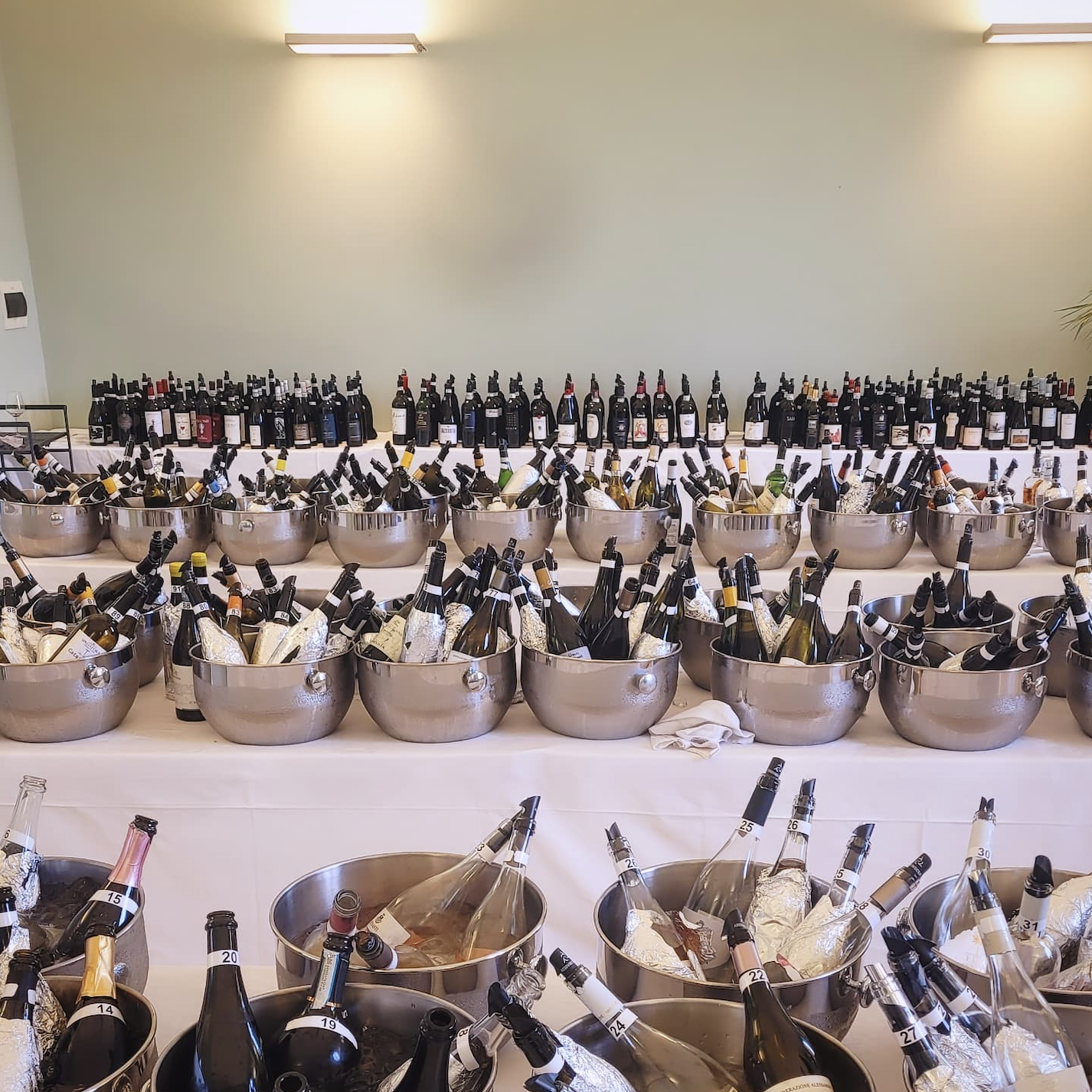
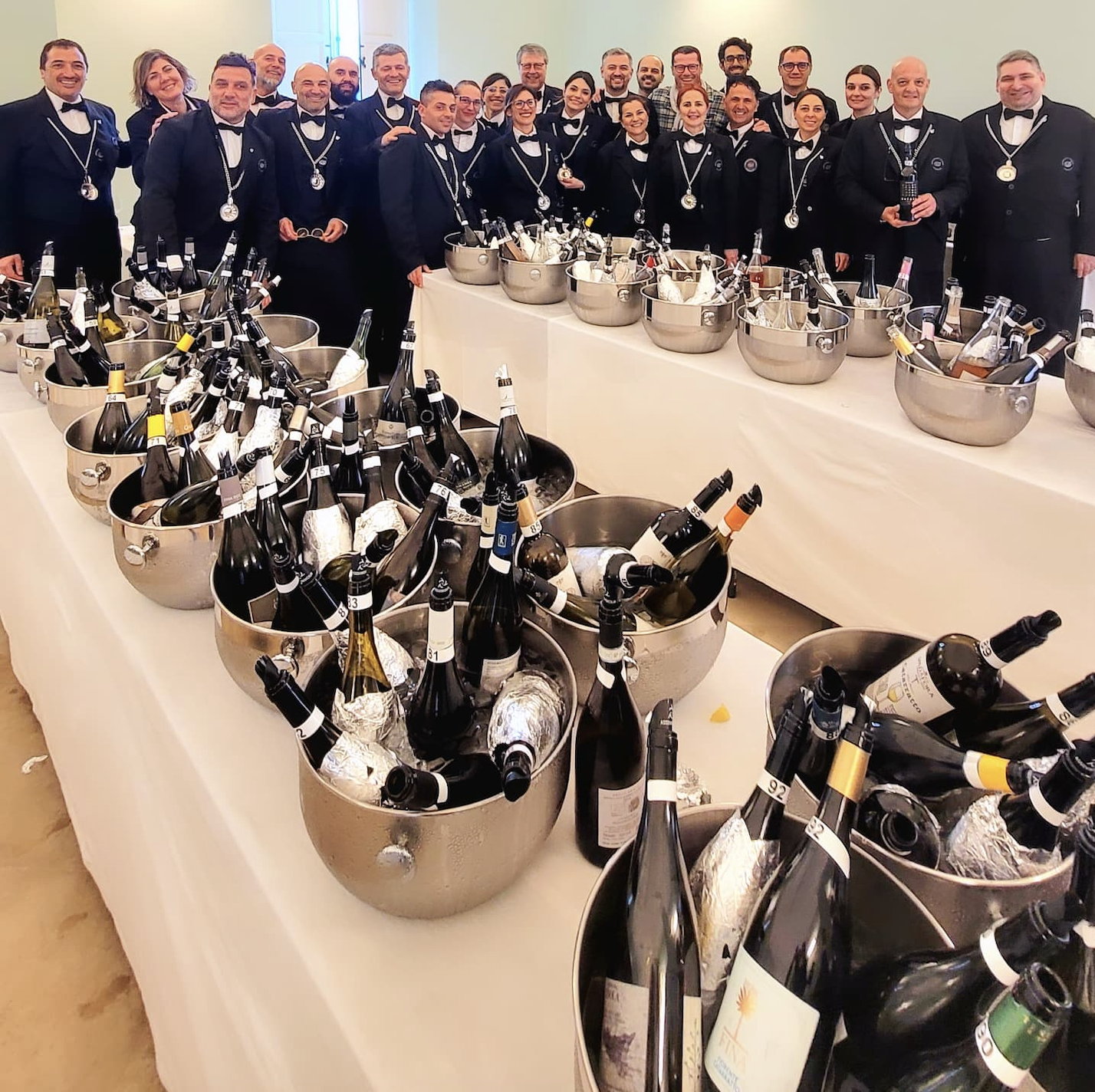
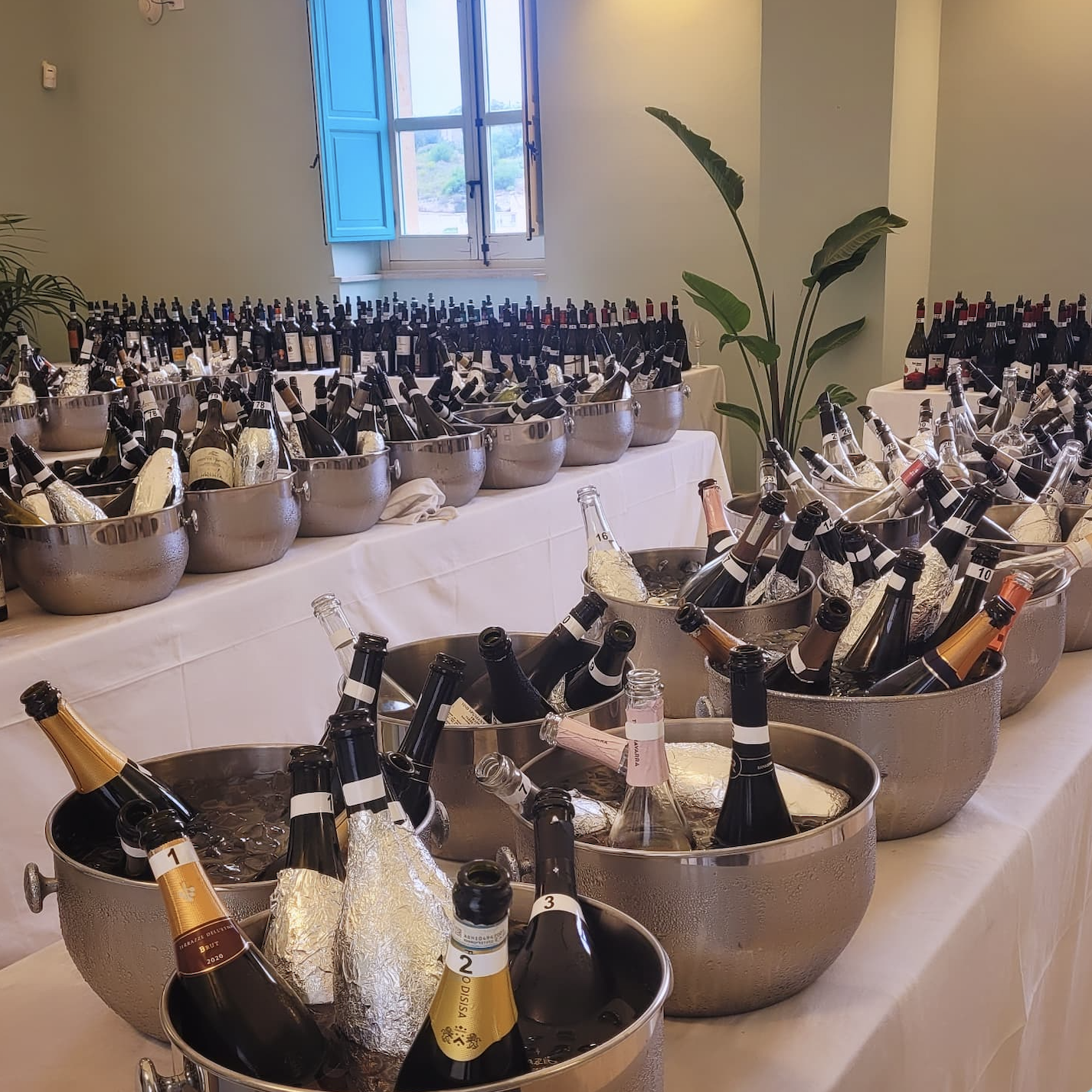
From May 6th through 10th, 2025, the 21st Sicilia en Primeur signalled the annual return of Assovini Sicilia’s proper, correct and yes, also decorous event. Journalists from all over the world arrived by invitation only for a week during which de rigueur was encouraged and for best results, most definitely required. A strict precision needed in adhering to the dictates of weather, cultural fashion, tasting and taking in the final night gala at a luxurious palazzo. The 21st edition’s title “The Culture of Wine in Sicily: A Thousand-year Story that Looks to the Future,” was defined by Mariangela Cambria, President of Assovini Sicilia as “the culture of wine today also translates into a culture of travel.” This is why the abiding delegation of 100 journalists were focused on this essential part of this journey, with their charge to bring the message back home. They came from Italy and many parts of Europe (France, Poland, Sweden, Germany, Norway), also from non-EU countries (Canada, USA, Japan, China, South Korea, Israel, Brazil, and the United Kingdom). Together they engaged in a collective etiquette to celebrate Sicilian wine, food and culture, inclusive of gorging on piping hot finger foods between en primuer tastings at lunch under a hot Modica sun because in Sicily, eating Arancini with your hands is de rigueur.

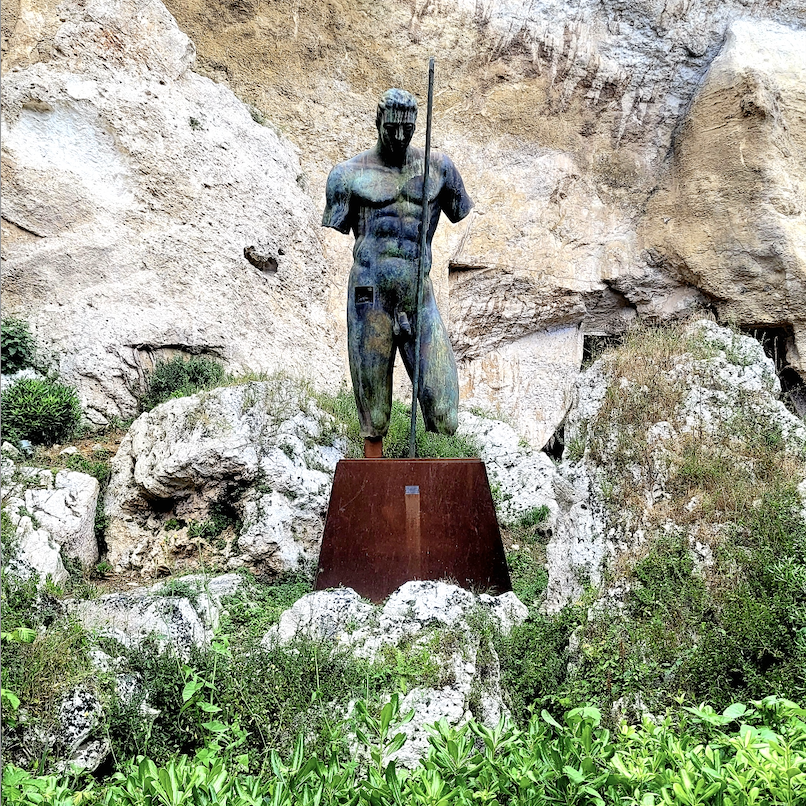
Neapolis Archaeological Park

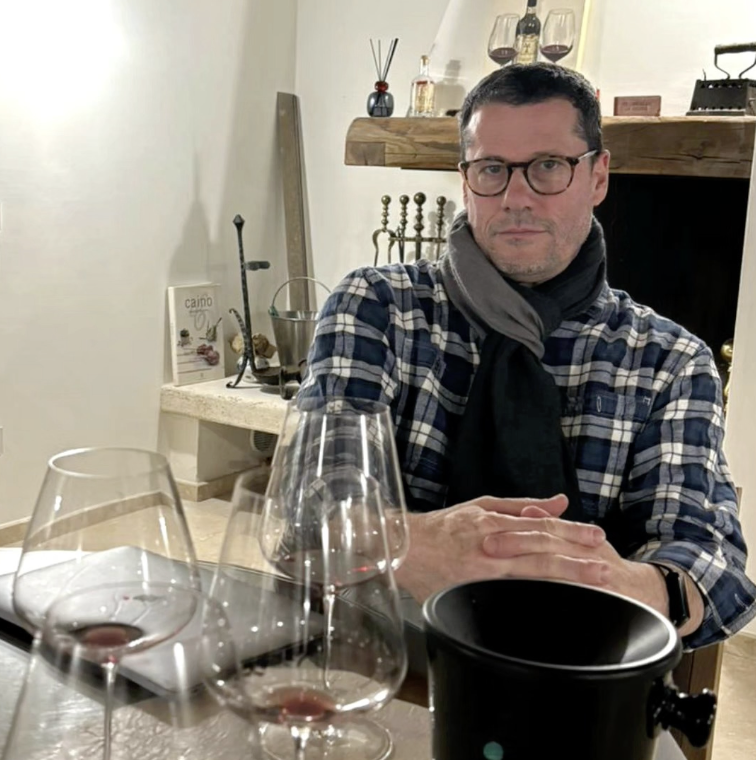
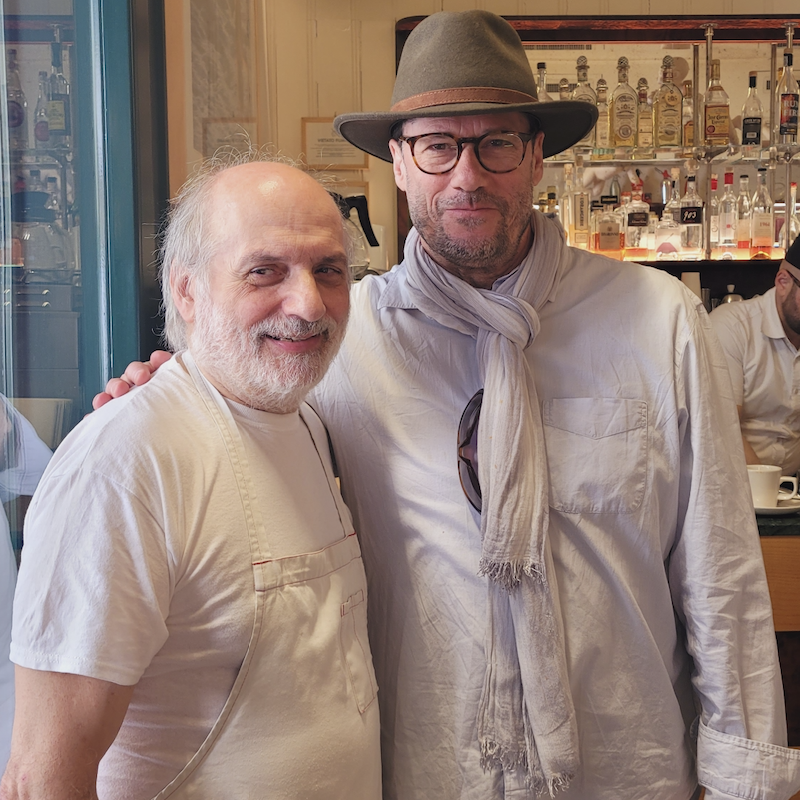
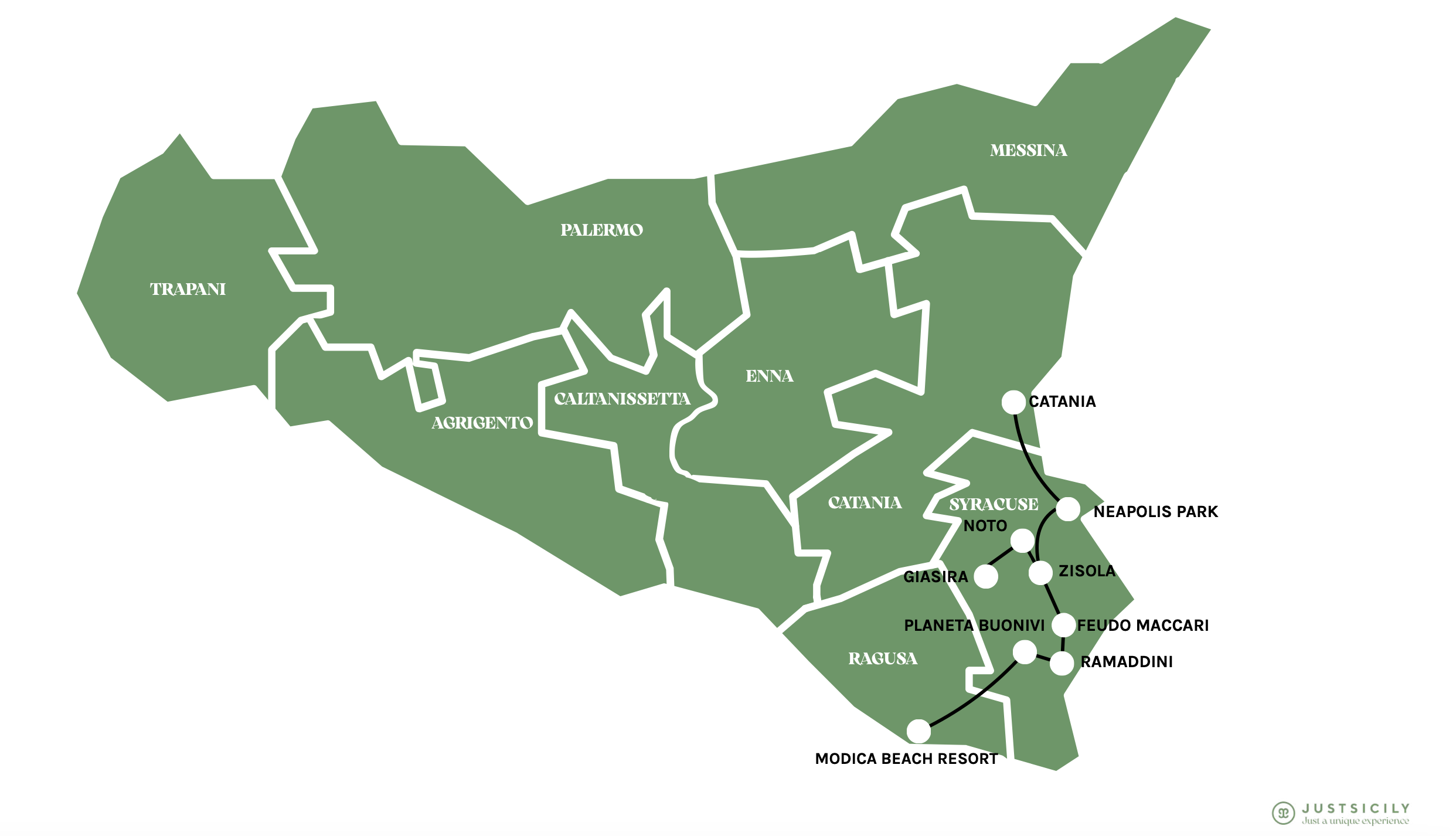
As always the Sicilian Ante-Antreprima sees groups of international journalists making pilgrimages to wineries geographically positioned within a particular quadrant on the largest Mediterranean island. In 2025 Godello joined Zedcomm’s Lucia Boarini and JustSicily’s Marcos del Rio, along with journalists Fernanda Roggero (Sole 24 Ore), Christer Byklum (Mywinesandmore), Giuseppe Lauria (Weinwisser), David Ransom (The Connected Table) and Matthias Stelzig (Weinwelt) for an Enotour around the area of Noto. The group took in the ancient urban ruins of the Neapolis Archaeological Park, the seaside village of Marzamemi, Noto city (Including a caffè and dolce at Corrado Assenza’s Caffè Sicilia) and a stay at the beautifully charming and calming Villa Giulia Hotel. Visits were paid at Zisola, La Giasira, Ramaddini, Feudo Maccari and Planeta. When all was said, tasted, travelled, assessed, satiated and done, the group then joined the rest of the journalists fresh off of their own tours for the two-day Sicilia en Primeur at the Castello dei Conti di Modica.

Godello in Noto

Assovini Sicilia was founded in 1998 by Giacomo Rallo, Diego Planeta and Lucio Tasca and today has 101 member companies producing approximately 900 labels. After a day of technical tasting everyone convened at the Teatro Garibaldi in Modica for more de rigueur talks, including a discussion about “the culture of wine understood as informed and conscious drinking,” led by Dr. Sara Farnetti, Ph.D in Pathophysiology of Metabolism and Nutrition. Master of Wine Andrea Lonardi spoke on the “S factor: The uniqueness of the Sicilian wine continent.” Words from Dario Stefàno, President of the Wine and Oil Tourism Centre (Lumsa University) and Antonello Maruotti, Professor of Statistics (Lumsa University) concerned “The south innovating through events, e-commerce and new hospitality models for wine tourism.” Then finally it was Alessio Planeta, President of the SOStain Sicilia Foundation, speaking about “the sustainable future of Sicilian wine.”

With Corrado Assenza – Caffè Sicilia, Noto

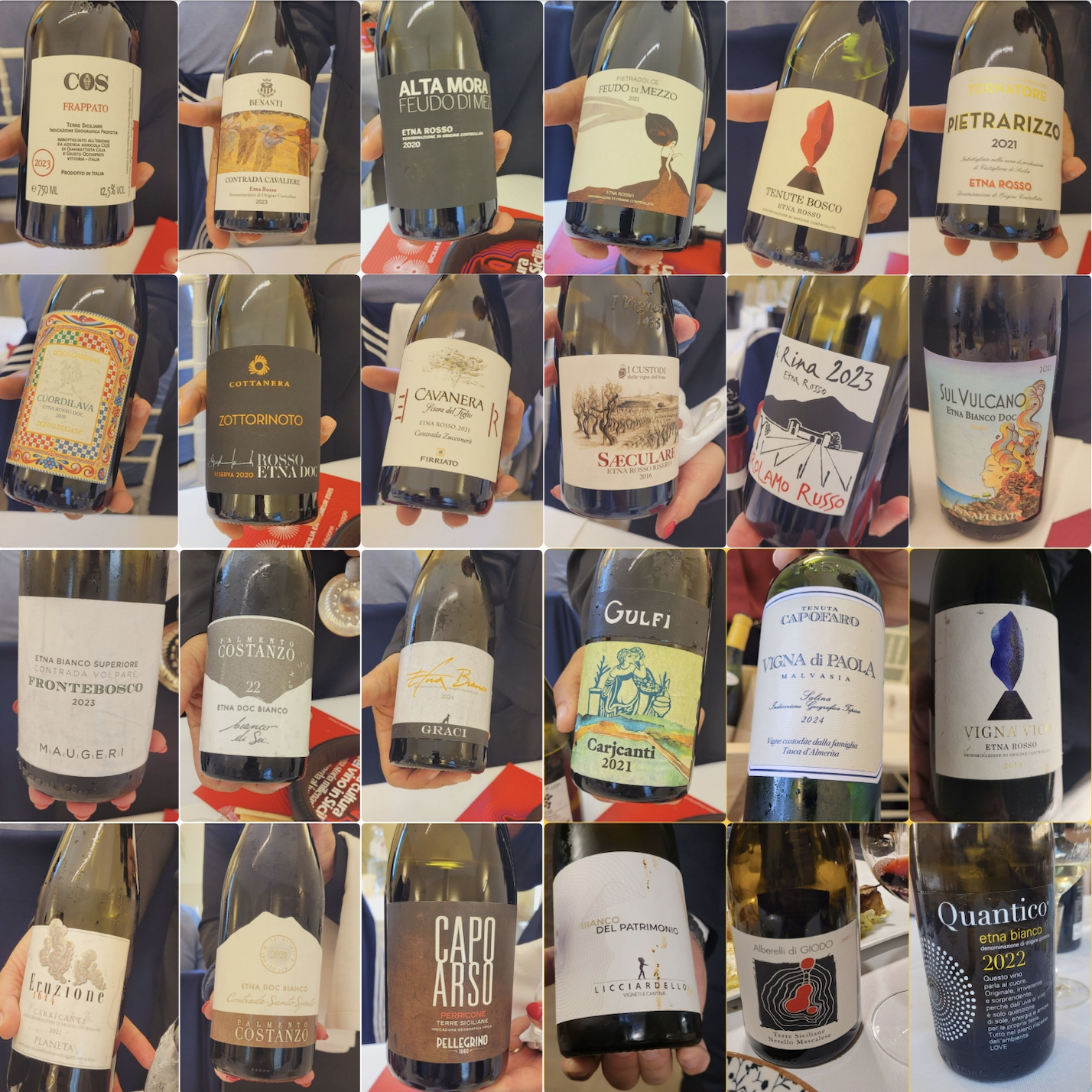
The event concluded on the 10th of May, again at the Castello dei Conti, with tastings of wines from the 57 Assovini Sicilia producers. As always Godello wishes to thank the professional and gracious organization of Zedcomm’s Cecilia Zanasi, Delia Demma, Martina Romeo, Lucia Boarini and Michele Marmino; JustSicily’s Giusi Macchiarella, Giuliana Palazzolo, Giuliana Licata di Baucina, Silvia Mantegna, Marcos del Rio and Federica Matranga; Assovini Sicilia’s Liliana Rosano. These are Godello’s 188 tasting notes from Noto visits at Zisola, La Giasira, Ramaddini, Feudo Maccari and Planeta, along with the wines tasted at Castello dei Conti.

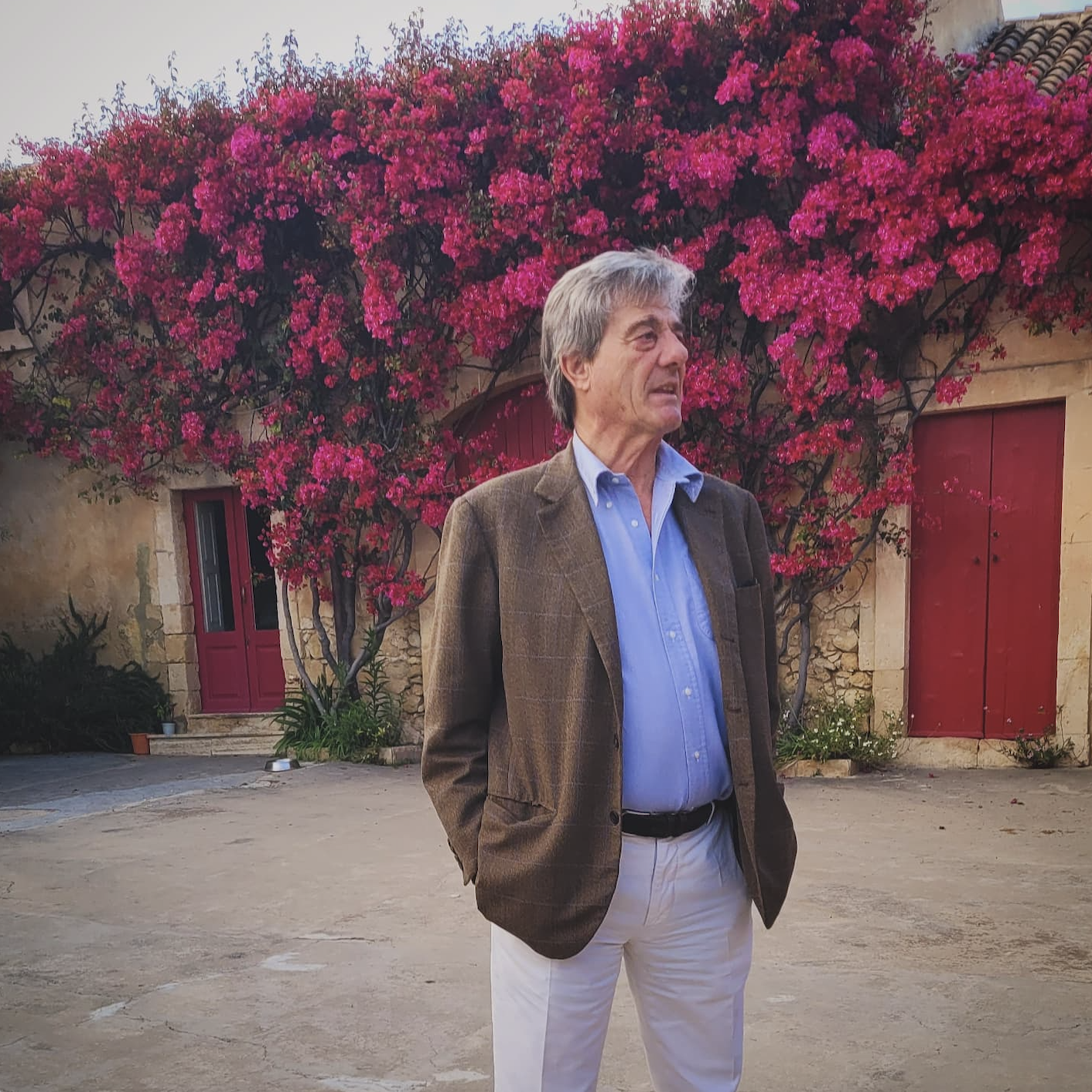
Filippo Mazzei at Zisola

Zisola

Filippo Mazzei and family have spent 20 years managing the biodiversity of Zisola, where lemon, pink grapefruit, clementine and almond trees line the vineyard. These are white soils though in Sicily they do not reflect the sun and raise temperatures, as they do in Tuscany. “This kind of soil can keep humidity for a long time,” explains Mazzei. “Even in July and August we don’t have A/C at Zisola.” The first plantings were 20 hectares of nero d’Avola plus one each of  syrah and petit verdot. Later on grillo and catarratto, all within six to seven kms of the sea and three to Noto. There are now 25 total hectares of vines and the fermentation cellar was built in 2004.

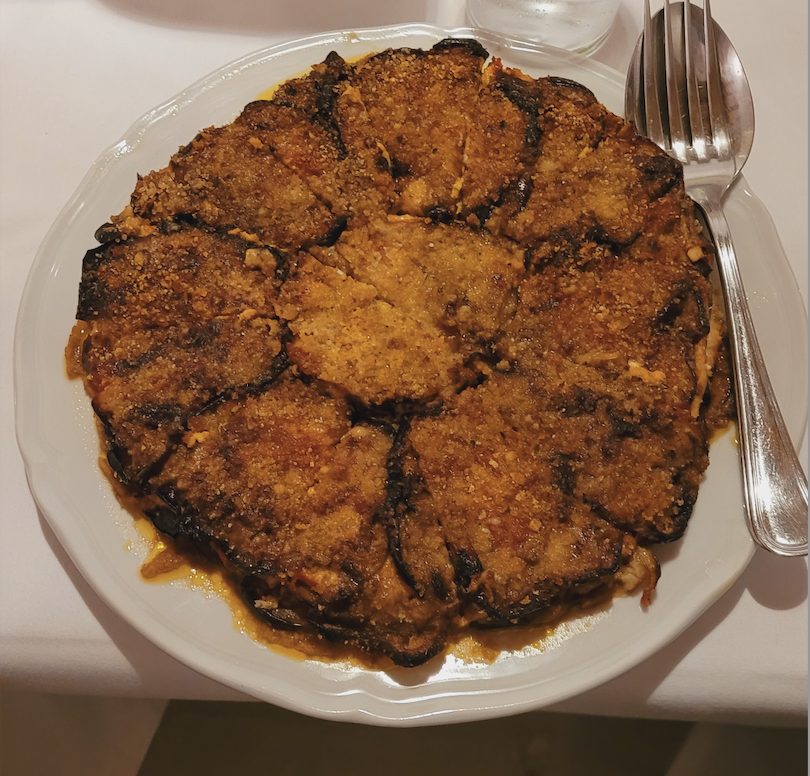
Zisola’s Parmigiana di Pesce Spada

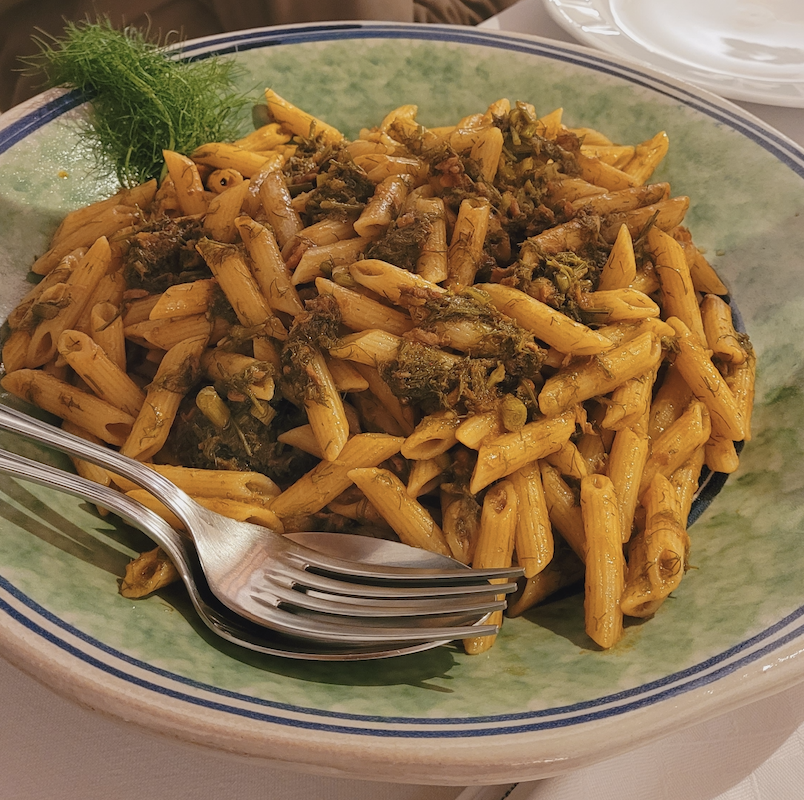
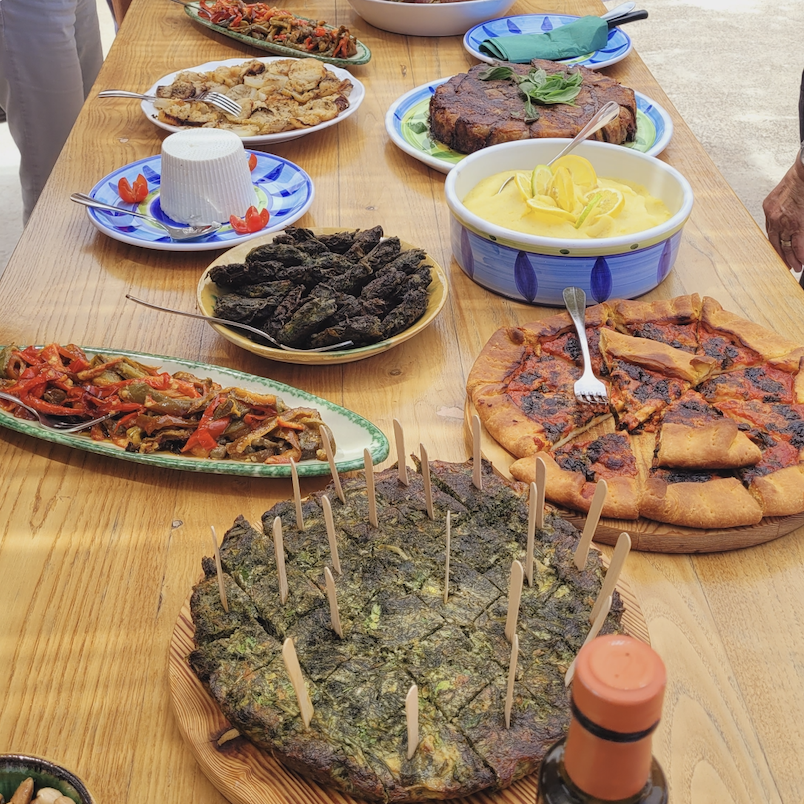
A visit to Zisola will surely include a walk through one of Sicily’s great vineyard blocks followed by a tasting of highest calibre wines. A word of encouragement will say that three dishes might also show up on the table. Parmigiana di Pesce Spada, Penne con Finnochietto and Gelo di Limone. Should you be so lucky, karma would not be a b@%&h. Karma would be calm, neutral, reasonable and generous.

Zisola Azisa Grillo Sicilia DOC 2024

Zisola is not a place where there is a tradition for white wine and there is just one hectare of grillo planted. The name is an extension from Azisa which can translate as “beautiful.” A small percentage is fermented on skins for 36 hours, “to increase body” says Filippo Mazzei. Balances well with the freshness and waxy-aerosol style for a white that screams citrus with a combination of lemon and especially clementine. Surely owing to the plethora of fruit trees growing about the vines. A rarity for Zisola, not only Sicilia and truly a saisfying wine. Drink 2025-2026.   Tasted May 2025

Mazzei Zisola Bianco Contrada Zisola 2023, Terre Siciliane IGT

The most unique of the Zisola wines is this white catarratto made like a red, fermented on skins for three months in “cocciopesto” (as opposed to calling it what we know as amphora), a medium specific to the area. The third vintage for a sku started with the purchase of the vessels in 2021 and each are completely different, a matter of happenstance and not conscious changes or alterations. The 2023 is bloody delicious, suggestively salty, in delivery of an agreed upon “guarantee” of verticality, crazy complexity and something peculiar. Hard to describe and yet also a factor of Alberello (bush) vine training. The grillo is so very clementine but catarratto is more lemon, pink grapefruit and a finishing kiss of almond. Aging should bring about real curious transformations. Drink 2025-2029.   Tasted May 2025

Mazzei Zisola Bianco Contrada Zisola 2022, Terre Siciliane IGT

A glimpse into how catarratto can begin to age and truthfully (yet also technically) nothing has yet happened. A citrus explosion, lemon first and last with great freshness and intensity. Clean and though it may be a new breed of Noto white wine it already shows an ensconced maturity with a precocious character belying its years.  Last tasted May 2025

The second vintage of a 100 percent catarratto from plants that went in back in 2015 on white calcareous soils. Only bush vines and at first made into a blend with grillo. The change was made to do some skin contact and aging in amphora. Really that simple and that is the advantage, no overdoing or distraction in trying to impress. But this does just that, with vibrancy and succulence. Really taut, lemon tight, nearly but not quite piercing. Will change after three years and get honeyed. Reminds of really young Hunter valley sémillon. Top echelon decisions and so bravo Filippo Mazzei and team. Drink 2024-2028.  Tasted May 2024

Zisola Sicilia Noto Rosso DOC 2022

The flagship, calling and business card from 80 percent of Zisiola’s 25 planted hectares, a nero d’avola made in the freshest of Sicilian styles. Clocks in at 12.5 percent, picked early (September 8th) for brightness and well-captured high(ish) acidity. You can feel a bit of wood (from one-third new) and there is no doubt that 20 years into this Mazzei tenure what now matters has been figured out to make nero in the way it should be made. Climbs to the current peak and while better wines are sure to come, this 2022 hits the proverbial and varietal nail on the head.  Last tasted May 2025

Zisola is a project for Filippo Mazzei that began with a 700 km drive around Sicily accompanied by Diego and Alessio Planeta. Noto was chosen because of the biodiversity of the flora, to Filippo not unlike Tuscany. He also fell in love with the old Baroque town and could see a comparison between nero d’avola and sangiovese. “The decision was made based on a feeling.” The 2022 is so much fresher than the nero of 15 years ago, not to mention the balance accrued by way of alberello trained vines. Open up the dictionary and here it is. Drink 2024-2027.  Tasted May 2024

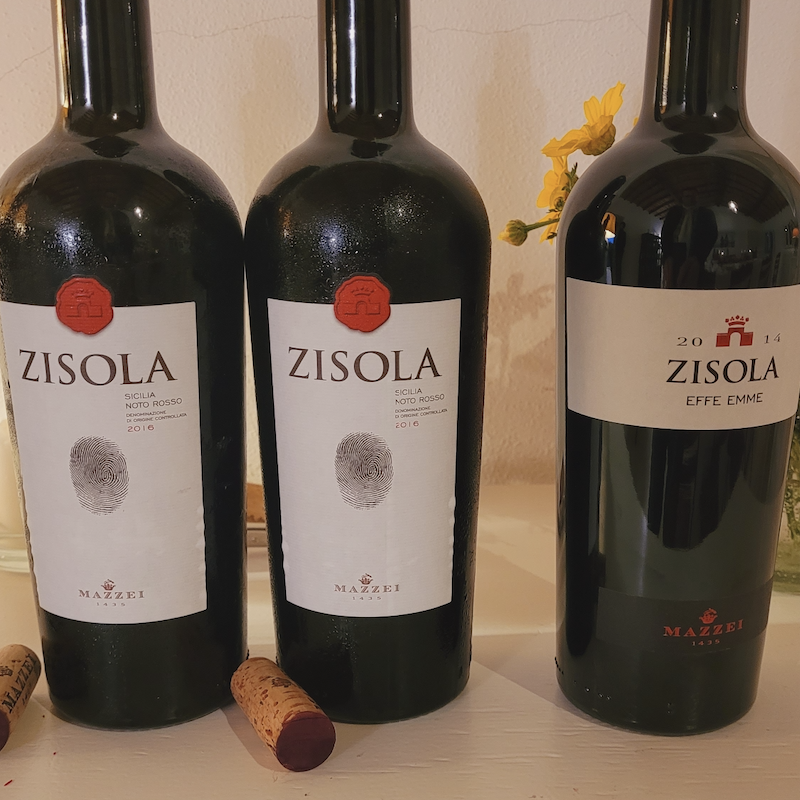
Mazzei Zisola Sicilia DOC Noto Rosso 2016

Seven years later and keep in mind that Zisola is the nero d’Avola made in the largest quantity and not the Rosso destined for extended aging. But in can and 2016 is a perfect example of potential. The lustre and energy are waning though there is little secondary character, just now softening with amiable pleasantries on offer.  Last tasted May 2025

Tasted with Filippo Mazzei in Palermo, Noto Rosso is nero d’avola from the Cantina in Sicily owned and operated by the Castellina in Chianti estate that produces Fonterutoli. A stainless ferment is followed by 50 per cent aging in stainless and 50 in 2nd and 3rd passage oak barrels, It’s a perfectly rich and plummy nero with great red liquorice tang and a distinction to celebrate pure, honest commerce. Very nero, very Noto. Drink 2018-2021.  Tasted May 2018

Zisola’s Penne con Finnochietto

Zisola Effe Emme Petit Verdot Sicilia DOC 2021

Effe Emme is varietal petit verdot from just one hectare planted, the album rock radio red of Zisola and monogram for Filippo Mazzei. He might prefer to see this PV stitched as if by tailored cloth but the spicy aromas, exotic bouquet and volatility suggested frankly indicate something more progressively oriented. The wood is generously, suggestively and importunely employed to exaggerate notes for extended play. Requires some further aging to settle the barrel and finish the score.  Last tasted May 2025

Varietal petit verdot planted in 2004, only 1.5 hectares, just about at the very beginning of Zisola. Incredibly chalky to say that it really speaks for the calcaire but time has come to effect changed so that the vines have come into balance. As petit verdot Effe Emme is not as dark and concentrated as it once was. Really showing its colours, what it is, a child of limestone soils. “Effe Emme,” F.M., long-play radio, well-spoken, one who tells things as they are, Filippo Mazzei. Drink 2024-2027.   Tasted May 2024

Zisola Effe Emme Petit Verdot Sicilia DOC 2014

Second look ten-plus years forward for petit verdot that would have come off of not yet 10 year-old vines at Zisola. Showing most of its age, a smoky varietal red with truffle and a held reserve of concentration and persistent local Balsamico. Violet aromas as well, they are the beauty of perfume while the wine drifts into liquid chalkiness. On the decline but interest still holds and will do so for another 12-18 months.  Last tasted May 2025

A 100 per cent petit verdot, 4,000 bottles made, big structure and at 15 per cent a massive wine. Needed to be held back an extra year and still needs two more years in bottle to soften, release and re-integrate. Big boned, spicy, wood massive and intense. Hematic with welling black fruit. Drink 2020-2027.  Tasted May 2018

Zisola Doppiozeta Sicilia Noto Rosso DOC 2021

Doppiozeta is at least twice as concentrated and focused as compared to the nero d’Avola “classico,” Cru in origin on the more calcareous soils of the estate, picked just two days after the bulk of the nero and yet acidity is not insignificantly higher. Owing to the limestone but also 50m higher in elevation which surely brings just that extra amount of wind. The style of Doppiozeta is ever evolving and this 2021 marks a height of freshness and drinkability, but with a seriousness and focus to share space with top quality nerello mascalese, sangiovese and nebbiolo. Would give the ’21 another year to realize its true potential.  Last tasted May 2025

Yes another fine Doppiozeta nero d’avola from the Mazzei family and their Sicilian estate. Crispy exterior, chewy interior, spice and herbs as accents, salt and pepper seasoning, chalky tannic, reasoned and knowably fine. Consistently well raised, made and delivered, signed and sealed as a really good wine. The freshness is always there and the acidity so ideally suited to grape and style. Drink 2025-2030.  Tasted May 2024

Zisola Doppiozeta Sicilia Noto Rosso DOC 2017

Many hot vintages have powered through Italy as of late, including 2017 and yet Sicily was not that way, not in Noto, not anywhere. And so there is a fine and persistent freshness to Doppiozeta for ’17. A seductive sweetness from a time when the nero d’Avola was made in a more extracted, concentrated and barrel-aged way. Nevertheless in 2025 the wine is showing with distinction. Drink 2025-2027.  Tasted May 2025

Mazzei Zisola Achilles 2021, Terre Siciliane IGP

Just one hectare of syrah as part of the original plantings at Zisola for one of three ultra distinct varietal reds. The most hematic meets sanguine is in a way the closest cousin to all that famous Mazzei sangiovese made way up yonder in Tuscany. In other words the syrah here seems to take on a mineral-elemental feel as notable as any red wine in Sicily. Deeply serious, concentrated and in 2021 also structured, namely because of the season. Also uniquely southeastern Sicilian and yes a few years having passed in bottle has resulted in some movement, though barrel and secondary notes are both just barely detectable. Drink 2026-2031.  Tasted May 2025

La Giasira

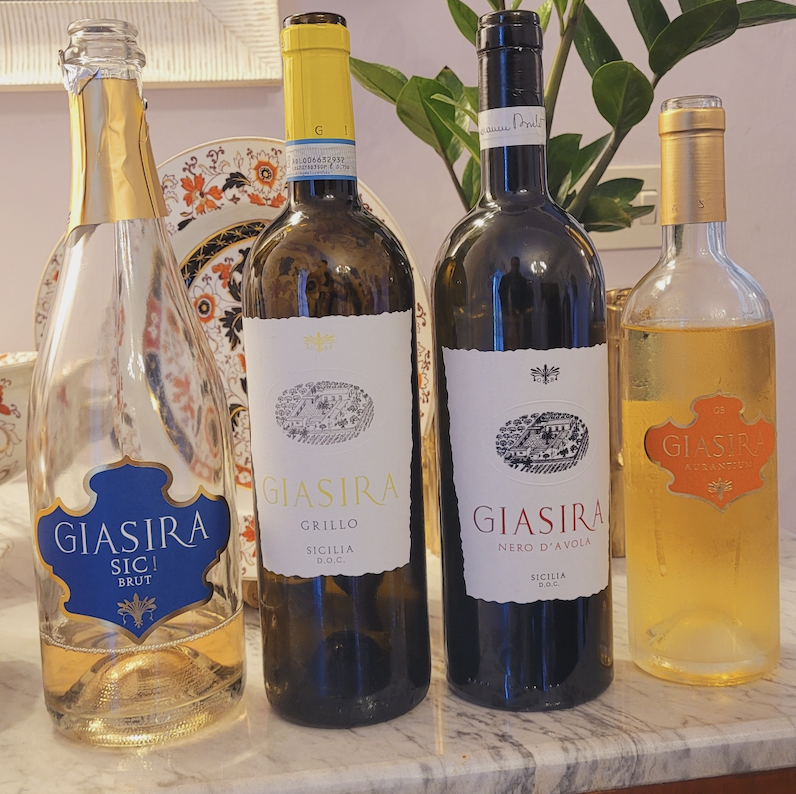
La Giasira is Piedmontese Giovanni Boroli and his wife Veneta Isabella dating back to to 2004. The estate is 130 hectares with 13.5 under vines, of grillo, moscato, catarratto, nero d’Avola and nerello mascalese. They produce 60,000-70,000 bottles annually from vines grwoing in 10-30 cm of soil atop pure limestone bedrock. Tilling happens maybe once a year on this site at 250m above the Telaro Valley (within the Noto Valley), 20 km to both Noto and Modica, equidistant between the Ionian Sea and Sicilian Channel.

La Giasira Bianco 2024, Terre Siciliane IGT

A blend of chardonnay, moscato bianco and catarratto, picked earlier than just about ever, begun in the last week of July. From serious calcareous soils for just 5,000 bottles of Noto area clarity fermented and aged in just Inox tank. Aromatic, all in citrus and freshness captured despite or maybe thanks to the early pick. Bit of almond both floral and raw, the scents of roses and blossoms from clean start to salty finish. Drink 2025-2027.  Tasted May 2025

La Giasira Grillo Sicilia DOC 2023

The grillo stands apart and alone in style when tasted side by each with the catarratto and bianco blend. Here the focus is all fruit, lemon and stone fruit, ripe and fleshy, juices running for a very full and refreshing expression. A capture of southeastern Sicilian sunshine, many heat days accumulating in this juicy grillo. Pour it cold and drink it long. Drink 2025-2027.  Tasted May 2025

La Giasira Keration 2023, Terre Siciliane IGT

Varietal catarratto made with specifically catarratto lucido, just 8.000 bottles (of 60,000-ish total) from the thin soils above limestone bedrock at Giasara. Just stainless steel for six months and three in bottle ahead of release. Noticeably different to the Bianco blend, a decrease in floral citrus and jasmine, an increase in fruit (including the smell of spun sugar) and accompanying viscosity. Immediate level of gratification from a wine with luxe mouthfeel. Drink 2025-2028.  Tasted May 2025

La Giasira Keration 2022, Terre Siciliane IGT

Tasted side by side with the 2023 and the consistency is more than obvious, namely by mouthfeel and viscous feel. A citrus yet reminding of bergamot in curd or granita form. Really persistent white, lingering for a minute with a moment of almond at the finish. More sapid than salty, even more so than the still truly fresh 2023. Drink 2025-2027.  Tasted May 2025

La Giasira Rosato 2024, Terre Siciliane IGT

Made with 100 percent nerello mascalese from the early pick of vines planted back in 2006. If it smells and tastes like mascalese than it must be mascalese, of roses and tart red berries, here salted and finishing at rhubarb. Rosé that quenches by doing what it should for a simple and specific purpose. Ends on a sapid botanical note. Drink 2025-2027.  Tasted May 2025

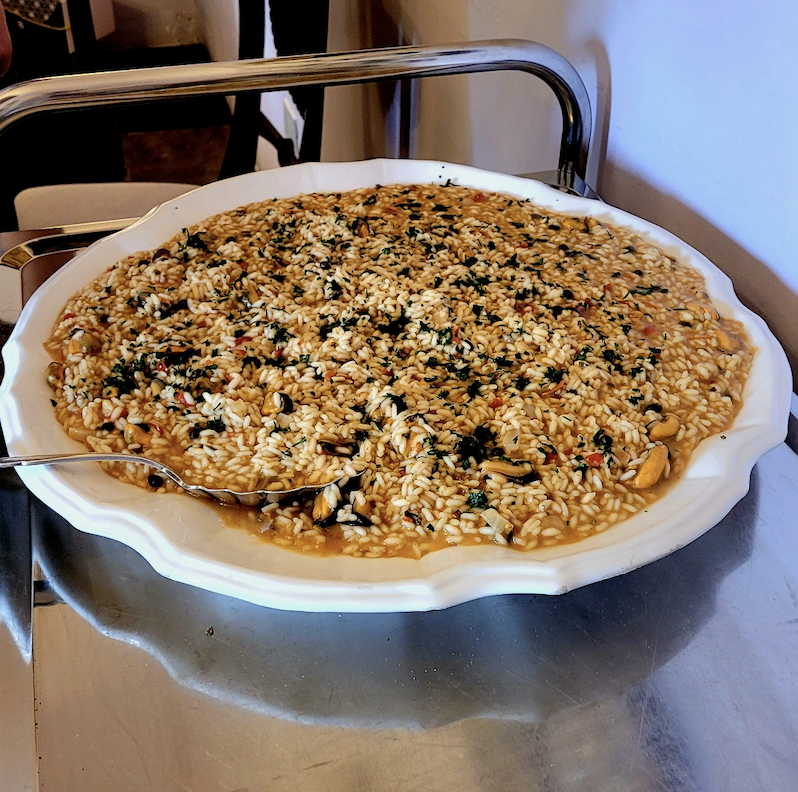
Unbelievable Risotto con Pesce at La Giasira

La Giasira Morhum 2023, Terre Siciliane IGT

Morhum is 100 percent nerello msacalese off of hybrid Cordone Speronato/Guyot trellised vines planted in 2006, aged nine months in (25 hL) botte grande. Several intensities noted, first floral and then an implosive tart palate style with more than impressive controlling acidity. Surely picked early extending forth to fineness and a finesse wound up in the tension. Tannins are fine and also wound tight for a light yet currently aggressive nerello mascalese. Drink 2026-2029.  Tasted May 2025

La Giasira Nero d’Avola Sicilia DOC 2021

One of ten small production skus, here at 6,000 bottles of nero d’Avola raised on Cordone Speronato trellising and the serious calcareous geology at Giasira. Spends 12 months in botte grande, followed by six months in bottle ahead of release. Current vintage and so six months is more like 30 to mature a tannic nero d’avola ready and drinking in balance, just as its 13.5 percent alcohol frame would want. Forget the big, wooded and thick nero you may know and see the nebbiolo meets pinot noir forest for the Noto nero trees. The conceptual origin is kind of obvious, that being Piemonte so that here you might almost believe this to be a cool climate red. For Giasira the pick is later than most of the rest of the farm, in the last 10 days of September. There is some verdancy but it works and in all the right ways, finishing with good and proper tension. Drink 2025-2028.  Tasted May 2025

La Giasira Nero d’Avola Sicilia DOC 2018

More than a notable amount of persistent freshness yet now a whole lot of exotic spice going on. Getting cardamom and cinnamon (but no clove) from a nero d’avola now at the epitome of “morbido,” in this case smooth as opposed to soft. The nose shows development if not age in terms of oxidation or secondary character. More maturity on the palate with dried bokser pod and carob. In other words classic for nero d’Avola from a warm climate made just six years ago with more wood and concentration, though nothing like some other very wooded peer examples. Drink 2025-2027.  Tasted May 2025

La Giasira SIC! Spumante Metodo Classico Brut Rosato, Terre Siciliane IGT

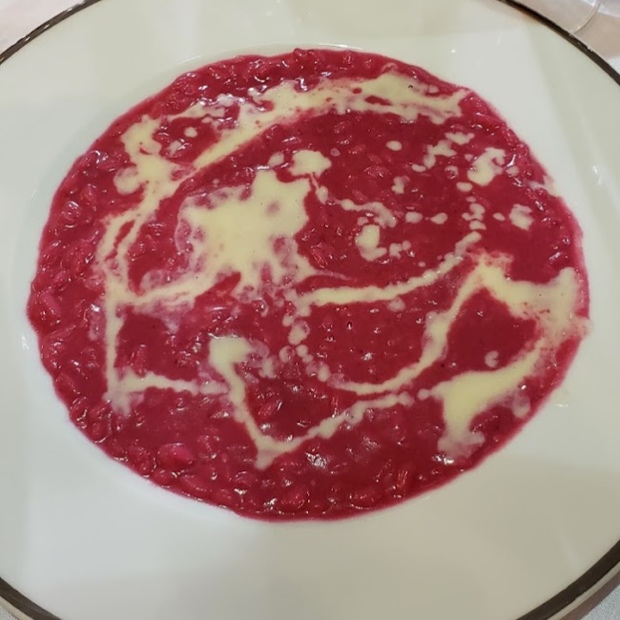
Just nerello mascalese aged 24 months and finished below Brut with what feels like just a few grams of residual sugar. Quenching and not so serious while in delivery of great satisfaction. The clarity is palpable for such a clean sparkling wine. Taste this nerello bubble with a risotto blessed with fresh mussels and capers for a true gustatory experience. Drink 2025-2027.  Tasted May 2025

La Giasira Passito di Noto Sicilia DOC 2022

A passito from grillo not produced in every vintage, citrus zesty and aerosol though teasingly dry on the nose before unveiling its sweetness and tang on the palate. Lemon gelée with the bite of granita and truth be told the limestone of Giasira’s soils surely effect the dessert wine as much as the dry whites and reds. Nice botanical edgy finish too. Drink 2025-2030.  Tasted May 2025

Sicilia en Primeur Enotour 11 – Noto

Ramaddini Perla Marina Vino Spumante Brut, Terre Siciliane Bianco IGT

Charmat method sparkling wine made with the local moscato di noto, soup sugary, neutral and vague selvatica meets macchia aromas. Sweet but in a typical Brut way and number with more than vague bitters at the finish.  Tasted May 2025

Ramaddini Grillo Nassa Sicilia DOC 2024

Nassa, a fishing reference for the catching of fish (owing to the nearby seaside), a 100 percent grillo grown in the Rammadini Contrada up in the hills four kilometres away from the cantina and five from the sea at Marzamemi. Lemon through and through, pith and seeds included for a bitter tonic of grillo, yellow and also green. High vigour and yields make for an insipid, vapid and diluted white wine.  Tasted May 2025

Ramaddini QuattroVenti 2024, Terre Siciliane Bianco IGT

A blend of chardonnay and catarratto aged in wood and the notes waft out immediately, like smoke from a chimney. The aromas are problematic, as a baked potato which indicates the challenge of diethyl acetate. The palate does not improve much and the vanilla overpowers the fruit.  Tasted May 2025

Ramaddini Nero d’Avola Sicilia DOC Noto Nere 2022

A varietal nero d’Avola aged in 70 percent steel and (30) barriques as smoky and vanilla-toasty as the whites. Surely some residual sugar fills in the holes and mellows the greenness in the wine. Waxy, sappy and syrupy.  Tasted May 2025

Team JustSicily

Ramaddini Syrah Sicilia DOC Noto Nere 2022

Purely syrah as smoky and toasted as the nero d’Avola to a point where distinguishing one from the other is like trying to identify the difference between identical twins Richard and Geoff Saunders back in high school. I wonder if the syrah can write nero d’avola’s Math exam and nero can go sub in for a date with syrah’s girlfriend? But seriously there is nothing to distinguish this as Sicilian syrah, nor is their any charm, or joy to be found.  Tasted May 2025

Ramaddini Patrono Nero d’Avola Riserva Sicilia DOC 2021

Longer wood aging and the signature varietal nero d’avola that takes Rammadini’s work to the next level. Not necessarily a wine that speaks to more attentive farming but instead to more attention in the cellar. The philosophy concentrates on how the wines are made and aged with the most focus on Patrono and it shows. The notes of vanilla, lavender, red berry and white chocolate shake exert themselves with impunity. You can age this for a few years and see it mellow into a soft, creamy, thickened and emulsified red. Drink 2026-2028.  Tasted May 2025

Ramaddini Al Hamen Passito di Noto Sicilia DOC

Strange mix of marmalade and diesel in a moscato passito as botanical as it is gaseous. If apricot was a metal and orange slices were urinal pucks. Flawed.Can’t fathom what happened here.  Tasted May 2025

Feudo Maccari

Feudo Maccari

The Sicilian exploration of Tuscany’s Moretti family of Tenuta Sette Ponti. As with several other Noto area estates, Maccari was set up 25 years ago  on 200 hectares with 65 planted to vines, most trained to Alberello (medio).  Much like the others the location is heavily influenced by limestone soils set halfway between the Ionian and Mediterranean seas. There are predominantly nero d’Avola and grillo, but also seven hectares of syrah. The company also farms 11 hectares on L’Etna (called Etnae), namely in the Contrada Santo Spirito.

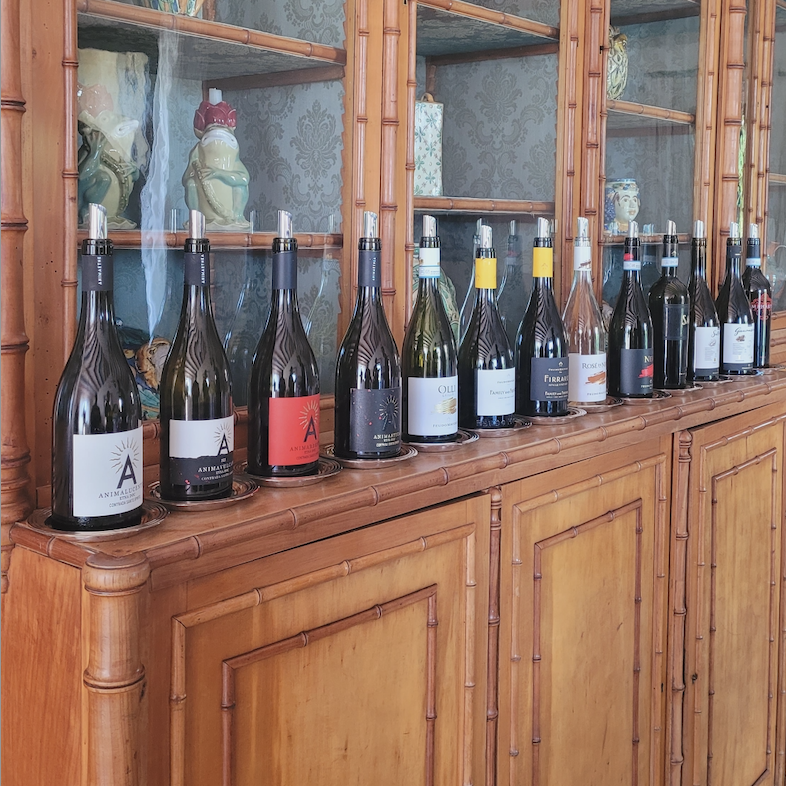
Feudo Maccari Anima Lucente Etna Bianco DOC Contrada Santo Spirito 2024

Anima Lucente is the only Maccari Etna Bianco, made with 85 percent carricante and (15) minella grown in a 700m, 60-plus year-old “garden vineyard,” on Passopisciaro bush vines. Natural ferment, half in steel and half in ”blanched” second passage French wood. Just bottled a few weeks ago and already the wood is easily integrated, subtly specialized without so much as a toasty, vanillin or buttery trace. Racy Etna Bianco from head to tail, judged, interpreted and translated as a garden blend should. Quite edenic for the ilk and of dreams realized. Not the most complex, nor does it need to be but it’s so hard not to be seduced through to the mineral-metal finish. 10,000 bottles produced. Drink 2025-2029.  Tasted May 2025

Feudo Maccari Anima Vulcano Etna Rosso DOC Contrada Santo Spirito 2022

Red counterpart to the white Anima Lucente, moving from luminescent to charcoal volcanic in Rosso that spends only a reasonable and amply fortifying eight months time in barrel. Perfectly professional, seasoned, stylized and straight up the middle road taken for the DOC and more importantly but also specifically the contrada of Santo Spirito. Speaks in the clearest double “S” vernacular, explains and delivers just what is expected and frankly wanted from a contrada-specified Etna Rosso. Acids are in synch with the rusty grit split between fresh and dried elements. Stamp of guarantee. 3,000 bottles. Drink 2025-2029.  Tasted May 2025

Feudo Maccari Animardente Etna Rosso DOC Contrada Santo Spirito 2022

Slightly higher elevation also from the Passopisciaro contrada of Santo Spirito, here at 750m and same vine age in and around 60 years. This time the qualifying suffix “ardente” refers to passion or a burning for something, that surely being the raising of impressive Rosso from out of the Etna lava stone flows. The reference also elicits the heat and colour of the magma fused with the current orange-hued basalt. A more serious Etna Rosso of depth and tannic intensity, doubly structured and needing time. The botanical feels mixed with structural elements more than grip the palate, hold on tight and show no immediate sign of letting go. Give this two more years. 3,000 bottles. Drink 2027-2032.  Tasted May 2025

Feudo Maccari Animantica Etna Rosso DOC Contrada Santo Spirito 2022

From the owners of Tuscany’s Tenuta Sette Ponti. Animantica, a compounded abbreviation of anima and mantica, i.e. “soul and divination.” A spiritual combination for the smallest of Etna Rosso productions from Contrada Santo Spirito. Exhibits the freshness and accessibility of Anima Vulcano juxtaposed against the tannic frame and freight of Animardente but the expression is subtle, restrained and without the ardent flaunt of necessity. The vines here are 100-plus years pre-phylloxera grown in the “garden vineyard,” inclusive of some (white) minella. Rosso as graceful as any on the Etna and therefore fully qualifying as mountain wine. The tannins are suave and fluid to see a “divinazione” of 10 years or more. Just 800 bottles. Drink 2027-2036.  Tasted May 2025

Feudo Maccari Grillo Sicilia DOC Olli 2024

Olli, part of grillo read backwards and a local name for the grape. A reminder how it arrived as a cross between catarratto and zibibbo, developed by Baron Antonio Mendola of Favara. Clean, fresh, ripe and accessible to all, for all the correct reasons and any time at all. Yellow fruit and flowers, some sapidity and the easiest drinking white anywhere from Sicily. Vines averaging 20 years bring the knowhow and concentration. Drink 2025-2026.  Tasted May 2025

Feudo Maccari Family and Friends 2023, Terre Siciliane Bianco IGP

The wine once made for, you guessed it, family and friends that first became a commercial label with the 2012 vintage. Vineyard is now more than 20 years old with grillo vines growing in sand and limestone. The label advocates “only the best grapes” and the amenability meets style of this varietal wine suggests that to be the honest truth. A lemon intensity in concentration and bursting fleshy segments are juicing through the entirety of the wine. Again a sapid (as opposed to salty) element, not quite botany or “macchia” but savoury nonetheless. Hides the 14.5 percent alcohol frame with ease. Drink 2025-2027.  Tasted May 2025

Feudo Maccari Vigna Firraru Family and Friends 2023, Terre Siciliane Bianco IGP

The most important grillo comes from the black-soiled clay vineyard above the cantina, a.k.a. Fabbro, from Sicilian dialect the name Firraru describes the colour of that terroir. Alberello vines are 20 years of age (as with all the grillo plantings) and now having come into their zone. A ferric element emerges as per the soil to separate this grillo from the other Family and Friends varietal white. Even more sapid, metallic surely and length increases. The French wood, richness and generous alcohol all impress while doing their part in well rehearsed integration. Drink 2025-2028.  Tasted May 2025

Feudo Maccari Rosé di Neré Sicilia DOC 2024

More than obviously stuck to Provençal style guns with a Rosato made with nero d’Avola softly hued, pale and simple. Just two hours of skin contact plus five months of aging in steel. A lees effect, however soft and in restraint though consistently designed and presented with the Feudo Maccari sapidity up front. Showing some true to from nero notes, of ripe berries and sweet herbal savour. Well made and reachable for all. Drink 2025-2026.  Tasted May 2025

Feudo Maccari Sicilia DOC Neré 2022

A mix of nero d’avola vines young and old, of 10 and over 30 for the signature varietal business card of a red wine. Dusty and notable Balsamico with a local nickname for the most important variety, not only for Noto but all of Sicily. Neré is more restrained and quaffable than ever before, with crusted, skin musky fruit and high acidity. A wine to chill and spill without thinking too much on anything at all. Drink 2025-2026.  Tasted May 2025

Feudo Maccari Sicilia DOC Saia 2022

Saia comes from Arabic, a word making reference to centuries old rainwater collecting irrigation canals and the first label produced by Feudo Maccari in 2002. These are the oldest estate bush vines, now more than 30 years of age with the eyes, canes and fruit of experience. More obvious depth and layers to nero d’Avola as Saia, a treasure trove and trough filled with fruit and accompaniments in complexity. A nero adorned but also soft with some pruning of the fruit while still amply structured. Not grippy or with tension per se but in control and able to age. Drink 2025-2029.  Tasted May 2025

Feudo Maccari Nero d’Avola Sicilia DOC Sultana 2022

A single vineyard nero d’avola from white limestone soils of 20-plus years that sees 10 months in tonneaux, coming out in the 15 percent alcohol range. Just one hectare like Guarnaschelli and aromatically speaking the most mineral-elemental and therefore salty nero d’avola for Feudo Maccari. Genuine depth and ideal push-pull posit tug between fresh and dried elements with a chalky understreak that speaks to the brown skeletal soil and its limestone content. A wine made in the vineyard, as they say, exaggerating and celebrating the local Balsamico and singular savoury improvisations. “Autentico.” Just 1,000 bottles made. Drink 2026-2033.  Tasted May 2025

Feudo Maccari Nero d’Avola Sicilia DOC Guarnaschelli 2022

A single vineyard nero from black volcanic soils of some 60 years that sees 10 months in tonneaux, coming out in the 15 percent alcohol range. Just one hectare like Sultana and the terroir directs the result. Greater intensity and grip but also a converse style due to the ulterior elements that come from basalt as opposed to limestone. There is a richness to the mix of dried and fresh fruit, Balsamico and macchia, a layering that continually delivers more and more. The clarity and finesse from Guarnaschelli do well to balance and smoothen both the new wood and elevated level of alcohol. Just 1,000 bottles made. Drink 2027-2035.  Tasted May 2025

Feudo Maccari Syrah Sicilia DOC Mahâris 2022

From seven hectares of syrah, the second label produced at Feudo Maccari, first vintage 2005. The name refers to Arab watch towers along the sea coast and it is the wine “that symbolizes the meeting of different styles and cultures.” In other words syrah brought to Sicily and how it has prospered, with FM being one of the pioneers in terms of scale and time having worked with the French variety. Then again the legend of Marcus Aurelius, Syracusa and the variety have by now become one to make this one of the island’s own. The 2022 is full and wooded, seasoned to the hilt and within good reason because this is what the grape wants from Noto. Fruit and structure are tied by sweet acidity as much as they are by tannic freight. Full wine and one to impress. Drink 2026-2032.  Tasted May 2025

With Santi and Alessio Planeta in Noto

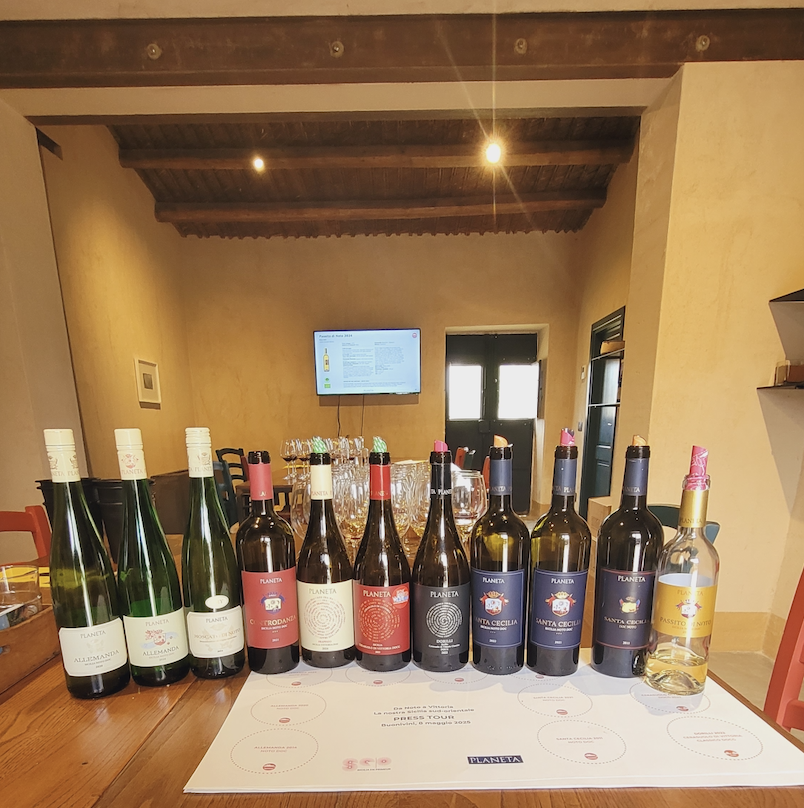
Planeta

Diego Planeta. Pioneer, visionary and a man who considered the entire island an agricultural playground where anything was possible. The Planeta family has Spanish origins and roots dating back five hundred years. Diego Planeta was the former president of the Settesoli Cooperative and founder of Planeta winery. His passing in 2020 left an irreplaceable hole but 15 cousins, including Alessio, Francesca and Santi Planeta are the beneficiaries of their uncle’s plans and legacy. Five family members run the day-to day operation and more than 200 vinicultural, viticultural, administrative and marketing artisans share in the collective vision. Today they work, farm sustainably and reap the benefits of five distinct estates but more than that they bring the fruits of these locations to the world. No other producer in Sicilia does this, not with the scope and breadth they do.

Noto is the birthplace of nero d’Avola, graced with calcareous soils like Jerez and Champagne, not really comparable to anywhere else. Noto is close to Vittoria in how the wines come to be but it’s a mobile texture, silken and with velvety tannins. The soft hills of Buonivini are blessed by soft breezes arising from the meeting of two seas, ideal for nero d’Avola and moscato, but also almonds, carobs and olives, symbolic plants of the Mediterranean location. The three vineyards are agliastro, buonvini and zuppardo on 45 hectares, acquired piece by piece, today producing the DOC wines Santa Cecilia, Moscato di Noto and Passito di Noto.

Country lunch at Planeta, Noto

Planeta Noto DOC Allemanda 2024

Always the (totally) dry moscato from Noto, white grape that has been a focus for Planeta not quite but almost since the beginning. From the Bounivini – Agliastro vineyards built of lime, soy marl and whitest of white chalk. A low production vintage because of drought and small berries though the aromatic variety translates as high and expressive as ever. Freshness and botanicals meet at the middle where citrus predominates. No questioning the quality and intensity for what must be viewed as a singular style and effect of white wine. Never searing and of a sapid notion that seems too bely the calcari, but that is exactly why this moscato works as a dry white wine. If you like top echelon dry palomino then this will induce interest along a similar line. Drink 2025-2029.  Tasted May 2025

Planeta Noto DOC Allemanda 2020

A fine Sicilian vintage with ideal climatic conditions and looking back four years you get some evolution in the way you might think about what happens with dry sémillon or riesling. Now an arriving mix of honey and petrol to compliment the concentrating mandarin and lime blossom notes. In a way it feels like a sweetness is developing but that is a faux reality because there is literally no sugar in this moscato. Testing 2020 in 2025 seems just about right – another year and things will really go secondary. Drink 2025-2027.  Tasted May 2025

In the Noto cellar with Alessio Planeta

Planeta Noto DOC Allemanda 2014

More than 10 years have passed and forget secondary because tertiary has come to town. Fully developed maturity between the honey and petrol, sapidity strong and metal savoury, everything having coalesced into a finished and now finishing wine. This is where moscato will go, here with distinction because of how clean and competent it bagged character all those years ago. Drink 2025.  Tasted May 2025

Planeta Nero d’Avola Noto DOC Controdanza 2021

The first vintage of this specialized dance in Noto was 2016 and here five years later we begin to see the balance and personality really showing forth. Also from where and how the heavy presence of white limestone grabs ahold of nero d’Avola’s soul and hauls it straight down to the ground. All the carob and some liquorice define the flavours of Controdanza for a full and satisfying experience, replete with fine acidity and elastic intensity. Drink 2025-2028.  Tasted May 2025

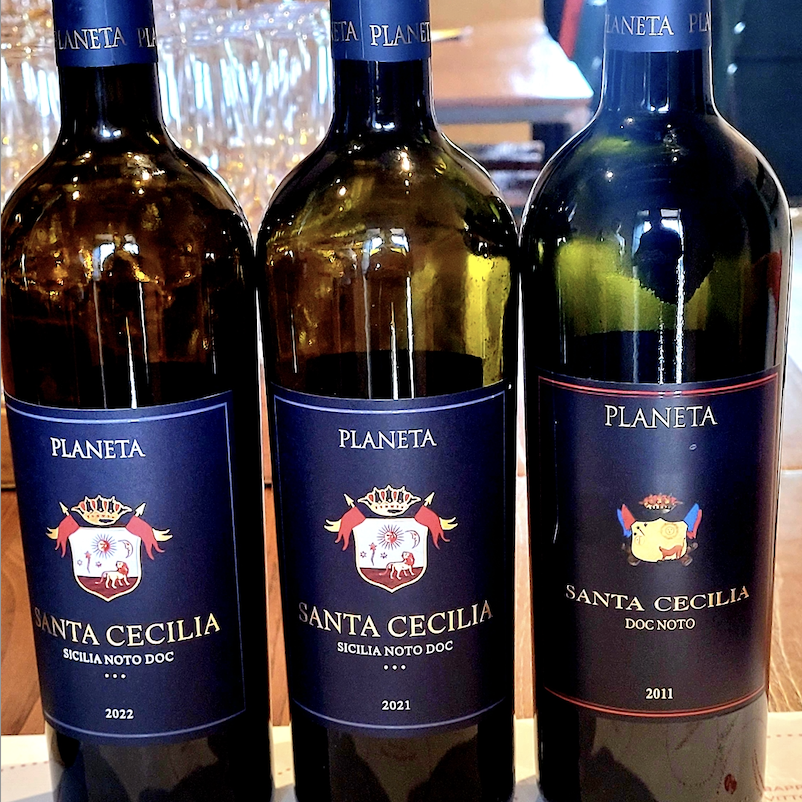
Planeta Santa Cecilia Noto DOC 2022

A preview yet to be released but a finished wine bottled a year ago. The first vintage (as a reminder) was 1997 and 50 percent is aged (12 months) in new wood, the rest of the nero d’Avola in used barrel. Two parcels of the Zuppardo and Agliastro they are, both contributing to the mille-feuille layers that deliver wave after wave of varietal flavour, character and soul. They are the most importantly identified white (calcareous) soils chosen for this flagship varietal red in the Planeta world. Santa Cecilia owns a chalkiness in its tannic profile that feels singular, non-inimitable and willing to take 10-15 years to fully transform. The 2022 is a prime example of a latest vintage produced serving as its best. Drink 2027-2035.  Tasted May 2025

Planeta Santa Cecilia Noto DOC 2021

Not much movement as of yet, save for a moment of carob, naturally honeyed with caramel and earthiness. Speaks to ripeness as much as maturity. The acids from 2021 are at the fore right now, loudest of clamour and opening the window for clarity and the complex fruit component coming into focus. Yes there is a minor feeling off secondary character but just in infancy to suggest three more years in this stage.  Last tasted May 2025

Such a fine iteration of nero d’avola as Santa Cecilia, a 2021 more mature and open than before but is that not what it should be? Fruit so naturally curated, sweet and generous to speak of a great potential and long future. Fine acidity as well while also necessary and yet as the wine sits on the palate those credible and knowable quality of nero tannins remind of Cecilia’s past. Anyway this is both handsome and beautiful, vulnerable and strong. Fluid and confident, loving and powerful, with a spoonful of Noto nourishment to last a very good long time. Drink 2025-2034.  Tasted May 2024

Planeta Santa Cecilia Noto DOC 2011

Now well into secondary with plenty of tertiary having come to take over the personality of Santa Cecilia 2011. Still there is some freshness of fruit and especially how acidity affects the development of original elements transforming into later life pleasure. Now showing as a perfectly gorgeous 13-14 year-old nero d’Avola from a second stage understanding within the overall Planeta idiom.  Last tasted May 2025

Santa Cecilia from 2011 is a special nero d’avola, balanced in silent but sweetly deadly acquiescence of Noto’s white chalky soils. Her tannins are abundant and smooth, running in one direction and so it’s a wonder how un-evolved and yet so involved this nero d’avola is equipped to believe about and with great kindred spirit with itself. That it presents this youthful and yet to advance is a thing magical and sincere. Inner strength is one thing but outward beauty is the real deal. Or is it the other way around? Either way they combine for one of Cecilia’s greatest acuity and remainder of structure. Drink 2018-2026.  Tasted May 2018 and April 2022

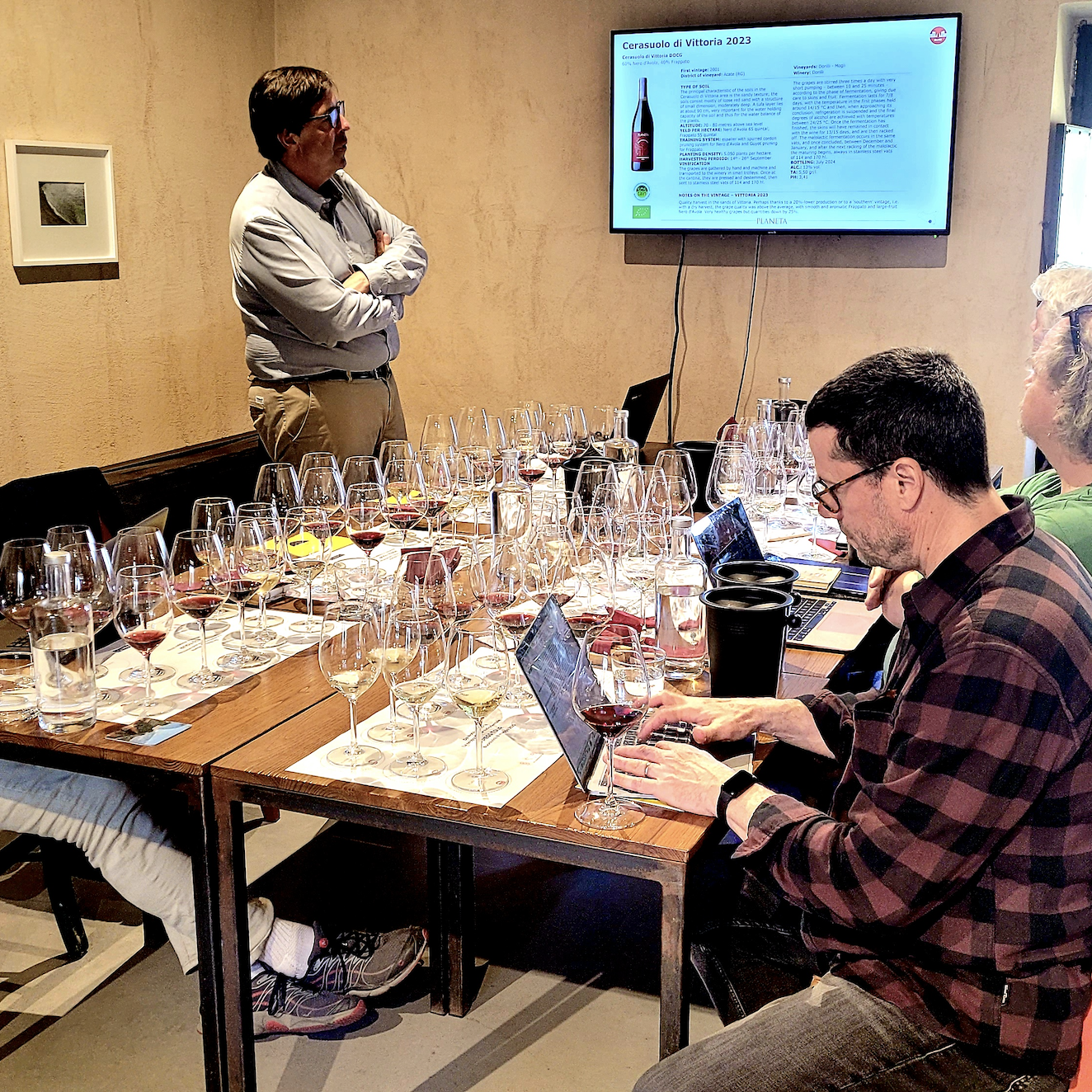
Tasting at Planeta, Noto


Planeta Frappato Vittoria DOC 2024

Great freshness and red berry fruit define frappato for Vittoria, “a grape that is magic and if you plant it outside of Vittoria it is not so interesting,” explains Alessio Planeta. “In my opinion.” The aromas and flavours of the grape are expertly preserved, here bursting and the herbal or savoury aspect is so much sweeter from Vittoria, noting like basil or chervil. What matters is the soil’s origin, that being marine and when the grape is frappato the handling simplifies so that the freshness, fleshiness and simple beauty is exulted. This may be simple but it’s also brilliant. Low alcohol (12.5 percent) and above average pH matched by just below tart acidity to result in fragrance and balance. Drink 2025-2028.  Tasted May 2025

Planeta Frappato Vittoria DOC 2023

The first vintage of Planeta’s Cerasuolo Di Vittoria was 2001 from the area of Acate and vineyards of Dorilli and Mogli. Acidity just a bit higher than varietal frappato and pH conversely lesser. The effect of nero d’avola leads to this wine’s balance between fresh fruit and linear structure. Quantity was down 20-ish percent in 2023 and concentration feels elevated, corresponding to healthier levels of quality and tannic structure. Not always a 60-40 nero d’avola to frappato but that does seem to be the comfort zone, although Alessio Planeta is not adverse to a much higher number for the nero. I mean this is just perfectly balanced, juicier than ever and subtly structured for a five-plus year run. Drink 2025-2030.  Tasted May 2025

Planeta Cerasuolo di Vittoria Classico DOCG Dorilli 2022

Dorilli is the single-vineyard nero d’Avola residing at the pinnacle of Cerasuolo for Planeta. Brighter and upwardly airy to ethereal than ever before, here with a 10 percent increase of the nero d’Avola from the classico Cerasuolo and yet alcohol, acidity and pH are almost always aligned within a tightly defined spectrum. This regardless of how much of each grape are employed which tells us that soils and place, clay-limestone soil and Vittoria are the greatest determining factors for results. That being lithe, fresh and frankly also exciting. Cru Beaujolais lovers must not turn away from Cerasuolo, not when it is made in this style. Drink 2026-2032.  Tasted May 2025

Planeta Passito di Noto DOC 2024

From Noto’s Buonavini winery/vineyard and also that of Agliastro and their whitest of white limestone terroir. Lemon and mandarin incarnate in any way your imagination can conjure, from curd through gelée to granita. Pure and focused, clean and all about the fruit. The best thing you could do is put a glass of this Passito next to a plate of Sicily’s finest master pastries made by Corrado Assenza at Café Sicilia. Drink 2025-2032.  Tasted May 2025

Planeta Nocera Sicilia DOC 2023

A world unto itself with few peers making the yeoman work of nocera production and yet this grape holds plenty of potential. It may be ancient and perceived as rustic but in the hands of Planeta it’s tamed and gifted as something easy, satisfying and quite complex. You can drink this with ease and without tension, its fruit more musky and leathery than say frappato but with nary a meant of drying, tough chew or earthiness. This 2024 is youthful and got right for a varietal teaching moment that also delivers a true sense of pleasure matched by pace.  Last tasted May 2025

One of the very few pleasantly made varietal nocera on the island and the only one presented here at the ’24 Anteprima. Surely found to exist along similar lines to nero d’Avola, with a touch more rusticity, also chewy liquorice and leathery fruit character. The 2023 is a good if not high acid nor rather tannic vintage, assembled and delivered for earlier drinking than some. Drink 2024-2026.  Tasted May 2024

All the wines of Sicilia en Primeur

Sparkling

Alessandro di Camporeale Método Classico 2020

Solo catarratto, vibrant, exciting, exploding, 36 months on the lees. Crazy flavours on your palate. Ginger and smoulder. Drink 2025-2026.  Tasted May 2025

Alessandro di Camporeale Método Classico 2017

This is the second vintage and for a catarratto that spent 72 months on the lees it’s actually mind-blowing. The wine is crisp, crunchy, salty, expansive, vertical and frankly exceptional. Next up 96 months? Drink 2025-2030.  Tasted May 2025

Cantine Fina Pas Dosé 2019

A proper smoulder leads off for this 70 percent chardonnay and (30) pinot noir blend finished clean and unadulterated. No dosage? No problem because of the toasty, umami-savoury, macchia-laden, of plants identified and also those not. Palate exhibits some peanut shell which speaks to a momentary temperature drag in the processing but with all the exotics running amok there is terrific interest nonetheless.  Last tasted May 2025

A mix of chardonnay and pinot noir, 70 and 30. Toasty style, sharp and focused, 36 months on the lees to give it aromatic volume from the get go. Certainly not an oxidative style, far from it and the middle ground for Bruno Fina’s sparkling program that began with 24 months and has progressed to 60 on yeast time. More volume on the palate and even fleshiness than expected to suggest that Fina is a natural at making sparkling wines. No wood – only stainless steel. Experimentation has come thus far and perhaps wood aging is coming in the future. Wishing for more length but the linger is full and positive. Drink 2024-2027.  Tasted May 2024

With the Sommeliers of AIS Sicilia

Fazio Brut Blanc de Blancs Erice DOC

Concentrated and pulpy fruit forward fizz from chardonnay picked at higher ripeness than most. Feels like Cuvé Close style, big fruit and carbonation doing their best to get together. Simple and juicy-frothy with neither issue nor complexity. Drink 2025-2026.  Tasted May 2025

Feudo Dsisa Rene’ Sicilia DOC 2017

Über reductive and reactive chardonnay sparkling not perfectly clean. Not quite bitterness in the flavours but more like toasted almond skin. Medium toast and mid-level persistence. No excitement or positive linger neither. Drink 2025-2026.  Tasted May 2025

Principe di Butera Metodo Classico Nero d’Avola Pas Dosé 2019

A classic method sparkling wine 36 months on the lees, charged and excited, rich and buttressed for full mouthfeel with bubbles that elevate the game. Harvested in the second part of August also off of plants that were first planted 27 years ago. The higher parts richer in limestone are used for the Pas Dosé and those in the valley clays more for Brut. Drink 2025-2028.  Tasted May 2025

Principe di Butera Metodo Classico Nero d’Avola Rosato Extra Brut 2019

A 24 months on lees after a couple of hours on the skins for Extra Brut with some sugar but nothing gratuitous and vines growing in the lower parts where limestone gives way to clay. Smooth, really with uplifting acidity and rusty red fruit character. Professionalism incarnate and ideal stylish personality for Sicilian sparkling wine. Drink 2025-2028.  Last tasted May 2025

Not labeled as such and this is the first vintage release but the vintage is in fact 2019. Twenty four months on the lees and this being the beginning to introduce the wine but subsequent vintages that will likely age longer. Extra Brut so right around 6-7 g/L with explosive acidity so the balance is spot on. Orange and lemon, no pith and less bitters to speak of. Really clean and good length.  Tasted May 2023

Tenuta Ferrata Etna DOC Spumante 2021

Fine fizz work with the local nerello mascalese stripped of skin muskiness and replaced with a volcanic savour so distinctly if discreetly basaltic in nature. What should sparkling wine from L’Etna do? This actually, with linger and persistence. Grows on the palate and finishes with edible fungi, umami in nature, all in all a positive result for those who are carriers of that “other” positive sensory gene. Drink 2025-2028.  Tasted May 2025

Tenute Nicosia Sosta Tre Santi Etna Brut DOP “Sessantasei” Método Classico 2018

Quiet, admittedly demure entry, of nerello mascalese and the trenchant intention to develop all three essential tenets of sparkling wine. Aromas, textures and flavours are all slowly and incrementally enhanced by serving a long time period upon the lees. In the vicinity of six years for this bubble and dio mio, man how things have come to a combination of curiosity and softness. Spicing yes, but texture is key, mouth-filling, reaching all corners and edges through a lengthy journey resulting in rolling waves, oscillations and blanketing couverture. Substantial sparkling with grace. Drink 2025-2028.  Tasted May 2025

Terrazze Dell’Etna Blanc Brut 2020

Reductive and flinty bubble unique to Etna with a can’t miss the chardonnay character. A sharp and crunchy bite into a just picked yellow apple. Balanced and softening on the palate for one of the most tenable blanc sparkling wines ever to try from a mountain producer. Drink 2025-2027.  Tasted May 2025

Rosato

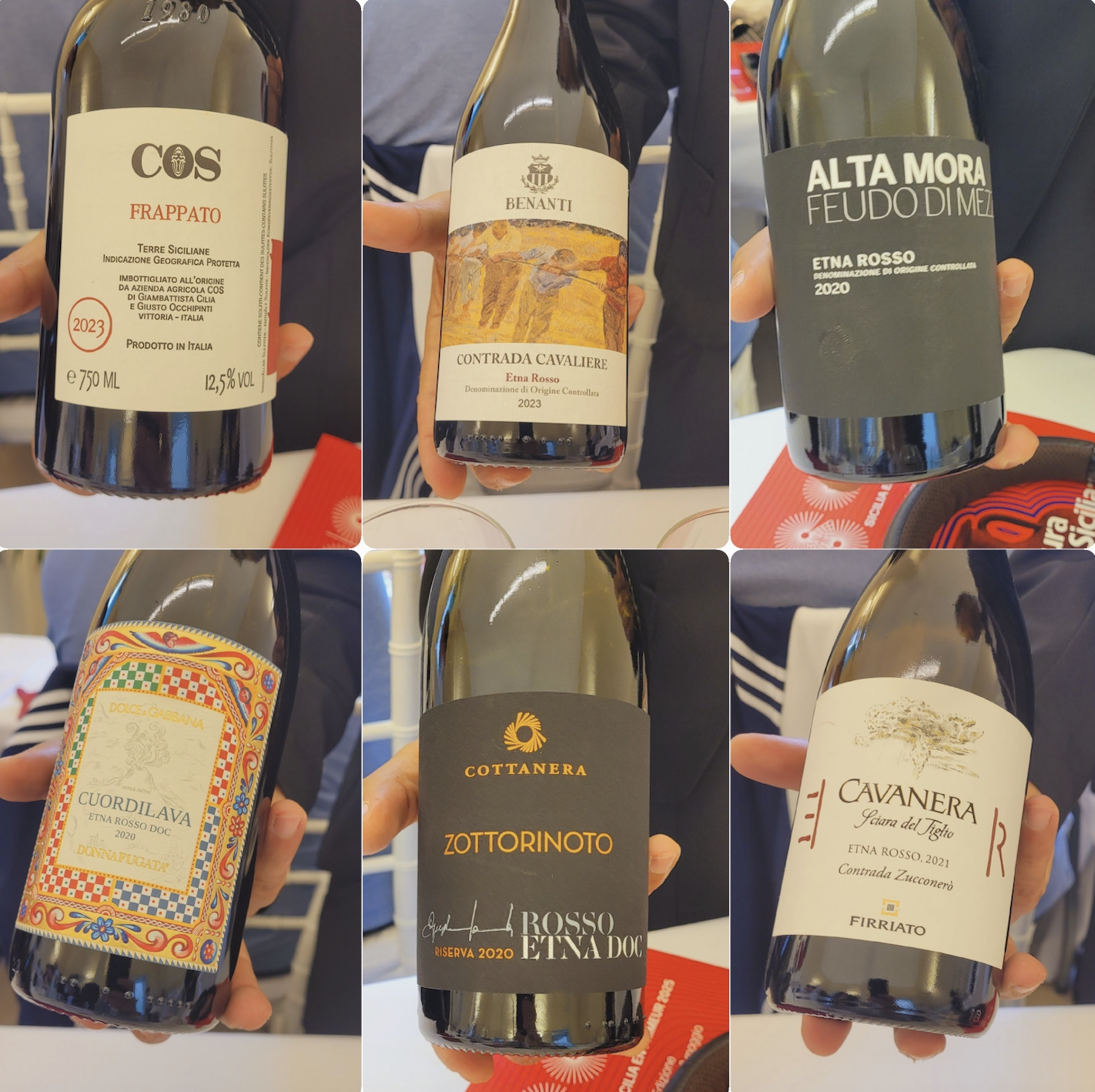
Benanti Etna Rosato DOC 2024

High aromatic substance, tree fruit blossoms, fruit forward with concentration. Stone fruit, nerello mascalese skin muskiness, though never pungent. Caught at reputable ripeness for Rosato, its verdancy a matter of natural extension, acidity never sharp, nor failing. Palate luxe and soft though the savour persists and it all falls into place for the category. Drink 2025-2026.  Tasted May 2025

Cantine Fina Rosato Hanami 2024, Terre Siciliane IGT

Rosé of merlot and syrah, lithe and salty, a vague earthy funk that comes from a mix of soil and how these grapes interact as such. First vintage was 2019 and the path is getting clearer. The tang is extremely high which makes for a slightly vivid example out of this vintage. Drink 2025-2026.  Tasted May 2025

Cottanera Etna Rosato DOC 2024

As straightforward, generous and fruit-centric as Etna Rosato can be, open for all blush needs. Summer is a glass as they say and no, Etna Rosé was not like this just 10, or perhaps even five years ago. Yet here they are and come to the world with all the fulfillments the genre could offer. Plenty good and good for plenty of reasons. Drink 2025-2026.  Tasted May 2025

Feudo Montoni Rosé di Adele Nerello Mascalese 2024, Terre Siciliane IGT

Intense nerello mascalese aromatics, of floral red berry bloom perfume and into savoury flavours, of all that lives and breathes in a natural Sicilian world. Perhaps a smaller crop and size of berry is the reason for these results but regardless the concentration alters the ’24 course of a Montoni Rosato. Would love to sip this alongside any of the many eggplant preparations by Montoni’s Melissa Muller. Drink 2025-2027.  Tasted May 2025

Girolamo Russo Etna Rosato DOC 2024

Finely composed and balanced Rosato from Giuseppe Russo, ideally mixing ripe nerello mascalese with sweetly captured acidity. You can sip his 2024 and feel the composure straight away, plus enough generosity and grace befitting of all the wines in the strongest of portfolios. Here Rosé is a gift because the fruit is precious in that it should rightly have become Rosso. Drink 2025-2027.  Tasted May 2025

Planeta Rosé Sicilia DOC 2024

A mix of nero d’Avola with syrah and sauvignon blanc for more spark and sharpness which Rosato by Planeta most definitely has. Crisp bites, herbal, some macchia and provider of thirst quenching abilities. Drink 2025-2026.  Tasted May 2025

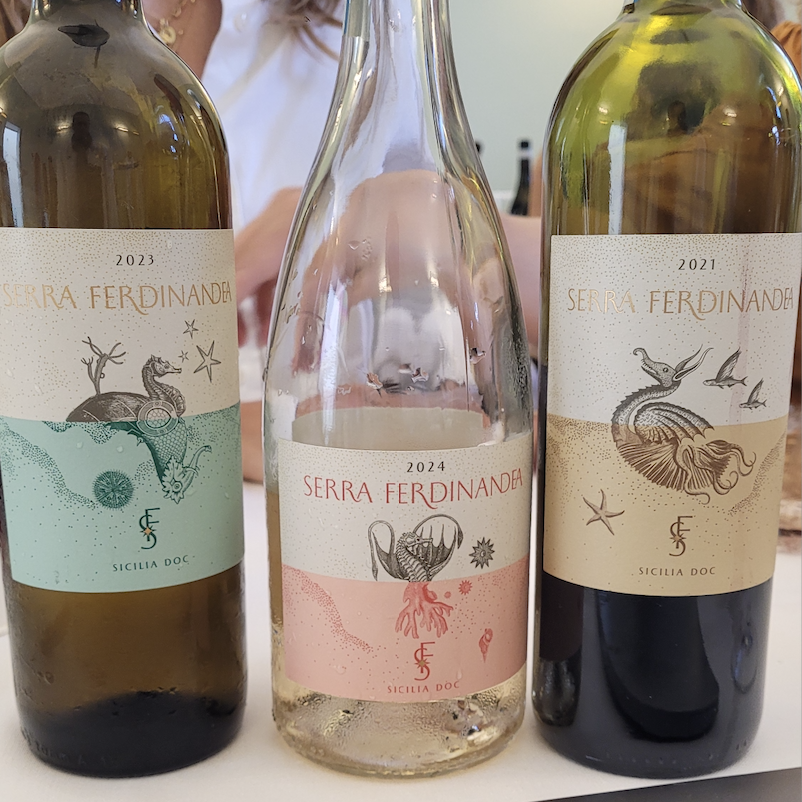
Cecilia Carbone – Serra Ferdinandea

Serra Fernandinea Rosato Sicilia DOC 2024

It rained on the 9th of May and then not again until the 19th of August. Picked between the 11th and 14th of August (with Ferragosto in between) and with this in glass most will have no idea it’s even Rosé. Vin gris is the look but not the intention because when you press nero d’Avola it’s a matter of minutes between this and colour. Remember the owners are Provençal and in southern Sicily the same effect is desired. That would be lithe, salty, fresh and with unlimited spirit. The spirit and nature of the place. As this does and is just that. First scent speaks to Rosato of a distinct and singular nature, like a marine breeze blowing in and through the macchia-mediated and reconciled fruit of the vine. Of nero d’avola used for all essential Rosé purposes under the southwestern Sicilian sun. Not entirely sure if the yields were lower in 2024 (they likely were) but the high levels of concentration and sneaky controlled energy put this in a new echelon for a Serra Ferdinandea Rosé. Would make for both a curiosity and a scientific test to age this two years and see what new impact comes about. Only the independent variable of time changes and the conclusion should rightly seek and mount higher ground. Drink 2025-2027.  Tasted twice, May 2025

Tenute Navarra Rosemosse 2024, Terre Siciliane IGT

Full outward wave of red berry fruit, a capture of frappato in fizz, its mousse creamy and soft. Strawberries in cream, a shortcake because of some faux autolysis and pretty much just really simple. Holds a place for reasons like Valentine hearts and others that represent an amenability to all. Drink 2025-2026.  Tasted May 2025

Terra Costantino Etna Rosato DOC deAetna 2024

Fine mix of fruity and also savoury elements, all understated and trickling forward, low and slow. If a fruit were needed to be invoked it would be white cherries, conjured from a quick soak and maceration before stripping away nerello mascalese skins while capturing both their perfumes and a modicum of their structure. For Etna this is the Provençal style albeit with volcanic properties instilled and made whole by natural processes. Come for the fruit, stay for the minerals. Drink 2025-2027.  Tasted May 2025

Rosso

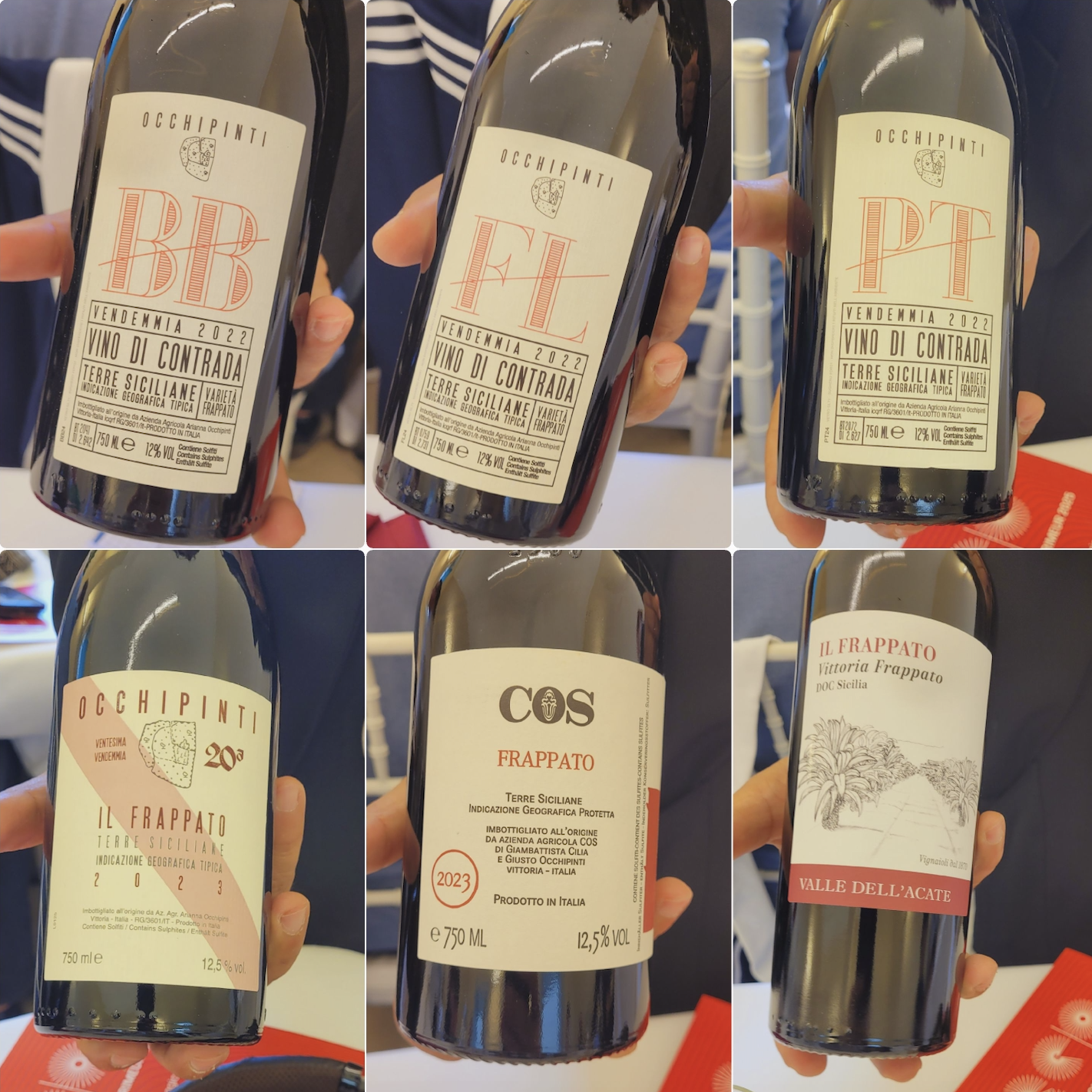
Arianna Occhipinti BB Frappato Vino di Contrada 2022, Terre Siciliane IGT

BB, a.k.a Bomboliere feels like the OG for a contrada-designate frappato in the Vittoria occupied Occhipinti world, a varietal expression from the home front with more experience and acumen to treat all things equal, they being available and worthy of leaning against and leading towards ultimate balance. As here from a fine and rocking 2022, crunchy exterior and chewy interior, a Balsamico crust and mix of fruits captured within. Though the Villages frappato is the most accessible it is this BB that ranks as the most well-rounded and if there is any austerity it won’t cause any psychosocial pain. Yet BB is tannic enough to age, stirs up emotion and is truly representative as a best of all worlds wine, more so than either the FL or PT. Drink 2025-2033.  Tasted May 2025

Arianna Occhipinti FL Vino di Contrada Frappato 2022, Terre Siciliane IGT

Not all of Arianna Occhipinti’s three contrada originating frappato are created equal and FL (Fossa di Lupo) is the one with most up front and forward extending fruit. The fruit comes from just 15 year-old alberello frappato out of Arianna’s original six hectare vineyard. This from the outstretched arm of generosity, more like the Villages label than either the BB or the PT. More obvious as frappato and still there is some structure, high acid pulse, saltiness and earthy to funky beats. Likely owing to this soils of brown sand over limestone rock. Then again FL is cleaner and more understandable with varietal clarity, that which speaks to terroir, obviously and without equivocation. Drink 2026-2030.  Tasted May 2025

Arianna Occhipinti PT Vino di Contrada Frappato 2022, Terre Siciliane IGT

One of three contrada frappato for Occhipinti and immediately obvious how different (at least this PT, or Pettineo) is from the Villages label. Structured with impunity and its immunity keeps maturity at bay. Hard to believe how tight an expression this is when you consider the grape, but this contrada means serious terroir business. Of crucial significance is the fact that the less than one hectare parcel is home to the oldest (60-plus years) frappato vines in all of Vittoria. The vines grown on fine orange sand over tufa (a porous limestone) and the grapes are harvested ahead of both BB (Bombolieri) and FL (Fossa di Lupo). There is a volatility in PT that for some will be challenging to understand, though should patience be exercised than all will eventually be resolved and subsequently revealed. Drink 2027-2032.  Tasted May 2025

Arianna Occhipinti Frappato 2023, Terre Siciliane IGT

Frappato the solo artist is Arianna Occhipinti’s “Villages” red, a mix of contrada fruit for her classic or classico expression marking the entry point into her multifarious varietal world. The most crunchy and yet juicy frappato imaginable, high in intensity come to the world with open arms and in turn the world should embrace this wine. If your goal is either to introduce this most getable of grapes and/or a keen desire to enter the varietal gates then Occhipinti’s is the one. Come on in. Drink 2025-2029.  Tasted May 2025

Arianna Occhipinti Grotte Alte 2020, Cerasuolo di Vittoria Classico DOCG

Were Grotte Alte tasting blind you would not be judged for thinking you might have Brunello di Montalcino in your glass and from a producer with ancient wisdom crossed and forward thinking. A true terroir-driven Balsamico marks the entry and the construction is a bit severe which means the tannins are austere. Volatility swirls like sangiovese but here are nero d’Avola and frappato co-mingling in their rarefied air. Some will find the grip and the volatile elements severe and yet others will check their egos to wait and allow these grapes to be ratified and conjoined after years of settling and care. Choose the latter and great reward will follow. Drink 2027-2033.  Tasted May 2025

Cantine Fina Vitraolo Vino Rosso 2023, Terre Siciliane IGT

A purely Sicilian red wine, something of history, culture and remembrance, of freshness and sheer drink-ability. Tart for certain, that and a chewy character but without weight or density. The fiercest passion in an authentic, austere and rustic red. This despite a challenging vintage of heat, humidity and low yields. Drink 2026-2029.  Tasted May 2025

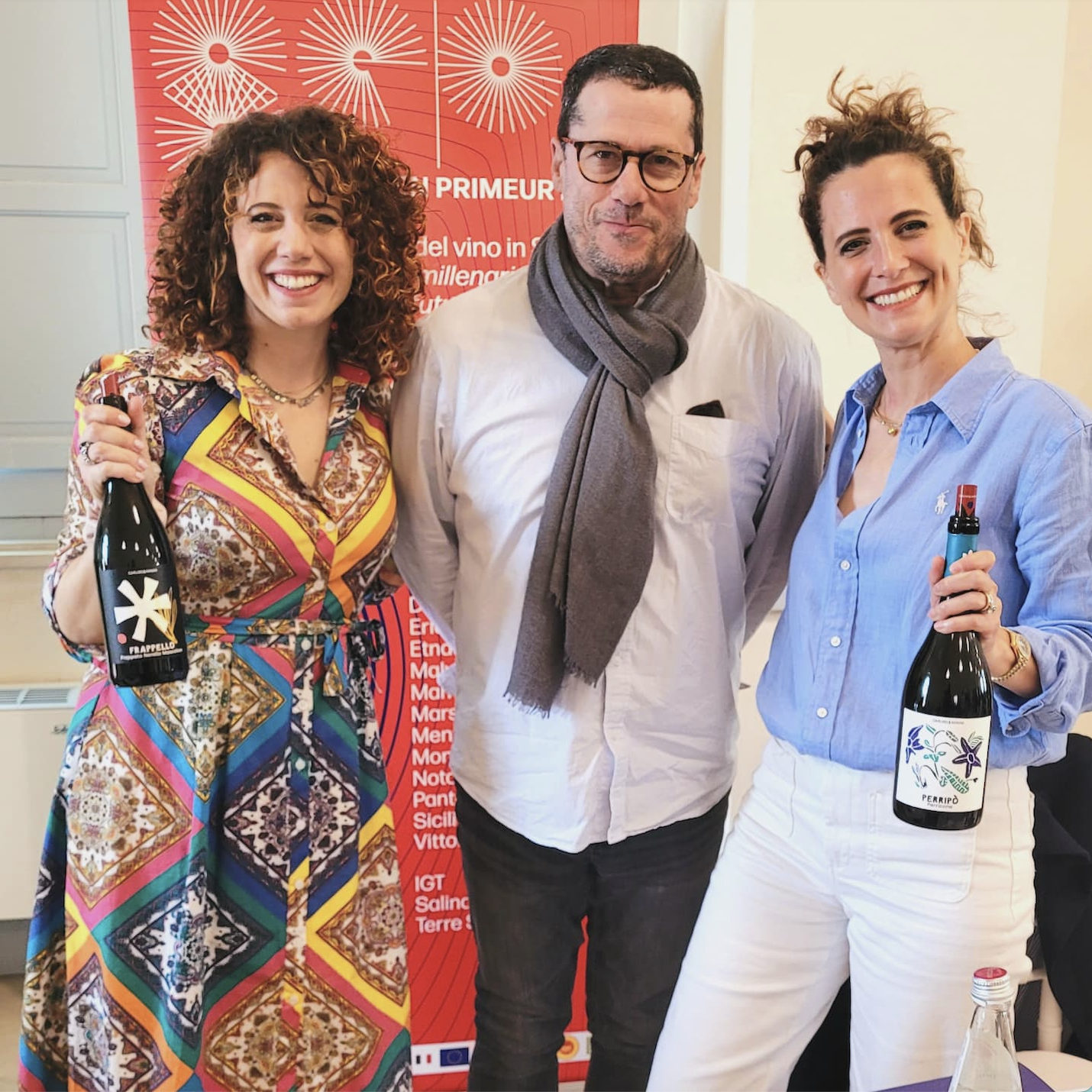
With Giovanna and Rosanna Caruso – Caruso e Minini

Caruso & Minini Perricone Perripo’ 2022, Terre Siciliane IGP

The pretty dabs of perricone perfume come easy out of the dialectical sounding and expressive Perripo’ because, well clarity and purity. Plump and juicy raisin to plum with more freshness than leathery feels and sneaky structure partially shrouded beneath. Proper varietal effort, vintage fun, in and out, especially with fine and gifting 2022 as the source. Really something unique, finishing at a local Balsamico, especially like mint. Drink 2025-2028.  Tasted May 2025

Caruso E Minini Frappello 2023, Terre Siciliane IGT

A blend of frappato and nerello mascalese, first vintage was 2004, now 20 years later, same strong colour contrast from the first to less out of the last. Tannins are the opposite and so the wine has remained the same. Gustatory in every way, “the wine for everybody,” says Giovanna Caruso. From a vintage “non facilisimo,” she says because of heat but Caruso E Minini’s growing zone sees strong winds to help maintain freshness in spite of the temperatures. Full and satisfying with really sweet acidity. Drink 2025-2027.  Tasted May 2025

Tasting with Giovanna Caruso – Caruso e Minini

Caruso E Minini Nero d’Avola Sicilia DOC Vuvalà 2022

The solo nero d’avola from western Sicily where strong winds and sea air make for some of the saltiest on the island. Persistent keeper of faith and fruit freshness when it really wants to dry out and head into the local Balsamico. It does not but stays a most hospitable marine airy course. The vines also grow in round stones (very similar to Rhône Galets) which keep the soils cool. Delicious and dreamy for nero. Drink 2025-2027.  Tasted May 2025

Caruso E Minini Nino Rosso 2015, Terre Siciliane IGT

Four grape blend made in appassimento, a.k.a Amarone style in honour of grandfather and his red suspenders. Persistent and somehow still showing some fresh fruit despite the austerity and aridity created by the methodology. A juicy explanation to remind just how fine things can be when attention to detail and passion put collective hearts into making a wine. The mix is nerello mascalese, perricone, frappato and nero d’avola for just 7,636 bottles produced. Drink 2025-2030.  Tasted May 2025

Cos Frappato 2024, Terre Siciliane IGT

Beautifully clean, fragrant and fruit blossom perfumed frappato of immediate and seductive engagement. A whirl of controlled volatility, sweet acidity and carry over to palate flavours in mimic of the florals up front. All the fruit that could be desired, of a focus and a finesse to bely any pre-conceptualized DOC limitations and simply a varietal red you will want to taste and drink on a consistent basis, by the glass, to share with others and as a varietal teaching moment for what is possible. Drink 2025-2028.  Tasted May 2025

Cos Cerasuolo di Vittoria Classico DOCG 2022

Unexpectedly, remarkably and acceptingly fruit forward Cos Cerasuolo for which 60 percent nero d’Avola and (40) frappato occupy the same place and time. Sharing the stage of open generosity and to elicit immediate gratification. Welling with fruit (as opposed to bursting), expressive of skin muskiness and layered for notable purpose. That is to gift the DOCG by way of introduction and without challenge, neither by grip nor out of austerity. Drink 2025-2027.  Tasted May 2025

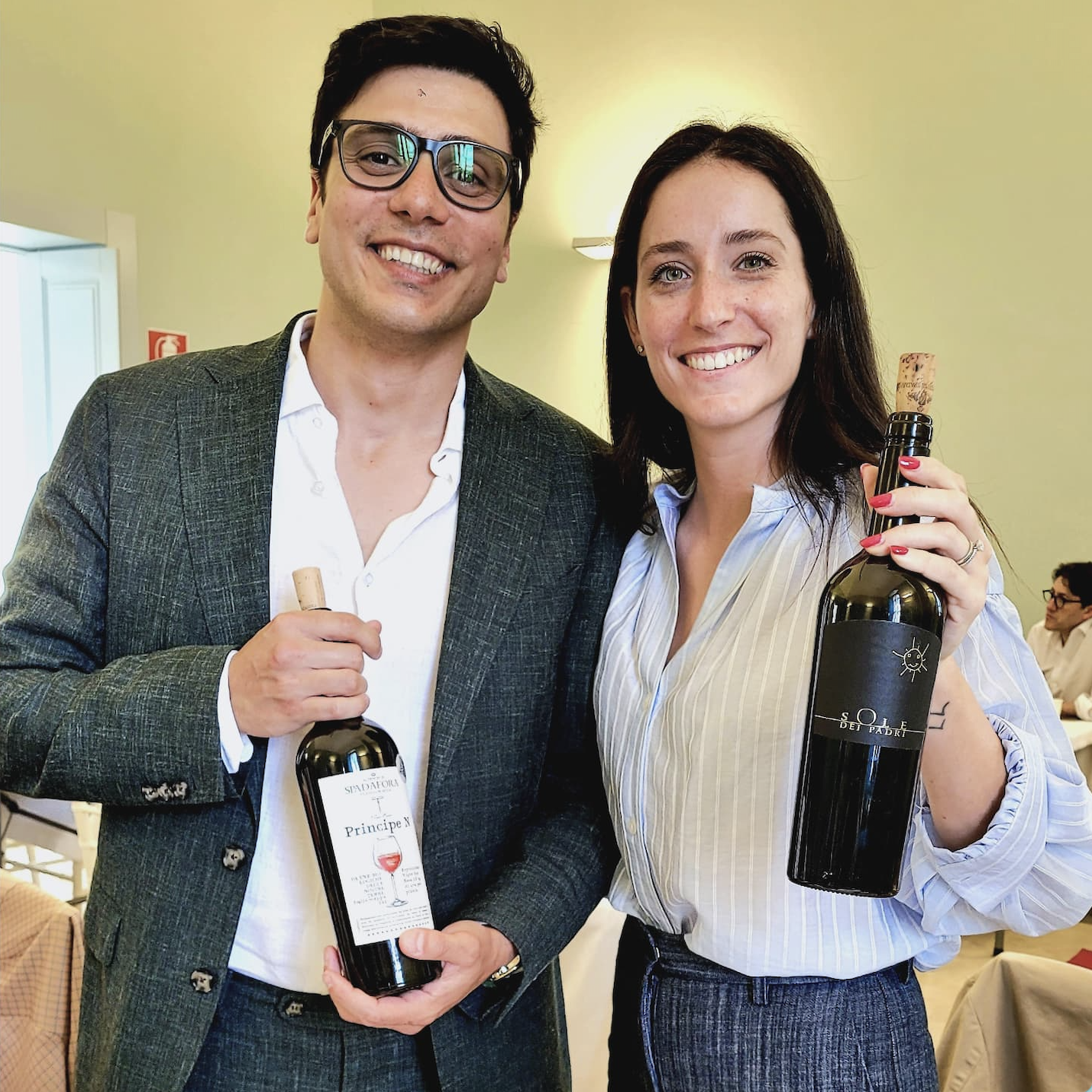
Gabriele Di Paola and Enrica Spadafora – dei Principi di Spadafora

Dei Principi Di Spadafora Vignaioli In Sicilia Principe N 2022, Terre Siciliane IGT

Only nero d’avola from concrete followed by steel though still not quite as expressive as it should be because of having just being bottled. From Spadafora’s central location towards the western half of Sicily of classic nero fruit from red through black, high acidity, intensity and spirit. Can’t wait to see what happens after another year (and even better two-plus) in bottle. Drink 2027-2031.  Tasted May 2025

Dei Principi Di Spadafora Sole dei Padri 2012, Terre Siciliane IGT

The first vintage of a signature red one year in bottle, only syrah from the highest vineyard on top of the hill at 450m. Very exposed with direct sun which would have been a challenge for nero and so, syrah. Richness at the height for grape and style, woody still and this is 2012 but freshness will persist and the wine will integrate. This may sound absurd but truth is truth and Spadafora likes old wines. As will you.  Last tasted May 2025

Sees one year in barriques and the rest in tank, bottled in July of 2022. Lengthy aging but just a short wood stay so don’t come expecting heavy vanilla, lavender or other French barrel notes. Come instead for the florals, spices, spiciness, liquid pepper, but no smoke. Chalky, tannic and all soil-related, created and driven. Can last for another 10 years. Clean and varietally obvious though not the iodine-meaty syrah kind. Perfume and texture are everything. Balsamico and mint at the finish. ”La terra,” shrugs Francesco Spadafora. Drink 2024-2034.  Tasted May 2024

Firriato Perricone Ribeca Sicilia DOC 2019

Singular styled perricone, about face and in complete opposition to those from both central and western Sicilia. Here more related to macchia and Balsamico, brushy, herbal, botanical, verdant and dusty. A stand alone and idisosyncratic varietal red that teaches so much about the triad of place, style and effect. You only need to taste to believe and be aware that this is the sort of Sicilian red to surely show up in masterclasses through time. Drink 2026-2029.  Tasted May 2025

Gulfi Cerasuolo di Vittoria Classico DOCG 2020

The aromas are all fruit skins, of 70 percent nero d’Avola and (30) frappato musky and dried fruit grippy. The aging time in bottle has done the work to bring this Cerasuolo into the initial stages of secondary character which means the ideal drinking window is right where you stand with bottle in hand. With thanks to steel and neutral oak there is just enough freshness and vibrancy to make it work. Drink 2025-2027.  Tasted May 2025

With Anna Ruini – Pellegrino 1860

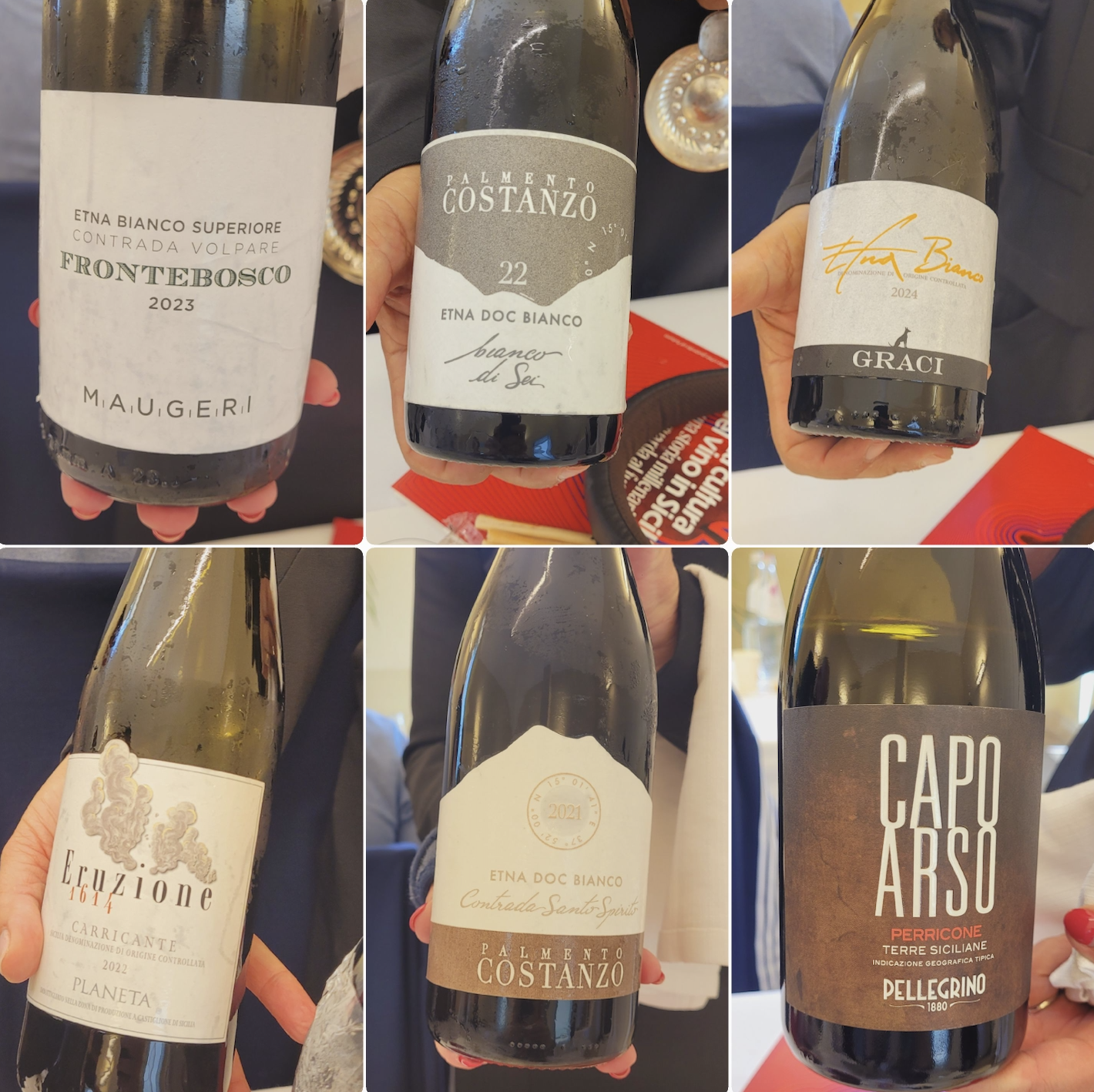
Pellegrino 1880 Perricone Capoarso 2022, Terre Siciliane IGT

And then, and now welcome to perricone from western Sicily at the hands of a producer with a long and winding history of research, development and investigation into varietal wines. Here this combination of spice masala and richness, low and slow developed flavours and macchia. A savoury event run through and many complexities to discover.  Last tasted May 2025

A varietal perricone, a.k.a pignatello, always strong and spicy, best raised in richer soils. Pellegrino’s is simply, unequivocally and unmistakably true to the variety, of a rustic edge and yet here undeniably pure as it not only should, but will be. Not a tannic example, nor is it particularly long, but it does what wants and needs. Drink 2024-2026.  Tasted May 2024

Pellegrino 1880 Nero d’Avola Sicilia DOC Gazzerotta 2022

From Pellegrino’s main estate near to Mazara del Vallo and Campobello di Mazara with views across the sea to Pantelleria. Rich, chalky and seriously spicy nero at the height of intense heights. A wine that needs time to settle into its skin and be good to itself. One made for good times ahead. And BBQ. Just sayin’. Drink 2026-2029.  Tasted May 2025

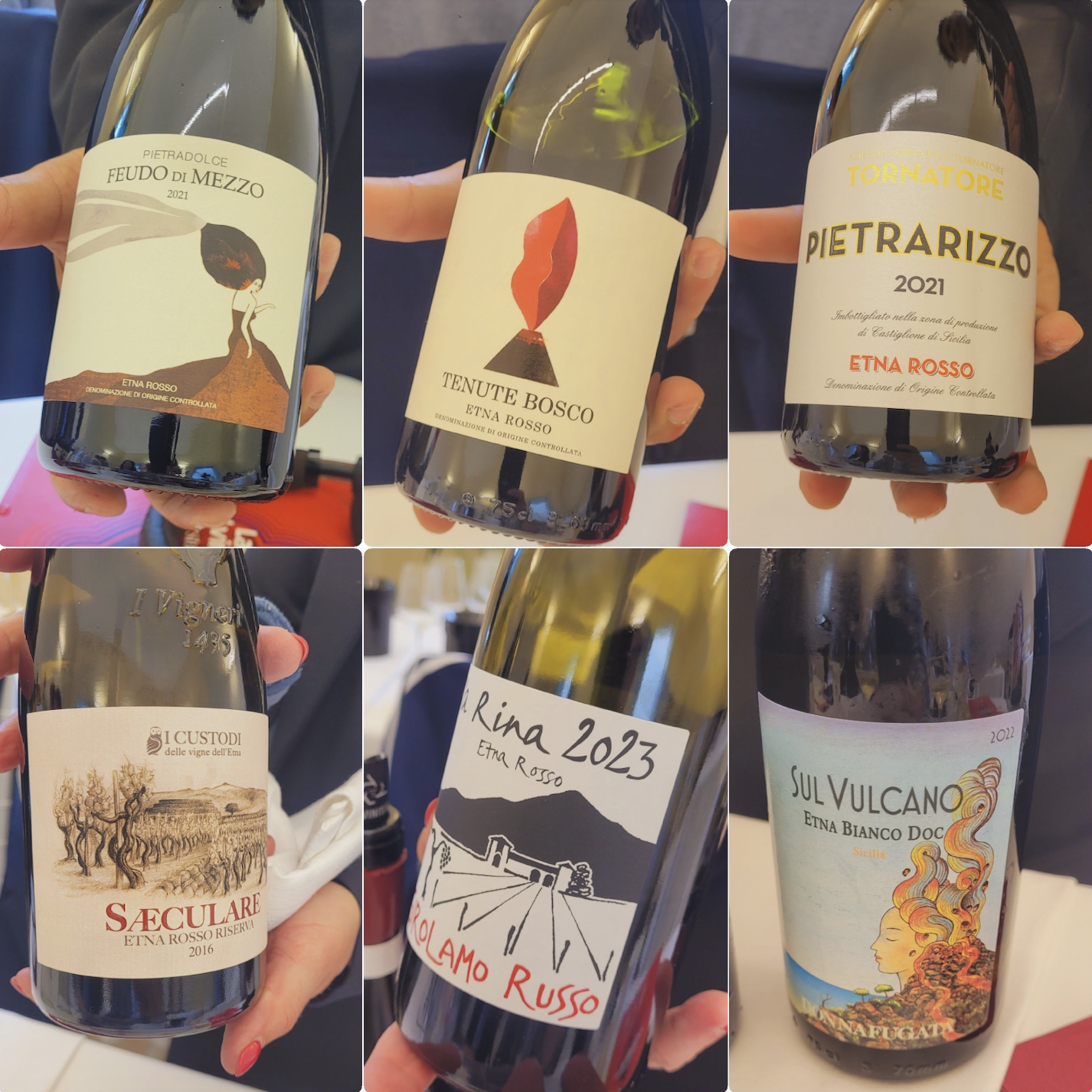
Planeta Eruzione 1614 Nerello Mascalese 2021, Terre Siciliane IGT

To be sure a different vintage than Feudo di Mezzo 2023, with two years in bottle and yet elevation (between 840 and 890m) does everything to create, install and define freshness for nerello mascalese aboard L’Etna. Time, barrel and place have come together and the volcanic sense of earth and rock is inseparable from the varietal fruit, even from a 2021 that in some other cases is having a time maintaining its distinction. Eruzione is a lone wolf, a nerello as if by blood dripping from the animal’s mouth. Drink this with iron-rich meat – Fegato, either as Pâté or skewered and grilled. Drink 2025-2031.  Tasted May 2025

Planeta Nero d’Avola Sicilia Menfi DOC Plumbago 2022

If only because tasting with the team at Planeta is equal parts revelation and comedy, it’d hard not to think about and invoke finning things. Like “I want you to cut down the mightiest Plumbago in the forest…with a herring!” But not too big. But this is the biggest of the Plumbago because the vintage gave great heat and therefore the Plumbago shrubbery could not help but take over the entirety of the savoury elements in this nero d’Avola. Full on Menfi Balsamico, or an otherwise named local macchia, like fragrant hay, a.k.a. Plumbago. Drink 2025-2031.  Tasted May 2025

Principi di Butera Inzolia Serò Sicilia DOC 2018

Varietal insolia and from the central Sicilian producer having long ago made the decision to see a white variety that should and can age. Made in a reductive way, now into full on flint and smoulder, a lit paraffin note meeting something petrol-like in the wild ways of sémillon. Surely as curious as it is inviting and while by itself there is this feeling of curiosity it’s all in fine and helpful fun to enjoy when the timing is right. Which can be said for 2018 right now and so a good choice to pour at Sicilia en Primeur 2025.  Last tasted May 2025

A new soil which is both a blessing and a curse, a pain and a joy to work with. Quality comes from lower yields and specific soils. Here insolia grazes into hyper-metallic and mineral territory, protected from the heat of the sun, in avoidance of saturated copper, sunflower and gilded gold. Very short skin-contact and nurturing care turn insolia into this, sapid and even salty, expressive of the calcareous soil and the sea breezes coming from a mere eight kilometres away. Drink 2019-2023.  Tasted May 2019

Serra Ferdinandea Rosso Sicilia DOC 2021

Still from a time when the team was working with young vines and not yet having reached the point where they could express the true nature of Serra Ferdinandea. Of syrah set to elevation and nero d’Avola, the latter planted in the windiest and driest place. This for fruit meeting backbone and the hope they will find each other, layer, integrate and create spemthing special in their shared space. The style is invoked even if the full finesse is not yet found. Oh so close to what really matters and whole bunches used in 2022 will help encourage this next level of reality. Rosso at stage one is primary, a work in progress and a harbinger for what is to come. Just a bit woody and chalky-grainy at this time. Drink 2026-2028.  Tasted May 2025

Tasca d’Almerita Tenuta Regaleali Rosso Del Conte 2020, Sicilia Contea Di Sclafani DOC

One of Sicily’s most famous red blends with a track record for aging, of nero d’Avola and perricone out of Tasca’s grand Vigna San Lucio. The large block was first identified and isolated in 1959, now 60 years into its tenure. Aging is multifold, in chestnut barrels, Slavonian cask and small French wood. This 2020 is officially the 50th anniversary of the Rosso del Conte label with one of the most developed richness of them all, all the while maintaining its recognizable grace and every subtle aspect its always meant to express. Poise and focus but also impressive fitness. Will age two decades. Drink 2026-2036.  Tasted May 2025

Tenuta di Castellaro Nero Ossidiana 2022, Terre Siciliane Rosso IGT

From Massimo Lentsch’s Lipari Island winery with the seedless grape corinto (well actually one central seed) which means high acidity, low pH and also tannin. Not to mention lessening of alcohol that barely reaches 13 percent. A spoonful of nero d’avola augments but changes the sharp and basaltic obsidian nature of the wine. Sees 18 months in cask and you can serve this lightly chilled. This due to the relative low tannic profile and elevated acidity which also means juicy, summery and fresh. Don’t let the colour fool you. Drink 2025-2028.  Tasted May 2025

Tenuta di Castellaro Corinto 2021, Terre Siciliane Rosso IGT

Pure corinto, seedless and more straightforward than Ossidiana but both are made for drinking cool, fresh and long. A bit more rusticity and also richness because there is some (third passage) tonneaux aging involved in the maturation. More tannin but still nothing austere or causing any real tension. Just 3,000 bottles made of this unique Lipari red. Drink 2026-2029.  Tasted May 2025

Tenute Navarra Disiato Frappato Sicilia DOC 2024

Riper fruit, dark and later picked, rusty edging for black cherry style. Easy style of frappato but surely readied sooner and with more colour needs than fruit substance as compared to many. No sense holding onto any of these bottles. Drink up. Drink 2025-2026.  Tasted May 2025

Vall Dell’Acate Frappato di Vittoria Frappato 2024, Sicilia DOC

Extremely fruit evident and forward, distinctly frappato as its varietal source, a dictionary entry and open window into its Vittoria world. Crunchy red, of pomegranate, cranberry and red crabapple, tart and juices flowing for thirst quenching activities. Open the wine glossary to “F,” scroll down to frappato and this wine may very well be there to explain what it is you are tasting. Drink 2025-2027.  Tasted May 2025

Vall Dell’Acate Frappato Vigna Bidone Sottana – Vino di Contrada Vittoria Frappato DOC 2024

The single vineyard slash contrada wine is a different beast as compared to the Vittoria DOC “Villages” label because it really is a tannic beast. The fruit chosen must surely be blessed with a certain ability to work with austerity and depth in its tannins. Vigna Bidone Sottana is both harder to approach and currently unclear to comprehend. A crusted exterior holds importance within, of fruit and acidity in layered composure and intendment, each working through machinations together and for a later, greater purpose. Needs a year, better yet two to come together and begin to express itself. Drink 2027-2032.  Tasted May 2025

Bianco

Alessandro di Camporeale Catarratto Monreale DOC Mandranova 2020

From the cru called Mandranova in Monreale and a a little portion of tonneaux used to induce flesh but also texture and expand the possibility for some time in bottle. Ambitious to a degree but there is no taking the place out of the wine. Stone fruit pulpy, sapid, sweetly herbal and with citrus meandering through lemon, lime and mandarin. Check back in two years. Drink 2025-2028.  Tasted May 2025

Cantine Fina Catarratto Fiorente 2024, Terre Siciliane IGT

From the most northern zone for Fina and yet distinctly western Sicilian in origin, style and effect. A bounce back vintage for the winery and ideal for the grape to express its sense of place. Crunchy and salty, mineral and satisfying. Drink 2025-2028.  Tasted May 2025

Tasting with Sergio Fina – Cantine Fina

Cantine Fina Grillo Firma del Tempo Sicilia Riserva DOC 2023

A stand out and alone grillo because Riserva and therefore we intuit part of the ferment being sent to wood. An ambitious way to approach the variety, to give it the chardonnay touch for a fuller, richer and even buttery expression. French barrel but still there is the marine saltiness and sandy soil inscriptred sapid character. You can take grillo out of Trapani but you can’t take Trapani out of the grillo. Drink 2025-2029.  Tasted May 2025

Cantine Fina Grillo Kebrilla Sicilia DOC 2024

The second of two grillo, also raised partially in steel and part in French wood. The younger and fresher one, with green apple bite, more sapidity, less wood and similar styling. Crunchy and with green Chile capsicum bite on the back end. Just a bit overdone yet without the concentration of Riserva. Drink 2025-2027.  Tasted May 2025

Caruso e Minini Grillo Lillo Sicilia DOC 2024

Hard not to see this as vehemently Western Sicilian grillo, from the sea and the winds for a slice of experience but also one that assimilates some skin musky aromatics to enhance the grillo fruit. Ideal mix of salinity and sapidity with some metal at the finish. Never a wrong time for a sip of Lillo. Drink 2025-2027.  Tasted May 2025

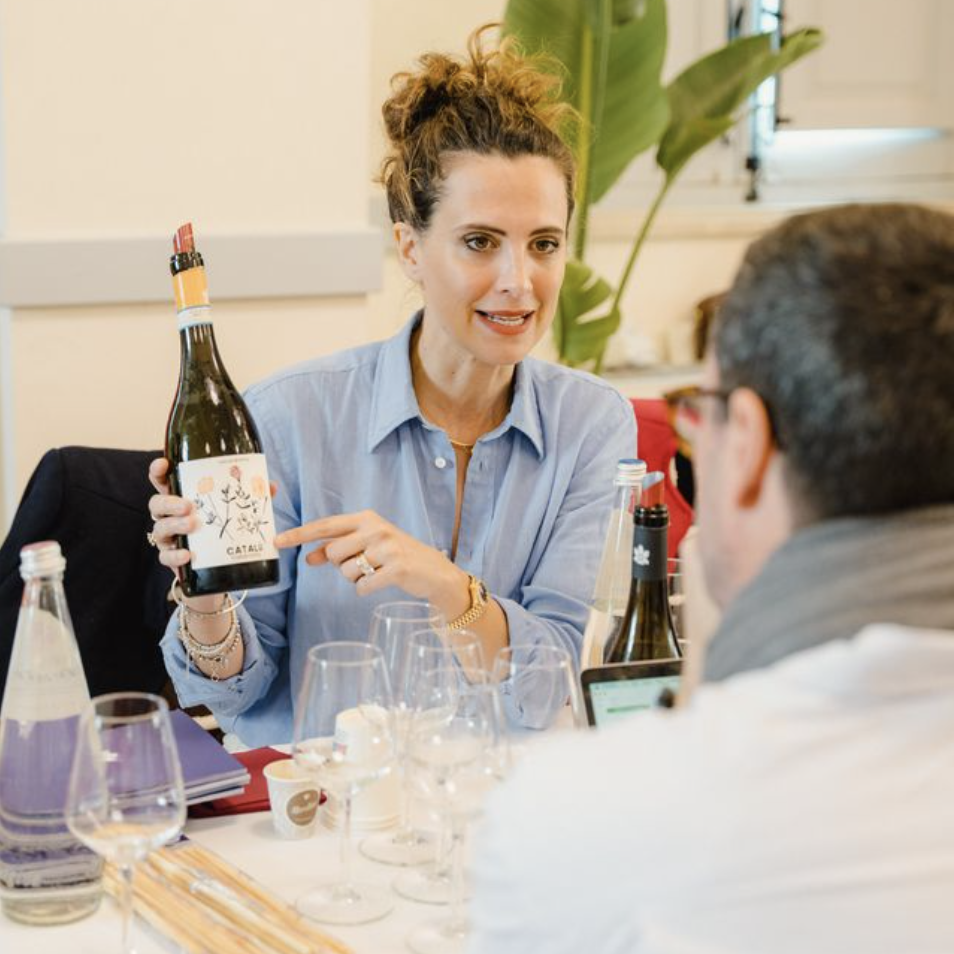
Giovanna and Rosanna Caruso – Caruso e Minini

Caruso e Minini Catarratto Catalù Sicilia DOC 2024

Not only unique for catarratto but authentic and existing right at the heart of the concept of ARCA, “associazione regionale catarratto autentico.” The story of grape coming from place with its marine airy and salty entry morphing through rusty fruit, citrus, fennel and finally into a sapid, botanical finish. Drink 2025-2028.  Tasted May 2025

Dei Principi di Spadafora Vignaioli in Sicilia Catarratto 2024, Terre Siciliane IGT

The catarratto is timeless and you can drink it any time of the day. Literally and expalins Enrica Spadafora, “in our area the freshness of the land is what determines what comes from the grape and place.” A bit tannic however, sneakily so and things will change if you allow them to. Drink 2025-2028.  Tasted May 2025

Dei Principi di Spadafora Vignaioli in Sicilia Don Pietro Monreale Bianco 2024

Only catarratto which qualifies as a varietal wine for the Monreale denomination, no longer inclusive of grillo, from concrete to steel in terms of fermentation and maturation. The feeling of skin contact is palpable even though it is just four days because a salve texture and tannic profile settle into the palate. Still the acidity and freshness are preserved for a balanced varietal wine. Drink 2026-2029.  Tasted twice, May and June 2025

Dei Principi di Spadafora Vignaioli in Sicilia Principe G 2021, Terre Siciliane IGT

Just grillo and six months on lees for body and spirit with time having brought about some maturing notes to create great varietal curiosity, like preserved pears or peaches and a settling on the palate. Persistent but not of a waxing energy per se. Plenty of texture and flavour to mull over, on and about. Drink 2026-2029.  Tasted May 2025

Feudo Montoni Inzolia Sicilia DOC Fornelli 2024

A rebound vintage but at Feudo Montoni consistency is king because Fabio Sireci will never force a square peg into a round hole. The 2024 season was an easier fit to produce varietal wines as he sees fit, here with that great mix of the salty and the sapid. Just spot on and poured at the right temperature inzolia is just so, so good. Drink 2025-2028.  Tasted May 2025

Feudo Montoni Catarratto Sicilia DOC Masso 2024

Sharp catarratto, cut through fruit and palates like a knife, a specific mineral that of course is a bit saline but in catarratto it’s really all about sapidity. Fabio like his whites with some austerity and this is the white that has the most, with bitter almond notes come out in the aroma, as marzipan at the finish. This can age, you better believe it. Drink 2026-2031.  Tasted May 2025

Feudo Montoni Grillo Sicilia DOC Timpa 2024

More aromatic than catarratto, not quite moscato floral but scenting yellows and whites, a honeysuckle imagined with lemon citrus blooms. Still ’24 grillo is taut with vague austerity (thought not catarratto austerity) and as with all the Montoni whites the grillo too is so very linear and vertical. Drink 2025-2029.  Tasted May 2025

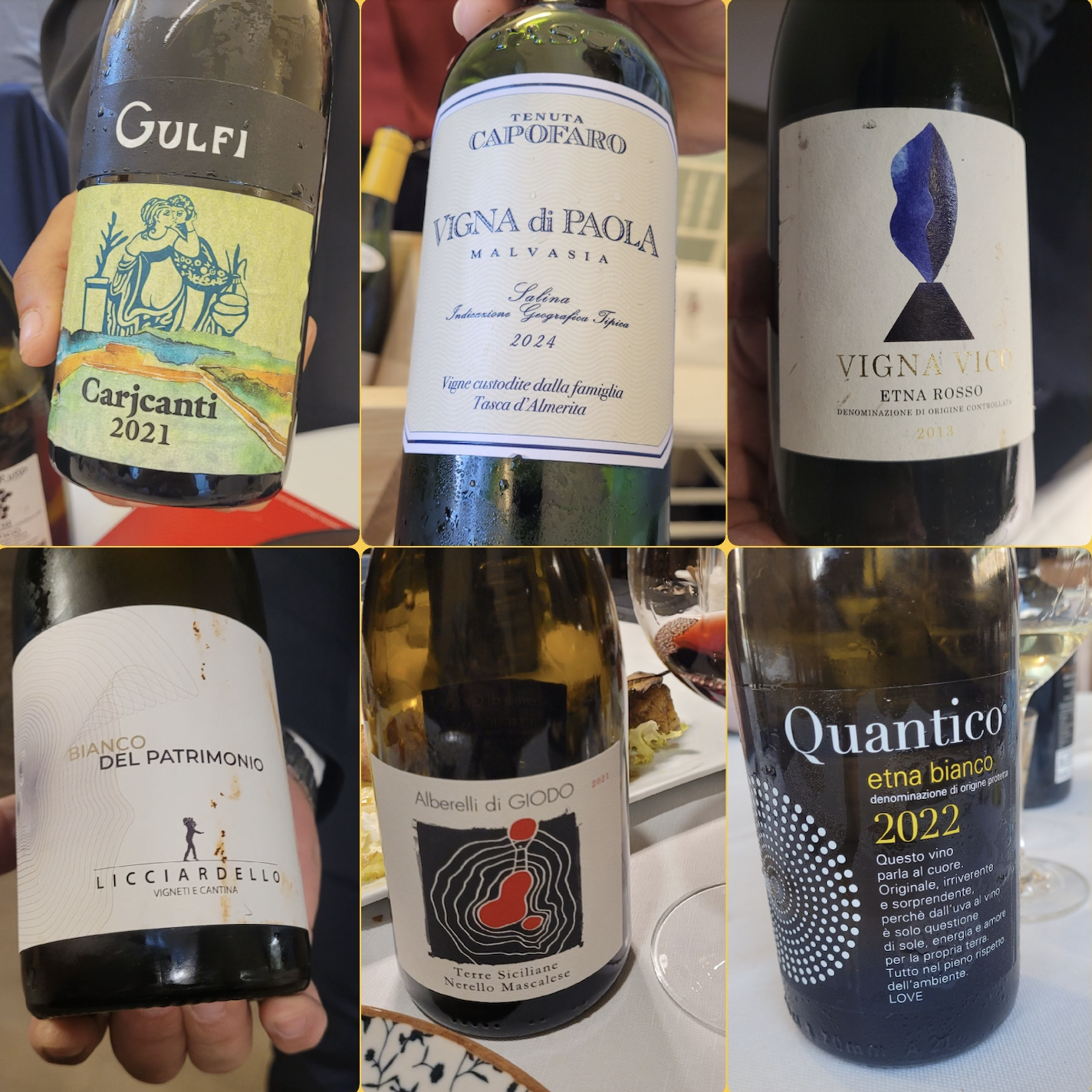
Gulfi Carjcanti 2021, Terre Siciliane IGT

From the wine with the dialectical name for carricante and a beautifully bittered tincture that speaks to sunshine for fruit first and volcanic feels second. They come together but will only improve their relationship with tome in bottle. Drink 2026-2029.  Tasted May 2025

Pellegrino 1880 Grillo Sicilia Superiore DOC Senarià 2023

Senarìa means “cold” for a clone of grillo planted in 1980 ’s since been propagated by Pellegrino for more hectarage. The only grillo produced as a superior in Sicily with age and clonal specificity creating the identifiable DOC. Almost like serious chardonnay in style and effect, a Burgundian bite and crispy character that’s part unexpected and part intense. The richness comes from the palate, as it should for a two-part experience growing and will continue to grow in stature. Drink 2025-2028.  Tasted May 2025

Pellegrino 1880 Isesi Pantelleria Bianco DOC 2022

A Bianco in which zibbibo is the key with altitude and exposition to the winds being the catalyst. Different plots in several contrada are chosen as contributors of their varietal fruit expressed as a white wine that should and will age for years. Falls into the semi-aromatic, cousin in style to moscato sort of way and the tannins lay really low. They are the underscore, the horizontal backbone that fruit but also acidity glide over and develop their motion. This is a wine of journey, never static and one to look forward to tasting when it passes five to ten years of age.  Last tasted May 2025

Pellegrino 1880 Vergine Marsala Riserva DOC Single Barrel Nº 018 2005

Vergine means marsala fortified with soy alcohol and as Riserva (2005) it means more than 20 years of aging. Mainly grillo with (30 percent) catarratto and inzolia, limited production, 2,163 bottles and finished at 19.5 percent alcohol. The sugars developed could imagine honey, brown sugar or maple syrup but they are so much more complicated and therefore unnamed. Also fruit like apricot and pineapple but think moire exotically or better still just admit that something unusual and ethereal is happening. The palate is dry as the desert, the flavours, brown butter nutty, intense and spicy. This is not a dessert wine by any stretch of the imagination but something much more gustatory and ready to receive culinary inspiration. Drink 2025-2040.  Tasted May 2025

With Planeta winemaker Patricia Tóth

Planeta Eruzione 1614 Carricante 2022, Sicilia DOC

At a time it was the high elevation and now it’s really more about the established appellative functionality that dictates the specific DOC labelling of Eruzione 1614. There are varietal carricante on L”Etna and there is Eruzione, a Bianco as definitive to tell an old story and relay the message of soil, stone and place. The 2022 is exceptional, rising and seemingly hovering above the ground, something very hard to do for fruit grown on volcanic terroir! Yet here is this levitating Etnese, a Bianco of weightlessness and incredible acidity. Will drink well for five years, in another terrific alternate state for five more and then who knows what magic through five more after that. Drink 2027-2037.  Tasted May 2025

Planeta La Segreta Bianco Sicilia DOC 2024

Ninety percent of the blend is three-fold, of grillo, grecanico and chardonnay, plus 10 percent “others” which includes the aromatic viognier. All adds up to one of Sicily’s most drinkable whites and there can be no argument there. Cool, chill, kick back, sip and relax. Here, there and everywhere. Put on the Beatles or whatever makes you tick. Just drink it. Drink 2025-2027.  Tasted May 2025

Planeta Chardonnay Sicilia Menfi DOC 2023

Warmth begets riches and yet 2023 is not the warmest of Ulmo vintages but chardonnay has so much experience, developed vine age and proven track record to get into this full and substantial place. Without fail and the fans of this large production Sicilian pioneer will again be granted their wish. Chardonnay is big and it is grand, with the benefits of barrel and sun, all in balance. Drink 2026-2029.  Tasted May 2025

Planeta Chardonnay Sicilia Menfi DOC Didacus 2022

For Didacus chardonnay rises to the island’s highest level because it receives the respect and elévage it so deserves. Hard to find a vintage as firm and as tight as 2022, weather related of course with heat units having come fast and intense, but also elongated through to the earliest pf picking times. That would be the first week of September and thankfully so because acidity keeps the dream alive. Didacus is drinking at peak right now – do not sleep on it’s power or potential and find a way to get there now.  Last tasted May 2025

Production began in 1995 while the vines are now nearly 45 years of age. In the southwest part of Sicily, in the Ulmo area around the village of Menfi where a corridor of wind, “our favourite friend,” tells Santi Planeta, blowing through between the lake and the sea. Through vines growing between 100 and 450m, breathing cool life, especially in the summer. The 2022 vintage saw plenty of rain though not concentrated at any particular time and so the constant events of moderation were something remarkable considering how often extreme climate events are increasingly more prevalent. The coming vintage of 2023 and 2024 will be affected by them, mostly because there was no rain. This chardonnay is impeccably balanced between fruit and acidity, acidity and texture, texture and tannin. The progression is seamless, the result precise and anyone who does not the recognize the experience and continued work put in may not be paying close attention. That’s fine but know just how special a (relatively) large production, semi-cool climate chardonnay this truly is. Planeta’s year-to-year consistency is truly impressive. Drink 2024-2028.  Tasted at i4C, July 2024

Serra Ferdinandea Bianco Sicilia DOC 2023

A 50-50 split between grillo and sauvignon blanc from a season with drama because of early heavy rains and yet there no Perenospera (mildew) developed up on the vineyard’s hills. In this vintage the directness and linearity of the sauvignon takes control but this is also the style, from clean maceration for a capture of saline intensity to keep fleshy and golden maturity at bay. The grillo plays along but never speaks up or steps out of place. Drink 2025-2027.  Tasted May 2025

Tasca d’Almerita Tascante Chardonnay C’Eragià 2022, Sicilia DOC

Etna chardonnay made with French wood completely un-toasted out of Rampante where a chardonnay vineyard already existed when Alberto Tasca bought the estate. The wood is virtually unnoticeable, lemon attacks the palate and the energy is simply great. Graceful while volcanic spirit adds the intangible pizzazz. Drink 2026-2029.  Tasted May 2025

Tasca d’Almerita Fondazione Whitaker Grillo Mozia 2024, Sicilia DOC

Grillo from Mozia island off the coast of Trapani and Marsala, the only important variety and 40 year-old vines for the most unique expression of the grape. An ancient expression if you will and quite possibly the saltiest of them all. Some will find this sharp and austere but there is sneaky richness and intensity that belies the sear and strike of the grillo. Drink 2026-2029.  Tasted May 2025

Tasca d’Almerita Tenuta Capofaro Malvasia Vigna di Paola 2024, Salina IGT

Saltier and more vertical of the two Salina malvasia, less fleshy but also juicy character, instead a more briny caper measure and mix of marine elements. Volcanics come into the soul of this malvasia with impunity and the mineral austerity is nothing short of intense. If Didyme intoxicates it is this Vigna di Paola that takes full control of your senses. Drink 2026-2029.  Tasted May 2025

Tasca d’Almerita Tenuta Capofaro Malvasia Didyme 2024, Salina IGT

Iron volcanic sands make for vines and grapes that develop a relationship only Salina will own, different even than Lipari and in terms of malvasia there is nowhere else in the varietal diaspora where it comes way like this. A mineral that gets in you, an intoxicant that runs through the veins and causes a true stoning. Imagine capers and ricotta, shrimp and lime. It’s all there in sweet, salty and semi-aromatic intensity. Drink 2026-2029.  Tasted May 2025

Tenuta di Castellaro Bianco Pomice 2024, Terre Siciliane Bianco IGT

A blend of malvasia (della Lipari) and carricante as an extremely youthful and so in certain ways playing the part of a 2024 preview although it’s a finished wine. There really is nothing like this, nine months on lees with bâttonage every month. Consider this as “Etna Bianco plus” with more marine influence, a spirited buzz about it and a fleshiness matched by this mix of flint and isle mineral feel. Just bloody delicious. Drink 2026-2029.  Tasted May 2025

Tenuta di Castellano Eúxenos 2022, Terre Siciliane IGT

Just malvasia di Lipari, ”lightly” fermented on skins in one cacciopesto amphora, a lightly permeable type for just 1,800 bottles. Simulates an imagining of a history of sunken greek amphora and so a message is felt and transmitted for making a wine that just needed to be made in reference to the lore. Ultra textural and a fascination with fate that requires one to abandon a perspective firmly embedded within a knowable methodology of winemaking culture. Drink 2026-2029.  Tasted May 2025

Tenuta Regaleali Catarratto Sicilia DOC Buonsenso 2024

Intensity and concentration of sweetly herbal and salty fruit with persistence as much as any varietal wine in Sicliy. Happens to be catarratto, one so full, expansive and linear. Drink 2025-2028.  Tasted May 2025

Etna Bianco

Benanti Etna Bianco DOC Contrada Cavaliere 2023

Cavaliere as a contrada white is getable and found in mid course for carricante of middle weight, fleshiness and structure. In other words a balanced Etna Bianco that has arrived early and readied for consumption ahead of the other single place wines. The metallic notes are purely basaltic and while fruit is plenty pleasant it’s not really the lead driving factor. Cavaliere is specific and noted for that. Drink 2025-2028.  Tasted May 2025

Benanti Etna Bianco DOC Contrada Rinazzo 2023

Rinazzo as a contrada Etna Bianco is surely more reserved and stoic especially as compared to (Cavaliere), as if it were let’s say Vaucopins and Cavaliere were Beauroy. Unnecessary wine region comparisons aside there is a richesse and a golden sun meets volcanic mineral accumulation to set Rinazzo aside. Definitely its own Bianco, at once structured and then feeling mature. Feels like a wine having arrived and yet not quite there. Makes for another great and curious Etna Bianco study in contrada-designed peculiarities. Drink 2025-2030.  Tasted May 2025

Benanti Etna Bianco DOC Contrada Monte Serra 2023

There is Cavaliere, Rinazzo and then there is Monte Serra. Hard to imagine three Etna Bianco from the same producer could each act so different. Monte Serra is the reductive and hard to access carricante, stuck in the basalt, shut tight and currently immovable. Not exactly expressive nor seemingly looking to act so any time soon. Would give this a year to sort out its thoughts and reconcile its differences between parts. That said the distribution of weight in Monte Serra’s design creates a sense of stability and harmony in its architecture. Thinking further we’d all consider waiting two years to see a release of the magic and fantasy. Drink 2026-2031.  Tasted May 2025

With JustSicily’s Federica Matranga

Cottanera Etna Bianco DOC 2024

First ’24 out of the gates, clean, open, fragrant and fresh. Apple juiced and as readied in simplicity without fuss, obfuscation or muss, in as much as it seems possible from Etna Bianco. The time to drink is now. Drink 2025-2026.  Tasted May 2025

Cottanera Etna Bianco DOC Contrada Calderara 2023

Next level interest and complexity comes from this Etna Bianco out of the Contrada Calderara where reds shine and whites like this are golden proud. Equanimous mix of stone fruit and volcanic savour come together and do so with seamless ease. For someone who wishes to experience the next level above and beyond regional or say “Villages” Etna Bianco it is this carricante that will help show the way. Drink 2025-2029.  Tasted May 2025

Cusumano Alta Mora Etna Bianco DOC 2023

Rich, luxe et volupté carricante for the sort to seduce and reel in hundreds of new varietal consumers. Also that which should surely please many who have already attended the party. More than ample freshness, crisp bites, orchard fruit, mineral sparks and finishing bitters. Drink 2025-2027.  Tasted May 2025

Donnafugata Etna Bianco DOC Sul Vulcano 2022

Oh so specific style of Etna Bianco from carricante tucked into the volcano and scenting like a garden wet with rain. As if petrichor soaked into basalt, effusive and smelling like nothing ever before, especially when the Ginestra joins the mix. Crunch and sway, crisp apple bites and varietal oscillations. Top vintage for this Donnafugata Etnese white, clean and yet leesy, complex and inviting. Drink 2025-2029.  Tasted May 2025

The team of Generazione Alessandrio

Generazione Alessandro Etna Bianco DOC Trainara 2023

Of 85 percent carricante and (15) catarratto near Lingualossa which being on the eastern slope increases the marine influence. Push-pull posit tug between the volcanic and the botanical or perhaps they are actually one in the same. Clean and focused Etna Bianco in any case. Drink 2025-2028.  Tasted May 2025

Girolamo Russo Etna Bianco DOC Nerina 2024

Rich and fulsome, as concentrated as Nerina will ever be and surely a factor of tight, small and low yielding bunches. These as a sub-factor from a condensed vintage of heat units and less water accumulated in each berry. Nerina as Etna Bianco 2024 travels right up the rising angles of the palate, gets into that nook at the top of the jaw before receding into full golden fleshiness. Drink 2025-2028.  Tasted May 2025

Girolamo Russo Etna Bianco DOC Feudo 2023

Feudo as the cleanest of Russo’s carricante, crisp and of a contrada clarity for whole rounded expressiveness. Good clean lees living from 2023 Feudo with segments of lemon and white grapefruit providing a plethora of fresh citrus flavour. Nothing herbal or savoury about it, just the facts, of fruit and mineral.  Last tasted May 2025

New Bianco for Giuseppe Russo, a selection of 100 percent carricante from three hectares within the Feudo di Mezzo vineyard and contrada. Feudo is not San Lorenzo but it is something remarkable in its own right. More botanical and phenolic but also a level of citrus preserve not noted anywhere but Feudo. Crazy level of implosive citric intensity and taut character. The behaviour is so different to San Lorenzo with flavours that mean business in the most impressive way imaginable. Intensity off the charts, concentration so impressive, energy that builds and builds. Drink 2024-2029.  Tasted May and September 2024

With Giuseppe Russo and Alberto Graci

Graci Etna Bianco DOC Muganazzi 2023

Graci’s Muganazzi is a true blue contrada Bianco from stone, of mountain reduction by way of its processes. The palate gets past the wall of aromatic sound to tell us what we need to know, or at least part of what the future holds. This is serious and protractive carricante, cased in a hard protective shell, waiting to be released. Crispy and encrusted but time will do what’s necessary. There is a great an substantial amount of fruit which is what matters most. And of course the volcano. Drink 2027-2033.  Tasted May 2025

Graci Etna Bianco DOC Arcurìa 2023

Apposite to Muganazzi is Arcurìa, a contrada carricante with more immediate flesh and plenty of backbone in support. Arcurìa is also the truly leesy Etna Bianco, built on the yeasty stuff and more akin to wooded Chablis than almost any other. This reminds of Fourchaume if such a comparison could be tolerated, but either way the wine is built to last. Drink 2026-2031.  Tasted May 2025

I Custodi delle Vigne dell’Etna Bianco DOC Ante 2021

Smoky from its reductive and flint stone struck moments, the fruit not only behind but well back with volcanic sand after a rain wedged expressively in between. Everything about Ante screams volcanic Etna, in stone, rock, sand, mineral and elemental style. A must try to begin believing. Drink 2027-2032.  Tasted May 2025

I Custodi delle Vigne dell’Etna Bianco DOC Imbris 2020

I Custodi is the kind of place to raise cariccante and Imbris the kind of label to speak in Etna Bianco clarity. The cool-climate factor and style might make you think the area is cold as hell but oh,no,no,no and Imbris is a kind of rocket man. The 2020 holds such a beautiful combination of lees driven fruit and volcanic mineral so there is no doubt a new age is upon this estate. The wines have been working towards this moment and here they are. Beautiful and inviting, welcoming and fine.  Last tasted May 2025

Varietal carricante at 800m fermented in steel, put to barrel and then one year in bottle. So much corporeal flesh on the body of a seriously developed Bianco. Has come into a fine place but my goodness so much texture, citrus and length. Drink 2024-2027.  Tasted May and September 2024

Maugeri Etna Bianco DOC Superiore Contrada Volpare 2023

Confident, cool and still presently stoic holding on to a controlled, yet to open the gates and be released intensity. Perfectly clean lees living within a structure of carricante built for pleasure and also aging. Really fine work from Contrada Volpare with many years of expressive reveal still to come.  Last tasted May 2025

Youthful is the understatement and Volpare the name, so say it loud. This is indeed singular Etna Bianco, as they should be but some are in a league of their own, as Mugeri’s eastern wines clearly are. The estate has taken it to the next level with an ascension of elevated mountain fortuity but also depth determined by terroir which can only be transmitted when agriculture abides. Abides because the maker makes it happen and Volpare delivers generously while also with precision and finesse. Leave this for 18 months or more to settle the relationship between rocks and acidity. After tasting Frontebosco and also Frontemare you realize the latter is the true catalyst to propel this cuvée selection. Drink 2026-2032.  Tasted September 2024

Maugeri Etna Bianco DOC Superiore Contrada Volpare Frontebosco 2023

Seemingly an understatement made but its only by the music this Etna Bianco will be free. No doubting more finesse, focus and precision from the carricante out of the vineyard facing the forest, an herbal cooling coming in, upping the botanical feels, its development low, slow and perhaps still far away. The taut nature of Frontebosco means the requiem to await what’s coming should be at least a year. Last tasted May 2025.

Versante est which separates Mugeri from not just the north but also the south and the future will surely look to this area for greatness. Not only Volpare contrada but a section within, here called Frontebosco, as in facing or in front off the forest and so the herbals here within are assumed to be elected by the nearby woods. Makes for freshness but also a fruit fleshiness that the more general Volpare does not show. A full, substantial and impressive Etna Bianco that might just appeal to everyone. Superiore indeed. Drink 2025-2033. Tasted September 2024.

Maugeri Etna Bianco DOC Superiore Contrada Praino Frontemare 2023

From the first to the sea we now receive the carricante out of the vineyard facing the Ionian, a stiff breeze blowing through, keeping the sails taut and the speed up, all the while a finish line yet far away. More lees coming from Frontemare mixing with sea spray for an Etna Bianco tight as they come, yet airy and rising. Would wait two more years for parts to come together and waves to calm down. There will be smooth sailing ahead.  Last tasted May 2025

Frontemare, “facing the sea,”as opposed to Frontebosco, “facing the wood.” As such this would be east facing from Etna’s east sector and so the block with the view creates a unicorn of an Etna Bianco as fascinating as it seemingly gets. The most crisp, crunchy, fresh and intense of Mugeri’s whites, citrus squeezed throughout and long as the zig-zagging wind of a single road down to Catania and into the sea. Just wow, with layers upon layers to unreel, unfurl and unroll for a long aging period ahead. Drink 2026-2034.  Tasted September 2024

Palmento Costanzo Etna Bianco DOC Bianco di Sei 2022

Perfectly expressive carricante from 2022 for a vintage not always caught at optimum, however the Costanzo team’s relentless.  Last tasted May 2025

A cuvée of all parcels from different contrade, including the homefront Santo Spirito, along with Cavaliere. On average 90 percent carricante with (10) catarratto. Only raised in stainless steel, persistently fresh and if any region in the world might be compared with it would be Chablis AOC, direct, salty, smart and widely purposed.  Tasted September 2024

Just have to say wow because Bianco di Sei comes equipped with a level of intensity that was not quite expected from 2022. Not so much a volume or an explosion aromatically speaking but an extreme set of eccentricities that crash aboard the palate. Likely needing some rest and down time to integrate because the level of extract here (including volcanic activity) is simply off the charts. Etna incarnate, pointed and exciting. Drink 2025-2029.  Tasted May 2024

Palmento Costanzo Etna Bianco DOC Contrada Santo Spirito 2022

In reality these last three or four years have always been warm but ’22 was frankly very good, warm yet without any real challenges. What drives this carricante is an unwavering focus and persistence, a balance from start to finish without dips or oscillations. The relationship between Costanzo and Santo Spirito in Bianco is seamless, now seven years into their partnership.  Last tasted May 2025

High level aromatic volume and concentration from Santo Spirito ’22 and we know right away that this wine knows exactly who it is, where it comes from and where it wants to go. Volcanic salts are also present on the nose from a Bianco of great stage presence and such a smart textural weave that gains every bit of the palate’s confidence. The connection is prescient, reaction calming and conclusion poignant. This is how you make and present Contrada-specific Etna Bianco. Drink 2025-2033.  Tasted September 2024

Palmento Costanzo Etna Bianco DOC Contrada Santo Spirito 2021

High spirit from the Contrada specific blocks to speak on behalf of local saints and soils. Volcanic vernacular, citrus and herbal, gelid cool, leesy clean and indefatigably healthy. Fine carricante for 2021 and a vintage that is sometimes confounding. Not here in an expressive and beautifully made example. So very 1879 in terms of volcanics and therefore Santo Spirito tells the story.  Last tasted May 2025

Note the colour of the lava soil on the label, lighter brown for Santo Spirito, from the contrada vineyard at 700m on the northern slope that comprises one out of three “islands within the island” of L’Etna. Still just an infant, implosive and insular, wound so tight, yet to explode. Give this another year, just as the first taste had indicated for months prior.  Tasted September 2024

A fine vintage and and even finer Contrada, that being Santo Spirito where carricante (and 10 percent cattarrato) are given every soil, geological and micro-climatic advantage. There is an accumulation of ripeness and stone cool mineral groove from location and acumen that make this move with incremental ability. It will slowly define itself over along period of time that will be fascinating to watch every step of the way. Drink 2025-2032.  Tasted May 2024

Palmento Costanzo Etna Bianco DOC Contrada Cavaliere 2022

The most recent bottling for the cru Bianci and this out the contrada vineyard down slope from Palmento Costanzo. Perhaps not the tension of Santo Spirito and surely more richness yet still the balance between fruit and the structural parts. Cavaliere is remarkable for its quality consistency year in and year out. Unwavering Bianco. Drink 2025-2028.  Tasted May 2025

Palmento Costanzo Etna Bianco DOC Contrada Cavaliere 2021

Very different to Santo Spirito, riper and richer, more cumulate golden sun, lees still a major factor in the overall expression. Just a touch of reduction, tart with tight lines and increased juxtaposition between stylistic parts. Not as focused as Santo Spirito but surely seductive and generous.  Last tasted May 2025

Note the colour of the lava soil on the label, darker brown for Cavaliere, from the contrada vineyard at 700m in the southwest “island” of L’Etna. A different expression to that of Santo Spirito, volumetric in terms of aromatics and less austere or rather locked tight. Here more sapid and botanical, less basaltic salinity and fleshier early on. More fruit forward, pulpy stone fruit like, amenability run higher and the Contrada-designate Bianco to drink while waiting for Santo Spirito to mature. Drink 2024-2027.  Tasted September 2024

Pietradolce Etna Bianco DOC Archineri 2023

Archineri as a Bianco is really open and expressive, delicious and generous from the word go and ready to please. Clean lees, a cool basaltic factor and white peachy stone fruit. The citrus is a bit neutral yet surely supportive and helpful in the overall feel of the wine. Really good quality and clean winemaking results in a wholly accessible and aiming to please white from L’Etna. Drink 2025-2027.  Tasted May 2025

Tasca d’Almerita Tascante Etna Bianco DOC Contrada Sciaranuova 2022

Lees shows to be so integral and essential in the early development of Tascante’s Etna Bianco 2022 from the very important Contrada Sciaranuova. There is a play of current confusion while this youthful because the parts inside are bigger than the house that fits them. Expanding from within and needing more room to grow, to shed its weight even after eight months time.  Last tasted May 2025

Vinified and aged in Slavonian Grandi Botti, “to preserve the verticality and freshness of the carricante” explains Tasca d’Almerita agronomist Michele Brusaferri. Plays hard to get and acts demure inside the halls of its aromatic silence but you know that the elevation and fine basaltic soil are the portents of Tascante’s main Contrada Sciaranuova that will see to conditions for change. Though soft you feel the wood, present with confidence yet the thread of cool, herbal and botanical rins from Buonora into this Bianco. Fruit will soon peek through and announce a scintillant’s arrival, blossoms too, namely orange and then to salty lime later on. Just takes some air, agitation and swirl to coax out the excitement and up into the stratosphere. Turns out to be crunchy and seriously salty Etna Bianco, like flakes of Maldon or Slovenian platinum for what can best be described as living the high seasoned life of Etna Bianco. Structure is there and so this should age quite well. Drink 2025-2031.  Tasted September 2024

Tasca d’Almerita Tascante Etna Bianco DOC Buonora 2024

Both the good hour and bonaire as from the French and carricante just about as fresh as you will ever experience. Fresh and fleshy, fleshy and delicious, delicious and satisfying. Just what you desire on the 12th of May at 650m above sea level aboard L’Etna. Drink 2025-2028.  Tasted May 2025

Terra Costantino Etna Bianco DOC deAetna 2023

The term “deEetna” comes from a Latin pamphlet dated to 1494 expressing the sacredness of the oenological universe. Terra Costantino’s is one of the finer examples for 2023 by way of a blend led by carricante plus (15 percent) catarratto and (5) minnella. Ripening to fruition happened in the last ten days of September off of vines averaging 20 years. Yes to the palpable feeling of gainful concentration in juxtaposition to a fine and chiseled example with more wiry flesh hanging tuat on the mineral frame. Really well composed. Drink 2025-2029.  Tasted May 2025

Tornatore Etna Bianco DOC 2024

The straightest and fullest of Etna Bianco expressions with all in clean lees bulking up the substantial aspects of the wine. This is the entry point, the gate for which to walk through into the ever expanding idiom that is Etna Bianco. Start here and then explore the rest.  Last tasted May 2025

The vintage is represented in a most viscous way. Almost an oily character to 2024, indicative of the variable vintage with September having delivered some much needed warmth and sunshine for full phenolic grape development. A sapid iteration, botanical notes pervading and in the end it is texture that drives this Bianco machine. Drink 2025-2028.  Tasted March 2025

Tornatore Etna Bianco DOC Pietrarizzo 2022

Full on sun cumulate carricante from Pietrarizzo for what is surely as ripe and calculated an expression as they come. Full advantage taken of 2022 fruit for all that can be wanted from a Contrada Bianco example.  Last tasted May 2025

Pietrarizzo is both available and confident, not idiosyncratic like Zottorinotto and also richer of fruit. There is an herbal and botanical way about this cru Bianco with splashes of catarratto bringing seasoning to the carricante. A bit spicy and even humid though the fruit is the thing and the volcanics an accent making for even more spice entertained. Such a solid Contrada based Bianco. Drink 2024-2028. Tasted and September 2024

Tenute Tornatore Etna Bianco DOC Zottorinotto 2021

No comparison between Pietrarizzo and Zotorinotto, first of course because of location but in this case also dramatically caused by vintage. The 2021s are not holding up with the same stage presence as wished for last year and the year before. In fact they’ve transformed into this idiosyncratic space. No different here with a carricante of reductive meeting wet stony elements. Feels like some diesel creeping in, not petrol per se (akin to TDN) and smoky rather than smouldering. A bit of a strange advance with likely something new again on the horizon.  Last tasted May 2025

Of Tornatore’s cru-designated Bianci it is Zottorinotto that acts the most reductive and hard to crack. Great shell of protection and disguise, needing agitation and better still time. That said the 2021 is also fully formed, developed and very much ready to get at – make sure to aerate, decant if you can and allow the pleasures to be released. Drink 2024-2026.  Tasted May 2024

Etna Rosso

Benanti Etna Rosso DOC Contrada Monte Serra 2023

Strong aromatic presence and pulse for Monte Serra 2023, mildly and effectively reductive holding parts known and unknown. Not to say the aromas are stifled because they burst if within a bubble and yet to explode without. The epitome of nerello macalese filling our hopes, thoughts and dreams with anticipation. Cuts from stone some dreams of its own and though restrained it keeps a watch over the distance with a look to the future. Monte Serra is always an Etna Rosso with the grip and structure to look farther on, to hold back the fruit and preserve it for later days. The 2023 is balanced and prepared for longevity – that much is clearly true and in view. Drink 2027-2032.  Tasted May 2025

Benanti Etna Rosso DOC Contrada Cavaliere 2023

Tasting Monte Serra and Cavaliere 2023 side by side reveals much about place of origin because while the former looks farther on, the former engages today. A nerello masaclese that makes us see where we’ve both been, reaches us with immediacy and in turn we pay close attention. So much fruit interned so early, so little time to realize just how much is right there in this glass. It’s just that not opening and consuming bottles in the present will be hard to avoid. Drink 2025-2029.  Tasted May 2025

Cottanera Etna Rosso DOC 2023

Knowable bricks and mortar nerello mascalese as Etna Rosso and dictionary entry for the DOC. Sweet vintage fruit, competently concentrated, simply and effectively structure. Does what needs and does it very well. Drink 2025-2027.  Tasted May 2025

Cottanera Etna Rosso Contrada Feudo di Mezzo DOC 2021

Feudo di Mezzo of clout, expressiveness of largesse from the fullness of its old vines nerello mascalese fruit. Still a bit of a reductive nut to crack, a force field to break through, a softening needed to find full pleasure in the wine. A 2021 neither too hard nor to soft, the Goldilocks vintage as they say though the pressure is still applied. This FdM should come into its best years in six months or so. Drink 2026-2031.  Tasted May 2025

Cottanera Etna Rosso DOC Contrada Zottorinoto 2020

Give Zottorinoto an extra year an it will express itself with utmost generosity and here the Contrada’s Rosso is more than ready to go. Fruit sweeping and swelling across the plate, acids mellowed and tannins as well. As drink now a Rosso for the Contrada, as compared to any or all of this ilk on the mountain. Drink 2025-2027.  Tasted May 2025

Cusumano Alta Mora Etna Rosso DOC Feudo di Mezzo 2020

Dusty and Balsamic terroir expression, especially for Etna Rosso and also Feudo di Mezzo. A high acid style to compliment and even more so extenuate the circumstance of nerello mascalese. A specific style as well and one that garners attention, namely because its persistence and length are really quite outstanding.  Last tasted May 2025

Middle ground traveled and promise delivered for the large Feudo di Mezzo as Contrada sizes come, with fruit able to defend itself against generous wood though all parts launch a collective attack on the senses and palate. Big Rosso for Etna, strong boned and willed with the intention to impress. Drink 2025-2028.  Tasted September 2024

Donnafugata Etna Rosso Courdilava Dolce & Gabbana DOC 2020

Red stone fruit skin’s aromatic musk, pulpy to chewy within and fresh enough to keep a leathery character at bay. More tannin than expected and in fact they build quickly – this despite some four plus years having had the chance to settle the score. Still quite grippy and with a level of tension needing to subside. Impressive Etna Rosso. Drink 2026-2029.  Tasted May 2025

Donnafugata Etna Rosso DOC Fragore Contrada Montelaguardia 2021

Noticeable ulterior as an expression of Etna Rosso in comparison to the Dolce & Gabbana Donnafugata label. A fullness of nerello mascalese pressed, dressed and prepared for success. Clearly one to serve up and explain the nature but also importance of a single contrada wine, lacking for nothing and of layers far from being shed. Give time because otherwise this wine will attack with impunity and not let go. Drink 2026-2030.  Tasted May 2025

Firriato Cavanera Etna Rosso DOC Contrada Zucconerò Sciara del Tiglio 2021

Grainy if fine in that respect from specialized and decomposed volcanic sands that lend a very specific profile to Etna Rosso. Also quite ripe and so the palate holds a liquorice, leathery fruit chew character which speaks to drinking sooner rather than later. No doubt a singular wine and one that screams for best food accompaniment. The duck at Cavanera Wine Resort is ideal. Drink 2025-2028.  Tasted May 2025

Generazione Alessandro Etna Rosso DOC Croceferro 2023

Only nerello mascalese off of the northeastern slope of Etna and the place where the iron cross, therefore Croceferro sits in the vineyard. A rich and tannic nerello with a tease of immediate gratification but the austerity in this tannins reminds that time will be the operative and necessity for best results. Drink 2026-2029.  Tasted May 2025

Generazione Alessandro Etna Rosso DOC Scaramantica Vigna Vecchia 2021

Oldest vines are 80 years of age and nerello macacesle is joined by several others for a true Etnese field blend. Increases the fruit immediacy with concentration but even more so the tonic profile with fine-grained ruling and austerity that requests time, plenty of time. Seriously structured Etna Rosso no matter how you slice it. Drink 2026-2029.  Tasted May 2025

Girolamo Russo Etna Rosso DOC San Lorenzo 2022

Open for business, fruit and acids intertwined at their combined sweet heights. Good palate spiciness and a riveting sense of energy. Liquid chalky tannins still in transformation, likely to finish their movements in another year or so. But don’t hesitate as San Lorenzo is drinking beautifully right now.  Last tasted May 2025

The gifts of San Lorenzo are of a slow release ilk the other cru and vineyards of Girolamo Russo are not, but this from 2022 is so full of riches it brings early joy. A great pleasure to have a glass even now with gregarious perfume and readied flavours, of red berries, liquid chalky to candied palate swaths and immediacy from this bottle of wine. San Lorenzo shows off the most glyercol and silken texture – it’s almost candied but of course it’s not. Spicy on the back side, sneakily structured and all the while with a glass we’re feeling fine. Can only improve and integrate with a couple of years time. Drink 2025-2030.  Tasted May and September 2024

Girolamo Russo Etna Rosso DOC San Lorenzo Piano delle Colombe 2022

If San Lorenzo is drinking at early peak right now then Piano delle Colombe should rightly be close behind. Yes in one sense and that would be more intensity of fruit concentration but then again no, because of this landslide of grippier tannin. There is no argument about seeing 2022 as a top Etna Rosso vintage and still the wood on 2022 Piano delle Colombe persists without melting or dissolving in. Some might find a bit too much while others will beg to strongly differ. The 2022 is right there where elements should rightly want to connect, intersect and layer. Perhaps not right away but in time, which will only embolden this Rosso with the wisdom and grace it is destined to express. Wait and anticipate seeing its reflection in the snow covered mountain. Drink 2026-2032.  Tasted May 2025

Girolamo Russo Etna Rosso DOC A Rina 2023

Put a ring around A Rina because no other Russo Rosso comes into view any sooner. None exhibit this level of juicy, luxe and getable richness and none shall pass, not for any reason at all. A Rina is a full and substantial nerello mascalese out of 2023, with the most liquidity come after dissolving grains of tannin for earliest drinking. No reason to wait. Drink 2025-2028.  Tasted May 2025

Graci Etna Rosso DOC 2023

A reminder about origin, they being estate vineyards at 650-750m and aging of 18 months in concrete though this ’23 feels as though at least one big barrel was involved. Not quite as linear and serious an Etna Rosso as the previous 2022 surely was and still is. Youthful yes but more chew than crispiness in 2023, ripeness and sweetness in acidity. No reduction, open for business and read to rock. Drink 2025-2028.  Tasted May 2025

Graci Etna Rosso DOC Arcurìa 2022

Spicing, spacing and perfume define Arcurìa with equal an opposing reflections for signs of Etna Rosso perfections and imperfections. Arcurìa from 2022 is showing quite the amount of barrel at this early stage, notes indicative of spice and challenge. Fruit is up to the task, metered, rising and falling in waves, there to speak of the open and closed spaces. All this to say the journey will end up in reflection in regards to a Rosso drinking forward for eventual gratitude. Drink 2026-2031.  Tasted May 2025

Graci Etna Rosso DOC Arcurìa Sopra Il Pozzo 2020

The piece of Arcurìa needing two extra years of aging and settling time is Sopra Il Pozzo, ad esempio a me piace il sud. Or the north as it applies to this slope of L’Etna and this piece is expressive of the sweetest spicing over fruit as any on the mountain. Yes the southern section is also liked but here Pozzo is an Etna Rosso of wood that needs to melt in, puddle below and allow a rising of fruit. That it will with the nerello mascalese climbing the firm backbone of this 2020 with fine and upstanding repose. Impressive and structured for a very long life still laid out ahead. Drink 2026-2034.  Tasted May 2025

I Custodi delle Vigne dell’Etna Rosso DOC Aetneus 2020

Fascinating study in Etna Rosso because these from I Custodi are different, stand out and alone nerello mascalese with (20 percent) nerello cappuccio. More than just the cappuccio but soil and location add up and amount to what’s in this glass. A certain kind of dried fruit, rich and leathery, studied and mature, weighty but without density. Now a settled wine with heavy mineral presence, a volcanic factor specific to I Custodi and when mixed with the winemaking style it all comes out a very certain way. Do you like it? Try it and find out. Drink 2025-2028.  Tasted May 2025

I Custodi delle Vigne dell’Etna Rosso DOC Saeculare 2016

The consistency of style from one I Custodi Etna Rosso to another is remarkable, to a wine, in all the wine. Yes the 20 percent nerello cappuccino is partly responsible for the semi-rustic, chewy dried fruit character but look further, or rather deeper into fine decomposition of basaltic soil. Location of course but whether you have 2020 or this 2016 in glass they all seem to be at nearly the same maturity. As here with Saeculare although it’s particular grip and structure see it age longer than Aetneus and this is prime time for tasting and in turn drinking this label. It will seem mature to some but know that this is the way and style of the house. Drink 2025-2027.  Tasted May 2025

Palmento Costanzo Etna Rosso DOC Nero di Sei 2021

Fine verticality even from Rosso di Sei because, well 2021 and also the lava. Feels firmer than eight months ago and as a result may live even longer.  Last tasted May 2025

Nero di Sei 2021 comes quicker to the point with near-immediate gratification because of vintage and also by way of the team allowig and even encouaging this to happen. Or abided more like it, with red berry fruit aromas that nerello mascalese can gift when the conditions are right. This is not to say that 2021 will fade into early light because it is in fact equipped with volume, concentration and backbone. A truly exceptional vintage that will appeal to all. Drink 2025-2030.  Tasted September 2024

Palmento Costanzo Etna Rosso Doc Contrada Santo Spirito Pre Phylloxera 2021

Not that the wine isn’t tight but my goodness how the tension is matched by fine verticality from Rosso with an intensity of volcanic chalkiness so specific to Santo Spirito’s 1870 lava. When vines are pre-phylloxera they have a true connection to the actual eruption and basalt because the lava had barely cooled when the first grapes appeared on the vines. A “no lo so” factor in this nerello mascalese character cools the Rosso so that herbal and stony notes prevail and persist, long after the wine has passed over the palate. A remarkable wine (isn’t it always) and another near perfect vintage. Drink 2027-2037.  Tasted May 2025

With Fosca Tortorelli

Pietradolce Etna Rosso DOC Barbagalli 2020

Grand and expressive, epically proportioned, factor of a remarkable vineyard brought to life through the coursing of its nerello mascalese. Hard to imagine an Etna Rosso so fine and linear could be considered crushable but this is Barbagalli and its vines more experienced than just about any aboard L’Etna. Crushable as a fleeting feeling but everything is truly in place, all parts inclusive of fruit, minerals, elements and constructions right where they should formulate. The last of the wine is no such thing because the weights, measures and taciturn moments linger for seemingly ever. Wowed and energized by Barbagalli. Drink 2027-2039.  Tasted May 2025

Pietradolce Etna Rosso DOC Archineri 2021

A different and singular animal for Pietradolce is Archineri, chewier and more palate workable than the rest of the Rosso portfolio. Lots of wood still noted on the 2021, changes yet to take effect, not here, not anywhere. Not tight as much as unable to come to be on the other side. Remains to be seen where this road will lead. To be honest it’s a bit resinous but youth is rebellion and maturity will come to experience.  Drink 2027-2030. Tasted May 2025

Pietradolce Etna Rosso DOC Rampante 2021

Effusive perfume from Rampante 2021, more floral than Pietradolce’s other reds, tannins sweeter and less austere. An approachable character though we know that structure is built for a long and full experience. The most immediately recognizable balance and still time will be kind to this Rosso. Air is on side now, time as well for 10 years forward. Drink 2025-2033.  Tasted May 2025

Pietradolce Etna Rosso DOC Feudo di Mezzo 2021

Some dried fruit and a maturity in the feels of Feudo di Mezzo 2021 but oh my goodness what a charming, graceful and lovely bit of nerello mascalese love in this bottle. Opens slowly and I also feel like their is some sort of obfuscation but the truth is the truth and FdM ’21 is in a very good and right place. Drink this while Rampante and Archineri work through their challenges. Drink 2025-2029.  Tasted May 2025

Pietradolce Etna Rosso DOC Santo Spirito 2021

From the opening salvo Santo Spirito is notable for its restraint and a closed aromatic tilt still very much a factor involved. Like Archineri, floral along with Rampante and so residing either in-between or as a combination of the two. A Rosso of layers, stepping stones taken up towards its eventual plateau. The barrel is melting here so slowly, the fruit fills full and substantial, the power less than intense and the energy still rising, Wait some more and then some more after that. Drink 2027-2031.  Tasted May 2025

Planeta Etna Rosso DOC Feudo di Mezzo 2023

First vintage as a solo Feudo di Mezzo and labeled this way. Not that this Contrada ever creates the darkest nerello mascalese but 2023 is at the peak of lithe, airy and transparent. The vintage takes over from the Contrada with ever-persistent and linear consistency controlling its volcanic destiny. Without density or extravagance, not in any shape or form but instead a fineness that seeks no desperate gratification. Will it age? Of course it will. These are really old vines growing in volcanic rocks, though if perhaps not for decades.  Tasted a second time, May 2025

Full and substantial Etna Rosso for Planeta and 2023, a challenge accepted and met, the effect positive and gaining. Spicing is essential, cumulative macchia also a matter of great importance with layers yet to be peeled away. The reveal is coming, let’s say after another 12-18 months, at which time we will speak of fruit leading and tannin trailing. Grande. Drink 2026-2030.  Tasted May 2025

Tasca d’Almerita Tascante Etna Rosso DOC Contrada Pianodario 2020

Varietal nerello mascalese only grown at 790m in Contrada Pianodario raised for one year in large Slavonian cask. This Etna Rosso is exactly what nerello mascalese is today. It may take a consumer three of four times and vintages before they get it but once they do they will never go back. High acid, transparency, brightest of red fruit, no rusticity and refined tannins. Delicate and at the same time serious. Just keeps getting better each time.  Last tasted May 2025

Lighter of body but not aroma as it now enters with the volume turned up, a feeling of idiosyncrasy and high-level curiosity. Wild and exotic spicing owing to a 17th century lava flow now in a state of degradation to make certain the nerello mascalese growing in its sands are the recipient of its mineral profile.  Tasted September 2024

High-toned, spirited and transparent nerello mascalese from Tasca’s L’Etna Tascante out of Contrada Pianodario. Red berry shine, acids excited and fruit a willing participant. Tarragon and Basil herbal, so very basaltic stony and truly a wine of place. Crunchy and ever so slightly resinous with balsamico mixing into the sweetness of fruit and acidity. Drink 2024-2029.  Tasted May 2024

With Sofia Ponzini – Tenute Bosco

Tenute Bosco Etna Rosso DOC 2022

Spiced and lifted aromatics create an effect to deliver Etna Rosso with linearity, grace and stature. Scan a room and you will not miss this nerello mascalese because its confidence, poise and presence stand out in a crowd. Beautiful in a post classic way, part demure and beyond a doubt unmissable. Barrel that needs to settle down and in will do so in two years time and see five-plus years of ideal drinking after that. Brava Sofia, as always. Drink 2027-2032.  Tasted May 2025

Tornatore Etna Rosso DOC 2022

Straight shooter this Etna Rosso, accessible and amenable to all, now and for all the right reasons. Fruit first, ripe and delicious, aromatically charged and energizing the entirety of the wine. Rosso for Rosso’s sake, crunchy and palatable with great toothsome character, A guarantee and stamp of quality in the most professional of Etna Rosso ways. Unwavering consistency from Tornatore. Drink 2025-2028.  Tasted May 2025

Tornatore Etna Rosso DOC Pietrarizzo 2021

Etna Rosso as Pietrarizzo is nothing short of expressive, energetic and impressive. Fruit comes in waves, in and out of every pore and this “etichetta” exhibits finer and sweeter acidity than so many peers. Commercially viable for a lifted Etna Rosso to explain much about the mountain’s nerello mascalese. Quite fine, true substantial and very composed.  Last tasted May 2025

If Tornatore’s classico Etna Rosso is the most understandable and straightforward 2021 DOC entry point there could be than we should expect Pietrarizzo to hyperbolize that idea. Exaggerate and also exist in a vacuum where great acidity and sneaky formidable structure combine for all that could be wanted and needed. Such is the case and with the estate’s glide into maturity because ripeness happens and getting to the point always in season. Fine work, as always, expected and desired. Should be ready, fully and completely in the late winter months. Drink 2025-2029.  Tasted October 2024

Tornatore Etna Rosso DOC Trimarchisa 2018

A cumulative experience in Etna Rosso, fruit three ways, acids and tannins in and out off every layer, a wine to imagine all the mountain can deliver. Tart, tight and substantial, all the nooks filled with elements fruity and minerally volcanic. As they should be. Drink 2026-2029.  Tasted May 2025

Good to go!

godello

Modica

Instagram

Facebook

Chardonnay is never too cool for school

Flight #1 at the 2024 School of Cool
(c) i4C

Will fully admit to having seriously considered not using the word “cool” in the title for this latest exposé on i4C, Niagara’s annual International Cool Climate Chardonnay Conference. Then good conscience and reality set in because the original dub for Canada’s most important and successful wine congress will always be too good to dismiss. They coined it, built it and people have most certainly come. To foresee and then to consummate this collective pursuit of excellence inscribes Cool Chardonnay into the lexicon of wine forever. Hard to predict just how many more of these joyous to potentially annual profound (four-day) weekends there will be, but were this the last then hundreds upon hundreds of producers, winemakers, media, influencers and consumers over the years will have walked away happy, better for it and with memories to last a lifetime. The extraordinary 2024 edition of i4C went deeper still, to deliver the coolest quality and finest balance between information, socialization, revelry, society and of course, chardonnay. Cool as ever, gotta be cool, relax and never too cool for school.

Three panels of i4C School of Cool 2024

The School of Cool gets into sessions with wise and wily words from Past Chair Suzanne Janke, a lifer for the cool climate cause, public face of Stratus Vineyards and light of the room. Janke’s input, along with the i4C Board, Concierge Kim Auty and Event Director Trisha Molokach shows a highest level of intuition for what can only be judged as a cracker choice for keynote speaker at the 2024 School of Cool. That would be the affable character, next level intelligence and dry as the desert humour of Austrian-born, London-living Master of Wine Stefan Neumann. Mr. Neumann peeks out from behind his little boy grin to invoke the legend that is Laura Catena, to introduce his intentions as it pertains to cool climate chardonnay. “She slapped me on the brain and said there is no such thing as good warm climate chardonnay.” The wheels are turning, theories circulate and then from his own powers of reasoning Stefan announces, “I really think the world needs to know more about Canada and cool climate chardonnay, because it’s really important.” Not that he is late to the party, but the choir nods silently and knowingly, all smiling wryly. You can hear the collective internal dialogue working. “We like this guy.” Then he speaks to they who are not in the room. “Every cool chardonnay has a cool admirer out there,” he insists, “just as every pot has a lid.” The analogy might have got lost in translation from within the history of some ironic Viennese dialect. Note to self: Send Ernst Molden a note to ask for clarification. In any case Neumann comes from a place of hospitality. “As a guest you need someone who can help you,” he explains. “As a sommelier, if I’m going to explain cool climate chardonnay to a guest I’m not going to start with the Winkler classification.” Truer words never spoken.

School of Cool
(c) i4C

South Africa’s Anthony Hamilton Russell leads the first session where things turn immediately laugh out loud funny, if simply because Hamilton Russell is an Afrikaans lekker of off-the-charts intellect, dry wit and a brand of self-deprecating meets sweet roasting and toasting humour that is by all accounts infectious. “The only constant is change,” he begins with an address that may or may not attempt to tackle climate change. “All the hard rains and frosts are just noise in the background and it’s about how we are going to deal with it.” Anthony wisely chooses to order the chardonnay tasting from north to south. His first notation is to explain “how important it is to precipitate proper dormancy in chardonnay.” Then he poses the question, “what is the worst climate problem?“ He is answered by (Nova Scotia’s) Blomidon Estate winemaker Simon Rafuse. “Depending on when you ask me, the answer will be about what just happened.” For Adamo’s Vanessa McKean “it’s a big catch up in the spring to get ahead of things, remove the (geo-thermal) blankets as late as possible before the weeds get out of hand and also late frosts compounded by the textiles still in surround of the vines.” Westcott’s Casey Kulczyk notes that bud break occurs earlier, growing seasons are warmer and ripening is quicker, while also more uneven. Are you sensing a (lack of) discernible Canadian patterning? Even in winemaking, from west to east Canada is comprised of many different vine-growing countries.

Sparkling Flight led by Peter Rod
(c) i4C

Session two is led by Peter Rod, he of chivalrous and consortable character, a prodigy and mentor for Niagara educator royalty and if the audience thinks Neumann’s humour is dry, they are then treated to Rod’s mix of dead-pan, amusement and bemusement. Fine decision to put Peter at the fore for the Sparkling wine flight because nowhere does that category receive more attention, research and investigation than that at his seat of higher learning. Peter Rod is surrounded by bubbles at Brock University’s CCOVI where fizz is considered on a daily basis. An effervescent panel delves deep into discourse for what Peter dubs as “Bubbles on the Rise.” Then the third set of eight pours, this time returning to still waters, holds title for “Chardonnay Unbound,” a varietal discovery with different faces, from different countries. Stefan Neumann returns and keeps the room engaged. Then Suzanne Janke is back at the podium and tells the audience her outfit blends seamlessly into the drapes, as if no one had noticed. Janke’s words are sing-song, showing the skills of a melodist with a sweeping sense of purpose. All she says focuses on the patrons, panelists and chardonnay, but never the I. Piano-woman, “quick with a joke or to light up your smoke….Oh, la, la-la, di-dee-da. La-la, di-dee-da, da-dum.”

With Katie Dickieson, Emma Garner and Ben Minaker – Andrew Peller Ltd.

In the end these are three memorable panel experiences at the 2024 i4C Cool Chardonnay School of Cool. Three expertly moderated sessions by Anthony Hamilton Russell, Peter Rod and keynote speaker Stefan Neumann MS. Intel of the highest order from 21 Chardonnay winemakers. In 12 years of attending this conference there has never been a better organized, finer seamless set of transitions or more to learn. Bravo to Concierge Kim Auty, Event Director Trisha Molokach, Past Chair Suzanne Janke, the producers and entire team of volunteers. Friday night we tasted Friday Night Flights with the producers at Cherry Lane Farms in Vineland. On Saturday night we returned for Chardonnay in the Vineyard World Tour Tasting and Dinner at The Riverbend Inn, Niagara-on-the-Lake. And there were visits orchestrated by the Wine Marketing Association of Ontario’s Andrea Peters. To Chef Ryan Crawford’s Bar Ruffino with J-L Groux, Dean Stokya and Suzanne Janke of Stratus Vineyards. To Dobbin Estate with Wade Dobbin, Peter Gamble and Ann Sperling. To Flat Rock Cellars with Ed Madronich. To Le Clos Jordanne with Thomas Bachelder, Phillip Brown, Kerri Crawford and tasty treats from Chef Crawford. Finally, an i4C lunch at Westcott Vineyards’ Butlers’ Grant Vineyard with Grant Westcott, Carolyn Hurst, Casey Kulczyk and magnificence from Chef Tim Mackiddie. Alas, here are 83 tasting notes, 63 for chardonnay and 20 others. 

Three panel blinds

Blomidon Estate Winery Chardonnay 2021, Nova Scotia

“We have been growing chardonnay since the 1990s,” tells winemaker Simon Rafuse. “We can definitely ripen and picking is weeks ahead of the past, but we have experienced more extreme climate events in the last decade, whether it be frost, flash flooding, polar vortexes, hurricanes and disease pressure.” His ’21 is made in a clean style, whole cluster pressed, on lees for 12 months. Sharp yet rich, intense while full, apropos, meaningful and direct. Top vintage without a shadow of a doubt. Drink 2024-2027. Tasted at i4C, July 2024

Adamo Estate Chardonnay Musqué 2022, VQA Ontario

From an emerging Ontario region – Hockley Valley. Does not quite feel like 100 percent chardonnay musqué but more like an interplanting or layering with some linear, vertical and incisive Burgundian chardonnay. Less fruit from this bottle replaced by mineral salts yet with no compromise to the flowers by musqué. Producers and consumers of fleshy to buttery chardonnay will find holes but the rest will relish in this outcome all the same. “We farm in an area not great for growing grapes” says winemaker Vanessa McKean. ”We don’t have a large body of water to mitigate extreme temperatures so we cover out our entire 18 acres with geo-textile blankets.” Air flow through the vineyard is essential and being at the top of the hill is helpful. Barrel fermented in neutral wood with the musqué portion delivering more floral notes than most Ontario chardonnay. There is a tinned orchard fruit character that invites more than it distracts and the sharpness of this palate journeying acidity is really quite special. Drink 2024-2026.  Tasted twice at i4C, July 2024

The winemakers are alright – Westcott Vineyards

Westcott Vineyards Chardonnay Block 76 2021, VQA Vinemount Ridge

From the home farm of 26 acres and the lowest elevation, teardrop block on shales and gravels, facing east. Earlier ripening, acid retentive and sees 10 months in barriques, followed by six months in puncheon filled with the previous vintages’ clean lees. Like connective tissue that links the past to the present to prepare the chardonnay for a longer future. Texture is mineral, set below tannin, in command of the palate from a chardonnay built to celebrate and also abide by it’s double-barrelled shotgun approach. Fires, attacks and conquers the palate from above and below so that there is no escape. Spirit of ’76 all the way with more vibrancy than ever. Impressive like few others. Will age really well. Made for seafood dishes poached, bathed and sautéed in butter. Drink 2024-2028.  Tasted at i4C, July 2024

Greg Yemen – The Organized Crime

The Organized Crime Winery Inc. Chardonnay Sacred Series Cuvée Krystyna 2020, VQA Beamsville Bench

As implosive and protected as any Niagara chardonnay to speak of a year older example that acts and feels as young as any on recent record. Terrific sweetness of fruit and a testament to a full and in this case also long ripening season. Crisp and biting, orchard fruit crunch and no sign of breaking down. Gambles with nature, shows off precision winemaking and confidence exudes from a chardonnay constantly reopening and one you can do so much with. There are savoury elements that suggest food pairing with be a most fun and rewarding exercise.  Last tasted twice at i4C, July 2024

Powerful, reductive and in charge chardonnay, assuming the risk and in delivery of the reward. Platinum gold hue and attitude, serious, grippy and über conscious of its abilities. Top notch with vanilla and cereals that swirl into the full fruit complement of a chardonnay you just bloody want to drink. Consume away, with abandon because it asks this of you. Abide and oblige. Drink 2022-2026.  Tasted blind at NWAC2022, June 2022

Kellerei Bozen Chardonnay Riserva Stegher 2020, Alto Adige, Italy

From a vineyard at 650m with picking happening at least a week earlier than just 10 years ago and a dolomitic mountain air that breathes great life into this special sort of cool climate chardonnay. A yellow apple just short of ripe, with acidity sweeter than the drupe itself and a classic northerly sharpness that speaks to place as well as any European chardonnay. Drink 2024-2026.  Tasted at i4C, July 2024

Planeta Chardonnay 2022, Sicilia DOC 

Production began in 1995 while the vines are now nearly 45 years of age. In the southwest part of Sicily, in the Ulmo area around the village of Menfi where a corridor of wind, “our favourite friend,” tells Santi Planeta, blowing through between the lake and the sea. Through vines growing between 100 and 450m, breathing cool life, especially in the summer. The 2022 vintage saw plenty of rain though not concentrated at any particular time and so the constant events of moderation were something remarkable considering how often extreme climate events are increasingly more prevalent. The coming vintage of 2023 and 2024 will be affected by them, mostly because there was no rain. This chardonnay is impeccably balanced between fruit and acidity, acidity and texture, texture and tannin. The progression is seamless, the result precise and anyone who does not the recognize the experience and continued work put in may not be paying close attention. That’s fine but know just how special a (relatively) large production, semi-cool climate chardonnay this truly is. Planeta’s year-to-year consistency is truly impressive. Drink 2024-2028.  Tasted at i4C, July 2024

Hamilton Russell Vineyards Chardonnay 2023, WO Hemel En Aarde Valley, South Africa

The spirited intensity is unrelenting and speaks to how the HRV chardonnay tastes more profoundly serious than any other of its ilk. “Young and primary,” insists Anthony Hamilton Russell. “I like the complexity that our chardonnay develops with time in the bottle.” Well said but truth be told the wine already exhibits an electric variegate character and so what’s to come may just blow the mind.  Last tasted at i4C, July 2024

Freshness and abundance incarnate for Hemel-en-Aarde Valley chardonnay from the HR team that simply gets this grape from this place. A citrus vintage, less reductive than some whilst bursting with energy. Delight in lemon custard, all the zest, crunchy, mellifluously honeyed and never over-arching above and beyond the target. A scintillant of fruit through variety, to ache with love and to please, simply and unequivocally by design. Peak performance, summarily in the best of ways.  Drink 2024-2029. Tasted July 2024

The Foreign Affair Blanc de Blancs 2021, Methode Traditionelle VQA Vinemount Ridge

Light toast, easy goes, no long lees but a good signed lease to hang around for a few years time. True as chardonnay blanc de blanc, apples part terpene and part mashed. Smells like baked and cooled apple pie. Palate spirit yet agin those apples are all over, all consuming and all in. Some wood aging, Brut in style, somewhere between six and 10 g/L of dosage laid over 24 months leased lees aging. The second iteration of this sparkling wine.  Last tasted blind at i4C, July 2024

The bottle lists Vinemount Ridge as the fruit source though the website writes Lincoln Lakeshore so lets go with the bottle! Regardless we are looking at 100 percent chardonnay crafted in the dry, intense, citric, high energy style. This shows real energy and a couple of sips nearly take your breath away. The elucidations are green apple, piques of white pepper and the flavour profile slash texture much like sabayon extended by a few shots of limoncello. So much interest here. Drink 2023-2026.  Tasted November 2023

Stonebridge Blanc De Blanc Brut Nature 2020, VQA Four Mile Creek

More autolytic than some and even more than that, mellow, malolactified and softening quickly. Botanical flavours and fine bitters, creamy style, easy and ready. From chardonnay first made off of the estate in 2017 and looking forward to seeing what can be learned from the idylls of experience towards trying this first sparkling wine made at Stonebridge. Old puncheons and stainless steel combine for a punchiness that come out of several cuvées to try and abide by site, structure and ultimately consumer appeal. Richness of the site begets texture and in turn that appeal. The flavours persist though this is ready to drink sooner than many. Drink 2024-2025.  Tasted blind at i4C, July 2024

Kew Vineyards Blanc de Blanc 2017, VQA Beamsville Bench

Golden toast, truly brioche style, equipped with fruit a plenty marked by a note that reminds of good and plenty. Stage presence, persistence and length. A dosage of 5.9 g/L of residual sugar which may be the highest in a flight of eight but still very low for sparkling that is essentially dry. Made by Phillip Dowell with chardonnay that would have been planted on the property back in 1980. As concentrated as it gets for chardonnay sparkling wine but the vintage was acid driven and so the sugar extends the flesh.  Last tasted blind at i4C, July 2024

High energy, raging acidity, captivating and intense Blanc de Noirs right here. Eye-opening, olfactory shocking and palate enervating in every which way but loose. Taut, tight and demanding. Party wine. Drink 2020-2023.  Tasted October 2020

Leaning Post Traditional Method Sparkling Blanc de Blancs 2018, VQA Beamsville Bench

From Hemeris Vineyard on the Beamsville Bench, primary fermentation for six months in barrel, another six with lees and then the full lees aging of 36 months. An emotive sparkling wine that elicits and solicits emotion. Could this be a unicorn wine in its own special way? Evocative of what it makes you feel and what you would like a bubble to taste like? The long lees aging is clearly appropriate and leads the autolysis to a place of warmth, beauty and comfort. Oxidative and yet searing, a blanc be blancs no doubter that mans serious chardonnay business. Complex and curious, crafty and creative.The acidity here is special and in charge. An ideal mix of 9.2 g/L of total acidity and 3 g/L of residual sugar. “The vineyard was asking to become this kind of wine” explains Ilya Senchuk. “The purpose is a single vineyard expression.” Here’s to hoping the 2019 will add a few more months on lees to take that next step upwards.  Last tasted blind at i4C, July 2024

Single vineyard block called Hemeris (an old term for garden, or “something like that,” from the Greek). Of chardonnay, location between (Hidden Bench’s) Rosomel Vineyard and Cave Spring, picked late September and sometimes early October, for sparkling. Base wine is barrel fermented and aged in oak for six months. Spent 36 months on lees in bottle, finished at 2 g/L dosage (so essentially bone dry) and is now about to be released. This was the wine Nadia Senchuk pushed her husband for and this is the chardonnay tract that was needed to create it. Listen to the vineyard says Ilya, “because it’s basically growing bubbles.” Rich and exciting in the same breath, essential through autolytic response elicited and the breath stolen, literally taken away, every move made for the connection between I and it. An auspicious debut and were it not for the prophetic mind and ravishing palate of the winemaker’s better half, well then access to supply might not be so limited. Drink 2022-2026.  Tasted June 2022

Blue Mountain Vineyard and Cellars Brut Reserve R.D. 2014, VQA Okanagan Valley

Aromatic complexity, a chardonnay and pinot noir (55-45) sear of raging citrus but never lean because there is flesh all over the palate. The lemon segments are ripe and delicious, the red fruit character compliments with added spice, the persistence endless and the winemaking clearly coming from a place of experience and respect to place.  Last tasted blind at i4C, July 2024

Always pleased to welcome the BR R.D. into a glass and here is an old but a proverbial goody, that being 2014 and consumers must be reminded just how special this research and development is to determine the excellence of Blue Moutnain’s indagative sparkling wine. A blend of chardonnay and pinot noir, the first 10 percent more than the last with some of the most restrained, reserved and demure aromatics in the Okanagan Valley. All ways to say this is lovely, quietly generous and so settled to gift pleasure above all else. A most complex game of citrus and orchard fruit, distillate by nature, expertly seasoned with fine sea salt, white pepper and lemongrass powder. Such a gift nine years after vintage at a ridiculously reasonable price. Drink 2023-2027.  Tasted November 2023

Henry Of Pelham Cuvée Catharine Carte Blanche Estate Blanc De Blancs 2017, Traditional Method, VQA Short Hills Bench, Niagara Escarpment

Stoic, reserved, full scenting, flavoured and expressive. Tons of fruit here in what could only be 100 percent chardonnay. From a vineyard planted in the 1990s to Clone 95 chardonnay and a place of incredible consistency, “one of the most I’ve ever worked with,” tells winemaker Lawrence Buhler. Sees 54 months on its lees and while it may be difficult four to five years ahead to know what will happen – this is Ontario’s benchmark sparkling wine that always comes through. Not merely a matter of replication but more like intuition conjoined with persistence.  Last tasted blind at i4C, July 2024

Consistently crafted as a Blanc de Blancs that sees 60 months on the lees from estate grown chardonnay. From a varietal growing season so ideally destined for sparkling wine because a cool and wet spring plus summer emerged in late August to hot days and cool nights through October. In the middle of that spell is the chardonnay pick for sparkling and as good, complex and riveting as this arch-classic Ontario bubble may have been before – well bring on 2017 for next level complexities. Tasty, piquant and toothsome, of toasty brioche like never before and this swirl of creamy fruits and exotic seasonings. Feels like aged Growers’ Champagne and the fact that it is from Niagara makes it all that much more satisfying. Plenty of crunch, succulence and acid-driven energy from a meticulous bubble. The benchmark for local. Drink 2023-2027.  Tasted November 2023

Jacques Viljoen – Boschendal

Boschendal Cap Classique Jean Le Long Prestige Cuvée Blanc De Blancs 2012, WO Elgin

Presented by cellar master Jacques Viljoen for a sparkling wine coming from one of South Africa’s coolest climate area. The first vintage was 2007 and these are vines planted south-facing (i.e. cooler in the southern hemisphere) and facing the sea. A place where grapes can hang long and develop phenolic ripeness even while coming in at a brix number just above 19. Lower dosage now and so the autolytic notes (if not globally classic in their expression) and also excitement are increased. As much toast, autolytic and oxidative notes as any in a blind flight of eight. Pushes the envelope to see what can be done with sparkling wine, malolactic fermentation, wood aging, near dry dosage and lees aging. Not so much the classic brioche or baked bread representation but there are complex notions perceived from that aforementioned style clearly chosen, conceived, attempted and for the greater part, succeeded. Drink 2024-2027. Tasted blind at i4C, July 2024

Kyle Loney and Whitney Collins – Advini and Domaine Laroche

Domaine Laroche Chablis Les Vaudevey Premier Cru 2022, Bourgogne AOC, France

The word precise is often used to describe Chablis and many other global chardonnays, sometimes gratuitously but here perfectly applies to the Laroche Vaudeyey. Les VdV ’22 is focused to a virtue with its equality, equanimity and equilibrium from start to finish. A lexical entry to figure out the crux and relationship between cru and village.  Tasted a second time, July 2024

The immediate feeling perceived would be of a chardonnay bottled with lees, of a certain level of autolysis though neither by brioche or with respect to the sparkling kind. More like washed cheese rind, preserved lemon and that kind of texture that skin contact whites also deliver. The sort that settles on the tongue like a dissolving salve but here the subtlety suggest lees in the bottle more than light “orange.” In fact this is essential Chablis and does it not just feel like Ontario winemakers (in particular) are trying to emulate such a style by keeping lees in their bottles? Drink 2024-2028.  Tasted blind i4C, July 2024

Deux Roches Pouilly-Fuissé Vieilles Vignes Deux Roches 2022, Bourgogne AOC, France

Also a bottled with lees style of chardonnay with a level of richness so rightly and righteously older/traditional schooled, but so bloody clean and expertly made. Express and expert tang, layers of citrus, more grapefruit than many, fine tonics and also sweet bitters. There is some fat here but also acidity and verticality, in other words tension, more so than many of the appellation. Recommended by Export Manager Romain Bourgeois and also Stefan Neumann M.S. to pair with The Little Sparrow, a.k.a. La Vie En Rose, the one and only Édith Piaf. Drink 2024-2027.  Tasted blind at i4C, July 2024

Bachelder Chardonnay Grimsby Hillside Vineyard Frontier Block 2021, VQA Lincoln Lakeshore

So much to digest, first with knowledge of chardonnay in the hands of one monkified human that shall be named Bachelder and second of so much to take in and absorb from the label on the bottle. Niagara Cru (there are many), Single Vineyard (there are more), Grimsby Hillside Vineyard (current status Grand Cru, in progress) and Frontier Block (one of two within the great new frontier, inclusive of Red Clay Barn). Two-toned, of bites and textural chew, sexy chardonnay, clean and focused. Highest level aromatics at the peak of what is possible out of Ontario, positively spicy, white peppery even. Cleanest lees usage for a chardonnay of clarity and relatively speaking, also substance.  Last tasted blind at i4C, July 2024

Vintage number three from Grimsby Hillside Vineyard and now more specific by way of a split, with the Frontier Block as the plot within the larger plot, along with that of Red Clay Barn. Drilling down into this historical vineyard that has risen as fast as any New World terroir, just about anywhere these sorts of things are measured. Here named for the final frontier, that being the “last terroir” in Niagara and who knows, maybe it will soon be the first rolling off of everyone’s lips. GHV-FB 2021 is a force, that much is clear from the first look. Or nose, for what matters. Cool and stony style from a wide open space where limestone, shale and gravels conspire to create something new and with absolute potential. It’s already arrived thank you very much and while words like luxe and opulent do not come to the tip, others like succulent and scintillating do. Just something so real and right at your doorstep, vivid beyond chardonnay compare, a stealth fish swimming in clear waters. Truly complex for chardonnay and it must be noted, unlike any other in the world though at the same time feeling like something you’ve known your whole life. Make an exception to delve into this exception because when it comes to chardonnay, this is what we need. Remarkable clarity and distinction, precision extraordinaire and a wine to cast nets far and wide to secure as many bottles that could be found. Drink 2024-2032.  Tasted December 2023

Thirty Bench Chardonnay Small Lot Extended Lees Aging 2021, VQA Beamsville Bench

Spent 22 months in barrel, in other words space was not needed for new juice after 10, nor did Emma Garner feel the need to remove this lot and so 22 months it was. For good reason, great measure and bonafide success. You know the extra wood melt is there and integration is so complete. No compromise to fruit from a vintage aboard the Beamsville Bench that gave of itself selflessly to mingle in cahoots with the cohorts of those barrels and nuances at every turn. Acumen begets probability which in turn generates prospect. Conclusions drawn are expressed with silent nods, a twinkle and smile. This will age gracefully for 10 years.  Tasted a second time, July 2024

Maximum ripeness, warm vintage no doubt, captured and locked into what feels like a reserve style of chardonnay. Full and fine, fleshy and yet sturdy, chiseled musculature, riveting and attention so locked in. As is ours because we simply can’t turn away. Not an easy vintage tells Emma Garner because there was some rot, botrytis and less than desirable grapes. But there was also plenty of great fruit once the chaff was culled, the wheat came in and in turn a terrific chardonnay was made. The length is outstanding.   Tasted blind at i4C, July 2024

Stratus Vineyards Chardonnay Amphora 2021, VQA Niagara-on-the-Lake

Several factors are here at play, namely lees but also vessel so that the mineral aspect exhumed and manifested as texture makes us think about place. Spices run amok and that housing continues to occupy the impression that is distinctly Ontario chardonnay. Bottled with lees would be the reason behind the feeling and also the fact that it has been aged in amphora. First edition, fermented and aged in the clay vessels, influenced by Rene Barbier Jr. says winemaker Dean Stoyka. “It really respects the fruit and causes some restraint in the wine,” he explains. “Giving some salinity and richness on the mid palate.” A unique way to make chardonnay indeed.  Last tasted blind at i4C, July 2024

Along with cabernet franc this chardonnay was also tucked into and raised in amphora, no surprise because these have been two varieties suited up for experimental tests. Very late harvested (November 4th) from the 2021 vintage and specs are not very elevated for this wine. Moderate across the board and yet it is the clay that defines what we nose, taste and feel. Wet clay, a preserve with notable vegetal and savoury elements, banana esters, soft wool and ultimately a new set of varietal parameters imagined. One assumes this is bottled with a similar amount of lees as the R & D Stratus OG chardonnay but the clarity and transparency of the AC suggests something other, or wise. All in all a conundrum frankly, jury still out, much left to figure, pilot, trial, error and decide. Drink 2023-2025.  Tasted September 2023

Maenad Wine Company’s Yvonne Irvine

Maenad Wine Co. Chardonnay Skin Contact 2021, VQA St. David’s Bench

Orange chardonnay is a thing and this leads by example. Cloudy, hazy and yet much cleaner than the visuals might suggest. From Yvonne Irvine’s virtual wine project, made at Creekside and sold through the retail license at Marynissen Estates. Breaks down regular conventions like busy beavers taking apart wood and making their dens. To be honest skin contact wines don’t get much more delicious than this, especially from chardonnay, fruit having been “borrowed” from the vineyard owned and farmed at Niagara College. Full malolactic, lees stirring, older French wood for seven months. The richness, roundness and cozy-fuzzy feeling on the palate shows just how well this turned out. Should be so interesting to see how this ages – can’t hep but think it will go through the process with ease. Drink 2024-2027.  Tasted blind at i4C, July 2024

Stefan Neumann MS

Dobbin Estate Vineyard & Winery Chardonnay 2020, VQA Twenty Mile Bench

As full, rich and riveting a style of Niagara chardonnay as there has ever been. Ripeness at peak, wood in full glory, generously yet judiciously used and the overall effect is something usually reserved for what many will think of as a story written over centuries by Beaune chardonnay. There is delicacy here and if this chardonnay were a book it would be a page turner, which says this vintage in particular should likely appeal to a great and wide audience. Make no mistake though because a wine like this is comfortably affordable to the haves. That it turns out to be a Peter Gamble and Ann Sperling made chardonnay from a top warmth vintage comes as little surprise. Drink 2024-2027.  Tasted blind at i4C, July 2024

Morgan Juniper – 16 Mile Cellar

16 Mile Vineyard Chardonnay Civility 2018, VQA Beamsville Bench

Just carries and emits the feel of classic chardonnay winemaking, without hesitation or equivocation to result in something so knowably Niagara. The wood is on the weighty side and maturity has begun to see this wine acting its age. “I really think it’s important to honour the process of patience in winemaking,” says winemaker Morgan Juniper. The opportunity is not always available to do that but the ripeness here presented the proposition on a platter. “This wine is like waiting for a child to actualize their full potential,” she adds. “I wanted to push the boundaries to see this actualize at a later date.” As it has and the window is fully open with another year or two of enjoying this light lees-affected, barrel-aged and now of a chardonnay at this all in butterscotch stage. Drink 2024-2026.  Tasted blind at i4C, July 2024

Not labeled as such but essentially a Reserve wine taken from a single barrel housing all estate fruit. High level of concentration and richness in the face of a vintage considered cool and challenging, but when you take a smallest of small lot wines like this that just does not apply. Everything about this is classic, basket pressed, natural ferment, full natural malolactic, 22 months maximum for oak aging, Burgundian obviously and medium of toast. “We come to barrel turbid – we like density,” notes Peter Gamble. (Peter) and Ann Sperling really liked this one particular barrel and decided to put it to magnums only. From late September and early October picks, finished at 14.5 percent alcohol and ultimately mouthfeel that rivals some pretty warm wine growing regions. A chardonnay that moves beyond Bourgogne to offer up its very own definition of Niagara’s Twenty Mile Bench.  Last tasted July 2024

Friday, Saturday and Media room tastings

Trius Chardonnay Showcase Wild Ferment 2021, VQA Lincoln Lakeshore

A matter of factor decided by two essential aspects, the first being this chardonnay’s wild ferment and the second surely vintage. Turbidity endured and yeasty ebullition understood are how Wild Ferment ’21 co-opt and conjoin for aromas dedicated and unique to the Trius distinction. Scents of tropical fruit bathing in opaque waters cleansed by energy and movement to result in seriously complex chardonnay. Some spice tipping the tongue and tripping the palate fantastic for machinations of dreams and fantasy. Curious 2021, wild and woolly of texture with the confusion in delivery of a great part of the fun. The back label reminds that the fruit source continues to be Watching Tree Vineyard. Drink 2024-2027.  Tasted July 2024

Rosehall Run Chardonnay JCR Rosehall Vineyard 2021, VQA Prince Edward County

More of a restrained, stoic and while not reductive as chardonnay per se there is a wall erected between aromatics and early joy. A JCR dictated by its extract and structure, a compound butter in hard shell, surely not one in delivery of early returns. The crispiest, crunchiest, saltiest and most savoury of all the Dan Sullivan draws from the oh so important PEC Rosehall Vineyard. Try not to blink for many chardonnay that change straight away but with Rosehall that is far from the case. Twenty minutes in a glass and plus ça change, as they say. Immovably youthful chardonnay, stark and as a contrast, so sown, sworn, authoritative and stone cold of its own accord. There are 2021s from Ontario what will last comfortably in states of fickle freshness for 15-plus years. This could very well be one of them. Drink 2025-2031.  Tasted July 2024

Domaine Queylus Chardonnay Tradition 2022, VQA Niagara Peninsula

Warm and inviting, textural like silk, some glycerol and running soothingly smooth from start to finish shows a different look and separates itself from other vintages. Kelly Mason’s ability to change it up while still maintaining an always high level is a chardonnay testament to a team that ranks with the hardest working makers in Niagara Peninsula show business. There are clean yeasty notes, like sourdough in the proofing stage and subtle baking spice with texture truly divining the directive for high quality “classico” Niagara chardonnay. Never gives up or in, never too hot or cold, a great vintage in Mason’s estimation, but then again, “anything was better than ’21.” Drink 2024-2027.  Tasted July 2024

Taylor Emerson and Jonathan McLean – Black Bank Hill

Black Bank Hill Chardonnay Runway 2023, VQA Lincoln Lakeshore

Gotta be the first chardonnay out of the gates from the 2023 vintage and if this cracker example is any indication of what’s coming then hold on to your senses. Recently bottled and even with an early (September) pick this saw less than 10 months of aging, but the mix of indelible lees and high voltage (8.5 g/L) total acidity put this in scintillant, dare it be said Blanc de Blancs styled territory. So very different to the Runway White (blend) because of its intensity but also warmth at 13.8 alcohol, not quite torridity, but a white peppery scorch nonetheless. Wild and exciting shift from vintner Taylor Emerson and winemaker Jonathan McLean. Will be hard to wait and anticipate what the next level chardonnay turns out to be. Drink 2024-2026.  Tasted at i4C, July 2024

Alex Baines – Hidden Bench

Hidden Bench Chardonnay Unfiltered 2022, VQA Beamsville Bench

Say 10 months in French barrel, a warm vintage to coax out full concentration though “bunch weight and tonnage were actually lower than 2021,” tells winemaker Alex Baines. “More on the average” and yet this Estate level is all that 2022 could be and more, of fruit so silkily rendered, starred gastronomy plated and proffered as if by sous vide and reverse seared white meat, asparagus, salsify and yucca for one of HB’s most sweetly vegetal and succulently situated chardonnays. Gentle spice, firm grasp of the Beamsville Bench, extract accumulated at the peak of the proverbial chart and elastic tannin. All fine, refined and stylish.  Last tasted blind at i4C, July 2024

Full and wholly substantial chardonnay wth fruit juiciness, acidity and intensity. Never relents, takes a break or falls away. Keeps a straight line and follows the progression to a vanishing point. The perspective here is focused and linear. Top “Villages” example. Drink 2024-2027.  Tasted blind at NWACs24, June 2024

Dancing Swallows Chardonnay “Composite Number” Unfiltered 2019, VQA Ontario

Maturing, acetic and yet quite complex aromatics offer more than curious intrigue. Über cool climate, variegate ripenesses in the fruit and the acetone incites the proverbial shower curtain comment. All that said there is promise and even pleasure to be had.  Tasted July 2024

Hidden Bench Estate Winery Chardonnay Felseck Vineyard 2021, VQA Beamsville Bench

My goodness this is special chardonnay, coming as no surprise and if your thoughts and emotions for 2021 Niagara chardonnay need buoying than begin the bob right here. Precise aromas, immediate and echoing, more fruit than frankly necessity should expect as the mother of invention because mineral and saltness demand our utmost attention. Yet the fruit stands firm and even pulpy in the face of the crushed stone infiltrate from a vineyard stop on the grandest of Niagara cru tours. Exemplary to speak on behalf of a vintage that separates wheat from chaff, pinpointed location from just anywhere and adults from the gambling trials of youth. Drink 2024-2028.  Tasted July 2024

Kelly Mason and Brooke Husband – Domaine Queylus

Domaine Queylus Chardonnay Réserve du Domaine 2022, VQA Niagara Peninsula

Kelly Mason has hit the proverbial nail on the chardonnay head with her focused and balanced work with 2022 fruit to create what will forever exists as a quintessential Réserve du Domaine. The sort that will linger for years and be compared with when subsequent vintages are produced over the next 10-15 years. Remember the 2022 they will say. Ideal posit tug and a correct split between ripe fruit and stony goodness, also considered as mineral wealth to equip the wine with structure and subsequently longevity. All this despite a slight miss on acidity, which really turns out to be a thing of vintage. Brava team Mason. Sometimes there are misses when we taste blind.  Tasted July 2024

Oak all over, toasty notes in the orchard fruit aromas, mid-palate texture and no glissade but instead a settling on the palate. A bit heavy though just a year’s time will integrate the cloud. Lacks the right kind of acidity to really make it sing. Drink 2024-2026.  Tasted blind at #NWACS24, June 2024

With Alphonse Potel – Domaine de Bellene

Maison Roche De Bellene Vieilles Vignes Bourgogne Chardonnay 2022, AC Bourgogne

A vieilles vignes at Bourgogne AOC level that proves the ’22 point just how universal these wines should be admired and can be your friend. Bellene’s is luxe, focused and balanced.  Last tasted at i4C, July 2024

Sharp chardonnay from Nicolas Potel’s Maison Roche de Bellene out of 2022, lightly reductive, tightly wound and beaming with energetic light. Got a buzz and a vitality about it, with old vines concentration keeping pace and developing texture as we speak. This has been a good sku in the past but Potel has hit the proverbial varietal nail on the head this time around. Drink 2024-2026.  Tasted July 2024

Nadia and Ilya Senchuk – Leaning Post

Leaning Post The Fifty Chardonnay 2022, VQA Niagara Peninsula

What was once a true matter of 50-50 barrel to steel raising has morphed and is now another matter. A concrete matter for today’s 50, full of fruit and fuller after its cementing, a posit tug still, even though wood and steel no longer play the push-pull game. More about fruit versus lees, tension so tight the rope never seems to budge, but it sways and slings within inches of itself. A bloody poignant vintage in spite of warmth, contiguous from its wild ferment and winemaking truth. Drink 2024-2026.  Tasted at i4C, July 2024

Matthias Messner – Kellerei Bolzen

Kellerei Bozen Chardonnay Bolzano 2022, Südtirol Alto Adige DOC

Really hot year tells Matthias Messner for a steel only raised chardonnay on lees from vines at 550-600m of elevation. Close to the south of Balzano, “a windy area” with cooling temperatures at nigt. Straight as a marksman’s arrow, cracker sharp and the sort of chardonnay to pierce your heart. Quenching, satisfying and Südtirol perfumed. So drinkable.  Last tasted at i4C, July 2024

Has been three vintages since getting back to tasting this archetypal Südtirol-Alto Adige chardonnay from top quality and quantity cooperative producer Bolzano. Can’t go wrong with the style or the effect, of no oaks given and the most lemony sunshine one could arrive hoping to find. This is a terrific vintage for a chardonnay we could all afford to drink a boatload of. Drink 2024-2026.  Tasted July 2024

Boschendal Chardonnay Appellation Series 2021, WO Elgin

“It’s easy to make quality chardonnay,” says cellar master Jacques Viljoen, “but hard to make sellable quality. Also scaleable but Boschendal seems to have accomplished all three with their high level tiered Appellation Series Chardonnay. What could be called a 2021 of dramatic restraint, of tension but never nervous, of grip but no abuse of power. Brilliant chardonnay and Ontario consumers should be happy to know it will become available in the upcoming VINTAGES September Classics. Drink 2025-2028.  Tasted at i4C, July 2024

Lydia Tomek – Ravine Vineyard

Ravine Vineyard Chardonnay 2021, VQA Niagara-on-the Lake

All Niagara-on-the-Lake fruit, from three vineyards and with just a wee bit of musqué inclusion to give Ravine’s chardonnay that gentle spirit and floral lift. Just that subtle hint of jasmine flower, oxalic acid lemony scent of purslane and faint anise of chervil. Spends 18 months in a majority of old wood which does develop texture to find this somewhere comfortably between pillowy and elastic tension. You may not always have you’re best stuff but you can still contribute admirably to the team. Though 2021 is not the recent vintage to set Niagara chardonnay up for its greatest balance, “you take everything you’re given and make the best of it,” reassures winemaker Lydia Tomek. Which she clearly does to deliver a chardonnay to keep the dream alive and the streak unbroken. Drink 2024-2026.  Tasted at i4C, July 2024

Thirty Bench Small Lot Chardonnay 2021, VQA Beamsville Bench

True to Bench chardonnay sprit and energy, standing upright, demanding to be noticed and in turn we are paying attention. A harvest of demand forces the team to focus and pay extra attention, to do everything possible for greater returns. Picking and sorting strategies finds the best available fruit to create something cool, gelid, succulent and shockingly Chablis like. Should age longer than first anticipated.  Last tasted at i4C, July 2024

Small Lot just has to be the ownver of the lowest of low alcohol number as it pertains to the Beamsville Bench and at 12.6 percent the conversion rate falls under the categorical auspices of magic. This is not a light chardonnay but it is a lithe, elastic and effusive one. Aromatically demure yet soft and almost caressing, without peppery (and sharp apple) bites or jolting in any way. The palate runs a similar course, gracing with soft and round flavours that are easy and stretched. Lovely and amenable 2021 here from Emma Garner and one to savour slowly, in a calm and tranquil setting. Drink 2023-2025.  Tasted July 2023

Katie Dickieson – Peller Estates

Peller Estates Private Reserve Chardonnay 2022, VQA Niagara Peninsula

A factor of chardonnay and also musqué interplanting, unique for Niagara and smartly put to a 50-50 ferment between steel and oak. What follows is 12 months in barrel and mostly no malolactic fermentation though says Katie Dickieson, “some might happen.” Clear, clean, precise, pristine and from an ideal vintage to make this style of direct, ready to rock chardonnay. Beautiful. Drink 2024-2025.  Tasted at i4C, July 2024

Westcott Chardonnay Estate 2022, VQA Niagara Escarpment

Wild ferment and malolactic happenstance, “and if it occurs simultaneously,” says winemaker Casey Kulczyk, “it’s fine, I want this.” Barrel fermented, super turbid going in and also desired. Welcome to 2022, a vintage for which its maker forgets and leaves everything behind because adversity and challenges always puts one on their toes. Cold snap in winter, vine damage and a 60-plus percent loss of buds (on chardonnay). Great quality nonetheless, a new or different estate mix to result in a more linear, tight, bright and for Westcott, extreme iteration. Yet this arrives brilliantly, very young, not itinerantly fruity, but sharp and hyper real. Drink 2025-2029.  Tasted at i4C, July 2024

Tawse Chardonnay Quarry Road Vineyard 2021, VQA Vinemount Ridge

No shock or surprise that Quarry Road ’21 is a mineral bomb, coming away on that rocky side of the 50-50 fruit to stone compendium. Forget everything you’ve heard or read about this arch-cool Vinemount Ridge chardonnay, but also ignore all the noise about unmitigated disaster by vintage. Niagara winemakers should always make quality cool chardonnay these days and Tawse holds more water and responsibility than most. Jessica Otting is ten times equal to the task with a Quarry so precise and focused it may just make a tooth or two feel the mineral pain. A chardonnay chillingly representative of its vineyard yet, rewriting the jazz because of the shall not be named vintage. The naysayers can run away and hide in their holes because history will be kind to these wines, especially when they shine on in tastings ten years forward. No crutch or apology, sorry not sorry. Remember 2011 and 2013. Now forget them and only speak of 2021. Just great chardonnay. Drink 2025-2030.  Tasted at i4C, July 2024

Cave Spring Estate Blanc De Blancs, VQA Beamsville Bench

Classic, sharp, intense and ideal. A ripper, “and I love that” says Stephen Gash. Dry as the desert in such a plainfully proverbial way. Scintillant extraordinaire.  Last tasted at i4C, July 2024

For the first time in quite some time the next look at the Cave Spring Estate Blanc De Blancs is bang on one year later and so yes, freshness is the thing. Crisp and crunchy, stylistically so consistent and really set up to act as the dictionary entry for chardonnay as sparkling wine out of Niagara. It’s just so spot on, high in energy and exacting for style, place and estate.  Tasted November 2023

Domaine Des Deux Roches Saint Veran Vieilles Vignes 2022, Bourgogne AC

From the estate’s flagship old vines holdings in the village of Saint-Véran on the slopes set below the famous two rock faces (Deux Roches). They happen to be the largest holder of hectarage and as such this is one of six cuvées in the Véran. As crunchy as any in the Bourgogne Mâconnais, or will ever be, with crisp bites and never dissipating tension. Sharp, representative of great value with several Premier Cru coming to mind and a vintage quality to solidify and formalize the overall trenchant intention, consolidation and voice. Drink 2024-2028.  Tasted at i4C, July 2024

Violette Bachelder and Mary Delaney – Bachelder Vineyards

Bachelder Wismer Wingfield Chardonnay 2021, VQA Twenty Mile Bench

By this time Wismer-Wingfield is the standard Bachelder chardonnay, the one of great acumen and knowledge accrued, the most middle of the road of the Toussaint releases. This is said with greatest of compliment because there is no substitute for experience and Thomas has long since figured out how to make this most high level and consistent chardonnay. No lack for all this and more from 2021, of a wine where fruit and wood share equal space but both exist on the same footing. As always the presence of waxy, aerosol and resinous notes that chardonnay for Wismer-Wingfiled always displays. There is something to be said for the same old. Drink 2023-2026.  Tasted December 2023 and at i4C July 2024

Leaning Post Chardonnay Senchuk Vineyard 2021, VQA Lincoln Lakeshore

“I fought the grapes…and the grapes almost won,” quips Ilya Senchuk. We should note that the the temps are/were five to six degrees cooler in Grimsby/Senchuk Vineyard and so he and Nadia feel quite strong about their success for cool climate chardonnay out of the adversarial vintage. A “war of attrition” perhaps and some losses but in the end more wins, but you have to buy and taste these wines to find out. Ilya agrees that sometimes “you have to get out of the fruit zone,” and not just with respect to pinot noir. The mineral aptitude and stony goodness of this cracker ’21 Senchuk chardonnay will not be denied. Not to mention at 12.5 percent alcohol we need to look past lean and consider magical conversion rates. See for yourself. Drink 2025-2029.  Tasted July 2024

Cloudsley Chardonnay Twenty Mile Bench 2022, VQA Twenty Mile Bench

Always a mix of Wismer fruit, of Wingfield and Foxcroft, same bat fermentation and same bat channel. Wild ferment that is, followed by 18 months in French wood with one-quarter or so being new barrels. Balance of the old and new, the buttery and the grippy, the soft and the profound. A recurring fruit theme for 2022 with less tension and tightening as compared to say ’19 and ’21. Getable as chardonnay though persistent in its inherent cool climate origins. Still it will attract more and more consumers who hold preconceived notions about the idea of chardonnay. Drink 2024-2027.  Tasted July 2024

John Szabo M.S., Godello and Malivoire’s Shiraz Mottiar

Malivoire Chardonnay Mottiar 2020, VQA Beamsville Bench

In a state of grace resolve on course to deliver its best at every step of development. In the heart of the matter now, primary yet moving forward with finespun caramel right ahead. So well conceived and made to honour its origins.  Last tasted at i4C, July 2024

Sure there is a full and subtly opulent quality to the Mottiar 2020 but from the beginning there is confidence and balance. Always this way but ’20 is special in that regard, comfortable in its skin and so sure of what it brings to the chardonnay table. Beamsville Bench beauty and bounty, acidity so sweet and developed it feels like it has not yet acted just like this before. A hint of paraffin and beeswax, a lilt and a rise in beats here and there but most of all freshness and that aforementioned surety of conviction. Drink 2023-2027.  Tasted July 2023

Blomidon Brut Réserve NV, Annapolis Valley, Nova Scotia

Put to bottle in 2019 and so five years on lees ain’t nothing to develop complexities, eccentricities and potential variability. This pour comes out of sound and vision, disgorged in March of 2024, set to be released in the early Fall. Makes great use of 2016 and 2017 fruit, plus a small amount of the frost vintage 2018. Youthful, appropriately Blomidon Peninsula/Annapolis Valley tightly wound and in a way very chardonnay, though not glaringly so. “For us this is the future for non-vintage,” explains Simon Rafuse, “and to save the cooler vintages for Blanc de Blancs.” It’s a reverse engineering kind of approach. Simply put, in cooler vintages you can’t push wines through malolactic and so chardonnay is best purposed for sparkling when acids are high and pH levels are low.” Like 2011, but not 2010 and Rafuse adds that “the problem is you have to wait many years to see the results. But it’s worth it because they are really good.” True that. Drink 2024-2028.  Tasted at i4C, July 2024

Dean Stoyka and J-L Groux – Stratus Vineyards

And there were visits

Stratus Vineyards at Bar Ruffino

Stratus Brut Nature Zero Dosage 2013, VQA Niagara-on-the-Lake

J-L Groux explains that the main factor for making this kind of sparkling wine is PH, “because the aromatics will be built upon six to seven years of lees aging time.” J-L feels this ’13 is going to be the winner now, and for 20 years. Not far off it would seem because of the “partial disgorgement” method, well within VQA rules and thus you arrive at a toasty smoulder unlike any other sparkling wine. The lees are the thing, in fact they are everything. They prevent the aromas and the wine from oxidizing. Amazing.  Last tasted July 2024

Comes across a bit cloudy, at least as compared to the B de B with thanks to the natural, lees left intact style. The citrus component is so pronounced, as is the taut, direct, lean and intense manifold destiny of what is truly a singular Sparkling wine. That being a living, breathing, inhaling and exhaling wine, slowly releasing proteins, acids and realizing its B de B Nature dream. Just amazing what lees can do for sparkling wine.  Tasted July 2021

Released side by each with the Stratus Blanc de Blanc 2013 and while vintage and grape are the same, the similarities almost seemingly, ostensibly and allegedly end there. Yes in fact this 100 per cent chardonnay is a child of the most excellent varietal vintage and like the B de B spent six years on the lees. Comparisons cast aside it is the very fact that because much of the lees were transferred to bottle by a minimalist’s disgorging that this cloudy bubble with a Canadian artist’s series set of labels can’t help but elicit another memory. The Lilies of Monet and their clouds represent neither the horizon, nor the top or the bottom. Nor does a bottle of this Zéro Dosage Brut. The elements of water, air, sky and earth become intertwined in a composition without perspective, or so it goes in this hazy, opaque and dry as the desert sparkling wine. So many layers of lemon can be peeled, juiced and scraped away. If a Stratus wine could be a a riddle, wrapped in a mystery, inside an enigma then here it is. The texture here is palpable and the intrigue factor surely high, so it should be imagined that longevity will be this wine’s calling card. It’s more austere than the Blanc de Blanc but I think in fact it will. Drink 2022-2029.  Tasted November 2020

Stratus Chardonnay Reserve 2002, VQA Niagara-on-the-Lake

Harvested between October 4th and 6th which for J-L Groux was early, akin to harvesting in early September in the Stratus world of today. Barrel fermented for 350 days in a mix of new, second and third fill French wood. Low(ish) acid and high pH vintage from the vineyard purchased just two years prior. The team went about immediately reducing yields from eight to two tonnes per hectare, “direct to concentration,” says J-L, who at the time partnered with Peter Gamble to make this rare iteration labeled as a Reserve wine. They selected barrels for this premium chardonnay and truth can feel counterintuitive because many years after having tasted the (Non-Reserve) 2002 it is this ultra varietal bottle that shows impossible freshness. Persistent in reserve, laden with grapefruit and as much texture as wood is want to impart. Well, actually a bit less than expected but as a chardonnay expression with the same fruit the special barrels chosen have come about with such a different result. Less preserved lemon, wax, late bitters and oxidation. Therefore sharper and fruitier while in the end likely just what Peter and Jean-Laurent were looking for. Drink 2024-2026.  Tasted July 2024

Stratus Vineyards Retrospective at Bar Ruffino

Stratus Chardonnay 2009, VQA Niagara-on-the-Lake

Late pick (November 10th), high acid, smoky and smouldering chardonnay, connecting it to a course of action for those that are made today. A precursor and one that the winemakers surely look back at and draw upon for current preoccupations. Especially Dean Stoyka who stirred some lees and learned how to get his chardonnay through malo during his Niagara College educational days. Looking at 2009 helps to consider the sparkling wine program because the specs and style of this wine are clearly inspirational towards that end.  Last tasted July 2024

Comes off like a white blend, aka Stratus White but this is the outright, unchaste vintage talking. Winemaker J-L Groux crafted three wines with viticulturist Paul Hobbs. Here they split the project 50/50 with Hobbs including wild yeast fermentation and whole bunch pressing and J-L adding short skin contact, controlled yeasts and no whole bunch pressing. From extreme low yields, this one puts on a show after only 10 months in barrel. High on aroma, brazen in texture, ambient in flavour bites. Very Niagara if inexactly Chardonnay.  Tasted March 2014

Stratus Chardonnay Bottled with Lees 2015, VQA Niagara-on-the-Lake

Medium acid and low pH year, picked across September which is early (and necessary because acids would have waned) but what matters most are the lees kept in bottle. To develop aromas over time and ward off oxidation. So unlike the 2009 tasted side by each, here from a “winter damage year” tells Dean Stoyka. Small crop, somewhere between 88 and 91 tonnes (the number changes form time to time), average heat and precipitation. Serious chardonnay concentration, fruit persistent, in great shape and a better wine today than it showed as seven years ago.  Last tasted July 2024

The 2014 vintage was essentially the first year when barrel lees would be left in the bottle and my how conservative this ’15 really was as compared to an evolution that culminates (currently) with the full on lees filled chardonnay vintage. Quite the opulent vintage mixed with aromatics still morphing, developing lees, brash and blushing by 40 per cent new oak, complimented by generous acidity. Showing with controlled drama and though the yields were low (only 88 tonnes) there is something quite special about this emotionally charged, vivid, scarce and remarkable chardonnay.  Last tasted July 2021

Stratus Amphora Chardonnay 2022, VQA Niagara-on-the-Lake

“Slightly, maybe three times more oxidative than a barrel,” explains Dean Stoyka as it pertains to amphorae. Kind of surprising but then again there needs to be a good reason for choosing these tight-grained Tava Amphora baked at higher temperatures, especially as compared to Georgian Qvevri. More oxidation means more lees and more lees means kept freshness plus the ability for aromas to develop into complexities over time. As for a a second kick at the chardonnay in amphora can by Stratus well then assessment out of expectation also triples and the learning curve realized by Stoyka becomes three times the fun. Where is the reference point? Who cares because the nurturing of this fruit and palate caress conspire to create a feeling, as if you have known this wine your whole life. A matter of great positivity and understanding. Dios mio, man. Longevity should never be questioned and reasons why never argued. Keep at it, keep on keeping on. Drink 2024-2030.  Tasted July 2024

Hillebrand Trius Barrel Fermented Chardonnay 2000, VQA Niagara Peninsula

Nutty, flor oxidative and 24 years of age. From a very cool year and J-L Groux’s roots as a Niagara winemaker. Reluctantly fresh and honestly a good showing at this ripe old age easily into a time when the ideas and thoughts of mortality and finality can’t help but creep in. Though the wine would not shine to the dispassionate it does cause a stir of interest to a group of writers, influencers and sommeliers, all happy to drink one glass. Kudos to the Stratus team for offering up this cool piece of chardonnay history.  Tasted July 2024

Dobbin Estate Vineyard & Winery

Dobbin Estate Vineyard & Winery Chardonnay 2019, VQA Twenty Mile Bench

This may be just the first stages of Dobbin’s tenure making high end wines from the Twenty Mile Bench but auspicious does not begin to describe the level of sophistication marking these beginnings. The erudite oenological consulting team of Ann Sperling and Peter Gamble have taken chardonnay into territory they are quite familiar with but always keep in mind that top terroir, vineyard conditioning and uncompromising preparation are what collectively set this up for success. This 2019 is from a cool climate vintage out of a cool climate place and recent history tells us that these are chardonnay that live good, long and healthy varietal lives. Luxe yet still crunchy, high quality wood used generously if judiciously and in the end this kind of rocks the world. In a chardonnay way. Drink 2024-2028.  Tasted April 2024

The Tower at Dobbin Estate

Dobbin Estate Vineyard & Winery Cabernet Blend 2019, VQA Twenty Mile Bench

From a cool vintage, long one though and cabernets cropped at the lowest of the low – less than one tonne per acre. ”A drinkable style,” says Peter Gamble and “I like the ‘19s from Niagara for that reason.” Pretty much a 50-50 final blend, almost too easy if by design and immensely popular with those who know, but also those who do not necessarily know the how or why. This is not a Caymus drinker’s red but it will inform and in turn impress they who should do better than their muscle memory habits of consuming over ripened, elevated alcohol, sugary reds. The ’19 is not particularly structured as a cabernet squared though the modelo drinking window is a good one.  Last tasted July 2024

First release for the new, high-end estate found on the Twenty Mile Bench with this stylish, Right Bank in make-up cabernet franc (inclusive of 15 percent merlot) having been sourced from a mix of the Homefront along with Creek Shores and Four Mile Creek. Oenologists Ann Sperling and Peter Gamble have consulted from the beginning and this is what would be considered a “Peninsula” wine because the fruit is drawn from three very different micro-climates. Sure seems like single site iterations are the future once each have been trialled and understood but for now the mix makes for a treat of layering and integration. Chic, full, substantial and generously oaky in the classic Sperling-Gamble style for full-bodied but never over the top Bordeaux reds for Niagara. The wood lends sweetness, fine chocolate ganache and a smoothness that is a hallmark of their wines. They did not go for structured broke in this inaugural bottle but the result is dreamy and leaves an impression, without seemingly trying to be impressive. No doubt a Napa Valley feel here which is always a compliment as it pertains to Niagara reds. The only qualm is the lack of franc-ness but that feels somewhat intentional. Drink 2024-2026.  Tasted April 2024

Tasting at Dobbin Estate

Dobbin Estate Vineyard & Winery Riesling 2019, VQA Twenty Mile Bench

Classic and balanced, concentration meeting at the intersection where a righteous mix of sugars and acidities form layers from. Vineyard blocks are what define the intention and i turn the results of this riesling. Nothing overt, neither by salinity or sapidity, though their are hints, shadows and subtleties indicated by both. And so the requiem for this riesling’s success lies in its ability to please without speaking loud or acting with any sort of impunity or demand. This is why people who know nothing about riesling will gravitate to enjoying this as a glass of a special white wine. And those who get it will be hard pressed to label or pigeon-hole it as Ontario. The inclusion of some botrytized grapes has something to do with this. Drink 2024-2028.  Tasted July 2024

Dobbin Estate Vineyard & Winery Riesling 2020, VQA Twenty Mile Bench

A much warmer vintage for all of Niagara and with riesling the difference between 2019 and 2020 is truly the proverbial might and day. Almost an about face style with the ripest and juiciest ripe fruit, lower sugar and (less botrytis) but truth be told there is more richness and flesh in 2020. Intensity by implosion and higher sugar number (15-16 g/L) as compared top 10.5 fro 2019. Unrelenting flavours and a profile more Germanic than that more chiseled and muscular ’19. Drink 2024-2028.  Tasted July 2024

Ed Madronich holding court at Flat Rock Cellars

Flat Rock Cellars

Flat Rock Cellars Pinot Noir Foundation Series 2022, VQA Niagara Peninsula

The separation between Foundation and Gravity is essentially barrel selection with the winemaking being the same. So specific to this place, rusty and busy tart fruit, a mix of plum and cranberry, always curious, always complete. Gently and fluidly volatile, crunchy at its peaks and low rumbles in the valleys. A 5,000 case production (on average) as compared to 1,000 of Gravity. Never a question that this is and represents Flat Rock.  Last tasted at i4C, July 2024

No questioning the ripeness on all fronts, to the edge and precariously so with maturity and also a glycerol meets acetic set of circumstances. As such there is a raw cookie dough note, also potpourri and natural medicinals. A very specific tang carries the flavours and the sensation of style is duly noted. Gets chalky and the acidity takes over on the backside of this distinguishable pinot noir. Drink 2024-2025.  Tasted July 2024

Flat Rock Cellars Pinot Noir Gravity 2020, Twenty Mile Bench VQA

Warm vintage and about as high-toned that Gravity as pinot noir will ever be. A tight and to be frank also austere iteration that still remains and persists in this state of the unforgiven. If a Gravity has ever needed for time than this 2020 is certainly up for debate. Muscular, concentrated, broad shouldered, full of texture and buzz in its extremities. There is plenty of substance and so when the wine settles in it will do what intention asked it to do.  Last tasted July 2024

Jury’s still out on the season’s relationship between pinot noir, Niagara and especially the tattooed effect painted by the Escarpment’s benches. Gravity ’20 is still showing some early earthy, fermentative aromatic volatility by way of bread dough, tar, strawberry red fruit and coniferous-evergreen energy. Some stem inclusion surely, an early pick on acidity in a warm year, strength in maceration and equally pressed so that the Ontario greens also come through on the flexed rope of tannins. Like hastily hand-stretched pizza dough popping holes, or pulling liquorice too fast and causing cracks. Gravity is meant to fall softly downwards, gracefully and gently. The sour accents speak another language, a bit unfamiliar and yet the track record of this wine deserves respect and time. Jury will be hung and a new one will come back in two years for next assessment. Drink 2024-2027.  Tasted October 2022

Flat Rock Cellars Pinot Noir Gravity 2010, VQA Twenty Mile Bench

Really warm vintage, one of those in that time that ripened fruit to the max and so pinot noir went where it so boldly wished to go. One of those substantial examples that has surprisingly lasted deeper into its tenure than assessment of that vintage would have predicted. Good showing today and some duck prosciutto would work really well alongside.  Last tasted July 2024

Reels in Twenty Mile Bench fruit in a warm vintage as well if not better than any of its peers. Founder Ed Madronich is clearly slope and soil obsessed and this Pinot Noir is a study in topography and geology. To paraphrase Madronich, it’s ”more Pommard than Volnay, in a deeper and more masculine way than the Estate bottling.” Pinot barrels most representative of the Gravity style were chosen for the final blend, in this case noted by woodsy black cherry and spiced root vegetable. “Get a little savagery in your life.”  Tasted twice, April and December 2013

Flat Rock Cellars Chardonnay Foundation 2021, VQA Twenty Mile Bench

Middle road traveled, taken and projected for chardonnay definitive of a 25-year study by Flat Rock makers to arrive at this time. Lovely, juicy, prolific and in its Flat Rock way also a quintessential Twenty Mile Bench example of chardonnay What more needs to be said?  Last tasted July 2024

Foundation Series: Our Classics redefines the Flat Rock entry to market and gateway for their chardonnay. If you’ve been tasting these wines for a decade or more you’ll recognize these aromas from a 2021 that resonates of the house style. Inviting, somewhere between vanilla crème frâiche and lemon crème brûlée, soft and demure. Creamy palate texture, a swirl of butterscotch ripple curd and easy drinking all the way through. Many will find this soft but it’s best considered as a comfort food kind of chardonnay. Drink 2023-2024.  Tasted October 2023

Flat Rock Cellars Chardonnay The Rusty Shed 2021, VQA Twenty Mile Bench

If the Foundation delivers a quintessential Flat Rock chardonnay experience than The Rusty Shed takes it further. More substantial fruit and aromatic muskiness if less immediate joy and juiciness. No shock because RS is a wine that can and will age with this being one of those vintages that fit the bill. Reminds of 2011 or 2013, or maybe a combination of the two with the modern world of love and varietal development taking chardonnay from FR to new heights. Will hit the zone sometime later this year or early next. Drink 2024-2027.  Tasted July 2024

Flat Rock Cellars Chardonnay The Rusty Shed 2013, VQA Twenty Mile Bench

A more than appropriate vintage to pour side by each with 2021 because they share that Flat Rock Rusty Shed affinity of chardonnay needing some time to open up before delivering the juicy, gelid and fleshy character they will almost always eventually do. The ’21 will get to this place and few Niagara or Bench chards can go light years ahead into such a place of beauty. Just knew 2013 would get there and what a joy to be here with it.  Last tasted July 2024

It’s as if this label had bided all this time to be the benefactor of 2013 fruit. This Rusty Shed, this 20 miler with the track record to age, a wine that sheds baby fat over a 10 year mineral through echelon stratum, in ways few other peninsula to bench chardonnay can do. This Jay Johnston handled surfer of a wine, buoyant and balanced, centred and able to withstand turbulence, oscillation and tidal sway. Here with sumptuous and spiralled fruit gaged in lode intervals and a tartness held in lope and line by a membrane of extract and tannin. Best ever. Showing well, repeatedly and to forecasted repute. Impressing critics and consumers alike. Bravo. Drink 2016-2025.  Tasted June 2016

Flat Rock Cellars Riesling Nadja’s Vineyard 2021, VQA Twenty Mile Bench

A savoury, mineral and waxy Nadja as riesling, citrus as high and spritzed with energy as it will ever be. Not a vintage of concentration but rather one that is structured and so bloody specific to the vineyard higher up upon the estate’s step of the Niagara Escarpment. Flat Rock is perhaps the only estate with this level of elevation change, as much as a 10 story building from the this top vineyard to the (pinot noir) bottom. A place of air flow, equidistant to the lake and to the top of the Escarpment. Crisp, crunchy, tart and high level intensity, even for Najda. Need to wait a few years to see what next steps it will take. Drink 2025-2029.  Tasted July 2024

Flat Rock Cellars Riesling Nadja’s Vineyard 2006, VQA Twenty Mile Bench

Tough vintage but are they not the ones that find the magic of aging to deliver a wine like this? Phenolic and mineral as the saltiest of Nadja rieslings, ultra aromatic and a bit yeasty but the vintage had much to do with this. The rest is soil and location, up on the Twenty Mile bench on a second step up towards the crest of the Niagara Escarpment. Crunchy in every way, citrus as always but accentuated here (as it will repeat 15 years forward with 2021) and as Nadja, so very recognizable. Drink 2024-2026.  Tasted July 2024

Chey Ryan Crawford’s Fried Zucchini Blossoms

Le Clos Jordanne

Le Clos Jordanne Pinot Noir Villages 2021, VQA Niagara Peninsula

A few more red fleshed drops of fruit after only three months further in bottle. Fine impression gained from these Jordan Bench blocks acceding a seamless layering and all is right in this Villages world.  Last tasted July 2024

Off the top a more structured pinot noir vintage for Le Clos Jordanne and the aromatics are not shy to announce their swaggered arrival. Bigger bones and flesh hanging tightly, tannins very much apart of the mix, holding firm, lightly chalky in constitution and a notable wine meant for aging, surely be design. Very different to the 2019 and 2020 LCJ pinots which is both curious and effective. Drink 2025-2028.  Tasted April 2024

Le Clos Jordanne Pinot Noir Claystone Terrace 2021, VQA Twenty Mile Bench

This is a first kiss with and assessment of Claystone Terrace aboard the Twenty Mile Bench which Thomas Bachelder sets the record straight for how it is a contiguous tract connected with the terroir of the Jordan Bench. What it shares with Le Grand Clos Vineyard is a west to east gradation that moves from the structured to the blowsy. In other words every block acts differently but also incrementally and when their individual barrels are assembled they are done so to make the best and most balanced wine with nuts, bits, bolts and pieces drawn out of each gradation. From 2021 the softer aspects shine on because austerity and tension just don’t hold court as strong as they might in some cooler and also much warmer vintages. More middle road (for Claystone specifically) and the beneficiaries of such a pinot noir are all of us. Still another year will soften the last of the tannins and gripping tension. Drink 2025-2029.  Tasted July 2024

Le Clos Jordanne Pinot Noir Le Grand Clos 2021, VQA Twenty Mile Bench

As with Claystone Terrace the Grand Clos Vineyard blocks running from west to east move through this fruit gradation from structured and austere through to soft and amenable. For 2021 the middle ground is duly noted with a signature and arch classic Jordan/Twenty Mile Bench pinot noir that sings in youthful life as early as it ever has. The team (Thomas Bachelder, Kerri Crawford and Phillip Brown) have coaxed out the sweetest natural fruit. While it flows with ease it’s also equipped to slow down, reflect, and then re-emerge a few years thereafter, post pause and not atypical varietal dumb phase. Th3 2021 is found to be chic, suave and stylish as ever, fruit in a dark red cherry state and acidity meeting texture for mouthfeel of a most finessed kind. Drink 2025-2031.  Tasted July 2024

Chey Ryan Crawford’s Salmon Sack

Le Clos Jordanne Chardonnay Villages 2021, VQA Niagara Peninsula

Something about the Goldilocks vintage for chardonnay brings the three LCJ wines closer together. Villages may lack the complexities of Claystone Terrace and Le Grand Clos but its juiciness, open aromas, flavours and texture are all there. When you consider price there is no debate in how much value this offers and the gentle spice masala on all parts of the palate are really special. The attack of CT and le roi cru block LGC are there, albeit here less grippy and weighty, but Villages gives all that you want and need. Drink 2024-2026.  Tasted July 2024

Kerri Crawford – Le Clos Jordanne

Le Clos Jordanne Chardonnay Claystone Terrace 2021, VQA Niagara Peninsula

The Claystone Terrace attacks direct into vision, up the olfactory and drilling into the cerebral cortex, no holds barred, nor does it wait to express anything it needs to say. Like a blast of sunlight straight out of the west on a late July afternoon, not blinding but warm and inviting, though not what would be considered subtle. This speaks from the vineyard in a more substantial way than Villages and also Le Grand Clos, if not quite at the level of aromatic and textural complexity of the highest tier, signature chardonnay. CT scans your senses and takes hold of them. It is anything but tripping the light but it is quite fantastic. Captain Claystone fantastic. The bomb for 2021 as a Le Clos Jordanne chardonnay. Drink 2024-2027.  Tasted July 2024

Le Clos Jordanne Chardonnay Le Grand Clos 2021, VQA Niagara Peninsula

Feels like a bit more easterly block fruit from barrels chosen for the 2021 Le Grand Clos because there is a softness (though far from blowsiness) about the mouthfeel and mellow flavours. The Claystone exhibits more drama and while complexities are on par it is this LCJ that should actually be consumed sooner rather than later. Thinking however that more folks would love and appreciate this style from this vintage.  Last tasted July 2024.

A bit sweet it needs saying straight away from wood aging that mixes with fruit quite ripe though not seductively so. Surely cool climate and well judged but the barrels do lend some oily texture and weight to this otherwise fine chardonnay. Solid mid-weight example. Drink 2024-2026.  Tasted blind at #NWACS24, June 2024

Westcott Vineyards

Westcott Vineyards Chardonnay Reserve 2022, VQA Vinemount Ridge

Like Block 76, also from the home farm of 26 acres on the Vinemount Ridge. Warmer parameters for richer and well-developed chardonnay cut through with fine chiseling because of the limestone bedrock beneath the slim soils for what can be best described as Westcott salinity. Reverberations and consequences are a mix of quantifiable component and marbling, also with thanks to the mix of 95 and 96 clones. Reserve always comes from the same rows of two blocks and while it may have once been a barrel selection, over time it has come to abide by the strictest regimen of only those rows. A retro Reserve if you will with a return to fully celebrating specific fruit no matter the vintage or circumstances. What separates this chardonnay is more than concentration, but rather the underlying salinity that is more pronounced that that of the Block 76.  Drink 2024-2027. Tasted July 2024

Westcott Vineyards Chardonnay Estate 2016, VQA Vinemount Ridge

Amazing how age can be a graceful and beautiful thing and the ideal truly applies to Westcott’s Estate chardonnay. The ’16 was made by then winemaker Arthur Harder and subsequently blended and bottled by Casey Kulzyck. Now in a pretty good place, fine and refined, Still some linger of primary fruit.  Last tasted July 2024

This is one of the first near-premium chardonnays to hit the market from 2016 and so a decision needs to be quickly made if the style is more vintage or house in origin. There really isn’t any estate precedence for this superabundance of fruit on the “normale,” like Christmas coming early or Niagara peaches appearing in June. The ripeness goes beyond freestone fruit and into the tropical realms occupied by mango and pineapple. There is no denying the nectarous and appetizing nature so I’d like to think it’s really a seasonal somewhereness that drives the druthers. Drink this young and with some poached seafood. It will satisfy the pairing. Drink 2017-2019.  Tasted July 2017

Chef Tim Mackiddie’s Scallops, Cavatelli and Chardonnay – At Butlers’ Grant, Wetscott Vineyards

Westcott Vineyards Chardonnay Butlers’ Grant Old Vines 2022, VQA Twenty Mile Bench

Old Vines refers to the 1989 planting of Clone 76 on a 5.08 acre block on the northwest side of the 43 acre Vineland Bench property. The long and rectangular chardonnay block culminates on the southeastern side at Butlers’ Workshops and is paramount for a site that was a grower’s vineyard up until the Westcotts purchased the land that immediately abuts the Bruce Trail. So many c’s are apt descriptors for this chardonnay; copacetic, coalescing, conditioned and commendable. From a recalcitrant vintage in some ways, adversarial and short of crop but the chosen fruit seemed eager to please and access feels easy. Concentration is impressive and immediate gratification is on offer. Extract and tannin take this to another level and so the probabilities are positive for a chardonnay you may choose to age. Drink 2024-2028.  Tasted July 2024

Westcott Vineyards Pinot Noir Butler’s Grant Carolyn’s Block 2020, VQA Twenty Mile Bench

From the block closest to the house planted to the 667 clone. Youth still the understatement, vintage accessibility be recognized and quickly cast aside. A mix of flintiness and delicacy when rich and fat could have been this pinot noir’s everything. Not in this case.  Last tasted July 2024

From riesling to chardonnay and now pinot noir, all planted in 1988 under the name of Butler’s Grant and here the pinot is dedicated to Westcott proprietor Carolyn Hurst. A clone first iteration, or at least one owning as much as site itself because vinous, resinous and intense is what oozes from this Twenty Mile Bench wine. Hard to find this much varietal expression so reminiscent of some Beaune counterparts because austerity, intensity and implosive behaviour are all compounded with tough love, seriousness and respect. The vintage gives and is in turn captured for a wine that will command your undivided attention, in part because some suspected whole bunch fermentation just seemed like recssecity is the mother of invention. Need is the primary driving force behind Carolyn’s strong-willed pinot noir. Drink 2024-2028.  Tasted August 2023

Westcott Vineyards Pinot Noir Butler’s Grant Carolyn’s Block 2019, VQA Twenty Mile Bench

The 2020 Carolyn’s Block is something joyous but get a scent of (a now well-aged) 2019 and the aromatic world changes dramatically. A vintage advantage and clearly a pinot noir in need of time to set it aromas straight. From eccentricity to complexity, wildly spiced and now entrancing. An affinity with Cuesta the the south and Hanck to the north yet perfectly idiosyncratic in between. Some sweet seduction, ripe acidity and organza texture.  Tasted July 2024

Westcott Vineyards Pinot Noir Butlers’ Grant Old Vines 2019, Twenty Mile Bench

The 2020 Carolyn’s Block is something joyous but get a scent of (a now well-aged) 2019 and the aromatic world changes dramatically. A vintage advantage and clearly a pinot noir in need of time to set it aromas straight. From eccentricity to complexity, wildly spiced and now entrancing. An affinity with Cuesta the the south and Hanck to the north yet perfectly idiosyncratic in between. Some sweet seduction, ripe acidity and organza texture.  Last tasted July 2024

Funny aroma to begin, paint or something metallic but also tomato purée. Verdant as well, chalky and chewy, ready to rock and roll. Something amiss or at least distracting but there is this great palate presence and structural appeal. Silkiness and wood define the finish. Drink 2022-2025.  Tasted blind at NWAC2021, October 2021

Westcott Vineyards Pinot Noir Butlers’ Grant Old Vines 2020, VQA Twenty Mile Bench

Elevated concentration, of course, but an immediate burst of energy and immediacy really command attention. Spice and potpourri, full and up front, unabashed, without hesitation, standing vertical to be noticed. Clone is 828 planted in 1988 on the southwest corner of the Vineland Bench property. Explicit varietal assemblage curving to the substantial to decide the outcome for pinot noir designed to please. The gratification is underscored by a mineral underlay to say that tine is on side. Two more great years and two to for more with positive secondary characteristics.  Last tasted July 2024

Dark fruit, ambitious and tannic. Bold and structured pinot noir from a hot summer clime. Drink 2024-2026.  Tasted blind at #NWACS24, June 2024.

Westcott Vineyards Pinot Noir Butlers’ Grant Old Vines 2019, VQA Twenty Mile Bench

The second harvest of this block foreshadows what will be concluded as a dramatic difference between the ’20 and this ’19 residing in the arena of the vivid. A level of chalkiness and therefore structure now explain why tasting this early would have been confusing to deduce how clone and place will conspire for great pronouncement. This Twenty Mile (or Vineland) Bench geology directs the show and old vines concentration does the rest. Who knows, maybe Carolyn’s Block will act like this 28 years from now. For now Butlers’ Grant Old Vines is the one in command.  Last tasted July 2024

Funny aroma to begin, paint or something metallic but also tomato purée. Verdant as well, chalky and chewy, ready to rock and roll. Something amiss or at least distracting but there is this great palate presence and structural appeal. Silkiness and wood define the finish. Drink 2022-2025.  Tasted blind at NWAC2021, October 2021

Westcott Vineyards Brilliant Traditional Method Blanc De Blancs, VQA Vinemount Ridge

Winemaker Casey Kulczyk explains how chardonnay is always picked at a minimum 19 brix which not only influences but extends flavours and also exaggerates texture. Plenty of acidity mind you though the complex profile wins over all else. Sees 30 months on lees and makes every iota of their use to accentuate and autolyze for increased extensibility, plasticity and the aforementioned flavour. Yes this shows smoother texture and strengthened chains of mousse. Westcott’s sparkling processes are at the head of the game. Drink 2024-2027.  Tasted July 2024

Westcott Vineyards Brilliant Traditional Method Blanc De Noirs, VQA Vinemount Ridge

As with the Blanc de Blancs the pick is done at a minimum 19 brix and lees aging time is 30 months. The mix of chardonnay, pinot noir and meunier shows off ample freshness and sharp acidity, leading to boundless energy tethered with creamy flavours. Red fruit prominent but the truth lies in mellifluous textures ruling the day. Drink 2024-2026.  Tasted July 2024

Good to go!

godello

Flight #1 at the 2024 School of Cool
(c) i4C

Twitter: @mgodello

Instagram: mgodello

WineAlign

Eyes on Bolgheri’s future

Bolgheri

The allure of the Etruscan Coast, its accessible inland plateau, emerald wine-growing hills and what is affectionately referred to as La Macchia Mediterranea have attracted great investment into Bolgheri. The region’s most famous reds are known to be big, luxe, bold and structured, most commonly as blends of cabernet sauvignon, cabernet franc and merlot. In many cases these Bordelais treatises are accented with additions of syrah, petit verdot and on rare 21st century occasions also by sangiovese. The most endemic of Tuscan grapes predates the expatriate varieties with its own parochial, rich and important history. Vermentino now makes up 10 percent of all plantings and that number is sure to increase in earnest because of the need for climate adaptation and a demand to satisfy changing consumer tastes.

Foraging for Porcino, Castagneto Carducci

Just a shade under 1,000 hectares planted to vines in Bolgheri produce nearly 500,00 hectolitres or more than 550,000 cases annually. The DOC for Bianco and Rosé wines were written into Italian law in 1983, followed by Rosso in 1994 as Bolgheri Rosso DOC and Bolgheri Superiore DOC. At the same time Sassicaia was awarded its own sub-zone, Bolgheri Sassicaia DOC and then partitioned as a separate DOC in 2013. The Consorzio di Tutela Bolgheri e Bolgheri Sassicaia was founded in 1995 and is responsible for the protection of DOC Bolgheri and DOC Bolgheri wines. No other key Italian wine consortium is as compact and teams up as harmoniously with 73 members strong whose vineyards represent 99 percent of the territory’s overall hectarage.

Finding Puppole (or Mazze di Tamburo) in Castagneto Carducci

Bolgheri’s demarcated growing area is concurrent with the political boundaries of the Municipality of Castagneto Carducci in the province of Livorno, with the exception of the stretch of coastline west of Via Ulvino Aurelia. The area’s construct is akin to a natural amphitheater with the Colline Metalifere to the east that gradually slopes downwards towards the coastline so typical of the Ligurian sea’s platform push. Here the cause and effect is two-fold; Flysch (an alternating sequence of sedimentary limestones, sandstones, and shales, the beds of which are thin, regular, and alternating) is this frazione‘s ace up the sleeve. That and the Galestro (schisty clay with friable white, grey, blue and charcoal rocks) typical of the greater territory are the soils with which all of these producers have in their vineyards to some varying degree.

La Macchia Mediterranea at Castagneto Carducci

Thickset forests cover the hillsides and anyone who has had designs on foraging for autumn mushrooms or simply chosen to have a walk will concur with having experienced the woven thicket that must be stealthily navigated to make any real progress through the dense brush. This veritable Tuscan jungle serves a great and refreshing purpose, that is to maintain and protect a complex ecosystem and breathe great life into vines (and olive trees) sharing valuable space and resources. The tiered hillsides slowly descend towards the central arena marked by a flat if ever so gently sloping terrain (in a way reminiscent of Mendoza) where most of the vineyards grow. The distance from vine to water is anywhere from six to 13 kilometres as the crow flies, where the Tyrrhenian sea is dominated by the Tuscan archipelago and Corsica visible at a vanishing point upon the horizon.

Elena Brachini – Tenuta San Guido

Tenuta San Guido, its founder Marchesi Mario Incisa della Rocchetta, Marchesi Nicolò Incisa della Rocchetta and current Consorzio Vice-President (as well as Primum Familiae Vini President) Priscilla Incisa della Rocchetta will always reside at the heart of Bolgheri. The Grand Vin Sassicaia was first released on the market with the 1968 vintage and today continues to act as benchmark for the region’s wines. The Consorzio President is Guado al Tasso’s Albiera Antinori of Marchesi Antinori and the other Vice-President is Le Macchiole’s Cinzia Merli. In 2023 Godello visited Bolgheri on two occasions. The first in late May, to gregarious Grattamacco and grand Tenuta Argentiera. The second in early November, to the Bolgheri unicorn estate of Podere Il Castellaccio, movimentata Le Macchiole, veramente un azienda enorme Tenuta San Guido and again to Grattamacco.  These are the 32 wines tasted on the occasion of those two excursions.

The view from Grattamacco

Grattamacco

The organically certified Grattamacco estate originally founded in 1977 on that Maquis shrub-land as Bolgheri’s second winery became part of the Colle Massari Group in 2002. Siblings Maria Iris and Claudio Tipa are Grupo Colle Massari, proprietors of four Tuscan properties; Montalcino’s Poggio di Sotto (2011) and Tenuta San Giorgio (2017), along with Montecucco’s Castello Colle Massari (1998) and Bolgheri’s Grattamacco with its perfect view of the Castello di Castiglioncello. Bolgheri’s modern wine production may be less than 100 years old but its rise has been swift, its potential a gold mine and Grattamacco has marked its presence from the earliest days. 

Hills above Grattamacco

The name Grattamacco or Gratta Macca translates as “scratched iron.” When Colle Massari purchased 12 new hectares at Casa Vecchia it was sangiovese that was planted straight away, while a full cellar renovation followed 11 years later, in 2013. The endemic Tuscan grape variety sangiovese is well-suited to the estate’s unique Galestro and Flysch soils with their alternating sequences of sedimentary limestones, sandstones and shales. That orogenic belt’s design now helps to breathe light and elegance into the region’s full-bodied Bordeaux blends made with cabernet sauvignon, cabernet franc and merlot. Grattamacco’s are thankfully not the most powerful of Bolgheri’s wines but they are its truly sapid outliers, indelibly stamped with the sangiovese, a sense of place and no compromise to acidity.

Tasting room at Grattamacco

Grattamacco also constructs Bolgheri’s unicorn wine, made from vermentino off of the first such local vines planted in 1986 and this white wine has not only changed the landscape for the grape in Tuscany’s coastal areas, it promises to be its future. Vermentino ages in new Chassagne Burgundy barriques and with the rapidly changing climate there will be more wineries choosing to eschew the likes of problematic merlot for vineyard space dedicated to the virtues of vermentino.

Davide Torchio at Grattamacco

With 29 hectares in production Grattamacco’s labels comprise four wines: Vermentino Bolgheri DOC, Bolgheri Rosso DOC, L’Alberello Bolgheri Superiore DOC and Bolgheri Superiore DOC. The cellar is marked by stunning stained glass designed by Michael Zyw. Famed oenologist Luca Marrone and winemaker Davide Torchio’s usage of a peristaltic pump system, the Piedmontese technique of cappello sommerso and natural fermentations are what give the reds their advantage and silken textures. The sangiovese is the tie that binds, the catalyst to raise the perception of acidity in Bolgheri reds of grace, charm and greatness.

In the Grattamacco Cellar

Grattamacco Vermentino Bolgheri DOC 2021

A reminder that this is vermentino from the oldest such vines in Bolgheri. Storied vineyards blessed by a terroir of “argilla bianca.” The chalk in the soils is crucial to the personality of this wine, lending en elemental salinity because magnesium is much more prevalent than sodium. In fact the lees creaminess and alcohol are what effect the balance and without their inflations this might be too “salty” a vermentino. Meanwhile this 2021 always seems to be in its right place.  Last tasted October 2023

Good rains in February and March, dry all the way through and then some rains in the middle of September to delay harvest, for the better, to achieve a great ripeness level for vermentino. Such fruit changes the landscape for the grape in Bolgheri and the wood (one new and seven used barrels, all from Chassagne) lends just a popping or piquing of spice on the back of the palate. An exotic or tropical and cloudy fermentation transforms into the cleanest and fleshiest fruit gathering with essential structure to see the best years in fact lay ahead. That being three of four years forward. But drink it now. Why not and what could go wrong? Wait 30 minutes and it may just smell like roasted rosemary potatoes. Drink 2023-2027.  Tasted May 2023

Enoteca Tognoni, Bolgheri

Grattamacco Vermentino Bolgheri DOC 2013

If you happen to pop a bottle of the historic 2013 vermentino from Bolgheri’s original varietal wine do not be bemused by a little bit of mustiness. Open the closet and window to let the two airs mix before passing judgement. Perhaps a moment of cacchi (persimmon) like botrytis marks the next entry but what is most prevalent is the white clay-limestone-schist smoulder of fruit and soil that conspire with 10 years gone by to affix this vermentino into a lovely situation. Acidity fixed is acidity persistent. This is not a perfect wine but it does open a portal into Bolgheri vermentino looking retrospectively in ways no other can offer. Drink 2023-2024.  Tasted November 2023

Grattamacco Bolgheri Rosso DOC 2022

Bolgheri Rosso is first and foremost a vineyard selection, mainly from the youngest vineyards but also a first pass/pick out of the older blocks. There may also be some vats destined for Superiore that are shifted to the Rosso. A challenging follow-up to what was a very good 2021 but 2022 is up to the task, especially because the cabernet franc thrived in this vintage and it does not end up in the Superiore. This franc comes from vineyards new and old, suitable for the bigger wine but with respect to style and tradition it only ends up here. Even at just 25 percent the franc speaks loud and clear. The merlot makes up (30) with cabernet sauvignon and sangiovese rounding out the rest. The fact remains that this ’22 is a seriously structured Rosso, more than that ’21 and this tells us how much high quality fruit is diverted here, not to mention the increasing maturity of those younger vines. Succulent and top tier acidity puts this in high steading. It stands to be counted and counts out time. Will drink with distinction for five to seven years easy. 120,000 bottles produced. Drink 2024-2030.  Tasted October 2023

Grattamacco Bolgheri Rosso DOC 2021

The fruit first Bolgheri Rosso is 30 each cabernet sauvignon and merlot, (25) cabernet franc, (10) sangiovese and (five) petit verdot. Could age longer than when it is released (after one year in September) but cellar master Davide wishes it could rest another year. So very “Mediterranean” and in the early stages the red fruit is strong, overpowering the spices and pushing the merlot too up front. With age the franc especially and its aromatics will emerge, as they are just about imposing their will right now. The sangiovese is the tie that binds, the catalyst to raise the perception of acidity and make it all happen. The cabernet sauvignon will linger and last above all else, sending this “Classico” through the years, with its sweet tannins in tow. Drink 2024-2029.  Tasted May 2023

Grattamacco L’Alberello Bolgheri Superiore DOC 2021

Same blend percentages as 2020, of 70 percent cabernet sauvignon with (30) franc and so youthful to make the 2021 seems like it’s just as big a vintage but we just know the balance tells us otherwise. Freshness on steroids, rich in cherry fruit depth mixed with the Flysch earth and dried herbs weaponizing the berry liqueur. Savoury, serious and needing to be re-tasted next fall to really gain an understanding of aspects more than predicated on potential. Meanwhile these tannins are fine-grained, chained, intentional and propositional. Drink 2026-2034.  Tasted at Prowein, March 2024

Luca Marrone – Grattamacco

Grattamacco L’Alberello Bolgheri Superiore DOC 2020

Two cabernets involved, head-pruned, two hectares of 16 year-old vines in a single vineyard. Alberello training is unique and essential for the future of the sauvignon (70 percent) and franc, field picked and co-fermented, built on acid structure with a liquidity spiced by black pepper and what just feels like Sardegnan mirto. Beautiful if just ever so slightly rustic field blend. Drink 2024-2028.  Tasted May 2023

Grattamacco L’Alberello Bolgheri Superiore DOC 2013

Impossibly near perfect shape for this field blend’s amelioration 10 years forward from 2013 to 2023 with Grattamacco’s cabernet franc, cabernet sauvignon and petit verdot. Belive the idea that secondary character is only a recently transacted transition, acidity has not been suppressed and tannins have only sweetened. The succulence and continued speculation serve notice that no supplication is necessary to see the best in this Rosso, also because energy is never compromised, not for a moment. This bottle is in excellent shape. Drink 2023-2027.  Tasted November 2023

Mushrooms of Castagneto Carducci

Grattamacco Bolgheri Superiore DOC 2020

The “skinny” vintage, surely not as fleshy as the bookending years on either side but also the sneaky one, possibly destined to outlive them all. Very Mediterranean aromatics, something akin to garrigue but cleaner and less vegetal. Both crunch and chew, a combination of before and after, ying and yang. All right and no wrong in 2020, tight and closed now but given 20 minutes the wine will open up, better yet taste it the next day, even without sealing the wine overnight. Tannic structure exceeds the promise of Rosso and also Alberello though there is no compromise to acidity. Truly sapid. Made with 65 percent cabernet sauvignon and near equal parts between sangiovese and merlot. Drink 2024-2028.  Tasted May 2023

Grattamacco Bolgheri Superiore DOC 2013

L’Alberello 2013 shows energy and exuberance but what of Superiore? Two feet in the soil that’s what but not only is this Rosso as fresh as the day it was conceived, it’s also mature and wise, experienced even beyond its 10 years from vintage. If L’Alberello is a teenager than Superiore is a young adult, both perfect compliment to one another. Tasted side by each they both work wonders with the fresh porcini of the current vintage. Drink 2023-2028.  Last tasted November 2023

So fortuitous and surely fascinating to travel back ten years for a look at the Rosso Superiore. Where does it stand in terms of freshness, verticality and longevity? This is the wine simply referred to as “Grattamacco,” spokesperson and flagship, spinal label to tell the story of this place and the ColleMassari dedication. Unfortunately there is some TCA and so the tannins are brittle and dry. 120,000 bottles produced.  Tasted October 2023

With Cokie Ponikvar and Jeremy Bonia – Agriristoro La Cesarina, Castagneto Carducci

Grattamacco L’Alberello Bolgheri Superiore DOC 2020

No doubt time is the catalyst towards explaining more and more subtleties, idiosyncrasies and eccentricities of an Alberello-trained field blend like this creative and singular red by Grattamacco. Really showing its chalky structured personality six months later and this shows how it’s working through its adolescence. Six further months should see that chalkiness liquify and create the most stunning textured example of Bolgheri Superiore. When all is said and done, peccato di gioventu” Rushing belongs to humans, but nature will always follow its own pace.  Last tasted October 2023

Two cabernets involved, head-pruned, two hectares of 16 year-old vines in a single vineyard. Alberello training is unique and essential for the future of the sauvignon (70 percent) and franc, field picked and co-fermented, built on acid structure with a liquidity spiced by black pepper and what just feels like Sardegnan mirto. Beautiful if just ever so slightly rustic field blend. Drink 2024-2028.  Tasted May 2023

Agriristoro La Cesarina, Castagneto Carducci

Grattamacco Bolgheri Superiore DOC 2020

Was released in April 2023, just ahead of the last tasting and now six months forward there is no movement, literally not an iota. What is noticed is the presence of a certain saltiness, predicated on the vineyard where magnesium is stronger than sodium and so the Grattamacco elemental salinity energizes without obstacle. For oenologist Luca Marrone this vintage sides more to cool then warm and you can’t rush its progress. As predicted the tannins and overall architecture of the Superiore is the most formidable of all the Grattamacco wines, not to mention the one wound taut with great and measurable tension. You can cut it with a knife. Be patient, as a taster that is not a luxury afforded, but as a buyer it is a must.  Last tasted October 2023

The “skinny” vintage, surely not as fleshy as the bookending years on either side but also the sneaky one, possibly destined to outlive them all. Very Mediterranean aromatics, something akin to garrigue but cleaner and less vegetal. Both crunch and chew, a combination of before and after, ying and yang. All right and no wrong in 2020, tight and closed now but given 20 minutes the wine will open up, better yet taste it the next day, even without sealing the wine overnight. Tannic structure exceeds the promise of Rosso and also Alberello though there is no compromise to acidity. Truly sapid. Made with 65 percent cabernet sauvignon and near equal parts between (15) sangiovese and (20) merlot. Drink 2024-2028.  Tasted May 2023

Alessandro Scappini – Podere Il Castellacio

Podere Il Castellaccio

Attention Ontario sommeliers and agents. Speaking directly to you. These beautiful wines from Podere Il Castellaccio are the freshest in Bolgheri, most made from endemic varieties; sangiovese, pugnitello and foglia tonda. Top echelon work from Alessando and Enrica Scappini. In the Bolgheri area their’s is a vineyard with forty years of history and only they are protecting varieties that have disappeared from local winemaking. Their work concentrates on salvaging these ancient varieties because they are inextricably linked to the tradition of Tuscan wine so specific to Bolgheri.

Forest above Podere Il Castellacio

Podere Il Castellaccio Ardiglione Vermentino 2022, Costa Toscana IGT

A coastal vermentino that is a blend of three components, skin maceration, some aging time in wood and also amphora. Scents of the not far away sea and the green hills combine for a sweetly herbal, subtly phenolic and in the end salty vermentino. The vineyards are closer to the sea than the red vines and this second vintage of Castellaccio’s white is a win. There is also this white balsamic and pine nut character that is so very local. True identity of place and that is so crucial to the success of this kind of wine. Yet another reason to opine on how vermentino will be such an important part of Bolgheri’s future. The wood and the clay refining will see this age for a few extra years to become something even more interesting later on. Drink 2023-2027.  Tasted November 2023

Dinostro, Podere Il Castellacio

Podere Il Castellaccio Dinostro Sangiovese 2021, Toscana IGT

Alessandro Scappini’s grandfather grew endemic varieties here in Bolgheri where thaye have been cultivated since the 1960s. They may not jive with the last forty years of what Bolgheri has concentrated upon but Scappini considers them the heritage of this place. They are sangiovese, pugnitello and foliotonda. These are the original peasant grapes of the poderi and their DNA has been preserved to plant more vines. There is no doubt that a Bolgheri red like this is expressive of more identity and heritage than what the Bordeaux grapes can even fathom to deliver. There just feels to be a connection with the wines of Roberto Stucchi (Badia a Coltibuono) because this feels like sangiovese growing with forests all around, green in the ways of flora, but not ripeness. There is a rustic notion here but again it’s more of a country one and this sangiovese is indeed elegant. There is Gaiole and there is Bolgheri. The affinity is kind of uncanny don’t you think? The difference is the Mediterranean (or Ligurian) feeling gained, of resinous green herbs, evergreen and the sea. This is the tightest of all Il Castellaccio’s wines, high in acidity, seriously tannic though they are neither brooding nor baritone. Not austere neither but they are serious and they are profound. That said the fruit is like red lightning, a strike of intensity from that which is tart and also über fresh. This captures the essence of Castagneto Carducci. Drink 2024-2028.  Tasted November 2023

Valénte – Podere Il Castellacio

Podere Il Castellaccio Valenté Vitigni Autoctoni 2019, Toscana IGT

As particular a red blend as there is in all of Bolgheri, first because it’s not a DOC wine and also not just any IGT. It is a blend of the three endemic local varieties grown by Alessandro’s grandfather on the estate since the 1960s. They are sangiovese, pugnitello and foliotonda, the middle of which is connected to and revered with equal level at San Felice in Castelnuovo Berardenga. In total the average age of all three sets of vines is 50 years. The ferments see two weeks of maceration, raising the glycerin levels before the wine ages in large Slavonian cask and concrete. Acids are in control and this glaringly logical, local blend may be from 2019 but its persistent freshness is undeniable. Truly important work for Bolgheri. Drink 2024-2027.  Tasted November 2023

Somatico – Podere Il Castellacio

Podere Il Castellaccio Somatico Pugnitello 2021, Toscana IGT

Truly rare varietal pugnitello with just 300 or so hectares of vineyard planted in all of Italy. The vines are 50-plus years of age, Guyot trained and growing in mineral soils of Galestro outcroppings coming from schist. Deep hue and such a spicy red (though truly purple) Bolgheri example. Chalky though silken in its liquidity and and tannic presence that’s so unlike sangiovese, in fact there’s something more akin to cabernet sauvignon or franc in this wine. This is spezzatura by way of pugnitello, something that would likely be planned and crafted but the result just feels effortless and so very real. Drink 2025-2031.  Tasted November 2023

Orio – Podere Il Castellacio

Podere Il Castellaccio Orio 2022, Bolgheri DOC

Moving away from autochthonous varieties and now into the denominational wines with the three varietal blend of 60 percent cabernet franc, (30) merlot and (10) syrah. Vines are 10-20 years of age and aging happens over 12 months in second passage, 500L tonneaux. There is a temptation to automatically think that the French grapes will take away from the place and the resulting wine to be so different than those made from endemic varieties. But you can’t take the place out of any of Alessandro Scappini’s reds and so the evergreen, brushy herbs, balsamic and sea air are all in this wine. So is extra richness and peppery piques or bites with tobacco moments and chalky ground espresso on the finish. Drink 2024-2030.  Tasted November 2023

Il Castellacio – Podere Il Castellacio

Podere Il Castellaccio Il Castellaccio 2021, Bolgheri DOC

The Superiore is a two-part harmonic bend of mostly cabernet franc plus pugnitello from the Alberello-trained vines up on the hill of a terroir known as “cisto di galestro di scheletro. Sees a year in both barriques but also clay amphora which puts this in a whole other Bolgheri light. The French wood certainly lends a richness, depth and spice cupboard set of elements but the texture accedes a new manifest destiny because of the clay. The biggest though not what should be looked at as a baddest red wine, on the contrary the freshness is captured as with all of Il Castellaccio’s wines. The length on this wine is exceptional, exceeding all of the others and so it is deserving of the flagship calling. Profundtà e lunghezza. These are the elements that set this apart. Drink 2025-2033.  Tasted November 2023

Old vines at Le Macchiole

Le Macchiole

There have been opportunities in Ontario to taste the Bolgheri wines of Le Macchiole over the years, but now there is greater understanding after this first visit with agronomist Elia Campolmi, winemaker Luca Rettondini and proprietor Cinzia Merli. Decades of commitment and the development of 10 vineyard plots around the denomination see the fruition of their work today best explained as modestly profound. The estate plots travel from the sea to the hills of Castagneto Carducci at 220m of elevation on 32-33 total hectares.

Cinzia Merli – Le Macchiole

Puntoni Vineyard was planted in 1994 and Vignone in 1999, both to cabernet franc, syrah and merlot, Casanuovo went in the ground in 1998, to cabernet franc and syrah; Casanuovo 2 in 2009 to cabernet franc, chardonnay and sauvignon blanc; Casanuovo 3 in 2013 with cabernet franc and cabernet sauvignon. Sommi Vineyard was planted in 2015 with all four red varieties. Casavecchia and Ulvino are more recent plantations, back in 2016, the first only with syrah, the second to cabernet franc, merlot, chardonnay and sauvignon blanc. Livrone Vineyard dates to 2020, only to cabernet franc. Finally it was Quercione (syrah and cabernet franc), Lamentano (syrah and cabernet franc) and Vallone (merlot) back in 2021.

Elio Campolmi – Le Macchiole

An optical sorter was introduced in 2023 and the cement vats date to 2003. Some Cappello Sommerso (Piedmontese-style submerged cap) is used in some of the fermentations. Pours included a mini vertical of Paleo (cabernet franc), Scrio (syrah), Messorio (merlot) and Bolgheri Rosso. Fascinating to witness the transformation from argile stratificata and salty sea breezes into these wines of tension and emotion.

Le Macchiole Bolgheri Rosso DOC 2021

What Cinzia Merli introduces as “our Bolgheri blend, a wine that is the “Classico” for the denomination.” Blends the four red varieties of Le Macchiole’s 32-33 hectares of vineyards, led by 55 percent merlot, then (15-20 each) cabernet franc and sauvignon, rounded out with (10) syrah. One of the more suave and refined Bolgheri Rosso from anywhere in the denomination with an aromatic tug between fresh roses and balsamico. Silky and yet for what feels like the first time is it’s perfume, structure and freshness that do everything to make mouthfeel the lesser of this wine’s many sensations. Plenty of emotion however and while this is a very drinkable wine it’s so much more than that. The syrah grows on the hill where it receives even more marine saltiness on its skins then it would were it planted on the flats. And so it acts as both salt and pepper seasoning the merlot and cabernets. Everything is elevated and captured in this vintage, culminating in a thorough and captivating Rosso. Drink 2024-2028.  Tasted November 2023

Paleo – Le Macchiole

La Macchiole Paleo 2021, Toscana Rosso IGT

Bottled quite recently, around six weeks ago so this is kept in mind. That said the cabernet franc (especially) of Le Macchiole may be the most aromatic of all in Bolgheri so there is little shock this youthful 2021 is right there from the beginning. Yes it needs some air and agitation but it’s also 2021, an impressively structured vintage that dresses and acts as linear and vertical as any of the recent past. The tannins are all fruit and no wood, as are the spices and seasonings. Fruit is a hyperbole of itself, a double entendre of 2020 multiplied upon itself to entertain as 2021. Exotic and salty, depth of entangled clay out of which friable rock sears into memory and cuts through like a diamond for a red Bolgheri wine indelibly stamped from place. The potential here is palpable, to create feelings and elicit emotions but in the end the salinity really incites tension and tang. Wow vintage of Paleo. Drink 2026-2034.  Tasted November 2023

La Cantina – Le Macchiole

La Macchiole Paleo 2020, Toscana Rosso IGT

Paleo takes up where the Bolgheri Rosso leaves off and exaggerates perfume, not quite times 10 but surely to a few squared degrees. The red to purple fruits, fresh roses and balsamic are hyperbolized and made beautiful to great end. Add in elements reminiscent of pencil lead, graphite and dried wild herbs but here the 100 percent cabernet franc is what Cinzia Merli calls movimentata. Paleo was once blended with cabernet sauvignon and sangiovese but is today a solo act from the various cabernet franc plots collectively acting varietally intense if also obvious as it gets. The key is to find equilibrium In the wine’s density and 2020 could not have been the easiest to decipher. Warm vintage overall, especially in concentrated times if thankfully ideal through harvest. The wood is generous and important but it is already melted, integrating and at this stage acting as seasoning for welcoming cabernet franc. Will be ready for the commercial market in March of 2024. Drink 2025-2030.  Tasted November 2023

La Macchiole Paleo 2013, Toscana Rosso IGT

Nearing 10 years of age and showing remarkable freshness from a wine that at the time was 100 percent cabernet franc, dating back to 2001. There is zero surprise to find this wealth of generous aromas because, well this is a wine made by the aromatic genius that is Le Macchiole. Very special in that varietal is not only captured but exulted, made the star and preserved for decades so that wines live long and stay true to their nature. A vintage of heat but also really long maturation, of mature tannins and wood usage in 2013 that was of a heavier toast and much more involved. Everything began to change beginning with the 2015 vintage but the truth is the kind of toast and sweetness of oak back then did in fact serve this wine well so that it can show the way it does today. He who would complain for a lack of freshness would not be paying attention to detail. Interestingly this vintage finished at 15 percent alcohol while the 2020 and 2021 fall in at 14, give or take. Drink 2023-2026.  Tasted November 2023

Cabernet Franc – Le Macchiole

Le Macchiole Scrio 2020, Toscana Rosso IGT

Once again the wines from 2020 were a challenge but as long as the work was put in every day from vineyard through cellar it would become the friend of any willing and committed producer. This is Le Macchiole’s strength, with a team from field to table that worked so bloody hard to make are freshness and aromatic beauty stand front and centre in the wines. The exotic perfume of Scrio screams from the glass, of cinnamon, nutmeg out of 100 percent syrah that is the micro of micro productions. It’s syrah of Bolgheri so anything but easy though the salty skins from sea breezes blowing across the hills where it his cultivated make for a most uniquely seasoned varietal wine. The terroir is argilla stratificata out of which Galestro from schist manifests at the surface of the soils. Imparts a richness cut by slaty mineral in the syrah. Most curious and unlike any that you might think you already know. The rotundone is there but it comes with a twist. Will be ready for the commercial market in March of 2024. Drink 2025-2029.  Tasted November 2023

Vineyard map – Le Macchiole

La Macchiole Messorio 2020, Toscana Rosso IGT

Combine the aromatics of Bolgheri Rosso, Paleo and Scrio to arrive at Messorio because the fresh roses, balsamic and exotic spicing are all here in this 2020. But there’s more, of fresh herbs and dried hillside brush before you realized you’ve been nosing this wine for 10 minutes without having yet taken a sip. Then the linearity meeting richness of flavours, palate attack and texture all add up to the most accumulation of any wine inLe Macchiole’s profile. Graced by and soaks up more new wood than any of the other wines yet receives it all so well, integrates the barrel into the fruit of the wine’s labour and exacts structure like no other. An impressively composed, compressed, accumulated, vertical and intense 100 percent merlot that delivers grape, place and handling with substantial distinction. Finishes with a return of fruit freshness to reinforce the idea about a Messorio that will travel far and long. Will be ready for the commercial market in March of 2024. Drink 2025-2034.  Tasted November 2023

Tenuta Argentiera

Tenuta Argentiera

The name Tenuta Argentiera derives from ancient Etruscan silver mines and the peninsula’s first metallurgy. The wine estate is a project that began in 2000 by the Fratini brothers at the southern end of the Castagneto Carducci area on the site of the ancient Donoratico Estate. Formerly the summer home of the notable Serristori family of Florence, the estate has been owned by Stanislaus Turnauer since 2015. The southwest oriented vineyards are 23 years old, on 84 hectares of a total 150 of the estate. Soils are generally Flysch and calcareous marine in origin. Today there are six base wines, down from what was once 40, namely because the team have qualified the cabernets and merlot into their cru sections. The syrah goes into 30,000 bottles of Rosé. Federico Zileri is Chief Executive Officer, Leonardo Raspini is General Manager, Massimo Basile is Sales & Marketing Director, Fabio Fedeli is Direttore Commerciale Italia and Nicolò Carrar is the Winemaker.

The vineyards of Tenuta Argentiera

Tenuta Argentiera Poggio Ai Ginepri 2021, Toscana IGT

Amazing freshness for a warm place, 40 percent each merlot and cabernet sauvignon, (15) cabernet franc and (5) petit verdot. Rich and herbal cool, not mint but certainly other locally scented verdancy. Fruit just seems to come away sweet and succulent. Tannins are never austere or even dry, the wine is all about these varietal aromas, even their green parts. Great vintage. A wine that just works on every level for so many markets. Drink 2023-2026.  Tasted May 2023

Tenuta Argentiera Villa Donodoratico Bolgheri Rosso DOC 2021

Tasted side by side with Ai Ginepri, here with 45 percent cabernet sauvignon, 40 merlot and 15 split between cabernet franc and petit verdot. From a much more complex soil and merlot grows with the aid of water retention that also serves to exte the ripening season. The greens are still here but they should be and must be celebrated. They come from the geological flysch system of these old soils. So much texture and a cupboard of spice but also a structure that will begin to really open in two, better still three years time. The transparency of red fruit is a direct result the vintage and while it is young. Drink 2025-2030.  Tasted May 2023

La Cantina, Tenuta Argentiera

Tenuta Argentiera Bolgheri Superiore DOC 2020

A “vintage with two souls,” first drought and not so much heat but then quick ripening in August, especially at the lower elevation growing merlot. September rains arrived and changed the ripening of cabernet sauvignon. Very ripe merlot and “classic” pyrazine cabernet sauvignon. Reds and greens and back again. But the delay of the cabernet made for elastic stretched tannins and combined with the merlot resulted in a true marriage of disparate parts. This is the sneaky one. Drinking well already and will so for 20 more years. Drink 2024-2030.  Tasted May 2023

Tenuta Argentiera Bolgheri Superiore DOC 2017

Such a challenging vintage and yet Bolgheri found a way to succeed, as seen especially in this Superiore. Humidity was maintained in the soils despite no rain and yes, more than impressive freshness has been preserved. Acidity is not the best ever but it does perform solid yeoman works to extend the life and energy in this blend of 60 cabernet sauvignon, (35) merlot and (5) cabernet franc. A most floral vintage which is exciting and enticing. Drink 2024-2028.  Tasted May 2023

Tenuta Argentiera Bolgheri Superiore DOC 2015

A celebrated vintage in Tuscany and most certainly Bolgheri while 2015 ages gracefully with the greens still intact. ripe but not too ripe and more than ample acidity. The blend is 55 merlot, (35) cabernet sauvignon and (10) cabernet franc. The palate is where the acidity and piquancy really attack the back of the sides of the mouth. Great ambling length. Drink 2024-2027.  Tasted May 2023

Tenuta Argentiera Ventaglio, Toscana IGT 2019

Amazingly aromatic varietal cabernet franc. Spice cupboard, liquorice, tar, roses and so much black tea and also olive. Herbal cool, some Amaro, the cabernet franc so specific to the place and the respect it so righteously deserves. No need to compare to anything Right Bank because the Franc does not act like this anywhere else but it is duly suited to these calcareous-flysch soils. Drastic and dramatic wine, vivid and full of energy, pulse and even some hypnotics. Great, great vintage. Wait one more year. 4,000 bottles are made from just one hectare. Drink 2025-2034.  Tasted May 2023

Barrels at Tenuta San Guido

Tenuta San Guido

The estate is 250 hectares in total, veramente un azienda enorme, with approximately 100 hectares under vine.  A place famous not only for Sassiccaia but also Ciocco e Duna, le cicogne (storks) di Bolgheri.  Each of the vineyards are cultivated specifically for the three estate wines, Le Difese, Guidalberto and Sassiccaia. Sangiovese is only used in Difese with cabernet sauvignon, cabernet franc and merlot for Guidalberto and Sassiccaia. The history is of two Antinori marrying two Incise (cousins) and this is why the two families have been linked for so long, especially for international distribution of their wines. Niccolò Antinori was at the centre of the transformation to major business activities. 

Carlo Paoli – Tenuta San Guido

Each vineyard is a small parcel completely surrounded by forests and so harvest takes a long time, up to four weeks, usually moving from east to west, from the sea to the hills. Sassicaia is transferred back and forth between barrels for a settling of the sediments, to clean the wines and thus to eliminate filtration before bottling. This system went into effect withy the opening of the new cellar in 2008. Carlo Paoli, Tenuta San Guido’s General Manager and Production Manager has been with the estate since 2009. 

La Difese, Guidalberto and Sassicaia

Tenuta San Guido Le Difese 2022, Castagneto Carducci, Toscana IGT

The modernist blend of Tenuta San Guido and while it is considered by many as an IGT of thirds, the truth is 50 percent or more sangiovese qualifies Le Difese as its own entity, also because the vineyards that supply the fruit are cultivated specifically for this purpose alone. Carlo Paoli certifies 2022 as a vintage of excellent and harmony, no matter the heat because growing conditions, especially at harvest time were more than ideal. The ability to pick grapes over a month long period identified parcels and secured acidity to make ripe if balanced wines. There is an energy and a fervour to Difese, a spry aspect and a lovely swirl of liqueur present and fortuitous as Bolgheri in the wine. The season’s warmth puts the sangiovese in blood orange territory and overall there is a serious juicy quality to the drinkability of ’22. Also the sensation of black olive and just that right amount of structure to carry this forward for an appropriate four to six years. Approximately 150,000 bottles are produced. Drink 2024-2028.  Tasted November 2023

Tenuta San Guido Guidalberto 2021, Toscana IGT

No movement to speak of in fact the wine has gone a step or two backwards as compared to 70-odd days ago. At this time the knowledge of great structure and verticality are kept in mind to explain the grip, impenetrability and drying skins at the finish. Walk away and don’t come back for at least a year and preferably more.  Last tasted February 2024

Hard not to see 2021 as a unique vintage and while Guidalberto may be viewed more as a second wine to Sassicaia then Le Difese is a third, there is a distinct feeling that it stands alone, especially out of a vintage like 2021. A season of warmth but after staggered starts before arriving at a fine conclusion. A vintage quite proper for Bordeaux varieties within a context that requires both ripeness and acidity to be captured. Those acids are very present in a Bolgheri (as IGT) wine that wears the local balsamic notes on its sleeve. That and a gentle swarthiness but also a sense of structure that is pliable, extendable and elastic so that the vision of this wine could very well be that of a decade and a half. Guidalberto Gherardesca planted the cypress trees on the estate, which incidentally stands alone and away from Sassicaia, so even more reason to see this as a separate entity for Tenuta San Guido. Not forgotten is the constantly engaging perfume of Guidalberto, yet another reason to imagine the many possibilities and transformations that lay ahead. Drink 2025-2036.  Tasted November 2023 in Toronto and November 2024 at Tenuta San Guido in Bolgheri.

Tenuta San Guido Sassicaia 2020, Bolgheri Sassicaia DOC

The cabernet sauvignon dominated Sassicaia is more demure and reserved in 2020, or at least that’s how it acts at this near three year mark post vintage. Less perfumed at this stage than the 2019 was showing when assessed in September of 2022 but there are shadows and meanings hidden in the chiaroscuro that will surely begin to emerge with the first warm days and weeks of 2024. Still there is great structure and architecture in the 2020 Sassicaia from its 27th vintage as a Bolgheri Sassicaia DOC to set this grand vin up for decades of slow, sure and incremental evolution. Succulence is noted in both the fruit and then of course the acids to remind us that Sassicaia is always the most elegant, secure and divined example of Bolgheri. It’s presence as an own DOC entity is not taken lightly nor is there any gratuity, certainly not from the 2020. As a vintage it seems 2020 was misunderstood early but as time goes by the excellence comes into focus one wine at a time. The advantage of making an example from something like Sassicaia explains so much and there will be a great future, likely past 2040 for this grand dame of Bolgheri. If Guidalberto 2021 is any indication, that Sassicaia will be one for the epochs. Drink 2025-2040.  Tasted November 2023

Good to go!

godello

Bolgheri

Twitter: @mgodello

Instagram: mgodello

WineAlign

Twenty-two mind-blowing wines of 2022

Godello in the Stellenbosch heather, Reyneke Wine Estate

We are who we are and we choose to live in a world according to wine. Within its walls are endless permutations and revelations, of the dark moments and the light, the romantic entanglements and the failures. We witness cycles of passion, highs and lows, endless accounts of quirky little episodes that reveal how grapes really live under the circumstances of a vintage. How they survive and thrive, eventually turning into the wine they become. A wine’s history is a lovely aside accompanied by a recorded and constructed account through the lens of someone who observes its transformations. We are messengers who take the land, plant and maker into consideration and always abide, recounting the story to those who would choose to listen. According to WineAlign I reviewed more than 3,000 wines in 2022, which means I tasted at least 3,500, if not more. In order to surmise this final list from a shortlist of more than 100 mind-blowing wines it meant another 2,900 are not even in the running and yet surely no less than a quarter are exceptional wines in their own right. That is how difficult, personal and stringent an exercise this annual choosing has become. I find it near impossible these days and yet somehow feel compelled to continue the drill. 

Godello in Chianti Classico

Related – Twenty-one mind-blowing wines of 2021

The year 2022 afforded multiple opportunities to get back on the road in search of great wines in places across the ponds and beyond. To Tuscany in both February and March, for the for the Chianti Classico Collection and also as chaperone to La Squadra Canadese for a week of exploration throughout the 11 UGAs of the territory. Forever in Chianti Classico included a masterclass presented by Italian wine expert Filippo Bartolotta and Consorzio President Giovanni Manetti titled Il Chianti Classico in 9 Decadi. This year-end summary includes one of those Chianti Classico wines dating back to 1949 but a few more could been here as well, including the fascinating Badia A Coltibuono Chianti Classico 1958. At Laura Bianchi’s estate the Castello Di Monsanto Sangioveto 1986 was one to blow my mind, as did Luca Martini di Cigala’s San Giusto a Rentennano Percarlo 2018 and VinSanto del Chianti Classico 1998. As a proud, card-carrying Ambasciatore there are dozens upon dozens of Classico and affiliate sangiovese that move me each and every calendar year. Il Molino Di Grace Gratius 2018 is an example and just one of many.

Related – Twenty mind-blowing wines of 2020

After that Tuscan adventure I moved on to Sicily for a five day exploration of The five estates of Planeta earth and my stay turned into two weeks. Covid-19 had caught me and yet the humanity of Alessio Planeta, Patricia Tòth and several winemakers aboard L’Etna turned a challenging test result into many days of discovery and deeper volcanic understanding. In fact L’Etna and Parco Statella saved my Sicilian quarantine. So many producers’ wines could and should be on this list: Azienda Agricola Sofia, Calcagno, Donnafugata, Eduardo Torres, Feudo Pignatone, Girolamo Russo, Graci, Scirto, Tascante, and Vigneti Vecchio. Oddly this was not a year for nebbiolo with likely the least amount of opportunities made available and yet a month from now I will spend 10 days in Piemonte to make up for the absence in 2022. That said there can be no forgetting Réva Barolo Cannubi 2018, from which impartiality is off the table because if you do not fall in love with this Barolo then you are not setting your palate free.

Travels in June and Abruzzo in four-part harmony included a bucket list visit with Emidio Pepe where I found that an unwavering commitment to land is everything that matters in making exceptional and memorable wine. It’s not only what you do but also who you are. Ahead of that trip I had tasted La Valentina Montepulciano d’Abruzzo DOC Bellovedere Riserva Terre Dei Vestini 2017, and there can be little doubt that it is a wine that resides at the top of the montepulciano food chain because this Riserva hails from a most specific and important terroir. After Abruzzo and then Rome I moved on to attend the first ever Anteprima for Simply Red: Rosso di Montalcino where the Brunello were set aside for one day only and the 2020 vintage of Rosso got directly under my skin, including Lorenzo Magnelli’s mind bending Le Chiuse Rosso Di Montalcino DOC 2020. Dieci Anni di Rosso di Montalcino (Ten Years of Rosso di Montalcino) and Selezione di Rosso di Montalcino (Rosso di Montalcino Selection) showed wines of age-ability and purpose; my if Alessandro Mori’s Il Marroneto Rosso Di Montalcino DOC Jacopo 2019 did not blow my mind. A visit with Violante Gardini Cinelli Colombini meant a pour of Donatella Cinelli Colombini Brunello Di Montalcino DOCG Io Sono Donatella 2015 for the most profound barrel expression of Le Donne’s Brunelli. 

Menfi

Related – Nineteen mind-blowing wines of 2019

In October the Cape Wine congress resumed after a four year absence and now more than ever this is what I have to say. South Africa is the most exciting and mind-expanding wine universe alive today. There are no less than 40 Western Cape wines from two dozen or so producers tasted in 2022 that could have made this list: A.A. Badenhorst, Alheit, Beaumont, Boekenhoutskloof, Crystallum, David and Nadia Sadie, Hamiilton Russell, Huis van Chevallerie, Kanonkop, Ken Forrester, La Motte, Leeu Passant, Klein Contsantia, Meerlust, Momento, Mullineux, Old Road Wine Company, Porseleinberg, Raal, Raats, Radford Dale, Restless River, Reyneke, Savage, Sijnn, Storm and The Sadie Family. To name but a few. Other southern hemisphere wines were killer in 2022, namely Torbreck Grenache Hillside Vineyard 2019, a special Barossa block to be sure.

With John Szabo MS and Rosa Kruger at the Old Vines Project tasting

In November a return to Montalcino for Benvenuto Brunello 2022 meant a look at the 2018 vintage but also the Riserva of 2017. At Col d’Orcia the Conte Francesco Cinzano Marone and his son Santiago led yet another vertical tasting, this time on the 8s and it was Brunello Di Montalcino Riserva DOCG Poggio Al Vento 1988 that stood both out and also the test of time. From Montalcino it was on to Vienna and then a Wagram-Traisental discovery tour that was both too short and mind-expanding – A return must and will happen soon. Meanwhile a tasting at home in the WineAlign office showed this Rheingau gem to the crü. Leitz Berg Schlossberg Grosses Gewächs Riesling Trocken 2019 is grand Rüdesheim indeed. 

These are the wines that blew my mind in 2022

Most of all 2022 was a year when associates, colleagues, wine professionals and especially friends reunited to break bread and taste great wines together. At a birthday party I had the opportunity to taste the following in one evening; Château Lafitte 1986, Château Mouton-Rothschild 1986, Chave Hermitage 2010, Guigal Côte-Rôtie La Turque 1999, Paul Jaboulet Aîné Hermitage La Chapelle 1990, Dom Perignon 2000, Veuve Cliquot La Grand Dame 1995 to name just seven of 20-plus icons. Bordeaux made several prominent appearances in ’22; Château Margaux 1989 (and 2004), Château Haut-Brion 2012 and Château La Mission Haut-Brion 2012. More importantly in 2022 we shared bottles of all ilk, pedigree and origin, not only the expensive and famous labels but all the great wines, big and small. Thank you to every person who poured, for every sip and taste, with heartfelt thanks. These are Godello’s 22 mind-blowing wines of 2022.

Markus Huber Grüner Veltliner Berg 1ÖTW 2021, Traisental, Austria

Highest and coolest vineyard of the Traisental Erste Lage because by three or four pm the forest casts shade over the vineyard. Limestone based soil as well, upwards of 380m and the only portion that has iron rich red elements in the earth. Actually finding a richness in this, surely vintage related and that is unexpected but it’s also the most savoury, minty cool, eucalyptus accented, or the like. Curious by comparison to Alte Zetsen and Zwirch, in what is assessed as almost dark, smoky, spicy volcanic-simulate stuff. Brings whole and utter meaning to grüner veltliner at the Grand Cru level. Drink 2023-2028.  Tasted November 2022

Godello with Charla Bosman

Sijnn White 2019, WO Malgas, South Africa

Up above the Breede River there are vines of chenin blanc, viognier, roussanne and verdelho, varieties that have been working towards a common goal, to eventuate at something great. Then 2019 comes along and the world changes. This is the vintage from which David Trafford, Sijnn and winemaker Charla (Hassbroek) Bosman take full reign of their collective charge. To be truthful the agriculture, winemaking and face of the brand is Bosman and were I in the market to hire someone of her passion, ability and professionalism I could not help but remunerate her like a top European footballer. But lucky we all are that she and Sijnn are together because she is at one with this impossible yet absurdly beautiful environment where wines like this White Blend are made and will blow your proverbial mind. They attach themselves and get so close to that personal part of you. Imagine Châteauneuf though I’d much rather consider Malgas because that is what this is. Rich and perfectly viscous, spicy, structured and fine. Drink 2024-2030.  Tasted October 2022

Girolamo Russo Etna Bianco DOC San Lorenzo 2020, Sicily, Italy

From the single vineyard at 730-740m of elevation and vinified in tonneaux. The 2009 was the first vintage of San Lorenzo Bianco for a wine that leads amongst the 80-90 thousand total bottles made by Giuseppe Russo from 18 hectares. A strong selection from the plants of carricante with cattaratto and grecanico. The carricante are the oldest and they provide the breadth in the mouth, the texture in unction and the presence that really makes you feel the vineyard. The difference between it and Nerina is really in the selection of the grapes. Giuseppe wants his whites to speak for his territory, here to be a bit more generous and 2020 obliges first because it was easier and second because it is such a vintage specific to the white wines. Such beauty and emotion is purity and life. No stress and a wine you want to drink. Drink 2022-2028.  Tasted March 2022

David And Nadia Sadie Wines Plat’Bos Chenin Blanc 2021, WO Swartland, South Africa

At a tasting where everything is Old Vines Project certified there must be something extraordinary about a wine to stand out from a crowd of greats. David and Nadia Sadie are in fact turning heritage vines chenin blanc (amongst other varietal explorations) into content born of context harboured though never paraded. They are rhythmic and scientific with just enough fantasy and romanticism, but never too much. Plat’Bos stands above Skaliekop and Hoë Steen because 2021 asks it to do so, not because it is better or more important, but it is surely chenin blanc profound. The 1981 Swartland planting is in the steady zone, shed of the mercurial and in ’21 so very linear yet salty of the earth in its sombre-sepulchral tone. There is reduction here because the poor soil nutrients demand that this chenin begins this way. The levels of tension and intensity are most elevated, sufficing to say as high as any from the Western Cape. Attention is paid unwavering to detail, sequencing is in order, purity incarnate, grape and place together pristinely kept. In Plat’Bos 2021 the palate is taken down to the whipping post by a wine built to endure. Given time there will be calm, healing and reward in the end. Drink 2024-2036.  Tasted October 2022

The Sadie Family Die Ouwingerdreeks Mev. Kirsten Wyn Van Oorsprong Stellenbosch Die Sadie Familie Wyne 2021, Stellenbosch, South Africa

The vines that supply Mev. Kirsten Wyn are the oldest chenin blanc in the country, out of Stellenbosch and planted in 1905. In 1947 every second row was pulled out to make room for tractors and the configuration still exists this way. “If South Africa has a true apex white Grand Cru vineyard then this is it” insists Eben Sadie. Facts are facts are you just can’t accede these levels of power, concentration, extract and tannin anywhere else. The nose communicates as an intoxicant of sublime forces and these grapes bestow chenin blanc 2021 are those that transcend fruit, deliver ethereality and a heightened sense of awareness. An awakening from necessary tension, crisis and personal freedoms, existential off the charts, poetic and epic. One hundred and sixteen stanzas recorded, in the books and the finest verse written right here in the most recent vintage. If enlightenment is to be gained from chenin blanc in the Western Cape, Mev. Kirsten would provide the fodder. “The grail. End of fucking story” concludes Sadie. All hail. Long live the queen. Drink 2025-2040.  Tasted October 2022

Iconic Bourgogne

Domaine De Bellene Vosne Romanée Premier Cru Les Suchots 2020, AC Bourgogne, France

“Suchots” originates from “souches,” the name given to the woods before the land was prepared to house these vines. Les Suchots is but a small 13 hectare part of the larger 220 in total for Vosne Romanée and was first planted in 1937. La Romanée and Saint Vivant are the closest plots, south of Echezeaux, north or Richebourg and though just six per cent of the appellation it is actually the largest Premier Cru Climat therein. The vineyard is divided in two by a road. The eastern part below lays just above the cemetery and the village terroir called Hautes Maizieres. The top part is located below Les Beaux-Monts. The 2019 was a dream, crème de la crème and yet 2020 seems to embrace the powerful vintage with a most extraordinary level of perfume. That and fruit concentrated to a maximum degree without falling into any of the trappings associated with hyperbole. The concept of pinot noir reaching regional levels like this seems counterintuitive to the variety-appellation contract but the balance and harmony at the top is something the likes almost never seen. This will surely be one of the wines that explain with hyper clarity what 2020 is as a vintage. Drink 2026-2040.  Tasted May 2022

Graci Etna Rosso DOC Arcurìa Sopra Il Pozzo 2017, Sicily, Italy

Sopra il Pozzo describes a special portion of the signature Arcurìa vineyard (and contrada of the same name), a block “above the well,” 100 per cent nerello mascalese picked in the last week of October. Treated to the same maceration and elévage as the Rosso for the same spontaneous style and time as Feudo di Mezzo. However Sopra il Pozzo’s “refuse” soil composition is different and requires patience in the name of time, due to its alternating layers of decomposed volcanics in stone and coarse sand. This is a section of recast material and the corresponding mascalese is both emasculated and chivalrous. The degree to which layers of fruit, mineral and umami incorporare and completare is finite and contiguous yet also lengthy, scorrevole and endless. There is rare Etna glycerin texture and perfectly timed acid tang. Tempismo perfetto. Grande. Drink 2024-2032.  Tasted April 2022

Elisabetta Foradori

Foradori Granato Teroldego 2019, IGT Vigneti Delle Dolomiti, Trentino-Alto Adige, Italy

Granato from Elisabetta Foradori resides at or near the peak of the Trentino-Alto Adige wine chain, a Dolomite force of varietal nature, richness incarnate and cragged to gain your full attention. Fruit comes at a great premium, not by absence of the heart but because so much site, land and space speak louder than words. A static red stuck in a state of cryogenic freeze, immovable and surely able to handle immobility and also time. Will drink beautifully for a decade and a half, or possibly more. Drink 2024-2034.  Tasted February 2022

Garage Wine Co. Truquilemu Vineyard Lot 97 Dry Farmed Old Vines Field Blend Carignan 2018, DO Maule Valley, Chile

The eastern facing side of the Coastal Range where the old vines grow, in places where you had to make wines for the Catholic Church, “to save souls.” The most aromatic of Derek’s wines, a true field blend with a je ne sais quoi of varieties bursting off of dry farmed bush vines. Showy with that combination of outright juiciness juxtaposed against iron-fisted structure. A wine that comes from a place where the farmer worked to break up the “los camellones”, strange diagonal lines drawn and a framer who shows how to separate the land so that making great wine is easier. This is a remarkable example of old, bush and real. Drink 2024-2030. Tasted July 2022

Barone Ricasoli Castello Di Brolio Chianti Classico 1949, Tuscany, Italy

Tasted as part of “Il Chianti Classico in 9 Decadi” led by Filippo Bartolotta with Giovanni Manetti at Stazione Leopolda in Florence at the Chianti Classico Collection. The oldest wine in the flight. apropos and just when you consider the Ricasoli heritage and lineage. A mineral layering which instinctively mimics the compaction of argiloso, macigno and calcari from Brolio’s soils, no longer feeling the separation or mille-feuille effect but now just all morphed into one and the same. There were surely some white wines in this mix, as per the formula written decades earlier by Bettino Ricasoli. Probably helped keep the freshness for some time and while this is now all earth and stone the wine is very much alive. There’s even some sweetness and citrus showing, indicative of blood orange some 73 years later, finishing with a trebbiano and malvasia Vinsanto tang.  Tasted March 2022

Isole E Olena Chianti Classico Gran Selezione DOCG 2016, Tuscany, Italy

“I did not like Gran Selezione, I did not have anything against Gran Selezione but the discussion about UGA (sub-zones) was already underway so why not wait for this next change to the appellation?” The thinking for Paolo de Marchi was more about the wines that did not qualify for the appellation becoming wines that now qualified, the issue being a new rule could not apply to only 30 or so producers. So what is needed for that to happen? “All grapes born here should be able to travel with a passport.” If it is more complicated than that then there is much more to discuss. A Chianti Classico from a long, linear and fortifying vintage delivers equally appropriate and extending tannins, gripping the composition while proposing to become elegant and fine. The seamlessness and never wavering focus keeps on keeping on, in the ways of emotion in motion. Will remain in bottle one year more before being released to the market. Drink 2023-2027.  Tasted February 2022

Great anticipation to taste La Casaccia and Montosoli side by each from a vintage carrying no option but to act out the passion play through the glaring clarity of a sense of place. There are facts involved and there is no hiding the truth formed by these plots of sangiovese in this vintage. By now it is understood how 2018 exists on its own accord at one with nature though Francesco Ripaccioli will tell you there are similarities with 2013, if only because that vintage was greatly ignored and is drinking well at this time. La Casaccia in the località of Canalicchio is the wildcard of Montalcino and tasting several wines from the frazione reveals a collective affinity supplied by the year’s gifts. Nothing was portioned or taken away from the ’18 Annata and yet this Vigna sings with even more range and depth than that wine. The acids are simply out of this proverbial world, the linear aspects drawn with precise architectural or even, in Old English speak, a Cutter’s line. Remarkable reserve in concentration and forward slicing finesse. Forever long. Forever young. Drink 2025-2038.  Tasted November 2022

Biondi Santi Brunello Di Montalcino Riserva DOCG 2016, Tuscany, Italy

Riserva 2016 is the 42nd such vintage since 1888 from estate vineyards and the oldest parcels therein. Meanwhile olive trees and other compatible local species grow in those places and there always seems to be lower pH and higher bright acidity coming off the grapes. The Federico Radi team seeks to broaden biodiversity with unlimited scope and more vineyards would benefit by following such a plan. When Biondi-Santi gets to their next position we can expect even more refined and higher quality wines. Meanwhile the harmony and extant abilities in this ’16 Riserva are almost impossible to believe. A Riserva of fruit termed as the locus of the points drawn at an equidistant from the centre. Sangiovese of no stops and starts existing on a special kind of ellipse in which the eccentricity is zero and the two foci are coincident. Simple descriptors like crunch, chew or crust are not in the lexicon nor do service to speak about the texture of this remarkable sangiovese. Subtlety and strength, a dappling of early morning light, patterning and shimmering as if on water. The phenolics are spot on, coherent and the connection with both palate and tannins perform as an unbreakable bond. A canvas flooded with colour and while there is a level of transparency there are no white spots. Everything is filled in. Clocks in at 14 per cent abv. Drink 2025-2040.  Tasted November 2022
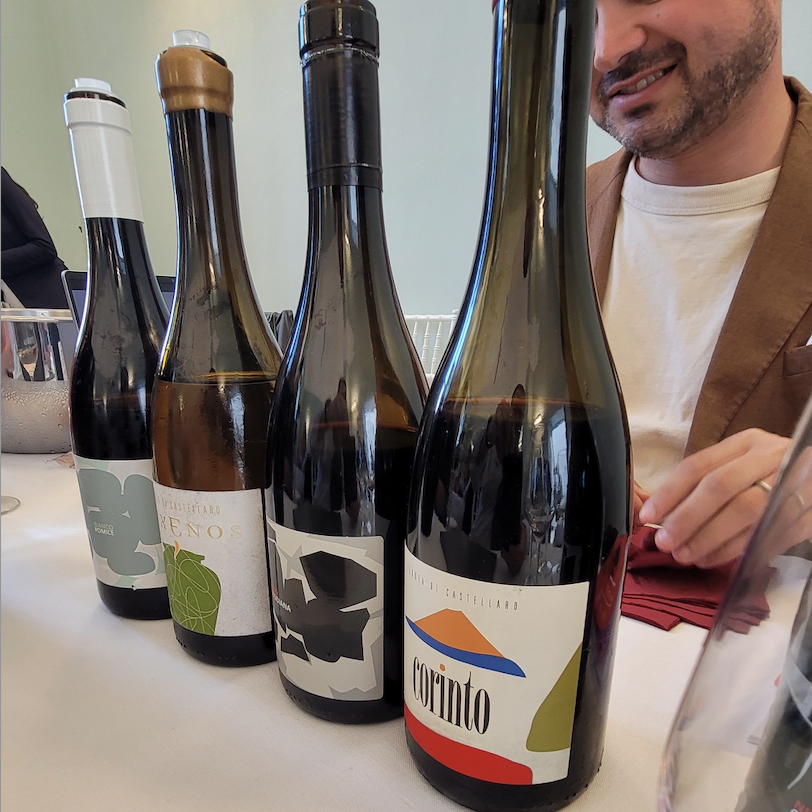
Fontodi Flaccianello Della Pieve 2001, IGT Toscana Centrale, Tuscany, Italy

Youthful is the proverbial understatement, zesty and full of Panzano life the other. A sangiovese in strike of ideal accord, freshness captured in bottle and development low, easy and slow accrued. Just like the season, stress-free, never too hot, never too wet. Stellar autumn of warm days and retentive cool nights. A late harvest and full phenolic character. It all shows in this 20-plus year-old Flaccianello, singing a ballad, verse after verse, refrain post refrain. After 20 minutes a sweet porcini perfume emits and one wishes for a 50 day dry-aged Chianina Fiorentina. What fortune! Along with the special effects of smoky rosmarino and wild fennochio. Drink 2022-2029.  Tasted February 2022

Sassicaia 2019, DOC Bolgheri, Tuscany, Italy

Priscilla Incisa’s Tenuta San Guido is located one hour south of Pisa, going back many generations. The surface area covers 2,500 hectares in a “classic Tuscan agricultural estate, of vines, olive oil, cereals including wheat and feed for thoroughbred horses. There are 500 hectares towards the seashore dedicated to a wild life refuge “paradise” free from hunting and for migrating birds coming from northern Europe and heading to Africa, especially because a good part of the land is covered by water during the winter. Before 1994 the appellation was Vino da Tavola. The grand vin Sassicaia is always a minimum 80 per cent cabernet sauvignon (as per the appellation) with cabernet franc. The youthful perfume of Sassicaia is really something other, an invitation to the plume of a great and mighty bird that will soon migrate or not be seen or heard from until another season. The fruit is both wound taut and also layered, a mix of liquids, gasses and decomposed mineral, turning on its axes, literally the earth itself. The effort put in speaks volumes about the quality and yet the seamless transitions are as if there are no transitions at all, only one contiguous entity. Will release in Ontario as an Online Exclusive by lottery on October 20th. Drink 2025-2034.  Tasted September 2022

Emidio Pepe Montepulciano d’Abruzzo DOC 2002, Abruzzo, Italy

The subtle and gentle elegance of 2002 is almost mystifying, if at least a surprise that kinda hypnotizes. Memory serves up a case of conflict and adversity, if also vintage envy for the bookends of 2001 and 2003. And yet the cool of the night prevails to elongate a montepulciano for our pleasure and make it sing 20 years later. It was also decanted to reduce the lees sediment and then re-corked for our benefit. Words cannot express what a beautiful place this 2002 EP is found to be. It is a treat to taste and also behold, exactly as of right now. Drink 2022-2026.  Tasted June 2022

Planeta Santa Cecilia 2005, DOC Noto, Sicily, Italy

Finding oneself in a state of utter disbelief upon nosing an older Santa Cecilia has just happened with thanks to this 2005 and the unthinkable aromatics it possesses. There have been some older examples like 2007, 2008 and 2011 which all showed morphological magic but this, this is something other. The state of perfumed preservation is impossible, the floral emanations and fruit continuance implausible and in suspension of belief. The 2005 is almost perfect, dark berries and red citrus alive, acids in perfect condition, wood dissolved, resolved and walked straight out the door. The life and vitality reside in the arena of the flawless, faultless and achievable. This is what nero d’avola, Santa Cecilia, Noto and Planeta can be, at its collective finest. Will drink this way (and also that) for five more years and with ease. Drink 2022-2027.  Tasted April 2022

Château Cheval Blanc 1998, Saint-Émilion Grand Cru Classé, Bordeaux, France

The 24 year-old 1998 has been argued and predominantly defended as a Right Bank vintage, especially for merlot based wines, which the 1998 Cheval Blanc happens to be. Clocks in at 65 percent plus (35) cabernet franc and the two combine for hypnotic aromatics to put mind and palate in an immediately dizzying and gratifying tizzy. Dark, dark fruit of the “cimmérienne” kind yet of a grace and genteel manner shared by other profoundly distinguished red wines. Thoughts can wander and wonder as a result of tasting this blind and considering the depth it is nebbiolo that is imagined. Only for a moment because the numerous dual-toned vibrations direct towards knowing this to be a blend and so Right Bank combinations lead by their impression. Both of ’98 Cheval Blanc’s are blessed of ripenesses, acids and structural bones all having peaked at a shared summit. The conclusion can only be a two-part perception, of balance and beauty. Drink 2022-2042.  Tasted November 2022

Mullineux Schist Syrah 2019, WO Swartland, South Africa

Vines planted in 1999, mature if still 12 years away from being classified as “Old Vines.” Schist is the home Brownstone Vineyard, shallow and rocky of less than 20 cm of soil. An extreme site in which vines attempt to grow, but so much comes down to the where and how. Rows are close together and planted in an almost race track configuration within an amphitheatre. The roots spread and dig deep within the stripes of schist interspersed with iron and the grapes are harvested plant by plant to create two apposite cuvées. Visually these are small vines with smaller leaves and an airiness – physically speaking. The skeletal backbone here is upright, towering and commanding, the juiciest of varietal fruit hanging as flesh, taut and muscular upon these bones. Unyielding yet never brooding nor astringent, but bountiful and beautiful. Drink 2024-2032.  Tasted July 2022

Penfolds Grange 1981, South Australia

Poured blind and easily recognized as a wine of great depth with at least two decades of maturity. Either older or hastily advanced but there are indicators to the former, namely high tones, substantial crunchy acids and full on perfume. There is a touch of Brettanomyces but only a feathery tickle and the wine still has something left to give and also to prove. Great depth is provided by wood notes, of soy, balsamic, wild fennel and all together now a reduction keeping its form, a foxy liqueur, once Cassis but now Amaro, finishing with flavours bloody and gamy. The reveal as Grange 1981 explains that while shiraz is always the game and king it had been a season for which the cabernet sauvignon portion exceeded 10 percent. Winemaker John Duval felt that ’81 was a tannic one but they left the building long ago. Both Barossa and McLaren Vale were involved and so this look back at blending expertise matters in the context of all Aussie blends being tasted today. Being present to be poured a taste of Grange represents good fortune and from 1981 there abides a full and fair suck of the sauce bottle.  Drink 2022-2025. Tasted November 2022

Donnafugata Ben Ryé 2019, Passito Di Pantelleria DOC, Sicily, Italy

Ben, as in “son of” and Ryé, a Sicilian riff on the concept of making strong mocker from the wheat grass. Think of grapes instead, in this case zibibbo (muscat of Alexandria) grown off the southwestern coast of Sicily on the Island of Pantelleria. Passito di Pantelleria DOC is one of the world’s great sweet wines, found only on this windswept promontory where the grapes concentrate, drink in the sea and express a view to which only this place commits. The warmest of vintages develops and comprises these particular sugars into something surreal. Extraordinary orange-ginger crème brûlée, perfectly embittered and made viscous in the most natural of ways. Layers of dedication and spice, health affirming herbs, respiratory fixing drops and sweetness captured, effortlessly and to gift plaisir. Apricots ripe and glazed, zen zero limone, giusto intenso. Nearly perfect. Drink 2025-2039.  Tasted April 2022

Vintage Port (c) Sarah Goddard/WineAlign

Niepoort Vintage Port 2019, DOP Douro, Portugal

Expect top concentration in Vintage Port from what Niepoort calls a “return to balance in the vineyard” type of season. Summer was unseasonably cool and the timely rainfall on the 26/27th of August was invaluable, allowing fruit maturity to go to completion. A recall to 2008, of natural, acid driven, balanced musts. Foot trodden in circular granite lagares with 100 per cent stems, racked soon after harvest, aged in “tonéis” (large oak vats) in the Douro over the winter, and then moved to the cellars in Vila Nova de Gaia in the Spring of 2020. Acid vintage indeed, fruit caught by circumfuse so as to be surrounded, ignited and eventually dispersed for decades of slow release power. The liquid chalkiness of tannin is so fine-grained you swirl and mull over just how hypnotizing it is. Truly great Vintage Port will act out this passion play. Drink 2025-2048.  Tasted October 2022

Good to go!

godello

Twitter: @mgodello

Instagram: mgodello

WineAlign

Yearning for the Langhe

Godello in Cherasco

My kingdom for an Albese plate of Tajarin at Osteria dei Sognatori or a platter of Plin at Ristorante La Libera. What a wine writer would not do for a Langhe reprise, a Piedmontese redux, a tasting of any Barolo, Barbaresco, Roero, Dogliani, Alba or Langhe Barbera and Nebbiolo, Langhe Roero Arneis, Na’Scetta e Favorita. Were things normal and they most certainly are not, but were life being lived now as it was one year ago we would be convening in Alba in two weeks time. What I would not give to break bread with a winemaker, colleague or friend in Piemonte.

Related – Barolo DOCG previews and retrospectives: 2016, Riserva 2014, 2006 and Riserva 2004

Mark these words. The two specialized and specific DOCs of Nebbiolo d’Alba and Langhe Nebbiolo will gain prominence and become a two-headed beast in 2021. The world will gather to exult, raise up and drink these fine and vastly underrated examples of classified nebbiolo. Of this I became truly privy to one year ago but also throughout 2020 as more and more nebbiolo came to be assessed across my desk. Yes it was back in January 2020 when I travelled to Alba in Piemonte for Nebbiolo Prima 2020 and Grandi Langhe. I tasted more than 600 nebbiolo, dolcetto, barbera, arneis, freisa, chardonnay, pelaverga and even riesling during the eight day work staycation. Grande.

Grandi Langhe 2020

Related – Barbaresco DOCG previews and retrospectives: 2017, Riserva 2015, 2007 and 2005

Nebbiolo Prima and Grandi Langhe Trade Fair are a back-to-back cumulative by the work of many, not the least of which are organizations such as Consorzio Albeisa, a.k.a Unione Produttori Vini Albesi, Consorzio di Tutela Barolo Barbaresco Alba Langhe e Dogliani, Consorzio Tutela del Roero and Regione Piemonte. During that trip I tasted and reviewed 230 Barolo: DOCG 2016 (197), Riserva DOCG 2014 (6), DOCG 2006 (20) and Riserva DOCG 2004 (7). For Barbaresco the number was 92: DOCG 2017 (59), DOCG 2015 (15), DOCG 2015, 2007, 2009 and 2005 (18). As for Roero DOCG, 38 notes: DOCG 2017 and 2016 (33) and DOCG 2006 and 2007 (5).

Related – Roero DOCG Previews and Retrospectives: 2017, Riserva 2016, 2007 and Riserva 2006

Here’s to hoping for a return at any point in 2021, or in 2022 for the 25th Nebbiolo Prima followed by Grandi Langhe, if that’s how it will be. In the meantime here are 44 further reviews of wines tasted in and around Alba back in January, 2020. Langhe Nebbiolo DOC, Nebbiolo d’Alba DOC, Barolo DOCG, Barbaresco DOCG, Barbera d’Alba DOCG, Verduno Pelaverga DOC, Langhe Nascetta Del Comune Di Novello DOC, Langhe Favorita DOC, Roero Arneis DOC, Langhe Rosato DOC, Vino Rosso and Birbét. Care Langhe, spero di tornare presto.

Nebbiolo d’Alba DOC

Diego Morra Nebbiolo d’Alba DOC 2016

F.rom northern facing vineyards that receive no direct sun so essentially a cool Langhe climate. Nebbiolo that sees a short maceration and French wood. Not your everyday or expected nebbiolo in a really light and transparent style. Extremely fresh and refreshing, taut, high-toned and yet this creamy texture. Richer than half-and-half, perhaps like 20 per cent fat though lactose free and not enough to be whipped. So different. Drink 2020-2023.  Tasted January 2020

Malabaila Di Canale 1362 Nebbiolo d’Alba Doc Bric Merli 2017

From the vineyard directly in front of Bric Volta. A lighter, but far from unstructured nebbiolo with a new and certain grace and still unmistakeable Canale DNA. Here you can mark another reference point, not to mention the genetic and torch passing material provided by 650 years of history, information and accumulation in experience. The demeanour is confident and gracious. Who would not want a glass every night? Drink 2020-2024.  Tasted January 2020

Mauro Sebaste Nebbiolo d’Alba DOC Parigi 2017

Comes from the same type of marly soil as the barbera, here out of vineyards located in the villages of Alba and Diano d’Alba. The vines are around 20 years of age and the wine sees one year in (30 per cent new) American 40L and French 30L barrels. The idea is to draw out soft and elegant tannins, especially by the American oak. That much is true in a nebbiolo heading towards that direction though not quite yet there. A return in two to three years should do the trick. Drink 2021-2024.  Tasted January 2020

Nebbiolo Langhe DOC

Elvio Cogno Nebbiolo Langhe DOC Montegrilli’ 2018

A name taken from Valter Fissore’s grandfather’s vineyard in the Roero, not Barolo and yes this is a nebbiolo and a wine to drink. Immediately gratifying in so many ways. From vineyards on the other side of Novello, southwest exposure and very sandy soil with just a minor amount of sandstone. Fragolina di bosco and white raspberry, a juicy wine that can quench your thirst. Just a minor grip and chalk of tannin. Hardly causes any confusion and allows you to sip and sip and sip. Grill some fish and Montegrilli’s your friend. Drink 2020-2025.  Tasted January 2020

Mauro Molino Nebbiolo Langhe DOC 2018 ($27.95, Le Sommelier Inc.)

From two vineyards, one in La Morra (estate) and one in Roero. Less than a year in old, large barrels and a purposeful one, for early and often drinking enjoyment. Bright fruit, easy, forward and will surely solicit many a happy palate for dual-drawn, doubling down pleasure. Floral, well made and proper. Drink 2020-2023.  Tasted January 2020

Bollito Misto, Sinio

Azienda Agricola Taverna Langhe Nebbiolo DOC 2018

Declassified nebbiolo from Barbaresco with mildly candied fruit, slightly oxidative, but charming. Only been in bottle maximum one month. Drink 2020.  Tasted February 2020

Sottimano Langhe Nebbiolo DOC 2018 (454017, $32.95, Le Maitre de Chai)

Youngest vines in the Basarin Vineyard at 18 years old grown in sand and clay at the foot of Neive. The Langhe nebbiolo sees 20-30 days on skins (as opposed to 30-40 for the Barbaresco), ferments naturally and at low temperatures. Glaring as a vintage with a big grin on its face, unprecedented concentration, healthy extraction and completed by elevated dry extract. Incredible intensity for the appellation, something already noted in 2015 but bears repeating, like a mantra, for kicks, compliments, giggles and kudos. The Piedmontese maceration brings so much texture and chromatic accents; tangerine, vermillion, sorrel and umber. Longer maceration, less wood (four months) and no love lost for aging, not to mention waxing rhapsodically on. Drink 2021-2026.  Tasted January 2020

Osteria dei Sognotori, Alba

Barolo DOCG

Agricola Marrone Barolo DOCG Pichemej 2015

Pichmej is a combination of two vineyards, Bussia and Santa Maria, what Valentina and sister’s Serena and Denise Marrone call “our grandfather’s wine.” Who happened to be Carlo. A nebbiolo that you really can drink now but then again that’s the thing about young Marrone Barolo. They and this ’15 Pichmej display a sense of the ethereal in their youth. Nature in conjunction with nurture, a delicate touch and phenolic regulation to near perfection. If you would like to access the portal into the reality of how nebbiolo needs to be made in modern times then begin right here and know what’s what in 2020. Drink 2020-2026.  Tasted January 2020

Agricola Marrone Barolo DOCG Bussia 2015

Compared to Pichmej this nebbiolo from Bussia is a step up in concentration and also structure, the latter being in kinship with Bussia 2016. That said there is absolutely zero compromise to the stylistic execution that makes for a Marrone Barolo. Simulates the phenolic beauty of Pichmej and of ’16 but the fullest, deepest and most complete journey happens here. Enologist Donato Lanati has coaxed the fruit but not the bitters while the sisters Marrone find excellence in completing Bussia and all the rest. Lightness of being is also accrued while the wine clocks in at a hidden 15 per cent alcohol. Magic happens and success follows. Drink 2021-2029.  Tasted January 2020

Cascina Adelaide Barolo DOCG Baudana 2015

From Serralunga d’Alba and the apposite Barolo cru, forceful, grippy, demanding, always mired in posit tension tug. That alone explains no differing opinion but pay attention to the kind of “tensione” Adelaide’s creates. The numbered beats are off, out of time, or at least not understood in fours, yet orchestrated and aligned as they should be. As in five or taking the fifth, with a spoonful of notes, lines, vocalizations and structural arrangements feeling like they are unanswered. A vintage that men are dumbfounded by but girls can tell. Baudana is a hyper real get together of brushy aromas, dedicated flavours and highly functional architecture. This one stretches and creates an elastic musculature, flexible and persistent. Wouldn’t mess with Baudana. Drink 2020-2031.  Tasted January 2020

Simone Ortale and Giuliana Drocco, Cascina Adelaide

Cascina Adelaide Barolo Riserva DOCG “Per Elen” 2014

A blend of two cru and says Simone Ortale “we choose the best to make Riserva. It’s our jewel.” The same grandi botti (as per Preda and Cannubi) but here 62 months of aging time. The most mouthfeel, filling and the silkiest chalky liquidity, tannins and layering of multifarious, mille-feuille multiplicity. A nebbiolo for the decades. Drink 2022-2035.  Tasted January 2020

Cascina Boschetti Barolo DOCG Gomba 2015

A smooth, elastic, stretched and elongated nebbiolo from the Commune of Barolo and Boschetti’s estate fruit. Drawn off of the higher reaches and also some that is sold to Marchesi di Barolo. Drink 2020-2025.  Tasted January 2020

Cascina Boschetti Barolo Riserva DOCG Sernìe 2015

Sernìe is the cru inside the cru, a selection within the selection and a word in Piedmontese dialect that essentially means just that. Surely the richer, more concentrated, fully stretched, entirely elastic and truly elongated nebbiolo. Has the violets, purple fruit, foie gras and decadence. Drink 2021-2032.  Tasted January 2020

Cascina Boschetti Barolo Riserva DOCG Sernìe 2012

This older version of the cru within the cru comes from a very select parcel and as an estate flagship nebbiolo is only produced in select vintages. The formidable 2012 season made a request that winemakers (in this case Maurizio Delpero) did not try to extract too much fruit which would also mean an excess of tannin. Yet Boschetti’s Sernìe was subjected to a Piedmontese 40-day maceration (a cappello sommerso), a classic technique that eight years later establishes an exaggeration of nebbiolo riches. Was also a generous vintage that saw to healthy fruit and quantity. Serious Barolo right here. Drink 2020-2030.  Tasted January 2020

Crudo – La Libera, Alba

Diego Morra Barolo DOCG 2015

From the river between La Morra and Verduno, two plots with separate soils and expositions to combine for a double cru cause and effect. Balanced and dynamic, a nose of power meeting finesse. No winding or cinching but more a zig-zagging, ying versus yang, AC-DC, nebbiolo going both ways. Lovely spice. Drink 2021-2026.  Tasted January 2020

Diego Morra Barolo DCOG Monvigliero 2015

From four hectares in the Verduno cru and the three Ms, Mosca, La Morra and Monvigliero. The V in the middle is for Verduno. The 2015 nebbiolo is a really pretty one, floral and understated but of obvious power. Near formidable in its restraint with bursting a real possibility at any near moment. Not quite there yet but it’s coming, it’s real, leaving meaning. “In a room made of stone your future was made.” Wait for it. Drink 2022-2029.  Tasted January 2020

Elvio Cogno Barolo DOCG Bricco Pernice 2015

Ages three years in wood, one year further in barrel. One hundred per cent Lampia clone. A little bit more classic in terms of what is Barolo. The partridge is a special hill and a place that gives away these highly specialized nebbioli and 2015 is on the border between a red and a black vintage. More black then red. A vintage that will be so right and so joyous in middle age and ideal for salty (aged) cheese and meat. Splendido nebbiolo. Drink 2022-2029.  Tasted January 2020

With Valter Fissore

Elvio Cogno Barolo Ravera DOCG Vigna Elena 2014

Rosa clone of Ravera, not quite yet released (will be in three months), dedicated to daughter Elena. A registered menzione geografica named many years ago so the size on the label is set above the DOCG. More of a Bourgogne style. Rose petals and potpourri. Red fruit and red citrus so obviously a red year. Cured like salumi, bresaola maybe or at least eat some alongside. A touch vegetal and that is ’14, sun-dried vegetable and yes, like pinot noir. The first vintage was 1997. Drink 2024-2036.  Tasted January 2020

The quality of the wines gives everyone at Mauro Sebaste every reason to smile

Mauro Sebaste Barolo DOCG Cerretta 2015

Less weight and density in 2015, both in Serralunga fruit and also tannin. Much interest here in how it intimates the richesse of ’16 but not the youthful aggression of the tannin. More freshness, linearity and understanding. No hard edges, really easy to like and enjoy and enough grip to see it develop nicely over the next seven plus years. Might even last longer than imagined. Drink 2020-2027.  Tasted January 2020

Mauro Sebaste Barolo Riserva DOCG Ghè 2014

Ghè is the Riserva of Cerretta fruit but only the smallest berries are chosen. A mega clonal version per se, a Cerretta of Ceretta. Celebrates and argues the merits of a challenging vintage, spends 36 months in tonneaux and like the Cerretta there is pure and substantial fruit. Acidity and tannin too, more than you might imagine considering the wood. Tension and grace live side by side and this is just beginning to act like it will for its essential and optimum 10 year window. Drink 2020-2029.  Tasted January 2020

Palladino Barolo Del Commune Di Serralunga d’Alba DOCG 2016

A true commune Barolo drawn off of a scattering of vineyards, a Serralunga liqueur warming, comforting and reliable, plus a vintage tannin more stringent and yet to crack. Spent two years in grandi botti plus six further months in bottle. Of roses and tar, youthfulness and tension aboard a nicely balanced and upright frame. Drink 2021-2029.  Tasted January 2020

Palladino Barolo Riserva DOCG San Bernardo 2013

The “oriental plot,” from the other side of the Ornato cru and a nebbiolo to speak of extended elévage just as it should. Now into a balsamico cadence and a tartufo lilt. A matter of funghi, acciuga and back to that truffled sensibility. So much umami, the anchovy sitting like a salty and briny slice of maritime butter on toasted crostini with shavings both pencil and earthen nuggets in origin. Oh how the feeling of the block and the greater Piedmontese emanates from one glass of Barolo that only San Bernardo seems capable of gifting. The secondary nature of this nebbiolo is astonishing, if like Christmas come early but why not celebrate now? Should keep developing, morphing, giving again and again. Drink 2020-2030.  Tasted January 2020

Renato Ratti Barolo DOCG Marcenasco 2004 (713479, Halpern Enterprises)

Has quite obviously rounded into form, now beautifully rich and preserved. Poured from magnum yet showing all of its age, fruit sweetly hanging in the balance and as a whole an elegant nebbiolo worthy of the reference. Drink 2020-2024.  Last tasted January 2020

Of the famiglie Pola e Ferro is polar as compared to the non of the Burdin. AM and D nose “car exhaust.” I am tricked by its charm and think New World Syrah, but am reminded that the colour lacks gloom. Hugely muscular, girded by plastron and decades ahead of itself. “Leave it open all night and it’ll be amazing” says Dr. C.  Tasted April 2012

Cherasco

Barbaresco DOCG

Azienda Agricola Taverna Barbaresco DOCG 2017

Comes from one vineyard, the top part of the hill, Gaia Principe it’s called, one of four that make Barbaresco in the MGA. Quick maceration, only seven days, not very Piedmontese and because the house tradition is to make wines to drink and drink now. A very fresh nebbiolo, sweetly perfumed, clear, pure and precise. Drink this most days. No good reason not to. Drink 2020-2025.  Last tasted February 2020

Very ripe and organized, developed and heading forward with great haste. Acids are brighter than some so there is light streaking through the Neive vintage darkness. Another example that speaks to the great variability in 2017. Drink 2020-2024.  Barrel Sample tasted January 2020

Barbera d’Alba DOCG

Cascina Adelaide Vigna Preda Barbera d’Alba 2016

Same vineyard as the nebbiolo for the Preda Barolo but here the barbera fruit is notable deeper and darker. Spends up to 18 months in big barrel and high acidity for Alba with just the right and deft touch of necessary volatile acidity. Rich, luxurious and lovely. Drink 2020-2024.  Tasted January 2020

Cascina Adelaide Barbera D’alba Superiore Docg Amabilin 2016

Named after the creator himself Amabile Drocco who as a child was called Amabilin. The name chosen for the wine pays homage to the family’s origins. The yields are ridiculously low (half a kilo per vine) from 3,000 kg per hectare that represents half of the consorzio’s disciplanare rule. So concentrated and a true gem in the Adelaide portfolio, in fact this is truly one of the tops in all of what is labeled Superiore. Includes eight to ten per cent Barolo fruit but not that which might end up as DOC Nebbiolo. High acidity again (as with the Preda) and ultra special tannins. Only 2000-2300 bottles are produced. Drink 2021-2029.  Tasted January 2020

Diego Morra Barbera d’Alba DOCG 2016

Roddi is the source and direct sun exposure provided for a terroir-varietal relationship that is necessary when you consider acidity rates, ripeness measurements and structural assets. Here barbera gets into beneficial bitters, speaks with assuring alacrity and extolls the virtue of a mainly steely exterior. Really spirited, fresh and alive. Drink 2020-2024. Tasted January 2020

Elvio Cogno Barbera d’Alba DOC Bricco Dei Merli 2017

Single vineyard, aged for one year in wood. The hilltop of the blackbird and a wine nosing succinctly of black cherry. No way this is simply the wine of the osteria or the honky tonk bar. The maturation here is set so high on both fronts, first sugar and then phenolic. Acidity is supportive and there is no burn. There is no jam. What shows is body strength, spirit and a soft finish. Comes from elevation where the wind blows and you can feel the cool breeze running in the veins, like cool water. Picked late September and we are thankful for that. Drink 2021-2026.  Tasted January 2020

The view from Elvio Cogno

Elvio Cogno Barbera d’Alba DOC Pre Phylloxera 2018

Pre-Phylloxera because of these barbera vines’ ability to survive with thanks to sandy soil and 500m of elevation. A red soil that was not inhabitable to the louse. The vineyard is rented from Marcarini and Valter likes to farm it to to keep the history of his family’s work alive. Lower acidity, higher concentration and an affinity with northern Rhône syrah. Cool, smooth, silky, crystal clear and the pinnacle of barbera beauty. Incredible texture. Only 2,000 bottles made. Drink 2021-2029.  Barrel Sample tasted January 2020

Lucrezia Carrega Malabaila

Malabaila Di Canale 1362 Barbera d’Alba DOC Giardono 2018

From a single vineyard, eight yearsold and aged in concrete, for a reductive environment and more important a low, natural and slow ferment. A rich deep cherry barbera to be fair, sure and completely honest with a modernity of acidity that belies the reasons why barbera fell out of favour and became hard to sell. This will do the yeoman work to continue the resurrection. A spice market from a time gone by connects Giardino to a loyal and traditional wine. Drink 2020-2025.  Tasted January 2020

Malabaila Di Canale 1362 Barbera D’alba DOC Mezzavilla 2015

From 75 year-old vines in the Mezzavilla Vineyard, located between the villages of Cisterna (towards Asti) and Canale. Just a few percentage points of oak because the fruit demands it and concrete will keep freshness but doesn’t quite do enough for this fruit. Such a soothing acidity and a presence that speaks to the sand and the clay of the land from whence it came. Taste this fruit and you will understand. Drink 2020-2022.  Tasted January 2020

Mauro Molino Barbera d’Alba Doc “Legattere®”‎ 2017 ($24.95, Le Sommelier Inc.)

A selection of barbera vineyards of soils calcareous/clayey, maceration of six days, fermented in steel, aged in French oak. Just a classic, pure red fruit, high acid and smooth texture/tannins. Round flavours, big yet somehow understated. Drink 2020-2023.  Tasted January 2020

Mauro Sebaste Barbera d’Alba Superiore DOCG Centobricchi 2016

On the hill just above Alba on the way to Serralunga, of low yields that produce just about one bunch per vine. Spends one year in new French oak to gift spice, savour, silk and palate fineness. High acidity, at times too high but necessary to foil the hedonism. A piqued and plentiful barbera that in the end comes down to farming. Drink 2021-2026.  Tasted January 2020

Palladino Barbera d’Alba Superiore DOCG Bricco delle Olive 2017

Big barbera, 15 months in (50 per cent new) tonneaux with violets and spice smothering all else. Despite the enormity of it all this is barbera in a balanced varietal world and Bricco delle Viole is clearly a Superiore terroir from which to approach with great ambition. All assets are encouraged and flaunted  within the grand scale of this particular Alba spectrum. Will improve with some further wood integration. Drink 2021-2025.  Tasted January 2020

Azienda Agricola Taverna Barbera d’Alba DOC 2018

The red fruit juiciest and most succulent Barbera d’Alba with great acids. Make you wish more varietal wines like this would align, draft and glide alongside. Fresh and just lovely. Drink 2020-2023.  Tasted February 2020

Verduno Pelaverga DOC

Diego Morra Pelaverga DOC 2018

Diego Morra’s pelaverga ’18 is clear, concise and pure, lying with a varietal heart at its most effusive. Prim as is imaginable while a big expression for a light and silken grape. From a “normal,” manageable and consistent vintage. A wine executed with molecular gastronomy to an end forged by a grape-wine relationship. Social, artistic and technical pelaverga, investigating the physical and chemical transformations of ingredients that occur in farming and then, winemaking. Drink 2020-2024.  Tasted January 2020

Vino Rosso

Malabaila Di Canale 1362 Donna Costanza Cardunaj Vino Rosso 2017

A digestif wine, a Brachetto vinified dry and so curious. A dessert wine with no fizz and just a touch of sweetness. A moment’s Amaro bitters but no sense of liqueur. Odd to be sure. Drink 2020-2022.  Tasted January 2020

Método Classico Vino Spumante Di Qualita

Malabaila Di Canale 1362 Pas Dosè Método Classico Vino Spumante Di Qualita

A 50-50 nebbiolo and arneis mix, seven years on the lees, from the 2012 vintage and disgorged in October 2019. Yes you read this properly, seven years on lees. The Malabaila connection to the Esterhazy royalty in Austrian indirectly bridges two estates and you can’t help but think about the Blanc de Blancs made in the Burgenland. Zero dosage means lean, direct, sharp and energetic bubbles with remarkable precision. These are Grandi Langhe bubbles from Roero, not to be missed. First vintage was 2010. Can’t be Millesimato because it’s a blend. Drink 2020-2025.  Tasted January 2020

Langhe Rosato DOC

Malabaila Di Canale 1362 Langhe Rosato DOC 2018

From Lucrezia Carrega Malabaila with perfectly typical Rosato colour for nebbiolo taken from Roero lands. ’Tis a coppery hue, sexy rusty, mimicked in flavours with a note like lemon tisane. Steep in some currants and sweet herbs and you get the picture. Poured from magnum and good thing because a table of six would have otherwise gone very thirsty. Drink 2020-2022.  Tasted January 2020

Langhe Nascetta Del Comune Di Novello DOC

Elvio Cogno Langhe Nascetta Del Comune Di Novello DOC Anas Cëtta 2019

Cold stabilization and some wood aging but in botti, no longer in barriques. I have yet to put the nose to my glass and the aromatics are coming out. A semi-aromatic grape with here in 2019 from peach, elderflowers and high level acidity. I would imagine it’s most akin to chenin but even that is a stretch. The drinkability meeting complexity is off the charts. Once you go tactile-textile nascetta like this you may never go back. Approximately 16,000 bottles produced. One of now 30-plus producers in the Langhe. Barrel Sample tasted January 2020.  Drink 2020-2023

Le Strette Nas-cëtta Langhe DOC Pasinot 2018

Nascetta, or Nas-cëtta, as they say in the commune of Novello with fruit out of Pasinotti, Bergera, Pezzole and Tarditi at altitudes of 350 to 420m. Planted over many decades, in 1948, 1983, 2009, 2014 and 2016. The Piedmontese grape rarity likes the sandy, calcareous clay and its emission is semi-aromatic. This example sits somewhere between riesling and gewürztraminer though truth be told seems closer to friulano what with its glycerin and off-dry sentimentality. Novello is the place and the heights help bring about the oiliness and preserved citrus notes from the grape. Needs another year to fully bloom. Drink 2021-2025.  Tasted January 2020

Langhe Favorita DOC

Malabaila Di Canale 1362 Langhe Favorita DOC Donna Costanza 2018

A label made by Lucrezia’s father (who passed away in 2010) for his wife and her mother. Endemic, full of drive, a touch of a sweetness and in a way a cool, northern example that is linked to inzolia, or even zibbibo. More texture here and alloy notation. Lingers with herbs and sweet citrus. Drink 2020-2022.  Tasted January 2020

Roero Arneis DOC

Malabaila Di Canale 1362 Roero Arneis DOC Pradaj 2018

Pradaj in Piedmontese is “A valley with grass and flowers” and clearly a reference to the aromatics in the grape variety from this place. A perfectly correct and referenced arneis indeed and an ideal match to the local Plin agnolotti filled with herbs. When the arneis from Roero speaks clearly it does so like this, unadorned, floral and calm. Drink 2020-2022.  Tasted January 2020

Birbét

Malabaila Di Canale 1362 Birbét Donna Costanza 2018

Mosta d’Uva parzialmente fermentato or, grape must partially fermented to five point five per cent alcohol. Served traditionally as dessert though it could certainly be employed in aperitivo format, as Brachetrto d’Acqui often is. Very cherry, lightly carbonated and sweetly herbal. Simple pleasure. Drink 2020-2021.  Tasted January 2020

Good to go!

godello

Godello in Cherasco

Twitter: @mgodello

Instagram: mgodello

WineAlign

Twenty mind-blowing wines of 2020

Related – Nineteen mind-blowing wines of 2019

There are times when you do it just for the continuity because time marches on, no matter the circumstances. There is no disputing how different 2020 was and frankly the flip to 2021 will not bring about significant change or any semblance of a return to what was, at least not in the first several months. Yet the compelling urge is there, to quantify and qualify this annual Godello list of wines that opened, expanded and blew a mind in 2020. The concept for a year-end summation was launched in 2012 though it was the publishing of 14 in 2014 that made it very official, if only in the mind of one Godello. Matters little whether this qualifies as the seventh or the ninth because in wine one should always eschew semantics for the liquid truth found inside the bottle, elixirs they are of most profound, ethereal and honest propriety.

Related – Eighteen mind-blowing wines of 2018

This will be a much different list than ever before. While I did manage to squeeze in 25 days of travel in the first 56 of 2020 those were the last of this calendar year. That’s at least 75 short of my normal yearly schedule and so imagine that if an average of 30 wines are tasted each and every day on the road, well then that would tell us that at the very minimum 2,250 wines were missed this year. Not entirely true because at least half that many, if not 75 per cent more were made available to me and my WineAlign colleagues over these past nine month of quarantine, isolation and safe-distancing tastings. Still the make-up of what was tasted has been very different, the most notable being the lack of unrepresented or not found in market wines. Less discovery in 2020 to be sure.

Campo Spritz

Related – Seventeen mind-blowing wines of 2017

According to my personal critic’s database on WineAlign I reviewed 4,450 wines in 2020, keeping in mind that many of those reviews were for wines tasted in 2019. Up until this year I was consistently behind or back-logged with hundreds if not more than a thousand tasting notes in the queue, unedited, unresolved, not yet reconciled, unfinished, not-posted. Since the global pandemic abruptly delivered me home in the dead of a late February night from Faenza to Firenze, through Frankfurt and to Pearson I have not been able to resume travel. These last 10 months have allowed for a massive catching up. There are now a thousand less wines to finesse and publish then there were this time last year, very few raw and rustic songs waiting for the editing process. All the choices on this 2020 list have been solidified and already been opined with confidence for the world to scrutinize. In 2020 there is nothing left on the table.

Related – 16 mind-blowing wines of 2016

Slipped outta Dodge under the cover of darkness…

This year’s list is indeed different. The get togethers were few and far between. The travel non-existent. That is why you will recognize more producer names and also a more “archetypal” bent to the choices. The year dictates such a direction and as we all know, you have to listen to what the vintage tells you but also to remember and thank the true pioneers for getting all of us here. Perhaps the greatest influence on how this composition came to be was a conscious choice to omit the older vintages tasted in 2020. There were less to be sure but it just feels like keeping them kind of secretive is the way to go. Let’s hope a connection to that part of this exercise will make a return in 2021. As always, heartfelt thanks to everyone who poured a glass. The producers, winemakers, export managers, friends, colleagues and pirates, so please be encouraged and read on. Alas, Godello’s 20 mind-blowing wines of 2020.

The Heldeberg from Stellenbosch

Ken Forrester Old Vine Reserve Chenin Blanc 2019, WO Stellenbosch, South Africa (23128, $17.95, Noble Estates Wines & Spirits Inc.)

Gets me every time. Not just one of the finest meets best value chenin blancs available out of South Africa but an example to hang all your hats on no matter where white wine comes from in this world. Still the knowing nod and incredulous head shake that $18 CDN can buy you fruit from six blocks that are mainly 38 years of age but could possibly include 1974 Helderberg planted vines in Stellenbosch. “Core of the business” and arrow through a chenin heart. Great ferment, like a (catherine) wheel. Layers of design, creamy with thanks to secondary lees aging but somehow still texturally chewy. Barrel notes make a point in a vanilla brûlée way and yet each sip is like taking a bite from a piece of firm, ripe fruit. “I need more texture. You need to give me more texture, texture, texture. You need to give me more texture.” Old Vine Reserve obliges every time. Drink 2020-2026.  Tasted June 2020

(c) @tiny.wild.world and @WineAlign

Selbach Oster Wehlener Sonnenuhr Riesling Spätlese 2018, Prädikatswein, Mosel, Germany (17498, $45.95, Noble Estates Wines & Spirits Inc.)

The triad of producer, appellation and vineyard gets no more arch classic than this with a riesling in Spätlese form at the hands of Selbach-Oster. The pitch and sway in this Wehlener Sonnenuhr vinyeard is 2018 dance card perfect, tight and fluid. Succulent acids are burgeoning and urging the fruit forward, sideways and every which way but loose. This is a wine that gets what needs and gives what is wanted. Will only improve with a few years and then there will come a day when an air or vapour trail falls away. Drink 2022-2033.  Tasted November 2020

Tyrrell’s Belford Sémillon 2017, Single Vineyard, Hunter Valley, New South Wales, South Australia (14322, $46.95, Select Wine Merchants)

Belford Vineyard (formerly Elliot Farm) is Hunter Valley leader Tyrrell’s single-vineyard leased sémillon with so much promise in its corner. A top varietal vintage for one thing and the well-draining sandy soils for another. Sémillon thrives in these conditions and so what comes from this awe-inspiring wine is exactly what you possibly wish for when selecting from Hunter Valley. This wine is swiftly, justly and perpetually lit, a smoky, paraffin waxy, über salty, elemental, aerified, verified mineral wine. So focused and precise. Mon dieu, Drink 2021-2026.  Tasted June 2020

(c) @tiny.wild.world and @WineAlign

Fresne Ducret La Grande Hermine Champagne Premier Cru 2008, AC Champagne, France ($78.00, Nicholas Pearce Wines)

Hard to believe the age because while this almost certainly achieved an immediately retro toasted and evolved stage in its youth and though 12 years have passed the present day imaginings are dreamed to persist within that very immediate stage. As creamy as it is toasty, the textural body politic in La Grande Hermine is one of great cerebral and figurative impression. You feel, intuit and embrace such honesty and possibility. Drink this vintage dated Champagne all winter long. Its calming presence will preserve you in a state of grace lower than a snowman’s blood pressure. Drink 2020-2028.  Tasted September 2020

El Esteco

El Esteco 1947 Old Vines Cabernet Sauvignon 2018, Cafayate Valley, Salta, Argentina (15082, $24.95, Philippe Dandurand Wines Ltd.)

From Argentina’s northern desert where some of the country’s oldest vines perpetuate existence while thriving fiercely in a hot climate. So yes it is true that some fruit from 70-plus year old vines, well trees really, make their way into this special Salta wine. Dense and concentrated, Cassis times 10, savoury and truly expressive. Oak is well-managed, not shy mind you but these old vines deserve some added and fortifying structure. Do not miss this. Drink 2021-2028.  Tasted August 2020

Concha Y Toro Don Melchor Cabernet Sauvignon 2017, Maipo Valley, Chile (403980, $160.00, Escalade Wines & Spirits)

Though essentially a cabernet sauvignon at minimum 90 per cent, it would normally need saying to never discount the blending attributes of cabernet franc, merlot and in recent years, petit verdot. The nooks and crannies filled by the other grape varieties are some of the senses of wonder that have illuminated and elucidated the magic of Don Melchor. And yet years of such thought is turned on its head in 2017 with a 98 per cent pure cabernet sauvignon Don Melchor and only two bits of cabernet franc. Speaks to winemaker Enrique Tirado’s vision of the varietal and vintage relationship. After all, this is his baby, a passion project that spans 20 vintages, from which he looks to “harvest the beauty of the balance of the Puente Alto terroir.” From Viñedo Don Melchor, D.O. Puente Alto and Valle del Alto Maipo, old vines planted 1979 to 1992, new from 2004-2013. The vintage was above average in terms of warmth, cooler temperatures at harvest preserved acidities and sealed the (near) mono-varietal deal. At 30 years into its tenure Don Melchor hits a new stride and it would be hard to argue against the levels of subtle, demure, balanced and ethereal in this 2017. Perfect fruit? Pretty darn close and a bouquet of fresh picked flower-herb-fruit that merge, meld and grace together. One for this age and to age gracefully, slowly and predictably for 20-25 years. Drink 2022-2037.  Tasted October 2020

Taub Family Vineyards Beckstoffer Vineyard Georges III Cabernet Sauvignon 2017, Napa Valley, California (849434, $235.00, Dionysus Wines & Spirits Ltd.)

From proprietor Marc Taub who’s family has been prominently part of the Napa Valley wine fabric since prohibition and who in 2013 acquired Napa Valley producer Heritance, later evolving into Taub Family Vineyards. His winemaker is Tom Hinde, a Sonoma and Napa specialist who cut his teeth for seven years at Flowers, but also at Kendall-Jackson, Hartford, La Crema, Lakoya, Cardinale, Stonestreet and Verite. Add in a mere three acres within the historic 300-acre Beckstoffer Vineyard first purchased by Beaulieu founder Georges de Latour in 1928, called Beaulieu Vineyard Number 3 and made by winemaker Andre Tchelistcheff. The 2017 Napa Valley cabernet sauvignon are a very special lot. That much we know. Add in the pedigree, torch passing and respect for these necessary tenets of wine-producing business and well, hello. Utmost attention to detail, optimum extraction and concentration, sultry, supple and ultimately divine. There is this fine, fine, almost indescribable salty vein that cuts through the fruit and the fat like perfect umami seasoning in the most decadent dish. With meat or seafood, California or Japan, take your pick. Drink this either way. Drink 2023-2039.  Tasted October 2020

Olive and Anthony Hamilton Russell

Hamilton Russell Pinot Noir 2018, WO Hemel En Aarde Valley, South Africa (999516, $59.95, Noble Estates Wines & Spirits Inc.)

Even though the ’18 HR PN took my breath away nine months ago, the not yet understood nuance of this wine surely clouded first impressions. However small a sample size this may be is more than enough to prove time’s effect on wine, pinot noir and Hamilton Russell’s spiritual connection with the grape and how it personifies the Hemel En Aarde Valley. Fragrance, perfume, essential oils, Lilac, Lilly of the Valley and the sweetest tobacco smoulder. Captivating now and quite likely will be so into the mid 30s.  Last tasted August 2020

There have been many Hamilton Russell pinot noir poured in my anxiously awaiting glasses over the last five years. It’s hard to believe we are here at 2018 but time is a joy when you are having a noirmance. The fruit is exceptional in this vintage because it just feels like the warm day/cool night fix is in. The diurnal flux has locked in freshness and sweet tension like no recent memory can recall. Makes for a most grippy yet excitable pinot noir of concentration, presence and promise. Benchmark in every respect. Drink 2021-2032.  Tasted November 2019

That Marco Cirese Sangiovese stare. His Noelia Ricci and Pandolfo are crucial, fundamental and illustrative of what is possible in Emilia-Romagna. #sangiovesediromagna #viniadarte #viniadarte2020

Noelia Ricci Pandolfa Romagna Sangiovese Predappio DOC Godenza 2018, Emilia Romagna, Italy (The Vine Agency)

Godenza was the name of the podere (house) on site at a one hectare vineyard at 340m, the highest section of Ricci’s land. The introduction of concrete tanks is surely responsible (in part) to the freshness and reduction but also poor, well-draining calcareous soils that complete a relationship with open-knit and fragrant red fruit. Adds up to complexities and beauty, not to mention the hands-off, unadulterated feel of this wine. At the top end of quality and elaborate expression for the appellation. Drink 2021-2026.  Tasted twice at Vini Ad Arte, Casa Spadoni, Faenza February 2020

Because he’s Dario F-in Faccin, that’s why g-dammit! #carobbio #sangiovese #chianticlassico #panzano #galestro

Tenuta Carobbio Chianti Classico DOCG 2016, Tuscany, Italy ($33.60, Alta Wines)

Stop in here for a rest and exult in the near perfect grace, charm and collective soul in the heart of an Annata. To say that the Novarese family and Dario Faccin should feel the greatest sangiovese reward from this appellation would be a grand understatement. This version of Panzano and Chainti Classico DOCG is what it is, what it can and must be. Should be. Has to be. Richly glorious and confidently understated. The cleanest sangiovese and the one that speaks most succinctly of the land. These are the reasons why Carobbio is the most underrated, but for how long? This ’16 will see proof to that and so much more. Drink 2021-2031.  Tasted February 2020

With the brothers Boscu Bianchi Bandinelli

Now to introduce you to the Boscu Bianchi Bandinelli brothers, Alessandro and Andrea, two men who covet, own and articulate their western wing of Castelnuovo terroir. As custodians of these classic southern Chianti Classico Alberese and Galestro vineyards they have come to understand their nuance and their specialities. So, Riserva from 2015 now comes to its beginning having needed every bit of the extra two years in bottle it has received. Yes this Geggiano ’15 Riserva still needs time and if you abide by the premise it will come alive, surmise and in turn, surprise. In fact it will make a lasting impression and stay with you forever. Drink 2022-2030.  Tasted February 2020

Castello Di Monsanto Chianti Classico Gran Selezione DOCG 2015, Tuscany, Italy (Stem Wine Group)

The acumen, wisdom and also the persistent reduction are formidable in this incredibly concentrated wine. So Monsanto, so in delivery of San Donato in Poggio, so Laura Bianchi. Seemingly equipped with the needed stuffing in the way that 1968 managed to accrue over 50 years of travels. Here in Gran Selezione form the tendencies and the abilities are multiplied tenfold. Magnificent and magnanimous, the concentration is foiled by focus and precision, from all that has come before, moving into the present and then going forward with everything that occupies, in hopes and dreams. Drink 2025-2037.  Tasted February 2020

Vineyard at Salicutti

Podere Salicutti Brunello Di Montalcino DOCG Sorgente 2015, Tuscany, Italy

Organic, biodynamic and unfiltered, from the then first in Montalcino, at the hands of Francesco Leanza, in 1995. Now (and since 2015) in the custodial hands of Felix and Sabine Eichbauer, halfway between Montalcino and Castelnuovo dell’Abate. The last of the cru, single-vineyards planted at Salicutti and not surprisingly the one with most red fruity juiciness that keeps a lineage with the Rosso. If a portal into knowing what it makes to taste the bright side of 2015 could be described then why not make use of this ethereal Sorgente to learn of such things. Voltage, tension and vibration. Drink 2021-2028.  Tasted February 2020

Francesco Ripaccioli

Canalicchio Di Sopra Brunello Di Montalcino DOCG Casaccia 2016, Tuscany, Italy (Le Sommelier Inc.)

Barrel Sample. Now this is something exceptional. This is what Casaccia is obviously capable of producing, The sweetest Canalicchio fruit of all, to date and with a rising low and slow angling of acidity (as opposed to straight verticality) that carries the fruit to great heights. This will be a triumph and in fact it is already tasting like a piece de Canalicchio resistance while it sings a long maestro song. A soloist that needs no accompaniment although food, company and peace would not hurt at all. Obviously this is more than just the northern side of Montalcino and more than Canalicchio. This is Casaccia. Drink 2025-2039.  Tasted February 2020

Lorenzo Magnelli, Le Chiuse

Le Chiuse Brunello Di Montalcino Riserva DOCG Diecianni 2013, Tuscany, Italy

The ’13 will be released on January 1st, 2023 and as the name Diecianni suggests it is a Riserva that 10 years minimum are needed before readiness begins to take shape. The selection is from the smallest grape clusters in estate vineyards and mainly the oldest vines, originally planted in 1987. The vintage of the great polyphonic-phenolic, elastic and stretched ripeness, by photosynthesis without heat, of muscles with energy and ones that will develop, remain and use their power to keep the fruit alive. That said it’s a wine of wood and the highest level of salinity, sapidity and a tang that is exhibited by no other Brunello di Montalcino. A concentration that is simply outstanding and in some minds, will even be eclipsed (or not) by 2016. The finesse and architecture of this wine are as good as it gets. Drink 2026-2042.  Tasted February 2020

Lucrezia Carrega Malabaila

Malabaila Di Canale 1362 Roero Riserva DOCG Castelletto 2015, Piedmont, Italy ($59.95)

From Canale vines 50 years old and the most historical vineyard for Malabaila, as documents show. Riserva here means two years in two, three and four year-old barrels. Yet another silky Roero and example of nebbiolo that could not have been born anywhere else. The “little castle” is a charming nebbiolo, fine of all its constructive parts with an ease of sensuality that just shows how confident, casual and natural life as it is just happens to be. Castelletto knows what it is. Drink 2020-2028.  Tasted January 2020

Elena Sottimano

Sottimano Barbaresco DOCG Basarin 2016, Piedmont, Italy ($103.95, Le Maitre de Chai)

Basarin in the newest Cru for Sottimano, established in 2014 though the vines are already between 45-50 years old. Released just at the start of 2020 and already displaying a prominence in aromatics that speak to this exceptional nook just below Neive. From a vintage blessed for its place in history matched by a requiem for a dream. Crunchy for nebbiolo surely caused by the policy of classically long Piedmontese maceration, drawing fruit with gentle impunity and long-grained tannins in thrushes and intermingling chains. Pure dark fruit (almost raspberry) and a generous application of wood varnish. Architecture, length and character, all together. Drink 2022-2037.  Tasted January 2020

With Francesca Vaira

G.D. Vajra Barolo DOCG Bricco Delle Viole 2016, Piedmont, Italy ($113.95, Groupe Soleil)

The thing of Bricco delle Viole that is beauty emits with gala fruit force into the canals of the layers. Bricco dell Viole the singular Barolo cru, from which fruit, texture and extension are consistently planned out, mapped and organized. So wound, so found and following a path that runs along a line along a circle. Slow unwind and unfolding coming, culminating in developed notes, to be far away, somewhere between then and then. Too soon to tell. Drink 2023-2032.  Tasted January 2020

Penfolds St. Henri Shiraz 2017, South Australia, Australia (12016, $150.00, Mark Anthony Group)

Another old friend, St. Henri, once a wine for a special occasion, now one for all times. No, not a baby Grange but to me this is to Penfolds as Vigne de l’Enfant Jesus is to Maison Bouchard Père & Fils. Not that there is any resemblance to pinot noir save for the fact that in terms of shiraz, St. Henri is the elegant or if you will, the Burgundian one. Penfolds like to refer to Henri as “an intriguing counterpoint to Grange,” and that seems right in the sense that power and optimum concentration are never the point. It is a multi-regional blend, from Barossa Valley, McLaren Vale, Eden Valley and Port Lincoln. There is no new wood exercised; it spends 12 months in 50-plus year old vats. Distinct style, unique pedigree and alternative execution. Adds up to intrigue, enigma and mystery, which is just what an iconic and signature counterpoint should do. Acidity and structure are tops, bar none. Drink 2023-2039.  Tasted October 2020

(c) @tiny.wild.world and @WineAlign

Taylor Fladgate Vintage Port 2018, Douro Valley, Portugal (12076, $160.00, Sylvestre Wines & Spirits)

The third consecutively declared Vintage Port by Taylor is one of 18’s most powerfully restrained. Taylor describes their 2018 from a “year (that) seems to have given it an additional layer of density and weight.” Apropos it needs saying because texture this viscous is clearly vintage driven. After record aridity in 2017 it was a wet March that was welcomed with open arms and water tables but the rain kept up and so mildew became the challenge. Worse was damage from hailstorms in the Pinhão area, including Taylor Fladgate’s Quinta do Junco. But the heat came and on August 3rd at Quinta de Vargellas they recorded a temperature of just over 44°C. Ripening happened in a shorter and more concentrated window, a good thing in the world of VP, as witnessed by the no holes, all in, singular in vision and style Taylor 2018. Not the gangster power surge of some others mind you and the violets give little aromatic space to fruit nor perfume that tries to steal the spotlight. These are remarkable tannins and it could be periods of ages and epochs before this begins to move into complexities secondary and tertiary. If I were as young as I think you are I’d invest in this Taylor for the next 30-plus years of evolution. Drink 2027-2044.  Tasted November 2020

Good to go!

godello

Twitter: @mgodello

Instagram: mgodello

WineAlign

Boomers, Gen Xers and Millennials: 40 years of Brunello di Montalcino DOCG

Montalcino, 6pm

My first of six online seminars will trace back through history to the origins of the DOCG classification for Montalcino’s Brunello

No one of sound mind passes up the opportunity to taste Brunello from Montalcino

It was the Baby Boomers in the late 1960s who looked on during the declining years of Italy’s Mezzadria sharecropping system while the founding mothers and fathers of Montalcino got together and forged a territory’s path. These Tuscan pioneers committed to unifying, marketing and selling their wines under the auspices of one consortium. Then through the 1980s and into the 1990s the watchful eyes belonged to Gen Xers at a time when Brunello di Montalcino passed through its formative years and began to develop a recognizable and powerful global identity. Generation X beget Millennials who then bore witness to wines that took the world by storm through the late 1990s and well in the 2000s. By the time Montalcino progressed through the decade of 2010 to 2020 Brunello had cemented its worldwide reputation as one of the most important, cellar-worthy and respected wines.

Municipality of Montalcino, “The land of Wine.” With a capital W, covering a surface area of 24,000 hectares, only 15 per cent of which is occupied by vineyards. Montalcino, 40 km away from the sea and 100 from the Apennines, protected at its southern reaches by Mount Amiata, looming at 1740m, diverter of storms; rain, fog and hail. The zone is roughly a square bordered by the rivers Ombrone, Asso, and Orcia. Sparsely populated, Montalcino the village and surrounding hamlets are inhabited by an overall population of just over five thousand. Since 1967 the territory and its sangiovese have been organized, charted, governed and protected by the Consorzio del vino Brunello di Montalcino. On Thursday, November 12, 2020 the first of six online seminars will cover the entirety of Montalcino and its exceptional wines. Over the course of these six sessions we will welcome 25 archetypal Montalcino producers and their wines.

Coming this Thursday, November 12, 2020

In the trusted duty as ambasciatore for Montalcino and its vital sangiovese I will play host and moderator to four of the territory’s most prominent and illustrious producers in this first of six pivotal seminars. Representatives from Canalicchio di Sopra, Fattoria dei Barbi, Tenute Silvio Nardi and Poggio di Sotto will chat up a select group of media and sommeliers through 40 years of Montalcino’s history. The territory’s controlled denominational guarantee has established its reputation since 1980. Boomers, Gen Xers and Millennials have seen it all, from humble beginnings through worldwide recognition.

With the introduction of Italy’s DOC quality appellation (Denominazione di origine Controllata) in 1963, Brunello quickly thereafter rose in the ranks of the eight most important Italian wines bearing that designation. In 1966, it became a DOC wine, and a year later the Brunello Consortium was founded, “as a free association of vignerons whose aim was to safeguard their product and emphasize its best qualities.” In 1980, it was the first wine to be granted the most important DOCG classification (Denominazione di origine Controllata e Garantita), a superior designation for select wines in Italy bearing a specific seal from the government.

The Consorzio del Vino Brunello di Montalcino was formed in 1967 as a coalition of 25 original members. There were 15 producers who signed the page on this accord kept at Bellaria Estate: Assunto Pieri, Ivo Buffi, Loffredo Gaetani Lovatelli, Giuseppe Cencioni, Bramante Martini, Pierluigi Fiovaranti, Silvano Lambardi, Annunziato Franci, Ferruccio Ferretti, Giovanni Colombini, Dr. Leopoldo Franceschi, Silvio Nardi, Gino Zannini, Lucia Perina and Elina Lisini. The other nine original members were Nello Baricci, Siro Pacenti, Milena Perina, Orazio Machetti, Dino Ciacci, Guglielmo Martini, Emilio Costanti, Sabatino Gorelli and Rev. don Leopoldo Bianchi.

The territory’s wine appellations cover Brunello di Montalcino DOCG, Rosso di Montalcino DOC, Moscadello di Montalcino DOC and Sant’Antimo DOC, all exclusively made from grapes grown within the city limits of the Town of Montalcino. There are 221 registered producers and bottlers with the Consorzio del vino Brunello di Montalcino. The President is Fabrizio Bindocci, Vice-Presidents are Giacomo Bartolommei, Stefano Cinelli Colombini and Riccardo Talenti. The Director is Michele Fontana.

Brunello di Montalcino is made from the sangiovese grape, a variety traditionally referred to as Brunello in this area. The regulations governing wine production dictate that the maximum production of grapes per hectare must be less than eight tons per hectare (approximately 52 hl/ha of wine). It also dictates the date of the wine being released onto the market, which is January 1st of the fifth year after harvesting. During this long period, the wine must spend at least two years in wooden barrels and age at least four months in the bottle. The Riserva wine must age at least six months in the bottle and is released a year later onto the market. Rosso di Montalcino DOC is proof of the great versatility of the Montalcino terroir, as it is made from the same sangiovese variety, but is a red wine to be enjoyed earlier. In fact, Rosso di Montalcino is introduced to the market on the September 1st following the year of harvest. Starting with the 1984 vintage, it attained DOC status. There are nine million bottles of Brunello and half that of Rosso produced on average each year. More than a quarter are certified organic and/or biodynamic and that is double as compared to just five years ago. Seventy per cent of the wines are exported. Current vintages on the market are 2015 for Brunello, 2018 for Rosso.

Benvenuto Brunello

The Consorzio’s members come together each February at The Chiostro Museo Montalcino and home to the Consorzio’s offices for Benvenuto Brunello, a two day showcase of the most recent vintages to wrap up Anteprime di Toscana. I recently attended a fourth consecutive collection at Anteprime di Toscana. The culminating 2020 presentation of 2018 Rosso DOC and 2015 Brunello DOCG raised the bar for Montalcino’s venerable sangiovese. You can read all about it here, inclusive of my tasting notes for 150 sangiovese; 36 Rosso di Montalcino DOC and 114 Brunello di Montalcino DOCG.

Related – Benvenuto Brunello 2020: Montalcino surges ahead

(c) Consorzio Vino Brunello di Montalcino

Related – Benvenuto Brunello 2020: Montalcino surges ahead

I recently asked a a host of Montalcino producers some pressing questions. Six questions in fact and here is what a couple of our first seminar participants had to say.

What recent vintage would you say marked the turning point for your winemaking, to bring your wines into a place and style that speaks of your particular vineyards, their location and terroir in Montalcino? What or why is the reason?

Stefano Cinellí Colombini, Fattoria dei Barbi: “We have had some turning points. 1931 was the first vintage with “important numbers,” 35,000 bottles instead of the normal 5,000/10,000 we had for a century because my grandfather Giovanni Colombini decided to try to sell it more widely. By mail and through agents in Rome, Naples, Florence and Milan. It was a success, the wine was more alcoholic and very austere. 1964 was rated the best red wine of Italy by the Italian Ministero dell’Agricoltura, obtaining the “Torchio d’Oro” It was a rich, powerful Brunello in a very traditional style, and our first vintage in which we produced more than 100,000 bottles. This was our first vintage appreciated by the Italian journalists, and also the first widely sold abroad. 1975 was a very classic Brunello but more “easygoing”, a turning point in style and marketing. Not so tannic as our previous wines, ready to drink after only five years but able to age very well for decades, it was the final result of years of research on fermentation and on a shorter period in wooden vats. This was very probably the first “modern” Brunello, a style that became the normal one for all the producers. It was an unbelievable commercial success, 235,000 bottles sold from the USA to Japan. 1995 was again something new, still in a very traditional style but larger, bolder even if very elegant. It was our first “fat” Brunello, in a period in which the wines had to be more and more “important” we reached this result avoiding any mechanical concentration with osmosis or similar devices. We increased the vineyards from 50 to 100 hectares, and reduced very strongly the production per hectare. 2007 was another important turning point, after five years of experience we could use for all our production dry ice, the new Ganimede fermenters and a completely “vintage program” which reduced to less than one hour the time from the picking of the grapes to the arrival in the fermenting vats. The result was a better extraction and a better concentration of the traditional flavours of Sangiovese. A more typical and more intense one.

Francesco Ripaccioli, Canalicchio di Sopra: “2013 may have marked the turning point for our winemaking, in looking for their particular sense of place, for a unique eastern to northeastern Montalcino sapidity in our wines.”

What mistakes have you made and how have you learned from them so that you can make better wines and the wines you need to make from your property?

Stefano Cinellí Colombini, Fattoria dei Barbi: “I am really lucky, because my ancestors take notes of the many mistakes they did in the last two centuries. In vineyards they tried at least two times very dense plantation, 1.5 metres per 0.80 and then in 1930 2 metres per 1. They tried alberello, guyot and cordone speronato on two levels. They tried to anticipate the vintage or to delay it. They tried chestnut vats. They tried warmer fermentation, and fermentation from three days to six months with the skins. Any kind of chemical, organic or mist fertilization. The modern Brunello is the result of centuries of mistakes of a group of producers, frequently friends and sometimes parents, which shared their good and bad results. I did just some small mistakes, because somebody else did the big ones.”

Francesco Ripaccioli, Canalicchio di Sopra: “We are learning from our mistakes, such as those we made in 2007. We are now much more going in the direction of purity in fruit and clean clarity out of the cellar. Brunello is all about freshness, verticality and depth. These are the three parameters of necessity, especially for Riserva.”

What effect do the Tramontane and Grecale winds have on your vineyards and can you pinpoint a particular vintage when the winds made a big difference in the wines?

Stefano Cinelli Colombini, Fattoria dei Barbi: “Montalcino is always very windy, so windy that our vineyards are accustomed. The only vintage in which I was able to note a special difference due to wind was 2013, at the beginning of September we had four days which dried the grapes on the top of the hills, which normally are the best places. The valley vineyards, which normally have mould problems, had a serious increase in quality.”

Francesco Ripaccioli, Canalicchio di Sopra: “In 2018 the Tramontana wind came on September 16th and the harvest began on the 29th for Rosso. The second wind called the Grecale also blew in to cause up to 30 per cent drying of the grapes. The resulting reduced yields meant for grapes of concentration in both fruit and acidity but also a high number for dry extract.”

How or why did 12 or 24 months, or in rare cases, 60-plus months further become the defined reason for how to make and qualify Riserva?

Stefano Cinellí Colombini, Fattoria dei Barbi: “In my opinion any true Brunello is at his best between eight and 20 years, it is due to the peculiar character of the Montalcino Sangiovese grapes.”

Francesco Ripaccioli, Canalicchio di Sopra: “The oak is not an ingredient. It’s a kneading for the wine.”

Do you prefer the oldest vines for Riserva or Vigna? And do you prefer them in colder or warmer vintages for these wines?

Stefano Cinellí Colombini, Fattoria dei Barbi: “I tried to find a mathematical connection between colder or warmer vintages and quality, but I had so success. The same happened with the rains. I prefer the best vintages for Vigna and Riserva, but sometimes these are warmer vintages and sometimes are the colder ones. Frequently the top vintages are the most “balanced” ones, but not always.”

Francesco Ripaccioli, Canalicchio di Sopra: “With vintage variation I prefer the oldest vines (Vigna Mercatale at Canalicchio) in the coldest vintages for Brunello and Vigna. For Riserva I choose the vineyard on the Montosoli hill.”

How are things going for Montalcino?

Stefano Cinelli Colombini, Fattoria dei Barbi: “Va a macchia di leopardo. It goes wild. More than a third of the Brunello “vintage” has already been sold and there are only two vintages in the last ten in which more has been sold. The prices of the bottles have not dropped. However, the bulk Brunello market (only 8% of the total) is at a standstill and the bulk price has dropped by 40%. Those who have an advanced commercial and / or a large brand suffer little or nothing, while the less organized ones have some problems. But there are not many. Bolgheri is fine, Maremma and Mo rellino benino, the rest of Tuscany ouch ouch.”

The following are my notes for Canalicchio di Sopra, Fattoria dei Barbi, Tenute Silvio Nardi and Poggio di Sotto Rosso di Montalcino DOC and Brunello di Montalcino DOCG tasted over the past two and a half years.

Canalicchio view

Canalicchio di Sopra

Canalicchio di Sopra has been farming the lower northeastern slope below the village of Montalcino since 1962 on 60 hectares, including 19 cultivated with vineyards within a context rich in biodiversity and natural beauty that was granted UNESCO heritage status back in 2004. The vineyards are split within two identified cru; the estate plots at Canalicchio and on the Montosoli hill. Canalicchio is split into six vineyards, including Casaccia which acts for a Vigna, or single-vineyard label. The first bottle of Canalicchio di Sopra Brunello di Montalcino was produced in 1966 and in 1967, the estate was one of the twelve founders of the Consorzio del Vino Brunello di Montalcino. Primo Pacenti founded the winery in 1962 and his of son-in-law Pier Luigi Ripaccioli began working side by side with him in 1987. Since 2001 the three grandchildren Francesco, Marco, and Simonetta have been involved in the family’s business.

While the others have real defined roles in vineyards and the office it seems that Francesco Ripaccioli has his hands in every aspect of Canalicchio di Sopra. Winemaking is clearly his focus and love but marketing the family’s wines and putting them in a bigger, wider and more collective Brunello di Montalcino context is clearly a life goal. Francesco is one of the territory’s most precocious team player that understands his family’s place in the context of a greater good. He is a fantastic ambassador for all of Montalcino and his wines are off the charts in excellence.

Canalicchio Di Sopra Rosso Di Montalcino DOC 2018 ($39.95)

Only raised in big barrels but not the 2500L larger oak used for the Brunello. Lovely red fruit purity and transparency from a vintage that was at a near all-time low pH. Higher acidity conversely and serious enough to use for food matching ability. Just a hint of pressing is felt but it’s really just a matter of de-stemming that makes a push but not a crush. A little bit of whole berry helps ward of oxidation and the freshness is truly a matter of gentile handling. Such a fine, drinkable and complex Rosso. Drink 2020-2025.  Tasted February 2020

Canalicchio Di Sopra Rosso Di Montalcino DOC 2016

The ’16 Rosso takes all the extract and acidity of the combined coming two vintages and gleans every ripe aspect for the ambitious way that Rosso can go. Deeper and less crushable and truth be told the Brunello appellation is cozied up to. Salty and full of proper tang with seasoning and spice. Drink 2020-2024.  Tasted February 2020

Francesco Ripaccioli

Canalicchio Di Sopra Rosso Di Montalcino DOC 2010 ($39.95)

Wildly fresh considering Rosso was not often thought to show such longevity, but in can and will exhibit such tendencies. Potential ability is magnified in a dark fruit vintage that advances with wisdom, morphs and settles. Lives and evolves within itself. Sweet fruit persistence is more than admirable, it’s outright amazing. Scents of carob, dried orange and liquorice, now coming into a baking spice place with persistent acidity. Drink 2020-2023.  Tasted February 2020

Canalicchio Di Sopra Brunello Di Montalcino DOCG “Canalicchio Di Sopra” 2015

Back to prominence for Brunello quantity is what 2015 does for business while delivering great quality without causing any undue relative stress. Both Canalicchio vineyards and Montosoli cru fruit make up the cuvée. Welcome to the beauty in cherry liqueur and outright unction from the generous vintage out of which every extra day meant more ripeness, more extract and more texture. The acidity factor is what drives this Brunello because staggered picking equates to an agglomeration of perfect timing. The true estate expression in no unspoken terms. Drink 2022-2031.  Tasted February 2020

Canalicchio Di Sopra Brunello Di Montalcino DOCG Casaccia 2015

Casaccia as in the name of the house and the registered name of the vineyard, here a monopole look at Brunello from the larger 14 hectares for eastern Montalcino’s Canalicchio. The idea here is to celebrate a place within a place but without compromising the larger cuvée expression. Takes extract, concentration and purpose to another level, not to mention polish, precision and potential. The acids are elevated and the texture more refined, converse and complimentary. A tightness makes for some early attack that needs time to get past. Quite cool, tannic and intense. Will hit its stride quite far down the road. Drink 2024-2035.  Tasted February 2020

Canalicchio Di Sopra Brunello Di Montalcino Riserva DOCG 2015

A preview sample. Comes from fruit grown in the oldest two hectare vineyard of Vigna Vecchia Mercatale. The vines were planted in 1987 and in good vintages the potential is gifted, not a matter of grand impact but one of the land, the soil, the brown clay minerals and the elements. And so it’s a matter of longevity and potential, not brut strength. A beautiful example of Riserva, focused, precise and fine. And yet the style is poised in position along a line that includes the Brunello and the Riserva so homogeneity in these soils is more than apparent. This part of Montalcino makes this kind of wine and this house celebrates the consistency. Drink 2022-2036.  Tasted February 2020

Canalicchio Di Sopra Brunello Di Montalcino DOCG 2014

There is a substantiating reality to this sangiovese, typical of the sourness that vintage will not allow to be hidden though with more concentration than many. Chewy really comes to mind when you attack and in turn allows the palate to wage battle on your buds. Things fall into place well enough in spite of what 2014 wants to do to distract from the truth. Clearly a set above the norm. Drink 2020-2025.  Tasted February 2019

Canalicchio Di Sopra Brunello Di Montalcino DOCG “Canalicchio Di Sopra” 2013

This ’13 from Francesco Ripaccioli and Canalicchio di Sopra is sangiovese out of the excellent, variable, at times confounding and now at the seven year mark, nothing if not profound vintage. Perhaps even marks the turning point for a winemaker looking for his and his family’s sense of place, for a unique eastern to northeastern Montalcino sapidity in his wines. “We are learning from our mistakes,” he admits, “such as those we made in 2007. We are now much more going in the direction of purity in fruit and clean clarity out of the cellar.” Brunello is all about freshness, verticality and depth. The 2013 comes from what Francesco would still qualify as “not so easy a vintage, a vintage of interpretation.” Cold for a Montalcino season so he, his siblings and team passed through the vineyards on several occasions for preparation, timing and selection. “We like to clean the vineyard, to prepare for the harvest,” he adds. Picking happened in October “of amazingly floral fruit, finishing on the 11th, just as the rain arrived. Better to be lucky than good.” ‘Tis Brunello first of flowers in bloom, a candied scent and fresh herbs. Fulsome and openly fragrant, a silky texture, some chocolate and ultimately, beauty. Drink 2020-2030.  Tasted February 2020

Canalicchio Di Sopra Brunello Di Montalcino Riserva DOCG 2013

Showing beautifully, in a calm stage even, a respite from power and now, simply attractive. All the Canalicchio elements from clay soil show up; mild sweetness, furthered salinity and a deep sort of sapidity. Nothing fully pronounced but all there. Great Riserva vintage.  Last tasted February 2020

Riserva is a selection in the cellar though certain blocks from certain vintages are premeditated and in fact 2013 Riserva is solely selected from the Montosoli hill. The perfume stands apart, rising, haughty and full of fresh roses. The expression of rocks drawn into vines from the new age, climate-affected northern exposure are for perhaps the first time in the Cru’s history a brand new Canalicchio di Sopra Brunello. Salinity, sapidity, power and elegance. Truly. Drink 2022-2035.  Tasted October 2019

Canalicchio Di Sopra Brunello Di Montalcino Riserva DOCG 2012

“Reduction is a way to preserve the freshness and the florals of the wine,” tells winemaker Francesco Ripaccioli. Sangiovese is better set up and suited this way and while some Balsamico is now speaking through this ’12 Riserva’s voice, much of the aromatics are still situated in the realm of a high-toned grace.  Last tasted February 2020

A year previous to the ’13 Riserva (which will be made exclusively from Montosoli hill fruit) there is the depth of clay and controlled power out of Canalicchio cru vines. The absolute attention paid to patience and time is noted from a Brunello such as this, spoken out within the constructs of fruit extraction and wood usage. The tannins are red meaning they are ripe and request that you give this wine as much time as it gave before going to bottle and then to market. Lush, consistent from start to finish and just hinting at notes not quite Balsamico but something other, something derived from sangiovese grown in the grey clay of La Casaccia. Drink 2021-2032.  Tasted October 2019

Canalicchio Di Sopra Brunello Di Montalcino Riserva DOCG 2016 (Barrel Sample)

Barrel Sample. A deeper well filled with that cherry liqueur and clearly more extract and concentration. The tannins are still fierce, intensely chalky and fine bitters are very much a part of the mix. A furthered texture Brunello with no less strength than most 16s will surely exhibit but the power is tempered by this feel and polish. Quite a potential here for 20 plus years of longevity. Drink 2024-2035.  Tasted February 2020

Canalicchio Di Sopra Brunello Di Montalcino DOCG Casaccia 2016 (Barrel Sample)

Barrel Sample. Now this is something exceptional. This is what Casaccia is obviously capable of producing, The sweetest Canalicchio fruit of all, to date and with a rising low and slow angling of acidity (as opposed to straight verticality) that carries the fruit to great heights. This will be a triumph and in fact it is already tasting like a piece de Canalicchio resistance while it sings a long maestro song. A soloist that needs no accompaniment although food, company and peace would not hurt at all. Obviously this is more than just the northern side of Montalcino and more than Canalicchio.  This is Casaccia.  Drink 2025-2040.  Tasted February 2020

Stefano Cinelli Colombini

Fattoria Dei Barbi

All visits to Montalcino must include La Fattoria dei Barbi. Barbi has been owned by the Cinellí Colombini family in Montalcino since 1352. The property extends over 300 hectares of fields and vineyards in southern Tuscany, in Montalcino and Scansano. Production of Brunello dates to 1892 and Barbi were the first to export it to Europe, America and Asia. Fattoria dei Barbi is now run by Stefano Cinellí Colombini, current heir to 848 years of lineage, educator, historian, keeper of tales, lore, mythology and chosen one who continues a story that has seen the Colombini family connected to these lands for more than six centuries. Fattoria dei Barbi has been referred to as being “among a prestigious group of estates that has played an integral part in writing the history of Italian wine.” That is the truth.

Fattoria dei Barbi was the first firm in Montalcino to export bottled wine to France (1817), the first to sell Brunello by mail order (1832), the first to export it to America (1962), England (1969) and Japan (1975). After the death of Giovanni Colombini in 1976, Fattoria dei Barbi has been managed first by his daughter Francesca and today by his nephew Stefano. And yet there is also humility and comedy in this family. As stated on the website and reiterated by Stefano last October in Montalcino as we walked through the cellars, “not all the Colombini were saints, others were womanizers and hedonists, like Tommaso Colombini, a mediocre poet member of the early Renaissance group of literates moving around Cecco Angiolieri. Another weird member at the end of the XVI century was Stefano, who in a fight blinded the Governor of Montalcino and had to run away.”

Guided tours of the historic cellars and the onsite museum of wine for the territory are unrivalled in all of Montalcino. Experiencing them with Stefano Cinellí Colombini is more than memorable. Cinellí Colombini’s ability to relive and rejoice every iota of this territory’s history is the crux of everything Montalcino. His deeper understanding is what you need to know and is based in his family’s long time defence of the traditions and values of the culture of Montalcino, whose ultimate and most valuable fruit is the Brunello. A Montalcino education begins with Stefano Cinellí Colombini and their wines are at the peak of traditional combined with always moving forward with the times. Along with Stefano, no one knows more about Barbi’s history and wine producing prowess than Raffaella Guidi Federzoni who is International Sales Manager for the company. In March of 2020 Rafaella penned a letter to our great mutual friend Jeremy Parzen in which she wrote, “Buy wine. The products of people that share with you a past in some remote village of the South or a medieval town in the Centre or a prosperous bunch of districts in the North. Buy wine made with an identity that belongs only to this small and strange country.
A country that now needs help.” That plea was to Americans but it resonated to Canadians as well.

With Raffaella Guidi Federzoni

Fattoria Dei Barbi Rosso Di Montalcino DOC 2018

Barbi’s vintage acceptance and celebration is commendable to the degree that 2018 from vineyards ripened for pleasure is to be set this way. Such fruit, sweet thing, like “gardens misty wet with rain.” The kind of tart and tang on cherry and more cherry is what you want from sangiovese meant for the table each and every night. So right, walking and talking without ever growing old. Fresh youth is a beautiful thing. Drink 2020-2022. Tasted February 2020

Fattoria Dei Barbi Brunello Di Montalcino DOCG 2015 (928028, $54.95)

C’mon classic Barbi here and the request is for this effectual realization to continue on forever, through the decades of vintages and their Brunelli. You come to expect the sort of juice that needs time, more time, precious time, endless time. You look for this tug of firmness, this posit strength and this creamy centre that ties the sangiovese room together. This does not and don’t ever abandon these roots Stefano, always keeps the Cinellí Colombini family’s Barbi faith alive. They are the lifeblood of this wine. Drink 2023-2030.  Tasted February 2020

With Stefano Cinellí Colombini

Fattoria Dei Barbi Brunello Di Montalcino DOCG Vigna Del Fiore 2015 ($79.95)

Vigna del Fiore. Salty number for the Montalcino location and yet this ease of amenability and the way the Barbi effort solicits affectation is undeniable. This secrecy of structure is a house and Vigna speciality and the sauce is spread liberally across the succulence of the fruit. No denying the effort, the acumen and the persistence of unwavering potential. Drink 2022-2030.  Tasted February 2020

Fattoria Dei Barbi Brunello Di Montalcino DOCG 2014

The difficult vintages separate the adulte from the bambine and so expectation can’t help but run high for this storied house. I expect the 2014 may be misunderstood. Though quiet and maybe even needing to be described as in a state of demure, this from Barbi translates to grace. Forget vintage for this is Barbi, albeit in a world occupied by some not so unusual aromatics and flavours. Apples? Limes? Apricots? Perhaps. For now the state of grace is not fully accessible or appreciated. After some passage of time, in conjunction with good grip and slowly dissipating astringency, this will live on as a Barbi Brunello. It will do so in honesty, as if there could be any doubt. Drink 2023-2029.  Tasted February 2019

Fattoria Dei Barbi Brunello Di Montalcino DOCG 2013

If there is another estate in Montalcino with more ode in pocket to tradition and history while always moving and thinking forward then I’d like to meet it. Barbi’s ’13 takes an express leap ahead, away from where it came but with notes and stories that recall its past. This fruit is serious, wise, salumi-frutta di bosco meets fragola based, chewy, ropey and exact. The tannins are drying over round and bounding acidity while the age potential never wavers. It’s a baby, like so many, but in a Brunello as here, as always, there is no speculation, only certainty. Drink 2020-2027.  Tasted February 2018

Fattoria Dei Barbi Brunello Di Montalcino Riserva DOCG 2013

There are Barbi Riservas and there are Barbi Riservas. Many are the toughest nuts to crack and then along comes a fruit beauty like 2013. Not sure I’ve ever tasted this sort of gregarious nature from a Barbi, normale, Riserva, or Vigna del Fiore. There is no compromise to tradition but there too is no holding back in delivery of ripe, fattened red fruit, sweet acidity and even sweeter tannins. The picking, selecting, vinifying and aging of the components that made up this wine were spot on. A gift to the consumer. Start your Brunello Riserva journey right here. Drink 2019-2027.  Tasted February 2019

Fattoria Dei Barbi Brunello Di Montalcino DOCG 2012

Barbi accomplishes an Annata Brunello just haste in 2012, taking expressly written sangiovese red fruit and pushing it to the limits of its natural tendencies, in hue and expression. I would have to say that consistency from this house is an absolute guarantee and that its style trumps vintage as much as any other. This is simply more Barbi than 2-12. That’s all there is to it. Tannins are firm, acidity is strong and fruit is up to the 15 year task. Nothing time sensitive about it and its timeless structure cements the absolution. Drink 2019-2027.  Tasted February 2017 and October 2019

Fattoria Dei Barbi Brunello Di Montalcino DOCG Vigna Del Fiore 2012

Barbi has also listened to the wind and vintage ear worms sung from their iconic, 16th century vineyard known as Vigna del Fiore. Red fruit of clarity and purity reigns while acidity is at its finest for the house. The rusticity of cherry, leather and roasted beets combine for full gastronomic effect and lead into a rather sumptuous and mouth coating texture for the palate. This scales the wall and retreats again to stay in the game in which you can play now (well, soon), then repeatedly, at consistent increments, later and later. VdeF from Barbi is a best of both worlds Brunello for both consumer and collector. Drink 2019-2031.  Tasted February 2017 and October 2019

Fattoria dei Barbi Brunello Di Montalcino DOCG Vigna del Fiore 2011

Having tasted the follow-up 2012 a year earlier in Montalcino made for more than a curious moment to look at this 2011 one year later and in Toronto. Nothing against the rock solid ’12 but this vintage is simply glorious. Waiting 12 months was not just worth it but clearly essential. The walls have come down, the sea departed, volcano stepped aside and all that is right in a Castelnuovo dell’Abate Brunello world is also righteous and beautiful. Some of Montalcino’s most famous and iconic wines have come from Stefano Cinelli Colombini and Fattoria Barbi, the oldest of which date back to 1870. There are two centuries of history with thanks to Francesca Colombini. The Vigna del Fiore “vineyard of the flower” or maybe “flower garden vineyard” is unique to Castelnuovo dell’Abate, one of the oldest (and furthest south) in Montalcino. The block is just under six hectares from an area where vines have been cultivated since the XVI century. It sits on the top of a hill that descends toward the Asso and Orcia rivers and faces Mt. Amiata. The hill is a natural corridor between Montalcino and Mt. Amiata and it connects the Crete Senesi in the Val d’Orcia and the basin of the Ombrone valley as you head to the sea. The production varies a lot; in some years it is not produced and at a maximum it reaches the 13,000 bottles range. The first vintage was 1981, chosen to celebrate the 50th anniversary of Francesca Colombini Cinelli. Aged in small to medium size (that is 5-20 hL) oak barrels for the first months, it completes the aging in larger oak barrels for a total period of two years and then is bottled at least four months before it’s released. The oenologist is Paolo Salvi. This represents what matters in terms of Vigna-designate Brunello and what it means compared to broader expressions drawn from and combining several vineyards. So close to drinking perfectly but to tell you the truth, you don’t have to wait. Drink 2019-2033.  Tasted March 2018

Poggio di Sotto

Poggio Di Sotto

Poggio di Sotto’s certified organic estate was founded in 1989 on the south-eastern side of Montalcino overlooking the Orcia valley and in 2011 became part of the ColleMassari family of wines. Monte Amiata looms and protects while sea breezes blow in for a property that enjoys a unique microclimate immediately southeast of Castelnuovo dell’Abate. The estate’s founder was former shipping executive Piero Palmucci who worked with famed sangiovese oenological consultant Giulio Gambelli. Together they held a deep interest in clonal selection and so in 1997 a collaboration with the University of Milan was established in order to plant new vineyards. Today the Tipa Bertarelli Family is the custodian of the original vision, albeit with Italian passion and Swiss precision. Claudio Tipa is the owner of ColleMassari and Grattamacco and beginning in 2011 he and his team committed themselves to the same quality standards and production techniques that have made the estate’s reputation.

Palmucci believed that dark Brunellos are disingenuous and the wines could not possibly be pure varietal expressions unless they were light and transparent reds. The same winemaking team led by Luca Marrone of nearly three decades an Oenologist Federico Staderini continue to produce sangiovese of great traditional and authentic construct. The sangiovese are timeless, unparalleled for this special part of Castelnuovo dell’Abate. Perpetual upholding for decades of generational standards.

Poggio Di Sotto Rosso Di Montalcino DOC 2016

Very fine quality of tannins wind their way around the ripest fruit picked right in time to keep the acidity (6.3 tA) not just in line but up there in full regale with the gathered parts. The red fruit is so very specific to appellation and place, two interchangeable parts that make Rosso shine. Crispy and crunchy with juicy fruit in the savoury candy way that’s just what this ideal new deal has to be. Few Rosso will age like this from Poggio di Sotto. Drink 2020-2028.  Tasted October 2019

Poggio Di Sotto Brunello Di Montalcino DOCG 2015 (337774, $180.00)

No less than a finessed coax of pure higher altitude sangiovese fruit delivers the southern territorial goods in 2015. That and a staggered pick, layered atop one another for a stack of juicy, ripe acid and fine grained chain of tannic goods. The seamlessness and positively structured finesse is beyond comprehensible commend-ability. It’s outright impressive.  Last tasted February 2020

The red fruit of this place and only this place is amplified or better still exemplified in appellative Brunello. There is a glycerin derived and in possession of balance, from soils, elements and climate that is unparalleled for this specific area of Montalcino just to the west and below Castelnuovo dell’Abate. The fine shift from earth to fruit and into tannin through mineral bleed and finally peppery savour all works on the palate. This ’15 is proof of how a team continues to uphold standards of these vineyards no matter the ownership or the hopes, dreams or wishes of those who support and also those who drink from the deep well of this project. Drink 2022-2033.  Tasted October 2019

Poggio Di Sotto Brunello Di Montalcino DOCG 2014

Substance, glycerin and concentration gather for a Brunello of Brunello standards in Poggio di Sotto’s ’14. Intensely saturated and insular the nose is closed and for good reason. What you notice about the quality here is the silk across the palate and the length., It surely indicates quality, fine and ripe tannins and an ability to age. Drink 2022-2029.  Tasted February 2019

Poggio Di Sotto Brunello Di Montalcino Riserva DOCG 2013

Poggio di Sotto’s Riserva persists in a void occupied by reduction and grip, in full protection of fruit not yet needing to really be set free. A few years lay ahead before it will open, bloom and reach towards the the blue light of a Montalcino day. This Riserva is not shy but it sees no reason to open up. The fruit beneath is chewy and crunchy, fresh as the day it was born from the barrel. Very stylish, traditional, culpable in clarity and five years away from laying out the hand it was dealt. Drink 2023-2035.  Tasted February 2019

Poggio Di Sotto Brunello Di Montalcino DOCG 2013

A highly serious, concentrated, richly endowed and full-fruit acquiesced sangiovese with extremely fine tannins overtop just as fine acidity. The style is by now well-known and persistent though it would not be a stretch to note that it’s also something almost impossible to repeat with fruit from anywhere else. The confidence and quiet ego of this wine is owned by Poggio di Sotto and Poggio di Sotto alone. Drink 2019-2026.  Tasted February 2018  #poggiodisotto    Poggio di Sotto

Poggio Di Sotto Brunello Di Montalcino Riserva DOCG 2012

There is no shortage of grandiosity in Poggio di Sotto’s Riserva though it does not reach for too much hedonism or flamboyance. Fruit is a wealthy player while acidity ranges from wild to extreme. There is a feeling of tonic embrace and plumped up stone fruit bitters though fleshy and spirited is really the operative. There is this juicy orange note on the back end of the acidity with a long, stretched and syrupy finish. Really big Riserva. Drink 2021-2033.  Tasted February 2018

Tenute Silvio Nardi

Tenute Silvio Nardi is located in Casale del Bosco which is in Montalcino’s most northwestern sector just at the reach of the east/west portion of the Ombrone River. The estate farms 80 hectares of vines divided into 36 vineyards. Casale del Bosco is the western estate while Manachiara is the east, near Castelnuovo dell’Abate. It was purchased by Silvio Nardi in 1962 and is split into three parcels: Colombaiolo, Manachiara and Pinzale. Manachiara is responsible for production of the Brunello cru label Vigneto Manachiara. Casale del Bosco dates back to XVII century, but the origins of this site are Etruscan. It was bought by Silvio Nardi in 1950 and is the source for the cru Brunello Poggio Doria.

Silvio Nardi was from neighbouring Umbria and produced agricultural machines. He is considered to be the first “foreigner” to invest in the wine business in Montalcino and later in 1967 became one of the territory’s founding members. Emilia joined her father’s business in 1985 and through 1990 made many integral changes to the vineyards and also wine production. She has held a most curious and tireless interest in clonal selection. Now 30 years into her winemaking tenure, Emilia Nardi was once quoted as saying “ff Manachiara is the wine of dawn, Poggio Doria can be defined as the one of dusk.” Manachiara was first made in 1995, Poggio Doria in 2004.

Tenute Silvio Nardi Rosso Di Montalcino DOC 2018

Very cherry, ripe mainly, some sour edges and all dominant in a very fruit forward wine. Explores the essence of sangiovese with a heart struck and set into a Montalcino land. Could be from nowhere else and demands drinkable attention. Drink 2020-2022.  Tasted February 2020

Tenute Silvio Nardi Rosso Di Montalcino DOC 2016

Radiant, fresh and effulgent Rosso is a wonderful thing and although this has yet to shed its barrel fat it offers a great glimpse into its fruit-filled, long-lasting and expressive future. There is much to admire in how this puts the fruit at the forefront and then welcomes both fine acidity and some fineness that incorporates structure. Solid Rosso from a range of vineyards by winemaker Emanuele Nardi. Drink 2019-2026.  Tasted February 201

Tenute Silvio Nardi Brunello Di Montalcino DOCG 2015 (922054, $46.95)

Lovely little ’15 from Nardi that grows in stature as you work the glass. Begins with classic dusty cherry and leather earthy fruit then climbs upward with high level acidity. Crescendoes at a higher point and lingers well into the next hour. I can hear this one ‘knockin’. Great Brunello blues riff and groove. Vintage in, vintage out one of the most consistent Montalcino wines. Drink 2022-2028.  Tasted February 2020

Tenute Silvio Nardi Brunello Di Montalcino DOCG Vigneto Manachiara 2015

Serious wine here from Nardi, rich and nectareous, exotic and welling with big fruit flavours. The secondary and tertiary attributes can do nothing but lift and lengthen this wine towards epochs of imitable time. Look to open six bottles every three years for up to 20 in total. Drink 2022-2033.  Tasted February 2020

Tenute Silvio Nardi Brunello Di Montalcino DOCG Poggio Doria 2015

Poggio Doria is the wild child of Silvio Nardi, a high acid, bigger tannic structure sangiovese of pulse, energy and drive. Fruit substance is high, tones are equally elevated and time will do great things to this wine. Full throttle, edgy, briny, intense, grippy and full of so much Montalcino love. Drink 2024-2034.  Tasted February 2020

Tenute Silvio Nardi Brunello Di Montalcino DOCG 2014

Nardi takes the vintage hand and likewise opens up their hearts, throws their cards down and makes public the plan. Ripe fruit, short to moderate structure and relatively easy early drink ability. Some more tannin than a few, some it of underdeveloped but for the most part sweet, fine, ready and willing to work with protein, preferably on the saltier side of hard rock life. Drink 2021-2026.  Tasted February 2019

Tenute Silvio Nardi Brunello Di Montalcino DOCG 2013

Extreme unction and sultry personality separate Nardi’s ’13, in definition and construct away from so many peers. Oenologist Emanuele Nardi draws his classic Brunello from the fluvial Cerralti parcel, a mix of jasper which is a type of opaque, granular quartz, along with shale and clay. There is no sense of drying fruit and tough tannin in this luxurious sangiovese, no, rather its bright, effulgent and outwardly sexy. Classic liqueur and modern texture give way to grippy acidity and more than necessary structure. This is one of those Brunello that speak with fruit early but with a knowing nod to longevity. Drink 2019-2028.  Tasted February 2018

Good to go!

godello

Montalcino, 6pm

Twitter: @mgodello

Instagram: mgodello

WineAlign

Benvenuto Brunello 2020: Montalcino surges ahead

Montalcino Sunset

Anteprime di Toscana’s culminating 2020 presentation of 2018 Rosso DOC and 2015 Brunello DOCG raised the bar for Montalcino’s venerable sangiovese

Montalcino, February 2020

The sangiovese of Montalcino are not to be taken lightly nor for granted and they are, to a wine, crucial to mind, culture and life as we know it. When presented in times of adversity they are the sort to help us keep our wits about us. To an extent the Rosso and manyfold the Brunello are of an ilk that allow our animal selves to assist in ensuring the survival of our species. Allowing them to age incrementally and gracefully is an important part of the contract. Either by dint or by choice, drinking Montalcino, especially young Brunello, deregulates our homeostatic processes with a kind of sudatory sedation. This is because of an unavoidable youthful aggression and incredibly dense succession of tannins, as if each were linked to the next by an invisible force, to a chain singular and melting into one another. They are known to induce fruit sweats while simultaneously controlling emotion and so we remain in balance. In some reflective respect the act of drinking Rosso and Brunello di Montalcino is akin to a full-fledged carnal embrace. If what follows is a feeling of compunction then guilty as charged is our pleasure.

The Rosso and Brunello of Montalcino have for decades been recognized as residing in the premium realm of Europe’s finest red wines. You might think that a territory with such rich history, iconic figures, foremothers, forefathers and next generation figureheads would be content to rest on laurels and see little need to fix something that isn’t broken. Not so and while the new or next era of wine producers are certainly the obvious catalyst for exacting evolution, if at times gentle revolution, the answers run deeper and the interconnectivity with the past is well, unavoidable. In the trusted duty as ambasciatore for Montalcino and its vital sangiovese next month I will play host and moderator to two dozen of the territory’s most prominent and illustrious producers in six pivotal seminars. In trying to get to the source of what in recent years has been the impetus for a more than discreet across the board profound rise in quality, I recently asked a gaggle of Montalcino producers some pressing questions.

Tasting at Benvenuto Brunello in Montalcino, February 2020

Brunello inspired to the best wines made by my grandfather produced between 1970 and 1980

… Donatella Cinelli Colombini

Ten producers, six questions

What recent vintage would you say marked the turning point for your winemaking, to bring your wines into a place and style that speaks of your particular vineyards, their location and terroir in Montalcino? What or why is the reason?

Francesco Ripaccioli, Canalicchio di Sopra: “2013 may have marked the turning point for our winemaking, in looking for their particular sense of place, for a unique eastern to northeastern Montalcino sapidity in our wines.”

Tommaso Cortonesi, Cortonesi – La Mannella: “2006 was the first vintage during which I have followed every aspect, from the vineyard management to the winemaking. So that was a benchmark for me. 2012 is a reference vintage in terms of style, with the introduction of the family brand “Cortonesi” and the two different crus La Mannella and Poggiarelli. From this vintage, Brunello “La Mannella” is made just with La Mannella vineyards grapes. Two different Brunellos from two very different Montalcino terroirs. I had in my mind the idea of Brunello di Montalcino as pure expression of his terroir.”

Lorenzo Magnelli, Le Chiuse: “2006, my very first one. From the very beginning it was clear from me how it’s necessary making wines that speak about sangiovese and Montalcino, that’s what make unique a wine from this region and it’s even more important when you have an important historic background like we do here at Le Chiuse.”

Riccardo Talenti, Talenti: “The 2010 vintage, not only for the beautiful quality expressed, marked the definitive passage of an awareness and an approach to wine that I am still following today. It was the first to be done in the new cellar where we chose to carry out the fermentation in conical steel with the use of punching down at controlled temperatures. In addition, since 2010 a good percentage of new vineyards have been in production which have helped improve agronomic management. The 2004 vintage marked the awareness of a differentiated management of the vineyards given their different exposure and different terrains. For my youth and little experience they were years and harvests difficult to interpret.”

Elisa Fanti, Tenuta Fanti: “Our vintage is absolutely the 2006. During the harvest and the aging of the Brunello 2006 we have learned the characteristic of a very elegant Sangiovese and we have loved this! We started to select the different Sangiovese from different vineyards, to select also our four different areas of the vineyard and we have started to make our two selection of the Brunello di Montalcino, the Riserva before (on the 2007 vintage) and the Vallocchio later ( 2010 vintage).”

Stefano Cinelli Colombini, Fattoria dei Barbi: “We have had some turning points. 1931 was the first vintage with “important numbers,” 35,000 bottles instead of the normal 5,000/10,000 we had for a century because my grandfather Giovanni Colombini decided to try to sell it more widely. By mail and through agents in Rome, Naples, Florence and Milan. It was a success, the wine was more alcoholic and very austere. 1964 was rated the best red wine of Italy by the Italian Ministero dell’Agricoltura, obtaining the “Torchio d’Oro” It was a rich, powerful Brunello in a very traditional style, and our first vintage in which we produced more than 100,000 bottles. This was our first vintage appreciated by the Italian journalists, and also the first widely sold abroad. 1975 was a very classic Brunello but more “easygoing”, a turning point in style and marketing. Not so tannic as our previous wines, ready to drink after only five years but able to age very well for decades, it was the final result of years of research on fermentation and on a shorter period in wooden vats. This was very probably the first “modern” Brunello, a style that became the normal one for all the producers. It was an unbelievable commercial success, 235,000 bottles sold from the USA to Japan. 1995 was again something new, still in a very traditional style but larger, bolder even if very elegant. It was our first “fat” Brunello, in a period in which the wines had to be more and more “important” we reached this result avoiding any mechanical concentration with osmosis or similar devices. We increased the vineyards from 50 to 100 hectares, and reduced very strongly the production per hectare. 2007 was another important turning point, after five years of experience we could use for all our production dry ice, the new Ganimede fermenters and a completely “vintage program” which reduced to less than one hour the time from the picking of the grapes to the arrival in the fermenting vats. The result was a better extraction and a better concentration of the traditional flavours of Sangiovese. A more typical and more intense one.

Riccardo Campinoti, Le Ragnaie: “In 2006 I started working in a more traditional style with longer maceration time and only big barrels. Also I started focusing on single vineyard sites.”

Conte Francesco Marone Cinzano, Col d’Orcia: “At Col d’Orcia we pride ourselves in producing traditional wines with long aging potential since even before the arrival of my family in 1973. When we conduct vertical tastings (often going back 50 years) the most important aspect for me is that tasters find aromas and tastes that are constant over time. The key of this approach is that we use only grapes grown on this hill and that we are true to the character of the soil and climate of this estate. Of course there has been an evolution over time, but rather than adopting different manipulations to the wines, we have improved our quality control and the equipment that allows us to follow with greater precision the fermentation and aging process in order to intervene with greater timeliness on decisions such as pump-over, end of maceration on the skins, racking, contact with air, etc.”

Donatella Cinelli Colombini, Casato Prime Donne: “In the vineyard the year of change was 2012. This was the first year with very high temperatures, hydro-stress and intense rainfall just like monsoons. We have leant how to trim back the vines in a different way, using the leaves too protect from the sun. We have learnt that we must reduce the surface of active leaves to reduce the transpiration and so to lower the canopy. We have also learnt that the de-leafing usually done in September (and unfortunately still done by many wineries) damages the grapes because now the UV radiation is much stronger than before. In the harvesting of the grapes the 2017 vintage was a turning point for us. It marked the return to a selecting of the clusters, just as my grandfather used to do, for opposite reasons. 50 years ago his problem was too little sun, we now have too much. In the end, to pick the grapes at their maximum level of ripening we need to pick the clusters one by one, going through the vineyard several times.  Since 2017 we have continued to select the clusters. The concept of “Vigna” as was intended at the end of the 1900’s must be revisited so as to obtain qualitative excellence. For fermentation maybe 2011 was the year that marked the change. The year that taught us most in the management of the grape and must PH. In 2011 the Montalcino wineries encountered Brettanomyces, which previously, was practically unheard of thanks to the high acidities. Now attention on PH and the cleanliness in the wineries are much superior to before.”

Giacomo Neri, Casanova di Neri: “With 2010 we have reached a balance between perfume, structure, length, finesse and elegance which has had a constant following in the following years. The age of the vineyards, a greater experience in the management of woods and in winemaking.”

Filippo Chia, Castello di Romitorio: “The vintage that most changed my life was the 2015 vintage.  It was the first year that our new vineyards produced Brunello quality fruit, the marriage of the new vineyards and old vines coincided with one of Montalcino’s most interesting growing seasons. It was a slightly warm vintage that tested the health and vigour of the vine pushing it to the limit but not beyond.  Fruit was beautiful and crunchy and with ripe seeds and stems which gave way to wines with a good potential for ageing but also very generous and voluptuous also in youth.  A confluence of factors, climate, vineyards, and careful choice of oak framed the 2015 as one of Romitorio’s best vintages of all time.”

Tasting hundreds of Sangiovese over the course of 10 days in Italy would be inconceivable without the tireless work ethic, attentiveness and dedication of all these talented sommeliers. #aissommelier #italiansommelier #associazioneitalianasommelier

What mistakes have you made and how have you learned from them so that you can make better wines and the wines you need to make from your property?

Lorenzo Magnelli, Le Chiuse: “I always make mistakes and always learn from them, every vintage it’s another story and every time I try to do the best choices for my vines and wines. I love it because those mistakes could makes your land-wine-feeling connection stronger.”

Riccardo Talenti, Talenti: “I started in 1999 with the first harvest made entirely by me, not having too much direct experience. I can say that the first five harvests were difficult as an approach in the vineyard and then in the cellar. The agronomic part was the same in all the vineyards, but with completely different vintages; hot 1999, very hot 2000, very rainy 2002 and very hot 2003. This diversity made me understand on my skin that the vineyards had to be managed differently. The research on the grapes as well as having excellent ripeness and health is to manage the acidity in the best way during the ripening in order to have an elegant and persistent character on the wine.”

Elisa Fanti, Tenuta Fanti: “Our principal mistake in the past was to “clean” too much our wines. We had left much space at the perfect analytical parameters, at the perfect wines with very definite characteristic. Now we understand it is important to have the real characteristic of the vintage and the terroir in the bottle. Sometimes a little shades and also a little imperfection (why not) are very important to respect the personality of the wine.”

Stefano Cinelli Colombini, Fattoria dei Barbi: “I am really lucky, because my ancestors take notes of the many mistakes they did in the last two centuries. In vineyards they tried at least two times very dense plantation, 1.5 metres per 0.80 and then in 1930 2 metres per 1. They tried alberello, guyot and cordone speronato on two levels. They tried to anticipate the vintage or to delay it. They tried chestnut vats. They tried warmer fermentation, and fermentation from three days to six months with the skins. Any kind of chemical, organic or mist fertilization. The modern Brunello is the result of centuries of mistakes of a group of producers, frequently friends and sometimes parents, which shared their good and bad results. I did just some small mistakes, because somebody else did the big ones.”

Riccardo Campinoti, Le Ragnaie: “Plenty, in the beginning I was trying to go a bit more modern and more approachable style. Also I was doing lower yields for no real reason and picking too late sometime. Now I just go for balance.”

Conte Francesco Marone Cinzano, Col d’Orcia: “Up until the turn of the century, we had a tendency to submit the wines to excessive extractions during fermentation, often extracting dry tannins that needed a very long time in wood and in the bottle to soften. We are now using a much lighter hand thanks to the use of the spectrophotometer as a quality control equipment that tells us exactly when the wine has taken from the skins all it needs to achieve a balanced and elegant wine.”

Donatella Cinelli Colombini, Casato Prime Donne: “To begin with, when I left my family’s activity in 1998 to create my own, I needed to differentiate myself, do different things, to experiment a little…A bit like the Barolo boys in Piedmont. Slowly I understood the value of the century-old expertise of the Montalcino grape growers a now we are doing practically the same as them. We are even planting old varieties of wheat on the soil before planting new vineyards. My various Brunello are not powerful and neither fat. My wines are fine, lengthy, harmonious, complex and apt for long ageing. My grandfather was able to produce such wines only a couple of times every 10 years but we can do it practically every year because the climate gives us a helping hand.”

Giacomo Neri, Casanova di Neri: “Each harvest has given us something to grow and given the possibility to correct some details, over the years I believe that our wines have bought a lot in complexity, balance and finesse.”

Filippo Chia, Castello di Romitorio: “The mistakes have been many, and it takes time to find the perfect balance between making wine in the vineyards and in the cellar. It all starts with a vision and intuition and at times the first try can seem to be a mistake and over time prove to be a resource. For instance in the early 1980’s sangiovese had a hard time ripening and most wines barely reached 13%. This was especially true at higher altitudes and often wines from the hills maintained a green “stemmy” character when compared to the wines from the valley. Today things have changed drastically. Advancement in viticultural practices during the 1990’s changed the way that Montalcino practiced its winegrowing as we start to see new methods of planting – closer spacing and more vines per hectare. New farming techniques, lower yields, de-stemming and sorting had an incredible impact on the quality of Brunello di Montalcino. However climate change has been felt also in Montalcino and areas (such as those of the Romitorio) which once may have seemed like a mistake unable to produce world-class Brunello today express some of the highest quality Brunello di Montalcino.

Francesco Ripaccioli, Canalicchio di Sopra: “We are learning from our mistakes, such as those we made in 2007. We are now much more going in the direction of purity in fruit and clean clarity out of the cellar. Brunello is all about freshness, verticality and depth. These are the three parameters of necessity, especially for Riserva.”

Tommaso Cortonesi, Cortonesi – La Mannella : “One of the biggest challenges for me has been finding the right aging to enhance the terroir of Poggiarelli. Paolo Cagiorgna, our consulting enologist, has helped a lot to find the right balance. Now we do 24 months of aging in French oak tonneaux and then long bottle aging and I think we have found the perfect equilibrium for a Brunello di Montalcino from a very rocky soil rich of Tuscan limestone with big structure.”

What effect do the Tramontane and Grecale winds have on your vineyards and can you pinpoint a particular vintage when the winds made a big difference in the wines?

Stefano Cinelli Colombini, Fattoria dei Barbi: “Montalcino is always very windy, so windy that our vineyards are accustomed. The only vintage in which I was able to note a special difference due to wind was 2013, at the beginning of September we had four days which dried the grapes on the top of the hills, which normally are the best places. The valley vineyards, which normally have mould problems, had a serious increase in quality.”

Riccardo Campinoti, Le Ragnaie: “They usually help keeping the vines less moist, they are helpful during ripening.”

Conte Francesco Marone Cinzano, Col d’Orcia: “Winter winds such tramontana and grecale have limited influence on the growing seasons of the grapes. Summer winds are a constant at Col d’Orcia as we are in the part of Montalcino closer to the coast and have a truly Mediterranean climate. Please remember that Riserva Col d’Orcia vineyards is called Poggio al Vento (windy Heights).”

Donatella Cinelli Colombini, Casato Prime Donne: “I can remember only one occasion, twenty-odd years ago, something really impressive, at the end of August a wind so hot it resembled a hair dryer that dried the vineyards.”

Giacomo Neri, Casanova di Neri: “(These winds) are very important for the quality and health of the grapes. If they weren’t there, it would be a real problem.”

Filippo Chia, Castello di Romitorio: “The Tramontana winds are usually seen as a negative, cold northern winds that brings with it disease and molds.  If in the forest you need to find North you just look at the side with more moss and that is North.  That said Tramontana can have varying effects throughout the growing phases of the vines, in winter and spring it is the main wind that informs the plant when to start waking up from winter, and it can help delay and cool the vines throughout the also summer months.  It’s famous for coming in three’s, 3-6-9.  Any wind coming from the same directions for too many consecutive days can have a negative effect.  The Romitorio lives and thrives in the Tramomtana as it is located in the Northeastern quadrant of Montalcino, therefore as tricky as it might be we are extremely grateful for its powerful cooling effects which are vital for keeping a crunchy sangiovese. The Grecale winds have a similar effect though they tend to be more common during the harvest months and brings serves as a source of cool and dry air also beneficial to the health of the vine.”

Francesco Ripaccioli, Canalicchio di Sopra: “In 2018 the Tramontana wind came on September 16th and the harvest began on the 29th for Rosso. The second wind called the Grecale also blew in to cause up to 30 per cent drying of the grapes. The resulting reduced yields meant for grapes of concentration in both fruit and acidity but also a high number for dry extract.”

Tommaso Cortonesi, Cortonesi – La Mannella: “Both are very important winds, especially in the months of September and October to guarantee the health of the grapes and a good temperature range between day and night for a better aromas evolution. I think they are very important for the whole area of Montalcino, but especially for La Mannella area that is a cool zone of the northern slope of Montalcino, so dry and cool winds are crucial to have a great vintage.”

Lorenzo Magnelli, Le Chiuse: I like those winds as that means cooler temperatures and dry conditions witch give you a very good maturation of the grapes and elegant, vibrant wines. 2013 is a vintage that was influenced by this special condition. 

Riccardo Talenti, Talenti: “All the vineyards are in the south/south-east part of Montalcino between 400 meters and 250 meters. The influence of the winds is fundamental for the health of the grapes especially in vintages where in September there may be rain or morning mists. Fortunately the mists are not so frequent in the harvest, but in case of rain the ventilation helps to keep the grapes healthy. Certainly recent vintages such as 2008, 2013 and 2014 the winds have helped to have excellent characteristics.”
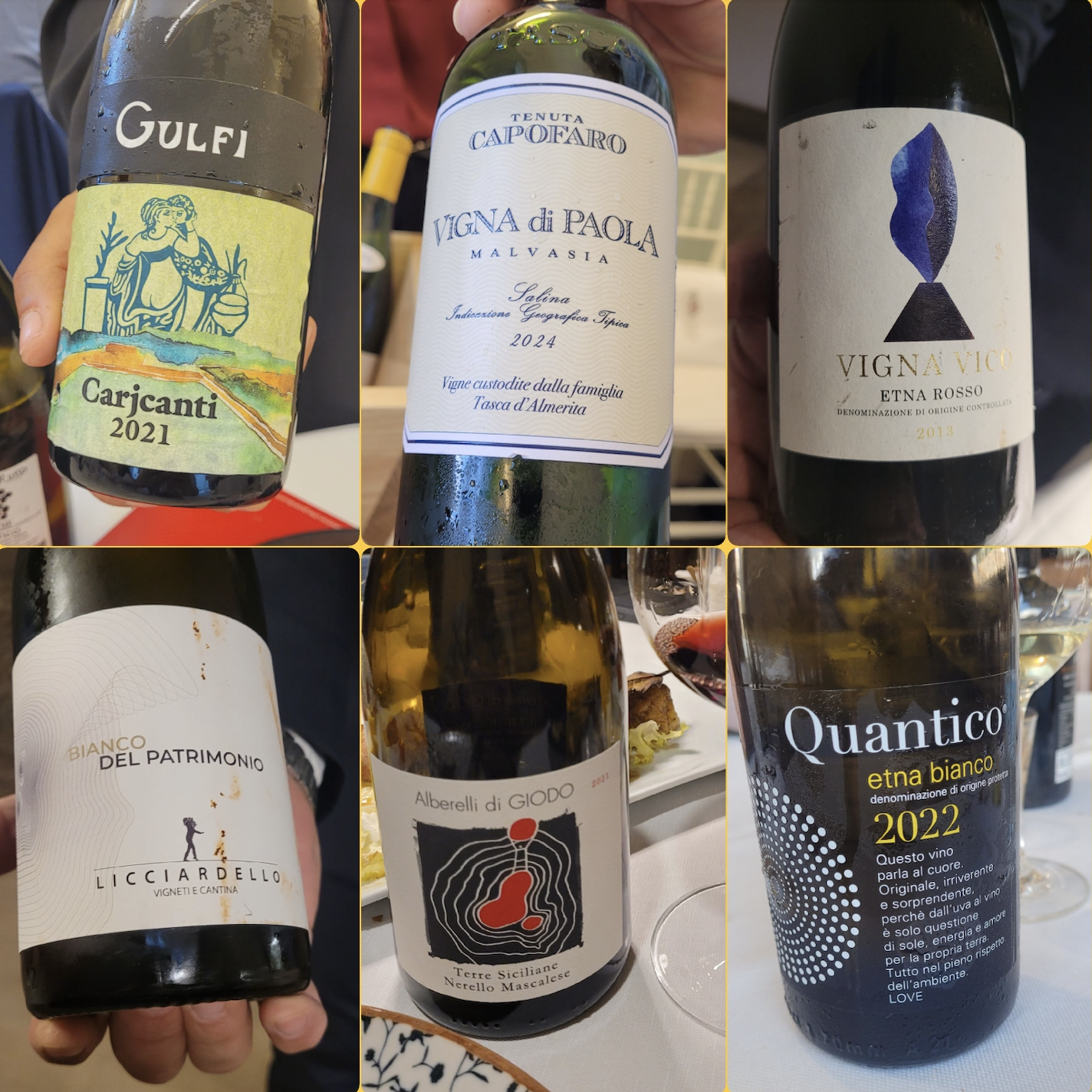
Northwest Montalcino

The passion and the strong link with mother nature of the winemaker are the best factors to make original and outstanding wines

… Tommaso Cortonesi, Cortonesi – La Mannella

How or why did 12 or 24 months, or in rare cases, 60-plus months further become the defined reason for how to make and qualify Riserva?

Lorenzo Magnelli, Le Chiuse: “We release our Riserva 60 months later than our Regular Brunello because I believe it helps the wine to get a stronger identity from Brunello showing a better balance and more complexity. Brunello Riserva, it’s not the wine that you want to drink young, in this way you really can’t.”

Riccardo Talenti, Talenti: “As a philosophy we do not exceed 36/40 months of aging for the Riservas and we do not produce the Riserva every year, but only in vintages that we believe have high aging potential, making a selection of barrels from the vineyards around the company positioned at 400 meters.”

Elisa Fanti – Tenuta Fanti: “The Riserva is a selection of the best Sangiovese in the vineyard. This Sangiovese, in the beautiful vintage, probably has a big structure, complexity and acidity and it is necessary for more time of aging (in the oak or in the bottle), to have an important wine with all its aromatics feature well integrated.”

Stefano Cinelli Colombini, Fattoria dei Barbi: “In my opinion any true Brunello is at his best between eight and 20 years, it is due to the peculiar character of the Montalcino Sangiovese grapes.”

Riccardo Campinoti, Le Ragnaie: “I am not a big Riserva guy, I keep all my wines three years in barrel and I think it’s enough. I much rather prefer single vineyard expression, I keep my best sites for single vineyards. Lately I prefer colder vintages. Warm vintages are too extreme and the wines are not that interesting.”

Conte Francesco Marone Cinzano, Col d’Orcia: “When my father arrived at Col d’Orcia in 1973 he found wine in the large barrels dating back to vintage 1968 (60 month). This was the tradition in Montalcino and still is the practice at Col d’Orcia when a vintage requires it.”

Donatella Cinelli Colombini, Casato Prime Donne: “The Brunello Riserva is born in the vineyard, not in the cellar. The clusters must have grapes that are very small, perfect in health and with thin skins. In other words we cannot produce Riserva with just any old cluster of Sangiovese. For this reason the amount of Brunello Riserva we make increases or diminishes, and so aggravates my sales office. Obviously the perfect grapes create wines that need a longer stay in barrel and then in bottle.”

Giacomo Neri, Casanova di Neri: “We do not produce Riserva, our Brunelli at most spend 42 months in wood. Brunello Cerretalto comes out in the sixth year but with twelve more months raised in the bottle.”

Filippo Chia, Castello di Romitorio: “Sangiovese is a very finicky grape that is really tied to the climatic conditions of the vintage, every so often in great vintages its power and abundance can withstand additional ageing in oak, large or small, and most producers tend to go to bottle sooner in order to avoid keeping the wine in stainless steel or wood for too long.  Usually it’s a barrel selection and when tasting the wines it is apparent when you can make a Riserva without cannibalizing your “Vigna” and without over-oaking and oxidizing the wine. Therefore normally only the very best and most balanced and structured fruit can give way to a Riserva.”

Francesco Ripaccioli, Canalicchio di Sopra: “The oak is not an ingredient. It’s a kneading for the wine.”

Tommaso Cortonesi, Cortonesi – La Mannella: “The Production Requirements ask for 24 months minimum for Brunello Riserva, but many wineries do a much longer wood aging. We do 48 months in large barrels and our Brunello Riserva is only produced in the best vintages from our oldest vineyard in La Mannella.”

Montalcino

Va a macchia di leopardo

… Stefano Cinelli Colombini, Fattoria dei Barbi

Do you prefer the oldest vines for Riserva or Vigna? And do you prefer them in colder or warmer vintages for these wines?

Conte Francesco Marone Cinzano, Col d’Orcia: “Yes, for Poggio al Vento Brunello di Montalcino Riserva we use older vineyards. For the one Vigna we currently bottle (Vigna Nastagio) we use a recent vineyard planted in 2006. Poggio al Vento is produced only in the best vintages, on average 5 vintages out of 10. For all Brunello’s I tend to prefer balanced weather with cool ripening season.”

Donatella Cinelli Colombini, Casato Prime Donne: “Evidently I prefer the older vines. I adore wines obtained from older vineyards and I have bought a sort of mechanical mole to burrow holes to substitute the new vines where others have died. We are also learning the Simonit and Sirch technique to save the vines from Esca disease. We are, in other words, doing our upmost to allow our vineyards to age healthily. It would be ideal to have old vineyards with healthy vines and all with a regular quantity of clusters. To produce Brunello Riserva we need winter and spring to be rainy, summers to be hot interrupted by some showers, September with cold nights and sunny days. Just like in 2019.”

Giacomo Neri, Casanova di Neri: “Certainly the oldest vineyards give us the possibility of having much much more complexity. Cold vintages often give great satisfaction after 15 – 20 years, often with big positive surprises.

Filippo Chia, Castello di Romitorio: “The blend of newer and older vineyards is vital in all phases of production of wines from Montalcino.  The tension in any work is always a balance between chiaroscuro which sangiovese embodies in such a magical way. It can be a brooding dark powerful brick coloured wine as it can be a dancy, perfumed and transparent wine.  What’s great about Montalcino is that there is such a wide variety of terroir and cellar practices that give way to a multitude of different expressions of Brunello di Montalcino.  Romitorio is a northwestern hill Brunello and very proud to embody this aspect in our wines and we hope to communicate this from our Rosso di Montalcino all the way up to our Brunello di Montalcino Riserva.”

Riccardo Talenti, Talenti: “For the production of the Riserva there is our 40 years-old vineyard together with other younger vineyards all around the cellar, where the microclimate and the characteristics of the soil are the same and homogeneous, but the selection of the wine is the result of a choice of barrels and aging tonneaux. We do not produce the Riserva every year, but for characteristics I would say that the cooler vintages are more elegant, even if in warmer years we have produced the Riserva (see 2007 or 2012), but in any case vintages with very high potential. In the most difficult years where even the quantities of selected grapes are high, we hardly produce Riserva.”

Elisa Fanti, Tenuta Fanti: “I prefer the Riserva because in general it is the best wine of the vintage with important characteristics (the structure and in particular the acidity) well integrated with the aging in the oak. A perfect wine to drink old! I prefer colder vintages, I don’t like the wines very strong and with low acidity.”

Stefano Cinelli Colombini, Fattoria dei Barbi: “I tried to find a mathematical connection between colder or warmer vintages and quality, but I had so success. The same happened with the rains. I prefer the best vintages for Vigna and Riserva, but sometimes these are warmer vintages and sometimes are the colder ones. Frequently the top vintages are the most “balanced” ones, but not always.”

Francesco Ripaccioli, Canalicchio di Sopra: “With vintage variation I prefer the oldest vines (Vigna Mercatale at Canalicchio) in the coldest vintages for Brunello and Vigna. For Riserva I choose the vineyard on the Montosoli hill.”

Tommaso Cortonesi, Cortonesi – La Mannella: “I prefer to use the oldest vineyards to produce Brunello Riserva. I am a fan of warm vintages because with the selection systems that we have nowadays we can have a great selection of the grapes when they are at the perfect stage of ripening. In cooler vintages, where there are typically abundant rainfalls, it is more difficult to get a perfect ripening of the grapes to obtain wines with a great aging potential as Brunello di Montalcino has to be.”

Lorenzo Magnelli, Le Chiuse: “We don’t do a single Vineyard as Le Chiuse is one block, so for my choice it’s necessary for Riserva. Usually I’m for excellent cold vintages that guarantee a wine full of energy that doesn’t end by the long aging.”

Lorenzo Magnelli, Le Chiuse

Il Brunello vada molto meglio di altre denominazioni.

Lorenzo Magnelli, Le Chiuse

The last question I posed to the producers concerned the current state of business and affairs in Montalcino.

How are things going for Montalcino?

Lorenzo Magnelli, Le Chiuse: “Montalcino is at a very good health level, we have not had COVID cases for a long time, certainly better than in other parts. On the other hand, economically it depends on the producer, there are those who have many bottles in the cellar and have sold well. In general, however, I think Brunello is fairing much better than other denominations.”

Tommaso Cortonesi, Cortonesi – La Mannella: “In Montalcino almost restaurants are open. We have a quite good European tourism now. The business is not too bad actually. Imperative now is to survive from this 2020. About the grape season, until now it’s a beautiful vintage, but August and especially September are the most important months. This week should be one of the hottest (34-36° C).  The Consorzio del Brunello are investing some resources on our main markets like Canada and US. We hope to give some help to our producers and to their agencies/importers promoting our denominations and our wines.”

Stefano Cinelli Colombini, Fattoria dei Barbi: “Va a macchia di leopardo. It goes wild. More than a third of the Brunello “vintage” has already been sold and there are only two vintages in the last ten in which more has been sold. The prices of the bottles have not dropped. However, the bulk Brunello market (only 8% of the total) is at a standstill and the bulk price has dropped by 40%. Those who have an advanced commercial and / or a large brand suffer little or nothing, while the less organized ones have some problems. But there are not many. Bolgheri is fine, Maremma and Mo rellino benino, the rest of Tuscany ouch ouch.”

Conte Francesco Marone Cinzano, Col d’Orcia: “Montalcino is very quiet this year. Some Italian tourists around. Very few foreign visitors. We had a good season in terms of rain and heat, but the harvest is still a long way away.”

Donatella Cinelli Colombini, Casato Prime Donne: “Sometimes, like in 2019, we had a quantity of super grapes never seen before and so we immediately ordered more barrels. It is a shame that the lockdown blocked the delivery of the barrels and the wine went into barrel late. Unfortunately the splendid harvest 2019 has suffered the effects of the Coronavirus too.”

Giacomo Neri, Casanova di Neri: “For now the grapes are beautiful and healthy, we expect an early harvest. Let’s see what the months of August and September will give us. In Montalcino, given the situation, well, we don’t complain…”

Riccardo Talenti, Talenti: “Everything is fine even if it is really a strange period, to see Montalcino without tourists without fans who come to the company to taste.”

The Consorzio’s members come together each February at The Montalcino Chiostro del Museo and home to the Consorzio’s offices for Benvenuto Brunello, a two day showcase of the most recent vintages to wrap up Anteprime di Toscana. Though the prospect is dire for this gathering to take place in 2021, Montalcino’s wines will and always need to be tasted around the world. Let’s travel back a bit in time. At Benvenuto Brunello in February 2020 I tasted the following 150 samples of sangiovese, 36 Rosso di Montalcino DOC and 114 Brunello di Montalcino DOCG. These are my notes.

Rosso di Montalcino DOC 2018 (31 notes)

Altesino Rosso Di Montalcino DOC 2018 ($27.95)

Altesino’s is consistently rich and baritone for Rosso, even in light ’18 and gone in all for one with not much left to the imagination. An amenable, commercial and viable proposition for anyone and everyone to take part. Drink 2020-2021.  Tasted February 2020

Argiano Rosso Di Montalcino DOC 2018 ($29.95)

Full intention and focus for Rosso here from stalwart house Argiano in sangiovese pertinence. The combination of wood and a mosaic of ripeness means flavour packet bursts and structural stumbles. Seems a bit wooly and high acid distracted but the youth is important in knowing or at least intuiting what this Rosso will become. Drink 2021-2025.  Tasted February 2020

Baricci Rosso Di Montalcino DOC 2018

Carries all the 2018 Rosso attributes that set the vintage apart, including full fruit and old school structure but what separates Baricci’s northerly Montosoli is the sprezattura savour. Wild strawberry and a texture that reaches back for more sangiovese. Very specific to this hill that only a few other appellative wines can touch. Pretty structured stuff for Rosso. Drink 2021-2027.  Tasted February 2020

Bellaria Rosso Di Montalcino DOC 2018

From Gianni Bernazzi and a Rosso treated to a full compliment of Botti wood, adding a sweet vanilla and candied floral spice to his sangiovese. Old school and pure, clear and clean at the same time. Well made, not as crunchy and bright as some though as itself it speaks a true vernacular. Drink 2021-2025.  Tasted February 2020

Canalicchio Di Sopra Rosso Di Montalcino DOC 2018 ($39.95)

Only raised in big barrels but not the 2500L larger oak used for the Brunello. Lovely red fruit purity and transparency from a vintage that was at a near all-time low pH. Higher acidity conversely and serious enough to use for food matching ability. Just a hint of pressing is felt but it’s really just a matter of de-stemming that makes a push but not a crush. A little bit of whole berry helps ward of oxidation and the freshness is truly a matter of gentile handling. Such a fine, drinkable and complex Rosso. Drink 2020-2025.  Tasted February 2020

Caparzo Rosso Di Montalcino DOC 2018 (333575, $19.95)

Though the fruit source is an amalgamation of Montalcino in a multi-disparate form you can’t help but feel or at least sense the Galestro of Montosoli young vines making their way into this Rosso. Wet stone, crumbled earth’s elements and a crust of decomposition meets the cherries head on for a salty and sharp sangiovese. Really proper wine here. You know it, I know it, they will know it. Drink 2021-2027.  Tasted February 2020

Casanova Di Neri Rosso Di Montalcino DOC 2018

Giacomo Neri lends his name to the bottle of Rosso which speaks to his desire that meaning is to accompany the appellation. Seemingly combed from Neri’s three or four vineyards dotting the north and east of Montalcino for an estate agglomeration of dark fruit, high tones and great accumulated acidity. Here the baby Brunello concept acquiesces to the notion of strictly made Rosso and for great purpose. Big wine, fine sangiovese, lots of possibility. Drink 2021-2026.  Tasted February 2020

Castello Romitorio Rosso Di Montalcino DOC 2018 ($38.99)

From a hectare and a half of a Rosso vineyard that produced 1,000 cases. The general matrix is unique because Colli Senesi is DOCG and this Rosso is a DOC though it commands a higher price. Cool, racy, lean, tight and mean. A fighting machine, just bottled, intense and ahead of the impending magic so use your imagination to the Rosso fullest. There a fulness and a flesh behind that veil of acid secrecy.  Drink 2021-2026. Tasted February 2020

Collemattoni Rosso Di Montalcino DOC 2018 ($28.99)

Such a consistently fashioned Rosso from Collemattoni, also a posit tug between freshness and structure, always to the proper precipice and edge of tang, tart and sour. Lingers with texture and wood rendering. A subtle wine that gains flesh as it works through the nervous system. Drink 2020-2023.  Tasted February 2020

Cortonesi La Mannella Rosso Di Montalcino DOC 2018 ($31.78)

Tommaso Cortonesi’s Rosso ’18 is pure La Mannella, expressly northeasterly Montalcino and bright as a February Benvenuto Brunello day. Crunchy and raised with all the land caught inside, the fruit expressive and elastic, the finish blessed with just a few years notability by structure. Promising and effective, proper and precise. Still showing some wood so wait a year. Drink 2021-2026.  Tasted February 2020

Risotto, Sangiovese and Taleggio

Fattoria Dei Barbi Rosso Di Montalcino DOC 2018

Barbi’s vintage acceptance and celebration is commendable to the degree that 2018 from vineyards ripened for pleasure is to be set this way. Such fruit, sweet thing, like “gardens misty wet with rain.” The kind of tart and tang on cherry and more cherry is what you want from sangiovese meant for the table each and every night. So right, walking and talking without ever growing old. Fresh youth is a beautiful thing. Drink 2020-2022. Tasted February 2020

Fanti Rosso Di Montalcino DOC 2018 ($33.84)

Gotta love a Fanti Rosso, for its outpouring of sangiovese heart and in the way it so professionally proffers what you know Montalcino is so fully capable of gifting. The fruit is high, the aging possibility nigh and the pleasure probability at the limit of the sky. All in, together of parts as one, for a proper rest day, preferably in the sun. Drink 2021-2027. Tasted February 2020

Gianni Brunelli Rosso Di Montalcino DOC Le Chiuse Di Sotto 2018 ($54.00)

Gianni Brunelli’s ’18 Rosso’s brightness shines as the vintage lights the way, yet also embraces deeper sentiments, from generational impressions to modern perceptions. That is confirmed on a palate brimming with sweet fruit and a salt and pepper seasoning that makes for a complete experience in sangiovese gastronomy. Just a shake of bitters on the finish indicates the request for Rosso patience by way of a year’s settling. Drink 2021-2025.  Tasted February 2020

Il Poggione Rosso Di Montalcino DOC 2018

Top quality reach in expertly crafted ubiquity makes this a Rosso from the brightly lit vintage for all to explore. Take this road oft taken and use it to gain understanding of the DOC, the village and the ways of local sangiovese. High toned, generously oak spiced and really transparent. Drink 2020-2023.  Tasted February 2020

La Màgia Rosso Di Montalcino DOC 2018

A deeper, warmer, confident and comforting Rosso from the cerebral and intentional La Màgia, a bit tight and demure in youth. A Rosso that needs some time and in its Brunello-like empathy. More extraction and depth for Rosso in a vintage where some frazioni could not do what this is capable of putting into depth effect. Structured for the appellation. Drink 2022-2027.  Tasted February 2020

La Poderina Rosso Di Montalcino DOC 2018

From the younger (10-15 years of age) and lower downslope vines in Castelnuovo dell’Abate and located in front of the historical Benedectine abbey of Sant’Antimo. Insular, taut and tight Rosso, especially for 2018 so the feeling is of a site that when these vines grow more mature will surely feed Tenuta del Cerro Brunello with structured fruit. A long linger in this precocious Rosso, so very red fruit and while a bit nervy, quality and promise of site is all there. Drink 2020-2023.  Tasted February 2020

Le Chiuse Rosso Di Montalcino DOC 2018

Not a vintage if you are looking for concentration. If you are looking to drink it is perfect. From the same vines employed for Brunello but as per Lorenzo’s idea, only the largest clusters are grabbed. “For our culture it is an important wine. As winemakers we make Brunello but don’t drink it every day. This is what we drink.” Aged in the youngest large barrels for one year (plus two months) and in this vintage it’s back up the truck, glug-glug, pour half the bottle sangiovese. So fresh and with ultimate sangiovese spirit. Drink 2020-2024.  Tasted February 2020

Le Ragnaie Rosso Di Montalcino DOC 2017 ($45.00)

Still sitting, waiting and I suppose stabilizing in concrete is this Rosso 2017 that will be bottled in April. The aging requirements met would actually qualify it for Brunello and we’ll just leave it at that. The entire fruit source in ’17 is Castelnuovo dell’Abate harvested between the 8th of September through to the last days in the highest reaches. Fresh and far from heavy though there is a liqueur depth and a skin-contact feel. Youthful tang and sharpness with a minor tannic herb-verdancy and good but not that super-sangiovese 2016 length. Drink 2021-2028.  Tasted February 2020

Lisini Rosso Di Montalcino DOC 2018

Quite tonal, up there is the stratosphere where some Rosso lie, especially with a vintage like 2018. Richer and more texture on the palate with liquid chalk, wood vanillin and plenty of seasoned tang at the finish. Could use a year or two to integrate. Drink 2021-2024.  Tasted February 2020

Mastrojanni Rosso Di Montalcino DOC 2018

The best of all Rosso worlds emanates from Mastrojanni’s ’18, part effusive light and part deep rich tonality. Hits the high, the lows and everything else in between. Good acids keep the balance with darker fruit and silken wood texture. All in with great expectation for 2018. Drink 2021-2026.  Tasted February 2020

Mocali Rosso Di Montalcino DOC 2018 (286260, $19.95)

Racy, stark and slightly feral Rosso here with some volatility of distraction. Good core of fruit, fully extracted and in that pressing some bitters and bacterials come along for the ride. Drink 2020-2021.  Tasted February 2020

Fried Artichoke, La Sosta Montalcino

Podere Brizio Rosso Di Montalcino DOC 2018

Seriously polished, stylish and full compliment filled Rosso from Brizio, very much in the post-modernist Dievole vein. No expense spared to elevate the game, freshen up the fruit and the appellation. A chic wine for current consumption and replete with necessary acidity to capitalize the freshness with a proper “F.” Drink 2020-2023.  Tasted February 2020

Salvioni Rosso Di Montalcino DOC La Cerbaiolo 2018

What is the question? Taking this Rosso lightly, passing it by or presuming anything on just a whiff and a sip would do it great injustice. There’s a wealth of knowledge and character on the nose, a depth not yet reached because the elemental layering is hard to bypass, just as roots through the fissures in the stone will take a few years to zig-zag for to find the water table below. Segued and extrapolated into this Rosso’s structure, when the integration happens it can be imagined the salts and the minerals to really step forward. La Cerbaiolo for the Rosso ages is the answer. Drink 2022-2028.  Tasted February 2020

San Polino Rosso Di Montalcino DOC 2018 ($48.95)

Here the loosely ambient Rosso stylistic meanders with carefree sway into a world occupied by the natural and the free. Wooly tannins surround variegated red fruit and the matter is so much fun to behold. Not for the masses, perhaps a bit esoteric for you and yet the clarity is dubious in its own singular realm. Drink 2021-2025.  Tasted February 2020

Sesti Rosso Di Montalcino DOC 2018

Sesti’s is serious Rosso but please, enjoy. Ripe red fruit with a decidedly mineral Galestro feel, liquified and run through with hematic and blood orange citrus. This could very well be Rosso Riserva, not exactly Brunello and surely Rosso with more wisdom and beauty. Impressive to be sure. Drink 2021-2026.  Tasted February 2020

Talenti Rosso Di Montalcino DOC 2018 ($30.00)

The Rosso vineyards here are part estate Sant Angelo in Colle and also lower down the valley closer to Castelnuouvo dell’Abate. The prominence is of sandy loam, argiloso and stony soils to make for a full expression that while holding the 2018 wild energy card is represented as deeper than many. Rich and also expressive, full on red fruit of berries fresh picked and a solid core of Rosso tannin. Easily one of the bigger 18s available. Approximately 3,000 bottles made. Drink 2021-2027.  Tasted February 2020

Tenuta Buon Tempo Rosso Di Montalcino DOC 2018

Tenuta Buon Tempo’s is a deep one, first in fruit and then welling with acidity. The fruit runs a wide gamut, from tang by berries through blackening red currant to dusty plum. Quite full and worthy of the warm climate from whence it came with an elevated 2018 sentiment in mind. Drink 2020-2023.  Tasted February 2020

Tenuta San Giorgio Rosso Di Montalcino DOC Ciampoleto 2018

Quite the expressive Rosso here at heights across the valley from Sant Angelo in Colle and situated at a half tier away from parent Poggio di Sotto. A well extracted and healthy macerated sangiovese that brings some structure, multiplied by the rich barrels making their seasoning statement. Really like the finish on this flashy wine. Drink 2020-2024.   February 2020

Tenute Silvio Nardi Rosso Di Montalcino DOC 2018

Very cherry, ripe mainly, some sour edges and all dominant in a very fruit forward wine. Explores the essence of sangiovese with a heart struck and set into a Montalcino land. Could be from nowhere else and demands drinkable attention. Drink 2020-2022.  Tasted February 2020

Ventolaio Rosso Di Montalcino DOC 2018

On the high tone, fruit rising on an acidity elevator up to the upper floors of character. A bit wooly as compared to previous vintages and shows a consistency of style that adheres or more so fully accepts the tenets of the vintage. One of the more effusively sour ‘18s. Drink 2020-2024.  Tasted February 2020

Villa Poggio Salvi Rosso Di Montalcino DOC 2018

Simple red fruit Rosso as per the giving vintage of high acidity and ease of structure. No real bones, road blocks or requests for time. Play on through to a draw at the final whistle. Drink 2020-2021.  Tasted February 2020

Riccardo Talenti

Rosso di Montalcino DOC (other vintages, five notes)

Podere Salicutti Rosso Di Montalcino DOC 2017

Organic, biodynamic and unfiltered, from the then first in Montalcino, at the hands of Francesco Leanza, in 1995. Now (and since 2015) in the custodial hands of Felix and Sabine Eichbauer, halfway between Montalcino and Castelnuovo dell’Abate. Here ’17 is clean, pure, silk threaded and simply put, juicy. One of the longest Rossos you are likely to taste and a triumph for the vintage. Drink 2020-2025.  Tasted February 2020

Canalicchio Di Sopra Rosso Di Montalcino DOC 2016

The ’16 Rosso takes all the extract and acidity of the combined coming two vintages and gleans every ripe aspect for the ambitious way that Rosso can go. Deeper and less crushable and truth be told the Brunello appellation is cozied up to. Salty and full of proper tang with seasoning and spice. Drink 2020-2024.  Tasted February 2020

Carpineto Rosso Di Montalcino DOC 2016

Carpineto’s 2016 comes from higher (450-500m) elevation than many, is aged longer (three years in large oak barrels) and so 2020 is just about the perfect time to enjoy its charms. This 100 per cent sangiovese off of marl and clay was picked into October and it so dutifully expresses the appellation, grape and territory. The all in fulsome red cherry is now joined by a silkiness of texture because the calcaire and the wood have softened, liquified and swirled right through the fruit. A fresh one from a structured vintage and put succinctly into that five to six years Rosso di Montalcino aging window. Drink 2020-2023.  Tasted February and November 2020

Le Ragnaie Rosso Di Montalcino DOC 2016

Most of the grapes come from Castelnuovo dell’Abate but some are also off of estate vines. A late release Rosso, nearly 18 months after most other Montalcino wineries. Has really settled since October and is drinking beautifully right now.  Last tasted February 2020

Top quality vintage, elegant and balanced, from the non disposto star of Montalcino, Riccardo Campinoti. His is a Rosso for Rosso sake, discriminant, linear, vertical and come up for the rising. If Rosso can be spiritual it would be like this, poignant and effen-solid good. These are the acids of Montalcino and the depth of earth which holds you firm in the face of a fluent perfume. It’s all in this bottle, fluid and affluent. What you need to know and what you want to drink. It can live for a dozen years. Drink 2019-2029.  Tasted October 2019

Canalicchio Di Sopra Rosso Di Montalcino DOC 2010 ($39.95)

Wildly fresh considering Rosso was not often thought to show such longevity, but in can and will exhibit such tendencies. Potential ability is magnified in a dark fruit vintage that advances with wisdom, morphs and settles. Lives and evolves within itself. Sweet fruit persistence is more than admirable, it’s outright amazing. Scents of carob, dried orange and liquorice, now coming into a baking spice place with persistent acidity. Drink 2020-2023.  Tasted February 2020

Col D’orcia Rosso Di Montalcino DOC 2010 ($39.95)

From a vintage that is increasingly showing its stripes at the 10 year mark for Rosso and why should we be surprised? Evolved and into a next level freshness, sideways, sidled, savoury and yet still sweet. The alcoholic and comforting warmth persists, as does the ripeness of 2010 acidity. Proper 10 year move, just past peak and happy to gift another few pleasurable winters. Drink 2020-2023.  Tasted February 2020

Brunello di Montalcino DOCG 2015 (71 notes)

Agostina Pieri Brunello Di Montalcino DOCG 2015

As ripe as it ostensibly gets for 2015 in this sweet scenting and viscous sangiovese with real spice cupboard seasoning and a piquing of gathered acidities. The grain of chalkiness runs through and should take this into an umami set of values in the not too distant future. Drink 2021-2026.  Tasted February 2020

Altesino Brunello Di Montalcino DOCG 2015 (994095, $59.00)

Very polished and made Brunello with a wealth of statuesque parts sculpted out of the high level materials presented the team that crafts this wine. Speaks to a very broad swath of place and a perfectly good drink of consumer appeal.  Last tasted February 2020

From the vintage where agriculture, winemaking and now selling came and will come easy so you can expect the warm, fuzzy, generous and soft. Perhaps too straightforward to be what the powers that be call a five-star vintage but if Brunello is what you want or even what you think you need then begin or continue the journey right here. Very berry, ultra liquorice and über morbido. Soft, amenable and unencumbered. Positive but certainly not overbearing structure. A now and through mid-term years drinking Annata. Drink 2019-2024.  Tasted October 2019

Argiano Brunello Di Montalcino DOCG 2015 (15460, $59.959)

Argiano goes all in for this sumptuous and unctuous ’15 of fruit, earth and acids long, sharp, linear and long, Big expressive and chocolaty sangiovese with wood a major factor and structure a fact of the matter. All purpose Brunello and so bloody effective. Drink 2022-2027.  Tasted February 2020

Armilla Brunello Di Montalcino DOCG 2015

The tiniest production delivers a very pretty Brunello from 2015 and this Armilla is just the right mix of wisdom and forward purity. There is little ambition, the fruit picking was spot on and the gentle extraction a matter of great gentility. A little Ribena but this is surely a sangiovese of terroir, left to its own devices, without distraction or interference. Drink 2020-2030.  Tasted February 2020

Baricci’s Federico and Pietro Buffi

Baricci Brunello Di Montalcino DOCG 2015

There’s just nothing that scents, acts, tastes or structures like a Baricci Brunello. At the height of traditional excellence and slow change improvement there is so much nobility and perfectly seasoned bitterness that allows this linear and purposed Brunello to rise above. No less fruit than structure and more solidarity amongst the parts than so many others. This my friends is Brunello made the way it was and has to be, without compromise and for all the most righteous reasons. Quality is in effect the highest order. Drink 2023-2034.  Tasted February 2020

Bellaria Brunello Di Montalcino DOCG 2015

Bellaria’s sweet and strange sangiovese is part terroir and part barrel, like walking in the woods the other day, scents of wet forest and sweet foliage in a warm season. The humidity of this Brunello smells like the past, “seems like 100 years ago.” Needs time to hide away and allow the melting, oozing and scenting wood to dissipate and allow the wine to do its thing.  Last tasted February 2020

Remarkably alternative vintage for Gianni, fresher and more effusive to be clear and sure. Shows with great immediacy and tells a story of vintage variation, especially at altitudes like Bellaria (550-600m) and from soils so poor in organic materials. It’s luxe but also so perfumed, pretty and expressive. Just gorgeous Brunello with fine acidity and sweet tannins. The window will open wide sometime early in 2021 and stay that way for as much time as you need. Drink 2021-2031.  Tasted October 2019

Canalicchio Di Sopra Brunello Di Montalcino DOCG “Canalicchio Di Sopra” 2015

Back to prominence for Brunello quantity is what 2015 does for business while delivering great quality without causing any undue relative stress. Both Canalicchio vineyards and Montosoli cru fruit make up the cuvée. Welcome to the beauty in cherry liqueur and outright unction from the generous vintage out of which every extra day meant more ripeness, more extract and more texture. The acidity factor is what drives this Brunello because staggered picking equates to an agglomeration of perfect timing. The true estate expression in no unspoken terms. Drink 2022-2031.  Tasted February 2020

Capanna Brunello Di Montalcino DOCG 2015

Quite a wood compliment to Capanna’a 2015, much like its 2009, here six years later with more fill in the middle and less angst. Creamy, delicious and soft though not without the possibility for extension to drink well into its fifth season. Drink 2020-2025.  Tasted February 2020

Caparzo Brunello Di Montalcino DOCG 2015 (579094, $49.95)

Caparzo is surely driven by the wood it spends quality time in getting to know and the material sent to those barrels is up to the mixing and swirling task. You understand this fruit and its dark cherry upbringing. You inuit the way vessels work through the pores while acidity flushes and raises the level of ability. Finally you get to know these sweet tannic grains and chains that work magic for the fruit. Will all come together soon, or at least sooner than many vintages. Drink 2021-2028.  Tasted February 2020

Casanova di Neri Brunello Di Montalcino DOCG 2015 (85498, $84.00)

Very polished Brunello tome here from Giacomo Neri, a memo from Montalcino, a song in process. A slide guitar bending entry with a spoken monologue in hushed tones and the agglomeration of soils playing beneath the words. If a Casanova di Neri Brunello could sing, it would sway your impression through its ability to conduct business with swagger and chord change artistry. This one just has a way about it. Files a quick flash of fruit, covers it with micro-oxidative blanket tracks laid down by the grandness of barrels. Then allows for it to breathe by acids, leaves for a break and returns to leave it in slumber while tannins figure out the refrain. The final verse is yet written and that’s just fine with us. Drink 2022-2032.  Tasted February 2020

Montalcino from Castello Romitorio

Castello Romitorio Brunello Di Montalcino DOCG 2015 (236356, $63.95)

A vintage of hue and the dichotomous relationship that bridges power and drinkability. A matter of accumulated acidity from a northwest Montalcino vineyard that doesn’t receive a whole helluva lot of afternoon sun. Salty from growing up in brackish mud and oyster shell from an ancient sea. The wood now speaks for the wine as expected and will fall away again.  Last tasted February 2020

Bottled, finished, now as is for three and a half months in. Pretty like the previous declared Annata from Sandro but truth be told the level of richness and power is raised up albeit without any compromise to construct and yes, elegance. The E word applies here, like it or not because this place demands it and you would absolutely know were this messed with, made up or polished by wood, pomp and circumstance. These are some stretched, elastic and elongated tannins. Will extend for hours, days, months and years, open forever, long before it bounces back. Drink 2020-2029.  Tasted October 2019

Castello Tricerchi Brunello Di Montalcino DOCG 2015

Reductive and underage this sangiovese toys with the idea of youthful ambition and blind faith. A touch past ripe in the teasing vintage of available exceptionalities and the race for potential glory. Certainly a Brunello very close and at the edge of excellence were it not a bit pressed and gone for the win. Drink 2020-2025.  Tasted February 2020

Castiglion Del Bosco Brunello Di Montalcino DOCG 2015 (956391, $63.95)

The beautiful middle ground of Brunello di Montalcino expression is graced by Castiglion del Bosco’s 2015 and also because it does the same for the vintage. High level ripe fruit, supportive acids and creamy if spiced chocolate comes across the palate in texture and piqued energy spice. Takes what gives and gives back. Drink 201-2026.  Tasted February 2020

Cerbaia Brunello Di Montalcino DOCG 2015 (652446, $66.95)

Cerbaia’s is warm, comforting and blessed Brunello of fruit ripened to the maximum for the most ease imaginable out of 2015. It’s quite creamy and regardless of a northern exposure there’s no lack of unction from this sangiovese. Drink in the early stages of its energetic youth. Drink 2020-2023.  Tasted February 2020

Col d’Orcia Brunello Di Montalcino DOCG 2015 (306852, $53.95)

Classic closed Col d’Orcia youth, nose of earth crusted berries and not nearly the mature notes of what the future surely holds. Though meant to be consumed much earlier than Riserva or Poggio al Vento there’s no escaping the place and the winemaking ways of the house. It is truly appreciated how youth in a Col d’Orcia sangiovese does not mean chocolate or vanilla, nor any overbearing barrel notes. It does regard spice and piqued feelings that bode well for a long future. Drink 2023-2030.  Tasted February 2020

Corte Pavone Brunello Di Montalcino DOCG 2015 (237263, $57.95)

Heady and high floral aromas beget a formidable Brunello of fortitude and strength. Deep as black cherry emits in sangiovese from a certainty of high elevation, warm vintage solar radiation. A different sort of ’15 from the northwest adjacent Romitorio and surely a soil so different despite being so close. Rich, strong acids and loose tannin. Drink 2022-2028.  Tasted February 2020

Cortonesi La Mannella Brunello Di Montalcino DOCG 2015 ($89.41)

Tommaso Cortonesi’s 2015 Brunello is a ruby-red, spice studded star in 2015, high-toned and so very expressive. What spice oh my, what tripping fantastic light across the tongue and so very taut in its youth. Intensity does not begin to explain the freshness and the youthful nature of its being. Need to revisit La Mannella in one year and the 2015 sangiovese it has gifted in five years or so.  Last tasted February 2020

I’d like to say the tannins on 2015 Annata are sneaky but they are so much more than that. These are grippy, layered and nearly formidable tannins. Good thing the easy, generous and lush fruit is somehow capable of defending itself. Boom this is one of Tommaso Cortonesi’s most accomplished Annata and more capable of aging than even he would probably have guessed he was making. Power and beauty. This is that and more. Drink 2021-2031.  Tasted October 2019

Cupano Brunello Di Montalcino DOCG 2015

Cupano’s is a beautiful Brunello from 2015, aromatically gregarious, fruit sweetened in two times ripe ways but most importantly a phenolic access that lifts the spirit. ’Tis a red citrus acidity and a clay depth that combines for ultimate levels of strength and complexity. Lovely wine here and with just a smile of Brett to keep things stylish and rustic. Drink 2022-2030.  Tasted February 2020

Donatella Cinelli Colombini Brunello Di Montalcino DOCG 2015 ($74.95)

The 2015 is a deeper study in DCC soil and Brunello invention. You need to know that the northerly Donatella Cinelli Colombini terroir is more than offset, singular and testable. The makers of these Brunelli investigate every grain of sand, mould of clay and tumble of stones to forge the various cuvées of their sangiovese stable. This Annata carries a lyrical contralto in as much as that is a thing in Montalcino. A Cher, Annie Lennox, Nina Simone voice. It is precise and profound. It will live longer than the men. Drink 2023-2033.  Tasted February 2020

Fanti Brunello Di Montalcino DOCG 2015 (112607, $74.00)

Hello, hello Fanti, you beautifully factual and racy Brunello you. Hello to your calm, your controlled tension and your seamless transitions. Hello to how you say salve and open your arms. Hello to your mind, your body and your soul. Every bit of tradition, soil and acumen runs delicately and with purpose through your mineral veins. Hello to you beginnings, your full middle and your sweet endings. “Just one drink.” Of your loving cup. “In the sweet summer sun.” Drink 2022-2029.  Tasted February 2020

Fattoi Brunello Di Montalcino DOCG 2015 (33498, $46.95)

Always pleasure, always balanced, always proper. This is the Fattoi Brunello world, fruit sweet, energy running high and wine all tolled running long. You can count on this fruit to lift you up and the bones to stay propped up. Never waning, failing or faltering sangiovese with charm and grace. Drink 2020-2026.  Tasted February 2020

Fattoria Dei Barbi Brunello Di Montalcino DOCG 2015 (928028, $54.95)

C’mon classic Barbi here and the request is for this effectual realization to continue on forever, through the decades of vintages and their Brunelli. You come to expect the sort of juice that needs time, more time, precious time, endless time. You look for this tug of firmness, this posit strength and this creamy centre that ties the sangiovese room together. This does not and don’t ever abandon these roots Stefano, always keeps the Cinelli Colombini family’s Barbi faith alive. They are the lifeblood of this wine. Drink 2023-2030.  Tasted February 2020

Fattoria Del Pino Brunello Di Montalcino DOCG Il Pino 2015

Now for something set in the purity of the modern Brunello world. Though labeled Annata and therefore fashioned in a Classico estate-driven way there’s just something specific and particular about where this was surely born. A vineyard, a block, a plot, a Climat, a piece of terroir, a place of origin. Has that no lo so of a very special soil, likely fine clay and Galestro because it’s so smooth, confident, non-plussed, focused and finessed. Drink 2022-2031.  Tasted February 2020

Fornacella Brunello Di Montalcino DOCG 2015 ($54.00)

Fornacella’s brings a fine perfume of candied roses and fennocchio into Brunello quite linear and finely textured. There’s some cocoa dust and dark bitter chocolate shavings melting in and they are well integrated indeed. This is crisp, clean and properly structured sangiovse set to linger over a pretty long run. Drink 2021-2027.  Tasted February 2020

Fossacolle Brunello Di Montalcino DOCG 2015

Reductive and immediately glycerin noted Brunello with so much attraction and ephemeral beauty. The closed circuit is anything but a distraction or a problem because the core of fruit purity within is nothing if not a mass of great expression. Wild cherry, definite new leather and lots of sweet herbs in puréed pesto feel. Very silky and powerful though never cloying or obstructive. Very impressive. Drink 2022-2030.  Tasted February 2020

Franco Pacenti Brunello Di Montalcinio DOCG 2015 ($63.00)

The Franco Pacenti Brunello 2015 is an impressive beast. A sangiovese of hearty warmth, strength and openly fragrant but edgy red fruit. This is a vintage Brunello that takes a little risk, knows the fruit has transferred over the line into a world fully phenolic, then exposed to ultra violet light. There’s no hole to fill, no barrel to overwhelm and all the best attributes to gain. So promising and exceptional. Drink 2023-2034.  Tasted February 2020

Fuligni Brunello Di Montalcino DOCG 2015 ($67.95)

Fuligni’s is a 2015 intoxicant, a hypnotizing Brunello with no aromatic restraint. The apposite is true about its sympathy, taste and soul-searching proposition, all of which are served in great restraint. There’s a circulative musicality with unexpected and intermittent jangles, bass notes, harmonies and rapid beats. The barrel is so much a part of its present and will melt away in just a few years time. The future looks so bright for this elegant ’15. Drink 2022-2029.  Tasted February 2020

Gianni Brunelli Brunello Di Montalcino Riserva DOCG Le Chiuse Di Sotto 2015 ($90.00)

You can heart this Brunello’s beat from a thousand miles away. On its sleeve, in the air and through the fine sense of sangiovese sense of elixir humour. Serious and graceful, reasoned, seasoned and saucy spiced. Gives crazy love. Opens up, every time it smiles. Drink 2021-2028.  Tasted February 2020

Il Grappolo Brunello di Montalcino DOCG Sassocheto 2015

“Stone quiet,” signature wine for Il Grappolo, from 20-plus year-old vines in the south-facing Piano Nero vineyard, planted at 300m near Sant’Angelo in Colle. Schist soils are strewn with Galestro, Alberese and sandstone, the whole Montalcino masala, all in veritable contribution. Sassocheto, exacting sangiovese, as in Brunello that is just like looking in the territory’s mirror. Pure and harmonious with sly power both “subdolo” and “furbo,” because tannins like these wind in two directions, depending on which was the fruit winds just happen to blow. A worthy “campione” of the 2015 vintage, to set an example for how to win when your vineyards gift such exemplary fruit. One of the great values of the year. Drink 2021-2029.  Tasted February and November 2020

Il Marroneto Brunello Di Montalcino DOCG 2015 ($46.95)

Completely new set of parameters applied and noted in this 2015 Brunello with an aromatic waft that’s off the floral charts. What is that exotic perfume? ’Tis a rose petal and fresh tar, sweet herbal pesto and even sweeter fruit interned demi-glacé. Rich and far from dusty, like the cool feelings from dusk to dawn, if “nobody knows where it comes or where it goes,” this Brunello has the reds and blues to live long. Drink 2022-2030.  Tasted February 2020

Il Poggione Brunello Di Montalcino DOCG 2015 (551176, $72.95)

Il Poggione’s tells a Brunello vendemmia tale, in delivery of that vintage’s generous fruit, followed by a generosity of barrel and all the spice it can carry forward. High constituent parts, syncopated for possibility and most likely, probability. That says age will not catch up to a wine of great health because it was taken care of and will continue to take care of itself. You should pay it the same respect. Drink 2021-2027.  Tasted February 2020

La Gerla Brunello Di Montalcino DOCG 2015 ($76.95)

Le Gerla strikes as always, heady and impressive, big-boned, deep and serious vineyard exhumed Brunello. A mouthful of sangiovese like few other in Montalcino, of swagger, fully formed, developed and entrenched in vintage. Boasting of the kind of humid fruit swell that adds up to a sour cherry, leathery chew of Brunello. Full exaggeration and impression, as generous as it gets, deep and mounded in 2015. Drink 2022-2029.  Tasted February 2020

La Poderina Brunello Di Montalcino DOCG Tenuta del Cerro 2015 ($82.99)

Located next to Barbi and near to the Sant’Antimo Abbey La Poderina is a dichotomy in Montalcino expressiveness, at once Amaro, botanical herbal and then silky smooth, a liqueur of digestif proportions. Fruit comes from the top of the Bellini Vineyard’s hill, from 15-35 year-old vines facing southeast. If you are a fan of dry Amari-spiced and in liquid chalky grain of tannic addendum then you will relish this Brunello.  Drink 2022-2028. Tasted February 2020

Le Chiuse Brunello Di Montalcino DOCG 2015

Tasting Lorenzo Magnani’s 2015 Brunello only four months later tells an exacting story and speaks to how long his sangiovese holds the capability to age. The medium sized clusters are picked second (after the largest for Rosso) and ahead of the smallest for Riserva. They are the ones that gift this tempered extraction, concentration and texture. Impeccable balance from 2015 that is the one thing showing up early.  Last tasted February 2020

There is a perfume about 2015, a ripe cherry that stands apart for the vintage and even more specific to Le Chiuse. There are cherry trees planted by Tancredi Biondi-Santi here that mimic or rather the aromatics do so, especially in this wine. It’s all texture and a true sense of the land, a feeling of Galestro, rich clay in mouthfeel and Le Chiuse, the place where the dam closed the water off for irrigation. So much fruit and harmony, between acidity, alcohol and tannins. Drink 2020-2029.  Tasted October 2019

La Colombina Di Casseli Anna Maria Brunello Di Montalcino DOCG 2015

An older style, not so old as to bring out the grey but rather a wisdom, an educated guess, a planned parenthood. Rich savoury excess like few Brunelli and formidable of sangiovese acidity. The penultimate one for this undeniable and tractive local delicacy, in efficacy and naturally occurring phenomenon. The old is new again. Drink 2022-2030.  Tasted February 2020

La Lecciaia Brunello Di Montalcino DOCG 2015 (121905, $66.95)

The vintage question is far from a concern with respect to ripeness and a far more important consideration is more about the management of extraction, wood and acidity. La Lecciaia’s work is so properly executed because the acids secure, lift and place the fruit where it needs to be. That is on a mid-level precipice where structure can take over without much ado. All in balance here for mid-term perfection. Drink 2021-2027.  Tasted February 2020

La Màgia Brunello Di Montalcino DOCG 2015 ($59.95)

Rich and wealthy fruit variegated Brunello here from La Màgia, of blues, reds and blacks all layered and interacting together. That’s so necessary here because the wood sheathing is equally magnanimous and this sangiovese ultimately plunders my soul. So much warmth, depth and deep blues though to be honest I wanted more restraint. Drink 2021-2026.  Tasted February 2020

Le Gode Brunello Di Montalcino DOCG 2015

Le Gode farms a plot on the hill of Montosoli and while there’s a level of that elemental push there too is some less than pure fruit, Brettanomyces and creamy chocolate. Drink 2020-2022.  Tasted February 2020

With Riccardo Campinoti, Le Ragnaie

Le Ragnaie Brunello Di Montalcino DOCG 2015 ($115.00)

The Brunello that sits on its skins for three months and so sure of itself that the maintenance on that ferment is really low. A testament to the vintage because this is the longest skin-contact period Riccardo has ever attempted. Still showing its teeth and the great fruit of the year. Still, hands off, don’t touch.  Last tasted February 2020

The come and get me vintage but don’t be misled, distracted or misunderstood. The fraganza di Ragnaie is an intoxicant of the highest order from the highest elevations. This is tonality of verified airy exceptionality. There are fruit landings and destinations, from patches and orchards, without pith and with stone seeds. From only six hectares of the 15 total planted and the balanced one, with Montosoli fruit joining Petroso, Castelnuovo dell’Abate and the four vineyards at 600-plus metres around the winery. Still firm and shadowy so wait three more years. A redux of ’13 but in a wholly antithetical way and only in the ways of Le Ragnaie. Drink 2022-2033.  Tasted October 2019

Lisini Brunello Di Montalcino DOCG 2015

Lisini brings a mass of extraction and attraction from their 2015 Brunello, restless energy and a lusty precipice hard to reconcile in its youth. A wine you have a cup of coffee with “until the next time we say goodbye.” This is Brunello of expectation, tradition and once in a while affair. Meet up once a year to catch up and do this for a decade or two. It’s that kind of sangiovese. Drink 2022-2031.  Tasted February 2020

Mastrojanni Brunello Di Montalcino DOCG 2015 ($69.95)

Mastrojanni is an aromatic wild one in 2015, florals and full citrus scrape. There’s no letdown anywhere on this sangiovese, fruit having come to fruition and everything pulled from it’s phenolic capabilities. It’s über ripe and conversely tannic, crunchy, chewy, earthy, floral, all of the above again and more. So much length and more to come. Drink 2023-2032.  Tasted February 2020

Máté Brunello Di Montalcino DOCG 2015

Máté is strong mocker in 2015, high level at every angle, turn and precipice reached, namely by sour acids and gritty, brittle tannin. Not so much love at this early stage. But I can say this. Give this sangiovese 10 years and it will simmer down. dole out abbracci and make nice. It just won’t do so with generous fruit. Drink 2023-2028.  Tasted February 2020

Mocali Brunello Di Montalcino DOCG 2015 (64956, $44.95)

High toned and a bit lean for 2015 this does not elicit sentiments of the top, top terroir. A bit saccharine and intense with hard acids and overtly sensory edginess. Drink 2020-2022.  Tasted February 2020

Musico Brunello Di Montalcino DOCG 2015

Musico is at the far end of the ripe spectrum or rather sitting in fences at the edge of each. There is fruit of a sun-worshipped, solar-charred kind and then conversely a verdant group marked by dried herbs and legumes. This disparate blending makes cause for short term gain and gone long hollowness. Drink early for best response. Drink 2020-2023.  Tasted February 2020

Padelletti Brunello Di Montalcino DOCG 2015

Both rustic and reductive though filled to the inside brim with an impressive core of fruit. Quite raspberry and seasoned with spice that speaks to the edginess and headiness of the wood staying presently ahead. Will integrate in a few years and drink really well. Drink 2022-2028.  Tasted February 2020

Pian Delle Querci Brunello Di Montalcino DOCG 2015

A pretty sangiovese is a beautiful thing that makes for a beautiful life. This would only be said if a wine causes such a thought and so here, from the start, is that sentiment solicited. Sometimes roses emanate and while that may be a sangiovese peculiarity it is not something only reserved for nebbiolo. The palate too offers pretty flavours and red citrus joy. Might seem a bit light and sour-edged to some but like an enchanted old ruin, I appreciate it all the same. Drink 2022-2030.  Tasted February 2020

Pian Delle Vigne Brunello Di Montalcino DOCG 2015 (651141, $61.95)

The 2015 Pian delle Vigne is remarkably smooth, satiny and silky sangiovese. Plain to feel and see. The quality in this Antinori is undeniable so the level of rhythm, blues and soul is not really the point. The fruit is extended out of a mind of many and not just one so it rolls through the stages of its construction with effortless, lack of tension, ease. Classic steak house or cottage deck Brunello, perfect for men of leisure off the course or out of the boat, showered and ready for their steak. Drink 2020-2027.  Tasted February 2020

Piccini Villa Al Cortile Brunello Di Montalcino DOCG 2015 (434696, $45.00)

In full expectation that the Montalcino house that Piccini built will find seasoned and reasoned success in 2015 is proven by this proud and even profound wine from Villa al Cortille. An alignment of essential, recognizable and desirable aromas, tastes and sensorial aspects makes this as promising a restaurant pour as any from the vintage. Consistency and professionalism incarnate. Drink 2022-2028.  Tasted February 2020

Pietroso Brunello Di Montalcino DOCG 2015

From Andrea Pignattai, winemaker, gentle soul, humble man. A small estate on the northwest corner of the Montalcino hill where so few farm that sector. Only 35,000 bottles produced split between Rooso and Brunello. Andrea’s is authentic from the word nose, rich in dark scented fruit but cool climate herbal, almost minty. Tight, pointed acids, direct and simply the right stuff. Refreshing in so many ways. Grandi Andrea. Drink 2021-2029.  Tasted February 2020

Piombaia Brunello Di Montalcino DOCG 2015

High tonality straight away, up and away into the volatile and the inhalant of much repute. Also a touch roasted, like nightshades under the broiler. A bit lean up the middle. If seemingly lacking substance and grace it makes up for that with formidable structure. Rustic and austere and should drink better looking 15 years forward. Drink 2024-2032.  Tasted February 2020

Podere Brizio Brunello Di Montalcino DOCG 2015

Briizio’s is polished and stylish Brunello, perfectly seasoned and reasoned from and for the vintage. Clarity and purity are met with a set of palpable textures; crispy, crunchy and juicy. That’s the crux of what drives this lush and luscious sangiovese. Fruit and mouthfeel, both expressive and adding life, using attributes to the max. Drink 2021-2027.  Tasted February 2020

Podere Le Ripi Brunello Di Montalcino DOCG Amore E Magia 2015

As per the moniker there’s a lotta love emanating from this unctuous and luxe sangiovese to make way with the generous vintage. Rich fruit of the red express kind is never relenting and while acids follow phenolic suit the tannins are sweet and mild. One of the better Brunelli meant for easy and early consumption. Drink 2020-2024.  Tasted February 2020

Poggio La Croce Brunello Di Montalcino DOCG 2015

Rustic and woody to be sure, with plenty of vanilla and a creamed caramel note, though there is some solid fruit underneath. With time it will improve though will always be on the side of hot and spicy. Drink 2022-2025.  Tasted February 2020

Poggio Landi Brunello Di Montalcino DOCG 2015 (573980, $54.00)

From the ABFV group of estates that includes Podere Brizio in Montalcino and Dievole in Chianti Classico. Poggio Landi is taken from elevations between 300-500m on heavy clay soils. The is big and rich from 2015, of that there is no doubt though you’d hardly know it for there is too much wood at this stage. Vanilla and baking spice, sweet, confected and not yet conjoined, laying dominantly overtop the fruit. Too much ambition that may yet yield eventual results. Drink 2021-2025.  Tasted February 2020

Poggio Di Sotto Brunello Di Montalcino DOCG 2015 (337774, $180.00)

No less than a finessed coax of pure higher altitude sangiovese fruit delivers the southern territorial goods in 2015. That and a staggered pick, layered atop one another for a stack of juicy, ripe acid and fine grained chain of tannic goods. The seamlessness and positively structured finesse is beyond comprehensible commend-ability. It’s outright impressive.  Last tasted February 2020

The red fruit of this place and only this place is amplified or better still exemplified in appellative Brunello. There is a glycerin derived and in possession of balance, from soils, elements and climate that is unparalleled for this specific area of Montalcino just to the west and below Castelnuovo dell’Abate. The fine shift from earth to fruit and into tannin through mineral bleed and finally peppery savour all works on the palate. This ’15 is proof of how a team continues to uphold standards of these vineyards no matter the ownership or the hopes, dreams or wishes of those who support and also those who drink from the deep well of this project. Drink 2022-2033.  Tasted October 2019

Poggio Lucina Brunello Di Montalcino DOCG 2015

Cheese and wood. Wet wool too. Drink 2020-2022.  Tasted February 2020

Renieri Brunello Di Montalcino DOCG 2015

From Bacci wines connected to Tenuta Renieri and Castello di Bossi in Chianti Classico. Here in the south of Montalcino at elevation (400m) and in the protective shadow of Monte Amiata. Renieri is nothing if not wise, well-rendered and compactly designed Brunello di Montalcino 2015. The fruit is ample to gainfully substantial and the exercise one that practices restraint in the name of balance. No demons needed exorcizing because the handling is one born of acumen, not desire. Another classic restaurant Brunello to represent the appellation and the vintage. Drink 2021-2027.  Tasted February 2020

Ridolfi Brunello Di Montalcino DOCG 2015

Slightly reductive and also filled with Ribena and raspberry fruit. Fully tests the mettle and the ripeness factor of 2015 and seems acidified. Disparate and problematic. Drink 2020-2023.  Tasted February 2020

Roberto Cipresso Brunello Di Montalcino DOCG 2015

Truly big framework here in the Cipresso ’15 Brunello, fruit of another ilk, talent running through all parts from beginning to end. Full fruit compliment, rusty, dusty, plummy, ripe and sour, all in, all the way. The balance afforded by wood and time is estimable, attributable and accountable. Such a well-reasoned and silky seasoned wine. Drink 2022-2032.  Tasted February 2020

Ruffino Brunello Di Montalcino DOCG Greppone Mazzi 2015

A righteous and proper sense of tradition in rustic tones makes Ruffino’s Greppone a prosperous proposition if for a specific crowd that sticks to roads well trodden. Crunchy and earth crusted fruit, high tonal attitude and a linger that repeats the plays again and again. Amazing what consistency times vintage in Brunello such as this can deliver. Solid 2015 from the house built big. Drink 2021-2027. Tasted February 2020

San Giorgio Brunello Di Montalcino DOCG Ugolforte 2015 (212431, $47.95)

The second estate of Poggio di Sotto delivers a solid core of sangiovese fruit swagger with more than a modicum of high acid tang in 2015. Tart, driven, ultra-phenolic and on the road to both freedom and happiness. I feel they are still figuring out the nuance and the possibility of the estate and 2015 is sending the team well on their way. Drink 2020-2023.  Tasted February 2020

San Polino Brunello Di Montalcino DOCG 2015 (14813, $89.00)

Consistently luxurious and while at the same time of a cure grounded in the natural world. Like salumi, slow-roasted eggplant and a warm pesto of fresh herbs; rosemary, oregano and basil. Plenty of orange pulp and tannin of a liquid chalky kind. Yes this ’15 from San Polino is consistent with what came before but the new advantage and next level formative components will take it deep. All the tenets of agriculture, vintage and cellar work are conspiring to great probability effect. Drink 2023-2032.  Tasted February 2020

Sesta Di Sopra Brunello Di Montalcino DOCG 2015

Fine parts, sways and directions travelled is the directive slowly parlayed in this sweet scenting sangiovese. The purity of fruit beauty is an unadulterated mix of real time agriculture lending a discretion of honesty to the hands that take over and make this wine. No lack of signal in the transfer makes for a palate, a mid-palate and a fleshy finish with fine chains, grains and strains of structure that carry the weight. Will live infamously as one of the better to best 2015s.  Drink 2023-2033. Tasted February 2020

Sesti Brunello Di Montalcino DOCG 2015 ($117.95)

Sesti’s is lightning red fruit meets high acid sangiovese for one of the lighter, brighter and sneaky powerful Brunelli. Creeps and climbs, moves, shakes and graces the palate with sharp fruit, raspberry in tang ways and then earthy, properly volatile and respectably edgy. Will seek and find balance between that tension and the other-worldly umami before too long. Drink 2022-2028.  Tasted February 2020

Solaria Patrizia Cencioni Brunello Di Montalcino DOCG 2015

Humbly submitted 2015 from Cencioni, well developed fruit gentle in mass, explorative in design and calm in the face of dark sensorial attraction. Acids are just a touch duro but do their parts to lift and support succulence, that plus a dollop of malic cream lending a softening and blanching hand. Perfectly lovely. Drink 2021-2025.  Tasted February 2020

Talenti Brunello Di Montalcino DOCG 2015 ($76.00)

Riccardo Talenti’s Brunello is always a combinative, bringing together of double entendre ideals in the name of achieving the great estate balance. Fruit for the sangiovese comes from vineyards both southwest and southeast of Montalcino, aging is done 60-40 in 500L tonneaux and grandi botti of French and Slavonian oak. The vintage that does it all, a largesse of fresh fruit, the earth liquified in sand, clay, Galestro mineral and finally, the most stretched and generous tannin imaginable. The pinnacle and epitome of professionally executed high quality Brunello that never abandons its sense of place. Drink 2022-2030.  Tasted February 2020

Tenuta Buon Tempo Brunello Di Montalcino DOCG 2015 (14856, $65.00)

TBT’s 2015 Brunello hits the middle notes with sumptuous ease, bringing a depth of vintage fruit into a house occupied by sweet acids, fine wood and mild tannin. The work here is proper, finessed and leads to a very drinkable wine. Perhaps a bit overtly refined in this vintage with the hopes for next level cause and effect. Highly recommended for a three to seven year run. Drink 2020-2026.  Tasted February 2020

Tenute Silvio Nardi Brunello Di Montalcino DOCG 2015 (922054, $46.95)

Lovely little ’15 from Nardi that grows in stature as you work the glass. Begins with classic dusty cherry and leather earthy fruit then climbs upward with high level acidity. Crescendoes at a higher point and lingers well into the next hour. I can hear this one ‘knockin’. Great Brunello blues riff and groove. Vintage in, vintage out one of the most consistent Montalcino wines. Drink 2022-2028.  Tasted February 2020

Tommasi Casisano Brunello Di Montalcino DOCG 2015 (483800, $70.00)

A lightning red fruit Brunello out of 2015 from Tommasi’s Casisano with tight acids and a lightness that allows for a breath of fresh Brunello air. A thriller this one, not a killer and blessed with ease of amenability. Tannins build with more strength then expected though ultimately speaking the heights are scaled early and no great amount of time is needed to make headway with this wine. Terrific first five years sangiovese, for food expected and wholly unexpected ways. Drink 2021-2025.  Tasted February 2020

Val Di Suga Brunello Di Montalcino DOCG 2015 (713719, $54.95)

From Andrea Lonardi, incumbent winemaker at Val di Suga (since 2012) and while 2015 simply is what it is you can feel the work put in to make a proper sangiovese that speaks for the estate first and the vintage second. A balanced and professional wine that sets tor table for what will come, next vintage and going forward. Drink 2021-2028.  Tasted February 2020

Ventolaio Brunello Di Montalcino DOCG 2015

All in with all that 2015 can offer to an appellative expression that demands so much. For Brunello this is a weight-packed fruit first, tannin second wine. The drive or length in between is short even in youth, somewhat agitated and exaggerated for the vintage. This one does not trade riffs but gets straight to the point, but that point is set far off in the future. The established credo is all about strength and credibility. Be patient. Wait for it. Drink 2023-2030.  Tasted February 2020

Villa Poggio Salvi Brunello Di Montalcino DOCG 2015 ($49.95)

Quite a rich and creamy Brunello, more wood in taste and texture than fruit from the hip. Some spice and tannin come about as a result of tannin that again, if at first was pressed from dark fruit now seems squeezed from the barrel. Drink 2021-2023.  Tasted February 2020

Brunello di Montalcino Vigna DOCG 2015 (27 notes)

Argiano Brunello Di Montalcino DOCG Vigna Del Suolo 2015

The vineyard down below is appositely named in apropos significance because the sentiment is high, lightning struck and quick as a whip. Crunchy and earthy fruit is ripe and near delirious, tripping the lights and adding fantasy to an already heady if effusive substance fantastic. So much going on in complex waves, severities and notions. Will transfer and oscillate, groove and titillate for a decade to come. Drink 2022-2031.  Tasted February 2020

Azienda Di Franci Franca Brunello Di Montalcino DOCG Tassi Di Franci Franca Selezione Franci 2015

A true sense of sangiovese volatility marks the entry in the Selezione from Tassi. So much wood and tannin, a compounding of big elements, attributes and more wood. Will need a decade to integrate. Drink 2023-2030.  Tasted February 2020

Azienda Di Franci Franca Brunello Di Montalcino DOCG Tassi Di Franci Franca 2015

Tassi’s Franci is antithetical to its Serlezione and it is surely a wine of higher energy and drive. More precision and focus as well, better integrated barrel and length for days. Still the chocolate and the creamy texture. Drink 2023-2031.  Tasted February 2020

Fattoria Dei Barbi Brunello Di Montalcino DOCG Vigna Del Fiore 2015 ($79.95)

Vigna del Fiore. Salty number for the Montalcino location and yet this ease of amenability and the way the Barbi effort solicits affectation is undeniable. This secrecy of structure is a house and Vigna speciality and the sauce is spread liberally across the succulence of the fruit. No denying the effort, the acumen and the persistence of unwavering potential. Drink 2022-2030.  Tasted February 2020

Canalicchio Di Sopra Brunello Di Montalcino DOCG Casaccia 2015

Casaccia as in the name of the house and the registered name of the vineyard, here a monopole look at Brunello from the larger 14 hectares for eastern Montalcino’s Canalicchio. The idea here is to celebrate a place within a place but without compromising the larger cuvée expression. Takes extract, concentration and purpose to another level, not to mention polish, precision and potential. The acids are elevated and the texture more refined, converse and complimentary. A tightness makes for some early attack that needs time to get past. Quite cool, tannic and intense. Will hit its stride quite far down the road. Drink 2024-2035.  Tasted February 2020

Canalicchio Di Sopra Brunello Di Montalcino Riserva DOCG 2015

A preview sample. Comes from fruit grown in the oldest two hectare vineyard of Vigna Vecchia Mercatale. The vines were planted in 1987 and in good vintages the potential is gifted, not a matter of grand impact but one of the land, the soil, the brown clay minerals and the elements. And so it’s a matter of longevity and potential, not brut strength. A beautiful example of Riserva, focused, precise and fine. And yet the style is poised in position along a line that includes the Brunello and the Riserva so homogeneity in these soils is more than apparent. This part of Montalcino makes this kind of wine and this house celebrates the consistency. Drink 2022-2036.  Tasted February 2020

Caparzo Brunello Di Montalcino DOCG La Casa 2015 (20750, $79.95)

The ripeness of La Casa in 2015 is at the precipice if not the next step where denouement begins in descent. The aromas are quite fine and discreet while the flavours pool in a deep well of full on berry and plum, dusty and of a twinge that’s Ribena in twangy tang. It is what it is, this version of gregarious 2015, seemingly easy and generous but the pick was all you had. Great La Casa is spot on. This one misses by a hair. Drink 2020-2024.  Tasted February 2020

Casanova Di Neri Brunello Di Montalcino DOCG Tenuta Nuova 2015 (85241, $135.00)

Tenuta Nuova takes the sangiovese of Casanova di Neri to another level entirely with a finesse and a polish unparalleled. The wave is long and arcing, accruing flesh and fine liqueur as time passes slowly while you take your time with this fruit of natural sweetness and matching fineness of acidity. Truth be told there is a come and get me now quality about this Vigna designate 2015 and one that will seduce early, in as much as the seduced is willing to be taken. Drink 2020-2027.  Tasted February 2020

Castello Romitorio Brunello Di Montalcino DOCG Filo Di Sesta 2015

From two hectares and only 500 cases of wine are made from vineyards out of which a significant amount of bunches are dropped. First made in 2010, one of the earlier single-vineyard declared Brunelli. “The thread of silk” which refers to the little creek that runs through the forest. A little bit more tonneaux than big barrel and a wealth of riches inherently gathered, layered and reticulated in pocket. Acids are high, mighty and persistent and there is a chalky insistence that matches the energy stride for stride. Not so much a tight sangiovese as a variegated one. Pine, rosemary and darkening fruit, full of sprezzatura. Drink 2021-2031.  Tasted February 2020

Cortonesi La Mannella Brunello Di Montalcino DOCG I Poggiarelli 2015

Skipping straight pass and over the sunless, tenebrous and obscured 2014 vintage it is this Tommaso Cortonesi 2015 I Poggiarelli that rises from the vineyard looking up the Montalcino hill to the southeastern side. Te offer is an ulterior one, an expression in contrast to what comes from northerly La Mannella. Warmer, fuller and without question more precise. Cortonesi has used the tools available to provide it a bigger architectural frame and the flesh of this vineyard dutifully abides, bedecking the incrustation of the facade and adorning the fills of the interior. Quite structured and yet fully fleshy of 2015 density and weight. Impressive stuff from Tommaso. Drink 2022-2032.  Tasted February 2020
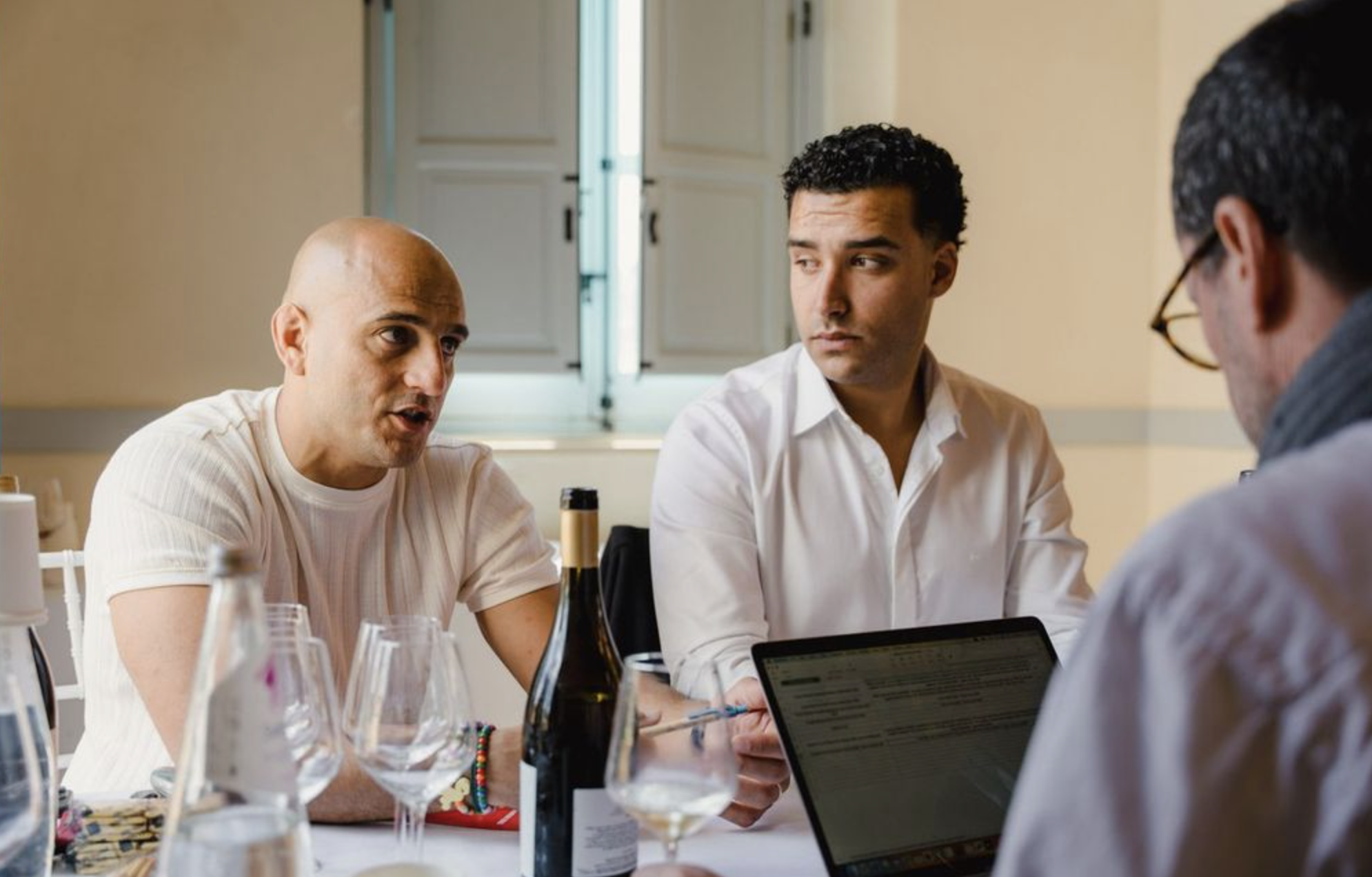
Croce Di Mezzo Brunello Di Montalcino DOCG 2015

A slight note of rusticity grounds this sangiovese in salty earth while high toned acidity elevates and promotes a lifted sense of composition. Not sure if this comes or goes, weighs down or flies high. Needs to settle, play together in the sand and integrate for mature times in the sun. Will find the way. Drink 2022-2026.  Tasted February 2020

Donnatella Cinelli Colombini Brunello Di Montalcino DOCG Prime Donne 2015

Prime Donne is a highly specific single expression of the most important fruit raised by Donatella, Violante and team. The dichotomy here is more perfume cross referenced in adjacency to more barrel inflected structure. More notions to consider, vineyard dirt expressed through morbido tones and wood scents in gentle baking spice. Quite weighty in tannins, surely a love song so divine, certainly a wine that will stand the test of time. Drink 2022-2032.  Tasted February 2020

Fanti Brunello Di Montalcino DOCG Vallocchio 2015 ($89.95)

Vallocchio is just perfect for 2015. Vallocchio delivers fruit like that found in the Annata but deeper, purer and under a gastronomic integration of spice. Vallocchio gives and then gives some more. It gifts sweetness for that fruit mixed with the grain of the barrel. In the end the charm, warmth and caress of kissing tannin tells us not to demand this be the longest Vallocchio but surely expect one of the most graceful. Drink 2021-2029.  Tasted February 2020

Franco Pacenti Brunello Di Montalcinio DOCG 2015 Rosildo

If the 2015 Annata from Franco Pacenti was the bomb then what does that make the Vigna Rosildo? Excuse my English but this Rosildo is the shit. The great shit. Grande. Rosildo fineness is that of regal sangiovese style. Acid, tannin, structure, all together seamless and hungry to integrate simpler parts, make them complex and whole. Here is what should and must be considered one of the wines of the vintage. Drink 2024-2038.  Tasted February 2020

Il Marroneto Brunello Di Montalcino DOCG Madonna Delle Grazie 2015

A taut and yet to fully express itself sangiovese is this tight stunner from il Marroneto. Madonna delle Grazie is full of a cherry depth from which you feel the liqueur and yet the reductiveness keeps the wine safe beneath a hard shell. One of the few 15s that act this way, seriously tight, yet to crack and with 20 years of life safely stored within. Serious wine here from Alessandro Mori. Drink 2024-2035.  Tasted February 2020

Le Ragnaie Brunello Di Montalcino DOCG La Fornace 2015

A site in the highest elevation that used to be a lake bed so it’s rich in round stones. Picked earlier in 2015, kept away from jammy and suspended in the high sangiovese zone in which acidity keeps the dream alive. So beautifully judged.  Last tasted February 2020

From Castelnuovo dell’Abate at 400m of elevation, planted in the 1980s. A former lake bed, with clay and round sand stones. Strikes the Brunello accord between richness and balance with more fruit than 10 other houses combined. The transparency is the thing; smells like fruit, perfume and the land, like rocks and sandstone. The bleed of Pietraforte into the blood of sangiovese. There’s really no reason to find fault and in fact there is every reason to breath, exhale and smile. That is what happens when you taste a Brunello like this special single-vineyard wine from Le Ragnaie. Drink 2022-2037.  Tasted October 2019

Le Ragnaie Brunello Di Montalcino DOCG Vigna Vecchia 2015 ($177.00)

All the Brunelli from Le Ragnaie were kept on their skins for 90 days in fermentation, longest ever for Riccardo. Not convinced anyone else is making Brunello like this. Fresh, lean and linear but not. At this stage the sapidity is raging, omnipresent, marvellous. “I think when they are young they change everyday,” says Campinotti. Well it certainly has done so since October.  Last tasted February 2020

Planted in 1968 and from a warm vintage all the way to the end, into October. Riccardo Campinoti is smiling wryly, knowingly and confidently after he pours and begins to speak of it. “The longer you waited the riper it became” and the healthy grapes allowed for hanging to mid-October. Deeper and of more sponge-soaked earth in the old vines with a higher tone juxtaposed against the depth drawn by long vine roots. The aromatic complexities run, jump and ride off the proverbial charts and you may find yourself drunk and mystified just from the smells. Once you gain palate entry you are hooked and then you climb in, headfirst, unencumbered, no strings attached. A tour de force beloved of sangiovese, Montalcino and old vines. Vigna Vecchia is the epitome of a true structured wine, one which does not grow old, despite the passage of time.  Drink 2023-2039. Tasted October 2019

Le Ragnaie Brunello Di Montalcino DOCG Montosoli 2015

The vineyard was purchased in 2014, 50m on the right of the Baricci cellar. “In my opinion it was good right away,” tells Campinoti so a single vineyard wine was made straight away. Casanovina refers to the house on the property. Another example of a site wine, as opposed to Riserva stylistics which to be honest are not Riccardo’s style. “It doesn’t add much, in my opinion.”  Last tasted February 2020

Riccardo’s first vintage from the Galestro strewn soils at 220m next to Baricci on the northerly Montosoli hill is a completely different animal altogether. The tannic structure is so opposite to the southerly wines, here taut, twined laces pulled oh so tight. Not without the Ragnaie tonality mind you and the transparency, clear, distinct and honest. Not necessarily a terroir vintage and fermentation occurred in oak vats (as oppsed to the concrete for the others) and yet it’s so bloody sangiovese. Blood of Montosoli. Drink 2022-2038.  Tasted October 2019

Mastrojanni Brunello Di Montalcino DOCG Vigna Loreto 2015 ($63.95)

Quite a heady and rich Vigna from Mastrojanni, full of dark fruit, caramel and chocolatey flavours. So rich and also youthfully reductive, fruit and acidity thick as thieves. The texture is outrageous, smooth and yet this is the grippiest ’15 around. A beast that attacks the senses with fervour and intent. Drink 2023-2032.  Tasted February 2020

Podere Salicutti Brunello Di Montalcino DOCG Piaggione 2015

Piaggione stands apart, namely because the vineyard is lower, lighter in clay and the vines are the oldest of the cru. Lay of the land is 420-450m facing south, taking in sun and developing the biggest muscle. Not just more muscular but also on a broad shouldered frame. The adonis of cru, grippy and ripped, but first from a fistful of fruit strong enough to stand up and be counted. Bigger, more brawn, higher in alcohol, older in school of a certain era, or one that just seems to keep coming around. Stash Piaggione away and forget about it for a while. Drink 2023-2034.  Tasted February 2020

Podere Salicutti Brunello Di Montalcino DOCG Sorgente 2015

Organic, biodynamic and unfiltered, from the then first in Montalcino, at the hands of Francesco Leanza, in 1995. Now (and since 2015) in the custodial hands of Felix and Sabine Eichbauer, halfway between Montalcino and Castelnuovo dell’Abate. The last of the cru, single-vineyards planted at Salicutti and not surprisingly the one with most red fruity juiciness that keeps a lineage with the Rosso. If a portal into knowing what it makes to taste the bright side of 2015 could be described then why not make use of this ethereal Sorgente to learn of such things. Voltage, tension and vibration. Drink 2021-2028.  Tasted February 2020

Podere Salicutti Brunello Di Montalcino DOCG Teatro 2015

Less than a hectare, planted in 1994 (same year as Piaggione) and as the name suggests the block spreads out like an amphitheatre. The yields on the vineyard are low but through the 2016 vintage they were far less than now because the team have been fighting the voracious eating nottua caterpillar, at night, picking them off buy hand. The oak on Teatro is 10 and 20hL because these are the size that work with the low yields. I love Ieatro it should be said, as it is, indeed dutifully herbal, rich yet ethereal, dry and resinous. Less muscular than Piaggione but more in common with that cru wine. Drink 2022-2032.  Tasted February 2020

Salvioni Brunello Di Montalcino DOCG La Cerbaiola 2015

Salvioni’s is a deeply welling sangiovese with fully developed and formed 2015 fruit and no less than a 20 year architectural frame on which to hang. All the land’s attributes of growth are there in aromatic waves; brush and bush of herbs, mineral salts, essential oils. So much going on, character all over the expression and the sense of pace so high and squarely intact. Drink 2023-2032.  Tasted February 2020

San Polino Brunello Di Montalcino DOCG Helichrysum 2015

Very rich and crafty Vigna Brunello here from San Polino, rich in phenolics and chocolate though not so spirited in acidity and energy. Quite warming and caressing, a couverture of wood blankets and secures the fruit. Drinkable soon and in the near term for sure. Drink 2022-2026.  Tasted February 2020

Talenti Brunello Di Montalcino Riserva DOCG Pian Di Conte 2015 ($120.00)

A Sant’Angelo in Colle viilage treasure is this Riserva made from fruit grown on estate vines at 400m just northwest of the administrative frazione. There is so much wine, substance and intensity at play in this near massive 2015. It is one with a soft core in its heart and so you can imagine the elasticity, nimble agility and the incredible length that will be the matter when the time comes to right. That fruition is at least five if not to be 10 years away. So much fruit from which tonneaux, grandi botti and variegated soils support the idea. Drink 2025-2035.  Tasted February 2020

Tenute Silvio Nardi Brunello Di Montalcino DOCG Vigneto Manachiara 2015

Serious wine here from Nardi, rich and nectareous, exotic and welling with big fruit flavours. The secondary and tertiary attributes can do nothing but lift and lengthen this wine towards epochs of imitable time. Look to open six bottles every three years for up to 20 in total. Drink 2022-2033.  Tasted February 2020

Tenute Silvio Nardi Brunello Di Montalcino DOCG Poggio Doria 2015

Poggio Doria is the wild child of Silvio Nardi, a high acid, bigger tannic structure sangiovese of pulse, energy and drive. Fruit substance is high, tones are equally elevated and time will do great things to this wine. Full throttle, edgy, briny, intense, grippy and full of so much Montalcino love. Drink 2024-2034.  Tasted February 2020


Brunello di Montalcino DOCG (other vintages, 14 notes)

Le Chiuse Brunello Di Montalcino DOCG 2014

The herbal-amaro-cool savour of the vintage really shows at the present time. That said the silkiness of the tannins and the later note of salty sapidity shows just hop\w long this is likely to age. Drinking really well.  Last tasted February 2020

Just eight thousand bottles made in this vintage with no Riserva in production. A completely different look at 2014 with this bottle, at the top of integrity, with Le Chiuse savour, throwback complexity and great brightness, surely blessed and pushed upwards for the future. Showing the way it was meant to. A reflection of the vintage and proof of time afforded the vineyard.  Last tasted October 2019

Le Chiuse delivers one of the realer deals in 2014 Brunello, with admirably pleasing and concentrated fruit set against a traditional backdrop of ripe acidity, minor Brettanomyces and full-bodied tannins. As it’s not an overly perfumed sangiovese it bucks the vintage trend if only because it avoids botrytis-affected atypical aromas. It’s quite a rich 2014, certainly a bit volatile and capable of going longer than most. Finishes by leaving you a linger of its chewy mouthful. Drink 2022-2030.   Tasted February 2019

Canalicchio Di Sopra Brunello Di Montalcino DOCG “Canalicchio Di Sopra” 2013

This ’13 from Francesco Ripaccioli and Canalicchio di Sopra is sangiovese out of the excellent, variable, at times confounding and now at the seven year mark, nothing if not profound vintage. Perhaps even marks the turning point for a winemaker looking for his and his family’s sense of place, for a unique eastern to northeastern Montalcino sapidity in his wines. “We are learning from our mistakes,” he admits, “such as those we made in 2007. We are now much more going in the direction of purity in fruit and clean clarity out of the cellar.” Brunello is all about freshness, verticality and depth. The 2013 comes from what Francesco would still qualify as “not so easy a vintage, a vintage of interpretation.” Cold for a Montalcino season so he, his siblings and team passed through the vineyards on several occasions for preparation, timing and selection. “We like to clean the vineyard, to prepare for the harvest,” he adds. Picking happened in October “of amazingly floral fruit, finishing on the 11th, just as the rain arrived. Better to be lucky than good.” ‘Tis Brunello first of flowers in bloom, a candied scent and fresh herbs. Fulsome and openly fragrant, a silky texture, some chocolate and ultimately, beauty. Drink 2020-2030.  Tasted February 2020
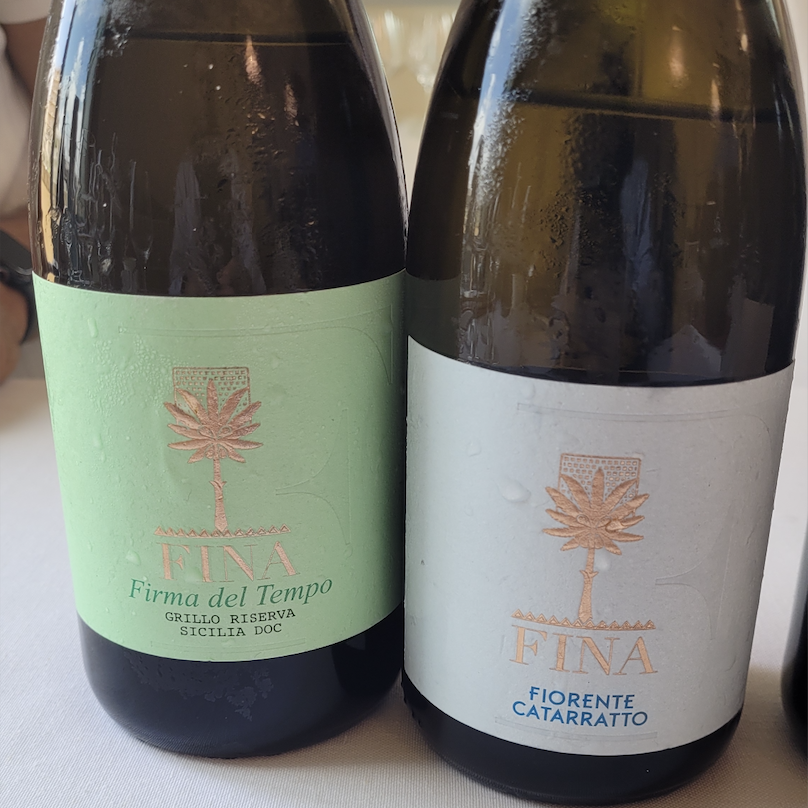
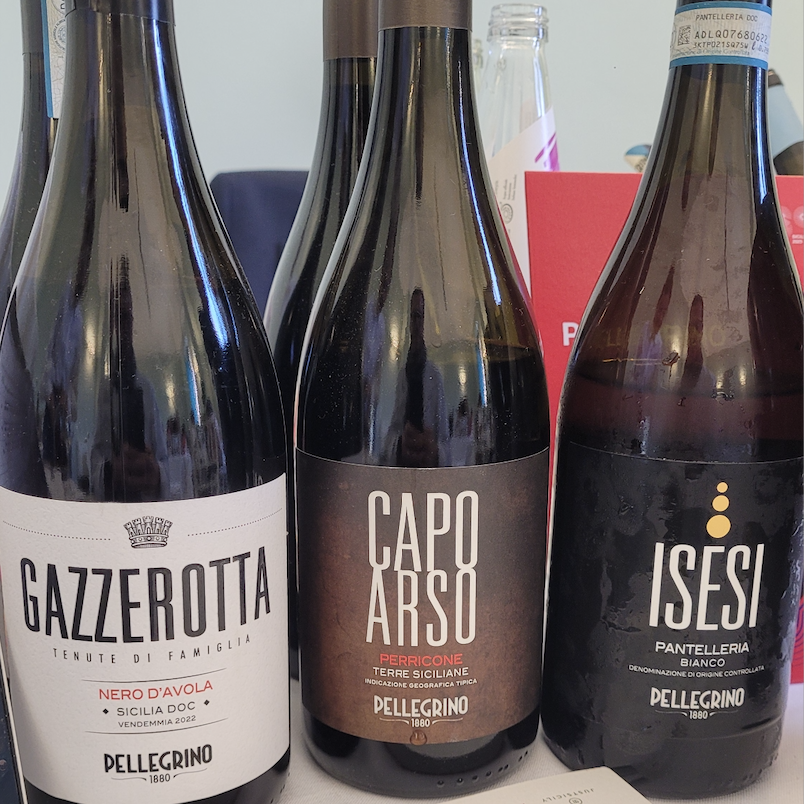

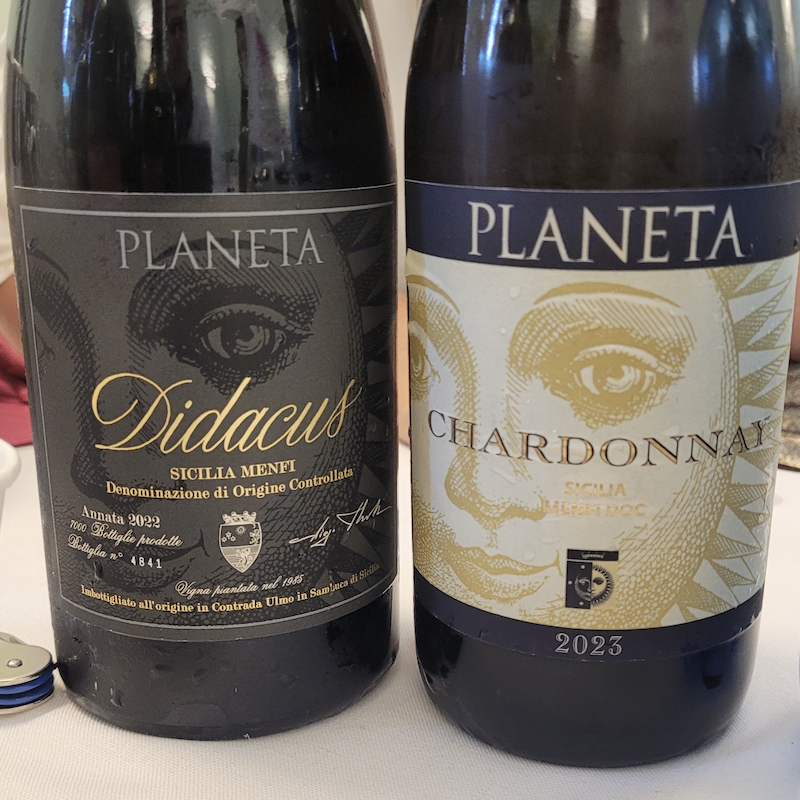
Canalicchio Di Sopra Brunello Di Montalcino Riserva DOCG 2013

Showing beautifully, in a calm stage even, a respite from power and now, simply attractive. All the Canalicchio elements from clay soil show up; mild sweetness, furthered salinity and a deep sort of sapidity. Nothing fully pronounced but all there. Great Riserva vintage.  Last tasted February 2020

Riserva is a selection in the cellar though certain blocks from certain vintages are premeditated and in fact 2013 Riserva is solely selected from the Montosoli hill. The perfume stands apart, rising, haughty and full of fresh roses. The expression of rocks drawn into vines from the new age, climate-affected northern exposure are for perhaps the first time in the Cru’s history a brand new Canalicchio di Sopra Brunello. Salinity, sapidity, power and elegance. Truly. Drink 2022-2035.  Tasted October 2019

Castello Banfi Brunello Di Montalcino Riserva DOCG Poggio All’Oro 2013 (443267, $190.00)

Already having entered a secondary stage this from Banfi drives the point that a Brunello Di Montalcino’s aging is done for you, first in barrel and then in bottle, so that when you purchase and pop it is ready to go. Earthy secondary notes of wet forest, funghi and then balsamico are heady and deep. The acids remain strong and persistent for necessary energy and life. A well seasoned and thoughtfully crafted Riserva is the final result. Drink 2020-2025.  Tasted February 2020

La Gerla Brunello Di Montalcino Riserva DOCG 2013

Somehow, some way this is how Riserva in Montalcino is imagined. The deepest inhalant of savour and the years of barrel aging for an aromatic amalgamation of epochs primary, secondary and tertiary. This ’13 already accesses the move to the next and the next. It is the epitome of what Riserva has come to mean and carries the torch as it has been passed forth. Drink 2020-2025.  Tasted February 2020

Le Chiuse Brunello Di Montalcino Riserva DOCG Diecianni 2013

The ’13 will be released on January 1st, 2023 and as the name Diecianni suggests it is a Riserva that 10 years minimum are needed before readiness begins to take shape. The selection is from the smallest grape clusters in estate vineyards and mainly the oldest vines, originally planted in 1987. The vintage of the great polyphonic-phenolic, elastic and stretched ripeness, by photosynthesis without heat, of muscles with energy and ones that will develop, remain and use their power to keep the fruit alive. That said it’s a wine of wood and the highest level of salinity, sapidity and a tang that is exhibited by no other Brunello di Montalcino. A concentration that is simply outstanding and in some minds, will even be eclipsed (or not) by 2016. The finesse and architecture of this wine are as good as it gets. Drink 2026-2042.  Tasted February 2020

Canalicchio Di Sopra Brunello Di Montalcino Riserva DOCG 2012

“Reduction is a way to preserve the freshness and the florals of the wine,” tells winemaker Francesco Ripaccioli. Sangiovese is better set up and suited this way and while some Balsamico is now speaking through this ’12 Riserva’s voice, much of the aromatics are still situated in the realm of a high-toned grace.  Last tasted February 2020

A year previous to the ’13 Riserva (which will be made exclusively from Montosoli hill fruit) there is the depth of clay and controlled power out of Canalicchio cru vines. The absolute attention paid to patience and time is noted from a Brunello such as this, spoken out within the constructs of fruit extraction and wood usage. The tannins are red meaning they are ripe and request that you give this wine as much time as it gave before going to bottle and then to market. Lush, consistent from start to finish and just hinting at notes not quite Balsamico but something other, something derived from sangiovese grown in the grey clay of La Casaccia. Drink 2021-2032.  Tasted October 2019
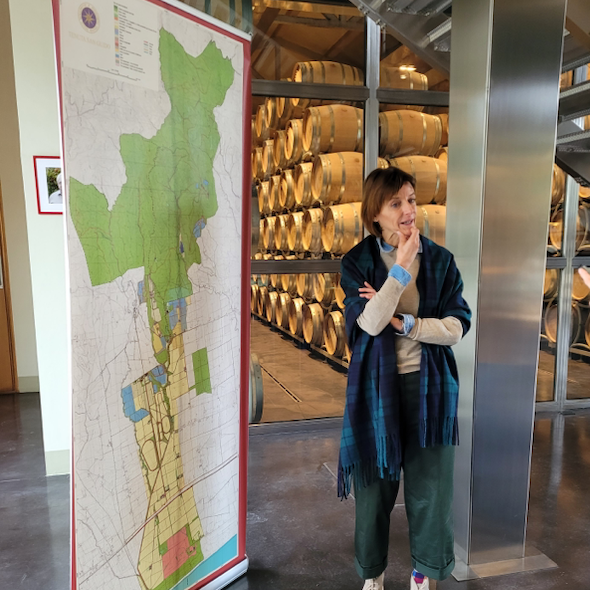
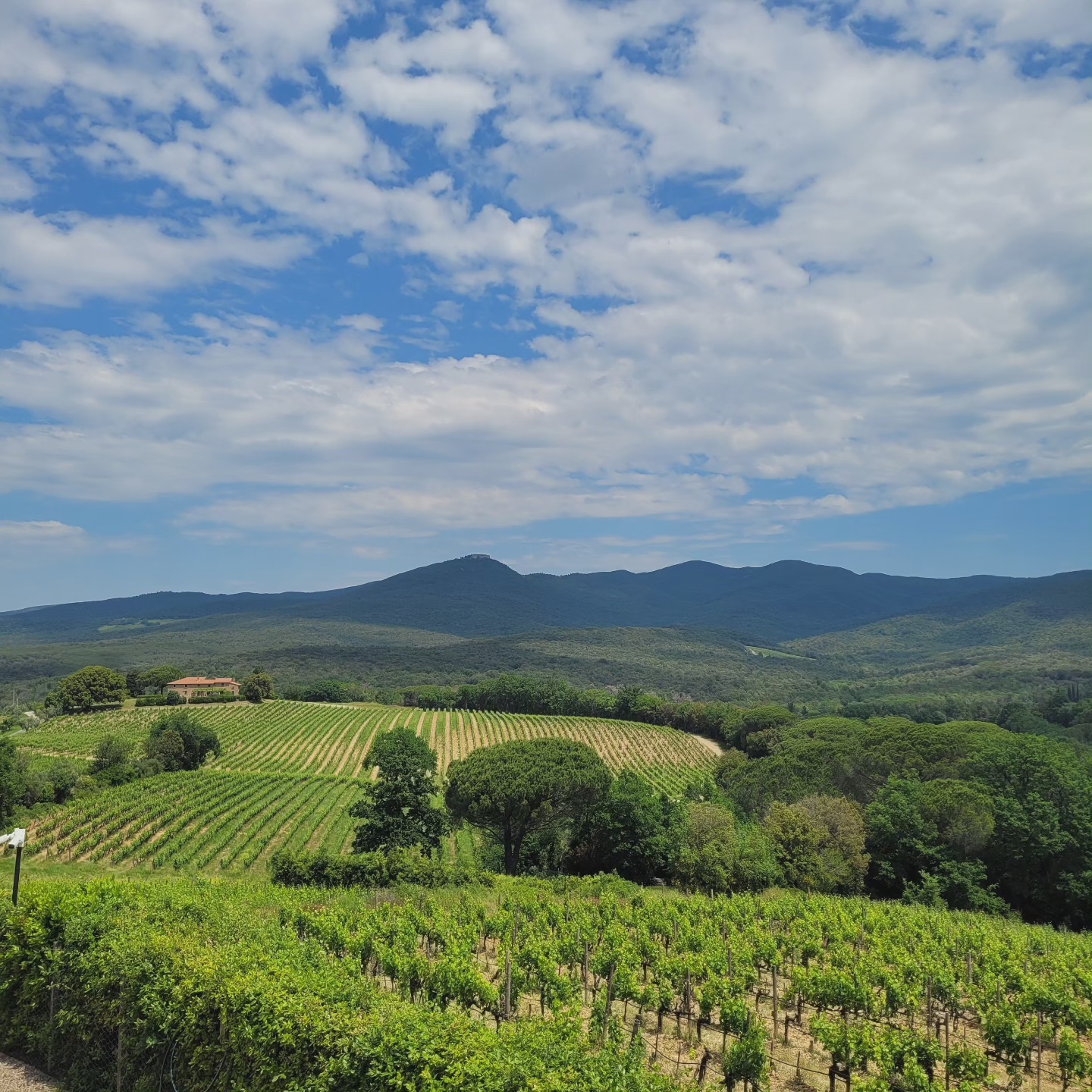
Le Chiuse Brunello Di Montalcino Riserva DOCG Diecianni 2012

The ’12 will be released on January 1st, 2022, as per the moniker, a Riserva taken from the smallest grape clusters in estate vineyards and mainly the oldest vines, originally planted in 1987. But they were sold to Franco Biondi Santi (and the land was owned by Grandmother Ferella until she died in 1987) until Lorenzo’s parents (Simonetta and Niccolo) began making wines in 1992. Those vines were personally selected by Franco to graft from and plant at Le Chiuse. The name Le Chiuse is quite apropos for this 2012, a relatively big vintage and the wine is quite tight in spite of having already spent eight years in waiting. Yes the nose emanates an intoxicating liqueur and one of deep floral tones but it’s still a bit closed. Some 12s are very aggressive and this is one with the finest and the most balance. Almost too beautiful already so long but not forever. Drink 2023-2034.  Tasted February 2020

Le Chiuse Brunello Di Montalcino Riserva DOCG Diecianni 2010

The finest and silkiest of tannins and a natural complexity that has simply developed on its own. Four years ago this would not have been the case. Begin the drinking journey anytime if you can give it six to eight hours of air, or wait another year or two. The maker would want you to do it right. He held it back for the timing to be just right.  Last tasted February 2020

“A muscle vintage, of huge character,” tells Lorenzo Magnelli. The name of the wine is Diecianni to tell us that Lorenzo’s Riserva is not released until the 10th year. Brings about all the complexities that come from such an extended elévage. Tobacco, savour, forest floor, frutta di bosco and frutto secco but don’t be succumbing to depths and sottosuolo because the freshness persists. A wine so wise beyond its years, like its maker. Sure you can release a Riserva one year after Annata but when it has been protected and taken care of for you then it presents as it was intended to. We are thankful for the triage and the investment on our behalf. The fruit persists with great natural sweetness out of 2010. Drink 2019-2035.  Tasted October 2019

Col d’Orcia Brunello Di Montalcino DOCG 2010

Brunello at 10 years is like the Rosso in advance and then not at all. The fruit aromas are all skin, scraped, studded and seasoned. You can feel how special the vintage phenols were and continue to be, now in their twilight of first stage freshness. It may be remembered as a vintage less than eventful but you can also make note of what must have been great bold bitters and demanding skeletal framing that kept pleasure down. Rising now, flesh in pulse and equitable tacit celebration. Heady and big Brunello from a vintage gone long on stuffing. Drink 2020-2030.  Last tasted February 2020

Largesse and a firmess of being as per the house style are rampant in Col D’Orcia’s 2010, a wine that reminds me of 1998 and 2000. A wine that will seem lean, mean and terrifying in its youth but will prove everyone wrong when it hits the 12-15 year stride. This is a monster bringing leather and chocolate to the table. It is nearly unapproachable at the present time but you can imagine and embrace the possibility of potential. Drink 2020-2035.  Tasted September 2016

Col d’Orcia tasting on the ’00s

Col d’Orcia Brunello Di Montalcino DOCG 2000

So hard to know how Col d’Orcia’s Brunelli are able to glide so stealthily through time without haste and with so much slow moving grace. But here is yet another bit of restrained sangiovese power, wild of fruit heart and subtle in animal behaviour. The high acidity vintage spreads the energetic love with great and intentional fervour, showing as credibly and forcefully as could possibly have hoped or expected. Cold, cloud cover vintage does the yeoman work for sangiovese lifeblood to send it 20 years forward for all to believe. 2000, baby. Drink 2020-2027.  Tasted February 2020

Col d’Orcia Brunello Di Montalcino Riserva DOCG Poggio al Vento 1990

Sometimes a vintage of great repute and universal declaration does live up to its billing. And yet this from a time when the declarers knew a thing or two about soothsaying declarations. Thirty years and no great movement save for a transfer to the ethereal, the zeitgeist and the Italian version of said realm. No sully and all clarity with a marbling of strength, as in petrified balsamico and bitter chocolate made sweet by a powerful tempering. Tannins still shot out of cannons and leaving vapour trails of dried porcini dust. Drink 2020-2026.  Tasted February 2020

Col d’Orcia Brunello Di Montalcino Riserva DOCG 1990

Surely an exercise in comparative liturgies to taste two Col d’Orcia 1990s side by each, first the single expression of Poggio al Vento followed by Riserva. Why the first is poured to follow the second is confounding and then the acidity strikes, the power is freed and the understanding is gained. Riserva 1990, much like the 2000 poured 15 minutes earlier is a formidable thing and hopeful in an attempt at admirable restraint. Though it may have been born in the same vintage as the ’90 Poggio al Vento the sibling rivalry is in. Here the acids are aggressive, striking, searing and almost violating. Even more so than the 2000’s. Though the morbido finesse of the PaV wins one battle, the force and further estimable longevity of this Riserva wins the other. If you could pick only one, which would it be? Drink 2020-2029.  Tasted February 2020

Col d’Orcia Brunello Di Montalcino Riserva DOCG 1980

Oh my word 1980 carries plenty of residual acidity in an antithetically mild, wholly and utterly unexpected way. Energy, potency, drive and this unrelenting need to express itself. Tight, taut, slinging arrows of tension that make the fruit or what’s left of it almost inconsequential. In actuality there is fruit, namely red currant, sour cherry and pomegranate. Improves with these flavours away from the clay-earthy aromatics and lingers good and plenty. Stays with you, as it has done for 40 years. Drink 2020-2023.  Tasted February 2020

With Conte Francesco Marone Cinzano of Col d’Orcia

Barrel Samples

Canalicchio Di Sopra Brunello Di Montalcino Riserva DOCG 2016

Barrel Sample. A deeper well filled with that cherry liqueur and clearly more extract and concentration. The tannins are still fierce, intensely chalky and fine bitters are very much a part of the mix. A furthered texture Brunello with no less strength than most 16s will surely exhibit but the power is tempered by this feel and polish. Quite a potential here for 20 plus years of longevity. Drink 2024-2035.  Tasted February 2020

Canalicchio Di Sopra Brunello Di Montalcino DOCG Casaccia 2016

Barrel Sample. Now this is something exceptional. This is what Casaccia is obviously capable of producing, The sweetest Canalicchio fruit of all, to date and with a rising low and slow angling of acidity (as opposed to straight verticality) that carries the fruit to great heights. This will be a triumph and in fact it is already tasting like a piece de Canalicchio resistance while it sings a long maestro song. A soloist that needs no accompaniment although food, company and peace would not hurt at all. Obviously this is more than just the northern side of Montalcino and more than Canalicchio.  This is Casaccia.  Drink 2025-2040.  Tasted February 2020

Good to go!

godello

Montalcino Sunset

Twitter: @mgodello

Instagram: mgodello

WineAlign