Master classes of Terroir

A Gamay Masterclass, Terroir Hospitality Symposium, May 11, 2015, Arcadian Court

A Gamay Masterclass, Terroir Hospitality Symposium, May 11, 2015, Arcadian Court

The Terroir Hospitality Symposium took place on May 11, 2015 at Arcadian Court in downtown Toronto. The one day food and wine colloquium was a massive simmering feast set in sprawling fashion within an undersized, intricate urban labyrinth. Despite the frenzied and condensed action in the downtown venue, that congress merely offered a look at the tip of the proverbial Terroir iceberg. With upwards of 3o team members leading the charge, the movement left the big fat city address and trekked to set up shop at a local farm and out to the rock at the eastern outermost edge of the country. Terroir moves outwards, onwards and upwards, taking it to the fields and the oceans.

The Terroir Best Practice Culinary Mission went to St. John’s, Newfoundland from May 14th to 17th. The One Fish expedition travelled “to meet fishing industry experts, to explore and examine both the history and the current realities of an Atlantic community built on an economy of the fishing industry.” There was also “the feast that keeps on giving,” at which the Feast Ontario team was hosted at Grandview Farms in Thornbury, Ontario

Led by Founder & Chair Arlene Stein, Vice Chair & Awards Rebecca Leheup, Terroir Talk the dextrosinistral/sinistrodextral enterprise is an undertaking of the extreme variety.

A look at #Terroir2015 in images

Terroir is an event, a series of gatherings, a notion, a philosophy and a way of life. Its mandate is this: “Terroir Hospitality brings together innovative and creative influencers from the field of hospitality, including chefs, food and beverage experts, writers and business leaders.” It’s also not without detractors. There are some who feel it is a negative representation of the culinary and cultural scene in Toronto. That it’s “white, urban, Euro-centric. It ain’t Canada, or 2015. Not funny.”

If the list of participating speakers, chefs and winemakers had been correlated with shortsighted discrimination, ill-curated and preordained with exclusive, malice prepense, you would have been hard-pressed to get an interview with any guest who would have chosen to speak about the called-out lack of representation or narrow-minded decision-making. If the culture and the colour of the event needs to change it will do so with holistic bias and sympathy, with the right sort of urging from the global culinary and vinicultural community. If the pundits are correct, future sessions will reflect the will of the people. In 2015, the atmosphere was wholly copacetic.

The 2015 Terroir wine sessions were marshalled with “an effort to raise the academic standards of the wine side of our symposium,” in three assemblies, to educate and entertain. These Masterclass jams, Gamay, Terroir, and Clone Wars were coordinated by Good Food Revolution’s Jamie Drummond and Magdalena Kaiser with great support from Wine Country Ontario.

The connection between food and wine is an intrinsic one. They are like chicken and egg, contrary to reason in electing which comes first. Chefs and winemakers, purveyors of the land from which their produce grows, transmuted into cuisine and fermented into wine. Facilitators of terroir, harvesting at optimum ripeness and then initiating the transmogrification with immediate haste, in urgency, to capture, lock in and bottle aroma, flavour and texture, before any chance of deterioration or spoilage.

But what the fuck is terroir? The most used word in the language of wine is in fact, terroir. Nothing else compares, comes even remotely close, or causes as much debate. Except for minerality, but those who concern themselves in the matters of ridicule, dismissal and denial ignore the fact that the opposite of fruit is simply, unequivocally and finally, incontestably, mineral.

Were the notion of terroir to be a belief as simple as “what happens in the vineyard, through environment, by geology, geography and topology, from naturally occurring elements and microbes in the soil, by air and of climate. Were it just a matter concerning “the impossible creator of perfect storms, from out of riddle and enigma,” well, then, we could all just go home. It’s much more complicated than that and real.

Most winemakers will agree, in principle, to this. “The final goal is to make the finest wines that express terroir.” Organic and biodynamic are important. Terroir is more important. But winemakers are no fools. They know that “during the grape’s life cycle, genealogy and climate shape its development. But even after it is plucked from the vine it still carries no true identity, in so far as what it will become as a wine. This is the point where nature gives way to nurture. Environment now acts as the catalyst to shape the wine’s life. Wine does not evolve because of natural selection. It evolves at the hands of the winemaker.” Anti-terroir?

At this year’s Terroir Talk Symposium, Gamay was chosen as the first wine session’s go to grape variety, to investigate both the serious and not-so serious sides of its existential weightlessness. To revel in its lithe, brightness of being and to unearth its deep roots. That we have come to a time in history where both aspects can be studied in Burgundy and in Ontario is fortuitous indeed. As a Gamay groupie, I feel blessed to be born under a good sign, at the right time.

As a reminder, it’s always the right time to be with the Gamay you love. I have been urging Ontario farmers to plant, cultivate and nurture Gamay; for winemakers to make it more and more. I made “a proclamation in favour of a great grape and one that forges signature wines out of Canadian soils. I am an ardent supporter of and a willing rider on the Gamay bandwagon, in the name of connaitre and savoirkennen and wissen, recognition and understanding.”

Related – Go Gamay Go

It’s working. Rosewood Estates just planted it for the first time. Gamay is poured at the cellar door, at tasting events and in private gatherings all the time now. Bottom line is Gamay costs half of the price compared to Pinot Noir and Syrah and it thrives in Ontario. It can make serious Cru quality reds and even at the highest end, sell for less than $30. It has been, continues to be and will always be #GoGamayGo time in Ontario.

Related – It’s go Gamay go time
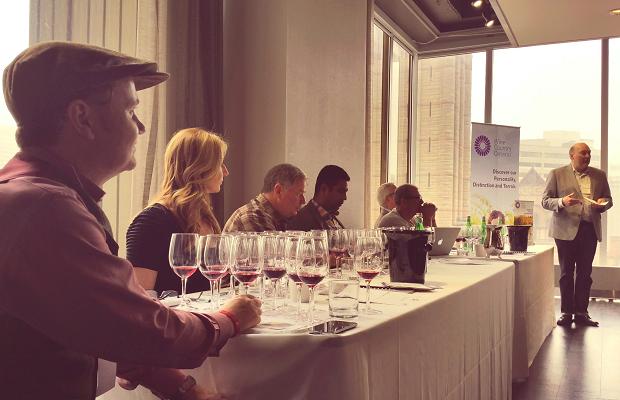
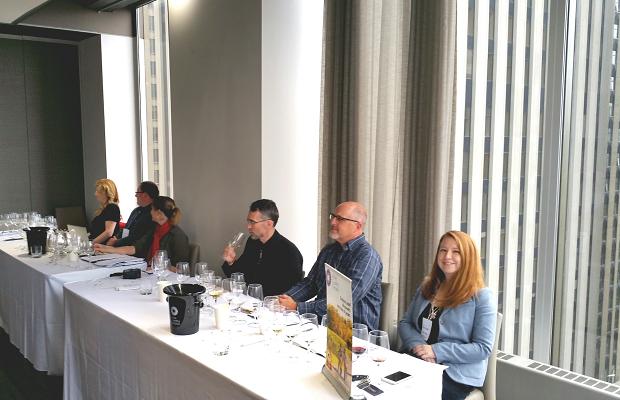
Moderator Chris Waters and the Gamay Masterclass panel: Jamie Drummond, Magdalena Kaiser, Martin Malivoire, Shiraz Mottiar, Bill Zacharkiw and Guillaume de Castelnau

Moderator Chris Waters and the Gamay Masterclass panel: Jamie Drummond, Magdalena Kaiser, Martin Malivoire, Shiraz Mottiar, Bill Zacharkiw and Guillaume de Castelnau

The first Masterclass: Gamay The Next Little Thing

“The intent of the first of the three wine sessions, was meant to investigate how it performs in Ontario and elsewhere in the world.”

The Panelists:

  • Winemaker Guillaume de Castelnau, Chief Winemaker/Director, Château des Jacques, Louis Jadot Beaujolais (Beaujolais, France)
  • Vigneron Martin Malivoire (Malivore, Beamsville Bench, Ontario, Canada)
  • Winemaker Shiraz Mottiar (Malivoire)
  • Wine writer/Sommelier Bill Zacharkiw (Montreal Gazette/Wine Align, Montreal, Quebec, Canada)

The Moderator: Wine writer Chris Waters (Vines Magazine/Intervin, Ontario, Canada)

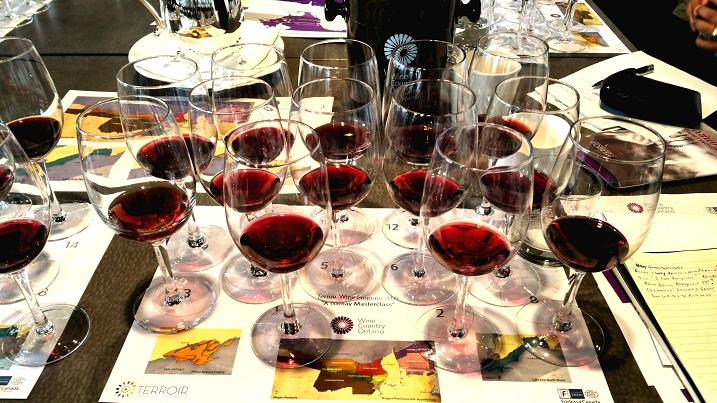
To many, Gamay is a wonderful drug and though much maligned, its suitors and supporters can never tire of its freshness and its lightness of being. Moderator Chris Waters refers to Gamay as “a gateway grape, to transition drinkers from white to red wine.” In a world according to Guillaume de Castelnau, “Gamay is lazy, generous and fragile.” Bill Zacharkiw minces nothing, not words, nor feelings. “I love Beaujolais.” In the Terroir Master Class, there were 13 variations on Gamay, from semi-carbonic to old and baked, with many shades, hues, intensities and variations in between. Here are my notes.

Ontario Masterclass Gamay

Ontario Masterclass Gamay

Malivoire “Le Coeur” Gamay 2014, VQA Niagara Escarpment, Niagara Peninsula, Ontario (Winery)

Shiraz Mottiar refers to the young, Beaujolais impressionist as “Sammy Carbono,” a semi-carbonically macerated Gamay, with one foot in Nouveau and the other in a dusty, freshly spirited aromatic whirl. The tanky feel makes it accesibly gulpable. Like a leaping horse it is also twitchy, hopping in dressage, popping in the mouth. Fun if beside the point. Drink 2015.  Tasted May 2015

Malivoire M2 Small Lot Gamay 2013, VQA Niagara Escarpment, Niagara Peninsula, Ontario (Winery, $19.95, WineAlign)

A month later the pepper runs from white to black, by way of red. Terrific sour edged fruit. Strawberry and cranberry tied together by citrus. Will need two years minimum to fully integrate.
From my earlier note of April 2015:
The profundity of tart, keen, briny berries dilates in its own very useful layers of citrus, tannin and concentration, beyond even what was observed in 2012. The zesty, spritely argot resonates from the unfurling of floral essentia out of a Gamay in desperate need of time. The flavours and overlay are somewhat impenetrable and yet leave quite an impression. While patience might be the virtue and the reward, if #gogamaygo is the modus operandi, a swig from the bottle like gentlemen of the road is certainly not out of the question. Drink 2016-2021.

Last tasted May 2015

Leaning Post Gamay 2013, VQA Niagara Peninsula, Ontario (Winery, $25.00)

A year has clarified the must into a venerable, beneficial decay, like effulgent, liquid rust. The shine of antiquity and then a blast of cinnamon dominates for the first major swirl. So lithe and profound like wise Pinot Noir, minus the Niagara coat of arms and lacquered veneer. Whatever anxiety may have held down the brightness has eased to deliver this current, optimum drinking window. Drink 2015-2016.  Tasted May 2015
 
From my earlier (tank sample) note of May 2014:

Guiltless and virtuous straight out of stainless, the meaty side of Gamay game boldly goes where few from the Bench have gone before. Like a rare venison steak sitting in a silky pool of lavender-scented demi-glace. Floral like Fleurie and despite zero new oak, vanilla joins the gravy. A Senchuk steal of quality Wismer (McLeary…sort of) fruit sets this Gamay up for easy sell success.

Fielding Gamay 2013, Niagara Peninsula, Ontario (Winery, $19.95, WineAlign)

Time has been a friend to the ’13 Fielding Gamay, a wine who’s elevated tones of floral fruit and acidity have settled in the name of structure. Dusty ground nubbins and mint swirl with layered if yet rigid fruit. Low-cropped vines are on display, in single-vineyard like attention to specific detail, akin to Malivoire’s Courtney. This is in fact sourced from a single-vineyard up on the cool Vinemount Ridge sub-appellation. The site is a couple of kilometres south of Peninsula Ridge’s McNally Vineyard, the source of Ilya Senchuk’s terrific Leaning Post 2012 Pinot Noir. The Procyshyn family has been farming this plot (without fanfare) for decades in Beamsville. The pristine fruit that Theo and Shelley Procyshyn grow, along with their three sons, Nolan, Dalton and Brayden, yield as low as 1.5 tonnes and up to 3.5 tonnes per acre, depending on the year. The ’13 was around 3 t/a. Fielding has never labelled this Gamay ‘single vineyard’ because they have always hoped to bring in new Gamay blocks on as part of that wine, but that’s not yet worked out. The ’13 is very, very red raspberry, with a craggy, spiked point of liqueur, like a weeping peak upon that Vinemount Ridge in the afternoon sun. Has Beamsville’s upper reaches written all over its corporeal self. Drink 2015-2017.  Tasted May 2015

13th Street “Sandstone” Gamay 2013, VQA Four Mile Creek, Niagara Peninsula, Ontario (Winery, $19.95, WineAlign)

May just be the first Gamay with a simulacrum towards a style best described as appassimento, what with the overripe fruit, aromatic cure, baked and sun-dried flavours. Sniff the confluence of black raspberry, scorched earth and roasting game bones, its sinew crackling over humid old growth wood. Gets rich into the vanilla, reeking of late harvest lavender and then a mutton funk. Could easily pass for a wealthy, unforgiving style of Cru Beaujolais, like Chénas from Christophe Pacalet. Or it could just be acting older than its age, by seven or eight years. Most prepossessing and confounding Gamay. Drink 2015-2018. Tasted May 2015

Stratus Gamay 2012, VQA Niagara On The Lake, Ontario (Winery, $29.00, WineAlign)

Esteem elevated by structure, matched in poise and presence mottled in smears of darker, richer black cherry. If a slight absence of brightness is sensed due to the syrupy compression, like New World, west coast Pinot Noir, the gleaning from acidity and tannin times perfectly the effluent escape.

From my earlier note of April 2015:

It may not be the most idiosyncratic Gamay in Niagara but the Stratus 2012 is without a doubt the most advanced and complex. Gamay fusion is on display, at once a bottle of Niagara’s finest pulchritudinous veneer and then a charcuterie board laid ample with cured bovine parts and sun-dried grapes. Maximum ripeness and then even later picking, to no one’s surprise, have led to this. Two years of ageing in neutral oak barrels has brought about a humid roundness and yet the centre is controlled by Oz-like mint and eucalyptus notes. The jam is gelid, as opposed to temperate. Rarely does Gamay go to such depths, of blackberry, chalk and grain, with an overlord of tannin. Quite serious stuff. Drink 2017-2020.

Last tasted May 2015
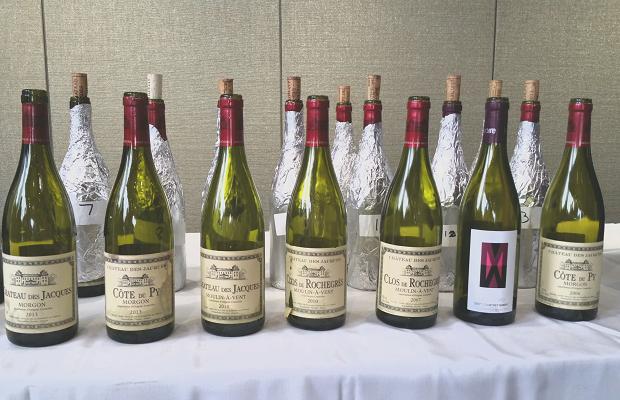
Château-De-Jacques and Malivoire Courtney in the Gamay Masterclass

Château-De-Jacques and Malivoire Courtney in the Gamay Masterclass

Château-De-Jacques Morgon 2013, Ac Beaujolais, France (653584, $24.95, WineAlign)

The flushed scarlet animation is active and astir, like a soft serve swirl of dusty, cherry molasses, bathing in its own natural acidity. Has the presence of wine to integrate chalk, grain and Morgon tannin, in equal, opposite and variegated layers. Nothing shy about this gateway Cru Beaujolais. Drink 2015-2019.  Tasted May 2015

Château-De-Jacques Morgon Côte du Py 2013, Ac Beaujolais, France (Agent, $53.95)
In this rigid and stoic Morgon, the south-facing, blue volcanic slopes of the Côte du Py have provided a measure of firm fruit that will require a minimum two to three years to crack. The gears of the Gamay machinery may be grinding but the windows are yet open, the doors locked tight. This is the least forward, most inwardly introspective and least gregarious of the CdJ Beaujolais. Sharp sapidity, biting tang and piercing penetrating tannin deny immediate or even short-term access. Even the middle palate seems lifeless, devoid of cherry fruit and seamless layering, medicinal even. Judgement should be reserved, with knowledge of pedigree and how a bottle such as this will suddenly, effortlessly spring to life with time. Drink 2018-2022.  Tasted May 2015

Château-De-Jacques Moulin a Vent 2010, Ac Beaujolais, France (Agent, $36.95)

The undergraduate’s blend comes from the appellation’s Château des Jacques parcels; Carquelin, Rochegrès, Champ de Cour, Thorins and La Roche. Granite soils from each spice with symptomatic diversification and combine for a flippant funk that hitches straightforward out of the gate. Here Gamay leaves dusty behind with an urging away from humble and towards nobility. Richly aromatic, amplifying into palate. Such acidity and such grain. For this MaV the time is now, the arrival already announced. A late sense of veneer on the lengthy bitter finish indicates more good times ahead. Drink 2015-2020.  Tasted May 2015<

Château-De-Jacques Moulin a Vent Clos de Rochegres 2010, Ac Beaujolais, France (Agent, $44.95, WineAlign)

From the appellation’s highest parcel, the red sandstone soils of the Clos de Rochegrès are gently sloping and fed by underground streams. I always sense salinity and an effusive, stony energy in wines blessed with subterranean irrigation. The drinking window for this 2010 is wide open and the funk meets age introduction has been made. Already in display of a dried fruit shrivel, the ’10 acts like Sangiovese of a similar senescence, like CCR or Vino Nobile with three to five years of age. The liqueur of roses, the earth and the cherries are culpable and yet the varnish and the baking spice crusting ensure that no one conclusion can yet be made. This is highly seasoned and not quite unfurled Gamay. Two more years should complete its conditioning. Drink 2017-2020.  Tasted May 2015

Château-De-Jacques Moulin a Vent Clos de Rochegres 2007, Ac Beaujolais, France (Agent, $43.95, WineAlign)

Poured from a magnum, the 2007 Clos de Rochgeres is the portal in which to peer, to see what can happen with Gamay. Baked, caked, figgy, funky and oxidative, more than ample fruit was present and persists, with the savoury edges now integrated throughout. Strawberry rhubarb pie comes to mind, with eyes closed and sniffing senses heightened. A bit indelicate, the humidity in tomato leaf and garrigue add to the idea of age though the citric punch and lactic texture are reminders of Gamay’s fun side. There is no shortage of complexity and evolution here. That said, consumption time is now. Drink 2015-2016.  Tasted May 2015

Malivoire Gamay Courtney 2007, VQA Beamsville Bench, Ontario (Winery, $29.95, WineAlign)

The wow aromatics can’t be denied, fully explained nor perfunctorily taken for granted. Age has educated the fruit, stratified and fully saturated this Gamay. Strawberries have shot from an adrenaline cannon and structure has been fully realized with (non-Gamay) Old World confidence. A note of orange blossom, like an early evening Sevilla garden, is rousing. The natural evolve of such a Gamay, with wood, yeast and fruit in expert harmony, recalls the impossible acts of red wines like those made by Emidio Pepe. If the stretch is considered a conceit of poetic licence, so be it. The yet beating heart of raging acidity circling plenteous fruit and so much savour is nothing short of a Gamay miracle. Power and masculinity, by way of a conduit in oak, have been used to great advantage. This has life yet to live. Drink 2015-2020.  Tasted May 2015

Château-De-Jacques Morgon Côte du Py 2006, Ac Beaujolais, France (Agent, $53.95)

Seamless and eminently structured, developed low and slow. The blue volcanic soil has procured an evolutionary subsumption, a roasted, developed personality. The seeping liquor oozes, of earthy cherries, again like Sangiovese, but inelastic and close-grained, as per the Côte du Py idiom. This ’06 offers clarity and gives reason to forgive the brutal ’13, to abstain for commenting further. This wine is quite ferric and still tannic. The oak remains a factor. Through the walls the Gamay fruit does transude and so the master plan is coming into effect, perhaps not immediately but will be very soon. Just around the corner. Drink 2016-2020.  Tasted May 2015
Moderator Sara d'Amato and the Terroir Masterclass panel: Magdalena Kaiser, Dr. Jim Willwerth, Emma Garner, Stuart Piggott and Dr. Kevin Pogue

Moderator Sara d’Amato and the Terroir Masterclass panel: Magdalena Kaiser, Dr. Jim Willwerth, Emma Garner, Stuart Piggott and Dr. Kevin Pogue

The second Masterclass: A Different Look At Terroir: How Much Do Soils Actually Matter?

“In this seminar/tasting we ask what the term really means, and how much do its many different elements actually influence the character of the finished wine?”

The Panelists:

  • Dr. Kevin Pogue Phd. Geology, Whitman College, Walla Walla, Washington State, USA
  • Dr. Jim Willwerth Phd. Biological Sciences: Plant Sciences; Oenology and Viticulture (CCOVI, Brock University, Niagara, Canada)
  • Winemaker Emma Garner (Thirty Bench, Beamsville Bench, Ontario, Canada)
  • Winewriter Stuart Pigott (Author of Riesling: Best White Wine On Earth, Berlin, Germany)

The Moderator: Wine writer/Sommelier Sara d’Amato (Wine Align, Toronto, Canada)

Dr. Willwerth offered up his opinion on how minerality is achieved in Riesling. “If you don’t get maturity in the variety at the end of the growing season, you won’t get the full expression of minerality. Overripe will eliminate minerality.” In Ontario, “The Bench is home to a mineral wealth of local Riesling, singular in composition not only by way of a global comparison, but also from plot to plot, soil to soil and vineyard to vineyard.” That persuasion has spread, down to the shores of Lake Ontario, by Niagara-on-the-Lake and in Prince Edward County. “Riesling brokers the nescient consumer with the gift of grape enlightenment.”

Seven Ontario Rieslings were tasted in the Masterclass. The notes.
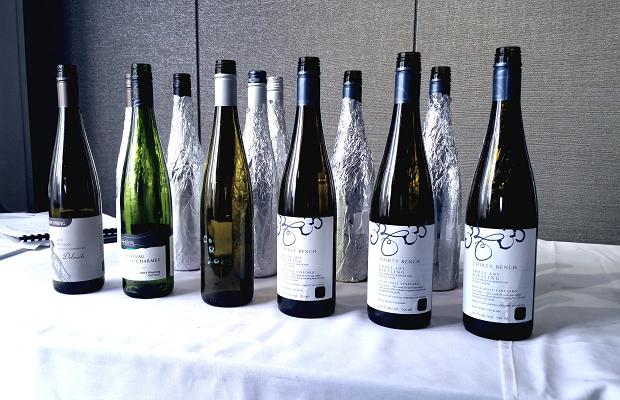
Riesling Masterclass

Riesling Masterclass

Cave Spring Riesling Dolomite 2013, VQA Niagara Escarpment, Ontario (Winery, $16.95, WineAlign)

This is Cave Spring’s bridge, offering safe passage from Estate to CSV Riesling. Vinified with consistency in a quasi-Kabinett style, its elevated though classic numbers steadfast in sugar (17.55 g/L) and acidity (7.2 g/L TA). The dolomite limestone of the Escarpment means business in this calm, fit, chiseled and consumer-lissome Riesling. Palate is really the thing, seamless to attraction, from fruit to stone. Orchards and citrus groves alight to rock. Phenolically ripe yet shy of the tropical planet. Is there transference here? Absolutely. Drink 2015-2018.  Tasted May 2015

Château Des Charmes Old Vines Riesling 2013, VQA Niagara On The Lake, Ontario (277228, $16.95, WineAlign)

The happy place effect by age in the Château Des Charmes’ vines coupled with location is usually enough to carry this Riesling through an obvious and readily identifiable tunnel but 2013 confounds. The elemental ratio, derived from multiplying reduction by altitude leans thoughts to the Vinemount Ridge or the Cave Spring Escarpment Vineyard. The compound aromatic waft, or more succinctly, the deconstructed stone, the breaking down of periodic Hollywood squares is a force to reckon. That this arrives from such close proximity to the lake is nothing short of amazing. It’s as if this Riesling is the product of stressed vines and the pierce is just so pinpointed. Less accessible than ’12 for sure, so drink up previous vintages going back at least three before even thinking about getting to know 2013. Drink 2018-2022.  Tasted May 2015

Norman Hardie Riesling 2014, Prince Edward County, Ontario (Tank Sample)

At this prepossessed stage the terpenic fruit might fail in competition but succeed in the marketplace. Easy access, smelling of perfumed must, juicy, with citrus and burgeoning acidity. Low alcohol and good length stretch out an endless lemon summer. The wine will reverse itself within a year and beat impossible odds. A Hardie always does.  Tasted May 2015

Thirty Bench Riesling Small Lot Triangle Vineyard 2009, VQA Beamsville Bench, Niagara Peninsula, Ontario (Winery, $30.00, WineAlign)
The brilliant hue slides through patina and heads for gold. Some fumes have emerged with age, part petrol, part pure mineral, but of what kind and more importantly how, or why? Viscous, near oily, waxy and the most Glück of the three Thirty Bench single-vineyard Rieslings. Tossed with spice, pepper, lemon and honey that is more molasses than clover. The mineral is a result of the lowest water retentive soil as compared to Steel Post and Wood Post. The transmission for (orchard or tropical) fruit is minimized, the vigour low. The result is mineral. Drink 2015-2020.  Tasted May 2015

Thirty Bench Riesling Small Lot Steel Post Vineyard 2009, VQA Beamsville Bench, Niagara Peninsula, Ontario (Winery, $30.00, WineAlign)

Balance is and therefore always was struck. The match percusses flint for a mere nano-second, with just a brush on cymbal, the rock bleeds but is quickly clotted because the fruit shines still, like around the clock light. The steely aspect is a posterior one, antithetical and yet purposed, from this vineyard. Youth tells common sense to think 2011. The Riesling behaviour seems to play that part, of a chalky, piercing acidity, so typical of that vintage and so distinctly Thirty Bench. That the wine is older is not a big surprise because 2009 is the bomb. It may just be the best Riesling vintage, from on that Bench, in the last 10. Drink 2015-2025.  Tasted May 2015

Thirty Bench Riesling Small Lot Wood Post Vineyard 2009, VQA Beamsville Bench, Niagara Peninsula, Ontario (Winery, $30.00, WineAlign)

Age is a factor but less so than its Bench sisters due to a fine sense of calm. Showing less evolution, less viscosity, less wax and honey. More than that, the periodic table has yet to fill in. The Wood Post exhibits more warmth, savour and balm. A taste offers a sapidity that combines toasted fennel and candied lemon. Poised and yet incomplete, the vineyard fetters this Riesling to breath slowly and take its (will get to) sweet time. Drink 2017-2027.  Tasted May 2015

Flat Rock Cellars Riesling Nadja’s Vineyard 2009, VQA Twenty Mile Bench, Niagara Peninsula, Ontario (578625, $19.95, WineAlign)
Going back a few years, this Flat Rock Weis 21 clone Riesling from atop the Niagara Escarpment was made by former winemaker Ross Wise. Six years has concentrated both aromas and flavours while concurrently reducing the cutting drill. The hyperbole is read by tablet, of etchings in stone, immortalizing the terroir (not so) long before it was truly known how this could happen. What sticks out the most is the bleeding limestone texture and the striking aridity. Later vintages of Nadja improve on the flesh. Drink 2015-2017. Tasted May 2015
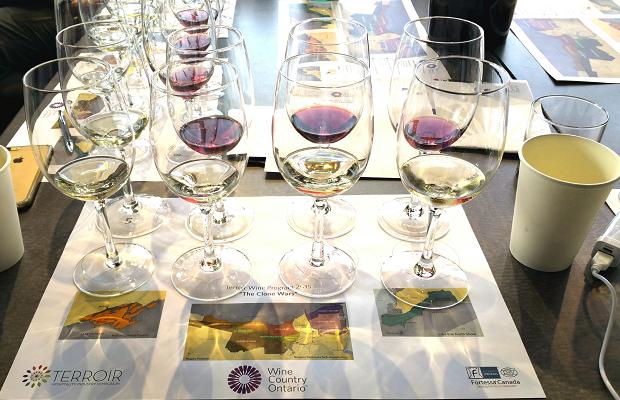
Clone Wars Masterclass

Clone Wars Masterclass

The third Masterclass: “The Clone Wars”: What Do Different Clones Bring To The Glass & Why?

“Looks at Riesling, Cabernet Franc and Pinot Noir. The varying clones utilized are a point of pride for some winemakers, and yet not even mentioned by others. Over the course of this detailed seminar/tasting we hope to answer why this is the case.”

The Panelists:

  • Dr. Kevin Pogue Phd. Geology Whitman College, Walla Walla, Washington State, USA
  • Dr. Jim Willwerth Phd. Biological Sciences: Plant Sciences; Oenology and Viticulture (CCOVI, Brock University, Niagara, Canada)
  • Winemaker Angelo Pavan (Cave Spring, Jordan, Ontario, Canada)
  • Winemaker Jay Johnston (Flat Rock, Beamsville Bench, Ontario, Canada)

The Moderator: Sommelier Katy Moore (Langdon Hall, Cambridge, Ontario, Canada)

Dr. Jim Willwerth asserts that “clones are essential for viticulture, propagated asexually, through cuttings.” Angelo Pavan notes “clonal research to cold heartiness is very important for Niagara and also for yields.” Clones no doubt drive the industry, at least behind the scenes, but when it comes to making great wine, is it the be all, end all? “I still believe plot trumps clone,” says Jay Johnston. The defence rests. Here are the wines tasted in the final Masterclass.
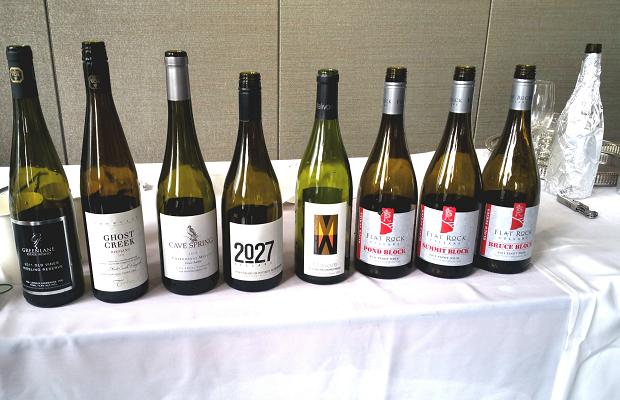
Clone Wars Masterclass line-up

Clone Wars Masterclass line-up

Greenlane Riesling Old Vines 2011, VQA Lincoln Lakeshore, Niagara Peninsula, Ontario (351486, $21.95, WineAlign)

While aridity suggests Alsace Clone 49, this is actually Weiss 21, made saline and arid out of Lincoln Lakeshore soil. The herbal aspect has propagated to combine with Twenty Bench like distinction and with less citrus than Vinemount Ridge or Beamsville Bench. The Mosel density has developed with time in bottle. Drink 2015-2019.

From my earlier note of October 2013:

Cracks the mineral whip, froths lime into foam and atomizes stone fruit into sweet and sour heaven. Wants to be semi-dry but never quite goes there. Walks a fine line, a tightrope actually. Up there with Charles Baker and Thirty Bench for sheer madness.

Last tasted May 2015

Trius Winery At Hillebrand Showcase Riesling Ghost Creek Vineyard 2013, VQA Four Mile Creek, Ontario (Winery, $25.00, WineAlign)

The Ghost Creek Riesling comes from the shadow of a river bed vineyard planted to the Alsace clone 49. The fruit is much richer than most, coupled with the aridity and salinity that former stony wadi plots and this particular clone will conspire to effect. The citrus intensity is however tempered by a humidity that comes from seemingly sunburnt fruit, tanned and wet down by the revenant reservoir. Drink 2015-2017.  Tasted May 2015

Cave Spring Estate Bottled Chardonnay Musqué 2013, VQA Beamsville Bench, Niagara Peninsula, Ontario (246579, $15.95, WineAlign)

Produced from the 77 clone, the vintage has heightened the high herbal and feigned sweetness aromatic pastis. The palate is extraordinarily viscous, with Yellow Muscat and Gewürztraminer attributes, not so out of the ordinary considering Cave Spring’s older world execution. Drives from lemon to mandarin, through almond pit and into peach. Always solid Musqué. Drink 2015-2017.  Tasted May 2015

2027 Cellars Chardonnay Wismer Vineyard Fox Croft Block 2012, VQA Twenty Mile Bench, Ontario (Winery, $30.00, WineAlign)

In the hands of winemaker Kevin Panagapka, Craig Wismer’s fruit retains un underlay of power not recognized in other Foxcroft Chardonnays. Neither Thomas Bachelder nor Ross Wise (Keint-He) make anything near spirited as this 2027 take. Chardonnay loves the sun in the Foxcroft Block and Panagapka loves to see that sun hook up with the inside of a barrel. This ’12 makes a nice date for a wood wedding. A product of the Dijon 96 clone, the reduction in this Chardonnay drives its fresh, spritely if mettlesome nature, with a bark and a barrel bellow, but longevity will not suffer as a result. This could take 30 years to oxidize, it’s that audacious and also courageous. Let it and its buttered popcorn rest a while. Drink 2017-2025.  Tasted May 2015

Malivoire Chardonnay Moira 2011, VQA Niagara Peninsula, Beamsville Bench, Ontario (243113, $39.95, WineAlign)

When it comes to clones, winemaker Shiraz Mottiar distills the Moira Vineyard into the realm of “field selection.” Not to be confused with field blend though I suppose that’s what it is, of sorts. The ’13 is the dictionary entry for Moira, typically balanced, from pedigree, in warmth, amiability, gathered and distributed, from acumen and confidence, to customary placement. Fruit and acidity relax on a sofa of equilibrium, taking little in the way of risks, making no mistakes. Reduction isn’t even a twinkle in its fresh versus oxidative eye. The vintage and the handling purports to throw infantile, developed and matured into one big machine for a readout that grants immediate gratification. Exemplary take on cool-climate, Niagara Peninsula, slightly warmer Beamsville Bench Chardonnay proper. Not for the long-term. Drink 2015-2019.  Tasted May 2015

Flat Rock Pinot Noir Pond Block 2011, VQA Twenty Mile Bench, Ontario (Winery, $29.95, WineAlign)

Assessed blind it smells just like the Flat Rock’s Gravity Pinot Noir yet singled out in fractions. Here the mellifluent block, of sweet crooning fruit, careening and submissive to Siamese brother triplet Summit’s tension.

From my earlier note of October 2013:

Crosses the twain between Bruce and Summit. A cottony touch, most pronounced perfume and of the three, the lowest acidity. Mellow, easy, J.J. Cale peaceful, void of chalk, grain or angst. Speaks in a cherry voice, smells like cherry and returns that cherry to taste. Ripe and soft. “Sweet as a morning sunrise, fresh as a mountain dew.”

Last tasted May 2015

Flat Rock Pinot Noir Summit Block 2011, VQA Twenty Mile Bench, Ontario (Winery, $29.95, WineAlign)

The most perfumed and yes, Burgundian of the three blocks, the Pommard in the group. Still limestone chalky and gaining weight. This is a single-block wine to me made again.From my earlier note of October 2013:This block’s base is slightly deeper, spreading over dolomite limestone. Diminished average temperatures mean berries develop lower and slower, hang longer (up to three weeks) resulting in higher phenolic ripeness. Summit may be the caveman of the three, seemingly in dire straits, covered in leaves, snapped twigs, truffles and porcini mushroom but damn if impossible Burgundy does not come to mind. This is one to ask where do you think you’re going? It will surely reply, “if you ain’t with me girl, you’re gonna be without me.”Last tasted May 2015

Flat Rock Pinot Noir Bruce Block 2011, VQA Twenty Mile Bench, Ontario (Winery, $29.95, WineAlign)

The light and delicate place translates to hue, texture and ultimately elegance. Yet there persists an underlying anxiety, essential for gravity.

From my earlier note of October 2013:

From the northern most block, up at the Escarpment/Bruce trail. Thin, one foot deep soil meshes flaky limestone at this elevation. Smallish berries predominate and an earthly mote accents the flowers, cherries, strawberry and classic purity of this bonny Bruce. A Oregonian lightness of being, if you will. From one of the few south-facing slopes in Niagara (because of 20 Mile Creek), where the limestone chalk imparts fine-grained tannin so apparent to taste.

Last tasted May 2015

Good to go!

http://www.winealign.com/profile/2058-mjg

Top ten wines $30 and under for 2013

Wine in the haystack


Finding the needles in the proverbial haystack is no simple assignment so tasting through thousands of wines each year is the necessity to the mother of invention.
Photo: Africa Studio/Fotolia.com

as seen on canada.com

Folks like best of lists and I for one am happy to offer them up. Historical farsightedness can be one of life’s great pleasures so cue the retrospective view.

The $20-30 category brims to overflowing with soft wines, so often heavy, overworked, reeking of new oak and unforgiving in contrivance. That niche can also be occupied by some of the greatest wine values on the planet. Wines that are neither entry-level nor flagship. Wines that define the attitude and intention of their producers.

Finding the needles in the proverbial haystack is no simple assignment so tasting through thousands of wines each year is the necessity to the mother of invention. Looking back, I am pleased to note that Ontario wines proved their worth in this reasonable if not cheap category. That four of the ten represented here were chosen locally is a testament to the quality and the marketability of $25 Niagara whites and reds.

Here are my top ten wines, on the number or below, released and tasted in 2013.

Ten wine releases $30 and under

From left: SOUTHBROOK TRIOMPHE CABERNET SAUVIGNON 2010, GREENLANE RIESLING OLD VINES 2011, DOMAINE DU PETIT MÉTRIS LES FOUGERAIES SAVENNIÈRES 2009, DOMAINES SCHLUMBERGER KESSLER PINOT GRIS 2008, and SAN FELICE IL GRIGIO CHIANTI CLASSICO RISERVA 2009

From left: SOUTHBROOK TRIOMPHE CABERNET SAUVIGNON 2010, GREENLANE RIESLING OLD VINES 2011, DOMAINE DU PETIT MÉTRIS LES FOUGERAIES SAVENNIÈRES 2009, DOMAINES SCHLUMBERGER KESSLER PINOT GRIS 2008, and SAN FELICE IL GRIGIO CHIANTI CLASSICO RISERVA 2009

SIGALAS SANTORINI ASSYRTIKO 2011, Santorini, Greece (74781, $21.95, WineAlign)

Must be a fairy tale, a Boucles d’or narrative of structure and complexity from the first swirl and sniff. Airy, saline, built of rich, gold guts. Perfectly ripened orchard fruit and fresh-squeezed grapefruit. Taste it and there’s a joyous dance, a kefi bursting inside, like great Champagne but minus the bubbles.  92  Tasted April 2013  @KolonakiGroup  From: See the humanity in real value wine

SOUTHBROOK TRIOMPHE CABERNET SAUVIGNON 2010, VQA Niagara On The Lake, Ontario (ON, VINTAGES Essential, 193573, $22.95, WineAlign)

Drifts effortlessly along in an extreme brightness and lightness of being. A perfumed exotic beauty that displays definitive Cabernet Sauvignon character. Tea, tobacco, Cassis, vanilla, dark berries, proper acidity, good grip and length. Dictionary entry for the vintage, the Niagara-on-the-Lake appellation and the genre. No other sub-$25 Ontario Cab does the warm vintages (’02. ’05, ’07 and ’10) with this kind of grace and power. From and kudos to winemaker Ann Sperling.  91  Tasted September 2013  @SouthbrookWine  From: Good Look Ahead at Canadian Wines For Thanksgiving

GREENLANE RIESLING OLD VINES 2011 ,VQA Lincoln Lakeshore, Niagara Peninsula, Ontario (351486, $22.95, WineAlign)

Cracks the mineral whip, froths lime into foam and atomizes stone fruit into sweet and sour heaven. Wants to be semi-dry but never quite goes there. Walks a fine line, a tightrope actually. Up there with Charles Baker and Thirty Bench for sheer madness.  91  Tasted July 2013  @GreenLaneWinery  From: Alternative wines for the August long weekend

DOMAINE DU PETIT MÉTRIS LES FOUGERAIES SAVENNIÈRES 2009, Ac Loire, France (319855, $23.95, WineAlign)

Screams “I am Chenin Blanc,” in honey on the pedal and maximum mineral metal. Aggressive, pursuing machine ”stealing honey from a swarm of bees.” Petrol stinky, tangy thick, sticky with honey oozing everywhere, in comb and sweet-smelling suckle. Seriously huge and flashy. Will be stunning when it settles down.  92  Tasted April 2013  @Savennieresaoc  From: Top ten wines for May Day

DOMAINES SCHLUMBERGER KESSLER PINOT GRIS 2008, Ac Alsace, France (249623, $25.95, WineAlign)

Wants to tell you she’s late harvest but you know better. “You might say you can only fool yourself.” Golden gorgeous, silken pear custard and southern hemisphere, capsicum spiked fruit. Walks on little feat but ultra-marathon runs a sweet to dry crescendoing gamut.  92  Tasted June 2013  @drinkAlsace  From: Working wines for the Canada Day long weekend

From left: SAN FELICE IL GRIGIO CHIANTI CLASSICO RISERVA 2009, LAN GRAN RESERVA 2005, ROEDERER ESTATE BRUT SPARKLING, MALIVOIRE WINE COMPANY GAMAY 'COURTNEY' 2011, and THIRTY BENCH VINEYARDS 'STEEL POST' VINEYARD RIESLING 2011

From left: SAN FELICE IL GRIGIO CHIANTI CLASSICO RISERVA 2009, LAN GRAN RESERVA 2005, ROEDERER ESTATE BRUT SPARKLING, MALIVOIRE WINE COMPANY GAMAY ‘COURTNEY’ 2011, and THIRTY BENCH VINEYARDS ‘STEEL POST’ VINEYARD RIESLING 2011

SAN FELICE IL GRIGIO CHIANTI CLASSICO RISERVA 2009, Tuscany, Italy (716266, $26.95, SAQ, 703363, $27, WineAlign)

Clocks in at 12.8 per cent abv. Are you following the theme here? This CCR is just so flippin’ foxy and gorgeous to nose. It’s also demanding in iron, dried sanguine char and tough like the label’s Titian-painted medieval knight. CCR stretched out on the rack, Italianate through and through and likely in need of 10 years lay down time. Funkless which, considering the lack of coat and obfuscation, is very, very interesting.  92   Tasted August 2013  From: Fall is the wine time to be with the Tuscan you love

LAN GRAN RESERVA 2005, Rioja, Spain (928622, $27.95, WineAlign)

Its makers may now just be a cog in the Sogrape empire but it continues to do its own thing. Has that evolution I look for in Rioja. The slightest oxidative note, heaps of herbs and the umami of salty clashes with smokey Jamon. Rioja expressive of one love and one heart. Caught bobbing, dancing and wailing right in its wheelhouse, giving everything it’s made of, no holds barred and no questions asked. “Is there a place for the hopeless sinner?” Yes, in a glass of a weathered, leathery and just flat out real as it gets red Rioja.  92  Tasted September 2013  @BodegasLan  From: Ancient state of the art Spanish wine

ROEDERER ESTATE BRUT SPARKLING, Anderson Valley, Mendocino, California, (294181, $29.95, WineAlign)

Composed of approximately 60 per cent Chardonnay and 40 Pinot Noir. As close to greatness a house style from California can achieve. Discovers some secrets shared by cool-climate Sparkling wine, first with a delicate floral waft from out of a salmon copper tone. Complex, savoury bubbles, in rhubarb, tarragon and poached pear. Round, really fine, earthly, grounded stuff that spent a minimum two years on the lees. Marked by citrus too, namely pink grapefruit and creamy vanilla from the addition of some oak-aged wine.  91  Tasted November 2013  From: Ten sparkling wine to life

MALIVOIRE WINE COMPANY GAMAY ‘COURTNEY’ 2011, Beamsville Bench, Niagara Peninsula, Ontario ($29.95, winery only,)

Spent 14 edifying months in French oak and will live adroitly for another five years as a result. So much plum inherent in all its faculties, berries and currants too. The winemaker star of Shiraz Mottiar is rising higher into the cool climate stratosphere with each passing vintage. His wines walk a haute couture runway of class and style.  91  Tasted April 2013  @MalivoireWine  @ShirazMottiar  From: Come together over wine

THIRTY BENCH VINEYARDS ‘STEEL POST’ VINEYARD RIESLING 2011, Beamsville Bench, Niagara Peninsula, Ontario ($30, winery only, WineAlign)

From the Andrew Peller stable leans late-harvest or Spätlese, with 18.5 grams per litre of residual sugar. Clean, crisp, precise and near perfect Beamsville Bench expression. Flinty minerality and fantastic whorl by way of winemaker Emma Garner. Equal to if not more of a bomb than the stellar ’09.  93  Tasted March 2013  @ThirtyBench  100 kilometre wine for Spring

Good to go!

Go leeks go

Wild leeks, left, and Roast Chicken with Leeks PHOTO: MICHAEL GODEL

as seen on canada.com

Foraging for wild edibles in Ontario’s forests can be a bit of a cat and mouse affair. Fiddle heads unfurl to become ferns in the blink of an eye. Morels and other fungi pop from the loam, air-dry, wither and petrify well-nigh faster than they can be spotted and cut away.  A fragile spring ephemeral’s fleeting emergence is quickly curtailed by nature’s short season, much like this year’s edition of NHL hockey. The Toronto Maple Leafs are certainly destined to follow nature’s folly but that one character win may be all that is needed to sustain and re-energize a hockey-crazed Leafs nation.

The Blue and White (and to a lesser extent, the Ottawa Senators) are the “it plant” right now, the wild leeks of hockey. The playoffs always swell with controversy, like the argument over the pillaging of forests for commercial use. Despite a growing polemic swirl over their use in restaurant kitchens, the eastern part of North America has turned into wild leek heaven. Unfazed chefs will only concern themselves as to whether or not leeks in late spring should be relegated to pickling.

A bit of etymology for you. Allium tricoccum are garlic-like, savoury, herbal and piquant bulbs prized for their subtle pungency and gastronomic versatility. From the Scottish word ramps or ramshthe Old English hramsa and  the Proto-germanic hramsaz. Also known as ramson (latin) or ramuscium and “chicagoua,” an American aboriginal name for wild leek. Leeks grow in the northeast, mainly in New England, west to Michigan, north to Ontario and also east to Quebec and New Brunswick.

Lake Simcoe Wild Leeks (Photos: Michael Godel)

So what’s the problem? Quebec considers les poireaux des vignes a vulnerable plant and feels their removal is damaging to a forest’s’ ecosystem. A few years back it became illegal to harvest them for commercial use. Endangered and protected in Quebec, but not in Ontario. Harvest Ontario and companies life Front-Door Organics believe the practice is sustainable and if done right there is the possibility for regeneration. Some stick to a 20% removal rule, some 5%. Some take only the leaves, some also remove the purple petiole (stem), others the bulbs but not the roots. Still others go right down to the roots but leave the hardened tuber below. There really is no proof as to what ultimately damages or saves the plant’s community. Discretion is key.

I am blessed and fortunate to have access to a private forest carpeted with millions of wild leeks. I dig up perhaps two hundred each year, moving from clump to clump, carefully selecting one here and there. I move throughout the entire forest, careful not to leave any distinguishable trace or bare patch. Selective thinning is about as far as I take my harvest.

What I have successfully experimented with is the idea that ramps can be cultivated in their native habitats. I have transplanted them to my Toronto backyard in four consecutive years and they have returned each time. Some have even divided and multiplied. It’s an amazing thing to see, my own homemade mesic woods complete with the true harbingers of spring.

Here are four quick wild leek dishes and four current release wines to match.

From left: GreenLane Estate Unoaked Chardonnay 2011, Vineland Estates Chenin Blanc 2011, Domaine Allimant-Laugner Crémant d’Alsace Rosé and Tyrrell’s Brookdale Semillon 2012

Fresh Linguine, padano parmesan, wild leeks

GreenLane Estate Unoaked Chardonnay 2011 (329409, $17.95) out of Niagara’s Lincoln Lakeshore is really good juice. Piques thoughts of juicy, just picked apples, green and white flesh melon. A waterfall of viscid acidity marked by chalk and stone supports my bent for this appellation and the unplugged Chardonnay revolution. Double “L” is the spot for this style and 2011 delivers.  90  @GreenLaneWinery

Fresh Linguine with Wild Leeks

Jamaican Yam, Parsnip and Yukon Gold Potato Mash, wild leeks

Vineland Estates Chenin Blanc 2011 (227033, $18.95) is possessed of a manly musk and the scent of a lit wick. Warm, waxy, lanolic acid bite, long, stratified and along with the bottling by Cave Spring, this is the epitome of Chenin Blanc astride the Niagara Escarpment. The wine occupies white fruit, flowers and honey territory too. Layered in stratum and sub-stratum, like an onion, or a wild leek.  90  @benchwineguy

Root Vegetable Mash with Wild Leeks

Roast Chicken, white wine, tomato, parsley, wild leeks

Domaine Allimant-Laugner Crémant d’Alsace Rosé (319939, $19.95) from 100% Pinot Noir announces its versatility from sip number one. Lucent and vivid Alsatian sparkler, crisp, creamy distilled raspberry, red apple and vanilla pureé. Good verve, nuance and I love the understatement. All you really need on the patio, with mom next weekend and with a piquant wild leek preparation. 89  @NLaugner

Eggplant, fiddleheads, basil, wild leeks

Tyrrell’s Brookdale Semillon 2012 (269316, $19.95) is vividly green, as in young and inexperienced and not yet ready to tell you its story. From the outset it asks for five plus patient years so it may flesh out and open its library doors. Though only in hints, there is green plum, craggy salinity, zinging spice and stonking lanolin spiked by lemon juice and zest. Put some away and wait.  91  @TyrellsWines

Good to go!

100 kilometre wine for spring

PHOTO: CHRIS KLUS/FOTOLIA.COM

as seen on canada.com

If you adhere to the 100 km rule, this wine’s for you.

Riesling. Can there be a more versatile white grape? From natural, mineral spring, bone-dry to concentrated, candied sweet, this grape runs the diversity gamut like no other. Riesling’s origins are from Oberrhein (Upper Rhine) Germany and it is the natural offspring of parent varieties Weißem Heunisch, Vitis sylvestris and Traminer. The earliest documentation of the name was in 1435, in Rüsselsheim. Riesling migrated to the Danube in Austria and to Alsace in France near the end of the 15th century but it has recently sunk roots all over the Diaspora. Australia’s Eden Valley, Marlborough in New Zealand and Washington State all produce exceptional examples.

A modern day Riesling narrative takes place less than a 100 kilometres away, along the Niagara Escarpment and above the pictorial towns of Beamsville, Jordan and Vineland. Representing the bench lands along the Niagara Escarpment, west of St. Catharines to Grimsby, this complex region encompasses three sub-appellations: Short Hills BenchTwenty Mile Bench, and Beamsville Bench. ‘The Bench’ is home to a mineral wealth of local Riesling, singular in composition not only by way of a global comparison, but also from plot to plot, soil to soil and vineyard to vineyard. The well moderated micro-climate diversifies away and down to Niagara-on-the-Lake, where Riesling finds and reinvents itself again and again.

As the sun climbs higher into the spring sky and the steady unfurling of buds, patios and backyards begins, what better time can there be to indulge in the fresh and spirited nature that is Niagara Riesling. Here are four examples to seek out and enjoy.

From left: Rosewood Estates Natalie’s Süssreserve Riesling 2010, Château des Charmes Old Vines Riesling 2010, Greenlane Estate Riesling 2011, and Thirty Bench Vineyards ‘Steel Post’ Vineyard Riesling 2011.

Rosewood Estates Natalie’s Süssreserve Riesling 2010 (258806, $14.95) is a throwback, where (16%) unfermented juice is added back into the fermented, finished wine. Tang, twang, vim and jump-kick honey-driven sensations sidle up to bursting aromas of tobacco, apricot and Ida Red apples. I’ve heard the makers say the pain in the arse Süss just wants to continue fermenting. Last October I noted, “arresting that and demanding a doffing is key, but when you choose a pioneering path, you get what you pay for.” 88  (From the VINTAGES March 30, 2013 Release)  @RosewoodWine

Château des Charmes Old Vines Riesling 2010 (277228, $16.95) from 30 year-old vines on the Paul Bosc Estate Vineyard is big sniffer assertive in flint, struck stone, seltzer and funk. Gold patina visage veers away from the Bench and leans lighter, down to Niagara-on-the-Lake. Darkness prevails and “French cream won’t soften them boots,” thanks to a piercing note on the finish, on the edge of town.  89  (From the VINTAGES March 30, 2013 Release) @MBosc

Greenlane Estate Riesling 2011 (327247, $15.95) streams citrus from the get-go with more juicy, stone fruit than winemaker Dianne Smith’s more serious bottling. Picks up verve and sapor on the palate, sparks the tongue and crashes down the hatch with a hallucinatory beat. Slides away, like a floating baseline, “A Storm in Heaven.”  89  (From the VINTAGES April 13, 2013 Release)  @GreenLaneWinery

Thirty Bench Vineyards ‘Steel Post’ Vineyard Riesling 2011 ($30, winery only) from the Andrew Peller stable leans late-harvest or Spätlese, with 18.5 grams per litre of residual sugar. Clean, crisp, precise and near perfect Beamsville Bench expression. Flinty minerality and fantastic whorl by way of winemaker Emma Garner. Equal to if not more of a bomb than the stellar ’09.  93  @ThirtyBench

Good to go!

Canada, let me pour your Thanksgiving wines

Michael Godel (photographs courtesy of Marc Rochette, marcrochette.com)

as seen on canada.com

Who do we owe a debt of gratitude for this long weekend respite? Frobisher, Lincoln, Parliament, Congress? Who can really lay claim to be called founder of Thanksgiving?

In 1879, Canada’s Parliament declared November 6th a day of Thanksgiving and a national holiday but had to do so each year by proclamation. On January 31st, 1957, a proclamation was issued fixing permanently Thanksgiving Day on the second Monday in October, thus eliminating the necessity of an annual proclamation. “A Day of General Thanksgiving to Almighty God for the bountiful harvest with which Canada has been blessed… to be observed on the second Monday in October.”

Back in the 1750’s, this joyous celebration was brought to Nova Scotia by American settlers from the south.”Thanksgiving in Canada is the second Monday in October, because by the time the last Thursday of November comes around Canada is frozen solid and a turkey won’t thaw,” writes Tom Johnson of the Louisville Juice. Guess Tom never made it up to Canada for the winter of 2011/2012.

It’s worth planning a Thanksgiving meal without any reason but to be hungry. Conversely, pouring a glass of wine alongside the harvest feast is simple necessity in my world, borne of my constant economy and curiosity.

Now, I’m not suggesting we all go out and fill a curved goat’s horn with fruit, grain and Pinot Noir. There are better ways to get your cornucopia or horn of plenty on. No, not those ways. Invite the family over, cook like a wild person and pour any one of the following wines.

The grape: Monastrell

The history: A thick-skinned varietal from Jumilla, in the northeast region of Murcia of southeastern Spain

The lowdown:  Customarily a hard nut to crack. This soft number is a red wine drinker’s sundowner

The food match: Goat Cheese on Crostini rubbed with olive oil and garlic

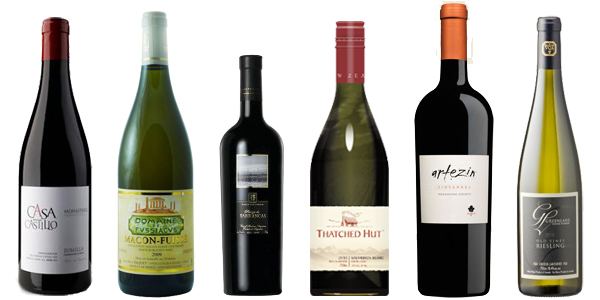
Casa Castillo Monastrell 2010 (165621, $13.95) to sniff is a bit oxy and to look is more than a bit purple. Enters territory of unfamiliar conjugations and be warned to watch out for the splinters but hey, it’s $14!  Built for a Raynolds/Miller North American palate, assays more like reposing Garnacha than trundling Monastrell, but there is beauty in the house.  87

The grape: Chardonnay

The history: Macon-Fuissé is found in southern Burgundy and the Roman Emperor Fussiacus is thought to be the founder of the village of Fuissé

The lowdown: Ostensibly organic farming, this Chard is achieved through manual harvesting and fermentation in stainless steel. Chablis like and better value

The food match: Crispy-Skin Roast Turkey, cranberry, sage stuffing and turkey gravy

Domaine De Fussiacus Macon-Fuissé 2009 (279000, $16.95) takes more than a lutte raisonée approach and blows my Fuisséing mind. Sits in a museum of scents, like Pomace Brandy by way of French Marc. Like toasted pine nuts in basil pesto. Verve, gusto, spine.  88

The grapes: Syrah, Malbec and Cabernet Sauvignon

The history: All French grapes but only in Argentina do they meet up like this

The lowdown: No longer atypical colección from Mendoza

The food match: Slow-Roasted Rump Roast, duck fat potatoes

Finca Flichman Paisaje De Barrancas 2009 (17129, $17.95) joins together as perfect a circle as could be dreamed from an Argentinian SML assemblage. A berry collective, refined and showing chocolate restraint. Seductive scents, velvet mouth feel, good length and balance. Simple and structured.   89

The grape: Pinot Noir

The history: Pinot grown in a bowl surrounded by mountains at the world’s southernmost wine region

The lowdown: Central Otago on the South Island of New Zealand is the most exciting emerging Pinot locale on the planet

The food match: Pork Shoulder, Bacon and Lingots Cassoulet

Thatched Hut Pinot Noir 2011 (242933, $19.95) is so bright I’ve gotta wear shades. When a $20 wine is able to pull off the status quo from a region where that quo is $40 and up, you know the future alights for Central Otago. Vanilla, capsicum and tangy cranberry sauce meet a zinging swish of fresh texture and pop in the mouth. “Heavenly blessed and worldly wise,” the Hut will sing at the harvest table.  88

The grape: Zinfandel

The history: Yet refuted cousin to Italian Primitivo

The lowdown: Bumble berry bramble typifies Mendocino Zin. Savoury note gives this guy balance

The food match: Smoked Turkey, fresh and tart cranberry sauce

Artezin Zinfandel 2010 (302943, $21.95) initially heads out on the Zin train with dangerous extraction but stops for the night over a campfire of herbs, anise and pine brush. Plums and sourish cherries simmer in the pot. The style is a full on uprising and welcoming to those who “get on board.”  89

The grapes: Grenache, Mourvedre and Syrah

The history: Consummate blend for Côtes-du-Rhône-Villages

The lowdown: This really is as good as it gets for CDRV. A few more dollars but this one rivals many Vacqueyras, Gigondas and even Châteauneuf-du-Pape

The food match: Willowgrove Farms Hormone-Free Smoked and Pulled Pork

Domaine Les Grands Bois Cuveé Maximilien Cairanne 2010 (286336, $21.95) is extraordinary for the appellation. Pitch purple, world-class milk and dark chocolate swirl, creamy silk. The stuff of recent phenomenon, where rocks, dreams and raspberries are crushed and scattered like cake bits over the loam.   91

The grape: Shiraz

The history: The jam from down under

The lowdown: Once a quarter there pours an OZ Shiraz that stands above the crowd

The food match: Braised Short Rib, creamy polenta, green peppercorn jus

Blackjack Major’s Line Shiraz 2008 (280941, $24.95) deserves a 21-card salute for its Victorian, cool, calm and collected demeanor. Blueberry, tar, spice box and wood smoke baked in a pie. Chocolate and vanilla hardly play a part. You may “swear and kick and beg us that you’re not a gamblin’ man,” but I dare you to try this Bendigo. You’ll want to do it again90

The Splurge

The grape: Riesling

The history: Niagara’s signature grape goes ethereal in the hands of winemaker Dianne Smith

The lowdown: Along with Charles Baker’s Picone Vineyard bottling, this Old Vines effort is as good as I’ve tasted in 2012

The food match: BBQ Chicken, goat cheese croquettes

Green Lane Old Vines Riesling 2010 (283432, $29.95) from the oldest block down on the Lincoln Lakeshore is a flat-out mouth-watering, comestible ferment of grapes. Pale lemon/lime soda but a radiant rider. Mosel in trocken mode, bursting with azoic water, pear and persimmon aromas. Rousing acidity jumps to and fro. Wow!!  91

Good to go!