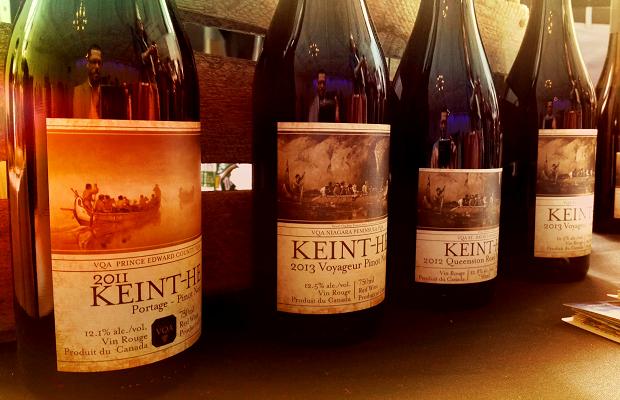
I’m a little bit County

Keint-He Vineyards

Keint-He Vineyards

Aren’t we all? In the wake of recent frosts, a compounding ass-kicking at the hands of Mother Nature in the wake of two harsh winters, the farmers of Prince Edward County now have to work that much harder to make viable an already arduous road to growing Vinifera. I’m not so much the type to report on bad news so I leave it to my revered colleague Rick VanSickle to hand you the news. Rick does it with empathy, grace, subtlety and truth. Here is what he is telling us about vine damage in PEC.

UPDATED: Prince Edward County vineyards hit hard by brutal frost, Niagara assessing damage, Lake Erie North Shore spared wide-spread damage

If I was not before, with thoughts constantly streaming east to the north shores of Lake Ontario, where precarious soils sit like Buddha astride one very massive and far-stretching bed of limestone rock, at present I am a little bit County. Therefore today is the day to put some notes out on the Prince Edward County wines I tasted last month at Airship 37 in the Distillery district. The County came to town for their annual fair.

County in the City at Airship 37

County in the City at Airship 37

WineAlign primo scrittore David Lawrason presented his PEC state of the union address via the company website last week. David touched on some integral points for growers and winemakers in the County, including the rise of Riesling and a case for increasing plantings of varieties like Chenin Blanc. The story mentions new wineries and untrodden varietal production yet when all is said and done, the best wines on his recommended list are almost exclusively produced from Chardonnay and Pinot Noir. Those Burgundian soils don’t really lie, do they?

Related – Take them home, County wines

What strikes me most in this retrospective look at the 40 or so wines that I tasted last month is how varieties perform once the vines have matured and their profiles becoming increasingly County in character. Maturity, wisdom and acumen are developing a condensing of Prince Edward County hyperbole. The wines are serially developing a house style and regional disposition. With each successive vintage the wines of Norman Hardie, Dan Sullivan, Jonas Newman, Frédéric Picard, Glen Symons, Bryan Rogers, Paul Battilana, Gerry Spinosa, Colin Stanners, Caroline Granger, Bruno Francois, Bill Turnbull, Dan Tweyman, Deborah Paskus (to Keith Tyers) and the late Richard Karlo (with torch passed to Milan Vujnic) leave the Burgundy comparison behind to speak a strictly PEC vernacular.

Maggie Granger with The Grange of Prince Edward County Gamay Select 2009

Maggie Granger with The Grange of Prince Edward County Gamay Select 2009

The voice and the news is a very good thing. The clarity of the County is glaring and vivid, leading to what David Lawrason calls “great highs to significant lows,” but yes, Lawrason is correct in saying “overall the playing field is evening out.” Prince Edward County is coming into its own, growing comfortably into its cool skin and if mother nature has any balancing to offer, the future will be bright.

Related – You can lead a county to the city

Keint He Chardonnay Voyageur 2013, VQA Niagara Peninsula, Ontario (389544, $16.00, WineAlign)

A quiet, somewhat demurred aromatic hone succeeds in drawing rather than distancing curiosity. Deeper inhalation gets to the toasty, nutty crux of the cool fruit and the conclusion is valour, chivalry and generosity. Picks right up where ’12 left off if just a bit more gelid by nature. Niagara fruit (Foxcroft, Queenston and Malivoire) provide ample combined cream and lactic limestone tack with palate driving citrus bent. Takes up several lanes of breadth on the texture trek to become a distinct PEC composed Chardonnay. Drink 2015-2018.  Tasted April 2015

Keint He Chardonnay Portage 2013, VQA Prince Edward County, Ontario (Winery, $25.00, WineAlign)

The PEC derived Portage Chardonnay goes deeper than the Niagara Voyageur, no doubt in part to roots from maturing vines that work and dig for limestone. That raison d’être is the constant yet in ’13 the expression is rounder, fleshier, enigmatic, akin or at least prompts the idea of June’s Vineyard in Niagara. Shows its oak with increased weight, fuller favour and more beneficial bitters. The minor decrease in acidity stalls the Prince Edward County mechanism and solicits earlier term consumption. Drink 2015-2017.  Tasted April 2015

Keint He Chardonnay Foxcroft 2012, VQA Twenty Mile Bench, Ontario (Winery, $25.00, WineAlign)

A year on the wilder times have settled for the early aromatics. The progression pauses at the juste milieu and gracefully glides across the palate to a similar nimble finish. Has reached the optimum condition of cool climate Chardonnay to remain in that state of pliancy for another year or two. Drink 2015-2017.

From my earlier note of February 2014:

Fruit sourced from a single Niagara block. Despite having made the yeomans voyageur trek out to the County for vinification, integrity of the Foxcroft vibe has been maintained. Freshly cored Kenyan pineapple juice poured atop oat grain in a limestone molcajete. Bottled on Sept. 15th, like all the ‘12’s. Fullish, bullish extraction and at 13.5 percent abv, this Foxcroft has been handled with Wise acumen, with more rich texture than the others. A chew of nutty, non-acidic hard pineapple comes later and this finishes with a mild-mannered, even keel feel to it, like the winemaker and the estate’s keeper.

Last tasted April 2015

Keint He Gamay Noir Voyageur 2013, VQA Beamsville Bench, Ontario (Winery, $25.00, WineAlign)
From fruit sourced at Malivoire on the Beamsville Bench and from a vineyard that was lost to the ice storm of 2014. Really too bad considering the outright fresh and bright Gamay that has come forth out of this ’13. Black raspberry, at just the optimum brix fills in this shining though simple example. It has just the correct balance of tart and twinge of carbonic meets late spice. Its simplicity lies in the structure where one component concedes to the next, as opposed to layering upon one another. Very linear and immediate Gamay. Drink 2015-2016.  Tasted April 2015

Keint He Pinot Noir Voyageur 2013, VQA Niagara Peninsula, Ontario (Winery, $19.00, WineAlign)

Quite a pretty vintage for the PEC Pinot traveller by way of Malivoire and Queenston Road in Niagara. With a spray of cola and an inside edge of liquorice root in its gait, the Peninsula Pinot has already ignited its development. The 18 months in bottle have finished designing the invitation to solicit partake in reward for prompt gratification. The world is a charming one, replete with interchangeable aromatics and flavours, replayed, rewound and woven within the fabrics. Very efficient and studious Pinot Noir. Very Pinot Noir. Drink 2015-20178.  Tasted April 2015

Keint He Pinot Noir Portage 2013, VQA Prince Edward County, Ontario (Winery, $20.00, WineAlign)

Depth of character despite the light hue and frame, a dichotomy expressed in Pinot Noir, in this vintage most akin to entry-level Bourgogne and less like its County self. Goes directly subterranean, away from fruit, if only for a spell, to a bound and binding rock cavern. Returns later, is showered by peppers and bitters, ground by tannin and grinds back down to earth. Missing are the cherries and the chocolate, replaced by wacke and substrata. Perhaps give it a year or two to settle, refine and make another call for that hermetical fruit. Drink 2017-2020.  Tasted April 2015

Keint He Pinot Noir Queenston Road 2013, VQA Niagara Peninsula, Ontario (Winery, $30.00, WineAlign)

Keint He’s take on a single-structured Pinot Noir from the Queenston Road is highly aromatic, warmer than (by comparison, Creekside Estate’s) and yet not obscured or veiled by any discernible layer of veneer. The cool, savoury centre is the oasis offering respite from the full environmental gamut on display at the hands of sweet, sour, salty and lardy. Quite characterful, bold and cool-climate kitschy with a kinesthetic, corporeal feel. When Bryan Rogers and Ross Wise gain another level of Queenston understanding, it will not be hard to imagine a churning of something special in 2013. I’d put my money on it. Drink 2016-2020.  Tasted April 2015

The Grange of Prince Edward County Gamay Select 2009, VQA Prince Edward County, Ontario (Winery, $15.95, WineAlign)

Daughter (Maggie) convinced mother (Caroline) to let her hold back 15 cases of this County Gamay, a variety that has some difficulty sharing the sandbox with limestone. The additional five years in bottle has brought the downy fruit back from acidity’s precarious cliff edge, from the brink of piercing danger and disaster. The current state is one of conciliation and quiescence. There remains a major key of funk mind you, parliamentary even, but sniff past and the plot thickens, as does the texture. Chalky, gritty and persistently grainy, this ’09 Gamay is very much alive, like a scaling bass line supported by a rising horn section. A real fun look at the past with an eye to drive the future. Drink 2015-2018.  Tasted April 2015
The wines of Norman Hardie

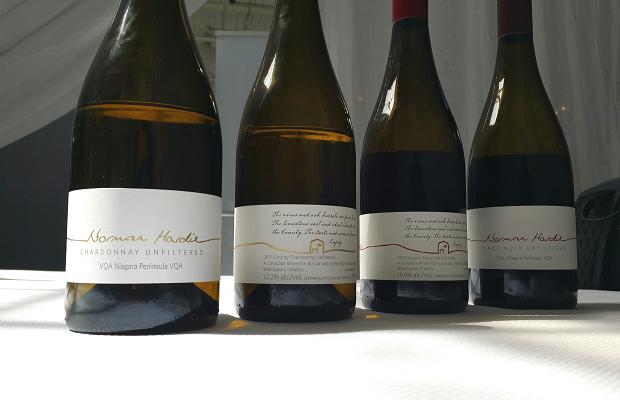
The wines of Norman Hardie

Norman Hardie County Unfiltered Pinot Noir 2013, VQA Prince Edward County, Ontario (125310, $39.00, WineAlign)

Procuring depth in County Pinot Noir is a tough task within the constraints of resisting a temptation to reach for sugars, alcohol and dark berry fruit. Norm Hardie’s 2013 unfiltered (at 10.9 per cent) and lambent exegesis succeeds because it offers the best of all available worlds. Roots for vines that burrow to limestone develop a structure that while may have at one time been inconsistent, have crossed the threshold in ’13 to establish a guarantee. A Hardie PEC Pinot Noir can be bright and accessible. It can also be tough, tart and tannic, as it is here, again, but not without its foil. The work is now innate, the transitions seamless, the crossroads left in the dust. This wine will please two camps; those who can afford and demand immediate gratification and those who are willing to wait for secondary (two to three years) and tertiary (four to seven) character development. Drink 2017-2022.  Tasted April 2015

Norman Hardie County Unfiltered Pinot Noir 2011, VQA Prince Edward County, Ontario (125310, $39.00, WineAlign)

The anxiety of the vintage has not left the bottle while the raging fruit and acidity battle for supremacy. The space-time-chaos continuum will perdure in this Pinot Noir of unpaired anatomical structure. Wait a further three years minimum for the azygous to drain. The heft will subside. Drink 2018-2022.

From my earlier note of March 2013:

Norman Hardie needs little introduction. He is the reason Prince Edward County Pinot will secure a place on that grape’s world stage. The 2011 vintage will go down as a classic for PEC. The tens have mass appeal, the nines turned out to be stellar but it is the elevens that gather the best of both worlds; ripeness and acidity. Stock up. Paints the County red in layered and structured brushstrokes. Ripe, bright cherry tonality in super-heightened, mesmeric sensuality. Accented by weeping rock, black earth and that cherry. Would not figure this to be Norm’s most rugged or gregarious and yet it holds more heft than it looks. Currently in a great place and will live longer than any other.

Last tasted April 2015

Norman Hardie Niagara Unfiltered Chardonnay 2012, VQA Niagara Peninsula, Ontario (184432, $39.00, WineAlign)

The ’12 Niagara has swapped spontaneity for coherence, licentiousness for logic. Has entered the stage of non-reductive peel, where skin is discarded, flesh is exposed and juices run free. If you like your Chardonnay settled and yet vitally fresh, now is the time to enjoy the Hardie 2012 Niagara Chardonnay. Drink 2015-2022.

From my earlier more of May 2014:

Norm’s Niagara is such a different animal to the County 2012. The warm summer and dry fall means more humidity and even more reduction. Currently cothurnal so less like Burgundy but only because there elevates the high-tones and percipience from Niagara. Texture is key but this Hardie needs time. It’s not angular but it is steroidal, injected, like a wild thing, as if the yeast were still in control, munching away even though there is no more sugar to be had. Undomesticated ’12, at heart, in spirit, out of mind. Hard to imagine there could be this much anxiety from the even-tempered vintage, but when you pick real early and keep the oak to a bare minimum, Hardie happens. Norm picked ripe fruit between September 7 and 10, six weeks ahead as compared to some years. He said the fruit had a “golden tan, ready to go.” The use of smallish 500L barrels works wonders for texture and though 40 per cent was new wood, you would never know it. Malolactic fermentation didn’t happen until late August, nearly a full year on so no sulphuring was required until that time. This is Hardie’s freshest Niagara fruit ever, from Duarte Oliveira’s farm between Victoria and Ontario Street, the same spot as Hillebrand’s Chardonnay Reserve. Terrific Beamsville Bench Chardonnay.

Last tasted April 2015

Casa Dea Gamay 2013, Huff Estates Chardonnay South Bay Vineyards 2012 and Karlo Estates Pinot Grigio 2013

Casa Dea Gamay 2013, Huff Estates Chardonnay South Bay Vineyards 2012 and Karlo Estates Pinot Grigio 2013

Karlo Estates Pinot Grigio 2013, VQA Prince Edward County, Ontario (Winery, $21.00, WineAlign)

The adage is so very true; a good Pinot Grigio is hard to find, just like a man. The take here is decidedly and strikingly Pinot Grigio, a flash of Friuli and a Bessie to be reckoned with. This just has that positive, smithy oxidative side, the kind that rocks and stones mixed with winemaking cause an exchange of electrons between reactants. The fruit is big, lucidly piqued by pear, but also leaning mango and jack. Quite fleshy, with schematic, scenic, natural acidity and panoramic minerality. This is about as mnemonic as it gets for Gris, or in this case Grigio, in Prince Edward County, especially considering who the buyers will be. One can only hope they intuit the condition and here’s to planning for that consumer base to expand. “Lord, a good (Pinot Grigio) is hard to find, you always get another kind.” Drink 2015-2020.  Tasted April 2015

Lighthall Sparkling Rosé ‘The Fence’ 2014, VQA Ontario (Winery, $25.00, WineAlign)

This is Glen Symon’s first Sparkling Rosé, a 100 per cent Pinot Noir from estate vineyards, refermented using the Charmat method. Intensely fizzy, in toto fruity and actually gives off a Pinot Noir vibe. Something racy, spicy and wild runs rampant, rendering this blush bubble in an Ontario class of its own. It’s like 1980’s alt-dance fizz, with a New Order or B-52 thing going on. It just seems to do the “she-ga-loo, shy tuna, camel walk, hip-o-crit, coo-ca-choo, aqua velva, dirty dog and escalator.” Has the direct beat, retro and futuristic at the same time. Dance this mess around, in sweet and savoury tones, warm, day-glo, slow and gyrating. Drink 2015-2016.  Tasted April 2015

Lighthall Pinot Noir 2013, VQA Prince Edward County, Ontario (Winery, $30.00, WineAlign)

This may not be the first Pinot Noir made by Glen Symons but it marks a categorical paradigm shift for the Lighthall oeuvre. Elicits a “well, well, what have we here” response. Unfiltered, reflexive and flexing, not so much in weight as in protein. This is an entirely different sort of Prince Edward County Pinot Noir, neither dark as black cherry nor bright as sour cherry. It’s aromas and flavours recall both. I can’t say for sure that any Ontario Pinot has crossed into such territory. Offers a shade of calignosity for those who believe that genuine Pinot Noir only thrives in the dark. Yet the clarity is conversely illuminating. It’s pure, crisp and forking over real gastronomic delicacy. Intimates aspects of Sonoma and Otago with PEC intimacy. Really well-defined and culminating with a positive bitter finish. Drink 2015-2019.  Tasted April 2015
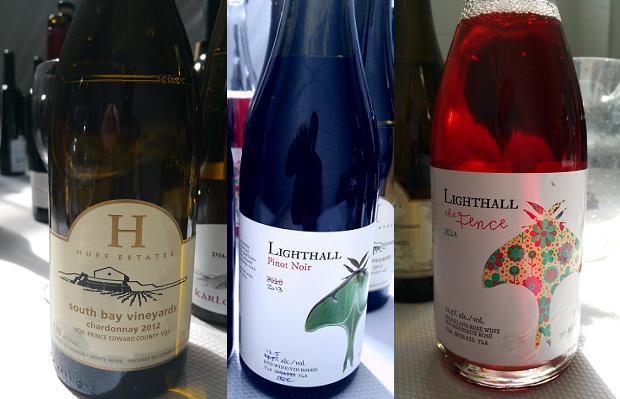
Huff Estates Chardonnay South Bay Vineyards 2012, Lighthall Pinot Noir 2013 and Sparkling Rosé 'The Fence' 2014

Huff Estates Chardonnay South Bay Vineyards 2012, Lighthall Pinot Noir 2013 and Sparkling Rosé ‘The Fence’ 2014

Huff Estates Chardonnay South Bay Vineyards 2012, VQA Prince Edward County, Ontario (Winery, $29.95, WineAlign)

Reductive but not to excess. If you can appreciate a Norm Hardie Chardonnay then Huff’s style is a walk in the park. A few swirls brings the rest of the players to the fore stage and the party. This is big band Chardonnay, with a feminine and demonstrative lead vocalist. Richly textured, from PEC plots at South Bay that are the Niagara equivalent of Wismer Vineyards, lending warmth, soil fixation and unconscious aid. There is a level of supposition that leads to breeding a sensation of succulence that is not found anywhere else in the County. Barrel is important, mostly unobtrusive and so this gathers up layers, separates, divides and then meshes. The wood is employed towards a west coast groove but it works with the best, best fruit. The corpulence is not built on butter but rather demi-glace, or perhaps perfect beurre-blanc. A very long and driven Chardonnay. Drink 2016-2022.  Tasted April 2015
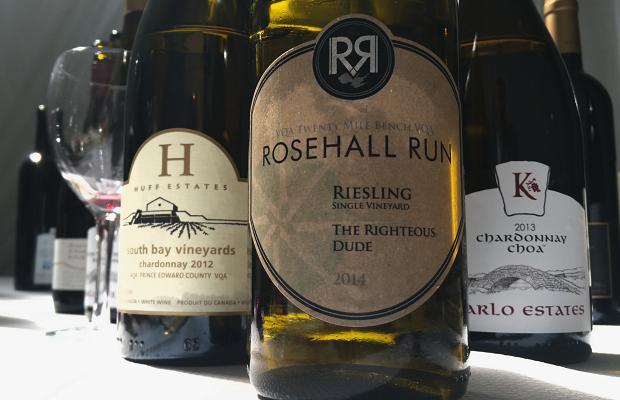
Rosehall Run Riesling The Righteous Dude 2014

Rosehall Run Riesling The Righteous Dude 2014

Rosehall Run Riesling The Righteous Dude 2014, VQA Twenty Mile Bench, Niagara Peninsula, Ontario (Winery, $19.95, WineAlign)

Thank you Dan Sullivan for the fodder, to go on more tangents than should be allowed in a tasting note. And thank you for fixing a righteous Riesling, exemplary to Twenty Mile Bench and in a vein that represents the Double R. Has Mosel meets 20 Mile in verse. Feigned sweetness is managed by thriving acidity, much as others have similarly done in the area; Jay Johnston with Nadja and Paul Pender with Limestone Vineyard. Here lies Niagara Riesling you can really sink your teeth into, made by PEC-minded folk, really tying the Ontario room together. A hooked rug of Niagara and PEC in the hands of Sullivan, with really fine lines and good length. Drink 2015-2020.  Tasted April 2015

Casa Dea Gamay 2013, Prince Edward County, Ontario (Winery, $15.95, WineAlign)

Fine work in 2013, for Gamay, by winemaker Paul Batillana. Gamay is so very welcome when the fruity matter matters most, as witnessed by this Casa Dea. Some depth from soil and an ever so slight scorch of earth add complexity to hang a #GoGamayGo hat upon. Has the bends in a way, going just a bit too deep but rescues itself with a fresh radio frequency and a changeling face to red orchard fruit. This has real cru class, good funky bass and a driving sound to regeneration. Will evolve nicely for five years. Drink 2015-2019.  Tasted April 2015

Good to go!
http://www.winealign.com/profile/2058-mjg

If it’s value you want, it’s South Africa you need

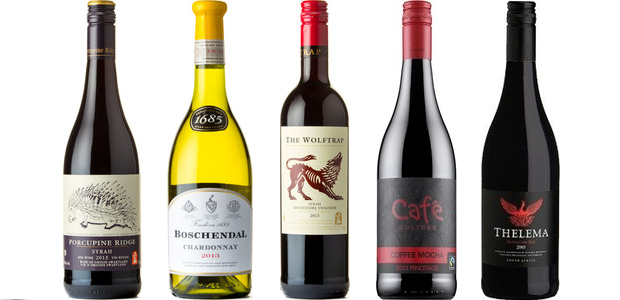
From left to right: Porcupine Ridge Syrah 2013, Boschendal 1685 Chardonnay 2013, The Wolftrap Syrah Mourvedre Viognier 2013, Café Culture Coffee Mocha Pinotage 2014, Thelema Mountain Red 2012

From left to right: Porcupine Ridge Syrah 2013, Boschendal 1685 Chardonnay 2013, The Wolftrap Syrah Mourvedre Viognier 2013, Café Culture Coffee Mocha Pinotage 2014, Thelema Mountain Red 2012

I sat down a few weeks back to taste 20 South African wines, all value-based, consumer-friendly and market-driven. With WineAlign colleagues David Lawrason, John Szabo M.S., Margaret Swaine, Steve Thurlow and Sara d’Amato on hand, the general consensus at the tasting was positive and only worked to re-enforce how competitive South African wines can be in the sub-$15 market.

While certainly not immune to flaws, some South African reds and whites can sometimes get right in your face and yet others show remarkable elegance and complexity at entry-level prices. When I taste wines such as these I imagine the catastrophe of grace. They are wines that move through history with the fluency of a spirit. Some make a house cleaning of belief, others are solid senders. The South African tasting was more than just a group of cheap wines with something to say, more than a pleasant surprise, it was in fact, a pleasure.

Porcupine Ridge Syrah 2013, Swartland, South Africa (595280, $14.95, WineAlign)

Deep dish Syrah, with meaty and cured toppings and the mordant pitch of Swartland. Tarry, olivine rampant and filled with the late summer, sorrowful berries; blackberry and black raspberry. Naturally sweet, viscous, grainy and tannic mess of texture overlaying fruit. Tons of wine for the buck and a very promising vintage to lay down. Aridity takes over on the briery finish. Wow.  Tasted January 2015  @PorcupineWines

Boschendal 1685 Chardonnay 2013, Western Cape, South Africa (367698, $14.85, WineAlign)

Here is a buttery and toasty Western Cape Chardonnay, slightly dirty and reductive. Confused, seemingly high residual avoirdupois restricts the opening notes, though they surely begin to play. The aromatics are heavy with the soaking skins of pear, apple and quince in crumbled amaretto cookie and flaky pastry boozy waters. Give this three plus years to shed its nerdy phase and integrate its tangy persistence.  Tasted January 2015  @BoschendalWines  @liffordwine

The Wolftrap Syrah Mourvedre Viognier 2013, Western Cape, South Africa (292557, $13.95, WineAlign)

Referring to Marc Kent’s blend as traditionally Rhône may seem at odds in consideration of the north-south, modish chaos, the price and the locale, but folky it is. The blend is unvarying Boekenhoutskloof, grounded by Syrah with support from Mourvèdre and Viognier. The latter, aromatic white grape variety lifts and brightens the brooding load. This is quite sweet and sour, of high-toned red and black fruits meeting a reduction of Champagne vinegar. A tannic and mineral streak divides, circles and conquers all. This will drink better in a year and for a few more after that.  Tasted January 2015  

Café Culture Coffee Mocha Pinotage 2014, Western Cape, South Africa (292466, $12.95, WineAlign)

From the KWV stable, the triad of outwardly and rhetorically spoken culture is right there on the label, in all its java glory. Café, Coffee, Mocha. The charm here is that perhaps in 2014 it has actually been scaled back a touch, the wood suffusion, to at least reveal a modicum of red fruits. Nonetheless it is the notes of smoke, tar, rubber and of course coffee that dominate. “Cause it’s the new Mother Nature takin’ over.” There are also at least two spoonfuls too many of sugar. Like the annoying Guess Who song, this can only be taken in very small doses. “Find a corner where I can hide.”  Tasted January 2015  @TheCafeCult  @Diageo_News

Thelema Mountain Red 2012, Western Cape, South Africa (222570, $12.95, WineAlign)

From fruit up on the slopes of the Simonsig Mountains, this has real, natural cherry brightness, not to mention a kitchen sink of varietal interplay. Shiraz (37 per cent), Petit Verdot (25), Cabernet Sauvignon (23), Merlot (10), Grenache (4) and Cabernet Franc (1) are coalesced by a lighter hand and the effect is less frightening than might be expected. Like similar California action (save for Zinfandel and/or Petite Sirah), this comes together nicely, even coherently, with just a few wrinkles. Represents very good value for a multitude of purposes; BBQ and barbecue being two of them.  Tasted January 2015  @ThelemaWines  @EpicW_S

From left to right: Cape Heritage Inception Deep Layered Red 2012, Cape Heights Cabernet Sauvignon 2013, Flat Roof Manor Pinot Grigio 2014, Flat Roof Manor Merlot 2013, Boschendal The Pavillion Chenin Blanc 2014

From left to right: Cape Heritage Inception Deep Layered Red 2012, Cape Heights Cabernet Sauvignon 2013, Flat Roof Manor Pinot Grigio 2014, Flat Roof Manor Merlot 2013, Boschendal The Pavillion Chenin Blanc 2014

Cape Heritage Inception Deep Layered Red 2012, Western Cape, South Africa (369967, $12.95, WineAlign)

If 2011 was sweet, this next vintage is like Carabao mango, Luohan duo and Deglet noor dates all cooked down together into a mawkish, sappy jam. Or maybe it’s much simpler than that; just deeply layered refined sugar and red dye number 40. There is almost no aromatic discernment beyond the crystalline layers. No fruit, no soil, no acidity, no tannin. Just sweetness.  Tasted January 2015

Cape Heights Cabernet Sauvignon 2013, Western Cape, South Africa (129874, $11.30, WineAlign)

The simple drawn label indicates honest design and intent. The alcohol (14.5 per cent) seems spot on and in sweetness, honestly declared. Stones of fruit, full on Cassis, vanilla and wood spice are in the glass and obviously so. Scales greater heights than most generic California counterparts and comes across as Cabernet Sauvignon, with savoury Western Cape scents closer to Sonoma than say, Central Coast. Some coal and tar come in play with a good, persistent finish.  Tasted January 2015  @liffordretail

Flat Roof Manor Pinot Grigio 2014, Western Cape, South Africa (27128, $11.25, WineAlign)

With the simple aroma of vanilla drops on cut pears and refined sugar, this is clean, crystalline and simple Pinot Grigio. Inoffensive, for a large gathering it will not hurt any feelings. The production is mindlessly prepared and contrived, until a warm cookie dough nuance takes it to another level. Nothing shocking here.  Tasted January 2015  @FlatRoofManor

Flat Roof Manor Merlot 2013, Stellenbosch, South Africa (27128, $11.25, WineAlign)

A taut and toned Merlot, varietally correct and though the label reads 13.5 per cent alcohol, shows considerable heat. Very Merlot, dusty, mulberry scented, syrupy and familiar as a Cape red. Fully garnished, varnished and a rubber stamp this side of tarnished, the thick smoke does distort the clarity. Somewhat seamless in its heavy charms and structured, if quick to finish. Tasted January 2015  @FlatRoofManor

Boschendal The Pavillion Chenin Blanc 2014, Western Cape, South Africa (365353, $10.95, WineAlign)

Though the label has forsaken the partnership with (15 per cent) Viognier, the aromatic floral lilt persists, lifts and buoys the stoic and stark Chenin to impossible heights in a sub-$11 wine. The Chenin’s sharp reserve is inwardly atomic and the relationship with the 15 percenter strictly platonic. Together they create honeyed matter, walk hand in hand and handsomely forward. The residual sugar drip may be a touch heavy-handed but laying a bottle or two down for a few years is entirely possible and save for the price, even longer than that. The acidity circulates to the end, framed by a fine tannic texture.  Tasted January 2015  @BoschendalWines  @liffordwine

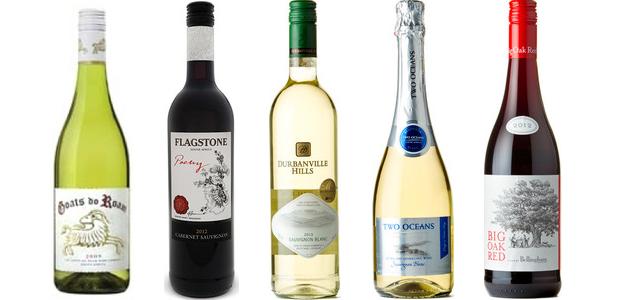
From left to right: Goats Do Roam White 2013, Flagstone Poetry Cabernet Sauvignon 2012, Durbanville Hills Sauvignon Blanc 2014, Two Oceans Sauvignon Blanc Extra Dry Sparkling Wine 2013, Bellingham Big Oak Red 2013

From left to right: Goats Do Roam White 2013, Flagstone Poetry Cabernet Sauvignon 2012, Durbanville Hills Sauvignon Blanc 2014, Two Oceans Sauvignon Blanc Extra Dry Sparkling Wine 2013, Bellingham Big Oak Red 2013

Goats Do Roam White 2013, Coastal Region, South Africa (237313, $10.95, WineAlign)

The popular and successful Rhône-ish north-south blend in 2013 is Viognier (67 per cent), Roussane (19) and Grenache Blanc (14). In memory, mimic and polar fellowship of the mother land, the GdR is spic and span clean if slightly saccharine and sentimental. I find this to be a typically commercial and derivative South African white wine, with an aromatic and palate profile of sugary, viscous appliqué and rubber tree sap. Has that awkward, gummy resin sensation, along with tropical notes. It’s the pineapple expression that saves the day and makes it more fun to drink.  Tasted January 2015  @DonGoatti  @FairviewWine

Flagstone Poetry Cabernet Sauvignon 2012, Western Cape, South Africa (358754, $10.95, WineAlign)

Like flavoured, warmed to dripping chocolate, with splinters. Like overripe blackberries seeping in warm rainwater. There is some formidable tannin and acidity which could use some air time to resolve. Quite unique and fun for an inexpensive South African red with only a minute level of rubbery, volatile acidity. Some earth and plenty of spice, much of it from wood. Quite bright actually and well made.  Tasted January 2015  @flagstonewines  @CBrandsCareers

Durbanville Hills Sauvignon Blanc 2014, Durbanville, South Africa (22251, $10.95, WineAlign)

Extreme savour and notes for green vegetables are sprinkled with capsicum and dried caper dust in this piquant Sauvignon Blanc. Windswept tops of or cliff edges can be conjured at a sip, along with he dust of desert brush and spots of European gorse. Ocean mists join the notes of Ulex, contributing further green aromas and salty-based flavours. Acidity brings it all in focus. There is complexity in this SB’s drive.  Tasted January 2015  @dhillswine

Two Oceans Sauvignon Blanc Extra Dry Sparkling Wine 2013, Western Cape, South Africa (281311, $10.95, WineAlign)

Quite oxidized and based on the saccharine sugar aspect, “Extra-Dry” must be a translation from the local winemaker’s dialect. While it has some fining aridity on the back end, the early palate is coated with not so unpleasant sweetness. The capsicum captures the effectualness of the varietal, as do green vegetables and grasses. Intensity comes through in lemon curd and the finish is quite bitter.  Tasted January 2015

Bellingham Big Oak Red 2013, Western Cape, South Africa (350595, $10.80, WineAlign)

A Shiraz-Cabernet blend that’s all about the tree, the barrel and a winemaker’s loud and clear pronouncement of the way jammy Western Cape fruit should be treated. Tire tread and sappy tensor bandage smother along with all kinds of chocolate. Plenty of red fruit, grainy tannin and condensed acidity, straight out of the can. Big wine for so little.  Tasted January 2015  @DionysusWines

From left to right: Frisky Zebras From left to right: Nederburg Winemaster's Reserve Shiraz 2013, Douglas Green Sauvignon Blanc 2014, K W V Contemporary Collection Chenin Blanc 2014, Obikwa Sauvignon Blanc 2014, Frisky Zebras Sensuous Sauvignon Blanc Sauvignon Blanc

From left to right: Nederburg Winemaster’s Reserve Shiraz 2013, Douglas Green Sauvignon Blanc 2014, K W V Contemporary Collection Chenin Blanc 2014, Obikwa Sauvignon Blanc 2014, Frisky Zebras Sensuous Sauvignon Blanc

Nederburg Winemaster’s Reserve Shiraz 2013, Western Cape, South Africa (527457, $9.95, WineAlign)

Have always had a soft spot for this hard-nosed, high-alcohol (pushing the 15 per cent limit, despite the declared 14.5 on the bottle) heavy lead and plush red berry Shiraz. Especially at under $10. Graphite and mephitic barks, ferrous bits and cool bites keep it dancing under ground. It’s sweet and sour, with soy and balsamic swirls. Covers a wide ranging set of Western Cape parameters. Runs the flavour gamut and represents more than solid value. It’s the style, love it or not.  Tasted January 2015  @Nederburg  @ImportWineMAFWM

Douglas Green Sauvignon Blanc 2014, Western Cape, South Africa (367821, $9.80, WineAlign)

Mr. Green Jr. has fashioned the goods, following in the footsteps of his father. This is a cheeky little Sauvignon Blanc. Slightly oxidized, certainly pumped up by a touch of effervescent CO2 and tempered by Western Cape sentiments. Has hallmark South African flaw-ish white wine tendencies but also plenty of back-end bite meets verve. Like Scatterlings in a bottle, “in their hearts a burning hunger, beneath the copper sun,” this SB has tons of tropical flavour. Also possesses a green apple crunch and a Cleggy, cool, minty middle. Most excellent and affordable juice.  Tasted January 2015  @DionysusWines

K W V Contemporary Collection Chenin Blanc 2014, Western Cape, South Africa (18689, $9.45, WineAlign)

Despite the obvious base, elemental and flinty suggestions, it would take some yoga like stretching to pull a Chenin Blanc muscle out of the overall aromatics in a blind tasting. Yet somehow it screams Western Cape and South Africa. Reeks of gauze, sacchariferous density and homeopathic remedy. Saps moisture with anti-vivid aridity. Must overs are in vegetative tones. And, it’s all in.  Tasted January 2015  @KWVwines  @DiamondEstates

Obikwa Sauvignon Blanc 2014, Western Cape, South Africa (527465, $9.45, WineAlign)

Struts slowly out, the aromatic neck in craning position, the rotund body slightly awkward and stuck in one dimension. The sweet perfume is animal musky, in a medicinal way. The big bird is a perfectly planar white that is just and only that, hardly recognizable as Sauvignon Blanc, with no ties to any defined terroir. The ostrich abides for simple and ordinary quaffing.  Tasted January 2015  @ObikwaWines  @ImportWineMAFWM

Frisky Zebras Sensuous Sauvignon Blanc NV, Western Cape, South Africa (237685, $8.95, WineAlign)

From purchased fair-trade fruit, this non-vintage white wine is nondescript. Here brews honeydew in a bottle. Tinny, oxidized and briny, bronzing smells are also sunburnt. The mouth is the recipient of a greasy, reductive, effervescent and prickling salve. Non-Maleficence in Sauvignon Blanc.  Tasted January 2015

Good to go!

The tides that bind: East Coast swing

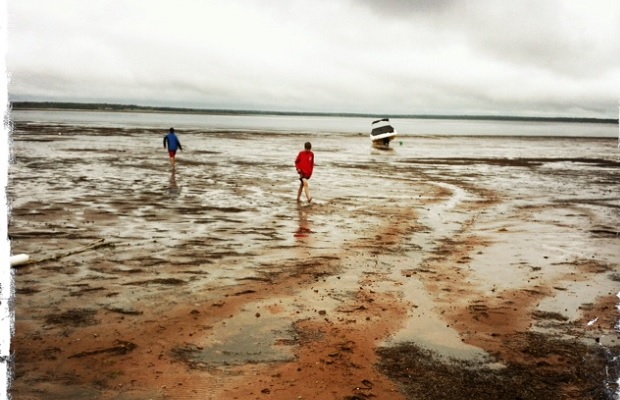
Tide's Out, Big Cove, New Brunswick

Tide’s Out, Big Cove, New Brunswick

Tides. The Maritimes. The new viticulture.

Headed out for the East Coast, pulled by a great maritime tide, family in tow. To a cape and back. Ontario-New York-Massachusetts-New Hampshire-Maine-New Brunswick-Nova Scotia-New Brunswick-Quebec-Ontario. The voyage imagined as a whole is revealed as an ebb that rides a crest outward bound for the tip of Cape Breton Island. A drive to reaches with no ability to seek accessory in further extensions. The inward sail as a retreat back to the Big Smoke, requiring returns equal and proportionate to the outward gains. Each day the tides carried us to promulgate layovers, to begin flowing again each seriate day, at the hour of its reversal.

Corneybrook Falls, Cape Breton Island

Corneybrook Falls, Cape Breton Island

Some tides 101. Tides are the periodic rise and falling of large bodies of water. They are created because like magnets, the Earth and the moon are attracted to each other. The gravitational force of the moon is one ten-millionth that of earth, but when you combine other forces such as the earth’s centrifugal force created by its spin, you get tides.  The sun is important as well, but in minutia as compared to the moon.

Water is what the Earth holds on to and every day (well, actually in a span of 12 hours and 25 minutes), there is a period between two high tides. Spring tides occur during the full moon and the new moon. Neap tides occur during quarter moons.

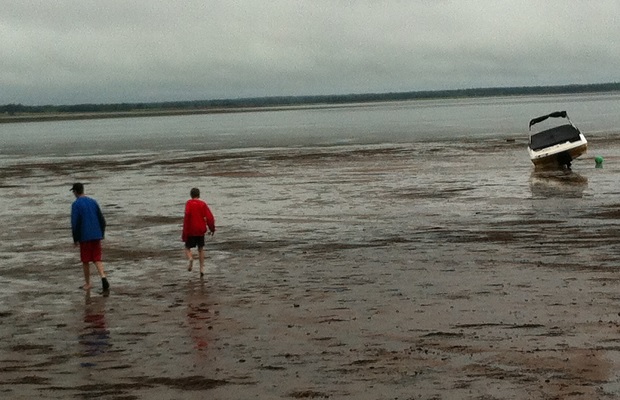
Tide out, Big Cove, Northumberland Strait

Tide out, Big Cove, Northumberland Strait

Are you in or are you out?

On the Northumberland, very free, and easy

Tide in, on the Northumberland, very free, and easy

Of all the impressive vistas, formidable rock faces and seemingly endless, edge of the world bodies of water to perpend, way out and beyond on the east coast of Canada, none feast more blatant than the Bay of Fundy. Each day 160 billion tonnes of seawater flows in and out of the Bay that intersects Maine, Nova Scotia and New Brunswick. Nowhere else in the world resembles the scabrous shorelines, islands and waters of this wondrous place.

Now you can’t break the ties that bind
You can’t forsake the ties that bind

The Bay of Fundy lies in a rift valley known as the Fundy Basin and is home to the world’s biggest tides, highest in the Minas Basin, Nova Scotia. “The uniqueness of the Fundy tides can be attributed to three factors, the shape and size of the bay, the substantial amount of water that flows in and out of the bay, and the gravitational pull of the moon, which pulls the water towards itself, causing a bulge on the ocean surface.”

The Flower Pot Rocks

The Flower Pot Rocks

In a quirk of geographical fate, the amount of time it takes an incoming wave to get to the end of the Bay of Fundy and return to the ocean coincides with the time between high and low tides – 12.4 hours. “Like a father pushing his daughter on a swing, the gentle Atlantic tidal pulse pushes the waters of the Bay of Fundy-Gulf of Maine basin at nearly the optimum frequency to cause a large to-and-fro oscillation.” The galance is simply awesome.

Grand Manan Lighthouse

Grand Manan Lighthouse

Nicknames abound. Its waters near St. John and west to Grand Manan Island are known as the “aquarium without walls,” and the shores near the 1984 dinosaur bones unearthed at Parsborro harbour are called “nature’s jewel box.” It’s the winemakers of the Gaspereau Valley who conspired to coin the most significant moniker. Fundy is hereby known as “Tidal Bay.”

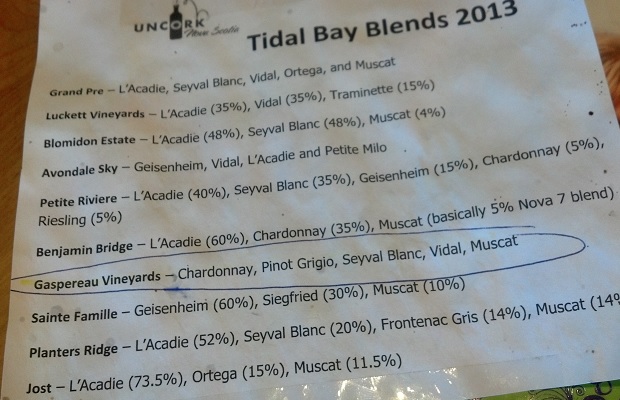
Tidal Bay Blends 2013

Tidal Bay Blends 2013

Tidal Bay is the first wine appellation for Nova Scotia and is crafted from carefully selected varieties, produced exclusively by (now) 12 wineries. To be labeled Tidal Bay, maximum brix levels and minimum acidity (9 g/L) must be reached. Pressing takes place by bladder or basket, all in the name of a “regionally recognizable local style.” The 100 per cent Nova Scotian blends “pair well with seafood and ocean views.” Though essential to the maritime wine oeuvre, the Tidal Bay wave remains young and the wines a work in progress. I will connect with the full range in a year or two, perhaps on it 15th birthday, in 2017. Here are three tasted in July.

Gaspereau Vineyards Tidal Bay 2013

Gaspereau Vineyards Tidal Bay 2013

Gaspereau Vineyards Tidal Bay 2013 (Winery, $21.99)

Aromatics are the show in this cool breeze blend. Combines Seyval Blanc, Vidal Blanc, Pinot Grigio, Chardonnay and (13 per cent) mitigating and rounding Muscat. In character of what it sets out to define, this 2013 Tidal Bay concentrates Nova Scotia brightness with tight acids and a clear, stain removing shout into the machine. A warm streak of Fundy salinity soothes the savage cool-climate beast.  @gaspereauwine

L’Acadie Vineyards Estate L’Acadie 2011 (Winery, $21.99)

Made from Nova Scotia’s most promising L’Acadie Blanc variety in combination with Chardonnay. Winemaker Bruce Ewart coaxed maximum freshness and a consolidation in balance. Chardonnay gives body but does not steal the show. Acids are prominent yet never treacherous. Though not technically an example of  Tidal Bay, the sexy, waxy, saline and bright personality make it distinctly Nova Scotia. Tasted at the Governors Pub, Sydney.  @lacadiewine

Luckett Vineyards

Luckett Vineyards

Luckett Vineyards Tidal Bay 2013 (Winery, $20.00)

Heterocyclic aromatics go bonkers in this blend of Traminette, L’Acadie and Vidal Blanc. Smells like ready to ripen Sauvignon Blanc, grassy, high in citrus and spiked by capsicum. An ear-to-ear smile of brightness and acidity drives the blend and you might ask it, “you walk cool, but darlin’, can you walk the line?” In the Nova Scotian world of Tidal Bay, Pete Luckett’s take can do just that and so it will not break the ties that bind.  @luckettvineyard

And when we are strangers, wherever we go,
There’s always a side that we still do not know;

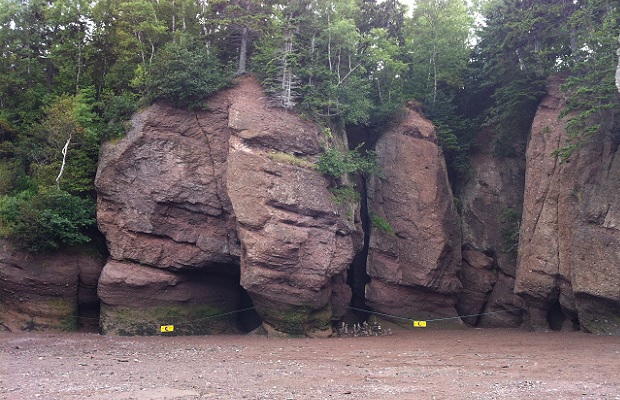
Hopewell Rocks, New Brunswick

Hopewell Rocks, New Brunswick

Tidal bores, red mudflats, flowerpot rocks, sea caves, the largest whirlpool in the Western Hemisphere, all impossible irregularities that belong to the Bay of Fundy. So what? The muddy beaches and chocolate rivers might be characterized by the Acadian expression, “Quelle baraque!” or, they might induce chills, “gorziller,” hallucinations even. When a moment is taken, they become unique, quirky barometers to re-calibrate the mire of mundane repetitious behaviour and one’s dizzying and insignificant place in this great big world.

The fascinating geology of the natural rock formations at the Hopewell Rocks, on the Bay of Fundy, is a history worth learning.

Chocolate coastline, Bay of Fundy, New Brunswick

Chocolate coastline, Bay of Fundy, New Brunswick

and some days I am a door wide open,
shouting to the wind, singing to the sea.

Chase Lobsters, Port Howe, NS

Chase Lobsters, Port Howe, NS

Shake’s head. Emerges from the dream. Begins to put the pieces together. Memories of a long trip. An east coast swing.

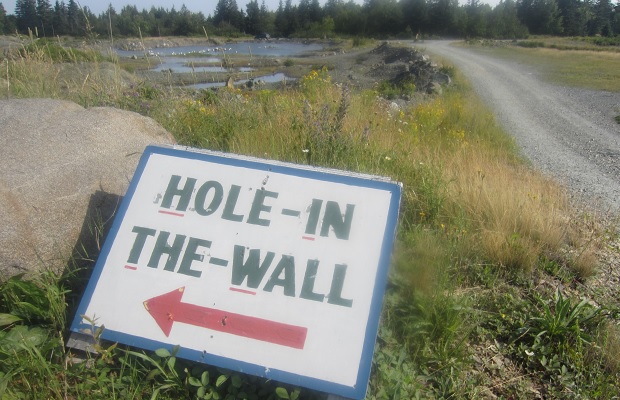
Hole in the Wall, Grand Manan, New Brunswick

Hole in the Wall, Grand Manan, New Brunswick

From Black’s Harbour to Grand Manan Island, through St. John’s and up to Big Cove by Baie Verte. A Northumberland Straight traverse past Port Howe, Am Baile Mór, Inverness, a jog up to Cheticamp and Corneybrook. Around the Cabot Trail of Cape Breton Island, a sidetrack to Bay St. Lawrence and Meat Cove, then a decussate and a zig-zag of the fiords to mark an “X” in Sydney.

Cooking lobster on Grand Manan

Cooking lobster on Grand Manan

Up the heart of the province, past Truro, down the Annapolis Valley and a u-turn back up and into Wolfville. It is there, in the heart of the Gaspereau Valley, that the essence of Nova Scotia’s wine industry walks out from beneath the fog to reveal itself in an elongated moment of clarity.

Campfire lobster supper

Campfire lobster supper

The tractive is a thing to and of itself. The pauses to gather at points along the process remember lobsters roasting over an open fire, a cottage visit with new-found friends, a hike into the cavern of a waterfall and a swim in a tidal river. Memories are made in rites of passage, though in the end, like the photographs, they too will be demurred by time. Indelible stamps they are, cemented in commitment to reaching and by necessity, descending summits. A  road trip to the eastern part of Canada realizes the bigger plan. The key is making it safely home, before the tide rolls in.

Next up will be the wines of the Gaspereau Valley, inextricably linked by a prodigal son come home in the name of Peter Gamble. Until then, take it slow and easy, on the East Coast.

East Coast cottage country

East Coast cottage country

Good to go!


Are you getting your daily serving of wine?

Wine tasting

Here are 10 current releases to help keep the wolves of virus and disease at bay.
Photo: chiyacat/Fotolia.com

as seen on canada.com

I know you are about to scream at your screen. Not another column about the health benefits of drinking wine. Delete. Wait, hear me out.

Related: A wine prescription for cold and flu and Feeling under the weather? Drink wine

In a recent joint study between the Health Sciences Department, Brock University and the Oncology Department, McMaster University, scientists set out to prove the Inhibition of human lung cancer cell proliferation and survival by wine. Published a month ago, here is the paper’s conclusion: “Red wine inhibits proliferation of lung cancer cells and blocks clonogenic survival at low concentrations.” Nice.

The study was prefaced through the idea that “compounds of plant origin and food components have attracted scientific attention for use as agents for cancer prevention and treatment. Wine contains polyphenols that were shown to have anti-cancer and other health benefits.” Put two and two together and voilà. The group investigated the “effect of wine on proliferation and survival of human non-small cell lung cancer (NSCLC) cells and its effects on signaling events.” The findings are nothing short of astonishing.

The operative observation here is that low doses (read: moderate consumption) of wine may have anti-cancer and chemo-preventive properties.” White wine’s cancer fighting properties exist (at two per cent concentration) though they are not in the same league as Red wine (five per cent). Or, you need to (very rough math) drink 250 per cent more white wine to reap similar benefits. Such a quagmire.

Evangelia Litsa Tsiani, associate professor of community health sciences at Brock University added “our next step is to use doses of wine that correspond to moderate wine consumption in humans – one to two glasses per day – and examine the effect on tumor growth in mice.”

We already know that the Brock University Cool Climate Oenology and Viticulture Institute’s lecture series (now in its seventh season) has had a major impact on the global grape industry. Dr. Belinda Kemp, CCOVI Scientist, Oenology noted that “they’re a great resource for the wine industry and wine researchers anywhere in the world.” I wonder if the department has plans for a wine and health benefits lecture during its eight season. Hint, hint.

The ancients, or late Bronze Age people’s such as the Egyptians, Arameans, Assyrians and Babylonians used the natural world to prevent sickness and disease. Archaeologists recently discovered wine in an Israeli wine cellar, dating back to 1700 BCE. Think the Greeks invented wine? This discovery is 1,262 years older than the Parthenon. That’s nearly as old as the Pyramids. Wine and health relations go back to a time when a woolly mammoth still walked the earth, a time when The Hammurabi code was written. The premise? A commitment to protection of the weak from being brutalized by the strong. Just like wine.

In an attempt to justify what may be construed as profligate connections, the fact of the matter remains. With each passing study conjured up and proven by internationally recognized educational institutions, the health benefits of wine continues to develop as a thing of undeniable valence. Take honest wine with food, take it regularly and live longer. Here are 10 current releases to help keep the wolves of virus and disease at bay.

From left: Dante Robino Bonarda 2011, Domaine Des Amadieu Cuvée Vieilles Vignes Cairanne Côtes Du Rhône Villages 2011, Bodegas Olarra Anares Reserva 2006, Fantinel Sant’helena Pinot Grigio 2012, and Mike Weir Limited Edition Riesling 2012

From left: Dante Robino Bonarda 2011, Domaine Des Amadieu Cuvée Vieilles Vignes Cairanne Côtes Du Rhône Villages 2011, Bodegas Olarra Anares Reserva 2006, Fantinel Sant’helena Pinot Grigio 2012, and Mike Weir Limited Edition Riesling 2012

Dante Robino Bonarda 2011, Mendoza, Argentina (277640, $14.95, WineAlign) From the VINTAGES March 1, 2014 Release

Sourced from the Santa Rosa sub region of Mendoza. From sandy soils and built upon a brooding, musty set of wood-influenced aromatics that put the lurking fruit to test. Painfully dry with pronounced flavours of red licorice, sour black cherry, spice and baked figs. Gains richness as it breathes and then the drying tannins take over. Quite an effort for $15. Worth a look for something different and in spite of the idiomatic value it speaks.  88  Tasted February 2014  @DanteRobino

Provenant de la sous-région de Santa Rosa de Mendoza. De sols sableux et construit sur un ensemble de moisi couvaison des composés aromatiques du bois d’influence qui mettent le fruit qui se cache à l’épreuve. Péniblement sec aux saveurs prononcées de réglisse rouge, griotte, d’épices et de figues cuites. Les gains richesse comme il respire, puis les tanins de séchage prendre le dessus. Tout un effort pour 15 $. Cela vaut le coup pour quelque chose de différent et en dépit de la valeur idiomatique elle parle.  88   Dégusté Février 2014

Domaine Des Amadieu Cuvée Vieilles Vignes Cairanne Côtes Du Rhône Villages 2011, Rhone, France (354233, $18.95, WineAlign) From the VINTAGES March 1, 2014 Release

Paying a bit of extra attention to lower-priced, high alcohol Rhônes can offer rewards. There is much metal and merit in this Cairanne. At the price it imitates the grandeur of more expensive villages, like Châteauneuf-du-Pape and to a more realistic extent, Vacqueyras. Hued in drupe, holly berry pitch, saturated in berries, spiked by berry liqueur and seeping along with spices and extracts. Outwardly generous in flavour, knowing well that “while we’re on the way to there, why not share.” All in all he ain’t heavy, he’s my brother89  Tasted February 2014  @Amadieu_G

Payer un peu d’attention supplémentaire à bas prix, Rhônes forte teneur en alcool peut offrir des récompenses. Il ya beaucoup de métal et de mérite dans cette Cairanne. Au prix il imite la grandeur de villages plus chers, comme Châteauneuf-du-Pape et dans une mesure plus réaliste, Vacqueyras. Hued en drupe, houx hauteur de baie, saturé dans les baies, dopés par baie liqueur et infiltration avec des épices et des extraits. Extérieurement généreux en saveurs, sachant bien que “pendant que nous sommes sur le chemin de là, pourquoi ne pas partager.” Dans l’ensemble, il n’est pas lourd, il ya mon frère.  89   Dégusté Février 2014

Bodegas Olarra Anares Reserva 2006, Rioja, Spain (244723, $19.95, WineAlign) From the VINTAGES March 1, 2014 Release

Perhaps it’s just as a comparison to the rest of this Spanish armada fiasco I am in the throes of tasting but this Tempranillo with minor support from two G’s, Garnacha and Graciano, really has got a hold on me. I grant that it’s a bit faded and heading to melted toffee but at $20 and with the idea to enjoy it now, the wild raspberries, gariga and spicy wood notes are a treat. Savoury, licorice, roast tomato and grilling baby veal flavours will help with a slow braise of the animal’s tougher cut.  90  Tasted February 2014

Peut-être c’est juste que la comparaison avec le reste de cette armada fiasco espagnol je suis dans les affres de la dégustation mais ce Tempranillo avec le soutien mineur de deux G, Garnacha et Graciano, vraiment a obtenu une prise sur moi. Je reconnais que c’est un peu défraîchi et la position de caramel fondu mais à 20 $ et avec l’idée de profiter de ce moment, les framboises sauvages, gariga et des notes de bois épicés sont un régal. Salés, réglisse, rôti de tomate et griller saveurs bébé de veau aideront avec un lent braise de coupe plus difficile de l’animal.  90   Dégusté Février 2014

Fantinel Sant’helena Pinot Grigio 2012, Collio, Friuli, Italy (310144, $19.95, WineAlign) From the VINTAGES March 1, 2014 Release

High quality Pinot Grigio from Friuli, with an Alps to Adriatic micro-climate ideally suited to both warm and cool the needs of the variety. You might ask, what difference does that make? Plenty. So much more distinct than reputation would hold and anything but just a Northern Italian white. Lit candle waxy and spiced in Sandalwood, with a lemon peel feel, cool climate salinity and gravelly, silt-inflected Spring run-off. The world’s fleet of Pinot Grigio “have been through hell and high tide,” but thanks to Friuli, the grape keeps its respect. Full flavoured, with smithy verve, punchy, more than practical.  90  Tasted February 2014  @ProfileWineGrp

Mike Weir Limited Edition Riesling 2012, VQA Beamsville Bench, Niagara Peninsula, Ontario (229286, $22.95, WineAlign) From the VINTAGES March 1, 2014 Release

The off-dry nose is an anomaly and I’m very curious to see where this goes. Persists very sweet to taste, without enough acidity, unfortunately, though the tropical flavours are boisterous and plentiful. This is a more than admirable attempt at a Kabinett style done right by a Mosel intimacy and attitude, though it’s lacking in body and structure. Still, it will age longer and develop more secondary characteristics than many a Niagara Peninsula Riesling, especially for the price. Worth tracking a case of 12 for five to 10 years.  89  Tasted February 2014  @WeirWine

Le nez de demi-sec est une anomalie et je suis très curieux de voir où cela va. Persiste très doux au goût, sans suffisamment d’acidité, malheureusement, bien que les saveurs tropicales sont bruyants et copieux. Il s’agit d’une tentative plus admirable à un style Kabinett bien fait par une intimité Moselle et de l’attitude, si elle fait défaut dans le corps et la structure. Pourtant, il va vieillir plus longtemps et développer des caractéristiques plus secondaires que beaucoup de Niagara Peninsula Riesling, surtout pour le prix. Suivi d’un cas de 12 pour cinq à 10 ans la peine.  89  Dégusté Février 2014

From left: Southbrook Triomphe Cabernet Sauvignon 2012, Trimbach Réserve Riesling 2010, Le Clos Jordanne Village Reserve Pinot Noir 2011, Marchand Tawse Meursault 2011, and Kistler Mccrea Vineyard Chardonnay 2011

From left: Southbrook Triomphe Cabernet Sauvignon 2012, Trimbach Réserve Riesling 2010, Le Clos Jordanne Village Reserve Pinot Noir 2011, Marchand Tawse Meursault 2011, and Kistler Mccrea Vineyard Chardonnay 2011

Southbrook Triomphe Cabernet Sauvignon 2012, VQA Niagara On The Lake, Ontario (193573, $22.95, WineAlign) From the VINTAGES March 1, 2014 Release

Southbrook’s seminal Cabernet has become that kind of go to, reliably delicious and affordable red, not unlike Sterling’s Napa bottling that emerged in the late 1990’s. That this can happen in any vintage out of the Niagara Peninsula is really quite amazing. Even more incredible is that here in 2012, it’s almost too much of a good thing, too hot, too sweet. Still, only Triomphe smells like this and on that note I must give it my thumbs up. The Peninsula’s earth, the purity of that warm, rich ’12 fruit, a touch of disco, that Sperling perfume. The palate is explicitly sweet, on that I’m sure most would agree but the wood is an afterthought. Alcohol is in check, berries are ripe, tannins are refined, ready to resolve slowly, efficiently and with pleasure. Direct, solid and righteous, despite the sugar high.  89  Tasted February 2014  @SouthbrookWine  @TrialtoON

Trimbach Réserve Riesling 2010, Alsace, France (995316, $27.95, WineAlign) From the VINTAGES March 1, 2014 Release

Such a dry and powerful Alsatian example. Tight, angular, typically piercing and even more citrus-driven than ever. Jacked up, better than your average Joe Riesling. As a textbook example from a place where the variety rules, it tells “me that this world is no place for the weak.” Still, I find the Reserve bottling a bit overpriced, not having as much personality such as the cost-equivalent Zind-Humbrecht Herrenweg de Turckheim. Another Trimbach that’s just “gotta have no illusions” and look sharp90  Tasted February 2014  @trimbach  @WoodmanWines

Un tel exemple alsacien sec et puissant. Tight, angulaire, généralement perçant et même plus agrumes axée que jamais. Mis sur cric, mieux que votre moyenne Joe Riesling. Comme un exemple classique d’un endroit où les règles de la variété, il dit “moi que ce monde n’est pas un endroit pour les faibles.” Pourtant, je trouve la Réserve embouteillage un peu trop cher, ne pas avoir autant de personnalité tels que le coût équivalent Zind Humbrecht Herrenweg de Turckheim. Un autre Trimbach qui est juste “Gotta Have pas d’illusions” et regardez pointu.  90   Dégusté Février 2014

Le Clos Jordanne Village Reserve Pinot Noir 2011, VQA Niagara Peninsula, Ontario (33894, $30.00, WineAlign) From the VINTAGES March 1, 2014 Release

Something’s missing, or rather something is happening here. The LCJ omnipresent warm Pinot coat of harm is conspicuous in its absence, or has it been reigned in? This 2011 is so much more friendly, more soft-spoken, expertly judged and picked ripe fruit richer than before. Plenty of tang and tannin but the pronouncement is in a savoury basil/chervil kind of way. Not just another high made by just another crazy guy. A most excellent, bright, Roxy Village Reserve, full of atmosphere and ambient music.  91  Tasted February 2014  @LeClosJordanne

Il manque quelque chose, ou plutôt quelque chose qui se passe ici. Le manteau chaud omniprésent LCJ de Pinot de préjudice brille par son absence, ou at-il été régné en? Ce 2011 est beaucoup plus convivial, plus à la voix douce, experte jugé et ramassé des fruits mûrs plus riche qu’avant. Beaucoup de saveur et de tanin mais la déclaration est dans un savoureux basilic / cerfeuil sorte de façon. Pas seulement un autre haut fait par juste un autre gars fou. Un excellent, clair, roxy Village Reserve, plein d’atmosphère et musique d’ambiance.  91  Dégusté Février 2014

Marchand Tawse Meursault 2011, Burgundy, France (285866, $66.95, WineAlign) From the VINTAGES March 1, 2014 Release

Winemaker Pascal Marchand possesses post-modern abilities to coax the most richesse from out of the basic of basic appellations in the Burgundian universe. This ’11 elevates an umbilical villages to exalted heights and it has really settled into its skin since I last tasted it in May of 2013.  The land is speaking and oozing in a primordial drenching. The tang and verve melts in the mouth, like foie gras cotton candy. What sets it apart is the end game mellow melding of pronounced flavours left to free fall effortlessly into a black hole of critical mass.  92  Tasted May 2013 and February 2014

Vigneron Pascal Marchand possède des capacités post-modernes pour amadouer le plus Richesse de l’extérieur de la base des appellations de base de l’univers bourguignon. Cette ’11 élève un villages ombilical à des hauteurs exaltées et il a vraiment installé dans sa peau depuis que j’ai goûté en mai 2013. La terre parle et suintant dans un trempage primordial. La soie et la verve fond dans la bouche, comme le foie gras de barbe à papa. Ce qui le distingue est la fin du jeu fusion douce de saveurs prononcées de gauche à la chute libre sans effort dans un trou noir de masse critique.  92  Dégusté mai 2013 et Février 2014

Kistler Mccrea Vineyard Chardonnay 2011, Sonoma Mountain, Sonoma County, California (353706, $92.95, WineAlign) From the VINTAGES March 1, 2014 Release

The vineyard speaks first, has the microphone, tells of its volcanic, limestone story going back to 1988. Talks in a Chablis whisper which may come across as narcissistic or somehow simple, but surely deserving to receive the benefit of the doubt. The kind of toast that has you reaching for the last jar of homemade berry jam. Lemon/lime reduction, as a gelée, consommé or demi-glace of fine Chardonnay whiffed by subtle smoke and non-discernible fat. The most subtle of all the Kistlers.  93  Tasted February 2014  @TheVine_RobGroh

Le vignoble parle d’abord, a le microphone, raconte sa volcanique, calcaire histoire remontant à 1988. Pourparlers dans un murmure Chablis qui peut apparaître comme narcissique ou en quelque sorte simple, mais sûrement digne de recevoir le bénéfice du doute. Le type de pain que vous a atteint pour la dernière pot de confiture de petits fruits maison. Citron / réduction de la chaux, comme une gelée, consommé ou demi-glace de fin Chardonnay whiffed par la fumée subtile et graisse indiscernable. Le plus subtil de tous les Kistlers.  93  Dégusté Février 2014

Good to go!

A wine prescription for cold and flu

Resveratrol molecule
PHOTO: LISHA/FOTOLIA.COM

as seen on canada.com

A glass or two of wine might just be the thing to help ward off the common cold and the flu. OK, 15 minutes of daily exercise will help too. And Vitamin C, Echinacea, lemon ginger tea, chicken soup and washing your hands… and did I mention wine? Research indicates that it interferes with viral replication. Very personal hermeneutic public service announcement? Maybe. Perverse mantra of belief? Perhaps.

There are researchers and doctors who believe that certain chemical compounds in wine can help immunize the body against 100’s of common viruses. The antioxidant properties, called flavonoids, lower blood pressure and absorb harmful toxins in the body, including the nasty stuff in nasal passages. Though red wine generally contains more positive attributes like resveratrol and polyphenols (compounds that also attack bacteria), it’s effectiveness may be negated because, not unlike dairy, it can increase the production of mucus. The solution? Go white, but don’t mix it with medication.

But it’s cold outside, you say, and you don’t want to drink benumbed white wine on a frigid winter night. The esteemed NY Times wine critic once wrote, “Not so cold…doctor’s order. Good white wine shouldn’t be too cold.” The question is, what kind of white wine serves well, not so chilled. The answer lies in body, balm and colour, in opulent, canorous and warmer-hued wines. But mostly it’s about the aromatics. Look for clement whites with hyperbolic, expressive aromas. Seek out varietals such as Gewürztraminer, Viognier, Roussanne, Marsanne, Altesse, Colombard, Chenin Blanc, Pinot Gris/Grigio, Scheurebe, Riesling and Chardonnay. Whites made from grapes endowed with the most exaggerated scents; of spring flowers, citrus, tropical and stone fruit.

Here are five mellow whites to seek out this week for when the mercury falls on a frosty winter’s night.

Five mellow white wines

The grape: Chardonnay

The history: Formerly Macon-Farges Paul Talmard, now produced by Mr. Talmard’s daughter Mallory and son-in-law Benjamin

The lowdown: The Mâconnais may be lower down on the Burgundy totem pole but quality is at an all-time high

The food match: Roasted Butternut Squash, maple syrup, toasted pistachios

Mallory & Benjamin Talmard Mâcon-Uchizy 2010 (733956, $14.95) forsakes oak for crystalline lucidity, green apple mineral punch and a late-night pistachio snack. Considered a lamb to some by Burgundian standards, but “as the neons dim,” this Chardonnay turns “to the coat of white.” A Genesis of great #ffffff value.  88  @TalmardMallory

The grape: Roussanne

The history: 100% Stainless Steel fermented Rhône ranger out of Mendocino by way of the Parducci family

The lowdown: The rarest of VINTAGES California sightings for this Southern Rhône varietal and only 225 cases produced

The food match: Roast Halibut, tabbouleh, beet hummus,

McNab Ridge Shadow Brook Farms Roussanne 2009 (312892, $18.95) waves the elderflower wand and casts a code white spell. Florally over the top, almost violent or even combative but what’s wrong with that? Balanced by a sweet shadowfall of peach marmalade. For something other, range to this Mendocino Rhône.  89  @McNabWines

The grape: Gewürztraminer

The history: A signature bottling for founder George Weiss

The lowdown: From Okanagan vineyards in both Kelowna and Kaleden at an average of 21 Brix. Their ’11 Pinot Gris and Unwooded Chardonnay were also terrific

The food match: Za’atar Crusted Roast Chicken, saffron rice, peach preserve

Gray Monk Gewürztraminer 2011 (321588, $19.95) articulates stone fruit from white peach to nectarine and citrus from clementine to mandarin. Does lychee, rose and pink grapefruit on a quieter note. White pepper and spice (cardamom, coriander) dust this dry yet profuse specimen. If only we would see their Siegerrebe here in Ontario.  88  @GrayMonkWinery

The grape: Pinot Grigio

The history: Three generations, forty years, from Tauriano di Spilimbergo within Friuli

The lowdown: This PG comes from Collio grapes near the Slovenian border

The food match: Roasted Brussel Sprouts with Toasted Almonds and Pomegranate Seeds

Fantinel Sant’Helena Pinot Grigio 2011 (310144, $19.95) shines copper in humid hue and is both herbal and cerebral for Pinot Grigio. A dashboard confessional suggesting tarragon, sage, capers, Acacia Flower and Adriatic salinity. A portrait for “cold nights and fires and white wine,” the only gift I need, though it may not strike the faint of PG hearts.  90  @ProfileWineGrp

The Splurge

The grape: Riesling

The history: The Berres family has lived and worked in Ürzig’s vineyards since 1510

The lowdown: Late harvest Riesling at its best, in vintage, quality and price. This vineyard is the “spice garden” of Ürzig, an amphitheater formed by a dramatic bend in the river Mosel. Loved the Kabinett too.

The food match: Panko Fried Shrimp, sweet, sour and spicy glaze

C.H. Berres Ürziger Würzgarten Riesling Spätlese 2010 (301952, $24.95) casts a whiter shade of pale, and trips the shining, soda light fantastic. Dances the spicy fandango perversely across the tongue and after just one sip that tongue has “turned cartwheels ‘cross the floor.” Dry, saline, seltzer up the nasal passage, sweet, exotic tropical fruit past the taste buds and a lengthy held note plays on.  91  @imbibersreport

Good to go!

The year of drinking better wine

PHOTO: ONDREICKA/FOTOLIA.COM

as seen on canada.com

“I don’t mind the red wine or the pick-up line as long as it’s cheap.”

Only two days into the New Year and already the familiar refrain replays. So much talking up the wrong vine. That heinous recurrent smoke and mirror theme blurring the path to righteous wine.

VINTAGES January 5th, 2013 Release

In December caution gyrates in tossed abandon, swirling figure eights in the wind. Industry folk bear witness to a wild meritage month of over-spending and reckless wine activity. Then New Year’s is followed by a hangover that causes a confused, annual parade of resolutions. So many swear away indulgence and when it comes to wine, personal restocking gets stymied by rigid, penny-wise action. Know this ‘smart buys’ buyers and beware. You should never drink bad wine. Life really is too short.

Try drinking outside the box. Look to varietals and regions never before considered. Return to old favourites dissed for years. Broaden your wine mind. Take chances. Live a little. Your goal for 2013 must be to drink better wine. Here are five current releases under $20 to re-shuffle and reconsider in the New Year.

The grapes: Chardonnay and Viognier

The history: A South African twist on traditional Burgundy made unusual with the 5+% addition of a Northern Rhône white grape

The lowdown: Remarkably rich and robust for the price and at 14% abv it defies logic. And seriously, what’s in a name anyway?

The food match: Chinese-Style Steamed Tilapia

Bellingham Chardonnay With A Splash Of Viognier 2010 (295345, $13.95) is a chewy white, at first like bubble gum, with juicy fruit flavours that don’t quit. Melds butter into batter, slowly caramelizes and pops out toasty, seeking roast turkey. No Tom foolery here, this plugged in Wellington bruiser, Skinny Legs and All, sports a Jet Airstream design equipped with a battery that lasts and lasts.  87

The grapes: Tempranillo and Cabernet Sauvignon

The history: Stainless Steel fermented juice grown out of La Viña Cooperative in Valencia, at a range of altitudes from 300 to nearly 900 meters above sea level

The lowdown: 10% Cab elevates the Molet to mini, Super-Tempranillo status

The food match: Potato, Bacon and Gruyère Soup

El  Molet Tinto 2009 (305904, $14.95) goes optimum in freshness, ripeness and balance. A full complement of fruit; purple to red to black to blue. Vibrant, piquant, chalky and contused. Presses all the right Tempranillo buttons.  89

The grape: Pinot Grigio

The history: Euro trash wine often so hard to distinguish one from another

The lowdown: Hillebrand’s winemaker Craig MacDonald has come out and rolled a natural

The food match: BBQ Shrimp Grits, preserved lemon rouille

Trius Pinot Grigio 2011 (316414, $15.95) burnishes patina copper and works an unprecedented, osphretic angle for the Niagara Peninsula. Diced pear, lemon pepper, herbs and honey roll prodigally from the glass, pausing to allow for analysis and lingering longer than would be thought. Wholly unique and satisfying. Out of the shell Ontario white.  88

The grape: St. Laurent

The history: Varietal from Alsace, having made a stop in Germany before settling comfortably in Austria

The lowdown: Like Pinot Noir, this varietal sheens best by the light of day

The food match: Loaded Sweet Potatoes, roasted garlic

Rabl St-Laurent 2009 (301960, $15.95) is flat-out delicious, peppy, peppery and buoyed by bright flavours . The kind of wine that makes you wonder if it’s red or white, makes you “not sure if you’re a boy or a girl.” A rebel, pretty in a volcanic way, in full make-up, fresh yet firm. “Hot tramp, I love you so!”  88

The grapes: Sangiovese, Sagrantino and Merlot

The history: Sagrantino of Montefalco produces Umbria’s most iconic red. When blended (typically with Sangiovese), the result is the Rosso di Montefalco

The lowdown: Though Sangiovese leads with 70% in the blend, the Sagrantino’s blackberry and deep earth character cannot be held down

The food match: Smoked Paprika Braised Beef

Arnaldo Caprai Rosso Montefalco 2009 (303065, $19.95) simply has the ‘it’ factor. I’d walk over the hills and far away for this super-Umbrian. A high-flying Zeppelin of pencil lead and animale perfume balanced by ultra-ripe red berries, verging to rapturous black. “Hey lady you got the love I need.”  90

Good to go!
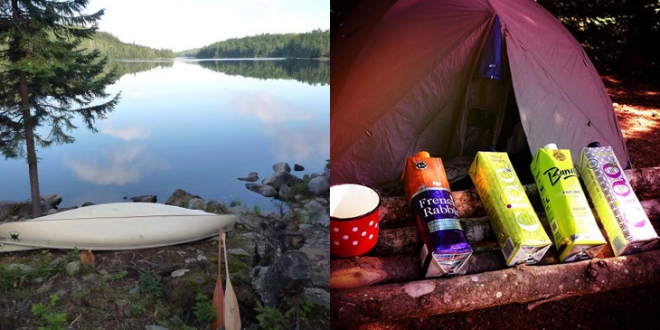
Four fall back wines for Daylight Savings

Photograph by Albo, Fotolia.comas seen on canada.com

The wine glasses will have retired when the clocks fall back to standard time at 2:00 o’clock in the morning on Sunday, November 4th. An hour no longer needed and cast off, a casualty of war. He may not have invented it, but we have Benjamin Franklin to thank for being the first to indicate the need for the phenomenon. In the United States, a federal law standardized the yearly start and end of daylight saving time in 1918, for the states that chose to observe it. It was mandatory during WWII and today most states continue to observe the so-called, energy-saving measure. Canadians abide, Quel shoc!, save for Saskatchewan which is on DST year round. What’s that all about?

The M.C. Escher tessellating question is this. Is DST an energy conservation proposition or a Saturday night wine suck? It’s both, actually. Like the Escher model, fine wine is a linear, interwoven tapestry without any gaps or overlaps. The fact that DST is part of a never-ending loop likens it to Groundhog Day and the redundant nature of the ritual zaps life, if only for one night, as if there were no tomorrow.

My advice is to make sure your fridge and racks are stocked with whites and reds possessive of good legs that fall back in the glass. Wines of character and depth to carry you through to Sunday’s raffish onset of darkness. On the bright side, that lost hour does mean that when Sunday morning comes you won’t be confronted by first light purdah masked of a folderol, cimmerian shade. Here are four wines to aid in the transition back to standard time.fallbackwine Four fall back wines for Daylight Savings

The grape: Pinot Grigio

The history: 100% PG from the Friuli Isonzo DOC region (in northeastern Italy near the Slovenian border) produced by the cooperative, Cantina Produttori Cormòns

The lowdown: Tightly wound clusters cause varietal deformity due to the pressure they exert on each other. Intense PG at a great price

The food match: Barque Rub Roast Chicken Wings and Thighs

Cormòns Pinot Grigio 2010 (734038, $14.95) is slick stuff, like vitreous and porous silica gel without the talc. Acacia blossom perfume and agave scherzo symphony in a glass. High praise indeed for lowly PG but go Friuli my friend and note the difference. The conically tapered glass bottle adds to the magic and the profile. By way of Mr. C. for my card at Barque88

The grape: Chardonnay

The history: Burgundy’s great varietal goes haywire along Niagara on the Lake’s old Stone Road

The lowdown: This racy white has just enough brake to watch its speed

The food match: Homemade Tagliatelle, brown butter, parmesan and sage

G. Marquis The Silver Line Chardonnay 2011 (258681, $16.95) streaks across and plays a lick on atomic 16 rails at breakneck speed, all the while jonesing for of a slice of custard pie. “It’s sweet and nice” with lead, nuts and spice. The G. might stand for grateful or great, as in value.  88

The grapes: Grenache, Syrah & Mourvèdre

The history: Gigondas sits one step down from Châteauneuf-du-Pape in the southern Rhône pecking order

The lowdown: Not nearly as serious as the likes of Brusset, Perrin or Montmirail but look at the price

The food match: Boneless Roast Quail, king oyster mushrooms, fresh thyme

Domaine Santa Duc Les Garancières Gigondas 2009 (234989, $17.90, was $27.95) is Grenache-centric so soft, modern and approachable is its MO. The S and M adds just enough volcanic disturbance, smoke and herbal spew to keep it real. Notes of arpeggios and glissades. At the reduced fare its reductive attributes smooth and flesh out hither and yon at the same time. Simmering raspberries with the intention of becoming jam is a delight to sniff and dip a spoon into.  89

The grape: Malbec

The history: From the emerging Uco Valley in Mendoza where the varietal seems to turn from  red to black

The lowdown: Showing very well for an under $20 Malbec with five years of age under its bottle buckle

The food match: Grilled Barese Sausages, tomato jam, smokey bbq sauce

Trapiche Fincas Las Palmas Malbec 2007 (186668 $17.95) with its vanillin, razor-sharp contour of energy is  rich and powerful for the price. The style is big, blowsy and not without a smokey, blackberry charm. A slight electric loss and corresponding increased valence shows that the clock is ticking fast, but for now the pleasure is all ours.  89

Good to go!

A canoe tripper’s ode to boxed wine

canada.com

At the end of a long day paddling and portaging the lakes and rivers of Algonquin Park, nothing satisfies like a good mug of boxed wine. I know what you’re thinking. Beer? Come on, it’s a canoe trip. Into the pristine, wild interior of Ontario’s greatest nature preserve.  If this isn’t a desideratum that calls for thinking outside the glass, what is?

Portage Sign

Flipping Down

Eric Asimov once reported that to a snob, wine housed in a multilayer, aseptic carton was “…the epitome of déclassé, the vinous equivalent of trailer trash.” Then he noted, “the idea of putting wine in a box, or more accurately, in a bag within a box, is brilliant.” The cartons have been criticized for allowing flavour-destroying oxygen to seep in, when in fact the wine can stay fresh for weeks once it has been opened. Perfect for a canoe trip. Hey, that redneck wine also aids in the removal of  “ladybug taint,” an industry-wide, chemical-bad taste caused by alkyd-methoxypyrazines. Yep, soaked up by the packaging and essentially removed from the wine.

Afternoon Paddle

This lament cries out for the golden era of boxed wine. Where not too long ago a proliferation of quality abounded, locally available brands are now prohibitively limited. Where are you Bandit Cabernet Sauvignon? Who took away my Black Box out of Paso Robles? Why did the Aussies run away; yes you, Hardy’s and Banrock Station.

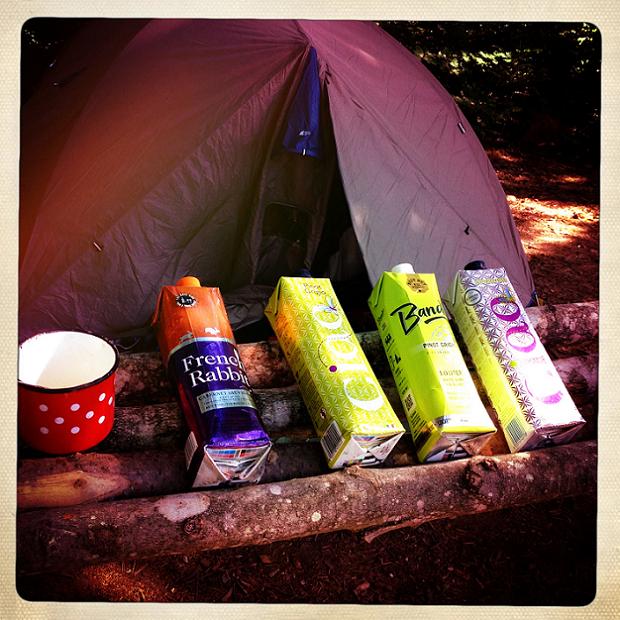
I did manage to locate four decent cartons to taste on the trip. The consensus number one was the Ciao Sangiovese.

Boxed Wines

Three Thieves Bandit Pinot Grigio (622019, 1L, $12.95) is made by California’s Trinchero from regions “not specified.” Pallid complexion, almost achromatic, like cheap Soave. Cheesy, effluence of a Petawawa tributary, Joycian “corpse of milk” aroma but rescued by coquettish, juicy fruit, Courtney Jaye flavour. Makes for a decent aperitif chilled straight out of the food barrel. When it comes to box wine,  “the bottom of the barrel ain’t bad when you make it feel like home.” Eaten alive by the Phở Bò Tái Nạm and the Halibut.  82

Ciao Bianco Pinot Grigio Carton (669200, 1L, $11.95) out of Italy’s Veneto region is the forward-thinking work of Cantine Luigi Sgarzi. Lambent, ochroid and organic, green head-water lake hued. Intensely dry and spartan for the varietal. Snappish yellow plum anointed with tarragon to support corn pasta, black olives, peas and carrots. 84

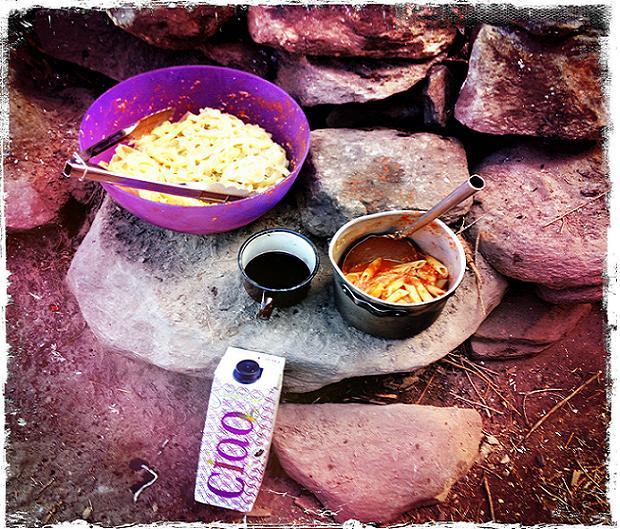
Pasta with Ciao Sangiovese

Ciao Sangiovese Organic Carton (29090, 1L, $11.95) puts overripe fruit and maximum colour extraction to good use. Moderate heft, renascent Tuscan red fruit of a Chumbawamba, straw flask era. Sincere, sugarplum, anarcho-rocker Sangiovese for straightforward campsite consumption. A friend to red sauce and to Padano Parmesan.  Ciao Bella 86

French Rabbit Cabernet Sauvignon Carton (621680, $12.95) is contentious and inchoate of composition like oil poured over troubled water. That said, it’s an easy quaff. Fructifying enough to consume with nary an ill effect. Tiny molecules of mint, mineral and wild blueberry. The least interesting of the four but sneaks in under the wire for back country needs.  81

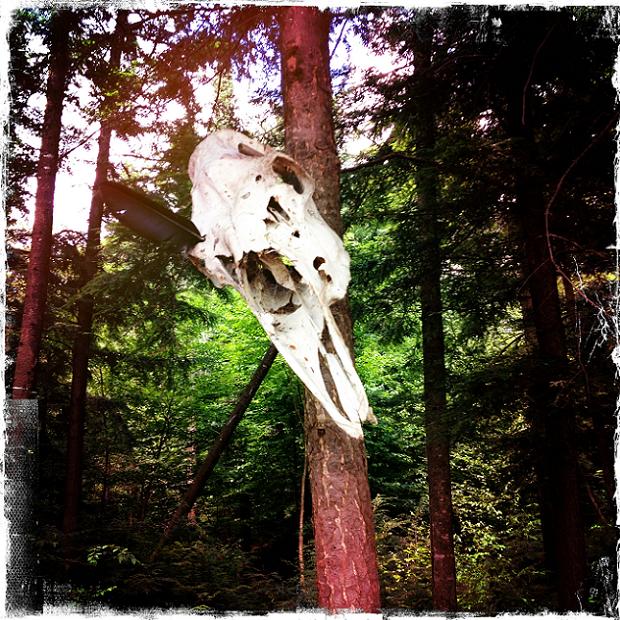
Moose Skull on Little Trout Lake

Good to go!
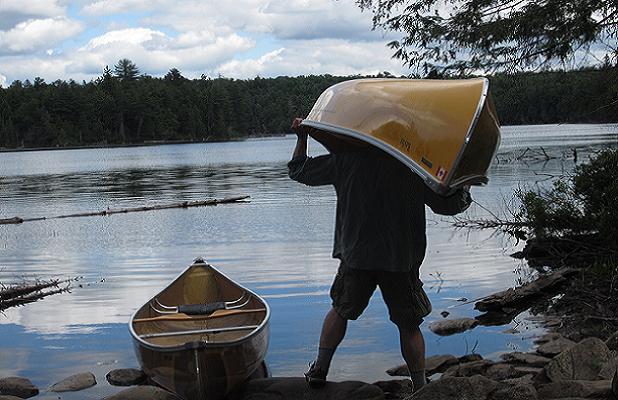
The Wine Diaries: Your weekend wines

ilumus photography, Fotolia.com

Read this at canada.com

Another stellar weekend is heading this way. My goal each week is to provide the wine equivalent of an operatic recasting, a retooling, a restocking, whether it be for deck, yard or on the water. A few good reds are here for BBQ compliment but let’s face it. This is the summer of whites baby!

Related: Recent release notes

The grape: Vermentino

The history: From grapes grown in Gallura on the northern coast, the producer Sella & Mosca is to Sardinia as Antinori is to Tuscany

The lowdown: Versatile and food-friendly,Vermentino combines dry, salty sea air with rocks, minerals and acidity. Gotta love southern Italian whites

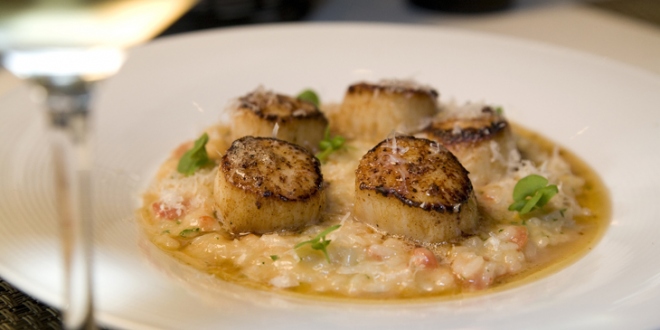
The food match: Seared Sea Scallops with lime zest, lemon juice and orange segments

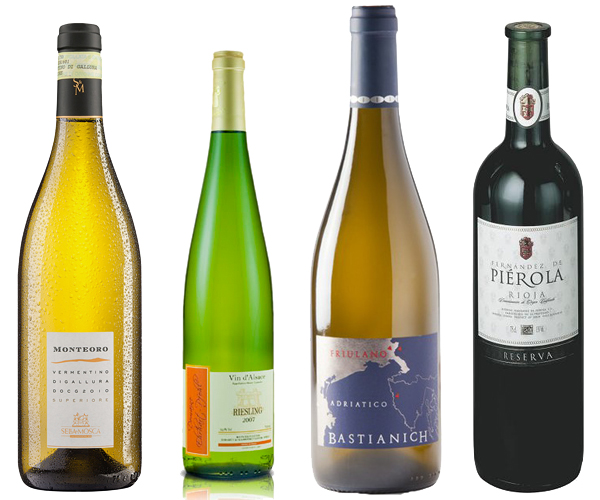
Sella & Mosca Monteoro Vermentino Di Gallura Superiore 2011 (203422, $15.95) is fresh as a crustacean pulled from salty, Mediterranean waters. Vermentino of Sardinia is to white as Tavel of Provence is to Rose. Scented by sweet citrus, marzipan, Gin and Tonic.  88

The grape: Riesling

The history: Originates in Germany’s Rhine and thanks to the Duke of Lorraine, came to Alsace in 1477

The lowdown: Recent thought has pegged Alsatian Rieslings as “sweetened up” but as a rule I find the entry-level ones to be some of the the driest. They certainly lack the petrolic character akin to their German brethren

The food match: Pan-fried Whitefish with citrus beurre blanc and toasted almonds

Domaine Ehrhart-Pfohl Riesling 2010 (282186, $13.95) summons chalky virility from the Saxon stone mason’s hands and yet stages tropical sweatshop scents of guava, apricot and quince. The confusion is quieted by a near, neo-cabbalistic call to baking Mittelwihr, mandelbroit order. Wants to be Viognier but knows its place. Underappreciated if a bit rakish Alsatian.  87

The grape: Friulano

The history: From Friuli-Venezia Giulia in northeast Italy. The project of restauranteur Joe Bastianich and Mother Lidia, the Food Network cooking star

The lowdown: A varietal of unctuous, orchard fruit behaviour, saline like southern whites but of fuller mind and body

The Food Match: Frico Morbido, grated cheese and swiss chard fritters

Bastianich Adriatico Friulano 2010 (277467, $18.95) brings Friuli by the Adriatic to the world. Like Lidia and son Joe, a pastiche and piece of work. Peach, pear and apricot marmellata. Tiger Lilly length, stalky and saftig 88

The grape: Tempranillo

The history: The great and totemic wine of Spain, most famous for Rioja and Ribera del Duero

The lowdown: A small case production (1,200 bottles) by a tidy northern Spanish producer. First tasting was from an oxidized bottle. This second specimen shone

The food match: Jamon, Chorizo and Manchego

Fernández De Piérola Reserva 2004 (270579, $25.95) lenses purity of Tempranillo colour, looking through a glass lightly. Svelte to knock back with cold-pressed and dressed virgin tapas. Early evening blossom fragrance meets beet, mushroom and cinnamon. Woodsmoke mingling with sugar near-caramelized in the black kettle.  88

Niagara

Charles Baker Picone Vineyard Riesling (241182, $35.20) from the unique terroir of the Vinemount Ridge of Niagara is an outrageous and gregarious flirt.  Strewn notes of citrus, nuts, apples and magnesium. All out there right now. Like lemon in a wound. Go big or go home. Drink up.  89

Closson Chase S. Kocsis Vineyard Chardonnay 2009 (184291, $34.95) seems anti-Beamsville because of a gooseberry-marmalade character.  Rather unlike any of the other CC SV’s. Sun-swelled apricot and pineapple, candied, baked.  87

Ravine Vineyard Chardonnay 2010 (173377, $24.00) while sourced from down on the peninsula’s floor maintains the throaty Louis fruit this Niagara producer has developed a reputation for. Gravelly, deep and soft, like a pelt carpet. The strong-armed apple of your eye. “So I said to myself,” what a wonderful Chardonnay.  88

Australia

Wynns Coonawarra Estate Riesling 2010 (528216, $17.95) is a first love, a same time next year type of wine. “Thelonious my old friend” built from tree fruit and their blossoms. Cruising, cool, misty acidity to welcome a midnight, seafood supper.  88

New Zealand

Kumeu River Estate Chardonnay 2008 (640383, $34.95) extends the North Island vineyard’s reputation as top niche producer. Smell and taste replay of match lit, smouldering herb. Tuff gong with terrific persistence. High toned, polished and on the Zion Train.  89

Italy

Tramin Pinot Grigio 2011 (627059, $15.95) venerable and virtuous gives Alto Adige PG its due. Walks tenuously and carries a stainless steel stick. Bang on entry into the niche, inoffensive and whitefish driven of a simple preparation.   86

Attems Pinot Grigio 2011 (707950, $19.95) does the Friuli with less floral Viognier/Muscatel, more vibrant citrus and Amaretto than the Tramin. Costs more too.  87

California

Flowers Sonoma Coast Chardonnay 2010 (215210, $59.95) I’m hoping will not find me “in my ragged company” because I’d love to “kill off the hours” with this impeccably groomed and pretty white.  With steamed lobsters at a table among the wildflowers. Just don’t bring me dead ones.  90

Mazzocco Dry Creek Valley Zinfandel 2009 (287193, $24.95) shows no shortage or ripe, red licorice and fortified, port fruit. Smells like a fruit basket in the sun. Brief acquiescence and then a recrudence of brambles and berries. Sassy and jazzy. CVR**, DCV Zin.  89

IVR* – Vintage Direct Intrigue-to-value ratio

CVR**– Vintage Direct Curiosity-to-value ratio

Good to go!
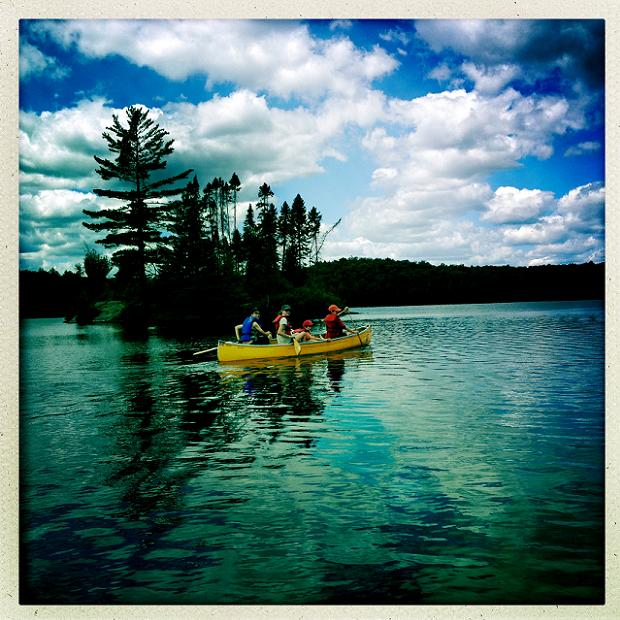

The Wine Diaries: Around the world in 20 whites

Photo Credit: bespokewinecompany.com

http://blogs.canada.com/2012/06/22/the-wine-diaries-around-the-world-in-20-whites/

In sweltering times like these the refreshing vigor of white wine is irrefutable and necessary. I would steer you to just about any global example from this list. Standing tall above is a 20th choice, the Terredora Greco di Tufo that I reviewed the other day. The Iberians too are all solid selections.

Stag’s Leap Winery Viognier 2011 (597369, $34.95) tasted twice tarried true to type. Velvety proof found in the pudding, the Viognier’s a Napa squall of plum flowering white in the wind. Apples baking and an Indonesian spice market with the citrus spray of a fresh squeezed grapefruit. Then the wine goes underground, into a heated, peppery lair. “Aww she surely do moves me,” she must be illegal stuff.  89

Ferngrove Cossack Riesling 2010 (275206, $24.95) adventures into herbal grass, spinifex and mangrove musk. Some petrol and shucked mollusk shell join the omnipresent lemon and lime of Aussie Riesling. Like rice pudding wine. The Cossack’s twain marks not in Ukraine. “Few things are harder to put up with than the annoyance of a good example.”   87

Astrolabe Province Sauvignon Blanc 2011 (10421, $21.95) formerly known as Voyage, formerly, formerly just Astrolabe. Kiwi non-starter in search of an identity in a sea of Marlborough Sauvignon Blanc. Vegetal asparagus and blanched beans lift a dead bale but a kicking caboose shakes that thing on the finale88

Blind River Sauvignon Blanc 2011 (141499, $19.95) does not run with Marlborough’s reliably charitable gooseberry, grass and acidity. “Well it was back in Blind River” when I last saw this SB alive. Young but long on decline.  84

Seifried Riesling 2011 (989541, $17.95) is a robotically off-dry, stone fruit and cold Steve Austin reeking of A16. Blanched, bionic, bitter, sweet and sour gooseberagus. Would fare better as Cantonese chicken balls. Wrestles with identity. Could pass for Chenin Blanc, Sauvignon Blanc, Cyborg or Steve Andersen. No matter the Riesling.  85

Vrede en Lust White Mischief 2011 (280156, $16.95) is bees-waxy, dank and yet juicy South African Vin Gris. A kitchen sink of protractive, not so floral smells. Five blended varietals cancel each other out. Pinot Grigio always wins. 87

Meinklang Grüner Veltliner 2010 (219014, $15.95) is some kind of Mostellian edible oil product. S, green herbs and Pam. A snail minus the butter and garlic. Zero acidity, humourless, see that “S” car go.  84

Domaine Gresser Duttenberg Riesling 2009 (283523, $21.95) fights the Alsatian fight. Light and expressive of primeval stone, caraway and Sommer Special Amer. Bucketmouth watering salinity.  87

Lucien Albrecht Réserve Pinot Gris 2010 (281394, $17.95) is pungent in a dry rub ginger, zeotar and galangal sort of way. To taste it is sweet and to mouth viscous like Muskateler. Rustic and ready for porky burnt ends roasted over felled Linden.  86

Château Haut Bertinerie 2009 (422220, $23.95) of old vines from the woods of the Blye has been “down on the rock for so long.” Marl, barley and Fuissé-esque peach toast. Allen’s Apple Juice too. Talking White Bordeaux with 100% Sauvignon Blanc Blues.  87

Domaine De La Tourlaudière Muscadet Sèvre Et Maine 2010 (171694, $13.95) shows off more weight and depth for the appellation, if less acidity so fish matches ahead of seafood. A peppery kick and tangy melon rind remind me of Verdejo or Albarinho. A Melon de Bourgogne à la Loire easy to get along with.  I think Norm might agree.  87

Masion Foucher La Vigne Aux Sandres Pouilly Fumé 2010 (277350, $20.95) seems to act green with Kiwi envy. How else to explain the extreme grassy and goosey behaviour?   86

Reichsgraf Von Kesselstatt Ockfener Bockstein Riesling Kabinett 2008 (606202, $16.95) hails from less than 1er Cru Vineyard stock,  fumes odiferously of orange peel and Mandarin sauce reduction. This passes and leads to a cleaner Gardenia scent. To taste much more confected than expected with spiced honey. Got a lot going on here but the focus is not on the trolley.  87

Darting Riesling Kabinett 2009 (950212, $15.95) is guarded, a mastiff in protection mode. Bawdy lime and not much else. Almost always enjoy this Michelsberg. Funny bottle.  NR

Tiefenbrunner Pinot Grigio 2011 (954024, $17.95) the Gallo of Alto Adige effervesces yeast meets western volcanic and dolomitic crust and sea. Peaches and cream, nectarine with length but campestral like Beck’s melancholy. “Keep your lamplight trimmed and burning.”  87

Michele Chiarlo Le Marne Gavi 2011 (228528, $14.95) is a salt lick of crustaceous shells and dripping stone fruit goodness. A simple and fun summer quaffer.  87

Casa Do Valle Grande Escolha 2011 (276220, $14.95) while unmistakably Portuguese Vinho Verde, this could be a ringer for Greco di Tufo or Viognier. The long visit to the haberdashery at once wears baking spice, Mezzogiorno mangia cake at Christmas and then white rose, honeysuckle Hermitage. Lofty comparisons for sure but this exceptional IVR* treacle is a chef mastered sweetbread of a double “V.”  89


Nessa Albariño 2010 (282558, $15.95) maybe pale but a gale of vinous expression abounds. Lemon, wax and citrus along with the bitter roots of Wormwood and Horseradish. Would work well with Fried clams and donuts.  88

Domaine Des Chouans 2010 (278945, $15.95) chassays over all pretty and sallow. Dry, sweet at first, then turns bitter. A Blue Podded Blauwschokker Garden Pea. Ornamental but inedible.  85

More notes from the VINTAGES, June 23, 2012 release:

The Wine Diaries:  Chardonnay close to the edge

The Wine Diaries: MMVA’s sparkling wine showers

IVR* – Vintage Direct Intrigue-to-Value Ratio

CVR* – Vintage Direct Curiosity-to-Value Ratio

Good to go!