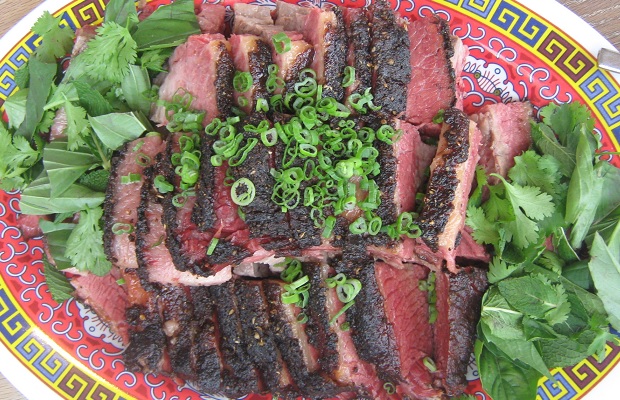
The pearls of Morissette’s wisdom

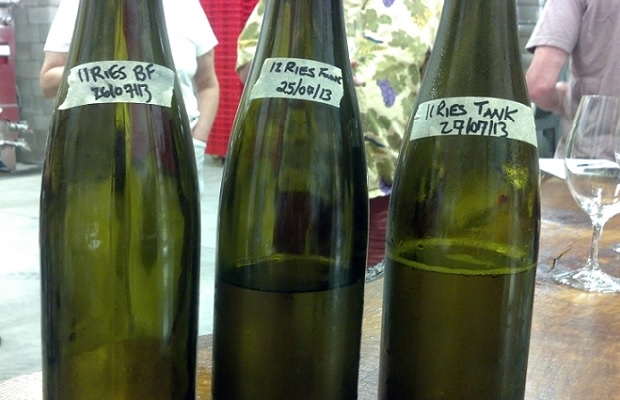
Pearl Morissette Riesling samples

Pearl Morissette Riesling samples

So you make wine from Ontario-grown grapes and it fails VQA inspection. The economic impact is potentially crippling. Here’s the short story. The sale of an Ontario VQA-certified bottle of wine sends approximately 15-20 per cent of the profit to the province. Without the stamp the tax cost is upwards of 50. There is no money to be made if your wine has not been blessed by VQA. Here is the long version:

The total Landed Cost (what the winery keeps) is calculated based on this:
Basic Price (retail price)  
minus Environmental Tax fee (same for VQA and non-VQA)
minus Bottle Tax/Levy (same for VQA and non-VQA)  
minus LCBO Wine Levy (applied to non-VQA only, yet minimal – $1.15 for $26btl)
minus LCBO mark-up (which is completely different between VQA and non-VQA – $0 for VQA, $8.5039 for a non-VQA wine based on a $26)
For a $25.20 ($25 + bottle deposit) bottle of wine, this is what the winery (Total Landed Cost in VQA language) keeps:
VQA retail: $20.56
VQA licensee: $20.56
non-VQA licensee: $12.44
These numbers come from a calculator, designed by VQA and the LCBO themselves that gives you the breakdown, once you enter the retail price.

François Morissette has that crazed look in his eye. The Quebec native faces the professional fight of his young winemaking life and has no intention of backing down. There will be no compromise of the viniculture oeuvre. Morissette’s day in, day out plight has been instigated by the Vintners Quality Alliance (VQA), the regulatory board that determines whether or not a wine made in Ontario gets its stamp of approval. It has already happened four times. VQA has rejected his Rieslings.

The pearl Morissette Cuvée Blackball Riesling 2011 is a $26 (retail price including bottle deposit) non-VQA bottle of wine and so the winery’s profit (before operating and production costs) is $12.98. Do the math. Sounds like a loss leader to me.

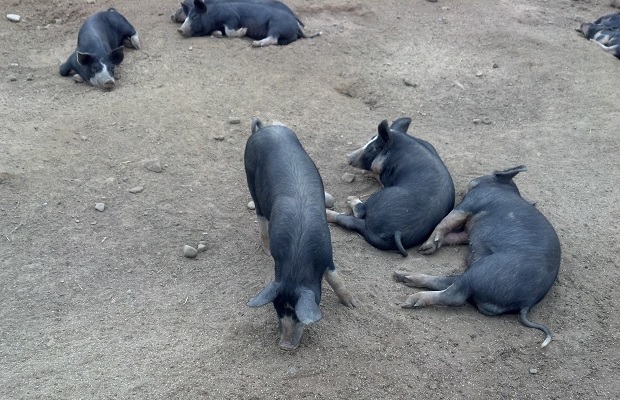
Pearl Morissette pigs

Pearl Morissette pigs

Morissette makes the wines at Pearl Morissette out of the Twenty Mile Bench in Jordan, Ontario. He’s opinionated and sometimes just plain pissed off. There are those who surely consider him a rogue, a dissident and an SD but at the end of the day, just how is he so different from his Niagara brethren and sistren? He is a farmer and a purveyor of fermented grapes. Granted his methods are progressive and experimental but the goal is the same as any honest and passionate winemaker. François Morissette wants to make memorable wine. Last July François Morissette told me “it’s not that we don’t want to make natural wines. We want to make wines with the least amount of impact.”

In July of 2013 at the i4C Cool Chardonnay Conference in Niagara, Francois expounded on some of the more important facets of making wine in Ontario. “Climate is the number one terroir driven aspect. The clone is nothing without the rootstock. They are inextricably linked.” He is a man who believes wholeheartedly in natural acidity. “You will have riper fruit on dry matter.” These are the ideas of a “rebel,” of a winemaker willing and ready to push the envelope. “I cannot ever apply what I learned in Burgundy as a farmer to Niagara. It’s a totally different animal.” These are the words of “pot-stirrer” Francois Morissette.

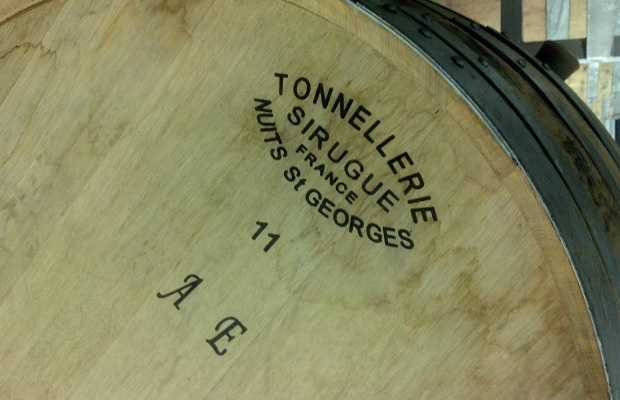
Foudre at Pearl Morissette

Foudre at Pearl Morissette

Today, Monday, May 26th, François and his girl Friday Svetlana Atcheva will once again go before the powers that be at VQA.  In their meeting with Executive Director Laurie Macdonald they will argue that their four-time rejected Riesling is bio-chemically sound, that it is a wine with no technical faults. The question of penalizing innovation will be raised, albeit in the spirit of cooperation. They will assert that the level of residual sugar (which the VQA panel seems to feel is “atypically” too low) and perceived sense of dryness must not be the focus. Morissette and Atcheva will explain to the panel that their Riesling is not oxidized but that the use of wood foudres (in addition to typically employed stainless steel tanks) allows for a gentle yet natural, controlled oxygen transfer. Ms. Macdonald will be asked the question on everyone’s mind. “How can an organization that reigns over such a young wine region be so sure what is correct and what is not?” What they should really say is “who are you to play God with wine?”

The sensory evaluation panel and decision makers maintain the necessity that “VQA wine grapes meet standards such as minimum ripeness levels (degrees brix) attained through careful viticultural practices.” This statement suggests that the Pearl Morissette Riesling fails to meet the criteria laid out by the decided governance. Does the system not sound like it is seeking conformity in the name of typicity? I spoke with Atcheva last Monday at the Generation Riesling tasting and she adamantly refutes the VQA position on Pearl Morissette’s wines. Skin ripeness, not sugar levels, indigenous yeasts, minimal interventionist winemaking and most of all quality should be the determining factors to passing their Ontario wine to VQA status. François just wants to be free to sell his wines to whoever he pleases without being shackled to taxes and bureaucracy. “My preference would be for 1,000 people to buy one bottle. But that takes time.”

Atcheva spoke at length this past weekend with a senior LCBO product consultant who elaborated on the selection process for the VQA panel. Up until a few years ago panel members were chosen based on their tasting experience. Today seniority lands spots on the tribunal. Work an LCBO cash for fifteen years and you too can decide the financial future of an Ontario winery.

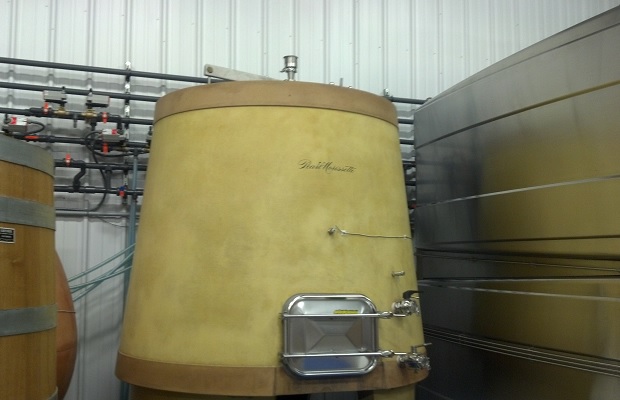
Conrete Egg Fermenter

Conrete Egg Fermenter

For a full account on VQA evaluation processes and the rejection of Morissette’s wines, read Rick VanSickle’s article, The ‘black-balled’ Riesling from Pearl Morissette in Niagara and the storm that’s brewing over VQA rejection: Let’s talk about it. Another response by Tim Reed Manessy brings the VQA system’s shortcomings into proper focus. Behind the ‘Black Ball’ is Manessy’s take on his blog, Somm on the Run.

Hinterland's Jonas Newman, François Morissette, Montreal Gazette and Chacun Son Vin's Bill Zacharkiw, WineAlign's John Szabo M.S. , Wine Country Ontario's Magdalena Kaiser Smit and Assistant Winemaker Ryan Corrigan tasting Cabernet Franc

Hinterland’s Jonas Newman, François Morissette, Montreal Gazette and Chacun Son Vin’s Bill Zacharkiw, WineAlign’s John Szabo M.S. , Wine Country Ontario’s Magdalena Kaiser Smit and Assistant Winemaker Ryan Corrigan tasting Cabernet Franc

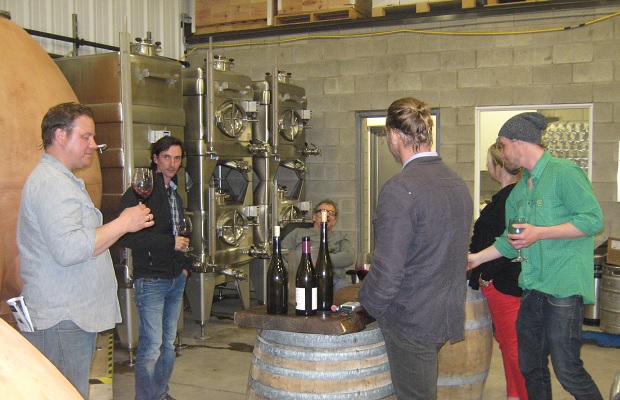
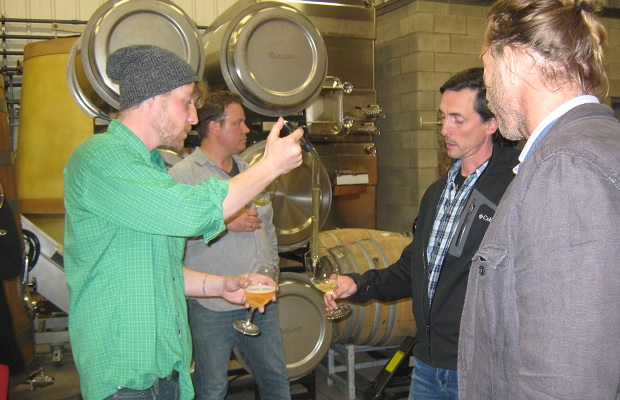
Through the generosity of François Morissette, Naomi Laurie, Ryan Corrigan, Cameron MacDonald and Svetlana Atcheva I have had the opportunity to taste, consider and assess the wines of Pearl Morissette out of tank, barrel, concrete egg fermenter and bottle on several occasions in the past year. Here are my notes on many of those moments.

Riesling Cuvée Blackball 2010, Niagara Peninsula, Ontario ($26)

This introduction to the experimental oeuvre of François Morissette holds attention and water. The delve into texture shaping by way of progressive malolactic fermentation during primary fermentation is a stirring exercise in character building. The ’10 is a conjoined cuvée of two, one of which contained 20% botrytis affected grapes. It spent eight months on fine lees in stainless steel and finished so very dry, at 1.27 g/L residual sugar. Biochemically correct, reeking and bleeding of the Peninsula’s veins, Blackball was submitted for VQA approval four times and rejected because it “lacked varietal typicity.” Perhaps it was the lack of human intervention, the anti-Bonzai approach, that doomed this diffident Riesling. Perhaps the texture should take it on the cheek for its brilliant disguise, for changing the subject and forcing the taster to open their mind and act innocent for a moment in time. The Blackball has that effect. Sadly, it too will be typical one day.  Tasted July 2013

Riesling Cuvée Blackball 2011, Niagara Peninsula, Ontario ($26)

The 2011 Cuvée Blackball picks up where the ’10 left off. When tasted from a stainless steel, not yet labeled sample in bottle back in July of 2013 it showed high acidity and citrus but also a bottle-shock musky note. Nearly one year later the wine has fleshed into that sought after experimental texture, as if it were aged in foudres. It’s flexibility was encouraged by three months of aging on its fine lees. The ’11 is the jumping off point and the bridge towards understanding where the Riesling program is heading. Others will follow. “There’s no real reference for these wines,” admits Morissette and that’s the clue to understanding why haste judgments are passed. Fear of the unknown empowers tradition to stagnate and end up getting left behind.  Tasted July 2013 and May 2014

Riesling Cuvée Blackball Barrique 2011, Niagara Peninsula, Ontario ($29)

The craving for texture led François Morissette to employ small barrels to ferment a small (68 case) amount of 2011 Riesling, in this instance eight year-old neutral barriques. Close-minded, new world wine geeks might fear anarchy but ask any winemaker from Pfalz and they would say, “tell me something new.” The succor is so benign and simultaneously, subtly huge. The increased lees contact on small volumes of wine promotes corpulence and viscidity. The methodology results in more fruit presence; in pear and yellow plum, not to mention that unmistakable Niagara citrus. This ’11 has the most levels of expression. There is nothing revelatory or regulatory about it, beyond the fact that it works and that it would stand out as an excellent example in a flight of Trocken Riesling. The ’11 exemplifies the flesh versus acid continuum. The freshness of this Riesling has emerged, thanks to meticulous sorting, ne0-liberal winemaking and the use of a -1°C fridge. François Morissette does not like to race against time. His Riesling speaks volumes about that.  Tasted July 2013 and May 2014

Riesling Cuvée Blackball Barrique 2012, Niagara Peninsula, Ontario ($29, WineAlign)

When tasted in July of 2013 the ’12 Barrique had only been in bottle for three days so the musk was quite front and centre. Aged in foudres (neutral, old wood casks) it held much latitude at such a young age with notes of herbiage (mint, tarragon), nary a drop of residual sugar and a wholly unique type of dry acidity. “It will not always show this way,” commented Morissette. Tasted 10 months later I can say this. The ’12 Riesling Barrique avoids excessive malic and tartaric acid, not to mention any amount of volatile acidity. It is viable, vital and technically sound. “This is a wine that will take time,” pleads François . “I care about texture, not about varietal character.” Though perplexing and untamed, the wine has undeniable body and that noble bitterness in its unsung tang. It is the anti-Riesling hero, full of experiential conceit and needs to be revisited often, to see where it will go.  Tasted July 2013 and May 2014

Riesling and The Lamb Lies Down on Broadway

Riesling and The Lamb Lies Down on Broadway

Rosé Cuvée LPR 2012, Niagara Peninsula, Ontario (Sold out, $25)

Stylistically speaking, the bottles (and kegs) that emerged from the 225L hemorrhaging of Cabernet Franc from both oak and concrete vessels have no reference point. In fact, the advertence is one created by Francois Morissette. The flexible disposition is difficult to pinpoint and without trying to sound blowsy in assessment, this goes places yet visited by bone-dry Rosé. If it were the only wine made on premises the barn doors would always be banged upon. A most current wine, exigently red and almost indiscernible as Cabernet Franc. It suffers no stenosis and does not live a single green day. Another VQA rejected wine, the LPR walks down a boulevard of broken dreams and it sings, “I walk a lonely road, the only one that I have ever known.”  Last tasted November 2013

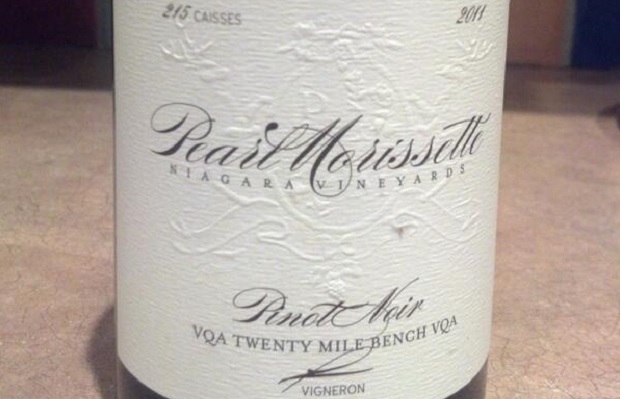
Pinot Noir 2011, Niagara Peninsula, Ontario (Sold out, $36)

With utmost integrity Pearl Morissette chose not to vinify Pinot Noir from the fruit of the 2008, 2009 and 2010 vintages due to unacceptable levels of sour rot. With the 2011 harvest came inspiration. It was noted that local tree fruit farmers make use of the practice of storing their harvested fruit at 1° Celsius in a large refrigerator. This pseudo-cryogenic cooling practicum worked to halt the progression of the dreaded rot. Buying time allowed the crew to clean sort without having to worry about a single berry contaminating the lot. So what? So a pure, clean Pinot Noir was the result. Tasted four months after bottling, the modest (12.7 per cent alcohol) and vinified so dry (2 g/L residual sugar) ’11 held barking fruit on a tight leash and a moonscape of dusty, grainy tannin. Nine months later (to the day) the sensory evolution became as if cherries, strawberries and the tension in seeking ripe perfection were wine.  Tasted July 2013 and April 2014

Pearl Morissette Pinot Noir 2011

Pearl Morissette Pinot Noir 2011

Cuvée Madeline Cabernet Franc 2010, VQA Twenty Mile Bench, Niagara Peninsula, Ontario  (winery, $38, WineAlign)

François Morissette’s 2010 is a pioneering example towards defining Bench appellation Cabernet Franc isomeric reactions. Relationships between grapes of a growing area and their ultimate destination in bottle. An affair of veraison, leaf drop, frost, hand harvesting, whole cluster sorting and berry oak fermenting. Indigenous yeast, punch downs and overs for phenolic skin extraction and polymerization. Neutral oak and sulfur dioxide to provide antimicrobial and antioxidant protection. An eighteen month somniac’s rest, fine lees and no filtration. The structural arrangement in cohabitation of radicals and ions leads to such a Cabernet Franc. Fully expressive of an endemic, very ripe, vegetal varietal vicissitude that is both inbred and necessary. Currants and peppered berries of power and grit. Dry (2 g/L residual sugar), plump (13.7 per cent alcohol) and scarce (618 cases made). Reflective of the warm 2010 vintage and will always act in stark contrast to the elegant 2011. Tasted July 2013 and March 2014

19th Street Cabernet Franc 2011, VQA Twenty Mile Bench, Niagara Peninsula, Ontario  (winery, $38, WineAlign)

First tasted from a barrel sample in July 2013. “From what is turning out to be a very elegant vintage, the 2011 Cabernet Franc is early proof that on the Twenty Mile Bench “we can turn a vineyard very quickly, in three years we can turn a vine.” This is significant in consideration that in Europe, vine age is always key.” Now in bottle the aromatics are hyper-pronounced and though the tannins are less rigid, less exerting and less demanding, they are not nearly ready to throw in the towel. Longevity will define ’11 and it will be the genesis of Pearl Morissette’s CF program used to compare future vintages. “The day of judgement’s come,” and you can bet that the wine’s been “resting, for this testing, digesting every word the experts say.” With the ambient transition of a hairless heart, the 2011 Cabernet Franc segues from anxiety to counting out time.  Tasted May 2014

Chardonnay ‘Dix-Neuvième’ 2009, VQA Twenty Mile Bench, Niagara Peninsula, Ontario (limited library, $40, WineAlign)

Was the ’09 DN this lush and so pretty last summer? Was it bronzing as if sun-kissed and so delicate? Tasted alongside Chef Cameron MacDonald’s White Bean Cassoulet, duck and pork neck wrapped pate it sings in a Lindley-esque falsetto. From my earlier, July 2013 note: “Tragically singular in expression, regardless and in spite of the terroir, mixes metaphors and pulls it off. “Takes arms against a sea of troubles,” by convincing ADHD fruit of an uncertain vintage to settle, play nice and “by opposing, end them.” Now entering the load out zone, this Hamlet cuvée is “the first to come and the last to leave, working for that minimum wage.” A sentimental ballad here to stay, be remembered and to set the stage for all dix-neuvième to come.”  Last tasted May 2014

Chardonnay ‘Dix-Neuvième’ 2010, VQA Twenty Mile Bench, Niagara Peninsula, Ontario (sold out, $35, WineAlign)

Having had the opportunity to taste the 2010 Cuvée Dix Neuvieme on several occasions over the past 10 months, every layer and fibre of its being has ingratiated itself to me. The tropical, solar 2010 vintage required that steps were taken to preserve freshness for when the final blend was to be assembled. A small portion of the juice was fermented separately in stainless steel tank and then injected into the 18-month, neutral barrel mass. The ’10 is full of verve, rigor and grinning elegance. It speaks of a salinity so typical for PM Chardonnay which comes from the usage of lees. This is what could be referred to as a “tannic” white. While it lacks the intensity of the bookending vintages on either side, as a middle sibling it is the glue and the rock that speaks diplomatically and most eloquently for the family.  Last tasted May 2014

Chardonnay ‘Dix-Neuvième’ 2011, VQA Twenty Mile Bench, Niagara Peninsula, Ontario (303602, $35, WineAlign)

A child of a hot and dry summer, a stress-free winter slumber and a non-invasive spring awakening.  Sets out lean, tight and mean, but the dry extract invites spicy, stone fruit and an emergence of tropical lushness. Can there be another specimen that so rightfully defines Pearl Morissette, the top of the Bench or Niagara as a whole in 2011?   Tasted July 2013

Barrel and Tank Samples tasted July 2013 and May 2014

19th Street Cabernet Franc 2012

Tasted in July 2013 from one of two barrels, it’s not so (amazingly reductive) and redolent of the most earthly currants. From a very immense year, in primary quality, barely evolved. Blessed with such ripe tannins this will have even bigger structure. Francois declares “I’m now a believer that Cabernet Franc is the most important grape to grow in Ontario (on this side of St. Catherines). Nine months later, with the wine still sitting on its primary lees and not yet racked “it’s so torqued,” notes John Szabo. “We made a monster CF without cream,” adds François . Pure, énorme, immovable yet so stable. There was a nearly volatile spike during fermentation and malo but it’s done. A death metal beast.  Tasted July 2013 and May 2014

19th Street Cabernet Franc 2013

From juice housed in concrete, wood and open top fermenters this occupies impossible Cabernet Franc colour territory. Sweaty, chalky and bloody, it’s a bit reductive in extract and intensity. Lifted florally and very savoury, this is quintessentially Cabernet Franc in character. Crunchy tannins come late in magnanimous fashion.  Tasted May 2014

Chardonnay 2013

Tighter than it looks, sitting on its lees, pushing the envelope. In a German 2,500L barrel it’s rounder and softer. In second fill Alsatian Foudre it gains tang, spirit and backbone. From the Koscis Vineyard’s heavy red clay there is less texture and mid-palate. Out of a smaller (228L) barrel the wood is felt in fluidity, structure and creamier, clearer fruit. The largest barrel adds (10 per cent) new oak and finishes the ferment the earliest. It brings textural tack and a chewy finish. “New oak doesn’t make it better. It energizes the wine,” says Morissette. Overall this will be a rich, ripe-fruit based opulent Chardonnay, high in potential (13+ per cent) alcohol with a remarkable sweetness despite little or no residual sugar.  Tasted May 2014

Chardonnay from barrel with Ryan Corrigan, Jonas Newman, Francois Morissette and John Szabo

Chardonnay from barrel with Ryan Corrigan, Jonas Newman, Francois Morissette and John Szabo

Rosé 2013

If this Cabernet Franc is flirting with an acetic danger it is not enough to scare me away. Certainly edgy and there is a chance it may be pushed to the fringe, hippest markets but that also may just be a necessity if it is once again rejected as VQA. And it should not be.  Tasted May 2014

Bill Zacharkiw making notes at Pearl Morissette

Bill Zacharkiw making notes at Pearl Morissette

Gamay 2013

In July 2013 Francois Morissette made this statement. “If we can’t make Gamay in a Cru Beaujolais Style, I’m not interested.” In May 2014 his ’13 Gamay causes Bill Zacharkiw to comment with blatant honesty, “just line up at the tank. Forget the bottle.” From 100 per cent whole clusters sent to cement fermenters. Once again the hue is just impossible. Sulphur-free, this walks a fine and perfect line of Cru banana Gamay. Pushes the Gamay envelope in that it’s gulpable but with a duress to remind you not to overdo it. A Gamay with a chamber of 32 doors. In it “I’d rather trust a man who doesn’t shout what he’s found.” François Morissette.   Tasted May 2014


Good to go!

Hot red Rhônes and real May two-four whites

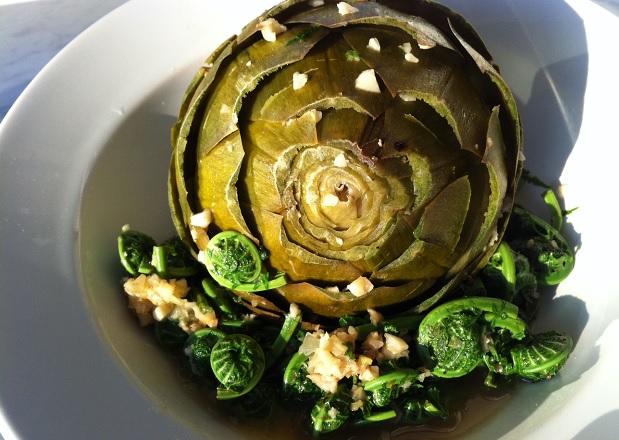
Artichoke and Fiddleheads PHOTO: Michael Godel

Artichoke and Fiddleheads
PHOTO: Michael Godel

More often than not the Canadian May long weekend does not fall on the anniversary date of May 24, in remembrance of the 1819 birthday of Queen Victoria. In fact the last time the holiday Monday fell on the 24th was back in 2010. The not so phenomenal phenomenon happens every five or six years and the 24th never occurs before the Monday. So what? So, VINTAGES gets it right. The latest stop on the release calendar axis falls on the true May two-four, this coming Saturday.

Related – Wines over Two-Fours on Victoria’s Weekend

The May 24, 2014 release puts a heavy emphasis on the southern Rhône, a region that regrettably has lost its balanced way; to heat, extraction, high alcohol and sugar. Sure that may sound like an agglomerated generalization but it is not just the bulk of the 15 plus reds on this release that are guilty as charged. The issue is endemic and has been rising with impunity since the 2007 vintage, arguably even before. What was once a Rhône induced infatuation has rusted and faded away. Cellar stockpiling of once beloved Vacqueyras, Gigondas and Châteauneuf-du-Pape has grounded to a halt. How can the love supreme return?

There are diamonds in every rough and it is through relentless tasting that the wheat rises, the chaff settles and recommendations make themselves known. I am including a couple of reviews on wines weighed down by the encumbrance of over-ripeness and alcohol, if only to back up the rant and the theory. Where have all the good Rhônes gone? My guess is that it’s time to cross the sea and pay a visit, to find the producers who pick early, resist oak-bullying temptation and make honest, balanced wines. I know they’re out there.

So behold the Rhônes, some good, some not so much and other necessary May two-four whites to seek out this weekend.

From left to right: Beauvignac Picpoul De Pinet 2013, La Joya Viognier Reserve 2013, Calamus Riesling 2012, Vineland Estates Chardonnay Musqué 2011, Château Saint Estève Massif D'uchaux 2010

From left to right: Beauvignac Picpoul De Pinet 2013, La Joya Viognier Reserve 2013, Calamus Riesling 2012, Vineland Estates Chardonnay Musqué 2011, Château Saint Estève Massif D’uchaux 2010

Beauvignac Picpoul De Pinet 2013, Ac Coteaux De Languedoc, Sud De France, (350124, $13.95, WineAlign)

Capital, principled and tidy, tide-in Picpoul. Like Touraine meets Melon de Bourgogne with a bit of shell and a touch of green. Steamed ocean whitefish and fresh herbs meets raw bar. Begs for a Camaron Taco or Camarones en Salsa Verde. Would pair well on a soft beach with a traditional Oaxacan seafood spread.  Tasted May 2014

La Joya Viognier Reserve 2013, Colchagua Valley, Chile (168542, $14.95, WineAlign)

Personal preferences aside, here is the right kind of value in other world Viognier. I much admire the restraint, keeping the alcohol and the residual at mostly acceptable levels, allowing what rocks there are in the Colchagua terroir to speak along with bright fruit. A heavy soil accent comes by way of tang and lift, it’s floral as needed and walks a line of good length. Well done.  Tasted May 2014

Calamus Riesling 2012, VQA Vinemount Ridge, Niagara Peninsula, Ontario (158642, $16.95, WineAlign)

It is never wise to hide from the vintage and winemaker Arthur Harder is careful to work with the given lot. This ’12 is no doubt warm but the juicy acidity trumps any humidity that might want to creep in and set up shop. The profile here is more Germanic, more Trocken than was seen in the 2011. The winemaker’s history with Nahe, Rüdesheim and Geisenheim speaks in this vintage. Continues the Calamus roll of offering really good value and impresses the notion that you can take a Riesling out of the Vinemount Ridge but you can’t take the Vinemount Ridge out of the Riesling.  Tasted May 2014  @calamuswinery

Vineland Estates Chardonnay Musqué 2011, VQA Niagara Escarpment, Ontario, Canada (996793, $17.95, WineAlign)

A highly aromatic Musqué, one step up from its Escarpment brethren, with more viscosity and density. Mathematically calculated for the demurred vintage with conscientious risk. Crispy and crunchy, with a touch a waxy fruit, like biting into a buffed and polished green apple.  Tasted May 2014  @VinelandEstates  @BenchWineGuy

Château Saint Estève Massif D’uchaux 2010, Côtes Du Rhône Villages, Rhône, France (370189, $18.95, WineAlign)

Casting aside initial hot and bothered, massive attacks of baked cherry pie and predictable extraction disabling thoughts, this caresses with a really soft mouthfeel. Work with its phenolic ripe charm and let it build with meaty notes and finish smothered in a Bovril gravy textured by chalk and grain. Ultimately it’s quite sophisticated for the appellation and a more than commendably good effort.  Tasted May 2014  @chsaintesteve  @ProfileWineGrp

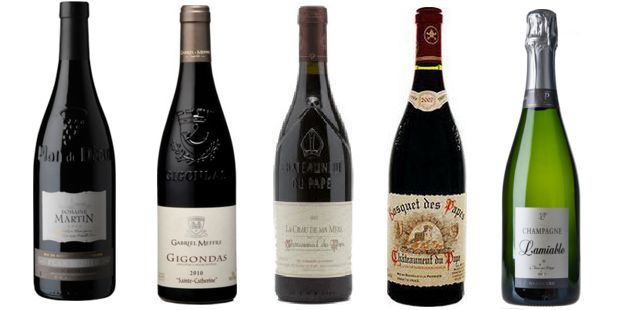
From left to right: Domaine Martin Plan De Dieu Côtes Du Rhône Villages 2011, Gabriel Meffre Sainte Catherine Gigondas 2011, La Crau De Ma Mère Châteauneuf Du Pape 2011, Bosquet Des Papes Cuvée Tradition Châteauneuf Du Pape 2011, Lamiable Brut Grand Cru Champagne

From left to right: Domaine Martin Plan De Dieu Côtes Du Rhône Villages 2011, Gabriel Meffre Sainte Catherine Gigondas 2011, La Crau De Ma Mère Châteauneuf Du Pape 2011, Bosquet Des Papes Cuvée Tradition Châteauneuf Du Pape 2011, Lamiable Brut Grand Cru Champagne

Domaine Martin Plan De Dieu Côtes Du Rhône Villages 2011, Unfiltered, Ac, Rhône, France (370197, $19.95, WineAlign)

Here presents a Côtes Du Rhône acting the epitome of elegance lost. A wasteland lays forth in charred sinew, vineyard stink, buff, scorched earth, funk, baked shriveled berries, toughness and grit. That said it is possessive of flavours, endearing or not, that last. Like a funky, highly seasoned sweetmeat-flavoured gobstopper dissolving in highly tannic tea. Might be your thing. Tasted May 2014

Gabriel Meffre Sainte Catherine Gigondas 2011, Ap, Rhône, France (370270, $29.95, WineAlign)

From a vintage that just can’t seem to hide from itself, this is typically, egregia cum laude commonly rich, extracted and juicy but it’s also got angst and verve. The 2011 Châteauneuf-du-Pape to a wine are categorically, excruciatingly huge and this is why such a Gigondas is a breath of fresh, alternative air. A molten raspberry ooze paints a boulder-strewn Vaucluse crush of good Rhône things. Solid as a rock.  Tasted May 2014  @GabrielMeffre  @DiamondEstates

La Crau De Ma Mère Châteauneuf Du Pape 2011, Ac, Rhône, France (941740, $49.95, WineAlign)

This wine has been referred to as a “Provençal fruit bomb” and a red with “tannins enrobed in the finest chocolate.” Those compliments are as kind as any that should be given. As expected and to stereotype 2011 Châteauneuf Du Pape, this is a blind faith traffic jam of hyper-ripe, over-extracted, baked and sickly sweet liqueur. A Negroni imbalanced by the free pour of Red Vermouth from a tap. This is the kind of Rhône that needs to hear “come down off your throne and leave your body alone, somebody must change.” Wayward, wandering Grenache along with its Mourvèdre and Syrah apostles who are wasted and can’t find their way home.  Tasted May 2014

Bosquet Des Papes Cuvée Tradition Châteauneuf Du Pape 2011, Ac Rhône, France (726687, $50.95, WineAlign)

First off, three words for you babe: 16 per cent. One can only hope the rising tide of hot Rhône wines ends with this penultimate vintage. The licentiousness and quiver of extracted desperation is here in every grain of sugar. Smells like a candy factory in the heat of July and tastes like a fruit roll up mired in pectin quicksand. Big, big wine. So baked, so hot, so rich, so sweet. When did Bosquet Des Papes become the Belle Glos of the Rhône?  Tasted May 2014

Lamiable Brut Grand Cru Champagne, Ac, Champagne, France (374298, $53.95, WineAlign)

A $54 Grand Cru you say? Can it be? A most minor radian, de facto bruised apple, oxidized moment is quickly pardoned because this Champagne is really pushing boundaries. The verve, tang and 120 degree plus angles are simply sparkling. The white fig, sour peach, apricot and bitter almond aromas exceptional and tied together by the pith of all. Has that necessary mineral patina and wet stones, the platinum sting and the toast of nuts and bolts. Length is on top, not hiding below.  Tasted May 2014  @LAMIABLE
Good to go!


Take them home, County wines

County in the City PHOTO: Michael Godel

County in the City at the Berkeley Church

Life is old there, older than the trees,
Younger than the mountains, blowing like a breeze

Can you think of an island (leaving Australia, Tasmania and New Zealand out of the discussion) of greater interest anywhere for growing grapes and making world-class wine? Prince Edward County’s just a shade more than 1000 square kilometers, 800 kilometers of shoreline and tiny 22,000 population is that place. It’s geology and climate eerily mimics that of Burgundy. A superficial layer of limestone peppered clay loam hovers above penetrable layers of larger limestone. Fissures in that bedrock allow vines to reach deep into its crevices. It’s a veritable mineral wonderland.

Related – You can lead a county to the city

Huff Estates Photo: Michael Godel

Huff Estates

More than 30 wineries dot the land and water interspersed honeycomb of a wine trail. Pinot Noir and Chardonnay are the obvious cornerstone varieties but unique Riesling, Cabernet Franc and Pinot Gris have joined the attention gaining fray. Ontario’s finest Sparkling wine is being made at Hinterland. Vintners like Rosehall Run and Keint-He Winery exemplify top to bottom consistency. They and others like Lacey Estates are involved in the yeoman’s ambassador work, in the field, at tastings or through social media. Smaller production houses like The Old Third Vineyard, Hubbs Creek and Exultet Estates are sought after by those who know.

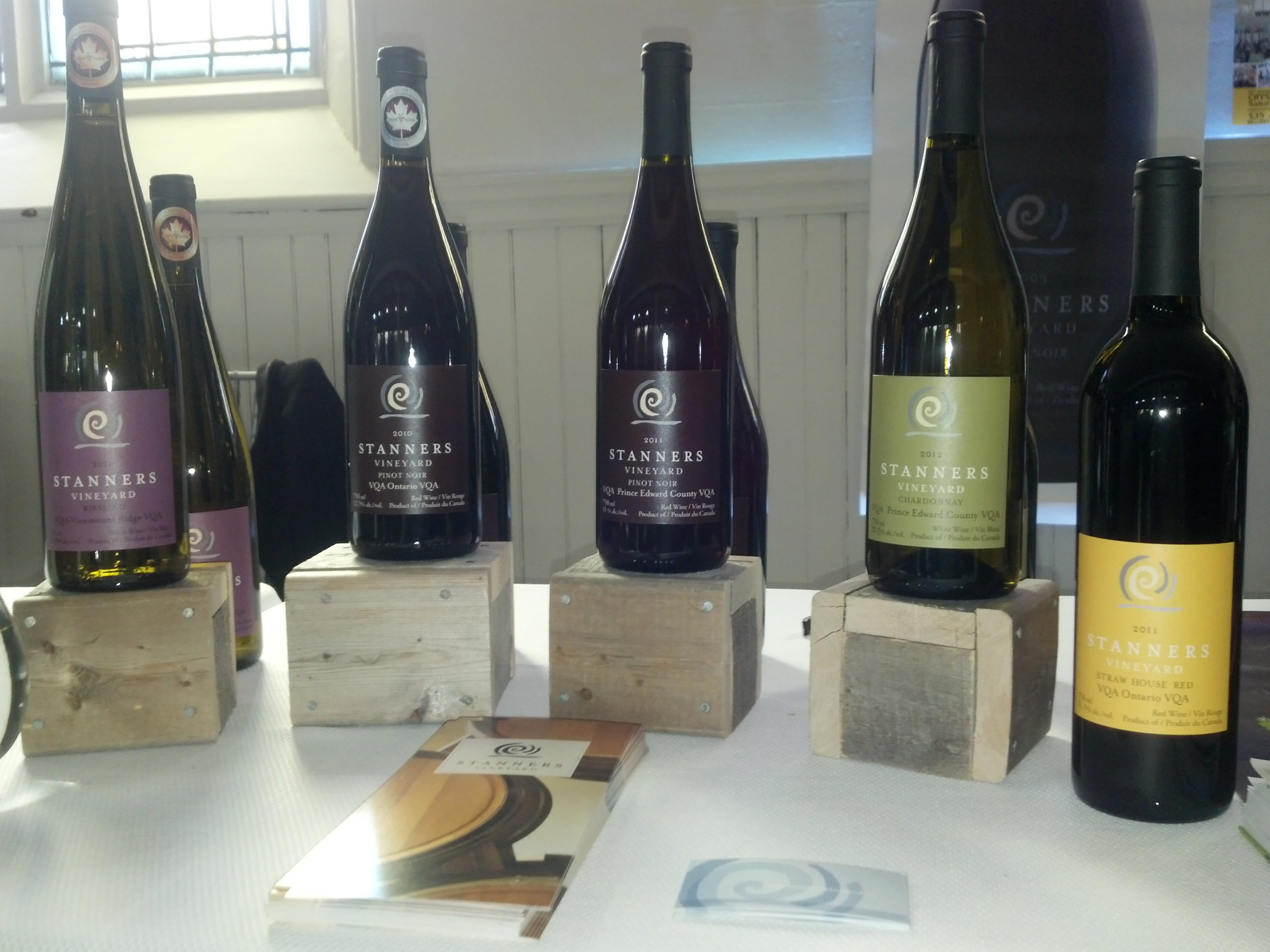
Stanners

Stanners

The County returned to the city on April 3, 2014 to showcase a cross-section of their wares at Toronto’s Berkeley Church. The usual suspects continued to impress, yet the collective needs to embrace the Sparkling example set by Jonas Newman and Vicky Samaras at Hinterland. If White Cap and Ancestral are any beacon to be drawn towards, plantings of Vidal, Riesling and Gamay should be employed in earnest in the turning towards pressure in the bottle. Lighthall’s Glen Symons gets it, as does Frédéric Picard, with his Cuvées, not to mention Bill Turnbull and his 3630 Bubbles. True, Casa Dea has the shy Dea’s Cuvée and the Grange makes a Sparkling Brut and a Riesling (346726, $24.95). But the questions begs, is fizz just another word for everything to lose in the County?

Here are notes on 23 wines tasted. The soundtrack to these PEC Wines includes Foo Fighters, Cracker, Nine Inch Nails, Modest Mouse, REM, Sufjan Stevens, The Beatles and Dire Straits.

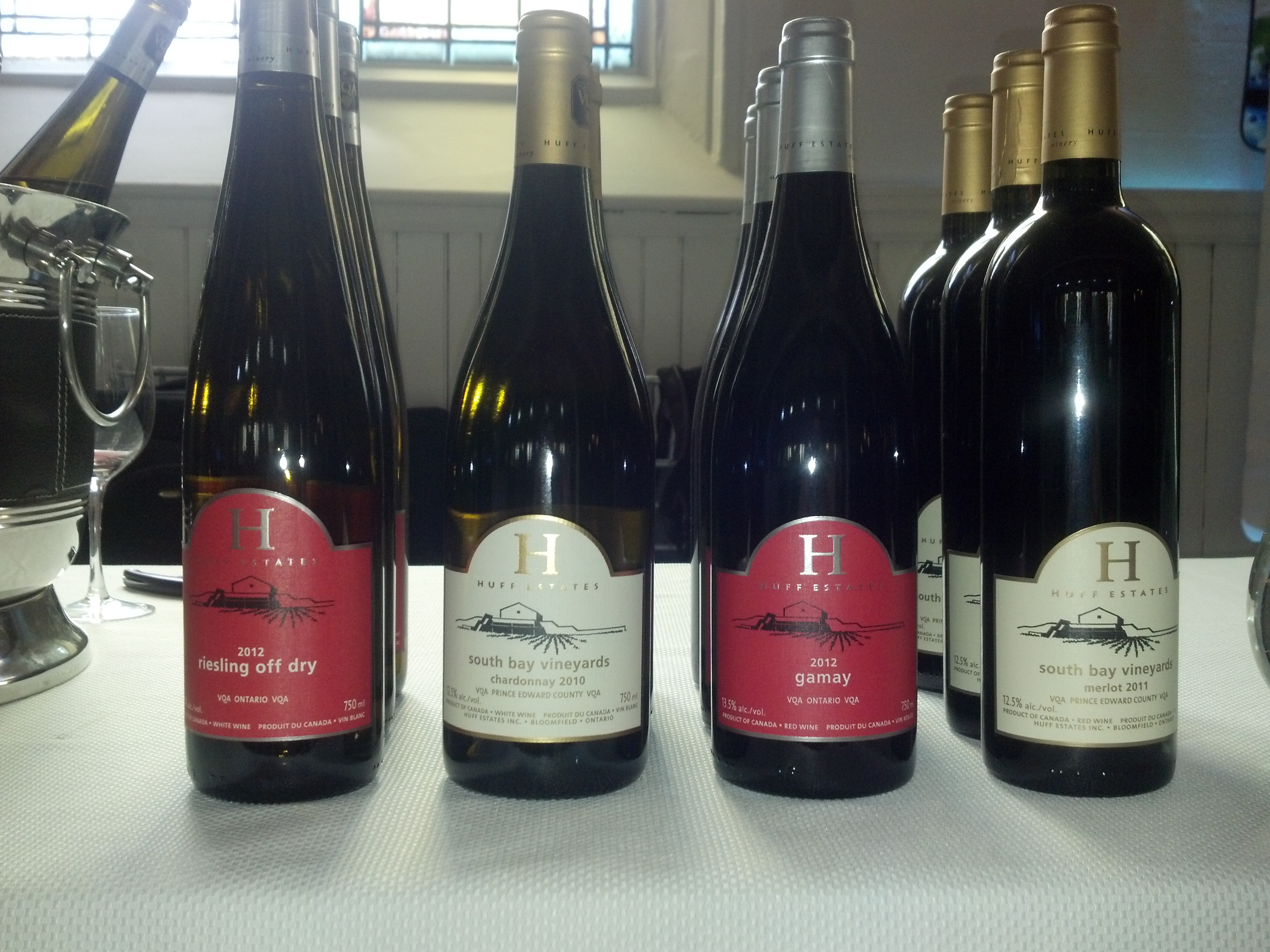
From left to right: Casa Dea Riesling 2011, Huff Estates Winery Off Dry Riesling 2012, Harwood Estate Pinot Gris 2012, Lighthall Progression Sparkling Vidal 2012, Norman Hardie Riesling 2012, Huff Estates South Bay Vineyards Unoaked Chardonnay 2012, Karlo Estates Lake On The Mountain Riesling 2012

From left to right: Casa Dea Riesling 2011, Huff Estates Winery Off Dry Riesling 2012, Harwood Estate Pinot Gris 2012, Lighthall Progression Sparkling Vidal 2012, Norman Hardie Riesling 2012, Huff Estates South Bay Vineyards Unoaked Chardonnay 2012, Karlo Estates Lake On The Mountain Riesling 2012

Casa Dea Riesling 2011, VQA Prince Edward County, Ontario  (winery, $16.95, WineAlign)

Pours and perches in the glass dry and stoic, as if bled from concrete or amphora. Swirled or not this fighter begins to rumble in a growing momentum of tang and acidity, as if it were being fed by sugar and feeding on yeast. So primary, like a sample in thief, yet already circling in complexity. A spike of spicy sweetness, a delicate dressing of aglio e olio, a chiffonade of basil on top. The County does this style of dry Riesling at this price in ways no one in Niagara can. This is no foo but rather a “blessing in disguise. Believe it or not, hands on a miracle.”   @casadeawinery

Huff Estates Winery Off Dry Riesling 2012, VQA Ontario (155606, $17.95, WineAlign)

Note the VQA Ontario designation, meaning the fruit is a combination of PEC and Niagara. The former brings limestone to the table while the latter weight and substance. Typically soda-driven and spatially atomic in maximum thrust. Turns towards the lake with sweet emotion and sails off into the sunset. Multi-purposed, works to great summer afternoon effect, especially with the waves of the bay lapping at the shore.  @HuffEstatesWine 

Harwood Estate Pinot Gris 2012, VQA Prince Edward County, Ontario (Winery, $18.00, WineAlign)

Light, airy, delicate and nearly ethereal Pinot Gris that takes few chances, instead choosing an acquiescence with life’s simple pleasures. The vanilla of Gris, malleable, agreeable and ready to pair with whatever comes its way. A minor spike of Hillier minerality gives accent to pears and its blossoms.

Lighthall Progression Sparkling Vidal 2012, VQA Ontario (Winery, $20.00, WineAlign)

A most non-pretentious sparkler that holds a pertinacious attitude towards anything but serious fun. From estate Vidal grapes that has seen a second fermentation using the Charmat Method, Lighthall’s ’12 picks up right where its solid ’11 left off. Picked early to preserve freshness and acidity, the Progression is big on tart green apple preserved by a squeeze of lemon. Chill it, refresh with it, serve it up and bring the house down.

Norman Hardie Riesling 2012, VQA Ontario (131169, $21.00, WineAlign)

Twenty Mile Bench in Niagara borrows 30 per cent County fruit to complete Hardie’s cracker Riesling. Low in alcohol (9.1 per cent) and residual, bound by jacked up acidity and tension. Pale platinum with an old-school aromatic sentiment that “fruit is rusting on the vine,” and flavours recalling that “the fruit is calling from the trees.” A masonic force of winemaking, “like being low, hey hey hey like being stoned.”  @normhardie

Huff Estates South Bay Vineyards Unoaked Chardonnay 2012, VQA Prince Edward County, Ontario (Winery, $21.95, WineAlign)

The Huff Chardonnay bent has seen a shift as strong as South Bay’s prevailing winds, away from the weight of barrel ferment to a clean, Chablis-like style. The ’10 might just have been the turning point and though they now make two versions, this ’12 is the cementing of the attitude. What is most amazing is that the texture, aromas and feel remain those of an oak-influenced wine. Huff manages the linear consistency without the need to encumber, toast or char the purity of its glade, glycerin and citrus fruit. Only Prince Edward County’s limestone soil can effect this kind of nine inch nails drive into Chardonnay without oak and only Huff can do it with this kind of elegance. A wine “less concerned about fitting into the world.” Do not miss this singular effort.  @HuffEstatesWine

Karlo Estates Lake On The Mountain Riesling 2012, VQA Prince Edward County, Ontario (Winery, $22.00, WineAlign)

Karlo’s take is Riesling in torsion, barrel fermented & aged in older (six-year) French Oak. The program adds wax and herbal mucilage to what otherwise would have been a frenetic study in bone chilling acidity. This unique and neo-progressive intuit invites a global Riesling symposium to the County to learn something old and something new within this single bottling. Riesling with attitude that’s got glycerin and a medicinal meets floral, pear extract meets candied lilac viscidity. Though so young, it seems wise, with an anamnesis for old Mosel, a coolant aroma and a taste that recalls white sangria. Yes, it’s different and eclectic. Anti-bracing stuff, not for everyone, but everyone should be for it.

From left to right: Stanners Vineyard Riesling 2011, Closson Chase The Brock Chardonnay Unfiltered 2011, Lighthall Vineyards Gewurztraminer 2012, Karlo Estates Chardonnay C.H.O.A. 2012, Norman Hardie County Cabernet Franc 2012, Huff Estates South Bay Vineyards Chardonnay 2010, Closson Chase Vineyard The Loyalist Chardonnay 2012

From left to right: Stanners Vineyard Riesling 2011, Closson Chase The Brock Chardonnay Unfiltered 2011, Lighthall Vineyards Gewurztraminer 2012, Karlo Estates Chardonnay C.H.O.A. 2012, Norman Hardie County Cabernet Franc 2012, Huff Estates South Bay Vineyards Chardonnay 2010, Closson Chase Vineyard The Loyalist Chardonnay 2012

Stanners Vineyard Riesling 2011, Vinemount Ridge, VQA Ontario  (winery, $23, WineAlign)

This is the inaugural Riesling release for Stanners, from a single Vinemount Ridge plot. If it were not so winged-footed it might gain more positive repute from the appellation’s quarry effect, but in time and with experience, Colin Stanners will settle the grassy aromas into the limestone demand. For now it remains effortless and balanced with a dismounting of acidity and well provided apple and lemon flavours.  @StannersWines

Closson Chase The Brock Chardonnay, Unfiltered 2011, Niagara River, VQA Ontario (Winery, $24.95, WineAlign)

The 2011 Brock has settled into its Niagara River appellative skin, having now been in bottle 18 months. Working with fruit from 300 kilometres away increases the unknown quotient, magnifying the adage that you have “one chance to get everything right,” Closson’s ’11 is neither modest nor is it a mouse but it is less frenetic than it acted when tasted repeatedly last year. The hard deposits have oozed into liquid metal gold and the ripe orchard fruit has mellowed into a creamy pudding with a hint of spice. I don’t see the Brock as a very public wine, but more from a maker, for friends, from habit, for family. A wine that you need to get to know, to patronize with repeated listening’s, to accept.   @ClossonChase

Closson Chase The Brock Chardonnay, Unfiltered 2012, VQA Niagara River, Ontario (Winery, $24.95, WineAlign)

The 2012 Brock was only sulphured and bottled a month ago so it’s quite shocky and shaky. Still in the REM sleep stage, the ’12 is not quite ready to reveal the warmth so generously granted by the Niagara River appellation’s extending growing season. The ripe tropical fruit notes are there, if subdued and the omnipresent minerality will rear its rocky head before too long. This Brock will see a lifting “but gravity is holding” it down for now. Look to see the weights fall away late in 2014 “and in review,” you will have noted “the air was singing,” all the way to 2020.

Huff Estates Gamay 2012, VQA Prince Edward County, Ontario (winery, $25, WineAlign)

If $25 seems a premium to pay for Ontario Gamay, consider all that is on offer in winemaker Frédéric Picard’s take on the friendly French grape. Picard caddies for 13th Street (Niagara) fruit, vinifies it bone-dry with the minimalist edge of 14 months in 15 per cent new French oak.  The fruit is so very ripe, in raspberry and gritless, creamy blueberry. Like savoury adult ice cream, silky smooth and with nary a hint of chalky grain. Well-designed and consumer-friendly as any Gamay has ever graced the Ontario consciousness. So you’ve “got that going for you, which is nice.” Shack up with Huff’s Gamay treat.

Lighthall Vineyards Gewurztraminer 2012, VQA Ontario (Winery, $25.00, WineAlign)

Proprietor Glen Symons sources his fruit for this unctuous Gewürztraminer from Vineland at the base of the Escarpment’s steps. Highly tropical and exaggerated by the warm summer of 2012 to the point of candied, but with an edge. Just restless enough to divine temptation for further sips which when multiplied, relax the palate rather than excite it. The flavours turn nutty, waxy, even and calm. A mistral wind blows through in a breezy finish.

Karlo Estates Chardonnay C.H.O.A. 2012, VQA Prince Edward County, Ontario (Winery, $25.00, WineAlign)

It should be assumed that the four types of wood used to house this warm and inferential Choa (cherry, hickory, oak and ash) would smother and smoulder other aromatic suitors but those woods are actually quite subtle. The other woods, as in forest, backyard and compost are the acute players. The Choa goes from fromage to funky, from an enzymatic leesy feeling to inner, inward innards. It barks of a dogged persistence, I will give it that. Most definitely singular of style to be sure and will need a few years to settle down.

Norman Hardie County Cabernet Franc 2012, VQA Prince Edward County, Ontario (winery, $25.00, WineAlign)

Hardie’s 2012 Cabernet Franc comes of age out of a preternatural and ontological perfect storm. Casts odds into the river of ideal weather, procures phenolic grape ripeness out of the vineyard, avoids the green and embraces the brown stems. Ferments under the natural eye of indigenous yeasts and settles into its silky skin at a low, low 10.8 per cent (give or take a lab sample) alcohol. Cabernet Franc of impossible soul, its “burden is the weight of a feather.” Pepper and currants are noted, tobacco and tomato are not. Comes “bearing a sword” but seduces with primal proclamations. Radical County red.

Huff Estates South Bay Vineyards Chardonnay 2010, VQA Prince Edward County, Ontario (Winery, $29.95, WineAlign)

The oak repeal in decreased new barrel impact allows the County to speak in the clearest of voice. As it should, from a South Bay landscape and terroir as rugged and dramatic that can be found anywhere Chardonnay is made in Ontario. There is a honeyed unctuous and viscous feel to the South Bay ’10, no doubt a result of its middle filled in by a meritorious and pure lees. Limestone wraps up the fruit in a clean, crisp and pure package.

Closson Chase Vineyard The Loyalist Chardonnay 2012, VQA Prince Edward County, Ontario (Winery, $29.95, WineAlign)

The licensee only Loyalist is the micro-embodiment of the Deborah Paskus style. Rich, compact and built to satisfy a need for lush, nearly tropical Chardonnay. From a vintage that saw bud reducing spring frosts and resulting yields of only one tonne per acre. The oak influence comes to it with a scaled back embracing, allowing the County’s rock bent to connect and form a bond with the acidity’s bracing intent. Perhaps the profits will suffer from the year’s miniscule crop, but the level of quality will making it all right.

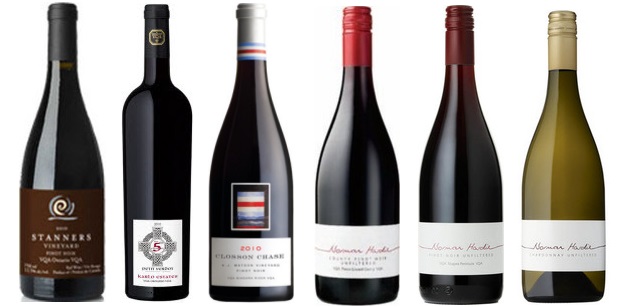
From left to right: Stanners Vineyard Pinot Noir 2011, Karlo Estates The Fifth Element Petit Verdot 2010, Closson Chase Pinot Noir K.J. Watson Vineyard 2011, Norman Hardie County Unfiltered Pinot Noir 2012, Norman Hardie Unfiltered Niagara Pinot Noir 2010, Norman Hardie Unfiltered County Chardonnay 2012

From left to right: Stanners Vineyard Pinot Noir 2011, Karlo Estates The Fifth Element Petit Verdot 2010, Closson Chase Pinot Noir K.J. Watson Vineyard 2011, Norman Hardie County Unfiltered Pinot Noir 2012, Norman Hardie Unfiltered Niagara Pinot Noir 2010, Norman Hardie Unfiltered County Chardonnay 2012

Stanners Vineyard Pinot Noir 2010, VQA Ontario (winery, $30, WineAlign)

A year later has softened considerable and thinking of laying down in softer pastures.  From my earlier, April 2014 note: “Combines 60% (horizontal) County fruit with 40 per cent (vertical) Niagara (Lincoln Lakeshore) grapes in balance and with finesse. Simply apply the distance formula to figure out the length of the hypotenuse. Bridging the kilometres that lie between, though inadmissible to some, comes by way of a deft winemaker’s vision and touch. Plum good, mineral rich and perceptibly tannic without breaching a threshold of varnish. Cherry toffee speaks of the sunshine and indicates time is of the essence. Will look forward to full-on County issue for 2013 in the hands of Cliff and Colin Stanners.”  Last tasted April 2014

Stanners Vineyard Pinot Noir 2011, VQA Prince Edward County (winery, $30, WineAlign)

After wetting their Pinot Noir feet with a few vintages that coalesced Niagara and County fruit, this is the first go it alone release for Stanners. It’s yet another effortless and quiet handed response to impressionist County fruit. A noticeable step up from what came before, this has primary balance, secondary (floral) aromatics and tertiary brightness. Like Hillier lavender, drying on the rocks in the waning afternoon sun.

Karlo Estates The Fifth Element Petit Verdot 2010, VQA Ontario (Winery, $33.00, WineAlign)

Mounds of respect are due any Ontario winemaker that decides to tackle single-varietal Petit Verdot, especially in a climate-forsaken locale like the County. Richard Karlo tackles such a struggle between good and evil, looking to elevate this fifth most important Bordeaux grape (not Malbec?) to great PEC heights. His dark, brooding wine of massive extraction starts off into the toffee, the after dinner mints and a suck of coffee cream through a wood straw. Twiggy, angular, resinous and wired, the wine then turns incredibly floral, in violets, from boron to aether and then returns to its roots. The rebound is to acidity, freshness and tang. An intriguing wine that “used to be angry young man” but the evolution it shows in glass bodes well for its future. Give it three to five years to achieve quintessence. “I’ve got to admit it’s getting better, a little better all the time.”

Closson Chase Pinot Noir K.J. Watson Vineyard 2011, VQA Niagara River, Ontario (Winery, $34.95, WineAlign)

Only 165 cases were produced of this Niagara born Pinot Noir. Discreet and unpretentious in every facet of its being. Like the colour of beautiful Rosé, the Watson causes such small-scale tannic pain. Though elegant and lithe, don’t be fooled. It’s not Burgundy. It’s Deborah Paskus. It’s Closson Chase. Profoundly appointed, in mind of those who mind. A signal to the understanding and knowledge of what the variety is and from this place. Clarity comes from an intensity in flowers, quality from a high sense of purpose.  Really fine.

Norman Hardie County Unfiltered Pinot Noir 2012, VQA Prince Edward County, Ontario (125310, $35.00, WineAlign)

Hardie’s 2012 County Pinot Noir is a beacon, a flashing light on the shore, an invitation to copycats because this is what making red wine from limestone foundations is all about. To taste this ’12 is to experience Hardie’s purest berry maceration and distillation to date. It’s as if there was no alcohol present and in fact, at 11.5 per cent it is a modest and transparent pronouncement. Longevity may not bless the ’12 as in other vintages but this is certainly the most groomed and coiffed County Pinot Noir.

Norman Hardie Unfiltered Niagara Pinot Noir 2010, VQA Niagara Peninsula, Ontario  (208702, $39.00, WineAlign)

The calcareous clay, the edgy stone, the molt of the earth. Dense, cluttered and clamorous fruit. A different animal then what walks the County. Magnanimous Pinot Noir full of fruity flesh and medieval attitude. From my earlier, October 2013 note: “That Norman Hardie can make Pinot Noir in Prince Edward County that could never be confused with any other makes it that much more incredulous to nose this Niagara cousin and know it can only be his. A barb on the very verge of ripe, tart cranberry and as smoky a nose as Hardie’s Pinot wants to be. Strawberry and raspberry red beret. Ashes to ashes but not funk to funky, we know Hardie is a Pinot junkie. Still, this is a warm and melodious example with only one coat of primer. Impressive.

Norman Hardie Unfiltered County Chardonnay 2012, VQA Prince Edward County, Ontario (184432, $39.00, WineAlign)

Norman Hardie’s uncanny ability to coax hyperbole at the lowest alcohol levels is again blatantly apparent in this climatically epochal, yet restlessly cool County Chardonnay. Recalling and expanding on the exceptional ’08, the tonality, texture and motion are achieved by way of a) early picking, b) indigenous yeasts, c) arrested fermentation, d) lees and e) moxie. The dire straits of the vintage wants to exaggerate the fricassee, the roasted nuts and the chemical flow but who might argue against the gape at Burgundian reduction? She’s a roller girl this ’10, taking chances. She skates away, “making movies on location,” all in the name of learning ahead of the curve.

Good to go!
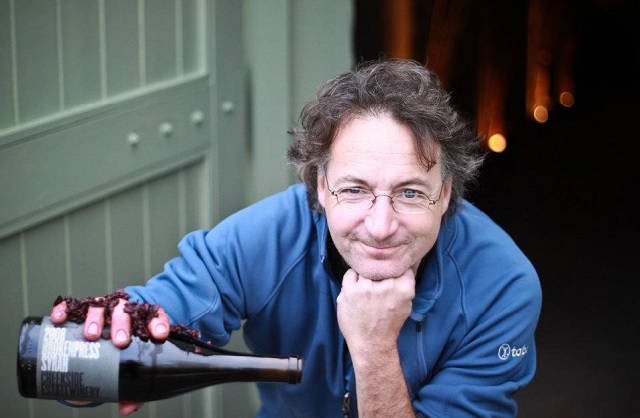
Paul Pender’s Tawse and effect

Pinot Noir Cherry Avenue 2010

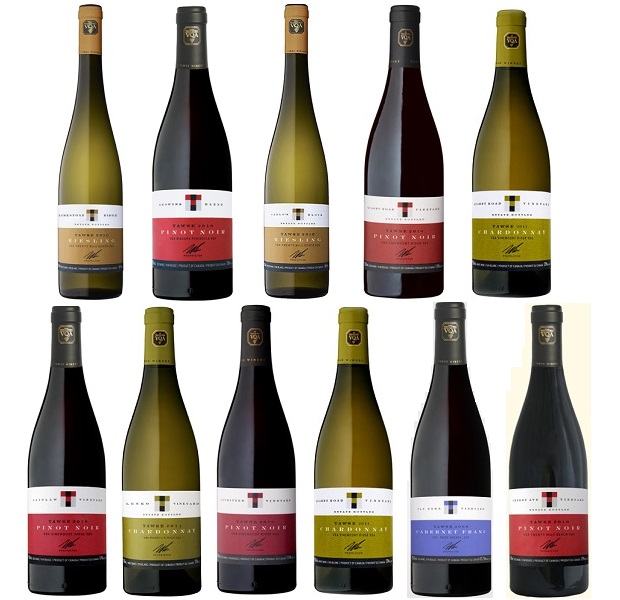
From left and clockwise: Riesling Limestone Ridge 2012, Pinot Noir Growers Blend 2010, Riesling Carly’s Block 2012, Pinot Noir Quarry Road Estate 2010, Chardonnay Quarry Road 2011, Pinot Noir Cherry Avenue 2010, Pinot Noir Cherry Avenue 2010, Chardonnay Robyn’s Block 2008, Pinot Noir Lauritzen 2010, Chardonnay Lenko Vineyard 2011, Pinot Noir Laidlaw 2010

Tawse winery is growing and gaining weight but just like its vineyards, the pursuit is wagered in natural and holistic ways. The Tawse effect distills a biodynamic appropinquation, in the acquisition of new vineyards, in the gathering of tonnage from Niagara and Prince Edward County growers, in the farming and production of estate grapes. I have been making regular visits to the Vineland, Ontario winery for the past three years. The natural, self-sustaining processes remain open, obvious, front and centre.

Related – Every barrel tells a story

Chardonnay fruit might travel across the 401 and down the QEW from South Bay at Huff Estates. It may skip across King Street and skirt up Cherry Avenue from Daniel Lenko. It may come to early fruition from young Tintern Vineyard Pinot Noir vines out of the Vinemount Ridge. Whatever the source, the approach is simple. Let winemaker Paul Pender get his mind and his mitts on that fruit. Then let him work his magic. Seek biodiversity, soil fertility, crop nutrition, and chemical-free pest, weed and disease control. Fight the good fight against the harshest of winters with vines of deeper roots and stronger canes.

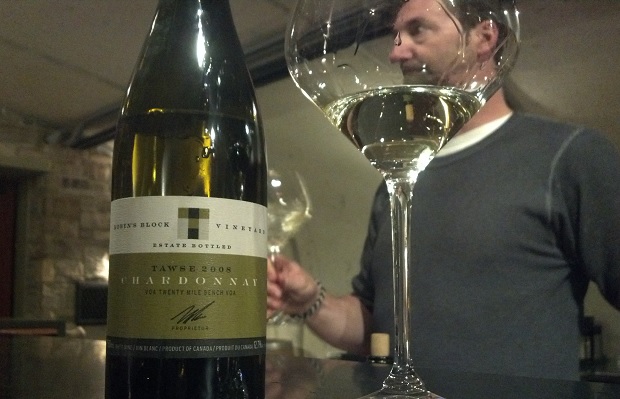
Paul Pender and Tawse Robyn's Block Chardonnay 2008

Paul Pender and Tawse Robyn’s Block Chardonnay 2008

The Tawse portfolio may now seem hyper-varied and even massive. Nothing and everything has changed. The lots remain small to manageable, the choice of varieties consistent and the wines, ever increasingly impressive. Whatever faults, idiosyncrasies or misunderstood characteristics there may have been in some older wines, they are no more. There are now purer and more vibrant aromas and flavours. Wait until you get a load of 2012 and 2013. Paul Pender’s acumen and winemaking professionalism has reached a whole new level of Rock ‘N Roll.

Paul Pender is a big picture guy. He is the Niagara renaissance man; songwriter, vocalist, lead guitar, producer and engineer. He’s Cuddy, Cripps and Chris Shreenan-Dyck rolled into one. Pender’s handling of growing, picking, fermenting, aging and bottling is nothing short of impossible and yet he does it with a conceit of ease. At last count I noted three Sparklings, three Rosé, two Dessert Wines, six Chardonnay, five Riesling, two Gewurztraminer, one Pinot Gris, one Sauvignon Blanc, six Pinot Noir, three Cabernet Franc, one Cabernet Sauvignon, one Merlot, one Cabernet-Merlot, one Meritage and one Gamay. Thirty-seven wines. One goal. Getting better all the time.

Tawse winemakers Rene Van Ede and Paul Pender

Tawse winemakers Rene Van Ede and Paul Pender

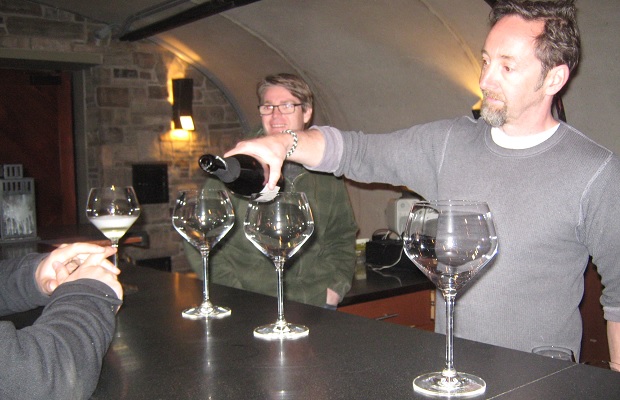
The winter and early spring of 2014 has found me cozying up to the wines of Tawse. On a frigid January evening on my way to Ice Wine Fest I spent time with winemaker Pender in the cellars, speed investigating my way through the barrels of Chardonnay and Pinot Noir. Not to mention Cabernet Franc, Merlot, Cabernet Sauvignon, Riesling and even Sauvignon Blanc. I’ve tasted Tawse with Daniel Lafleur at Somewhereness, with Vinifera’s Daniel Beiles at Barque Smokehouse and at the winery’s portfolio tasting at The Spoke Club.

Tawse Spark Blend 2011 and Quarry Road Chardonnay 2008

Tawse Spark Blend 2011 and Quarry Road Chardonnay 2008

Here are notes on 14 Tawse wines tasted from bottle in April and May 2014.

Riesling Limestone Ridge 2012, VQA Twenty Mile Bench, Ontario (Winery, $21.95, WineAlign)

From the newest estate vineyard, the single-vineyard Limestone Ridge exteriorizes its name in a rubric of pressed rock, struck flint and chalky density. Paul Pender has coaxed a multiplicity of linear character, with major notes of lime zest and juice, persistent from start to finish. A mid-pause of oozing, residual sinensis is the determinant towards the wine’s matrix of longevity. A longer, leaner, meaner and mightier Riesling charged by a different sort of power. Kinetic, frenetic and electric. Tasted twice, April and May 2014

Spark Blend 2011, VQA Niagara Peninsula, Ontario (winery, $24.95)

This introductory release is a blend of 65 per cent Chardonnay, 22 Pinot Noir and 13 Pinot Gris. A linear, straight shooting star, a sparkler that is so “surprising it goes so fast.” Bright, flashy, attention grabbing and fleeting. These are bubbles with a plan, anything but bad company and quite remarkable for the price. Lemon, lime and ginger strum in wound tension and the wine gets on top very quickly, then disappears into the starry night. Exhilarating while it lasts.  Tasted April 2014

Chardonnay Grower’s Blend 2011, VQA Niagara Peninsula, Ontario ($24.95)

From fruit (east of Beamsville) next to Puddicombe, which is essentially Winona on the eastern edge of the Niagara Escarpment appellation. Some parcels of disparate Niagara fruit joins this inaugural effort, a rich, viscous and warming Chardonnay. Layered and expertly balanced, it carries the best of both the Quarry (mineral) and Robyn (approachable) worlds. The spicy accent gives the blend its singular personality.  Tasted May 2014

Pinot Noir Growers Blend 2010, VQA Niagara Peninsula, Ontario (284570, $26.95, WineAlign)

Though it’s a blend of several sites, this Tawse Pinot stands alone and of itself as a grower; it grows on you after multiple tastings. The first go ’round seems simple, vintage warm and tight. Taste again and the sappy wood seeps mineral, the phenolic red cherry ripeness turns black and the tempering is led by a sweet earth kind. Earth that smoulders in a rising Zeppelin kept afloat by tobacco and the swirling spores of pungent mushroom. Pinot Noir truth and value from a Niagara house of the holy kind. “You know-whoa, that’s right.” Tasted twice, April and May 2014

Riesling Carly’s Block 2012, VQA Twenty Mile Bench, Ontario (Winery, $31.95, WineAlign)

Boasts classic flint and citrus Twenty Mile Bench aromatics. In 2012 it’s also lush, rich and so very pear and longan fruity. Whorls like a wind turbine blowing the polar aspects against each other’s walls. Forms a bridge and meets the twain, from atomic to tropic. High tang and flavour. Big yet classic Riesling.  Tasted May 2014

Pinot Noir Quarry Road Estate 2010, VQA Vinemount Ridge, Niagara Peninsula, Ontario (winery, $34.95, WineAlign)

This is the second Pinot Noir made from the Vinemount Ridge vineyard, a place where the rock can’t help but tyrannize the fruit. The 2010 Quarry Road gains positive proportion in that it is painted and coated by the ripeness of the vintage. Of a tougher mind and shell than the other Tawse Pinots, a bird on the wire just trying to be free. Not as easy to approach or love, it might plead “if I, if I have been unkind, I hope that you can just let it go by.” Sings in a wise, raspy and rusty way, despite the youthfulness of the vineyard, but it shines. So in the end “hey, why not ask for more?” Tasted May 2014

Chardonnay Quarry Road 2008, Vinemount Ridge, Niagara Peninsula, Ontario (111989, $34.95, WineAlign)

At this stage the 2008 Quarry Road is fully resolved, integrated and as soft as full malolactic Chardonnay can be. The unmistakable note of creamed corn lingers longer, as does the look on the winemaker’s face, but air brings it around. Returns to a fresh beginning, “from a year that might not have turned into anything,” admits Paul Pender. Now standing firm, the wine benefits six years on from clean, rotless fruit and pure, angular acidity, holding steady to the admirable finish. Tasted April 2014

Chardonnay Quarry Road 2011, Vinemount Ridge, Niagara Peninsula, Ontario (111989, $34.95, WineAlign)

The pinpoint accuracy and gemstone capture of the Quarry is exaggerated in ’11, amplified and fully plugged in. From my earlier, October 2013 note: “Carries that classic Paul Pender perfume; rocks and stones, flaxen, refulgent toast and the verdure Vinemount terroir. A free flying, linear, atmospheric smear of thermal fortitude and backbone. A polemic Bowie Chardonnay to make you believe “the strangest things, loving the alien.” From my earlier March 2012 (barrel tasting) note: “Resides on the mineral, slate and lime side of the tracks. The calcareous quality imparted by its eponymous SV terroir makes it the antithesis of David. Creamy, 24-karat fruit.” Last tasted May 2014

Pinot Noir Laidlaw 2010, VQA Vinemount Ridge, Niagara Peninsula, Ontario (winery, $44.95, WineAlign)

From the Vinemount Ridge sub-Appellation of the Niagara Peninsula, the Tawse Laidlaw Pinot 2010 is the least gregarious, the quiet sibling, the most feminine, the sleeper. Laidlaw may play hardest to get and is the least obvious when considering perfume but her palate is the sweetest of the line-up. Strawberry macerates sous-bois for an authentic Burgundian experience. Patient, focused and structured. Tasted May 2014

Chardonnay Lenko Vineyard 2011, VQA Beamsville Bench, Niagara Peninsula, Ontario (winery, $44.95, WineAlign)

The speed and the steel have slowed to yellow caution and the now honey-toned flesh has added more weight. There’s just something about Daniel Lenko at this juncture. From my earlier (tasted three times) July 2013 note: “From wiser men who’ve been through it all” is the kind of one-off we should all wish to re-visit in 10 years time. The study: Daniel Lenko’s fruit in the hands of winemaker Paul Pender out of a most confounding vintage. That 2011 in terms of Ontario Chardonnay strikes and speaks to me in tongues is no secret, so the Tawse treatment fascinates in ways to make me giddy. Tension and elasticity are present here in super-hyper Beamsville Bench concentration. Apples pile upon apples, in magnetic purée and layered maceration. A full-on body attack and phenolic structure will see this Lenko to a future (five to seven years) in grace and gorgeous line. A Chardonnay to “scheme the schemes, face the face.” Last tasted April 2014

Pinot Noir Lauritzen 2010, VQA Vinemount Ridge, Niagara Peninsula, Ontario (winery, $44.95, WineAlign)

A year in bottle has elevated the perfume, concentrated the cherry flavour and placed a crown on its regal head. The sweet tannic quotient resonates from its very core. Showing great at this time. From my earlier April 2013 note: “From the Vinemount Ridge is dry and cut with spice, a favourite for winemaker Paul Pender. The sour acidity from fruit such as cranberry and pomegranate are here in deep, concentrated and naturally sweet tones. Niagara limestone casts a Burgundy mineral shadow and the wine is iron tough yet silky due to the warmth of the vintage.” Last tasted April and May 2014

Chardonnay Robyn’s Block 2008, VQA Twenty Mile Bench, Ontario (662841, $45.95, WineAlign)

The 2008 Robyn’s Block neither matches the roundness nor the tempering acidity of the Quarry but what it lacks in those areas it makes up for in critical mass and balance. The creamed corn effect is here, as are apples in ciderish activity, from a wine that “was on a starved diet,” says Paul Pender. Though currently a bit reductive and funky, it’s not gun-flinty reduction, like the “smell of a battlefield on the morning after a civil war fight.” Swirling brings out cane sugar to replace the creamy silage and the rest is history. Calm, quiet and approachable inactivity. Tasted April 2014

Cabernet Franc Van Bers Vineyard 2009, VQA Creek Shores, Ontario (355867, $49.95, WineAlign)

What a wonderful vintage for Creek Shores Cabernet Franc and what a difference a year makes. Ripeness, development, rich layering, absence of chalk. Extreme elegance and void of an overbearing currant and bell pepper greening. Tannins are toned and fit. From my earlier, April 2013 note: “From the Creek Shores Appellation is proof that a well-rounded grape has no point. The Van Bers is winemaker Paul Pender’s purlieu, edgy, outlying, unconcerned with the norm or the banal. Makes full use of a cool vintage with heart-stopping acidity and eye-popping verve but not without delivering Soul, in the form of flowers and a fruit basket to your doorstep. “It’s like thunder and lightning.” Capers, camphor and a knock on wood add R & B complexity.” Last tasted May 2014

Pinot Noir Cherry Avenue 2010, VQA Twenty Mile Bench, Ontario (winery, $57.95, WineAlign)

From two acres of Pinot Noir planted in 2005 known as David’s Block within the Cherry Road Vineyard. A clash of hot and dry weather encouraged the young fruit to find ripeness, in flesh and in tannin. There is an elegance about this Cherry, in part no doubt to wine technique in acumen. The Paul Pender perfume, a combative interplay between cherries and earth, is here. “The in crowd say it’s cool” but it has yet to Rock the Casbah. Cherry 2010 is only offering a glimpse of greatness, so hold out for what will surely develop when the vines reach their next level of maturity. Tasted April 2014

Good to go!
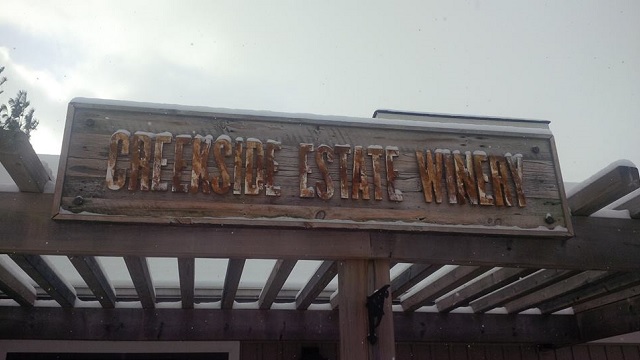


Lean on, Macduff

Leaning Post Wines
Leaning Post Wines, PHOTO: Michael Godel

Leaning Post Wines was until very recently virtual and to the uninitiated, wholly abstract. The young Niagara Peninsula operation located at 1491 Highway 8, in Winona, Ontario is now the real deal, a bricks, barn board, mortar and hand fashioned nails winery. The risk taken and the effort put into establishing a winery in Winona is nothing short of heroic. LPW is the hands and knees, sweat and blood project of winemaker Ilya Senchuk and wife Nadia, Winnipeggers living the dream on the eastern edge of Niagara’s winegrowing Escarpment.

Related – Vineyards, winemakers and their sense of place: Bachelder and Leaning Post

Grapes need the support of posts and wires, thus the name. With a couple of vintages under his actual Winona belt, new acreage planted and only a couple of years away from producing estate fruit, now is the time to lean on Ilya Senchuk for righteous Niagara wine. Senchuk is no Macbeth. His tasting room is no Dunsinane Castle. The alternative choices he has made are emphatic but not combative ones. He would not say, “Lay on, Macduff, and damned be him who first cries ‘Hold! enough!’” He’s confident his locale and his methods will lead to success. He believes in the microclimate and soil composition of the Winona flats tucked in like a pocket between the Escarpment and the Lake. Ilya has taken up the good fight. He is an antagonist and a hero in the Niagara play.

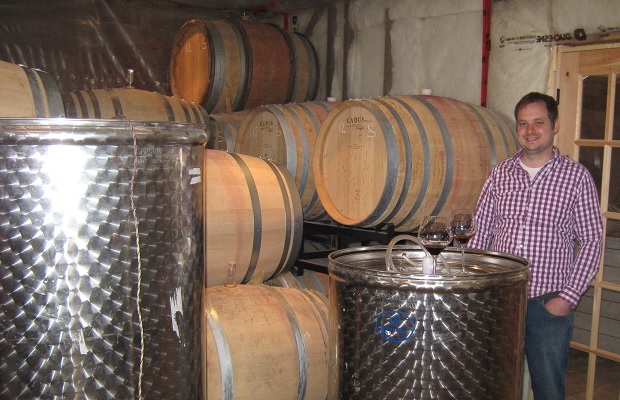
Winemaker Ilya Senchuk in the Leaning Post Barrel Room

Winemaker Ilya Senchuk in the Leaning Post Barrel Room

Senchuk is part of a breed of young and risk-taking Niagara winemakers ready and willing to push the envelope. Ilya’s wines may not fall into a stylistic category defined and categorized by standard Niagara varietal or appellative descriptions. Some of his wines challenge the notion of what is considered a true representation of the Niagara Peninsula. Though he may run into VQA panel consternation on some future occasions, he will be a part of the evolution and reworking of its mandate towards the open-minded acceptance of modern, varietal expression. He believes in ripe fruit. He’s a strong proponent of terroir, even if it means redefining or pioneering new plots.

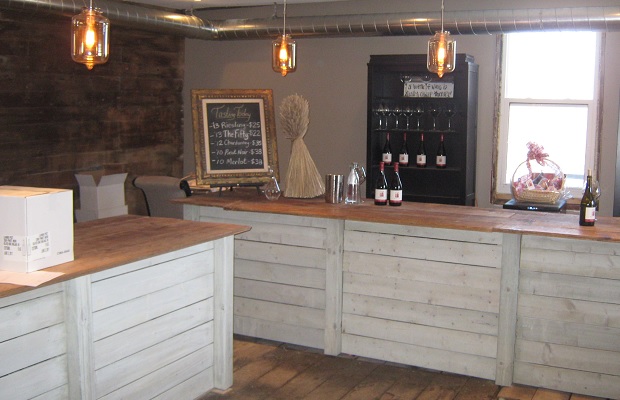
Leaning Post Tasting Room

Leaning Post Tasting Room

The wines will offer a balance of Bench terroir, with its vigorous, heavy clay meets loam and the Winona landscape, where sandy soil is maculated by largish stones three to four feet down. This atop a bed of grey clay so the low vigor of the sandy soil will be offer up a flipside, a foil to the heavy clay of the Bench. The agglomeration should be more than interesting to follow.

On the occasion of the “eve eve” for two new Leaning Post releases, the 2013 Chardonnay ‘The Fifty’ and the 2013 Riesling, here are some notes on the wines I tasted two weeks ago at the Winona winery. Senchuk led me through the new releases, along with the comings along of his wines in barrel and in tank.

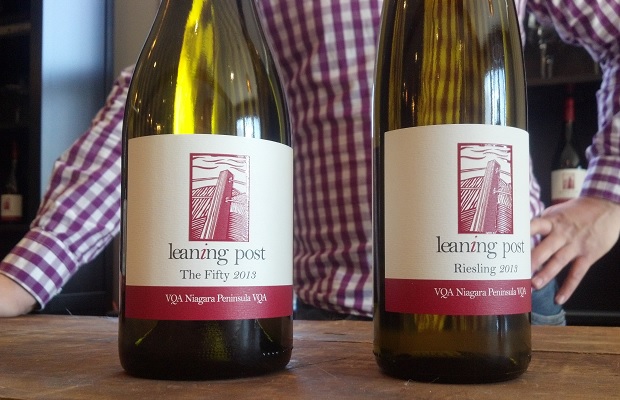
Leaning Post 'The Fifty' Chardonnay 2013 and Riesling 2013

Leaning Post ‘The Fifty’ Chardonnay 2013 and Riesling 2013

Leaning Post Chardonnay 2012, VQA Niagara Peninsula, Ontario (Winery, $35.00, WineAlign)

The 2012 Chardonnay has now been in bottle four months, just enough settle time to grant access to its magnanimous 14.2 per cent alcohol frame. This from fruit that came in at 22.5 – 23.5 brix, or as winemaker Ilya Senchuk calls “the conversion rate of the century.” From a warm year that offered a sweet Smörgåsbord for the inoculated (as opposed to wild) yeast. Chewy, dense, catalytic toast with butter. Butterscotch flavour atop a waft of Crème Brûlée, the sugar in a feverish pitch to reach hardball. This is a really big wine, a confident expression, a national statement. Lean on this Chardonnay and let it lead because “everybody wants a sip of wine to drink, everybody wants a little more time to think.”  Tasted April 2014

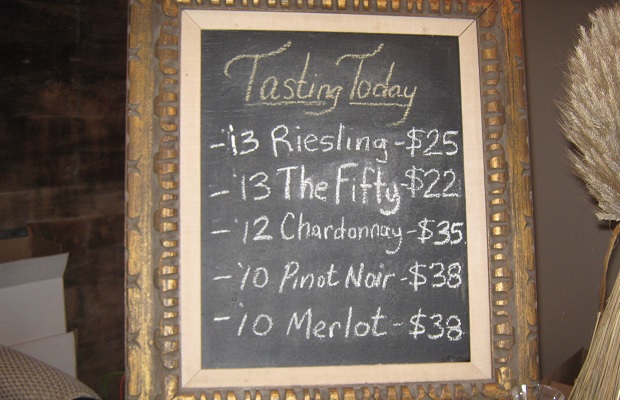
Leaning Post Chardonnay ‘The Fifty’ 2013, VQA Niagara Peninsula, Ontario (Winery, $22.00, WineAlign)

This is a barrel-fermented but not barrel-aged Chardonnay that borrows its name from the old town of Winona. From approximately 9-10 barrels of Foxcroft fruit racked off and thrown into tank. The aught omission of full Malolactic fermentation means a clean and jerk feel, though the wine’s lees perform the middle palate and textural duty. Bottled just eight days before sampling and yet eminently drinkable. “A wine to make friends” and make friends with. A soft and creamy sensation brings to mind Bordeaux Blanc, or more specifically Semillon’s contribution, but also the notion of Wismer Sauvignon Blanc. Make no mistake, it’s absolutely Chardonnay, in toto unique and still influenced by both the barrel and the vineyard.  Tasted April 2014

Leaning Post Riesling 2013, VQA Niagara Peninsula, Ontario (Winery, $25.00, WineAlign)

Marks a return to the variety for Senchuk, with a dynamic and resounding charge. This barely resembles what may be pigeon-holed as Niagara Peninsula Riesling as it disses the lean, citrus pierce of the dry norm. Don’t panic, it’s not that different, but it does comment on “homes, places we’ve grown, all of us are done for.” From 18 year-old (south block) Foxcroft vines, 15.8 grams of residual sugar and 11.3 grams acidity. Bottled just eight days ago, this is a wine that was “left to develop on its own,” on it lees and with no stirring. “It’s not late harvest, it’s mature, with just enough sugar to make it palatable.” Makes a cold play for warmth, extract, viscosity and natural sweetness. Reaches for complexity beyond acidity, to places old and new, to Germany and to Niagara. Gotta citrus back, endgame palate. I can’t say with certainty that in time this vintage will push the sweetness to the background and develop leathery, gamey and earthy characters. I can say that given some more experience, Senchuk will develop the acumen to make it happen. “There’s nothing here to run from ’cause here, everybody here’s got somebody to lean on.”  200 cases made.  Tasted April 2014


Notes on wines from barrel and tank

Gamay 2013 – Guiltless and virtuous straight out of stainless, the meaty side of Gamay game boldly goes where few from the Bench have gone before. Like a rare venison steak sitting in a silky pool of lavender-scented demi-glace. Floral like Fleurie and despite zero new oak, vanilla joins the gravy. A Senchuk steal of quality Wismer (McLeary…sort of) fruit sets this Gamay up for easy sell success.

Pinot Noir Lowrey 2012 – Sweet fruit, remarkable purity, length and certainly warm.

Pinot Noir Mcnally 2012 – The vineyard made famous by Peninsula Ridge. In Ilya’s hands and from young vines higher in elevation there is spice-spiked orange, in clove, cardamom and also black cherry. A bigger style, akin to Central Otago (as per the Senchuk half-beat). Only two barrels (45 cases) will be made.

Syrah Keczan Vineyard 2012 – White pepper, smoked meat, game all in but still somehow delicate. Mediterranean sensation, in black olive and with some salinity. The least ripe and the most savoury of all the wines. Has got grit, tang, florality, hubris and verdigris.

Good to go!
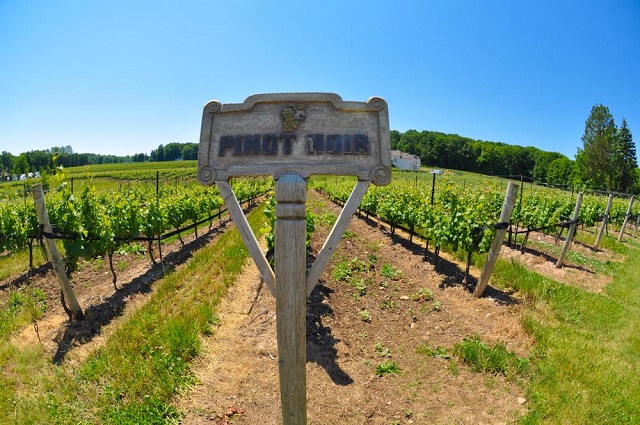
The group of twelve

History may one day remember them as the group of twelve, or perhaps, “The Ontario School.” They are the 12 wineries who have banded together to ensconce a strange but beautiful word on the tongue, in the dictionary and out in the world. Somewhereness.

They are purveyors of the land from which their grapes grow and ferment into wine. Facilitators of terroir, working a canvas forged by millions of years of geological and climatic evolution. Their assembly is based on both exigency and on Moira; destiny, share, fate.

Like that other famous group, “collectively they agree.” Ontario’s cool-climate wine regions need to qualify and certify a distinctive winemaking style. In juxtaposition to old world, European tradition, the intensity of Somewhereness needs to reflect an increasingly Ontario-centric partiality.

These are the members. 13th Street, Bachelder, Cave Spring, Flat Rock, Hidden Bench, Hinterland, Malivoire, Charles Baker, Norman Hardie, Southbrook, Stratus and Tawse. Matt Kramer of Wine Spectator used the term and now it defines an enterprise. “As a group of 12 wineries growing small lots of site-specific vines in Ontario’s ancient glacial soils, we’ve invoked Somewhereness as a word enabling us to articulate in one collective voice.”

How do you get to Somewhereness? As related to wine that is like asking, Who am I? Why do we exist? What is the meaning of life? The Somewhereness movement, the notion, comes to light through this statement. “Somewhereness is revealed in the mysterious time capsules we know as bottles of wine. As ethereal gifts of a carefully tended location and a moment in time, each is imprinted with a vineyard’s sense of place,
its soil, climate, seasons, vintage variations — and its maker’s methods.”

In 2013 I wrote about Somewhereness over the Canadian wine rainbow. “Above all else, the rainbow’s fulcrum is the “somewhereness” of Canada’s wine regions. Terroir is the great catch word for wine. A vine’s home determines its potential, its structure, its sense of place. Micro-climates, soil, geology, altitude, slope and vegetation all contribute to the make-up of a wine forged from that specific parcel, lot or locale.”

In Come together, over wine I continued the discussion. “Intensity is in the air. The artists are at work, blessed with a geographical, geological and climatic canvas unique to the planet. They share arts and letters, compare and contrast methods, style and results. The sense of community is palpable, obvious and quite frankly awesome. They are Ontario winemakers and they are coming together. Right now.”

At the end of last year my column 13 Canadian wines that rocked in 2013 reviewed what Canadian winemakers do best. “That is producing unique, cutting edge and brilliant takes on cool climate grapes. They also match beautifully with the songs referenced in their tasting notes. When the wines are assessed and considered in part or as a whole, who would dare to say there are no great wines being produced?”

On Wednesday April 9th, Somewhereness brought the band to St. James Cathedral for a full-on tasting that is rapidly being recognized as a must not miss Ontario event. Here are notes on some of the wines I sampled.

From left to right:

From left to right: Malivoire M2 Small Lot Gamay 2012, Flat Rock Nadja’s Vineyard Riesling 2012, 13th Street Sandstone Old Vines Gamay Noir 2012, Southbrook Whimsy! Cabernet Sauvignon 2009, Tawse Laundry Vineyard Cabernet Franc 2011, Charles Baker Picone Vineyard Riesling 2008 and Norman Hardie County Unfiltered Pinot Noir 2012

13th Street Pinot Gris 2012, VQA Creek Shores, Niagara Peninsula, Ontario (Winery, $19.95, WineAlign)

Here you have an honest, 100 per cent stainless steel treated Pinot Gris from an estate vineyard located adjacent the market on Fourth Avenue in the Creek Shores appellation. So very dry and really fine fruit, crisp, neoteric, rising and falling in waves of tempered acidity. Made in a comfortable, country-twanged, folk-rock style, like a Cowboy Junkie. Juicy, mouth-watering work and very easy to fall for. An angel mine, this 13th Street, “and I know that your skin is as warm and as real as that smile in your eyes.” This effort by Jean-Pierre Colas is as good as it gets, a tally for Creek Shores and its kinship with the variety.

Malivoire M2 Small Lot Gamay 2012, VQA Niagara Escarpment, Niagara Peninsula, Ontario (Winery, $19.95, WineAlign)

A six-month lay in French oak for 60 per cent of the Gamay fruit sourced exclusively from Malivoire’s Beamsville Bench estate vineyard is just what the go doctor ordered. Only Malivoire’s Gamay smells specifically like this; of tart and savoury capers, of small, earthy gemstones, of peppery currants, of meaty braising Bouille. A striking wine from a fortuitous Gamay vintage and great value that puts me in mind of how special the Courtney will be. Though the soils may differ, proximity wise they are close cousins.

Flat Rock Nadja’s Vineyard Riesling 2012, VQA Twenty Mile Bench, Niagara Peninsula, Ontario (578625, $19.95, WineAlign)

Just add three months and witness a new evolution, a density, from a honeyed thing. Entering a pre-adolescence with a new bounce in its step. From my earlier, January 2014 note: “A champion cyclone of forces combined to elevate the already incumbent position of this Twenty Mile Bench Riesling. An ideal growing season magnified transmission upon a paradigmatic two and a half-acre block. This southern-most and highest altitude section of Flat Rock’s vineyard rests aboard a solid bed of limestone and wake me up if that rock was not drawn up into the vines in this stellar Riesling vintage. Sure its warm and nearly off-dry but such an effortless squeeze of lemon hydrates and elevates orchard fruit and honey out of the year of the lemon. After each sip its “every time you kiss me, lemon crush.” Love this prince of a Twenty Mile white in 2012, the dynamism smiling on the tart, succulent fruit. The length is one of outright bravado. This will develop for 20 years, of that I am convinced. There is just so much fruit. A Nadja for the ages.”

Cave Spring Dolomite Pinot Noir 2011, VQA Niagara Escarpment, Niagara Peninsula, Ontario (winery, $21.95, WineAlign)

Part Beamsville Bench (70 per cent), part Twenty Mile Bench (30), this best of both worlds Pinot is full of calcium magnesium carbonate, Jurassic bark. Playful as opposed to angry, this is not so much Snoop Dogg’s Dolomite but more like an animated Futurama. Seduces with a sweet red berry entry and bound by a really fine acid/tannin/fruit balance. Admittedly not overly complex but for the price it shows good structure. As far as Pinot goes, this one is a made for beef or rack of veal.

Hinterland Whitecap 2013, VQA Ontario, Charmat Method, Ontario (332809, $22.00, WineAlign)

The most versatile fizz in the Hinterland portfolio, what winemaker Jonas Newman refers to as his “chameleon.” As aromatically floral as this Charmat method bubbles (secondary fermentation in tank) ever gets, the ’13 brings out the garden under the mist of a sprinkler, late on a summer evening. It’s not so much about fruit as it is about texture, pollen and wet rocks. Try it at Barque.

Bachelder Niagara Pinot Noir Wismer Park/Lowrey (Tank Sample) 2013, Niagara Peninsula, Ontario (146985, $29.95, WineAlign)

This binary vineyard symbiosis will be bottled as the Niagara Pinot. Just filtered a few days ago it strides out with the utmost confidence in swagger, with a purity of fruit is spite of Thomas’ shock, awe and reductive apology. A bright sway of terroir gives rapture to a peaking raspberry bush imagined forward into a cooled pie. A renewed elegance abides with an absence of humidity and with a fully ameliorated knowing that a fleshing will happen. Really fine.

Malivoire Mottiar Chardonnay 2011, VQA Beamsville Bench, Niagara Peninsula, Ontario (146985, $29.95, WineAlign)

Gamay may be winemaker Shiraz Mottiar’s decisive resource but Chardonnay is his thing. The Moira’s ranks as one of Niagara’s best, vintage in, vintage out and this Mottiar, from the winemaker’s home vineyard is the trump card. This Malivoire special agent is set in 2 – 5 year old 300 L French oak hogsheads and aged on the lees in barrel for 10 months. The result? Texture. With the use, or lack thereof in new oak, Mottiar’s Chardonnay becomes a study in compages, with strong abilities and the accents of green orchard fruit and a faint sensation of blanched nut. Nothing toasty mind you because it’s all about density and girth; a Shiraz thing. I find his Chardonnay is all about texture.

13th Street Sandstone Old Vines Gamay Noir 2012, VQA Four Mile Creek, Niagara Peninsula, Ontario (130195, $29.95, WineAlign)

If roses were stones they would produce an aroma that only 13th Street’s Sandstone Gamay would recall. Some previous vintages have pushed the boundary to sky-high excess and a subterranean ferrous burrowing but in 2012 the perfume is both grounded and ethereal. The sandy tuff rock is so in that glass, like the smell of a rugged beach, mist and salinity spraying and rising off the rocks. The ’12 now knows “I don’t have to sell my soul.” Wholly singular Gamay and with hopes it will always be this going forward. Where as before it said “I want to be adored,” it now confirms “you adore me.”

Tawse Laundry Vineyard Cabernet Franc 2011, VQA Lincoln Lakeshore, Niagara Peninsula, Ontario (130997, $34.95, WineAlign)

A lean Laundry with as much finesse as winemaker Paul Pender has ever shown in his poignant Cabernet Franc realm. When a vintage deals you calm and scale you sit back and relax. The Lincoln Lakeshore advancing in years vines bring yet unseen front end red berry, licorice and red currant softness in 2011. There is elegance but also a refusal to yield its back-end bite. A level of enveloping grain and chalk is unique to this bottle and should be seen as a very good effort with the possibility ahead for movement and a gaining of flesh. A graceful, gently pressed Laundry.

Southbrook Whimsy! Cabernet Sauvignon 2009, VQA Niagara On The Lake, Niagara Peninsula, Ontario (260281, $34.95, WineAlign)

A 100 per cent Cabernet Sauvignon whose barrel aging specs are integral to discussing its unfolding. This Whimsy is a seven barrel (172 case) lot of which 86 per cent was aged for 13 months in (71 per cent) French oak. Plain and simple, a wood-heavy decision that has provided allied excellence five years after that demanding vintage. The agglomeration is one of steroidal currants, rocket red berries and an assiduous savoury edge. Just now are the beginnings of a caramel oozing from out of the centre of a dark chocolate house. Really quite an amazing, rich cake example from the vintage. Showing so right and so strong now, in its territory and wheelhouse.

Norman Hardie County Unfiltered Pinot Noir 2012, VQA Prince Edward County, Ontario (125310, $35.20, WineAlign)

Hardie’s 2012 County Pinot Noir is a beacon, a flashing light on the shore, an invitation to copycats because this is what making red wine from limestone foundations is all about. To taste this ’12 is to experience Hardie’s purest berry maceration and distillation to date. It’s as if there was no alcohol present and in fact, at 11.5 per cent it is a modest and transparent pronouncement. Longevity may not bless the ’12 as in other vintages but this is certainly the most groomed and coiffed County Pinot Noir.

Charles Baker Picone Vineyard Riesling 2008, VQA Vinemount Ridge, Niagara Peninsula, Ontario (241182, $35.20, WineAlign)

Tasted at Somewhereness 2014 as part of a vertical retrospective going back to 2007. The Vinemount Ridge’s now famous Picone Vineyard is set within a 10-acre estate on the Niagara Escarpment. Planted to the Weis 21 clone, the Riesling grown here digs in for complexity from sectional moieties of clay and sandy soil atop a unique base of limestone bedrock. Charles Baker began working with these grapes in 2005 and it is this 2008 where the learning curve took a turn for the Riesling stratosphere. The ’06 found luck in the stars but this vintage lays the framework and foundation for a master plan. At this stage in the ’08 evolution there is a prodigious and viscous honeyed textured. Ripening tree fruit juices run like maple sap in spring and the run off is beginning to think syrup. A cutting ridge of acidity arrests the sugaring, allowing citrus and flinty rock to recall the wine’s first, fresh steps. Baker’s Riesling time travels in circles with no real beginning and no real end. From my earlier, September 2012 note: ““Whoo-ahhh” Mojito, green apple skin scent of a Riesling. Seductive to sip, a bodacious body of influence, then back-end bite. A wolf pack in sheep’s clothing.”

Hidden Bench Terroir Caché 2010, VQA Beamsville Bench, Niagara Peninsula, Ontario (505610, $38.20, WineAlign)

No other Niagara red and for sure no alternative Peninsula Bordeaux blend exists in such a vacuum of dichotomous behaviour. Act one is an out-and-out boastful, opulent show of Rococo. Act two a gnawing and gnashing by beasts. The pitch and pull of the Terroir Caché 2010 optates and culls the extraordinary through the practice of extended délestage, what Hidden Bench notes as “a traditional method of gently draining the wine and returning it to tank with its skins during fermentation.” The ’10 is about as huge as it gets, highly ferric and tannic. Still chemically reactive, you can almost imagine its once small molecules fitfully growing into long chains. Berries of the darkest night and he who should not be named black fruit are confounded by minerals forcing the juice into a cold sweat. Will require a minimum of 10 years to soften its all-powerful grip. From my earlier March 2013 note: “has rich, voluptuous Napa Valley written all over it. Sister Merlot dominant, Beamsville Bench sledge monster. Plumbago, mineral, blackberry and coffee in a wine that will be the ringer in a blind tasting 10 years on. Harald may be saying “this is our family jewel.” Mr. Thiel, you make good wine”

Stratus Cabernet Franc 2010, VQA Niagara Peninsula, Ontario (winery, $38.20, WineAlign)

Patient as ever with the cool-climate, slow and low ripening Cabernet Franc, winemaker J-L Groux stuck with belief, regardless of the warm 2010 vintage. The Stratus single varietal space and time continuum of let it hang (though not to December), 20ish months of aging, nearly half in French oak barrels, has brought forth the most dense and luxe Cabernet Franc to date. “It’s never old school, all brand new,” with Groux so this red swells in wholly pure black currant fruit and is as big as it gets for J-L, which is saying something. This beastie boy will age over a 20-year period. Style is the thing, and yes, the aromatics.

Hidden Bench Locust Lane Vineyard Pinot Noir 2011, VQA Beamsville Bench, Niagara Peninsula, Ontario (winery, $48.00, WineAlign)

The Locust Lane Vineyard, originally planted in 1998, was Hidden Bench’s first acquisition, in 2003. It has a unique perpendicular cross-slope effect, undulating in all four directions, gathering sun hours in its own special way. The vineyard produces the richest and warmest Pinot Noir with fruit flavours more akin to ripe plum and black cherry than almost anywhere on the Beamsville Bench, certainly as any from the Hidden Bench stable. While the ’11 is not the biggest beast nor the Bordeaux bully of the Terroir Caché, it is surprisingly tannic and strong. It’s anything but hot, though it attacks with fervor. Big berry fruit, macerated strawberry, rich pie notes and spice. A great Locust vintage.

Good to go!
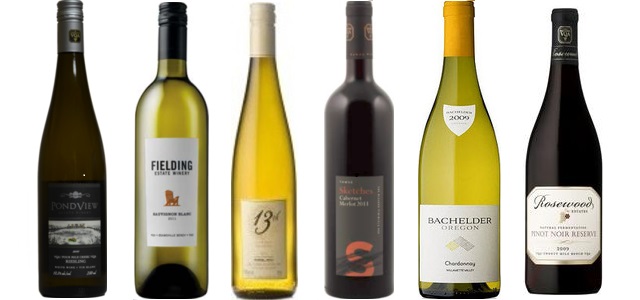
 

Up on Creekside Estates

Creekside Estate Wines Photo: Eric Vellend

Creekside Estate Wines
 Photo: Eric Vellend

It was the weekend of Godello’s excellent Cuvée adventure, a Niagara winepalooza that included the Brock University Cool Climate Oenology and Viticulture Institute’s Expert’s Tasting. On the road to The Falls there happened an extensive tank, barrel and vertical go round at Flat Rock Cellars and then, with chef riding shotgun, the next essential stop came up on Creekside Estates, a seventeen year-old Jordan winery on 4th Avenue.

Creekside Estate Winery
2170 4 Ave. Jordan Station, ON L0R 1S0
1 (877) 262-9463 or (905) 562-0035

@CreeksideWine

Creekside was founded in 1997 by owner Laura McCain on a 15-acre vineyard at the 4th Ave. site. The early days of the winery saw an attitude towards varietal antidisestablishmentarianism, with Sauvignon Blanc and Shiraz at the forefront of production. Daring to be different from the start, Creekside has carved an antithetical, Niagara Peninsula religious wine belief, slightly devious, with a manifesto towards creating wickedly good wines.

Creekside Estate winemaker Rob Power Photo: http://www.creeksidewine.com/

Creekside Estate winemaker Rob Power
Photo: http://www.creeksidewine.com/

In the early days there was winemaker Rob Power and mad scientist partner in crime Craig McDonald, now the chief of what happens in bottle at Trius. Powers graduated in the first oenology class out of CCOVI and began his vinous stirring with Creekside, a post he continues to develop, never-resting on earlier laurels. Back then the two cubs fermented and blended together, with caution swirling tohu vavohu in the wind. Some of those Meritage blends from the early 2000’s were brilliant strokes of luck, or as winemaker’s like to call it, hard work. Or destiny, or god’s favour. The Creekside credo has never wavered. Being overly serious is not an option. Having made decisions such as purchasing the unparalleled Queenston Road Vineyard on the St. David’s Bench on its side, Creekside thrives by an exhibition of capricious behaviour, adroit winemaking and the rope savvy marketing of veracious and affordable wines.

Assistant winemaker Yvonne “Cellar Monkey” Irvine and Director of Sales, Marketing and Necessary Evil Matt “Semi-Illustrious Career” Loney ushered a tasting of 12 Creekside wines. Here are the notes.

Creekside Estates Winery Photo: http://www.creeksidewine.com/

Creekside Estates Winery
Photo: http://www.creeksidewine.com/

Sauvignon Blanc 2012, VQA Niagara Peninsula, Ontario (620724, $13.95, WineAlign)

Leans and veers to the tropical side, no doubt as a result of a record-setting sugar vintage, but this ’12 manages to finish very dry. The arid descent follows a warm and fuzzy peach feeling, set about by some skin contact and buoyed by citrus and zest. Front yard value.

Backyard Sauvignon Blanc 2013 (Tank Sample), VQA Niagara Peninsula, Ontario (341792, $17.95, WineAlign)

A Creek Shores SB that bridges the gap between spring and summer fruit. From a year in which the choice was made to not blend off into the estate bottling. Recognizable Creekside aromatics stand out in a more than obvious mineral deposit and grapefruit zest way. Here the band plays across The Great Divide so “just grab your hat, and take that ride.” Will be a VINTAGES August 30 release.

Sauvignon Blanc Reserve 2012, VQA Niagara Peninsula, Ontario (142570, $26.95, WineAlign)

Seven barrels make up the Reserve, ferments new (four) and old (three), leading to a richer, fatter and spicier style. Dreamy really, as matchstick and flint join the fray in a Pouilly-Fumé way. That pierre à fusil is exaggerated by the warmth of 2012, with an elevated tang, rendering the flavours even more akin to Old World, Loire Sauvignon Blanc. Close your eyes and when you awake, “when you believe, you will relieve the only soul that you were born with, to grow old and never know.” The Creekside band created an old SB soul in ’12.

Laura’s White 2012, VQA Niagara Peninsula, Ontario (121764, $18.95, WineAlign)

Laura’s White combines Sauvignon Blanc, Pinot Gris, Chardonnay, Riesling and Gewürztraminer in a kitchen sink blend that sees a bit of oak. What’s notable about the ’12 is the omission of two highly aromatic components, the previously employed stalwarts Viognier and Chardonnay Musqué. The adage is justified in that you take what the vintage gives you. If it gives you lemons, (shift tangents) you let the busy aromatics of more flavourful grapes (like Chardonnay) do the floral work. Laura’s ’12 will be a standout for the concept, a revivalist blend to help bring back some religion to the region’s renditions. Coming to VINTAGES in June.

Viognier Estate Reserve 2011, VQA Niagara Peninsula, Ontario (22058, $29.95, WineAlign)

A 60-80 cases annual production from the Queenston Road Vineyard is not nothing because “ya take what ya need and ya leave the rest.” Aside from a miniscule addition out of stainless steel tank, this is all neutral barrel fermented fruit. Reigned in, less boozy and subordinate in oleaginous slide than in the sweaty years. Translation? A superlative vintage. The night they drove a whopping six rows of old ’11 Dixie Viognier fruit down for crushing the band began to play. This, knowing full well there would be no dirty peach martini, but rather a perfumed dropper distilling flowers, wildflower honey and wild tarragon. Rises and falls to verse like a Richard Manuel keyboard march with length to match the Queenston Road.

Rosé 2013 (Tank Sample), VQA Niagara Peninsula, Ontario (winery, $15.95)

A Cabernet Sauvignon (71 per cent) and Cabernet Franc (29) full-on saignée Rosé with colour balance given by way of the CF bleed. An arid entry creeps to sweet with a pause amongst the whispering pines, finishing tinny and with a breath of fresh herbs. Niagara Rosé can get lost sometimes, in extract, hue and a candied, sinking feeling. This is a scaled back vintage which is more than a good thing, so there’s no waiting, “until it all goes round…the lost are found.”

Syrah 2012, VQA Niagara Peninsula, Ontario (121764, $15.95, WineAlign)

A healthy 3,200 cases are managed and executed with ease from mostly estate fruit. Certainly warm in this vintage, dare I say, like McLaren Vale. If it must not be said, too bad, but it’s also a bowl of fresh berries with a rocky Rhône intent. Terrific tar and ash finish.

Cabernet Shiraz Estate 2011, VQA Niagara Peninsula, Ontario (305300, $16.95, WineAlign)

A traditional Oz combination of Cabernet Sauvignon (55 per cent) and Shiraz (45), clearly new world in style, as Yvonne Irvine says, like “trying to make a big, rich, unctuous Shiraz.” The question could be posed, “temptation stands just behind the door, so what you want to go and open it for?” This one goes right to the jawbone with serious backbone and streak of acidity. Not to mention chalk, grain and a Shiraz solo. The American oak accent is clear and the tannins say wait two to three years, please. The fruit may, or may not comply.

Laura’s Red 2010, Queenston Road Vineyard, VQA St. David’s Bench, Niagara Peninsula, Ontario (117906, $19.95, WineAlign)

It’s funny, more than any other wine tasted, this Laura has that Niagara varnish other Creekside reds seem not to possess. “Stock up in the big years” suggests Matt Loney, and “consolidate in the tougher ones.” It could be argued that you can make more interesting wines in the lean years but this blend of Cabernet Sauvignon, Merlot, Syrah, Malbec and Petit Verdot lays a claim to seriousness, if needing at least three years to settle down. There is much cassis, sweet oak, iodine and a milk/dark chocolate swirl. Complexity for sure if just a bit huge within its own skin.

Merlot Reserve 2008, VQA St. Davids Bench, Niagara Peninsula (winery, $34.95, WineAlign)

Here is a wine that is aging gracefully, works with and fits into the vintage, Merlot as objet d’art, grown in stature as if by wizened verdigris. Smells like Goulash or Côte de boeuf à la Bordelaise, even cured meat. Might also be considered in terms of funk, a note sometimes brought on by Hungarian oak. Tons of red fruit, pencil, anise and “the smell of the leaves, from the magnolia trees in the meadow. King Harvest has surely come.” Few Ontario reds succeeded in ’08 like this Queenston Road stunner and few will live as long. Another classic by the band.

Cabernet Sauvignon Reserve Queenston Road Vineyard 2010, VQA St. David’s Bench, Niagara Peninsula (winery, $34.95, WineAlign)

Impeccable correctness in terms of the variety from a year where the heat giveth and the heat taketh away. Works Cabernet properties properly, embracing and minimizing oak without pretending it’s not there. This red is expressly lush and oak driven, as it should be, it being Cabernet and all. Leaves its appendages out for a Mediterranean pedicure, a glaze of Cassis, black olive and black cherry dug in a chair entrenched in the warm confines of the St. David’s Bench.

Lost Barrel Red 2007, VQA Niagara Peninsula (46470, $65.00, WineAlign)

Just 60-80 cases are made from the tips of the best barrels through a process that takes 56 months to complete. The secret ingredient is Sangiovese and bless the band‘s soul if the ferric, iron and animal musk is not attributed to the addition. This is a different kind of wine, with lees in the bottle, not unlike some big, bad Spanish wines. It’s ’07 and still reductive which makes it seem peculiarly modern (note, Spanish) but it’s really not. Despite the monster tannins, it “just gave my heart a throb to the bottom of my feet and I swore as I took another pull,” the Lost Barrel can’t be beat. Up on Creekside Estates.

Good to go!

Release the wines, catch an Ontario phrase


Pinot Noir from the Mountainview Road on the Beamsville Bench.  Photo: William Roman, http://www.rosewoodwine.com/

Pinot Noir from the Mountainview Road Vineyard on the Beamsville Bench.
Photo: William Roman, http://www.rosewoodwine.com/

In the past 10 days there have been opportunities to taste the Ontario wine industry’s state of the union. Tawse Winery rolled out the red carpet, the Key Keg and a must check ’em out set of new wines in a sister brand known as Redstone Wines. County in the City presented a major introspective of Prince Edward County at the Berkeley Church and Somewhereness, the definitive Ontario goût de terroir on display April 9th at St. James Cathedral has the local wine community abuzz with new catch phrases.

Full reports on those three events will be coming out over the next couple of weeks. In the meantime, Ontario wines and winemakers are well represented in this week’s VINTAGES April 12th release. That and a mess of catch phrases, idioms, colloquialisms and overall word play.

A sundry type of tasting note composition can theoretically make cause to “burn one’s boats” though the phrase “crossing the Rubicon” holds more water and instills greater confidence. Before feeling the need to act on a Mr. Bursian attack and screaming “release the hounds,” it is highly recommended to read between the lines, click on the pop culture references but refrain from and “don’t look the gift-horse in the mouth.”

Ontario wines have come so far and in such a short period of time. Sure there are some outfits that might be considered a “flash in the pan” and specific examples weighted down by “feet of clay.” Who does not hope that as a group, wines from Niagara, Prince Edward County and Lake Erie North Shore avoid a “hoist with one’s own petard’ or go “sailing under false colours.” There should be no fear. Ontario wines are no longer merely improving. They are “throwing down the gauntlet.” There is no reason to reject the idea of spending $38 on an Ontario red or white. Quality is officially and incontestably in the bottle.

Here are six wines in stores now, five from Ontario, the other made by an Ontario winemaker, to have a go at this weekend.

From left to right:

From left to right: Pondview Riesling 2012, Fielding Estate Sauvignon Blanc 2013, 13th Street June’s Vineyard Riesling 2011, 13th Street June’s Vineyard Riesling 2012, Bachelder Oregon Chardonnay 2011, Rosewood Estates Reserve Pinot Noir 2010

Pondview Riesling 2012, VQA Four Mile Creek, Niagara Peninsula, Ontario (271148, $15.95, WineAlign)

While winemaker Fred di Profio’s ’12 remains true to the Pondview idea of mineral-driven Riesling, the vintage dictates the course and this one simply carries four miles of juicy fruit, accented by green herbs and a spread of lime jam. It’s dry, vinous and cidery with a slight sour aftertaste. A lamb Riesling, lambic, iambic and pedantic. Good value. Tasted March 2014  @Pondviewwinery

Fielding Estate Sauvignon Blanc 2013, VQA Beamsville Bench, Niagara Peninsula, Ontario (131235, $18.95, WineAlign)

Ever orchard fruit bearing, omnipresent juicy Sauvignon Blanc. Pliable and informal, typical in itself and for the local marl. Kept on its toes by a wailing, sharp green peppercorn cut by caper line that runs through, then gracefully descends towards a grassy, song of freedom refrain. Tang is the final act of its redemption. Well-structured and proper. Does a Fielding wine ever not abide and chant “we forward in this generation, triumphantly?” Tasted March 2014  @FieldingWinery

13th Street June’s Vineyard Riesling 2011, VQA Creek Shores, Niagara Peninsula, Ontario (147512, $19.95, WineAlign)

June’s vineyard, now in its (correct me if I’m wrong) 12th year is both nascent and senescent, increasingly producing a blatant expression of Creek Shores Riesling. Today’s fleeting study faces a direct, anti-diminutive aridity and more dried herbs. In 2011, the austere vineyard speaks but the Riesling realizes atonement through a corpulence of flesh and bone down by the sheltered shores. A much tougher assignment than the gilded platinum hand dealt to vineyards upon the upper reaches of the Escarpment.  Tasted September 2013  @13thStreetWines

From my September 2013 note: “from Niagara’s Creek Shores and built of the classic Alsatian Clone 49 inordinately defines place and time in an agglomerated manner. Maximum floral intensity, zero petrol tolerance and an arid accumulation speak volumes about the appellation. To taste you will note it just barely believes it’s off-dry. Unique and unambiguous, plosive Riesling.”  Tasted March 2014

Tawse Sketches Of Niagara Cabernet/Merlot 2011, VQA Niagara Peninsula, Ontario (130252, $20.95, WineAlign)

Call it whatever you like; house red, Bistro red, un verre de vin rouge maison. All phrases to describe a refreshing and wholly compatible glass of red wine. The Tawse is crafted for such purpose, combining Cabernet Sauvignon, Cabernet Franc and Merlot in a Médoc state of mind. Aromatically it spews tobacco, tea, currants and white pepper, all wrapped in a tight, food-friendly package and demanding to be paired this way. Solid red.  Tasted March 2014  @Tawse_Winery

Bachelder Oregon Chardonnay 2011, Willamette Valley, Oregon (273334, $29.95, WineAlign)

The citrus stands out today. If the base and necessary oak treatment is your kryptonite, by all means, walk away from the Oregon Bachelder Project. But that decision deprives that part of your brain that processes progress and reason. This is not the oak-driven Chardonnay of your 1985. This is the future. Embrace the angles, the quotients and the variables. Fruit as function, rock as relation and barrel as the algebraic cauldron that allows the wine to come to conclusion. Sure there’s oak but it drives the equation. Deal with it. Tasted April 2014  @Bachelder_wines

From my earlier February 2014 note: “Yet another three months later re-taste to show Bachelder’s Oregon terroir may be the most difficult to assess in its infancy. This short slumber has changed everything. Oregon distinction, smell it, commit it to memory and you’ll never forget it. “Picture yourself staring at a loved one in a restaurant,” says Thomas. “Would you be able to pick this out as Chardonnay?” Some ciderish activity, from sedimentary and volcanic soils that used to mingle with ocean waters, give this a sea salt and fossilized lava stillness. More buttery (dare I say, popcorn) goodness than the rest. And restrained tang. And length. Wow.

From my earlier November 2013 note: “While Burgundian in hopes and dreams, this is very much a $29 Oregon white. No mask, no hidden altruism, simply the right Chardonnay for the right price. Bone dry, orchard driven, high acid, void of harmful terpenes. There is a salinity and piquancy not influenced by PH, perhaps by the ocean, by sandstone, but regardless it’s unique to place, unlike Niagara, Prince Edward County, or for that matter Burgundy.”

Rosewood Estates Reserve Pinot Noir 2010, VQA Twenty Mile Bench, Niagara Peninsula, Ontario (318345, $39.95, WineAlign)

Prettier in 2010 the Rosewood is, the aromas a precise glowing arcade of earthy, warm, peppery fire. April redolent of a burgeoning, sweet cranberry marsh. Present, accounted for though not tough tannins. Glazed by an unobtrusive candy shell. A fine, inviting, sweet and soft Rosewood Pinot, true to vintage and neighborhood. “Then I’ll dig a tunnel, from my window to yours.”  Tasted March 2014  @Rosewoodwine

Good to Go!


Bottles, barrels, tanks and a vertical

Flat Rock Vineyard, Twenty Mile Bench, Niagara Peninsula

Flat Rock Vineyard, Twenty Mile Bench, Niagara Peninsula
Photo: Brian Barton

as seen on canada.com

Listening to Flat Rock Cellars’ winemaker Jay Johnston rattle off the numbers and particulars of his 2013 Pinot Noir harvest you can’t help but survey the odds of something preternatural. Vintage speculation for 2013 in Niagara has met with tempered interpretation, a play down on the effects of weather and generalizations that it was just another normal meets classic year. Nothing to see here. You sure about that?

This according to VQA Ontario. “2013 was an interesting year with some significant weather variations through the growing season…weather conditions during the 2013 season were quite variable…with some isolated late frosts in Niagara…temperatures through September and October were slightly higher than normal but October was wet putting pressure on harvest schedules and many wineries worked long hours to optimize harvest strategies around the weather.” Sound the alarm?

Flat Rock’s vineyard is a wondrous bit of topography. Peer out from the conclave tasting room and witness a rolling set of undulating and breaking waves, ascending, descending and demarcating the landscape. Let Ed Madronich point out individual plots and blocks. Imagine each sub-section of the vineyard as its own little hermetic world, with its own soil biology and guided by its own little set of rules. Now taste Pinot Noir tank samples from 19 disparate parcels. Internalize, disseminate, deconstruct and reconstruct. As if you were the master of single varietal assemblage. Mind blowing actually. Nerdy, but mind-blowing.

House and Home Food Editor Eric Vellend and I sat down with Johnston and Madronich at the winery for a comprehensive look at those ’13 Pinots, fresh out of their infancy and just beginning to offer a glimpse of what they will be. A total of 185 tonnes were harvested at a more than modest 24 to 24.5 brix, a sugar quotient effectuated by timing as much as sunshine. Nineteen chapters delineate the story, in 160 barrels and in the end there will be two wines. The 2011 Block Series experiment will once again go unrepeated, though Jay notes a return could be considered for 2014.

2013 Vintage Flat Rock Pinot Noir Samples

PHOTO: Eric Vellend
Flat Rock Cellars Pinot Noir samples from the 2013 vintage

The tank room was very cold on this last day of February 2014 (you don’t say) so Johnston brought up the samples in what can only be described as a highly classified, secret society of winemakers, high-tech way; in plastic water bottles and Erlenmeyer Flasks. The goal was to offer a representation of the fingerprint of the vineyards and the fermentation management through full composite blends of each batch. We tasted through eight of the 19. The first three are from batches that end up in the Flat Rock Estate Pinot Noir. Clonal selections are noted in brackets.

Flat Rock Cellars 2013 Tank Samples

PHOTO: Michael Godel
Flat Rock Cellars 2013 Tank Samples


South (115)

Tang at the forefront, a mineral streak, red berries and a lingering whisper of citrus squeeze from recent (X-mas) sulphuring.

Horseshoe (777)

Dusty and also juicier, from an icy, polar beginning to come back around, calm down and seek a softer, common (to South) end.

Road (777)

Beastly, meanest sucker of the three, speaking with the most rock. The only one (of the first set of three) with some funk.

Monster (A blend of clones)

Funkadelic funky but also the fresh maker. Cherries and high-toned perfume, a feral hint in a leafy, good compost way.

Pond (667/777)

Most like cousin Monster, with increased ferrous activity and striking as the most recognizable to be Flat Rock Pinot Noir, even at only four months of age.

Mountain (667)

The darkest hue yet, with more smoke, heavy rock and a fuller structure.

Bruce/Summit

Bottom and top of the (west) vineyard collide with a mineral tie connecting the two. Grit and toughness here, depths of Mordor and Prunus Serotina, cherries gone black. The combo effect confuses the fruit, rendering the B/S the least subtle and distinctive.

Bruce West

Back to dust but also tang and bigger tannins. Vines with less vigor and smaller berries to thank.

These eight samples all begin in antipodal and far away places but come together to seek common ground. As a window to the outlook for 2013 I can say with unequivocal doubt that if these wines were in bottle they could all be enjoyed right here and now. Pinot Nouveau. They are possessive of a computation in complexity to each tell an individual story. It would be hard to figure Jay and Ed waiting a full 12 months to see them into bottle, especially from the showy blocks. Look for Flat Rock to knock some off to racking in late spring to preserve their amazing level of freshness. The 2013 vintage looks to offer immediate gratification. Its longevity remains to be seen.

Vineyard view, Flat Rock Cellars

PHOTO: Michael Godel
Vineyard view, Flat Rock Cellars. Note the warmest rows.


Notes on (not yet released) 2012′s and 2013′s

Pinot Noir 2012, VQA Niagara Peninsula (1545, $18.95, WineAlign) VINTAGES Essential

Nearly 4000 cases will be available of this nearly-unfiltered, very established and always well-thought out Pinot Noir. A consideration of the plots and barrels micro-management that determine the crasis of this Estate wine demands an extrapolation in full-on assessment. The medium-coarse Chinois filtering lends to a tannic chain of texture thick in grain and chalk. A heavier Estate because when the weather gives you heat you make a climate appropriate wine. This monkey is not a product of arctic air and it “got too deep, but how deep is too deep?” Thermal vintage melt, ritzy ripe cherry stuff in 2012. From the Ritz to the Rubble, if you like, or the Flat Rock.  88

The Rusty Shed Chardonnay 2012, VQA Twenty Mile Bench, Niagara Peninsula (1552, $24.95, WineAlign)

There will be 660 cases of this barrel cherry-picked, now iconic Bench Chardonnay. The warm vintage called for a combo-malo approach, part batch all in, part arrested development. Gravity influenced top down blending also work to seek a svelte elegance and this ’12 really straddles the humid line. Thinks to be ribald but remains chaste, only allowing a kiss from the barrel and a caress from the rocks beneath the soil. Accept immediate but know that deferred gratification is the hallmark of this bottling.  89

Nadja’s Vineyard Riesling 2013, VQA Twenty Mile Bench, Niagara Peninsula  (578625, $19.95, WineAlign)

From a sample just pulled from the tank. Jay Johnston’s concept for Nadja is to create many fermentations together, using 2000L tanks and some barrels. The ferments are arrested when they achieve balance and then blended. Nadja still has her young fizz on and she’s exaggerated in Metallica meets a wondrous kind of sour. Already showing an unfurling of (mostly citrus) fruit but also spice and hurried depth. Frantic Riesling, will she “stop to warm at karmas burning, or look ahead, but keep on turning?”  89-90 

Pinot Noir Rosé 2013, VQA Twenty Mile Bench, Niagara Peninsula (39974, $16.95, WineAlign)

Tasted from a tank sample. The 2013 Rosé marks a change in direction and approach. No longer a one-dimensional, typical method blush made by saignée, bled off cold soaks, the ’13 goes at it half and half through skin fermenting. As soon as the skins dry out they are removed. The result (though not really apparent four months in) will be aridity with the sweet balance arriving by way of a six to seven percent sulphured dose of Gewürztraminer. The sample swims both upstream and down, through waves of salinity and dulcitude. Will lay claim to being one of the more interesting Rosés from the vintage.  87-88

Red Twisted 2012, VQA Twenty Mile Bench, Niagara Peninsula (86918, $19.95, WineAlign)

Tasted from a barrel sample, this singular Bench brew of Syrah, Merlot and Pinot Noir. After 14 months in barrel, all separated at birth, the varieties were blended in mid-January and will be bottled this March. Yet unsettled, there is a level of unctuousness and cake layering. A big red for the believers, for those who lust for big reds. Currently showing its wood, freshness, acids and potential for balance.  87-88

Sparkling Brut 2006, VQA Twenty Mile Bench, Niagara Peninsula (0238311, $35.00, WineAlign)

Tasted with proprietor Ed Madronich at the winery. This was Flat Rock’s first ever Sparkling wine made in a challenging vintage. The base wine was fermented dry and sent to neutral barrels. Sugar and yeast were added after eight months and it then entered the bottle. Newer vintages may see time stretched to 20 months. At this stage it is very much alive, showing the whole orchard and nothing but the orchard, albeit with some fallen fruit. Some sugar lingers but not enough to pull it from dry. With time the orchard gives to grapefruit. In the end it’s big and biscuitous. Says Madronich, “Our wines can go 15 years, no problem.” We’ll see about that.  89 

Unoaked Chardonnay 2007, VQA Twenty Mile Bench, Niagara Peninsula (68015, $16.95, WineAlign)

Tasted with proprietor Ed Madronich at the winery. Six and a half years have done this unoaked Chardonnay six and a half years of wonder. Green herbs and apple jam spread on a whole wheat cracker. To believe there is not a day of oak on this wine is to bury one’s head in the sand and begin again. It’s that stubborn Bench limestone doing the fooling. “We have great soil,” grins Ed. A few minutes and a few more swirls in it begins talking in the vernacular of Chablis, in a matchstick tone. It’s also fleshing as it goes. Six plus years and $17? “It’s crazy.”  90

Flat Rock Cellars Rusty Shed Vertical

PHOTO: Eric Vellend
Flat Rock Cellars Rusty Shed Vertical


Rusty Shed Chardonnay Vertical 2011-2006,  VQA Twenty Mile Bench, Niagara Peninsula (1552, $24.95)

Barrel fermented, barrel aged, gravity fed. No other Niagara winery can offer up a vertical like this, in this price range. If there is another, let me know and I’m there.

2011 (WineAlign) Conspicuous by its texture from a mild to middling vintage “when you picked before or after the rain.” Though combined, the antechamber of acidity and good cheer trumps the mudroom of funk and doldrums. A Guns ‘n Roses vintage, a pull in two directions, with a potential for breakdown. “Ev’rything was roses when we held on to the guns.” A soft, buttery note tempers the tang and yet that tang lifts the fruit. The tension is what sets the ’11 up for a classic run.  91

2010 (WineAlign) Increased sugar from a hot year with early ripening. Picking decisions played a crucial role, the prudent winery avoiding the heat of the day. This was key to preserving freshness and acidity. Though the aromas are soft and muted, the palate is lush and plush with a mid-section of adolescent body fat.  89

2009 (WineAlign) A slow and even ripening season culminated with a warm and dry harvest. Ideal harvest conditions. This ethereal ’09 has that late harvest come of age feel but is unwavering from a dry sense of humour. Acting as fresh as the day it was bottled, ole’ blue eyes is in ownership of the best of all the surrounding vintages. It was a very good year for the old Rusty Shed, like “life as vintage wine from fine old kegs, from the brim to the dregs and it poured sweet and clear.” A classic crooner, with wood now neutral and supportive, that will last alongside fruit, to the autumn of its years.  91

2008 (WineAlign) From a cooler, wetter, “Burgundian” vintage. Noticeable terpenes and delineated streaks in the aroma, palate continuum. Like mild cider in a diluted but not watered down way. A matter of elegance and refinement. The oak integration may be the most calming yet and the wine has maintained its freshness. A vintage to measure with clonal ancestors and distant cousins if not Flat Rock siblings.   90

2007 (WineAlign) From a very warm and dry vintage with low yields. Dichotomous, with clean fruit working with and against some barrel and earthy notes. Was a tough year to “manage acidity and freshness,” a fight that was paramount to success. Flint and matchstick also work this ’07, as much like Riesling as Chablis so in that sense this is reminiscent of the Unplugged. In another way, the earth says this is as much of a Brett-influenced vintage as any.  89

2006 (WineAlign) Like the 2007, this has that golden hue so it appears that seven to eight years is the marker for the apogee of consumption. A vintage tough on reds, good on whites. Though not high on opulence, the ingot sheen is like fool’s gold and the trickery works to great effect. A fortune is won in patience because this elegant ’06 eventually sheds its rust, gives up fresh apple and palate cleansing acidity. A show of age and propriety.  90

One more for the road.

Pinot Noir 2003, VQA Niagara Peninsula (WineAlign)

Less than a case is left of this first Pinot Noir made by Ed Madronich. At the time Flat Rock made just 500 cases, including two Rieslings (Estate and Nadja) plus two barrels (43 cases) of Chardonnay. From a cool vintage, 11 years on this Pinot is reddening to maroon, with sour cherry flavours submitted to earth. A hint of soy and toffee. Herbaceous, young vine minted, accented by dill and mushroom. Holding on and showing that older vintages had (not known at the time) depth and structure. Creamy texture if not the cleanest Pinot ever made. First world problem.  88

Good to go!

Godello’s excellent Cuvée adventure

Frozen Niagara Falls

As frozen Niagara Falls, so frozen Niagara Falls
Photo: yobab/Fotolia.com

as seen on canada.com

Doesn’t every local wine writer’s pilgrimage begin this way? There’s 130 kilometres to Niagara Falls, we’ve got a full tank of gas, half a pack of cigarettes (not really – the only thing we smoke is BBQ), it’s blinding winter morning light out and we’re wearing sunglasses. Well, one of us is.

Related – When expert’s break wine together

With Jake riding shotgun to Elwood we hit the QEW, pause for bench land visits to Flat Rock, Zooma Zooma and Creekside Estates, then make the frozen Falls by dusk. Two slackers we are, Bill and Ted, ponces submissive to wine, travelling through Niagara assembling a library of tasting notes to condign for memory in lieu of history missed and as practice for futures to come.

Canadian Food and Wine Institute at Niagara College Salmon and Scallops

PHOTO: Michael Godel
Canadian Food and Wine Institute at Niagara College Salmon and Scallops

Niagara’s annual Cuvée rolls out the red carpet for a black-tie gala at Fallsview Casino’s Grand Ballroom. Touted as a celebration of excellence in Ontario winemaking, the event gathers more than 50 wineries and asks that they pour their winemakers’ favourite wines alongside a room full of esculent Niagara eats. Local chefs set lavish food stations and guests are treated to comestible ruminations composed by students from the Canadian Food and Wine Institute at Niagara College. The Sun Media Après Cuvée party features Icewine, sparkling wine and craft beer bars, not to mention a repeat performance by the impolitic, patent, I want you to be moved sound of Jonesy.

Zagat and Spotlight Toronto's Suresh Doss and Wine Country Ontario's Magdalena KaiserSmit

PHOTO: Michael Godel
Zagat and Spotlight Toronto’s Suresh Doss and Wine Country Ontario’s Magdalena KaiserSmit

Proceeds from the Cuvée Weekend go to the Niagara Community Foundation. Created in 2000, the Niagara Community Foundation has raised more than $23 million in endowment funds and has granted in excess of $5.5 million to charities working in the arts, heritage, environment, social services, health, education and community development. In 2015, the event will leave the very capable hands of the NCF and fall into the most capable hands of Brock University.

The word cuvée can mean many things in the world of wine. The Champagne tradition carries the most recognizable weight, the practice dictating that the best grapes be used and gently pressed to ultimately produce a sparkling wine of superior quality. In the end any cuvée is a blend no matter how you slice, interpret or break it down. It really comes down to the question of quality. Did Cuvée 2014 put its best foot forward? Were the ace grapes on display?

Pulling candy from sugar, Canadian Food and Wine Institute at Niagara College

PHOTO: Michael Godel
Pulling candy from sugar, Canadian Food and Wine Institute at Niagara College

The Cuvée gala, at one time an awards showcase ceremony, has welled to the point of a brimming kitchen sink, perhaps in danger of overflowing. Those who know and have been there agree the change in structure has been for the better. Growing pains are natural, inevitable side effects of growth. It’s more party than oenophile wine think tank, a cultural mosaic and for some, a melting pot. Speeches, awards, thank yous and acknowledgements are barely audible above the revelling din.

VQA Promoter Award At Large winner Shawn McCormick and Michael Godel

PHOTO: Dan Trcka/grapeselections.com
VQA Promoter Award At Large winner Shawn McCormick and Michael Godel

In 2013, to a wine, the pours were best of the best. My take was put into these words. Top juice flows at Cuvée 25th anniversary. In 2014 many vintners poured either their best (Domaine Queylus, Five Rows, Coyote’s Run, Rennie Estate, Stratus, Thirty Bench) or their most unique (Peninsula Ridge, Trius, Southbrook, Riverview, 13th Street, Malivoire). The event and the following morning’s Expert’s Tasting would not be diluted by a few more shots of Prince Edward County and Lake Erie North Shore in the arm.

The real adventure lies in the attempt to taste everything in the room. Time and excessive schmoozing gets in the way so getting to more than half is a win, win. Here are notes on 10 wines tasted at Cuvée 2014 and the reasons for singling them out as separating themselves from their peers.

Riverview Gewurztraminer Angelina’s Reserve 2012, VQA Niagara River (368092, $18.95, WineAlign)

A creamy, corpulent expression with a stinging enzymatic yogurt texture. Would swear there was extended lees contact. Furthest thing from the truth says winemaker Angela Kasimos. That striking salve gives way to a vacuous aridity without conceding to nuts and residual sugar. Well-made and without interference. Thanks to Riverview, Gewürztraminer has found a home in the pliable, silty loam of Niagara River.  88  Tasted February 2014  @RiverviewWinery

Peninsula Ridge Sauvignon Blanc Wismer 2013

PHOTO: Michael Godel
Peninsula Ridge Sauvignon Blanc Wismer 2013

Peninsula Ridge Wismer Vineyard Sauvignon Blanc 2013, VQA Twenty Mile Bench, Niagara Peninsula (Winery, $19.95, WineAlign)

Winemaker Jamie Evans and Sauvignon Blanc share a kinesis. When kissed by the wise and wistful fruit that Wismer cedes, compounded by the vintage, this Peninsula Sauvignon Blanc inclines to aeaeae. All parts contribute to a stretched length, from fresh beginning to mouth-watering end. In between there is lees-stirred spice, dry and toasty points but the grass is never overgrown and the berries are golden. A kickstarter sour note propels the wine forward for an even longer taxi onward. What a vineyard, what a wine.  90  Tasted February 2014  @PeninsulaRidge

Westcott Vineyards Chardonnay Reserve 2012, VQA Vinemount Ridge, Niagara Peninsula, Ontario (winery, $29, WineAlign)

From vineyards planted in 2005, this new kid on the Jordan block spent 12 months in oak, half of it new. To a taster, you would never know it. In clone cousin to Le Clos Jordanne’s Chardonnay, this special project is the nephew of a set aside, four-barrel selection. Winemaker Arthur Harder (Calamus) has fashioned a head-turning clean, pure and most mineral-driven Chardonnay from impossibly young Vinemount Ridge vines. A quartz chord runs through it and with just two or three more years of vine age the fruit and adjoining texture will catch up to the rock. That integrated, subtle oak impart is of a Granny Smith apple kind, crisp and taut. Such a memorable inauguration with so much promise that lays ahead.  90  Tasted February 2014

Trius Sauvignon Blanc Wild Ferment 2012, VQA Niagara On The Lake (Winery, $32.00, WineAlign)

Less than 300 cases were produced of this, you guessed it, natural grape skin, wild yeast fermented unique Sauvignon Blanc. Cold bunch pressed and 11 months on the lees lend a fruit/wood spice and gregarious character that is impossible to miss. Winemaker Craig MacDonald shows a savvy Savvy love in his carefully considered treatment of this wine. This ’12 WF steals the show at Cuvée in the category of most compelling and thought-provoking.  91  Tasted February 2014  @TriusWines

Hidden Bench Estate Pinot Noir 2011, VQA Beamsville Bench, Niagara Peninsula (274753, $32.95, WineAlign)

Five months more in bottle has come to this, a Bench perfumed state of mind. On a red raspberry road to absolution. The international coat has now begun to surrender to the maturity and wisdom of the local vine’s intellect, its maker and overseer acting as artificers in planned execution. Earlier note: Deeper, earthier, decreased propriety and more pelage than the previous two vintages. I sense longer hang time, more redress and slower slumber. In Hidden Bench I thought I knew and would always associate with a specific Pinot Noir feel but this ’11 confounds. In a way, that is a large compliment. Fruit reminiscent of a top Central Otago in that it grips my Pinot interest if not my Ontario heart.  91  Tasted October 2013 and February 2014  @HiddenBench

Southbrook Vineyards Whimsy! Winemaker's White 2011

PHOTO: Michael Godel
Southbrook Vineyards Whimsy! Winemaker’s White 2011

Southbrook Vineyards Whimsy! Winemaker’s White 2011, VQA Niagara Peninsula (Winery, $34.95, WineAlign)

While the triple W represents neither traditional alchemy nor screaming value it begs to be considered for sheer shock and awe. A co-fermented, low brix, who varietal blend of 58 per cent Chardonnay, 27 Semillon and 15 Muscat, winemaker Ann Sperling’s capricious fancy white and nerdy captures the vintage to alight and delight effect. Spice, texture, florality and acidity really work the room. Though the varieties seem to sing ”we don’t move in any ‘ticular direction and we don’t make no collections,” they somehow join together.  White wine of whimsy, not shallow, like a Wes Anderson film.  88  Tasted February 2014  @SouthbrookWine

Bachelder Chardonnay Wismer Vineyard 2011, VQA Twenty Mile Bench, Niagara Peninsula, Ontario (345819, $44.95, SAQ 12089591, $44.95, WineAlign)

Got game tonight, in auxiliary moxie, magisterial atmosphere and long strides up and down the ice. Earlier notes: “Increased richesse and oomph and though I continue to hesitate to admit it, Saunders is the (Jackson Browne) elegant bottling in ’11. Wismer the (Warren Zevon) gregarious, mineral character werewolf of Niagara, what with its a touch of anxiety, fuller texture and “bite down…draw blood!” From my earlier November 2013 note: “From the Wingfield Block within the 20 Mile Bench grand cru vineyard, ’11 Wismer is greener, in apple and sapid behaviour. The tension is palpable, quarryful, querulous, more calciferous. Fruit here is picked at an altitude as high as the lowest part of Flat Rock’s vineyard. Can a spot be pinpointed, anywhere on the peninsula that produces more piercing Chardonnay in 2011 as this Wismer micro-block?”  91  Tasted November 2013 and twice February 2014  @Bachelder_wines

Five Rows Craft Wine Pinot Noir 2010, VQA St. David’s Bench, Niagara Peninsula, Ontario (winery, $50, WineAlign)

Gimme soft and sage treatment of a vineyard’s wondrous, pure fruit transcends most previous notions of Niagara Pinot Noir. That Lowrey vineyard in the hands of its first family drives spice into red fruit direct from soil and vine. Winemaker Wes Lowrey handles his family vineyard fruit like it were a baby and from this comes a promiscuous perfume. The ’10 is so youthful but coming into the springtime of his voodoo, having now been in bottle for a year. Though thoughts were that “he was going to show me spring,” the wine should clearly be left to flesh for a few more seasons.  92  Tasted February 2014

Thirty Bench Small Lot Benchmark Red 2010, VQA Beamsville Bench, Niagara Peninsula (winery, $60)

Indoctrinated Right Bank agglomerate built on 62 per cent Merlot, supported by equal parts Cabernet Franc and Sauvignon. Impressively warm and dusty, large, bursting berry dominated with a peppering dredge all around. So much flavour abounds, blanketed by a shaker full of vanilla spice, like “an endless ocean landing on an endless desert.” Still the Benchmark is modest, oaked (18 months) but not overly soaked, pure and in balance. The berry concentration renders it as a resident of the dark centre of the Niagara red blend universe.  92  Tasted February 2014  @ThirtyBench

Queylus Pinot Noir Reserve Du Domaine 2011

PHOTO: Michael Godel
Queylus Pinot Noir Reserve Du Domaine 2011

Domaine Queylus Pinot Noir ‘Le Grande Reserve’ 2011, VQA Niagara Peninsula (winery, $65, WineAlign)

The Thomas Bachelder mentored, two-vineyard assemblage Grande Reserve Pinot Noir grinds more cracked pepper than any predecessor. Every barrel from the Twenty Mile Bench (formerly Le Clos Jordanne’s, Neudorf Family La Petite Colline Vineyard) and Mountainview vineyard were scrutinized to determine the final blend.Bachelder sees black fruit in the early life yet despite the ebullient seasoning, the LGR’s genes are intrinsically feminine. Red cherry, tellus fertility and a mother’s strength hold the family of barrel children together. This is an ambitious and hard to read Pinot Noir. Judgement reserved for five years before the word classic will be used.  92  Tasted March 2014  @QueylusVin

Good to go!