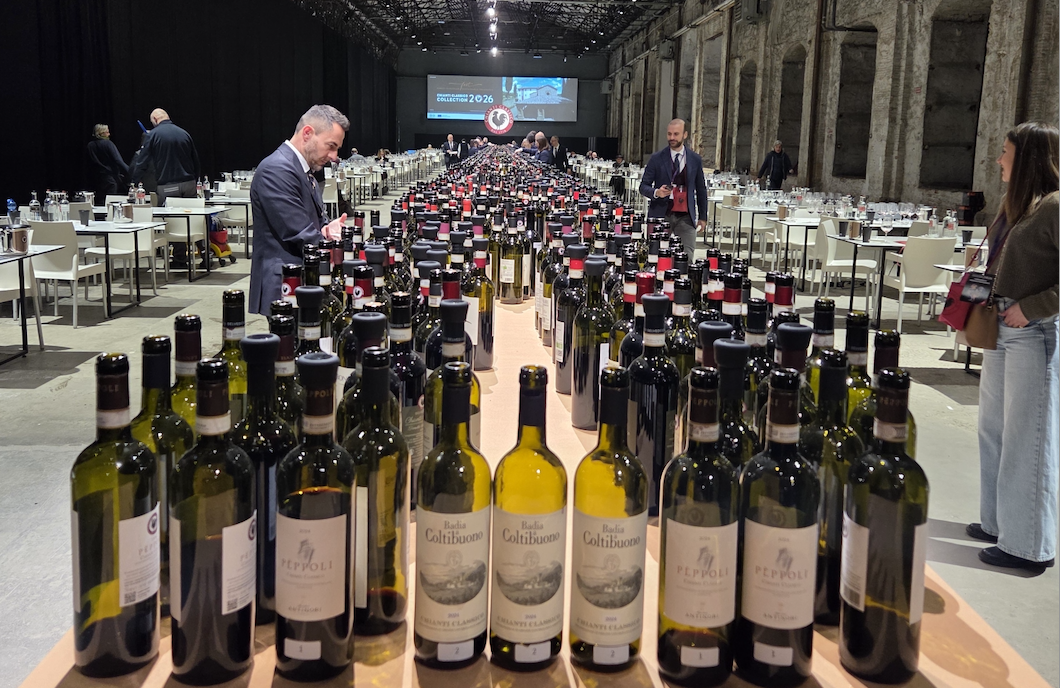
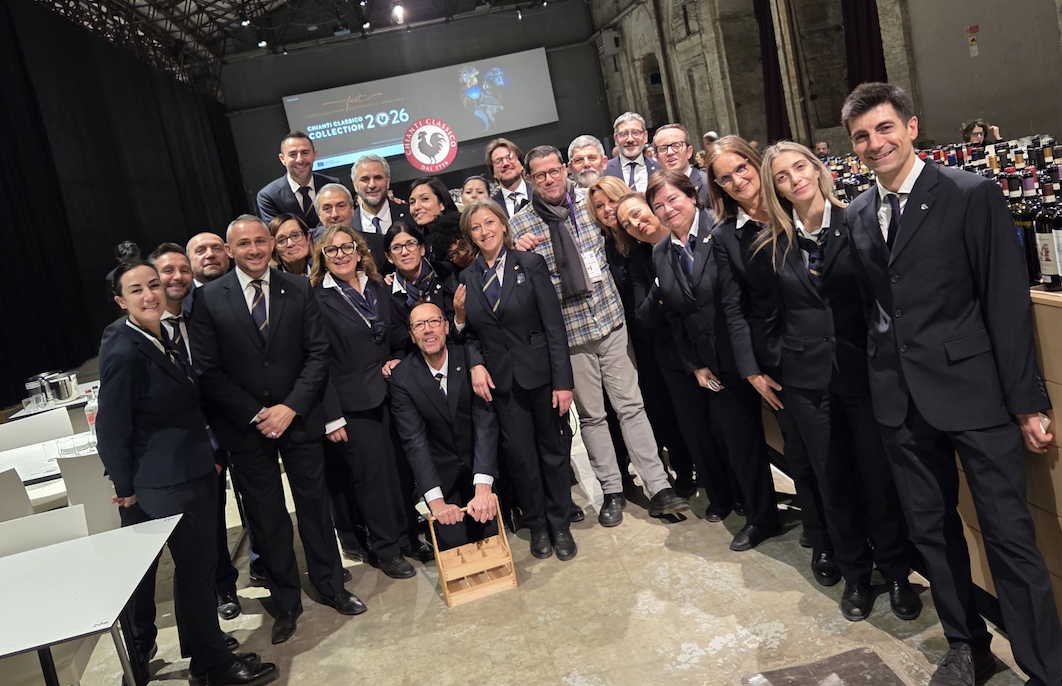
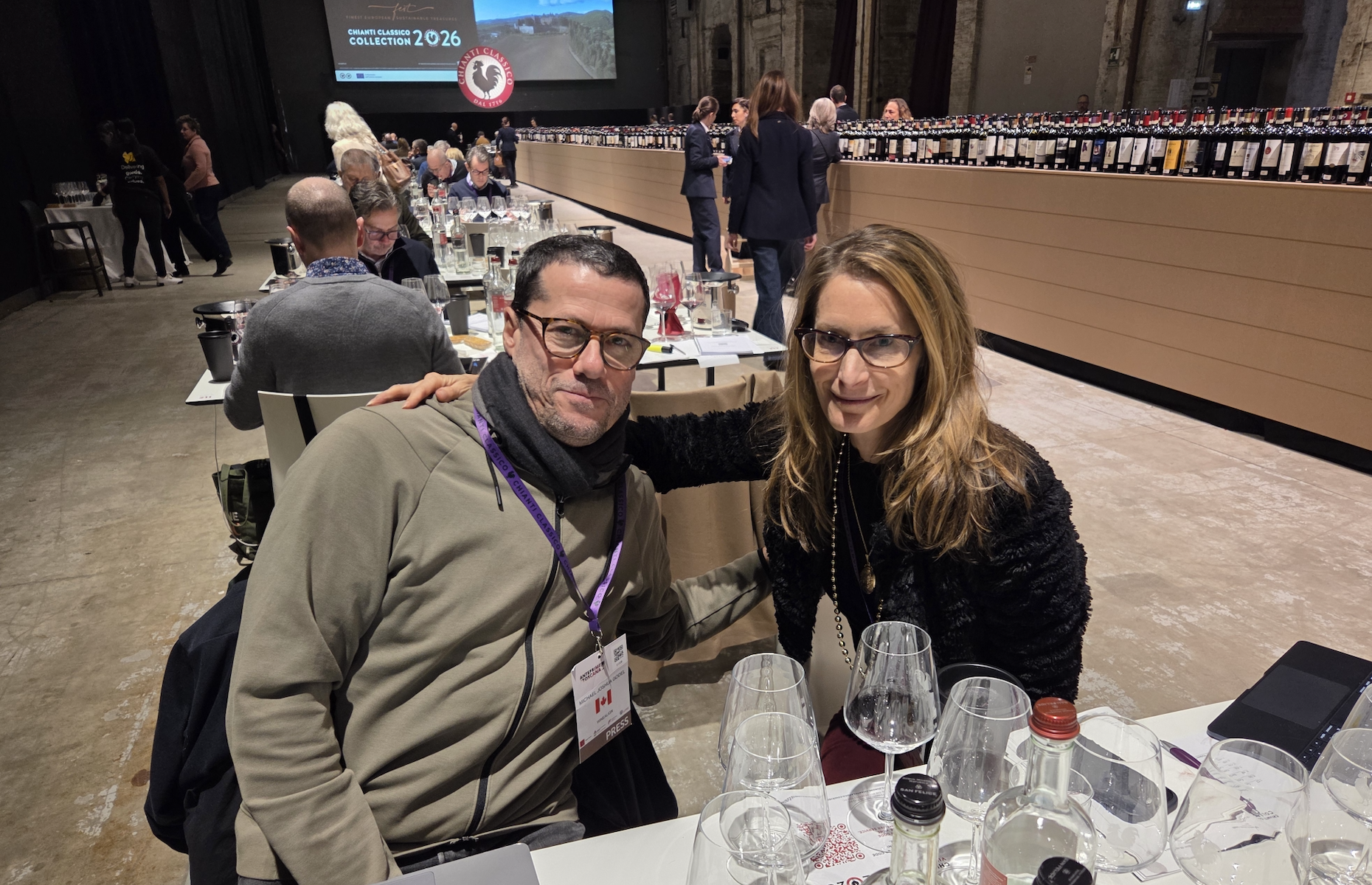
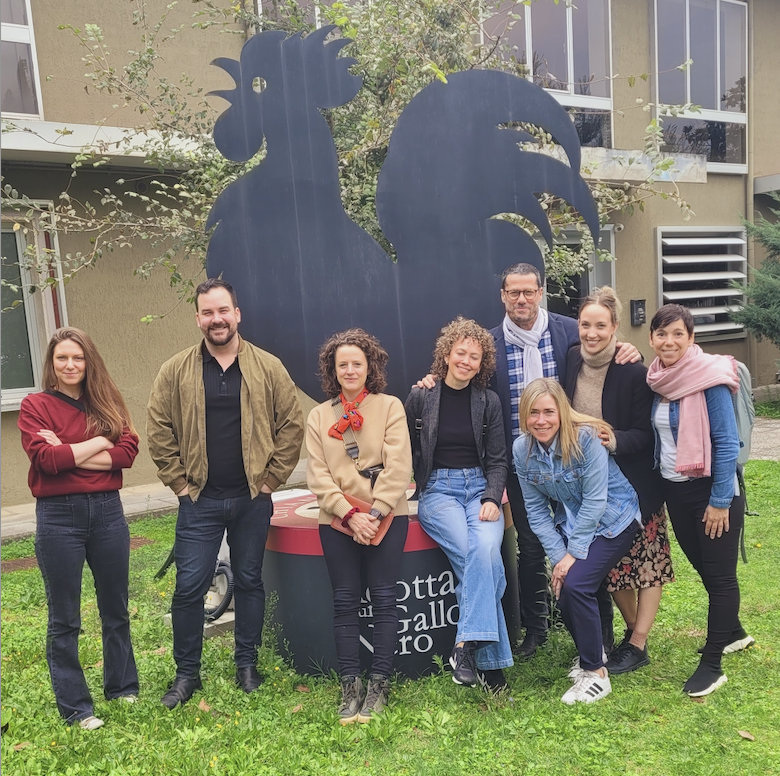
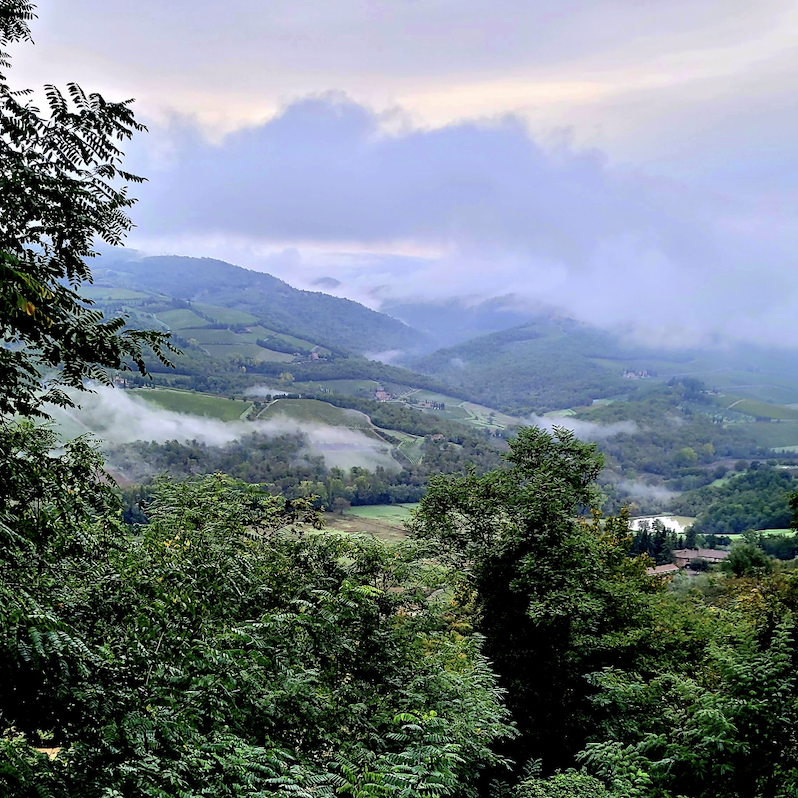
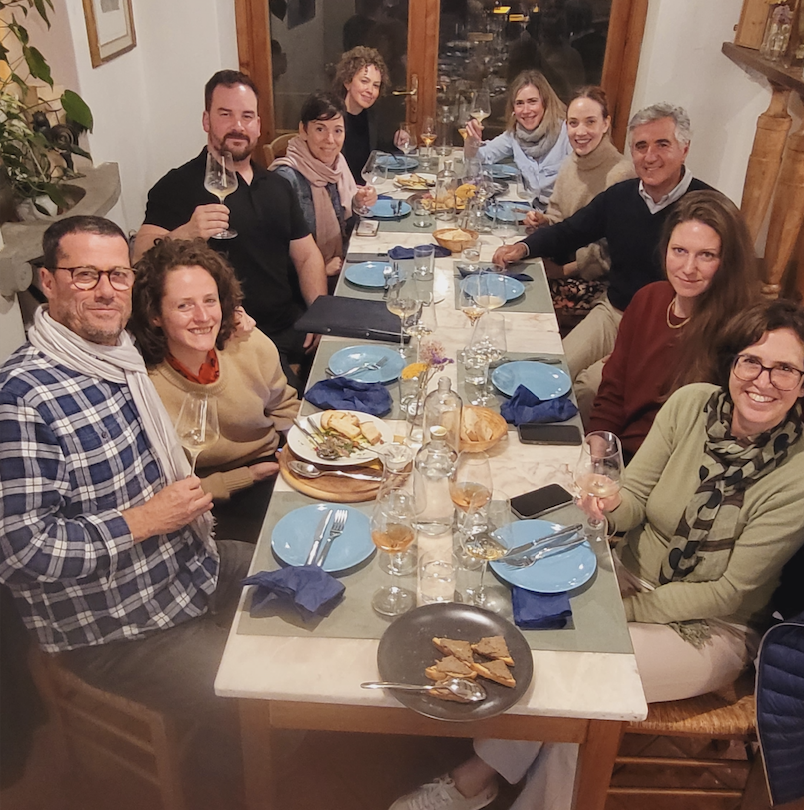
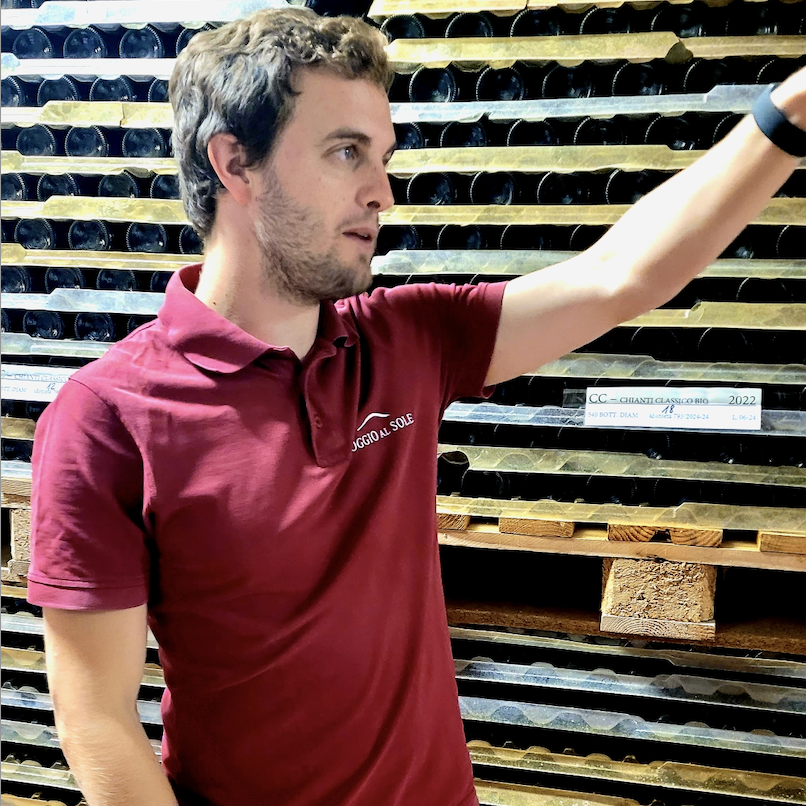
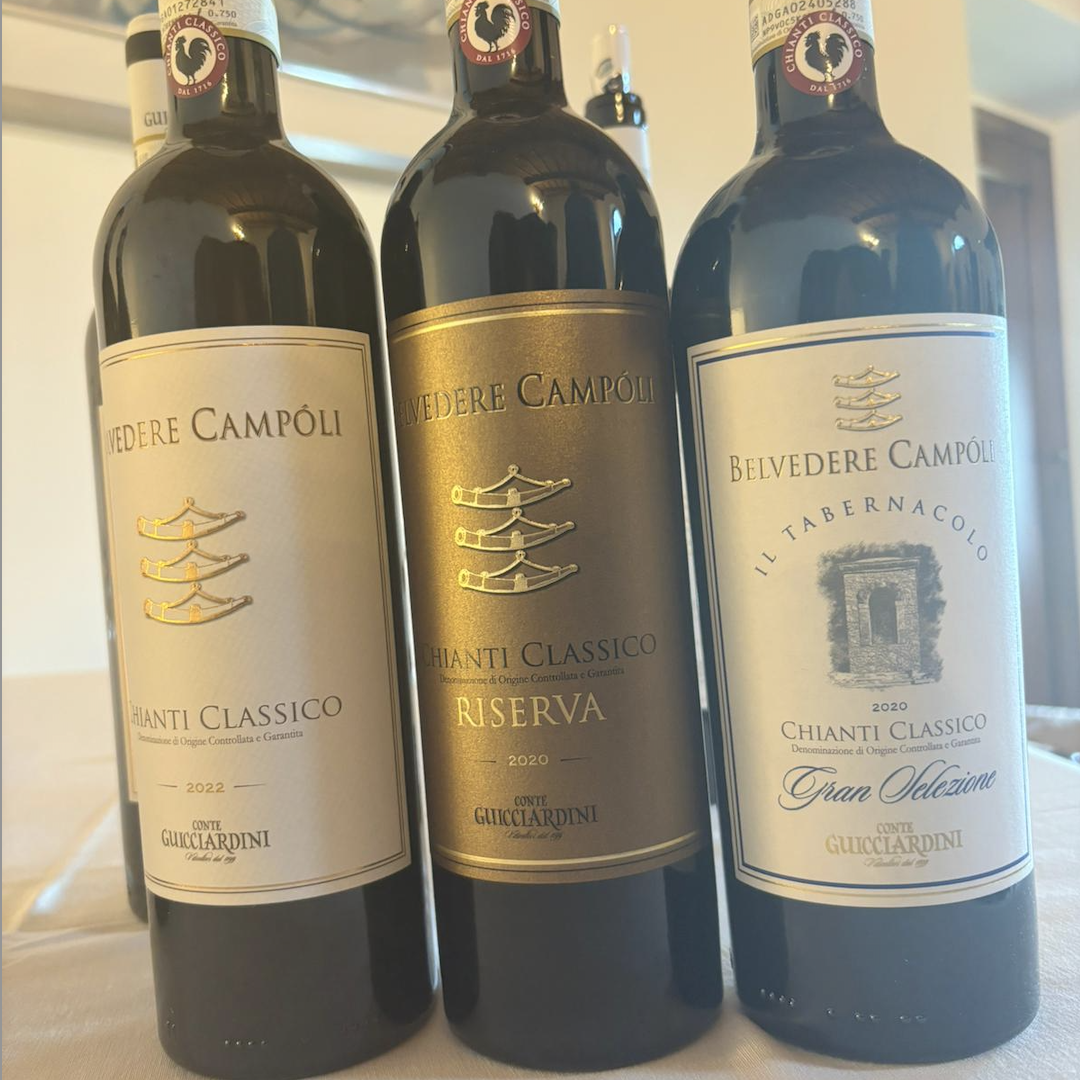
The news broke more than three weeks ago, and it was yesterday’s video call with Consorzio Vino Chianti Classico President Giovanni Manetti that revealed true joy in his expression, not to mention a huge sense of accomplishment. After many years of discussion and debate, definitive and unequivocal recognition has finally arrived for the territory’s Gran Selezione. In no uncertain terms, the highest level of Italian government has declared that the appellative excellence belongs to Chianti Classico, and to Chianti Classico alone. No other denomination may use Gran Selezione to describe, or define a wine.
The recent amendment to Law 238/2006 safeguards the path and efforts undertaken by the Black Rooster appellation. “This is an extraordinarily important achievement,” commented Manetti. “It comes at the end of a long and complex journey. Throughout these years, we have firmly defended our work, our identity, and the value of the Gran Selezione project, a vision in which we have believed from the very beginning. It is a path that has always enjoyed the trust and support of our Board of Directors and of all the Black Rooster producers. Today, we can look to the future with greater confidence and continue along the course we have charted with renewed determination.”
This provision enshrines a principle already recognized by European legislation, formally acknowledging the acquired right and the development path undertaken by the Chianti Classico DOCG, granting it the exclusive right to use the term Gran Selezione. Since 2014, when Gran Selezione was introduced into the production regulations, Chianti Classico has invested significant human and financial resources, expertise, experience, and dedication in both the production and promotion of Gran Selezione wines. Over the years, this project has helped strengthen the positioning of the entire appellation, consolidating its reputation for excellence within the international wine landscape.
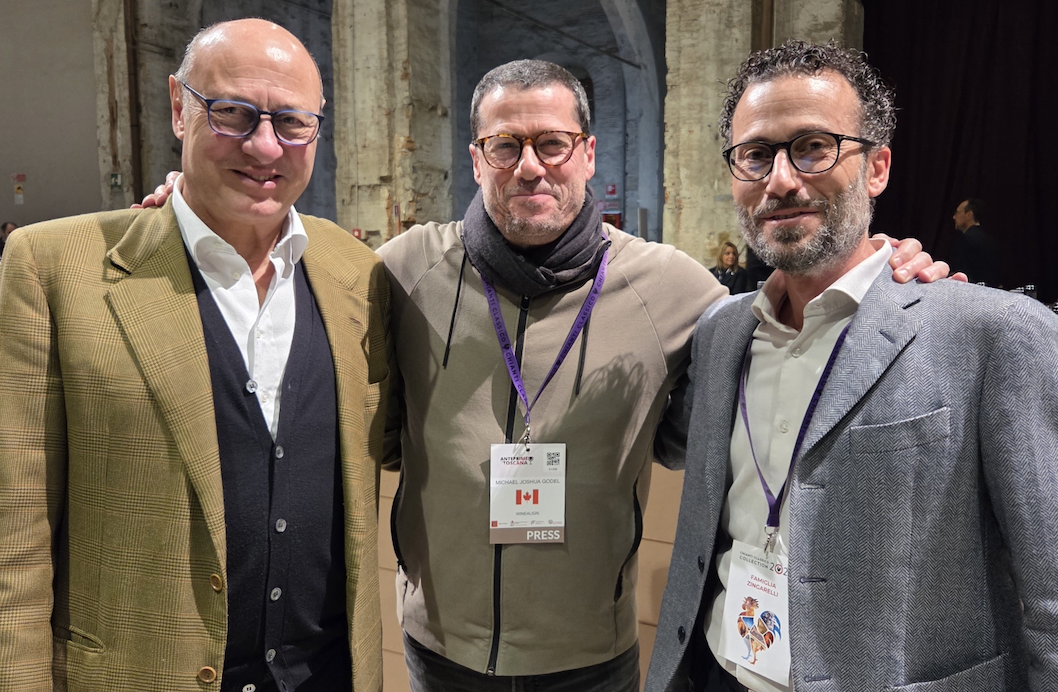
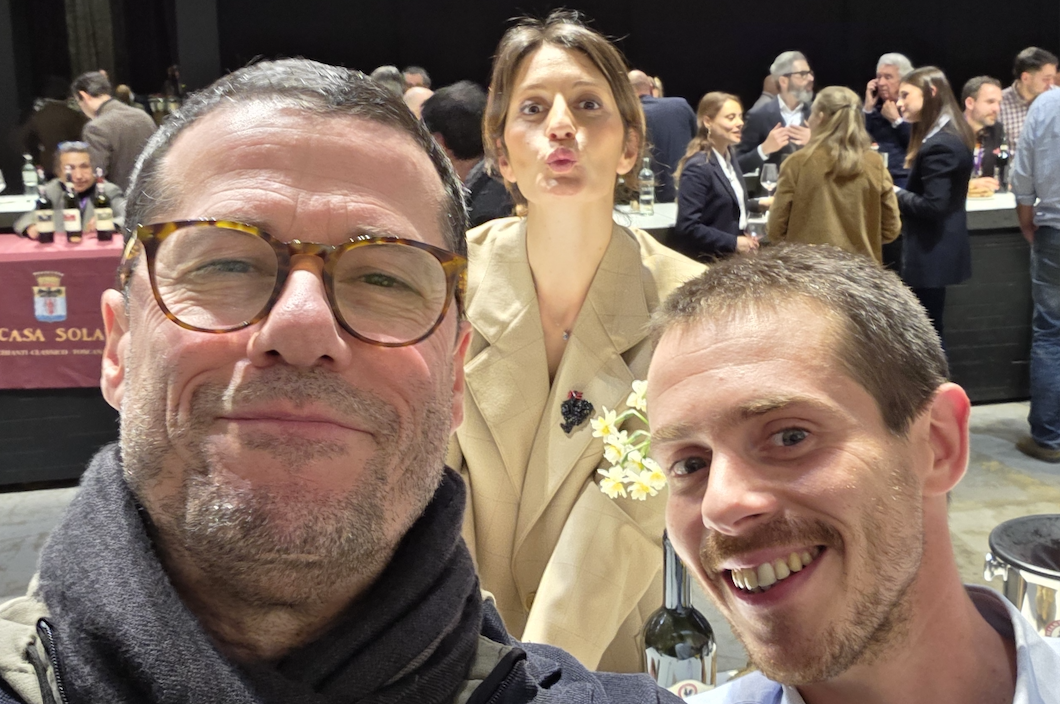
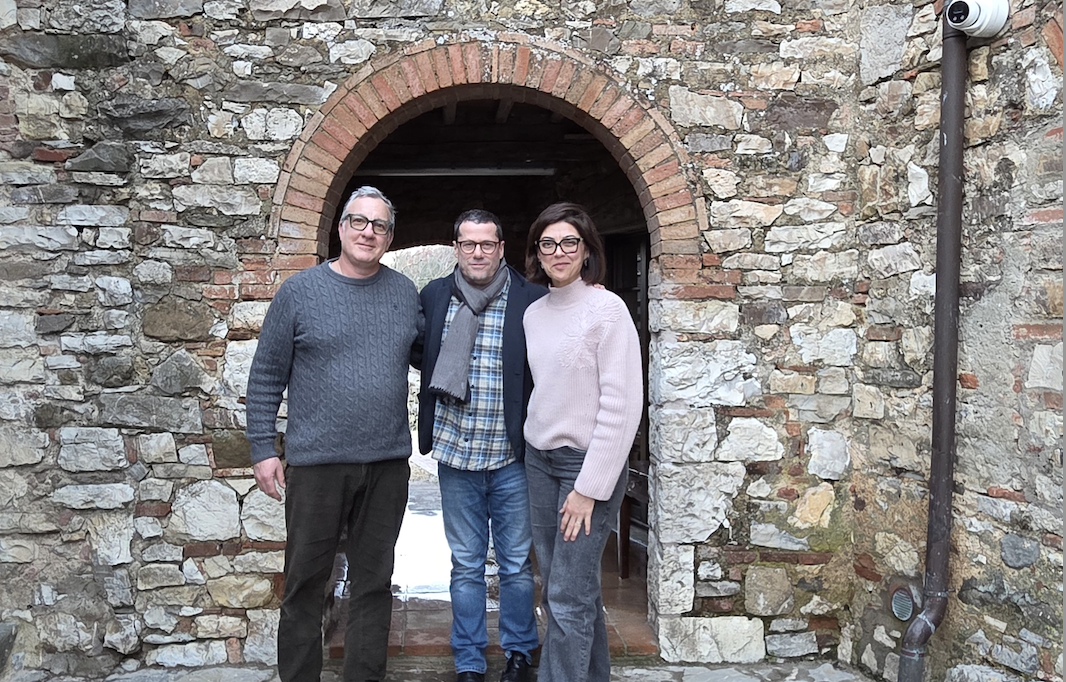
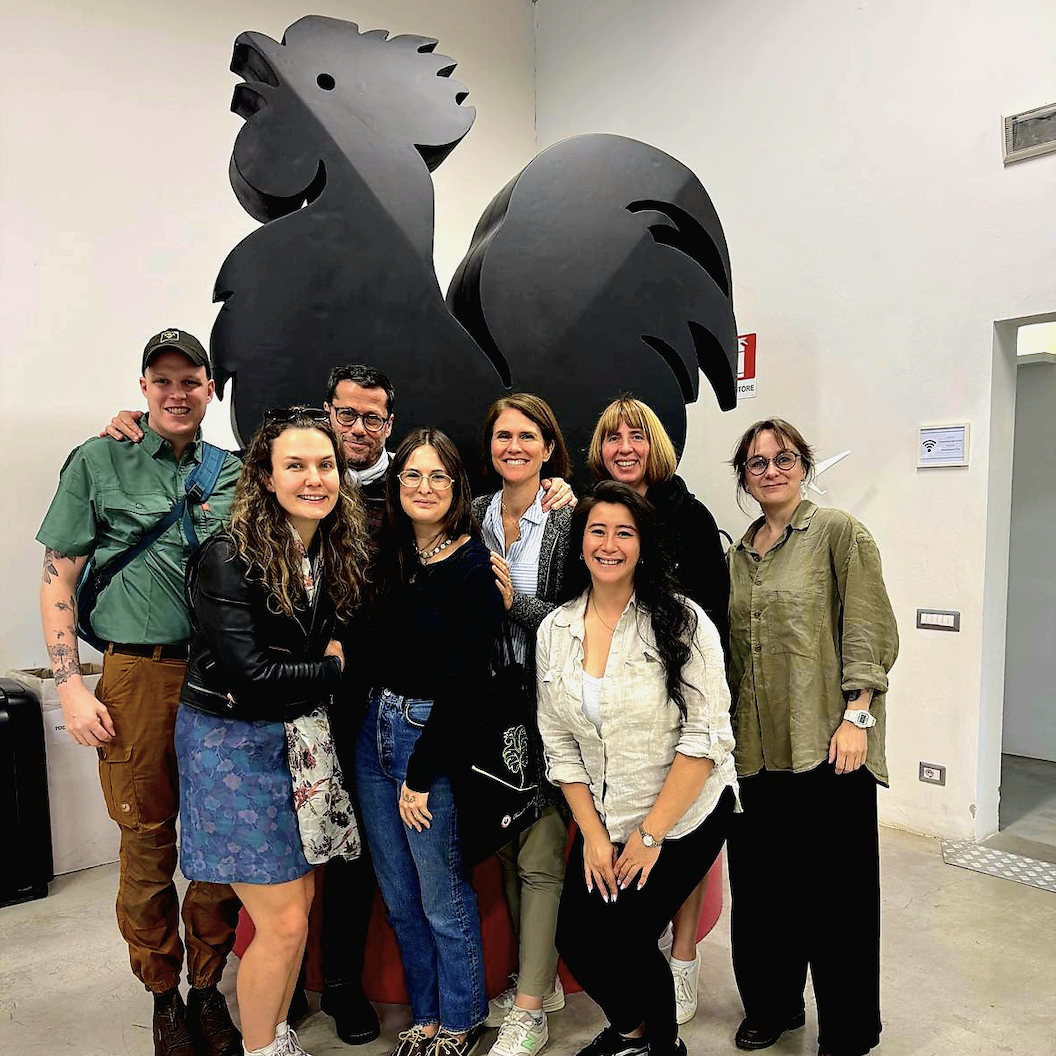
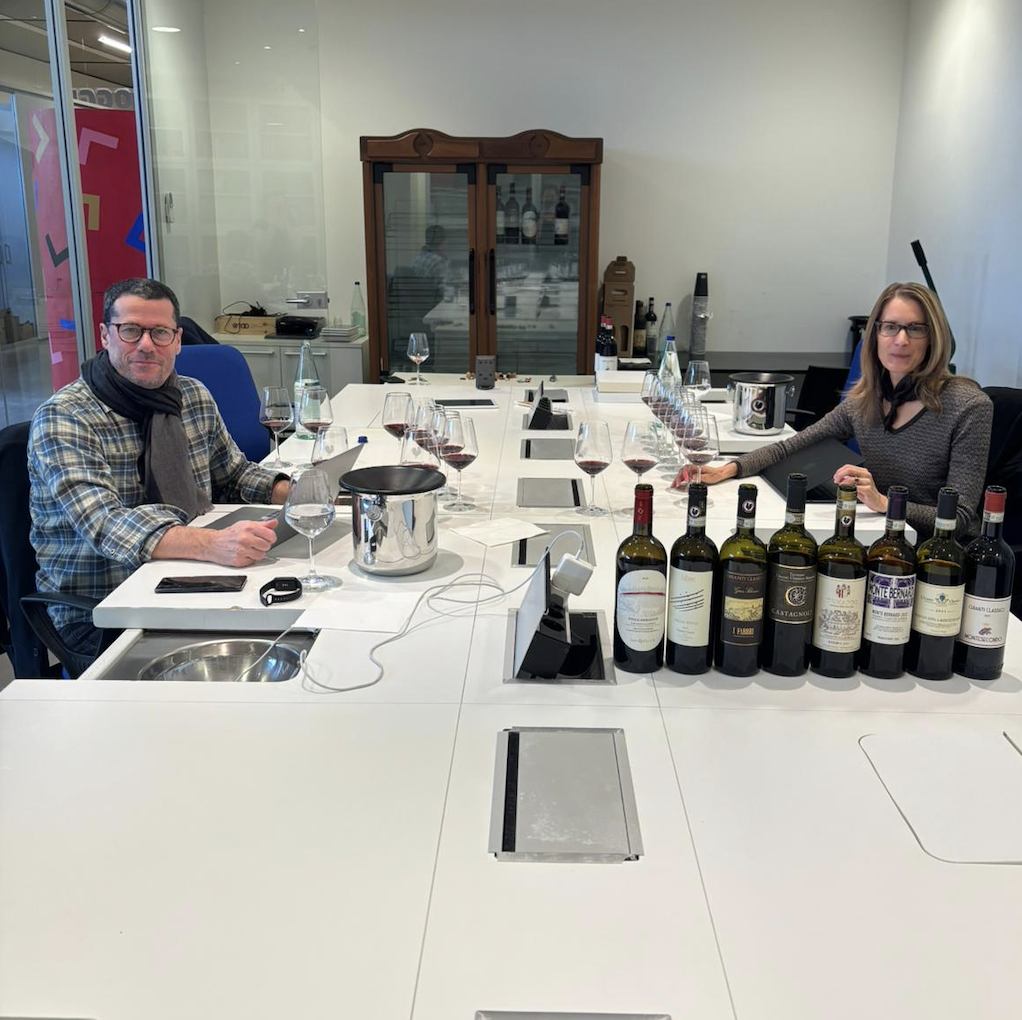
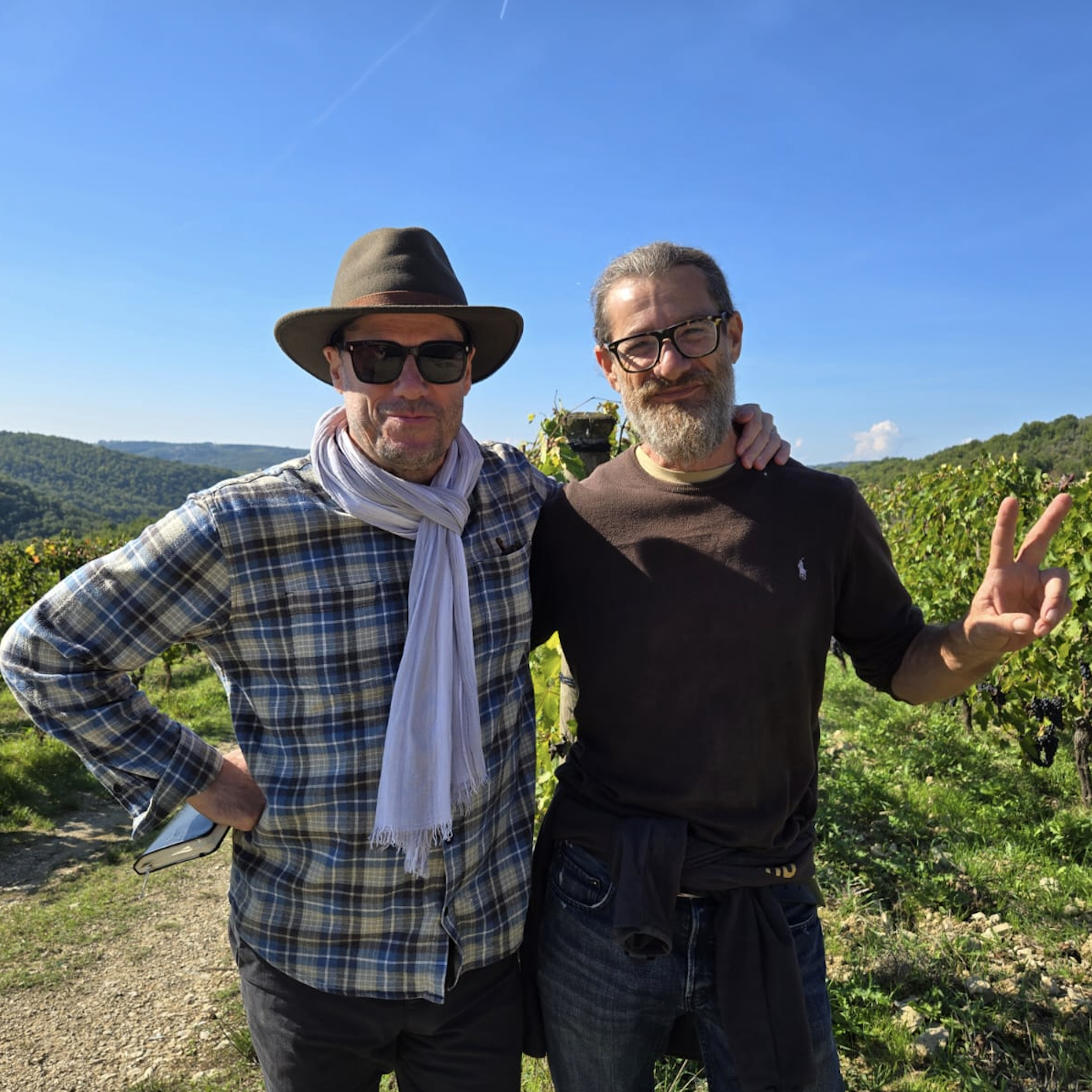
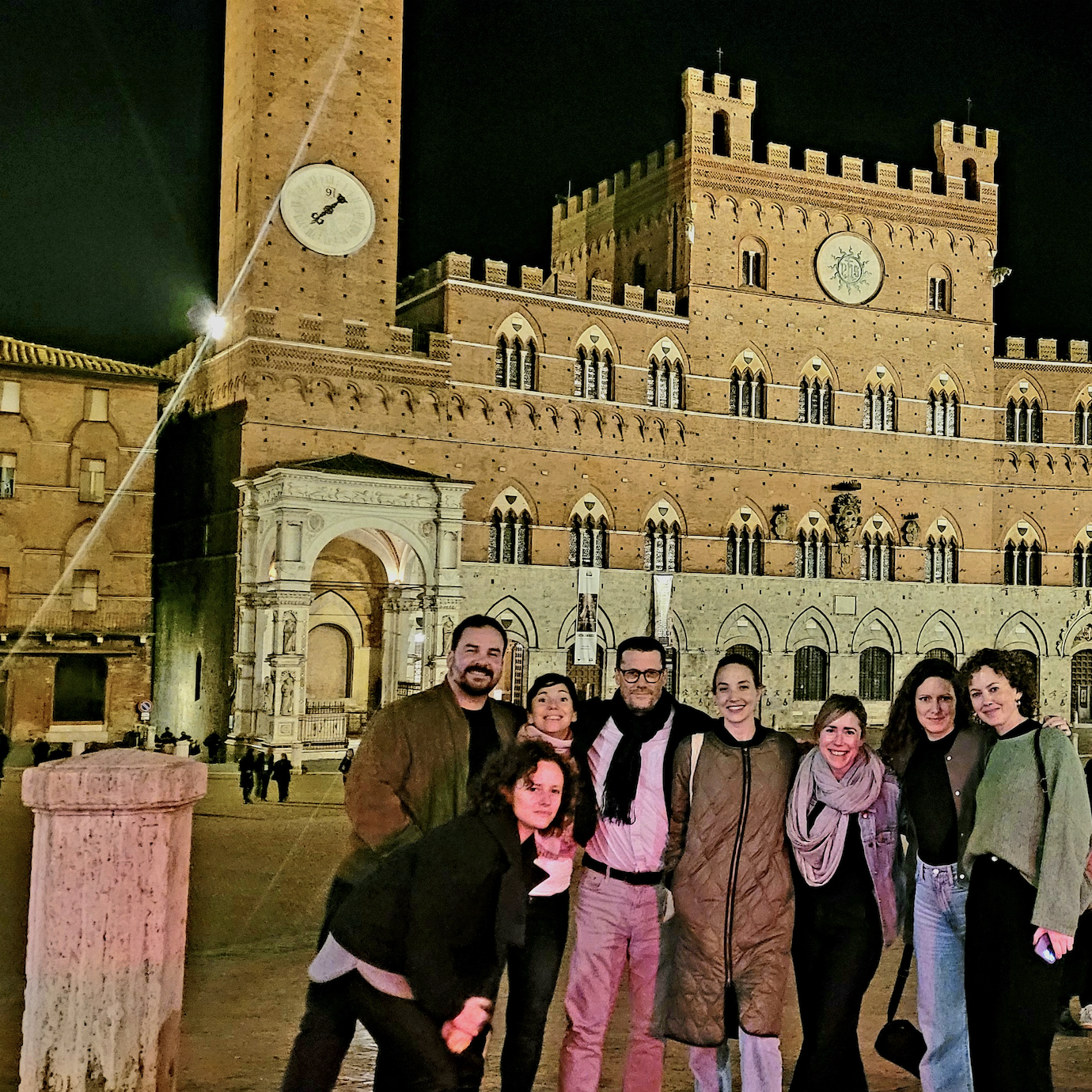
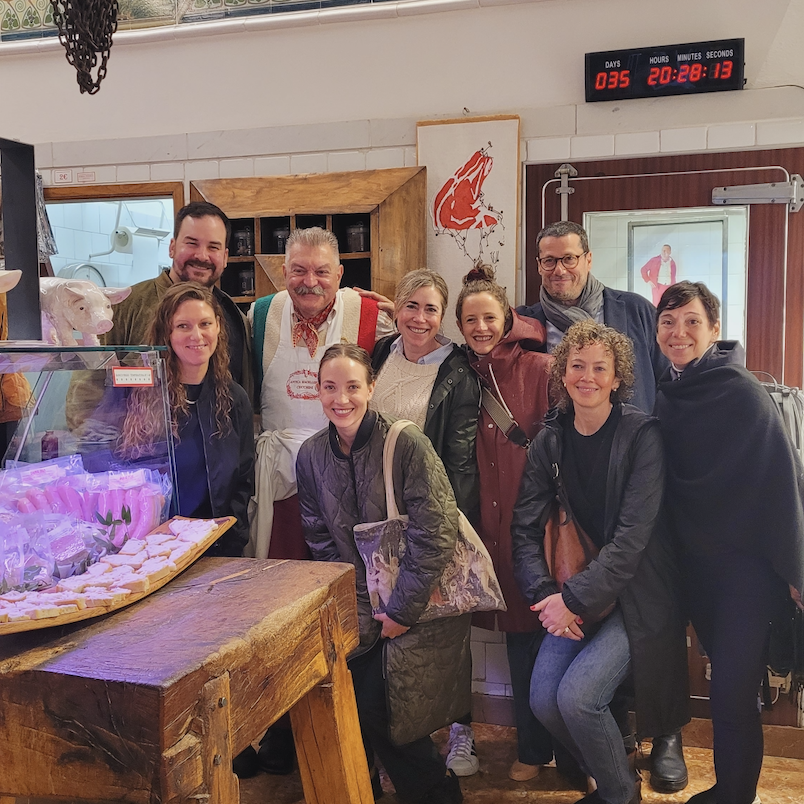
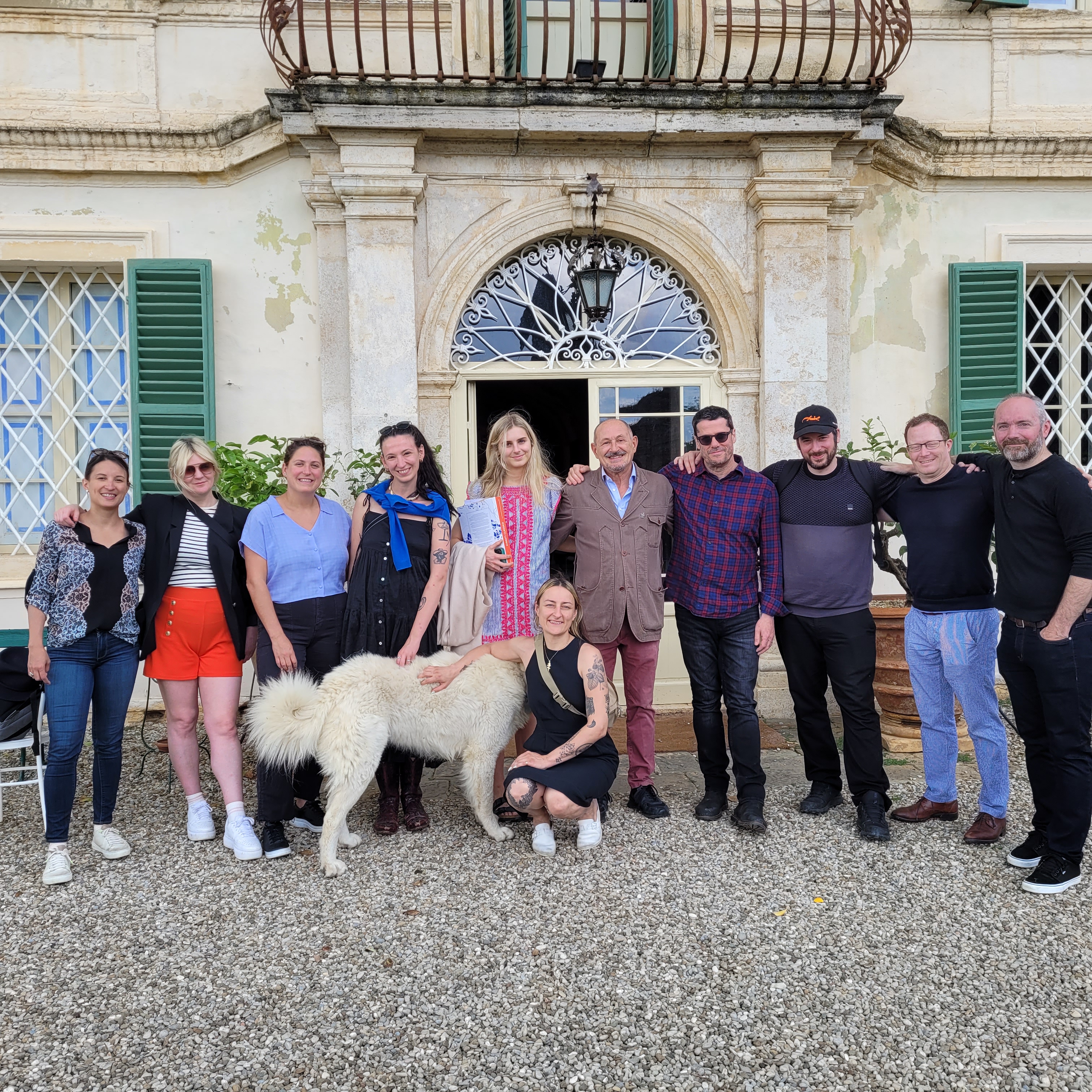
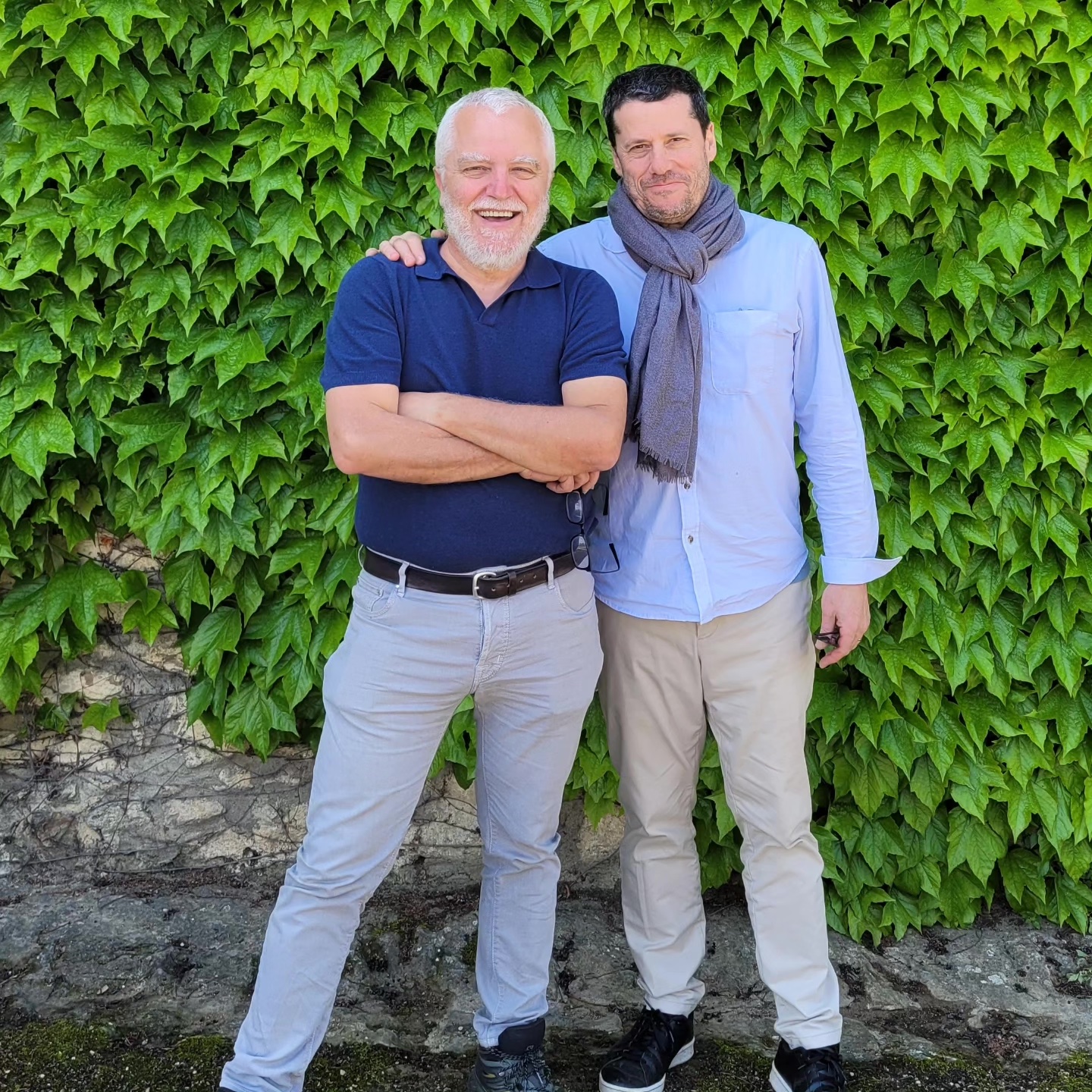
With Sergio Zingarelli and Thomas Francioni – Rocca delle Macìe
Back in 2016 Godello made a proclamation, and in doing do a risk to reputation, when his article “The most important red wine from Italy” was published. At the time journalists and critics were skeptical to the introduction of a wine placed at the top of the Chianti Classico pyramid, but producers were already beginning to see an opportunity to make selezione as a vineyard-designate sangiovese, from a cru, and today also from one of 11 UGAs. For some it meant opportunity, freedom, and revelation. From a dozen producers in 2014, now to approximately half of Chianti Classico’s estates producing a Gran Selezione, in just 12 years the territory as come a long way. Back then it was written “the use of the name ‘Chianti Classico Gran Selezione’ depends on issue of a suitability certificate based on chemical-physical tests conducted by authorized laboratories and approval of the wine’s organoleptic characteristics by special tasting committees as per Italian Ministerial Decree 16/12/2010 concerning batches of wine destined for bottling.” Today there is every reason to support the appellation, as there should have always been. Gran Selezione remains the most important red wine from Italy, with the next generation now working to ensure its continued trajectory, and success.
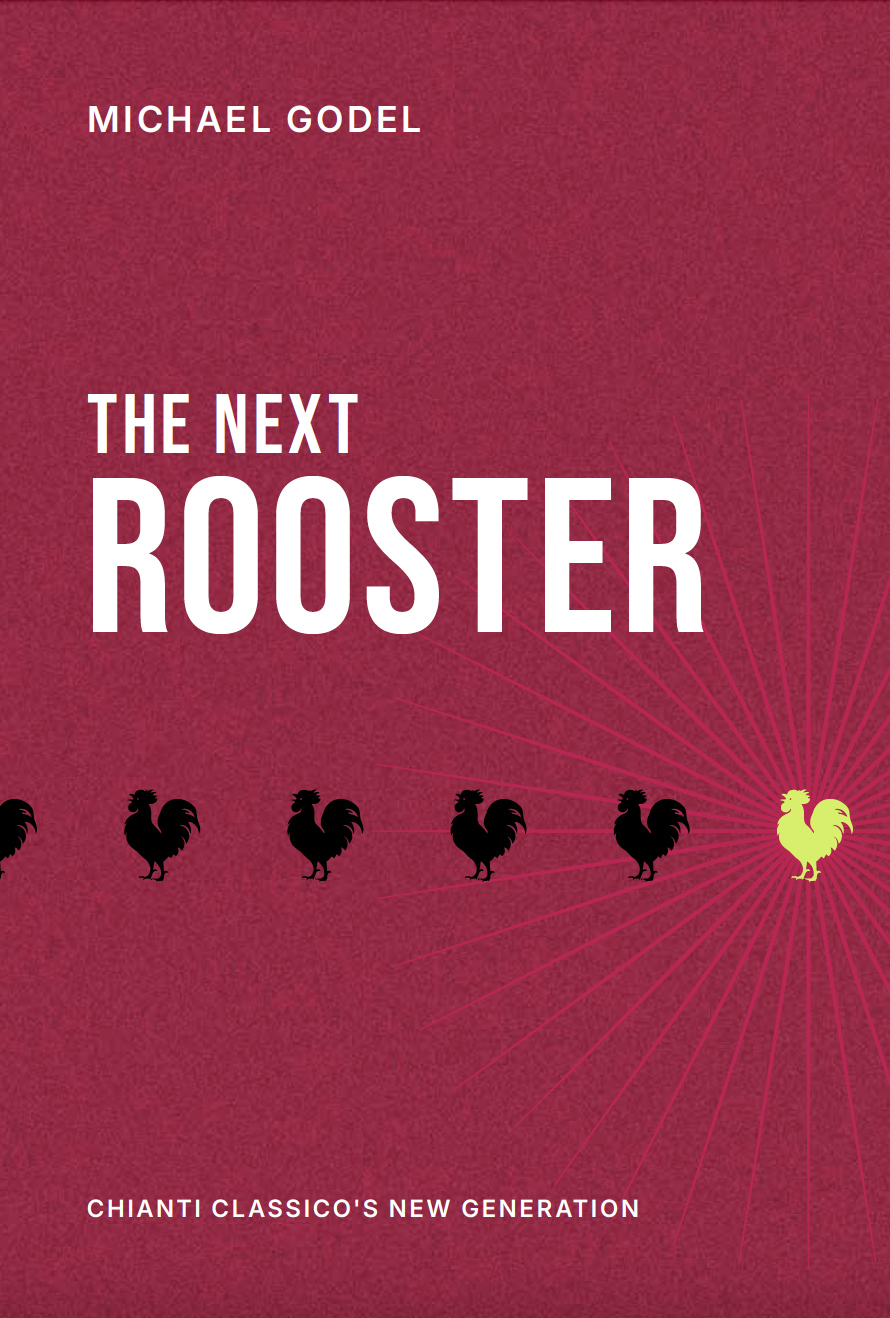
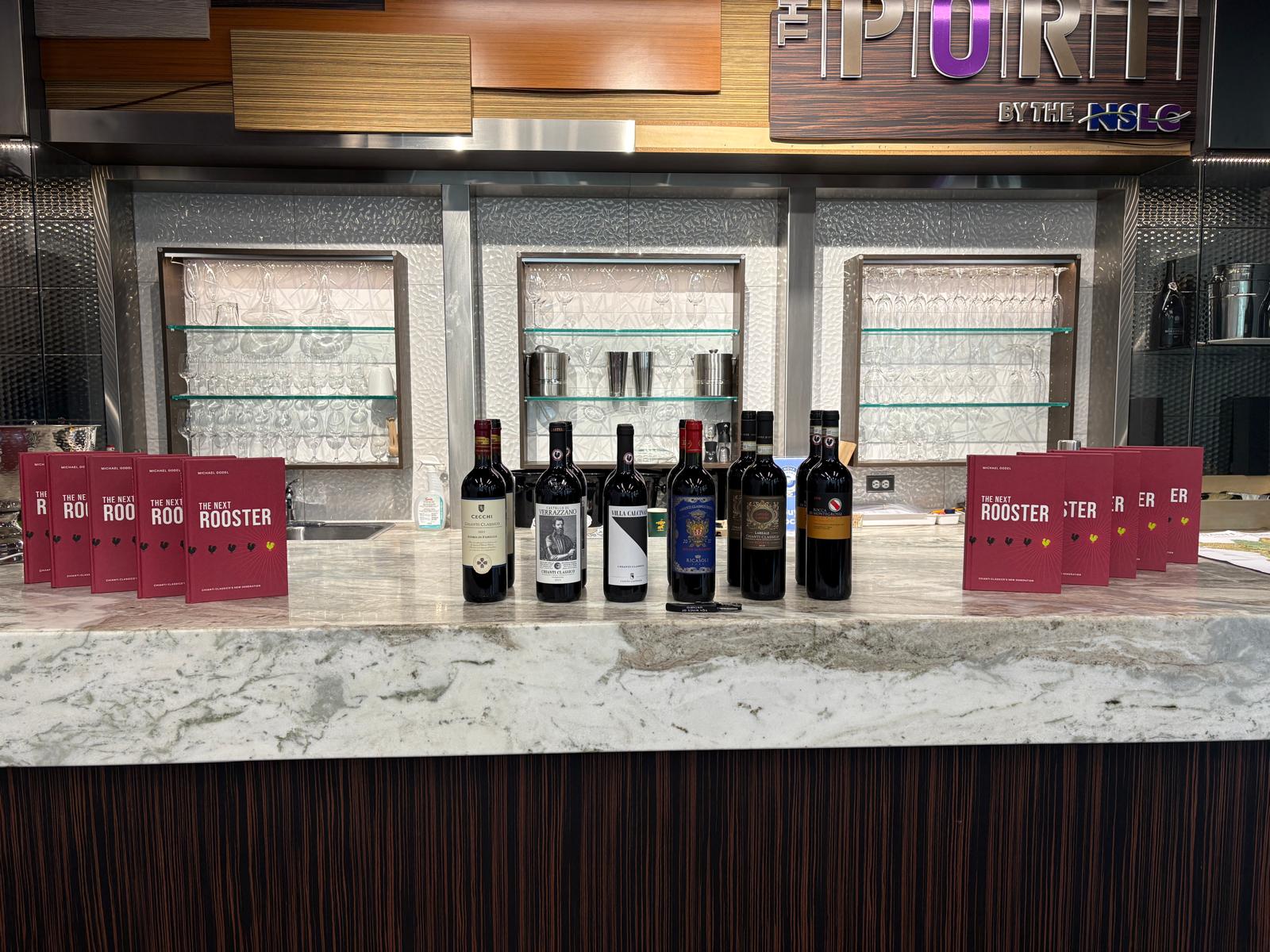
Speaking of next generation, on September 15th, 2026, “The Next Rooster” made its Canadian debut. This unique volume of stories composed to Chianti Classico’s succession plan has been released and presented to more than 20 trade and consumer audiences in cities across Canada. The Next Rooster tells the story of 45 Chianti Classico families, their history, continuity, and new generation. For Michael Godel, 10 years of significant time spent in the territory has deepened a lifelong pursuit, given way to familiarity, and familiarity to something closer to belonging. What began as exploration evolved into commitment, rooted in connection with the wines, the land, and, most importantly, the people who shape them. More than fifty published essays on Chianti Classico wines have charted the path that led here, and are referenced as an epilogue to this book, not as a record to be recited, but as a foundation already laid.
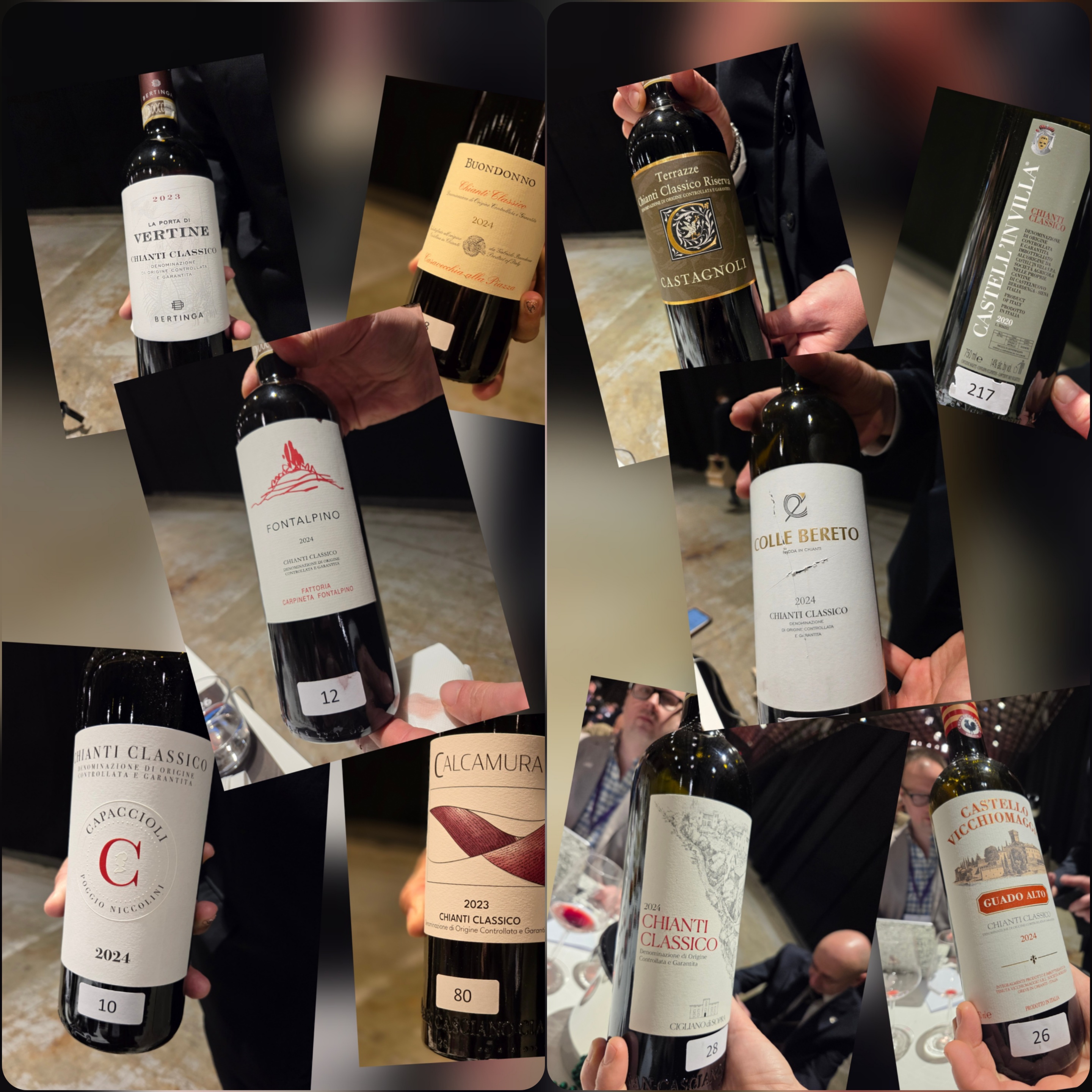
Chianti Classico estates were visited and wines tasted in February, September, and also November of this year. There are 218 wine reviews ahead, and should you be looking for wines not listed in this report, there is a good probability they were already tasted at some point through the course of 2025, with tasting notes found in that year’s final report.
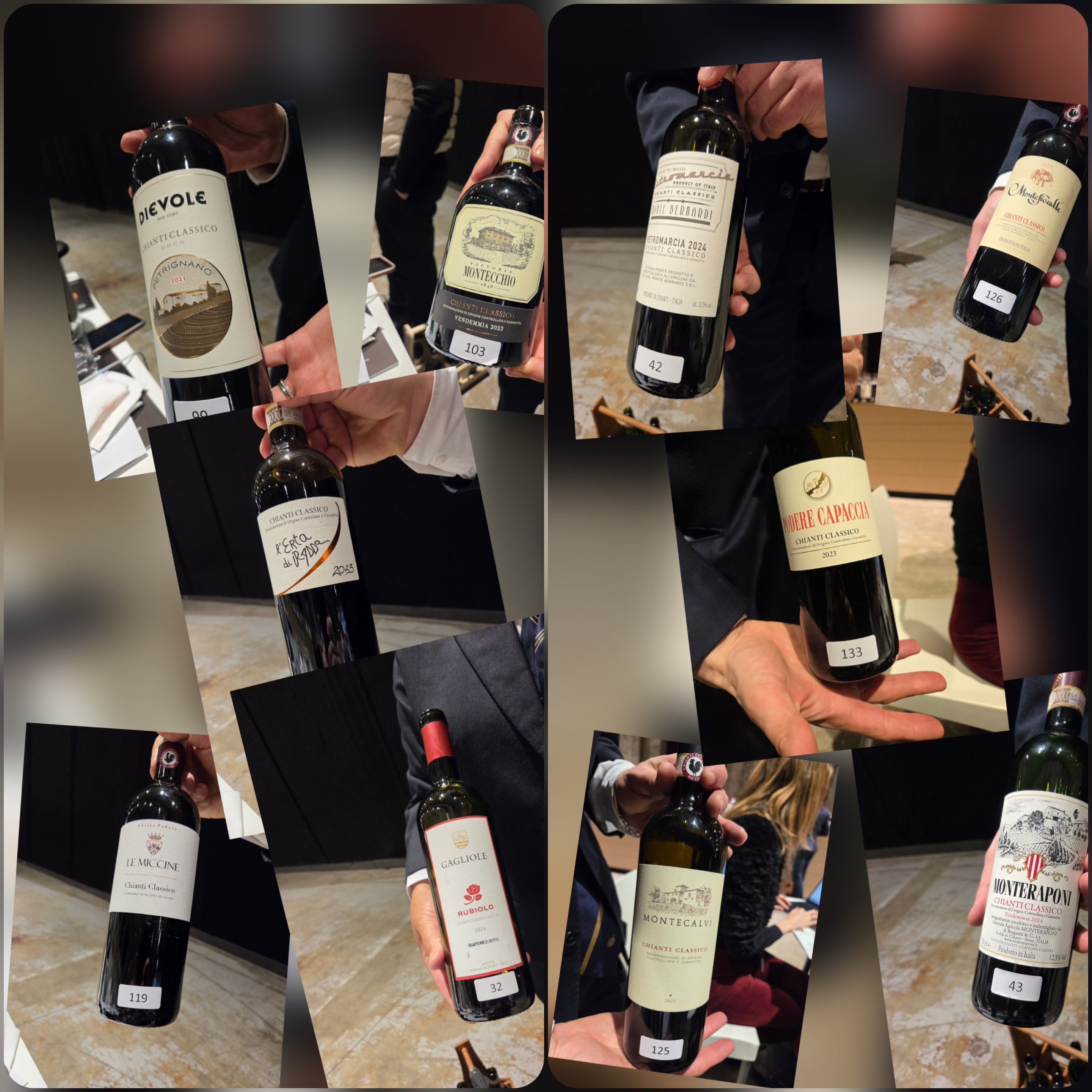
Straight up gone for extraction style of 2024 Chianti Classico from a large production bent on delivering generously without any need to give sangiovese time in the bottle. The glass is the gift of immediacy, with a note of cheese rind, almost Loire cabernet franc-esque woolly personality. As sangiovese of course. Drink 2026-2027. Tasted at the Chianti Classico Collection, February 2026
Certifiably Buondonno, credibly Castellina and undeniably a sangiovese driven by location. A wine that shows how not all Classico for 2024 are created equal, nor any vintage for that matter, but especially this one. Buondonno’s will always be more substantial, glycerol textured and full. Stays upright forever and goes down swinging, no matter what happens. The 2024 season could not stop development, or progress. Drink 2027-2031. Tasted at the Chianti Classico Collection, February 2026
Crunchy, savoury and openly generous 2024 Classico. Tannin are grippy after the initial offering and in this glass lies a terrific example of three to for year Chianti Classico. Shows off the increased quality and parity of Castellina. Drink 2026-2028. Tasted at the Chianti Classico Collection, February 2026
Ever so slightly darker fruit for 2024, at least a shade more than the yeoman share, also in concentration and up front character. Tight, tart and surprisingly tannic – No shrinking violet from Castellina here – Rather a pretty firm and even serious Classico. Let it ride before expecting it to slide. Drink 2026-2027. Tasted at the Chianti Classico Collection, February 2026
The long distance basics covered, the classics remembered and the dream of bringing sangiovese from Classico lands into the 21st century. Acidity runaround red fruit in a yes wine from start to finish with only the tannin being ever so slightly fragile. “Proper, cold summer glistening, hot colour melting behind the stone.” Drink 2026-2028. Tasted at the Chianti Classico Collection, February 2026
Minor reductive note, no shocker considering the fruit is one of the latest to be picked in Castellina, and this being 2024, likely just in bottle maybe a few weeks. Freshness incarnate, sharp, pointed and poignant, possessed of the potential to accede the profound. For now locked tight, implosive, insular and (at this stage) so opposite to its maker. Drink 2028-2032. Tasted at the Chianti Classico Collection, February 2026
Obviously more youthful than readiness will allow for, needing to be sheltered from the powder and the finger. Open it now and it will seem to “fade away while so young, so much left undone.” Show some patience and a reward will come from a bigger wine prepped to eventually develop and accumulate flesh, more than most from a vintage where less is generally more. Drink 2028-2032. Tasted at the Chianti Classico Collection, February 2026
My goodness yet another 2024 Classico that shows just how far the makers in this territory have come, because light, airy and immediate are not the first three words that come to mind. Fruit-driven yes, but also wealth of acidity and structure to tell that now is not yet the time. Drink 2028-2031. Tasted at the Chianti Classico Collection, February 2026
Cool and refreshing 2024, as expected, from high relative elevation and the season contributing to the utter drinkable nature of this Classico. Snap, crackle and pop, in the mouth and everywhere you experience sangiovese’s unique acidity. Spot on drying and appropriately effective tannin upon the finish. Drink 2027-2030. Tasted at the Chianti Classico Collection, February 2026
Youthful is the understatement for a Classico in the earliest throes of time in bottle and the glass. Early release for Badia a Coltibuono, but from light and refreshing 2024, so why the flip not? Firmer than what many other ’24s will be and so there is a moment when you have to imagine this is far too early a time for assessment. However, fruit freshness, linearity and length are all outstanding, one scooped inside the lining and then beelined into the extension of the latter. Drink 2027-2030. Tasted at the Chianti Classico Collection, February 2026
Crisp sangiovese, clearly too young to explain everything, although its lighter expression should see an accessibility come sooner rather than later. Far from formidable tannin but it’s there, drying with a note of finishing austerity. Solid and effective. Drink 2027-2029. Tasted at the Chianti Classico Collection, February 2026
Leave it to Luca Martini and his San Giusto experience to put forth a 2024 you can actually wrap the left side of your brain around. As empirical as this loyalist winemaker may be, there is also emotion and sensitivity in a young wine from a vintage seemingly only he (and now also young Federico) have been capable of procuring. A phenom of the vintage, a sangiovese of intimacy and compressed, if pliable and elastic tannin like so few, perhaps even no other. Drink 2027-2035. Tasted at the Chianti Classico Collection, February 2026
Lite-brite Classico, scintillant of cool climate vintage sangiovese. Couldn’t be much more than 12.5 percent alcohol, heightened awareness and spirit, airy to the greatest Gaiole degree. If there is any wood-induced tannin it’s barely perceptible, if not at all. Drink 2026-2028. Tasted at the Chianti Classico Collection, February 2026
Open, character out front, sweetness of red berry fruit right there for the taking. Pressed and macerated to grab all that the season could offer, done well with the proof being a lack of wood obviousness, nor is there any bitterness at the finish. Well made, less macchia than usual, all in all the right wine made for the vintage. Drink 2026-2028. Tasted at the Chianti Classico Collection, February 2026
Yet another fuller expression for 2024, more substance and weight than anticipated from the vintage. Speaks to acumen and ability, to coax out layers of fruit and structure without over-extracting and turning sangiovese into an overly phenolic wine. Nor bitters neither. Drink 2026-2028. Tasted at the Chianti Classico Collection, February 2026
Brightest of the Greve sangiovese, light n its feet, airy, up there in the freshness of a poggio position under a full blue sky. Full and rich enough yet never crossing the blanketed line, nor taking anything for granted. So well made for the right reasons. Drink 2026-2028. Tasted at the Chianti Classico Collection, February 2026
Lamole as only Lamole could be, perfumed and fresh unlike any other sangovese, though in this case a youthful character in a bit of a rebellious mood, and in a ceratin way not in perfect control. An underlying mineral chalkiness speaks to more than the UGA, but something under the soil, and under that soil. Crunchy and conversely a mouthful of terroir-driven elements accumulating on the palate and hard to fully resolve. A wine of place as much as any, needing more time than others, with potential running high. Drink 2027-2031. Tasted at the Chianti Classico Collection, February 2026
Hot season with no rain in Lamole, that is until harvest. Then a deluge much of September, without stopping. Still it was a generous and high quantity vintage for two reasons. Both as matters of balance, first to compensate for the significant reduction in 2023’s yields, and also an avoidance of green harvest in a conscious effort to bring the plants back into a state of reasonable production. Lamole fared better than most, expressing a phenolic fullness because the grapes actually completed their cycle. Also a UGA continuity ensured as witnessed by the “Profumi di Lamole” captured in I Fabbri’s Classico. Albeit with an increase of savour edging to verdancy and meeting phenolic maturity. Proper, definitive, and with more palate volume than many Classico of the vintage. Drink 2026-2029. Tasted November 2026
Dubitable Gagliole sangiovese as Rubiolo, sleek and silky though those terms are not taken for granted, nor is the respect for the work put in to create such a fruit pure wine. Fruit sweetness to be sure, acidity following the same line, suave tannins doing very much the same thing. Drink soon, for five easy and ideal years to follow. Drink 2027-2030. Tasted at the Chianti Classico Collection, February 2026
Three months later and now a finished wine, bottled on December 11th, 2025, released on January 1st. Potentially to be one of the five best Annata of the vintage, certainly according to Iacopo Morganti. Only the sangiovese facts, at least 70,000 bottles made and top five because of the combination of quality and quantity, likely to sell at $29.95 in Ontario. Blue fruit in 2024, light in alcohol yet feeling much more substantial. Last tasted February 2026
Campione: Lightest of vintages but truth be told the expectation was surely for something of less colour and intensity. No doubt you could drink this straight away but do not be wary of the potential, like 2008. There are tannins in this wine and even a touch of austerity. Finishes at 12.8 so therefore 13 percent alcohol. Will likely produce 60,000 bottles. Drink 2026–2031. Tasted November 2025
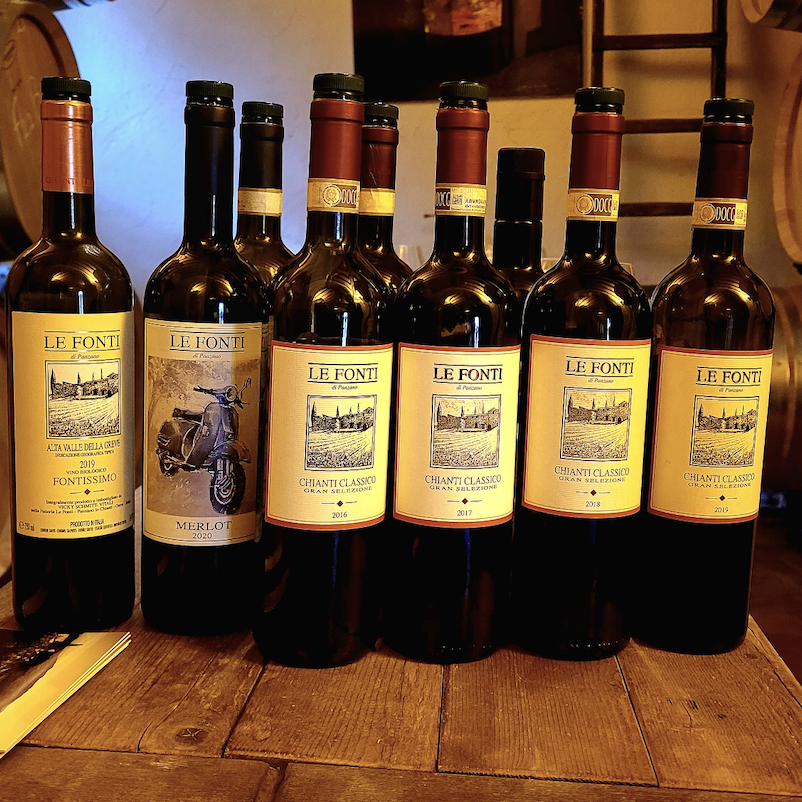
Though it seems ubiquitous to comment on alcohol for a 2024, in Le Fonti’s case the 13.0 on the label (though it’s actually 13.2) does carry significance. Many CC 24s are 12-12.5, but this micro-zone within the Panzano UGA hits, and warms up different. The merlot was picked early (before the September 13-15 Vino al Vino festival), and sangiovese after. Quite a large green harvest was performed after the weather cooled, and never really re-warmed after Ferragosto. No Gran Selezione was made this vintage, but a larger quantity of Riserva was. The Classico is light on its feet, though there is some structure, also verdancy, but of course. Copacetic, ultra consumable, glou-glou ’24. Drink 2026-2028. Tasted November 2026
Unlike Sangió, Retromarcia needs more time in bottle, and so even today the wine refuses to fully yield. These bunches were never overexposed, the vines did not struggle in the difficult year, and despite Panzano’s proximity to the Pesa, this is an example of Classico that was got very, very right. Sangió is in a drier, warmer place. Retromarcia is higher in acidity, and with the nobler tannin. That’s a big part of it. Alcohol is just 12.5 percent, counterintuitive to what you’d expect. Last tasted November 2026
Michael Schmelzer has been by now long at work with his sangiovese investigations. Long enough to consistently describe his Retromarcia as classic mid-pinpointed Panzano Chianti Classico. From 2023, not unlike the whole of Panzano there is a mix of strong perfume, glycerol fruit and many layers of intangibles to peel away. A chewy, almost fibrous varietal ’23, youthful and surely impressive. It carries and also leaves an indelible impression. Stamp of località. Drink 2027-2032. Tasted at the Chianti Classico Collection, February 2026
Production reduced by 35 percent in 2023 and in 2024 full production, from the vintage to perfectly exemplify the concept of growing and using all of your grapes. No green harvest by explanation, perfumed and elegant, and a vintage impossible to copy anywhere else, in any other region. Sweet and sour fruit, sapidity and drinkability, “which is what makes me love Chianti Classico.” The Michael Schmelzer philosophy, 1980s style, “Probably what it looked like in the 1970s. We’re not used to picking with mud on our boots anymore.” Drink 2026-2030. Tasted November 2026
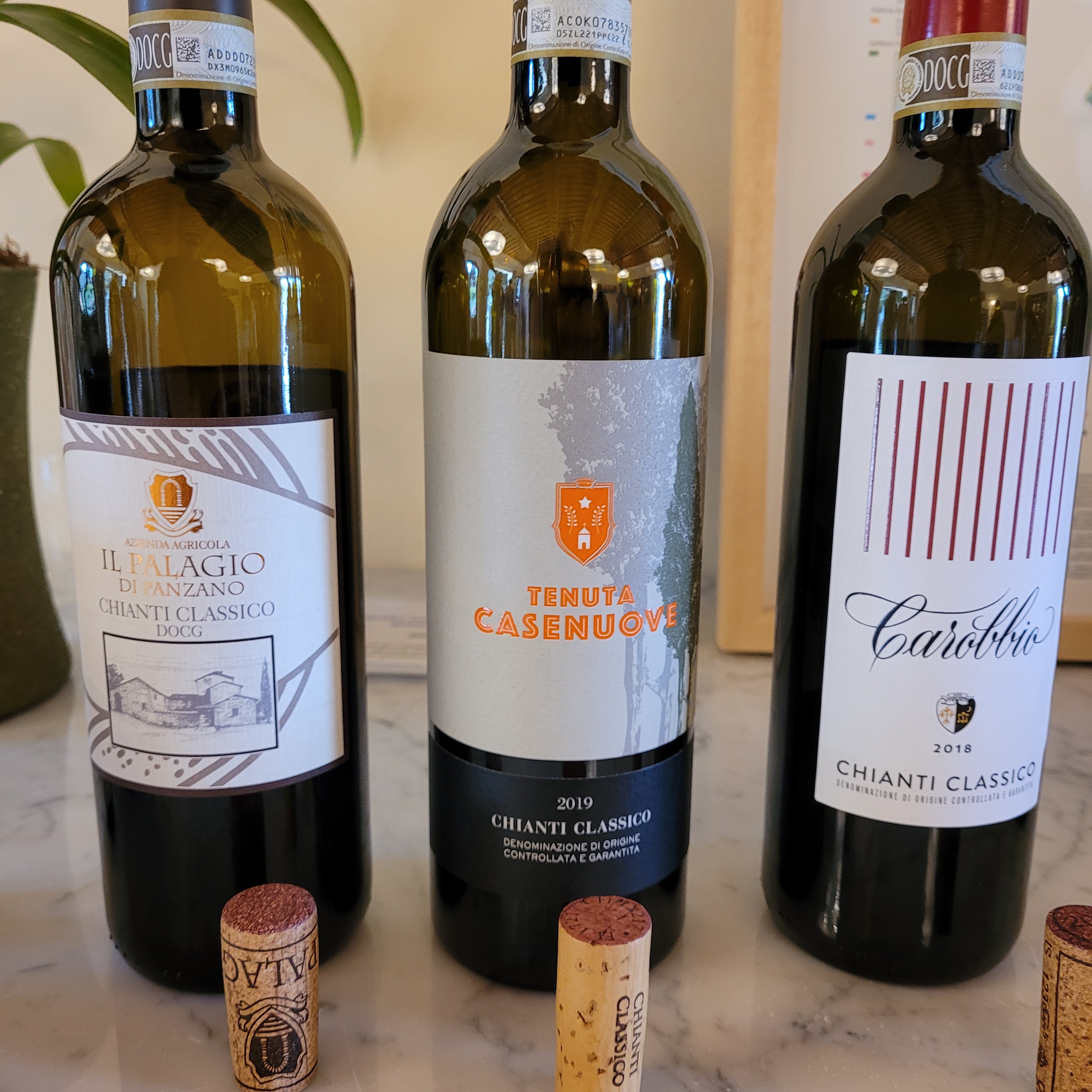
Yet another exquisite example of the new Casenuove Chianti Classico, seemingly no matter the level of appellation and for 2024 the world is this Panzano’s oyster. Sleek and desirable, pure, detailed and chiseled from Pietraforte stone. You can almost taste the blue and purple bleed for sangiovese that can and will only be this way. Drink 2027-2030. Tasted at the Chianti Classico Collection, February 2026
Medium ground and middle of the Panzano road travelled, of crunchy red fruit flecking to dappled black, mid-weight and perfectly seasoned. The reasonable botti effect dries out ever so slightly in a flaking way at the finish. Drink 2027-2029. Tasted at the Chianti Classico Collection, February 2026
More than merely clean, crisp and pure, but blessed with Classico clarity, in this case a Raddese 2024 with one more layer of substance than most. Still the restraint and abiding by the season are clear for a sangiovese ever-present in omnipresence for Chianti Classico perpetuity. Drink 2026-2027. Tasted at the Chianti Classico Collection, February 2026
Crunchy and savoury 2024 Radda Classico, herbal and parochial. Raddese acidity, low-level tannin, ready to drink. Drink 2026-2027. Tasted at the Chianti Classico Collection, February 2026
Grippy entry for a 2024 Radda Classico clearly far too early to gain true and even deeper understanding. Light? Not exactly. Fresh? Sure, but there’s so much more. Easy drinking? If you like, but that minimizes the full effect. Like some other ’24s the maker’s ability is on display, but this takes the vintage to an entirely next level. Purity and dispensation distribute fruit and form, together, in synch and for layers to be doffed, gradually and comprehensively forward across an impressive amount of time. Drink 2027-2032. Tasted at the Chianti Classico Collection, February 2026
Well-pressed, maximum extraction and gone for full concentration Chianti Classico. All upfront and centre, for immediate attention and gratification, nothing left on the table. Laid on the line to gain market confidence and to sell. The Annata to drink now as a grand statement for the vintage. Drink 2026-2027. Tasted at the Chianti Classico Collection, February 2026
A youthful grip, firm form in structure holding the fruit to not yet become the San Casciano strutter it wants to be. Still tight, needing the bottle for another year to let this sangiovese get out there and dance. Crispy for now, properly UGA herbal and with a mouthful of river stones not yet melted into the fabric of the wine. Drink 2027-2030. Tasted at the Chianti Classico Collection, February 2026
So bloody tight, taut and toned Chiati Classico. Shows its fitness along with the best of the this style of sangiovese. There is a excitement about the feeling you get from the earliest of returns, like great joy when you dance to the music. The sweetness of this one’s acidity makes it feel bright-eyed and passionate, the grip inescapable, and to be fair you don’t want to get away, but to stay and have another sip. Drink 2027-2032. Tasted at the Chianti Classico Collection, February 2026
Youthful, firm and tannin-gripped 2024, more than many and yet the vintage seems to deliver a Chianti Classico having turned towards the sun. Herbal as ever, savoury like a true blue San Casciano sangiovese and warming. “Cause the years are falling by like the rain. It’s never gonna be the same.” Drink 2026-2028. Tasted at the Chianti Classico Collection, February 2026
Really warm summer and then on the 13th of September it began to rain for nearly a month. Picking started on September 20th and finished on October 18th. Insanity, to be honest. Berries swelled, alcohol bottomed out and ripeness happened. “It scared us,” admits Matteo Vaccari. “More experienced producers had seen this before – It was the first for Maddalena and I.” They remained calm and picked vine over vine, at the last possible point before any rot could set in. Meticulous work and stringent selection, arriving at four tonnes per hectare, 32,000 bottles total from eight hectares. A tart and juicy red berry vintage, pure, expressive and a bit lower in whole bunch percentage (30) as compared to 2023. A change was more fermentation in larger tanks to assist with the mid-palate perception that would come later on, of a 15-20 day maceration, in part because of the delicate skins. In the end the maturity was achieved, the Classico is just that and the longevity is guaranteed. Bottled December 17th, 2025. Drink 2026–2030. Tasted February 2026
Silky, truly silken sangiovese from natural and pure San Casciano’s Montesecondo. Fine and accessible 2024, the way you might expect and wish for such a Classico to be. The most glou-glou ’24 tasted to date. Drink 2026-2028. Tasted at the Chianti Classico Collection, February 2026
Tight and spicy, with an Amaro herbal opening for a 2024 Classico. Truly opulent aromatic wave of fullness and plush explosion. Emotive and extracted, warmth as boisterous as this wine has ever been. Chewy in its silky way and easily a year away from integrating its components of largesse. Drink 2027-2030. Tasted at the Chianti Classico Collection, February 2026
As expected, brightest red cherry Pèppoli fruit in a decade, maybe two, light, crisp and refreshing. Acidity only sangiovese can deliver, San Donato in Poggio in origin, taut, tart and worthy of a word carefully chosen – Succulent. A promise, only for this Annata. Drink 2026-2028. Tasted at the Chianti Classico Collection, February 2026
The note of blood orange will appear in many a San Donato in Poggio Chianti Classico and sometimes it leads with impunity. As here from 2024, a vintage where the juicing might be harder to pinpoint but this, this struts straight away. The palate is a bit mute, like a concentration of sangiovese paste yet to dissolve and incorporate evenly into the salsa. Once again 2024 is no shrinking violet, bigger than expected, generous and higher in potential. Drink 2027-2030. Tasted at the Chianti Classico Collection, February 2026
Sleek sangiovese of San Donato in Poggio purity, passion and emotion filling the glass with a bit of pressed macerate feeling. Goes quiet in the middle before picking up the pace and finishing strong. Time will help bring the poles together and make for a complete wine. Drink 2028-2031. Tasted at the Chianti Classico Collection, February 2026
Triple intensity from Castellina in aromatic scope, flavour range and duration, the texture secondary to these three sangiovese exceptionalities. Not the most balanced Classico because it rocks and teeters, though it speaks loud and clear in a level of vivid pronouncement. Sharp, and should it be well priced, will also represent an Annata of value. Drink 2026-2029. Tasted at the Chianti Classico Collection, February 2026
Ideal Classico level sangiovese with all the character desired for what you want to drink today. A level of concentration impressive yet also texturally elastic with a slide and glide across the palate. Sing-song sway, easy and perfectly amenable for anyone to enjoy. Drink 2026-2028. Tasted at the Chianti Classico Collection, February 2026
Most accessible Lornano Chianti Classico. open earlier than any in recent memory, of ripe and opulent fruit up front and getable. More than just a crushable sangiovese, although the tannins are far from fierce. Somewhere comfortably in between, a more modern approach, of glycerin and silky texture. Sleek Lornano this 2023. Drink 2027-2031. Tasted at the Chianti Classico Collection, February 2026
Consistently and patently vineyard directed, from one warm vintage to another, different but with a similar result. Truly sangiovese, intensity run high, not enough to blow our minds but the range of flavours and depth of fruit do well to work in cohorts with the structural drivers. Very good effort. Drink 2027-2030. Tasted at the Chianti Classico Collection, February 2026
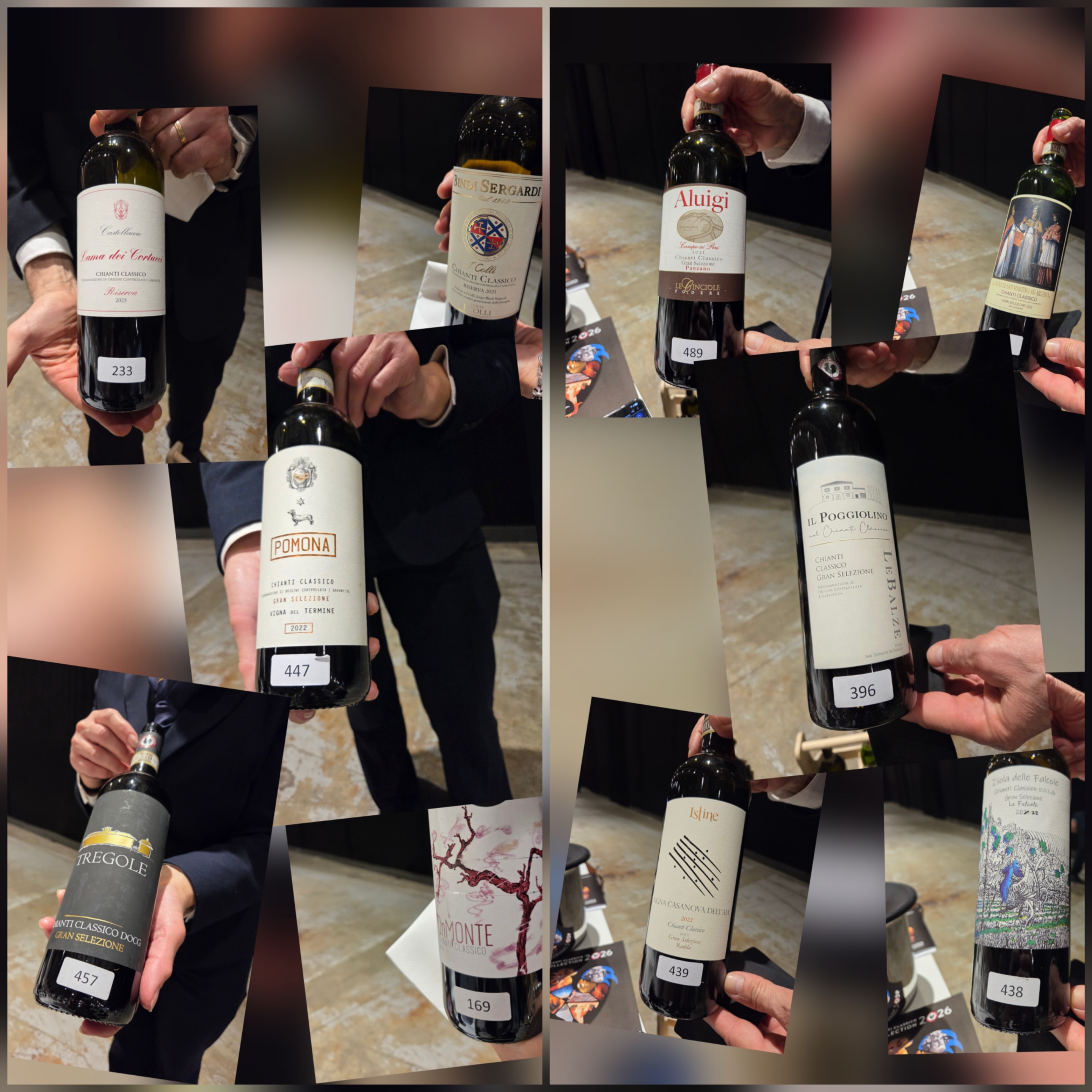
The Pomona perfume, genuine and gregarious, developed in the great outdoors. Of sangiovese with not just intent but a feeling of what exudes could only come out this way. A pleasingly expressive funk with sweet spring cerchi delle streghe fungi from a vintage with less than the quantity desired, but what’s here is so very desirable. Luxe for Pomona, expressive and with emotion. Drink 2028-2032. Tasted at the Chianti Classico Collection, February 2026
Lovely swirl of sweetest volatility so attractive to a taster who sees hope though desire in the style. Rich and luxurious, flirting with danger but steers clear and remains present to deliver the promise of sangiovese. Love the way this flirts, flits and darts about, in the end staying true to its nature. Long finish confirms the excellence. Last tasted at the Chianti Classico Collection, February 2026
Herbal entry, a pesto of sweet greens swirled into tomato and tart fruits for another unique 2023 when many others feel cut from a similar cloth. In any case the unction runs deep and the flavours too, the acidity keeps pace and the structure is solid, if not the kind that measures quite the same. Adds up to a promising mid-term Annata. Drink 2025-2028. Tasted at The Chianti Classico Collection, February 2025
Perfection in sangiovese simplicity thy name is Rocca delle Macìe. Idealistic Classico style done up with conviction, professionalism and straightforward style. No fantasy, nor hidden tricks neither, but simply the facts of variety, land and vintage. Has noticeably improved with a year further in bottle. Last tasted at the Chianti Classico Collection, February 2026
Unsurprising as a 2023 already bottled and ready for the market. Prèt a porter, fruit set up to talk the Maciè talk without hesitation and for all to take in right here, right now. Acids are soft and sweet, tannins never there. Drink 2025-2027. Tasted at The Chianti Classico Collection, February 2025
Chewy Castellina number from 2023, consistent with many peers of the southerly UGA. A crafty medium bodied, fine acid sangiovese as modern and stylish as they come. Drink in the near term. Drink 2026-2028. Tasted at the Chianti Classico Collection, February 2026
Traditional and crispy as they come from 2023 and Castellina, taut, tight and riveting. Serious bite into tart fruit and piques of acidity for a sangiovese you must seek out the right food to exult the high electric nature. Ragù di manzo brimming with herbs, Reggiano and really fresh 2025 vintage olive oil. Drink 2027-2029. Tasted at the Chianti Classico Collection, February 2026
Naturalized, clay pot apprised and for a taster not fully privy to the method, Cosimo Bojola’s is aphorized as a unique style of Chianti Classico. Amphora raised, each year the approach refined bit by bit, a dip here and there, mostly improvement and a rise towards greater quality. A challenge of a vintage for this sangiovese, wettest of Spring, hottest of summer and a September from which picking had to happen ahead of late season rains. Feels to pause one iota short of optimum phenolic presence and so the amphora rises to the surface of the experience. Curtails the detail and yet Cosimo is a master of his concept, making this a terrific drink early Classico, if not the one to lose in the cellar. Drink 2026-2029. Tasted at the Chianti Classico Collection, February 2026
Stronger type of mocker from the Losi family’s Querciavalle warming ’23, indicative of Alberese terroir. Wood brings about mulled spice beverage aromas, simmered bone broth and finally a phenolic rush. These are sangiovese always in need of time but this, this is something more. Would suggest two years at the very minimum. Drink 2028-2032. Tasted at the Chianti Classico Collection, February 2026
New label, an invocation of Etruscan antiquity to depict something that pays attention to the Toscana A.D. 714 messaging. Solid structure for a 2023 Chianti Classico, yet more than rich enough in fruit and so pretty much ready to roll. No need to wait for this to get into your glass. Drink 2026-2029. Tasted at the Chianti Classico Collection, February 2026
The simplicity of sangiovese from a vintage that demands it be made this way is exactly what’s in this glass. Classico for Classico’s sense, without constraints or distractions. Straightforward, get at it 2024 with black cherry fruit and the basics covered. Drink 2026-2028. Tasted at the Chianti Classico Collection, February 2026
Assertive, poised and poignant Classico, grip right there with UGA savour for what needs and wants out of seriously challenging 2023. Yet another one of this seasons that threw the gamut of adversity at the vines, here to see them not only survive but thrive. Good weight and even better texture from this silken example of Gaiole. Drink 2026-2028. Tasted at the Chianti Classico Collection, February 2026
The signs of new generational talent ring through this Gaiole sangiovese. New ideas and old soul ability integrate into previous generation acumen for a mix that sets the stage and bodes well for the future. Never bold, yet confident and balanced. Drink 2026-2029. Tasted at the Chianti Classico Collection, February 2026
Unique in a world unto itself, Ama Classico, vintage-related, representative, signature stroke of Gaiole genius. A prophetic sangiovese, sunlit, stylish and a gift to all, from the torn apart to the emotionally intact. Wine without confusion, educational, directed by place and at the hands of makers wishing to deliver a proper vintage experience. Drink 2027-2031. Tasted at the Chianti Classico Collection, February 2026
An extracted sangiovese of grip and circumstance with eyes to the Monti del Chianti slopes and the wind. An extra layer of stuffing, there to be experienced early and for a few simpatico years. Strength in fruit with wood the emulsifier and frame, holding the fort, fixing colour, keeping the course. Drink 2026-2029. Tasted at the Chianti Classico Collection, February 2026
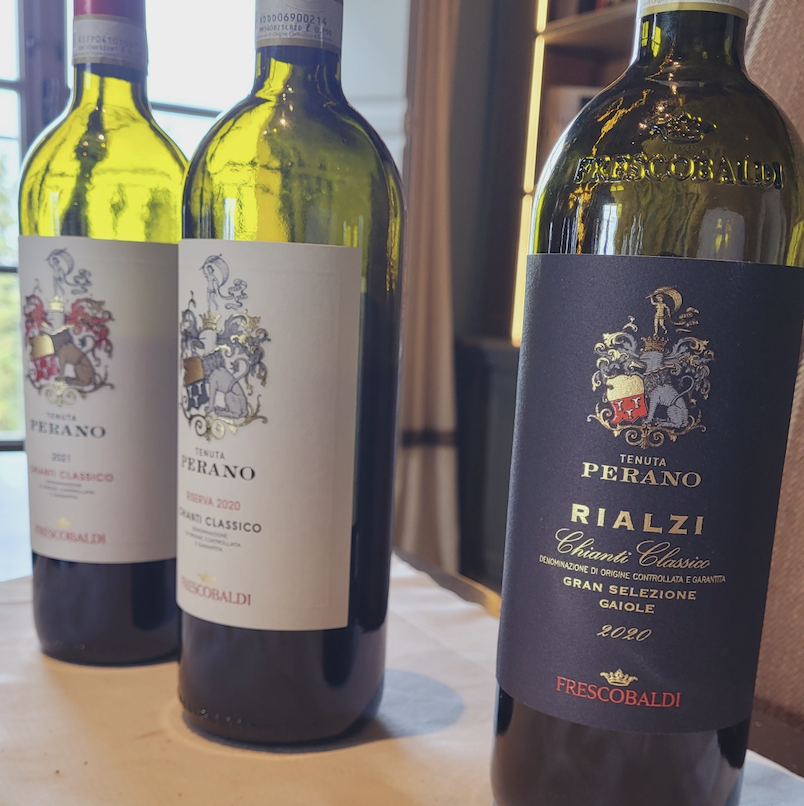
Cool, minty, pure and stylish. The textural polish and silken qualities are second to none, professionally executed with finesse and precision. Ready to please and drink with distinction. Impressive work from the Perano team for 2023. Drink 2026-2029. Tasted at the Chianti Classico Collection, February 2026
The dictionary lists this wine under “Chianti Classico,” well, perhaps that’s not true but why shouldn’t it be so? This in terms of history, tradition, culture, heritage and a producer’s abiding by what’s right. Depth and harmony. That’s the thing. Last tasted at the Chianti Classico Collection, February 2026
Still crispy, fresh and holding firm with its 2023 Annata spirit. May not be a facsimile of the Iron Baron’s original recipe but for 2026 it’s as classic as Classico gets. Tasted February 2026
Francesco Ricasoli sets the 2023 up by describing it as “crispy,” which translates as freshness but who could not think of Brolio ‘23 as juicy. Classic black cherry for this label of 600,000 bottles encompassing all five soil types, 250 hectares and everything that is collected, layered and transcribed as the Ricasoli estate. Drink 2025-2027. Tasted February 2025
Campione: Youthful, still a bit reductive in a sweet bell peppery way, herbal amaro yet to stretch and let the fruit speak first. Good fruit however, substantial and showing Gaiole’s abilities for 2023. Tasted at The Chianti Classico Collection, February 2025
Impressive stature and weight supports the well of fruit weighing in the body of this Gaiole sangiovese. Full and substantial, true to estate form, glycerin silky and finally smoky liquid spice all over the back end. Long and true. Drink 2027-2030. Tasted at the Chianti Classico Collection, February 2026
Restraint and maturity, a Greve sangiovese of experience and light touch to combine for something that tastes like its been some places, knows some things and can tell some stories. A 2023 that has settled and folded into the fabric of itself, sitting “in a room at the top of the world and it ain’t coming down.” Terrific work from winemaker Tim Manning. His tour de Classico-Annata force. Drink 2026-2033. Tasted at the Chianti Classico Collection, February 2026
Classic as Classico will get, balanced and generous straight away and a gliding light of sangiovese all the way through. Just that ever so slight presence of nut skin and cherry pit bitters marking the finish. Drink 2027-2030. Tasted at the Chianti Classico Collection, February 2026
Serious functionality meets emotion from a Ruffoli Classico for 2023, in a controlled state double-fold, concentration of the mind and in the mouth. A sangiovese ideally picked, at ripeness, sorted to realize an idealistic plan and blended to perfection, all towards creating the best wine possible. At an all-important appellative level, all having occurred simultaneously as the team worked to perfect their tripartite Gran Selezione project. Would say the Annata suffers not for a moment. Drink 2028-2033. Tasted at the Chianti Classico Collection, February 2026
Well pressed and extracted 2023 Classico from a warm northerly località. Painted sangiovese with savoury red fruit of a vague tomato dispensability. Serves a Greve responsibility with sharp angles, tang and gangly tannins. Sooty while conversely framed by energy run extremely high. Drink 2027-2029. Tasted at the Chianti Classico Collection, February 2026
Sometimes there comes a sangiovese of a perfume never nosed before, so floral expressive and sweet to cause the eyes to widen and become transfixed, sent blissfully into a state of wonderment. Such is this Lamole, beautiful and idiosyncratic, fluid and unusual, amenable and odd. What is this magic you might ask? Hard to say but in the end you simply say Lamole. Drink 2026-2029. Tasted at the Chianti Classico Collection, February 2026
Ultimate obviousness of Lamole perfume and the fresh spirit that defines a sangiovese from this most particular of UGAs. The challenge of a vintage, namely Perosnospera, almost never present and frankly unheard of in this nook of Chianti Classico. “We failed, losing 30-40 percent of production,” admits Susanna, to something out of her control, “but what remained was a really fine season.” In any case, not a failure, after all a farmer is working with nature. A definitive Lamole and I Fabbri sangiovese, of grip and aromatic volume. Just 8.5 hectares in total, approximately seven of them growing right there at I Fabbri and only the highest vineyard fruit (630-680m) comes into this Annata. Only ages in concrete to show the truest and purist terroir from Lamole. Drink 2027–2030. Tasted February 2026
Terra di Lamole comes from the marriage of power vines, sangiovese and canaiolo, aged in concrete like Olinto, but also in tonneaux for one year, then blended ahead of bottling. More of what the Classico delivers in terms of freshness of perfumes, but the lower vineyards are want to deliver more verdant macchia to cut through the fruit concentration and power. Here the grip is one of direct intent, purpose set to a high degree and tannins oblique in how they foresee a meaningful consequence. The long finish confirms the latter which speaks to a prosperous future. Drink
Take notice of sangiovese’s ability to rise with checked aggression and unchecked energy, to peak at a point where all the light is captured. Puts the variety in that class with the finest, and in cases like this from Lamole, to an upper echelon of utmost importance. Not only for Chainti Classico but for all red wines of Italy. The scent grows richer, each moment passes and the perfume increases, from familiar to strange, of rosewater and something hidden in the Lamole hillside entanglements. Struck by this beauty and the intensity that grips the palate. In the end, after the wine is gone, an exhale and a sigh, with the realization of something profound having taken place. Drink 2028-2035. Tasted at the Chianti Classico Collection, February 2026
Sister label to Jurij Fiore’s Sonocosì, both Lamolese, each endowed with the UGA’s perfume, abiding by and exultant of traditional winemaking. Although there should likely be no difference in winemaking, Tuttosommato carries the feel of an extra push of maceration, surely attributed to a necessity respect for micro-site and the type of fruit that comes about. Not a matter of density, although more stuffing is stored within, felt in weight upon the palate. Should require an extra year of aging, albeit with a shorter drinking window. Drink 2029-2034. Tasted at the Chianti Classico Collection, February 2026
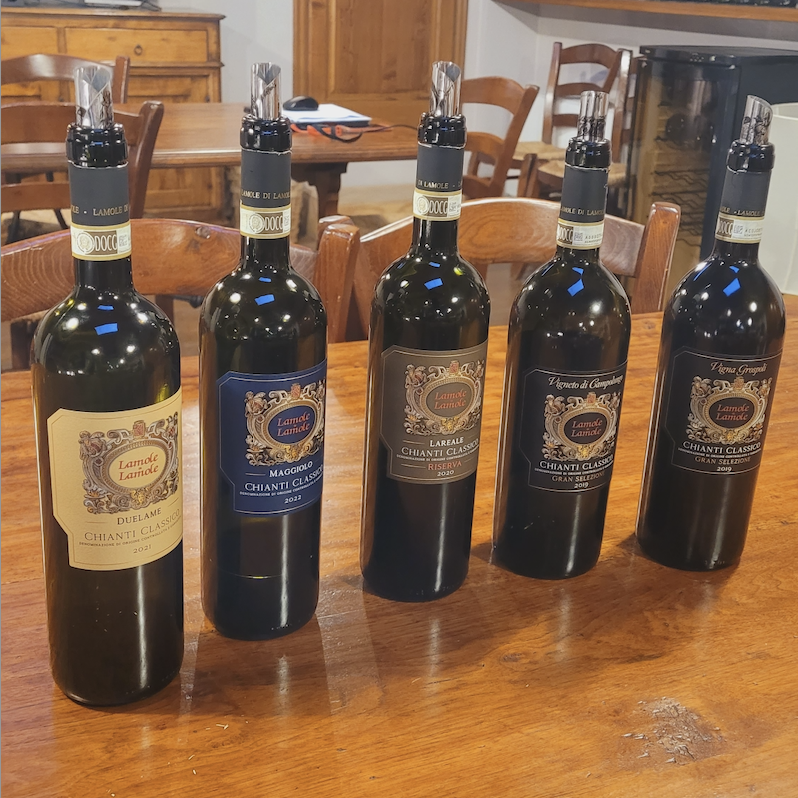
Sister label to Lamole di Lamole’s Maggiolo (Blue Label), this (Duelame) as the yellow etichetta. Similar profile if an extra layer of stuffing, polish and promise. At times interchangeable and then of course complimentary to each other. Drink 2026-2028. Tasted at the Chianti Classico Collection, February 2026
Intensity in the perfume of a 2023 from Montefioralle, warmth in the aromatic profile, barrel seasoning and the pique of its derivative spice. Many layers of fruit are mouth filling and seemingly made deeper because of the unique UGA acidity, of a same località savour made more sleek and modern with each coming and passing vintage, A Classico that has changed yet still with the uncanny ability for remaining the same. Drink 2027-2030. Tasted at the Chianti Classico Collection, February 2026
The more you nose and taste Chianti Classico 2023s, the more you see the pattern of amplitude and opulence. Not fully-completely, but more often then not, especially when Panzano and those UGAs that touch its borders are the subject, these feelings are made to become true. As here from Montefioralle, eponymous source, staunch representer of larger than life sangiovese. Terrific ’23 at the hands of the commanding presence of Mr. Sieni. Drink 2028-2032. Tasted at the Chianti Classico Collection, February 2026
Just a lovely aromatic swirl from Panzano, direction western side of the Conca d’Oro, moderate, comfortable and balanced. Really beautiful mix of fruit and acid to define sangiovese from this place. A minor side note of botti at the finish speaks to a small amount of tannin made available for a few years of aging. Drink 2026-2029. Tasted at the Chianti Classico Collection, February 2026
Always sangiovese with some canaiolo, here from a vintage with approximately 30 percent loss to Peronospera. A delightful Chianti Classico made lighter, easier to drink and sapid by the canaiolo. Proves to be the kind of purity and clarity in Classico that you desire, here from a ’23 that sees only cement, no wood, nor steel neither. Drink 2026–2029. Tasted February 2026
A bit reductive and strong at this early stage, unyielding, tension still a part of the mix, ample fruit, notably fleshy. Chewy sangovese, Pietraforte-driven, needing time to integrate the tiny grains of ancient sand. Drink 2028-2031. Tasted at the Chianti Classico Collection, February 2026
A sangiovese of Panzano amplitude with a nod to opulence, traditionally conceived, also with an indication of house style. Red fruit so tight and earnest it hurts, but like love the pain is a good one. The thing about the località is this: Sun and slope make for a full and impassioned Classico, acute for the appellative level with an extra half degree of alcoholic warmth. Perfectly correct for the place, not unlike that of Buondonno out of Castellina. Drink 2027-2032. Tasted at the Chianti Classico Collection, February 2026
Immediacy of intensity, crunchiest of the croccante sangiovese, more Raddese than ever before from a location that’s not always been known to deliver the heights of the UGA. From 2023 Arillo brings the airiness and the freshness that Radda deserves and delivers. Most drinkable sangiovese of any or all. Tasted at the Chianti Classico Collection, February 2026
Plays it cool, persists through a minty digestivo herbal liqueur character from start to finish. Classic as Classico for Radda with elevation and vintage combining for an uncompromising style. Just a few minutes with this 2023 and you know where you stand. Drink 2026-2028. Tasted at the Chianti Classico Collection, February 2026
Sweetness of natural fruit, berries and cherries both, more so than many from this vintage. Vineyard work and cellar expertise work together, one and then the other, done to effect a truly pretty sangiovese. Well aligned Radda acidity and plush tannin. Drink 2026-2029. Tasted at the Chianti Classico Collection, February 2026
Really sweet natural fruit captured and a woolly, Loire-like character to categorize and characterize sangiovese from Radda. Minestre feel to the flavours, tomato-based, vegetable broth, parsley, basil and sage. Drink 2026-2027. Tasted at the Chianti Classico Collection, February 2026
Big Classico from La Fronti for 2023, fleshier than would be thought at this early stage. Wood up front, spice run amok, Alberese in charge. Needs to work through its tension and across the planes of grip and power. Big wine yes, two years away from settling, to emerge with the grace and powerful restraint you know it will. Drink 2028-2032. Last tasted at the Chianti Classico Collection, February 2026
Campione: Really full and substantial sangiovese if like many 2023 barrel samples there is a tightness about its aromatics. Not close fisted like other vintages but also not completely open or generous either. Tannins are a bit grippy and their muscular pipes must come down from the mountain and relax before any sort of joy can be found. And it will. Tasted at The Chianti Classico Collection, February 2025
Beautifully settled, any tension in the way of fruit purity now dissipated, a different sort of tension working to keep the energy high. The wine still hangs in a place of balance, a place neither closed nor open, somewhere hovering and poised between. The reckoning is still two years away. Drink 2027- 2033. Last tasted at the Chianti Classico Collection, February 2026
Campione: In the ways of L’Erta di Radda you will note the sapid streak through saline waters but more than ever there is the most naturally sweet and pulpy fruit swelling in mouthfeel for what has to be Diego Finnochi’s finest hour. The potential on 2023 Annata is as strong a guarantee as any of the vintage and in his tenure. Tasted at The Chianti Classico Collection, February 2025
A unique vintage and so there are more than Panzano communicating Chianti Classico 2023s with opulent distinction and mouth-filling representation. Also Radda, in most sectors, including the località occupied by Monteraponi, on a hill at 470m of elevation. Bigger than memory serves and once again the vintage decides what is to be, and wins. So full and with nervous energy, merging into essential tension. Hard to get this example straight away but three or four tries and 10 minutes will reveal some things that were not there at the start. Would sit on these bottles for three years. Drink 2029-2034. Tasted at the Chianti Classico Collection, February 2026
Glorious aromas for the Radda Classico, roses sure and rarely nosed violets in sangiovese from around these parts. Wildly perfumed and then silken while also woolly textured aboard the palate. Wholly interesting dichotomy in Chianti Classico, clearly one of complexity and interest. Drink 2027-2031. Tasted at the Chianti Classico Collection, February 2026
For Venezuelans Franco Solderi and Samanta Venero, 2.5 has become 2.8 hectares with their upper vineyard built upon red Galestro, with iron in the soil. There is more clay in the lower vineyard and they are now making 5,000 bottles. More structure than expected, a chalky tannic freight beneath, a wealth of flavour and texture above, fineness of acidity and controlled intensity throughout. Very polished, luxe and accomplished. Drink 2027–2030. Tasted February 2026
Raddese style, scintillant of 96 UGA acidity tears injected into the the blood of coursing sangiovese fruit, consistent from 2022 if bent on intensity at the expense of a moment’s harmony. Still there is a wide range of detail, always a question mark due to complex meanderings and “too many teardrops for one heart, to be crying.” But carry on, because mysterians and Raddese for the win. Drink 2028-2034. Tasted at the Chianti Classico Collection, February 2026
With the knowledge of the previous eight vintages in mind there is a curiosity about 2023. Lightness of Raddese being, a songbird more balladeer than warbler, nor crooner neither. A Bianchi sangiovese neither fleet of foot, nor delayed by wood. The reasons and rumours are unknown, but this wine makes one yearn for homemade Mac and Cheese, and barbecue. The ’23 speaks in the clearest Radda vernacular, sings longingly and in turn incites a wistful feeling. “And the songbirds are singing, like they know the score.” Drink 2027-2032. Tasted at the Chianti Classico Collection, February 2026
Next vintage (third it feels like) for the tiny San Casciano property and project from oenologist Valentino Chiarla with conceptualization by Le Chiuse’s Lorenzo Magnelli. Goals set are results attained for 2023 Classico so succinct and precise you may want to turn away from the sun. Crisp and in the end exactly what needs to be. If they walk away, they will follow. Drink 2026-2029. Tasted at the Chianti Classico Collection, February 2026
Second Classico at the hands of oenologist Valentino Chiarla of increased ripeness, solid structure and the two seamlessly connected. Dutifully rendered, presented for the here and now. Silken, layered and pure in a composition, facile, easy to understand. Ideal for a few years or more. Drink 2027-2031. Tasted at the Chianti Classico Collection, February 2026
Settling in nicely, slowly making its way though the first epoch of its time. Just the fact that a sangiovese from upstart Calcamura out of the San Casciano river stone (galets) is spoken about this way is an indication of quality. The makers have found their path early and the ceiling is high. Tannins are still in charge here – give another year for best results. Drink 2027-2030. Tasted at the Chianti Classico Collection, February 2026
Campione: Primary, exciting and confounding in its profundity. A mouth full of sangiovese (plus 10 percent) canaiolo as if bled direct from the crush and run-off of San Casciano river stones. The aromatics are twisted and entangled, nearly strangled yet the palate expresses with intense platitudes. Oxymorons and misunderstandings commit to seeing a Chianti Classico of greatness when the wine will be bottled, settled and set free. Tasted at The Chianti Classico Collection, February 2025
Still quite youthful from a professionally crafted Chianti Classico made available to many and all. Herbs, refined acidity, the cause and effect from a short stay in wood all working to support fruit, and as expected. Take a bite out of this sangiovese, just about anytime you desire. Drink 2026-2028. Tasted at the Chianti Classico Collection, February 2026
Crunchy sangiovese from the original Torselli label, noticeably opposed to the two Il Contadino Cusano Chianti Classico. Simpler, basically faceted, immediately accessible and perfectly well made. Drink 2026-2028. Tasted at the Chianti Classico Collection, February 2026
Polished and precise like the brain behind the wine, of braun and restraint with changes in winemaking some years ago coming to fruition in the most recent four or five vintages. There is glycerol and mature acidity, tannic control and potential. Last tasted at the Chianti Classico Collection, February 2026
Not atypical for 2023 with blood orange juiced sangiovese of a high and mighty if also glycerol order and the intensity of savoury-herbal-higher acid (for San Casciano) tang. Fulsome and layered by all these aspects still unsettled and needing time. There is nothing ordinary happening here, in fact this is the sort of Chianti Classico that will wake you up should you fall into a slumber. Drink 2026-2030. Tasted at The Chianti Classico Collection, February 2025
Juicing of orange and red citrus in an all too beautiful sangiovese, too beautiful to land today, needing a year to seek ahead of real discovery. Character part fundamental and part morphological to speak in a San Donato in Poggio language to only be unearthed after tasting this wine on a few occasions. This being the first there (in bottle) and so there is only so much to be learned. For now open a bottle, give it an hour of air and pair alongside some finocchiona. Next time move on to primi, the following with secondi. You can always repeat the process again. Drink 2028-2033. Tasted at the Chianti Classico Collection, February 2026
Campione: Feeling another level of concentration from Annata which tells us two things: First is that Monsanto escaped the challenges of 2023 unscathed and second that the quality of their generous quantity of fruit was exceptional. Though this is but a sample and way too early to really capitulate there is no doubt just how blood orange citrus mixed into red fruit San Donato in Poggio this sangiovese truly is. The five percent canaiolo adds some drops of tonic while the colorino brings it all forward in technicolour. Tasted at The Chianti Classico Collection, February 2025
Youthful, reductive and carried by barrel spice in this current state. Crunchy and conversely chewy, outside and in, structured for aging. Big Classico for the vintage and house. Drink 2028-2031. Tasted at the Chianti Classico Collection, February 2026
Wood-effected, tannic and youthful Chianti Classico. Notable blood orange and other recognizable San Donato in Poggio citrus style, if pressed and extracted with a goal for more ambition and potential than previously noted. Full and substantial to be sure, mid-palate well developed and a finish to speak of the local flysch. The jury is out on what this will become. Drink 2027-2031. Tasted at the Chianti Classico Collection, February 2026
Beautiful fruit come in and excellence derived from that fruit for one of the territory’s earliest drinking 2023 style. Yes there is a wisp of wood spice and ache of tannin but for the most part this is exactly what you want in sangiovese, to put a bottle on the table and drink it. Drink 2026-2029. Tasted at the Chianti Classico Collection, February 2026
Juicy blood orange Classico as a relavent example of exactly where San Donato Poggio sangiovese are so often found to be. The crisp kind with flaky fruit crumbling into the structure of a wine that must and will have food. Osso bucco or pasta in ragù bianco di Cinta Senese. Drink 2027-2029. Tasted at the Chianti Classico Collection, February 2026
Perhaps would not have expected a hard to get Classico from Mocenni but here out of 2023 the sangiovese requires air, time and patience. The exercise allows for beauty to be released, of silky fruit and even more velvety acidity, especially for Vagliagli and Chianti Classico. The fullness of a wine’s tactility is a sign that Bindi Sergardi is in your glass, the cool minty mid-palate and scorrevole glide as if across ice are all reasons to know what’s what, and from where. Drink 2026-2030. Tasted at the Chianti Classico Collection, February 2026
Purposeful sangiovese with an extra layer of stuffing and smooth texture for Vagliagli and 2023. The barrel spice and other wood notes are still in play, up front and directing traffic. Herb-crusted fruit and a jangle of acidity both ideal and preparing for the future. Next year things will open up and flow more freely. Drink 2027-2029. Tasted at the Chianti Classico Collection, February 2026
Severity in sangiovese, verdant and evergreen throughout a commanding sphere of influence. Fruit submits to the nature of Vagliagli expression and just try to argue against this unequivocally being a matter of place. Durable tannins and a salve feel on the palate. Needs further time to settle in. Drink 2027-2029. Tasted at the Chianti Classico Collection, February 2026
The classic Classico for father and son Tommaso and Cosimo Bojola, partner to the protegé’s amphora sangiovese. A year extra in bottle, still tightly wound and needing another to get places. Traditional whilst pure and refined, tart and vertical for Annata. At this level this 2022 will age well, and long. Drink 2027-2032. Tasted at the Chianti Classico Collection, February 2026
Strong-scented sangiovese of Castelnuovo Berardenga, warmth from a 2022 season and the spice cupboard of stony vineyards stratified through the framework of the composition. Only a handful of Chianti Classico wines bring this feeling of sketch and illustration into the glass, Geggiano’s ’22 being one of them. Multi-faceted and interwoven into layer over layer, some noticeable, others yet to rise to the surface. Drink 2028-2033. Tasted at the Chianti Classico Collection, February 2026
Chewy sangiovese, warm vintage relatable, fresh fruit mixed with leathery fruit roll-up character. No lightning strike nor intensity of acidity but ripeness again and easy tannins in this mature vintage. Has settled into its skin. Drink 2026-2028. Tasted at the Chianti Classico Collection, February 2026
Singular, aromatically speaking, a year (or two) older and more experience than 99 percent of the Annata presented at the Chianti Classico Collection. Truly Panzano in nature, fullness of glycerol fruit, silken texture, a cool wind blown through. Nurture as well, quite obvious in the way fermentation and maceration direct the feeling in the mouth. Finishes with a flourish though the length trails off and away. Last tasted at the Chianti Classico Collection, February 2026
Grippy and glycerin sangiovese from 2022, a reflection of Panzano through more recent times, here magnified out of Ca’ di Pesa’s corner. An exaggeration of warm vintage riches confiscated and expressed in this near simple Galestro syrup sangiovese. Wood is still an early factor and needs to dissolve into the fabric of this wine. Give it more time. Drink 2026-2028. Tasted at The Chianti Classico Collection, February 2025
Warm vintage dark fruit matched by an intensity pf acidity, extremely high for Panzano and Vecchie Terre di Montefili. Does not get more crackly intense, terroir incumbent and tannin drying for Classico. One wonders where the peak will be reached. Not to mention what will happen after that. Drink 2028-2031. Tasted at the Chianti Classico Collection, February 2026
Serious intensity with a triple threat of Radesse fruit, acidity and intangibility. Warmth from 2022, woolly, expressive of unbridled joy, exuberance and passion. Bit of a wild ride in Chianti Classico, not unusual, but neither is this a repeatable fashion. Never ceases to amaze what may come from this farm and we should all be prepared for anything. Drink 2027-2032. Tasted at the Chianti Classico Collection, February 2026
The Annata work of Franco Solderi and Samanta Venero from a corner of Radda where destiny brought Franco Solderi back to the land of his great-grandparents. Fruit is from two original vineyards re-planted in 2018, selected well after fermentations, split between the IGT sangiovese and the Chianti Classico. Mainly concrete and then some barrel time, originally some used barriques but slowly incorporating Italian botti. Still a bit tight with tannic force still in play, fruit able to handle itself and another year will soften the overall expression. The 2021 is sold out but some ’22 is available. Drink 2027–2029. Tasted February 2026
Reductive and closed, not yet ready to release its impending charm. Some force and grip involved, length as well and so time will be the impetus and catalyst to see the wine stretch, flesh and divine, having been made without without intervention, as per the estate operative. Drink 2028-2032. Tasted at the Chianti Classico Collection, February 2026
Sometimes sangiovese hits the spot, attacks just the right points in the mouth and brings one’s spirit back to life. Terrific energy from this blood orange citrus zested San Donato in Poggio 2022, perhaps less silk in the mouthfeel compared to previous iterations, but the difference here is the truth and purity of that fruit meeting optimum acidity. Spot on work from the estate. Last tasted at the Chianti Classico Collection, February 2026
No other Annata is field blend relatable as this from Quercia al Poggio with at least four additional varieties filling out the 80 percent minimum of sangiovese. A largest portion of (12 percent) ciliegiolo and bits of canaiolo, malvasia near and colorino add up to quite a fantastical mix that truly compliment, season, spice, elevate and lift this Annata. A truly fine ’22, rich enough but so complex and quite frankly just has to be the top this far for Vittorio Rossi and oenologist Maurizio Castelli. Drink 2024-2031. Tasted February 2024
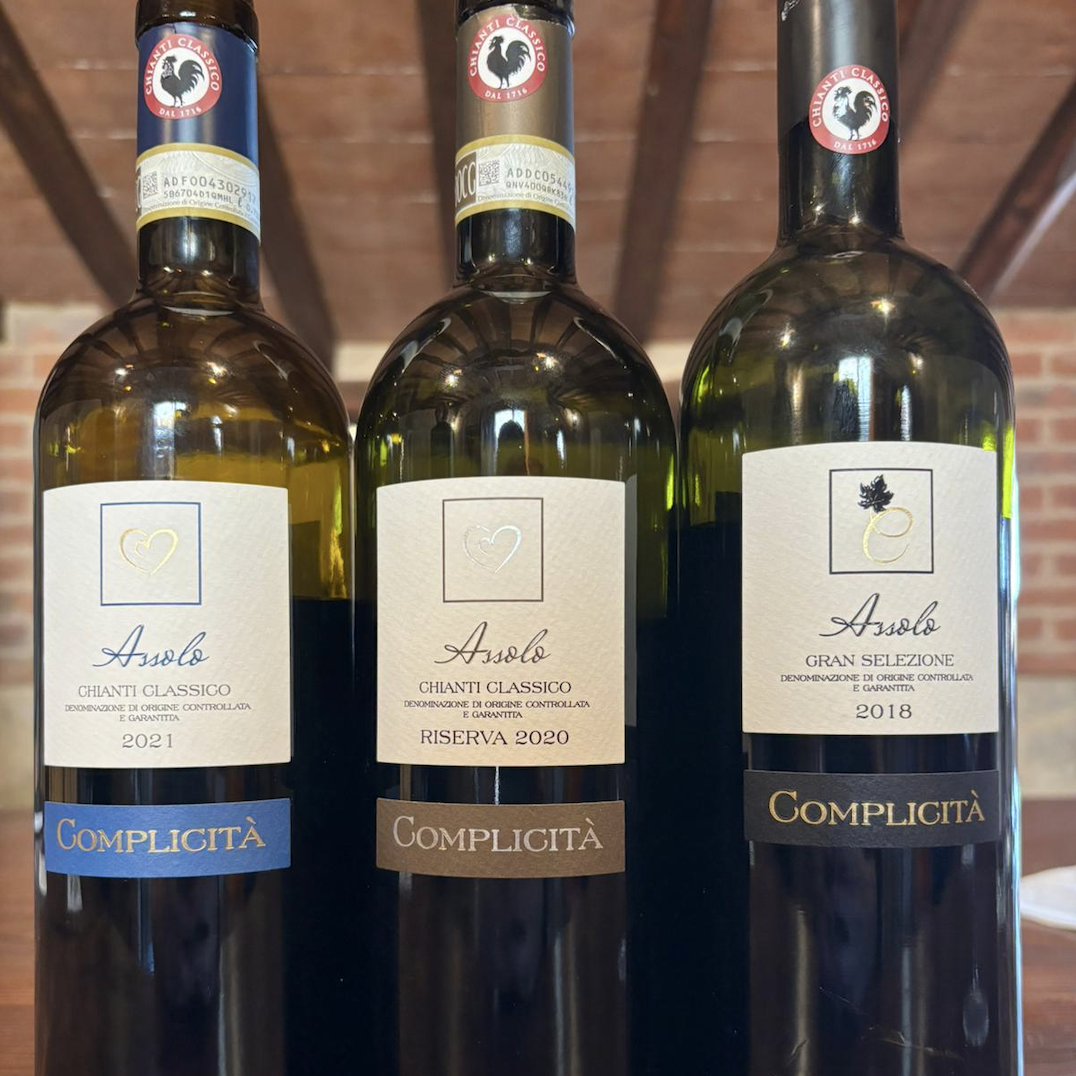
Fruit concentration and purity are tops for 2022, CC and Vagliagli. A season that cold have resulted in a jammy wine but low temperatures were used during fermentation to avoid over-extraction, followed by aging in concrete also working to do the same. Fruit on the nose, red with a touch of black, is really expressive. There are classic sangiovese and there are those with an extra layer of concentration and more distinct purity. That is Asolo. Last tasted February 2026
A sandstone soil with 100 percent sangiovese built sturdy and sure with a saline streak running through slightly darker than transparent red fruit. Wild ferment after a late September pick for a classic Annata expression and one to extol the virtues of Vagliagli savour. Drink 2025-2028. Tasted October 2025
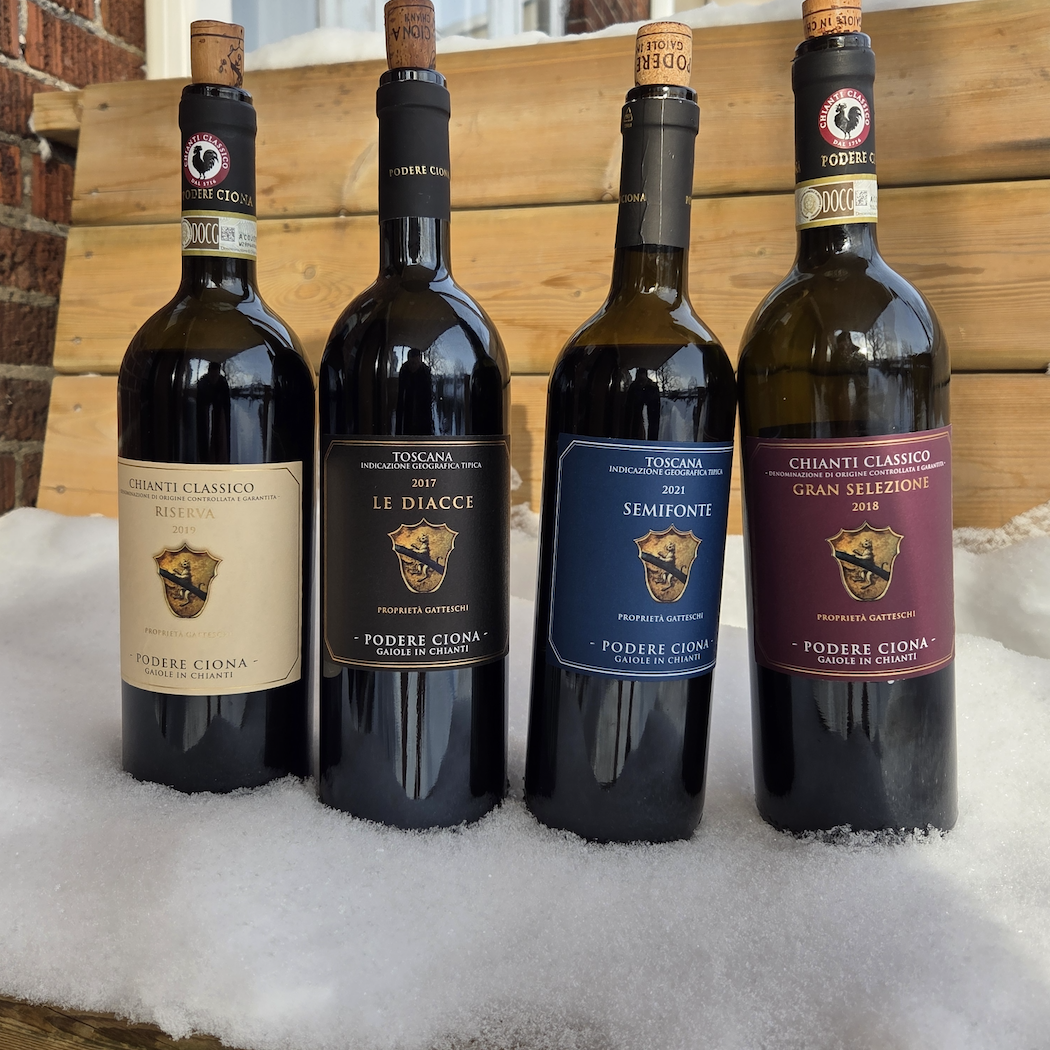
That first encounter nearly nine years ago with the Gatteschi family’s 2014 was a memorable one and the 2021 sees an Annata still on the rise, with the best years still to come. Virtually no movement since February of last year with freshness locked in tight and five great drinking years left to enjoy. Last tasted January 2026
Freshness incarnate from the small single hillside Gaiole estate, a quintessential extension from a forest località, whole and fulfilled of its own accord. As equanimous as any Chianti Classico that exists. Silk-threaded and sumptuous from the first, through filamented acidity and elastic texture. Tannins are fine, unobtrusive and acquiescing. Drink 2025-2030. Tasted at The Chianti Classico Collection, February 2025
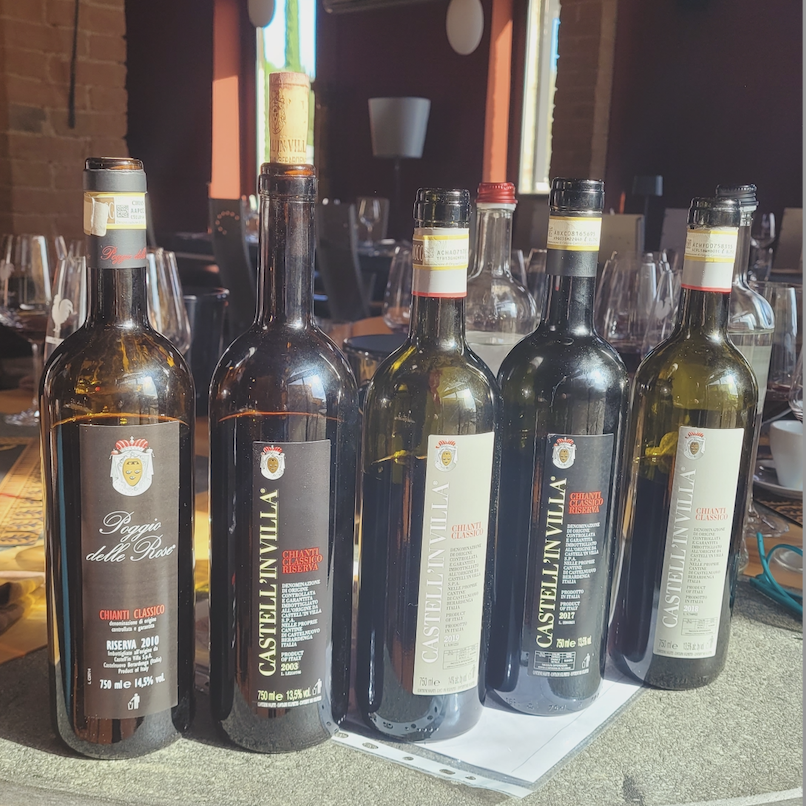
The oldest Classico in the tasting and the first to be semi-expressive because of some reduction. To be fair this sangiovese is surely two years away from readying itself for prime time, and from 2020 the number could be three or four. The palate tells another story, glorious, elastic, lengthy and without any indication of a let down. Imagination and fantasy begin to swirl, osso bucco enters the conversation, as does the feeling of being wholly impressed by such a balanced and anti-sentimental wine. Last tasted at the Chianti Classico Collection, February 2026
To taste a Castell’in Villa this early seems unusual to say the least and maybe even wrong. These are some of Chianti Classico’s longest lived wines, even at the Annata level and yet…and yet there is joy, light and promise right from the start. Hard to believe but here we are in the modern world and the house rolls with the changes – with no compromise to structure. Drink 2026-2032. Tasted at The Chianti Classico Collection, February 2025
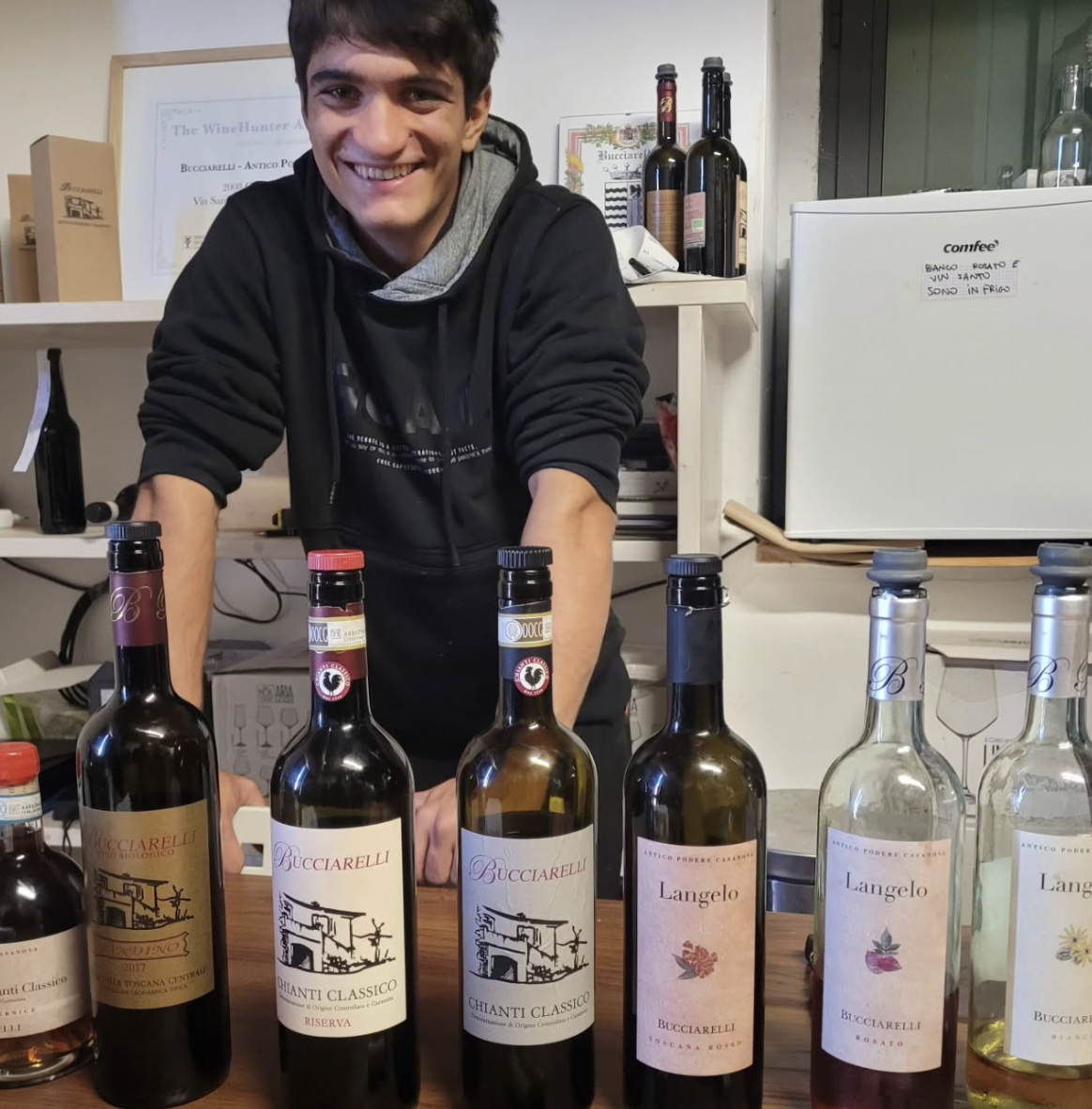
“It’s the first vintage I truly remember,” says Mattia Bucciarelli, the youngest Chianti Classico winemaker who would have been 12 years-old at the time. “Warm but not like 2017 or 2021,” a season just right. “In 2021 the woods were completely brown, but in 2019 they were green.” A problem for freshness when they’re brown, but when green the leaves and bunches will follow suit. No matter the climatic conditions, a sangiovese from Bucciarrelli will also be a bit rustic and traditional, “because that is sangiovese,” insists Mattia. The most beautiful vintages for Mattia are 2019, 2021 and 2022 – He likes warmth, especially when it happens in August and at the beginning of September. This is where true ripeness happens. The 2019 is classic, just and right Chianti Classico, in the dictionary. This and Castell’InVilla, but why? In bocca, sembra proprio giusto. Indeed they just feel right on the palate, with compact tannins and the stuffing to see the lowest and slowest of progressive maturation. Drink 2028–2035. Tasted February 2026
Villa, Antinori Riserva of grand size and now from a specific San Donato in Poggio calling. Amplitude to be sure, in fact it’s almost impossible to believe that a sangiovese could accumulate in this way, considering the amount of bottles produced. Riserva for anytime you choose. Drink 2027-2029. Tasted at the Chianti Classico Collection, February 2026
Noticeably similar to the same vintage Annata though extraction and concentration double up on the character. Along with more grip and while Classico ’23 is ready right here, right now, Riserva needs to settle in. At least a year, likely more, for the wood to melt and integrate. Drink 2027-2030. Tasted at the Chianti Classico Collection, February 2026
Smooth, refined, deftly executed Riserva for Chianti Classico in the challenge of a vintage. Rocca’s ability to pull from various plots on the Macìe estate is a huge plus to make a consistent sangiovese when the conditions conspire to compromise fruit quality. Good work put in makes for fine wine. Drink 2026-2029. Tasted at the Chianti Classico Collection, February 2026
The most amount in imaginable Riserva credibility stuffed into a bottle with silky while chalky fruit of a structure almost impossible to fathom. In fact magical would be the word. No further explanation needed. Drink 2027-2035. Tasted at the Chianti Classico Collection, February 2026
Consistency as Castellaccio, unmistakably Lamole and it does not matter how many vintages are under Davide Bottai’s belt. He’s got it, which means he abides by the UGAs climate and supposition to make a Riserva (and Annata) that show what Lamole must be. Red fruit of the UGA kind, endowed of savoury sandstone soil-driven perfume for the proverbial grace and elegance of that nook in Greve up against the Chianti Mountains. Drink 2027-2031. Tasted at the Chianti Classico Collection, February 2026
Back in February the 2023 was clearly quiet, not exactly in shock, but surely not expressive as it shows today, In point of fact the stage presence is haughty and woolly at the moment, yet another phase of development for a wine that needs more time. There is some VA present at this time, and time being the operative, to allow for further settling, also of the barrel, to reach a moment of integration and fulfillment. Last tasted November 2026
Finished wine, ready for bottling, crazy gregarious aromas, a really big sangiovese that needs plenty of air time to come around, and out. Fine chalky undercurrent of tannin and as fine a Riserva as ever, from a vintage that saw a 70 percent loss. Big bones, vertical, linear like an endless stretch of road running through a never-ending prairie to a hazy and atmospheric vanishing point perspective. Drink 2026–2033. Tasted February 2026
The strangest of seasons, “here with the most assortment of spices I’ve ever seen, but it’s a bit uncomfortable for my palate.” Says Michael Schlemzer. That said the fruit was not, from the easiest growing season, June forward, after 80 percent of fruit was lost to hail and mildew (due to the Peronospera virus). There is an argument to say this is far from too much, and while there are notes perhaps never seen in a Mont Bernardi sangiovese, one would never know the trauma of the season. There is a juicy quality, sweet acidity, and yet the back palate feels a bit trampled. More like ruffled, or tussled, and people will love it. It’s OK there was not much made and the wines are already sold long ago, from what little there was. Drink 2026-2029. Tasted November 2026
Wealth of fruit, matched by sweet and succulent acidity, finishing at suave and stylish. Classic Brancaia Riserva, full, wholesome and exceptional. Chic stuff from 2023, best fruit available, low in quantity and capable of assertion, affirmation, and proving worth. In other words wholly committed and averrable Riserva. Drink 2027-2030. Tasted at the Chianti Classico Collection, February 2026
Wall of sangiovese sound from a detailed and in depth Volpaia Riserva, as expected but never taken for granted. Something herbal works alongside berries of subtly tart fruit, though you really can’t separate the aromas, nor the flavours. Chewy fruit that is, or rather the acidity acts this way and binds the wine as the tie for all parts to conjoin. Seamless work, so well composed, and complete. Drink 2027-2033. Tasted at the Chianti Classico Collection, February 2026
Called Vigneto Branca, Signore Branca, planted in 1972. “He was a crazy guy,” says Matteo Vaccari, and he had acquired genetic material that was better and looked different than the rest of the plants on the property. Where did they come from? Probably another vineyard in the area, but who knows where. In any case the particularity of the vineyard is the soil, (Arenaria) sandy and not very deep (just 18 cm), above limestone, giving the graphite and energy. Also a southwest exposition for Mediterranean expression, mid-slope, just a tiny strip, less river stones and depth in the soil. Always 100 percent whole bunch fermentation, the overall loss at 30 percent due to Peronospera, although Vigneto Branca did not suffer very much at all. Finest tannin of all the Cigliano di Sopra sangiovese, at least through 2023, with great purity from a wine that smiles and wears its heart on its sleeve. Was harvested on September 17th, 2023 from 0.7 hectares and then bottled May 4th, 2025. Drink 2026–2031. Tasted February 2026
The tiniest vineyard producing the smallest quantities from old vines at all three levels of the Chianti Classico denomination. One of the most special projects in the entirety of the territory and here an early returns Riserva of glorious fruit, texture and flavour. Mmm, Mmm. Drink 2027-2030. Tasted at the Chianti Classico Collection, February 2026
The purity and elevated experience that is Buondonno expressed through this oh so gently concentrated 2022. The dichotomy of cool warming spirit, blanket of silk, and particular acidity that must be present to keep sprit and energy alive. Plays it low and slow despite the ripeness and località determined alcohol, usually a bit high. No matter in a Buondonno because the wine is made as it must be, to come away exactly as it should. Last tasted February 2026
Big and bountiful, rich and powerful while always just restrained enough to feel the natural beauty in the face of fruit meeting alcohol brawn. The place determines the result and 2022 could do nothing but make a big Buondonno as Riserva. A wow factor mélange of fruit and fine-grained tannin looking for the catalyst of acidity to control this manifest destiny. Two years rest will secure the result. Drink 2027-2033. Tasted at The Chianti Classico Collection, February 2025
Full compliment of fruit is the impetus for Famiglia’s reason to share Riserva level sangiovese with any and all to enjoy. Quick to explain its point and without hidden meaning or tricks up its sleeve. The basics covered at the prominently regarded level on order. Drink 2026-2028. Tasted at the Chianti Classico Collection, February 2026
High tonality, perhaps not wholly expected from 2022, and yet here is a Riserva predicated on substantial acidity to carry the piercing red fruit. Makes for a classic expression out of a less than classic vintage. Move past the well-developed mid-palate and you will run into a wall of tannin – Aye there’s the rub and the reason why this 2022 will age very well. Drink 2028-2033. Tasted at the Chianti Classico Collection, February 2026
A change in Montebuoni as Riserva from Ama, however so slightly, to something brighter and more expressive. This in spite of expectation from a really warm vintage to produce darker fruit and serious concentration. The latter is intact but with a freshness run through, a fine acidity and breeze that sees Riserva drink with sing-song waves, and iconoclastic fantasy. Dreamy, actually. Drink 2027-2033. Tasted at the Chianti Classico Collection, February 2026
Clean, clear and pure sangiovese with ample stuffing and length to charter a Riserva transport and travel across a decade. To be fair there could be no reason not to open a Petri ’22 at any time, but the stuffing and baggage will help make it over to 2031. Drink 2026-2031.Tasted at the Chianti Classico Collection, February 2026
Classic Vicchiomaggio styling for an up the middle Riserva road with ripest fruit and sweet acids before the softest and mildest tannins say hello. Easy, creamy, generous and correct.Tasted at The Chianti Classico Collection, February 2025
Third vintage for which some Lamole (Casole) fruit is involved in Riserva and each time the perfumes feel more pronounced. Helps to mitigate the heat of the vintage, injecting a cool streak through the opaque fullness of this ultra-specific and thoughtful wine. After a few sips you become acutely aware of how much time is needed to bring this ’22 into full resolve. Drink 2027-2034. Tasted at the Chianti Classico Collection, February 2026
An astuteness of how to make Riserva is evident beyond reproach in a Verrazzano from warm and inviting 2022, a wholesome vintage showing better and better with each passing taste of Chianti Classico’s sangiovese. Peaking now, already coming into its best moments, and with five years easy left to deliver. Blessed fortune in Riserva. Drink 2027-2030. Tasted at the Chianti Classico Collection, February 2026
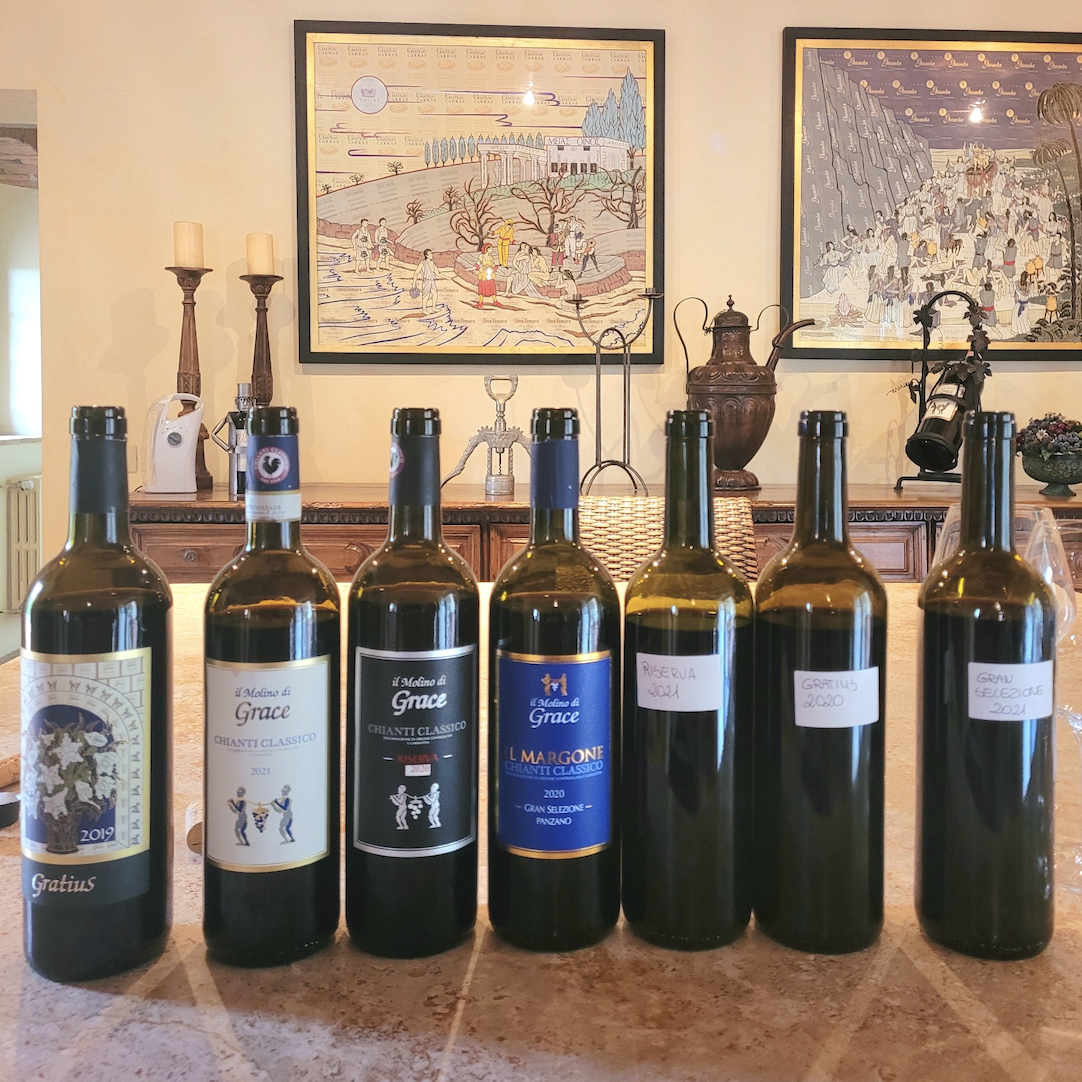
First go at 2022 and feeling serendipitous to have waited because this would have qualified as q formidable Riserva even just six months ago. Now going into a place of refinement because the compact chain of tannins are beginning to loosen and dissipate into the fabric of the wine. Shows off the weight and potential of a warm vintage where vineyard choices have now encouraged sangiovese from Panzano Pietraforte to be expressed in the most possible and correct of ways. Open the Il Molino di Grace bible to find ’22 Riserva occupying the entirety of its middle spread. Drink 2027-2034. Tasted November 2026
Hot, hot, hot vintage, very warm summer, also dry from the Spring onwards. “A good year with some spices, in our classic style, with a but of merlot and cabernet sauvignon,” tells Vicky Schmitt. More than just a bit of spice, a whole cupboard full actually. Appreciate the stage presence, and juicy exuberance, especially from this season. With a lovely linger and nothing average about it and the 14.5 percent alcohol. Last tasted November 2026
Tight and somewhat closed Riserva, chewy red fruit with serious tannin and time needed to see things calm down, then even more to see a full level of resolve. A bit guarded and challenging at this stage. The best is yet to come. Drink 2027-2032. Tasted at the Chianti Classico Collection, February 2026
Warm season, strong hail on the 15th of August, 15 minutes “while you’re sleeping in bed and everything turned brown,” remembers Cosimo Gericke. Just in the lower part of the vineyard. Sangiovese with 15 percent of cabernet franc, best fruit from the east facing vineyard upwards to the trattoria. The most unique profile for Riserva in the region. The franc raises the alcohol, picked just after the sangiovese because it needs the time and also can’t wait as long as cabernet sauvignon. Alters or variegates and dignifies the sangiovese into a profile you’ll meet and love for the first time, but not the last time. Just 6,000-7,000 bottles produced. Drink 2027–2030. Tasted February 2026
Crunchy and a crafty Riserva with oscillating fruit, at once high toned, and then descending into softer, gentler, and quieter moments. A Riserva that will rise and fall, flesh out, condense, then rise and fall again. Catch it at the right time. Drink 2027-2031. Tasted at the Chianti Classico Collection, February 2026
A 100 percent sangiovese from the mix of the two vineyards for only 330 bottles, essentially of one barrique. In fact one barrique was kept behind (for the minimum 12 months) and the happy surprise convinced Franco and Samantha (and oenologist Valentino Chiarla) to go ahead and make a Riserva. What a difference, the same wine but with more length, verticality, structure and as a result of the time in wood, also spice. Acidity runs high, fruit has not dried out at all, nor is there any bitterness on the finish. Smooth is the understatement and if there were an over it would simply be the word meravigliosa. Drink 2027–2031. Tasted February 2026
Expectation can’t help but be for a big Riserva from Piero Lanza out of warm 2022, and nothing less comes from a glass. A serious chew of fruit and something not easily accomplished in just a few seconds crawling over the palate. Serious mouthful for Poggerino’s top wine, tannins freighted full and compact with a pull that feels relentless in this current state. Steady, unabated structure for a 10-15 year run. Exceeds the expectations when first tasted for months prior. Drink 2027-2037.Last tasted at the Chianti Classico Collection, February 2026
Always a Riserva that combines size with elasticity, largesse with harmony and alcohol (15 percent) with balance. ’Tis the place, the way grapes ripen to phenolic fruition and a winemaker who respects exactly what needs to be done. Warm and silky 2022 as Riserva in the way the appellation should and is in fact is relayed. Tannins are forceful here and time is of patient’s essence.Tasted October 2025
Really quite bright red fruit in a way that Riserva does not always express, but at this level of concentration it provides stability in all the correct and heartwarming, love affirming ways. Works dutifully and lingers on the palate for minutes. Drink 2027-2032. Tasted at the Chianti Classico Collection, February 2026
Glistening, riveting and graceful Riserva from la famiglia Bianchi. You know the work put in was so hard, but the result is simply remarkable. Silky sangiovese with a nose so apropos to this high elevation Radda property, its accompanying acidity a factor of pure and unadulterated Raddese. So ideal. Drink 2028-2037. Tasted at the Chianti Classico Collection, February 2026
Notable amount of stuffing and structure come from a 2022 San Casciano Riserva filled to the rim. Aromatic to a great perfumed degree, roses and other garden scents from a warm summer’s day. Blood orange, a true sanguine character and classicism run through the entirety of the wine. Fine and poised. Drink 2027-2032. Tasted at the Chianti Classico Collection, February 2026
Seductively aromatic Riserva with an undeniable connection of San Donato in Poggio and Monsanto, which means blood orange citrus concentrate and stony soil somewhereness. Sweet perfume of red roses and berries picked at summer’s peak, the flowers having efficiently absorbed nutrients like nitrogen, phosphorus, and potassium to bloom with fragrance that fills the air. A magical vintage for a Monsanto Riserva and one to come back for again and again. Drink 2027-2037.Tasted at the Chianti Classico Collection, February 2026
Riserva is a selection from the more intense tank samples, after malolactic fermentation is done. Aged in 500L barrels, used several times and then after that they become firewood, or used ornamentally. If Annata shows concentration then get a load of Riserva in your glass. Purity exaggerated and intensity magnified. Ideal to taste the same vintage side by side, not usual but here this time because 2023 Annata (a really challenging vintage) is not yet bottled. Crunchy for Riserva with some late arriving macchia. Drink 2028–2033. Tasted February 2026
Chalky, a touch viscid and clearly structured Riserva. Quite a lot to resolve from both a tannin and acid perspective, and one wonders if the fruit will begin to fade because of some strong extraction. Remains to be seen if greater notions and refreshed energy await. Drink 2027-2030. Tasted at the Chianti Classico Collection, February 2026
The Riserva (sic) Gran Selezione is the top Classico drop for Badia a Coltibuono and from a vintage that explains the wink wink (sic), reality as well as any ever could. A level of ripeness and structure seamlessly connected, simply rendered, presented to tasters at just the right time. Silk screened, stencilled and sculpted, high expression renderings all, layered and focused in a composition direct and knowable, facile for comprehensive understanding. The art of redundancy done right. Ideal for a decade or more. Drink 2027-2035. Tasted at the Chianti Classico Collection, February 2026
Full and complete Riserva, integral to the appellation and stylistically speaking really quite amenable for here and now. Drink 2027-2029. Tasted at the Chianti Classico Collection, February 2026
Starting with vintage 2021 the decision was made to change the style of Susanna Grassi’s label. Seems fitting with a new fermentation cellar now open and operating in 2026. Like Terra di Lamole (Annata), Riserva is also from the lower vineyard, a best selection from the first day of harvest, plant by plant. Of berry taste more than anything else and the most visceral beauty notated bunch by bunch. Aged 12 months in tonneaux and despite 2021 being the frost year in many parts of Chianti Classico, there is never that kind of issue in Lamole. Finishes with a a fine drip of Amaro meets black cherry bitters. Drink 2026–2032. Tasted February 2026
The Easter frost vintage, of 30 percent loss. In an average year there are 20K bottles of the Classico, and 13 was produced. For Riserva the loss was 1k of the usual 6. Still the finest balance was achieved, as was body structure, with elbows relaxed as opposed to how taut and extended they were in 2022. More at ease yes, and also centred. Drink 2026-2032. Tasted November 2026
A Chianti Classico Riserva with a new label for the Castelli Del Grevepesa cooperative and their arrangement with the Cantina Sociale Colli Fiorentini-Valvirginio. The wine is made as a joint venture at the San Casciano facility. Rich oil slick of sangiovese and Botti, thick as thieves together for a silky smooth CC Riserva. Finds its legs, walks out of the cellar and into the glass with time in bottle having already resolved most of the tannin. Solid, in every way. Drink 2026-2027. Tasted at the Chianti Classico Collection, February 2026
Sleek Riserva from I Colli in western Vagliagli, acids crunchy for 2021, and nearly settled to allow purest of sangiovese fruit to reign. Not a particularly tannic sort of thrush, but structure is real and purposed for how all parts will assemble, and for it will become. Drink 2027-2032. Tasted at the Chianti Classico Collection, February 2026
The Riserva comes from a single vineyard called Misciano, place name where Alberese shares space with schist-clay and its Galestro manifestations. Makes for one of the fresher meets well-structured Vagliagli sangiovese, with a good compliment of local Balsamico. Slightly lesser and conversely more concentrated crop really defines the greenness, a.k.a. the “macchia” of this Riserva’s origins. Drink 2026-2029.Last tasted August 2026
Plenty of age on this Vagliagli Riserva to see a resolution and usher the composition into a place of accessibility. Really quite juicy fruit, come into the swirl of the acidity and ready now, aiming to please with full consent.Tasted at the Chianti Classico Collection, February 2026
One of the older Riserva poured at the Chianti Classico Collection and no shocker it comes from Castell’in Villa. A top expression and though from 2020 the time has not yet come. In fact this Riserva has descended into a Bourgogne like dumb phase, quiet yet composed, and not yet with the reinitiated energy we know Castell’in Villa will soon rebound to deliver anew. Would wait two years because the 2018 tasted three nights ago at Il Magazzino in Firenze confirms such notions. Drink 2028-2033. Tasted at the Chianti Classico Collection, February 2026
“A fantastic vintage, with a really long harvest,” tells Susanna Grassi, like she remembers it as yesterday. The weather was no nice with the ability to harvest every parcel at just the right time, finishing on October 22nd. The grapes were in very good shape and the wine is just that way today, with tannins still present and fruit not fully passed into secondary territory. In fact the drinking window has at least two years left. Some canaiolo was included at the time, a practice that stopped a couple of years later. The freshness persists and the wine is so young, also lively. Amazing. Drink 2026–2031. Tasted February 2026
Ho hum just another fabulous vintage for Lamole, Chianti Classico and a terrific Riserva made by the incomparable hands and grace of Susanna Grassi. The energy is amazing and just a sip will wake up the senses, even when you didn’t realize that was something you needed. Fruit is knowingly crossed over into a secondary state but in the freshest possible way within that stage. The tannins have melted, the wine softened and the mid-palate come to a creamy position. Drink 2026–2028. Tasted February 2026
Extremely youthful, tight and coiled, the botti very much driving the machine on a precise linear line towards a vanishing point. Serious acids, more Raddese than ever before, the sangiovese aching, like a heart ready to burst, still in longing. Seriousness and refinement with time needed to effect change and after that, impressive results. Drink 2028-2034. Tasted at the Chianti Classico Collection, February 2026
Really young sangiovese as Gran Selezione, too young, the barrel still very much on top and sheathing the entirety of the wine. Woody and tannic, closed and a challenge to access, therefore to assess and pass any judgement. Good fruit core, more than ample concentration and a track record that speaks to the probability of a high ceiling. Drink 2028-2034. Tasted at the Chianti Classico Collection, February 2026
Younger of the two Rocca delle Macìe Gran Selezione, taken directly from the Fizzano estate and yes also the accessible one. The kind you can open, give one to two hours air and pour today. This because fruit is very much up front and structure laid low beneath. This is a deep well filled with sangiovese liqueur, rich, ripe and fully developed. Drink 2026–2029. Tasted at the Chianti Classico Collection, February 2026
Sheer beauty and unbridled joy at the Gran Selezione level from Castellina, of long hanging and fully developed fruit caught at the vortex of two optimum ripenesses. Of natural sugars and phenolics, conjoined at the stem, pressed into a joyous elixir anyone would be pleased to enjoy. Brava for this beauty in 2023. Drink 2027-2032. Tasted at the Chianti Classico Collection, February 2026
Typically Rancia, perpetually gripped by emotion, factored by soil and location, more evergreen and macchia-affected than so many parts of Chianti Classico. More for Rancia as compared with how things come out for Colonia, here of a verdancy and a liqueur of sangiovese so obvious by nature. Exaggerated up to here by 2023, yet different and not as elaborated as say 2022, but tragically fervent and hip nonetheless. Changes in the glass and “well the medicine man started seeing red,” in a positive way, possibly from a Gran Selezione that might have made him feel opiated. Colonia is not the only Fèlsina site with healing powers. Drink 2028-2033. Tasted at the Chianti Classico Collection, February 2026
If Riserva carries top five potential, “Il Margone is in the top three,” says Iacopo Morganti. The best he ever made, fresh and strong fruit, great acidity, musculature, body and length – It’s got it all. Iac might very well be spot on with this one. Rich and still a bit of unresolved chocolate tannin but give Margone five years and that will happen, without any compromise or drop in the openly effusive and exuding aromatic profile. Drink 2028–2037. Tasted February 2026
“The wine was born of itself,” says Matteo Vaccari, “there was no discussion or plan to make Gran Selezione.” The fruit comes from the alberello-trained Clos de Maddalena, northeast facing where acidity is much more present and the fruit is “very solar.” Born because the “wine caught out attention.” In fact in 2019 Riserva from Vigneto Branca was born like this. The two considered going an IGT route but they answered their own question with why? Why produce a wine outside of the appellation? There used to be a reason for that, but at this point in time there just isn’t. Just a bit more than a half hectare, a precision in the fruit straight away during fermentation, light red and flowery, almost peachy and then the balance, now felt between acidity, tannin and texture on the palate. Concentration and mouthfeel are what you would call magic from a wine that’s just 13 percent. Magical conversion rate with tension preserved. Bottled May 4th, 2025. Drink 2026–2031. Tasted February 2026
Expressly San Donato in Poggio, hyperbole in red citrus, namely blood orange, juicy exaggeration, croccante at the highest crisp heights for Gran Selezione. Also ferocity and vigour, transference of a place, made in a style to exult and announce its presence with neither subtlety nor reservation. Will age long. Drink 2028-2034. Tasted at the Chianti Classico Collection, February 2026
The purity and textural perfection of a San Donato Gran Selezione are found in Le Balze, true to UGA yes but singular of style and effect. A liquor of sangiovese aromatically deep and profound, semi-Amaro, naturally sweet and typically dry. This is Gran Selezione of conceptualization and distinction, youthful from 2023 though readier than most at this stage. Drink 2027-2032. Tasted at the Chianti Classico Collection, February 2026
One of two Fonterutoli Gran Selezione, the other being the Radda focused Badiola and this the more rounded and accessible one. From ’22 the classic GS is Mazzei’s Castellina by definition, darker of fruit, more like 2020 than anything that will come after, through to perhaps 2025. Full, substantial and long – Much of the Selezione battle is won. Drink 2027-2031. Tasted at the Chianti Classico Collection, February 2026
Fine dichotomous mix in the Cecchi Valore di Famiglia, from the sleek to the grippy, the refined and the tense. Mostly crisp and piqued by spice, but then chewy fruit and liquorice, a curious play back and forth for Gran Selezione. Travels well and fingers long. Last tasted at the Chianti Classico Collection, February 2026
Exotically expressive bouquet from Cecchi’s top sangiovese drop with a cool herbal streak running through the warmth of the vintage. Well judged with savour and plush tannins to make for a most well-rounded Gran Selezione with finishing Balsamico spice. Tight now, opening likely the year after next. Drink 2027-2032. Tasted October 2025
The first of (now) two Pomona Gran Selezione, from the little man vineyard as the more suave but also fluid as compared to Vigna del Termine. Pure sangiovese, for sangiovese, to speak for and about sangiovese. A love letter from La Monica for grape, history and her beloved Pomona. Time will be the keep everything honest requiem for the structural processes to happen, and the wine to take shape. The wood has not quite vacated the pole position, and it will, at some stage two or three years down the road. Drink 2028-2034. Tasted at the Chianti Classico Collection, February 2026
Monica Raspi has identified this block at the end of her Castellina property, a specific, predetermined limit where the doors have opened to something special. A place to expound upon elaborate plans, limitless and free, For this first vintage Vigna del Termine makes for a brighter Chianti Classico as compared with L’Omino, like a strike of sangiovese lightning, with piques of red citrus from the new Gran Selezione kid on the Pomona block. The end of the vineyard, the last block, that which will come into its own some years from now. For the time being it delivers a new and exciting concept in Gran Selezione, and one we will voluntarily follow for decades to come. “This is the end, beautiful friend, the end.” Drink 2027-2029. Tasted at the Chianti Classico Collection, February 2026
Stricter structured Gran Selezione as compared to the Fizzano, more detailed, complex and of a requiem for which time passing on will help to gain a deeper understanding. The Zingarelli name depicts and dictates a grand sangiovese silkier and more refined, marble chiseled, reflective of the classics. Wait three years before diving in to this pool of cool and sleek sangiovese-ness. Drink 2029-2035. Tasted at the Chianti Classico Collection, February 2026
Crisp as they come for sangiovese at the top of the appellative staircase and as a 2022, still a work in progress. Warm vintage fruit in place, centred as the focus and to speak for the place from where it has come. Which is what the wine needs to do, ahead of the fleshy emergence and then finally for the way it was intended to drink. Drink 2027-2032. Tasted at the Chianti Classico Collection, February 2026
A different animal this extraordinary Colonia, surely as compared to Rancia, a higher elevation vineyard, cut from the forest, breathing a whole other level of bosco and macchia into the sangiovese. No less an expression of fruit and in fact acidity rages properly within a structural system that keeps both pace and beat. A year longer in bottle settles things a modicum amount but Colonia needs years to resolve and get where it needs to go. This is an exceptional vintage. There is no escaping the fact, like how a cloud weighs a million tonnes, yet floats because its density is lower than the surrounding air. Drink 2028-2040. Tasted at the Chianti Classico Collection, February 2026
A few years into its tenure but there are no ’22 Gran Selezione more youthful than San Lorenzo from Ama. Wound tight as any and in this state the soil, land and local Gaiole Balsamico are very upfront and apparent. Crunchy, crispy, croccante, you name it, San Lorenzo is all off these things. A sangiovese baby in need of three years further in bottle, It is sangiovese after all. Drink 2029-2036. Tasted at the Chianti Classico Collection, February 2026
Stoic, confident and serious Gran Selezione. Proper and correct, a reflection of soils, knowledge, experience and intention. Linear, vertical and upright. Drink 2027-2032. Tasted at the Chianti Classico Collection, February 2026
The Vicchiomaggio first, a Gran Selezione speaking on behalf of the vineyard that matters, the fruit as concentrated and full as there could be, wood paving the road and smoothing out the way. Some tannic freight needs to be shed, that much is certain and this 2022 will only increase in sleek and silky character. Drink 2027-2031. Tasted at the Chianti Classico Collection, February 2026
Luisa is bright and focused for a 2022 sangiovese, with the most red fruit of the three Selezione and grand in its very own way. Highest acidity and vertical rise into airy territory, breezy with lightning strikes and piques of spice. Cinnamon in a way, crunchy and unique to itself, of Luisa and Luisa only. Sneaky structure, not yet apparent perhaps but this ’22 is as Montefioralle representative as any in the UGA. Drink 2029-2035. Tasted at the Chianti Classico Collection, February 2026
Feels important to taste La Fornace after Luisa, here from the furnace’s warmer clime, the micro-block that receives higher solar radiation and acclimatizes it so well. Still a bigger sangiovese results, of more spice, immediate grip and intensity. The 2022 is obviously no exception to the boiler’s consistently credible work, the flame ignited with ease, the fruit aflame with beauty and body heat. Needs two years and will then drink at peak for five more. Drink 2028-2032. Tasted at the Chianti Classico Collection, February 2026
Somewhere in the middle between Luisa and Fornace is Bastignano, the vineyard-designate Gran Selezione that feels to split the twain between the two. The sangiovese that feels expressive of the most sap, resin and spice. Like American oak spice though that’s not the deal, still there is cinnamon, nutmeg, a nuttiness and exotic flavour. This will appeal to a different crowd while in maintenance of Capponi is its nature, and result. Drink 2028-2033. Tasted at the Chianti Classico Collection, February 2026
Estate Panzano location, Montefioralle vineyard, a Gran Selezione connecting the overlapping of the two from a nook where orientation is everything. An amazing confluence of ridges, switchbacks and valleys, nowhere like it, not even in a territory as complex as Chianti Classico. The Gran Selezione too, fluid and then vaporous, then come back again. Leaves a trail in its up in the air wake, not to come back down to earth for some time yet. Too youthful to fully call. Drink 2028-2033. Tasted at the Chianti Classico Collection, February 2026
When you taste the Castellina Gran Selezione next to Badiòla from Radda the differences are quite obvious, namely in acidity because of the shape, size, orientation and elevation of this vineyard. Acidity and the super fineness, finessed tang and fortuitous sweetness, all essential aspects at the core of a top echelon sangiovese. All meaningful and creating an energy that reaches another level. More macchia as well, delivering greater complexity. Drink 2027-2037. Tasted at the Chianti Classico Collection, February 2026
A current vintage although Il Puro is tight, unyielding, locked in hiding. In fact it’s not until the wine is no longer on the palate and you have considered the qualities that you recognize both breadth and depth as witnessed by how long it all lingers. Hangs around for so long without changing and it all becomes quite telling. The nose hints at violet and graphite, the flavours of dark fruit and a deeper elemental stoniness. That said there should and could be so much more, and there will be, sometime towards the end of this decade. Drink 2029-2037. Tasted at the Chianti Classico Collection, February 2026
True Raddese acidity for Gran Selezione, vintage related with more depth and intensity as compared to the 2021. La Fronti has refined this Aia GS in a way almost unexpected and yet the stylish effect is clearly factored by the vintage. Radda could not have made this sangiovese 10 years ago – Not like this. Last tasted at the Chianti Classico Collection, February 2026
From the steep declension of Istine’s limestone and schist littered home vineyard equipping this warm vintage Gran Selezione with a lick of fortified structure to see it live deep into the next decade. More high elevation savoury layers within, without and in stratification for sangiovese on the more serious side of the Gran Selezione appellation. Not hidden but at first unnoticed is the elevated acidity which is remarkable given the heat of 2022 and only certain Chianti Classico capture this excellence in the face of a season’s furtive gesture. Istine’s is grand in so many ways; fruit, acid, tannin and potential. Drink 2027-2034. Tasted November 2025
A lighter disposition while at a similar alcohol level to the Riserva (14.8, and labeled 14.5). The answer is simple. Sangiovese. No merlor or cabernet in the GS. Purity, finesse, and a sing-song character that tells a new, or at least ulterior appellative story. An epiphany of vintage and estate. Last tasted November 2022
Perfect Panzano pitch of fruit, treble of acidity and bass of tannin for a most musical Gran Selezione for 2022. Another croccante affair, tough in a different way than many because of flow and riverine liquidity. The ’22 truly drifts along a fluxional course, like lava flowing down a mountain, unstoppable until the heat runs out. The vintage was warm and the effect is hypnotic. Drink 2027-2033. Tasted at the Chianti Classico Collection, February 2026
Singular perfume, flavours and textures from this first vintage of the new Calcamura Gran Selezione, a tiny production that can’t be more than a third of a hectare’s amount in fruit. Expressive of the conjoined effects of freshness and depth, directness and complexity, concentration of force and feeling. This is what happens when two terrific winemakers with experience in larger estates make work with fruit come from small, focused and accountable terroir. Drink 2028–2034. Tasted at the Chianti Classico Collection, February 2026
Relatively new Gran Selezione directive and label for the San Casciano estate of Gabbiano, here from Cerbaiola, of sangiovese grown in San Donato in Poggio. Brings the blood orange and flesh to meet elements derived from Alberese and schist manifested as Galestro into the two-toned, dualistic structure of a well orchestrated wine. There is some elasticity to the tannin, also a ripe sweetness and ability to stretch out the fruit. Fine work out of the warm ’22 vintage. Drink 2028-2032. Tasted at the Chianti Classico Collection, February 2026
Serious San Casciano savour, all the verdant feels, macchia, menta and local Balsamico, all in, together in layers, coming away as an herbal fluid with silky fruit. The wood has done its work, having nurtured the 2022 sangiovese to a pure and purposed mess. Tannins are also quite refined. Drink 2027-2031. Tasted at the Chianti Classico Collection, February 2026
A few years of time has been the catalyst to see a once firm, grippy and immovable Gran Selezione come to a place where things can be figured out. Bite through the crunchy outer layer to get at the fluid sangiovese liquidity in the centre, replete with the sappy sweetness of Vagliagli acidity. Still a liquid chalky tannic persistence to see three to a maximum 10 more years of positive drinking. Drink 2027-2033. Tasted at the Chianti Classico Collection, February 2026
The assessment of Dofana and Montaperto side by side is always telling and from 2021 the differences are extraordinary. There really is no comparison – The juiciness and exuberance of the Castelnuovo Berardenga Gran Selezione is off the charts. The energy is intoxicating, the effect invigorating. As they say – Top. Let this be said. For Montaperto 2021, the vintage is one for the ages. Drink 2027-2038. Tasted at the Chianti Classico Collection, February 2026
Rialzi is Gran Selezione realized from a beautiful world we live in, a gift of generosity and the exceptional, coming upon 30 years of this special vineyard on Frescobaldi’s Perano estate. More devo than diva, a new traditionalist Gran Selezione at a price meant to sell. Most excellent vintage of this proper bottle of sangiovese, as consistent as they come in the hands of Nicolò d’Afflitto and Riccardo Giorgi. Drink 2027-2033. Tasted at the Chianti Classico Collection, February 2026
Silky liqueur of Pietraforte influenced sangiovese come about with mineral liquidity and full alcohol warmth. All the necessary juice bled from the blood of sand, stone and vine for something so extraordinarily refined. Hard to imagine anything being more pure and polished than Pecchia out of northerly Panzano. Last tasted at the Chianti Classico Collection, February 2026
Riserva may be on its own but it already reveals much about itself. The separate entity that is Gran Selezione does the opposite with wood so very much upfront and a tannic touch weighing down as freight below. As full a wine as Gagliole will make, however the barrel holds all the current cards. Comes away creamy and there needs to be some integration to get where it wants to go. Drink 2027-2033. Tasted at The Chianti Classico Collection, 2025
Only Panzano is want to develop, distill, produce and deliver sangiovese in this full and concentrated way. Crushed velvet in the glass with Pietraforte grainy fed tannins below, the middle palate covered by a silkiness that only soil, variety and località will do. Top quality Bambole for Monia Piccini. Drink 2027-2034. Tasted at the Chianti Classico Collection, February 2026
Fabulous verging into phenomenal Gran Selezione from the highest quality fruit, even if the quantity may not have been at the top for Le Cinciole. This is different. The silky and refined character is accomplished without taking anything for granted, without trying to make the wine come out in any decided upon way. Feels so perfectly natural and normal, as if there could be no other way. Drink 2027-2032. Tasted at the Chianti Classico Collection, February 2026
Like Riserva the quantity was affected by the April frost, but as only sangiovese the production was halved, to approximately 1,300 bottles. Again, as a solo artist there is less power as compared with ’22, with elbows in (not up) and muscular tension reduced. The 2021 is an epitome of proverbial sangiovese elegance. Liquid spice with a whisper of smoulder, and a cool, ethereal, gently salt-licked Alberese mid-palate. Big improvement from 20 months ago. Last tasted November 2026
Le Fonti’s is a 100 percent sangiovese from east facing Panzano vineyards with all the morning sun captured for Gran Selezione of truly effusive character. Tannins are a bit in charge however and there needs to be a reckoning sometime soon. A wealth of flavour, touch of mocha and so much more. Drink 2027-2032. Tasted at The Chianti Classico Collection, 2025
From a very compact clay soil, always 100 percent sangiovese, since the first vintage of 2013. Not made in 2022 (because of the hail), having been skipped in 2014 and 2017. Only comes from the single Il Vigneto delle Villane, an offending way of referring to someone who lives and works on the farm. Essentially a contadino but there was a time when the farmers were “villains,” because they had bad manners. The wine needs 10 minutes minimum to open, closed again and then opens once more, then 10 minutes later opening even more. You can intuit what might happen in 10 years and then 10 years after that. Just 3,000 bottles produced. Drink 2028–2036. Tasted February 2026
Strong and amazing sangiovese mocker, still in a style come to be known from this Radda property, at this time still in a period of transition. Progressive, full and with a dark red Swedish berry edging to blackness of fruit, wood very much a resinous and sappy partner. Extended play, atmospheric, and rock-oriented, a Fryshusfunk of a Gran Selezione, finishing at a chaotic, melodic crescendo. Ready to drink while listening under headphones. Drink 2027-2031. Tasted at the Chianti Classico Collection, February 2026
One of the most substantial and mouth-filling Gran Selezione of the 2021 vintage is this from the great uprising of a hill in Monsanto’s Il Poggio. A place within the San Donato in Poggio UGA where “history cannot be wiped so easily” because old vines, stony flysch soils, winds and exposition persistently combine for great sangiovese effect. There is a strength and a soulful emotive feel from Il Poggio ’21, not unlike before, but with newfound resolve. If simply because “where there’s a will, there’s always a way.” Drink 2029-2038. Tasted at the Chianti Classico Collection, February 2026
Only the second Gran Selezione made by Cinzia Manca, the first having been 2018, none made the following two years and the next will be 2022 and 2024. In the Spring after malo is finished and the wines are moved (post concrete) the choices are made for Riserva and also this Selezione. The GS sees three years in 500L barrels, a number set upon although the ’24 might see more time. More closed than Riserva, in part because of vintage and in part because, well aging for Gran Selezione. A wee bit shy like its maker but you know just how much expressive character is in its eyes and heart. Not a bomb of any kind, neither of fruit or jam, nor should there be any hurry to expect the world from this 100 percent sangiovese. Give it time and it will repay, again and again, for a decade or more. Drink 2029–2037. Tasted February 2026
Sweet natural fruit, really well developed and so concentrated, a thing of beauty though frankly not the most structured of the 2021 Gran Selezione. Or perhaps it has settled relatively quicker by comparison to others and is quite ready to roll. One to drink sooner rather than later, although you will also be rewarded by following bottles for another five-plus years. Last tasted at the Chianti Classico Collection, February 2026
Vigna Sessina leads with its structure without apology or hesitation, of a palate attack taking hold straight away. A whole mouth of crushed rocks, very much in the way of packed and tannic Châteauneuf-du-Pâpe, warming and coating in mouthfeel. So full and substantial without a moment’s softening. Drink 2027-2034 . Tasted at The Chianti Classico Collection, 2025
Chianti Classico Gran Selezione DOCG 2020 (and earlier)
Maturing, experienced, settling and poised to be moving into secondary territory before too long. Leathery plum and herbs, more than acting out a concentration of Lamole perfume. Chewy palate rumination, of Turkish Delight and simply a Gran Selezione for right now, and not much further. Drink 2027-2029. Tasted at the Chianti Classico Collection, February 2026
Gran Selezione is so much more expressive of the Lamole macchia, of forest vegetation and a verticality that defines the most important wines. As if the Lamole ring road is the dividing line between the two styles, just meters away from one another. This from an “average” vintage, neither too hot nor cold, “a normal climate with the typical warming summers, but no specific problems,” tells Susanna Grassi. Makes for a definitive look and take on Gran Selezione, able to age long, if not forever and ever. Last tasted February 2026
Like Riserva there is a wealth of fruit in I Fabbri’s Gran Selezione but this time the Lamole minerals strike first and fast. They take aim to inject an elemental jangling into fruit and coupled with the local perfume there is this wild at heart feeling about the wine. Major happenings in 2020 GS, complexities found throughout, bound up in the book of Lamole and with length from Greve to Casole and back. Drink 2027-2035. Tasted at The Chianti Classico Collection, February 2025
Sassello is an entity and confident sangiovese unto itself. Still young and working through its inner innovation and action, with strength of fruit, structural detail and something intangible that strikes as exceptional. The Monterfioralle version of nun me scoccià, a Neapolitan phrase made famous by Pino Daniele and meaning “don’t bother me.” Drink Sassello when you have a desire for peace and quiet. Also to find an escape away from annoyances or intellectual arrogance. Or for no reason whatsoever. Just drink Sassello. Drink 2027-2033. Tasted at the Chianti Classico Collection, February 2026
The full, all-around successful and getable vintage shows off a settled Gran Selezione, now in the go zone. Generous, and at present, also effortless. Last tasted November 2026
Campione: A sample but more developed as such than so many because Le Fonti, unlike many others does not feel the need to extract and press to impress. In fact there is a level of restraint and fineness that speaks to confidence but also a Gran Selezione made in the way it simply had to be made. Important as one hundred percent sangiovese and definitive of Le Fonti’s finest available fruit in their north-easterly aspect and exposure of Panzano. This is seriously good. Drink 2026-2035. Tasted February 2024
Richest of the luxe and opulent Gran Selezione in the silken world of Bindi Sergardi’s Vagliagli and because this release is easily two, to some extent three years behind some others, the wine has come to show its true colours. Red, black and blue fruit, a veritable hematoma of a sangiovese, strong and confident, raven-hued and seductive. Gets neither more refined, cultured or polished than this Mocenni ’89. Drink 2026-2034. Tasted at the Chianti Classico Collection, February 2026
Tasting the 2019 almost 10 months after the superb 2020 San Marcellino is curious indeed, and it’s interesting to speculate about the reason for the inversion. This release held back is surely because Marco Ricasoli felt that his 2019 needed more time in bottle, and we know how the Monti in Chianti winemaker feels about showing wines only when they are ready to be shown. Time has been kind to what just had to have been a formidable, phenolic, and not long ago also austere San Marcellino. Make no mistake – This is one of the Gallo Nero territory’s most serious appellative Sangiovese. In February of 2020 Marco wrote (about the 2019 harvest), “such a stable weather gave us all the time to harvest the grape with an unusual calm, with no stress or specific worries.” And yet this GS needed more time to settle than the vintage that would follow. Settle it has, and one could be forgiven for thinking it has already taken on some secondary, albeit truly complex character. The wine has travelled, and travelled well, to a place of calm, of readiness, and will remain in this state, likely unchanged, for five years, possibly more, It will drink dutifully, and beautifully, for 10 or more. Drink 2026-2035. Tasted three times, October 2026
First approach to a Ciona Gran Selezione from the team of Winemaker Lorenzo Gatteschi, Oenologist Dott.ssa Vincenza Folgheretti and Agronomist Dott. Marco Pierucci. The vintage was simply not the same in two places within the territory for Chianti Classico wines at all three appellative levels, but my goodness Gaiole is on display in the most glaring of hyperbole ways. Exaggerated riches of savour and so little time though who could have nothing but time for such an honest wine. Also a sangiovese of great heart that wears personality on its sleeve. Like the Riserva 2019, time has been kind to settle the herbaceous character and allow truth of fruit to walk side by side with acidity and resolved tannin. Fine work from the Ciona team for 24,000 bottles total, inclusive of Annata, Riserva, this Gran Selezione and two IGTs. Drink 2026-2032. Tasted January 2026
The original trebbiano of IMdG, conceptualized by Iacopo Morganti and first bottled at the winery as of vintage 2024. The sophomore 2025 is a stainless steel only affair, bright and mildly phenolic, but with enough grip to grab hold of your palate. Which incidentally pays attention to the feelings and doggone if this does not intimate wines like unoaked Chablis. Dry and of a succulenza specific to this part of Tuscany. Drink 2026-2028. Tasted November 2026
From the classico trebbiano to this elevated version called Spiralis in ode to ancient sea shells found in the Pietraforte vineyards at Il Molino di Grace. A year further on, and so 2024 is the trebbiano that sees approximately a year in barrel, accentuating and then developing texture, landing somewhere between the concept of a Villages and Premier Cru. Definitive for what the variety can be for inland Toscana, fresh and weighted, with freight by dry extract and concentration, also mineral aptitude, and finally phenolic grip. Drink 2026-2029. Tasted November 2026
The base wine, essentially, “but a good base,” says Iacopo Morganti. A little bit of merlot brings a verdant savoury edge to the sangiovese for the drinking one, the yes please, another glass one. Zero complications. Drink 2026–2027. Tasted February 2026
Younger vine Bordeaux blend, with less colorino than previous, “a long time nagging at me as to why we use so much of the grape. “And so the vineyard has been top-grafted with merlot, from Tzingara cuttings. Liquid chalky, still dark-coloured and structured, as per petit verdot, but going forward this will change. Good sweet and sour mix into that dark fruit, chewy and balanced within a subset of medium intensity. Less than the biggest vintage in most respects. Drink 2027-2030. Tasted November 2026
In 2022 this was solo sangiovese, but there is some canaiolo in 2023. “Ritorno,” for Franco and Samantha Solderi coming back to his family’s roots in Radda in Chianti. The easier drinking sangiovese as compared to the Chianti Classico. Sees no wood, only cement and the decision for blending will happen quite late in the process. A pure and accessible Rosso but in the world of Toscana IGT there is more substance and stuffing than a great deal of peers and who should say this is not Chianti Classico, especially considering the size of Podere Ferrale and the quality of this Radda site. Drink 2026–2029. Tasted February 2026
An IGT from 100 percent sangiovese considered the easier drinking wine, “an x-ray of the site,” only seeing concrete. No wood and the concentration plus structure are extraordinary, not powerful and broad shouldered, but like toned musculature. Also smells like wet concrete, as does the 2023. The vineyard is still young (planted in 2018), a great freshness is a by-product of that land, there is youthfulness and an alliance with no barrel winemaking, nor make-up or additions neither. Drink 2026–2029. Tasted February 2026
Always the most exotically spiced and here also with violets, something you don’t get in Margone, very much barrel related, including with thanks to the newer Stockinger casks. The sangiovese as Gratius leaves a hypnotizing pique on the tip of the tongue and also the brain. The end result comes across as a serious and refined IGT that will take two decades to get where it needs to go. Drink 2029–2042. Tasted February 2026
The rare 100 percent cabernet franc, named for the Ricci family, of Caterina in the 17th and a bishop at the end of the 18th century. Riccio, also the hedgehog, cute little buggers who eat the grapes that fall on the ground. Drier and never as fat or soft as Bolgheri, because that’s not how grapes grow in Panzano and Chianti Classico. If there could be any comparative reasoning then let’s say cabernet franc is more like the Loire and for that matter Niagara, pure, naked, striking, and clear. Il Ricco sees two years in a mix of tonneaux and 20 hL botti, year by year moving to more larger casks. Just 3,000 bottles are produced and this is a top vintage for the unicorn franc. Drink 2028–2036. Tasted February 2026
For current reference, 2026 cabernet franc was picked by the 25th of September, and in 2022, a warm vintage, the pick finished in the third week of October. The change for 2022 was…wait for it…five months of skin maceration. Well beyond the average concept of Piedmontazine cappello sommerso. Void of VA, silky and smooth, beautiful, all the polymerization having done everything necessary to make a beautiful wine. Super generous, a bit of merlot-like softness, and in some mind’s eyes, a foxy quality in perfume. Always a question of ripeness and vines gaining maturity. The 2026 will become different again, and all tolled the wine has only been made in five of eight possible vintages. Not to mention the production is so limited. Drink 2026-2029. Tasted November 2026
Have been waiting for some time to have a moment with Gratius 2021 and there should likely be no better opportunity than the present. At five years post vintage the purest and binate Il Molino di Grace sangiovese has subdivided, and come back together, its fruit now merged with structure to express as one. There is no perfume like Gratius, nor finest tannic minutia either. Gratius is never gratuitous, always philanthropic, yet only if you exercise patience to allow for the requiem time to pass. The ever so subtle swarthy elements omnipresent are settling in nicely, and a well adjusted wine is coming into focus. Another year will aid, two shall abet, and three bring ’21 into its best moment. Keep tasting yearly for five more after that. Return for new complexities and evolving interest for an additional five thereafter. Drink 2026-2039. Tasted November 2026
A three to one ratio of extremely low-yielding merlot out of a two hectare vineyard and a smaller plot of alicante bouschet, their soils being mixed geology of quartz arenite sandstones, clay, schist & marl. Vines are now approximately 22 years of age, very much in that sweet spot for productivity and quality, especially from the 2021 vintage where ripeness meets Gaiole’s uniquely savoury acidity. Also the fortune due to elevations (490-550m), well above the dangerous frost zone that stole so much from the territory in this vintage. A fraction of tonneaux but mostly 30 hL botti are the aging vessel source for Semifonte, a name that memorializes Valdelsa, the 12th-century fortified city situated at a strategic trade crossroads to rival that of Florence. Super classic Tuscan merlot with Chianti Classico acidity exaggerated by elevation. Dusky mix of verdant and black fruit character, layered, energetic, expressive. A striploin tagliata di manzo and parmigiano shavings seems just about right. Drink 2026-2029. Tasted January 2026
Milder oak usage as compared to 2019, still in the process of experimenting. And why not because who really knows what you have with Gaiole cabernet franc, and only a 300 bottle production. Crazy perfume, so unlike anything else, less cabernet franc-ness, but so much fantasy. Also croccante, and of a juicy exuberance. Drink 2026-2029. Tasted November 2026
“This was obviously an experiment, because I have a passion for cabernet franc,” explains Lorenzo Gatteschi. His reference point is the Loire, and the Gaiole plot was acquired in 2012, 300m before you get to Ciona. Consulting oenologist Vincenza Folgheretti collaborated on the vine choices come from the Veneto. The 2018 was the first vintage of useable fruit, after planting in 2012, and it came out super light, like pinot noir. The wild boars had consumed the entire 2017 crop, all 650 plants. Gatteschi’s 2019 is super concentrated, without heft or density in a spot on varietal expression, and in 2019 there is no resemblance to pinot noir. Chalky and croccante, espresso come from 350L tonneaux, all used. Spices run amok and the wine is simply not ready, a trait typical of Lorenzo’s 2019s. Drink 2028-2032. Tasted November 2026
Gaetano and Dino, Mattia Bucciarelli’s grandfather and great-grandfather, labeled as Colli della Toscana Centrale IGT, much like Flaccianello delle Pieve, because it represents a higher calling than the generalized Toscana IGT. Picked later, after the September rains that refreshed and filled the berries, much like the others who understood the charge. Massimo Bucciarelli made this wine and Mattia does not have a real connection to the process (as he was 12 years of age at the time) but he knows his uncle did the great work necessary. Massimo passed away at 58 (in 2024) and this will be one of his legacy wines. Great fruit and tannins, also acidity, all working together as one. Terrific IGT to rival the best. Chocolate finish. Drink 2026–2031. Tasted February 2026
Essentially a solo merlot artist (with three percent alicante bouschet) from fruit raised at elevation and as per the systemic Ciona approach the wood usage is varied, in medium and also size; barriques & tonneaux (a mix of Allier, Nievre, Tronçais and Vosges), along with botti grandi, 15 to 30 hL casks. Diacce, meaning “frozen, or icy,” a local Tuscan variation of the Italian “ghiaccia” and somewhat ironic for a red produced in a place where climate is warming, especially from the driest and hottest vintage on record. Just a couple of vintages prior the alcohol would have been comfortably below 14 percent and here the number is 14.5, still measured, moderate and reasonable with elevation (up to 550m) the catalyst to maintain acidity and breathe freshness through the merlot. Merlot so indelibly concentrated and varietally stamped to be considered with some of Tuscany’s best. Le Diacce may be the most impressive merlot you’ve never heard of. Or perhaps you have and wish the secret would not have gotten out. Drink 2026-2032. Tasted January 2026
As 2025 decelerated into its closing epilogue, time for reflection began commemorating 10 years of mutual friendship and respect in the ongoing relationship between Godello and Chianti Classico. Amazing to think of all that has happened since that first May 2016 arrival in Firenze and to mark the approaching 10th anniversary, there will be something special coming soon. A commitment in writing more lasting and permanent. In the meantime there are attestations to be shared from three more territorial experiences that took place back in February, September/October and November of 2025. New perceptions, further connections made and stronger bonds forged. There will be more to look forward to, especially with the wildly antithetical yet equally exciting 2024 and 2025 vintages waiting in casks, yet to be released, looming on the horizon. Three weeks from now there will be an anticipated first complete look at 2023 during the coming days of the 2026 Chianti Classico Collection.
La Squadra Canadese – Il Consorzio Vino Chianti Classico
In the Fall of 2025 Godello led a contingent of seven Canadian sommeliers through a five-day boot camp. Joining the ambasciatore were Vancouver’s Kelcie Jones from This is Wine School, Eva Hudson of Metrovino in Calgary, Christina Brown, Wine Director at Blue Bovine, María Inés Lou and Georgette Donnelly of Maple Leaf Sports and Entertainment, all in Toronto, Montréal’s Jacky Blisson M.W. and another St. John’s legend, Leo (Captain Merlot) Hall of Portage Restaurant. Upon arrival in Florence on September 28th an extraordinary opening dinner took place atTrattoria l’Ortone.
Trattoria l’Ortone
September 29th was dedicated to San Casciano and Greve. First a Chianti Classico introduction masterclass by Godello at the Consorzio offices in Sambuca, followed by visits at Il Contadino Cusano – Poggio Torselli in San Casciano with Margherita Romagnoli and Cristina Bandini, The group moved on to Capaccioli – Poggio Niccolini for a meeting with Federica Capaccioli, then over to Greve for a stop in at Vignamaggio with Leonardo Collotto and finally a Panzano rite of passage with Gianmaria Garbin at Enoteca Baldi.
Casa Chianti Classico
September 30th took in the wilds of Gaiole, Castelnuovo Berardenga and Vagliagli, first at Bertinga in Lecchi with Export Manager Elisa Francini and agronomist David Picci. Over to Castelnuovo Berardenga at Castello di Bossi to join Export Manager Cecilia Muzzi and Winemaker Stefano Marinari. A move over to Vagliagli to see Alessandra Casini at Bindi Sergardi. Then another Squadra Canadese rite of passage for aperitivo in Siena’s Piazza del Campo and dinner atSalefino.
Il Duomo by night – Firenze
October 1st was all about Radda, beginning at Casa Chianti Classico for a 90 strong tasting of the 2022 vintage in Chianti Classico, Chianti Classico Riserva and Chianti Classico Gran Selezione. Then an official signing ceremony between the Institut de Tourisme et d’Hôtellerie du Québec and the Consorzio Vino Chianti Classico. In the afternoon to Tenuta di Carleone for a breezy outdoor gather with Sean Il Guercio O’Callaghan and then off to Brancaia with Barbara Widmer for dinner at her fabulous Bar Brancaia in Castellina.
Il Duomo by day – Firenze
On October 2nd the squad’s program included Lamole and Panzano, starting early at Podere Poggio Scalette on the Ruffoli Hill with Alessandro Fiore. Next up was Villa Calcinaia in Montefioralle with Sebastiano and Neri Capponi, then off to Fontodi in Panzano with Giovanni, Margherita and Bernardo Manetti. In the evening a third rite of passage took place in the form of a pizza party with Michael Schmelzer and Jacy Farrell at Monte Bernardi.
Mihe & Miha – Consorzio Vino Chianti Classico
October 3rd was dedicated to Castellina beginning with the young, brave and precocious Mattia Bucciarelli of Bucciarelli – Antico Podere Casanova. Then over to San Donato in Poggio atPodere La Cappella with Bruno and Natascia Rossini, followed by Il Poggiolino with Alberto and Martna Fabbri. La Squadra Canadese’s final dinner took place at Nicola and Irene Schirru’s incredible Enoteca Spontanea in Firenze.
Firenze
In November Michaela Morris and Godello returned for a couple of intensive days, making visits at Nittardi in Castellina, Lamole di Lamole and Querciabella aboard Ruffoli in Greve. Godello continued with Tenuta Casenuove and Il Molino di Grace in Panzano, Radda’s Tenuta di Campomaggio and finally with a couple of Cecchi wines tasted in Montalcino. There was a great concentration on the 2022 vintage, hot and variable as it was throughout the territory. Like 2017 there were some surprises, in fact many more out of ’22 because of captured acidity and from what valuable lessons so many producers learned from that earlier vintage’s mistakes. Very few producers panicked by picking too early and so the end result of 2022 was great quality across the 11 UGAs. An important questions asked was why did Castellina and Gaiole fare so well in 2022? The answer, because of their sandstones, as with Lamole and Radda but also Panzano, to a Pietraforte extent.
Miha, Mihe and Mori
Another year in the books and once again with great thanks to the producers and all at the Consorzio who contributed to the journey. President Giovanni Manetti, Director Carlotta Gori, Silvia Fiorentini, Christine Lechner, Caterina Mori, Laura Cavalleri, Simone Fabbrini and of course Enzo. This report does not include the wines tasted back in February of 2025, but only those tried in the Fall. There are 197 tasting notes ahead, broken down by appellation and UGA, finishing with a large number of IGTs.
Campione: Lightest of vintages but truth be told the expectation was surely for something of less colour and intensity. No doubt you could drink this straight away but do not be wary of the potential, in a way like 2008. There are tannins in this wine and even a touch of austerity. Finishes at 12.8 percent alcohol so will therefore be labeled at 13. Will likely produce 60,000 bottles. Tasted November 2025
Never mind the nine months in bottle because both tannin and barrel remain in charge, up front, central to the thematic and in complete control. Some 2023s are juicy and generous while others reside at the pinnacle of structure. That is the case in intensity of situation for San Giusto and so do not expect much alteration or movement until at least the Spring of 2027. Drink 2027-2034. Last tasted November 2025
Campione: I mean of course its tight and yet to resolve but this sample by San Giusto shows more wealth of upfront fruit than could have been expected. Darker fruit than 2022 and also 2021, closer to 2020 but once again the individual character of modern vintages can’t be denied. Feels a bit serious at this very early stage but substance at this level will mean a wine that will be held in high regard. Tasted at The Chianti Classico Collection, February 2025
From 2023 the Chianti Classico is exactly what you would expect and wish for from…Chianti Classico. Medium weight, body, texture and tannic cargo with an extra bit of stuffing provided by a power surge of sangiovese acidity. The definition of classic Annata level for Monti, Gaiole and the region as a whole. Digs deep into tradition and heritage as a blend for which splashes of canaiolo and colorino fix colour, pH and intensity, elevating sangiovese to its rightful place as the centre of Tuscan attention. Marco Ricasoli Firidolfi’s ’23 is so correct and spot on you simply sip and say thank you. Drink 2026-2030. Tasted January 2026
Latest to pick, usually in October and that will be the case in 2025. Jurij Fiore and his consultant of 64 years try to decide which are the bunches pushing the most fruit and they are put to steel for fermentation, followed by cement tanks for 10 months where the wine is truly protected from temperature fluctuations. Surprising or not there is more colour and a deep blood orange note to what is clearly a Ruffoli 2023 thing. Crunchy with lift, floral, a salty streak and definitive. Drink 2026-2030. Tasted September 2025
The vintage was a heavy challenge for so much of Tuscany and Chianti Classico wines because of Spring rains and the resulting downy mildew but Lamole fared better than most. Mainly because of winds and ventilation to help dry out vines and keep the Peronospora issue at bay. Thus quality and quantity are high with the rest of the season having been beneficial to grow and mature sangiovese. In fine perfumed for, abiding by the UGA’s calling card, aided and abetted by ripeness mixed with grip and mature acidity. Feels quite ready without any drying or austerity at the finish. Drink 2025-2028. Tasted November 2025
Clean and swift sangiovese that has come around and about with the quiet and stoic confidence of the grapes and the makers. This from the strangest Perenospera (downy mildew) vintage when the virus hit the bunches straight away, and sometimes also the leaves at the same time. But this wine has left that behind, walks with intention and delivers a Panzano punch, as it should, in the modernists’ way of Il Molino di Grace. Last tasted November 2025
Tasted as a Campione (sample) just five days ago and now the finished blend just bottled is in remarkably ready condition. As far as 2023 is concerned the combination of freshness and structure are about as connected as it gets. A Pietraforte meets Galestro mineral juiciness that bleeds terroir, Panzano and the purity of sangiovese. No reduction, nor volatility neither. An Il Molino di Grace Chianti Classico cleans up really, really well. Drink 2026-2032. Tasted at The Chianti Classico Collection, February 2025
No wood, only concrete and stainless steel, all about the grape. Coming upon eight months after the Anteprima and no change of course or direction of a truly straightforward sangiovese. Free and easy. Last tasted September 2025.
More fruit and developed substance than the average and also compared to recent Brancaia Annata. The 100 percent sangiovese child of a long, slow, gentle and cumulative maceration to result in the most modern and seductive Chianti Classico. A pour of Brancaia’s 2023 Annata will be the one to convince world markets just how far the territory has come in the last 10 years. Definitive for the current state of the Gallo Nero. Drink 2025-2029. Tasted at The Chianti Classico Collection, February 2025
Things settle and most wines do grow up, which is exactly what this 2023 has already figured out, accomplished and now come together. Tannins are still stirringm showing their teeth and Raddese acidity sweetens the pot. Another year in bottle will do wonders for the eventuality and ultimate high-level Campomaggio Annata distinction. Last tasted November 2025
Campione: A barrel sample and the question is whether or not this should have been pulled for assessment. Does the choice help or hinder the estate? The open fragrance and specific Radda località perfume in this case answers the question with an emphatic yes, though it still depends on the finish of the wine. Again there is generosity and length, an extension of ripeness in all aspects of the cuvée and so again, yes. The issue is awkwardness and a middle palate section that feels gangly but all living things grow up and mature, as will TdC’s 2023. Tasted at The Chianti Classico Collection, February 2025
Unfortunately tropical late spring weather and May-June rains raised the hell of Perenospera to result in just 40 percent of production at 2.2 tonnes per hectare, instead of the usual 5.5. Then again the summer and harvest weather were perfect for a beautiful if rare 2023 Chianti Classico. The perfumes are extraordinary, the Balsamico of San Casciano so concentrated and sweetened. The tannins are really fine-grained on the road to silken and suave. When the structural elements melt and integrate those tannins will become a thing of exquisite nature. Next vintage of this special Annata takes Poggio Niccolini to the next level without any steps taken back through its first three vintages. Unfortunately only 2,300 bottles were produced. Drink 2028-2033. Tasted September 2025
Campione: Truly primary and still quite a reductive element in charge of the wine. As with other 2023 samples there is not enough in the aromas to really set the tone but the palate delivers a luxe wealth of fruit and texture. Acids are running high, mighty and amok while the overall structure seems poised to see this Annata get set for a long and fruitful run. Tasted at The Chianti Classico Collection, February 2025
Immediately juicier and inviting as compared to the austerity of 2022, not only a marked improvement but also of a temperament much like a good friend always there to brighten up a day. Still some crunchy herbs which indicates the San Casciano location and what it means for sangiovese. Drink 2026-2030. Tasted November 2025
Great fortune in 2023 meant the vineyards somehow escaped Peronospora save for some of the merlot, but the sangiovese was fine. The stony soils allowed for tractor passes for spraying at exactly the right time. The sangiovese receives 10 percent merlot and ages in older barriques, never new or older than three years. Mature and developed red fruit delves into plum territory with a white peppery seasoning, spiced and boozy. Thanks to the plush fruit and sweet acidity it all finds balance. Drink 2026-2029. Tasted September 2025
Only concrete, no wood, for proverbial freshness and juicy, juicy drinkability. Some maturity and a tight gamay-like lithe style without strings, adornment or distraction. Drink early and often. Drink 2026-2028. Tasted September 2025
There is some grip and heft on this Castellina Annata though it comes from fruit, terroir and climate more than anything else. Alcohol is moderate at 14 percent and there is just something about some Alberello-grown sangiovese that delivers this level of concentration without feeling pressed or over-wrought. Big and balanced, focused and pure. All parts are where they should be. Last tasted October 2025
A grand mix of aromas, in part from the surround of forest and the other a vineyard exposition at elevation and open to the elements. A lightning strike of sangiovese as bright and intense as any you will find in the whole of the territory but that is the crux of this Castellina situation. Intensity thy name is Castagnoli. Tasted at The Chianti Classico Collection, February 2025
Great example of juiciness and acidity in the face of a dry, concentrated and hydric-stressed vintage. Alternatively crispy but there is some reserve-style, reductively backward actionability and yet conversely also forgiving character. Tart and expressive with two years needed to integrate and complete this picture. Drink 2026-2031. Tasted February 2024
A mix of the three vineyards blocks, at Nittardi with Villa Rosa in southwestern Castellina and a smaller portion in San Donato in Poggio. Just two or three percent are canaiolo, colorino, ciliegiolo and mammolo, all co-fermented with the sangiovese. Brings 40-45 years of older vines’ experience to the overall profile of a Chianti Classico sturdy yet relaxed, firm while elastic. The winemaking is all about early extraction followed by the development of alcohol in fermentation and finally a rest to allow everything to come together. Dark fruit vintage, plummy and with good grip. Drink 2026-2029. Tasted November 2025
Single vineyard sangiovese from the highest elevation Castellina vineyard on the Nittardi estate. Vines face south by southeast with a view north towards the Conca d’Oro, Panzano, La Piazza and the neighbouring estates of Bucciarelli and Buondonno. One of the freshest Chianti Classico you will put your nose into, much more so than Belcanto and something tells us in the near future this just may signal a return of a Riserva sku. Right now there are the two Classico and the Gran Selezione produced. Crunchy and savoury sangiovese, sharp and pointed, finessed and speaking directly from the vineyard. Or so it feels, and seems. Drink 2027-2032. Tasted November 2025
Lighter of hue and body for 2022 with a purity of sangiovese in the true red fruit sense of the notion. Light, tight and elevation influenced, coupled with stony Alberese terroir in complete control of the wine. Dink now by all means though ’22 will age long and in truth. Drink 2025-2030. Tasted October 2025
Now more than 10 years a solo sangiovese, only stainless steel for 18 months and 10-12 more in bottle before release. A pure expression of Castelnuovo Berardenga, southern style with major fruit and an herbal meets macchia spiciness. Sandy clay and down into the lower depths of the vineyard with some tufo, limestone, also river stones but always the Galestro. Neither tight nor loose but just right there where the twain is met with a sweetness of acidity and tannin. Last tasted September 2025
A clear reflection of the house style and the coolest, smoothest and silkiest iteration of Castelnuovo Beradenga. Elevation helps, as does riposte fruit caught at ideal maturity, but also the hands of knowledge, calm demeanour and experience. Bossi’s is such a well-judged, layered and syncopated sangiovese, Bio and proper, come to the world with great effect. Drink 2025-2028. Tasted at The Chianti Classico Collection, February 2025
Soft palate texture juxtaposed opposite high acidity and skeletal body from a tuffaceous soil found only in some specific pockets, namely in lower Castelnuovo Berardenga/Gaiole. Such a specific Chianti Classico, tightly wound while generous of mouthfeel. Drink 2026-2029. Tasted October 2025
The vineyard next to the door open into the Borgo of Vertine, of three hectares at 500m made with only sangiovese. No oak, just sun, elevation and varietal acidity accentuating the freshness of primary flavours. A rocky site with Galestro manifestation for a fruit froward expression that piques and pops from the palate. Crunchy sangiovese, salty streak, straight shooter, ready for all. Last tasted September 2025
The door to “Vertine,” a località within Gaiole that Luca Vitiello and his Bertinga team have chosen to exult, explain and present to the world. Their’s brings more fruit and modern styling to Gaiole and in turn to the whole that is Chianti Classico. A ready for drinking, juicy and openly generous, 100 percent sangiovese for every reason to believe. Drink 2025-2028. Tasted at The Chianti Classico Collection, February 2025
More upfront fruit with warmth cooled by a minty streak and Radda gariga does well to add a forest complexity to sangiovese. There are splashes of cabernet sauvignon for added herbal spice to complete the greenery and accentuate the Raddese-ness of a classic, raised only in steel expression. Drink 2025-2027. Tasted October 2025
Dusty, lifted, high Balsamico savour and rising with an extra drop of volatile acidity, Stays within reach and scope though fruit is secondary and time will have a converse effect. Just a pinch of residual sugar does in fact create some balance. Drink 2025-2026. Tasted October 2025
More strength and grip, not to mention warmth due to vintage as compared to previous vintages of this 85 percent sangiovese. The 15 percent merlot seems to have a greater mitigating effect as a result. A blend of vineyard elevation and blocks makes for a layered expression for a step up and forward from functional to professional. Small production and surely worthy of attention. Drink 2025-2029 . Tasted October 2025
Sandy soils to be sure for some grace in the face of wealth through ample fruit quality so generous and deliverable. Solo sangiovese with grip and tannins that seem to be resolving quite quickly. Drink sooner rather than later. Drink 2025-2027. Tasted October 2025
The rare inclusion of canina nera (if just a few drops) comes together well with canaiolo and 95 percent sangiovese from east bank Greve where the clays and sands alternate for distinct local savour. One of those Chianti Classico that rises up at a 45 degree angle adjacent both sides of the palate, returns again and repeats the process. Who would not appreciate that feeling to come back and allow it to happen again. And again. Drink 2025-2029. Tasted October 2025
Grace in Chianti Classico, perfumed with an exquisite expressiveness mixed with sweet volatility. Not quite finocchiona but definitely a salsiccia studded with fennel and herbs cooked into homemade pici kind of 100 percent sangiovese Chianti Classico. Super wine. Drink 2026-2031. Tasted October 2025
The 2022 is the current market release for Querciabella’s Annata, a “Chianti Classico panoramic,” are the words of the Roberto Lasorte, of minds and hearts that have been a part of the estate fabric seemingly since creation. Every bit of warmth, ripeness, blending acumen, mixology of sangiovese parts and finessed ability are there. The wine comes together and nothing will break it apart, not now or potentially ten years away. Last tasted November 2025
Now here is a 2022 that shows us the greatness of the finest agricultural work, followed by studious attention in the cellar. Adds up to am Annata that truly abides by what the last 10 years have all been about. There is a balance and flow to this 100 percent Ruffoli sangiovese that some ‘22s struggle to find. Fruit first and foremost but then this proper mix of acidity and tannin, neither demanding more than the other and both supportive. So well managed and executed Annata, nearly ready to drink. Drink 2026-2032. Tasted at The Chianti Classico Collection, February 2025
Knowable and understood as modern Chianti Classico with elasticity and flow as opposed to leather and earth. Still there is some grip and immobility in these tannins while the wine comes through in two separate parts. Unity may come with time. Drink 2026-2028. Tasted October 2025
Evergreen scented straight from the top to denote a northerly Greve position where warmer climate sees the pines and coniferous bushes grow. That is the savour of that part of the land and the terroir can’t be removed from the wine. Clay in the soil keeps the humidity and for a wine with drying tannins, ripeness is the foil for a Chianti Classico driven by place. Drink 2026-2028. Tasted October 2025
Named for the soil of Prenzano, first vineyard planted in the area behind the villa on the route up through the Lamole hills. Only big (20 hL) French cask with less than zero impact on the wines. Sounds like something absurd to say but there is great truth in how the large vessels are houses and not drivers. The sources for Prenzano are multifold and the result is one of this territory’s most well-rounded sangiovese that speaks in a clear, present and accountable vernacular. That said a balmy vintage makes for a wine of warmth and interesting to note that Annata is pure sangiovese while Riserva holds 10-20 percent merlot. Drink 2026-2028. Tasted September 2025
Loamy with Alberese grip and warmth from a season of unavoidable truth to gift darker fruit. Namely sangiovese with 10 percent canaiolo to level out the balance between pH and acidity for harmony and elasticity. Feels like success out of a challenge presented. Last tasted October 2025
The current vintage for the winery and cellar built circa 1763 by Ferdinand Capponi is undeniably aromatic in the ways of this estate’s consistent Chianti Classico Annata from the west bank above the Greve River. A mix of humid concrete, herbal brush, Amaro and nut toasty warmth. Shakes of silty salt and white pepper for a seasoned Annata grown, raised and bottled for all the good reasons. Drink 2026-2029. Tasted September 2025
The tannins are yet to release, despite the lesser aging time for 2022 and the wine remains in a time of extreme youth. Waiting another year (at the very least) would be the prudent way to approach it. There will be 200 cases released through VINTAGES in Ontario sometime in the fall of 2026. Last tasted September 2025
Just only recently bottled, a 100 percent sangiovese from a very hot season and the challenge faced because of a devastating hailstorm that occurred on the night of August 15th. Thirty hectares (of 105 total) were lost to this rarest, once in a century happening. “It was revolting,” says Bernardo Manetti, “if you smelled the grapes after the hail.” The approach for 2022 became one of lower extraction and less aging, the wines taken out of wood in July after just nine months. The severely reduced crop yielded this concentration and inedible stamp of Conca d’Oro richness with a fine tannic presence and ripeness at peak both adding to the compaction of the wine. Drink 2026-2031. Tasted February 2025
A reminder that Dino is the sangiovese aged in amphora, separated from the skins just before Christmas, therefore two to three months depending on harvest date. Dino needs to breath and release any musky moments it may own by being in bottle as a wine with low pH and high acid protected against oxidation. After 10 minutes the change begins and with 20 the energy release comes clean. Dino is ready and worthy of what lays ahead. Last tasted September 2025
Dino is the sangiovese fermented and aged in amphora, from the southwest facing vineyard lower down in the Conca d’Oro overlooking the Chianina stables. A strangely low alcohol wine at 13 percent “and we don’t fully know why,” says Bernardo Manetti, but it is in fact a cooler site where temperatures really drop down in the night. Bottled in June of 2024 after three months of maceration and just a year and a half of aging. Always the push-pull between earthy and musky, as here with high poly-phenolic character. There is a presence to the 2022 with thanks to the lithe frame housing fleshy red fruit. Drink 2025-2029. Tasted February 2025
“We were really surprised by this wine,” from the parcel purchased in 2018 with the idea of increasing the Retromarcia production. The first year impressed Michael and by the second year it showed enough stuffing and promise to be its own wine. Bright lights, wild-eyed sangiovese with big heart, full intensity and scintillant acidity. Right where it needs to be, right now. Last tasted September 2025
The unmistakable touch and feel of a Monte Bernardi sangiovese here from 2022, up in the air where rare and vacuous receive the fruit of a most passionate and discerning labour. Sangio is Annata born in the fields and nowhere but, cumulate of proper but also determined decisions to make full use of every grape available. Once in the cantina it fends for itself because it is equipped to do so and yes this is the most natural of wines in the way you would ask for it to be. Acids are elastic but will become even more so as the sangiovese stretches, fleshes and finishes its “giretto.” Tasted at The Chianti Classico Collection, February 2025
Fourth vintage of Sangio’, second of two Annata made by Michael Schmelzer, namely from the younger nine hectare parcels grown at the highest elevation. Brighter and yet chalkier than Retromarcia, though increasingly less of an almost “Riserva” style that the Retro M. has become. Delivers that blood orange sensibility in sangiovese. Tannins feel less experienced and stylish but the potential (looking ahead five-plus years) is nevertheless striking. Drink 2024-2027. Tasted again, February 2024
A windy place between 550 and 600m above Panzano a few kms northeast of the estate, a wine with a less serious name but not so in terms of the classicism that defines cool climate sangiovese. Crunchy or as it is said croccante, a beautiful and important use of (10 percent) stems, profoundly Monte Bernardi and the sort of tannins that grab hold of the senses, hold on tight, smiling and we in turn nod knowingly each moment along the way. A cooler yet sunny place, Alberese limestone helping to maintain the acidity and 16 months aging (barrels but skewed more towards concrete) so that in the end the wine you want to drink flows consistently from the bottle. Tasted February 2024
MB1933 is coming from the 1933 planted vineyard in the same site as Sangió, tiny and housing 10 grape varieties. Connected to Marcello Bartolini, grandson of the man who planted the vineyard and because the same family has held its title, there is continuity until today. No wine had been made since the 1970s and Michael Schmelzer decided to dedicate the wine in his name. Could there be some varieties involved that should not classify as allowable in Chianti Classico? Does it matter and does anyone really care? Just taste it. Drink 2027-2034. Tasted September 2025
Expressive and effusive perfume from 88 percent sangiovese with (12) canaiolo for a dry as the desert Chianti Classico come from the land. A mix of sand and lime with stones bled through the glycerol fabric of the wine. A successful 2022 for the Radda producer with an ideal mix of the salty and sapid. Drink 2025-2029. Tasted October 2025
Just one of those pure sangiovese that reeks of experience and maturity, having arrived at its destination to hold there for who knows how long. Quite full with liquid leather and liquorice, all things juiced from the land. Has softened and prepared itself for what needs and next. Drink 2025-2028. Tasted October 2025
If it has not been mentioned there is more richness of 2022 with 40 percent whole bunch and a mix of all the vineyards. First go and drink many without even thinking, then age some, drinking them here and there. You will find new moments each time, different, never the same and worth the very moment. Last tasted September 2025
Tenacious freshness initiates this 100 percent Raddese sangiovese of blooming perfume caught at the pinpointed moment of its opening salvo. The beauty inherent is a factor of many things but who could not think that acumen is the impetus and the driver. Of plants and place, people and maker. The it factor can be affirmed with unequivocal doubt for this to be one of the top and critical Annata for 2022, expressed with a clarity and a focus at the height of all these aforementioned ideals. Drink 2025-2033. Tasted at The Chianti Classico Collection, February 2025
The project of Le Chiuse’s Lorenzo Magnelli and and Oenologist Valentino Ciarla with some play on words including “baciate me,” or “kiss me.” Also Avvenne which essentially requests a second glass. The blend is sangiovese with just five percent canaiolo come from old San Casciano vines and though one would expect more warmth and potentially heat – the opposite rings true. Cool, mint-savoury and macchia-influenced while Alberese stone drives the grip with tannic punch. Just 4,000 bottles are produced for this singular, precise and ultra proper Chianti Classico. Drink 2026-2029. Tasted October 2025
“I know that every year I can do better,” explains Federica Capaccioli and this second kick at the Chianti Classico can is different and better. Basically sangiovese with five percent mix of cabernet sauvignon, canaiolo and colorino. The savoury elements are right there at the aromatic top, spices run through perfumes and across the palate but they come from the land. The 2021 may be a better vintage but 2022 is a more complex, grippy and long-lived wine. Aging is one year in Slavonian tonneaux. Last tasted September 2025
Beautifully perfumed Riserva from Capaccioli in 2022 with experienced fruit from an old vineyard knowing just what to do. Exotically charged with aromatics by seed and tuber, star anise to galangal for a south by south east Asian spice bouquet. The ripenesses are necessary to keep up and all three do their part, if also the bidding to secure longevity. That will be the case for Riserva that should drink dutifully for up to 10 years time. Drink 2026-2032. Tasted at The Chianti Classico Collection, February 2025
No real change or development, persistently drying, austere and untouchable. Drink the generous 2023 while waiting for 2022 to come around. Last tasted November 2025
Quite a taut and wound Annata for 2022 with the advantage of elevation next to woods for freshness and crispy preservation. Does well to foil the dried herbs, brushy savour and further aridity provided by austere tannins. Should all come together in two years. Drink 2025-2028. Tasted February 2024
The original Poggio Torselli, San Casciano Chianti Classico, verdant and savoury at the pinnacle of what that can be like from this northwesterly UGA. Full and dark of fruit with all the proper greens in all the correct places. Sees 12 months in French wood after a concrete fermentation which did the yeoman work to preserve ample freshness. Fine, from a warm vintage and that does show. Last tasted September 2025
The 2022 Annata and ’21 Riserva/Gran Selezione are the first set of wines to be made strictly as 100 percent sangiovese. As a reaction to the 2021 season’s severe reduction of yields there was no Annata produced and so this is the follow-up to the previous 2020. A new age of style and quality really begins with this vintage, of such sweet Balsamico character in a Chianti Classico of equally positive acidity and simple, if fine tannins. Great length on the Annata and a pleasure to drink. Tasted February 2025
Campione: Second vintage with oenologist Carlo Ferrini with a different process and yes the difference is immediately obvious. New tonneaux and 30 hL botti now housing the Annata, old barriques tossed out the window and the new balance is felt in the most palpable way. Rosso di Montalcino comes to mind and while that comparison may seem sanctimonious or anti-Classico, well just taste the style and level of quality. Juicy, blood orange in that regard and pretty much a finished wine. Stands up to be noticed. Drink 2024-2027. Tasted February 2024
The new label for Il Contadino Cusano from a recently purchased property with 20 year-old vines in Montefiridolfi, near to Tignanello. Higher elevation at 300m, only stainless fermentation, no concrete involved and then aged 12 months in wood. Lighter and brighter all the way though, clear as a bright blue sangiovese day and a good terroir foil to the first CC from Torselli’s ICC. Drink 2026-2028. Tasted September 2025
Hot and of a density the might best be described as Chiantamarone without the Classico addendum. Too much heat, too vivid and surely over-extracted. Tasted October 2025
Impressive aromatic presence from San Casciano sangiovese (with 10 percent canaiolo and 5 colorino) for a wine that feels to be a child of long (minimum 30 days) of maceration. Brings a strong tannic presence as well though without any detectable austerity therein. A big wine with agreeable 14 percent alcohol and great potential for aging. Drink 2026-2030. Tasted October 2025
First taste and take ever from this San Donato in Poggio estate with soft and creamy red pulp fruit and tannin without grip. Not soft per se but drier as opposed to forceful. Generous maceration and classic soil composition (clay, calcari and schist) makes for a well-rounded Chianti Classico, Drink 2025-2027. Tasted October 2025
Best to experience Sergardo is side by each with La Ghirlanda with the first slightly higher in acidity and the latter of pH. Makes for unique acidities and ultimately singular profiles. There is a sharper if less punchier profile here with limestone making a serious push. Last tasted September 2025
Warm vintage begets big fruit and firm backbone for Alessandra Casini Bindi Sergardi’s sangiovese from the family’s Vaglialgi UGA estate called I Colli. Estate vineyards are employed in this location closer to Castelnuovo Berardenga and proximate to the Chianti Colli Senesi, 10 kilometres away from the homefront estate at Mocenni. The classicism of righteous sangiovese is in this glass, sanguine and mineral as it so often is, a construct of fruit, acidity and tannin that only this grape from this region can express. Correct and understood, less immediately gratifying as compared to some other vintages but be confident this wine will continue to drink beautifully after a minimum seven more years. Drink 2026-2031. Tasted July 2025
The vineyard is named after the woods in surround of the vineyard with stony soils delivering higher pH and punchier acidity because schist and therefore Galestro are the driver. Perfect timing right here, right now. Last tasted September 2025
The times it takes for a Chianti Classico estate to perfect a formula for turning sangiovese into beauty is long and those who figure this out make wines like these. Annata from estate vineyards treated and handled with the gentlest of touch, low and slow, collated through processes that identify the vintage, tempering and refining its challenges. Presenting La Ghirlanda which expresses its own balance involving fruit, texture and weight, making use of acidity to distract from tannin and find a wine that drinks proportionally from now through to the end of its tenure. To the next decade. Drink 2025-2031. Tasted at The Chianti Classico Collection, February 2025
A sandstone soil with 100 percent sangiovese built sturdy and sure with a saline streak running through slightly darker than transparent red fruit. Wild ferment after a late September pick for a classic Annata expression and one to extol the virtues of Vagliagli savour. Drink 2025-2028. Tasted October 2025
Straight to the point from knowable and recognizable deciduous terroir for fleshy, red stone fruit. As serviceable as they come, allfor one, one for all. Drink 2025-2027. Tasted October 2025
That first encounter nearly nine years ago with the Gatteschi family’s 2014 was a memorable one and the 2021 sees an Annata still on the rise, with the best years still to come. Virtually no movement since February of last year with freshness locked in tight and five great drinking years left to enjoy. Last tasted January 2026
Freshness incarnate from the small single hillside Gaiole estate, a quintessential extension from a forest località, whole and fulfilled of its own accord. As equanimous as any Chianti Classico that exists. Silk-threaded and sumptuous from the first, through filamented acidity and elastic texture. Tannins are fine, unobtrusive and acquiescing. Drink 2025-2030. Tasted at The Chianti Classico Collection, February 2025
Predominantly sangiovese with five percent mix of cabernet sauvignon, canaiolo and colorino. A terrific vintage, no frost at Poggio Niccolini, warm summer and optimum grapes brought in of both quality and quantity. The production was 4,000 bottles of the Annata alone and most years that is the total number. The 2021 has arrived, now a full adult, experienced, mature come to its place and with grip after tannic freight has melted through. Does it remind of some wins made twenty years prior, especially from 2001? There is a distinct possibility. Lasted September 2025
Dramatic and vivid Annata from San Casciano with all the wilds of soil, herbs, brushy plants and florals flying from the glass. The air is filled with orchids, violets, Macchia Mediterraneo, sweet sangiovese, Cassis bled cabernet and sapidity raising canaiolo. Top effort for the UGA with ample vintage personality. Drink 2024-2027. Tasted February 2024
Aged in 70 percent chestnut and (30) oak barrels, mostly sangiovese although some of the oldest vines (dating to 1926) could very well be other indigenous varieties and so let’s just call the Chianti Classico a field blend. These tannins tell you who the boss is and the reason behind the avoidance of pressing the fruit. Site is the situation, richness and substance the reality, wood and old plant material the co-conspirators for just how structured an Annata is capable of being. Last tasted October 2025
Reductive and conversely yet also complementary traditional, of mature fruit subjected to early oxidation as a protection against hasty advancement and then retreat. Bucciarelli’s pure sangiovese does in fact exist in a vacuum with elevated volatile acidity and a modicum of Brettnomyces though neither push the limits of danger. No in fact this 2018 is Chianti Classico so well structured to defy age and see aging as a necessary condition for what it shall become. Drink 2024-2030. Tasted February 2024
Campione: Shocked and even pleasantly surprised by the aggressive behaviour and tannic freight showing on this campione Riserva 2024. The DNA is there, “regardless of vintage” says Daniel Grace,” it’s something we’re really proud of.” Worthy of being labelled as Riserva. Unequivocally. Remains to be seen just how much stuffing is really there. Tasted November 2025
Bottled in the last year and will be released in ’26 or even ’27. Better vineyard work for protection against sun and heat, but also some loss in ’23 because of the Spring (Peronsospora) downy mildew virus. Only 30 percent loss, better than many. Grippy and forceful but my goodness so young and yet again the new estate direction whereby harmony is achieved between ripe and silken fruit tempered by structured austerity. This is a very fine Riserva, perhaps not as elegant as ’21 but surely more finessed than 2022. Drink 2028-2035. Tasted November 2024
Ripe, forward and of a clarity with extra stuffing to denote and properly represent the Riserva level appellation. Also glycerin and creaminess of mouthfeel with just enough though not any overt grip at the finish. Drink early. Drink 2025-2027. Tasted October 2025
Now labeled as Riserva Marzi with great respect to the family name and current Bibbiano estate custodian Tommaso Marrocchesi Marzi. Crisp and crunchy or as they say croccante for Riserva with proper brush and savour. Linear, vertical and yet modernly sumptuous. Drink 2026-2030. Tasted October 2025
Gorgeous aromas and plenty of lift to the edge of promise for sangiovese from Castellina at elevation facing east with some northerly aspect. Long hang time and full phenolic presence with 2022’s warmth through fruit encouraged to continues its development for as long as any in the UGA and quite frankly the region. This walks the line with agility and strength of character to come away as a Chianti Classico beacon for the future. Drink 2025-2029. Tasted October 2025
Two years of aging in “really ancient casks” plus a few new, same approach as the Annata, organic with weather station in the vineyard aid. Gentle extraction with light-handed pumpovers for mild yet effective glycerin, smooth and suave texture, distinctly Bossi Riserva style. Classic for the mid-pyramid appellation and truly, truly Castelnuovo of origin from a seven hectare single vineyard. Last tasted September 2025
Lovely perfume from Bossi’s Riserva and a 100 percent sangiovese that immediately attracts in just this way. A deep well of red fruit rises, coats and then fills the palate for what is simply definitive Riserva for Chianti Classico. No lack for tannins here neither and so come back year after year for five or more for the enhanced and continued experience. The work of a winemaker honing his or her craft is more than apparent. Drink 2026-2031. Tasted at The Chianti Classico Collection, February 2025
There is a developing distinction for Meleto wines, including the separation of appellative levels and how the wines act for each. Here with Riserva the local forest effect in savoury greens are in the mix, as are silky texture touching on fine tannin. Next level concentration up from Annata and without the pinpointed accuracy of single plot expressive Gran Selezione. Right where it should be. Drink 2026-2030. Tasted October 2025
Tight, with some reduction and longer macerated fruit for a trifecta of glycerol, texture and tannin. The latter is a bit grippy and also dried out the finish. Time will soften the edges and the plan would be to catch this Riserva just when that happens, but still before the fruit begins to wane. Drink 2027-2029. Tasted October 2025
A new estate sangiovese discovery with ultra fresh aromas, of dwarf pine and other brushy elements for a sangiovese with true terroir definition. Also with five percent each colorino and pugnitello, sandstone soil elements making and stating the case for exactly what this Chianti Classico needs to be. Sweet savour and impeccably balanced with great interest and also complexity. Alberello vines, 450m of elevation in the località Dudda and though labeled as Greve the vineyard surely shares and affinity with the wines with Lamole. The perfumes are unmistakable to have come from land in the alpine shadow of the Chianti Mountains. Drink 2026-2031. Tasted October 2025
Uptick in concentration and suave texture yet no increase in warmth and ultimately Riserva is as smooth and seductive as sangiovese (with 10-20 percent merlot) is ever going to be. Prato, Querceto and Solatio are the three vineyards chosen for Riserva, in part Panzano and the other Greve. The sangiovese sees 20 hL botti for 18 months and the merlot goes through barriques. Yields are significantly lower at 38 hL per hectare as opposed to 45 for Annata. Quite a fine Riserva, once again one of the silkiest of many in this territory. Drink 2026-2030. Tasted September 2025
Campione: A sample not yet in market but already bottled. Riserva is reserved, young and in no great hurry, neither to impress or express what will eventually come to be. Even the perfumes are demure though some light is shed in flavours, complexities and movements across the palate. A sip helps the Lamole scents to make themselves known but they pale in comparison to the fineness of the sangiovese’s mineral chalkiness. This as a result of the vineyard’s way of transmitting the area’s terroir, of sandstone and derivative Galestro flaking though the vines and into the sangiovese bunches. Lareale needs another two years to make its message be heard loud and clear. Drink 2027-2031. Tasted November 2025
Lifted and lithe for Riserva with grace and elegance as compared to so many peers. A consumer might not understand the style or effect as it pertains to the appellative level, while many will appreciate and respect the restraint all the same. A lovely, beautiful and moderate expression this is. Drink 2025-2029. Tasted October 2025
Even at Riserva level there is this feeling of a wine that can deliver the desire to drink right away with affordability in mind. The vines are 50 years of age which mean quite a lot and there is more sun retention leading to higher acid and lightning strength in fruit style. The other Riserva is named Sa’Etta which means thunderbolt but in 2022 this Riserva feels to reflect the name. Striking sangiovese with unbridled energy. Nearly two decades of commitment to agriculture has come to this harmony for a moment not experienced before. One of the top successes for Chianti Classico Riserva out of the hot and bothered vintage. No heat, not here, not now. Last tasted September and November 2025
Purity and natural beauty for this Panzano Riserva. Something primary about it to be sure but c’mon it’s 2022 and the wine has barely touched the sky. Down to earth yes but bright and of a purple fruit exclusive to this estate and label. Monte Bernardi’s tastes like none else, in a class of its own and a sangiovese (with five percent colorino) such as this will change your mind about how to grow, ferment and bottle Chianti Classico. Just those three tenets of the process. Especially when they are as clean and pure as this. Drink 2026-2032. Tasted at The Chianti Classico Collection, February 2025
Now from Pietraforte soil on old vines at 450-500m in an amphitheatre-shaped vineyard with the same exposition as the first Riserva, but on the other side of the road with grapes that develop a thicker skin, likely due to higher solar reflection. The favour profile is not tied into the aromatics and the harvest time is just about the same but tannins are grippier and require further time in bottle.Approximately 10 months spent in wood and released in November though ’22 being the warm vintage meant an August release. More tannin and weight which will likely lead to longer aging. Drink 2026-2032. Tasted September 2025
In bottle (later than normal) and will not be released until 2027 for a less than unicorn vintage with many challenges. Too hot, too dry, plants shut down and a worry the grapes would never fully ripen. Solid work in July, use of sunburn warding off kaolin, less leaf thinning and bunch protection were all necessary to protect the vines and allow them to reawaken in September to finish harvest. In the end Casenuove produced a solid and structured Riserva emblematic and reflective of northwest Panzano for 2022. Drink 2027-2031. Tasted November 2024
The aromatic seasoning from multifarious barrel persists as an obvious spice and woodworking shop aromatic character of the wine. Crispy right now, Amaro herbal and still seductive. Last tasted September 2025
The most exotically perfumed Riserva in the territory, at least from 2022, with the scents of lemongrass, fenugreek and in the oddest way the aromatics that create a Thai Curry. Unusual? Yes. Seductive? Absolutely. Feels like a percentage of American wood and 20 percent merlot are the answers to the questions and still the seduction is real. If you like Rioja Riserva this will be right up your alley and if you can appreciate the different than you should also be pleased. Drink 2025-2028. Tasted at The Chianti Classico Collection, February 2025
Always a Riserva that combines size with elasticity, largesse with harmony and alcohol (15 percent) with balance. ’Tis the place, the way grapes ripen to phenolic fruition and a winemaker who respects exactly what needs to be done. Warm and silky 2022 as Riserva in the way the appellation should and is in fact is relayed. Tannins are forceful here and time is of patient’s essence. Drink 2027-2032. Tasted October 2025
Riserva that could be Gran Selezione, single-vineyard (there is currently only one hectare) and only the oldest vines go into this production. Just 900 bottles from the union of French tonneaux and barriques. The old vines are 100 percent sangiovese and so here you are. The label depicts the union between Montalcino and Firenze, echoing the symmetry of the Capaccioli logo with two elements, the “C” from Federica’s Chevalier ring and the onyx from Montalcino. Quite a mouthful of wood and grainy tannins, the wine so young and integration will come. Eventually. Federica told her unnamed consultant it was too oaky “to be my Riserva” and yet now the wine is changing, incorporating and allowing new flavours to emerge. This is the best work done from a first Riserva vintage no matter the style or effect. Will settle, play nice and subsequent vintages will only get better and better. Drink 2028-2035. Tasted September 2025
A brand new Chianti Classico estate with just one hectare in San Casciano for 500-1,000 bottles of Chianti Classico Riserva and 500 bottles of Rosé. Only sangiovese planted in 2016 with this a pretty wine from youngest vines not yet ready to express what they will become. Elegance indeed and the interest runs high though what structure and potential lay ahead is truly unknown. Beginning in 2024 there will be another hectare from Lamole at Poggio all’Olmo, with plantings from 1985 and 2004. Drink 2025-2026. Tasted October 2025
From the daughter of renowned Italian oenologist Giacomo Tachis. Volatility runs high with rubbery aromas, very much like the inner lining of a tire. Palate and tannins are a bit brittle although there is some quality fruit lurking behind the distraction. Feels like an early go at making sangiovese from young vines in Chianti Classico. Drink 2025-2026. Tasted October 2025
Riserva sees 24 months in wood vats and is a bit of a late release as compared to many CCR but the style and effect is clearly, visibly and undoubtedly Carlo Ferrini’s. Rich fruit is substantial with an even richer textural complexion because the barrel brings more breadth and grain. Earth and leather aid in the development of a true Riserva profile. Drink 2026-2029. Tasted September 2025
The new label for here at Riserva level for Il Contadino Cusano with the higher quality fruit out of the recently purchased Montefiridolfi property and its 20 year-old vines at 300m. Sees the same 24 months in wood (as the first Riserva) and the alcohol is 0.5 lower at 13.5 percent. Same chalky grain and textural style, as per Carlo Ferrini making older-schooled CCR. Drink 2026-2030. Tasted September 2025
Just the smallest amount of colorino splashes as with the Annata although La Riserva goes to wood for 14 months in botti or used barriques. Unique fruit profile for San Donato in Poggio, almost blue or purple in character, come into view from florals and with lift. Definite extension from Annata and though here the warm vintage is the source there is juicy freshness in a crunchy sangiovese as Riserva. Drink 2026-2029. Tasted September 2025
Quite the savoury Riserva with notable evergreen perfume and other unnamed verdant character. Fruit lays lower and below the herbaceous elements with moderate structure strong enough to supply this 100 percent sangiovese with the stuffing mid-term aging. Drink 2026-2029. Tasted October 2025
The presence of Riserva from such an ideal vintage as 2021 wavers not for a single moment, not since inception, nor through four years after the vintage was collected, realized and aged. The sturdiness and generous nature of sangiovese given from the Ruffoli hill’s micro-climate remains in persistent freshness while continuing to accumulate potential. Vertical vintage, built for the longest Riserva haul. Drink 2026-2033. Tasted November 2025
A deeper and richer inhalant for sangiovese, surely as compared to the Annata ’22 and also many peers in the region. Fermented in 50 hL cement vats and open tonneaux, aged 20 years in cask, tonneaux and cement. Strays but nowhere from its strength and grip though with 20 minutes in the glass the floral and generous components begin to emerge. Riserva must have time in bottle and glass. It is essential towards seeing what is possible. Sweetness of acidity elevates fruit and allows it to stand up to structure. Drink 2026-2030. Tasted September 2025
The 2021 has been in bottle since May of 2023 and will be released in January of 2026. April frost only affected the youngest vines, August was hot and then a day here and there of refreshing rains led to a long and stretched out harvest. Grapes chosen were collected at optimum ripeness, come from half and half between older vines raised in the vein of Pietraforte that runs from Casenuove all the way down through the Conca d’Oro and then to the edge of Radda, along with this part of Panzano’s red ochre Galestro, mainly the upper parts of Perlame, Lepre, Posso and Rossa delle Torre. Fermented in concrete, held for 25-plus days, inclusive of delicate pumpovers. Winemaking is done by “taking our feet off the accelerator,” explains Maria Sole. Textural Panzano fills the palate on this conglomerate of rocks and stones perfumed sangiovese that accomplishes something Tenuta Casenuove had not yet achieved. That would be a Riserva so stylish while also transmitting and in fact owing their unique location and soil compositions. The 2021 survey meets the makers’ expectations with just enough compaction and austerity to see potential as never before. Drink 2027-2034. Tasted November 2024
Has been nearly 20 months since last tasting the 2021 Riserva and yes things have changed. Fruit showing generously at peak performance, wood sliding into the background and acidity thriving. There was a bit more new oak in the ’21 but the ’22 shows it more. Funny isn’t that? Says so much about the quality of the fruit. Last tasted September 2025
The opposite of light and juicy but looking for elegance through aging 16 months in tonneaux for the sangiovese and barriques for the merlot, on average 50 percent new. Outstanding vintage says Barbara Widmer, as opposed to ’20 merely being “good.“ But they are one in the same in many ways, acidity still thriving, fruit full and substantial, tannins very much in charge. True Riserva style, always and seemingly forever. Tasted April 2024
Brancaia Riserva takes off where Annata leaves off and seems a bit agitated at this early stage. Even with 20 percent merlot there is an uneasiness about the sangiovese and this may not be the best time to seek the truth. Nevertheless the 2021’s lift, heft and breadth indicate a swirl of substance in fruit that precedes structure, while power knows how much it’s in control. Drink 2024-2027. Tasted February 2024
Strength in Riserva, power by way of restraint and concentration at peak for the low-yielding vintage of great potential. Impressive fruit followed by even more structure, almost into a fortified arena to speak of a decade or more unfolding laid out ahead. Volumetric perfumes, layers of grit and acid on the palate, tannins more expressive then restrained. There is a depth from start to finish that speaks in a solo sangiovese vernacular through top level clarity. The requiem for peak success is to request another 18 months of rest. Drink 2027-2033. Tasted November 2025
The “little oak” applies to Riserva, 100 percent sangiovese neither from the youngest nor the oldest vines. Take the tension from Annata as obvious as any Chianti Classico, multiply that character and here you feel the magnification of a San Donato in Poggio sangiovese, with a reduced blood orange flavour. Ages in barriques, 20 percent new and the classicism directed is heritage preserved. The finish holds a chocolate component in a mix of creamy and austere, almost a curious and generous combination. I think this tastes like Barolo. Drink 2026-2031. Tasted September 2025
Seven and a half months onward and I Colli’s warmth of 2020 is beginning to incite some movement in the wine. Tasted side by side with Caledonia you can’t miss the darker fruit profile and clay soil defining the determined kind of character in sangiovese. Last tasted September 2025
Riserva of experience and layering, a mille-feuille of fruit and acidity intertwined, interchangeable and complimentary. One then the other taking turns at the wheel, got each others’ backs, defending from tannins coming forward sweet yet fierce. Full and substantial in most every regard but especially those parts that exemplify optimum ripeness. No lack for beauty and grace – never a doubt or question. Drink 2026-2031. Tasted at The Chianti Classico Collection, February 2025
The complexity and stony saltiness in Calidonia will never be denied, not 17 months ago, not at this moment, not nine or ten years from now. Elegance and grace, each declared through pretty persuasion. Last tasted September 2025
Campione: A sample and always Calidonia – Calidonia, the three vineyard (Vigna della signora Chiara, Finocchi and Perone) from Mocenni estate as Riserva that is the sangiovese incarnation of its maker Alessandra Casini. A Riserva of grace and fluidity, of movement as if feet do not touch the ground and corporeal body gliding effortlessly across the palate. The wine “senza sforzo nel movimento,” still in youth with wood purposed and informing fruit to come for the soirée and stay for the pleasure. As do we because the ingredients will eventually emulsify into a fine varietal salsa. Drink 2025-2034. Tasted February 2024
Open and philanthropic, juxtaposed by a dusty sangiovese expression, all in opposition to the current emotion of a maturing Riserva. Not a shock considering that 2019 is no longer a vintage from yesterday but now one looked at in the nearer reaches of the rear-view mirror. Showing well, the peak of the terrace no longer above but now one from which looking down is the current situation. Holding bottles any longer will not add to the pleasure to be gained from this wine. Drink 2025-2026. Tasted November 2025
The 2019 is yet another example for a Casenuove Riserva that surprises with its preserved freshness, although this vintage has moved forward faster than the 2018. Last tasted November 2025
Riserva at 100 percent sangiovese is a change from the Classico where smallest bits of colorino, canaiolo and merlot are involved. Riserva comes from a strict selection of the best part of estate vineyards where clay-schist soils spill over with iron-rich Galestro outcroppings. As in Panzano in all its glory for a true expression of Casenuove’s warm location. Creates this clean sangiovese of utmost clarity. Tasted February 2025
Riserva is 100 per cent sangiovese, a bit dusty and reserved, acids and tannins very much in charge. Crisp and crunchy for Riserva with notable fennel and balsamic notes with a nuttiness that is a palate extension from palate sweetness. A factor of new and used barriques with baking spice that in conjunction with full on ripeness to the edge creates a feeling of sleepiness. Enervating sangiovese. Drink 2023-2025. Tasted February 2023 and February 2024
From the vintage of no rain and all heat, the sangiovese field blend for Riserva aged in second, third and fourth passage wood. Bucciarelli did wait out the sun, welcomed the rain and after September 7th the temperatures stabilized, nights began to cool off and the berries swelled. Massimo Bucciarelli would have picked in October in spite of the season and early (sugar) ripeness, allowing for phenolics to catch up and equalize. Acidity is remarkably high, fruit twice ripe and tannins too. As good a 2017 Chianti Classico Riserva as could be wished for from Castellina and the territory. Drink 2025-2031. Tasted October 2025
After the Gatteschi family took control in 1990 of a farm abandoned 40 years prior the lower vineyards (comprising four hectares) were replanted between 1999 and 2003, the rest in the winter of 2011/2012 and the (lower) cabernet franc vineyard was re-grafted in 2018. The sangiovese comes from three locations: the three high vineyards (550-580m), Antica Rocca (600) and America’s Vineyard (610-625). Elevations of 490-550m are where the small amounts of merlot and alicante bouschet are grown to accent the sangiovese in Riserva. The 2019 comes from a vintage that has delivered so many classic Riserva for Chianti Classico and how thankful are we to have a look at one from altitude in Gaiole that has already served its time in bottle. At six and a half years with more than half that time already out of wood there is a sense that everything meant to occur has indeed come to fruition. The ’19 is sumptuous, steady, poised and a clear success for the UGA’s stellar season. Drink 2026-2030. Tasted January 2026
Andrea Daldin’s seventh vintage at Lamole di Lamole is showing just as beautifully as his first from 1993, tasted back in March of 2022. In fact this ’99 exceeds that Riserva with emotion, longevity and a feeling of seventh heaven. The secondary perfumes are equally Lamole, of UGA and sangiovese lifeblood as any, floral and gently caramelized, complex as an essence of that which grows in the rows between vines and in the forests filling every other square metre of Lamole. A remarkable showing, wood healthily used yet fully melted into the fabric of a classic vintage and expertly executed Riserva. There will surely be two to four really good years left in the tank for this special Chianti Classico. Drink 2025-2027. Tasted November 202
A hotter summer but thankfully 10 days of freshening Tramontana northern winds blew in during harvest. The first year when only larger (mainly Stockinger) casks were used but also a bit of Piedmontazine cappello sommerso whereby submerged cap macerations would last for 60 days. The beginning of a new epoch for Riserva with some electricity created and a new energy for this level of appellative wine. The 2018 is moving slowly ahead, so much more incrementally than anticipated, with plenty of life left to live. Last tasted November 2025
A Riserva quite consistent with the ’18 Annata, than the 19s, fruit captured at a more harmonious induced state and ultimately juicier as a result. Tannins silky with plenty of glycerol in a Riserva of dark western Panzano caramelization. Would not wait to drink this 100 percent sangiovese because maturity is fully happening already. Drink 2023-2025. Tasted February 2023
So different to 2016, here without merlot and instead solo sangiovese from the hottest and driest vintage. Fruit now succumbing to the local Balsamico without really needing to fight for time and space – not anymore. Still a lovely and elegant expression, as fine as could be wished for from the season and fading gently into the Panzano sunset. Drink 2025-2026. Tasted November 2025
The first and last year 10 percent merlot was included in the Riserva mix, eight to nine years of age and a fine vintage to see age forward to this ideal point. Maintains freshness with just a hint of sottobosco beginning to usher a transfer from primary to secondary fruit. Drink 2025-2028. Tasted November 2025
The perfumes of 2014 are intense, verdant, savoury and so evergreen in nature. Cool and wet vintage but anyone who may have questioned longevity should have a nose and then take a sip off this forever sangiovese. Sure, it’s aromas have changed, also accumulated and exaggerated, now showing off terroir as much as any to be encountered. Like carpenters of great skill will build the sturdiest of edifices or writers will compose timeless songs. It’s only just begun. Last tasted November 2025
This young and impressionable Riserva has been a year in bottle and with more (to mostly) Ruffoli fruit than normal it can’t help but speak a very specific language. Ad with the Annata from the same vintage there were problems with the Radda fruit and so the near-solo journey means less rounded edges and higher tones. The best fruit came from Greve, followed by Radda and then Gaiole. What you notice from this ’14 is its depth of beautiful cherry liqueur with earth tones and musky leather. The acidity is the constant, so very Ruffoli and the tannins are surprisingly sweet. Should all come together in another year or so. Drink 2019-2024. Tasted February 2018
The most important vintage celebrates the estate first purchased by Barbara Widmer’s parents in the 1980s and vines re-planted in 1999. “It has only taken 20 years to bring it back to the original high quality,” jokes Barbara Widmer. Truth is there is an amazing natural sweetness and surety about a sangiovese already easy and available. Last tasted September 2025
Big bones and a wave of exotic perfume defining the vintage and for Castellina. I mean it’s Gran Selezione and so 2022 is really young. Feels like the wine is still refining while it stiff arms your palate to ward off the tackle and so surely too early to be tasting. Speaks to the idea of a window opening before some other number of UGA ‘22s, but the time is far from nigh. Drink 2026-2032. Tasted at The Chianti Classico Collection, 2025
Exotically expressive bouquet from Cecchi’s top sangiovese drop with a cool herbal streak running through the warmth of the vintage. Well judged with savour and plush tannins to make for a most well-rounded Gran Selezione with finishing Balsamico spice. Tight now, opening likely the year after next. Drink 2027-2032. Tasted October 2025
Plethora of barrel character from spices to chocolates and every seasoning in between. Baking spice on fruit with the character and body to handle the years it will take to integrate and become one. Be patient. Drink 2028-2032. Tasted October 2025
Bright and lifted Gran Selezione for 2022 from the high limestone filled elevated dome of a vineyard in Castellina. Crunchy as they come with tight lines, savour and intensity of lightning red fruit. As per the place and the way the wines need to be made. Drink 2027-2032. Tasted October 2025
Once a Riserva, now a third Gran Selzione for the estate from the famous south facing slope that visually reminds of the Chablisienne Fourchaume. In appearance and also the broad swath of fruit and grip it gifts to its famous tenant. Here as sangiovese out of the skeletal Alberese for strength and power with the unmissable Fèlsina verdant savour. Quite a tight chalkiness and white peppery character. Drink 2027-2032. Tasted October 2025
Rich, substantial, ultra ripe sangiovese with highest Gaiole acidity and a brightness about its character. Another croccante Gran Selezione with great verticality and potential, especially for 2022. Do not sleep on Colledilà, not ever. Shot to the heart. Drink 2027-2033. Tasted October 2025
Warm vintage that accentuates the effect of the land to put its stamp on 100 percent sangiovese with relative vintage impunity. Quite crunchy for a Gran Selezione and also stiff, meaning the tannic presence and profile are immovable at this earliest of these first stages. This sangiovese must have the bottle to get where it is intended to go. Drink 2027-2032. Tasted October 2025
Notable fresh and fragrant herbal aromas, sweet garden scents and then a liquidity of plummy fruit for a full and mouth-filling experience. A rich and expressive Le Bolle of quicker immediacy towards gratification. No reason to wait on this sumptuous sangiovese. Drink 2025-2028. Tasted October 2025
The perfume of angels defines Radda’s Casanova dell’Aia and that may sound like fluff but there are no peers equipped with this ethereal aroma. The wave begins from the first and they keep coming, constantly, consistently, metered, incremental and seamless for sangiovese time immemorial. No gaps nor pauses and only fluid motion. Sublime Gran Selezione. Drink 2027-2036. Tasted October 2025
From the steep declension of Istine’s limestone and schist littered home vineyard equipping this warm vintage Gran Selezione with a lick of fortified structure to see it live deep into the next decade. More high elevation savoury layers within, without and in stratification for sangiovese on the more serious side of the Gran Selezione appellation. Not hidden but at first unnoticed is the elevated acidity which is remarkable given the heat of 2022 and only certain Chianti Classico capture this excellence in the face of a season’s furtive gesture. Istine’s is grand in so many ways; fruit, acid, tannin and potential. Drink 2027-2034. Tasted November 2025
The perfume and ambience of Radda at elevation beget a Volpaia 2022 in Coltassala that dares to say that a warm vintage may try but won’t ultimately have the greater say on the outcome. A hyperbole of Raddese effect comes at the palate in waves with a wealth of flavours and truthfully more immediacy than Coltassalas of the past. In the pantheon of Volpaia and Gran Selezione this will please earlier the many. Do not dawdle over your bottles. Drink 2026-2030. Tasted October 2025
The first Gran Selezione for the tiny San Casciano production and a 100 percent sangiovese to help define style begetting effect for the UGA. Distinct savour and with the vintage also an intensity that many other Gran Selezione do not express. Tannins are tightly wound, needing a few years to come together and they will alongside the strength of the fruit. Also thankful for the tying ability of the acidity. Drink 2027-2032. Tasted October 2025
Le Balze 2022 is clearly a Gran Selezione of restraint, of winemaking making sure to stay clear of heavy handed practice. Not quite a vintage to look for the sublime but Il Poggiolino finds the higher ground and delivers ephemeral beauty in Gran Selezione. Last tasted October 2025
Three barrel types used, each to the same degree, of botti, barriques and tonneaux. A 2022 of freshness, so much so that considering the vintage you could say “incarnate.” Le Balze, giant step, as opposed to le balzo, the giant leap. Play with the words and many meanings can come out. One of the more balanced and early accessible Gran Selezione with minor grip, juicy acidity like La Riserva 2022 and Il Classico 2023. Drink 2026-2031. Tasted September 2025
Nearly 17 months after the last tasting with the Castellina macchia now showing its influence on the ’21 Gran Selezione. A vintage both relatable and ideal. Last tasted September 2025
Fine, fine Brancaia, luxe and stylish while restrained in any needed way. The epitome of modern Gran Selezione, understated and always giving, with confidence and the understanding of why the appellation was conceived. Crunchy and savoury, still highly tannic and so make sure to concentrate on the beauty of perfume in this early stage of its tenure. Tasted October 2024
The aromas and perfumes are so much more prevalent and open for 2021 with stoniness and Castellina as the instigator for how this Gran Selezione is want to express itself. Crispy, savoury and the sort to really bite down and sink your teeth into. Tasted April 2024
New label not yet printed that likely indicated this has not been in bottle long and as a 2021 Gran Selezione that must surely be the case. Keep this in mind when you feel just how implosive and locked in the fruit is kept behind the wall of tannic sound. The freight is loaded in the compartments but the train has yet to leave the station – though as a 2021 there will be joy at the end of the line. With stops along the way because the vintage does not demand too much nor will it crash and burn. Brancaia’s 2021 is a ripe and primed GS to live out the decade and then for a few more years in the next. Drink 2026-2032. Tasted February 2024
Chianti Classico is beloved for 2021, in short supply but still treasured because of the quality and humility that came from precious small amounts fruit that followed the April frost. The balance between Palaggione fruit planted in 1965, “a piece of art” says Giulia Cecchi and the verticality of its architecture creates a Gran Selezione with meaning. Might be powerful but already the Galestro is melting and the sangiovese speaks in a come and get me language. Seventh vintage of this wine now rises to seventh heaven. Last tasted November 2025
Taut and still somewhat reductive Gran Selezione from Castellina, not yet ready to calm, settle and release. A red fruit profile quite intense and acidity doing much the same. Needs to chill, relax and integrate, melt in its upfront barrel and come away with a new attitude, in new light. Drink 2027-2031. Tasted at The Chianti Classico Collection, February 2025
With the Gran Selezione the decision is always the selection of the best grapes of the vintage. The vintage release is the same as Riserva though the GS sees six more months of aging, as per the disciplinare. More concentration requires more wood and so a few new casks are in the mix although you’d not necessarily notice this from the nose. High level perfumes and without the historical rusticity of the Berardo. A Castelnuovo elegance made possible for the combination of place and craft, although rarely achieved. Top vintage for this wine to be sure. There will be no Riserva or Gran Selezione for 2023 due to 50 percent loss to Perenospera and lack of structure due to faster/shorter ripening. Last tasted September 2025
Bossi’s 2021 is truly a different animal as compared to its Riserva, less forthright, not quite as open or soliciting of immediate gratification. A vertical solo sangiovese expression, seriously structured and needing time. That said there is a brightness and citrus aspect that’s quite invigorating. Drink 2026-2031. Tasted at The Chianti Classico Collection, 2025
One of three Gran Selezione and the first vintage for three UGAs to be singled out, split from one another and perform individual sangiovese acts for Lamole, Radda and here out of Greve. The least perfume though that is extremely relative when you consider Radda and Lamole to be the other two, still Greve is floral and bursting with dark berry fruit. Darkest hue as well, concentrated and luxe in ways the others do not show. Built with a fineness of chalky underlay, expressive of Querciabella’s tannins so close to home, so bloody sangiovese taut, tightly wound, marked by Metallica tension, gripping its pillow tight, Top echelon expression and defining for the Ruffoli hill with the greatest of tension. Drink 2027-2038. Tasted November 2025
Anteprima: A sample not yet in market but already bottled. From the slightly lower elevated vineyard adjacent the cantina, church and the multifarious vines that occupy sister block Campolungo. Grospoli comes from a beautiful vintage that included the Easter frost but to be fair that was not really a thing in Lamole. Finesse, fineness and precision are the triad of successes noted as by-product’s of what derivative emotion can come from Chianti Classico’s famous Lamole perfume, Everything about this wine speaks to the well developed ideal that is Gran Selezione. Juiciest at the top appellation, succulent and generous. Drink 2026-2033. Tasted November 2025
Anteprima: A sample not yet in market but already bottled. Vigna Campolungo is the historical vineyard, oldest plants dating to 1982, the one that travels back 40-plus years in terms of the Lamole development from unknown frazione to fashionable UGA, now sought after within greater Chianti Classico. The volume of aromas, fleshiness of fruit, layering of acidities and freight of tannin are all essential parts of its success. The Macigno, Calcari and Galestro variegation all contribute towards a sangiovese existing as an extension of well respected, maintained and heeded terraces. Campolungo mixes restrained power, verticality and potential in ways Grospoli does not. Not better but different and ultimately with a higher ceiling. Drink 2026-2034. Tasted November 2025
One of three Gran Selezione and the first vintage for three UGAs to be singled out, split from one another and perform acts from Greve, Radda and here out of Lamole. First order of business is the Lamole perfume from cool and sweetly savoury fruit selected from the eight hectares of Querciabella’s most recent vineyard acquisition in Chianti Classico. A sangiovese pool filled with Lamole syrup, sweet acidity and verdant streaks of light. A scintillant and a giving Gran Selezione, one followed by the other, on repeat, never relenting and always intense. Drink 2026-2034. Tasted November 2025
Moving along though the tannins remain tight clustered and unforgiving. The fruit and acidity are together knocking at the door and ready for some action. Perhaps another 18 months will do what is necessary to set La Fornace free. The most “Lamolese” of the three Gran Selezione. Last tasted September 2025
The grandest statement of the three Capponi Gran Selezione is made by La Fornace, of the vineyard nicknamed “the furnace,” a place where solar radiation, especially in a vintage like this brings all the fruit out to play. More tension than the others, a greater demand made on our palates and a sapidity unlike the rest. Serious Selezione, perhaps less finessed and one to savour for years, but not quite yet. Drink 2028-2034. Tasted at The Chianti Classico Collection, February 2025
Vigna Contessa Luisa remains the tightest of the three 2021 Gran Selezione, this in contract to abide by what was felt in February of this year. Luisa is playing hard to get, down in a dumb phase, closed until further notice. Fruit strong and grippy will run free soon enough, likely two years from now. Last tasted September 2025
Contessa Luisa, closer in style to Bastignano then to Fornace with more glycerol and silken texture. Also a metal-mineral cloud burst through, like ink in slow motion, injected into water. Fruit feels purple or nearly so and here again the 2021 vintage is full of fruit so ripe and expressive. Memories of discussing the April frost and the state of Chianti Classico with Sebastiano Capponi flood back with a taste of Contessa Luisa. Such a fine Gran Selezione. Drink 2027-2033. Tasted at The Chianti Classico Collection, February 2025
For 2021 Vigna Bastignano resides at the pinnacle of generosity and gratification. No change really, either in maturity or structural strength and next Spring should see fruit reach the peak and tannin allow for some near term enjoyment. Will live well, just not as long as the other two Gran Selezione. Exults what the northern part of Montefioralle is about. Last tasted September 2025
One of three Capponi Gran Selezione and in 2021 this just has to be the succulent one with the most up front mastery. Easy to understand, full and persuasive, flowing, languid and long. Bastignano is the sangiovese that takes it all in stride, of verse flowing into refrain, a composition never delivering a moment of gratuity. There without forcing anything, balanced as they come, earlier drinking than the other grippier Selezione. Drink 2026-2032. Tasted at The Chianti Classico Collection, February 2025
Breathing sangiovese is just this – you can almost feel the inhale and exhale of ’21 Vigna del Sorbo on this freshest of October 2025 days. The Tramontana wind, cool and strong is blowing down and tasting four year-old sangiovese today is just right. Great vindication. Last tasted September 2025
These old vines are resistant to and able to handle adversities like frost, extreme weather events and challenging vintages – The 2021 season was one of these but Vigna del Sorbo came through unscathed and yet like so many old vine plots it just does not produce with unlimited vigour. The quality of 2021 is timeless and this sangiovese will surely live well for 50 years. Brother Chianti Classico has arrived at its peak and this Gran Selezione is getting close. The tannins are still a bit crunchy and grainy, not yet elasticized, fused and consolidated. Tasted April 2025
Oldest plot of vines are just approaching 50 years of age growing in the schist with Galestro flaking above the soil. Giovanni Manetti decided to bottle Sorbo as a single vineyard in 1985 though it does come from three plots of plantings put in between 1965 and 1973. Though April frost affected quantity in 2021 there was no compromise to quality and in fact this is as balanced a Vigna el Sorbo as Manetti has ever produced. Bottled just three-plus weeks ago and so yes it’s tight and compact, especially the tannins that take control but truth is this will continue to happen for another few months at the very least. See past the first stage and imagine what will be, take stock of memory and project towards the future. Manetti once said “the fresh finish (of the 1993 wine) should be the trademark of Chianti Classico wines.” Perhaps 2021 will emerge this way. Drink 2026-2037. Tasted February 2024
The most floral of the Fontodi Gran Selezione and just the third vintage of the San Leolino. Growing grapes around the church dates back to at least 1500, likely earlier and history counts for so much. That and the schist meets limestone in the soil with Galestro flake manifestation for two-toned structure seamlessly layers and woven into the fabric of sangiovese. Showing with verve today, as is Vigna del Sorbo. Last tasted September 2025.
Must be noted that San Leolino’s 5,000 bottle production is a factor of Alberese soil and not Pietraforte because that vein of geology crosses the northern ridge of the Conca d’Oro before turning south towards Vigna del Sorbo. There is a crispy quality, notable power and darker cherry fruit with some Balsamico as well. The tannins are linear, cutting across right angles, yet to relent or meet any place or anytime soon in the middle. Hard to get and at least two years away. Tasted April 2025
From the terraces around the old medieval Panzano church that the Manetti’s have and continue to restore for a Gran Selezione they were not sure would be made this early in their tenure of working with its fruit. Yet it shocked and surprised Giovanni and Bernardo to the point that it could be made at this level so early and so 2019 was the first, well ahead of schedule. This is a truly structured vintage, a trace of next direction, from the past and through the next generation, fruit so compact and mineral focused but tannins in complete control. The finish is beautifully salty and so completely Panzano. This puts San Leolino as Gran Selezione in next level and new light. Drink 2027-2038. Tasted February 2024
One of three Gran Selezione and the first vintage for three UGAs to be singled out, split from one anothem, perform acts from Lamole, Greve and here out of Radda. Aromatic stunner this Radda and the ripest of sangiovese for a UGA where that now happens with more regularity than ever before. Hard to believe the level of luxe character and substantial fruit. That and an exaggeration of Raddese acid riches, stride for stride with the fruit, together intertwined and joined at the hip. As sturdy, vertical and grippy as it is expressive of unlimited generosity, ultimately a full and purposed wine that has it all going on. Drink 2027-2036. Tasted November 2025
Still a baby and though at Gran Selezione level the wood should rightly still dominate that’s not exactly the case. The vibrancy rocks and the wine admits to little evolution. Come back in the spring of 2026 to see it anything has changed, if at all. Drink 2027-2031. Tasted September 2025
Third and top of the pyramid from the newly minted and verifiably experienced (20 years of age) vineyard in Montefiridolfi now under the ownership of Il Contadino Cusano. Slings the top fruit into a sangiovese with real truth spoken and felt. The pyrazine is extrapolated, as is the freshness and vibrancy, in a different way than the first Gran Selezione. Drink 2027-2032. Tasted September 2025
Villa Rosa is higher elevation fruit for Gran Selezione than that of Valore di Famiglia and as such a year older of a sangiovese actually feels like a younger wine. That is owing to stones in the soil, winds and an increased combination of acidity and tannin. In other words a truly structured 2020 that needs more time to open so that it may be ready for drinking with joy. Crunchy exterior and macchia-balsamico-savoury accented interior all needing at least another year to come together as one. Drink 2026–2032. Tasted November 2025
The first Gran Selezione made at Nittardi, from fruit on the estate, specifically in 2020 from the 2012 vineyard at Villa Rosa mixed with the lower block at Vigna Doghessa. All Castellina fruit, only sangiovese and the approachability of this GS is second to none for all of Nittardi’s Chianti Classico. Fermentation happens in stainless steel, a few days of whole, uncut berry pumpover extraction, 20 days in total, moved to a mix of small and large wood, some new, much not, a total of two years. Finishes in concrete. At the top of the heap in terms of concentration and luxe character, a rich and fulfilling sangiovese experience. Clean and so well made, including the final cut decisions of oenologist Carlo Ferrini who has consulted at Nittardi since the beginning. Last tasted November 2025
Über Castellina sangiovese, full fruit compliment at Gran Selezione level and already openly generous. Crunchy fruit mixed with equally toothsome tannin make for a good appellative combination. Fine work out of the variable 2020 vintage. Drink 2025-2031. Tasted October 2024
Give Poggiorosso two years further in bottle and power will shift, to elongate the sangiovese towards elegance. The elasticity of this fruit from variable 2020 is the impetus to combine with its acid catalyst and see no sign of decline anytime soon. Submits to the notion conceived two years back concerning a Gran Selezione that will age slowly, incrementally and gracefully for 15 years post harvest. Last tasted November 2025
Poggiorosso as the second Gran Selezione is also labeled as Castelnuovo Berardenga for the first vintage under the new allowable UGA rules. Now from a single vineyard, an Alberese limestone source planted in 2000 and yet a consistent or at least seamless segue from the multi-site and multi-varietal GS. An extraordinary example of Selezione, rich and powerful but so accepting of its wood, seamlessly organized, oriented and original in every respect. Really elegant here from Leonardo Bellacini. Drink 2025-2035. Tasted October 2023
“From one extreme to another,” wrote Marco Ricasoli Firidolfi in October, 2020. “Actually, after the most rainy Fall ever, this dry situation was exactly what I was expecting.” No rain through to May, early bud break and conversely thankful for cool late Spring weather. Then a very warm August but cool nights and comfort through to harvest ending on October 10. Sounds like a progression for success, right? For the single schist-rocky San Marcellino vineyard Gran Selezione that would be unequivocally correct. The combination of slow-developed ripeness and acidity combining to scent as juicy can only mean a level of sangiovese best described as “abbondanza o ricchezza di succo,” an abundance or richness of juice to drive this GS in the most linear way. The 2020 makes a B-line for your senses, attacks with fervour, takes grip and holds on for a minute on end. The wherewithal is formidable, the tannins show no austerity and it would be hard to imagine any relent within the next 10 years. Drink 2027-2035. Tasted January 2026
Ruffoli hill for Gran Selezione and a most unique aromatic vintage, a note of orange extract as aerosol for a sangiovese raised on warmth and promises. A factor of capello sommerso, a submerged cap kept wet for an extended period of maceration, perfumes captured, kept and now just about ready to fully burst from the wine. Spices on this vintage, of the baking cupboard studding the orange, adding outgoing complexity and intimate nuance to sangiovese at Querciabella’s highest level. Drink 2026-2032. Tasted November 2025
Purely, expressly and definitively Lamole perfume from a vintage destined to explain just what that may be. Savour but of a sweet and ambient nature that only sangiovese from this garden of UGA eden is want to convey. A manifest destiny of place in the hands of Susanna Grassi for vintage, variety and place. In a swarthy state today, a temporary activity that will change after these current tangle of tannins melt away. Last tasted November 2025
From the oldest vines, including those planted back in 1965 and aged for two years in large cask, a.k.a. grandi botti. The old vines show what can be done from lowest of yields, highest of concentration and by way of a contract that seeks and attains the necessity of elegance. Everything about Susanna Grassi’s Gran Selezione speaks to the Lamole UGA, in sweetly herbal and savoury perfume, a floral note connected to the botany and grace under the pressure of structure so well defined. Drink 2025-2034. Tasted October 2023, February and October 2024
The first vintage for the 100 percent sangiovese qualified for and labeled as Gran Selezione, previously IGT and now in the mix where profound importance is both goal and assessment. Changes in the glass considerably with just 10 minutes, increasing flesh and amazingly also acidity. Felt soft to begin and then waxes in energy without letting go of its savour and grip. Last tasted September 2025
Going back a few years to look at the inaugural Podere La Cappella Gran Selezione, a wine that joins the appellative fray for the first time out of a high quality vintage. The artist formerly labeled as IGT was last made in 2016 and here three years later it joins the Chianti Classico pyramid’s highest distinction. More barrel than the past and therefore spice, espresso and finally structure are really in. So much so you will still have to wait on the wine to integrate. First showing and the future will surely see to greater results. Drink 2027-2030. Tasted at The Chianti Classico Collection, February 2025
First approach to a Ciona Gran Selezione from the team of Winemaker Lorenzo Gatteschi, Oenologist Dott.ssa Vincenza Folgheretti and Agronomist Dott. Marco Pierucci. The vintage was simply not the same in two places within the territory for Chianti Classico wines at all three appellative levels, but my goodness Gaiole is on display in the most glaring of hyperbole ways. Exaggerated riches of savour and so little time though who could have nothing but time for such an honest wine. Also a sangiovese of great heart that wears personality on its sleeve. Like the Riserva 2019, time has been kind to settle the herbaceous character and allow truth of fruit to walk side by side with acidity and resolved tannin. Fine work from the Ciona team for 24,000 bottles total, inclusive of Annata, Riserva, this Gran Selezione and two IGTs. Drink 2026-2032. Tasted January 2026
Gran Selezione from 2018 is a liquid peppery and smouldering affair with three fruit sources – Vitigliano, Prato and Querceto. The main geological indication is Formazione di Sillano, high in clay, lower in limestone and manifesting as schist Galestro above ground. Yields are down to 33 hl per hectare and wood aging has so much to do with the show of such a Gran Selezione. Large cask and barriques, minimum 24 months and up to six months further in bottle. Already at the six and a half year mark and needing two more years to integrate. Drink 2027-2032. Tasted September 2025
Ready, willing and able, not surprising considering the late September push of heat, rise of sugars and expressly mature preparedness early in the wine’s life. Drinking beautifully today and should hold so forth for a decade. Last tasted September 2025
A bit warmer in Vagliagli as compared to the surrounding UGAs in 2018. There was some rain at the beginning of September after a very hot summer and harvest required three passes because there was some mildew pressure. Grapes were ready and “going away faster.” You can feel some maturity but also the blessed beauty of Mocenni’s elements, in rocks and stones feeding roots with nutrients. Very mineral. Truly. Tasted October 2023
Mocenni 89 is Vagliagli Gran Selezione born of tough decisions, love, prudent selection and know this. There are vineyards on Alberese and Galestro to choose from that steal the show, gifting fruit that will steal your heart and likely also take your breath away. This is 2018 in a void, vacuum and shuttered universe, fine and graceful, full and forceful, designed and cared for, nurtured like few other Chianti Classico sangiovese. A Chianti Classico exception at the peak of the pyramid that will drift, glide and age slowly for decades. That is what we call realizing potential. Drink 2025-2038. Tasted February 2023
Not a major shock that 2017 is showing some age as the sangiovese come from hottest and driest years. Thank goodness the grapes come from elevation and vineyards surrounding by life refreshing woods so that some level of acidity motivating freshness can be maintained seven to eight years after vintage. Keeps the wine on it toes, going forward and gifting pleasure. Expect 10 more years of this, possibly more. Last tasted November 2025
Bottled two years ago, a high elevation Ruffoli interpretation of Gran Selezione. The genesis is in experimentation going back to 2010, ever since single high altitude Greve (essentially Ruffoli) wines have been aged and bottled as themselves. Radda and Gaiole as well but let’s face it Greve is the core. Along the way a textural component was noted, fruit associated at its inner sentiment and then in 2017 it was found and assessed to be something really exceptional. Not a wine of wood (and this was aged in old grandi botti), but a Gran Selezione about transparency. The soil is Arenaria sandstone and Galestro which can’t help at this elevation to gift a hint of orange rind and an uncanny flintiness. Only Ruffoli smells like this and with tannins so tightly wound mixed with the intense liveliness of that 2017 acidity. The vintage was warm and dry from the beginning but plant adaptation meant no true suffering and these are vines at peace. Vibrancy at peak mixed with pure fruit emotion makes this Gran Selezione a true force of place and nature. Drink 2025-2038. Tasted November 2021
Freshnes captured, kept and persistent for the top drop from Mocenni nearly ten years after vintage. Just the first hint of secondary character starting two years into the drinking window of this wine. Still crisp an crunchy, Vagliagli acidity at peak and a wine of balanced temper, calm, tranquil and generous. Easily 10 years left to give. Last tasted September 2025
Now ’16 is in a great if tight place but still so much potential and truth is a bit backwards at this stage. Length is outstanding and so potential will be long and so promising, timeless, as it is said. Tasted October 2023
A Gran Selezione from the Mocenni Estate in a wonderful state of equilibrium and almost calm suspension, of fruit at the pinnacle of vineyard selection with only two passages whereby the “lesser” grapes are taken out and the finest fruit is left until the first week of October to fully mature. Two years in large Gamba oak vats, Was an IGT from 2006, first GS vintage 2010. Sure these grapes from this vintage were some of the most consistent and non-variable of any recent vintage but the uniformity makes for a string and true set of wines, especially from Mocenni and up to this appellative level. Tasted October 2021
Mocenni takes all the advantage that 2016 can possibly pass its way and runs carefree into the wind. The fruit is pretty much as ripe as there can ever be in sangiovese struck by silver acidity and gold tannins, so you can imagine the result. This needs 10 years to fully unfurl, unwind and unfold. Please give it at least half that much time. Drink 2024-2034. Tasted February 2020
Current vintage. A mix of orange and walnut skins, maple syrup, molasses, raisins and as high a sugar content as they come. Earth, peat, fresh tobacco and a Single Malt Scotch finish. Heritage in a glass. Drink 2025-2035. Tasted October 2025
Sassi Chiusi, “closed stones,” a way to speak about the terroir, more like filled with stones, of schist and limestone, a.k.a Galestro from Argilla and Alberese. Mostly from Bertinga Vineyard, but also Vertine, between 400 and 520m. A blend that changes year to year, in this case 90 percent sangiovese with (10) merlot. Second selections from the blocks, a generous and exuberant Rosso with all the merits of fruit and wood intertwined. The merlot holds a surprising place of verdant and savour-dominant notoriety in this blend. Could very well just be the vineyards and their character layering upon one another. Drink 2026-2028. Tasted September 2025
Like Adine only made in the best vintages, with merlot from the Bertinga Vineyard at 380m meant to exist in space occupied by some of the best merlot in the world. A vineyard that supplies Gaiole acidity and savour, really tightly wound and conversely opulent, two complimentary personality traits essential to top quality merlot. Sees 18 months in barriques followed by ample time in bottle. Still the aromatic maturity so typical of Bertinga followed by serious flavours and longevity. Drink 2026-2028. Tasted September 2025
From Adine Vineyard at 520m, just 4.27 hectares and the location where the new winery is currently under construction. The pure sangiovese only produced in the best vintages, in 2017 and here in 2019. Ages 18 months in Stockinger cask. Grip and acidity for the true flagship wine that celebrates what really matters – sangiovese. Still there are ripe and mature notes going on, finishing clean after just the right and balanced level of weight and volume. Surely the wine that holds the potential to become the estate’s most important Gran Selezione, along with two others that are in production. Drink 2026-2030. Tasted September 2025
Flagship of the winery from the Bertinga (estate) vineyard, of 50 percent each sangiovese and merlot. A couple of years older and showing aromatic maturity, each aged 18 months in wood, merlot in barriques and sangiovese in 25 hL Stockinger cask. Interesting and two-tined mix for which the palate shows more grip and potential. Aromas are dried fruit and weathered leather while flavours are brighter, while also chalkier. There is some power and also length from an IGT capable to age into further secondary life. Drink 2026-2029. Tasted September 2025
If tasting 2019 cabernet sauvignon is an exercise in patience than imagine what 2021 will be. Like working out for two years longer, getting stronger, fitter, more muscular and worthy of the cellar. What ’21 shows is truth in cabernet character, pyrazine and the best part of what we call green with a mix of herbs and savour, maybe even a little rub of exoticism, of rue and bay. Drink 2027-2033. Tasted September 2025
Still very muscular with grip of intensity yet without any compromise to fruit. The movement will be slow and the complexities will continue to come along, just like the hits. Wait another year at the very least. Last tasted September 2025
Varietal cabernet sauvignon from vines planted in 1980 on the Mocenni Estate in Vagliagli and the experience shows with power, finesse, elegance and intensity. Five years away (easy) and the Cassis is front and centre. Serious and beautiful, in control and charming. Impressive in a non sangiovese way. Drink 2025-2032. Tasted October 2023
First taste of any vintage for Mocenni merlot of its own varietal accord because well, this is the first. Ripens earlier than sangiovese and if picked at the right time it can offer up the ideal mix of sweet fruit and verdant character. That would be Mocenni from Bindi Sergardi and while many Tuscan merlot may have decades’ worth of a lead, no matter because this joins the ranks with impressive haste. Drink 2026-2030. Tasted September 2025
For 2022 Rosato is made as a varietal foliatonda, though it had previously been sangiovese and the method is essentially the same as the Bianco. That means 36-48 hours skin contact but without any wood aging and only stainless steel. Angelo, from Michelangelo, proprietor who acquired Podere Casanova on June 18, 1549. Just 11 percent alcohol, “because of the vintage” explains Mattia Bucciarelli, a warm one and so one might expect the opposite result. By contrast the cooler 2024 will produce a Rosé at 12.5 percent and better workable acidity, Go figure – climate change. Berries are all over this nose and herbal character is charged to the palate. The link between the two works. Drink 2025-2026. Tasted October 2025
A Castellina (in Chianti) white blend made with 80 percent malvasia and trebbiano from century vines planted in 1926. The phenolic presence is remarkable, the mix of botanical elements and concentrated old vines savour with an influence by rosemary and fragrant yellow flowers. Sees 36-48 hours of skin contact and time in (40 percent) old barrels to come away oily, resinous and most unique tasting wine. Drink 2025-2028. Tasted October 2025
The foliatonda is used for Rosato and the young sangiovese joins merlot for the Rosso, here the 50-50 joint fermented and then aged in a combination of cement and old barriques. Will spend up to two years aging. Bit of reduction as much a matter of vintage as it is winemaking, earthy-savoury aromas and then increased natural red cherry fruit sweetness on the palate. Quite tannic and still needs more time. Drink 2027-2030. Tasted October 2025
The de-classified if only in paperwork sangiovese still from the priceless one hectare vineyard, best served to friends who want white wine but this light and fresh red will make them happy, and frankly not hungover. Crunchy, a baby Chianti Classico with the sweetest acidity and only joy. The heart swoons from such an honest and warmhearted wine. Drink 2026-2028. Tasted September 2025
The IGT from the Bacci family born in 1985 but now some cabernet franc joins the cabernet sauvignon and 70 percent sangiovese. One quarter is new wood with used barrels up to four years. A single vineyard with the name Corbaia located near the castle taken from old maps. Reminds of classic Rioja with that sweet coconut note mixed with French vanilla and lavender. A Tuscan red blend from another era that defines the concept of an experienced consumer’s idea of Super Tuscan. Though obviously young one could wager this wouldn’t taste much different than a Corbaia from 2005 or 1985. Drink 2026-2030. Tasted September 2025
The solo merlot artist and one that exists in the pantheon of top Tuscan examples although at Bossi it is made in a very modest and balanced way. “The land is more important than the grapes,” says winemaker Stefano Marinari, “and that is the idea of great terroir.” Also with merlot and the perfumes here are really special. Once again the wood is present with vanilla, lavender and a sweet nuttiness, here very much an integral part of the fabric and character of a distinct and never overpowering merlot. So well done. Drink 2026-2032. Tasted September 2025
A trial with two hectares of pinot noir planted in 2016 for only 2,500 bottles produced almost exclusively for the Italian market. Not necessarily the most hospitable of locations for the grape but Stefano Marinari has great experience, having worked in New Zealand, Carneros and also many trips spent studying in Bourgogne. From 2021 there is depth and breadth without weight, overarching body or density. Finds the varietal identity while at the same time there is no missing the macchia, herbal-Amaro or Balsamico of Castelnuovo and Chianti Classico. “This is our strength,” says Marinari, “it’s powerful and we should celebrate it.” Also in pinot nero. Drink 2026-2032. Tasted September 2025
From a 15th century nursery rhyme-like utterance, “chapon, chapon…,” suggestive of (15th-century statesman) Neri Capponi’s behaviour in the eyes of the King of France. Sangiovese with a tirage in March of 2021 and disgorgement in March of 2025. High acid (8.6 g/L), low, low pH and residual sugar at 12 g/L. Rusty Rosé colour, intensity that speaks to tasting far drier than it really is, crunchy with its distinct gingered profile. Like savoury sour candy without any remarkable sweetness. Drink 2026-2028. Tasted September 2025
From Torsoli, “the tower of the rising sun,” exactly what the tower up on Monte San Michele oversees. Planted in 2012, of chenin blanc that takes years to develop because of sandy soil and elevation up at 720m. Not an authorized variety but “in observation,” and says Neri Capponi “if you plant it down here (in Montefioralle) you will make marmalade.” Not up in the Monti del Chianti where acidity and ultra spirited freshness bring chenin to life. With mild effervescence and just a hint of residual sugar. Drink 2026-2028. Tasted September 2025
A non-filtered and unfined blend of grechetto, malvasia, trebbiano and petit manseng. A factor of grapes growing in an old vineyard planted in the late 1960s to varieties that were not supposed to be here. A flood in Florence from 1966 washed away the tags and so what was ordered did not translate into what was put in the ground. There is a natural feel to this phenolic white mix, a textural settling but also lift, both working the palate and without great tension. Feels like this is really getting somewhere and with a bit more vine age will be a seriously important Tuscan white wine. Drink 2026-2029. Tasted September 2025
Only canaiolo, just free-run juice and a sapid expression that might come across as salty but either way it’s a mineral-elemental sensation driven by high pH. Also natural and wet cement humid with pungent herbs and preserved citrus. Drink 2025-2026. Tasted September 2025
One of the more unique red grape varieties anywhere and only grown by the Capponi in this part of the world. Though only 12.5 percent alcohol there is body and substance to this unicorn and frankly 2022, a hot vintage, seems ideal to develop its modernity and soften what would often be rustic, rough and tumble character. Drink 2026-2028. Tasted September 2025
The sauvignon blanc for a sense of place, cured from September through May at low temperatures to preserve just what that needs to be. Freshest of vintages, crispy and spirited, perfect for a late afternoon siesta in the shade. A white wine no less subtle than a Manetti. Drink 2026-2028. Tasted September 2025
The 100 percent trebbiano and Bernardo Manetti’s concept white wine with an insistence on using a local variety and not something internationally ubiquitous. Comes from vines, not a vineyard, here, there and everywhere. Takes a good amount of time to pick and harvest exactness is essential if you want something special. Amphora did not quite work for aging and now the cigar shaped tonneaux is what works best. “A high quality white wine made by an estate that makes red wine,” says Manetti. This is no afterthought and in fact the execution is becoming a flawless one, elevating trebbiano to a place it deserves. “It’s absolutely impossible to make a wine like this from young vines,” adds Giovanni Manetti. Drink 2026-2029. Tasted September 2025
Yes you might consider opening a Flaccianello ’21 with a decant but a taste today still shows unresolved power and a chalky grain in the tannin. With that in mind there needs to be another 18 months in bottle to get this into a next period of resolution. Three or more will see fruit open and currently impenetrable fortressed elements begin their period of relent. Last tasted September 2025
It’s really quite simple. In 1981 Giovanni Manetti, Franco Bernabei and some of the farmers identified the Flaccianello vineyard parcels as the ones that produced the best grapes. They being Pecille, La Cappellina and Poggio. The sandstone Pietraforte in these three plots produce the smallest berries with the highest quality of acidity, poly-phenols and fruit concentration. This is what creates Giovanni Manetti’s best expression of Conca d’Oro sangiovese. At this time the nose shows power and a spiciness that’s closer to Vigna del Sorbo than any of the other Fontodi wines but here the richness is unparalleled and also the wood that accentuates the expressive nature. This will only improve with two more years in bottle. Tasted April 2025
The village of Flacciano, the old Latin name that became Panzano, though there is still a place in the vineyard’s valley that bears the name. The name of the church where the cross was located in that valley before the 18th century. The church where you made a payment of “indulgenza,” so that HE would pardon and gift your place in paradise. The 2021 is a truly generous if still shy Flaccianello of that necessary wish for balance between substantial fruit and structure, high acidity and an overflowing mouthful of pure sangiovese. Seems to taste lighter and hide alcohol, so much more so than it is truly built upon and the age ability is very great. No other sangiovese expresses the luxe and voluptuous capabilities of sangiovese grown on Pietraforte in Panzano like Flaccianello. That’s just a fact and yes it is true that some see this archetype in terms of densities and ponderosity. Consider what matters most. Balance determines outcome and 2021 is right there where it needs to be. Drink 2027-2039. Tasted February 2024
Beautiful warm summer but never too hot with a usual late August thunderstorm after Ferragosto to cool down temps. Fine September leading to ripeness, red fruit, freshness and captured acidity. The vintage is the first time aging in small barrels was reduced with the introduction of larger casks for the final four to six moths of the total 24. The plan was to reduce the oxygen exchange, release fruit, decrease austerity and ultimately bring about balance. The acidity is Panzano and so the fruit, like Chianti Classico, is crispy. The energy has been released, likely having begun four to five after vintage and now at 13 there has been no wane. In fact the wine waxes forward and the full Flaccianello moon will come in another four, followed by four-plus more years of vigour. Drink 2025-2034. Tasted September 2025
Not as warm as 2012, a more regular vintage with grape size and concentration bigger and lesser. Also lots of production and while the nose is less expressive there is a wealth of vibrancy and flavour to taste. A smoother and more suave attack with tension after a more earthy and “sous bois” nose. There is nurture and caress in how the wine takes care of you when it pauses on the palate and by now there is no aggression or angst. For those who go straight to the mouth with a glass of sangiovese this will offer the wow factor experience. Giovanni Manetti suggests Risotto with pigeon and porcini. Please. Drink 2025-2032. Tasted September 2025
A four-poster blend of 40 percent each cabernet sauvignon and merlot with (15) cabernet franc and (5) petit verdot. Plants originally grafted over sangiovese and truthfully there are no Bordeaux blends in Chianti Classico vineyards that make an IGT red blend like this. Shows a different side of the territory or rather expresses the beautiful tannins possible even when the wine is young. Stemmy to be sure in a composed and nurturing way with all the correct and gentle greens pulled, elevated and exposed. Fineness from the hard to manage 2023 vintage. Drink 2025-2029. Tasted September 2025
The gypsy wine, 45 percent merlot, (20 each) cabernet franc and cabernet sauvignon, plus (15) petit verdot. Even stemmier then the Tzingarella and all the better for it, juxtaposed against the sweetness of fruit in a way the other Bordeaux red does not fully express. Concentration and beauty work together for equal and complimentary satisfaction. Drink 2026-2028. Tasted September 2025
From a 1968 vinyerad of malvasia with 10 percent trebbiano, the first time its has been bottled or “that we talk about and happy to show,” admits Michael Schmelzer. A several year experiment come to this and the feeling is of a primary style or expression yet to see its fruition or intended destination. Time in bottle will surely develop new aromas, flesh and flavours that don’t seem to rise right now. Would like to see another year pass by before trying again. Drink 2026-2028. Tasted September 2025
Ben, for Benjamino, name given to the last born, from sandy soils in Maremma. One day quick maceration, clarified by temperature, racked to a new tank, 30 days of fermentation. Full ripeness and a salty streak run through, somewhat phenolic and a sign of the warming times. Picked in the night for coolest grapes leading to all available freshness captured. A new style for Nittardi beginning in 2023 and thank goodness because this is the necessity to control alcohol and keep the vermentino light in its feet. Acidity really ties the wine together, raising the bar on the back end. Drink 2025-2028. Tasted November 2025
A blend of sangiovese and three Bordeaux varieties, of cabernet sauvignon, cabernet franc and merlot. From the same sandy soils where the vermentino grows, a macchia inflected, dry and dusty Rosso, taut, nosing liquorice and tar. Crispy on the crusted exterior, the interior chewy with dried plummy fruit leather. Warm place and a warming wine but alcohol kept in check, wood used judiciously for one year in large cask. A proper Rosso made for the right reasons and in the right way. Drink 2025-2029. Tasted November 2025
A mix of the two cabernets with petit verdot, rich and concentrated, finishing at 15 percent. For the big body, big wine crowd, owners’ friends, they who want it all in their fashionable and stylish red wine. The Bistecca Fiorentina Rosso, opposite of Chianti Classico kind of sangiovese many sip and consider to be light bodied. Some grainy tannin owing to the Maremma soil and climate does the rest. Winemaking plays a role but truthfully the place and the weather do all the heavy lifting. Drink 2026-2030. Tasted November 2025
A three to one ratio of extremely low-yielding merlot out of a two hectare vineyard and a smaller plot of alicante bouschet, their soils being mixed geology of quartz arenite sandstones, clay, schist & marl. Vines are now approximately 22 years of age, very much in that sweet spot for productivity and quality, especially from the 2021 vintage where ripeness meets Gaiole’s uniquely savoury acidity. Also the fortune due to elevations (490-550m), well above the dangerous frost zone that stole so much from the territory in this vintage. A fraction of tonneaux but mostly 30 hL botti are the aging vessel source for Semifonte, a name that memorializes Valdelsa, the 12th-century fortified city situated at a strategic trade crossroads to rival that of Florence. Super classic Tuscan merlot with Chianti Classico acidity exaggerated by elevation. Dusky mix of verdant and black fruit character, layered, energetic, expressive. A striploin tagliata di manzo and parmigiano shavings seems just about right. Drink 2026-2029. Tasted January 2026.
Essentially a solo merlot artist (with three percent alicante bouschet) from fruit raised at elevation and as per the systemic Ciona approach the wood usage is varied, in medium and also size; barriques & tonneaux (a mix of Allier, Nievre, Tronçais and Vosges), along with botti grandi, 15 to 30 hL casks. Diacce, meaning “frozen, or icy,” a local Tuscan variation of the Italian ghiaccia and somewhat ironic for a red produced in a place where climate is warming, especially from the driest and hottest vintage on record. Just a couple of vintages prior the alcohol would have been comfortably below 14 percent and here the number is 14.5, still measured, moderate and reasonable with elevation (up to 550m) the catalyst to maintain acidity and breathe freshness through the merlot. Merlot so indelibly concentrated and varietally stamped to be considered with some of Tuscany’s best. Le Diacce may be the most impressive merlot you’ve never heard of. Or perhaps you have and wish the secret would not have gotten out. Drink 2026-2032. Tasted January 2026.
Named for Natascia Rossini’s mother Oriana, a varietal vermentino that was produced until 1999, vines ripped out and then Bruno Rossini decided to replant in 2014. Rarely aged in wood, only stainless steel with grapes (normally) harvested between the times of merlot and sangiovese. The wait is for the golden colour coming into browning. After harvest the wine stays refrigerated at four degrees for two weeks before pressing. Warm vintage and the result is a boozy vermentino, grippy and strong, a Chiantigiana as opposed to a coastal example. Could be a red wine, in a lateral, not literal way. Drink 2026-2028. Tasted September 2025
From the vines originally planted to chardonnay and vermentino, later grafted with merlot. A high acid captured varietal wine for Chianti Classico vineyards and also Toscana with ample richness yet never too much and more energy than many. It has freshness and this in spite of 60 percent new barriques although the generosity and nurturing are in full view. Top vintage and with nine years in the bag there is still very little movement by this time. Drink 2025-2029. Tasted September 2025
Yet another Podere La Cappella 2016 in terrific shape even though the Cantico merlot ’16 has developed a year or two less than this sangiovese. A democratic vintage has become an even more democratic nine year-old wine in balance, calm and with more than ample energy to keep moving ahead. Three or four more years will be lived in this state. Last tasted September 2025
Finest selection of sangiovese grapes, always having been labelled as IGT yet going forward from 2019 it will become Gran Selezione. There was time when it seemed as if Podere La Cappella would be one of the last to embrace the appellation but when yo have sangiovese as particular and expressive as Corbezzolo you may as well get with the program. Serious lift, elevating sangiovese to lofty status and a most structured wine with wood a much more accenting factor as compared to the Chianti Classico wines. Good and sapid, fresh and fine. Remains to be seen if the team will stay this course for a GS-designate Classico. Drink 2023-2029. Tasted May 2023
In 2003 Bruno Rossini’s vines would have matured to 22-23 years of age, easily in the zone and purposed to create some of the Chianti Classico territory’s finest merlot. The bottle has now been open for more than an hour and there has been not a moment’s fade or decline. The vibrancy and freshness blow like winds in strong from the Ligurian Sea and energy does not wane. A warm vintage as well and so there is a lactic creaminess that was not noted in either the ’98 or ’99. Still there is great beauty and philanthropy from 2003 Cantico. It sings. Drink 2025-207. Tasted September 2025
A blend of trebbiano toscano (from 100 plus year-old Il Carbonaione Vineyard vines) and chardonnay (from the small Richiari Vineyard), the latter originally made for the Pinchori restaurant in Florence. Named for Jurij Fiore’s second daughter, the trebbiano in steel and the chardonnay in wood, blended and set on a seamless collision course where freshness and verticality work as one. Tuscan of course but its DNA is Ruffoli, of winds and elevation, old vine acumen and generational abidance. Drink 2026-2028. Tasted September 2025
The centre, focal point and heart of Poggio Scalette is Il Carbonaione, “the charcoal pit,” a most functional sangiovese from high elevation up on the Ruffoli hill where the top is delivered. The 2022 comes across in an opposite way you might expect with more lift and freshness as compared to 2021 and this from a hotter vintage. Irrigation has something to do with keeping the vines safe from hydric stress, shutting down and then having to rapidly speed to sugar ripeness. The phenolic quality is finer in 2022 and therefore the richness of ’21 transcends to more elasticity and length from 2022. In conclusion the 2022 Il Carbonaione will exist in a small bubble occupied by the best Gran Selezione and (near) 100 percent IGT sangiovese of the vintage. Drink 2028-2038. Tasted September 2025
One of the truest field blends in the Chianti Classico territory because the original plants in the Il Carboniaone Vineyard are not only alive but still thrive, relatively speaking. A block planted in the latter half of the 1920s, mainly to sangiovese but with any or all of other red and white varieties, of mammolo, colorino, canaiolo, malvasia, trebbiano and occhiorosso. Today newer plantings of sangiovese work to decrease the other varietal percentage, once as much as 10, now perhaps somewhere between three and five. A small amount of American oak surely changes the profile although the main point is the vineyard and the experience of the 100 year-old vines, naturally concentrating their grapes, providing equal and opposing acidity, proving the worth of preserving old vines, their DNA and the perpetual delivery of distinct sangiovese. There may be peers and yet there is no peer. Drink 2027-2036. Tasted September 2025
Capogato, “the head of the cat,” but there is no connection with cats. It was actually chosen in connection with “propagine,” a name of cutting a cane of a vine to create a new one in the time of phylloxera. Capogato is the Bordeaux blend that includes cabernet franc, cabernet sauvignon, merlot and petit verdot. Luxe vintage of this “Vino di Vittorio Fiore” originally created by Alessandro and Jurij Fiore’s father but as always the wind and elevation of the Ruffoli Hill will never be denied. This means freshness and lift with a local Balsamico edginess with thanks to surrounding woods and the ever present saltiness, also from Volpe Vineyard. Only certain, specific and intentional red blends in the territory reach this level of execution. Drink 2027-2032. Tasted September 2025
As with the original chardonnay this 100 percent merlot was also created for Enoteca Pinchiori in Florence back in 1999. A silky, liquid chalky and sweet acidity-determined solo red with new French barriques creating the spice, accenting the Balsamico and mostly influencing texture. Loved by many, small production only reserved for a few and of a style executed with great skill. Drink 2027-2031. Tasted September 2025
Only sangiovese in stainless steel with a name that refers to a return, 46 years after the flood of Florence forced the Cusano family to emigrate to Canada in 1966. Now back at Poggio Torselli with a sku freshsest and lightest of the two IGTs, crunchy like the Bizzarria, aged less time than than a Chianti Classico and and bottled as IGT. The simpler (yet different) as compared to the Bordeaux-dominated Mispiego. Drink 2026-2028. Tasted September 2025
A blend of 70 percent cabernet sauvignon with (20) merlot and (10) sangiovese and a name that means “let me explain myself.” In the words of Mr. Cusano and an IGT classically wooded, spiced and textured. A complete contrast to the Ritorno, much bigger wine and stylistically comparable to similar IGTs made in Tuscany. Then again there is a San Casciano-ness that will not be denied nor can it be removed form the effect of the wine. Drink 2027-2033. Tasted September 2025
Skin-macerated white wine, 50 percent for 15 days and the other half 35 days. Concrete fermentation, sent to wood vats, returned to stainless for a few months of settling and preservation of freshness. Feels like pressed grapefruit roll-up, natural sugars and acids concentrated, texture intensified and laying a unique paste upon the palate. Then again a lighter and brighter vintage as compared to previous results of this wine. Drink 2026-2028. Tasted September 2025
Made primarily with the almost lost to the world pugnitello, blended withs sangiovese and of the three Bizzarria wines it is the most definitive of its namesake. A Christmas cookie spice cupboard of a Rosé, crunchy and endless tang, gingery and tart. Drink 2025-2027. Tasted September 2025
Just released from the cool, wet, long hanging sangiovese season, processed in concrete vats from “A to Z.” The lightest, most transparent and crunchy of sangiovese, served chilled, nearly void of structure and high in pyrazine. A challenging year to make this wine and its natural greens are obvious and exaggerated from 2024. Drink 2025-2027. Tasted September 2025
Camartina, the Ruffoli hill joint between cabernet sauvignon and sangiovese, dating back four-plus decades, first vintage in 1981 and for the first 17 or 18 years was sangiovese led. Now cabernet sauvignon directs the cause and dominates the cumulative effect. More than ever the profile is cabernet, dark purple to black berries, fully macerated and with a necessary savoury, even Mediterranean feel. Like black olives and macchia though fruit and suave (if fine-grained) tannin in early stages account for this wine’s control. The culminating principle remains years away. Drink 2027-2033. Tasted November 2025
Eleven to 12 year-old blend of cabernet sauvignon and sangiovese from a really great vintage for ulterior wines made in the Chianti Classico territory. More than impressive freshness, persistent in its drive to keep learning and developing nuance. A vague sense of blood orange resides behind the still chalky dark berry fruit and tannins continue to make their presence heard, if more confidentially understood. Terrific vintage for a wine of highest territorial caste. Drink 2025-2029. Tasted November 2025
There are few white wine peers to Batàr, the blend with a track record and playfully sordid history, if only because it once was labeled with (to some annoyed French) as a controversial name. Oldest chardonnay and pinot bianco wines have aged well into their 30s for a wine not only conceived but stylistically evolved into one of the most thoughtful white wines made anywhere in Italy. Progressive and modern in ways that bely any stuck in the mud notion of tradition. There is unction and a feeling of glück to 2023, owing to the barrel aging no doubt, also an invitation to drink as soon as you feel you are ready to try. The ’23 and ’22 are terrific examples of Batàr, as juxtapositions of its thoughtfulness in two very different vintages. Drink 2025-2032. Tasted November 2025
For 2022 Batàr is a confidently composed and linear expression of Querciabella’s most cerebral wine. Also a white blend with more spice, backbite and crispy quality than what will be noted out of 2023. Finding this counterintuitive to what we know about the two vintages but toss the Chianti Classico expectations out the window to allow Batàr to express what Batàr is want to express. The inversions are real and this white blend will in fact change your idea of 2022, especially as compared with 2023. A year makes a serious difference and so 2022 now tells us something of what it will someday become. Drink 2025-2034. Tasted November 2025
Somewhat of a change in composition for 2020, this time at 71 percent merlot with (29) cabernet sauvignon and so the merlot-dominated plush softness of say 2018 is stiffened and made just that much more tannic by the added quantity of cabernet sauvignon. There is always a welcome level of Bordelais meets Monti in Chianti seduction about Geremia, the Rocca di Montegrossi IGT which might literally mean “appointed by God.” We can agree on one thing, that which concerns a red blend to exult and uplift its two grape varieties and place, complimentary to one another in every aspect of their connectivity. Geremia 2020 is built for aging, that much we also know, likely longer than 2018 and also the most serious 2015, a vintage considered excellent for sangiovese and even more beneficial to the Bordeaux grapes raised in this Gaiole UGA of the Chianti Classico territory. Stash these ’20s deep in the cellar and feel confident their longevity will extend 20 years from vintage. Drink 2027-2039. Tasted January 2026
First pick of the sangiovese where vigour is the highest, Ziik being French slang for music. Crispy and driest of Charmat method sparkling wine, a personal taste and reflection of the winemakers. Just three point five g/L of residual sugar, chalky and thirst quenching. If only a few million bottles of Prosecco were more like this, but then again this might not stand out in a large gathering. Drink 2025-2026. Tasted November 2025
Five years on the lees for lower slope Radda sangiovese from a vineyard called Spanda, “the pulse of life,” north facing opposite Montevertine. Low triage and disgorged in April for 5,000 bottles, vaguely resembling Rosé with a hint of pink only when the light catches it just so. Gently oxidative and calmly autolytic, teasing though never going into bronzing character and just walking that fine, on the right side of that line. Will look forward to seeing a fraction more tension from the next and the next. Drink 2026-2028. Tasted September 2025
North facing looking at Montevertine, “the coldest place I could find,” says Sean O’Callaghan, “and I’m against using non Tuscan grapes, but I needed riesling.” And so 50-50 with vermentino with a hint, but just a hint of macerated grapes. German riesling that is and the naturally orchestrated chemical reaction turns this into something other, maybe with an Österreich-ness perhaps (more in the vein of grüner veltliner) but also Marche verdicchio. A stretch perhaps but in this joint neither grape dominates and seamlessly they reach a phenolic steppe together. Ripe style, clean, cool and refreshing. Drink 2026-2028. Tasted September 2025
Only sangiovese and “I actually like Rosé,” says Sean, “you can drink it for breakfast, and I’ve never seen a family drink so much of the stuff.” Meaning his Austrian partners who spritz it up and climate change has delivered the new Rosé promise. Now eight to ten bunches are kept, allowing for 13 to 13.5 percent alcohol, instead of four bunches picked earlier at 15 percent. The Rosé is the first pick and also the bunches slower to ripen. Just 10.6 percent though rounded up to 11, for regulations. Goes though just a little bit of malo post alcoholic fermentation for that extra bit of texture on the palate. Drink 2026-2028. Tasted September 2025
Randagio, “the one-eyed stray English Bulldog,” 50-50 merlot and cabernet franc, four to five months on skins and only in concrete. Use of whole bunches and stems to avoid the blueberry metillio but truth is Sean would never plant merlot, or anything non-Tuscan, except riesling. In the vintage gamay is a closer comparison than let’s say a G-S-M. Natural in wine and label but not in attitude or marketing. Also not natty enough, nor is it scrumpy, or perhaps it’s all just dumb luck. Randagio is an example of a red wine being led in a direction, one that both it and its maker wanted to go. Drink 2026-2029. Tasted September 2025
Just three months in bottle from the warmer vintage, longer in that regard than 2021 and certainly harder to achieve top drop freshness like the coming 2023. Yet that has to be the goal and to seek a sangiovese with ultra Raddese character, action and emotion. In a way lighter than 2021 but colour and texture are of a more developed character, with more fruit and less elemental push. Not bigger per se but with an uptick in alcohol and more ruminative texture for the chewing palate. Feels like Chianti Classico and Il Guercio were the real benefactors of the vintage. Drink earlier and in a tighter window than 2021. Drink 2026-2030. Tasted September 2025
A selection out of the cellar, of the best samples assessed by the team as having the highest wow factor. You could imagine Bourgogne or Langhe, of pinot noir or nebbiolo but by now Uno is sangiovese of its own Raddese accord. Cleaner and less obviously natural than it was just two years before while still with a varietal meets barrel spiciness. It could be considered fastidious but would actually be precipitous to pass quick judgement and announce where this important wine fits within its own history. There are 2019 and 2016, there is 2022 and then this 2021 which speaks in the clearest Radda vernacular. That matters now and a few years from now something other may potentially elicit new feeling and emotion. Drink 2026-2033. Tasted September 2025
Made from a single vineyard in Lamole, “I’ve always loved Lamole,” says Sean O’Callaghan. A two hectare, “beautiful romantic little place and we turn it into something.” Fermented in bins, six months on the skins, pressed in April, topped and locked in tanks for those six months. Yes its got the perfume of Lamole because it does not matter what you do – you can’t escape it. Lamole’s greenery will not be denied, nor should anyone want it to disappear. Stalks and skins polymerize in an essential way to elasticize and even soften the end result. Grippy however and just beginning the first stages of its long journey ahead. Stealth, chiaroscuro, structure hidden in the shadows. Drink 2027-2035. Tasted September 2025
From the Colle Pisani where the coast meets inland terroir and Etruscan winemaking has been documented to 1428. What is known are the locations of the area’s most important vineyards whose grapes were the first to be purchased at auction. Fontemaggiore (and Vacevoli) were two of those top blocks, their soils built of compacted sandy limestone with blue marls and many sea fossils. These defining morphological aspects of the geology explain that the formation is really quite young. Vermentino comes away salty but also fuller of body, in part because of aging in cocciopesto amphora made just 10 kms away by a company…wait for it…called Drunk Total. The remainder sees tonneaux, small ceramic amphora and stainless steel. There is a purity about this, owing to it being a varietal wine and handling which honours older traditions. A true discovery and one that copies no other. 165 cases produced. Drink 2025-2028. Tasted November 2025
Most important white for the Tenuta is this Vacevoli, from Montefoscoli in the commune of Palaia inland from the sea at Livorno, southeast of Pisa, south of Lucca, closest village being Peccioli. The farm was abandoned and recently purchased in 2018 by the Castellani family, originally having been a Tabaccaia (where tobacco leaves were processed) and thus the winery is called La Tabaccaia. In 2023 next generation winemaker Giacomo Castellani took over and began his precocious tenure heading up the project. Oldest vines were planted in in the mid 1990s, since renovated and are now mixed with the post 2018 planted vermentino. This cuvée also includes some late harvested vermentino at the beginning of October, along with viognier and petit manseng. The latter is aged in 15L Austrian barrels before all are blended and aged in cocciopesto amphora. The sum total is a viscous, lees-affected white, bright and fresh, churned in the middle, then phenolic and finishing at marzipan. Perhaps an influence at first that feels like Bourgogne but that is soon replaced by a northern Rhône inflection. The latter feels more appropriate to consider, first as a matter of terroir and second to consider the spirit and emotion of the wine. 40 cases produced. Drink 2026-2030. Tasted November 2025
A cuvée from selected parcels, the mix of small and large berries coming from within one bunch, though going forward winemaker Giacomo Castellani plans to include only the larger berries within the bunches. Castellani seeks a modern methodology, but his old soul is steeped in Tuscan tradition. The bunches are de-stemmed, never crushed, fermented and macerated in open wooden vats for approximately 60 days. “Targeted” punch downs and following alcoholic fermentation the skins are sunk in the wine to start the process of “infusion.” Travel to Pessac-Léognan to see this at Château Les Carmes Haut-Brion by winemaker Guillaume Pouthier to understand the magic that can happen. A small portion of this Santandrea is transferred to French wood, the remainder continuing in wood vats for 12 months. For now this sangiovese acts as a soft and nurturing, easy-going, clean and getable sangiovese from Montefoscoli in the Colli Pisani. Further experience and subsequent vintages should re-write the script for sangiovese from this ancient winemaking area. 110 cases produced. Drink 2025–2027. Tasted November 2025
Cabernet Franc di Vignamaggio, a varietal wine with a nice ring to it from the six hectare (single) vineyard facing east below the Vignamaggio villa in Greve on the east bank of the river. Sees 18 months in wood and a true unicorn in every sense of the concept. The vineyard is called Solatio where rocks and stones fill up the terra and there is a unique savoury element, almost unplaceable in this wine. Green but not in the cabernet franc ways of the Loire or Ontario. A natural sweetness like no other in the whole of the territory with this grape exulted to a level that speaks to its viability. The vines exposition facing the Chianti Mountains surely plays a significant role in the relationship between cabernet franc and where it will fare best. Vignamaggio is seriously on to something. Drink 2026-2030. Tasted September 2025
In Bernardo Bertolucci’s 1976 film 1900, an epic tale of class struggle in twentieth century northern Italy is told through the relationship between two childhood friends. One is of a proletariat family, the other born into the bourgeois and through their friendship the movie explores the struggle between socialism and capitalism. Sitting in a pub, Alfredo Berlinghieri (played by Robert de Niro) says to to Ada Fiastri Paulhan (Dominique Sanda), “November is the cruelest month of the year.” This may have been true for farmers struggling to survive in post-war Italy and through the era that saw the collapse of the mezzadria system. A climatic evolution over the last 50 years might just alter the argument to say that November is no longer the most troubling month. Take Chianti Classico as an example. In frost years there is April and the rains of May to June bring downy mildew, both potentially devastating issues that attack vines and reduce yields – very bad for business. Easter time can be cruel and the late Spring Perenospera an umitigated Oomycetes disaster, but when it rains heavily in September and October, an entirely new set of adversarial circumstances can occur. Grape rot becomes a real factor, grapes swell to increase their volume and the harvest can last forever. Welcome to la vendemmia 2024.
The age of freezing cold winters is but a memory now for growers in the territory where the Gallo Nero are produced and 2024 saw another stretch of new age warmth. Even if January and February nights drew temperatures dropping near zero, the daytime highs were often pushing into double digits. Milder days in the latter half of February meant you could bask in the sunlight of a Sunday afternoon, on the terrace with a glass of Rosato or in the thermal baths just outside Castelnuovo Berardenga’s southern border. You could count the coldest days with temperatures typical of winter seasons’ past “on the fingers of two hands,” so said Marco Ricasoli Firidolfi. Rainfall was ample and so 2024 would see no repetition in terms of drought, nor would frost become an issue, as was seen in 2017 and 2021. Precipitation was intermittently constant, upwards or more of 70 millilitres fell in January, 180 in February and 120 during March, which meant for saturated forests and vineyards across the whole of the Classico region.
The summer of ’24 was typically hot and dry but all that changed after September 7th because in some parts of the region nearly 400 ml of rain fell over the following seven weeks. Unprecedented amounts of water, well at least if you look back at the previous 30 years. August of 1995 saw rain like that and previous to that there was plenty of precipitation and cool harvest temperatures in 1991 and 1993. Fast forward again to 2024 and the the constant deluge of mid-September through to late October ends up becoming the cruelest stretch. Days on end when tractors are unable to enter the vineyards, harvest crews repeatedly pause on stand by because picking wet grapes is a cardinal sin and prayers are made for two straight days of sunshine to happen anytime and anywhere. From Greve to Castellina, San Donato in Poggio to Castelnuovo Berardenga, Vagliagli to Gaiole, San Casciano to Radda, in Montefioralle, Panzano and Lamole. Bunches are dropped because tight sangiovese clusters encourage the development of mold from within and the waiting game is excruciating for many. Patience is the greatest virtue and yet sugars are developing slowly, like the old days, piano-piano, as they like to say. In the end a classic vintage in the ways of days of old is declared, with phenolic ripeness achieved because of the longest hang-time since 1993, the same year Juventus’ Roberto Baggio scores five goals in seven international matches for Italy. Drinkable sangiovese, elegant, ripe, low alcohol and a good number blessed with sneaky structure. Producers are pleased with the freshness and ethereal beauty. The tank samples are bloody delicious. Pure sangiovese. Retro Chianti Classico.
La Squadra Canadese in Firenze
First and foremost on so many producers minds are the alcohol levels topping out at 13.5 percent. If you see 14.0 abv on a bottle in 2026 or beyond you can bet the actual number is just above that 13.5 Mason-Dixon line and in some cases 13.5 could in actuality be just a shade above 13.0. Lighter wines as a general rule, but age-worthy because of phenolic ripeness, at least in cases where producers waited, waited some more and picked as late as possible. Expect to see straight through the transparent hues of Chianti Classico sangiovese for 2024, to sense, taste and feel the brightest and potentially sweetest acidities, then finally the silkiest if also most elastic tannins. The 2024 acids will be the catalyst for aging these sangiovese. Anyone under the age of 50 will have likely never experienced a Chianti Classico vintage like 2024 and potentially never will again.
La Squadra Canadese – Piazza del Campo, Siena
Just two months ago La Squadra Canadese of seven sommeliers and Godello as their chaperone went all in for a mid-October excursion through the 11 UGAs with estate visits, tastings and round-table discussions in classic Chianti Classico boot-camp fashion. The theme could not help but concentrate on the 2024 harvest because first timing, but also its omnipresence as an all-consuming affair, on the minds and in the daily planning of every producer. The group’s seven members: Christian Perreault Hamel – Harbour60, Toronto, Lauren Hall – Scale Hospitality, Toronto, Ashleigh Forster – DaNico, Toronto, Jessamyn Box – Major Tom, Calgary, Lisa Baran – Savio Volpe, Vancouver, Heather Rankin – Obladee Wine Bar, Halifax and Montréal’s Elyse Lambert M.S. – Ritz-Carlton, Toronto. A tradition initiated by the legend Jeremy Bonia was carried on, to play a game aboard Enzo’s bus with music themes chosen by the leader (Godello) and each sommelier picking songs to be played throughout the course of a travelling day. Please feel free to peruse and listen to La Squadra CanadeseRadio:
There was an extensive Gran Selezione UGA Tasting at Casa Chianti Classico in Radda, 15 estate visits, an aperitivo with President Giovanni Manetti at Enoteca Baldi in Panzano, unforgettable dinners at Panzano’s Antica Macelleria Cecchini, in Siena and also Florence. As always, the planning and support from the Consorzio Vino Chianti Classico’s Carlotta Gori, Silvia Fiorentini, Christine Lechner, Caterina Mori, Laura Cavalleri and Simone Fabbrini. La Squadra came, they conquered and the Gallo Nero left an indelible stamp on their collective emozioni – forever. As for Godello, here are his 125 tasting notes from the trip – expected and as per usual, abided.
Gran Selezione Tasting – Casa Chianti Classico, Radda
If it looks like, smells like and tastes like Badia a Passignano, well then it must be Badia a Passignano. Then again as a 2021 the fullness, generosity and natural phenolic grip meeting sweetness is unparalleled. Yes the underlying verdant savour is always there, always the Badia’s corner of San Donato in Poggio, but honestly the pulchritude of substance feels extant, furthered and extra level for Passignano. For Antinori. Drink 2025-2030.Tasted February and October 2024
All sangiovese and nothing but the sangiovese in one of the first iterations of Gran Selezione under the guidance of new and improved ownership. Brightest of red fruit for a concept and work in progress that seeks to deliver utter transparency for lower (relatively speaking) elevation out of Radda. Firm enough though the tannins are anything but austere. Drink early GS, again, relatively speaking. Drink 2024-2027. Tasted October 2023, February and October 2024
Fonte Alla Selva, “fountain in the forest,” though there is less bosco influence in Castellina than say Radda, Gaiole or Panzano. That said the clay and Alberese soils of alluvial origin breathe freshness into a Gran Selezione with 40 hectares of vineyards from which to choose from. The 2020 is a big wine from a warm season though here cool, liquid smoky and glycerin textured sangiovese with the smooth consistency made whole by the “other” non-specifically declared varieties. Though by rule as of next vintage they must be local and make up no more than 10 percent of the whole. Tight, tart and chalky, surprisingly tannic, not sharp mind you but with a noted pointillism in its brush. The vanilla and lavender may be distracting but as far from over the top. Drink 2024-2027. Tasted October 2024
Mocenni 89 is a special Gran Selezione, open, ethereal and generous. And it is just now entering its window of beauty with new surprise at every turn. Last tasted October 2024
Tenuta Mocenni presides at one of the higher points in the Vagliagli UGA at 500m with vineyard blocks impounded with great Alberese stones and outcroppings of Galestro. The south facing amphitheater is one of Chianti Classico’s most impressive sites and sights. The latest vintage is not yet released and there is no shock how youthful and tightly wound you will find this 2019 to be. The one that follows will proudly display the UGA on the front label. More than just a few years of time in more than one kind of vessel has equipped this major potion of fruit with ample layers of structure in a Gran Selezione so bloody big, substantial and beautiful. Will most definitely require five to seven years of unwinding. Drink 2025-2034. Tasted October 2023 and February 2024
Wildly perfumed and built upon a foundation of aromatic volume for a 2016 that needed all the time it has been given to come and express itself this way. Still tannic by way of a combination of chalky and austere, a crisp Gran Selezione and one needing food alongside to tame its drying second half. When will it fully resolve and what will the fruit be up to at that time? Remains to be seen but waiting two more two years will not make for the best result, or joy. Drink 2025-2027. Tasted October 2024
Settling in, arriving near to its fruition and frankly this represents the most elegant side of 2017. A surprising vintage considering what was expected and Borgo Scopeto’s is much brighter and fluid than many. Surely a Gran Selezione that needed time, to soften the edges and allow freshness to shine through. This is the time to drink a ’17 that will work for its dinner. Hard to fathom how it came to be but this works at 13.5 percent abv. Drink 2024-2027. Tasted October 2024
Fine, fine Brancaia, luxe and stylish while restrained in any needed way. The epitome of modern Gran Selezione, understated and always giving, with confidence and the understanding of why the appellation was conceived. Crunchy and savoury, still highly tannic and so make sure to concentrate on the beauty of perfume in this early stage of its tenure. Last tasted October 2024
The aromas and perfumes are so much more prevalent and open for 2021 with stoniness and Castellina as the instigator for how this Gran Selezione is want to express itself. Crispy, savoury and the sort to really bite down and sink your teeth into. Tasted April 2024
New label not yet printed that likely indicated this has not been in bottle long and as a 2021 Gran Selezione that must surely be the case. Keep this in mind when you feel just how implosive and locked in the fruit is kept behind the wall of tannic sound. The freight is loaded in the compartments but the train has yet to leave the station – though as a 2021 there will be joy at the end of the line. With stops along the way because the vintage does not demand too much nor will it crash and burn. Brancaia’s 2021 is a ripe and primed GS to live out the decade and then for a few more years in the next. Drink 2026-2032. Tasted February 2024
Well-aged (and held back two to three years) Gran Selezione from Castelvecchi out of mid-elevation Radda and a sangiovese paying tribute to La Madonna of her church. From the warm and veritably dry 2017 season but there is both flesh and also acidity riding high in this Gran Selezione. A top vintage for this appellative category because the healthiest fruit destined for the top wine did well to create promise. Still a bit austere and this was pressed just a bit heavy so the wine will always show a certain level of verdancy and tightness. Drink 2023-2026. Tasted October 2023 and 2024
Seriously rich and liquid chalky sangiovese, concentrated as a Gran Selezione level example should be expected to be. Full and layering vintage, ripe in terzetto respect, including tannins and so this says drink sooner rather than later. Not quite yet mind you but the coming winter and a long-simmered stew will benefit well alongside. Drink 2025-2028. Tasted October 2024
A preview of 2019 that will shown at the Chianti Classico Collection in February of 2024 that are now finished wines “but to me they are young,” shrugs Filippo Cresti. The dried balsamic quality of 2018 is here replaced but more freshness and spirit. A richer wine in 2019 as compared to Montaperto with the wood more involved – while the wine this young is trying to figure out its way through adolescence. The clay is fully involved in just how textured and fruity Dofana acts in this inimitably generous vintage. Flesh will come, with time. Drink 2025-2032. Tasted October 2023, February and October 2024
There is nothing about this Gran Selezione that is not Carpineto and so kudos to the Greve estate for unyielding consistency, no matter the time or place. In fact this also represents a look through the mirror of a vintage, never overbearing or overpowering and just a snapshot of cool, herbal and brushy, like taking a long walk though a dry forest, air crisp with fresh air. The 2020 GS has matured some already so drink this while some others work through their issues. Drink 2023-2027. Tasted February 2023 and October 2024
Proper austerity and the yet to fully descry intention are what define this style of the Carus San Casciano Gran Selezione. The fruit combines that pitch of red and sway to speak of savour but as of yet never the twain shall yet meet. Two or three more years are needed, to get them together but tension needs to subside before anything meaningful can happen. Drink 2026-2032. Tasted October 2024
Unique example with aromatics unlike any other but for now they are mostly caused by the stay in wood. Vanilla yes but also what feels like the effects of American oak. Coconut like Rioja mixed with Napa Valley but sangiovese is rendered “different” because, well sangiovese. Needs two years to come fully together and will outlive many, darkening and thickening as it matures. Drink 2026-2032. Tasted October 2024
The Grevepesa cooperative (out of San Casciano) grabs and works with fruit from Panzano and they have chosen to put the UGA front and centre on their label. This they do with Lamole as well. In both cases the Gran Selezione is written vertically, boxed and smaller in font. Celebrating an adjunctive location is most curious and when you think about it, quite clever. Their 2019 is clearly Panzano in origin with that notable combination of glycerin fruit matched by Galestro-Pietraforte mineral swirls. There is some astringency here – yet more importantly bright red fruit. Needs a year to further settle in. Drink 2024-2027. Tasted October 2023 and 2024
Unbelievable how tannic and unrelenting this persists as a 2016 Gran Selezione. Crisp, crunchy, savoury and spicy, wood still a major factor and fruit continues to be hold back. How long will this take? At last two more years it seems. Drink 2026-2030. Tasted October 2024
A reminder and to be clear – San Lorenzo comes from the San Lorenzo vineyard and also Montebuoni but not only. The Gran Selezione is both a name of fantasy but also connected to the vineyard that lends this top tier appellative wine its name. The step up in quality and precision from Montebuoni Riserva is really quite obvious though each are wines respective of their appellation and style. A very important vintage because there are times when Gran Selezione must be accessible early with unequivocal structure allowing it to age. This is 2019 from Ama as a personification of its maker. Marco Pallanti as Gran Selezione. Has a nice ring to it don’t you think? Drink 2024-2032. Tasted October 2023 and 2024
Ultra professional, concentrated and fruit layered example of Gran Selezione, all parts sweet and tanned, from fruit through acid to tannin. A paced and measured 2020, plenty of warmth and wood seasoning, though all is liquid, elastic and fluid. Drink 2024-2028. Tasted October 2024
Clean, advanced to a finer point and really showing the sweetness of fruit at this stage. Open whenever you are ready yet can also be kept for four-plus years. Last tasted February and October 2024
Castello di Fonterutoli’s 2020 is Gran Selezione like looking in the Castellina mirror because the purity of red, red, red fruit is the crux and at the core of what this wine wants to say. Hyper indicative of the vintage, clear and transparent, never too weighty or adamant and Fonterutoli puts everything in its rightful place. Drink 2024-2027. Tasted February and October 2023
The arrival of an Il Poggio is greeted with great anticipation because luxury and fortune have beget tastings of several recent and also older vintages. So imagine what Monsanto’s 2019 will surely bring to the table out of San Donato in Poggio. No ordinary moment, but one likely to get frozen into time. Open heart and mind, dig into deeper understanding and intuitive possibility. Gran Selezione 2019 from the Bianchi family’s hilltop vineyard is sublime. Concentrated, understated, refined, precise and giving. Nurturing if edgy but always gracious and unselfish. A touch reductive, protected and of course stylish. A moment so vivid it causes ache, awe and longing. Too much waxing for a bottle of wine? Actually no but another Il Poggio for the ages. Drink 2026-2039. Tasted October 2023, February and October 2024
La Corte is “the court,” second of two Gran Selezione out of The Dudda Valley by Greve’s Castello di Querceto. The one with more precision and refinement (as compared to Il Picchio) and it is this warm vintage 2020 that really captures the sunshine as manifested in true sangiovese concentration. The complexity comes from liquorice and resinous evergreen oils, a note of graphite, creosote and something unknown, or unnamed. Nevertheless there is a lot happening here and the wine should unwind with great intersect over a ten year period of time. Drink 2025-2031. Tasted October 2023 and 2024
Juicy Gran Selezione, integrating and resolving, coming into its own with fruit still at fresh peak performance, These are really fine Raddese acids, helpful and supportive, propping up the fruit. Drink 2024-2028. Tasted October 2024
Not yet released and will have at lest three more months in bottle before that can happen. A strong vintage and normally the release would be the fall but both wood and fruit need to time to find each other. The substance in Sassello 2018 is, well substantial, in fact something more than that. Richness at the height of Verrazzano’s abilities but my goodness this packs a punch while also showing off the modernity and harmony that define this estate today. Bravissimo. Drink 2026-2033. Tasted February and October 2024
Always a concentrated sangiovese, from high elevation, solar radiated and night cooled vineyards. Still a five percent mixing in of ultra specific mammolo, spice bringer and catalyst to create this unique interaction with sangiovese. A fulsome vintage, fruit and tannins thick as thieves, luxe behaviour guaranteed and time on side for one of the longest runs to be had in Chianti Classico. The palate and mouthfeel are already showing signs of great activity and you could actually drink this now with the correct salty protein alongside. Drink 2025-2032. Tasted October 2024
Quality sangiovese comes in many ways with this being the kind of fit concentration matched equally by conscious and confident full use of wood. A tight, tart, tannic and intense example showing both its strengths and also constraints. Give this two more to shed some new light. Last tasted October 2024
Here a Castellina Gran Selezione called Bruciagna, pure sangiovese sleek and hot-blooded. A 2020 of agility, speed, and spirit, well designed, fruit at the height of its powers and a sprinter as opposed to a long track runner. Structure is more power than endurance so drink in the near term for the win, place and show. Drink 2023-2026. Tasted October 2023
Le Bolle, the name of the cluster of houses in a specific locality and therefore in the register inside the “frazione” of Greti within the commune of Greve. A Gran Selezione single vineyard of just sangiovese, initially made in 2006 and first presented as a GS at VinItaly in 2019. More aromatic volume and power than La Prima but also a smooth as silk sensation on the nose and also on the palate. Stylish, certainly more woodiness and perceived sweetness because the tannins are in fact ripe and the mouthfeel classically “scorrevole.” Longer and more persistent from a GS that represents the house style. Drink 2025-2033. Tasted October 2024
Solid, weighty, tense and taut sangiovese here from Cecchi in the highest level on the appellative pyramid. Wound tight and will take five years to unwind, just as it has already been nearly five to wind up into this intense present character. Might dry out a bit and the seasoning will be peppery strong as the fruit subsides. The next few years will see the best moments for this Gran Selezione. Drink 2024-2027. Tasted February 2023 and October 2024
Still tightly wound and somewhat reductive with a skin to pulp ratio resinous effect in place. Still much to wait for and to receive from what will surely be a giving and abiding Gran Selezione that acts out a distinguished and defined San Donato in Poggio sangiovese style. Comes from relatively low elevation vineyards at 250m of medium textured soils, Alberese based, stony with some low-lying clay. Drink 2025-2029. Tasted October 2024
Have waited just eight months and not only has nothing changed but the wine has gone into full slumber. Revisit no less than a year from now. Last tasted October 2024
Campione: A sample but one at the three and a half year mark so let’s take it at face value. One of the baller and brazen Gran Selezione in Conti Capponi’s work, doubled down by a vintage of similar character. Intense minerals and elementals streaking through chalky fruit that mimic and speak to the terroir – an Alberese stone that will not be denied. This is indeed serious and structured. Wait a minimum four years people. Please. Drink 2027-2035. Tasted February 2024
A 6.4 hectare vineyard at 450m which qualifies as the highest point of Dievole. A south exposure with Macigno and outcroppings of clay to deliver more power than any other estate sangiovese. The aromatics are expressly consistent with Riserva (and also Casanova) but the musculature is taut and developed. That which Riserva commits to is magnified in this fourth vintage of the Gran Selezione, none more so than the tannins which grab, grip, secure and hold on tight. They compound and reside in the arena of the austere at the finish of this profound wine. Drink 2026-2033. Tasted February and October 2024
The red gate is a definitive Vagliagli sangiovese with its tell-take evergreen and pine forest aromatic crush. A warmest vintage means concentration, early picked jammy fruit and highest acidity captured. A proverbial food wine if ever there was because the acid cards accumulate for layers of sweet and sour edginess. Still needs time and in this case the fruit can hang around until the wine integrates to near fruition, if never quiet getting fully there. Drink 2026-2030. Tasted October 2024
La Squadra Canadese – Casa Chianti Classico, Radda
High-toned, tannic and mid-season volatile behaviour, showing experience and location, or rather wearing these things on its sleeves. Just a bit of squeezing or pressing to bring out the natural fruit and along with it some verdancy quite savoury in nature though surely within character for Vagliagli. Curious or in other words unique Gran Selezione that after another two years will reveal much more. Drink 2025-2029. Tasted October 2024
Notably wooded example of Gran Selezione from another warm vintage with years still needed to integrate though fruit freshness is nearing its peak. Tannins are near severe to speak of the season, spicing and intent. The goal here is structure and longevity, two ideals that are surely part of this 6.38’s DNA though by the time it gets to Vagliagli there will and should be tartufi and porcini on the table. Classically styled for a Piccini 1882 CC-GS. Drink 2026-2029. Tasted October 2024
Gelid and glycerol red fruit, into the San Donato in Poggio blood orange spectrum, naturally sweet and pulpy, a squeeze of omnipresent red citrus and something so very well understood. Fine work, likely showing at best if not quite integrated peak at this stage. Last tasted October 2024
Seductive Gran Selezione here from Montecchio, not atypical for 2019 yet Pasquino takes the style to another level entirely. Blood orange, glycerol, silken texture and just as it has been said, seductive. Chic and classy without pretension or precious personality. Little maintenance required, only a glass, some salumi and fine cheeses, good people with which to share. Drink 2023-2027. Tasted October 2023
Inaugural vintage of the Rancia Gran Selezione, for many years the bigger Riserva from the grand southwest facing hill, now ready for top-level prime time in the eyes of Giovanni Poggiali. Took its time to make this grand change and no shock to find the cedar-cypress-evergreen component running ultra high. A hyperbole of who it was, now under the magnifying glass, full, heady and intense. A Gran Selezione of stature, structure and at this stage, immovability. Drink 2026-2033. Tasted October 2024
How much does the human factor effect a wine like San Leolino? The answer lies in the relationship between the land, weather, vintage and in how the people who work the fields to maximize the gifts made available to them. From 2020 the quotient is high, above 2019 and ready to pass the torch to 2021. At least in these first three vintage the incline is palpable, the progression linear and more importantly vertical. This is great and 2021 will take it further. Allow the wood to settle for two more years. Last tasted February and October 2024
From the vineyards surrounding the 9th century Pieve and you know what they say. “Sangiovese is planted, consequences follow.” A 15th century drawing found in a Florence museum proves that monks cultivated grapes on this property at that time. More perfume than the Classico level Panzano and so there is proof that this terraced land with high level Alberese soils provides aromatics and great structure in the way a Lamole plus Panzano might hypothetically get together for a similar result. Leolino is not a go between but something unique, something other. Special and of an aging potential that may just be more promising than that of Vigna del Sorbo, but let’s wait 10-15 years to see if that will come to be true. Drink 2026-2034. Tasted October 2023
From the oldest vines, including those planted back in 1965 and aged for two years in large cask, a.k.a. grandi botti. The old vines show what can be done from lowest of yields, highest of concentration and by way of a contract that seeks and attains the necessity of elegance. Everything about Susanna Grassi’s Gran Selezione speaks to the Lamole UGA, in sweetly herbal and savoury perfume, a floral note connected to the botany and grace under the pressure of structure so well defined. Drink 2025-2034. Tasted October 2023, February and October 2024
An important selection, in 2021 mainly from the Al Sole vineyard but also some fruit coming out of Francesca. “A great vintage for us,” says Iacopo Morganti. Unfortunately the Easter frosts reduced quantity by 40 percent. No matter because Il Margone’s position is to offer a calm respite away from wines too big for their own good, pivoted towards elegance in a sangiovese so right and so pure. Puts this in the finest Panzano light as a wholesome Margone by Morganti and Il Molino di Grace that will slowly evolve over a near 15 year period with kept freshness and slow development. Last tasted May and October 2024
Campione: Take a little trip forward along a linear and precisely drawn line from Riserva to Gran Selezione and see what will be. Not as aggressive or intense as Riserva but its own kind of powerful and grippy while also more charming. I believe its elegance will begin to show sooner rather than later, say in the first few weeks of 2021. The wood is more noticeable on the nose and the sangiovese needs time – but charm and grace is there. This you can count on. Smaller production of 8,000 bottles. Drink 2026-2038. Tasted October 2023
Another perfumed and expressive Le Balze comes with as much if not more pulp and flesh a la mode than those San Donato in Poggio Gran Selezione that have come before. The depeche florals are Spring bloom fresh, the volume set at ideal pitch and you just need to keep putting glass to nose because, well you just can’t get enough. Richness is never compromised but it is belied by the beauty of a tannic caress about as graceful and gracious as there are. This is Il Poggiolino’s finest GS to date and that is saying a lot. “Just like a rainbow.” Drink 2025-2034. Tasted October 2024
“I did not like Gran Selezione, I did not have anything against Gran Selezione but the discussion about UGA (sub-zones) was already underway so why not wait for this next change to the appellation?” The thinking for Paolo de Marchi was more about the wines that did not qualify for the appellation becoming wines that now qualified, the issue being a new rule could not apply to only 30 or so producers. So what is needed for that to happen? “All grapes born here should be able to travel with a passport.” If it is more complicated than that then there is much more to discuss. A Chianti Classico from a long, linear and fortifying vintage delivers equally appropriate and extending tannins, gripping the composition while proposing to become elegant and fine. The seamlessness and never wavering focus keeps on keeping on, in the ways of emotion in motion. Will remain in bottle one year more before being released to the market. Drink 2023-2027. Tasted February 2022
From Angela Front’s (relatively) newer Radda planting and one to deliver sangiovese with a vineyard’s determination, not to mention the winemaker’s imprint. Will come across as lighter, brighter and less concentrated to some but they would not be paying attention to nuance, precision, stealth mystery and the many still to be revealed hidden meanings. Vigna Casanova dell’Aia 2021 is a restrained tour de force of a Gran Selezione, knowing full well its full intention is yet to be announced. Drink 2026-2033. Tasted October 2024
La Squadra Canadese – Chianti Classico Headquarters – Sambuca
High aromatic swirl and flush of floral fruit to draw us in and come looking for more. Many splendored and substantial quality in that regard. Were we to stay there the wine would continue to please. The palate whoever is sappy and gratuitous with its wood-effected vanilla and berry ice cream soft serve. Softens quickly and then trails away. Drink 2024-2026. Tasted October 2024
When San Casciano brings aromatic wealth twofold between red fruit and sweet savour then you know you have really got something special in your glass. High chances it will be Torriano from La Sala. Warmth of vintage, expertly considered and arranged picking schedules, then finally winemaking respect has all fused to come to this. Amplitude meets tranquility and fullness transcribes as pleasure. Lovely spices and spicy piques arrive at the back and length is outstanding. Drink 2025-2031. Tasted October 2024
As you would expect the Gran Selezione is a crunchy sangiovese, as only Lamole can deliver with more freshness and verdant character than just about anywhere in the territory. A different green than Gaiole or Radda, an almost humid rainforest breath of air, like running spring water through the canopy that expands the aromatics. Brings out the Lamole perfume more than the Riserva and five times that of the Annata. Also sanguine form the iron-laced Macigno sandstone and its own kind of char, like a seasoned cast iron on low heat. Up until three years ago there was some cabernet but now it is solo sangiovese. First vintage of this wine was 1985 and then transformed as Gran Selezione in 2010. Drink 2025-2031. Tasted October 2024
Panzano expression incarnate, red fruit ripe and silken without glycerol gratuity and flirting with untethered gravity. A richness while also barrel work lending a creamy mouthfeel that still needs to soften further, integrate the associated spice and see this become a Gran Selezione of parts develop into the whole. Just some austerity in the structure stands in the way. Drink 2026-2032. Tasted October 2024
As always at this appellative level Le Fonti’s is 100 percent sangioivese and as with Annata but also Riserva the house style chooses fruit over wood and seasoning over toast. The warm vintage finished with late season daytime highs juxtaposed against nighttime lows and this Gran Selezione emerged with glaring clarity, instrumental precision and parts on point. From fruit through structure round fits into round and square into square, nothing awkward, sharp or out of place. An aromatic sangiovese while the palate provides an experience and a half. Selezione ’19 is a prepared one, to withstand oxidation and develop supplementary character so that it may age well into the next decade. Drink 2024-2032. Tasted February and October 2023 and 2024
Yet another aging Gran Selezione wound tight, austere tannins yet to relent and fruit in a remarkably fresh state. The level of concentration will not live to the fullest along with the wine’s longevity and yet wood is not an issue. Used and resulting in good gastronomical seasoning but never obtrusive. So reminds of nebbiolo, if more light, bright and austere like Barbaresco in style. Very old school Radda. Drink 2026-2030. Tasted October 2024
Always stiff, reductive and vertical in youth which still includes 2017. Cedar and pine mulch, great savour all-around, fine-grained tannins and an aromatic thirst yet to be quenched. On the palate there is some incoming joy and so we see that the belt is loosening and the wine beginning to offer up some pleasure. Some will see too much wood and that opinion is perfectly valid but understand how Lornano’s wines at every level need time, The tannins are in fact fine and everything will make more sense after another year of time. Last tasted October 2024
The last Lornano Gran Selezione tasted was 2012, absence makes the heart grow fonder and five vintages later expectations run high. Their’s are the most austere in youth, especially for Castellina because the bright red fruit of the UGA does not always ring the bells of structural alarm. But Lornano’s position and high Alberese content make them immovable when young and so three extra years is warranted for seeing them open up to the world. As with this 2017 which has indeed done so and yet maturity still seems far away. Great and luxe, juicy and even fresh fruit considering the vintage and so Bravo to the team for coaxing this kind of elegance. Drink 2023-2030. Tasted October 2023
In Gran Selezione terms for Chianti Classico Rialzi is about as singular as it gets. Just drive up the road from La Villa in Radda, into Gaiole and through to Perano to know what you are dealing with. Olive trees, cypress, pine, other evergreens, rosemary, sage and brushy greens on your left give away to the single Rialzi Vineyard on your right. All that verdancy translates into these 25 year-old, cordone speronato vines for a very specific balsamico, drawn from the greens, through the experienced vines and into the fruit. The vineyard was called “I Rialzi,” literally “the lifted up,” or now “the steps, or terraces. Lamberto Frescobaldi always insists “the vineyard matters most,” and in this case that is simply true. Aromatic confusion in a way but more so volume, palate tension and also vintage. Incidentally warmer than 2019, lending more volumetric credence and tending towards a bigger iteration of Gran Selezione. Feels more like the Rialzi of expectation and the kind of structure to go on and on. Drink 2026-2033. Tasted October 2024
Über Castellina sangiovese, full fruit compliment at Gran Selezione level and already openly generous. Crunchy fruit mixed with equally toothsome tannin make for a good appellative combination. Fine work out of the variable 2020 vintage. Drink 2025-2031. Tasted October 2024
The original Gran Selezione for Villa Le Corti, that being Don Tommaso, incidentally labeled with its UGA while “Zac” adds the Val di Pesa suffix, as per the commune. Quite the fleshy and substantially concentrated 2020, impressively so, rich, luxe and jam-packed with flavour. A mix of 80 percent sangiovese with merlot (that will not be available in 2023 due to no production because of downy mildew). A bit woody on the palate at this youthful stage but this will pass and Don Tommaso will drink dutifully if also effortlessly through the latter stages of this one and into the first stretches of the next decade. Drink 2024-2032. Tasted October 2023, February and October 2024
Really pretty and voluminous sangiovese from Castellina’s Querceto, as bright and red fruit excitable as they come. Not edgy or twitchy though, but even paced and moving from strength to strength. Length is forever and tannins are present if never too demanding. Sei is a 2021 Gran Selezione that will go on and on, potentially through to the middle of the next decade. Drink 2025-2034. Tasted October 2024
The first commercially available vintage was 2017, from the highest reaches out of Querciabella’s vineyard parcels between 450 and 530m aboard the Ruffoli hill. Picked four weeks ahead of same altitude vines in Lamole because of exposure and well, Ruffoli. Treated to a submerged cap, i.e. capello sommerso methodology, a simmer of skins kept wet just as they have been doing forever in Barolo. This means a quality of tannin that comes out by infusion as opposed to extraction and with such an ideal vintage the result is uncompromising. Freshness captured, instinct incarnate, tannic freight compact, though the layers have breezes blowing through. Precise and focused as expected and the finale lingers forever. Drink 2027-2038. Tasted February and October 2024
It just feels as though a Famiglia Zingarelli sangiovese will always act, emit and taste this way, that were this wine poured blind we would know the origin and the appellation. That being Gran Selezione and with 2019 the glare and obvious beautiful red mess of Castellina fruit is right there. The tops for substantial fruit as far as this GS is concerned and possessive an aging potential long and great. Should become one of Zingarelli’s finest. Drink 2025-2033. Tasted February 2023 and October 2024
Mainly Sangiovese with some colorino and a few splashes of merlot “that speaks Chiantigiana.” Also a 500m elevation for most of these grapes, the sangiovese planted in the 80s and converted to organic in the 90s. A stony Galestro soil opposite to the sandy clay and calcari, i.e Calcinaia around the borgo and winery. Only Cellole delivers this cool, liquid peppery swarthiness that the Classico does not show and also a combination of verdant but also distinct minerals notes. Tannins are exceptionally taut with at least two to three years remaining before they begin to truly integrate. Drink 2025-2033. Tasted February 2023, February and October 2024
If you could close your eyes and sip Poggiorosso you would almost certainly realize that San Felice was in the glass because this is the result of their sangiovese. Tight, tart, youthful, unresolved and yet to realize its potential. This is a bit of a dumb phase, not fully expressive and seemingly light stage of its tenure. Need to refit and see what comes next. Last tasted October 2024
Almost hard to believe but 2019 seems bigger, broader and in a way wilder than the 2020 Poggiorosso and yet this single vineyard Gran Selezione is a force to reckoned with, no matter the vintage. The vibrancy and especially the acidity is the wild aspect of a sangiovese that acts a bit the rebel, with cause. Quality here is tops in every respect, fruit is ripe on both ends and that acidity is really quite sweet. Splitting hairs compared to 2020 but this is something special. Amazing work from all new 500L tonneaux. Drink 2024-2037. Tasted October 2023 and February 2024
A massive Chianti Classico Gran Selezione in so many respects, vintage being the impetus and catalyst for how this reached 15.5 percent alcohol. In spite of the spike the acids are raging high as well, the high tonality of the sangiovese also spiking with sharp and pointed style. The heat is like white light, or lightning rather and sometimes it’s hard to fathom how a grape from a UGA like Vagliagli can get this way. A hot season with big temperatures in late September but unavoidable is the truth of the matter. Does well to express place and style in the face of this adversity. Drink 2024-2027. Tasted October 2024
Serious, experienced, structured and vertical example of Gran Selezione. Maturity of fruit but also layered acids and most impressively developed tannins. This walks with great stature, sure of its meaning and intent. As a Panzano sangiovese it knows exactly what it wants to be. Drink 2024-2028. Tasted October 2024
Western Greve brushy and herbal style of sangiovese with a dusty and evergreen feel. Aromatically exuberant, open-knit, bright and with just a hint of proper volatility. So bloody sangiovese and concentrated for a point to consider a specific style of Gran Selezione. Another proper vintage with fine work put in to factor for a well made Chianti Classico. Drink 2024-2027. Tasted October 2024
Ha taken its time to arrive at what is now a truly drinkable moment, the generous wood styling and aging now integrated, smoothened and in delivery of silky texture. High in glycerol, some wood char still in the background but now more like liquid smoke, neither smouldering nor ignited to any developed flame. Relatively dark fruit, very black cherry, tannic and just ever so slightly oxidative. Drink 2024-2026. Tasted October 2024
Youthful still and showing no signs of growing up, moving forward or coming away released from its wood and tannic shackles. A big Montebello Sette from a vintage that determined this course, with impressive bones, silken red cherry fruit and potential of the highest Castelnuovo Berardenga order. An important wine for Tolaini and the culmination of hard agricultural work put in to play. Drink 2026-2032. Tasted October 2024
La Squadra Canadese with Giovanni Manetti and Christine Lechner – Enoteca Baldi, Panzano
Red stone fruit, aromatically fleshy while also expressed through high tones. Acid-driven vintage, ultra believable as coming from Vagliagli and at a refined concentration level that clearly indicates Gran Selezione. A 2021 to pay attention to, cellar and take in the results five to seven years after vintage. Drink 2024-2028. Tasted October 2024
The most amenable and accessible vintage there could be but ’19 is already beginning to show its fruit sliding into dried and dusty territory. Granted it was still relatively early in Serena’s tenure and understanding of the vineyards and even more so the appellation but at five years past vintage this is the Gran Selezione to drink straight away. Still some tannic austerity but otherwise a sangiovese in resolution. Drink 2024-2026. Tasted October 2024
Single vineyard sangiovese from Casteto at the highest eastern heights of the Western Castellina vineyard. Most freshness and elegance of all the Cecchi sangiovese and from 2019 a wine so ready to drink you will find it hard to keep any bottles in the cellar. Not that structure is an issue because Villa Rosa will mature slowly over a five year run. Drink 2024-2028. Tasted May and October 2024
Prunaio is beginning to resolve, to see a next level of integration and a drinkability not too far away. Fruit is persistently fresh, acids sweet and fattening, structural parts in play though without any austerity or great tannin. There is some mind you, but in good control and working well alongside the pleasurable parts of this Gran Selezione. Fine work here in 2019 from Vitticio. Drink 2024-2028. Tasted October 2024
From relatively older plantings (1997 and 1998), harvested on average two weeks before the sangiovese used for reds. First commercial availability was 2019 but it has been experienced and played around with for 15 years. Quite phenolic, pH influenced, a sapid bianco of tonic and grip. Finishing with a lemon saltiness that ties it all together. Has grown from 1,200 to 17,000 bottles from 2019 to now. The ’22 was just a bit saltier and higher in energy. Drink 2024-2026. Tasted October 2024
Organic, 90 percent sangiovese with (10) canaiolo, 12 days of maceration, one year in mainly large cask. The canaiolo helps to soften the tannic austerity of sangiovese and “make it more accessible earlier,” explains Valentino Davaz. The “business card” of Poggio al Sole, notable acidity yet cut and texturized by the blending and style. This ’22 is substantial, full and filled in when you consider the mid-palate, just about ready as we speak and should be consumed in its first three years. Drink 2024-2026. Tasted October 2024
Casasilia was the name of the estate before it became Poggio al Sole, opposite hill to the estate that owned Poggio al Vento on the other side. A Gran Selezione that transferred from Riserva and has been pure sangiovese since 2007. From plantings between 1992 and 1997, high acidity vintage and dry extract off the proverbial charts. Basically the best looking bunches that can then macerate longer and the result is a mix of fruit and acidity that travel the sides of the palate, up and down, unrelenting and working with the structural components of the wine. Intriguing, woody and inviting. The grandest wine that falls into the sweet spot between elegant and bold, lithe and massive. Drink 2025-2030. Tasted October 2024
Just 50 percent of production from a warm vintage with low juice to skin ratio. Aged only in 30 hL casks for approximately 15 months before release. “The bottle you open must be of the place,” explains winemaker and agronomist Serena Gusmeri, “with the purity and freshness of the crunchy sangiovese.” Spicy and musky aromatics, not surprising because of the skins’ effect. Powerful vintage with bones, dry extract (more than 36 g/L!) and a purposeful saltiness. Puckering finish. Last tasted October 2024
Tasted side by each with the 2019 there can be no missing the darker hue, stronger fruit and bolder notes sung by Vecchie Terre di Montefili’s 2020. It’s the vintage and also Panzano that create the unavoidable, each as forceful and imposing as the other. Then agin the trilogy of terroir, weather and place are intrinsic to the sangiovese that arrive each and every season. Big wine, tannins equal to the task and yet evolution will happen faster than 2019. Drink 2025-2028. Tasted February 2024
A selection from Vigna del Bosco from Montefioralle and also with some Vigna Vecchia Panzano fruit. In the next vintage the two will each make up their own, one labeled as Montefioralle and the other with the Panzano UGA. Depth and volume in so many ways, of hue, extract, aromas and concentration. Truly floral with Panzano’s Pietraforte ingrained within. Drink 2024-2029. Tasted October 2024
The most amenable and accessible vintage there could be but ’19 is already beginning to show its fruit sliding into dried and dusty territory. Granted it was still relatively early in Serena’s tenure and understanding of the vineyards and even more so the appellation but at five years past vintage this is the Gran Selezione to drink straight away. Still some tannic austerity but otherwise a sangiovese in resolution. Drink 2024-2026. Tasted October 2024
Serena Gusmeri’s second vintage at Montefili, harvested exactly one week after her daughter was born. In so many ways the perfect Chianti Classico vintage and even more so for Panzano and this corner of the UGA. Understated and far from powerful elements, especially tannins, like the sound from a cornet. That said this ’16 Gran Selezione is so persistently young and fresh. Almost no movement as of yet, still a sanguine and mineral quality set that keeps this sangiovese crunchy and pure. Drink 2024-2029. Tasted October 2024
Less than half a hectare planted in 1981, Panzano side at Montefili, the last year as an IGT ahead of its inaugural Gran Selezione labelling in 2020. High level of spicy savour, bloody quality and more tannic austerity than what comes from Panzano. This seems opposite to what would be expected but welcome to Chianti Classico where producer and location are everything. Richness meets structure, Alberese and Pietraforte conspiring for a muscular style. Salty conclusion and should age forever. Drink 2025-2034. Tasted October 2024
From Montefioralle and the highest elevation for Montefili at 540m, now an IGT but will be presented, labeled and introduced as Gran Selezione (DOCG) in the 2021 vintage. There are no neighbours to Vigna del Bosco, only the forest surrounding the vines and 62 different types of wildflowers right there. This is the sanguine part of the 2020 blend with a juiciness, a sweetly savoury note that makes for the freshest style. So crunchy, with currants, corbezzolo and pomegranate in such a red citrus way. Drink 2024-2029. Tasted October 2024
Always 90 percent sangiovese with up to 10 percent (mix of merlot and cabernet sauvignon), now settled into its languidly structured skin. The spices have braised in to create a dual effect, of seasoning and emulsification. Last tasted October 2024
This is truly a preview of the Le Fonti Chianti Classico 2021 because this is the vintage that will be poured at the Chianti Classico Collection held in Florence on February 15th and 16th. When frost struck the area on April 6th and 7th, 2021 Vicky Schmitt-Vitali said “Le Fonti is positioned quite open to the winds so most vineyards fared OK with the frost. Only one small patch protected by trees and bamboo at the bottom of the valley got freeze-burned. The other side of the valley got hit worse so we have to be grateful. Lucarelli (the small village in Radda just below Panzano) is always very cold and our tractor driver lives there and said that his house was minus six the past few nights. All fruit trees burned but his vines had not been out yet so he was lucky.” The result here is a top notch, clean, fresh and harmonious Annata that also happens to be a sangiovese of higher quantity than many out of the vintage. The acids here are just about perfect and the flavours are as enticing as they are diverse. Without a doubt one of the finest Chianti Classico ever made by Guido and Vicky at this appellative level. Drink 2025-2030. Tasted January and February 2024
One of only seven wineries with high enough elevation vineyards along this section of the Greve River between the Panzano and Greve villages, but also the only Panzano winery labelling with this “elevated” Alta Valle Della Greve IGT. A smack exciting vintage of acidity and wow does this Fortissimo attack the palate with the best of intentions. You are captured, captivated and ready for the fruit strafe that follows. Varietal obviousness, fortitude and pleasure to be had for seven years more. Easily. Drink 2024-2030. Tasted October 2024
La Squadra Canadese with Victoria and John Matta, Vicchiomaggio
Short-ish maceration, five to seven days, finishes in large cask. Never barriques for sangiovese. Leaves the austerity of the past well behind, forging the present and the future for easy-accessible, fresh, bright and refreshing Annata. Warm vintage brings high brim and mature fruit for truly early term drinking – but you can hold and see what will come. Tasted October 2024
Campione: Perfectly balanced sample of 2022 sangiovese, Greve and Vicchiomaggio, red fruit captured with as much perfumed ripeness as could be desired while also fulfilling palate needs. This is what should be expected and gifted from a Campione – a window to the drinking window and potential of the wine. No need for wonder or worry – you know you will get the right stuff from Guado Alto ’22. Drink 2025-2030. Tasted February 2024
The Petri family were owners of Castello di Vicchiomaggio between 1850 and 1910 and today their name graces the label for sangiovese with a small (more or less 10 percent) of cabernet sauvignon. Mix of small and large wood for the sangiovese with the cabernet staying in barriques. Refines in 50 hL grandi botti for a couple of months. Dictionary entry for what is perceived as Riserva, rich and mouth-filling though from 2021 the acidity really works the room. So much so the length on Petri ’21 is of the finest Vicchiomaggio ilk. More fulsome and also well-rounded vintage with extending structure than those of the bookending vintages from ’20 and ’22. Drink 2024-2028. Tasted October 2024
Bottled in April 2023, now 18 months fully settled, seasoned with a bit of merlot though under the new rules of Gran Selezione this will no longer be the case going forward. Of the two Vicchiomaggio GS this is the one with the earlier integration, higher acidity and less demanding tannin. Nearly drinkable, maybe anther six months away from the open window. Drink 2025-2030. Tasted October 2024
Le Bolle, the name of the cluster of houses in a specific locality and therefore in the register inside the “frazione” of Greti within the commune of Greve. A Gran Selezione single vineyard of just sangiovese, initially made in 2006 and first presented as a GS at VinItaly in 2019. More aromatic volume and power than La Prima but also a smooth as silk sensation on the nose and also on the palate. Stylish, certainly more woodiness and perceived sweetness because the tannins are in fact ripe and the mouthfeel classically “scorrevole.” Longer and more persistent from a GS that represents the house style. Drink 2025-2033. Tasted October 2024
“Two blades,” a technically sound and silky smooth 100 percent sangiovese Chianti Classico of violet aromatic fruit and glycerol texture unequivocally polished above all else. A blend of the lowest and highest vineyards, wood more about spice than whatever other ideas there might be for its generous use. Might have been a bit spicy and woody a year ago but now settled and balanced. Ultra professional Annata. Last tasted October 2024
Full and substantial which is pretty much what we have come to expect from a Lamole (di Lamole) sangiovese and to a degree much higher than any other from that UGA. Perfumes yes but fruit and texture are the base ingredients to make this wine swell forth. Lots of love and deep space in L de L’s 2021 with a sleek Macigno feel throughout. Drink 2024-2026. Tasted February 2024
Warmer vintage and for Lamole yet Maggiolo is expressive of more youthful freshness and also herbaceous character with a note of wood char more than spice. There are 10 percent combined merlot and cabernet sauvignon mixed in, along with their smaller barrel textures and flavours. Thicker, jammier and less glycerin, warm and freshness supplied by its youth. Some green tannin at the finish. Drink 2024-2026. Tasted October 2024
Lareale is the real sangiovese for Lamole di Lamole, a selection of two vineyards in Il Prato, lower at (relative for Lamole) elevation, set between 400 and 500 meters and this level, quality and concentration of fruit handles the wood with ease, accepts the spice and comes away as it seems like it should. A truly positive result, rich, fresh and ideally seasoned. Drink 2025-2028. Tasted October 2024
As you would expect the Gran Selezione is a crunchy sangiovese, as only Lamole can deliver with more freshness and verdant character than just about anywhere in the territory. A different green than Gaiole or Radda, an almost humid rainforest breath of air, like running spring water through the canopy that expands the aromatics. Brings out the Lamole perfume more than the Riserva and five times that of the Annata. Also sanguine form the iron-laced Macigno sandstone and its own kind of char, like a seasoned cast iron on low heat. Up until three years ago there was some cabernet but now it is solo sangiovese. First vintage of this wine was 1985 and then transformed as Gran Selezione in 2010. Drink 2025-2031. Tasted October 2024
For Lamole di Lamole Gran Selezione means single vineyard. This vineyard section is two hectares of Alberello trellised sangiovese in a modern way on sandy Galestro soil. A block purchased from Fattoria di Lamole by Lamole di Lamole. More traditional feel, a gentle rusticity and a glide of fruit across the palate, but ultimately a truly tannic wine. Grainy and yet the texture really sells the sangiovese. Needs two years easy. Drink 2026-2033. Tasted October 2024
Named for the four Ruhne sisters, Anna, Victoria, Kajsa and Sofia for a special classic method sparkling wine spent seven years on the lees. Real acidity captured is also preserved from a program conceived in 2012 with Federico Staderini using pinot noir. This however is sangiovese, as it so rightly should be, perfectly gemstone golden and oxidative, every aspect of the wine done on the premises by hand. The natural sweetness from a pied du cuve exemption comes out with about as pure, floral and precise a result as the team and we could possibly hoped it might be. One of the best sangiovese bubbles in the whole of Chianti Classico. Drink 2024-2027. Tasted October 2024
The three vineyards are Greve next to the winery, across the ridge’s rift at Solano (also in Greve) and then Greve west bank in the UGA of Montefioralle. A mix of three soils, they being Monte Morello, Pietraforte and Alberese. Called “Tre Vigne,” because it comes from the three plots for a layered sangiovese bottled in the fall after two years in cask plus six months in bottle. Quite impressive persistence in terms of both freshness and length. Drink 2024-2027. Tasted October 2024
A blend, of 85 percent sangiovese, (10) cabernet sauvignon and (5) colorino, the small amount of the latter bringing colour and structure. A mix of vineyards again but here the youngest vines are driven to the Classico while more experience and potential for structure come Riserva’s way. They do what is necessary which tells us to wait another year before knowing this ’19 is ready to go. Drink 2025-2028. Tasted October 2024
Asofia is only from the oldest vines planted in 1980 and 2019 i the first vintage labeled as Gran Selezione. Previous it was a single-vineyard slash cru-designate, 100 percent Chianti Classico. A much more pinpointed and focused wine as compared to the Classico, aromatically charged with Alberese and clay as the soil source abutting the Chianti Mountains. A maturity and concentration of fruit as per the old vines that lend experience and fullness. Picked on the 4th of October and it shows in the phenolic quality, upwards of let’s say 8.5, pushing nine out of 10 on that hypothetic scale. Brush and cooler climate from the surrounding woods lends a savoury element to this wine and in Greve terms there is an almost Lamole at elevation and perfumed aspect of this hyper specific sangiovese. Drink 2023-2028. Tasted February 2023 and October 2024
One of two Gran Selezione and harvested almost a week later on October 10th, referring to the place and little church near the village of Montefioralle. From 500m on calcareous soils (Essentially Alberese), not Formazione di Sillano as might have once been supposed because of the name of the place. No barriques or tonneaux, aged 24 months in 12 and 24 hL oak, finishing at 13.5 percent, much apposite to 2018 that finished at 15 percent. This is purely Montefioralle, exquisitely so, cool and fresh, elegant and if this isn’t an ideal vintage for the UGA then I for one will have no idea what is. Purity of parochial red fruit and a temperate state of being, calm and relaxed. The tension lies hidden in the shadows of this wine, non-explicit and as a result the sangiovese seems non-plussed. The tannins are upright, timely yet taut. All this to say that Sillano will be ready just a bit later than Asofia and will also live just that much longer. Drink 2024-2030. Tasted February and October 2023, and October 2024
Clearly driven by its acidity made whole by the elevation, which means high solar radiation and day for night temperature fluctuations. Wood now leaving the building and fruit singing. Great drinking sangiovese with canaiolo providing a sapid edge and cabernet sauvignon the black fruit spice. Aromatics are in top shape. The 2022 Annata will be released on November 21st. Last tasted October 2024
Today Tenuta Perano has a distinct advantage and that is elevation. Ten years ago that would not have been said but 550m is no longer considered a cold altitude and so critics and consumers alike should no longer dismiss this place. At Perano the sangiovese matures on both ripeness fronts and does so at a markedly reduced crop per plant. Results are more than simply a matter and meter of concentration. Lamberto Frescobaldi notes how the Chianti Classico from this part of Gaiole are those of “severity and specificity, and it can be tasted in the wines.” It comes from agriculture and can’t be missed. That is if the winemaking is expressed with humility. The verdancy and freshness by elevation are Gaiole and they foil the substantial elements, namely fruit and tannin. All of this is raised to the highest degree in the Annata 2021. “Especially when the plantings are on cooler sites but you really have to be careful, to push the harvest later.” The conclusions are captured acidity and a lovely expression on the nose. “You may not like sangiovese,” concludes Frescobaldi, “but you will always be intrigued by it.” Drink 2023-2028. Tasted December 2023
Ten months have done little to see any wane of freshness or juicy character though there is the first note of sappy frostiness. Unique Riserva, obviously Perano and as an appellative wine still a work in progress. The 2021 will be released on November 21st. Last tasted October 2024
The 2020 Perano has arrived, showing know what it was once shy to do. Perano is at its juiciest and gifted height, crunchy of fruit still fresh, poised and in control, now into the best the two three years to express its Gaiole character. Tasted February 2024. You can always feel the white soil of Tenuta Perano and nowhere more so than from Annata level Chianti Classico. More than sangiovese with 10 percent merlot and (5) cabernet sauvignon for a silky smooth 2020 that wants to share its impression as early as it can. Cool and sappy, easy to understand and professional as they come. Drink 2023-2025. Tasted February 2023
In Gran Selezione terms for Chianti Classico Rialzi is about as singular as it gets. Just drive up the road from La Villa in Radda, into Gaiole and through to Perano to know what you are dealing with. Olive trees, cypress, pine, other evergreens, rosemary, sage and brushy greens on your left give away to the single Rialzi Vineyard on your right. All that verdancy translates into these 25 year-old, cordone speronato vines for a very specific balsamico, drawn from the greens, through the experienced vines and into the fruit. The vineyard was called “I Rialzi,” literally “the lifted up,” or now “the steps, or terraces. Lamberto Frescobaldi always insists “the vineyard matters most,” and in this case that is simply true. Aromatic confusion in a way but more so volume, palate tension and also vintage. Incidentally warmer than 2019, lending more volumetric credence and tending towards a bigger iteration of Gran Selezione. Feels more like the Rialzi of expectation and the kind of structure to go on and on. Drink 2026-2033. Tasted October 2024
Polished like few other Annata, liquid black forest cake, height of ripeness. Last tasted October 2024
Campione: Strong willed, boned and still in a state of reserve for a 2022 that not only needs to find the bottle but also further in bottle aging to open up any cracks in the structure. Rich and caky, wood a serious factor at this stage with a structural comport that will see a ’22 follow the sun towards a good long life ahead. Drink 2026-2031. Tasted February 2024
Acid bomb, classic as Chianti Classico is known to be, acetone in control yet present and stylistically such a persistent Riserva. Last tasted October 2024
Riserva is expressive of some more warmth and also spice as compared to both Annata and Gran Selezione. In this respect it’s truly Riserva, the concept made even more notable due to the aromatic richness in layers of seductive perfume. If the others are crunchy wines with energy and freshness than this is the chewy one, with a different energy and style. More ruffiano, the kind of sangiovese you eat slowly and savour every bit of the sauce. Gonna need a few pieces of bread to get every last drop. 70,000 to 80,000 bottles produced. The 2018 sold like crazy and so this ’19 is out at the same time as the 2019 Annata. Drink 2024-2027. Tasted February 2024
Sangiovese (60 percent) with (20 each) pinot nero and chardonnay, 48 months on the lees. Labeled Brut but comes away with what only feels like 3-ish g/L of residual sugar. Indelibly stamped and toasty, seemingly autolytic but stoic to stark and serious. Spumante of character and personality, gingered, full of zest and life. Drink 2024-2027. Tasted October 2024
The thing about a Fèlsina Chianti Classico is you know exactly what you are going to receive. A full, herbal, fruity, cedar and floral sangiovese. The hyperbole of this comes from 2022, warm as they come for vintages that wrap the fruit up in a great flannel blanket. Typical can be brilliant. Last tasted October 2024
Surprisingly forthright and open knit for such a young and impressionable Annata from Fèlsina. Calm and relatively settled so soon after going to bottle. The acidity is both sneaky and essential with tannins so similar in their design and style. A full and complete Berardenga for Castelnuovo in 2022, getable earlier than ever before yet in no rush to mature. As clean and generous as ever from the estate. Drink 2024-2027. Tasted February 2024
Tough frosty start in April at flowering but what remained for the Riserva’s top selection of vines gave ample stuffing towards developing, bottling, waiting and now drinking the quality at this level of appellation. Crisp, herbaceous, stony and with just that fine stamp of Fèlsina that adds up to 55 years of charm. Wild herbs growing between cracks of Galestro and veins in Alberese soils, of clay, sand and stone. Right proper stuff and in fact the 30 percent loss because of frost hit the Annata quantity most. Drink 2024-2028. Tasted October 2024
Inaugural vintage of the Rancia Gran Selezione, for many years the bigger Riserva from the grand southwest facing hill, now ready for top-level prime time in the eyes of Giovanni Poggiali. Took its time to make this grand change and no shock to find the cedar-cypress-evergreen component running ultra high. A hyperbole of who it was, now under the magnifying glass, full, heady and intense. A Gran Selezione of stature, structure and at this stage, immovability. Drink 2026-2033. Tasted October 2024
Settling calmer still, another six months or so into the first mature days of its tenure. And yet the tannins remain austere, the wine’s communion and reunion still a ways away from happening. Last tasted October 2024
The Colonia vineyard is an important tract for many reasons. It was where Domenico Poggiali tried to clear and prepare but had to abandon back in the late 1960s because it was too difficult. Giovanni Poggiali succeeded in 1993 and then in 2009 this Chianti Classico became Gran Selezione. Colonia meant heliotherapy because this is the place people with diseases came to heal. “Helioteapica” it was, a sunny place at a tme when things were dire, including politically. Today Colonia may be a stone and a half’s throw up from Rancia but aromatically the sangiovese coming from its Alberese soils still result in a wine that is so obviously that of Fèlsinà. A diesel and pine note, charcoal, tar and evergreen resin, all rolled up with great red fruit that’s just so pure and substantial. Rich but no overtly so and luxe if always tempered by acids, wood and tannins exhumed from the depths of the grape’s must. So young, so fay away and so not ready to express its long-term goals. Drink 2025-2033. Tasted October 2023
Aged in concrete, only sangiovese, no wood, only freshness and elegance, restrained power, naked to the world. Beautifully aromatic, perfumed, floral and unadulterated. This is what it’s all about, or at least en route, this being only the fifth vintage and in the midst of a winemaker (Cinzia Manca) transforming her vines from Cordone Speronato to Guyot. The future is wide open. Last tasted October 2024
A small and protective amount of reduction which helps in dramatic ways because this Vagliagli Annata comes at the palate in waves. Fruit for the most part with underlying spice but do not sleep on the sneaky structure of this Assolo by upstart Complicità. Complicated in the ways of complexity and variegation, aromatically stunning and then intricately woven with flavours and palate textures. A discovery of the highest order. Terrific work for sangiovese that feels like sangiovese born of a family and their land. Drink 2024-2027. Tasted February 2024
Riserva also as Assoslo, “the one,” referencing the solo varietal philosophy of winemaker Cinzia Manca, aged two years in tonneaux and six months in bottle, made at the facility of her business partner Sandro Bandini di Oliveira. As crunchy and fresh as Riserva could ever be, tonneaux or not and so the clay-limestone stony terroir is in the good hands of a young winemaker’s deft touch. Purity incarnate. Drink 2024-2028. Tasted October 2024
Assolo as well, like the Annata and Riserva. “I’m sorry it’s my fantasy,” smiles Cinzia Manca. Philosophy more like it, again only sangiovese, 30 months in fourth or fith passage tonneaux, followed by one extra year in bottle. An intense vintage with extreme heat in Vagliagli, some dried grapes as a result which were stringently eliminated in the field at harvest. These are the best vines, healthiest and most concentrated berries, chosen after fermentation for Gran Selezione. Vintages change but the middle section of the vineyard ripens the best and consistently produces the finest wine. Silky without gratuity, pure and just about as honest and delicious as it gets. Drink 2024-2030. Tasted October 2024
Youthful the understatement for a slightly reductive and pure Radda expression, created with berries destined to explain Radda, Raddese acidity and a freshness that can only come from this UGA. Red fruit that is Radda, simply and unequivocally, much in common with nearby Monterinaldi but also the southeastern corner of Panzano. Spice on the second half of this wine, just a mere 13.5 percent alcohol, remarkable considering the vintage but once again – Radda. Drink 2024-2027. Tasted October 2024
Repeat concrete use, before and then again after the middle aging in barrel. Once again the purity is pulled from above the curve in the Radda road at high elevation vineyards littered with a Macigno, Alberese and Pietraforte mix of soils, all layering for this slow release of sangiovese complexity. Another warm vintage and it shows at Riserva level, especially in mouthfeel, fluid and gelid, cool, salt-licked and ethereal. Bigger wine for Campomaggio but elongated and balanced. Drink 2025-2030. Tasted October 2024
From a two and a half hectare site, a heart-shaped vineyard from which the best selection is chosen for this first Gran Selezione. Santa Teresa is built from Macigno and Pietraforte, sandy soils both but with calcareous factors within that bolster and structure the sangiovese. Still that omnipresent Raddese acidity and this time the tannins are grainy, fine in that way but grainy nonetheless. Still something held back, not reductive per se but restrained and closed. The five percent whole cluster use has something to do with that. No barriques, just large casks (15, 25 and 50 HL) that are 25-plus years old. Really just released a few days ago so just in bottle a bit more than a few months, a baby now and yet perfectly clean, crisp, pure and beautiful. Amazing when fruit can be so shaped and emulsified without any sense of jam, overt sweetness or thickened texture. Drink 2024-2030. Tasted October 2024
A bright vintage following a darker one and high in acid. Still very tight, opening slowly and says Sophie Conte, “in a hay moment.” Dry, suspended in time, reflected in the light. All full berries, spontaneous ferment, simultaneously inoculated malolactic, the DNA of Tregole really coming through with cool-coloured intensity. Bottled January 2024. Last tasted October 2024
The latest from Sophie Conte (also tasted from barrel on December 4th, 2023) is her first crowing moment, at least to date and in terms of her young career in making Chianti Classico Annata. De-stemmed and no pressing, fermentation at 24 degrees (celsius), 10-12 days, saturated with nitrogen, taste every day, separated when the skins release no more. Made with three vineyards’ fruit; Vigna del Bosco, Vigna del Strada and Casa, right by the house. “I’m pretty happy (we hit the point) in 2022,” admits Sophie. Brightness and freshness found, the goal achieved and bitterness kept not only at bay, but fully away. An aromatic swirl of pinpointed Castellina intensity that draws from the winds and the slopes to translate soil as best and purposed as any. You can feel the energy waiting and wanting to be released. No lack for structure from Conte’s 2022, young and yet to evolve into the polished solo sangiovese it is destined to become. Drink 2025-2032. Tasted February 2024
For Sophie Conte this is a dark-hued vintage (as opposed to Panzano whien this happened in 2020) in between two with much more light. Inoculated on both fermentations with some whole berry inclusion. A sweeter tomato note as compared to 2020, running sanguine dark and a saltiness that does not appear in the bookending vintages. A matter of thick skins that only Tregole grows, a savoury-salty finish with vibrant tannin and equally invigorating acidity. Last tasted October 2024
The Classico may be Castellina but the feeling is just as akin to Radda, because this is the border, in the vineyards above the river and a micro climate that brings swirling winds in from Montevarchi and the Apennines beyond. No frost here because of 500-600m of elevation (incredible for Castellina), one of two best harvests because again, cool climate, elevation and Macigno soils are all ideal to create this kind of mineral and glycerin sangiovese. Spent 10-12 days in fermentation at 23-24 degrees, a matter of whole berries (because tannins can be austere at Tregole) and then under hydrogen for 5-10 days and skin maceration 18-28 days, longer with the Riserva and GS. So bloody lovely, walking a tightrope line, at first volatile but the fruit swells and vertically elevates up to the level you wish for in the Annata. In fact there is more structure in Annata then most Chianti Classico. Drink 2024-2028. Tasted December 2023
Lighter vintage, certainly for Tregole as compared to 2021 and also more than 2022. Evergreen on the nose, tomato leaf and paste. A charred cherry and toasted element mix that feels specific to these ravines and valleys where sangiovese grows surrounding by heavy woods. A Chianti Classico no doubt influenced by the oxygenation provided by its full forests. Drink 2024-2026. Tasted October 2024
When you step up into Riserva 2021 you bring the DNA of Tregole into hyperbole or better said, more intense light. The beautiful rusticity of Annata and its tomato-rosemary savoury quality is not just magnified but also refined. Now the true balsamico of the place comes through but only now after more time in bottle does the purity of the refinement come across with this level of finesse. Spices are green and they are what the surrounding woods breathe into sangiovese with added layers because of the higher quality fruit. Just beginning its trajectory into the finest of days. Last tasted October 2024
Bottled in November of 2023 and slated for imminent release. Floral yet reserved aromas and unequivocally sangiovese. La Riserva ages in (old) tonneaux of 700L and barriques. More brightness and freshness than the lion’s share of this appellative level in Chianti Classico, crisp and crunchy for Riserva but ultimately a matter of a specific vineyard, planted in 1985, as in the lower part beneath the younger vines. The warmest location where Ginestra blooms earlier and the fruit is saucy, a salsa of sangiovese sucoso, the juices running from rare roast beef. But also blood orange and so a pulpy sensation. Drink 2026-2034. Tasted May 2024
Solo sangiovese from “a normal vintage,” fruit from young vines not yet come into their own, aged for one year in large 25 hL French cask. Grapes are harvested at Belvedere Campòli, delivered to be processed and vinified at Castello di Poppiano and coming soon is a cellar project to the Chianti Classico property. Quite pure and yet savoury with the finest grainy structure laying below the pulpy red fruit. Missing a point of acidity to say that ripeness comes first. A factor of vintage and therefore necessity. Drink 2024-2026. Tasted October 2024
A mix of higher tones and also acidity for a Riserva that seems clear to have been given the best available fruit from the vintage. Fruit grown on stony Pietraforte soil derived from this unique lingua or “tongue” of Formazione di Silano. The savoury elements are consistent with all of Belvedere Campóli’s wines that have been tasted since the purchase of the estate in 2015. You can surely feel the lack of intervention, the respect for allowing the place to speak for itself and the thread of DNA running through all three levels of the wines. Drink 2024-2027. Tasted October 2024
Belvedere Campóli’s ownership is Guicciardini of Castello di Poppiano – Chianti Colli Fiorentini and Massi di Mandorlaia – Maremma – Morello di Scanzano. Francesco Guicciardini was an Italian historian and statesman, a contemporary and critic of Niccolò Machiavelli and considered one of the major political writers of the Italian Renaissance. The Belvedere Campóli estate dates to 1915, was abandoned after the end of the mezzadrie system and purchased by Italian historian and mathematician Niccolò Guicciardini and family in 2015. They have been restoring and replanting vineyards since 2020. From the single vineyard called Tabernocolo, set just below the large forest above and indicative of the chapel on the estate. Identifying the vineyard as the one to define Chianti Classico as Gran Selezione was paramount while the aromas and palate notes remain so perfectly consistent with both the Classico and Riserva. Steps up the concentration, the mineral and elemental aspects drawn from the Pietraforte and the cool, almost minty savour in the flavours. Drink 2024-2028. Tasted October 2024
Picked earlier to preserve acidity (5-ish g/L of TA) and says Matteo Vaccari, “we work with the lees for a good resolution. You can make mistakes with sangiovese but not with trebbiano.” Texture is of a terrific natural coarseness while energy improvises, improvise upon and rights the fabric of this white. Last tasted February 2024. A mix of 75 percent trebbiano and (25) malvasia, five days whole bunches for a quick syringe of carbonic and then a short, old wood stay. Comes away with just that quick strike of matchstick and a finish at 11 percent alcohol. Citrus is very lemon, juiced and gelid like curd but what stands out is the dry extract and sweet tannins. This can and will age – there is no doubt. Picked on September 17th, 2023 – a week later than previously – on the 24th. Less than 1,000 bottles made. Drink 2023-2027. Tasted October 2023 and 2024
Giampaolo Chiettini – La Vigna di San Martino Ad Argiano
“For us it’s important to have ripe grapes,” insists Giampaolo Chiettini, “and a balance from the vineyard.” Good thing because, well 25 days of maceration, with soft pump-overs, sometimes just with a bucket, meaning no punchdowns “that would violate the skins.” Infusion, not extraction until dryness and then put to 1000L casks and 500L tonneaux. The ’22 is ultra ripe with sweet acidity and unmistakable structure. All that could be wanted and needed. What a bloody hematic example of sangiovese. Last tasted October 2024
Campione: The tiniest of properties (one hectare) and smallest of productions (2,000 bottles) in San Casciano from Chiettini. A sample but one nose into this 100 percent sangiovese and you know you’ve found something meaningful. A wisdom in the wine born of great terroir and an agronomist’s acumen. The winemaker seems inconsequential or at least respectful to everything else. There is calm demeanour and a presence of freshness, soulful savour and weight without compression. Hard to know what it’s all about, but knowing more will be a next pursuit. Drink 2024-2028. Tasted February 2024
Perhaps not quite as ripe as 2022 but close without any deficiency, also less dark of fruit and very red cherry. Elevated acidity and a year make a difference – you can feel the first sign of maturity but just as grippy and underscored by structure with sweeter tannins than those in the ’22. The most classic sangiovese, lithe and conversely deep, pinning in the only direction it can and should, looking toward a future that will be long. Drink 2024-2029. Tasted October 2024
Just the third vintage of the newly re-planted, one hectare vineyard when only 800 bottles were produced. No doubt what vintage this comes from because fruit is already acting dried into secondary character with frutta di bosco and dried porcini notes having already begun. A bit volatile, not unusual for 2017, a truffled element and while complex there is some trouble. The acidity captured is persistent which acts as the driver for the pleasure in mouthfeel and upon the palate. Drink 2024-2026. Tasted October 2024
A Vinsanto that must be made with ripe grapes, the sort that would arrive at 24 degrees alcohol and then in Giampaolo’s world the drying is longer than most Vinsanto. This ’17 reached 300 g/L of residual suar, at the highest end for the appellation. Has been dried in the Pieve (though not 2017) and 400 bottles were made. So very caramel orange, almost maple syrup in its style of sweetness, crazy good acidity, a wholly deserving and respectful dessert wine made from 50-50 trebbiano and malvasia. Turns nutty toasty, keeps changing and changing again. Drink 2024-2033. Tasted October 2024
Indelibly stamped vintage for Castell’In Villa, richness incarnate, fully formed at the height of heights for Castelnuovo Berardenga Chianti Classico Annata. Then again you know with a year plus one more in bottle the sangiovese will adjust, morph and change into some thing more closely resembling the previous two vintages. The palate weight is further layered but it too will see a release into its next stage. Finally there is the length that indicates the quietest power structure to disassemble and then glide over a 15 years period of time. Last tasted October 2024
Imagine the baseline and then the ceiling for Chianti Classico. Draw from as much experience as you have and then extrapolate towards the greatest of a vintage’s potential. Then put your nose into Castell’In Villa 2019. Everything rises to the surface and presents itself to be noticed. Note the calm, the precision and finesse, reach out and touch the fruit, recognize the quality and fitness of the acidity and realize potential, compounded in understanding after allowing the purity of the sangiovese to rest upon the palate. As near perfect and essential as it gets for Castell’In Villa without boundaries or limitations. Last tasted February 2024
Leave to Castell’in Villa to do not just the right thing but carry the weight of necessity and hold back Annata to a point where it can be tasted and assessed with the respect it so richly deserves. Though this Castelnuovo Berardenga estate and their historic vineyards are equipped to create magic in the most challenging of vintages, well when a season like 2019 is gifted then the magic turns to the supernatural. Fruit is everything, as it must be and the aspects of climate, fermentation, maturation and all the accruements of seasoning add up to a speciality as no other Chianti Classico will create. This is a very special vintage of Castell’in Villa and one to rival any Riserva or Gran Selezione made in this vintage. Will live in infamy. Drink 2025-2038. Tasted February 2023
The 2018 weather conditions at Castell’In Villa’s location in Castelnuovo Berardenga were an anomaly for a vintage where so many parts of the Chianti Classico territory experienced late September heat, which sent wines upwards of 15 percent alcohol. Not out of this micro-climate with an Annata labeled at 13.5 and a good bet would say it’s actually closer to 13. Luminous, bright, dualistically and optimally ripe, void of confiture, ideally aged and ready to please. This is Annata made exactly as it was not only meant, but also expected to be. Drink 2024-2031. Tasted October 2024
If 2018 is singularly light and ethereal, so goes the solo artist trajectory of 2017, if in a most different way. More direct fruit, volume of aroma and surely colour, then finally a bit of salumi cure to indicate the finest if smallest advancement towards maturity. Crunchier in a way, but also with acids that bely the vintage, carry the tune and extend the life of a sku connecting this Annata to Riserva. To that next appellative level Classico Berardenga the Principessa Coralia Pignatelli della Leonessa only wanted to make a maximum number amounting to 7,000 bottles. Drink 2024-2029. Tasted October 2024
The top Riserva from the plot on the south begins slow and with 20 minutes of airtime it begins to open. An incredible sweetness of fruit is released to seduce the senses in every respect. Last tasted October 2024
A nearly two hectare single vineyard or if you like the Castell’In Villa cru and really just a fraction of what is made in the “other” Riserva. Similar aging profile but with more depth and also complexity, here in the 15th vintage (first in 1996) from a vineyard created by the cuttings of the best vines identified around the estate. Getting the the iron mineral in addition to the brush and herbs which make this feel younger and more alive. These tannins are impressively resolute and trenchant, trading blows with your palate but en route to their soft moment in the sun. Extraordinary really, a wine about a place within a place within a place. The proverbial enigma, wrapped, shrouded, etc., etc. Last tasted March 2022
From the hill parcel planted in 1990 to the old selezoine massale clones, from the original property, not the current “Chianti Classico” clones. “And there is a difference,” insists Principessa Coralia. Three or four years in grandi botti and older tonneaux so no, it’s not even close to ready. Yet the fact that you don’t explicitly notice the tonneaux is its magic. A big and complex vintage with variability in temperature and precipitation but at the crucial moments it gave what was needed. There is a special presence about this sangiovese, because of the source but also how alive, bright-eyed and expressive it is. This pulses, vibrates and reverberates with ancient seabed salinity. No loss to finesse but more time will be required, to turn back time and back pages, for the true clarity and calm disposition to settle in. Extraordinary wine of restrained power and exceptional sangiovese. Has always been Riserva and “will never be Gran Selezione.” Drink 2021-2035. Tasted November 2018 and February 2019
A library release of 20-plus years that realizes the future as we would have seen it, but are now afraid to admit. A Riserva from a warm vintage with the uncanny ability to steal longevity because the way wines were and continue to be made at Castell’In Villa. Sangiovese of a structure that must respect the diversity of 54 hectares distilled into two or three for a Riserva such as this. The aromas are just a bit muted, whether because of the particular bottle or the kind of tasting day. Either way it is not really known but the wine acts a bit shy. Still there are answers and they tell us the wine has plenty of life left to live. Drink 2024-2027. Tasted October 2024
Federico Pini and Riccardo Bucciolini – Torcobrencoli, Greve
Only sangiovese picked two weeks ahead of the Chianti Classico, not Rosé but a light, refreshing, high acid and crushable example. Lo Stinco from the Tuscan meaning “the faded one,” yet ample, aged only in steel, textural because of the sangiovese skins and ultra phenolic. Kind of like green peaches. Drink 2024-2026. Tasted October 2024
Campione: More chamomile, less honey perhaps but to be honest the mellifluous quality runs high if also silken, especially for skin macerated trebbiano. Extra phenolic grip at this early stage but again, this will resolve and settle faster than 2021. Proper and you can tell the acumen meets experience of the work and the understanding for how to make a natural, orange and accessible wine. Drink 2024-2026. Tasted October 2024
First trebbiano vintage was 2016 for this skin contact, one year in acacia barrels orange wine. A most interesting take, phenolic and grippy but also graceful and clearly able to age. Peaches and green fig, iced tea savour and persistent which speaks to the winemaking out of which a pure and consistent maceration resolves. Drink 2024-2026. Tasted October 2024
The sangiovese that rides along on par with Chianti Classico (Annata), here from 2020 and the following vintage will be skipped. All the lots are kept separate and after 12-18 months they are tasted and destined towards their final blends and labels. Natural fermentations, a “for the market” wine of fresh cherries and glycerol in the mouthfeel. Anywhere from 3,000 to 4,000 bottles are produced, the grapes either sold off or blended into the Maria Giaconda label. Drink 2024-2026. Tasted October 2024
Still a sample because it won’t released until next year but it is a finished wine. A vintage of quality though not completely there in terms of quantity. Unfortunately the next three years will be even smaller but things will turn around in 2024. Les flesh as compared to 2019 but the linear quality seems highly appropriate and the backbone will serve this wine well. Some austerity in the tannins to resolve but they are part of the trenchant plan. A masala of spice defines the finish. Drink 2025-2030. Tasted October 2024
Classico has been made from the start and Federico’s grandmother Maria Giaconda has and always will be on the label. Natural fermentation, aging in 1,000L Croatian cask, tonneaux and barriques, finished with an extra year in bottle. The oldest plants bring high level extract and concentration. Terrific balance between that extract and the sweetness of acidity. Light structure but sneaky and lengthy nonetheless. Drink 2024-2027. Tasted October 2024
Federico Pini is the grandson of Maria Giaconda Bucciolini, today making the wines on her family farm where she sold grapes. He attended agriculture and landscape architecture school in Florence before at 24 deciding to start bottling himself. Now 11 years later he produces 10,000 bottles between six skus. Federico’s father Raimondo Pini sold silk and textiles and so Torcibrencoli is from torchere e brenccioli, “twisting the fibres of silk.” Claudio Buccolini was Pini’s great-grandfather, a famous vernacular historian. The company started in 2012 and the first commercial wines were released in ’13. Five years later comes this 2018 Riserva of high level perfume for Greve, a testament to the quality of the plants and without even taking a sip the pretty quality of the fruit is obvious. Picked at the beginning of October after the heat wave and so 15 percent is perfectly accurate, but this is a truly balanced Riserva. And it is very much a Riserva. Drink 2024-2028. Tasted October 2024
Just 11 days ago the 2024 edition of the Chianti Classico Collection closed to a resounding and successful conclusion. There was the prodigal ambasciatore as per usual, also wearing his badge as journalist, in position at the Stazione Leopolda tasting tables before 9:30 am on Thursday. There he remained, steadfast and inchoate through 200 glasses of Gallo Nero before being the last one out at 7:00 pm Friday. No time to pause for reflection, nor wane in concentration because the sangiovese encouraged onwards by the Consorzio’s production and presentation of recent, nascent and exceptional vintages could easily sustain a high level of energy. Godello investigations, visits with producers and interviews with next generation offspring continued through the month of February. These first days of the 2024 season have seen nature and vines surely caught in a prolonged state of confused awakening but hot damn the weather has been incalculably beautiful. Unseasonal temperatures have risen into the high teens and despite intermittent rains (plus hail at the upper reaches of Monte San Michele) the region had come upon the culmination of a week straight of crystal clear blue skies to see Chianti Classico vineyards and its many villages bathed in golden winter light. Though the rains and cooler temperatures have now finally arrived, “winter” has shown to be traditional in timing only, because Spring had already sprung here in the Chiantishire.
Previous to this 2024 excursion there has not been any published material on Godello since a lengthy summary in coverage of the 2023 Chianti Classico Collection that took place now more than one year ago. Godello homecomings to the territory did in fact happen in May, July, October and December of that calendar year during which wines were both tasted at every turn and tasting notes committed to WineAlign pages, however no articles in synopsis or cumulative analytical thought had to date been published. That is until now.
Godello, Manetti, Goode and Szabo
In May of 2023 Godello played ambassadorial chaperone to nine Canadian Sommeliers representing as fine a national cross-section of that professional vocation as there has yet been assembled. The group consisted (from east to west) of Jeremy Bonia (Raymonds, The Merchant Tavern and Portage – St. Johns, Newfoundland), Alana Steele (Little Oak Bar, The Ostrich Club and Crush Pad Club – Halifax, Nova Scotia), Isabel Bordeleau (Institut de Tourisme et d’Hôtellerie du Québec), Cokie Ponikvar (Wine Vlogger, candidate for Master of Wine and Certified Sommelier | WSET 4 – Toronto, Ontario), Kate Dingwall (Writer at Forbes, Vogue, Maxim, Toronto Life, Wine Enthusiast, Etc. and Dreyfus – Toronto), Justin Madol (Don Alfonso 1890 – Toronto), Lexi Wolkowski (Restaurant Parquet – Toronto), Maude Renaud-Brisson (Apero Mode and This is Wine School – Vancouver, British Columbia) and Andrew Forsyth (L’Abattoir – Vancouver). The intrepid Canadian wine geeks were treated to seven days of sangiovese, the Gallo Nero, 13 estate visits with full UGA tastings, a tour with the Mapman Alessandro Masnaghetti through Radda, Gaiole, Castelnuovo Berardenga, Vagliagli, Castellina and Panzano, a night in Siena and two in Firenze.
In October of 2023 the next excursion brought together a smaller group to complete a similar deep investigative dive into the region, this time with WineAlign colleague John Szabo M.S. (Toronto, Canada), Dr. Jamie Goode (Wine Anorak and latest book Regenerative Viticulture – England) and Emily Harman (Vina Lupa – England and Berlin, Germany). La squadra da sogno. This trip saw to 22 estate visits, a Gran Selezione tasting of 91 wines and another three-hour tour with Alessandro Masnaghetti taking in the Val di Pesa and ridges through San Donato in Poggio, Castellina, San Casciano, Greve and Montefioralle.
On a May tour with Masnaghetti the territory’s soils are considered, beginning with the Macigno (sandstones) which are lighter in colour, of less structure then the Formazione di Sillano which like the clays is darker and firmer of constitution. “It’s not only soil,” explains Alessandro, “I have to love the power. I love Alberese soils.” He tells the group that Galestro is the result of the degradation of shale and points out a rare 10m so of a vein in Panzano near Casenuove called Galestro focolaio, the “fire Galestro,” true and unique. Without exception something new and refreshing stirs where Chianti Classico wines are made. The ethos with sangiovese and its terroirs of Formazione di Sillano, Pietraforte, Macigno, Alberese, Argilla, Galestro and alluvial river stone soils meets at a new complex crossroads where new ideas and winemaking principles will challenge and potentially re-write the possibilities for this important region. Welcome to the future of Chianti Classico. The region and its eight communes share a commonality expressed in varietal and landscape but look to the maps, the ridges, hills and individual estates to note that there is more diversity than we can possibly absorb in one visit. When a visitor arrives in Chianti Classico they are intrinsically aware that the trip and each one that follows will add new dimensions to the legend and never-ending story. More to the point we are all hyper aware that the best is yet to come.
La nebbia di Radda
During the October week a tasting of 91 Gran Selezione opened the doors of perception to an appellation that has matured as it has grown by leaps and bounds since coming into play 10 years ago. The sangiovese (minimum 90 percent) and 11 UGAs (on labels beginning with the 2020 vintage) are collectively indicative of progress, intuition, incredible hard work and unlimited potential ~ This tasting was made possible by the Consorzio Vino Chianti Classico and a most positive response from the producers.
Monti del Chianti
A total of 372 wines were tasted over the course of those three 2023 Chianti Classico trips that occurred after the February Collection. The tasting note breakdown is as follows: Chianti Classico DOCG (112), Chianti Classico Riserva DOCG (64), Chianti Classico Gran Selezione DOCG (126), VinSanto del Chianti Classico DOCG (4), Campione/Samples (9) and IGTs (57). These are the reviews.
A blend of 90 percent sangiovese with (10) merlot and syrah. Typical, freshness at the forefront, maintaining the identity of Pèppoli which is a 67 hectare place in San Casciano, but also fruit from small smaller farms around Tignanello and other locations. All of this is not not easy to accomplish considering the production. Sees nine months in cask and while fruity, it’s also savoury and floral, not to mention cinnamon heart spicy. Very made, well and good for what and who it services. One million bottles. Drink 2023-2025. Tasted October 2023
Includes fruit from the recently purchased Castello di Sansano in Gaiole – much of that will become a second Gran Selezione, as of the 2021 vintage with the UGA “Gaiole” written on the label. As with the acquisition of an old Antinori property, that being the Cigliano vineyards destined to create a Gran Selezione for San Casciano. Villa Antinori needs some air time to blow off some taut and closed features. Blow off it does and reveals impressive fruit, again considering that Gaiole, Castellina and San Casciano’s multi-estate fruit are all involved.The amalgamation conjoins to create a sweet, savoury and salty balsamic effect with some rounded and softness due to 20 percent merlot and cabernet sauvignon in the mix. Twenty percent of new Hungarian wood makes this even rounder, spicier and sweeter. Production of approximately 480,000 bottles. Drink 2024-2027. Tasted October 2023
Fruit comes from only Tignanello estate with a similar blend to the Villa Antinori but there is some cabernet franc involved. A deeper, more substantial and rounder expression of Riserva that will also age longer because grip and power take matters steps further than the Villa Antinori. Greater succulence and finer acids as well, a purity but also tannins that hold their ground, swell, swirl and work well to carry the fruit. French instead of Hungarian oak here and so the spice is muted. Drink 2024-2028. Tasted October 2023
Precisely what must be expected and frankly demanded from Antinori’s San Casciano Riserva and that would be a perfectly executed cuvée of sangiovese complimented by varieties that speak to exactly that. Glycerol and viscosity in a silken thread sewing fruit with the kind of acidity and tannin of the utmost professional kind. Nothing out of place and the window has officially opened. Drink 2023-2027. Tasted February 2023
Land purchased in 1987 and first vintage 1988. So very young and needing at least 10-15 minutes airtime to open and emit the piquancy of place. As much luxe riches as Badia a Pasignano pretty much ever expresses and mon dieu is this a mess of fruit, of all colours, a veritable hematoma of sangiovese. A matter of clays manifesting as Galestro aboard the surface in the soil of the vineyard. Last tasted October 2023
Classic dried herbs and brushy Badia a Passignano style, here with the accessibility of 2020 though the fruit is pure red cherry with almost no darkening moments. Cool, almost minted with a creosote and cooling coals warmth through the chill of the air. This Gran Selezione is imagined as a perfect meditation in late fall, in a cabin in the woods, by a fire, dimly lit room and silence. Drink 2024-2028. Tasted February 2023
The “other” Chianti Classico with some fruit sourced off of the estate, other UGAs and villages, including San Casciano, Radda, Castelnuovo Berardenga and Gaiole. All sangiovese and mainly stainless steel for 80-90,000 bottles. Just about as fruit forward and well-rounded as any in the entirety of the territory. Turns a bit dusty though never tannic and finishes with a black cherry note – without ever descending into anything brooding or serious. The RS incidentally stands for Roberti Stucchi, proprietor of the estate. Drink 2023-2025. Tasted October 2023
The traditional estate blend, with canaiolo, colorino and ciliegiolo to compliment sangiovese. Two to three weeks of maceration, at the longer end from 2021 and for Gaiole this is just so Monti relatable with just about a 10 percent accent by Vagliagli within Castelnuovo Berardenga. Fine acidity for this Classico that hints at though stays quite clear of balsamico. Certified organic by Delineat, a private agro-forestry network now recognized by higher powers. The discipline includes solar work, carbon neutral footprint and lower levels of copper usage. Drink 2024-2029. Tasted October 2023
Smaller crop, lighter due to rain in August and how it might descend in terms of concentration it conversely rises with herbals, rose petals, sweet verdant sways and spices, from pickling to masalas. Freshness at the head of Classico in Riserva terms. Last tasted October 2023
A Riserva from Badia a Colibuono is pretty much a Selezione matter and yet, not so much. The emotion is there if not the pack mentality and so Riserva is just Coltibuono. Almost startling to begin with but that is simply the acidity of place talking, distracting and exacting its power over a field blend-like gathering of varieties led by sangiovese. Riserva acts on behalf of and in the ways of the abbey and surrounding vineyards, were they personified would surely speak. Like the paintings along the cloister corridors and the occupants whose truths, history and tradition are what you need to hear. Drink 2024-2030. Tasted February and May 2023
What separates Cultus as a Riserva from the other is the fact that it began in 2001 as an Annata, moved to IGT (called Cultusboni, now the name of the second Classico) and recently switched to Riserva. Here sangiovese gains momentum and mellow roundness from several complimentary varieties, including pugnitello, ciliegiolo, malvasia nera, mammolo, foliotonda and sanforte. All in significantly riper, richer and liquid chalky with a tar, roses and juiced fennel effect. Just that soft touch of caramel and sweet soy. Drink 2023-2026. Tasted October 2023
“Our peculiarity is using large barrels,” tells Roberto Stucchi, making for less oxidation and also concentration. Acidity is key and for 2014 it runs more than relatively high. From malvasia and trebbiano finishing at 185-190 g/L of residual sugar, balanced by high acidity an edgdimg to the upper reaches of allowable volatility. Intensely citrus, all in from lemon, orange and grapefruit, but also a tart persimmon note. Low level caramel yet honeyed with a tisane quality to its character. Drink 2023-2036. Tasted October 2023
The most unique Vinsanto made with only sangiovese and a much longer process, still in the larger and a small part in the half (caratelli) barrels. A vintage of top quality and quantity, quite different with sangiovese because it comes out much nuttier than the white grape cuvée. Some skin contact in the basket press happens post oozing and that contributes to the musky notes. Peppery as compared to the other Vinsanto with the citrus and cacchi (persimmon) aspect more marmalata in both aromas and also flavours. Sugars reach 210 g/L and yet alcohol does not rise too much, finishing at 13 percent because the yeasts are tough as nails. Wild ride in dessert wine. Drink 2023-2034. Tasted October 2023
Tenuta Mocenni presides at one of the higher points in the Vagliagli UGA at 500m with vineyard blocks impounded with great Alberese stones and outcroppings of Galestro. The south facing amphitheater is one of Chianti Classico’s most impressive sites and sights. The latest vintage is not yet released and there is no shock how youthful and tightly wound you will find this 2019 to be. The one that follows will proudly display the UGA on the front label. More than just a few years of time in more than one kind of vessel has equipped this major potion of fruit with ample layers of structure in a Gran Selezione so bloody big, substantial and beautiful. Will most definitely require five to seven years of unwinding. Drink 2025-2034. Tasted October 2023
A bit warmer in Vagliagli as compared to the surrounding UGAs in 2018. There was some rain at the beginning of September after a very hot summer and harvest required three passes because there was some mildew pressure. Grapes were ready and “going away faster.” You can feel some maturity but also the blessed beauty of Mocenni’s elements, in rocks and stones feeding roots with nutrients. Very mineral. Truly. Lasted tasted October 2023
Mocenni 89 is Vagliagli Gran Selezione born of tough decisions, love, prudent selection and know this. There are vineyards on Alberese and Galestro to choose from that steal the show, gifting fruit that will steal your heart and likely also take your breath away. This is 2018 in a void, vacuum and shuttered universe, fine and graceful, full and forceful, designed and cared for, nurtured like few other Chianti Classico sangiovese. A Chianti Classico exception at the peak of the pyramid that will drift, glide and age slowly for decades. That is what we call realizing potential. Drink 2025-2038. Tasted February 2023
Now ’16 is in a great if tight place but still so much potential and truth is a bit backwards at this stage. Length is outstanding and so potential will be long and so promising, timeless, as it is said. Lasted tasted October 2023
A Gran Selezione from the Mocenni Estate in a wonderful state of equilibrium and almost calm suspension, of fruit at the pinnacle of vineyard selection with only two passages whereby the “lesser” grapes are taken out and the finest fruit is left until the first week of October to fully mature. Two years in large Gamba oak vats, Was an IGT from 2006, first GS vintage 2010. Sure these grapes from this vintage were some of the most consistent and non-variable of any recent vintage but the uniformity makes for a string and true set of wines, especially from Mocenni and up to this appellative level. Tasted October 2021
Mocenni takes all the advantage that 2016 can possibly pass its way and runs carefree into the wind. The fruit is pretty much as ripe as there can ever be in sangiovese struck by silver acidity and gold tannins, so you can imagine the result. This needs 10 years to fully unfurl, unwind and unfold. Please give it at least half that much time. Drink 2024-2034. Tasted February 2020
leasant, so pleasant and that is ’15 for Mocenni, caressing of texture and nurturing as much as any as you will find in Vagliagli. Red fleshed fruit, succulent as well but also in the acids and then this liquid chalkiness about how its evolving and maturing. Giving generously of itself in so many ways. Lovely!! Alessandra says it wasn’t acting this way last year. Timing is everything. Last tasted October 2023
There’s pure unbridled surprise in the delicasse and the gentility of this Gran Selezione, one of the more and even most charming of them all. The Mocenni texture is very present, very full, no holes, no peaks or valleys, just a calm and easy nature that finds no reason for stress. Pure fruit, Galestro and Alberese interwoven freshness. Proper, sweet and forward thinking tannins with a future ahead indeed. Drink 2020-2029. Tasted February 2019
The 2013 is so very different, quite unlike anything else that Mocenni has produced through 89 Gran Selezione. Rich and truly maturing but also because barriques were used and so it was different era through let’s say 2015. Really salty little sangiovese number back in 2013. Last tasted October 2023
The Gran Selezione Numero ‘1989’ is consistently 100 per cent sangiovese and here we are in wholly, truly, inexorably inorganic, fully stony soil, from vines planted in 1998. There is this composure and this understanding in Gran Selezione that is at the top of the pyramid chart, a fineness of tannic structure, a roundness of acidity and a perpetual motive and emotive fruit that will not give up or in. This is the Bindi Sergardi expression, sultry and offers up every reason to believe in the category. This is the GS that tells us why and how the top of the quality pyramid begins to be explained, with intrinsic value and great confidence from this 2013 vintage. Approx. $58-62 US. Drink 2019-2031. Tasted September 2017
Chianti Classico 2023 – Barrel Sample
Quality and quantity, but how? “It’s a miracle,” smiles Alessandra Casini. “Joking aside it is the stony quality of our vineyards that allowed us to get in, put in the hard work and fend off mildew. We also had a lot of luck. ” A taste of a 2023 sample that has just finished fermentation reveals power and structure from true-blue Mocenni tannin. Tasted October 2023
Perfectly round and normal, dictionary entry sangiovese with softness and intensity of hue, by colouring and merlot as a friend of sangiovese. Tart and just tight enough to hold on for a few years but for the most part this is meant to be consumed in the first two. Drink 2023-2025. Tasted February and May 2023
Single vineyard, Misciano being the name of the place and has always been called that way, Clay and Alberese in geological origin, Galestro outcropping above. Perfect view from this hilltop spot, airy and reflective in this fresh-scented Riserva. Also stemmy, and indicative of the aromatic brushy, Toscana gariga profile. Sweet fruit, a little bit of soy induction by barrels and definite balsamic finish. Drink 2024-2027. Tasted May 2023
Remarkable consistency in Vagliagli sangiovese, here with lift and sharper angles, red fruit incarnate and that unmistakable Mediterranean herbaceous quality. The volatile acidity is a bit pointed, carrying onto the palate at the present moment and though there are some years already in, a few more will be needed to settle all the parts. Tannins are proper and will only continue to help in the overall regard. Drink 2025-2029. Tasted May 2023
Relatively traditional methodology though the grapes begin in larger barrels and when the volumes diminish they are then transferred to historically smaller caratelli. Very much a brown butter, nutty and dried apricot Vin Santo with more than an obvious honeyed element in play. Neither super concentrated nor cloyingly sweet but balanced and calming. Fine acids, chewy caramel and a note of citrus at the finish. Drink 2024-2030. Tasted May 2023
A finished wine already blended though drawn from a sample that will be bottled in December. A bigger production than normal and so a sangiovese of volume in more than one dimension. There was some rain in the summer to make the difference but not much, neither occurring too early or too late to compromise quality. Solo sangiovese in vitro projecting forward towards really important structure noted through some chalky tannins. Spiced and spicy notes, depth of fruit and also lifted acidty, all adding up to a Chianti Classico packed with more stuffing than many. This is as good as anything Gabriele has, but also now in collaboration with son Errico Buondonno have made to date. Drink 2025-2031. Tasted December 2023
A finished Riserva already blended drawn from a tank sample that will be bottled in just a week or two. Voluminous and a Riserva so cool, ethereal and in this vintage’s case a salty mineral or elemental streak running through. The acidity here is special even for Buondonno and that matters more every year because warmth, aridity and rising alcohol all need to be counteracted so that balance will be the end result. As it is here the wood is noted on the nose, likely because of some newer tonneaux but there is no doubt it will integrate and quiet easily so within a year or two. Again it is a matter of the ethereal, herbal coolness and a Riserva so easy to appreciate when forged into an ultra fine sangiovese like this. Drink 2025-2032. Tasted December 2023
The spice is so very quarried Ama rocks, Alberese mainly but also the Galestro that emerges and flakes above the soil. All of Marco Pallanti’s wines have their own particular style and balance and while this may be less powerful it is the land that exists and is so important towards seeing this wine’s eventual fruition. Last tasted May 2023
Ama by (Castello di) Ama is a richly textured and high glycerol Annata with all the wealth and generosity from the vintage captured, pressed and patented for a stamp of quality and guarantee of success. Crunchy red fruit and limestone strike, not quite high-toned but rising and ethereal as far as Classico is concerned. So well made and a harbinger for Gaiole within the greater territory for 2021. Drink 2025-2030. Tasted February 2023
The last vineyard planted (in 1997) and its grapes used to go into San Lorenzo. This changed in 2018 to make a step between Ama (Annata) and Gran Selezione. “A good introduction into the style of Castello di Ama,” explains Marco Pallanti. The suave and settled sangiovese of the three tiers, with richness in a marked Chianti Classico Riserva style. Warm, enriching, nurturing, acids coming in sweet and savoury layers to remind that this is indeed is a factor of Gaiole. Last tasted October 2023
“The wine is the goodness, to explain the place.” That being Montebuoni just 500m east of the Ama Borgo, just a bit different in exposure and soil conditions as compared to the Ama vineyards. A weathered place, reflected in the sangiovese and a perfect spot to create this go between, middle tier Chianti Classico. Feeling the tannins right now, as if the wine is working through something in order to pass over into beauty. Tasted May 2023
Quite the aromatic lift and high-toned entry for a 2019 Riserva that must be pushing generosity of ripeness and also alcohol. Warm and floral, viscous and layered. High octane flavour profile, generous of juicy red berry fruit and also barrel. Quite classic in a modern vernacular for a sangiovese (with five per cent merlot) that has come to pass and be recognized for more than two-plus decades now. Tasted February 2023
Direct descendant of Castello di Ama Riserva in a return to the appellation with this being the second such vintage. Falling somewhere between the Ama Annata and San Lorenzo Gran Selezione, Ama’s Montebuomi is so very Calcari, regardless of the level of appellation, intensely woven, idealized and structured. Such mineral virtuosity at the Riserva level captured however, linear, vertical and compact. A compression exists by dint of those vineyard soils and also the living and breathing Gaiole terroir. Drying for now, fleshing to come, settling in later. Drink 2024-2029. Tasted March 2022
A reminder and to be clear – San Lorenzo comes from the San Lorenzo vineyard and also Montebuoni but not only. The Gran Selezione is both a name of fantasy but also connected to the vineyard that lends this top tier appellative wine its name. The step up in quality and precision from Montebuoni Riserva is really quite obvious though each are wines respective of their appellation and style. A very important vintage because there are times when Gran Selezione must be accessible early with unequivocal structure allowing it to age. This is 2019 from Ama as a personification of its maker. Marco Pallanti as Gran Selezione. Has a nice ring to it don’t you think? Drink 2024-2032. Tasted October 2023
Aromatic, spicy, lifted and genuine. Extra layers, fruit of course and then floral, calcareously white peppery, luxe as per the appellative level and a matter of time. Vintage but also patience, the latter needed to understand the former, warm and developed, compact and yet never dense. To achieve this kind of acidity is remarkable. A matter of matching same parts to make up a whole. As per Marco Pallanti’s decades of dedication. “I am not a flying winemaker, I am a pedestrian one.” Drink 2024-2034. Tasted May 2023
Looking back nearly halfway in time at Grand Selezione San Lorenzo (first made in 2010) is a most curious proposition. Frankly it is something to behold the freshness, not that this should be mature but it was enough of a generous and rich vintage. Complex aromatics, top ranking acidity and endearing piquancy. Last tasted October 2023
Though not technically a single-vineyard wine the fruit source depends highly on this portion of the Gaiole in Chianti estate. As a blend of all the best plots of the property from a vintage with both La Casuccia or Bellavista having been produced it is truly fortunate that nature gifted so much promising fruit so that the right stuff could find its way into San Lorenzo. It is Gran Selezione of great history and no vintage has been as generous as this ’15. It’s accessibility above and beyond the category is astounding, probably because it shares the finest and sweetest acidities plus tannins. The plural is employed because the complexities are varied and variegated. Wonderful red fruit and seamless integration. Drink 20-2027. Tasted February 2018
Fruit from vineyards all located in the Dudda Valley on the estate with a 16th century fortress built to defend the local villages during the Sienese-Florentine wars. Clearly a vintage of concentration, iron-rich and other elemental chalkiness. Savoury elements have come forward while grip stands firm, first and foremost as tannins in charge. A vintage calling card example that needs a few months more before speaking in clear Dudda dialect. Approximately 250,000 bottles made. Last tasted October 2023
Fruit from vineyards all located in the Dudda Valley on the estate with a 16th century fortress built to defend the local villages during the Sienese-Florentine wars. Clearly a vintage of concentration, iron-rich and other elemental chalkiness. Approximately 250,000 bottles made. Last tasted October 2023 As far as 2021s are concerned there is great youth and an unrelenting wall of structure in this sangiovse (with eight percent canaiolo) from Dudda Valley in northeast Greve. Too much wood noticed at this early stage and so the tart, tight and sapid red fruit is held in tight, closed and yet to sweeten, flesh out or fatten for that matter. Wait at least 18 months more. Drink 2024-2027. Tasted February 2023
Castello Di Querceto is one of the original 30 producers that formed the Consorzio, 27 years after Carlo François purchased the property. Riserva is intrinsically connected to Annata, especially now that the single Le Corte and Il Picchio vineyards are reserved for Gran Selezione. The red fruit in Riserva shows some pomegranate and currant piquancy while the wild things that grow in forests and along paths help to distinguish this as a most complex example of Dudda Valley sangiovese. Very Riserva style, a blanket covering cool fruit, a slight oxidative quality and longevity promised. Drink 2023-2027. Tasted October 2023
Le Corte is “the court,” second of two Gran Selezione out of The Dudda Valley by Greve’s Castello di Querceto. The one with more precision and refinement (as compared to Il Picchio) and it is this warm vintage 2020 that really captures the sunshine as manifested in true sangiovese concentration. The complexity comes from liquorice and resinous evergreen oils, a note of graphite, creosote and something unknown, or unnamed. Nevertheless there is a lot happening here and the wine should unwind with great intersect over a ten year period of time. Drink 2025-2031. Tasted October 2023
The 2019 Le Corte from the OG François family vineyard that is now housing 55 year-old vines is here in its third year as a Gran Selezione. Just as big, brawny, powerful and in harmony as the 2018 though in a much more consistent way. Not that it’s round but it pleases sooner, with more mineral and saltiness than the previous vintage. Crisp for sure, no matter the generosity, weight and size. Drink 2025-2033. Tasted October 2023
Le Corte is the original vineyard planted by the Alessandro François’ father in 1899, replanted in the early 1970s which makes them now approximately 55 years-old. The vintage was challenging and at the end of September the heat spike in Dudda (and other parts of the territory) was not only tempered by low nighttime temperatures but also the Mistral wind that blows through. And so 2018 is a big if balanced Gran Selezione, dark of fruit, higher of alcohol and singing in a baritone voice. Guts and glory. Drink 2024-2029. Tasted October 2023
One of two Castello di Querceto 2020s in Gran Selezione form by way of the single vineyard located in Greve’s Dudda Valley. The less luxe of the two and as such it’s also the more savoury and resinous one. In that sense rustic and grippier as well. These are austere and forceful tannins plus there is more variegated acidity. Fruit is not the king in Il Picchio, incidentally “the woodpecker” though that moniker tells us nothing about the wine. Certainly not a Gran Selezione to have a good laugh at. Very serious stuff, stern and a bit grumpy. Drink 2025-2031. Tasted October 2023
Like 2018 there is a darkness and depth of fruit from the gift of 2019 but what’s missing, as expected, is the resinous and essential herbal oil character. The balsamic is lessened and the five percent colorino shakes up the sangiovese to bring hue but also a change of fruit. Heart is still worn on the family sleeve and so Il Picchio delivers the history, passion, crest and culture of the family François. The richness of this vineyard’s clay really translates in terms of fruit, unction and structure. Drink 2025-2032. Tasted October 2023
As with Le Corte 2018 there is size and weight to Il Picchio though coming from the small vineyard surrounded by forest this breathes of plants and herbs, in greens and oils. Much more vegetative scents and some resinous character as well. Higher tonality, balsamic that Le Corte never has and likely not to be found in 2019 Il Picchio though that remains to be seen. Dark fruit, intensity and length. Plenty of length. Drink 2024-2028. Tasted October 2023
Oh, ah, the perfume of Verrazzano. Not just aromas from a wine producing estate but the complex aromatic weave of a veritable and traditional fattoria, of olive trees, gardens and forest. Not an Annata of structural potency but more so one of evident spezzatura, of superior phenolics and balance. The first half of the wine is sapid, the second turns and finishes salty. In that sense indicative of bordering Montefioralle and yet the mix of strong red fruit plus savour is purely Verrazzano. Returns full circle to strength of perfume. Drink 2024-2028. Tasted February and May 2023
Sassello comes from the vineyard on the hill behind the Borgo at the highest elevation and while ripeness development will be slower there can be no doubt that 2017 was better here than most warmer and lower locations in Chianti Classico. The Sassello of this vintage is still stuck in first stage youth, quiet, dense and volumetric. The wine has moved but barely an inch, it speaks in fulsome texture and while yet to flesh out there is a roundness that will see it drink so well for years to come. The best of which will be two looking ahead and ten after that. Drink 2025-2035. Tasted February and May 2023
Valdonica is both lighter and more linear as compared to Sassello with more classic speazztura and Verrazzano aromatics. Also a chalkiness and barrel induced texture but without the volume in Sassello. Valdonica is more straightforward, not as intense in terms of substantial fruit and also more available at this early stage. Saltier finish as well, more in line with Annata while Sassello seems akin to Riserva. Notable balsamico in Valdonica. Drink 2024-2029. Tasted February and May 2023
Indelibly stamped Carpineta style while so very fresh for 2021, truly bright of great breaths of Castelnuovo Berardenga air. Aged in tonneaux after cement fermentation and to say this was judged with fine precision would be paying close attention to Gioia Crest’s acumen and always consistent deft touch. Spot on for 2021 in so many respects. Last tasted October 2023
Wow the energy from 2021 Carpineta Fontalpino is off the charts, ergo there is this wide open sensation from Castelnuovo Berardenga that will not be denied. Fruit swells and impresses with its gingered-crimson beauty and the advances of egress by structural demand. While too youthful and awkward for all parts to hook up they will, in time, for all the right reasons and with zero regret. Drink 2025-2032. Tasted February 2023
Starting to open with aromatic presence after a slow first year like so many 2020s and here yet another territorial example that should surely live longer than expectation might have predicted. Layered red fruit that unfolds, even further upon the palate. Fine work in blending estate, Dofana and Montaperto fruit from a producer so specialized in their cru investigations. Drink 2023-2027. Tasted October 2023
A preview of 2019 that will shown at the Chianti Classico Collection in February of 2024 that are now finished wines “but to me they are young,” shrugs Filippo Cresti. The dried balsamic quality of 2018 is here replaced but more freshness and spirit. A richer wine in 2019 as compared to Montaperto with the wood more involved – while the wine this young is trying to figure out its way through adolescence. The clay is fully involved in just how textured and fruity Dofana acts in this inimitably generous vintage. Flesh will come, with time. Drink 2025-2032. Tasted October 2023
The first thing that needs to mentioned and also discussed is place, that being the clay and Alberese, 300-plus meters of elevation and uniqueness, even for the place within the place. There is a sanguine character plus blood orange and liquorice, some dried herbs and just a touch of balsamic. Truly complex sangiovese from this cru, now entering into its ideal drinking time. Last tasted October 2023
Carpineta Fontalpino is located in Castelnuovo Berardenga but their Dofana cru is a matter of Vagliagli, sibling UGA within the two-winged commune. Vigna Dofana, special place for the Cresti family, deliverer of Vagliagli as only this place can within the most complex and also yet fully understood UGA. Dofana now graduated or better said migrated to Gran Selezione as a subtle, shadowy sangiovese, like chiaroscuro where fruit and acid are light and also dark, yet with time one will become the other. The constant is Dofana and yet now the label speaks in territorial terms, appellative as Gran Selezione, something new and accepted by Cresti siblings Gioia and Filippo. Benvenuto ragazzi. We look forward to discussing this 10-15 years down the road. Drink 2024-2032. Tasted February 2023
A preview of 2019 that will shown at the Chianti Classico Collection in February of 2024 that are now finished wines “but to me they are young,” shrugs Filippo Cresti. The Montaperto layering of many red fruits are the crux of the perfumes and freshness out of ’19, they being pomegranate, currant and plum, juices running and so many layers to peel away. Focused vintage and “we love it,” adds Gioia. Return in a year and see just where it looks like this will go. Drink 2025-2033. Tasted October 2023
Montaperto cru is located in the western wing of the butterfly that is now considered Vagliagli though Gioia Cresti still likes to thinks in Castelnuovo Berardenga terms. And as such the labels starting in 2020 will say Castelnuovo. Montaperto currently exists in a truly fine moment, not frozen but suspended in a state of its earliest and most exciting drinking window. A wine that shows what kind of winemaking and wine style is cool again; effusive, elegant and inviting. So drinkable! Last tasted October 2023
Certainly not expecting three months to change anything though new feelings will always come out when tasting Montaperto. Today there is an unspoken sense of generational lineage and that which makes us look deeper into how family leaves an impression on its wines. Tasted May 2023
Apposite to Dofana for Vagliagli is Montaperto of Castelnuovo Berardenga, the grippy, forceful and tannic one. The immovable and unbreakable sangiovese so very linear, gripped by strength, of skeletal structure and needing time. Give it. Drink 2024-2029. Tasted February 2023
Matteo Vaccari and Maddalena Fucile – Cigliano di Sopra
For Maddalena Fucile and Matteo Vaccari the hope is to increase to a maximum of 12 hectares and 35,000 bottles. “This is our dimension,” tells Matteo. And drinking others’ wines is key because if you don’t know what you like then you don’t know how to get where you want to go. The 2022 Annata was just bottled six-plus weeks ago, on August 31st and so this potential hinderance is kept in mind. The first vintage for which a portion was aged in the used Stockinger cask and some more stem (whole bunch) usage moved from (normally 20ish) up to 50-60 percent. You can sense the energy and increased power but still there is a transparency and a purity of red fruit that will not be denied. Comparisons are futile but those who seek out this style in cru Barbaresco or Côtes de Nuits Premier Cru will latch on here, likely to never let go. Next level for Fucile and Vaccari. Don’t care how young this wine happens to be – the potential can’t be ignored. Drink 2025-2033. Tasted October 2023
Settling in or better said, maturing and gaining confidence with every small step forward. So much of what the result happens to be in this ’21 is a matter of ideas and experiments that transpired between 2017 and this harvest. The ideals have evolved and subsequent vintages will not just reveal experience but evolution of technique and execution. Crispy still and juicy acidity but showing some dried notes and perhaps in temporary a downturn phase. Last tasted October 2023
The use of 20-30 percent whole cluster tops up the open top fermenters, 15-20 days of fermentation and put to large old casks. Then 18 months, malo in the barrels and finally bottled in December. That perfect little lift of volatility so close to the edge without going over is just so enticing and delicious. A sangiovese of temptation and beauty, crunch and sweet savour. So much umami with thanks to those whole clusters that do their yeoman character building from old vines. Brilliant sangiovese. Truly. Tasted May 2023
Behold yet another precocious and shockingly generous Annata from the team of Matteo and Maddalena at Cigliano di Sopra. That and an intensity of things intangible despite the very tangible, credible and knowable parts of this wine. So very singular and stand alone for San Casciano and yet a style but more so a way of being that just feels like the future. Too young to really know but it seems like this duo has learned how to keep their ferments from flying away and also from getting away. The professionals are in the house. Drink 2024-2029. Tasted February 2023
A single vineyard, 100 percent whole bunch macerated best parcel (of massal selection planted in 1972) sangiovese that is the first true experiment in the young winemaking lives of Maddalena Fucile and Matteo Vaccari. Reminds of the Annata in that transparency, purity and focus are all there but imagine more power, grip and intensified, implosive tannins. And yet, and yet the push here is just a bit overarching because a minor note of green austerity does arrive, however fleeting it may be. Drink 2024-2029. Tasted October 2023
Robin Mugnaini of Le Masse
Fattoria Le Masse – San Donato in Poggio
Fattoria Le Masse Chianti Classico DOCG 2022, San Donato in Poggio
(Tank Sample) The first vintage that sees 70 percent new (5000L) concrete for aging to go along with the (30) in wood. Pure concrete, not lined, no resin. Once again 20 percent whole bunch and 60 days skin maceration. This is not a truly finished wine but a sample drawn to see progression. Some volatility and reduction still so come back in a year. Tons of stuffing and clearly on to something important because of the concrete use – not just freshness but succulence. The tannins are quite fine. The potential is great. Tasted October 2023
“So far 2021 is the one that gives me more pleasure, with more complexity and density, even more than 2021.” Now well into his tenure and so Robin Mugnaini has a pretty keen sense of where he’s at with respect to Chianti Classico. Still 20 percent whole bunch and two moths on skins, to be released in a year and a half. Really clean, fruit at the top of this San Donato in Poggio game and purity as verity. These are powdery tannins trying to liquify and integrate but it really is just a kid. Richer than any that have come before and of a structure that will see this travel for a few years. Drink 2024-2028. Tasted October 2023
The wildest of the three straight vintages of Le Masse’s Chianti Classico is this 2020, reductive and with just a hint of Brettanomyces on the palate. The fruit blooms greater and so at present the balance is easily struck though it remains to be seen how the knots will be untied and what will come next. Aromatic and Robin Mugnaini feels the problematic notes were worse six months ago and so the future might just be pure and sound. There is a gritty quality which might suggest otherwise but fear not because quality fruit and thoughtfulness will conspire for promise, just not so deep into the future. Drink 2023-2026. Tasted October 2023
Take the varietal sangiovese from 2018 and double the gift of fruit for a wine that saw two years in bottle after 30-35 percent aging in wood. More muscle and sweet structure out of 2019 by the combination of acids and tannins that can’t help but double down together. This is Chianti Classico that will make you smile and for so many reasons; organics, biodynamics, indigenous yeasts, limited sulphites and most importantly grace, purity, charm and beauty. True blue San Donato in Poggio blood orange, iron rich soil minerals, elements and ultimately a sensation gained that comes from this northwestern Chianti Classico terroir. Last tasted October 2023
Le Masse’s 2019 is San Donato in Poggio come into its own, the window wide open and the wine is showing colours vibrant, fresh and clearly visible. A biodynamically produced wine of soul and true identity. Salty and conversely sapid, in great harmony between acids and pH, ying-yang, AC/DC, plus or minus all that needs to offer pleasure and just enough structure for aging. Tasted May 2023
Pure and ready, amenable and readable Annata here from Le Masse’s San Donato in Poggio vines, treated with utmost respect and for all the right reasons. This is textural sangiovese and quantities are so low you should count yourself lucky to secure just a bottle or two. Grace, understatement and charm are what this feels like are the things that comprise its beauty. Tasted February 2023
“To me, one of the best years for grapes,” tells winemaker Claudio Gozzi and the wood tank used for fermentation and now aging makes this noticeably a year wiser (than 2018) and so much more suitable to making this 100 per cent sangiovese. Even without tasting you can tell there’s a refinement, a calm and a settling that 2018 does not have. Cleaner, much more precision and seamless behaviour. Perfect volatility, sweet acidity and long, fine chains of tannin. Pure and honest, exacting, readier and will be just ideal with another year or so of time. Approximately 7,500 bottles produced. Drink 2022-2028. Tasted October 2021
The 2018 was the current release – until very recently. This was the last iteration of the old style or perhaps the transition to what Robin Mugnaini is trying to accomplish now. Fermentation in large wood vats, a month and a half on the skins, just sangiovese. Sent to 30-35 percent wood and the rest in tank. Lovely sweet perfume, fine silken texture and just that micro amount of swarthiness. Comes from soils of sand, clay and round river stones of an alluvial origin. Some iron in the soil particles, up in Marrocco near Sambuca. One of the only places with a view to much of Classico, including Badia a Passignano, Tignanello, San Donato in Poggio and Panzano. Three passes in the vineyard make for a layering that results in fine tannins and beauty. Charming Chianti Classico in every respect with a long, rewarding finish. Last tasted October 2023
First vintage with new (large format) wood and it shows on the nose, from the vineyards in Morrocco, a land totally different from Le Masse’s estate lands. Not exactly like the Classico soils of Galestro and Alberese but still rocky, hard soil that drains easily and very different than Chianti nearby. Solo sangiovese, land directed, soil funky, fresh and vital. Partially fermented in wood tanks, a touch Bretty and notable tannic. Needs to and will settle in nicely. Drink 2023-2027. Tasted October 2021
Monica Raspi’s acumen and comfort level have acceded the exceptional because she is passionate about making top echelon sangiovese as much as any winemaker, self-taught or not in Chianti Classico. The 2021 includes just five percent colorino, took 10 days to ferment and remained on its skins for somewhere between three and four weeks. This is a significant number, more prevalent in the region than it was just a few years ago and when managed right will transform Chianti Classico into sangiovese of the ethereal. A substantial, silken and seductive ’21 here from Pomona with its mix of sweet acidity and Castellina liqueur. The tannins are liquid Alberese chalky from a linear wine moving upwards and forwards in stride. This has the length and the balsamico specific to Pomona. A top body of Annata work from Raspi and just the sort of style to pass on to the next generation; Cosimo and Costanza. Drink 2024-2028. Tasted October 2023
The artist formerly known as Bandini is not a Riserva of selection but one made from all the grapes picked out of the single Vigna Pomona. The fantasy name “L’Uomini” neither denotes uomo della strada nor uomo d’affari but definitely uomo d’onore and uomo alla mano because this Riserva cares. The vines would have been 23 years of age for this vintage and the resulting wine is spicier than the Annata, but also exhibits an exaggeration of the local balsamico. A kind of resin in there, a natural cure, savoury and like incense some might say. It is the strident and taut character that defines what’s really going on though this shall pass. Yet another example of just how well 2020s communicate and explain their potential. Slow development ahead and in the end will be a vintage held in great esteem. L’Uomini is not a man of the street or just about business. He is friendly and wears a badge of honour. Drink 2024-2030. Tasted October 2023
“Not my best, but it’s perfect,” tells Monica Raspi. But it may just be the most elegant of all the Pomona sangiovese. In a great place now with the balsamico and the respect to the vineyard. Last tasted October 2023
Purity of handsome fruit lingers left, right and centre within a commission of structural components designed by nature on the road past Villa Pomona up through Castellina in Chianti. The vintage is a rich and elastic one for Monica Raspi and one she must have just delighted in simply being a part of. Elegance as the opposite of vice. Reaches all the essential peaks, plateaus and precipices where supple fruit settles and rests. Drink 2021-2028. Tasted February 2019
The 2021 will be a Gran Selezione and Castellina will be written on the label. As it stands this early in its tenure the future GS acts out a hyperbole of everything that is Pomona. The DNA of the top vineyard and family resemblances to L’Uomini and also Classico. Not just an uncanny look in a few mirrors but essential tenets to define these wines and keep them all in la famiglia. Tasted October 2023
Just a small amount of April frost damage happened in the lower part of the vineyards near the Pesa River but the rest of the higher reaches were unscathed and so quantity out of ’21 was fine, while quality ran high. Just stainless and concrete (no wood) for a truly fresh and sustainable Annata. The 15 percent canaiolo adds a dimension of sapidity as balance to what sensations high acid and saline sangiovese are want to deliver. Drink 2023-2025. Tasted October 2023
Led by sangiovese with 15 percent cabernet franc, mainly chosen in the vineyard because explains Cosimo Gericke, “over the years I know the vineyard and which ones produce the best sangiovese.” Spends two years in small and also large wood (Slavonian botti) but the barriques are being phased out in these years. Dark fruit, rich, deep and yes it’s a woody example of Riserva but it’s suave, mature, experienced and so very real within this kind of style. Full and substantial wine with really soft and fine tannins. Drink 2023-2027. Tasted October 2023
Gran Selezione is 100 percent sangiovese, just bottled in June of 2023. First vintage was 2013 and this 2020 is the first to see Panzano gracing the label under the new rules of the UGA. Similar elévage to the Riserva with all small barrels from a 2003 planted vineyard packed with lots of clay, Alberese lower down and Galestro at the top. Floral example, a bit of acetone, some wood scents of vanilla and coconut and finally balsamico. High acid, sharp, quite tannic and needing a few years to settle in. Will be a much better wine once the integration occurs. Drink 2025-2031. Tasted October 2023
The full-on Fèlsina aromatics are beginning their ascent, of brushy savour and spicy red fruits together expressive with leaps from the glass. Still a tight vintage no matter the generosity and yet Castelnuovo Berardenga sangiovese is the heart of the matter. Traces a line from 2019 to 2020 and then here for a vintage trilogy so clearly Fèlsina. Last tasted October 2023
Firm yet fair Annata from Fèlsina and one off the harbingers not only for Castelnuovo Berardenga but surely Chianti Classico as a whole. The 2021s are a formidable group, like 2019 Barolo in certain structural and yet immovable respect. Though this entry is but an indicator, instigator and liquidator it does so with all possibilities and probabilities intact. Classic Fèlsina of a broad spectrum to speak on behalf of a wide breadth of fruit sourced out their many vineyard blocks. Drink 2024-2027. Tasted February 2023
When 2018 was tasted the suggestion was not to sleep on that vintage and while ’19 and ’21 may be heaped with greater praises, well do not sleep on 2020 either. One of the warmest on record at Fèlsina and most of Castelnuovo Berardenga but better water reserves and lower late season nighttime temps fully separate the vintage from 2017. Words like concentrated and substantial are key and offer up a keen sense of what kind of Riserva this is and will later become. There is wisdom and maturity here but also an unknown element, in other words possibility. That’s because CCR ’20 is a sangiovese of great acidity – important acids that buoy the fruit, stabilize its trajectory, set it upon the crests of waves that will see it fluidly travel well through to middle age. Truly well made and proper Riserva. Drink 2023-2029. Tasted October 2023
No let up in that excitative exuberance of herbal savour that can only Rancia. Five months since the last visit and this top Fèlsina Riserva remains immovable, unchallenged and in no hurry to change. Don’t ask it to. Last tasted October 2023
Aromatically plush if less agitative and herbal than what showed 14 months prior though there is no denying the resins and bramble have yet to relent. The fruit waits, still in side the fortress but we know there is more than enough to peak for 10 years. Revisit in the spring of 2024. Nosing some vermouth today in wildly botanical and delectably aromatic style. Tasted May 2023
A bright, lightning red fruit and herbal oil Rancia Riserva here in ’19, working through pine and cedar, rosemary, sage and elderberry, fennel too. All the resins are here in their youth, circulating and formulating an exit strategy. At this point the fruit, sweet as it is, is wrapped up in the bramble, impossible to reach without getting bitten by the thorny tannins of this wine. Just wait, and wait some more because there is so much happening and still to come. Drink 2024-2032. Tasted March 2022
Fèlsina’s first vinatge was 1967 with a label that exulted the name “Berardenga” in big letters, 54 years ahead of what would finally become the new UGA. “The land of light” is Fèlsina and no hill and its block of vines defines this place within Castelnuovo Berardenga more than that of Rancia. Takes its name from the house; a very dry place, markedly Mediterranean and thus every vintage of this Riserva scents of brush, mountain tea, garrigue, herbs and botanicals. Trust when it is said that no other Chianti Classico smells like Rancia and 2005 is an extreme example of that admonition. The ’05 is persistent in its reek, of fruit off of vines that transfer these aromas of wild fennel, sage, rosemary, marjoram, mint and other unnamed horticultural growth. It’s uncanny and with secondary umami elements now in full force the result is a sangiovese as complex as any from the territory for the last 20 years. Wild sauvage of flora captured and encapsulating a pinpointed territorial place. Drink 2023-2028. Tasted October 2023
Likely the first Gran Selezione from the Pagliarese estate made by Fèlsina in the southeastern half of Castelnuovo Berardenga. A sharp and pointed example of the area with much in common shared with the Fèlsina sangiovese. Herbal and resinous to make you feel, smell, sense and inhale the land with as much local spirit as any. Not the most grippy example of GS but well-powered to drink well as soon as you wish and for three to five further seasons. Drink 2023-2027. Tasted October 2023
The Colonia vineyard is an important tract for many reasons. It was where Domenico Poggiali tried to clear and prepare but had to abandon back in the late 1960s because it was too difficult. Giovanni Poggiali succeeded in 1993 and then in 2009 this Chianti Classico became Gran Selezione. Colonia meant heliotherapy because this is the place people with diseases came to heal. “Helioteapica” it was, a sunny place at a tme when things were dire, including politically. Today Colonia may be a stone and a half’s throw up from Rancia but aromatically the sangiovese coming from its Alberese soils still result in a wine that is so obviously that of Fèlsinà. A diesel and pine note, charcoal, tar and evergreen resin, all rolled up with great red fruit that’s just so pure and substantial. Rich but no overtly so and luxe if always tempered by acids, wood and tannins exhumed from the depths of the grape’s must. So young, so fay away and so not ready to express its long-term goals. Drink 2025-2033. Tasted October 2023
Colonia Vineyard is a short jog up the hill past Rancia and through the woods. In 1966 Domenico Poggiali found a cellar set into the “tufa” hills of his Fèlsina estate. It was small, built of stone and with a wide brick vault. It was a start. In 1967 he chose to plant Colonia in an impossibly challenging and extreme Alberese limestone rocky location. He used dynamite because that was the thing at the time but it was soon outlawed and made clearing the land near impossible. Twenty-four years later Giovanni Poggiali resumed the project and planted its first vines in 1993, just before Domenico passed away. Colonia 2009 is La Prima, the first Gran Selezione and this look back is one to recall roots (tethered to 2006), familial traditions and passing of the Chianti Classico torch. This vintage separates and leaves its original designations in the rear-view mirror. At 14 years of age it remains austere but austere can be beautiful. As here, with severe and chiseled features though the savoury elements differ from Rancia. More resinous evergreen and forested aromas but also a chalkiness that speaks directly out of the Alberese. The thing is Colonia remains still young and fresh, while the powdered mineral persists unresolved. One of the most fascinating retrospective looks at aged Chianti Classico. Drink 2023-2036. Tasted October 2023
Like the Filetta di Lamole, the Panzano Classico was also bottled quite recently and is to be released in the Spring of 2024. A full on expression of the Classico for Fontodi from a vintage of everything; substantial fruit, quality and quantity, acidity at peak, generosity and potential. What more does there need to be? About as full and classic as it gets for this stalwart and even just that wee bit of Panzano swarthiness that give these sangiovese their intrinsic and inherent character. Caught with spot on simplicity and poise. Drink 2024-2030. Tasted October 2023
The Chianti Classico that sees amphora, stainless steel and also French wood – but no Slavonian oak. The outlier and if it needs be said, the experimental Annata. That said it has evolved from its IGT (Toscana Centrale) origins and the soils are Pietraforte in this specific micro-climate (a cooler one) from which finer and dustier tannins come away. More about texture in Dino but this is also a bit of a crooner expressive of songs sung from its valley origins. Not a frost zone because it buds later and at harvest time there is the diurnal fluctuation from 30 degrees by day to 10 at night. Great but different acidity from Dino, sweeter but also a balsamic aspect. Unique Classico in every respect. Drink 2023-2027. Tasted October 2023
Pure macigno (sandstone) terroir on terraces fully surrounded by woods and what is most essential in Filetta is the perfume that just has to come from Lamole. From 2021 a most proficient and promising one, an effortless exhale and a seamless transition to mimicry upon the palate. Well structured, so subtly chalky and a succulence meeting exuberance that is as much vintage as it is place. Freshness meeting concentration at the highest level. A complete vintage, needing not be compared to any other. We’ll think in these kinds of terms seven to 10 years down the road. Drink 2024-2032. Tasted October 2023
The newest (along with San Leolino) of Fontodi’s Chianti Classico, from Lamole and a vineyard with unique geology, that being Macigno di Marne, a.k.a marine sandstone. Youthful and the oak flavours still act as a flannel blanket over the fruit but insists Giovanni Manetti, “it remains a question of time.” Second vintage of this label and destined to be a Gran Selezione when time, commissioned grants and the realization of a plan all come together in collective fruition. Average planting was back in the late 1970s with newer plantations going in. There were some mixed varieties, including canaiolo, trebbiano, malvasia and colorino. Meanwhile this is sangiovese, grippy, firm, austere and as they say, molto profumato. Drink 2025-2033. Tasted October 2023
Three parcels, two planted between 1965 and 1971 plus 1973, coming together because the uniqueness of these three plots are the schist soils that manifest above ground as Galestro. All about spiciness and mid-palate volume. The sorbo is a local fruit, specific to Tuscany, very dry and tannic, much like grapes. And hello to the Chianti Classico UGA within Greve commune because this is the first label to say Panzano, 40 years in the making and finally the mention is here. Structure is serious from a reduced crop yield due to frost in April and this is what Giovanni Manetti had to say at the time. “We had a couple of days very cold, April 6th and 7th but the damages are limited to the young vines. The majority of the buds of the other vines were still closed and were not hurt by the frost. In the rest of the CC territory there were some damages in the warmer areas and zero in the cooler ones like Radda and Lamole. The frost in 2017 was much more worse than this.” A linear Vigna del Sorbo this 2020, taut, extremely young and with a great potential. Drink 2026-2037. Tasted October 2023
Openly aromatic and immediately generous Vigna del Sorbo from a vintage that it could not be helped but to acquiesce and create such a giving example of Gran Selezione. But do not be fooled because the tannic structure is equally generous though more importantly layered to a point that each month for the next 144 will reveal another aspect of what this sangiovese has surely been finessed to become. Will stand out in vertical, mixed sangiovese and multifarious high level wine tastings because it will always show with perfume, concentration and architectural lines. Profound Vigna del Sorbo from the ‘19 vintage. Drink 2025-2038. Tasted October 2023
Deep colour and only bricking slightly at the rim but aromatics are truly mature, of soy, balsamic, resins and mushroom broth. That said there is great brightness with wonderful acidity and this blood orange meets caramelized or confit vegetables (like carrot and fennel) that give this a slow braised and purely plant-based feeling. So very cool to taste because the nose is not as inviting as we might have wished. Great energy and with some cabernet (10 percent) there is a just a wisp of Cassis but Panzano is clearly the origin. Perhaps not as fully evident as a similarly aged Flaccianello but you can’t take the place out of the Chianti Classico. Drink 2023-2026. Tasted October 2023
From the vineyards surrounding the 9th century Pieve and you know what they say. “Sangiovese is planted, consequences follow.” A 15th century drawing found in a Florence museum proves that monks cultivated grapes on this property at that time. More perfume than the Classico level Panzano and so there is proof that this terraced land with high level Alberese soils provides aromatics and great structure in the way a Lamole plus Panzano might hypothetically get together for a similar result. Leolino is not a go between but something unique, something other. Special and of an aging potential that may just be more promising than that of Vigna del Sorbo, but let’s wait 10-15 years to see if that will come to be true. Drink 2026-2034. Tasted October 2023
Truth be told just four and a half months have brought the new GS into fine illuminated light and though there is so much time ahead there is little doubt that partaking now would not a mistake. Sweetness of the holy trinity, they being fruit, acidity and tannin. They are all natural, lifted and in synch. Last tasted October 2023
From Fontodi’s newest vineyard having now come into production, in and around the church of San Leonino on the east side of the Conca d’Oro and below the village of Panzano. Some maturity in this 2019 and a delicate if also suave type of (100 percent) sangiovese. The scents of liquorice and fennel, a dusty moment and just the right amount of differentiating scorrevole, always a trademark of a Manetti sangiovese, sliding with grace and ease across the palate. Drink 2024-2029. Tasted May 2023
Three terroir collection of Gagliole’s youngest vineyards across their estates, a macro of balancing related to soils built on Alberese, Pietraforte and Galestro. Brings all elements to the table; phenols, dusty savour and a mix of Classico acidities. In this vintage the pick was relatively late (especially in Panzano), as late as October 21 and 22. A management of vineyards leads to a capture of freshness so essential for the Annata level of Chianti Classico. Gagliole gets it in the most croccante way. Last tasted May 2023
Rubiolo is 100 per cent sangiovese and Panzano fruit from 400-plus meters of elevation above and to the west side of the Conca d’Oro. Expressive of the two factions of Panzano character, texture and savour. Silky smooth liquidity and more accessible than what might have been pre-conceived though there is surely no lack of grip emanating through the cool ooze of this wine. Really quite fine. Drink 2024-2028. Tasted February 2023
Round acidity is the idea, to deliver true Riserva style and frankly not as a competition with either Rubiolo (Annata) or Pecchia (Gran Selezione). Quite a mouthful of 2020 fruit, truly circulative acidity and the kind of Panzano sangiovese that asks for consumption because it promises near immediate gratification, without strings or too much grip to prevent that kind of early enjoyment. Last tasted May 2023
Fulsome and chewy Riserva for Gagliole with 100 percent Panzano sangiovese part beautiful and part structured, by Galestro and Pietraforte soils. This fruit comes from the heart and epicentre of Chianti Classico Pietraforte with a warm 2020 delivering waves of fruit and mineral, alternating, integrating and soon to be evolving. This 2020 feels like a Riserva quite close to reaching its peak, likely in two years but the wealth of fruit means the door will open sooner rather than later. Drink 2024-2028. Tasted February 2023
Pecchia from only Pietraforte Panzano soils was IGT through the 2016 vintage, skipped in 2017 and brought into the Chianti Classico DOCG appellation in 2018 with the estates first Gran Selezione. Less transparency but clearly more polish and luxe disposition than Gallùle but what this expresses are hearty matters of spotless and seamless perfection. Structurally speaking the Pietraforte puts this sangiovese in a most precise place to establish a top position in every respect. Just 3,000 bottles produced and though there was great heat at the launch of harvest there were also low nighttime temps and all the acidity was preserved. Great graphite style and cool as an October Panzano night. Really special wine. Drink 2026-2035. Tasted May 2023
Godello and Iacopo Morganti – Il Molino di Grace
Il Molino di Grace
Il Molino di Grace Chianti Classico Riserva DOCG 2021, Panzano
Campione (Sample): Riserva is high quality in 2021 though lessened in quantity thanks to an angry April frost around Easter time. Nothing much has changed in that Riserva takes the best fruit from special vineyards including that of Al Bosco. Very youthful so bottling in November or December may by necessary but there is tension, a twitchiness and an aggressive personality that speaks to top level structure. This will age very well. Smaller production of 18,000 bottles. Drink 2025-2032.Tasted October 2023
Il Molino di Grace Chianti Classico Gran Selezione DOCG 2021, Panzano
Campione (Sample): Take a little trip forward along a linear and precisely drawn line from Riserva to Gran Selezione and see what will be. Not as aggressive or intense as Riserva but its own kind of powerful and grippy while also more charming. I believe its elegance will begin to show sooner rather than later, say in the first few weeks of 2021. The wood is more noticeable on the nose and the sangiovese needs time – but charm and grace is there. This you can count on. Smaller production of 8,000 bottles. Drink 2026-2034.Tasted October 2023
A low (450 quintale or 45,000 kg) production vintage due to April frosts though the quality was very high. Is 2021 the best I ask Iacopo Morganti.“Every time the last one has to be the best one…though 2021 is like 2001. Similar vintage, weather included but there was more production from 2001.” The style is similar, also colour of fruit, elegance, light and ethereal with purposed acidity. “In 2020 the fruit was darker, you feel more oak,” he adds. These ‘21s are typical wines as and for sangiovese. Pure, light and so elegant, bottled on the 21st of September. Hard to find a more amenably front-ended Chianti Classico but the tannins are still somewhat aggressive. Not Riserva in that sense because there is less flesh and body. Still this is a discreetly charming 2021 and a great wine to drink, whenever you feel ready. Aging will be somewhere between six and nine years, give or take and depending on the situation. Drink 2024-2031. Tasted October 2023
Eight months later and Iacopo Morganti exclaims “Molto Buono!” The wood has not fully integrated, nor was that expected but now the aggressive aspects are relenting and the fruit-acid relationship is developing into the extraordinary. Another eight months and this will enter the “zone.” Last tasted October 2023
In line with the Classico yet with better quality material chosen there is higher acidity and that matters greatly. Tannins are finer as well, yet that same darkness of pitchy and perfumed fruit is consistent with tighter and stronger grip. Must be granted another year in bottle to settle the strongholds and the score. The barrel has much to say right how, noted in grains running through the veins of the sangiovese. Older vines including Al Bosco are Riserva bound. The linger and length on this is infinite, at least in Riserva terms. Drink 2024-2028. Tasted February 2023
The vineyard that gives the best quality is Magdalena Vineyard planted around 2010, both for 2020 and what’s to come in 2021. When you have less production it’s easier to separate the wheat from the chaff and so the lots fermented separately are easier to identify. This 2020 proposes an extreme set of tannic proportions but sweet fruit with heft, weight and flesh is up to the task. Last tasted October 2023
Fine tannic presence from Gran Selezione for 2020, several steps up from Riserva with less pitch and grab but still overt dark fruit. More diversity and complexity in perfume, notable violets and rose but really what stands out here is how the tannins allow the fruit to stay up front. There are no perceived grains or sand-papery textures involved, neither is Il Margone soft or fluffy. There may only be 8,000 or so bottles available at this quality and so a rare and must have wine it most certainly will be. Iacopo Morganti explains it well. “It’s not easy too make three different levels of Chianti Classico. You need to understand the vintage and the differences, especially when you have less quantity.” Drink 2025-2032. Tasted February 2023
The 2021 was taken to market last March though bottled a few times over four months. Crunchy Chianti Classico from Istine because the vintage says so with mostly (80 percent) coming off of Radda parcels – so it’s nearly a village wine, with 20 percent fruit out of Gaiole (lower part of Cavarchione plus Le Noci and Tibuca). High level freshness and what some like to describe as crispy, so typical of an Istine sangiovese. Sees a year in large format Austrian wood for 50,000 bottles produced. Last tasted October 2023
Angela Fronti’s Annata is an expression of several vineyards, where rocks are such an important matter, in soils of Galestro plus Alberese, but also elevation and slope. The Classico’s grapes come mostly from Radda vineyards (Istine and Casanova dell’Aia) but also Gaiole (Cavarchione, Tibuca and Le Noci). Though a child of cool, calculated and mysterious ’21 there is quite a rouse of joy and untamed energy coming straight out of this pure sangiovese. Fronti has done well to coax pleasure with little tension or pain and as such you could very much have a glass as soon as you wish. Barrel sample or not and so when it does find its wine into bottle this 2021 will drink well from the start. Tasted February 2023
“For me this a project to show the territory,” explains Angela Fronti and each Istine micro-parcel does indeed show it’s particular place. An impressively paced sangiovese as a child of a submerged cap, not Piedmontese style per se, 30 days instead of 45-60 but the gist is there. Perhaps the single site Chianti Classico of the most transparency and purity but also lighting red fruit because of the Alberese, elevation at 550m and extreme slope. Intensity is off the charts, acidity also an electric strike and tannins in charge as a blast upon all other parts of the wine. 3,500 bottles produced. Drink 2025-2033. Tasted October 2023
Off of limestone and clay at 500m on the other side of Radda from Istine and this particular cru delivers more unction, herbals and gritty tannins than those from Radda. Richer and more density with a layer of tannins and quite an impressive depth. 3,500 bottles produced. Last tasted October 2023
One of three single vineyard Chianti Classico made by Angela Fronti (and one of two in Radda, the other being Istine) with this being the younger vineyard and a really transparent example of Radda. Fresh and up front strength, less intense than Istine without the Alberese structure and a very linear, upright and direct example. Of high acid Radda. Chalky tannins are fine-grained and needing time to integrate. Drink 2024-2029. Tasted May 2023
A bit less elevation (at 420m) to Istine with similar soils if a bit more outrcropppings of Galestro. Frankly this shares more affinity in style with Istine as a Classico off of a single vineyard than the two Radda’s do so with each other. That said there is more depth to Cavarchione, more herbals and layers of both sweet yet fine acidities and tannins. It’s quite a brilliant expression and a pure one from this vineyard for 2020. 3,500 bottles produced. Drink 2025-2031. Tasted October 2023
“If you are able to you can taste each single vineyard in the wine,” insists Angela Fronti. “You can find them,” she says confidently, if also with a nurturing smile. Levigne combines Istine, Casanova dell’Aia and Cavarchione for a super cru cuvée and quite frankly this is the isosceles triangle of Chianti Classico because each side and angle are equal, opposite and connected to each other. Three layers of harmony and equilibrium without any one of taking charge, centre stage or control. 3,500 bottles produced. Drink 2025-2032. Tasted October 2023
Angela Fronti
Istine Chianti Classico Gran Selezione DOCG Istine 2021, Radda
(Sample) The three cru vineyards are all set to become Gran Selezione as of the 2021 vintage with the Istine Vineyard renamed as “Sistera” and Radda also named on the label. Impressively consistent with what has come before and though youth may cloud what possibility or better still the probability of this future, still you know this is Istine. The 2020 shows what will happen after just another six months and so where this will be next Spring is somewhere profound. Tasted October 2023
The three cru vineyards are all set to become Gran Selezione as of the 2021 vintage with this to be labeled Radda iteration a matter of the Casanova dell’Aia Vineyard. Is this full-bodied? Well yes but then again no, because of its purity, sense of place, finesse, precision and directivity. This passes all tests with flying colours. Extremely important and proper vintage for Radda and a true testament to Gran Selezione. Tasted October 2023
Istine Chianti Classico Gran Selezione DOCG Cavarchione 2021, Gaiole (Sample)
The three cru vineyards are all set to become Gran Selezione as of the 2021 vintage with this to be labeled Gaiole iteration a matter of the Cavarchione Vineyard. Riches but also lightning red fruit from Gaiole in 2021 with some of this vineyard’s finest acids ever cooked out of the cru surrounded by woods that breathe life into this sangiovese fruit. Length is about as impressive as any in the Istine pantheon of the last twenty years. Tasted October 2023
The work of Bruno Mazzoni whose maternal grandfather was producing wine here in Gaiole in the 1970s. Mazzoni started tarted in 2006 wth a rebuilding of the cellar, first produced Chianti Classico in 2012, but waited a few years to begin selling the wines. His 2021 is a new and very youthful vintage made by winemaker Maurizio Longi for a Chianti Classico that shows off the true character and nature of Gaiole sangiovese. Tension and yet a transparency because it’s a bit lighter (than say 2019 or 2016) but the potential for aging here is great. Crunchy and crisp, a wine you can grip between the teeth and bite down, then finishing with piques of energy and spice. This is a fine wine of purpose. Drink 2024-2028. Tasted December 2023
Still lifted, fresh and full-bodied though never dense or weighty. Last tasted in December 2023
“It depends on where you are,” explains the President of the Gaiole association, Manuele Verdelli. That rings so true for La Montanina because elevation and forest are both integral in creating the freshness and lift in this Annata. High spirited lift, more than many, even from Gaiole. For Classico this expresses high acidity and also tannin, somewhat drying and austere yet beginning now to integrate with the Amaro-black cherry-like liqueur. Drink 2024-2027. Tasted May 2023
New labels in 2019, more contemporary now and still the small amount of ciliegiolo mixed into the sangiovese. Freshness, tannins are fine-grained and there is some tension again, not too little and not too much. A just right 2019 that is befitting of the vintage and also Gaiole with herbs, breaths of fresh woods air and just that right amount of botti for structure and spice. Drink 2024-2028. Tasted December 2023
No bottling in 2017 with the production sold off to bulk because of the heat of the vintage and so this ’18 is the follow-up to what was a high energy and tension filled 2016. Some good energy here as well yet in two years this will act more like the soft and round 2015. Feel the wood more in this sangiovese (always inclusive of five percent ciliegiolo) and so there is a note of caramel, bokser pod fruit and it is at the end where the acidity is felt. Very warm vintage as well, late picked and ready to drink. Drink 2023-2025. Tasted December 2023
Similar to 2015 in that the Classico from this time is now rounded and at the later stages of its original character but straight away you note the tension and energy, even just from the aromatics. This is sangiovese, sharp and of a proper vintage acidity with grip and persistent intensity. Grabs a hold of the palate with several years to go before that attention will be softened. Drink 2023-2027. Tasted December 2023
Some fresh fruits persistence put this warm weather vintage in a good place eight years later. Soft and amenable, round, just now entering that secondary zone. Yet the fruit has not dried our or become leathery but the acidity is soft and sweet. Lovely glass of sangiovese with five percent ciliegiolo that previous to had already been in the vineyard mix. Drink 2023-2024. Tasted December 2023
A combination of frescezza and warmth with fruit that yes is fresh but there is both weight and tension to this Riserva. Truly appellative, very wisely and obviously Gaiole, rich and yet vertical, tight and still fleshy so that you have to see this as generous. Top drop for La Montanana between 2015 and 2020. Last tasted December 2023
My what a lovely Riserva! Fruit succulent and sweet and swirled so effortlessly into equally mouthwatering acidity of pitch perfect tone. Yes there is Gaiole savour and it’s presence is as a seasoning, with chef’s ability, emotion and touch. As for 2020 well this from La Montanina delves into passion and the aforementioned emozione as well and as much as any Riserva in the Classico area. Brava, Oretta Leonini. Grande Gaiole! Drink 2024-2032. Tasted February 2023
Bruno Mazzoni owned shoe shops in Siena, no more but also works with real estate. At La Montanina there is also a agriturismo. Oretta is the “queen of the agriturismo, Bruno is the king of the cellar.” Rosa is his partner. The winemaker is Maurizio Longi. The vintage is simply reserved for the best and so Riserva as the first of its kind is because owner Mazzoni wanted to see several years of quality fruit before making this next level wine. Yes the concentration is next level and yet the blend is the same, that being five percent ciliegiolo in with the sangiovese. Sees 18 months in tonneaux and the wood is noted but already integrating so that this as Riserva will drink at its peak no more than a year to 18 months from now. Lifted for sure and so acidity is high caste. Only 2,000 bottles are produced. Drink 2024-2028. Tasted December 2023
Still the latest wine release because the 2021 will be bottled in January. The 2020 is still very youthful, lifted, high acid, tight and working toward its future. “I am satisfied enough for 2020″ tells Luca Orsini, “no particular problems, a normal season. A bit stronger than 2019.” Definitely more structure and very, very sangiovese. Last tasted December 2023
Spiced aromatics, biscotti to ginger cookies, an eastern Panzano original, fresh and dusky, like the Frazione’s evening air. Tight and focused sangiovese, even more so Panzano on the palate, lightly glycerol and just so perfectly tart. Though a two-plus year old Annata this is really just about as fresh as it gets. Elevation contributes to the ideal, at 450m and near to the wines from Casole. Drink 2024-2027. Tasted February 2023
Luigi was Valeria’s father who passed away in 2007, the same year that she and Luca planted their new vineyard. He was always very instrumental in their start between 1990 and 1991. The name of the vineyard is Campo ai Peri, the place “of two old pear trees.” The place was actually Graziella, the name of the old woman who lived in a house at that spot. Aluigi is in a great place today which speaks to the clay and position of the vineyard, the vintage for sure, longer time in bottle and so now it’s really just beautiful. Drink now and for seven to 10 more. Last tasted December 2023
So very firm with a Gran Selezione that will remain in this position for the expected two-plus further years. There is great beauty and a handsomeness in this sangiovese, especially in the facial features but also upright strength in the bones. Tasted October 2023
At once lovely but also striking vintage for Le Cincole’s Gran Selezione, 100 percent sangiovese from eastern Panzano. A 2019 with sapidity, not rare but also not exactly common. Juicy, through daggers or pricks on the palate and then taken over by austerely drying tannins. Length is dramatic and most invigorating. Drink 2025-2032. Tasted May 2023
From vineyards approximately 20 years of age, aged in one or two year old bariques, An Annata in capture of place, full of red fruit and a singular kind of saltiness, Alberese mineral that is and from 2020 also tons of fruit, as much as any in San Donato in Poggio. This is what happens when a family heeds the vintage and makes what had to be made. Lasted May 2023
Graceful and charming sangiovese with smoothness and texture added poignancy by 10 per cent merlot puts this 2020 in great vintage standing. Yes it is so very San Donato in Poggio but it’s also Podere La Cappella in a nutshell. The Rossini wines always express and taste this way, like bleeds from white limestone and a ripeness befitting this place. Also freshness by winds from the sea running through as a relish and a vim that keeps your hold of the palate. Drink 2024-2029. Tasted February 2023
Vineyards are 24-25 year-old for Riserva with some (25 percent) new barriques used for aging. Soft yet elastic tannins equip this 2020 for deeper term aging to the end of its first decade. Once again it is a matter of vintage and this one will see Riserva last several years longer than the Annata. Drink 2024-2032. Tasted May 2023
Casasilia which can mean “the blessed house” is tied to Badia a Passignano just one kilometre away and the pre-1990 name of Poggio al Sole under the previous ownership. The flagship wine that was Riserva changed to Gran Selezione as of the 2012 vintage. Best grapes, harvested a bit later and longer macerati”on. Once fermentation and maceration are complete the “130 percent sent to barriques (between 10 and 20 percent new) is then narrowed down to its 100 number. Hard to imagine or find more suave texture and refinement which in GS translates as scorrevole. Which tells us that Poggio al Sole has as much in common with Panzano as it does with San Donato in Poggio. Playful acidity, precision and fine tuning. Runs on Swiss time if you will. A mulch of grippy tannin on the back end suggests waiting a year or two. Drink 2025-2033. Tasted December 2023
Vino geloso, digestivo, balanced and beautiful, in perfect freshness and condition. Naturally sweet fruit, best ever Classico from Le Corti – or at least right there with some that have not yet been tasted. Last tasted October 2023
Yet another Le Corti sangiovese darkened ever so slightly by (five percent) colorino of a style pure, San Casciano driven, warming and spiced. As luxe as it gets for Mediterranean scented and fleshed Chianti Classico with thanks to a particular mezo-climate and river pebbles in the soils. Finishes at sweet flavours and balsamic reduction. Last tasted May 2023
Firm and apropos of maker and location, reddest of red San Casciano fruit developed with purpose in vineyards graced by river stones of vines in the path of beneficial marine winds. You can feel the breathability and even a shade of saltiness streaking through the red berry aromas. Crisp, crunchy and then chewy as the wine fleshes across the palate. Duccio Corsini gets better and better at making wines of clarity and profundity. Grande Principe! Drink 2025-2033. Tasted February 2023
As with Le Corti Annata the wines see 27hL casks and colorino is used, “only for the tradition.” The Cortavecchia is intrinsically connected to the Annata, they are brethren and the selection between one and the other happens after fermentation. First comes the spezzaturra and then the division. The river stone soil earthiness is carnale not animale and from 2020 there is more flesh and body then before. This means more settling and grounding but also roundness than what happened in 2018, but also surely what will come from 2021. Drink 2023-2029. Tasted October 2023
The original Gran Selezione for Villa Le Corti, that being Don Tommaso, incidentally labeled with its UGA while “Zac” adds the Val di Pesa suffix, as per the commune. Quite the fleshy and substantially concentrated 2020, impressively so, rich, luxe and jam-packed with flavour. A mix of 80 percent sangiovese with merlot (that will not be available in 2023 due to no production because of downy mildew). A bit woody on the palate at this youthful stage but this will pass and Don Tommaso will drink dutifully if also effortlessly through the latter stages of this one and into the first stretches of the next decade. Drink 2024-2032. Tasted twice October 2023
The original Gran Selezione for Villa Le Corti, that being Don Tommaso, incidentally labeled with its UGA while “Zac” adds the Val di Pesa suffix, as per the commune. Quite the fleshy and substantially concentrated 2019, impressively so, rich, luxe and jam-packed with flavour. A mix of 80 percent sangiovese with merlot (that will not be available in 2023 due to no production because of downy mildew). A bit woody on the palate at this youthful stage but this will pass and Don Tommaso will drink dutifully if also effortlessly through the latter stages of this and then into the first stretches of the next decade. Drink 2024-2031. Tasted twice October 2023
At the crested top of the Villa Le Corti (Chianti Classico) hill sits Zac, a 100 percent Gran Selezione that means everything in terms of memory, excellence and especially potential. This is a top tier wine that will realize potential in the most existential and reverential of ways because it does not celebrate what could have been but rather what will be. The vintage is seminal, essential and critical to moving forward. It’s fruit is substantial, youthfulness so beautiful and character to be admired. So much thought has gone into this focused Gran Selezione and it just may be the one. Above all else the most suave yet precise GS thus far for Le Corti. Note that this is labeled San Casciano in Val di Pesa, one year ahead of the curve, well two but nobody has really noticed. It’s about doing right things, not wrong ones. Now this is what this is, from great riverstone and clay in this northwest corner of Chianti Classico where a river ran raging six million years ago. This is magnanimously elegant stuff and it shows beautifully right at this very moment. And look 20 years forward to what it will become. “It’s not what I want – it’s what comes out of it,” says Duccio Corsini. “This is my ambition.” Drink 2025-2034. Tasted twice October 2023
First vintage in which 10 percent of the new Casole (Lamole) vineyard provides lift by fruit at higher elevation, even upwards of the already 500m-plus Ruffoli vines in Greve. Some Radda and Gaiole fruit are still small percentages in the mix and so harmony is achieved by layering clones, villages, communes and UGAs in the most multifarious of ways. There have been stylish and luxe Querciabella Classicos in the past (like 1999) and this is surely one of those follow-up Annata (after 2019) that takes another step. A rise in lift and a furtive move into new grip, speaking in new slang and creating another decade initialization that forges a new epoch of Querciabella wines. Last tasted May 2023
New directions, adjustments and mediations take Querciabella’s Annata into ever developing progressions and investigative accessing of new territory. Here from 2020 winemaker Manfred Ing finds new texture or next level mouthfeel for an Annata increasingly becoming and speaking on behalf of Greve and especially the Ruffoli hill. This vintage is not asked to over deliver and the statement made is one of drink-ability but also impression over expression. Top examples don’t try to impress – they simply do what’s necessary and so a deep impression is ultimately made. Drink 2024-2028. Tasted February 2023
Riserva is of course a matter of sangiovese from Ruffoli and a very specific selection that looks to establish clarity and finesse. As transparent and delicate as Riserva will ever get in Classico, of fruit juicy red and then also orange citrus, taut, tightly wound and of a Ruffoli bled, calcari-macigno intensity. When you taste Riserva 2019 and Annata 2020 side by side you may just see how the latter will live longer while the former wants to please with extreme prejudice over the next five to seven years. Drink 2025-2030. Tasted May 2023
Hold the fort, or UGA, as they say. Dios mio man, Querciabella has done something extraordinary out of 2018 and that is make an elegant and ethereal example of Gran Selezione at low (14 percent) alcohol while delivering great concentration – to follow a most aromatic 2018. Extreme perfume and also unction with the ideal balance afforded to all parts, in synch, trodding and treading as one. It really does feel as though the fruit is suspended in liquid, as if weightless but fully formed and gliding though macerative juices. When everything comes together this will show as one of the great Chianti Classico Gran Selezione 2018s – for a decade and a half’s time. Drink 2025-2038. Tasted October 2023
The line of Rocca delle Maciè Chianti Classico is now separated from the single estate wines, but says Andrea Zingarelli “these are the wines that show where we were born.” Another hot vintage but perhaps more equilibrium overall than 2021 and it shows. This separates from Famiglia Zingarelli and yet it’s inextricably linked. There is five percent merlot that rounds it out and the fruit comes from all the (and only) Castellina estates. No noise, just the facts and the sounds, smells and tastes of the territory. This may just be the cleanest, naturally sweetest and perfectly drinkable Rocca delle Maciè Chianti Classico ever produced. It will appeal to any and all. Drink 2023-2026. Tasted December 2023
Though 2022 is such a fine, amenable and drinkable vintage and 2021 more compacted in so many ways – well when you make a cuvée of all your Castellina estates and choose only the finer grapes – you can make a very proper and promising Riserva. Cool, just a kiss of wood and saltiness, violets and a bit of rounding softness from cabernet sauvignon. Sees 12-14 months in barrel and comes away rich, nurturing and silky smooth. For now and a few years but not much longer. Drink 2023-2026. Tasted December 2023
Good if at times cool and wet vintage, especially in August of 1995 with the style at the time being all about hanging for ripeness and creating power through extras provided by the barrel. Also more international grapes used at the time, with 15 percent cabernet sauvignon and merlot. Still some acid and freshness here with true fruit and wood sweetness. In really nice shape and who would not be pleased to have a glass with a braise of coniglio. Drink 2023-2024. Tasted December 2023
Very different from the Rocca delle Maciè Riserva in that maturity and depth are both increased though bright fruit and sweetness less so. An earthy and soy-juiced 1995, feeling older and clearly pushed a bit harder while also receiving more wood at that time. Still it’s a good showing for a 28 year-old sangiovese with its very noticeable cabernet and merlot. Tasted Drink 2023-2024. Tasted December 2023
Reeks of mint and a pine forest with aged balsamic. A massive aromatic display that feels old but oh so nice. Wow aromas and you feel like taking a sip is almost unnecessary to find the beauty in this wine. The palate is very consistent and carries the same message. Fresh and inviting from another sip, this from a 35 year-old wine out of Chianti Classico. Drink 2023-2024. Tasted December 2023
A single estate wine that used to be an IGT with 20 percent merlot and cabernet sauvignon but now 100 percent sangiovese from Tenuta le Maciè. A north exposition that just 20 years ago could not fully ripen. The acidity still runs high but the fruit ripeness has caught up and so a much more balanced wine, in the vein of lets say Radda Chianti Classico. This is harvested in October, later than many with calcari (Alberese) soil and its outcroppings of schist-flakey Galestro. No new wood, just 3rd and 4th passage for a light covering but the fruit still stands on its own. This is very refined and sleek with mid-term aging the sure and famous guarantee. Drink 2024-2028. Tasted December 2023
The name Il Crocino is the name of the plot (within the larger vineyard) and the second of this label because it takes five years to receive approval after initial filing the application. From the upper part of the hill with 10 percent colorino and the only sangiovese that sees some tonneaux, along with Gamba botti. The soils are quite sandy, Arenaria style and so Fizzano delivers a finer, sleeker and less structured wine. Was literally the beach way back when and so that is the mindset you would have when drinking this Gran Selezione though preferably up on a terrace with simple if fine and delicate cuisine. Was bottled in July and so some five more months should be granted before really considering a first glass. These are fine tannins, lightly grainy but not chalky and age-ability from the very proper vintage should be up to 10 years after vintage. Drink 2025-2030. Tasted December 2023
Moving forward 20 months and know this. Fizzano is in the zone, ready, willing, able and intent on pleasing as it can, must and should. And no, do not put these away for much longer, a year or two if you like but the best drinking times are now, in the immediate present tense. Some fresh noodles prepared by your favourite Italian chef with a ragù of veal or wild boar and behold: Sergio’s your zio! Last tasted October 2023
Take the 2018 Riserva di Fizzano and move ahead with forward and current conditions acumen to open a new door, that being Tenuta di Fizzano. Makes great sense and so ideal to use this round, beautiful and amenable vintage for the change to make even greater sense. Sweetly concentrated fruit, good quality ’19 acids that never sear nor steal the spotlight all fall into a round and soft structural line. Even better value if not the vintage to cellar too long. Drink 2023-2026. Tasted February 2022
Since 2014 has only been 100 percent sangiovese with this 2020 still so youthful in fact it’s a bit reductive so give these early opened bottles some agitation. Better to wait a few years and allow this to settle in. A bit of frost but nothing to fret about and a less complicated vintage as compared to the coming 2021. Only French wood with grapes coming from the single vineyard down from the winery on Alberese soil. Best selection from three of the five hectares and ripening was just about as even throughout from, top to bottom, 30 metres (330 to 360) in change on five terraces. Still a few harvests are made because the bottom retains more water and acts with great vigour. Rich and full, substantial and yet fresher than many Gran Selezione. Also the silkiest and smoothest, Castellina calling card of a Gran Selezione. Drink 2026-2033. Tasted December 2023
Has been 20 months since first tasting the 2018 Zingarelli Gran Selezione and as it was expected the drinking window is by now open, but not fully so. A bigger and gripper wine than originally assessed with string bones and plenty of flesh hanging on this well-developed ’18 frame. In fine shape right now, the fruit showing some maturity and every reason to drink with a fine dining experience in this glass. Last tasted October 2023
The team at Rocca delle Macìe surely heeded the vintage call and did nothing to press the situation. The pedal is not laid down to the metal and a slow travelling grace does indeed fill the glass from this 100 per cent sangiovese. Sweet berry and plum fruit in season, ripe and juicy lead to an easy glide and these are the softest Gran Selezione tannins from any Sergio Zingarelli made so far. Drink these young while the bigger and more demanding ’16 and ’17 take their time. Drink 2023-2027. Tasted February 2022
Sangiovese with canaiolo and colorino of a deep Chianti Classico hue that Marco Ricasoli explains “is fixed by the Alberese. It’s the calcium in the limestone that really helps this process.” So different than sangiovese coming from Macigno (as a general rule) yet here the colour is full and opaque. Fresh vintage, substantial fruit, quantity high, all things a winemaker wants from Chianti Classico. Purity of aromas, linear of style, stony moments from start to finish. Just beginning to open up and really quite salty. Will surely see this last through the decade in a nearly primary state. Last tasted October 2023
Surprising grip and structure here from Rocca di Montegrossi’s 2021 Annata, well not exactly shocking but this is a vintage wine quite far from readying towards release. Tannins are fine chained, grained, unbreakable and of a saltiness really connecting the mineral dots of this wine. Some canaiolo and colorino bring added seasoning and so sapidity is a thing. Crunchy for Gaiole and less herbaceous than most. Should begin to open in 18 months or so. Drink 2024-2029. Tasted February 2023
There is ten percent pugnitello with the sangiovese, already meeting the new requirements of the Gran Selezione. From the 2020 vintage San Marcellino will say Gaiole on the label. Aging is 25 months in barriques, tonneaux and botti, 25 per cent new oak overall. Almost three years in bottle at this stage. Finest of San Marcellino tannins are coming about ever so slowly, surely to mature over a 15 year period. Tells Marco Ricasoli, “elegance does not mean weakness. The power does not affect your mouth.” Posit tug between salinity and sapidity. Last tasted October 2023
So fresh, young and structured but my if there is another Gaiole Selezione with as much stuffing as San Marcellino it would be beneficial to hear about it. Thirty-plus year potential. Truthfully. Tasted May 2023 The next San Marcellino Gran Selezione is a big one, strong willed and big-boned, laced with trace schisty-marl-Galestro elements and minerals from a vineyard capable of structuring wines like no other. This is Monti in Chianti, of all the red, blue and black fruits, coming away violet purple and speaking about a season. A warm one, all the way through to October and the phenolic ripeness here is off the proverbial charts. Wow. Drink 2025-2037. Tasted February 2023
The methodology at Rocca di Montegrossi is not simply one of drying grapes but hung on nets tied to rails where berries can be removed if they show negative mould. Vinsanto from Montegrossi and 2013 is a seriously unique iteration, transparently mahogany, deep and sonorous, acidity a rumble like a low bass line. The wine after pressing in January is kept for a few months in tanks at 16 degrees celsius which stabilizes and “cleans” the wine. Then to caretelli in mulberry and chestnut wood. As viscous as Vinsanto can get, texture developed after eight years plus three more in bottle. High sugar concentration, a maple syrup note, caramelized orchard fruit, quince, clarity and so clean. Only malvasia nera, finished at 13 percent alcohol. Ideal, nutty and as focused as it gets for this level and style of dessert wine. Drink 2023-2038. Tasted October 2023
Multiple estates gathered Classico, mainly sangiovese with some canaiolo and only stainless steel. Herbal, dusty and deep in fruit, some fennel and true depth, but also local savour. Could only be Classico no matter the number of vineyards are organized, collectivized and championed inside this wine. Drink 2023-2025. Tasted May 2023
Single estate Classico, that being Santedame in Castellina and the next vintage will be certified organic. Augmented and stylized, in fact also made stylish by cabernet sauvignon and merlot to raise the sangiovese bar. Chewy and substantial, wood developed texture and a full on chocolate plus espresso finish. Drink 2023-2026. Tasted May 2023
The Riserva that has always been made, in every vintage, as opposed to the Ducale Oro, only made in selected vintages, now and for the last 10-plus years as Gran Selezione. A selection from all of Ruffino’s Chianti Classico estates and truly the workhorse to connect quantity with quality. Wholly and recognizably impressive length tells us everything we need to know about Ruffino quality at the Riserva level. Especially considering there are often one million bottles produced. Drink 2024-2028. Tasted May 2023
With five percent merlot and (15) colorino but the merlot will disappear going forward. Take the Riserva Ducale and imagine every part elevated, exaggerated and taken to a more precise but also intensified level. That said there is a new idea of elegance not certain this historical wine has ever really shown. Just now entering a social and open place as we speak. Drinking beautifully. Drink 2023-2028. Tasted May 2023
Castellina Romitorio, the name of the vineyard, from an Italian word that means “not something mine or yours, an abbey or monastery that belongs to all.” Some toasty oak involved in this estate specific Selezione and a more structured composition that will require several years to loosen, freshen and eventually drink with distinction. My what a professional and designed expression of Chianti Classico. Drink 2025-2032. Tasted May 2023
Mixing in colorino and pugnitello does more than just variegate the Annata but effects unique changes and reactions that sangiovese wants to achieve. That is to find an expression of its own and a way to interpret much of San Felice’s 150 hectares in one broad brushstroke of hue and texture. This is the crux, especially from what Leonardo Bellacini describes as a “buonissimo” 2021 and the spiced aromatics are accepted by balsamic to create the thing. The definition and dictionary entry into the world of San Felice is right here. Last tasted October 2023
Annata or anything else by San Felice can only act like a child and a rebellious one at that when tasted so early in its tenure. Barrel and tannin are far from ready to relent and allow their wine its due. There is a fortress door to open and the substance behind the gates lies in waiting to be free. Two years methinks before that becomes reality. Drink 2025-2029. Tasted February and May 2023
There is some peppery character especially on the aromatics and all the while the spices plus balsamic elements are consistent with the Annata, both from 2020 and 2021. Fruit is the same sourcing as the Annata but here the substantial quality by selection and extra aging in wood (mainly Botti Grandi, none of it new) means more weight and texture. Glycerol now, a silky-smooth elixir with chic style and more variegate tones. Ambient and plenty of succulence. Good structure from 2020. Last tasted October 2023
The sangiovese comes from the highest of the San Felice vineyards with a few points here and there of other indigenous varieties like the variant of colorino (called abrusco), malvasia, pugnitello and ciliegiolo. So youthful with still gritty or sandy tannins, high tonality but always the balsamic, spices and herbs. Wood is very much in the aromatic mix but also on the texture, thick as thieves with those hard-working tannins. Give it five years and things will get oh so very interesting. Drink 2026-2034. Tasted October 2023
Poggiorosso as the second Gran Selezione is also labeled as Castelnuovo Berardenga for the first vintage under the new allowable UGA rules. Now from a single vineyard, an Alberese limestone source planted in 2000 and yet a consistent or at least seamless segue from the multi-site and multi-varietal GS. An extraordinary example of Selezione, rich and powerful but so accepting of its wood, seamlessly organized, oriented and original in every respect. Really elegant here from Leonardo Bellacini. Drink 2025-2035. Tasted October 2023
Almost hard to believe but 2019 seems bigger, broader and in a way wilder than the 2020 Poggiorosso and yet this single vineyard Gran Selezione is a force to reckoned with, no matter the vintage. The vibrancy and especially the acidity is the wild aspect of a sangiovese that acts a bit the rebel, with cause. Quality here is tops in every respect, fruit is ripe on both ends and that acidity is really quite sweet. Splitting hairs compared to 2020 but this is something special. Amazing work from all new 500L tonneaux. Drink 2024-2037. Tasted October 2023
The Classico may be Castellina but the feeling is just as akin to Radda, because this is the border, in the vineyards above the river and a micro climate that brings swirling winds in from Montevarchi and the Apennines beyond. No frost here because of 500-600m of elevation (incredible for Castellina), one of two best harvests because again, cool climate, elevation and Macigno soils are all ideal to create this kind of mineral and glycerin sangiovese. Spent 10-12 days in fermentation at 23-24 degrees, a matter of whole berries (because tannins can be austere at Tregole) and then under hydrogen for 5-10 days and skin maceration 18-28 days, longer with the Riserva and GS. So bloody lovely, walking a tightrope line, at first volatile but the fruit swells and vertically elevates up to the level you wish for in the Annata. In fact there is more structure in Annata then most Chianti Classico. Drink 2024-2028. Tasted December 2023
Comes from Vigna Adulta, the young one below the oldest planted vineyard. Spends close to three years in old barriques and part in the large (700L) tonneaux. Important time in cement as well but also in bottle before hitting the market. This was the first year it spent an extra year in bottle. Lower vineyard with more organic matter and it comes out meaty, almost gamey, with concentration and musculature. Tannins are very fine, no rusticity, less austere and more texture from the sweetness of the parts. Maybe less Tregole but more a matter of warmth and the mature ways of sangiovese. Drink 2025-2030. Tasted December 2023
Comes from the block called Asine (because there are donkeys on this part of the farm), and receives the longest maceration (nearly a month). The problem of 2018 was rain, for Tregole quite a bit in September and the picking happened three times because of unclean grapes and ripening variability. Tannins were green before October but the last few days of September brought heat (30 degrees) and nearly 30 degree drops at night. Saved the vintage with preserved acidity and while early appreciation may have been difficult in the beginning the llof of this Gran Selezione is surely improving over time. Great acidity and salty character, a bit sanguine and in the end a classic (this part of Chianti Classico) sandstone effect. More so than most that are not called Lamole. Drink 2024-2030. Tasted December 2023
A blend of parcels, many 25-30 years of age. Was a great spring during lockdown, long, sunny, pure through April and then suddenly cool and rainy in May. Then what followed was a variable, unsteady summer. Not the most equilibrium with late September cold and rain. Some difficulty in the selection because of differences in ripening. What does all that adversity, especially as it pertains to Radda add up to? Well, for one thing Roberto Bianchi’s Annata ’21 smells and tastes like Radda, transparent in its openness, cool, herbal and savoury. Truly, expressly, ostensibly and allegedly Radda with sangiovese born and raised in a very specific, high elevation part of Chianti Classico. Definitive, Macigno-stony and age-worthy, if not the fleshiest of them all. Drink 2024-2030. Tasted December 2023
Riserva comes from the steep 1974 vineyard to the left (north) of the house planted by Roberto Bianchi’s father Giorgio, aged for 30 months in botti and tonneaux. A true single plot that may or may not as well be wink-wink, nudge-nudge Gran Selezione. Cool and ethereal like Annata 2020 with some spice cupboard arriving at the same time as the tannins for that unresolved protein powder feeling. Still it is understood that Val delle Corti’s sangiovese are youthful, fresh, crunchy and tart. Full and corpulent with potential being the thing about this 2020 and what’s required to see it open three years later before beginning to tell its true story. A bit raw or crudo at this stage. Drink 2026-2033. Tasted December 2023
With Andrea Bianchi-Bandinelli – Villa di Geggiano
Solo sangiovese aged in 500L tonneaux for 18 months. Dry ice is used during fermentation which means no to very little sulphites usage. Wines are stable, pure and eight months later this acts like it’s almost ready because of soft tannins – but think again. They are sneaky ones and while we are teased by the generosity we also know this ’19 will age a decade or two. Last tasted October 2023
Geggiano must have time in a bottle, “ticking the moments that make up a dull day,” to come away later on, expressive of the Alberese soil (mainly) and deliver what has to be this place. Castelnuovo Berardenga that is and yet this valley with its ridges to the east and west is like no other place because winds, rain, sun and air flow differently, acting upon pure sangiovese to create wines like this. What this is exactly can’t be precisely said but this 2019 is the irrepressible essence indivisible to the history of the past. Also the present, right here in this glass, prescient, pure, persistent and built to last. Sangiovese from Geggiano is the future. Drink 2025-2033. Tasted February and May 2023
A most intriguing older vintage to taste because of the great heat that swept across the whole of Europe and here of a hue that could best be described as nero di sepia. Dark inflections, a grainy transparency and truth be told there is great freshness in this near 20 year-old Chianti Classico, certainly more than what shows in 2007 (or at least the bottle poured). The nose is what can be referred to as stern, a thing of age and yet blood orange and even more so sanguine character. Freshness again, dios mio, especially on the palate and tasted blind I might say 2010. Drink 2023-2027. Tasted October 2023
Aromatically similar to 2003 and perhaps even more maturity but it seems the wood was very much in charge. And yet the perfumes are essential and elevated, oils and distillate compounds that could have only come out in the last two or three years. Truffle and porcini, not quite a broth but more dried and then this frutta di bosco note. The finish is all caffé and liquorice. Very complex wine Drink 2023. Tasted October 2023
The newest wine, from an east/southeast vineyard shaded with a line of silver oaks, thus the name Ai Lecci, a nod to these protectors of the block. A project of Andrea’s son Gregorio with a sensitivity to the natural world; organics, beeswax capped and the most minimal of sprays, but also motivations that express vineyard from the get go in a very young wine. Sharp, pointed, linear, focused, precise and of tannins so wise and very fine. Approximately 4,000 bottles will be released in January, 2024. Drink 2025-2035. Tasted October 2023
There is five percent cabernet sauvignon to enrich the pure Geggiano micro-climate, organic and generously rich sangiovese. The concept of Geggioan’s Riserva is not to make the biggest, baddest and strongest but one of charm and grace. This is close to the latter yet still shows it teeth and there is some gariga in this ’18 – but also a classic balsamic “terziale” that comes from the combination of Riserva style and older vines. Seriously good from a variable vintage. Not quite ready. Last tasted October 2023
Riserva is 90 percent sangiovese with (five each) canaiolo and cabernet sauvignon, vinified just like the Classico, with dry ice at the time of pressing. Only coarse filtered and by doing so keeping all the structure intact. Aged 18 months in 500L tonneaux and truth is the connection to Annata is guaranteed, simply because the micro-climate and generosity of the soils are sure to be the most important factors involved. Fruit concentration is as full, impressive and layered as it gets, tannins as ripe as they will be anywhere in the Chianti Classico territory. Will only improve with a few years in bottle. Drink 2025-2032. Tasted May 2023
A particular perfume and very fresh ’16 as Riserva, deep in hue, berries also fresh with so much acidity intact and this mentholated (mentolato) note, with mirto and pepe lungo. Incredibly chalky and so adept at its structure, ready and willing to surprise with complexities known and also so many unknown. Drink 2024-2033. Tasted October 2023
Always the same recipe with five percent cabernet sauvignon with this a cold and wet vintage but history tells us that these do end up being the kind of structured wines that surprise well into the future. Tells Andrea Bianchi Bandinella “to be honest we were suspicious in 2012 but made Riserva anyway.” Good thing because it has held up more than admirably, in fact the umami is extraordinary while the presence of Brettanomyces is anything but a distraction. Porcini broth and dried herbs line the inside walls and help to elevate the interest. Great showing. Last tasted October 2023
The 2012 is the current release because they (Geggiano and sangiovese) need time in the bottle. They simply keep a firm grip on their youth for quite an extended period of time. Riserva for the Bianchi-Bandinelli brothers is a matter of the best vines and the better barrel samples. Creosote and graphite really come from this nose, with tapenade, blood orange and violets. It’s almost more red fruit than the Annata “but that’s alchemy,” says Alessandro BB. This is a great example of work done alongside sangiovese oenologist Paolo Vagaggini, to transfer the variegate of the vineyard, through the conduit of time, into the glass. Still so young with great chains of stretched tannins, to be better in three more years. Drink 2020-2031. Tasted September 2018
Arguably the finest secondary character and now the initialization of the tertiary but there’s still this fresh plum note that keeps the wine in a state of macerate tremors. Showing as stylish and elegant as a 14 year-old sangiovese (with five percent cabernet sauvignon) and the sense of calm is meditative, zen and in the regulated place. Breathes are cool, even and the wine seems motionless. Remarkable place and time. Last tasted October 2023
Tasted alongside the 2012 there is a marked humidity and warmth of vintage and now three years on the balsamico and chocolate are really beginning to emerge. Certainly more strength and depth, the chains of tannin and command are breaking down and the wine is entering its next stage of life. Warm, silky smooth and soothing. Drink 2020-2027. Tasted September 2018
Very mature, silky and liquid chalky. Salty and mineral. Showing with great complexity if also quite a bit of age. Last tasted October 2023
A warm and balanced vintage, older vines (between 20 and 35 years old) speak straight to me though proprietor Andrea Boscu Bianchi Bandinelli prefers his 2006. Geggiano’s Castelnuovo Berardenga Chianti Classico vineyards are located northeast of Siena and Ponte e Bozzone, a terroir composed of clay, river silt and galestro. Clean, pure and bright, this could easily pass for 2011, or even 2013. The aromatic brightness eases the mind and prepares the palate for the 10 year development of grit and power so in the end there is equity that leads to elegance. Chianti Classico Riserva as a gift of experience. Drink 2017-2021. Tasted February 2017
“The vintage 2020 was for me the perfect combination between vineyards and amphora,” explains Cosimo Bojola, in how the mix of yeasts, fruit and time could come to what he and his oenologist wanted to achieve. Aromatic herbs are very prominent, of laurel (bay leaf) and teas mixed with minerals that induce the want for tasting another glass. Just about a year in amphora and the aromas can never escape this idea, but tasting this one year after a fresh and frankly too young 2021 is now the right time. Cosimo loves the sweetness of the nose and truthfully speaking this has settled so that it can be looked at as a finer structured wine than that of 2019. “I would like to reduce the amount of sulphur dioxide to increase the perception of sweetness,” says Cosimo, “but it can be a dangerous trick.” The finish is piqued with spiciness, a machia della terrenea, again of the wild Mediterranean herbs. Anaesthetizes the palate and leaves you wanting more. Drink 2023-2030. Tasted December 2023
Much different expression than the Cosimo Bojola, here without amphora and also with five percent colorino. Not quite as easy drinking as the Bojola of tannins drier and tighter. The aromas and flavours but also textures are smooth, pliant and compliant but the wine overall still needs some time. Last tasted December 2023
The label is a of a painter in the Squarcialupi Palace, drawn by Cosimo Bojola. Just over a year in medium sized cask, same vintage as the Amphora Chianti Classico yet darker of fruit which seems counterintuitive to this not remaining on skins for 11 months – as with the Cosimo Bojola. It’s the colorino, even at five percent doing the hue-mans work. Rich and unctuous, high acid tang, intense and a bit vivid. Stays its course all the way through, never wavering or being led to distraction, neither by overly aggressive tannins or astringencies. Drink 2023-2026. Tasted February 2023
Aged part in barriques and part (Gamba) cask 15 and 26 hL sizes. Riserva sees the long maceration, as much as 60 days in the ways of macerazione Piedmontese, that being capello sommerso (under a submerged cap). For father and son Riserva must be made, for tradition, every vintage, even if you only make Gran Selezione once every few years. It is 100 percent sangiovese and one that does nothing to abandon its roots or what it means to its makers. Suave and smooth though there is a spiciness and a sweetness that can’t be denied. Extra layers to peel away and next moment to be revealed. A wine of thought and length, nearly in its right place. Last tasted December 2023
All sangiovese, subjected to a prolonged capello sommerso maceration for up to two months. Spends two years in smaller wood, 10 and 14 hL sizes and going forward there will be at least some amphora aging for this wine. Much meatier and marbled than both Annata with Cinta Senese muskiness and peppery finocchiona spice. Complex Riserva in so many respects, plenty of fruit substance with minerals popping in and out at every turn. Drink 2023-2027. Tasted February 2023
Single vineyard Gran Selezione made in a vintage that just seems to have been designed for this kind of appellative wine. Not labeled but the vineyard is called the “lavendere,” a place that was close to where the clothes were washed, like a “sorgente.” Deep and sonorous, a sangiovese that has settled with sauce and long-chained tannins. A remarkably centred if also vertical Gran Selezione that speaks to a very specific part of Castellina in Chianti. Can drink this now but will surely shows its best in two years. Last tasted December 2023
A 100 percent sangiovese made from the sace vineyard as Riserva, of same prolonged maceration a la Capello sommerso. Aging in small Tuscan barrels made near Rufina, barriques and tonneaux of size. Adds a tougher and grippier feel to sangiovese, unlike the softness of French barriques. This Selezione has settled well and the fruit is remarkably fresh. All parts of this ’16 are in order, in symbiosis repeated and layered, folding back upon itself again and again. Ready to drink, wholly enjoyable, now and for a few more winters. Drink 2023-2026. Tasted February 2023
The biggest and most fruit compacted vintage for Gabriele Buondonno, so free and natural, unhindered and with no distraction to take away from the fruit. No jam, not a bomb but compressed and just massive. Acids are neither shy nor lagging but right there in stride- though this does not qualify as the most tannic of Buondonno’s wines. Structure of a different accord. Last tasted May 2023
High glycerin, notable alcohol and structure as well. A big wine as always for Gabriele Buondonno for several reasons, namely elevation and solar radiation but also the intangible of conversion rates and things just being natural, the way they simply have to be. Some vintages are bigger and greater than others and for sangiovese in varietal purity this out of 2021 will equivocate with superior strength, balance and trenchant intensity. Count on it. Drink 2025-2031. Tasted February 2023
The name is not exactly known but records show that the property was a hospital for pilgrims on the French road to Rome. The name is preserved in books since the 13th century. Amazing aromatics, sweet florals and brushy herbs, neighbour to and so similar to Bibbiano but there really is no fully qualified comparison. Nice little bit of sausage felt on the palate for a truly characterful Classico. Sangiovese is 90 percent with (5) each canaiolo and colorino. Drink 2023-2026. Tasted May 2023
The Castellina property of Gaiole’s Rocca di Castagnoli, upwards of Lilliano on the way up to Rodano and Bibbiano. Intense and dusty, feeling so very Alberese in its stony and really taut aromas. A wine needing quite a bit of time, that much is perceived from how wound and unforgiving it is at this time. Drink 2023-2025. Tasted May 2023
All sangiovese from above the Conca d’Oro looking east and a neighbour of both Buondonno and also Bucciarelli. Quite a tannic 2020, dusty and filled with garriga. Savour of a unique and fulsome kind. Must be given time. Drink 2024-2027. Tasted May 2023
Balsamic straight away from a deftly traditional Chianti Classico that speaks of place with bay leaf and perhaps some spice brought on by wood, especially barriques. Taut, tart and a new kind of Classico intensity, very fresh and young. Last tasted May 2023
High octane red fruit with a decidedly higher acid drive puts this sangiovese in fine speed with trailing vaporous emission. Very young and this vintage of 2021 seems to need more time than most any looking back just about a decade of time. Yes a good deal will be released to the markets this year but it has been a while since needing time in bottle is more important than this particular vintage. Great length here on Castagnoli’s 2021 to speak of greater things yet to come. Drink 2025-2030. Tasted February 2023
Pomona was a goddess with a garden rich in fruit who preferred to be with plants then with a man. Smart deity that one. Riserva once called Bandino (after Monica Raspi’s grandfather Bandino Bandini). Only sangiovese and a precision at the highest level in a glycerin meeting structural composition. The combination of grace under pressure and finessed focus is something special with those who feel it, know it. Drink 2025-2034. Tasted May 2023
The name is not exactly known but records show that the property was a hospital for pilgrims on the French road to Rome. The name is preserved in books since the 13th century. Amazing aromatics, sweet florals and brushy herbs, neighbour to and so similar to Bibbiano but there really is no fully qualified comparison. Nice little bit of sausage felt on the palate for a truly characterful Classico. Sangiovese is 90 percent with (5) each canaiolo and colorino. Drink 2023-2026. Tasted May 2023
No shock to say this ’19 from Lornano is still so young and immovable, a 100 percent sangiovese with all its character, love and passion locked in tight. Generous yes but not yet ready to open, flesh out and deliver what’s behind the wall. Savour and sweetness of natural fruit, compact and substantial, as big a bang for buck as there exists in Castellina. Sangiovese foot soldier. Drink 2025-2029. Tasted May 2023
Il Maggio may or may not make you feel what it means to be sangiovese from the 2019 Chianti Classico vintage but this much is true. Other grapes make their play and they feel like some kind of combination of canaiolo, colorino and/or especially malvasia nera. The rusticity, yang-yang mix of salinity and sapidity but most of all a gentle swarthiness indicate Castellina off a northwesterly position abutting the ridge coming down from San Donato in Poggio. The blood orange note is a much darker one here and the fruit depth delivers density. This is substantial Chianti Classico, ready to go. Drink 2023-2025. Tasted August 2023
Highly aromatic sangiovese but also one with so much liquorice and the spice brought on by traditional cask aging. Proper bitter aspect. Tar, roses and old school sentimentality. Last tasted May 2023 Most curious aromatic 2019 from Piemaggio with Chinese five spice all over the waft. That and preserved strawberry, tar and roses. Quite nebbiolo like in some respects with different tannins of course. Cool and savoury, notable evergreen and mint, finely designed and amply structured. Good example of red Castellina while setting its own course of style. Drink 2024-2027. Tasted February 2023
Canadians Sommeliers at Villa Geggiano in Castelnuovo Berardenga
At the village of Villa a Sesta with Galestro above the red top soils, fruit coming at the palate in waves.Thick swells of reds with a markedly obvious ferric addendum. The red soils are very much in play, as is a minor sauvage, part volatile and part raw salsiccia. Chewy and cool, a specific kind of Castelnuovo savour and an aftertaste left behind that defines truly sanguine sangiovese. Drink 2024-2027. Tasted May 2023
Annata or anything else by San Felice can only act like a child and a rebellious one at that when tasted so early in its tenure. Barrel and tannin are far from ready to relent and allow their wine its due. There is a fortress door to open and the substance behind the gates lies in waiting to be free. Two years methinks before that becomes reality. Drink 2025-2029. Tasted February and May 2023
Perfect place for Vallenuovo here and just 14 months later the concentration and flesh have not only increased but come together seamlessly. Tannins are anchored into the middle cheek, both sides now, “near and far, and still somehow.” Vallenuovo from Castelnuovo Berardenga’s Tolaini is an extracted, generously macerated and humorously concentrated 2020. Last tasted May 2023
Castelo di MeletoThere is just something about Tolaini, an aromatic potpourri specific to this wine in great hyperbole. A bit reductive as many are so early in this vessel and yet agitation really does release the charm. A really well constructed Chianti Classico that will appeal to those who look for fullness, especially through the texture and the finish. Drink 2023-2027. Tasted March 2022
Wonderful to feel the Gaiole spice straight away on a Classico of local aromas part forest and part stone. Both are encouraging and lifting up of fruit so very fresh and alive. Crunchy sangiovese, high acid and just that much rounded by five percent merlot. Just a few months have actually encouraged this ’21 to arrive in a great place and one so accessible for immediate gratification. Last tasted May 2023 Very curious 2021 from Castello di Meleto, almost a sticky effect, like a savoury hard candy dissolving on the palate to reveal new character with each melting moment. Textural sangiovese with five percent merlot, one that works through aeration and on the palate then instigates the mind to imagine many developing possibilities. Sweet acids and tannins too, wanting to integrate but the wine is far too young to involve such foolery. Be patient, it’s sangiovese. Drink 2024-2027. Tasted February 2023
“It depends on where you are,” explains the President of the Gaiole association, Manuele Verdelli. That rings so true for La Montanina because elevation and forest are both integral in creating the freshness and lift in this Annata. High spirited lift, more than many, even from Gaiole. For Classico this expresses high acidity and also tannin, somewhat drying and austere yet beginning now to integrate with the Amaro-black cherry-like liqueur. Drink 2024-2027. Tasted May 2023
As floral and also mature as any Gaiole sangiovese, lower in acid and conversely elevated in pH so as a result making for a more sapid wine. Lifted as well and so the acidity is more volatile than lactic, again contributing to the florals of this wine. Drink 2023-2025. Tasted May 2023
Intensely floral, cherries at peak, savoury and texturally Gaiole terroir. No matter what, where or how Podere Ciona may have previously interpreted their old vineyards it is this clarity and modernity that now speaks to the future. The rise and standing up to counted is a type of pronouncement felt in palpable ways. Great wines are coming. Drink 2023-2026. Tasted October 2023
A transparent wine from Carpineto, dusty and tart cherry wth a balsamico edge. The accents come straight from the source. Last tasted May 2023
Carpineto’s Greve sangiovese is both unmistakable and akin to wines from another time, of thyme and incense, acids and innocence. You might swear this wine is wearing bell bottoms and preaching about peace and love. Love for the territory and especially the land underfoot. This smells like things that grow, of herbs and tea, resins and saps. Light and with a fluid glycerol feel. Lovely and herbal vintage for the Zaccheo team. Drink 2022-2025. Tasted March 2022
Full perfume from Greve, lift of fruit and really exotic for the UGA. That lift is a guarantee mixing with implosive intensity and then drift. Draughty but gritty, needing time to settle. Drink 2024-2027. Last tasted May 2023
Barrel sample. Showing every minute not yet gained as a sangiovese with a few percentage points of various complimentary grapes (3) canaiolo plus (2) altri vitigni creating a push pull of saline-sapid notations. A bit swarthy and volatility needs to settle but a little bit of sulphur at bottling will do the trick. Tasted February 2023
Evergreen and garrigue as per Greve in Chianti, silken textured with glycerol fill, more tense than combative. Verdant, piquant and yet to shed its wood. Needs some time though the green savour will always be there. Drink 2024-2026. Tasted May 2023
From 500m Località San Polo in Greve a reductive and earthy sangiovese in the dried red (bokser) pod fruit style and an almost blood orange appeal. Akin to San Donato in Poggio and so unique for Greve with an organic and biodynamic plus from a place just one hop and skip over from the Dudda Valley. This is Chianti Classico of a perfume never really nosed before. The mix of freshness and dried fruit should keep the wine in this state and allow it to age quite well. Drink 2023-2027. Tasted May 2023
A whole other matter in Lamole from Paolo Socchi, reductive and older, having needed every moment of these seven years to arrive at a place of grace but more are warranted. So evergreen, feeling like a wine picked early and macerated long. In other ways it’s quite mature but one thing’s for sure this sangiovese is unlike any other, even for Lamole. Drink 2023-2025. Tasted October 2023
From the highest vineyard between 620 and 680m for a varietal sangiovese that separates itself from Olinto because that label holds 20 percent merlot, though 2021 will be the last vintage. From what Susanna Grassi calls the “crispy vintage” which translates as freshness incarnate and a crunchiness from seriously spot on pure red fruit. This is so precise and the Lamole perfume exudes out of every pore. Only sees concrete and at Annata level for Lamole that is the exact and proper thing to do. Brilliant. Drink 2023-2027. Tasted October 2023
The adage must always be repeated. The perfume of Lamole is omnipresent, all-pervasive and impossible to separate from the wines themselves. How and why? The answer is difficult to articulate though it is surely a response to the Macigno soils and the climate circulating in the UGA’s amphitheatre. Stand anywhere on the ring road between Casole and Lamole village and you may just feel as though you are in a rainforest. The sandstones mixed with calcareous rock just has to mean mineral transferral onto fruit that in turn scents floral. Not in the classic bouquet of flowers sense but as an example it is Terra di Lamole by Susanna Grassi that makes all this happen. Behold a sangiovese born in the shadow of the Monti del Chianti that shines in its own special way. Terra di Lamome – the land of the UGA, definite, elegant and full of grace. Drink 2024-2030. Tasted May 2023
Frankincense, myrrh and clove? Smells like a church and feels like an R.E.M. song. From the newest project in Lamole and the aromatics are wild, the wine swarthy and something else altogether. Clove and incense, quinine-based Byrrh liqueur and so much coming from wood. Liquid chalky and somewhat cloying. Drink 2023-2024. Tasted October 2023
Newest game in town, the neophyte producer making wine from high elevation in Lamole. Similar of expression to 2020 but with more elasticity and elegance. All those elements noted in the 2020 are hereless exaggerated; frankincense, clove, an old house, pine and cedar, amaro herbals and a cloying texture on the palate. But the stretchiness is a bit more stealth this time around. Tannins are finer as well. Drink 2023-2025. Tasted October 2023
From Jurij and his daughter Sara, their Lamole vines at 580m on the west/southwest side on sabbioso limo (sandy silt) picked on the 13th of October. Perfumed to the Lamole hilt but make no mistake this is a Fiore wine, a red lightning scintillant of sharp red fruit that comes with some glycerol. The unction and refinement puts this is a rounded and getable place – a very attractive wine for lovers of nebbiolo (from Neive) and Etna Rosso from high elevation like Santo Spirito. Acids are stronger than words and tannin. Drink 2023-2027. Tasted October 2023
An ancient word to say “bugger off,” yet in a polite way, or perhaps “shut the front door,” or maybe “what the flowers.” From a higher point than Sono Così at 650m which is about as high as it will get in Lamole. This has more breeze and also depth with less lightning red fruit and glycerol. Some grit and more endemic rusticity, in part because other endemic varieties join the sangiovese fray. Nutty and plenty of bitter chocolate grip the finish. Drink 2024-2028. Tasted October 2023
Quite a plate full of stuffing in Lamole di Lamole’s Maggiolo and so if talking turkey this is impressively concentrated and plush sangiovese from the producer that makes 50 percent of the wines out of the Lamole UGA. Luxe and silken, easy to like, no worries at all to push through what’s right, well and good from the Macigno terraces and terroir of the UGA. Drink 2023-2026. Tasted October 2023
Upwards elevation even for Lamole, here between 550 and 600m on two exposures, one to the east and one to the north. In this sense we are looking at the cooler meeting higher sector and so expect a different, more evergreen type of savour to exaggerate the Lamole perfume in a wholly other way. Freshness incarnate, no wood, only cement aging for 20 months and a true authenticity about the expression. Really pure, if you appreciate the way. Classic, naked Lamole Classico. Drink 2023-2025. Tasted October 2023
Superlative aromatics flying out of the glass, first and foremost cinnamon with this combination of its evergreen host’s leaves and also the dried Cinnamomum cassia. Why cinnamon? Just because that’s what it is, a factor of Lamole but in a whole other and truly pinpointed way. Must be the woods nearest this vineyard and the kind of sandstone that pervades beneath its vines. Nonloso is graced by a label designed by Jurij Fiore’s daughter Sara that is so apropos for the gracious and confident expression so specific to the identified and exulted cru. Not to mention the fiery lightning red fruit that defines a Fiore sangiovese. Drink 2025-2033. Tasted May 2023
From the moment you sniff and sip Sebastiano Capponi’s 2020 Chianti Classico you are either reminded or perhaps introduced into his Montefioralle UGA world of ripeness and harmony. Ideal pitch and sway, tactical forces playing off one another and everything in its right place. Always a challenging vintage but the words of Capponi in the Covid summer of 2020 speak to how far he and the territory have come. “I think that winemakers in Chianti Classico now have the ability, like Roberto Conterno had in 2002 when he made Monfortino, to interpret every single vintage without distorting what nature bestows to them.” And there is no distortion out of Calcinaia’s ’20, only similarity and continuation. It breathes sangiovese and lingers with demure philosophy, long after the last taste is gone. Will drink beautifully beginning next winter. Drink 2024-2028. Tasted August 2023
Cool, lightly dusty and then salt-licked, intimating ethereal sangiovse from Il Palagio with a distinctly Pietraforte mixed with Galestro Panzano style. Hard to hide the terroir in 2020, not that it should ever be suppressed but there was no keeping it low this time around. Wood spice, almost of a cupboard masala and the graphite that comes from sangiovese in this part of the UGA. Last tasted May 2023
As far as 2020 and Panzano are concerned there is a great deal of concentration and substance coming three ways from Il Palagio di Panzano’s Annata. Fruit, acid and tannin, all set to high intensity, each sucked and layered upon one another. A Classico in the great sense of the word and the appellation, pure and remarkable, not a sangiovese of any stringent notes despite how much has been pulled from these grapes. Juicy, no dustiness whatsoever and liquid running in soft waves. Drink 2024-2029. Tasted February 2023
Bigger and clearly firmer vintage for Guido Vitali and Vicky Schmitt-Vitali’s Panzano sangiovese (with some merlot and cabernet sauvignon). That said there’s a glide about the aromas accented and spiced by pencil lead, fresh cut oak and balsamico. Aromatically tart fruit as well and so there is enough going on early to distract from the larger nature of this Annata. Thank goodness Vitali’s “svinatura” is slow and gentle otherwise there might be more here than our palates could handle. Instead there is wry and sly charm, do it yourself workability and in the end a fine example of 2020, Panzano and Le Fonti. Drink 2024-2028. Tasted December 2023
A vintage of pure sapidity for Carobbio and Panzano, namely because of the late warm vintage conditions mediated by cold nights but mainly due to humidity through mineral accumulation in Galestro soils with shards here and there of Calcari and Pietraforte. Length is Cariobbio length, seemingly never-ending, glorious and rising. Grande Dario and team, this 2018 will live as long as any Annata in the territory. Vintages from the 80s, 90s and also those early in this decade have paved the road for an Annata like 2018 to live a very long life. Last tasted May 2023
Then comes along Carobbio with a wine older than almost any other Annata in the collection and yet even from 2018 this sangiovese has yet to hit its stride. Dark fruit of baritone voice and depth puts this in unique territory and it would seem the grapes were mainly picked later, after the two day heat spike at September’s culmination. That said low nighttime temps kept the acidity and so 2018 from Carobbio should age as well as any Riserva and many Gran Selezione from the vintage. Drink 2024-2032. Tasted February 2023
Taken from the largest parcel up the hill to the right of the church and no wood involved. Soft and suave, the silkiest Annata imaginable and one that coats the palate with its substantial fruit. Perfume and spice are Raddese, as is acidity, of course. Last tasted May 2023 Intense sangiovese while also drying and tannic with potential to travel far and yet this is certainly not the early beauty of what came from 2020. More so a sangiovese of classicism that must have some time in the bottle before we know what will come. Great length here so there will be a future, that much is guaranteed. Drink 2025-2029. Tasted February 2023
Quite cool, minty, brushy and herbal to represent Radda in the most clear and knowable way. The level of tannin here is notable, markedly elevated for 2020 Chianti Classico and it is apparent that Radda at heights did not ripen at a level much above seven or 7.5 on the scale of these things. Quite a searing example for the season. Drink 2024-2026. Tasted February and May 2023.
Brancaia is Brancaia, 100 per cent sangiovese and only done up in concrete, accessible without any obstacles or reasons not to get at this perfect level of freshness. Uncomplicated, acids strong, tart and supportive, fruit all in. Drink 2023-2025. Tasted May 2023
The most exotic perfume emits from Colle Bereto’s Annata in 2020 and there are none like it. Like cinnamon and coriander, pine and cedar, the forest and the spice cupboard fully involved. A truly structured and formidable wine, especially for 2020 and needing several years to resolve. That said the purity and quality are unwavering. Drink 2024-2027. Tasted February and May 2023
One of three single vineyard Chianti Classico made by Angela Fronti (and one of two in Radda, the other being Istine) with this being the younger vineyard and a really transparent example of Radda. Fresh and up front strength, less intense than Istine without the Alberese structure and a very linear, upright and direct example. Of high acid Radda. Chalky tannins are fine-grained and needing time to integrate. Drink 2024-2029. Tasted May 2023
Extreme perfume for a Diego Finnochi Annata and fully expressive of an iron-rich clay with above ground ensual of Galestro terroir. Really full, fleshy, juicy and substantial, acids tempered by a small percentage of (10 percent) canaiolo. Notable for the sanguine note that arrives on the palate and yet waiting to be drinking this Annata is not an issue. Lovely, consequently and subsequently structured stuff. Drink 2023-2027. Tasted May 2023
Uses the minimum (80 percent) sangiovese with merlot for as round as it gets as a Chianti Classico expression. Not hot or powered but dusty and lavender floral. Simple and a bit creamy. Drink 2023-2025. Tasted May 2023
A rare Classico with alicante bouschet (10 percent) and as a reaction there is this grenache or zinfandel response. A bit oxidative and also lactic, dried fruit and a caramel creaminess. Tasted May 2023
The fineness of red fruit in layers and made to express breathes of fresh air in fine sprit by elevation in Radda sets this Podere Capaccia up for great success. Charming, graceful and yet grippy enough to stand up, defend its territory and survive for quite a stretch of time. Fine work from Alyson Morgan and team. Drink 2024-2027. Tasted February and May 2023
Open, fragrant and fleshy, a sangiovese entirety, chewy, full of liquorice and plum. Getable, straight away, no reason to wait – so pop, pour and enjoy. Very well made Chianti Classico juice of classic proportion by design. Last tasted May 2023
The San Casciano cooperative’s knowable and most recognizable bottle is this Clemente VII, who incidentally was Giulio Zanobi di Giuliano de’ Medici, head of the Catholic Church and ruler of the Papal States from November 19, 1523 until his death on September 25, 1534. The wine has not been made quite that long but it is one of the territory’s elder sangiovese statesmen and the 2020 version is a heady and fulsome one indeed. Higher in alcohol than some, concentrated to the fullest extent of the year (and Papal law if you like) with silky texture and sour acids. Classic really. Drink 2022-2024. Tasted March 2023
New label alert. The knight (Il Cavaliere) still rides but the name is removed so that Castello di Gabbiano is fron and centre. A 90 percent sangiovese with (10) split between merlot, cabernet sauvignon and colorino of wild fermentation, partial carbonic maceration and aged in steel with some cask. Finishes in concrete. Freshness incarnate, spicy notes and notable balsamico. Olive and gariga. Fine acidity. Last tasted May 2023
Big production and from 2020 a sizeable wine for Gabbiano’s San Casciano Annata though do not be afraid to aerate and get at it in this calendar year. The fruit is up front even while some wood seasoning persists and assists in creating a classic sangiovese effect. Concrete helps to keep the freshness. Good linger so this 2020 will drink well for a few years to come. Drink 2023-2026. Tasted February 2023
Hard to find a sangiovese from this UGA as sweetley endowed, of fruit and acidity but also savour that celebrates pace. You can recognize estate through the transparency of vintage and the future is clearly expressed in Annata like this. Very special. Last tasted October 2023
The work of Silvio Messana nearly 20 years into his San Casciano tenure, now with organic and biodynamic agriculture. Hard to find this UGA-specific sangiovese has sweetly endowed and structurally empowered as this, of fruit and acidity but also savour. Celebrates San Casciano in a most beautiful way and you can recognize place. Estate as well it seems, through a transparency of vintage and if this is the future of both then we call all look forward to many special wines. Drink 2023-2026. Tasted May 2023
Nicely textured sangiovese, dry in may ways, warm and dry. Tannins are a bit resinous, brittle and astringent. New young producer with promise.Tasted October 2023
Yet another Le Corti sangiovese darkened ever so slightly by (five percent) colorino of a style pure, San Casciano driven, warming and spiced. As luxe as it gets for Mediterranean scented and fleshed Chianti Classico with thanks to a particular mezo-climate and river pebbles in the soils. Finishes at sweet flavours and balsamic reduction. Last tasted May 2023 Firm and apropos of maker and location, reddest of red San Casciano fruit developed with purpose in vineyards graced by river stones of vines in the path of beneficial marine winds. You can feel the breathability and even a shade of saltiness streaking through the red berry aromas. Crisp, crunchy and then chewy as the wine fleshes across the palate. Duccio Corsini gets better and better at making wines of clarity and profundity. Grande Principe! Drink 2025-2033. Tasted February 2023
As intensely floral as it gets for San Casciano Chianti Classico, of violets and herbal blooms like lavender and rosemary so very beautiful. The UGA’s earthy-savoury underbrush is also there, mixing seamlessly with the flowers. Lovely vintage, airy, lyrical and unrestrained. Some chalkiness in the tannin so be confident this will be a four to six year Annata. Drink 2024-2027. Tasted May 2023
The 2021s are being shown because many will indeed soon be released yet examples like this from Casa Emma are way too young and unresolved to really speak the language of its ancestry. But my what hides behind the curtain is so real, vivid to the point of acting out a passion play of psychological sangiovese thriller. An Annata with canaiolo and malvasia that twists and winds, sidles and turns through the sangiovese to aerate and intensify. All this said there are years needed to coordinate and allow Casa Emma to become the wine it wants to be. Even at Annata level. Always at Annata level. Drink 2025-2030. Tasted February and May 2023
Le Masse’s 2019 is San Donato in Poggio come into its own, the window wide open and the wine is showing colours vibrant, fresh and clearly visible. A biodynamically produced wine of soul and true identity. Salty and conversely sapid, in great harmony between acids and pH, ying-yang, AC/DC, plus or minus all that needs to offer pleasure and just enough structure for aging. Last tasted May 2023 Pure and ready, amenable and readable Annata here from Le Masse’s San Donato in Poggio vines, treated with utmost respect and for all the right reasons. This is textural sangiovese and quantities are so low you should count yourself lucky to secure just a bottle or two. Grace, understatement and charm are what this feels like are the things that comprise its beauty. Tasted February 2023 “To me, one of the best years for grapes,” tells winemaker Claudio Gozzi and the wood tank used for fermentation and now aging makes this noticeably a year wiser (than 2018) and so much more suitable to making this 100 per cent sangiovese. Even without tasting you can tell there’s a refinement, a calm and a settling that 2018 does not have. Cleaner, much more precision and seamless behaviour. Perfect volatility, sweet acidity and long, fine chains of tannin. Pure and honest, exacting, readier and will be just ideal with another year or so of time. Approximately 7,500 bottles produced. Drink 2022-2028. Tasted October 2021
All the schist-bled, favourable exposure gratified and experiential positioning has conspired to raise spirits for the season from Isole e Olena’s standard bearing and load carrying Annata. Hard to find a more exacting example for the cuvée style in which a few varieties in higher percentages than the increasing norm are gathered for what a Chianti Classico can and to be frank, should be. The most sapidity is expressed by way of a Paolo de Marchi Classico and few roll off the tongue like an Isole. As good as it gets for 2020. Drink 2024-2032. Tasted February and May 2023
Fullest sense of ripeness from 2020 that distinct blood orange note as strong as it gets for Montecchio. The estate right at the village is always consistent of a style for which 14 months in botti grande surely elasticizes and stretches the angles and lines of this persistent wine. Bigger than some vintages and yet also linear, rising and the peak will be reached in a year or three’s time. Drink 2024-2027. Tasted May 2023
Purely, allegedly and unequivocally San Donato in Poggio here from Quercia al Poggio and an estate that writes the book on frazione definition. Sweetly natural red fruit from plum and citrus, tight and tart acidity but also warmth if kept fresh by breezes blown through. Another quality sangiovese from Vittorio and Paola with spicy bits and accents contributed by four supporting indigenous varieties. Drink 2024-2028. Tasted February and May 2023
Le Filigare is at the highest point in San Donato in Poggio, between 450 and 500, owned by Alessandra Casete-Burcchi. Dark fruit yet salty and surely a sangiovese come about as a factor of elevation and ocean breezes. Breezy and also a briny-kelp note that gives this Annata its umami finish. Drink 2023-2026. Tasted May 2023
Darker of fruit, savoury and notable salinity. Also great freshness but that pitchy and developed fruit does work the glass as much as the minerals, elements and natural acidities. Drink 2023-2026. Tasted May 2023
My what and intense and tight example of Chianti Classico Riserva. Succulent and grippy, a best of two worlds Riserva that just seems to wrap around itself and persist in this unrelenting state. Last tasted May 2023 My or should I say man is Bibbiano’s Riserva’s ’19 the most naturally sweet sensation of Castellina fruit that Tommaso Marrocchesi Marzi has ever produced. A well of sangiovese liqueur and liquidity of seasonings, fine spices, Mediterranean and even a bit exotique. I imagine he is most proud of this wine, traditionally Riserva but so above ground, out there and capable of running with his single-vineyard, one side of the estate or other, Gran Selezione wines. Drink 2023-2029. Tasted March 2022
Perfumed to the hilt, a Castellina of quite mature fruit and seriously typical Riserva profile. Chalky as part of its tannic adjustment with wood a major part, espresso and dusty chocolate just omnipresent at the finish. Drink 2024-2027. Tasted May 2023
A bit cooked though clearly a stable sangiovese of clarity and charm, fruit mature and developed, advanced and in the proverbial ready zone. Still some sharp edges and formidable tannins. Needs time to settle but don’t give too much because the fruit is already moving forward. Drink 2024-2026. Tasted May 2023
Strawberry, not a wild one but creamy, between layers of cake and liberally spiced. Very sweet, nearly candied fruit, repeated on the palate – almost cloying. Vanilla swirled in and so the wood is omnipresent and in charge of the fruit. Very little structure to speak of. Drink 2023-2025. Tasted May 2023
Aromatically plush if less agitative and herbal than what showed 14 months prior though there is no denying the resins and bramble have yet to relent. The fruit waits, still in side the fortress but we know there is more than enough to peak for 10 years. Revisit in the spring of 2024. Nosing some vermouth today in wildly botanical and delectably aromatic style. Last tasted May 2023.
A bright, lightning red fruit and herbal oil Rancia Riserva here in ’19, working through pine and cedar, rosemary, sage and elderberry, fennel too. All the resins are here in their youth, circulating and formulating an exit strategy. At this point the fruit, sweet as it is, is wrapped up in the bramble, impossible to reach without getting bitten by the thorny tannins of this wine. Just wait, and wait some more because there is so much happening and still to come. Drink 2024-2032. Tasted March 2022
A consistent and authentic expression for Fèlsina’s Pagliarese, here in its fifth revivalist vintage with DNA and lineage going back in time when Giulio Gambelli was in charge of making wines from this Castelnuovo Berardenga estate. Clearly more upfront fruit in 2019, still brushy and herbal savoury but the maturity strikes a raspberry-esque confiture pose. True sweetness from both nose and palate, in full bloom and toothsome activity. Not the vintage of great structure but so much is on offer from the word go. Drink 2023-2026. Tasted May 2023
Riserva is cast in dark violet light, plenty of barrel but violet fruit perched high in the sky. The fruit waiting to explode is felt with palpable concern. Please let Riserva sit in the glass for 15-20 minutes or more. It will change, develop floral aromas and juicy flesh will also come forth. That said, wait at least another year before the fireworks are want to begin. Drink 2024-2028. Tasted May 2023
Riserva from Bonelli is twice deep and dark (100 percent) sangiovese with quite mature fruit in early advanced stage form. All in, now and for the short term, generous of acid yet mild of welcome tannin with little to nary a moment of astringency. Clean, all about the fruit, high in alcohol. Drink 2023-2025. Tasted May 2023
Dusty with a cooled white charcoal aroma and then suave, open and generous on the palate. Chalky and drying tannins, wood not fully integrated and time will help soften the harder angles. Family style Riserva incarnate. Drink 2024-2026. Tasted May 2023
Heady and lifted aromas, spicy, intense and certainly a level of sauvage. More substance and layers of fruit than ever before. Tang in ways no other Gaiole sangiovese will show, no matter that 10 percent of softening merlot should round out the wine, especially at Riserva level. Drink 2023-2025. Tasted May 2023
A five percent mix of malvasia nera and canaiolo does wonders to stretch the salinity and change the elemental composition of sangiovese while adding exaggeration to the perfume that is Lamole. Grandi Botti (Slavonian) bring a true wood component that is like spiced resins but there is no make up to distract from the real situation. That being Lamole, of perfume and sweet savour. Nicely settled and mature by now. Drink 2023-2026. Tasted October 2023
More reserve and less glycerin than the 2020 Maggiolo while also a sangiovese from sandy Macigno soils that stretches with increased nimbleness and elasticity. Love the 2019 acidity and the sweet bitters to give this wine some salty bites and fine complexity. Much higher caste and well made wine by comparison. Drink 2023-2027. Tasted October 2023
Reduction and youth, a hard candied shell of Macigno and fossilized wood that locks this great fruit in tight. Crunchy sangiovese, the epitome of croccante and a wine that speaks a true Riserva vernacular that is all about the cooler, minty and Amari reaches of Lamole. This has so much upside and positive structure to live a good long life. Great work from Paolo and Serena Coccia with oenologist Marco Chellini. Drink 2024-2028. Tasted October 2023
From primarily clay soils (with outcropping of Galestro) and made with with the unique technique of stacking sangiovese on the (five percent) of fermented merlot grapes. Suggestive of “appassimento” by way of a practice that began in 2000 and explains so much about the Casaloste wines tasted over the last seven years. Brings some dried and leathery fruit notes to mix with already fully ripened 2018 phenolics and yet just enough freshness is preserved. Exaggerates and accentuates just about every aspect, including what we think of as Chianti Classico Riserva. Drink 2023-2026. Tasted May 2023
Dr. Jaime Goode, Angela Fronti and Godello in Radda
Impressive perfume from Albola Riserva, candied rose and sweet, gently caramelized fennel. A bit boozy on the nose with the feeling of cherry or Amara as liqueur. High glycerol content, plum fleshy and spicy. Acid structure is bigger than the tannin and so in the end this is very much Radda as Riserva. Drink 2024-2027. Tasted May 2023
A bit reductive and fruit with serious traction, dark and of a paint can meets tomato paste character. Savoury though not entirely clean, with boozy aromas. Not spicy but a bit of nail polish or vinyl shower curtain. Oak is a major factor. Drink 2023-2025. Tasted May 2023
There is no riper fruit bomb character than Piero Lanza’s Riserva and the vineyard is the reason, or a certain portion thereof that delivers this amount of luxe flesh for Riserva. Generous in every respect and the wine must have wood and also tannin to balance out what happens when full ripeness is achieved. Clean, balanced, good acidity and ultimately a sangiovese offering great appeal. Look away from California cabernet and Aussie shiraz for a date with Bugialla. Drink 2024-2028. Tasted May 2023
It must always be reminded that Radda’s elevation and only that UGA’s acidity so instructionally Raddese are still the greatest determining factors for a Val delle Corti Classico. The operative just iterated is exactly that and while some might see vintages like ’18 and the coming ’20 as being the classics – well think again because this 2019 could not be more like the Chianti Classico of yore. Cleaner, purer and better made of course, but blasted if this Roberto Bianchi sangiovese does not take you back and intimate the best aspects of the past. For lovers of cool, salt-licked, sweetly savoury and ethereal Chianti Classico made in the past by the mamas, babbos, nonnas and nonnos of so many families. Coupled with today’s abilities Piemontazino effects and a trust in your own very special nook of the territory. The connection between Val delle Corti and 2019 forged, bonded and unbreakable. Drink 2024-2029. Tasted February 2023
Fulsome and also dusty vintage for the Gabbiano Riserva, deeper than so many, including previous iterations of itself. Mainly sangiovese with flavours and baritone notes that linger long after the wine’s song is sung. Goes on and on and on. Last tasted May 2023 High glycerol, as per the vintage no doubt and a bleed from chalky Galestro with a nod to Pietraforte for Riserva of suave style and chic demeanour. The professionalism and faux fructose-pectin texture is like pure berry cream, without lactic or milky feels. Modern and so stylish. Drink 2023-2026. Tasted February 2023
Juiced exuberance of aromas, for sure namely blood orange and a low rumble of acidity with classic San Casciano verdant savour. Earthiness, plums and bokser pod, liquorice and openly accessible. Pop and pour. Drink 2023-2026. Tasted May 2023
Brighter, high-toned, elevated acidity, vibrant and pulsating sangiovese from La Sala, no matter the hot vintage that was 2018. Crunch and crispness, fresh and ready to go. The trend in recent San Casciano wines is early accessibility, as here, on repeat. Drink 2023-2026. Tasted May 2023
Sweetly herbal, Amaro aromatics, botanical and quite wood sappy. Soy and just shy of mushroom-tartufo character. Secondary stage is imminent. With 10 percent merlot. Tasted May 2023
Somewhere between six and seven thousand bottles are produced of this 100 percent sangiovese, from several vineyards and so the cuvée is indeed a selection. Definite spice cupboard of aromatics, coriander and ground red pepper, red fruit powder and then more attention paid because the wood is strong early on. Will be needing some time to liquify the chalkiness and emulsify into the textural fabric of the wine. Drink 2024-2027. Tasted May 2023
Really unique for Classico and also San Donato aromatics, somewhat herbaceous, lifted and floral. Definitely salty while well-seasoned, namely with white pepper and a curious note of mirto. Quite a swath of unresolved wood and very much a thickened texture. As Riserva and especially San Donato goes this will need and benefit from time in bottle. Drink 2024-2028. Tasted May 2023
Calidonia, Calidnoia, my what a beautiful wine you have become, with three-plus years got behind your acids are softening and tannins fleshing, above and beyond their original anhydrous moments. Calidonia from the Casini/Bindi-Sergardi clan is purely Vagliagli and a 100 per cent sangiovese expressive of vineyards where Galestro and Alberese each impact upon vines. This is Riserva my dear readers. This is Riserva, from Vagliagli’s Craigie Dhu, a.k.a. Mocenni. “Oh, but let me tell you that I love you. That I think about you all the time, (Caledonia) you’re calling me and now I’m going home.” Drink 2023-2033. Tasted February and May 2023
Aromatically particular, herbaceous with a mix of rosemary and cedar inclusive of essential oils acting resinous in. Mimic of really woody parts of bushes and trees. Pickling seasoning, finnochiona sausage, twiggy and an exceptionality of liquorice flavours. Very much sangiovese, concentrated and just a Riserva that scents of the land in great hyperbole. Drink 2024-2027. Tasted May 2023
Concentrated aromas, compact sangiovese and floral if in a brushy, herbal Mediterranean way. Like Rosemary and Ginestra in early May bloom, magic acid strength and truly juicy varietal palate. Riserva holds great restrained power and exudes energy for the vintage. Wood is obvious and integrated. A true Galestro expression, suave and structured enough to maintain freshness to evolve slowly over a five to seven year period of time. Drink 2024-2029. Tasted May 2023
No real surprise to find great and substantial fruit out of a warm, inviting and developing 2018 with more than ample grounding. A sangiovese well constructed of wood couverture and fruit coming into confiture. Showing some maturity yet systematically satisfying with a spicy finish. Drink 2023-2026. Tasted May 2023
The sangiovese side of the tracks (as opposed to the Grosso for Cappanino) and a beautiful little amount of proper reduction imitates and reels in for what’s to come. As rich as 2019 needs to be yet Montornello crosses neither the macerated or extracted line to mesh with sweet acids and come out with all parts balanced and intact. Top quality 2019 for Castellina and one to age somewhere between the mid and long term. Drink 2025-2032. Tasted October 2023
The sangiovese grosso planted side of Bibbiano’s vineyard is not exactly the opposite of Montornello but the results are certainly another matter. More power, grip and firm shake of tannin after an aromatic front that rolls through like a threatening storm. The acids too are more in charge so in tandem there is a whole whack of structure in this very mineral expression of Castellina sangiovese. Must be the Alberese. Drink 2025-2034. Tasted October 2023
Well traveled, maturing and warm Gran Selezione from Castellina’s Casale dello Sparviero, of high aromatic intensity to match stride for stride a sangiovese poised at the ready. Herbal for Castellina though neither brushy dry or brassy, but instead a juicy bleed of fruit and flora. Solid GS through and through, equivocating and evocative of the UGA. Last tasted October 2023 Paronza is a buoyant and almost weightless, gravity defying Gran Selezione, easy of mind, body and alcohol. Aromatically reticent and a wine so young you really have to play, swirl and agitate to get any kind of emotive response. Perfume, red fruit and fresh sanguinity do emerge, followed by a sappy, almost syrupy texture dominated by liquid Galestro-willed tannins. Very Castellina, wholly vintage related and will drink well beginning two years or so from now. Drink 2024-2028 . Tasted February 2022
Castello di Fonterutoli’s 2020 is Gran Selezione like looking in the Castellina mirror because the purity of red, red, red fruit is the crux and at the core of what this wine wants to say. Hyper indicative of the vintage, clear and transparent, never too weighty or adamant and Fonterutoli puts everything in its rightful place. Drink 2024-2027. Tasted February and October 2023
Here a Castellina Gran Selezione called Bruciagna, pure sangiovese sleek and hot-blooded. A 2020 of agility, speed, and spirit, well designed, fruit at the height of its powers and a sprinter as opposed to a long track runner. Structure is more power than endurance so drink in the near term for the win, place and show. Drink 2023-2026. Tasted October 2023
Well aged Gran Selezione and a good thing to tame what rusticity and woody savour would have been most in charge just a year or so ago. Varied in expression, of fruit ripeness and also slightly unripe stems but also the brush of hillsides and dried herbs. Quite rustic for Castellina though with the aforementioned age the spice and chalk have settled to make for some old school charm. Drink 2023-2025. Tasted October 2023
The last Lornano Gran Selezione tasted was 2012, absence makes the heart grow fonder and five vintages later expectations run high. Their’s are the most austere in youth, especially for Castellina because the bright red fruit of the UGA does not always ring the bells of structural alarm. But Lornano’s position and high Alberese content make them immovable when young and so three extra years is warranted for seeing them open up to the world. As with this 2017 which has indeed done so and yet maturity still seems far away. Great and luxe, juicy and even fresh fruit considering the vintage and so Bravo to the team for coaxing this kind of elegance. Drink 2023-2030. Tasted October 2023
Nerento offers up that super important and at times rare mix of maturity and results based on time having been the necessity to allow for an approach to drinking this Gran Selezione at this stage. The wood would have been obtrusive and on top just six months before and this timing is fortuitous to say the least. Some raisin and fig with high quality acid and a balsamic sweetness woven through the tannin. Not an extreme vintage as might be expected but surely a high-toned one. Drink 2023-2026. Tasted October 2023
Certainly not expecting three months to change anything though new feelings will always come out when tasting Montaperto. Today there is an unspoken sense of generational lineage and that which makes us look deeper into how family leaves an impression on its wines. Last tasted May 2023 Apposite to Dofana for Vagliagli is Montaperto of Castelnuovo Berardenga, the grippy, forceful and tannic one. The immovable and unbreakable sangiovese so very linear, gripped by strength, of skeletal structure and needing time. Give it. Drink 2024-2029. Tasted February 2023
Delightful, pretty, so very perfumed, florals flying from the glass. Well-aged, softening now with classic Castelnuovo Berardenga tannins, meaning non-aggressive, elastic and so complimentary to good vintage fruit. Fruit is just now transferring structurally to secondary staging, sweet and leathery if surely pliant and gracing the palate without tension or unnecessary effort. Drinking beautifully and we thank the estate for holding this Gran Selezione until this time. Drink 2023-2028. Tasted May 2023
Fourth vintage of Strada al Sasso, all from warm ones (aren’t they all) but ’17 and ’18 were seriously warm, especially in Castelnuovo Berardenga. Fruit is fully and I mean fully developed with powerful to nearly formidable tannins in surround. Such a mouthful, hard to handle but time with sooth, quell and solve many issues. Last tasted May 2023 Tenuta di Arceno may be Castelnuovo and Siena is the closest city in the province but it exists as a world of its own, despite being referred to as “the most Senese Chianti Classico.” Strada al Sasso wholly and expectedly represents the remarkable diversity of soils including clay, sandstone, basalt and hard schist. They range from sediment-based near the riverbanks to extremely rocky in the higher elevations. Here drives but also drifts a deeply resonant and yet carefree Gran Selezione, if it may be said almost as if like Napa mountain fruit stylistically speaking. Where depth and air collide, from roots digging deep into the strata and fruit coming up for air. All parts walk the road. Drink 2023-2027. Tasted February 2022
Quicker to fruition and though the driest of vintages there is an approachability from 2017 without aggressive tannins that will allow for immediate gratification. Some jam, almost impossible too avoid considering the desiccation of the grapes and so tomato confit and raspberry confiture are the two-toned notes. An herbal Amaro finish. Drink 2023-2025. Tasted May 2023
Quite the floral sangiovese Gran Selezione but there is no avoiding the landscape, fully expressed in herbaceous and dusty Mediterranean ways. Also balsamic this time around, serving to hyperbolize the style. Fruit is more than ample and swelling with blood orange like acidity and a scrape of citrus zest. Good energy here. Drink 2024-2028. Tasted May 2023
Needing time but given that, there is indeed an explosion of fruit flavours in Villa a Sesta’s Sorleone. Simpler as an expression for Gran Selezione perhaps and readier than most this early. Rich as it gets, of a dusty and warm location and also climate exaggerated by vintage. Thick glass of black raspberry confiture. Drink 2024-2026. Tasted May 2023
Exuberance and scintillant matter exude from Brolio’s energetic 2020 Gran Selezione which is truly a selection in the form of a “Villages” example taken from 270-pus hectares and at least five different terroirs. A layered and variegate mix of sand, clay and limestone, a lacustrine set of complexities lending all that is needed to create such a well-rounded example of Gran Selezione. Defines Gaiole and Ricasoli, discovers the vintage and delivers the goods. Drink 2024-2027. Tasted October 2023
Colledilà, likely “lost” from the Welsh and yet this first Gran Selezione labeled with its Gaiole UGA will leave us all anything but. Like a an old and beautiful Welsh folk song about a love lost this is the sort of sangiovese that may just make you wistful and weepy. That is because Ricasoli has discovered what makes these grapes round out into a most ideal example of Gran Selezione. This is a soulful and spiritual hymn to Chianti Classic and specifically Gaiole, living, breathing and singing. There is charm, elegance and beauty here, not to mention to kind of structure built upon epochs of geology to see this linger well into the next and further decades. Drink 2025-2040. Tasted October 2023
Maturing quickly now from a sangiovese with dried leathery fruit, now into truffle plus soy. Tannins are still a touch drying so air is needed but the wine needs to be consumed in the very near term. Drink 2023-2025. Tasted May 2023
Just terrific and suave sangiovese, another grand step forward for Castello di Meleto, fully formed with rich and concentrated, though never complicated fruit. Acids are sweet, supportive and glide across the palate to where even finer and sweeter tannins awaits. A delight in Gran Selezione and from a set of wines also occupied by the Meleto crü, by this “Villages” example from Gaiole is ready to go. Drink 2023-2027.Tasted October 2023
Vigna Poggiarso is a another tour de force in the new Meleto stable of cru and Gran Selezione wines, fine and pulsing with Gaiole savour. Perhaps the warmest, richest and most developed aromatic presence of the four and something that presents itself with great perfume. The palate neither disappoints nor takes a break from getting this single vineyard sangiovese of expressive personality to the finish line. That will happen in a few years time because all structural parts are locked in a tight embrace. Drink 2025-2034. Tasted October 2023
As a cru example it is this Vigna Trebbio that defines a new focused era for Castello di Meleto Gran Selezione but also their wines as a whole. More richness and luxe comport fantasy than that of the Villages example with spice and a chalky-stony sensation that pervades throughout the length of the wine. Really spicy and complex finish with lots of tannin. Drink 2025-2032. Tasted October 2023
Vigna Casi is apposite to Trebbio, sweeter of fruit and with more grace in the relative context of Gran Selezione. Still plenty of spice cupboard and complexities brought out and urged on by great vintage acidity and yet no matter the cru there is 2019 and Gaiole all over these wines. Sweet savour, the freshness of the air, aided and abetted by the woods and in the end, elegance and refinement. Casi is a more precise wine. Drink 2025-2032. Tasted October 2023
Yet juicy, not finally because it always was for a crispy vintage of Riecine’s top drop. What truly matters now is the incredible length to tell us that the wine is in a great position and the possibilities will travel long. Last tasted October 2023
Wholly singular Gran Selezione aromatic set, a smoulder not noted in any other sangiovese, certainly not at this level. That said the red citrus of Riecine can’t be missed, that plus tar and roses notes so reminiscent of some nebbiolo. This would be a great ringer to throw into a mixed sangiovese and nebbiolo blind tasting with tasters struggling to decide which were which. Great length from Riecine and without a doubt a wine for cellaring. Drink 2025-2033. Tasted May 2023
Gotta be Gaiole, aromatically lifted, herbal and filled with potpourri. Only Gaiole delivers this combination of fresh lift and dried fruit notes, not leathery but skin scraped ones. Unique for Classico Gran Selezione yet typical for Gaiole and that is not always so easy to do. A bit of extra wood compacts the finish yet time will do well to guarantee integration. Drink 2024-2029. Tasted May 2023
Slightly reductive, not in a peppery or rubbery way but earthy. Sauvage and swarthiness here from Argenina, a term that makes reference to being of silver or silver coloured, as in the Latin “argentum.” The hue is so very 2019 and with Gaiole (and more specifically Monti in Chianti) as its origin there is a true breath of fresh air that serves as the silver lining to this Gran Selezione’s grippy character. Very well made, seductive and lengthy. That and the chalky tannins indicate a long life lays ahead. Drink 2025-2033. Tasted October 2023
Truly dark fruit for Gaiole, say blackberry if you will, violets on the nose and a streak of red fruit running through. Power and restraint, lift and elasticity, dovetailing with the tannin, dangerous yet fine. Walks the edge and in the end the vintage has been respected, celebrated and ultimately refined. Drink 2023-2025. Tasted May 2023
Has been but a mere five months since first tasting the 2018. Still and truth be told not much has changed save for an elective addition of juiciness to confirm the delicacy and potential of this fine wine. A real winner for 2018 Gran Selezione that will reveal great complexities over the coming years. Last tasted October 2023 Classic in very respect, for a warm vintage, of Gaiole savour and red fruit lift. Tart and spicy, clearly structured for long life and slow evolution ahead. Drink 2025-2033. Tasted May 2023
There is ten percent pugnitello with the sangiovese, already meeting the new requirements of the Gran Selezione. From the 2020 vintage San Marcellino will say Gaiole on the label. Aging is 25 months in barriques, tonneaux and botti, 25 per cent new oak overall. Almost three years in bottle at this stage. Finest of San Marcellino tannins are coming about ever so slowly, surely to mature over a 15 year period. Tells Marco Ricasoli, “elegance does not mean weakness. The power does not affect your mouth.” Posit tug between salinity and sapidity. Last tasted October 2023
So fresh, young and structured but my if there is another Gaiole Selezione with as much stuffing as San Marcellino it would be beneficial to hear about it. Thirty-plus year potential. Truthfully. Tasted May 2023 The next San Marcellino Gran Selezione is a big one, strong willed and big-boned, laced with trace schisty-marl-Galestro elements and minerals from a vineyard capable of structuring wines like no other. This is Monti in Chianti, of all the red, blue and black fruits, coming away violet purple and speaking about a season. A warm one, all the way through to October and the phenolic ripeness here is off the proverbial charts. Wow. Drink 2025-2037. Tasted February 2023
Sassello comes from the vineyard on the hill behind the Borgo at the highest elevation and while ripeness development will be slower there can be no doubt that 2017 was better here than most warmer and lower locations in Chianti Classico. The Sassello of this vintage is still stuck in first stage youth, quiet, dense and volumetric. The wine has moved but barely an inch, it speaks in fulsome texture and while yet to flesh out there is a roundness that will see it drink so well for years to come. The best of which will be two looking ahead and ten after that. Drink 2025-2035. Tasted February, May and October 2023
Greve Quite the savoury and dusty Greve number here in Gran Selezione clothing with 2017 as the dry backdrop and that just can’t be ignored. Showing well if with parochial character to examine the rustic and local way of sangiovese. Some of this fruit is drying and desiccated, as are the tannins. Drink up. Tasted October 2023
A Folonari property in the Greve UGA, western side on route to San Casciano, lower lying relatively speaking. By now mature and ready to roll with plenty of dry brushy elements, especially on the aromatics. Like fennel and sage, wild thyme and mirto. All about red fruit in classic sangiovese cherry with some softening from what usually comes by way of merlot though the sapidity could very well be imagined as canaiolo. No, just 100 percent sangiovese, tart as Gran Selezione, balanced and proper. Drink 2023-2026. Tasted October 2023
Once aging the glycerine texture and concentration, satiny as a Gran Selezione with lots of wood up front. Captures the generosity and richness of the vintage with more style points than the previous 2018. The wood is also judged with finer acumen so that the maturity here will occur earlier and also linger longer, overall with pace as a slow release experience. Drink 2024-2030. Tasted October 2023
Glycerol all the way, silky and concentrated while also a Gran Selezione with lots of wood on top. Relatively warm and developed example as far as 2018 is concerned and likely picked early, well ahead of the hot final days of September. The alcohol is lower than those that waited until October which also explains the particular Greve location. Just too much wood that needs resolution without having to wait years for that to happen. Drink 2025-2028. Tasted October 2023
La Prima is as it states, the first Gran Selezione and the larger of the two in terms of production for Vicchiomaggio. Richness and somewhat middle of the road structure but all falls into place without much obstruction. Stony and grippy, liquid chalky and quite fine all around, while also softened by 10 percent merlot. Not as complex as Le Bolle to be sure but a fine representative of Matta’s Greve nonetheless. Drink 2023-2027. Tasted October 2023
Sister Gran Selezione to La Prima, certainly not La Seconda but rather “Le Bolle,” literally the “bubbles.” Happens to be the name of the top parcel at Vicchiomaggio and a Gran Selezione that captures every ounce of fruit and moment of truth for the vintage. And yet at 13.5 percent alcohol it’s a bit of a throwback, a light and bright star for the appellation at the near minimum as far as discipline and rules are concerned. This is about as elegant and graceful as it gets for the appellation so that great food can be paired alongside for years to come. If I were designing a pairing menu today this would rise to the top of the list. Drink 2024-2030. Tasted October 2023
Well aged Gran Selezione as far as the category is concerned and ready to fly. Hot and dry season, middle of the road fruit, acidity well adjusted with and tannins readying for their final push. Solid if unexciting example and well-fitting or befitting the Greve oeuvre. Drink 2023-2025. Tasted October 2023
The Grevepesa cooperative (out of San Casciano) grabs and works with fruit from Lamole with the UGA put front and centre on their label. This they do with Panzano as well and in both cases the Gran Selezione is written vertically, boxed and smaller in font. Celebrating an adjunctive location is most curious and when you think about it, quite clever. As with their Panzano Gran Selezione this Lamole 2019 is clearly parochial in origin with the UGA’s perfume up front and centre by way of a sandy Macigno mineral meets savoury character. Similar astringency but that all important bright red fruit keeps the faith alive. Rustic and will require a year to further settle in. Drink 2024-2027. Tasted October 2023
Old vines from Podere Castellinuzza’s high elevation Lamole location are the impetus to set this Gran Selezione apart while keeping in perfumed line with compatriots of that most unique UGA. Who does not want to own fruit from this location in today’s Chianti Classico and this family’s time has surely come. The next epoch of sangiovese from Lamole begins right here with succulence, energy and intensity. Floral and spicy, austere in a tannic way while gently rustic, but so very beautiful in all these ways. Drink 2025-2034. Tasted October 2023
Lamole sangiovese is always perfumed in ways no other UGA wines will express but here from Castellinuzza there is something other, wholly unique and fascinating. It is a combination of hillside savour and mineral meeting copious amounts of wood. Comes away smouldering, vanilla swirled and slightly cloying. A most unusual and hard to figure style but one that just might integrate, settle and become something altogether new. Remains to be seen. Drink 2025-2029. Tasted October 2023
Three types of vessels used, 10 months in cement, botti and steel, followed by ample (minimum) 14 further months in bottle to walk this Lamole path paved with herbs. They are all here; rosemary, curry leaf, fennel and marjoram, a veritable garden of greens and Amaro bitters. Complex and rustic, not too woody but there is some forest and stem feelings gained from this Gran Selezione. Drink 2024-2026. Tasted October 2023
From the oldest vines, including those planted back in 1965 and aged for two years in large cask, a.k.a. grandi botti. The old vines show what can be done from lowest of yields, highest of concentration and by way of a contract that seeks and attains the necessity of elegance. Everything about Susanna Grassi’s Gran Selezione speaks to the Lamole UGA, in sweetly herbal and savoury perfume, a floral note connected to the botany and grace under the pressure of structure so well defined. Drink 2025-2034. Tasted October 2023
There are some issues in Le Masse’s Gran Selezione 2016, namely a composite and cabbage note but also maturity well beyond where it should be. Tasted blind it could be guessed early 2000s due to the caramel and soy. From a usually consistent producer and soy the two bottles tasted may well likely be to fault. Tasted October 2023
Bastignano is beginning to show some of its charm and also beauty just eight months later but that iron fist in velvet glove feeling simply can’t be ignored. There is concentration in every respect, in balance and when all parts takes a few more breathes – well then all will be revealed, if slowly, over a ten year period of time. Last tasted October 2023
More than promising vintage for this single vineyard Gran Selezione from Sebastiano Capponi and that is the operative word because Vigna Bastignano is beholden to time. From 2019 the one that suffices is such a structured sangiovese with broad shoulders with most substantial Montefioralle fruit to go the distance. More than suffices. Basti dire che. Drink 2025-2033. Tasted February 2023
So challenging to pinpoint which of the three Capponi Gran Selezione will be the first to relent and open to their drinking window. Tempted to say Vigna Contessa Luisa because the fruit from 2019 is arguably the fleshiest and most openly aromatic. A gregarious and generous sangiovese she is, sweetly floral, like candied roses and the swirl of equally treacly mineral makes this wine so bloody seductive. There are some angles and also tension in the structural parts so beware of tannins drying at the finish, meaning wait two years to see this showing on reliant point. Drink 2025-2035. Tasted October 2023
From the moment you sniff and sip Sebastiano Capponi’s 2020 Chianti Classico you are either reminded or perhaps introduced into his Montefioralle UGA world of ripeness and harmony. Ideal pitch and sway, tactical forces playing off one another and everything in its right place. Always a challenging vintage but the words of Capponi in the Covid summer of 2020 speak to how far he and the territory have come. “I think that winemakers in Chianti Classico now have the ability, like Roberto Conterno had in 2002 when he made Monfortino, to interpret every single vintage without distorting what nature bestows to them.” And there is no distortion out of Calcinaia’s ’20, only similarity and continuation. It breathes sangiovese and lingers with demure philosophy, long after the last taste is gone. Will drink beautifully beginning next winter. Drink 2024-2028. Tasted August 2023
The furnace continues to smoulder, long after the fire has gone out and the vintage has been safely tucked away in bottle. There are so many 2019 layers yet to peel aside and to see what measured moments in fruit meeting structure this Gran Selezione will deliver. Two years minimum before the walls begin to soften. Last tasted October 2023
Incredibly youthful for a Gran Selezione and “the furnace” will surely always ensure to wrap a sangiovese tight, keep it from gregariously expressing itself when this young. The tannins are lined up in a long and unbreakable chain, the fruit set in a well below, textural juice not yet scooped and heaped upon the palate. This structure like karst from bedrock plus acids in skein formation hold flesh not yet put meat on these bones. These parts are all there above sangiovese lying patiently and resting in waiting. La Fornace is recited in refrain after verse after refrain with so many stanzas to come, chanted in canto over time and across decades ahead. Drink 2026-2037. Tasted February 2023
One of two Gran Selezione and harvested almost a week later on October 10th, referring to the place and little church near the village of Montefioralle. From 500m on calcareous soils (Essentially Alberese), not Formazione di Sillano as might have once been supposed because of the name of the place. No barriques or tonneaux, aged 24 months in 12 and 24 hL oak, finishing at 13.5 percent, much apposite to 2018 that finished at 15 percent. This is purely Montefioralle, exquisitely so, cool and fresh, elegant and if this isn’t an ideal vintage for the UGA then I for one will have no idea what is. Purity of parochial red fruit and a temperate state of being, calm and relaxed. The tension lies hidden in the shadows of this wine, non-explicit and as a result the sangiovese seems non-plussed. The tannins are upright, timely yet taut. All this to say that Sillano will be ready just a bit later than Asofia and will also live just that much longer. Drink 2024-2030. Tasted February and October 2023
Prunaio as in macchia di pruni, the blackthorn bush. Prunaio, made since 1985 and a Gran Selezione now for Viticcio out of the Monterfioralle UGA. A huge step forward for the estate with a pure, unadulterated and honest expression that will please anyone jonesing for a glass of proper sangiovese. No worries about hot and dry 2017 because this fruit was hung longer, caught at peak and with acids intact. Really fine if also chalky tannins with stones tying it all together. Finest work to date from Viticcio. Drink 2024-2033. Tasted October 2023
The Grevepesa cooperative (out of San Casciano) grabs and works with fruit from Panzano and they have chosen to put the UGA front and centre on their label. This they do with Lamole as well. In both cases the Gran Selezione is written vertically, boxed and smaller in font. Celebrating an adjunctive location is most curious and when you think about it, quite clever. Their 2019 is clearly Panzano in origin with that notable combination of glycerin fruit matched by Galestro-Pietraforte mineral swirls. There is some astringency here – yet more importantly bright red fruit. Needs a year to further settle in. Drink 2024-2027. Tasted October 2023
So very firm with a Gran Selezione that will remain in this position for the expected two-plus further years. There is great beauty and a handsomeness in this sangiovese, especially in the facial features but also upright strength in the bones. Last tasted October 2023 At once lovely but also striking vintage for Le Cincole’s Gran Selezione, 100 percent sangiovese from eastern Panzano. A 2019 with sapidity, not rare but also not exactly common. Juicy, through daggers or pricks on the palate and then taken over by austerely drying tannins. Length is dramatic and most invigorating. Drink 2025-2032. Tasted May 2023
As always at this appellative level Le Fonti’s is 100 percent sangioivese and as with Annata but also Riserva the house style chooses fruit over wood and seasoning over toast. The warm vintage finished with late season daytime highs juxtaposed against nighttime lows and this Gran Selezione emerged with glaring clarity, instrumental precision and parts on point. From fruit through structure round fits into round and square into square, nothing awkward, sharp or out of place. An aromatic sangiovese while the palate provides an experience and a half. Selezione ’19 is a prepared one, to withstand oxidation and develop supplementary character so that it may age well into the next decade. Drink 2024-2032. Tasted February and October 2023
Le Fonti surprises for the vintage. You know it, feel it, embrace it. Indelible stamp of north-central Panzano with the most perfume ever nosed from a sangiovese by Guido and Vicky (Schmitt) Vitali. Intoxicating, hypnotizing and simply put this is beautiful Gran Selezione worthy of every note, word and waxing praise. The aromatics are off the proverbial floral charts and the rest, as they say is gravy. Sweet fruit elixir with complex intrigue driving the imagination to places visited and those yet to find. There are sweet-tooth fungi and whitest of Porcino that release their sugars almost the moment they hit the pan. Would like to drink a glass of this nearly ready Gran Selezione with the crack of all snacks, that being fried fresh Porcini. Yes, that would be fine. Waiting another year or two would probably be the best advice. Drink 2024-2029. Tasted October 2023
Fully developed fruit at optimum ripeness for a Panzano Gran Selezione that truly exemplifies the appellative level with wholly substantial sangiovese. Fruit swells and texture created with no missing elements provided by wood. Chewy mouthful in just about every respect with near formidable tannins to see this live long and into which unlimited secondary characteristics will surely join the fray. Expect truffles before too long. Drink 2024-2029. Tasted May 2023
Firm, stoic and serious sangiovese from Casenuove situated at the top of the hill overlook with Panzano splayed out to the south and east, San Donato in Poggio and San Casciano behind, direction west and northwest. Glycerol and a depth of red fruit for a chic and stylish Gran Selezione that right here shows the real potential of these vineyards and what the future holds for Casenuove’s sangiovese. Tannins could use some time to resolve, the wood as well, before this settles into its pliable skin. Drink 2025-2032. Tasted October 2023
Lovely fruit to structure balance to this Gran Selezione by Tenuta di Vignole with a marked propellant note mixed with tar and graphite. No lack for wood involved and a true note of the Panzano earth. Silky and saucy though the tannins are massive. Must give this plenty of time. Drink 2025-2030. Tasted May 2023
All sangiovese and nothing but the sangiovese in one of the first iterations of Gran Selezione under the guidance of new and improved ownership. Brightest of red fruit for a concept and work in progress that seeks to deliver utter transparency for lower (relatively speaking) elevation out of Radda. Firm enough though the tannins are anything but austere. Drink early GS, again, relatively speaking. Drink 2024-2027. Tasted October 2023
A departure from the recent past in terms of Terrabianca, wood involved but never in charge and fruit so reasoned, seasoned and true. Taut and spiced, a full cupboard of the stuff, sweet and fine-grained tannin so suave and supportive. Surely a Gran Selezione you just want to soak up and inhale every bit of aromatic potpourri. Delectable and succulent – a new era has begun. Drink 2024-2028. Tasted May 2023
The Brancaia from Castellina is expressly three things. First and foremost a matter of 2020, secondly Castellina of temperament and more than anything a Gran Selezione to speak of the current epoch of Brancaia. As far as vintages are concerned these 2020s are a thing of great beauty and accessibility, with respect to UGA the acidity and cool mentality are at the height of heights and finally, the transparency and see through honesty is exemplary of the current Brancaia world order. Fine, fine Selezione, drinkable and cellar-able. Do as you please. Drink 2025-2032. Tasted February and October 2023
Typically Radda and in more micro terms also Albola because we recognize the brushy Mediterranean scents as elements truly savoury. Dusty and balsamic style working in cohorts with substantial 2019 fruit though concentration is a bit modest in Santa Caterina, at least as it may compare to Il Solatio. A swirl of scents and flavours include both liquorice and dried fennel to double down on the initial response to this parochial sangiovese. Drink 2024-2027. Tasted October 2023
Dusty, balsamic and Mediterranean brushy sangiovese, distinctly Radda and from what has to be angular slope meets aspect with elevation for breaths of inhalation and exhalation. Spa sangiovese, meditative, in the zen zone and ideal for those who want a soothing glass after relaxing treatments. All parts are naturally sweet from fruit through acids and into tannins. Fine lines, well made, sleek and of just enough grip meeting intensity. Drink 2024-2028. Tasted October 2023
Badiòla out of Radda is the work of Fonterutoli (out of Castellina) though the distance between cantina and vineyard is not that great. Lovely bit of swarthy behaviour and also an airy quality so elevation surely plays a role and Mazzei clearly sees the potential in this site. High toned and a notable acetone quality though it finds a way to play nice and stay well beneath dangerous thresholds. Good work and promise is clearly the thing. Drink relatively young if best after two more years and look for 2021 to surely be a cracker example of this Gran Selezione. Drink 2025-2030. Tasted October 2023
Though six years old there is still a wall of structure for Castello di Radda and a single vineyard Gran Selezione that’s far from showing its best and releasing the charm. Dries at the finish but when the wood and tannin subside that sensation should release. Two more years it would seem. Drink 2025-2029. Tasted February and October 2023
One hundred layered tannins, unrelenting abd setting up for a 10-20 year run, very likely closer to the side of 20. Last tasted October 2023
Sister to Il Puro and here not the 100 percent sangiovese but the “other,” the cuvée that includes five percent mammolo, less common in Chianti Classico and surely unique to Gran Selezione. Of a lighter, brighter and more sun-kissed stylistic, first of luminescent hue and veritably by way of lifted perfume. Lovely swirl of glycerol and velvety texture in a GS that entices and covers the palate form the start. Drink 2020 Coltassala years ahead of (2019) Il Puro and that relationship makes for a beautiful and complimentary appellative team. Drink 2024-2032. Tasted October 2023
There can be little surprise that Il Puro is about as fresh, tight and immovable as there is in Gran Selezione but this from heights in Radda comes off of a vintage equipped with so much fruit there will always be unconditional love sent forth from the bottle. Like Cupid’s arrow shot straight through the heart the pure one captures imagination and appeals to our most sensitive emotions. Hooked, smitten and driven by passion we stay with a glass for minutes to try and steal a kiss but we are teased and left to try again. Keep at it, for as long as it takes for eventually Il Puro will cease playing hard to get. A twenty year relationship to look forward to. Drink 2026–2038. Tasted October 2023
Well-aged (and held back two to three years) Gran Selezione from Castelvecchi out of mid-elevation Radda and a sangiovese paying tribute to La Madonna of her church. From the warm and veritably dry 2017 season but there is both flesh and also acidity riding high in this Gran Selezione. A top vintage for this appellative category because the healthiest fruit destined for the top wine did well to create promise. Still a bit austere and this was pressed just a bit heavy so the wine will always show a certain level of verdancy and tightness. Drink 2023-2026. Tasted October 2023
Even just a few months have done wonders to coax out the waves of Coltassala perfume. No quiet phase here, only expressiveness, beauty and grace. Last tasted May 2023 Full and expressive Coltassala with smoulder and sneaky tannins behind a wealth of dark cherry red fruit. Seasoned yet the wood is gentle, beautifully integrated and this is not the biggest and baddest of the Gran Selezione, even by Volpaia’s standards. Tasted February 2023 Less openly fragrant and giving then 2017, only serving to show that some ‘18s are bigger and grander than too many people think, or have given them credit for. Regardless of a year having passed or not there is no doubt about the backbone in Coltasalla 2018, in Volpaia’s highly specific Raddese acidity and a tannic structure as long as a Radda autumn. In fact this was picked on October 22nd, a full month after 2017. The chains of command run deep and the connectivity remains unbroken for a Coltasalla that will undoubtedly stand the test of time, stay relevant and stay within secondary elements well into the next decade or more. Drink 2024-2036. Tasted October 2021
Thick and unctuous, aromatically of fruit in swells, both blacks and reds, syrupy and viscous. Tons of wood still to integrate and there is no denying the depth, particular character and style of the wine. Spiced and sappy, rich, full and substantial. Return in two or even three years. Drink 2025-2032. Tasted May 2023
The “other” or rather original San Casciano label for the Grevepesa cooperative is Clemente VII which just about anyone who has ever purchased a Chianti Classico in Ontario will surely recognize. The UGA verdancy and savour are so obvious, along with rustic moments that can’t be denied. That said there are more complexities than the Bibbione label and also grip. Expect this to outlive the other by a few years easy. Drink 2024-2028. Tasted October 2023
Bibbione is a property (or label) of the Castelli di Grevepesa cooperative out of San Casciano and this would be their homefront UGA label. Classically parochial, red to black (cherry) red fruit matched by so much verdant savour and a local rusticity that is just part of the micro territory. A rather simple example of Gran Selezione that works in the short term. Drink 2023-2025. Tasted October 2023
With Maddalena Fucile, President of the Viticoltori di San Casciano
Quite reductive and backwards for a sangiovese no matter the appellative level but as Gran Selezione this is in a funny place to be sure. Big swirl of fruit, soils and wood, all in chaos at the moment and likely to be a misunderstood 2018 for those trying to make sense of it all. Loads of stuffing and spice, chalkiness and intensity. The fact that the wood is really up front but also on top makes the wine seem rustic at present. It will soften, morph and step into a new void. I’d suggest waiting five years. Drink 2026-2030. Tasted October 2023
Hard to control emotion with this follow-up Torriano by La Sala because a producer running from strength through strength can only make haste to greatness with a vintage like 2019. Such is the case with this Gran Selezione if mainly because what happens in the cantina resolves all parts and puts them in a lovely structured line. The fruit is ripe, that much is certain, perhaps even some raisin in the mix though the swirl of fruit, acids and stones makes for a truly ethereal result. As a representative of San Casciano there is a word for this example and that would be benchmark. Drink as soon as you feel you would like to get friends with this Selezione. Drink 2023-2029.Tasted October 2023
It is possible for sangiovese to go reductive, if allowed and here is a prime example, über fresh and taut as it gets for Gran Selezione. Plenty of wood on this 2018 from a particularly warm vintage from out of one of Chianti Classico’s warmer hotspots. Classic San Casciano spice, black olive, caper and sweet espresso to finish. Drink 2023-2027. Tasted May 2023
The arrival of an Il Poggio is greeted with great anticipation because luxury and fortune have beget tastings of several recent and also older vintages. So imagine what Monsanto’s 2019 will surely bring to the table out of San Donato in Poggio. No ordinary moment, but one likely to get frozen into time. Open heart and mind, dig into deeper understanding and intuitive possibility. Gran Selezione 2019 from the Bianchi family’s hilltop vineyard is sublime. Concentrated, understated, refined, precise and giving. Nurturing if edgy but always gracious and unselfish. A touch reductive, protected and of course stylish. A moment so vivid it causes ache, awe and longing. Too much waxing for a bottle of wine? Actually no but another Il Poggio for the ages. Drink 2026-2039. Tasted October 2023
There can be little doubt that Gran Selezione is the wine to explain style from a place within a place, that being Monsanto’s Il Poggio Vineyard inside the UGA of San Donato In Poggio. Il Poggio is four things; famous, respected, stunning and structured to design formidably age-worthy sangiovese. Stylistically speaking this Gran Selezione is so very different than Riserva because older-school austerity and unrelenting tannic structure keep fruit locked in tight while also interpreting place with pinpoint precision. But 2018 is a warm and accumulating vintage and so all things being equal there are strong determining factors for the fate of this place. Highly aromatic, tripping with light, energy and the science of the soils, of Galestro and schisty fragments that must be a part of the make up, from stones through vines and vines to fruit. This Monsanto Selezione smells like the place’s dust kicked up by heels and hands dragged through the dirt. With 2018 in bottle there could be an argument that San Donato in Poggio’s are some of the richest of all the UGAs, but this is Monsanto where destiny is all. Drink 2025-2037. Tasted February and May 2023
Seductive Gran Selezione here from Montecchio, not atypical for 2019 yet Pasquino takes the style to another level entirely. Blood orange, glycerol, silken texture and just as it has been said, seductive. Chic and classy without pretension or precious personality. Little maintenance required, only a glass, some salumi and fine cheeses, good people with which to share. Drink 2023-2027. Tasted October 2023
Not just notably aromatic but so blood orange and sanguine. Typical of San Donato in Poggio sangiovese but the Badia a Passignano location can’t be forgotten. Lovely swirl of red to orange fruit and this stony bleed from limestone plus above ground flaky Galestro manifestations. Warm, concentrated and invited if finishing with just a wee bit of older-schooled rusticity. Tannins are in fact a touch austere. Spicy too. Last tasted October 2023
Luxe if also closed, yet to relent, fruit darkness part of the mix, oak tannin very much compact and blocking the fruit. Needs years to integrate, settle and unwind. The fruit should last. Drink 2025-2030. Tasted May 2023
The most important vineyard falling away from Vittorio and Michaela Fiore’s San Donato in Poggio peninsula is Le Cataste, the “stacks” or “piles” and yes the fruit, acid and tannin truly layer in this warm vintage 2018. And yet the self-taught Fiore acumen finds a way to keep alcoholic heat and weight low for a Gran Selezione that attracts with great style. There are some verdant and even reductive moments in this 2018 but agitation helps – time in bottle will do even more to soften the savoury edges. Drink 2024-2029. Tasted October 2023
Very young and dusty sangiovese with good and substantial fruit but also tannins underlaid, waiting, biding time, working the room. A balanced wine through and through, professional and ample enough to well represent the appellation. Would set this aside for two or three years. Drink 2025-2030. Tasted May 2023
Lapina, one word but likely ‘the pine” from Vallepicciola that nearly always communicates a verdant-evergreen sentimentality. The 2020 comes from a grander vintage, not full throttle Vagliagli dark berry but still a developed maturity at the top of what the UGA is nominally known to express. Lots of glycerol and silky texture from a rich yet understated Gran Selezione as suave as it is amenable. A drink sooner rather than later 2020 as far as that vintage is concerned. Drink 2024-2027. Tasted October 2023
Made since 2011 with equal parts of the nine varieties, one barrel of each, gathered together. Came about as a result of varietal experiments and most of these also get together with sangiovese for the Cultus Chianti Classico. A stacked Tuscan put together from their individual aging after a year in barriques. The future sees this as a field blend because why not put them together earlier. Quite different than the Cultus, here more wood noted in lavender and vanilla, but also violets, blue fruit and wood sweetness. The caramel and soy exaggerate in the 2018 Montebello for an expression more chic, suave and meant for another kind of consumer. Drink 2024-2028. Tasted October 2023
Varietal cabernet sauvignon from vines planted in 1980 on the Mocenni Estate in Vagliagli and the experience shows with power, finesse, elegance and intensity. Five years away (easy) and the Cassis is front and centre. Serious and beautiful, in control and charming. Impressive in a non sangiovese way. Tasted October 2023
Toscana IGT makes Chianti Classico look rustic and über savoury by comparison while conversely showing truly sweet aromas and flavours. Far more barrel influence, sheathing and silkening for the most “international” and full-bodied expression available. Massive commercial appeal. Drink 2024-2027. Tasted May 2023
Approximately 40 percent each merlot (’99 plantation) and syrah (’92) with (20) cabernet franc (also 1990s) for a blend thought of by Errico Buodonno, son of Gabriele who saw the merlot (in particular) getting too big and alcoholic. The syrah is the mitigating catalyst, to insert lift and energy into the other two, each of which were before made into varietal wines, but no longer. Also the vineyard in Tignano within Barberino Tavernelle, on the road past Casa Emma for Casa Sola, just one km outside of the Classico territory. Sangiovese is planted in 1.8 hectares with two more still to plant, including white grapes, likely trebbiano spoletino and even fiano. Cool and ethereal red blend here, neither salty nor phenolic but handsome and balanced. 4,000 bottles produced. Drink 2025-2032. Tasted December 2023
A recent analysis of the field blend vineyard proves the existence of a few plants preserved of a variety thought lost to Tuscany. It is called bonamico and while that may seem insignificant, there are vitaceae texts that show it’s actually similar to canaiolo. It’s also known as “canaiolo roma.” The work was carried out by the nephew of the owner of the tower on Gabriele Buondonno’s property. This means another lovely catalyst to endure or rather encourage local sapidity because it will help to maintain pH and also temper acidity for a red and white field blend mix that thrives on its balance between the two poles. Hard to figure which reigns supreme in Lèmme Lèmme; salinity, sapidity or tannic chalkiness. All are important, in 2021 just about in near perfect equilibrium. Drink 2026-2034. Tasted December 2023
The “alliance” is a re-styled sangiovese with its one specific hectare each of merlot and cabernet sauvignon aged in French oak, 50 percent of it new. Fully on top of the fruit though this will diminish but will take the same 14 months the wine had aged in those toasty barrels. The vines are grown on exposed clays, picked late when the leaves begin falling to the ground. In certain years the fruit can be co-fermented and both the best Belleza and Alleanza are made. The 2018 is a very good wine though one can’t help se the idea of seasoning new wood as a tool for future Gran Selezione. Drink 205-2028. Tasted May 2023
A mix of 75 percent trebbiano and (25) malvasia, five days whole bunches for a quick syringe of carbonic and then a short, old wood stay. Comes away with just that quick strike of matchstick and a finish at 11 percent alcohol. Citrus is very lemon, juiced and gelid like curd but what stands out is the dry extract and sweet tannins. This can and will age – there is no doubt. Picked on September 17th, 2023 – a week later than previously – on the 24th. Less than 1,000 bottles made. Drink 2023-2027. Tasted October 2023
Pas Dosé sangiovese because “I love Champagne,” smiles Gioia Cresti. This is simply the most easy, lovely and elegant sparkling wine in this territory, first made in 2019 and it’s just composed of the finest, lightest touch. Every occasion would benefit from a glass of Boulée. Single vineyard made in small quantity (5,000 bottles). Drink 2023-2025. Tasted October 2023
At 200m on very clay soils with alluvial content and the presence of river stones. A mix of merlot, cabernet sauvignon and petit verdot. A bigger wine than the Classico and in many ways. True rich and luxe vintage for this Super Tuscan. A style so different that is a matter of the soil but “also my hand,” tells Gioia Cresti. Soft tannins here and though youthful there is an approachable aspect that the sangiovese do not allow for when they are this young. Drink 2024-2029. Tasted October 2023
Yes the vintage was a great challenge, including for Bordeaux reds with merlot being picked in late August, almost unheard of for any harvest time in Chianti Classico. Still there are soft tannins as per this blend and yet also dried fruit because of the vintage. Last tasted October 2023
Do ut des brings cabernet sauvignon, merlot and petit verdot into mix, darker of fruit, herbal and full of both currants and roasted nightshades. A veritable caponata in a glass, Mediterranean, with black olive garnish. These are grapes that had an easier time in the dryness of the vintage and so the wine is soft but full, so very ripe and really gastronomic. Merlot pick started on the 21st of August, which is incredible, and yet it is soft and ripe. This wine is delicious now, won’t last like the sangiovese, but so ideal for restaurant pours. Drink 2022-2027. Tasted November 2021
A mix of chardonnay and (25 per cent) pinot gris from a 1986 planted vineyard on the farm purchased by Robin Mugnaini’s father in 1996. Just 1,800 bottles coming from steel only and the 2023 will improve quantity and Mugnaini feels also quality This ’22 amount is emarkable considering the Chianti Classico production will overall be down 50 percent. Feel the solar accumulation and as a result the phenolics that manifest as preserved lemon and sweet herbs with a side of textural lees. Five months that is and that really drives the point. Stays the course, never drifts away and finds its balance in the end. Drink 2023-2025. Tasted October 2023
Varietal trebbiano, the orange wine, from a 1974 planted vineyard with perhaps (five percent) malvasia. Twenty percent whole bunch put to terra cotta pots, between eight and nine months, just two months on the skins (as opposed to six in 2021). Wild yeasts and no sulphites, organic (certified since 2020) and biodynamic. Clean, phenolic and quite precise, dry and a mild scotch note, neither smoky nor smouldering, nor paraffin neither. Good clarity and mouthfeel. Drink 2023-2026. Tasted October 2023
Sangiovese as Rosato, label done by Robin’s sister, light, bright and under 12 percent alcohol. Shockingly aromatic in a terrific way, red current burst, pink grapefruit and juice that could have re-fermented as Pét-Nat but that risk-reward was averted and the result was better than what could have very possibly gone wrong. Quite a bit of colour for a quick drip as Rosé, salty like it should be and lingering with great presence, complex flavours and all that one could want for quenching satisfaction. Just 1,000 bottles made. Drink 2023-2025. Tasted October 2023
Bottled in June of 2023 so still in the cellar and not to be released until 2024. Comes away at 12.5 percent alcohol, a full percent higher than the 2021, “now just the way we want it to be,” notes Robin Mugnaini. “The ’21 was a bit strong for our intentions.” Fine showcase of reduction, on the gentle side of that stage, showing the verdant edges that the field blend of endemic red and white grapes are want to express at this level of competition. No it is not yet in a good place but when it settles, morphs in composition and decides what it wants to be – well then and with the lower alcohol this should change for the better. Feels a bit more like frappato or gamay now – less rustic then the 2021. Drink 2024-2027. Tasted October 2023
The blend is 70 percent sangiovese with a (20) mix of canaiolo, colorino and ciliegiolo plus (10) trebbiano. A wine that harkens back to the old Chianti recipe where a mix of endemic red and white grapes adhered to tradition as a true field blend. Mostly raised and aged in concrete, just a little bit more than 3,000 bottles. Two vineyards side by side, clay and sand, planted in 1974 and 1986. Chill, pop and pour concoction, grippy and phenolic, juicy as F and edgy. Don’t hold these – just enjoy the F out of them. Think Chilean Paìs or rustic gamay. This will attract a knowing and nodding crowd. Bottled in June of 2022. Drink 2023-2025. Tasted October 2023
Monica Raspi’s white made in Chianti Classico is something her son Cosimo surely takes interest in and so the future will likely see more of this kind of wine. Just a handful of rows of vines produce 200, maybe 300 bottles that Raspi insists are “to produce easy drinking wines.” As this is just that, a factor of 15 degree (celsius) fermentation, pressed 24 hours later and aged in concrete egg. A finer texture as compared to that first, reductive and raw ’21 which only saw stainless steel. Ever so slightly phenolic is this ’22 but that serves to pique curiosity. Well, anyway, just drink it. Drink 2023-2025. Tasted October 2023
Piero is an ode to Monica Raspi’s brother, a communist who loved to drink red wine. The 2022 was just bottled a moth ago, a young vines sangiovese that sees only stainless steel. A really hot vintage and so if fruit concentration was the only qualifying criteria then Piero ’22 could very well be considered as Chianti Classico. Also substantial in mouthfeel and surprisingly tannic to tell us something important. Without wood aging those tannins are purely a result of pips and skins. Not the easiest drinking Piero but it is a Raspi wine from Pomona vineyards so there is of course a sweet level of charm. Works the glass, room and palate though choosing a food match is essential. Home Enrico-cured and transparently sliced pork shoulder for the win. Drink 2024-2027. Tasted October 2023
No wood but only concrete which serves to avoid any density or heavy character. As far as cabernet sauvignon is concerned Pomona’s is pure and unadulterated, from exceptional fruit that simply delivers varietal personality. This would be high quality cabernet sauvignon anywhere and it is exceptional for vines grown in Chianti Classico. Cassis, pyrazine and a solid tannic presence. if sweetly so. Then the Pomona balsamico arrives to remind that place is just as strong as grape variety. The soils are so present and accounted for. Easy to drain two glasses. Drink 2023-2027. Tasted October 2023
Just 4,000 bottles made of this “white” sangiovese, chosen from younger vines in the lowest vineyards near the Pesa River where production is highest. Only stainless steel, wild yeasts and a proper saltiness to balance the phenolics of what transpires in treating sangiovese this way. Charcoal is added to the juice to remove the colour. Not a heroic wine but something more than curious and quite satisfying. Drink 2023-2025. Tasted October 2023
Same process to make Rosato as how the Bianco (white sangiovese is) yet fermented lower (13 degrees celsius) for 28 days. Bottled early in January or February of the following year. Truly clean and stable Rosé, absolutely no distractions, neither sharp, nor phenolic but yes it’s gastronomic. Pair with really fine salumi artigianale. Drink 2023-2025. Tasted October 2023
A 100 percent canaiolo, something very few producers will attempt and a very floral expression at that, some might say it scents like freisa. Smells like fresh roses and the texture is complimentary to the aromatics. Picked at the same time as sangiovese yet seems a bit riper if also variegate because the green notes are more prevalent. Not so much unripe but specific to the varietal style. Cosimo Gericke adds 10 per cent whole bunch on the top of the ferment and bingo, there’s the rub. Has been made five times, it really is curious and worthy of further investigations. Drink 2023-2025. Tasted October 2023
Il Riccio, the hedgehog because the estate once belonged to the family Ricci and the animal is found on their crests. A varietal cabernet franc, partly because winemaker Paolo Salvi agreed to work with it, even though Giacomo Tacchis considered cabernet sauvignon easily its equal. A rarity in Chianti Classico (also produced by Vignamaggio, Buondonno, Candiale and used with respect by Castello di Rampola) but that’s about it. Quite ripe and intense, high acid, some roasted fruit notes, figs, char, tar and balsamic. Lots of interest. Drink 2023-2025. Tasted October 2023
As luxe and rich a chardonnay as I Sistri has even been yet with a vintage that more than sufficiently supplies the substance. An IGT of sustenance yet there is a fine sharpness or tuning, a bite or chiseling, not quite green apple or stone but certainly a balancing measure to keep the wine from expressing too much voluptuous behaviour. Drinks beautifully and will continue to do so for a minimum three more years. Drink 2023-2026. Tasted October 2023
Fruit comes off of a 15 year-old vineyard (at the time of this vintage) and a selection that makes this a Tuscan white that is essentially a “selezione speciale,” though Fèlsina chooses the addendum “privata.” The most special vines are chosen to separate and elevate this SP from the classico I Sistri label. Ostensibly a more concentrated version from this first, foremost and original (Chianti Classico producer) chardonnay. Yes it is luxe and volupté by comparison but its greatest significant asset is texture, exaggerated and extrapolated by way of viscosity. Hard not to name 2023 as the ideal time to see the best of this chardonnay, nor would it be odd to suggest four more very fine years lay ahead. Drink 2023-2027. Tasted October 2023
Fontalloro is the two-part, 50-50 sangiovese with one foot in the southeastern tip of Chianti Classico and the other in the Chianti Colli Senesi. A joint between Fèlsina and Castello di Farnetella but each location is as important as the other. The former delivers limestone (Alberese), dry, dusty and tannic backbone while the latter offers clay-sandy fruit concentration, roundness and amenability. Like mixing Marsannay with Santenay but here in IGT sangiovese clothing. The 2019 leans more to the Colli Senesi because fruit is everything and not really a surprise considering the season was one of the easiest and most generous of a stretch between 2013 and 2023. This Fontalloro shows density and offers drinkability while explaining that cousins (and neighbours) are meant to blend and play together. Drink 2024-2029. Tasted October 2023
A new sku for Fontodi and the inspiration comes from the next generation, that being Bernardo Manetti. Made with vermentino, 50 year-old vines, fermented in 600L barrels, 2nd passage (previously used for sauvignon blanc Merrigio). Low temps, every day bâttonage, whole cluster pressed, no skin contact and use of dry ice. Picked at high acid and this is just about spot on but thankfully a dry if not exceptionally hot season has resulted in great freshness, piquant personality and a truly linear Bianco. This is smart and focused. Just a bit more than 12 percent alcohol. 780 bottles produced. Drink 2023-2024. Tasted October 2023
The new generation says “Flaccianello is it’s own thing and I don’t want it to become something else.” The words of Bernardo Manetti and yet Dad will say. “It will become Gran Selezione – before I retire.” Them’s promising words for a wine of Pietraforte tannins and from 2020, another season for great concentration. Focused and precise and while tight there is something more immediately beautiful and gratifying about Flaccianello 2020. Drink 2026-2037. Tasted October 2023
Same as it ever was. Hardened and frozen in time, immovable, not to be modified and persistently itself as a manifestation of 1983. Last tasted October 2023
E buono I say to Bernardo Manetti. “Of course it’s good” he answers, eyes rolled northwards, as if he’s responding to Dad Giovanni. Flaccianello 1983 was Manetti’s third vintage, a beneficial one with great potential and 38-plus years onwards the confirmation is indeed il budino. That and the hallmark of a wine aged, developed and inveterato by a Panzano and “al tempo Chianti Classico” freshness on the finish. Not to mention a parochial acidity still present, accounting for the super capacity to love and age. Truth be told more wood effect comes from ’83, even if the emotion is only now a matter of shadows. This truly does scent like dry aged beef and there is no doubt 2001 will access a similar funk but with even more succulenza. Here yet another Manetti sangiovese that slides with scorrevole ease across the nerves. Drink 2022-2024. Tasted February 2022
First vintage was 1993, in what could be considered the second wave of Chianti Classico territory wines made as IGTs outside of the appellation, at the time inclusive of cabernet sauvignon. Today it comes from the finest selection in the Pietraforte of Panzano and is only sangiovese, crunchy and as UGA transparent as it gets. Time is the requiem to understand this wine and sangiovese in general. As for 2020 well it is hard to fathom how Gagliole could have coaxed this much finesse when so many things could have gone sideways. The level of trust in the process is to be admired. Drink 2025-2029. Tasted May 2023
Il Molino di Grace Gratius 2020, Toscana IGT
Campione (Sample): “With Gratius we work in a different way,” explains Iacopo Morganti. “Aging in barriques and tonneaux.” From 2022 the aging will happen in 15 hL Austrian wood. Big wine from 2020 and that is not written, spoken and pronounced lightly. It is the vintage, hot and heavy, a romance between sangiovese and weather that does not happen so often. A lustfully romantic wine but be patient and allow the friendship and the longevity of the union to develop. Two years in wood and now needs a “cleaning” by way of vegetable gelatin (vegan, 3 g/l per 4hl) and then bottled by the end of the year. Very tannic finish. This should be Gran Selezione. It’s single vineyard and arguably the top wine. Starting with 2020 the artwork changes on the label with each vintage. Drink 2027-2035.Tasted October 2023
Gratius will make a very high quality Gran Selezione and the time is nigh to accord it the designation. All the qualities are inherent and intrinsic to the coming status, namely concentration, finest silken grains of texture and balancing tannin. Come now, the future is poetic and gracious. Last tasted October 2023
Choosing not to compare Gratius to Chianti Classico at any level, let alone Gran Selezione, is wise and for several reasons. For one thing the blending in of canaiolo and colorino changes dynamics by setting and settling acidity, elevating pH and stabilizing colour. For more reasons check out the manual but here are the Coles notes. Gratius delivers two-toned liquorice, more direct solar radiated brightness, finer and yet less immediately understood structure and a chewiness that sets it apart. What matters is here is that Gratius is the representative for the single San Francesco vineyard and so it is a profound IGT ready, willing and able to become a wine graced with the Gallo Nero and labeled as Panzano. Two new Austrian casks will conceive 3,900 bottles going forward and the future is all about DOCG quality at the highest appellative level. Drink 2024-2030. Tasted February 2023
Paolo’s first tasting of this finished 2021 Cepparello since bottling back in May is this right here. The frost vintage, namely on April 7th, with secondary buds on the Cordone vines being the source of most of the wine’s fruit. Not a disaster at Isole e Olena, maybe 35 percent loss in total but the quality was high and so less Chianti Classico was made. “That wine is less about the vintage for us,” says de Marchi and so this as the decision made to cope with the small crop. Once again (and since forever) Paolo employs the aromas and proteins inducing method of soft maceration, long délestage and skins connected back with already half fermented juice. The ’21 is a wine of frescezza and yet saying freshness does not do the description justice. There is tension and a nervous energy buzzing from Cepparello 2021 and one to really hold your attention. There may be no Italian word for texture but were there one that made any real sense it might be the dramatic threads of “weft” from this 2021 youthful work in progress. This will be a Cepparello for the ages, Buy it and bank on it. Drink 2026-2040. Tasted December 2023
The Covid vintage, beautiful weather in late winter and early spring before intermittent rains through mid-May and June. Summer was very hot and thankfully water reserves were available to keep the plants healthy. The grapes did accumulate major sugars, maximum ripeness and the finish at 15 percent alcohol was matched by very well balanced parts, especially substantial tannins that are anything but aggressive. Like 2018 this was unavoidable unless you wanted to pick two weeks earlier along with what would have been green tannins. “A wine like this is really the result of the viticulture,” insists Paolo de Marchi. Also soft maceration, cap unbroken, long délestage for a result that is suave, stylish and democratic. The actual method is two days of maceration, Rosato liquid removed, four or five more days of the solids half fermenting. Then the liquid is added back, the cap is kept wet and the rest of fermentation happens with skins that hold already half fermented juice. The method induces more molecules in the aromatic compounds and also proteins are developed in added ways. An accommodating Cepparello, purity of sangiovese, rounder as a vintage, something that old and new buyers of this IGT will be drawn to, for early gratification and also long a life ahead. The following 2021 bottled last Spring will be Paolo de Marchi’s last finished vintage at Isole e Olena. Drink 2025-2038. Tasted December 2023
“My idea was a light Rosé that you can drink in good quantity.” – Angela Fronti. Three hours on skins then put to tank at maximum 18 degrees. More grapes come from Radda for freshness, picked 10 days ahead of the Chianti Classico, but also from Cavarchione in Gaiole. Fruit meets salinity at the junction where everything turns to stone. These are all hallmarks of Rosato made here that can only satisfy as it quenches thirst. 11,000 bottles produced. Drink 2023-2025. Tasted October 2023
The most unctuous and substantial of Angela Fronti’s whites may be trebbiano and malvasia bianca but tasted blind you might convince yourself that you are tasting white Châteauneuf-de-Pape. Good thing Angela Fronti chose these grapes for Bianco instead of Vinsanto because this is not the kind you can find in this region with any regularity. The malvasia may be a bit ripe but the acidity keeps the faith and the aging in terracotta pots delivers a far out amount of texture. Bâttonage in the early days stirs up quality lees and so mouthfeel gets the full treatment. Flavour profile is dry and savoury while honeyed with just that minor notation of beeswax. Drink 2023-2025. Tasted October 2023
Rich and sweetly verdant with weight and massive tannins form this vintage. The name refers to the elevation and tonneaux are the vessels to age this varietal wine. Tat, serious tang and age-ability confirmed. Would wait at least five years for this special wine from Istine’s Chianti Classico lands. Drink 2025-2031. Tasted October 2023
Sangiovese in purrezza made with “a little bit of wood” and also concrete, like the Chianti Classico yet those appellative wines are slowly but surely settling in their last days in that vessel medium. This sees more time in concrete and so the lessening of tonneaux means more freshness and increased energy. What matters most is the verdancy that comes from Monti, the green notes of the forest, air and the vines. Here is what you call inniorante, the feeling of Monti that is quite frankly not translatable, something that is unknown by someone who does not know. Like birbi, as in naughty, or better yet clever or sly. This is to say typical of Monti sangiovese. Why not be a Gran Selezione? Drink 2025-2032. Tasted December 2023
First made in 2008 with the largest sangiovese berries chosen because they are the juiciest and most expressive for making Rosé. Salty and just a two hour contact with the skins which brings the subtlest bitterness that makes this more than just the aforementioned juicy and salty pink wine. All about satisfaction and thirst quenching. Just at the beginning of an evening, no more. Average production is 3,000 bottles. Drink 2023-2025. Tasted December 2023
A fantasy name but it is the place and one full of stones, a.k.a. “la Pietra.” Solo sangiovese, not the juicy and open style that is Aluigi but something that comes form a more rocky soil, of Pietraforte, calcareous stones and schist which opens above as flaked Galestro. A much more structured sangiovese and you feel the rocks; sandstone and true calcium carbonate with some quartz. Feels like minerals and metals are piquing the palate with a real sanguine note. Serious and austere, not Gran Selezione but says Luca, “never say never.” Drink 2026-2034. Tasted December 2023
Camalaione, mainly cabernet sauvignon with (15 each) merlot and syrah. All from one vineyard and amphora is used for vinification. Wild ferment and for a few months before transfer to barrel. Inky and chalky with a true cabernet character coming through, truly of Cassis and this real Mediterranean brushy attitude. That said it’s juicy while also clearly structured for a wine that would make lovers of real Napa Valley stand up to request a glass. Drink 2024-2028. Tasted December 2023
Varietal vermentino, not usual for the Classico area yet here sense is made in San Donato in Poggio with winds from the Ligurian Sea blowing in, unhindered, no barriers in the way. First made in 1998, grafted over and then restarted in 2014. Not a coastal vermentino but one particular to the soil of Chianti Classico. Silken, glycerin mouthfeel, ripe, almost akin to viognier. The wine’s label by artist Antonio Manzi pays tribute to Bruno Rossini’s wife. Spicy finish, visceral and textural, again so reminiscent of viognier and without the salinity of the sea. Sapidity indeed. Approx. 2,500 bottles produced. Drink 2023-2027. Tasted May 2023
Finest selection of sangiovese grapes, always having been labelled as IGT yet going forward from 2019 it will become Gran Selezione. There was time when it seemed as if Podere La Cappella would be one of the last to embrace the appellation but when yo have sangiovese as particular and expressive as Corbezzolo you may as well get with the program. Serious lift, elevating sangiovese to lofty status and a most structured wine with wood a much more accenting factor as compared to the Chianti Classico wines. Good and sapid, fresh and fine. Remains to be seen if the team will stay this course for a GS-designate Classico. Drink 2023-2029. Tasted May 2023
Rich and structured, old vines merlot of an accord between San Donato in Poggio lands and a grape planted decades ago because times were different and it just felt right. Still is in pockets here and there with Podere La Cappella’s sector of San Donato in Poggio being one of those places where merlot continues to thrive.Impressive and maturing though complexities will continue to develop for a few more seasons. Drink 2023-2027. Tasted May 2023
Sangiovese with merlot and cabernet sauvignon with near equal parts facing the borgo of Badia a Passignano. Third vintage for the poetic red blend meaning “facing the sunset,” which speaks to the west-facing orientation of the vineyard. More evening sun which rounds the wine, especially the palate, as do the Bordeaux varieties. A five hectare vineyard (that is incidentally called Pontente) and the canaiolo also grows there. Acidity is higher but certainly sweeter, alcohol generous (at 14.5) but c’mon this is west facing and 2020. Integration is impeccable and balance the result. Very refined and age-able. Drink 2024-2029. Tasted December 2023
The vineyard planted in 1992, same year Valentino Davaz was born and this is the lone survivor of dad Johannes’ varietal experimentations. Bottom line is people like syrah and this has its place, also in a different way then say Isole e Olena or Fontodi. A sommelier would be all over a syrah like this to sell to a customer who would be pleased to try a different wine from a classic place. Very vertical but even more so Tuscan and truth is defined by its Pietraforte soils in this unique corner of San Donato in Poggio. Which translates as a mix of Panzano sleekness and Badia a Passignano grip. The most lifted of the Poggio al Sole wines, the one with a balsamic edginess. Drink 2024-2030. Tasted December 2023
Per Filo, the most savage or wildest rebel of the Le Corti sangiovese but it’s a paradox of fruit and energy. The nose here with no added sulphites shows us the wild side but this will change. The palate is so very different and “it’s like a sunset that changes every moment you look and look again. You feel the sensation the whole way – it’s there.” Seriously austere tannins will also take quite some time. Reconvene in five years time. Drink 2026-2034. Tasted October 2023
Picked one week ahead of Zac (Gran Selezione) yet from the same vineyard sourcing. Less feral than Per Filo and yet more weight, flesh and the familiarity is so apparent, of brothers, sisters and cousins. Not as huge as Zac (at 15 percent) but something impressive in its own right. Austere tannins again but a juiciness that slings vitality and spirit. Wow. Drink 2026-2033. Tasted October 2023
First produced in 1981 as a Vino da Tavola, now a blend of 70 percent cabernet sauvignon and (30) sangiovese picked in late September to early October. So bloody young and virtually immovable, not merely tannic in an austere or compact way but something intangible happening to define structure. More herbal aromatics and compression that contend with the fruit’s energy and there feels like history and philosophy trapped in a bottle years away from expelling the story. Will unfold over a ten to fifteen year period. The shape of this IGT is so very different to Chianti Classico, by cabernet sauvignon of course but also the place that nurtures the vines from which Querciabella’s team are sure to abide so that it may lead this charge. Drink 2025-2036. Tasted May 2023
The pinot bianco artist formerly known as “Batard” has morphed over the years though continues to keep track of what it was always meant to be. The current incarnation goes at the pristine style equal partners with chardonnay, all Ruffoli fruit at 450, 500 and 600m on Macigno (sandstone) soil with Galestro shelving. The “D” dropped is a tongue and cheek memory but now the opening “B” and finishing “R” connects Bourgogne with Ruffoli. Do you not feel the way this white blend just kind of takes your breath away? The nervous energy, like a strong wind before a storm, a deep inhale followed by a long, slow exhale. The pinot bianco and chardonnay equally proportionate to ensure balance and yet each sip incites a slight gasp. Move past this initial feeling of being frozen in time and then everything goes calm, the tempest not arriving with plenty of time still to enjoy the moment before it does. Drink 2024-2032. Tasted May 2023
Andrea Zingarelli wanted to make a white wine, not any white wine but something more than just something simple and fresh to drink straight away. Chardonnay from Chianti Classico? No. Oxidative trebbiano? Uh-uh. Vermentino from the coast made the most sense but only with the freshest, cleanest and least sun-burnt berries. Grows on Macigno Toscano, non-calcareous, poor soils, of cooler temperatures overall than in Chianti Classico. Nine months on lees, racked off and the lees goes into to barrel, some of which will be added back into the mix. Just 1,800 bottles and a very aromatic white wine (vermentino is semi-aromatic) and the gemstone, metallic and mineral elements are all over the phenolic nose of this wine. This is a yeoman first iteration from a grand idea and with great potential. The future is wide open. Drink 2023-2025. Tasted December 2023
Second vintage for the white wine brainchild of Andrea Zingarelli and the first labeled under the new DOC of Maremma Toscana Vermentino DOC. Winemakers Luca Francioni and son Duccio are very much a part of this project with the intention to make a vermentino of flesh and karst with some potential to age. This second attempt really makes an impression because of how it expresses place with more brightness and harmony between its parts. The citrus is here, as are those mineral elements from 2021 but without the overt phenolic and botanical aromas. Length is better, precision is finer and finesse bringing this vermentino into better focus. 3,241 bottles produced. Drink 2023-2026. Tasted December 2023
Before 1998 Ser Gioveto was 100 percent sangiovese and then up to 2013 it was made with 20 percent merlot and cabernet sauvignon. The first harvest was 1985 and so here in the sixth vintage the wine was created in one of the finest vintages for the Chianti Classico area. Keep in mind that this predates the creation of denominational IGT labelling. Arguably the best of its time and we are fortunate it was made as solo sangiovese, still bright, fresh and pure. Frescezza and salinity, finest Castellina acidity and hard to believe this is 33 years of age. Drink 2023-2026. Tasted December 2023
Always and only sangiovese, from all estate vines, including San Marcellino and picked later in ’23, starting on the 11th of September. Only one hour contact with the juice, fermentation lasts one month at low temperature (16 degrees celsius), CO2 added to each tank every day. Full oxidative prevention. Wine is never racked and the lees increases both character and structure, three months more or less. Then finally racked and put to bottle. Limestone salinity meets sangiovese sapidity. Dry as a bone and karst from vineyard stone for Rosato that is so satisfying with bonds between fruit and vineyard for something of true Chianti Classico identity, defined as gastronomy. Drink 2023-2026. Tasted October 2023
A mix of merlot and (20 percent) cabernet sauvignon that may not be a wine of appellative origin but make no mistake. This shows Monti in Chianti as well as most though with an added richness and textural weave reminding us that this is in fact not sangiovese but an ulterior mix of the vinous and the opulent. Success with other varieties that grow very well in this southern part of Gaiole given acidity and freshness as a factor of the land littered with Alberese soils. The mix of wood is 10 percent new, (30) second passage, (50) third and finally (10) fourth. Spice and spiciness, from cinnamon through nutmeg and then the accumulation of finest expatriate grape tannins. Drink 2025-2033. Tasted October 2023
Ridolfo was the son of Geremia in the Ricasoli family, builder of the fortress at Montegrossi. First vintage was 2015, making this the third. Marco Ricasoli was not looking for a new wine but by accident or happenstance he had conjoined 50 percent each pugnitello and cabernet sauvignon. Marco could not believe the seamless connection and juiciness so he felt compelled to turn the union into a new wine. His family holds the extra name Firidolfi, son of Ridolfi or the true meaning, “the Ricasoli coming from Ridolfo.” Ages longer than Geremia and is made in 2000 magnums. There is a sweetness of perfume that imagines violets more than anything else and while this also shows off the spice cupboard of Geremia it’s just as much a matter of the vineyard, meaning Alberese chalkiness, salinity and as per that of Chianti Classico – sapidity too. The pugnitello connection to San Marcellino is more than prescient and the longevity here will be long, slow and fascinating. Poured from Magnum. Drink 2025-2035. Tasted October 2023
The “original” Super Tuscan, a blend that used to be 100 percent sangiovese (born in 1968) but today that best fruit is destined only to the Gran Selezone. Now the blend is pugnitello, cabernet sauvignon, merlot and a splash of petit verdot. Still a wine with a Tuscan DNA and one that speaks to San Felice’s vineyards. Lovely vintage and that is no small feat for a wine based on pugnitello. The most elegant Vigorello to date. Drink 2024-2030. Tasted October 2023
High level acidity elevates the juicy and pulsating nature of this deeply hued and developed Gran Selezione by Vecchie Terre di Montefili. Tannins are nothing to ignore and their drying character makes sure to explain how young this sangiovese still is. Big-boned, high-toned and with captured freshness like few others. So many layers to unfold. Drink 2025-2032. Tasted May 2023
Non-saignée Rosato from sangiovese and syrah, the latter of which are from vines nearly 40 years of age. “We needed something for the cellar,” tells Andrea Bianchi Bandinelli and after white grapes were removed from the Chianti Classico rules it meant a new chapter for Geggiano. Just 1,000 bottles are made of this salty and briny Rosé, sharp, pointed and intensely flavourful. Great spirit with sapidity and citrus bitters on the finish. More gastronomy than patio sipper. Drink 2023-2026. Tasted October 2023
A blend of 60 percent sangiovese with 20 each syrah and ciliegiolo. The dangerous wine because it can disappear so quickly and the label is the same that Andrea’s grandfather used for the fiasco bottles of the day. No wood, only stainless, juicy, snappy and super sharp. Cracker IGT with verse and juicy spirit. Tasted October 2023