Mr. Pearson’s Opus

David Pearson has been the CEO of Opus One since February of 2004. His job is both simple at heart and complex of mind. Two legendary wine men, California’s Robert Mondavi and Bordeaux’s Baron Philippe de Rothschild combined (in 1978) to create one of Napa Valley’s most iconic wines. “At its core, Opus One is an idea,” relates Mr. Pearson. The wine is a blend of Mondavi and Mouton, a reflection of the character of two families.

Pearson is responsible for all production, marketing, sales and administrative activities at Opus One. He is the caretaker of a single bottle of wine. Can there be another brand, anywhere in the world (not called a First Growth) that carries such weight or specificity of concentration? The job requires serious moxie and intuition. The soft-spoken David Pearson is Opus One. That much is clear. Thirty-five years later “we’re just at the beginning of the process,” explains Pearson, “In evolution, of developing this great marriage.” For the uninitiated, Opus One is a Bordeaux table blend of the traditional five varieties, Cabernet Sauvignon, Cabernet Franc, Merlot, Petit Verdot and Malbec, made in a “California style.”

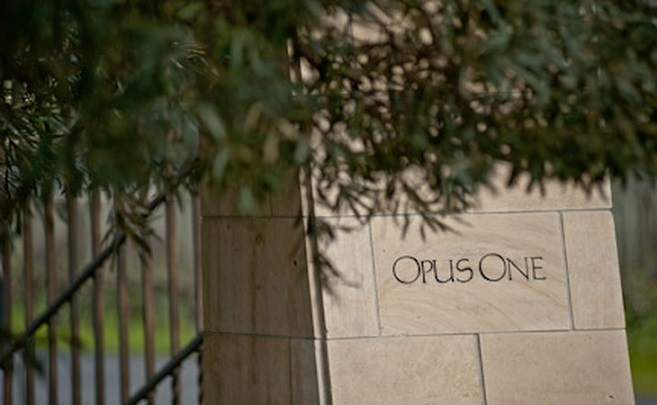
Opus One Vineyard Photo: http://en.opusonewinery.com/

Opus One Vineyard
Photo: http://en.opusonewinery.com/

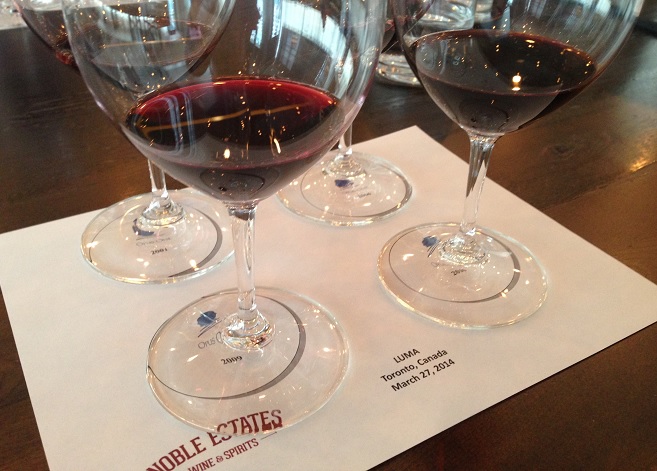
It started as a pure concept, with no actual vineyard, in the Baron’s bedroom back in the 1970’s. “The wine is a child that resembles its parents,” notes Pearson. He sees its growth has now reached a maturity stage for individual vintages to be judged as either that child or as an adult. Pearson, Craig de Blois and Mark Coster of Noble Estates brought four vintages of Opus One to Luma Restaurant on March 27th. Pearson asked that the group of sommeliers and wine scribes decide which of these wines have left their parent’s home. The exercise seemed simple enough, especially with a level of clarity made readily available by the fact that all four vintages poured were fostered and nurtured by current winemaker Michael Silacci. Silacci joined Opus One in March 2001 as director of viticulture and enology and became winemaker in January of 2004. After tasting a stunning set from 2010, 2009, 2006 and 2001, the solicited clarity was revealed.

All natural acidity, an ever-earlier picking stratagem and less frequent racking define the Opus direction. The Opus team considers their winemaking “minimalist” and though in wine-speak that is certainly a relative term, as a group the wines do present with a meritorious level of fruit purity. That can’t be said for many Napa Valley brands that seek more hedonism than is often necessary. Saying that the price of a bottle is inflated by a historical elevage of personality and fashion branding neither does Opus One an injustice nor does it relegate the commenter as a castaway to a deserted island. Opus One is a brilliant and gorgeous red. It’s also very expensive.

Opus One Tasting at Luma Restaurant Photo: Eric Vellend

Opus One Tasting at Luma Restaurant
Photo: Eric Vellend

In September of 2012 I had the pleasure of tasting the Opus One 1989. My tasting note:

Opus One 1989 Unbelievable. A lesson in Napa iconoclasm. What every great 22-year old New World wine should strive to become. In harmony with every part of itself; fruit, tannin, acidity. Beauty within and without. Dark, sultry, full of all things berry and oak. The full gamut of red and black fruit, vanilla, mocha and chocolate. Like walking into your childhood and being handed the keys to Charlie’s factory. Another M gem.

Notes from the March 2014 tasting: Opus One, Napa Valley (26310, $399.95 – 2009 vintage)

2010 (WineAlign) The blend is Cabernet Sauvignon (84 per cent), Cabernet Franc (5.5), Merlot (5.5), Petit Verdot (4) and Malbec (1). Fiercely approachable, a rope of gemstones falling effortlessly into the palm of a velvet glove. Imminently modern, reeking of toothsome Napa and working without Old World parental support. Dense texture, high acidity and exceptional length. Layers upon layers of fruit powered by audacity and prowess. Even this formidable ’10 will struggle to find immunity from the weird vintage. It’s ripe, anything but green and manages an admirable level of elegance. Lives for today. Will it age like its older siblings? Yes, but not as long.

2009 (WineAlign) The blend is Cabernet Sauvignon (81 per cent), Cabernet Franc (9), Petit Verdot (6), Merlot (3) and Malbec (1). The immediate and obvious cerebration is all about its incredible sense of balance. A garden of perfume, the most Bordeaux-bent of the tasting and a mineral reverberation carried on through a seemingly never-ending finish. Blessed by a long and sweet chain of tannin. This ’09 has that Mediterranean brush stroke of garrigue and black olive smothered by a smear of sun-drenched California fruit. Another challenging vintage where picking time was so crucial. That September 21st to October 20th window must have been the right one.

Opus One Bottle

2006 (WineAlign) The blend is Cabernet Sauvignon (77 per cent), Merlot (12), Cabernet Franc (5), Petit Verdot (3) and Malbec (3). A kinaesthesia with age is sent forward by the tertiary complexity of its make-up. Dusty, still marked by acidity, along with a note of toffee and a raisining of the fruit. Savoury too, in gentle middle-age, it gives away strange sensations and aromas that suggest a potpourri of powders; rose, bacon, espresso and Filé. Full of grace and contentment. A cool year that saw no end-of-year heat spike, this is a most unique Opus one.

2001 (WineAlign) The blend is Cabernet Sauvignon (87 per cent), Merlot (6), Malbec (3), Cabernet Franc (2) and Petit Verdot (2). The ’01 conjures up instant funk and “the beat is really soothing.” The Bretty streak stretches, dissipates and is cleansed as the wine aerates, but the groove lingers on. An Opus that clearly states “I got my mind made up.” Of the vineyard and for the vineyard, with a note of wet forest. The Bar Mitzvah boy is acting as one would expect, as an agent to a coming of age law, like a leather satchel filled with dehydrating, concentrated fruit. Swirl some more and that jerky is then drizzled by a Mickey of berry liqueur and dusted by 13 year-old dirt. A vintage defined by 14 per cent alcohol, still vital, powerful and neo-gritty. Forty-five minutes in, the lingering funk is fading but the thought, the chalk and the grain sends this Opus One back across the Atlantic, to the world of Mouton.

Good to go!

The death of wine scores?


Is the rating simply a tool understood within the context of marketing? Photo: Maria Vazquez/Fotolia.com

Is the rating simply a tool understood within the context of marketing?
Photo: Maria Vazquez/Fotolia.com

as seen on canada.com

Not so fast.

As time goes by, I am hearing less comments like, “well that one got a 95,” and “that one is better value because it got a 90.” Wine ratings may increasingly becoming maligned and less frequently employed but that does not mean they don’t have their place. Scores continue to be necessary as a way to evaluate wines that lack a certain level of honesty. Wines on the edge of being dodgily made, encumbered by heavy-handed, industry-fed, mass marketing machines. Scores separate and differentiate the wheat from the chaff when dealing with over the top residual sugar, hyper-acidification, bloated alcohol and (lack of fruit) masking. Embrocating one Malbec an 85 over another’s 84 makes a comment on the relative validities of those two sweetened confections.

Attaching a rating to a tasting note is not a question of right versus wrong. Ratings measure a bottle of wine against its peers. That is the simple answer. The problem is that the tasting experience is a subjective one and each reviewer has personal preferences, so in order to align with one (or more), the consumer must self-calibrate alongside a critic whose palate they’ve figured out. Very difficult to do, so relying on scores has always been the easiest road to travel.

Part of the problem is that tasting notes, on their own, are often fleeting and impossible to grasp. Guilty as charged. Fred Swan put this is the most eloquent terms. “Tasting notes are like photographs, portraying a subject at one brief moment in time and without a back story.” If tasting notes are just snapshots, is that not compelling testimony as to the need for an accompanying score? Or is the rating simply a tool understood within the context of marketing?

Jamie Goode’s take. “I find myself in a tricky position: I use points even though I don’t like to because readers find them useful. And I have to calibrate my scale with the major critics. This pushes me into a corner.”

Still the debate is growing and for good reason. The wine community is tiring of seeing scores, especially those tabulated using the Robert Parker Jr. anointed 100-point scale, attached to a critic’s wine tasting note. The question has always been this. Why would you need scores to sell wine?

Mr. Parker feels so strongly about the entrenched longevity of his system that he’s announced the launch of a new lifestyle magazine called “100 Points by Robert Parker.” Does this sound like a last gasp fling from a captain going down with his ship? Bill Zacharkiw seems to intimate the idea, but the Montreal Gazette wine critic is smarter than to lash out and drag anyone through the mud. Taking a high road, Zacharkiw writes, “from grapes to wine styles, there is truly a wine for everyone. I have my taste, you have yours, and Parker has his.” No, nor scores neither. Nor scores neither.

The fervor and sometimes rage in the argument reminds me of the (second) most famous of Hamlet soliloquys. “Why it appeareth nothing to me but a foul and pestilent congregation of vapours. What a piece of work is a man!” Most of the voices chiming in on this hot topic only see the ratings world in black and white. There are more shades of grey than many would freely admit. Scores have their place.

Meanwhile, Decanter is reporting that Château Pontet-Canet made a bold decision to test (more than 20 years) of uncharted waters by setting their en Primeur pricing in advance of the taste and ratings levies by the major critics. Since the nineties the likes of Parker, Decanter and Wine Spectator have all but determined Bordeaux Futures pricing. Pontet-Canet’s move is being seen as another nail in the 100-point coffin. One Bordeaux négociant commented, “If other chateaux follow this same pricing model, we might as well go home now.”

The real issue is the bottle itself. In the new world of wine, who has not thrown new stock and a vested interest into wines made naturally, in sustainable, biodynamic or organic ways? Who has not made a resolution to drink more honest wine? Producing good wine still trumps the natural theatre of viticulture and viniculture but honesty is the new order. Honest wines should go forth and be free of wine ratings.

Wine scores can be ignored if we concentrate on what matters. Like apiculate yeast, fermentative vigor, microflora, clonal selection and soil. We also need to talk more about and mention flaws, like chlorinated compounds, hydrogen sulphide and volatile acidity. These are things that are too often brushed under the rug.

I will continue to post ratings of the wines I review on WineAlign because as a community of critics we offer a round table of opinions that allow the wine buyer to make gathered, educated and informed decisions. In consideration that this forum is a singular expression of opinions, this column will no longer attach scores to tasting notes. It’s quite obvious, plain and simple. I only write about honest wines for canada.com. The prose speaks for itself.

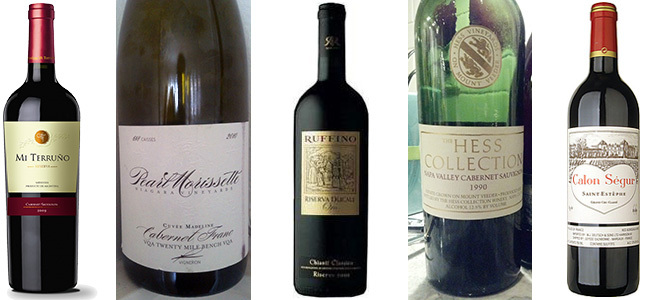
With spring beginning this Friday, no joke, here are the last of the great big winter reds. Five wines recently tasted that thrilled by way of their fairness, their honor and their virtue. Wines that need no score.

From left: Mi Terruño Reserve Cabernet Sauvignon 2010, Pearl Morissette Cabernet Franc Cuvée Madeline 2010, Ruffino Ducale Oro Riserva Chianti Classico 2008, The Hess Collection Cabernet Sauvignon 1990, and Château Calon Ségur 2010, Ac Saint Estèphe

From left: Mi Terruño Reserve Cabernet Sauvignon 2010, Pearl Morissette Cabernet Franc Cuvée Madeline 2010, Ruffino Ducale Oro Riserva Chianti Classico 2008, The Hess Collection Cabernet Sauvignon 1990, and Château Calon Ségur 2010, Ac Saint Estèphe

Mi Terruño Reserve Cabernet Sauvignon 2010, Mendoza, Argentina (364133, $15.95, WineAlign) From the VINTAGES March 29, 2014 Release

Stands out for its honest fruit, this Mendozan from San Roque district in Maipú county. Qualified by an admirable level of restraint, low in residual sugar and alcohol, straightforward, unencumbered. Winemakers María Eugenia Baigorria and Sergio Giménez have let the fruit speak in clean, level tones, in red berries, licorice red and black, a dusting of spice, red cherry and even strawberry. This is textbook hands off winemaking with nearly exceptional length and simply solid from start to finish. Mi sueno, mi terruño.  Tasted March 2014

Pearl Morissette Cabernet Franc Cuvée Madeline 2010, VQA Twenty Mile Bench, Niagara Peninsula (winery, $38, WineAlign)

Francois Morissette’s 2010 is a pioneering example towards defining Bench appellation Cabernet Franc isomeric reactions. Relationships between grapes of a growing area and their ultimate destination in bottle. An affair of veraison, leaf drop, frost, hand harvesting, whole cluster sorting and berry oak fermenting.  Indigenous yeast, punch downs and overs for phenolic skin extraction and polymerization. Neutral oak and sulfur dioxide to provide antimicrobial and antioxidant protection. An eighteen month somniac’s rest, fine lees and no filtration. The structural arrangement in cohabitation of radicals and ions leads to such a Cabernet Franc. Fully expressive of an endemic, very ripe, vegetal varietal vicissitude that is both inbred and necessary. Currants and peppered berries of power and grit. Dry (2 g/L residual sugar), plump (13.7 per cent alcohol) and scarce (618 cases made). Reflective of the warm 2010 vintage and will always act in stark contrast to the elegant 2011.  Tasted July 2013 and March 2014  @PearlMorissette  On the card at Barque Smokehouse

Ruffino Ducale Oro Riserva Chianti Classico 2008, Tuscany, Italy (353201, $43.95, WineAlign) From the VINTAGES March 29, 2014 Release

A re-release showing an exuberance of advanced character. Now acting out the strikingly rich and golden vintage, in Lamé and gilded iron. Speaking a most Tuscan, elite vernacular, already recognizable and evolving into its own skin, with a notion towards herbaceous, dried fruit. A classic pasta and roasted meats red wine. Nonna’s Trattoria kitchen in a glass. Drying just a touch, so drink up. Earlier note: “Slight earthy funk, imparted by the vineyard floor and in part from the wood. Sappy, resinous, distinctively warm-blooded, plummy fruit. Tuscan tang though light on pucker.”  Tasted October 2013 and March 2014

The Hess Collection Cabernet Sauvignon 1990, Mount Veeder, Napa Valley, California, USA (662015, $59.00, WineAlign)

A seminal bottling from a game-changing year, for two all important reasons. One, it was a great vintage for Napa reds and two, the Mount Veeder sub-appellation was established. While only 24 years ago, a mere five wineries existed there at the time, including Mayacamas, Mt. Veeder and Hess. No hyperbole to say this is tasting a piece of history. Despite my “shouting all about love,” this splendidly aged Cabernet is not so much about resilience as it is persistence and infinite wisdom. All those years ago there were Napa reds made at a mere 12.5 per cent alcohol, with finesse and a sense of George-like calm. With little aeration there is fig, prune and toffee gently weeping but with air the aged fruit is swept away by a wave of gob stopping Cassis before its time. Preconceived notions of banausic, early days Cabernet are smothered by the magic dust of this Hess religion, a Dharma of licorice, ash and enlightenment. A wine to make you forget where you are. Depth, length and up to a half decade yet of reserved life lay ahead.  Tasted March 2014  @HessCollection 

Château Calon Ségur 2010, Ac Saint Estèphe, Bordeaux, France (259010, $149.85, WineAlign) An In-Store Discovery from the VINTAGES March 29, 2014 Release

A blend that in 2010 is extremely high in Cabernet Sauvignon (86 per cent), with support from Merlot (12) and Petit Verdot (2). Immaculate hue in blue jasmine meets red ochre, echoed by blue and red fruit aromas. A purity of freshness and an exotic perfume distracts from the absurdity of the price, if just long enough to become intoxicated by its qualifications. It really does have it all. Red velvet layer cake made of the finest chocolate, the world’s least refined and highest quality sugar, spices only found in places reached and hand-picked by agile, primate-like humans. So approachable and marked by sweet tannins that will carry this Saint Estèphe for three decades.  Tasted March 2014

Good to go!

Big houses, bigger wines, big-ish prices

Canadian money

The earnest call across the country to free my grapes continues though regrettably, stiff resistance stifles the cause.
Photo: ulga/Fotolia.com

as seen on canada.com

If you live in Canada, purchasing wine ties you directly to a monopoly. There are exceptions, though still imperfect ones, like the free market culture of Alberta and the developing tiered system in British Columbia. The earnest call across the country to free my grapes continues though regrettably, stiff resistance stifles the cause.

Manitoba and BC allow direct to consumer inter-provincial wine imports. Consumers can order from out of province and receive direct shipments so long as the wine  is 100 per cent Canadian. Nova Scotia has passed enabling legislation that will follow a similar path. If you reside in Quebec or a fortiori, in Ontario, having wine shipped to you remains taboo. The alternate recourse of consignment wines available for purchase through local importers is an irregular option and having to buy by the case designs no compass of mass appeal.

Spend even a fraction of the time I do in trying to seek out the best values, at the best prices and in the categories that cater specifically to personal tastes and you will understand how difficult it is to be satiated in such a constricting climate. I am not the only one seeking out red wines made in the vineyard, through minimalist oak intervention, unhindered by residual sugar, produced by passionate and honest winemakers who are vigilant with the softest of hands.

Who does not want their wine to have mass in it, as in life? Who would reject an elixir drawn from iron-rich earth, boiled through limestone and warmed to a rosy madder? Who can deny the pure joy culled from a wine that might steal the words from the mouths of poets?

In Canada, unearthing such gems requires intestinal fortitude, especially considering the search is mapped out in government-controlled stores. Stock norms do not include wines made from lesser-known grapes, from regions and appellations less frequented. It takes time, effort and most of all, patience. Life can get in the way of the endless and unavailing chase; work that pays, kids, weather, fatigue. Sometimes it just makes sense to abide and even embrace the easier, well-worn path. This is where the bigger wineries step in, toting larger case loads and a middle-of-the-road, radio bathos experience.

There are varietal vicissitudes to ferret out from varieties you might have chosen to avoid. New World Pinot Noir and Chardonnay. Zinfandel. Rhône blends. Sangiovese blended with Cabernet Sauvignon. Tempranillo. All these grapes are often mistreated, modernized, smothered in oak and homogenized so that their indigenous origins are blurred into a bar of mass-produced chocolate. Occasionally they are done right by their makers.

In what has been such relentless cold, snow and ice, now into the oppressive dog days of winter, don’t think of drinking commercial wine as copping out. The big houses can be your friend, so loosen up and trust me when I tell you I’ve worked very hard to weed out the chaff and promise only to recommend the whole wheat. Here are seven current releases that made the pecuniary cut.

From left: Mission Hill Reserve Pinot Noir 2011, Clos Du Val Zinfandel 2011, and Robert Mondavi Chardonnay 2011

From left: Mission Hill Reserve Pinot Noir 2011, Clos Du Val Zinfandel 2011, and Robert Mondavi Chardonnay 2011

Mission Hill Reserve Pinot Noir 2011, VQA Okanagan Valley British Columbia (545012, $24.95, WineAlign) From the VINTAGES Feb. 15, 2014 Release

Here’s a juicy plum wine with noticeable warm alcohol that goes subterranean and won’t make you homesick for alien Pinot Noir. Athletic red with a quick first step and nerve, running a west coast offence, scoring points.  Char in licorice and a grid-iron, “uptight, uptight” bitter tendency but is a most saucy rendition. Extra point from clean, easy sweet tannins. Good length. Pinot on the radio. Really attractive price puts it at the head of its class.  90  Tasted February 2014  @MissionHillWine

Clos Du Val Zinfandel 2011, Napa Valley California, USA (590216, $24.95, WineAlign) From the VINTAGES Feb. 15, 2014 Release

Every so often a grape variety confounds and astounds, like this pretty in zinc Zinfandel. Almost mute as far as Zin goes, this CdV ”set out on the heels of the unknown.” Times like these normally produce lumbering, high-octane interpretations but this radical face is the Simon and Garfunkel of the variety. Singing with soft harmonies and composed as if by a deft balladeer. Flair comes from Spanish-like modernity – a good thing for Zin. Less bramble, more Ribera. Less reduction, more Montsant. Smooth as silk, reeking in vanilla, raspberry and symptomatic by a kiss of mineral. If but for one hollow mid-verse this would truly sing but that really is no big thing.  90  Tasted February 2014  @ClosDuValNapa

Robert Mondavi Chardonnay 2011, Napa Valley, California, USA (310409, $25.95, WineAlign)

One of the more quintessential, mid-range, rich and opulent Napa Chardonnays that steps out of the lobster butter dish in 2011. Apple-tinged terpenes show their presence, along with tarragon and a bag of just opened good and plenty. Piquant, poignant vintage, peppery and acting cooler than I ever remember it to be. Whether by chance or by choice, this is a welcome direction though I doubt its kind will soon be seen again.  89  Tasted January 2014  @RobertMondavi

From left: Umberto Cesari Liano Sangiovese/Cabernet Sauvignon 2009, Wairau River Reserve Pinot Noir 2010, Grant Burge The Holy Trinity Grenache/Shiraz/Mourvédre 2011, and Beronia Viñas Viejas 2010

From left: Umberto Cesari Liano Sangiovese/Cabernet Sauvignon 2009, Wairau River Reserve Pinot Noir 2010, Grant Burge The Holy Trinity Grenache/Shiraz/Mourvédre 2011, and Beronia Viñas Viejas 2010

Umberto Cesari Liano Sangiovese/Cabernet Sauvignon 2009, Igt Rubicone Emilia-Romagna, Italy (225086, $29.95)

Decidedly modern in many ways; oak impart, varietal alliance and braggadocio. The nose speaks highly of unsettled alcohol and alchemy. Big on black cherry and earthy with a welcoming and necessary roasted rare and still kicking game component. The mellow support of Cabernet Sauvignon is kicked upside the head by full throttle, oak-laden Sangiovese. Though hot and bothered, there is a keen sense of acumen on display by the Emilia-Romagna team at Umberto Cesari.  89   Tasted January 2014  @UmbertoCesari

Wairau River Reserve Pinot Noir 2010, Marlborough, New Zealand (361253, $29.95, WineAlign) From the VINTAGES Feb. 15, 2014 Release

Wonderful value in premium Marlborough Pinot Noir. Alluring sylvan aromatics, in a potpourri of violet, rose, plum and strawberry. Sharp, cranberry-pomegranate-cherry fruit flavours, the grain of red fife, and eye-popping acidity. An earthy terroirist, layered and delicious. Warm but not alcohol driven, touched by oak but not shaken and with just one coat of paint.  91  Tasted February 2014  @wairauriver

Grant Burge The Holy Trinity Grenache/Shiraz/Mourvédre 2011, Barossa, South Australia (Agent, 236257, $29.95, WineAlign)

The right Rhône immediacy of the 2011 Barossa vintage gets its hooks right in. Snapping with a direct blow uppercut to the jaw, this Grenache, Shiraz and Mourvédre blend goes right for the jugular with passion, not sugar. It’s a tricky mix, angular yet smooth, floating like a butterfly and stinging like a bee. Terrific charred, meaty flavours mixed with juniper and black raspberry, savoury spice and a chain of tannic length. Will age with metronome precision over a period of 10-15 years.  91  Tasted January 2014  @GrantBurgeWines

Beronia Viñas Viejas 2010, Rioja, Spain  (Agent, $30.00, WineAlign)

This 100% Tempranillo is Beronia’s enigma. Sourced from 40-plus year-old vines and housed for 14 months in new French oak. The Van Morrison bottling, if you will. Forget thoughts of a gnarly, tar and brambly red. This one is compliant and inviting. Cherry cheesecake gives it a dessert-like funk, with a baking spice and savoury plum pudding chaser. Vanilla is the unifying factor, the glaze, the icing on the cake, thanks to those new barrels. “You say “France” and I’ll whistle.” This is a pleasure to taste and ready for consumption.  90  Tasted January 2014  @BodegasBeronia

Good to go!

2013: It was the best of wines

Red wines

15 wine releases $30 and over
Photo: Steve Cukrov/Fotolia.com

as seen on canada.com

The long and wine-ding road of 2013 began with a personal plea for it to be the year of drinking better wine. I wrote about iconic wines at affordable prices and a personal hermeneutic public service announcement, a wine prescription for cold and flu. January rounded out with good reds, twenty-somethings, Robbie Burns, weekday wines and a wine analogy Super Bowl prediction gone bad.

I played pond hockey, chatted about wine and said no to ambient, rich pinks because you gotta be cruel to be wine for Valentine’s.  Real wines, more hockey, Oscars, French grapes and a Somewhereness sea of grape-driven humanity occupied my winter thoughts, along with California, The Beamsville Bench, Cuvée 2013 and the zeitgeist of my virgin expert’s tasting with music as its guide. Cool grapes marched on with wines for the Ides, St. Patrick, Passover, Momofuku in Toronto and New York City.

Spring brought 100-km wine, value reds, sunshine, Masters’ colours, a Stanley Cup for house league hockey, Ontario wine events, Peter Franus, wild leeks and Mother’s Day. There was a ‘London Calling’ for Canadian wine, Go Gamay Go, an averted LCBO strike and the Elsie Awards. I delved into the schadenfreude matters of tasting notes, the humanity in real value wine and the Venn Diagrams in a paradox of accents.

The weather warmed, I cooked for 1,300 Ultimate Frisbee players, contemplated the Rolling Stones and struck Semillon in a showcase showdown. Father’s Day, Riesling and the Canada Day long weekend preceded excursions to Fenway Park and the eleemosynary earth in the North Fork of Long Island. This followed by a search for the wine pulse of the Finger Lakes and the indelible stamp of British Columbia‘s Okanagan Valley.

The International Cool Climate Chardonnay conference took Niagara by storm (literally), leading into the August long weekend. I wrote on Sauvignon Blanc, chill red wine, The Great Canadian Wine Challenge, Free My Grapes and the plea for wine to flow across Canadian provinces.

September came, as did Low alcohol wine for the High Holidays. Ontario wines shone on, especially those from Stratus, along with Spanish and Italian reds. I touted the vinous acumen of Canadian wines for Thanksgiving, the wines of Chile, the best from Ontario and presided as guest judge at the WineAlign World Wine Awards of Canada 2013. October ended with Champagne and reasons to pour a glass of wine on Halloween.

Napa Valley came to town, there were private tastings with Ontario winemakers and I made notes on Canadian made apolitical wines. There were gems, Friday bites, Beaujolais Nouveau and more from Italy. At the end of November I wondered if the wine sign of the apocalypse was upon us. Sparkling wines and the unavoidable Christmas picks have brought us to here.

Edward Steinberg once asked Angelo Gaja, “how do you make the best wine?” to which Gaja replied, “with the best grapes.” In tasting notes I extrapolate from that base and simple notion, with an intent to convey the salient facts of the grape’s life, to give life to the agriculture, even if the first two syllables are removed in the process.

Tasting notes can be clerihews, pithy poems that begin with a winemaker’s name, become the reviewer’s purport and more often than not, are penned in four lines. Word play leading the mind to consider wine as anagram, palindrome and lipogram. Writing a tasting note not as a vinous jape, but rather an artfully woven acrostic.

Reviews align like Burma Shave signs on North American highways, spaced one hundred feet apart, connected by their language. Phrases are turned on their heads, causing the notes to be peculiarly unsuccessful in making any decided impact upon the consumer college. So be it.

The musical and other (sometimes) obscure references bring about metaphasis to the tasting notes, an habitual transposition of sounds, connecting smell, flavour and structure to groove, pitch and aesthetic. The best wines produce the greatest emotion and excess of language. Here is a look back at the top 15-$30 and over releases tasted in 2013 and the tasting notes that brought them to light.

15 wine releases $30 and over

From left: RAINOLDI CRESPINO VALTELLINA SUPERIORE 2006, TAWSE CABERNET FRANC LAUNDRY VINEYARD 2010, CHARLES BAKER WINES RIESLING 'PICONE VINEYARD' 2011, PETER FRANUS RED WINE 2008, and FEUDI DI SAN GREGORIO TAURASI 2007

From left: RAINOLDI CRESPINO VALTELLINA SUPERIORE 2006, TAWSE CABERNET FRANC LAUNDRY VINEYARD 2010, CHARLES BAKER WINES RIESLING ‘PICONE VINEYARD’ 2011, PETER FRANUS RED WINE 2008, and FEUDI DI SAN GREGORIO TAURASI 2007

RAINOLDI CRESPINO VALTELLINA SUPERIORE 2006, Lombardy, Italy (316331, $31.95, WineAlign)

Composed of 100 per cent Chiavennasca (Nebbiolo) from Lombardy. Grace, flowing ruby robe, striking. Lit by cherries bathing in a silica and gravel mineral bath, tightly wound in a swirling pensieve of real vinous thought. Elevated by cool, altitudinous breezes and gothic, statuesque like a Mantegazza. Northern, alpine and proud.  93  Tasted April 2013  @VinumValtellina  From: Top ten wines for May Day

TAWSE CABERNET FRANC LAUNDRY VINEYARD 2010, Lincoln Lakeshore, Niagara Peninsula, Ontario (130997, $31.95, WineAlign)

Assures us of several things. First, 2010 was a gift for making idiot-proof Cab Franc in Niagara, Second, the Lincoln Lakeshore is one of three obvious and essential CF locales in Niagara. Third and most important, properly adjudicated new oak can elevate CF to the upper reaches of the cool-climate troposphere. While not as masculine or bovine like brother Van Bers, Laundry’s got black cherry, tar, coal, herbs and a peaceful, grilling feeling. Essential CF from winemaker Paul Pender.  92  Tasted July 2013  @Tawse_Winery  @Paul_Pender  From: Alternative wines for the August long weekend

CHARLES BAKER WINES RIESLING ‘PICONE VINEYARD’ 2011, Vinemount Ridge, Niagara Peninsula, Ontario (241182, $35.20, WineAlign)

Does not so much pick up where cracking ’09 left off (with no offence meant to the soothing and tuneful ’10) but rather re-writes the Baker book. From the almost famous windswept vineyard atop the Vinemount Ridge, this Picone, from older Riesling plantings is crazy lively. That ’10 is now imbued with rich, oily glück. The ’11 will realize such a future, but much further along and in combination with its inborn tension. Right up there with Baker’s “perfect vintage” 2006.  93  Tasted October 2013  @cbriesling  From: Top wines shine at Taste Ontario 2013

PETER FRANUS RED WINE 2008, Red Hills Lake County Red, California ($39.95)

Composed of Syrah (85 per cent), Grenache (10) and Mourvèdre (5) comes from Fore Family Vineyards fruit on the top of 3000 foot Cobb Mountain. A fiery paradox of climate met by altitude works a strange magic on the grapes. It’s no mistral but rather some sort of wine weather occult. This SGM is highly influenced by a very tempest of dramatic temperature changes, from solar radiation to cool, tempering Pacific breezes and at great heights. Exhibits the hills’ red earth, in colour, in fragrance and in rich berry flavour. I’m grateful for this SGM blend, cool and hot at the same time, “almost ablaze still you don’t feel the heat.”  93  Tasted April 2013  @ProfileWineGrp  From: The Wine Diaries: Peter Franus

FEUDI DI SAN GREGORIO TAURASI 2007, Campania, Italy ($39.95)

Lush and gorgeous. The most immediately gratifying young Aglianico yet such an infant. Earthbound red berries, perfectly ripe plums, biting tannin and off the charts acidity. Epochal verve of Middle Pleistocene volcanic rocksSouthern Italian equivalent to Southern Rhône reds, offering tremendous value under $50 where Bordeaux and Tuscany pedantically fall short. Should join the ranks of recent great vintages, ’01 and ’04.  93  Tasted January 2013  @FeudiDSGregorio  @StemWineGroup  From: Iconic wines, affordable prices

From left: CHÂTEAU DES CHARMES EQUULEUS 2010, BACHELDER CHARDONNAY WISMER VINEYARD 2010, CLOSA BATLLET GRATALLOPS 2007, GIROLAMO RUSSO SAN LORENZO 2008, and PALLADINO BAROLO PARAFADA 2008

From left: CHÂTEAU DES CHARMES EQUULEUS 2010, BACHELDER CHARDONNAY WISMER VINEYARD 2010, CLOSA BATLLET GRATALLOPS 2007, GIROLAMO RUSSO SAN LORENZO 2008, and PALLADINO BAROLO PARAFADA 2008

CHÂTEAU DES CHARMES EQUULEUS 2010, St. David’s Bench, Niagara Peninsula, Ontario (319525, $40, SAQ,  11156334, $41.25, WineAlign)

From the Paul Bosc Estate Vineyard is a classically styled blend of 50 per cent Cabernet Sauvignon, 25 per cent Cabernet Franc and 25 per cent Merlot, only made in exceptional years. Apropos choice from 25-year old vines (in 2010) from the warmer St. David’s Bench for Cuvée’s 25th show.  Poised, balanced and regal yet this mare is temporarily a head-shy, sensitive equine red. Will trot out furlongs of tobacco and meaty aromas from now and through maturity in five plus years. A saddle of round, red fruit will age gracefully.  92  Tasted March 2013  @MBosc  From: Top juice flows at Cuvée 25th anniversary

BACHELDER CHARDONNAY WISMER VINEYARD 2010, Twenty Mile Bench, Niagara Peninsula, Ontario (345819, $44.95, WineAlign)

So sumptuous, presumptuous and precocious. Ahead of the curve, effortless and full of 20 mile mineral length. The ripe green apple never quits. My earlier note from Top juice flows at Cuvée 25th anniversary from the Twenty Mile (Vineland) Bench is the most righteous, understated charred butterscotch remoulade sauce of dreams. Richly textured and built upon a sneaky, slow and stretched breath of wild yeasts. A creeper, gatherer and traveler of both knowledge and persistence. The journey with Thomas Bachelder as related by partner Mary Delaney, from out of Quebec, by way of Ponzi and Lemelson in Oregon and to Niagara is the stuff of dreams. Tasted twice same night and hypnotized both times.  94  Tasted July 2013  @Bachelder_wines  From: Hot weekend wines and cool Chardonnay

CLOSA BATLLET GRATALLOPS 2007, Priorat, Spain (156398, $49.95, WineAlign)

Stupid gorgeous Priorat and though inaccessible to most of us mere mortals, if you were to shell out $50 in November for one wine, this has to be considered. A blend of 65 per cent Cariñena, 22 per cent Garnacha, with a smattering of Syrah and Merlot. Pure purple pitch, an early summer Catalonian garden in bloom, air warm, breeze light. Wow. Blows high priced Napa and over the top Châteauneuf-du-Pape out of the water. The oak is so beautifully integrated.  94  Tasted October 2013  From: Nine big November best buy wines

GIROLAMO RUSSO SAN LORENZO 2008, Sicily, Italy ($59.95)

From agronomist and oenologist Giuseppe Russo lives a Sicilian dream. Composed of Etna’s indigenous Nerello Mascalese with a small percentage of Nerello Cappuccio, this red is a veritable lava flow of molten magma, volcanic igneous solder and opulent Scoria. Pure, unchained fruit, no disguise, striking.  94  Tasted February 2013  @Oenophilia1  From: Real wines, whisky and boys night out

PALLADINO BAROLO PARAFADA 2008, Piedmont, Italy (280412, $68.00, WineAlign)

This just has the look, the look of love. “A look that time can’t erase.” Nebbiolo you can see right through, this impossible light, this impossible life. Tea, tar and roses. A mineral spring, iron-earth field, where the game runs wild. You can relate to this Barolo, love it, relish it now but it will give pleasure for years. Not necessarily 25 but certainly 10-15. “Well, it takes my breath away.” Great vineyard.  94  Tasted October 2013  From: Holiday wine gems hit November shelves

From left: M. CHAPOUTIER LES BÉCASSES CÔTE-RÔTIE 2010, MOËT & CHANDON GRAND VINTAGE BRUT CHAMPAGNE 2004, DOMAINE LONG-DEPAQUIT MOUTONNE GRAND CRU CHABLIS 2011, CHASSAGNE MONTRACHET VIDE BOURSE 1ER CRU 2010, and MASI MAZZANO AMARONE DELLA VALPOLICELLA CLASSICO 2006

From left: M. CHAPOUTIER LES BÉCASSES CÔTE-RÔTIE 2010, MOËT & CHANDON GRAND VINTAGE BRUT CHAMPAGNE 2004, DOMAINE LONG-DEPAQUIT MOUTONNE GRAND CRU CHABLIS 2011, CHASSAGNE MONTRACHET VIDE BOURSE 1ER CRU 2010, and MASI MAZZANO AMARONE DELLA VALPOLICELLA CLASSICO 2006

M. CHAPOUTIER LES BÉCASSES CÔTE-RÔTIE 2010, Ac Northern Rhône, France (280420, $82.95, WineAlign)

Strictly beautiful Syrah. The offspring of the Côte Rôtie’s two necessary points of view. First, the schist, silt and shingle of the Brune. Second, the silica and limestone of the Blonde. In combination they produce an iron-rust wine of a ferruginous nature, in colour and in aroma. Seeping, exotic Rooibos tea, Provençal tapenade and smouldering flowers send smoke signals clear as day. Smells so rich though it’s full of grace and bathed in ultra-elegance.  94  Tasted October 25, 2013  From: Holiday wine gems hit November shelves

MOËT & CHANDON GRAND VINTAGE BRUT CHAMPAGNE 2004, Ac Champagne, France (69773, $83.95, WineAlign)

May not be the esteemed house and vintage of the century’s love-child but I can’t think of a single reason not to spend a pittance more on a vintage-dated Champagne like this Moët in lieu of a sea of NV alternatives. Granted it’s wound maddeningly tight, spewing still young venom, crazed by pear and citrus concentrate but…trust must be placed in its charms. This Moët is quite refined. Apples tempered in acidity, beloved for its building blocks, it’s really good Champagne.  94  Tasted November 2013  @MoetUSA  From: Ten sparkling wines to life

DOMAINE LONG-DEPAQUIT MOUTONNE GRAND CRU CHABLIS 2011, Monopole, Ac, Burgundy, France (46706, $89.95, WineAlign)

From Mathieu Mangenot’s ”Grand Cru” plots, the Monopole holdings in the steep amphitheatre slope of Vaudésir and the gentle rise of Les Preuses. The Two Sides of Monsieur Valentine. He spoons piles of flint and chunks of rock. He explains the tin pan elevation of Chablis and Chardonnay squeezed from the bedrock, capturing every last drop of geology, refuse of stars and fossils of the ancient animals. Stoic, metazoic, super Chablis, with tremendous length. How can this Chablis have so much fruit but no apple, no lemon, no pith. “You think things are straight but they’re not what they seem.” Candy for the soul. Novacaine in liquid form. Amazing.  94  Tasted November 2013  From: Twelve days of wine for Christmas

CHASSAGNE MONTRACHET VIDE BOURSE 1ER CRU 2010, Ac Burgundy, France (344887, $101.95, Quebec $85.00, WineAlign)

A mild sylvan reductive stink is neither abstruse nor in fruit obstruction. What we have here is a brass tax in Chardonnay histrionics. Yellow and green tree fruit, wicked wild yeast game and just about as much ruminating, mineral tang as one might desire. Something wicked this way woos my wistful longing for quality white Burgundy. I could imagine drinking this well into my pension days.  95  Tasted November 2013  From: Twelve days of wine for Christmas

MASI MAZZANO AMARONE DELLA VALPOLICELLA CLASSICO 2006, Doc, Veneto, Italy (215764, $99.95, WineAlign)

If a wine clocking in at 16 per cent alcohol by volume can be considered elegant and restrained and if that’s even possible, the Mazzano is the one. Though there is nothing outright prune, dried raisin or fig paste about it, this single-vineyard Amarone is enormously tannic. Any attempt at cracking its hard shell inside of 15-20 years should be thought of as counter-productive. Smells like the aforementioned fruit just picked at maximum ripeness so there is nothing cooked, roasted or overdone here. You simply have to wait for tertiary complexity to see what it will become. I sense great. Near-perfect vintage.  96  Tasted October 2013  From: Holiday wine gems hit November shelves

Good to go!

All I want for Christmas is a big red wine

Red wine

If you have $20 or $40 or $60 to spend on that red wine consumer in your life with a hankering for bold and beautiful, then this list’s for you.
Photo: 7artman/Fotolia.com

as seen on canada.com

The three of you who read my bi/tri-weekly column must have noticed by now that I am diplomatic, almost to a fault, to be as inclusive as possible. I certainly make a point to unearth and make public the best Canadian wines that I can find, especially when they originate so close to home.

Old world, new world, rosé, Sparkling, red wine, and an increasing focus on white wine may have some of you running for the hills but spreading the wealth is the name of the game. Diversity is my keeper but there comes a time when logic and proportion need a break. All I want for Christmas, and for those of you who know me that’s a ridiculous thing to say, is a great big ole’ bottle of red wine.

Who doesn’t? If you have missed the last 25 or so recommendations I’ve laid at your gift giving feet, if you have $20 or $40 or $60 to spend on that red wine consumer in your life with a hankering for bold and beautiful, then this list’s for you. Or, you can buy them all, seven reds for $250 and change. Not too shabby.

From left: ROCCA DELLE MACÌE CHIANTI CLASSICO RISERVA 2008, BURIED HOPE CABERNET SAUVIGNON 2010, and BURIED HOPE TEMPRANILLO 2010

From left: ROCCA DELLE MACÌE CHIANTI CLASSICO RISERVA 2008, BURIED HOPE CABERNET SAUVIGNON 2010, and BURIED HOPE TEMPRANILLO 2010

BURIED HOPE CABERNET SAUVIGNON 2010, North Coast, California (356113, $19.95, WineAlign)

This 2010 is a new let’s groove label from the somewhat ambiguously defined North Coast appellation of California. An area of three million acres that includes Napa, Sonoma, Mendocino and Lake counties, and portions of Marin and Solano counties. Dusty entry, peppery finish. In between there is distilled cooler red fruit which sweet-heat spikes if only temporarily and ultimately settles into a fine balance of earth, wind and fire. Gifts an admirable sense of wood restraint. Simply “let this groove, set in your shoes” and enjoy its simple pleasures. Available in small quantities for a limited time.  87  Tasted December 2013  @hk_Canada

BURIED HOPE TEMPRANILLO 2010, Ribera del Duero, Spain (350215, $19.95, WineAlign)

The Iberian cousin to the North Coast Cabernet an ocean away likewise enters the fray dusty and flecked by white pepper. What gives it immediate density identity is the juicy, just picked cherry flesh and pencil lead minerality. A sweet blueberry flavour gets lift from edgy tannins so as you ponder this Tempranillo you will note that ”it’s gonna take you years to find out” what it’s all about. But there’s hope, however presently buried, in the descendent nature of its roots.  88  Tasted November 2013

ROCCA DELLE MACÌE CHIANTI CLASSICO RISERVA 2008, Docg Tuscany, Italy (930966, $21.95, WineAlign)

One of the most reliable Tuscan houses offers no apology for this CCR’s flamboyance and it works a great vintage for the genre to maximum advantage. There is an intoxicating, exotic soaking of teak, vine stem and bhang counterbalanced by a berry sweetness that cannot be denied. In the end there’s the expected enunciation in modern Italian verse. Like a Tuscan-treated Gaja, gorgeous and tough.  89  Tasted November 2013  @roccadellemacie

From left: SALTRAM MAMRE BROOK CABERNET SAUVIGNON 2010, WHITE OAK CABERNET SAUVIGNON 2006, LE VIEUX DONJON CHÂTEAUNEUF-DU-PAPE 2011, and BURROWING OWL MERITAGE 2010

From left: SALTRAM MAMRE BROOK CABERNET SAUVIGNON 2010, WHITE OAK CABERNET SAUVIGNON 2006, LE VIEUX DONJON CHÂTEAUNEUF-DU-PAPE 2011, and BURROWING OWL MERITAGE 2010

SALTRAM MAMRE BROOK CABERNET SAUVIGNON 2010, Barossa Valley, South Australia, Australia (48579, $26.95, WineAlign)

Behold the utter pitchy Barossan, privileged by full-on extraction in as much fruit this amount of money can buy. Tempered by a cool centre, complimented by a tangy finish. The coverall make-up is in high fashion and the big red lives to tell a passionate story after 22 months maturity in oak. Lifted by temperate zest and though it’s more Barossa than Cabernet per se, there is a fortune to be won in the bottle.  89  Tasted November 2013  @SaltramWines

WHITE OAK CABERNET SAUVIGNON 2006, Napa Valley, Califonia (357723, $49.95, WineAlign)

A curious magnum of this highly underrated Napa Cabernet appeared for tasting. Really delicate and already maturing savoury/sweet florals lengthened by a chain of vanilla grain. Fruit looming large, with a Gershwin summertime grace and Holiday ”unique diction, inimitable phrasing and acute dramatic intensity.”  Cool, soulful, jazzy Cabernet, loaded with pepper and phite. Lady Day Easy Living90  Tasted November 2013  @WhiteOakWinery

LE VIEUX DONJON CHÂTEAUNEUF-DU-PAPE 2011, Rhône, France (700922, $57.95, WineAlign)

Following a string of excellent vintages from 2003 to 2010, this clumsy Donjon could be dismissed as not up to par but I beg to differ. Such distinct aromatics can only come from a Donjon. Redolent red berry musk, exotic spices from islands east and west, metal replicate and a brush of vineyard funk. Though it thistle-stings the palate and is presently held back by a tannic core, this CdP has the track record and muscle memory for moving forward. Gathers anise, more funk and so much fruit as it aerates but clearly so much time is needed to settle it down. Look to patience in the requiem realm of 10+ years.  92  Tasted November 2013

BURROWING OWL MERITAGE 2010, British Columbia, Canada (343038, $59.95, WineAlign)

A National Wine Awards of Canada Platinum Medal winner. As massive a corporeal attack as can ever be ascertained from a B.C. Bordeaux blend, of the earth, or any other prodigiously structured Canadian red. Uproariously ripe fruit de rigueur and storming tannins. A boast of plum crushed by an intense, dry, rocky intent. To this Okanagan I say, “you’re the book that I have opened and now I’ve got to know much more.” Crazy stuff for sure, full of unfinished sympathy, with enough fruit to push it to 10 years and beyond. Priced at $45 (winery) and at a premium through VINTAGES.  90  Tasted November 2013  @BurrowingOwlBC

Good to go!

Much ado about Napa

When Napa Valley comes to town, wine people (I know, peeps) show up and take a seat.
PHOTO: NAPA VALLEY VINTNERS ASSOCIATION

as seen on canada.com

I would be lying if I said that I’m not a fan of Napa Valley wine. If you read hidden meaning into that statement it’s not because I dislike that to a red, so many examples are gorgeously voluptuous and decadent, it’s just that I seem to feel less insecure when they’re not around.

As a wine taster, when faced with any more than two or three massive, young California red wines at a time, I begin to sweat. In tentative waves of anxiety I question my palate. Will I be able to note the nuance, the terroir, the dreaded question of “will this wine age, will it stand the test of time?”

Doug Shafer, arguably one of the three or four household names in modern Napa, summed up the entire quagmire in one fell swoop sentence.” Funny thing, if they age well out the chute, they age well.” Napa Valley winemakers, or at least Doug Shafer, are demanding of an attitude that wine must not be assessed based on ageability. That’s the kicker. When the discussion centers on bold California reds, I gotta disagree. Who is shelling out $100-300 on a bottle of wine to pop and pour?

When Napa Valley comes to town, wine people (I know, peeps) show up and take a seat. As Russ Weis (Napa Valley Vintners & Auction Napa Valley Board Vice President and General Manager, Silverado Vineyards) noted, “reputation is large, the area is small.” No doubt. The famous place responsible for a pittance (four per cent) of California’s wine output has risen meteorically to legendary status in just a few decades. I’m not sneezing.

What I am doing is pushing the point that reds from Napa and I’m really talking about Cabernet Sauvignon and associated blends, that these wines are beasts to taste and enjoy while they are young. Surely I am making unforgivable generalizations here but for brevity must serve the purpose of a personal hermeneutic. Longevity is the key to unlocking Napa Valley’s secrets.

The Napa Valley Vintners Association rolled through Toronto in October. WineAlign’s very own John Szabo, M.S. moderated a short but so very sweet tasting and libertine discussion on 10 then and now Napa reds. Mr. Szabo dug into the concept of ageability, “what is it and what causes it?’ he asked. “How does vine age affect it?” Looking squarely back at 1997 as being the watershed vintage, “a changeover year,” Szabo noted that ripeness became very important in terms of critical and by extension, commercial success.

Chris Howell, manager/winemaker of Cain Vineyards stressed “no analytic attribute will tell you whether your wine will age or not.” While Mr. Weis did not directly speak to the question of aging, his notations “we are cooler than the Mediterranean, we’re farming for high intensity and “the long form is in the glass” all point to the very question.

The ten wines poured at the seminar, while just a minute cross-section of what Napa Valley does well, proved my idiosyncratic and parochial point. Napa Valley’s big reds, especially those made in an era defined by hyper-ripeness, elevated brix and new oak influence, are most impressive in their immaturity. To belay any accusations of contradiction, the follow-up to that statement argues that the wines are far more interesting in their maturity. Time does not make them taste better but it does add provenance to their story.

Here are my ten notes on the wines poured at the ROM’s Peter Bronfman Hall Napa Valley trade tasting.

Clockwise from left: CAIN VINEYARDS RED BLEND 2008, LONG MEADOW RANCH WINERY CABERNET SAUVIGNON 2005, SOMERSTON CABERNET SAUVIGNON 2007, and SILVERADO VINEYARDS CABERNET SAUVIGNON STAG’S LEAP DISTRICT ‘SOLO’ 2009

CAIN VINEYARDS RED BLEND 2004 ($125, release price)

Chosen from 25 lots, divided between Cabernet Sauvignon (47 per cent), Merlot (25), Cabernet Franc (21), Petit Verdot (4) and Malbec (3). A quiet child of “gentle, moderate ripening conditions” which saw grapes harvested over a span of 43 days. Has completed its graceful aging and with the fruit beginning to wane, the tannins remain in grain. A Brett-tinged vintage to be sure though punched down by Cassis, vanilla crème and a gravel relish.  89  @rogcowines

CAIN VINEYARDS RED BLEND 2008 ($124.95, consignment)

The second vintage, marking a return to 100% Cain Vineyard, Estate Bottled, which means 100 per cent of the grapes were grown in their Cain Vineyard, Spring Mountain District, Napa Valley. A composition consisting of Cabernet Sauvignon (61 per cent), Merlot (15), Cabernet Franc (13), Malbec (6) and Petit Verdot (5). A small crop from a dramatic, wailing and tumultuous (rain, sleet and heat) growing season. The nose is especially top ranking, smelling fresh as the day it was bottled. The thin soils and Pacific weather here translate to rigour, anxiety and conviction. Though “they don’t want us to unite…they don’t want to see us come together,” these fab five find brotherly and sisterly love.  91

LONG MEADOW RANCH WINERY CABERNET SAUVIGNON 2005 ($65.00, winery)

Fully organic vines, reasonable brix meets abv number (13.2) and a tiny yet helpful two per cent Cabernet Franc added in for good measure. Exceptional showing from an endearing vintage. Pure black raspberry and red aspalathos tea integrated with the positive attributes of a bound stem fire starter of bell pepper, splintered cedar and twiggy black currants. All together they blow a blanket of background fog across fruit in a gentle holding pattern.  91  @LMRwine

LONG MEADOW RANCH WINERY CABERNET SAUVIGNON 2009 ($65.00, winery)

From a warmer yet moderate growing season the ’09 LMR solicits 10 per cent Merlot along with two per cent Cabernet Franc. Noticeably riper, with more cherry depth, lush mouthfeel and a dry, chalky, yet comfortable lengthy finish. Acids are lower and tension surely does not run high but the wine achieves a pleasant balance, if less complexity and offering increased pleasure.  91

SHAFER VINEYARDS CABERNET SAUVIGNON ‘HILLSIDE SELECT’ 2003 (NA)

Persists in full-blown hedonism. One would never accuse this of being treated with tartaric acid. Youthful, gorgeous and alone at 10 years-old. Cherry, berry, dusty grain swirl, a twister of iconic development and potential, realizing that potential in the here and now. Showing remarkably well with a transparency of ego, alcohol and a blender flurry of fruit and wood. While it holds court and its course now, flying time will likely be another three to four years.  92  @ShaferVineyards

SHAFER VINEYARDS CABERNET SAUVIGNON ‘HILLSIDE SELECT’ 2009 (735712, $285.00)

A huge SVCSHS from 100 per cent Shafer’s Hillside Estate Vineyard in Stags Leap District including vineyard blocks such as Sunspot, John’s Folly, Upper Seven, Hitching Post and Venado Ilegal. An absolute killer B; bigger, brawnier, bolder, badass. “Engines pumping and thumping in time.” Mouth attacking, saliva stealing, inner cheek suffering Cabernet that spent 32 months in 100 per cent new 60-gallon French oak barrels. Mercy. The skin contact, in colour and tannin, is a nearly unforgivable act. White flag. Tempting to compare it to huge Cabernet-based IGT’s. Waves of unctuous raspberry and blackberry in perpetual maceration. Has so much cake (15.5 per cent abv), built for speed and distance. Never finishes. In fact, I think it’s still going. For two decades.  94

SILVERADO VINEYARDS CABERNET SAUVIGNON STAG’S LEAP DISTRICT 1989 (NA)

From a vineyard originally planted in 1884, by Abel McFarland and fast forward – replanted between 1992 – 1996, by Ron and Diane Miller. This red may be heading for a graceful descent beneath a Pacific sunset and the vintage may have dumped diluting rain upon harvest but complexity will not be denied. Rare, seraphic fruit lingers on, enveloped in the resinous aromas of wood, leather and tobacco. There lifts too an elder/lingon-flower/berry beckoning and something mint-metal cool. Classroom Cabernet, to thank the procurer and to seek higher learning.  90  @SilveradoSolo

SILVERADO VINEYARDS CABERNET SAUVIGNON STAG’S LEAP DISTRICT ‘SOLO’ 2009 (89482, $119.00)

Built on the academic intuition, augmentation and advancement of UC Davis oenology Silverado clones. Reneges and makes waste of the past in a hurried two-day harvest, October 7th and 8th, 2009. A product of reasonable brix (23.5 degrees) and alcohol (13.9 per cent). Uncommonly shy, a young introvert, lost in dark, layered abstraction, in blues, blacks and hues in between. Dried herb, withering blueberry, a ballad in ode to greatness that came before and a promise for a promising future. “There’s more to the picture than meets the eye,” though no guarantee.  90 

SOMERSTON CABERNET SAUVIGNON 2007 ($120.00)

From proprietor F. Allan Chapman and winemaker Craig Becker, this is the flagship wine, distilled from two individual parcels, Soda Valley and Elder Valley, located high in the hills above Napa Valley. High brix (26.5 degrees) and alcohol (14.9 per cent) mark this cured Cabernet, something to ponder, to drink on a night like this. High-toned, in the realm of fig and prune, a big show of chocolate froth, mocha, vanilla and more. Thick and luminous, “it goes dark, it goes darker still. It goes deep, it goes deeper still.”  88  @SomerstonWineCo

SOMERSTON CABERNET SAUVIGNON 2010 ($120.00)

A scarcity of production (380 cases) and elevated further still, in brix (26.8) and alcohol (15.5). Sourced from the estates two best vineyard blocks; Queensberry block 30 and Oriental block 23, both hillside vineyards with an average elevation of 1250 asl. Shares an aromatic, cured profile with the ’07, though in its youth it waxes rich, lush and overtly tannic. Inflated drupe elongated by a magnitude of  Napa love. “I don’t care if Monday’s black…dressed up to the eyes, it’s a wonderful surprise.”  91

Good to go!

He spits, he scores: World Wine Awards of Canada results

Fresh off the presses, here are the results from World Wine Awards of Canada 2013, presented by WineAlign
Photo: kotoyamagami/Fotolia.com

as seen on canada.com

Drinking, by definition, includes consuming and that would obviously be counterproductive to the wine evaluation process. So, wine writers and critics spit for their living. Why would anyone buy a wine on the recommendation from someone who spit it into a bucket? Good question.

Consider another question. How many wine critics does it take to change a light bulb? If the answer were 10, that would be because it would take one to hold the bulb and nine to spin the room. Or the answer might be three. One to decant, taste and spit, and two to take him to the hospital before he bleeds to death. Is the joke and are these responses indicative of how the general public feels about wine criticism? If yes, then the wine consumer’s attitude towards the relevance of wine competitions and the doling out of awards may not exactly be positive and indiscriminate.

A bit of insight for you into the modus vivendi of those who judge wine. Chew over this. A wine is submitted to a concours, tasted several times by a minimum of three critics, all of whom are kept blind as to the clues regarding producer, appellation, region and country. These wine professionals are chosen by and with their peers to judge, sniff, sip, spit and repeat. They consider, contemplate and formulate on the spot tasting notes and then discuss the attributes with a panel before passing final judgement. Seems like a perfectly and indisputably sound and reasonable approach, don’t you think? But what about the spitting part?

Whatever you might think about the use of such an exercise to determine the merit of a bottle of wine, competitions, when run and operated with unbiased integrity, do in fact empower justice to the entrants. Poke fun at the wine critic if you must, felicity knows they can take it, but know their modus operandi is just the same as yours. To seek out the most worthy and best value wines available in their market. The wine critic is self-taught, to internalize the intricacies and idiosyncrasies of a wine without swallowing it. It takes focus and years of practice to figure it out.

WineAlign World Wine Awards of Canada 2013

PHOTO: WineAlign.com
WineAlign World Wine Awards of Canada 2013

The WineAlign World Wine Awards of Canada (WWAC) held in September featured a week-long evaluation process for nearly 1,000 wines (996 to be exact) from around the world. Assembled and organized by an army of volunteers, the Herculean task was orchestrated by one of North America’s most respected wine critics and WineAlign Partner Anthony Gismondi, aka The Spitter. The Vancouver Sun columnist was also responsible for the immeasurable and exacting task of overseeing the pouring and the critical timing of delivery to the judges. Not to mention piles upon piles of tasting notes and scores.

WineAlign WWAC13 Wine Room

WineAlign WWAC13 Wine Room

The WWAC is open to both imported and domestic wines for sale in Canada, provided the wine sells for less than $50 somewhere in the country.  This affords an unparalleled opportunity for all wines sold in Canada to show that they can compete in quality and value with wines from anywhere in the world.  Wines are tasted in three price categories based on the lowest selling price in Canada. Less than $15, from $15 to $25 and from $25 to $50. As a consequence WWAC is really three competitions in one with wines being tasted alongside their peers by price and with awards given by price category.

I was invited to join the other 17 judges for the preliminary rounds. If I were to measure my prosperity by the company I keep, I would indeed be a pecunious wine scribe. I was joined in Mississauga, Ontario by David Lawrason, John Szabo, MS, Steve Thurlow, Sara d’Amato, Bill Zacharkiw, Janet Dorozynski, Rémy Charest, Marc Chapleau, Rhys Pender, MW, Ben Macphee-Sigurdson, DJ Kearney, Treve Ring, Brad RoyaleJulian Hitner, Evan Saviolidis, Anne Martin and Zinta Steprans.

WineAlign WWAC13 judges John Szabo, Julian Hitner and Sara d'Amato

WineAlign WWAC13 judges John Szabo, Julian Hitner and Sara d’Amato

Judges sit three or four together at a table, taste solo through flights of like varieties, procure notes and assign individual scores. Each flight of (three to 12) wines is then discussed, argued, debated and an ultimate meeting of the vinous minds either pushes a wine through to the next round or relegates it to the discard heap. This method of awarding by committee ensures that good wines receive their due blessings and flawed specimens are put in their rightful place.Here’s the kicker. Aside from knowing the price range and specific variety or varieties in a blend, the judges taste all the wines blind. Continent, country, region, appellation and vineyard are not part of the equation. This ensures the most equitable results.

So, fresh off today’s presses, here are the results from WWAC13, presented by WineAlign. Special thanks go out to Head Wineaux, Bryan McCaw, along with Steve Thurlow, Carol Ann Jessiman and Sarah Goddard.

2013 World Wine Awards of Canada Results

Each judge was asked to write reviews on a specific cross-section of wines they were a part of assessing during the competition. Here are my notes on my 28 of them, across a wide range of categories.

From left: Gustave Lorentz Cuvee Amethyste Riesling 2011, Caliterra Sauvignon Blanc Reserva 2013, Yealands Sauvignon Blanc 2012, and De Vine Vineyards Vrm 2011

Riesling $0-15

Gustave Lorentz Cuvee Amethyste Riesling 2011, Alsace, France $14.95

WWAC 2013 Judges’ Choice WWAC 2013 Best of Variety Under $15

Peppery, perspiring, basal, nasal fruit. Propellant driven with a bite of crisp golden delicious apple and green goddess acidity. At under $15 this achieves Trocken success. Unshakable, abecedarian if not the most formidable Riesling.  88  @AmethystWineInc  @drinkAlsace

Loosen Bros. Dr. L Riesling 2012, Qualitätswein Mosel, Germany $13.95

Pressed and packed with tropical fruit, as if a roll-up, in liquid form. Thoughts head east and south but the textural, angular and vertical intensity peels back that inclination. The extended play and fruit replay is a study in delineated Riesling depth. There must be some history behind the bottle.  87  @drloosenwines  @Select_Wines

Jackson Triggs Reserve Riesling 2012, Niagara Peninsula, Ontario, Canada, $13.99

Drawn to the off-dry resonance which is both tropical and florid in citrus maxima. That pomello repeats to taste but it falls under a balmy and herbal spell, in a relaxed way. A valley’s elongated attitude, at the foot of a mountain and architecturally sound. Re-mastered, utilitarian Riesling.  85  @Jackson_Triggs

Chardonnay Oaked $15-25

Robert Mondavi Private Selection Chardonnay 2012, California, USA $16.95

Deft, lissome touch of oak. Subtle, determined orchard fruit, namely pear, barely kissed by a rose and the barrel. Exiguous yet meaningful and pragmatic aromatics. Bright Chardonnay so “a light hits the gloom on the grey.” Seals the deal astir with tang on the snappy finish.  88

PHOTO: Michael Godel White wine flight at the WineAlign WWAC13

Sauvignon Blanc $15-25

Caliterra Sauvignon Blanc Reserva 2013, Casablanca Valley, Chile $9.95

WWAC 2013 Judges’ Choice

Great show savvy, really great show. Outright fast flint, white pepper, citrus and fresh herbs. Luscious texture, convincing up the middle and goes deeper than many. Grapey and succulent. Clean, concise winemaking.  90  @Caliterra  @imbibersreport

Yealands Sauvignon Blanc 2012, Marlborough, South Island, New Zealand $15.95

WWAC 2013 Judges’ Choice

Equatorial and profuse but not over the top. Quick, painless slice of jalapeno, a sweet heat capsicum moment. Sauvignon Blanc with a drop of Sriracha, spritz of lime and pinch of salt on ripe tree fruit, like papaya and mango. Add in golden pineapple and kumquat for good salad measure. Nearly great value, if only it were graced with a bit more finesse.  88  @yealands  @TrialtoON

The Ned Sauvignon Blanc 2013, Marlborough, New Zealand $15.99

Stoic initially, with acute notes of gooseberry, grass and blanched legume. Turns tropical and balmy with a sense of orange marmalade. Confounding in that it could be South Island or Sancerre, but being subjected to such toe tipping is this Sauvignon Blanc’s calling card.  88  @MariscoWine

Kim Crawford Sauvignon Blanc 2013, Marlborough, South Island, New Zealand $18.95

Commodious Sauvignon Blanc, candid, candied and calcified. Tropical from what must be an intense vintage, whiffing dewy teak gold plum and prickly pear. Full-bodied and blessed with a long aftertaste. A slice of southern hemisphere confiture on toast.  88  @kimcrawfordwine

White Blends $15-25

De Vine Vineyards Vrm 2011, Okanagan Valley, British Columbia, Canada, $23.00

WWAC 2013 Judges’ Choice WWAC 2013 Best of Variety $15 – $25

A Rhône-ish boy with a tithe of Marsanne in support of equal 45′s of Roussane and Viognier. Mutters in rhyme, beating the drum slowly, in a subtle white flower, pretty print dress. Nothing muddy about the waters this graceful swimmer treads. Sidled by just enough rigor to replay in refrain, “I’m a natural born lovers” wine. Egalitarian revolutions per minute.  90  @deVineVineyards

Road 13 Honest John’s White 2012, BC VQA Okanagan Valley, British Columbia, Canada $25.95

A group of seven grapes, riding on a carousel. A who’s who of white varieties going “round and round and round and round with you. Up, down, up, down, up, down, too.” Elegant and in control, like the stationary horses, this endearing and human blend. Nectarine and longan make appearances in the by committee, ensemble performance.  88  @Road13Vineyards

Pfaffenheim Tete A Tete Pinot Gris Riesling 2012, Alsace, France $15.49

A 50/50 split of Riesling and Pinot Gris, please do not adjust your set, go head to head, mano a mano to duke it out, agree to disagree and ultimately settle to blend and accept the results. Together they procure Époisses and worn socks. On the bright side there is orange zest and fresh squeezed grapefruit. “So they’ve got that going for them, which is nice.” Tangy and pithy finish. Abbreviated and horizontal.  85  @AlsaceWines

From left: Jackson Triggs Merlot Gold Series 2008, Road 13 Syrah Malbec 2011, Creation Syrah Grenache 2011, and Cassiano Amarone Della Valpolicella 2008

Syrah $0-15

Fifth Leg Old Dog New Tricks Shiraz 2011, Western Australia, Australia, $15.95

Less calamitous fruit compression in relation to the rest of the flight. Blueberry pie and a concord of baking spices predominate, along with unsettling though bracketing elevated levels of tannin and acidity. Wild and whacking lack of overall integration but possessive of many positive moving parts.  87

Mission Hill Reserve Shiraz 2011, VQA Okanagan Valley, British Columbia, Canada, $19.60

A convection of raspberry jam and forest floor verdant wildness. Notable in not being nearly as wood-driven in relation to peers in adjacent stemware. An inelasticity and diaphanous texture suggests Syrah. Simpatico Shiraz.  87  @MissionHillWine

Red Blends $0-15

Hardys Stamp Series Shiraz/Cabernet 2012, South Eastern Australia, Australia $10.05

Initial thoughts lean towards flattery, in finesse and generosity. Rhône-like rocks and stones trot out the red fruit, spiked by citrus (ripe orange, juiced and reduced). Structured in oxymoronic astringent elegance. Decent to medium length.  87

Sumac Ridge Cabernet Merlot Private Reserve 2011, BC VQA Okanagan Valley, British Columbia, Canada, $14.99

Stands apart from the under $15 Red Blend flight as an axiomatic, soft conifer in a forest of hardwoods. I was admittedly fooled into thinking Niagara when it really calls the Okanagan Valley home. Semi-hemi-ripe, red stone fruit soused in halogen, spiced by Ween’s seventh album and Korean red pepper. “Even If you don’t” like the alternative character you will be charmed by its friendly production and likable wine/musicianship.  87  @SumacRidgeWine

Louis Bernard Côtes Du Rhône Rouge 2012, Rhone, France $13.00

A copacetic Grenache and Syrah Côtes du Rhône blend that just seems to exist in an Iberian state of mind. It’s the modernity speaking, in deep mauve, lilaceous essence and a palate clotted with poached tomato. Stops adroitly short of cooked or stewed fruit character. Juicy fruit from presumably young vines. Quick yet resplendent.  87  @LouisBernard84  @AuthenticWine

Masi Tupungato Passo Doble Malbec Corvina 2011, Mendoza, Argentina $13.95

Malbec and Venetian Corvina in Ripasso’s Argentinian hands. Raising, hair-triggering, eye-opening aromas in acerbic Daikon intensity. Black bean paste and cedar, earth and char. The flavours echo and further Ripasso’s absorptive ability. Tack on a  snippet of sour mix and an elevated, grizzly bear, altitudinous attitude. This one leaves me “frozen in my tracks.” Certainly not gun-shy85 

Merlot $15-25

Jackson Triggs Merlot Gold Series 2008, BC VQA Okanagan Valley, British Columbia, Canada, $23.99 WWAC 2013 Judges’ Choice

Like a wine lover’s dessert, this JT Merlot spoons gobs of sun-dried fruit, anise and dried raisin over a compressed and chalky cake of balmy green tea. Youth purloined by developed character, marked by the sauce, not unlike some manic red advance cassettes from Italy’s Mezzogiorno. Now long in the tooth, “how you wound me so tight,” with your unique style, so “don’t say that I’ve lost you.” Its heft will carry it through.  88  @JacksonTriggsBC

Michael Godel, Zinta Steprans and David Lawrason at the WineAlign WWAC13

Red Blends $15-25

Musella Valpolicella Superiore Ripasso 2009, Verona, Veneto, Italy, $15.95

Soaked and sappy, with braised tree fruit flavours, concentrated and passed over upon itself. Certainly trying very hard to entice and invite hedonistic pleasure. Like an upside down plum and fig cake, dripping in macerated syrup but with enough mineral tension to prorogue another day. Good rehydrated example.  88  @3050Imports

La Fiole Cotes Du Rhone 2010, Rhone, France $15.05

Simultaneously juicy and brooding. Tension from the get go. A depth of dried, fruit leathery plum, soaking in spiked Kefir grain. Bound tight but aching to race free. In Rhône ranger territory, or a Rhône acting on a Hollywood set. Tannic, oaky, manly yes, but I like it too. Admirable length.  88

California Square Paso Robles Red Bland 2012, California, USA $18.95

Downy soft, delicate, cheerful red blend. Pastel watercolour, flower-patterned print as perfume. Warm climate red licorice, plum permeate and cherry saturate, well-integrated acidity and some iron astriction. Would gain weight alongside rich foods.  86  @TrialtoBC

Vignoble Rancourt Meritage 2007, VQA Niagara Peninsula, Ontario, Canada $19.80

Chalk dust followed by quality, perceptive, frank and just red fruit. Understated, not overly expressive and walking softly down the road.  85

The Cloof Cellar Blend 2009, Wo Darling, South Africa $20.00

Leaps from the glass with earth expanding aromas. Strapping Pinotage java component shows accommodating restraint in advance of a Turkish viscidity. Red fruit is bright, adhesive and enervetic. Overall a bouncy, tannic and splintered affair.  85  @Cloofwines_ZA

Red Blends $25-50

Road 13 Syrah Malbec 2011, BC VQA Okanagan Valley, British Columbia, Canada, $25.00

A count five psychedelic strawberry and savoury rhubarb aromatic behemoth. Crazy cherries too. Then, a mind-altering, animal hide moment, not exactly gamey, but something other, enough to cause a psychotic reaction. “(Shouted) And it feels like this!”  90  @Road13Vineyards

Creation Syrah Grenache 2011, Walker Bay, South Africa $32.50

A requiem for an exaggerated swirl, or at least the respect of a decant. Quite a head-smacking whack of mineral-iron-metal, with the tempering lift of a citrus-scented candle. Kirsch, vanillin oak “and my time is a piece of wax fallin’ on a termite, who’s chokin’ on the splinters.” I am the loser, the wine is the winner. Very berry, big and beautiful.  90  @gradwellwines

Cassiano Amarone Della Valpolicella 2008, DocVeneto, Italy $35.25

Quite the animal, this plum juicy and high-octane alcohol, cloying acetone and chocolate-dipped red licorice Venetian red blend. Sounds ridiculously Ripasso and near-Amarone delicious and were it endowed with the balance and structure to walk with the giants I’d sing its praises. Even so, I really believe it’s a “soul who’s intentions are good” so please don’t let it be misunderstood.  87

Masi Costasera Amarone 2008, Veneto, Italy $39.95

A stew of red fruit, prune and fig. Cauterized, steroidal, excessive, welling sensory overload. Leaking car fluids. Certainly a problematic, off-bottle from a reliable, age worthy brand.  80

Pinot Noir $25-50

Leyda Lot 21 Pinot Noir 2012, Leyda Valley, Chile $45.00

Beaucoup de terre, or more likely, mucho suelo. An extreme example of Pinot Noir, a flamboyant king, ostentatious, peacockish and wired by a constriction of spices. There is perhaps too much earthly, saftig body. Though my first impression was admittedly old world, there is no way that theory will hold. A glass in and the thrill is gone, “And now that it’s over, all I can do is wish you well.”  87  @BadDogWine  @WinesofChile

Good to go!
A Sancerre Thanksgiving

French vegetable garden
PHOTO: NEIRFY/FOTOLIA.COM

as seen on canada.com

October is a very busy month in the world of fermented grapes. The local harvest will (almost) entirely see to its conclusion and winemakers will breathe a communal and proverbial sigh of collected relief. They will gaze up into the blue sky and engage in salutary acts of gratitude. They will thank mother nature for allowing their babies to hang long enough for the purpose of achieving phenolic ripeness in varietal maturity.

Appreciation will be shown in spades this week when we wine geeks convene to taste recent years’ wares at Taste Ontario. The event is hosted in Ottawa (The Westin Hotel) today and in Toronto (ROM) on Thursday by VINTAGES and Wine Country Ontario. The grand tasting coincides with the LCBO “SHINE {ON}” campaign that runs from September 15 through October 12.

The lead up week to Canadian Thanksgiving also means the Wines of Chile are coming to the ROM. Chilean wines have lately been blowing my mind in ways not previously perceived. Case in point a recent WineAlign session with winemaker Francisco Baettig of Errazuriz. Later this month there will be stupefying opportunities to sample wines from Napa Valley, Champagne and the Loire Valley.

Ah, there’s the rub. The Loire. Can there be a region anywhere in the world with more varied and obvious wines to match the wealth and richness of foods at the Thanksgiving table? Chenin Blanc, Cabernet Franc and Sauvignon Blanc. A holy trinity of Silex mineral, peppery goodness and piercing acidity to cut through the utterly gluttonous and hoggish Thanksgiving feast. I have already delved into Canadian wines for the coming weekend. Here I add an Argentine Chardonnay, a Nebbiolo from Piedmont, a Pinot Noir from Burgundy and a couple of stupidly good and expensive Cabernets from Napa Valley. Most of all I am so proud to recommend the most altruistic Sauvignon Blanc I’ve tasted in a long time.

So, happy Thanksgiving Canada. I offer up Sancerre thanks, Escondida that emotion and hope to be blessed with a Cabernet on the Corison. Ugh. Sigh.

From left: Finca La Escondida Reserva Chardonnay 2012, Paul Prieur et Fils Sancerre 2011, Pertinace Vigneto Nervo Barbaresco 2009, Aurélien Verdet Moray Saint Denis ‘En La Rue De Vergy’ 2010, Corison Cabernet Sauvignon 2005, and Phillip Togni Cabernet Sauvignon 2010

The grape: Chardonnay

The history: From 100 year-old Bodega La Rosa’s San Juan Andean vineyards, under the much larger ownership of Argentina’s Grupo Peñaflor

The lowdown: This is a phenomenal deal at $15

The food match: Cauliflower Steaks with Tomatoes

Finca La Escondida Reserva Chardonnay 2012 (270207, $14.95) has the Zonda lemon drop I love and look for in Argentinian Chardonnay. Attitude from altitude, the faintest smokey char and terrific restraint. Cool climate rendition and nearly as lovely as Chile’s Le Cordillera. Tight and a bit tingling. There’s a soulful, quiescent component too, if a bit stunted by a stannic cedilla. Never mind the stops and starts. “If you got the notion” buy a boatload of this elegant Chardonnay. Escondida that emotion.  90  @fincalaescondid  @winesofarg

PHOTO: Jill Chen/FreestyleFarm.ca
Barque Smokehouse Baby Back Ribs

The grape: Sauvignon Blanc

The history: Eleven generations have been making Sancerre on this 18-hectare vineyard at the foot of the Monts Damnés

The lowdown: Like I said before, superb

The food match: Barque Smokehouse Baby Back Ribs

Paul Prieur et Fils Sancerre 2011 (350421, $25.95, SAQ, 11953245, $22.95) has that je ne Sancerrais quoi, first in a fountainhead of Verdingy geology and then in plating everything that is Sancerre; verve, attack, the faintest herbiage and rustling, brushing grass. Tittilating and galvanizing in the most golden, autumnal way. To quote the canonical David Lawrason, if I may, “you can always use a good Sancerre.” Damn straight.  92  @LoireValleyWine

The grape: Nebbiolo

The history: A single-vineyard bottling from Cantina Vignaioli (Elvio Pertinace) in Piedmont, Italy

The lowdown: Patience or a good two hour decant is necessary to seek reward from this generously VINTAGES priced red. It’s generally a $50-60 dollar bottle south of the border

The food match: Pasta Al Forno with Pumpkin and Pancetta

Pertinace Vigneto Nervo Barbaresco 2009 (344705, $39.95) is a tight, saliva-sucking, bone dry, ossified, ferric Nebbiolo. Just two sips and my tongue and gums feel like a lorry has run over them. That and the crimson smell of climbing roses. Classic really.  92

The grape: Pinot Noir

The history: A storied vineyard just above the very famous Clos Du Tart in the Côte de Nuits

The lowdown: This producer may not be a household name for its holdings in this Burgundy plot but step aside Bruno Clair, Lignier-Michelot and Pascal Marchand. Verdet can handle the terroirof Morey-St.-Denis

The food match: Grilled Arctic Char, za-atar crust, nasturtiums

Aurélien Verdet Morey Saint Denis ‘En La Rue De Vergy’ 2010 (353416, $44.95) noses my kind of MSD aromatics. Soft vanilla, black cherry, smoke and obdurate limestone toughness. Coated in fine, tinny tannin and stretchy length, this represents big value for the appellation.  92  @BadDogWine

The grape: Cabernet Sauvignon

The history: Cathy Corison holds a Master’s in Enology from U.C. Davis, made wine for Chappellet Vineyard, Staglin Family Vineyard, York Creek Vineyards and Long Meadow Ranch and produced her first Corison in 1987.

The lowdown: From Corison, “time on the vine allowed the development of the full range of flavors that Cabernet can achieve (red and blue fruits grading into the darker, purple and black notes) at moderate alcohol. Cold nights promoted great natural acidity.” Some Napa Cabernet is built upon smoke and mirrors. They cause fires. The honesty of Corison’s wines induce irrigation and germination

The food match: Duck Confit, potato galette, berry jus

Corison Cabernet Sauvignon 2005 (333328, $113.95) is certainly in its wheelhouse, offering up sweet, Napa plaisir. Not as fleshy as expected but open-handed and magnanimous in behaviour. Ceanothus, blue and perfumed. Berries, red and ever bearing. A (Geraldine) Brooksian wine that allows you “to fall down a rabbit hole, where the rest of the world disappears.”  93  @cathycorison

The grape: Cabernet Sauvignon

The history: Napa icon, from a vineyard at 2000 feet, near the top of Spring Mountain

The lowdown: Togni’s Cabernet has oft been compared to the wines of the Medoc, specifically Margaux

The food match: Grilled Beef Tenderloin

Philip Togni Cabernet Sauvignon 2010 (31351, $137.95) may brood and bark but it is not over the top, in alcohol or extract. Imbued of mellifluous perfume, great grain and lay of the land. The 2010 is big on elemental design for Napa, cool in the middle, iron and sanguine at the end. This is serious stuff.  94

Good to go!

New white wine love for ‘The Savvy’

Sauvignon blanc, a green-skinned grape variety from Bordeaux, France PHOTO: SHCH/FOTOLIA.COM

as seen on canada.com

There’s this grape I want to tell you about. Sometimes there’s a grape. I won’t say a gambler but certainly an opportunist. I’m talking about “The Savvy,” that green-skinned grape variety from Bordeaux, France. Its name may derive from the words “sauvage” and “blanc” but it’s not really a wild one, is it? Well, except for that time it hooked up with Cabernet Franc to produce the offspring Cabernet Sauvignon. It has participated in the proliferation of some wonderful examples in its native Bordeaux, especially when blended with Sémillon. Grown and produced out of the Loire Valley it has shown to be the prototype for his time and place in Sancerre. Then it migrated to Marlborough.

Even if The Savvy has at times been considered a lazy grape, when it found its way to New Zealand, everything changed. The Savvy became the most widely planted varietal and within a couple of short decades cornered the world market; incredible story. How did it happen so fast? West Coast writer Anthony Gismondi made reference to The Savvy’s “aromatic, lip-smacking fresh-tasting flavours” – very true. Meteoric rise, global acceptance and incredible sales numbers, but has the summit been reached? Suddenly it seems that now, not unlike the fate suffered by that other white dude, Chardonnay, the Savvy is losing ground, no longer currently feeling the love. New Zealand both gave it life and, through intense saturation, took it away. It may not seem obvious yet but as a story similar to Australian Shiraz, some noses are turning away from The Savvy.

Enter the Western Hemisphere. The Savvy is very much on the rise in these parts thanks to a profile built on fresh stone fruit, approachable acidity and best of all, a near complete absence of blanched green vegetables. What, no beans, no peas, no asparagus? Thank green goddess goodness. Though wine production techniques have improved dramatically over the past twenty years, there are still many Kiwi, South African and even Loire examples full of “excessively vegetative, bell pepper and canned asparagus notes and the bitter citrus rind flavours.” The Savvys from Ontario, California and Chile as a rule are clean and low on both the grassy and tropical polar ends of the spectrum. In fact, new, New World Sauvignon Blanc is not very Sauvignon Blanc-like at all.  So, thank you Savvy because “there’s a man, sometimes, there’s a man. Well, I lost my train of thought here. But… aw, hell. I’ve done introduced it enough.” The Savvy abides.

From left: Riverview Cellars Sauvignon Blanc 2012, Fielding Estate Sauvignon Blanc 2012, Veramonte Ritual Sauvignon Blanc 2011, and Cakebread Cellars Sauvignon Blanc 2011

The history: Sicilian roots, family farm, Niagara-On-The-Lake locale

The lowdown: Biochemist, oenologist and winemaker Angela Kasimos makes use of Niagara’s cool climate for aromatic success.

The food match: Beet and Quinoa Tabouli

Riverview Cellars Sauvignon Blanc 2012 (351494, $16.95) resides on the juicy plum fruit side of the Blanc spectrum, not unlike Pinot.  Friendly, hospitable and gracious, like Grillo. Effortless white, with a schwa for a mid-palate, a subtle vowel sound, a colourless murmur.  88 @RiverviewWinery

The history: Curtis and Heidi Fielding have confidently and meticulously built a small empire at Fielding Estate. Every angle, from exterior architecture to indoor design, to vineyard rows, to bottle images, is a study in fine lines and photographic possibility

The lowdown: SB reacts differently on the Beamsville Bench resulting in examples with more citrus and tropical fruit. Winemaker Richie Roberts finesses the you know what out of his grapes and makes no mistake with this warm ’12 vintage

The food match: Grilled Shrimp with Lime Powder and Parsley–Olive Oil Sauce

Fielding Estate Sauvignon Blanc 2012 (131235, $18.95) rolls across the tongue like a diphthong, gliding effortlessly along, with nothing out of sorts or over the top. The zest is in a note of lemon, the tropical nuance in passion fruit. Excellent and wondrous sipper, put in mind of its own astonishment. Serve on its own or with marinated maritime delicacies off the grill.  89 @FieldingWinery  @RichieWine

The history: Viña Veramonte from Chile’s Casablanca Valley

The lowdown: Chilean Sauvignon Blanc is noted for its racy and vibrant style, with bright fruit flavors and balanced acidity. Ritual was created to reach an elegant, yet approachable interpretation of Sauvignon Blanc

The food match: Elote al Echo Parque

Veramonte Ritual Sauvignon Blanc 2011 (328401, $19.95) after five months in French oak opens with a toasty, yet in check char. An SB of a different import entirely, with the acidity surrounding a ball of wet stone both encouraging and suppressing fruit bursts and releases. A bit built like a brick dunny, at times muddy and cranky, but possessive of tons of character. Hooting and hollering Savvy. One might say he lives.  90  @VeramonteWines

The history: Napa pioneer dating back to 1973. Their Sauvignon Blanc is fashioned from grapes throughout the Valley, with a large concentration from estate vineyards in the Rutherford, Calistoga, Carneros and southeastern Napa Valley regions.

The lowdown: This 2011 is the result of one of the coldest, wettest and latest vintages in memory. Whole cluster pressed SB, “Botox for white wine,” to keep the phenolics in check and to help the wine age quickly

The food match: Blueberry Cobb Salad

Cakebread Cellars Sauvignon Blanc 2011 (707224, $39.95) shows off the verve of the vintage in pinging fruit balanced by creamy coconut. The tartness of the fruit still tells beneath the syrup so it certainly straddles a line of both tropical and piercing. The green note is spiced mango and there is a candle nut component. Very long.  92  @CakebreadWines

Good to go!

‘I4C’ a future filled with Chardonnay

Golden globes, Trius Winery at Hillebrand
PHOTO: ESTHER VAN GEEST OF STEVEN ELPHICK & ASSOCIATES

as seen on canada.com

In July of 2011, the International Cool Climate Chardonnay Association held their inaugural event, the celebration, the fourth “C.” On the weekend of July 19-21, 2013 the third Cool Climate Chardonnay conference occupied the greater good of the Niagara Peninsula, cementing a legacy begun two years previous.

Backtrack a few years, when in 2009 Ontario’s Le Clos Jordanne’s ‘Claystone Terrace’ Chardonnay 2005 made by winemaker Thomas Bachelder trumped international competitors in a Montreal grand tasting. A light bulb went on. Fast forward to April 2010 and a group of romantics from 28 Ontario wineries get together to defend a grape. Were they singing “that’s what I like about Chardonnay?” No, but the grape had been down on the rock for so long and the panel felt compelled to come to its defense. To suffer an indignity like “Anything But Chardonnay” was an aggression that could no longer be tolerated. Thus an idea was born, a manifesto drafted and i4C was soon to become a reality.

For such a gathering to succeed there necessitates grand effort, partnership, passion, star power and serious thematic examples. Germination began with those first cool thoughts back in 2010 and the journey has since laid song lines by way of a barmy march of vignerons with rootstock firmly dug in Niagara (Harald ThielAngelo Pavan) and those with a second foot tracking terroirsbeyond and abroad (Thomas BachelderFrancois Morissette). Mix in some of this generation’s best wine-producing and marketing minds; Ron Giesbrecht formerly of Henry of Pelham, now Niagara College, Stephen Gash (Malivoire), Peter Bodnar Rod (13th Street), Del Rollo (Inniskilin, Jackson Triggs, Le Clos Jordanne), Suzanne Janke (Stratus) and Jeff Aubry (Coyote’s Run). The yeoman’s load has been in the multi-tasking hands of those who will work ’till their fingers bleed. Give it up for the cool concierge team; Dorian Andrewes, Trisha Molokach, Elena Galey-Pride, Britnie Bazylewski, Magdalena Kaiser-Smit and an army of volunteers.

Partnered in kind with Wine Country Ontario, the Grape Growers of Ontario and the LCBO, Cool Chardonnay has gone forth and prospered. Success can be directly attributed to community and a profound connection to the fruit of the land. Famous wine folk have come; Matt Kramer of Wine Spectator, Stephen Brook of Decanter, winemakers and vintners wherever cool Chardonnay is grown. Pours have been the best of the best.

For three straight days in 2013 they walked, talked, sung praises in favour of and flat-out got dizzy with Chardonnay. White Oaks Conference Resort and Spa became vinifera central for the visiting cognoscenti, including 1976 Judgment in Paris and Decanter Magazine’s Steven Spurrier,U.K. wine writer Jamie Goode (The Wine Anorak), Master of Wine Christy Canterbury and traveling winemakers from all over; Louis Jadot’s Jacques Lardière, South Africa’s Anthony Hamilton Russell, New Zealand’s Ruud Maasdam and Spain/California’s Marimar Torres.

The Cool Chardonnay weekend-long event is the stuff of dreams. The level of local and global wine excellence on display is sweeping and staggering. The congress acts both as social function and unprecedented academic experience. Most of all, i4c fosters and develops relationships for people within the wine industry and with its fans.

PHOTO: Michael Godel
Brock University CCOVI

 Dizzying was the operative word of the weekend. Each time I had only just digested, assimilated, internalized and committed a group of wines to memory, another gala event and tasting was upon me. Friday morning began with “Global Perspectives on Chardonnay,” a winemaker’s panel discussion at Brock University’s Cool Climate Oenology and Viticulture Institute, moderated in minimalist, less is more fashion by Mr. Spurrier. The colloquium was augmented by a tasting of seven wines attributed to panel members. “The base for all wines should be harmony,” began Spurrier, followed by ”simplicity and clarity are the key points in wine.” Four matter-of-course questions were put to the panel and the dissertations ambled in many directions. Could the room of several hundred not question, “why is this symposium different from all other symposiums?” There was plenty of talk on barrels, clones, rootstock, soil and climate but what about the heart of the matter. How and where does Ontario Chardonnay go forth and prosper? How will exceptional quality translate to financial success? The answer lay buried in the polite, respectful and viniculture responses of the panelists, all of whom chose not to ruffle any wine making philosophy feathers nor to breach the moderator’s benign agenda. There were highlights:

Grape grower Albrecht Seeger:

Thomas Bachelder on behalf of and in support of the eloquent and verbose Jacques Lardière:

The outspoken and candid Francois Morissette:

PHOTO: Michael Godel
Chardonnay at Brock University CCOVI

Friday night at Trius (Hillebrand) in Niagara-on-the-Lake set off under blazing sun only to be swept away in tempest. What began with the promise of seemingly limitless and linear structured wine and food stations turned into weather induced, scrambled chaos. I may never see a group of cooks, servers, winemakers and volunteers work harder to save an event and satiate a crowd as I saw at Trius that night. Their efforts were nothing short of brilliant. It was difficult to focus on tasting but the scene afforded some priceless time spent with Niagara winemakers and Brit Jamie Goode as the event wound down and on the shuttle back to the hotel. Wine tastings rarely afford such personal moments, to talk about something other than phenolics and malolactic fermentation.

PHOTO: Steven Elphick & Associates
Marlize Beyers at of Hidden Bench, Mikael Falkman of Champagne Taittinger and Michael Godel at Trius Wines

Lunch events and tastings on Saturday were held at StratusPillitteriHidden Bench and at Southbrook, which I attended. While the first three conducted more formal, seated, panel discussion style luncheons, the scene at Southbrook was more of a walk about, casual nature. Once again this allowed for one-on-one time with some of Niagara’s wine minds. Great time was spent with Shiraz Mottiar of Mailvoire (Moira’s Chardonnay 2010) and Sébastien Jacquey of Le Clos Jordanne (LCJ Chardonnay Claystone Terrace 2010). Special thanks to Bill and Marilyn Redelmeier for their hospitality.

PHOTO: Steven Elphick & Associates
Mother Nature announces a change of plans – at Trius Wines

Vineland Research and Innovation Centre was host to the Saturday gala event. The gamut of Chardonnay flowed freely, including fizz by Cave Spring, Angel’s Gate and Taittinger alongside Tide and Vine oysters. Food stations adorned the lawn and the army of volunteers poured all available Chardonnay well into the night. My ABC moment came early Sunday thanks to Mike Di Caro and a very much alive bottle of ’98 Henry of Pelham Riesling. Sunday concluded with more, you guessed it, Chardonnay at Ravine Vineyard and some terrific eats. Pizza from the outdoor oven, prosciutto by Mario Pingue and great rib-eye hamburgers hot off the grill.

PHOTO: Michael Godel
Chef Vikram Vij at Vineland Research Centre

In excess of 100 unique expressions of Chardonnay were available to taste throughout the weekend. More than half were presented in an experiential way, with a present winemaker or a carefully crafted food pairing. I sampled 72 to be exact. Much as I have thus far avoided the questions, and they have been asked more than once, I am willing to address the demand for ”what were the highlights and what were your favourites?” Apologies in advance to those I either missed or could not properly assess due to the sheer enormity of the weekend. Also to the little ones, the hard-plodding, day-to-day pleasing value Chardonnay. With so many top-tier, global examples from Burgundy, California, Chile, New Zealand, South Africa, British Columbia and Ontario on offer, the under $25 set may not have felt the love. Here are notes on 13, guilt-free, bring ‘em on Chardonnay poured at #i4c2013.

Wines were tasted at the following venues:

Brock University Cool Climate Oenology and Viticulture Institute (CCOVI)

Trius Winery at Hillebrand (TWH)

Southbrook Vineyards (SV)

Vineland Research and Innovation Centre (VRIC)

Vineland Research and Innovation Centre Rittenhouse Media Room  (RMR)

Ravine Vineyard (RV)

Southbrook Chardonnay Whimsy! ‘Sirgue’ 2011 (344531, $34.95) may come from the ‘masculine barrels’ but the integration is already seamless, in soft French cream spooned over a grove of ripe lemon dessert. Sister ‘Damy’ (sampled at 5-Star Casa Loma) is certainly ultra-feminine but together they speak of the symbiotic relationship between winemaker (Ann Sperling) and cooperage. Stone-free Chardonnay, “free to ride the breeze.”  90  (TH, SV) @SouthbrookWine

Poplar Grove Reserve Chardonnay 2011 (335760, $34.00) is not so much a more concentrated version of the estate’s normale as a hotter sister. Like her sibling, the reserve does not rely on any one feature but she is classically styled, quaffed, a marble bust made up as maenad. Sappy white and savoury, meloniuos winter fruit, spiced apple butter and cool, steely goodness alights. “Felonious my old friend, So glad that you’re here again.”  90  (TWH, VRIC) @poplargrovewine

Staete Land Chardonnay ‘Josephine’ 2010 (332494, $57.00) is built upon a Marlborough hendiadys, a complex conjunction of rocks and earth. Sharp, focused and broad across the palate. Ruddy specimen this Josephine and simply gorgeous.  90  (VRIC)  @liffordwine

Miguel Torres Chardonnay ‘Cordillera De Los Andes’ 2011 (296624, $18.95) out of the cooler Limari Valley impresses in structure from mountain top to valley floor. Candied lemon peel, spicy bite and a crisp, cool centre make a case for value Chilean Chardonnay of the year. I might go so far as to say the highest quality ever from Chile.  91  (RMR)  @MarimarTorres

Tawse Chardonnay ‘Lenko Vineyard’ 2011 (344796, $44.95) ”from wiser men who’ve been through it all” is the kind of one-off we should all wish to re-visit in 10 years time. The study: Daniel Lenko’s fruit in the hands of winemaker Paul Pender out of a most confounding vintage. That 2011 in terms of Ontario Chardonnay strikes and speaks to me in tongues is no secret, so the Tawse treatment fascinates in ways to make me giddy. Tension and elasticity are present here in super-hyper Beamsville Bench concentration. Apples pile upon apples, in magnetic purée and layered maceration. A full-on body attack and phenolic structure will see this Lenko to a future (five to seven years) in grace and gorgeous line. A Chardonnay to “scheme the schemes, face the face.” Tasted three times.  91  (TH, VRIR, SV)  @Tawse_Winery  @Paul_Pender

Hamilton Russell Chardonnay 2011 (931006, $32.95) may just be the most fascinating wine of the weekend. Aromatically it’s so understated and semi-breve spoken the oak-driven note is of the quasihemidemisemiquaver kind. Taste and find it ”is bathed every veyne in swich licour.” Chaucer-esque form, texture and meaning.  91  (VRIC, RV)  @WOSACanada

Pearl Morissette Chardonnay ‘Dix-Neuvième’ 2009 (303644, $40), tragically singular in expression, regardless and in spite of the terroir, mixes metaphors and pulls it off. “Takes arms against a sea of troubles,” by convincing ADHD fruit of an uncertain vintage to settle, play nice and “by opposing, end them.” Now entering the load out zone, this Hamlet cuvée is “the first to come and the last to leave, working for that minimum wage.” A sentimental ballad here to stay, be remembered and to set the stage for all dix-neuvième to come.  92  (TH)  @Pearl Morissette

Domaine Genot-Boulanger Meursault Clos du Cromin 2010 (331660, $59.00) intimates a sunshine daydream future carrying on wistfully in lustful fruit. Longevity will be supported by tight citrus and the wine, long on life, is long on deliverance.  92  (VRIC, VRI)

Bachelder Chardonnay ’Saunders Vineyard’ 2011 (324103, $44.95) takes the baton from Wismer ’10 in a transfer of power, tension and excitement. Clarity of textural fruit is driven by Beamsville Bench clay-silt soil. Highly dependent on yeast chains, sticking, spreading and expanding. Sapid, savoury, buttered stones show negligible encumbrance due to vines that will not carry an excess of new oak.  92  (CCOVI)  @Bachelder_wines

Norman Hardie County Chardonnay Unfiltered 2011 (346049, $35.00) toasted low and slow enervates and implodes to its very core. Then it sparks, revs the engine and climbs to 140 fearlessly and without peer. For those who can withstand the atomic launch, what follows is a reward of the highest quality Berkshire porcine whip, melting in the mouth like adult cotton candy.  Slow simmered apple paste, spiced and cooling reaps moisture and vacuums in the cheeks. Madness in Prince Edward County Chardonnay.  92  (RMR)  @normhardie

Kistler Vine Hill Vineyard 2010 (120311, $90) is a study in Russian River Valley emotional depth, structured belief, reserved compassion and stoic understanding. Yes John Milton, there is intensity of the California sun present yet expertly judged in ripeness, concentration and restraint. Smooth, glabrous, luxuriant and prurient Chardonnay. Sip it, “look homeward, Angel, now, and melt with ruth.”  93  (RMR)

Pearl Morissette Chardonnay ‘Dix-Neuvième’ 2011 ($40) is a child of a hot and dry summer, a stress-free winter slumber and a non-invasive spring awakening.  Sets out lean, tight and mean, but the dry extract invites spicy, stone fruit and an emergence of tropical lushness. Can there be another specimen that so rightfully defines Pearl Morissette, the top of the Bench or NOL in 2011?  93  (CCOVI)

Joseph Drouhin Chassagne-Montrachet Morgeot Marquis de Laguiche 2010 (332270, $129.00) is sinfully young to assess, enjoy and evaluate. Stinging nettle, metal and silken, concentrated wildflower honey think mellifluous thoughts. “Him that yon soars on golden wings” sings in gold ingot yellow, in sweet harmony. Milton meets Costello, not quite in its Utopian place but will one day achieve peace, love and understanding.  94  (RMR)

Good to go!