All suss terroir

Niedermorschwihr and Sommerberg Grand Cru Vineyard, Alsace

Niedermorschwihr and Sommerberg Grand Cru Vineyard, Alsace

It has been more than 15 months since I returned from a pivotal, seminal and transmogrifying week in Alsace. The thoughts transposed to words continue to flow freely and with crystalline clarity. This may be the curtain call on that trip. Or not.

Type in the words “Alsace” and “philosophy” into a Google search page and the results will tell a Grand Cru story. The Alsace home page launches from terroir. It has to. Every winery, trade, marketing or governing organization’s website is ingrained to emphasize the rubric, to explain the true essence of Alsace wine. The local philosophy, indicating the cerebral and the spiritual component for producing exceptional wine, is both necessary and fundamental. There is nothing remotely parenthetical about the notion of terroir, not in Alsace.
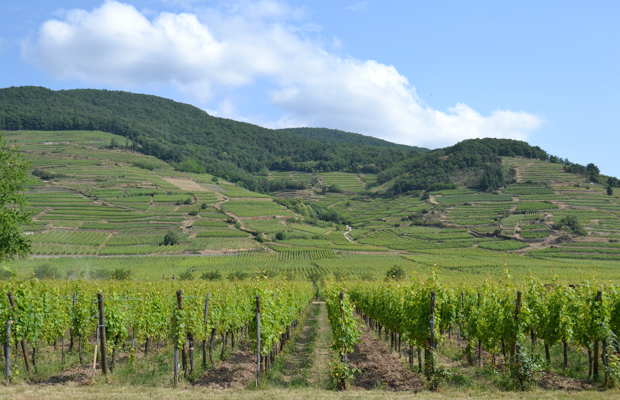
Schlossberg Grand Cru, Kientzheim, Alsace

Schlossberg Grand Cru, Kientzheim, Alsace

Related – In a Grand Cru State of mind

As wine geeks we are constantly seeking it out and sometimes we imagine it, chat it up when it’s not really there. After we are immersed in Alsace, we cannot deny its existence. Terroir, defined as “the complete natural environment in which a particular wine is produced, including factors such as the soil, topography and climate.” Or, goûts de terroir, as intaste of the earth.” Wherever wine is made around the world, soil is always as important, if not more important than any facet of the winemaking oeuvre. In Alsace, it is religion. I suss it, you suss it and in Alsace, they might say, “we all suss terroir.”

Alsace presents as a long strip of stupidly beautiful, verdant vistas, wedged between the faults and valleys forged with the Vosges Mountains on its west side and the Germany buffering Rhine River to the east. To consider its location as a province of France, drive 500 kilometres east of Paris and draw a line south from Strasbourg, to Colmar and to Basel. Wars have seen to make sure the region can never be too comfortable with its identity, causing an ever-annoying oscillation in governance.
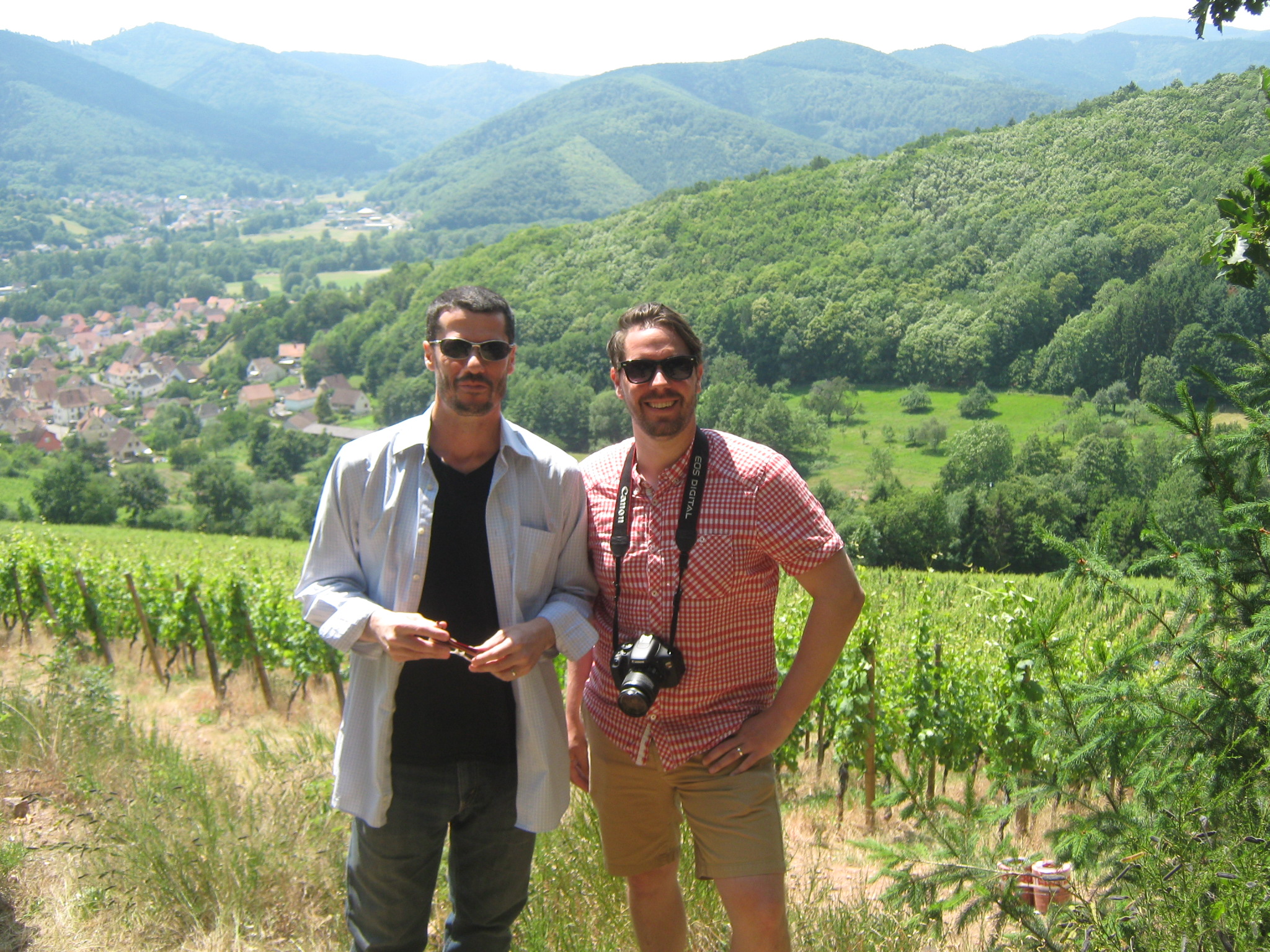
Godello and Restaurant Laurea Montreal's Fred Fortin

Godello and Restaurant Laurea Montreal’s Fred Fortin

Alsatians are the possessed refugees of Europe, tossed around like orphaned children from one foster family to another. That they can be so comfortable in their own skin is to accept their conceit as a French paradox, through ignoring its Franco-Germanic past, its passage back and forth between hands and its current state as a region governed by France. The confluence of cultures and of shared borders (and airports) would think to cause a crisis of identity. The names of towns and villages may act out a who’s who or what’s what of French sobriquet and German spitzname. None of that matters. The people, the places, the food and the wine are purely and unequivocally in ownership of their own vernacular, dialect and culture: Alsatian.
Phillipe Blanck in the Schlossberg Photo (c): Cassidy Havens, http://teuwen.com/

Phillipe Blanck in the Schlossberg
Photo (c): Cassidy Havens, http://teuwen.com/

Related – A Blanck slate in Alsace

When a winemaker wants to lay an insult upon you he will say something like “oh, that’s so Anglo-Saxon.” Ouch. He will mean it, for sure, but he will also grace you with a wink and a smile. He likes you and he respects your choice to come from far away to learn something of his wines. And you like him. The winemaker will also complement you when your palate aligns with his, when your thoughts intuit something about his acuity and his groove. His flattery will be genuine. The winemaker will pour old vintages and without a hem or a haw. She will share generously, not because she wants to sell more, but because she wants better people to drink her wine.

To ascertain a grip on the Alsace codex it must begin in the vineyard. The steep slopes, zig-zagging ridges and fertile valleys are composed of highly intricate, alternating and complex geological compositions. The landscape switches repeatedly from clay to marl, from calcaire (limestone) to schist, from volcanic to granitic rock. Each vineyard and even more parochial, each plot contributes to define the wine that will be made from that specific micro-parcel. The wine grower and winemaker’s job is to treat the soil with utmost respect. To plow the land, to add organic material, to refuse the use of fertilizers and to spray with solutions composed of non-chemical material.

Organic and biodynamic viticulture is widespread across the globe but Alsace is a leader in the practices, particularly in the latter’s holistic, asomatous way. Though more than 900 producers make wines, including many who do not partake in a bio-supernal and subterraneal kinship with the vines and the earth, the ones who do are fanatical about their winegrowing ways. Alsatian winemakers bond with their fruit, by employing the Austrian philosopher Rudolf Steiner’s teachings as a predicate from which to apply spiritual connections to the physical act of tending vines.
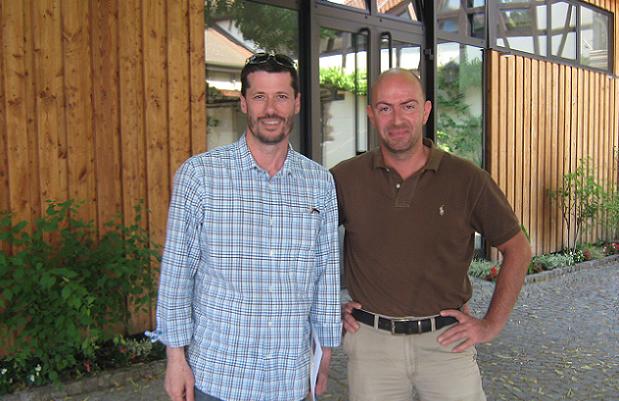
Godello and Christophe Ehrhart, Domaine Josmeyer, Kientzenheim

Godello and Christophe Ehrhart, Domaine Josmeyer, Kientzenheim

Related – It was Josmeyer’s imagination

The belief is that great wine can only be made from healthy, natural and disease resistant plants. Steiner’s studies on chemical fertilizers looked into the effect on plants growing near bombs in the earth. The growth was observed to be abnormal and unhealthy. Christophe Ehrhart of Domaine Josmeyer compared this to humans, who eat too much salt and thus need to drink too much. I tasted more than 150 naturally made wines from biodynamically farmed soils. The proof of quality and complexity is in the glass.

The winemaker of Alsace shows a respect for the earth that might be seen as a verduous variation on the teachings of theologian, philosopher, physician, medical missionary and humanitarian Albert Schweitzer. The Alsatian-born Schweitzer gave to the world his theory on the “reverence for life,” a term he used for a universal concept of ethics. “He believed that such an ethic would reconcile the drives of altruism and egoism by requiring a respect for the lives of all other beings and by demanding the highest development of the individual’s resources.” The biodynamic approach, through its human to vegetable relationship, echoes the concept. Careful care not to disrupt the balance of nature allows the vines to develop the strength to survive and to flourish in less than optimum climatic conditions, especially during times of drought. The quality of grapes and in turn, the complexity of wine, is the result.
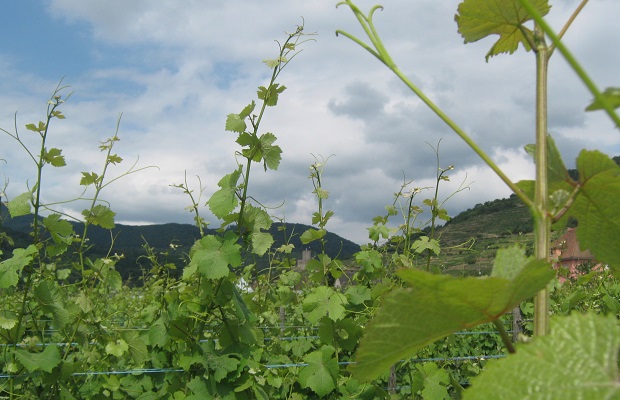
Grand Cru Riesling, Alsace

Grand Cru Riesling, Alsace

The focus on soil and terroir is ultimately disseminated into the idea of tasting minerality in wine, a most contentious aspect of the wine tasting and writing debate. Nary an expert will admit that the impart of trace minerals can be ascertained from a wine’s aroma and most believe that it can be found in taste. An American geologist debunked the mineral to taste theory at the annual meeting of the Geological Society of America held in Portland Oregon. “The idea is romantic and highly useful commercially, but it is scientifically untenable,” wrote Alex Maltman, a professor at the Institute of Geography and Earth Sciences at Aberystwyth University. Maltman’s claim is simple. Vines absorb minerals from the earth but the amount is far too small for human detection.

Christophe Ehrhart of Domaine Josmeyer in Wintzenheim agrees to disagree. Ehrhart concedes that the quantitative number is small (only three to five percent) for a vine to derive its personality, divined though the earth’s brine. The remainder is a consequence of photosynthesis. Ever the spiritual and natural advocate, Christophe borrows from the writings of David Lefebvre. The journalist and wine consultant’s The minerality from David Lefebvre tells the story of why natural wines without sulfur express minerality. Lefebvre makes clear the argument that naturally-farmed (biodynamic and/or, but necessarily organic) vines are qualitatively richer in (salt minerals) than those raised with chemicals. “All fermentation, from milk to cheese, from grape to wine, is accompanied by the appearance of the component saline, one could say mineral, in the taste of the fermented product.” Chemicals and fertilizers inhibit growth and vigor, ostensibly wiping out an already minuscule number. If food is available at the surface, vine roots will feed right there. They will then lose their ability to create the beneficial bacteria necessary to metabolize deep earth enzymatic material. They essentially abandon their will to fight for nutrition deep within the fissures of the rock. Lefebvre’s conclusion? “All biocides and other products that block mineralization, such as SO2, inhibit the expression mineral.”

At the end of the day Lefebvre is a wine taster and not a scientist and the argument must be considered within the realm of the natural world. “The taste of stone exists in Alsace, Burgundy, the Loire (all France) when the winegrower uses organic farming and indigenous, winemaking yeasts.” American made wine rarely does this, though change is occurring. Ontario winemakers are different. Taste the wines of Tawse or Southbrook and note the difference. Or, taste the difference a vegetable, like a tomato, or a piece of fruit, like a peach tastes when picked straight from the garden, or orchard, as opposed to the conventional piles of the supermarket. There can be no argument there.

Wihr au Val Photo (c): Cassidy Havens, http://teuwen.com/

Wihr au Val Photo (c): Cassidy Havens, http://teuwen.com/

A week tasting through nearly 300 wines in Alsace may sound exhausting when in fact it is an experience that had me constantly, “as the expression goes, gespannt wie ein Flitzebogens,” or as it is loosely employed from the German in the Grand Budapest Hotel, “that is, on the edge of my seat.” I watched Wes Anderson’s film on the Air France flight over from Toronto to Paris and enjoyed it so much that I watched it again on my return. That kind of spiritual, dry European humour is not unlike that of the fraternity of Alsatian winemakers and how they discuss their wines. From Olivier Zind-Humbrecht to Pierre Blanck, to MauriceBarthelmé and to Jean-Pierre Frick there is an Edward Norton to Bill Murray, Tom Wilkinson to Harvey Keitel, Adrien Brody to Ray Fiennes affinity. Or perhaps it’s just me.

Alsace is distinguished by a very specific set of vinous attributes. No other area in France is as dry and only Champagne is further north in latitude. The aridity of the summer months, followed by the humidity of the fall fosters the development of a beneficial fungus called Botrytis cinerea, the fungus better known as noble rot, which concentrates the sugars and preserves acidity. Pierre Gassmann of Rolly Gassman says all of his wines are noble rot wines, but he calls them Riesling.

The uninitiated into the wines of Alsace think it is one big pool of sickly sweet and cloying white wine. If perhaps this were, at least to some extent, once true, it is no longer. The progressive and philosophically attentive producer picks grapes (especially the particularly susceptible Pinot Gris) before the onset of botrytis. If a dry, mineral-driven style is the goal, picking must be complete before what Phillippe Zinck refers to as D-Day. Pinot Gris goes over the edge in an instant, even more so because of the advancing maturation due to the warm temperatures induced by Global Warming.
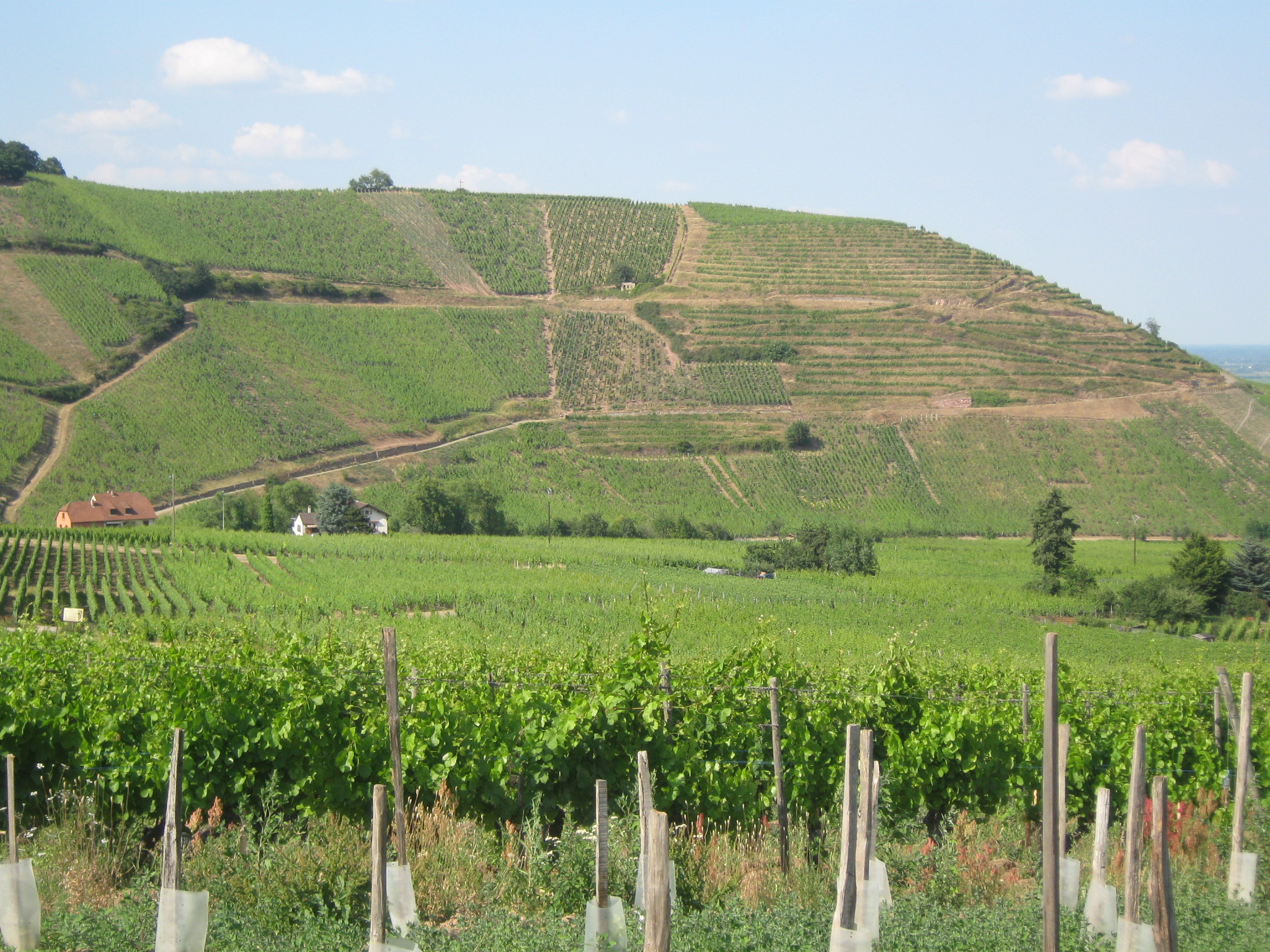
Sommerberg Grand Cru

Sommerberg Grand Cru

The global wine community’s ignorance to the multeity of Alsace wines, “as mutually producing and explaining each other…resulting in shapeliness,” needs addressing and so steps in the valedictorian, Christophe Ehrhart. The Josmeyer viniculturalist devised a system, a sugar scale to grace a bottle’s back label. Whites are coded from one to five, one being Sec (Dry) and five Doux (Sweet). The codification is not as simple as just incorporating residual sugar levels. Total acidity is taken into consideration against the sugar level, like a Football team’s plus-minus statistic. In Alsace the relationship between sugar, acidity and PH is unlike any other white wine region. Late Harvest (Vendanges Tardives, or Spätlese in German) is Late Harvest but Vin desprit sec or demi-sec in Alsace should not generally be correlated to similar distinctions in Champagne or the Loire. In Alsace, wines with vigorous levels of acidity and even more importantly PH bedeck of tannin and structure. Perceived sweetness is mitigated and many whites, though quantified with residual sugar numbering in the teens, or more, can seem totally dry.

Returning to the idea of increasingly warmer seasonal temperatures, the red wines of Alsace have improved by leaps and bounds. “We could not have made Pinot Noir of this quality 20 years ago,” admits Maurice Barthelmé. Oh, the humanity and the irony of it all.
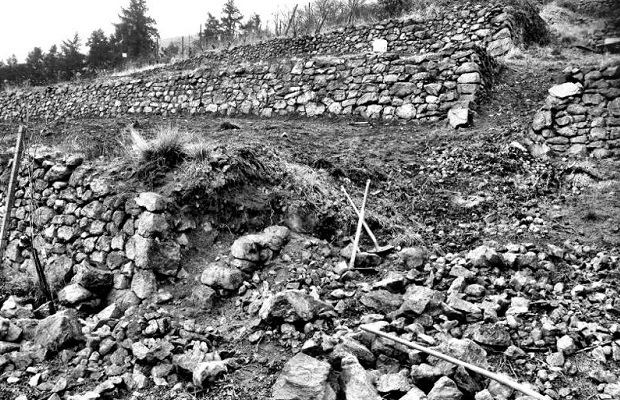
The Vineyards of Domaine Albert Mann photo (c) https://www.facebook.com/albertmannwines

The Vineyards of Domaine Albert Mann
photo (c) https://www.facebook.com/albertmannwines

Related – Giving Grand Cru Pinot Noir d’Alsace its due

This sort of quirky response to nature and science is typical of the artisan winemaker. There is more humour, lightness of being and constater than anywhere else on this winemaking planet. There just seems to be a collective and pragmatic voice. Maurice makes a 10,000 case Riesling called Cuvee Albert, “because I have to make a wine for the market.” Yet Maurice is also a dreamer and a geologist. To him, “Pinot Noir, like Riesling, is a mineralogist.”

Domaine Albert Mann’s Jacky Barthelmé: “Before Jesus Christ was born we have had vines here in the Schlossberg. So it is a very old story.” The Alsace vigneron is only human and works in a vinous void of certitude. They do not fuck with their land or attempt to direct its course. The young Arnaud Baur of Domaine Charles Baur insists that you “don’t cheat with your terroir or it will catch up with you. You will be exposed. You can make a mistake but you will still lose the game.” What an even more wonderful world it would be if he only understood the complexity in his multiple entendre.

Philippe Blanck is a philosopher, a dreamer, an existentialist and a lover. He is Descartes, the aforementioned Bill Murray and Bob Dylan rolled into one, a man not of selection but of election. He is both prolific and also one who buys the whole record catalogue, not just the hits. He opens old vintages freely and without hesitation. When asked how often does he have the opportunity to open wines like these he answers simply, “when people come.”
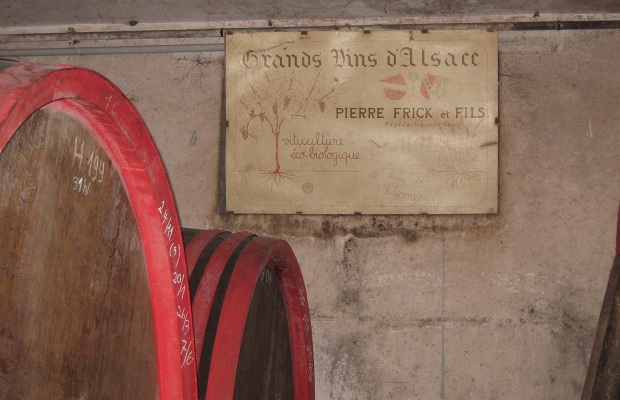
Pierre Frick et Fils

Pierre Frick et Fils

Then there is the far-out Jean-Pierre Frick, the man who let a 2006 Auxerrois ferment for five years before bottling it in 2011. “After one year I check the wine and he is not ready. I see him after two years and he says I am not ready. So I wait. After five years he says, I am finished. So I put him in the bottle.” On his Riesling 2012 he says, “This is a wine for mouse feeding.” Upon cracking open his remarkable, natural winemaking at its peak 2010 Sylvaner he chuckles like M. Gustave and smirks, “he is a funny wine.”

Few wine regions tell their story through geology as succinctly and in as much variegated detail as Alsace. The exploration of its Grand (and other vital) Cru (for the purposes of this trip) was through soils (or not) variegated of clay, sandy clay, marl, granite, volcanic rock, limestone and sandstone. To complicate things further, a Cru can be composed of more than one type of terra firma and still others have more than one arrangement within the particular plot. All very complicated and yet so simple at the same time. The Crus tasted came from the following:

Schlossberg Grand Cru, (c) Cassidy Havens, http://teuwen.com/

Schlossberg Grand Cru, (c) Cassidy Havens, http://teuwen.com/

  1. Granitique/Granite (Brand, Herrenreben, Kaefferkopf, Langenberg, Linsenberg, Schlossberg, Sommerberg)
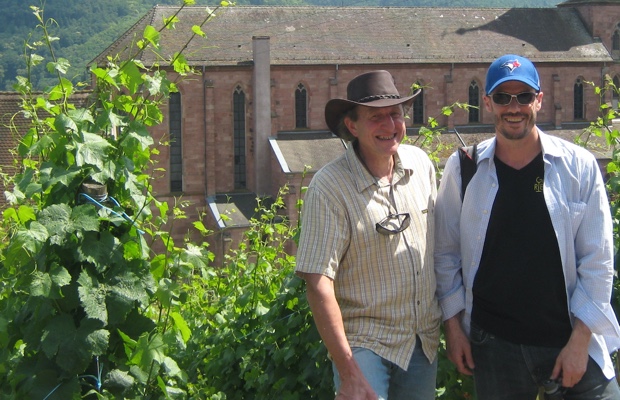
Henri Schoenheitz and Godello

Henri Schoenheitz and Godello

Domaine Schoenheitz Linsenberg Riesling 1990, Ac Alsace, France (Winery, 196618, WineAlign)

During a picnic, on a plateau up on the Linsenberg lieu-dit set above the Wihr-au-Val, this 24 year-old bottle acts as a kind of Alsatian Trou Normand. A pause between courses, which involves alcohol and you need to ask for its proof of age. Culled from deep dug vines out of stony and shallow granite soil. Soil rich in micas with a fractured basement. From a dream vintage with marvellous semi-low yields and a student of south-facing, self-effacing steep steppes. A sun worshipper prodigy of winemaker Henri Schoenheitz, a child of terroir du solaire. Rich and arid in simultaneous fashion (the RS is only 8-10 g/L), the years have yet to add mileage to its face and its internal clock. It may ride another 15, or 20. Drink 2015-2030. Tasted June 2015  @VinsSchoenheitz

Schoenheitz Picnic, Wihr-au-Val

Schoenheitz Picnic, Wihr-au-Val

Domaine Albert Boxler Pinot Blanc Reserve 2013, Ac Alsace, France (SAQ $27.70 11903328WineAlign)

From fruit drawn off the granitic Grand Cru of the Brand but not labeled as such. Laser focus (what Jean Boxler wine is not) and texture. Possessive of the unmistakable Brand tang, like mineral rich Burgundy. The minerality ann the acidity from the granite are exceptional in a wine known as “Pinot Blanc Reserve.” As good a developing PB are you are ever likely to taste. Drink 2015-2019.  Tasted June 2014

Domaine Albert Boxler Riesling Old Vines Sommerberg Grand Cru 2013, Ac Alsace, France (SAQ, 11698521WineAlign)

A direct expression of winemaker (since 1996) Jean Boxler and his 150 year-old casks. This is Riesling suspended in the realm of dry extract, texture and a precision of finesse rarely paralleled in Alsace. It reads the truth of facteur for Sommerberg, its face, slope and pitch. Exceeds the clarity of the younger parcel in its contiguous continuance of learning, of pure, linear, laser styling. There is more maturity here and the must had to have been exceptional. “The juice must be balanced when it goes into the vats or the wine will not be balanced,” insists Jean Boxler. And he would be correct. Drink 2016-2025.  Tasted June 2014
Domaine Albert Boxler

Domaine Albert Boxler

Domaine Albert Boxler Tokay-Pinot Gris Sommerberg Grand Cru 1996, Ac Alsace, France (Alsace)

From volcanic and granitic soils together combining for and equating to structure. A matter concerning “purity of what you can do from a great ground,” notes Master Sommelier Romain Iltis. Perception is stronger than reality because despite the sugar, the acidity reign to lead this to be imagined and reasoned as a dry wine. Ripe, fresh, smoky, with crushed hazelnut and seamless structure. Stays focused and intense in mouthfeel. Takes the wine down a long, long road. Quite remarkable. No longer labeled “Takay” after the 2007 vintage. Drink 2015-2026.  Tasted June 2014

  1. Calcaire/Limestone (Engelgarten, Furstentum, Goldert, Rosenbourg, Rotenberg, Schoffweg)

Domaine Albert Mann Pinot Gris Grand Cru Furstentum 2008, Alsace, France (Winery)

The Marl accentuated Hengst and its muscular heft receives more Barthelmé limelight but the always understated Furstentum Grand Cru is a special expression of the variety. As refined as Pinot Gris can be, with a healthy level of residual sugar, “like me” smiles Marie-Thérèse Barthelmé. The sugar polls late to the party while the acidity swells in pools, but the finish is forever. “Pinot Gris is a fabulous grape but we serve it too young,” says Maurice. “It needs time to develop its sugars.” Truffle, mushroom, underbrush and stone fruit would match well to sweet and sour cuisine. Flinty mineral arrives and despite the residual obstacle, is able to hop the sweet fencing. The potential here is boundless. Drink 2018-2026.  Tasted June 2014  @albertmannwines
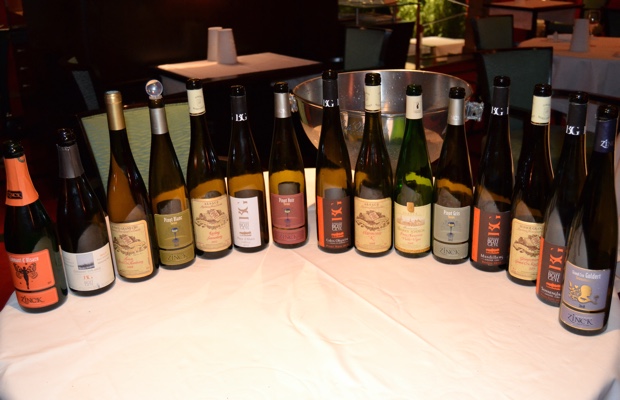
Dinner wines at La Table du Gourmet, Riquewihr

Dinner wines at La Table du Gourmet, Riquewihr

Domaine Paul Zinck Gewürztraminer Grand Cru Goldert 2010, Alsace, France (Agent)

From the village of Gueberschwihr and from soil composed of sandstone, chalk and clay. The vines average 50 years in age and the wine saw a maturation on the lees for 11 months. Philippe Zinck notes that “the terroir is stronger than the variety.” If any grape would stand to contradict that statement it would be Gewürztraminer but the ’10 Goldert begs to differ. Its herbal, arid Mediterranean quality can only be Goldert talking. Though it measures 20 g/L of RS it tastes almost perfectly dry. It reeks of lemongrass, fresh, split and emanating distilled florals. This is classic and quintessential stuff. Drink 2015-2025.  Tasted June 2014  @domainezinck  @LiffordON

Domaine Zind-Humbrecht Gewürztraminer Vendanges Tardives Goldert Grand Cru 1985

Tasted from magnum at Les Millésimes Alsace, a wine described by Caroline Furstoss as “unusual for late harvest,” because the terroir is simply stronger than the variety. Another economically non-viable low yield LH, “from a vintage more on the reductive than the oxidative side.” Even at 30 years it requires aeration and time to open up. Travels from spicy to smoky with that air. There is a density in bitterness, an attrition miles away from resolve and a promise for rebate, if further patience is granted. The spices inherent are ground, exhumed and combine with the base elements to rise atomically. A spatially magnificent wine of sugars not yet clarified and an acquired taste not quite elucidated. A taste of an ancient kind. Drink 2015-2035.  Tasted June 2014

  1. Marno-Calcaire/Marl-Limestone (Altenberg de Bergheim, Clos Hauserer, Eichberg, Hengst, Kappelweg de Rorschwihr, Mambourg, Mandelberg, Osterberg, Pfersigberg, Sonnenglanz, Steingrubler)

Marcel Deiss Schoffweg “Le Chemins Des Brebis” 2010, Bergheim, Alsace, France (Agent, $60.95, WineAlign)

A pulsating and metallic, mineral streak turns the screws directly through this spirited Bergheim. From Schoffweg, one of nine Deiss Premier Crus planted to Riesling and Pinots. A pour at Domaine Stentz Buecher from fellow winemaker Carolyn Sipp simulates a trip, to stand upon a scree of calcaire, the earth below a mirror, reflecting above a multitude of stars. “He’s a character,” smiles Sipp, “and perhaps even he does not know the actual blend.” The amalgamate is surely Riesling dominant, at least in this impetuous ’10, a savant of fleshy breadth and caracoling acidity. The Schoffweg does not sprint in any direction. It is purposed and precise, geometric, linear and prolonging of the Deiss magic. This is a different piece of cake, an ulterior approach to assemblage, “a bigger better slice” of Alsace. It should not be missed.  Tasted June 2014  @LeSommelierWine

Marcel Deiss Mambourg Grand Cru 2011, Bergheim, Alsace, France (Agent, $114.95, WineAlign)

In a select portfolio tasting that includes a trio of highly mineral yet approachable 2010’s (Rotenberg, Schoffberg and Schoenenbourg), the ’11 Mambourg stands out for its barbarous youth. It seems purposely reductive and strobes like a hyper-intensified beacon. Rigid, reserved and unforgiving, the Mambourg is also dense and viscous. Acts of propellant and wet concrete circulate in the tank, compress and further the dangerous liaison. This is a brooding Deiss, so different than the jurassic citrus from Rotenberg, the terroir monster in Schoffberg and the weight of Schoenenbourg. In a field of supervised beauty, the Mambourg may seem like punishment but there can be no denying the attraction. Five years will alter the laws of its physics and soften its biology. The difficult childhood will be forgotten. Drink 2019-2026.  Tasted June 2014  @LeSommelierWine

Marcel Deiss Langenberg “La Longue Colline” 2011, Bergheim, Alsace, France (Agent, $48.95, WineAlign)

Rogue Alsace, classic Deiss five varietal field blend specific to one hangout. The steep, terraced, granite Langenberg, terroir from Saint Hippolyte. Deiss coaxes, expects and demands precocious behaviour from four supporting varieties to lift and place the Riesling, with the intent being a result in “salty symphony.” This is approachable, something 2011 could not have been easy to accomplish. The accents are spice, sapidity and acidity, from the granite, for the people. Isn’t this what a mischievous brew should be about? Drink 2015-2022. Tasted June 2014  @LeSommelierWine

Léon Beyer Riesling Cuvée Des Comtes D’Eguisheim 1985, Alsace, France (316174, $50.00, WineAlign)

I wonder is any Alsace Riesling sublimates history, religion and occupation more than Cuvée Des Comtes D’eguisheim. It breathes the past; of popes, Augustinians of Marbach, Benedictines of Ebersmunster, Cistercians of Paris and Dominicans of Colmar. From the limestone-clay for the most part of the Grand Cru Pfersigberg and only produced in exceptional vintages. In 1985 low yields, same for botrytis and then 29 years of low and slow maturation. In 2014, is the herbal, aromatic, limestone salinity a case of vineyards, grape or evolution? All of the above but time is in charge. It has evolved exactly as it should, as its makers would have wished for. It is ready to drink. The defined minerality, with fresh lemon and a struck flint spark has rounded out, without the need for sugar. Drink 2015-2017.  Tasted June 2014  @TandemSelection

Charles Baur Riesling Grand Cru Eichberg 2009, Ac Alsace, France (Winery)

Arnaud Baur understands his place and his family’s position in the Alsace continuum. “You can make a mistake and you can still lose the game.” His use of entendre is subconsciously brilliant. In 2009 the warmth went on seemingly forever and so Baur did not even bother trying to make a dry Riesling.  “We really respect the vintage,” says Arnaud. Meanwhile at 18 g/L RS and 7.0 g/L TA the balance is struck. Many grapes were dried by the sun, ripeness was rampant, flavours travelled to tropical and acidity went lemon linear. The 14.2 per cent alcohol concludes these activities. Matched with foie gras, the vintage is marinated and married. There is certainly some crème fraîche on the nose and the wine plays a beautiful, funky beat. As much fun and quivering vibration as you will find in Alsace Marno-Calcaire. Drink 2015-2024.  Tasted June 2014
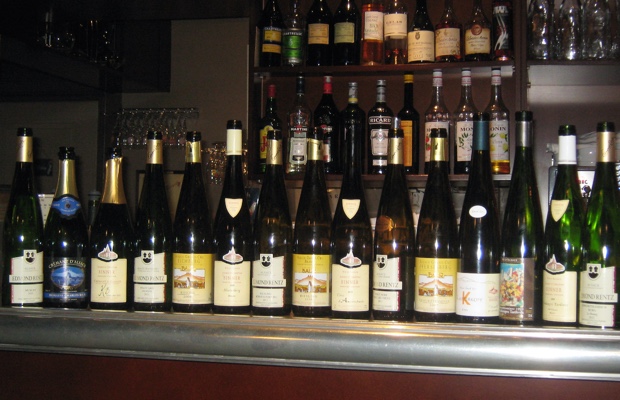
Dinner wines at L'Epicurien, Colmar

Dinner wines at L’Epicurien, Colmar

Charles Baur Gewürztraminer Grand Cru Pfersigberg 2007, Ac Alsace, France (Winery)

A good vintage for Riesling and considering the heat, an even better one for Gewürztraminer. The vineyard offers 50-70cm of clay atop Jurassic yellow limestone where roots can penetrate the rock. They suck the life into this enzymatic white. This, of digestibility, “a wine you don’t want to drink two glasses of, but three.” Delicious, clean, precise Gewürz that Mr. Baur recommends you “drink moderately, but drink a lot.” Arnaud is very proud of this ’07, for good reason. Two actually. Balance and length. Drink 2017-2027.  Tasted June 2014

Domaine Albert Mann Pinot Gris Grand Cru Hengst 2013, Alsace, France (SAQ $41.50 11343711, WineAlign)

Tasted not long after bottling, the yet labeled ’13 is drawn from a vintage with a touch of botrytis. “We don’t sell too much of this,” admits Maurice Barthelmé. Along with the sweet entry there are herbs and some spice, in layers upon layers. Almost savoury, this interest lies in the interchange between sweet and savour, with stone fruit (peach and apricot) elevated by a feeling of fumée. A playful, postmodernist style of short fiction. Drink 2017-2024.  Tasted June 2015  @albertmannwines  @Smallwinemakers

Domaine Albert Mann Pinot Gris Grand Cru Hengst 2008, Alsace, France (SAQ $41.50 11343711WineAlign)

In 2008 the brothers Barthelmé used the Hengst’s strength and the vintage to fashion a remarkable Pinot Gris. It is blessed of antiquity, like concrete to bitters, with power, tension and a posit tub between fruit and sugar. At 34 g/L RS and 7.6 g/L TA there is enough centrifuge to whirl, whorl and pop, culminating in a healthy alcohol at 14 per cent. Quite the reductive Pinot Gris, to this day, with a sweetness that is manifested in mineral flavours, glazed in crushed rocks. “It smells like mushroom you threw into a dead fire,” notes Fred Fortin. This is the bomb. Needs four more years to develop another gear. Drink 2018-2033.  Tasted June 2015  @albertmannwines  @Smallwinemakers

Domaine Albert Mann Gewürztraminer Grand Cru Steingrubler 2008, Alsace, France (Winery)

From marly-limestone-sandstone, “a fa-bulous terroir,” says Maurice with a smile. The “stone carrier wagon” is mostly calcaire, especially in the middle slope. This has a roundness, an approachability. It really is clean, clean, Gewürztraminer. It’s erotic, gorgeous, certainly not slutty or pornographic. The colder limestone preserves the freshness, with a need for magnesium, to cool the factor further and to develop the terpenes. Gelid and stone cold cool wine. Drink 2018-2035.  Tasted June 2015  @albertmannwines  @Smallwinemakers

Bott Geyl Riesling Grand Cru Mandelberg 2010, Alsace, France (Agent)

The Mandelberg receives the early morning sun and so this Grand Cru is an early ripener and the first of the Bott-Geyls to be picked. The added warmth of 2010 introduced noble rot into a vineyard that often avoids it so the residual sugar here is elevated to an off-dry (even for Alsace) number of 30 g/L. The rush to pick in this case preserved the natural acidity, allowing the flint to speak. Additional notes of cream cheese and formidable dry extract have helped to balance the sweetness. Truly exceptional Riesling from Christophe Bott-Geyl. Drink 2015-2025.  Tasted June 2014  @bott_geyl  @DanielBeiles

  1. Calcaro-gréseux/Limestone-Sandstone (Bergweingarten, Zinkoepfle)

Pierre Frick Sylvaner Bergweingarten 2010, Alsace, France (Winery)

The vines of southeast exposure are in the 35 year-old range for this Vin moelleux, “young vines” says Jean-Pierre Frick. “I am a defender of Sylvaner.” This ’10 is freshly opened, as opposed to the ’09 poured after sitting open a week. That ’09’s healthy amount of noble rot is not repeated in this ’10, what Frick refers to as “a funny wine.” A two year fermentation and a potential for 17 per cent alcohol (it’s actually in the 14-15 range), a touch of spritz and no sulphur means it goes it alone, natural, naked, innocent. It’s a passionate, iconoclastic Sylvaner, distilled and concentrated from and in lemon/lime. It may carry 53 g/L of sugar but it also totes huge acidity. Enamel stripping acidity. Full of energy, that is its calling, its niche, its category. The honey is pure and despite the level of alcohol it’s as though it has never actually fermented. Natural winemaking at the apex, not out of intent but from a base and simply purposed necessity. Drink 2015-2025.  Tasted June 2014  @LeCavisteTO
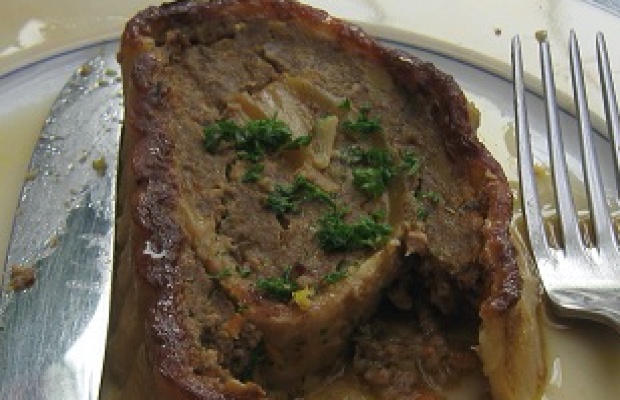
Fleischanaka at Domaine PIerre Frick

Fleischanaka at Domaine PIerre Frick

  1. Sablo-Argileux/Sandy-Clay (Schlossberg)

Domaine Albert Mann Riesling Schlossberg Grand Cru 2008, Alsace, France (SAQ 11967751 $48.25, WineAlign)

What a fantastic expression of the Schlossberg, like a cold granite countertop. A Riesling that tells you what is essentiality in granite from what you thought might be the sensation of petrol. Full output of crushed stone, flint and magnesium, but never petrol. Now just beginning to enter its gold stage, just beginning to warm up, in energy, in the sound of the alarm clock. “You can almost see the rock breaking and the smoke rising out,” remarks Eleven Madison Park’s Jonathan Ross. A definitive sketch with a 12 g/L sugar quotient lost in the structure of its terroir. A Schlossberg a day keeps the doctor away. Drink 2015-2025.  Tasted June 2014

Related – Arch classic Alsace at Domaine Weinbach
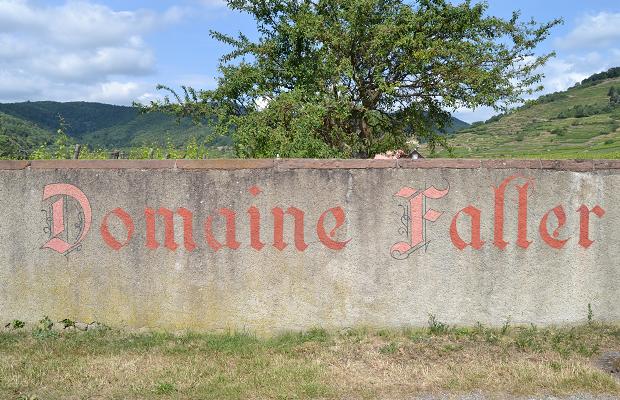
Domaine Weinbach, (c) Cassidy Havens, http://teuwen.com/

Domaine Weinbach, (c) Cassidy Havens, http://teuwen.com/

  1. Argilo-calcaro-gréseux/Clay-Limestone-Sandstone (Goldert, Vorbourg)

Pierre Frick Auxerrois Carrière 2006 (Embouteille en 2011), Alsace, France (Winery)

“He has fermented five years,” says Jean-Pierre Frick, stone faced, matter of factly. “That’s how long he took.” Here, one of the most impossible, idiosyncratic and unusual wines made anywhere in the world. On on hand it’s a strange but beautiful experiment. On another there can be no logical explanation as to why one would bother. The third makes perfect sense; allowing a wine to ferment at its own speed, advocate for itself and become what it inherently wanted to be. Auxerrois with a little bit of sweetness (16 g/L RS) and a kindred spirit to the Jura (and with a potential of 15 per cent alcohol). This is drawn from the lieu-dit terroir Krottenfues, of marl-sandstone soils in the hills above the Grand Cru Vorbourg. Tasting this wine is like slumbering through a murky and demurred dream. Drink 2015-2021.  Tasted September 2015

Pierre Frick Auxerrois Carrière 2006 (Embouteille en 2011)

Pierre Frick Auxerrois Carrière 2006 (Embouteille en 2011)

  1. Argilo-calcaire/Clay-Limestone (Eichberg, Engelberg, Kanzlernerg, Pflaenzerreben de Rorschwihr, Steinert)

Paul & Phillipe Zinck Pinot Blanc Terroir 2011, Alsace, France (BCLDB 414557 $15.79, WineAlign)

From 35 year-old vines on Eguisheim’s argilo-calcaire slopes with straight out acidity, trailed by earth-driven fruit. Less floral than some and pushed by the mineral. A difficult vintage that saw a full heat spike to cause a mid-palate grape unction. Pinot Blanc with a late vintage complex because of that sun on the mid slope. Drink 2015-2017.  Tasted June 2014  @domainezinck  @LiffordON

Paul & Phillipe Zinck Pinot Gris Terroir 2012, Alsace, France (Agent, $22.99, WineAlign)

From chalk and clay soils surrounding the Eichberg Grand Cru, this is a decidedly terroir-driven style and far from overripe. In fact, Philippe Zinck is adamant about picking time, especially with Pinot Gris. “The most tricky grape to harvest in Alsace,” he tells me. So hard to get serious structure and many growers are duped by high brix. Philippe tells of the 24-hour varietal picking window, the “D-Day” grape. Zinck’s ’12 is pure, balanced and bound by its earthy character. Drink 2015-2017.  Tasted June 2014  @domainezinck  @LiffordON

Pierre Frick Muscat Grand Cru Steinert Sélection de Grains Nobles 2010, Alsace, France (Winery)

“I like acidity, whoo-ahh,” says Pierre Frick, dry as Monsieur Ivan. The sugar on top of acidity here, it’s exciting. This one is a gift from nature, for culture. So interesting, a dream, a story. This has a citrus sweetness, telling a story never before experienced. There’s a depth of reduced apricot syrup, pure, natural, holy. “Tell no one. They’ll explain everything.” Drink 2015-2040.  Tasted June 2014

  1. Volcano-gréseux/Volcanic sandstone (Kitterlé, Muenchberg)

Pierre Frick Pinot Gris Sélection de Grains Nobles 1992, Alsace, France (Winery)

From Argilo-Calcaire vineyards flanking the Rot Murlé, at a time when a minor amount of sulphuring was employed (1999 was their first sulphur-free vintage). Was Demeter certified, in 1992! This is all about intensity and acidity. An incredibly natural dessert wine, upwards of 150 g/L RS but balanced by nearly 10 g/L TA. The power is relentless, the finish on the road to never-ending. Drink 2015-2022.  Tasted September 2015

Domaine Ostertag Tokay Pinot Gris Grand Cru Muenchberg 1996, Alsace, France (Agent, $65, WineAlign)

From clay and limestone, fully aged in barrel, taking, sending and stratifying in and away from its own and everyone else’s comfort zone. Only the best barrels would do and yet the quality of the wood thought aside, this is Ostertag’s unique and fully autocratic take on Tokay-PG. Stands out with a structure wholly singular for the overall prefecture, with a twenty year note of white truffle, handled and enhanced by the wood maturation. Yellow fruits persist as if they were picked just yesterday but the glass is commandeered by the complex funk. It’s nearly outrageous, bracing and yet the flavour urged on by the aromatics return to their youth. To citron, ginger and tropical unction. This is oscillating and magnificent. Drink 2015-2026. Tasted June 2014  @TheLivingVine

  1. Argilo-Granitique/Clay-Granite (Kaefferkopf, Sonnenberg)

Audrey et Christian Binner Grand Cru Kaefferkopf 2010, Alsace France (Winery)

A blend of Gewürztraminer (60 per cent), Riesling (30) and Muscat (10) that spent two years in foudres. Christian has no time for technicalities, specs and conventions. “I just make wine.” At 13.5 per cent alcohol and 20 g/L RS the expectation would be vitality and striking lines but it’s really quite oxidative, natural and nearly orange. “But it’s OK. It’s the life,” he adds. An acquired, unique and at times extraordinary taste, complex, demanding, like Frick but further down a certain line. “For me, to be a great Alsace wine, it must be easy to drink. You have to pout it in your body.” Drink 2015-2019.  Tasted September 2015

Related – Walking an Alsace mile in their Riesling shoes

  1. Volcanique/Clay-Granite (Rangen)

Related – Colmar and the volcano: Domaine Schoffit

  1. Marno-Calcaire-gréseux/Marl- Limestone-Sandstone (AltenbourgKirchberg de Ribeauvillé)
  1. Volcano-sédiment/Volcanic Sediment (Rangen)
  1. Graves du quaternaire/Alluvial (Herrenweg de Turckheim)

Related – The cru chief of Alsace: Zind Humbrecht

Olivier Humbrecht and Godello PHOTO: Cassidy Havens, http://teuwen.com/

Olivier Humbrecht and Godello
PHOTO: Cassidy Havens, http://teuwen.com/

  1. Roche Volcanique/Volcanic rocks (Rangen de Thann)
  1. Marno-gypseux/Marl-gypsum (Schoenenbourg)
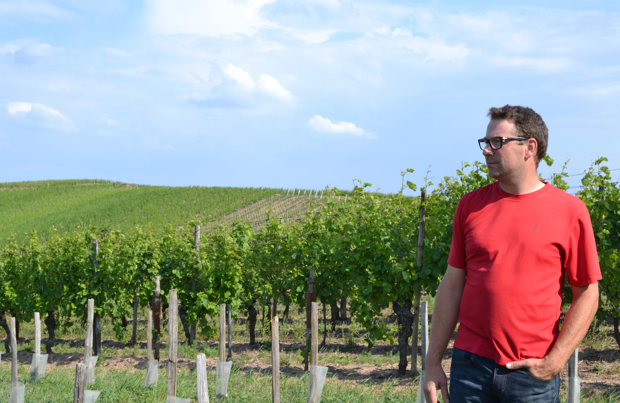
Jean Boxler, June 2014

Jean Boxler, June 2014

You see, no wine is poured, tasted and deliberated over without the introduction of the soil (or lack thereof) from which it came. To confine any study to just the Grand Cru would do the entire region an injustice. Though the original 1975 appellative system set out to define the plots of highest quality and esteem, many wines not classified GC are fashioned from terroir comingling with, surrounding, located next or adjacent to a vineyard called Grand Cru. Serious consideration is being given by CIVA and the winemakers to establish a Premier Cru and Villages system. While this will certainly increase levels of definition and understanding for Alsace, it may also disregard some quality wines, not to mention further alienate some producers whose artisanal and progressive wines go against the norm. A further consequence may result in elevating some average wines currently labeled Grand Cru into undeserved stratospheres.

Related – Trimbach, rhythm and soul

The Grand Cru story is heavy but not everything. Rarely has there been witnessed (outside of Burgundy) the kind of symbiotic relationship between vineyard and village. Perfect examples are those like Schlossberg and Furstentum with Kintzheim, Sommerberg and Niedermorschwihr, Hengst and Wintzenheim, Brand and Turckheim or Steingrübler and Wettolsheim. Domaine Weinbach’s cellars sit across and just down the road from both Kitzheim and Kayserberg. Albert Boxler’s cellar is right in the fairy tale town of Niedermorschwihr, just like Albert Mann’s location in Wettlosheim.

It is time, finally and thankfully, for a return to the reason for such a rambling on. With respect to the “cerebral and the spiritual component for producing exceptional wine” being “necessary and fundamental,” examples tasted in June of 2014 indicate that the notion of terroir grows from nature and is nurtured by the vigneron. These 25 wines surmise and summarize, either by connecting the dotted lines of constellatory figuration or by Sudoku interconnectivity, the imaginable chronicle that is Alsace.

Good to go!

http://www.winealign.com/profile/2058-mjg

Gateway to Achaia, from Roditis to Mavrodaphne

Gate to Achaia Clauss Winery, Achaia

Gate to Achaia Clauss Winery, Achaia

A week of immersion on the ground running in Achaia drafts a new set of varietal tasting parameters. What is new to me are anent varieties of old. Roditis, Sideritis, Mavrodaphne and Mavro Kalavryta may be the grapes of ancients but obscurity be sprinkled, their resurrection blows forth in full paroxysmal scatter. The appeal is symptomatic of the new search for greatness in far away places.

Related – Till I reach Achaia ground

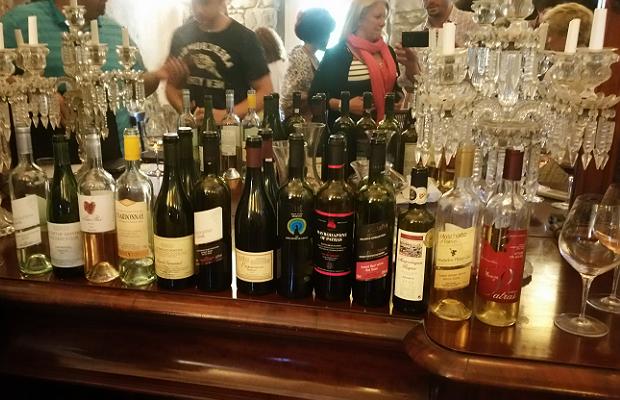
In  the second week of July I tasted through Patras and Achaia in the Greek Peloponnese. Here are 55 reviews from 10 producers.

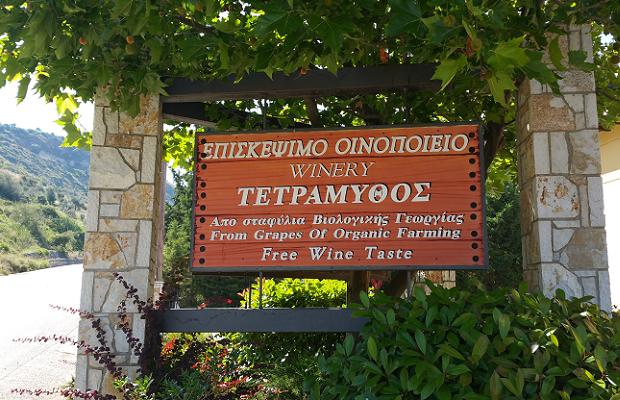
Tetramythos

8ο kil. Pounta-Kalavrita, Ano Diakopto, 25003, Greece, 2691097500 The most modern facility in all of Achaia, re-built after a fire destroyed the property more than 10 years ago. Owned and operated by the brothers Aristos and Stathis Spanos.

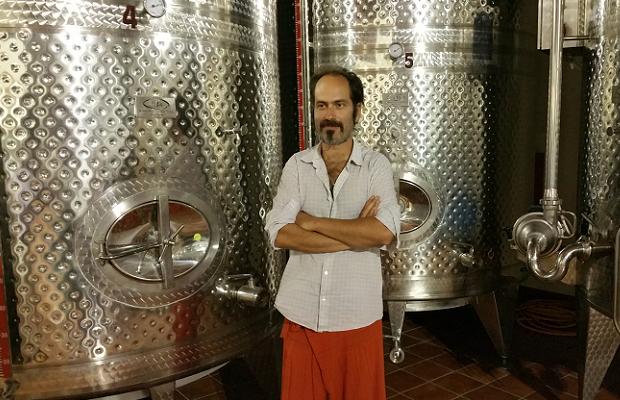
Panyiotis Panagianopoulos, Tetramythos Winery

Panyiotis Panagianopoulos, Tetramythos Winery

Oenologist since 1999 is Panayiotis Papagiannopoulos, a winemaker who may just have been separated from twin Frank Zappa at birth. Located at Ano Diakopto of Egialia, on the slopes of Mount Chelmos, the 14 hectares of vineyards (450-1,000m) are farmed organically (and have been since 1997). Bush vines make up 80 per cent and endemic varieties (85 per cent) cultivated (plus some expatriates) are Roditis, Malagousia, Sauvignon Blanc, Mavro Kalavryta, Agiorgitiko, Cabernet Sauvignon and Merlot. The total production is 13,000 cases with export to foreign markets (80 per cent) that exceeds peers by a wide margin.

Tetramythos Winery

Tetramythos Winery

Tetramythos Roditis 2014, PDO Patras, Greece (SAQ 12484575, $15.75, WineAlign)

Pulled from four vineyards at 650-850m of altitude and from vines 19-42 years old. No skin contact though it shows a light, slight tinge of colour. Nearly platinum in its yellow hue, perhaps attributed to organics says Papagiannopoulos, Eighty per cent was achieved through natural ferment (with zero malolactic) plus “one tank for security.” Roditis can go clean or develop anti-austerity, texture, viscosity in the direction of a dirty projector. The Tetramythos glides “forward through the clover and the bergamot.” I can see what she’s seeing. Tasting like a leesy ripe peach, this is the best “basic” Roditis tasted in Achaia. Serious match of Aleria Restaurant‘s Sea Bass Tartare. Drink 2015-2020.  Tasted July 2015

Tetramythos Roditis 2014, PGI Peloponnese, Greece (WineAlign)

Here speaks the truth in endemic Roditis, raised in unconscious, wild ferment, unfiltered, forsaken to fining and treated to minimal sulphur. From 47 year-old vines, this most natural Peloponnese is made for the French market (that includes Quebec) with elevated acidity, deeper mineral, higher tang, pomp, circumstance and attitude. Latin, really, striking actually. Drink 2015-2018.  Tasted July 2015

Tetramythos Roditis 2014, PGI Achaia, Greece (WineAlign)

Roditis is here designated as the traditional Retsina, subjugated to wild yeasts in clay amphora and no sulphur during alcoholic fermentation. From 25 year-old vines out of a single vineyard and pine resin collected from trees on the edge of the vineyard. Post low and slow fermentation the wine rests on its lees for two months.  Such a wild and sauvage display of terroir; pine resin, beeswax, sealants and amphora. Like pure pine distillate without excessive herbaceousness and in subtlety of its own complacency. The palate follows the other roditis renditions and the pine again returns on the finish. 14,000 bottles made. Drink 2015-2019.  Tasted July 2015

Tetramythos Malagoussia 2014, PGI Achaia, Greece (WineAlign)

A single vineyard at an altitude of 750m guided by 30 hours of skin contact, for mouthfeel, to saddle the cool climate herbiage, needed for structure and for distance. Exudes poise, presence, precision, not oily but somehow creamy, glistening, this glow of malagousia. Expresses the longest hang time in the mouth, lingering like no roditis can or is willing to. Thanks to early picking to preserve acidity, the alcohol is low (12.4 per cent) and that acidity (7.2 g/L) above and beyond. Only here does malagousia keep this kind of flinty bite, in kind to a mid-September pick, keeping on the right side of soft and hot. I think this will live longer than you think.  Drink 2015-2020.  Tasted July 2015

Tetramythos Roditis 2008, PDO Patras, Greece (WineAlign)

A wine to fulfill the promise of my own personal vindication. I had asked Angelos Rouvalis about laying Roditis down for three to five years or more, to see where it may go and he said, “why?” Here is why. Has fan vaulted to the skies, urged by petrol and a symphony of mythology. Akin and within aromatic mineral reach of sémillon or riesling, with just a basal drip of ambrosial, gaseous honey. The green notes (of pea and nettle) are exaggerated but that is attributed to 2008 fruit that may have never been fully ripe. Drink 2015-2017.  Tasted July 2015

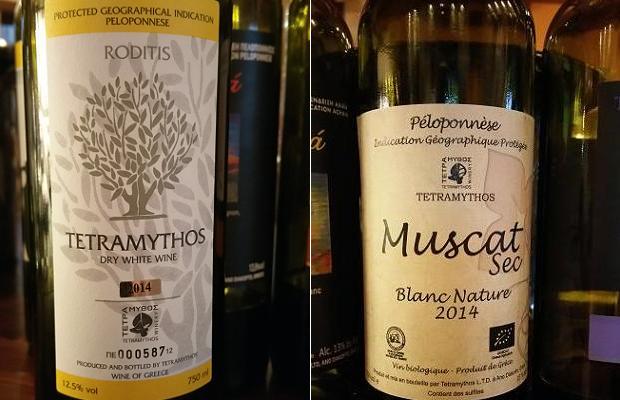
Tetramythos Roditis 2014 and Muscat Sec Blanc Nature 2014

Tetramythos Roditis 2014 and Muscat Sec Blanc Nature 2014

Tetramythos Muscat Sec 2014, PGI Peloponnese, Greece (WineAlign)

A slightly carbonic, reductive character – its natural protection, to keep the oxygen at bay, as if nouveau white Beaujolais. Combines bay laurel and beatific citrus, namely grapefruit after the banana blows off through the shutters of the cabana. Quite silky for muscat, of keys and zests citrus (major) and resin (minor). It may be sorry to leave you high and dry though there is no reason to feel a need to be weened off its charms. Far-out, groovy and compelling vin nature. Drink 2015-2018.  Tasted July 2015

Tetramythos Muscat Sec Blanc Nature 2014, PGI Peloponnese, Greece (WineAlign)

Nothing short of lucent, this friable, direct and crunchy raw muscat. Effusive of individual vowels and consonants, typically Achaian, extrapolated to Greek in its lambent and inventive simplicity. More glade than wax, it coats with orange and the spirit of lime. So different and yet so familiar, inevitably dry and straight as an arrow. Drink 2015-2018.  Tasted July 2015

Tetramythos Sauvignon Blanc Milia White 2014, PGI Achaia, Greece (WineAlign)

Not so many places are out there where sauvignon blanc grows at 1000m of altitude, so its got that going for it, which is nice. Add to that four months in new oak. What results is such a melon, citrus and high acidity tropical fruit mess. Wow is this piercing, almost over the top. Like sémillon this struts, in nod to the Hunter Valley. With time there is a varietal emergence. Eventually. Will age a spell. Drink 2015-2019. Tasted July 2015

Tetramythos Mavro Kalavryta 2014 (SAQ 11885457WineAlign)

A terrific example for a grape saved from extinction, Tetramythos owns 1.9 of a total four hectares of MK. Kudos for the effort especially considering the variety is thin skinned, slow to mature and difficult to cultivate. Saw nearly 20 days of skin contact because “the variety dictates the practice,” notes Konstantinos Lazarakis M.W. The fruit and bitters express a push-pull of terroir. One of two wineries making dry wines from the endemic variety, here the fresh red grape, the food friendly marker. Here confidently struts modern Achaian winemaking, from the ashes of naturalism and antiquity, the way Gamay or Loire Cabernet Franc are wont to do. Vibrant, with verve and a necessary natural funk. Herbal and with a rub of tomato skin, creamy, cool yet resinous, followed through from aroma to texture. Drink 2015-2018.  Tasted July 2015

Kotrotsos Moschofilero Erasmios 2014 and Tetramythos Mavro Kalavryta 2014

Kotrotsos Moschofilero Erasmios 2014 and Tetramythos Mavro Kalavryta 2014

Tetramythos Agiorgitiko 2013, PGI Peleponnese (SAQ 12178957WineAlign)

Raised in old oak barrels, it carries the wooden ship scent on the sea. Possessive of a world up in the wind, roofless, like an August cathedral and yet a grounding sense to burrow into earth. In all that sense it drafts like Nebbiolo indenture. Ferric and tannic, with end spice. Drink 2015-2018.  Tasted July 2015

Tetramythos Milia Red 2012, PGI Peloponnese, Greece (WineAlign)

A kaleidoscopic, cosmopolitan blend of merlot (66 per cent), cabernet sauvignon (20) and mavro (black) kalavrita (14) aged in 2nd, 3rd and 4th fill barrels. Here, again the use of Bordeaux varietals that cloud the vision of what the land wants to say. Sure it will speak in a language that resembles Terra Alta or some IGT but it has a nowhere man feel, a lack of somewheress and surely no word from the mouth of Papagiannopoulos. Very Mediterranean in feel, with a tapenade of black olive and caper. Drink 2015-2018.  Tasted July 2015

Tetramythos Cabernet Sauvignon 2011, PGI Aegialia Slopes (WineAlign)

A new Bordeaux language is created, in natural wild ferment, unfiltered and housed for 30 months in 2nd and 3rd fill barrels. A highly savoury cabernet sauvignon, with a lean and mean green streak. Tannic and very tight. Coated by a veneer and seething in teeth chattering acidity. Not for the faint of cabernet sauvignon heart and in need of double bottle time, in minimum two to one ratio of what it saw in wood. Much appreciation for the vision and the effort. Drink 2018-2021.  Tasted July 2015

Tetramythos Mavrodaphne Vin Naturellement Doux, Peleponnese, Greece (WineAlign)

As with so many of the Tetramythos line-up, this regional blend is the same but different. First it’s non vintage and second it is out of zone so not considered for PDO Mavrodaphne of Patras status. At 16 per cent alcohol and 58 g/L the sweet elixir spent nearly three years spent spinning in the excruciatingly slow centrifuge of natural fermentation. Traditional method adherence with the addition of organic, sun-dried raisins, “to increase the sugar levels.” The house quotient is three kilos of dried Black Corinth Raisin for every 100 L of must, in purport to increase the alcohol by one per cent. Here sweeps clean, sweet Mavro,  its port sensibility an aged, natural, dried fruit, nut and caramel melange. Pure beauty. Drink 2015-2025.  Tasted July 2015

Domaine Mega Spileo (Cavino)

The domain is set within a dramatically oriented steppe of an amphitheatre, in a bowl beneath the shadow of a 940m rock that houses the great Greek Orthodox monastery of Mega Spileo (Grand Cave). Nowhere else in the Chelmos mountains does monk viticulture resonate as it does here. The great vineyard (Megali Ambelos) perches above the Vouraikos Canyon at 800m of height. The winemaker for the wines of Cavino and Mega Spileo is Stelios Tsiris. Varieties grown since re-planting in 1999 include Mavrodafne, Mavro Kalavritino, Cabernet Sauvignon, Merlot, Syrah, Lagorthi, Assyrtiko, Malagousia and Riesling.

Mega Spileo Monastery

Mega Spileo Monastery

Roditis 2014, PDO Patras, Greece

A textured Roditis, its constant refrain one of herbiage, mineral, savoury bite and a direct pinch of austerity. Radiates fashioned with poise and meaning. Drink 2015-2017.  Tasted July 2015

Malagousia 2014, PGI Achaia, Greece

From a blend of three vineyards at 800m in altitude, this is a creamier, riper, more tropical take on the categorical grape. It’s tropical even, leaving peach to ascertain mango. Like a comfortable broth of warm emotions, this Malagousia belongs to the generality of varietal Greek persistence. Drink 2015-2018.  Tasted July 2015

Moschato 2014, PGI Achaia, Greece

Nearly bone dry (4 g/L RS) and well-nigh nicked by acidity (6.2 g/L TA) this is really a true expression of the Muscat Blanc à Petits Grains, an elegant cold pour into a glass on a breezy, sunny day. Until now Muscat in Achaia “could never look me in the eye” but the flurry of aromatics sing like a songstress in white lace. Its gaze is like lemon and olive oil and its tongue like the sweet wax on the rind. Here the Moschato path has been properly and soulfully taken. Rich in gold, like the kingdom of Agamemnon at Mycenae. Drink 2015-2017.  Tasted July 2015

Deus NV, Peloponnese, Greece

A blend of Moschato (80-90 per cent) and Sideritis, with a prodigious dosage to leave this sparkling wine larboard in the realm of 55 g/L of residual sugar. Translates to a tropical, custardy, sticky and waxy bubble that will repeatedly get you back in Achaia life again. Take a few sips “and I’ll drink and dance with one hand free.” You could really get stoned on this fizz. Drink 2015-2018.  Tasted July 2015

Deus Rosato NV, Peloponnese, Greece

Made from 100 per cent Syrah and slightly sweeter than the Muscat, here at 60 g/L RS. The lees, cheese and funk from Syrah turned to sparkling distracts from the sweetness, sending this to parts of southern France in meditative, Mediterranean, savoire savour faire. Raspberry and cranberry vie for sweet and sour supremacy and the wine actually, seemingly turns dry on the peppery, fizzy, tanky and spirited back side. Never backs down and the last conceit is one of tannin. So much more successful than the Moschato. Drink 2015-2019.  Tasted July 2015

Mega Spileo Moschato 2014 Deus and Deus Rose

Mega Spileo Moschato 2014 Deus and Deus Rose

Domaine Mega Spileo Grand Cave 2009, PGI Achaia

A dry vinified blend of Mavrodaphne (60 per cent) and Mavro (black of) Kalavritino that slumbers for 18-24 months (depending on who is offering the dissertation) in “squeaky clean” French oak. A pioneering bottle leading the charging trend to make dry wines from Mavrodaphne. Here so very layered, rich, ferric and in that vein, so very IGT. The oak is judged with a direct gaze into the eyes and density is furthered by demanding Daphne tannin, while flesh and elasticity is the work of the Kalavritino. Like a missile of tannic Syrah with Tuscan like cure in its veins and clotted plasma hanging on its dangling hook. Formidable to be sure. Drink 2017-2022.  Tasted July 2015

Domaine Mega Spileo Cabernet Sauvignon 2008, Peloponnese, Greece

An internationally stylized red that invokes the highest thoughts of all in, all out hedonism, more so than just about any varietal Bordeaux outside of Napa, Sonoma or the original mother land.

Thirty-two “boom shaka-laka-laka boom shaka-laka-laka” months in new French and american oak will do that, shouting “I want to take you Achaia” and in retort you should plead don’t leave me Achaia dry.

Looking back, in making decisions to make a wine like this, the thought would be “it’s the best thing that you ever had, the best thing you ever, ever had.” Fruit showtime is now fruit showing its age while oak is determined to suspend structure in purgatory. “Ain’t no valley low enough” so this style must have been tempting to have a go at the time, but times are changing. Ain’t no mountain Achaia enough? Not these days. Drink 2017-2022.  Tasted July 2015

Cavino Mavrodafne Reserve 2000 (Winery)

“We are about to experience one of the best underdogs of Greece,” says Konstantinos Lazarakis M.W. by way of introduction. The world had to wait 18 months plus seven years years for this to appear. A Port-style fortified red, fashioned from the 27 best judged oak barrels and finished in October of 2000. The mix is Mavrodaphne (70 per cent) and Black Corinth (30), expertly amassed and positioned at a time when using the 49 percent maximum allowance of dried raisin was the norm. Ahead of its time in that regards but also because of its rangy acidity, incredible acidity actually, something that gives this dessert wine the essence and spirit of raisin radio. That and a beautiful oxidation and it succeeds in wooing palates, not to mention fulfilling the promise laid bare by Mr. Lazarakis. Drink 2015-2020.  Tasted July 2015

Parparoussis

Achilleos str., 264 42 Proastio, Patras, Greece, 30 2610 420334, info@parparoussis.com

Antanassis Parparoussis and Moschato Vines, Domaine Parparoussis

Athanassios Parparoussis and Moschato Vines, Domaine Parparoussis

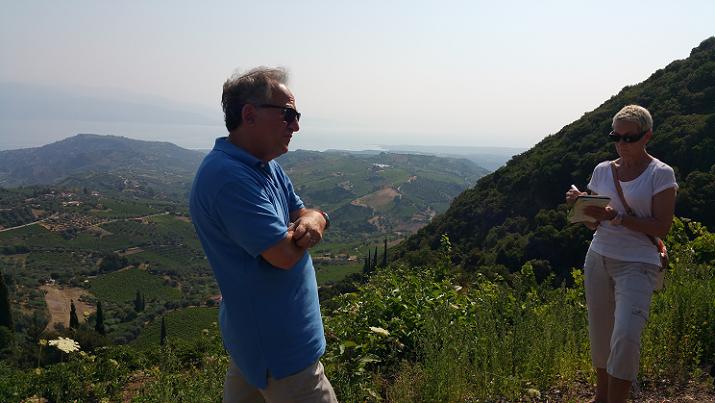
Founded in 1974 by oenologist Athanassios Parparoussis who works as winemaker while daughters   Erifili and Dimitra support on the business and marketing side. The winery is located in Patras and the property includes 10 hectares at Movri Achaias. Grapes are farmed organically and Parparoussis is one of only two vintners ion the region making wines from the rare and indigenous Sideritis. Parparoussis farms organically in principal but is not certified, nor is Athanassios concerned with the designation. It’s a matter of being devoutly pragmatic. “The soil is alive, so why kill it.”

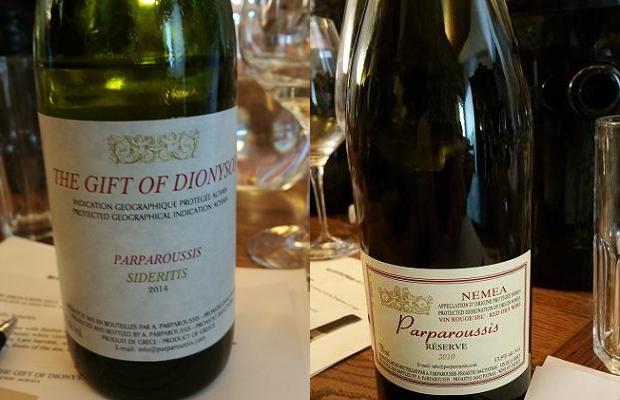
Parparoussis Sideritis Dons De Dionysos 2014, Peloponnese, Greece (SAQ 11900995, $21.00, WineAlign)

The 2014 “gift of Dionysus” is herbal, arid, directly unassuming and fixed with a very savoury, nearly resinous pastel palate. The wind blows rosemary and lavender and truthfully it’s like a naturally cured red feeling in a white package. All lemon citrus at the tail. Drink 2015-2016.  Tasted July 2015

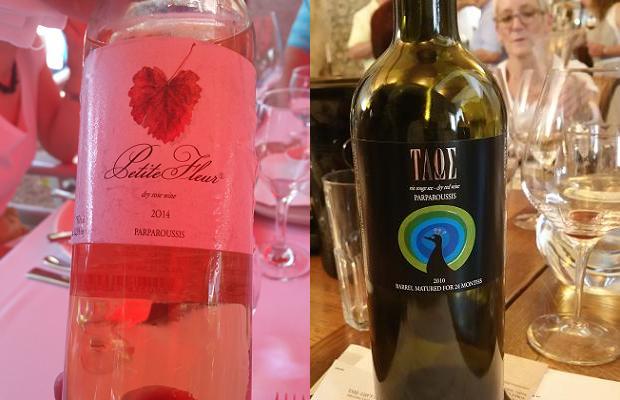
Parparoussis Rosé “Petite Fleur” 2014, PGI Achaia, Peloponnese, Greece

Just under 300 cases are made of this pale, lithe and prodigiously lithe blush wine, like the Dionysus, made from 100 per cent Sideritis. Skin maceration was performed overnight, “a one night stand,” while indigenous yeast was employed for a natural, dry vinification. The light and rust-directed antiquity of caste excess has caused an exaggerated herbal, namely oregano aroma. The overall feel is suppositious and may just be one of the great Rosé stories ever told. Drink 2015-2016.  Tasted July 2015

Parparoussis Sideritis Gift of Dionysus 2014 and Agiorgitiko Reserve 2010

Parparoussis Sideritis Gift of Dionysus 2014 and Agiorgitiko Reserve 2010

Parparoussis Les Dons de Dionysus 2010, PGI Achaia, Greece

Barrel Fermented blend of Assyrtiko (75 per cent) and Althorn (25). The first bottle is “not exactly as it should be,” oxidized and unpropitious, while the second pour much less so. In fact it tethers and teeters beautifully near that edge, on that razor the small creature walks, in a Dylan “what’s a sweetheart like you” way. So much more gumptive, anti-preemptive of depth, perception and possibility. Striking in its layering, stinging pierce of Assyrtiko with a suction of Althiri authority. Climbs upon itself and lingers in the air. “It’s done with a flick of the wrist.” Drink 2015-2020.  Tasted July 2015

Parparoussis Reserve Epilegmenos Oenos 2010, PDO Nemea, Greece

Further afield south in the Peloponnese comes this 100 per cent Agiorgitiko. The first bottle has a lactic-cheesy flaw, as if acetate of a mercaptan. One man’s flaw is another man’s history so the question does beg, was this meant to be? A winemaker’s intention? Apparently not. The second bottle, while still blessed of of a definite funk but one that is cleaner, unturned, a washed rind. So very dry. Drink 2015-2018.  Tasted July 2015

Parparoussis Rose Petite Fleur 2014 and Taos 2010

Parparoussis Rose Petite Fleur 2014 and Taos 2010

Parparoussis Taos 2010, PGI Achaia, Greece

A barrel fermented, dry vinified, 100 per cent Mavrodaphne. Naturally pitchy, high in acidity and purposed in tannin. A rare zero dilution at the hands of Black Corinthian Raisin and therefore not so high in alcohol, despite the richness of hue. Actually has a modern next tier level of complexity, complexion and aromatic intensity. Purple flowers and plum swirl in its circuitous, cycloid multiplicity. The savoury, resinous black bay laurel and chalky, cooked lentil, the grill and its smouldering charcoal are all in. Further resinous of bay oil on the back bitters and a very Tentura finish. Wild, sauvage, beautiful and built for the ling haul. Drink 2018-2025.  Tasted July 2015

Paparoussis Mavrodaphne of Patras Reserve 2003, PDO Patras, Greece

Vin Doux Nature poured from a 500 mL bottle, at 19 per cent, this is intensely nutty, of crème caramel and Cassis together as one. A marriage of godly sanctified vin santo cordial, with quite the balance from a brilliant vintage. There is heat that never burns, and a piquancy that offers no needed warning, Mavrodaphne of an aged, expertly developed expression. Such bitters at the finish end with wow. Drink 2015-2023.  Tasted July 2015

Paparoussis Muscat of Rio 2010, PDO Rio Patra

The sugar here is a strapping 160 g/L and the cost 15 euros for a 500 mL bottle. A vin de paille with so much more delicacy, structure and elegance and at only 13.5 per cent, a remarkable wine. Spice and relish is so smothered, coddled and pampered. The length is incredible. This is remarkable dessert wine with all tempos in balanace. Drink 2015-2030.  Tasted July 2015

Oenoforos (Rouvalis)

Selinous, 25100 – Aiyion, Greece, 30 2691029415, info@rouvaliswinery.gr.

Aneglos Rouvalis and WineAlign's DJ Kearney

Aneglos Rouvalis and WineAlign’s DJ Kearney

Eonologist is Angelos Rouvalis, a winemaker with an encyclopedic knowledge of every hill and slope in the mountains above Patras and where each variety grows best. Established in 1990 by Rouvalis, a Bordeaux-trained winemaker, recognized internationally as a pioneer in the renaissance that has taken place in the Greek wine industry in recent years. In 1994 Yannis Karabatsos, an agricultural engineer and expert in Greek viticulture joined the winery. “The Oenoforos winery consists of five levels on the slopes of Aigialeia in the village of Selinous. It combines monastic simplicity with state-of-the-art technology.”

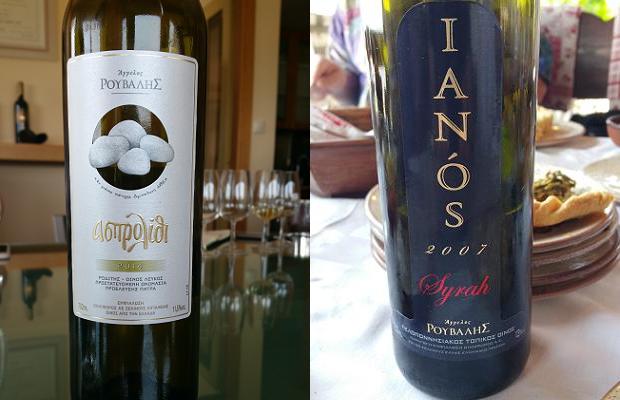
Oeneforos Roditis ‘Asprolithi’ 2014, PDO Patras, Greece (SAQ 978197, $16.50, WineAlign)

The “white stone” could be considered the Pinot Grigio of Greece though the pink-skinned variety grown here between 800-1000m is such a bleed of high altitude calcaire. An amalgamated, aromatic accumulation is all about citrus without the airs of pierce and secondary sandarac meets kedros that reminds of clementine. At 11.5 per cent alcohol and low pH it might confuse for Trocken Riesling if not for its classic herbiage and austerity. Drink 2015-2018.  Tasted July 2015

Oenoforos Chardonnay Ianos 2009, Peloponnese, Greece

So buttered and creamy, in condition of its two years in oak. Age has delivered corn to popcorn. It’s both unambiguous and atypically Peloponnese, if certainly symptomatic of Chardonnay in a diaspora that veers from its regional path. Like the oak of all clothed Chardonnays, expect the excepted and drink up. Drink 2015-2016. Tasted July 2015

Oenoforos Cabernet Sauvignon Ianos 2004, Peloponnese, Greece (SAQ 11607342, $22.95, WineAlign)

A current release, all in Cabernet Sauvignon 10 plus years down its road after two years in French oak. A bold and state-of-the art for its time cool-climate take, with a clear and ad hoc Sonoma-like intention, with attitude out of altitude despite ’04’s nothing but average growing season. Herbaceous and currant direct Cabernet with plenty of fruit that has remained true and in the bottle. Sweet scents, floral and red citrus and expressly, naturally Greek. Red fruit from red soil. Has a natural, slightly oxidative cure that has emerged out of that oak shell. Strikes as a wine that needed this extended held-back time to get to this place. The palate’s fruit is dried and saline now, with tannin insistent in persistence. Rich but not nearly so, a gently rolling and evolving Cabernet with life in it yet, though the raisin character suggests now is better than tomorrow. Not so much mythologically invented, as it is internationally purposed, so it’s more a matter of higher and lower. The wine’s universe is a flat disc with hills, touched at its rims by the vast dome of the heavens. Drink 2015-2016.  Tasted July 2015

Oeneforos Rosé Mikros Vorias 2014, Peloponnese, Greece

Syrah with Viognier and Roditis. A layer upon layer blush combing of dry extract over full extract. Another example of the region’s ability to achieve Rosé excellence and the practice should both be encouraged and expanded upon. Drink 2015-2016.  Tasted July 2015

Oeneforos Chardonnay-Sauvignon Blanc Mikros Vorias 2014, Peloponnese, Greece

The white blend representation for the house line of fresh and direct wines translates to “small northern wind,” and here the SB sticks out like an Achaian thumb, dominating the nose with grass and capsicum. It’s toasty and almost Pouilly-Fumé smokey mixed with a pinch of Fuissé. The identity quandary brings Galician Albariño to mind, seen in the spirited almost effervescent tinniness. Very lime palate and fast forwards to stage right, running all the way. Drink 2015-2016.  Tasted July 2015

Oenoforos Merlot-Cabernet Sauvignon Mikros Vorias 2014, Peloponnese, Greece

Rusty and cured, just not quite ripe red plum, from a 60-40 combo, with a healthy level of veneer. Has gumption, pierce and a citrus red bleed. Drink 2015-2018.  Tasted July 2015

Oenoforos Asprolithi 'White Stones' 2014 and Syrah Ianos 2007

Oenoforos Asprolithi ‘White Stones’ 2014 and Syrah Ianos 2007

Oenoforos Syrah Ianos 2007, Peloponnese, Greece

Ferric, volatile, bretty but believe me when I say, all in a good way. The lingering meaty chew and porcine Mulligatwany is the expatriate Syrah equivalent of high gastronomy. A wild and wooly match to the Beef Stifado at To Katafygio. Drink 2015-2016.  Tasted July 2015

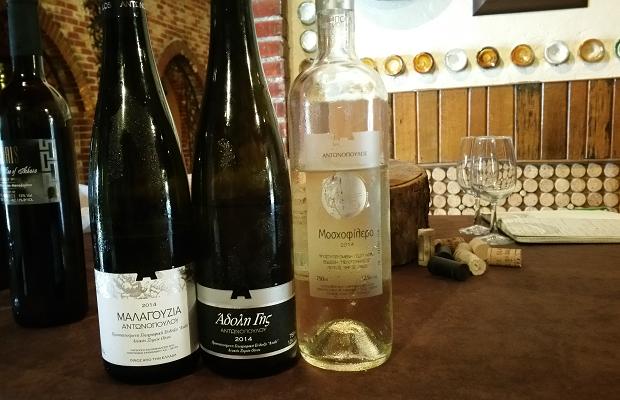
Antonopoulos Vineyards

25008 Vassiliko Chalandritsas, Patra, 30 2694061447, info@antonopoulosvineyards.com

The winery was founded by the late visionary winemaker, Constantinos Antonopoulos near the city of Patras in the northwestern of Peloponnese. Constantinos saw the vast, untapped potential of this diverse landscape, especially the mountainous region of Achaia and the unique winemaking opportunities it presented. A new up to-date winery has been built recently at Vasiliko, Achaia, where the majority of the winery’s vineyards are. Indigenous Greek varieties are the focus. All three Antonopoulos wines tasted at the winery Achaia Clauss were clearly achieved through very serious work. Though clean beyond the pale, they all exhibit slightly to more than leesy and all finish with so much salinity and limestone inflection. The only thing missing is the crustaceous accent.

Antonopoulos Vineyards

Antonopoulos Vineyards

Antonopoulos Moschofilero 2014, PGI Arkadia, Greece

A rich, striking, citrus Moschofilero with a beautifully severe tannic tang and many layers, scraped from a stone’s bleed and a gaze into the rock’s mirror. A wine akin to a creation of a true alphabet, made complex like the dactylic hexameter in poetry or a rhythmic scheme. Drink 2015-2018.  Tasted July 2015

Antonopoulos Adholi This White 2014, PGI Achaia, Greece

Essential and pedigreed blend of Lohorthi 65 per cent), Chardonnay (20) and Roditis (15) that expresses increased aromatics much like Viognier. Nearly profoundly tropical but so very dry, like Assyrtiko in its cracking open but with the feel of wild yeast and the feign of barrel. Chalk it up to 800-900m clay-limestone speak and no more than that, creasing to a crisp effervescence without bubble, yet it does tingle of the tongue. Like it’s working all the while, then on to citrus on the end, in lemon and lime torque as if by Riesling. The Moschofilero might be Mycenaean Linear B and this the other, later Greek alphabet. Drink 2015-2018.  Tasted July 2015

Antonopoulos Malagousia 2014, PGI Achaia, Greece

From sand and clay vineyards in the region of Aghios-Athanasios at a height of 600-900m. Picked late near the end of September to early october and cocrete and thought the ferment is a stainless one, this Malgousia exhibits a natural yeasty funk commingling with moving texture and savour that incorporates grasses. The sting of nettle wins over the softness and spumes a hay fever of grass. A warming, adult of a wine, with some power to age. Drink 2016-2021.  Tasted July 2015

Acheon Winery

Korinthou 121, Aigio, Greece, 30 26910 28062, info@acheonwinery.gr.

Sosanna Katsikosta is Oenologist and General Manager while Katerina heads up business and marketing operations. The sisters are carrying on a winemaking tradition passed on to them from their late father. Konstantinos Katsikostas carried the torch from his father Luke who founded the winery in 1946 in the area of Palaiokamares of Aegio. Annual production of 2,000 cases. Katsikosta is desperately, passionately practicing, experimenting, trying to stir up vinous ghosts and find their way back to ancestry, to ways of elders, to bring to light what used to be and to establish an identity for the world to see.

Acheon Roditis 2014, PDO Patras, Greece

A quintessential “Fox” Roditis, from low yields (40 hL/L), 900 m above sea level, in organic balance at 12 per cent alcohol. A distinct stone tang, push, pierce and a slight tingle or fizz on the tip of the tongue. Highly concentrated out of an elevated dry extract, with mineral and lemon. One of the more expressive push-pull of fruit and mineral. For everyday consumption with a bit of honey in its two to three year future. Drink 2015-2018.  Tasted July 2015

Acheon Sideritis 2014, PGI Achaia, Greece

The nearly extant one, a rare variety, being revived, planted at low altitudes, with yields 70-75 hL/L. Aromatic and misunderstood, with a Savagnin character, a funky, musky skin, like leather but not as deep, yet something oddly tropical, like jackfruit, or gummy bear, dusty ginger, and resin, like thyme. Another variety being worked with to see what it can be and to link back to what once was. Really good acidity. Drink 2015-2016.  Tasted July 2015

Acheon Sideritis 2014 and Rose Fairytale 2014

Acheon Sideritis 2014 and Rose Fairytale 2014

Acheon Moschato 2014, PGI Achaia, Greece

A banana and metal White Muscat, with plenty of herbal qualities, terrific saline and stony acidity dominating the palate. A medicinal grapefruit chew, not of pith, but of skin. Arid as a grove in wind and finishing with good length. Very interesting. Drink 2015-2017.  Tasted July 2015

Acheon Laura Nera 2012, PGI Eigialia Slopes

Mavrodaphe and nothing but, vinified dry, subjected to no aging. The smell of bay laurel (thus the varietal name) and fashioned for freshness. Still in command of a musty emmision this one, a strange cure, like some cool-climate, winter hardy hybrids, like Maréchal Foch and Frontenac. Perhaps a touch warmer, like opening the doors to Pinotage without the toast and the oak to fill and sweeten the green, reductive gaps. Has the roadhouse blues so “Keep your eyes on the road, your hands upon the wheel.” Drink 2015-2017.  Tasted July 2015

Acheon Rosé Fairytale, Peloponnese, Greece

A semi-sweet Rosé composed from 90 per cent Muscat co-fermented with 10 per cent Mavrodaphne. Dessert of blush hue and sappy, leesy, medicinal bitters. Very orange rind and chlorite, somewhat port-esque but so much more a tisane of pekoe and cough elixir. Totally off the charts different. Really like nothing tasted before. Drink 2015-2016.  Tasted July 2015

Wines of Parparoussis, Loukatos and Kontrotsos, Parparoussis Winery, Patras

Wines of Parparoussis, Loukatos and Kontrotsos, Parparoussis Winery, Patras

Kotrotsos

Vassiliko Achaias TK. 25008, 30 26940 61 900, vinko@otenet.gr. Winemaker is Giannis Kotrotsos.

Kotrotsos Erasmios Moschofilero 2014, Peloponnese, Greece

An unctuous, ambrosial Moschofilero, highly aromatic, of citrus and orange grove. A 12.5 appealing alcohol per cent and surround sound of acidity, good length and a bitter ending that follows a twinge of steely crick. Drink 2015-2018.  Tasted July 2015

Kotrotsos Muscat NV, PDO Muscat of Rio Patras

Also based on the 2013 vintage and c charging in at 15 per cent alcohol, here there is more rust, funk and metal, certainly not as fruit forward as expected. Sweetness is elongated, stretched and elastic, then snaps back to linear and upright. Drink 2016-2022.  Tasted July 2015

Kotrotsos Mavrodaphne NV, PDO Mavrodaphne of Patras, Greece The standard 15 per cent alcohol and in this plugged in, short fuse sweet wine is highly intense and lit caper green, dried fruit and a serious pasticcio of botanicals, distilled into a major excitative and concentrated sweetness.  The second bottle tasted has so much more life and character. Much more sweet floral attractiveness and the sweetness is less pronounced as a result. Goes from spice and piquancy to sweetness with the right transitory methodology, culminating in a great LBV Port finish. Nutty and spicy. Tremendous fruit forward expression.  Drink 2016-2024.  Tasted July 2015

Kotrotsos Chardonnay Oinos Aekos 2014, PGI Achaia, Greece

Combinbes barrel and resin for a full on savoury effect and so much noticeable, piercing grape tannin. Fierce, uncompromising, non-integrating invaluable invalid of tannin. So very cool climate savoury Chardonnay. Striking actually and a very acquired taste. Drink 2015-2016.  Tasted July 2015

Kotrotsos Agiorgitiko Erasmios 2012, Nemea, Greece An intoxicating perfume, of violets and charcuterie, floral and cure, vegetative and saline. Lactic, talcy, opaque and dusty, like Cabernet Franc from the coolest locale. Finishes saline again, chewy even. Drink 2015-2018.  Tasted July 2015

Karelas Winery

Georgios J. Karellas A.V.E.E, 41-43, Skagiopouliou Str., Patras, 262 22, 30 2610 321 000, karelas7@hotmail.com

Karelas Winery was founded in 1936 by Georgios Karelas. Using the native ‘Mavrodaphne’ grape, the company is renowned for it’s sweet, dessert style Mavrodaphne wine.

Karelas Pelagos 2013, PGI Achaia, Greece

Merlot and Mavrodaphne share the cure and the veneer of a strange bedfellow blend, the old and the new, the rust and the dust, the red and the black, the visitor and the been there done that. Tough acidity and tannin over red citrus fruit. Not shy. Drink 2016-2020.  Tasted July 2015

Karelas Achais 2013, PGI Achaia, Greece

Cabernet Sauvignon and Mavrodaphne smothered in more  obvious oak, though less tension and demand. A softer wine in using Cabernet over Merlot, ripened easier, better, with a second gear and then  into acidity mode. Again the cool climate veneer with a warm, savoury, minty middle. Drink 2015-2019.  Tasted July 2015

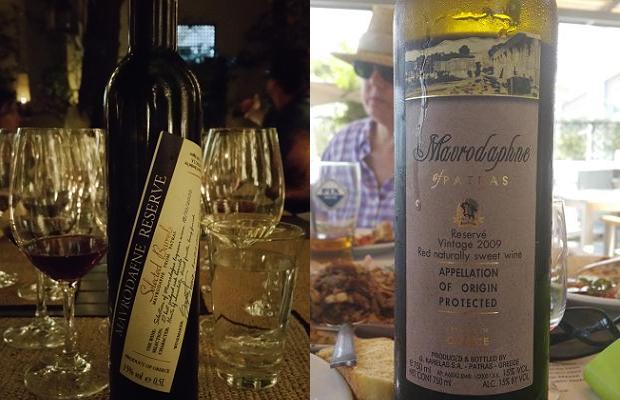
Mega Spileo Mavrodaphne and Karelas Mavrodaphe Reserve 2009

Mega Spileo Mavrodaphne and Karelas Mavrodaphe Reserve 2009

Karelas Mavrodaphne Reserve 2009, PDO Mavrodaphne of Patras, Greece

The only Mavrodaphne aged in highly seasoned toasted new French barrels. The standard weight bearing 15 per cent alcohol and a similar feeling as with previous kicks at the sweet Mavrodaphne can, but more red fruit and brighter raisins in the sun. The spice and liqueur here seem less spirited and combine for a more mature, seasoned, reasoned, direct and ultimately cleaner expression. Captain Jack (or George) will get you Achaia tonight “and take you to your special island.” Drink 2015-2022.  Tasted July 2015

Loukatos

Loukatos Bros, Β 3 & ΟΤ 24, Industrial Zone Patra 25018 Achaia / Patra, Greece, 30 2610 647588,  info@loukatos.com.gr

Perhaps most famous for their local production of spirits, namely Tentura and Mastic, Loukatos does a bang up job with dessert wines, especially in their handling of Muscat from Patras.

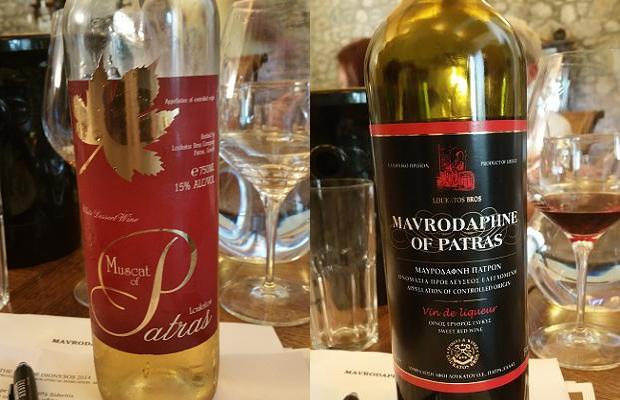
Loukatos Mavrodaphne NV, PDO Mavrodaphne of Patras, Greece

Vin de liqueur clocking in at 15 per cent alcohol. The dried roses and red flowers in liqueur link it to the likes of a Late Bottle Vintage Port. Wakes with a start, in sting and presence. Really lingers, tasting of blanched nuts and Halls mentholyptus. This batch was blended with 47 percent corinithian grape. The finish is so Manischevitz. Drink 2015-2023.  Tasted July 2015

Loukatos Muscat of Patras and Mavrodaphne of Patras

Loukatos Muscat of Patras and Mavrodaphne of Patras

Loukatos Muscat NV, PDO Muscat of Patras (WineAlign)

A 15 per cent abv Vin de Liqueur largely based on the 2013 vintage. Very clementine and apricot nosed, impeccably balanced from viscous to intensity in grape, with nothing musty or musky about it, though there is a musk melon sense, a botrytis that is very clean. Another excellent, natural sweet Patras example of what Muscat can do, again at super low cost, with high flavour and here, more fruit forward than the Kotrotos. Drink 2015-2021.  Tasted July 2015

Hahalis (Chahalis) Mavrodaphne 2011, PDO Mavrodaphne of Patras, Greece

Spent one year in barrel, the Tentura Castro “The Castle” is raisined and resinous with so much heavy artillery and coats of armour. The macro intent so black and porous, oxidative but alive, heavy and warm in alcohol but spirited and shooting cupid’s arrows. Sweet and Amarone trophy in a sense, with licorice and spice unlike anything else. Idiosyncratic to the nth degree. Drink 2015-2021.  Tasted July 2015

Achaia Clauss Mavrodaphne NV, PDO Mavrodaphne of Patras, Greece

From a lot penned Bin 601 at the standard 15 per cent alcohol and acting like it came from a 100 year-old barrel, of sitting bull wisdom and Bavarian history. Much like port, like brandy spirits and liquorice melting into cinnamon and clove. Not so idiosyncratic but resinous, sappy and piquant. Once you come to know these wines they speak this very direct language. Drink 2015-2025.  Tasted July 2015

Patraiki Mavrodpahe NV, PDO Mavrodaphne of Patras, Greece

A direct, rich, full-bodied leathery red of fruit the same that soaks in simple, sweet liqueur. The most accessible, commercial macro-intention of the black laurel lot. Drink 2015-2020.  Tasted July 2015

Crisis? No one’s gonna bring Greece down, nor me neither, ’till I again reach Achaia ground.

Good to go!
http://www.winealign.com/profile/2058-mjg

Whites after Labour Day

September salad

September salad

What is the only way to tell the difference between a wine geek and a wine snob? A geek will not drink just anything but will taste everything. In the name of science, of course.

Silly high society rules, like not drinking whites after Labour Day are the wine equivalent of late 19th century fashion precepts and as ridiculous as they may seem, you just can’t make this shit up. Just ask Google.

The first VINTAGES release of the new year (on the Hebrew calendar) or depending on your angle, the last of the summer (preceding Labour Day), is rich with excellent whites. There are 15 choices from September 5th that I highly recommend. Get them while they and it, are hot.

From left to right: Old Vines In Young Hands White 201, Dr. L Dry Riesling 2014, Domaine La Haute Févrie Sur Lie Muscadet Sèvre & Maine 2014, Thelema Sutherland Sauvignon Blanc 2013, Cave Spring Estate Bottled Chardonnay Musqué 2013, Flat Rock Riesling 2014, Boutari Santorini Assyrtiko 2014 and Bailly Lapierre Saint Bris Sauvignon Blanc 2014

From left to right: Old Vines In Young Hands White 201, Dr. L Dry Riesling 2014, Domaine La Haute Févrie Sur Lie Muscadet Sèvre & Maine 2014, Thelema Sutherland Sauvignon Blanc 2013, Cave Spring Estate Bottled Chardonnay Musqué 2013, Flat Rock Riesling 2014, Boutari Santorini Assyrtiko 2014 and Bailly Lapierre Saint Bris Sauvignon Blanc 2014

Old Vines In Young Hands White 2013, Doc Douro, Portugal (424374, $12.95, WineAlign)

Young winemakers, a country’s support, a new vernacular, simplicity and imaging in ode to old ways. The packaging and the intent is spot on. The wine follows suit. Arid, saline, savoury and elemental, like QBA Riesling or Peloponnese Kidonitsa. I’m digging and buying the style, both in clean winemaking and in appeal to a whole new world. Drink 2015-2017.  Tasted August 2015  @MichaelAndBrand  @winesportugalCA

Dr. L Dry Riesling 2014, Qualitätswein, Mosel, Germany (409680, $13.95, WineAlign)

Another sock it to me Dr. L, straight up, spot on, exactly what it purports to be. General index of Riesling expression. Read it, use it as a reference, calibrate your palate to where you want to go. Drink 2015-2016. Tasted August 2015  @drloosenwines  @Select_Wines  

Domaine La Haute Févrie Sur Lie Muscadet Sèvre & Maine 2014, Ac Loire, France (390625, $13.95, WineAlign)

Perfectly, typically, ostensibly and decidedly Melon for what it’s worth. The sea, its salt, a briny shell and crisp acidity for what ails. Simple, slightly spritzy, a touch balmy and ultimately refined, when cooled, with a mess of sea creatures. Odelay, “of elevator bones and your whip-flash tones.” Where it’s at. At your beck and call Muscadet. Drink 2015-2018.  Tasted August 2015  @LoireValleyWine  @oenophilia1

Thelema Sutherland Sauvignon Blanc 2013, Wo Elgin, South Africa (203877, $14.95, WineAlign)

Striking Sauvignon Blanc, minted by a flinty beginning, with perhaps the highest discernible level of sweet gooseberry on the nose that has ever been measured by the olfactometer. Hard to imagine such an inexpensive Elgin white to be so dramatically forthright in smile and open arms. Grapefruit of the pinkest, ripest most juicy crunch burst into flame flavours well-defined, not overbearing, properly bitter and in reprise, like a bite into juicy citrus with just perfectly ripe acidity. A new benchmark for value Sauvignon Blanc in South Africa. Raises the bar folks. Look to Elgin. Ask the producers to plant more. Impossibly long SB finish. Drink 2015-2018.  Tasted August 2015  @ThelemaWines  @WOSACanada  @WOSA_ZA  @EpicW_S

Cave Spring Estate Bottled Chardonnay Musqué 2013, VQA Beamsville Bench, Niagara Peninsula, Ontario (246579, $15.95, WineAlign)

As good as 2013 is a vintage for Niagara Chardonnay, relatively speaking it may be an even bigger quality boon for the aromatic Musqué. The level of depth, breadth and weight in this Cave Spring is new and improved. The florals are heightened, as if bottled in eau de. The parfum is an intoxicant and the flavours compressed, like roll up, like a Musqué napolean, of peach, plum and pear. Who knew? A fall necessity. Better than before. Drink 2015-2017.  @CaveSpring  @TheVine_RobGroh

From my earlier note of May 2o15:

Produced from the 77 clone, the vintage has heightened the high herbal and feigned sweetness aromatic pastis. The palate is extraordinarily viscous, with Yellow Muscat and Gewürztraminer attributes, not so out of the ordinary considering Cave Spring’s older world execution. Drives from lemon to mandarin, through almond pit and into peach. Always solid Musqué.
Last tasted May 2015

Flat Rock Riesling 2014, VQA Twenty Mile Bench, Niagara Peninsula, Ontario (43281, $16.95, WineAlign)

Talk about bottled up compression. Twist the screwcap and thwop! The cap nearly popped like a Champagne cork. This baby has energy and drive. The vintage is compressed and pile-driven as nosed by the density opposed by reticulated 9.5 per cent alcohol. This has Mosel tattooed on its being, from neck to bottom. A dead ringer for fine Kabinett, the tropical fruit in apricot and dragon reaching back to join Ontario, in apple and pear. A good flinty stone and raging acidity combine forces to exaggerate a Riesling reticulum in what is not the missive’s greatest ever vintage. Will live five to seven easy and just go for soda. Go ahead and quaff the hell out of this one, from 2015-2020, from bottles one through twelve. Tasted March 2015  @Winemakersboots  @UnfilteredEd  @brightlighter1

Boutari Santorini Assyrtiko 2014, Pdo Santorini, Greece (47985, $18.95, WineAlign)

A weighty Assyrtiko of breadth and gumption. The varietal salinity found virtually nowhere else is omnipresent and yet different of fruit in the hands of Boutari. Opulence beyond the Santorini norm and yet held back as if to say, “not yet, not yet.” There is a cool, wet patina as if by ruins slowly grown over at the bottom of the sea. A white swath of scraped rock paints the middle palate and is not removable. Can’t go wrong with a chilled bottle and a gaggle of calamari on the grill. Drink 2015-2017.  Tasted August 2015  @boutari  @KolonakiGroup  @Santoriniwines

Bailly Lapierre Saint Bris Sauvignon Blanc 2014, Burgundy, France (424655, $19.95, WineAlign)

Flint meets reduction in a Saint Bris plugged in both ways, AC/DC. Sauvignon Blanc of dirty deeds done dirt cheap. Quite savoury, spicy and cool up the nose like mint and eucalyptus ointment. Serious and strong, like Aligoté but with more verve and natural musculature. No shrinker here and very long, juicy and crazy for acidity. Such expression is rare for the hallowed if needfully paid further attention appellation. Show up anytime at my place with a bottle of Saint Bris, “We’ll have ourselves a ball.” Drink 2015-2018. Tasted August 2015  @BourgogneWines  @VinexxCanada

From left to right: Henry Of Pelham Estate Chardonnay 2013, Studert Prüm Graacher Himmelreich Spätlese Riesling 2009, Redstone Limestone Vineyard Sauvignon Blanc 2013, Pierre Sparr Mambourg Pinot Gris 2011, Hidden Bench Chardonnay 2013, Domaine Laroche Les Vaudevey Chablis 1er Cru 2012 and Dom Pérignon Brut Vintage Champagne 2005

From left to right: Henry Of Pelham Estate Chardonnay 2013, Studert Prüm Graacher Himmelreich Spätlese Riesling 2009, Redstone Limestone Vineyard Sauvignon Blanc 2013, Pierre Sparr Mambourg Pinot Gris 2011, Hidden Bench Chardonnay 2013, Domaine Laroche Les Vaudevey Chablis 1er Cru 2012 and Dom Pérignon Brut Vintage Champagne 2005

Henry Of Pelham Estate Chardonnay 2013, VQA Short Hills Bench, Ontario (268342, $19.95, WineAlign)

Sunlight is the key to this ripe Chardonnay, snatched from vines that grow on the most easterly of the Niagara Escarpment’s sub-appellation. Here Henry of Pelham calmly puts its hegemony over Short Hills Bench Chardonnay on display. The fruit layering is very impressive, compressed even, with just a spiced spirit injection from the barrel. The Estate Chardonnay is in a mid-range class of its own, this gatherer of heat days, hoarder in spring water retention, cleanser in sand and gravel drainage. The vintage just seems perfect for this niche bottling, balanced, primed to finespun texture, stretched for length and good to age at least five years.  Last tasted March 2015  @HenryofPelham  @SpeckBros

Studert Prüm Graacher Himmelreich Spätlese Riesling 2009, Prädikatswein, Mosel, Germany (409680, $21.95, WineAlign)

Blue slate in deep soil and steep, southwest-facing slopes elucidate the Graacher Himmelreich enterprise, quite possibly the most personal vineyard in the Mosel. Autonomy, astronomy, autocratic assuage and elemental tyranny are not for the Riesling faint of benevolence. The Studert Prüm Spätlese from the GH vineyard in 2009 is so very stubborn, stark and austere like matches struck on rocks, rocketing flares as if in a sci-fi action scene. It is possessive of a full, sweet and medicinal palate and enough energy if not the most balancing of acidities ever paired with the flint and the petrol. Good bitters and exceptional length will lead to many years of marbling evolution. Drink 2016-2024.  Tasted August 2015  @StudertPruem  

Redstone Limestone Vineyard Sauvignon Blanc 2013, VQA Twenty Mile Bench, Ontario (424648, $22.95, WineAlign)

If a Niagara Sauvignon Blanc could be endeared with the term ‘calcaire,’ Rene Van Ede’s Limestone Vineyard would lead the shortlist, not only because of the eponymous vineyard but because it oozes of the rock’s chalky chafe. Plenty of orchard fruit belies the lime, in an unoaked Chardonnay way and the wine makes full use of limestone’s hematic shed. This is one of the most stylish Sauvignon Blancs made in Canada, even if the average consumer were not able to recognize it as such. A winemaker from Sancerre would know it immediately and intuitively. Here a crushed reef of limestone memory permeates the wine from beginning to end. One of the more outstanding Sauvignon Blancs made in Ontario to date.  Tasted January 2015   @RedstoneWines

Pierre Sparr Mambourg Pinot Gris 2011, Ac Alsace Grand Cru, France (686451, $24.95, WineAlign)

Arid and direct, quite an ascending Pinot Gris, with almost unfindable residual and yet not the most distinct Grand Cru you are ever going to ponder. Has more weight and sweetness on the palate which tends to lychee, pineapple, apricot and lemon pith. Proper old school Mambourg. Drink 2015-2020.  Tasted August 2015  @AlsaceWines  @VinsAlsace  @ProfileWineGrp

Hidden Bench Chardonnay 2013, VQA Beamsville Bench, Niagara Peninsula, Ontario (68817, $28.95, WineAlign)

A best of both worlds Chardonnay; indicative of the giving vintage (in quality, not quantity, prestige, not prosper) and an Estate, house style with some cosmetics to enhance the consequence. Really typifies and explains what a Marlize Beyers Chardonnay is. Elegant, stylish, with perfect skin, tones, understated beauty and the soft vernacular of few yet precise words. The texture and feel of this Chardonnay is downy, lacey and so very understated. You simply can’t take your eyes off its charms and your palate away from its soft feel. A wine of character and poise. Drink 2015-2020.  Tasted August 2015  @HiddenBench  @BenchVigneron  @LeSommelierWine

Domaine Laroche Les Vaudevey Chablis 1er Cru 2012, Ac Burgundy, France (416057, $38.95, WineAlign)

Prudently flinty Vau de Vey, full of rocks, stones, cragges, broken pieces and slices of pure limestone. Such struck sensation could go too far but here it rises and lingers, tickles, fancies and plays, never bothering or acting with distraction. Quite remarkable and gentle of handling. Softer on the palate but still the limestone beats, with bitters. Just not enough circulating acidity in the end. Drink 2015-2020. Tasted August 2015  @DomaineLaroche  @BIVBChablis  @Select_Wines

Dom Pérignon Brut Vintage Champagne 2005, With Gift Box, Ac Champagne, France (280461, $219.95, WineAlign)

Surprisingly waxing en route to the oxidative side yet suspended in crystal animation. Apperceive the level of concentration, finesse and poise, a trinity of DPVBC not to be tested. These are serious, brooding, executively organized and effected bubbles. They are the real deal and they are not for everyman, either by price or for pleasure. They do not effect change or progress but they do speak of what has been, has worked and will not soon see any arresting waver. Another what it is moment in iconic Champagne. Drink 2015-2025.  Tasted August 2015  @MoetUSA  @ChartonHobbs  @Champagne  @ChampagneBureau

Good to go!

http://www.winealign.com/profile/2058-mjg

Till I reach Achaia ground

View of the mountains of Achaia from Tetramythos Winery and Homestay, Ano Diakopto of Aegialia, on the slopes of Mount Chelmos, Peloponnese

View of the mountains of Achaia from Tetramythos Winery and Homestay, Ano Diakopto of Aegialia, on the slopes of Mount Chelmos, Peloponnese

as seen on WineAlign

Man I wish I was there right now. Have you recently pondered or are you considering a visit to Greece? Have the sensational media reports of the last month cast a shadow of doubt on your travel plans? Are you worried about economic crises, ATM line-ups, looting and civil unrest? Don’t be. Do not fall victim as prey to dictum on what you or those who are telling you really do not know. You should go. Greece is just fine thank you very much. She welcomes visitors with open arms. This is what she wants and what she needs.

Crisis, what crisis? 

I am no John Maynard Keynes, have never rooted with Milton Friedman and can’t confidently say that my economic stars align with Paul Krugman, but on my recent trip to Athens and Achaia I saw nary a sign of unparalleled and utter economic disaster, of panic, anarchy or civil disobedience. I had many a conversation about government, taxes and the Euro. I learned that no is the new yes, “but whatever…” and that Greek wine aligns with the functions of the European union.

Write your problems down in detail Take them to a higher place

I am inclined to say, with indubitable and unequivocal doubt that Greece is the safest, most affordable and stupidly beautiful place on the planet. There is adventure, breathtaking vistas and scarcely, if commensurately discovered antiquity at every turn. And there is wine. Exceptional wine. Singular wine. Mythological wine. I can tell you five things I learned about the 21st century state of things Greece.

  1. Athens is a busy, hot, labyrinthian metropolis that somehow feels like an ancient village. It may just be the most unassailable and secure Gotham I have ever encountered. It did not leave me tired, on the contrary, it fuelled invigoration.
  2. Encounters with beautiful, nurtured and erudite folks along the course of a given day affords an equipotentiality to reaffirm faith in humans. Doors are always open.
  3. Bad governance may lead to civil jeremiad and global media strategies built upon the inevitable crumbling foundations of sensationalism and hyperbole, but Greece’s main concern is just that. Bad governance. Business carries on as usual, albeit with a noticeable reduction in smoking and petrol usage, but restaurants, cafes, coffee shops and shopping are not on hold. Centuries have seen such woe and yet Greece persists, remains and progresses. “Believe only half of what you see and nothing that you hear.” America may have long ago entered its Last Great American Whale period but Greece? Not even close. “They say things are done for the majority” and in the case of Greece, that just may be true. In a time of crisis, there are many business opportunists. Hard times? Grow better grapes. Can’t sell them at home? Export more than before and make better money.
  4. The combination of mountains, ocean, beaches and the symbiotic proximity of the appositeness is nothing short of mind-altering, awe-inspiring and soul-asservating.
  5. Forget the idea that Greek wine offers up some of the best values, anywhere. Consider that sort of posturing a given and or inconsequential in consideration of the adage that good wine is good wine, period, regardless of price. The wine producing regions of Santorini (Aegean), Thessaloniki/Naoussa (Macedonia) and Nemea (Peloponnese) have made wide inroads on the global scene. Yet how many of you have ever heard of Achaia and Patras in the northern Peloponnese? It is on the verge of breaking out. Obscurity no longer. Uncertainty be gone.

At the pass

Greece has been mired in waiting, or depending on your level of positivity and how to spin, poised to break out. The Greek wine industry is securely fastened in a place somewhere between the relic glow of early period brilliance and the cusp of legacy defining, career opus penning compositions. It is a work in process and the best is yet to come. The wines of Achaia are entirely indicative of this intellection. Antiquity is an amazing tourist attraction and in Achaia, as in the entirety of Greece, you can’t blink without stumbling upon a metaphorical doric this or an allegorical ionic that. Cradles of civilization just have a certain den xéro̱ ti and Greece is the world super-power. The question begs. How does this apply to wine?

Like so many wine producing nations not called France, Germany or Italy, Greece is poised for modern greatness but it has one distinct advantage. It lays ownership to some absolute conditions that easily separate it from emerging and developing, New World regions, but also from European peers. The first is obvious and that of course is a centuries old tradition of making wine. The second may come as a surprise, especially as it relates to wine. Mythology covets a paradigmatic relationship with Greek culture, however intangible it can be quantified. A visit to Achaia offers tantamount proof of such a notion. This from New Wines of Greece: “The fascinating archaeological sites with the notable museums and the grape-growing and wine-making history directly tied to the myth of Hercules are just some of the attributes that will appeal to those who indulge in wine tourism in the Peloponnese.”

Then there is the confluence from the slopes of Egialia, said to form the centre of the triangle of Ancient DelfiOlympia and Epidavros. It was not long ago that I connected the divine and the allegorical with Greek wine. I quote myself. “Me, I’ll concentrate on the divine mythology of Greek wine, of its place in the fractal world, how it can beautify and simplify, through recursion in dynamic systems, the bleak chaos of wine landscapes. Like the Morai, Greek wines are thread with motherly nurturing. For mere mortals, they direct fate from the birth of their drinking days to death. They are a highly independent bunch, unobstructed and driven by necessity.” It would be obtuse to ignore the hyper-reality of all these extraordinary things, to discount the divined revelation through profound symbols of religious myth. To see the analogy and pertinency with the mathematics of wine; pH, sugar, acidity and alcohol. Not exactly Pythagorean, certainly not Orphic, but mysterious somehow.

The Achaia advantage: From PGI to PDO and endemic varietals

The Peloponnese is located in the southernmost section of continental (western) Greece, its western and northern borders lining the Ionian Sea and the Corinthian Gulf. Homer called it Ampeloessa, meaning “full of vines.” The Achaian advantage is more than just a matter of slope and soil. The Nazi attrocities committed at Kalavryta will always be remembered as the darkest of Peloponnese days but neither war nor Phylloxera has truly interrupted centuries of growth and tradition.

Achaia is one of Greece’s largest wine regions and its 31 wineries accounts for approximately 10 per cent of the national wine output. The mesoclimate of Achaia is determined by a combination of mountain and sea. Erymanthos, Panachaikos and Chelmos range for vines at up to 850m though in Egialia grapes grow as high as 1050m. There are slopes here with a northern aspect, a factor which is not lost on the winemaker in search of cool-climate viticulture. The mountain man of Eigalia Angelos Rouvalis points to the hills and talks of  “a rare terroir, where facing north can achieve a significant drop in temperatures, creating specific vine balances, which is difficult to achieve in other places.” It is also here that the waters of the gulfs (Patras and Corinth) cool and temper the climate. Stronger winds ward off the warmer streams blowing up from Africa, creating a much cooler viticultural area than Patras.

The northern Peloponnese vineyards are divided into four distinct viticultural locales. In the east, in the areas of Egialia (Aegialia) and Kalavryta, the PGI Egialia wines are produced. Egialia’s temperate climate and northerly orientation on (250 to 850m) slopes are protected by the cool summer sea breezes of the Gulf of Korinthos (Corinth). Pausanias was a Greek traveler and geographer of the 2nd century AD, who lived in the times of Hadrian, Antoninus Pius and Marcus Aurelius. He referred to the villages of Egialia as ideal for cultivating vines. Egialia soils vary from white calcareous to fertile sandy loam with good drainage.

It is in Egialia that the endemic white (blush) and highly aromatic variety Roditis ripens ever so gently. The varietal take in the lower (450 to 500m), yet similar climate for the vineyards of Patras makes for wines of fuller body. Lower Patras slopes are positioned for another indigenous grape, the red varietal Mavrodaphne. Traditionally purposed for desert wine, modern usage of the “black” Daphne is happening for dry table wine, as is the black of Kalavryta (Mavro Kalavryta), from grapes grown on slopes close to the tourist town of Kalavryta. The coastal flatlands between Patras and Rio to the east are dominated by the white Muscat. The varietal watch is on for Mavro Kalavryta, a grape that performs like Gamay or perhaps Cabernet Franc. In the hands of a winemaker like Panayiotis Papagiannopoulos it will be a wine to help mark the act of Achaia’s second renaissance. Konstantinos Lazarakis M.W. sees it as “the best Gamay that is not Gamay.” This is a man who knows his audience. 😉 This is a grape that will define fresh and further down the Peloponnese road for red wines and begin to separate from itself from other red attempts. It’s future will see the establishment of plots into crus, to make simple fruity reds to drink and also more serious wines, to experiment and to use some older barrels and to envision the future when it has been given some age.

Konstantinos Lazarakis M.W. and Sofia Perpera, New Wines of Greece at the Sailing Club Restaurant, Patras

Konstantinos Lazarakis M.W. and Sofia Perpera, New Wines of Greece at the Sailing Club Restaurant, Patras

The four officially recognized PDO‘s are Muscat of Patras, Muscat of Rio Patras, Mavrodaphne of Patras and Patras. The first three are produced in the central and western section of Achaia. The local Muscat is known to the world as Muscat Blanc à Petits Grains and in Achaia as Moschidi. Under the regulations of both Muscat PDOs the wines may be vin naturellement douxvin doux or vin doux naturel. PDO Patras is made from 100 per cent Roditis, though there are several clones of this variety. Specific clones are generally chosen based on altitude, as each variant has been proven to work on particular slopes. The top wines are produced from a red Roditis, also known as Alepou. The PDO Mavrodaphne of Patras (Fortified, Vin De Liqueur) can be fashioned with up to 49 per cent dried and rehydrated Corinthian Raisin (Black Currant) in the mix.

Black Corinth Grapes

Black Corinth Grapes

Despite the fact that the predominant amount (almost 99 per cent) of Black Corinth ends up in a pouch full of currants, its agricultural significance continues to play a role in the sweet red Mavrodaphne of Patras. Top quality vineyards have historically been cultivated with the Black Corinth because they fetch as much as 300 per cent more money than wine grapes. The bizarre terroir-varietal-trade flow chart is changing for the better but the raisins remain a long way from extinction. Slopes that face the sun perpetuate the propagation. Then there is the unusual scenario of the earthquake factor. “In Patras we are either raisining or shaking,” quips Lazarakis.

Kalavryta Mountain Tea

Kalavryta Mountain Tea

Other white varieties grown in the region include the extremely rare Sideritis (only two producers for the variety that shares a name in common with a flowering plant known as Greek Mountain Tea), Malagousia, Lagorthi, Chardonnay and Sauvignon Blanc. Other red grapes cultivated include Agiorgitiko, Xinomavro, Merlot, Cabernet Sauvignon and Syrah. The wines of Achaia are built upon an alcohol premise that keeps them stable, in balance and immune from oxidation. Their attitude fights the life work of Louis Pasteur and Jean-Antoine Claude Chaptal. If the wines lost some footing due to the trending towards bacteria and sugar mien, now, with the world peeling back from manipulated wines, the Achaian style is poised to grab their market share.

Accidental tourists at the Archaeological Museum of Patras

Accidental tourists at the Archaeological Museum of Patras


Tetramythos

8ο kil. Pounta-Kalavrita, Ano Diakopto, 25003, Greece, 2691097500 The most modern facility in all of Achaia, re-built after a fire destroyed the property more than 10 years ago. Owned and operated by the brothers Aristos and Stathis Spanos.

Panayiotis Papagiannopoulos, Tetramythos Winery

Panayiotis Papagiannopoulos, Tetramythos Winery

Oenologist since 1999 is Panayiotis Papagiannopoulos, a winemaker who may just have been separated from twin Frank Zappa at birth. Located at Ano Diakopto of Egialia, on the slopes of Mount Chelmos, the 14 hectares of vineyards (450-1,000m) are farmed organically (and have been since 1997). Bush vines make up 80 per cent and endemic varieties (85 per cent) cultivated (plus some expatriates) are Roditis, Malagousia, Sauvignon Blanc, Mavro Kalavryta, Agiorgitiko, Cabernet Sauvignon and Merlot. The total production is 13,000 cases with export to foreign markets (80 per cent) that exceeds peers by a wide margin.

Ano Diakopto of Egialia

Tetramythos Winery, Ano Diakopto of Egialia

Tetramythos Roditis 2014, PDO Patras, Greece (SAQ 12484575, $15.75, WineAlign)

Pulled from four vineyards at 650-850m of altitude and from vines 19-42 years old. No skin contact though it shows a light, slight tinge of colour. Nearly platinum in its yellow hue, perhaps attributed to organics says Papagiannopoulos, Eighty per cent was achieved through natural ferment (with zero malolactic) plus “one tank for security.” Roditis can go clean or develop anti-austerity, texture, viscosity in the direction of a dirty projector. The Tetramythos glides “forward through the clover and the bergamot.” I can see what she’s seeing. Tasting like a leesy ripe peach, this is the best “basic” Roditis tasted in Achaia. Serious match of Aleria Restaurant‘s Sea Bass Tartare. Drink 2015-2020.  Tasted July 2015

Tetramythos Roditis 2008, PDO Patras, Greece

A wine to fulfill the promise of my own personal vindication. I had asked Angelos Rouvalis about laying Roditis down for three to five years or more, to see where it may go and he said, “why?” Here is why. Has fan vaulted to the skies, urged by petrol and a symphony of mythology. Akin and within aromatic mineral reach of Sémillon or Riesling, with just a basal drip of ambrosial, gaseous honey. The green notes (of pea and nettle) are exaggerated but that is attributed to 2008 fruit that may have never been fully ripe. Drink 2015-2017.  Tasted July 2015

Tetramythos Roditis 2014 and Muscat Sec Blanc Nature 2014

Tetramythos Roditis 2014 and Muscat Sec Blanc Nature 2014

Tetramythos Muscat Sec Blanc Nature 2014, PGI Peloponnese, Greece

Nothing short of lucent, this friable, direct and crunchy raw Muscat. Effusive of individual vowels and consonants, typically Achaian, extrapolated to Greek in its lambent and inventive simplicity. More glade than wax, it coats with orange and the spirit of lime. So different and yet so familiar, inevitably dry and straight as an arrow. Drink 2015-2018.  Tasted July 2015

Tetramythos Mavro Kalavryta 2014 (SAQ 11885457WineAlign)

A terrific example for a grape saved from extinction, Tetramythos owns 1.9 of a total four hectares of MK. Kudos for the effort especially considering the variety is thin skinned, slow to mature and difficult to cultivate. Saw nearly 20 days of skin contact because “the variety dictates the practice,” notes Konstantinos Lazarakis M.W. The fruit and bitters express a push-pull of terroir. One of two wineries making dry wines from the endemic variety, here the fresh red grape, the food friendly marker. Here confidently struts modern Achaian winemaking, from the ashes of naturalism and antiquity, the way Gamay or Loire Cabernet Franc are wont to do. Vibrant, with verve and a necessary natural funk. Herbal and with a rub of tomato skin, creamy, cool yet resinous, followed through from aroma to texture. Drink 2015-2018.  Tasted July 2015

Kotrotsos Moschofilero Erasmios 2014 and Tetramythos Mavro Kalavryta 2014

Kotrotsos Moschofilero Erasmios 2014 and Tetramythos Mavro Kalavryta 2014

Domaine Mega Spileo (Cavino)

The domain is set within a dramatically oriented steppe of an amphitheatre, in a bowl beneath the shadow of a 940m rock that houses the great Greek Orthodox monastery of Mega Spileo (Grand Cave). Nowhere else in the Chelmos mountains does monk viticulture resonate as it does here. The great vineyard (Megali Ambelos) perches above the Vouraikos Canyon at 800m of height. The winemaker for the wines of Cavino and Mega Spileo is Stelios Tsiris. Varieties grown since re-planting in 1999 include Mavrodafne, Mavro Kalavritino, Cabernet Sauvignon, Merlot, Syrah, Lagorthi, Assyrtiko, Malagousia and Riesling.

Mega Spileo Monastery

Mega Spileo Monastery

Moschato 2014, PGI Achaia, Greece

Nearly bone dry (4 g/L RS) and well-nigh nicked by acidity (6.2 g/L TA) this is really a true expression of the Muscat Blanc à Petits Grains, an elegant cold pour into a glass on a breezy, sunny day. Until now Muscat in Achaia “could never look me in the eye” but the flurry of aromatics sing like a songstress in white lace. Its gaze is like lemon and olive oil and its tongue like the sweet wax on the rind. Here the Moschato path has been properly and soulfully taken. Rich in gold, like the kingdom of Agamemnon at Mycenae. Drink 2015-2017.  Tasted July 2015

Deus Rosato NV, Peloponnese, Greece

Made from 100 per cent Syrah and slightly sweeter than the Muscat, here at 60 g/L RS. The lees, cheese and funk from Syrah turned to sparkling distracts from the sweetness, sending this to parts of southern France in meditative, Mediterranean, savoire savour faire. Raspberry and cranberry vie for sweet and sour supremacy and the wine actually, seemingly turns dry on the peppery, fizzy, tanky and spirited back side. Never backs down and the last conceit is one of tannin. So much more successful than the Moschato. Drink 2015-2019.  Tasted July 2015

Mega Spileo Moschato 2014 Deus and Deus Rose

Mega Spileo Moschato 2014 Deus and Deus Rose

Cavino Mavrodafne Reserve 2000 (Winery)

“We are about to experience one of the best underdogs of Greece,” says Konstantinos Lazarakis M.W. by way of introduction. The world had to wait 18 months plus seven years years for this to appear. A Port-style fortified red, fashioned from the 27 best judged oak barrels and finished in October of 2000. The mix is Mavrodaphne (70 per cent) and Black Corinth (30), expertly amassed and positioned at a time when using the 49 percent maximum allowance of dried raisin was the norm. Ahead of its time in that regards but also because of its rangy acidity, incredible acidity actually, something that gives this dessert wine the essence and spirit of raisin radio. That and a beautiful oxidation and it succeeds in wooing palates, not to mention fulfilling the promise laid bare by Mr. Lazarakis. Drink 2015-2020.  Tasted July 2015

Parparoussis

Achilleos str., 264 42 Proastio, Patras, Greece, 30 2610 420334, info@parparoussis.com

Antanassis Parparoussis and Moschato Vines, Domaine Parparoussis

Athanassios Parparoussis and Moschato Vines, Domaine Parparoussis

Founded in 1974 by oenologist Athanassios Parparoussis who works as winemaker while daughters Erifili and Dimitra support on the business and marketing side. The winery is located in Patras and the property includes 10 hectares at Movri Achaias. Grapes are farmed organically and Parparoussis is one of only two vintners ion the region making wines from the rare and indigenous Sideritis. Parparoussis farms organically in principal but is not certified, nor is Athanassios concerned with the designation. It’s a matter of being devoutly pragmatic. “The soil is alive, so why kill it.”

Parparoussis Sideritis Dons De Dionysos 2014, Peloponnese, Greece (SAQ 11900995, $21.00, WineAlign)

The 2014 “gift of Dionysus” is herbal, arid, directly unassuming and fixed with a very savoury, nearly resinous pastel palate. The wind blows rosemary and lavender and truthfully it’s like a naturally cured red feeling in a white package. All lemon citrus at the tail. Drink 2015-2016.  Tasted July 2015

Parparoussis Rosé “Petite Fleur” 2014, PGI Achaia, Peloponnese, Greece

Just under 300 cases are made of this pale, lithe and prodigiously lithe blush wine, like the Dionysus, made from 100 per cent Sideritis. Skin maceration was performed overnight, “a one night stand,” while indigenous yeast was employed for a natural, dry vinification. The light and rust-directed antiquity of caste excess has caused an exaggerated herbal, namely oregano aroma. The overall feel is suppositious and may just be one of the great Rosé stories ever told. Drink 2015-2016.  Tasted July 2015

Parparoussis Sideritis Gift of Dionysus 2014 and Agiorgitiko Reserve 2010

Parparoussis Sideritis Gift of Dionysus 2014 and Agiorgitiko Reserve 2010

Parparoussis Taos 2010, PGI Achaia, Greece

A barrel fermented, dry vinified, 100 per cent Mavrodaphne. Naturally pitchy, high in acidity and purposed in tannin. A rare zero dilution at the hands of Black Corinthian Raisin and therefore not so high in alcohol, despite the richness of hue. Actually has a modern next tier level of complexity, complexion and aromatic intensity. Purple flowers and plum swirl in its circuitous, cycloid multiplicity. The savoury, resinous black bay laurel and chalky, cooked lentil, the grill and its smouldering charcoal are all in. Further resinous of bay oil on the back bitters and a very Tentura finish. Wild, sauvage, beautiful and built for the ling haul. Drink 2018-2025.  Tasted July 2015

Oenoforos (Rouvalis)

Selinous, 25100 – Aiyion, Greece, 30 2691029415, info@rouvaliswinery.gr.

Aneglos Rouvalis and WineAlign's DJ Kearney

Aneglos Rouvalis and WineAlign’s DJ Kearney

Eonologist is Angelos Rouvalis, a winemaker with an encyclopedic knowledge of every hill and slope in the mountains above Patras and where each variety grows best. Established in 1990 by Rouvalis, a Bordeaux-trained winemaker, recognized internationally as a pioneer in the renaissance that has taken place in the Greek wine industry in recent years. In 1994 Yannis Karabatsos, an agricultural engineer and expert in Greek viticulture joined the winery. “The Oenoforos winery consists of five levels on the slopes of Aigialeia in the village of Selinous. It combines monastic simplicity with state-of-the-art technology.”

Oeneforos Roditis ‘Asprolithi’ 2014, PDO Patras, Greece (SAQ 978197, $16.50, WineAlign)

The “white stone” could be considered the Pinot Grigio of Greece though the pink-skinned variety grown here between 800-1000m is such a bleed of high altitude calcaire. An amalgamated, aromatic accumulation is all about citrus without the airs of pierce and secondary sandarac meets kedros that reminds of clementine. At 11.5 per cent alcohol and low pH it might confuse for Trocken Riesling if not for its classic herbiage and austerity. Drink 2015-2018.  Tasted July 2015

Antonopoulos Vineyards

25008 Vassiliko Chalandritsas, Patra, 30 2694061447, info@antonopoulosvineyards.com

The winery was founded by the late visionary winemaker, Constantinos Antonopoulos near the city of Patras in the northwestern of Peloponnese. Constantinos saw the vast, untapped potential of this diverse landscape, especially the mountainous region of Achaia and the unique winemaking opportunities it presented. A new up to-date winery has been built recently at Vasiliko, Achaia, where the majority of the winery’s vineyards are. Indigenous Greek varieties are the focus. All three Antonopoulos wines tasted at the winery Achaia Clauss were clearly achieved through very serious work. Though clean beyond the pale, they all exhibit slightly to more than leesy and all finish with so much salinity and limestone inflection. The only thing missing is the crustaceous accent.

Antonopoulos Vineyards

Antonopoulos Vineyards

Antonopoulos Adholi This White 2014, PGI Achaia, Greece

Essential and pedigreed blend of Lohorthi 65 per cent), Chardonnay (20) and Roditis (15) that expresses increased aromatics much like Viognier. Nearly profoundly tropical but so very dry, like Assyrtiko in its cracking open but with the feel of wild yeast and the feign of barrel. Chalk it up to 800-900m clay-limestone speak and no more than that, creasing to a crisp effervescence without bubble, yet it does tingle of the tongue. Like it’s working all the while, then on to citrus on the end, in lemon and lime torque as if by Riesling. The Moschofilero might be Mycenaean Linear B and this the other, later Greek alphabet. Drink 2015-2018.  Tasted July 2015

Acheon Winery

Korinthou 121, Aigio, Greece, 30 26910 28062, info@acheonwinery.gr.

Sosanna Katsikosta is Oenologist and General Manager while Katerina heads up business and marketing operations. The sisters are carrying on a winemaking tradition passed on to them from their late father. Konstantinos Katsikostas carried the torch from his father Luke who founded the winery in 1946 in the area of Palaiokamares of Aegio. Annual production of 2,000 cases. Katsikosta is desperately, passionately practicing, experimenting, trying to stir up vinous ghosts and find their way back to ancestry, to ways of elders, to bring to light what used to be and to establish an identity for the world to see.

Acheon Sideritis 2014, PGI Achaia, Greece

The nearly extant one, a rare variety, being revived, planted at low altitudes, with yields 70-75 hL/L. Aromatic and misunderstood, with a Savagnin character, a funky, musky skin, like leather but not as deep, yet something oddly tropical, like jackfruit, or gummy bear, dusty ginger, and resin, like thyme. Another variety being worked with to see what it can be and to link back to what once was. Really good acidity. Drink 2015-2016.  Tasted July 2015

Kotrotsos

Vassiliko Achaias TK. 25008, 30 26940 61 900, vinko@otenet.gr. Winemaker is Giannis Kotrotsos.

Kotrotsos Mavrodaphne NV, PDO Mavrodaphne of Patras, Greece The standard 15 per cent alcohol and in this plugged in, short fuse sweet wine is highly intense and lit caper green, dried fruit and a serious pasticcio of botanicals, distilled into a major excitative and concentrated sweetness.  The second bottle tasted has so much more life and character. Much more sweet floral attractiveness and the sweetness is less pronounced as a result. Goes from spice and piquancy to sweetness with the right transitory methodology, culminating in a great LBV Port finish. Nutty and spicy. Tremendous fruit forward expression.  Drink 2016-2024.  Tasted July 2015

Karelas Winery

Georgios J. Karellas A.V.E.E, 41-43, Skagiopouliou Str., Patras, 262 22, 30 2610 321 000, karelas7@hotmail.com

Karelas Winery was founded in 1936 by Georgios Karelas. Using the native ‘Mavrodaphne’ grape, the company is renowned for it’s sweet, dessert style Mavrodaphne wine.
Mega Spileo Mavrodaphne and Karelas Mavrodaphe Reserve 2009

Mega Spileo Mavrodaphne and Karelas Mavrodaphe Reserve 2009

Karelas Mavrodaphne Reserve 2009, PDO Mavrodaphne of Patras, Greece

The only Mavrodaphne aged in highly seasoned toasted new French barrels. The standard weight bearing 15 per cent alcohol and a similar feeling as with previous kicks at the sweet Mavrodaphne can, but more red fruit and brighter raisins in the sun. The spice and liqueur here seem less spirited and combine for a more mature, seasoned, reasoned, direct and ultimately cleaner expression. Captain Jack (or George) will get you Achaia tonight “and take you to your special island.” Drink 2015-2022.  Tasted July 2015

Loukatos

Loukatos Bros, Β 3 & ΟΤ 24, Industrial Zone Patra 25018 Achaia / Patra, Greece, 30 2610 647588,  info@loukatos.com.gr

Perhaps most famous for their local production of spirits, namely Tentura and Mastic, Loukatos does a bang up job with dessert wines, especially in their handling of Muscat from Patras.

Loukatos Muscat of Patras and Mavrodaphne of Patras

Loukatos Muscat of Patras and Mavrodaphne of Patras

Loukatos Muscat NV, PDO Muscat of Patras (WineAlign)

A 15 per cent abv Vin de Liqueur largely based on the 2013 vintage. Very clementine and apricot nosed, impeccably balanced from viscous to intensity in grape, with nothing musty or musky about it, though there is a musk melon sense, a botrytis that is very clean. Another excellent, natural sweet Patras example of what Muscat can do, again at super low cost, with high flavour and here, more fruit forward than the Kotrotos. Drink 2015-2021.  Tasted July 2015

Old cask and young DJ Kearney at Achaia Clauss, Aigialia, Achaia

Old cask and young DJ Kearney at Achaia Clauss, Egialia, Achaia

Crisis? No one’s gonna bring Greece down, nor me neither, ’till I again reach Achaia ground.

Good to go!
http://www.winealign.com/profile/2058-mjg

Can Chardonnay get any cooler?

Cool Chardonnay at Ridley College

Cool Chardonnay at Ridley College

Five is a big number. Any annual convention that survives and thrives into a fifth caucus must be divined by some unseen force, a guiding hand perhaps, by avatar or prosopopoeia. And something other. The International Cool Climate Chardonnay Celebration has priceless equity on its side. Three aces in the hole. Canadian climate and geology, adroit farmers and winemakers, simpatico of communities.

West coast writer Alder Yarrow spent three days in Ontario and referred to The Brilliance of Canadian Chardonnay. Wine Spectator contributing editor Matt Kramer said that Ontario is possessive of a “luminosity of flavour” and that its Chardonnay offers up “the element of surprise.” In Modern Wine Myths he tells the world about the measure of Canadian wine.

What is it that draws foreign winemakers and journalists to Canada? If people will come, their work meets vacation migration must want for a cause and effect to be a part of something special. South Africa’s Anthony Hamilton Russell said that “a layered, complex wine has to have completed its phenolic journey.” Despite what the world might think and think they know, peregrination by wine grapes, from bud break, through fruit set, véraison and into ripening, is a beautiful reality in Canada.

We walked away from the fourth Cool Chardonnay Conference last year wondering, asking that ubiquitous question, the same one we ask at the Expert’s Tasting every year.

And where do we go from here?
Which is the way that’s clear

Who among us had not believed that the pinnacle of hype had been compassed? Had four years of gatherings not fully realized a conspiracy to inject more than enough cool Chardonnay into thousands of minds and veins? Had anyone not wholly submitted to a seemingly seized reality in apogee of conversions, of maximum, critical mass?

Godello in the media room, White Oaks Conference Resort and Spa

Godello in the media room, White Oaks Conference Resort and Spa

Yes, we thought these things and then year number five blew our minds. We had been wrong. We found out that the bar had yet been breached. Further was still out there, not yet claimed, hovering in the realm of the possible and still, going forward, yet remains plausible. Looking back on the weekend of July 17-19, 2015, at locations blanketed across the Niagara Peninsula, Chardonnay got even cooler.

Related – Eleven Chardonnays to the coolest show on earth

Eleven days in advance of the fifth International Cool Climate Chardonnay Celebration, known in hashtag locution as #i4c15, I tasted and wrote notes on eleven examples of Chardonnay and it was good. On a weekend built for beauty in Wine Country Ontario, at Jackson Triggs, White Oaks Conference Resort and Spa, 13th Street Winery, Westcott Vineyards, Ridley College and at Ravine Vineyard Estate Winery, I tasted upwards of 50 more. I will admit that previous Cool Chardonnay weekends laid a beating on my palate. Not in 2015. On July 20th I wished for more Chardonnay.

Godello and Magdalena Kaiser of Wine Country Ontario at Barrels and Bonfires, 13th Street Winery (c) Elena Galey-Pride, www.winestains.ca

Godello and Magdalena Kaiser of Wine Country Ontario at Barrels and Bonfires, 13th Street Winery
(c) Elena Galey-Pride, http://www.winestains.ca

Related – 50 cool Chardonnay in 5,000 words or more

With a cavalry in cavalcade of Chardonnay volunteers making it real and sealing the deal, the surfeited excellence of events crossed with happenings rolled on, from the School of Cool – Viticultural and Winemaking Sessions, through Barrels & Bonfires, past Cool Chardonnay World Tour Tasting & Dinner and into The Moveable Feast. There were maestri to applaud – Master Sommelier Bruce Wallner, Angie Jewell and MJ Macdonald – trumpeters of Chardonnay. Did you seek out and thank Dorian Anderson, Trisha Molokach, Magdalena Kaiser and Joanna Muratori? – concierge and purveyors of cool climate heaven. Had you a word or two with Del Rollo, Suzanne Janke and the vintners of the i4C? – gatekeepers of the plans and secrets, where Ontario schemes, greets, welcomes and celebrates frore, global brilliance.

The school of Cool, White Oaks Conference Resort and Spa

The school of Cool, White Oaks Conference Resort and Spa

The School of Cool presented by Wine Country Ontario and the Grape Growers of Ontario moved to White Oaks Conference Resort & Spa for the first time in 2015. Panel partners included the passer of the torch Cool Climate Oenology and Viticulture Institute at Brock University, VineTech Canada, Kerry Canada and Riedel Canada. Master Sommelier John Szabo once again moderated three sessions focused on international perspectives to viticulture and winemaking in cool climate regions, with a special feature on Sparkling Chardonnay. In 2011 Wine Spectator‘s Matt Kramer was the keynote speaker and he reprised that contribution in 2015.

Dr. Belinda Kemp, CCOVI Brock Univeristy and Godello at The School of Cool, White Oaks Conference Resort and Spa

Dr. Belinda Kemp, CCOVI Brock Univeristy and Godello at The School of Cool, White Oaks Conference Resort and Spa

Related – The meaning of Chardonnay: You’ve gotta be cool to be kind

The School of Cool 2015 sessions were controversial, heated and extremely effective. On them I will need to expand upon at another time, in another post. For now, the crux of the conversation concerned two intense Chardonnay algorithms. First, consequence versus cosmetics. Said Kramer, “Niagara has the ability and the opportunity to create Chardonnays of consequence.” Marlize Beyers of Hidden Bench allowed this. “I do believe Chardonnay needs a little bit of cosmetics. Mouthfeel is important.” Discuss.

The second and most managed thread of discussion concerned the idea of minerality. Is it real? Dr. Gary Pickering: “Who cares?” Dr Alex Maltman: “It’s a lovely idea, journalists love it, has marketing capability, but it doesn’t hold up.” Paul Pender: “It’s a great story. I’m not 100 per cent sure its true. It’s more complex than that.” Albrecht Seeger: “Minerality is part of the terroir.” Matt Kramer: “The scientists don’t know a goddamn thing about wine.” Discuss.

Barrels and Bonfires, 13th Street Winery

Barrels and Bonfires, 13th Street Winery

On Friday night at 13th Street the theme was “boots & blue jeans,” to compliment Chardonnay, with a smoke-inspired feast, live music and cozy bonfires set amongst the vines.

Jay Johnston of Flat Rock Vineyards and Godello at Barrels and Bonfires, 13th Street Winery

Jay Johnston of Flat Rock Vineyards and Godello at Barrels and Bonfires, 13th Street Winery

On Saturday Chardonistas blanketed the Niagara region.

Westcott Vineyards

Westcott Vineyards

I spent the afternoon with winemaker Arthur Harder, Grant, Carolyn and Victoria Westcott at their Vinemount Ridge Westcott Vineyards property.

Fresh Salmon hors d'oeuvre by Lorenzo Loseto of George Restaurant, at Westcott Vineyards

Fresh Salmon hors d’oeuvre by Lorenzo Loseto of George Restaurant, at Westcott Vineyards

George Restaurant Chef Lorenzo Loseto and Sommelier Christopher Sealy came to cook and pour. They went to town. Appetites were whetted, palates amused, bellies satiated, hearts skewered, minds hooked and time was lost to well spent.

Lunch at Westcott Vineyards

Lunch at Westcott Vineyards

The main event’s setting was St. Catharines’ Ridley College, at which Chef Paul Harber (Ravine Vineyard Restaurant) and Chef Craig Youdale (Canadian Food & Wine Institute) assembled a dream team of the region’s top Vineyard Chefs to present an Ontario-centric family-style feast. Beer and red wine, “oh my,” “gasp,” “what sacrilege,” followed dinner.

#ILiveChardonnay at the Cool Chardonnay World Tour Tasting and Dinner at Ridley College

#ILiveChardonnay at the Cool Chardonnay World Tour Tasting and Dinner at Ridley College

Related – ‘I4C’ a future filled with Chardonnay

On Sunday morning the final convene took place, as it always does, at Ravine Vineyard. More stellar bites, oysters from Tide and Vine, Niagara cured gold Pingue prosciutto from Niagara Food Specialties and ping-pong in the vineyard. In the end, the love was felt, for the community that celebrates Ontario wine, for all the cool climate folks who came thousands of miles to participate and for Chardonnay.

Related – ‘I4C’ a future filled with Chardonnay

The events provided opportunities to taste the Chardonnays on hand and with thanks to Wine Country Ontario, a media room was set up at White Oaks with full representation. Many of my tasting notes were formulated in that space. Here are twenty-five new Chardonnay reviews from the weekend at i4C15.

Cool Chardonnay in the media room at White Oaks Conference Resort and Spa

Cool Chardonnay in the media room at White Oaks Conference Resort and Spa

Calmel & Joseph Villa Blanche Chardonnay 2014, Languedoc-Roussillon, France (375071, $13.95, WineAlign)

Quite simple and surprisingly lush with more than ample acidity to keep vitality in the air. A balanced effort in a pretty plush Chardonnay. Drink 2015-2017.  Tasted July 2015

Malivoire Chardonnay 2013, VQA Niagara Peninsula, Ontario (573147, $17.95, WineAlign)

If you reside in Ontario or happen to be passing through before September 13, 2015, the perfect value storm of Chardonnay swirls in your corner. It may be the most excellent 2012 you will find on shelves but looking forward to this (2013) vintage you will encounter a varietal tempest, a house crafted dictionary entry and in retrospect, memories regarding that two dollar limited time offer price reduction that doled out 10 per cent more satisfaction. The essentia of fresh glade aroma, cream in your corn texture and a gaol of circulating acidity add up to one seriously fleshy ($20 and/or $18), cool-climate, hovering in and around the Beamsville Bench Chardonnay. The Malivoire base wine is one of no beginning and no end so in that sense it will always get inside you. Drink 2015-2018.  Tasted July 2015  @MalivoireWine  @ShirazMottiar

Toro De Piedra Grand Reserve Chardonnay 2014, Maule Valley, Chile (417493, $17.95, WineAlign)

Rich, toasty and nutty Maule Chardonnay, full on, out and in favour of ambitious, lofty heights. Has massive creamy meets chalky mouthfeel and tropical fruit with spice by wood in spikes, not to mention high toned acidity and alcohol. It’s an aggressive if clumsy expression. Drink 2015-2018. Tasted twice, June and July 2015  @VinaRequingua  @DrinkChile

Hillebrand Trius Barrel Fermented Chardonnay 2013, Niagara Peninsula, Ontario (46595, $19.95, WineAlign)

Sur-lie barrel fermented Chardonnay all in for texture and fabric with a taste of soft French cream. Very ripe, especially in consideration of the vintage. The late flavours recall lemon curd and a touch of rind. In the end an elemental tonic push carries this skyward, as opposed to downward in earthy dredge, so imagine forward to a petrolish driven future, the engine leaving a trail of disposed energy. Quite complex and certainly fixed with boards to add nuts to the melting, oozing bolts. I would recommend leaving this for two years for the tension to subside. Then the creamy centre will spill out from beneath the pastry crust. Drink 2017-2020. Tasted July 2015  @TriusWines

13th Street June’s Vineyard Chardonnay 2013, VQA Creek Shores, Niagara Peninsula, Ontario (Winery, $21.95, WineAlign)

The vineyard speaks louder and clearer with every passing vintage. In 2013 the level of atomic and aerified atmospheric pressure is unparalleled, from June and for any Chardonnay produced in the Creek Shores sub-appellation. At this early stage the ’13’s awkward, backward and racy character is uncomfortable but impossible to taste away from. This is Chardonnay on gym candy to be sure, rocking like a hurricane, dancing up a storm. The terpenes are titillating, the enzymes discharging. There is a bronze/patina/inside of a pipe metallic feel that adds to the texture improvisation. Nothing about this says drink now nor does it let you settle into a comfort zone. It’s just that all over the place. Will revisit in three years.  Tasted December 2014 and July 2015  @13thStreetWines  @Noble_Estates

Kirsten Searle, Matawhero Wines

Kirsten Searle, Matawhero Wines

Matawhero Chardonnay 2014, Gisborne, North Island, New Zealand (Agent, $21.95)

Unoaked but full malo crisp up this true blue, north island Chardonnay. A bob of fruit from the oldest (40 years) winery in the region and under current ownership for the past eight. You can tell after tasting with Kirsten Searle that the project has been a labour of love. Her words seem to say “heading out for the East Coast Lord knows I’ve paid some dues gettin’ through. Tangled up in blue.” Round and properly bitter, the world should not be demanded. East coast will do. Drink 2015-2018.  Tasted July 2015

https://vimeo.com/76422105

Quails’ Gate Chardonnay 2013, BC VQA Okanagan Valley, British Columbia (377770, $21.95, WineAlign)

A strength in aromatic temper initializes the confrontation and the relationship. Once hooked, lemon and a waxy texture usher the palate through the middle reaches, then a swirl, tongue on a swivel, off to glide with sweetness into a gin and tonic backside ride. Goes fat and caressing for a spell, through a toasty phase and yet the wood is hidden or at least negligible. Could very well pass for unoaked in a way, especially considering the tang and the persistence. A very solid wine at a very workable price. Drink 2015-2018.  Tasted twice, June and July 2015  @Quails_Gate  @hobbsandco

Josef Chromy Chardonnay ‘Pepik’ 2014, Tasmania, Australia (Agent, $22.95)

Combines beauty and bitters for a streak of natural selection through a field of texture. Heads for the cream risen to the top of rich, pulls over and steps aside to allow for a crunch of green apple. The bite is real, lit by match and cut with spice. Great length. Drink 2015-2020.  Tasted July 2015  @JosefChromy  @bwwines

Domaine Laroche Chablis Saint Martin 2013, Burgundy, France (289124, $24.95, WineAlign)

Climbs more than a rung or two up the reverent Chablis ladder to mingle with the Cru boys. Something about 2013 strikes as more serious, punctilious and free. This is benchmark Saint Martin, chalky and textured from soup to nuts, of spirits high and sky-scraping tang. The acidity is frank, the structure unwavering and the fruit to mineral dichotomy of a pure, mature and essential hookup. From verve to intensity and back again. Up and down, primary and natural. Drink 2015-2019.  Tasted July 2015  @DomaineLaroche  @Select_Wines  @BIVBChablis

Chamisal Stainless Chardonnay 2014, Central Coast, California (416065, $24.95, WineAlign)

Quite classically cooled and unplugged yet intensely sunshine tangy. Fun yet on a seesaw of play and a boat on a rough sea up and down in balance. That is not to say that acidity does not exist but the tang is like heavy salad dressing, emulsified and sultry. No malolactic equates to green apples and blanched nuts, or those hulled direct from the tree. Texture is the thing, a child of crisp, cool fermentation. Freshness could use just a bit more ventilation. Drink 2015-2017.  Tasted twice, June and July 2015  @ChamisalVyd  @LiffordON

Chamisal Estate Chardonnay 2013, Edna Valley, California (Agent, $24.95)

French oak (45 per cent) and (25 per cent) of it new mixed with (50 per cent) malo has created an herbal cream piqued by spice. It’s kind of a chewy Chardonnay, well-judged, blended and crafted with both stainless steel and wood ramifications in meld together mind. A true dichotomy of pleasures, green and red, old and new, yes and no. Drink 2015-2021.  Tasted July 2015  @ChamisalVyd  @LiffordON

Domaine Queylus Chardonnay ‘Tradition’ 2013, VQA Niagara Peninsula, Ontario (Agent, $24.95)

From vines planted by soil guru Alain Sutre, two km’s from the lake, close to Green Lane. If you make a comparison to Bench sites, this is an understated, hyper elegant version of a Chardonnay. It’s an underdog, plain and simple. Sixteen months of élevage has raised a beautiful, bitter green dignity, pith nicety and polite terpenes. A child in many ways who’s offspring will only serve to honour the family name. Drink 2015-2018.  Tasted June and July 2015  @QueylusVin  @LiffordON

Vasse Felix Filius Chardonnay 2013, Margaret River, Western Australia (Agent, $25)

At a third of the cost of the Heytsbury, expectations for the Filius need not exceed prediction. Screw cap has sealed in reduction, sulphur and acidity so that upon liberation the wave of anxiety is nearly overwhelming. The Filius transmits waves of complexity, layers of predilection and outright Margaret River coolness but decanting that character is not unthinkable. Smoulder, struck match and green apple fruit are massively intertwined. Bold Chardonnay. Drink 2016-2020.  Tasted July 2015  @vassefelix  @bwwines

Jean Bourdy Côtes De Jura White 2008, Ac Jura, France (Agent, $28.00, WineAlign)

Tasting his Jura whites with Jean Bourdy can’t help but funnel the exercise into a tunnel, a vacuum and a bilateral directive inward and centripetal. Tradition is everything and this ’09 is neither the exception nor the anti-establishment rebel to the rule. Herbal balm and oxidized character persist but nowhere in the world can so much implosive energy exist in wine such as a Bourdy Jura. This vintage does not reinvent the oueille but the four fermenting years in oak, as per the centuries-old Côtes du Jura method seems to improve with the cleanliness of the process. Another white to follow well into the third decade of this century. Drink 2015-2035. Tasted July 2015  @CAVESJEANBOURDY  @LiffordON

Westcott Vineyards Reserve Chardonnay 2013, VQA Vinemount Ridge, Ontario (Winery, $29.00, WineAlign)

The 2012 early picked Reserve Chardonnay was the raw player, the talented yet unproven one, all about foreplay. Here in ’13, from fruit picked on October 7th is a different rock ‘n roll animal, wiser to vintage, mature in acumen, confident, a Ziggy Stardust. This charismatic leader of the Vinemount Ridge Chardonnay band, “could lick ’em by smiling, he could leave ’em to hang, came on so loaded man, well hung and snow white tan.” Works opulence with prejudice and here acts, sings, dances and displays equipped with nothing short of immediate distinction. There is nothing held back, no remedial work in progress and wisdom oozes beyond its years, in and of learning. The right time and the right place for the winemaker, the accomplice, the peer and the confidence of the partners. Drink 2015-2021. Tasted July 2015  @WestcottWines  @VWestcott

Westcott Vineyards Reserve Chardonnay 2012, VQA Vinemount Ridge, Ontario (Winery, $29.00, WineAlign)

What should small Vinemount Ridge yields, collected solar units and wise, thinking ahead of the curve decision making combine to procure? Grace under pressure. This is what winemaker Arthur Harder, proprietors Grant and Carolyn Westcott and Chardonnay have conspired to achieve out of the warm and challenging 2012 vintage. They picked in very early September. They laid the fruit down for 12 months in (four) 1st, 2nd and 3rd fill barrels. They sat back and waited for amalgamation. If 2012 shows this level of restraint, respect and reserve, well, let’s not get ahead of ourselves. This is deserving of meritorious accolades at a very reasonable price. Drink 2015-2019.

From my earlier note of February 2014:

From vineyards planted in 2005, this new kid on the Jordan block spent 12 months in oak, half of it new. To a taster, you would never know it. In clone cousin to Le Clos Jordanne’s Chardonnay, this special project is the nephew of a set aside, four-barrel selection. Winemaker Arthur Harder (Calamus) has fashioned a head-turning clean, pure and most mineral-driven Chardonnay from impossibly young Vinemount Ridge vines. A quartz chord runs through it and with just two or three more years of vine age the fruit and adjoining texture will catch up to the rock. That integrated, subtle oak impart is of a Granny Smith apple kind, crisp and taut. Such a memorable inauguration with so much promise that lays ahead.

Last tasted July 2015

Cave Spring CSV Estate Bottled Chardonnay 2012, VQA Beamsville Bench, Niagara Peninsula, Ontario (529941, $29.95, WineAlign)

The omnipresent Escarpment stone etched, nicked and saturated into ferment from out of the Cave Spring Vineyard may never have extolled virtue any more so than out of the 2012 vintage. A tropical CSV and its accompanying mild, understated toast combs the faces for balance and bobs its keel in well-structured, puff pastry layering. A bitter sachet of schist on the back end steps into a really fine linger. CSV of real presence even in the midst of a summer swelter. Drink 2016-2020.  Tasted twice, June and July 2015  @CaveSpring  @TheVine_RobGro

Lailey Brickyard Chardonnay 2013, VQA Niagara River, Ontario (2908, $30.20, WineAlign)

There are many variations on the Lailey Chardonnay theme but none speaks as clear a Brother Derek Barnett vernacular as the Brickyard, a wine composed in clarity of Niagara River fruit. The former cherry tree and yes, brickyard site is blessed with a red clay soil and Niagara micro-climate that just circulates with enunciated vowels, consonants and graceful intonations. That this seminal vintage will be Barnett’s Lailey swan song is not lost on gist or preponderancy. The full intention, weight and breadth of fruit circles the wagons, prepares the last supper and the silence that follows knows this. This winemaker and this Chardonnay work harder than a great bulk of the competition and in the end, they together are a seamless, relentless and unflappable study in cool climate success. This wine must hold a rightful place in every wine country Ontario inamorato cellar. Drink 2016-2023.  Tasted July 2015  @LaileyWinery

Jeremy Dineen of Josef Chromy Wines, Tasmania

Jeremy Dineen of Josef Chromy Wines, Tasmania

Josef Chromy Chardonnay 2014, Tasmania, Australia (416339, $30.95, WineAlign)

Jeremy Dineen’s 2014 takes over the conversation at the precise moment the previous vintage left off, grabs attention and travels further along. With baton firmly in grasp, the ’14’s acidity dances in a filly’s realm, jittery, agitated, ready to jump out ahead of the pack. The citrus flavours are implosive, concentrated, in demand, distinctly Tasmanian. Though our time was short, to this Texas Tazzy I say, “we were together, I was blown away, just like paper from a fan.” If the ’13 was a creeping crooner, this ’14 is more a smoky-voiced songstress, trotting a longer track. It would be hard not to imagine seeing this Chardonnay as nearly unchanging in its first decade of life. Drink 2016-2025.  Tasted July 2015  @JosefChromy  @bwwines

Gérard Bertrand Domaine De L’aigle Chardonnay 2013, Limoux, Languedoc-Roussillon, France (Agent, $33.00, WineAlign)

A purposed effort from 2013 with even more direct precision, spice, freshness and linear strike flurry. A vital Limoux, of higher yield, lowered oak and acidity defined simply as the real deal. A tremendously exceptional and experiential vintage and one to help define the true identity of cool Chardonnay. Drink 2015-2022.  Tasted July 2015  @GBvins  @FwmWine  @LanguedocWines

Megan Clubb of L'ecole 41 Wines

Megan Clubb of L’ecole 41 Wines

L’ecole 41 Chardonnay 2013, Columbia Valley, Washington (416370, $34.95, WineAlign)

A co-composed 60 per cent Yakima Valley (planted in the 1970’s) and 40 per cent Evergreen (mineral slope) Chardonnay extensive and extended of orchard fruit with a penchant for texture. The house style reached for uniformity, employing mostly older barrels and laying out bed linens for a brief five-months slumber. Hear this though, the 41 is the sum of its parts and may sport a fat lip but it’s no “victim of your conformity.” Texture is the thing, a result of a warm vintage, cool Evergreen nights in the fall and rampant malolactic fermentation (despite attempts to block it). A Chardonnay “strollin’ to the party like (his) name is El ninio.” Arabesque weave and flavours that go punk and pop. Drink 2015-2020.  Tasted July 2015  @lecole41  @TrialtoON  @WineCommission

Trius Showcase Chardonnay Wild Ferment Oliveira Vineyard 2012, VQA Lincoln Lakeshore, Niagara Peninsula, Ontario (Winery, $36.20, WineAlign)

If the 2011 Wild Ferment spoke in treble clef, this ’12 pounds out a deeply resonating bass note, from instruments wooden and speaking on behalf of the vintage. Deeply smoky, layered and rich beyond yeasty belief, this is a massively structured wine for Niagara, specific to the Lincoln Lakeshore and its ability to ripen fruit of such density. The tang factor is set to 12, above and beyond what winemaker Craig McDonald has reached for before. This vintage, surmised with such yeast, takes ’10, layers it with ’11 and pops out the most plush to date. Missing is the exceptional acidity of 2011 though the overall anatomy and architecture can’t be denied. Drink 2016-2021.  Tasted July 2015

Hidden Bench Felseck Vineyard Chardonnay 2012, VQA Beamsville Bench, Niagara Peninsula, Ontario (381699, $38.00, WineAlign)

The 2012 Felseck is a wine dramatically and diametrically opposed to many other vintages from out of this fundamental Hidden Bench vineyard. Here oozes Chardonnay so very lees layered, emulsified, misty-eyed and far from reductive, having left the 44 per cent new, 14 months in barrel behind. From fruit culled off of east-west Felseck rows in a hot year that saw fundamental leaf plucking/canopy management. The wondrous emotion is condensed in taste and texture, with the bitters turned up a notch, though in their finale they use spice to conjure up ardor, for to melt into length. Unwavering Chardonnay. Drink 2016-2020.  Tasted July 2015  @HiddenBench  @BenchVigneron

Domaine Queylus Chardonnay ‘Reserve’ 2013, VQA Niagara Escarpment, Ontario (Agent, $39.95)

Winemaker Thomas Bachelder combed the blocks of the lowland “villages” sites and in slow-forward cohorts with the most subtle barrels, came up with the cuvée for the Reserve ’13. The same percentage of new oak fed the fruit with love, time, juncture and encouragement. A creamy lustre careens into honey, giving retrospective cue to suckle and accumulating richness. What fortune to work with 2013 for the purpose of announcing a Queylus take on tiers of Chardonnay to the world. Drink 2016-2021.  Tasted June and July 2015

Flowers Sonoma Coast Chardonnay 2013, Sonoma Coast, California (215210, $64.95, WineAlign)

If 2013 is turning out to be the first truly great Chardonnay vintage of the century out of Sonoma, the Flowers SC is categorically up front and centre in that discussion. The epic’s lead paragraph initializes here in a wine that is severely accurate, a blinding and gorgeous expression that brings the flowers in its game. A wield of pulchritude and balance by acidity spot on. Pure flavour extract expands and the components zing on the finish. Could there lurk a Meursault notion in its lace? You know what, forget that. Strike comparisons from the record. The Flowers is extraordinary of Chardonnay, by Chardonnay and for Chardonnay. Drink 2016-2025.  Tasted July 2015  @FlowersWinery  @rogcowines  @sonomavintners

Taittinger Comtes De Champagne Blanc De Blancs Vintage Brut Champagne 2005, Champagne, France (Agent, $225.00, WineAlign)

From a warm vintage out of the top Grand Cru terroir of the Comptes. Essential white flower essence, pure driven snow and liquid chalk. Even though at this 10 year mark this is essentially a gift to assess, the Comtes is entirely approachable in requiem for no further delay. Plenty of energy drives the flavours straight to the back of the buds and were they to linger longer than they prolong to do, the wine would be an utter stroke of genius. As it is, that bench is nearly marked. Drink 2015-2025.  Tasted July 2015  @Taittinger_FR  @TaittingerUSA  @FwmWine

Twenty-five previously reviewed Chardonnays poured at the 2015 Cool Chardonnay weekend:

Angels Gate Old Vines Chardonnay 2010, VQA Beamsville Bench, Niagara Peninsula, Ontario (116350, $23.95, WineAlign)  @angelsgatewines

Angels Gate Archangel Chardonnay 2011, Niagara Peninsula, Ontario (227009, $23.95, WineAlign)

Bachelder La Grande Châtelaine Côte De Beaune 2011, Ac Burgundy, France (332536, $37.95, WineAlign)  @Bachelder_wines  @liffordwine

Bachelder Niagara Chardonnay 2012, VQA Niagara Peninsula, Ontario (VINTAGES Essential 302083, $29.95, WineAlign)

Bachelder Niagara Chardonnay Wismer Vineyard 2012, VQA Niagara Peninsula, Ontario (345819, $44.95, WineAlign)

Bachelder Chardonnay Oregon 2012, Willamette Valley, Oregon, USA (273334, $29.95, WineAlign)

Bachelder Chardonnay Johnson Vineyard 2012, Willamette Valley, Oregon, USA (416644, $44.95, WineAlign)

Cave Spring Blanc De Blancs Brut, VQA Niagara Escarpment, Ontario (213983, $29.95, WineAlign)  @CaveSpring

Flat Rock Cellars Chardonnay 2012, VQA Twenty Mile Bench, Niagara Peninsula (681247, $18.95, WineAlign)  @Winemakersboots

Flat Rock The Rusty Shed Chardonnay 2012, VQA Twenty Mile Bench, Niagara Peninsula, Ontario (1552, $24.95, WineAlign)

Flat Rock Cellars Riddled Sparkling 2009, VQA Niagara Peninsula, Ontario (383315, $24.25, WineAlign)

Olive and Anthony Hamilton Russell at Ridley College

Olive and Anthony Hamilton Russell at Ridley College

Hamilton Russell Chardonnay 2013, Wo Hemel En Aarde Valley, Walker Bay, South Africa (931006, $37.95, WineAlign)  @OliveHR

Henry Of Pelham Estate Chardonnay 2013, VQA Short Hills Bench, Ontario (268342, $19.95, WineAlign)  @HenryofPelham  @SpeckBros

Henry Of Pelham Chardonnay Speck Family Reserve 2013, VQA Short Hills Bench, Ontario (Winery, $29.95, WineAlign)

Lailey Barrel Select Chardonnay 2013, VQA Niagara River, Ontario (Winery, $26.00, WineAlign)  @LaileyWinery

Le Clos Jordanne Claystone Terrace Chardonnay 2012, VQA Twenty Mile Bench, Ontario (Winery, $40.00, WineAlign)  @LeClosJordanne

Norman Hardie Chardonnay Niagara Unfiltered 2013, VQA Niagara Peninsula, Ontario (184432, $39.00, WineAlign)  @normhardie

Pearl Morissette Cuvée Dix Neuvieme Chardonnay 2012, VQA Twenty Mile Bench, Niagara Peninsula, Ontario (303602, $38.00, WineAlign)  @PearlMorissette

Pearl Morissette Cuvée Dix Neuvieme Chardonnay 2011, VQA Twenty Mile Bench, Niagara Peninsula, Ontario (303602, $38.00, WineAlign)

Stratus Chardonnay 2012, VQA Niagara On The Lake, Ontario  (Winery, $48.00, WineAlign)  @StratusWines

Tawse Quarry Road Chardonnay 2012, VQA Vinemount Ridge, Niagara Peninsula, Ontario (111989, $35.95, WineAlign)  @Tawse_Winery

Two Sisters Unoaked Chardonnay 2013, VQA Creek Shores, Ontario (Winery, $24.00, WineAlign)  @2SistersVine

Two Sisters Chardonnay 2013, VQA Creek Shores, Ontario (Winery, $32.00, WineAlign)

Westcott Vineyards Lillia’s Chardonnay 2013, VQA Vinemount Ridge, Ontario (Winery, $20.00, WineAlign)  @WestcottWines

Westcott Vineyards Estate Chardonnay 2013, VQA Vinemount Ridge, Ontario (Winery, $26.00, WineAlign)

Good to go!

http://www.winealign.com/profile/2058-mjg

Seven summer wines for 7/7/15

Mixed summer grill

Mixed summer grill

There is just something about the 15th of July that marks transitions. Today we cast aside doubts, quandaries and hesitations. On this day we know summer has settled in. The 15th of July augurs the advent of true picnic days, where the air is filled with prolonged heat and the nights linger warm.

Like religious officials observing natural signs and avian behaviour towards an indictment of divine approval, we too find ourselves in judgment of our climatological surroundings. We look up at blue skies, feel the warmth of sun on our skins and declare that this is nice. Then we look for our wine to jibe with the ensemble.

I just returned from Achaia in the Peloponnese region of Greece. This was a voyage into wines and the diversity of geography matched with gastronomy. On and of this I will expand upon, but later. Today I look back at the VINTAGES July 11th release and give to you seven more wines that were most certainly chosen with July 15th, 2015 in mind. With maps that barely overlap and caution thrown to the wind. It’s all about the symmetry of summertide.

From left to right: Falesco Vitiano 2013, Juvé Y Camps Cinta Purpura Reserva Brut Cava 2011, Rosehall Run Cuvée County Pinot Noir 2011, Tawse Gamay Noir 2013, Salomon Undhof Kremser Tor Alte Reben Reserve Grüner Veltliner 2013, Dog Point Sauvignon Blanc 2014 and Hinterland Ancestral Sparkling 2014

From left to right: Falesco Vitiano 2013, Juvé Y Camps Cinta Purpura Reserva Brut Cava 2011, Rosehall Run Cuvée County Pinot Noir 2011, Tawse Gamay Noir 2013, Salomon Undhof Kremser Tor Alte Reben Reserve Grüner Veltliner 2013, Dog Point Sauvignon Blanc 2014 and Hinterland Ancestral Sparkling 2014

Falesco Vitiano 2013, Igt Umbria, Italy (950204, $15.95, WineAlign)

The modern Falesco is quite ancient actually, with rustic amore Umbrian aromas of roses and bitters laminiferous over red fruit and gritty like Barbera. Yet the funk is seemingly more Tuscan, mutton to briny and when all is done the Rosso acts in liquor like ways. Has great presence on the palate with fruity, almost cured flavours and the acidity has no issues rearing up to lift and place. This is quite complex if hyper at times. Length is quite good. Drink 2015-2018.  Tasted June 2015  @FalescoOfficial  @MarkAnthonyWine  @ImportWineMAFWM

Juvé Y Camps Cinta Purpura Reserva Brut Cava 2011, Do Cava, Catalunya, Spain (352864, $18.95, WineAlign)

A sensation of concrete and the finespun oxidative astuteness put this in appraisal of a very serious Cava. Spanish fizz in demand of mull, brood and consternation, for minutes on end, relating to and in consideration of the very idea that is Cava. Very expansive mousse. Has real fruit layered with barrel cream to purpose and finesse for the mouthfeel. The acidity and stratospheric electricity may not add up to it being the brightest shiner in the system but that does not detract from the most excellent flavour. Lingers with a pastry note painted by a pasty salve on the chewy finish and that end is elongated and so very proud. Drink 2015-2019.  Tasted June 2015 @juveycamps  @txelljuve  @ProfileWineGrp

Tawse Gamay Noir 2013, VQA Niagara Peninsula, Ontario (322545, $18.95, WineAlign)

Darker berries define the Paul Pender take on Gamay for Niagara and in ’13 there is a level of tension and girth not yet approached. This third Tawse Gamay is overt in attitude, connotative of Beaujolais Cru staging, an ovule of rebellion and a disposition just as though in the grips of Asmodeus. The Tawse effect is entrenched in clay and possessive of knowledge as if derived by an invitation only junket to the Gamay motherland. If the stance seems serious, the fruit is up to the task. A Gamay for now and fully capable of aging five or more years.  Tasted October 2014  @Tawse_Winery  @Paul_Pender

Salomon Undhof Kremser Tor Alte Reben Reserve Grüner Veltliner 2013, Kremstal, Austria (392332, $21.95, WineAlign)

Quite the packaging, like turn of the last century printing press and not only old school, but other planetary. Really ramped up Grüner, so beautifully unctuous and massively structured at a cost that does not make mortal sense. The palate coated with honey and a melt of white candied flowers mixed with a salty, calcareous talc grit in liquid velvet is just awesome. This is the bomb at the price and it will see to a riper, wizened age for 10 more years. Just a touch of separating bitters keeps it from $22 perfection. Drink 2016-2025. Tasted June 2015  @grunerveltliner

Rosehall Run Cuvée County Pinot Noir 2011, VQA Prince Edward County Ontario (225748, $22.95, WineAlign)

A lean and demanding vintage in which winemaker Dan Sullivan finds solace and freedom in aromatic wonderment. Only Rosehall Run divines and jacks rusty brightness in this way. Like dried cherries rubbed with white stripes of dusty calcaire and like grilled lavender oil, marinated blade steak. This is meaty despite its litheness and so very County, Sullivan style. In some ways this is Pinot Noir that is the hardest button to button but it charms with bending guitar notes and a crooning voice. Smitten is one term, paying attention is the other. Drink 2015-2021.  Tasted June 2015  @Rosehall_Run  @sullywine

Dog Point Sauvignon Blanc 2014, Marlborough, South Island, New Zealand (677450, $24.95, WineAlign)

What James Healy calls “the generic Marlborough style,” with flint and ever-present though much faded reduction, grapefruit and lime. The vintage (2014) was not cold at all so it lacks the verdure. There is subtle, gentle clementine and palate viscosity. The acidity is all about bringing balance. So fresh, spritely, lime-juicy and always essential.

From my earlier note of March 2015:

So orderly and aligned, from ripe picked fruit with fervent acidity and all proportions in perfect working order. Four months settling in bottle has only worked to reinforce positive opinions. Grassless and flinty but no discernible elemental vagary, certainly no sulphur. This Sauvignon Blanc may just be the most consistent in every vintage, not only stylistically but also for the hedging of probability bets for guaranteed Marlborough quality. This is a superb vintage for the pied-à-terre phraseology. Like school in fall, winter and spring, the Dog Point is all class.

From my earlier note of November 2014:

The prototypical Marlborough Sauvignon Blanc hitting all the classic numbers is right here in the Dog Point 2014. Low pH, high acidity, minuscule residual sugar and elevated aromatics. It’s ripe but ripped by citrus juice and zest. Like cubes of honeydew, bitter winter melon and dried lemongrass soaking in and flavouring a dish of briny scallop carpaccio with coarse sea salt and capers. The sapidity is palpable, the excesses vivid. I would avoid too much variegated gastronomy when sipping this wine. Opt for simpler fare because its talents would otherwise be mimicked and suppressed.

Last tasted May 2015  @DogPointWines  @TrialtoON

Hinterland Ancestral Sparkling 2014, VQA Ontario (426023, $25.00, WineAlign)

Not since ever has the Ancestral done such things. From baby maker to planned parenthood, with children now on the way. Yes Jonas and Vicky, you’re once seductive fizz has left the honeymoon and entered young progenitorship. Still reeks of lustful fruit but the structure has mellowed and taken a turn to programmed, mature decisions. The risks are down but the choices have worked out for the best. Ancestral is a product of a family couple after all. Drink 2015-2019.

From my earlier note of November 2014:

Just released today, the anterior sniff and first sip procure a sense of immediacy in declaration: This is Jonas Newman’s finest Ancestral to date. Amethyst methustos bled from Prince Edward County Gamay. If a continuing study on such sparkling wine were to be conducted in the méthode ancestrale diaspora, the anthropologist would lose time in the County. Say what you must about the method and the New World place, this elevates an old game, in fact it creates a new one. Strawberry is again at the helm with the sugar number high and balanced by three necessary portents of chemistry; low alcohol, savor and acidity. The finish is conspicuously dry, conditioning the palate to activate the phenotypic sensors. Hits all the right bells, traits, whistles and behaviour. Careful, it will make you want to go out and make babies.

Last tasted June 2015  @hinterlandwine

Good to go!
http://www.winealign.com/profile/2058-mjg

Meeting of the wines at Treadwell Cuisine

Treadwell's Wild Honey and Peppercorn Glazed Muscovy Duck Breast, quinoa salad, sea buckthorn vinaigrette

Treadwell’s Wild Honey and Peppercorn Glazed Muscovy Duck Breast, quinoa salad, sea buckthorn vinaigrette

Treadwell Restaurant is a wine bar, an Ontario extrapolation on farm-to-table cuisine and an iconic Niagara experience. It opened its doors in Port Dalhousie in 2006, has always been ingredient based and has help to usher in a niche simply called “Niagara cuisine.” Now located (since March of 2013) right in the heart of Niagara-on-the-Lake, Treadwells must be experienced at least once.

In June I had the fortune of visiting the restaurant twice. While Chef Stephen Treadwell‘s plates are the show, they are also the support and the reason for Sommelier James Treadwell‘s wine. Ontario and more specifically Niagara are explored, above all else and righteously beyond the pale. I taste more Niagara wine than the average geek. At Treadwell there is no shortage of new discovery. It’s a veritable playground for Ontario wine. The Chef de Cuisine is Matthew Payne. With chef’s eyes I watched him closely on my first visit. I wanted to climb over the counter, to contribute and execute for him, but did there was no reason to. His team was right on line.

Hoison Glazed “VG’s” Beef Short Ribs, potato purée, pickled red onion, summer vegetables

Hoison Glazed “VG’s” Beef Short Ribs, potato purée, pickled red onion, summer vegetables

My visits to Treadwell were made possible by Magdalena Kaiser, Joanna Muratori and the presence of our provincial marketing treasure, Wine Country Ontario. I had the opportunity to sample more than 20 Niagara wines during the two visits. After judging day two at the WineAlign National Wine Awards of Canada (#NWAC15) the group was entertained at Treadwells and despite a power outage that put NOTL in the dark from 6:30 until nearly 10:00 pm, Stephen, James, Matthew and their incredible staff soldiered on and produced a most exceptional meal. Amazing.

WineAlign judges, a rainbow and the American Falls

WineAlign judges, a rainbow and the American Falls

Before we made our way to Niagara-on-the-Lake team Rosé donned vermillion ponchos, climbed aboard the Hornblower run by Niagara Cruises and took the most famous of all Canadian boat excursions to the base of Niagara Falls. Then off to Treadwells.

Aboard the Hornblower approaching the Horseshoe Falls

Aboard the Hornblower approaching the Horseshoe Falls

We tasted a few bubbles but they were all wines I have reviewed on previous occasions. The only note I wrote was for a bottle of Sussex fizz brought in by British wine writer Jamie Goode. Thank you Jamie for that treat and the portal into a new market to explore. The winemakers who joined us that night were Shiraz Mottiar (Malivoire), Jay Johnston (Flat Rock), Amelie Boury (Château Des Charmes), Ilya Senchuk (Leaning Post), Brent Anomyces (Associate winemaker at Pearl Morissette) and Martin Werner (Ravine). Here are notes on 14 of the wines tasted and assessed spread across the two visits.

Nyetimber Classic Cuvee 2010 and its excited purveyor Dr. Jamie Goode

Nyetimber Classic Cuvee 2010 and its excited purveyor Dr. Jamie Goode

Nyetimber Classic Cuvée 2010, Chiltington, West Sussex, England (Winery, £31.95 – BBR)

From the English house with as much accumulated wisdom and experience as any, the Classic Cuvée spent three years on the lees and it shows. Has trod a textured path laid down by the stirred solids towards an increased noblesse. Certainly lean, direct and adaptable, to equivocate a bubble of yeast, toast and a baker’s kitchen, replete with apples and honey ardent in their crust. The residual sugar plays a minor while the acidity (approximately 9 g/L) tintinnabulates in a major key. Citrus pushes all the right elements. This is not your Uncle Monty‘s English fizz. “Free to those that can afford it, very expensive to those that can’t.” Drink 2015-2020.  Tasted June 2015  @Nyetimber

Back 10 Cellars The Big Reach Riesling 2013 and Bachelder Pinot Noir Parfum 2013

Back 10 Cellars The Big Reach Riesling 2013 and Bachelder Pinot Noir Parfum 2013

Back 10 Cellars The Big Reach Riesling 2013, VQA Lincoln Lakeshore, Ontario (Winery, $22.95, WineAlign)

Here Riesling that has reached back and risen up into a breach, beyond the average and the norm. More than a hint of residual sugar catapults and disintegrates into the stratosphere at the hands of linear, direct, pointed and piercing acidity. The citrus is pure squeezed lemon, so natural and circulating in the elemental. The Big Reach takes chances, tries to go where many fear, to extend “and bend our backs and hearts together standing in the breach.” With a few years time it will return from its fissure in the sky and settle into more comfortable closure. Drink 2018-2022. Tasted May 2015  @back10cellars

Flat Rock Gewürztraminer 2012, Twenty Mile Bench, Ontario (Winery, $23.15)

Crafted in the warm vintages, the fruit is a mix from Niagara Benchlands and Estate vineyards.  If not fundamentally necessitous this does hit all the right, bright ’12 and 20 Mile notes with clean vision gazing far and beyond to the eastern horizon. Grinds nuts into paste, to a pulpy, whizzed and pure taffeta to tussah. This solid palpation rises above and beyond the expected florals and sweetness so receptive its money. Texture is ultimately key and indispensable in the absence of unmitigated acidity. Drink 2015-2019.  Tasted June 2015  @Winemakersboots  @brightlighter1

Ravine Vineyard Gewürztraminer 2013, VQA Niagara Peninsula, Ontario (Winery, $20.00, WineAlign)

Initially muzzy, moving past the nose for a moment the residual is noted as set to high. It’s immediately interesting to taste such a sweetness, one in line with the Riesling Reserve ’13 yet also in belay of Ravine’s ’14 step back in such matters, tasted same night. The ’13 Gewürztraminer does not concern itself with striking connectivity, but instead concentrates on the corporeity of botrytis and texture. Yet another 2013 in which Martin Werner pushes buttons, envelopes and ways of the Peninsula world. Drink 2015-2019.  Tasted June 2015  @RavineVineyard  @marty_werner

Ravine Vineyard Reserve Riesling 2014, VQA St. David’s Bench, Niagara Peninsula, Ontario (Winery, $30.00, WineAlign)

Even without prior knowledge that the botrytis number was down (to 30 per cent) in this late fall, estate picked organic St. Davids Bench ’14, such a vector is indicated by the salinity on the nose. The miasma reduction, depressed pedal ere impressed metal suppresses sugar, as does the voluminous yet lightning-free (9.6 g/L) total acidity. The unconventional aspect has come back to the appellative norm, like tropical fruit picked in seasons void of rain, humidity and late afternoon storms. This strides into oversized footsteps, in and out of ages, but not to where the wild things are. Winemaker Martin Werner has reigned in the impulse to freak out with this Riesling, in part to see how the other half lives and also because brilliance is a bumpy, two steps forward, one step back road. With the right botrytis and a look at Riesling from both sides now, the ’15 should have every reason to be revolutionary, trend setting and iconic. Damn if waiting to see what will happen won’t be high on the Niagara periscope agenda. Drink 2016-2021.  Tasted June 2015

Leaning Post Riesling 2013, VQA Niagara Peninsula, Ontario (Winery, $25.00, WineAlign)

It may hail from the Foxcroft-Wismer-Twenty Mile Bench triangle of Grand Cru territory but this does not go where Rieslings have gone before. The vintage declares tyranny on typical, but it’s not exactly shocking. There is a controlled litheness to be sure, a lime road, an extraction that while not as expansive, is dense somehow. A Senchuk take on Wismer, colour upon colour, in abstraction, time after time.

From my earlier note of April 2014:

Marks a return to the variety for Senchuk, with a dynamic and resounding charge. This barely resembles what may be pigeon-holed as Niagara Peninsula Riesling as it disses the lean, citrus pierce of the dry norm. Don’t panic, it’s not that different, but it does comment on “homes, places we’ve grown, all of us are done for.” From 18 year-old (south block) Foxcroft vines, 15.8 grams of residual sugar and 11.3 grams acidity. Bottled just eight days ago, this is a wine that was “left to develop on its own,” on it lees and with no stirring. “It’s not late harvest, it’s mature, with just enough sugar to make it palatable.” Makes a cold play for warmth, extract, viscosity and natural sweetness. Reaches for complexity beyond acidity, to places old and new, to Germany and to Niagara. Gotta citrus back, endgame palate. I can’t say with certainty that in time this vintage will push the sweetness to the background and develop leathery, gamey and earthy characters. I can say that given some more experience, Senchuk will develop the acumen to make it happen. “There’s nothing here to run from ’cause here, everybody here’s got somebody to lean on.”  200 cases made.

Last tasted June 2015  @LeaningPostWine

2027 Cellars Wismer-Foxcroft Vineyard Riesling 2014, VQA Twenty Mile Bench, Ontario (Winery, $25.00, WineAlign)

Kevin Panagapka’s take on Niagara Riesling is specific enough for the need to look deeper than its broader Twenty Mile Bench roots. The plot thickens within the confines of Craig Wismer’s Vineyard, to the Foxcroft block where Chardonnay and Riesling are meant to be. Kevin is not alone is making use of this exceptional fruit. Tawse, Leaning Post and now Two Sisters all work from there, but no one puts the spirit into Foxcroft like Panagapka, as he does similarly with his Foxcroft Chardonnay. If the electric spin were toned down a touch in ’12 and ’13, here in ’14 the plug is back in, the amplification turned up to 11 and the house is simply rocking. This probes and punctures citrus fruit to burst, crackle and pop but it has no aspirations for weightlessness and atmosphere. It is so very concrete, grounded on 20 Mile terra firma, present, accounted for, looking straight into your eyes. Pale to purposed, striking in its missive for anti-tropical flavours and nearly massive in its thin delight. Dramatically truthful Riesling. Drink 2015-2022.  Tasted May 2015  @2027cellars

Treadwell's Pan Seared East Coast Scallops, caramelized cauliflower, guanciale, caper vinaigrette and Ontario Asparagus, poached “Bertha’s Bounty” egg , truffled burnt butter vinaigrette

Treadwell’s Pan Seared East Coast Scallops, caramelized cauliflower, guanciale, caper vinaigrette and Ontario Asparagus, poached “Bertha’s Bounty” egg , truffled burnt butter vinaigrette

Big Head Wines Chenin Blanc 2013, VQA Niagara Peninsula, Ontario (Winery, $25.00, WineAlign)

The grape that begat Big Head is so versatile that even in the technical and experimental hands of winemaker Andrzej Lipinski it retains true identity. Appassimento treatment and aging in old oak barrels may add layer and viscosity in the reds but in the whites the leesy funk remains, as does an off-dry, mineral bent. Dried earth, salinity and bitter pith join the fruit wrecking party. This is a bold expression with a big head. We’re the fruit strong enough to defend itself it would be something very special. Poured from a magnum at Treadwell restaurant. Drink 2015-2017.  Tasted May 2015  @BigHeadWine

Malivoire Melon de Bourgogne 2014, VQA Niagara Peninsula, Ontario (Winery, $19.95)

Here is a clean, almost silky Beamsville addition to the Ontario Melon de Bourgogne game, of melons picked ripe with no need for trucks and travel, just cut ’em in half and pull out a spoon. Cool climate lime juice acidulates the melon, it’s that direct and simple. Acidity need not distract from the purity but it’s there, off to the side, on a need to know basis. Glug, glug Melon, a white wine that would pour so fine from the tap. As in wine on…Drink 2015-2017.  Tasted June 2015  @MalivoireWine  @ShirazMottiar

Chateau 08 and Ravine14

Château Des Charmes Old Vines Riesling 2008 Ravine Vineyard Reserve Riesling 2014

Château Des Charmes Old Vines Riesling 2008, VQA Niagara On The Lake, Ontario (277228, $16.95, WineAlign)

Perhaps the assessment seven years later creates an unfair advantage but come now, a great wine is a great wine from its humble beginnings. At $16.95, in 2008 or 2015, in Niagara-on-the-Lake, on the Peninsula, this type of emerging propensity is more than gold or platinum, it’s money. This is a Riesling to vacuum up global accolades, to open eyes wide and to enjoy drinking Riesling. The ’08 CdC does what the vintage demanded; created a union for off-dry reasoning, denaturant gleaning, acceptance of petrol, lime condensation, salinity and herbal behaviour. If it were ever once a rough sketch, it is now and will continue to be all those things, a candy’s room full of treasures. With Riesling “if you wanna be wild, you got a lot to learn, close your eyes, let them melt, let them fire, let them burn.” In time, in capable hands, it all comes together. Drink 2015-2020. Tasted June 2015  @MBosc

Château Des Charmes Equuleus 2012, Paul Bosc Estate Vineyard, VQA St. David’s Bench, Niagara Peninsula, Ontario (319525, $30.00, WineAlign)

The Cabernet Sauvignon (50 per cent), Cabernet Franc (25) and Merlot (25) Paul Bosc Estate Vineyard confluence produced in heteroclite (warm, warmer and warmest) years has learned from itself. Where at one time the scarce Niagara heat was a blessing, the ability in winemaking consistency in the present and going forward can determine adversity should the winemaker’s hands play the heavy. Subtlety is key, as in here, the moorish weight shed and the black, wood shrouded fruit left behind in the old stable. The oak may not so much have changed as much as the wisdom of the start to finish process, especially in the picking and the soak. The red fruit has been avowed of purity so 2012 affords an increase in legerity, by hand and in kind for the classic Bordeaux assembly. Drink 2018-2022.  Tasted June 2015

Bachelder Pinot Noir Parfum 2013, VQA Niagara Peninsula, Ontario (Winery, Price unknown – approx. $25-27)

The Parfum is a departure for Thomas Bachelder, a path not previously taken to pick, ferment and vinify in the name of perfume. The aromatics and legerity have delighted into a Pinot Noir for a licensee song. Don’t be fooled by the sachet of felicity. This wine is also built on extraction, intensity, volupté and richness. A slight rust is observed, one that never sleeps in a Bachelder world, one that works harder with eyes closed, thinking, mulling, fuelling the next thought. The Parfum makes and leaves an impression. It’s quite beautiful and accesible. Drink 2015-2018.  Tasted April and June 2015  @Bachelder_wines

Malivoire Melon 2014 and Pearl Morissette Gamay Cuvée Mon Unique 2014

Malivoire Melon 2014 and Pearl Morissette Gamay Cuvée Mon Unique 2014

Pearl Morissette Gamay Cuvée Mon Unique 2014, VQA Lincoln Lakeshore, Niagara Peninsula, Ontario (Winery, $29.00, WineAlign)

In December of 2014 I counted the ’13 CMU Gamay as one of my mind-blowing wines of the year. Once again we are witness to the authentic, raw and natural impossibility of the wine, from 100 per cent whole clusters sent to cement fermenters. The hue is just impossible, the wine sulphur-free. That ’13 Gamay did not last. I tasted again this winter and it failed me. It may return. This ’14 will never leave. It is natural to the 14th degree and yet its rich, smokey chocolate  centre and structure of pure physical stature will not let it slide, into a dumb phase or oblivion. This Gamay will strut. It already does. Drink 2015-2020. Tasted June 2014  @PearlMorissette

Pearl Morissette Cuvée Dix Neuvieme Chardonnay 2009, VQA Twenty Mile Bench, Niagara Peninsula, Ontario (319525, $38.00, WineAlign)

Has reached near-nirvana. The intensely focused withdrawal, the inward spiral to a fully condensed state is so very close. This is Pearl Morissette’s most shelf-talking Chardonnay, of lemon preserved, reversed, jammed into its own half shell, like a honey-tart sorbet, creamy, fleshed and inward. This is true wine of impression, a marvel in rewind.

From my earlier note of July 2013:

Tragically singular in expression, regardless and in spite of the terroir, mixes metaphors and pulls it off. “Takes arms against a sea of troubles,” by convincing ADHD fruit of an uncertain vintage to settle, play nice and “by opposing, end them.” Now entering the load out zone, this Hamlet cuvée is “the first to come and the last to leave, working for that minimum wage.” A sentimental ballad here to stay, be remembered and to set the stage for all dix-neuvième to come.

Last tasted June 2015


Good to go!
http://www.winealign.com/profile/2058-mjg

To Trius, by air

Niagara Falls from aboard Niagara Helicopters

Niagara Falls from aboard Niagara Helicopters

After the final day of preliminary round judging was wrapped and tied with a computer algorithm’s bow at the WineAlign National Wine Awards of Canada it was time to take to the skies. The judges and WineAlign cognoscenti embussed into autogiro cabins at Niagara Helicopters. With a quick and nearly non-discernible thrust we rose like knives through butter up into the Niagara sky. A zig over the cartoon city adjacent the horseshoe and American cascades and then a zag across the Whirlpool Golf Course later, the choppers headed for the Falls.

Flying to Trius with fellow #NWAC15 judges Nadia Fournier and John Szabo

Flying to Trius with fellow #NWAC15 judges Nadia Fournier and John Szabo

Viewing the tumbling wonders from this vantage point is a thing of extraordinary exhilaration. The two-dimensional flatness of the river careening towards a three-dimensional, 90-degree downward fall into the gorge below is a trompe l’oeil for the eyes. With nothing but a thin glass veil acting in separation, I would have thought that a Dolly Zoom effect might occur. On the contrary, from within there would be no semblance of Hitchcock technique in recession to simulate vertigo. The weightlessness and effortless glide is a situation akin to being a kid in a candy store. I highly recommend the experience.

Niagara Helicopter

Niagara Helicopter

Minutes later the helicopter did soar, headed east and descended upon the agricultural and viticultural wonder of Niagara-on-the-Lake. From high above, the acreage of vines looked like tiny peas all in a row. As the land crept up into view the dots came into focus and to see the canes and their early summer foliage as such a magnanimous maze from above is a perspective all should experience.

Niagara Falls, Ontario

Niagara Falls, Ontario

The elapsed time between landing at Trius and diving head first into a glass of Marco Piccoli‘s Jackson Triggs Entourage Grand Reserve Brut 2011, Méthode Traditionnelle, VQA Niagara Peninsula, Ontario (234161, $24.95, WineAlign) happened in the blink of a transmogrifying eye. A Sparkler or four, Chardonnay, Sauvignon Blanc and Pinot Noir or six and some quick tasting note scribbles later we were seated at a ridiculously long harvest table beneath the arbour and ready for dinner.

The vines of Trius Estates at Hillebrand

The vines of Trius Estates at Hillebrand

Winemakers and from several Niagara wineries were on hand to join us at Trius. J-L Groux (Stratus), Arthur Harder (Westcott), Adam Pearce (Two Sisters), Ann Sperling (Southbrook), Kent Macdonald (Henry of Pelham) and Marco Piccoli (Jackson Triggs) extrapolated on the passion of their work, in their wines and for Niagara as a community. Four courses and fourteen wines were touched, nosed, tasted and assessed. But for the Trius and by extension Peller staff, ushered by the grace of uncompromising and unparalleled generosity at the hands of Magdalena Kaiser and Joanna Muratori from Wine Country Ontario, this was an event to commit to heart and to memory. On a very personal note that night now belongs and rests in reminiscence within this log.

WineAlign team at Trius

WineAlign team at Trius

Peller Estates

Signature Series Sauvignon Blanc 2013, VQA Niagara On The Lake, Ontario (405043, $24.95, WineAlign)

The 2013 Signature Sauvignon Blanc carries forth from the ripe, mature, oxidative and intensely flavourful 2012. This next vintage cements the full-on style, even while it candies the fruit, seemingly in reaction to temperatures and precipitation that came and went with inconsistent extremes. There is a kid in a candy store, multi-coloured ribbon of taffy sensation, curiously antithetical to the rusty, yeasty, platinum scenting elixir. The effects of barrel fermentation (80 per cent) and concrete egg fermenter (20) dispatch has this Sauvignon stretching, pulling and elastically boomeranging about the glass. Magnetic to be sure, not always a success, but encouraged. Drink 2015-2018.  Tasted June 2015  @PellerVQA

Soubrook Whimsy! Orange 2014 and Westcott Vineyards Violette Sparkling

Soubrook Whimsy! Orange 2014 and Westcott Vineyards Violette Sparkling

Westcott Vineyards

Lillias Unoaked Chardonnay 2013, VQA Vinemount Ridge, Ontario (Winery, $20.00, WineAlign)

Winemaker Arthur Harder makes no bones, excuses or sets the goals too lofty in this second Lillia’s unplugged. “What you get is what you get,” from seven year-old estate, pristine fruit in 2013. Infrequent but texture stirring lees has mottled the nose with glycerin and avoirdupois while bottling early in the spring in advance of warm days has locked in freshness. Expression arrives by way of herbiage and lime. Continues where ’12 left off, further akin of Chablis. Drink 2015-2017.  Tasted June 2015  @WestcottWines

Sparkling Wine ‘Violette’, VQA Niagara Peninsula, Ontario (Winery, $24.95)

Like the aviatrix muse Violette, the inaugural Westcott sparkler is pioneering and flies out of the glass. Made in the Charmat method at Vieni Estate where bubbles are quickly becoming a thing, this is from the 2012 vintage, though it is not noted on the bottle. Come down from the high horse and embrace the nascent, lambent breezes of Violette. After all, texture is rarely negotiated in Charmat as it is in this lemon concentrated fizz. It finishes with a dash of good bitters. In these respects the Violette has earned her wings. Drink 2015-2018.  Tasted June 2015

Estate Chardonnay 2013, VQA Vinemount Ridge, Ontario (Winery, $26.00, WineAlign)

The barrel fermented and aged Estate Chardonnay spent 12 months in two-thirds new and one-third second fill wood. Lees stirring is slightly increased as compared to the unplugged. Again, it’s about aromatic intensity leading the way to palate density. By the sounds of Westcott’s comments “we’re pleased with its remarkable irony — dry and sturdy, yet creamy and rather curvy,” you might think the team was stirring with impunity. Not so. The Estate Chard does the dance of mild spice and butter on toast to reach a texture that would appease savages. Unavoidable and typical low yields from the Vinemount Ridge picked at the right moment and handled with caring tabula rasa are the spirit in this wine. Delightful and charming. Drink 2015-2020.  Tasted June 2015

Estate Pinot Noir 2012, VQA Vinemount Ridge, Ontario (Winery, $30.00)

Once again, from the challenging and commercially impaired soils of the Vinemount Ridge, a wine of richness, layering, intellect and intrigue. Riesling and Cabernet Franc are the axiomatic varieties to speak of the Ridge’s terroir but this Westcott reinforces the Pinot habitation, defined by Tawse (Quarry Road, Lauritzen and Laidlaw), now complimented by Big Head, Le Clos Jordanne, Vieni and Westcott. Natural soil given tendencies to ferric aridity, spice and limestone silk fill this Harder composition, softened by the warmth of the vintage. Concentration talks, a touch of VA walks and expected tannic grip secures the lustrous, dark cherry fruit. This is a stygian version of a VR Pinot Noir with tones that go for big and structure that supports the hyperbole. It should not be ignored. Drink 2016-2020.  Tasted June 2015

Ontario asparagus and hot smoked salmon

Ontario asparagus and hot smoked salmon

Stratus Vineyards

Tempranillo 2012, Niagara On The Lake, Ontario (Winery, $42.00, WineAlign)

In 2012 the J-L Groux take on the expatriate Spaniard is warm, rich, cake-driven and yet balanced in ways the 2010 was unable to exhort. This vintage appeases Groux’s ends of the earth search for aromatics, picking on them, executing vinification to encourage them and barrel-aging for the purpose of cementing them. The 2012 is an aromatic success. It exudes red fruit, flowers, baker’s kitchens and wet Niagara on the Lake earth. This is a clean and jerk Tempranillo, a bouquet to success. The palate, mouthfeel and mellow finish return the favour of 2010 when it was noted that the variety in this place is a stretch, overweening perhaps, certainly self-effacing if admittedly short of contumelious behaviour. Drink 2015-2019.  Tasted June 2015  @StratusWines

Cabernet Franc 2012, Niagara On The Lake, Ontario (Winery, $38.00, WineAlign)

A Cabernet Franc of settled, harmonious tones, of oak that sets sights and heights to heah, now integrated at such an early age. The grape succeeds and bleeds an exemplary, stalwart varietal suspension within the Stratus pantheon, a sanctuary where fiddles are yet played by other outfits across the region. Cabernet Franc will increase in the Stratus red, for good measure and reason. This ’12 is simply smothered in an embarrasment of red fruit, smoky from raspy reds to plugged in currants. It is of a favour in flavour that reminds of Swedish berries, in modulated hög, though not in sweetness. Drink 2015-2021.  Tasted June 2015

Beef Rib-eye and Pastrami beef shortrib

Beef Rib-eye and Pastrami beef shortrib

Two Sisters

Merlot 2012, VQA Niagara River, Ontario (Winery, $48.00, WineAlign)

“The river man runs, the river man runs.” With this turn a phrase and changing of a guard Merlot, winemaker Adam Pearce ushers in the new Two Sisters oeuvre, for the betterment of all. No longer over-produced yet still ambient, the ’12 sets the turntable for less oaky Sisters’ reds to come. With new barrels on the way out and older and ductile wood coming in, Bordeaux varieties in Pearce’s hands echo and play notes within notes, strum electric in mature chords, then finish with strings and saxophone brass. The 2012 is a true Niagara Riverman, adhering to intrinsic warmth and carrying with it the deep clay rich earth and a wild raspberry luxuriance. It will take seven to ten years to peel back the layers of uberty in this Noel cake Merlot from Niagara River. Drink 2017-2022.  Tasted June 2015  @2SistersVine  @KVH_Wine

Southbrook Vineyards

Whimsy! Orange Wine 2014, Niagara On The Lake, Ontario (Winery, $34.95, WineAlign)

The post blind-tasted discovery that Ann Sperling’s Orange was in fact a 100 per cent Vidal made perfect regional sense, something expertly opined at the time by Rick Van Sickle. Having poured the natural saffronage on tap at Barque Smokehouse for two months I was curious to view it through another lens, to see it tipped from bottle. It has settled now, the acidity squeegeed and rolled out a TA point or two. What was grapefruit in demand is now grape in fruit cup. Still viably fresh, it is now pretty, accessible, settled comfortably into its skin. The verve will yet persist through this temperate time in the temporal lobe. Drink 2015-2016.

From my earlier note of December 2014:

“We’ve been waiting to do small batch, stem fermentation,” Ann Sperling tells us as we have a good look at the lustrous, foggy glass of orange-yellow colour more micro-described as either croceate or gamboge. “Now we have the infrastructure to do so.” Stems add architecture (and a preservative effect), something that is otherwise compromised in a sulphite-free wine. This nameless natural wine was biodynamically-raised, indigenously-yeasted and freed from the constraints of temperature control. No wood was used, only stainless steel and glass carboys. The orange and natural classification comes by way of the complex ebullition (closest in style to the Collio hills wines of Josko Gravner), in colour, weight, elegance and the dichotomy of skin fermentation. Sperling used acumen derived from the concept at Argentina’s Versado, where skins are employed in a similar way when making Malbec with husband Peter Gamble. This young wine is filled with terpenes and is highly, desperately aromatic. Lemon curd is up front and centre. It’s got a tart tang and at (approximately) 11.8 per cent alcohol, the gravity is impossibly beautiful. Sperling’s take is “a fair reflection on the vintage” and it’s the mouthfeel that sets it apart. What’s the varietal make up, single or a blend? If the latter, was it co-fermented? Ann will only tell us that it was harvested over a two week period in October. The big question is will it receive VQA approval. Viognier and Pinot Gris should certainly be options but I’m not aware of Southbrook ever having employed their use. Sperling’s Whimsy! Winemaker’s White uses Muscat so perhaps we could go that direction but the aromatics don’t jive. Riesling is the simplest road to take and if the Southbrook Connect Organic White 2013 is any indication, the combined effect with Vidal could certainly steer this Orange ship. But If I were made to guess, to have some fun with concept, I would suggest that it’s a blend of white and red grapes, but Southbrook does not grow Pinot Noir so that should rule out Chardonnay as well. So I conjure up a song. “Well I had a dream I stood beneath an orange sky.” With a union of grape varieties standing by. Cabernet Franc and Sauvignon Blanc feed my Spidey senses, so under the auspices of that marriage, what we might have here is an offspring, a Cabernet Sauvignon. A very natural one. An orange one.

Last tasted June 2015

Poetica Chardonnay 2011, VQA Niagara On The Lake, Ontario (Winery, $49.95, WineAlign)

The 2011 has entered an uncommunicative phase though the soft tones and whispering harmony offer faint prefaces to honey and burgeoning viscocity. The next flip of the calendar will tell a story. Drink 2016-2021.

From my earlier note at Gold Medal Plates, Toronto, November 2014:

There is still a tough outer layer to crack. A poem of many stanzas has only just begun. Mute yet delicate, the stratified vineyard is the Poetica’s poetry; tight, yet forwardly futuristic towards the ephemeral and the aerified.

From my earlier note of July 2014 note:

Has integrated nicely though certainly persists as a big, lush Chardonnay. If there were splinters or sinewy bits they have melted away.

From my earlier note of May 2014:

The Poetica underwhelms at the present time, or perhaps hides in her youth. She’s a calm, buttery, mildly toasted, supportive softie and more accessible than her Sperling west coast sistren. Like a cool Chardonnay soffit hiding beneath a warm bench, the Poetica speaks not for the vintage but more for the current vineyard, a warm and hip spot in the Four Mile Creek appellation. The site remains (at least to me) understood but the unctuous aspect in texture and gathering sweetness with time in the glass will realize a richesse yet unseen. Poetica’s refrain is like “wind on the weathervane,” her tragically subdued fruit quiet, but able to travel long. Time will be the reveal, so be patient.

Last tasted June 2015

Poetica Red 2010, VQA Niagara On The Lake, Ontario (Winery, $54.95, WineAlign)

At the young adult age of five the Poetica ’10 has retreated and redacted from the heat of that scorching vintage, centred itself and found balance. Gravity no longer shackles the gathering, shaped from Cabernet Sauvignon (51 per cent), Cabernet Franc (31), Merlot (15) and Petit Verdot (3). The next Poetica (2012) used PV as an adjuvant, something the 2010 would now be singing along with were they to have known then what they know now. The ’10 now heli-glides, as if hovering in kind to a set of blades on high whirl, up to where energy is effortless and tension keeps the craft afloat. More of that intensity will continue for 18 months to two years, after which the blades will loiter and wind down for a five to seven years further finale. Drink 2016-2022.  Tasted June 2015  @SouthbrookWine  @AnnSperling

Southbrook Vineyards Poetica Red 2010 and 2012

Southbrook Vineyards Poetica Red 2010 and 2012

Poetica Red 2012, VQA Niagara On The Lake, Ontario (Winery, $54.95, WineAlign)

Now that the Poetica ’12 has seen release, it of course ironically submerges into slumber. The natural palate funk, chalk, talc and clay condensed grain are the gravity while pepper-savoury aromatics catalyze the supply. Credit time with future comings out. Drink 2020-2027.

From my earlier more of December 2014:

The Poetica Red ’12, slated for a Spring 2015 release, is amazing and intriguing on many levels. But for the fact that Petit Verdot (26.5 per cent) plays such a major varietal role, what must first be declared is the disseminated learning applied to this application. The dos and don’ts of previous (only produced in) warm vintage Poetica Reds will see a shedding of those don’ts in this 2012. Ann Sperling ushers in a new era for Niagara Bordeaux assemblage and if this wine is any harbinger, others will follow suit. Here celebrates a love for the land (environment), poetry and more specifically, Canadian poets. Chief Dan George, he of North Vancouver and the Hollywood screen, penned “Words to a Grandchild.” In it he wrote, “in the midst of a land without silence, you have to make a place for yourself.” Poetica Red ’12 will have done that when viewed retrospectively, 10-15 years from now. It will have grown old, but also wise. As for now it’s brooding, melancholy even. It’s all of that and this; endemic, entrenched, crenellated, ensconced and indoctrinated with Niagara knowledge. Has a dusty, earthy, even funky poetry. More depth than many, much realized acumen and will live long. Given 30 minutes of air it showed the ribbons of classic Niagara reds. All these concepts combine to see Poetica Red ’12 not so much as huge, but with depth and complexity.

Last tasted June 2015

Thirty Bench

Small Lot Benchmark Red 2010, VQA Beamsville Bench, Niagara Peninsula (winery, $60)

The landmark red from grit inducing Bench soils has added a splenetic pitch to its already peppery temper. Like “dry and wet ice, they both melt,” the modest Merlot plus two Cabs mix is in a frenetic, edgy place. Allow for three more years before having a new listen and taste. Drink 2018-2023.

From my earlier note of February 2014:

Indoctrinated Right Bank agglomerate built on 62 per cent Merlot, supported by equal parts Cabernet Franc and Sauvignon. Impressively warm and dusty, large, bursting berry dominated with a peppering dredge all around. So much flavour abounds, blanketed by a shaker full of vanilla spice, like “an endless ocean landing on an endless desert.” Still the Benchmark is modest, oaked (18 months) but not overly soaked, pure and in balance. The berry concentration renders it as a resident of the dark centre of the Niagara red blend universe.  Last tasted June 2015  @ThirtyBench

Trius Winery at Hillebrand

Trius Showcase 5 Blanc De Noirs 2009, VQA Niagara Peninsula, Ontario (420521, $55.00, WineAlign)

Auspicious opening for the top end, new Trius Sparkling wine, based on Pinot Noir (70 per cent) from Four-Mile Creek (Lawrie Vineyard), with support from Pinot Meunier (30). Five is the number of years slumbering on lees, a voyage into triage to transport this singular Niagaran into the stratosphere of the region’s pantheon. Arid, toasty and slightly oxidative as per the wild ferment, Craig McDonald style. The toast is spread with a tapenade of (more) lightly toasted nuts, tarragon, morel and earth. There is a feeling of berries, void of pigment, slightly tart and very fragrant. Also the not so pungent but forest emergence of basidiomycete fungus. Delicate, complex, creamy and simultaneously, so very dry. A wine to sip at a large gathering around an antique harvest table or deep into the next decade. Drink 2015-2028. Tasted May and June 2015  @TriusWines

Dinner menu at Trius

Dinner menu at Trius

Good to go!

http://www.winealign.com/profile/2058-mjg

This week bubbles, next week summer

Roast Pork Belly, red wine, soy, cassia, star anise, sichuan peppercorn, clove, ginger, garlic

Roast Pork Belly, red wine, soy, cassia, star anise, sichuan peppercorn, clove, ginger, garlic

The architecture behind the June 13th VINTAGES release is predicated on many a premise but the cover girl and centre of bubbling attention is Sparkling wine. For this I applaud with as much robust positivity in prejudice as I can afford. The ad nauseam used adage “Sparkling wine goes with everything” is actually ad hoc, meaning it is always the solution, no matter the situation.

That VINTAGES has chosen to put fizz in the spotlight at this juncture is nothing short of brilliant. Yes, brilliant. It’s inconspicuous and dubious (incommensurate to December) and so appropriate (unlike the dead of February winter). Think about it. Father’s Day, on the verge of summer, sitting on decks, patios and porches. Grilling sea-swimming creatures, eating snacks and tapas, enjoying the warmth of life. All these roads lead to bubbles.

The JC Penney VINTAGES catalogue will have you believe that Sparkling is a remarkable entity and that it goes with all these things; lunch, casual dinner, snacks, summer days and evenings, date night, week night, the cottage, weekend brunch and a formal evening. And that would be entirely correct. The catalogue rolls out 20 variations this weekend. I’ve tasted them all and here are the seven to pop, pour and elevate your game.

From left to right: Pierre Sparr Brut Rosé Crémant d’Alsace, Tawse Spark Limestone Ridge Riesling Sparkling 2013, Jackson Triggs Entourage Grand Reserve Brut 2011, Josef Chromy Tasmanian Cuvée, Méthode Traditionnelle, Trius Showcase 5 Blanc De Noirs 2009, D. Henriet Bazin Carte D'or 1er Cru Brut Champagne 2007 and Bollinger Special Cuvée Brut Champagne

From left to right: Pierre Sparr Brut Rosé Crémant d’Alsace, Tawse Spark Limestone Ridge Riesling Sparkling 2013, Jackson Triggs Entourage Grand Reserve Brut 2011, Josef Chromy Tasmanian Cuvée, Méthode Traditionnelle, Trius Showcase 5 Blanc De Noirs 2009, D. Henriet Bazin Carte D’or 1er Cru Brut Champagne 2007 and Bollinger Special Cuvée Brut Champagne

Pierre Sparr Brut Rosé Crémant d’Alsace, Méthode Traditionnelle, Ac Alsace, France (39016, $17.95, WineAlign)

Graceful and pink lithe, like cold smoked salmon, delightful Pinot Noir Rosé fizz. Nothing earth shattering, breath-taking or barrier breaking, just well made blush bubbles. The structure and balance are really spot on. Finishes strong and with confidence. Helps to define this genre of Crémant’s creamy texture, matched in contrast by its stony, flinty and mineral style.  Tasted November 2014  @ProfileWineGrp

Tawse Spark Limestone Ridge Riesling Sparkling 2013, Twenty Mile Bench, Ontario (370361, $19.95, WineAlign)

Only a year and in conjunction with an improved Sparkling wine vintage for Riesling, short work has elevated the young Spark’s game. A repeat lees performance initiates the conversation, of cheese melted overtop composite laminate, with yeast burgeoning about. In 2013 the concrete crispness is cemented deeper, etched into stone and thus completing the sub-$20 legacy. That winemaker Paul Pender can coax Riesling character, striking Sparkling wine resolve and yet hover in the air of litheness, well, this is the kneading. Silty, salty earth and soft transitions to citrus acidity are a requiem for success as per the Twenty Mile Bench/Limestone ridges vouchsafe common. Can even imagine a bit of time turning this into sparks and honey. Drink 2015-2019. Tasted May 2015  @Tawse_Winery  @Paul_Pender

Jackson Triggs Entourage Grand Reserve Brut 2011, Méthode Classique, VQA Niagara Peninsula, Ontario (234161, $22.95, WineAlign)

This is a very effective bottle of bubbles, consistently produced, vintage after vintage. Some reserve on the nose, notable in its pear and yeasty aromas. Crunchy feel for fizz with a replay in flavour much like prickly pear and the tropical esters of yeast. Really good length. Simply well made.  Tasted November 2014  @Jackson_Triggs

Jackson Triggs Entourage Grand Reserve Brut 2011, Josef Chromy Tasmanian Cuvée and Tawse Spark Limestone Ridge Riesling Sparkling 2013

Jackson Triggs Entourage Grand Reserve Brut 2011, Josef Chromy Tasmanian Cuvée and Tawse Spark Limestone Ridge Riesling Sparkling 2013

Josef Chromy Tasmanian Cuvée, Méthode Traditionnelle, Tasmania, Australia (409102, $28.95, WineAlign)

Obvious and exemplary cool-climate Sparkling wine, traditionally swayed out of Tasmania where bubbles are meant to be. Composed of northern Tasmanian (Relbia) Estate fruit, of Pinot Noir (67 per cent) and Chardonnay (33). Classic numbers (12.0 per cent alcohol, 7.2 g/l acidity and a pH of 2.91) with 18 months on the lees and triaged with no malolactic fermentation. The result is a stoic and aerified expression, to the upper reaches of the atmosphere, gently toasty and of an aridity that tricks, foils and emanates sweetness. Sharp, tacking and grooved in acidity grippy enough to firmly grasp the frozen, suspended finish. Drink 2015-2018.  Tasted May 2015   @JosefChromy  @bwwines

Trius Showcase 5 Blanc De Noirs 2009, VQA Niagara Peninsula, Ontario (420521, $55.00, WineAlign)

Auspicious opening for the top end, new Trius Sparkling wine, based on Pinot Noir (70 per cent) from Four-Mile Creek (Lawrie Vineyard), with support from Pinot Meunier (30). Five is the number of years slumbering on lees, a voyage into triage to transport this singular Niagaran into the stratosphere of the region’s pantheon. Arid, toasty and slightly oxidative as per the wild ferment, Craig McDonald style. The toast is spread with a tapenade of (more) lightly toasted nuts, tarragon, morel and earth. There is a feeling of berries, void of pigment, slightly tart and very fragrant. Also the not so pungent but forest emergence of basidiomycete fungus. Delicate, complex, creamy and simultaneously, so very dry. A wine to sip at a large gathering around an antique harvest table or deep into the next decade. Drink 2015-2028. Tasted May 2015  @TriusWines

Henriet Bazin Champagne 2007

Henriet Bazin Champagne 2007

D. Henriet Bazin Carte D’or 1er Cru Brut Champagne 2007, Ac, Champagne, France (415596, $57.95, WineAlign)

In the realm of Champagne theory, this vintage-dated fizz plays a role of the belletristic kind. The characteristic rhetoric of style; beauty, sublimity and propriety all contribute to the old-school way. Composed of 60 per cent Grand Cru Pinot Noir and 40 lieu-dit-esque Chardonnay, from an early bud break (beginning of March) and picked vintage (early September). Has body and depth of fruit, humanistic stratification, density and compression. Bitterly, properly oxidized and rampant in acidity, offering a dance on the back tongue, of paralysis, palaver and paradox. Concentrated and imposing, far from the delicate or easy-going modern Champagne. Has guts and determination, risk-rapport, esteem and respect for vintage dated bubbles. Drink 2015-2022.  Tasted May 2015

Bollinger Special Cuvée Brut Champagne, Champagne, France (384529, $73.95, WineAlign)

As direct, elegant and pinpoint accurate as ever. The ever so faint oxidative lean is uncompromising with a floating sachet of ginger, mace, absorbing toasted biscuit and caper brine. From phite to sweet crouton. Composed of 85 per cent Grand and 15 Premier Cru fruit from all over Champagne.

From my earlier note of October 2014:

A wine of social heredity, the Bollinger is tranquilized, entreated and centered by meditation. An arid, atomic and piercing Bollinger. Fine and misty, with ultra-classic subtlety, a living, breathing embodiment of a beloved house style. Exotic to a degree, these are bubbles in colourful pageantry, the Bollywood of Champagne, in grace, of flowing robes, hues in ochre and pastels, flowing like song and dance. There are beautiful bitter tonics on the finish. How can you not admire and be entranced by this style? What’s not to like?

Last tasted May 2015  @BollingerFrance  @andrewhanna

Good to go!
http://www.winealign.com/profile/2058-mjg

I’m a little bit County

Keint-He Vineyards

Keint-He Vineyards

Aren’t we all? In the wake of recent frosts, a compounding ass-kicking at the hands of Mother Nature in the wake of two harsh winters, the farmers of Prince Edward County now have to work that much harder to make viable an already arduous road to growing Vinifera. I’m not so much the type to report on bad news so I leave it to my revered colleague Rick VanSickle to hand you the news. Rick does it with empathy, grace, subtlety and truth. Here is what he is telling us about vine damage in PEC.

UPDATED: Prince Edward County vineyards hit hard by brutal frost, Niagara assessing damage, Lake Erie North Shore spared wide-spread damage

If I was not before, with thoughts constantly streaming east to the north shores of Lake Ontario, where precarious soils sit like Buddha astride one very massive and far-stretching bed of limestone rock, at present I am a little bit County. Therefore today is the day to put some notes out on the Prince Edward County wines I tasted last month at Airship 37 in the Distillery district. The County came to town for their annual fair.

County in the City at Airship 37

County in the City at Airship 37

WineAlign primo scrittore David Lawrason presented his PEC state of the union address via the company website last week. David touched on some integral points for growers and winemakers in the County, including the rise of Riesling and a case for increasing plantings of varieties like Chenin Blanc. The story mentions new wineries and untrodden varietal production yet when all is said and done, the best wines on his recommended list are almost exclusively produced from Chardonnay and Pinot Noir. Those Burgundian soils don’t really lie, do they?

Related – Take them home, County wines

What strikes me most in this retrospective look at the 40 or so wines that I tasted last month is how varieties perform once the vines have matured and their profiles becoming increasingly County in character. Maturity, wisdom and acumen are developing a condensing of Prince Edward County hyperbole. The wines are serially developing a house style and regional disposition. With each successive vintage the wines of Norman Hardie, Dan Sullivan, Jonas Newman, Frédéric Picard, Glen Symons, Bryan Rogers, Paul Battilana, Gerry Spinosa, Colin Stanners, Caroline Granger, Bruno Francois, Bill Turnbull, Dan Tweyman, Deborah Paskus (to Keith Tyers) and the late Richard Karlo (with torch passed to Milan Vujnic) leave the Burgundy comparison behind to speak a strictly PEC vernacular.

Maggie Granger with The Grange of Prince Edward County Gamay Select 2009

Maggie Granger with The Grange of Prince Edward County Gamay Select 2009

The voice and the news is a very good thing. The clarity of the County is glaring and vivid, leading to what David Lawrason calls “great highs to significant lows,” but yes, Lawrason is correct in saying “overall the playing field is evening out.” Prince Edward County is coming into its own, growing comfortably into its cool skin and if mother nature has any balancing to offer, the future will be bright.

Related – You can lead a county to the city

Keint He Chardonnay Voyageur 2013, VQA Niagara Peninsula, Ontario (389544, $16.00, WineAlign)

A quiet, somewhat demurred aromatic hone succeeds in drawing rather than distancing curiosity. Deeper inhalation gets to the toasty, nutty crux of the cool fruit and the conclusion is valour, chivalry and generosity. Picks right up where ’12 left off if just a bit more gelid by nature. Niagara fruit (Foxcroft, Queenston and Malivoire) provide ample combined cream and lactic limestone tack with palate driving citrus bent. Takes up several lanes of breadth on the texture trek to become a distinct PEC composed Chardonnay. Drink 2015-2018.  Tasted April 2015

Keint He Chardonnay Portage 2013, VQA Prince Edward County, Ontario (Winery, $25.00, WineAlign)

The PEC derived Portage Chardonnay goes deeper than the Niagara Voyageur, no doubt in part to roots from maturing vines that work and dig for limestone. That raison d’être is the constant yet in ’13 the expression is rounder, fleshier, enigmatic, akin or at least prompts the idea of June’s Vineyard in Niagara. Shows its oak with increased weight, fuller favour and more beneficial bitters. The minor decrease in acidity stalls the Prince Edward County mechanism and solicits earlier term consumption. Drink 2015-2017.  Tasted April 2015

Keint He Chardonnay Foxcroft 2012, VQA Twenty Mile Bench, Ontario (Winery, $25.00, WineAlign)

A year on the wilder times have settled for the early aromatics. The progression pauses at the juste milieu and gracefully glides across the palate to a similar nimble finish. Has reached the optimum condition of cool climate Chardonnay to remain in that state of pliancy for another year or two. Drink 2015-2017.

From my earlier note of February 2014:

Fruit sourced from a single Niagara block. Despite having made the yeomans voyageur trek out to the County for vinification, integrity of the Foxcroft vibe has been maintained. Freshly cored Kenyan pineapple juice poured atop oat grain in a limestone molcajete. Bottled on Sept. 15th, like all the ‘12’s. Fullish, bullish extraction and at 13.5 percent abv, this Foxcroft has been handled with Wise acumen, with more rich texture than the others. A chew of nutty, non-acidic hard pineapple comes later and this finishes with a mild-mannered, even keel feel to it, like the winemaker and the estate’s keeper.

Last tasted April 2015

Keint He Gamay Noir Voyageur 2013, VQA Beamsville Bench, Ontario (Winery, $25.00, WineAlign)
From fruit sourced at Malivoire on the Beamsville Bench and from a vineyard that was lost to the ice storm of 2014. Really too bad considering the outright fresh and bright Gamay that has come forth out of this ’13. Black raspberry, at just the optimum brix fills in this shining though simple example. It has just the correct balance of tart and twinge of carbonic meets late spice. Its simplicity lies in the structure where one component concedes to the next, as opposed to layering upon one another. Very linear and immediate Gamay. Drink 2015-2016.  Tasted April 2015

Keint He Pinot Noir Voyageur 2013, VQA Niagara Peninsula, Ontario (Winery, $19.00, WineAlign)

Quite a pretty vintage for the PEC Pinot traveller by way of Malivoire and Queenston Road in Niagara. With a spray of cola and an inside edge of liquorice root in its gait, the Peninsula Pinot has already ignited its development. The 18 months in bottle have finished designing the invitation to solicit partake in reward for prompt gratification. The world is a charming one, replete with interchangeable aromatics and flavours, replayed, rewound and woven within the fabrics. Very efficient and studious Pinot Noir. Very Pinot Noir. Drink 2015-20178.  Tasted April 2015

Keint He Pinot Noir Portage 2013, VQA Prince Edward County, Ontario (Winery, $20.00, WineAlign)

Depth of character despite the light hue and frame, a dichotomy expressed in Pinot Noir, in this vintage most akin to entry-level Bourgogne and less like its County self. Goes directly subterranean, away from fruit, if only for a spell, to a bound and binding rock cavern. Returns later, is showered by peppers and bitters, ground by tannin and grinds back down to earth. Missing are the cherries and the chocolate, replaced by wacke and substrata. Perhaps give it a year or two to settle, refine and make another call for that hermetical fruit. Drink 2017-2020.  Tasted April 2015

Keint He Pinot Noir Queenston Road 2013, VQA Niagara Peninsula, Ontario (Winery, $30.00, WineAlign)

Keint He’s take on a single-structured Pinot Noir from the Queenston Road is highly aromatic, warmer than (by comparison, Creekside Estate’s) and yet not obscured or veiled by any discernible layer of veneer. The cool, savoury centre is the oasis offering respite from the full environmental gamut on display at the hands of sweet, sour, salty and lardy. Quite characterful, bold and cool-climate kitschy with a kinesthetic, corporeal feel. When Bryan Rogers and Ross Wise gain another level of Queenston understanding, it will not be hard to imagine a churning of something special in 2013. I’d put my money on it. Drink 2016-2020.  Tasted April 2015

The Grange of Prince Edward County Gamay Select 2009, VQA Prince Edward County, Ontario (Winery, $15.95, WineAlign)

Daughter (Maggie) convinced mother (Caroline) to let her hold back 15 cases of this County Gamay, a variety that has some difficulty sharing the sandbox with limestone. The additional five years in bottle has brought the downy fruit back from acidity’s precarious cliff edge, from the brink of piercing danger and disaster. The current state is one of conciliation and quiescence. There remains a major key of funk mind you, parliamentary even, but sniff past and the plot thickens, as does the texture. Chalky, gritty and persistently grainy, this ’09 Gamay is very much alive, like a scaling bass line supported by a rising horn section. A real fun look at the past with an eye to drive the future. Drink 2015-2018.  Tasted April 2015

The wines of Norman Hardie

The wines of Norman Hardie

Norman Hardie County Unfiltered Pinot Noir 2013, VQA Prince Edward County, Ontario (125310, $39.00, WineAlign)

Procuring depth in County Pinot Noir is a tough task within the constraints of resisting a temptation to reach for sugars, alcohol and dark berry fruit. Norm Hardie’s 2013 unfiltered (at 10.9 per cent) and lambent exegesis succeeds because it offers the best of all available worlds. Roots for vines that burrow to limestone develop a structure that while may have at one time been inconsistent, have crossed the threshold in ’13 to establish a guarantee. A Hardie PEC Pinot Noir can be bright and accessible. It can also be tough, tart and tannic, as it is here, again, but not without its foil. The work is now innate, the transitions seamless, the crossroads left in the dust. This wine will please two camps; those who can afford and demand immediate gratification and those who are willing to wait for secondary (two to three years) and tertiary (four to seven) character development. Drink 2017-2022.  Tasted April 2015

Norman Hardie County Unfiltered Pinot Noir 2011, VQA Prince Edward County, Ontario (125310, $39.00, WineAlign)

The anxiety of the vintage has not left the bottle while the raging fruit and acidity battle for supremacy. The space-time-chaos continuum will perdure in this Pinot Noir of unpaired anatomical structure. Wait a further three years minimum for the azygous to drain. The heft will subside. Drink 2018-2022.

From my earlier note of March 2013:

Norman Hardie needs little introduction. He is the reason Prince Edward County Pinot will secure a place on that grape’s world stage. The 2011 vintage will go down as a classic for PEC. The tens have mass appeal, the nines turned out to be stellar but it is the elevens that gather the best of both worlds; ripeness and acidity. Stock up. Paints the County red in layered and structured brushstrokes. Ripe, bright cherry tonality in super-heightened, mesmeric sensuality. Accented by weeping rock, black earth and that cherry. Would not figure this to be Norm’s most rugged or gregarious and yet it holds more heft than it looks. Currently in a great place and will live longer than any other.

Last tasted April 2015

Norman Hardie Niagara Unfiltered Chardonnay 2012, VQA Niagara Peninsula, Ontario (184432, $39.00, WineAlign)

The ’12 Niagara has swapped spontaneity for coherence, licentiousness for logic. Has entered the stage of non-reductive peel, where skin is discarded, flesh is exposed and juices run free. If you like your Chardonnay settled and yet vitally fresh, now is the time to enjoy the Hardie 2012 Niagara Chardonnay. Drink 2015-2022.

From my earlier more of May 2014:

Norm’s Niagara is such a different animal to the County 2012. The warm summer and dry fall means more humidity and even more reduction. Currently cothurnal so less like Burgundy but only because there elevates the high-tones and percipience from Niagara. Texture is key but this Hardie needs time. It’s not angular but it is steroidal, injected, like a wild thing, as if the yeast were still in control, munching away even though there is no more sugar to be had. Undomesticated ’12, at heart, in spirit, out of mind. Hard to imagine there could be this much anxiety from the even-tempered vintage, but when you pick real early and keep the oak to a bare minimum, Hardie happens. Norm picked ripe fruit between September 7 and 10, six weeks ahead as compared to some years. He said the fruit had a “golden tan, ready to go.” The use of smallish 500L barrels works wonders for texture and though 40 per cent was new wood, you would never know it. Malolactic fermentation didn’t happen until late August, nearly a full year on so no sulphuring was required until that time. This is Hardie’s freshest Niagara fruit ever, from Duarte Oliveira’s farm between Victoria and Ontario Street, the same spot as Hillebrand’s Chardonnay Reserve. Terrific Beamsville Bench Chardonnay.

Last tasted April 2015

Casa Dea Gamay 2013, Huff Estates Chardonnay South Bay Vineyards 2012 and Karlo Estates Pinot Grigio 2013

Casa Dea Gamay 2013, Huff Estates Chardonnay South Bay Vineyards 2012 and Karlo Estates Pinot Grigio 2013

Karlo Estates Pinot Grigio 2013, VQA Prince Edward County, Ontario (Winery, $21.00, WineAlign)

The adage is so very true; a good Pinot Grigio is hard to find, just like a man. The take here is decidedly and strikingly Pinot Grigio, a flash of Friuli and a Bessie to be reckoned with. This just has that positive, smithy oxidative side, the kind that rocks and stones mixed with winemaking cause an exchange of electrons between reactants. The fruit is big, lucidly piqued by pear, but also leaning mango and jack. Quite fleshy, with schematic, scenic, natural acidity and panoramic minerality. This is about as mnemonic as it gets for Gris, or in this case Grigio, in Prince Edward County, especially considering who the buyers will be. One can only hope they intuit the condition and here’s to planning for that consumer base to expand. “Lord, a good (Pinot Grigio) is hard to find, you always get another kind.” Drink 2015-2020.  Tasted April 2015

Lighthall Sparkling Rosé ‘The Fence’ 2014, VQA Ontario (Winery, $25.00, WineAlign)

This is Glen Symon’s first Sparkling Rosé, a 100 per cent Pinot Noir from estate vineyards, refermented using the Charmat method. Intensely fizzy, in toto fruity and actually gives off a Pinot Noir vibe. Something racy, spicy and wild runs rampant, rendering this blush bubble in an Ontario class of its own. It’s like 1980’s alt-dance fizz, with a New Order or B-52 thing going on. It just seems to do the “she-ga-loo, shy tuna, camel walk, hip-o-crit, coo-ca-choo, aqua velva, dirty dog and escalator.” Has the direct beat, retro and futuristic at the same time. Dance this mess around, in sweet and savoury tones, warm, day-glo, slow and gyrating. Drink 2015-2016.  Tasted April 2015

Lighthall Pinot Noir 2013, VQA Prince Edward County, Ontario (Winery, $30.00, WineAlign)

This may not be the first Pinot Noir made by Glen Symons but it marks a categorical paradigm shift for the Lighthall oeuvre. Elicits a “well, well, what have we here” response. Unfiltered, reflexive and flexing, not so much in weight as in protein. This is an entirely different sort of Prince Edward County Pinot Noir, neither dark as black cherry nor bright as sour cherry. It’s aromas and flavours recall both. I can’t say for sure that any Ontario Pinot has crossed into such territory. Offers a shade of calignosity for those who believe that genuine Pinot Noir only thrives in the dark. Yet the clarity is conversely illuminating. It’s pure, crisp and forking over real gastronomic delicacy. Intimates aspects of Sonoma and Otago with PEC intimacy. Really well-defined and culminating with a positive bitter finish. Drink 2015-2019.  Tasted April 2015

Huff Estates Chardonnay South Bay Vineyards 2012, Lighthall Pinot Noir 2013 and Sparkling Rosé 'The Fence' 2014

Huff Estates Chardonnay South Bay Vineyards 2012, Lighthall Pinot Noir 2013 and Sparkling Rosé ‘The Fence’ 2014

Huff Estates Chardonnay South Bay Vineyards 2012, VQA Prince Edward County, Ontario (Winery, $29.95, WineAlign)

Reductive but not to excess. If you can appreciate a Norm Hardie Chardonnay then Huff’s style is a walk in the park. A few swirls brings the rest of the players to the fore stage and the party. This is big band Chardonnay, with a feminine and demonstrative lead vocalist. Richly textured, from PEC plots at South Bay that are the Niagara equivalent of Wismer Vineyards, lending warmth, soil fixation and unconscious aid. There is a level of supposition that leads to breeding a sensation of succulence that is not found anywhere else in the County. Barrel is important, mostly unobtrusive and so this gathers up layers, separates, divides and then meshes. The wood is employed towards a west coast groove but it works with the best, best fruit. The corpulence is not built on butter but rather demi-glace, or perhaps perfect beurre-blanc. A very long and driven Chardonnay. Drink 2016-2022.  Tasted April 2015

Rosehall Run Riesling The Righteous Dude 2014

Rosehall Run Riesling The Righteous Dude 2014

Rosehall Run Riesling The Righteous Dude 2014, VQA Twenty Mile Bench, Niagara Peninsula, Ontario (Winery, $19.95, WineAlign)

Thank you Dan Sullivan for the fodder, to go on more tangents than should be allowed in a tasting note. And thank you for fixing a righteous Riesling, exemplary to Twenty Mile Bench and in a vein that represents the Double R. Has Mosel meets 20 Mile in verse. Feigned sweetness is managed by thriving acidity, much as others have similarly done in the area; Jay Johnston with Nadja and Paul Pender with Limestone Vineyard. Here lies Niagara Riesling you can really sink your teeth into, made by PEC-minded folk, really tying the Ontario room together. A hooked rug of Niagara and PEC in the hands of Sullivan, with really fine lines and good length. Drink 2015-2020.  Tasted April 2015

Casa Dea Gamay 2013, Prince Edward County, Ontario (Winery, $15.95, WineAlign)

Fine work in 2013, for Gamay, by winemaker Paul Batillana. Gamay is so very welcome when the fruity matter matters most, as witnessed by this Casa Dea. Some depth from soil and an ever so slight scorch of earth add complexity to hang a #GoGamayGo hat upon. Has the bends in a way, going just a bit too deep but rescues itself with a fresh radio frequency and a changeling face to red orchard fruit. This has real cru class, good funky bass and a driving sound to regeneration. Will evolve nicely for five years. Drink 2015-2019.  Tasted April 2015

Good to go!
http://www.winealign.com/profile/2058-mjg