Benvenuto Brunello 2020: Montalcino surges ahead

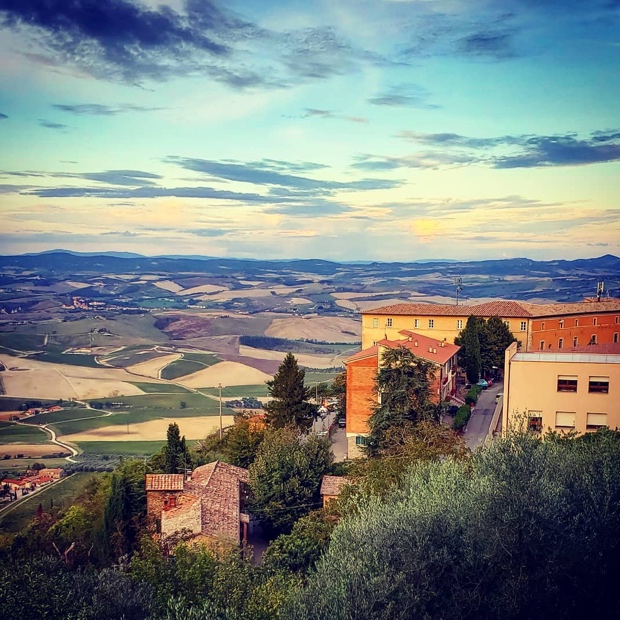
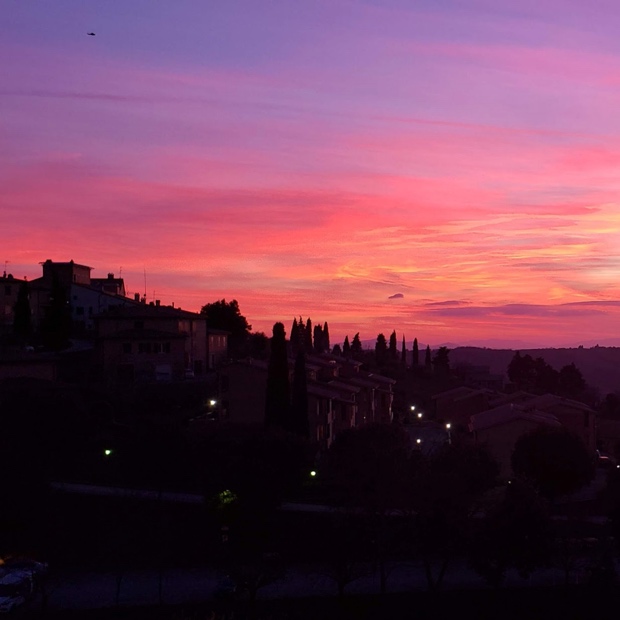
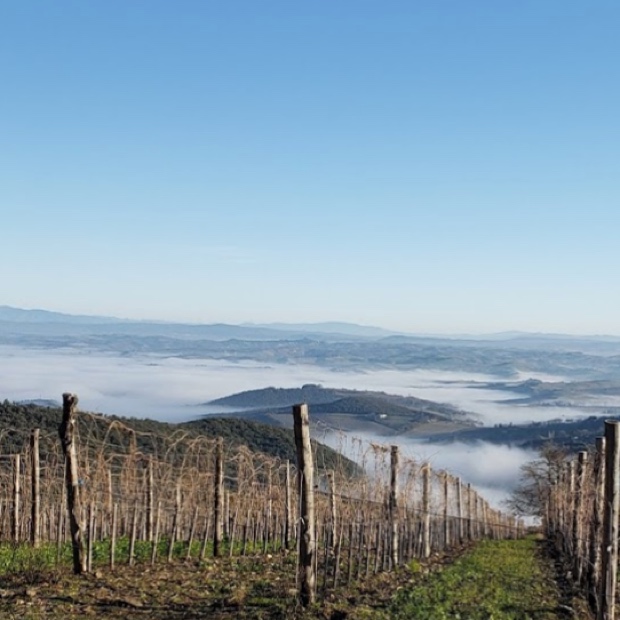
Montalcino Sunset

Anteprime di Toscana’s culminating 2020 presentation of 2018 Rosso DOC and 2015 Brunello DOCG raised the bar for Montalcino’s venerable sangiovese

Montalcino, February 2020

The sangiovese of Montalcino are not to be taken lightly nor for granted and they are, to a wine, crucial to mind, culture and life as we know it. When presented in times of adversity they are the sort to help us keep our wits about us. To an extent the Rosso and manyfold the Brunello are of an ilk that allow our animal selves to assist in ensuring the survival of our species. Allowing them to age incrementally and gracefully is an important part of the contract. Either by dint or by choice, drinking Montalcino, especially young Brunello, deregulates our homeostatic processes with a kind of sudatory sedation. This is because of an unavoidable youthful aggression and incredibly dense succession of tannins, as if each were linked to the next by an invisible force, to a chain singular and melting into one another. They are known to induce fruit sweats while simultaneously controlling emotion and so we remain in balance. In some reflective respect the act of drinking Rosso and Brunello di Montalcino is akin to a full-fledged carnal embrace. If what follows is a feeling of compunction then guilty as charged is our pleasure.

The Rosso and Brunello of Montalcino have for decades been recognized as residing in the premium realm of Europe’s finest red wines. You might think that a territory with such rich history, iconic figures, foremothers, forefathers and next generation figureheads would be content to rest on laurels and see little need to fix something that isn’t broken. Not so and while the new or next era of wine producers are certainly the obvious catalyst for exacting evolution, if at times gentle revolution, the answers run deeper and the interconnectivity with the past is well, unavoidable. In the trusted duty as ambasciatore for Montalcino and its vital sangiovese next month I will play host and moderator to two dozen of the territory’s most prominent and illustrious producers in six pivotal seminars. In trying to get to the source of what in recent years has been the impetus for a more than discreet across the board profound rise in quality, I recently asked a gaggle of Montalcino producers some pressing questions.
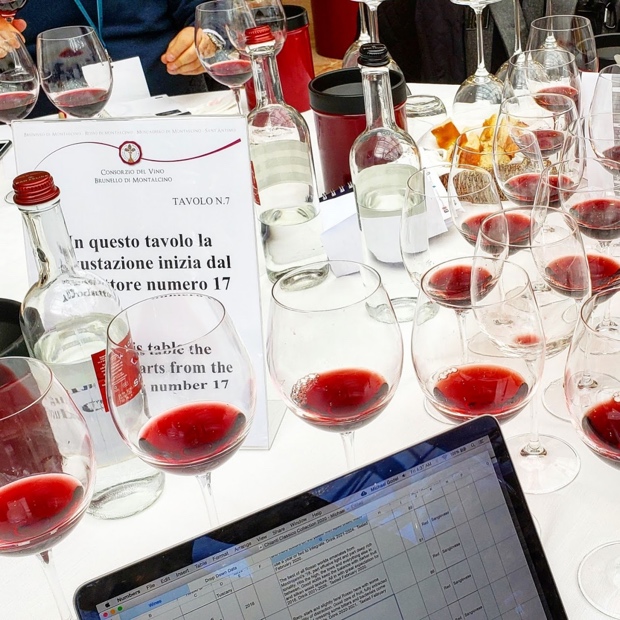
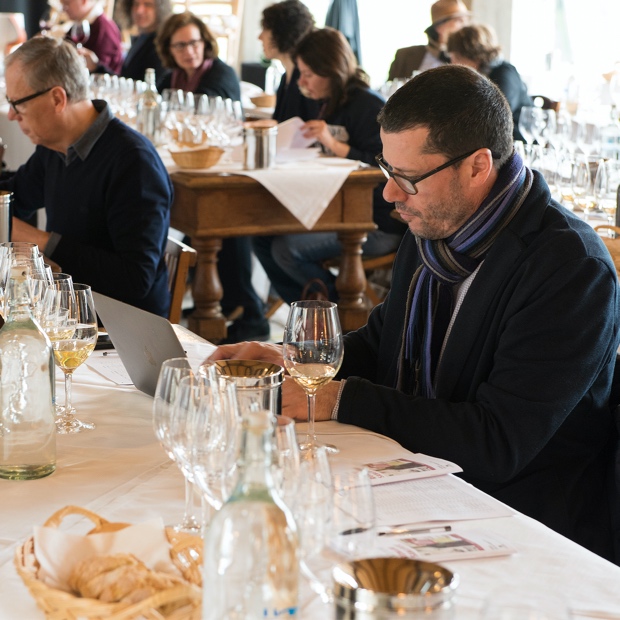
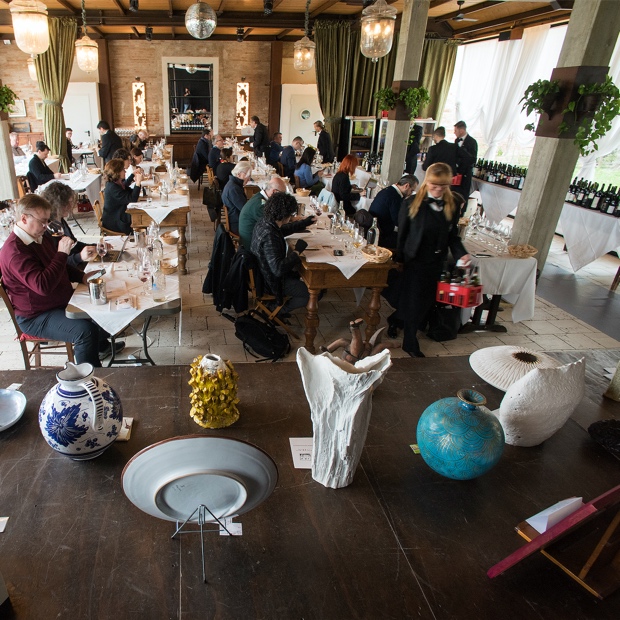
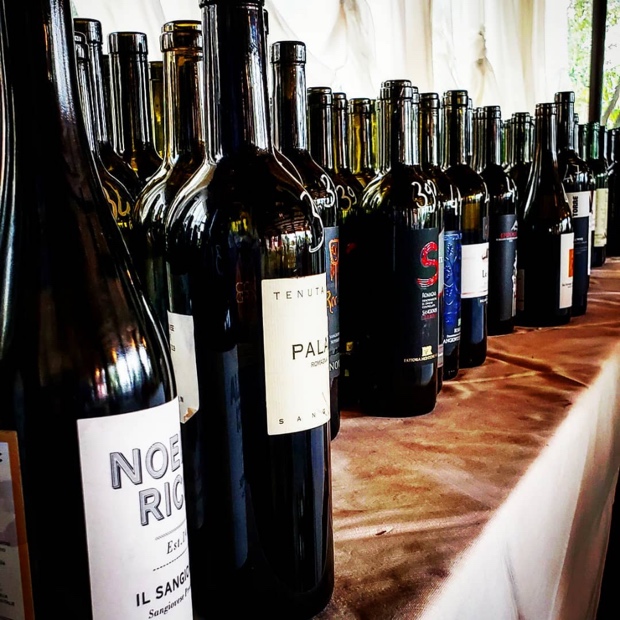
Tasting at Benvenuto Brunello in Montalcino, February 2020

Brunello inspired to the best wines made by my grandfather produced between 1970 and 1980

… Donatella Cinelli Colombini

Ten producers, six questions

What recent vintage would you say marked the turning point for your winemaking, to bring your wines into a place and style that speaks of your particular vineyards, their location and terroir in Montalcino? What or why is the reason?

Francesco Ripaccioli, Canalicchio di Sopra: “2013 may have marked the turning point for our winemaking, in looking for their particular sense of place, for a unique eastern to northeastern Montalcino sapidity in our wines.”

Tommaso Cortonesi, Cortonesi – La Mannella: “2006 was the first vintage during which I have followed every aspect, from the vineyard management to the winemaking. So that was a benchmark for me. 2012 is a reference vintage in terms of style, with the introduction of the family brand “Cortonesi” and the two different crus La Mannella and Poggiarelli. From this vintage, Brunello “La Mannella” is made just with La Mannella vineyards grapes. Two different Brunellos from two very different Montalcino terroirs. I had in my mind the idea of Brunello di Montalcino as pure expression of his terroir.”

Lorenzo Magnelli, Le Chiuse: “2006, my very first one. From the very beginning it was clear from me how it’s necessary making wines that speak about sangiovese and Montalcino, that’s what make unique a wine from this region and it’s even more important when you have an important historic background like we do here at Le Chiuse.”

Riccardo Talenti, Talenti: “The 2010 vintage, not only for the beautiful quality expressed, marked the definitive passage of an awareness and an approach to wine that I am still following today. It was the first to be done in the new cellar where we chose to carry out the fermentation in conical steel with the use of punching down at controlled temperatures. In addition, since 2010 a good percentage of new vineyards have been in production which have helped improve agronomic management. The 2004 vintage marked the awareness of a differentiated management of the vineyards given their different exposure and different terrains. For my youth and little experience they were years and harvests difficult to interpret.”

Elisa Fanti, Tenuta Fanti: “Our vintage is absolutely the 2006. During the harvest and the aging of the Brunello 2006 we have learned the characteristic of a very elegant Sangiovese and we have loved this! We started to select the different Sangiovese from different vineyards, to select also our four different areas of the vineyard and we have started to make our two selection of the Brunello di Montalcino, the Riserva before (on the 2007 vintage) and the Vallocchio later ( 2010 vintage).”

Stefano Cinelli Colombini, Fattoria dei Barbi: “We have had some turning points. 1931 was the first vintage with “important numbers,” 35,000 bottles instead of the normal 5,000/10,000 we had for a century because my grandfather Giovanni Colombini decided to try to sell it more widely. By mail and through agents in Rome, Naples, Florence and Milan. It was a success, the wine was more alcoholic and very austere. 1964 was rated the best red wine of Italy by the Italian Ministero dell’Agricoltura, obtaining the “Torchio d’Oro” It was a rich, powerful Brunello in a very traditional style, and our first vintage in which we produced more than 100,000 bottles. This was our first vintage appreciated by the Italian journalists, and also the first widely sold abroad. 1975 was a very classic Brunello but more “easygoing”, a turning point in style and marketing. Not so tannic as our previous wines, ready to drink after only five years but able to age very well for decades, it was the final result of years of research on fermentation and on a shorter period in wooden vats. This was very probably the first “modern” Brunello, a style that became the normal one for all the producers. It was an unbelievable commercial success, 235,000 bottles sold from the USA to Japan. 1995 was again something new, still in a very traditional style but larger, bolder even if very elegant. It was our first “fat” Brunello, in a period in which the wines had to be more and more “important” we reached this result avoiding any mechanical concentration with osmosis or similar devices. We increased the vineyards from 50 to 100 hectares, and reduced very strongly the production per hectare. 2007 was another important turning point, after five years of experience we could use for all our production dry ice, the new Ganimede fermenters and a completely “vintage program” which reduced to less than one hour the time from the picking of the grapes to the arrival in the fermenting vats. The result was a better extraction and a better concentration of the traditional flavours of Sangiovese. A more typical and more intense one.

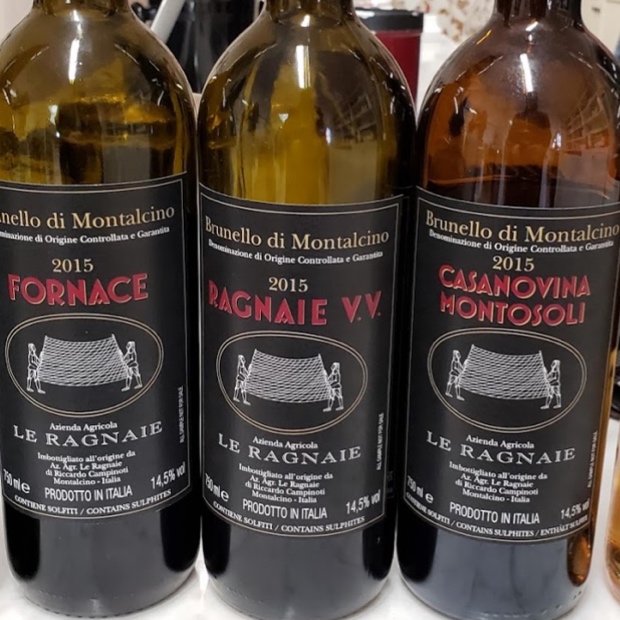
Riccardo Campinoti, Le Ragnaie: “In 2006 I started working in a more traditional style with longer maceration time and only big barrels. Also I started focusing on single vineyard sites.”

Conte Francesco Marone Cinzano, Col d’Orcia: “At Col d’Orcia we pride ourselves in producing traditional wines with long aging potential since even before the arrival of my family in 1973. When we conduct vertical tastings (often going back 50 years) the most important aspect for me is that tasters find aromas and tastes that are constant over time. The key of this approach is that we use only grapes grown on this hill and that we are true to the character of the soil and climate of this estate. Of course there has been an evolution over time, but rather than adopting different manipulations to the wines, we have improved our quality control and the equipment that allows us to follow with greater precision the fermentation and aging process in order to intervene with greater timeliness on decisions such as pump-over, end of maceration on the skins, racking, contact with air, etc.”

Donatella Cinelli Colombini, Casato Prime Donne: “In the vineyard the year of change was 2012. This was the first year with very high temperatures, hydro-stress and intense rainfall just like monsoons. We have leant how to trim back the vines in a different way, using the leaves too protect from the sun. We have learnt that we must reduce the surface of active leaves to reduce the transpiration and so to lower the canopy. We have also learnt that the de-leafing usually done in September (and unfortunately still done by many wineries) damages the grapes because now the UV radiation is much stronger than before. In the harvesting of the grapes the 2017 vintage was a turning point for us. It marked the return to a selecting of the clusters, just as my grandfather used to do, for opposite reasons. 50 years ago his problem was too little sun, we now have too much. In the end, to pick the grapes at their maximum level of ripening we need to pick the clusters one by one, going through the vineyard several times.  Since 2017 we have continued to select the clusters. The concept of “Vigna” as was intended at the end of the 1900’s must be revisited so as to obtain qualitative excellence. For fermentation maybe 2011 was the year that marked the change. The year that taught us most in the management of the grape and must PH. In 2011 the Montalcino wineries encountered Brettanomyces, which previously, was practically unheard of thanks to the high acidities. Now attention on PH and the cleanliness in the wineries are much superior to before.”

Giacomo Neri, Casanova di Neri: “With 2010 we have reached a balance between perfume, structure, length, finesse and elegance which has had a constant following in the following years. The age of the vineyards, a greater experience in the management of woods and in winemaking.”

Filippo Chia, Castello di Romitorio: “The vintage that most changed my life was the 2015 vintage.  It was the first year that our new vineyards produced Brunello quality fruit, the marriage of the new vineyards and old vines coincided with one of Montalcino’s most interesting growing seasons. It was a slightly warm vintage that tested the health and vigour of the vine pushing it to the limit but not beyond.  Fruit was beautiful and crunchy and with ripe seeds and stems which gave way to wines with a good potential for ageing but also very generous and voluptuous also in youth.  A confluence of factors, climate, vineyards, and careful choice of oak framed the 2015 as one of Romitorio’s best vintages of all time.”

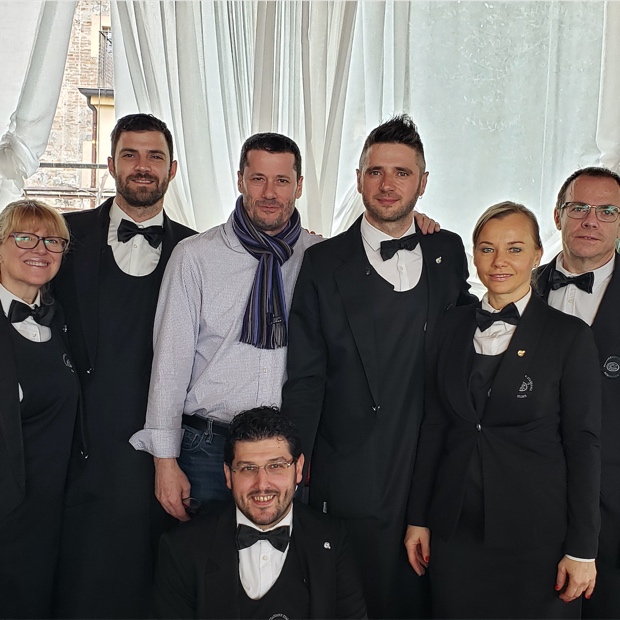
Tasting hundreds of Sangiovese over the course of 10 days in Italy would be inconceivable without the tireless work ethic, attentiveness and dedication of all these talented sommeliers. #aissommelier #italiansommelier #associazioneitalianasommelier

What mistakes have you made and how have you learned from them so that you can make better wines and the wines you need to make from your property?

Lorenzo Magnelli, Le Chiuse: “I always make mistakes and always learn from them, every vintage it’s another story and every time I try to do the best choices for my vines and wines. I love it because those mistakes could makes your land-wine-feeling connection stronger.”

Riccardo Talenti, Talenti: “I started in 1999 with the first harvest made entirely by me, not having too much direct experience. I can say that the first five harvests were difficult as an approach in the vineyard and then in the cellar. The agronomic part was the same in all the vineyards, but with completely different vintages; hot 1999, very hot 2000, very rainy 2002 and very hot 2003. This diversity made me understand on my skin that the vineyards had to be managed differently. The research on the grapes as well as having excellent ripeness and health is to manage the acidity in the best way during the ripening in order to have an elegant and persistent character on the wine.”

Elisa Fanti, Tenuta Fanti: “Our principal mistake in the past was to “clean” too much our wines. We had left much space at the perfect analytical parameters, at the perfect wines with very definite characteristic. Now we understand it is important to have the real characteristic of the vintage and the terroir in the bottle. Sometimes a little shades and also a little imperfection (why not) are very important to respect the personality of the wine.”

Stefano Cinelli Colombini, Fattoria dei Barbi: “I am really lucky, because my ancestors take notes of the many mistakes they did in the last two centuries. In vineyards they tried at least two times very dense plantation, 1.5 metres per 0.80 and then in 1930 2 metres per 1. They tried alberello, guyot and cordone speronato on two levels. They tried to anticipate the vintage or to delay it. They tried chestnut vats. They tried warmer fermentation, and fermentation from three days to six months with the skins. Any kind of chemical, organic or mist fertilization. The modern Brunello is the result of centuries of mistakes of a group of producers, frequently friends and sometimes parents, which shared their good and bad results. I did just some small mistakes, because somebody else did the big ones.”

Riccardo Campinoti, Le Ragnaie: “Plenty, in the beginning I was trying to go a bit more modern and more approachable style. Also I was doing lower yields for no real reason and picking too late sometime. Now I just go for balance.”

Conte Francesco Marone Cinzano, Col d’Orcia: “Up until the turn of the century, we had a tendency to submit the wines to excessive extractions during fermentation, often extracting dry tannins that needed a very long time in wood and in the bottle to soften. We are now using a much lighter hand thanks to the use of the spectrophotometer as a quality control equipment that tells us exactly when the wine has taken from the skins all it needs to achieve a balanced and elegant wine.”

Donatella Cinelli Colombini, Casato Prime Donne: “To begin with, when I left my family’s activity in 1998 to create my own, I needed to differentiate myself, do different things, to experiment a little…A bit like the Barolo boys in Piedmont. Slowly I understood the value of the century-old expertise of the Montalcino grape growers a now we are doing practically the same as them. We are even planting old varieties of wheat on the soil before planting new vineyards. My various Brunello are not powerful and neither fat. My wines are fine, lengthy, harmonious, complex and apt for long ageing. My grandfather was able to produce such wines only a couple of times every 10 years but we can do it practically every year because the climate gives us a helping hand.”

Giacomo Neri, Casanova di Neri: “Each harvest has given us something to grow and given the possibility to correct some details, over the years I believe that our wines have bought a lot in complexity, balance and finesse.”

Filippo Chia, Castello di Romitorio: “The mistakes have been many, and it takes time to find the perfect balance between making wine in the vineyards and in the cellar. It all starts with a vision and intuition and at times the first try can seem to be a mistake and over time prove to be a resource. For instance in the early 1980’s sangiovese had a hard time ripening and most wines barely reached 13%. This was especially true at higher altitudes and often wines from the hills maintained a green “stemmy” character when compared to the wines from the valley. Today things have changed drastically. Advancement in viticultural practices during the 1990’s changed the way that Montalcino practiced its winegrowing as we start to see new methods of planting – closer spacing and more vines per hectare. New farming techniques, lower yields, de-stemming and sorting had an incredible impact on the quality of Brunello di Montalcino. However climate change has been felt also in Montalcino and areas (such as those of the Romitorio) which once may have seemed like a mistake unable to produce world-class Brunello today express some of the highest quality Brunello di Montalcino.

Francesco Ripaccioli, Canalicchio di Sopra: “We are learning from our mistakes, such as those we made in 2007. We are now much more going in the direction of purity in fruit and clean clarity out of the cellar. Brunello is all about freshness, verticality and depth. These are the three parameters of necessity, especially for Riserva.”

Tommaso Cortonesi, Cortonesi – La Mannella : “One of the biggest challenges for me has been finding the right aging to enhance the terroir of Poggiarelli. Paolo Cagiorgna, our consulting enologist, has helped a lot to find the right balance. Now we do 24 months of aging in French oak tonneaux and then long bottle aging and I think we have found the perfect equilibrium for a Brunello di Montalcino from a very rocky soil rich of Tuscan limestone with big structure.”

What effect do the Tramontane and Grecale winds have on your vineyards and can you pinpoint a particular vintage when the winds made a big difference in the wines?

Stefano Cinelli Colombini, Fattoria dei Barbi: “Montalcino is always very windy, so windy that our vineyards are accustomed. The only vintage in which I was able to note a special difference due to wind was 2013, at the beginning of September we had four days which dried the grapes on the top of the hills, which normally are the best places. The valley vineyards, which normally have mould problems, had a serious increase in quality.”

Riccardo Campinoti, Le Ragnaie: “They usually help keeping the vines less moist, they are helpful during ripening.”

Conte Francesco Marone Cinzano, Col d’Orcia: “Winter winds such tramontana and grecale have limited influence on the growing seasons of the grapes. Summer winds are a constant at Col d’Orcia as we are in the part of Montalcino closer to the coast and have a truly Mediterranean climate. Please remember that Riserva Col d’Orcia vineyards is called Poggio al Vento (windy Heights).”

Donatella Cinelli Colombini, Casato Prime Donne: “I can remember only one occasion, twenty-odd years ago, something really impressive, at the end of August a wind so hot it resembled a hair dryer that dried the vineyards.”

Giacomo Neri, Casanova di Neri: “(These winds) are very important for the quality and health of the grapes. If they weren’t there, it would be a real problem.”

Filippo Chia, Castello di Romitorio: “The Tramontana winds are usually seen as a negative, cold northern winds that brings with it disease and molds.  If in the forest you need to find North you just look at the side with more moss and that is North.  That said Tramontana can have varying effects throughout the growing phases of the vines, in winter and spring it is the main wind that informs the plant when to start waking up from winter, and it can help delay and cool the vines throughout the also summer months.  It’s famous for coming in three’s, 3-6-9.  Any wind coming from the same directions for too many consecutive days can have a negative effect.  The Romitorio lives and thrives in the Tramomtana as it is located in the Northeastern quadrant of Montalcino, therefore as tricky as it might be we are extremely grateful for its powerful cooling effects which are vital for keeping a crunchy sangiovese. The Grecale winds have a similar effect though they tend to be more common during the harvest months and brings serves as a source of cool and dry air also beneficial to the health of the vine.”

Francesco Ripaccioli, Canalicchio di Sopra: “In 2018 the Tramontana wind came on September 16th and the harvest began on the 29th for Rosso. The second wind called the Grecale also blew in to cause up to 30 per cent drying of the grapes. The resulting reduced yields meant for grapes of concentration in both fruit and acidity but also a high number for dry extract.”

Tommaso Cortonesi, Cortonesi – La Mannella: “Both are very important winds, especially in the months of September and October to guarantee the health of the grapes and a good temperature range between day and night for a better aromas evolution. I think they are very important for the whole area of Montalcino, but especially for La Mannella area that is a cool zone of the northern slope of Montalcino, so dry and cool winds are crucial to have a great vintage.”

Lorenzo Magnelli, Le Chiuse: I like those winds as that means cooler temperatures and dry conditions witch give you a very good maturation of the grapes and elegant, vibrant wines. 2013 is a vintage that was influenced by this special condition. 

Riccardo Talenti, Talenti: “All the vineyards are in the south/south-east part of Montalcino between 400 meters and 250 meters. The influence of the winds is fundamental for the health of the grapes especially in vintages where in September there may be rain or morning mists. Fortunately the mists are not so frequent in the harvest, but in case of rain the ventilation helps to keep the grapes healthy. Certainly recent vintages such as 2008, 2013 and 2014 the winds have helped to have excellent characteristics.”

Northwest Montalcino

The passion and the strong link with mother nature of the winemaker are the best factors to make original and outstanding wines

… Tommaso Cortonesi, Cortonesi – La Mannella

How or why did 12 or 24 months, or in rare cases, 60-plus months further become the defined reason for how to make and qualify Riserva?

Lorenzo Magnelli, Le Chiuse: “We release our Riserva 60 months later than our Regular Brunello because I believe it helps the wine to get a stronger identity from Brunello showing a better balance and more complexity. Brunello Riserva, it’s not the wine that you want to drink young, in this way you really can’t.”

Riccardo Talenti, Talenti: “As a philosophy we do not exceed 36/40 months of aging for the Riservas and we do not produce the Riserva every year, but only in vintages that we believe have high aging potential, making a selection of barrels from the vineyards around the company positioned at 400 meters.”

Elisa Fanti – Tenuta Fanti: “The Riserva is a selection of the best Sangiovese in the vineyard. This Sangiovese, in the beautiful vintage, probably has a big structure, complexity and acidity and it is necessary for more time of aging (in the oak or in the bottle), to have an important wine with all its aromatics feature well integrated.”

Stefano Cinelli Colombini, Fattoria dei Barbi: “In my opinion any true Brunello is at his best between eight and 20 years, it is due to the peculiar character of the Montalcino Sangiovese grapes.”

Riccardo Campinoti, Le Ragnaie: “I am not a big Riserva guy, I keep all my wines three years in barrel and I think it’s enough. I much rather prefer single vineyard expression, I keep my best sites for single vineyards. Lately I prefer colder vintages. Warm vintages are too extreme and the wines are not that interesting.”

Conte Francesco Marone Cinzano, Col d’Orcia: “When my father arrived at Col d’Orcia in 1973 he found wine in the large barrels dating back to vintage 1968 (60 month). This was the tradition in Montalcino and still is the practice at Col d’Orcia when a vintage requires it.”

Donatella Cinelli Colombini, Casato Prime Donne: “The Brunello Riserva is born in the vineyard, not in the cellar. The clusters must have grapes that are very small, perfect in health and with thin skins. In other words we cannot produce Riserva with just any old cluster of Sangiovese. For this reason the amount of Brunello Riserva we make increases or diminishes, and so aggravates my sales office. Obviously the perfect grapes create wines that need a longer stay in barrel and then in bottle.”

Giacomo Neri, Casanova di Neri: “We do not produce Riserva, our Brunelli at most spend 42 months in wood. Brunello Cerretalto comes out in the sixth year but with twelve more months raised in the bottle.”

Filippo Chia, Castello di Romitorio: “Sangiovese is a very finicky grape that is really tied to the climatic conditions of the vintage, every so often in great vintages its power and abundance can withstand additional ageing in oak, large or small, and most producers tend to go to bottle sooner in order to avoid keeping the wine in stainless steel or wood for too long.  Usually it’s a barrel selection and when tasting the wines it is apparent when you can make a Riserva without cannibalizing your “Vigna” and without over-oaking and oxidizing the wine. Therefore normally only the very best and most balanced and structured fruit can give way to a Riserva.”

Francesco Ripaccioli, Canalicchio di Sopra: “The oak is not an ingredient. It’s a kneading for the wine.”

Tommaso Cortonesi, Cortonesi – La Mannella: “The Production Requirements ask for 24 months minimum for Brunello Riserva, but many wineries do a much longer wood aging. We do 48 months in large barrels and our Brunello Riserva is only produced in the best vintages from our oldest vineyard in La Mannella.”

Montalcino

Va a macchia di leopardo

… Stefano Cinelli Colombini, Fattoria dei Barbi

Do you prefer the oldest vines for Riserva or Vigna? And do you prefer them in colder or warmer vintages for these wines?

Conte Francesco Marone Cinzano, Col d’Orcia: “Yes, for Poggio al Vento Brunello di Montalcino Riserva we use older vineyards. For the one Vigna we currently bottle (Vigna Nastagio) we use a recent vineyard planted in 2006. Poggio al Vento is produced only in the best vintages, on average 5 vintages out of 10. For all Brunello’s I tend to prefer balanced weather with cool ripening season.”

Donatella Cinelli Colombini, Casato Prime Donne: “Evidently I prefer the older vines. I adore wines obtained from older vineyards and I have bought a sort of mechanical mole to burrow holes to substitute the new vines where others have died. We are also learning the Simonit and Sirch technique to save the vines from Esca disease. We are, in other words, doing our upmost to allow our vineyards to age healthily. It would be ideal to have old vineyards with healthy vines and all with a regular quantity of clusters. To produce Brunello Riserva we need winter and spring to be rainy, summers to be hot interrupted by some showers, September with cold nights and sunny days. Just like in 2019.”

Giacomo Neri, Casanova di Neri: “Certainly the oldest vineyards give us the possibility of having much much more complexity. Cold vintages often give great satisfaction after 15 – 20 years, often with big positive surprises.

Filippo Chia, Castello di Romitorio: “The blend of newer and older vineyards is vital in all phases of production of wines from Montalcino.  The tension in any work is always a balance between chiaroscuro which sangiovese embodies in such a magical way. It can be a brooding dark powerful brick coloured wine as it can be a dancy, perfumed and transparent wine.  What’s great about Montalcino is that there is such a wide variety of terroir and cellar practices that give way to a multitude of different expressions of Brunello di Montalcino.  Romitorio is a northwestern hill Brunello and very proud to embody this aspect in our wines and we hope to communicate this from our Rosso di Montalcino all the way up to our Brunello di Montalcino Riserva.”

Riccardo Talenti, Talenti: “For the production of the Riserva there is our 40 years-old vineyard together with other younger vineyards all around the cellar, where the microclimate and the characteristics of the soil are the same and homogeneous, but the selection of the wine is the result of a choice of barrels and aging tonneaux. We do not produce the Riserva every year, but for characteristics I would say that the cooler vintages are more elegant, even if in warmer years we have produced the Riserva (see 2007 or 2012), but in any case vintages with very high potential. In the most difficult years where even the quantities of selected grapes are high, we hardly produce Riserva.”

Elisa Fanti, Tenuta Fanti: “I prefer the Riserva because in general it is the best wine of the vintage with important characteristics (the structure and in particular the acidity) well integrated with the aging in the oak. A perfect wine to drink old! I prefer colder vintages, I don’t like the wines very strong and with low acidity.”

Stefano Cinelli Colombini, Fattoria dei Barbi: “I tried to find a mathematical connection between colder or warmer vintages and quality, but I had so success. The same happened with the rains. I prefer the best vintages for Vigna and Riserva, but sometimes these are warmer vintages and sometimes are the colder ones. Frequently the top vintages are the most “balanced” ones, but not always.”

Francesco Ripaccioli, Canalicchio di Sopra: “With vintage variation I prefer the oldest vines (Vigna Mercatale at Canalicchio) in the coldest vintages for Brunello and Vigna. For Riserva I choose the vineyard on the Montosoli hill.”

Tommaso Cortonesi, Cortonesi – La Mannella: “I prefer to use the oldest vineyards to produce Brunello Riserva. I am a fan of warm vintages because with the selection systems that we have nowadays we can have a great selection of the grapes when they are at the perfect stage of ripening. In cooler vintages, where there are typically abundant rainfalls, it is more difficult to get a perfect ripening of the grapes to obtain wines with a great aging potential as Brunello di Montalcino has to be.”

Lorenzo Magnelli, Le Chiuse: “We don’t do a single Vineyard as Le Chiuse is one block, so for my choice it’s necessary for Riserva. Usually I’m for excellent cold vintages that guarantee a wine full of energy that doesn’t end by the long aging.”
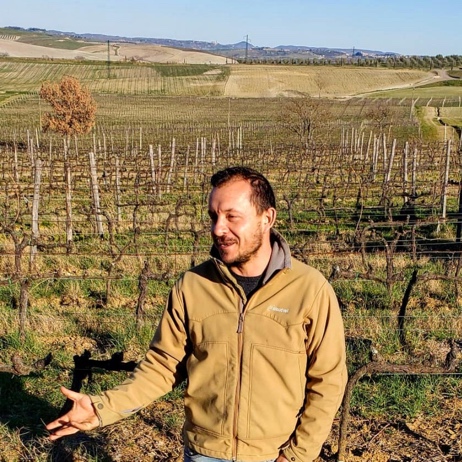
Lorenzo Magnelli, Le Chiuse

Il Brunello vada molto meglio di altre denominazioni.

Lorenzo Magnelli, Le Chiuse

The last question I posed to the producers concerned the current state of business and affairs in Montalcino.

How are things going for Montalcino?

Lorenzo Magnelli, Le Chiuse: “Montalcino is at a very good health level, we have not had COVID cases for a long time, certainly better than in other parts. On the other hand, economically it depends on the producer, there are those who have many bottles in the cellar and have sold well. In general, however, I think Brunello is fairing much better than other denominations.”

Tommaso Cortonesi, Cortonesi – La Mannella: “In Montalcino almost restaurants are open. We have a quite good European tourism now. The business is not too bad actually. Imperative now is to survive from this 2020. About the grape season, until now it’s a beautiful vintage, but August and especially September are the most important months. This week should be one of the hottest (34-36° C).  The Consorzio del Brunello are investing some resources on our main markets like Canada and US. We hope to give some help to our producers and to their agencies/importers promoting our denominations and our wines.”

Stefano Cinelli Colombini, Fattoria dei Barbi: “Va a macchia di leopardo. It goes wild. More than a third of the Brunello “vintage” has already been sold and there are only two vintages in the last ten in which more has been sold. The prices of the bottles have not dropped. However, the bulk Brunello market (only 8% of the total) is at a standstill and the bulk price has dropped by 40%. Those who have an advanced commercial and / or a large brand suffer little or nothing, while the less organized ones have some problems. But there are not many. Bolgheri is fine, Maremma and Mo rellino benino, the rest of Tuscany ouch ouch.”

Conte Francesco Marone Cinzano, Col d’Orcia: “Montalcino is very quiet this year. Some Italian tourists around. Very few foreign visitors. We had a good season in terms of rain and heat, but the harvest is still a long way away.”

Donatella Cinelli Colombini, Casato Prime Donne: “Sometimes, like in 2019, we had a quantity of super grapes never seen before and so we immediately ordered more barrels. It is a shame that the lockdown blocked the delivery of the barrels and the wine went into barrel late. Unfortunately the splendid harvest 2019 has suffered the effects of the Coronavirus too.”

Giacomo Neri, Casanova di Neri: “For now the grapes are beautiful and healthy, we expect an early harvest. Let’s see what the months of August and September will give us. In Montalcino, given the situation, well, we don’t complain…”

Riccardo Talenti, Talenti: “Everything is fine even if it is really a strange period, to see Montalcino without tourists without fans who come to the company to taste.”
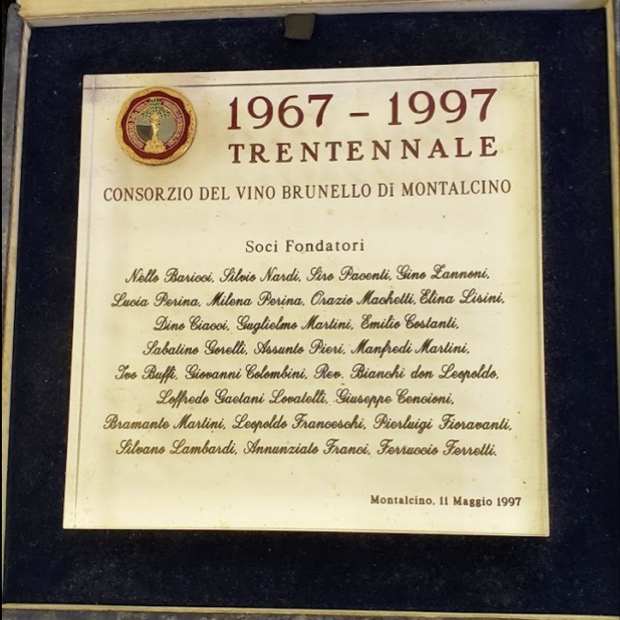
The Consorzio’s members come together each February at The Montalcino Chiostro del Museo and home to the Consorzio’s offices for Benvenuto Brunello, a two day showcase of the most recent vintages to wrap up Anteprime di Toscana. Though the prospect is dire for this gathering to take place in 2021, Montalcino’s wines will and always need to be tasted around the world. Let’s travel back a bit in time. At Benvenuto Brunello in February 2020 I tasted the following 150 samples of sangiovese, 36 Rosso di Montalcino DOC and 114 Brunello di Montalcino DOCG. These are my notes.

Rosso di Montalcino DOC 2018 (31 notes)

Altesino Rosso Di Montalcino DOC 2018 ($27.95)

Altesino’s is consistently rich and baritone for Rosso, even in light ’18 and gone in all for one with not much left to the imagination. An amenable, commercial and viable proposition for anyone and everyone to take part. Drink 2020-2021.  Tasted February 2020

Argiano Rosso Di Montalcino DOC 2018 ($29.95)

Full intention and focus for Rosso here from stalwart house Argiano in sangiovese pertinence. The combination of wood and a mosaic of ripeness means flavour packet bursts and structural stumbles. Seems a bit wooly and high acid distracted but the youth is important in knowing or at least intuiting what this Rosso will become. Drink 2021-2025.  Tasted February 2020

Baricci Rosso Di Montalcino DOC 2018

Carries all the 2018 Rosso attributes that set the vintage apart, including full fruit and old school structure but what separates Baricci’s northerly Montosoli is the sprezattura savour. Wild strawberry and a texture that reaches back for more sangiovese. Very specific to this hill that only a few other appellative wines can touch. Pretty structured stuff for Rosso. Drink 2021-2027.  Tasted February 2020

Bellaria Rosso Di Montalcino DOC 2018

From Gianni Bernazzi and a Rosso treated to a full compliment of Botti wood, adding a sweet vanilla and candied floral spice to his sangiovese. Old school and pure, clear and clean at the same time. Well made, not as crunchy and bright as some though as itself it speaks a true vernacular. Drink 2021-2025.  Tasted February 2020

Canalicchio Di Sopra Rosso Di Montalcino DOC 2018 ($39.95)

Only raised in big barrels but not the 2500L larger oak used for the Brunello. Lovely red fruit purity and transparency from a vintage that was at a near all-time low pH. Higher acidity conversely and serious enough to use for food matching ability. Just a hint of pressing is felt but it’s really just a matter of de-stemming that makes a push but not a crush. A little bit of whole berry helps ward of oxidation and the freshness is truly a matter of gentile handling. Such a fine, drinkable and complex Rosso. Drink 2020-2025.  Tasted February 2020

Caparzo Rosso Di Montalcino DOC 2018 (333575, $19.95)

Though the fruit source is an amalgamation of Montalcino in a multi-disparate form you can’t help but feel or at least sense the Galestro of Montosoli young vines making their way into this Rosso. Wet stone, crumbled earth’s elements and a crust of decomposition meets the cherries head on for a salty and sharp sangiovese. Really proper wine here. You know it, I know it, they will know it. Drink 2021-2027.  Tasted February 2020

Casanova Di Neri Rosso Di Montalcino DOC 2018

Giacomo Neri lends his name to the bottle of Rosso which speaks to his desire that meaning is to accompany the appellation. Seemingly combed from Neri’s three or four vineyards dotting the north and east of Montalcino for an estate agglomeration of dark fruit, high tones and great accumulated acidity. Here the baby Brunello concept acquiesces to the notion of strictly made Rosso and for great purpose. Big wine, fine sangiovese, lots of possibility. Drink 2021-2026.  Tasted February 2020

Castello Romitorio Rosso Di Montalcino DOC 2018 ($38.99)

From a hectare and a half of a Rosso vineyard that produced 1,000 cases. The general matrix is unique because Colli Senesi is DOCG and this Rosso is a DOC though it commands a higher price. Cool, racy, lean, tight and mean. A fighting machine, just bottled, intense and ahead of the impending magic so use your imagination to the Rosso fullest. There a fulness and a flesh behind that veil of acid secrecy.  Drink 2021-2026. Tasted February 2020

Collemattoni Rosso Di Montalcino DOC 2018 ($28.99)

Such a consistently fashioned Rosso from Collemattoni, also a posit tug between freshness and structure, always to the proper precipice and edge of tang, tart and sour. Lingers with texture and wood rendering. A subtle wine that gains flesh as it works through the nervous system. Drink 2020-2023.  Tasted February 2020

Cortonesi La Mannella Rosso Di Montalcino DOC 2018 ($31.78)

Tommaso Cortonesi’s Rosso ’18 is pure La Mannella, expressly northeasterly Montalcino and bright as a February Benvenuto Brunello day. Crunchy and raised with all the land caught inside, the fruit expressive and elastic, the finish blessed with just a few years notability by structure. Promising and effective, proper and precise. Still showing some wood so wait a year. Drink 2021-2026.  Tasted February 2020
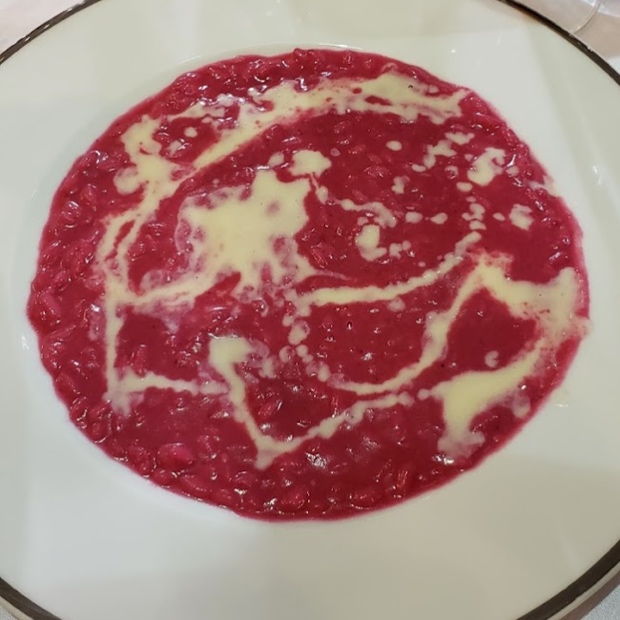
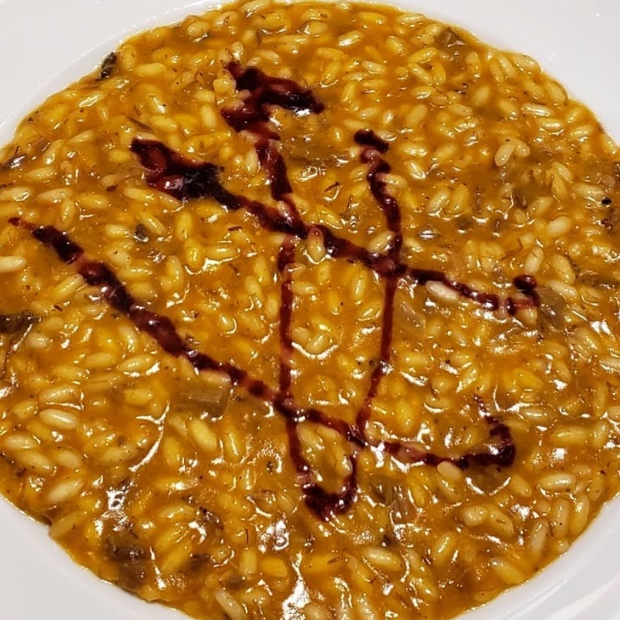
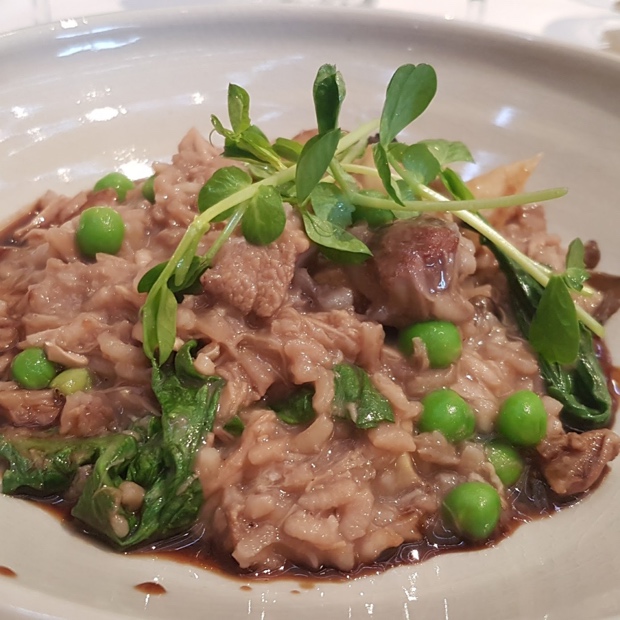
Risotto, Sangiovese and Taleggio

Fattoria Dei Barbi Rosso Di Montalcino DOC 2018

Barbi’s vintage acceptance and celebration is commendable to the degree that 2018 from vineyards ripened for pleasure is to be set this way. Such fruit, sweet thing, like “gardens misty wet with rain.” The kind of tart and tang on cherry and more cherry is what you want from sangiovese meant for the table each and every night. So right, walking and talking without ever growing old. Fresh youth is a beautiful thing. Drink 2020-2022. Tasted February 2020

Fanti Rosso Di Montalcino DOC 2018 ($33.84)

Gotta love a Fanti Rosso, for its outpouring of sangiovese heart and in the way it so professionally proffers what you know Montalcino is so fully capable of gifting. The fruit is high, the aging possibility nigh and the pleasure probability at the limit of the sky. All in, together of parts as one, for a proper rest day, preferably in the sun. Drink 2021-2027. Tasted February 2020

Gianni Brunelli Rosso Di Montalcino DOC Le Chiuse Di Sotto 2018 ($54.00)

Gianni Brunelli’s ’18 Rosso’s brightness shines as the vintage lights the way, yet also embraces deeper sentiments, from generational impressions to modern perceptions. That is confirmed on a palate brimming with sweet fruit and a salt and pepper seasoning that makes for a complete experience in sangiovese gastronomy. Just a shake of bitters on the finish indicates the request for Rosso patience by way of a year’s settling. Drink 2021-2025.  Tasted February 2020

Il Poggione Rosso Di Montalcino DOC 2018

Top quality reach in expertly crafted ubiquity makes this a Rosso from the brightly lit vintage for all to explore. Take this road oft taken and use it to gain understanding of the DOC, the village and the ways of local sangiovese. High toned, generously oak spiced and really transparent. Drink 2020-2023.  Tasted February 2020

La Màgia Rosso Di Montalcino DOC 2018

A deeper, warmer, confident and comforting Rosso from the cerebral and intentional La Màgia, a bit tight and demure in youth. A Rosso that needs some time and in its Brunello-like empathy. More extraction and depth for Rosso in a vintage where some frazioni could not do what this is capable of putting into depth effect. Structured for the appellation. Drink 2022-2027.  Tasted February 2020

La Poderina Rosso Di Montalcino DOC 2018

From the younger (10-15 years of age) and lower downslope vines in Castelnuovo dell’Abate and located in front of the historical Benedectine abbey of Sant’Antimo. Insular, taut and tight Rosso, especially for 2018 so the feeling is of a site that when these vines grow more mature will surely feed Tenuta del Cerro Brunello with structured fruit. A long linger in this precocious Rosso, so very red fruit and while a bit nervy, quality and promise of site is all there. Drink 2020-2023.  Tasted February 2020

Le Chiuse Rosso Di Montalcino DOC 2018

Not a vintage if you are looking for concentration. If you are looking to drink it is perfect. From the same vines employed for Brunello but as per Lorenzo’s idea, only the largest clusters are grabbed. “For our culture it is an important wine. As winemakers we make Brunello but don’t drink it every day. This is what we drink.” Aged in the youngest large barrels for one year (plus two months) and in this vintage it’s back up the truck, glug-glug, pour half the bottle sangiovese. So fresh and with ultimate sangiovese spirit. Drink 2020-2024.  Tasted February 2020

Le Ragnaie Rosso Di Montalcino DOC 2017 ($45.00)

Still sitting, waiting and I suppose stabilizing in concrete is this Rosso 2017 that will be bottled in April. The aging requirements met would actually qualify it for Brunello and we’ll just leave it at that. The entire fruit source in ’17 is Castelnuovo dell’Abate harvested between the 8th of September through to the last days in the highest reaches. Fresh and far from heavy though there is a liqueur depth and a skin-contact feel. Youthful tang and sharpness with a minor tannic herb-verdancy and good but not that super-sangiovese 2016 length. Drink 2021-2028.  Tasted February 2020

Lisini Rosso Di Montalcino DOC 2018

Quite tonal, up there is the stratosphere where some Rosso lie, especially with a vintage like 2018. Richer and more texture on the palate with liquid chalk, wood vanillin and plenty of seasoned tang at the finish. Could use a year or two to integrate. Drink 2021-2024.  Tasted February 2020

Mastrojanni Rosso Di Montalcino DOC 2018

The best of all Rosso worlds emanates from Mastrojanni’s ’18, part effusive light and part deep rich tonality. Hits the high, the lows and everything else in between. Good acids keep the balance with darker fruit and silken wood texture. All in with great expectation for 2018. Drink 2021-2026.  Tasted February 2020

Mocali Rosso Di Montalcino DOC 2018 (286260, $19.95)

Racy, stark and slightly feral Rosso here with some volatility of distraction. Good core of fruit, fully extracted and in that pressing some bitters and bacterials come along for the ride. Drink 2020-2021.  Tasted February 2020

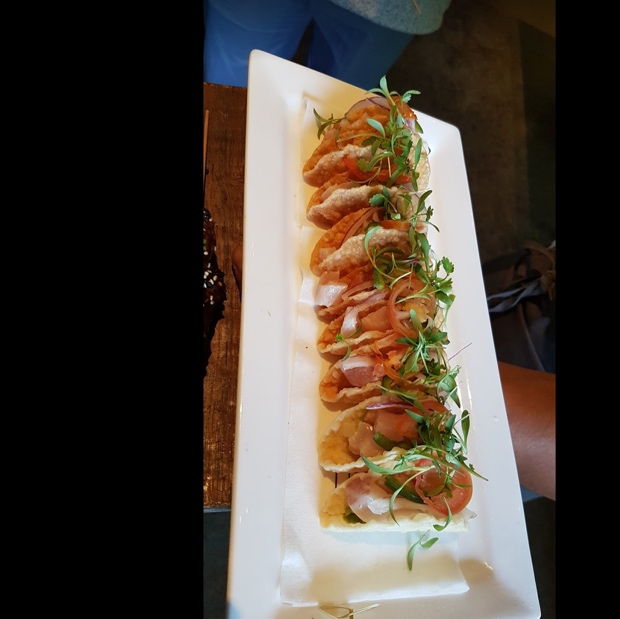
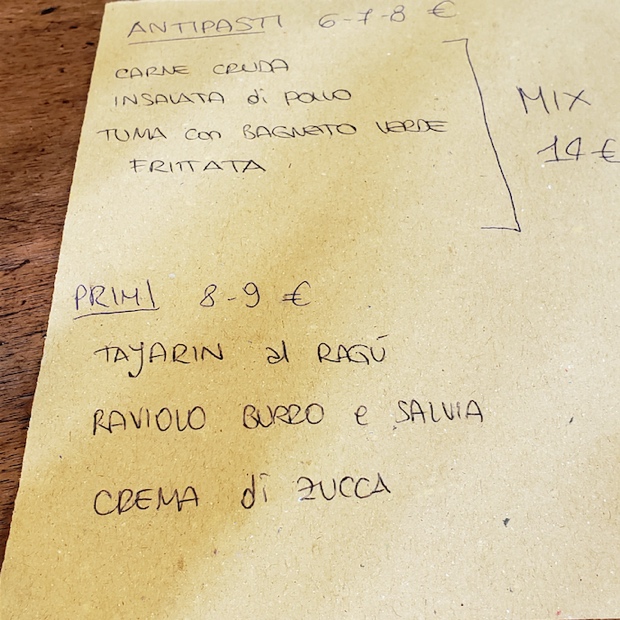
Fried Artichoke, La Sosta Montalcino

Podere Brizio Rosso Di Montalcino DOC 2018

Seriously polished, stylish and full compliment filled Rosso from Brizio, very much in the post-modernist Dievole vein. No expense spared to elevate the game, freshen up the fruit and the appellation. A chic wine for current consumption and replete with necessary acidity to capitalize the freshness with a proper “F.” Drink 2020-2023.  Tasted February 2020

Salvioni Rosso Di Montalcino DOC La Cerbaiolo 2018

What is the question? Taking this Rosso lightly, passing it by or presuming anything on just a whiff and a sip would do it great injustice. There’s a wealth of knowledge and character on the nose, a depth not yet reached because the elemental layering is hard to bypass, just as roots through the fissures in the stone will take a few years to zig-zag for to find the water table below. Segued and extrapolated into this Rosso’s structure, when the integration happens it can be imagined the salts and the minerals to really step forward. La Cerbaiolo for the Rosso ages is the answer. Drink 2022-2028.  Tasted February 2020

San Polino Rosso Di Montalcino DOC 2018 ($48.95)

Here the loosely ambient Rosso stylistic meanders with carefree sway into a world occupied by the natural and the free. Wooly tannins surround variegated red fruit and the matter is so much fun to behold. Not for the masses, perhaps a bit esoteric for you and yet the clarity is dubious in its own singular realm. Drink 2021-2025.  Tasted February 2020

Sesti Rosso Di Montalcino DOC 2018

Sesti’s is serious Rosso but please, enjoy. Ripe red fruit with a decidedly mineral Galestro feel, liquified and run through with hematic and blood orange citrus. This could very well be Rosso Riserva, not exactly Brunello and surely Rosso with more wisdom and beauty. Impressive to be sure. Drink 2021-2026.  Tasted February 2020

Talenti Rosso Di Montalcino DOC 2018 ($30.00)

The Rosso vineyards here are part estate Sant Angelo in Colle and also lower down the valley closer to Castelnuouvo dell’Abate. The prominence is of sandy loam, argiloso and stony soils to make for a full expression that while holding the 2018 wild energy card is represented as deeper than many. Rich and also expressive, full on red fruit of berries fresh picked and a solid core of Rosso tannin. Easily one of the bigger 18s available. Approximately 3,000 bottles made. Drink 2021-2027.  Tasted February 2020

Tenuta Buon Tempo Rosso Di Montalcino DOC 2018

Tenuta Buon Tempo’s is a deep one, first in fruit and then welling with acidity. The fruit runs a wide gamut, from tang by berries through blackening red currant to dusty plum. Quite full and worthy of the warm climate from whence it came with an elevated 2018 sentiment in mind. Drink 2020-2023.  Tasted February 2020

Tenuta San Giorgio Rosso Di Montalcino DOC Ciampoleto 2018

Quite the expressive Rosso here at heights across the valley from Sant Angelo in Colle and situated at a half tier away from parent Poggio di Sotto. A well extracted and healthy macerated sangiovese that brings some structure, multiplied by the rich barrels making their seasoning statement. Really like the finish on this flashy wine. Drink 2020-2024.   February 2020

Tenute Silvio Nardi Rosso Di Montalcino DOC 2018

Very cherry, ripe mainly, some sour edges and all dominant in a very fruit forward wine. Explores the essence of sangiovese with a heart struck and set into a Montalcino land. Could be from nowhere else and demands drinkable attention. Drink 2020-2022.  Tasted February 2020

Ventolaio Rosso Di Montalcino DOC 2018

On the high tone, fruit rising on an acidity elevator up to the upper floors of character. A bit wooly as compared to previous vintages and shows a consistency of style that adheres or more so fully accepts the tenets of the vintage. One of the more effusively sour ‘18s. Drink 2020-2024.  Tasted February 2020

Villa Poggio Salvi Rosso Di Montalcino DOC 2018

Simple red fruit Rosso as per the giving vintage of high acidity and ease of structure. No real bones, road blocks or requests for time. Play on through to a draw at the final whistle. Drink 2020-2021.  Tasted February 2020

Riccardo Talenti

Rosso di Montalcino DOC (other vintages, five notes)

Podere Salicutti Rosso Di Montalcino DOC 2017

Organic, biodynamic and unfiltered, from the then first in Montalcino, at the hands of Francesco Leanza, in 1995. Now (and since 2015) in the custodial hands of Felix and Sabine Eichbauer, halfway between Montalcino and Castelnuovo dell’Abate. Here ’17 is clean, pure, silk threaded and simply put, juicy. One of the longest Rossos you are likely to taste and a triumph for the vintage. Drink 2020-2025.  Tasted February 2020

Canalicchio Di Sopra Rosso Di Montalcino DOC 2016

The ’16 Rosso takes all the extract and acidity of the combined coming two vintages and gleans every ripe aspect for the ambitious way that Rosso can go. Deeper and less crushable and truth be told the Brunello appellation is cozied up to. Salty and full of proper tang with seasoning and spice. Drink 2020-2024.  Tasted February 2020

Carpineto Rosso Di Montalcino DOC 2016

Carpineto’s 2016 comes from higher (450-500m) elevation than many, is aged longer (three years in large oak barrels) and so 2020 is just about the perfect time to enjoy its charms. This 100 per cent sangiovese off of marl and clay was picked into October and it so dutifully expresses the appellation, grape and territory. The all in fulsome red cherry is now joined by a silkiness of texture because the calcaire and the wood have softened, liquified and swirled right through the fruit. A fresh one from a structured vintage and put succinctly into that five to six years Rosso di Montalcino aging window. Drink 2020-2023.  Tasted February and November 2020

Le Ragnaie Rosso Di Montalcino DOC 2016

Most of the grapes come from Castelnuovo dell’Abate but some are also off of estate vines. A late release Rosso, nearly 18 months after most other Montalcino wineries. Has really settled since October and is drinking beautifully right now.  Last tasted February 2020

Top quality vintage, elegant and balanced, from the non disposto star of Montalcino, Riccardo Campinoti. His is a Rosso for Rosso sake, discriminant, linear, vertical and come up for the rising. If Rosso can be spiritual it would be like this, poignant and effen-solid good. These are the acids of Montalcino and the depth of earth which holds you firm in the face of a fluent perfume. It’s all in this bottle, fluid and affluent. What you need to know and what you want to drink. It can live for a dozen years. Drink 2019-2029.  Tasted October 2019

Canalicchio Di Sopra Rosso Di Montalcino DOC 2010 ($39.95)

Wildly fresh considering Rosso was not often thought to show such longevity, but in can and will exhibit such tendencies. Potential ability is magnified in a dark fruit vintage that advances with wisdom, morphs and settles. Lives and evolves within itself. Sweet fruit persistence is more than admirable, it’s outright amazing. Scents of carob, dried orange and liquorice, now coming into a baking spice place with persistent acidity. Drink 2020-2023.  Tasted February 2020

Col D’orcia Rosso Di Montalcino DOC 2010 ($39.95)

From a vintage that is increasingly showing its stripes at the 10 year mark for Rosso and why should we be surprised? Evolved and into a next level freshness, sideways, sidled, savoury and yet still sweet. The alcoholic and comforting warmth persists, as does the ripeness of 2010 acidity. Proper 10 year move, just past peak and happy to gift another few pleasurable winters. Drink 2020-2023.  Tasted February 2020
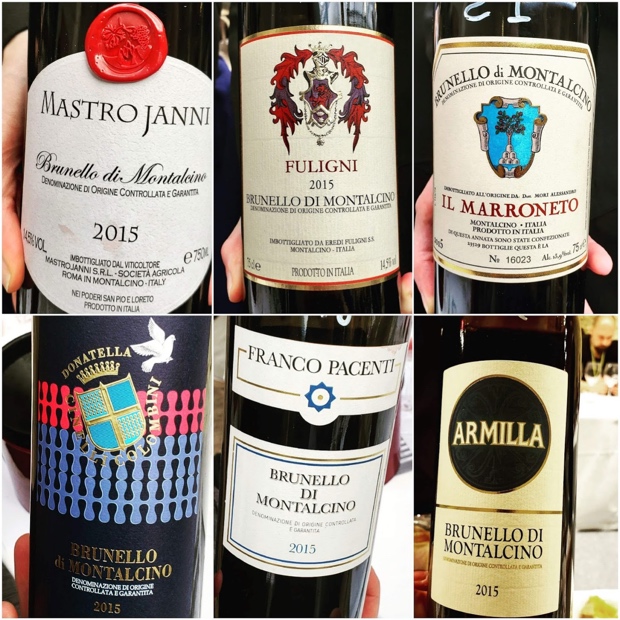
Brunello di Montalcino DOCG 2015 (71 notes)

Agostina Pieri Brunello Di Montalcino DOCG 2015

As ripe as it ostensibly gets for 2015 in this sweet scenting and viscous sangiovese with real spice cupboard seasoning and a piquing of gathered acidities. The grain of chalkiness runs through and should take this into an umami set of values in the not too distant future. Drink 2021-2026.  Tasted February 2020

Altesino Brunello Di Montalcino DOCG 2015 (994095, $59.00)

Very polished and made Brunello with a wealth of statuesque parts sculpted out of the high level materials presented the team that crafts this wine. Speaks to a very broad swath of place and a perfectly good drink of consumer appeal.  Last tasted February 2020

From the vintage where agriculture, winemaking and now selling came and will come easy so you can expect the warm, fuzzy, generous and soft. Perhaps too straightforward to be what the powers that be call a five-star vintage but if Brunello is what you want or even what you think you need then begin or continue the journey right here. Very berry, ultra liquorice and über morbido. Soft, amenable and unencumbered. Positive but certainly not overbearing structure. A now and through mid-term years drinking Annata. Drink 2019-2024.  Tasted October 2019

Argiano Brunello Di Montalcino DOCG 2015 (15460, $59.959)

Argiano goes all in for this sumptuous and unctuous ’15 of fruit, earth and acids long, sharp, linear and long, Big expressive and chocolaty sangiovese with wood a major factor and structure a fact of the matter. All purpose Brunello and so bloody effective. Drink 2022-2027.  Tasted February 2020

Armilla Brunello Di Montalcino DOCG 2015

The tiniest production delivers a very pretty Brunello from 2015 and this Armilla is just the right mix of wisdom and forward purity. There is little ambition, the fruit picking was spot on and the gentle extraction a matter of great gentility. A little Ribena but this is surely a sangiovese of terroir, left to its own devices, without distraction or interference. Drink 2020-2030.  Tasted February 2020
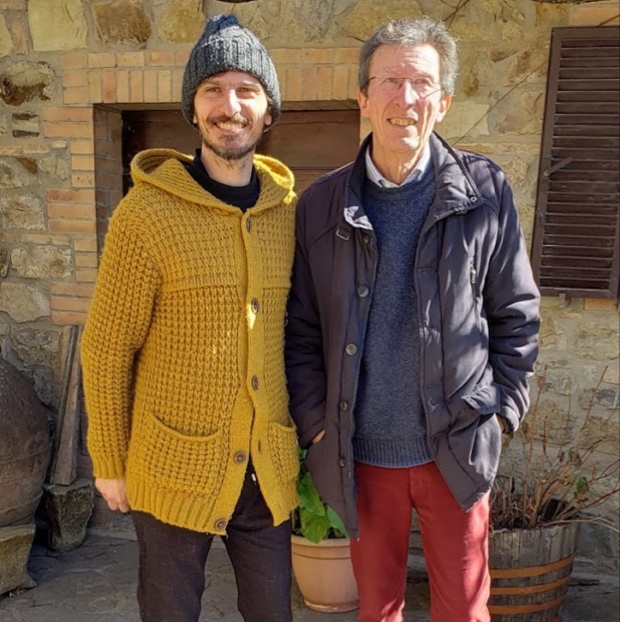
Baricci’s Federico and Pietro Buffi

Baricci Brunello Di Montalcino DOCG 2015

There’s just nothing that scents, acts, tastes or structures like a Baricci Brunello. At the height of traditional excellence and slow change improvement there is so much nobility and perfectly seasoned bitterness that allows this linear and purposed Brunello to rise above. No less fruit than structure and more solidarity amongst the parts than so many others. This my friends is Brunello made the way it was and has to be, without compromise and for all the most righteous reasons. Quality is in effect the highest order. Drink 2023-2034.  Tasted February 2020

Bellaria Brunello Di Montalcino DOCG 2015

Bellaria’s sweet and strange sangiovese is part terroir and part barrel, like walking in the woods the other day, scents of wet forest and sweet foliage in a warm season. The humidity of this Brunello smells like the past, “seems like 100 years ago.” Needs time to hide away and allow the melting, oozing and scenting wood to dissipate and allow the wine to do its thing.  Last tasted February 2020

Remarkably alternative vintage for Gianni, fresher and more effusive to be clear and sure. Shows with great immediacy and tells a story of vintage variation, especially at altitudes like Bellaria (550-600m) and from soils so poor in organic materials. It’s luxe but also so perfumed, pretty and expressive. Just gorgeous Brunello with fine acidity and sweet tannins. The window will open wide sometime early in 2021 and stay that way for as much time as you need. Drink 2021-2031.  Tasted October 2019

Canalicchio Di Sopra Brunello Di Montalcino DOCG “Canalicchio Di Sopra” 2015

Back to prominence for Brunello quantity is what 2015 does for business while delivering great quality without causing any undue relative stress. Both Canalicchio vineyards and Montosoli cru fruit make up the cuvée. Welcome to the beauty in cherry liqueur and outright unction from the generous vintage out of which every extra day meant more ripeness, more extract and more texture. The acidity factor is what drives this Brunello because staggered picking equates to an agglomeration of perfect timing. The true estate expression in no unspoken terms. Drink 2022-2031.  Tasted February 2020

Capanna Brunello Di Montalcino DOCG 2015

Quite a wood compliment to Capanna’a 2015, much like its 2009, here six years later with more fill in the middle and less angst. Creamy, delicious and soft though not without the possibility for extension to drink well into its fifth season. Drink 2020-2025.  Tasted February 2020

Caparzo Brunello Di Montalcino DOCG 2015 (579094, $49.95)

Caparzo is surely driven by the wood it spends quality time in getting to know and the material sent to those barrels is up to the mixing and swirling task. You understand this fruit and its dark cherry upbringing. You inuit the way vessels work through the pores while acidity flushes and raises the level of ability. Finally you get to know these sweet tannic grains and chains that work magic for the fruit. Will all come together soon, or at least sooner than many vintages. Drink 2021-2028.  Tasted February 2020

Casanova di Neri Brunello Di Montalcino DOCG 2015 (85498, $84.00)

Very polished Brunello tome here from Giacomo Neri, a memo from Montalcino, a song in process. A slide guitar bending entry with a spoken monologue in hushed tones and the agglomeration of soils playing beneath the words. If a Casanova di Neri Brunello could sing, it would sway your impression through its ability to conduct business with swagger and chord change artistry. This one just has a way about it. Files a quick flash of fruit, covers it with micro-oxidative blanket tracks laid down by the grandness of barrels. Then allows for it to breathe by acids, leaves for a break and returns to leave it in slumber while tannins figure out the refrain. The final verse is yet written and that’s just fine with us. Drink 2022-2032.  Tasted February 2020

Montalcino from Castello Romitorio

Castello Romitorio Brunello Di Montalcino DOCG 2015 (236356, $63.95)

A vintage of hue and the dichotomous relationship that bridges power and drinkability. A matter of accumulated acidity from a northwest Montalcino vineyard that doesn’t receive a whole helluva lot of afternoon sun. Salty from growing up in brackish mud and oyster shell from an ancient sea. The wood now speaks for the wine as expected and will fall away again.  Last tasted February 2020

Bottled, finished, now as is for three and a half months in. Pretty like the previous declared Annata from Sandro but truth be told the level of richness and power is raised up albeit without any compromise to construct and yes, elegance. The E word applies here, like it or not because this place demands it and you would absolutely know were this messed with, made up or polished by wood, pomp and circumstance. These are some stretched, elastic and elongated tannins. Will extend for hours, days, months and years, open forever, long before it bounces back. Drink 2020-2029.  Tasted October 2019

Castello Tricerchi Brunello Di Montalcino DOCG 2015

Reductive and underage this sangiovese toys with the idea of youthful ambition and blind faith. A touch past ripe in the teasing vintage of available exceptionalities and the race for potential glory. Certainly a Brunello very close and at the edge of excellence were it not a bit pressed and gone for the win. Drink 2020-2025.  Tasted February 2020

Castiglion Del Bosco Brunello Di Montalcino DOCG 2015 (956391, $63.95)

The beautiful middle ground of Brunello di Montalcino expression is graced by Castiglion del Bosco’s 2015 and also because it does the same for the vintage. High level ripe fruit, supportive acids and creamy if spiced chocolate comes across the palate in texture and piqued energy spice. Takes what gives and gives back. Drink 201-2026.  Tasted February 2020

Cerbaia Brunello Di Montalcino DOCG 2015 (652446, $66.95)

Cerbaia’s is warm, comforting and blessed Brunello of fruit ripened to the maximum for the most ease imaginable out of 2015. It’s quite creamy and regardless of a northern exposure there’s no lack of unction from this sangiovese. Drink in the early stages of its energetic youth. Drink 2020-2023.  Tasted February 2020

Col d’Orcia Brunello Di Montalcino DOCG 2015 (306852, $53.95)

Classic closed Col d’Orcia youth, nose of earth crusted berries and not nearly the mature notes of what the future surely holds. Though meant to be consumed much earlier than Riserva or Poggio al Vento there’s no escaping the place and the winemaking ways of the house. It is truly appreciated how youth in a Col d’Orcia sangiovese does not mean chocolate or vanilla, nor any overbearing barrel notes. It does regard spice and piqued feelings that bode well for a long future. Drink 2023-2030.  Tasted February 2020

Corte Pavone Brunello Di Montalcino DOCG 2015 (237263, $57.95)

Heady and high floral aromas beget a formidable Brunello of fortitude and strength. Deep as black cherry emits in sangiovese from a certainty of high elevation, warm vintage solar radiation. A different sort of ’15 from the northwest adjacent Romitorio and surely a soil so different despite being so close. Rich, strong acids and loose tannin. Drink 2022-2028.  Tasted February 2020

Cortonesi La Mannella Brunello Di Montalcino DOCG 2015 ($89.41)

Tommaso Cortonesi’s 2015 Brunello is a ruby-red, spice studded star in 2015, high-toned and so very expressive. What spice oh my, what tripping fantastic light across the tongue and so very taut in its youth. Intensity does not begin to explain the freshness and the youthful nature of its being. Need to revisit La Mannella in one year and the 2015 sangiovese it has gifted in five years or so.  Last tasted February 2020

I’d like to say the tannins on 2015 Annata are sneaky but they are so much more than that. These are grippy, layered and nearly formidable tannins. Good thing the easy, generous and lush fruit is somehow capable of defending itself. Boom this is one of Tommaso Cortonesi’s most accomplished Annata and more capable of aging than even he would probably have guessed he was making. Power and beauty. This is that and more. Drink 2021-2031.  Tasted October 2019

Cupano Brunello Di Montalcino DOCG 2015

Cupano’s is a beautiful Brunello from 2015, aromatically gregarious, fruit sweetened in two times ripe ways but most importantly a phenolic access that lifts the spirit. ’Tis a red citrus acidity and a clay depth that combines for ultimate levels of strength and complexity. Lovely wine here and with just a smile of Brett to keep things stylish and rustic. Drink 2022-2030.  Tasted February 2020

Donatella Cinelli Colombini Brunello Di Montalcino DOCG 2015 ($74.95)

The 2015 is a deeper study in DCC soil and Brunello invention. You need to know that the northerly Donatella Cinelli Colombini terroir is more than offset, singular and testable. The makers of these Brunelli investigate every grain of sand, mould of clay and tumble of stones to forge the various cuvées of their sangiovese stable. This Annata carries a lyrical contralto in as much as that is a thing in Montalcino. A Cher, Annie Lennox, Nina Simone voice. It is precise and profound. It will live longer than the men. Drink 2023-2033.  Tasted February 2020

Fanti Brunello Di Montalcino DOCG 2015 (112607, $74.00)

Hello, hello Fanti, you beautifully factual and racy Brunello you. Hello to your calm, your controlled tension and your seamless transitions. Hello to how you say salve and open your arms. Hello to your mind, your body and your soul. Every bit of tradition, soil and acumen runs delicately and with purpose through your mineral veins. Hello to you beginnings, your full middle and your sweet endings. “Just one drink.” Of your loving cup. “In the sweet summer sun.” Drink 2022-2029.  Tasted February 2020

Fattoi Brunello Di Montalcino DOCG 2015 (33498, $46.95)

Always pleasure, always balanced, always proper. This is the Fattoi Brunello world, fruit sweet, energy running high and wine all tolled running long. You can count on this fruit to lift you up and the bones to stay propped up. Never waning, failing or faltering sangiovese with charm and grace. Drink 2020-2026.  Tasted February 2020

Fattoria Dei Barbi Brunello Di Montalcino DOCG 2015 (928028, $54.95)

C’mon classic Barbi here and the request is for this effectual realization to continue on forever, through the decades of vintages and their Brunelli. You come to expect the sort of juice that needs time, more time, precious time, endless time. You look for this tug of firmness, this posit strength and this creamy centre that ties the sangiovese room together. This does not and don’t ever abandon these roots Stefano, always keeps the Cinelli Colombini family’s Barbi faith alive. They are the lifeblood of this wine. Drink 2023-2030.  Tasted February 2020

Fattoria Del Pino Brunello Di Montalcino DOCG Il Pino 2015

Now for something set in the purity of the modern Brunello world. Though labeled Annata and therefore fashioned in a Classico estate-driven way there’s just something specific and particular about where this was surely born. A vineyard, a block, a plot, a Climat, a piece of terroir, a place of origin. Has that no lo so of a very special soil, likely fine clay and Galestro because it’s so smooth, confident, non-plussed, focused and finessed. Drink 2022-2031.  Tasted February 2020

Fornacella Brunello Di Montalcino DOCG 2015 ($54.00)

Fornacella’s brings a fine perfume of candied roses and fennocchio into Brunello quite linear and finely textured. There’s some cocoa dust and dark bitter chocolate shavings melting in and they are well integrated indeed. This is crisp, clean and properly structured sangiovse set to linger over a pretty long run. Drink 2021-2027.  Tasted February 2020

Fossacolle Brunello Di Montalcino DOCG 2015

Reductive and immediately glycerin noted Brunello with so much attraction and ephemeral beauty. The closed circuit is anything but a distraction or a problem because the core of fruit purity within is nothing if not a mass of great expression. Wild cherry, definite new leather and lots of sweet herbs in puréed pesto feel. Very silky and powerful though never cloying or obstructive. Very impressive. Drink 2022-2030.  Tasted February 2020

Franco Pacenti Brunello Di Montalcinio DOCG 2015 ($63.00)

The Franco Pacenti Brunello 2015 is an impressive beast. A sangiovese of hearty warmth, strength and openly fragrant but edgy red fruit. This is a vintage Brunello that takes a little risk, knows the fruit has transferred over the line into a world fully phenolic, then exposed to ultra violet light. There’s no hole to fill, no barrel to overwhelm and all the best attributes to gain. So promising and exceptional. Drink 2023-2034.  Tasted February 2020

Fuligni Brunello Di Montalcino DOCG 2015 ($67.95)

Fuligni’s is a 2015 intoxicant, a hypnotizing Brunello with no aromatic restraint. The apposite is true about its sympathy, taste and soul-searching proposition, all of which are served in great restraint. There’s a circulative musicality with unexpected and intermittent jangles, bass notes, harmonies and rapid beats. The barrel is so much a part of its present and will melt away in just a few years time. The future looks so bright for this elegant ’15. Drink 2022-2029.  Tasted February 2020

Gianni Brunelli Brunello Di Montalcino Riserva DOCG Le Chiuse Di Sotto 2015 ($90.00)

You can heart this Brunello’s beat from a thousand miles away. On its sleeve, in the air and through the fine sense of sangiovese sense of elixir humour. Serious and graceful, reasoned, seasoned and saucy spiced. Gives crazy love. Opens up, every time it smiles. Drink 2021-2028.  Tasted February 2020

Il Grappolo Brunello di Montalcino DOCG Sassocheto 2015

“Stone quiet,” signature wine for Il Grappolo, from 20-plus year-old vines in the south-facing Piano Nero vineyard, planted at 300m near Sant’Angelo in Colle. Schist soils are strewn with Galestro, Alberese and sandstone, the whole Montalcino masala, all in veritable contribution. Sassocheto, exacting sangiovese, as in Brunello that is just like looking in the territory’s mirror. Pure and harmonious with sly power both “subdolo” and “furbo,” because tannins like these wind in two directions, depending on which was the fruit winds just happen to blow. A worthy “campione” of the 2015 vintage, to set an example for how to win when your vineyards gift such exemplary fruit. One of the great values of the year. Drink 2021-2029.  Tasted February and November 2020

Il Marroneto Brunello Di Montalcino DOCG 2015 ($46.95)

Completely new set of parameters applied and noted in this 2015 Brunello with an aromatic waft that’s off the floral charts. What is that exotic perfume? ’Tis a rose petal and fresh tar, sweet herbal pesto and even sweeter fruit interned demi-glacé. Rich and far from dusty, like the cool feelings from dusk to dawn, if “nobody knows where it comes or where it goes,” this Brunello has the reds and blues to live long. Drink 2022-2030.  Tasted February 2020

Il Poggione Brunello Di Montalcino DOCG 2015 (551176, $72.95)

Il Poggione’s tells a Brunello vendemmia tale, in delivery of that vintage’s generous fruit, followed by a generosity of barrel and all the spice it can carry forward. High constituent parts, syncopated for possibility and most likely, probability. That says age will not catch up to a wine of great health because it was taken care of and will continue to take care of itself. You should pay it the same respect. Drink 2021-2027.  Tasted February 2020

La Gerla Brunello Di Montalcino DOCG 2015 ($76.95)

Le Gerla strikes as always, heady and impressive, big-boned, deep and serious vineyard exhumed Brunello. A mouthful of sangiovese like few other in Montalcino, of swagger, fully formed, developed and entrenched in vintage. Boasting of the kind of humid fruit swell that adds up to a sour cherry, leathery chew of Brunello. Full exaggeration and impression, as generous as it gets, deep and mounded in 2015. Drink 2022-2029.  Tasted February 2020

La Poderina Brunello Di Montalcino DOCG Tenuta del Cerro 2015 ($82.99)

Located next to Barbi and near to the Sant’Antimo Abbey La Poderina is a dichotomy in Montalcino expressiveness, at once Amaro, botanical herbal and then silky smooth, a liqueur of digestif proportions. Fruit comes from the top of the Bellini Vineyard’s hill, from 15-35 year-old vines facing southeast. If you are a fan of dry Amari-spiced and in liquid chalky grain of tannic addendum then you will relish this Brunello.  Drink 2022-2028. Tasted February 2020

Le Chiuse Brunello Di Montalcino DOCG 2015

Tasting Lorenzo Magnani’s 2015 Brunello only four months later tells an exacting story and speaks to how long his sangiovese holds the capability to age. The medium sized clusters are picked second (after the largest for Rosso) and ahead of the smallest for Riserva. They are the ones that gift this tempered extraction, concentration and texture. Impeccable balance from 2015 that is the one thing showing up early.  Last tasted February 2020

There is a perfume about 2015, a ripe cherry that stands apart for the vintage and even more specific to Le Chiuse. There are cherry trees planted by Tancredi Biondi-Santi here that mimic or rather the aromatics do so, especially in this wine. It’s all texture and a true sense of the land, a feeling of Galestro, rich clay in mouthfeel and Le Chiuse, the place where the dam closed the water off for irrigation. So much fruit and harmony, between acidity, alcohol and tannins. Drink 2020-2029.  Tasted October 2019

La Colombina Di Casseli Anna Maria Brunello Di Montalcino DOCG 2015

An older style, not so old as to bring out the grey but rather a wisdom, an educated guess, a planned parenthood. Rich savoury excess like few Brunelli and formidable of sangiovese acidity. The penultimate one for this undeniable and tractive local delicacy, in efficacy and naturally occurring phenomenon. The old is new again. Drink 2022-2030.  Tasted February 2020

La Lecciaia Brunello Di Montalcino DOCG 2015 (121905, $66.95)

The vintage question is far from a concern with respect to ripeness and a far more important consideration is more about the management of extraction, wood and acidity. La Lecciaia’s work is so properly executed because the acids secure, lift and place the fruit where it needs to be. That is on a mid-level precipice where structure can take over without much ado. All in balance here for mid-term perfection. Drink 2021-2027.  Tasted February 2020

La Màgia Brunello Di Montalcino DOCG 2015 ($59.95)

Rich and wealthy fruit variegated Brunello here from La Màgia, of blues, reds and blacks all layered and interacting together. That’s so necessary here because the wood sheathing is equally magnanimous and this sangiovese ultimately plunders my soul. So much warmth, depth and deep blues though to be honest I wanted more restraint. Drink 2021-2026.  Tasted February 2020

Le Gode Brunello Di Montalcino DOCG 2015

Le Gode farms a plot on the hill of Montosoli and while there’s a level of that elemental push there too is some less than pure fruit, Brettanomyces and creamy chocolate. Drink 2020-2022.  Tasted February 2020

With Riccardo Campinoti, Le Ragnaie

Le Ragnaie Brunello Di Montalcino DOCG 2015 ($115.00)

The Brunello that sits on its skins for three months and so sure of itself that the maintenance on that ferment is really low. A testament to the vintage because this is the longest skin-contact period Riccardo has ever attempted. Still showing its teeth and the great fruit of the year. Still, hands off, don’t touch.  Last tasted February 2020

The come and get me vintage but don’t be misled, distracted or misunderstood. The fraganza di Ragnaie is an intoxicant of the highest order from the highest elevations. This is tonality of verified airy exceptionality. There are fruit landings and destinations, from patches and orchards, without pith and with stone seeds. From only six hectares of the 15 total planted and the balanced one, with Montosoli fruit joining Petroso, Castelnuovo dell’Abate and the four vineyards at 600-plus metres around the winery. Still firm and shadowy so wait three more years. A redux of ’13 but in a wholly antithetical way and only in the ways of Le Ragnaie. Drink 2022-2033.  Tasted October 2019

Lisini Brunello Di Montalcino DOCG 2015

Lisini brings a mass of extraction and attraction from their 2015 Brunello, restless energy and a lusty precipice hard to reconcile in its youth. A wine you have a cup of coffee with “until the next time we say goodbye.” This is Brunello of expectation, tradition and once in a while affair. Meet up once a year to catch up and do this for a decade or two. It’s that kind of sangiovese. Drink 2022-2031.  Tasted February 2020

Mastrojanni Brunello Di Montalcino DOCG 2015 ($69.95)

Mastrojanni is an aromatic wild one in 2015, florals and full citrus scrape. There’s no letdown anywhere on this sangiovese, fruit having come to fruition and everything pulled from it’s phenolic capabilities. It’s über ripe and conversely tannic, crunchy, chewy, earthy, floral, all of the above again and more. So much length and more to come. Drink 2023-2032.  Tasted February 2020

Máté Brunello Di Montalcino DOCG 2015

Máté is strong mocker in 2015, high level at every angle, turn and precipice reached, namely by sour acids and gritty, brittle tannin. Not so much love at this early stage. But I can say this. Give this sangiovese 10 years and it will simmer down. dole out abbracci and make nice. It just won’t do so with generous fruit. Drink 2023-2028.  Tasted February 2020

Mocali Brunello Di Montalcino DOCG 2015 (64956, $44.95)

High toned and a bit lean for 2015 this does not elicit sentiments of the top, top terroir. A bit saccharine and intense with hard acids and overtly sensory edginess. Drink 2020-2022.  Tasted February 2020

Musico Brunello Di Montalcino DOCG 2015

Musico is at the far end of the ripe spectrum or rather sitting in fences at the edge of each. There is fruit of a sun-worshipped, solar-charred kind and then conversely a verdant group marked by dried herbs and legumes. This disparate blending makes cause for short term gain and gone long hollowness. Drink early for best response. Drink 2020-2023.  Tasted February 2020

Padelletti Brunello Di Montalcino DOCG 2015

Both rustic and reductive though filled to the inside brim with an impressive core of fruit. Quite raspberry and seasoned with spice that speaks to the edginess and headiness of the wood staying presently ahead. Will integrate in a few years and drink really well. Drink 2022-2028.  Tasted February 2020

Pian Delle Querci Brunello Di Montalcino DOCG 2015

A pretty sangiovese is a beautiful thing that makes for a beautiful life. This would only be said if a wine causes such a thought and so here, from the start, is that sentiment solicited. Sometimes roses emanate and while that may be a sangiovese peculiarity it is not something only reserved for nebbiolo. The palate too offers pretty flavours and red citrus joy. Might seem a bit light and sour-edged to some but like an enchanted old ruin, I appreciate it all the same. Drink 2022-2030.  Tasted February 2020

Pian Delle Vigne Brunello Di Montalcino DOCG 2015 (651141, $61.95)

The 2015 Pian delle Vigne is remarkably smooth, satiny and silky sangiovese. Plain to feel and see. The quality in this Antinori is undeniable so the level of rhythm, blues and soul is not really the point. The fruit is extended out of a mind of many and not just one so it rolls through the stages of its construction with effortless, lack of tension, ease. Classic steak house or cottage deck Brunello, perfect for men of leisure off the course or out of the boat, showered and ready for their steak. Drink 2020-2027.  Tasted February 2020

Piccini Villa Al Cortile Brunello Di Montalcino DOCG 2015 (434696, $45.00)

In full expectation that the Montalcino house that Piccini built will find seasoned and reasoned success in 2015 is proven by this proud and even profound wine from Villa al Cortille. An alignment of essential, recognizable and desirable aromas, tastes and sensorial aspects makes this as promising a restaurant pour as any from the vintage. Consistency and professionalism incarnate. Drink 2022-2028.  Tasted February 2020

Pietroso Brunello Di Montalcino DOCG 2015

From Andrea Pignattai, winemaker, gentle soul, humble man. A small estate on the northwest corner of the Montalcino hill where so few farm that sector. Only 35,000 bottles produced split between Rooso and Brunello. Andrea’s is authentic from the word nose, rich in dark scented fruit but cool climate herbal, almost minty. Tight, pointed acids, direct and simply the right stuff. Refreshing in so many ways. Grandi Andrea. Drink 2021-2029.  Tasted February 2020

Piombaia Brunello Di Montalcino DOCG 2015

High tonality straight away, up and away into the volatile and the inhalant of much repute. Also a touch roasted, like nightshades under the broiler. A bit lean up the middle. If seemingly lacking substance and grace it makes up for that with formidable structure. Rustic and austere and should drink better looking 15 years forward. Drink 2024-2032.  Tasted February 2020

Podere Brizio Brunello Di Montalcino DOCG 2015

Briizio’s is polished and stylish Brunello, perfectly seasoned and reasoned from and for the vintage. Clarity and purity are met with a set of palpable textures; crispy, crunchy and juicy. That’s the crux of what drives this lush and luscious sangiovese. Fruit and mouthfeel, both expressive and adding life, using attributes to the max. Drink 2021-2027.  Tasted February 2020

Podere Le Ripi Brunello Di Montalcino DOCG Amore E Magia 2015

As per the moniker there’s a lotta love emanating from this unctuous and luxe sangiovese to make way with the generous vintage. Rich fruit of the red express kind is never relenting and while acids follow phenolic suit the tannins are sweet and mild. One of the better Brunelli meant for easy and early consumption. Drink 2020-2024.  Tasted February 2020

Poggio La Croce Brunello Di Montalcino DOCG 2015

Rustic and woody to be sure, with plenty of vanilla and a creamed caramel note, though there is some solid fruit underneath. With time it will improve though will always be on the side of hot and spicy. Drink 2022-2025.  Tasted February 2020

Poggio Landi Brunello Di Montalcino DOCG 2015 (573980, $54.00)

From the ABFV group of estates that includes Podere Brizio in Montalcino and Dievole in Chianti Classico. Poggio Landi is taken from elevations between 300-500m on heavy clay soils. The is big and rich from 2015, of that there is no doubt though you’d hardly know it for there is too much wood at this stage. Vanilla and baking spice, sweet, confected and not yet conjoined, laying dominantly overtop the fruit. Too much ambition that may yet yield eventual results. Drink 2021-2025.  Tasted February 2020

Poggio Di Sotto Brunello Di Montalcino DOCG 2015 (337774, $180.00)

No less than a finessed coax of pure higher altitude sangiovese fruit delivers the southern territorial goods in 2015. That and a staggered pick, layered atop one another for a stack of juicy, ripe acid and fine grained chain of tannic goods. The seamlessness and positively structured finesse is beyond comprehensible commend-ability. It’s outright impressive.  Last tasted February 2020

The red fruit of this place and only this place is amplified or better still exemplified in appellative Brunello. There is a glycerin derived and in possession of balance, from soils, elements and climate that is unparalleled for this specific area of Montalcino just to the west and below Castelnuovo dell’Abate. The fine shift from earth to fruit and into tannin through mineral bleed and finally peppery savour all works on the palate. This ’15 is proof of how a team continues to uphold standards of these vineyards no matter the ownership or the hopes, dreams or wishes of those who support and also those who drink from the deep well of this project. Drink 2022-2033.  Tasted October 2019

Poggio Lucina Brunello Di Montalcino DOCG 2015

Cheese and wood. Wet wool too. Drink 2020-2022.  Tasted February 2020

Renieri Brunello Di Montalcino DOCG 2015

From Bacci wines connected to Tenuta Renieri and Castello di Bossi in Chianti Classico. Here in the south of Montalcino at elevation (400m) and in the protective shadow of Monte Amiata. Renieri is nothing if not wise, well-rendered and compactly designed Brunello di Montalcino 2015. The fruit is ample to gainfully substantial and the exercise one that practices restraint in the name of balance. No demons needed exorcizing because the handling is one born of acumen, not desire. Another classic restaurant Brunello to represent the appellation and the vintage. Drink 2021-2027.  Tasted February 2020

Ridolfi Brunello Di Montalcino DOCG 2015

Slightly reductive and also filled with Ribena and raspberry fruit. Fully tests the mettle and the ripeness factor of 2015 and seems acidified. Disparate and problematic. Drink 2020-2023.  Tasted February 2020

Roberto Cipresso Brunello Di Montalcino DOCG 2015

Truly big framework here in the Cipresso ’15 Brunello, fruit of another ilk, talent running through all parts from beginning to end. Full fruit compliment, rusty, dusty, plummy, ripe and sour, all in, all the way. The balance afforded by wood and time is estimable, attributable and accountable. Such a well-reasoned and silky seasoned wine. Drink 2022-2032.  Tasted February 2020

Ruffino Brunello Di Montalcino DOCG Greppone Mazzi 2015

A righteous and proper sense of tradition in rustic tones makes Ruffino’s Greppone a prosperous proposition if for a specific crowd that sticks to roads well trodden. Crunchy and earth crusted fruit, high tonal attitude and a linger that repeats the plays again and again. Amazing what consistency times vintage in Brunello such as this can deliver. Solid 2015 from the house built big. Drink 2021-2027. Tasted February 2020

San Giorgio Brunello Di Montalcino DOCG Ugolforte 2015 (212431, $47.95)

The second estate of Poggio di Sotto delivers a solid core of sangiovese fruit swagger with more than a modicum of high acid tang in 2015. Tart, driven, ultra-phenolic and on the road to both freedom and happiness. I feel they are still figuring out the nuance and the possibility of the estate and 2015 is sending the team well on their way. Drink 2020-2023.  Tasted February 2020

San Polino Brunello Di Montalcino DOCG 2015 (14813, $89.00)

Consistently luxurious and while at the same time of a cure grounded in the natural world. Like salumi, slow-roasted eggplant and a warm pesto of fresh herbs; rosemary, oregano and basil. Plenty of orange pulp and tannin of a liquid chalky kind. Yes this ’15 from San Polino is consistent with what came before but the new advantage and next level formative components will take it deep. All the tenets of agriculture, vintage and cellar work are conspiring to great probability effect. Drink 2023-2032.  Tasted February 2020

Sesta Di Sopra Brunello Di Montalcino DOCG 2015

Fine parts, sways and directions travelled is the directive slowly parlayed in this sweet scenting sangiovese. The purity of fruit beauty is an unadulterated mix of real time agriculture lending a discretion of honesty to the hands that take over and make this wine. No lack of signal in the transfer makes for a palate, a mid-palate and a fleshy finish with fine chains, grains and strains of structure that carry the weight. Will live infamously as one of the better to best 2015s.  Drink 2023-2033. Tasted February 2020

Sesti Brunello Di Montalcino DOCG 2015 ($117.95)

Sesti’s is lightning red fruit meets high acid sangiovese for one of the lighter, brighter and sneaky powerful Brunelli. Creeps and climbs, moves, shakes and graces the palate with sharp fruit, raspberry in tang ways and then earthy, properly volatile and respectably edgy. Will seek and find balance between that tension and the other-worldly umami before too long. Drink 2022-2028.  Tasted February 2020

Solaria Patrizia Cencioni Brunello Di Montalcino DOCG 2015

Humbly submitted 2015 from Cencioni, well developed fruit gentle in mass, explorative in design and calm in the face of dark sensorial attraction. Acids are just a touch duro but do their parts to lift and support succulence, that plus a dollop of malic cream lending a softening and blanching hand. Perfectly lovely. Drink 2021-2025.  Tasted February 2020

Talenti Brunello Di Montalcino DOCG 2015 ($76.00)

Riccardo Talenti’s Brunello is always a combinative, bringing together of double entendre ideals in the name of achieving the great estate balance. Fruit for the sangiovese comes from vineyards both southwest and southeast of Montalcino, aging is done 60-40 in 500L tonneaux and grandi botti of French and Slavonian oak. The vintage that does it all, a largesse of fresh fruit, the earth liquified in sand, clay, Galestro mineral and finally, the most stretched and generous tannin imaginable. The pinnacle and epitome of professionally executed high quality Brunello that never abandons its sense of place. Drink 2022-2030.  Tasted February 2020

Tenuta Buon Tempo Brunello Di Montalcino DOCG 2015 (14856, $65.00)

TBT’s 2015 Brunello hits the middle notes with sumptuous ease, bringing a depth of vintage fruit into a house occupied by sweet acids, fine wood and mild tannin. The work here is proper, finessed and leads to a very drinkable wine. Perhaps a bit overtly refined in this vintage with the hopes for next level cause and effect. Highly recommended for a three to seven year run. Drink 2020-2026.  Tasted February 2020

Tenute Silvio Nardi Brunello Di Montalcino DOCG 2015 (922054, $46.95)

Lovely little ’15 from Nardi that grows in stature as you work the glass. Begins with classic dusty cherry and leather earthy fruit then climbs upward with high level acidity. Crescendoes at a higher point and lingers well into the next hour. I can hear this one ‘knockin’. Great Brunello blues riff and groove. Vintage in, vintage out one of the most consistent Montalcino wines. Drink 2022-2028.  Tasted February 2020

Tommasi Casisano Brunello Di Montalcino DOCG 2015 (483800, $70.00)

A lightning red fruit Brunello out of 2015 from Tommasi’s Casisano with tight acids and a lightness that allows for a breath of fresh Brunello air. A thriller this one, not a killer and blessed with ease of amenability. Tannins build with more strength then expected though ultimately speaking the heights are scaled early and no great amount of time is needed to make headway with this wine. Terrific first five years sangiovese, for food expected and wholly unexpected ways. Drink 2021-2025.  Tasted February 2020

Val Di Suga Brunello Di Montalcino DOCG 2015 (713719, $54.95)

From Andrea Lonardi, incumbent winemaker at Val di Suga (since 2012) and while 2015 simply is what it is you can feel the work put in to make a proper sangiovese that speaks for the estate first and the vintage second. A balanced and professional wine that sets tor table for what will come, next vintage and going forward. Drink 2021-2028.  Tasted February 2020

Ventolaio Brunello Di Montalcino DOCG 2015

All in with all that 2015 can offer to an appellative expression that demands so much. For Brunello this is a weight-packed fruit first, tannin second wine. The drive or length in between is short even in youth, somewhat agitated and exaggerated for the vintage. This one does not trade riffs but gets straight to the point, but that point is set far off in the future. The established credo is all about strength and credibility. Be patient. Wait for it. Drink 2023-2030.  Tasted February 2020

Villa Poggio Salvi Brunello Di Montalcino DOCG 2015 ($49.95)

Quite a rich and creamy Brunello, more wood in taste and texture than fruit from the hip. Some spice and tannin come about as a result of tannin that again, if at first was pressed from dark fruit now seems squeezed from the barrel. Drink 2021-2023.  Tasted February 2020

Brunello di Montalcino Vigna DOCG 2015 (27 notes)

Argiano Brunello Di Montalcino DOCG Vigna Del Suolo 2015

The vineyard down below is appositely named in apropos significance because the sentiment is high, lightning struck and quick as a whip. Crunchy and earthy fruit is ripe and near delirious, tripping the lights and adding fantasy to an already heady if effusive substance fantastic. So much going on in complex waves, severities and notions. Will transfer and oscillate, groove and titillate for a decade to come. Drink 2022-2031.  Tasted February 2020

Azienda Di Franci Franca Brunello Di Montalcino DOCG Tassi Di Franci Franca Selezione Franci 2015

A true sense of sangiovese volatility marks the entry in the Selezione from Tassi. So much wood and tannin, a compounding of big elements, attributes and more wood. Will need a decade to integrate. Drink 2023-2030.  Tasted February 2020

Azienda Di Franci Franca Brunello Di Montalcino DOCG Tassi Di Franci Franca 2015

Tassi’s Franci is antithetical to its Serlezione and it is surely a wine of higher energy and drive. More precision and focus as well, better integrated barrel and length for days. Still the chocolate and the creamy texture. Drink 2023-2031.  Tasted February 2020

Fattoria Dei Barbi Brunello Di Montalcino DOCG Vigna Del Fiore 2015 ($79.95)

Vigna del Fiore. Salty number for the Montalcino location and yet this ease of amenability and the way the Barbi effort solicits affectation is undeniable. This secrecy of structure is a house and Vigna speciality and the sauce is spread liberally across the succulence of the fruit. No denying the effort, the acumen and the persistence of unwavering potential. Drink 2022-2030.  Tasted February 2020
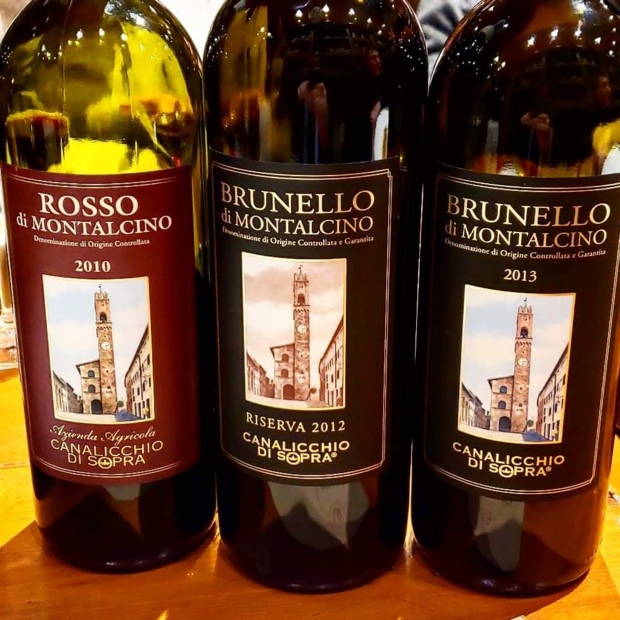
Canalicchio Di Sopra Brunello Di Montalcino DOCG Casaccia 2015

Casaccia as in the name of the house and the registered name of the vineyard, here a monopole look at Brunello from the larger 14 hectares for eastern Montalcino’s Canalicchio. The idea here is to celebrate a place within a place but without compromising the larger cuvée expression. Takes extract, concentration and purpose to another level, not to mention polish, precision and potential. The acids are elevated and the texture more refined, converse and complimentary. A tightness makes for some early attack that needs time to get past. Quite cool, tannic and intense. Will hit its stride quite far down the road. Drink 2024-2035.  Tasted February 2020

Canalicchio Di Sopra Brunello Di Montalcino Riserva DOCG 2015

A preview sample. Comes from fruit grown in the oldest two hectare vineyard of Vigna Vecchia Mercatale. The vines were planted in 1987 and in good vintages the potential is gifted, not a matter of grand impact but one of the land, the soil, the brown clay minerals and the elements. And so it’s a matter of longevity and potential, not brut strength. A beautiful example of Riserva, focused, precise and fine. And yet the style is poised in position along a line that includes the Brunello and the Riserva so homogeneity in these soils is more than apparent. This part of Montalcino makes this kind of wine and this house celebrates the consistency. Drink 2022-2036.  Tasted February 2020

Caparzo Brunello Di Montalcino DOCG La Casa 2015 (20750, $79.95)

The ripeness of La Casa in 2015 is at the precipice if not the next step where denouement begins in descent. The aromas are quite fine and discreet while the flavours pool in a deep well of full on berry and plum, dusty and of a twinge that’s Ribena in twangy tang. It is what it is, this version of gregarious 2015, seemingly easy and generous but the pick was all you had. Great La Casa is spot on. This one misses by a hair. Drink 2020-2024.  Tasted February 2020

Casanova Di Neri Brunello Di Montalcino DOCG Tenuta Nuova 2015 (85241, $135.00)

Tenuta Nuova takes the sangiovese of Casanova di Neri to another level entirely with a finesse and a polish unparalleled. The wave is long and arcing, accruing flesh and fine liqueur as time passes slowly while you take your time with this fruit of natural sweetness and matching fineness of acidity. Truth be told there is a come and get me now quality about this Vigna designate 2015 and one that will seduce early, in as much as the seduced is willing to be taken. Drink 2020-2027.  Tasted February 2020

Castello Romitorio Brunello Di Montalcino DOCG Filo Di Sesta 2015

From two hectares and only 500 cases of wine are made from vineyards out of which a significant amount of bunches are dropped. First made in 2010, one of the earlier single-vineyard declared Brunelli. “The thread of silk” which refers to the little creek that runs through the forest. A little bit more tonneaux than big barrel and a wealth of riches inherently gathered, layered and reticulated in pocket. Acids are high, mighty and persistent and there is a chalky insistence that matches the energy stride for stride. Not so much a tight sangiovese as a variegated one. Pine, rosemary and darkening fruit, full of sprezzatura. Drink 2021-2031.  Tasted February 2020

Cortonesi La Mannella Brunello Di Montalcino DOCG I Poggiarelli 2015

Skipping straight pass and over the sunless, tenebrous and obscured 2014 vintage it is this Tommaso Cortonesi 2015 I Poggiarelli that rises from the vineyard looking up the Montalcino hill to the southeastern side. Te offer is an ulterior one, an expression in contrast to what comes from northerly La Mannella. Warmer, fuller and without question more precise. Cortonesi has used the tools available to provide it a bigger architectural frame and the flesh of this vineyard dutifully abides, bedecking the incrustation of the facade and adorning the fills of the interior. Quite structured and yet fully fleshy of 2015 density and weight. Impressive stuff from Tommaso. Drink 2022-2032.  Tasted February 2020

Croce Di Mezzo Brunello Di Montalcino DOCG 2015

A slight note of rusticity grounds this sangiovese in salty earth while high toned acidity elevates and promotes a lifted sense of composition. Not sure if this comes or goes, weighs down or flies high. Needs to settle, play together in the sand and integrate for mature times in the sun. Will find the way. Drink 2022-2026.  Tasted February 2020

Donnatella Cinelli Colombini Brunello Di Montalcino DOCG Prime Donne 2015

Prime Donne is a highly specific single expression of the most important fruit raised by Donatella, Violante and team. The dichotomy here is more perfume cross referenced in adjacency to more barrel inflected structure. More notions to consider, vineyard dirt expressed through morbido tones and wood scents in gentle baking spice. Quite weighty in tannins, surely a love song so divine, certainly a wine that will stand the test of time. Drink 2022-2032.  Tasted February 2020

Fanti Brunello Di Montalcino DOCG Vallocchio 2015 ($89.95)

Vallocchio is just perfect for 2015. Vallocchio delivers fruit like that found in the Annata but deeper, purer and under a gastronomic integration of spice. Vallocchio gives and then gives some more. It gifts sweetness for that fruit mixed with the grain of the barrel. In the end the charm, warmth and caress of kissing tannin tells us not to demand this be the longest Vallocchio but surely expect one of the most graceful. Drink 2021-2029.  Tasted February 2020

Franco Pacenti Brunello Di Montalcinio DOCG 2015 Rosildo

If the 2015 Annata from Franco Pacenti was the bomb then what does that make the Vigna Rosildo? Excuse my English but this Rosildo is the shit. The great shit. Grande. Rosildo fineness is that of regal sangiovese style. Acid, tannin, structure, all together seamless and hungry to integrate simpler parts, make them complex and whole. Here is what should and must be considered one of the wines of the vintage. Drink 2024-2038.  Tasted February 2020

Il Marroneto Brunello Di Montalcino DOCG Madonna Delle Grazie 2015

A taut and yet to fully express itself sangiovese is this tight stunner from il Marroneto. Madonna delle Grazie is full of a cherry depth from which you feel the liqueur and yet the reductiveness keeps the wine safe beneath a hard shell. One of the few 15s that act this way, seriously tight, yet to crack and with 20 years of life safely stored within. Serious wine here from Alessandro Mori. Drink 2024-2035.  Tasted February 2020

Le Ragnaie Brunello Di Montalcino DOCG La Fornace 2015

A site in the highest elevation that used to be a lake bed so it’s rich in round stones. Picked earlier in 2015, kept away from jammy and suspended in the high sangiovese zone in which acidity keeps the dream alive. So beautifully judged.  Last tasted February 2020

From Castelnuovo dell’Abate at 400m of elevation, planted in the 1980s. A former lake bed, with clay and round sand stones. Strikes the Brunello accord between richness and balance with more fruit than 10 other houses combined. The transparency is the thing; smells like fruit, perfume and the land, like rocks and sandstone. The bleed of Pietraforte into the blood of sangiovese. There’s really no reason to find fault and in fact there is every reason to breath, exhale and smile. That is what happens when you taste a Brunello like this special single-vineyard wine from Le Ragnaie. Drink 2022-2037.  Tasted October 2019

Le Ragnaie Brunello Di Montalcino DOCG Vigna Vecchia 2015 ($177.00)

All the Brunelli from Le Ragnaie were kept on their skins for 90 days in fermentation, longest ever for Riccardo. Not convinced anyone else is making Brunello like this. Fresh, lean and linear but not. At this stage the sapidity is raging, omnipresent, marvellous. “I think when they are young they change everyday,” says Campinotti. Well it certainly has done so since October.  Last tasted February 2020

Planted in 1968 and from a warm vintage all the way to the end, into October. Riccardo Campinoti is smiling wryly, knowingly and confidently after he pours and begins to speak of it. “The longer you waited the riper it became” and the healthy grapes allowed for hanging to mid-October. Deeper and of more sponge-soaked earth in the old vines with a higher tone juxtaposed against the depth drawn by long vine roots. The aromatic complexities run, jump and ride off the proverbial charts and you may find yourself drunk and mystified just from the smells. Once you gain palate entry you are hooked and then you climb in, headfirst, unencumbered, no strings attached. A tour de force beloved of sangiovese, Montalcino and old vines. Vigna Vecchia is the epitome of a true structured wine, one which does not grow old, despite the passage of time.  Drink 2023-2039. Tasted October 2019

Le Ragnaie Brunello Di Montalcino DOCG Montosoli 2015

The vineyard was purchased in 2014, 50m on the right of the Baricci cellar. “In my opinion it was good right away,” tells Campinoti so a single vineyard wine was made straight away. Casanovina refers to the house on the property. Another example of a site wine, as opposed to Riserva stylistics which to be honest are not Riccardo’s style. “It doesn’t add much, in my opinion.”  Last tasted February 2020

Riccardo’s first vintage from the Galestro strewn soils at 220m next to Baricci on the northerly Montosoli hill is a completely different animal altogether. The tannic structure is so opposite to the southerly wines, here taut, twined laces pulled oh so tight. Not without the Ragnaie tonality mind you and the transparency, clear, distinct and honest. Not necessarily a terroir vintage and fermentation occurred in oak vats (as oppsed to the concrete for the others) and yet it’s so bloody sangiovese. Blood of Montosoli. Drink 2022-2038.  Tasted October 2019

Mastrojanni Brunello Di Montalcino DOCG Vigna Loreto 2015 ($63.95)

Quite a heady and rich Vigna from Mastrojanni, full of dark fruit, caramel and chocolatey flavours. So rich and also youthfully reductive, fruit and acidity thick as thieves. The texture is outrageous, smooth and yet this is the grippiest ’15 around. A beast that attacks the senses with fervour and intent. Drink 2023-2032.  Tasted February 2020

Podere Salicutti Brunello Di Montalcino DOCG Piaggione 2015

Piaggione stands apart, namely because the vineyard is lower, lighter in clay and the vines are the oldest of the cru. Lay of the land is 420-450m facing south, taking in sun and developing the biggest muscle. Not just more muscular but also on a broad shouldered frame. The adonis of cru, grippy and ripped, but first from a fistful of fruit strong enough to stand up and be counted. Bigger, more brawn, higher in alcohol, older in school of a certain era, or one that just seems to keep coming around. Stash Piaggione away and forget about it for a while. Drink 2023-2034.  Tasted February 2020

Podere Salicutti Brunello Di Montalcino DOCG Sorgente 2015

Organic, biodynamic and unfiltered, from the then first in Montalcino, at the hands of Francesco Leanza, in 1995. Now (and since 2015) in the custodial hands of Felix and Sabine Eichbauer, halfway between Montalcino and Castelnuovo dell’Abate. The last of the cru, single-vineyards planted at Salicutti and not surprisingly the one with most red fruity juiciness that keeps a lineage with the Rosso. If a portal into knowing what it makes to taste the bright side of 2015 could be described then why not make use of this ethereal Sorgente to learn of such things. Voltage, tension and vibration. Drink 2021-2028.  Tasted February 2020

Podere Salicutti Brunello Di Montalcino DOCG Teatro 2015

Less than a hectare, planted in 1994 (same year as Piaggione) and as the name suggests the block spreads out like an amphitheatre. The yields on the vineyard are low but through the 2016 vintage they were far less than now because the team have been fighting the voracious eating nottua caterpillar, at night, picking them off buy hand. The oak on Teatro is 10 and 20hL because these are the size that work with the low yields. I love Ieatro it should be said, as it is, indeed dutifully herbal, rich yet ethereal, dry and resinous. Less muscular than Piaggione but more in common with that cru wine. Drink 2022-2032.  Tasted February 2020

Salvioni Brunello Di Montalcino DOCG La Cerbaiola 2015

Salvioni’s is a deeply welling sangiovese with fully developed and formed 2015 fruit and no less than a 20 year architectural frame on which to hang. All the land’s attributes of growth are there in aromatic waves; brush and bush of herbs, mineral salts, essential oils. So much going on, character all over the expression and the sense of pace so high and squarely intact. Drink 2023-2032.  Tasted February 2020

San Polino Brunello Di Montalcino DOCG Helichrysum 2015

Very rich and crafty Vigna Brunello here from San Polino, rich in phenolics and chocolate though not so spirited in acidity and energy. Quite warming and caressing, a couverture of wood blankets and secures the fruit. Drinkable soon and in the near term for sure. Drink 2022-2026.  Tasted February 2020
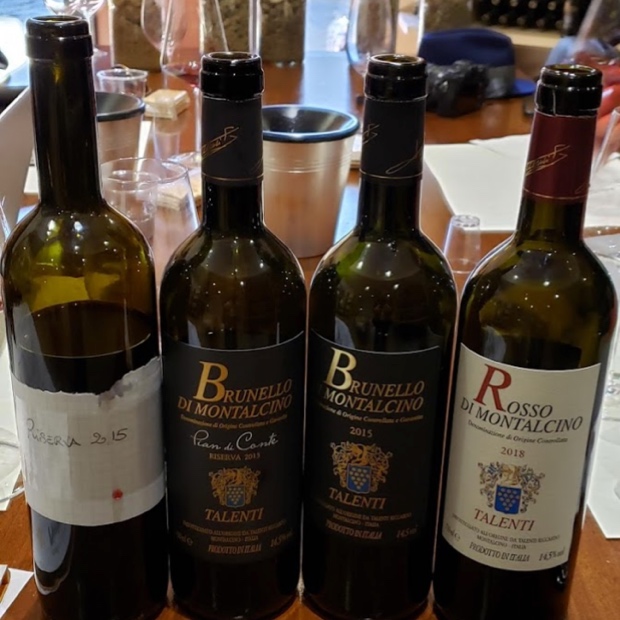
Talenti Brunello Di Montalcino Riserva DOCG Pian Di Conte 2015 ($120.00)

A Sant’Angelo in Colle viilage treasure is this Riserva made from fruit grown on estate vines at 400m just northwest of the administrative frazione. There is so much wine, substance and intensity at play in this near massive 2015. It is one with a soft core in its heart and so you can imagine the elasticity, nimble agility and the incredible length that will be the matter when the time comes to right. That fruition is at least five if not to be 10 years away. So much fruit from which tonneaux, grandi botti and variegated soils support the idea. Drink 2025-2035.  Tasted February 2020

Tenute Silvio Nardi Brunello Di Montalcino DOCG Vigneto Manachiara 2015

Serious wine here from Nardi, rich and nectareous, exotic and welling with big fruit flavours. The secondary and tertiary attributes can do nothing but lift and lengthen this wine towards epochs of imitable time. Look to open six bottles every three years for up to 20 in total. Drink 2022-2033.  Tasted February 2020

Tenute Silvio Nardi Brunello Di Montalcino DOCG Poggio Doria 2015

Poggio Doria is the wild child of Silvio Nardi, a high acid, bigger tannic structure sangiovese of pulse, energy and drive. Fruit substance is high, tones are equally elevated and time will do great things to this wine. Full throttle, edgy, briny, intense, grippy and full of so much Montalcino love. Drink 2024-2034.  Tasted February 2020


Brunello di Montalcino DOCG (other vintages, 14 notes)

Le Chiuse Brunello Di Montalcino DOCG 2014

The herbal-amaro-cool savour of the vintage really shows at the present time. That said the silkiness of the tannins and the later note of salty sapidity shows just hop\w long this is likely to age. Drinking really well.  Last tasted February 2020

Just eight thousand bottles made in this vintage with no Riserva in production. A completely different look at 2014 with this bottle, at the top of integrity, with Le Chiuse savour, throwback complexity and great brightness, surely blessed and pushed upwards for the future. Showing the way it was meant to. A reflection of the vintage and proof of time afforded the vineyard.  Last tasted October 2019

Le Chiuse delivers one of the realer deals in 2014 Brunello, with admirably pleasing and concentrated fruit set against a traditional backdrop of ripe acidity, minor Brettanomyces and full-bodied tannins. As it’s not an overly perfumed sangiovese it bucks the vintage trend if only because it avoids botrytis-affected atypical aromas. It’s quite a rich 2014, certainly a bit volatile and capable of going longer than most. Finishes by leaving you a linger of its chewy mouthful. Drink 2022-2030.   Tasted February 2019

Canalicchio Di Sopra Brunello Di Montalcino DOCG “Canalicchio Di Sopra” 2013

This ’13 from Francesco Ripaccioli and Canalicchio di Sopra is sangiovese out of the excellent, variable, at times confounding and now at the seven year mark, nothing if not profound vintage. Perhaps even marks the turning point for a winemaker looking for his and his family’s sense of place, for a unique eastern to northeastern Montalcino sapidity in his wines. “We are learning from our mistakes,” he admits, “such as those we made in 2007. We are now much more going in the direction of purity in fruit and clean clarity out of the cellar.” Brunello is all about freshness, verticality and depth. The 2013 comes from what Francesco would still qualify as “not so easy a vintage, a vintage of interpretation.” Cold for a Montalcino season so he, his siblings and team passed through the vineyards on several occasions for preparation, timing and selection. “We like to clean the vineyard, to prepare for the harvest,” he adds. Picking happened in October “of amazingly floral fruit, finishing on the 11th, just as the rain arrived. Better to be lucky than good.” ‘Tis Brunello first of flowers in bloom, a candied scent and fresh herbs. Fulsome and openly fragrant, a silky texture, some chocolate and ultimately, beauty. Drink 2020-2030.  Tasted February 2020

Canalicchio Di Sopra Brunello Di Montalcino Riserva DOCG 2013

Showing beautifully, in a calm stage even, a respite from power and now, simply attractive. All the Canalicchio elements from clay soil show up; mild sweetness, furthered salinity and a deep sort of sapidity. Nothing fully pronounced but all there. Great Riserva vintage.  Last tasted February 2020

Riserva is a selection in the cellar though certain blocks from certain vintages are premeditated and in fact 2013 Riserva is solely selected from the Montosoli hill. The perfume stands apart, rising, haughty and full of fresh roses. The expression of rocks drawn into vines from the new age, climate-affected northern exposure are for perhaps the first time in the Cru’s history a brand new Canalicchio di Sopra Brunello. Salinity, sapidity, power and elegance. Truly. Drink 2022-2035.  Tasted October 2019

Castello Banfi Brunello Di Montalcino Riserva DOCG Poggio All’Oro 2013 (443267, $190.00)

Already having entered a secondary stage this from Banfi drives the point that a Brunello Di Montalcino’s aging is done for you, first in barrel and then in bottle, so that when you purchase and pop it is ready to go. Earthy secondary notes of wet forest, funghi and then balsamico are heady and deep. The acids remain strong and persistent for necessary energy and life. A well seasoned and thoughtfully crafted Riserva is the final result. Drink 2020-2025.  Tasted February 2020

La Gerla Brunello Di Montalcino Riserva DOCG 2013

Somehow, some way this is how Riserva in Montalcino is imagined. The deepest inhalant of savour and the years of barrel aging for an aromatic amalgamation of epochs primary, secondary and tertiary. This ’13 already accesses the move to the next and the next. It is the epitome of what Riserva has come to mean and carries the torch as it has been passed forth. Drink 2020-2025.  Tasted February 2020

Le Chiuse Brunello Di Montalcino Riserva DOCG Diecianni 2013

The ’13 will be released on January 1st, 2023 and as the name Diecianni suggests it is a Riserva that 10 years minimum are needed before readiness begins to take shape. The selection is from the smallest grape clusters in estate vineyards and mainly the oldest vines, originally planted in 1987. The vintage of the great polyphonic-phenolic, elastic and stretched ripeness, by photosynthesis without heat, of muscles with energy and ones that will develop, remain and use their power to keep the fruit alive. That said it’s a wine of wood and the highest level of salinity, sapidity and a tang that is exhibited by no other Brunello di Montalcino. A concentration that is simply outstanding and in some minds, will even be eclipsed (or not) by 2016. The finesse and architecture of this wine are as good as it gets. Drink 2026-2042.  Tasted February 2020

Canalicchio Di Sopra Brunello Di Montalcino Riserva DOCG 2012

“Reduction is a way to preserve the freshness and the florals of the wine,” tells winemaker Francesco Ripaccioli. Sangiovese is better set up and suited this way and while some Balsamico is now speaking through this ’12 Riserva’s voice, much of the aromatics are still situated in the realm of a high-toned grace.  Last tasted February 2020

A year previous to the ’13 Riserva (which will be made exclusively from Montosoli hill fruit) there is the depth of clay and controlled power out of Canalicchio cru vines. The absolute attention paid to patience and time is noted from a Brunello such as this, spoken out within the constructs of fruit extraction and wood usage. The tannins are red meaning they are ripe and request that you give this wine as much time as it gave before going to bottle and then to market. Lush, consistent from start to finish and just hinting at notes not quite Balsamico but something other, something derived from sangiovese grown in the grey clay of La Casaccia. Drink 2021-2032.  Tasted October 2019

Le Chiuse Brunello Di Montalcino Riserva DOCG Diecianni 2012

The ’12 will be released on January 1st, 2022, as per the moniker, a Riserva taken from the smallest grape clusters in estate vineyards and mainly the oldest vines, originally planted in 1987. But they were sold to Franco Biondi Santi (and the land was owned by Grandmother Ferella until she died in 1987) until Lorenzo’s parents (Simonetta and Niccolo) began making wines in 1992. Those vines were personally selected by Franco to graft from and plant at Le Chiuse. The name Le Chiuse is quite apropos for this 2012, a relatively big vintage and the wine is quite tight in spite of having already spent eight years in waiting. Yes the nose emanates an intoxicating liqueur and one of deep floral tones but it’s still a bit closed. Some 12s are very aggressive and this is one with the finest and the most balance. Almost too beautiful already so long but not forever. Drink 2023-2034.  Tasted February 2020

Le Chiuse Brunello Di Montalcino Riserva DOCG Diecianni 2010

The finest and silkiest of tannins and a natural complexity that has simply developed on its own. Four years ago this would not have been the case. Begin the drinking journey anytime if you can give it six to eight hours of air, or wait another year or two. The maker would want you to do it right. He held it back for the timing to be just right.  Last tasted February 2020

“A muscle vintage, of huge character,” tells Lorenzo Magnelli. The name of the wine is Diecianni to tell us that Lorenzo’s Riserva is not released until the 10th year. Brings about all the complexities that come from such an extended elévage. Tobacco, savour, forest floor, frutta di bosco and frutto secco but don’t be succumbing to depths and sottosuolo because the freshness persists. A wine so wise beyond its years, like its maker. Sure you can release a Riserva one year after Annata but when it has been protected and taken care of for you then it presents as it was intended to. We are thankful for the triage and the investment on our behalf. The fruit persists with great natural sweetness out of 2010. Drink 2019-2035.  Tasted October 2019

Col d’Orcia Brunello Di Montalcino DOCG 2010

Brunello at 10 years is like the Rosso in advance and then not at all. The fruit aromas are all skin, scraped, studded and seasoned. You can feel how special the vintage phenols were and continue to be, now in their twilight of first stage freshness. It may be remembered as a vintage less than eventful but you can also make note of what must have been great bold bitters and demanding skeletal framing that kept pleasure down. Rising now, flesh in pulse and equitable tacit celebration. Heady and big Brunello from a vintage gone long on stuffing. Drink 2020-2030.  Last tasted February 2020

Largesse and a firmess of being as per the house style are rampant in Col D’Orcia’s 2010, a wine that reminds me of 1998 and 2000. A wine that will seem lean, mean and terrifying in its youth but will prove everyone wrong when it hits the 12-15 year stride. This is a monster bringing leather and chocolate to the table. It is nearly unapproachable at the present time but you can imagine and embrace the possibility of potential. Drink 2020-2035.  Tasted September 2016

Col d’Orcia tasting on the ’00s

Col d’Orcia Brunello Di Montalcino DOCG 2000

So hard to know how Col d’Orcia’s Brunelli are able to glide so stealthily through time without haste and with so much slow moving grace. But here is yet another bit of restrained sangiovese power, wild of fruit heart and subtle in animal behaviour. The high acidity vintage spreads the energetic love with great and intentional fervour, showing as credibly and forcefully as could possibly have hoped or expected. Cold, cloud cover vintage does the yeoman work for sangiovese lifeblood to send it 20 years forward for all to believe. 2000, baby. Drink 2020-2027.  Tasted February 2020

Col d’Orcia Brunello Di Montalcino Riserva DOCG Poggio al Vento 1990

Sometimes a vintage of great repute and universal declaration does live up to its billing. And yet this from a time when the declarers knew a thing or two about soothsaying declarations. Thirty years and no great movement save for a transfer to the ethereal, the zeitgeist and the Italian version of said realm. No sully and all clarity with a marbling of strength, as in petrified balsamico and bitter chocolate made sweet by a powerful tempering. Tannins still shot out of cannons and leaving vapour trails of dried porcini dust. Drink 2020-2026.  Tasted February 2020

Col d’Orcia Brunello Di Montalcino Riserva DOCG 1990

Surely an exercise in comparative liturgies to taste two Col d’Orcia 1990s side by each, first the single expression of Poggio al Vento followed by Riserva. Why the first is poured to follow the second is confounding and then the acidity strikes, the power is freed and the understanding is gained. Riserva 1990, much like the 2000 poured 15 minutes earlier is a formidable thing and hopeful in an attempt at admirable restraint. Though it may have been born in the same vintage as the ’90 Poggio al Vento the sibling rivalry is in. Here the acids are aggressive, striking, searing and almost violating. Even more so than the 2000’s. Though the morbido finesse of the PaV wins one battle, the force and further estimable longevity of this Riserva wins the other. If you could pick only one, which would it be? Drink 2020-2029.  Tasted February 2020

Col d’Orcia Brunello Di Montalcino Riserva DOCG 1980

Oh my word 1980 carries plenty of residual acidity in an antithetically mild, wholly and utterly unexpected way. Energy, potency, drive and this unrelenting need to express itself. Tight, taut, slinging arrows of tension that make the fruit or what’s left of it almost inconsequential. In actuality there is fruit, namely red currant, sour cherry and pomegranate. Improves with these flavours away from the clay-earthy aromatics and lingers good and plenty. Stays with you, as it has done for 40 years. Drink 2020-2023.  Tasted February 2020

With Conte Francesco Marone Cinzano of Col d’Orcia

Barrel Samples

Canalicchio Di Sopra Brunello Di Montalcino Riserva DOCG 2016

Barrel Sample. A deeper well filled with that cherry liqueur and clearly more extract and concentration. The tannins are still fierce, intensely chalky and fine bitters are very much a part of the mix. A furthered texture Brunello with no less strength than most 16s will surely exhibit but the power is tempered by this feel and polish. Quite a potential here for 20 plus years of longevity. Drink 2024-2035.  Tasted February 2020

Canalicchio Di Sopra Brunello Di Montalcino DOCG Casaccia 2016

Barrel Sample. Now this is something exceptional. This is what Casaccia is obviously capable of producing, The sweetest Canalicchio fruit of all, to date and with a rising low and slow angling of acidity (as opposed to straight verticality) that carries the fruit to great heights. This will be a triumph and in fact it is already tasting like a piece de Canalicchio resistance while it sings a long maestro song. A soloist that needs no accompaniment although food, company and peace would not hurt at all. Obviously this is more than just the northern side of Montalcino and more than Canalicchio.  This is Casaccia.  Drink 2025-2040.  Tasted February 2020

Good to go!

godello

Montalcino Sunset

Twitter: @mgodello

Instagram: mgodello

WineAlign

The confidence of Romagna Albana and Sangiovese

Afford me the opportunity to explain something about Romagna albana and sangiovese. The endemic white and widely planted red are ready to be heard from out of Italy’s Emila-Romagna region, a northerly Italian province extending from the Apennine Mountains to the Po River. Together they form a brave little raft in a sea of vinous confusion and do so differently, with a confident and self-assured tone. Listen up. As long as grapes and wines exist there will be a few dissadatti who will cavort them in a spirit of affronto, that is to put them deep into the clay. Faenza is the historical centre and the surrounding hills are filled with a set of clays so impressive it simply is the local terroir. While more famously Tuscan, it is the sangiovese that come off vines emerging from these variegated clays speak that speak a vernacular of high tonality and power. There may be a tendency to make Romagna sangiovese an appanage of the Tuscan but truth be told it must be considered a varietal world unto itself. 

Tasting at Vini ad Arte, Faenza

The world was poised to change, forever to exist in a bubble unlike any time before and yet there we were, a gaggle of wine journos who had just completed eight days of Anteprime di Toscana. With a calming mid-afternoon February 22nd sun overhead we were gathered at 3:00 pm in Montalcino’s Piazza Cavour, awaiting the transfer by bus to Faenza. “Train wheels (were) runnin’ through the back of my memory,” and next stop on this Italian tour was Anteprima Romagna Sangiovese, the 15th edition of Vini ad Arte held at Casa Spadoni. My headphones continued to sound out, “someday, everything is gonna sound like a rhapsody, when I paint my masterpiece.” Quando Il Sangiovese é un capolavoro indeed.

Vini Ad Arte, Casa Spadoni

While on the bus we broke down on the highway just outside of Florence. Dramatic foreshadowing perhaps because two days later our erudite and expert chaperone Paola Chiapasco announced that the tour would have to be halted due to the spread of Covid-19 in northern Italy. What happened in between was magical, dramatic and vivid, a confluence of wine, art and gastronomy unequalled. 

Museo delle Ceramiche, Hotel Vittoria, Faenza

Speaking of masterpieces, the Hotel Vittoria is one such edifice with a lobby to send you back in time and the Ceramics Hall a.k.a. Museo delle Ceramiche adjacent my hotel room is filled with some of the world’s greatest collection of majolica pieces. The hotel is intrinsically connected to the late great Faenza artist Carlo Zauli who died in 2002, one of the most important and infleuntial ceramist sculptors of the 20th century. Just a few blocks away is the Museo Carlo Zauli, located in the historical workshop of the artist with the permanent collection displayed in the very rooms where the artist used to work. With Matteo Zauli we paid a visit to the clay cellar, enamel room, kiln room and the high and low relief room where large pieces of earth would become sculptures. Finally we forged our own clay vessels under the tutelage of artist Monica Zauli. Next time in Faenza I hope to see my finished work.

The distorted, broken, profound and revolutionary work of Carlo Zauli ~ Holy Moses, let us live in peace. #museocarlozauli #carlozauli #ceramica #artecontemporanea #faenza

The welcome dinner with the CdA of Consorzio Vini di Romagna was held at the Pizzeria O’ Fiore Mio, yeast museum in its own right, fermentative and leavening temple of Chef Davide Fiorentini. The next night in Sala Griglia – Sala Italia with Romagna producers at Casa Spadoni we were treated to 3 Chef Dinner: Cavallucci, Cammerucci e Mascia, Oh Sangiovese, per te la Romagna si fa in tre. The next morning a seminar: “Romagna Sangiovese: Climate change and territorial markers.” Data and main characteristics of Sangiovese from each sub-zone were presented with an introduction by President of the Consorzio Vini di Romagna Giordano Zinzani (who since July 2020 is now the President of the Enoteca Regionale Emilia Romagna). The Enoteca Regionale Emilia Romagna is an association that has been in place since 1970 to promote and improve the regional wine production. This purpose was officially acknowledged in 1978 by the Emilia Romagna Region through a specific law, defining Enoteca Regionale Emilia Romagna as “the most suitable means of promoting regional wines in Italy and abroad.” Enoteca Regionale is located inside the Sforza Castle of Dozza, a little hilly village right on the “border” between Emilia and Romagna.

Chef Davide Fiorentini and his yeast

Romagna holds one DOCG; Romagna Albana and five DOCs; Romagna Sangiovese DOC, Romagna Sangiovese Sottozone DOC, Romagna Sangiovese Superiore DOC, Romagna Sangiovese Riserva DOC and Romagna Sangiovese Riserva Sottozone DOC. Other DOCs Romagna Albana Spumante DOC, Romagna Trebbiano DOC, Romagna Pagadebit DOC, Colli d’Imola DOC, Colli di Faenza DOC and Colli di Rimini DOC. Within the Consorzio Vini di Romagna there are seven cooperative wineries, 103 wine producers, six bottlers and 5,200 wine farms with vineyards registered in the DOC/DOCG register.

Jounalists at Casa Spadoni, Faenza

Romagna Sangiovese DOC 

There are 12 sub-zone (sottozone) areas, noted as menzione geographica, or MGA and also MGA Riserva. The pyramid runs down from Romagna Sangiovese MGA DOC through Romagna Sangiovese Superiore DOC and to Romagna Sangiovese DOC. Yield are set to nine and eight tonnes respectively and wines need be a minimum of 95 per cent pure. Release dates are the first and third year after harvest, aging at least 6 months in bottle. The 2017 vintage was defined by a hot spring with later cold and some frosts, scorching in late summer with storms post “great drought.” The ten days early budding and frosts meant up to and exceeding 40 per cent loss of fruit, with health due to lack of disease (as opposed to 2018). As for ’18, there were lots of cases of shedding, some September botrytis, with a delayed harvest to the last week of September through to mid-October. Forget the consideration of ”normal,” from ’17 to ’18 the difference is a 30 day swing, Then there is 2019 with a wet spring, late blooming, rise in June temperatures and a similar harvest times to 2018.

The 12 Sub-Zones (Sottozone) for Romagna Sangiovese DOC

  • Serra, 50-250m, clay and sandstone higher up (more spice)
  • Brisighella, 100-400m, to the west of Faenza, old pliocene soils, clay and limestone, mineral wines, harvest began late August (balsamica)
  • Marzeno, as per Cristina Geminiani, 100-200m, village of Sarna, clay-calcari, tannic and austere
  • Oriolo, Andrea Balducci, 60-200, Pleistocene yellow sands and Marzana clay, harvest last 10 days of August
  • Modigliana, Claudio Fiore, 180-570m, lots of forest, low humidity, marly-sandstone Arenaria, salinity, day night fluctuations, citrus
  • Castrocaro, Fiorino Fiorentini, 100-350m, clay and calcareous, Spungone, cliff of the Rio Cozzi, soft tannins, herbaceous
  • Predappio, Stefano Berti, 120-400m, calcareous clays, Pliocene, sand in the heart of the Rabbi valley, spungone, silky tannins, low yields
  • Bertinoro, Mauro Sirri, 100-350m, light clay-loam soils with limestone and spungone, harvest 20 days early, salinity
  • Cesena, proximate to the Adriatic, less continental climate, clayey, more fertile
  • San Vicinio, Silva Casali, 160-400m, calcareous clays and alluvial, especially near the riverbed, freshness, smaller growth in 2017
  • Longiano, Roberto Ronchi, 60-200m, yellow ochre clay, some calcari, erosion with sandstone
  • Meldola, vinous sangiovese, intense, dry, full-bodied, harmonious and tannic

The following are 51 reviews, 14 for Romagna Albana DOCG and 37 For Romagna Sangiovese DOC out of 118 wines tasted in total (108 of them tasted blind). If you would like to see all the reviews please click on the following link.

Godello’s 2020 Romangna Albana and Sangovese

Guarda! Let’s taste 100 #sangiovesediromagna @vinidiromagna #consorziovinidiromagna #viniadarte #viniadarte2020 #anteprimaromagnasangiovese

***** denotes wines of the vintage

Romagna Alba Secco DOCG 2019 (10 reviews)

Branchini Romagna Albana Secco DOCG Dutia 2019

From Marco Branchini, located in Dozza, in the centre of Emilia Romagna, zone of Imola. Branchini cultivates 70 sustainable acres of albana, pignoletto and sangiovese. Fresh, herbal and metals. Lime and good persistence. A salty finish with ripe melon sweetness. Drink 2020-2022.  Tasted blind at Vini Ad Arte, Casa Spadoni, Faenza February 2020

Merlotta Romagna Albana Secco DOCG Fondatori GP 2019

In 1962, Paolo Minzolini and Giovanna Mimmi, the founders of the winery, started to work as sharecroppers at the Merlotta estate. On 28th November 1983, after twenty years of hard labour, they fulfilled their dream and purchased Tenuta Merlotta. Today the winemaker is Fabio Minzolini. Skin-contact, orange style, of mouthfeel by salve, light, breezy and easy. Good tang, much interest. A touch of beneficial botrytis. Drink 2020-2024.  Tasted blind at Vini Ad Arte, Casa Spadoni, Faenza February 2020

With Chef Davide Fiorentini and Fosca Tortorelli

Tenuta Masselina Romagna Albana Secco DOCG Albana Masselina 2019

Tenuta Masselina is located in Serra on a hilly ridge extending over the plain between Imola and Faenza, upstream of Castelbolognese. It is the westernmost sub-area of Romagna Sangiovese, characterized by soils composed of red, fertile and deep clays. Here fermentation is in stainless steel and a small portion in French oak barriques. Maturation also in stainless steel for 10 months and for a small portion, in French oak barriques for four months. More extract, development and texture. Lemon and lime forever. Drink 2020-2022.  Tasted blind at Vini Ad Arte, Casa Spadoni, Faenza February 2020

***** Tre Monti Romagna Albana Secco DOCG Vitalba 2019

From oenologists Nicola Tucci, Vittorio Navacchia and the Navacchia family, the grapes come from the Bacchilega vineyard, one of the oldest vineyards on the Tre Monti estate. Vitalba is albana of maceration on skins between 80 and 120 days, spontaneous fermentation and aging in Georgian amphorae for 10 months. Good consistency, lots of flavour, lemon, lime and orange. Rich, satisfying and benchmark. Drink 2020-2026.  Tasted blind at Vini Ad Arte, Casa Spadoni, Faenza February 2020

3 Chef Dinner, Casa Spadoni

Quadalti Davide E Marco Romagna Albana Secco DOCG Giada 2019

The Quadalti farm was founded in the 1970s by the brothers Bruno and Luciano. Grown in the Forli Hills within the Serrra sub-zone. Fresh, a bit salty, crackers, biscuity, lean and fine. Drink 2020-2022.  Tasted blind at Vini Ad Arte, Casa Spadoni, Faenza February 2020

***** Treré Romagna Albana Secco DOCG Arlus 2019

From Compadrona in the zone of Brisighella and vines planted in 1984, then again in 2012 on soils of “limoso di medio impasto,” silty of medium texture. Arlùs, from the Roman dialect, “luccicare, rilucere, splendere,” or shimmer, shine. Mineral start, very fresh, bath salts, cool spring water. Lovely wine and a moniker so apropos of its style and effect. Drink 2020-2023. From Compadrona in the zone of Brisighella and vines planted in 1984, then again in 2012 on soils of “limoso di medio impasto,” silty of medium texture. Arlùs, from the Roman dialect, “luccicare, rilucere, splendere,” or shimmer, shine. Mineral start, very fresh, bath salts, cool spring water. Lovely wine and a moniker so apropos of its style and effect. Drink 2020-2023.  Tasted blind at Vini Ad Arte, Casa Spadoni, Faenza February 2020

With the Sommeliers of Anteprima Romagna

Bulzaga Romagna Albana Secco DOCG Coronilla 2019

Located in the hills of Brisighella, on the border between Romagna and Tuscany, a (commercial since 2009) farm of six hectares of vineyards at about two hundred meters above sea level. Curious nose for albana but then herbal, brushy, again curious. Look, sniff and taste again, on repeat. Unrelenting in how it keeps drawing you back. Drink 2020-2022.  Tasted blind at Vini Ad Arte, Casa Spadoni, Faenza February 2020

***** Celli Romagna Albana Secco DOCG I Croppi 2019 (893288, $22.85, The Small Winemakers Collection)

Celli in the zone of Bertinoro dates back to 1963. From the sub-zone of Fratta-Maestrina and soils of clayey-limestone. The oenologist is Emanuele Casadei whose family (along with the Sirri) have been custodians since the beginning. Lovely albana with developed lemon preserve, almost marmalada but dry and energetic. Fleshy too. The saltiness works well to foil the healthy alcohol spirit. Drink 2020-2023.  Tasted blind at Vini Ad Arte, Casa Spadoni, Faenza February 2020

Pizzeria @ofioremio Faenza

La Grotta Romagna Albana Secco DOCG Damadora 2019

From the zone of Cesena, 230m off of sandy, soft and draining soils, rich in minerals and with good organic content. Lime cordial, developed as if into second season fleshiness and yet still energetic. Reminiscent of verdicchio. Drink 2020-2022.  Tasted blind at Vini Ad Arte, Casa Spadoni, Faenza February 2020

***** Tenuta Casali Romagna Albana Secco DOCG 2019

Dates to 1978 from the Casali brothers Valerio and Paolo, on grandfather Mario’s farm in Mercato Saraceno, in the hills of the Savio Valley. Their work with family members Silvia, Francesco and Daniele produce albana in the zone of San Vicino. Valleripa is from a 30-plus year old vineyard trained to single Guyot pruning, aged for six months in stainless steel on the lees. Blessed of a recognizable and natural scent, skin-contact feel, delivering a mild salve, textural, acidity all in. A benchmark for varietal and region. Drink 2020-2025.  Tasted blind at Vini Ad Arte, Casa Spadoni, Faenza February 2020

Romagna Alba Secco DOCG 2018 (4 reviews)

***** Fattoria Zerbina Romagna Albana Secco DOCG Bianco Di Ceparano 2018

The company credo reads, “the knowledge of tradition, the strength to dare the new. Thus the land becomes wine.” Lovely. From the zone of Marzeno and the intuitive work of Maria Cristina Geminiani. Wild nose and finally something to sink your olfactory straight down into. Transfers well onto the palate. Scrapes of citrus and crunchy fruit. Guava and mango but dry, salty and tart. Drink 2020-2024.  Tasted blind at Vini Ad Arte, Casa Spadoni, Faenza February 2020

Tenuta Il Plino Romagna Albana Secco DOCG Albadiplino 2018

Tenuta Il Plino lies in the hills between S. Carlo and Bertinoro, named by the Plino della Taverna which flows inside the property at the bottom of a small valley fed by a rich spring. Some fun and joy on the nose out of this albana grown in the zone of Cesena, citrus, then brightness meets tannin to taste. Maybe a touch of wood, with a nuttiness and faint caramel, acting as alvarinho would in the northern parts of Vinho Verde. Drink 2020-2023.  Tasted blind at Vini Ad Arte, Casa Spadoni, Faenza February 2020

Tenuta La Viola Romagna Albana Secco DOCG Frangipane 2018 ($23.00 – Estimate)

Frangipane is Tenuta La Viola’s blast and ode to the past “when the albana was the main grape variety vinified in our Estate. Frangipane is the name of the Countess of Bertinoro Aldruda Frangipane, famous for her heroic participation in the defence of Ancona under siege by German imperial troops. As for its work as albana the almond cream delivers just that, fresh, spirited and texturally creamy, thanks to six months of stirring some quality lees. Has a saltines that owes to this small portion the 14 farmed San Martino estate vineyards. Reminds of alvarinho made in a gilded, salted white caramel style. Drink 2020-2023.   Tasted at Vini Ad Arte, Casa Spadoni, Faenza February 2020

***** Tenuta La Viola Romagna Albana Secco Docg In Terra Bianco 2018 ($50.00 – Estimate)

Interra is albana raised in amphorae from 1.27 hectares of estate owned vineyards in San Martino, vines at 250m and averaging 17 years-old. An “ancestral wine,” alcoholic fermentation completed with indigenous yeasts and maceration on the skins for six months in 400 and 300L Georgian amphorae. Tenuta La Viola was the first to do so with albana in Romagna and to be honest and pardon my Emilian, this is fucking delicious. A little bit of whole bunch goes all the way to direct traffic and steer this albana in a straight direction. Vibrant and floral. In a dogma eat dogma world we need wines like this, clean and funky, texturally edacious and eliciting a soupçon of mainstreaming commercial amusement. Drink 2020-2025.  Tasted at Vini Ad Arte, Casa Spadoni, Faenza February 2020

Romagna Sangiovese DOC 2019 (3 reviews)

***** Fattoria Nicolucci Romagna Sangiovese Superiore DOC Tre Rocche 2019 (SAQ 14248437, $27.05)

From oenologist Alessandro Nicolucci and an estate that has been in Predappio since 1880. Making wine is kept simple for land and the purity of sangiovese to be coaxed and kept through a short maturation in wooden casks, followed by the same refinement in bottle. The relationship makes this special, complex and if perhaps misunderstood, so be it. Tannins are fine. Yes, a fine example of land-driven, precise and hands-off, well-made sangiovese. Drink 2021-2025.  Tasted blind at Vini Ad Arte, Casa Spadoni, Faenza February 2020

***** Noelia Ricci – Pandolfa Romagna Sangiovese Superiore DOC Pandolfo 2019 ($20.95, The Vine Agency)

From Marco Cirese, grandson to Noelia Ricci, whose mother took over in 2008 and he joined in 2010. Cirese’s goal is “to valourize sangiovese,” with seven hectares farmed organically for the past two years and will be certified in 2021. The Pandolfo is from the zone of Predappio, a blend of fruit off of three terraces between 250 and 400m and of only wild yeast catalytic spontaneity. The fermentation lasts approximately 20 days and the wine stays for six months in Grandi Botti. The mostly clay soil at 200m leads to “sweet and sticky tannins,” tells Marco, so a bigger wine with solid structure is almost always a possibility. So recognizable as sangiovese, surely at its source and then a matter of selection. As for Romagna, Pandolfo is truly Predappio and markedly Cirese. Drink 2021-2026.  Tasted at Vini Ad Arte, Casa Spadoni, Faenza February 2020

***** Noelia Ricci – Pandolfa Romagna Sangiovese Superiore DOC Il Sangiovese 2019 ($28.95, The Vine Agency)

Yes, perhaps more serious sangiovese right here. Argiloso chalky and peak plum fruity with a light dusting of pepper. You need to return again and again to understand the charm and the grace in the steps and advances. The structure is born of demure and builds with sneaky, creeping stealth. Later on I tasted ’18s with Marco Cirese and Alice Gargiullo and only then did the epiphanies come clear in understanding some profound truths about the secrets bound within the youth of Noelia Ricci’s sangiovese 2019s. Drink 2021-2026.  Tasted blind at Vini Ad Arte, Casa Spadoni, Faenza February 2020

That Marco Cirese Sangiovese stare. His Noelia Ricci and Pandolfo are crucial, fundamental and illustrative of what is possible in Emilia-Romagna. #sangiovesediromagna #viniadarte #viniadarte2020

Romagna Sangiovese DOC 2018 (17 reviews)

***** Noelia Ricci – Pandolfa Romagna Sangiovese Superiore DOC Pandolfo 2018 ($20.95, The Vine Agency)

Marco Cirese’s follow-up to his benchmark Romagna Superiore 2018 shows how the structure off of Predappio’s clays can mute, demure and even muddle up this sangiovese so early in its tasting life. More than just a matter of existing in a primary vacuum, even the tannins seem confused, acting milder and middling in a medium bitter pith state. But tasting the 2018 one hour later reveals an explosion of fruit and complexity that this ’19 is surely hiding. Behind the wall there is a brave set of sangiovese expressions drifting overs waves in a sea of youthful confusion. Also a tang and a spirit underestimated and yet they are sensations zen-like in their current inaction. I would surely wait 18 months or more to let this sangiovese stretch its Predappio legs. Drink 2022-2027.  Tasted blind at Vini Ad Arte, Casa Spadoni, Faenza February 2020

***** Noelia Ricci – Pandolfa Romagna Sangiovese Predappio DOC Godenza 2018 (The Vine Agency)

Godenza was the name of the podere (house) on site at a one hectare vineyard at 340m, the highest section of Ricci’s land. The introduction of concrete tanks is surely responsible (in part) to the freshness and reduction but also poor, well-draining calcareous soils that complete a relationship with open-knit and fragrant red fruit. Adds up to complexities and beauty, not to mention the hands-off, unadulterated feel of this wine. At the top end of quality and elaborate expression for the appellation. Drink 2021-2026.  Tasted twice at Vini Ad Arte, Casa Spadoni, Faenza February 2020

Branchini Romagna Sangiovese Superiore DOC Contragrande 2018

From Marco Branchini, located in Dozza, in the centre of Emilia Romagna, zone of Imola. Branchini cultivates 70 sustainable acres of albana, pignoletto and sangiovese. His Superiore carries a tang held securely out of a strong entry and though it’s a touch pressed and astringent the origins are clearly from a good fruit source. Drink 2020-2022.  Tasted blind at Vini Ad Arte, Casa Spadoni, Faenza February 2020

Poderi Delle Rocche Romagna Sangiovese Superiore DOC Canovaio 2018

From Imola zone and land cultivated since 1995 between Dozza, Linaro and Montecatone, from three friends Ettore, Paolo and Roberto. Fine sangiovese nose right here. Takes the clay and the calcaire, runs up and down slopes, flaunts blood orange. Straightforward, correct and simple for every occasion. Drink 2020-2022.  Tasted blind at Vini Ad Arte, Casa Spadoni, Faenza, February 2020

Ballardini Riccardo Romagna Sangiovese Superiore DOC Vigna Le Case 2018

Ballardini dates back to 1980 and their sangiovese grapes are from Brisighella’s first hill at 150m facing southwest and argiloso soils. Solid sangiovese, if dark fruit and blessed by full sun. Yet no roast, toast or bake, just good quality wine. Drink 2020-2022.  Tasted blind at Vini Ad Arte, Casa Spadoni, Faenza, February 2020

Podere La Berta Romagna Sangiovese Superiore DOC 2018

Podere La Berta overlooks the hillsides just a few kilometers from Faenza, amidst the erosion furrows and the Olmatello woods. This Brisighella raised sangiovese on argiloso soils is a cracker one of freshness protecting reduction. Armed with quality fruit and plenty of tannin though ripe (acids too) and there is true potential, both from a clarity of learned wisdom and Romagna sangiovese with the ability to age. Drink 2021-2025.  Tasted blind at Vini Ad Arte, Casa Spadoni, Faenza, February 2020

***** Treré Romagna Sangiovese Superiore DOC Sperone 2018

From Compadrona in the zone of Brisighella. Fruit is top notch. Fresh, youthful, spirited. Piqued! Yes, like mencía from Bierzo. Juicy, drinkable and really quite beautiful. An edacious sangiovese if ever there was from Romagna. Drink 2021-2025.  Tasted blind at Vini Ad Arte, Casa Spadoni, Faenza, February 2020

Torre San Martino Romagna Sangiovese Modigliana DOC Gemme 2018

From the Costa family and 10 hectares of vines at 300m found in Monte Loc Casone Modigliana, including a lost vineyard unearthed in 2000 that dates to 1922. This part of Modigliana is located above a sandstone bubble, “the prized yellow sands.” A bit reductive but the guarding and protecting works to preserve a peppery and peppy freshness. Chalky, structured, tannins are persistent. Good fruit and a bit extra wood though it should integrate. Solid wine, salty and sapid, while in the end still reductive. Drink 2021-2025.  Tasted blind at Vini Ad Arte, Casa Spadoni, Faenza, February 2020

Poderi Morini Romagna Sangiovese Oriolo DOC Morale 2018

Began in 1998 by Natale Morini, now from Alessandro and Daniela Morini, who grown on 40 hectares of vineyards on Faenza’s hills around the Oriolo Tower. The sangiovese is from Podere Cà Donati at 170m on soil of medio impasto, clay of medium texture and picked at the beginning of October, on the later side for Romagna sangiovese. Deep red fruit with fully ripened sugars and phenolics, good for drinking early and beautifully without a care in the world. Not a structured Oriolo but a proper one. That’s for certain. Drink 2020-2021.  Tasted blind at Vini Ad Arte, Casa Spadoni, Faenza, February 2020

***** Condé Romagna Sangiovese DOC Al Caleri 2018 ($25.00 – Estimate, Sélection Frechette)

Sangiovese di Predappio by Chiara Condello who in 2015 took over the reigns from her father Francesco. The intent is freshness, effusive red fruit behaviour and unencumbered beauty. All the parcels are checked and the most youthful, freshest and brightest fruit is selected. Herbal, mineral, tart, tight and bracing. Smells like all the cover crops that grow in between and in support of the vines, not to mention crushed ripe grapes on your skin. Drink 2020-2022. Tasted at Vini Ad Arte, Casa Spadoni, Faenza, February 2020

Tenuta Piccolo Brunelli Romagna Sangiovese DOC Il Conte Pietro 2018

Sangiovese from Predappio, from 10 million year old soils at 350-450m of altitude. Vineyards facing north west, “towards the future.” The estate thinking is in limiting the impact of sunlight because of the ever-warming vintages. This frim 2018 shows off bright, high toned acids and volatility. Sour and really up there. A wild fermentative style that many will appreciate. Lightning red fruit, highly mineral, very natural. Drink 2020-2022.  Tasted blind at Vini Ad Arte, Casa Spadoni, Faenza, February 2020

***** Tenuta Piccolo Brunelli Romagna Sangiovese Predappio DOC Cesco 1938 2018

Records show the estate dates back to the 14th centrury and in 1936 was purchased by Dante Fiorentini. Then in 1945 gets passed on to his son in law Pietro Piccolo Brunelli. Finally, in 1945, Pietro Piccolo Brunelli, Dante’s Great grandson, becomes the manager. Shifts organic in 2019. As with Il Conte Pietro, the Cesco 1939 is also a wild-eyed, volatile sangiovese though with more fruit substance. Tart and so much tang. Calcaire and lightning. The natural, unaffected and unadulterated one, so clean and gulpable. Drink 2020-2022.  Tasted blind at Vini Ad Arte, Casa Spadoni, Faenza, February 2020

Bissoni Raffaella Romagna Sangiovese Superiore DOC Girapoggio 2018

Raffaella Bissoni founded her eponymous winery in 1988, nestled on the beautiful hillside of Casticciano, a natural terrace overlooking the sea in the medieval town of Bertinoro. Raffaela’s agglomerates as an effusive efficacy of aromatics. If at first the palate seems not quite in line, pause, breathe and take it in again. As with the first wave, the perfume dances the second time around but this time the palate catches up. As such and with some structural caveats I imagine this will need at minimum a year to flesh up and tie it all together. Drink 2021-2025.  Tasted blind at Vini Ad Arte, Casa Spadoni, Faenza, February 2020

Tenuta Casali Romagna Sangiovese San Vicino DOC Vigna Baruccia 2018

Dates to 1978 from the Casali brothers Valerio and Paolo, on grandfather Mario’s farm in Mercato Saraceno, in the hills of the Savio Valley. Their work with family members Silvia, Francesco and Daniele produce sangiovese in the zone of San Vicino. This Vigna Baruccia is nice sangiovese. Good red sour cherry fruit and proper tannins. Mid term ager and proper. Honest wine. Like the persistence and the succulence, then the length. Drink 2020-2023.  Tasted blind at Vini Ad Arte, Casa Spadoni, Faenza, February 2020

Tenuta La Viola Romagna Sangiovese Superiore DOC Oddone 2018

Oddone, borrowed from an 11th century character from Bertinoro, who loved wine and fun. The label bears the “colonna Delle anella” (the column of rings), ancient symbol of Bertinoro’s hospitality. Early September harvested from estate vineyards at 100-200m, averaging 12 years-old. A new type of sangiovese and quite frankly this is how it should be. Back up the truck for the purity, freshness, energy and honesty. There were 32,000 bottles made.  Tasted at Vini Ad Arte, Casa Spadoni, Faenza, February 2020

Stefano Berti Romagna Sangiovese DOC Nonà 2018

Nonà is Stefano Berti’s sangiovese “sensa sulfiti” which means neither dirty nor volatile, a testament to the winemaker’s confidence, ability and just dumb luck. Berti’s recognizes this work as an ideal, not an ordeal and sangiovese this clean could not be happier. If you didn’t know you wouldn’t know, just red fruit shining bright and as naked as the varietal play can be. Drink 2020-2022.  Tasted at Vini Ad Arte, Casa Spadoni, Faenza, February 2020

***** Stefano Berti Romagna Sangiovese DOC Ravaldo 2018

Ravaldo is Predappio sangiovese chosen as a selection at harvest because quite frankly, the cru way of separating his wines is just not Stefano Berti’s thing. He’s a harvest director and a reaping separator from fruit bursting of full-fledged, journey complete phenolics at September’s end off of spritely vines 12 to 15 years of age. That youthful exuberance bursts from these sangiovese aromatics and that is pretty much all you need to know. A little tonneaux time adds texture, spice and a construct that will see this drink just like this, as a perfect window into Predappio for five solid years. First vintage was 2000 for this “Ravaldino in Monte.” Grande Stefano. Drink 2021-2026.  Tasted at Vini Ad Arte, Casa Spadoni, Faenza, February 2020

Oh Sangiovese, per te la Romagna si fa in tre. 3 Chef opera; Cavallucci, Cammerucci, Mascia. #viniadarte #viniadarte2020 #emiliaromagna #anteprimaromagnasangiovese

Romagna Sangiovese DOC 2017 (11 reviews)

Villa Papiano Romagna Sangiovese Modigliana Riserva DOC I Probi Di Papiano 2017 ($34.95, The Vine Agency)

Organically farmed from the vineyard “above the clouds,” on poor soils of Marnosa-Arenacea, marl and sandstone. No issues here whatsoever, holding its line and showing little advancement, which so many warm vintage 17s are already doing. Perfumed, clean and serviceable, honest and proper if stretched and in Riserva terms, a bit thin. Tannins strong for the concentration of fruit though at least through now is holding its own. Drink 2020-2022.  Tasted blind at Vini Ad Arte, Casa Spadoni, Faenza, February 2020

Calonga Romagna Sangiovese Superiore DOC Leggiolo 2017

From Oriolo zone in in the province of Forlì-Cesena, from vines located in Castiglione, facing west and at a height of 100m. Leggiolo, which literally translates to “read it,” and a sangiovese with a percentage of cabernet sauvignon depending on the vintage, to a maximum 12 per cent. Aged in stainless steel tanks and casks. Liking the perfume and the nose as a whole. There is true promise. Proper tang in red fruit. Follows a proper line. Again gritty tannin but this should morph into charm. Truth be told it is reductive in the cracker peppery way that sangiovese can be and the wood is a bit tough, leading to some drying tannin. Otherwise would be one of the best 17s. Drink 2021-2024.  Tasted at Vini Ad Arte, Casa Spadoni, Faenza, February 2020

Villa Bagnolo Romagna Sangiovese Superiore Riserva DOC Sassetto 2017

Founded in 1997, located in Castrocaro Terme. The Riserva is from vineyards in the Castrocaro zone and something really proper here brings a sense of place with fortifying Riserva tones. Lots of wood but structured, presence and well made. Drink 2020-2024.  Tasted blind at Vini Ad Arte, Casa Spadoni, Faenza, February 2020

Poggio Della Dogana Ottoviti Romagna Sangiovese Castrocaro E Terra Del Sole DOC Santa Reparata 2017

From two brothers and their friend, Aldo and Paolo Rametta and Cristiano Vitali on 20 hectares, nine in Castrocaro and 11 in Brisighella. Santa Reparata sangioivese comes from the former. Juicy wine here, plum fruit, good acidity and tannic. A bit overripe and so three years forward it is beginning to lose some grip but now and for another year it is a lovely drink of Riserva. Drink 2020-2022.  Tasted blind at Vini Ad Arte, Casa Spadoni, Faenza, February 2020


***** Condé Romagna Sangiovese Predappio DOC Chiara Condello 2017 (SAQ, 14215141, $24.65 and BCLDB, 7664, $27.99)

Chiara Condello is the winemaker for a special sangiovese di Predappio in just her third vintage since taking over from her father Francesco in 2015. The nose on her ’17 is very pretty. Palate strong and grippy. Has potential. Tannins are fine. Yes this is really honest and proper, vibrant, succulent acids and so much forward drive. Five years easy and ten to enjoy. Drink 2021-2026.  Tasted blind at Vini Ad Arte, Casa Spadoni, Faenza, February 2020

Fattoria Nicolucci Romagna Sangiovese Superiore Riserva DOC “Preddapio Di Predappio” Vigna Del Generale 2017

From oenologist Alessandro Nicolucci and an estate that has been in Predappio since 1880. Good juice. Not too much extract so no bitter phenols or tannic edginess. Honest and forthright. Drink 2020-2022.  Tasted blind at Vini Ad Arte, Casa Spadoni, Faenza February 2020

***** Condé Romagna Sangiovese Predappio Riserva Doc Le Lucciole 2017 (Estimate – $75.00, Sélections Frechette)

“The fireflies,” one of two Conde’ labels made specifically by winemaker Chiara Condello in just her third vintage since taking over the work with some of the estate’s prized vineyards, a Predappio torch passed on in 2015 from her father Francesco. Le Lucciole is sangiovese off of clay soils, treated to wild fermentation, long (up to 40 days) maceration and proper time spent in large-ish Slavonion oak casks. Good tension straight up on red citrus fruit. Admiration afforded the strength, confidence and the restraint. Edgy acidity and fine tannins. Really good wine. A lighter and brighter touch than the Condello with an effusive, elegant and lightning reflex ability. What I and you should want to drink. New benchmark for not only Riserva, but all of Romagna sangiovese. Drink 2022-2028.  Tasted twice at Vini Ad Arte, Casa Spadoni, Faenza, February 2020

***** Noelia Ricci Pandolfa Romagna Sangiovese Superiore Riserva DOC Pandolfo Riserva 2017 (The Vine Agency)

From winemaker Marco Cirese and while his Riserva is earthy and juicy sangiovese, there seems to be more energy, punch and high tones, surprising considering the appellative level. Chalk that up to Predappio soils and fruit concentration bleeding a sense of place and sprinkling cracked pepper in what is ostensibly so perfectly reductive sangiovese. Plums and fragola, frutti di bosco and a subtle sidle through its stages of perfume, palate, acidity and structure. A touch cracker boxy and closed with thanks to that reductive attitude, for freshness preservation and ultimately, longevity. Sees 12 months in botti and 12 in bottle before release. Very, very good wine. Drink 2022-2027.  Tasted twice at Vini Ad Arte, Casa Spadoni, Faenza, February 2020

Bissoni Raffaella Romagna Sangiovese Superiore DOC Girapoggio 2017 ($21.95, Violet Hill Imports)

Raffaella Bissoni founded her eponymous winery in 1988, nestled on the beautiful hillside of Casticciano, a natural terrace overlooking the sea in the medieval town of Bertinoro. The 2017 sangiovese Girapoggio grown on Bertinor’s sand and clay at 150m is so very interesting. Sweetly herbaceous, like Chinon cabernet franc. So good. Drink 2020-2023.  Tasted blind at Vini Ad Arte, Casa Spadoni, Faenza February 2020

Celli Romagna Sangiovese Bertinoro Riserva DOC Bron & Ruseval 2017

Celli in the zone of Bertinoro dates back to 1963. From the sub-zone of Fratta-Maestrina and soils of clayey-limestone. The oenologist is Emanuele Casadei whose family (along with the Sirri) have been custodians since the beginning. Lots of wood but also substance. Ripeness and plums, namely Damson. Peppery, ambitious, structured. Drink 2020-2023.  Tasted blind at Vini Ad Arte, Casa Spadoni, Faenza February 2020

Carlo Zauli

Giovanna Madonia Romagna Sangiovese Bertinoro Riserva DOC Ombroso 2017

On 35 acres across a ridge on the hill of Montemaggio in Bertinoro. Giovanna’s grandfather used to cultivate a few acres and her father was elected as the first President of the Consorzio Tutela dei Vini Romagnoli. Ombroso is alberello bush -trained sangiovese from six hectares planted in 1993/94, on calcareous-clay at an altitude of 250-300 m. The Riserva ’17 is blessed of a clean, red fruit perfumed nose. Chalky, tannic, in your face direct. No bones about the direction, intent and purpose of this tell it like it is sangiovese. Drink 2020-2022.  Tasted blind at Vini Ad Arte, Casa Spadoni, Faenza February 2020

Romagna Sangiovese DOC 2016 (6 reviews)

***** Condé Romagna Sangiovese Riserva DOC Raggio Brusa 2016 ($75.00 – Estimate, Sélection Frechette)

Raggio Brusa, or ”Burning Ray,” a Predappio signature sangiovese from Condé’s winemaker Chiara Condello. From a cru, registered, the name of the vineyard, only three hectares and for Romagna this is more than new, exciting, forward thinking and still tied to family, history and tradition. Vibrant, as silky as a kimono, chanting with intellectual rigour. Like a charred cherry atop a sangioivese sundae, with the splendour or smoulder drifting through sneaky, sultry and splendid structure. Benchmark Riserva. Drink 2021-2025.  Tasted at Vini Ad Arte, Casa Spadoni, Faenza, February 2020

***** Fattoria Zerbina Romagna Sangiovese Marzeno Riserva DOC Pietramora 2016

From the zone of Marzeno and the intuitive work of Maria Cristina Geminiani. Pietramora 2017 sangiovese worked to show promise but this 2016 is something other, something more than correct. Dark fruit, ripe, in balance with its parts, all three, acids, tannins and before that, the wood. Very polished and accomplished wine. Lush. All in and all together. One of the best in show. Drink 2020-2023.  Tasted blind at Vini Ad Arte, Casa Spadoni, Faenza February 2020

Poderi Morini Romagna Sangiovese Oriolo Riserva Doc Nonno Rico 2016

Began in 1998 by Natale Morini, now from Alessandro and Daniela Morini, who grown on 40 hectares of vineyards on Faenza’s hills around the Oriolo Tower. The sangiovese is from Podere Cà Donati at 170m on soil of medio impasto, clay of medium texture and picked at the beginning of October, on the later side for Romagna sangiovese. Nonno Rico is solid wood aged wine with a bit of make up and extra work. Drink 2021-2023.  Tasted blind at Vini Ad Arte, Casa Spadoni, Faenza February 2020

Condé Romagna Sangiovese Predappio DOC Predappio 2016 ($25 – Estimate, Sélections Frechette)

Going back to 2016 the Conde’ is a most concentrated sangiovese from Predappio zone and it seems that the style of their Annata is converse or antithetical to Riserva, or at least what we think of in terms of what sangiovese should be. A vanilla wave and titanic tannins untamed. Wow spice everywhere, hot, beautiful and bothered. Drink 2020-2022.  Tasted blind at Vini Ad Arte, Casa Spadoni, Faenza February 2020

Stefano Berti Romagna Sangiovese Predappio Riserva DOC Calisto 2016

Stefano Berti is located in Ravaldino in Monte, Forlì and his first wines were produced in 2000. He’s not so much a cru guy as one who prefers fruit selection. This Calisto could refer to “a nymph loved by Zeus, changed into a she-bear by Hera, and subsequently changed into the Great Bear constellation,” minus one “L.” Or perhaps “the second-largest moon of Jupiter,” also missing an L. It certainly isn’t Italian for “it sucks” because this sangiovese is fresh and tart, a bit lean but who could not appreciate the restraint and very little (apparent) wood. A good drink and fresh enough still. The barrel shows up as the wine airs and the length is quite good. Drink 2021-2024.  Tasted blind at Vini Ad Arte, Casa Spadoni, Faenza February 2020

Tenuta La Viola Romagna Sangiovese Bertinoro DOC P. Honorii 2016 ($23.00 – Estimate)

From the Gabellini family in Bertinioro, organic and biodynamic. Like fresh squeezed blood orange juice. A proper freshness just now heading over to the other side. Good acidity, fading tannin. More elegant and less humid than the 2015 tasted table-side later that day. Drink 2020-2022.  Tasted blind at Vini Ad Arte, Casa Spadoni, Faenza February 2020

Good to go!

godello

Twitter: @mgodello

Instagram: mgodello

WineAlign
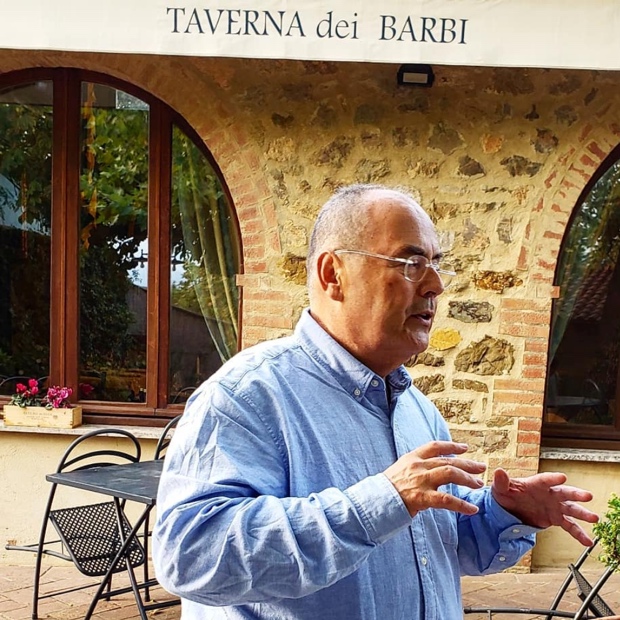
Please reach out to California and a Mondavi retrospective at To Kalon

Give a view an arch and he’ll ask you to stay for dinner #tokalon2017

Update: As much as 900,000 further acres have been lost to fire since September 14th and because of the recent Glass Fire there have been many evacuation orders for parts of Sonoma and Napa counties. As of today nearly 66,000 acres have burned. Three fires had merged, resulting in one big fire initially threatening Napa Valley and Santa Rosa. Thank goodness the containment has now reached 30 per cent but there is still a long way to go. The road to recovery will be even longer so please consider donating to help all the families, businesses and first responders.

Related – California Update: Napa Valley

The Napa Valley Community Disaster Relief Fund and Sonoma County Resilience Fund

Provides gift cards to evacuees and emergency relief services to those affected by the fire, including temporary shelter, meals, counselling and assistance in navigating insurance claims.

Wine Country Fire Relief Fundraiser

A gofundme campaign, launched by five wine industry marketing professionals, focuses on direct relief for farmworkers (a vital part of the wine industry’s fabric) affected by the Glass Fire Incident in Napa and Sonoma Counties.

California Wildfire Relief

Supports firefighters, low income families and animals that are suffering due to wildfires. It helps provide emergency supplies including food, water and medicine.

Latino Community Foundation

Distributes contributions to Latino-led organizations that are helping families displaced by wildfires across the state.

Women’s Foundation California Relief and Resilience Fund

Funding goes to every domestic violence shelter in the state to help care for survivors who are unhoused or feel unsafe.

Thank you to Karen MacNeil for her update and for sharing these words from Linda Reiff, President of Napa Valley Vintners:

“We are deeply grateful for the tremendous care from around the world, and for the hard work and dedication of fire fighters, first responders and volunteers who are here from near and far to help us.  At our core, we are a strong, agricultural community where grapes have been grown and wines made for more than 150 years. The Napa Valley is still here, our community spirit is fierce, we will get through and beyond this.”

We’re worried about all of you in northern California. Please stay safe.

Recalling simpler times

My last visit to To Kalon Vineyard was three and a half years ago, Oakville site of that consequential plottage, koan of sorts, most excellent agglomerate of soil, vine and canopy. To Kalon functions as an enigmatic invitation to rethink the meaning of wine, so speaking of The Robert Mondavi Winery and Arterra Wines Canada, enlightened educator Mark de Vere MW will soon be moderating a virtual tasting with Constellation Brands winemakers Thomas Rivers Brown and Carol Shrader. In a couple of weeks time, on Friday, October 9 at 1:00 pm (EST). I will be participating and tasting 2017 and 2018 Double Diamond Cabernet Sauvignon. The plan will be to explore the vast diversity and fine quality of the Oakville terroir and To Kalon Vineyard. Which brings me back to May of 2017 and a week spent in Napa Valley completing the Robert Mondavi Winery To Kalon Vineyard certification program.

There were cellar tastings, Chef Jeff Mosher prepared dinners, hot air balloon flights, vineyard cycling tours, UC Davis research investigations and most enriching seminars led by Director of Wine Education De Vere and winemaker Geneviève Janssens. Inside The CIA (Culinary Institute of America) at Copia, Napa classrooms the sessions taught included west coast, global and To Kalon examples of cabernet sauvignon. The Napa Valley panelist apprised cabernet sauvignon flights were filled with archetypes, icons and Mondavi retrospectives. Rarely does one get to go at so many learning tools and experiential gifts of history through such an array of high quality varietal wines. De Vere made a request by asking everyone to dig deep, do some soul searching and get to the bottom of the new versus old world paradigm. “Let’s get an unbiased impression of what the differences are and what might make them different. California has reliably dry summers but much more day/night diurnal temperature fluctuations. Bordeaux stays warm at night and thus differing ripening patters. Napa significantly more sunshine hours but not necessarily more total heat.”

Related – En route to Mondavi

#tokalon

Then the vineyard’s prodigy spoke. Graeme MacDonald’s experience and published work have by now made him THE historian of Napa Valley’s famed To Kalon Vineyard area near Oakville. MacDonald is a To Kalon farmer who has written a history of the famed grape growing area for the Historic American Landscapes Survey. His work is part of the Library of Congress. The vineyard was started in 1868 by Hamilton W. Crabb, an innovator in wine marketing and vineyard techniques while today the Robert Mondavi Winery, University of California Davis and Andy Beckstoffer control most of its land. For McDonald To Kalon is simply a place entwined with his family’s history. 

Start raising a child 100 years before they are born because that’s when you begin to prepare the environment they will be born into. #tokalon #graememacdonald #tokalon2017 #tokalonvineyard

“It was really for me a great way to document the history for our children. I want to leave something that explains why I am so passionate about it,” MacDonald said. “Start raising a child 100 years before their birth because that’s when you begin to prepare the environment they will be born into.” The Wappo people called it “Tu-ia-halusi, or ”beautiful land” to describe the upper Napa Valley. The name To Kalon is Greek for “highest beauty,” or the “highest good,” as per H.W. Crabb in 1889.   “I try to make it mean the boss vineyard,” says McDonald. Also a pivotal part in Aristotle and the most important (and first) wine poured in the time of Jesus. This from the most important winemaker in the history of Napa. It took 100 years after it was predicted by Crabb but that is when Graeme’s grandfather committed to Cabernet Sauvignon (circa 1978). The family wines were labeled under the name Detert Vineyards.

Flight #1

Global Styles

Château D’Issan 2013, AC Margaux, Bordeaux, France (511469, $114.00, WineAlign)

Tasted blind in Napa, the first impression is Chile due to the capsicum bite and wood that expresses as savour and piquancy. Herbal with currants and tobacco. Impressive smoky wood integration overtop gamey, Bretty, animale character which talks a Bordeaux vernacular. Fruit is subtle, restrained and waits for the finish. It’s Bordeaux, or course. Drink 2019-2026.  Tasted May 2017

#metaphysicalmonday #cliffmay #thenostalgiaoftheinfinite #dichirico #campanile #missionstyle

Concha Y Toro Cabernet Sauvignon Terrunyo Las Terrazas Block, Andes Pirque Vineyard 2013, Maipo Valley, Chile (562918, $29.95, WineAlign, Escalade Wines)

Now a slight demure, dusty but cool, minty, creosote and graphite, like Coonawarra perhaps. Some granite soil funk so could also be South Africa and yet there is this very high acidity and eucalyptus. The aesthetic is more about fruit than tannic structure. Some carménère in here likely – the smoky edge would say so. It’s Chile because the herbs and black currants dominate so clearly from a warm part, i.e. Maipo. Last tasted blind in Napa Valley, May 2016

Big floral vintage for the single-vineyard Terrunyo cabernet, rich, lush and hedonism defined. The varietal stands out in the vintage with the heavy lean to fresh flowers, along with the waves of alternating blackberry and Cassis. The alcohol and the weight are certainly formidable but the aromatics and fruit heavy tonality keeps up with the heat. Big boned and barrel conscious, this CyT is a big wine for a modest price. Drink 2018-2022.  Tasted August 2016

Mark de Vere MW

Mollydooker Cabernet Sauvignon Gigglepot 2013, McLaren Vale, South Australia, Australia (SAQ 12449825, $54.00, Breakthru Bev Canada)

Ripe, high acidity, elevated tones and dark fruit. More like Argentina here and the palate also suggests Bordeaux but it’s too ripe. The high acid, metafictional mochafication and extreme ripeness puts my guess in McLaren Vale but also because of the richness and ripeness. Some dark red fruit is exceptional, part dried, with liquorice, both red and black. Really lovely wine, juicy, with a high level of fruit from some great vineyards. A genuine product of Sarah and Sparky Marquis from which 16 per cent alcohol is pulled off with remarkable ease, with thanks to tannic structure and extract. Drink 2017-2021.  Tasted blind in Napa Valley, May 2017

Me and Mondavi

Stark-Condé Cabernet Sauvignon Three Pines 2013, Jonkershoek Valley, WO Coastal Region, South Africa (288316, $28.85, Vonterra)

This seems the most Californian but Alexander Valley in its current of currant and savour. Tastes like Clos du Bois, but we’re now in South Africa. Quite anti-reductive, little to do with granite, funky soil and rubber tree plants, but it hints at all this from Stellenbosch. like juicing liquorice, bokser and umeboshi plum mixed into Ribena for a juicy cocktail. This may be closer to Cali than the rest because of the supple triumvirate of fruit-acid-tannin for structure. Terrific representation from the Jonkershoek Valley. Drink 2017-2022.  Tasted blind in Napa Valley, May 2017

Flight #2

West Coast California

Justin Vineyards Isosceles 2015, Paso Robles, California (684282, $136.95, The Vine Agency)

Quite the Cassis richness and genteel nature, ripe but of a humble extraction with a distinct garrigue note. Very Napa-ilke though there is a high love of acidity. Tasted blind you might think it could very well be a Mondavi but it’s too jammy and there is a plethora of red fruit purée,. That it turns out to be from Paso Robles is a perfect example to show that further south can translate to a warmer climate… but not always. Cool nights are adding their own extreme example of diurnal temperature swings so that 16.0 per cent alcohol, coulis and acidity can coexist. Drink 2017-2020.  Tasted May 2017

Chef Jeff Mosher’s Fresh Spring Pea Risotto at Mondavi

Ridge Estate Cabernet Sauvignon Monte Bello Vineyard 2013, Santa Cruz Mountains (89284, $86.95, Rogers and Company)

Quite savoury with Mediterranean accents, black olive and brine, cool and minty, seemingly accented with American oak. A cloudy moments suggests Alexander Valley, but clarity wins so better still Santa Cruz Mountains. So is this a Ridge? Elegant cabernet sauvignon, 75 per cent with merlot and bits of petit verdot and cabernet franc. Positioned to an ocean proximity overhanging Monterey Bay and above most of the fog so the growing climate is its own. Keeps sugar and alcohol down for a cool and elegant expression. Last tasted blind in Napa Valley, May 2017

From the next arid vintage with more immunity always gifted by the Santa Cruz Mountains terroir so that Ridge can do what they want and what is needed. Three-quarters cabernet sauvignon, 20 per cent merlot and quick Pollockian slashes of petit verdot and cabernet franc meet in the studio to create and complete the piece. There is more acidity and tension on the nose than noted in 2012, with red currants and black fruit swirling in coulis centrifuge to distract from what wants to grip and tear you away. The purity and cool texture of a Ridge cabernet is unlike any other; it stretches this way and that, never breaking, tearing or shearing but not because is has been patched, quilted or restored. It was always this way and will stay so for 15 to 20 years. Tannins are fine and support what happens, in any way they are asked to do. Drink 2020-2033.  Tasted April 2017

Tacos at Morimoto

Jordan Cabernet Sauvignon 2013, Alexander Valley, Sonoma County ($80.00)

A bit of demure, lots of black fruit and a note or orange rind. Again terrific acidity, and tart, crisp, chocolate edging. Sensing a combination of oaks in that chemistry effect when merging into the fruit of Alexander Valley. Drink 2017-2022.  Tasted May 2017

Robert Mondavi Napa Valley Cabernet Sauvignon 2013, (255513, $44.95)

The aridity of 2013 has now translated into some lovely development in bottle that trials and tribulates with its wealthy pool of rich, ripe and silky chocolate texture. Such a typically reasoned Napa Valley explanation with 47 years under its increscent belt. Serious tannins need five years to seek settlement and to carry structure for to build a home for the ripe fruit. At 14.8 per cent alcohol there is much to fuel and keep the abode bathed in warmth, along with American oak in pancetta ooze, augmented by smoke and spice. Chewy and huge. Drink 2018-2024. Tasted February and June 2016, May 2017

Bob Swanson of #napavalleyballoons is the man. Slice through butter flight over the Sacramento Valley to 1000 ft, #splashanddash in Putah Creek and a smooth, exacting landing on a dime on the back of a flatbed.

Seven Hills Vineyard Cabernet Sauvignon 2013, Walla Walla Valley, Washington

Drawn from Seven Hills’ founding blocks, planted by winemaker Casey McClellan and his father in the early 1980s. Very ripe, rich and unctuous aromatics, also floral, big tannic structure, candied complexion with mint chocolate candy cane and yet its aridity dominates the back side. Continental climate with maritime overtones in a Walla Walla cabernet under the influence of the rain shadow. Drink 2018-2025.  Tasted May 2017

Flight #3

Napa Rocks

Inherit The Sheep Cabernet Sauvignon 2013, Coombsville AVA

Inherit The Sheep, a multi-play on words, launching point “the meek shall inherit the earth,” followed by “the farmers shall inherit the sheep” and prophesied as Clay and Tersilla Gregory may never inherit anything else in their lives. As for cabernet sauvignon, Coombsville just seems to be a natural extension from the concept of Napa Rocks. As Mondavi’s Mark de Vere made sure to point out, “the reputation of Napa comes form the quality of the wine made here, not the quantity.” About 150 million years ago a domino of events began to occur…ocean plate under the continental plate….volcanic influence and marine rock. A mish-mash, super geological group of alloy musicians. Coomsville gets it too, exemplified by this rich, highly perfumed aromatic cabernet, soil a major factor in the duality of tart meets tang, some dried herbs and dusty, chalky tannins. As a memory, Clay Gregory used to be a GM at Mondavi. Drink 2018-2024.  Tasted May 2017

The meek shall? Focused alternative #napavalley AVA expression #tokalon2017 #coombsville

Chimney Rock Cabernet Sauvignon 2013, Stags Leap District, Napa Valley (731810, $76.75, Mondia Alliance)

Deeper, higher tonality and lifted though it’s from liqueur and not acidity necessarily. So much chocolate, perhaps dominant by American oak but also a comestible layering and pressing that comes by ripe and concentrated fruit out of Stags Leap District. East side of the valley, volcanic and alluvial, so perhaps the place and its victuals speak loudest, dark chocolate and red cherry, quite chewy and with middle palate tannin, focused and lined. Drink 2019-2026. Tasted May 2017

Robert Mondavi Oakville Cabernet Sauvignon (West To Kalon Vineyard) 2013, Napa Valley

Very juicy, acidity driven, extraction and high level tonality. A fineness discerned with immediate notice, layer upon layer of distinction and elegance. Tasting blind it could be the Mondavi Reserve, acidity is very present balanced by plush fruit ripeness, blacker than red, slightly savoury and so Oakville. Turns out it is west To Kalon Vineyard though not labeled as such. For Graeme McDonald “it tastes like home.” Drink 2019-2027.  Tasted May 2017

With Sara d’Amato

Tres Sabores Cabernet Sauvignon Perspective 2013, Rutherford

The jam is in, a bit to the right of ripeness and so a left leaning structure. Already noting some balsamic, soy and even a faint tick of truffle, not quite raisin but there is an indication it’s beginning is around the corner. Tthe palate brings more energy but this lacks balance because the fruit is overripe. Three flavours. Rutherford Bench fruit. Drink 2017-2019.  Tasted May 2017

Cade Estate Howell Mountain Cabernet Sauvignon 2014, Napa Valley (325027, $206.95, The Vine Agency)

Classic next level Napa Valley depth, structure and intendment. Full on welling sunken weight, oak very much apart of every moment but not overly spiced. Through that big oak bent there is something akin or at least draws memories to Atlas Mountain. Incredibly ripe with aggressive, thick, needing 10 years to devolve tannins. Could be Atlas but is in fact Howell Mountain, one of the eastern AVAs from which mountain fruit delivers more intensity of tannin. Drink 2020-2030.  Tasted May 2017

Flight #4

Oakville

Tierra Roja Cabernet Sauvignon 2013, Oakville, Napa Valley
From Linda Neal, long-time vineyard manager who purchased the Oakville property in 1987. A distinctly perfumed-floral cabernet sauvignon, of violets, but also a dusty, silty-salty mineral aroma. Terrific acidity, just terrific, the type of tart intensity that causes anticipatory salivation. Reminds of cabs off of Terra Rossa soil, a.k.a. Coonawarra but also the Panzano terroir of Carobbio. Geologically it’s volcanic in origin, off of a hillside vineyard. Intense and offering a fully focused commitment straight through the finish. Drink 2019-2027.  Tasted May 2017

Groth Cabernet Sauvignon Reserve 2013, Oakville, Napa Valley ($179.95, The Vine Agency)

Richness but reserved, demure, unhurried in a calm state. More of an exotic perfume, jasmine and bougainvillea, still some salty grit and certainly mineral but fuller, with an ooze of dark chocolate and body politic by firmness and tannin. Beneficial bitters on the finish. It’s way, way too young to fully appreciate. Special fruit is saved for this next level cabernet sauvignon from its very own patch of free-draining alluvial soil. Drink 2020-2028.  Tasted May 2017

Geneviève Janssens and Mark De Vere MW

Franciscan Estate Cabernet Sauvignon 2014, Oakville, Napa Valley (39388, $29.95, Arterra Wines Canada Inc.)

An annual parade of quality comes from Franciscan with this Napa Valley cabernet, a wine that is quietly commercial and respectfully true to its roots. It’s quite chalky and the tannic grain is truly in focus while the fruit speaks with premium ability, certainly sheathed by Americanized vanilla oak. Savoury to a point but still quite naked truthful about fruit in its ripe clothing. Always well made and at its best in 2014. Drink 2017-2021.  Last tasted October 2017

Even more reserve and also into reductive, with darkest fruit, Cassis, carob and graphite. So much chocolate, dark, bitter and high in cocoa. Coating tannin, present and demanding, a bit west. Drink 2017-2021.  Tasted May 2017

Huh. A day after tasting these #tokalon wines #tokalon2017

Nickel & Nickel John C Sullenger Vineyard Cabernet Sauvignon 2013, Oakville, Napa Valley ($179.99, Noble Estates Wines & Spirits Inc.)

Dark cherry and Cassis oscillate in waves, punishing the shores of first prefacing perfume and then recursing acidity. A distinct profile that speaks so similarly to a Mondavi To Kalon but in Oakville…it’s hard to know, distinguish and be certain but so tempting to hedge guessing bets on origins. Such fineness, dramatic acidity and persistence, so not surprising it’s just across the road (Hwy 29). A very special tract of terroir in its own right this John C. Sullenger Vineyard. Drink 2020-2028.  Tasted May 2017

Robert Mondavi Oakville Cabernet Sauvignon 2013, Napa Valley (29207, $59.95, Arterra Wines Canada Inc.)

Oakville’s rich Cassis and mocha swirl welcomes wood and baking spice, then floral meets herbaceous Freesia. As a Mondavi cabernet, Oakville sits high up on the sapid meets tart scale and is expressly long. The palate really suggests older world Bordeaux but it’s almost too ripe, chalky, chocolate ganache rich, especially at the finish. A touch of Brett brings me back to structure and old world but there is an equal and opposing fruit-tannin seamlessness and smoothness. Its fineness of acidity means that it ends up balanced. Markedly correct, intense and proprietary for 2013. Drink 2018-2023.  Tasted May 2017 and February 2018

Flight #5

To Kalon

Narrowing it down to the vineyard, De Vere is insistent on what matters. “Elements of style and quality, not just, but a stylistic, a feel, difference, less broad in expression like Oakville or classic like the direct Napa Valley tier.” Rutherford’s alluvial fan vs. To Kalon’s alluvial fan complex vs the same, but different, from Oakville. The east side of the Oakville AVA receives more of the warm afternoon sun as compared to the sedimentary-gravelly alluvial loam on the west, with more volcanic but heavier soils on the east. There they are low to moderate fertility and fairly deep. All this adds up to more than 100 soil variations in Napa Valley, one half of what exists on earth. To Kalon receives shade a full hour earlier than the east side of the valley. It’s reserve fruit is more likely to be found where the large pebble, gravelly, well draining soils are found, further west, abutted up against the mountain range.

As an aside, talk about Napa Valley wines often leads to the fruit-jam complex. “Fruit bombs (you will know),” says De Vere, “are not just a factor of sun, ripeness, and brix. They are a result of less tannin and acidity, from vines stressed after veraison to develop ripeness but without the balancing factors. To kalon’s soils develop acidity earlier and maintain it. Acid-tannin-pyrazine, that’s the order of development.

Cliff Lede Cabernet Sauvignon Beckstoffer To Kalon Vineyard 2014, Oakville, Napa Valley ($250.00 estimate, Halpern Enterprises)

Presented by Eduardo Dingler, Napa Sommelier. High toned, deep, deep dark fruit, gets right up the olfactory. Young, chalky, tart and with the dark fruit sitting serious and looming, like a cross-legged Buddha on the ledge of a 10-foot To Kalon wall. Sees 62 per cent new French oak after six to eight weeks cold soak pre-fermentation. In an environment without alcohol you get this layered juiciness and tart aromatics without astringency. That’s the crux and the key. Balance, density, true to the To Kalon spirit. Drink 2018-2026.  Tasted May 2017

Alpha Omega Beckstoffer To Kalon Vineyard 2013, Oakville, Napa Valley ($188.00 estimate)

Presented by Alpha Omega’s founding winemaker Jean Hoefliger. “Napa has a consistency of climate that is unmatched, anywhere.” On Andy Beckstoffer, “Andy was very receptive to my very expensive lap dances,” and about the vineyard, “in an era of globalization, To Kalon’s DNA is the most important in Napa Valley. The site in Napa easiest to find in a blind tasting because of acidity and tannin, backbone and skeleton.” Hoefliger’s ’13 cabernet sauvignon is a construct of granularly dense tannic structure and non-readjusted acidity. Darkness ascends or descends as the glass goes, brooding, seemingly from deeper clay soils within the alluvial variegation, a wine in which the tannins have been joined, linked, layered, polymerized. Having used a long maceration makes this dense, intense and ageable. To be exact, 45 days on skin, then in the end unfined and unfiltered. Wow does this remind me of modern Piedmontese nebbiolo but with so much more intense red fruit, notes of incense, wild fennel, cinnamon and candy hearts. Just tremendous structure. Drink 2020-2034.  Tasted May 2017

Provenance Vineyards Cabernet Sauvignon Beckstoffer To Kalon Vineyard 2013, Oakville, Napa Valley ($220.00 estimate)

Bright but at the same time with a hint of dried fruit so good balance between the two, meaning the acidity is in control. John Hazak: “What To Kalon has that separates itself from our iconic Hewitt Vineyard is age ability and a dense core that opens up with age. It sets it apart from our top Rutherford sites.” A chewy To Kalon by tempered ganache, a child reared on plenty of barrel fermentations to capture individual parcels of beautiful fruit. Carries a cool minty savour at the finish and lingers across the top of the gums above the teeth, leaving that anaesthetizing feeling. Brilliant in that respect, not quite ready though will come into its own not too far from now. Drink 2019-2024.  Tasted May 2017

Cornerstone Cellars Cabernet Sauvignon Oakville Station 2013, Oakville, Napa Valley ($150.00 estimate)

Certainly more dusty notes, garrigue, savour and a hint of black olive, but all red fruit. From Oakville Station (labeled as such, from the UC Davis grown plots of vines). “The best way to understand To Kalon on the surface is to take a bike ride,” says Charles Thomas. “to understand why a gradation across a kilometre is so crucial. There is ample tannin in To Kalon but also a fineness of tannin. It is forgiving of many aspects of viticulture and especially winemaking. You always see the vineyard.” A transitional wine, ripeness but not super so, perfumed and the subtleties of the vineyard. Cherry blossom big time. An island surrounded by Mondavi on all sides, more fertility here in this block, a soft, delicious chocolate finish. A transitional era styled wine. Aromatic and not with the same density (with 10 merlot and 5 cabernet franc)but beautiful all the same. Drink 2018-2023.  Tasted May 2017

Robert Mondavi Winery Reserve Cabernet Sauvignon 2013, To Kalon Vineyard, Oakville, Napa Valley (670463, $149.00, Arterra Wines Canada Inc.)

Mondavi’s 2013 Reserve from the iconic To Kalon Vineyard plays a different role when nosed side by five each with other similar terroir cabernets, in this case by Cliff Lede, Alpha Omega, Provenance and Cornerstone. The Mondavi would show as a muscular cabernet in a solo tasting irrespective of the flight but with relative reference points the Mediterranean savour stands apart, especially in this high-toned aromatic vintage. The wine is embossed and eschews syrup for chew and density, the chalky tannins already beginning to show some development and integration. After going through the basket press, the haute cultured barrels bring out this insieme-collective of sophisticated To Kalon sweet acidity and tannin, leaving extracted bitterness behind. This works in elevating the texture of silk and softness, insisting upon and stamping a guarantee of longevity. The excellence is rounded out with some fragrance from petit verdot and further finessed, grainy tannin by cabernet franc. Drink 2019-2028.  Tasted May 2017

Robert Mondavi Winery Reserve Cabernet Sauvignon 2014, To Kalon Vineyard, Oakville, Napa Valley (670463, $300.00, Arterra Wines Canada Inc.)

Tasted during a To Kalon Vineyard retrospective in Napa. Though sinfully young the 2014 seems bright and focused, accessible, closer to ready than the 2013. The secret, special, double secret bottle, only 150 cases made, not really available for trade, pure To Kalon. Refined, here and only here as 100 per cent cabernet sauvignon, spice but melted and oozing into that liqueur, there is a seamlessly woven fabric of vineyard that just seems soft, supple and elastic. Drink 2018-2028. Tasted May 2017

And a few more Mondavi Cabernet Sauvignon tasted that May

Robert Mondavi Cabernet Sauvignon Reserve 2010, Napa Valley

The 2010 Reserve is a sensory wine in the most attention grabbing way, as experiential and inspirational as can be when such an inhalant gets hold of the senses. Deepest dark fruit of impossibly zero evolution and everything in line with the classic Mondavi-To Kalon relationship. Blackberry, Cassis, black olive and silkened in texture as the Reserve can ever be. Pure weave, ethereal liquidity, fresh, finessed, focused and exacting. Tough on a winemaker? That’s why this is so good. A grand cru Oakville classic, great wine from a challenging vintage. Drink 2017-2029.  Tasted May 2017

Robert Mondavi Cabernet Sauvignon Reserve 2006, Napa Valley

Actually some development here, straight into secondary time framing from which balsam and spice are front and centre. The masala comes from cassia stick, bokser pod and liquifies in plum liqueur. Lots of chocolate ganache and in some ways the least indicative Mondavi Reserve vintage for a To Kalon cabernet sauvignon. Acidity is quiet and perhaps this is just a moment in time. Maybe in a year or two the acids will step out of the shadows and rear up once again but I wouldn’t wait nor hold my breath. Drink 2017-2021.  Tasted May 2017

Robert Mondavi Cabernet Sauvignon Reserve 2005, Napa Valley

Tasted in an auspicious group that included a Gros Clos Vougeot ’13, Grange ’11, Haut-Brion ’11 and Sassicaia ’11, all led by Mark de Vere MW and culminating at this Mondavi Napa Valley Reserve ’05. Or as what De Vere quips, “just another night in Napa Valley.” A cool vintage now showing some secondary notes though still presenting balsam, tempered chocolate ganache, pencil lead and graphite. Floral vintage of ethereal whispers and the trilogy promise of the EPF. Elegance, power and finesse. Dark To Kalon fruit and mouth-watering acidity with a vanishing point of mystery still on the horizon, like walking with someone we don’t fully know but feel comfortable in their presence. Still elicits more questions than answers so for a vintage like 2005, 12 years seems to be peak performance. The tannic finish supports Cassis, dried herbs and a briny Mediterranean black olive bite. Tannin begets fine bitters. “Using oak is the virtuoso way to express To Kalon fruit,” says Geneviève Janssens, “after fermentation, to preserve the personality of To Kalon.” Drink 2017-2024.  Tasted May 2017

Robert Mondavi Reserve Cabernet Sauvignon To Kalon Vineyard 1999, Napa Valley

This from a time when Mondavi labeled the reserve cabernet sauvignon as “To Kalon Vineyard,” a moniker of essential meaning that would return 14 years later on the 2013 bottle. If this were what Mark de Vere referred to as “a confusing moment in history” I could not say but “this strange bottling” provided an unequivocal and seminal turning point in this wine’s storied past, present and future. It was in fact a small, special cuvée, a little bit different than the ’99 Reserve. “The coolest vintage on record, until it wasn’t,” because of a warm period at the end of summer and early fall that ushered forth a certain, singular sort of ripeness. Regardless of memories, characterizations and twists of fate, this single-vineyard cabernet is as finessed, focused and precise as any Mondavi Reserve. It persists chalky, fine and gritty in tannin running amok, dragging the acidity forward and around. The workout is something to behold, a dispatch of late Napa fashion and never more successful than right here. The dépêche mode of To Kalon is by now famous but culminated with this ’99 for everything to follow, with consistency and a guarantee of modern quality. Listen to it croon “try walking in my shoes.” Many have and many continue to pay homage to this Napa Valley originator and pioneer. It’s a cabernet sauvignon of faith and devotion. Drink 2017-2029.  Tasted May 2017

Robert Mondavi Cabernet Sauvignon Reserve 1988, Napa Valley

A vintage of reducing and concentrating liqueur, high-toned, distillate, California IGT. A bottling style of the time and the vintage must have procured such fruit meets tannic intensity that it has taken a long time to relent. Higher in acidity than savour, pulsating, energetic. Still a bit frenetic in its wildly animated state of perpetual suspension. A bit Bretty but 1988 carries such an old world sentimentality and the many ties that bind. Despite the great and gritty acidity it remains a balanced cabernet sauvignon, earthy and old school but I’d wager it will continue to drink this way for seven to 10 more years. Drink 2017-2024.  Tasted May 2017

Robert Mondavi Cabernet Sauvignon Reserve 1976, Napa Valley

“What order to do pour a vertical tasting,” asks Mark de Vere MW. “When you have 1988, 1999 and 2000 in the mix? You have to think about how the wines were made, how the grapes were grown, without sophisticated equipment, with vineyard managers and winemakers who didn’t know then what they know now.” But, this house named Mondavi has seemingly always known, respected and responded collectively over these things. The terroir – To Kalon. Since tasting 1975 one year ago I can say this: 1976 is remarkably alive, sound and vital. From a very dry year. Ten days of “prolonged” skin-contact. Dill present along with preserved plum, of course mushroom, truffle and what separates this from ’75 is acidity, equal to over even performing above that of 1980. Spice! Tart and still intense. Amazing. Drink 2017-2020.  Tasted May 2017

Robert Mondavi Winery Oakville BDX Red Wine 2015, Oakville, Napa Valley (SAQ, $75.75)

As always the high quality To Kalon fruit as a base source puts the odd in high favour but the idea here is to use parcels that produce lushness and lower tannin so that the wine gifts quite a bit more instant gratification. Mostly cabernet sauvignon with cabernet franc and originally only sold on premise. Extension through barrel is 24 months in mixed (55/45) Allier French for a liquid chalky result, preserved top notch acidity and a sharpness that demands protein attention. Can’t miss the graphite/pencil lead and in this specific case, tongue tripping vowels which talk the talk of this specific red blend. Drink 2017-2021.  Tasted May 2017

Robert Mondavi Oakville Cabernet Sauvignon 2009, Oakville District, Napa Valley

When tasted side by side the genetic lineage and connection to 1999 at ten years apart is uncanny and so it is To Kalon that ties the two, threads the similarity and is the reason. Black olive as always, dusty garrigue and this medi-pedi (Mediterranean pedigree) that unites all cabernet sauvignon from Oakville sites. Same wisdom and freedom, same feeling felt. Drink 2017-2025.  Tasted May 2017

Robert Mondavi Oakville Cabernet Sauvignon 1999, Oakville District, Napa Valley

Has aged with To Kalon grace and while texture is seemingly everything, still you are reminded to engage with the fully seasoned, exigent exhale from the spice box. Aromatically present in balsam and fig, the vineyard’s black olive and then acidity off the proverbial charts. We see how To Kalon mellows in Oakville form, integrates and acts out the marshmallow of time. Hinting now at the tertiary which comes quicker in this range and that is perfectly, allegedly understandably fine. Drink 2017-2021.  Tasted May 2017

Robert Mondavi Cabernet Sauvignon Stags Leap District 2013, Napa Valley

As with the sauvignon blanc the fruit source is Schweitzer Vineyard, here for the cabernet from three blocks all leading to a bigger, fleshier style. Treated similarly to the Oakville cabernet, long maceration in oak fermenters and 24 months barrel time, six more than the Oakville Reserve because these tannins need further taming. Deep red fruit in tones of strawberry, raspberry and plum with moments that are not unlike European reds in hot climate/seasons. Turns to spicy white toffee, vanilla and before too long the screeching breaks down the scree of tannin. Wait five years. Trust that idea. Drink 2021-2029.  Tasted May 2017

A few basic bottles were on hand to greet us @RobertMondavi before the finest wines and cake were offered.

And the opening wines in Mondavi’s cellars

Château Haut Brion Premier Grand Cru Classé 2011, Ac Pessac Léognan (263251, $1,599.85)

A cabernet sauvignon dominant Pessac Léognan off of gravel soils in contrast to some other First Growths Haut Brion is keenly about Château, of reputation, history and acumen. A Bordeaux to cause revelry and from 2011 fresh like you could never expect or imagine. Lithe and mineral, dusty stone and focused. Of continental temper and elegance, black olive and quality chocolate, toasty espresso and late arriving spice. Taste, gather, repeat. Will surely develop next level time-honoured notes of forest floor, mushroom and delicately rendered baking spice. In 20 years and further long-lived expectations. My kind of longevity though the fineness says it will ready itself quite soon. Drink 2019-2035.  Tasted May 2017

Domaine Gros Frère Et Soeur Clos De Vougeot Grand Cru “Musigni” 2013, AOC Bourgogne ($300.00)

From the top of the slope at Musigny in a distinct and compelling Clos de Vougeot of intensity and finesse. Deep rooted earth and black cherry fruit, so much fragrance and delicate. A just sharpened pencil, a brush with fennel and lavender, a gaze through a looking glass. At its most calm, a palate silky and accented by a complex mix of spice. A wine to ask “what makes a great wine.” So much more than the length and the finish, always circling back to the start and about the quality of the bitters in their refinement. Where in the process does this occur? When is the magic performed? All the way through and as a by-product of the paradigm of site. Drink 2019-2035.  Tasted May 2017

Sassicaia 2011, Doc Bolgheri, Tuscany, Italy (480533, $229.95)

Showing maximum warmth and spirit, high savour by liquorice, mint, fennel and so much spice. Marchese Niccolò Incisa della Rocchetta fixing Bolgheri just as his father did while Robert Mondavi was doing so in Oakville at To Kalon. Revolutions is different places and for Sassicaia, a clear varietal vernacular. Apposite Bordeaux like power and a supple wrist in using extra hands with cabernet franc. Still those chalky tannins. Drink 2020-2029.  Last tasted May 2017

Certainly a Sassicaia borne of the earth and the vintage. Cooler, with increased sapidity and elevated aromatics. While not volatile there is certainly an intimation at acetic behaviour. Though supportive in only 15 per cent of the two Cabs blend, cabernet franc stands firm in its concentration of tobacco, peppercorns a-popping in the pan and a smouldering of currants over an open fire. This will age for decades and return to its beautiful natural state with time-weathered, rugged facial lines. A leathery Sassicaia this, with tight, drying tannins and in need of two decades to show off its birthright. The 2011 Sassicaia is a loyal, aristocratic example to the Marchese Mario Incisa della Rocchetta’s dream of creating a ‘thoroughbred’ wine where the ideal was Bordeaux.  Tasted November 2014

Good to go!

godello

Give a view an arch and he’ll ask you to stay for dinner #tokalon2017

Twitter: @mgodello

Instagram: mgodello

WineAlign

California Update: Napa Valley

Speed date afternoon with some of @napavintners finest

We have all been thinking about California lately. As of September 15th a staggering 7,718 wildfires have burned 3,154,107 acres, damaged or destroyed 5,412 structures and killed 20 people. Devastating numbers and when you begin to read headlines like “Maps: Fires and Air Quality in California, Oregon and Washington,” “California wildfires leave behind trail of devastation and death” and “Smoke from the U.S. wildfires has reached six Canadian provinces,” well then you begin to worry about so many more people and places. Be thankful there is wine.

If intoxicating then well, wine is also nourishing, may even heal the ulcers through which we in the world are bleeding and the acreage where those on the west coast are burning. That is why yesterday’s communication from Napa Valley Vintners struck a chord. The press release began this way. “Wine has the power to bring people of all different backgrounds together. The vintners in Napa Valley believe our community and industry should be open and welcoming to people of colour, whether working in the industry, visiting Napa Valley or enjoying our wines anywhere. With that in mind, today we pledge over $1,000,000 in scholarship and mentorship programs to increase diversity, inclusivity and opportunity in all aspects of the wine industry.” Amazing. The world is burning all around and Napa Valley keeps working towards what’s better, planning for what’s essential and announcing the following:

We are proud to team up with the following organizations to achieve this goal:

  • Bâtonnage: Educating on the challenges and opportunities women and minorities face in the wine industry
  • UNCF (United Negro College Fund): Giving all Americans equal access to a college education
  • Wine Unify: Amplifying the diverse voices of wine professionals

This new support builds on NVV’s longtime commitment to youth mentorship programs in Napa County through Auction Napa Valley proceeds. This year alone, nearly $2 million was invested in nine local non-profits whose mission is to close the achievement gap and help at-risk youth succeed. We have asked our members and trade partners to join us in this effort. While there is still much work ahead, we look forward to welcoming an increasingly diverse chorus of voices to our valley and our industry. Learn more about the NVV efforts.

Invest $1 million in new scholarships

NVV will partner with UNCF to create a new scholarship program for people of color to pursue college degrees in subjects ranging from grape growing, winemaking, marketing, business and more. Each year over the next five years, NVV will invest $200,000 in scholarships and will encourage its members to bolster the scholarship program with donations to help even more students and to ensure the effort extends beyond five years. UNCF has been managing scholarships for minority students for 75+ years and is the largest and most successful minority organization of its kind.

Invest more than $100,000 in two new mentorship programs

  • Bâtonnage fosters solutions for a more positive, inclusive path forward for women and ethnic and racial minorities to achieve equal representation, equal opportunities and equal leadership positions within our industry. Over the next three years, NVV will help fund a mentorship program aimed at providing resources, guidance, recommendations, internships and training programs.
  • Wine Unify was founded by Napa locals Martin Reyes MW, DLynn Proctor, and Mary Margaret McCamic MW. Their mission is to welcome, elevate, and amplify the voices of underrepresented minorities through mentorship and education. NVV has committed to work with Wine Unify over the next three years to help fund their ongoing programs.

Which brings me back to an event in Toronto one year ago, hosted by Napa Valley Vintners and their Canadian partner Paula Oreskovich at Energy Plus Communications. Napa Valley “Celebration of Excellence” Speed Tasting and Trade Tasting was held on November 7th at the Royal Ontario Museum. More than 25 vintners from the Napa Valley were on hand. Trade were afforded three minutes with each producer/vintner to hear their story, taste their two wines per station and ask questions before moving on to the next vintner. It was a thrilling experience as a dating journey to Napa Valley from grape to glass. Wines from Napa, Spring Mountain, Oak Knoll, Oakville, Stags Leap, St. Helena, Yountville, Rutherford, Calistoga and other appellations were poured. Most impressive were the many varied back vintages shared by these producers and their Ontario agents. 

Donate here to California Wildlife Fire Funds and also here

So the question begs, why am I sharing my tasting notes with you now, almost one year later. First and foremost to remind us all that California needs to be front and centre in our minds and hearts. Second, many of these singular wines are still available in very limited quantities through VINTAGES. Third, because I feel like it. Here are my notes on 24 wines tasted.

Artesa Vineyards And Winery Estate Pinot Noir 2016, Carneros (12519, $60.00, Andrew Peller Import Agency)

From the Napa Valley side of Carneros but also with fruit grown up as far as the foothills of Mount Veeder. Very pure and clear pinot, red fruit juicy, candied in a terrifically stylish and delicious way. Drink 2019-2022.  Tasted November 2019

Blackbird Vineyards Arise 2016, Napa Valley ($79.00, Paradigm Fine Fine Agency)

From winemaker Aaron Pott, mainly Oak Knoll fruit off of 20-plus lots sourced in Napa Valley off mountain tops, from hillsides, on bench lands and off of valley floor vineyards. Nearly two years in half new, half seasoned French barrels. A blend of merlot (55 per cent), cabernet franc (25) and cabernet sauvignon 17) with a splash of petit verdot in a mere mortal’s affordable flagship red. Surely a nod to Pomerol with a wink at Napa Valley. Tart, intense tang and really good acidity but also woody and yes the name is Beatles related. “All your life, you were only waiting for this moment to arise.” Drink 2021-2025.  Tasted November 2019

Black Stallion Estate Winery Cabernet Sauvignon Transcendent 2015, Napa Valley (439968, $200.00, Select Wine Merchants)

From the Oak Knoll District of Napa Valley and surely Black Stallion’s head of the stable, signature triple-crown wine. A top tier cabernet sauvignon made from the best grapes grown on mountain sites above the fog line. Not just one hilltop vineyard with a view but several; Veeder, Spring, Diamond and Howell, with two per cent Oakville tossed in for good grounding and balancing measure. A four-part essential, Mountain Napa a cappella performance that simply demonstrates, in complex music written for four voices, what a layered wine cane be and in doing so, expresses wow factor times four. Drink 2022-2028.  Tasted November 2019

Cain Vineyard And Winery Cain Five 2013, Napa Valley (727925, $199.95, Rogers and Company)

Bordeaux idea with fruit from Spring Mountain, five pronged and truth be told only Cain Five smells this. Earth and soil, elevation and intensity. Botanicals, tar, hillside tea, brush and weeds, natural yeasts and so bloody savoury. Sensorial experience in the fifth degree. Persistently doles out palate amercements with seamless consistency and the pain is all pleasure, each lashing accepted submissively like the one before. Drink 2020-2028.  Tasted November 2019

Clos Du Val Cabernet Sauvignon Estate 2015, Napa Valley (12544, $100.00, The Vine Agency)

Fruit sources are both Stags Leap District and Yountville AVAs with smaller portion support by petit verdot, merlot and cabernet franc. It’s predominately SLD with one quarter coming from Yountville in a most classically dark-berried and unctuous Napa Valley style. The aridity of the vintage and at this point the age have conspired to accentuate the concentration and the spice. Correct to the nth degree. Drink 2019-20212.  Tasted November 2019

Clos Pegase Cabernet Sauvignon Hommage 2014, Napa Valley (739219, $156.00, Azureau Wines and Spirits)

A reserve cabernet sauvignon at 77 per cent with petit verdot in Calistoga. Bloody unctuous, deliciously lush and luxe cabernet. Though set into a price range with parameters of equivocation, for those who seek the tête de cuvée of a professional Napa Valley estate’s cabernet range with a true microcosmic sense of place, this Hommage signature from Clos Pegase will rise to that fore. Drink 2020-2027.  Tasted November 2019

Darioush Napa Signature Cabernet Sauvignon 2016, Napa Valley ($150.00, Breakthru Beverage Canada Inc.)

The signature cabernet sauvignon from southern valley sites where cooler winds can prevail and off of estate vineyards in the Mount Veeder and Napa Valley AVA’s. This ’16 is possessive of it all with twang acidity tang surrounding the rich chalky liquidity of the southern valleys’ cabernet beauty. Highly composed wine, in total clarity, control and surprisingly fresh alacrity. Drink 2019-2025.  Tasted November 2019

Eleven Eleven Wines Cabernet Sauvignon Laki’s Vineyard 2016, Napa Valley

From winemaker Kirk Venge who practices the art of fashioning varietal wines “for more glasses”, and making a wish for all of us to stop everything you’re doing, to take stand and notice that “this is what we’ve made.” Not so much a contemplation, rumination or meditation as a recognition and an appreciation. In this case a 100 per cent estate Oak Knoll cabernet aged in 80 per cent new French Oak for silky smooth texture and dry as the desert styling. Quite finessed and harnessed for exemplary balance. Ready to rock. Drink 2  020-2024.  Tasted November 2019

Emmolo Sauvignon Blanc 2015, Napa Valley (96016, $25.00, Andrew Peller Import Agency)

Hand-brushed vineyards, which is winemaker Jenny Wagner’s way of crop thinning. Good acidity lean and sharp, really impressive and in a vein quantifiable as the most appreciable of all the Caymus stylings. Drink 2019-2021.  Tasted November 2019

Gallica Wines Cabernet Sauvignon 2012, St. Helena (12521, $269.00, Lifford Wines and Spirits)

From the family property in St. Helena and cabernet sauvignon planted in 1990 on deep and low fertility Cortina soils. Mixes in one-quarter cabernet franc from Rosemary Cakebread’s vineyards in the Oakville range, 130m above the Silverado Trail. All organic, with the franc brining in components of florals and posit tugs of savour, sapidity and physicality. Not that the sauvignon needed any help because that fruit is rich, wise and complex as a stand alone but the franc surely elevates the entire collective into rareified air. Tasted with Gallica’s Sales Director Alex French. Drink 2021-2031.  Tasted November 2019

Groth Cabernet Sauvignon 2015, Oakville (606517, $120.00, The Vine Agency)

Suzanne Groth’s 2015 is the first vintage with new Director of Winegrowing Cameron Parry, hired in 2014 as only the third winemaker in Groth’s history since the family’s first vintage in 1982. The estate cabernet’s fruit comes from right in Oak Knoll and may just be the dictionary entry for parochial red fruit with its distinct savoury edginess. That said you feel or at least intuit the 14 per cent inclusion of merlot what with a subtle doubling down of brushy autumnal dried fruit and verdant notes. Overall tart and beautiful, an honest and true expression of Groth and Oak Knoll. Drink 2020-2027.  Tasted November 2019

Hall Cabernet Sauvignon 2016, Napa Valley (273391, $99.00, Noble Estates)

Hall is based in St. Helena and in a Napa Valley tasting of 24 diverse options of great and elevated quality it is unequivocally the most forward and naturally understood wine in the room. If perhaps it presents as simple on the outside it is confidently complex on the inside. In this regard you can imagine the sentiment provided by 50 per cent new oak but you feel it bigger, better and more so on the palate. Provides the context for texture, of a seamless blending in chocolate and chalk. Drink 2021-2027.  Tasted November 2019

Hoopes Vineyard Cabernet Sauvignon 2014, Oakville (534800, $113.00, Wilson Group Wines & Spirits)

From the 1983 planted 10 acre estate vineyard in Oakville, very much considered the flagship wine. Only To Kalon shares a volcanic element affinity with the quarter portion at Hoopes, an important if not profound geological inclusion in the Oakville sub-appellation. Lindsay Hoopes is justifiably high on this 2014 from Spencer Hoopes and fruit found at the base of Yountville Hill. In addition to being basaltic it’s also the most geologically diverse on the valley floor; contains sand and clay in packed density and as determined by the legend David Howell, ’tis is magical place, here confirmed in what is truly a cabernet of magic. Now having arrived in its window, have a go and then repeat for the next 10 years. Drink 2019-2029.  Tasted November 2019

Keenan Merlot 2015, Napa Valley ($50.00, Profile Wine Group)

Plum dusty, chalky and verdant. Showing some dried fruit. Spring Mountain portion is quantifiably structured, though also agreeable in ageable fruit. Thirty five is Carneros fruit so a merge of two cool climates. Quite charming in the end. Drink 2019-2021.  Tasted November 2019

Long Meadow Ranch Cabernet Sauvignon 2014, Napa Valley ($84.95, Breakthru Beverage Canada Inc.)

Ashley Heisey’s 2014 is more than just a child of a most arid vintage in Napa Valley’s recent history, it was also early and with no frost during bud break, the strong, early fruit set in the vineyard organized the season on a collision course with all things warmth. High temperatures and no rain meant an early August harvest of cabernet fruit already deep into black cherry and blackberry. By 2019 this LMR signature red is speaking in Mayacamas Mountains tones, resonant, baritone and profound. The drying of fruit, spices and tannins are combining at a vanishing point from which perspective optimizes in the here and now. Drink this in perfect window opportunity over the next two years. Drink 2019-2021.  Tasted November 2019

Luna Vineyards Sangiovese 2016, Napa Valley (La Céleste Levure)

From two elevations, floor and foothills, mainly planted in 1999. Game Farm Vineyard on the Silverado Trail below Rector Creek Dam is the most important source, of shallow, rocky soils that stress the deprivation out of need to struggle sangiovese. The cooler Napa Valley sites bring the savour and ulterior form of tension to the mix. Elévage is warm fermentation, malolactic encouraged, 30 per cent new French and Hungarian oak barrels for 20 months. The result is in a Chianti Classico Riserva vein, fruit highly concentrated with some dried desiccated notes and no shortage of local savour. That’s really what separates it into a Napa Valley thing, far away from the Tuscan homeland. Drink 2019-2021.  Tasted November 2019

Pine Ridge Cabernet Sauvignon Stags Leap District 2010, Napa Valley ($140.00, Andrew Peller Import Agency)

Fabulous retrospective look back at a wine produced by the then 32 year-old winery from a selection of grapes from all four estate vineyards located in the home lands of the winery. A highly specific gander into Napa Valley’s smallest AVA, very influenced by marine essence for a guarantee of freshness that persists even today. Rich but compressed and dried herb sumptuous. Beautiful wine, so textured and having been purposed for structure now resides in a realm dominated by sweet spice. Drink 2019-2021.  Tasted November 2019

Revana Family Vineyard Cabernet Sauvignon 2009, St. Helena (12528, $265.00, Le Sommelier Inc.)

Revana Family Vineyards is owned by Dr. Madaiah Revana who currently is a practicing Cardiologist in Houston, Texas. Thomas Rivers Brown is now employed as winemaker and Jim Barbour as Vineyard Manager. Taken from eight acres, planted in 1998 with the first vintage being 2001, originally in the hands of Heidi Barrett and this was her last vintage. A geological site in St. Helena of alluvial flow off of the Mayacamas range. Intense black olive and very Mediterranean in complex scenting with great acidity. All in Cassis fills the flavour profile. Ten year-old cabernet sauvignon still going strong. Drink 2019-2023.  Tasted November 2019

Rocca Family Vineyards Vespera 2016, Napa Valley ($84.00, Brand New Day Wines & Spirits)

“Vespera,” as in late-evening, gathering time. Estate grown and organically farmed red blend from Collinetta Vineyard in Coombsville and Grigsby Vineyard in Yountville. Varietal composition is 57 per cent cabernet sauvignon, (37) syrah and (6) merlot, aged 17 months in small French oak barrels, 65 per cent new. Floral and beautiful, silky, silken, lush and so elongated. Spiced and juicy peppery, warm to humid with generous alcohol though very fluid and forward. Drink 2020-2025.  Tasted November 2019

Signorello Cabernet Sauvignon 2015, Napa Valley (60152, $124.95, Profile Wine Group) 

A massively structured and concentrated wine with teeming and oozing fruit, heavy barrel accord in which texture and tannin weave a future likely to unwind over two decades time. Classic Signorello spice and red citrus. Very limited quantities (by mailing list only) and out of the hands of a new winemaking team. Drink 2019-2021.  Tasted November 2019

Silenus Cabernet Sauvignon Tyros 2015, Napa Valley (16409, $49.95, Carpe Vinum International)

From Oak Knoll and fruit that used to be sold to Mondavi, very modern and with 22 per cent merlot. Verdant liqueur tones and real glycerin. Herbal and slick with a thinning in elasticity. “Mini” debauching here. As for the name, Tyros means apprentice, in reference to Silenus being mentor to charge or beginner Dionysus. Also an old Greek naval town in Arcadia, Peloponnese. Drink 2019-2021.  Tasted November 2019

Taub Family Beckstoffer Vineyard Georges Iii Cabernet Sauvignon 2016, Napa Valley (12538, $225.00) 

From proprietor Marc Taub who’s family is part of the Napa Valley wine fabric since prohibition and who in 2013 acquired Napa Valley producer Heritance, later evolving into Taub Family Vineyards. His winemaker is Tom Hinde, a Sonoma and Napa specialist who cut his teeth for seven years at Flowers, but also at Kendall-Jackson, Hartford, La Crema, Lakoya, Cardinale, Stonestreet and Verite. Add in a mere three acres within the historic 300-acre Beckstoffer Vineyard first purchased by Beaulieu founder Georges de Latour in 1928, called Beaulieu Vineyard Number 3 and made by winemaker Andre Tchelistcheff. The overall pedigree is at the top of the unparalleled game and so huge fruit expected, hedonistic result gained. So much fruit, spicy and massive structure with the future holding so much truffle and charcoal, figs so very Rutherford and could only be from the place. Massive chew of cabernet sauvignon fruit and also very seasoned into the Ribena. All that said there is something hidden, something potentially profound about the Chiaroscuro magic concealed within. Wouldn’t be in a such a hurry to find out what lurks inside this rare Napa Valley wine. Drink 2023-2033.  Tasted November 2019

Trefethen Family Vineyards Merlot The Cowgirl And The Pilot 2016, Napa Valley ($125.00, Vinexx)

A tribute to Janet & John Trefethen, Cowgirl and Pilot respectively, from a vineyard planted in 2003. Merlot grows best on the clay-loam-silty soil valley floor and the site confirmed the potential from the very first vintage, so says Jon Ruel, CEO and viticulturalist. This truly is Napa merlot, from thinned clusters, trimmed of tips and shoulders like pinot, evenly ripened and it shows. Seamless merlot to be sure with a beautifully spicy finish. Drink 2020-2026.  Tasted November 2019

Trinchero Cabernet Sauvignon BRV 2013, Napa Valley (514224, $120.00, Philippe Dandurand Wines Ltd.)

Part of the third generation Heritage Collection line in the hands of Bob Torres nearly 70 years into the family’s work at Trinchero. Off of soils ranging from gravelly to loamy to alluvial, the BRV comes from the Atlas Peak AVA and my is it big and brawny. So much black olive, brood and badass attitude, inclusive of a 10 percent mix of malbec and petit verdot. They add structure in a wine of crazy high pH (3.95). Just wow. Still a bambino. Drink 20121-2031.  Tasted November 2019

Good to go!

godello

Speed date afternoon with some of @napavintners finest

Twitter: @mgodello

Instagram: mgodello

WineAlign

Four questions to Chianti Classico

The Gallo Nero, Chianti Classico

Timely questions to 17 Chianti Classico producers about their appellative wines, how and why they do what they do, plus their reflections on the state of Italy’s battle with Covid-19 and projections for the 2020 harvest

by Michael Godel

Over the past four and a half years I have written about, extrapolated upon, waxed rhapsodic over and flat-out smothered Chianti Classico with hundred’s of thousands of words, reviews and tasting notes. It’s time for Godello to take a break and switch the focus on current events, what’s happening now and to hear about Chiantishire dirt from the mouths of the producers themselves. In 2020, the $64,000 dollar question is “why is this vintage different than any other?” As we fall back into impending autumn and perhaps another great global unknown, when pressed with four poignant questions, 17 Chianti Classico producers are all the youngest child at the table. They ruminate over their cultural past, viticultural present and perchance, express some postulations about the future. 

Chianti Classico Collection 2020, Stazione Leopolda, Firenze

Passport to Chianti Classico: The Sequel

But first some exciting news. Fresh on the heels of the WineAlign Exchange’s successful inaugural partnership with the Consorzio Vino Chianti Classico and two sold-out international Passport case offers, this next collaboration stands to further cement our collective relationship with Tuscany’s famous wine region. Twelve more indispensable sangiovese in one mixed case. The territory’s sangiovese of exceptional quality is not limited to a mere 12 producers and so this next wave of Passport cases is poised to pack eight more prime examples in a mixed 12-pack. The WineAlign critic’s fortuitous summer of 2020 continued as they once again were given the opportunity to taste though many examples of wines stamped with the iconic symbol of the Gallo Nero. The June Chianti Classico boxes were the first of their kind for WineAlign and these new wines chosen are foremost a decision made collectively after the critics each sat down to taste many examples. They are indeed an extension of what new facets and nuances about Chianti Classico’s sangiovese the writers have learned over the past weeks.

This Passport to Chianti Classico mixed case celebrates the three levels of the region’s appellations. Passport to Chianti Classico: The Sequel explores the youthful freshness of sangiovese and the subtle differences found in the eight communes and their soils. It also brings together bolder, fuller-bodied, more structured and cellar worthy Chianti Classico.

Since 1716 Chianti Classico has preserved the unique qualities of its native land and soils and it is the Black Rooster that protects the wines from all imitations.

And so this latest article is an exposé of interpretation as I ask 17 iconic producers four timely questions regarding Chianti Classico’s appellative wines, how and why they do what they do and a request for their reflections on both the state of Italy’s battle with Covid-19 and projections for the 2020 harvest. Their answers further the confirmation of the territory’s ability to consistently achieve another level of quality. Sometimes sequels match or even exceed the original.

Panzano, Chianti Classico


I love the smaller vintages like 2014 and in my opinion both of them (with 2016) were able to reflect the Panzano characters

  Giovanni Manetti, Fontodi


Estate identity (terroir or better said, “genius loci”) is a very delicate concept, easy to ruin if you go by the book

  Duccio Corsini, Principe Corsini – Villa Le Corti


There’s no strict or clear rules to follow, because the climate affects each decision, and month after month you may need to chance or revise the decisions that were taken earlier

  Marco Ricasoli-Firidolfi, Rocca di Montegrossi


Sixteen producers, four questions

What recent vintage would you say marked the turning point for your winemaking, to bring your wines into a place and style that speaks of your particular vineyards, their location and terroir in Chianti Classico? What or why is the reason?

Giovanni Manetti, Fontodi, Panzano-Greve: “It is always a work in progress, every vintage is a challenge and my efforts, like everyone in the Chianti Classico region, are concentrated in trying to improve as much as possible the quality. Quality that means more and more terroir expression and identity. The recent vintage that excited me much was 2016 because almost perfect but I love also the smaller vintages like 2014 and in my opinion both of them were able to reflect the Panzano characters.”

Laura Bianchi, Castello di Monsanto, San Donato in Poggio-Barberino Tavarnelle: “I can say that at Monsanto since the beginning we have always tried to respect the terroir and the vintage characteristics in all our wines. In the almost 60 years of our history there have been several changes in the winemaking processes and also the viticultural ones but I can say that they have always been marginal towards the imperative dictated that all our wines needs and needed to show the peculiarities of our piece of land together with the respect of the indigenous varietals. We have never changed the blend of our Chianti Classico wines – even in the 90’s “Super Tuscans” period… when it was really difficult to sell sangiovese wines.”

Duccio Corsini, Principe Corsini – Villa Le Corti, San Casciano in Val di Pesa: “As you know when I started managing Villa Le Corti I had no viticultural background or specific family tradition, even though my family has owned Le Corti since 1363. So I would set the first pin in 1997 after five years of observing and learning. What I understood was the wines needed not only to be good because there was a good amount of good wine in Chianti Classico; they needed to be different in the sense of unique. So I abandoned the market trend, “the Parker style” and started searching for a Ville Le Corti natural style and identity in wine. I introduced a punchdown system and open vats vinification. I also understood that estate identity (terroir or better said, “genius loci”) is a very delicate concept, easy to ruin if you go by the book so there comes the second pin date 2005. This is the year I introduced after five years of experimentation, our unique selection of yeasts. Expensive but very important to emphasize terroir. 2010 was the vintage when I discovered the extensive use of cement vats to age Le Corti vintage (Annata). This is also the year I decided to reduce dramatically the use of new barriques and introduced 500 and 700L barrels for Don Tommaso Gran Selezione. 2014 like all hard years allowed me to understand how important is the quality of the fruit and how much added value you get in wine when you preserve the berry and you don’t crush it before putting it in the fermentation tank. That is the year when I changed the de-stemming machine, (instead) introducing a selecting machine. But the major change came in 2015 with my son Flippo starting the Fico Wine project. Perfection and integrity of fruit produced in my opinion is the most transparent representation of our terroir. In addition of no added sulfites and no filtration. Fermentation happened in barrels and ageing in the same barrels. In 2019 the main fermentation cellar was equipped with conveyor belts that brought the berry to the vats without ruining the skin; fermentation did the rest in a very natural timing and no hurry.”

Marco Ricasoli-Firidolfi, Rocca di Montegrossi, Monti-Gaiole: “I can’t say that a particular vintage has marked the turning point for me as a winemaker. I believe that each vintage, year after year has added a new chapter to the winemaking history, giving me a deeper understanding on the choices to make in the vineyards. Sadly, there’s no strict or clear rules to follow, because the climate affects each decision, and month after month you may need to chance or revise the decisions that were taken earlier. But, after more than 25 vintages I feel I now have some understanding of viticulture. Additionally, since 2015 I also have two consulting agronomists that help me to make the best decisions.”

Roberto Stucchi Prinetti, Badia a Coltibuono, Gaiole: “I started managing Badia a C in 1985 and I always tried to allow the wines to express the place so I have a hard time finding a turning point because I always maintained the course. However in the last few decades the challenge has been adapting to the dramatic variations in climate. From this point of view a turning point was 2011, one of the hottest and driest vintages (until then…  we break records frequently nowadays).  In 2011 we had a record sized crop and one the most outstanding vintages and realized that in today’s climate it actually helps to have a larger crop that will delay maturation a bit.”

Sergio Zingarelli, Rocca delle Macìe

Sergio Zingarelli, Rocca delle Macìe, Castellina in Chianti: “I would say that vintage 2010 was the result of our company’s major investments, renovation of the vineyards and of the cellars, as well as the ageing procedures and containers, which began at the end of the 1990s with the aim of obtaining excellent grapes. That one was also the year in which Lorenzo Landi started his consulting activity with our winemaking team and the first vintage of the Gran Selezione Sergio Zingarelli. This I would say was really the harvest and the year of the turning point!”

Sebastiano Capponi, Villa Calcinaia, Montefioralle-Greve: “I think 2014 was a recent vintage that really set a watershed for the whole appellation as it showed to the wine world that in Chianti Classico even in small vintages producers were able to make not only delicious wine but age worthy ones. If you think of the last rainy vintage in Chianti Classico which was 2002, I have to admit that it was a worse harvest than 2014, and you look at which important wines each winery decided to make that year and you compare it with the 2014 winemaking decisions, it feels like a century has gone by not just a little over a decade. I think that winemakers in Chianti Classico now have the ability, like Roberto Conterno had in 2002 when he made Monfortino, to interpret every single vintage without distorting what nature bestows to them.”

Iacopo Morganti, Il Molino di Grace, Panzano-Greve: “Vintage 2016 is the turning point in the cellar, by taking up the Grand Selection and trying to bring freshness, cleanliness and fruit – all characteristics for making a wine that I like.”

With Federica Mascheroni

Federica Mascheroni, Volpaia, Radda: “I think it’s not a vintage but luckily it is a team :-). I have the same team In the vineyards and the cellars, working for Volpaia since a long time. The experience collected in these years and in the different vintages help us to make the right choices; but at the same the particular microclimate of Volpaia, terroir, exposition and soil are making the difference. As you know, we are over 600meters above sea level in the Radda district where we have a nice quantity of surface cover by forest and this changes very much the clime of the area and makes hot summers much “fresher.”

Alessandra Casini Bindi Sergardi, Bindi Sergardi, Castelnuovo Berardenga: “2016. It is a great vintage for Tuscany, for Chianti Classico generally speaking; it is a “must have in my cellar vintage”. 2016 allowed our Chianti Classico Pyramid to express itself at its best. The season was perfect and our vineyards had the possibility of expressing their personality, style and authenticity without having to compromise with frost, drought, excessive heat etc. The vineyards of Tenuta Mocenni, in the Vagliagli area, face south, are at 1600 feet (500 meters) and are surrounded by woods; they need time to reach maturation. The weather of 2016 allowed us to harvest after the first week of October reaching the peak of maturation and quality of their terroir.”

Francesco Ricasoli, Ricasoli 1141 – Barone Ricasoli, Gaiole: “I would say that there have been several “turning points” because the wish is always improve and getting “ahead” with experience and learning from mistakes. If I have to mention a vintage I would say 2015 or when we decided to release this vintage as the first one of our single vineyard pure sangiovese, Colledilà, Roncicone and CeniPrimo. These three wines are the result of many years of researches in trying to find the different “expression” of sangiovese planted on different soils (limestone, marine deposit and fluvial terraces). This work has been done in a very meticulous way, year after year, without being impatient or finding the shortest cut to prove something. It gave us the satisfaction of something done properly and the work is still ongoing.”

Susanna Grassi, I Fabbri, Lamole-Greve: “The vintage is 2015: This has been generally a warm vintage, which at the highest elevation of Lamole is the best. In this year we had the chance to produce all our range, even Gran Selezione I Fabbri (100 per cent sangiovese) and Il Doccio (100 per cent merlot) that we produce in rare vintages and that are able to show the best of our quality. In 2015 every variety we cultivated in all the vineyards showed an incredible quality which allowed us to vinify them separately and bottle them with different labels. Each, in my opinion, was able to show its unique terroir: Acidity and freshness for Lamole (100 per cent sangiovese); acidity and velvet for Olinto (sangiovese/merlot); incredible and surprising minerality for Lamole origin (100 per cent sangiovese) and Il Doccio (100 per cent merlot); Terra di Lamole:  structure in unison with acidity (sangiovese/canaiolo); I Fabbri Riserva:Elegance and depth, best selection (sangiovese/canaiolo); I Fabbri Gran Selezione – embroidery of authentic finesse.”

Vicky Schmitt-Vitali and Guido Vitali, Le Fonti in Panzano

Vicky Schmitt-Vitali, Le Fonti, Panzano-Greve: “Starting with 2006 and 2007 for us – first top years in our making without my dad. Perfect vineyard conditions, great growing conditions & weather. Then later on with the constant weather changes and ever hotter summer 2015 and 2016 taught us a lot about managing the dry heat better, leaving the “green harvest” for much later in the season to even out the sugars and not over burden the single grape bunches. So many seasonal works had to be adapted due to the extreme weather conditions.”

Michael Schmelzer, Monte Bernardi, Panzano: “I can’t say there was a recent vintage that marked a turning point in my style per se, as our philosophy has been pretty much the same since the beginning. Evolving with experience but always with the same goals and philosophy. That being said, the 2005 vintage was the most important vintage experience of my career beacuse it shaped the way I think as grower and as a winemaker. It was my third vintage at Monte Bernardi and it was a difficult one. It rained five out of seven days for weeks on end as we approached harvest. I was practicing organic farming from day one at our farm but not with a whole lot of experience. This finish to season was truly challenging my notions of whether we could farm organically. Every time a new storm approached at night I’d look out the window, worried about how much rain was on its way with this new storm. Would it be too much for our berries to handle? Would the berries split or would grey mold start and ruin our whole crop before it had a chance to fully ripen, before we had a chance to harvest? It was so stressful. In the end we did have mold, a significant percentage, but we hand sorted every bunch and made our wines. The resulting crop was smaller, however the wines ended up being a wonderful reflection of a difficult vintage. I came away from that experience with more confidence in organic farming because neighbouring Panzano farms who did not farm organically lost a lot more crop to mold than we did and we were able to keep our fruit on the vine longer which gave us a better quality wine. We fermented that harvest with native yeasts, like the previous years, even though with so much mold I had my doubts there too, doubts seeded from my university degree in enology. I am so glad I didn’t succumb, as I would have convinced myself it wasn’t possible to ferment with native yeasts in such a difficult year. I have never had another doubt about farming organically or fermenting with native yeasts after that early challenging vintage at Monte Bernardi. It was the most formative experience and has influenced how I think about everything we do both in the fields and in the winery.”

Roberto Bianchi, Val delle Corti, Radda: “It is a progression/combination of experiences and of constantly changing – and challenging – vintages, that made us and our wines what they are, more than a specific point in the recent history of Val delle Corti. There are nevertheless three ‘turning points’ along it that may well represent this evolution. In 1999 my father Giorgio died quite unexpectedly and the sky – and Val delle Corti – fell on my head. No idea how to run a winery nor how to make a great wine. I just continued what I thought my father would do and added a lot of intuition of my own. But I was immensely scared. Later on I could realize that the millenium switch had exactly corresponded with the true beginning of a steady climate change. To the advantage of Radda and Val delle Corti. 2005 was the “2TP,” a difficult, rather hot but then dominantly cool year. The wine was for the first three years after picking quite undrinkable, hard, acidic, really grumpy. Desperate. And then sudden epiphany : A subtleness, an elegance, an unexpected finesse. Val delle Corti could bring out fine but complex, delicate wines. And especially on cooler, difficult, Bourgogne-reminding vintages. The proof of this came then in 2014, a cold, dark, humid, mould-haunted, devilly difficult year. We lost about 40 per cent of the crop. But what was left gave us some of the most delicate and moving wines we have ever produced. Indeed Val delle Corti identity is to be searched in the vertical dimension, must express the Radda-sangiovese straightness, vertical intensity and ‘droiture’. This is the mission we are committed to.”

Paolo de Marchi, Isole e Olena, Barberino-Tavarnelle: “Michael, very difficult to give short answers to your questions, building a wine estate after the collapse of sharecropping in the late sixties has been a lifetime project where decisions taken many years ago have determined what we are today. Living on a vineyard I had to understand what the difference between animals (i.e. humans) and plants: we react and make quick decisions, changing our lives for the best (or worse…), plants (vines) cannot move and tend to adapt themselves to ever changing conditions. I think a successful vintner has to understand the needs of his vines and help them in the effort of adapting. As a result, no quick events, no life changing revelations but a vision and lots of small decision tending to make the vision become real…What Isole e Olena is now, is the result of a path I briefly resume here: 1977: In my second vintage I started to tag all sangiovese vines showing above average quality. I bought the first small new oak barrels and I started to use less white grapes in the Chianti blend. 1980: First vintage of Cepparello, pure sangiovese issued from the tagged vines (= massal selection).1982: A huge hail storm in May ended in a very limited but really excellent quality: Mother Nature was showing me that we were producing too high yields. 1986: After the Italian wines “methanol scandal”, a five days meeting with a group of young new vintners discussing how to overcome the crisis and invest in territorial vines, this was really a mind opening experience. 1987: Planted my first new vineyard, higher density of plantation, an in depth study of the soils of the estate (what today is called “zoning”). Rootstock were field grafted with all the best vines tagged in the ten years period. This has really been the foundation vineyard of Isole e Olena of the future. 1990s: Micro-vinifications of single vines grapes in order to select the best individuals among the previously tagged vines. 2001:Fiirst new vineyard planted entirely with our own selections. 2011: The research on local strains of yeasts and the importance of social insects in preserving them from year to year: defining how the origin is a much deeper concept involving all the life around our vineyard. 2010/2020: Working on canaiolo the same path of research done with sangiovese, more and more convinced how important canaiolo is to give the real Chianti Classico expression.”

Manfred Ing, Querciabella, Greve: “Since joining Querciabella in 2010, the turning point for me was around the 2015 and 2016 vintages. Thanks to our hard work with our plant based biodynamics, I feel we reached a great understanding of the minute details of our vineyard sites and consequently we started to truly express their uniqueness. This particularly applies to our Sangiovese which we grow in the 3 different sub zones in the three communes. In the cantina, with the same meticulous attention to details we fine-tuned our winemaking to really bring to life these unique characteristics in our wines. For the first time in 2016 our blend of 60+ single vineyard micro-fermentions from Greve, Radda and Gaiole were aged predominately in larger oak vessels (500L and 3000L) as opposed to smaller barrels (225L). These finer details, such as this gradual transition of the oak vessels sizes, are all just some of the small steps we continually take to optimise our expression of Sangiovese moving forward.”


The tendency of over-extracting during the maceration process and the fixation on the amount of polyphenols in the wine, the more the better, were as we say in Italy, “peccati di gioventù.”

  Sebastiano Capponi, Villa Calcinaia


Rushing belongs to humans and not to nature, always respect conditions and the needs of nature, never force time and wait patiently

  Susanna Grassi, I Fabbri


I’ve made a lot of mistakes – I’ve been in wine for 30 years now, but what I remember was bottling a white wine that’s not ready yet, very good to drink but ugly to look at

  Iacopo Morganti, Il Molino di Grace


Quality could be defined in different ways. In my way complexity with balance became the absolute priority, well above power

   Paolo de Marchi, Isole e Olena


Alessandra Casini Bindi Sergardi introduces the Mocceni Estate

What mistakes have you made and how have you learned from them so that you can make better wines and the wines you need to make form your property?

Alessandra Casini Bindi Sergardi, Bindi Sergardi: “We have learned to trust the vine, the specific vineyard, more than anything else. Years ago, when we did not produce cru wines, if the wine form a very good vineyard did not taste as we expected, we would blend it. Through time we have learned to believe in the vineyard and even if it may be disappointing in a specific moment, it will eventually show its personality. It is a matter of time. Of course every vintage is different but the essence does not change. We have learned to trust sangiovese 100 per cent; Mocenni has a soil and a microclimate that produces outstanding sangiovese, the essence of the Chianti Classico tradition. We have learned not to generalize. Attention to details can make a huge difference – giving specific attention to each vineyard; they need to be treated differently even if a few meters apart.”

Francesco Ricasoli, Ricasoli 1141 – Barone Ricasoli: “The market is always asking for “news” and the pressure is always on our neck for “new” things to bring on the market but when you learn to take the time you need to reach your goals you feel better and your products are of much higher quality and integrity.”

Susanna Grassi, I Fabbri: “Mistakes? Well, I have always made them in every aspect of my life! Yet, I’m an optimist and I’m always ready to accept and to learn from them…! The major mistakes I have done are related to timing. Each time I tried to force nature and its course because I was in a hurry, it always created problems for me and I needed to wait double the initial time to resolve it! In particular I have one memory. Once I had to bottle for one of my customers who was in a hurry but conditions were not right. It was a cold winter, early January, our basic cellar has no heating system, as a consequence the temperature was too cold! When the wine left its warm concrete tank the thermic shock was so important that the wine needed double the normal amount of time to refine before it could reach its perfect balance! Rushing belongs to humans and not to nature, always respect conditions and the needs of nature, never force time and wait patiently. In Lamole,  more than in other areas, temperature is an important factor, especially if cold! ( this for sure was a simple mistake. At the time I was a beginner wine producer and was afraid to loose an important order. However, what an important lesson for was it for me!)

Vicky Schmitt-Vitali, Le Fonti: “Quite a few and one constantly learns. Adapting to making a 100 per cent sangiovese compared to always having our five to 10 per cent merlot and cabernet added changed the oak ageing quite a bit. Wine making is constantly evolving, better methods, less intervention.”

Roberto Bianchi, Val delle Corti: “I make mistakes every day. Luckily they haven’t been too relevant – until now … In 2014 I had a stainless steel vat which was refusing to start fermenting. I introduced a long infrared heating lamp from above, wanting to pierce the one-meter thick skin layer in order to reach the liquid most underneath. But the skins where so thick and solid, that the lamp didn’t make it through and turned up again, unseen in the skins. I lit the lamp and went out or dinner with my wife. When we came back some 3 hours later, we so already by parking the car thick smoke coming slowly out of the outdoor part of the cellar. The vat was slowly burning, the skins, dried out by the overheating of the big lamp, caramelized and finally took fire. I had invented a new way to give premium wine a ‘toast’ scent without investing fortunes in useless and redundant new french barriques …Only old wood should come in touch with our sangiovese.”

Paolo de Marchi, Isole e Olena

Paolo de Marchi, Isole e Olena: “Most times, even mistakes become clear time after they have been made when you realize the vines have taken a different direction from the one you wanted…When my genetical work started to show huge improvements, I got very excited with the the results and planted some vineyard with very limited genetical richness. The consequence: The wines from those vineyards showed high quality but lack of complexity. The lesson: Quality could be defined in different ways. In my way complexity with balance became the absolute priority, well above power and in the more recent vineyards I planted good material but as diverse and rich as possible.”

Manfred Ing, Querciabella: “Probably underestimating our vines ability to handle the vintage extremities. In the last decade that I have been here in the valley, I have witnessed diverse climate changes and challenges that Mother Nature has thrown at us, forcing us to pay even more attention in the vineyards. Thanks to our plant based approach to biodynamics, we have become more knowledgeable and responsive. For example, the lessons we learned by handing the warmth of the ’11 and ’12 vintages, which produced some spectacular wines, allowed us to make even better wines in ’15 and ’17 which had similar conditions. The cooler ’14 vintage with its challenges resulted in us deciding not to release our Camartina, Palafreno and Turpino. But out of it came our Chianti Classico and Riserva which were produced in smaller quantities but still of the highest quality as expected at Querciabella.”

Giovanni Manetti, Fontodi: “Mistakes are useful to improve and to learn that working hard is a must. When I was young sometimes in the winemaking I was looking more for extreme limits than harmony and balance but getting older with maturity I realized that it was a mistake.”

Laura Bianchi, Castello di Monsanto: “At the end of the 90s and beginning in 2000 we started to use barriques on Il Poggio. I remember in particular the vintage 2001 when we decided to age the wine entirely in new oak barriques. The wine was overpowered by the oak. It took almost 10 years to rebalance the oak. Now it is a beautiful wine, the wine won over the oak, but for sure was a winemaking mistake that made us learn how careful we need to be in picking the right type of oak for sangiovese. It also taught to us that sangiovese needs its time, we can not force it, we need to wait and the bottle aging is so important. This is way we do not release Il Poggio before five years from the harvest, with a minimum of two years in bottle.”

Duccio Corsini, Principe Corsini – Villa Le Corti: “I cannot count the mistakes made in these 28 years. I am considered a hands on education program. Only curious people make mistakes and learn from them.”

Marco Firidolfi-Ricasoli, Rocca di Montegrossi

Marco Ricasoli-Firidolfi, Rocca di Montegrossi: “To be wrong and admit your own errors is a big help to improvement. Certainly, in agriculture the climate/weather has a big influence on the final results, so if it difficult to rate this single variable. You can make predictions, but at the end some choices based on the weather trend are all very similar to “small bets.” What I’ve learned in all those past years is trying to listen to the people and professionals that are your consultants but at the end taking the final decision for yourself. But in the end, those who come with the smallest mistakes have the best results! I don’t think I’ve done any big or unfixable mistakes in my winemaking history. But I can recall the last one, last year, when I have left a little too much grape on few vineyards. The fortunate thing is that the weather in September was so favourable that nonetheless the grapes managed to ripen very well and given an excellent result. I still need to get the hang of the guyot, which is more productive than the cordone. This year, I  have certainly learnt a lesson …”

Roberto Stucchi Prinetti, Badia a Coltibuono: “In 1997 when we moved production to the new winery we also started using commercial yeast and for a few vintages we had serious problems of reductions, stuck fermentations and Brettanomyces.  Going back to biodiverse fermentations with a starter of grapes from our vineyards turned out to be all that was needed to solve these problems. Also, with Sangiovese the wines fermented with their own yeast tend to be more complex.”

Sergio Zingarelli, Rocca delle Macìe: “In 1980 my father planted many hectares of vineyards, with the aim of obtaining quality grapes, but with an obsolete technique and agricultural vision. With the new vinicultural knowledge and from the observation of our vineyards we decided to renew most of those vineyards with the new goal of “excellence” so more plants per hectare, extremely careful attention and parcel control of the individual vineyards to let every single soil express at its best. Actually I do not feel like to say that we made mistakes, surely we were and are in continuous growth and every day we work hard to be better than the day before using all the experience collected in these almost 50 years of Rocca delle Macìe.”

Sebastiano Capponi, Villa Calcinaia: “The mistakes I have made are the typical mistakes of youth when you are trying hard to leave your own imprint in your management and make things in the different way than before. Mind you some of the innovations, like the organic farming or preserving the estate genome by planting all the different varietals found in the old share cropping vine lanes, were good decisions. Others like the tendency of over-extracting during the maceration process and the fixation on the amount of polyphenols in the wine, the more the better, were as we say in Italy, “peccati di gioventù.” In time you come to understand that in order for a wine to be great, and I am quoting Paul Trimbach here, it needs only three main features; balance, balance, balance.”

Iacopo Morganti, Il Molino di Grace: “I’ve made a lot of mistakes – I’ve been in wine for 30 years now, but what I remember was bottling a white wine that’s not ready yet, very good to drink but ugly to look at.”

Federica Mascheroni, Volpaia: “Every day we have to work with nature and every day we can try to predict the future, but each moment it is the nature, clime, etc. that make the change and the more we grow the more we have to listen to them. This is one of the reasons why I think it is important to be organic, fill the nature and follow it instead of “acting and trying to contrast them.”


I do believe that Gran Selezione must be a single vineyard

  Laura Bianchi, Castello di Monsanto


It is again the nature that make the first difference. The second important moment is the work in the cellar where we wish to find in our wines the terroir and the vintage

  Federica Mascheroni, Volpaia


The quality and style of the wine, at the end, is more important than the classification!

  Francesco Ricasoli, Ricasoli 1141 – Barone Ricasoli


So you see Michele, we have been producing a ‘Gran Selezione’ already for 45 years now…”

   Roberto Bianchi, Val delle Corti


The endless complexities that come from the different villages is a very unique situation for us in the Chianti Classico

   Manfred Ing, Querciabella


Roberto Stucchi Prinetti, Badia a Coltibuono

What defines your reasoning in how you produce Riserva and other then aging time, what truly differentiates it from your Annata? 

Roberto Stucchi Prinetti, Badia a Coltibuono: “We make Riserva selecting each year the best vineyards or part of vineyards for that vintage. We do a partial early harvest in those vineyards and pick the grapes for Riserva last, usually in early October at the end of harvest. The next step is after a first year of aging when we do the final selection (…la vera grande selezione ) of the lots that will be part of the blend. Usually at that point we finalize the Annata blend and reincorporate some of the Riserva lots in it. Compared to the Annata the Riserva has more stamina, more body, denser tannins. With Annata we want a fresher expression, with Riserva a much deeper one.”

Sergio Zingarelli, Rocca delle Macìe: “Obviously our Gran Selezione wines refine more in wood than the Riservas, but the important thing is that for us, in addition to being produced with proprietary grapes, they are also derived from selections of individual vineyards. Our Riserva black label is the result of all our terroirs as a selection of the best grapes from our vineyards as well as the Chianti Classico Annata, but obviously we use grapes from younger vineyards, with the aim of obtaining fresher wines with great fruit, but also more adaptable to every palate and meal.”

Sebastiano Capponi, Villa Calcinaia: “The three wines have different purposes in my opinion. When we make the blending for the Annata the main feature we think the wine should have is “serbevolezza,” which is a similar concept to one expressed by the French word “digestible,” often used by Eric Asimov to describe wines which are easy to drink without being simple. A Chianti Classico Annata should be first and foremost “serbevole,” allowing the wine to be paired with many different dishes without smothering them. It’s like those great Hollywood actors who were often used in supporting roles because they could play different parts in such an amazing way and without overshadowing the main star of the movie. I have a soft spot for these wines and they are probably the ones I drink most. When you make the blending for the Riserva instead your are trying to make a wine that will not be ready to drink right away but which will disclose its qualities slowly over time. It will not have the same versatility of the Annata therefore it should be paired with more structured dishes which one does not usually eat everyday. If I can make a whisky comparison our Riserva is our best “blended,” even if it is made nine times out of 10 with only Sangiovese from a selection of grapes coming from multiple vineyards. If the Riserva is the winery’s best “blended” then our Gran Selezione are the winery’s Single Malts. In this case it’s not the winemaker showing his blending skills by mixing the different vineyards together but the single vineyard expressing herself in a more natural and distinctive way. The only evaluation the winemaker needs to make before bottling is if the vineyard has expressed her character distinctively enough in that specific vintage in order to be allowed to be bottled by herself. Certain single vineyards may have a character which reminds more of the Annata, others more of the Riserva, but the important thing for me is that they should be distinctive and recognizable throughout the different vintages.”

With Iacopo Morganti of Il Molino di Grace at Castellana, Montefioralle

Iacopo Morganti, Il Molino di Grace: “La Riserva is always an important historical wine even if when the Grand Selection arrived I would have liked not to do it again. Then I changed my idea also because the market always required that type. For me the Riserva must have the characteristics of the vintage but with a different body, greater concentration and elegance.”

Federica Mascheroni, Volpaia: “One of the first differences starts since the beginning, during the picking of the grapes. The Riserva and the Annata come from the same vineyards but for the Riserva we select the best grapes. It is again the nature that make the first difference. The second important moment is the work in the cellar where we wish to find in our wines the terroir and the vintage.”

Alessandra Casini Bindi Sergardi, Bindi Sergardi: “Chianti Classico Riserva and Chianti Classico come from two different vineyards and although both are 100 per cent Sangiovese, they reflect two different concepts and styles of wine. The soils, the specific vineyards give birth to wines with specific taste and characteristics that correspond to what we have grown to believe a Riserva and a Chianti Classico are. Calidonia, our Riserva coming from the Vineyard Signora Chiara, is a tremendously elegant wine, you can lose yourself in the glass finding the different nuances that change continuously. It is a wine that is more apt to age, a wine that you can enjoy through its evolution with continuous surprises. The Riserva is intelligent, experienced and knowledgeable. You have to discover her sip after sip. La Ghirlanda, Chianti Classico Annata, is a bit easier to understand, more fruit forward, you can drink it young and yet you can keep it for some years in your cellar and enjoy its elegant evolution. La Ghirlanda is like a book that you read to relax, it gives you the joy to travel with your imagination through the Chianti Classico region; its sunny climate, its hills, its landscape.”

Francesco Ricasoli, Ricasoli 1141 – Barone Ricasoli: “I have been among those producers of Chianti Classico favouring for the introduction of Gran Selezione because Riserva was not representing anymore the peak of excellence in our appellation. Chianti Classico has been going through a “revolution” in the last 25 years or more, re-inventing itself, producing among the most interesting and elegant sangiovese around the world. Having said the above you know that our grand vin Castello di Brolio is now Gran Selezione, but until 2009 it was just labelled Chianti Classico (Not Riserva) although from a production and quality point of view nothing has changed from before or after 2010 in the way we produce it. The quality and style of the wine, at the end, is more important than the classification!”

Deep into Greve there is Lamole ~ Tasting at Casole with Susanna Grassi and 17 years of @ifabbriclassico ~ what a great night in Chianti Classico

Susanna Grassi, I Fabbri: “At I Fabbri, Riserva is produced using grapes cultivated in specific vineyards, our old vines that are located in lower altitude (450- 550m). In those vineyards (Pianaccio, Pian del Doccio, Terrazze), the first day of harvest is dedicated to the harvest of the best grapes which will be vinified separately to be bottled as Riserva. A longer ageing in French oak tonneaux of 12 months completes the process. Our recipe? Specific vineyards, selected grapes and longer ageing. On the other hand, our Chianti Classico Annata from the same vineyards is produced with the rest of the grapes and the wine has a different ageing: French oak tonneaux for 50 per cent of the wine and traditional concrete tanks for the other 50. Other Chianti Classico (Lamole and Olinto) are produced with different vines, the one located in highest elevations (630-680m) and the wine produced is aged just in traditional concrete tanks.”

Vicky Schmitt-Vitali, Le Fonti: “Each vineyard parcel is picked on its own and fermented on its own. We have a lot of small fermentation vats to enable these selections. Generally we already have an idea before harvest which parcels will make it for Riserva or Annata or Gran Selezione, but only after the fermentation has finished do we confirm or change it. So for Riserva only the best selections of sangiovese together with a tiny bit of merlot and cabernet sauvignon are added. The Riserva then stays 24 months in barrels, about 20 per cent new oak, mostly French but usually also one 500 litre Hungarian oak tonneaux, before being bottled and then resting in bottle for another nine to 12 months.”

Roberto Bianchi, Val delle Corti: “Easy answer: Single vineyard. Ever since my father’s time the higher located, wood-surrounded vineyard north of the house is the very best cru in Val delle in Corti. The Riserva selection has always come from there: 100 per cent sangiovese old clones, separately picked, fermented and aged in very old barriques and tonneaux. If we are not satisfied with the result, this selection may be downgraded back to the Chianti Classico Annata. So you see Michele, we have been producing a ‘Gran Selezione’ already for 45 years now…”

Paolo de Marchi, Isole e Olena: “I do not produce an official “Riserva,” not since the mid 80s, when Cepparello got well established on the market, but I think we could say that in my mind sangiovese in Chianti Classico has a great flexibility expressed in two different styles, both great. It delivers wines which are a joy as medium bodied, fresh and enjoyable in their youth, with lively acidity, easy to match with an ample array of food, even drunk slightly cool: A perfect “table wine” to be enjoyed on the table with friends, the Italian way. On the other side, wines with much more structure, which have the potential to age for a long time and gain complexity. It depends on the vineyards, the vintage, the Winemaker but both expression are as noble and great, I refuse the concept of first and second wine but rather like the idea of two different expressions. With the recent introduction of Gran Selezione I was hoping to see a home back in the Appellation for many so called “super Tuscan” whose compositions could now fit in the new appellation rules, wines where small additions of other varietals could tame sangiovese when it becomes too angular… But this is a different story and it seems it is not going to happen…”

Manfred Ing, Querciabella: “Starting in 2010 we introduced a new vineyard by vineyard, site by site approach to picking the grapes, micro-fermentation in 3 and 5 ton oak and cement tanks of each site, followed by separate ageing in oak barrels and tonneaux of the various lots right up until blending. What distinguishes the Riserva from the Annata is that the grape picking decisions and selections of the parcels of fruit for the Riserva not only depend on the vineyard/village as a whole, but can sometimes be the first 3 rows of vines or up until the 5th pole in the vineyard. With this more specific approach and thanks to the symbiosis of the vineyard and winemaking team, we decided to release a 100% Sangiovese Riserva from a small selection of the 2011 vintage. A special moment for us considering we stopped releasing our Riserva back in 1999. The intensity of our Riserva I think is down to a combination of parcels for fruit from the 3 different sub zones where we grow our Sangiovese. The endless complexities that come from the different villages is a very unique situation for us in the Chianti Classico where producers generally make wines from one village or hillside where their winery is situated. The ageing of the Riserva is similar to the Annata in the sense that they both age for 14-16 months in oak with just the new oak percentage being slightly higher for the Riserva (always less than 20%).”

Giovanni Manetti, Fontodi: “I don’t produce any Riserva but only Fontodi CC and Vigna del Sorbo CC Gran Selezione. The main difference is that VdS is a single vineyard, one of the most beautiful of Fontodi estate with very old vines capable to make a superior quality with more finesse and depth every year.”

Laura Bianchi, Castello di Monsanto

Laura Bianchi, Castello di Monsanto: “Since 20 years we have vinified all our Chianti Classico parcels separately. This method (more than 50 parcels) allows us to know exactly what is going on in each single parcels vintage after vintage. Then we start to taste them blind (so not to be influenced by knowing the origin) and after several tastings we define which parcel is going into Annata and which one into Riserva. Gran Selezione is always produced in the single vineyard Il Poggio. I do believe that GS must be a single vineyard.”

Duccio Corsini, Principe Corsini – Villa Le Corti: “Today i don’t think that Riserva is qualifying; Gran Selezione is the great challenge for the future, At  Le Corti we decide what is fit to age in bottle with added value at the end of vinification.

Marco Ricasoli-Firidolfi, Rocca di Montegrossi: “I do not produce Riserva. I only produce Gran Selezione. Compared with the Chianti Classico Annata (that I like to call battleship), the Gran Selezione is a single-vineyard wine from partly 50 and partly 26 year-old plants. It comes from a very strict selection, with a two to three weeks maceration at the end of the alcoholic fermentation, which is carried out in conic shaped barrels. Our Gran Selezione has the contribution of a small percentage of pugnitello which gives its special touch to the final result.”


However Canada has held up very well and we are very proud of this, sign of the great branding work done in the past

 Sergio Zingarelli – Rocca delle Macìe


Covid has confirmed our values and human relationships are fundamental in our ethos

  Alessandra Casini Bindi Sergardi, Bindi Sergardi


The virus, crossing fingers, is under control and sales are going back to pre-Covid

  Giovanni Manetti, Fontodi


The situation could become very critical for many producers

  Roberto Stucchi Prinetti, Badia a Coltibuono


Vintage 2020 has been a challenge in part, many more beasts around. With the pandemic and no traffic on the main roads for nearly three months I ended up having three mamas with more than 20 little ones

  Vicky Schmitt-Vitali, Le Fonti


Sebastiano Capponi, Villa Calcinaia

How are things going in Chianti Classico, both from the perspective of the vintage and from the pandemic?

Sebastiano Capponi, Villa Calcinaia: “The 2020 vintage is looking good but the grape quantities will be less in Chianti Classico than last year. It will not be an early harvest, the grapes are slowly going through veraison as we speak, but if the weather holds it will be another year like 2016 or 2010. About the pandemic things are tough especially for wineries, like mine, which dealt mainly or exclusively with the HO.RE.CA. sector but the Capponi have survived the black plague of 1348 and the plague of 1630 and I am sure that we will manage to recover from the COVID of 2020.”

Iacopo Morganti, Il Molino di Grace: “At the moment the vintage 2020 is good. We decided to reduce the quantity and make probably 40 per cent less like the turnover so far. In Chianti area we are probably one week in advance for the maturation but all can change in the last mount. For the pandemic we have to see what happens in September and October otherwise the problem became very big. Speriamo bene.”

Federica Mascheroni, Volpaia: “For the vintage I can give you a personal perspective. I didn’t call my winemaker who is finally taking some holiday after the difficult period we are living. The next weeks we will start with the picking of the grapes in Maremma. It looks a very nice vintage, with a nice rainfall during spring and now the good clime for the growing. In Maremma we are already planning the picking of the grapes but in Volpaia we still have in the front several weeks and you know better than me, everything is still possible. Anyhow for the moment I’m thinking it could be a good vintage, but I will talk more later. :-)”

Alessandra Casini Bindi Sergardi, Bindi Sergardi: “The 2020 vintage started off with challenges: we faced two frosts in March that luckily did not hit us too hard (approximately five per cent production loss). Up to now Summer has not been too hot and the vines did not suffer drought due to rainfalls during Spring. The vineyards are enjoying a big difference between day and night temperatures. Quality is looking good but as always we need to wait until we harvest in October. The pandemic has hit our territory. Chianti Classico is a wine that is distributed mainly through restaurants and hotels which have been closed for some time all over the world. In Chianti Classico we all suffered the absence of foreign wine lovers and tourists. At the same time Italians started travelling again in Italy and it is great to have people from other regions coming and ‘rediscovering’ Chianti Classico. Generally speaking we faced a reduction of turnover, but if we all have a positive attitude we can overcome the difficulties. It is crucial that we all concentrate on what can be done instead of complaining about what we have lost. Covid is a challenge and a source of deep reflection. As Bindi Sergardi we focused on people. People – our team: all of us attended online courses for professional growth, we made our team feel protected and aware that we are behind them and not planning to downsize them; – People – our partners: trying to help where and when possible, listening to their difficulties and thinking of different ways to stay close to the sales team; — People – our consumers: maintained the contact as much as possible, we have opened a Wine Club with a shop on-line in order to keep them close while in safety. Covid has confirmed our values and human relationships are fundamental in our ethos.”

When you take a drive with @francescoricasoli you stop to breathe in the air. Castle behind sold separately ~ #gaioleinchianti #baronericasoli

Francesco Ricasoli, Ricasoli 1141 – Barone Ricasoli: “We are close from harvest and right now (August 20th) we would need some healthy rainfall. This vintage could turn out such as a 2017 or also another excellent vintage (if it rains). COVID-19: Still too early to say but for the majority of quality wine producers it has been (and still is) a big problem because of the shut down of HORECA. For the lucky few that sell to supermarkets it has been a double digit growth. Let’s see what happens in autumn…”

Susanna Grassi, I Fabbri: “The vintage in Lamole seems very nice, however we have to wait until the grapes are in the cellar. We had a nice spring, good water in late spring and now there is an alternation of hot and rainy days. Finger crossed, we will see! Pandemic has affected the Chianti Classico wine and zone. The area is empty, no tourism, which is an important factor for our economy; sales have been affected due to the lockdown of restaurants, especially for small “niche” wineries that don’t have any access to the supermarkets. I personally think e-commerce can be a good opportunity…but…this is another skill to add!”

Vicky Schmitt-Vitali, Le Fonti: “Generally it is going ok-ish here. We continued working in the vineyards and cellars throughout the whole time and got lots of things done in the vineyard and olive groves due to the good weather and no outside distraction as visitors or wine fairs… since mid-July there has been quite a busy European and domestic tourism for wine tastings and tours. Vintage 2020 has been a challenge in part, many more beasts around. We normally have about three to four wild boars coming around all year around, with the pandemic and no traffic on the main roads for nearly three months I ended up having three mamas with more than 20 little ones (who are now not so little anymore and starting to eat). Adding to that a bit of mildew (oidium) which luckily we managed to control. If all goes well we should have quite a fine 2020 harvest by end of September. fingers crossed.”

Ladies and gentlemen may I introduce to you, Roberto Bianchi @valdellecorti

Roberto Bianchi, Val delle Corti: “Difficult situation. We have lost some 6 months of sales and we are all concerned about the risk of speculation on the wine price in hls. Cellars are still full and picking is approaching. Bottling wolves are already howling in the distance …We are lucky, ’cause we produce wines which get excellent while aging, so a longer bottle aging period can only be positive. Will all the small producers be able to resist or will they have to sell under price because they need cash ? This is the main question now, which the Consorzio has to manage now. The market will hopefully recover next year. Beside this, vintage 2020 is looking great: The big starting drought has been defeated just yesterday by long-lasting generous rain. The wished end-of-August weather break has not deceived us. Let us see and think positive.”

Paolo de Marchi, Isole e Olena: “2020 is not in yet, but it seems it is going to be a good vintage, regardless the fact that the climate has been challenging. Covid-19 is certainly charging a huge toll on the estates, sales are down and it will take time to recover. We are on the good side though as at least we have a product which in fact improves in quality if it stays a little longer in the cellars. It is for me very difficult to imagine the long term effect of this disaster, but I think I’m not alone. We will need patience, time and lot of fantasy…”

Giovanni Manetti, Fontodi: “Things are going much better. The virus, crossing fingers, is under control and sales are going back to pre-Covid. At the end of July sales of CC appellation is -10 per cent in comparison with 2019. Regarding the vintage, we have great expectations. The grapes are healthy and ripening well, one week in advance than last year. The vineyards benefit of the extra time that all the vintners dedicated them because the lack of wine fairs and promotional trips.”

Laura Bianchi, Castello di Monsanto: “The 2020 vintage started with a mild winter, the spring was mild in March, cooler in April but without frost problem in our area. May was beautiful and fresh, June with several days of rain which helped the vines. July has been warm but without extreme temperatures. First two weeks of August very hot (35-38°) …grapes look great … but for my superstitious attitude I am not adding anything else ’till all the grapes are in the cellar :-). The markets situation due to Covid : April and May have been really difficult months … most of the markets (with the exception of Northern Europe , like Denmark, Norway, Germany and Belgium ) slowed down dramatically. In June we started to see a reaction, also in Italy. July closed with the same income of last year and August started with a great increase in orders. Of course we are suffering in the on-premise business worldwide but most of our importers react to the situation addressing their sales to different channels. In Italy, where we lost 90 per cent of the on-premise business in April, May and until the beginning of June, we see in the last two months an encouraging recovery of restaurants business. Of course we all are praying that there will not be a second wave…”

Manfred Ing, Querciabella: “After a typical warm Tuscan summer, in the last week of August we received some welcome rain which is setting us up for a pretty special vintage after optimal spring conditions. I’m incredibly happy with our first few barrels of Chardonnay and Pinot bianco for Batar 2020 that are fermenting away… so fingers crossed for the rest of season. It’s the best we can hope for after what has been a challenging year for everyone with this pandemic. At Querciabella were are always concerned about the wellbeing of those around us and we took the whole situation very seriously.  We implemented all measures suggested to contain the spreading of the virus, some of our colleagues were granted parental leave to look after their children and families, and we had to adopt different schedules and spilt shifts in the cellar to guarantee the basic operations. Of course, all trips and events have being cancelled or postponed until further notice, so we are starting to evaluate new strategies and diverse business opportunities. We are confident that we’ll come back with a strong proposition once the situation improves. Personally, I got to spend more time with my kids and wife which was quite special looking back on it.. And after all, if you had to be under lockdown, may as well be in one of the most beautiful wine regions in the world ;)”

With @principecorsini at Le Corti and the many varied shades of his sangiovese. The genesis of San Casciano, right here, as always, right now.

Duccio Corsini, Principe Corsini – Villa Le Corti: “2020 vintage looks good; the colouring of the grapes started some 10 days ahead of normal (17th of July). All can still happen but I feel it will be a good year with some 20% less production due to a front in the beginning of April. The Covid ’19 is hitting very bad. Chianti Classico system showed clearly the week points; Mostly exported. Mostly sold to restaurants. Very long and expensive sales system where were most of the margin is left to middle people. At villa Le Corti we were already organized with a good shop online for consumers and a new b2b online platform for the Italian restaurant that reopened. That said we lost only 40% of sales.”

Marco Ricasoli-Firidolfi, Rocca di Montegrossi: “In Chianti Classico region I can’t say, but for Rocca di Montegrossi things are going well. The first semester of sales have even registered a slight increase than in 2019. During the first three months of 2020 and in the month of June we have sold very well and this allowed us to make up for the -50 per cent of April and -33 per cent of May. So I can’t really complain! So far, the vintage is very promising, but anything can still happen. However, May, June and July had quite cool night average temperatures and moderately warm days, so this has kept the grape in perfect condition. Now it is very warm and we would need some rains … let’s hope to get some rain because a few vineyards are starting their suffering, and I suffer with them …”

Roberto Stucchi Prinetti, Badia a Coltibuono: “The vintage is very promising, and conditions are ideal. The rest is very problematic. Even though Italy did a good job of controlling the pandemic the effects of the lockdown on restaurants and the reduced tourism are having a major impact on sales in Italy. Export markets are also affected by the pandemic again because the closure of restaurants. The situation could become very critical for many producers.”

Sergio Zingarelli, Rocca delle Macìe: “The 2020 vintage is anticipated in all phases, and we are not experiencing any phyto-sanitary issues. Certainly the production this year will not be huge, but for the moment there are all the conditions for a hot but very high quality harvest. As about Covid ,Italy is in great recovery since June, unfortunately there is not the same scenario in the US, one of our main markets. However Canada has held up very well and we are very proud of this, sign of the great branding work done in the past.”

Good to go!

godello

The Gallo Nero of Luiano

Twitter: @mgodello

Instagram: mgodello

WineAlign
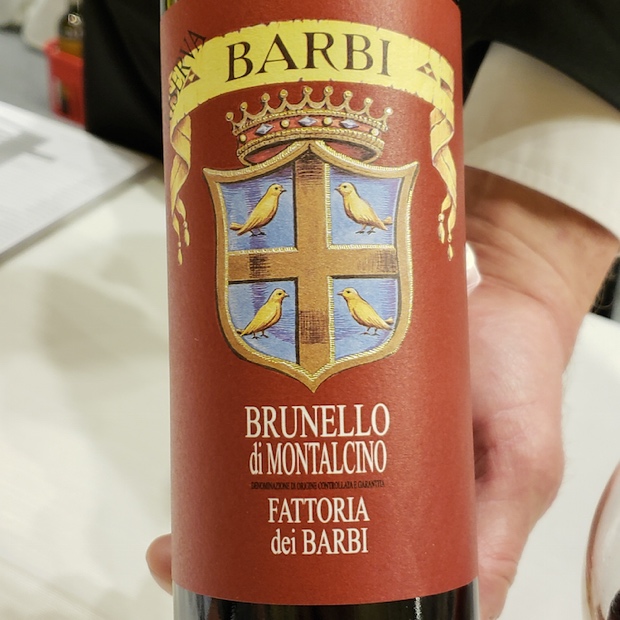
Roero DOCG Previews and Retrospectives: 2017, Riserva 2016, 2007 and Riserva 2006

Across the Tanaro River to Roero

Nebbiolo, arbiter of Piedmontese taste, far from existing in a vacuum or holed up in a one horse town. Nebbiolo’s web casts complex, wide, untethered, unconfined and spread out across a connected set of earthly Albeisa vineyard constellations. The varietal lands umbrellaed and managed in trust to a multi-tasking Consorzio belong to a greater set of regions occupied by Barolo, Barbaresco, Alba, Dogliani and Roero. To follow Piemonte’s nebbiolo simply map out the wine route “di Langa e Roero,” to trace out hundreds of cru sites in dozens of communes within a territory that includes hot spots defined as Barolo DOCG, Barbaresco DOCG, Nebbiolo d’Alba DOC, Langhe Nebbiolo DOC and Roero DOCG. For the latter orient one’s self at the village of Canale and radiate outwards to take in the world that encapsulates nebbiolo grown in zones to produce a unique set of wines. The nebbiolo from vineyards in Roero are special and they are beholden to their makers.

Related – Barolo DOCG previews and retrospectives: 2016, Riserva 2014, 2006 and Riserva 2004

Albeisa President Marina Marcarino introduces Roero Consorzio President Francesco Monchiero

La Bottiglia Albeisa

All the nebbiolo rest in one bottle shape, the “Albeisa bottle” and rest assured all glass etched “Albeisa” contains nebbiolo grown only in these Langhe and Roero lands. It was Renato Ratti who first suggested the project seek this defining characteristic, way back in 1973. Shape, location, provenance, tradition and excellence. Bordeaux, Bourgogne, Albeisa. Recognizable for all these aforementioned reasons and a parochial prejudice in the collective attention to detail.

Roero is an area in Cuneo Province of Regione Piemonte and on the left bank of the Tanaro River, between the plain of Carmagnola and the low hills of Astigiano. Roero’s geographical parameters and topographical stretching northwards from Alba towards Torino are protected within an invisibly drawn membrane or fence enveloping a set of municipalities/villages/communes that mark its outskirts, from the southwest moving clockwise; Pocapaglia, Sommariva Perno, Baldissero d’Alba, Montaldo Roero, Monteu Roero, Santo Stefano Roero, Montà d’Alba, Canale, Priocca, Govone, Castellinaldo, Magliano Alfieri, Castagnito, Guarene, Vezza d’Alba, Piobesi d’Alba, Corneliano d’Alba, Monticello d’Alba and Santa Vittorio d’Alba. These 19 administrative entities then beget 175 recognized cru for raising Roero nebbiolo.

Related – Barbaresco DOCG previews and retrospectives: 2017, Riserva 2015, 2007 and 2005

Dressed to prune ~ Lessons in Alba with the maestro, Dottore Edoardo Monticelli ~ @albeisawines #nebbioloprima2020 #guyot #nebbiolo #barbera

What’s going on, under the ground?

From a geological point of view it is quite a young land, despite resting on a very ancient crystalline base. Up until 130 million years ago it was part of the bottom of an inland sea, called the Golfo Padano. Its terrain was formed by the sedimentation of debris of various lithological origins transported by marine currents that eroded the surrounding mountains, layering them through various stages of drying up and immersion. Roero remained a shallow gulf until the Pliocene, as shown by the sandy sediments and marine clays. The emergence and formation of the Roero hills took place two to three million years ago. This drift also brought various types of soil to the surface: the deeper layers shifted uphill, whereas those more recent remained at the bottom of the valley.

After the final surfacing the soil was covered once again by sediments of alluvial and wind origin. In that period Langhe and Roero formed a single plateau with the Tanaro and the Stura in the direction Bra – Carmagnola. The great friability of this marine-origin soil led to a progressive erosion. This shift occurred between 220.000 and 150.000 years ago along the path of the Tanaro in the direction Alba – Asti, separating Langhe and Roero. The erosion of the river had a significant effect on the sandy soil of Roero, creating the Rocche, craggy mountain peaks that mark the watershed between the old and new Tanaro valley. They cut the territory from south-west to north-east, from Pocapaglia to Montà, dividing the continental gravel and fluvial clay soils from those of marine origin, providing ideal vine-growing conditions.

The formation of Roero’s geological composition sheds light on why it evolved into an important territory for nebbiolo and in particular arneis but the Consorzio’s current President Francesco Monchiero reminds us that it is quite difficult in terms of menzioni geografica, at least with respect to labelling, much more so than the geographical mentions for Barolo and Barbaresco. This complicated and complex issue is attributed to the area’s many hills and tributaries, varied soils and geological compositions. The nebbiolo from Roero is so closely related to its sabbia, sandy soils that transfer and translate in the perfume, “as violet and a certain elegance.”

At the Roero Producers’ Consortium on March 4th, 2014 a decree was published in the Official Gazette “with the objective to perform the functions of protection, advancement, promotion, consumer information and general care of the interests related to the “Roero” DOCG.” In Alba on January 21st, 2020 Monchiero makes mention of 1797, the year to which the first inventories and notebooks of the Roero are found in the historic cellars of Roero di Vezza and Guareno, speaking of “Brente di Arneis, Vigna Costa in Castagnito and “Vermout made with Arneis”. Then into the 1800s traces of Arneis are found in the writings of Gallesio, who lists it among the most typical varieties of Roero and later the Rovasenda confirm its liaison with the city of Corneliano d’Alba. Finally, the 1879 bulletins indicate that 40 per cent of the Monteu Roero vineyards are dedicated to Arneis. Today there are more than 300 consortium members made up of producers and growers, and more than 1,000 hectares of Roero Denominazione (Designation) vineyards, with a total of about 6 million bottles produced, of which more than 60% are exported. Arneis and nebbiolo are the two base grapes of the DOCG: native grapes, typical of this territory, cultivated for centuries and interpreted with great care by the Roero producers.

Lucrezia Carrega Malabaila

The language of Roero

The dynamic and symbiotic relationship between a Roero winegrower to vine, winemaker to wine and nebbiolo as the conduit is actually a transference of information from one set of species to another. That is because the world, as per the words of authors we read and producers we cherish, is made of language. The links and associations are centuries old and through time it is the sampling of flavours, the charting of ripples and the passing of generational torches that ensures a ceaseless linking of knowledge. Case in point the house of Azienda Agricola Malabaila Di Canale.

The @malabaila.wines from Lucrezia Carrega Malabaila. Pas Dosé Metodo Classico seven years on lees, Roero Arneis, Favorita, Roero Nebbiolo, Barbera d”Alba and Birbét. 658 years in. Their time begins now.

Lucrezia Carrega Malabaila is at the helm of Canale’s most historic estate brought into modern eminence by her father before he passed away in 2010. Though Langhe Rosato, Pas Dosè Método Classico Vino Spumante, Mosta d’Uva Parzialmente Fermentato, Dessert Brachetto, Langhe Favorita, Roero Arneis, Barbera d’Alba, Barbera d’Alba Cru and Nebbiolo d’Alba are all purposefully and successfully produced, it is the nebbiolo from estate crus that tell a most profound Malabaila story. Then there is the Malabaila connection to Austrian Esterhazy royalty but that is for another story and another time. This old vines Castelletto brings Canale into prominent nebbiolo focus to ride along with the greats of Barbaresco.

Malabaila Di Canale 1362 Roero Riserva DOCG Castelletto 2015

From Canale vines 50 years old and the most historical vineyard for Malabaila, as documents show. Riserva here means two years in two, three and four year-old barrels. Yet another silky Roero and example of nebbiolo that could not have been born anywhere else. The “little castle” is a charming nebbiolo, fine of all its constructive parts with an ease of sensuality that just shows how confident, casual and natural life as it is just happens to be. Castelletto knows what it is. Drink 2020-2028.  Tasted January 2020

The chef, the plates and the art ~ @ventuno.1 in Alba

The Roero experience is one that requires so much further investigation so here’s to hoping and planning with great intention to make a return for that very purpose. In the meantime here are 38 reviews in total covering the January of 2020 Nebbiolo Prima tastings for Roero DOCG Previews and Retrospectives: 2017, Riserva 2016, 2007 and Riserva 2006.

Tags

Roero DOCG 2017 and Riserva DOCG 2016

Roero DOCG Retrospective 2006 and 2007

Michael’s Nebbiolo Prima 2020

Roero DOCG 2017

The alcohol is felt and noted with syrupy fruit and a glycerin that comes straight off the aromatic top. Here a big Vezza d’Alba nebbiolo with some Bretty volatility and true blue natural feel. Structured with grippy tannins and all of the above combine to impress even while you wonder if some will find it a bit over the top. It may be found to be heavy but there is no doubting the acumen and the potential. Drink 2022-2029.  Tasted January 2020

Bric Castelvej Roero DOCG 2017

Slight volatility, thin and also some oxidative notes. Like cool climate pinot noir in Canale without much substance or structure. Drink 2020-2021.  Tasted January 2020

Demure, elegance, cherry and simplicity from Baldissero d’Alba. Light and feathery, quiet and pretty. A fine, slight chalky grain to the tannic structure. Really fine drinkability. Drink 2020-2022.  Tasted January 2020

Cascina Val Del Prete Roero DOCG 2017

The twain is accessed in a Priocca Roero nebbiolo neither light nor heavy, neither bright nor mired in darkness. A medium-bodied, somewhere between easy and very ripe so balance is the answer. Soft, pliable and yet notable tannin supports very fine acidity and blood orange fruit. Drink 2021-2025.  Tasted January 2020

Cornarea Roero DOCG 2017

From go the feeling is bones, Canale karst intuition and structure. It is in here that nebbiolo takes on another level and layer of possibility. That said the fruit is caught between the posit poles of ripe and rustic. Very close to an exceptional wine. Just needs a bit earlier preserved acidity and passion. Drink 2020-2022.  Tasted January 2020

La Libera

Deltetto 1953 Roero DOCG 2017

Quite near the top of the bright factor though some warmth and weight keep this on the right side of density and extraction. Tannins are bigger and grippier than expected so really, ostensibly steal the show. Let this settle though when it does the S. Stefano Roero fruit will be tighter and drying into further floral crispness. Drink 2022-2024.  Tasted January 2020

Enrico Serafino Roero DOCG 2017

The brightest nebbiolo from Canale Roero gives straight-shooting cherry aroma and flavour. Floral in a dried rose potpourri way with fine acidity and a liquid chalkiness though more from an almost neutral beeswax feel, rather than true blue tannin. Interesting wine that seems to come from limestone, even if it does not. Drink 2020-2023.  Tasted January 2020

Light, bright, effusive and effulgent. Smells a bit like coffee and tobacco which is in great contrast to the transparency of hue and texture. Quite floral, intense and structured. This is serious nebbiolo from Montà and surely a harbinger for the commune in terms of its soils, abilities and wealthy forward thinking possibilities. Drink 2022-2029.  Tasted January 2020

Malabaila Di Canale Roero DOCG 2017

Bright and effusive Canale nebbiolo with cherry transparency and notable tannins. Hovering in between beats in terms of fruit pectin substance though the keel is balanced and proper. All the parts are there and in line if just a step shy of giving away a step up dance party impression. Drink 2021-2024.  Tasted January 2020

A vineyard monople and 100 per cent Canale nebbiolo with sand and minerals in the soil at the top of the hill. Makes for smooth and sweet tannins. Everything about this nebbiolo is just that. Silk threaded through cashmere and there is no mistaking the origin. This is not Barolo or Barbaresco. It’s purely Roero and at the haute heights of chic and beauty. And it has a minor volatile flaw in funk that adds character and complexity. After all we wouldn’t want it to be perfect. Drink 2020-2029.  Tasted January 2020

Mario Costa Roero DOCG 2017

Ripe and very developed fruit, a touch of figgy raisin character. Feel the sandy Canale soil and the development then takes over completely. Drink 2020.  Barrel Sample tasted January 2020

Marsaglia Roero DOCG 2017

Darker hued and ripe beyond so many, this is the nebbiolo from Roero to entice, induce and seduce with its inviting and substantial fleshiness. Also tannic with a late arriving bitter-sour edging that suggests a heavier pressing and bigger ambition. Chewy and filling with plenty of weight, almost to the precipice of warmth and distraction. From Castellinaldo. Drink 2021-2025.  Tasted January 2020

Some great initial interest on this Roero nebbiolo nose, distinctly violet floral mixed with a waft of fresh tobacco. You note the wood here, lightly vanilla, mildly spiced and a touch of sandalwood coming in late. Right proper structure and Canale possibilities intact. Drink 2021-2025.  Tasted January 2020

Rabino F.Lli Di Rabino Andrea Roero DOCG 2017

A nearly searing S. Vittoria d’Alba nebbiolo with a dried fruit quality and quite demanding tannins. Notably woody and the seeds of tannic thrush take over to render the fruit almost sterile and unavailable. Hard to see it returning, like overtly demanding Gattinara. Drink 2022-2024.  Tasted January 2020

Osteria dei Sognatori

Roero Riserva DOCG 2016

Bric Castelvej Roero Riserva DOCG Selezione Panera Alta 2016

A higher toned and also ripe 2016 Canale Riserva for nebbiolo that makes one think of North American pinot noir. The strawberry is nearly candied (west coast) and there’s an evergreen note (eastern cool climate) so the juxtaposition is a candid one. Drink 2020-2023.  Tasted January 2020

Spiked juiced is this aromatic Montà nebbiolo, he of sharp acids and grippy tannin. Not the morbido and supple Roero Riserva that many are and so many others aspire to be but when you encounter such structure you just know the soils are responsible. You also figure the winemaker made the wine that had to be made. This will be very long lived. Drink 2022-2030.  Tasted January 2020

Cascina Ca Rossa Roero Riserva DOCG Mompissano 2016

Cool and just hinting at a mentholated note in a very transparent Canale nebbiolo. The barrel is clearly a factor and melted nicely in for good integration and balance. Makes for a sweet fruit profile and perfectly great ubiquitous Roero Riserva. Drink 2020-2023.  Tasted January 2020

Cascina Chicco Roero Riserva DOCG Valmaggiore 2016

Here Vezza d’Alba Roero Riserva does nebbiolo less like the side of the river where it resides and more like Barbaresco. That may sound like a good idea but the resemblance is not one in a mirror but instead a look that tries a bit too hard. Well made but out of context and place. Drink 2020-2023.  Tasted January 2020

Quiet if cool and savoury to the edge of verdancy. Nebbiolo from Roero can go this route, delicate when chilled and refreshing even while in Castellinaldo Riserva form. Warming the glass releases the volatile notes in a what is ostensibly a cool-climate condition. This drinks like frappato meeting cabernet franc and that’s a delicious combination with the added specificity of a cru named Serra Zoanni. Drink 2020-2023.  Tasted January 2020

Cascina Lanzarotti Roero Riserva DOCG Carlinot 2016

So much vanilla emits from this wooden ship of a Canale nebbiolo for Roero Riserva. Cool palate feels go herbal and then the vanilla continues to creep. One-dimensional nebbiolo. Drink 2020-2021.  Tasted January 2020

Deltetto 1953 Roero Riserva DOCG Braja 2016

High level example of chic style and prominent wood clothing. Smooth and in the vanilla, not to mention so much spice. Tannic structure ruins through every pore. Big nebbiolo from S. Stefano Roero and Braja cru. Drink 2021-2026.  Tasted January 2020

Filippo Gallino Roero Riserva DOCG Sorano 2016

Lovely excess of volatility and ripeness matched by verdancy for Roero Riserva of dedication to tradition. The intensity of the Canale-Sorano fruit-acid compendium is a bit strained and forced. Has worked very hard and the time is now to drink up. Drink 2020-2021.  Tasted January 2020

Lorenzo Negro Roero Riserva DOCG S. Francesco 2016

A bright red and white lighting nebbiolo from Monteu Roero here speaks to younger vines and sandier soils. Bright red fruit is less Riserva and more Annata with sharp and tang-riddled acidity. Prominent food wine with some wood spice and warmth at the finish. Drink 2020-2022.  Tasted January 2020

Earthy and wild fruit aromatic Canale nebbiolo with a real case of the reds and the blues. The guess of Vigna Renesio would be blue clay soil in this particular case as per the way it wells with curiosity. Lots of barrel influence but the bones are supported by a chalkiness that is just starting to liquify, though several years will allow for a slow recline. Drink 2020-2026.  Tasted January 2020

Proper emittance, high-toned and regaling, going in many directions, mostly to culminate at a vortex where complexity lives. Rich and vigorous Pinti cru nebbiolo in Canale, complicit with all parts, fruit very much alive and texture rampant in waves and variegation. Top example of Riserva and not yet at the peak. Drink 2021-2028. Tasted January 2020

Simple, light, airy and delicate Sudisfà Roero of lovely disposition, namely finesse. Such integration and seamlessness is to be lauded, not to mention how drinkable and pleasurable it truly is. Not the most structured (though it is blessed with enough) but that matters little when all other parts do so much to please. Drink 2020-2024.  Tasted January 2020

Pace Roero Riserva DOCG 2016

On the light and delicate Canale side, even for Roero Riserva with a full compliment of barrel incline while the wine already shows signs of decline. It’s quiet and lovely but no stuffing remains. Just some spice and soaked woody notes. Drink 2020.  Barrel Sample tasted January 2020

Pelassa Roero Riserva DOCG Antaniolo 2016

Tones set to high and wood bringing things back down in a topsy-turvy example that wafts so much creamy vanilla. Just too much wood and very little integration, not to mention a hot finish. From Montà. Drink 2020-2021.  Tasted January 2020

Ponchione Maurizio Roero DOCG 2017

Oxidative and nearly prune in aromas. Spice and blood orange, quite astringent. Expressive from hard pressing and replete with green tannins. From Govone. Drink 2020-2021.  Tasted January 2020

Porello Marco Roero Riserva DOCG San Michele 2016

Elegantly soft Canale nebbiolo in Riserva clothing from the San Michele cru for Roero with little effort needed to find prime and simple joy while needing little to no structure in the mix. At least from this point going forward. Drink 2020-2022.  Tasted January 2020

Trees of Cherasco, Piemonte

Renato Buganza Radici E Filari Roero Riserva DOCG 2016

Fromm Guarene, a simplified nebbiolo with no shortage of red and ropey fruit at peak sugar ripeness unmatched by phenolics just a touch short. Makes for high acid, tart and taut tannins with a green edge. Drink 2020-2021.  Barrel Sample tasted January 2020

Taliano Michele Roero Riserva DOCG Roche Dra Bossora 2016

Lots going on from the top with a multifarious aromatic Montà drift. Tons of red fruit, a spike of volatility and a touch of Brettanomyces. Plenty of palate flavour and texture, finishing with a creamy if cool pool created by the time in wood. Drink 2020-2023.  Tasted January 2020

Valdinera Roero Riserva DOCG San Carlo 2016

From Corneliano d’Alba and one of the ripest examples at the height of sweet strawberry. Almost all and only about fruit with very little barrel influence though the tannins are a bit astringent. Close but just a bit tightly pressed and wound. Drink 2020-2022.  Tasted January 2020

Roero DOCG 2007 and Riserva DOCG 2006

Filippo Gallino Roero DOCG 2007

Near tertiary 13 year-old Roero nebbiolo from Canale with a lovely disposition and acidity that will not and perhaps never relent. Showing beautifully and with sweet fruit still intact. Drink 2020-2022.  Tasted January 2020

Cascina Chicco Roero Riserva DOCG Valmaggiore 2006

Perhaps the richest of the retrospective Roero nebbioli is this from Cascina Chicco in Vezza d’Alba, all wood, chocolate, high acids and crunchy spice. A very oaky wine with plenty of drive that will not relent as a result of its strong-willed ambition. Wow, apropos for the Valmaggiore moniker. Drink 2020-2023.  Tasted January 2020

Lorenzo Negro Roero Riserva DOCG S. Francesco 2006

Was a deeper, richer and riper nebbiolo from Monteu Roero-Roero for sure so now it has really rendered and deepened to wet earth. Still full of acidity and the trend is starting to appear with the obviousness of the grape-place-age relationship. Serious if pressing S. Francesco stuff here from Negro Lorenzo. Drink 2020-2022.  Tasted January 2020

Monchiero Carbone Roero Riserva DOCG Printi 2006

Quite advanced and deservedly so for Roero nebbiolo with yet another look at the aging capabilities from the lesser appreciated Canale lands. Acids are quite striking here and the tannins surprisingly alive. Everything is. That’s nothing short of remarkable and surely far from lactic, Good site this Printi. Drink 2020-2023.  Tasted January 2020

Taliano Michele Roero Riserva DOCG Roche Dra Bossora 2006

Taliano’s Montà nebbiolo is really showing its age and missing the classic Roero acidity. Actually comes through late along with the really drying tannins. Fruit vacated house a while back. Drink 2020.  Tasted January 2020

Good to go!

godello

Across the Tanaro River to Roero

Twitter: @mgodello

Instagram: mgodello

WineAlign
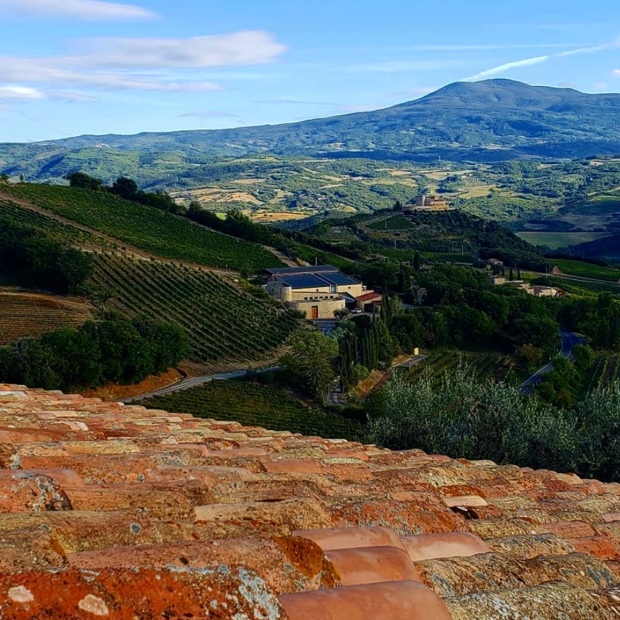
A Chardonnay toast to Cool and the gang

Happy 10th Chardonnay anniversary i4C. Virtually or live, you’re still cool after all these years

Cool is the star attraction, 10 years running. Cool, what everyone continues to talk about, gathers to discuss, debate and celebrate. Cool is not one thing, one person or in one place but everything, in all of us, everywhere. Cool is what unites, brings meaning and really ties the varietal room together. Cool is chardonnay.

Related – Can chardonnay get any cooler?

On Saturday, July 18th at 6:00pm in “A Toast to VQA Cool Chardonnay” John Szabo and I welcomed everyone to for a virtual, interactive Zoom tasting of top Ontario wines, our virtual tailgate party. From near and far, everyone was encouraged to chat. “Get your socially distanced BBQ lit, pour yourself a glass of Cool chardonnay and let John and I have a chinwag, blow smoke, chew the fat, talk a lot without pausing,” John and I discussed the meaning of Cool and how it pertains to making wines in a climate that is anything by warm. We traded messaging, tasted eight wines between us and welcomed two special guests, Niagara’s winemaking monk Thomas Bachelder and Sicily’s Patricia Tóth of Planeta Winery. Here is the full video:

Related – I4C’ a future filled with Chardonnay

It began last Friday with events playing on Zoom screens across Ontario, throughout Canada and in fact, around the globe. There were wine tastings, educational seminars and breezy cocktail hours all virtually orchestrated to include winemakers, producers, sommeliers and wine critics, all talking about one grape variety at the core and the crux of cool-climate viticulture. The weekend long fest, affectionately known as “i4c”, has for 10 years now been bringing the wine community close together, perennially cementing the varietal bonds. Though the 2020 edition of the International Cool Climate Chardonnay Celebration gatherings was indeed virtual in 2020, they lost no lustre, significance or their chardonnay shine.

Related – The meaning of Chardonnay: You’ve gotta be cool to be kind

Chardonnay doesn’t suck and if you have doubts, a reluctant spirit to join in or just plain need to insist that you hate the stuff, consider this. Chardonnay is cool. It’s true, the good folks at i4C have shown this to me, more than once. Ontario winemakers have proved it to me. The South Africans really get it, as do the fine makers from New Zealand, Chile, Argentina and the not necessarily ready for prime time cool climate players from Australia and California too. Don’t even get me started on that Bourgogne stuff. Have we not all been contemplating the axiom of chardonnay continuing to make its own new set of rules, putting its best foot forward? Yes chardonnay is always on our minds, especially here in Ontario and so we feel the progression continuously dovetailing towards the cool and the ethereal.

In a way i4c feels like the prodigal child of the local wine industry and we wait for the homecoming every July. Change and adjustment has infiltrated all of our lives and so the concierge team and Wine Country Ontario decided to take i4C online from July 17-19. Nearly a thousand registrants got into the cool spirit by joining in three online zoom sessions, the first at 11:00am on Friday July 17, 2020 virtually for the #i4CAtHome School of Cool Homeschool Edition, presented by VQA Wines of Ontario, the Wine Marketing Association of Ontario and the Grape Growers of Ontario. The online presentation featured Andrew Jefford, Columnist at Decanter and World of Fine Wine Magazine and Academic Advisor to the Wine Scholar Guild. Andrew was joined by several of the i4C’s past keynote speakers in celebration of 10 Cool years of Chardonnay. This dynamic session involved interviews with past keynotes, all acclaimed authors and wine writers from across the globe, including Matt Kramer (2011 and 2015 keynote), Ian D’Agata (2016 keynote) and Karen MacNeil (2017 keynote). Here is that video:

Andrew Jefford begins. “Cool climate on its own is not enough. It’s what you go and do with it. The climate is just a single strand of that very complex equation that includes soil, topography and human catalysts. We don’t drink soils, we drink wine. Vineyard owners want drinkers to be greedy, to have an irreverent feeling for the vineyard. Cool-climate wine is possessive of a pattern of heat just adequate enough to produce ripe wines and to do so consistently enough. Chardonnay when grown in the right sites can shoot loveliness about, the litmus varietal, along with riesling and cabernet franc – the holy trinity. It’s not an austere holy grail, it shouldn’t mean punishing, painful, taut, tight, dry, short, bitter, lean, mean and caustic. No one in Chablis is trying to make “cool climate chardonnay,” they are trying to make the most balanced and ripe Chablis available in the vintage. The quest is always for deliciousness. Janet Dorozynski, Trade Commissioner at Global Affairs Canada writes “listening to Andrew (Jefford) is like drinking up the finest Chassagne. Arterra Wine’s Eugene Mlynczyk MW adds “new days but we’ll remember Andrew’s advice to be deliciously cool.” Jefford concludes his opening statement by saying “winegrowers have been blissfully unaware for centuries that they have been raising grapes in cool climates. They simply want to make wines that induce covetousness.”

Matt Kramer of Wine Spectator Magazine talks about The Aesthetics of Cool. “It’s a new phrase. A new world phrase. The measure is that it’s not a sure thing, to ripen and make great wine. If it does all the time then it’s not cool climate. We’re very impatient but the truth of the matter is the Burgundians set the standard for centuries and while the ultimate reign is over, everyone else is so new to it all. It’s a very modern locution, not a sure thing and how do we slowly make it become a sure thing.”

Ian d’Agata, multi-award winning wine writer and author of internationally renowned books is considered one of the leading experts in Italian wine Chardonnay and Climate Change. He asks and answers the million dollar question. “What climate change is really about is not just warmer weather but long and extreme droughts, warmer winters, flash floods and tsunamis. The melting of the polar ice caps might actually cool down Atlantic waters. Bordeaux could actually enter a cooler phase. Then a shift to biology. “Gene editing is potentially a very good thing, adding or subtracting from what is already there, it’s not like genetically modifying which introduces other organism into a host genome. The ethical issue is if people cross the line. the technology is not the issue, people are the problem.”

Karen MacNeil is a winner of the James Beard award for Wine and Spirits Professional of the Year, the Louis Roederer award for Best Consumer Wine Writing, and the International Wine and Spirits award as the Global Wine Communicator of the Year. “Everybody drinks Kim Kardashian’s Chardonnay. We think in terms of Audrey Hepburn but truth be told, it is Kardashian that moves off the shelves. People have moved their vineyards and vocabulary to cool, but not their mindset. They are still making big fat chardonnays. There’s a big disconnect, between talk and actuality, and that’s a dangerous thing. Most people are talking the cool talk, but not walking the walk. I think it’s a problem to pick early and call it a cool climate wine. There’s also a poorly conceived idea of ripeness. It’s a not a singular thing. It’s a kaleidoscope that morphs into a thing of beauty.”

With Magdalena Kaiser’s famous red hat, i4c 2018

The chat moves forward with everyone chiming in.

Jefford: “Saying cool climate is a style on its own is a trap. Iwould be very weary of that. Better to say I work in a cool climate and i am trying to listen to my vineyard, to be a vineyard whisperer.”

MacNeil: “When I think about ripeness I think about scrambled eggs. You have to take the pan off the heat one minute before its done. It’s the idea of being one step ahead of what you need the result to be. iI’s all about what happens before the big moment.”

Kramer: “What is identifiable as as being Ontario chardonnay? A lean but not mean and a distinct minerality and I believe it does come from the soil. I love Prince Edward County chardonnay, no other wine, certainly not from California or Oregon tastes like Ontario chardonnay. In a blind tasting Ontario would always stand out as being chardonnay, for whatever reason that may be.”

MacNeil: “I love maximum flavour with minimum weight. distinct obliqueness, vibrational, like watching ballet, you lift in the air with energy and without so much gravity. tension and flavour.”

d’Agata: “I really do believe Canada makes world class chardonnays, certainly better than chardonnay made in Italy. They speak of Somewhereness, to borrow Matt Kramer’s phrase, weightless, laser-like acidities and are able to communicate the sense of the land. Refreshing, mineral-driven site specific wine. Ontario can be very proud of it.”

Jefford: “Stealthy wines, wines you need to spend time with, cozy up to, sit beside and get to know. Have a meal with. Have a meal with your partner, have a second and third glass, drain the bottle and that you can do with Ontario chardonnay.”

Click here to see the list of participating Ontario wineries

Click here to see the list of participating International wineries

The afternoon session was one of academics meeting market experience in a lively debate! Featuring a dynamic panel of multi-hat wearing Canadian industry professionals: John Szabo MS (Ontario), Treve Ring (BC), Brad Royale (Alberta) and Véronique Rivest (Québec) held a virtual debate about the various scientific and interpretive parameters of what it means to be cool. Featuring, and leveraging, the sensational Chardonnays of Chablis, New Zealand and Ontario, each panelist was asked to defend, or condemn, one of the classic parameters of cool climates. Including, but not limited to, latitude, altitude, length of growing season, average temperatures, soil colour and temperature, and sunlight hours. Which is most important, and how should cool climate really be defined? Here is the video:

What are the characteristics of cool chardonnay?

Cool in this sense is trying to find the sweet spot as if at midnight where sugar ripeness, acid structure, phenolic ripeness and fruit character meet for optimum wine results. The latter is what John Szabo considers the critical aspect of making great cool-climate wine. Treve Ring talks about growing degree days and the original benchmark measuring stick, The Winkler Scale. Mean temperature of the month, minus 10, times the number of days in the month – multiplied by seven for the number of the season. On the positive side is for comparisons, i.e. Prince Edward County versus Chablis, 1250 vs. 1350 GGDs in 2019. Still a basic application but hardly complex enough to tell a full story. Ultimately the relationship between vine growth and temperature is not linear. This is the argument against GGDs being the be all, end all way to define growing ability in a climate. Grape varieties are all different and also different clones of a varietal will react different to sunlight hours. A good tool, a useful tool, but does not take climate into account. So, in the end “a limiting factor,” says Szabo. “It worked well in the 1940s and 50s “says Brad Royale, “in the time of emerging viticultural areas and where growers needed a simple, base reality.”

Royale goes on to talk about soil temperature and colour, heat retention and magnification, from white limestone, red, blue, black or grey clays, all effect grape growing in different ways. It is a chat note from Eugene Mlynczyk MW that stands out as important. “Science shows that things matter (or not) … with the added complexity of subjective factors in the case of wines (or any other “artform”) …” Karl Kliparchuk is a professor of Geology at British Columbia’s Institute of Technology. He adds “interior vs coastal vs near large interior water bodies also affects cool climate.” True that.

Raj Parr at i4c, 2018

The next question “are latitude and altitude the single most important determining factors for cool climate wines?” is answered by Soif Wine Bar in Gatineau’s Sommelier-owner Véronique Rivest, one of the most respected sommeliers in Canada and abroad. “No latitude is not the only factor, continentality (also with thanks to Chablis’ Athénaïs de Béru) is a much bigger factor, especially with respect to danger of frosts.” Latitude, latitude, latitude “will determine heartretention, solar radiation and seasonality. Latitude defines the original consideration of where to plant.”

Brad Royale adds that “a cool climate region is surely one that is susceptible to spring frosts, especially in the midst of warm temperatures.” Diurnal temperature shifts are key. “Most cool climate viticultural areas have relatively boring (10 degrees) diurnal temperature fluctuations. Hot climates, especially deserts have the widest range.” The group goes on to wonder if is sunshine the new rain and can we use length of growing season to define cool chardonnay? Both are answered with more yes than no responses so the times they are ‘a changin’.

Director of Sales and Education at Rex Hill’s Carrie Kalscheuer at i4c, 2018

Can Chardonnay get any cooler?

Is there a comparable white grape that speaks of its origins in more varied tones? We have unoaked, barrel fermented, 50-50, unfiltered, reductive, must oxygenated and many more methods and styles of Ontario chardonnay. Which one is done best? Sometimes we mimic Mâconnais, other times Chablis and often a Bourgogne Villages approach. What’s the best way to go about it? Is chardonnay a victim of its own ubiquity and adaptability.” What makes it so special then? “Chardonnay expresses place, as well as production, terroir as well as technique.” Chardonnay should taste like it has come from a place, but also from a time. It’s a hell of a lot easier to plant in the right spot.

As I mentioned, John and I tasted four wines each during our seminar. Here are my notes on the four that I opened.

Organized Crime Chardonnay Limestone Block 2018, VQA Beamsville Bench, Ontario (11951, $24)

From Jan Tarasewicz, his daughter Ania de Deluba and winemaker Greg Yemen, on Mountainview Road in the shadow of the Escarpments’s steep cliff faces. Whole bunch pressed, juice settled for 12 hours and put very turbid to puncheon (none new), no bâtonnage and full malolactic conversion. Classic Beamsville chardonnay of cool, snappy and piqued tendencies with the added warmth of a vintage bringing some lemon curd and just turning to golden ecru caramel glaze for rich measure. Lots of ripeness, definite somewhereness and what’s desired, as in deliciousness. Drink 2020-2023.  Tasted July 2020

I-Cellars Chardonnay Icel Vineyard 2017, VQA Niagara-on-the-Lake ($40)

From Niagara-on-the-Lake and 2010 founder Adnan Icel, a rich throttled chardonnay barrel fermented in 500L French oak puncheons, lees stirred for six months, then aged 12 months more. Tells us to expect rich, opulent, creamy and highly flavourful chardonnay. That it is. Flint-struck if only momentarily, correctly reductive in the sense of fresh encouragement combined with the Niagrified creamed corn, again, if only during this persistently youthful state. Maybe causes a note of bewilderment for some but stay with this wine, give it a year’s time and all will be worth it. Will drink in optimum and designed fashion eight months from now and for two-plus years thereafter. Drink 2021-2024.  Tasted July 2020

Trail Estate Chardonnay Vintage Three Unfiltered 2018, VQA Prince Edward County, Ontario ($40.00)

A bit more than a hectare of chardonnay and 312 cases in 2018, harvested September 19th to 24th (3-4 weeks ahead of 2017, which was October 8th). Set to natural ferment and put to 85 per cent 500 L French oak puncheons and 15 per cent 225 litre barriques, 33 per cent second fill, (17) third fill and (50) neutral, for 10 months. Lots of lees contact though I doubt Mackenzie Brisbois did much or even any stirring. Bottled unfined and unfiltered. When I reviewed number two I noted more flesh and complexity than the first vintage and said in many ways it was Mackenzie Brisbois’ first truly personal chardonnay. So 2018 is the next one and oh, baby. More flesh, more caramel, more body. If at first there seems to be a turbid or demure sense of aromatics, they come out like wildflowers with just a moment’s agitation. Sorry to say but the vintage is just a bit too easy, not hard to get, open to a relationship without needing too much coercing. But deliciousness and agreeability are positives and so we’ll just have to chalk it up to epistemic Trail Estate chardonnay success. Drink 2020-2025.  Tasted July 2020

Leaning Post Chardonnay Senchuk Vineyard 2018, VQA Lincoln Lakeshore, Ontario ($45)

Set apart from the Bench wineries and while still beneath the Niagara Escarpment Senchuk Vineyard sits on more of a plain that gently slides down the Lincoln Lakeshore and into Lake Ontario. Perhaps it will become Ontario’s next sub-appellation. Sandy soil is maculated by largish stones three to four feet down. This atop a bed of grey clay so the low vigour of the sandy soil will be offer up a flip-side, a foil to the heavy clay of nearby locales like the Beamsville Bench. This third chardonnay from the home vineyard comes off of vines planted in 2011 so now this seven-year old fruit is starting to really mean something. And Ilya Senchuk is a winemaker who studies, concentrates and plans his work around clones. It’s not just about where to plant which varietals but which clone will work best and where within the greater where. Vineyard, vintage and variance. Senchuk truly believes that greatness is determined by varietal variegation, from vineyard to vineyard and from year to year. From 2018: 64 per cent Clone 548 and (36) Clone 96. Listen further. Warm season so picked on September 18. The grapes were gently whole cluster pressed (separated by Clone), allowed to settle in chilled tanks over night. The juice was then racked into barrels; Clone 548 – one puncheon and three barriques, Clone 96 – three barriques, where they underwent spontaneous alcoholic and malolactic fermentation. The lees were not stirred and it was allowed to age for 16 months. Power, body, tons of fruit, definite barrel influence, a southern Bourgogne kind of vintage, so maybe Pouilly-Fuisée or Maconnais Village with a specific Climat. For the time being we call the Village Lincoln Lakeshore and Senchuk Vineyard the geographical designation. The lemon curd and the acidity are there in a great tangle so yes, this is très cool chardonnay. I think we can safely say already that the Pinot Noir and the Chardonnay grown in Ilya and Nadia’s home vineyard is on its own, one of a kind and makes wines that don’t taste like anywhere else. This 2018 cements the notion and opens the next stage of the discussion. Drink 2021-2027.   Tasted July 2020

Good to go!

godello

Twitter: @mgodello

Instagram: mgodello

WineAlign

Barolo DOCG previews and retrospectives: 2016, Riserva 2014, 2006 and Riserva 2004

The Albeisa bottle is the symbol of the Langhe territory

Preview of Barolo DOCG 2016

Nothing in the behaviour of these nebbiolo consents to their age. Too serious, too impenetrable and at the same time terribly sharp, focused and severe. Wines as stiff as justice. Somehow they intimidate us but also create an environment for sheer, prolonged and utter enjoyment. Or at least they will, eventually, with time. When they arrive at their intended destination they will surrender a Barolo impression that we are barely drinking them. A retrospective look at yesterday Barolo DOCG 2006 and Riserva DOCG 2004 confirms from then, through current considerations, what will happen tomorrow.

Nebbiolo seekers may still be reminiscing about the Barolo & Barbaresco world opening as the largest appellation tasting for Italian wine in the United States. The event took place in New York City back in February 2020, featured over 200 producers, hosted 800-plus trade attendees and 500-plus consumers. Big stuff. As for me, my most recent Langhe experience was in January 2020 when I travelled to Alba in Piemonte for Nebbiolo Prima 2020 and Grandi Langhe. I tasted more than 600 nebbiolo, dolcetto, barbera, arneis, freisa, chardonnay, pelaverga and even riesling during the eight day work staycation. Grande.

Related – Barbaresco DOCG previews and retrospectives: 2017, Riserva 2015, 2007 and 2005

Tasting at Nebbiolo Prima 2020

Vintage 2016 was the first from which Barolo DOCG exceeded 14 million bottles and that number accounted for 22.4 per cent of the total volume reported by the Consorzio di Tutela Barolo Barbaresco Alba Langhe e Dogliani. That Barolo and Barbaresco are so prominent is due of course to their international stardom but from a real and factual standpoint the fact is that nebbiolo plantings make up 37 of the Langhe region’s total vineyard space. All appellations and varietals are important and need to be tasted at the combination of Nebbiolo Prima and Grandi Langhe Trade Fair. Yet the bottom line remains. Barolo is king and most attendees are puppies in love when it comes to chasing that regal nebbiolo dream.

Menzione Geographica

Barolo’s cru system has elevated nebbiolo to the top of the Italian wine charts and few would argue against it residing at the head of the global wine buying and collecting chain. Mentioning the geographical location is Barolo’s calling card and no other Italian appellation has built such a veritable reputation on the pinpointing of locations. The mere preesence of a Menzione Geographica on a Barolo label tells a specific story. In 1879, Lorenzo Fantini in his “Monograph of Vine Growing and Enology in the Province of Cuneo,” offered an accurate description of the zone and defined Nebbiolo as “the prince of vines.” Again, Fantini in his “Monograph” wrote “if the vine has within itself excellent qualities it is also undoubtedly true that the elaboration of its heavenly juice requires favorable land and soil. Not all soils provide equal savor, so if we must doff our caps to this princely vine, we must revere with equal respect that earth which hosts and maintains it…the vine growth along the Langhe slopes, so rich and luxuriant, dominates all other cultivations. To the amenities and asperities of those hills, the hand of man and investment have cultivated the most splendid of vines which in turn have entirely altered the aspect of those localities. If from the high plateau of La Morra you cast a look at the vast surface of grape vines stretching out before you, upon beholding those magnificent vineyards, so won.” (Source: “Nebbiolo the Territorial Vine” by Pietro Ratti 2004)

Barolo by the numbers

By the numbers

Albeisa is a non-profit organization whose primary mission is to develop and promote the wine production of the Alba area. The Union of Alba Wine Producers manages the use of the bottle Albeisa, or Alba bottle, and represents approximately 230 members and 13 million bottles. Thanks, as always, must be afforded Albeisa’s guiding light and force, as in the organization’s President, Domaine Punset’s Marina Marcarino. This is what I have said (more than once) about the fearless leader and her charge. “Always the first to pioneer, lead, teach and share, Marcarino expressed the pride and the passion of the community of producers that worked tirelessly to create this formidable assembly. Albeisa’s goal is not singularly focused. This event is not simply a matter dedicated to the tasting of wine. Agricultural evolution and wine-producing innovation are a major focus, always with a socio-economic bearing kept in mind.” At the opening dinner in Alba at the week-long host Hotel I Castelli, it was pointed out that the number of declarations for labelling always exceeds what is bottled. That is because three of four years after harvest 25-30 per cent of producers decide to de-classify their Barolo (2013 numbers). In that vintage 147 declared and 128 bottled. In terms of menzione geographica 46 per cent declared and at harvest 23 actually bottled with the name of a Barolo cru. There has been a steady decline of the de-classification of grapes. Barolo’s loss is Nebbiolo DOC’s gain.

Journalists at Nebbiolo Prima 2020

The feelings and sensations gained in assessment of so many Barolo perforce was at the time, an unbearably lucid experience. The exercise is a test of will, staying power and endurance. Nebbiolo Prima is a sprint and a marathon wrapped into one. Who could not be made stronger, wiser and yet so humbled by having tasted through the experience. These notes reflect my experience, my connection to Piedmontese life, performing to others rhythms. The totality of these tasting notes cover Barolo DOCG 2016 (197), Riserva 2014 (6), 2006 (20) and Riserva 2004 (7), played to the tune of 230 reviews.

All the Nebbiolo. Nearly 400 over four days. Roero, Langhe, Barolo, Barbaresco.

  • ***** denotes wines of the vintage

460 Casina Bric Barolo DOCG Bricco Delle Viole 2016

A cracked not-pepper, yes reductive if early corrective without reveal and aromas are all tar melt to fresh roses, though high in tone. This is Bricco delle Viole and will be very serious Barolo, tightly wound and equipped with some formidable structural unease. Look forward and further, far down the road. Drink 2023-2029.  Barrel sample tasted January 2020

Abbona Marziano Barolo DOCG Cerviano Merli 2016

Quality concentration, richness of fruit, wild-eyed acidity and mature tannins make for an across the board effective and pleasurable Novello Barolo. A fine sample that will drink well early and in the near term. take full advantage. Drink 2021-2028.  Barrel sample tasted January 2020

Abrigo Fratelli Barolo DOCG Ravera 2016

Big-boned nebbiolo here in Ravera clothing, so rich and concentrated, clearly from a warm part of the cru (perhaps the warmest) and a winemaker who allows the heavy fullness to do its thing. Welling and oozing with sumptuousness, thick tannin and ultimately a matter here of great Novello density. A style born out of necessity. Drink 2022-2028.  Barrel sample tasted January 2020

Very handsome Novello nebbiolo, finely chiseled Ravera structural components with taut flesh and timeless disposition. The variegated hue tells so many stories through so many layers, as does the way the transitions move through space and time with finesse and effortless ease. It’s a highly tannic and fierce competitor but the race is a marathon in this case, not a sprint. Drink 2023-2035.  Tasted January 2020

Agricola Marrone Barolo DOCG Bussia 2016

Welcome to Bussia. This is the prudent one, far from promiscuous and very promising. Hides everything and is not so fast to give anything away. The textural components are all together; chew, crunch, soft and crackling. Grooves slowly and changes tempo. Not sure which way it will go but its subtlety and its impression will not be denied. From Monforte d’Alba. Drink 2022-2029.  Tasted January 2020

Alario Claudio Barolo DOCG Sorano 2016

High toned and octane Serralunga d’Alba nebbiolo with acids ripe, ripping and all over the map. Makes the fruit look silly and small though tannin is negligible. Simple red lightning in Barolo. Drink 2020-2022.  Tasted January 2020

Alessandria Fratelli Barolo DOCG San Lorenzo Di Verduno 2016

Youthful Verduno but the sample exhibits tones quite up there with red citrus and wood-derived signs. Still a bit lean and verdant. In this adolescent state of grace it just seems woody, chewy and not even close to prime time. Drink 2022-2027.  Barrel sample tasted January 2020

Alessandria Gianfranco Barolo DOCG San Giovanni 2016

Fresh and effacing, ripe and ready for all that’s coming. Very Monforte d’Alba nebbiolo, in a flat out juicy way and tannins stuffed in back pockets. Knowable and reasoned for what mind of expectation commits. Drink 2021-2026.  Tasted January 2020

Assessing Barolo DOCG 2016

Alessandro Rivetto Barolo DOCG Del Commune Di Serralunga d’Alba 2016

So very ripe and extracted of very red berry Serralunga d’Alba fruit in a candied if savoury way. A nebbiolo of fruit, high acidity and simple structure. Nicely drinking and if it’s inexpensive I’ll gladly drink a few. Drink 2020-2022.  Tasted January 2020

Amalia Cascina In Langa Barolo DOCG Le Coste Di Monforte 2016

Quiet and in low light demure, not overly expressive for 2016 Barolo. Tart and dry, not must juice or even moisture. Can’t see this Monforte d’Alba developing much more complexity though when it settles there will be pleasure afforded. Drink 2021-2024.  Tasted January 2020

Angelo Negro Barolo DOCG Del Commune Di Serralunga d’Alba 2016

This is nebbiolo of largesse. prim, proper and so bloody commercial for all the correct reasons. Everyone can enjoy this as nebbiolo, Serralunga and Barolo. Clean and crisp with all the mild mannered and perfectly reasonable parts. Drink 2020-2024.  Tasted January 2020

Anna Maria Abbona Barolo DOCG Bricco San Pietro 2016

Quite smoky, so much so it seems that the smoke has only very recently been extinguished. So much barrel toast and smoulder. Juicy with tobacco resonating throughout. Drink 2021-2024.  Tasted January 2020

Castiglione Falletto nebbiolo in the big time, ripe, rough tumbling and nearly rambunctious. The warmth and developing liqueur is nothing but comforting and enveloping. Carries through without staying away from the initial portent and plan. Big, Rocche di Castiglione boisterous and impressive. Drink 2021-2027.  Tasted January 2020

And now for something completely different. This nebbiolo from Monvigliero is all saucisson, or in this Piedmontese instance, Cottechino. Honestly, just like it, raw and hematic, but also liberally perfumed, with roses of course. Structurally there are few equals and so the diversity in expression leaves a long-lasting and highly consequential impression. Now we are beginning to see why some would consider this Verduno as one of the greatest vineyards in the world.  Drink 2023-2036. Tasted January 2020

Anselma Famiglia Barolo DOCG Bussia 2016

A wealth of collected features and possibility abounds in this Monforte d’Alba Barolo though the barrel is still very much a prominent aspect of the coverall condition. Really textured, chewy and tannic of push and thrush. Layers of Bussia structure need to peel, unfold and melt away. Drink 2022-2029.  Barrel sample tasted January 2020

Ascheri Barolo DOCG 2016 ($56.99)

The Ascheri label is from La Morra. Seemingly the sort of Barolo that was, is and will always be this way. A bit rustic, surely made to act like itself vintage after vintage, coming across as fresh enough and equipped with all the dried fruit, savoury edging and portents that speak to the nebbioli of generations. Drink 2020-2024.  Tasted January 2020

Ascheri Barolo DOCG Coste & Bricco 2016 ($75.00)

Quite extracted and concentrated Serralunga d’Alba nebbiolo with so much orange on the nose. Blood, scraped and juiced but also hematic and layered. Huge wine of fruit, acids and tannin. Nothing left behind, in the Coste & Bricco fields, in the barrels or on the table here. Drink 2021-2027.  Tasted January 2020

Aurelio Settimo Barolo DOCG 2016

All in nebbiolo of earthy, swarthy and concentrated if chewy fruit. Also a touch volatile. Drink 2021-2024.  Barrel sample tasted January 2020

Aurelio Settimo Barolo DOCG Rocche Dell’Annunziata 2016 ($54.95)

Some quietly acquiesced development already in this sultry and sumptuous La Morra Barolo. That nebbiolo can do this is youthful exuberance is the speciality of the place, especially in Rocche dell’Annunziata where the acumen amongst winemaking is off the charts. This may peak earlier than some others but full enjoyment can be had nonetheless. Drink 2021-2026.  Barrel sample tasted January 2020

Barale Fratelli Barolo DOCG Castellero 2016

Youthful and slightly lean Castellero, with a transparency and tisane to be very sure. Really classic Barolo commune tannins, not overt as say anxiety inducing, but more than properly present and accounted for. Drink 2021-2028.  Tasted January 2020

Barale Fratelli Barolo DOCG Bussia 2016

The aromas here are dramatically 2016. Ripe and racy with a cured salumi note. Stay here for a few minutes and you are gifted tar and roses, For real. The way this Monforte d’Alba Barolo has been handled is so proper and gives it every opportunity to succeed. High quality Bussia for sure. Drink 2022-2028.  Tasted January 2020

Batasiolo Barolo DOCG Briccolina 2016

Quite the gregarious and expressive Briccolina aromatic sensation emits and gifts while in withstand against a formidable structural exchange. Plenty of fruit and just as much wood mean modernity and a whole lotta vanilla love. It’s a style to be sure, almost late 90s and early 2000s but there can be no avoiding what pleasure so many will derive from such an exercise. From Serralunga d’Alba. Drink 2021-2027.  Tasted January 2020

Bava Barolo DOCG Scarrone 2016

The full gamut of fruit play is in. Scarrone is orange in so many ways and also umeboshi plum, prune, berries and ultimately like a slow rendered Marbella demi-glacé. Very rich Castiglione Falletto nebbiolo, welcoming its wood and giving away without shyness nor restraint. Drink 2021-2025.  Tasted January 2020

Oh my the tobacco on this Verduno nebbiolo from Monvigliero is uncanny. Like grandfather’s pipe snuffed out but lingering and so obvious when you enter the room. Then the scent turns sweet and comforting, a warm hug of a nebbiolo beneath a blanket of couverture by tannin. Throws the cru at you with everything it can and should. Drink 2023-2033. Tasted January 2020

Borgogno Barolo DOCG Liste 2016

Particular and singular aromas from Liste speak of and to a Barolo nebbiolo sense of wildness and freedom. Great acids, fruit slung across a pole draped with both fruity and earthy opportunity. Really compact and extended with great length. A touch peppery warm but when it settles the beauty will surely emerge. Drink 2022-2029.  Tasted January 2020

Borgogno Francesco Barolo DOCG Brunate 2016

A forceful La Morra nebbiolo in hard-shell clothing there may seem to be morbido and amenable aromatic compounds but the palate hits you like a ton of mortar and brick. Crunchy, earthy and intense. This Brunate will soften and become a much more impressive wine in five plus years time. Drink 2023-2029.  Tasted January 2020

Boroli Barolo DOCG Brunella 2016

The high resonance distracts with both brightness and humour though it purports to tell a thin story. The insubstantial texture speaks to the fruit conecntration and the inability of structural parts to save. Drink 2021-2023.  Tasted January 2020

Sommeliers of Nebbiolo Prima 2020

Burlotto Comm. G.B. Barolo DOCG Acclivi 2016

A bit past prime aromatically speaking with a developed note of dried fruit and yet with some scarped skin energy that gives it a rightful tang. Quite orange in flavour, some tisane and mild finishing tannic twang. Drink 2020-2023.  Tasted January 2020

Borgogno Fratelli Serio E Battista Barolo DOCG Cannubi 2016

Cannubi of Barolo spice cupboard is just thus, just like this. That and sweet dried fruit, desiccated floral petals and some mean verdancy in the tannins. Seems soft but it’s really not. Time will ease the edging and the tension. Drink 2022-2028.  Tasted January 2020

Boroli Barolo DOCG Villero 2016

The third Villero style comes across through this more gregarious and less subtle Castiglione Falletto nebbiolo. Seeks quicker admiration and offers more immediate gratification. Texture is more liquid chalky and acids more integrated. Peppery in a non-reductive and French way with a really, really juicy finish. Fast admiration for such a specimen. Drink 2021-2026.  Tasted January 2020

Bosco Agostino Barolo DOCG Neirane 2016

Taut Verduno nebbiolo, richly embossed, hungrily ambitious and dealing in parts long, purposed and fine. Quite a warm compliment of Neirane seasoning, salt, pepper and wooden piques over every bit of the fruit in and out of time. We’ll see about this barrel bruiser because the red fruit seems to handle it just fine. Drink 2022-2029.  Tasted January 2020

Bovio Barolo DOCG Gattera 2016

A gregarious La Morra this Gattera in aromas though more down to earth on the palate. Texture is lean and elastic while tannins sharpen their digits on the fruit. Some distraction and separation. Drink 2021-2026.  Tasted January 2020

Bovio Barolo DOCG Rocchettevino 2016

Deep inhalant of La Morra nebbiolo this one with as much Rocchettevino vineyard soil, climate and tradition instilled, installed and distilled. Quite tannic and tense, in fact the attention to nervous detail is commanding and invigorating. A high quality structural if old school example. Drink 2023-2029.  Tasted January 2020

Brezza Giacomo E Figli Barolo DOCG Cannubi 2016

Tough early, tart and intensely textured Cannubi, very cool in climate oriented and sweetly herbal. Relatively soft and amenable acids, but also, in a way, Barolo tannins. Drink 2021-2025.  Tasted January 2020

Brezza Giacomo E Figli Barolo DOCG Sarmassa 2016

Sarmassa for Barolo nebbiolo brings a cupboard full of spice, a brush past greenery in winter in the wood next to the vineyard and steeps a tisane from all the twigs, leaves and herbs. Then turns to face the roses, where sweet notes bloom and pleasure awakens. Will offer great pleasure in the five year range. Drink 2021-2026.  Tasted January 2020

As you might expect the uncanny scent of roses in so many incantations is the thing and everything, at least in the beginning. Fresh bouquet and dried petals circulate in stereo. Offers nebbiolo faith to go on and it’s only just begun. Though the absolute tightly gift-wrapped fruit needs little and asks for nothing at this early stage it will in turn return everything it received. A wonderful vintage of Coste di Rose Barolo. “This will be our year, took a long time to come.” Drink 2023-2034.  Tasted January 2020

Bricco Giubellini Barolo DOCG Del Commune Di Monforte d’Alba 2016

Still reductive and in this case the rubber and pepper are how it shows. Chewy and near massive in its acid-tannin missive continuum. Really dramatic and big-boned nebbiolo from Monforte d’Alba with a need to come about and into balance. Drink 2023-2030.  Tasted January 2020

Bricco Maiolica Barolo DOCG Del Commune Di Diano d’Alba 2016

The tonality here is exceptional, high and mighty, unsettled, breathing heavily, yet disturbed. Needs time. From Diano d’Alba. Drink 2020-2022.  Barrel sample tasted January 2020

Broccardo Barolo DOCG I Tre Pais 2016 ($48.95)

Broccardo’s is a three-pronged Barolo affair from vineyards in Monforte d’Alba, Barolo and Novello for a true house amalgamation by Fillipo, Laura and Federico. While firm enough to speak about proper and cumulative nebbiolo structure there is an estate feel to I Tres Pais, a Piedmontese dialectical three verse poem that speaks to land, people and wine. That’s what Barolo is all about. Drink 2021-2027.  Tasted January and April 2020

Quite closed with little aromatic give. Seems protective, not so much reductive but keeps its Serralunga d’Alba Brea secrets hidden. The palate reveals more and especially a solid architectural foundation on which fruit can climb. This is a finessed and impressionistic Barolo with a great future ahead. Drink 2022-2028.  Tasted January 2020

Bruna Grimaldi Barolo DOCG Badarina 2016

Good Serralunga d’Alba fruit core, a touch overripe and acidity tart, taut and in charge. All about that compendium distilled through Badarina. Drink 2020-2022.  Tasted January 2020

Bruna Grimaldi Barolo DOCG Bricco Ambrogio 2016

Really quite herbal, almost Amaro nebbiolo, cool, verdant, forest floor and foliage throughout. Solid structure with a minor note of bitters and drying edginess in the end. Fine appreciation for translating the Roddi-Bricco Ambrogio sense of place. Drink 2022-2026.  Tasted January 2020

Burzi Alberto Barolo DOCG 2016

Another simplified nebbiolo in La Morra Barolo dress albeit with a next level quality of concentration, chewiness and heft. Tannins are relatively mild and so it’s like Langhe Riserva, if there were such a thing. Lovely to drink, any night of the week. Drink 2020-2024.  Tasted January 2020

Burzi Alberto Barolo DOCG Capalot 2016

A bit of rose in the La Morra nose candy and a scrape of orange zest mark the entry before this Capalot nebbiolo gets down to serious tannic business. A clear message of ripe citrus melts into a fruity tisane with a few herbs and leaves stepped in for good measure. Fun little La Morra and neatly soothing. Drink 2021-2026.  Tasted January 2020

***** Cagliero Barolo DOCG Ravera 2016

Yet another completely different expression of Ravera and showing the great diversity of wines made from the cru. Tonality is higher but not so high as to shine so bright you need to wear shades. Builds and builds, first from ripe red fruit then through fine acids and elastic texture then to really fine tannins. A ver precise and accomplished Novello Barolo with so much life laying put on a red carpet ahead. Drink 2023-2034.  Tasted January 2020

Camparo Barolo DOCG Boiolo 2016

Very tisane in its aromatic beginnings, like Rooibos with a wedge of lemon. A bit lean and musty, like cool climate pinot noir from a less than ideal fruit vintage, here from Boiolo cru in La Morra. Drink 2020-2021.  Tasted January 2020

Cantina Del Nebbiolo Barolo DOCG Perno 2016

Perno of another Monforte d’Alba stripe and colour, a bit dank and reductive, left to its own devices within the imbalance of its unhinging. Gives you its heart but you want its soul. Drink 2022-2026.  Tasted January 2020

Carlo Revello & Figli Barolo DOCG 2016

Different sort of La Morra nebbiolo here, part tisane and part liqueur. Not sure it knows what it prefers to be. Hard to be both. The fruit seems concentrated on the nose but stretches leaner on the slightly dilute palate. Good enough. Drink 2020-2023.  Tasted January 2020

Casa E. Di Mirafiore Barolo DOCG Lazzarito 2016

Quite the firm Serralunga d’Alba nebbiolo from Lazzarito cru right here, grippy in every respect, transparent, reeking of rose petals and old-school in many right ways. Does the singular thing it should and does it really well. Not so very multi-dimensional nor does it need to be. Drink 2021-2026.  Tasted January 2020

Giuliana Drocco and Simone Ortale, Cascina Adelaide

From Serralunga d’Alba and because though this is just a baby doubled down by the forceful cru it is a highly precocious little one, with thanks to a vintage that opens earlier in this part of town. This may be a funny way to start the description of a very big wine but the intuition and clarity spoken by the 80 year-old vines is massive in missive, front loaded with fruit, acid and tannin. Back loaded too so expect a 20 year journey, give or take a few. Drink 2023-2034.  Tasted January 2020

Cascina Adelaide Barolo DOCG Cannubi 2016 ($112.00)

From Barolo’s grand vineyard and in the hands of Simone Ortale a most elegant representation. Lighter, transparent, more floral aromatica and only handled inside the cellar by grandi botti. The result is also a sharper, pointed, high acidity nebbiolo, with more energy and lift. While still just an infant you can’t escape from seeing and tasting Adelaide’s Cannubi this way. Drink 2021-2030.  Tasted January 2020

Cascina Adelaide Barolo DOCG Fossati 2016

A bit over to right side of extraction and concentration for Fossati driving forward with drying fruit mixed into the gregarious personality of the wine. The extra push of spice and herbal accents come with some Bretty quality along from La Morra as if like Rhône grenache in a warm vintage. Cool and frontal, fully unabashed in untamed beauty. Tannins need time though too much will go too far. Undeniable power. Drink 2021-2027.  Tasted January 2020

Cascina Adelaide Barolo DOCG Pernanno 2016

From Castiglione Falletto and one of eight cru produced by winemaker Simone Ortale. So apposite to what comes from Baudana, here more delicate, soft (even mores so than the Italian morbido) and an unseen nebbiolo to match with foods not necessarily associated with Barolo. When thinking pinot noir, think again. Think Pernanno. Drink 2021-2025.  Tasted January 2020

Cascina Adelaide Barolo DOCG Preda 2016

Preda meaning “strong point,” a vineyard right in front of the winery and 25 years old. As a nebbiolo it is the rustic one, at the bottom of the Barolo hill and also planted to barbera. A rich marl and sandy soil so opposite to the marly silt of Cannubi. A touch hematic in a mixture of iodine and blood orange with clear herbal and red citrus running through its veins.Though maturity and wisdom may not be at the levels of the likes of Baudana and Pernanno the effect are purely Adelaide. Drink 2020-2024.  Tasted January 2020

Cascina Ballarin Barolo DOCG Bussia 2016

A bright and effusive Bussia for Monforte d’Alba nebbiolo can be just like this. A Barolo happy in the moment, full of berries and red citrus, with acids up front and tannins unobtrusive. A Barolo to drink now and for five-plus years while the tough ones sit and stew. Drink 2021-2025.  Tasted January 2020

Cascina Ballarin Barolo DOCG Bricco Rocca 2016

Freshness of fruit comes clear and concise in this nebbiolo from Bricco Rocca in La Morra. Crunchy red fruit, of currants and candied roses with fine acidity and not so much easy as tannins that can’t be dealt with. A really pretty Barolo. Drink 2021-2027.  Tasted January 2020

Lovely estate Barolo vineyard touch and gentle slide with rose petal and the mildest concrete meeting salumi cure. More than sneaky tannin but this slow creep and rise up to a yet unreachable crescendo. Star, painted Rothko swaths of rustic colour but so pure, so clean and so modern, yet not. Boschetti. Drink 2022-2031.  Barrel sample tasted January 2020

Cascina Chicco Barolo DOCG Castelletto 2016

Light and airy, no real need for brooding and like a full moon rising this goes dancing in the light. Knows where the music’s playing, feels the night. Nebbiolo like a Neil Young tune strummed on a harvest moon. Drink 2020-2022.  Tasted January 2020

Cascina Del Monastero Di Grasso Giuseppe Barolo DOCG Bricco Luciani 2016

Classic La Morra really, light and transparent, tart and comforting. Some bitters and tonic as well though more like drops in a rosewater cocktail. This really brings the roses, dried, distilled and then soft to drying tannins. Drink 2021-2025.  Tasted January 2020

Plin

Cascina Sòt Barolo DOCG 2016

Peppery reductive, full fruit development ensured, ripe and regal Monforte d’Alba nebbiolo. Great palate presence, focused and highly tannic. Acids are the glue and the catalyst for fun. Will please so many, of any and all camps. Drink 2021-2028.  Barrel sample tasted January 2020

Cascina Sòt Barolo DOCG Bricco San Pietro 2016

Here the citrus in namely orange stylistic is mixed with cured salumi in a Bricco San Pietro nebbiolo of firm Monforte d’Alba form. Texture forms a step up and creates a new mood for older styled clothing. This is a classic in its particular and parochial way in how it talks the talk and walks the walk to complete a sense and for a place. Really proper and will live long. Drink 2022-2030.  Tasted January 2020

Casetta Flli Barolo DOCG Casa Nere 2016

Classic, old-school, rich and dusty nebbiolo from the Casa Nere cru in La Morra. Some mustiness but a cool savour that speaks to ancient soil and the adage that tells us nebbiolo needs time and the glass. This will come around. Drink 2022-2028.  Tasted January 2020

Castello Di Verduno Barolo DOCG 2016

Lightly candied, tea soaked and orange citrus macerated. Solid and Verduno purposed, slightly old-school and perfectly seasoned for some good Barolo times. Drink 2021-2026.  Tasted January 2020

Cavalier Bartolomeo Barolo DOCG Altenasso O Garblet Suè O Garbelletto Superiore 2016

So bloody volatile and hematic valentine. Earthy fruit and crunchy texture, finishing with tough tannin. Drink 2021-2024.  Tasted January 2020

Bigger, thicker, fuller packed Bricco Boschis nebbiolo is this, of greater concentration and without compromise. The consistency carries through, from the aromatic start, with an startling chromatic burst, through the waves of palate strength and energy. Then with tannic thrush so integrated and yet unyielding. That’s how structure ensures longevity. Drink 2022-2032.  Tasted January 2020

Ginestra is a Monforte d’Alba animal altogether different. So rich, compact, rife with connective tissue and full on expressive. Big in every respect beginning with its berry and cherry fruit all the way down through the lines of structural adversity. So much gumption, attitude and power. Must be the sun, the exposition and the heights. The Sorì Drink 2022-2029.  Tasted January 2020

Cordero Di Montezemolo Barolo DOCG Monfalletto 2016

An advancing nebbiolo is like this with fruit very developed and tannins keeping things from going soft or past prime. In its wheelhouse just about already, integrated, playing as one, ready to match the table. Make use of this Barolo while more formidable examples take their sweet time. Drink 2021-2027.  Tasted January 2020

Costa Di Bussia Tenuta Arnulfo Barolo DOCG Bussia 2016

So many things to fault here. Volatility at the top, barnyard below and the shower curtain drawn. Obviously a flawed bottle.  Barrel Sample tasted January 2020

Crissante Barolo DOCG Del Comune Di La Morra 2016

Up there in terms of tones played and light, in cherry and rose water. A hint of liquorice and fennochio so savoury in an aniseed way. Tart, chewy and from the La Morra earth. Solid commune-based nebbiolo. Drink 2021-2027.  Tasted January 2020

Lalibera, Alba

Crissante Alessandria Barolo DOCG Capalot 2016

A quiet La Morra nose, a cool factor, a mint to evergreen line but oh so subtle as such. Good strength in acidity and command in tannin. This is a confident wine with Capalot bones and some fruit substance to cling on, hang around and be there when the integration takes place. Drink 2022-2028.  Tasted January 2020

Curto Marco Barolo DOCG Arborina 2016

Dusty and rusty La Morra-Arborina nebbiolo, earth-crusted and fruit just a touch dried. Seems older than ’16 and were it a five to seven year-old Barolo it would seem perfectly suited and aged for what should and even must be. Lacks freshness for 2016 but truth be told it would come across as true and worthy without the stigmata of vintage attached. Drink 2020-2022.  Tasted January 2020

Diego Conterno Barolo DOCG Del Commune Di Monforte d’Alba 2016

Wild berries meet juicy acidity in one of those Monforte d’Alba nebbiolo that rushed to the secondary gate and should remain there for a few years. Knows itself before many do and that advanced personality will see it drink beyond its age while others wait to grow up. Drink 2020-2024.  Tasted January 2020

Diego Pressenda Barolo DOCG Le Coste Di Monforte 2016

Quickly the tone of Le Coste di Monforte is revealed, on the light and drying side of nebbiolo things with a wild berry note that’s subtle and rewarding. Tannins seem to exceed the fruit a touch though they care little for bitters. Drink 2021-2026.  Tasted January 2020

Diego Pressenda Barolo DOCG Bricco San Pietro 2016

Rich, ripe and developed at least as far as 2016 sugars are conceded and concerned. Goes at it wholeheartedly, without hesitation and includes a minor note of verdancy. The wood fills in the holes and you notice it. I promise you. Drink 2021-2024.  Tasted January 2020

Dosio Barolo DOCG 2016

Spice notes on the nose take centre stage so wood is the immediate factor of record. Tannins follow suit and in between is acidity quite fine and very respectable. This is an architectural nebbilolo from the La Morra producer of perfectly reasonable ubiquity and top notch seasoning. Drink 2021-2028.  Barrel sample tasted January 2020

Dosio Barolo DOCG Serradenari 2016

Candied and earthy at the same time so feet in two worlds and not really quite connected at the twain. Crunchy tannin with a fruit lingering nicely in its youthful time of need. Solid La Morra if not truly remarkable Serradenari Barolo. Drink 2021-2025.  Barrel sample tasted January 2020

With Giorgio Boschis

E. Pira & Figli Barolo DOCG Via Nuova 2016

Via Nuova is the assemblage, the house wine, Vigna della Casa and a wine of all encompassing perfume. A mix of finesse and structure. Also textured with a charming glycerin and experiential moments in thyme. There is much pride and dreaming hope for 2016, with great aging potential. The tannins creep up, take hold and remain, secured and bonded. That’s nebbiolo grip and persistence incarnate. Drink 2023-2035.  Tasted December 2019 and January 2020

Why is Mosconi so special. “Why is anyone more beautiful than the other?” Nature. A connection to Domenico Clerico and when Chiara had a chance to join this plot she jumped. The flowers come at you in waves. The fruit is everywhere and all is stored inside, kept safe, comforted and comfortable. South facing below the village and again it just must be the place that brings this level of joy, elegance and structure. There are 25-30 years of life ahead for this 2016. So glad Chiara became a part of la squadra Mosconi. Drink 2020-2025.  Tasted December 2019 and January 2020

Elvio Cogno Barolo Cascina Nuova DOCG 2016 ($54.95)

“I consider 2016…a perfect vintage,” says Valter Fissore, “fresh, elegant and complex.” This comes from the youngest vines, under 17 years old, made for those who don’t want to wait 20 years. A Barolo that you could not find 20 years ago, from a blue vintage, the best kind. Yes, a true blue vintage it is, not just a simple blue and so very different to barbera. Fine tannins but ones that are very present. They build but not too much. “My Barolo are neither traditional nor modern. They are post-modern.” Drink 2022-2030.  Tasted January 2020

A 50 day maceration with a big amount of capello sumerso and 24 months of botti aging. From the blue vintage and fruit in the heart of La Morra that is the epitome of Ravera. Grippy and smooth, silken texture and tannins at their parochial finest. Savoury and sapid, wound tight and walking a straight line. No angles, no edges, niente spiggolo. Reminds Valter of Elvio’s Brunate ’78, at least in style; drinkability, sweetness and texture. Can bend without breaking, inveterate, elastic, long and eternal. Drink 2024-2036.  Tasted January 2020

Enrico Serafino Barolo DOCG Del Commune Di Serralunga d’Alba 2016

A slightly warm annd boozy nebbiolo this one, warm site(s) in Serralunga d’Alba derived and delivering a wealth of spiced red fruit. Again it is acidity that directs the motive and the plan. Just a touch overripe and overdone. Drink 2020-2022.  Tasted January 2020

Ah Fossati and its flirtatious aromatics, cheery, cherry and floral. A candied pansy and rose, a red citrus and a lightning quick set of fruit reflexes. Terrific texture, presence and finesse. Does what needs, for La Morra, come what may. Proper, elaborate and fine. Drink 2022-2031.  Barrel sample tasted January 2020

Ettore Germano Barolo DOCG Cerretta 2016 ($89.00)

The most reductive Serralunga d’Alba nebbiolo in the day’s tasting thus far is this cracked pepper one sprinkled over a hard savoury candied shell. What fierce and grippy structure this killer Cerretta exhibits with no prisoners taken, so none can be released. Well perhaps in five or so years there will be some sort of release and while fruit is pretty strong in its own right I’m not so certain it will keep up with the Joneses. Drink 2023-2029.  Tasted January 2020

Fenocchio Giacomo Barolo DOCG Villero 2016

Similar Villero transparency, effusive character and boundless possibility. Never needing to strike with force or command attention. The fruit concentration steps up with this example as does the acid-tannic lineage. The texture and drying, sear-sucking, moisture deprivation is noted so balance is just a bit teetering. Still Villero though, from Castiglione Falletto. Drink 2022-2026.  Tasted January 2020

Figli Luigi Oddero Barolo DOCG 2016

All things being equal there is nebbiolo, Barolo and overall ubiquitous personality emanating from this wide-ranging one. Takes everything in stride, assembles the parts and creates the classic construct of local apparatus. Everyone can use this machine and use it well for a decade. Drink 2021-2028.  Tasted January 2020

Fogliati Barolo DOCG Bussia 2016

Lovely aromatic beginning, floral, near racy and if smells were juicy this would be how they were. The palate follows suit with plenty of flesh, also provided by buoyant acidity. Crisp, clear, clean and nothing short of drinkable. Stuffing is ample and to be honest a breath of fresh, not kill you with tannin air. Quality Bussia out of Monforte d’Alba. Drink 2021-2025.  Tasted January 2020

Fontanafredda Barolo DOCG Fontanafredda 2016 ($33.00)

Quite ripe and effusive at the same time, part fruit juicy and part bright red citrus light. A middle road taken Serralunga d’Alba nebbiolo with prominent features and structurally sound constitution. Quite composed, grippy and ready to take on a ten year run. Drink 2021-2029.  Tasted January 2020

Fontanafredda Barolo DOCG Del Commune Di Serralunga d’Alba 2016

Quite ripe, overly so, extracted, pressed and compressed. The concentration is clearly impressive though there’s not much substance behind the fruity veil. Will drink well for a few years and then fall asleep into an oxidative state. From Serralunga d’Alba. Drink 2020-2024.  Tasted January 2020

Now into the Castiglione Falletto nebbiolo of Villero, so apposite, ulterior and offering the great change of pace. Firm, transparent, beautiful. Seemingly simple and just lovely there can be no hiding feelings that this from Castiglione Falletto is holding back layers lining the floor of the depths. The subtleties are boundless and the finesse too. Some may find this lacking but if you can’t see the forest for the flesh you not be paying close enough attention. Drink 2022-2031.  Tasted January 2020

Fortemasso Barolo DOCG Castelletto 2016

An apposite Castelletto from Monforte d’Alba, still transparent but with fruit and substance of a deeper heart. No real glycerin to the texture and though it shines through there too is a next level layer of concentration. Perhaps not in comparison to certain storied cru but in quality compassion nonetheless. Drink 2021-2027.  Tasted January 2020

A completely new Italian experience through a lens into the streets of curious Cherasco.

Fracassi Umberto Barolo DOCG Manteoetto 2016

Somewhat closed nose though you can tell even without tasting that the palate will be rich. Deep cherry notes come across that transition and there is indeed this creamy texture leading down a path to lactic taste. Winemaking is on display here. From Cherasco. Drink 2022-2027.  Barrel sample tasted January 2020

Franco Boasso Barolo DOCG Margheria 2016

Strength in protection and reduction makes this a Serralunga d’Alba nebbiolo to look at in protractive ways. A touch of Brett is clearly in the fray so expect an earthy, grippy and woolly Margheria for the long haul and the stay. Not going anywhere for quite some time. Drink 2023-2029.  Tasted January 2020

Franco Boasso Barolo DOCG Gabutti 2016 ($46.95)

There’s a next level set of circumstances presented and acquiescesd in this Serralunga d’Alba nebbiolo from the prominent and formidable cru of Gabutti. Fruit is big time while structural components are bigger. There can be little reason to go at it all in while so youthful because better and more integrated lies ahead. Liquid chalky, fine acidity and textural identity define and get in the face of tension so that movement happens and will continue in this positive way. Drink 2022-2030.  Tasted January 2020

Franco Conterno Barolo DOCG Panerole 2016

So much wood influence as noted by the vanilla, graphite and even American-oak like coconut on the nose. Hides the nebbiolo character entirely. Drink 2022-2027.  Barrel sample tasted January 2020

Francone Barolo DOCG 2016

Overripe and oxidative. Dried flowers and fruit. Drink 2020.  Tasted January 2020

Francesco Rinaldi E Figli Barolo DOCG Cannubi 2016

Quite youthful and candied strawberry Cannubi. Younger vines perhaps and a bit of bubble gum-jammy aromatic start. After that all tannin and grip. Drink 2021-2025.  Barrel sample tasted January 2020

Here is yet another stunning aromatic Verduno nebbiolo from Monvigliero albeit once again so stupidly youthful so as to get in the way of the knowing and the wanting. Lovely palate texture, silken and fine. All the structural attributes follow suit, in precision and long a perfectly reasonable line. Will be a great one. Drink 2023-2031.  Barrel sample tasted January 2020

Fratelli Serio & Battista Borgogno Barolo DOCG 2016

Very structured, highly classic and fruit secondary though righteous and proper enough to hang aboard a solid framework of Barolo ubiquity. Classic Novello in so many understood and expected ways. Drink 2022-2029.  Tasted January 2020

G.D. Vajra Barolo DOCG Baudarina

Richer and more extracted nebbiolo from Serralunga d’Alba and Baudarina is just this. That said the concentration from ripeness and pressing has has not brought along the negative aspects in tow. No astringency, verdancy or bitters so that’s a very good thing. Drink younger while more demanding commune crus bide their time. Drink 2021-2025.  Tasted January 2020

The thing of Bricco delle Viole that is beauty emits with gala fruit force into the canals of the layers. Bricco dell Viole the singular Barolo cru, from which fruit, texture and extension are consistently planned out, mapped and organized. So wound, so found and following a path that runs along a line along a circle. Slow unwind and unfolding coming, culminating in developed notes, to be far away, somewhere between then and then. Too soon to tell. Drink 2023-2032.  Tasted January 2020

Gagliasso Mario Barolo DOCG Torriglione 2016

A highly specific nebbiolo from Torriglione, fruity but shy, tempered and distilled. A liqueur like nose but nothing too heavy, sweet, salty or sour. Ulterior and finessed, sharp and mineral, spiced and even spicy. A real La Morra Barolo with the ability to allow you to find joy in a half decade’s time. Drink 2022-2029.  Tasted January 2020

Gagliasso Mario Barolo DOCG Rocche Dell’annunziata 2016

Another fine exampe from Rocche dell’Annunziata where there just seems to be a collective intuition for righteous, classic and proper. Great structure and concentration right here, second to none. Prime La Morra Barolo, primal nebbiolo and primo execution. Drink 2022-2029.  Tasted January 2020

Garesio Barolo DOCG Del Commune Di Serralunga d’Alba 2016

An ulterior version of Barolo from Serralunga is this, high in its tonality and buzzing with energy. The acidity is in full tang while the tannins too do the same. Not so much grippy as full of energy. Very good short term potential. Drink 2020-2023.  Tasted January 2020

Garesio Barolo DOCG Gianetto 2016

Quite solid of Serralunga d’Alba bones and equally capable in Gianetto flesh is this high acid dripping with red fruit nebbiolo. Pretty sharp and exceptional in tang from which that acid structure is everything and more. Will drink like this for a few seasons and then fade lightly away. Drink 2020-2024.  Tasted January 2020

Gemma Barolo DOCG Del Commune Di Monforte d’Alba 2016

Somewhat thin and dishy Monforte d’Alba nebbiolo without much ado. Purely and clearly varietal in its locality though the drying tannins do not quite match the fruit. Drink 2021-2024.  Tasted January 2020

Gemma Barolo DOCG Del Commune Di Serralunga d’Alba 2016

Just smells like liqueur, hot and bothered, no delicacy for what nebbiolo wants and needs. Very extracted, concentrated and full of spicy glycerin, there’s just a lack of love and finesse. Impressive though for and from Serralunga d’Alba. Drink 2021-2023.  Tasted January 2020

Very aromatic, highly prominent proboscis and spiced to the hilt. One of the very few nebbiolo that noses fennel in very fresh form. Also a tomato aspect but no leaf. Takes what the grand-sized Bussia cru gives and runs with the feeling. No shortage of Monforte d’Alba character or complexity. The winemaker must be pleased with this work from 2016. Drink 2021-2029.  Tasted January 2020

Giacomo Grimaldi Barolo DOCG Ravera 2016

A bit troublesome to nose, earthier than expected and a bit subdued. Perhaps just the block in Ravera that broods and sleeps a bit. Calm I suppose is what this Novello nebbiolo needs and chooses to exercise. Continues to flatline with not much tension in the mix. Drink 2020-2024.  Tasted January 2020

Giacomo Grimaldi Barolo DOCG Sottocastello Di Novello 2016

Quite up front this Novello nebbiolo sits with great presence. The response will be one met with consideration for greatness and it should merit some of that adulation. That said it’s stretched and youth likely its best attribute. The stuffing is not fully insulating. Drink 2021-2025.  Tasted January 2020

Osteria del Signotori

Gian Luca Colombo Vini Barolo DOCG Bricco Ambrogio 2016

Quite right this Bricco Ambrogio. Old school perhaps but finessed, righteous and well executed. Sensical and proper handling translate the Cru to this wine. Tannins are firm and elongated with just the sort of nebbiolo fruit core you expect every time you taste. Really solid wine from Roddi. Drink 2022-2028.  Tasted January 2020

Giovanni Rosso Barolo DOCG Cerretta 2016 ($91.50)

Oh my the wealth of strawberry and cherry is exceptional in this juicy Serralunga d’Alba nebbiolo with some dried fruit edging. Shows a converse effect by barrel infiltration that makes it quite the gregarious one. Drink this Cerretta early. Drink 2020-2023.  Barrel sample tasted January 2020

Giulia Negri Serradenari Barolo DOCG Serradenari 2016

Stinky, mephitic, closed and ultimately a matter of being heavily reductive. Not much else happening because the palate is stretched and lean. Drink 2021-2024.  Tasted January 2020

Grimaldi Luigino & C. Barolo DOCG Bricco San Biagio 2016

Decent fruit concentration though over-pressed and managed so that the latter half is astringent and tannins are concerning for their green streaks. Plausible in the short term, though will be troubling later on. Drink 2021-2024.  Barrel sample tasted January 2020

Josetta Saffirio Barolo DOCG Del Commune Di Monforte d’Alba 2016

When nebbiolo emits this wild berry lift it’s just like this. You can fully imagine lying in a patch of June strawberries and eating them one after one. There are a million ways to go with nebbiolo so here presents just one of those ways. More acidity than tannin and that’s just the way this needs to be. From Monforte d’Alba. Drink 2021-2023.  Tasted January 2020

I Colli Rossi Barolo DOCG Del Commune Di Monforte d’Alba 2016

Slightly mephitic and full on tang dominate the aromas. Youth is a factor in most reductive ways while mouthfeel is quite special. A disjointed wine now and spirited, spiced, so protracted in a protected shell. Seems like the candied fruit and floral will turn into beauty someday. Much patience needed. From Monforte d’Alba. Drink 2023-2029.  Barrel sample tasted January 2020

L’Astemia Pentita Barolo DOCG Cannubi 2016

Volatile and Bretty together for a true lesson in older-schooled, microbial Barolo. Earthy and wet forest, river’s edge fruit. Not a whole hell of a lot of pleasure to derive here. Drink 2021-2024.  Barrel sample tasted January 2020

Who makes it happen? They do

La Bioca Barolo DOCG Ravera 2016

Crunchy and candy-savoury fruit with an earthy twist and a seriousness that speaks to Ravera the place. Perfectly middle ground example with weight, transparent clarity and a very expressive nature. Truth be told you feel the wood at the end. so wait on this Novello until tomorrow. Drink 2022-2029.  Tasted January 2020

La Carlina Barolo DOCG 2016

Quite ripe and very strawberry, cool, minty, herbal and with top notch acidity. Tannins are chalky, fine and grainy. So youthful and great expectations lay ahead. From Grinzane Cavour. Drink 2022-2029.  Tasted January 2020

Le Ginestre Barolo DOCG Sottocastello Di Novello 2016

Big time aromatic Novello front, storm of flowers, ripe fruit and compact forest floor humus. All in with the aromatic wavs and nicely delineated to allow for good quality palate feel. If a touch sappy, the structure follows suit with sweet acids and also tannins. Really good presence and precision in Barolo with a long life ahead. Drink 2022-2030.  Tasted January 2020

La Fusina Barolo DOCG Perno 2016

Perno just seems to climb higher and higher, rising with all its parts in flight and unhinged. This Monforte d’Alba example carries a deeper sense of weight but still its temperature rises. All in for the sense of place. Drink 2022-2027.  Tasted January 2020

La Rachilana Barolo DOCG 2016

Strong mocker this Monforte d’Alba nebbiolo, fully reasoned, ripened and seasoned. Absolute clarity in vintage notability; rich, aggressive and tannic. Nothing held back and time is of the apposite essence. Drink 2022-2028.  Tasted January 2020

Le Cecche Barolo DOCG Bricco San Pietro 2016

Harkens back to the adage of Bricco San Pietro being a cru of orange scrape in a citric range. Simple here from Monforte d’Alba, syrupy with spice and tannic liquidity. Representative if coming across a bit juiced sweet. Drink 2021-2024.  Tasted January 2020

Le Strette Barolo DOCG 2016

More gregarious to nose with plenty of citrus, namely red of pomegranate and currant. Also a tomato leafiness and/or water that brings the verdant savour. Wood spice all over the back end, beginning with a peppery pique in the trip of the tongue . From Bergera-Pezzole cru in Novello. Drink 2022-2028.  Barrel sample tasted January 2020

Lodali Barolo DOCG Bricco Ambrogio 2016

Simple, fruity, unadorned and not particularly structured there is some basic pleasure to find in this young Roddi nebbiolo. The Bricco Ambrogio tannins are late arriving and don’t stay particularly long. Drink 2021-2025.  Tasted January 2020

Checkpoint Cherasco

M. Marengo Barolo DOCG Brunate 2016

Sugary aromatic waft of plum, peach, apricot and orange. Almost a saffron-like botrytis but its faux and curious. Texture is of the crusted and crunchy kind with a structure linear and polar when considering the nose of this La Morra nebbiolo. Curious Brunate for sure. Drink 2022-2027.  Tasted January 2020

M. Marengo Barolo DOCG Bricco Delle Viole 2016

Quietest of the Bricco delle Viole, set highest atop the Barolo hill’s tone, equipped with the chalkiest, finest tannic grain. This one sears within, into and inside, lined with the dried, crusted petal florals and a curative strip. Crunchy and crusted, white pepper and great purpose. Drink 2022-2029.  Tasted January 2020

Malvirà Barolo DOCG Boiolo 2016

Good if very transparent fruit concentration, currants and pomegranate, tannins a bit tart, taut and drying. Herbal and an Amaro note. Flattens at the finish. Drink 2020-2021.  Barrel sample tasted January 2020

Marengo Mauro Barolo DOCG 2016

A solid tannic example of nebbiolo with a penchant for firmness and drying notes to match the fruit content of a good vintage. Crunchy and crusted, herbal and cool climate factored. Should turn into something very proper. Drink 2021-2027.  Barrel sample tasted January 2020

Mauro Molino

Mauro Molino Barolo DOCG 2016

“Classic” Barolo from three La Morra vineyards, including Béri and Conca L’Annunziata planted in 1982. Round, rife with ripe ’16 fruit. Neither pushy nor risky, meaning the sweet acids and gentle tannins simply round out the possibilities. So pleasant and that’s what this is all about. Ideal restaurant Barolo. Drink 2020-2024.  Tasted January 2020

Mauro Molino Barolo DOCG Conca 2016

From La Morra commune and Conca cu. Very pressed, slightly oxidative and welling with cherry liqueur. Some sweetness and pushy tannin. Drink 2021-2023.  Tasted January 2020

Mauro Molino Barolo DOCG Gallinotto 2016 ($74.95)

Gallinotto is 100 per cent from Béri, the oldest vineyard and meaning “a small chicken,” from Piedmontese dialect, now also Italian. There is as much earthy substance as substantial fruit from Béri though not as savoury as you might think. Very grounded with roundness and texture on the palate. All the parts coalesce into classic nebbiolo patterning and you intuit a further purpose yet to be revealed. Drink 2021-2026.  Tasted January 2020

Mauro Molino Barolo DOCG La Serra 2016

As the name suggests, La Serra comes a single vineyard in la Morra. Fashioned with power in mind, this is a small lot, raised in small casks nebbiolo to fortify and strengthen for a fulsome wine. The vanilla and graphite are prominent early and the transference to integration will be low and slow. Highly concentrated though also woollen, silken and a very linear wine. Drink 2021-2029.  Tasted January 2020

Mauro Sebaste Barolo DOCG Cerretta 2016

From Serralunga d’Alba, three years in tonneaux, a light and lifted nebbiolo from Cerretta cru. High-toned and also showing some rusticity across a range of dried floral and herbal potpourri. Roses for sure and a wood in space-time continuum. Classic really. Drink 2021-2026.  Tasted January 2020

Mauro Sebaste Barolo DOCG Trèsüri 2016

From three parcels located quite proximate to Roncaglie in La Morra, inclusing 20 per cent of fruit from Cerretta. Three parcels on the highest parts of the hill gift fruit to spend three years in Grandi Botti. An easy, amenable and approachable Barolo for4 everyday use. Tons of sunshine, ripe fruit and ready, perforce to proceed. Drink 2020-2023.  Tasted January 2020

Mauro Veglio Barolo DOCG Gattera 2016

Richness and concentration on the nose like few other La Morra with palate texture using the land and the barrel to full advantage. Some earthiness and beetroot with sharp acids and demanding tannins. Big wine from Gattera with potential for those who like things in such packages. Drink 2022-2030.  Tasted January 2020

Monchiero F. Lli Barolo DOCG Del Commune Di Castiglione Falletto 2016

Cool, savoury, climatic old-school nebbiolo with all the classic moves and parts. Rose petal, tight acidity and dry your eyes, demanding tannins. Also peppery and pushy. Drink 2022-2025.  Tasted January 2020

Monchiero F. Lli Barolo DOCG Rocche Di Castiglione 2016

Intense aromas speak louder and tell a quicker if deeper Castiglione Falletto story about a place (Rocche di Castiglione) and the potential. Smell this and exclaim. “Wow.” there’s a depth and a power, albeit a restrained one that is so modern and purposeful. Full in every respect, more so acidity than tannin but the latter is not exactly slumped in slouch formation. The excessiveness will work to dramatic early effect though not for decades. Drink 2021-2027.  Tasted January 2020

Morra Diego Barolo DOCG 2016

A curious perfume, flowers desiccated and macerating in a simple syrup. A faux botrytis like saffron broth perhaps with plums and sangria like notes. Unusual and then raisining on the palate. Almost tropical. A style to be sure and worth watching the progression. Drink 2020-2024.  Tasted January 2020

Morra Diego Barolo DOCG Monvigliero 2016

Taut, dusty, cinnamon-spiced and hard to get. So youthful, way too early to speculate and yet the aromatics speak to Monvigliero’s ability and to its charm. Gets inside the Verduno nose and never relents. Drink 2022-2028.  Barrel sample tasted January 2020

Getting down to the gritty La Morra earth and the nitty grip in nebbiolo from Rive cru that takes little heed in the need to keep prisoners. Crunchy and full barrel effect in place with fine-grains of tannin filling every nook and pore. Will ride out two decades of development through funghi umami and tartufo. Drink 2023-2033.  Tasted January 2020

Harder and tougher than other Brunate in that all parts are tense, nervous and demanding in such expedient youth. There needs to be a low and slow unwind to get to the heart of the nebbiolo matter. Will turn and morph into something crucial for La Morra. Drink 2023-2030.  Tasted January 2020

Paolo Manzone Barolo DOCG 2016

Very pressed, extracted and ropey without much energy or drive, There are some grains of tannin but the waning is already in. Drink up and use what Serralunga d’Alba pleasures are contained within the here and now. Drink 2020-2022.  Tasted January 2020

Paolo Manzone Barolo DOCG Meriame 2016 ($57.95)

Serious nose for this Serralunga d’Alba nebbiolo with a grand tisane mixed into the gangly and gamey parts of the constituent plan. Tannic in so many ways, not the least of which is the steeping sachet of herbs, spices and all the parts of Meriame’s land. Drink 2022-2027.  Tasted January 2020

There’s something stirring in this formidably structured Serralunga d’Alba nebbiolo, something about fruit but so much more about spice. All sorts of red citrus, seasoning, tar and roses abounds in a mess of Parafada fruit, Impressive, structured and long. Drink 2023-2032.  Tasted January 2020

Alessandro Olocco

Ornato is at the higher ranges of Serralunga d’Alba, all clay and no sand. Same elévage as Parafada, meaning 24 montbs in Grandi Botti and French oak, pus a further 24 months in bottle. So much more charming than what we often consider as being Serralunga, Conversely grippy, big and intense. Soil’s tension passes and threads through the structure and it sticks because of the great concentration. Aggressive without astringency. Will live 20-25 years easy. Drink 2023-2033.  Tasted January 2020

Parusso Armando Barolo DOCG 2016

The salumi cure and high toned aromatics are a dead give away for style and for what sort of chalky-sandy-marly soils this must have come from. Also developed and full of fruit that has made its full phenolic journey through to a late harvest. Will offer up its best pleasure earlier rather than later. Drink 2020-2022.  Tasted January 2020

Pecchenino Barolo DOCG Bussia 2016

Youthfully reductive in fact dramatically so and wound so very tight. Rich and and not yet gracefully textural but smooth and capable of turning supple. A minor aromatic distraction comes from a microbe undefined. We’ll see which way this Bussia from Monforte d’Alba decides to go. Drink 2021-2028.  Barrel sample tasted January 2020

Quite the rich and substantial fruit component in this from Le Coste in Monforte d’Alba and no surprise from the exceptional cru. You would have to be a fool of a big and misguided scheme to mess up Le Coste. The glycerin and palate presence are nothing short of grand in the way of how fruit works with barrel pride. This is for you who want a mouthful of Barolo. Mosconi abides. Drink 2023-2031.  Barrel sample tasted January 2020

Pelassa Barolo DOCG San Lorenzo Di Verduno 2016

Quite high toned with plenty of chocolate on the nose from wood. Too much tension and tartness to the point of high distraction. Vinyl and dusty. Too much. Drink 2020-2022.  Tasted January 2020

Piazzo Comm. Armando Barolo DOCG Novello 2016

Quite extracted, syrupy and almost jammy nebbiolo. Even a touch oxidative and moving quickly, especially across the oxalate palate. No notability in the tannic structure. Drink 2020-2023.  Tasted January 2020

Pio Cesare Barolo DOCG 2016 ($71.25)

A blend of communes for true estate blending business. Rich and developed dark fruit that goes for broke right from the word go. Also major tannins of mean business and some final bitters. No turning back from this one. Drink 2022-2026.  Tasted January 2020

Pira Luigi Barolo DOCG Margheria 2016

Oddly perfumed and quirky with big tannic thrush over delicate textured fruit. A bit disjointed though the singularity and offer to connect with a sense of place (Margheria in Serralunga d’Alba) makes this a nebbiolo to look forward to, somewhere four to five years down the road. Drink 2022-2028.  Tasted January 2020

Poderi Marcarini Barolo DOCG Del Commune Di La Morra 2016

Light, effusive and mild tisane of orange peel, herbs and woodsies. Lots of wood here and time is needed though it’s far from a spicy affair. Soft in texture and potential possible. Remains to be seen if there is enough fruit. Gotta have fruit. Hopefully that La Morra fruit. Drink 2022-2028.  Tasted January 2020

Curious aromas, almost bloody, candied, floral. Such red fruit is a delicacy, exotic, floral again and even a touch reductive. A liqueur d’expedition in a way or in so many ways. Some mustiness needs to dissipate and when it does will reveal nothing but flowers. Tannins will not be forgotten, mistaken or forsaken. They from La Serra in La Morra mean business. Drink 2023-2033.  Tasted January 2020

Podere Ruggeri Corsini Barolo DOCG Bricco San Pietro 2016

More orange scrape in the many varied citrus scents in this Bricco San Pietro. The cru gives and continues to give this way. Nice delineation if a bit lean in terms of feel across the palate. Simpler and easy as it comes. Drink 2021-2023.  Tasted January 2020

Poderi Colla Barolo DOCG Bussia 2016

Cracker crusted Monforte d’Alba nebbiolo, firm, grippy and jumpy. Certainly still a minor amount of reduction keeps this fresh and intact. Not yet ready for prime time though the stuffing, bones and flesh are all there to make it happen. Remains to be seen if too firm and grippy Bussia get in the way. Drink 2023-20229.  Tasted January 2020

Poderi Luigi Einaudi Barolo DOCG Cannubi 2016

As per the Cannubi prefect here Barolo commune presents the taut form, firm grip and tension filled youth. Località uncanny and far from entering a state of unraveling. Cool centre, savoury middle ground and firm as heck finale. Will always lay and be like this. Drink 2022-2027.  Tasted January 2020

Principiano Giuseppe Barolo DOCG Boscareto 2016

Very pressed and already oxidative. Not sure this will every offer bright and lively pleasure. Perhaps an off bottle. Drink 2020-2022.  Barrel sample tasted January 2020

Raineri Barolo DOCG Perno 2016

Now we see that Perno can deliver so many different things. In here the tobacco is strong, lit and smouldering. Quite herbal as well, richly juiced and strong as tannic tea. Massive Monforte d’Alba wine with tannins of great demand. Needs the most amount of time but clearly the stuffing is there. Drink 2023-2029.  Tasted January 2020

Renato Ratti Barolo DOCG Rocche Dell’annunziata 2016

On the earthier and swarthy side for Rocche dell’Annunziata with red plummy fruit crusted by clay and mineral salts. Still it can be nothing but La Morra Barolo from this storied cru what with its structural components seamlessly woven together. Another respectful nebbiolo with attention paid to local detail. Drink 2021-2027.  Tasted January 2020

Renato Ratti Barolo DOCG Marcenasco 2016 ($59.95)

Pretty nebbiolo from La Morra, simplified, rose-candied and full of expressive fruit. Some will scoff at the lack of structure and seriousness but who could not want to seek the pleasure in its bright tones and lightness of being? Is it Barolo? Marcenasco? Of course it is. Drink 2020-2026. Tasted January 2020

Réva Barolo DOCG 2016 ($66.15)

Another highly seasoned nebbiolo of rather dark red fruit and barrel piques that create spikes and valleys in the wine. Hangs on with enough energy to see the acidity match the fruit stride for stride. There’s a sense of structure to see this ’16 last for a decade strong and long. Drinking window will open shortly so the temptation will be to imbibe often and early, thereby fertilizing the narcotic poppy of drinking pleasure. Drink 2022-2030.  Tasted January 2020

There is plenty to attract and be attracted to from this swarthy and regaling Cannubi. Big red fruit, dried wild strawberry, tart raspberry and very firm tannins. The pressing and subsequent astringency are temporary but will lead to an earthbound secondary stage.  Tasted Blind, January 2020

Réva’s Cannubi is based or is the extension of an idea, initialized in 2012, to have three different expressions in Barolo. The search is for elegance of La Morra or Barolo and the structure of Serralunga or Monforte. The third is a combination and that is found in Ravera. The Cannubi plot was owned by Fratelli Barale, a Cannubi di Cannubi right next to the cemetery of Barolo. It’s still a rented property and will be owned at the end of a 10 year contract. Pure Barolo, close your eyes and this is recognizable as the dictionary entry. Hue as in deep depths of pure red with a streak of light. Palate of acidity and fine tannins with length. Rich without being too strong. Not closed, does not attack your mouth and yet there is grip to keep it moving forward. Really fine tannins and fruitful pleasure. Drink 2022-2032.  Tasted January 2020

The single-vineyard cru Lazzarito is added in 2016 and it is Daniele Gaia’s first harvest at Réva. Drive the best car and drive it right away. “This is the best wine Réva has never made,“ says Gaia with great irony mixed into humility. Tasted from low temperatures (22-24 degrees) in tank there was fear of Lazzarito’s tannins. Here above Serralunga a long strip on the top of the eastern side of the hill gives a marl-calcaire meets sandy soil and so the best of both structural worlds; freshness (also from high pH) and grip. Yes it’s silly young and impressionable but already handsome, unadorned and fruit so crunchy, yet also sapid, a pinch salty and the impression of acidity is a freshness with thanks to that elevated pH. A sample but already in bottle and will be released in two years. Drink 2024-2036.  Tasted January 2020

Revello Fratelli Barolo DOCG Cerretta 2016

Solid Serralunga d’Alba juice in far right extraction without problematic grit. Cerretta Crunchy and tannic, fruit juicy and expressionist. Gives away all of itself and needs nothing in return. Will show well for three, maybe four years. Drink 2020-2024.  Tasted January 2020

Reverdito Michele Barolo DOCG La Serra 2016

A big barrel influence on a La Morra nebbiolo of concentration means this will turn into something smooth, chocolatey and secondary before too long. Somewhat one-dimensional for La Serra in that respect. Drink 2021-2025.  Tasted January 2020

Reverdito Michele Barolo DOCG Badarina 2016

Light, airy and transparent Serralunga d’Alba Barolo here with a nice balance between grip and finesse. The fruit has been gently coaxed, receives and creates its structural Baudarina identity with relative ease. Top quality mid-weight example. So reminds of the Barolo from Scarpa. Drink 2022-2028.  Tasted January 2020

Rinaldi Francesco & Figli Barolo DOCG 2016

A slight oxidative note but still quite attractive with dried strawberry and a natural cure. Quite frankly smells and also tastes like a field blend of grapes picked at different times, stacked and fermented together. Drink 2020-2021.  Tasted January 2020

Rizieri Barolo DOCG 2016

Wildly aromatic front, namely untamed strawberry and some verdancy tossed in. Very La Morra nebbiolo in a rich and concentrated way, nearly glycerin, certainly taken full advantage of vintage possibility. Not overly complex or tannic but very, very drinkable. Drink 2020-2024.  Barrel sample tasted January 2020

Roberto Sarotto Barolo DOCG Bergera Pezzole 2016

Overtly hot and bothered. deeply rendered and distilled. Heavy extraction and vanilla in waves. So much wood. Drink 2021-2024.  Tasted January 2020

The brighter and higher toned Rocche dell’Annunziata is this example where fruit is parochial fruit but a steeping and a warmth takes it to a different level. More palate presence and furthered tannic fineness. There’s so much to appreciate and understand here, namely La Morra finesse and beauty. Drink 2022-2031.  Tasted January 2020

Rocche Dei Manzoni Barolo DOCG 2016

Wild berries and all the others in the market well up in this most fruity of Monforte d’Alba nebbiolo Barolo noses. It’s almost impossible how much red, blue and black berry fruit is in the mix. There are structural aspects but they pale in comparison. This one-dimensional wine is really something else. Modern is the understatement. Drink 2020-2022.  Tasted January 2020

Roccheviberti Barolo DOCG Rocche Di Castiglione 2016

Slightly elevated in its lift and sour entry. Very much in the saffron, blood orange and scraped skin vein. Searing inwards and so bloody implosive Rocche di Castiglione. So much character and Castiglione Falletto personality in abound. Wait for this to come back down. Drink 2022-2028.  Barrel sample tasted January 2020

A particulaly youthful and formidable nebbilloo from Bricco Boschis in Castiglione Falletto, no shrinking violet of a cru or in how it can confound the young and impressionable. There’s so much going on with respect to aromas; cured meat, fresh roses, rosewater, paved roads, fennel frond and spice. Then comes this brick of texture of inside like airy nougat. So real, so purposed, finessed and of the greatest intendment. How can you not see this but as a twenty year wine? Can’t you hear the organ croon out length, building to crescendo and classicism? Drink 2024-2036.  Tasted January 2020

Ruggeri Corsini Barolo DOCG Bussia 2016

Here is a really taut, firm and yet forgiving Monforte d’Alba nebbiolo from Bussia. Unmistakeable as Barolo with its masculine missive, its unrelenting structure and how it just says wait. Emphatically so. Big bones and long aging probability for sure. Drink 2022-2030.  Tasted January 2020

San Biagio Barolo DOCG Capalot 2016 ($59.95)

Quite high-toned and really tannic La Morra nebbiolo. Very little Capalot fruit joy early and perhaps may not really come. Can’t imagine the fleshing or the integration. Drink 2022-2026.  Tasted January 2020

Sansilvestro Barolo DOCG Patres 2016

Lean and closed, very youthful, not giving very much away. Chewy fruit, ripe acids and even riper tannin so when it emerges from the shell there will be a big ropey nebbiolo to sink teeth deep into. Drink 2022-2027.  Barrel sample tasted January 2020

Silvano Bolmida Barolo DOCG Bussia 2016

From the very large cru comes this high-toned nebbiolo with a certain sort of 2016 aromatic waft in tow. The citrus one bending towards the oxidative. Stays put and in touch with its plum fruit and tart acids. Drink soon. Drink 2020-2022.  Tasted January 2020

Simone Scaletta Viticoltore Barolo DOCG Bricco San Pietro Chirlet 2016

Very cured and curative nose personality, like meats hung in the cellar of a wet concrete floor. Smells like winter, damp and draughty but it’s somehow comforting and encouraging. Tart, full on tang and really solid extension. Singular Monforte d’Alba Barolo from the nook of Bricco San Pietro Chirlet. Drink 2021-2027.  Tasted January 2020

Sordo Giovanni Barolo DOCG Perno 2016

Now welcome to Perno. Perno of Monforte d’Alba specificity. Perno to tell a cru story, of sweet, sour and salty fruit, if it can be thus simplified. Tang in fruit, tart in acid and crafty in tannin. This is no breeze but it does keep blowin’ down the blow. Wild and ripping, energy like few other. What drive from a cru that knows how to live. Drink 2022-2028.  Tasted January 2020

Sordo Giovanni Barolo DOCG Rocche Di Castiglione 2016

A touch of stable floor and a blue sky, late fall, fresh day’s ride along the trail. That and fresh red berry, plum and rose petal. So much aromatic Rocche di Castiglione beginning. Speaks to place (Castiglione Falletto) with palate feel and then a crunchy crusted finale. Yes this will morph into a fascinating wine in middle age. Drink 2022-2029.  Tasted January 2020

Tenuta Cucco Barolo DOCG Del Commune Di Serralunga d’Alba 2016

Ripe and effusive, bright aromatics, quite floral and great potential ahead. Quite pure for nebbiolo with enough grip after extraction to send it further than many from Serralunga d’Alba down a crafty and well-designed road. Drink 2021-2027.  Tasted January 2020

Tenuta Cucco Barolo DOCG Cerrati 2016

The Cerrati tones are set to the top right here and there’s no stepping down any time soon. A plum liqueur dominates with tannins so strong, so firm and admittedly, so fine. Big and chewy, the kind of Serralunga d’Alba Barolo that will really develop some dried fruit meeting cured meet, nuts and even a bit of funghi character. there’s surely enough finesse to see that happen. Drink 2022-2028.  Tasted January 2020

Tenuta L’Llluminata Barolo DOCG Sant’Anna 2016

Fruity but in a juiced and reduced way, then swelled again with water. That sense is not so obvious but it describes the gains and losses of this La Morra Barolo’s swells. Texturally speaking it improves and impresses, as do the work of acids and tannin. Curious and potentially great. Drink 2022-2028.  Tasted January 2020

Tenuta Montanello Barolo DOCG Montanello 2016

Very pretty Castiglione Falletto nebbiolo here from Montanello. Most overtly aromatic, never achromatic, seemingly pushy and tannic. Older of mind, body and soul. Old soul. There’s always a place in our hearts for such a Barolo. Drink 2022-2027.  Tasted January 2020

Tenuta Rocca Barolo DOCG Bussia 2016

A deeper down the Monforte d’Alba well, twist of fate, somewhat dank though clearly serious nebbiolo of Bussia fame. So much tannin and yet charming. No questioning the personality and the effort. Drink 2021-2027.  Tasted January 2020

Trediberri Barolo DOCG 2016

Cool and floral, red fruit in the candied to naturally sweet spectrum. Some tisane, savour and fine acidity. Tannins are easy and supportive. High ranking on the La Morra amenability factor. Drink 2021-2025.  Tasted January 2020

Veglio Luigi E Massimo Barolo DOCG Raviole 2016

The Grinzane Cavour cru is indeed Raviole, the singular shape filled with red cherry fruit at the centre lightly volatile and edgy. Earth crusted and a potential for funghi or tartufi is definitely in the saucy or flaky future for this grainy farina nebbiolo. So curious and with so much possibility. Drink 2022-2028.  Tasted January 2020

Vico Luigi Barolo DOC Del Commune Di Serralunga d’Alba 2016

A reductive one, one part woollen, one part peppery (like Cornas syrah) and one part volatile. really, really interesting and curious nose. Stays true to Serralunga d’Alba course both on the palate and in the way the retexture mimics, then creates. Such potential and possibility excites, as does the length. Drink 2022-2028.  Tasted January 2020

Vico Luigi Barolo DOCG Prapò 2016

Really nothing else in this long flight of Barolo smells like this Serralunga d’Alba nebbiolo from Prapò. It’s a washed rind cheese meets berry clafouti with a yet undetermined set of bones and future. Confounding really and an absolute glaring example of Barolo in youth that resembles nothing of what it will one day become. Drink 2020-2022.  Tasted January 2020

Viberti Giovanni Barolo DOCG Buon Padre 2016

Più Comuni brings vineyards together in strange advance with high toned character mixing with an ooze of liquorice and really developed red plummy fruit. Also some Brettanomyces then true tang from acidity. Big wine that climbs all over the map. Drink 2021-2026.  Tasted January 2020

Vietti Barolo DOCG Lazzarito 2016 ($175.00)

Reductive and protected with little movement this early in its youth. Good core of red Serralunga d’Alba fruit albeit a bit gritty and then some bitters creeping in. If a bit hard-pressed and drying you simply must intuit the youth and what kind of eventuality it will transpose towards and to what end. Forget it Jake, it’s Lazzarito. Drink 2021-2023.  Tasted January 2020

***** Vietti Barolo DOCG Ravera 2016

Here comes the seductive Ravera with everything beautiful up front at first scent. So liberally perfumed but a subtle fragrance, rose petal, jasmine, orange aerosol in thought only, of cherries and greenery. What follows nay not be as consequential but enough stuffing and grip to avoid any sort of Novello nebbiolo letdown. Still Ravera, still strong. Drink 2021-2028.  Tasted January 2020

Virna Borgogno Barolo DOCG Sarmassa 2016

A lurker perhaps this Sarmassa, while the wood on this nebbiolo is very up front. The texture is all barrel derived (at this stage) and fruit seems a bit subdued. Cool factor for sure, lean (again, in the present) and not entirely allowing for the joys of ripeness or the representations in concentration to be set free. Dries out and peppers reductively in the end so please, don’t touch this for five years easy. Drink 2023-2028.  Tasted January 2020

Voerzio Martini Barolo DOCG 2016

Sumptuous nebbiolo of red berry and orange tinged fruit, quite impressive concentration and a modicum of structure. Love the acidity here and the liquid chalkiness in a La Morra that strikes as being a rendition created through master blending. Quality wine of solid proportioning. Drink 2021-2026.  Tasted January 2020

Thick in many ways, concentration for La Morra and also texture for so many layers upon the palate. This is La Serra and its ability, not to mention potential. This time around the pace is slower and the need for admiration is tempered by a better pace. Should drink beautifully in five-plus years. Drink 2022-2028.  Tasted January 2020

Barolo Riserva DOCG 2014

Anselma Famiglia Barolo Riserva DOCG 2014

Buzzing nebbiolo of wild fruit and an almost co2 effervescence. Not quite but it sure makes you feel like the enzymes are still alive and working. Unusual to be sure. Drink 2020-2022.  Barrel sample tasted January 2020

An aged Barolo here of big extraction, still raging tannin and more than a shake of Brettanomyces. A curiosity more than anything else. Drink 2020. Tasted January 2020.

Franco Conterno Barolo Riserva DOCG Bussia 2014

Good ropey red fruit is met by some Bretty character and mildly earthy beetroot. Quite the earthy Barolo with old-world, old-school charm. Acids and tannins are expected, directed, offer a sense of place (Bussia) and in the end are quite fine. Drink 2022-2028.  Tasted January 2020

Giacosa Fratelli Barolo Riserva DOCG 2014

So unusually scented Barolo of evergreen and charred tomato, followed by a brittle and gritty textured palate. Some old-school winemaking and rigidity here. Drink 2021-2023.  Tasted January 2020

Gigi Rosso Barolo Riserva DOCG Arione 2014

Thin and herbal, almost weedy nebbiolo. Advanced into oxidative beginnings, bricking and faintly scented tomato leaf. Not much pleasure left here. Drink 2020-2022.  Tasted January 2020

Lo Zoccolaio Barolo Riserva DOCG Ravera 2014

Overripe and over-pressed so that all the hard tannin and astringent notes come through. Simple and tart. Drink 2021-2024.  Tasted January 2020

The Marrone Sisters

Barolo DOCG 2006

Agricola Marrone Barolo DOCG Pichemej 2006

Marrone’s 13.5 year old Pichemej Barolo is heady stuff, unspeakably high-toned and equipped with fierce if drying tannins. No missive here and wholly in charge of your senses. Drink 2020-2023.  Tasted January 2020

Alessandria F. Lli Barolo DOCG San Lorenzo 2006

Really quite youthful ’06 from Alesaandria in Verduno with a continuance of strong continence and firm grip still going and even growing. Really the strength is the calling card for all constituent parts through acidity and tannin are the clear winners. Drink soon though food matching is a necessity. Osso Busso and polenta. Drink 2020-2023.  Tasted January 2020

Aurelio Settimo Rocche Barolo DOCG 2006

Settimo’s Rocche ’06 from La Morra is ostensibly full-on tertiary and if surprising it matters little because the porcini and tartufo are quite stunning. That said the ‘98s in my cellar better be consumed ASAP. Drink 2020-2021.  Tasted January 2020

Boroli Barolo Cerequio DOCG 2006

Astringent and gritty. Overtly malic has made this nebbiolo brittle and hard to swallow. Drink 2020-2023.  Tasted January 2020

High-toned with the kind of violet purple fruit that makes for a Brezza-Sarmassa-2006 trilogy. More like a triptych because the seamlessness between fruit, acid and tannic parts is quite fortuitous. Precipitous nebbiolo for dinner matching right now. Drink 2020-2022.  Tasted January 2020

Lots to delve into with this Ravera and it’s strength for Barolo by Cagliero. Full of energy, drive and bright-eyed salutations. Big wine with lots to give. Drink 2020-2024.  Tasted January 2020

Casetta F.lli  Barolo DOCG 2006

An aged Barolo here of big extraction, still raging tannin and more than a shake of Brettanomyces. A curiosity more than anything else. Drink 2020.  Tasted January 2020

Cascina Del Monastero Barolo DOCG Riund 2006

Here a La Morra nebbiolo with all of its bones in tact and plenty of flesh hanging on the frame. The fruit persists albeit swathed in chocolatey barrel and the acids are sharp and pointed. Like most ‘06s the tannic structure is strong and supported by no holds barred extraction. This Riund example maintains balance within all these larger than life parameters. Drink 2020-2025.  Tasted January 2020

Cascina Luisin Barolo DOCG Leon 2006

Certainly showing age at this stage the ooze is in and the melting of all parts are welling up the glass. Still the acids and the tannins take charge. When don’t they from 2006? Drink 2020-2022.  Tasted January 2020

Codero Di Montesemolo Barolo DOCG Monfalletto 2006

Massive aromas, over the top in many ways, nearly suffocating. The palate on the other hand is quite beautiful, high energy and chic. The finish is woody and full of café. A tale of many worlds in this middle-aged nebbiolo, La Morra, Monfalletto, Barolo. Drink 2020-2022.  Tasted January 2020

Conterno Fantino Barolo DOCG Sorì Ginestra 2006

Notable for the extraction happened 13-plus years ago with a forward notation that the fruit stands the test of pressing time. Really chalky and liquid stylish still so it really can handle the 2006 Monforte truth. Drink 2020-2023.  Tasted January 2020

Gagliasso Mario Barolo DOCG Rocche Dell’Annunziata 2006

Age puts this ’06 from La Morra on the wane side of nebbiolo life though both acids and drying tannins remain fierce, grippy and in charge. This one packs some serious 13-14 year-old punch. Drink 2020-2022.  Tasted January 2020

Something ulterior here from Ettore, mingling, alive, balanced and fine. For one of the first times the three main ideals are in synch, or nearly so. A bit heavy o the wood-induced character but everything knows and seems to fit into its right place. Drink 2020-2025.  Tasted January 2020

Principiano Giuseppe Barolo DOCG 2006

Highly aromatic wine of a multitude of savoury elements. Spiced in many ways, east, west and everywhere in between. Sweet fruit persists but clearly submits to the wood, the acids and that masala of spice. Peppery and sharp, so interesting though not quite developed into present tense balance. Drink 2020-2023.  Tasted January 2020

Mauro Veglio Barolo DOCG Gattera 2006

Wholly curious aromas emit preserved orange and baking spice from the Gattera in La Morra by Veglio Mauro. There’s almost no frame of reference here but for the heavy hit of acidity and tannin that take over. Tons of complexity and character. Drink 2020-2023.  Tasted January 2020

Monchiero F. Lli Barolo DOCG 2006

Completely about face in aromas here from Castiglione Falletto, more evergreen and specifically pine. Very earthy and not forgiving to taste. Perhaps a minor note of TCA. Drink 2020-2023.  Tasted January 2020

Simone Scaletta Viticoltore Barolo DOCG Bricco San Pietro Chirlet 2006

Quite heady and savoury Monforte nebbiolo with so much tannin from early extraction still safely secure in pocket. Quite woody but the dark Chirlet Bricco San Pietro fruit seems to handle the ever-going onslaught. Will do so for another year or two. Drink 2020-2022.  Tasted January 2020

Tenuta Montanello Barolo DOCG Montanello 2006

Quite high-toned but also earthy with sweet flavours mainly from oak on the palate. Acids are the driving force and all in all the balance is quite good. From Castiglione Falletto. Drink 2020-2022.  Tasted January 2020

Tenuta Rocca Barolo DOCG San Pietro 2006

Nice little red fruit Monforte nebbiolo that seems to have avoided the ’06 tendency to overdress, extract and stress. And so it is not heavy pressed and while it may miss out on the structure of some big and badass ‘06s at this stage it is nothing but pleasant and joyous San Pietro. Drink 2020-2022.  Tasted January 2020

Lovely are apparent Barolo from the section of the Sarmassa cru that brings the lovely. Elegant nebbiolo at 13.5 years old is just this. Red fruit, ripe acids, a touch of volatility and sweet chains of fine-grained tannin. Drink 2020-2023.  Tasted January 2020

Barolo Riserva DOCG 2004

Anselma Barolo Riserva DOCG Adasi 2004

Stink bomb. Sweeter fruit on the palate but the aromatics in earthy merde steal the show. Drink 2020-2021.  Tasted January 2020

Barale Flli Barolo Riserva DOCG Bussia 2004

Quite advanced to no surprise or complaint with fruit compliant in age notable extension. More tannin than acidity in this ’04 and in fact the vintage was not nearly as demanding as referenced by the formidable ‘06s in this tasting. This is a lovely retrospective look at 2004 Riserva. Drink 2020-2024.  Tasted January 2020

Nice drop at 15 years-old, red fruit intact, not having been asked to do too much. Quite tart and still so very tight but the winding is beginning to allow the winch to go the other way. The uncoiling means good drinking times over the next five years. Drink 2020-2024.  Tasted January 2020

Germano Ettore Barolo Riserva DOCG Lazzarito 2004

Age is showing with great transparency because the volatility and earthy character is really up front. Woolly and swarthy with high level 2004 acids and drying fruit. Juicy enough but up there in the tonal spectrum. Drink 2020-2022.  Tasted January 2020

Josetta Saffirio Barolo Riserva DOCG Persiera 2004

Just what the Barolo doctored ordered for 15 year-old Barolo with brightness matched by angst. A real posit tug is in effect between juiciness and structure. The force seems to be winning but the flesh is hanging on. Drink 2020-2023.  Tasted January 2020

Aging to be sure but an exotica in aroma that is very special. A Bussia reality that delivers much fantasy 15 years on. Chewy and earthy with violets, roses, tar and fennel. Wild ride and happy to have hopped on. Drink 2020-2024.  Tasted January 2020

Vite Colte Barolo Riserva DOCG Essenze 2004

Quite advanced, full of reduced liquor and still tannic at the finish. A bit astringent despite the redemption offered by coolness and florality. Drink 2020-2022.  Tasted January 2020

Good to go!

godello

Twitter: @mgodello

Instagram: mgodello

WineAlign

Grande, Chianti Classico

      Tasting through 175 Chianti Classico DOCG from the last three vintages confirms the territory’s ability to consistently achieve another level of quality

Passport to Chianti Classico

In February I made the annual pilgrimage to Tuscany for the Chianti Classico Collection to taste through a few hundred examples of the local sangiovese, a perennial workload that is my pleasure and indeed, my privilege. Feel free to scroll down past the next few thousand words to read the reviews. I have been repeatedly fortunate to take in the renowned history, food, olive oil and vineyards but most importantly have been the forged relationships with so many producers and custodians of what is affectionately called the Gallo Nero. At this time travel for work and also pleasure remains unknowable and it will be this way, at least for the immediate future. All of us have to wait and see when the next visit can be possible, to again take in the hills and landscapes where Italy’s most important grape variety is grown. That is why the partners at WineAlign have joined virtual hands with the Consorzio Vino Chianti Classico, Chairman Giovanni Manetti, the producers and sangiovese to orchestrate a different kind of sensory experience. They created an opportunity for the region’s wines to be delivered directly to the consumer’s doorstep. Two unique Chianti Classico mixed cases, each a masterclass in a box. A second set will follow in late summer/early fall.

The Passport cases are a culmination of years of learning, tasting and hard work. They are the first of their kind for WineAlign and the 12 wines chosen are foremost a decision made collectively after the critics each sat down to taste dozens of examples. The wines are also an extension of what new facets and nuances about Chianti Classico’s sangiovese John and I learned in Florence back in February. For me that continuing education goes back several years now. Since May of 2016 I have made nine visits to Chianti Classico and tasted more than 1,700 different wines. In February 2017 I was honoured as an official ambassador by the Consorzio Vino Chianti Classico. I take my role as ambasciatore to heart and feel the profound weight of the title and the endearment. It is a great professional honour to speak, write and educate on behalf of the region but the work and the messaging from and for the farmers, producers and the land is a two-way street. The people who bottle Chianti Classico are shepherds of place and I, along with many others, act as messengers of their wines, but more importantly, their story. We all take this journey together. The sentiment is a shared one, the relationship symbiotic and the feeling entirely mutual. And so the Passport Cases are a product of much thought, purple teeth, blood, sweat and joyous sangiovese tears.

Since 1716 Chianti Classico has preserved the unique qualities of its native land and soils and it is the Black Rooster that protects the wines from all imitations.

Chianti Classico Consorzio President Giovanni Manetti

Sangiovese and the quality pyramid

Sangiovese. The grape that defines Chianti Classico. Other endemic grape varieties may or may not augment the wines; canaiolo, colorino, pugnitello, malvaisa nera and others. So too might cabernet sauvignon, merlot or syrah but at the heart and the crux (at a minimum 80 per cent to qualify for DOCG status) of the matter there is always the local and unwavering sangiovese. Then I would imagine many of you are wondering about the levels of appellation that make up the tiers of Chianti Classico’s DOCG pyramid. There are three, Chianti Classico DOCG, Chianti Classico Riserva DOCG and Chianti Classico Gran Selezione DOCG. Each and every bottle that is made from 100 per cent grapes grown in the delineated Chianti Classico area is stamped with the Gallo Nero, a 304 year-old symbol of guaranteed quality for the territory. What separates the tiers is aging in barrel and bottle (12, 24 and 30 months minimum) but also thresholds for extract and alcohol. As a general rule the price rises as the pyramid is ascended but some Annata (as they are referred to) can be more expensive than Riserva and vice versa. Same goes for each of these levels in relation to Gran Selezione, but for the purposes of simplicity, for an estate that bottles one, expect the GS to be at the peak of importance and also cost the most. For others the traditional Riserva or perhaps a self declared cru rises to the top. Keep in mind that Chianti Classico is a region of vineyards farmed by single estates. You need to get to know them, one at a time. We all want to compare apples to apples but one producer’s silver may be another’s gold.

PDO Olive Oil is a guarantee of quality

Partnerships also travel across commodity lines and one of Italy’s most symbiotic affairs lies within the joint ventures of Chianti Classico DOCG and Olio DOP Chianti Classico. The two are inextricably linked, not just by territory but by a shared passion of estates. Winemaker and Olive oil producer are in so many instances one in the same. While many consumers don’t know the difference between a PDO oil, an Italian extra virgin oil, and non-Italian or even non-extra virgin olive oils, there are profound reasons to care. Looking at price without understanding the real value of a PDP product is key to the message.

Start with preventative benefits and a healthy lifestyle. Two spoons a day of Italian extra virgin olive oil, or better still, PDO oilcan prevent serious illnesses. Some Italian doctors have proved that oleic acid creates an anti-inflammatory barrier that can prevent, for example, some forms of tumour from growing. The Food and Drugs Administration (USA), also maintains that oil is, to all intents and purposes, a “medicinal food”, if it contains at least 70 per cent of oleic acid: Italian extra virgin olive oil certainly does. But although this information is easily accessible to everyone though multiple means of communication, there is still a great deal of confusion and even ignorance surrounding the oil sector.

The first organized (and voluntary) Consortium of Extra Virgin olive oil produced in Chianti Classico dates back to 1975. From the beginning this structure defined strict regulations to obtain a traditional, fine quality product. In the year 2000 oil produced in the Gallo Nero hills obtained European recognition with PDO certification, thanks to those very specific chemical and organoleptic features that link it inextricably to its terroir of origin. Twenty years on, PDO Chianti Classico olive oil is still a small niche production of very high quality.

Gallo Nero Lounge, Chianti Classico Collection 2020

Regulations and the 2019 harvest

The fruit must be processed within three days of harvesting, in temperature-controlled conditions. All PDO Chianti Classico oil is cold-extracted and the processing temperature may not exceed 27°C. Yields may vary from 2-3 kg per tree, depending on the number of olive trees per hectare (but it is actually much lower). As with sangiovese for DOCG wines PDO Chianti Classico must include at least 80 per cent of olives from the four main varieties grown in the production zone; frantoio, correggiolo, leccino and moraiolo. The year of the olive harvest must always be shown on the label. Lastly, it must correspond to certain chemical and organoleptic parameters which are an improvement on and/or more selective than those for non-PDO extra virgin olive oil.

In 2019 the total quantities were hugely affected due to the weather and compared to the previous year’s harvest PDO Chianti Classico suffered a 75 per cent loss of oil destined for certification and 50 per cent of non-certified extra virgin oil. Despite all this organoleptic qualities were high, showing the pleasant, piquant hints of fresh and aromatic herbs on the nose, typical of Chianti Classico PDO oil and the bitter olive/raw artichoke flavours with a spicy finish of rocket, chilli pepper and black pepper. All these features are typical of Gallo Nero PDO oil, and of the terroir, problematic for olive growing but generous in the complex sensations it offers.

Stazione Leopolda, Firenze

Come on up for sangiovese’s rising

When we look retrospectively back at the last seven vintages in Chianti Classico the upward trend in quality argues in favour of the law of increasing returns. Producers have invested time, money and hard work, small farms have moved from home-gardening to professional vignaioli and larger estates have ticketed block-specific projects to compliment commercial continuity. Chianti Classico’s agglomerated return is more than proportionate to investment. Any graph will show the rising, from market share through qualitative studies of ripeness, extract and balance, to critical praise across the board. Writers everywhere are on the bandwagon, circling the region with written hyperbole in recognition of the good becoming great with a kind of religious and spiritual belief.

Chianti Classico Ambassadors, 2020

Vintage reports

The 2013 vintage saw great variabilities, first from the weather, in spikes and storms, then in the resulting wines of which no two seemed the same. The “blood orange” vintage I like to call it and the first in recent memory to really speak of sangiovese’s great complexity, multiplicity and diversity. What followed might have ended things altogether and prevented the current streak from continuing. The 2014 growing season was fraught with challenge; inclement weather of frosts, rain and cool temperatures, not ideal to make impressive and strutting sangiovese, but producers hunkered down and their mettle tested, showed what experience, acumen and forward thinking could produce. Like 1998 and 2008 before, 2014 was and still is a vintage of sneaky structure.

Sommeliers of the Chianti Classico Collection

Then comes along the easy, breezy and close your eyes year that is 2015. Virtually no climate hurdles and wines that make themselves. Is ’15 one for the ages? In a word, no. Will these sangiovese drink beautifully and defend cellars everywhere from bottles snatched, their corks pulled and the wine spilled too early? In another word, yes. All wine regions need a 2015 in the throes of enigma and glory. That’s where 2016 fits in, after the calm and before the storm, or in the case of 2017, the fire. The 2016 vintage was about as perfect as it gets, allowing sangiovese to fully ripen at 600, 650 and even more meters above sea level, to turn vineyards in places like Radda, Ruffoli, Lamole and Monti into veritable Edens. The wines of 2016 are glorious and structured. They will live in infamy, respectfully, without grandstanding, low and slow in development, long into a sangiovese night. This is where Chianti Classico became the future.

John Szabo M.S., a.k.a. Il Professore

It may have rained some in the last months of 2016 but after the calendar turned there was no precipitation until the beginning of the second week in September. Imagine what the berries looked like on vines before those rains. Picture the desiccation, consider the sugars and know the unevenness of phenolic ripening. Once again the farmer’s imperative for digging deep to trust intuition became paramount to save the vintage. Patience encouraged those sangiovese clusters to swell and take advantage of three blissful weeks that followed. Warm by day, cool at night, phenolics hitting their peak. The sangiovese of 2017 are singular and in the most concentrated wines their tannins are really something, at times dire, aforementioned in terms like “so-called death squads.” At the base of the appellative pyramid they can be consumed early but as a general rule, the higher you climb, the wider the gap becomes and the longer you may need to allow for the structural components to settle in. A complete about face comes with 2018 in Chianti Classico of grace, understated beauty and ease of drink-ability. They are a fresh collective breath of sangiovese air, a break from adversity and a set of wines to enjoy in advance of another vintage that will bring yet another step up in quality and ultimately glory.

If nine were eight

In Chianti Classico we break the territory down by commune. Chianti Classico will always come first but in all of Toscana only it is possessive of such distinct communes. I am not alone in truly believing that the sangiovese changes from commune to commune. Even recently it may have been far too difficult to say that each commune has a specific set of characteristics, but with so much good wine on the market the qualifying of definitions is becoming clearer and easier to do. The sangiovese made by each producer are in fact singular and surely related to the soils, however complex they may be, within the boundaries of their commune.

Through to December 31st, 2018 there were nine communes. Greve in Chianti, Gaiole in Chianti, Castelnuovo Berardenga, Castellina in Chianti, Poggibonsi, San Casciano in Val di Pesa, Barberino Val d’Elsa and Tavarnelle Val di Pesa. On January 1, 2019 Barberino Tavarnelle became a new commune, thus reducing the total in Chianti Classico from nine to eight, by merging the municipalities of Barberino Val d’Elsa and Tavarnelle Val di Pesa. The joining is one of fourteen mergers of municipalities in Tuscany approved in recent years. These days of writing feature articles about a place within a commune inside a territory tells and potentially schools us about something highly profound. Riddles, mysteries and enigmas are now yielding to solutions, comprehension and understanding. The special nooks in Chianti Classico are geographically defined pockets where vineyards and villages align for organized, like-minded production and same-belief system marketing.

With Dario Cecchini and Nadia Fournier

The territory is commonly divided by commune but its tiers of structure do not end there. There lies within more specific sub-zones, zonazione, places of interest where microclimates and shared geologies bring land and producers together. Five of the nine Chianti Classico communes have their own Associazione Viticoltori or Vignaioli; Castellina in Chianti, Castelnuovo Berardenga, Gaiole in Chianti, Radda in Chianti and San Casciano Val di Pesa. San Donato in Poggio has also banded together within their commune of Barberino Tavarnelle. Greve is the notable exception because the precincts of Lamole, Montefioralle and Panzano in Chianti have each formed their own associations. These three exist inside the greater neighbourhood that is Greve in Chianti. Panzano may not be the only sub-zone of its kind but at this triennial level of the place within a place, within a place pyramid it is arguably the most unified and defined frazioni of all.

Chianti Classico Collection 2020, Stazione Leopolda, Firenze

The reviews

Which brings us to the wines. In February I tasted and reviewed the following 177 examples of sangiovese. Please feel free to advance forward to the DOCG level and vintage you wish to read about by right-clicking on their WineAlign-linked sub-headings.

Passport to Chianti Classico: Case #1

Passport to Chianti Classico: Case #2

Chianti Classico DOCG 2018 (31 Notes)

Chianti Classico DOCG 2017 (50 notes)

Chianti Classico DOCG 2016 (13 notes)

Chianti Classico DOCG 2015 (2 notes)

Chianti Classico Riserva DOCG 2017 (12 notes)

Chianti Classico Riserva DOCG 2016 (32 notes)

Chianti Classico Riserva DOCG 2015 (6 notes)

Chianti Classico Riserva DOCG 2014-2004 (5 notes)

Chianti Classico Gran Selezione DOCG 2017 (8 notes)

Chianti Classico Gran Selezione DOCG 2016 (16 notes)

Chianti Classico Gran Selezione DOCG 2015 (2 notes)

Chianti Classico DOCG 2018

Badia A Coltibuono Chianti Classico DOCG 2018 ($29.02)

Tasted with Roberto Stucchi from a tank sample ready to be bottled. Stucchi reminds of the 220mm of rain in August which causes a déja vu Gaiole reminiscence for me going back to August of 1995.  A wet and auspicious start fasts forwards to a a happy ending. So fresh. Light yes but back up the truck and imbibe with reckless if joyous abandon. You just want to drink this while Roberto quips, “and present it as Grand Selezione.” Wink wink, nudge, nudge for the tongue-in-cheek gamay of sangiovese vintage in Chianti Classico. Shine sangiovese shine. Drink 2020-2025.   Tasted February 2020

Bibbiano Chianti Classico DOCG 2018 (168286, $23.95)

The brightest Bibbiano to date is this 2018 from Tommaso, ripe to ripest and with an extended cappello sommerso feel to the glycerin fruit. Crunchy in as much as you could want, very Castellina (or at least Bibbiano’s two-pronged valley within) and perfectly positioned as a Chianti Classico sangiovese of character. Drink 2020-2025.  Tasted February 2020

Cantine Bonacchi Chianti Classico DOCG 2018

Fresh sangiovese from Castelnuovo Berardenga and quite heady in its rich constitution with a wooly character and sneaky thick texture. There is a sour if supportive edging to the acidity and it rolls right along with the fruit. New version of old school if a label needed to be put on what this is. Still crazy after all these years. Drink 2020-2024.  Tasted February 2020

Buondonno Chianti Classico DOCG Podere Casavecchia Alla Piazza 2018

You need to consider the micro-climate of these terraced vineyards of Casavecchia alla Piazza in the heights of Castellina at the western limit of Panzano’s Conca d’Oro. ’Tis a weightless weightiness, a crafty way to compose sangiovese with energetic blood orange winter lightness of citrus being and to make for a wild ride in Chianti Classico expression. Big and invisible simultaneously while conversely stretched, elastic and regaling. You must taste this to not understanding but smile trying to do so. The only living boy in Chianti Classico. Drink 2021-2027.  Tasted February 2020

Carpineto Chianti Classico DOCG 2018 (356048, $19.95)

Classic Carpineto, savour in and out of every red fruit poured pore, sip and savour. Long as a Greve in Chianti summer’s day and so worthy of carrying across and through several winters. Keep warm with this comforting and soothing Chianti Classico. Drink 2020-2024.  Tasted February 2020

Castagnoli Chianti Classico DOCG 2018

Extreme brightness of Castellina in Chianti sangiovese in Castagnoli’s 2018, tightly wound and crunchy herb and earth crusted, tart and properly focused on both its intentions and the small lot crafting it purports to tell. Good story right here and one worth knowing. Drink 2021-2025.  Tasted February 2020

Castellare Di Castellina Chianti Classico DOCG 2018 (970095, $24.95)

Solid work in 2018 from Castellina’s Castellare, fresh as you might desire and developed to a starting point that’s ready to enjoy as the words are spoken. Structure is somewhat sneaky, more so than initially realized. Drink 2020-2025.  Tasted February 2020

Castello Di Ama Chianti Classico DOCG Ama 2018 ($34.95)

Forget about launching points for 2018, Castello di Ama’s is the whole matter, all points 360 degrees on the compass covered, at the beginning, through the middle and extended at the end. More than just a fresh face there is a density of fruit-acid circling on the palate and then this slow simmering warmth developing late, later and latest. “I never, never wanted water once.” Quenching. Drink 2021-2028.  Tasted February 2020

Castello Di Querceto Chianti Classico DOCG 2018 ($24.95)

Quite the startling and striking sangiovese from Querceto’s Dudda Valley in Greve vineyards from 2018. Real savour over fruit attack, short perhaps of full glycerin though no slouch in terms of macerated texture. Just a touch, if properly volatile. Drink 2020-2023.  Tasted February 2020

Volpaia Chianti Classico DOCG Volpaia 2018 (953828, $28.95)

In terms of 2018 this from Volpaia is one of the harder vintage Annata to crack and in fact the traditional construct speaks to sangiovese’s need for time. A crunchy exterior protects the soft and layered interior to double down on suggestions that say wait five years before diving straight in. You of course can enter this Radda sanctum earlier but 2024 or 2025 will see the beginning of true glory. The worth will prepare, support and enrich the wait. Volpaia’s is truly one of the most structured Annata for the vintage. Drink 2022-2029.  Tasted February 2020

Vicchiomaggio Chianti Classico DOCG Guado Alto 2018

Guado Alto is indeed a high level Annata and spoken in upwardly mobile tones for Greve sangiovese. Rich as ’18 can thrust upon fruit and then really wound acidity that strides and even sings baritone along. Big wine, very red and layered with the tops of them. The smallest and the the first of four Vicchiomaggio cru that provides for only 50 hL (6,000 bottles). Drink 2021-2025.  Tasted February 2020

Coccia Giuliano/Castellinuzza E Piuca Chianti Classico DOCG 2018

Perfume of an ulterior sort, not just exotica but also something sappy, resinous, oozing even. Pine and more herbology than many this speaks to Lamole certainly but even more so altitude and all the Mediterranean shrubs that grow at altitude. Also speaks to wind and aromatics flying hither and thither. Such parochial stuff oh my. Drink 2021-2024.  Tasted February 2020

Colle Bereto Chianti Classico DOCG 2018 ($31.95)

Radda perfume for sure and certain, but the most pertinent aspect to note and ultimately take away from Bernardo Bianchi’s 2018 is architecture. His is structured Annata that cries for patience and expects to be at best three years forward from Anteprima. The fruit content and variegated intermingling with the structural parts is elastic in its seamlessness so you can envision a ten year or more development before real secondary character interjects. Drink 2022-2029.  Tasted February 2020

Journalist taste at Chianti Classico Collection 2020

Famiglia Nunzi Conti Chianti Classico DOCG 2018 ($27.95)

Floral and candied aromas, rose petal and a liquid, San Casciano Galestro melted and stirred into red juice. Quite juicy and liquid chalky in fact. Simple, quite pretty and very drinkable straight away. Drink 2020-2022.  Tasted February 2020

Fattoria Cigliano Di Sopra Chianti Classico DOCG 2018

From a place (San Casciano) that gifts perfume but in the most savoury of ways. There too is a deep red darkness to the fruit and here the full advantage of 2018 is taken into consideration. Everything here is done with acumen intention, including maceration, pressing and extraction. The redundancy effects the outcome, restricts the subtleties and brings immediate gratification. Fourth vintage for the estate’s young winemakers and expect two steps forward from 2019. Drink 2020-2022.  Tasted February 2020

Fèlsina Chianti Classico DOCG Berardenga 2018 (730788, $29.95)

Fèlsina’s Berardenga is a fully developed 2018 with massive attack of the greatest generosities offered and with zero inhibition. Crunchy, Castelnuovo fluff-earthy and in a world where “you drink my wine, so why don’t you make your world mine.” Trouble moves away with a sip of this ’18, leaving a feeling of warmth and settled intensity. This will develop remarkable secondary attributes in only ways Fèlsina can. Drink 2021-2027.  Tasted February 2020

Le Miccine Chianti Classico DOCG 2018

Subtly aromatic, seemingly brushy, forested and mountainous in origin. Gaiole in fact, surrounded by olive groves and plenty of cinghiale housing woods. You can feel the wood and the woods in the way it smothers, exhales and reels you in. Very rich and highly irascible in its voracious meatiness. Singular expression to be sure. Drink 2021-2025.  Tasted February 2020

Fattoria Di Luiano Chianti Classico DOCG 2018 ($24.50)

This is perhaps the most approachable, amenable and refreshing Luiano ever made by the unflappable Alessandro Palombo. Beautiful wine here made by the man with the mitts, the maestro from San Casciano. Fruit first, fulsome, flying and mouth-filling. What else needs to be said? Perhaps that this will live in a certain kind of infamy, to be opened in 2055 at which point Palumbo will taste, shrug and walk away. Drink 2020-2028.  Tasted February 2020

Brogioni Maurizio Chianti Classico DOCG 2018

Big, deep and low-toned sangiovese is just this, having taken full vintage advantage for the great welling effect. Dark, purposed and attacking. Leaves everything on the table, securely weighted and fastened. From Greve. Drink 2020-2022.  Tasted February 2020

Monte Bernardi Chianti Classico DOCG Retromarcia 2018

Let’s talk about the passion. Let us discuss the care, the careful consternation and the vineyard work that leads to something so effusive, effulgent and expressive. Let’s consider this southern Panzano perfume. Once we have exhausted all the shadowy hyperbole we can then begin to understand how Michael Schmelzer builds or rather stands back and watches as his sangiovese constructs itself. The present and the future are right here. Drink now, then and forever. Would love to see this in 15 years, or perhaps more. Drink 2020-2030.  Tasted February 2020

Monteraponi Chianti Classico DOCG 2018

There can be no denial or denying the knowing, no lack of understanding in fully accepting a Radda height accessed, performed and used for full effect. Sangiovese knows how to make über plausible use of its hillside altitude and by association the forested surroundings, but in certain cases it requires a sanctimonious winemaking intuition and that right re dihere is the crux of Monteraponi’s situation. A corner of Radda expressed by Michele Braganti in ways no one else may try and as such, exercised as it must be. This is Chianti Classico for what it is. Drink 2022-2029.  Tasted February 2020

Podere Poggio Scalette Chianti Classico DOCG 2018

If ever a Poggio Scalette adapted to, extended from and celebrated a vintage it is this from 2018 that hyperbolizes the context. Richesse like never before or perhaps memory serves short and blinders allow for new beginnings at every time and turn. Big sangiovese for Ruffoli in Greve here from Jurji Fiore and one that speaks to what can happen at heights in warm times. A bit apposite to expectation and causing some wild thoughts. Need to re-visit this time and time again. Drink 2021-2028.  Tasted February 2020

Poggio Regini Chianti Classico DOCG 2018

Quite resinous and sappy sangiovese, reminding of Lamole but without the accompanying floral perfume. A touch beyond, on top of and reaching over the subtle line. Fine enough and better to drink this young. From Castellina in Chianti. Drink 2020-2021.  Tasted February 2020

Riecine Chianti Classico DOCG 2018 ($28.95)

Fully conceived, attacked and modernized sangiovese in the brightest red fruit vein, of berry mixed with red lightning. Amazing Gaiole vineyard gives life to the 21st century. Fabulous acidity and freshness from the hands (or lack there) of Alesandro Campatelli. Structure creeps in and confirms without conforming to any static standard or typicality, in mixed levels of attack. Drink 2021-2026.  Tasted February 2020

Rocca Di Castagnoli Chianti Classico DOCG 2018 (222810, $19.95)

Full on attack from warm, ripe and concentrated 2018 fruit defines Rocca di Castagnoli’s 2018. This brings and delivers the whole lot of goods right from the top for immediate enjoyment. Total extraction to throw every iota of acidity and available tannin into the mix. Acts youthful and wise at the same time. Terrific three to five year Annata that expresses everything at once and all the time. Drink 2020-2023.  Tasted February 2020

Rocca Di Montegrossi Chianti Classico DOCG 2018 ($34.95)

Monti in Chianti is gathered, accumulated and condensed into this Annata with extreme prejudice. That which is left to the imagination in the work of Marco Ricasoli Firidolfi is sottosuolo, in the Galestro of his Gaiole vineyards. Not that the ’18 is less than intense because Marco’s sangiovese takes nothing for granted and leaves little behind on the canes, spurs and leaves of his vines. It’s all here in this Annata, boasting of great confidence and every rock that can be bled into sangiovese’s varietal lifeblood. Extreme tightness of acidity and structure for to speak of freshness, protracted towards potential. Drink 2021-2028.  Tasted February 2020

San Fabiano Calcinaia Chianti Classico DOCG 2018 (234308, $21.95)

Quite heady and excitable Castellina here in San Fabiano Calcinaia’s Annata out of 2018. Crunchy, classically rustic, in request of patience, time and the need to wait in bottle. Pretty traditional and fresh stuff right here for you who like what style of Chianti Classico you’ve known, seen and wish to continue drinking. Drink 2022-2026.  Tasted February 2020

San Felice Chianti Classico DOCG 2018 (282996, $19.95)

The most extracted and distracting sangiovese comes from San Felice and in 2018 the fruit is met, matched and driven by the barrels from whence it came. What a full bodied, throttle and concentrated Annata this is, truly, unabashedly and completely. The hands of Leonardo Bellaccini go all out to brings even bigger parts for the all in example. Drink 2020-2026.  Tasted February 2020

Tenuta Casenuove Chianti Classico DOCG 2018

From the southwest corner of Greve in Chianti, southwest of Montefioralle and close to Panzano. Modish and modern for 21st century sangiovese is just this, stylish, chic and highly motivated. Quite fully developed and felt red fruit of glycerin, pectin and mouthfeel but you want more and more. Impressive magnitude in bringing so much fruit into the mix. Not overtly high in acid or tannin so use this early and often. Drink 2020-2022.  Tasted twice, February 2020

Terra Di Seta Chianti Classico DOCG 2018

Reductive and peppery stuff here from Kosher Chianti Classico producer Terra di Seta in Castelnuovo Berardenga. Quite representative for the capabilities of the commune in warmth, strength and early tension. The shell needs to crack before the charm may spill forth. Drink 2021-2026.  Tasted February 2020

Panzano

Vallone Di Cecione Chianti Classico DOCG 2018

Newfangled and old-school actionable in simultaneousness Panzano activity, an entanglement of classic sangiovese and colorino in a web of reductive meets candied shell beauty. Very tannic in a surprising turn away from the fast and furious fruit welling. Wait for the twain to be met. Drink 2021-2025.  Tasted February 2020

Chianti Classico DOCG 2017

Bindi Sergardi Chianti Classico DOCG La Ghirlanda 2017

Such a pretty, focused and far from enigmatic 2017 is this comforting sangiovese, the floral and sweetly perfumed La Ghirlanda from Bindi Sergardi. Yes it’s an expression of Castelnuovo Berardenga but so much so a feeling of Mocenni, at least in great part. Also peppy, wryly and with a devilish smile, like an ironic Leonard Cohen song. “Is this what you wanted?” Not to worry, La Ghirlanda is not haunted by the ghost of you and me. Drink 2021-2027.  Tasted February 2020

Borgo La Stella Chianti Classico DOCG 2017

Warmth and altitude combine for Radda beauty in a modish sangiovese so much more fine than beast. The earliest onset of drinkable recognition comes straight from the charm of this well-made wine. Cracks the whip quickly to solicit structural notes for a fast interaction with fruit to find an immediate and insistent coefficient of existence. Drink 2020-2023.  Tasted February 2020

Borgo Scopeto Chianti Classico DOCG 2017 (23325, $16.95)

The warmth and the development make this the most approachable and get me now sangiovese you ever did encounter. Well done for 2017 in that the fruit was allowed to develop its phenolics across a broad spectrum of high yield vineyard fruit. Solid reasoning and seasoning makes this work. Drink 2020-2022.  Tasted February 2020

Ca’ Di Pesa Chianti Classico Riserva DOCG Burrone 2017

Quite wildly aromatic this from new and exciting Ca’ di Pesa with a deeper set of structural values than the initial fruitiness would have led you to believe. Just feels like a conglomerate bleed, full of Panzano Galestro, Alberese and even a streak of wispy Arenaria running through like dark cherry in its veins. Very impressive indeed. Drink 2021-2027.  Tasted February 2020

Cantalici Chianti Classico DOCG Baruffo 2017 (403733, $24.95)

Deep feelings from this Gaiole sense of sangiovese wonder. All that 2017 can gift is settling in with comfort, warmth and the R.E.M. subconsciousness of a Chianti Classico dream. Richly fruity, layered, dramatic and fine. Finest modern day Annata from the house in a vintage that makes the result even more impressive, poignant and important. Drink 2021-2028.  Tasted February 2020

Caparsa Chianti Classico DOCG 2017

In bottle from a tank sample and essentially a finished wine yet bottled. Picking started on September 19th. Quite heady for 2017, full of all the acids and Caparsa tannin that came of 2016. Lively sangiovese with drive, structure and one of the greater abilities to age. There’s a perpetual triangle of motion and precision that keeps the drive alive. An Annata in Radda that clearly benefited from the heat of the vintage. Drink 2022-2029.  Tasted February 2020

Tenuta Carobbio Chianti Classico DOCG 2017 ($33.60)

Tank sample – a finished wine but not yet bottled. The 2017 Annata from Carobbio comes as such a surprise, a complex equation identified with the sweetest tannins imaginable. Really quite unexpected, fresh and feels silky in the mouth, clearly one of the finer ’17 Annata’s produced. Structure’s candle may not hold up to the vintages that came before but that does not seem to matter. Don’t think too much, just drink this one and thank Dario Faccin for making it this way. Drink 2021-2026.  Tasted February 2020

Castelvecchi Chianti Classico DOCG Capotondo 2017

Classic Radda and savoury, dusty and quickly reached sangiovese for Capotondo and exacted as would have been expected. The traditional quotient is reached, breached and put into full effect. Drink 2020-2024.  Tasted February 2020

Casa Sola Chianti Classico DOCG 2017

From Barberino Tavarnelle. High tonality and dusty, reductive and closed young sangiovese. Pressed and picked early with heat and kept acidity though somewhat greenish tannins and not wholly formed phenols. Needs time and then not so much. Drink 2021-2023.   Tasted February 2020

Casale Dello Sparviero Chianti Classico DOCG 2017 (10358, $17.95)

Such a big and polished wine, like something out of reach neither in the immediate nor in the deep past. The barrel is everything and yet nothing at all. Fruit swoons and hides behind the wood and waits in wings, static, without wings. Strong and not far from balsamic and cedar notes of the next stage to quickly come. Drink 2021-2024.  Tasted February 2020

Casaloste Chianti Classico DOCG 2017

A subtle, quiet and reserved Annata from Panzano’s Casaloste, a bit in demure and not the 17s of many other. That said there is plenty of fruit traction and interaction. The warmth of the year is noticed, the pepperiness exaggerated and the acidity quite the same. Pretty big and boisterous. Drink 2021-2025.  Tasted February 2020

Castelli Del Grevepesa Chianti Classico DOCG Clemente VII 2017

All sorts of fruit collects and weighs down in this attacking sangiovese, of tart raspberry, strawberries red and green, currants and a spice masala that speaks to sources here, there and everywhere. Savoury dried nuts, meats and cures make this complex if a bit all over the place. Drink 2020-2022.  Tasted February 2020

Castello Della Paneretta Chianti Classico DOCG 2017 ($24.00)

San Donato is Poggio orange, hematic and of a specific tang and that makes for a notably distinct and obvious sangiovese. This aromatic recognizability is comforting and conditions the palate to accept the reality that one need’s to pair this wide open red so that it and all feel supported. Fresh pasta ands cinghiale would do right. Such a proper version of ’17 for the frazione. Drink 2021-2026.  Tasted February 2020

Castello Di Albola Chianti Classico DOCG 2017 (339937, $19.95)

Albola’s 2017 is one of the deepest sangiovese expressions, more flavourful than aromatic, fully formed, developed and realized. That means the vines, vintage and veins run deep in Radda’s blood and the feeling is of deep concentration. Nothing is left on the table. It’s all in the glass. Drink 2020-2024.  Tasted February 2020

Castello Di Gabbiano Chianti Classico DOCG Cavaliere d’Oro 2017 (219808, $18.95)

If the all-purpose Chianti Classico is what you seek from 2017 and for immediate gratification than you have arrived and that can be pronounced unequivocally. This is a Mercatale-San Casciano in Val di Pesa beeline straight to the right place. Crisp, clean, fresh and elastic fruit speaks of the grand time and place. Warm and inviting with a concrete freshness that does what needs. Drink 2020-2023.  Tasted February 2020

Castello Di Radda Chianti Classico DOCG 2017 ($22.95)

Quite bright and effusive in 2017 there’s a feeling of the gentle and the comforting in this from the Castello di Radda. The liquid chalky texture is a bit distracting while the wine strolls uncaringly along. A bit aloof and unremarkable but surely no offence meant or taken. Happy is a glass in hand. Drink 2020-2022.  Tasted February 2020

Castello Di Verrazzano Chianti Classico DOCG 2017 ($30.45)

Such a unique aromatic expression here from Castello di Verrazzano and the pattern is becoming a thing of great consistent beauty. The judgement is sound if nearly spot on from a challenge and so the structure supporting makes for a resounding drink of sangiovese speciality. Very impressive for the year. Drink 2021-2027.  Tasted February 2020

Castello Monterinaldi Chianti Classico DOCG 2017 (383604, $19.95)

The bulk of the juice ferments and ages in concrete vats and a mere 20 per cent sees time in old barrels. A house that travels from strength to strength says so much about the supporting cast of characters that have elevated the game over these last three vintages. Just as this has happened you wonder what will come next. In the meantime this ’17 walks lightly, speaks confidently and pours a charming glass of deliciousness. Drink 2020-2025.  Tasted February 2020

Tenuta Cinciano Chianti Classico DOCG 2017

Pretty wine here from Cinciano, ripe and really acting out the vineyard play of multi-faceted sangiovese coming together for a seamless estate expression. No holes, plenty of charm and more than what is needed from varietal, vintage and place. Drink 2020-2025.  Tasted February 2020

Conti Capponi/Villa Calcinaia Chianti Classico DOCG 2017 ($31.78)

Hard to imagine how a 2017 Chianti Classico can raise the bar across all its constituent parts as this from Conti Cappone is able to effect. The level of primary meeting intellectual notability is well, notable. Fruit rises up to meet acidity and acidity to rise for the challenge of sweet tannin., The bond and the chain is unbreakable. In Annata. No less. Drink 2021-2027.  Tasted February 2020

Dievole La Vendemmia Chianti Classico DOCG 2017 ($23.95)

A sweet and salty liqueur from Dievole’s 2017 with all the layers that great modern aging vessels can gift. A highly skilled effectuation and subsequent result gives this Annata such a drinkable and amenable feeling. Very polished and chic wine right here. Drink 2020-2025.  Tasted February 2020

Fattoria Di Valiano Chianti Classico DOCG 2017 (354019, $19.95)

A wide array of fruit qualities come together with hope, dreams and anticipation. Along with the pressing also comes a reductive and slightly baritone note thats speaks to the style as it repeatedly goes out, seeking love. It will find some, in time and for a few good drinking years. Drink 2021-2024.  Tasted February 2020

Fattorie Melini Chianti Classico DOCG Granaio 2017 (395145, $19.95)

Candied florals, a sour note with hard-pressed fruit and brittle tannins. Plenty of wood and a tough nut to crack. Drink 2020-2022.  Tasted February 2020

Lamole

Fontodi Chianti Classico DOCG Filetta Di Lamole 2017 ($36.95)

Un unmistakeable moment begins right away with I Parfumi di Lamole, forging an immediate connection by way of aromatic emissions from the always suave and conversely strengthening Filetta from Fontodi. The vintage is both fortifying and also hyperbolizing for the frazione and with this stellar house’s ability it just comes out equal and right. So long and never dissipating. Drink 2022-2027.  Tasted February 2020

Fontodi Chianti Classico DOCG 2017 (933317, $39.95)

Equally if oppositely aromatic to the Filetta from Lamole and so properly judged, with wood less interested in taking over the project in this vintage. The production seems to have taken a step away and just allows the lightness of structure to mellow along with the litheness of being. Great decision making puts this in a league of its own. Drink 2021-2026.  Tasted February 2020

I Sodi Chianti Classico DOCG 2017 (435123, $18.95)

Ripe and relatively pretty sangiovese from I Sodo, a touch pressed but within reason. Goes for all the marbles early and so that is when you must make use to pair, match, sip and enjoy. Drink 2020-2022.  Tasted February 2020

Il Molino Di Grace Chianti Classico DOCG 2017 (85209, $24.95)

Recently bottled and more than a pleasant surprise because 2017 is a vintage that you had to make exaggerated adjustments then wait to see if the chances taken would lead to positive results. For Il Molino di Grace the proof is in the depth of fruit expression but also in the consistency, or rather the torch taken and growth forward. The best 17s are those that adapted to challenge, adversity and were willing to change. In that way they resemble themselves and add new breath to the light that is sangiovese. Here Annata shows off idiosyncrasy, complexity and multiplicity. As fresh as 2017 can be with enough structure to keep moving forward. Drink 2021-2028.  Tasted February 2020

Il Poggiolino Chianti Classico DOCG Il Classico 2017

The savour and dustiness of sangiovese coupled with a challenge are on display from this deeply rendered wine. Il Poggiolino’s is not uncommon for the vintage and the fruit is dug in so deep, into ripeness and the earth. There’s surely a dried component, both fruit and herbs but also acids and tannins in their tight angles. Will settle a bit and drink well for three years. Drink 2020-2023.  Tasted February 2020

Isole E Olena Chianti Classico DOCG 2017 (704346, $34.95)

The vintage sends sangiovese in so many directions, some into the well filled with simple fruit and others over the wall into ultra-savoury territory. Paolo di Marchi’s does both and more. There’s a freshness and a depth to the not so serious but oh so serious conflagration. What’s special is the supple and actionable structure, of acidity embracing and unproblematic tannin. Works like an Isole e Olena Annata should, with imaginary Riserva folded in, with all stones rendered and all points looking north. Drink 2022-2031.  Tasted February 2020

Lamole Di Lamole Chianti Classico DOCG White Label 2017 (476317, $24.95)

A solidly constructed Annata from Lamole here with some advanced features that have it drinking well at exactly this juncture. Tart and rich in converse relationship but conjoined as required. Well made and a triumph for the estate. “Had to keep walking” to find the amazing. Sensei Lamole. Drink 2021-2026.  Tasted February 2020

Fattoria Le Masse Chianti Classico DOCG 2017

Very pretty wine again from Le Masse with greater acids and bigger tannins than many. That this was accomplished without too much consternation or pressed aggression is a true testament to all facets of the process. Commendable in many ways. Drink 2021-2026.  Tasted February 2020

L’erta Di Radda Chianti Classico DOCG 2017

A wild berry sangiovese if ever there was one from Radda and clearly a vintage matter coupled with the want of L’Erta to happen. So much fruit substance and not exactly a drive to age. Matters not in cases such as this. Crushable as a result. Drink 2020-2021.  Tasted February 2020

Montefioralle Chianti Classico DOCG 2017

Expect Montefioralle to deliver something other at all times but especially from this. Expect the unexpected, the idiosyncratic and the unusual. Look out for the beauty from things even if you have little frame of reference. Then take in the Damson plum and the dusty tannins. Most of all don’t be shocked at the acidity that can only come from Lorenzo Sieni’s parochial sangiovese.  Last tasted February 2020

Dry vintage, full fruit, deep red, almost out of cherry and into plum, better acidity than some of its ilk and says Lorenzo, “not greens tannins.” Agreed. Quite silky, almost glycerin and long. Well done Sieni, well done. Drink 2020-2025.  Tasted September 2019

Monterotondo Chianti Classico DOCG Vigna Vaggiolata 2017

One of the tougher sangiovese nuts to crack, Gaiole or otherwise and yet this Vaggiolata vineyard Annata is so very brushy and bushy Chianti Classico. This maker is that kind and the heart is soft beneath the stony exterior. A perfect example of Chianti Classico needing time to enter the fields of agreeable and charming. Drink 2022-2028.  Tasted February 2020

Podere Capaccia Chianti Classico DOCG 2017

Things turn brighter in a sangiovese like this from Radda, not so much lighter as one from which fruit can shine. Light in terms of tannin but sneaky enough to elevate and extend. More chew than crunch in a pressed fruit roll-up carnival of the heart ’17. Drink 2020-2024. Tasted February 2020

Podere Cianfanelli Chianti Classico DOCG Cianfanello 2017

Quite a boat filled with sweet and herbal notes are part fruit and part tannin though less so in terms of acidity. A bit soft that way even while the grains keep things seized at present. Drying late in that way and not ready to say three words, like yes, now and integrate. Drink 2021-2023.  Tasted February 2020

Podere La Cappella Chianti Classico DOCG 2017

A little bit of San Donato in Poggio goes a long way into defining a special sort of Chianti Classico with this by Podere La Cappella a prime example. The white Alberese is herein always a factor with the orange so deeply sensory and frankly distracting. In a good way to even better so think about fruit and acids as one with the strength to receive and work alongside structure. Rich 2017 here.  Last tasted February 2020

Sangiovese with merlot in two and three year old botti and barriques, to be bottled in two weeks. Smells like Colombino stone, licked by rain with the fruit at its highest La Cappella promise. It’s never been this rich or full but sapidity will always streak through these wines. It reminds me of really high quality mencìa, in a way, piqued by toasty spice, juicy and ready for great meats and roasted vegetables. Drink 2020-2028.  Tasted February 2019

Poggerino Chianti Classico DOCG 2017 ($26.75)

Almost always set at the centre of the heart, of richness and hematic depth. The warmth and development of Piero Lanza’s Radda sangiovese are never to be underestimated nor should there ever be shock from the accumulated results. They are made exactly as the vineyard and the vintage dictate. And they are in balance. This 2017 falls right into line. Drink 2021-2027.  Tasted February 2020

Poggio Al Sole Chianti Classico DOCG 2017

Tons of fruit and fruit pectin content in Poggio al Sole make for a delightful if quite sumptuous 2017. There is nothing light or lacking here and in the short term it’s a good a bet as you are likely to taste. Not all vintages and every estate need to provide structure. Seek, find and imbibe. Drink 2020-2022.  Tasted February 2020

Fattoria Pomona Chianti Classico DOCG 2017

The way of Pomona is carefree and natural yet knowing and exacting. The Castellina in Chianti sangiovese here may seem at ease, mellow and even soft but it can bite if it so chooses. The fruit sources are wise, the chance they are afforded high and the way the slow build careens then slides is magic. Few Chianti Classico can do what this can. Get to know the plan. Drink 2021-2027.  Tasted February 2020

Francesca Semplici and Riccardo Nuti, Fattoria Montecchio

Fattoria Montecchio Chianti Classico DOCG ‘Primum Line’ 2017

From 95 per cent sangiovese with colorino, picked smartly over the course of September, if a bit variable the stacking and layering saves and fills, covers and extends so that the middle palate gains flesh and the tannins are ripe enough. Going strong.  Last tasted February 2020

Spring frost has resulted in minuscule quantities from a very young vineyard (though 22 years of age). Pretty impressive for Annata, with enough freshness to balance the weight and the sheer presence of this wine. This is the Premium (Primum) alternative to the original and much larger production Chianti Classico DOCG. Drink 2020-2025.  Tasted February 2019

Quercia Al Poggio Chianti Classico DOCG 2017

Vineyard truths are spoken in a San Donato vernacular with exceptional grace and humility. This is a bit richer and pressing than might have been ideal so the tannins are somewhat brittle and drying but the overall togetherness is more than proper. Finds the ways to reach back for more when needed and to hold back when necessary. Mostly in balance as a result. Drink 2021-2026.  Tasted February 2020

Querciabella Chianti Classico DOCG 2017 (728816, $48.95)

The Querciabella warmth and relative hedonism is on display in 2017 but knowing what a year or two can effect on this sangiovese is so essential to looking at them in their youth. This 2017 will turn into one of the finest of the territory for two most important reasons. A collection of grapes from more than one commune source and a stringent sorting process that pulls out then combines the best. The tannins are really fine here. Let it rest and look for the great relish between five and ten years on. Drink 2022-2031.  Tasted February 2020

Renzo Marinai Chianti Classico DOCG 2017

Deep, hematic, rich and also ferric. This fully extracted and concentrated sangiovese brings it all up front, centred and with furious haste. Gives everything now and for all to want. Wants for nothing moving forward so use it, abuse it and don’t pause too much in case you are thinking to cellar and then reuse it. Drink 2020-2022.  Tasted February 2020

Risotto, Caffe dell’Oro, Firenze

Ruffino Santedame Chianti Classico DOCG 2017 (523076, $19.95)

The advantage in vintages like ’17 is clearly one enjoyed by larger estates because moving fruit around for cuvée speciality makes blending the crux of the matter. And so Ruffino’s is a well-managed, masterly arranged and all purpose Chianti Classico. This is a time to try Ruffino’s beautiful Annata. It will not disappoint. Drink 2020-2024.  Tasted February 2020

Val Delle Corti Chianti Classico DOCG 2017

Welcome to Roberto Bianchi’s wonderful world of sangiovese foraged, forged and formed by a cappello sommerso beginning. Creates a texture that captures Radda and the new Chianti Classico from out of the ashes of a hot vintage and a really old Piedmontese technique. Nowhere can locked in freshness and texture combine for such great effect. Dramatic and grounded, each with as much necessity as feeling and time will dictate. Drink 2021-2028.  Tasted February 2020

Vecchie Terre Di Montefili Chianti Classico DOCG 2017

Not so many reductive sangiovese in 2017 and those that are tend to be peppery with brittle tannin. Not the case in Vecchie Terre di Montefili’s as the shell protects freshness without compromise to safety. Aromatics therefore come through the cloud and talk in floral tones. This sits elevated at a lovely precipice but not so high as to extend volatility above and beyond the fruit. Organic, from Panzano and truth be told no other sangiovese smells as exotic as this. Just delicious and will age really well. A highlight of the year. Bravissimo. Drink 2021-2029. Tasted February 2020

Vignamaggio Chianti Classico DOCG Terre Di Prenzano 2017

The middle of the road is properly taken for a 2017 Annata of medium bodied notability. Hard to say what the winner is but going with fruit is a good bet. Acids and tannin are a bit soft and a bit hard, neither really winning or losing. Drink 2020-2022.  Tasted February 2020

Villa Di Geggiano Chianti Classico DOCG 2017 ($35.95)

Truth be told this 2017 from Geggiano persists as a youthful and too early to call Annata. The particular Galestro and Alberese in these micro-climate championed western wing of Castelnuovo vineyards make for some of the communes most charming meets structured sangiovese. Why should the heat and the challenge effect anything otherwise. So much here, so many levels of Chianti Classico to unfurl. Drink 2022-2030.  Tasted February 2020

Viticcio Chianti Classico DOCG 2017 (283580, $23.95)

Beautifully drinking 2017 Annata with a Montefioralle smile and charm. All the adjustments have been made so that acidity fully supports, surrounds and extends the fruit. Some tannin at the finish but thankfully quick and not the point that matters most. Drink 2020-2023.  Tasted February 2020

Giulia Bernini, Bindi Sergardi

Chianti Classico DOCG 2016

Bindi Sergardi Chianti Classico DOCG Ser Gardo 2016

The newer of the two Bindi Sergardi Annata is Ser Gardo, taken from vineyards on the producer’s I Colli Estate. Dedicated to Niccolò Sergardi, a.k.a. Sir Gardo, Governor of the city of Siena (1530) and guardian of the city. I Colli gives way to the IGT (Achille) and this Chianti Classico off of stony, calcium carbonate soils rich in Alberese. Epitomizes the Bindi Sergardi-Castelnuovo Berardenga cherries and roses freshness. If lighter then great, if sneaky structured even better and it is those roses (mixed with nasturtium) in an imagined spice that comes from chewing on fresh petals. Ripe, 2016 and intensely satisfying. Drink 2020-2024.  Tasted February 2020

Caparsa Chianti Classico DOCG 2016

Caparsa, name of the estate and the main house. One hundred per cent sangiovese aged mainly in cement. A straight ahead and crunchy Annata with a noblesse and a natural accountability that speaks in Paolo Cianferoni’s body language. Still a touch aggressive and yet the acid-tannin structure is quite impressive. Also tasted from a bottle open four days ago and truth be told the difference is negligible at most.  Last tasted February 2020

Lovely glycerin and elastic sangiovese not without a generous component from barrel. A touch of greenish tannin from that wood but plenty of fruit to swallow it up, or at least will do so in time. Drink 2021-2026.  Tasted September 2019

Tenuta Carobbio Chianti Classico DOCG 2016 ($33.60)

Stop in here for a rest and exult in the near perfect grace, charm and collective soul in the heart of an Annata. To say that the Novarese family and Dario Faccin should feel the greatest sangiovese reward from this appellation would be a grand understatement. This version of Panzano and Chainti Classico DOCG is what it is, what it can and must be. Should be. Has to be. Richly glorious and confidently understated. The cleanest sangiovese and the one that speaks most succinctly of the land. These are the reasons why Carobbio is the most underrated, but for how long? This ’16 will see proof to that and so much more. Drink 2021-2031.  Tasted February 2020

Castello Di Bossi Chianti Classico DOCG C. Berardenga 2016 (994608, $22.95)

The push-pull of conversion takes richesse and melts it into firm grip for sensations only a ’16 of such style can drift. The cherries of Chianti Classico are so magnified in maceration and liqueur, so much so this may just be the dictionary entry. Wild and so full of energy as if this were not Annata and yet not quite Riserva. Wow from this wine. Drink 2020-2027.  Tasted February 2020

Castello Monterinaldi Chianti Classico DOCG Dall’Anno Mille 2016 (383604, $19.95)

Five months in there is really not a huge amount of movement to speak of save for a rise in energy that indicates this Annata is coming out of its slumber. It also means that six more months should really see it blossom, flower and sing.  Last tasted February 2020

A huge leap in quality for the Radda producer, clearly a sign of work put in the vineyard and steps towards making the right, correct and delicious local sangiovese. A really textural wine and of really fine acidity. Molta buona. Drink 2019-2023.  Tasted September 2019

Castello Monterinaldi Chianti Classico DOCG Vigneto Boscone 2016

The single vineyard at the top of the hill at 450m is the Alberese dominant site for this stunning sangiovese of concrete and barrel, but the treatment is just about as hands off as it gets. The vineyard was planted in 1988 and these 28 year-old vines at the time are surely in their prime. Yes time is important but the actionable gestures are already playing with our emotions and tugging on our heartstrings. Such a focused wine. As a reminder there is no Gran Selezione produced at Monterinaldi and so think about the isolated cru in the best vineyard making this wine. Just think about it. Drink 2020-2025.  Tasted February 2020

Fattoria di Valiano Chianti Classico DOCG Poggio Teo 2016 (250563, $17.95)

A solid Annata in 2016, fruit already moving forward in development, acidity hanging strong and tannins melting in. One of the more silky, creamy and chocolatey of Chianti Classico. Well-made to be sure and offering plenty of maximum consumer friendly pleasure. Drink 2020-2023.  Tasted February 2020

Il Barlettaio Chianti Classico DOCG 2016

Quite an extracted and well-pressed 2016 from Il Bartellaio that has steamed straight ahead and come into drinking window view. Take this and use it now for best results. Solid sangiovese to clear the senses and begin anew. Drink 2020-2021.  Tasted February 2020

Lornano Chianti Classico DOCG 2016 (211599, $18.95)

Lornano is one of those Chianti Classico estates that requires patience, both from its makers and its buyers. The soils and the compounding elévage work insist that the wines remain in bottle before revealing their charms. This 2016 is exactly one of those wines that speak to the manifesto. The fruit is here and the possibilities are long and endless. Wait to embrace them. Drink 2021-2028.  Tasted February 2020

Losi Querciavalle Chianti Classico DOCG 2016 ($19.95)

Talk about time. Losi’s sangiovese demands it, insists it be granted and brings beauty when we are properly listening. The Alberese remains in charge and the fruit is aching, waiting, nearly ready to bust out. So crunchy and chewy in simultaneous rumination, so cherry hematic and full of vintage wealth. One of the estate’s best Annata to date. Drink 2021-2028.  Tasted February 2020

Piemaggio Chianti Classico DOCG Le Fioraie 2016 ($29.99)

A remarkably rich and layered 2016 from Piemaggio, full on with impressively concentrated fruit. The cherry ooze and chocolate melt are unrelenting, coating the palate with each subsequent sip. Leaves a mark in many coats. Drink 2020-2024.  Tasted February 2020

Tenuta Perano Chianti Classico DOCG 2016 (10360, $24.95)

The white and grey clay plus fine decomposed Galestro soil mixes with great 2016 promise for one of Gaiole and the greater territory’s most polished ’16s. Almost too good to be true and in just Frescobaldi’s second vintage. Almost feels like a peak has been reached so the question is, how far can this property go. Sky’s the limit? Drink 2020-2025.  Tasted February 2020

Villa A Sesta Chianti Classico DOCG Il Palei 2016 ($23.99)

Lovely wine from the kids at Catelnuovo’s Villa a Sesta in 2016 with so much grace and beauty. Not that this has been lacking before but this takes a wonderful step forward. Helps to wait another year to taste the pure cherries and the fine liqueur. Has really integrated and is ready to roll. Drink 2020-2024.  Tasted February 2020

Chianti Classico DOCG 2015

Castell’in Villa Chianti Classico DOCG 2015

The wait is almost over and the opportunity nearly upon us to seek and find what grace comes from Castell’in Villa’s Annata 2015. There are few peers that require this much attention to detail and patience but it is the Principessa Coralia Pignatelli della Leonessa who demands that she ands also we do this. The estate gifts sangiovese from so many plots, blocks and micro-climates and yet we still must wait for these parts to come together. They are and in rhyme will only slide in for the ultimate glide, in time from fruit, herbs, wood and in the fineness of what lives. Drink 2021-2027.  Tasted February 2020

Pruneto Chianti Classico DOCG 2015

Developed dried fruit resides in Radda space, oxidative and old-school. A charmer with a very specific style. Know what it is. Spice all over the finish, both from wood and in that dried drupe. Drink 2020-2021. Tasted February 2020

Chianti Classico Riserva DOCG 2017

Buondonno Chianti Classico Riserva DOCG Casavecchia Alla Piazza 2017

Gabriele Buondonno’s 2017 is what you might refer to as a tour de force, a recklessly controlled gangly and gregarious mulch of ripe fruit and massively structured maintenance. That it maintains its poise is remarkable considering the heft and the fortitude. Warm spot where these vines grow and so there was no avoiding the sun in this torching vintage. So young and far from innocent, fruit so priceless and anything but precious. Let it ride for a while. Drink 2022-2027.  Tasted February 2020

Castellare Di Castellina Chianti Classico Riserva DOCG 2017 (508507, $29.95)

So much cherry and so little time. Not the biggest expression of Castellina though surely one of the most effulgent there is. Rich in the faux sugary ways of sangiovese from warmth and in youth. Drink 2021-2025.  Tasted February 2020

Castello Di Volpaia Chianti Classico Riserva DOCG 2017 (705335, $40.00)

Quite reductive for a sangiovese from Volpaia and so indicative of what the land requests, matched be the efforts of the team. A liquid white pepper pique is so unique, so interesting and so much the catalyst to create the lift and the character. The possibilities for changes through the aging process are of a stronger potential here than from so many 17s, though time remains for the results to be seen. Real length from this high altitude sangiovese purports to promise that Volpaia’s ’17 Riserva is in true Radda form and charm. Drink 2022-2031.  Tasted February 2020

Fattoria Di Fèlsina Chianti Classico Riserva DOCG Rància 2017 ($55.75)

Few Riserva can seem so far away and yet so close to within reach. Rancia would have survived the 2017 crazies as unscathed as any, of that there can be little doubt. Quite reductive and youthfully challenging the matter here is one of no holds barred and options yet unexplored. The mild astringency is perfectly normal and Rancia Riserva will find its way out. Bank on it. Drink 2022-2029.  Tasted February 2020

Il Molino Di Grace Chianti Classico Riserva DOCG 2017 ($29.95)

Only from the upper vineyards closest to the cellar, one of the more pristine Riservas, of freshness, purity and clarity that Molino di Grace sangiovese did not used to show, but changes have led to this. You don’t think about the transitions or the structure because they just present themselves effortlessly and seamlessly. A remarkably fresh ’17 that was picked late, on time and best decisions were made in the cellar.  Last tasted February 2020

Wow ’17 Riserva could handle waiting until 2021 to be released. So grippy, such acidity, so much concentration and while quality is exceptional still the vintage quantities are so low. A number in and around 40 per cent of normal. Wooly tannins, so in control and very fine. Remember there was also a frost in May that decimated the vines, followed by three months of intense heat. Vineyard management and the most pragmatic, accepting and realistic team in place made sure to do everything right. “Corretta” to the nth degree. As is this organic and biodynamic Riserva. Drink 2021-2029.  Tasted September 2019

Luiano Chianti Classico Riserva DOCG 2017 ($39.95)

Luiano’s ’17 Riserva is a bad boy, a troubled youth of rebellion and great strength, its frontal cerebral cortex not yet fully formed. Massive attack of fruit and tannin, not to mention natural acidity of another mother. Really wants to see you and be with you, ‘but it takes so long my Lord.“ Hmmn my lord. What a formidable San Casciano Riserva, still full of innocence, searching for its elegance. May turn out to be one of the best. Drink 2023-2030.  Tasted February 2020

Marchese Antinori Chianti Classico Riserva DOCG Marchese Antinori 2017 (512384, $49.95)

Quite reductive and yet relenting for an Antinori Riserva with a dollop of cream silkening the formidable fruit and its shellac of structure. This is ’17 at the height of warmth and everything else that makes the vintage one of great interest, To some the tannins could be seen as unrelenting and more than challenging for balance. That they are yet when they give in the fruit should be at its peak. Drink 2022-2027.  Tasted February 2020

Monte Bernardi Chianti Classico Riserva DOCG 2017

“I’m happy with our 17s but I don’t know that i would classify them as Monte Bernardi wines, in fact Retromarcia was missing 50 per cent of its fruit due to frost.” The honesty of Michael Schmelzer. That said it’s as delicate and pretty as it gets for the vintage and while a bit of an anti-Riserva so to speak, I have to beg to disagree because the mild swarthiness is very recognizable, comforting and always lends to energy and excitement in the wines, especially when they are young. What wan’t necessarily noted in Monte Bernardi’s Annata that shows in Riserva is the silky and elastic woolliness of the texture and the coating tannins. This is a most unique expression of Panzano and the vintage, a coagulated, hematic and crunchy earth-driven sangiovese with some of the finest varietal tannins around. Crisp and taut, fresh and promising with a long future laid out ahead. If Monte Bernardi is what you seek, this will satisfy your every desires, and your means. Drink 2022-2029.  Tasted February 2020

Poggerino Chianti Classico Riserva DOCG Bugialla 2017 ($45.00)

Another hefty and balanced piece of Radda sangiovese heaven here from the Bugialla label, a Poggerino sign of true reality and success. A Riserva of the land, of the vineyards and of specific blocks, rows and vines. What tannins these are, demanding, of a time, certainly a vintage and a place. Make ‘em as they are given to you, That’s what winemakers like Piero Lanza do. Drink 2023-2031.  Tasted February 2020

Riecine Chianti Classic Riserva DOCG 2017

Such a fine liquid intensity with deeply sensorial acidity makes Riecine’s 2017 an unmistakably dramatic one. You have to appreciate the lightning fruit matched against the savoury herbal Gaiole backdrop and the sheer luminosity that brightens the fruit. This is a formidable Riserva but for reasons not usually noted. In a world and a class of its very own. Drink 2022-2028.  Tasted February 2020

Rocca Delle Macìe Chianti Classico Riserva DOCG Famiglia Zingarelli 2017 (930966, $24.95)

Rich and so developed, a Riserva for the people and one to hang an early hat on. So many have to wait but the Zingarelli is telling you the time is now to seek enjoyment. While the unapproachable ones work their way through trials and troubles this Famiglia will welcome you to the table. Drink 2020-2025.  Tasted February 2020

Rocca Di Castagnoli Chianti Classico Riserva DOCG Poggio A Frati 2017 (23358, $32.95)

Poggio a’ Frati is consistently layered with all its categorical character, beginning in the soil and finishing in the glass. Never overbearing and always filled to the tang in prim brim with ever-bearing berries. Quite tannic this 2017, less than ready, impressively structured and fashioned in a Gran(d) way of design. Could easily slide appellative categories, up, down, side to side. Drink 2022-2029.  Tasted February 2020

With the brothers Boscu Bianchi Bandinelli

Chianti Classico Riserva DOCG 2016

Cantalici Chianti Classico Riserva DOCG Baruffo 2016 (541078, $32.95)

Ahh, that Gaiole essence. The hills, the bush, the things that grow, all the scents and perfumes. All found tucked under the arm and laid beneath the skin of this glorious sangiovese. Carlo Cantalici is surely proud of this 2016 and he has pressed his fortune for a ticket to longevity. The wine is almost ready, almost but not quite. “Under my thumb, the girl who once had me down.” Won’t be for long.. soon the change will have come and it’s down to Baruffo. Drink 2022-2028.  Tasted February 2020

Capannelle Chianti Classico Riserva DOCG 2016

Few Chianti Classico Riserva exhibit this combination of heft and also hard to get demure. Mildly smoky and with a tar-roses-char like some nebbiolo and more so because of the gangly wood spice and tannic thrush. Big wine with years to go before the herbs and the grains relent. The fruit needs to be patient and hope holds for that to happen.  Drink 2023-2027. Tasted February 2020

Caparsa Chianti Classico Riserva DOCG Caparsino 2016

If you can’t smell and taste the Galestro soil specific to Carparsa’s corner of Radda than you may need to heed a bit more attention. There’s an elegance and a fortitude mixed with a fine sour cherry that makes this singular, specific and a wine that mimics the place. Very structured, acids sharp, pointed and fine, linearity sure and trustworthy. Clean, finessed and definite with all the organic, natural and compost plusses kept in mind. Carries all the necessary bones and attributes to arrive at a seven year mark up to double that time. Inimitable saltiness that’s not really noted anywhere else.  Last tasted February 2020

From Paolo Cianferoni on a 12ha Radda estate at 450m. A citrus note lines the aromatic front, almost white grapefruit but also bleeding red, of pomegranate and red currant. Lovely mid palate, pure and purely ’16, with purest Radda acidity and chaste laser focus. Great attention to detail in the vineyard is more than apparent, translating with utmost unalloyed and unsullied clarity straight down through the glass. Drink 2021-2028.  Tasted September 2019

Caparsa Chianti Classico Riserva DOCG Doccio A Matteo 2016

A single-vineyard Riserva from the plot above the smaller second house called Caparsino and filled with all the soils; argile, Galestro and Alberese. Surely an absolute about face expression with higher volatility and a high, near and nigh potential for advancing porcini notes. A deeper and darker black cherry. Characterful and mature in such a different way, The acidity is uncompromising even while the wine acts oxidative with more wood than the other Riserva. Drink 2021-2026.  Tasted February 2020

Carpineto Chianti Classico Riserva DOCG 2016 (47118, $29.95)

The classic Carpineto way, done in the vein of ancients with a look to the future. There’s a high tone running amok with a toast of the fruit and a plum maceration deeper down. High level acidity and “you can’t disguise” the type of work done here. Tell me lies? Not so much. The truth in clarity of a Carpineto CCR is always spoken. Drink 2021-2025.  Tasted February 2020

Casa Emma Chianti Classico Riserva DOCG 2016

A San Donato in Poggio vernacular comes closer into view with this Riserva from Paolo Paffi. The orange is studded with aromatics and the local limestone runs through every vein. It also bleeds from every pore before talking tannins and the probabilities for a long future. Tightly structured wine here, compact, versatile and voracious in its virtuous pursuit to eat, drink, sleep and extoll the vintage. Drink 2020-2025.  Tasted February 2020

Castello Della Paneretta Chianti Classico Riserva DOCG 2016

Castello di Paneretta strives for clarity and purity from a gorgeous vintage that could have allowed for more depth and density. The decision to stay clear of overdone and overwrought is a beautiful thing and so much pleasure is our fortune. Lithe, open, fragrant and sumptuous. A Riserva reserved strictly for drinking. Drink 2020-2025.  Tasted February 2020

Castello Di Bossi Berardo Chianti Classico Riserva DOCG 2016 (113316, $38.95)

A Riserva from Bossi is one that makes so much sense in what we’ve come to expect from the appellation, that is sweetly rendered fruit, spice primarily oak derived and great punch. A crunchy Riserva this is, taut, tight, tannic and worthy of time. Give it that and more. The fruit is 2016 after all and from the great wide open Castelnuovo Berardenga space. Drink 2022-2028.  Tasted February 2020

Castello Di Monsanto Chianti Classico Riserva DOCG 2016 (719864, $34.95)

Great godly perfume, San Donato to the nth degree, welling and simultaneously rising. The glass is full no matter the quality of the contents, the texture filling and seamless, the extension forever forward. What you have is the portal into Il Poggio and know this. That Riserva and that Gran Selezione can and must be extraordinary and off the charts. The launching point here seems plenty great enough for all combined and concerned. Drink 2023-2031.  Tasted February 2020

Castello Di Verrazzano Chianti Classico Riserva DOCG 2016 ($49.60)

Deep Riserva from Verrazzano in 2016, full of all things driven, ambitious and tonal. Volatile at this stage because of a reductiveness multiplied by fruit liqueur that can’t help but rage. Really needs to settle and become itself. For now there’s angst and intensity. Drink 2023-2028.  Tasted February 2020

Vicchiomaggio Chianti Classico Riserva DOCG Agostino Petri 2016 (993360, $29.95)

The appellative category is looked at, considered, scrutinized and a decision on its stereotype lands here. Petri is the cornerstone and the exactitude, especially for Greve in that it just acts in ways you expect there to always be. Earthy crunch, crusted fruit, herbs, Amaro and sweet tannins. Drink this early. Drink 2020-2024.  Tasted February 2020

Colle Bereto Chianti Classico Riserva DOCG 2016 ($41.95)

You really do need to pay a visit to Colle Bereto’s slice of the amphitheatre pie in their sector of Radda in Chianti because the soil, expositions and micro-climate beg for this response. How else to try and understand the tenderness and desire multiplied for such high level and full-bodied result. Few if any combine richness with elegance, mid-level volatility with down to earth sensibility. Clear and animal magnetic together. It’s remarkable. Drink 2022-2032.  Tasted February 2020

Castello Di Gabbiano Chianti Classico Riserva DOCG 2016 (216309, $24.95)

Come and get me is the quick, early and olive branch extension from Castello di Gabbiano’s ’16 Riserva with all the Mercatele in Val di Pesa confluence that can be jam packed into one voluptuous bottle of sangiovese. Plenty of stuffing and deep red flavours, into plums and a clafouti full of softened berries. Drink 2020-2023.  Tasted February 2020

Castello Di Monterinaldi Chianti Classico Riserva DOCG Dall’Anno Mille 2016

The Riserva is a highly refined wine but it is not wood that makes it this way. Concrete is the order of the way that wines are refined, with some old barrels and some amphora. No it is the vineyards the cause this Riserva to act so polished and stylish with so many herbal and woodsy hints it flashes before your nose, brain, taste and eyes. As a reminder there is no Gran Selezione produced at Monterinaldi and so think about the Riserva as being the wine of best selection and has always been this way. Hard to find a reason to change. Perhaps soon from another set of parameters (including concrete eggs and amphora) and vines.  Last tasted February 2020

Lovely vintage in Riserva form for Daniele Ciampi, of fruit sweetly developed, ripe and effusive. Full extract, tang and force all combine to grip the palate and keep it all swimming upstream. Drink 2020-2027.  Tasted September 2019

Castello Monterinaldi Chianti Classico DOCG Amphora 2016

From a tank sample. The in process sangiovese with no name that includes quite a compliment of concrete eggs and amphora raised fruit. Fermentation as with the others one year in concrete vats and then to the new vessels which could become the Monterinaldi answer to Gran Selezione. The fruit sources are part Boscone and part Riserva sites that are in the middle of the hill below the borgo. Same silk texture, same stylish classicism and yet the brushy, fennel savour is somewhat lost. Same but different and in this opinion completely worthy of the Gran Selezione appellation. Drink 2022-2029.  Tasted February 2020

Conti Capponi/Villa Calcinaia Chianti Classico Riserva DOCG 2016 ($43.95)

Still a youthful, closed and reductive 2016 in Riserva form there is a whole helluva lot going on in Capponi’s wine. Wooly, swarthy, volatile, uninhibited and nearly exhibitionist from all there is to nose and in showing its natural self. There’s something of a missive vernacular far from soft spoken in how this acts like whole bunches redacted in unstoppable fermentation. Like a waterfall rush of flavours, textures so wild and so free. What have you done here Sebastiano? Gotta give in and try, put some away and see if you can figure out the reasons why. Drink 2022-2029.  Tasted February 2020

Famiglia Cecchi Chianti Classico Riserva DOCG Villa Cerna 2016 (14200, $29.95)

Proper, rich and savoury, very soil driven Riserva, ubiquitous in that it speaks for a large set of parcels and remains focused. Chewy with fully developed fruit sets, some dried sweetly in leather jackets, some perfectly ripe and yet to advance. A verdant note mixes in. All there, layered and at times disparate but complex as needed. Drink 2020-2024.  Tasted February 2020

Fattoria Montecchio Chianti Classico Riserva DOCG 2016

Fashioned from 95 per cent sangiovese with a richness that reaches peak San Donato. Elevates so much so it speaks to layering, variegation and intention. Warm, inviting and alleviates any concerns about nervousness or undue tension. So carefully extracted, crafted and exacted. A house in flux of experimentation and the pushing of boundaries moves from strength to strength. Drink 2022-2028.  Tasted February 2020

Il Palagio Di Panzano Chianti Classico Riserva DOCG 2016 ($39.95)

A warm and fuzzy Panzano feeling felt straight away, humid, spicy, Galestro instructed. Some pretty serious tannin, weight, magnitude and a considerably deep impression. Quality with high acid notes acting as a foil to the formidable thing of it all. Bigger that ’15 in so many respects. Drink 2021-2026.  Tasted February 2020

Istine Chianti Classico Riserva DOCG Levigne 2016

Levigne from Angela Fronti delivers a duality that talks in a vernacular made of more than a commune. The concept is Gaiole meets Radda and each has its say though their mingle and intersectionality layering clouds the distinction in the way you’d hope they would. There’s a softness and a brut strength behind the exterior that tells something conceptual and educational is happening. Forget light, bright and easy. Bring on the ambition, the execution and the swagger. Drink 2023-2032.  Tasted February 2020

Le Fonti Di Panzano Chianti Classico Riserva DOCG 2016 (282921, $44.95)

The full compliment fills Le Fonti’s 2016, led by a purity of vintage fruit second to none and a fineness of aromatic spice that repeats with delicate bite after you taste and let it linger. So subtle and balanced, danced with agility and poise. A wonderfully understated and stealthily structured 2016. Remarkably delicate. Truly. 20 years easy. It’s the good shit from Guido Vitali. Drink 2021-2034.  Tasted February 2020

Ormanni Chianti Classico Riserva DOCG Borro Del Diavolo 2016 (435149, $44.00)

So you say you want a feeling for how things once were, how there was a time when steeping in tradition made for comfort, understanding and nobility. So you want to taste sangiovese with the intuition of ancients but you want crisp, clean and pure. So look to Ormanni, dual commune citizen, Poggibonsi meets Barberino Tavarnelle soil and climate. Big and gracious this is, magnanimous and generous too. Drink 2022-2030.  Tasted February 2020

Podere Capaccia Chianti Classico Riserva DOCG 2016

The bright light and fresh face of Capaccia is something exceptional, exciting and new. So much fruit and rose petal emits from the nose and while comparing sangiovese to other important grape varieties is neither necessary or my style I have to say that the Premier Cru (Nuits-Saint-Georges) feeling of this fruit can be imagined in pinot noir terms. Rarely do I feel the need to do this but this Riserva takes me there and then comes home. Huge stride forward for the estate. Drink 2022-2032.  Tasted February 2020

Poggio Torselli Chianti Classico Riserva DOCG 2016 ($29.95)

Just what you might, would and will expect from a 2016 Riserva in the hands of Poggio Torselli, leader for the modern San Casciano. Silken, sweet fruit filled, creamy, soft oak and mellow. A menthol note runs through and cools. Drink 2020-2023. Tasted February 2020

Quercia Al Poggio Chianti Classico Riserva DOCG 2016

Surprising or not the ’16 Riserva from small batch Quercia al Poggio is a pretty heady and serious wine, reductive, rich and a tough nut to crack. Plenty of wood sheathing at this very stage brings texture, silken and quite creamy. A whole lot of everything that will require time. Drink 2022-2028.  Tasted February 2020

Querciabella Chianti Classico Riserva DOCG 2016

Querciabella is entrenched deep in its roots in that Riserva is a true extension of Classico, stylistically speaking. While there are moments of density and hedonism the grounded nature keeps it cool, calm and collected. The level of development is something that has begun but the low and slow process is born of a structural guarantee. Aging potential is really there. Drink 2021-2030.  Tasted February 2020

Renzo Marinai Chianti Classico Riserva DOCG 2016

Once again the same 90 sangiovese with 10 per cent cabernet sauvignon mix, an extra six months in bottle with some barriques. More of the same, an extension from the Annata and with great consistency. Two peas in a pod. Wood off the top, spice, spicy and full of sultry notes. So specific to place and its just understood. Crafty Riserva with sweet tannin and an effortless swagger. Soft enough to begin drinking well in late Spring 2020. In Riserva the notation is a big wine, of big oak and with big plans that will take quite some time to unfold. Drink 2021-2028.  Tasted September 2019 and February 2020

Rocca Delle Macìe Chianti Classico Riserva DOCG Ser Gioveto 2016 (974964, $28.95)

Some Riserva need time and some are so fresh they beg to be had. Sergioveto is one unto itself, of a moniker that says I am a clone and a different sort of sangiovese. In fact the herbal and dried fruit notes mixes with graphite and incense make for a distinct Castellina affair. Drink this early and often for best results. Drink 2020-2024.  Tasted February 2020

San Felice Chianti Classico Riserva DOCG Il Grigio 2016 (716266, $29.95)

A Leonardo Bellacini sangiovese will always seek top ripeness and first rate barrel and so no shocker here. Reached the expected heights with 2016 fruit carefully crafted for best results. Leo did not press matters or go too far despite the vintage temptation and a really fine wine has been made. Classic, pristine and enticing. Drink 2020-2026.  Tasted February 2020

Terreno Chianti Classico Riserva DOCG 2016

Greve is the source and Terreno’s gorgeous fruit comes from a Right Bank spot that warmed to the task in 2016. The silkiness and quality glycerin texture is so inviting and truth be told, born of fruit so pure and true. A highly polished wine with so much upside. Drink 2020-2026.  Tasted February 2020

Villa A Sesta Chianti Classico Riserva DOCG 2016

Rich and high acid Castelnuovo Berardenga ’16 from Villa a Sesta, warming, caring and smooth. No fruit has been missed or harmed in making this lush and lightly spiced Riserva. Real quality and clarity with just a hint of local savour. Makes this the real deal. Drink 2021-2027.  Tasted February 2020

Viticcio Chianti Classico Riserva DOCG 2016 (599308, $31.95)

Montefioralle savour and development covers the phenolically parochial fruit for Viticcio’s well made 2016. Pressed for success, showing its full plume and locally developed flavours. Very much a sangiovese with a sense of place. Drink 2020-2022.  Tasted February 2020

Paolo Cianferoni, Caparsa

Chianti Classico Riserva DOCG 2015

Caparsa Chianti Classico Riserva DOCG Caparsino 2015

Warm, inviting, broad shouldered but on the leaner side of muscular. Rich liqueur, fine tannins and here sharp acids. Crunchy Alberese and Galestro earthiness and real savoury as a textural ideal. Just drinking right well in the here and now. Use it up while waiting for the great 16s. Drink 2020-2025.  Tasted February 2020

Lornano Chianti Classico Riserva DOCG Le Bandite 2015 (230672, $24.95)

Anyone who knows the Lornano oeuvre knows that looking at a 2015 Riserva so soon in its life is like looking at a stopped clock. Gets you thinking about wanting to leave. The zeppelin walls of tannic fortitude, faux reduction and rock led solid elemental credit are far from paying out. In this neck of the Castellina woods they make Alberese sangiovese the way they used to do. In five years time we’ll be able to say “I can hear it calling me back home.” Drink 2023-2031.  Tasted February 2020

Losi Querciavalle Chianti Classico Riserva DOCG 2015 ($24.95)

Losi Querciavlle, bastion of one of the globe’s most impressive Alberese landscapes and home to some of this territory’s finest chiselled sangiovese. Like marble structures slowly formed by only those who know how to separate the form from the mass. This is the intuition Pietro Losi and his prodigies know and gift to the world. Give their wines time and you will understand. Like this ’15 Riserva, strong, confident, understated, perhaps yet misunderstood but surely pure and true. Bravissimo. Drink 2023-2033.  Tasted February 2020

Lunch, Terre di Seta

Terra Di Seta Chianti Classico Riserva DOCG Pellegrini Della Seta 2015

A Kosher Chianti Classico Riserva made from 95 per cent sangiovese with cabernet sauvignon. Aged in tonneaux and barriques, half new. A smoky touch and very silky texture. A selection of grapes as opposed to the cru of the Gran Selezione. The first vintage was 2010 and while there persists the style of peppery reduction there too is a smoothness and a mentholated note to what happens when fruit hits wood. Sangivoese with agreeability, age ability and certainly a step up for the table when the category needs to be employed. Drink 2021-2025.  Tasted February 2020

Villa Di Geggiano Chianti Classico Riserva DOCG 2015

Now to introduce you to the Boscu Bianchi Bandinelli brothers, Alessandro and Andrea, two men who covet, own and articulate their western wing of Castelnuovo terroir. As custodians of these classic southern Chianti Classico Alberese and Galestro vineyards they have come to understand their nuance and their specialities. So, Riserva from 2015 now comes to its beginning having needed every bit of the extra two years in bottle it has received. Yes this Geggiano ’15 Riserva still needs time and if you abide by the premise it will come alive, surmise and in turn, surprise. In fact it will make a lasting impression and stay with you forever. Drink 2022-2030.  Tasted February 2020

Villa Trasqua Chianti Classico Riserva DOCG Fanatico 2015

Villa Trasqua Riserva comes into its own no less than five years after vintage so the window of opportunity for pleasure seeking is really just now opening. The glimpse into what it can be reveals a recent school of stylistic thought, rich and extracted, full of concentrated sangiovese with a savoury edge. This ’15 is one of the warmest yet, resolute and resilient to keep moving with energy and constant speed. Riserva in the marathon, not the sprint. Drink 2021-2027.  Tasted February 2020

Chianti Classico Riserva DOCG 2014-2004

Caparsa Chianti Classico Riserva DOCG Caparsino 2014

The quercetina vintage, from which vines protected themselves with flavinoid, anti-oxidant properties in response to solar radiation and changing weather. The crystals that form in the wines and on the corks are harmless and do not alter aromas or flavours and Paolo tells the world they are there. Funny because it was a cold and wet vintage. The Caparsa style, cool excitability, finesse and structure are here in the way they will be in ’16 albeit with more cool thoughts. Under appreciated and undervalued. Drink 2021-2028.  Tasted February 2020

Caparsa, Radda in Chianti

Chianti Classico Riserva DOCG Caparsa Doccio A Matteo 2012

Lovely bit of development from a vintage of great fortitude and possibility though seemingly only recently softened. Now smooth tannin and yet so, so very sangiovese. The red fruit carries a liquorice note not noted in later wines and here the complexities are blooming, changing and renewing their vows. Lovely look back and easy on the volatility scale. Drink 2020-2025.  Tasted February 2020

Castello Di Ama Chianti Classico Riserva DOCG 2007 (1500ml, $115.00)

There is a depth here and a development that says ’07 will not last another fortnight though while it acts this way it will continue delving in the sort of secondary truffled and porcini notes that dole great pleasure. Solid start right here to a 13 year-old Riserva that is simply a treat to behold, wonder and nod in agreement at the 2020 Chianti Classico Collection. Drink 2021-2023.  Tasted February 2020

Poggerino Chianti Classico Riserva DOCG Bugialla 2007

A warm vintage and Piero Lanza would say “similar to 2015,” higher in extract and well-developed phenolics. Has aged really well, the secondary notes fine and so closely recalling a dried strawberry mind. Acids are very persistent and strengthen the drying tannin and the longevity of this wine. Won’t travel another 13 years but should linger nicely for a few more. Drink 2020-2023.  Tasted February 2020

Poggerino Chianti Classico Riserva DOCG Bugialla 2004

While 2004 has aged considerably as compared to 2007 the style and character are so different you would almost think they are not linked at all. Deeper, stronger and of a plum fruit way, with balsamic and lightly truffled notes. More wood, wood spice and a brown butter nuttiness. The palate is staying alive with a Tuscan flavour that was the order of that time and eventually leaves the door open for a Raddese character 10 years forward to take its place. Drink 2020-2022.  Tasted February 2020

Chianti Classico Gran Selezione DOCG 2017

Castello Di Ama Chianti Classico Gran Selezione DOCG San Lorenzo 2017 ($48.95)

The first of the so-called death squads to be released, a.k.a 2017 Gran Selezione is this from Castello di Ama, collective soil of top estate Gaiole fruit and fully recognizing the soul from whence and where is came. Quintessentially Castello di Ama and full of all the warmth and succulence in the way that fruit can act out of such a heat-scorched and arid season. Crunchy and dusty, plenty of macerating plums and no lack of wishful tannin. Drink 2022-2026.  Tasted February 2020

Castello Di Fonterutoli Chianti Classico Gran Selezione DOCG 2017 ($75)

So apposite to the Fonterutoli Annata “normale” in that the tonality is high, mighty and still rising. More crisp notes, feathered ripeness and a liqueur that seeps, steeps and spills. Some might feel it hot, others bothered and here the sentiment is like indoor winter comfort. That must be the idea; farmhouse dining room, hearth alight, hearty fare, company, sangiovese to the maximum degree. Drink 2022-2027.  Tasted February 2020

Castello Di Fonterutoli Chianti Classico Gran Selezione DOCG Vicoregio 36 2017

Of the Fonterutoli Gran Selezione Vicoregio 36 is the biggest, baddest and most tannic beast of them all. The fruit seems worthy and task equal though time is of that essence in understanding. Such a wild ride and yet so like 2017 to make that happen. Drink 2022-2026.  Tasted February 2020

Castello Di Fonterutoli Chianti Classico Gran Selezione DOCG Badiola 2017

Badiola is an entirely new way to investigate Gran Selezione in that it hits all the high notes. Tripping the acidity light fantastic and sweet tannic grains of mighty proportion. Where the fruit is at is anyone’s guess but let’s assume it will emerge when the lights begin to dim. Drink 2023-2028.  Tasted February 2020

Castello Di Querceto Chianti Classico Gran Selezione DOCG Il Picchio 2017 (938738, $49.00)

Il Pichio 2017 is a fully formed, rich endeavour of concentrated fruit and a bastion of structure. Delivers all the necessary goods to develop, pivot, morph and turn into something secondary that will be no less interesting to behold. Watch it unfold and behold the pleasure. Top styling, balance and wonder that captures, subdues and puts a vintage in its place. Drink 2022-2029.  Tasted February 2020

Volpaia Chianti Classico Gran Selezione DOCG Coltassala 2017 ($84.00)

Volpaia’s Coltassala is a really concentrated Gran Selezione and one of the vintage’s early risers. That tells us it will go to bed equally early and slumber for quite some time. The architectural wonders of Radda heights are acclimatizing as we speak but will not open up the shutters and the doors for years it seems. A full compliment of ready and willing fruit is there but kept and suppressed. The emergence will be a vintage exceptionality and live that way for longer than the average ’17. Drink 2023-2032.  Tasted February 2020

Conte Capponi/Villa Calcinaia Chianti Classico Gran Selezione DOCG Vigna Bastignano 2017 ($74.95)

Magnificent and magnanimous perfume emanates from Bastignano 2017 in ways never noted, nosed or thought to be needed. Jackie Wilson Gran Selezione. A wine that can “step up and face the world.” Listen. The roses and violets mix with that ’17 savour and the dried notes match the fresh ones step for step. “Your love keeps lifting me higher and higher.” Drink 2022-2030.  Tasted February 2020

Querceto Di Castellina Chianti Classico Gran Selezione DOCG Sei 2017 ($57.95)

Querceto di Castellina’s varietal Gran Selezione sangiovese is the work of oenologist Gioia Cresti (Carpineta Fontalpino) and agronomist Valerio Grella. Sei is the number six in Italian and there were many instances of this number coinciding with the production of their Gran Selezione. The (Belvedere) single-vineyard wine comes from a special selection of grapes in a vineyard area measuring 6.6 hectares with a density of 6,666 vines per hectare. The tonneaux barrels predominantly used hold 666 bottles of wine and family matriarch Laura was born on 6/6/46. Another wild and carefree Gran Selezione from the Castellina estate brings acidity to new sangiovese heights, to no surprise at 480m, with a tone not oft seen in this territory. Serious tang and seriously tart, fruit buzzing of currants and citrus everywhere. Will evolve into the most singular GS that can be next level imagined. Drink 2022-2027.  Tasted February 2020

Chianti Classico Gran Selezione DOCG 2016

Bibbiano Chianti Classico Gran Selezione DOCG Vigna Del Capannino 2016

Capannino’s side of the Bibbiano tracks makes Gran Selezione that dissolves like good dark chocolate on the tongue. Never relenting, piquing of energy and spice, here the land makes sangiovese buzz and pulse with drive and intensity. Rich and rendered, still a meaningful two to three years away from integration. Drink 2022-2028.  Tasted February 2020

Bindi Sergardi Chianti Classico Gran Selezione DOCG Mocenni ’89 2016

Mocenni takes all the advantage that 2016 can possibly pass its way and runs carefree into the wind. The fruit is pretty much as ripe as there can ever be in sangiovese struck by silver acidity and gold tannins, so you can imagine the result. This needs 10 years to fully unfurl, unwind and unfold. Please give it at least half that much time. Drink 2024-2034.  Tasted February 2020

Cantalici Chianti Classico Gran Selezione DOCG 2016 ($60.00)

Just a lovely smooth, acidity supported, chocolate and spice Gran Selezione with stage presence and drawn by an artist’s fine line. Great attitude here, a mix of the new and the old. Presents Gaiole to the world in beautiful hyperbole and with accredited distinction. Drink 2022-2029.  Tasted February 2020

Carpineto Chianti Classico Gran Selezione DOCG 2016

Classic Carpineto with big juicy fruit, high acidity and a dusty volatility that speaks to youth like few others of its ilk. Will settle and turn into something lengthy, characterful and fine. Drink 2022-2028.  Tasted February 2020

Casa Emma Chianti Classico Gran Selezione DOCG 2016

From San Donato in Poggio and some of the territory’s juiciest sangiovese is magnified and hyperbolized in Gran Selezione form. Plenty of wood though not overly suppressive of the fruit. Nice balance and spice to boot. The vineyard is a piece of heaven on a hill and Paolo Paffi’s touch is full of grace. Drink 2021-2030.  Tasted February 2020

Castello Di Verrazzano Chianti Classico Gran Selezione DOCG Sassello 2016

The richest of Verrazzano’s wines is this Sassello and the story is a great one. One of history, progression and birds with great taste. Grapes gone from table wine to Annata through Riserva and now in Gran Selezione form grown at 480m. So much chocolate and wood derived spice. Thick and unctuous for the category and that’s really saying something. Drink 2022-2027.  Tasted February 2020

Dievole Chianti Classico Gran Selezione DOCG Vigna Disessina 2016

Vigna Dissesina occupies a Castelnuovo Berardenga world of high level fruit, acids and tannin encouraged and accumulated at the highest professional level around. All the necessities that resources can provide do what’s right necessary and abide by making high level Gran Selezione. All are here in this bottle. Exceptional wine with style, layering and class. Drink 2023-2031. Tasted February 2020

Fèlsina Chianti Classico Gran Selezione DOCG Colonia 2016 ($208.99)

The consistency of Fèlsina in terms of well pretty much everything reaches the summit, apex and summit of this Colonia. Fruit, acidity, style and effect are all accessed in a similar way while barriques fatten and enrich this Gran Selezione to the point of bracing. Perhaps the most accumulation ever in a Colonia fills this 2016 with supreme fruit quality and a base of acidity that drives the engine. Massive tannic extension and energy of intensity. Huge wine with big plans and twenty years lay ahead. Drink 2023-2033.  Tasted September 2019 and February 2020

Il Molino Di Grace Chianti Classico Gran Selezione DOCG Il Margone 2016

Extremely youthful ’16 but the clarity of that vintage’s fruit can’t help but be up front and present. The accountability begins right here, with 2016s out of which fruit was allowed to stay fresh and yet in Gran Selezione form there has to be time. Allow for development and the accumulation of flesh, but also succulence. This sumptuous Margone comes replete without the old style of hammer on head mentality. It’s the new and elegant one. Tasting this offers a clear picture into how Iacopo Morganti has impressed his talents and his will onto the wines of this estate. Sip one here and there over the next 15 years and it will be as close as one gets to standing in these Panzano vineyards in a pair of the Grace’s shoes. Drink 2023-2036.  Tasted February 2020

Le Fonti Di Panzano Chianti Classico Gran Selezione DOCG 2016

Begins at a point just exactly where the Riserva ’16 takes its leave and carries the torch of purity and delicacy. Efficacy too, efficiency for sure and an effusive level of strength that belies its lightness of being. Yes it takes richness in sangiovese from Panzano and this estate to another level but never forgets the heeded understatement it demands to pay forward. Another outstanding effort and worthy of 20 plus years in the cellar. Drink 2023-2035.  Tasted February 2020

Principe Corsini/Villa Le Corti Chianti Classico Gran Selezione DOCG Zac 2016

The transition from 2015 to 2016 takes Zac out of the IGT realm and into the appellative one occupied by Gran Selezione at the top of the heap. This new position atop the pyramid is the right and apropos one as a legacy of love and respect. Extreme juiciness defines this Zac from Duccio Corsini’s Le Corti and the amount of kudos it deserves has everything to do with how it has been given every opportunity to shine. Succulent acids and grand red ripeness are what you want and hope for. That and a long life ahead. Grande Duccio. Drink 2023-2033.  Tasted February 2020

Ricasoli Chianti Classico Gran Selezione DOCG Colledilà 2016 (293522, $59.95)

Of the three Ricasoli Gran Selezione Colledilà is the succulent and opulent one, of candied roses with spice and high quality, succinctly Gaiole acids. Sumptuous, unctuous and built for pleasure. Amore even. Drink 2022-2028.  Tasted February 2020

Ricasoli Chianti Classico Gran Selezione DOCG Roncicone 2016

The Monti in Chianti artist formerly known as IGT is now a knight in shining Gran Selezione appellative armour. The 2016 vintage marks the launching point for one of Francesco Ricasoli’s sangiovese explorations and believe when it is said that one thousand years of Ricasoli thought have led to this. Roncicone is varietal strength embodied, also wisdom, methodology and in potion terms, herbolgy. Mixed an elemental Amaro with chewy red fruit in hyper-sangiovese reality. Ripe and concentrated, a tour de GS force. Single vineyard, proud and opulent. Drink 2023-2032.  Tasted February 2020

Barone Ricasoli Chianti Classico Gran Selezione DOCG Ceniprimo 2016

As with the Roncicone, Ceniprimo moves from IGT to Gran Selezione in a catgory shift to peak pyramid appellative Chianti Classico that is, well, categorical. The dine first single terroir sangiovese exploration is the biggest of Ricasoli’s three and also the one submerged under the most amount of barrel. Gaiole and Monti are reasoned and seasoned in GS framing with richness and über smooth consistency. While surely a big big wine it too will silken and lengthen after enough time has elapsed. Sangiovese. It needs the bottle. Drink 2023-2035.  Tasted February 2020

Rocca Delle Macìe Chianti Classico Gran Selezione DOCG Sergio Zingarelli 2016 ($122.95)

Sergio Zingarelli the Grand Selezione is the rock, the gentle giant, the patriarch of the company’s wines. As a Grand Selezione it allows its actions to speak for the rest of the portfolio to follow. It leads the estates; Macìe, Sant’Alphonso, Fizzano and La Tavelelle. In 2016 the sangiovese is so different and yet so Castellina in that red cherry fruit core teased by spice. Smells like roses and the feel in the mouth is swelling, rising like a tide increasing as it barrels in. In the scheme of timing it would be prudent to allow those waves in years to go out several times before looking for that window of Grand Selezione opportunity to begin. Drink 2024-2034.  Tasted February 2020

Terra Di Seta Chianti Classico Gran Selezione DOCG Vendemmia Assai 2016

Assai is the estate cru, of the oldest vines on the property and 100 per cent sangioevse aged only in tonneaux A step up in fruit quality handles the wood and the category (including the Kosher angle) with more energy and finesse. Also a reductive rubberiness that so reminds of South Africa. Quite the dark chocolate component though also vanilla in waves. Drink 2022-2027.  Tasted February 2020

Chianti Classico Gran Selezione DOCG 2015

Castello Di Monsanto Chianti Classico Gran Selezione DOCG 2015

The acumen, wisdom and also the persistent reduction are formidable in this incredibly concentrated wine. So Monsanto, so in delivery of San Donato in Poggio, so Laura Bianchi. Seemingly equipped with the needed stuffing in the way that 1968 managed to accrue over 50 years of travels. Here in Gran Selezione form the tendencies and the abilities are multiplied tenfold. Magnificent and magnanimous, the concentration is foiled by focus and precision, from all that has come before, moving into the present and then going forward with everything that occupies, in hopes and dreams. Drink 2025-2037.  Tasted February 2020

Carpaccio at Terre di Seta

Terra Di Seta Chianti Classico Gran Selezione DOCG Vendemmia Assai 2015

Assai is the estate cru, of the oldest vines on the property and 100 per cent sangioevse aged only in tonneaux. A hyperbole of dark fruit, strong wood adage and fully reasoned meets seasoned Gran Selezione with all the protective, resinous, wood-spiced and tacky tannic bite. Really needs to settle and mellow. A top Kosher expression of firm, big-bodied reds will satisfy a high end corner of a very specific market. Drink 2022-2027.  Tasted February 2020

Good to go!

godello

Twitter: @mgodello

Instagram: mgodello

WineAlign

High times in Bourgogne

Château du Clos de Vougeot, Côtes de Nuits


“Bourgogne vs. Burgundy: A critic’s take on the “plus” side of Bourgogne – the Best Places for Value”

Please join me on Tuesday, June 30th via Instagram for a Bourgogne video in which I talk about Les Hautes, “the plus side of Bourgogne,” where vineyards and producers of quality can be found. Bourgogne du Haut, “The Upper Bourgogne.”

I will also make a case for “Bourgogne against Burgundy: A critic’s take on why language is so essential to messaging, for preserving identity and tradition. Finally I will pose the question, What is Climat?

Then, on Monday, July 13th, from 10:30 to 11:15 am I will be hosting a Bourgogne webinar on Regional Appellations. The 45 minute seminar will be directed at sommeliers and the trade industry.

Searching for Bourgogne-Plus

Bourgogne holds many secrets yet discovered and that is why in November of 2019 my colleague and friend John Szabo M.S. and I travelled to France’s most revered wine region. The Bourgogne Appellation d’Origine Contrôlée (AOC) was authorized in 1937, for white wines extending to the three departments of Yonne, Côte-d’Or and Saône-et-Loire and for reds, to pinot noir from 299 communes throughout wine-growing Bourgogne. Designations have been immovable since the year dot for Bourgogne’s five wine-producing regions; Chablis and Grand Auxerrois, Côtes de Nuits, Côtes de Beaune, Côtes Chalonnaise and the Mâconnais. Opinion has come to expect a certain fixed and comprehensible understanding of the hierarchy of appellations; Grand Cru, Premier Cru, Village, Appellation Régionale Bourgogne. The latter to many simply translates as the ubiquitous Bourgogne AOC, though it is but one of six that fall within the category of La Région Bourgogne, the others being Coteaux Bourguignons, Bourgogne Aligoté, Bourgogne Passe-Tout-Grains, Bourgogne Mousseux and Crémant de Bourgogne. The deeper delve is all about the multiplicity of Les Appellations Régionales in the study of what collects beneath the larger umbrella referred to as les dénominations géographiques.

It’s 8:46 am, we’re at #latâche and that’s not our dog #canadiansinbourgogne #vindebourgogne #vosneeromanee #domainedelaromaneeconti

They the outliers have not been truly considered, at least not until recent times. At the head are Les Hautes, the parts of Bourgogne thought to exist in the nether realms and so previously passed over. “The heights,” out of sight fringe locations, places unseeable, host to wines untenable and from vines unsubstantiated. Or with some investigation, perhaps something else? There too are the siblings, Côte Chalonnaise, Côtes d’Auxerre, Côtes du Couchois, Chitry, Coulanges-la-Vineuse, Epineuil, Vézelay, Tonnerre, Le Châpitre, La Chapelle Notre-Dame, Montrecul and Côte Saint-Jacques. In the latterly days of November 2019 the opportunity was presented to visit these shadowy appellative entities, perchance to uncover their truths, they by vineyards and producers of Bourgogne-plus quality. Bourgogne du Haut, “The Upper Bourgogne.” High times in Bourgogne indeed.


Related – Bourgogne in a word: Climat

I penned that 2017 article in the last days of November, two years ahead of the trip that would rework my internal vision of a Bourgogne world order. At the time a choice was made to focus on the central theme that ties the Bourgogne room together. Climat. I asked the 50,000 euro question. What is Climat? Please read that post for the 10,000 word answer but the irony of my conclusion went like this. “The only true intrinsic reality gained through a discussion about Climat is accessed by the tasting and assessment of examples that represent a full cross-section of Bourgogne. The appellations of Chablis et du Grand Auxerrois, Côtes de Nuits and Hautes Côtes de Nuits, Côtes de Beaune and Hautes Côtes de Beaune, Côtes Chalonnaise and Couchois, the Macônnais and the Châtillonnais are best understood by comparative studies of Pinot Noir and Chardonnay. With more than 100 appellations (84 officially recognized) it would take a lifetime and then some to cover them all and several more to come to grips with the very specific meanings and interpretations of their personalized Climats. By that time the moving target would change so much that starting again would be the only option. Make the most of the time there is, which is the way of the Bourguignons.” Ironic because exactly two years later I returned to Bourgogne to begin my education anew in the light of a trip gone deep into the Hautes Côtes and satellite appellative explorations. The findings are remarkable, as I will elucidate in due course.

Beaune

Would a rose by any other name smell as sweet?

Bourgogne, now there’s the rub. In this case the party line and profound argument emphatically says no. Pause to consider the infallible cogency of the nuanced word. Then cringe at the platitude of an overused and confusingly perpetuated Brittanica translation that need not be named. Never could or should have but it must now be stressed that the imposter can no longer be considered a viable alternative for it changes meaning and even more importantly, emotion. If we must say it aloud then we may as well point the culprit out in matters point of fact. Burgundy takes its name from the Burgundians, an East Germanic people who moved westwards beyond the Rhine during the late Roman period and settled in Bourgogne. The seat of the Duc de Bourgogne was to be found west of the Saône along the narrow spit of land between Dijon to the north and the area just south of Mâcon. The reference “Duke of Burgundy” is but a translation. The first Google result that answers the query “Is Burgundy the same as Bourgogne” goes like this. “Burgundy is wine made in the Burgundy region in eastern France, in the valleys and slopes west of the Saône, a tributary of the Rhône.” The proper response to that would be to scream, to shout “answer the bloody $&**!!??&$@ question!” And to offer a strict reminder not to believe everything you read. The first recorded use of “burgundy” as a colour in English was in 1881. Making the argument that the word Burgundy dates back 300 years? Puh-lease. Who but the blind believer and the colonialist heeds this fallacy. These are the eyes of the old. They have seen things that you will never see. Leave it to memory. Dare the Bourguignons to breathe.

At Domaine de la Romanée-Conti’s La Tâche Vineyard, In the heart of Bourgogne

Plus grand est l’obstacle, et plus grande est la gloire de le surmonter

Just a little bit more than a year ago the Bourgogne Wine Board (BIVB) made the plea, on behalf of and at the behest of le vraiment Bourguignon, for a firm and clear pronouncement to take back their name, as is their right to do. “To re-affirm its identity as one of the most iconic vineyards of France, the region and its producers are reverting back to the original French iteration of its name: Bourgogne. Historically Bourgogne is the only French appellation that adopted an alternate identity for export markets with the use of the ‘Burgundy’ designation for the English speaking markets, or Burgund for the German speaking and many other translations according to the country. Today, this traditional ‘Bourgogne’ designation has already been adopted by nearly all the wines produced here – either via appellation designation or wine region labeling. By maintaining this one true identity, Bourgogne returns to its historical roots as the consummate vineyard treasured by consumers the world over.”

The devil might advocate for inclusion, to allow for levity and to argue against a parochialist stance. The contrarian might say, “why exclude a greater population when it might be to the detriment of market share. Tell the people they have to speak the language and they may feel alienated or worse, choose not to participate because it’s harder work, or just too much to ask.” They will say that language is merely colloquial, a matter of repetitive utterance, developed slang and simply a matter of evolution. Why fight it? Would it not make most sense to worry about making good wine and concentrating on selling the product?

“Plus grand est l’obstacle, et plus grande est la gloire de le surmonter. “The greater the obstacle, the greater the glory of overcoming it.” Indeed were Molière here today he would abide in support of the usage. Besides, un savant imbécile est plus un imbécile qu’un imbécile ignorant, “a learned fool is more a fool than an ignorant fool.” Bourgogne, name of the territory and also the name gracing each and every bottle conjoining all its appellative wines. Practice your pronunciation and become comfortable with using it. Do so with unequivocal conviction, daily, written, typed and in the vernacular of spoken word. Glad we got that out of the way.

Iconic Bourgogne

Related – Les Grands Jours de Bourgogne 2020 are suspended

Uncertain times

Things were going so well. Sales were up, wine importers and consumers the world over were beginning to embrace the affordable Bourgogne, these partisan orbiters in surround of their better established kin, these fine pinot noir, chardonnay, aligoté, sauvignon blanc and gamay blends of qualities and quality not seen before. No one ever really worries about the rising prices of the established and their place within the establishment. The new work concentrates on the new world and upwardly mobile millennial spending. Get the regional appellative wines of geographical designation to these new buyers, they of dollars aimlessly doling away to Argentina, Chile, South Africa and Australia, to the cheap and cheerful Italian and Spanish wines. Teleport these varietal outliers into their minds and the golden era will usher in. Then COVID-19 rears its ugly viral head.

Fear not for this will pass and while trade shows are an essential aspect of selling wine, they can be circumvented. Education is the key. There are educators around the world aching to tell a Bourgogne story and fill cups with the wines. The Bourgogne tome is a magnificent one, filled with centuries of great reality, overflowing with heartbreak, victory and desire. The viral hiccup is indeed dangerous, surely dramatic and as great a mortal nuisance as there is but it will leave as fiercely as it came. A trail of debris and sorrow will be left behind but the Bourguignons are a resilient people to get past and move on.

Dinner at Le Bistro des Cocottes in Beaune

Dovetailing and Denominations

In algorithm design, dovetailing is a technique that interweaves different computations, simultaneously performing essential tenets. Bourgogne moves in such rhythm, not only from Côtes de Nuits north to Maçonnais south but also in vortex web design that incorporates Les Appellations Régionales. In Bourgogne the greater territory is tied together by threading all its constituent appellative parts through a mortise, designed to receive corresponding appellations on another part so as to join or lock the parts together. The chardonnay and pinot noir of Les Hautes-Côtes are tenoned through Côtes de Beaune and Côtes de Nuits, just as the reds of Irancy and Bourgogne Epineuil are threaded through the whites of Chablis to define a northerly Yonne-Serein section of Bourgogne. The same applies to the Côtes de Couchois with the Côtes Chalonnaise.
Jump to:

Chablis and Grand Auxerrois
Côtes de Beaune
Côte Chalonnaise
Côte de Nuits
Bourgogne Coulanges-la-Vineuse
Bourgogne Côtes d’Auxerre, Saint-Bris and Irancy
Bourgogne Epineuil, Chablis and Bourgogne Tonnere
Bourgogne Hautes Côtes de Beaune
Bourgogne Côtes du Couchois
Bourgogne Côte d’Or
Bourgogne Hautes Côtes de Nuits

Producers:

Domaine Jean Claude Courtault and Stéphanie & Vincent Michelet

Domaine du Clos du Roi
Goisot Guilhem et Jean-Hugues
Domaine Gruhier (Domaine de L’Abbaye du Petit Quincy)
Domaine Alexandre Parigot
Maison Roche de Bellene
Maison Bertrand Ambroise
Cave de Mazenay
Domaine Theulot-Juillot
Domaine de L’Évêché Quentin & Vincent Viticulteurs
Cave des Vignerons de Buxy
Domaine Bart (Pierre)
Domaine David Duband
Domaine Cruchandeau

Quai de l’Yonne, Auxerre


Grand Auxerrois

The Grand Auxerrois covers a multitude of very old small plots which are today sorted into four terroirs:
• The Auxerrois covers around a dozen communes to the south and southeast of Auxerre
• Farther to the east, beyond Chablis, the vines of the Tonnerrois are found in the valley of the Armançon, the river that runs through the little town of Tonnerre.
• In the south of the Grand Auxerrois region is the Vézelien, which covers Vézelay, Asquins, Saint-Père and Tharoiseau
• The slopes of the Jovinien look down over the town of Joigny, to the north of Auxerre

On these limestone soils, the wines are mainly produced from the traditional Bourgogne varietals of chardonnay and aligoté for whites, and pinot noir and gamay for the reds. Smaller quantities of césar for reds, and sacy or melon for whites are used, while the very old Bourgogne varietal césar sometimes makes a minor appearance in certain Irancy wines. There is an exception in Saint-Bris, where the winemakers produce very aromatic whites from the sauvignon grape.

The Grand Auxerrois brings a wide palette of appellations to the Bourgogne winegrowing region, mainly specific appellations Régionales:

  • Appellations Villages: Irancy, Saint-Bris, Vézelay
  • Appellations Régionales specific to Grand Auxerrois: Bourgogne Chitry, Bourgogne Côte Saint-Jacques, Bourgogne Côtes d’Auxerre, Bourgogne Coulanges-la-Vineuse, Bourgogne Epineuil, Bourgogne Tonnerre


Bourgogne Coulanges-la-Vineuse

The education begins in Bourgogne Coulanges-la-Vineuse, south of Auxerre in northwestern Bourgogne at the hamlet of the same name surrounded by five valleys; les vallées de Chanvan, de Douzotte, des Champs, de Chamoux, de Droit à Vente and de Magny. There are just over 135 total planted hectares, only 18 of which are chardonnay, with seven producers in the village and 15 overall in the appellation. Unlike virtually all other appellations in Bourgogne the wines produced here all come from the regional appellation, save for a small amount of Côteaux Bourguignons.

Exploring the @vinsdebourgogne of #coulangeslavineuse with great curiosity, emerging engaged, engrossed and charmed. Instructive tasting at Domaine du Clos du Roi.


Domaine du Clos du Roi

Red, White and Rosé are produced at Domaine du Clos du Roi from 16 hectares of chardonnay, pinot noit and césar. Founded in 1969 by Michel and Denise Bernard the domaine has been run by Magali Bernard and her husband Arnaud Hennoque since 2005. Magali is in charge of winemaking and sales while Arnaud the business and the vines. Chardonnay are gifted by generous bâtonnage and raised in demi-muid. The pinot noir purports to be the most typical from these lands, somewhat glycerin rich and clay-chalky with relatively soft and easy tannin. Raised in foudres de chènes (44 hL), the barrels introduced by Ludovin’s father and made in the traditional and historic way of the domain. César is the varietal wild card as noted by the 15 per cent whole cluster worked into pinot noir for the Clos du Roi “Coline” Nos Origines. 

Click here to see all reviews for the wines of Domaine du Clos du Roi

Clos du Roi Cuvée Charly Nos Origines 2015, Coulanges La Vineuse AOC

From viticulturist Bernard Magali Nos Origines ia a wine of generous bâtonnage a much easier vintage required less stirring and more accounting from naturally fortifying lees. This exceptional child must have loved its comforting and nurturing stay in demi-muids so now the imagination runs wild with gently rolling spice and thoughts of well-deserved aperitíf moments, especially with a semi-soft, almost firm Epoisses. Has lost little energy at this point in fact it’s still fresh as can be. Tells us something about the future for the ’18 though ’16 and ’17 will outrun the latter. Drink 2019-2021.  Tasted November 2019.

Clos du Roi “Coline” Nos Origines 2017, Coulanges La Vineuse AOC

The only cuvée in the portfolio that contains some cézar, at 15 per cent mixed into the pinot noir. Coline, Magali’s daughter. Carries a foot-treading tradition, perhaps more Portuguese than Bourgignons but this is the playful wine, not necessarily the serious one. More floral and quite full of citrus, namely pomegranate and especially blood orange. Falls somewhere in the middle, not between red and white but within a red spectrum of its own. Can see this as the correct one to drink with charcuterie. That’s the sort of structure it considers, especially because of the whole bunch workings inside. Drink 2019-2022.  Tasted November 2019

Saint-Bris and Côtes d’Auxerre


Bourgogne Côtes d’Auxerre, Saint-Bris and Irancy

The Auxerre vineyards (pronounced “Ausserre”), lying on either side of the river Yonne, boast ancient lineage, thanks to the abbey of Saint-Germain and a proximity to Paris. Today they are very much alive. In 1993, wines from the communes of Auxerre, Vaux, Champs-sur-Yonne, Augy, Quenne, Saint-Brisle- Vineux and Vincelottes were granted the right to add a local identifier to the appellation Régionale Bourgogne.

Lying alongside the river Yonne in the heart of the Auxerrois region, Saint-Bris-le-Vineux is an old stone-built village beneath which are extraordinary medieval cellars, running everywhere, the most astonishing examples of their kind in Bourgogne. They cover 3.5 ha, 60 metres underground. The quarries at nearby Bailly supplied the building stone for the Pantheon in Paris.

Irancy, in the Grand Auxerrois region, stands on the right bank of the Yonne river, some fifteen kilometres South of Auxerre and South-West of Chablis. It is typical of the wine-growing villages of the district. It boasts a majestic church, as well as the house where G. Soufflot, architect of the Paris Panthéon, was born. The handsome winemaker’s houses make a fitting setting for a red wine with such a long-established reputation. It was raised to the status of an appellation Village, which it shares with the neighboring villages of Cravant and Vincelottes, in 1999.

Guilhem Goisot


Goisot Guilhem et Jean-Hugues 

The family tree of the Domaine Guilhem & Jean-Hughes Goisot traces roots back to the 14th century and today the estate raises vines biodynamically in the communes of Saint-Bris-Le-Vineux and Irancy. They are unique on a hill position that straddles both the Saint-Bris and Côtes d’Auxerre appellations enabling production of both sauvignon blanc and chardonnay. Irancy is the source for pinot noir. Their cellar lays beneath the 11th-12th century village. Guilhem’s parents Ghislaine and Jean-Hughes took over production in 1979 while he and his wife Marie assumed the lead in 2005. Guilhem’s collection of calcareous rocks and especially ancient seabed shells and fossils is perhaps the most incredible in Bourgogne. His translation of three terroirs is concise and exacting. These are some of Bourgogne’s most focused wines that elevate the power, precision and status of these three furthermore there appellations.

The precise, focused and compact pinot noir, chardonnay and sauvignon blanc of @guilhemgoisot from out of the @vinsdebourgogne proximate terroirs of #cotesdauxerre and #saintbris ~ Plus some of the great rocks anywhere.

Click here to see all reviews for the wines of Goisot Guilhem et Jean-Hugues

Goisot Guilhem et Jean-Hugues Les Mazelots 2017, Irancy AOC

A Villages wine from and for Irancy from 100 per cent pinot noir. Aromatically quiet, not unusual for the appellation and especially without any of the allowable 15 per cent cézar in the mix. Quite pure and similarly structured to the Côtes d’Auxerre in that it’s not full-bodied but is in fact tightly compact. More implosive intensity and idiosyncrasy with a chalky underlay from white to grey soil high in calcaire and layered with arglieux. Yet another very refined wine. This man knows how to use his sulphur properly. Clean, focused and very precise. Benchmark for Irancy. Drink 2020-2026.  Tasted November 2019

Goisot Guilhem et Jean-Hugues La Ronce 2017, Bourgogne Côtes d’Auxerre AOC

The next Climat behooves the already pronounced adage that these wines increase upwards from one to the next in delicasse, precision and possibility. There is an earthy grounding in La Ronce that seems absent in Le Court Vit and here makes for a new structure, or rather a more complex one. Now taking another step into variegated terroir replete with all the fossils, shells and epochs of clay, limestone and multi-hued soils all filling up the elemental well. These vines draw from it all and it shows with precise sapidity, aridity, salinity and validity in the aromatic character and flavour profile. A conditioning that is sweet because the fruit is pure and savoury with thanks to the acid-tannin structure that makes this sing. Amazing purity, grace and possibility. Drink 2022-2031.  Tasted November 2019

Goisot Guilhem et Jean-Hugues Gondonne 2017, Bourgogne Côtes d’Auxerre AOC

A soil of kimmeridgian and marl of white and blue, with great layering of fruit and that is in fact what you feel from Gondonne. There is something rich and overtly expressive here and while it’s anything but simple it could be imagined that so many consumers would understand this chardonnay, love it and want to drink it with abandon. That said the structure, gout de terroir and de vivre are just exceptional. The wood and the land just melt right in. Drink 2020-2029.  Tasted November 2019

Goisot Guilhem et Jean-Hugues La Ronce 2017, Saint-Bris AOC

Usually this is a Climat reserved for holdings in Côtes d’Auxerre but in this case the northwest exposure is indeed within the appellation of Saint-Bris. In fact there’s more affinity with chardonnay here and also conversely more terpenes in the notes. Also pyrazines which is more than curious. Ripe too and ultimately a most curious expression of sauvignon blanc. It’s got everything in here, in hyperbole and more. Drink 2020-2028.  Tasted November 2019


Bourgogne Epineuil, Chablis and Bourgogne Tonnere

The Tonnerrois region lies in the southern Yonne not far from Chablis. Épineuil the commune won the official right to identify its wines by name within the general appellation Bourgogne in 1993. The word Épineuil may only be appended to the word Bourgogne in the case of red or rosé wines produced within the defined area of the appellation. On the label, the word Épineuil must follow the word Bourgogne. The soils, full of white pebbles, resemble those of the nearby Chablis region (Kimmeridgian or associated limestones) and have definable qualities. Where the vineyard district is broken up into valleys, the vines are sheltered from the cold winds of the Langres plateau and reap the benefit of a favourable microclimate.

I’ve considered Chablis many times before. “There is little about Chablis that is not drawn up in contrasts. It begins with Left Bank versus Right Bank, the Serein River and the village of Chablis acting as the interface between. Petit Chablis giving way to the more important Chablis and then Premier Cru the varied and always impressive interloper separating the villages wines from the Grand Cru. Chablis as a varietal concept, as opposed to and unlike anywhere else in the world, seemingly unrelated to chardonnay.”

Related – Paradox in Chablis

“The greatest paradox of all is written in stone along a few ridges and across the most important set of hills above the river. Deep-rooted, inveterate purlieu of geology in eight names; Les Preuses, Bougros, Vaudésir, Grenouille, Valmur, Les Clos, Blanchot and unofficially (depending on political affiliations), La Moutonne. Les Grand Crus of Chablis are singled out not only for their exceptional terroir and climat but also for the impossibility of what happens when fruit is pulled from their chardonnay vines. The Grand Cru are oracles in complex riddles, transcendent mysteries and the most enigmatic of all Chablis. I suppose it’s because the rich fruit versus exigent stone is the epitome of Chablis paradox.”

Domaine Jean-Claude Courtault, Lignorelles


Domaine Jean Claude Courtault and Stéphanie & Vincent Michelet

Stéphanie Courtault-Michelet is the daughter of Jean-Claude and Marie-Chantal Courtault. She and her husband Vincent Michelet farm 20 hectares in the appellations of Bourgogne Epineuil and the four that comprise Chablis. The business dates back to 1984 and today both Domaine Jean-Claude Courtault and Stéphanie & Vincent Michelet produce Chablis from vineyards in Beines and Lignorelles, at a windy and cool spot on the top of the hill above the Vau Ligneau. Their Bourgogne Epineuil Climat is the Côte de Grisey from a valley and off of vines that face west.

Click here to see all reviews for the wines of Domaine Jean Claude Courtault and Stéphanie & Vincent Michelet

Stéphanie & Vincent Michelet Chablis AOC 2018

From only one hectare of vineyards right on the line between Lignorelles and Villy and much of the vines are in and about 60 years of age. A very concentrated yet somehow delicate and quite precise Chablis that weighs in above it’s appellative status, if only because it’s not considered one of the more coveted terroirs. Here at the limits of Chablis there is a micro-climate that speaks a Premier Cru vernacular, categorized or not. Very much a calcareous child, fresh, darting, never tiring and innocent. That means it’s focused and pure. Drink 2020-2026.  Tasted November 2019

Domaine Jean Claude Courtault Chablis Premier Cru AOC Mont De Milieu 2017

From young vines and certainly quality fruit that comes across as simple, sweet and charming. From a valley and vines that face west with a darkening cherry profile, mainly clay induced with just a little stoniness from the limestone. Finishes with just a touch of tannin in a notably dried herbs and arid way. Find your food match, like a little pot au feu of tête de veau. Drink 2020-2022.  Tasted November 2019

Dominique Gruhier


Domaine Gruhier (Domaine de L’Abbaye du Petit Quincy)

More often than not it should be a conscionable imperative to trust a man with a great hat. Dominique Gruhier in Epineuil walks around the Abbey of Quincy in a characteristic, dashing calibre lid. The Abbey was founded in 1212 by Cistercian monks, sold in 1792 as a natinal asset ands was preserved in pastoral and viticultural terms through 1914. Though it fell to Phylloxera and disrepute there was activity through 1970. Twenty years later The Gruhier family began the resurrection and today create Bourgogne Epineuil and Tonnerre wines that lead for the appellations. Dominique’s Sparkling Wine program is at the head of Bourgogne’s new world order for classic method Crémant de Bourgogne AOC preparations.


Click here to see all reviews for the wines of Domaine Gruhier (Domaine de L’Abbaye du Petit Quincy)

Domaine Gruhier (Domaine de L’Abbaye du Petit Quincy) Cuvée Juliette 2017, Bourgogne Epineuil AOC

Named for Dominique Gruhier’s eldest daughter Juliette. A lighter, more delicate and refined Tonnerrois with floral cherry and cherry blossom aromatics, moving away from the darker ultra-violet notes of the following vintage and also two forward based on what’s in barrel. The tannins are fine like those 2019s but the wine has more tension than 2018. Righteous structure in a wine to last well past the namesake’s 21 birthday.  Drink 2020-2024.  Tasted November 2019

Domaine Gruhier (Domaine de L’Abbaye du Petit Quincy) Grande Cuvée Pur Chardonnay Brut Nature, Crémant de Bourgogne AOC

The eminent one or rather the grand eminent. His eminence is a zero dosage, 100 per cent Crémant of zero put on. From an accumulated amount of solare the make up is 85 per cent 2015 and the other 15 a sparkling wine with everything up front, on its sleeve and one that just screams “won’t you come and join the party, dressed to kill.” A second, just opened bottle reveals the great strike, right from the opening keyboard whirl to the final shout. Drink 2019-2024.  Tasted November 2019


Côtes de Beaune

The Côte de Beaune vineyards lie on the upper slopes of the Montagne de Beaune just above the Premier Cru plots at heights of 300 to 370 metres and on brown limestone and calcium-rich soils, Oolitic and Rauracian (Jurassic) in origin. The special value of these vineyards is attested by the fact that one of the Climats belonging to this appellation, located on Mont Battois, is a dedicated part of Bourgogne’s vine-science research program. When Beaune’s twins AOCs were instituted in 1936, it was the higher altitude vineyards which became the Côte de Beaune appellation. Unlike the appellation Côte de Beaune-Village, with which it must not be confused, it refers to one commune only – Beaune. Within this relatively restricted area, the appellation Côte de Beaune produces one third white wines (chardonnay) to two-thirds red (pinot noir).

A night in Beaune. Thank you Nico. Je me souviendrai toujours.


Bourgogne Hautes Côtes de Beaune

The Bourgogne Hautes Côtes De Beaune Régionale appellation covers still red, white, and rosé wines produced in an area covering 29 villages that was defined in 1961. The vines are located at the foot of the limestone cliff on the sunny slopes of a ribbon of valleys perpendicular to the Côte de Beaune, from Les Maranges to Ladoix-Serrigny heading west. Wine from the Hautes Côtes de Beaune was drunk at the coronation of Philippe Auguste in 1180. The vines underwent a period of expansion, linked to economic growth throughout the 19th century, until phylloxera struck. Between 1910 and 1936, almost half of the vineyard disappeared. Its renaissance stemmed from the reestablishment of the winegrowers union of the Hautes Côtes de Beaune in 1945, which was responsible for the creation of the appellation on 4 August 1961.


Domaine Alexandre Parigot

Marie et Régis Parigot have handed the reigns to Domaine Parigot to their son Alexandre who is clearly poised to become a star for pinot noir threaded from Hautes-Côtes de Beaune through Savigny, Volnay and Pommard. Today Domaine Alexandre Parigot cultivates 18 hectares in total, 15 of which are pinot noir. The Hautes-Côtes de Beaune vines are of south, southwest expositions on very fine argileux-calcaire, quite sandy and causing wines of elegance and finesse. Le Clos de la Perrière is a benchmark for the appellation. Two to three weeks of classic remontage from which the closing of the tanks and raising of temperature to 32 degrees post fermentation brings this and these pumped over Parigot pinot noir into their silky and seductive state.

Click here to see all reviews for the wines of Domaine Alexandre Parigot

Domaine Alexandre Parigot Clos de la Perrière 2017, Hautes Côtes de Beaune AOC

The Domaine cultivates 18 hectares in total. The Hautes-Côtes de Beaune vines are of south, southwest expositions on very fine argileux-calcaire, quite sandy and causing wines of elegance and finesse. A fresh and silky pinot noir with 2017’s great purity and transparency of fruit. Transparency but subtle glycerin texture which is truly an extension of the sweet aromatic profile. A perfectly enlivening nine o’clock in the morning Haut-Côtes. Drink 2020-2024.  Tasted November 2019

Domaine Alexandre Parigot Pommard-Charmots Premier Cru AOC 2017

From the plot just beneath the village at the height of Pommard. The particularity of 2017 grapes is their fineness of skins and perfectly phenolic gifts donated with great philanthropy by the perfectly ripened seeds. But in this case the laces are once again pulled tight, with great power in even greater finesse. There’s an elegance opposed by a controlled tension that puts this in a position of posit and positive tug, though always charged with something higher and opposing. Drink 2022-2032.  Tasted November 2019

Domaine Alexandre Parigot Clos de la Perrière 2010, Hautes Côtes de Beaune AOC

The 2010 is incredibly fresh, showing negligible evolution, with no advancement into mushroom or truffled territory. Certainly no blood orange and still welling with cherries. No desiccation, only fresh fruit and high acidity. Very impressive showing for a nine year-old Hautes-Côtes de Beaune. Drink 2019-2024.  Tasted November 2019

And of course in Beaune we tasted 30 Bourgogne with Nico @johnszaboms @nicholaspearce_ @domaine_de_bellene


Beaune to be wild – Maison Roche de Bellene

There really is nothing Nicolas Potel can’t do, does not touch or lacks kinship with all things Beaune. Potel’s father Gérard was larger than life, local hero and legend, one of Bourgogne’s most cherished and beloved, the King of Volnay and who’s legacy can’t ever be forgotten. While at dinner in Beaune in November Nico suddenly disapparated to teleport 20 minutes home and back, to retrieve and then share his dad’s 1964 Domaine de la Pousse d’Or Pommard Premier Cru Les Jarollières. Why? It was suddenly the right time and it was sublime. In fact the city of Beaune was called Bellene back in the Middle Ages and this is the reason Potel chose the name for his brand/wine merchant/négoce domaine. Maison Roche de Bellene is a force to be reckoned with, a seer of all things and provider of a cross-section of many terroir to educate us all on the power of Bourgogne multitude and multiplicity. Nicolas does have a reputation for being the wild child of Beaune and yet he is also known for his generosity, mainly of spirit. One never forgets a night in Beaune with the infamous Nicolas Potel.

Tasting with Nicolas Potel at Maison Roche de Bellene

Click here to see all reviews for the wines of Maison Roche de Bellene

Maison Roche de Bellene Beaujolais Côte de Brouilly 2015

Larger than life, at least by normal Brouilly standards, here from Stéphane Aviron’s hands transferred into Nicolas Potel’s arms. There’s a blowsy, boisterous and open-handed handle in this gamay, ready for anything. Was ready, remains ready and will always be ready. Rich, fatter and appealing. Drink 2019-2022.  Tasted November 2019

Maison Tastelune Monthelie AOC 2017

Tastelune is a play on Tastevin in ode to how labels of Nuits-Saint-Georges Bourgogne were brought on an Apollo mission to the moon. Quite firm, grippy and near glycerin in texture, quite rich for 2017. Generally speaking the winemaker makes use of 30-40 per cent whole bunch, no punchdowns and just pump-overs. The result is a true sense of grip and grit. Drink 2020-2026.  Tasted November 2019

Maison Roche de Bellene Volnay AOC Vieilles Vignes 2016

A high quality fruit year means one major thing in Nicolas Potel’s hands and that’s 100 per cent whole bunch in the fermentation. These lignified brown stems add the sort of complexity that great Bourgogne just has to have. Plenty of fine tannin, grip for the future and real swagger. Drink 2022-2030.  Tasted November 2019

Maison Roche de Bellene Bourgogne AOC Chardonnay Vieilles Vignes 2017

The old vines chardonnay, just as Nicolas Potel has managed to effect with the pinot noir is a matter of bringing Bourgogne to the market. The old vines carries a purpose and an intendment to speak as a by the glass matter with a classic regional styling, clean, crunchy and white cherry fruit designed. Made reductively and for freshness to consume with great immediacy. That’s exactly what it does. Buy into the program. Drink 2019-2021.  Tasted November 2019

Maison Roche de Bellene Chassagne-Montrachet Premier Cru AOC Trés Vieilles-Vignes 2016

Why Trés? Because they are. They meaning the vines which are more than 80 years old. Wisdom, acumen and inbred understanding translated and transported into this Bourgogne of chic stature and the sort of class only Nicolas Potel can gift. Balance is spot on. Drink 2021-2031.  Tasted November 2019

Ludovine Ambroise, Maison Ambroise


Maison Bertrand Ambroise

Maison Ambroise dates its origins to the 18th century and 1960 is about the time the family begins making a life around the vineyard after two and a half centuries of unsettled times. The location is Premeaux-Prissey, across the road and proximate to Nuits-Saint-Georges on a dividing line that separates the two Côtes, de Beaune and de Nuits. In 1987 Bertrand Ambroise takes over management of the 17 hectare domaine which he now runs with his family; Martine, Ludovine and Françoise. These are chardonnay and pinot noir in the space between, dualistic, generous and austere, bold and forgiving, demanding and generous. Truly Bourgogne.


Click here to see all reviews for the wines of Maison Bertrand Ambroise

Maison Bertrand Ambroise Bourgogne Chardonnay Haut-Côtes de Nuits AOC 2018

A step up in height and tension for a reductive one that may not speak in the same fruit terms as the regional chardonnay of higher calling, but welcome to the new and exciting Hauts denomination. This is crackerjack Bourgogne, with real strength in tension. So much fun, joy, excitement and delight. Drink 2020-2024.  Tasted November 2019

Maison Bertrand Ambroise Bourgogne Pinot Noir Haut-Côtes de Nuits AOC 2018

From near the village of Villers there’s a refinement about this pinot noir that speaks to the chic abilities of the Haut-Côtes de Nuits. Black cherry and high acidity all oozing, welling and pulsing out of concentration. If the whites are crunchy then the reds are chewy and this sits at the top of the spectrum. The top pinot noir for sure and equipped with the finest tannins. Drink 2020-2026.  Tasted November 2019

Maison Bertrand Ambroise Nuits-Saint-Georges AOC 2017

A Villages Nuits-St.-Georges (sans Climat) with a peppery reduction that will blow off with time, just not in these few minutes of dating. In fact some hand-covered agitation does the trick and releases the florals you’d imagine would be present. The firm grip is just outstanding, as is the liquid velvet mouthfeel with true argiluex underlay. From fruit just north of the village and clearly a spot that delivers some of the appellation’s great finesse. Terrific pace and compact structure while also rich for 2017 but not so unexpected from the place. Drink 2021-2031.  Tasted November 2019

Côte Chalonnaise


Côte Chalonnaise

The appellation Bourgogne Côte Chalonnaise dates from 1990 and recognizes the distinct personality of wines from the 44 communes in the northern part of the department of Saône-et-Loire, an area some 40 km long and between 5 and 8 km in width. Lying between the valleys of the Dheune and Grosne and open towards the South, the Côte Chalonnaise offers a less rugged landscape than those of the Côte de Nuits to the North. These gentle hills are outcrops of the Massif Central thrown up by the creation of the rift valley known as the Bresse Trench. In the North, limestone forms the East-facing slopes and there are outcrops of lias and trias formations (Saint-Denis, Jambles, Moroges). South of the granitic block formation at Bissey, the hillsides slope either to the East or the West until they reach the hills of the Mâconnais. The soils below the Bajocian limestone corniche are marly, with sands and shaly or flinty clays at the foot of the slopes where there are also some gravel outcrops. Altitudes vary from 250 to 350 metres.

Pruning in the Côte de Couchois


Bourgogne Côtes du Couchois

The Bourgogne Côtes du Couchois Régionale appellation covers still red wines produced in an area covering six villages that was defined in 2000. An application for AOC-status for the white wines is currently ongoing. The vines of Bourgogne Côtes du Couchois are located to the south of the Côte de Beaune and the Hautes Côtes de Beaune, on the left bank of the River Dheune, which separates it from the Côte Chalonnaise to the east. They grow on the best slopes in this rolling landscape, offering some remarkable viewpoints. The vines are divided up across south- and southeast-facing slopes at between 280-420m above sea level, with a climate marked by continental influences that leads to relatively late ripening. The soil is characterized by granite from the Primary period, clay sandstone and clay from the Trias, and limestone from the Lower Jurassic. Most of the vines in the Bourgogne Côtes du Couchois appellation sit atop versicoloured clay from the Trias.

Château de Couches, a.k.a Marguerite de Bourgogne, Chagny


Cave de Mazenay

Jean-Christophe Pascaud is the Directeur of the Cave de Mazenay, Union des Producteurs at Négociants de l’AOC Côtes du Couchois, located in Saint-Sernin-du-Plain in Saône-et-Loire. Their most particular wine is the Blason de Vair from the Château de Couches vineyards. Although located since its creation in the very heart of the Couchois appellation, the cellar’s approach is not limited to the work of a single PDO. But also to the production of a complete range of Bourgogne wines, mainly from Côtes de Nuits to Côtes Chalonaises, and of course also including Côtes de Beaune. Their range is extensive and includes the sale of bulk wines. Production includes Bourgogne Pinot Noir et Hautes-Côtes, Maranges et Santenay, Savigny les Beaune, Pommard et Meursault, Gevrey Chambertin, Vin des Hospices de Beaune, Bourgogne Aligoté, Viré-Clessé, Rully, Givry et Mercurey, Crémant de Bourgogne.

The Cave is intrinsically tied to one of Bourgogne’s most famous castles and medieval fortification, the Château de Couches, known as Marguerite de Bourgogne, near Chagny and classified as a historic monument. The château is a former fortress of the Dukes of Bourgogne dating back to the 11th century, with a dungeon, underground, garden and of architecture designed between the end of the 11th and the 19th century. Acting as a form of protection for the route between Paris and Chalon-sur-Saône, over the centuries, the château underwent many changes, but its defensive character remains intact. This fortress dominates the road and the surrounding countryside from the top of its crenellated towers and its keep.

Marguerite of Bourgogne was the granddaughter of King Saint Louis and daughter of the Duke of Bourgogne. She spent part of her youth in this place. Her marriage to the future Louis X le Hutin made her a queen of France but, convicted of adultery, she was locked away in the fortress of Château Gaillard in Normandy. Legend claims that after the death of her royal husband, secret negotiations between the crown and the powerful Duchy of Bourgogne would have enabled her to end her days in Château de Couches.


Click here to see all reviews for the wines of Cave de Mazenay

Cave de Mazenay Château de Couches Blason de Vair Clin d’Oeil 2016, Côtes du Couchois AOC

The fruit meeting acidity seam is woven properly in this right proper grippy pinot noir with less wood notice and more up front terroir in the transparency of this wine. These are the Bourgogne cherries and sense of terroir piques we’ve come to expect and translate to our own language of understanding. Tightly wound with much finer tannins than the other wines. A much better vintage in this particular case. Drink 2020-2025.  Tasted November 2019

Cave de Mazenay Château de Couches Chardonnay Clos Marguerite Passonnément 2018, Côtes du Couchois AOC

A wood at the forefront chardonnay for now with a greater reductive freshness than the ’17. A similar ripe, sun-worshiped quality though more structure and integration it would seem. The winemaking is better in this second incarnation of the company’s top chazrdonnay. This would impress the Bourgogne seeker of higher end chardonnay. Drink 2020-2024.  Tasted November 2019

Nathalie and Jean-Claude Theulot, Domaine Theulot-Juillot


Domaine Theulot-Juillot

Few producers in Bourgogne will offer a more profound, deep, philosophical and über historical delve into the triumvirate of terroir, lieu-dit and Climat as Jean-Claude and Nathalie Theulot. Their Mercurey estate is one of the regions great sleepers, founded more than 100 years ago by Émile Juillot. Granddaughter Nathalie and her husband Jean-Claude run the 12 hectare farm of Mercurey Villages and sense of place pinot noir that can age 20-25 years.


Click here to see all reviews for the wines of Domaine Theulot-Juillot

Vignobles Nathalie Theulot Côte Chalonnaise AOC 2018

From Nathalie and Jean-Claude Theulot, their négoce part of the estate’s production, here a transparent and simple expression of chardonnay. Drawn from Mercurey vineyards though outside of the limit to name this Mercurey AOC, this is fruit grown specifically for basic consumption. The richesse and finesse take it further than many with traditional and classic touching great modernity. Just a bloody delicious and balanced chardonnay. That’s the proper stuff. Drink 2019-2022.  Tasted November 2019

Domaine Theulot-Juillot Mercurey Premier Cru AOC Les Saumonts 2018

A red terroir planted to white now 35 years ago, then and now, without fear. Clearly a more mineral, saline and fine brine inducing plot of Mercurey for chardonnay. Truly rich and developed with ideal, precise and extract sidling phenolics. Ripeness is truly a virtue and exclamation exercised with confidence and also restraint. The wood is necessary and invited, always present while finding a balance between thermal amplitude and cooling comfort. Very young, in structure and at heart. Drink 2022-2029.  Tasted November 2019

Domaine Theulot-Juillot Mercurey AOC Lieu-Dit Château Mipont 2018

From two words, “Mi” and “Pont,” meaning a milestone or military marker at the bridge on the ancient Roman road from Chalon to Autun. The house or fort would have been a dwelling on the plot where the stone was set and now the lieu-dit carries the name. This is still Villages appellation and yet there’s a climb above in quality, from texture for sure but also calcareous excitement. It’s a complicated spot to define but there is more limestone because the soil washes away in a section due to the exposition and the “plunge” of that part. There’s a tension but not an anxious one, no rather the lift is simply of joy in a rapid heartbeat, from love, not consternation. Drink 2022-2028.  Tasted November 2019

Domaine Theulot-Juillot Mercurey AOC Premier Cru La Cailloute 1999

A blind pour without knowledge of Climat, lieu-dit or vintage. Certainly older than 2010, now with mushroom and truffle involved but still high in acidity. There is also the ferric quality that was noted in the Cailloute. The tannins are so limestone driven with a red earthiness that converts sugars to savouriness and fruit to umami, Life affirming, longevity defying and quality of all its constituent parts. This is why Jean-Claude and Nathalie do what they do and share it with people like us. Drink 2019-2024.  Tasted November 2019

The Côte Chalonnaise from Domaine de L’Évêché Quentin & Vincent Viticulteurs


Domaine de L’Évêché Quentin & Vincent Viticulteurs

In the 17th century the Clos de L’Évêché was part of a larger property owned by the Bishop of Autun. Vincent Joussier purchased Domaine de L’Évêché in 1985 and runs the estate today with his wife Sylvie and son Quentin. The Côte Chalonnaise vineyards cover 14 hectares across several appellations: Mercurey, Bourgogne Côte Chalonnaise, Crémant de Bourgogne, Coteaux Bourguignons and Bourgogne Aligoté. Most of the production comes from pinot noir (80 per cent) and chardonnay (15) but also small amounts of aligoté and gamay.


Click here to see all reviews for the wines of Domaine de L’Évêché Quentin & Vincent Viticulteurs

Domaine de L’Évêché Quentin & Vincent Viticulteurs Mercurey AOC Les Ormeaux 2017

Just the terroir makes the difference,” explains Vincent Joussier, “and the age of the vines.” They are in fact 10 years older and handle their wood compliment with greater acceptance and ease. Still quite a creamy chardonnay but this time with lemon curd, dreamy demure and finer spice. A much more refined and defined wine with much greater sense of place. Certainly the Premier Cru of Vincent’s blancs. Drink 2021-2025.  Tasted November 2019

Domaine de L’Évêché Quentin & Vincent Viticulteurs Mercurey AOC Les Murgers 2017

Now into a pinot noir with some tension as purposed by a calcaire Mercurey terroir, as opposed to the simpler argile in the Côte Chalonnaise. Not just grip, tension and tannin but a fineness in those chains to extend the future’s possibilities. Fruit is relatively dark but there is a persimmon flavour and texture mixed with something citrus undefined. Maybe pomegranate but also wooly-earthy, like red Sancerre. Quite a complex wine with a sour complexion. Needs time to integrate to be sure. Returns to earth and fineness at the finish. The length is outstanding. Drink 2021-2025.  Tasted November 2019


Cave des Vignerons de Buxy

Bourgogne’s most impressive cooperative producer is none other than Cave des Vignerons de Buxy, established in 1931 and easily the largest in the Côte Chalonnaise. Located in the North of the Mâconnais, the “cave” groups together fifty or so family producers associated with the Cave des Vignerons de Buxy since 1976. The range of wines from the Mâconnais and the Côte Chalonnaise is nothing less than extensive. At least 20 white, red and rosé appellations are bottled and represented. At the forefront of it all is the passionate Rémi Marlin, he of knowledge encompassing all things Mâconnais and especially Côte Chalonnaise.


Click here to see all reviews for the wines of Cave des Buxy

Cave des Buxy Millebuis Côte Chalonnaise AOC 2017

A very different vintage but more backbone in 2017. Even fresher and even now than the 2018 with more than 90 per cent of the growers’ fruit the same. Less than 10 per cent fermented in barrel because the vintage served up the possibility and the chance taken was a prudent and ambitious one. Fresh and snappy, really and truly perfectly Côte Chalonnaise. Drink 2019-2021.  Tasted November 2019

Cave des Buxy Millebuis Côte Chalonnaise AOC Champ Cardin 2018

On the plateau up to the village of Culles (des Roches) only seven kilometres from the Cave. Champ Cardin makes use of its higher elevation at 300-plus metres above sea level. There is more fruit and acid attack along with a longer chain of extract  giving sharp mineral notes that also come through caused by less topsoil and more exposed rock in the upper reaches of the vineyards. Well-balanced chardonnay from a solid lieu-dit. Drink 2020-2023.  Tasted November 2019

Cave des Buxy Millebuis Montagny AOC Premier Cru Montcuchot 2017

Located at the entrance of “the circus,” in front of the amphitheatre, oriented south and southeast. At 350m and with the aspect it’s an early maturing Climat, of 12.3 hectares on steep hillsides with the vines are planted at the top of the slopes. Quite “clayeux,” as in chalky with that great Montagny richesse. You feel like you’re chewing this chardonnay long after it has left your mouth. Drink 2020-2026.  Tasted November 2019

Cave des Buxy Millebuis Côte Chalonnaise AOC 2016

The vintage for pinot noir to deliver and express the best of both worlds it is the sense of piquing spice that separates this Côte Chalonnaise from the pack. There’s also an earthy volatility that grounds, elevates and keeps it real. Chalky finish as expected in a pinot of really solid architecture. Drink 2020-2024.  Tasted November 2019


Cave des Buxy Millebuis Givry AOC Cur Clos Jus 2016

A high level of iron-oxide is contained withy the clay of Cur Clos Jus, just below the road from Givry to Mercurey. It’s a seven hectare plot re-planted in the late 70s early 80s and farmed by only five growers. Two years of age (more than the ’16) is finally showing some advancement and even a moment of relenting behaviour. A few portents for the future are hidden and then released in this bloody, meaty and piquillo-paprikas of a Givry. Drink 2020-2026.  Tasted November 2019


Côte de Nuits

The Côte de Nuits and Hautes Côtes is predominately cultivated with pinot noir and holds most of the region’s Grands Crus. Much of the small production of white wine is chardonnay though aligoté is also grown. The reputation of the appellations of the Côte de Nuits is firmly established. Some have even gone so far as to name this exceptional terroir the Champs-Elysées of the Bourgogne winegrowing region. This sophisticated pseudonym also explains the reality of the terrain. Between Dijon and Corgoloin, the wines grow along a narrow strip of hillside that is around 20km long and in parts, just 200 meters wide.

Andouillette


Bourgogne Côte d’Or

The vines of the Bourgogne Côte d’Or appellation extend across an area 65km long and between 1-2km wide, from Dijon to the Maranges. Geographically speaking, the Côte d’Or (golden slope) covers the Côte de Beaune and the Côte de Nuits. The reputation of the wines grown here is such that the department was named after the area during the Revolution. Vines have been grown here since antiquity, and were subsequently expanded by religious orders, the Dukes of Bourgogne, the wine merchants.

In the 19th century, new means of transportation facilitated and modernized the sale. The establishment of the AOC system led winegrowers to build a hierarchy of terroir on the Côte, thus marking out specific areas and protecting their Crus. In 2017, producers of the Régionale appellation Bourgogne from Côte de Nuits and Côte de Beaune were granted the extended name of “Bourgogne Côte d’Or”, their wines thus becoming Bourgogne Identifiés within the Régionale Bourgogne AOC, limited to specific geographical areas within the Bourgogne appellation.

If you ever find yourself in Bourgogne, Côte-d’Or, Nuits-Saint-Georges and Curtil-Vergy do not miss the cuisine and the playlist of Olivier Lebail. Grand jour! ~ #aupetitbonheur #aubergebourguignonne


Domaine Bart (Pierre)

Fifty years after André Bart was farming only six hectares of vines, sixth generation Pierre Bart is now the custodian in Marsannay-la-Côte, working 22 hectares of vines.  After André’s children Martin and Odile arrived in 1982 they founded a farming association for combined operations in 1987, to continue operating as the GAEC.  Pierre Bart is a community leader in the process to recognize the more important vineyards of the Marsannay appellation as Premier Cru. Approximately one in four identified blocks in separated bottlings of the appellation are up for Premier Cru status consideration and while his intention is to highlight these Climats, he is also pragmatic about which ones should remain in the Village appellation. The most likely to suceed are Champs Perdrix, Champ Salomon, Clos du Roi, Longeroies and Montagne.

Click here to see all reviews for the wines of Domaine Bart (Pierre)

Domaine Bart (Pierre) Bourgogne Côte d’Or AOC 2018

Bourgogne Côte d’Or AOC began in 2018 after years of incremental appellative movement. There was Bourgogne AOC in 1965, followed by Marsannay AOC in 1987. The entire cuvée comes from fruit grown in Marsannay, mostly on sandy soils created by washes coming down from the hills. In this case Combe Grand Vaux and Combe Semetot. If 2018 seemed open than ’17 is fully un-shuttered and doing great business. Interesting how on the calcareous soils you always get a chalky feel but here just smooth, silky and immensely amenable. What a great pour by the glass right here in so many ways to justify this from Marsannay in Bourgogne Côte d’Or AOC clothing. Fine and delicate.. Drink 2019-2021.  Tasted November 2019

Domaine Bart (Pierre) Marsannay Rosé AOC 2018

Marsannay Rosé AOC began in 1987 after years of incremental appellative movement. There was Bourgogne AOC in 1965, followed by Marsannay AOC in 1987. It can be drawn from both the Villages and the Bourgogne appellations, a particularity specific to labelling it Marsannay Rosé. The fruit is drawn from sandy soils and made from the Marsannay pinot noir. Two thirds direct press and one third (48 hour ) maceration. Not a huge quantity made in the appellation and here with plenty of fruit undercut by a current or streak of sweet salinity. Tons of flavour and unlimited drinkability. Drink 2019-2020.  Tasted November 2019

Domaine Bart (Pierre) Marsannay AOC La Montagne 2017

From a very small, seven barrel cuvée and a tiny parcel near the northern limit closest to the hill. There is some primary calcaire mixed into the white oolite dominated soil. Twenty per cent whole bunch fermentation and 20 per cent new oak with the accumulation result being a notable raise and rise in this Marsannay Villages Climat’s fine acidity-tannin relationship. There’s a study in here in consideration of Premier Cru though one that sits on the fence. A little too amenable and subtle of appellative grip to be in the running. Drink 2020-2026.  Tasted November 2019

Domaine Bart (Pierre) Marsannay AOC Au Champ Salomon 2017

From near the mountain and the place (Champ) where people were killed. Here is the Marsannay that I personaly have come to know and expect, laced pulled so tight but there is a quality to Bart’s fruit that is consistently woven through the Climats. Clearly a matter of hands off/hands on winemaking playful of whole bunch, new wood, temperature adjustment and easy movement work. These are wines of great pleasure and while the structure here moves the needle to a 10-15 year aging potential there is no question the pleasure is early and almost instant. There’s something very special about that. Drink 2021-2030.  Tasted November 2019

Signs and portents. First an afternoon Chevannes rainbow and then more examples of on-a-want-to-know-basis #hautscotesdenuits @vinsdebourgogne ~ Oh, some pretty stylish Climat and Grand Cru as well from Domaine #DavidDuband


Bourgogne Hautes Côtes de Nuits

At one time apparently doomed to disappear the vineyards of the Bourgogne Hautes Côtes de Nuits have since the 1950s undergone a patient, courageous, and ultimately successful restoration. They are situated overlooking the slopes of Gevrey-Chambertin and extending as far as the wood of Corton, the Hautes Côtes de Nuits. Little villages nested in the forest fringes lay waiting to be discovered. The vineyards located on a plateau behind the famous Côte de Nuits  and village of Nuits-Saint-Georges at altitudes of 300 to 400 metres cover all these slopes which enjoy favourable exposures and proudly preserve their proof of nobility going back to Vergy and the abbey of Saint-Vivant.

High-level discussion at Domaine David Duband


Domaine David Duband

The domaine was created in 1991 in the footsteps of David’s father Pierre who first started in 1965. From 1995 on and after his father’s departure the estate made several purchases and extended to making wines off of 17 hectares of vineyards. No less then 23 prestigious appellations are employed, including important Côtes de Nuits Premier and Grand Cru. The wines cover the Grand Cru of Echezeaux, Chambertin, Charmes-Chambertin and Clos de la Roche; the Premier Cru of Chambolle-Musigny Les Sentiers, Nuits-Saint-Georges Les Procès, Aux Thorey and Les Pruliers, Morey-Saint-Denis Clos Sorbè; Villages from Vosne-Romanée, Gevrey-Chambertin; Hautes Côtes de Nuits. The farming is organic since 2004.

Click here to see all reviews for the wines of Domaine David Duband 

Domaine David Duband Pinot Noir Louis Auguste Bourgogne Haut-Côtes de Nuits AOC 2017

Tasting with Laurent Berger. Located in the village of Chevannes, next to the Côte de Nuits with some vineyards in Nuits-Saint-Georges and some in Savigny. A négoce of most of the important Côte d’Or and Côtes de Nuits appellations. Here from the Hauts-Côtes at the top the south facing hill off of 35 year-old vines growing on full calcaire slopes. Mixes a wealth of fruit and tart acidity sent straight to the cerebral cortex, crux and cross of the heart. Well made, clean and ideally balanced. Drink 2020-2024.  Tasted November 2019

Domaine David Duband Morey-Saint-Denis AOC Premier Cru Clos Sorbè 2018

Clos Sorbè the Climat is located right in heart of Morey’s interior, right next to the cemetery. Now the rose’s petals are macerating with the cherries in a pinot noir of classic Bourgogne depth and understanding. The structure is quite elegant in a focused and rich way while weight seems developed by vine age in the 50-55 year range. An impressive Premier Cru of true blue cause, personality and effect. Drink 2022-2028.  Tasted November 2019

Domaine David Duband Grand Cru Chambertin AOC 2018

Taking a side step from Chames-Chambertin is the more transparent and seemingly lighter and more delicate Chambertin. Looks and first impressions are deceiving for the power lies in the aromatic complexity, garden and wild field floral plus a gastronomy that incites memories but also machinations of the great demi-glacés imaginable, The fruit pectin and sweet cerebral enhancements are at the top of this portfolio so if others were seductive and enticing this Chambertin is off the charts. Seamless, endless and utterly fine. Structure just at the precipice of pinot noir. Drink 2023-2036.  Tasted November 2019

Domaine David Duband Grand Cru Charmes-Chambertin AOC 2018

Wholly antithetical to the 2018 with much more Bourgogne, Duband and Charmes fruit in the delicate vein of great and sheer transparency. This takes an organza line along a finely threaded and woven seam. There can be no mistaking the understatement of the vintage and while it may not strike an arrow into the hearts of the deducted and seduced there can be no mistake found here. This is the pinnacle of this appellation in fine dress and perfectly classic vernacular. Drink 2022-2034.  Tasted November 2019

Julien Cruchandeau and his Pinot Noir


Domaine Cruchandeau

The estate was established in 2003 by Julien Cruchandeau and his first vines were purchased in Bouzeron. In 2007 expansion saw to the buying of a house in the village of Chaux, located in the Hautes Côtes de Nuits, with large cellars and an extensive vat room. In 2009 and 2010 investment helped to establish an agricultural land group (GFA) “Aux Saint Jacques,” thus extending the estate from Nuit-Saint-Georges to Savigny-les-Beaune. Julien grows chardonnay, pinot noir and some pinot blanc in the Hautes Côtes de Nuits, with four and a half hectares in the appellation that includes two parcels in the Villa Fontaine, a.k.a the mini Corton. Red parcels are Les Cabottes and Les Valançons, the latter being one you can see straight from the tasting room window at the estate of David Duband. Whites are made from Bourgogne Aligoté, Bouzeron and Puligny-Montrachet. In addition to the Hautes Côtes de Nuits other reds produced are from Savigny-Les-Beaune, Ladoix and Nuits-Saint-Georges.


Click here to see all reviews for the wines of Julien Cruchandeau

Julien Cruchandeau Haut-Côtes de Nuits AOC Vieilles Vignes 2018

From four and a half hectares in the appellation, including two parcels in the Villa Fontaine, a.k.a the mini Corton. Villa Fontaine plus if you will. It’s a top essence soliciting exposition that makes for a great floral chardonnay and one of pretty impressive finesse. Takes care of the vintage with great care and no ambition to overdue or over-exaggerate. Wood is in the background and at the finish, spices are very far eastern. Reminds of Indonesian sasak fruit as only a few chardonnay can and do. Different and exotic stuff. Drink 2019-2022.  Tasted November 2019

Julien Cruchandeau Puligny-Montrachet Premier Cru AOC Hameau de Blagny 2018

Very close to Meursault in every way and the smoulder is so very Puligny, as it should be with Julien’s exotic twist and turn of the storied fruit. A parcel like this does not come along every day so the coup is in Julien’s hands and the wine celebrates the possibilities. Takes your breath away for a fleeting moment but stays with you for minutes. Just 900 bottles were made and there are notes of toasted kernel or nut plus a recently extinguished candle. The suggestion says that the future may hold out for the possibility of a touch of honey. Drink 2021-2027.  Tasted November 2019

Julien Cruchandeau Haut-Côtes de Nuits AOC Les Valançons 2018

You can see Les Valançons straight from the tasting room window at the estate of David Duband. Here you find one of Bourgogne’s great terroirs deemed a satellite and not considered worthy of others fetching 10 times the price. Thirty to 40 year-old vines equate to exquisite south facing slope fruit to this glass and the mineral streak running through violets is just what you want and what you can drink for 10 plus years. Pay attention to the threefold relationship between Haut-Côtes de Nuits, Cruchandeau and Valançons. Superb. Drink 2021-2030.  Tasted November 2019

Julien Cruchandeau Nuits-Saint-Georges AOC Aux Saint Jacques 2018

Th Climat is next to Vosne-Romanée at the northern limit of Nuits-Saint-Georges and clearly raised on great promises. Julien has taken the exceptional ripenesses of the vintage and turned those promises into possibilities with pinot noir that effects juicy behaviour without maximum effort. And so probable is quickly becoming a reality. Very primary however and almost like it’s still in barrel. Just has that feel, like it’s not finished yet, still working, just a child. Speaks to the structure and what the future more than very likely holds. Just need the wood to begin a settling for the next phase to begin. Welcome to modern Bourgogne with one foot always entrenched in the past. Drink 2021-2029.  Tasted November 2019

With John Szabo at La Tâche

Good to go!

Godello

Château du Clos de Vougeot, Côtes de Nuits

Twitter: @mgodello

Instagram: mgodello

WineAlign