In the cool, cool, cool of the i4C

Cool Chardonnay on ice

In the cool cool cool of the evening
Tell ’em I’ll be there
In the cool cool cool of the evening
You better save a chair

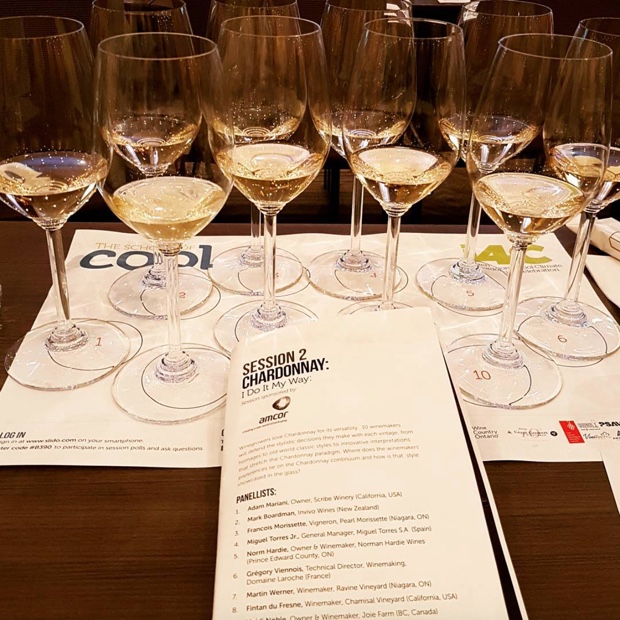
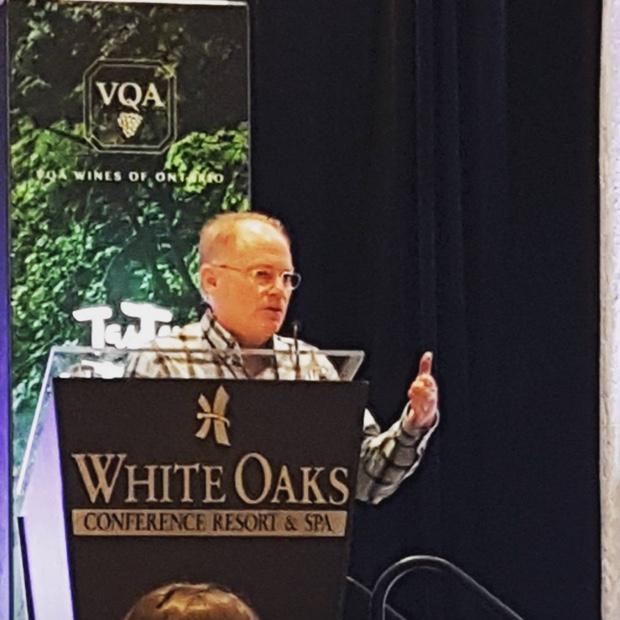
The 15th International Cool Climate Chardonnay Celebration took place just a few weeks ago and while every annual Niagara chardonnay experience is cool, this above the clouds 2025 edition was something other. Unexpectedly Godello was tasked with steering the educational component as emcee for the Thursday School of Cool at White Oaks Conference Resort and Spa. An honour and indeed a privilege it was, to share a stage with Canadian and international winemakers, winery representatives, distinguished minds and presenters. There was a palpable buzz in the room at this year’s School of Cool and also an uncommon level of expert conviction conferred by the moderators and panelists. The Canadian wine industry has assuredly come of age and chardonnay’s cool weekend was the perfect time to express the explorative, collaborative and measurable maturity of experience. Over those four days from July 17-20, the i4C was the coolest place to be.
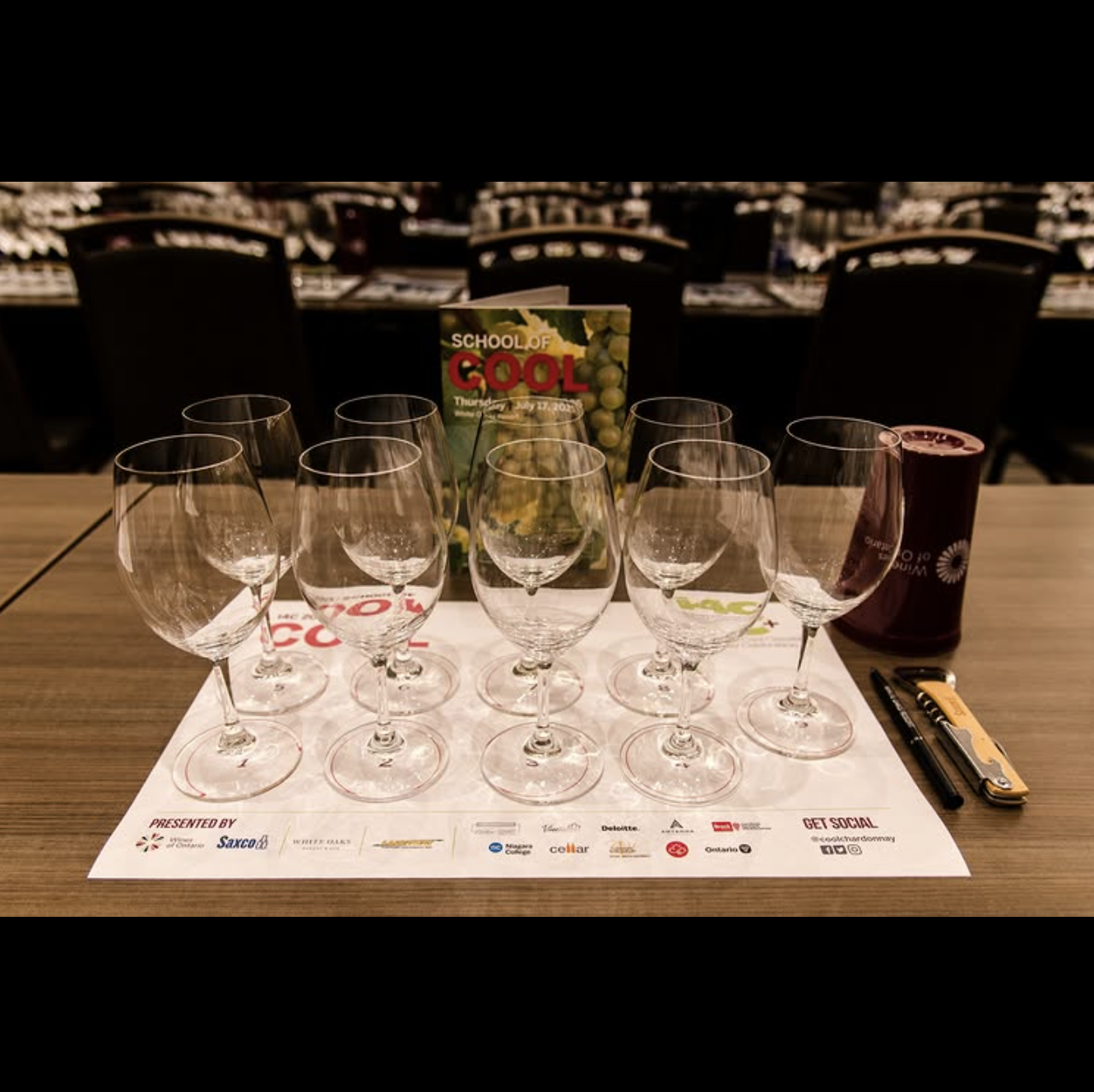
The School of Cool July 17, 2025 Edition
(c) Cool Chardonnay

Godello is pleased to share his words spoken to the audience that day.

“Good morning, and welcome to Day One of #i4c, the coolest conference in the world. My name is Michael Godel, a wine writer based in Toronto, sometimes in Italy and in my spare time I play both critic and partner at WineAlign. When I was asked to emcee this year’s School of Cool I thought hmmm, compared to those who have previously served this post, what can I contribute? I’m neither as funny or savvy as my colleague John Szabo, not as witty and sharp as Chris Waters, certainly less accomplished than both Magdalena and Suzanne. But I am good at surrounding myself with smart and talented people. I look forward to introducing many of them to you today.

We are thrilled to welcome all of you for the 15th year of the i4C! (Holds up applause sign). Every year winery representatives and people who adore chardonnay from around the world congregate here in the Niagara region to celebrate the variations, intricacies and philosophies behind making cool climate chardonnay. I once asked the question, How can i4c the future through cool chardonnay? Chardonnay is cool, then, and now. Don’t we always seem to foresee 4C a future filled with chardonnay?

This year at i4C we have 43 participating wineries, including 12 internationals from England, France, Tasmania, Argentina and two wineries from each British Columbia and Nova Scotia.

Today, we are meeting on Indigenous lands, over which Indigenous people still hold jurisdiction. In the Niagara Region, where 27 of our participating wineries operate, we are meeting on the shared lands of the Haudenosaunee, Anishinaabeg, Wendat, and Chonnonton nations. A key treaty governing this territory is the “Dish with One Spoon” agreement. This treaty between the Anishinaabe, Mississaugas and Haudenosaunee  binds them to share the territory and protect the land. Subsequent Indigenous nations and peoples, settlers, and all newcomers, have been invited into this treaty in the spirit of peace, friendship and respect. We all share the responsibility of ensuring the “Dish” is never empty, meaning that we must take care of the land and the creatures we share it with.

I would like to take a moment to acknowledge and thank our Educational Committee: Scott Wilkins, Rob Power, Elsa MacDonald, Dr. Jennifer Kelly of CCOVI at Brock University, Peter Rod of CCOVI and Niagara College and Trisha Molokach, our esteemed, tireless and incredible Event Director. Twelve years Trisha has poured heart and soul into this event. Thank you.

This weekend is made possible by the contributions of a dedicated group of volunteers who have spent countless hours preparing for this weekend. We have a wonderful team of folks pouring wine for you today, so if you happen to see someone in a colourful I4c t-shirt, make sure you take the opportunity to thank them for their time and efforts. None of this is possible without them.
We would love to see any photos or videos that you take today, so please be sure to tag us. Our Instagram handle and the i4C hashtag are both listed on the bottom of your name tag and on your tasting mat.

At the end of the first session I will get to more specific housekeeping details and we do have a full schedule ahead of us today. There will be three educational sessions and tastings, with coffee breaks and a lunch in between, followed by a walk-around tasting in the afternoon. Please refer to the booklet provided at your seat for more information on timing and session details.

Before I proceed I would like to take a moment to remember a great friend of the i4C. Just a few weeks ago we lost Nicolas Potel, a great winemaker, négoce, father and friend. We miss you Nico and all of us wish you were here. But believe me I can’t think of anyone who would want us to just go out and have a grand time. Nicolas Potel came from Bourgogne for the very first event and his winery Domaine de Bellene was present here at i4C eight times, including last year when his son Alphonse joined us for the weekend. We should all raise a glass of cool chardonnay to the great Nicolas Potel.”
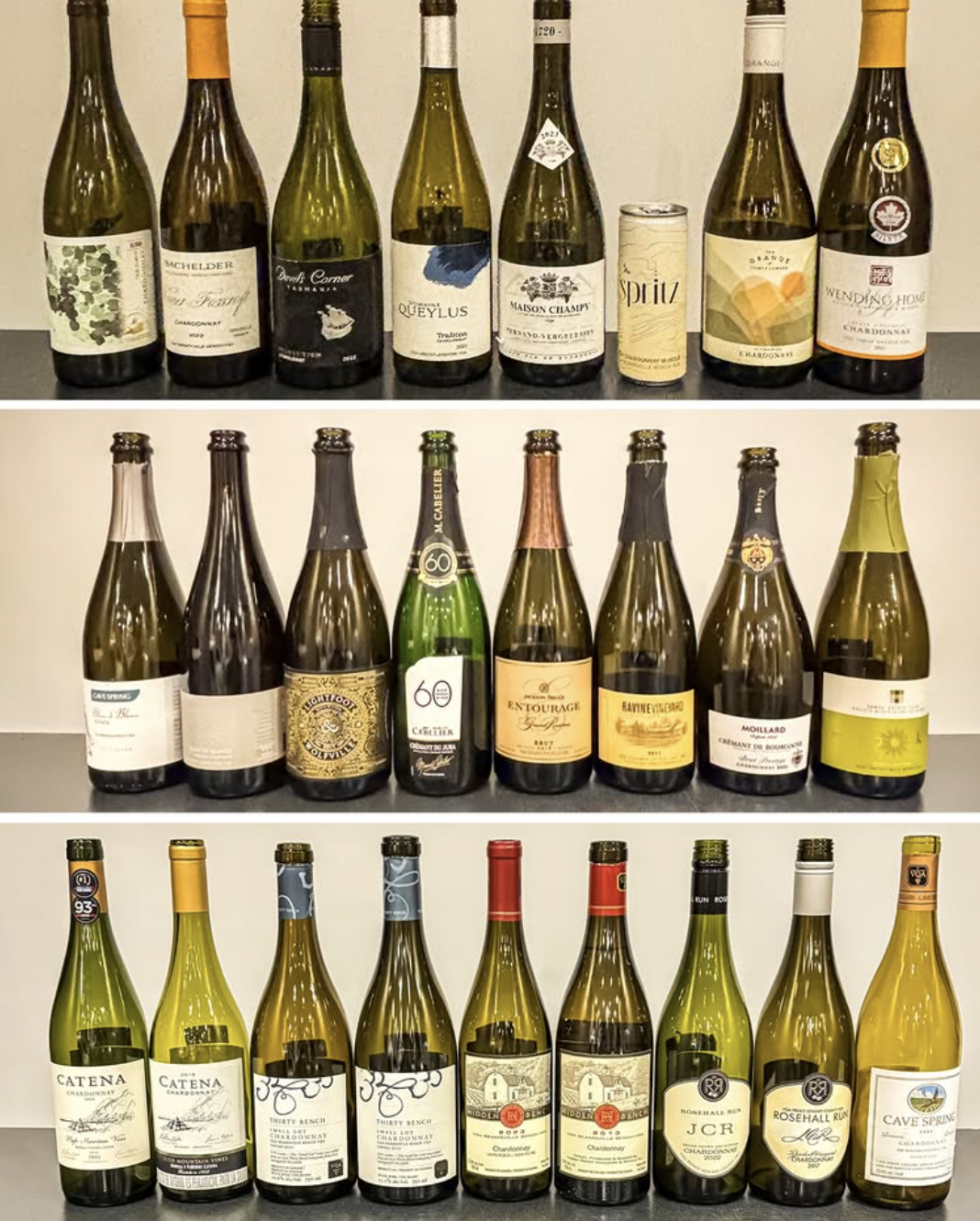
Coolest Chardonnay of The School of Cool (c) Cool Chardonnay

Session One

“Our keynote speaker for this year is Clive Pursehouse. Based in Seattle, Washington, Clive Pursehouse is Decanter’s US Editor and Regional Editor for the Pacific Northwest. He is the creator of the site Northwest Wine Anthem, Culture Editor at Peloton Magazine and the newly minted Fausto Magazine. This I gather makes him an avid cyclist. In fact I’m told he is a fan of Cyclocross, which is a unique, non-Olympic discipline of cycling that can be best described as a cross between road cycling, mountain biking and steeplechase. Wait, there’s more. Cyclocross takes place on technical outdoor courses of grass, dirt, mud, sand or sometimes snow. Snow. Still more – Pursehouse broke his pelvis cycling in the middle east and spent who knows how long in casts and wheelchairs. In other words and though I’ve just met him, not unlike a close friend I have known since nursery school who is an ultra-marathon runner, I would have to say that Clive is clearly nuts. And he’s from Pittsburgh (I like Pittsburgh!) but he does know a lot about wine, including chardonnay, especially those beauties from Washington and Oregon. I would say that his mix of intense exercise, the snow part and wine study make him ultra qualified for this role as our keynote speaker. When our Concierge asked if he had any allergies, Clive replied, “yah, tusk.” Tusk? Well Clive, this walk up song is for you. (Cue Tusk by Fleetwood Mac). Allow me to introduce Clive Pursehouse.”

Pursehouse began by saying “cool” starts with Miles Davis. Then there was Camus. “Cool is aloof. It resides on the fringe.” Finally a description that applies to Kim Gordon of Sonic Youth. “Cool is aspirational – It has an elusive character we find attractive.” Then like André 3000, “wine needs cool voices and cool critics. Cool is coming and it can’t be stopped.” Lastly, The Who because “the kids are alright, meaning it’s time to partner with cool, young voices who will celebrate edginess, low alcohol, fresh fruit and minerality. “The loneliness epidemic is real,” reminded Pursehouse, “and wine can be the healer, can bring people together and make things better.”
Session Two

“Eugene Mlynczyk is national sales manager and fine wine ambassador for Principle Fine Wines, the luxury team within Arterra Wines, Canada. He attended Stanford University in the 1980s, majored in art and earned a Master of Fine Arts degree in Painting from Indiana University. Eugene earned the title of Master of Wine in 2015 and I will always remember a memorable trip spent with him at Mondavi in 2017. Session Two is titled Sparkling Chardonnay – No Occasion Required. Please welcome moderator and Master of Wine Eugene Mlynczyk.”

“The world can’t get enough bubbles and chardonnay is at the heart of the world’s finest sparkling wines.”
Session Three

“Dr. Jennifer Kelly PhD has been a Scientist in Oenology at Brock University’s Cool Climate Oenology and Viticulture Institute since May of 2023. I had the pleasure of sitting on the 2024 Experts’ Tasting Panel with Dr. Kelly who brought a much needed scientist’s perspective to assessing Niagara wines in a room with nine winemakers, one sommelier and one journalist. Hanging around Jen certainly helped me to trust the science. I think you will all be intrigued by Jennifer’s approach and moderation for session three called Chardonnay’s Coming of Age – A Retrospective. Please welcome Dr. Kelly.”
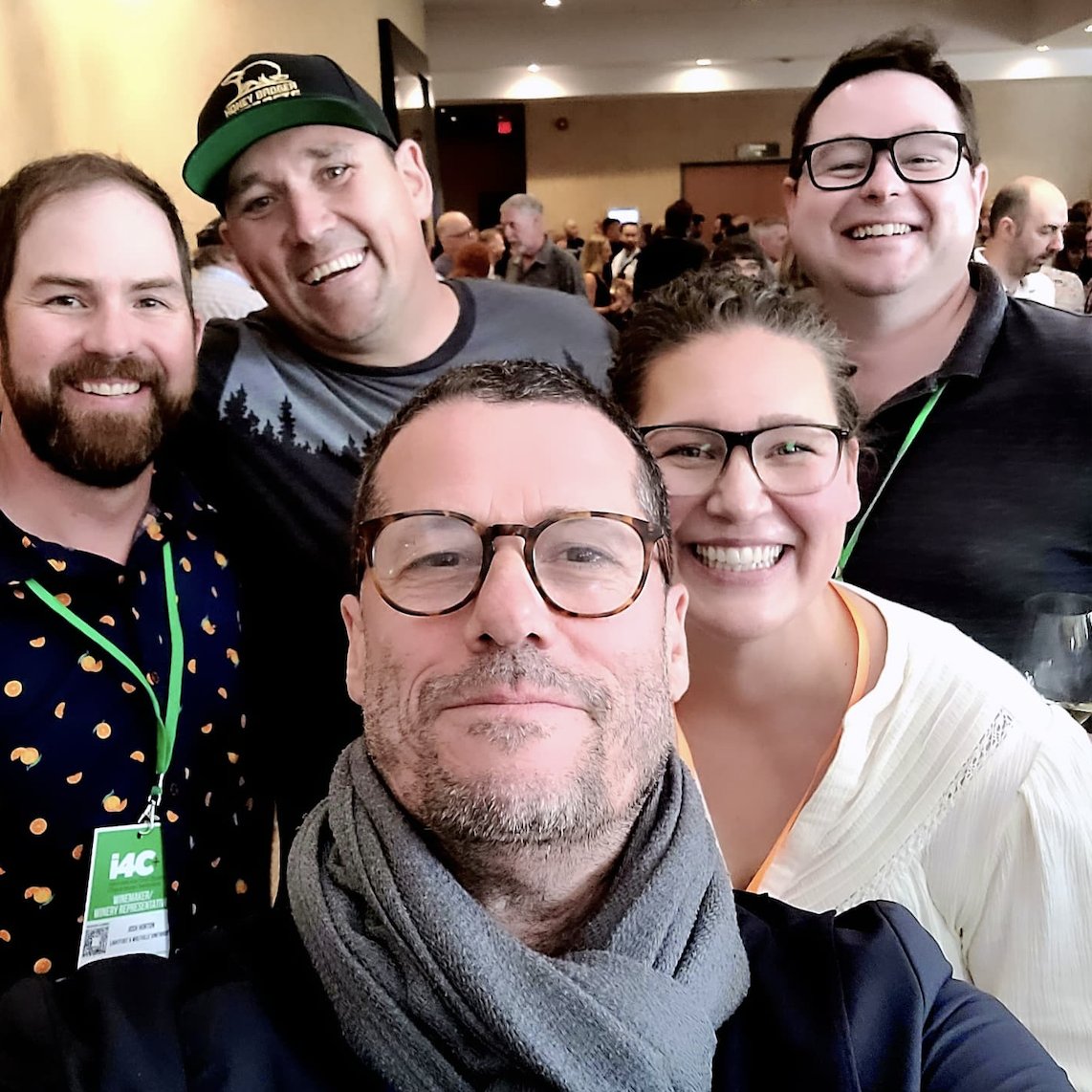
School of Cool squadra; Josh Horton (Lightfoot & Wolfville), Marty Werner (MW Wines), Ben Minaker (Andrew Peller) and Dr. Jennifer Kelly (CCOVI)

“This has been a true pleasure for me, to be a part of being a messenger for cool chardonnay. I am grateful for the opportunity. To the i4C committee, Trisha and her unbelievable team, our terrific AV guys and the White Oaks staff. Bravo. Thank you to Clive for leading us into cool territory with a refreshing approach. I loved the image of Kim Gordon but personally Clive I would have chosen Tina Weymouth or Kim Deal – but we can argue that out later. Kudos to our three session moderators, Clive, Eugene and Jennifer. Your time and attention is seriously appreciated. To all our panelists, your insights are what we come for and to learn anew each and every year at the School of Cool. And to all of you for being here, I hope there was something here for everyone and we’d love to see you back next year. Remember, Chardonnay is never too cool for school. Just outside the doors you will find all the chardonnay available at a walk around tasting which is scheduled to last until 6:15 pm. Happy tasting and thank you all for coming and see you again in 2026!”

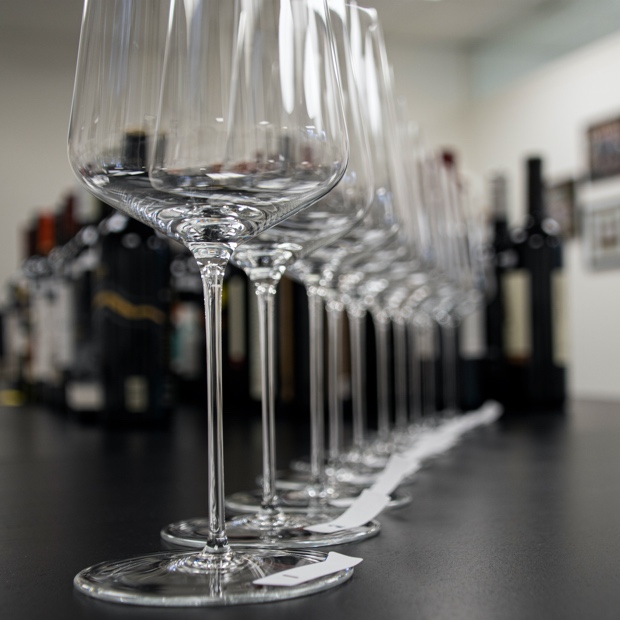
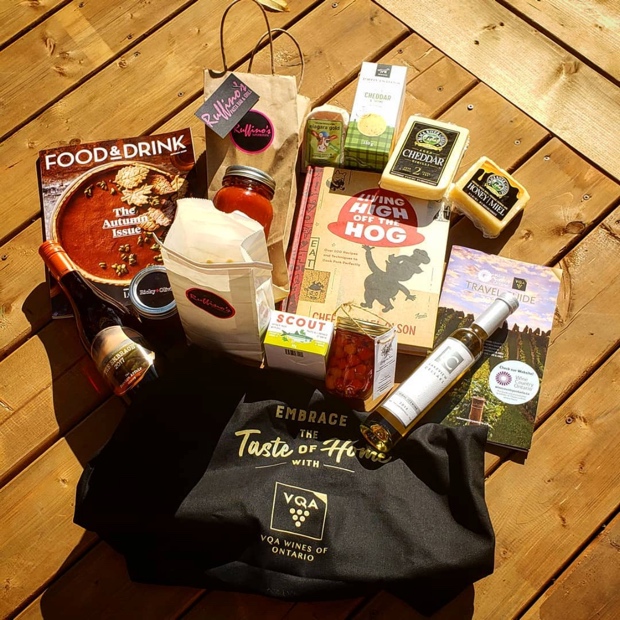
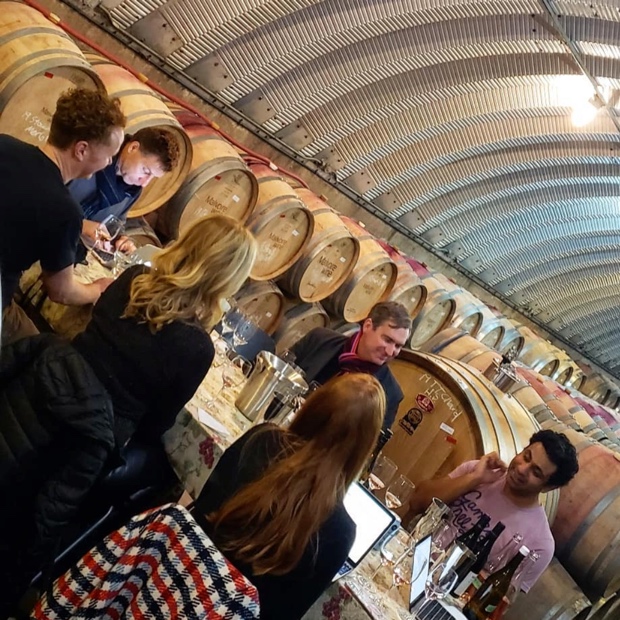
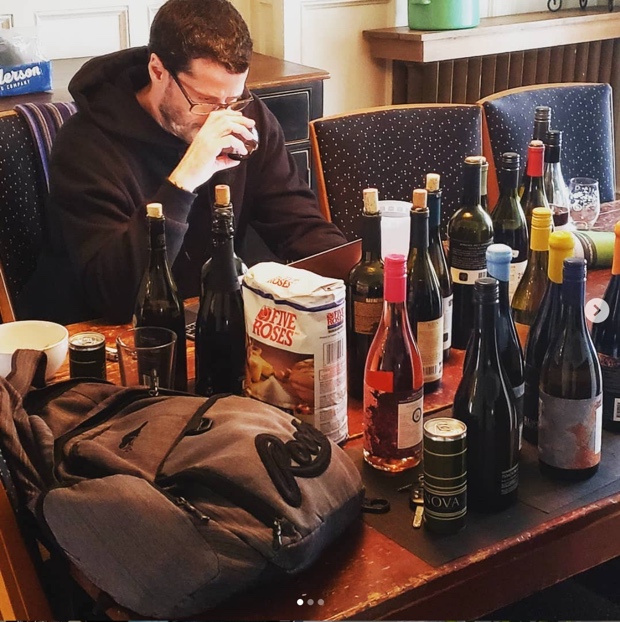
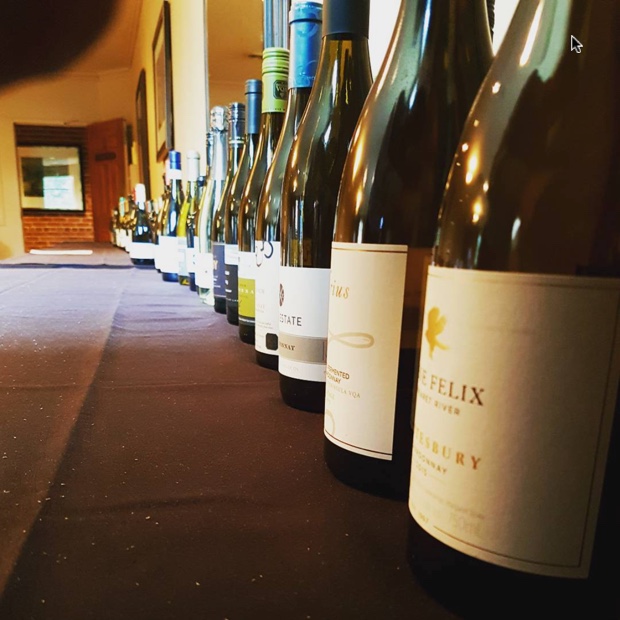
Godello tasted and has reviewed 80 wines during the four-day conference; At the School of Cool; In the White Oaks media room set up by the Wine Marketing Association of Ontario team led by Andrea Peters; At visits to Cave Spring with Gabriel Demarco and Malivoire with Shiraz Mottiar; An evening at Ravine Vineyard with Jeff Moote of Divergence Wines, Jonas Newman and Marlise Ponzo of The Grange of Prince Edward, Chris Thompson and Stephen Del Degan of Volta Estate Winery and Ron Giesbrecht from Wending Home Estate Vineyards & Winery; Lunch at Black Bank Hill with Taylor Emerson, Jonathan McLean and Meg McGrath; At the evening events held at Friday Night Flights, Niagara District Airport, Niagara-on-the-Lake and at Chardonnay in the Vineyard World Tour Tasting and Dinner at The Riverbend Inn, Niagara-on-the-Lake. Here are the notes.
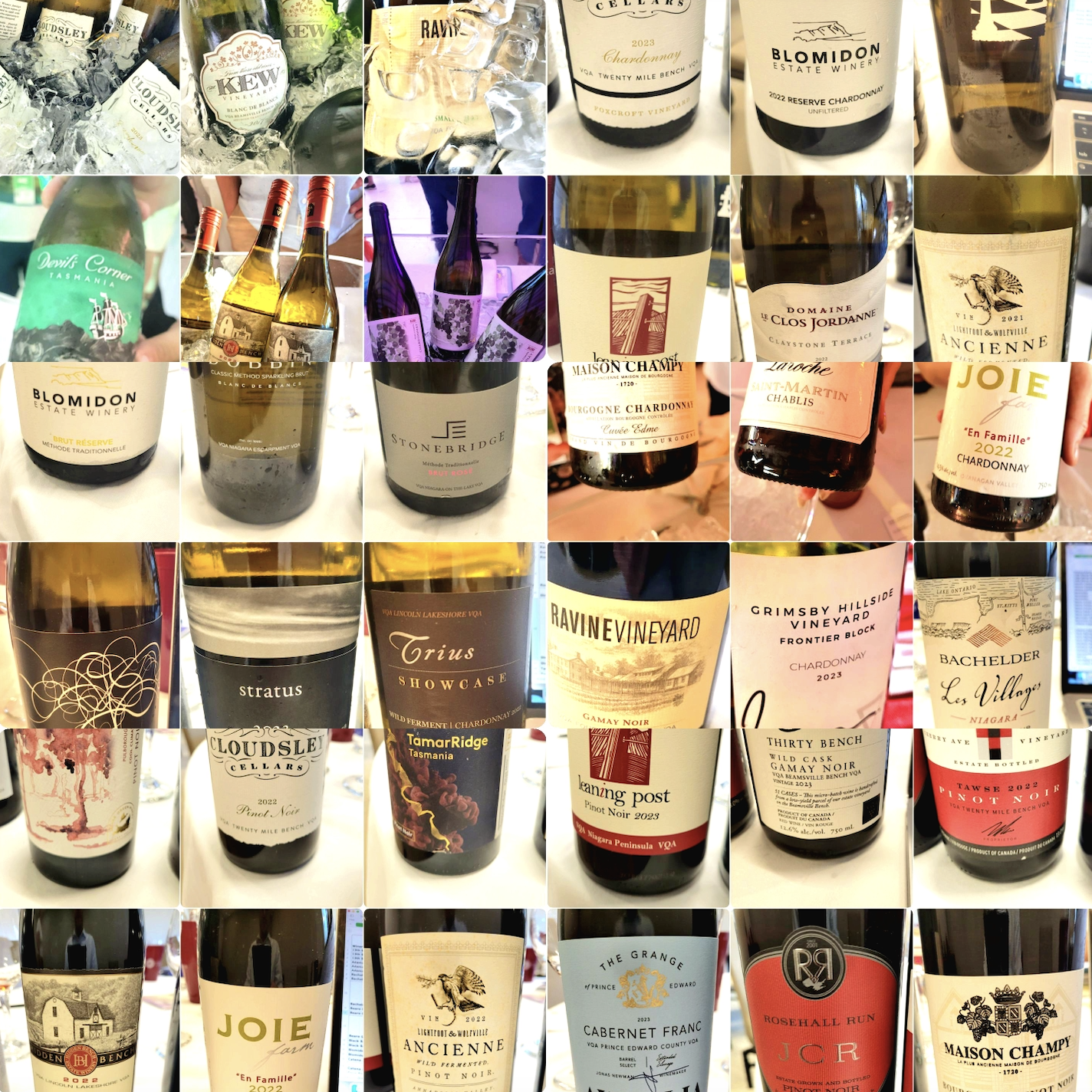
The Sparkling

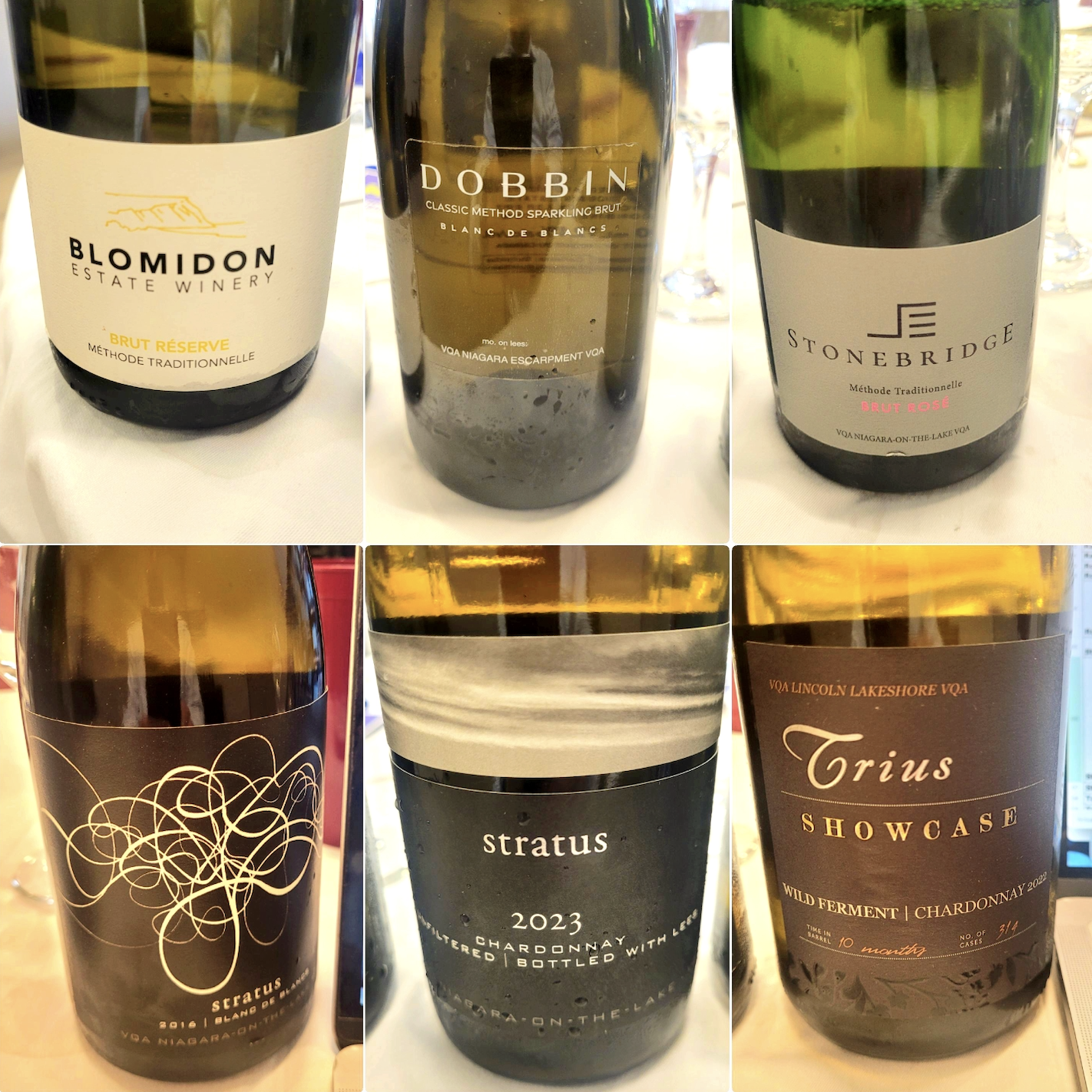
Blomidon Brut Réserve NV, Annapolis Valley, Nova Scotia

Next year and disgorgement, same five years on lees for Blomidon’s signature sparkling wine and now more depth. Once again time is the impetus (and requiem) to see results, both of which have manifested into a bubble of greater charge than so many peers. Mainly chardonnay from that strip of land running up from the Minas Basin and jutting through the Bay of Fundy. Depth yes and also a low rumble of botanicals that make this a most agreeable sapid sparkling wine from Nova Scotia, like a cool night that follows a warm day.  Last tasted at i4C, July 2025

Put to bottle in 2019 and so five years on lees ain’t nothing to develop complexities, eccentricities and potential variability. This pour comes out of sound and vision, disgorged in March of 2024, set to be released in the early Fall. Makes great use of 2016 and 2017 fruit, plus a small amount of the frost vintage 2018. Youthful, appropriately Blomidon Peninsula/Annapolis Valley tightly wound and in a way very chardonnay, though not glaringly so. “For us this is the future for non-vintage,” explains Simon Rafuse, “and to save the cooler vintages for Blanc de Blancs.” It’s a reverse engineering kind of approach. Simply put, in cooler vintages you can’t push wines through malolactic and so chardonnay is best purposed for sparkling when acids are high and pH levels are low.” Like 2011, but not 2010 and Rafuse adds that “the problem is you have to wait many years to see the results. But it’s worth it because they are really good.” True that. Drink 2024-2028.  Tasted at i4C, July 2024
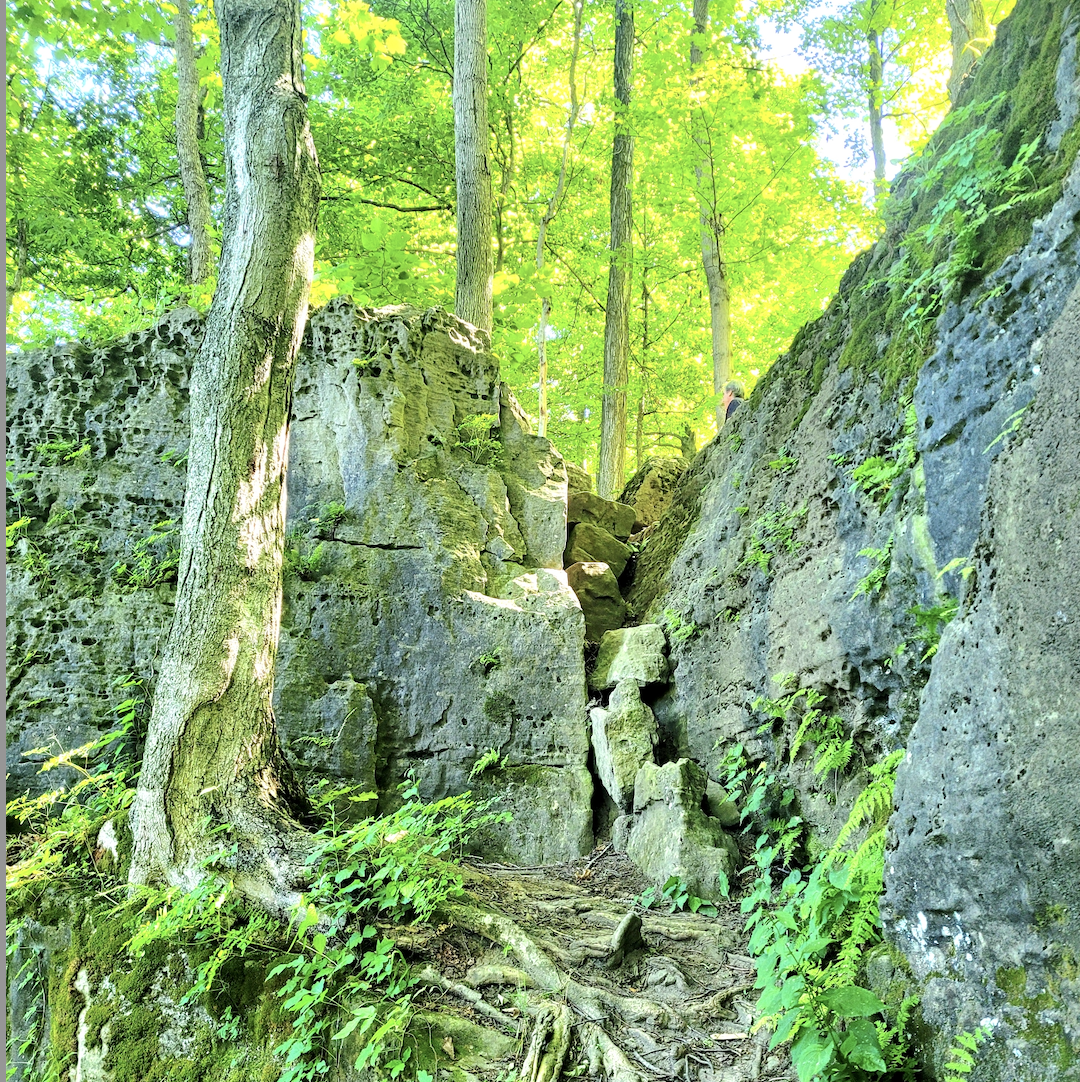
The Adam Steps, Niagara Escarpment

Cave Spring Estate Blanc De Blancs NV, VQA Beamsville Bench, Ontario

Over the course of tasting the non-vintage Blanc de Blancs over 13 years it is noted how the chardonnay bubbles have evolved yet stayed the course and ultimately improved. From strength to strength with a wine that now bears the stamp and waves the banner for cool climate sparkling wine made with its most essential grape. The team has struck balance for a wine to be used, enjoyed, employed and celebrated all the bloody time. Simply put “ripe fruit and acid structure” said by by winemaker Gabriel Demarco, “putting in accumulated knowledge to recognize a place.” Which by the way includes 50 percent clone 777 chardonnay musqué originally built into the program by OG winemaker Angelo Pavan. Drink 2025-2030.  Last tasted at i4C, July 2025

It matters not whether this Beamsville Bench Blanc de Blancs is p[riced at $24.95 or $32.95 because it still represents the finest Ontario value in chardonnay sparkling wine. Bar none. Why trust your hard-earned, looking to celebrate or drink bubbles on a Tuesday dollars on anything else. Last tasted November 2024. Classic, sharp, intense and ideal. A ripper, “and I love that” says Stephen Gash. Dry as the desert in such a playfully proverbial way. Scintillant extraordinaire.  Last tasted at i4C, July 2024 and November 2024

For the first time in quite some time the next look at the Cave Spring Estate Blanc De Blancs is bang on one year later and so yes, freshness is the thing. Crisp and crunchy, stylistically so consistent and really set up to act as the dictionary entry for chardonnay as sparkling wine out of Niagara. It’s just so spot on, high in energy and exacting for style, place and estate.  Tasted November 2023

Sees a minimum 30 months on lees ahead of disgorging and this chardonnay was likely sprung in the Spring of 2022 with a good dose of 2019 fruit layered within. In other words a true-blue varietal vintage to espouse the latest virtues and expound upon the great elevator in Niagara Blanc de Blancs sparkling wine. Never disappoints and continues to rise, surge ahead, power forward and capture necessary tension. The offset here is more botanical tonic and weight. A new complexity.  Tasted November 2022

It seems every three years is the interval for reviewing this arch-classic Ontario sparkling wine but be assured that the time in between actually drinking this fine Niagara wine is a much tighter and repetitive proposition. Terrific balance accorded and afforded from this latest cuvée with equal and opposing trips switched on by yeast and lemon, ginger and tea. Good toasty bubble for any and all toasts, plus innocuous glasses for drinking in between.  Tasted October 2020

Angelo Pavan and Cave Spring sure do love to fashion a toasty sparkling chardonnay. Still in the biscuity, flinty and textured Champagne vein though really far from the last B de B tasted back in May 2014. No longer a case of fruit from in and around the 2008 vintage it would have to be the cool as lightning 2011 by my calculations with likely some warm and rich 2012 fruit. The relationship delivers the best of all worlds; tart, bright acidity and linear functionality with creamy, rich orchard and stone fruit, generous and round. All together now.  Tasted September 2017

Today a fine misty Blancs, looking very much the coppery, crisp slice of apple it need be. Slate stone tone directive, grapefruit very much in play. A slice of tart key lime pie.  Tasted July 2014

From my earlier May 2014 note: The freshest style of the #ONfizz B de B flight. Fruit, escarpment bench stone layering, richesse, biscuits and toast are all in. Acidity meets complexity

From my earlier, December 2012 note: Sees no malolactic fermentation and sits at the top end of dry (12-14 dosage). Most of the fruit is 2008, despite the NV designation. A soda fountain of argon and nitrogen bunsens forth through clean lines and carries an entire cider house orchard of Spartan apple. This one certainly hints at Champagne-like characteristics, of brioche and toast. The apples never relent
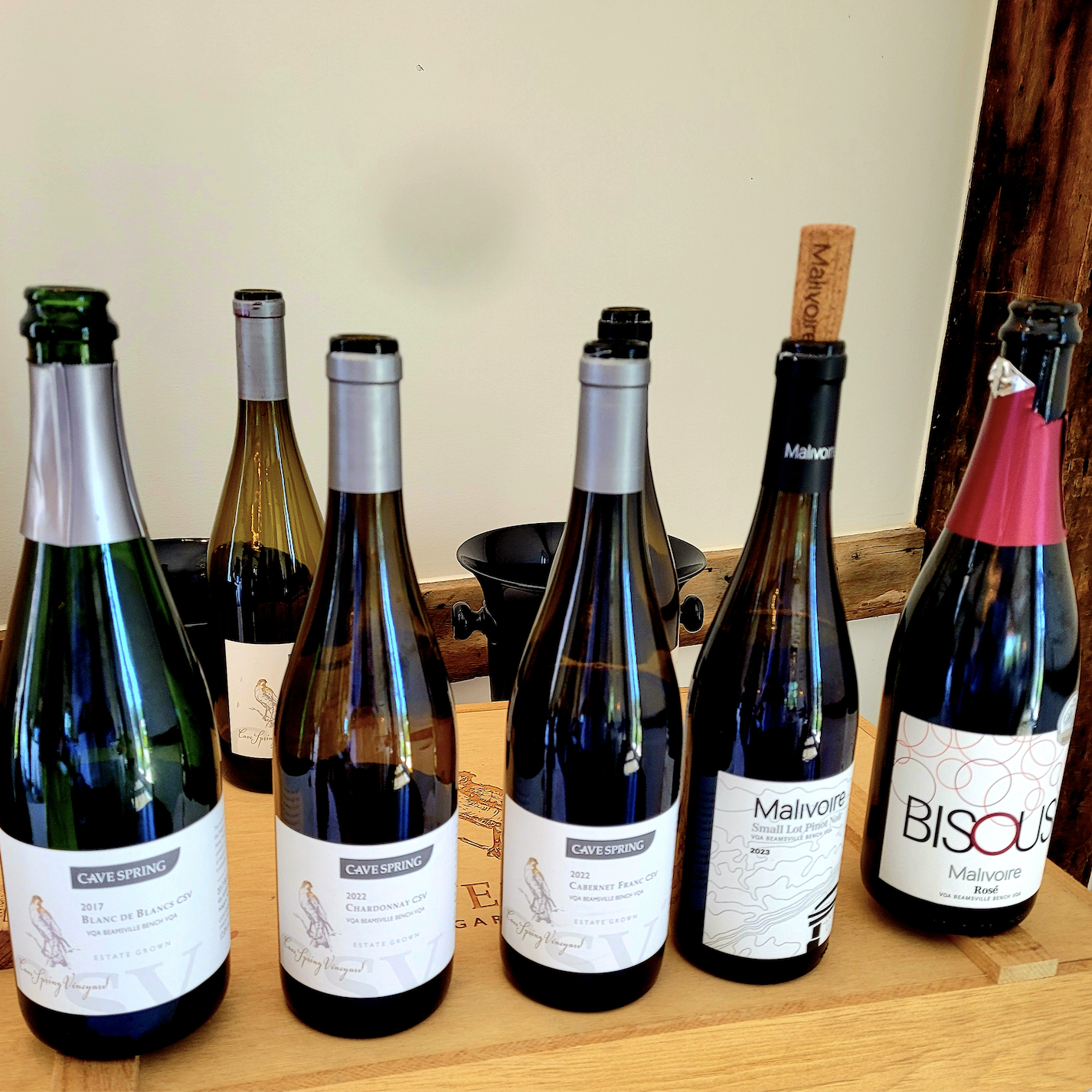
Cave Spring CSV Blanc De Blancs Natural Brut 2017, VQA Beamsville Bench, Ontario

The chardonnay scintillant for a toasty style of Blanc de Blancs in pointed appeal. Must be 80-plus months on the lees for this disgorgement and a bubble as fresh as the day it was conceived. Controlled or let’s say restrained excitement, vertical, a sparkling wine of backbone without hitch or bend, taut though generous of flavour. In a terrific place right here and now.  Last tasted at i4C, July 2025

Home (Cave Spring Vineyard) which means old chardonnay vines for Blanc de Blancs with added human experience to set up for top regional excellence. This from the upside down vintage which meant that chardonnay ripening was not the same as it ever was and so come here expecting something different. In fact the 2017 takes a turn for the toasty and excitable, into tart and scintillant territory for B de B of a singular style. Even for the most consistent sparkling wine house of them all but all things being equal this Beamsville Bench bubble creates a new fashion all its own. Drink 2024-2027.  Tasted November 2024

Divergence Blanc De Blancs Hughes Vineyard 2020, VQA Lincoln Lakeshore, Ontario

Made from a place “of big skies and lots of sunshine,” tells winemaker Jeff Moote and that is why he chose the double “L’ to make his inaugural sparkling wine. The clay-loam-till with a strain of limestone delivers richness for chardonnay and into sparkling wine. Eight months further, seemingly the same disgorgement (October 2024) and a slight exaggeration of the toasty-autolytic notes, but now with more of a soft creamed centre. Orange flavour now coming through, perhaps owing to that CLT terroir.  Last tasted at i4C, July 2025

Small production of less than 600 cases for a 100 percent chardonnay from the Lincoln Lakeshore sub-appellation’s Hughes Vineyard. A whole cluster pressed, cuvée juice only used and the base wine barrel fermented in neutral French wood where it is aged six months on lees. Follows with 42 months en tirage and just two g/L of sugar added. Essentially dry and in the scintillant style for Blanc de Blancs, screaming grape and acidity, accented by dried herbs and orchard fruit. In a serious vein, not what could be described as generous and conversely needing bottle time to settle into its parched and piqued skin. A bit severe and this from a warm vintage. Intensity is all in. Drink 2025-2029.  Tasted November 2024

Dobbin Estate Brut Blanc De Blancs, VQA Niagara Escarpment, Ontario

The newest and ambitious chardonnay in the Dobbin project is Blanc de Blancs, Brut in style and non-vintage. Perfumed and chock full of relatively ripe chardonnay flavours, accessible and immediately enjoyable. It should likely be surmised that subsequent releases will have seen longer lees aging time with this shedding the feel of 30-36 months. No doubt strikes an almost perfectly equanimous balance between sugars and acids in the 7-ish g/L range. Not yet developed into the ambient, enigmatic and complex sparkling wine it is detailed and destined to become – yet there is elegance, softness and charm in this (presumably first) issue. Smells, tastes and feels like celebration. Drink 2025-2027.  Tasted at i4C, July 2025

Jackson Triggs Niagara Entourage Grand Reserve Brut 2018, VQA Niagara Peninsula, Ontario

The 14th vintage of this silver medal winner at the 2025 WineAlign National Wine Awards of Canada and a unique Brut made in an ulterior intensified fruit style. An entourage of a bubble, a word that can translate as “surroundings” and the concentration of chardonnay emotions meeting flavours speaks to a grand place on the Niagara Peninsula. Entourage is half and half chardonnay plus pinot noir with two percent pinot meunier. Tastes like a mouthful of minerals with a dusting of sugar dosage and a shot of botany, a.k.a. tonic at the finish. Drink 2025-2028.  Tasted at i4C, July 2025

Lailey Stonebridge Méthode Traditionnelle Brut Rosé 2021, VQA Niagara-on-the Lake, Ontario

Classically composed and delineated Brut Rosé blessed by top quality fruit, a strawberries in cream softness transposed against a frothy bubble of vitality and airiness. Tons of flavour here, from the red berries through savoury elements inductive of leafy chicory greens and nettles. A beautiful bitterness juxtaposed against reliable dosage, harmonious while still expressive of individual parts. Trusted and effective, on the road to knowledge and future finer results.  Last tasted at i4C, July 2025

A chardonnay purposed grown and cropped then “pinkified” with just two or three percent Lailey zweigelt for what it truly an original look at Niagara sparkling wine. Picked on September 12th and 13th with just a bit left for still wine and perfectly ahead of the September rains. Recently disgorged (after approximately 20 months on lees) and of a season that reminds Ann Sperling of 2006. Very phenolic vintage of high caste character, just not the most intensity and power. Crunchy like the other ’21 Rosés, salty and as mentioned, quite phenolic. Not an autolytic fizz but definitely one that combines precision with pleasure. Just a tweak of tannin at the finish. There are 83 cases made and the wine will be released in a few months. Drink 2023-2025.  Tasted April 2023
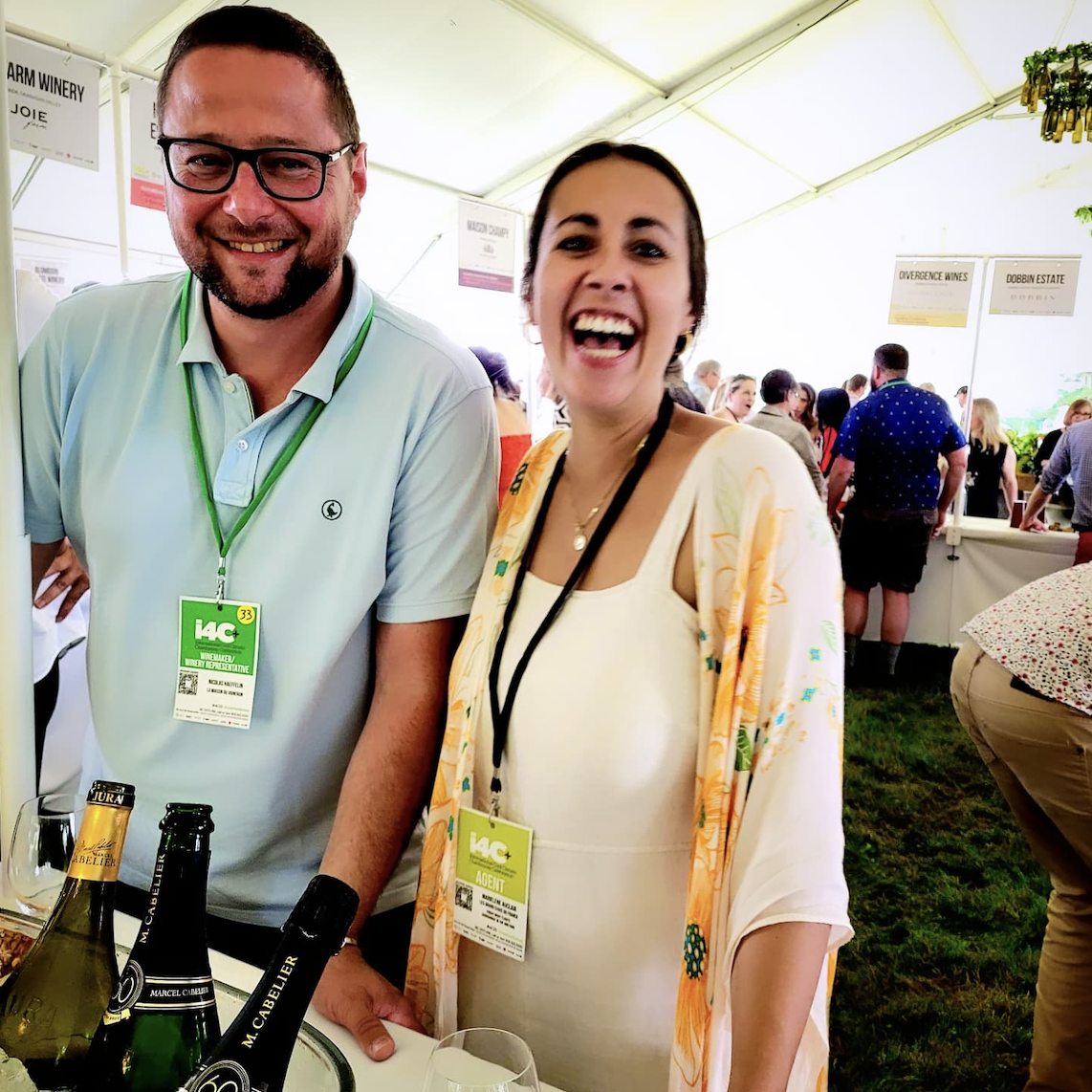
The team from Maison du Vigneron

La Maison Du Vigneron Crémant Du Jura Marcel Cabelier NV, Jura, France

Truly Jura, no matter whether the chardonnay is made into still or sparkling wine, with the unmistakable earthenware aspect speaking vividly to terroir. This may be non-vintage but there just feels to be a lot of sunshine accumulated into this fruit and so the orchard is well represented in the chardonnay bubble. Lower acidity (at 4.15 g/L) and the creamy palate is as generous as they come. Drink 2025-2026. Tasted at i4C, July 2025

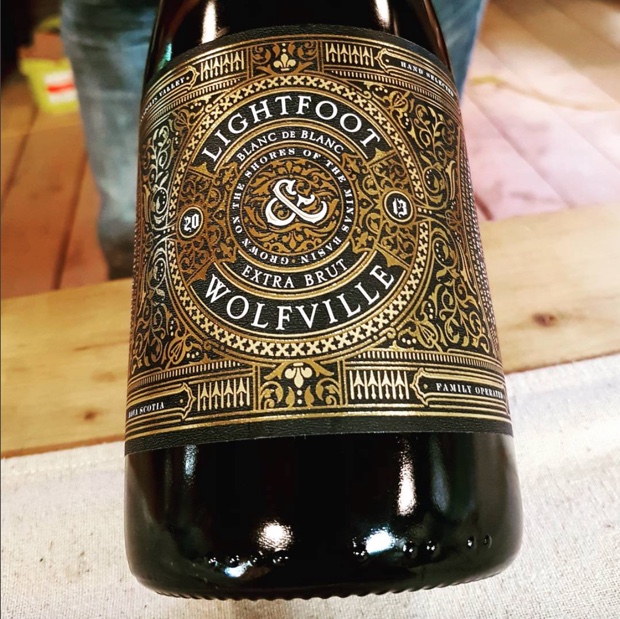
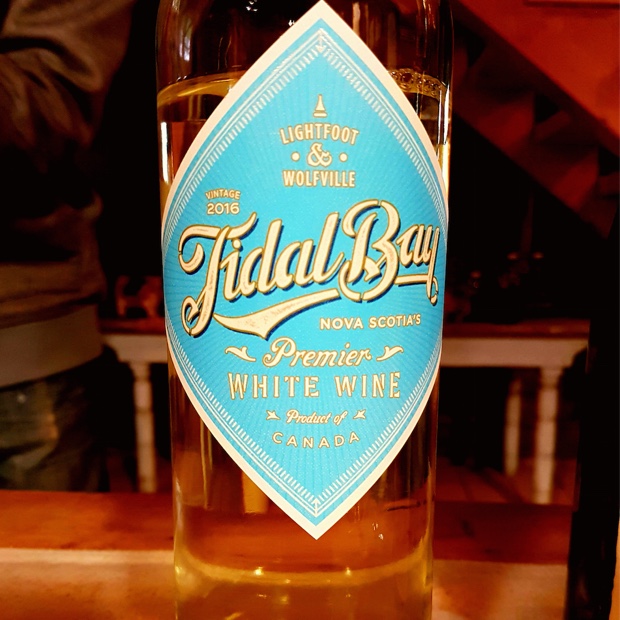
Lightfoot & Wolfville Brut 2019, Nova Scotia

Surely more richness from the 2019 Brut and still the cool interpretation of the Annapolis Valley’s maritime climate. You must consider this amazement of success from a place that resides at the furthest edge of viticultural promise. “It’s challenging” says Josh Horton, “and we’re starting to see the odd hot vintage” which this wine somehow expresses. “Chardonnay checks all the boxes for us, acidity, structure, complexity and versatility, not mention walking right through a winter with a polar vortex.” Brut 2019 is fleshier and balanced, ripe and zesty. Yes, angularity can be beautiful. Drink 2025-2029. Tasted at i4C, July 2025

Malivoire Chardonnay Musqué Spritz (In Can) 2024, VQA Beamsville Bench, Ontario (250ml)

Perhaps the first Ontario chardonnay musqué packaged in a can, experimental, light, minimally frothy, also with sweetness and floral. A semi-sparkling wine of arrested fermentation at nine percent alcohol with 40 g/L of residual sugar. Easy drinking, like juice with some alcohol, almost moscato d’Asti stylistically speaking. Candied, of fuzzy peach and ginger for adults only. Fun stuff from winemaker Elisa Mazzi and quenching for what gets you hot.  Tasted at i4C, July 2025

Malivoire Bisous Brut 2012, VQA Beamsville Bench, Ontario

Tiraged in 2013, of 60 pinot noir and 30 chardonnay for what was at the time just winemaker shiraz mottiar’s third kick at the sparkling can. Fermented in older barrels and aged 10 years on the lees. Oxidative and gingered, full cupboard of exotic spices. Dynamic, pulsating, pretty dynamite experimental bubble. Only 20 bottles made. First release of Bisous was 2016. Make more of this shiraz. That’s an order. Drink 2025-2027.  Tasted at i4c, July 2025

Malivoire Bisous Brut NV, VQA Beamsville Bench, Ontario

Of 70-ish chardonnay with 30-ish pinot noir disgorged in May 2023 and so think about fruit from 2019 which means a top sparkling vintage because neither fruit nor acidity saw any compromise. Nearly dry with just 2 g/L of dosage, a negligible number that only helps to coax out the natural sweetness in the wine. Quintessential house bubble for anyone who seeks and can see the top value (along with Cave Spring) in a $30-35 traditional method Ontario sparkling wine. Drink 2025-2028.  Last tasted at i4C, July 2025

Having recently tasted Bisous just four months ago you might think there would be no change when in fact things have. Tension is now juxtaposed by a truly creamy feel on the palate and so next tasting is next level gained. Bisous is now a perfect foil for tortellini and crispy pancetta with a drizzle of basil infused oil and some aged pecorino. Please. Tasted November 2024

Not simple. Fine and mighty toast, a mix of autolysis and oxidative minutia, full-flavoured and complex, of orchard plus stone fruit and more than just chardonnay. Feels like some pinot noir mixed in and the blend creates a terrific variegate experience.  Tasted blind at i4C School of Cool July 2024

Good and simple if also plenty but very simple. Drink 2024-2026.  Tasted blind at #NWACS24, June 2024

Moillard Prestige Blanc De Blancs 2021, Crémant De Bourgogne AOC, France

Crémant de Bourgogne labeled as Blanc de Blancs, of fruit left to ripen a bit longer than many, in maintenance of acidity though furthest from the racy style. Richness incarnate for chardonnay in sparkling clothing. Nothing searing about this one and truly accessible. Spends 24 months on lees with 6 g/L of dosage. Drink 2025-2027.  Tasted at i4C, July 2025

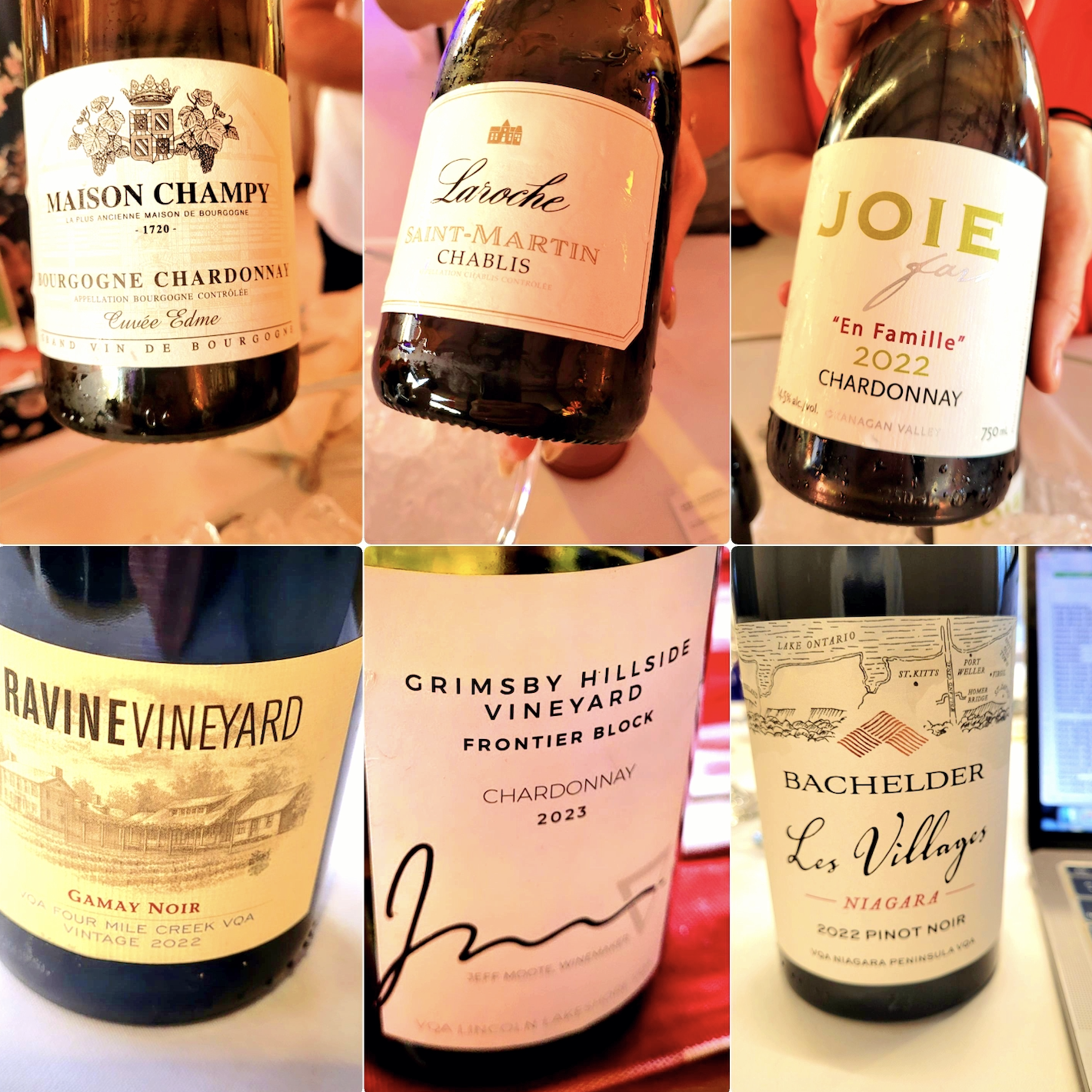
Ravine Vineyard Brut NV, VQA Niagara-on-the Lake, Ontario

There is a real depth behind this Ravine Brut, packed with flavour and what now feels like deeper concentration than just over a year ago. A huge style, classically blended and true to its roots, but also an extension from what others have done as they came before.  Last tasted at i4C, July 2025

Quiet and demure sparkling wine made from a mix of 60 percent chardonnay and (40) pinot noir for a pretty and soft example. Feels like a relatively short to mid-term time on lees, Considered blanc de noirs despite its lean to the white side and while the custardy lemon-osity sprinkled by white pepper runs high it is the smooth softness that dictates the order of this wine. Drink 2024-2026.  Tasted blind at #NWACS24, June 2024

Charlotte Hickey and and Suzanne Janke, Stratus Vineyards

Stratus Blanc De Blancs 2016, VQA Niagara-on the Lake, Ontario

Eight months further on lees, now deeper meaning, more complex behaviour and a compounding of the autolytic meets mature flavours in full concentric abound. Quite savoury now, more herbal than botanical and like a scape pesto with cilantro, best with fish, boiled fingerling potato, or grilled flank steak.  Last tasted at i4C, July 2025

Still noting the grip and aromatic compaction due to high level phenolics, a trenchant autolytic intention and a level of seriousness in the realm of Blanc de Blancs. Hides some aspect of chardonnay fruit and also texture but the elemental quotidian is impressive to say the least. Not an elastic B de B, nor is it a scintillant per se but something other, something mature, developed and of the earth. Singular in that regard.  Tasted November 2024

Some phenolic grip on this blanc de blancs takes chardonnay into a metallic and distillate place. The base wines involved were likely pressed for success and as such have collectively adjudicated, settled and come to this place. If it seems at present to lack some tension there is clearly function and the shrouding of flavours righteously complex. Notably autolytic and may leave some wondering when the energy will revive. Which it will because the stuffing and cunning will most certainly raise the bar and encourage a realizing of potential. Drink 2024-2028.  Tasted blind at NWAC2023, June 2023
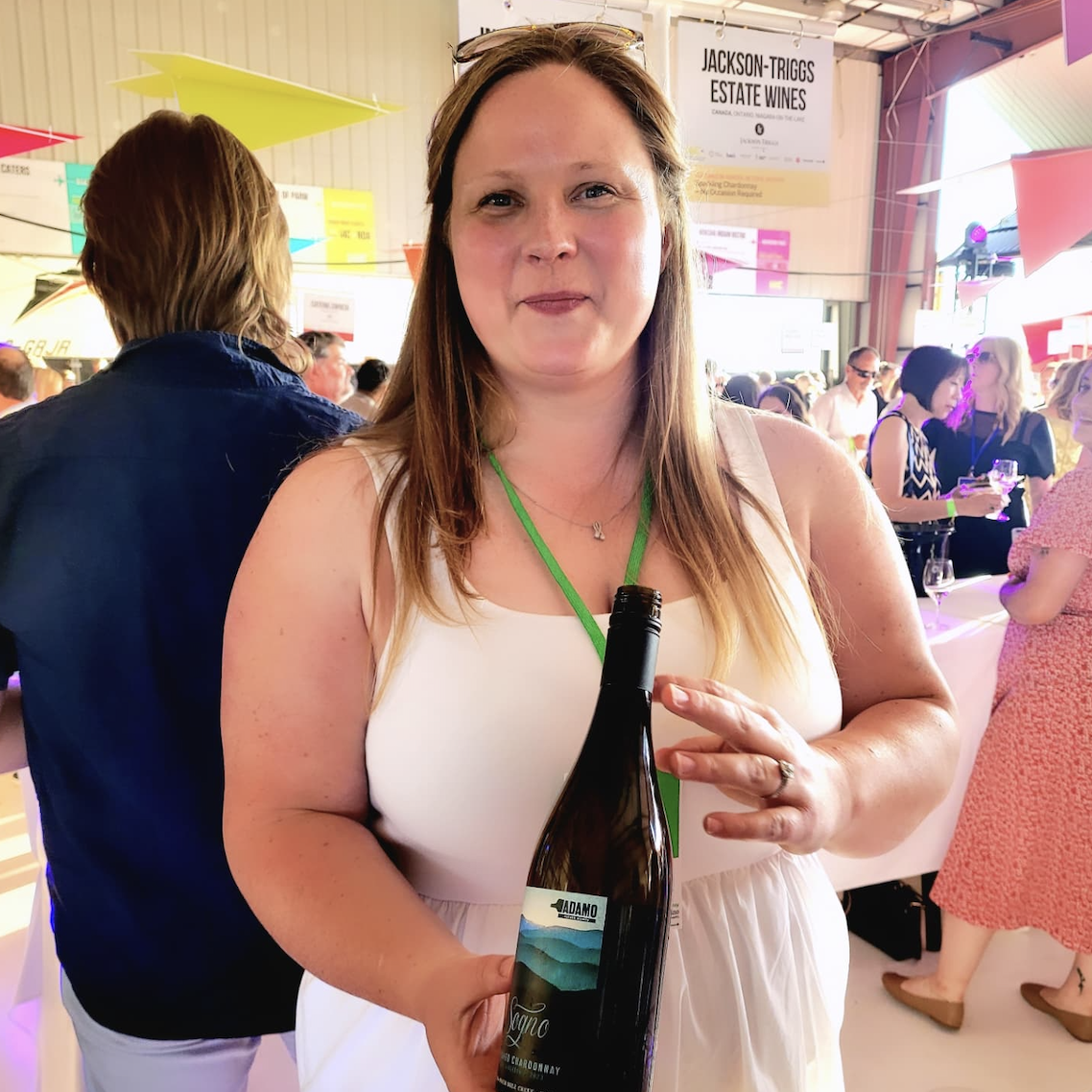
Vanessa McKean, Adamo Estate

Chardonnay

Adamo Sogno Chardonnay Unoaked Lore Vineyard 2023, VQA Four Mile Creek, Ontario

From the 1980s planted Four Mile Creek Lore Vineyard with some chardonnay musqué involved to consistently add a floral muskiness. No wood and now quite the experienced fresh and layered chardonnay in the hands of winemaker Vanessa McKean. A pyramid of activity because of a change by way of employing three ferments and three different yeast strains to see what complex results might result. Lees does the yeoman work without needing to blender pulse the fruit, but just to simply act as catalyst for the transference from vineyard to glass. Drink 2025-2027.  Tasted at 14C, July 2025

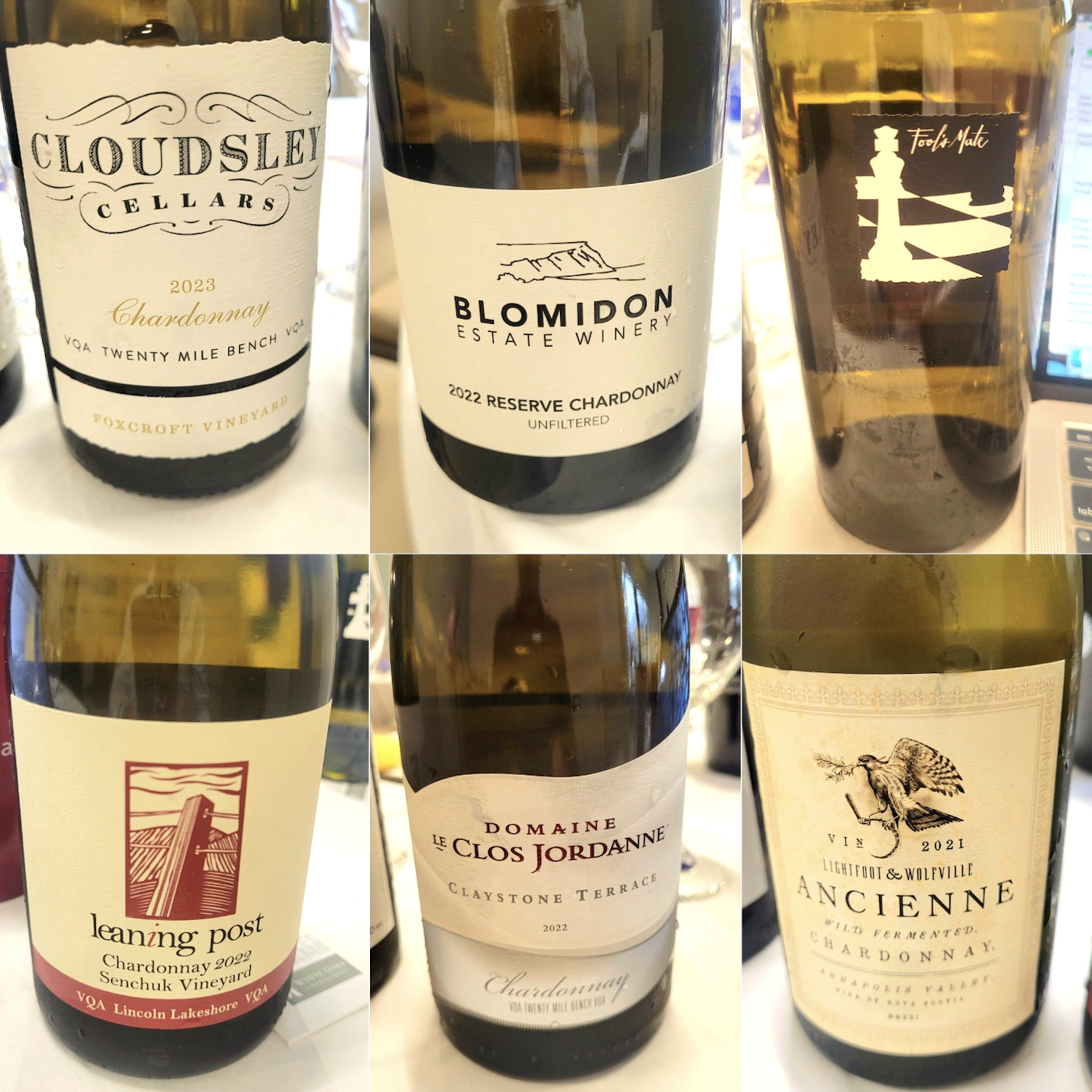
Bachelder Chardonnay Wismer-Foxcroft Parcelle Nord 2022, VQA Twenty Mile Bench, Ontario

Fascinating to get a nose into Wismer-Foxcroft not quite a year but easily eight or nine months later. A Toussaint forward moment for chardonnay still maintaining its touch with the flinty beginnings and the storied act of fleshing out is corroborated today. Late July is a terrific time to re-taste a November Bachelder release of the previous year. This showing drives the point and marks an important moment on the curve.  Last tasted at i4C, July 2025

Does not get more knowable or established for Bench chardonnay than the Foxcroft block in Wismer’s expansive vineyard and who but Thomas Bachelder knows this place as well as anyone. A similar story to Wismer Parke with pinot noir in that this vintage just somehow feels like the culmination of a decade-plus worth of experience. Wismer-Foxcroft 2022 is a truly mature and adult version of its reliable self, seamless, punctual and responsible. Substantial, harmonious and structured. All of the above. Drink 2024-2028.  Tasted November 2024

Beare Green Winery Chardonnay Clonal Blend 2023, Surrey, England

From Wine with Jimmy’s (jimmy Smith) and a project that started in 2022 with a real core aim to make “low intervention English wine.” A wine made beneath a “perennial dark cloud in a marginal maritime climate” tells Jimmy. A chardonnay of a short ripening season, an average of 700mm of rainfall (and 1,700 in 2024) for lean, edgy, on the edge of cool wine production. “I want English wines to have electric acidity,” says Smith. His chardonnay is lean yet charming, more than somehow because the wine is balanced in spite of its searing intensity. The intrigue is palpable and real. This chardonnay may age for a very long time. Drink 2025-2028.  Tasted at i4c, July 2025
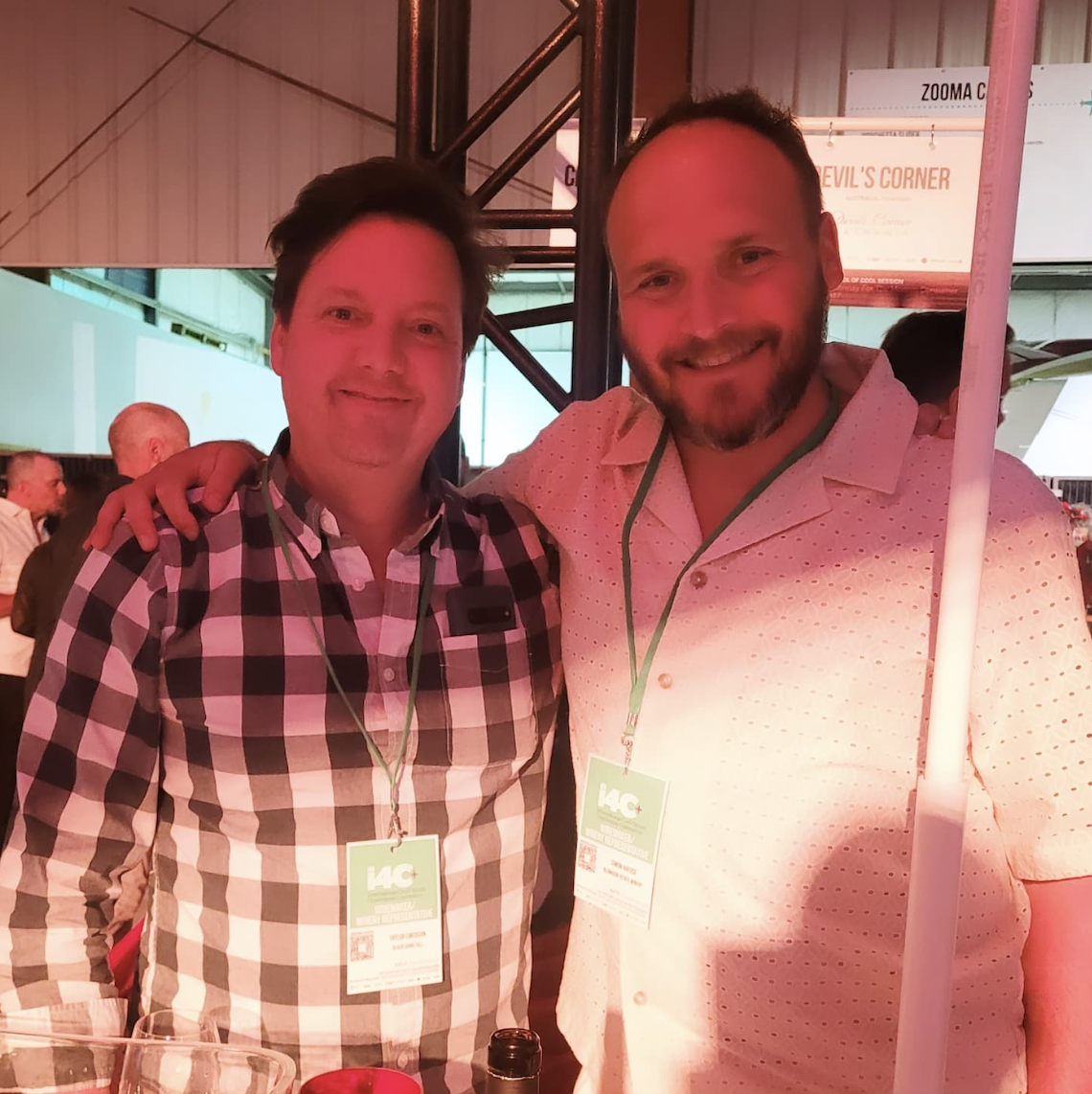
Taylor Emerson, Black Bank Hill and Simon Rafuse, Blomidon Winery

Black Bank Hill Chardonnay Runway 2023, VQA Lincoln Lakeshore, Ontario

A reminder that the name is an homage to service people and the part the property played in the First World War. All the land from here to the lake was an aerodrome and a runway ran right through the field along Sanna Rd. Now showing its lactic-citrus angle without any give or relent to high voltage acid backbone. Come to think of it there is just something Tantalus chardonnay about this ’23 chardonnay in how it rises vertical, controlled within its intensity and built to travel forward. There could very well be four to six years remaining in this singular high wattage way.  Last tasted at i4C, July 2025

Gotta be the first chardonnay out of the gates from the 2023 vintage and if this cracker example is any indication of what’s coming then hold on to your senses. Recently bottled and even with an early (September) pick this saw less than 10 months of aging, but the mix of indelible lees and high voltage (8.5 g/L) total acidity put this in scintillant, dare it be said Blanc de Blancs styled territory. So very different to the Runway White (blend) because of its intensity but also warmth at 13.8 alcohol, not quite torridity, but a white peppery scorch nonetheless. Wild and exciting shift from vintner Taylor Emerson and winemaker Jonathan McLean. Will be hard to wait and anticipate what the next level chardonnay turns out to be. Drink 2024-2026.  Tasted at i4C, July 2024

Black Bank Hill Chardonnay 2022, VQA Lincoln Lakeshore, Ontario

Warm vintage for Lincoln Lakeshore chardonnay fruit, layers more compressed, aromatics to flavours, resulting in a fullness of mouthfeel quite opposite to 2021 and apposite to the situation. Just the right mathematical problem is written should reduction keeps the freshness and vitality in motion. That said there is warmth and some development, already showing maturity yet time will graciously be kind, at least for a spell and behold a top tier pairing wine is born. Foie Gras with Membrillo and Sherry Vinegar anyone? Drink 2025-2029.  Tasted at i4C, July 2025

Black Bank Hill Chardonnay 2021, VQA Lincoln Lakeshore, Ontario

With Twenty Mile Bench fruit in the rear-view mirror Black Bank begins their estate journey with Lincoln Lakeshore fruit accepting and abiding by barrel aging with a precociousness that belies its youthful experience. This from a less than heat unit cumulate vintage and still the body of this 2021 is fleshy and impressive, its elastic length dutiful in helping fruit, acid and texture all come together as one. Should drink beautifully for a few more years. Drink 2025-2030.  Tasted at i4C, July 2025

Classic styling for chardonnay, from a winemaking perspective more so than the viognier and also the reds in the Black Bank portfolio. Neither reductive nor oxidative, reactive nor submissive, obsequious nor domineering. No risks taken, nor aversions neither. Buttery yet with good acids, natural sweetness and also wood spice. Right there in that space between, still a wine for its makers to continue figuring out, in terms of wishes and direction. For now a glass in hand is a good one. Drink 2024-2026.  Tasted May 2024
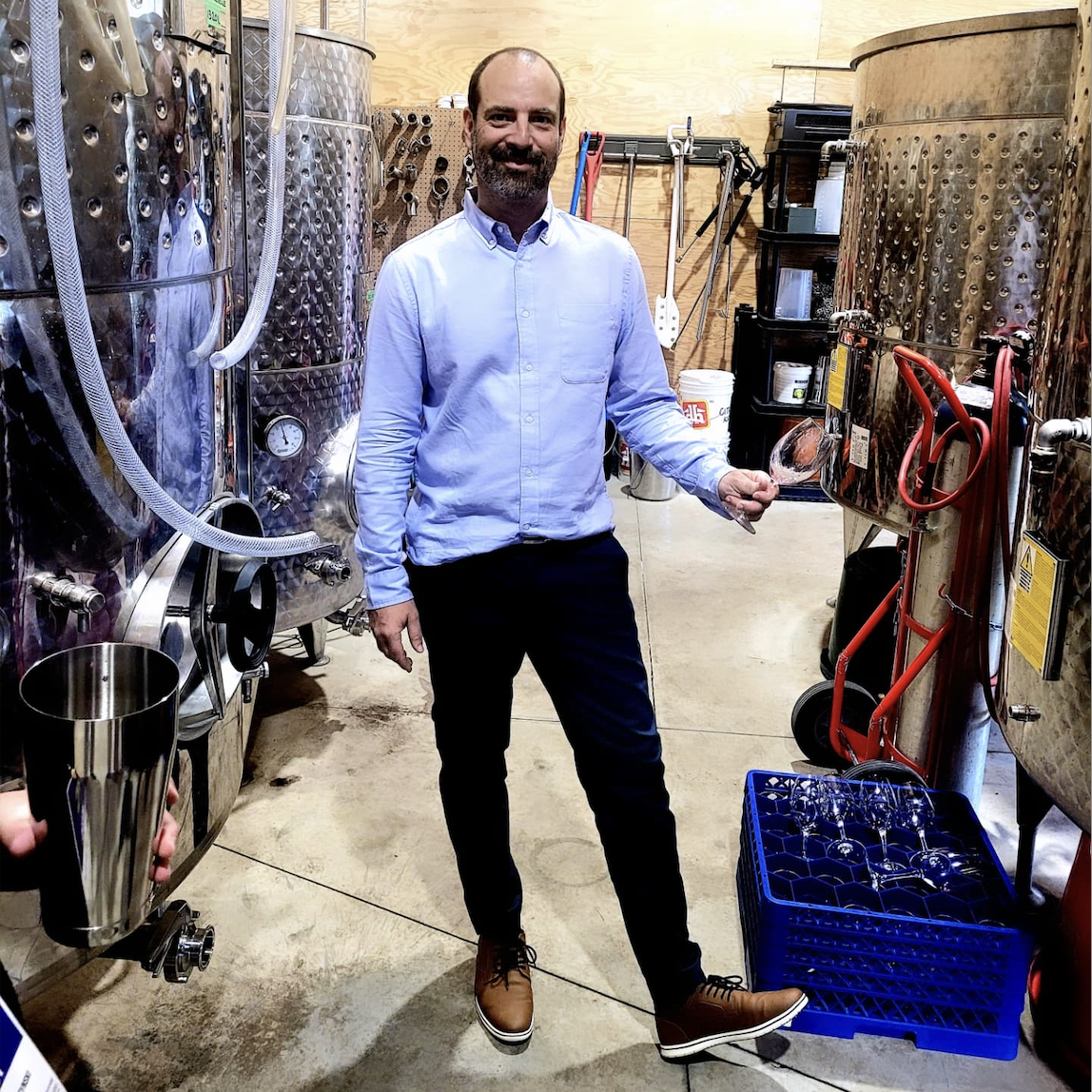
Winemaker Jonathan McLean, Black Bank Hill

Black Bank Hill Chardonnay Wingfield 2020, VQA Twenty Mile Bench, Ontario

Top end chardonnay for Black Bank Hill in the Wingfield section of the Wismer Vineyard, riper and of a concentration that celebrates a vintage, especially now that full integration has come about. The stylized and chic feel is fuller than 2018 and more than a shade less than 2019, with no imminent sign of maturity. But these are oranges as compared to apples even though they come from cousin plots within the larger vineyard. And so Wingfield brings everything to the table; concentration, backbone, linearity, energy and acids wrapping it all up in a fine sharp bow. Top tier chardonnay right here for lovers of the Okanagan, Sonoma, Napa and Ontario, not necessarily in that order. Drink 2025-2028.  Tasted at i4C, July 2025

Black Bank Hill Chardonnay Foxcroft 2019, VQA Twenty Mile Bench, Ontario

The 2019 Foxcroft has matured faster than the 2018 and now shows some caramel with more obvious vanilla by way of its conceptual French wood styling. Has done its time, run amok, gone lactic, now softened and finishing its run. Drink 2025.  Tasted at i4C, July 2025

Black Bank Hill Chardonnay Foxcroft 2018, VQA Twenty Mile Bench, Ontario

Fruit was sourced from Foxcroft within Wismer Vineyard for the first chardonnay made at the time Black Bank Hill was a virtual winery. The wines were made by Adam Lowry at Cloudsley Cellars and knowledge is power in knowing what a seriously good vintage it was for chardonnay. Age able as well with 2018 persistently fresh, piqued, energetic and thriving. Might have been reductive and tight to begin but time has been generous and kind for Foxcroft 2018 to arrive at this ideal moment in time. Drink 2025-2027.  Tasted at i4C, July 2025

Blomidon Reserve Chardonnay 2022, Nova Scotia

Hard to find more chardonnay substance and texture than in Reserve 2022 from winemaker Simon Rafuse at Blomidon. Spiced piques, crunchy apple bites, barrel blanketing and fruit involved at all points for what define the character of this wine. More about flavour than aroma, not out of character for chardonnay but beyond fruit comes sea air and the crushed shells of fossils. There is a Bourgogne feeling gained but not an old school one. Close your eyes and imagine young, modern and inspired from the Motherland.  Last tasted at i4C, July 2025

A chardonnay that shows how in the context of a flight of eight wines just how different Canadian chardonnay will be from one to the next. Which also means from one province through to another. Juicy, orchard juiced fruity and simple, if a fine coolest climate expression from the grape to gift high energy character, belied by easy and accessible drinking. Drink 2025-2027.  Tasted blind at NWACs, June 2025

Catena Chardonnay High Mountain Vines, Sustainable 2023, Valle De Uco, Mendoza, Argentina

A chardonnay of four sites, Agrelo (950m), Villa Bastías (1,120), Gualtallary (1,450) and El Cepillo (1,090). Classic Catena, of respectfully farmed fruit to optimum ripenesses, phenolics included and ease of barrel blanketing to oxygenate and elevate. Partial (60 percent) malolactic because why compromise acidity when you’re making mountain chardonnay? A higher level of affordable chardonnay prepared and meant for all, of fullness in concentration and experience to get things balanced and just right. Another unmitigated success, delivered without surprise. Drink 2025-2027.  Tasted at i4C, July 2025

Catena Chardonnay 2019, Mendoza, Argentina

Well settled, buttery warmth and a nut butter oiliness having entered the arena of delicious and snackable. Drink up although there are two more years available in this state. Drink 2025-2026.  Tasted at i4C, July 2025

With every passing vintage the solar radiation affecting high altitude vines increases and dramatizes the gainful effect of Argentina’s darling value-priced chardonnay. It has come to this. A wine of great concentration, generous of fruit and equipped with the tightest spiral of complexity and then, unwind. That the winemakers have figured out how to dial in and expound upon an already well figured out scheme is nothing short of outstanding. Do not dismiss this as a regular, easy to knock back $20 white wine. The substance and the fanning out of notes and pleasures is just too much to simplify, no matter the quantity of output. Drink 2021-2025.  Tasted January 2021

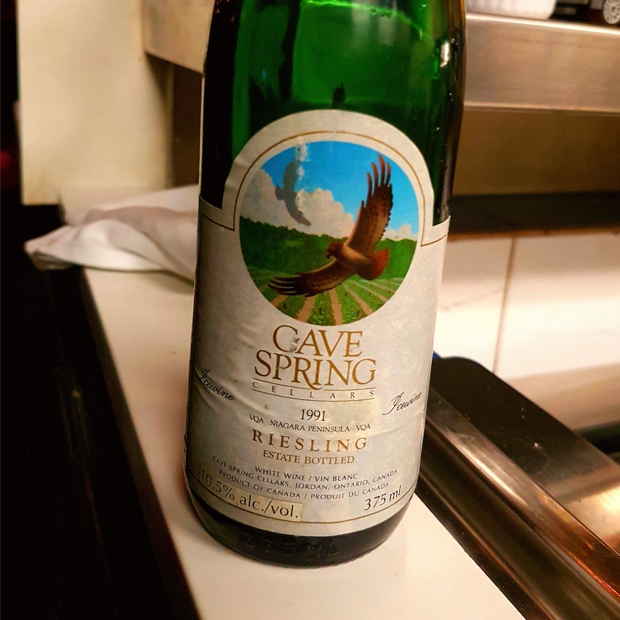
Cave Spring Chardonnay Reserve 1995, VQA Niagara Peninsula

Made by Angelo Pavan and we are drinking the last drops of this wine. Picked at 22 Brix in 1995! And yes the wine is showing beautifully. Spiced and piquing with spiciness on the tip of the palate from a chardonnay that was so perfectly oxidative from the beginning with just the right amount of skin contact to see it age remarkably for 30 years. Magic.  Tasted at i4C, July 2025
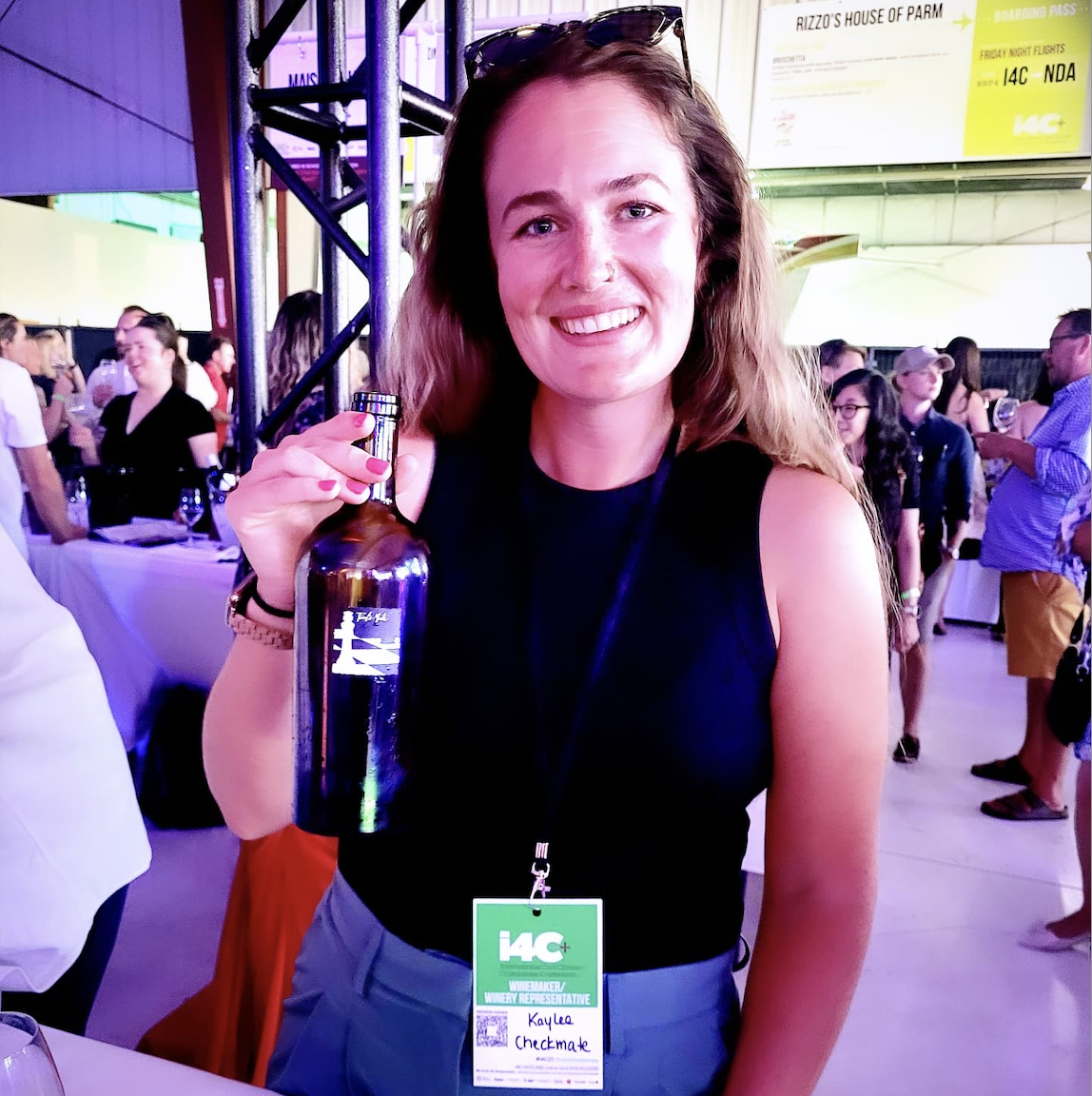
Kaylee Barss, Checkmate Winery

Checkmate Chardonnay Fool’s Mate 2020, VQA Okanagan Valley, British Columbia

Hard to find a fuller, more substantial and all in chardonnay than the Fool’s Mate, but also one with this much finesse, charm and grace. Ridiculously pleasing and dealing in immediate gratification, Checkmate’s 2020 has now settled into its skin to be the kind of wine that literally makes you sigh. So much textural fabric and Okanagan essence from a top-tier focused, sophisticated, considered and flawlessly executed chardonnay. Drink 2025-2029.  Tasted at i4C, July 2025

Cloudsley Cellars Chardonnay Foxcroft Vineyard 2023, Twenty Mile Bench, Niagara Peninsula, Ontario

For 2023 winemaker Matt Smith and proprietor Adam Lowry take their Foxcroft chardonnay to another level. The integration of sharply dressed orchard fruit in barrel clothing is a suave and handsome design, look and feel. This stands upright, expresses varietal linearity and is just about as fit and taut a Foxcroft as there has ever been. Essential Wismer Twenty Mile Bench chardonnay, focused and got so right. Raises the bar and ceiling for estate and vineyard. Drink 2026-2030.  Tasted at i4C, July 2025

Domaine Laroche Chablis Les Vaudevey Premier Cru 2022, AC Bourgogne, France

Terrifically balanced, harmonious and gracious Chablis for 2022 from Les Vaudevey. A Left Bank beauty with joyous acidity that lifts this Premier Cru up to a place where eager palates will find bliss in chardonnay. Truly a factor of kimmeridgian soil and soul, seamlessly integrated, layered and also elastic in mouthfeel. Spot on with persistent aging potential.  Last tasted at i4C, July 2025

The word precise is often used to describe Chablis and many other global chardonnays, sometimes gratuitously but here perfectly applies to the Laroche Vaudeyey. Les VdV ’22 is focused to a virtue with its equality, equanimity and equilibrium from start to finish. A lexical entry to figure out the crux and relationship between cru and village.  Tasted a second time, July 2024

Domaine Queylus Chardonnay Tradition 2023, VQA Lincoln Lakeshore, Ontario

“We’re growing the wine and not really making it in the cellar. It’s really challenging, you have to be proactive and also reactive on a vine by vine basis.” The words of winemaker Kelly Mason. From leaf thinning to green harvest and hopefully at the right time, all within the parameters of vintage variation. “Like being the pit crew and driver at the same time.” From the Lincoln Lakeshore vineyard for a ’23 Tradition leaner than some other years, a linear drive with a platinum gold hue and mineral feel. Less than 20 percent new wood, no stirring, “out to barrel and leave it to sit.” Ever so slightly acetic, well within reason and with a pinch of natural chardonnay sweetness. Drink 2025-2027.  Tasted at i4C, July 2025

Hidden Bench Chardonnay Béton 2023, VQA Beamsville Bench, Ontario

A unique Bench chardonnay because the fruit has all been taken from the 2009 planting in the Felseck Vineyard. The younger vines are perfectly suited to this Béton’s raising, as in the label’s meaning which is 10 months in concrete for briny and über fresh chardonnay with its own kind of bite. Also tension with no wood to attract attention from the sharp, pointed and direct display of chardonnay. The middle is creamy, that much is true and the juxtaposition makes for an open invitation to imbibe. Drink 2025-2028.  Tasted at i4C, July 2025

Hidden Bench Chardonnay Estate Organic 2023, VQA Beamsville Bench, Ontario

Youngest and freshest of Ontario’s 2023 chardonnay aged and then aged further in bottle for what should be this precise release point. Any earlier and it might have played hard to get, any later and freshness would not be this pitch perfect. Assemble a group of wine lovers without extensive cool climate experience or bring this on the road and serve it to consumers beyond these borders for what will be a cool chardonnay teaching moment at a time in history when these wines can turn even the most ardent disbeliever. Drink 2025-2029.  Tasted at i4C, July 2025

Hidden Bench Estate Chardonnay 2013, VQA Beamsville Bench, Ontario

Seduction from the word go, nose to glass and if surprise well this could be forgiven considering this is an 11-plus year-old chardonnay from the Beamsville Bench. Then again in 2013 winemaker Marlize Beyers, Hidden Bench and many Bench wineries were already keenly aware of how to make high quality and also structured chardonnay. This wine has drifted slowly and comfortably into its ripe maturity at an age with beauty and of respect. Special is the understatement. FYI for corks nerds out there the 2013 was bottled under Diam-10.  Last tasted at i4C, July 2025

A best of both worlds Chardonnay; indicative of the giving vintage (in quality, not quantity, prestige, not prosper) and an Estate, house style with some cosmetics to enhance the consequence. Really typifies and explains what a Marlize Beyers Chardonnay is. Elegant, stylish, with perfect skin, tones, understated beauty and the soft vernacular of few yet precise words. The texture and feel of this Chardonnay is downy, lacey and so very understated. You simply can’t take your eyes off its charms and your palate away from its soft feel. A wine of character and poise. Drink 2015-2020.  Tasted August 2015
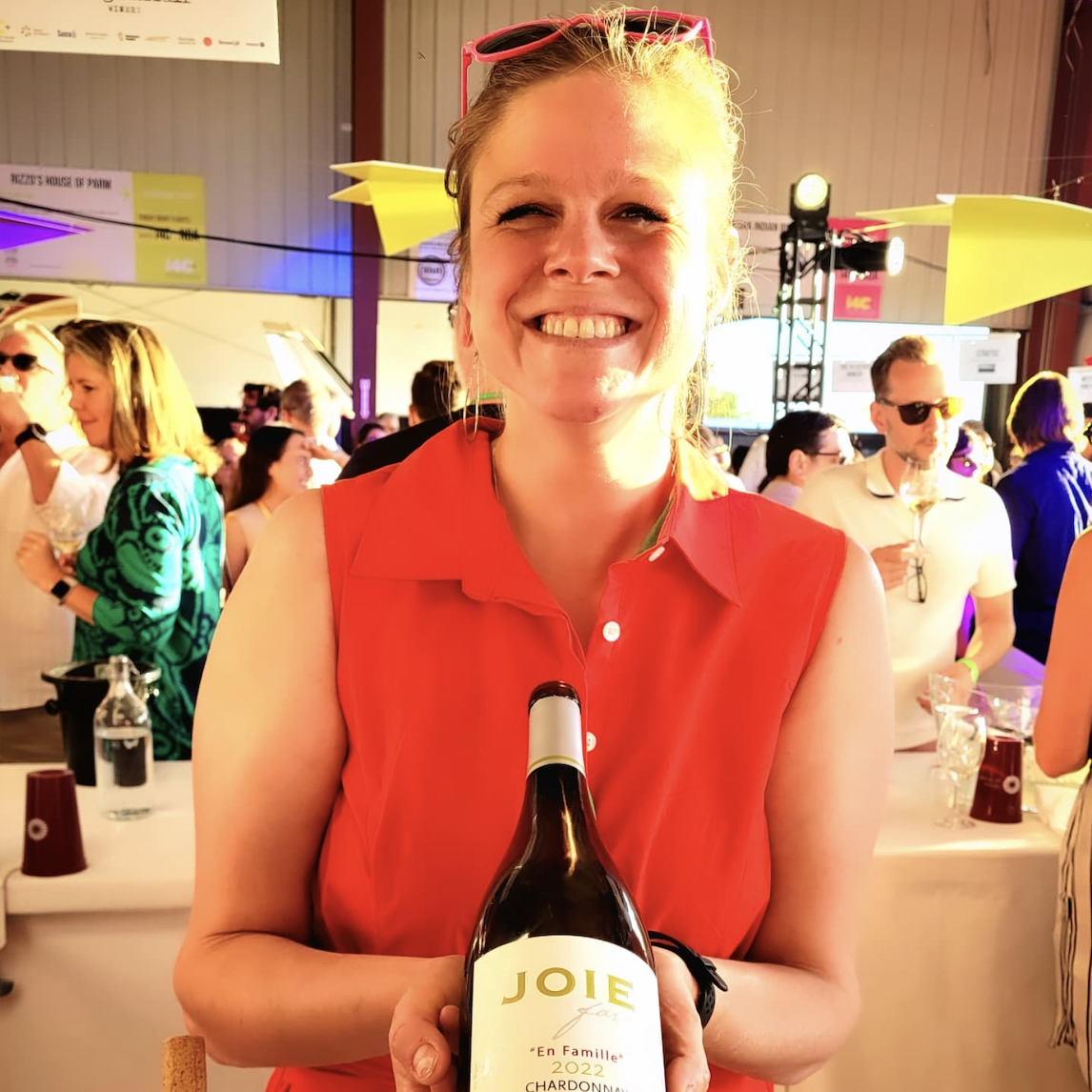
Jennifer Carter, JoieFarm

Joiefarm Chardonnay En Famille Reserve 2022, BC VQA Okanagan Valley, British Columbia

En Famille is the line of signature Joie wines that define, but also distinguish a family’s and team’s fulfillment for everything they’ve accomplished. All in the family celebrates a history and the present, here with chardonnay from a terrific vintage that takes every binate advantage given. Is this not the epitome of a Naramata season, to induce seduction, generosity and philanthropy. Gives and then gives some more, like ripe stone and orchard fruit at peak ripeness, the subtlety of barrel and fineness of acidity. The sweetest kind and thing that could be, natural, at hand to induce consequential pleasure and gratification. Drink 2025-2028.  Tasted at i4C, July 2025

Joiefarm Winery Chardonnay Con Vida Vineyard 2022, BC VQA Okanagan Valley, British Columbia

The pinnacle of En Famille for chardonnay drills deeper into place with Con Vida Vineyard, meaning “alive” or “with life,” a term of endearment to celebrate a piece within the greater good. Winemaker Richard Charnock takes chardonnay to the next level, particularly in amplitude and opulence for the kind of wine no mere mortal could resist, Or deny its succulence and generosity. Thankfully the sweetness and elasticity of acidity extends the character, fortune and play before giving way to warmth, a buttery brioche-ness and fluid forward motion extended well into the lingering minutes of a palate’s perception. Drink 2025-2029.  Tasted at i4C, July 2025

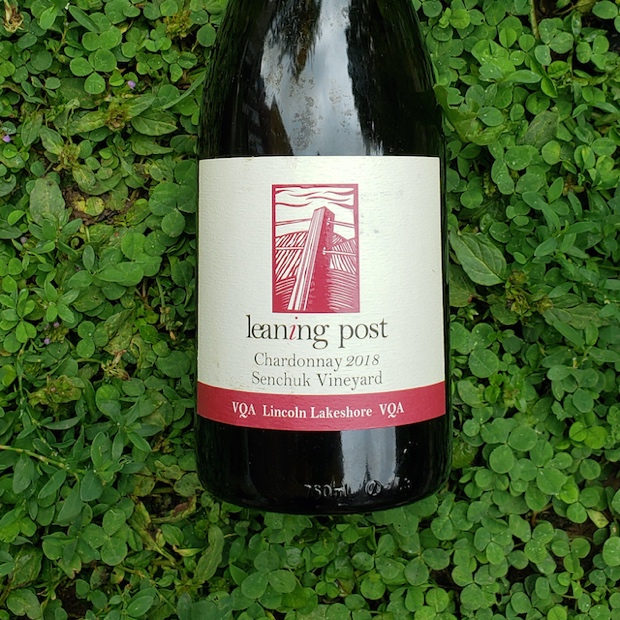
Leaning Post Chardonnay Senchuk Vineyard 2022, VQA Lincoln Lakeshore, Ontario

Sharp and pinpointed without equivocation in home base chardonnay of vines further matured into early adulthood. Now in delivery for fineness and a development into true realism in western Niagara chardonnay. In fact place does not get any more west and so we begin to believe that the west is indeed the best. The concept may express a subjective opinion and also convey a preference for a specific geographic region but who can deny what the Senchuks have accomplished with the clay based block behind the winery. The 2022 is in fact a warm chardonnay from a cool climate that shows just the existential where and when history of a wine like this. With depth of flavour, rise and length. Drink 2025-2032.  Tasted at i4C, July 2025

Le Clos Jordanne Chardonnay Claystone Terrace 2022, VQA Twenty Mile Bench, Ontario

Claystone for 2022 chardonnay notes reductive character in a restrained and fruit encapsulated manner. Separates itself from Jordan Village through more varietal and place specifics with higher aromatic pitch and pinpointed flavours to make you think and feel the sickle curved nook on a plateau aboard the Twenty Mile Bench. Terrace that is, where clay and decomposed stone are the impetus for chardonnay of an identified speciality, coaxed and brought to life by Bachelder and team. Sharp and focused with the earth of a vintage packing its pockets and fleshing out its fruit.  Last tasted at i4C, July 2025

If anyone were to ask, what does a chardonnay from Le Clos Jordanne taste like, the answer would be this. This 2022 Claystone is exactly it, a chardonnay of selection from a specific block, a development of fruit hung to optimize aromas, favours and intangibles, a wealth wrought of barrel choices made to accentuate all the fresh meeting mature nuances of Twenty Mile Bench chardonnay. Top stuff at eye level shelf for this sku in the hands of three skilled wine crafters that make Niagara proud. Phillip Brown, Kerri Crawford and the monk himself, Thomas Bachelder. Drink 2025-2028.  Tasted July 2025

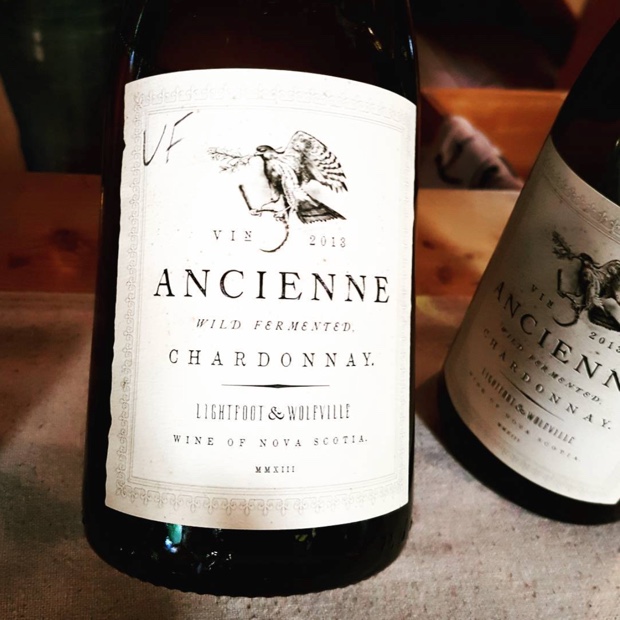
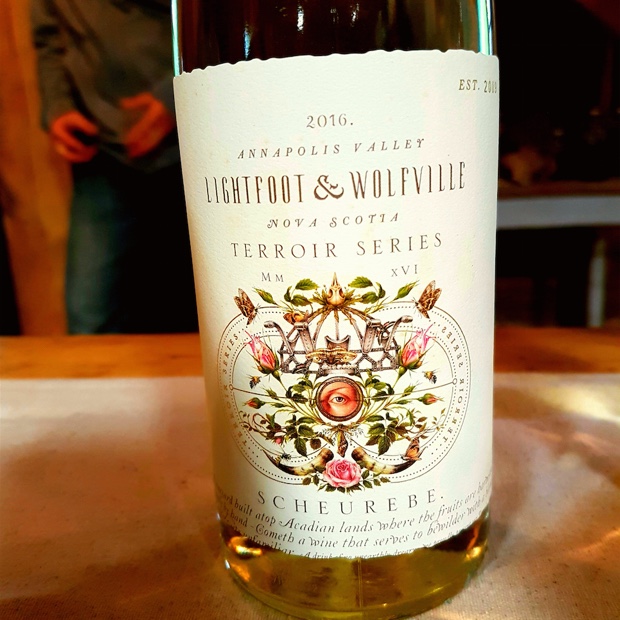
Lightfoot & Wolfville Chardonnay Ancienne Wild Ferment 2021, Annapolis Valley, Nova Scotia

One nose into Ancienne 2021 and you know the change has come. The first epoch of evolution now paves the way for another, the last one having developed and experienced over the past eight years, now come to full fruition. The new and improved Ancienne will one day beget a decades old chardonnay that truly defines its ancient name, looks to its past and reflects on what has been accomplished. As we will do in kind, to have believed everything was possible and was meant to be. This ’21 owes its DNA to place and previous vintages but there is are new parameters of warmth, richness and ripeness, aspects now present in more vintages than not, no matter the climate extremes and obstacles that are want to diminish quantities. My goodness what great chardonnay is being made on such a consistent basis by a winemaker as present and confident as Josh Horton. The underlay of Fundy spray saltiness in the heart of juiced and zested lemon is an irresistible mix for chardonnay. They who take this wine’s subtleties and potential for granted are missing the point. Drink 2025-2029.  Tasted at i4C, July 2025
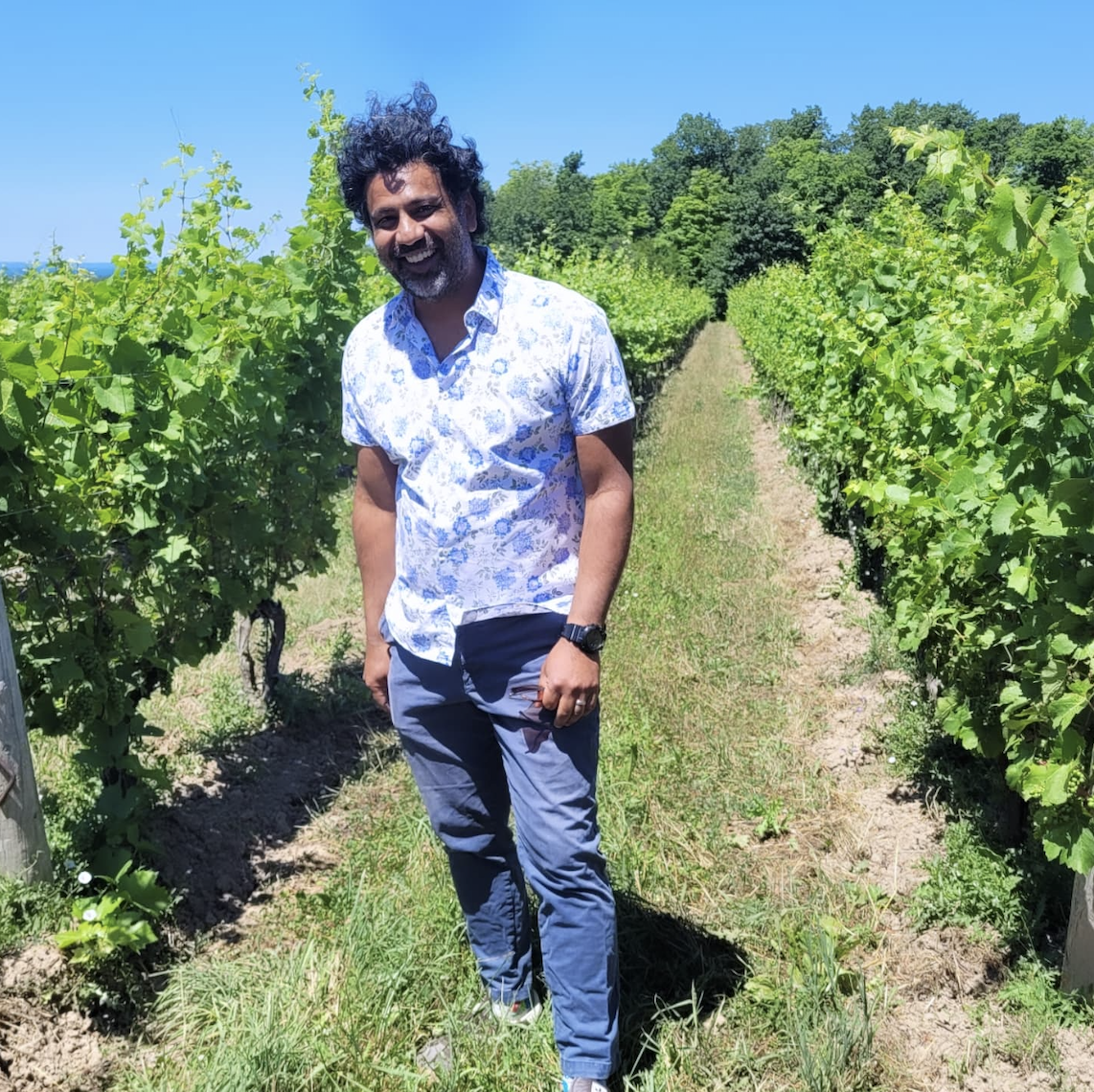
Shiraz Mottiar in his home vineyard

Malivoire Chardonnay Mottiar 2021, VQA Beamsville Bench, Ontario

From Shiraz Mottiar’s home vineyard and the wet vintage, moderately cool and one of those times that fruit dropping and rigorous sorting could and would lead to great chardonnay. That is this, taut and opening slowly, incrementally, in no hurry, nearly yet still not ready to go. Not the open flower yet and will be soon when fleshier times will fill the glass. A newfound yes to 2021.  Last tasted at i4C, July 2025

“A disaster (yet high volume, up 30 percent) vintage but I’m really happy what came from there,” admits winemaker Elisa Mazzi. No matter the rain and fog because there is flesh and substance in the ’21 from Shiraz Mottiar’s vineyard. Not a fully natural fermentation with some yeasts used but also not a full malolactic fermentation. Stopped halfway, winemaking on numbers instead of taste so to speak. Some wet concrete notes, washed hard cheese rind and surely different for a Malivoire chardonnay, leaner and linear but ready as ever to go out and please. Drink 2024-2026.  Tasted March 2024

Malivoire Chardonnay Mottiar 2018, VQA Beamsville Bench, Ontario

Pronounced flintiness from 2018, “it’s just vintage,” says Shiraz Mottiar and it lends a Beamsvile-ness to chardonnay, not unlike 2011 but ’18 was warmer. Translates to an added layer of richness with just the right amount of wood felt at this six-plus year stage.  Last tasted at i4C, July 2025

Intensely youthful chardonnay is a scent to behold, especially from a vineyard block picked on the high-low dichotomy of acid and pH then naturally fermented with bunches intact. I wonder if the barrel time was extended slightly because of the promise of 2018 and that may add to the taut nature of this Mottiar. That said there is no lack of freshness or shortage of cool climate bite. After all, this is chardonnay that speaks the vernacular of stoicism, structure and length. Drink 2022-2027.  Tasted October 2020
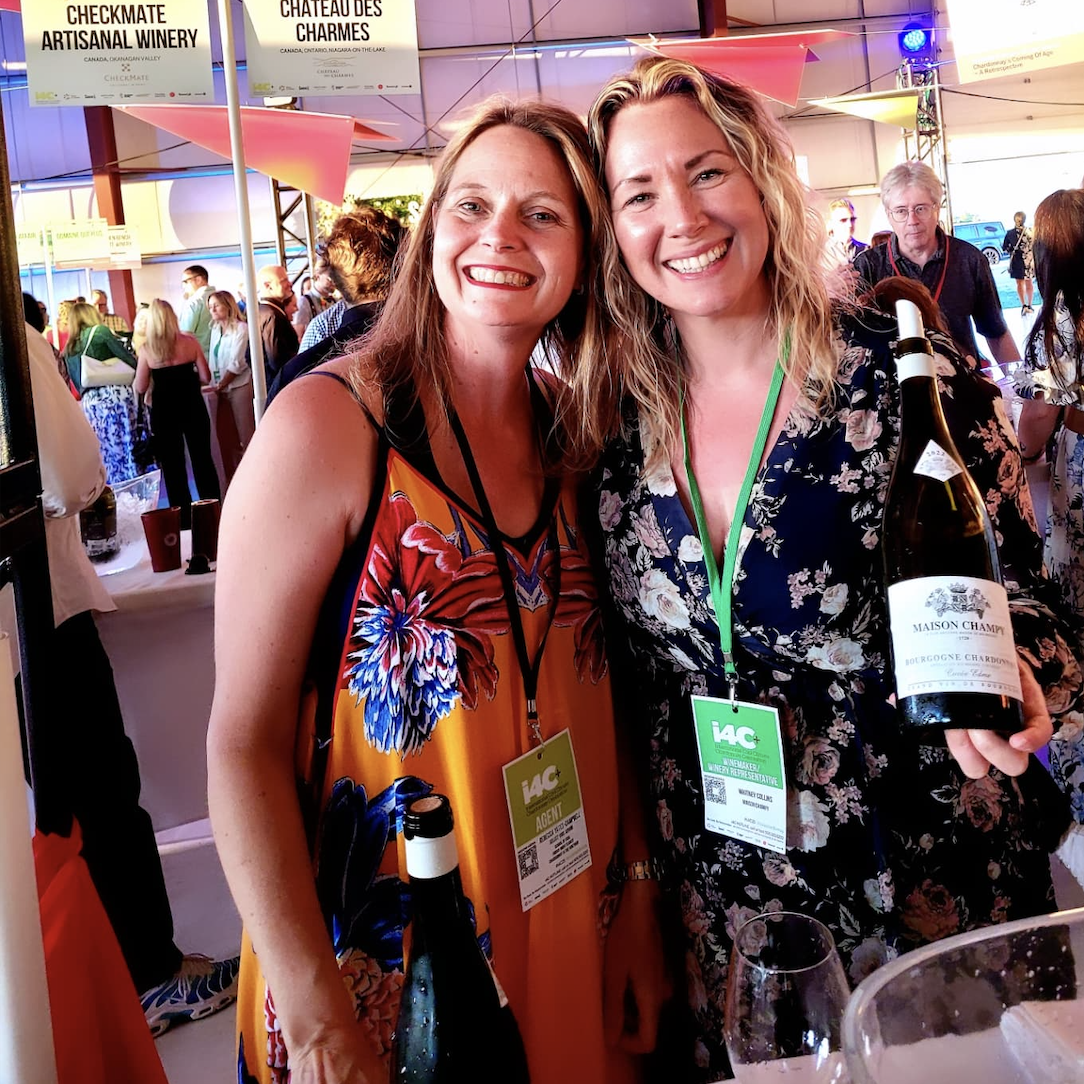
Rebecca Yates-Campbell and Whiney Collins, Advini (Maison Champy and Domaine Laroche)

Maison Champy Pernand Vergelesses Blanc 2023, Bourgogne AOC, France

The appellation and terroir must direct a classic movement in chardonnay and Champy ensures its orchestration finds what we are all looking for. That would be lighter, mineral-acid freshness from a large local landholder with more cards than many to mix, match and most importantly adapt. Organics and the essential ideal of sustainability translate into a chardonnay that is truly technically proficient to the edge of perfection. Translates terroir, talking points and acumen into great chardonnay. One of innovation for timelessness. Drink 2025-2029.  Tasted at i4C, July 2025

Organized Crime Chardonnay Limestone Block 2022, VQA Beamsville Bench, Ontario

Sharp value chardonnay cut from stone and to deliver top quality varietal goods from a fantastic Beamsville Bench terroir. Crisp as it gets for a 2022 Bench chardonnay, sweetly herbal, crispy and taut yet with no shortage of fluidity and flesh. Distinct and still recognizable for grape and place with wood the pique in spice at the tip and also back end of the palate. Acidity fills the voluminous space between. Drink 2025-2028.  Tasted at i4C, July 2025

Organized Crime Chardonnay Sacred Series Cuvée Krystyna 2021, VQA Beamsville Bench, Ontario

Higher end and inviting pinpointed cuvée from the cooler and wetter if humid vintage to determine ultra specific chardonnay. In a way surprisingly soft with a cream-centred mid-palate, pH elevated and acidity mild. The truth is this feels and drinks like a “Reserve” style of Ontario chardonnay with no questioning the quality of fruit ripeness, purity and wood. Comes together nicely and still drinks with purpose, though these immediately arriving years will see a waning of freshness. Drink 2025-2027.  Tasted at i4C, July 2025

Rosehall Run JCR Chardonnay Rosehall Vineyard 2017, VQA Prince Edward County, Ontario

Were you to say upfront that this was a Prince Edward County chardonnay from 2017 it would not be believed. Still cracker energy and freshness, crispy and crunchy character and blessed County beauty.  Last tasted at i4C, July 2025

As a follow-up to the warmth and phenolic heights of 2016 you’ll have to imagine a meandering through zig-zagging directions for ’17. Despite the ups, downs and ups again this chardonnay has indeed found its way, charming us with insights and how richness ensues. The surety of this fruit and this composure ensures and enriches the great sleeper County chardonnay that continues to explain the concept of cool climate viticulture done right. It’s not really all that reductive but it is protective and crafted with indefatigable structure in surround of high quality ingredients. Another winner from Dan Sullivan. Drink 2019-2023.  Tasted June 2019 and May 2020

Stratus Chardonnay Unfiltered And Bottled With Lees 2023, VQA Niagara-on-the Lake, Ontario

The Stratus chardonnay lees program is simply fascinating. Options, possibilities and abilities learned have developed and been banked for hits that keep on coming, but what is most striking about the 2023 unfiltered is how perfectly clean it is. Like you would never know there were significant lees bottled and so here there feels like a return or in a sense a throwback to chardonnay from say 2012. Of a clarity, purity and acceptance of barrel in proper tones and with effortless ease. The agriculture is everything anyway, so to be sure a chardonnay like this will improve and be sure to bless a consumer with the last vintage produced being the best. Which means 2023. Drink 2025-2029.  Tasted at i4C, July 2025

Tamar Ridge Devil’s Corner Chardonnay Resolution 2022, Tasmania, Australia

Man does this smell like Tasmanian chardonnay, but what does that mean? Cool, for one thing, taut and tart with a Champagne profile minus the bubble. Also a chardonnay provided with a western rain shadow, a moderating body of water and north-facing sun capture for optimum ripening. Much of the fruit comes from the river that makes a moderating temperature effect horseshoed around the vineyard, that and 15 percent from the coastal vineyard. Like a bite into a strong green apple with satisfying juiciness and acidity. Drink 2025-2028.  Tasted at i4C, July 2025

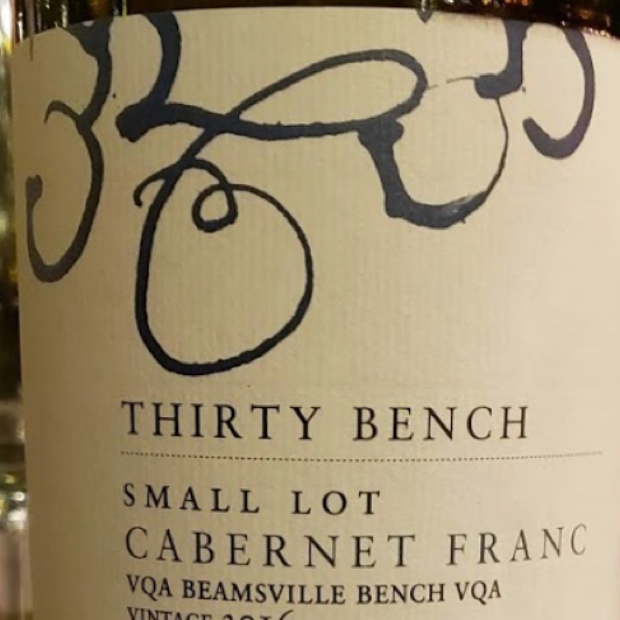
Thirty Bench Chardonnay Small Lot 2021, VQA Beamsville Bench, Ontario

In a ripe and settled place, fruit over acidity and barrel, fresh in its persistence and pulpy by texture. Green apple bite and spice more than many, exaggerated from a cooler vintage for excitability, gastronomy and complexity.  Last tasted at i4C, July 2025

True to Bench chardonnay sprit and energy, standing upright, demanding to be noticed and in turn we are paying notice. A harvest of demand forces the team to focus and pay extra attention, to do everything possible for greater returns. Picking and sorting strategies finds the best available fruit to create something cool, gelid, succulent and shockingly Chablis like. In fact at 12.6 percent (low) alcohol this acts in a stoic and matter of fact way, without airs and confidently what it needs to be. Will not overwhelm any palate, nor will it takes any breath away. That said it should age longer than first anticipated.  Last tasted twice in July 2024, including at at i4C

Small Lot just has to be the owner of the lowest of low alcohol number as it pertains to the Beamsville Bench and at 12.6 percent the conversion rate falls under the categorical auspices of magic. This is not a light chardonnay but it is a lithe, elastic and effusive one. Aromatically demure yet soft and almost caressing, without peppery (and sharp apple) bites or jolting in any way. The palate runs a similar course, gracing with soft and round flavours that are easy and stretched. Lovely and amenable 2021 here from Emma Garner and one to savour slowly, in a calm and tranquil setting. Drink 2023-2025.  Tasted July 2023

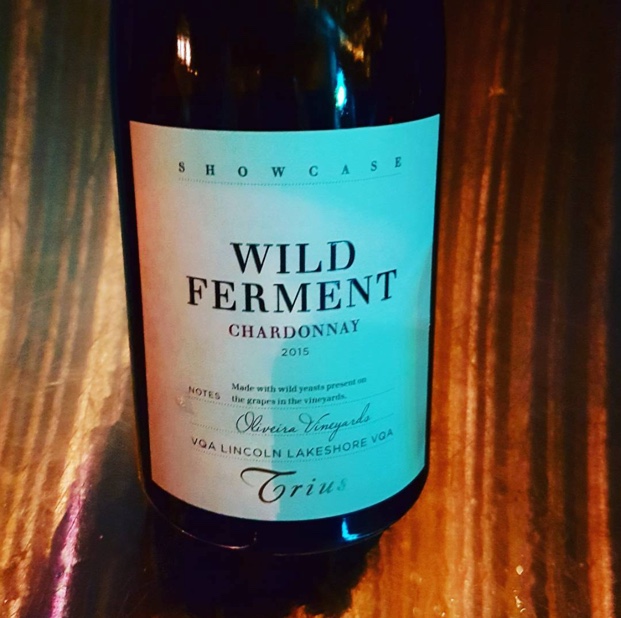
Trius Showcase Chardonnay Wild Ferment Watching Tree Vineyard 2022, VQA Lincoln Lakeshore, Ontario

Single vineyard, optimum fruit picked right at peak in a warm vintage and just the wild facts before barrel time rounds out the edges and corners. They still point and stand out with reductive style being the impetus for freshness and how this chardonnay will age, journey and thrive. There is a crunchy green apple quality, a flinty moment our two and fine lees as pure as ever.  Last tasted at i4C, July 2025

Volta Estate Winery Chardonnay Unoaked 2023, VQA Prince Edward County, Ontario

One of three Volta chardonnays, the second being barrel-aged and the third raised in (sandstone) amphora. Fruit comes from Hillier’s Ramirez Family Farm, at one time sourced by Lighthall Vineyards, a fun fact that indirectly forms a connection with new winemaker Chris Thompson who used to work at there. This steely chardonnay is stirred and closely mimics a Chablis perspective, youthful style that is with languid drift, elasticity, freshness and cool finishing spice. Acids are spot on for this ultra correct chardonnay. Drink 2025-2026.  Tasted at i4C, July 2025

Volta Estate Winery Chardonnay Amphora Ramirez Family Vineyard 2023, VQA Prince Edward County, Ontario

As with the first Volta chardonnay the source is Hillier’s Ramirez Farm but here the aging is done in French (sandstone) amphora-style vessels. A freshness does not merely drift but flies out in a way that rarely happens from these pots (when made with concrete or clay) and so the medium surely creates some sort of revolutionary housing. Purity incarnate and no salve drip or texture melted upon the palate makes this so bloody different. Highlights the fruit and not reduction while micro-oxygenation comes into effect in the neatest way. Drink 2025-2027.  Tasted at i4C, July 2025

Wending Home Chardonnay Estate Vineyards 2021, VQA Creek Shores, Ontario

First tasted 13 months ago and no shock to find this chardonnay right in the heart of its open window. The spice is melting and infiltrating every pore of this wine for pervasive seasoning and flavour. Just delicious at this stage.  Last tasted at i4C, July 2025

Bit of a cool banana smoothie here, extracted and sweet though naturally so with that tropical spectrum feel, especially like pineapple. Chewy for chardonnay and the wood is very much there, finishing with a buttery swath pasted across the palate. A bit heavy handed (though not overdone) in terms of bâtonnage to effect honeycomb and creaminess, however those who like the style will do very well with this example. Drink 2024-2026.  Tasted blind at #NWACS24, June 2024
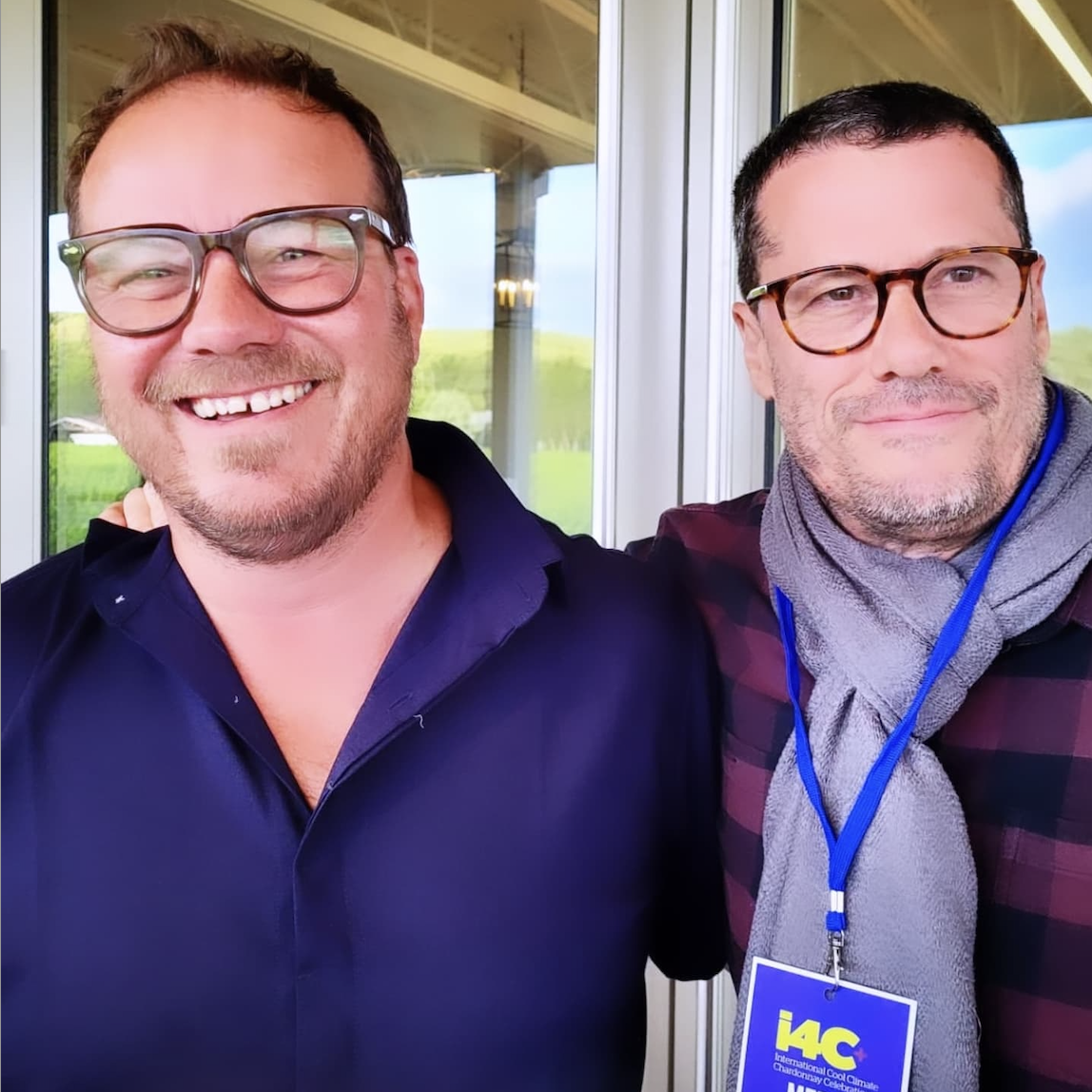
With Jonas Newman, The Grange of Prince Edward

Other Whites

Divergence Wines Sauvignon Blanc Creek Road Vineyard 2023, VQA Four Mile Creek, Ontario

In the past Jeff Moote sourced his sauvignon blanc from Hughes Vineyard in Beamsville and this is the first from Creek Road near Virgil in the Four Mile Creek sub-zone. The vineyard may be most famous for cabernet franc but this white grape cousin makes for a fine, ripe and complex wine. Saw 20 hours of skin contact, enough to effect colour and texture but not enough to adhere in any unwanted way aboard the palate. There are notes of green fig and yellow peach from what is ostensibly tight, vaguely tannic and corporeally solid white wine. Drink 2025-2027.  Tasted at 14C, July 2025

Grange Of Prince Edward Sauvignon Blanc Newfield Block 2024, VQA Prince Edward County, Ontario

From vines planted in 2003 though never really ever made into a dry sauvignon blanc. Now in the hands of winemaker Jonas Newman that changes with a stirred yet no wood version, although Newman feels that could come into play sometime soon. “To make a more complex and sophisticated sauvignon blanc,” but the quality of this feels like there will need to be two. This ’24 is joyous and eye-opening stuff. Drink 2025-2028.  Tasted at i4C, July 2025

Grange Of Prince Edward Pinot Gris Isabella Block + Northfield Block 2024, VQA Prince Edward County, Ontario

Truly ABG, anything but grigio in dry, salty, crisp and enticing pinot gris. Gris for gris’ sake, solid, purposed and drinking effortlessly. Drink 2025-2027.  Tasted at i4C, July 2025

Malivoire Pinot Gris 2024, VQA Beamsville Bench, Ontario

Aromatic for gris with flowers, part fresh and part desiccated. Vaguely turbid with an acetic moment that distract from the purity of intended local pinot gris flavours. A bit troubled by its youthful style and perhaps it will “clean itself” up with a few to more to six months in bottle. Drink 2025-2027.  Tasted at i4C, July 2025

Malivoire Melon 2024, VQA Beamsville Bench, Ontario

Fresh, ultra fruity and light style, decidedly void of long lees aging. Originally conceived and continues to be made for proprietor Martin Malivoire because this melon de bourgogne is exactly what he prefers for oysters. As will you because the 2024 delivers both substance and salinity, key ingredients in the pairing. Drink 2025-2028.  Tasted at i4C, July 2025

Malivoire Melon De Bourgogne Demo Series 2022, VQA Beamsville Bench, Ontario

The ulterior methodology and stylistic for melon de bourgogne, here aged 22 months on the lees. No we have not walked up from the river to Nantes, but there is some fantasy in that regard. Salty and the feeling of wet concrete, so proper for oysters but frankly an exciting melon on its own. Flinty and still youthful. Drink 2025-2029.  Tasted at i4C, July 2025
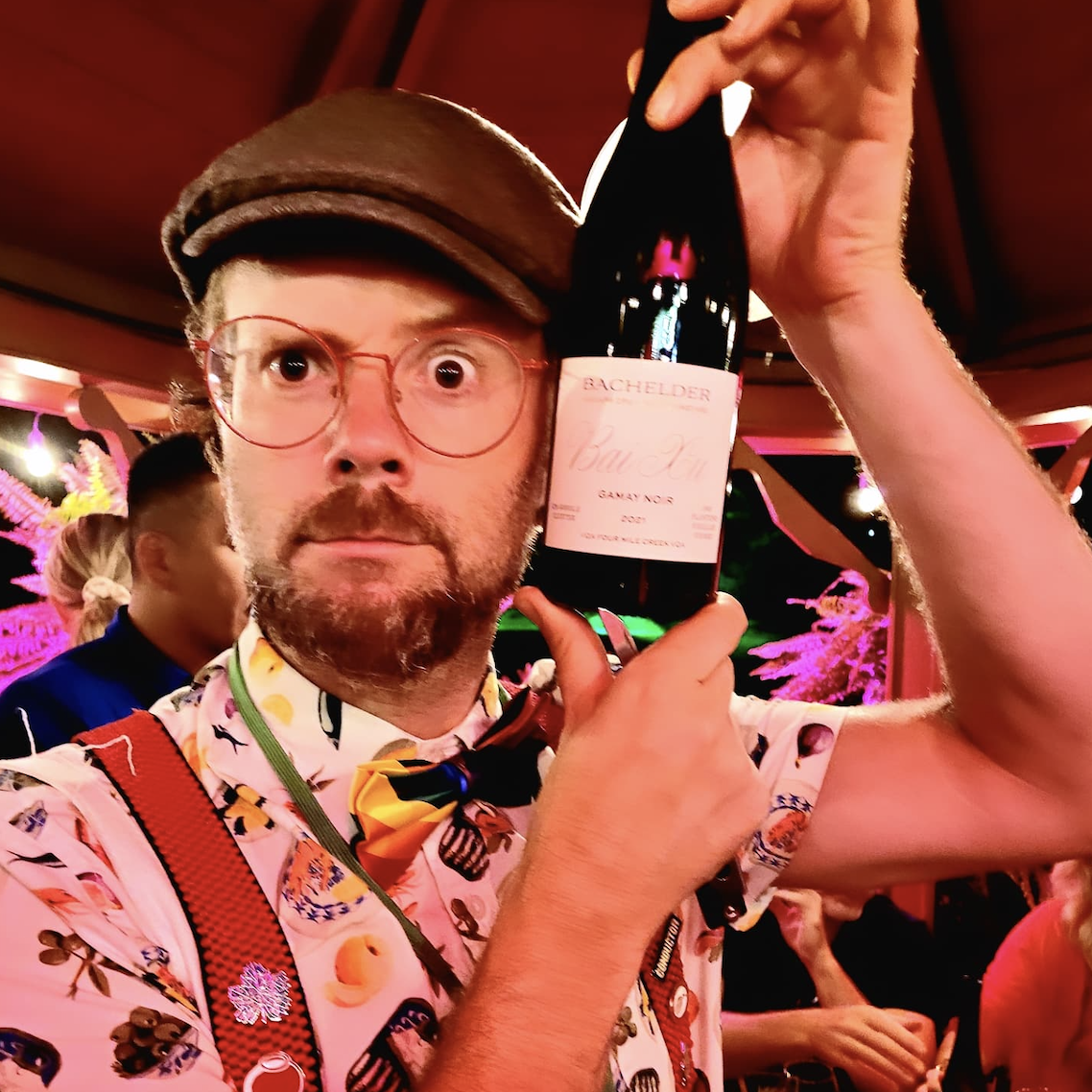
Jimmy Smith, Beare Green Winery and Wine with Jimmy

The Reds

Beare Green Winery Pinot Noir Pulborough Cool Climate Clone 777 2023, Surrey, England

The Surrey project of Wine with Jimmy (Smith) comes from Pulborough, a tiny village where the fringe of cool climate viticulture is practiced and planted to pinot noir clone 777. Beare Green’s is a natural varietal treat with acetic meanderings and like the chardonnay, leanness is belied by its charm. Yes it is in fact acid tart and sax jazzy while also crunchy and intensely cherry sour. A ton of clash but the prospects and possibilities feel like a high ceilinged future awaits. The intrigue is great with much looking forward to watching this passion project grow. London and the world are calling. “J-a-zee zee, J-a-zed zed, J-a-zed zed, Jimmy Jazz.” Satta Massagana Jimmy. Drink 2025-2027.  Tasted at i4C, July 2025
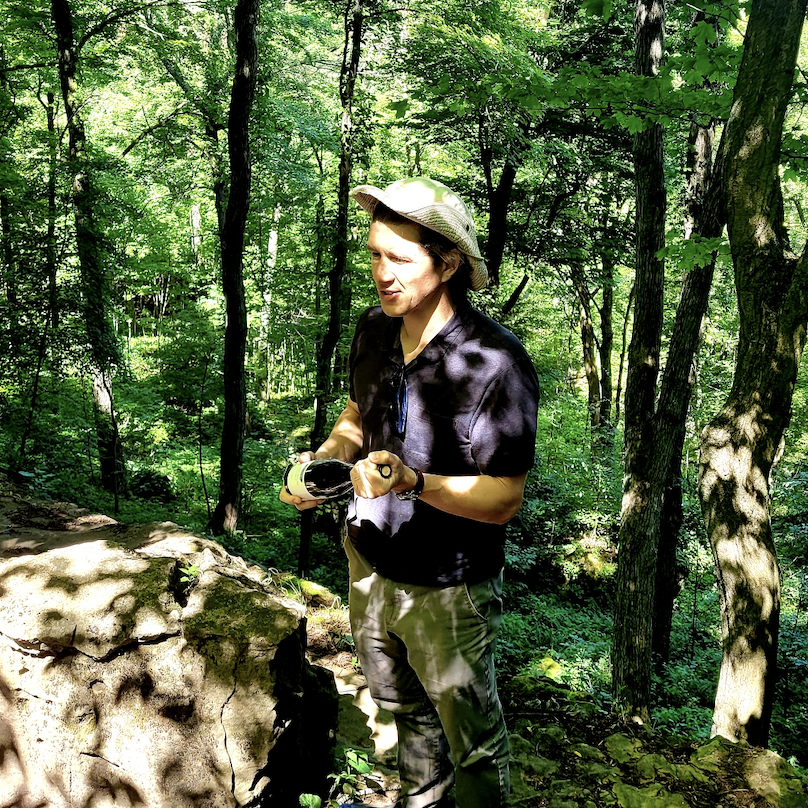
Cave Spring winemaker Gabe Demarco speaking at the Adam Steps

Cave Spring Cabernet Franc CSV Estate Grown 2022, Sustainable, VQA Beamsville Bench, Ontario

Warm vintage, a richness of fruit optimized from highest attention to farming and chosen right there in the field. In June no less because identifying blocks ahead of canopy management is key to drawing up the map for Cave Spring wines. CSV is the varietal meow, also with cabernet franc and while the ’22 carries deeper meaning there is no denying the sheer purity. Wood used generously is the requiem to elevate and extend the grip, spice, texture and potential of this wine.  Last tasted at i4C, July 2025

Juicy, unfettered in terms of exuberance and yet finely restrained as cabernet franc because it pulls no gratuity, nor punches for that matter. Only a kiss of the barrel is felt and the proper herbaceous greens are noted, as they rightly should. Speaks to the Cave Spring Vineyard and the important farming adjustments made over these last few years by Gabe Demarco and team. The fruit is singing because their host vines are well loved. It’s as simple as that. Drink 2024-2027.  Tasted September 2024

Cloudsley Cellars Pinot Noir 2022, VQA Twenty Mile Bench, Ontario

Adam Lowy’s Twenty Mile Bench pinot noir really is the mirror into a vintage with its mix of vineyard fruit, lithe transparency and aromatic spicing of a season. That’s the thing – His pinot noir does not go into bottle without proper, correct and frankly spot on salt & pepper seasoning in order to coax out the truth of fruit. Its decisive resource is concentration and depth without unnecessary over-extraction or heft. Would say to drink this early in its tenure and also pour it to those who question the viability and comparability of Ontario pinot noir. Drink 2025-2028.  Tasted at i4C, July 2025
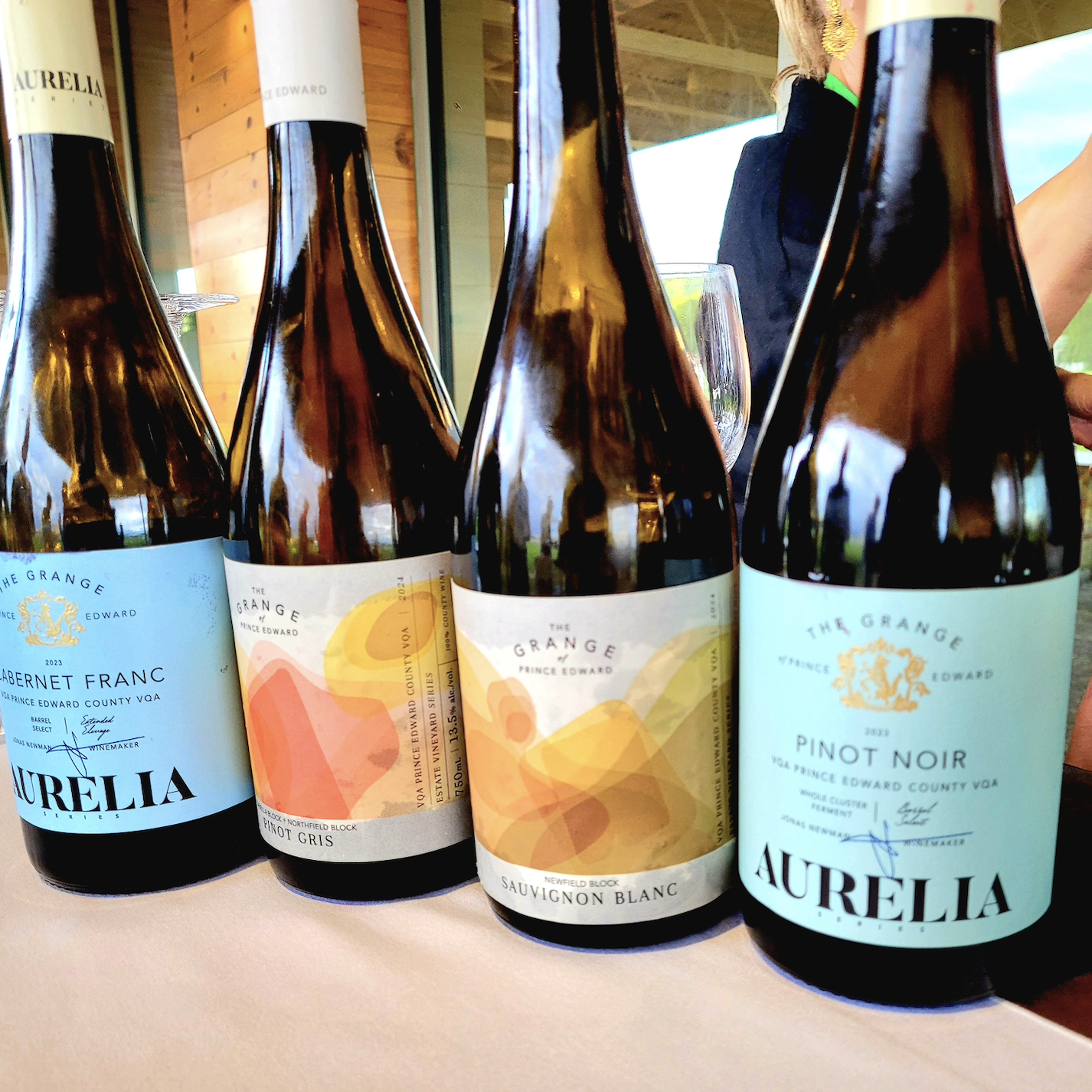
Grange Of Prince Edward Pinot Noir Aurelia 2023, VQA Prince Edward County, Ontario

Tart with an acetic edginess because of its raw energy and DIY ethic. Red fruit intensity, implosive, dangerous, rebellious and still workable. It is County pinot noir, the punk rock of Ontario’s varietal sound, purposefully shock chord driven and fast. Try to keep up.  Last tasted at i4C, July 2025

The golden one, Aurelia, from the Latin Aurelius and if you want to delve deeper, the name for Marcus Aurelius Antoninus, Roman emperor from 161 to 180. Even deeper still the character portrayed by Richard Harris in Gladiator. Also the top of the opus pinot noir at The Grange and what a golden one it surely is. Needs to be because it is bloody expensive but just 98 cases were made of a varietal harbinger that gets the full on spa treatment. Double sorted, first in the vineyard, then at the table. Whole cluster fermented, including carbonic for five days and then foot trodden. Ten days of délestage before being pressed off and blended to finish ferment in tank. Ages in the most expensive wood for 10 months, 33 percent new. Burgundy anyone? Yes this is the idea and the result is a pretty good approximation, all the while tended to by that County high life in acidity with a generous amount of volatile compound effect. Yet the fruit and that acidity are in cahoots, sweet, inviting and enlivening. At nearly $75 there is a whole lot of swagger, ambition and confidence but if money were no object I’d happily drink through a few bottles. Drink 2024-2027.  Tasted December 2024

Grange Of Prince Edward Cabernet Franc Aurelia Series 2023, VQA Prince Edward County, Ontario

What absolutely killer, beautiful and appropriate volatility in the sweetest and most elastic vein. There are Loire and Ontario cabernet franc and then comes along Aurelius at Prince Edward County’s Grange made by Jonas Newman – and the skies re-open. Feels like a cabernet franc epiphany sent after a storm with order restored post chaos and darkness. The wine’s opening salvo is something understood to be professional and artisanal rolling into the proverbial emergence from risk relatable to reward. Brightness and potential ensues. Near, near absolutely brilliant bottle of cabernet franc. The pinnacle is coming soon. Drink 2026-2031.  Tasted at i4C, July 2025

With Jennifer Carter, JoieFarm

Joiefarm Winery Pinot Noir En Famille 2022, BC VQA Okanagan Valley, British Columbia

A treat to taste a signature JoieFarm pinot noir from a most rewarding Okanagan Valley – Naramata Bench vintage, especially under the auspices of the En Famille autograph. A true “farm” wine, emphasizing a connection between Naramata and these varietal wines. The ’22 brings fullness and generosity in a most familial and joyous way. Ripeness is just right there and softness ensues to ensure the highest level of drinkability for always and whenever. Drink 2025-2028.  Tasted at i4C, July 2025

Leaning Post Pinot Noir 2023, VQA Niagara Peninsula, Ontario

The NP pinot noir falls into the Leaning Post line wedged somewhere on the line between The Fifty and the single vineyard labels of Senchuk, Hemeris, Lowery and Grimsby Hillside Vineyard. What’s right and charming about 2023 is how it settles into our varietal psyche for a vintage neither as warm or concentred, while returning to varietal basics. This feels like 2009 or 2009, wines ripe and structured enough that in Ilya Senchuk’s hands that are able to please early yet surely age gracefully forward several years. There is purity and potential magic from vintages like this with no exception for one labeled as an LP pinot noir. Less than epic, but they can’t all be and my how good ’23 will be for years to come. Drink 2025-2031.  Tasted at i4C, July 2025

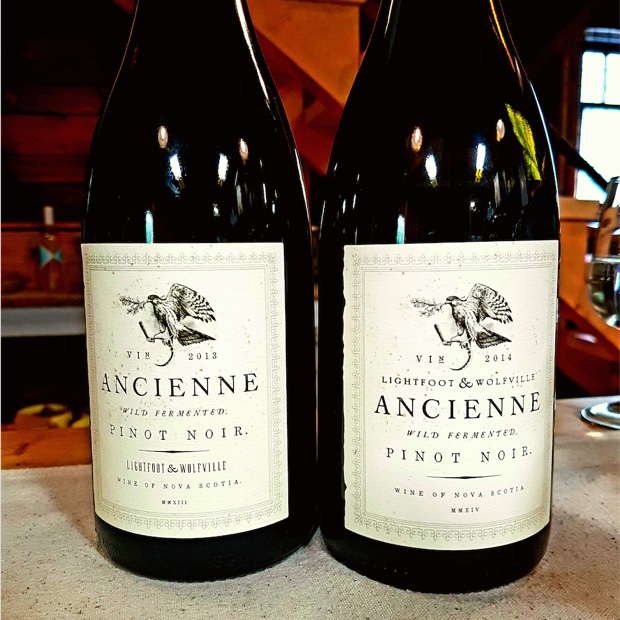
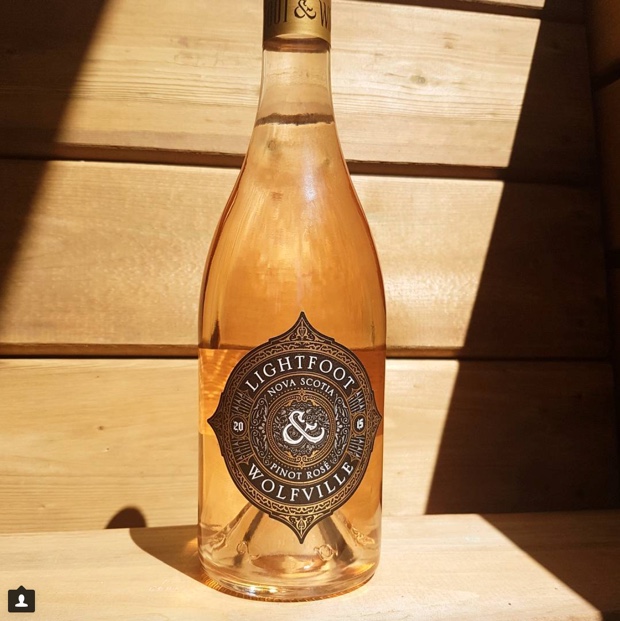
Lightfoot & Wolfville Pinot Noir Ancienne Wild Ferment 2021, Annapolis Valley, Nova Scotia

Feels like only yesterday when pinot noir planted, nurtured and made into wine at Lightfoot & Wolfville was born, but here we find this special Annapolis Valley example come upon a decade into its tenure. Things have changed in terms of ripeness, knowledge and experience, but still this is Nova Scotia wine. Unequivocally and beautifully, with tension and this rise of high tonality up high into a Fundy-Minas Basin air. The 2021 still rises but also settles in term of its tannin structure. This says drink away and be keenly aware of how time will dramatically change this pinot noir across all of its character; volatility, emotional well-being and spirit. Drink 2025-2028.  Tasted at i4C, July 2025
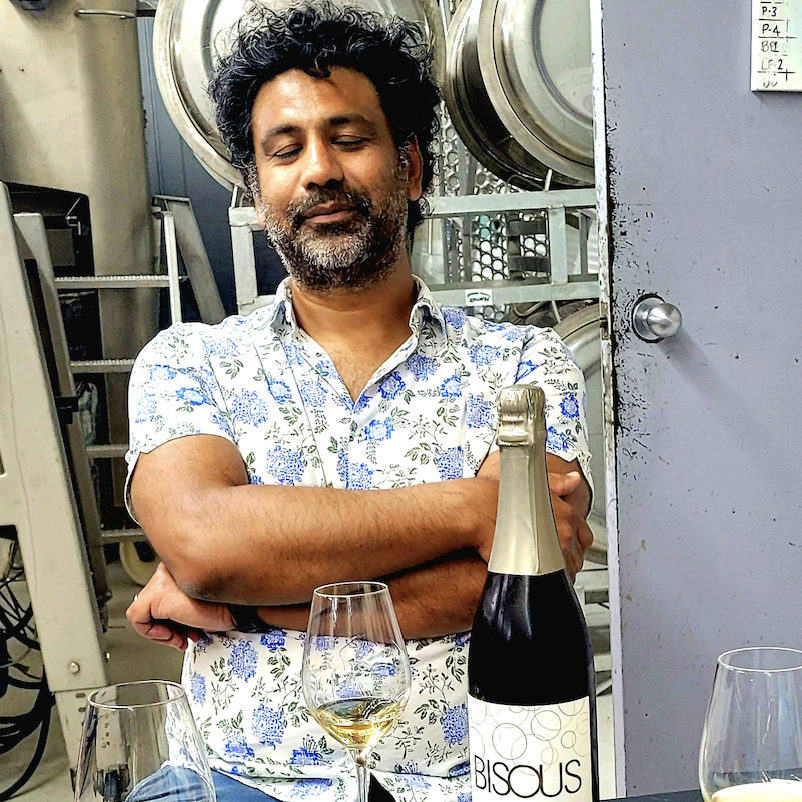
Shiraz Mottiar, Malivoire

Malivoire Gamay Small Lot 2023, VQA Niagara Escarpment, Ontario

Some carbonic from 30 percent whole cluster gamay. Pretty tight, spot on, clean and correct gamay with ample concentration stopped short of density and so no noted chalkiness. Aromatic spice and Villages stylistic captured to represent keen varietal aspiration bred from rooted Escarpment function. Drink 2025-2028.  Tasted at i4C, July 2025

Malivoire Gamay Le Coeur 2023, VQA Niagara Escarpment, Ontario

A hundred percent carbonic from same number whole cluster gamay and if there once was risk involved that anxiety is long gone. The all in number has been a factor since 2017 and one time trepidation is now a gamay that knows exactly what it is from makers who know exactly what they’ve got. Firm and with elastic tension for gamay that reaches out, snaps back and does it again. Repeats its processes on the palate with pulse and meter. Amazing.  Last tasted at i4c, July 2025

Punchy for gamay, so very Niagara style, likely Lincoln Lakeshore or the steppes of the Beamsville Bench. Fruit, leafiness and a mild earthiness (as in reduction) together with top level perfume of spring flowers (hibiscus), fresh dill and that induction of reductive aromas. and a Villages emotion that speaks volumes about a general sense of place. Less demanding in terms of tannin and a declension of flavours while not quite as fleshy or full as expected to follow what came at the first. Will this flesh out? Quite likely because it grows and grows on you. Tremendously solid varietal wine – if not so adept at aging. Drink 2024-2026.  Tasted blind at #NWACS24, June 2024

Malivoire Gamay Courtney 2022, VQA Beamsville Bench, Ontario

Courtney releases a year later than Small Lot and Le Coeur because it’s more traditional without any carbonic maceration. Warmer vintage, more depth and peppery quality in a pinot meets syrah sort of way. A unique and mature vineyard brings warmth and depth, the treatment in the cellar meant to add breadth and lengthen what is possible. That it does.  Last tasted at i4C, July 2025

Juicy and effusive gamay, such sweet perfume and candied goodness in that aromatic regard. Leafy and savoury infiltrates within and then a repeat on the palate that speaks to harmony within and also without. Maybe some RS sweetness but it is forgiven because all parts work well and together, Acidity over tannin and that’s perfectly fine. Just a bit sour at the finish. Drink 2024-2026.  Tasted blind at #NWACS24, June 2024
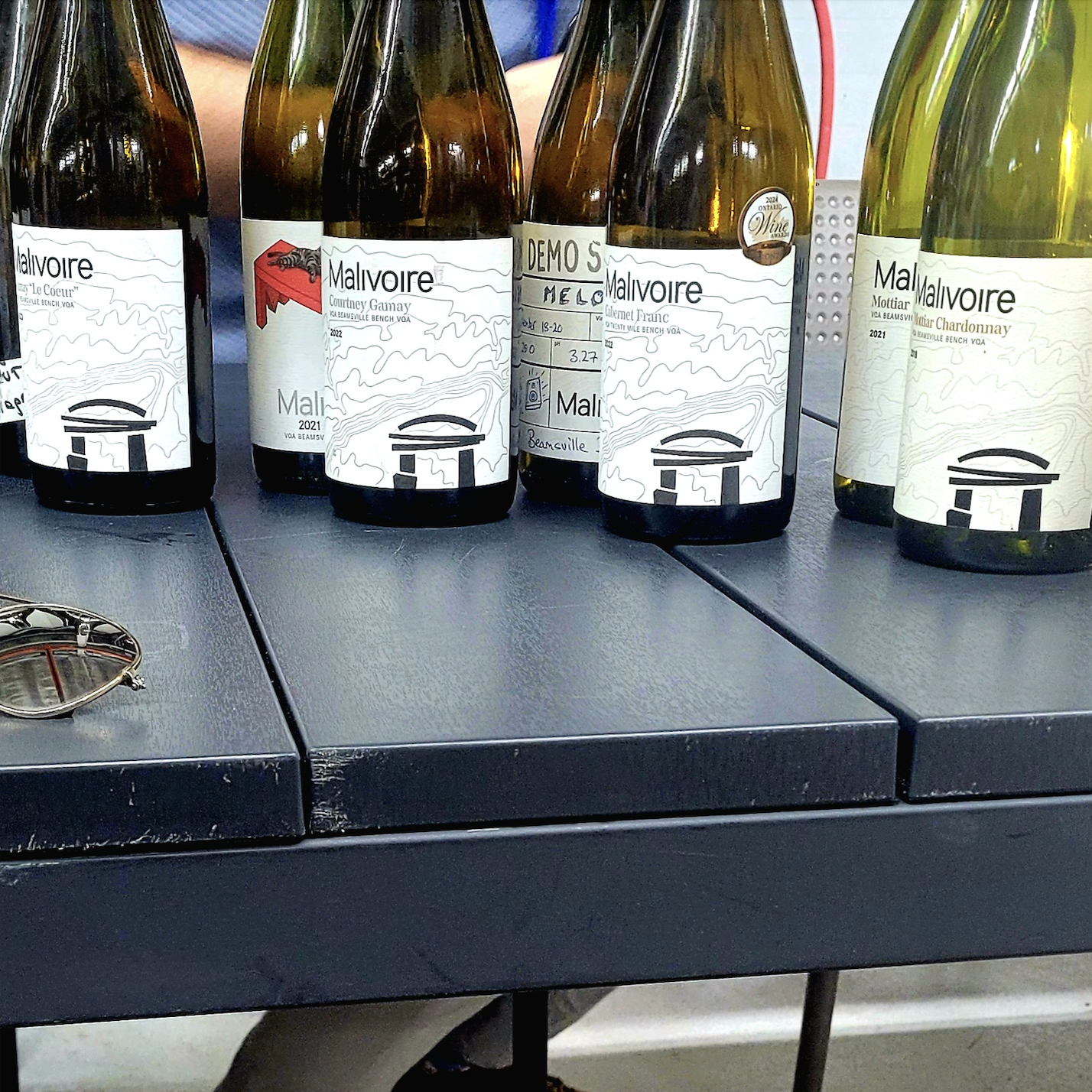
Malivoire Cat On The Bench Gamay 2021, VQA Beamsville Bench

Hard not to think comparatively but the musky funk of Cat on a Bench really does imagine Cru Beaujolais, specifically Morgan from a famous producer or two. “We got the funk, we got the funk!” Just one barrel makes 30 cases, first vintage was 2007 and who is the cat? Is it one of three or is it Martin? And which bench, the one next to the barn or The Bench? All adds up to fantasy, to Beaujolais and benches, to the impossibility of herding cats and the uniqueness of gamay from Moira vineyard. In any case this hits the proverbial off the beaten path spot.  Last tasted at i4C, July 2025

New gamay sku here for Malivoire, one of if not Niagara’s (and Canada’s for that matter) benchmark gamay houses. Martin Malivoire planted vines more than 25 years ago and at the time of bottling it was winemaker (now head of all things Malivoire) Shiraz Mottiar who had been running hither and thither with the varietal program. The iterations included Small Lot, Farmstead, Courtney, Le Coeur, Wismer-Foxcroft, Concrete and Genova. Mottiar has been playing with whole bunches, carbonic maceration, wood, concrete and things we may not fully be privy too. The Cat series includes three $50 chardonnays called Steel, Stave and Skin, while this looks to a new pinnacle for what the team surely saw as the finest estate fruit to date. “Cat on a Bench” may just be the mendicant four-legged feline on a hot tin roof because it’s survival depends on instinct and cunning, its energy nervous, hot, desirous and bothered. In a good way. Yes this is structured gamay, notably firm, sour, crunchy and somehow finds a way to reflect the realities of normal gamay life. And it is $60, surely unprecedented for Canadian gamay. Cru Beaujolais as well. A one off? We shall see. Drink 2024-2027 . Tasted August 2023

Malivoire Pinot Noir Small Lot 2023, VQA Beamsville Bench, Niagara Escarpment, Ontario

Brightest of the Malivoire pinot noir and a high acid, toned and intensity example with less concentration than the previous 2022. Classic cool climate correctness and standard bearer. Takes what it’s given and stays the varietal to place course. Drink 2025-2028.  Tasted at i4C, July 2025

Malivoire Pinot Noir Mottiar 2023, VQA Beamsville Bench, Ontario

Just a small amount of whole cluster, maybe 10 percent because of the variety’s penchant to elevate in volatile acidity. Still a little bit goes a long way and the wine just pops here from 2023. First there were the fiddlings of Shiraz Mottiar and now Elisa Mazzi, two winemakers who have confidently figured out how to master pinot noir from the small Mottiar vineyard. Do not fear “if you”can’t find the conductor who created the whole cluster” in this wine, but trust that their signature is there. As is the fruit and how it expresses this peekaboo of a block on the Beamsville Bench. If Val were pinot noir this would be her song and she would find her way off the train. It’s the theme of humankind and making pinot on the Bench. Drink 2026-2029.  Tasted at i4C, July 2025

Malivoire Pinot Noir Cat On The Bench 2022, VQA Beamsville Bench, Ontario

Malivoire’s Cat on the Bench in pinot noir is expressive of a similar whole cluster funk as noted with the Cat on the Bench gamay. Here however it combines with and is elevated in spice, but also increased depth and it all formulates as a serious pinot noir with a wildly invigorating result. COTB is a layered varietal wine that will take years to peel away and figure out what full possibilities await. The vintage is key to constructing and ultimately resolving the pressing and evolving questions. Hard to make a final decision on just how important the 2022 really is because tasting bottles along the way will surely re-write the script. Drink 2027-2031.  Tasted at i4C, July 2025

Malivoire Cabernet Franc 2022, VQA Twenty Mile Bench, Ontario

Crispy, crunchy and chalky cabernet franc, deep and sonorous, herbal with herbaceous piques, edgy and structured. Will still take a few years to figure itself out, push the fruit to the fore and find its core of balance.  Last tasted at i4C, July 2025

Very different vintage to the light and stretched ’21, now fleshier and fulsome, 18 months total wood time, the last eight of which were in older barrel. From a vineyard in the valley below Ball’s Falls, this being Cascade adjacent to the Wismer cabernet franc block. Classic varietal expression, truly classic, tasting like and from limestone, impressively forward enough considering it was bottled just two weeks ago. Crunchy currants and red pepper, tart and tannins still a bit austere. Drink 2025-2028.  Tasted March 2024

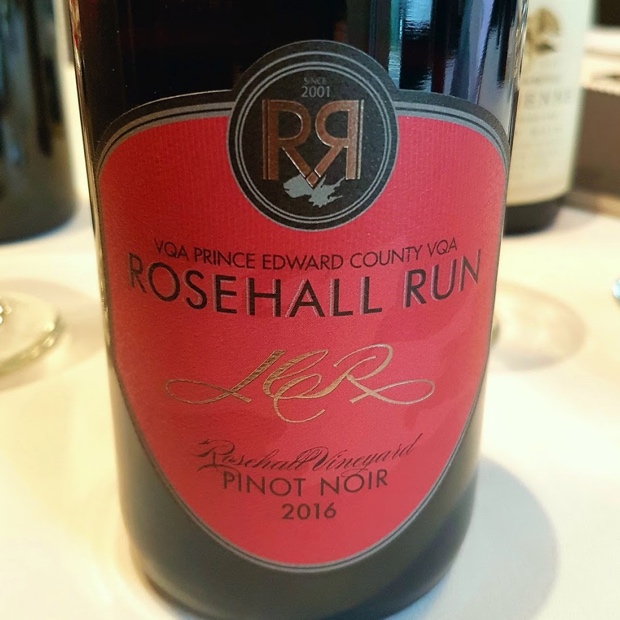
Rosehall Run Pinot Noir JCR Rosehall Vineyard 2022, VQA Prince Edward County, Ontario

Sweet floral aromatics for Rosehall’s JCR 2022, a pinot noir that scents like an open book after a warm season. The dictionary entry for effusive, a Prince Edward County welcome, of “approval in an unrestrained or heartfelt manner.” A far as pinot noir in JCR steading goes there is a drinkability factor quickly underscored and yet a few more sips come to regard a stealth and sneaky structure under the underscore. This is the way of a Rosehall Run drug, especially in pinot noir, waging war within itself and at times struggling to make itself understood. Like an ocean of pinot personality beneath the waves and remember, “it always gets so hard to see, right before the moon.” Drink 2026-2031.  Tasted at i4C, July 2025

Tamar Ridge Devil’s Corner Estate Pinot Noir 2023, Tasmania, Australia

Tamar Ridge’s Devil’s Corner is Tasmanian branding for four equal parts salty, sapid, sweet and sour pinot noir. In other words a four-poster balanced cuvée of vineyards’ fruit that draws lines to four corners within an a varietal enclosure and repeats the process ad infinitum. Stage presence and a profound personality stood up to be recognized, investigated and counted. Firm, grippy and impressive. Drink 2026-2030.  Tasted at i4C, July 2025
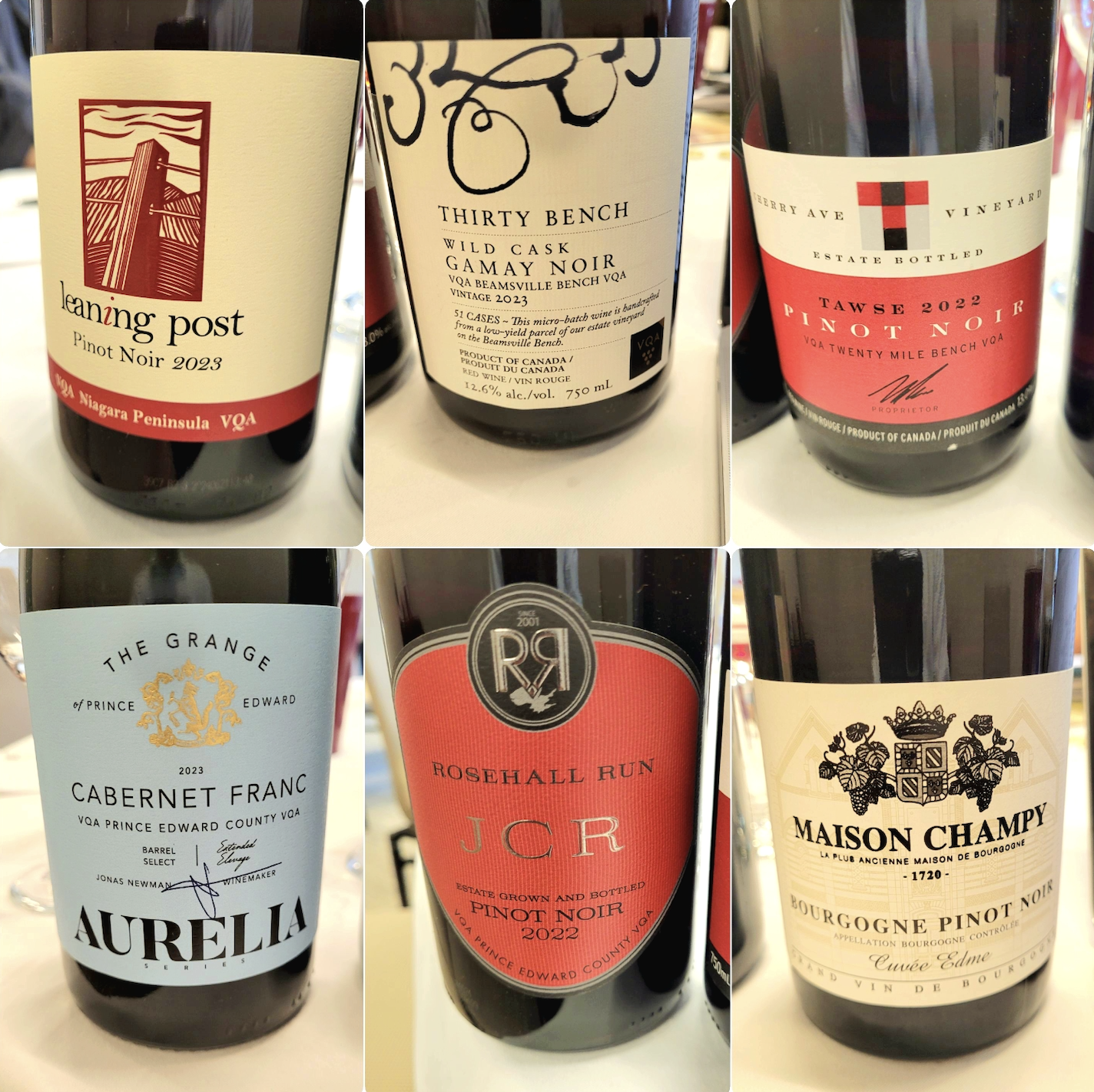
Tawse Pinot Noir Cherry Avenue 2021, VQA Twenty Mile Bench, Ontario

No shock to experience a young Cherry Ave pinot noir in a state of rigid and closed control because it defines restraint for the Twenty Mile Bench. Quiet and diffident though we do detect a half wink and wry smile as it teases aromatics if obtusely giving little of its charm away. Noting the classic red crayon and concrete stiffness, breathing diaphragmatically, fuller and longer of inhalation and exhalation, costal speaking. This means low and slow evolution, a few years yet before things begin to open up and a long life ahead. The child of a wet and often cool vintage, showing as it should, made in a style that expresses vintage and place with distinction. Even if these things are not yet known. Drink 2026-2030.  Tasted at i4C, July 2025

Thirty Bench Gamay Noir Wild Cask 2023, VQA Beamsville Bench, Ontario

Only 51 cases were made of this ultra unique Bench gamay noir which will appear as the lightest and leanest of them all. Do not be fooled by colour because there is varietal concentration, intensity, structural integrity and pent up power in Emma Garner’s wine. Not exactly puff up the chest and egocentric, but rather capability, probability, possibility and promise. Balanced, sweetly volatile and singular with wood spice and a white pepperiness that is unlike the rest. Should hazard a guess the kids will love this and in these times can afford it too. Drink 2025-2029.  Tasted at i4C, July 2025
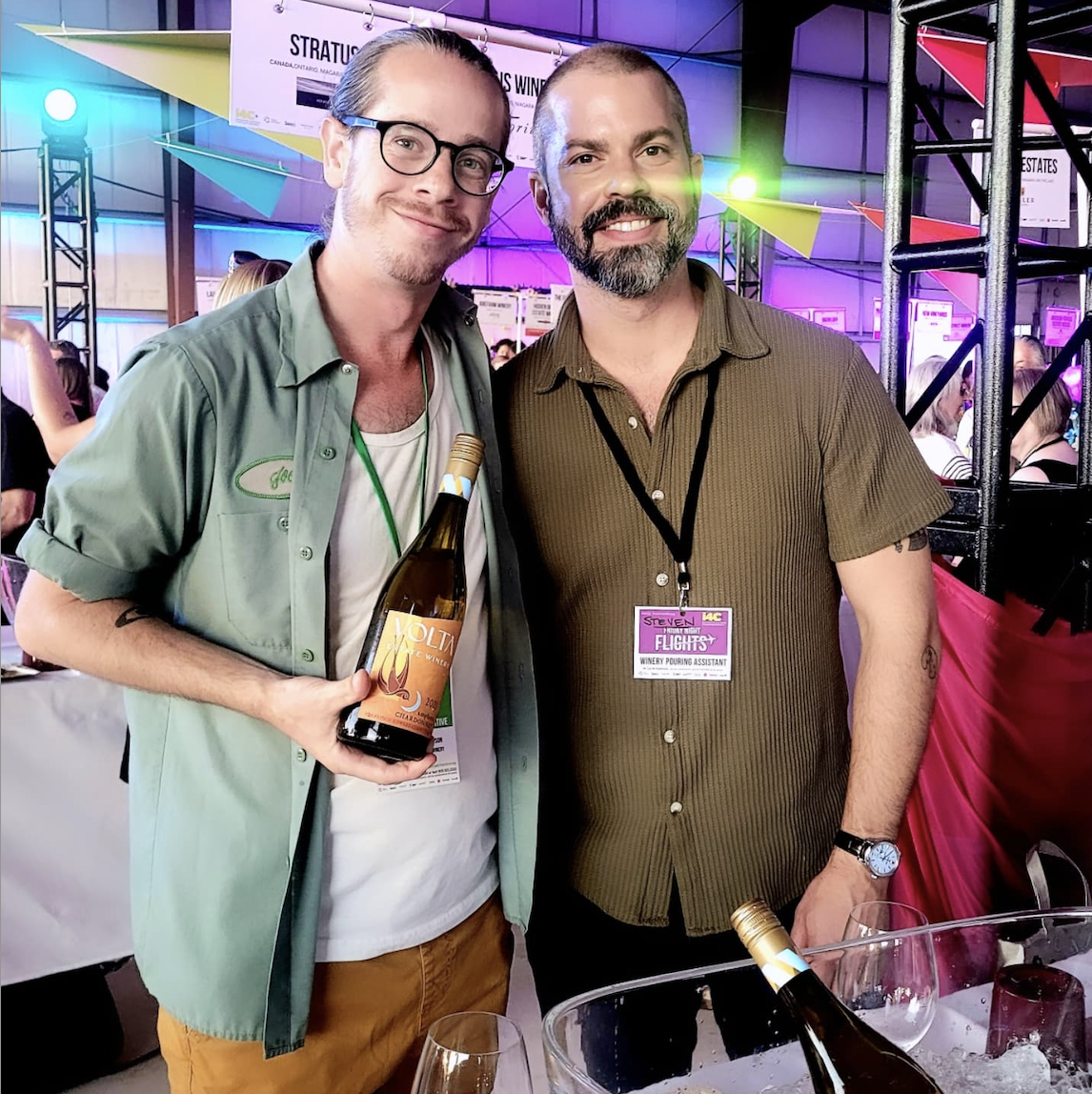
Chris Thompson and Stephen del Degan, Volta Estate

Volta Estate Winery Pinot Noir Knotty Vines Vineyard 2023, VQA Prince Edward County, Ontario

Welcome to the future. The Del Degan family are a new County player standing up to immediately be noticed and reckoned with. Just a short time ahead will be filled with elevated Prince Edward County importance to include Rosehall’s Volta Estate Wines under the guidance of winemaker Chris Thompson. Hard to fathom how quickly a wine like this 2023 rises to prominence for the region but here it is in all its ripeness and crucial balanced glory. A more precocious and richer start from the corner of Greer and 33 where 18-24 inches of topsoil separate 12 year-old plantings from solid limestone bedrock. This is simply a remarkable, yet surely well-reasoned and calculated beginning. Drink 2025-2027.  Tasted at i4C, July 2025

Good to go!

godello

Cool Chardonnay on ice
Instagram

Facebook

Twenty Canadian wines that rocked in 2020

(c) @tiny.wide.world and @winealign

Year-end lists and greatest hits have always elicited a personal introspective fascination, not any lists mind you but mostly those involving music. Always curious to find out if someone else thought the same songs or albums aligned with your own. Such lists are met with growing skepticism and so the words “top” or “best” should be taken with a grain of salt, scrutinized with impunity, viewed with subjective prejudice. Music and wine need not be considered as ranked, top or best but instead contemplated with dead reckoning, as if throwing a buoyant opinion overboard to determine the speed of the mind’s emotion relative to thought, which was assumed to be dead in the waters of judgement. The feeling of being moved, stirred up in sentiment, excited and reaching deeper into understanding, these are the reasons to tally a culminating register. Neither for enumeration nor for classification, but for the indexing, of harbingers and that which makes us feel.

(c) @tiny.wild.world and @WineAlign

What transpired over the previous 12 months has not left the arena of the unfathomable and the absurd, but with respect to Canadian wine there can be no doubt that a next level of greatness was reached. Holiday time will be somewhat solitary as 2020 winds down and while the sharing of bottles will surely mean more repeated sips for the few involved, they will be sweet ones and are not to be taken for granted. As for the exercise of creating a rocking roster of Canadian made wine, well here on Godello this so happens to be the eighth annual for an instalment that first appeared in 2013. Now adding up to seven more entries than the first and acting as natural segue, a transition and salvo towards crossing over the threshold where 2021 awaits.

Related – Nineteen Canadian wines that rocked in 2019

Twenty. Not an arbitrary number but rather an arbiter of perpetual and developmental prowess of a nation’s wine-producing ability and surely while knowing that no fewer than 20 others could of, would of, should of made the grade. The quote is a timeless one and will be employed once again. This curated list is “biased, exclusive and decisive but it is meant to celebrate a select few with a mandate to elevate and exult the rest. It’s also a proclamation read to many who remain ignorant to an ideal of great wine being made in Canada. The winemakers in this country are in full command of their acumen, craft and future. They own it.”

Related – Eighteen Canadian wines that rocked in 2018

In 2020 Canadian wine came to my tasting table in ways no other year made it happen. There were no excursions to British Columbia, Nova Scotia or Quebec, save for a 36-hour round-trip drive to Halifax in delivery of precious human cargo. No Cuvée or i4c. No VQA Oyster competition, Somewhereness or Terroir Symposium. No walk-around tastings. Despite going nowhere the opportunities to sample Canadian wines were of a number higher than ever before. Safely distanced tastings at WineAlign headquarters, at the welcome emptiness of Barque Smokehouse and in our homes brought Canada’s finest bottles to us. Though we were unable to convene in June at the WineAlign National Wine Awards of Canada, a prodigious alternative became surrogate in the guise of the Guide to Canada’s Best Wines, a.k.a WineAlign’s GCBW. Over the course of six weeks we tasted through 860 samples and not just any mind you but truly Canada’s best. We were sad to miss Tony Aspler’s Ontario Wine Awards and David Lawrason’s Great Canadian Kitchen Party, the artist formerly known as Gold Medal Plates. Here’s to hoping 2021 will usher in a return to assessing and celebrating together.

Related – 17 Canadian wines that rocked in 2017

Aldé Rosé, Interloper and As Is

Related – 16 Canadian wines that rocked in 2016

The numbers chosen to cant, recant and decant excellence in Canadian wine continue to march ahead, as promised by the annual billing. In 2018 the list counted 18. In 2017 there were 17 and in 2016, 16 noted. In 2015 that meant 15 and 14 for 2014, just as in 2013 the filtered list showed 13. Last year? You would be correct if you guessed 19. There is no red carpet for 2020, it just doesn’t feel appropriate or right but keeping on is essential. “Whence comes the sense of wonder we perceive when we encounter certain bottles of art?” Here are 20 most exciting Canadian wines of 2020. Twenty Canadian wines that rocked.


Le Vieux Pin Ava 2018, BC VQA Okanagan Valley ($29.99)

Calculated, figured and reasoned, a 51 per cent roussanne, (36) viognier and (13) marsanne organized, Rhône motivated blend that just fits right. A kiss of new wood and a 35 per cent wood campaign, slightly more in steel and then the other freshener, that being a fifth of this exceptional vintage fruit having seen time in concrete tank. Yes the aromas are wildly fresh, far away tropical and cumulatively enticing. A white blend of rhythm and soul, actionable in every part of its drift and coil, democratic, of no accident, come up to please and at the same time, foil. Offers this and that, high tempo acids opposite fully ripened fruit and all tolled, wrapped up with a tailored bow. Drink 2020-2024.  Tasted October 2020

Cave Spring CSV Riesling 2018, VQA Beamsville Bench, Ontario ($29.95)

Cave Spring’s is Ontario riesling and along with three or four others the CSV has been the benchmark for decades. CSV is one of the reasons to believe in riesling, versatile, brutally honest, speaker of the mind, telling us like it is. As for 2018, frosts in late ’17 reduced the upcoming vintage’s yield potential. Long, hot and dry was ’18’s summer and so doubling down occurred. Less yet highly concentred fruit was pretty much assured before September turned wet and humid. CSV embraces and stands firm in its dealings with nature so while there is more flesh and flavour intensity there too is the tried and true structural backbone. Surely a highly phenolic riesling but every aspect is elevated in this game. A hyperbole of itself, gangster riesling, the jumbo package, age-worthy and stone-faced beyond compare. Best ever, perhaps no but perchance something new, riveting, magnified, extravagant and well, fine. Drink 2022-2032.  Tasted October 2020

Charles Baker Picone Vineyard Riesling 2017, VQA Vinemount Ridge, Niagara Peninsula, Ontario ($37.20, Stratus Wines)

The concept behind Baker’s single-vineyard riesling is for the top tier one to be possessive in the matters of majestic and dignified, which quite honestly it is. Funny vintage that ’17 was and yet in riesling there can be this slow melt, tide and release of intricacy and intimacy, which this Picone does. Like taking a picture with the slowest shutter speed, allowing the sensor a full allotment of time in its exposure to light. This is the dramatic and hyper-effect and how Baker captured the highest riesling resolution imaginable. The succulence in the acids over top juicy, juicy fruit and this great entanglement is majestic and dignified. My goodness Charles, I think you’ve done it. Drink 2021-2032.  Tasted April and October 2020

Martin’s Lane winemaker Shane Munn

Martin’s Lane Riesling Simes Vineyard 2016, BC VQA Okanagan Valley, British Columbia ($45.00)

First tasted at the winery in 2018 after only one year in bottle. A cooler vintage and less residual sugar (4 g/L vs. 6 in 2015) and also one reaching for its phenolics. The Alsace Clone (49) planted in 2008 is coming into the zone with this textured ’16 from one of three single vineyards on granite in East Kelowna. There is that minor number of sugar but there are acidities and reminiscences to the motherland that supersede and infiltrate the nooks and crannies of the fruit. Who in the Okanagan neighbourhood would not be envious of the clean clarity that this riesling achieves. Very focused, tightly wound and surely able to unravel ever so slowly, developing beeswax, honey and gasses as it will, over a ten year period. Drink 2020-2026.  Tasted April 2020

Tawse Chardonnay Quarry Road Vineyard 2016, VQA Twenty Mile Bench ($37.15)

Wound tight like a coil around a winch with precise threading and pinpoint spacing for chardonnay that wins the vintage. Reductive style to be sure but only truly noted because of the freshest vibes this side of Motown. Got rhythm and blues, not to mention funk and soul. Clean beats, in step, three-part backing vocals and a purity of sound. Taste relays all these things and more, of succulence and in satiation guaranteed. In other words timeless and the willingness to pour on repeat will be a continuous thing of perpetual satisfaction. Last tasted October 2020. There is no secret that 2016 can align itself with the best of them in Niagara and chardonnay is clearly right in the middle of the discussion. Knowing that, how could the iconic triad of varietal, producer and vineyard not rise like fresh summer fruit cream to the top of the discourse? The years of Pender and Bourgogne barrel studies have come to this; spot on in blending Quarry fruit from wood and associated forests, staves and toasts, here the crux of sonic, sonar, and olfactory waves are met in optimum phenolic crash. The crush of chardonnay, the cryogenic liquid wait and the ultimate goal is achieved. Balance is struck at 12.5 degrees alcohol and all the perfectly seasoned grape tannin you could want. Drink 2020-2027.  Tasted May 2020

Leaning Post Senchuk Vineyard Chardonnay 2018, VQA Lincoln Lakeshore, Ontario ($45.20, Nicholas Pearce Wines)

Set apart from the Bench wineries and while still beneath the Niagara Escarpment Senchuk Vineyard sits on more of a plain that gently slides down the Lincoln Lakeshore and into Lake Ontario. Perhaps it will become Ontario’s next sub-appellation. Sandy soil is maculated by largish stones three to four feet down. This atop a bed of grey clay so the low vigour of the sandy soil will be offer up a flip-side, a foil to the heavy clay of nearby locales like the Beamsville Bench. This third chardonnay from the home vineyard comes off of vines planted in 2011 so now this seven-year old fruit is starting to really mean something. And Ilya Senchuk is a winemaker who studies, concentrates and plans his work around clones. It’s not just about where to plant which varietals but which clone will work best and where within the greater where. Vineyard, vintage and variance. Senchuk truly believes that greatness is determined by varietal variegation, from vineyard to vineyard and from year to year. From 2018: 64 per cent Clone 548 and (36) Clone 96. Listen further. Warm season so picked on September 18. The grapes were gently whole cluster pressed (separated by Clone), allowed to settle in chilled tanks over night. The juice was then racked into barrels; Clone 548 – one puncheon and three barriques, Clone 96 – three barriques, where they underwent spontaneous alcoholic and malolactic fermentation. The lees were not stirred and it was allowed to age for 16 months. Power, body, tons of fruit, definite barrel influence, a southern Bourgogne kind of vintage, so maybe Pouilly-Fuisée or Maconnais Village with a specific Climat. For the time being we call the Village Lincoln Lakeshore and Senchuk Vineyard the geographical designation. The lemon curd and the acidity are there in a great tangle so yes, this is trés cool chardonnay. I think we can safely say already that the Pinot Noir and the Chardonnay grown in Ilya and Nadia’s home vineyard is on its own, one of a kind and makes wines that don’t taste like anywhere else. This 2018 cements the notion and opens the next stage of the discussion. Drink 2021-2027.  Tasted July 2020

Lightfoot And Wolfville Ancienne Chardonnay 2017, Annapolis Valley, Nova Scotia (462093, $56.95)

Exceptionalities worthy of hyperboles are befitting this chardonnay of concentration, textural satisfaction and immediate gratification. Apple distillate to nose, a walk through a perennial garden on Fundy shores in late summer bloom and then citrus in so many ways, incarnate and teeming with briny, zesty flavour. If your are counting at home, this Lightfoot family wine by way of Peter Gamble and in the hands of winemaker Josh Horton is now six years into its tenure. As the crow flies, qualitatively and quantitatively speaking refinement has never ceased to improve. Has arrived at its new Minas Basin tidal heights, crisp and salivating, finishing on the highest of notes. Chardonnay god of ocean tides, “all night long, writing poems to” Nova Scotia. Drink 2020-2024.  Tasted October 2020

(c) @tiny.wide.world and @winealign

Mission Hill Perpetua 2018, BC VQA Okanagan Valley, British Columbia ($60.00)

Dichotomy in chardonnay, grand and graceful, powerful and elegant. Reductive and not acting this way but rather in what is now descried as the post modern style of chardonnay, from Australia to New Zealand, Bourgogne to B.C. Huge fruit concentration, wood equalizing yet in check, acids controlling yet relenting, structured assured though not overly complicating. Orchards combed and fruit brought in to make the composition sing with flavour while the work put in shaves down the rough edges and pieces fit snugly together. Top vintage for this label. Drink 2021-2026.  Tasted October 2020

Blomidon Cuvée l’Acadie, Annapolis Valley, Nova Scotia ($35.00)

The entirety of a sparkling wine oeuvre is modified and transmogrified, designed and decreed of a new morphology where l’Acadie is concerned. It must be conceded that the Nova Scotia varietal speciality is destined to create cracker, lightning rod, back beats and bites in Nova Scotia sparkling wine. This from Blomidon adds spice, apple skin, orange zest and stony moments throughout. It’s amazing. Drink 2020-2025.  Tasted October 2020

Henry Of Pelham Cuvée Catharine Carte Blanche Estate Blanc De Blanc 2015, Traditional Method, VQA Short Hills Bench, Niagara Escarpment, Ontario (315200, $49.95)

As always 100 per cent chardonnay and 2015 is perhaps the vintage of the most golden toast, as if made by agemono, with the most lemon and lees ever assembled in a Cuvée Catharine, vintage-dated Sparkling wine. An intensity of aromas swirl around in citrus centrifuge into which the gross cells don’t seem to want to go. On the palate is where they rest, layered and leesy, textured with a sense of weightlessness and wonder. Henry of Pelham channelling an inner Japanese cooking technique. Feels like some time is warranted to pull all this together. Drink 2021-2025.  Tasted October 2020

Stratus Blanc De Blancs 2013, VQA Niagara-On-The-Lake, Ontario ($75.00)

The first (commercial) J-L Groux foray into traditional method Sparkling wine has been six plus years in the making, or in this case, senescence as the lees fly and his Blanc de Blanc has finally arrived. A notable moment in the Stratus continuum as they too now own a program of development, time, investment, research and acumen. The nose on this bubble tells a pensive story, or as fantasy goes like dipping your face into a tale-spun pensieve as it takes you back in time. In 2013 chardonnay excelled on the Niagara Peninsula and still today in 2020 we are drinking vintage examples persistent in their freshness and durability of construct. That this reeks of varietal lore is a hallmark moment, that and a conscientious adherence to reverence for solids and the focus on rotational detail. Speaks a Blanc de Blanc vernacular as a chardonnay should, with a bite out of a sharp fall apple, a pesto of verdant aromatics and a crunch of texture before drifting saline, briny and fine. Pretty good work J-L. Kudos for getting from there to here with intelligence and humility. Drink 2020-2026.  Tasted November 2020

At a Somewhereness gathering a few years back Thomas Bachelder poured me his first gamay and while I remember the light, I could not have known what complex cru notions the maniacal monk had up his sleeve. Who knew that Twenty Mile Bench gamay would gain standing in “Villages,” “Naturaliste,” and two Wismer-Foxcroft iterations. And so here we are with the more intense of the two whole cluster siblings and the one chosen to celebrate its 52 per cent wild bunch inclusion. The fermentation technique transposed seems almost “alla vinificazione Piedmontese a cappello sommerso,” though by way of sangiovese in Chianti Classico what with a glycerin feel and a formative fabric so tactile to the mouth’s touch. Stemmy? Not a chance. Herbal? Nope. More like a Côte de Brouilly to the Wismer-22’s Brouilly, not quite Morgon but savour and structure are serious, righteous and very much here. That I did not buy cases of this stuff is a real concern. Drink 2020-2027. Tasted November 2020

Malivoire Courtney Gamay 2018, VQA Beamsville Bench, Niagara Escarpment, Ontario (524231, $29.95)

What Courtney brings to the table in gamay is what we’ve come to expect from Ontario, that is structurally contracted and age-worthy wine. Now understood to be a Cru designate, carved from a decade of research and well-defined. You could build an entire cellar by way of Malivoire’s multi-varietal work and the many tiers they fashion from drink now, through mid-term aging and up to here in a gamay that will go long. I’ve tasted a few older Malivoires lately and have been blown away by their longevity and also tasted this Courtney from barrel last winter. The whole bunch strategy has come to this, a knowable, beautifully swarthy, fruit protected and into the future protracted guarantee of fortitude and change. Reminds me of Michael Schmelzer’s Montebernardi Panzano sangiovese. Grande. Drink 2021-2028.  Tasted October 2020

Rosehall Run’s Dan Sullivan and Goode

Rosehall Run Pinot Noir JCR Rosehall Vineyard 2018, Prince Edward County, Ontario ($42.00)

Fortuitous time and place are the combined recipient of the primary assist for Rosehall’s JCR Vineyard pinot noir, a varietal stunner that seduces from the word go. A drinking vintage, early, ethereal, not lacking but easing in and out of structure, ready to please in the proverbial vein of immediate gratification. Then the County tones, reverb and static mosey on in like a Telecaster’s light jing-a-ling. Rises to an interlude crescendo and explodes into rock ‘n roll bands. In the County the poets make these things happen, then “sit back and let it all be. Tonight, in Jungleland.” Drink 2022-2026.  Tasted July and October 2020

CedarCreek Platinum Pinot Noir Block 2 2017, BC VQA Okanagan Valley ($54.90)

Block “2” is genuine and fine pinot noir, a pinpointed example multi-faceted in its origins. An exclusive block and also a dedicated clone to make this what it is; ripe stem earthy in phenolics ripe and ready plus a natural and wild fruit sweetness that can’t be replicated by anything but what happens on and from the vine. Anytime pinot noir is experienced as a wine at one with site, clone and vine you know it, feel it and intuit the connection. The forging is a bond unbreakable, as here with Block number two. Drink 2020-2025.  Tasted October 2020

Culmina Hypothesis 2014, Golden Mile Bench, BC VQA Okanagan Valley (414243, $49.95, Arterra Wines Canada Inc.)

The Triggs original, Hypothesis is an Okanagan Valley flagship red that celebrates the upper benches in what has become the great Golden Mile. This district is no longer a matter of new fashion, it is in fact a place to make serious Bordeaux-varietal red wine. Whether cabernet franc or merlot take the lead there is always cabernet sauvignon to tie the room of lit luminescence together. Culmina’s is bright-eyed on a face of dark fruit, chewy like liquorice and sweetly herbal, naturally sweetened by dessert warmth ripening. You smell, feel, sense and taste the land in this wine. That’s what makes it so special. Drink 2021-2028.  Tasted June 2020

Black Hills Nota Bene 2018, BC VQA Okanagan Valley, British Columbia ($68.99)

Methinks winemaker Ross Wise is giddy (and that’s a stretch for the stoic man of leisure) in what he must know will be the great eventuality of the Nota Bene 2018. By way of reminder this is one of Canada’s most accomplished and massive reds of great notoriety. The flagship of Black Hills in Bordeaux blend apparel, master of ceremonies and lead singer for B.C. Climat, Somewhereness and terroir. The maestro blend to speak of mystery, riddle and enigma. This ’18 is smooth and I mean smooth, ganache silky and focused. In youth you chew the mouthful, later on you’ll draw and imbibe. Further on down the road you will sip and savour. Quietly luxurious, rampantly delicious and pridefully profound. Top. Grande. Drink 2023-2031.  Tasted June 2020

(c) @tiny.wide.world and @winealign

Megalomaniac Reserve Cabernet Franc 2017, VQA Twenty Mile Bench, Ontario ($49.95)

Ah, finally! This is the aromatic profile of a reserve style Ontario cabernet franc, well, not “the” but “a” godly one. Concentrated and layered, like phyllo or puff pastry folded again and again upon itself. May seem dense and without air at this time but with time the folds will expand and stack with weightlessness. The variegated red fruit in betweens are juicy, sumptuous and so packed with flavour they will burst when bitten into, or in this case, explode in the mouth. Texture too is all pleasure, as will be the eventuality of exceptionality created by a triangle that includes complete and fine tannin. One of the finest and from a vintage that holds the cards for cabernet franc excellence. Drink 2022-2029.  Tasted October 2020

Thirty Bench Small Lot Cabernet Franc 2017, VQA Beamsville Bench, Ontario ($75.00)

Niagara’s most premium solo cabernet franc is turned upside in 2017 and does everything that needed doing to make what is quite possibly the best solo effort in that vintage. Of fruit so dark yet pure and allowed to act, move and speak as varietal in place. Walks that Beamsville Bench walk and talks that cabernet franc talk. World-beating, wholly and truly. Drink 2020-2023.  Tasted October 2020

(c) @tiny.wild.world and @WineAlign

Hidden Bench La Brunante 2016, VQA Beamsville Bench, Ontario ($85.20)

From a La Brunante year to speak of truths and there is no doubt the team was excited about the prospects of this formidable Beamsville Bench blend. The triad is merlot (43 per cent), malbec (35) and cabernet franc (22). I’d say it was the warm climate and long season that lead to then winemaker Marlize Beyer’s decisions of assemblage. You could pour this blind with red blends from Bordeaux and Australia with nary a taster being able to truly separate one from many others. And yet there is a singularity about these aromatics that are so hard to define, like spices in their simmering infancy ahead of what brand of togetherness they will assign. As for texture and length, balance is exemplary and longevity guaranteed. Drink 2022-2030.  Tasted May 2020

Good to go!

godello

(c) @tiny.wide.world and @winealign

Twitter: @mgodello

Instagram: mgodello

WineAlign

Eighteen Canadian wines that rocked in 2018

2017 Aldé Rosé, Interloper and As Is

The inaugural year-end summary of Canadian wine excitement posted to godello.ca was in 2013 and this sixth instalment naturally includes five more than the first. The necessity begs of the process to expand because five years later even the paltry number 18 is but a fraction of what could or should be noted, publicized and celebrated. This exercise is one of the most arduous writing assignments of the calendar year, difficult to pin down, even harder to leave wonder out in omission. As I’ve said before “it’s biased, exclusive and decisive but it is meant to celebrate a select few with a mandate to elevate and exult the rest. It’s also a proclamation read to many who remain ignorant to an ideal of great wine being made in Canada, to tell the insolent they are not welcome here anyway. The winemakers in this country are in full command of their acumen, craft and future. They own it.”

Related – 17 Canadian wines that rocked in 2017

Another year of tasting Canadian wine, another year of thousands of examples shared my way. Even more international travel made it difficult to keep up the pace but I’m sure I tasted more than 1000 wines once again. We are relentless in our attention paid to Canadian wines at the WineAlign office. The WineAlign National Wine Awards of Canada convened in June at the convention centre in Penticton B.C. and judging Ontario wines happened with David Lawrason at The Great Canadian Kitchen Party, the artist formerly known as Gold Medal Plates.

Related – 16 Canadian wines that rocked in 2016

Over the past 12 months my partner Scott Zebarth and I have upped our little négoce game with the fine folks at Ravine Vineyard Estate Winery. With the help of Marty Werner, Ben Minaker and Eden Garry we managed to crush, ferment, blend and bottle three new wines. In April there were 594 magnums of Aldé Rosé 2017, a 100 per cent VQA Niagara-on-the-Lake cabernet franc. Then in September we released the second vintage of Interloper Cabernet Franc 2017, VQA Niagara-on-the-Lake and our newest wine, As Is Field Blend 2017, VQA Niagara Lakeshore.

As Is Field Blend 2017, VQA Niagara Lakeshore, Ontario ($19.95)

The third wine in the little project with partner Scott Zebarth and Ravine Vineyard Estate Winery’s Marty Werner, Ben Minaker and Eden Garry A dream of fields, single-vineyard one-third each blend of pinot noir, merlot and cabernet franc, co-fermented with ambient yeasts. As Is.  scottzebarth  marty_werner  benminaker23  ravinevineyard  @Scottsomm  @marty_werner  @BMinaker23  @RavineVineyard  Scott Zebarth  Martin Werner  Ben Minaker  @RavineVineyardEstateWinery

In 2016 there were 16 wines noted. In 2015 I counted 15 on the filtered list. In 2014 the highlights numbered 14, just as in 2013 the number chosen to cant, recant and decant excellence in Canadian wine was 13. Last year you are correct, the list held 17 spots. Roll out the 2018 red carpet. Here are the 18 most exciting Canadian wines of 2018.

Back up the truck, glug glug Gamay Rosé Flipping the Bird by @hatchwines and where’s J-do?

The Hatch Wines Gobsmacked Flipping The Bird Pink 2017, Okanagan Valley, British Columbia (Winery, $21.99, WineAlign)

We pulled this Rosé from the ice and were utterly astonished and astounded at this particular bird. It was Jason Parkes, “he named you the bird. It’s how you were generally referred. We never really understood, never really thought about much.” So we tasted again and we raised a brow, got excited and then were utterly gobsmacked. Sometimes, there’s a wine. And I’m talkin’ about the Bird here. Sometimes, there’s a wine, well, he’s the Rosé for his time and place. Mostly go gamay go with some cabernet sauvignon, utterly fresh at the peak of perfect natural volatility, red berries and grapefruit. No salve texture nor trans fat feeling left in mouth behind neither. Crushable by any amount desired. A portion of the profits from the sale of this wine are donated to Parrot Island, a non-profit sanctuary for abandoned and abused exotic birds in Peachland BC. “With time, it only made more sense, As time went by, it just made more sense. You are the bird. You are the bird.” Thank you Jason, thank you Dude. Thank you Gord. Drink 2018-2019.  Tasted June 2018  hatchwines  @HatchWines  @hatchwines
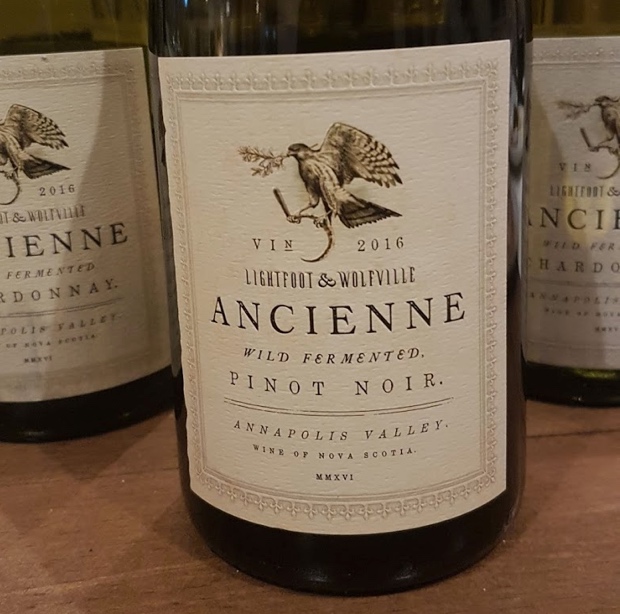
Two years in a row. Well-deserved and just because.

Malivoire Rosé Moira 2017, VQA Beamsville Bench, Niagara Escarpment, Ontario (Agent, $24.95, WineAlign)

Malivoire’s most important and benchmark Ontario Rosé is one of the first to the table from the 2017 vintage and why not because its quick soak and lightness of being takes no time at all to get ready. This is the antithetical beauty of Rosé and how it must be approached for best results. Malivoire does not take a step forward from the most perfect ’15 and ’16 wines but there is more fruit in this ’17. You can actually nose and taste strawberry plus a hint of tart raspberry. This will appeal to more of the general Rosé loving populace without any compromise for the provincial, provençal geeks everywhere else. It’s ostensibly a better wine in 2017 because it will attract that growing audience without having made any concessions or dis to authenticity. Drink 2018-2021.  Tasted February 2018  malivoire  noble_estates  @MalivoireWine  @Noble_Estates  Malivoire Wine  Noble Estates Wine & Spirits

Fitzpatrick Fitz Rosé 2014, Okanagan Valley, British Columbia (Winery, $48.98, WineAlign)

Long lasting flavours of impression. Candied ginger, dried strawberry, every fruit shade of red, for redheads everywhere.  Last tasted December 2018  fitzwine  @FitzWine  @FitzWine

This pinot noir is lovely, quiet and mild, a lemon-strawberry aromatic blush of the faintest noir. Fine spun, wild yeasty, truly wound tight, so focused and persistent. Drink 2018-2022.  Tasted blind at NWAC18, June 2018

Trail Estate Riesling Foxcroft Vineyard Unfiltered 2016, VQA Twenty Mile Bench, Ontario (Winery, $35.00, WineAlign)

In 2016 the next wrinkle is a wild ferment (as opposed to the inoculated ’15), unfined and unfiltered, because as time progressed “I liked it more and more,” says winemaker Mackenzie Brisbois. No coarse filtration means some minor sediment will settle in the bottle. Smashed layers of tote-filled grapes are brought to the crushpad, in lieu of the crusher, to extract from the skins and stems, making use of the punchdown tool, while waiting before pressing. Recently bottled in December 2017 the BFR is something completely other and if 2015 was considered not, this follow-up is markedly fruity now, because it always was, all the way through during just more than a year in really old barrels. It’s a blonde riesling as per M. Gustave, if you will. “Why blonde? Because they all were.” This is the wisest of Mack Brisbois’ rieslings, calm, confident, collected and shining brightly from the word go. You don’t have to wait on this one, it’s riper, it’s unfiltered, made with a lot less sulphur than the skin contacts and those “dirty” 15s. “I like to see how little (sulphur) I can get away with,” notes Brisbois. The most accomplished riesling that she has made to date, the 16’s balance is spot on now and you will not have to wait for it to come into its cinematic stage. Drink it now and keep it longer. Drink 2018-2024. Tasted April 2018  trailestatewine  mackbrisbois  @TrailEstateWine  @MackBrisbois  Trail Estate Winery  Mackenzie Brisbois

Hard not to put the 1991 Cave Spring on the list but is there any good reason to not place the CSV on the list every single year?

Cave Spring CSV Riesling 2016, Cave Spring Vineyard, VQA Beamsville Bench, Niagara Escarpment, Ontario (566026, $29.95, WineAlign)

The CSV from a warm 2016 really expresses the vintage on the nose with a heavy dose of wet stone and every part of a ripe peach. You have to get past the early sulphur but once you do you take a good bite into the flesh of this riesling and the juices will run with accents and angles fit by tonic, pith, tangy, nervy acidity and a hidden sweetness. The sugars are surely more elevated than realized or will ever be felt because the combination of acidity and pith are covers that will never peel back. Size matters and this CSV is built with great Escarpment architecture, stepping out of the paradigmatic 2015 shadow and into another age. This 2016 begins an epoch of structural expressionism and should easily carry its construct through to the next decade. That consequently, is when this CSV will really be ready to rock and roll for a full decade more. Drink 2020-2030.  Tasted March 2018  cavespringcellars  thevineagency  @CaveSpring  @TheVine_RobGroh  Cave Spring Cellars  The Vine

Godello and Paul Pender of Tawse
PHOTO: Steven Elphick & Associates

Tawse South Bay Vineyard Chardonnay 2015, VQA Prince Edward County, Ontario (Winery, $35.15, WineAlign)

The South Bay Prince Edward County fruit from Huff Estates lands is simply exceptional produce, from where winds blow-dry leaning vines perched aboard a passel of solid limestone sliding into Lake Ontario. Tawse has always coveted this fruit and when Paul Pender is allowed to play with it he does so with great mindfulness in search of greater apogee. Methinks Pender both picked a few days to a week earlier and also worked the most mineral meets Ceres toast his barrels can afford. There is a deep, sonorous and resounding regard about this chardonnay. It’s both sumptuous and serious, with a flinty-mineral meets toasted hazelnut interplay. It is perhaps an Ontario nod to Les Caillerets, or just a far away coincidence, but regardless you just have to know that it’s a very special wine. Drink 2019-2026.  Tasted December 2018  tawsewinery  @Tawse_Winery  @tawsewines

Domaine Queylus Chardonnay Réserve Du Domaine 2016, VQA Niagara Escarpment, Ontario (Agent, $37.95, WineAlign)

Still in the vein of the Queylus chardonnay tradition where a winemaker is always on the watch, meaning you never take your eyes off the child or the prize. The Réserve is a matter gathered from the best barrel selections but says Kelly Mason “the treatment and the worry are the same.” Slides easily away from the tropical and sidles up the the rocky places from whence it came. Chardonnay is often round and liked that way but Queylus is direct, linear, angled and also far from angular. When the Escarpment rule is followed and traced along the lines of a malolactic ruler marked by clones (in this case 76 as opposed to 95) then structure is assured. The ambition is real, the intention serious and there is no roaming far to the west or the east. All that and richness is found through every bright sip. Drink 2018-2024.  Tasted July 2018  queylus  @Queylus  Domaine Queylus Winery

Hidden Bench Chardonnay Tête De Cuvée 2011, VQA Beamsville Bench, Ontario (278812, $45.20, WineAlign)

Still so youthful, now noted by smoked quince with a shot of peppermint schnapps where no sugar lives save for the sweetness of nature.  Last tasted December 2018  hiddenbench  markanthonyon  @HiddenBench @MarkAnthonyWine  Hidden Bench Estate Winery  Mark Anthony Wine & Spirits

Tête De Cuvée by Hidden Bench, like a Champagne best of the best abstraction, makes an appeal to self-esteem and esteem for others, to consumers who have come to recognize Niagara and even more specifically, the Beamsville Bench for head of the class, cool climate Chardonnay. That mouthful congregates and works in congruence with the quality in the Tête’s composition; full-on freshness, density, weeping cerate texture, toasted and popping kernel, fine-grained localization, utterly integrated barrel. There was scant quantity (32.5 hL/h) from some very old and wise vines, pronounced like others but louder than most, from the bullhorn of a stentorian vintage. What is felt and spoken about the quality inherent from out of the finest parcels in the Locust Lane and Rosomel Vineyards Chardonnay fruit is more than a patent observation. The ability to take on toast cuts to the nougat and the synoptic rises to the ethereal ozone. Not to mention gross minerality. On the shortlist for best Niagara Chardonnay to date. Drink now and beyond 2025. Tasted twice, September and October 2014

Roche Wines Pinot Noir 2016, Okanagan Valley, British Columbia (Winery, $24.90, WineAlign)

The 2016 is purchased pinot noir fruit by Dylan and Pénélope Roche from Kozier organic vineyard on the Naramata Bench. Hand harvested and fermented in stainless steel tanks with regular pumping over and pressed after three weeks on skins. The press wine was separated from the free run and aged for 10 months in stainless steel and neutral French oak. Knowing what I know after the first blind assessment it now turns this love of love into inspiration, away from the soulless, blind pinot noir love and to something real. If there is a more honest and crushable one I’d be shocked. So exciting and new.  Also tasted at Bench 1775, June 2018  rochewines  @RocheWines  @rochewines

Really ripe, I mean really ripe, a hematic liqueur that few others in the flight can match. From a warm site to be sure, full and thick as pinot nor  thieves. Not as structured but so very, bloody and reasonably drinkable. Drink 2018-2021.  Tasted blind at NWAC18, June 2018

Rosehall Run Pinot Noir JCR Rosehall Vineyard 2016, VQA Prince Edward County, Ontario (Winery, $39.00, WineAlign)

Though statements of monadical hyperbole should very much be avoided, a taste of Dan Sullivan’s ’16 JCR makes one think it has all come to this. The glycerin fruit endowed with so much natural sweetness and magnificently low alcohol feels like an impossibility. In a way it is but it’s also a County reality. This may just be the least astringent PEC pinot noir ever produced and at the same time seems entirely void of tension. Yet there is structure and cohesion, two functors so very necessary to see it drink well for 10 years, with great charm and further curiosity for five more after that. Drink 2018-2028.  Last tasted July 2018  rosehall_run  sullywine  profilewinegroup  @Rosehall_Run  @sullywine  @ProfileWineGrp  @RosehallRun  Dan Sullivan  @ProfileWineGroup

Bright, red raspberry, light and effusive with a simple, liquid chalky feel. Really drinkable. The tart is part of a delight in composition. A good chew.  Tasted blind at NWAC18, June 2018

Lightfoot & Wolfville Ancienne Pinot Noir 2016, Nova Scotia, Canada (Winery, $40.00, WineAlign)

Driest year on record with nary a moment of disease pressure. Spent 18 months in older French oak, less one barrel. This is the richest Ancienne and Nova Scotian pinot noir to date, with firm grip, structure and outright intensity. Welcome to the pinnacle of the first L & W pinot wave, the culmination of the first epoch, after which nothing will be the same and so much learning will have been achieved. Begs the question of what happens next? The vines get better is what, in fact I walked the 2018 pinot noir vines today. Their maturity and contiguous consistency will be the answer to future questions and debate. They will speak for and on behalf of themselves. Drink 2019-2026.  Tasted October 2018  lwwines  rachhlightfoot  jhortonns  korilightfoot  @rachel_hope  @lwwines  @lightfootandwolfvillewines  Rachel Lightfoot  

Two Sisters Cabernet Franc 2014, VQA Niagara River, Ontario (Winery, $54.80, WineAlign)

Released on Monday July 16th and now a Platinum Award winner at NWAC18. “This has everything that ’13 had but just a bit more weight, structure and complexity, plus volume, those last three meaning on the palate,” explains winemaker Adam Pearce. Down in volumes (30 per cent), beautifully aromatic, low-cropped, (1.25 tonnes per acre), 15 per cent new wood, 32 months in barrel, in bottle for an additional 10 months. The focus, presence and confidence of this wine stand apart, all worked specific to place and the uniqueness of the appellation. Benefits from a double-lake effect and different soils. Chalk and river stone liquidity running as a river of its own right through. Drives the point of patience, to allow a vineyard the chance to speak of its singular phraseology. The 2014 Niagara River cabernet franc may still be a ways from reaching its full potential but it has certainly hit its stride. Drink 2019-2027.  Tasted July 2018  twosisters_vineyards  apearcevino  @TwoSisters_wine  @apearcevino  Two Sisters Vineyards  Adam Pearce  

Benjamin Bridge Cabernet Franc Small Lot 2016, Nova Scotia, Canada (Winery, $57.95, WineAlign)

Still from the Kingsport farm fruit, a whole cluster ferment, no messing with stems, fully oxygenated, no carbonic maceration, 30-40 per cent whole bunch. Total output is “a barrel and a bit.” An infused aromatic ferment, green spice and a char of tobacco, utter intensity, compelling and a phenolic reality. “A myth buster incarnate,” says Jean-Benoit Deslauriers, ripened beyond the sensory borders, miles away from other territories, with generosity and juicy ripe legs. From a warm vintage, nine months in neutral oak plus nine in the bottle. Then a decant and oh how the florals open up, furthered, blooming and intoxicating. More than just a fun little experiment so please wake up and smell the Gaspereau Valley. So lively, a wee salty and all energy. Drink 2018-2024.  Tasted October 2018  benjaminbridge  caveman__jones  scott.savoy  @Benjamin_Bridge  @benjaminbridgevineyards  Jean-Benoit Deslauriers  Scott Savoy  
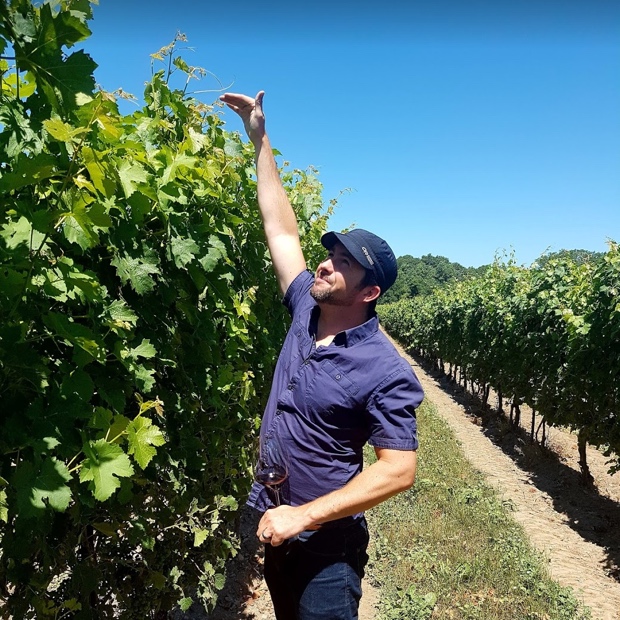
Vineland Estates Cabernet Franc Reserve 2015, VQA Niagara Peninsula, Ontario (Winery, $50.00, WineAlign)

Winemaker Brian Schmidt’s investigations into cabernet franc border on obsession but truth be told it’s not rocket science that makes so many fine varietal tiers. There are the six growers combed from six Niagara sub-appellations that add up to one entry-level, over-delivering cabernet franc. Then there is Bo Teek, the large estate vineyard planted in 1996 to clone 327 in the south and in 2006, to clone 214 in the north. Not to be forgotten in the cabernet franc make-up is the limestone substratum, highly significant for the trace mineral, elemental push up into these vines ensuring that no over-the top make up is required for varietal elevation, explanation and consummation. Vineland’s Reserve spends 16 months in barrel, none of which are any newer than from 2009. Fermentation, barrel, bottle, repeat. That’s it. No racking. This Reserve is the marriage of north and south, 60 and 40 per cent respectively, a combinative attack both phenolic and aromatic. The northern fruit sings some blues with crooning volatility whilst in delivery of sweet blackberry fruit. The south is all about stretched, nimble and elastic tones, elegant, more fragrance, black to red berries and less brooding. As one it’s a deeper and more intense wine than Bo Teek or Elevation, bottled in November, with higher acidity. The corollary variegation expands above what Bo Teek seems capable of executing solo. The structure here tells us it will not switch gears as early and live longer. Look for some secondary notes in the vein of black truffle, sweet balsam and dried lavender to show up after the turn of the decade. Drink 2020-2027.  Tasted April 2018  vinelanestates  benchwineguy  @VinelandEstates  @benchwineguy  @winery.vinelandestates  Brian Schmidt
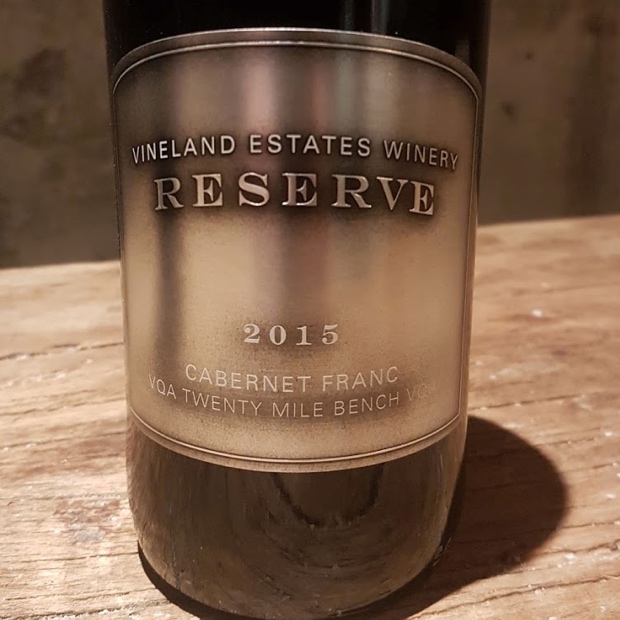

Mission Hill Terroir Series Vista’s Edge Cabernet Franc 2015, Okanagan Valley, British Columbia (Winery, $50,00, WineAlign)

You have to wonder why Mission Hill had not kicked at the can before because the Vista’s Edge is one of British Columbia’s brightest cabernet francs. It’s an important and exciting first effort from East Osoyoos fruit pulled from one of the Okanagan Valley’s farthest southern plantings. It’s a top three per cent single-vineyard, special terroir series edition that smells, tastes, feels and acts like cabernet franc. Nothing about this, not by barrel nor like varietal reminds of cabernet sauvignon. There are currant and peppery reductive meets pyrazine notes as red, bright and fresh as you’d hope they would be. The pitchy darkness of structure and hue falls because night must always follow the day and that’s what happens when cabernet franc is made this way. A long life ahead is conformed by the diphthong finish. Drink 2019-2026.  Tasted June 2018  missionhillwinery  @MissionHillWine  @MissionHillWine

Leaning Post Syrah Keczan Vineyard 2016, VQA Lincoln Lakeshore, Ontario (Agent, $45.00, WineAlign)

The eureka moment for syrah, Lincoln Lakeshore, Keczan and Leaning Post came years ago, for it, that, they, them and I. Not together mind you but passion knows no limits and opens doors to transcend time and space. This pinpointed farm on that flat expanse so perfectly proximate to the lake is where syrah can express itself without hindrance or opposition. Here the lake is like the Mediterranean and the river like the Rhône. Together they address the clay, create a moisture gathering effect, ship out the cold fronts and usher in the warm. They make syrah like this, rich in humus, hummus and hubris, olive tapenade and sweet brine. Fruit is fruit, also sweet, but savoury, acidulated and fine. Acidity is perfect in this vintage. Length is exceptional. A new benchmark, bred from passion with the intendment to inspire commitment. One of Ontario’s best red wines. Drink 2020-2032.  Tasted September 2018  leaningpostwine  nicholaspearcewines  @LeaningPostWine  @Nicholaspearce_  Leaning Post Wines  Nicholas Pearce

Kacaba Signature Series Reserve Syrah 2015, VQA Niagara Escarpment, Ontario (Winery, $44.95, WineAlign)

It’s about time we get something straight. Kacaba knows Syrah, in fact they should receive serious consideration for the title of Ontario’s top Syrah specialist. Two vineyards (with plantings that date back to 1997) provide fruit for several tiers, including the syrah from Terrace and Silver Bridge Vineyards and the highest quality chosen, hand-harvested fruit for this Signature Series Reserve. An escarpment’s dolomite limestone effect plays into these hands from fruit that arrives into glass through the body of arguably Ontario’s finest current syrah. The aromatic waft of a warm pastry crust is laden with red and blue berries that also fill the cool flavour centre of a pastille. The savoury candy gives way to a peppery kick before featuring a cure of salumi and a return full circle to that serious fruit. The apposite and complimentary smells and tastes are only intensified with a bottle’s decant so just imagine the possibilities that age will bestow. This is special work from Michael Kacaba with winemakers John Tummon and Vadim Chelekhov.  Last tasted February 2018  kacabavineyards  vadimwineguy  @KacabaVineyards    Kacaba Vineyards and Winery  Vadim Chelekhov

Oh what a beautiful peppery syrah, ripe and floral, all of its aspects, angles and components agreed upon, all in. When Canadian (and in this case, somewhere in Ontario) syrah gets down to business, gets straight to the meaty and smoky point it does so tart, tight and coiled around your tongue and finger. This, right here just nails it. It is the best of times. This is the man. Drink 2019-2027.  Tasted blind at #NWAC17, June 2017

Stratus Vineyards Sémillon Botrytis Affected 2016, VQA Niagara On The Lake, Ontario (Winery, $38.00, WineAlign)

One of the most unique dessert wines in Ontario this is neither late-harvest nor Icewine in origin. Only the third time it has been made, the 2016 sémillon launches with a smoky beginning, as expected and yet, is always appreciated. Some of the fruit is harvested early, but other bunches in the same vineyard are some of the last to be harvested. This low alcohol anti-sticky is from the warm vintage and from the same spot in the vineyard, vintage in vintage out. Most interesting is how these pristine botrytis affected grapes are picked ahead of the rest of the clean fruit used for the dry sémillon. It’s a very vinous sém with distinct apricot and longan notes. Great acids in 2016. Has still retained some waxiness and found some tropical fruit despite the early pick. All of the counterintuitive ideals tell us that the warm vintages can make for top quality dessert wine. This is the masquerade party wine made by the Way Outs band. “That’s where the fun is, way out, WAY OUT!” Drink 2019-2028.  Tasted October 2018   stratuswines  @StratusWines  @StratusWines

Good to go!

godello

2017 Aldé Rosé, Interloper and As Is

Twitter: @mgodello

Instagram: mgodello

WineAlign

How can i4c the future through cool chardonnay?

Every stop is neatly planned for a poet and a one man band, but #i4c Sunday @ravinevineyard is always #homewardbound

It’s #i4c, the coolest of chardonnay celebrations. It’s a pilgrimage to a local mecca attracting thousands, arriving to praise chardonnay in all its glory. It’s chanted with incantatory connotation by patrons cantilevered like alluvial fans across the Niagara Peninsula. It teaches us about more than chardonnay because the rapidity of climate change is real and the desire for fresh is yet unquenched. This transcends chardonnay. It’s about growing grapes and making wines in places we all previously discounted. Recently scoffed at. It concerns farming higher, further and edgier. This conference and this grape together let us know that we must change.

Few ideals or notions are hotter these days than those relating to cool climate viticulture and the selvage regions from where such wines are produced. That is why each summer for the past seven Niagara has attracted a world-class global presence for its most important annual congress. The seventh installation of the International Cool Chardonnay Celebration made an ironic and apropos choice in California’s Karen MacNeil to act as keynote speaker at The School of Cool. Ironic for obvious reasons because MacNeil spends most of her time talking about and educating on matters pertaining to growing areas generously gifting maximum sunshine to its grapes. Apropos because like any top quality orator she chose to speak about a rapidly changing world and a paradigm shift for wine growing, producing and ultimately consuming being led down an extreme, on the fringe and ultra cool path.

@KMacwine on @coolchardonnay Refrigerated sunlight, conscious marginality, sophisticated choreography. #i4c17

Cool, as in temperature and slowly developed phenolic ripeness. Cool, as in places like Champagne, Nova Scotia, Austria, Uruguay, northern Chile and Ontario. But MacNeil was quick to point out that the greatest terroirs may yet to be known, despite the proverbial Canadian wine cognoscenti already in the possession of harnessed and usable power through information, knowledge that tells us that five of the 15 (also known as one-third) coldest wine regions growing quality grapes, are found in Canada. “Elegance is directly connected to coolness, the slow dance, refrigerated sunlight,” waxes the poetic and rhapsodic MacNeil, “from couch potato chardonnay to lift, spirit and class.” She admits to pitting the world versus “us,” as a challenge against “them,” the overwrought, overblown and over-produced. She asks the question, “why are they not over it already, these cream puff of chardonnays?” and then “oak is like a tattoo, it doesn’t always look good with age.”

If all these warmed by the hot, hotter and hottest sun and fashioned to express this in hyperbole wines all taste so similar, is this really something reassuring and knowable? Apparently it still is, this persistent overloaded ice cream sundae style of chardonnay that will just not go away. But wake up and smell the altitude and the stone-based, craggy outlooks of  “marginal” vineyard locations. “All of the world’s greatest grapes are only great if they exist on the edge,” said the great Willamette Valley Oregonian David Lett. “Complexity is only achieved, paramount to success, by a slow dance or heartbeat. A great wine revels itself sequentially, over time,” insists KMac, as opposed to mindless and soulless. With acidity at the crux of cool climate wines she talks of “conscious marginality” and “sophisticated choreography.” This is how we should see the future, not only in chardonnay, but in all wines subjected and connected to global climate change.

Says @johnszabo apparently winemakers matter too. #i4c17 @coolchardonnay I do it my way #schoolofcool

Related – A link to the School of Cool presentation download

In the first of three Friday School of Cool sessions at White Oaks Conference Resort and Spa it is MC Master Sommelier and WineAlign Partner/Critic John Szabo who introduces the “soil smackdown.” The question “is there a best soil type for chardonnay” is meant to instigate a healthy discourse but like every #i4c that came before it quickly turns to a dissing of the “m” word. Paul Anamosa of Vineyard Soil Technologies, the main man down in California, is the first to speak. He rambles on about trace minerals, nematicides, oils and clay minerals – kaolinite is the smallest and yet still a very big molecule. “I don’t know too many winemakers with deflated ego problems,” is interjected. “Minerality is a metaphor, not a simile (like what it shown on the aroma wheel). It does not get up and impart flavour into the wine. It’s a romantic notion. Limestone doesn’t give up its water readily or easily.” Here we go again.

Anamosa will give up the idea that poor soil structure allows for a low and slow hydration transfer, with no spikes up or down and this uptake certainly affects vine growth, nutrient transfer and ultimately flavour, but its the elements found in the water that effect these impressions. Not “minerality.” Must be hard to go through life with such a scientifically nihilist approach. It sounds exhausting.

I don’t know too many winemakers with deflated ego problems. Paul Anamosa @coolchardonnay #soilsmackdown #i4c17

Three winemakers go pro on the mineral ideal. Paul Berger of Berger-Rive has been making his wine since he was four-years old and unsulphured Rosé no less. He talks of clay over limestone, places where “the ground is in love.”  Thomas Bachelder monkifies the soil plant matrix made to transmit minerality. “It’s as much about photosynthesis in the new world but minerality is still apart of it. Jory soils in Oregon bring a salty tang, a savour. It’s true.” Shiraz Mottiar notes that calcareous soils that start wet and sticky eventually turn to concrete. “They don’t crumble, there is no soil tilt, they are angular, evolving and difficult, self-compacting and that hard-pan deals with high mineral content. So we use cover crops for developing soil tilt and friable structure.” There points for the mineral team. Szabo concludes with “anyone getting the sense that this is pure crap? We’re going to continue with the program anyway. Monkeys in a parallel universe are doing this and doing it better.”

In the second session, “Chardonnay, I do it my way,” Szabo told several hundred #i4c junkies “apparently winemakers matter too.” I thought Invivo Wines’ Mark Boardman said it best. “Rob (winemaker “Crusher” Cameron) is not trying to make a $100 Burgundy here folks,” but rather chardonnay can be so happy in so many places, in so many ways. Here it’s from one of the warmest parts of New Zealand, with high rainfall, on Pacific coast of the South Island. It’s about pleasing the customers, being approachable and “nice” on the palate. “Respect, not patronize the consumer.”

François Morissette, vigneron of Pearl Morissette talked technique. “Whatever we press, we oxidize. We do not oxidize wine, we oxidize must.” There’s a big difference. The stabilization of these wines are attributed to this idea of getting rid of all oxidizable compounds before they enter into the next stages of the winemaking process. Pleasing aromas, flavours, textures and ultimately the sum of the above elevates the cool chardonnay game and speaks to the future. Ravine Vineyard’s Marty Werner remarked on the high degree of heat units but also the cool nights in 2014 so his chardonnay received no cooling, some sulphur for a night, straight to barrel and left a bit empty. Why? “Because it’s different in Niagara, you need to get some oxygen in there, so that we develop some more fruit characteristic.”

Dr. Jamie Goode

Heidi Noble, Owner & Winemaker of B.C.’s Joie Farm coined the term “juiceidity.” She told the crowd, “when (cellarmaster) Karl speaks it’s incredibly important and poignant,” he knows the truth about location, from the most northerly tip of the Sonoran desert but in a zone of what Karen MacNeil called “conscious marginality,” a micro climate of cool within a hot zone.

And finally, le grand ami himself Norman Hardie. “Solids matter to me,” he explains. “We pump out the separated clear juice until the point where I feel like we are getting to the danger zone.” They make use of horizontal tanks, “so the ratio of solids to juice is much higher.” Solids are critical to expressing terroir but too many solids and it’s too reductive. “I’ve gotten braver and braver as time’s gone on.” Mackenzie Brisbois talked about the 2015 vintage, her first full one at Trail Estate. Her methods include hyper-oxidized, cold-settled, natural ferments in stainless steel, put to barrel towards the end, 4o per cent new, 60 neutral, full malo, 10 more months, sulphured, racked out of barrel and a coarse filtration so it’s called unfiltered. “Hopefully my lack of filtration helps you to hear the music in my wine.”

The third School of Cool session looked at dosage in bubbles. “The Sugar Trials,” or as moderator John Szabo M.S. told us “sparkling wines are wines of process and one of the most important events happens right at the end of the trail and that’s called dosage.” Essentially, the crux of what it is, the sugar trials define how much, if any, should be added.

A Sunday #i4c @coolchardonnay morning at the P & P and Josh Ritter covering Modest Mouse. Johnny Cash next.

Dr. Belinda Kemp led the panel discussion and her research at Brock University’s CCOVI lies at the heart of the Ontario wine industry’s investigations. Tawse winemaker Paul Pender had this to say. “Balance is something I strive for but rarely achieve.” He noted that it’s about pleasure, hedonism sometimes, ultimately something that makes you smile, and tastes good. It’s always a moving target, so many things effect how it tastes and more so your perception of sugar and acidity, even what you had for breakfast this morning. “Sugar kind of takes away terroir.” Dr. Jamie Goode added, “it turns out we all live in different taste worlds. Because we model touch, taste, smell and all the sensory perceptions into an unconscionable, alt-reality which bears no real resemblance to how a wine actually tastes. It’s highly personal.”

The i4c weekend takes winemakers, journalists and consumers from White Oaks’ School of Cool and over to Niagara Airport’s hangar for a grand, cool affair. It shuttles past lunch tastings scattered across and throughout the Niagara Peninsula and Escarpment locations and lands at Ridley College for the worlds most grand chardonnay event. It culminates on Sunday at Ravine and Redstone wineries for brunch and if you’ve not had your fill, more chardonnay. Most of all it brings people together but not without an army of volunteers to make it happen. It functions seamlessly because of people like the Cellar Sisters, Angie Jewell and MJ Macdonald, Paul Dearborn and Kari-and Macknight Dearborn. The Cool Chardonnay weekend delivers year after year with thanks to VQA Wines of Ontario, Dorian Anderson and Trisha Molokach and the chefs of Niagara. The media are treated (better than we deserve) because of Wine Country Ontario’s Magdalena Kaiser, Joanna Muratori and Ryan Zanette.

I was not able to taste and review every chardonnay on hand at #i4c17 but I did get to a better percentage than I actually thought I had at the time. Many of these wines are available in small quantities through the VINTAGES Online platform through August 3rd so you have exactly three more days to act. Here are 69 reviews. If you are thinking about injecting some cool chardonnay into the rest of your summer plans then read on and make your picks. I hope I’ve been of some assistance.

Are you ready for an #i4c17 @coolchardonnay Saturday night?

Invivo Chardonnay 2016, Gisborne, North Island, New Zealand (499855, Agent, $16.95, WineAlign)

A nicely green and cool Gisborne composed chardonnay is just the ticket for warm nights, frâche-inflected appetizers and a good chill. This is quite fleshy, creamy and tangy, just stopping short of citrus-sour piercing and intense. It’s that creamy sherbet and tangy gelato character that balances it out. Drink 2017-2019.  Tasted June and July 2017  invivowines  nicholaspearcewines  @InvivoWines   @Nicholaspearce_  @InvivoWines  Nicholas Pearce

Maycas del Limarí Reserva Especial Chardonnay 2015, Limarí Valley, Chile (143768, $18.95, WineAlign)

Lovely vintage and cool-climate conditioning with A-plus exemplary effort from the Limarí specialist. The ripe and bright fruit is buoyed by classically rendered acidity that never relents. I really like the elegance and the way the wood is just a spice accent, not a cream churning machine. Not to be missed. Drink 2017-2020.  Tasted May and July 2017  maycasdellimari  #thevineagency  wines_of_chile_canada  @Maycasdellimari  @TheVine_RobGroh  @WinesofChile  @maycasdellimari  The Vine – Robert Groh Agency  @WinesOfChile

Cheesecake Bar by Chef Frand Dodd, Trius Winery and Restaurant

Trius Barrel Fermented Chardonnay 2015, Niagara Peninsula, Ontario (346064, Winery, $19.95, WineAlign)

Quite flinty and mineral smoky, even for Trius and Niagara chardonnay so it would seem that winemaker Craig McDonald prepared this larger batch with a friendly reductive environment. The aim, goal and result adds up to locked in freshness and a decoding of oak to relegate the label as secondary to the post-modern future of this bottling. It’s crisp, crunchy, spoken of and for place with edging cut with spice. The creamy centre is present and delivers texture, not weight. Really fine effort. Drink 2017-2019.  Tasted July 2017  triuswines  @TriusWines  @triuswines

Esterházy Chardonnay Leithaberg DAC 2015, Burgenland, Austria (511386, Agent, $19.95, WineAlign)

Tangibly full and rich style of chardonnay with a flinty, smoky limestone foundation edge, a pierce running through the barrel spiced mid-palate and quite generous length. Really fleshy, lemon-citrus sparked, clean, precise and stony good. Of markedly fine compression, layers woven of tart and stone. A highly composed and forged composition, in action and temperament, so kudos to the great work out of a warm vintage. It’s a complete wine all the way through, perhaps restrained at first but structure is the key to its success. An Austro-pure, appellative finessed chardonnay if ever there was from a place where the grape thrives unencumbered and blessedly expressive. Drink 2017-2020. Tasted twice, with Stefan Tscheppe, July 2017  #esterhazy @esterhazywein  austrianwine  Esterhazy Wein  @NaturalVines  @oesterreichwein  @AustrianWine  @BirgittaSamavar  Marzia Gallo  @austrianwine

Pierre Sparr Le Clos Sainte Odile Brut Crémant D’alsace, Traditional Method, Ac, Alsace, France (457788, Agent, $19.95, WineAlign)

Sparr’s site specific Crémant would seem counterintuitive to the free and easy-going genre which prides itself on the purpose of wide-ranging food matching but the divergence here in minimal. Le Clos Sainte Odile is equally proportioned though it carries a marked increase in lees and texture. Smells more like Champagne and acts this way too, so in that sense the quality improves and food will benefit several fold. The length is exceptional. Still creamy Crémant but with more layers and fine complex stills. Drink 2017-2020.  Tasted June and July 2017  #pierresparr  profilewinegroup  vinsalsace  drinkalsace  #PierreSparr  @ProfileWineGrp  @AlsaceWines @VinsAlsace  Pierre Sparr  Bernard Sparr  Maison Pierre Sparr Successeurs  Profile Wine Group  @AlsaceWinesOfficial  @vinsalsace

Pierre Sparr Crémant D’alsace Chardonnay Brut Méthode Traditionnelle, Ac Alsace, France (416040, Agent, $20.00, WineAlign)

In Sparr’s eponymous Crémant bottling the dosage is evident in every facet of fizz being to balance out the sour acidity and formidable tension. The most Champagne like of the flight is contextual, textural, elevated and serious. It is a bit on the sweet side (at 8 g/L of RS) as compared to (3.7 TA and pH of 3.29) with 18 months minimum on the lees and aging in oak casks. There is no shortage of fruit and that acidity is surprisingly lively. Tasted with Bernard Sparr who says quite simply, it’s “easy to drink.” Drink 2017-2019.  Tasted July 2017  #pierresparr  profilewinegroup  vinsalsace  drinkalsace  #PierreSparr  @ProfileWineGrp  @AlsaceWines @VinsAlsace  Pierre Sparr  Bernard Sparr  Maison Pierre Sparr Successeurs  Profile Wine Group  @AlsaceWinesOfficial  @vinsalsace

Marcel Cabelier Crémant De Jura Organic 2014, Jura, France (738641, Agent, $19.95, WineAlign)

A most engrossing and provocative Crémant, at first aromatically onion skin sweaty and sweetly caramelized. No citrus to really speak of and then lemon sweetness to taste. Sapid to be sure, leaner, crisp, on the path to a searing style. Fascinating when you consider the dosage number is upwards to 12.3 RS while the actual acidity is 5.26 TA. An elevated 3.37 pH and a ripeness from the warm vintage really helps to hide its sugar, incredibly so. Texture never hurts as well as this spent 24 months on the lees. Will age nicely into secondary waxy territory. Drink 2017-2022.  Tasted with winemaker Nicolas Haeffelin at i4c, July 2017  #marcelcabelier  #andrewpellerimportagency  #jurawine  #marcelcabelier  @APImportAgency  @JuraWine   #marcelcabelier  @APImportAgency  @JuraWine

Cremaschi Furlotti Chardonnay Single Vineyard 2015, Do Loncomillo, Maule Valley, Chile (511097, Agent, $22.00, WineAlign)

DO Loncomilla lies at the heart of the Maule Valley, a place of serious Chilean history. The Battle of Loncomilla was the decisive campaign of the 1851 Chilean Revolution between conservative government and liberal rebel forces. It’s also apparently a terrific place to grow chardonnay. Winemaker Gonzalo Perez’ 2015 is a fuller expression, with green apple piquancy to nose, a wealth of fruit, tart done so right and a true barrel-blessed chardonnay bite. It reeks of stone, acts restrained enough to seem (at times) unsure but in its quietude there is a mineral sway to say this must be the way. It solicits a follow me down the stone road, up to a very orchard palate with gregarious flavours and compressed acidity. Serious, almost brooding chardonnay but very new world. Chewy and very long. The soils are volcanic and alluvial, aiding and assisting to gather into this highly complex, 100 per cent malolactic, reductive, tart and biting chardonnay. The most surprising and intriguing find at #14c17. Drink 2017-2020.  Tasted July 2017  cremaschi_furlotti  @winecremaschi  @cremaschifurlotti

Coteau Rougemont Chardonnay La Côte 2015, Quebec, Canada (Winery, $24.00, WineAlign)

From La Famille Robert and the latest, newest, impressionable cool climate frontier in Rougemont Quebec, climate change delivers another stellar chardonnay attack, here with something quite supple, almost creamy, acid-driven but surprisingly far from scathing and eminently drinkable. These vines are planted on sun-drawing south facing slopes with more than ample pebble and schist in the soil, enough no less to streak a wire of balance through the softened, downy fruit. Well done. Drink 2017-2019.  Tasted July 2017  coteaurougemont  #CoteauRougement  @VinsduQuebec  Vignoble Coteau Rougemont

Creekside Chardonnay Queenston Road Vineyard 2015, Niagara Peninsula, Ontario (Winery, $24.95, WineAlign)

Comes barreling out replete with the highest of chard tones mixed with plenty of richness lifting and layering oak. Quite ambitious, full malo felt, of waves more than dollops of vanilla. The acidity comes later because nothing can get in the way of the creamy texture and voluptuousness. Cool but secondary to these flavours and mouthfeel are incendiary savoury tendencies. Adding things up all being equal the Queenston Road, St. David’s Bench vineyard, with its clay-loam and the eventuality of full-malo effect well, it’s really a thing of richesse. “I wouldn’t say this wine is a whole lot about minerality,” says winemaker Yvonne Irvine, “but it’s there in the bite on the finish.” Fair enough. Drink 2017-2021.  Tasted July 2017  creeksidewine  @CreeksideWine  @CreeksideWine

Inniskillin Montague Vineyard Chardonnay 2014, VQA Four Mile Creek, Niagara Peninsula, Ontario (586347Agent, $24.95, WineAlign)

If you have had the opportunity to taste the Montague Vineyard chardonnay from Niagara’s Four-Mile Creek sub-appellation in at least four consecutive vintages you will know that its style is only exceeded by its consistency. Little has changed; the same warm, barrel-kissed style comforts generously pressed and extracted fruit. It’s not that I don’t deduce soft, downy and buttery fruit from Montague. I do, but this vineyard always offers a counter-point with some firmness and compression, as it does with pinot noir. This 2014 is smoky and faintly smouldering, even a touch flinty. Even if it is a bit baked, spiced or toasted it is also a more mineral vintage for chardonnay. On one hand it offers or gives up too much of itself (and too early), with creamy vanilla, ripe melon and sappy, stone-fruit. On the other it finds balance amongst the dense layering of bigger, harder and more productive moving parts. You are going to want to match this with some protein and a good reduction sauce. I’d look to pulled pork, zesty kohlrabi slaw and a tangy BBQ sauce, duck confit with a savoury-spiked demi-glacé or coq au vin, just to name a few. Drink 2017-2019.  Tasted January 2017  inniskillinwines  cbrandscareers  @InniskillinWine  @CBrandsCareers  Inniskillin Vineyards  

Vasse Felix Filius Chardonnay 2016, Margaret River, Western Australia (416511, $24.95,  WineAlign)

Same price and highly credible follow-up is what we can all hope to taste and make comment to the great winemakers of this world so kudos to Virginia Willcocks of Vasse Felix for doling out another eminently drinkable Filius. Still holds the Australian cool-climate chardonnay candle from the Margaret River though it’s a touch fleshier, riper and creamier in 2016. The combination of salt and stony-mineral adds up to grip and the tightness means some air is needed. A mess of grilled langoustines would also work. Drink 2018-2021.  Tasted June and July 2017  vassefelixwines  margaretriver  @vassefelix  @MargaretRiver  @MargaretRiverWi  @vassefelixwines  @MargaretRiverWineRegion  @margaretriverwines1

Château Des Charmes Paul Bosc Estate Chardonnay 2014, VQA St. David’s Bench, Ontario (511345, Winery, $24.95, WineAlign)

Here is fine example of a winery showing off their rockstar barrel program in a starman of a chardonnay. The dreaminess on the nose and the early 1970’s ambient and textured guitar unction on the palate just get you stoned. “Didn’t know what time it was and the lights were low…Some cat was layin’ down some rock ‘n’ roll, ‘lotta soul.” Tart, lots of wood, bite, so much structure. Is it too much? Not when it’s the kind of chardonnay and music that can stand the test of time. Drink 2018-2022. Tasted blind at NWAC17, June 2017 and at #14c, July 2017  chateaudescharmes  @MBosc  Château des Charmes

Domaine Laroche Chablis Saint Martin 2015, Ac Burgundy, France (289124, $25.25, WineAlign)

The vintage is a ripe, accessible and easy to love one so this marks a 90 degree turn for the Saint Martin. This is Laroche’s most important cuvée, sold in 80 countries and collected from select plots across 60 hectares of vines. Structure will always direct this cuvée and so long as Gregory Viennois is winemaker you can be sure that a taut entry will be joined by some subtle oak richness (in 2015, eight per cent in large, 25 year-old, 55 hL foudres). It’s just an aromatic hint but look forward with eyes closed and inculcate the texture addendum. Acids are soft and caressing. Drink 2017-2021. Tasted July 2016 and 2017  laroche_wines  selectwinemoments  @DomaineLaroche  @SelectWinePros  @Select_Wines  @SelectWinesCanada

Southbrook Chardonnay Triomphe 2015, VQA Niagara Peninsula, Ontario (172338, Agent, $24.95, WineAlign)

The fruit for Ann Sperling’s chardonnay Triomphe ’15 is sourced primarily from Saunders (Beamsville Bench) with auxiliary support out of Heather Laundry’s old vine Lincoln Lakeshore vineyard. There are older, non-clonal blocks with perhaps some Musqué mixed in so the aromatics fly, with no restraint applied by the wild ferment and (mostly 300L) neutral oak. This Triomphe is anything but reductive, a no stress chardonnay from such a far from sluggish, clean ferment. The simplicity and complicity explain how beauty is curated, from a vintage where reduction did not happen or beg to happen so why try to force it. The copacetic re-quiescence bears witness to classic Ann Sperling in such a vintage. Chardonnay of mellow smoulder, of old barrel spice and one to define a certain kind on a line of disparate and unique, cool climate, i4c selections. There are 800 cases made. Drink 2017-2020. Tasted January and July 2017  southbrookvineyards  thelivingvine  @TheLivingVine  @SouthbrookWine   @SouthbrookWine  The Living Vine inc.

Bachelder Chardonnay Niagara 2014, VQA Niagara Peninsula, Ontario (302083, Agent, $24.95, WineAlign)

Thomas Bachelder’s ’15 chardonnay is a story of what happens ’round here, a chardonnay counting the years of peninsula life. It’s so representative, a comfortable stroll through the echelons and stages of a man’s history, in and out of Niagara eponymy and how it relates to a monk’s personal journey. It also traces the stages of vineyard life and for the winemaker, of fruit “slipping through my hands.” Out of 2015 chardonnay can be forgotten, with weather nothing to remember and on the heels of two most excellent seasons. It could easily pass “into the fog where no one notices the contrast of white on white.” Here is the time, place and harvest for Thomas Bachelder to interject and explain, to send a grape into a recognizable future, as far as the crow flies. He uses the barrel to pique the fruit into life, to inject French cream with the very intent in demand of its intention. Flavours are therefore sapid, piquant and variegated. In the end, you can drink this in August and into complexity, everything after. Drink 2017-2020.  Tasted July 2017  bachelder_wines  liffordgram  @Bachelder_wines  @LiffordON  @BachelderWines  @liffordwineandspirits

Joie Farm Unoaked Chardonnay 2016, VQA Okanagan Valley, British Columbia (511261Agent, $25.00, WineAlign)

Terpenes up front, orchard fruit and high acidity in ways that mimic riesling but the broad apple juice swirl and bite on the palate is all chardonnay. Shows sugar tempered by acidity in what is ostensibly fresh and simple, unoaked Okanagan juice. This is made in the vineyard, picked three times, from straightforward winemaking, making use of lots of solids,”lots of liquid aromatics,” as Heidi Noble notes. Champagne yeasts are employed to celebrate place. Drink 2017-2018.  Tasted July 2017  joie farm  liffordgram  #JoieFarm  @LiffordON  @joiefarm  @liffordwineandspirits

Willamette dammit! @bachelder_wines @coolchardonnay #i4c17

Bachelder Chardonnay Willamette 2014, Oregon (273334, Agent, $25.00, WineAlign)

The richest Bachelder Oregon to date for reasons explained by the indubitable and unwavering Thomas is no doubt in leading part a result of one of the earliest vintages on record for Oregon Pinot Noir. His Willamette is a veritable intertwine of mineral, fruit and energy like there is no tomorrow. Also welcome to the lengthy one. The barrel is a caramel pillow, a downy wooden bench, a soft French cream dream. Drinkable is the understatement, pleasure the song. Willamette Dammit. Drink 2017-2020.  Tasted July 2017  bachelder_wines  liffordgram  @Bachelder_wines  @LiffordON  @BachelderWines  @liffordwineandspirits

Westcott Vineyards Estate Chardonnay 2016, VQA Vinemount Ridge, Ontario (427484, Winery, $25.95, WineAlign)

This is one of the first near-premium chardonnays to hit the market from 2016 and so a decision needs to be quickly made if the style is more vintage or house in origin. There really isn’t any estate precedence for this superabundance of fruit on the “normale,” like Christmas coming early or Niagara peaches appearing in June. The ripeness goes beyond freestone fruit and into the tropical realms occupied by mango and pineapple. There is no denying the nectarous and appetizing nature so I’d like to think it’s really a seasonal somewhereness that drives the druthers. Drink this young and with some poached seafood. It will satisfy the pairing. Drink 2017-2019.  Tasted July 2017  westcottvineyards  @WestcottWines  @westcottwines

Domaine Berger Rive Manoir De Mercey Bourgogne Hautes Côtes De Beaune Clos Des Dames 2015, Ac Burgundy, France (Agent, $26.95, WineAlign)

A restrained, faux-sugary, hautes Bourgogne, spirited near but so far from a Reuilly-like nose. You think it’s thin but know it’s not while the fruit struggles to steal the spotlight from the rocks. Very cool chardonnay with crazy natural sweetness and sneaky length. The warm vintage plus the limestone calcareous soil grows on you for sure and so that length shows off the best of its world and the talents of winemaker Paul Berger. Drink 2017-2020.  Tasted July 2017  @FWMCan  #BergerRive  fwmcan  @FWMCan

Traversa Viña Salort Chardonnay Reserve 2016, Canelones, Uruguay (511550, Agent, $29.00, WineAlign)

Chardonnay from Canelones needs to discovered and Traversa’s Reserve is a fine high-end place top start. The name is derived from a species of cinnamon called “canelón, growing along the banks of the homonymous river. This new fringe frontier for chardonnay is found here 50 kms or so north of Uruguay’s capital Montevideo. A specific sort of freshness is locked in tight, reductive in a gassing up the truck sort of way, subduing fruit and inviting mineral meanderings. It’s on the palate where things get very interesting, upon which the spice, buttered toast and brûlee of pears lay. There is a few percentage points too much wood on this next South terroir-Americanific frontier chardonnay but the substantial mid-palate fruit can handle the accents. A fine example in many respects. Drink 2017-2018. Tasted July 2017  familiatraversa  @TraversaUSA

Malivoire Chardonnay Mottiar 2014, VQA Beamsville Bench, Niagara Peninsula, Ontario (Winery, $29.95, WineAlign)

This is classic Mottiar chardonnay, lean, sharp, quivering and yet somehow so knowable and comfortable. As time goes by this generates the confidence to represent the Beamsville Bench as its prodigal son, the handsome one, of pulchritude and with the promise of great memories ahead. If it’s a bit reductive, taut and aerified chardonnay, so be it, but it’s also so very Niagara, essential, the essence of what happens on dolomitic limestone. The low (3.15) pH factor at go time caused a force picked at high acidity to maintain the lean style and a partial (not much) malo assists in effecting this high-level bench factor. Shiraz Mottiar’s eponymous chardonnay is the shit, for Beamsville and for what he does best. Drink 2018-2022.  Tasted July 2017  malivoire  shirazmottiar  @MalivoireWine  @ShirazMottiar  @MalivoireWine  

Rodney Strong Sonoma Coast Chardonnay 2014, Sonoma Coast, California (465724, $29.95, WineAlign)

The first appearance of the Rodney Strong Sonoma Coast bottling is an auspicious one, announced with ripe and delicious clarity. Though the nose is a bit reserved there is no reductive quality and the orchard is but a mere stone’s throw away from really standing out. The wood shows up on the vanilla, caramel tangy and further, deeper into the apple tree’s palate. The finish brings a pie from out of the warm oven. Drink 2017-2020.  Tasted October 2016 and July 2017  rsvineyards  markanthonyon  california.wines  @rsvineyards  @ImportWineMAFWM  @CalifWines_CA  @Rodney.Strong.Vineyards  @MarkAnthonyWine  @CaliforniaWinesCanada

13th Street Sandstone Reserve Chardonnay 2013, VQA Four Mile Creek, Niagara Peninsula, Ontario (Winery, $29.95, WineAlign)

No surprise the vintage is a major plus for the Sandstone and the natural funk it owns. And I mean owns. Only Sandstone has such geological drive, not unlike chardonnay from South Africa’s Hemel-En-Aarde Valley. In 2013 there is a sweetness to the fruit mixed with a misty humidity and finally that falling over backwards with feet stuck in the clay and the calcaire. Wildness from J. P. Colas here and with attentiveness to place and time. Drink 2016-2021. Tasted at #i4c16, July 2016 and #14c17, July 2017  13thstreetwinery  @13thStreetWines  @13thStreetWines

Hidden Bench Estate Chardonnay 2014, VQA Beamsville Bench, Niagara Peninsula, Ontario, (68817, $29.95, WineAlign)

Exemplary follow up to a terrific 2013 with more emerald gemstone, green apple bite and fine textured lees running through. Tart and yet not at the same time, seemingly sweet but only in the way that flavourful salts with added umami can collect, pool and co-exist. Just great focus, precision, fineness and balance. Drink 2018-2022.  Tasted June 2017 and #14c, July 2017  hidden bench  @HiddenBench  @Hidden.Bench

Thirty Bench Small Lot Chardonnay 2014, VQA Beamsville Bench, Ontario (Winery, $30.00, WineAlign)

The nose on this chardonnay is pretty, alive, vibrant and pure. The palate is exceptional, fleshy and full. There is intensity and precision, class and seamless integration of fruit, acidity and texture. Really longDrink 2018-2024. Tasted blind at #NWAC17, June 2017 and at #14c, July 2017  thirty bench  @ThirtyBench  @ThirtyBench

Ravine Vineyard Chardonnay 2015, VQA Niagara Peninsula, Ontario (Winery, $30.00, WineAlign)

Ravine’s is one of those chardonnay blessed with uncanny ability to amalgamate the sumptuousness of fruit warmed by sun and kissed repeatedly by barrel. The equation renders delicacy and texture, so obviously and vehemently spoken in the 2015 Peninsula language. It really is all about texture with a plus-minus spice note codicil and cool unction drawn like butter in suspended animation, a pool into which all parts have melted. Needs a year to finalize the deal and sweeten the pot. Drink 2018-2022.  Tasted July 2017  ravinevineyard  marty_werner  benminaker23  @RavineVineyard  @marty_werner  @BMinaker23  Ravine Vineyard Estate Winery  Martin Werner  Ben Minaker

Mer Soleil Silver Unoaked Chardonnay 2014, Monterey, California (220343, Agent, $31.00, WineAlign)

Chardonnay sans wood doesn’t get more premium than this (save for some Chablis) so the use of unlined concrete tanks (a third to a half) allows the sort of micro-oxegynation that elevates the complexity game. Despite the hard-goings of working this way, the delivery is a crisp, crunchy and slightly edgy (and eggy) ’14 with addendum by the confluence of fog, sun and sea. Mer Soleil. More pear than green apple, the character speaks a Monterey note. The packaging has left ceramic behind in favour of electrostatic painted (second-purposed) glass, made to look like (and celebrate) concrete. This is surprisingly creamy so the solids get their say and the conclusion is of a chardonnay made this way that rarely achieves such a level of texture and piquancy. Drink 2017-2019.  Tasted July 2017  mersoleilwine  #andrewpellerimportagency  @MerSoleilChard  @APImportAgency  @MerSoleilVineyard  Andrew Peller (Andrew Peller Import)

House of Chards #i4c Lunch at Trius

Artesa Chardonnay 2014, Carneros, Napa Valley, California (657585, Agent, $31.00, WineAlign)

The differing and contrastive style in Artesa’s ordinario is literally chardonnay night in comparison to the estate’s reserve day. Absent is the mineral alloy streak, the temper and the level of fruit quality and density so that here the buttery and creamy oak is felt on top and down below. Acidity, tension and posit tugs of intensity are relegated and softened to the mild mannered and middle palate personality. This is 70 per cent estate fruit, simple, rich, soft and mildly spicy chardonnay, antithetical for completion recognition of the basic to reserve paradigm. Drink 2017-2018.  Tasted July 2017  artesawinery  #andrewpellerimportagency  @Artesa  @APImportAgency  @Artesa

Adamo Oaked Chardonnay Willms’ Vineyard 2014, VQA Niagara-on-the-Lake, Ontario (Winery, $32.00, WineAlign)

This is the second vintage of the Willms, a rich and viscous chardonnay with green apple bite. More barrel (15 months, 30 per cent new) on this than others in an #i4c School of Cool flight and also Beaune-styled, ambitious otherwise but certainly the structured and gregarious one. Chardonnay as many would recognize, could be nothing other, some terpenic moments but the cool, sharp and spirited are mixed into the clay. Last tasted July 2017.

Adamo sources from the same vineyard that provides fruit for 13th Street’s Sandstone Reserve in the Four Mile Creek sub-appellation of Niagara-on-the-Lake. Planted in 1983, it is owned and farmed by Erv, Esther and Eric Willms. In its early stages the fruit acted and reacted as a lean, taut and tension fuelled chardonnay with party a sign of letting up. Eight months later the juicy flesh of orchard fruit pushes past the vintage’s grip and lets tis wine breath a sigh of relief. Chalk one up to yet another cool-climate, calcareous clay stuck moment in time. Drink 2017-2019.  Tasted twice, at #i4c16, July 2016 and Taste Ontario, March 2017  adamoestatewinery  @AdamoEstateWine  @adamoestatewinery

Trail Estate Chardonnay Unfiltered 2015, VQA Niagara Peninsula, Ontario (Winery, $32.00, WineAlign)

A blend of vineyards, from Ed Hughes and (Wismer) Foxcroft, perhaps with some influence under the lingering auspices of the Norman Hardie school, here in the playful and progressive hands of Mack Brisbois. Mackenzie employs no sulphur at processing, allowing for chardonnay efficacious and liberally oxidized, settled, cold stabilized, non bentonite-affected, chilled and racked. Not lost is the ever-commented process of going at it with wild ferment, but also caution thrown to the wind via no temperature control (but yes on the Hughes fruit), with the final end game in search of and wanting a fruity Chablis side. Done up in half stainless plus 50 old 500L and two 225L barrels. The sulphur was added in October, the full malo achieved and then bottled in November. All of this technical mumbo-jumbo to say there is still quite a creamy, leesy, oaky feeling but like some others in Niagara (Robyn’s Block, Oliveira and Aberdeen) it totes great palate texture and a “fruitiness,” but it’s not fruity. It may not recreate the Chablis fruit to mineral purity but it is a righteous, proper and Niagara purity fashioned in PEC. There are 266 Cases. Drink 2016-2020.  Tasted December 2016 and July 2017  trailestatewine  mackbrisbois  @TrailEstateWine  @MackBrisbois  @TrailEstateWinery  Mackenzie Brisbois

Westcott Vineyards Chardonnay Lenko Old Vine 2014, VQA Niagara Peninsula, Ontario (Winery, $32.95, WineAlign)

The iconic vineyard, the wise old vines, the chance to make some magic; these are all a part of the mystery and the mystique of Lenko placed in the hands of one winemaker at a time, fruit put to bottle in his or her own special way. It’s simple isn’t it? “Go far enough and you will reach, a place where the sea runs underneath,” take up the grapes and do what they need. In terms of chardonnay the vineyard is ground zero, the genesis, the oldest Chardonnay planting in Canada. In Arthur Harder’s hands the fruit reaches you with apposite if ambient sparks while its chords are strummed with 12 strings so that it never loses touch with its structure. A very expressive chardonnay from a benevolent vintage, Westcott’s breaks free from traditional Niagara with this tart and that tart. There is wind, wuthering and it has the uncanny ability “of turning the world so it’s facing the way that I’m going.” Drink 2017-2024.  Tasted July 2017  westcottvineyards  @WestcottWines  @westcottwines

Chateau Des Charmes Blanc De Blanc Sparkling Méthode Traditionelle 2014, VQA Niagara On The Lake, Ontario (511352, $32.95, WineAlign)

A different sort this one, with lots of barrel spice, liquid splinter creaminess, a heavier dosage to be sure, creamy lemon and almond skin, but also pith. Complex if commercially sweeter, rich and fatter, something School of Cool 2017 Sugar Trials panelist Rhys Pender MW agrees with. Making sparkling wine from the warmish Niagara-on-the-Lake regional-appellation (which includes the warm St. David’s Bench) has its pros and cons, the positives mostly tending to richness and the negatives the compromise to energy and verve. Winemaker Amélie Boury manages the dosage of 10 g/L RS with natural acidity (5.5 g/L TA), a forthcoming low pH of 3.16 and a late September pick. “For richer fruit” she notes and then a coupling texture by fermenting in barrels. Look for it on the ambit of tertiary personality after a few years of age. Drink 2017-2021.  Tasted July 2017  chateaudescharmes  @MBosc  Château des Charmes

Domaine De Mauperthuis Chablis Vieilles Vignes Les Malantes 2014, Ac Burgundy, France (511063, $33.95, WineAlign)

From a new family (relatively speaking) to Chablis, the estate belongs to Marie-Noëlle & Laurent Ternynck. The old vines Chablis saw 12 months in foudres, on the lees, with fruit gathered from vineyards in Fleys. The cool spot comes with a higher altitude, on a windswept plateau and so harvest is generally five to six days later. And so their Chablis is cool, direct, taut and sapid stuff, as Chablis will go, from such a climat and handled so. Acidity runs rampant and travels quickly up and down and into parts of the mouth that stand up to take notice. Sharp and focused Chablis. Drink 2017-2022.  Tasted July 2017  #mauperthuis  vinsdechablis  vinsdebourgogne  nicholaspearcewines  #Mauperthuis  @vinsdechablis  @VinsdeBourgogne  @Nicholaspearce_  Vins de Bourgogne / Burgundy wines  Nicholas Pearce

Mer Soleil Chardonnay “SLH” 2015, Santa Lucia Highlands, California (958975, Agent, $34.95, WineAlign)

The sun always shines upon Mer Soleil’s “SLH,” a chardonnay equipped with exceptional fruit purity that welcomes but could go it so much more confidently alone without the mask-caking make-up. It needs a fraction of the wood it receives. A tour de force of ocean and sun (tied together by fog) delivers acidity, sapidity and the fruit is raised to keep things moving swimmingly along. So it’s got that going for it. Which is nice. Drink 2017-2019.  Tasted July 2017  mersoleilwine  #andrewpellerimportagency  @MerSoleilChard  @APImportAgency  @MerSoleilVineyard  Andrew Peller (Andrew Peller Import)

Good man this man. Great winemaker this winemaker #i4c @coolchardonnay

Tawse Quarry Road Vineyard Chardonnay 2013, VQA Vinemount Ridge, Ontario (111989, $35.80, WineAlign)

When I tasted Quarry Road 2013 out of four barrels three years ago the purpose was to take in the nuances and see only the trees. I for one could not help seeing the forest through the trees and imagining percentages of each combining for the final blend. Neutral Mercurey wood looked over infant three year-old vines spoken here with surprising density, tang and tropical melon in both aroma and flavour. This sits on the front palate right now. The mineral Ceres qualifies older fruit as the pretty and the gemstone, essential for Quarry Road, the most like (Meursault) in Burgundy. This fruit transferred to stainless on the lees from September to March before going into bottle now renders to make Quarry the purest expression from the best vineyard. The CLL toast delivers the taut, not yet reductive wood tightening, then and again now, mainly on the finish. Compressed citrus notes are late arriving and even if it is splitting hairs, the oak really impacts the finish. The larger CLL toast Mercurey barrel reveals a fresher, more reductive, less oaky feel. All together we now have one of Paul Pender’s most accomplished to date and all chardonnays considered, one of the finest higher end values around. I think he would agree. Drink 2017-2024.  Tasted May and July 2017  tawsewinery  @Tawse_Winery  @tawsewines

Maycas del Limarí Chardonnay Quebrada Seca 2013, Limarí Valley, Chile (331520, $36.00, WineAlign)

Maycas de Limarí’s Quebrada Seca or “dry-cracked” makes reference to the fragmented soils, a place of low-fertility and chardonnay loving terroir. This spent 14 months in (30 per cent new) but it’s not just the extended barrel time that separates it from the estate’s Reserva. Vintage plays a significant role in conjunction with the soil and it teaches so much about the virtues of patience and time. No malo but high sapidity, lots of bite and the verdant, healthy life are borne out of poor fertility. This is life affirming chardonnay from harsh climes. Drink 2018-2022.  Tasted July 2017  maycasdellimari  #thevineagency  wines_of_chile_canada  @Maycasdellimari  @TheVine_RobGroh  @WinesofChile  @maycasdellimari  The Vine – Robert Groh Agency  @WinesOfChile

Joie Farm Chardonnay “En Famille” 2015, BC VQA Okanagan Valley, British Columbia (511113Agent, $36.00, WineAlign)

The developed layers of fruit are well integrated and interwoven into the mildness of both barrel and tannin. The sweetness of that sun-kissed fruit leaves a lasting impression from what has been brought into being by a warm and impressionable vintage. Exemplary three or four year Okanagan chardonnay that shows off its charming sucrosity. Drink 2017-2020.  Tasted July 2017  joie farm  liffordgram  #JoieFarm  @LiffordON  @joiefarm  @liffordwineandspirits

Sneak peak in the @TriusWines Meunier with Craig McDonald and a true Niagara Grand Cru @coolchardonnay site #lincolnlakeshore #oliveiravineyards #vqa #wildferment

Trius Showcase Chardonnay Wild Ferment Oliveira Vineyard 2015, VQA Lincoln Lakeshore, Ontario (199273, $36.20, WineAlign)

When you consider the level of quality provided by the Wild Ferment 2014 it would be hard to imagine raising the bar any further but this is what winemaker Craig McDonald has managed with his exceptional 2015. The accomplishment is purely based on one year older, wiser and complexities developed Oliveira Farm vineyard fruit, the holy chardonnay grail, Lincoln Lakeshore playground. The site sits along the QEW below the escarpment’s Twenty Mile and Beamsville benches, a recipient of glacial till and rocks left behind by an ancient river running from a lake. It’s a chardonnay wonderland. Intensity of fruit purity, fleshy and real, remarkably juicy and notably crunchy has increased, upping the pleasure game and turning the impression knob up to 11. The windmill generates more power while always maintaining a classic Trius level of finesse. Then you think on the wood integration, equally impressionable because acidity is sweet and refined. Dry extract is also impressive, not to mention a fineness of grape tannin. The site’s unofficial designation as a Niagara Grand Cru should be upgraded with status. There is no better time than the present and the Wild Ferment’s 2015 ability is proof enough. Drink 2017-2023.  Tasted July 2017  triuswines  @TriusWines  @triuswines

Exquisite dish by Frank Dodd @TriusWines #houseofchards #i4c lunch . . . Lake Huron Whitefish, lobster and scallop sausage, crab croquettes, asparagus, sweet peas, celeriac slaw, seabuck

Trius Showcase Chardonnay Wild Ferment Oliveira Vineyard 2014, VQA Lincoln Lakeshore, Ontario (199273, $36.20, WineAlign)

With fruit from the Niagara chardonnay mecca Oliveira Vineyard and the addendum of yet another stellar varietal vintage it is this Craig McDonald speciality that helps to steal the show. Striking out with near-raging acidity (pushing and possibly exceeding the 8 g/L mark) the Wild Ferment is one of the most formidable expressions of 2014, if not ever. All the moving parts work fervently and impressively as if the motor is running and the machine careening around the speedway. To keep composure it is texture that brings about grounding, balance and cadence, from obvious lees perfection and 30 per cent new wood plus the rest forged by two to five year old barrels. This is creamy, energetic and tannic chardonnay, all conspiring to express itself with both weight and poise. From a maker who’s been around the block a few times, the ’14 WF will go the distance. And you can start now. Drink 2017-2024. Tasted at Cuvée, March 2017 an #i4c July 2017  triuswines  @TriusWines  @triuswines

Esterházy Il Magnifico Blanc de Blancs Brut 2013, Burgenland, Austria (511378, Agent, $37.95, WineAlign)

Esterházy was a Hungarian noble family with origins in the Middle Ages, generally bilingual, in Hungarian (as a result of their ethnicity) and German (as they were aristocrats of the Austrian Empire). The family was intrinsically tied to the Austrian composer Joseph Haydn (master to Beethoven) and the estate today shares the same desire; to epitomize the aims and achievements of the Classical era, Hadyn for music and today, Esterházy for contemporary Austrian wine. General Manager Stefan Tscheppe spins a tale of Nikolaus II, the wealthy late 18th and early 19th century prince who lived a charmed life, nicknamed by his sisters as “Il Magnifico.” The namesake sparkler is done in a Brut Nature style, 18 months on the lees and is possessive of a distinctive grapefruit liqueur. The vines grown on limestone-based soil and this is clearly picked on acidity, in the first to second week of September. Il Maginifico may not carry the weight or tone of Hadyn’s The Creation but it is a most excellent Blanc de Blancs composition. Drink 2017-2022.  Tasted July 2017  #esterhazy @esterhazywein  austrianwine  Esterhazy Wein  @NaturalVines  @oesterreichwein  @AustrianWine  @BirgittaSamavar  Marzia Gallo  @austrianwine

Pearl Morissette Chardonnay Cuvée Dix Neuvième 2014, VQA Twenty Mile Bench, Niagara Escarpment, Ontario (303602Winery, $38.20, WineAlign)

It’s never easy to follow up greatness, even for this top quality Niagara chardonnay and yet I am almost ready to believe that this Dix-Neuvième delivers more richness of fruit than its predecessor. The stoicism lost from 2013 is woven texture gained, here in a tapestry of pure chardonnay fruit, beeswaxy, faint honey and an almost imperceptible reductive environment. Francois Morissette and Brent Rowland clearly had texture earmarked as the raison d’être for this ’14, almost to a fault but the result is bloody delicious. No Pearl Morissette wine ever gave of itself so young, so fast. Immediate gratification be darned there will be five blessed textured years ahead. And then the honey will set in. Drink 2017-2022.  Tasted June and July 2017  pearlmorissette  @PearlMorissette  @lassvet  Pearl Morissette

Domaine Laroche Les Vaudevey Chablis Premier Cru 2014, Ac Burgundy, France (416057, Agent, $38.95, WineAlign)

A compressed chardonnay that strikes as a passion play between herbs and limestone and no surprise that the spoils go to the latter. The citrus is gassy, rising, bathed in atmosphere. The structure is predicated on stone, rock and struck flint. Chablis of metal and essential minerality, discovered and defined. This slow-ripened chardonnay will evolve one year for every month contributed by its growing cycle. Drink 2016-2026.  Tasted June 2016 and July 2017  #domainelaroche  selectwinemoments  @DomaineLaroche  @SelectWinePros  @Select_Wines  Domaine Laroche, Chablis 

Mackenzie Brisbois, Trail Estate Winery

Trail Estate Chardonnay Unfiltered 2016, VQA Prince Edward County, Ontario (Winery, $39.00, WineAlign)

Auspicious beginnings transcend the customary for Trail’s winemaker Mackenzie Brisbois, case in point exhibit A with her first fledged County chardonnay, a whole cluster pressed, native yeasts and full malolactic beauty. Only a single barrel was made of this really tight, taut and youthfully vituperative one but it will mature, self-reflect and turn into a respectful and generous wine. There is a toasty note that currently smoulders in the glass but that too will gently peel away. The terrific render of acidity couples at present and will melt with the rest of the intensities. This is the estate’s first kick at this County cru, “things are going great, and they’re only getting better.” The future’s so bright I gotta wear shades. Drink 2018-2022.  Tasted July 2017  trailestatewine  mackbrisbois  @TrailEstateWine  @MackBrisbois  @TrailEstateWinery  Mackenzie Brisbois

Hidden Bench Chardonnay Felseck Vineyard 2014, VQA Beamsville Bench, Niagara Peninsula, Ontario, (276261, $39.20, WineAlign)

Unction and creaminess, lost in a chardonnay dream because to nose it’s a sweet, floral, demure thing. Lees apparent so you can smell the work in progress and feel the texture. But it’s wound loosely tight with just enough give to make it so readily available. Beautiful little wine though I can’t help but imagine there’s more single-focus structure than a blind taste wants to give. Hope to come across this hard to get beauty again someday soon. Drink 2018-2022.  Tasted blind at NWAC17, June 2017 and #14c, July 2017  hidden bench  @HiddenBench  @Hidden.Bench

Norman Hardie Chardonnay Niagara Unfiltered 2015, VQA Niagara Peninsula, Ontario (184432, $39.20, WineAlign)

Norman Hardie’s 2015 Niagara is a reductive yellow goddess dressed chardonnay, connected to the fullest of its fruit, (slowly developed) creamy malolactic, touchstone acidity and grape tannic ability. There is this understated feeling in the throes of richness that the winemaker and the place always seem to agree upon. The display window celebrates and proudly promotes the somewhereness of this ’15 chardonnay. It is never a matter of Niagara versus County, there is little substance to be found, nor is it a necessary point of discussion worth investigating. It’s just highway that separates the two. Both are children of the Norm, both deserving of estate credibility and here, with this next excellent Niagara, taking the Hardie progression one step further. Drink 2017-2022.  Tasted June and July 2017  normanhardiewinery  normhardie  Norman Hardie  @NormanHardieWinery

Domaine De Mauperthuis Chablis Premier Cru Montmains 2015, Ac Burgundy, France (511071, $39.95, WineAlign)

Winemaker Stéphane Saillet’s is a highly compressed, pure and precise Montmains. No wood was used because of the vintage, a season from which the ripe and developed fruit could clearly defend and take care of itself. Carries the essential tenets of texture and chew. Stéphane notes that the challenged ’16 will have some barrel (foudres) because “in the beginning there was nothing,” an important omen with which to help reflect on the fantasy and fantastic effort found in his 2015. Drink 2018-2023.  Tasted July 2017  #mauperthuis  vinsdechablis  vinsdebourgogne  nicholaspearcewines  #Mauperthuis  @vinsdechablis  @VinsdeBourgogne  @Nicholaspearce_  Vins de Bourgogne / Burgundy wines  Nicholas Pearce

Malivoire Chardonnay Moira 2014, VQA Beamsville Bench, Niagara Peninsula, Ontario (Winery, $39.95, WineAlign)

Moira delves much further into the spice with a wood feel into texture, piquancy, savour, sapidity and on repeat in all of the above. The length stretches further as a deeper, more intense expression of Beamsville Bench terroir. It will need to settle and integrate with another year in bottle. Drink 2018-2022.  Tasted July 2017  malivoire  shirazmottiar  @MalivoireWine  @ShirazMottiar  @MalivoireWine 

Lightfoot And Wolfville Chardonnay Ancienne 2014, Nova Scotia (Winery, $40.00, WineAlign)

The name Ancienne and the proximate irony appraised is not lost for its translation as endemic or indigenous for wines made from Burgundian grape varieties raised on Nova Scotia soil. The sophomore chardonnay speaks in a vernacular a year to the wiser but at the expense of excitement, which is actually a good thing. A step back taken will result in two going forward, as I shall explain. The same regime exercised mimics the ’13, of 20 per cent new, 18 months in barrel, but a slight course altered with some reductive play in ’14, as an experiment but also as a plan. There seems to be more lees richness and spice notes that flit like direct darts on the palate. Different clones are harvested at different times, so now the vinifications are staggered and layered, which really shows on the stratified and almost germinating palate. Another year older allows these vines to bring diversified variegation, more Nova Scotia and as a consequence, less winemaking. The growth here is fascinating and enlightening. In the interim it may compromise the flavour profile and the wow factor but in the long run it is structure, longevity and impressibility that will give the green light to estate grown, Minas Basin success. Drink 2017-2021.  Tasted June 2017   lwwines  jhortonns  rachelhopelightfoot  winesofns  @lwwines  @rachel_hope  @WinesofNS  @lightfootandwolfvillewines  Rachel Lightfoot  @winesofns

Bachelder Wismer Vineyard #2 “Foxcroft Block” Chardonnay 2013, VQA Niagara Peninsula, Ontario (512178, Winery, $44.95, WineAlign)

Deeper and deeper into the micro terroir we go, with thanks to the monk himself so strike me down as a cool climate instigator if you must but Thomas Bachelder takes on the challenge, fresh and new as ever. This Wismer Block dubbed #2 is purely and expressly Foxcroft, a divided up for purchase and worked by many vineyard. Few do it justice like the unstressed symbiotic relationship between Bachelder and grower Craig Wismer. From the ideal session of 2013 we have creamy and cracked, fragmented mineral intensity in opposite attitude to Wismer-Parke but more on the fleshy and structured side. The wood is bigger and more integrated, the flesh ripping and of the sort of musculature that shows no aggression nor needs any explanation. It’s just big and beautiful, not to mention an ambassador for cool. Hello world. Drink 2018-2025.  Tasted June and July 2017  bachelder_wines  liffordgram  @Bachelder_wines  @LiffordON  @BachelderWines  @liffordwineandspirits

Henry Of Pelham Cuvée Catharine Blanc De Blanc ‘Carte Blanche’ 2012, Short Hills Bench, Ontario (Winery, $44.95, WineAlign)

Reserved for Ontario sparkling but indicative of a bench-steppe foothills style because it just has that spark. Very much a ball of tart and compressed energy and so intense. A middle of the norm dosage at 8 g/L RS is managed in perfect oscillate with equal and opposing acidity at 7.3 TA. Such precision, ease and high quality serviceability is the equanimity quotient delivered by the estimable work ethic of winemaker Sandrine Bourcier. It boils down to recognition. The benchmark for Niagara Peninsula year-dated sparkling wine juices ripeness out of this warm vintage to perpetuate Cuvée Catharine’s unparalleled fizz consistency. Drink 2017-2021.  Tasted July 2017  henryofpelham  @HenryofPelham @SpeckBros  Henry Pelham

Lightfoot & Wolfville Blanc De Blanc Extra Brut 2013, Nova Scotia, Canada (Winery, $45.00, WineAlign)

Josh Horton and Rachel Lightfoot presented an early, less leesy glimpse of their 100 per cent estate chardonnay at i4c in July of 2016. It was a different animal than this recently disgorged (late February/early March) sparkling wine. The Extra Brut lives up to its designation, from fruit grown on the shores of the Minas Basin under the auspices of a markedly warm year with exceptional phenolic ripeness and 25 per cent malolactic gain. The time relative to texture lees accumulation is approximately 40 months and it’s an accurate representation of Nova Scotia low and slow. The flavours are wisely developed ripe and spicy, leaning into a moment or two of oxygenation, but seemingly richer than the amount of lees time that was given. Now emerging from the shell of not just a warm but a great chardonnay year (as previously proven by the Ancienne released two years ago). The notion here is of a sparkling wine that has been brought home, a B de B that you need to get to know. There are layers and layers of character that fold and unfold. The precision, focus and rendering is citrus tamed, mouthfeel in perpetual expansion and contraction, length linear and elastic. And it’s just the beginning. Drink 2017-2023.  Tasted June and July 2017  lwwines  jhortonns  rachelhopelightfoot  winesofns  @lwwines  @rachel_hope  @WinesofNS  @lightfootandwolfvillewines  Rachel Lightfoot  @winesofns

Bachelder Chardonnay Johnson Vineyard 2013, Yamhill Carlton District, Oregon (416644, Agent, $45.00, WineAlign)

The best of the barrels, always remember the soil, the soil Johnson Vineyard chardonnay will send you spiralling deep into thought, like it or not. It’s origins in Jory, sedimentary soils draw energy from a source unseen, dug down into where the ancients dwell. Thomas Bachelder monkifies the soil plant matrix made to transmit minerality. “It’s as much about photosynthesis in the new world but minerality is still apart of it. Jory soils in Oregon bring a salty tang, a savour. It’s true.” Bachelder speaks of a wisdom once revered, now questioned and he’s fine with needing to work for a living. The Johnson chardonnay is beautifully tart, rich and complex, biting, full of energy, so cool, taut, structured and even still a bit reductive. But it really is pressed, juiced and spirited with lime, for success and to linger, for a decade post harvest, perhaps for even longer a quality length of time. Drink 2018-2023.  Tasted July 2017  bachelder_wines  liffordgram  @Bachelder_wines  @LiffordON  @BachelderWines  @liffordwineandspirits

Norman Hardie Chardonnay Sans Soufre 2015, VQA Niagara Peninsula, Ontario (Winery, $45.00, WineAlign)

Says Norm with matter of factness, as he always does, “it’s the regular Niagara chardonnay, but without sulphur.” So you ask the question up front? Is the unsulphured so different than the other? To the naked senses, no. The charm, power and generosity are all there. It took a full year to pass malolactic inspection. So why do it? Because it reminds of 2012, same slow malo, same deferential and determined kind of wine and the answer comes from something Norm says. “I didn’t have the guts in those days.” But he has them now and yet the decisions imparted this Sans Soufre will be different, with more guts and glory, say in 2022. Perhaps there is a softness about this naked one, something cotton candy about its aromatics and its texture. It’s fine-spun, ethereal and dissipating. It does not argue but you sense it’s possessive of an organized, controlled tension. But don’t be thinking this isn’t a planned piece of parenthood. Did I mention the tannic presence on the palate? How about the wind-up, into tart and the stiff breeze that blows through as if it’s already turning to fall. Drink 2017-2022.  Tasted Twice, June and July 2017  normanhardiewinery  @normhardie  Norman Hardie

Tawse Robyn’s Block Chardonnay 2013, VQA Vinemount Ridge, Ontario (Winery, $45.95, WineAlign)

The temptation and the desire to compare Robyn’s Block and the other Tawse chardonnays is unavoidable but in 2013 it’s a fruitless exercise. Neither warmth, tropical fruit, cold, rain, terpenes or high acidity are hallmark traits of Robyn’s Block 2013. So what is? When I tasted through Robyn’s barrels with winemaker Paul Pender back in April of 2014, the Mercurey (one year-old, CLL toast) from the oldest (32 years) vines off of the richest site worked wonders in tandem with new oak. Very primary, fermenting notes foretold of a reigned in, restrained Robyn. The Mercurey (new) barrel gifted tang and girth into which the barrel disappears, with sappy toast on the back end. It too was quite young in its evolution but was rich, thick and dense. The Céres (Mineral) barrel brought exclamatory fruit and was ready to drink. All together and three years later these barrels have conspired for all of the above but if I had to sum it up in five words or less I’d say Robyn is “full of energy, texture and beans.” She will turn out creamy notes as the decade turns but always maintain her sense of restraint, running sap and fleshy tone. The wine is nothing if not a fascinating introspection into the history and the future of this block.  Drink 2017-2023. Tasted April and July 2017  tawsewinery  @Tawse_Winery  @tawsewines

Sperling Vineyards Blanc De Blancs Brut Nature 2013, VQA Okanagan Valley, British Columbia (511329, Agent, $47.00, WineAlign)

There is no dosage in this directly motivational Blanc de Blancs and plenty of potential palate weight with thanks to 30 months spent on the lees. There is something top single-vineyard cru Alsatian about the savoury and searing coolness in this style, as if it were more than just the sum of chardonnay parts, like some hypothetical pinot blanc and perhaps auxerrois. There is some reductiveness, a lovely washed rind cheese, lemon scrape melted into curd and fine bitters. The flavours are really quite lemony tart. Striking really. School of Cool moderator Karen MacNeil described this like “a nun in catholic school, severe and a bit starched. I’d like to try it a bit sweeter, to mollify the tension.” Though the consensus is one that sees it under-dosed, you have to admire Ann Sperling’s “decision based on lees contact time.” To make it longer. The sharp, angular edges are a by-product of its aggressive nature but like sémillon in its lean and gaunt youth this B de B will develop some faux honey and petrol with age. Drink 2018-2022.  Tasted twice, July 2017  @SperlingVyds  @AnnSperling  @CRUOntario  sperlingvineyards  cruwine  Sperling Vineyards  Ann Sperling

Stratus Chardonnay 2014, VQA Niagara-On-The-Lake, Ontario (307645, Agent, $48.20, WineAlign)

The Stratus 2014 is more reductive than usual, in its case more of a vintage-related affair than others. The “Burgundy method” is employed, but in a “Niagara style” notes winemaker J-L Groux,  that is with native yeasts and a pick that can’t be too early. The wine saw nine months in (25-50 per cent new) oak. This ’14 is Groux’s last of the chardonnay mohicans because in 2015 it will be bottled with lees. This ’14 is nothing if not bloody delicious, ripe orchard fruit swelling, of mild acidity and seamless texture. Drink 2017-2021.  Tasted May and July 2017  stratuswines  @StratusWines  @StratusWines

Southbrook Poetica Chardonnay 2013, VQA Four Mile Creek, Ontario (366500, Agent, $49.95, WineAlign)

Always Ontario’s outlier, eccentric and non-conformist chardonnay and I say this with complimentary, best of intention flattery. The 2013 vintage is simply chivalrous to chardonnay and in Poetica’s corner, a perfect calm case of preux meets elegante. Here is a chardonnay of inherent oxidative wisdom, from cloud cover, cool, long breaths of Niagara air well into the elongated autumn and the address for what I refer to as “the age apparent one.” The iconoclast Poetica ideal conforms because it is matched with equal breadth by richness of fruit and confirms the way Ann Sperling makes her signature wine. Tasted blind my first guess would put this at five years old because of the exuding warmth so 2010 might just be the order. A 2012 Bench chardonnay might have also been the answer. But with Poetica the promise is like Meursault with uptown fruit, honey, vanilla, caramel, a Niagara vapour and ethanol. Such a telling display that only Poetica can play. Drink 2016-2024.  Tasted October 2016 and July 2017  southbrookvineyards  thelivingvine  @TheLivingVine  @SouthbrookWine   @SouthbrookWine  The Living Vine inc.

Viñas Ventisquero Tara Chardonnay 2014, Atacamas, Casablanca Valley, Chile (511337, Agent, $53.00, WineAlign)

Chile’s Atacama Valley frontier is one of the world’s great terroir expansions, a limestone soil-based flat, even further north than the Limari valley. Ventisquero’s winemaker Felipe Tosso has said that Atacama “breaks all the paradigms of what has been produced in the central-southern valleys of Chile.” The salinity in the land translates to notes in chardonnay of almost no precedence, like salty cotton candy and a fineness of acidity singular in chemical design and how it feels in the mouth. It’s like sucking on a stone lozenge that never dissolves. It’s relentless in its pursuit of fruit. Flavours coagulate liquid almond joy and transparent bitters but there is also a sweetness without definition, a simple limestone syrup that melts into the saltiness of the wine. Drink 2017-2021.  Tasted July 2017  vventisquero  univinscanada  wines_of_chile_canada  @vventisquero  @UNIVINS  @WinesofChile  @VentisqueroWines  @UnivinsCanada  @WinesOfChile

Charline Drappier

Champagne Drappier Blanc De Blancs NV, Champagne, France (599860, Agent, $54.95, WineAlign)

Made with five per cent pinot blanc this faintly oxidatively-styled Blanc de Blancs is gingery-leathery and felt as if by extended skin contact. It’s both tannic and orange pith spritzy, also mixed in with grapefruit and lemon. Twenty-four lees-affected months bring body that is fleshy, corporeal and with acidity in charge on the palate. Quite a full fizz with some preserved fruit attentiveness. The dosage is healthy but simply flavour gifting at 7.1 RS because the sugar is a combination of beet and cane aged in oak for 10-15 years. It’s a special Drappier liquor dosage developed at the winery. What it brings is not just sweetness but a complex sweetener that has evolved and developed over time while it has aged. Drink 2017-2021.  Tasted twice with Charline Drappier at #14c, July 2017 #ChampagneDrappier  @FWMCan  champagne_drappier  champagnedrappier  fwmcan  Champagne Drappier  Charline Dppr  @FWMCan

Ravine Vineyard Reserve Chardonnay 2014, VQA St. David’s Bench, Ontario (Winery, $55.00, WineAlign)

The Reserve is 100 per cent estate fruit that spent 18 months in (50 per cent new) barrel. As it’s both barrel fermented and aged the variegation locks the fruit in so bloody tight so even now it’s reductive, smoky and flinty. A mineral chardonnay needs balance from over the top fruit and so track record, acumen and love will have it so. Marty Werner and Ben Minaker’s is a big, summery and gold platinum expression, very expressive, the two-lb steamed in seaweed lobster chardonnay, seemingly Meursault but just as likely from California. But as Ravine’s Reserve on the St. David’s Bench it is purely Niagara Peninsula. Fruit intensity, extract and controlled oxygenation shows off the best of what these men can do. It speaks to their efforts, knowledge accumulation, trials and finally to the culmination of their stamina. Drink 2018-2023.  Tasted July 2017  ravinevineyard  marty_werner  benminaker23  @RavineVineyard  @marty_werner  @BMinaker23  Ravine Vineyard Estate Winery  Martin Werner  Ben Minaker

Adam Mariani, Scribe Winery

Scribe Chardonnay 2014, Carneros, California (511139, Agent, $55.00, WineAlign)

Adam Mariani raised his 2014 in concrete and though we are distracted and of course fully willing to think about the fruit (especially in contrast to his Skin Contact chardonnay) it is the texture that grabs most attention. That this solicits older world comparisons is hard to avoid, but it’s not a Burgundian thematic. Like the garnatxa by Ramon Roqueta Segalés of Domaine Lafou, Scribe’s is a wine that has succeeded in mastering the oxidation process and the scents are of ripe peach, fresh, without overdeveloped sugars but instead a sprinkling of ocean salt. Finishes with a savoury mix of lime, tonic and the liquor of distilled flowers. Drink 2018-2023.  Tasted July 2017  scribe winery  nicholaspearcewines  @scribewinery  @Nicholaspearce_  Scribe Winery  Nicholas Pearce

Familia Torres Chardonnay Milmanda 2014, Catalunya, Spain (332171, Agent, $59.95, WineAlign)

Miguel Torres Jr. tells us his wine comes from a great white wine vintage; cool and rainy, though not great for reds. “I don’t believe in miracles from the vineyard. You have to do some things in the winery,” he adds, like the use of bigger (300L) barrels and a 50 per cent malolactic goal. His chardonnay is a juicy, terpenic, honorary cool climate Canadian. That’s not to say it isn’t barrel rich, but it too speaks a language of the lively, crisp, crunchy and bloody delicious. This is full, satisfying, spicy and buttery teasing chardonnay out of Catalunya and few gallop along with such equine gait and grace, at least not from Spain, without either softening like butter or hardening like stone. Here the twain is met. Drink 2017-2021.  Tasted July 2017  torreswines  @FWMCan  @TorresWines  fwmcan  @bodegastorres  @FWMCan

Scribe Skin Fermented Chardonnay 2015, Carneros, California (511147, Agent, $63.00, WineAlign)

Scribe Winery’s Adam Mariani introduces his antithetical Californian from the Sonoma side of cooler Carneros up on Arrowhead Mountain in the northern part of the region, planted in 2007 abutting the Mayacamas range on volcanic soils. The grapes are skin-fermented cold (in the farenheit 50’s) with native yeasts for five to six weeks until mid-December but over the past several vintages they (the winemaking team) have slowly gained the confidence to get them above 100 days. One bottle (served too warm) is amiss and oxidative and this really accentuates the skin-settling tannins on the palate. A second is beautifully lively, tannins a bit tamed, acidity in tact and fruit concerned and even obsessed with all things lemon. The aging is done in concrete egg and with a correct bottle this is not oxidized, nor is it an orange wine but it most certainly is a Carneros expression of great interest. It should be dealt with young. Drink 2017-2019.  Tasted July 2017  scribe winery  nicholaspearcewines  @scribewinery  @Nicholaspearce_  Scribe Winery  Nicholas Pearce

Artesa Estate Reserve Chardonnay 2014, Carneros, Napa Valley, California (457143, Agent, $67.00, WineAlign)

Artesa or artisan, from the Catalan, an affirmation of style gifted in name from the Barcelona family Raventos. This chardonnay from the base of Mt. Veeder is 100 per cent estate fruit, adjacent Hyde Vineyards, all hillside sits of elevation, sun and under cover of omniscent fog blowing in from San Pablo Bay. The character is unmistakable French (50 per cent new) cream barrel warm and buttered, yet young and still a bit closed for business. The 16 months in wood requires double that to integrate but a fine mineral streak cuts through the caramel. Nothing shocking mind you, grace meets weight and toasted chestnut melds into sweet marzipan. The quality of fruit is unquestionably high and the seamlessness a given. The style can be yours. Drink 2018-2022. Tasted July 2017  artesawinery  #andrewpellerimportagency  @Artesa  @APImportAgency  @MerSoleilVineyard  @Artesa

Chamisal Vineyards Chardonnay Chamise 2014, Edna Valley, California (511212, Agent, $86.00, WineAlign)

The aromatics are slow to reveal but if at first they are mildly mired in solder there is this sweet basil-herbal and lemon-balmy calmness on the entry. Takes some moments and then opens to a creamy, barrel-sweetened, tart and layered chardonnay. Looked at blind I’d certainly peg this as warmer climate, New Zealand perhaps but more likely and gracefully California. Indeed the Chamisal-Chamise of Edna Valley origins completes the picture. The first vineyard planted in the Edna Valley in 1973 near the Pacific and a long temperate growing season adds up to low and slow phenolic developed chardonnay. The warm vintage plus calcareous, clay-rich soil develops further flavour. Shy no more, the namesake flowering plant Adenostoma fasciculatum (chamise or greasewood) native to California bounds away with complex flavours. Drink 2018-2022.  Tasted July 2017  chamisalvyd  #andrewpellerimportagency  @ChamisalVyd  @APImportAgency  @Chamisal.Vineyards  @APImportAgency

Vasse Felix Chardonnay Heytesbury 2015, Margaret River, Western Australia (674648, $91.00,  WineAlign)

Heytesbury is Virginia Willcock’s top chardonnay and while it is one of Australia’s most iconic wines, it may never be made the same way twice. In 2015 the élèvage is in French oak for nine months (57 per cent new and 43, one to two years old) but no malolactic was encouraged. That’s a non-committal way of saying (and Virginia did in fact say) there was no malo in 2015 simply because it was not a vintage in which the acidity needed to be tamed. So with fruit so pure, strong and expressive, what else is there to say? Simply that you would be an idiot to tire of a fresh herb garden, blue slate shoes, ripe pomelo, a wedge of smoked cheddar, fresh scones and a crunch of mellifluous honeycomb. Heytesbury will gift all of this and more. Drink 2019-2027.  Tasted July 2017  vassefelixwines  margaretriver  @vassefelix  @MargaretRiver  @MargaretRiverWi  @vassefelixwines  @MargaretRiverWineRegion  @margaretriverwines1

Benjamin Bridge Méthode Classique Estate Blanc De Blancs 2013, Nova Scotia, (Winery$119.50, WineAlign)

Tasted from a bottle disgorged in May 2017, there alights a plugged-in, three-pronged, dazed, charged and enchanted energy about the Bridge’s ’13 Blanc de Blancs. The history of go it alone pure chardonnay is a relatively short one for the estate so this quickly makes up for lost time or rather with haste sets the timer and heads out at first light. “Like sittin’ on pins and needles, things fall apart, it’s scientific.” Wild, of talking heads temper and yeasts, done up in demi-muids, with a wilder secondary fermentative push riding on the coattails of the primary fermentation. Everything in this wine is a productive child of the vineyard, of no third party sugars or consultations. “How do you do that without making a Pétillant Naturel,” I wonder aloud. It’s a second ferment, non-contiguous is the reason, even if the former is both influencer and mentor to the latter. It certainly falls under the category of “micro-cuvée. Like its cousin and predecessor (Blanc de Noirs 2011), this ’13 BdeB is mired intensely inward within its own specificity and is not so much a sparkling wine with competitive soul. It is a pure representative of chardonnay grown in Nova Scotia for one purpose. So let’s talk about true stories and wild, wild life. “You get on board anytime you like.” Drink 2018-2024.  Tasted July 2017  benjaminbridge  caveman__jones   winesofn  @Benjamin_Bridge  @benjaminbridgevineyards  @WinesofNS  @benjaminbridgevineyards  @winesofns

Cuvée des Amis in grand format from le grand ami @normhardie at an #i4c @coolchardonnay grand tasting dances and trips the light fantastic with unconscionable concentration.

Norman Hardie Chardonnay Cuvée Des Amis 2014, Prince Edward County, Ontario (Winery, $150.00, 1500ml, WineAlign)

As exceptional as chardonnay may have seemed from out of the 2013 Ontario vintage you haven’t lived or loved until you get a taste of (only in magnum format) Norm Hardie’s 2014 Cuvées des Amis. This chardonnay attacks and ascends, recalibrating the inner workings of the brain and how it develops conceptualization. It is a state of the art and all-knowing elixir to remind that ’13 was a vintage with profitable yields and a generously stretched canvas on which to practice on, for when things begin to get real. The CdeA spent 18 months in barrel, the first 12 (in 35 per cent new), the next six in neutral and the last six in stainless steel on the fine lees. The spin class in the mouth manages agility, dextrous, furtive movement and completes many pirouettes. The dance is pure joy but the intensity is equally to disturbingly intrusive, suggesting more settling time is necessary. The flavour pearls are delicate and come straight from the oyster so they carry salinity, power and brine. Pure lemon essence is received by intravenous injection. Sumptuous is translated from Hardie-speak as a four-letter, Prince Edward County word. It doesn’t get more real than right here, with the best fruit, the tripping of the light fantastic, previously unheard and unseen unconscionable concentration. Drink 2019-2025.  Tasted twice, June and July 2017  normanhardiewinery  @normhardie  Norman Hardie

Took all night but it was so worth it. Welcome to #i4c17 @coolchardonnay #ilivechardonnay

Good to go!

Godello

Twitter: @mgodello

Instagram: mgodello

WineAlign

The future is now for Lightfoot and Wolfville Vineyards

In the throes of judging 1,700 plus Canadian wines at the WineAlign National Wine Awards of Canada I slipped away to reconnect with Mike Lightfoot at his property in Wolfville, Nova Scotia. The last time I paid the family a visit, Mike, Jocelyn, Rachel and winemaker Josh Horton were planning, scheming and on the cusp of breaking new ground, figuratively and literally speaking. The new Lightfoot & Wolfville winery facility was beginning to take cerebral, engineered, augurate and anticipatory shape. It’s now well into the building phase, in fact, at some point this summer L & W’s unprecedented facility will open to the public. When it does it will change the wine landscapes that include more than just Wolfville, the Gaspereau, Annapolis Valleys and Nova Scotia. It will reset the needle, compass and artfully strategized standard for Canadian wineries everywhere.

Related – Consider the Gaspereau Valley

Mike and Jocelyn have taken a once thriving apple farm and turned its rolling hills into Nova Scotia’s most progressive organic and biodynamic winery while also perpetuating the raising of animals in the heritage meets modern agriculturist way. In 2014 I made the following ambitious statement. “Lightfoot & Wolfville will take everything anyone has ever thought about the Nova Scotia wine industry and turn it on its head. Hybrids and local varieties will continue to be a part of the stratagem. In the unpredictable climate of Nova Scotia’s wine growing regions that is a necessity but it’s what chardonnay and pinot noir will do that will put the province on the map and the world’s stage.” Mean it.

Cellar dining space at Lightfoot & Wolfville

Related – Great Chardonnay and Pinot Noir from Nova Scotia?

The external vineyard planted near Avonport called “Oak Island” is perched on a hill with a view of the Minas Basin at the head of the Gaspereau Valley. “Le Corton,” as it is known, or as I like to call it,  “Oak Isle Knoll” is where consulting oenologist Peter Gamble has placed 100 per cent certainty in the future success of Vinifera grapes. Vigorous vines will increase the possibilities for chardonnay, sparkling plus a host of expected and eclectic varieties, like riesling, sauvignon blanc, gewürztraminer, chenin blanc, chasselas and scheurebe.

Mike and winemaker Josh Horton ushered me through a tour of the new facility. A state of the art retail shop, quick production kitchen, al fresco pizza oven and a subterranean cellar, private dining facility and commercial kitchen to make iron chefs drool. The mammoth-sized, reemployed beams alone are pieces of reclaimed and refashioned wood to send one into a state of awe. It felt as though I were walking through the massive hull and underbelly of a great romantic period ship.

Al Fresco Pizza Oven

Mike Lightfoot has spent the past 15 years watching Nova Scotia’s wine industry transform from an unknown cottage entity to a destination that attracts thousands of visitors, heavily weighted to the summer months. He is drawing on experience but also careful to avoid repeating the mistakes some of his peers have made in trying to build and develop wine tourism at their nearby facilities. He is also grateful for what they have accomplished and how they have opened the door for the possibility of L & W’s imminent operation. Mike points out how in July and August the trail of cars moving along the Evangeline Trail is endless, cars that travel right past his property. Truly a case of “if you build it they will come.”

I sat down with Mike and Josh to taste 10 wines, some new and some revisits, for perspective and to expound on some personal theories of L & W relativity. Josh Horton is coming into his own as a winemaker and just in the nick of time. The nigh fact of this property’s history and ineluctable expansion will weigh on the ancienne ideology but Horton’s de facto ability and unaffected personality equip him with the tools to face the challenge head on. The future is now for Lightfoot and Wolfville Vineyards.

Sparkling wine you need to know @lwwines Blanc de Blanc Extra Brut 2013, from the shores of the #minasbasin #annapolisvalley #novascotia

Lightfoot & Wolfville Blanc De Blanc Extra Brut 2013, Nova Scotia, Canada ($45.00, WineAlign)

Josh Horton and Rachel Lightfoot presented an early, less leesy glimpse of their 100 per cent estate chardonnay at i4c in July of 2016. It was a different animal than this recently disgorged (late February/early March) sparkling wine. The Extra Brut lives up to its designation, from fruit grown on the shores of the Minas Basin under the auspices of a markedly warm year with exceptional phenolic ripeness and 25 per cent malolactic gain. The time relative to texture lees accumulation is approximately 40 months and it’s an accurate representation of Nova Scotia low and slow. The flavours are wisely developed ripe and spicy, leaning into a moment or two of oxygenation, but seemingly richer than the amount of lees time that was given. Now emerging from the shell of not just a warm but a great chardonnay year (as previously proven by the Ancienne released two years ago). The notion here is of a sparkling wine that has been brought home, a B de B that you need to get to know. There are layers and layers of character that fold and unfold. The precision, focus and rendering is citrus tamed, mouthfeel in perpetual expansion and contraction, length linear and elastic. And it’s just the beginning. Drink 2017-2023.  Tasted June 2017

Lightfoot & Wolfville Pinot Noir Ancienne 2014, Nova Scotia, Canada ($40.00, WineAlign)

Pinot Noir Ancienne is a product of a wild ferment and here in 2014 is possessive of a larger percentage of estate fruit, but still with a significant portion skimmed from (Al) McIntyre’s Blomidon vineyard. The typical Nova Scotia growing season means this was harvested during the last week of October and at approximately 20.5-21.5 brix, but of a lower crop level. Like the inaugural 2013 this still carries the elegant, highly cool climate provincial stamp, not skinny or lean by any means but certainly lithe and helped calmly and curatively along by 3rd and 4th fill neutral oak. The ’15 will be bottled in July, which will be 100 per cent estate fruit. Here is the second image of Nova Scotia pinot, built upon a well-designed foundation and an architectural struggle in search of structure. Ancienne is old-school, traditional, hand-made, artisanal. It is a wine that others will not yet know what to do with but the launching point is precise, progressive, poignant and teeming with wonder meets possibility. The fruit purity and transparency speaks to the honesty delivered. Drink 2017-2020.  Tasted June 2017

Lightfoot & Wolfville Pinot Noir Ancienne 2013, Nova Scotia, Canada ($40.00, WineAlign)

Retrospection, reflection and what we know now places this so obviously in the exact spot where it began. So now we establish a minimum five years going forward to reach the sweetest of sweet spots. This now gives perspective and a reference point for where ’14 is and will be going forward. This 2013 is less immediate, a wonder of first time luck, pomp and circumstance. It is nothing short of remarkable. Last tasted June 2017.

If de novo for Pinot Noir is to be found in Nova Scotia then count me in because the inaugural release from Lightfoot & Wolfville is the trailblazer for and from the extrinsic frontier. Tasting the painstakingly measured yet barely handled 2013 for the first time (from bottle) is like falling into a glass of Nova Scotia cherries. Somehow there is this simultaneous and virtual voyage abroad to imagine a comparison with Nuits-Saint-Georges, in its earth crusted, sanguine, welled up tension that begs questions and belies answers. A year yonder the taste from barrel and what can be said? Pinot Noir adjudicated, into a cortex of recognizable consciousness and thus into the natural Nova Scotia mystic. Ignore and forgive the dope of first returns, for no one could have imagined such ripeness and immediate gratification. Future releases will dial back in the name of structure. That said, in 2013 there is a red citrus, ferric debate that will send this to an exordium seven years down the road. Impossible inaugural release. Approximately 50 cases made. Drink 2015-2022.  Tasted July 2015

Experiments are for more than sharing #perspective #teachingmoment #progress @lwwines #unfiltered

Lightfoot & Wolfville Chardonnay Ancienne 2014, Nova Scotia, Canada ($40.00, WineAlign)

The name Ancienne and the proximate irony appraised is not lost for its translation as endemic or indigenous for wines made from Burgundian grape varieties raised on Nova Scotia soil. The sophomore chardonnay speaks in a vernacular a year to the wiser but at the expense of excitement, which is actually a good thing. A step back taken will result in two going forward, as I shall explain. The same regime exercised mimics the ’13, of 20 per cent new, 18 months in barrel, but a slight course altered with some reductive play in ’14, as an experiment but also as a plan. There seems to be more lees richness and spice notes that flit like direct darts on the palate. Different clones are harvested at different times, so now the vinifications are staggered and layered, which really shows on the stratified and almost germinating palate. Another year older allows these vines to bring diversified variegation, more Nova Scotia and as a consequence, less winemaking. The growth here is fascinating and enlightening. In the interim it may compromise the flavour profile and the wow factor but in the long run it is structure, longevity and impressibility that will give the green light to estate grown, Minas Basin success. Drink 2017-2021.  Tasted June 2017

Lightfoot & Wolfville Chardonnay Ancienne 2013, Nova Scotia, Canada ($40.00, WineAlign)

The ’13 seems to at first have really softened but that’s only relative to tasting it side by side with the 2014. It’s also leaner when considered side by each though still carries weight and creaminess on the palate. Winemaker Josh Horton also pours an unfiltered experimental bottle. It is so clean, almost indiscernible to the filtered ’13, except perhaps with more bite on the palate and yet less creaminess than the ’14.  Lasted Tasted June 2017.

Welcome to the new Chardonnay ethos, an east coast compages for la belle nouvelle écosse, the new borderland for Canadian vinifera. The respite found in Lightfoot & Wolfville’s first release is like breathing for the first time. As I noted a year ago while tasting through (mostly older) barrel trials, I have unearthed a Canadian winery animated in the architectural rendering of Premier Cru Chablis. Full textured, creamy aromatics, layers of lace and luxe, popping acidity and with length stretched to service now and later. Approximately 135 cases made. Drink 2015-2019.  Tasted July 2015

Lightfoot & Wolfville Chardonnay Ancienne Reserve 2013, Nova Scotia, Canada ($56.00, WineAlign)

The Chardonnay was planted in 2009 in a block that sits on the crest of the hill on the Wolfville vineyard site and the Ancienne Reserve is a barrel selection more than anything. It sees an additional six (to 24) months and because one of the barrels was new, it’s therefore 50 per cent new. Now tasting this for the second time a year later (the first time being at i4c 2016), the wood is melting and dissolving so all is coming together, but the unmistakeable L & W acidity meets Nova Scotia vines spice and bite is all over the palate. There is length here to last a decade. Never ending. Nothing if not a coup for new world/cold climate/NS chardonnay. You will not understand unless you taste it. Consulting oenologist Peter Gamble and his protégés Josh Horton and Rachel Lightfoot have allowed the fruit to speak without encumbrance. This chardonnay is neither stark nor beyond ripe and oak has been used with terrific restraint. I am not sure how Gamble could have known it would work but to a veteran of decades of Canadian harvests, it must be an absolute revelation. Drink 2017-2023.  Tasted June 2017

Lightfoot & Wolfville Tidal Bay 2016, Nova Scotia, Canada ($22.00, WineAlign)

The blend is l’acadie, geisenheim, chardonnay and riesling plus a smidgen of vidal. Just a great year, the l’acadie coming from rocky soil and the difference maker in the use of riesling. There is some residual sulphur, still activated citrus tablet and its aromas are propitiously fresh, from lean to piercing. The palate carries terrific texture and flesh, great citrus and a bit of unction. It even suggests fleshy citrus and stone fruit, with just that minor note of peach to make this so drinkable. The vinifera provides the structure while l’acadie is the back bone and this has plenty of it. The reams of citrus are simply striking. The better to best yet, a no doubter and without argument. For Tidal Bay it’s almost perfect. Drink 2017-2019.  Tasted twice, at L & W and blind at NWAC17, June 2017

Lightfoot & Wolfville Schuerebe 2016, Nova Scotia, Canada (WineAlign)

The schuerebe comes from up on the Oak Isle in Avonport, now just past the stage of baby vines, this the introduction as far as a style is concerned. That style combines elevated sugar and acidity. It’s highly floral and of incredible acidity, from vines that ripen later than riesling, though the plants are young of just a few years. Schuerebe is a wine that can beat its own sibling chardonnay in a wine competition, with some fat and flamboyance, alcohol near 9.5 per cent and those sugars (whose actual number is pointless) will track across some complex notions and age three to six years with ease. Drink 2017-2021.  Tasted June 2017

Lightfoot & Wolfville Pinot Noir Rosé 2016, Nova Scotia, Canada ($28.00, WineAlign)

The Rosé from pinot noir is 100 per cent estate varietal fruit destined for this purpose and not from a bleed, or as one. At $28 it doesn’t hit the same $20 Rosé crowd, here dry, saline, south of France ringing and as a ringer. The notes are distinctly lime and grapefruit, floral but not quite meunier floral. “When pinot noir can give you structure you keep making it this way,” notes winemaker Josh Horton. Good plan. Drink 2017-2019.  Tasted June 2017

Lightfoot & Wolfville Pinot Noir Rosé 2015, Nova Scotia, Canada ($28.00, WineAlign)

L & W’s will surely appear, perform and consummate as the lightest of all Rosés in any Canadian flight and as pinot noir it suffices to say all that needs in terms of rusty, rustic and taut. There is good salinity, perhaps one or two elevated blowsy notes of sulphur but all is forgiven in consideration of fine precision, presence and lightness of being. The minor leesy and lactic fromage melts into acidity and tasted blind it could be the closest of Moira cousins, à la Malivoire. Lemon and lime finish and very long. Drink 2017-2019.  Tasted June 2017

Good to go!

Godello

Twitter: @mgodello

Instagram: mgodello

WineAlign