Chianti Classico Collection 2025 part two: The visits

Critics and journalists can get their fill by attending wine events in their home city, taste wines at the office space or in the comfort of their homes. This type of work situation has been a standard for decades and sure there are moments when just the writer and the bottle together can combine to produce some solid prose – but it’s not enough. To go further, to find the goods and get at the heart of the matter it is essential to travel, to visit with families and wine producers in their element. Climb hills, walk vineyards, get mud on your boots, touch vines, consider pruning decisions, crumble soils between the fingers. This is where the real stories come from, magnified in purpose when visits involve sitting down for a meal. Godello has been doing this with Chianti Classico producers consistently for the past 10 years and that is how he is able to write on this very subject without pause and about more than just the wines. People, roots, heritage and land are the impetus and catalyst for how the big picture is revealed.

Related – Report and reviews from the 2025 Chianti Classico Collection
Twenty trips and 52 articles based on more than 300 visits with 100-plus producers later and here we are with the latest set of wine reviews covering 10 visits made at estates producing Chianti Classico wines. Tenuta Casenuove (Panzano), Castello di Meleto (Gaiole), Poggerino (Radda), Calcamura (San Casciano), Il Poggiolino (San Donato in Poggio), Richiari Porciglia (Greve), Poggio Torselli (San Casciano), Fontodi (Panzano), Volpaia (Radda), Ricasoli (Gaiole), Nardi Viticoltori (Castellina), Castello di Verrazzano (Montefioralle), Castello di Ama (Gaiole) and also tasted in Montalcino, the small production wines of Baciate Me (San Casciano). An apology goes out to Castelnuovo Berardenga, Lamole and Vagliagli for being the UGA left out this time, although they have all been the focus of many previous excursions and will again soon. These are the 92 wines tasted with the 13 estates back in February of this year.

Related – Harvest report 2024: Retro Chianti Classico

Related – 100 Years of Chianti Classico and Collection Previews 2024
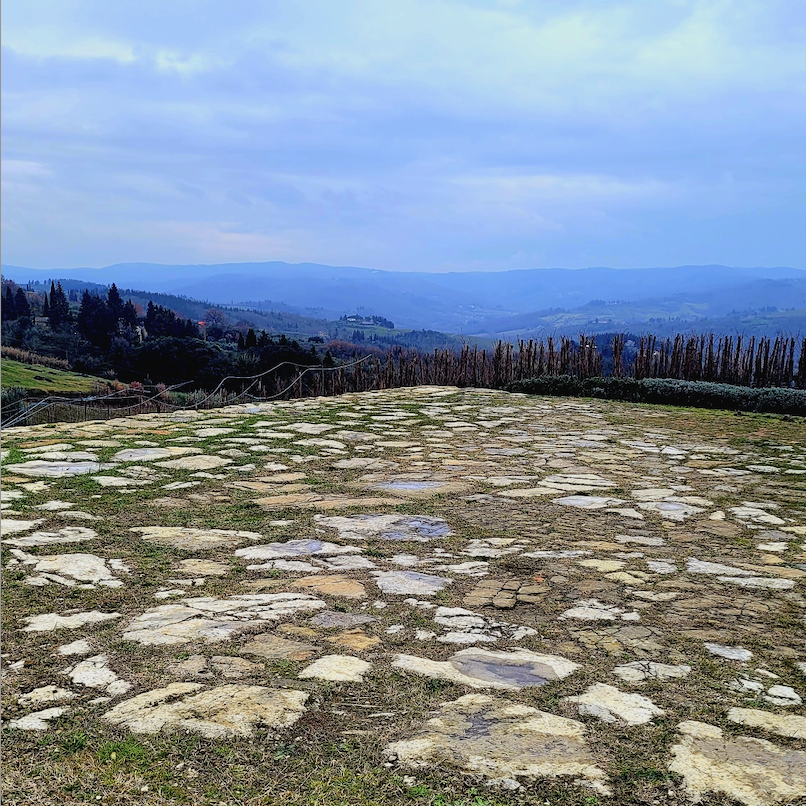
L’aia at Tenute Casenuove

Tenuta Casenuove – Panzano

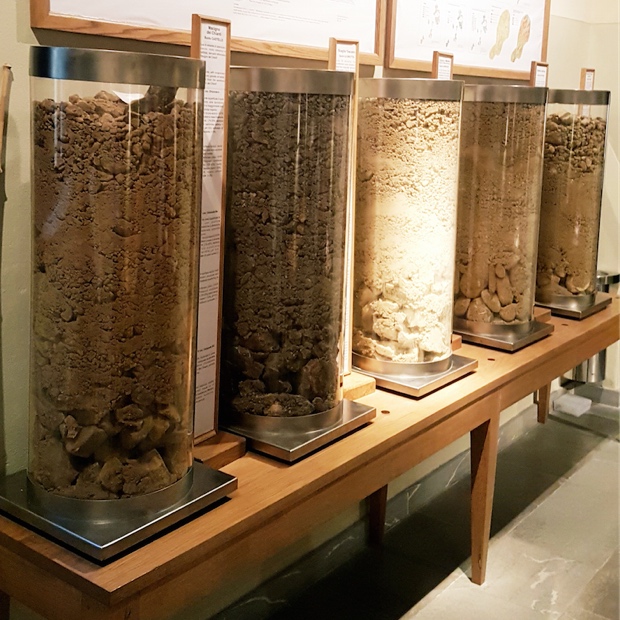
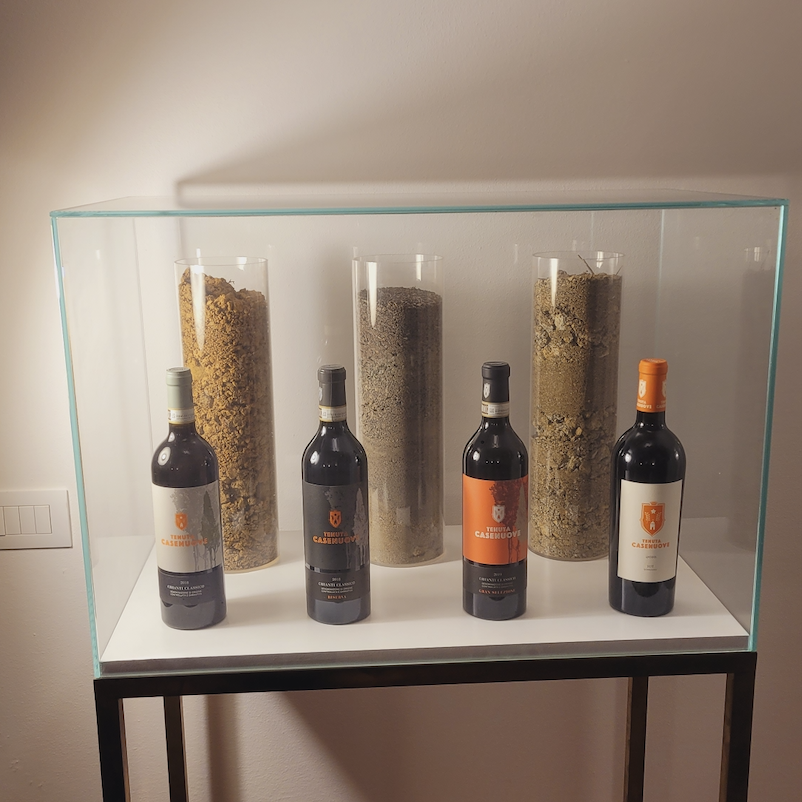
Out of Firenze’s Peretola Airport and direct to Panzano for a long overdue visit with winery director Alessandro Fonseca, enologist Cosimo Casini and cellar master Maria Sole Zoli. Under the ownership of Philippe Austruy, 35 hectares are at elevation between 370 to 490 metres. Previously owned by Chianti Classico négoce Pietro Pandolfini from 1954-2015. We stood on the small stone square, “l’aia,” where the grain was once worked, looking south over the Pesa River, towards Castellina. In 2015 there were 15 hectares of vineyards, now doubled to 30, including a new site at the top on Alberese stone planted to sangiovese, colorino, canaiolo, malvasia and ciliegiolo. The top of the (east) ridge is a soil led by Pietraforte, the rest argilla and schist with a manifestation of compact, purple-veined Galestro. Identified vineyards are Poggio Asso, Vigna Somassa which comes from Arenaccio, an iron sandstone block, Vigna San Martino (fine decomposition of Galestro) and Vigna Camperi (calcareous clay).
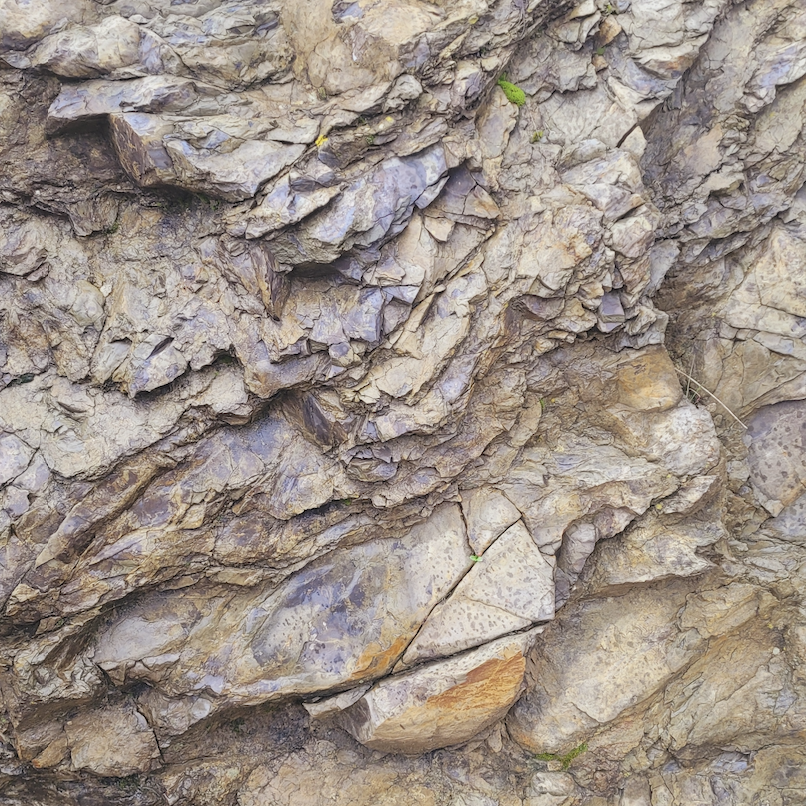
Purple-veined Galestro of Tenuta Casenuove

Tenuta Casenuove Chianti Classico DOCG 2021, Panzano

Another beautiful season, not at the beginning because of the April 7th frost which delayed development by a month – though in the end the wines showed with great balance. In part because of less bunches and bunch weight per plant but also because of a great September rain that followed a hot summer for the latest finish to harvest in recent times – September 25th. Everything in this wine moves in unison, all parts working together for a polished and luxe example of Chianti Classico. Drink 2025-2028.  Tasted February 2025

Tenuta Casenuove Chianti Classico DOCG 2020, Panzano

The vintage following that seminal 2019 marking a transition for Casenuove away from aging in small wood and making use of various larger format casks. Once again you get the feeling of highest level of extraction and here the most glycerol and silken texture to date. A warm vintage with 12 days exceeding 35 degrees to stress the vines, especially the young ones. Drink 2025-2028.  Tasted February 2025

Tenuta Casenuove Chianti Classico DOCG 2019, Panzano

Here the new plantings began to be used in the Classico. The first vintage to represent the transformation away from Cordone Speronato to Guyot training resulting in bunches not as tight for a shot at the juiciest sangiovese expression to date. Tannins are still working with grip and force, acidity is high and the wine has a serious chewy quality as well. Also with thanks to Maria Sole in her second vintage in the capacity of managing the cellar. Tells Cosimo “you can see the transition, the new sensibility and the extraction level in the wines.” This certainly marks new territory and an understanding of the potential for the estate.  Last tasted February 2025.

Fruit quite mature of 90 percent sangiovese with five each merlot and cabernet sauvignon, a focused expression and very much the warmest of (western) Panzano style. You can taste the Bordeaux grapes in here, with a Cassis for sure but also some desiccation of small berries. Minty and a cherry stone bitterness on the palate with drying tannins. Give an hour of air and drink over the next three years. Drink 2023-2026.  Tasted February 2023
Tenuta Casenuove Chianti Classico DOCG 2018, Panzano

Plenty of rain, humidity and cooler temps and “it scared me,” admits Cosimo though the shift from humidity with the northeastern Tramontana wind brought about a great day for night temperature excursion. High solar radiation and cold nights at the end of September, especially here in Panzano created this truly unique set of harvest ripening circumstances. Feel the mix of ripenesses in both the fruit and acidity, the long-chained tannins and talons that hold on to your palate. Still acting this way six years later.  Last tasted February 2025

Fruit quite fresh for 2018 and in a way more so than the following 2019, here again from a consistent blend of 90 percent sangiovese with five each merlot and cabernet sauvignon. Juicy Panzano expression, ready and willing to please, tannins softening now and acidity captured with truth. Raspberry and blueberry, fruit captured at peak and here an Annata with silky tannins, everything in line and ready to roll.  Tasted February 2023

Crunchy Panzano Annata here from Tenuta Casenuove, peppered as opposed to peppery, as if with freckles or micro-sized bits of earth. Plenty of salt and pepper seasoning but again nothing sharp or spicy about it and fruit so very berry red.  Tasted March 2022

From the southwest corner of Greve in Chianti, southwest of Montefioralle and close to Panzano. Modish and modern for 21st century sangiovese is just this, stylish, chic and highly motivated. Quite fully developed and felt red fruit of glycerin, pectin and mouthfeel but you want more and more. Impressive magnitude in bringing so much fruit into the mix. Not overtly high in acid or tannin so use this early and often.  Drink 2020-2022. Tasted twice, February 2020

Tenuta Casenuove Chianti Classico DOCG 2017, Panzano

The experience of 2015 and 2016 were critical towards dealing with the hot 2017 season, especially because the south by southwest expositions at Casenuove are what they call “a hot spot.” Yes you can feel the desiccation but the 80mm of rain that fell between September 4th and 8th really saved the day. As smart producers are want to do the harvest was delayed, started two weeks after the rain and continuing through to the 15th of October. Acidity is different and special though the fruit is now just starting to fall away. Drink 2025-2027.  Tasted February 2025

Tenuta Casenuove Chianti Classico DOCG 2016, Panzano

From 2016 all the blocks of the estate were now being vinified separately. The season began in a different way, first with a cool and humid Spring which delayed development by a month and then things sped up during the warm summer. Harvest began on Sept. 26th, finishing at the same time as 2015 which means just two and a half weeks for the same 13 hectares. A wine of more density and development than 2015 though still tannic and today maintaining an important level of freshness. Drink 2025-2029.  Tasted February 2025
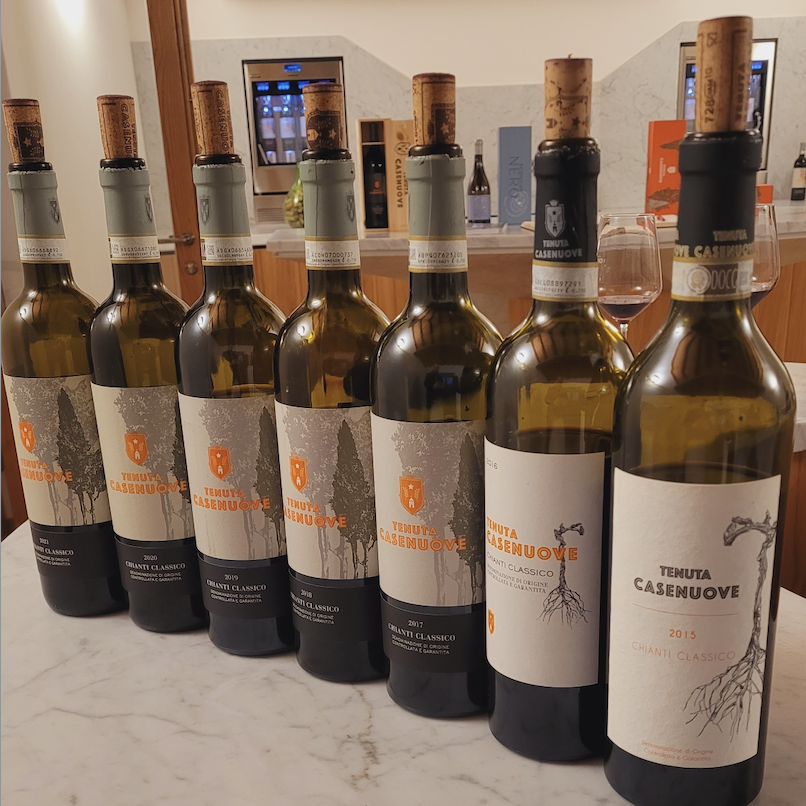
Tenuta Casenuove Chianti Classico DOCG 2015, Panzano

First year of production under the new ownership of Philippe Austruy and Oenologist Cosimo Casini arrived in June just a few months after the acquisition. His grandmother was born in Panzano and so this was a true return to his roots. Very much a part of this first vintage that he describes as “almost too easy” which suggest he thinks some things were taken for granted. Harvest from September 12th to October 10th, 13 hectares in total. “But I’m waiting for a season like 2015 to happen again.”  Last tasted February 2025

The first vintage, 80 sangiovese with 15 merlot and 5 cabernet sauvignon. The sangiovese was raised in 25hL botti and the international grapes in tonneaux. Darker and deeper than the ’16 to come. Good acidity keeps it moving through the waves of vanilla and graphite. Drink 2019-2020.  Tasted September 2019

Tenuta Casenuove Chianti Classico Riserva DOCG 2019, Panzano

Riserva at 100 percent sangiovese is a change from the Classico where smallest bits of colorino, canaiolo and merlot are involved. Riserva comes from a strict selection of the best part of estate vineyards where clay-schist soils spill over with iron-rich Galestro outcroppings. As in Panzano in all its glory for a true expression of Casenuove’s warm location. Creates this clean sangiovese of utmost clarity. Last tasted February 2025

Riserva is 100 per cent sangiovese, a bit dusty and reserved, acids and tannins very much in charge. Crisp and crunchy for Riserva with notable fennel and balsamic notes with a nuttiness that is a palate extension from palate sweetness. A factor of new and used barriques with baking spice that in conjunction with full on ripeness to the edge creates a feeling of sleepiness. Enervating sangiovese. Drink 2023-2025.  Tasted February 2023 and February 2024

Tenuta Casenuove Chianti Classico Gran Selezione DOCG 2019, Panzano

The first vintage of Gran Selezione happened in 2018 after a cask tasting in the cellar where the team found something different from fruit taken out of a single vineyard. A place called Sopra Torre above the base of a hill up and away from the humidity at the lowest part, a place where the wind slashes through, and the exposition is pretty much perfect. Makes for the richest of all Casenuove sangiovese, longer in wood and you feel it but who feels it knows it.  Last tasted February 2025

Serious, experienced, structured and vertical example of Gran Selezione. Maturity of fruit but also layered acids and most impressively developed tannins. This walks with great stature, sure of its meaning and intent. As a Panzano sangiovese it knows exactly what it wants to be. Drink 2024-2028.  Tasted October 2024
Castello di Meleto

Castello di Meleto – Gaiole

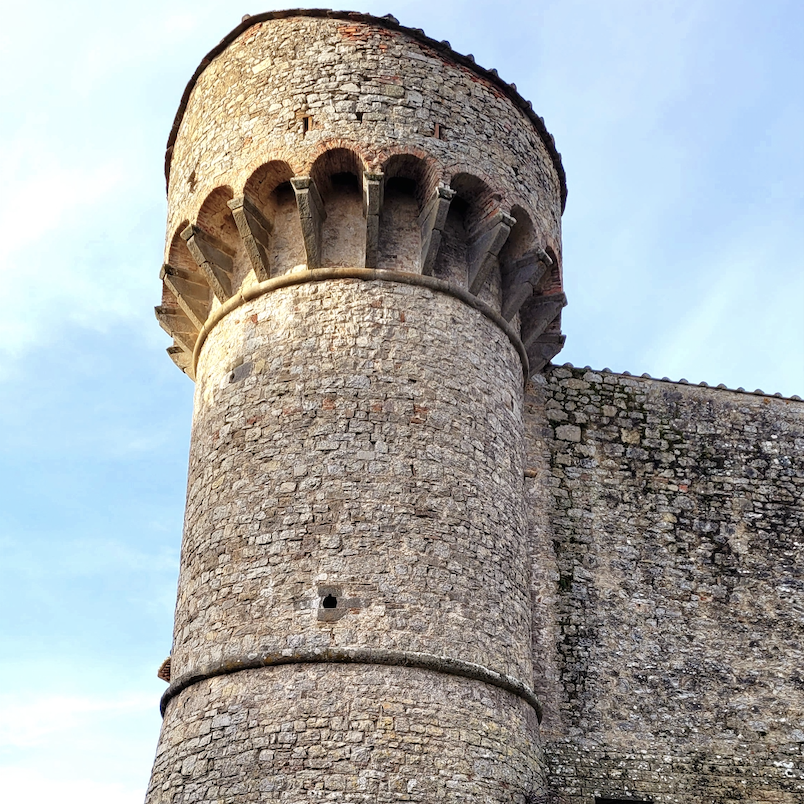
A studious and vigna intensive first visit with Victor Camilo Duque Crociani, GM Francesco Montalbano and agronomist Mattia Achenza. Gaiole’s famous Castello di Meleto has been a territorial guardian watchtower and fortress since 1256 with 1000 hectares, nearly 800 of which are forested. There are 130 hectares of vines in two località, Meleto and San Pietro, 80 percent planted to sangiovese, with merlot, cabernet sauvignon, trebbiano, malvasia and (0.5 ha) san colombano. The team has gone all in to isolate and exult the identified single vineyards, now with three Vigna labels; Trebbio, Poggioarso and Casi, the last one located on the road to Radda. Trebbio is collee, with red argilla soils. Poggioarso (the arid hill) is higher elevation with Alberese and outcroppings of Galestro out of the clay. Casi is in a ventilated zone with Galestro out of Macigno (sandstone) soils but it’s uniqueness comes from some alterations involving some Alberese and sandstone-based Pietraforte. The vines have been in transition since 2020 from Cordone to Guyot training, organic now for 10 years and largest such estate in the territory. Consulting oenologist and agronomist are Valentino Ciarla and Giacomo Sensi.
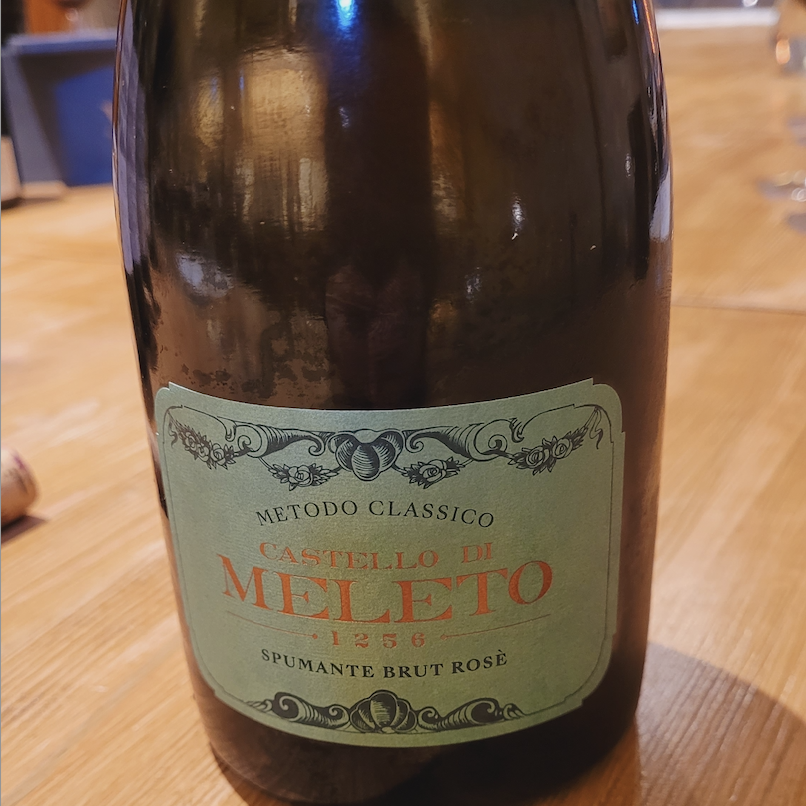
Castello di Meleto Método Classico

A traditional method sparkling that began 12 years ago. A spot of TCA on the first bottle. Only sangiovese, harvested early, usually late August, soft whole bunch pressed with minimal skin contact if just enough to give this Spumante a Rosé hue. Get the freshness and complexity. Drink 2025-2028.  Tasted February 2025

Castello di Meleto Chianti Classico DOCG 2022, Gaiole

Just five percent merlot softens the sangiovese with many vineyards of the 130 hectares in total contributing. Usually the youngest vines and also some of the plots that experience the warmest climate for the season. Ages 15 months, half in cement and half in large (really old) French cask. No tannic impart and this is about as correct, clean, acid retentive and well adjusted a Chianti Classico as you are want to find. Warm vintage yet freshness and fruit quality is knowably ripe and easy. Less savoury and more fruit centric than in years past.  Last tasted February 2025

Intensity of red fruit, almost searing while this young and immovable but surely a far cry from overly pressed or done. Surely a matter of Gaiole and vintage with Meleto sure to respect and deliver what it’s meant to bring. Another ’22 that must be waited on, again confirming how different these are to 2017. Drink 2025-2029.  Tasted February 2024

Castello di Meleto Chianti Classico Riserva DOCG 2021, Gaiole

The first vintage where Riserva is certified organic, also with five percent merlot and fruit drawn from many areas of the estate, maximum two week maceration. Ages in large French cask (up to 500L) and plenty of fruit ripeness fills the mouth, with a local Balsamico specific to and expressive of a Meleto sangiovese. Clean and precise with all the attributes of Riserva in pocket from the finest mixing and matching of vineyard fruit as a true example of Chianti Classico assemblage. You can drink this anytime. Drink 2025-2029.  Tasted February 2025
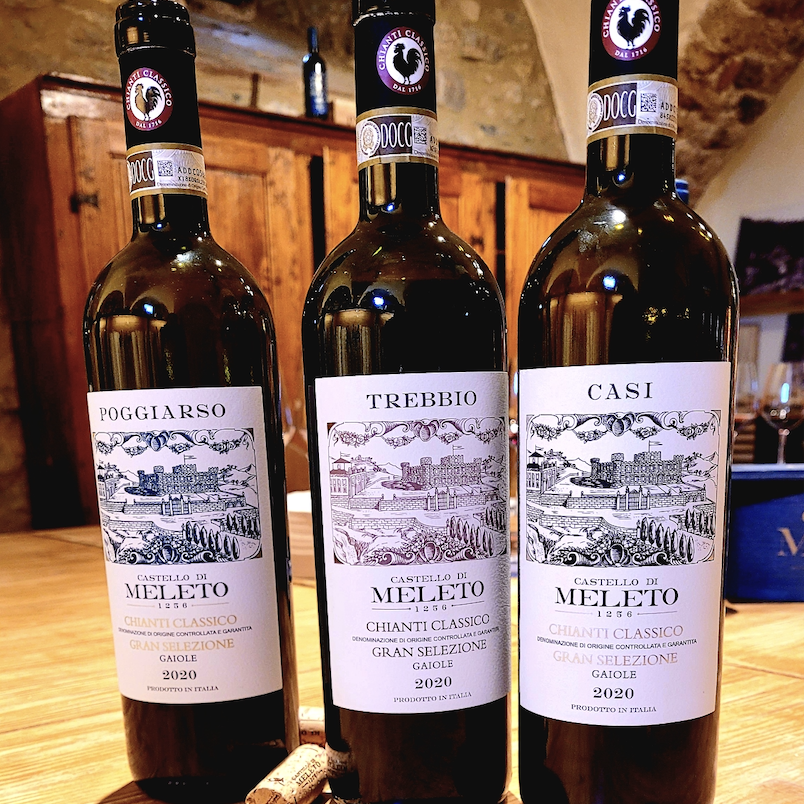
Castello di Meleto Chianti Classico Gran Selezione DOCG 2020, Gaiole

For Gran Selezione there is only sangiovese taken from the most important identified blocks from which the three cru are made. These are the grapes not chosen from and for the Casi, Poggioarso and Trebbio ultra specific expressions. Sees 10 days of maceration post fermentation and like the other wines (Classico and Riserva) there is a silky smooth character to the Selezione. More concentration is what separates this from the others but also a refinement of the Balsamico, spice and herbals of the wine. Sapid to a good degree, almost ready to rock and the kind of sangiovese that will age slowly, incrementally and long. Drink 2025-2028.  Tasted February 2025

Castello di Meleto Chianti Classico Gran Selezione DOCG Poggioarso 2020, Gaiole

The first vintage labeled as Poggioarso was 2017 and here for 2020 the vintage to launch with the UGA Gaiole on the label. Poggioarso is at the highest elevation, from 450-530m and the freshness matched by stony-mineral quality is truly high. The vineyard with the most temperature excursion, high solar radiation during the day and cold at night. Unique aromas that separate this cru from the others with a sulphur sensation that’s not sulphur. You can sense the sandstone derived mix of lime and Pietraforte that gives this mix of salinity and mineral flavour. It’s namely potassium and that is the unique perfume of Poggioarso. Drink 2025-2030.  Tasted February 2025

Castello di Meleto Chianti Classico Gran Selezione DOCG Trebbio 2020, Gaiole

Trebbio is the new cru designation for Castello di Meleto, medium of elevation between 380 and 410m located to the northeast of the castle. A very clay soil with some Alberese (limestone) and Galestro. Also iron in the ground with red hues throughout the soils. More sanguine and sweeter notes, in the fruit and with spice. Only sees the largest (3000L) French casks and the Balsamico presence can’t be denied. More density and intensity here, bigger wine, stronger and with more grip. Older schooled in a sense yet the red fruit quality is dominant as well. Drink 2025-2028.  Tasted February 2025

Castello di Meleto Chianti Classico Gran Selezione DOCG Casi 2020, Gaiole

One of two Castello di Meleto cru artists that originally existed as Riserva. Elevation from 450 to 530m and a really concentrated sangiovese high in poly-phenolic character. A smoulder here with tobacco that comes from the interaction between grapes and wood, compounded by the longest maceration. The most tannic and without a doubt the most potential of the three. A serious wine, profound expression of the vineyard and the sort of Gran Selezione that will live through to the next decade. Drink 2026-2032.  Tasted February 2025
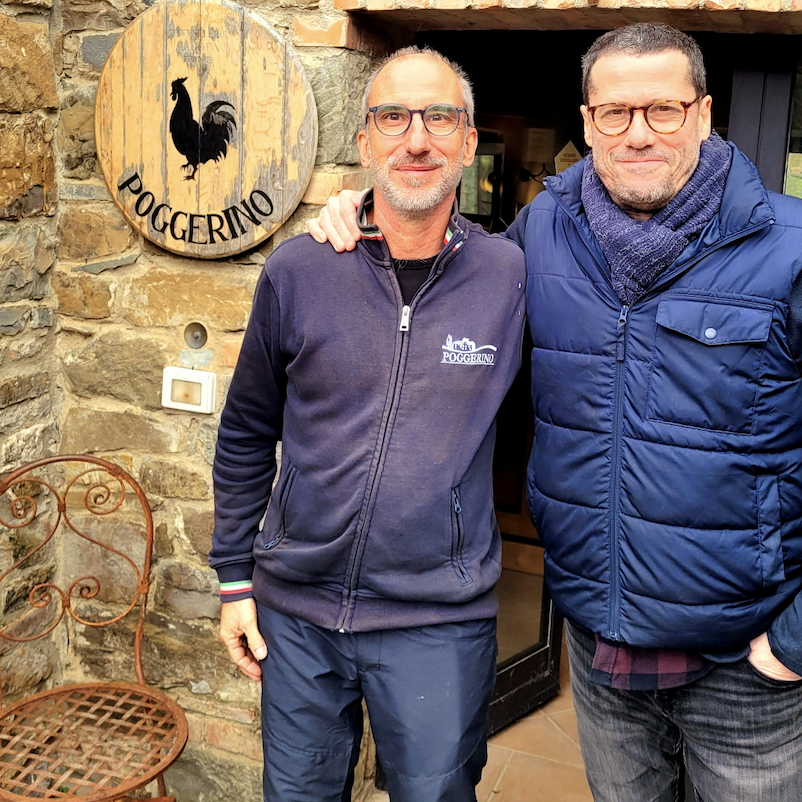
With Piero Lanza – Poggerino

Poggerino – Radda

Piero Lanza has embarked on a shorter pruning window because of the warming climate and is now keeping more bunches on the vines (1.2 to 1.5 kg per plant), to slow down ripening and to result in balanced, juicy wines. “There are no rules, not any more.” For Lanza it has been a slow evolution, a step-by-step process. As for which artistic winemaking period he’s now in, with 20 years on his back he says “it’s been about 15 years that I’ve been doing things this way.” The 2024 vintage was challenging, like 2013 with heavy Spring rains which made it hard to get into the vineyard and then a warm March encouraged early budding, but thankfully no frost followed in April. Rains ended in early June with none until the 26th of August. Veraison started early but by the 15th of August the water table had dried up and the vines shut down. Rains came just before harvest, a good thing and yet it was necessary to remove leaves to reveal bunches and speed up ripening. More importantly to reduce humidity around the bunches. Lanza finished picking on the 14th of October and mould was everywhere. One day fine, the next not so much – sometimes just a mater of six hours. “The evolution of the grapes was changing hour by hour. It reminded me of the 1990s,” said Piero, “but the most challenging vintages make the best wines.”
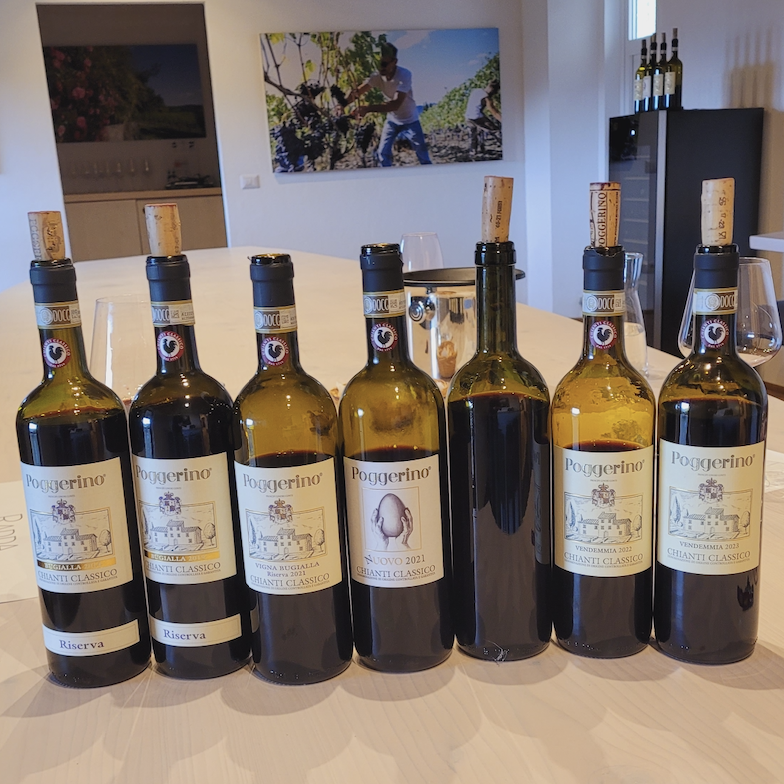
Poggerino

Poggerino Chianti Classico DOCG 2023, Radda

The Perenospera (resulting in downy mildew) vintage but Piero Lanza only lost 10 percent of his production. Yes – he fared much better than many in the region. He remembers the 24th of June, at the time of the festival of San Giovanni in Florence. “I woke up on the 24th, a foggy morning, I went in the vineyard and everything was white. We sprayed and managed it.” The 2023 is only sangiovese, of 15 different clones and vineyards, a sweetly herbal example, oh so glycerin textured, holding more Bugialla (Riserva) fruit because none was made in 2023. Freshness from concrete aging mixes with wood spice for an easy drinking, balanced and well made Classico. Just recently bottled in December 2024. Drink 2025-2028.  Tasted February 2025

Poggerino Chianti Classico DOCG 2022, Radda

The 2022 has been in bottle just a little bit more than a year now and has settled comfortably into its Classico skin. Quite a warm year with high level fruit and more importantly phenolic development with less herbal and tobacco notes that come from the very young ’23. Concentration is higher and again the red fruit is everything. There is a chalky underbelly of tannin and despite the vintage heat you have to remember this is Radda and so freshness is still a guarantee. Piero Lanza tried to have great respect for the grapes by pressing easy and macerating short. As s result the wine will go long, not 2016 or 2021 long, but it will last. Drink 2025-2030.  Tasted February 2025

Poggerino Chianti Classico DOCG 2014, Radda

It’s incredible! The longevity of 2014 is justified and now solidified. Adds Piero Lanza, “the quality and balance between the acidity and phenolic (compounds) have allowed the wine to age,” and age so well.  Last tasted February 2025

The vines date back to 2004 and 1994 for Poggerino’s Chianti Classico, a 100 per cent sangiovese that sits at a zenith where the most red limestone earth and sour intensity is noted above all 14s almost anywhere, not just from Radda but for all of the territory. Almost over the top in this regard but stand up and counted is what this amounts to. Then it grooves forward and rebounds with warmth and depth before returning to that earthy calacari bonding. Gathers itself, the moving parts and glides along with solid length. Very interesting, honest, organic and naturally curated work from Piero Lanza. Drink 2018-2022.  Tasted September 2017

Poggerino Chianti Classico DOCG Nuovo 2022, Radda

Nuovo is the new-ish Chianti Classico label, first made in 2013 as the sangiovese aged in concrete eggs. The 2022 is now one year in bottle and a manifestation of what Piero Lanza looks at “like being a chef in a fine dining restaurant.” That is to say trying a recipe 20 times before it is perfected. The roots came from Lambardier in Champagne where they aged their wines in eggs ahead of the secondary fermentation in bottle. In 2010 Piero put sangiovese in one empty egg after removing the previous wine intended for Sparkling Rosé and the experimentations began. Year two fibreglass fermentation and egg. Beginning in 2016 the fermentations happened in the new (5,000 and 8,000) concrete tanks then transferred to eggs in December. Ten years later there are 4,500 Nuovo bottles made and my how this sangiovese emits a very specific aroma. Certainly a matter of the natural swirl inside the concrete eggs but also a seriously oxygenated wine that shows no signs of oxidation. Feels like a wine of località hyperbole and says Lanza, “the egg increases the terroir.” This is the limit of quantity and yet more bottles would be a blessing. More terroir is expressed from egg in a warm vintage. Drink 2025-2029.  Tasted February 2025

Poggerino Chianti Classico DOCG Nuovo 2021, Radda

A top vintage and a fortunate one for Poggerino where the prevailing frost in Chianti Classico did not affect this località. A warm yet temperate year with heat but nothing like 2017 and just a perfect season from which to put sangiovese into concrete eggs. “For me it was a fantastic vintage, normal but the big difference was September with great temperature fluctuations between day and night.” The result is top level Raddese acidity and finest quality in the tannins. No this is neither Riserva nor Gran Selezione but being the unique wine that it is – it could very well be a manifestation of the latter. But we won’t name that and so for now we’ll just call it Classico-plus.  Last tasted February 2025

One thing you can count on is for Piero Lanza’s sangiovese to come out ripe as any in the territory and 2021 would surely not be an exception to the rule. The fruit is remarkable and the structural parts equally formative and formidable so I’m not sure Lanza has made such a wine in quite some time. Years are needed to settle the pieces, parts and puzzles of this magnanimous affair. Don’t care that Annata is the appellation. Drink 2025-2032.  Tasted February 2023

Poggerino Chianti Classico Riserva DOCG Vigna Bugialla 2021, Radda

First vintage of Bugialla as Riserva was 1990 though it was made as far back as 1985. Now labeled as Vigna Bugialla which puts this in cru territory and a wine that has come about after Piero Lanza’s 20 plus years of making wine, including many mistakes. It would be easy to simply think about the concentration but the true nature of Bugialla is the vineyard and its predilection for growing the finest Poggerino sangiovese. Quintessentially Raddese with the highest quality tannins available from the vineyard planted in 1994, surrounded by forests. Only the smallest and perfect bunches are chosen, like Lorenzo Magnelli at Le Chiuse for Diecianni and Luca Martini at San Giusto Rentennano for Percarlo. Aged in old Slavonian cask for two years, this 2021 is now in bottle just one year. Drink 2027-2036.  Tasted February 2025

Poggerino Chianti Classico Riserva DOCG Vigna Bugialla 2019, Radda

Not a cool vintage but is was in September and so the finishing concentration is not quite, well let’s say 2021. Allows the Raddese Balsamico and herbal qualities to come out a bit more. Tons of character, very expressive and time in the bottle have allowed for this coming out party and makes one wonder how 2021 will show in time. Drink 2025-2030.  Tasted February 2025
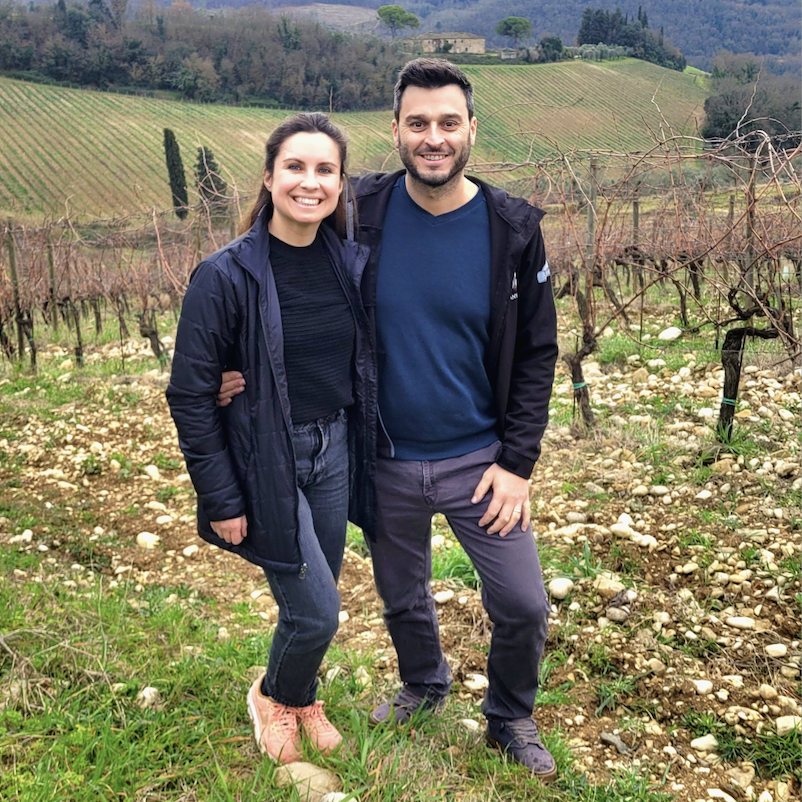
Andreita Rojas and Stefano Marinari – Calcamura

Calcamura – San Casciano

The semi-virtual winery co-owned by partners Andreita Rojas (from Chile) and Stefano Marinari, winemaker at Castello di Bossi. The two met in 2014 while working harvest abroad. Calcamura, a vineyard located between two poderi, Calcaorelli and Mura, both located on Via Mura. A conjunction of the two, as opposed to calling the brand “Stefandreita.” The località of their vineyard is Poggio ai Grilli over and down the hill from Villa Le Corti and sharing the same topography plus geology, that being the famous San Casciano river stone strewn vineyard reminiscent of Les Galets in Châteauneuf-du-Pape. Their’s is a 25 year-old, 0.5 hectare block owned by their immediate neighbour to the west with a second 6,000 square metre block rented since 2021. A third will be a 1.05 hectare plot, they will be certified organic (on their labels) as of 2024 are are still currently crushing in Radda at Istine.
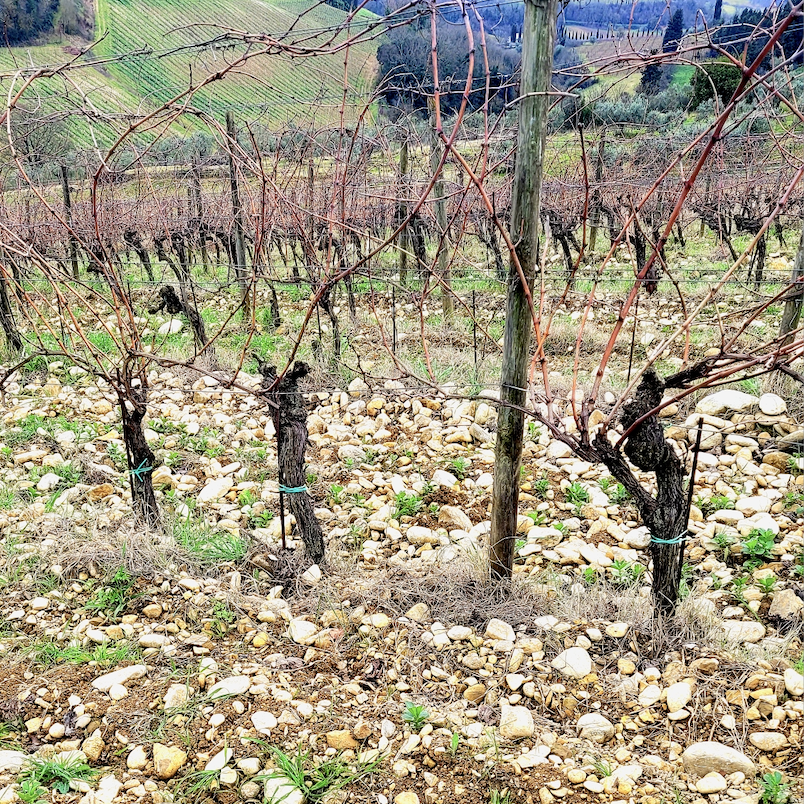
River stone strewn vineyard at Calcamura

Calcamura Sussolto

Sussulto, as in “to gasp or being startled,” but in a good way. A reaction as if to say, “oh my God, I’ve been jolted by something.” Made from the first passage of 100 percent sangiovese Calcamura grapes picked in late August. The idea came from a dinner with friends, to use these grapes and never consider a green harvest. Quite a phenolic sparkling wine and also one of incredible richness. This is matched and balanced by the smoky mineral, rustic style and a light mushroom consommé. So unique and worthy of any sort of fizz detour you are willing to make. 4,000 bottles produced. Drink 2025-2029.  Tasted February 2025

Calcamura Chianti Classico DOCG 2022, San Casciano

Now in the third vintage for Calcamura the aging is only in tonneaux, two Slavonian and one French. Only sangiovese from a vineyard in the middle of nowhere but a località called Poggio ai Grilli. Could that be the name of a coming Gran Selezione for Stefano and Andreita? The Annata will be a grand total of 430 bottles that spent a year in Slavonian tonneaux and one in ceramic Tava terracotta. A light touch for a San Casciano sangiovese for which acidity is tempered with 10 percent canaiolo to affect a sangiovese between salinity and sapidity. A wine made by experienced hands not trying to coax too much from the rockiest river stone soils available to anyone in the whole of Chianti Classico. Never ambitious, always respectful and a feeling gained from out of the receded waters (so to speak) to make Annata as pinot noir Burgundian, nebbiolo Piedmontesino or nerello mascalese Etnean as any in the entirety of the territory. A more precise and verging on profound Chianti Classico with that terrific combination of drinkability and structure. Drink 2025-2030.  Tasted twice, at Borgo Machiavelli and The Chianti Classico Collection, February 2025

Calcamura Chianti Classico DOCG 2021, San Casciano

Only sangiovese (because the cabernet sauvignon was grafted over with canaiolo) and now aged in used tonneaux (plus two barriques). Picked earlier than 2020, in mid-September at a time when alcohol can be kept at 13.5 percent and to a softer extraction in this second vintage. What results is a red citrus-styled sangiovese with a bit of sussulto of its own, in other words an acidity so very San Casciano and in a bridge year between cabernet sauvignon and canaiolo to soften, raise pH and lower acidity. Indelible vibrancy, “a style that we want – drinkable,” says Andreita. Even though the tannins are lower it is the acidity that will preserve the wine. And with no sense of overripeness or over-extraction. Represents the place and its makers.  Last tasted February 2025

Campione: Limited production, 100 percent sangiovese of San Casciano bones, saltiness and energy. Notable as always for the herbs and verdancy but this edges up in volatility before descending into its tannic well. Taut finish and in need of two years to settle. Drink 2026-2030.  Tasted February 2024
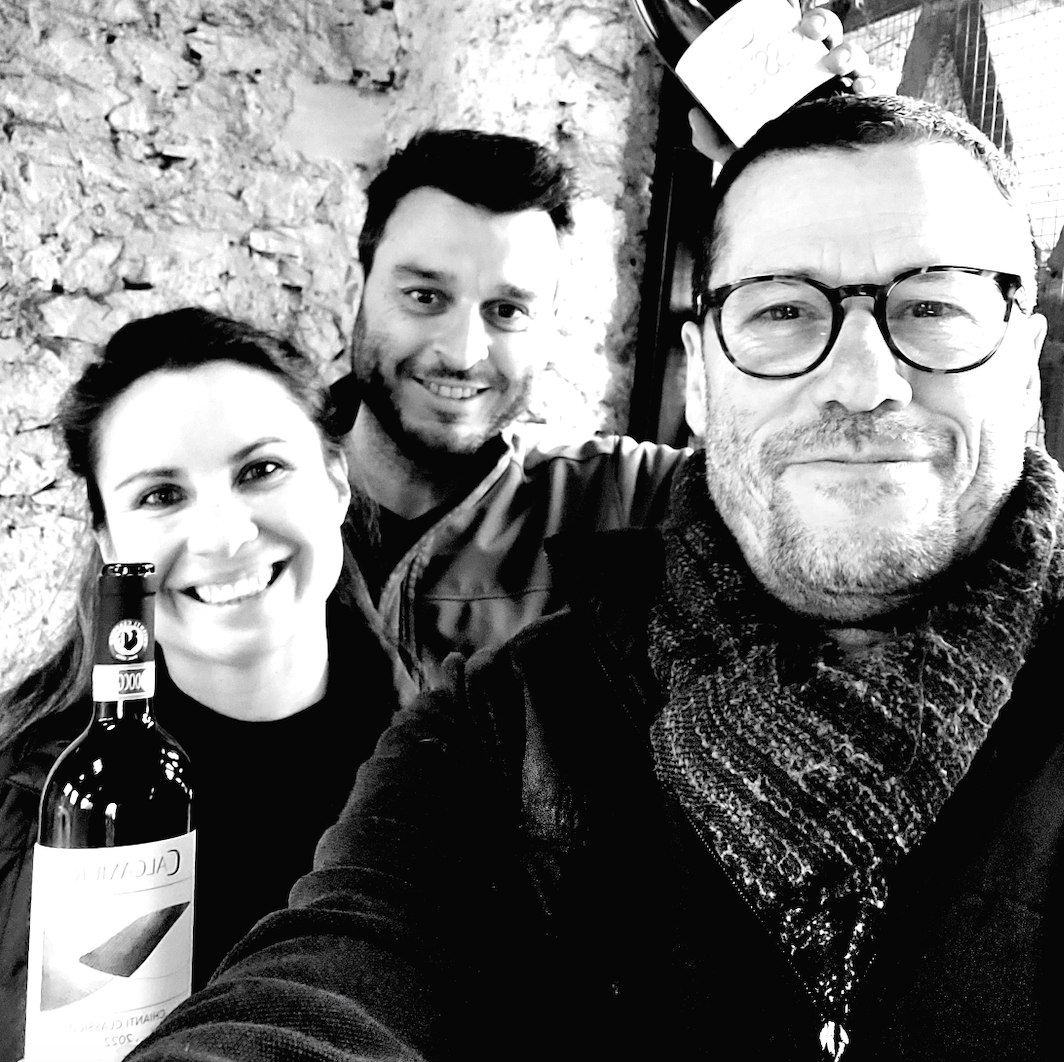
With Andreita Rojas and Stefano Marinari – Calcamura

Calcamura Chianti Classico DOCG 2020, San Casciano

Calcamura, a vineyard located between two Poderi, Calcaorelli and Mura, both located on Via Mura. A conjunction of the two, as opposed to calling the brand “Stefandreita.” First vintage for Stefano and Andrea with the vineyard they purchased in 2019. “We were very happy with the result but we knew we could do better. People told us the wine was great but we also knew it was important to maintain quality.” Yes this is an impressive first kick at the can and there is some greenness in the tannin but it’s exaggerated somewhat by the cabernet’s pyrazine. Aged in used barriques for a year. This first Calcamura sangiovese reminds a bit of a Castello di Bossi Chianti Classico mixed with a Renieri Brunello. Wink, wink, say no more. Drink 2025-2028.  Tasted February 2025
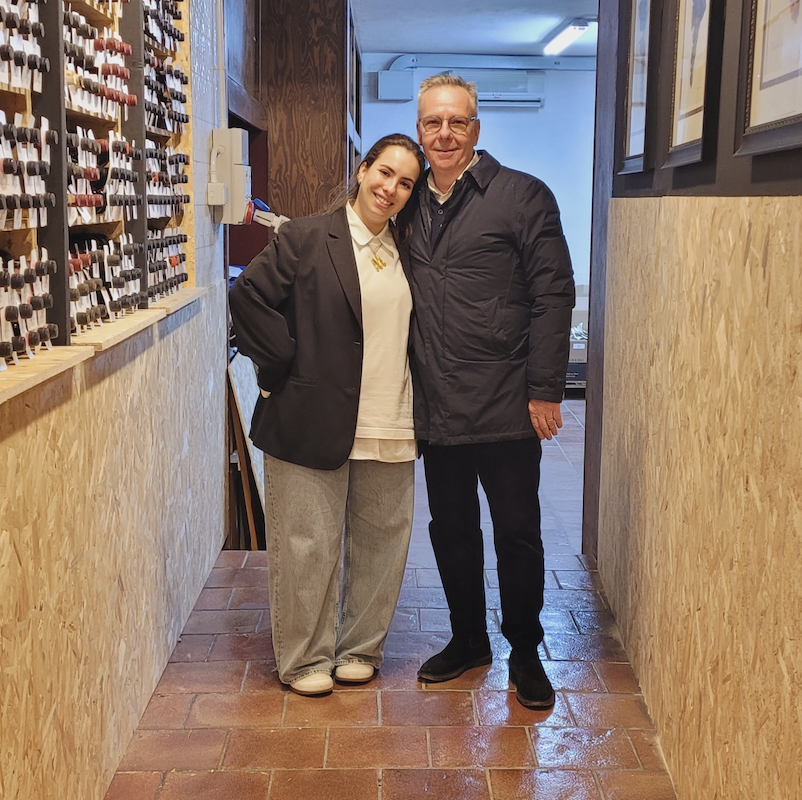
Martina and Alberto Fabbri – Il Poggiolino

Il Poggiolino – San Donato in Poggio

First visit to one of San Donato and Chianti Classico best kept secrets on the hill above and across the river from Sambuca with another more famous neighbour, Badia a Passignano. Carlo Pacini purchased the farm in 1974 and today his daughter Alessandra Pacini, Alberto Fabbri and family run the 18 hectares with with vines planted between 320 and 400m. The seminal plot is a north by northeast vineyard up on the hill overlooking the winery called Le Balze, a.k.a. “the terraces.”
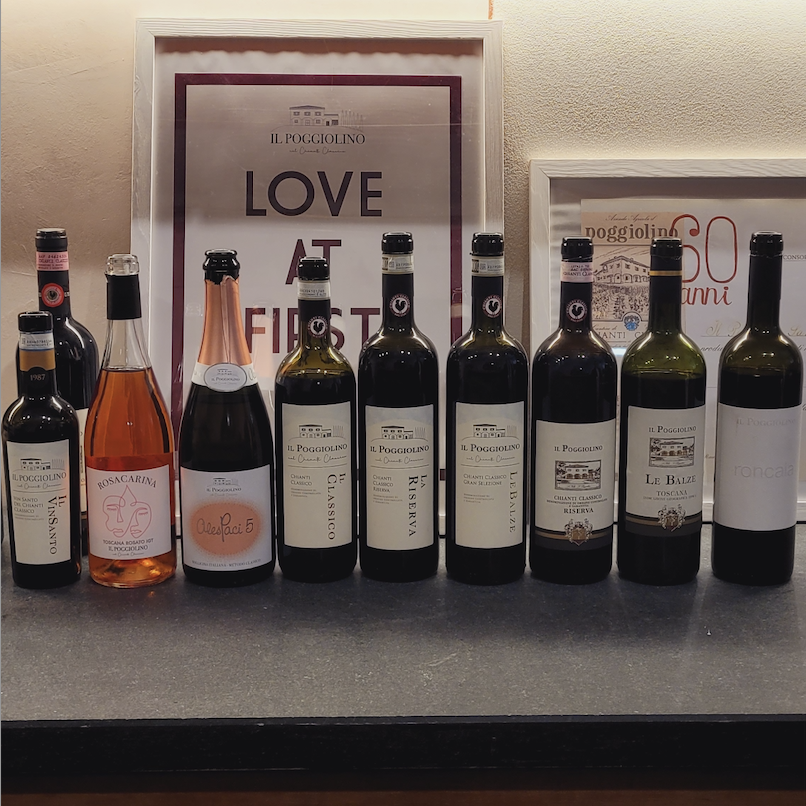
Il Poggiolino AlesPaci5 Bollicina Italiana Método Classico

AlesPaci5 stands for Alessandra Pacini, better half to Alberto Fabbri and her birthday being December 5th. Solo sangiovese 30-36 months on the lees made in Rosato form with just a few years of Il Poggiolino experience augmented by greater experience from consulting oenologist Giacomo Cesare. Really aromatic and autolytic with the finest tight bubble, scraped orange skin and ginger. Truly well made. Drink 2025-2028.  Tasted February 2025

Il Poggiolino Rosacarino 2023, Toscana Rosato IGT

Rosato made in the salsasso method (a.k.a saignée) run-off from the Gran Selezione maceration. A Rosé not focused on colour and not even aromas but with the intention of flavour as the driver. The nose is expressive of some formaggi, an aged Pecorino meets Beemster sort of thing and yes the taste is what draws you in. Rhubarb and orange with a lot going on with respect to taste. High in tang and needing food for balance. Drink 2025-2026.  Tasted February 2025

Il Poggiolino Chianti Classico DOCG 2022, San Donato in Poggio

The vineyards at Il Poggiolino may reside at moderate elevations between 250 and 350m but there are no south by southwest expositions and so in a hot vintage like 2022 the freshness remains a guarantee. Just three percent colorino goes a long way to raise up character of a Classico that only sees concrete and stainless steel for aging. Sweet acids match the fruit stride for stride and what you want is what you get – A level of drinkability that represents Classico and this northwest corner of San Donato in Poggio. Drink 2025-2028.  Tasted February 2025

Il Poggiolino Chianti Classico Riserva DOCG 2021, San Donato in Poggio

A terrific vintage and yes many estates in Chianti Classico lost production to the April frost but at Il Poggiolino the maximum loss was 10 percent. And so come for the quantity and stay for the quality. Rich and concentrated, lightly chalky with a clay and stony feeling. Structure asks that we wait a year before opening the window and set this sangiovese with three percent colorino for aging through to the end of the decade. Drink 2026-2030.  Tasted February 2025

Il Poggiolino Chianti Classico Gran Selezione DOCG Le Balze 2021, San Donato in Poggio

From a north by northeast vineyard up on the hill overlooking the winery which may have been a expositional detriment 20 years ago but no longer. The change of climate puts this steep single vineyard sangiovese in great light today and so welcome to the third in a row of vintages that may just shock as to its character and quality. Le Balze 20 years ago was organized as large terraces and in Tuscany you say “le balze,” when you take a giant leap. This Gran Selezione has improved and grown by leaps and bounds in the last few years to join other greats to reside near the top of the appellative pyramid.  Last tasted February 2025

Another perfumed and expressive Le Balze comes with as much if not more pulp and flesh a la mode than those San Donato in Poggio Gran Selezione that have come before. The depeche florals are Spring bloom fresh, the volume set at ideal pitch and you just need to keep putting glass to nose because, well you just can’t get enough. Richness is never compromised but it is belied by the beauty of a tannic caress about as graceful and gracious as there are. This is Il Poggiolino’s finest GS to date and that is saying a lot. “Just like a rainbow.” Drink 2025-2034.  Tasted October 2024
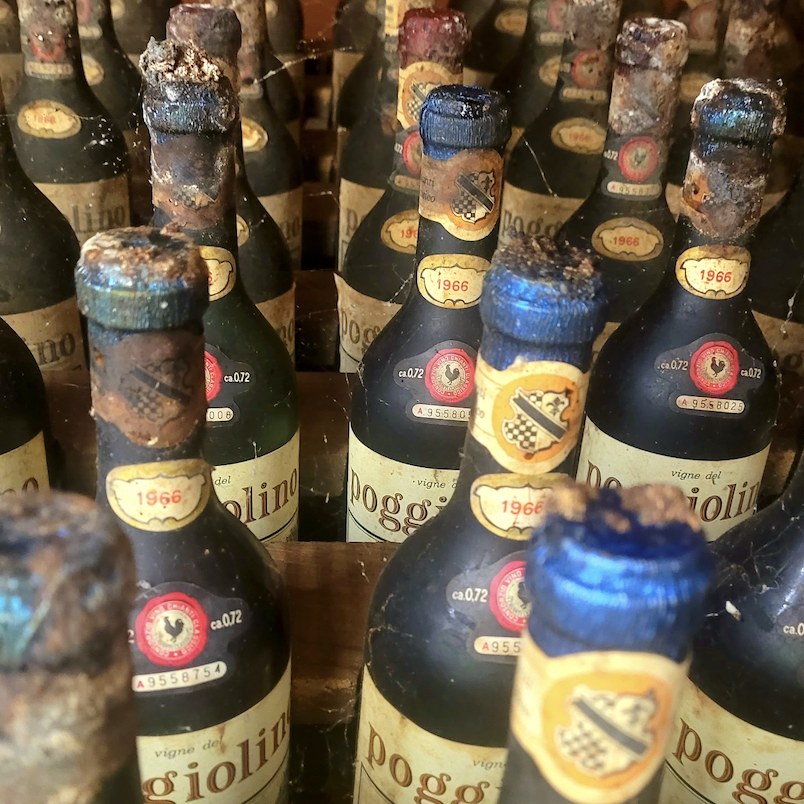
Il Poggiolino Chianti Classico Riserva DOCG 2001, San Donato in Poggio

Wow. Seriously wow from a 23-24 year-old sangiovese that speaks in such a clear vernacular. A language so specific to the space of this place nearest to Sambuca in the UGA of San Donato in Poggio. Yes this is from another era and the wood (though it has disappeared) and tannins (which have melted) have set this up for the longest run through history. The freshness of primary fruit lingers and merges with an ideal window of softening secondary notes. Soft yes but refreshing sip after comforting sip. Just a lovely linger of Chianti Classico as Riserva the way it was surely intended, with or without luck would have it. Drink 2025-2027.  Tasted February 2025

Il Poggiolino Roncai 2020, Toscana Rosso IGT

From the 20 year-old vineyard right in front of the house and cantina facing the village of Sambuca that ages 30 months in mostly, but not all new barriques. A wine conceived approximately 10 years ago and Roncaia is the name of an old label produced at Il Poggiolino back in the 1970s, resurrected four decades later with this single vineyard fruit. The meaning comes from roncola, a traditional viticultural knife used to cut grape bunches off of the vine. Rich and chalky, well-structured, elegant and poised for merlot put to new wood for as long as it is. Remarkable really and only produced in years “when the grapes are truly perfect.” Drink 2025-2027.  Tasted February 2025
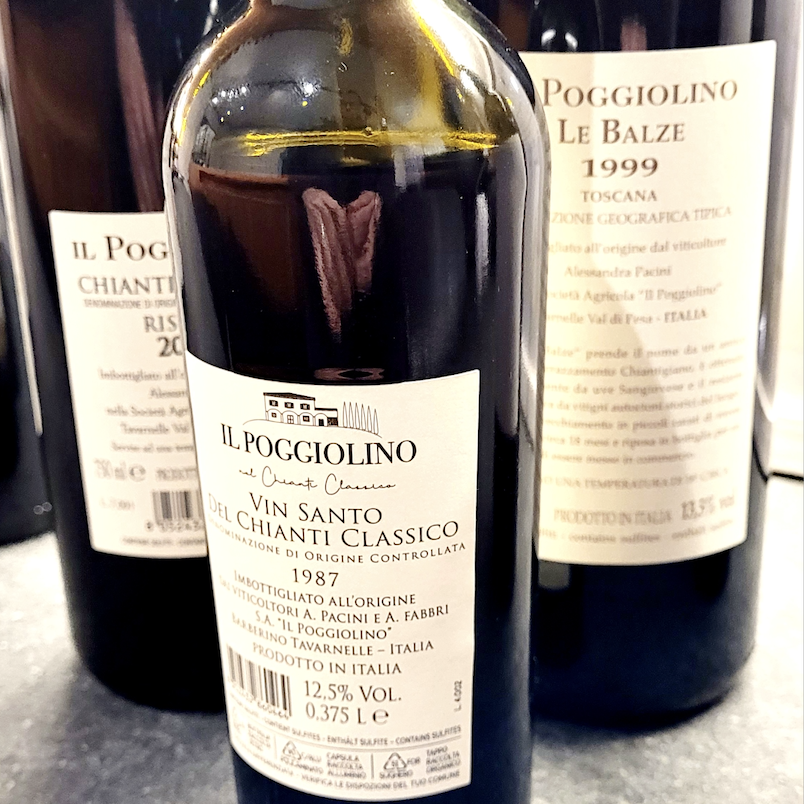
Il Poggiolino Le Balze 1999, Toscana IGT

The artist has always been known as Le Balze, a.k.a. “the terraces,” to the wine that would eventually become Gran Selezione. What matters is the steps’ north by northeast facing vineyard and here from what was considered a top vintage at the time. The sweetness of fruit is still so evident and while there should be zero complaint about how well this has aged – the wine still feels like its maturing into the beginning of its denouement. The 2001 (Chianti Classico Riserva) feels much younger and still there is great pleasure to gain from 1999. Great fortune to taste, the wood very much a master of the flavour and sweetness through the entirety of the wine.  Tasted February 2025

Il Poggiolino Vin Santo del Chianti Classico DOCG 1987, San Donato in Poggio

Current vintage on the market. Yes, that is not a typo. A 27-28 year-old labour of love that from trebbiano and malvasia but in the late 1990s the switch was made for sangiovese as Occhio del Pernice. An elixir so silken and smooth, no rusticity and seemingly untouched by human hands. A Vin Santo as if made by the bees, with apricot, guava, jasmine, lemon, Japanese orange and lavender. Fine, fine spice and just so special. A dream, demure and engaging. On the right side of vivid. One of the finest ever and know that you can drink this meravigliosa dessert wine forever. Drink 2025-2050.  Tasted February 2025
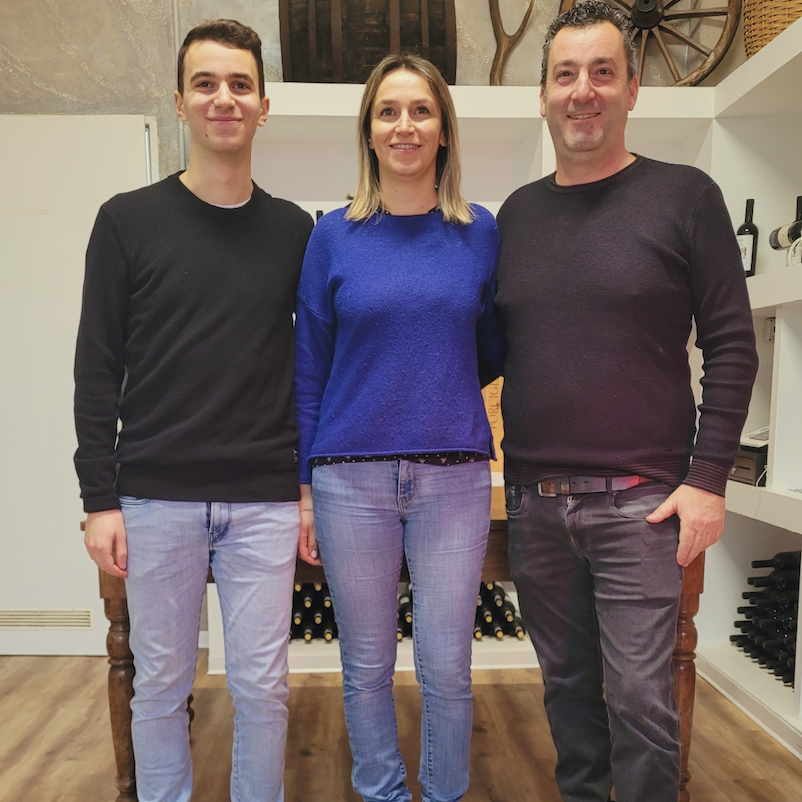
Federico, Martina and Leonardo Tattini – Richiari Porciglia

Richiari Porciglia – Greve

One of the most intriguing and rewarding discoveries of the last 10 years in this family estate on the east side of the Greve River at the base of the Ruffoli hill. The origon is 1980 and 1985 was when Greve in Chianti’s Emilio Tattini and his wife Lidia Martinelli established the winery with the first commercial wines having been bottled in 2009. Brothers Leonardo and Alessandro are now in charge of the vineyards, winemaking and cellar. Leonardo’s wife Martina runs the business and their precocious son Federico is now working alongside his parents and uncle when he not studying oenology at the University of Florence. Considering the continuity of the local and familial, there should be no surprise if daughter Irene joins the team seven or so years from now. The single vineyard or cru “Il Paccio” Classico comes from the oldest vineyard of 40 years of soils based upon Alberese and Pietraforte.
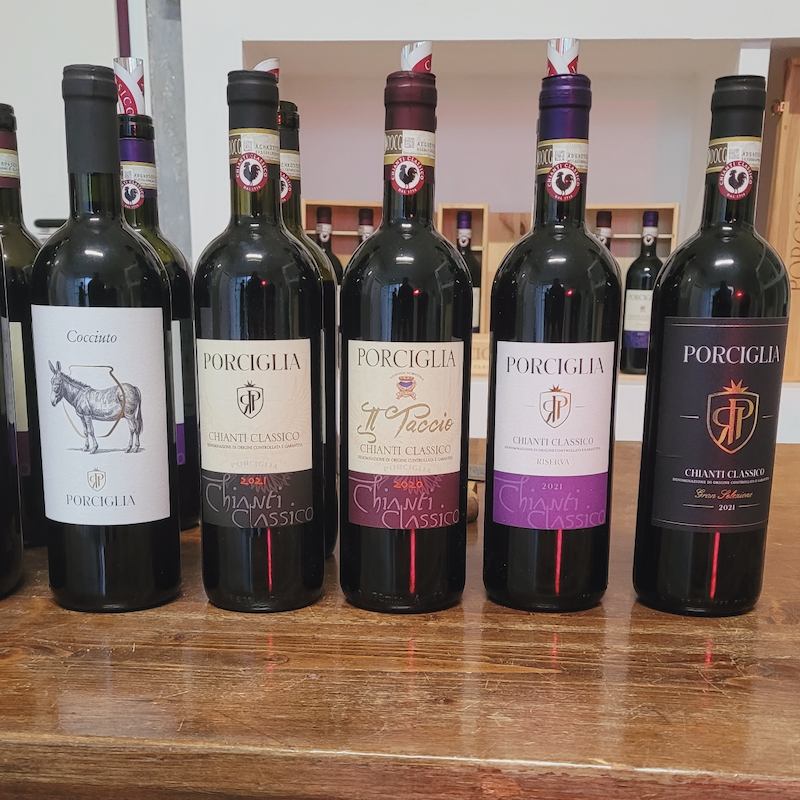
Richiari Porciglia Chianti Classico DOCG 2021, Greve

First vintage of the “regular,” non single vineyard Chianti Classico was 2009. An Annata conceived from vines between 250 and 350m at the base of Greve’s Ruffoli hill. A perfectly correct Classico, dark of fruit, easy to enjoy, fine though never tart, acidity spot on and smooth. Clean as there could be and a clarity that speaks to style, precise winemaking and place. Made with 95 percent sangiovese with (5) canaiolo. Drink 2025-2028.   Tasted February 2025

Richiari Porciglia Chianti Classico DOCG Il Paccio 2020, Greve

The single vineyard Classico from the oldest vineyard of 40 years where Alberese and Pietraforte predominate the soils. Not made in every vintage because, well quality and passion matter dearly to brothers Leonardo and Alessandro. You can clearly see the choices passed down from father Emilio and the stubbornness to only make quality wines with the season dictating the choices. Made in ’20, skipped in ’21 (though Riserva was made) and aged for six months in 15hL Botti after fermentation in stainless, followed by one year in cement vats. Il Paccio the name is just what every generation called this vineyard and place but no one really knows why it is called this. Such a proper Classico and representation of the designation “cru” because there is something so specific and distinct about this sangiovese (with eight percent canaiolo) in its sapid style. Ready to drink though you can see this aging five more years without any real change and certainly zero decline. Drink 2025-2030.  Tasted February 2025

Richiari Porciglia Chianti Classico DOCG Il Paccio 2016, Greve

Though already eight-plus years old there has been almost no movement in Il Paccio 2016 from a warm vintage making for stronger and deeper sangiovese. You can smell the place with such expressive strength, the Piteraforte and Alberese stone committing to a local Balsamico with grip that does not come from the 2021. This is Chianti Classico in a nutshell, fine-grained and exceptional of prescriptive tannins for great longevity. You can tell just how gentle the press and maceration process were because for 22-28 days this is Chianti Classico with the finest and sweetest tannins around. Drink 2025-2032.  Tasted February 2025

Richiari Porciglia Chianti Classico Riserva DOCG 2021, Greve

Riserva is a selection of specific vines and so the choices are made in the fields for 95 percent sangiovese with (five) cabernet sauvignon that makes up just a half hectare of the 14-15 total on the estate. There is more of a Ruffoli feel to Riserva albeit of a darker and exaggerated Balsamic profile from lower elevations. More tart intensity and higher acidity noted as compared to the Classico and the style, or better yet the result is actually quite different. Tannins are grippier as well, fine yet with some austerity here. Needs time, at least two years further in bottle. Reminds somewhat of a Castello di Querceto. Drink 2027-2032.  Tasted February 2025

Richiari Porciglia Chianti Classico Riserva DOCG 2012, Greve

A pleasure of fascination to taste a 12-plus year-old Riserva from this part of Greve and once again the longevity is remarkable. The combination of clones chosen in the 1980s and 90s matched to this terroir clearly decides the fineness of tannin but even more so the incredulous acidity that drives the Balsamico and savour of this sangiovese. This reminds of Lamole more than Ruffoli but 2012 is unique as a vintage and therefore a wine like this will stand up to be counted from an accord forged on its own. Drink 2025-2028.  Tasted February 2025

Richiari Porciglia Chianti Classico Gran Selezione DOCG 2021, Greve

The first year of Gran Selezione for Porciglia with decisions made in the field for sangiovese with (inclusive of five percent colorino). The best grapes are chosen and left on the vines two more weeks for the final harvest. A combination of best solar exposition, highest quality and smallest bunches are isolated for the Selezione. Sees 12 months in cement vats and then 18 months in second use barriques. A clear line is drawn from the Classico but especially from the Riserva because that is the wine used to season the barriques before they are passed on to the Gran Selezione. The intensity of the Balsamico and fine grained tannins here are a hyperbole of the other wines with so many years needed to soften and integrate the parts. More old school behaviour while up there with other fine GS examples in terms of precision and focus. Drink 2028-2035.  Tasted February 2025

Porciglia Cocciuto 2023, Toscana Rosso IGT

A play on words, first on the Coccio stone but also cocciuto which describes a stone-headed Tuscan, like a donkey. There was a donkey on the farm (belonging to Martina’s father) named Cocciuto though he’s no longer with us. The blend is 70 percent sangiovese with (15 each) merlot and canaiolo co-fermented in Manetti (Impruneta) terracotta. Once again the use of of aging vessels puts a Porciglia wine in vineyard light which means that time spent hidden away does nothing to take the land and soil out of the wines. As here with an IGT of acidity and tannins meant to express what the vines request. This is a very fine example of an ulterior Greve in Chianti (Classico) style. Drink 2026-2031.  Tasted February 2025
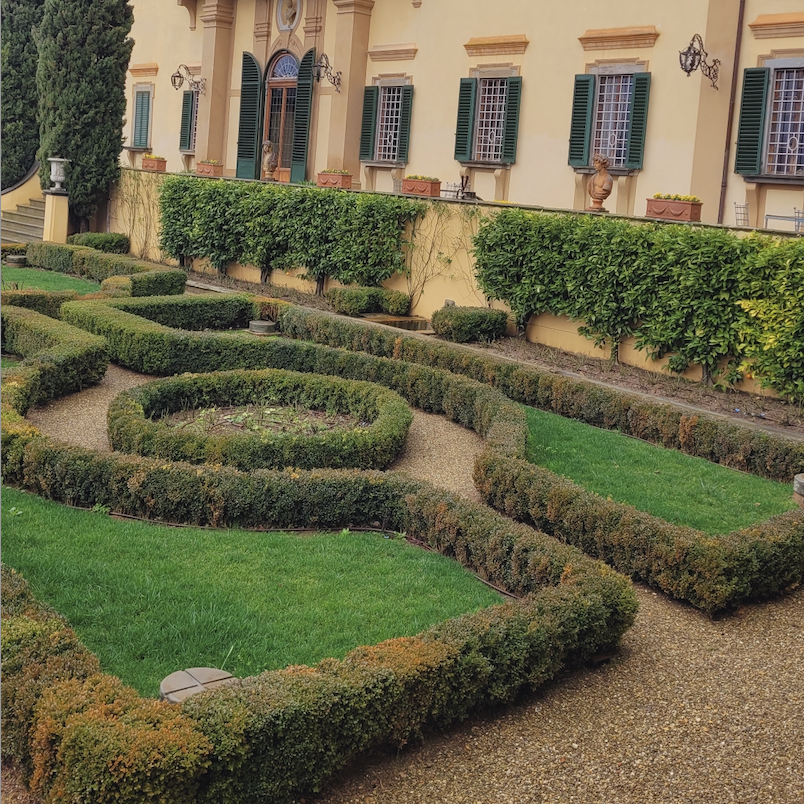
Poggio Torselli – San Casciano

Poggio Torselli – San Casciano

A return visit to Poggio Torselli but this time with the new branding is called “Il Contadino Cusano” under the ownership of Italian-Canadian Pasquale Cusano from Puglia who moved to Vancouver after the famous Florentine flood of 1966. Cusano is a jeweller, publisher of Nuvo Magazine and proprietor of Poggio Torselli since 2021. There may be 83 hectares of vineyards but just 25 percent are used to bottle the wines and the rest is sold off as bulk.
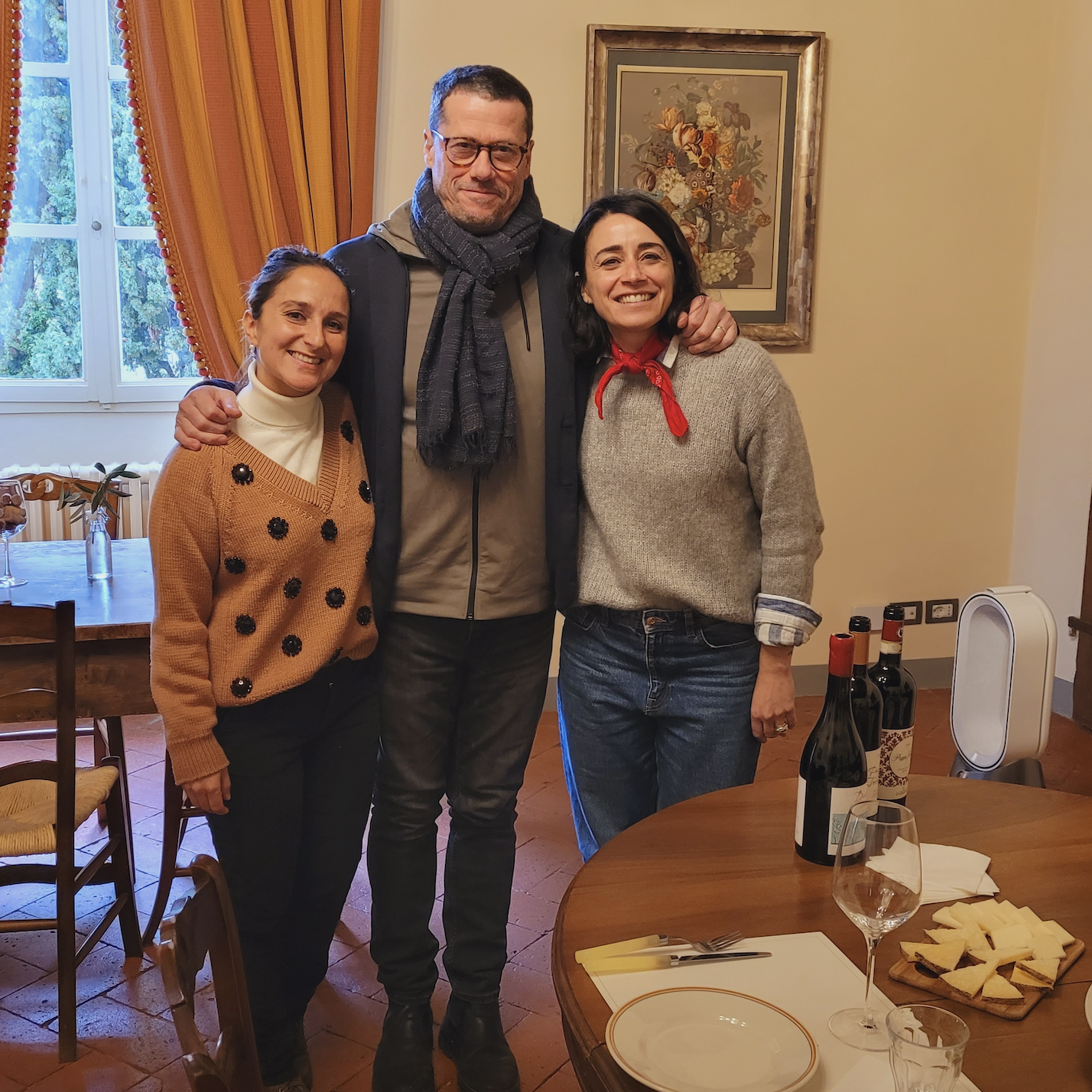
With Cristina Fonte and Margherita Romagnoli – Poggio Torselli/Il Contadino Cusano

Poggio Torselli Chianti Classico DOCG 2022 Il Contadino Cusano, San Casciano

The 2022 Annata and ’21 Riserva/Gran Selezione are the first set of wines to be made strictly as 100 percent sangiovese. As a reaction to the 2021 season’s severe reduction of yields there was no Annata produced and so this is the follow-up to the previous 2020. A new age of style and quality really begins with this vintage, of such sweet Balsamico character in a Chianti Classico of equally positive acidity and simple, if fine tannins. Great length on the Annata and a pleasure to drink.  Last tasted February 2025

Campione: Second vintage with oenologist Carlo Ferrini with a different process and yes the difference is immediately obvious. New tonneaux and 30 hL botti now housing the Annata, old barriques tossed out the window and the new balance is felt in the most palpable way. Rosso di Montalcino comes to mind and while that comparison may seem sanctimonious or anti-Classico, well just taste the style and level of quality. Juicy, blood orange in that regard and pretty much a finished wine. Stands up to be noticed. Drink 2024-2027.  Tasted February 2024

Poggio Torselli Chianti Classico Riserva DOCG 2021 Il Contadino Cusano, San Casciano

The new brand “Il Contadino Cusano” takes flight in 2021 with Riserva (and no Annata produced) because of frost-related reduced yields. An exaggeration of the local Torselli Balsamico and also really tightly wound acidity matched with equal force by grippy tannins. This is a different wine than the Torselli Riserva of the past, now with greater vibrancy and energy. At this stage the wines are made by Alessandro Campatelli with consultancy assistance by Carlo Ferrini. Something special begins and brews with ’21. Drink 2026-2030.  Tasted February 2025

Poggio Torselli Chianti Classico Gran Selezione DOCG 2021 Il Contadino Cusano, San Casciano

The new branding is called “Il Contadino Cusano” under the ownership of Italian-Canadian Pasquale Cusano from Puglia who moved to Vancouver after the famous Florentine flood of 1966. Now a jeweller, publisher of Nuvo Magazine and proprietor of Poggio Torselli since 2021. There may be 83 hectares of vineyards but just 25 percent are used to bottle the wines and the rest is sold off. The wound intensity of Riserva gives way to greater concentration and depth in Gran Selezione but the nervous energy is not the same. Here a more settled and luxe 100 percent sangiovese that will age well yet drink beautifully pretty much all the way through. Sneaky tannins creep onto the back palate and take hold. Drink 2026-2032.  Tasted February 2025
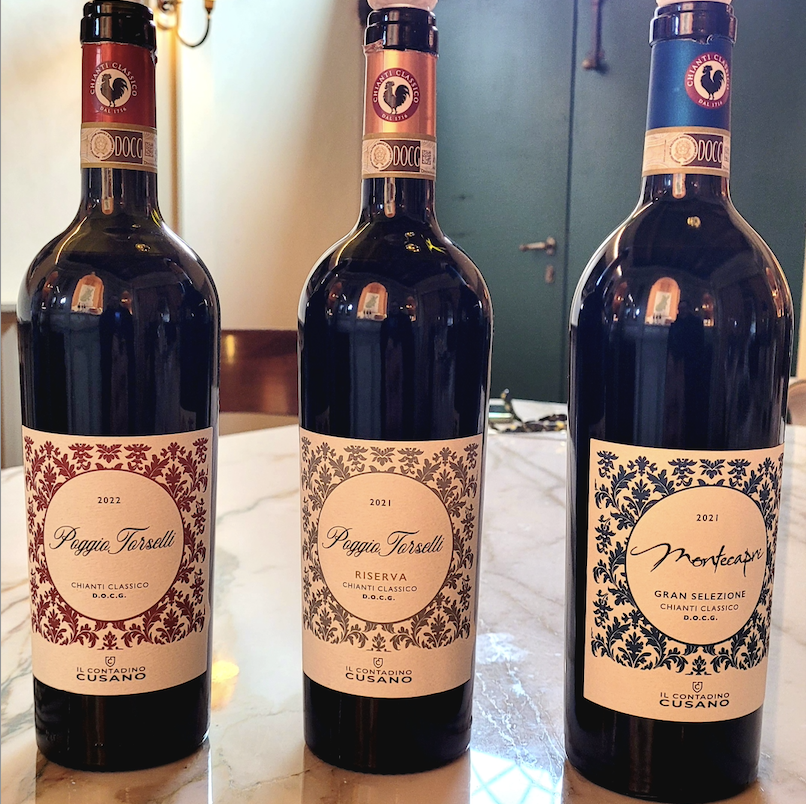
Poggio Torselli Il Contadino Cusano Bizzarria 2023, Toscana Rosso IGT

Just sangiovese, no wood, fermented and aged only in brand new concrete tanks. Carbonic maceration meets alcoholic fermentation. Made by Carlo Ferrini from fruit out of the Gentilino Vineyard purchased by Cusano in 2022 on the edge of San Casciano village behind the COOP grocery, direction Sant’Andrea in Percussina. The name refers to the “Citrus Bizzarria and fittingly the name translates as “oddity.” Bizzaria is the only citrus tree that produces three kind of fruits, a lemon, bitter orange and a third that combines the qualities of the two. That said there is nothing truly bizarre about this wine. Served chilled it might create a buzz on the palate and the uninitiated might see it as a surprise effect but in today’s vinously hip world this fits right in. The dictionary entry of glou-glou – and clean. Drink 2025-2026.  Tasted February 2025

Poggio Torselli Il Contadino Cusano 2020, Toscana Rosso IGT

A blend of cabernet sauvignon, cabernet franc and merlot at that time made by winemaker Alessandro Campatelli, fermented in steel and aged one year in barriques. A rich, concentrated, spiced, aromatically spicy and woody Bordeaux blend, but the local Balsamico can’t be denied entry into the overall character. Some toast in the barrels is broadly evident and this reminds of a South African red. Got that soil funk and earthy/peaty quality, finishing at ground espresso. Needs another year to integrate though the stuffing will only give it three more after that. Drink 2026-2029.  Tasted February 2025
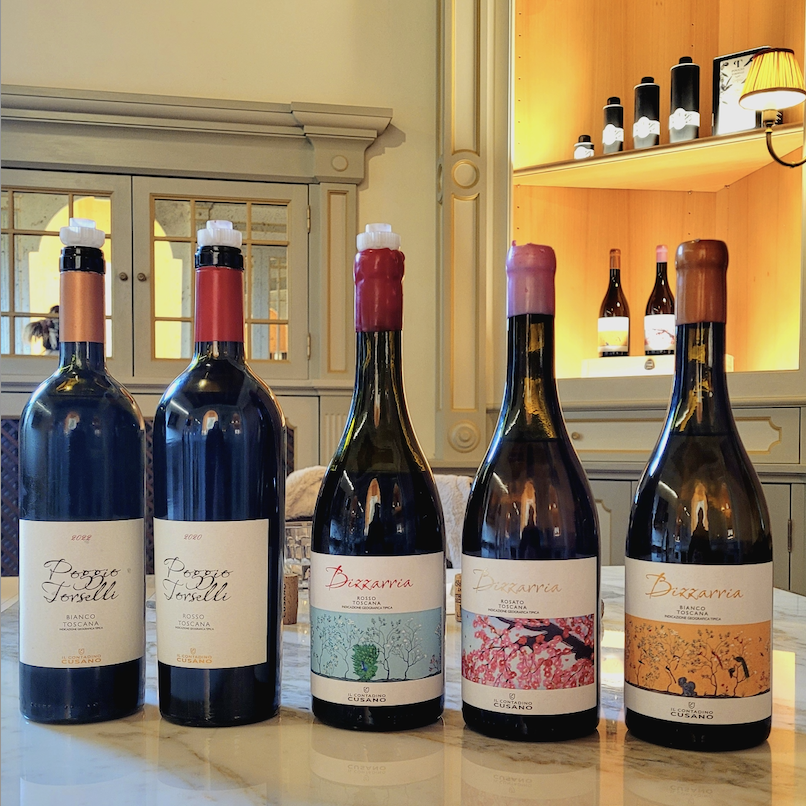
Poggio Torselli Il Contadino Cusano Bizzarria 2023, Toscana Rosato IGT

The Bizzarria is a grafted tree combining Florentine citron with sour orange, was studied in the Medicean Gardens in the mid-17th century and produces separate branches of both citrus fruits. This Rosé. is made with equal parts sangiovese and pugnitello by way of a micro-generous two hour macerate skin-contact style so that the cheese rind and musky citrus skin combine for something you’ve experienced before. Extract and tannin compound the earthy complexity to mean that food is pretty much necessary as an accompaniment. Sformatino di Zucca with goat cheese just has to be the pairing. Drink 2025-2026.  Tasted February 2025

Poggio Torselli Il Contadino Cusano Bizzarria 2023, Toscana Bianco IGT

The last of the Citrus Bizzarria trees were discovered in 1980 by Paolo Galeotti, the “Citrus Archaeologist.” He grafted a twig from his find and waited three years before announcing the find of the strange citrus tree that grows lemon, orange and a fruit that is a combination of both. Il Contadino Cusano is an apt producer to use the name considering Poggio Torselli’s passion and aptitude for growing citrus in their incredible gardens. Bizzarria as Bianco is made with trebbiano and (less than five percent) malvasia with a long skin maceration and only stainless steel to age the wine. Negligible cheese and musky citrus as compared to the Rosato but also less extract and tannin because the grapes do not call for or are want to deliver the same kind of results. A clean and direct Bianco with ultra vibrant frescezza for refreshing use. Much easier to drink and a wine that would not necessarily require food alongside. Drink 2025-2026.  Tasted February 2025

Poggio Torselli Il Contadino Cusano 2022, Toscana Bianco IGT

Of chardonnay, sauvignon blanc and gewürztraminer growing and picked together, co-fermented and aged for six months in tonneaux. This being the second vintage from fruit out of just one hectare for the mildest of orange wines, sharp, tart, quite focused and developing texture as it goes. Like the juices of lemon, mandarin and something tropical (guava perhaps) with the consistency of a simple syrup. An unusual wine, semi-aromatic and the gewürz does not take any real control. There is a hint of rosewater and yet the chardonnay takes the lead. Pretty easy to knock back. Drink 2025-2026.   Tasted February 2025

With Bernardo Manetti, Jessica Dupuy and Giovanni Manetti

Fontodi, Panzano

Conca d’Oro, Vigna del Sorbo, Terraze de San Leolino, Pastrolo, Pietraforte, Macigno di Marne, Dino, Amphora, Flaccianello delle Pieve, Il Presidente del Consorzio and Manetti. So much has been written on these Godello pages about Fontodi over the years and so this link should sufficiently fill you in.

Related – Fontodi’s one hundred per cent sangiovese
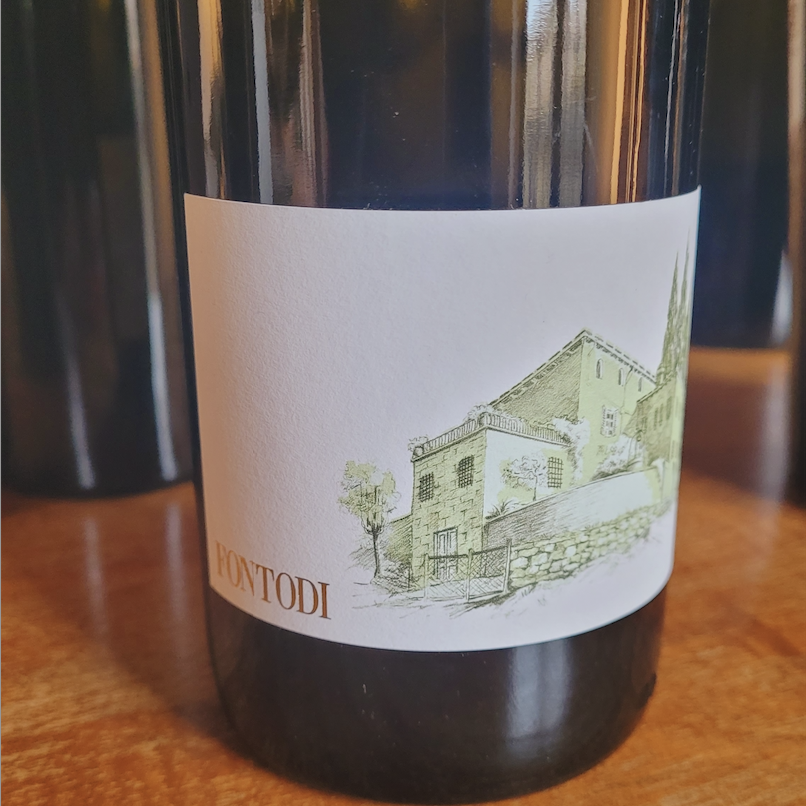
Fontodi Bianco Vino Biologico 2022, Colli Toscana Centrale IGT

From a mixed vineyard, mainly of trebbiano and san colombano but just the trebbiano is chosen from the 50 year-old vines for a project that started in 2016 in response to climate change and a vineyard more consistently ripening the fruit. “You need to put your glasses on to find it,” says Bernardo Manetti and this being the sort of white that sees a maximum alcohol potential of 12.5 percent alcohol. Picked in mid October, aged in used 600L casks for six to eight months. Higher pH and lower acidity as compared to the sauvignon blanc and so a sapid white, never vivid or dramatic, chosen to develop character through wood and not maceration. Still the wine travels on an upward trajectory up the sides of the palate and back down again. “Effete tampone” is a sponging that happens with thanks to the lees naturally cleaning the wine to get it to this place of clarity. Just 800 bottles are produced.  Last tasted February 2025

A new sku for Fontodi and the inspiration comes from the next generation, that being Bernardo Manetti. Made with vermentino, 50 year-old vines, fermented in 600L barrels, 2nd passage (previously used for sauvignon blanc Merrigio). Low temps, every day bâttonage, whole cluster pressed, no skin contact and use of dry ice. Picked at high acid and this is just about spot on but thankfully a dry if not exceptionally hot season has resulted in great freshness, piquant personality and a truly linear Bianco. This is smart and focused. Just a bit more than 12 percent alcohol. 780 bottles produced. Drink 2023-2024.  Tasted October 2023

Fontodi Chianti Classico DOCG 2022, Panzano

Just only recently bottled, a 100 percent sangiovese from a very hot season and the challenge faced because of a devastating hailstorm that occurred on the night of August 15th. Thirty hectares (of 105 total) were lost to this rarest, once in a century happening. “It was revolting,” says Bernardo Manetti, “if you smelled the grapes after the hail.” The approach for 2022 became one of lower extraction and less aging, the wines taken out of wood in July after just nine months. The severely reduced crop yielded this concentration and inedible stamp of Conca d’Oro richness with a fine tannic presence and ripeness at peak both adding to the compaction of the wine. Drink 2026-2031.  Tasted February 2025

Fontodi Chianti Classico DOCG Dino 2022, Panzano

Dino is the sangiovese fermented and aged in amphora, from the southwest facing vineyard lower down in the Conca d’Oro overlooking the Chianina stables. A strangely low alcohol wine at 13 percent “and we don’t fully know why,” says Bernardo Manetti, but it is in fact a cooler site where temperatures really drop down in the night. Bottled in June of 2024 after three months of maceration and just a year and a half of aging. Always the push-pull between earthy and musky, as here with high poly-phenolic character. There is a presence to the 2022 with thanks to the lithe frame housing fleshy red fruit. Drink 2025-2029.  Tasted February 2025
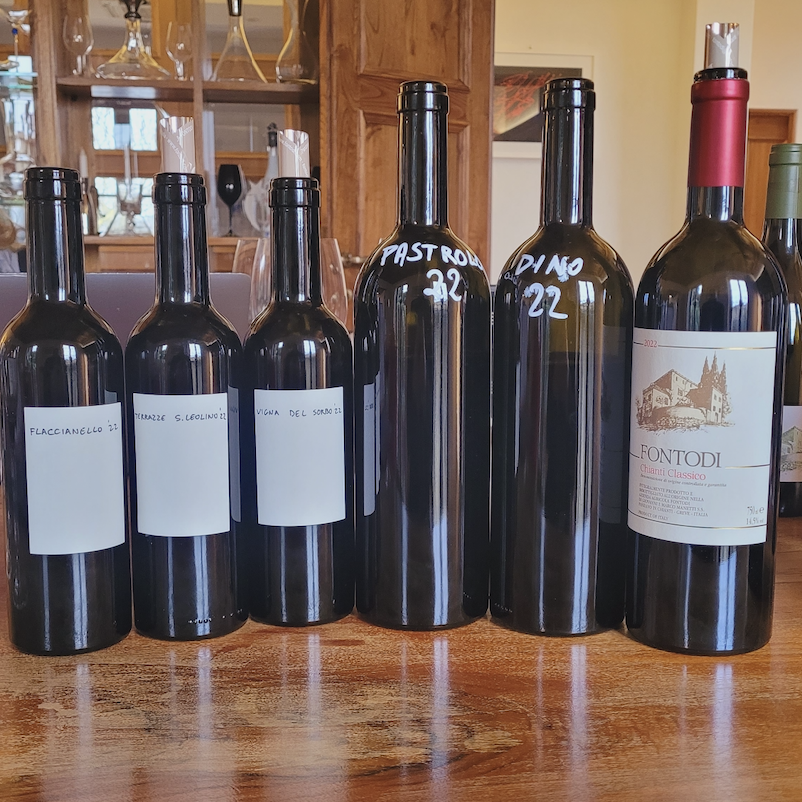
Fontodi Chianti Classico Gran Selezione DOCG Pastrolo 2022, Panzano

Like Dino (in amphora) the aging time in wood for Pastrolo is shorter and so this 2022 put to bottle in June of 2024. From the Lamole (UGA) vineyard pruned in a variation of alberello or goblet training style but the vines run higher due to Pastrolo’s steep terraces. The soils are unique, marine in origin and called marna di macigno, in other words a Galestro type of cracked or flaky manifestation, but in this case from sandstone. The grace and harmony of ’22 Pastrolo is soothing with a delicasse that no other Gran Selezione will ever show. It’s remarkable from this more than warm vintage and the 14.5 percent alcohol is barely perceived. This will wake you up, especially if you are tasting in the first part of the morning. Thank you Pastrolo. I needed that. Drink 2027-2035.  Tasted February 2025

Fontodi Chianti Classico Gran Selezione DOCG Vigna del Sorbo 2022, Panzano

A finished wine because today is bottling day and what serendipity to taste it on the day. Vigna Del Sorbo is one of the vineyards that escaped the August 16th hail because it’s on the other side of the (Conca d’Oro) valley. Full quantity as a result, approximately one-third matured in new wood, the second year spent in older cask. Freshness captured and as always Vigna del Sorbo is the spiciest of the Gran Selezione but also the one of the three with the finest, if grainiest tannic profile. This after an aromatic wave of floral and mineral before giving way to a sangiovese that integrates with impunity. You’ve got to figure that the age of the vines are responsible for handling the heat of 2022. Drink 2027-2036.  Tasted February 2025

Fontodi Chianti Classico Gran Selezione DOCG San Leolino 2022, Panzano

Just being bottled as we speak and the quietest opening pronouncement as compared to Pastrolo (Lamole) and Vigna del Sorbo (Panzano – Conca d’Oro). This from the terraces below and in surround of the Pieve up on the hill where Alberese soil predomimates, unique to Fontodi because schisty clay (with Galestro), Pietraforte (calacreous sandstone conglomerate) and Marna di Macigno (marine sandstone) define the other wines. The Alberese limestone makes for a crispier and more croccante sangiovese, magnified in 2022 and while this is also quite tannic the catalyst to exaggeration is made by the highest acidity of the three. Vinoso but even more succulenza, a very specific character that is San Leolino. In fact this Gran Selezione will take longer to come together, but again the vintage dictates and solicits this response. Drink 2028-2037.  Tasted February 2025

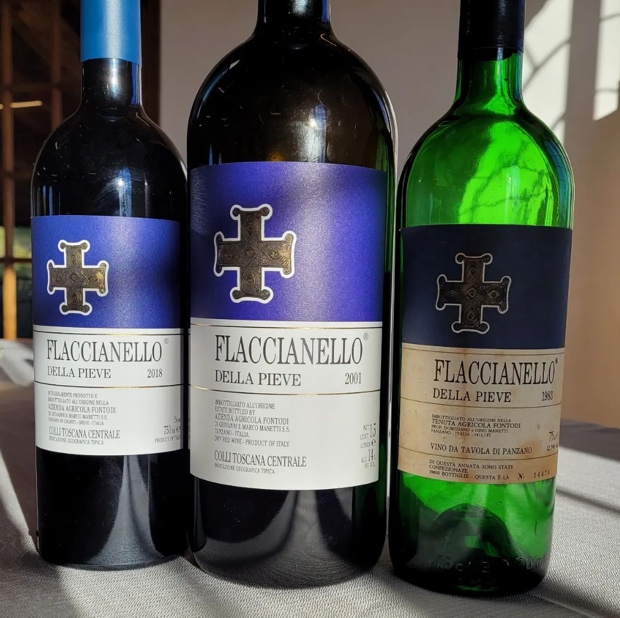
Fontodi Flaccianello delle Pieve 2022, Toscana Colli Centrale IGT

“Flaccianello for us is always the finest expression of Fontodi terroir and sangiovese grown in our territory,” says Giovanni Manetti. Truth and still a certain sense of irony as coming from the President of Chianti Classico consortium. Flaccianello was struck by hail in 2022 and so one third of the crop was lost because the western vineyard Poggio was obliterated on August 16th. The other two (Pecille and La Cappellina) survived and in the end the Pietraforte that runs through still granted the freshness, structure and especially acidity. There is a more immediate floral bloom and perceived balance from 2022, also sneakier tannins than the previous few vintages of Flaccianello. The longevity is a veritable guarantee, for 20-25 years and quite possibly more. Drink 2027-2042.  Tasted February 2025
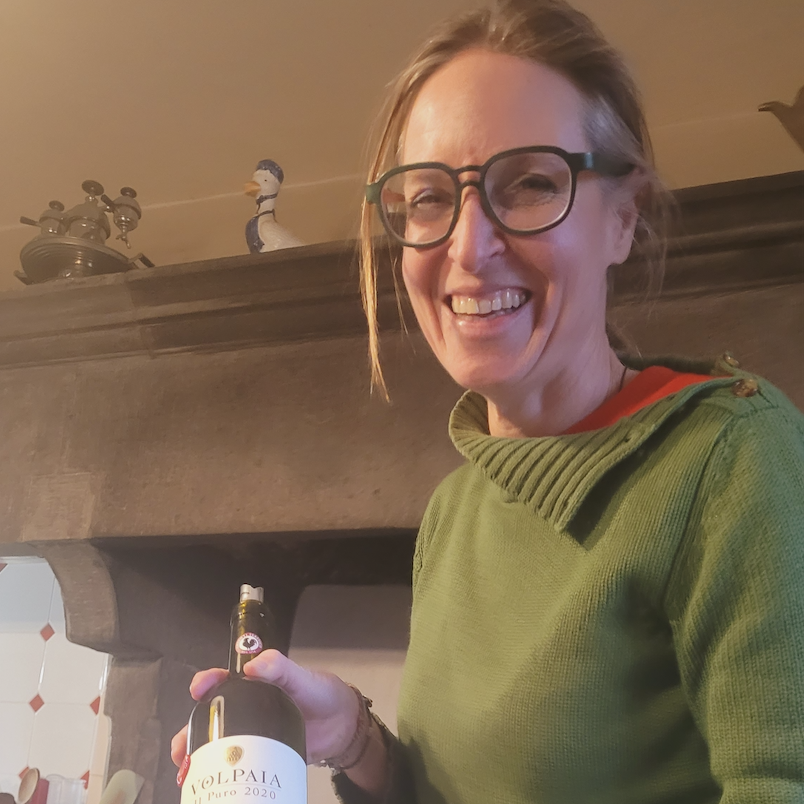
Federica Mascheroni – Volpaia

Volpaia – Radda

There are times when it feels as though in the Chianti Classico territory “all roads lead to Volpaia,” a saying that mimics the most famous one of “all roads lead to Rome.” Yet apropos in the context of Castello di Volpaia, meaning “fox’s lair,” though not actually a castle but formerly a walled in medieval village. Also the gateway to Monte San Michele at the peak of the Monti del Chianti. Historically significant within Radda and much of the village is owned by the Stianti-Mascheroni family, makers of Volpaia wine and oil. There is La Leggenda, the great tale of how the Gallo Nero came to be the symbol of Chianti Classico and then there is another La Leggenda, that being the matriarch of Volpaia, Giovanella Stianti. Her daughter Federica Mascheroni brings the family’s work to the world.
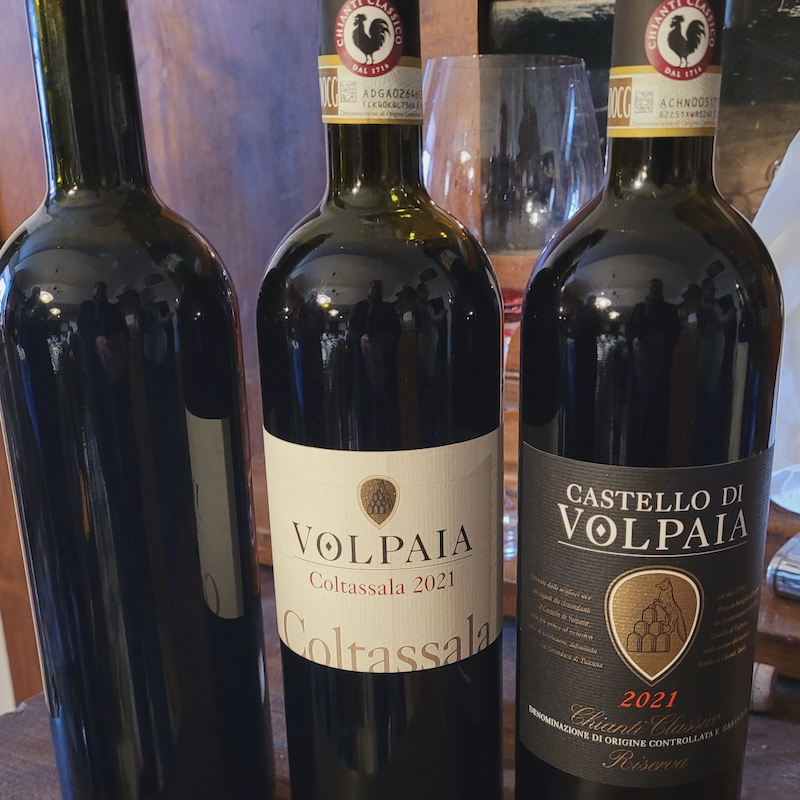
Volpaia Chianti Classico Riserva DOCG 2021, Radda

Surprising perhaps because 2021 and well, Riserva but acidity is tops from Volpaia. Then again it’s sangiovese and should there really be any surprise? Just three-plus years in but my goodness how the holy trinity has come together to make this work right here, right now. Fruit, acid, tannin, all aligned horizontally, the first sliding into the second and in turn to the third. Ready and willing.  Last tasted February 2025

Fine swirl of sangiovese with the highest quality 2021 fruit that must and will show the fineness of Volpaia’s high elevation Radda no matter the quantity gained or lost. And the vintage was not easy though the estate’s position was a plus for making cool and fresh Riserva from the vaults of a hot vintage. For Volpaia this is darker fruit, not full-on 2020 dark but thankfully the location is there to keep deep breathes alive with the freshest of Raddese air. Still this is bigger for Riserva and bones are truly strong. Drink 2025-2032.  Tasted February 2024

Volpaia Chianti Classico Riserva DOCG 2000, Radda

Twenty-four years (and 25 to the vintage) later the Riserva from a cool-ish vintage shows its predicted predilection to arrive with acidity intact. The fruit is fully into chewy leather as dried plum and liquorice with the baking spice cupboard providing the accents. One of the first years of Lorenzo Reggoli’s tenure at Volpaia and very much one of his vintages – so there will always be an affinity for 2000 to be connected to the present day wines. Drink 2025-2028.  Tasted February 2025

Volpaia Chianti Classico Gran Selezione DOCG Coltassala 2021, Radda

The artist formerly known as Riserva and previous to 1999 also Toscana IGT is now become Gran Selezione, as of the 2015 vintage. Still it’s always been Coltassala, sangiovese inclusive of (five percent) mammolo. Like Riserva there is acidity more than merely qualified as Raddese but with this label extrapolated as Volpaia. Volpaia the hill below the Chianti mountains where structure is texture and mouthfeel is length. The Gran Selezione that speaks clearly in youth and so long as the catalyst driver leads the way it will persist like this for another 20 years.  Last tasted February 2025

Always a concentrated sangiovese, from high elevation, solar radiated and night cooled vineyards. Still a five percent mixing in of ultra specific mammolo, spice bringer and catalyst to create this unique interaction with sangiovese. A fulsome vintage, fruit and tannins thick as thieves, luxe behaviour guaranteed and time on side for one of the longest runs to be had in Chianti Classico. The palate and mouthfeel are already showing signs of great activity and you could actually drink this now with the correct salty protein alongside. Drink 2025-2032.  Tasted October 2024

Volpaia Chianti Classico Riserva DOCG Coltassala 2000, Radda

Impressive freshness persists because of Volpaia acidity, owing to location, location and location. Compared to the first Riserva 2000 there may not by any more concentration but there is more specificity and cool factor herbal notation. The Coltassala feels like it comes from a cooler vintage, even more so as compared to the non etichetta label and that puts it in a more complex situation. Drink 2025-2028.  Tasted February 2025

Volpaia Chianti Classico Gran Selezione DOCG Il Puro 2021, Radda

The refinement of Il Puro is apparent from the start for a sangiovese as Gran Selezione 100 percent worthy of its grape and name. The pure one is Volpaia perfume incarnate, cool and floral, Chianti Classico spice masala developed low and slow, acidity as unctuous as any but always di Volpaia. Hypnotizing elements make this wine go straight to your head though there is clarity of thought. Also beating of hearts because of its philanthropy. The focus and finesse are grand, the hypnotic effect causing a loss for words. Il Puro 2021 is a thing of great beauty – what else needs to be said? Drink 2029-2040.  Tasted February 2025
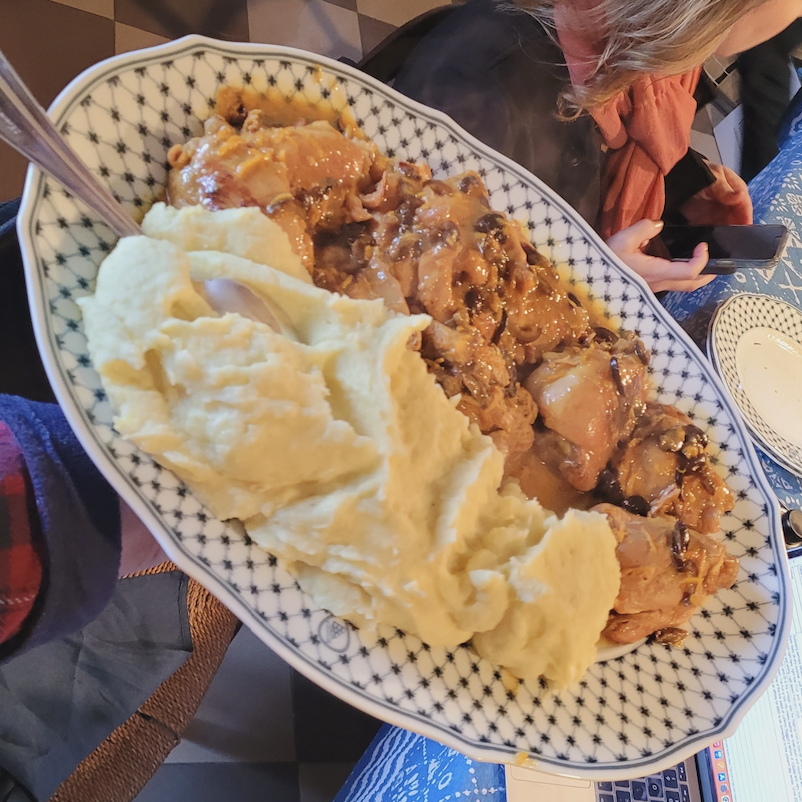
Roast Chicken and Mash Comfort lunch by Giovanella Stianti

Volpaia Chianti Classico Gran Selezione DOCG Il Puro 2020, Radda

Truly a different vintage for Il Puro as compared to 2021 for the Gran Selezione transformed in 2010, first made in 2006 after having been planted in 2000. This the GS understood to be worthy a full five years before Coltassala because the single vineyard concept and the greatness of the plot was noted earlier on. More herbology, dusty Balsamico quality and a notable aroma of wild “finnochio.” More rugged by comparison, rough and tumble, crunchy and taut. Tannins will take long to resolve and roasted protein is currently (and for the next five years will be) a must alongside. Drink 2027-2036.  Tasted February 2025

Volpaia Balifico 2021, Toscana IGT

Still and always two-thirds to one sangiovese and cabernet sauvignon, here from a wine almost too young to appreciate and yet at Volpaia there is always a window of accessibility because, well acidity. Location, elevation and the natural world conspire to allow every wine a chance at speaking about itself, even before the elements have come together to truly do so. The Mascherone-Stianti family always knew that sangiovese could speak for the place, to be understood by people who knew Bordeaux varieties better and to this day the IGT is based that way. This Balifico plays a part in the estate basilica for a vintage of many gifts abided by with utmost respect and expertise. Drink 2028-2036.  Tasted February 2025

Volpaia Balifico 2000, Toscana IGT

Oh the delight of a chocolate “After-Eight” mint in a 24-25 year-old IGT from high elevation in Chianti Classico territory at the upper steps of the Chianti Mountains. Many local reds at the stage will just feel old or at least taste like a mouthful of liquid truffle but Balifico’s acids are intact, even though the aromas are already losing their lustre. One-third cabernet meets sangiovese and by now they may as well be equally dispersed because together they conjoin as one. Just a hint of tannin remains, likely not real but sensed anyway. Drink 2025-2026.  Tasted February 2025
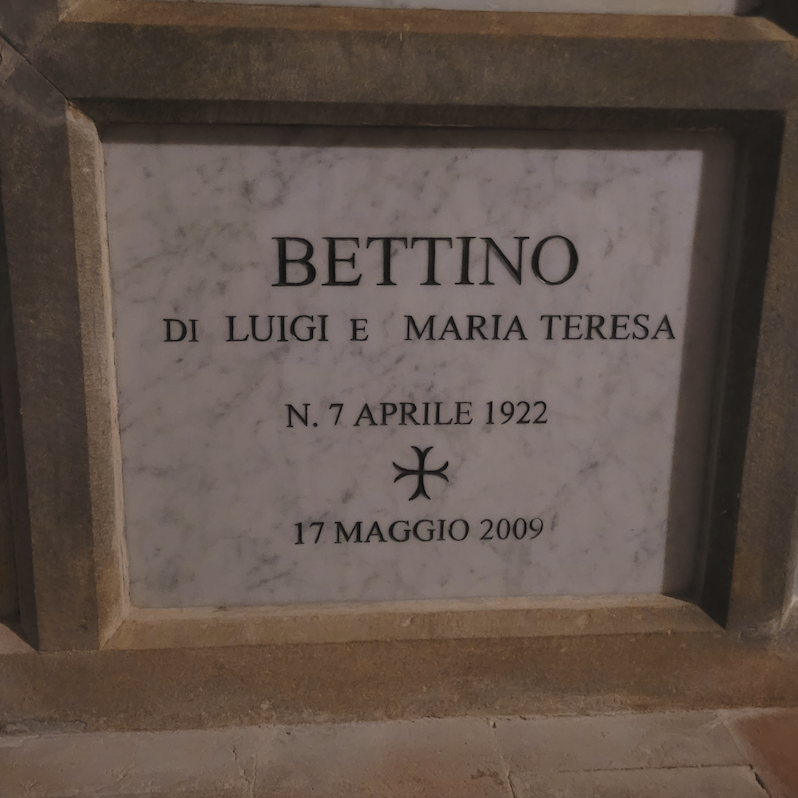
Shared birthday between Godello and Bettino Ricasoli

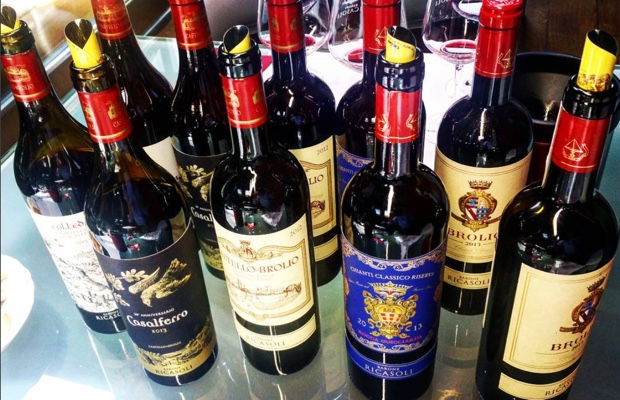
Ricasoli – Gaiole

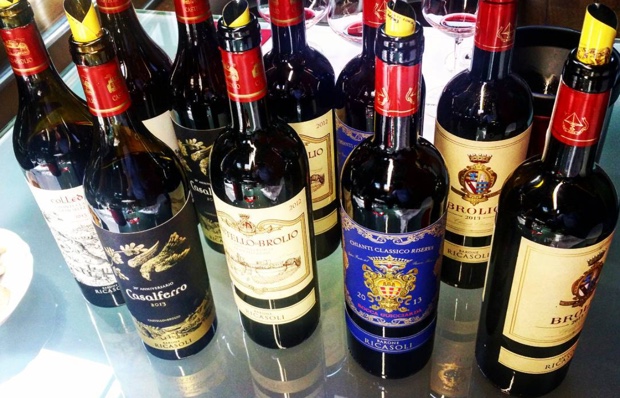
Ricasoli and Castello di Brolio are two historic locations that have been visited on several occasions. This link will bring you back.

Related – Ricasoli, Barone Ricasoli

The last decade has been dedicated to the cru investigations above and beyond Gran Selezione. The three Gran Selezione are now Colledilà, Roncicone and CeniPrimo, each a unique and distinct iteration of Ricasoli’s most important identified blocks of their large amassment of Gaiole’s Chianti Classico terroir. Relatively recent news for Ricasoli is that the company now owns nine hectares in the UGA of San Donato in Poggio and also recently purchased two point five in Vagliagli, at 350m of elevation just below the Tolaini estate.
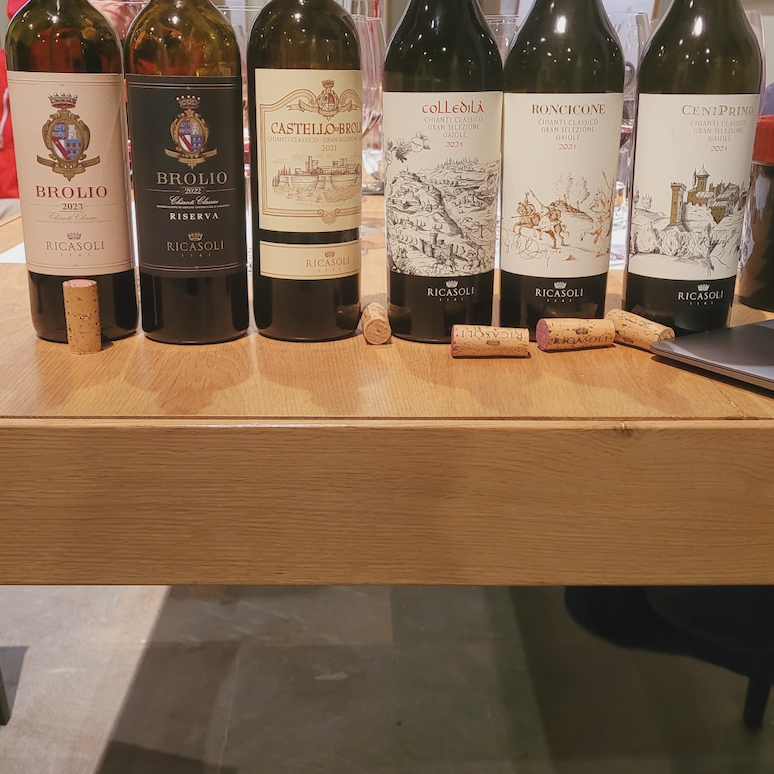
Ricasoli Brolio Chianti Classico DOCG 2023, Gaiole

Francesco Ricasoli sets the 2023 up by describing it as “crispy,” which translates as freshness but who could not think of Brolio ‘23 as juicy. Classic black cherry for this label of 600,000 bottles encompassing all five soil types, 250 hectares and everything that is collected, layered and transcribed as the Ricasoli estate. Drink 2025-2027.  Tasted February 2025

Campione: Youthful, still a bit reductive in a sweet bell peppery way, herbal amaro yet to stretch and let the fruit speak first. Good fruit however, substantial and showing Gaiole’s abilities for 2023.  Tasted at The Chianti Classico Collection, February 2025

Ricasoli Chianti Classico Riserva DOCG Brolio 2022, Gaiole

Riserva is truly the extension of Annata, from across the entirety of the Ricasoli estate and aged longer. Accedes to more concentration but still the Ricasoli style must be attended to; sharp, clean, drinkable and a provider of joy. This much is true and yes, the clarity is on display, so obvious in its openly generous and frank transparency. If there were rustic aspects 10 years ago they have long since left the building. It has been a matter of fine tuning, vintage after vintage. Drink 2025-2028.  Tasted February 2025

Ricasoli Chianti Classico Gran Selezione DOCG Castello di Brolio 2021, Gaiole

The jump from Riserva to Gran Selezione is a significant one though the conceptualization remains similar, to draw from the various soils, of Alberese, Macigno and schistous clay manifesting as Galestro. There are other places within Chianti Classico that hold the cards to all the major soil groups but Ricasoli holds the great advantage of being able to variegate out of several micro-zones and climates. This makes for the most rounded Gran Selezione but also one with more layers than that of the other two appellative wines. And tou can drink this non-cru GS straight away. Drink 2025-2031.  Tasted February 2025
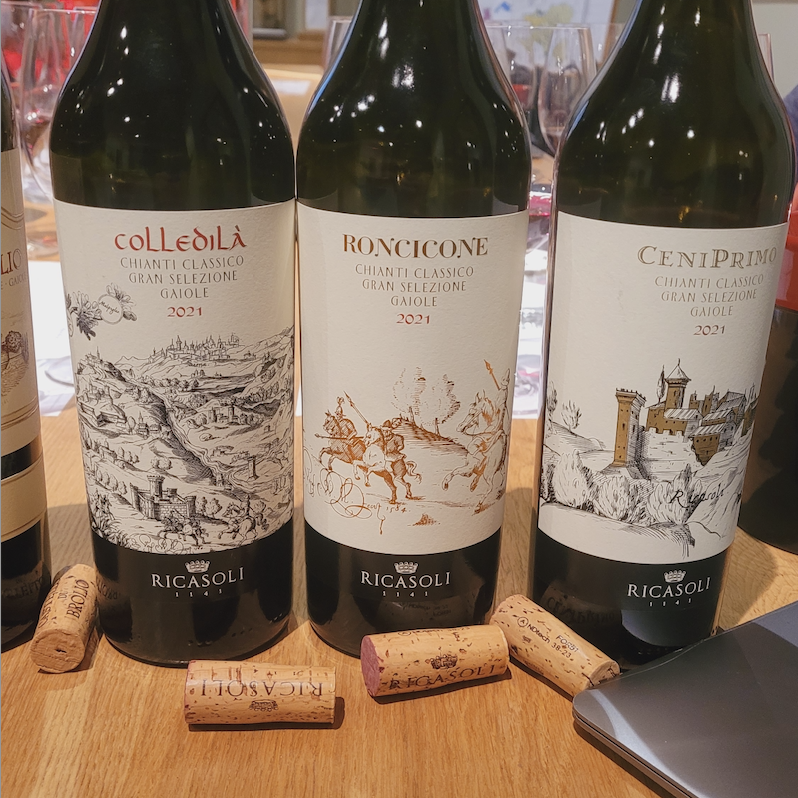
Ricasoli Chianti Classico Gran Selezione DOCG Colledilà 2021, Gaiole

The first single-focused Gran Selezione (and one of four) is at its most floral and juiciest. In other words a sangiovese of great succulenza, accessible and no doubt the sort to attract great international attention, gracing top vintage and year-end lists, and for great reason. It draws you in and nurtures the palate with philanthropic generosity. No longer shy, already open and forthright, its character wise and strong. Drink 2025-2032.  Tasted February 2025

Ricasoli Chianti Classico Gran Selezione DOCG Roncicone 2021, Gaiole

The soils are marine in origin, sandstone based with fossils present. The most sapidity of the three single-focused Gran Selezione, driven by soil, profound of conception, deeper thought and finally understanding. The sapid one indeed, taut and botanical, the soil type bringing out an herbal, verdant and tonic-inflected style. Baritone, with a low rumble and cool pool of fruit with seriousness of acidity. High level poly-phenolic sangiovese, recognizable as such to the greatest degree. Drink 2026-2033.  Tasted February 2025

Ricasoli Chianti Classico Gran Selezione DOCG CeniPrimo 2021, Gaiole

Comes from the vineyard with a west facing hill leading down to the Arbia River with fluvial terraces. The terroir of a geologist’s dream, pebbly with silt deposits on steep slopes that require three harvest passages, mainly due to the different fertilities of lower, middle and high parts. Like the Roncicone the phenolic presence is strong and in connection with the Colledilà the generosity is so very attractive. CeniPrimo might be a terrific mix of the two but soil and style conspire to make sure it’s a Selezione of its own accord. That is also defined by the highest tannins of the three and more time is needed to release its charm. Drink 2027-2035.  Tasted February 2025
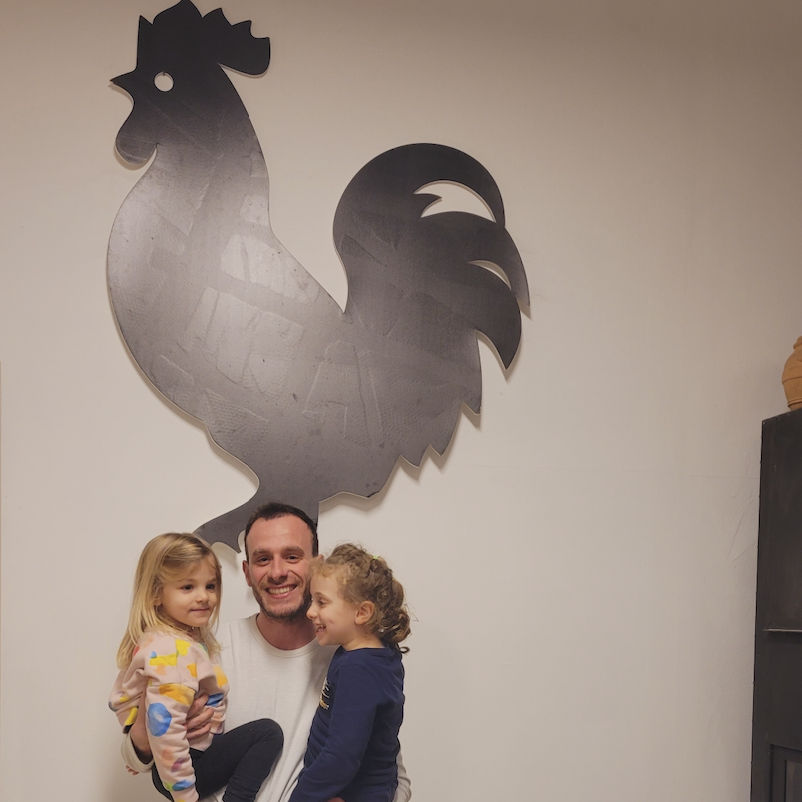
Proud dad, uncle and Gallo Nero producer Giacomo Nardi

Nardi Viticoltori – Castellina

Giacomo Nardi worked at Castellare in Castellina and his brother at Casanova di Neri in Montalcino. Giacomo takes great pride in the wines being made at Nardi Viticoltori and when asked for what he considers to be a list of top winemakers, this was his response. Alessandro Cellai (Castellare), Carlo Ferrini (Pietradolce, Giodo, etc.), Gioia Cresti (Carpineta Fontalpino) and Paolo Salvi (Montevertine and Gagliole).
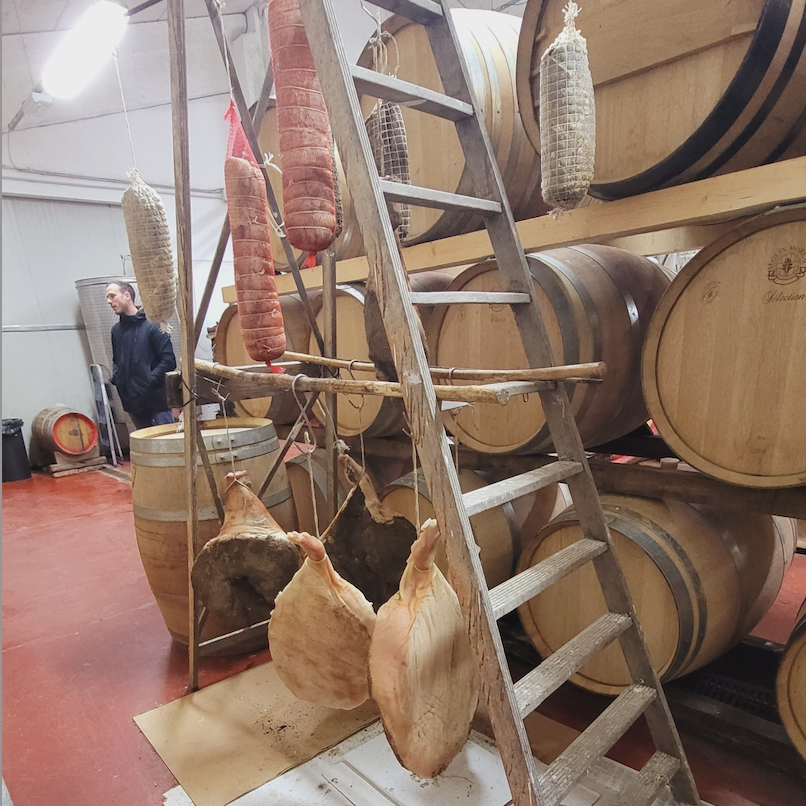
Curing salumi at Nardi Viticoltori

Nardi Viticoltori Farfaro 2024, Toscana Bianco IGT

Made with 85 percent trebbiano and (15) malvasia just bottled three weeks ago. Simply meant as a white of “easy drinkability.” Sapid, mineral-metallic and well, juicy. Just 11 percent of alcohol, a bit leesy and quick to the point. Drink 2025-2026.  Tasted February 2025

Nardi Viticoltori Baccheri 2022, Toscana Rosso IGT

Baccheri was the name of Giacomo Nardi’s great-grandparents that lived on the farm more than 100 years ago. A 60-40 sangiovese and merlot blend, six months in wood. “Must be a gastronomic wine – 100 percent.” Red fruit, merlot softness and sangiovese acidity. Restaurant by the glass. Drink 2025-2026.  Tasted February 2025

Nardi Viticoltori Chianti Classico DOCG 2022, Castellina

Sangiovese with five percent colorino and canaiolo first produced in 2014 now with the image of Siena’s skyline on the label. Soils are clay with some limestone and for Giacomo “the 2022 is better in the mouth.” Aged in a mix of Tuscan, Slovenian and French oak, “essential for aromatic complexity.” Now just in bottle for a bit more than a month, expressive of fruit in a broad way and the tannins are present in two parts, of softness and then in fine grains. Nardi picks on skin and alcohol – not on the pips. He insists they don’t necessarily have to be crunchy and brown. Surely a reaction to climate change and because he wants to make a wine of drinkability. Makes sense in Castellina and yes, there is more than ample ripeness in his 2022. Well done, Giacomo. Drink 2025-2028.  Tasted February 2025
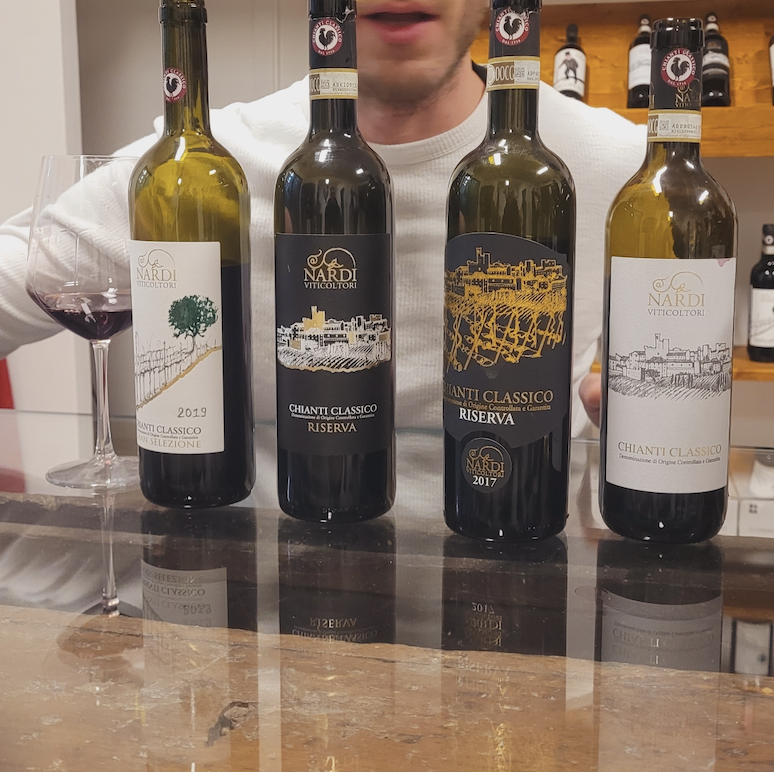
Nardi Viticoltori Chianti Classico DOCG 2021, Castellina

Quite a different vintage now that the 2022 has been tasted and it sure seems like Giacomo Nardi and his brother took another step forward in 2022. This 2021 is a bit more rugged and just not as finessed in the mouth.  Last tasted February 2025

For Giacomo the Classico is a “traditional blend and vinification.” Elevated and lifted aromatics from Castellina for Annata, aromatically charged, lifted, phenolic and allied to the palate with well ripened fruit. Sees time in Botti (Tuscan from near Ruffina) and Slavonian wood. Not so much a matter of volatility as about freshness, but a verdant stripe does run thorough the perfume’s middle. Cool, minty savoury, sapid and salty with a feeling of the endemic ethereal. Great curiosity and controlled intensity for Nardi’s 2021. Drink 2024-2029.  Tasted twice, February 2024

Nardi Viticoltori Chianti Classico Riserva DOCG 2021, Castellina

The first vintage was 2016, the following vintage was so hot and dry but Nardi did the yeoman work and made a truly drinkable wine. The 2021 is blessed of the good if basic red fruit vintage, here with more polish and refinement as compared to the Annata. You can feel the passion and the piety in this work. Drink 2025-2028.  Tasted February 2025

Nardi Viticoltori Chianti Classico Riserva DOCG 2017, Castellina

Now five to nearly six years in bottle and still going strong, with thanks to moderate alcohol and even though Giacomo does not feel like the acidity is up to par – it still does what matters. There is in fact some elegance and plenty of life left in this challenged wine.  Last tasted February 2025

Hot year and one of the great recent challenges for a Chianti Classico vintage but Nardi’s Riserva comes out at 13 percent alcohol. What is this witchcraft? What kind of wizardry or magic is practiced on this farm? Finished harvest on the 22nd of September, two full weeks after rains finally came and nearly fulfilling the requiem to arrive at phenolic maturity. Still this is Castellina and waiting through to October would have been impossible. Yes acidity is lower but still very present and the wine has aged beautifully. You feel here that you are drinking the attention and passion of a small production with this being the very best that could have come from such a challenge. Fundamental instincts followed and sangiovese that speaks to the connection between family and place. Just a touch of drying maturity coming out at the finish. Drink 2024-2026.  Tasted February 2024

Nardi Viticoltori Chianti Classico Gran Selezione DOCG 2021, Castellina

Annata is a bit burly, Riserva more refined and Gran Selezione 2021 takes the finesse and focus to another level altogether. Certainly a more approachable GS as compared to the 2019 and again you can see just how much the Nardi brothers have figured out from one vintage to the next. Still vertical and yes the structure is serious but the integration of the Slavonian wood is more in tune with the fruit. Balsamico and croccante crunch for a special Gran Selezione out of 2021. Just 1,800 bottles produced. Drink 2028-2033.  Tasted February 2025

Nardi Viticoltori Chianti Classico Gran Selezione DOCG 2019, Castellina

The first vintage, from Vigna del Pino to mark the Pine Tree at the top part, with only clay and no limestone in this block. Typical Castellina soil in this valley, a top vintage for Nardi and the fruit separated. “Old style of sangiovese that my father planted to the T12 clone.” Long maceration, up to 35 days after alcoholic fermentation and the style is indeed old school, vertical, fruit as purple as they come and it was Alessandro Cellai who identified the block when the grapes were being sold to Castellare. Sees 20 months in Slavonian Botti, acidity maintained is really high and the structure rumbles low below. Wait two more years for the grip to relax and the tannins to integrate.  Last tasted February 2025

First vintage from the one hectare vineyard, “our vision of the different sangiovese,” the dark soul and D12 (Emilia-Romagna) clone planted by Giacomo’s father back in 2002. Small bunches, strong and thick-skinned leading to a requiem of longer macerations (as many as 30-35 days). Darker of colour and a richer version of Nardi but more important is the croccante and graffiante nature of the tannins. Great acidity captured (at 6.2 tA), a full half to three-quarters higher than the Annata and Riserva. Th exposure is northeast (which makes dad look like a genius) and the soil is a very strong clay. Sees 20 months in Slavonian oak and evolution is low, slow and relatively forever. Balsamico finish and acidity (more than tannin) is the driver. Think Brunello if you like but this is purely Chianti Classico Gran Selezione. A father is and a grandfather would surely be proud. Drink 2026-2033.   Tasted February 2024
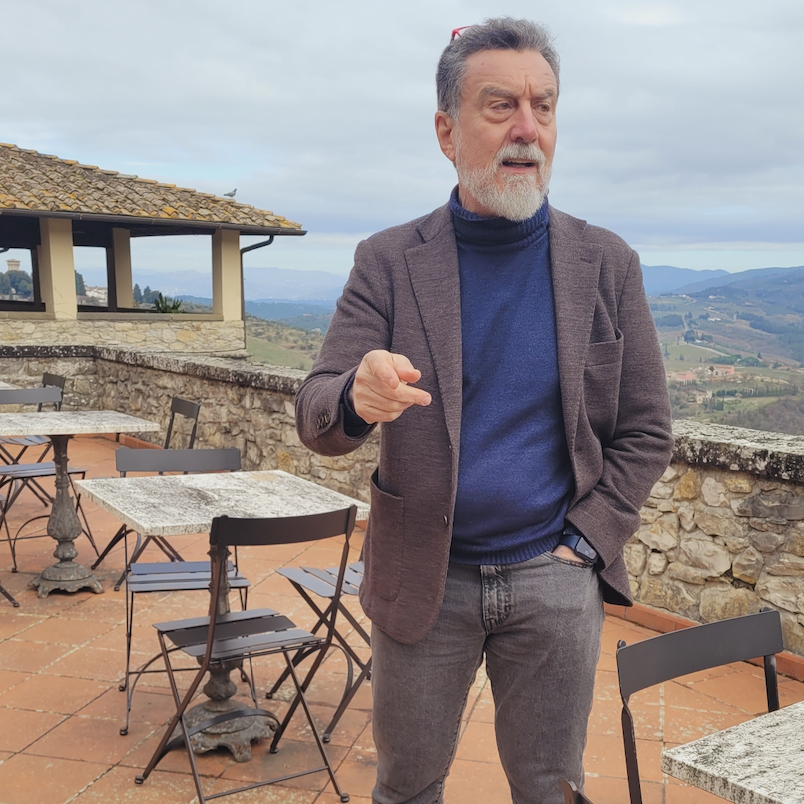
The one and only Luigi Cappellini – Castello di Verrazzano

Castello di Verrazzano – Montefioralle

There is arguably no visit in the Chianti Classico territory with more ambience, thrills, history, humour, top Tuscan comfort cuisine and quality wines than at Castello di Verrazzano. A few hours spent with Luigi Cappellini and daughter Maria-Sole Cappellini can’t be repeated enough. It all began with Giovanni da Verrazzano, Italian navigator and explorer for France who was the first European to sight New York and Narragansett bays and today the The Verrazzano-Narrows Suspension Bridge connects the New York City boroughs of Staten Island and Brooklyn. Verrazzano wa known as a humanist and man of science, much like Cappellini who came along 500 years later.

Castello di Verrazzano Chianti Classico DOCG 2022, Montefioralle

Worthy exercise to taste 2022 next to the settled 2021 because you see how much bolder this next vintage really is. Silky sangiovese impurezza as it is said, warm and sun-ripened at elevation with a look to the Chianti Mountains due east. A syrup of fruit and acidity swirled and seductive, acids purely Montefioralle and a balance discovered throughout. Deeper and darker fruit, sinking into brooding and a sangiovese that will need time to shed it’s weight and rise up again. The acidity will see to that rising and when the weather warms in 2027 this Verrazzano will begin to drink as it should. Fine Annata and one that resembles the Gran Selezione, albeit as parts of the appellative whole. Drink 2027-2031.  Tasted twice, at the winery and at The Chianti Classico Collection, February 2025

Castello di Verrazzano Chianti Classico DOCG 2021, Montefioralle

Seems appropriate to taste ’21 almost exactly one year to the day later because this exact amount of time has settled the score. The energy has not waned even an iota and today’s pulse is triggered yet measured, like an athlete at rest. Behold a definitive Annata.  Last tasted February 2025

For Verrazzano a complicated and in the end balanced vintage but who could have forecasted the restrained power and elegance. A 100 percent sangiovese vintage and one of somewhat shortened vindication to capture the grace and especially acidity of the vintage. A bit of maceration that hints at carbonic but no fizzy pulse. Almost a spicy sensation on the palate but really a matter of total energy. Bravo. Drink 2024-2028.  Tasted February 2024

Castello di Verrazzano Chianti Classico DOCG 2008, Montefioralle

Aromatics indicate an older wine, pleasant and in the throes of primary to secondary transference, but the palate remains immersed in freshness. Succulence and energy in the mouth, cool, sweetly herbal and the fruit still pops. Ignore the historical thought of naysayers who said the 2008s would not age well – Verrazano’s has travelled through life without obstacle because its balance is impeccable. Why not imagine three more years at this level? Drink 2025-2028.  Tasted February 2025
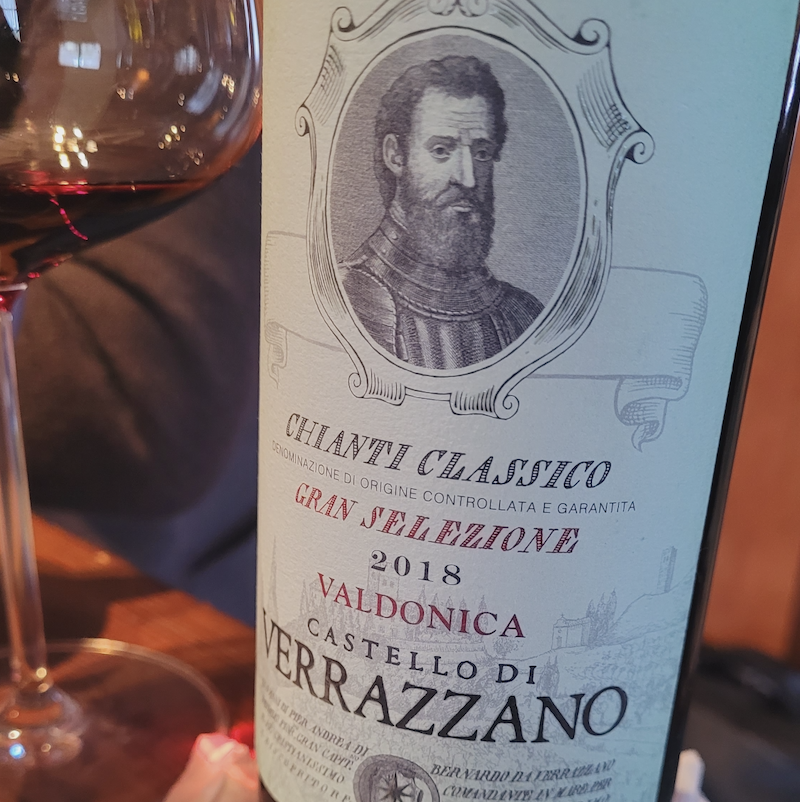
Castello di Verrazzano Chianti Classico Gran Selezione DOCG Sassello 2018, Montefioralle

Not sure if any significant movement was expected but none is forthcoming for Sassello 2018. Persistently punchy and grippy with tannins still at their peak. Feels formidably sapid at this stage and perhaps another six months will lighten the load.  Last tasted February 2025

Not yet released and will have at lest three more months in bottle before that can happen. A strong vintage and normally the release would be the fall but both wood and fruit need to time to find each other. The substance in Sassello 2018 is, well substantial, in fact something more than that. Richness at the height of Verrazzano’s abilities but my goodness this packs a punch while also showing off the modernity and harmony that define this estate today. Bravissimo. Drink 2026-2033.  Tasted February and October 2024

Castello di Verrazzano Chianti Classico Gran Selezione DOCG Valdonica 2018, Montefioralle

More delicate than Sassello and the contrast is even more obvious from 2018 than it had been for 2017. Though the season developed darker fruit it is the freshness, luminosity and sweeter style of Balsamico that see great lift in this Gran Selezione. In a way a true expression of the word “onica” for mineralogy, “a variety of agate with concentric black and white streaks, or, more generally, with areas that present strong contrasts in colour.” As here from the wine’s core to its edges, in hue and feel, vinous meets gemstone and stony cool.  Last tasted February 2025

The thing that connects Sassello and Valdonica is the vintage, the power and the full on substantial effects compactly packed yet carefully multi-layered. A swarthiness really separates this GS from Sassello in ways that put this in its own light. The aromas and flavours also bring in exotic spices but also a succulence that show how special and different this sangiovese truly is. It walks a fine line, flirts with danger and comes out singing. Drink 2026-2036.  Tasted February 2024
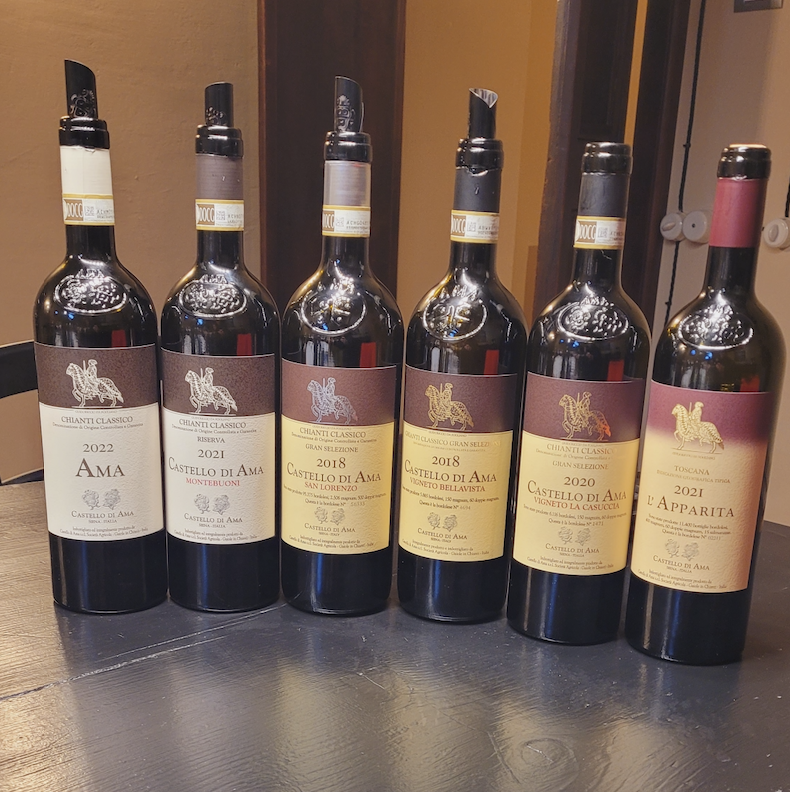
Castello di Ama

Related – Castello di Ama’s state of the art
Questa non è una finestra at Ama – Daniel Buren, Sulle vine punti di vista

Castello Di Ama Ama Chianti Classico DOCG 2022, Gaiole

Only Ama could pull and gift this much upfront fruit to draw us in as quickly as we do. Richness accrued and balance incarnate, more than juicy acidity and fully encapsulating tannin. If this is what Annata is all about the ceiling is unlimited for San Lorenzo and the more interlocutory and focused single vineyard Gran Selezione. Drink 2025-2032.  Tasted February 2024 and 2025

Castello Di Ama Chianti Classico Riserva DOCG Montebuoni 2021, Gaiole

A mouthful of acidity, tannin and mineral direct and defining Ama’s Montebuoni 2021, a wine not yet mature enough to say the window has opened. Quite woody at this age while the dark fruit is so very substantial and so time is needed to melt them into one another. That acidity and seriousness of Balsamic quality speaks to the Gaiole origin as the source for this level of appellation. Drink 2026-2030.  Tasted twice, at Ama and at The Chianti Classico Collection, February 2025

Castello Di Ama Chianti Classico Gran Selezione DOCG San Lorenzo 2021, Gaiole

San Lorenzo the concept comes from the vineyard with that name and now the ideal conceives of Gran Selezione as a wine to speak for all of Ama’s Gaiole. The vintage is renowned to be important and so arrive expecting fullness of everything involved, but also a fortress yet to be breached. A tough one indeed still at this stage with verticality and immovability. Needs at least two more years. Drink 2027-2032. Tasted at The Chianti Classico Collection, February 2025

Castello Di Ama Chianti Classico Gran Selezione DOCG San Lorenzo 2018, Gaiole

Aromatic, spicy, lifted and genuine. Extra layers, fruit of course and then floral, calcareously white peppery, luxe as per the appellative level and a matter of time. Vintage but also patience, the latter needed to understand the former, warm and developed, compact and yet never dense. To achieve this kind of acidity is remarkable. A matter of matching same parts to make up a whole. As per Marco Pallanti’s decades of dedication. “I am not a flying winemaker, I am a pedestrian one.” Drink 2024-2034.  Tasted May 2023 and February 2025

Castello Di Ama Chianti Classico Gran Selezione DOCG Vigneto Bellavista 2020, Gaiole

Bellavista is first and foremost the Gran Selezione only made in select vintages, inclusive of 20 percent malvasia nera and also the one of ripest fruit with a view. The depth in 2020 is serious, the wine at once grounded and then acidity of a Gaiole nature kicks in to lift and see this Bellavista rise. Full and beautiful, seamless, orchestrated by a master of decades and artistic appreciation while delivering a modernist’s virtuoso performance. Drink 2027-2035. Tasted at The Chianti Classico Collection, February 2025

Castello Di Ama Chianti Classico Gran Selezione DOCG Vigneto Bellavista 2018, Gaiole

Bellavista the Gran Selezione is only made in select vintages and 2018 marks the first of three consecutive (likely with a fourth 2021 coming soon) after 2017 was passed over. A rare example of GS to include 20 percent malvasia nera and the beautiful view comes replete with riper than ripeset fruit. The depth from 2018 is akin to 2020 but with two further years having come and gone there is now a soft middle in between two grippy pieces of structure. This unique high elevation sector of southern Gaiole with its formidable ridges delivers the acidity of a località which always lifts Bellavista up to its precipice. At this stage it does already feel like looking back at a wine with its window fully open and the breezes blowing in. Drink 2025-2032.  Tasted February 2025
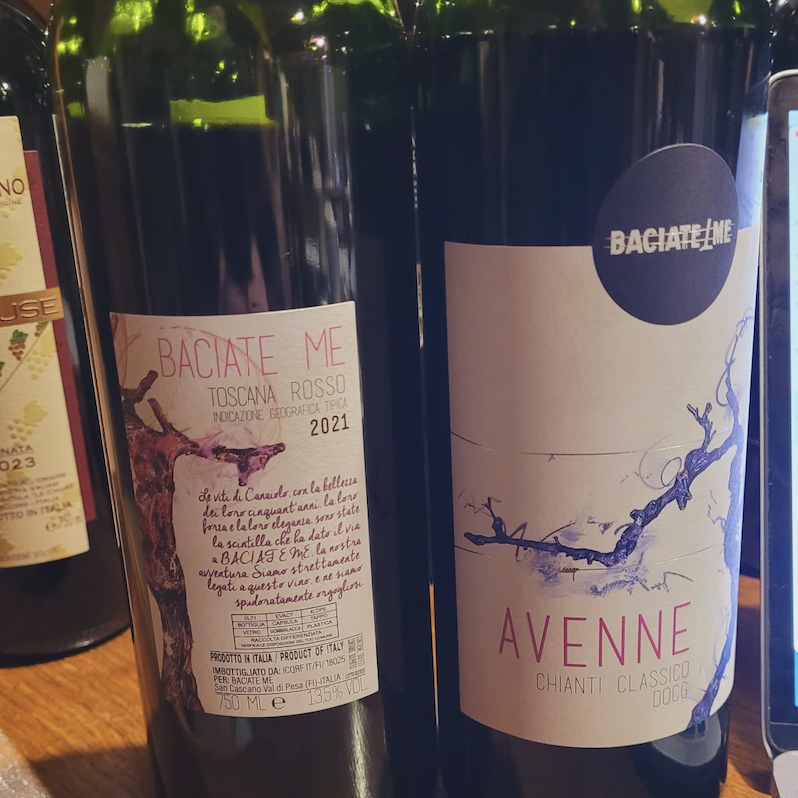
Baciate Me, San Casciano (Tasted with Lorenzo Magnelli at Le Chiuse in Montalcino)

Baciate Me Chianti Classico DOCG Avvenne 2020, San Casciano

“Kiss me,“ a play on words for the three men who own the winery, including Le Chiuse and Castello di Meleto oenologist Valentino Ciarla and a vineyard he purchased in San Casciano during Covid. Avvenne loosely translates as “please let me have some more of something, but in one word” and truthfully that is how you will feel after a glass of this wine. It’s is a sangiovese with some canaiolo of very old vines, truly San Casciano with a feeling of the local macchia and a natural wild quality, of great temper matched by restraint. The wine rolls and oscillates in waves, acts juicy, very aromatic, light, at times dusty and yet the texture is flowing. Never sharp and just the right balance from a super tiny production. Drink 2025-2029.  Tasted at Le Chiuse in Montalcino, February 2025

Baciate Me 2021, Toscana Rosso IGT

An old vineyard and from the aromatic grape higher in pH and lower in acidity but when really old vines are involved the balance is better. Tasted with Le Chiuse’s Lorenzo Magnelli who believes that canaiolo should be bottled under glass cork (or why not screw cap) because under nature cork “the wine will lose more then it will gain.” In other words the grape can oxidize faster than sangiovese but here the freshness of the vintage persists and there is a unique, almost corrugated tannic profile. Currants and the Tuscan Corbezzolo, a unique expression that is in fact really expressive. Drink 2025-2027.  Tasted February 2025

Good to go!

godello

Instagram

Facebook

Twenty-two mind-blowing wines of 2022

Godello in the Stellenbosch heather, Reyneke Wine Estate

We are who we are and we choose to live in a world according to wine. Within its walls are endless permutations and revelations, of the dark moments and the light, the romantic entanglements and the failures. We witness cycles of passion, highs and lows, endless accounts of quirky little episodes that reveal how grapes really live under the circumstances of a vintage. How they survive and thrive, eventually turning into the wine they become. A wine’s history is a lovely aside accompanied by a recorded and constructed account through the lens of someone who observes its transformations. We are messengers who take the land, plant and maker into consideration and always abide, recounting the story to those who would choose to listen. According to WineAlign I reviewed more than 3,000 wines in 2022, which means I tasted at least 3,500, if not more. In order to surmise this final list from a shortlist of more than 100 mind-blowing wines it meant another 2,900 are not even in the running and yet surely no less than a quarter are exceptional wines in their own right. That is how difficult, personal and stringent an exercise this annual choosing has become. I find it near impossible these days and yet somehow feel compelled to continue the drill. 

Godello in Chianti Classico

Related – Twenty-one mind-blowing wines of 2021

The year 2022 afforded multiple opportunities to get back on the road in search of great wines in places across the ponds and beyond. To Tuscany in both February and March, for the for the Chianti Classico Collection and also as chaperone to La Squadra Canadese for a week of exploration throughout the 11 UGAs of the territory. Forever in Chianti Classico included a masterclass presented by Italian wine expert Filippo Bartolotta and Consorzio President Giovanni Manetti titled Il Chianti Classico in 9 Decadi. This year-end summary includes one of those Chianti Classico wines dating back to 1949 but a few more could been here as well, including the fascinating Badia A Coltibuono Chianti Classico 1958. At Laura Bianchi’s estate the Castello Di Monsanto Sangioveto 1986 was one to blow my mind, as did Luca Martini di Cigala’s San Giusto a Rentennano Percarlo 2018 and VinSanto del Chianti Classico 1998. As a proud, card-carrying Ambasciatore there are dozens upon dozens of Classico and affiliate sangiovese that move me each and every calendar year. Il Molino Di Grace Gratius 2018 is an example and just one of many.

Related – Twenty mind-blowing wines of 2020

After that Tuscan adventure I moved on to Sicily for a five day exploration of The five estates of Planeta earth and my stay turned into two weeks. Covid-19 had caught me and yet the humanity of Alessio Planeta, Patricia Tòth and several winemakers aboard L’Etna turned a challenging test result into many days of discovery and deeper volcanic understanding. In fact L’Etna and Parco Statella saved my Sicilian quarantine. So many producers’ wines could and should be on this list: Azienda Agricola Sofia, Calcagno, Donnafugata, Eduardo Torres, Feudo Pignatone, Girolamo Russo, Graci, Scirto, Tascante, and Vigneti Vecchio. Oddly this was not a year for nebbiolo with likely the least amount of opportunities made available and yet a month from now I will spend 10 days in Piemonte to make up for the absence in 2022. That said there can be no forgetting Réva Barolo Cannubi 2018, from which impartiality is off the table because if you do not fall in love with this Barolo then you are not setting your palate free.

Travels in June and Abruzzo in four-part harmony included a bucket list visit with Emidio Pepe where I found that an unwavering commitment to land is everything that matters in making exceptional and memorable wine. It’s not only what you do but also who you are. Ahead of that trip I had tasted La Valentina Montepulciano d’Abruzzo DOC Bellovedere Riserva Terre Dei Vestini 2017, and there can be little doubt that it is a wine that resides at the top of the montepulciano food chain because this Riserva hails from a most specific and important terroir. After Abruzzo and then Rome I moved on to attend the first ever Anteprima for Simply Red: Rosso di Montalcino where the Brunello were set aside for one day only and the 2020 vintage of Rosso got directly under my skin, including Lorenzo Magnelli’s mind bending Le Chiuse Rosso Di Montalcino DOC 2020. Dieci Anni di Rosso di Montalcino (Ten Years of Rosso di Montalcino) and Selezione di Rosso di Montalcino (Rosso di Montalcino Selection) showed wines of age-ability and purpose; my if Alessandro Mori’s Il Marroneto Rosso Di Montalcino DOC Jacopo 2019 did not blow my mind. A visit with Violante Gardini Cinelli Colombini meant a pour of Donatella Cinelli Colombini Brunello Di Montalcino DOCG Io Sono Donatella 2015 for the most profound barrel expression of Le Donne’s Brunelli. 

Menfi

Related – Nineteen mind-blowing wines of 2019

In October the Cape Wine congress resumed after a four year absence and now more than ever this is what I have to say. South Africa is the most exciting and mind-expanding wine universe alive today. There are no less than 40 Western Cape wines from two dozen or so producers tasted in 2022 that could have made this list: A.A. Badenhorst, Alheit, Beaumont, Boekenhoutskloof, Crystallum, David and Nadia Sadie, Hamiilton Russell, Huis van Chevallerie, Kanonkop, Ken Forrester, La Motte, Leeu Passant, Klein Contsantia, Meerlust, Momento, Mullineux, Old Road Wine Company, Porseleinberg, Raal, Raats, Radford Dale, Restless River, Reyneke, Savage, Sijnn, Storm and The Sadie Family. To name but a few. Other southern hemisphere wines were killer in 2022, namely Torbreck Grenache Hillside Vineyard 2019, a special Barossa block to be sure.

With John Szabo MS and Rosa Kruger at the Old Vines Project tasting

In November a return to Montalcino for Benvenuto Brunello 2022 meant a look at the 2018 vintage but also the Riserva of 2017. At Col d’Orcia the Conte Francesco Cinzano Marone and his son Santiago led yet another vertical tasting, this time on the 8s and it was Brunello Di Montalcino Riserva DOCG Poggio Al Vento 1988 that stood both out and also the test of time. From Montalcino it was on to Vienna and then a Wagram-Traisental discovery tour that was both too short and mind-expanding – A return must and will happen soon. Meanwhile a tasting at home in the WineAlign office showed this Rheingau gem to the crü. Leitz Berg Schlossberg Grosses Gewächs Riesling Trocken 2019 is grand Rüdesheim indeed. 

These are the wines that blew my mind in 2022

Most of all 2022 was a year when associates, colleagues, wine professionals and especially friends reunited to break bread and taste great wines together. At a birthday party I had the opportunity to taste the following in one evening; Château Lafitte 1986, Château Mouton-Rothschild 1986, Chave Hermitage 2010, Guigal Côte-Rôtie La Turque 1999, Paul Jaboulet Aîné Hermitage La Chapelle 1990, Dom Perignon 2000, Veuve Cliquot La Grand Dame 1995 to name just seven of 20-plus icons. Bordeaux made several prominent appearances in ’22; Château Margaux 1989 (and 2004), Château Haut-Brion 2012 and Château La Mission Haut-Brion 2012. More importantly in 2022 we shared bottles of all ilk, pedigree and origin, not only the expensive and famous labels but all the great wines, big and small. Thank you to every person who poured, for every sip and taste, with heartfelt thanks. These are Godello’s 22 mind-blowing wines of 2022.

Markus Huber Grüner Veltliner Berg 1ÖTW 2021, Traisental, Austria

Highest and coolest vineyard of the Traisental Erste Lage because by three or four pm the forest casts shade over the vineyard. Limestone based soil as well, upwards of 380m and the only portion that has iron rich red elements in the earth. Actually finding a richness in this, surely vintage related and that is unexpected but it’s also the most savoury, minty cool, eucalyptus accented, or the like. Curious by comparison to Alte Zetsen and Zwirch, in what is assessed as almost dark, smoky, spicy volcanic-simulate stuff. Brings whole and utter meaning to grüner veltliner at the Grand Cru level. Drink 2023-2028.  Tasted November 2022

Godello with Charla Bosman

Sijnn White 2019, WO Malgas, South Africa

Up above the Breede River there are vines of chenin blanc, viognier, roussanne and verdelho, varieties that have been working towards a common goal, to eventuate at something great. Then 2019 comes along and the world changes. This is the vintage from which David Trafford, Sijnn and winemaker Charla (Hassbroek) Bosman take full reign of their collective charge. To be truthful the agriculture, winemaking and face of the brand is Bosman and were I in the market to hire someone of her passion, ability and professionalism I could not help but remunerate her like a top European footballer. But lucky we all are that she and Sijnn are together because she is at one with this impossible yet absurdly beautiful environment where wines like this White Blend are made and will blow your proverbial mind. They attach themselves and get so close to that personal part of you. Imagine Châteauneuf though I’d much rather consider Malgas because that is what this is. Rich and perfectly viscous, spicy, structured and fine. Drink 2024-2030.  Tasted October 2022

Girolamo Russo Etna Bianco DOC San Lorenzo 2020, Sicily, Italy

From the single vineyard at 730-740m of elevation and vinified in tonneaux. The 2009 was the first vintage of San Lorenzo Bianco for a wine that leads amongst the 80-90 thousand total bottles made by Giuseppe Russo from 18 hectares. A strong selection from the plants of carricante with cattaratto and grecanico. The carricante are the oldest and they provide the breadth in the mouth, the texture in unction and the presence that really makes you feel the vineyard. The difference between it and Nerina is really in the selection of the grapes. Giuseppe wants his whites to speak for his territory, here to be a bit more generous and 2020 obliges first because it was easier and second because it is such a vintage specific to the white wines. Such beauty and emotion is purity and life. No stress and a wine you want to drink. Drink 2022-2028.  Tasted March 2022

David And Nadia Sadie Wines Plat’Bos Chenin Blanc 2021, WO Swartland, South Africa

At a tasting where everything is Old Vines Project certified there must be something extraordinary about a wine to stand out from a crowd of greats. David and Nadia Sadie are in fact turning heritage vines chenin blanc (amongst other varietal explorations) into content born of context harboured though never paraded. They are rhythmic and scientific with just enough fantasy and romanticism, but never too much. Plat’Bos stands above Skaliekop and Hoë Steen because 2021 asks it to do so, not because it is better or more important, but it is surely chenin blanc profound. The 1981 Swartland planting is in the steady zone, shed of the mercurial and in ’21 so very linear yet salty of the earth in its sombre-sepulchral tone. There is reduction here because the poor soil nutrients demand that this chenin begins this way. The levels of tension and intensity are most elevated, sufficing to say as high as any from the Western Cape. Attention is paid unwavering to detail, sequencing is in order, purity incarnate, grape and place together pristinely kept. In Plat’Bos 2021 the palate is taken down to the whipping post by a wine built to endure. Given time there will be calm, healing and reward in the end. Drink 2024-2036.  Tasted October 2022

The Sadie Family Die Ouwingerdreeks Mev. Kirsten Wyn Van Oorsprong Stellenbosch Die Sadie Familie Wyne 2021, Stellenbosch, South Africa

The vines that supply Mev. Kirsten Wyn are the oldest chenin blanc in the country, out of Stellenbosch and planted in 1905. In 1947 every second row was pulled out to make room for tractors and the configuration still exists this way. “If South Africa has a true apex white Grand Cru vineyard then this is it” insists Eben Sadie. Facts are facts are you just can’t accede these levels of power, concentration, extract and tannin anywhere else. The nose communicates as an intoxicant of sublime forces and these grapes bestow chenin blanc 2021 are those that transcend fruit, deliver ethereality and a heightened sense of awareness. An awakening from necessary tension, crisis and personal freedoms, existential off the charts, poetic and epic. One hundred and sixteen stanzas recorded, in the books and the finest verse written right here in the most recent vintage. If enlightenment is to be gained from chenin blanc in the Western Cape, Mev. Kirsten would provide the fodder. “The grail. End of fucking story” concludes Sadie. All hail. Long live the queen. Drink 2025-2040.  Tasted October 2022

Iconic Bourgogne

Domaine De Bellene Vosne Romanée Premier Cru Les Suchots 2020, AC Bourgogne, France

“Suchots” originates from “souches,” the name given to the woods before the land was prepared to house these vines. Les Suchots is but a small 13 hectare part of the larger 220 in total for Vosne Romanée and was first planted in 1937. La Romanée and Saint Vivant are the closest plots, south of Echezeaux, north or Richebourg and though just six per cent of the appellation it is actually the largest Premier Cru Climat therein. The vineyard is divided in two by a road. The eastern part below lays just above the cemetery and the village terroir called Hautes Maizieres. The top part is located below Les Beaux-Monts. The 2019 was a dream, crème de la crème and yet 2020 seems to embrace the powerful vintage with a most extraordinary level of perfume. That and fruit concentrated to a maximum degree without falling into any of the trappings associated with hyperbole. The concept of pinot noir reaching regional levels like this seems counterintuitive to the variety-appellation contract but the balance and harmony at the top is something the likes almost never seen. This will surely be one of the wines that explain with hyper clarity what 2020 is as a vintage. Drink 2026-2040.  Tasted May 2022

Graci Etna Rosso DOC Arcurìa Sopra Il Pozzo 2017, Sicily, Italy

Sopra il Pozzo describes a special portion of the signature Arcurìa vineyard (and contrada of the same name), a block “above the well,” 100 per cent nerello mascalese picked in the last week of October. Treated to the same maceration and elévage as the Rosso for the same spontaneous style and time as Feudo di Mezzo. However Sopra il Pozzo’s “refuse” soil composition is different and requires patience in the name of time, due to its alternating layers of decomposed volcanics in stone and coarse sand. This is a section of recast material and the corresponding mascalese is both emasculated and chivalrous. The degree to which layers of fruit, mineral and umami incorporare and completare is finite and contiguous yet also lengthy, scorrevole and endless. There is rare Etna glycerin texture and perfectly timed acid tang. Tempismo perfetto. Grande. Drink 2024-2032.  Tasted April 2022

Elisabetta Foradori

Foradori Granato Teroldego 2019, IGT Vigneti Delle Dolomiti, Trentino-Alto Adige, Italy

Granato from Elisabetta Foradori resides at or near the peak of the Trentino-Alto Adige wine chain, a Dolomite force of varietal nature, richness incarnate and cragged to gain your full attention. Fruit comes at a great premium, not by absence of the heart but because so much site, land and space speak louder than words. A static red stuck in a state of cryogenic freeze, immovable and surely able to handle immobility and also time. Will drink beautifully for a decade and a half, or possibly more. Drink 2024-2034.  Tasted February 2022

Garage Wine Co. Truquilemu Vineyard Lot 97 Dry Farmed Old Vines Field Blend Carignan 2018, DO Maule Valley, Chile

The eastern facing side of the Coastal Range where the old vines grow, in places where you had to make wines for the Catholic Church, “to save souls.” The most aromatic of Derek’s wines, a true field blend with a je ne sais quoi of varieties bursting off of dry farmed bush vines. Showy with that combination of outright juiciness juxtaposed against iron-fisted structure. A wine that comes from a place where the farmer worked to break up the “los camellones”, strange diagonal lines drawn and a framer who shows how to separate the land so that making great wine is easier. This is a remarkable example of old, bush and real. Drink 2024-2030. Tasted July 2022

Barone Ricasoli Castello Di Brolio Chianti Classico 1949, Tuscany, Italy

Tasted as part of “Il Chianti Classico in 9 Decadi” led by Filippo Bartolotta with Giovanni Manetti at Stazione Leopolda in Florence at the Chianti Classico Collection. The oldest wine in the flight. apropos and just when you consider the Ricasoli heritage and lineage. A mineral layering which instinctively mimics the compaction of argiloso, macigno and calcari from Brolio’s soils, no longer feeling the separation or mille-feuille effect but now just all morphed into one and the same. There were surely some white wines in this mix, as per the formula written decades earlier by Bettino Ricasoli. Probably helped keep the freshness for some time and while this is now all earth and stone the wine is very much alive. There’s even some sweetness and citrus showing, indicative of blood orange some 73 years later, finishing with a trebbiano and malvasia Vinsanto tang.  Tasted March 2022

Isole E Olena Chianti Classico Gran Selezione DOCG 2016, Tuscany, Italy

“I did not like Gran Selezione, I did not have anything against Gran Selezione but the discussion about UGA (sub-zones) was already underway so why not wait for this next change to the appellation?” The thinking for Paolo de Marchi was more about the wines that did not qualify for the appellation becoming wines that now qualified, the issue being a new rule could not apply to only 30 or so producers. So what is needed for that to happen? “All grapes born here should be able to travel with a passport.” If it is more complicated than that then there is much more to discuss. A Chianti Classico from a long, linear and fortifying vintage delivers equally appropriate and extending tannins, gripping the composition while proposing to become elegant and fine. The seamlessness and never wavering focus keeps on keeping on, in the ways of emotion in motion. Will remain in bottle one year more before being released to the market. Drink 2023-2027.  Tasted February 2022

Great anticipation to taste La Casaccia and Montosoli side by each from a vintage carrying no option but to act out the passion play through the glaring clarity of a sense of place. There are facts involved and there is no hiding the truth formed by these plots of sangiovese in this vintage. By now it is understood how 2018 exists on its own accord at one with nature though Francesco Ripaccioli will tell you there are similarities with 2013, if only because that vintage was greatly ignored and is drinking well at this time. La Casaccia in the località of Canalicchio is the wildcard of Montalcino and tasting several wines from the frazione reveals a collective affinity supplied by the year’s gifts. Nothing was portioned or taken away from the ’18 Annata and yet this Vigna sings with even more range and depth than that wine. The acids are simply out of this proverbial world, the linear aspects drawn with precise architectural or even, in Old English speak, a Cutter’s line. Remarkable reserve in concentration and forward slicing finesse. Forever long. Forever young. Drink 2025-2038.  Tasted November 2022

Biondi Santi Brunello Di Montalcino Riserva DOCG 2016, Tuscany, Italy

Riserva 2016 is the 42nd such vintage since 1888 from estate vineyards and the oldest parcels therein. Meanwhile olive trees and other compatible local species grow in those places and there always seems to be lower pH and higher bright acidity coming off the grapes. The Federico Radi team seeks to broaden biodiversity with unlimited scope and more vineyards would benefit by following such a plan. When Biondi-Santi gets to their next position we can expect even more refined and higher quality wines. Meanwhile the harmony and extant abilities in this ’16 Riserva are almost impossible to believe. A Riserva of fruit termed as the locus of the points drawn at an equidistant from the centre. Sangiovese of no stops and starts existing on a special kind of ellipse in which the eccentricity is zero and the two foci are coincident. Simple descriptors like crunch, chew or crust are not in the lexicon nor do service to speak about the texture of this remarkable sangiovese. Subtlety and strength, a dappling of early morning light, patterning and shimmering as if on water. The phenolics are spot on, coherent and the connection with both palate and tannins perform as an unbreakable bond. A canvas flooded with colour and while there is a level of transparency there are no white spots. Everything is filled in. Clocks in at 14 per cent abv. Drink 2025-2040.  Tasted November 2022

Fontodi Flaccianello Della Pieve 2001, IGT Toscana Centrale, Tuscany, Italy

Youthful is the proverbial understatement, zesty and full of Panzano life the other. A sangiovese in strike of ideal accord, freshness captured in bottle and development low, easy and slow accrued. Just like the season, stress-free, never too hot, never too wet. Stellar autumn of warm days and retentive cool nights. A late harvest and full phenolic character. It all shows in this 20-plus year-old Flaccianello, singing a ballad, verse after verse, refrain post refrain. After 20 minutes a sweet porcini perfume emits and one wishes for a 50 day dry-aged Chianina Fiorentina. What fortune! Along with the special effects of smoky rosmarino and wild fennochio. Drink 2022-2029.  Tasted February 2022

Sassicaia 2019, DOC Bolgheri, Tuscany, Italy

Priscilla Incisa’s Tenuta San Guido is located one hour south of Pisa, going back many generations. The surface area covers 2,500 hectares in a “classic Tuscan agricultural estate, of vines, olive oil, cereals including wheat and feed for thoroughbred horses. There are 500 hectares towards the seashore dedicated to a wild life refuge “paradise” free from hunting and for migrating birds coming from northern Europe and heading to Africa, especially because a good part of the land is covered by water during the winter. Before 1994 the appellation was Vino da Tavola. The grand vin Sassicaia is always a minimum 80 per cent cabernet sauvignon (as per the appellation) with cabernet franc. The youthful perfume of Sassicaia is really something other, an invitation to the plume of a great and mighty bird that will soon migrate or not be seen or heard from until another season. The fruit is both wound taut and also layered, a mix of liquids, gasses and decomposed mineral, turning on its axes, literally the earth itself. The effort put in speaks volumes about the quality and yet the seamless transitions are as if there are no transitions at all, only one contiguous entity. Will release in Ontario as an Online Exclusive by lottery on October 20th. Drink 2025-2034.  Tasted September 2022

Emidio Pepe Montepulciano d’Abruzzo DOC 2002, Abruzzo, Italy

The subtle and gentle elegance of 2002 is almost mystifying, if at least a surprise that kinda hypnotizes. Memory serves up a case of conflict and adversity, if also vintage envy for the bookends of 2001 and 2003. And yet the cool of the night prevails to elongate a montepulciano for our pleasure and make it sing 20 years later. It was also decanted to reduce the lees sediment and then re-corked for our benefit. Words cannot express what a beautiful place this 2002 EP is found to be. It is a treat to taste and also behold, exactly as of right now. Drink 2022-2026.  Tasted June 2022

Planeta Santa Cecilia 2005, DOC Noto, Sicily, Italy

Finding oneself in a state of utter disbelief upon nosing an older Santa Cecilia has just happened with thanks to this 2005 and the unthinkable aromatics it possesses. There have been some older examples like 2007, 2008 and 2011 which all showed morphological magic but this, this is something other. The state of perfumed preservation is impossible, the floral emanations and fruit continuance implausible and in suspension of belief. The 2005 is almost perfect, dark berries and red citrus alive, acids in perfect condition, wood dissolved, resolved and walked straight out the door. The life and vitality reside in the arena of the flawless, faultless and achievable. This is what nero d’avola, Santa Cecilia, Noto and Planeta can be, at its collective finest. Will drink this way (and also that) for five more years and with ease. Drink 2022-2027.  Tasted April 2022

Château Cheval Blanc 1998, Saint-Émilion Grand Cru Classé, Bordeaux, France

The 24 year-old 1998 has been argued and predominantly defended as a Right Bank vintage, especially for merlot based wines, which the 1998 Cheval Blanc happens to be. Clocks in at 65 percent plus (35) cabernet franc and the two combine for hypnotic aromatics to put mind and palate in an immediately dizzying and gratifying tizzy. Dark, dark fruit of the “cimmérienne” kind yet of a grace and genteel manner shared by other profoundly distinguished red wines. Thoughts can wander and wonder as a result of tasting this blind and considering the depth it is nebbiolo that is imagined. Only for a moment because the numerous dual-toned vibrations direct towards knowing this to be a blend and so Right Bank combinations lead by their impression. Both of ’98 Cheval Blanc’s are blessed of ripenesses, acids and structural bones all having peaked at a shared summit. The conclusion can only be a two-part perception, of balance and beauty. Drink 2022-2042.  Tasted November 2022

Mullineux Schist Syrah 2019, WO Swartland, South Africa

Vines planted in 1999, mature if still 12 years away from being classified as “Old Vines.” Schist is the home Brownstone Vineyard, shallow and rocky of less than 20 cm of soil. An extreme site in which vines attempt to grow, but so much comes down to the where and how. Rows are close together and planted in an almost race track configuration within an amphitheatre. The roots spread and dig deep within the stripes of schist interspersed with iron and the grapes are harvested plant by plant to create two apposite cuvées. Visually these are small vines with smaller leaves and an airiness – physically speaking. The skeletal backbone here is upright, towering and commanding, the juiciest of varietal fruit hanging as flesh, taut and muscular upon these bones. Unyielding yet never brooding nor astringent, but bountiful and beautiful. Drink 2024-2032.  Tasted July 2022

Penfolds Grange 1981, South Australia

Poured blind and easily recognized as a wine of great depth with at least two decades of maturity. Either older or hastily advanced but there are indicators to the former, namely high tones, substantial crunchy acids and full on perfume. There is a touch of Brettanomyces but only a feathery tickle and the wine still has something left to give and also to prove. Great depth is provided by wood notes, of soy, balsamic, wild fennel and all together now a reduction keeping its form, a foxy liqueur, once Cassis but now Amaro, finishing with flavours bloody and gamy. The reveal as Grange 1981 explains that while shiraz is always the game and king it had been a season for which the cabernet sauvignon portion exceeded 10 percent. Winemaker John Duval felt that ’81 was a tannic one but they left the building long ago. Both Barossa and McLaren Vale were involved and so this look back at blending expertise matters in the context of all Aussie blends being tasted today. Being present to be poured a taste of Grange represents good fortune and from 1981 there abides a full and fair suck of the sauce bottle.  Drink 2022-2025. Tasted November 2022

Donnafugata Ben Ryé 2019, Passito Di Pantelleria DOC, Sicily, Italy

Ben, as in “son of” and Ryé, a Sicilian riff on the concept of making strong mocker from the wheat grass. Think of grapes instead, in this case zibibbo (muscat of Alexandria) grown off the southwestern coast of Sicily on the Island of Pantelleria. Passito di Pantelleria DOC is one of the world’s great sweet wines, found only on this windswept promontory where the grapes concentrate, drink in the sea and express a view to which only this place commits. The warmest of vintages develops and comprises these particular sugars into something surreal. Extraordinary orange-ginger crème brûlée, perfectly embittered and made viscous in the most natural of ways. Layers of dedication and spice, health affirming herbs, respiratory fixing drops and sweetness captured, effortlessly and to gift plaisir. Apricots ripe and glazed, zen zero limone, giusto intenso. Nearly perfect. Drink 2025-2039.  Tasted April 2022

Vintage Port (c) Sarah Goddard/WineAlign

Niepoort Vintage Port 2019, DOP Douro, Portugal

Expect top concentration in Vintage Port from what Niepoort calls a “return to balance in the vineyard” type of season. Summer was unseasonably cool and the timely rainfall on the 26/27th of August was invaluable, allowing fruit maturity to go to completion. A recall to 2008, of natural, acid driven, balanced musts. Foot trodden in circular granite lagares with 100 per cent stems, racked soon after harvest, aged in “tonéis” (large oak vats) in the Douro over the winter, and then moved to the cellars in Vila Nova de Gaia in the Spring of 2020. Acid vintage indeed, fruit caught by circumfuse so as to be surrounded, ignited and eventually dispersed for decades of slow release power. The liquid chalkiness of tannin is so fine-grained you swirl and mull over just how hypnotizing it is. Truly great Vintage Port will act out this passion play. Drink 2025-2048.  Tasted October 2022

Good to go!

godello

Twitter: @mgodello
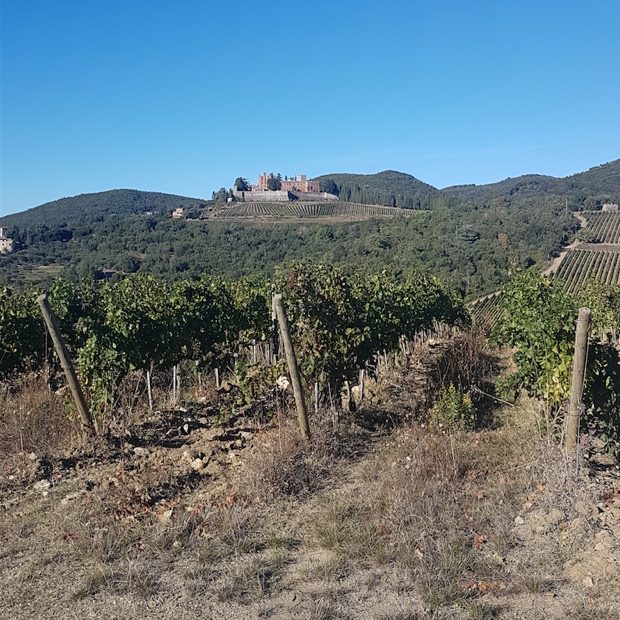
Instagram: mgodello

WineAlign

Ricasoli, Barone Ricasoli

“Get in the car” says Francesco Ricasoli. We oblige, quickly and without hesitation. Francesco slams it into gear and we’re off to see the vineyards. The wonderful vineyards of Ricasoli. Every corner of the grand Gaiole estate, 1,200 hectares of property that includes nearly 240 hectares of planted vines and 26 of olive groves. We take in all five major types of soils identified on the estate though truth be told there are at least 19 different combinations of terroir. Ricasoli is extremely proud of this highly variegated geography. As their custodian and the man in charge of perpetuating Chianti Classico’s longest standing legacy he treats his work and the honour with the greatest respect.

Francesco Ricasoli and Massimiliano Biagi

Ricasoli’s five soils

Marine deposit soils of the Ricasoli estate

“Delivering purity with deep respect to exceptional vineyards.” This is the manifesto at the centre of the Ricasoli universe. The wines made from 100 per cent sangiovese are the soil king agronomist Massimiliano Biagi’s favourites. The permutations are many but they are all rendered through tireless research conducted and perpetuated at the hands of Francesco Ricasoli’s 25 years of service. Twenty-five years of re-planting vineyards, investigating biotypes, isolating exceptional soils, plots and exposures.

When you take a drive with @francescoricasoli you stop to breathe in the air. Castle behind sold separately ~ #gaioleinchianti #baronericasoli

The last time I paid a visit to Ricasoli and the Brolio castle was in 2016. At that time I wrote “the history of Chianti Classico, Tuscany and for that matter, Italian wine can’t be discussed or put into perspective without mention of Barone Ricasoli. That name has been linked to wine since 1141, when Brolio Castle passed into the hands of the Ricasoli family. The first 700 years of Tuscany’s most famous castle and the family aside, it is the work of Barone Bettino Ricasoli, Prime Minister, researcher, innovator and first marketing expert for the regions’ wines. Bettino is credited with having invented the Chianti formula in 1872. When I visited the Ricasoli family crypt in May (of 2016) I was struck by the fact that the Iron Baron passed away on my wife’s birthday. Then shivers travelled down my spine when I noticed a second Bettino Ricasoli shared a birthday with me.”

Ancient Fluvial Terrace of the Ricasoli Estate

If Bettino Ricasoli was known as Il Barone di Ferro, “The Iron Baron,” how should we refer to Francesco? Show me a wine producer in Chianti Classico more attuned with the world today and I’ll be sure to have a word with the Barone about upping his game. Francesco Ricasoli is a modern-day Renaissance man and a magician as a social media wizard. The evidence is posted regularly and plain to see, in the quality and quantity of his content, the pulse with which he follows what matters, the clarity and focus of his photography and the timeliness of his actions. He’s an orator in solicitation of  riveting dissertation and delivers on one helluva tour around his family’s estate. Most important of all he uses two ears and two eyes. He is a watcher and a listener. Here are the seven wines we worked through with Il Barone Dotato, “The Gifted Baron.”

Barone Ricaosli, Gaiole in Chianti

Barone Ricasoli Torricella 2016, IGT Toscana, Tuscany, Italy (Winery, WineAlign)

Comprised of 80 per cent chardonnay with sauvignon blanc. In the past it was a blend that included malvasia, going back as far as 1927. Some oak aging, no malolactic, the sauvignon blanc enters just at the final stage of the final blend, after the chardonnay has rested for 10 months in tonneaux. Direct, lean, mineral, composed and in no way strict as a Gaiole chardonnay. And yet here it is. Reduction comes back to bring it full circle. Drink 2018-2024.  Tasted September 2018  ricasoli1141  francescoricasoli  churchillcellars  @ricasoli_1141  @imbibersreport  @ricasoli1141  @imbibersreport

Barone Ricasoli Chianti Classico DOCG 2016, Tuscany, Italy (3962, $23.95, WineAlign)

Barone Ricasoli Roncicone 2015, IGT Toscana, Tuscany, Italy (Winery, WineAlign)

This is the next single-vineyard focused sangiovese in the Brolio portfolio and part of the new era, project and study intensification. Years of analysis, of soils and diversity of vineyards prepares us to look at various interpretations so that we may try to follow along and understand. This site is the marine deposit soil type with more presence of clay, richness of the organic earth and a big oak tree. And yet it’s a leaner expression, earthier, tannic and savoury. Not quite Alberese but the structure is chalkier, yet not in a purely calcareous way. Sharp, lifted and nearly explosive. Really needs time. Drink 2022-2030.  Tasted September 2018

Barone Ricasoli Chianti Classico Gran Selezione DOCG 2015, Tuscany, Italy (942607, $59.95, WineAlign)

This is the flagship Chianti Classico established in 1997, always the man, the most important and expensive wine of the estate. It’s also the first to shun the Super Tuscan commodities, eschewed to establish a Chianti Classico at the top of the game. Pioneer for a place that was once and can forever be great, now travelling retroactively back to the future of fame. In this context it surely makes sense that it then moved forward into the Gran Selezione category going back to 2007, always priced near the top. This generous and mostly easy vintage brings together classic Brolio cherries and acidity with powerful, linear and soliciting 2015 tannins. Draws you in, ties you up and keeps you around for the long run. Drink 2021-2029.  Tasted September 2018

Good to go!

Godello

Twitter: @mgodello

Instagram: mgodello

WineAlign

Seventeen in VINTAGES February 4th, 2017

breakfast

as seen on WineAlign

Familiar and not so familiar Europe, always cool chardonnay, seeing South African red (and a white)

These past two weeks have been difficult, bizarre and disturbing to say the least. No one is immune to thinking about the twists, turns and horrors of recent world events. With no disrespect to activism, especially on a personal level, at WineAlign our job as critics is to find ways to keep the machine running, in other words, to focus on wine. In 1975 Saturday Night Live did a skit in which Paul Simon played one-on-one basketball against one-time Harlem Globetrotter and NBA legend Connie Hawkins. Just before the game sports reporter Marv Albert asks Simon about his strategy in going up against The Hawk. “Uh, but I’ll just have to play my game, as I usually play it,” says Simon. “I mean, I’m not gonna change anything, I’ve gotta stay with my strengths… basically, singing and songwriting.” At WineAlign we’ll simply do the same.

Wines across the Mediterranean are a primary focus of the VINTAGES February 4th release. A great number of them will coax a feeling of familiarity and there are others that may not ring a bell. In any particular wine purchasing scheme it is always best to strike a balance between the poles of available options so best approached by looking to one and then the other. While France, Spain and Italy will always deliver the tried and true, a gem of a geeky or otherwise deferential varietal can be unearthed if your mind and your heart are open. Get into the corners and alleys of habituated Europe but also a place like Greece. You will marvel at how it can change your outlook to usher in the most interesting of times, in life and in wine.

Related – Only one in VINTAGES January 21st, a writer’s defence and nine more

A view through Vouraikos Canyon from Mega Spileo Vineyard

A view through Vouraikos Canyon from Mega Spileo Vineyard

Don’t worry. I’m not going to run off and wax rhapsodic about wines found “off the beaten path,” argue on the semantics of what exactly that means or how it should be defined. But I will tell you a little story. In July of 2016 I visited one of Europe’s most extraordinary vineyards, found in Achaia, located in the northern Peloponnese. At the top of this incredible canyon you stand at the foot of another even more imposing and massive rock face that is home to the 11th century Mega Spileo monastery. Gazing north through the cracks in the mountain cragges you can see the azure blue waters of the Gulf of Corinth. Looking straight down you see the greenery of the healthy Mega Spileo vineyard. The entire footage leaves an indelible mark. What’s the point? The point is to get out there and make discoveries. This also applies to what can be found in the VINTAGES catalogue.

Related – Seventeen for January 7, 2017

#cool

Chardonnay is always in the spotlight so why should February 4th be any different? This past summer at Niagara’s Cool Chardonnay conference I found out that we have to look at organoleptics and ask a very important question. Is your expectation of a Chablis going to be the same as chardonnay made from anywhere else? More important, who are we putting this wine in front of? Ian D’agata’s take struck a Canadian chord. He talked of “a welcome astringency characterized by piercing flavours. These are cool-climate wines. Cool climate chardonnay is not about a long litany of fruit descriptors. If you have a cool-climate viticultural area it behooves you to give the people what they are looking for.” More cool chardonnay examples available on this release are worthy of your time and your dollars.

Bush vines, Groot Drakenstein Mountains @AnthonijRupert Wyne @WOSACanada #lormarins #franschhoek #southafrica #winesofsouthafrica #mesmerizing

Bush vines, Groot Drakenstein Mountains @AnthonijRupert Wyne @WOSACanada #lormarins #franschhoek #southafrica #winesofsouthafrica #mesmerizing

South Africa is a geographical and geological land of wonder, of ancient soils and picturesque intrusions. Extreme examples include the shale and schist of Swartland that turns into dust and the granite domes of Paarl, which are 30 million years old. We are talking about beginning of time stuff, but how does it impart into wine? Taste more than just a few South African reds and you will get a sense.

I’ve said it before and will repeat myself. South African wine is not what we thought it was. This mantra can’t be repeated often enough. Ventures into the Cape wine lands, tastings and zealous immersion into Stellenbosch, Paarl, Franschhoek, Swartland and Hemel-En-Aarde see to that. If you’ve not visited you can’t possibly know what revelations lurk but you can get a glimpse by drinking South African wines here in Ontario.

Familiar Europe

sierra

Sierra Cantabria Selección 2014, Doca Rioja, Spain (Agent190520$14.95, WineAlign)
@RiojaWine  @azureau

nimes

Château d’Or et de Gueules Les Cimels 2013, AC Costières de Nîmes, France (Agent480301, $15.95, WineAlign)
  @RhoneWine  @VINSRHONE  @NaturalVines

Grand Cru Riesling, Alsace

Grand Cru Riesling, Alsace

Jean Biecher & Fils Schoenenbourg Riesling 2014, AC Alsace Grand Cru, France (Agent, 469767, $23.95, WineAlign)
  @AlsaceWines  @drinkAlsace  @VinsAlsace

not-all-terroir-is-created-equal-cinque-cru-barone_ricasoli-granselezione-castellodibrolio-chianticlassico-massimilianobiagi-francescoricasoli-stefanocapurso

Five terroirs of Ricasoli

Barone Ricasoli Castello di Brolio Gran Selezione Chianti Classico 2013, DOCG Tuscany, Italy (Agent, 942607, $59.95, WineAlign)
@barone_ricasoli  @chianticlassico  @imbibersreport

Not-so familiar Europe

There's a new obsession in town- #campania @vinalois #falanghina #greco #fiano #aglianico #pallagrello #pallagrellonero #palagrellobianco #cassavecchia #pontepellegrino #therealcampania #massimoalois #vinialois #brandnewdaywines #bndwines

There’s a new obsession in town- #campania @vinalois #falanghina #greco #fiano #aglianico #pallagrello #pallagrellonero #palagrellobianco #cassavecchia #pontepellegrino #therealcampania #massimoalois #vinialois #brandnewdaywines #bndwines

Ponte Pellegrino Greco di Tufo 2015, IGT Campania, Italy (Agent477760, $13.95, WineAlign)
@vinialois

prunotto

Prunotto Mompertone 2015, DOC Monferrato, Piedmont, Italy (Agent, 388587, $18.95, WineAlign)
  @HalpernWine  

alicante

Tommasi Poggio Al Tufo Alicante 2013, IGT Toscana, Italy (Agent, 70797, $22.95, WineAlign)
@UNIVINS  @Tommasiwine

Mega Spileo Monastery

Mega Spileo Monastery

Domain Mega Spileo Red 2010, Peloponnese, Greece (Agent, 466110, $29.95, WineAlign)
@DrinkGreekWine  

chenin

Domaine F L Savennières Chenin 2012, AC Loire, France (Agent470971, $33.95, WineAlign)
@DomaineFL  @vinsdeloire

spatlese

Maximin Grünhäuser Abtsberg Riesling Spätlese 2014, Pradikätswein, Germany (Agent, 481374, $39.95, WineAlign)
  @germanwineca  @WinesofGermany

More cool chardonnay

citry

Simonnet Febvre Bourgogne Chitry 2014, AC Bourgogne, France (Agent, 479667, $19.95, WineAlign)
@SimonnetFebvre  @LouisLatour1797  @ImportWineMAFWM  @BourgogneWines  @vinsdebourgogne

Blue Mountain Vineyards Phoo: (c) www.bluemountainwinery.com

Blue Mountain Vineyards
Phoo: (c) http://www.bluemountainwinery.com

Blue Mountain Gold Label Brut Sparkling, Traditional Method, Okanagan Valley, British Columbia (Agent, 206326, $28.95, WineAlign)
@BlueMtnWinery @rogcowines  @winebcdotcom

Time to taste at Domaine Queylus

Time to taste at Domaine Queylus

Domaine Queylus Tradition Chardonnay 2014, VQA Niagara Peninsula, Ontario (Agent, 489591, $24.95, WineAlign)
@QueylusVin  @Dandurandwines

luminous

Beringer Luminus Chardonnay 2014, Oak Knoll District, Napa Valley (Agent, 395699, $39.95, WineAlign)
@beringervyds    @NapaVintners

South African reds (and a white)

Rustenberg R.M. Nicholson 2013

Rustenberg RM Nicholson 2014, Wo Stellenbosch, South Africa (Agent, 278390, $19.95, WineAlign)
@RustenbergWines  @WoodmanWS  @WOSACanada  @WOSA_ZA

mentors

The Mentors Shiraz 2012, Wo Paarl, South Africa (Agent, 403618, $29.95, WineAlign)
@KWVwines  @Dandurandwines  @WOSACanada  @WOSA_ZA

Avondale_Wines_Jonty_s_Ducks_Pekin_White_web

Avondale Jonty’s Ducks Pekin White 2015, Wo Paarl, South Africa (Agent, 439554, $15.95, WineAlign)
@Avondalewine  @RareEarth_Wines  @WOSACanada  @WOSA_ZA


I would like to wish you all great February release wine hunting and gathering. The WineAlign team is in travel mode these days but rest assured the reviews from upcoming VINTAGES releases will be dutifully covered. I’m off to Antiprime Toscane next week and will be back in time for everything March. The February 18th release will find a focus on Australia and March 4th, well, it’s anyone’s guess!

Good to go!

Godello

Twitter: @mgodello
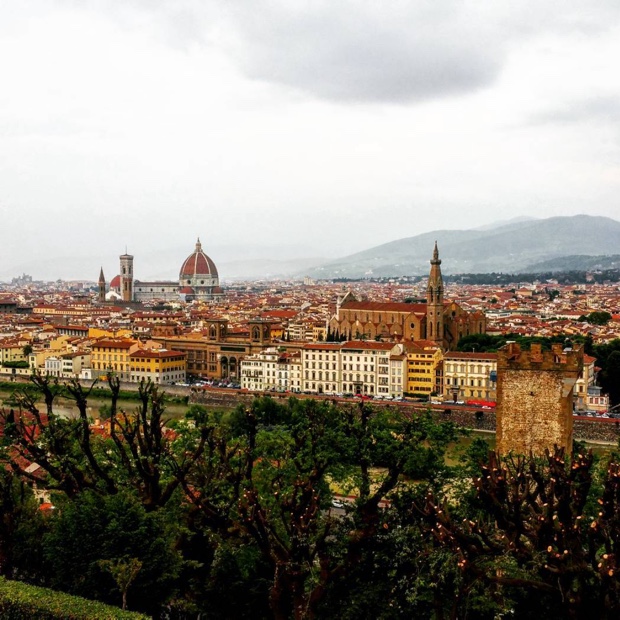
Instagram: mgodello

WineAlign

Outward and inward nines for November 12th

Can somebody get the pin? The ninth green at Summit Golf & Country Club

Can somebody get the pin? The ninth green at Summit Golf & Country Club

This will be the last weekend of play for most southern Ontario golf courses, or at least the ones who are smart enough to lock down and protect their precious 7,000 yards of turf from irreparable 2017 damage. For many players there are two seasons, golf and wine buying. Now that the exceptional 2016 year of 50-plus, sunshine-blessed rounds of 18 are done, the time has flipped over to loading up for the holidays and stocking the cellar.

My outward and inward nine recommendations from the VINTAGES November 12th release cover one and then the other. The front is marked by balance relative to par; wines of value, amiability, varietal purity and regional respectability. Just have a look at some of these iconic names: Delas, Catena, Trimbach, Gabbiano, Hedges and Cave Spring. The back takes swings into under and over par territory. Some are choices that polarize with buyers, critics and geeks. Are they worth the cash? Only you can be the judge. Along with some of Niagara’s greats are selections that include Chablis, Gran Selezione, Veneto and Napa Valley.

So put away the sticks and hit the stores. Here are my top 18 recommendations coming to VINTAGES this weekend.

Front Nine

delas

Delas Viognier 2015, Vins De Pays D’oc Rhone, France (462465, $13.95, WineAlign)

Pretty darn textbook viognier in the broadest sense of the varietal word, aromatically waxy, tropical and medicinal. The low alcohol, high flavour and commercially managed acidity is balanced by cream and citrus. No more, no less, precise and managed with utmost professionalism. Drink 2016-2019.  Tasted October 2016    @VINSRHONE  @UNIVINS

karavitakis

Karavitakis Winery The Little Prince White 2015, Crete, Greece (465930, $14.95, WineAlign)

Here an interesting bit of local vernacular, Cretan style, with vilana (65 per cent) and vidiano (35) dishing up a distinctly and singularly endemic mineral impression by way of subtle hints from tropical fruit. The palate is rich, broad and marzipan creamy. The acidity is round and rambling, tying the whole kit and Crete kaboodle together. A worthy side venture into the Greek Aegean hinterland. Drink 2016-2018.  Tasted October 2016   @karavitakiswine  @VictoryWine  @winesofcrete  @DrinkGreekWine

thym

Thymiopoulos Vineyards Young Vines Xinomavro 2013, Naoussa, Greece (466474, $17.95, WineAlign)

The Young Vines is an orange to the Earth and Sky’s apple, of a change of fruit and a pace that is hot off the press. Yet it is not without some ancient wisdom. In some new world sites vines up to 15 years of age would be considered old growth adults. In a Greek vineyard like that of a Naoussan like Thymiopoulos, they are babies of the sun. The Xinomavro here is fresh, momentarily acts strikingly brazen, bracing and ultimately, blatantly beatific. With a glass of the young vines in hand to it I say, “it’s not the pale moon that excites me, that thrills and delights me. Oh no, it’s just the nearness of you.” Like Norah Jones in a glass, sultry, contemporary, lightly smoky, of a jazz aesthetic and a pop sensibility. And wild berries. So fresh, so good. Drink 2015-2019.  Tasted May 2015

parker

Parker Coonawarra Series Cabernet Sauvignon 2013, Coonawarra, Limestone Coast, South Australia, Australia (467571, $19.95, WineAlign)

The Coonawarra Series cabernet sauvignon is predominantly sourced from the Williams family vineyard (like that of the chardonnay) in Southern Coonawarra. There can be no separating Terra Rossa soil from what happens with (especially) cabernet sauvignon anywhere in the Coonawarra. Very cool and savoury cabernet with tart cranberry, currant and black raspberry aromas. Really crunchy, chewy and gritty wine with focus and grip. Drink 2017-2020.  Tasted October 2016  @parkerwine  @CoonawarraWine  @Select_Wines  @Wine_Australia

catena

Catena Malbec 2014, Mendoza, Argentina (468066, 1500ml – $39.95, WineAlign)

High mountain vines bring more than altitude to Catena’s most commercially visible and successful malbec. In magnum format it accentuates the herbs and the dry, dusty qualities. In here there is sweetness but from tannin and extract. Acidity is the catalyst to make this sing a mountain hymn. Such proper winemaking brings rain. Love the format. Drink 2017-2020.  Tasted October 2016  @LauraCatena  @CatenaWines  @ArgentinaWineCA  @winesofarg  @Noble_Estates

gabbiano

Castello Di Gabbiano Chianti Classico Riserva 2013, Docg Tuscany, Italy (216309, $22.95, WineAlign)

First and foremost it is the wood, or the lack of wood that stands out in the CCR 2013. It may be observed as a different kind of wood, less polished and more natural but what really wins out is the fruit. The cherries are surfeited by impressed tannin and linger with good tonic for a good length of time. Great restraint shown by winemaker Federico Cerelli. Drink 2018-2024.  Tasted June 2016  @castgabbiano    

trimbach

Trimbach Riesling 2013, Ac Alsace, France (734517, $23.95, WineAlign)

What pray tell might you ask more than this from Alsace riesling? Could you, would you demand more immediate gratification? Might you request more purity and clarity of soil, rock and regional understanding? Is there a need to better define citrus and dry extract in any finer way? Trimbach has it down and few can pinpoint with fewer words and more direct impression. How things ought to be. A tight vintage though, so wait 18 months before embarking on chapter one. Imagine the Cuvée Frédéric Emile possibilities. Drink 2018-2023.  Tasted October 2016  @trimbach  @annetrimbach  @WoodmanWS  @AlsaceWines  @ACT_Alsace  @VinsAlsace  @drinkAlsace

hedges

Hedges C.M.S. Cabernet Sauvignon / Merlot / Syrah 2014, Columbia Valley, Washington (948992, $23.95, WineAlign)

Copacetic and well-amalgamated vintage here for the Hedges CMS, a wine of deep singer-songwriter meets jazzy flavour and sensible grip. Though there are bitters and a display of fine if sweet tannic structure, this CMS hits not over the head or below the belt. Just a few jabs and a loving embrace. A blackstar Columbia Valley blend that flies past, like “seven tracks in 40 minutes and it’s musically distinct.” In this way it reminds me of Ben Greenman’s New Yorker piece, “The Beautiful Meaninglessness of David Bowie.” Or it makes me think of Bowie as so many Hedges wines do. It’s not that this wine offers no clear meaning but it dishes ambiguity in ways only it can do. Like the late glam star, it “can’t give everything. Away.” Or, as Greenman concludes, “unless, of course, that isn’t what it means at all.” Drink 2017-2020.  Tasted October 2016  @hedgeswine  @Noble_Estates  @WINESofWA

csv

Cave Spring CSV Riesling 2014, Cave Spring Vineyard, VQA Beamsville Bench, Niagara Escarpment, Ontario (566026, $29.95, WineAlign)

The vintage brings a concentration and a compression and the most fruit imaginable for the Beamsville bench and the CSV. How this iconic riesling solicits immediate attention and fruit-juicy love is really something and hasn’t been seen in a few years. The citrus is all flesh and juice, the mineral aspect full of tang. Unction and viscosity define the texture and the palate. Drink early and enjoy the hell out of this forward CSV riesling. Drink 2016-2021.  Tasted October 2016  @CaveSpring  @TheVine_RobGroh

Back Nine

baker

Charles Baker Picone Vineyard Riesling 2013, VQA Vinemount Ridge, Niagara Peninsula, Ontario (241182, $35.20, WineAlign)

There was this intuitive moment with Picone 2013 as if it was waiting on me. Not doting or soliciting, but waiting. I will admit to have been wondering, reeling and speculating. To peer or peek into what Mark Picone’s Vinemount Ridge vineyard would adjudge and then bestow Charles Baker’s riesling in 2013? Would it be a case of weight, hyperbole, a hang in the balance out of misjudged necessity? Nah. Picone is no longer a mature 20 year-old vineyard but now a wise old thirty year-old one. Picone 2013 is in fact a fun park mirrored image of itself, with haughty, aerified aromas and variegated, leaning to tropical fruit flavours, taut like a flock in line with the vintage. The riesling berries just seem to have imploded and the results that have followed are nothing if not intense. Imagine a Yogyakarta market and a two-wheeled, glass-cased push cart stacked with a pyramid of tart mangoes. The fruit had been picked just as the sugars had begun to run like sap and bleed sticky on the cracking skin. A mango is sliced and doused with the intensity of Java lime juice and then sprinkled with Laut Jawa salt. The flavours are searing, sweetly saline and quenching. Only this tart is this, where tart and acidity meet, intertwine and connect on an emotional level. Picone 2013. The first non-inoculated riesling at first and then touched up near the end. “The best vintage you could ask for in riesling,” notes Baker, “cloud-covered, a meeting of the minds, vibrant.” The arid, cranky one will live without fret for 15 years. Drink 2018-2028.  Tasted twice, October 2016  @cbriesling  @StratusWines

moreau

Louis Moreau Chablis Vaulignot Premier Cru 2014, Burgundy, France (525386, $36.95, WineAlign)

Vaulignot was created in 1976, one of the last Premier Crus to gain such status within the association. Note that Moreau’s nomenclature is Vaulignot instead of Vau Ligneau, but the meaning is exactly the same. Really round and rich Chablis with a relative and realistic purity specific to place. This alights as a sun-drenched and lemon waxy chardonnay with enough (thank you very much 2014) tension to keep it rolling right along. What Vaulignot brings to the Chablis table is stick to your tongue, mouth and ribs persistence and vitamin water mineral enhancement. In a way it is caught in the Chablis netherland between up front gregariously fruity and strikingly mineral/acidity piercing. Great length in this vintage. Drink 2016-2020.  Tasted October 2016  @MoreauLouis1  @vinsdechablis  @purechablis  @BourgogneWines  @vinsdebourgogne

hb

Hidden Bench Terroir Caché Meritage 2012, VQA Beamsville Bench, Niagara Peninsula, Ontario (505610, $38.00, WineAlign)

I would not have thought it possible but the ’12 TC Meritage is open for business. The fruit is near-perfect for what these parts of the Beamsville Bench can offer and the normal gnashing is frozen as if suspended, which it likely is. In its current state it is all berries and dusty tannins, ripe, ripe acidity and plenty of outright happiness. A wisely structured Terroir Caché from Marlize Byers as only she could coax and extend. Drink now (not) or wait five years. Points in between may be confounding. Drink 2020-2030.  Tasted October 2016  @HiddenBench  @BenchVigneron  @MarkAnthonyON

coyote

Coyote’s Run Rare Vintage Pinot Noir 2013, VQA Four Mile Creek, Niagara Peninsula, Ontario (296863, $39.95, WineAlign)

A tart and robust vintage for the rare pinot noir, deeply ingrained into earth, sun and savour. This is distinctly varietal to Four Mile Creek with haute sapidity and exceptional length. The rusty accents inject piercing citric life into strawberry rhubarb pie. The tannins gnash their terrible teeth and the fruit hides for dear life. I’m not sure any Rare Vintage David Sheppard-ed pinot noir has ever delivered such mean structure. The next Niagara growing season should contribute to an ever more impressive showing because the fruit will almost certainly be up to the tyrannical task. Not to mention the coincidental crossroads 30th Sheppard vintage of making wines in Ontario. Meanwhile, from the cloudy, windy 2013 vintage his pinot noir will live long and prosper. Drink 2018-2025.  Tasted October 2016  @coyotesrun

pelham

Henry Of Pelham Cuvée Catharine Carte Blanche Blanc De Blanc 2011, Méthode Traditionelle, VQA Short Hills Bench, Niagara Escarpment, Ontario (315200, $44.95, WineAlign)

t’s always a highly anticipated taste when a vintage dated Cuvée Catherine is on the table sidled and promoted with the bar raised to epic heights from a striking chardonnay vintage like 2011. With acidity a given as the elephant in the room the formidably elegant Blanc de Blanc glides ethereally to press upon the olfactory nerve major and then grace the palate with fine mousse, citrus and biscuits. This is a benchmark for Ontario and Canada with only Benjamin Bridge’s B de B styled Gaspereau Valley gemstone sparkler in the same elite league. Enjoy this now and for 15-20 blissful, fizz-friendly years. Drink 2016-2032.  Tasted October 2016  @HenryofPelham  @SpeckBros

brolio

Barone Ricasoli Castello Di Brolio Chianti Classico Gran Selezione 2012, Docg Tuscany, Italy (942607, $59.95, WineAlign)

A Chianti Classcio first borne in 1997 with the plan to create a maximum quality blend as an expression of the estate’s diverse terroir. A meticulous selection is combed from the estate’s vineyards, spread over 230 hectares of land. Though early on the fruit may have emerged out of good but not yet exceptional vineyards, nearly 20 years later the sangiovese (90 per cent) with cabernet Sauvignon and merlot (or perhaps petit verdot) adheres to grand vin excellence. The wood regimen is 18 months in tonneau followed by 18 in bottle. Perhaps you will not find a more accomplished, perfectly judged, matter of factly expressed Gran Selezione. Sangiovese in equality of spicing with fruit, acidity and tannin, perfectly integrated toast, wood impact and textural drive. Stefano Capurso admits this about the transition from Chianti Classico to Gran Selezione.”It’s a matter of compromise between what is needed for the small producers and the need to express through crus for the large ones.” Drink 2018-2025.  Tasted May 2016  @barone_ricasoli  @imbibersreport  @chianticlassico

quintarelli

Quintarelli Primofiore 2012, Igt Veneto, Italy (20867, $66.95, WineAlign)

Only and distinctly Quintarelli, of that Negrar perfume and the kind of salumi cure no other producer can seem to procure. Though an infant and a baby to more mature vineyard selection Quintarelli adult bottlings, the Primofiore is full of exotics, of clove, cardamom, liquorice and meaty char. There is a sweetness to Quintarelli fruit and a remarkable resistance to astringency. This particular 2012 IGT is smooth and soothing. It is dangerously easy to consume. Drink 2017-2027. Tasted October 2016    @LiffordON

stag

Stags’ Leap The Leap Cabernet Sauvignon 2012, Napa Valley, California (142844, $89.95, WineAlign)

Signature cabernet sauvignon from Stag’s Leap from the first of the dry Napa vintages is dusty and high-toned to a high degree. Pure berry distillate and a savoury linger lead off and yet the closemindedness is still a youthful issue. There is a beautiful sense of florality behind the veil of aridity and big room tannin and yet the fruit is so very ethereal when it comes to tasting. Yes the dinging acidity and dastardly tannin will be a constant reminder of structure but without over compensation from the barrel the DJ Kylo driving beat will always be helpful. Gorgeous wine from Christophe Paubert. Put it in the time machine. I’ll take that leap in the dark. Drink 2019-2027.  Tasted October 2016  @stagsleapwines  @SLDistrict  

forman

Forman Cabernet Sauvignon 2012, Napa Valley, California (143925, $160.00, WineAlign)

Forman’s 2012 is a big, vibrant, robust and dusty expression, full of fruit, more fruit and nothing but fruit. Though the price is exceptional, the combined stylistic and level of honesty is formidably forman-ible. It is a rare opportunity and execution indeed when sweetness is culled from extract without the necessities of manipulated winemaking, oak usage included. The naked purity of this wine from an exceptionally dry, ripe and efficiently evolved vintage leads this cabernet sauvignon down a long, purposed and grandiloquent road. Drink 2018-2030.  Tasted October 2016  @rogcowines  @NapaVintners  

Good to go!

Twitter: @mgodello

Instagram: mgodello

WineAlign

The most important red wine from Italy

Singolarità, qualità, diversità. Grazie di tutto @chianticlassico

Singolarità, qualità, diversità. Chianti Classico

As seen on WineAlign

For three weeks in May my professional life focused entirely on the brave new world of Chianti Classico Gran Selezione. It began with a four day gambol through the heart of Toscana between two of the world’s great cities, Siena and Florence. It culminated with a Masterclass on Gran Selezione I guided for the Consorzio of Chianti Classico at Toronto’s Four Season’s Hotel.

The time in Italy brought me to eight estates plus a tasting of Gran Selezione at the former Convento di Santa Maria al Prato located in Radda in Chianti. It is here that the Consorzio has set up its new education and events centre to promote the wines of Chianti Classico. In Radda I tasted 12 selections with Consorzio president Sergio Zingarelli. The Masterclass in Toronto was organized as part of the region’s 300th anniversary celebration and the producers walked a crowd of 75 guests through eight Gran Selezione.

mondays-presentation-of-chianticlassico-granselezione-fstoronto-c-su-su-han

Monday’s presentation of @chianticlassico #granselezione @FSToronto (c) su su han

Related – Three days, eight estates, Chianti Classico

Critics comment and often complain that all Chianti Classico, Riserva and now Gran Selezione adhere to one style. They will say that because of minimum aging requirements that all wines are produced in the same way and towards the same end. Nothing could be further from the truth.

Today #toronto went to masterclass school on @chianticlassico #granselezione No going back now #chianticlassico #300years #300anni #gallonero #blackrooster

Today #toronto went to masterclass school on @chianticlassico #granselezione No going back now #chianticlassico #300years #300anni #gallonero #blackrooster

What Makes it Gran(d)

Gran Selezione must be composed of 80 to 100 per cent sangiovese and may contain up to 20 per cent red grapes (indigenous or international). It is produced from a single-vineyard or from a selection of the estate’s best grapes. The minimum aging requirement is 30 months, including three months in bottle before release. The manifesto portents a wine of new typology “at the summit of a denomination’s quality pyramid.”

“The use of the name ‘Chianti Classico Gran Selezione’ depends on issue of a suitability certificate based on chemical-physical tests conducted by authorized laboratories and approval of the wine’s organoleptic characteristics by special tasting committees as per Italian Ministerial Decree 16/12/2010 concerning batches of wine destined for bottling.” Some applications were granted retroactively for the 2009 vintage.

So, what is Gran Selezione? In the simplest terms, which means everything and yet nothing at all,  it represents a Chianti Classico producer’s finest Riserva expression at the top of the quality pyramid. Yes, it is aged longer, for an additional six months beyond Chianti Classico Riserva. But Gran Selezione is not simply one thing; it comes as a matter of interpretation. Some producers, like Nicolò Pozzoli and Silvio Campatelli of Lornano see others releasing the same wine already made, from the same vintage, with a new label and of course, a new price. Yet others see it as an opportunity to make a Selezione as a vineyard-designate Riserva, or as cru or climat based. For some it means opportunity, freedom, revelation or, like Pietro and Valeria Losi of Querciavalle, the realization of a dream.

Some quotes from producers:

“It’s a matter of compromise between what is needed for the small producers and the need to express through crus for the larger ones.” – Stefano Capurso, Barone Ricasoli

“It is not a military position.” – Bernardo Bianchi, Colle Bereto

“It is the best block of the estate.”  – Federico Cerelli, Castello di Gabbiano
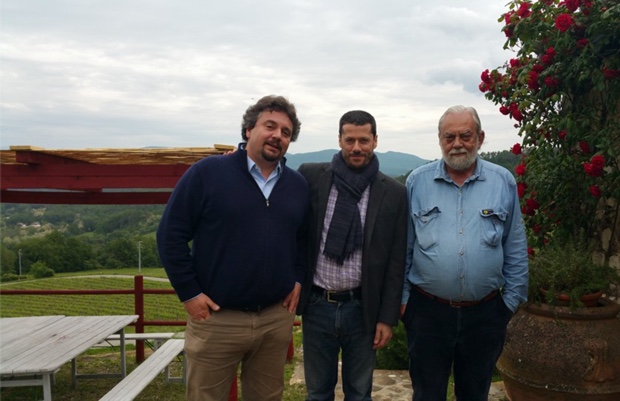
“It is made in the vineyard,  from the best vines and the best grapes.” – Massimiliano Biagi, Barone Ricasoli

“It is from a mico-territory within a territory, a micro climate and geology, a climat, combined by exposure and soil, together with the work of a man.” – Alessandro Palombo, Luiano

“It is the best selection of barrels. We taste the wine in the cellar and decide the wine that will be, to the end.”– Iacopo Morganti, Il Molino di Grace

“Gran Selezione begins in the vineyard, in the barrels is too late.” – Pietro Losi, Querciavalle

“I already make my top wine so I simply now call it Gran Selezione.” – Sergio Zingarelli, Rocca delle Macie

Perhaps you remain skeptical. You may be unclear as to the clarity of the category and perhaps you do not find whole or justifiable insight. I can say this. In Chianti Classico I asked all 10 producers I met with this question. “What is Gran Selezione.” All ten responded immediately, emphatically and with unequivocal determination. All 10 answers were intuitive and no two were exactly the same.

Chianti Classico is not a small wine region by any means. It is home to upwards of 70,000 hectares (177,500 acres), of which a mere 10 per cent are planted to vines. Remarkably, impossibly even, no matter where you are, you can always travel from one estate to another in what seems like 30 minutes or less, using one of multiple routes. On my last day the Consorzio’s Silvia Fiorentini and I left Il Molino di Grace in Panzano and drove southeast to Radda in Chianti. We then travelled from Radda northwest to the Consorzio’s offices in Tavernelle Val di Pesa. Then Christine Lechner drove me north to Castello di Gabbiano in Mercatale Val di Pesa but I swear we passed by Panzano and Greve on route. Chianti Classico has more exposures and angles than any wine region I have been to. It would take many years to understand where you are in relation to where you’ve been and where you are going. The wines share an identical set of diverse parameters. Singularite, diversite, qualite.
A Look to the Past

More time has been spent making dry red wine in Chianti Classico than in Piemonte’s Barolo or Barbaresco, where it was essentially Recioto until the mid 18th century. Thus, more time has been spent understanding the hills and differing terrains of the region than Piedmonte for this purpose. Antinori and Brolio are families that have lived and gained an understanding in the region for centuries. Brunello has figured it out. It can certainly be done in Chianti Classico.

She may be hiding behind the scenes but you all need to know who Christine Lechner is. Christine is events coordinator for the Consorzio and along with Silvia Fiorentini is responsible for bringing Chianti Classico to the world. Silvia’s work with the Consorzio is threaded everywhere throughout the world. It is Giuseppe Liberatore, director of the Chianti Classico Consorzio who directs the troops to showcase the excellence of the region’s wines.

Critics will say that Chianti Classico is living in the past. With three hundred years of beautiful and profound history, from Grand Duke Cosimo Tre de’ Medici to incumbent Consorzio President Sergio Zingarelli, you are damn right they are living in the past. Gran Selezione wines exists in a realm far beyond just a shared fleeting moment with 21 carefully selected Chianti Classico Riservas. If I could name a wine region anywhere in the world with a commensurate kinship of family, lineage, conoscenza, storia and the contiguous passing forward of tradizione I would. But I can’t.

A Look To the Future

Gran Selezione can be interpreted in a number of ways, depending on producer. I do not stand alone in my need to ask many questions. Where does one truly understand the region and not just the producer? What ways can the consortium pursue to cherish their name, by not sharing it with many different versions of similar products. Can one of the producers explain the decision to raise the alcohol level requirement of the Gran Selezione? Or is it just a matter of fact, something that happens as part of the winemaking process.

How important is 100 per cent sangiovese to the GS discussion and when other varieties are blended in, does it matter if endemic ones are used, like colorinio and canaiolo, or international ones, like merlot and cabernet sauvignon? What about the decision to grandfather in some approved applications for older vintages to be labeled as Gran Selezione? How has the category progressed from the first vintage to the present one. And has the approach or the style already changed?

Is there any consideration to add subzones to the Gran Selezione label? Either in its simplest form, Siena or Florence, or more parochially, Radda, Gaiole, Castellina, Castelnuovo Berardenga, Poggibonsi, Greve, Barbaerino or San Casciano.

Sleep walking not advised #panzano #ChiantiClassico

Sleep walking not advised #panzano #ChiantiClassico

The Unione Viticoltori di Panzano is a recent development in the Chianti Classico region. Like Chianti Classico, they have their own logo that can be printed on labels that indicate the origin of place. The producers under one village have one common idea. To produce organic and/or biodynamic wine in and around the village just south of Greve. All of the vineyards are from 300-500 meters above sea level and represent the microclimate within the area. Whatever you think about organic, the common goal is something to appreciate.

These are all valid and important discussions going forward but the truth and the fact of the matter is simple. Barolo received DOC status in 1966, and Brunello in 1980. Brunello in 1980. Gran Selezione is a very recent development and growing pains will be a necessary part of its development. Patience and perseverance will see to reward. I would be shocked if Gran Selezione is not the most sought after red wine to come out of Italy by the year 2025. You heard me. Not just sangiovese. The most important red wine from Italy.

I tasted 21 Gran Selezione in Chianti Classico between May 11 and May 15. Here are my notes.

Complex by name, nature and nurture @chianticlassico #granselezione @luiluiano #ottantuno #fattoriadiluiano #alessandropalombo #sangiovese #antoniopalombo #luiano

Complex by name, nature and nurture @chianticlassico #granselezione @luiluiano #ottantuno #fattoriadiluiano #alessandropalombo #sangiovese #antoniopalombo #luiano

Luiano Chianti Classico Gran Selezone Ottontuno 2012, Docg Tuscany, Italy (Agent, $72.50, WineAlign)

From Luiano’s premier cru vineyard on white stones from an ancient natural spring that tumbled into a lake. The 85 per cent sangiovese plus (15) merlot are kept separate form the rest of the production. Here berries fold into mineral with wood-delineated spice (truffle, tumeric, saffron, etc.). An amazingly silky wine with that cartology of spice all over its map. The cru is one hectare that executes into 3000-4000 bottles per year. The nomenclature here is not a serious one, the “A” and and the “P” in representation of a signature by Alessandro and his father Antonio that also looks like an “8” and a “1.” It was Alessandro’s grandfather who built Luiano in 1959 and Antonio began working with him 1981. When you dream to make wine, you remember 1981 and when Alessandro was three years old in 1981, he said to his grandfather at lunch, “Ottontuno!” This is an extraordinary Gran Selezione, from a micro-territory within a territory, of a micro-climate and geology, a climat within Luiano. A terroir that combines exposure and soil, together with the work of a man, Antonio, planted in 1999. The merlot was added in 2001. The wine needed to be open for quite some time, to envisage the mineral florals and gain consciousness under the auspices of the spices. Drink 2018-2026. Tasted May 2016

Lornano Chianti Classico Gran Selezione 2011, Docg, Tuscany, Italy (Agent, $42.95, WineAlign)

Gran Selezione for Chianti Classico is a matter of interpretation, in this case a selection of the finest few barriques of both sangiovese and merlot. Lornano’s spent 30 months in all new barrels, resulting in the smooth operator that is this Gran Selezione, seductive and inviting within the context of its truth behind a veil of terribilita. This infancy is merely a window into 15 years of what may be, only a split second screen shot of the grand picture. To believe in anything but time would be short-sighted and disrespectful to what this sangiovese is capable of developing towards. Truth from vineyards built on stratified sands, shales, stony alluvials and limestone. History dating back to 1904. Drink 2017-2025.  Tasted May 2016

Structured and getable @chianticlassico via @LornanoChiantiC Il piacere è stato mio #NicolòPozzoli #SilvioCampatelli #montereggioni

Structured and getable @chianticlassico via @LornanoChiantiC Il piacere è stato mio #NicolòPozzoli #SilvioCampatelli #montereggioni

Lornano Chianti Classico Gran Selezione 2012, Docg, Tuscany, Italy (Agent, $42.95, WineAlign)

Lornano’s interpretation of Gran Selezione for Chianti Classico is a selection of the finest few barriques of both sangiovese and merlot. Thirty months in new barrels takes sangiovese through a fluid and rippleless ride, from the same élevage of 2011, though here showing its tannic teeth with more than just one less year by age. The cherries and the leather are both more extreme but this is a fleeting moment of assessment, from a sangiovese of acute youth, but the tannins are sweet. It is this crux that shows there is genetic lineage to scroll back through Chianti Classico and CC Riserva. More perfume in 2012, of violets and roses, even in the presence of human aromatic intervention. Drink 2018-2028.  Tasted May 2016

È vero, a special vineyard #VillaTrasqua @chianticlassico #castellinainchianti #montereggioni #granselezione

È vero, a special vineyard #VillaTrasqua @chianticlassico #castellinainchianti #montereggioni #granselezione

Villa Trasqua Chianti Classico Gran Selezione Nerento 2010, Docg Tuscany, Italy (Agent, $39.95, WineAlign)

Single-varietal, single-vineyard, sangiovese-vigna nerento Gran Selezione. From the vantage point of Villa Trasqua’s terrace you can look out and see the demarcation of this special plot, a cru that seems to throw a special light even at dusk and this Gran Selezione offers a changing luminescence as it warms and evolves in the glass. Nerento is a success from the early category days and not all producers were able to find commitment and distinction this early. At six years of age post vintage it drinks as it should, idiomatically fresh and precise in the unequivocal Castellina in Chianti way. Here is post modern Chianti Classico’s preferred exit because Nerento is an example that puts full trust in the grand theory and the ideology of the Selezione. Keep this in the glass for hours and contemplate; the vineyard, the perfectly cooked filet of beef and the quiet Chianti Classico night. Drink 2016-2022.  Tasted May 2016

The #alberese of #querciavalle #pontiganello @valerialosi #agricolalosi #sangiovese #granselezione

The #alberese of #querciavalle #pontiganello @valerialosi #agricolalosi #sangiovese #granselezione

Losi Querciavalle Chianti Classico Gran Selezione Losi Millenium 2010, Docg Tuscany, Italy (Agent, $39.95, WineAlign)

Every great wine dissolves a genre or creates a new one and in the context of Gran Selezione, Pietro Losi and Giorgio Baldi’s Millenium 2010 concludes the latter. In a category where so much changes and yet nothing at all, the choice to pick individual plants, specific vines and particular bunches of grapes as destined for a vision of greatness defines the ideal that wine is indeed made in the vineyard. This Chianti Classico Riserva sees 36 months in 10hL barrels and it is a wine that has essentially been made since since 1997. It went to market again in 1999 and then it was 2000 that prescribed the Millenium, followed by 2001, 2003, 2005, 2007 and 2009. Subsequent top quality vintages are 2011, 2012 and 2015. The selected vines and particular bunches produce on average and approximately 4800 bottles. Take note of the most perfume and yet not the most savour, forest or truffle but there are hints, with some fennochio and the most grip to lead a sangiovese (with five per cent each canaiolo and malvasia nera) structure. The finest tannic grain runs through, lifted by tang meets sour over tart so round and specific to Gran Selezione. This wine is a highly accomplished specimen and a portal in ode to a great grandfather who started his day with wine and cheese, for energy. He imbibed for everyday consumption, just as water would nourish as it should be with this wine for food and contemplation. A wine with a finish minutes long. Drink 2018-2028.  Tasted May 2016

Barone Ricasoli Castello Di Brolio Chianti Classico Gran Selezione 2012, Docg Tuscany, Italy (942607, $59.95, WineAlign)

A Chianti Classcio first borne in 1997 with the plan to create a maximum quality blend as an expression of the estate’s diverse terroir. A meticulous selection is combed from the estate’s vineyards, spread over 230 hectares of land. Though early on the fruit may have emerged out of good but not yet exceptional vineyards, nearly 20 years later the sangiovese (90 per cent) with cabernet Sauvignon and merlot (or perhaps petit verdot) adheres to grand vin excellence. The wood regimen is 18 months in tonneau followed by 18 in bottle. Perhaps you will not find a more accomplished, perfectly judged, matter of factly expressed Gran Selezione. Sangiovese in equality of spicing with fruit, acidity and tannin, perfectly integrated toast, wood impact and textural drive. Stefano Capurso admits this about the transition from Chianti Classico to Gran Selezione.”It’s a matter of compromise between what is needed for the small producers and the need to express through crus for the large ones.” Drink 2018-2025.  Tasted May 2016

Delivering purity with deep respect to exceptional vineyards @barone_ricasoli @chianticlassico #sangiovese #granselezione #merlot

Delivering purity with deep respect to exceptional vineyards @barone_ricasoli @chianticlassico #sangiovese #granselezione #merlot

Barone Ricasoli Castello Di Brolio Chianti Classico Gran Selezione Colledilà 2013, Docg Tuscany, Italy (AgentWineAlign)

Colledilà is the Ricasoli Chianti Classico “other side of the hill” cru developed and realized from 15 years of estate terroir sangiovese research. This vintage was cropped at less than six tonnes per hectare so no need for green harvest, out of limestone vineyards with southeast and southwest aspects on seven blocks. Only 15,000 bottles were produced from only the best grapes selected (the rest go into the Brolio GS). This 100 per cent sangiovese is the soil king agronomist Massimiliano Biagi’s favourite and it sees 18-20 months in 2nd fill tonneaux. Biagi is the custodian of the fractured mineral, the white rock, catalyst to this off-roading sangiovese of built in natural, shock absorbing structure. Notes of balsamic, baking spice, vanilla and lavender are antithetical to the Brolio GS. The Colledilà’s first vintage was 2007 and the seventh breadth is here remarkable, the acumen inherent, the result timeless. You should never give up on sangiovese and when I tasted this again upon return after the Casalferro I then came to realize and respect its power. But it is never overpowering. It whiffs the most perfume, in the end, in reverse. Drink 2018-2025.  Tasted May 2016

Il Molino Di Grace Il Margone Chianti Classico Gran Selezione 2011, Docg Tuscany, Italy (435115, $39.95, WineAlign)

What is Il Margone? “This is the best selection. We taste the wine in the cellar and decide the wine that will be, to the end,” explains Iacopo Morganti, director of Il Molino di Grace. The name must also refer to the particular construction of the vineyard at Montefili, on Panzano’s west side, of its altitude, slope and the Galèstro within. Il Margone is a kind of wine for the (Molino) windmill, where the water goes over the stone and it is a wine that was always the Gran Selezione, before and after, on the vine and in the barrels. Now it can be called what is has been whereas before it was the second Riserva but the more important one, the best one. It now spends 18 months in barriques, 50 per cent new and 18,000 bottles are made. It runs deeper still, far through the Galèstro and into the pietra forte, for the cementing of strong sangiovese (not just religious buildings). From the hot vintage of 2011 and with the alcohol to prove it (14.5 per cent), there is an inherent sense of yeasty culture, a sheep’s milk pecorino that runs through the warmth. It functions as a cooling centre, then compression, layered spice and tannin. That late attack co-conspires with acidity to freeze the mouthfeel and seek years of patient desire. Really energetic Sangiovese, iron-fisted and demanding but with so much seeping cherry fruit. Wait four years minimum. Drink 2019-2025.  Tasted May 2016

At the intersection of @chianticlassico and #singlevineyard there is #granselezione #collebereto

At the intersection of @chianticlassico and #singlevineyard there is #granselezione #collebereto

Colle Bereto Chianti Classico Gran Selezione 2011, Docg Tuscany, Italy (Agent, $67.50, WineAlign)

A single-vineyard Gran Selezione, as per the house interpretation of the category, from “la vigna del Convento” situated on the slope beneath il convento di Radda in Chianti. So very concentrated, modern, plush but unshaken, of no compression. Noses all the flowers and herbs of Radda in this glass; lavender, rosemary and many varieties of sage. “This is not a military position,” notes Bernardo Bianchi. The block is always in the sun over fully-occupied Galestro soil, 490m above sea level. All together making for a new Riserva of restrained power and elegance. Wow. Such mouthfeel and structure many Gran Selezione would kill for. The single monastery vineyard is very special at 20 years-old and has just entered its prime. Finishes with more mineral in what seems like Amaro bitters, but it’s mineral, all mineral and nothing but mineral. And it’s just a baby, at this time in bottle five months.  This is a very, very grown up wine. It solicits the requiem to be stashed away for future re-connection. Drink 2020-2031.  Tasted May 2016

Ambassadors of @chianticlassico to the world. 2013 #castellodigabbiano #granselezione (not pictured) will blow your mind #treasurywineestates #sancascianovaldipesa #ilbellezza #chianticlassicoriserva

Ambassadors of @chianticlassico to the world. 2013 #castellodigabbiano #granselezione (not pictured) will blow your mind #treasurywineestates #sancascianovaldipesa #ilbellezza #chianticlassicoriserva

Castello Di Gabbiano Gran Selezione Bellezza Chianti Classico 2013, Docg Tuscany, Italy (652438, $39.95, WineAlign)

Tasted with winemaker Federico Cerelli alongside the new era ushering 2012, a wine with six months further resolve, which is really just a moment in life. Looking at this 2013 it clings to that ’12’s ideal, still firm and in need of down time, stirring still, wasting some time. Here a gear switch, alteration and adjustment. A reduction of new oak, an increase of the mineral cogitation specific to the Albarese soil, with tannins great like in 2012 but finer, more elegant. This is more classic in the sangiovese thought because what also is allowed is the level of dry extract, “over 30 for sure” notes Cerelli. This Bellezza is pure sangiovese, the best Bellezza in years, classic to remind of many years ago but a very modern wine. It is the Gabbiano predicament and the predilection to announce what Gran Selezione means so in a word, bravo. You could actually drink this now and then over 25 years. “What is Bellezza? This is the best block of the estate” is the answer as told by Federico. Great tannins, simply great tannins. Drink 2019-2032.  Tasted May 2016

Selection of #granselezione @chianticlassico at the Convento di Santa Maria al Prato #raddainchianti

Selection of #granselezione @chianticlassico at the Convento di Santa Maria al Prato #raddainchianti

Castelli Del Grevepesa Panzano Chianti Classico Gran Selezione 2011, Docg Tuscany, Italy (SAQ 12626764, $38.00, WineAlign)

Fom San Casciano in Val di Pesa, a cooperative-produced Gran Selezione from vineyards all around the area. Quite barrel-influenced adding extracted layers around steroidal cherries, with aromas recalling shoe leather and polish. A rich and broad mouthfeel of elasticity like a stick of chewing gum with alkalescent flavours of lavender and vanilla. A highly oaked, cakey, middle of the road GS. Dusty as if surely some merlot would be the filler in here but it’s 100 per cent sangiovese. Well made coop Chianti Classico. Drink 2016-2020.  Tasted May 2016  @Grevepesa  @SelectFrechette

Mangiacane Z District Chianti Classico Gran Selezione 2011, Docg Tuscany, Italy (Agent, $49.95, WineAlign)

The big, heavy bottle, echoed in the wine’s tones, from wood and with extract. Very Igt in temper, with international varieties in here for sure, seemingly designed with cabernet sauvignon but perhaps also merlot (it’s actually the opposite). The intent here is a full expression of fruit, wood, acidity and tannin. A beast that requires years to integrate and settle. There is liquorice and fennel pollen in the later stages. It’s very chewy and certainly all in. Drink 2018-2022.  Tasted May 2016  @VillaMangiacane  @loyalimportsltd

Fontodi Vigna Del Sorbo Chianti Classico Gran Selezione 2012, Docg Tuscany, Italy (Agent, $95.00, WineAlign)

The plot specific, 100 per cent sangiovese Vigna del Sorbo is from organic vineyards in Panzano, now in its third year for re-branding the single-vineyard Riserva. Remarkably aromatic and in hyper reality of its unique and very own red fruit, high-toned, full bodied and certainly elevated of alcohol. A sangiovese of massive tannins and acidity but the fruit is equal to the task. This leans more to the modern wave of extraction and sun-drenching than any other Gran Selezione I have tasted recently, like 100 per cent grenache of say Chateau Rayas. A Chianti Classico tall, big, muscular and strong, of ample tannins, proportionate acidity, body, structure, all in and all together. A bit more elegance than Châteauneuf-du-Pape but along very similar lines. Also a product of the 2012 vintage. Drink 2018-2036.  Tasted May 2016  @rogcowines  #fontodi

Casaloste Chianti Classico Gran Selezione Don Vincenzo 2010, Docg Tuscany, Italy

From Gionanni Battista D’orsi, also from Panzano so organic. The vintner hails from Naples (note the tiny Vesuvius on the label), this is the first to show real acetone but it’s beneath the threshold. There is also wood in droves, woods and thickets with dark blackberry fruit to extreme ripe red plum. This needs years to settle down and play nice. It’s a very formidable GS, not so surprising considering the vintage as it is imagined. A bit less grit, girth and astringency will travel though future vintages although with Casaloste it’s certainly a stylistic choice. Drink 2018-2028.  Tasted May 2016  @Casaloste

Castello D’Albola Chianti Classico Gran Selezione Il Solatio 2012, Docg Tuscany, Italy (Agent)

From Radda in Chianti and owned by Zonin, this is typically lighter in body for the area. Composed of 100 per cent sangiovese, very much in red fruit and old-school Brunello-ish liqueur. Cherries macerating and gaining acidity in its pool, flavour is a ringer for Japanese omeboshi plum, and then fruit leather/roll-up made with strawberry. Liquid chalky and lactic. Great intensity. Drink 2017-2024.  Tasted May 2016

Premiata Fattoria di Castelvecchi Chianti Classico Gran Selezione “Madonnino della Pieve” 2010, Docg Tuscany, Italy

From Radda in Chianti, rich red to darkening fruit and some acetic dealings,. There is more than just a simple breadth of likeability in the layering and variegation of the red fruits in here.  Plenty of herbiage and more tonality on the second half of the ride. Somewhat old school and very taut, tight, vigorous and vital. Classic, traditional, ripe and attentive sangiovese. This will live quite long,  somewhere in the vicinity of 15-20 years. Drink 2018-2028.  Tasted May 2016    @BarrelSelect

Rocca Delle Macìe Gran Selezione Chianti Classico Riserva Di Fizzano Single Vineyard 2012, Docg Tuscany, Italy (699454, $32.95, WineAlign)

From Castellina in Chianti, another singular, unique and specifically to itself Gran Selezione, with dark red fruit and tones set above though there is nothing remotely acetic about the play. Purity from the Fizzano vineyard is apparent with much mineral (seems to be albarese) throughout. The mid-palate here is full and this strikes as both elegant and traditional. Great length, longer than many or even most. A very accomplished yet classico Classico. Re-branded and worth every bit of that advantage. Perfect transfer from single-vineyard Sangiovese (95 per cent) plus (5) merlot, to SV-GS. Even if you notice the wood in the mid-palate and through the structure, you do not finish with it. There are 26,000 bottles made for a wine first produced in 1986. Drink 2018-2024.  Tasted May 2016  @roccadellemacie  @ProfileWineGrp

Mazzei Castello Di Fonterutoli Chianti Classico Gran Selezione 2012, Docg Tuscany, Italy (Agent, $75.00, WineAlign)

From Castellina in Chianti by the Mazzei family, fashioned from 92 per cent sangiovese. There is so much wisdom in here, out of grace and for elegance with wood rounding out all the angles. Very much a particular and painstakingly precise selective Gran Selezione, from wide and far. Though curious to note that within the pantheon of the genre the Fonterutoli is almost middle of the road in style. This comes as a result of where is lies in the range occupied by the multifarious interpretations. This 2012 is demonstratively integrated with a high level of acidity spurring and embracing generational connectivity. Drink 2018-2030.  Tasted May 2016  @MarchesiMazzei  @TrialtoON

Castello di Cacchiano Chianti Classico Gran Selezione Millenium 2009, Docg Tuscany, Italy

From Gaiole in Chianti and one of the first to jump headfirst into the new category. Showing a bit of age, from a very warm vintage, this has the humid funk (and is consistent with the 2007 tasted earlier in the week). Rich, a bit caky, chalky and yet the acidity winds its way around with room-tying, rug-hooking ability. Older in schooling and traditionally-styled to be sure. Drink 2016-2019  Tasted May 2016

Rocca Di Castagnoli Stielle Chianti Classico Gran Selezione 2011, Docg Tuscany, Italy (SAQ 12489114, $47.00, WineAlign)

From Gaiole, with 20 per cent cabernet sauvignon, this is modish-modern, high-toned, rich and spicy, very wood apparent Gran Selezione. A bit splintered and flinty this early in toddler years but the mineral and high altitude vineyard impart is and will become gainfully employed as a major plus. Long finish. Strikes like a very modern Brunello in style and increasingly international with time in the glass. In some respects it may as well be Igt. Drink 2018-2024.  Tasted May 2016  @Roccacastagnoli  @ProfileWineGrp

Rocca di Montegrossi Chianti Classico Gran Selezione Vigneto San Marcellino 2011, Docg Tuscany, Italy (Agent, $59.00, WineAlign)

Supported by nine per cent pugnitello to accentuate hue, aroma and structure, this is organic sangiovese from Gaiole. Produced using the finest grapes from the San Marcellino vineyard that surrounds the namesake Church in Monti in Chianti. Saw 27 months in medium-toast Allier forest French barriques and tonneaux plus an additional 18 months in bottle before release. Yet another rich and high-toned example (pushing 15 per cent alcohol), with lots of liquorice and corporeal feel on the nose. A child of modern and rich styling with good animale tension, as well as ferric and hematic accents to the dark fruit. Very Tuscan Igt mixed with Classico ideals to speak for Gran Selezione through the voice of traditional varieties. Only 7,400 (plus 300 magnum) bottles were produced. Drink 2018-2028.  Tasted May 2016  

Good to go!

Twitter: @mgodello

Instagram: mgodello

WineAlign

Three days, eight estates, Chianti Classico

alessandro-your-grandfather-was-a-very-good-winemaker-luiluiano-chianticlassico-fattoriadiluiano-chianticlassicoriserva-1979-sangiovese-alessandropalombo-antoniopalombo-luiano

Alessandro, your grandfather was a very good winemaker @luiluiano @chianticlassico #fattoriadiluiano #chianticlassicoriserva #1979 #sangiovese #alessandropalombo #antoniopalombo #luiano

By the time I landed in Florence and had settled into the Kraft Hotel it was pushing 3:00 pm and I needed to be ready just a few hours later to meet my Chianti Classico hosts for dinner. It had been 21 years since I last wandered aimlessly, holistically and believe me, blissfully through the streets of Cosimo I de’ Medici’s Florence. Greater men than me had walked these narrow strade. Pietro Cimabue, Giotto di Bondone, Dante Alighieri, Arnolfo di Cambio, Desiderio da Settignano, Donatello, Lorenzo “The Magnificent” de’ Medici, Michelangelo Buonarotti, Botticelli, Lorenzo “The Magnificent” de’ Medici, Giovanni Boccacio, Raphael Sanzio, Vincenzo Danti, Leonardo Da Vinci, Francesco Furini and Filippo Brunelleschi. Twenty-one years should distort and disorient one’s sense of direction but I found myself at home, mapless, confident in finding my way from landmark to landmark. Ponte Vecchio, Piazza della Signoria, Santa Croce, Santa Maria Novella, Palazzo Pitti, Palazzo Vecchio and Il Duomo. Hours later, wide-eyed and energized, the dinner bell sounded and then forward, for three extensive immersion days, it was all Chianti Classico.

godello-and-brunelleschi-together-at-last-firenze-piazzadelduomo

Godello and #brunelleschi together at last #firenze #piazzadelduomo

I spent some time in Chianti Classico at the beginning of May. I had been to Toscana before, in 1986, 1989 and in 1995. With twenty years having passed, so much had changed and in some ways, nothing at all. What I learned this time around can’t be found in a book, online or in scattered, random tastings here in Toronto. I found people, I found place and I found progression. The wines of Chianti Classico have embarked upon an ascension into their contemporary golden age.

On September the 24th, 1716 the Black Rooster was born. A notice was given by the Grand Duke Cosimo III de ‘Medici who decided to demarcate the territories dedicated to the production of high quality wines. To protect and to safeguard this special place, found in the hills and valleys between Siena and Florence. Chianti Classico. Three hundred years later the Gallo Nero, quintessential symbol synonymous with the Chianti Classico DOCG, is celebrating its birth.

the-sheer-breadth-of-ilduomo-is-just-amazing-firenze-piazzamichelangelo-brunelleschi-toscana

The sheer breadth of #ilduomo is just amazing #firenze #piazzamichelangelo #brunelleschi #toscana

All who serve to ride shotgun as sentinels to the profound history and quality of Chianti Classico are very sensitive and protective of the term, so the use of the full name “Chianti Classico” is essential. In Tweets, Instagram and Facebook posts, as well as press releases, articles and conversation, the omission of “Classico” is akin to liking it to that other lesser wine that shall not be named, and could result in being taken outside and subjected to some dark arts. The two names, as a matter of fact, represent two DOCG with distinct and separate production territories, histories and consortia.

#tranquillo #greveinchianti #ChiantiClassico

#tranquillo #greveinchianti #ChiantiClassico

Chi-anti Classi-co. Two very important words. Classic Chianti. Classical Chianti. Take away the demonstrative qualifier and what do you have. You have Chianti. With no disrespect to some very honest, simple and pleasurable Chianti produced outside of the boundaries that define Chianti Classico, the difference between the two is night and day. When you travel through the verdant, rolling hills, in and out of wine estates and villages of the region, you can’t help but feel the sense of tranquillo. Calm. You are also hyper aware of the singularity, diversity and quality of the produce. This is Chianti Classico. You do not get lazy and say I am in Chianti or I have travelled through Chianti. Per favore, Chianti Classico. In fact, the moment you leave Chianti Classico and pass through the terra-cotta villages just south of Firenze the landscape changes immediately. It’s just not the same.

dropped-in-on-some-old-friends-today-villadigeggiano-barrelselect-bianchibandinelli-castelnuovoberardegna

Dropped in on some old friends today @VilladiGeggiano @BarrelSelect #bianchibandinelli #castelnuovoberardegna

Image, perception and finalmente, reality, these are the truths all who feel the soul of Chianti Classico are in search of today. Today and moving forward, explaining to the world that Chianti Classico is not what you thought or think it to be. In my three full days of exploring the region I visited eight wine estates, and no two were the same. Each have vines growing on different soils, each vinify with varying techniques and all eight treat l’élevage of their wines with surprisingly divergent approaches.

Related  – Chianti Classico’s Gran Selezione plan

My visits to these eight estates (plus one 21-year later reunion with Andrea Bianchi Bandinelli at Villa di Geggiano) was made possible and with thanks to the Consorzio di Vino Chianti Classico. In particular President Sergio Zingarelli, Director Giuseppe Liberatore, Christine Lechner and Silvia Fiorentini.  Last week I published links to 21 tasting notes on Chianti Classico Gran Selezione over at WineAlign. The full notes will go live on Godello next week. This week you can read 28 tasting notes on the non-Gran Selezione wines I tasted In Chianti Classico back in May.

Luiano

Luiano as from the Latin, “janus,” where all begins from Jaunary, with an eye to the past and forward to the future. Located in San Casciano in Val di Pesa, through Impruneta due south of Firenze. Passed down from grandfather Alberto, now Alessandro and father Antonio Palombo’s vineyards fan out to an amphitheatre with four distinct (cru) climats. The use of merlot and cabernet sauvignon is employed to achieve roundness with the tannic and tougher sangiovese, to avoid the classic, firm and historically at times infirm and instead go for the amenable. Representation in Ontario is with Tre Amici Wines.

alessandro-luiluiano-palumbo-announces-chianticlassico-quality-luiano-even-before-you-have-ascended-his-drive

Alessandro @luiluiano Palombo announces @chianticlassico quality #luiano even before you have ascended his drive

Luiano Chianti Classico 2014, Docg Tuscany, Italy (Agent, $24.50, WineAlign)

From a challenging vintage and winemaker Alessandro Palombo admits readily to much fruit purposefully languished on the vine. Field selection was the sine qua non, inexorable and moral imperative to seek this floral sangiovese from a less than homogeneous vintage. With a father’s wise voice resonating in his ear it was the inborn proclivity to resist temptation and not to over press and to focus on freshness. Some cabernet sauvignon and merlot urges the chamomile, jasmine, black tea and candied orange peel with some healthy contrariety by underbrush (mushroom and forest floor) and truffle shaved over black cherry. A bit iron rich though righteously clean, with no exaggerations, in avoidance of arbitration, greenness or pepper pyrazine. “It’s not the greatest Chianti Classico I’ve ever made but it’s one I’m very proud of.” 60,000 bottles made. Drink 2016-2021.  Tasted May 2016

with-alessandro-and-antonio-palumbo

With Alessandro and Antonio Palombo

Luiano Chianti Classico Riserva 2013, Docg Tuscany, Italy (Agent, $39.95, WineAlign)

There was some rain and cold at the climax of maturation, so here the sangiovese is grittier, shivered with sweetmeat and somewhat bitter tannins, but otherwise a “normale” vintage. Here we have 100 per cent sangiovese of the best selections and the first vintage not in true French oak. It is in fact larger barriques (French but made in Italy). Still the forest floor and a hint of truffle, albeit slathered with a deeper richness, whiffing some leather and tobacco. The wood is present but respectful to the fruit, as is the verdant streak running through the tremendous San Casciano in Val di Pesa acidity. The bitter and drying tannins will require time to help soften the astringency and relent they will though not completely, but age will certainly help. 13,000 cases made from a vintage with no Grand Selezione. Drink 2017-2022.  Tasted May 2016

Luiano Chianti Classico 1979, Tuscany, Italy

Alessandro Palombo is skeptical at first, one eyebrow raised but with the look of possibility on his face. Takes me very little time to acknowledge that this ’79 is very much alive, fruit not predominant (and surely some prune) but neither cooked nor bruised. The brown nose (earth and spice) purports a full concentration of anthocyanins, acidity still full in, dried fraises de bois, black liquorice, dirty leather and worth repeating, still very good acidity. Truffle, forest floor and then black olive tapenade on the palate. This is 70-80 per cent sangiovese with colorino and canaiolo and for 1979 it’s quite incredible. It should not have lasted this long.  Antonio says that up to 10 per cent could have been malvasia blanca and trebbiano because at the time it was a field blend, co-planted with the sangiovese, which could explain some of the variegation in the colour. This is a Chianti Classico to lend credence to the idea of using multiple fruit, vegetal and animale descriptors when assessing an old wine. It’s also the reason why you put them away and open them with friends who’s eyes are wide open. Thank you Alessandro for the opportunity and for the connection to your grandfather Alberto. He was a very good winemaker. Drink 2016.  Tasted May 2016

Lornano

Fattoria Lornano had been a Napoleanic French property taken from the church and re-assigned.  Like many properties in Chianti Classico the 180 hectare estate was originally a church, in Lornano’s case a privilege of Pope Innocent III who was entrusted with the administration of other neighbouring churches and adjacent agricultural lands. The Taddei family-owned Lornano is located on the south west hills of Castellina in Chianti and Monteriggioni, five kilometres from Siena.

Nicolò Pozzoli’s great grandfather bought Lornano in 1904 after making a fortune in matches followed by owning a glass factory in Empoli. This from Nicolò’s mother’s side of the family and it was aunt Katerina who ran the winery, now in the hands of Pozzoli. In 1998 they re-planted six hectares and in 2013, replaced seven hectares of Chianti Classico on the upper hill. Today the team is led by General Director Pozzoli, Agronomist Silvio Campatelli and Enologists Franco and Matteo Bernabei. They are represented in Ontario by Frontier Wine Merchants.

structured-and-getable-chianticlassico-via-lornanochiantic-il-piacere-e-stato-mio-nicolopozzoli-silviocampatelli-montereggioni

Structured and getable @chianticlassico via @LornanoChiantiC Il piacere è stato mio #NicolòPozzoli #SilvioCampatelli #montereggioni

Lornano Chianti Classico 2012, Tuscany, Italy (211599, $17.95, WineAlign)

Lornano’s Chianti Classico benchmark endeavours from lock, stock and barrel sangiovese and is held back from market longer than most, to soften the 100 per cent edges and give the round, plumate feel. The vintage is nothing if not consistent with the Lornano house style, divaricated rich and dishing out some evolution. The fifty-fifty small and large barrel split and 12 months of aging following a 22-day fermentation at 25-28 degrees is more than just a jumpstart and a kicker. The integral technical play celebrates and elevates the elegant vintage of very pure fruit, almost biting, ricercato crack spice and finally, very silky tannins. A seven to 10 years Chianti Classico with significant poise for so little salvo. Drink 2017-2023.  Tasted May 2016

Lornano Le Bandite Chianti Classico Riserva 2011, Docg, Tuscany, Italy (230672, $19.95, WineAlign)

Le Bandite, “the banned,” is a cru special for its content of white sand. This is the place “where the hunters went hunting,” notes Direttore generale Nicolò Pozzoli, Monteriggioni territory in which, for public tender are prohibited hunting, fishing or grazing. So what is the significance with respect to Chianti Classico Riserva? Simple. The hunter’s loss is the wine consumer’s gain. Here a wine that spent 21 months in barrels, of wise character, evolved and integrated inherent, thanks to an extra year in bottle before release. Sangiovese from clay, of earthy density settled, on the palate, with three to five years left for prime drinking. When tasted alongside the 2009 Le Bandite, it shows more is less vitality and acidity than when that vintage was last tasted in November 2013. This 2011 will soon revive a pop and a feeling that brings leather and liquorice into the fray. Drink 2017-2024.  Tasted May 2016

with-thanks-to-nicolo-pozzoli-e-silvio-campatelli-inowfeellikenew-lornanochiantic-chianticlassico-fattorialornano-castellinainchianti

With thanks to Nicolò Pozzoli e Silvio Campatelli #inowfeellikenew @LornanoChiantiC @chianticlassico #fattorialornano #castellinainchianti

Lornano Commendator Enrico 2011, Igt Toscana, Italy (211615, $29.95, WineAlign)

In reference to a time in Lornano’s history when the property was placed in trust as a commendam, “the temporary holding of an ecclesiastical benefice.” The Igt blend is sangiovese (50 per cent), merlot (25) and cabernet sauvignon (25) housed for 20 months in new barrels and large barriques. Nothing but rich and intense with the most spice and also the notion of liquid violets. As an aside to the Chianti Classicos there is here a new texture, the merlot giving dusty brushes, the cabernet blackberry, Cassis and with a savoury side. Drink 2016-2020.  Tasted May 2016

Lornano Vin Santo Del Chianti Classico 2008, Docg Tuscany, Italy (244947, 375ml, $29.95, WineAlign)

So very nutty, of almonds and hazelnuts and then marzipan. Succinctly apricot and ripe peach with acidity that hits during the initial shot of fresh fruit into frutta secca and then again at the back end. A dessert wine unique to its own character, perfectly clean and pure. From the oldest plantings of trebbiano and malvasia, one hectare of each, aged for up to six years. Picked in late October, brought in and hung up in a well-ventilated room with humidity and mildew control, then sorted before fermentation. Up to 30 per cent is lost or discarded. Drink 2016-2028.  Tasted May 2016

Villa Trasqua

Located north of Siena in Castellina in Chianti with Monteriggioni rising majestically above the estate, Villa Trasqua is built around the ancient and exceptional vineyard known as Nerento. The estate dates back to 1965 and cultivates its 120 hectares and 10 vineyards in the oldest part of Castellina in Chianti. Trasqua is owned by Swiss brothers Sven and Alan Hulsbergen. Organically farmed vines and the gravity fed winery built on several levels are overseen by oenologist Franco Bernabei and Director Armand Metalla. The estate is represented in Ontario by Frontier Wine Merchants.

how-about-this-beauty-chefmolson-berkel-1912-slicingmachines

How about this beauty at Villa Trasqua? #berkel #1912 #slicingmachines

Villa Trasqua Trasquanello Rosé 2015, Docg Tuscany, Italy (Agent, $13.95, WineAlign)

A 100 per cent sangiovese designed out of a quick bleed for minor colour and the result is great elegance. Saline, savoury and with a bit of sweetness, sexy, easy going Rosé with oomph. Drink 2016-2017.  Tasted May 2016

Villa Trasqua Chianti Classico 2012, Docg Tuscany, Italy (Agent, $19.95, WineAlign)

From serene Castellina in Chianti wide open spaces vineyards and built upon sangiovese plus (five per cent) colorino and malvasia nera. Leaf savour of and with the tart sweetness of frutti di bosco. Spicy oak and depths plumbed but ultimately fresh elegance with acidity to lift, clean and place this in the new echelon of Chianti Classico. Drink 2016-2019.  Tasted May 2016

Losi Querciavalle

If any Chianti Classico estate speaks of family values, tradition and a deeply profound, contiguous lineage it is Losi Querciavalle. Located a stone’s throw across a few valleys southeast towards Siena in the Comune di Castelnuovo Berardenga, the Losi family are the custodians of the purest Albarese soils in the hills of Pontignano. The Albarese here is so pronounced and so defined from plot to plot and vine to vine that Pietro Losi is able to distinguish and differentiate specific vines for the purpose of choosing identified bunches of grapes for each of his wines. Pietro and daughter Valeria take the torch from Cavaliere Tranquillo Losi, mezzadro (cropper) and a man who pioneered farming and winemaking methods to make wines that purely and clearly define the region’s Chianti Classico. Tranquillo’s transference of indispensable Chianti Classico information came from his father Emilio Losi and from Brunello of Montalcino’s Tancredi Biondi Santi.

Pietro continues the work of his forefathers, along with Valeria and brother Riccardo. The Querciavalle farm, acquired in 1954 with the establishment of the company, covers 35 hectares of vineyards while Pontignanello farm, acquired in 1998, bordering on the Querciavalle farm, covers 15 hectares. The estate is represented in Ontario by Natural Vines.

Mirror to classicism, history and tradition. Purity from @valerialosi #querciavalle @chianticlassico #agricolalosi #sangiovese #granselezione #pontiganello

Mirror to classicism, history and tradition. Purity from @valerialosi #querciavalle @chianticlassico #agricolalosi #sangiovese #granselezione #pontiganello

Malvasia Nera 2015 (Barrel Sample)

Aged in tonneaux barriques, the blending grape on a possible solo mission gives green vegetal and floral aromatics, violets, like petit verdot in a way, with great acidity. Pietro Losi is considering producing a single-varietal wine, is cloning to try and plant more for such a purpose. Tannins are grainy but sweet, fine and delicate. Three words for you Pietro. Go for it.  Tasted May 2016

Losi Querciavalle Chianti Classico 2011, Docg Tuscany, Italy (Agent, $19.95, WineAlign)

The historical south-facing “Leccino” family vineyard is situated at 300-350 above sea level, from sandstone in the higher areas and from Galestro and Albarese, so typical from the lower areas of Chianti Classico. Sangiovese (90 per cent) and canaiolo see 18 months in 50 hectolitre barrels and in concrete. Here the natural world and the particular poetry of “old school” dialectical sangiovese speech is heard. It is certainly traditional and pure, clean, crisp, structured, taut and of that wise liqueur. The verbiage is all that plus what feels like dusty ancient mountain brush mixed with albarese soil minerality. In the end it is the canaiolo that brings the perfume. Drink 2016-2021.  Tasted May 2016

Losi Querciavalle Chianti Classico Riserva 2010, Docg Tuscany, Italy (Agent, $24.95, WineAlign)

With five per cent canaiolo instilling just enough potpourri into the fine-grained sangiovese, this could be easily pass for Gran Selezione from an inelastic vintage. The 30 months in 20hL barrels has crafted a structured, elegant, firm and classic Riserva. More than sixty vintages have gathered up the albarese and here, from Querciavalle’s “Vigna del Pino” vineyard. Forest floor, vanilla and berries cull the traditional, resting calm, balanced, noiseless and bitterless. The aftertaste comes out the habits of generations, with a sweet amaro finish, a smooth digestivo. Drink 2018-2026.  Tasted May 2016

Losi Querciavalle Vin Santo Del Chianti Classico 2000, Docg Tuscany, Italy (Agent, $95.00, WineAlign)

Every drop poured and considered from this ambrosial elixir solicits memories from and for a family’s history and tradition. From trebbiano and malvasia, the grapes picked on the 15th and dried from September to December. The pick has graduated to become earlier over the years, and the new, soft press to fermentation heads directly into the cartelli. Querciavalle’s patience exceeds the the five years (as required by the DOCG), usually waiting eight and making use of stainless steel to lower the natural sediment. “An immortal wine, already in paradise,” smiles Pietro Losi, knowingly, of dried fruit and of course almonds. There also challenges a depth and an aridity amongst this sugar, a depth of intensity through acidity that lines and then rounds without a moment of searing. This is true gran selezione calm, gorgeous and alone, warm and full of love. A dessert wine that takes minutes to finish, stays warm in the belly, helpful, coating and comforting. The best and correct story for Vin Santo is of the black plague when the monks believed it held the power to cure. What’s not to believe? Drink 2016-2040.  Tasted May 2016

Barone Ricasoli – Castello di Brolio

The history of Chianti Classico, Tuscany and for that matter, Italian wine can’t be discussed or put into perspective without mention of Barone Ricasoli. That name has been linked to wine since 1141, when Brolio Castle passed into the hands of the Ricasoli family. The first 700 years of Tuscany’s most famous castle and the family aside, it is the work of Baron Bettino Ricasoli, Prime Minister of Italy, researcher, innovator and first marketing expert for the regions wines.  Bettino is credited with having invented the Chianti formula in 1872. When I visited the Ricasoli family crypt in May I was struck by the fact that the Iron Baron passed away on my wife’s birthday. Then shivers travelled down my spine when I noticed a second Bettino Ricasoli shared a birthday with me.

Francesco Ricasoli, 32nd Baron of Brolio has been at the helm of the castle and the family business since 1993. In the past 20 years he has overseen the re-planting of vineyards, isolated exceptional soils, plots and exposures. The five types of soils found on the estate; sandstone, argilliti, montemorello, pliocene and fluvial deposits all play major rolls on vineyard demarcations and which blocks are used for which wines. This research with nearly 1000 years of experience in the current hands of Francesco Ricasoli has transformed an historic estate into a new golden age as one of Chianti Classico’s most important producers. Massimiliano Biagi is now head of winemaking and Commercial Director Stefano Capurso is responsible for bringing Ricasoli’s exceptional wines to the world. Churchill Cellars is the Ontario Agent.

delivering-purity-with-deep-respect-to-exceptional-vineyards-barone_ricasoli-chianticlassico-sangiovese-granselezione-merlot

Delivering purity with deep respect to exceptional vineyards @barone_ricasoli @chianticlassico #sangiovese #granselezione #merlot

Barone Ricasoli Brolio Chianti Classico 2013, Docg Tuscany, Italy (3962, $23.95, WineAlign)

When you consider that this Chianti Classcio enjoys a production of 8000,000 bottles, you might think it a huge salad of over determination. It’s not but instead gleefully full of coincidence and implausibility. Sangiovese (80 per cent) mingles with merlot and cabernet sauvignon for nine months in barrique and tonneau. The goal is freshness from fruit with Chianti Classico character. The exactitude of resolution is a full expression, of cherries, dusty character and a meeting point from and for all five terroirs across the estate. Carries its full fleshy fruit with some liquorice in a dichotomous combo of exceptional quality and high quantity, incorporating diversity, brought together with simple but highly technological vinification. This is now as much a vision of Toscana, even as it resonates as Chianti Classico, than what it used to be. That is to say internationally stylized, but isn’t this in effect true of all sangiovese, not especially of Chianti Classico? Drink 2016-2021.  Tasted May 2016

Barone Ricasoli Brolio-Bettino Chianti Classico 2013, Docg Tuscany, Italy (Agent, $34.95, WineAlign)

This ulterior Chianti Classico label is dedicated to Bettino Ricasoli who invented the formula for the production of Chianti in 1872. The Iron Baron must have been a hard-nosed, get things accomplished kind of Prime Minister-Researcher-Inventor-Marketer because the sangiovese (with a splash or two of colorino) is a gritty effort, firm and taut. Aged in refurbished old casks, this unfiltered and bullish Chianti Classico is built upon a full-frontal fun nation of black cherry fruit. There is a textile texture that is not quite the CC leather of old but something newer, modern, hand-crafted and woven, silky and gentile. This is the elegance of such a form ridable sangiovese, on the tongue, to the touch and the feel. Bettino’s ode is dark and brooding but it is so very sangiovese. Drink 2018-2022.  Tasted May 2016

fettuccine-con-crema-di-tartufo-osteriadelcastello-barone_ricasoli-madonnaabrolio-gaioleinchianti

Fettuccine con #crema di #tartufo #osteriadelcastello @barone_ricasoli #madonnaabrolio #gaioleinchianti

Barone Ricasoli Rocca Guicciarda Chianti Classico Riserva 2013, Docg Tuscany, Italy (943613, $24.95, WineAlign)

The blend for the Riserva (first introduced out of the exceptional 1999 vintage) is very similar to the Brolio (beginning with 80 per cent sangiovese), but here the l’élevage sees time in large casks with some canaiolo in the mix. Carries the Brolio gene and the torch, takes the diversity of sangiovese from the cinque terroirs and distills it into a very fresh (especially for CCR) but certainly rich and velvety red. Firm, taut and finishing on its recurring entry note of round acidity and sweet tannin. Drink 2017-2022.  Tasted May 2016

not-all-terroir-is-created-equal-cinque-cru-barone_ricasoli-granselezione-castellodibrolio-chianticlassico-massimilianobiagi-francescoricasoli-stefanocapurso

Not all #terroir is created equal. Cinque #cru @barone_ricasoli #granselezione #castellodibrolio #ChiantiClassico #massimilianobiagi #francescoricasoli #stefanocapurso

Barone Ricasoli Casalferro 2013, Docg Tuscany, Italy (122598, $51.95, WineAlign)

Casalferro is 100 per cent merlot wrought from a southeast exposure, single vineyard cru for a total of 27,000 bottles. New barriques for 18 months are filled from fruit picked in late september (after the rest) and eight or nine further months in bottle before release. Here despite the wood and the varietal, this is as much a study in Chianti Classico as it is merlot, chiantified so to speak, of pure sweet acidity and red cherry like no other Tuscan merlot will espouse to show. This is surely not Redigaffi, Galatrona, Masseto or L’Apparita. None of them. It may not be the richest or silkiest but it is very pure and it has a naturally cured, sandstone and schisty feel. At a modest 14 per cent alcohol it feels light and ethereal. A great vintage for Casalferro. Drink 2018-2022. Tasted May 2016

Il Molino Di Grace

Frank and Judy Grace purchased the vineyards in the mid 1990’s and restored an abandoned 19th century ruin into what is now the cantina of il Molino di Grace, named for the centuries-old historic water-mill. The first vintage out of the new winery was in 1999. MdG became a certified organic winery in 2013, something they and indeed the entire 20 viticultural Panzano-in-Chianti producers are extremely proud of, all together as one. It took 20 years to get this way, with no spraying and even the workers who work the roads will cut, but never spray.

Tim Grace runs Il Molino di Grace along with Director Iacopo Morganti. Their consulting oenologist is none other than Franco Bernabei. To say that Il Molino di Grace is an authentic producer of terroir-driven Chianti Classico would be an understatement. Their vineyards are set upon some of the finest Galèstro soil in all of Chianti Classico. The permeations and permutations from that soil have separated this estate from so many others with a portfolio of wines constructed with power, finesse and yes, grace.

galestro-and-panzano-in-every-pour-with-iacopo-morganti-ilmolinodigrace-chianticlassico-toscana-organic-granselezione-ilmargone-gratius

Galèstro and #panzano in every pour. With Iacopo Morganti @IlMolinodiGrace @chianticlassico #toscana #organic #granselezione #ilmargone #gratius

Il Molino Di Grace Chianti Classico 2012, Docg Tuscany, Italy (85209, $19.95, WineAlign)

Sangiovese running 100 per cent solo, but from a vintage that surrendered 50 per cent of the crop in the spring to frost. The absence of quantity is quality’s coup for a mere 48,000 bottles of Molino di Grace’s normale. Aging happened in Botti (25 hL) for one year. There is a distinct opposition to the other house stylistics, here fresh and fruit massive meets a beautifully dusty, high quality, straight and taut line. Drink 2016-2020.  Tasted May 2016

Il Molino Di Grace Chianti Classico 2013, Docg Tuscany, Italy (85209, $19.95, WineAlign)

The 2013 point blank sangiovese Chianti Classico is a softer, rounder version of its normale self, with less spice and dust and as a matter of course, from double the output. A dreamy downy growing season saw to 100,000 bottles and each are so eminently drinkable. There is a soil in there that seeps through because of the vintage, that combination of marl and limestone known locally as galestro and so while the concentration is wontedly in measure to 2012, it is ultimately just a matter of differing result. One wine’s pale is another one’s edge. This ’13 will present for immediate pleasure while ’12 spends one more year coming into view. Drink 2016-2019.  Tasted May 2016

%22just-need-a-place-where-i-can-lay-my-head-%22-panzano-chianticlassico

“Just need a place where I can lay my head.” #panzano #ChiantiClassico

Il Molino Di Grace Chianti Classico Riserva 2009, Docg Tuscany, Italy (382945, $23.95, WineAlign)

From a hot vintage you can feel straight away on the nose, augmented corporeal and heavy hued. A perspicuous selection from the vineyard is kept in old tonneaux (2nd and 3rd fill), then tasted through those barrels to decide on the Riserva’s final blend. Another Il Molino di Grace 100 per cent sangiovese and the last vintage produced of the regular Riserva. Here again you note the house-style liqueur, the deep seep of cherry and the indubitable vineyard. The culmination of the calefactive vintage offer, from fruit to strength, inclusive with deep intent and a burrowing into the galestro. This the rooted riserva, firm and stretched to elegant. The spice and the tannin are late arriving, tied up in sapidity, graced by comfort. Still so very young, with chards nicking and drawing blood, in need of three years for the fragments of stone to peel away and dissolve into the liquid. Drink 2018-2023.  Tasted May 2016

Il Molino Di Grace Gratius 2010, Docg Tuscany, Italy (Agent, $49.95, WineAlign)

Gratius, meaning more pleasing, the author of a poem on hunting, opponent of the poet Archias and a contemporary of Ovid. The other sangiovese from Il Molino di Grace whose first vintage was 1999, of “a nose incredible,” says a wistful Iacopo Morganti and he is not wrong. From the Panzano-Greve in Chianti slopes of Montefili, at 500 meters, a 2.2 hectare single vineyard of old vines (70 years) co-planted with some colorino and canaiolo. So in that sense it’s a field blend but essentially sangiovese. Tuscan climat of rock and poor soil, where the wind blows and grapes whose fate is two weeks later maturation. Aromatics and elegance are in a calm struggle and like two brothers, rolling but not fighting. Such a wine of clean, pristine purity does not exist just anywhere. The inviting perfume solicits readiness and a willingness to be generous. No need to wait. Drink 2016-2022.  Tasted May 2016

Il Molino Di Grace Gratius 2009, Docg Tuscany, Italy (Agent, $49.95, WineAlign)

Darker, exuding more heat and vineyard funk with an emphatic oomph. You can’t help but notice it, the Galestro, screaming to be heard. This has that natural cure, that wisdom, the kind of feeling that the wine was always as it is now, borne this way. From the windy Montefili, 500m limestone and marl single-vineyard. Usually late maturing but warmer from 2009 and slightly obscuring but not smothering the Gratius “more pleasing” perfume. Very ready sangiovese field blend intensified in augmentation by canaiolo and colorino. Ready for drinking alongside the enchanting 2010. Drink 2016-2019.  Tasted May 2016

Il Molino Di Grace Gratius 2005, Docg Tuscany, Italy (Agent, $49.95, WineAlign)

The Gratius 2005 shares DNA with 2009 aromatically speaking but in texture and expression the litheness is pinot noir like, with a bit of bretty volatility as an impression that is vineyard funk derived. Just now beginning a drinking window in performance for the art of perfect timing but why not imagine the installation persisting for 10-12 more years? Here the Montefili Galestro vineyard is clearly iterated in a funk-soil-chalk-liquid rubies way. A brilliant peek back because the tart is just so right. Ask the question, “what was the old wine like?” The answer is “it was like old wine, that is to say, like all old wines.” Drink 2016-2022.  Tasted May 2016

Colle Bereto

The Pinzauti family have transformed one of Chianti Classico’s most idyllic settings into an architectural and wine-producing estate of the highest elegance and excellence. Bernardo Bianchi is winemaker and the estate’s total production is 80,000 bottles per year. “The 60 hectares of the estate, of which 15 are devoted to grape growing, are skillfully arranged and tended to obtain excellent quality wines.” Sangiovese, the area’s “noble vine,” is used for Chianti Classico and Chianti Classico Riserva, while the Pinot Noir and Merlot grapes give their best in Il Cenno and Il Tocco, respectively.”

The approach is through a very careful selection in the vineyard, stems removed and the thickest skinned sangiovese selected for Riserva. The avoidance of green berries is exercised with extreme prejudice, they do no crushing and only work with gravity fed juice followed by the gentlest fermentation. The Ontario agent is Nokhrin wines.

at-the-intersection-of-chianticlassico-and-singlevineyard-there-is-granselezione-collebereto

At the intersection of @chianticlassico and #singlevineyard there is #granselezione #collebereto

Colle Bereto Chianti Classico 2014, Docg Tuscany, Italy (Agent, $31.15, WineAlign)

From a vintage with no Riserva or Gran Selezione, so 50,000 bottles of sangiovese (97 per cent) and colorino (3) were produced. Fermented in botti, finished in stainless steel and bottled the first week of February. Includes fruit from the single-vineyard “la vigna del Convento” that lays beneath il convento di Radda in Chianti, now the restored home of the Consorzio del Vino Chianti Classico. The ’14 CC is possessive of the most liberal import and impart of local mineral. “We are very lucky, it is all Galestro,” says winemaker Bernardo Bianchi. This is Chianti Classico of tradition and progress defined, with the better and best grapes instilling structure, full of the kind of fruit that will last for 10 years. Who needs Riserva when you have this. Liquid concentrated must and dust, mineral and mouthfeel. Great round acidity and finally, blessed bitters. Drink 2018-2024.  Tasted May 2016

Castello di Gabbiano

Castello di Gabbiano was built in the 12th century, just south of Florence in the heart of the Chianti Classico region. The estate has been protecting its estate-grown grapes since 1124. The castle remained in the possession of the Florentine banking family Bardi until the early part of the 15th century when it passed to the Soderini family, one of the most politically influential families in Florence. It was the Soderini who were responsible for the conversion of the turreted manor house of Gabbiano in Fattoria, already completed by the late 15th century.

Today the 147 hectare estate is in the hands of Treasury Wine Estates, one of the most progressive wine companies in the world. The vineyards are divided up into DOCG Chianti Classico (109 hectares), IGT (35) and Vin Santo. Winemaker Federico Cerelli has dedicated the best blocks of exceptional aspect and exposure upon the finest clay and limestone rock-filled soils for Gabbiano’s most important cuvées. Cerelli pays painful attention to both his agronomy and his winemaking. He is constantly analyzing the soils, carefully selecting the choice of rootstocks and clones, as well as pruning back in a careful, skillful handling of the vines. In the winery and in the cellars he exercises the balanced epitome of melding a natural approach to traditional methods and technical innovation to both large and small productions.

federico-cirelli-brought-the-castellogabbiano-barquebbq-supplied-the-sampler-treasurywineestates-greatmatch-chianticlassico-sangiovese-granselezione-bellezza-chianti-chianticlassicoriserva

Federico Cirelli brought the @CastelloGabbiano & @barquebbq supplied the sampler #treasurywineestates #greatmatch #chianticlassico #sangiovese #granselezione #bellezza #chianti #chianticlassicoriserva

Castello Di Gabbiano Chianti Classico 2013, Docg Tuscany, Italy (219808, $18.15, WineAlign)

Classic red sauce pasta appendage, for Monday and Tuesday, along with Wednesday, Thursday and Friday. Though the varietal and regional specificity floats in the Tuscan wind, the local tension, tang and tannin make for some robust Chianti Classico moments. Fashioned from 90 per cent sangiovese, the rest merlot with some colorino and canaiolo, moist from the fresh maker Branca vintage of deep, fertile soil. Partial carbonic fermentation after five days of cold (15c) maceration. Aging done in 70 per cent (five tonnes) cask and some 3-4 year old barrels plus 30 per cent in cement. The latter gives the exposure of freshness in fruit. Quite pure, clean and soil driven, earthy enough to soak up swimming pools of sugo all’arrabbiata or amatriciana. Drink 2016-2018.  Tasted February and May 2016

Castello Di Gabbiano Chianti Classico Riserva 2013, Docg Tuscany, Italy (216309, $22.95, WineAlign)

First and foremost it is the wood, or the lack of wood that stands out in the CCR 2013. It may be observed as a different kind of wood, less polished and more natural but what really wins out is the fruit. The cherries are surfeited by impressed tannin and linger with good tonic for a good length of time. Great restraint shown by winemaker Federico Cerelli. Drink 2018-2024.  Tasted June 2016

really-getting-to-know-these-guys-castellogabbiano-chianticlassico-chianti-granselezione-bellezza

Really getting to know these guys @CastelloGabbiano #chianticlassico #chianti #granselezione #bellezza

Castello Di Gabbiano Chianti Classico Riserva 2012, Docg Tuscany, Italy (216309, $22.95, WineAlign)

Winemaker Federico Cerelli’s 2012 Riserva goes at the ancient ideal with (95 per cent) sangiovese and (5) merlot, of which 70 per cent of all estate grapes are used to produce this wine. From the Mercatale Val di Pesa castle vineyards, the CCR is a work of time, energy and investment spent in the vineyard. The elevated tonality can’t help but be assessed as compared with the ‘normale,’ here fermented in small (10 tonne) tanks, of a wild ferment, a warmer maceration and 20-25 days of skin contact. The new and improved state of the art incarnation of this Gabbiano is a by-product of Cerelli’s major reduction in pump overs (like, zero), a bit extra delestage, sangiovese malolactic in cement and merlot in barrel. Then into wood (20 per cent new French) plus (80) in third and fourth fill. A minor amount sees large cask. The totality is 12 plus 12 months (wood and bottle). Such a smooth operator with spice accents, again that classic rolling hills red fruit, great length, remarkable breadth and quality for the price. It’s amenable to immediate consumption with some air but will benefit from two more years imagined aeration. Drink 2018-2023.  Tasted May 2016

Ambassadors of @chianticlassico to the world. 2013 #castellodigabbiano #granselezione (not pictured) will blow your mind #treasurywineestates #sancascianovaldipesa #ilbellezza #chianticlassicoriserva

Ambassadors of @chianticlassico to the world. 2013 #castellodigabbiano #granselezione (not pictured) will blow your mind #treasurywineestates #sancascianovaldipesa #ilbellezza #chianticlassicoriserva

Castello Di Gabbiano Alleanza 2011, Igt Toscana, Italy (Agent, $39.95, WineAlign)

A single block alliance between merlot and cabernet sauvignon, less than 10,000 bottles per year, from low lying vines on clay soil, consummated out of a late harvest. “I like to pick when the vine has lost their leaves,” notes winemaker Federico Cerelli, “that is the right time to pick. It’s not too hot so this is when the phenolics are ripe.” Just a few hectares of cabernet see a separate, mostly wild ferment, mostly in concrete and normally 40-45 days of skin contact. It then spends 14 months in (100 per cent) new French oak. So very, very vanilla, caky but not milk-shaken, urged am biliously forward by crazy acidity, (5.7 tA) and high pH (3.9). The nose wields blackberry and Cassis and then the palate seems to veer wholly Merlot, dusty, silky and sandalwood soft. Just a faint note of dill pickle and it’s quite cool and savoury, of some black olive and brine, no animale, clean, almost anti-super Tuscan. There is no beast here. There is tannin and an edgy level but no brood. There is drinkability and it uses its wood well. A real improvement for this bottle, with thanks to Federico. Drink 2016-2020.  Tasted May 2016

the-river-arno-beneath-a-florentine-night-westinflorence

The river #arno beneath a #florentine night @WestinFlorence

Good to go!

Twitter: @mgodello

Instagram: mgodello

WineAlign

The Wine Diaries. VINTAGES June 9, 2012: Reds

Tuscany

Most of the reds from these 23 tasting notes are hearty enough to help with the summer BBQ season.

http://blogs.canada.com/2012/06/11/the-wine-diaries-vintages-june-9-2012-reds/

Dominus Napanook 2008 (212357, $59.95) usually displays more finesse than many Napa Cabernet blends but at $60 the flaws in nuts, bolts and chunks stand out. This was a great $40 “2nd wine.” It was solid at $50. No longer has light in its eyes and yet will sell through by week’s end.  88

Easton Estate Bottled Zinfandel 2004 (281501, $39.95) has seen its glory days but persists as a terrific, lively Zin full of ripe berries, bramble and brush. Shows good depth of fruit but no zinsanity. What an amazing wine the original $23, ’98 was. Looking forward to the dregs of this one setting sale south of $30 later in the summer.  90

Macrostie Pinot Noir 2007 (674911, $24.95) is easy drinking with a nice smile that won’t pick the locks. Sweat lodge of woodsmoke and smouldering evergreen spice notes but certainly won’t make you “weak in the knees,” or land you 30 days in the hole.  A slice of humble pie and a seamless transition from Goat’s Halibut en papilotte to a trio of Strawberry and Rhubarb desserts.  87

Shafer Merlot 2009 (346262, $59.95) will always show its long legs best at 10 years old. A fashionista this Shafer, Napa Merlot incarnate. Olive skin, perfume scent, sculpt make-up and total body tone. Sashays down the runway like a supermodel. Lush and possessed of a masculine-feminine dichotomy.  89

Silverado Cabernet Sauvignon 2007 (111880, $59.95) the paradigmatic Napa trailrunner is positively derivitive, more Marillion than Genesis. Kicks up progressive breccia and calcite aromas, creating energy and power. Chunky liquid viscocity. This one throws many bits at you; berries, currants, crushed fault rock. Less is more. Builds to a crescendo but “whatever rises eventually falls.”  88

Altos Los Hormigos Reserva Malbec 2008 (678987, $27.95) to taste is like sucking on a fig-flavoured Starburst chew dipped in milk chocolate. Heavy juice and cloying welded purple-red dacite.  85  

Anakena Single Vineyard Pinot Noir 2010 (208439, $15.95) nimbly bricks iridian and follows well more serious wines. New and improved new world Pinot order. Eastern spice meets Southern Hemisphere lacquer.  86

Concha Y Toro Marques De Casa Concha Merlot 2009 (939827, $19.95) flaunts Syrah like pitch, baked earth and a bounty of spicy seasoning. A world party of Merlot on a ship of fools.  Get too close and the alcohol burns up the nasal passage.  “Save me from tomorrow.”  86

Mayu Carmenère 2009 (90035, $17.95) certainly elevates the bell pepper status of this grape with a smoulder of imported coffee beans roasting over a cedar fire. A welcome Carmenère more toothsome and bursting with vim than one would expect. Also an elegance akin to Elqui Valley Syrah.  88

Oveja Negra The Lost Barrel 2008 (273979, $24.95) symphonizes Aussie nomenclature, avant-garde Spanish (Terra Alta) blending and Chilean vitality. Malodorous maw meets sugarplum pudding on a lissome frame.  87

Mitchell McNicol Shiraz 2003 (278572, $45.95) persists with furvor nine years on. Classic Clare Valley blueberry fruit, anise, licorice and pencil shavings. No holds barred, Mitch funky bass drum leads, fills and jazz fusion. Successful if perhaps not conventional Shiraz.  91

Château D’angludet 2008 (133082, $39.00) plays a game of concentration, coupling coup de couer colour and smokey, berry concentrate. Weaves a balance of fruit and acidity, is a bit closed but should be great. Wait a few years.  89

Château Fourcas-Dumont 2001 (280016, $19.95) is stuck on brett overdrive. “Filtered through a cow’s skivies” notes the E-man.  NR

Domaine Louis Jadot Beaune Les Avaux 1er Cru 2009 (932855, $52.95) seems agitated in early life. Nose out of joint and not liking the body language. Maybe five years will allow the flesh to eat away at the anger.  87

Henri De Villamont Prestige Pinot Noir Bourgogne 2009 (84616, $17.95) represents good value, actually. But again, what’s with the dumbing down, double designation? The Villamont is equilibrious, slight of body but well made and will work for food.  87

Ramosceto Lacrima Di Morra D’alba 2010 (277889, $14.95) is not unlike the garage band sparkling red Lambrusco. Tony is so right. If you close your eyes you could be sniffing Gewurztraminer. The lychee, the white roses, the salve. Not so much my cup this Lacrima.  86

Marziano Abbona Pressenda Barolo 2007 (276584, $43.95) strips down and readies for the pop and pour. Ad hoc muscles rolling, flexed and waning, Pressenda enters into an enlightened stage where “hours are like diamonds, don’t let them waste.” Drink alongside a muscle shoal, country-soul-tinged Stones record.  90

Pio Cesare Barbera D’alba 2010 (938886, $19.95) of pungent Caciotta al Tartufo slathered on Melba Toast. Of black cherry cordial, Cointreau, orange zest and fennel biscotti. Grainy tannins. Excellent example. 88

Barone Ricasoli Castelli Di Brolio Chianti Classico 2008 (942607, $59.95) grandstands commodious, extracted chroma for Sangiovese. Gargantuan beak of Rosmarinus officinalis, Frantoio olive and ripe blackberries. Polish, discretion and savvy. Everything under the Tuscan sun and more.  For a current splurge.  91

Poggiotondo Bunello Di Montalcino 2006 (276576, $34.95) gifts yet another sub $35 sub-escarpment Sangiovese Grosso out of the vineyard mouth by Tenuta Pietranera. Stands on nani gigantum humeris insidentes, bespoken of an urban diction. Precocious, fruit forward, gold on the ceiling. Onyx gem in the key of black, “a roar at the door.” An oasis of pleasure for present day consumption.  89

Remo Farina Le Pezze Amarone Della Valpolicella Classico 2008 (171587, $33.95) underwhelms as a no kicker. Needs no Euro hype nor boozy heft to make itself understood. Modish mocha java speaks fluent huttish, communicating by lingua franca vernacular to the initiated. “Goopta mo bossa!”  92

Fernández De Piérola Reserva 2004 (270579, $25.95) is an oxidized bottle.  NR

Rioja Bordón Tempranillo Reserva 2006 (194753, $18.95) has zest, zing and bling. A freshmaker for ’06, full of mint and Ibex exudation. Needs three to five years to achieve excellency.  89

Good to go!