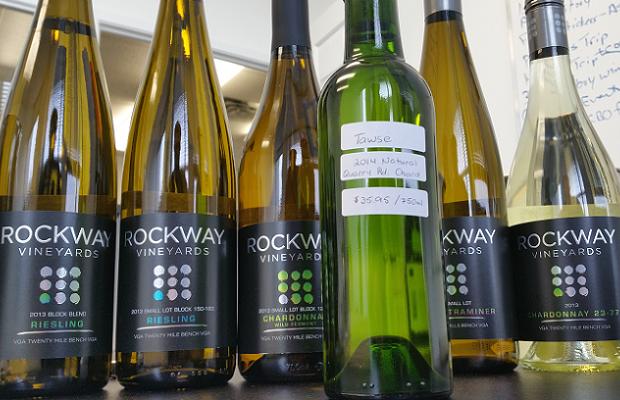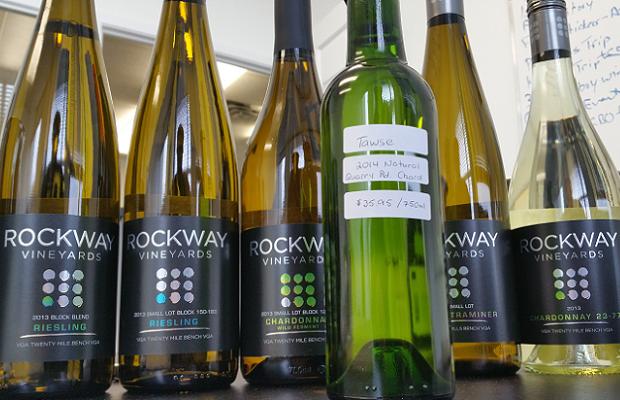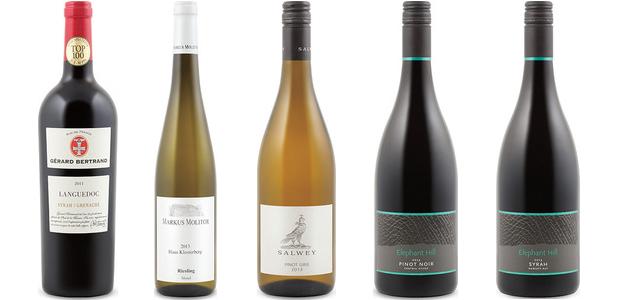
Last month, while working through a table of wines at WineAlign I tasted through five samples of Rockway Vineyards whites. All five were from the 2013 vintage. If it has not yet happened, these wines will usher the coming out party, to establish Rockway as a player in the new pantheon of Escarpment foothills whites.
The vines at Rockway Vineyards are located in the Twenty Mile Bench sub-appellation on the Niagara Peninsula. The winemaker is David Stasiuk, a veteran of heralded estates around the world, including Le Clos Jordanne, Australia’s Yarra Valley Moet Chandon and CedarCreek in the Okanagan. His wines are truly estate made; 99.9 per cent are grown, crafted and bottled at Rockway. I find the Riesling to fall into a niche straddled by Henry of Pelham and Flat Rock Cellars. Gewürztraminer is really in a class of its own, a trump card for Stasiuk and something I would encourage him to play with, into late harvest and beyond. Chardonnay is Twenty Mile Bench through and through, where place and barrel mark the twain and split the check. Here are the notes on the five tasted back in late March.
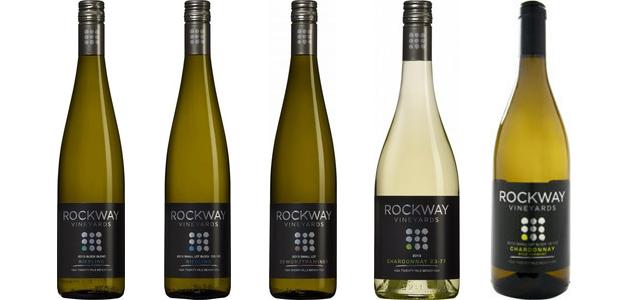
From left to right: Block Blend Riesling 2013, Small Lot Riesling Block 150 183 2013, Small Lot Gewürztraminer 2013, Chardonnay 23 77 2013 and Small Lot Block 12 110 Chardonnay Wild Ferment 2013
Middle of the road in the temple of Rockway and Riesling, making an offer to appreciate and enjoy just about every tenet there might be to gain. Lessened but generous (10.5 per cent) alcohol, one shy step this side of off-dry. Flint and petrol but just a hint and grape tannin combustion, though only shrouded by a single, thin veil of skin. Provides smithy entry into metal working, aerodynamic Peninsula Riesling. By combining blocks this sheds light on the generational varietal world of the Twenty Mile Bench. As a life story it “started with a little kiss, like this.” A very successful amalgamation rocks this way in copacetic strut and finishes well, with lime. Drink 2015-2018. Tasted March 2015
Rockway Vineyards Small Lot Riesling Block 150 183 2013, VQA Twenty Mile Bench, Ontario (Winery, $19.95, WineAlign)
The elemental surprises and flat-out rippling effect felt from this highly specialized geological, geographical and micro-climate trove stands to be taken with extreme notice. Savour and sous bois tonics provide for a deeper, richer and soil connected Riesling. The complexion and subtraction causes a cerebral dwell, investigation and a requiem for patience. This needs time to settle in, to shed the cumbersome and not entirely accessible volume. But there is simplicity in complexity, with acids lively, burgeoning and two-chord strumming. The overall canned or jarred feeling will open up once class lets out and this small parcel bottling will become a “rock, rock, rock, rock, rock ‘n’ roll” Riesling. It just wants to have fun and get some kicks so wait three years. A worthy if punkier follow-up to ’12. Drink 2018-2022. Tasted March 2015
Rockway Vineyards Small Lot Gewürztraminer 2013, VQA Short Hills Bench, Ontario (Winery, $15.95, WineAlign)
Just 299 cases were made of this unique Short Hills Bench Gewürztraminer, a warm and fuzzy (read: peach) example that draws balm and sunshine from the underexposed Niagara sub-appellation. Winemaker David Stasiuk’s Rockway Riesling fortitude translates across a lieu-dit exegesis to an end that suggests the grape variety may just be his secret weapon. The horizontal expressiveness is matched by varietal typicity, in lychee, rose-water and spring verdancy. Fine, unctuous stuff, easily consumed, with nary a bitter edge and good citrus, lactic zest on the more than laudable finish. Reminds a bit of South African Steen. Gewürztraminer to “rock away these days, rock away these nights… something to last…’til the morning light.” Drink 2015-2018. Tasted March 2015
For semantic intents and purposes this is really unbaked Chardonnay, built from (77 per cent) stainless steel and (23 per cent) neutral barrel ferments. Low in alcohol (12.7 per cent) and piqued in oak-less freshness, the light simply says go on the green. A slight screwcap compression causes early fizz, a locked in al fresco bite filled in by leesy, sweet and sour flavours and texture. Typically apple in origin, basic, old school Rockway fun. “Remember the songs used to make you rock away. Those were the days.” Classic Chardonnay jam. Beres Hammond style. Drink 2015-2016. Tasted March 2015
Rockway Vineyards Small Lot Block 12 110 Chardonnay Wild Ferment 2013, Twenty Mile Bench, Ontario (Winery, $19.95, WineAlign)
Here is another David Stasiuk composition that cements the idea of 2013 as being the turning point for Rockway to become a major player in Niagara whites. Just 215 cases were produced of this idiosyncratic block meets yeast Chardonnay. Such a cool climate sprinter whose wild ferment action hero activity seems to still be in mode, given the aromatic, speeding bullet locomotion. “Quick as a cat, in the jungle.” Quite chalky on that nose, like dust trails flung by fast-moving parts, in super limestone distillation, rocky, wedged into flint. No dummy texture, with patent tannic grip and grit, pebbles popping, crashing, testing. Sweetness is there but yet unreal. Chardonnay that can only be Twenty Mile Bench, in ways that bring Sébastien Jacquey’s LCJ Claystone Terrace and Jay Johnston’s Rusty Shed to mind. In ways that are conveyed by terroir, by barrel, not as an afterthought but in how it adds cream, not sawdust. It also adds weight, not sap. It builds texture, block by block. Drink 2016-2020. Tasted March 2015
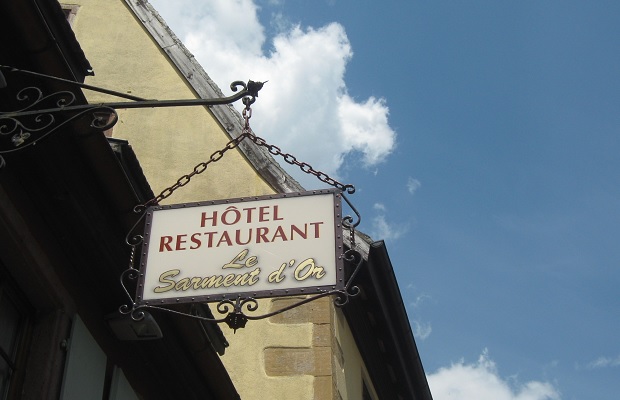
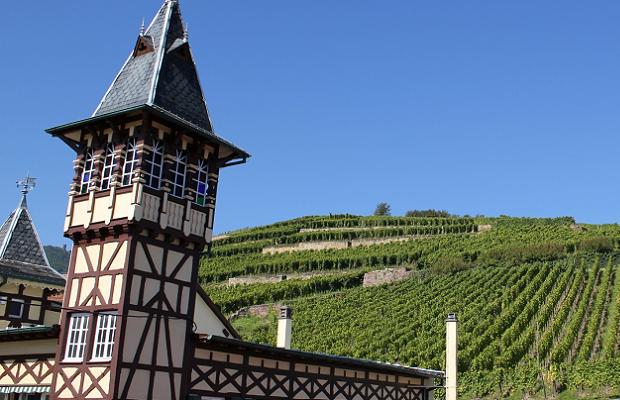
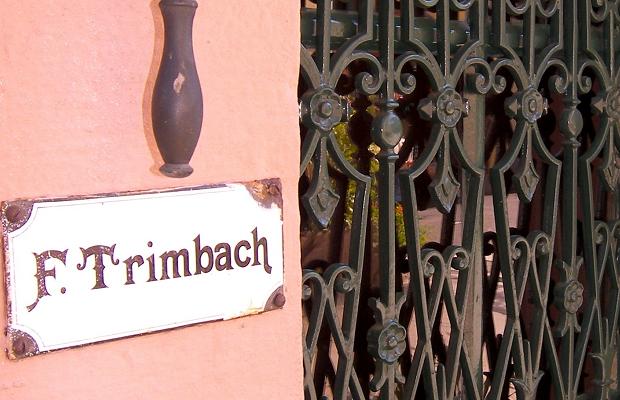
A visit to Alsace cannot be complete without a stop at Trimbach, the epicentre of rhythm in Ribeauvillé. If that excursion includes a jaunt over to Riquewihr and lunch at Le Sarment d’Or with Jean and Anne Trimbach and their soulful wines, the exercise can be surmised in one word: élan.
Le Sarment d’Or, Riquewihr
The Trimbach aura is triggered by joie de vivre, in pulse, metre and cadence. The wines reflect their makers and out there in the Alsace diaspora Trimbach is what I would refer to as an approachable, accessible and ever-so friendly icon. The wines are paradigmatic and emblematic of Alsatian acidity, from entry-level to preeminence. They are professional and represent the purest form of Alsatian confessional. The wines of Trimbach open up to the world, hide no skeletons, spin no agenda and simply ride out on a prosperous, musical mission to please. Here are notes on four wines tasted in Alsace, June 2014.
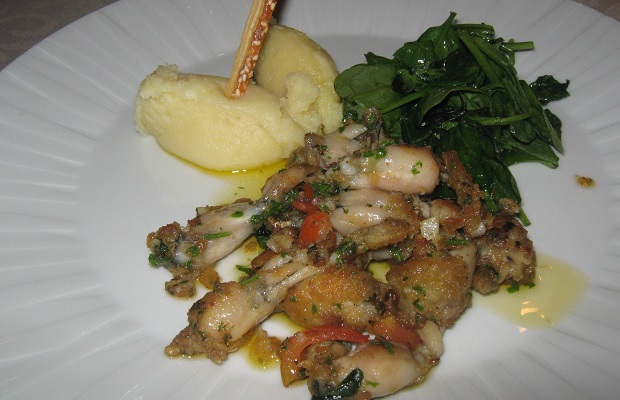
Fish Tartare, Le Sarment d’Or, Riquewihr
Réserve Pinot Gris 2011, Ac Alsace, France (971762, $23.95, WineAlign)
For Trimbach this is a top quality vintage to make an example for one of the domain’s signature value wines. This firm and straight shooting Pinot Gris comes from limestone-dominant parcels not so different from the PG taken out of the winery’s Osterberg Grand Cru, just above Ribeauvillé. That a Pinot Gris can bring a nearly (8 g/L) elevated level of residual sugar to the table and come across bone dry, like a walkabout in the outback, remains one of life’s great mysteries. Picked prudently early, or as Alsatians like to say, “right on time,” this Trimbach is eloquent, reeks of wet, cold stone and lies over an ocean tasting of salty minerals. Pour it with the freshest, uncooked fish and a light vegetable pickle.
Seductively Sauternes-like in its orange marmalade viscosity. An immense Gewurz-like PG. Off-dry tropical fruit, lanolin and a macadamia nut streak foils lemon, peppery orange and gold nasturtium. The edible florals are replayed in its sun-blazing technicolour. At 14 g/L of residual sugar and 14 per cent alcohol it marks the vintage but with incredible acidity. Jean Trimbach notes the balance is due to the efforts of his brother Pierre, in spirit, energy, texture and acidity. Drink 2015-2020. Tasted July 2012 and June 2015
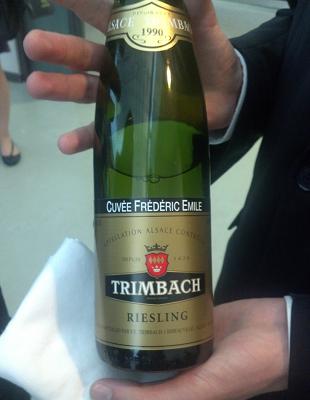
Talk begins, if only because of its arresting singularity and how it flashes like a beacon, with the 1998 Cuvée Frédéric Émile’s acidity. Vintage-bound and determined with an exceptional focus that is clear, crisp and precise. From marl-limestone-sandstone and fossil-flecked Muschelkalk out of the Ribeauvillé terroirs Geisberg and Osterberg. A bone dry Riesling with a microscopic number of botrytis in absolute control of its 16 year-old adolescent body and emotions. Decidedly masculine, strong, confident and of a musculature that is developed yet immature. Not quite reckless and not yet taking any unnecessary risks, this will go through a racy period over the next few years before maturing into an industrious and wise adult. In this 1998, with the vineyards in mind, a parallel is drawn from 1990. Drink 2018-2028.
On Monday, June 16th at the Millésimes Alsace, the professional trade fair for Alsace wines, older vintages were poured at the Master. Among them was one of Trimbach’s iconic Riesling.
Introduced as a wine with “the capacity to air” by Sommelier Caroline Furstoss at the Millésimes Alsace Master Class. Riesling from a near-perfect and clean vintage (less than five per cent botrytis) that lays reclined in an evolution that has come to a balance in weightlessness. Frédéric Émile is a cuvée of beautifully impossible chemistry, a meld of dichotomous terroirs, of Geisberg and Osterberg, of stony clay geologically folded into both multicoloured sandstone and calcareous marl. The two plots may be hard to tell apart but this wine is so important because it innately knows how to make magic from the subtle differences and idiosyncratic intricacies of those soils. In 1990 the execution found results in the grandiose. There is no adipose tissue in this Riesling, no wasted notes, no moments of daydreaming. Laser clarity and still wagering its 25 year-old impetuous limestone acidity against the energy that might oppose it. “You can feel the granite soil in the body of the wine,” notes Furstoss. Aromatics call upon orange peel, ginger and a brulée imbued of a late, finishing noble bitterness. Amaranthine Alsace.
The great estates of the world do not endure for lifetimes, generations and centuries without an innate endowment to carry on, no matter the circumstances. Through tragedy there is always a prevail. There just has to be. I did not get the chance to meet Laurence Faller. I am sure that I would have loved to. Having tasted some of her wines at the domaine where she nurtured and finished them is at least a small concession. When I visited Weinbach last June, I did have the opportunity to meet her mother Colette Faller and I am lucky to have done so.
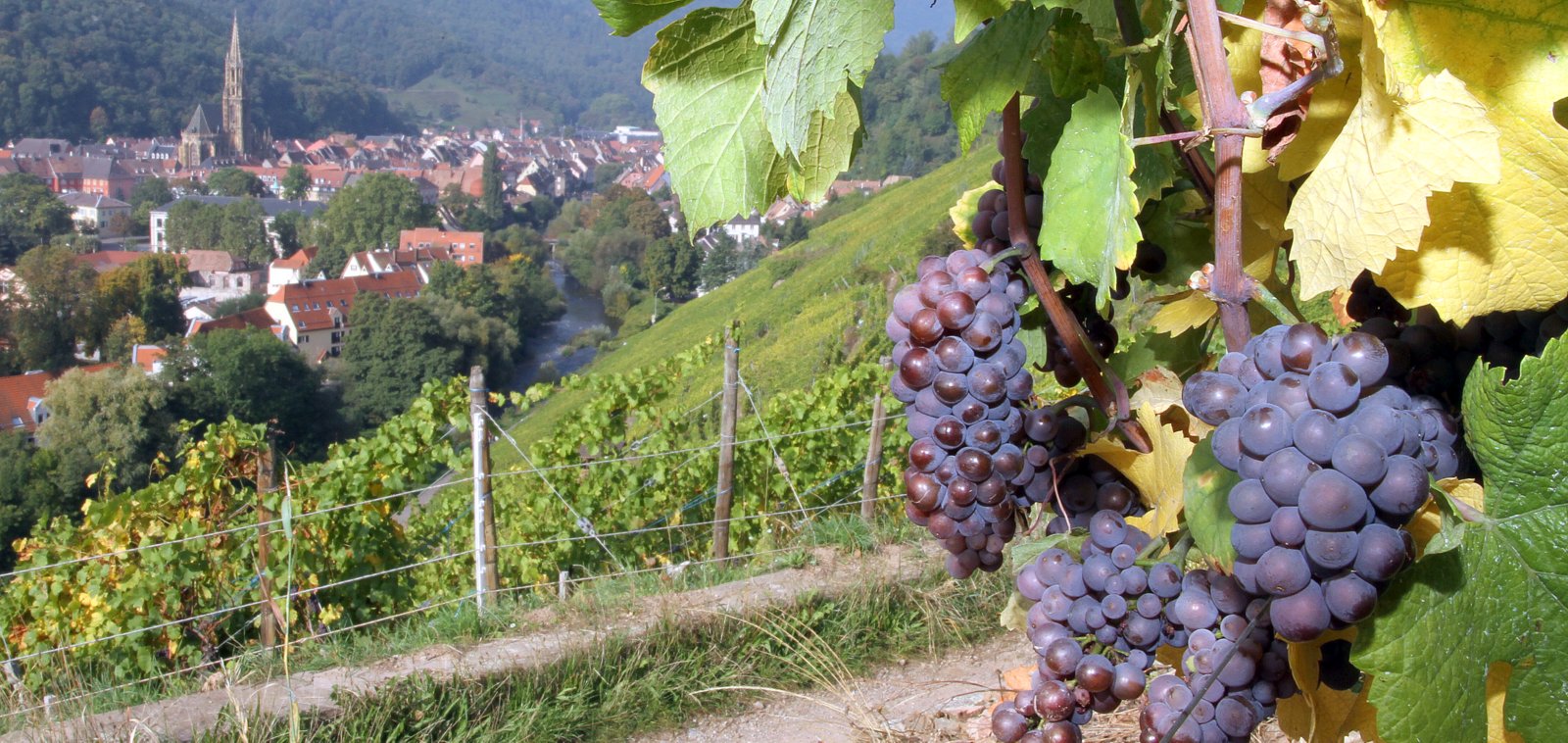
Thanks to Catherine Faller, who gave generously of her time and her family’s wines, the visit in the winery’s caves and up on the Schlossberg Grand Cru opened up the portal into Domaine Weinbach, Kayserberg and Alsace. Tradition and progress at Domaine Weinbach carries forward in the hands of winemaker Ghislain Berthiot, who worked with Laurence for 11 years. Here are the six wines tasted in June of 2014 and their notes.
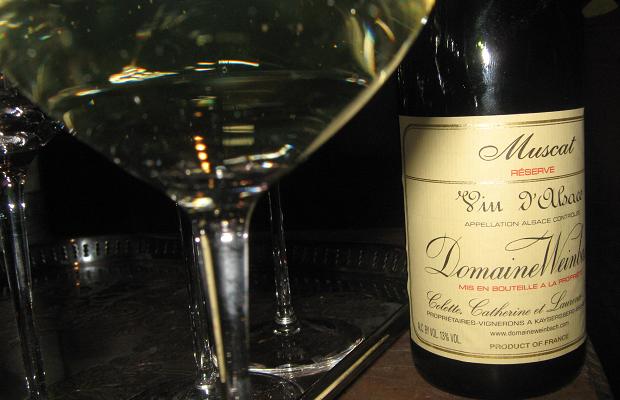
Domaine Weinbach Muscat Réserve 2013
Muscat Réserve 2013, Alsace, France (SAQ 10273521 $45.00, WineAlign)
True belief denotes Muscat as the launching point for any Alsace tasting, but nowhere does the ontology mean more than at Domaine Weinbach. The vintage cements the doctrine. Darts straight back to the nadir of taste and smell, to the points of the tongue and inner nose unable to elude such an attack. From vines of the Clos des Capucins, soil composed by marno-calcaire at the foot of the Altenbourg Grand Cru. Low-yields (28 hl/L) drive acidity and fruit purity atop cut and cutting apricot crossed with the essentia of a grape. Here is an apéritif extraordinaire, cocktails and caviar, crunchy canapé and pure distillate. Opens the doors to Weinbach perception. Drink 2015-2025.
Riesling Grand Cru Schlossberg Cuvée Sainte Catherine 2013, Alsace, France (Agent, $66.00, WineAlign)
From a difficult vintage with rain at harvest. A large crew was needed in mid-October to get the pick done with haste. This ’13 is essentially being given away, so it’s a gift to the world, in a sense. The fruit comes from some of the oldest Riesling vines, situated half way up the granite Schlossberg slope. Tasting this in 2014 is 12-15 years premature. Such an infant this Schlossberg, so very primary, as if by tank, as if by womb. Assumes the role of the richest of Weinbach’s Riesling aridity, exercised by the most established finesse. Peaches are exorcized in attack and persistent. Currently mired in a micro-oxidative state. You can sense it working, churning, moving in animation. If a taste of 2005 is any indication, it will be 2022 before this wine will begin the Cuvée Sainte Catherine reveal. Look for the open window to fall between 2025 and 2030.
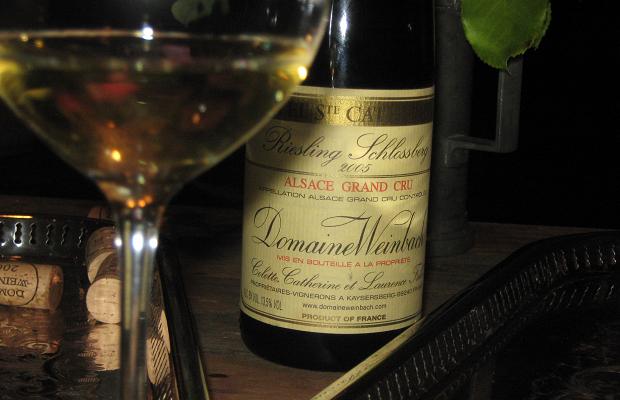
Domaine Weinbach Riesling Grand Cru Schlossberg Cuvée Sainte Catherine 2005
Riesling Grand Cru Schlossberg Cuvée Sainte Catherine 2005, Alsace, France (Agent, $66.00, WineAlign)
Here the rich and panegyrical Riesling from the first biodynamically farmed vintage at Domaine Weinbach. The old vines from the Grand Cru’s mid-slope averaged 60 years in this ’05, a wine that managed the best southern exposure to great effect. “You can have a whole lot of fantasy when it comes to food” with this Riesling vintage says Catherine Faller. That’s because there is a magnified, munificent and magnificent toast in this ’05, like some older Burgundy. The spice notes are right on the tip of the tongue with all the necessary sapidity of youngish Alsace, wise and wistful. Now having just entered the secondary window, this wine is such a perfect portal for the gauging of aging, itself looking for ideal consumption between 2020 and 2025. Full reward offered to those with further patience.
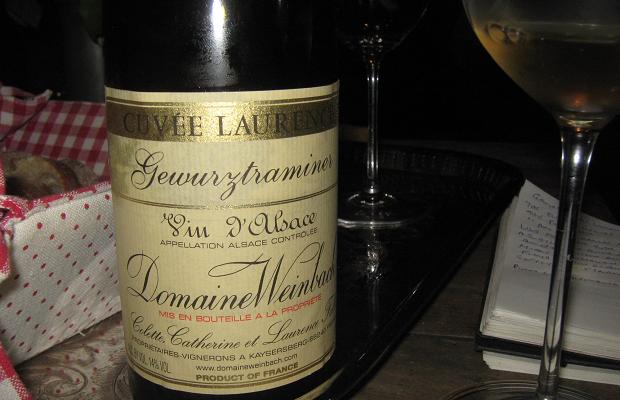
Gewürztraminer Cuvée Laurence 2011, Alsace, France (Agent, $68.00 (B.C.), WineAlign)
From an altitude of 225 to 250 metres and out of the marly limestone soil beneath the lieu-dit of Altenbourg, located at the base of the great Grand Cru Furstentum vineyard. In conjunction with the micro-specific sub-Mediterranean climate and the Indian Summer of the 2011 vintage, the results here are of the elegant kind. The total effect upon carefully judged fruit and in the late Laurence Faller’s Gewürztraminer magician’s hands, this “foie maker” is lifted, exotic and ethereal, like exceptional, fermented Yuzu. A subtle and quiet entry gives to a confident middle and a demanding, spicy finish. Lets go and slides softly into ethereal flavours. Catherine Faller’s eyes light up when she imagines a Cuvée Laurence pairing with “blood orange duck.”
Pinot Gris Altenbourg Quintessence De Grains Nobles Cuvée D’or 2010, Alsace, France (Agent, 375 mL $539.00, WineAlign)
Domaine Weinbach created the moniker “Quintessence” when it was coined to describe the 1983 cuvée. The nickname is apt for the rapt selection of rare pearls from the lieu-dit Altenbourg. The marl, limestone and sandstone Clos is a gentle slope between 225 and 250 metres high, just beneath the limit of the Grand Cru Furstentum. In a late harvest SGN like this one from the low yielding 2010 vintage, at a sky-high residual of 200 g/L you would think sweet to the back of the brain. You would be right but each time that intensity is carefully brought back from the brink by formidable, if unctuous Pinot Gris acidity, a bubble within a bubble, never bursting, always teasing. The concentration and purity here are magnificent, the flavours hanging in extract of endless, suspended animation. A wine to sip, to share and to save for senectitude.
Large Foudres at Domaine Weinbach, (c) Cassidy Havens, http://teuwen.com/
At the Millésimes Alsace, the professional trade fair for Alsace wines, one of Laurence Faller’s great legacy wines was poured.
Domaine Weinbach Gewürztraminer Furstentum Grand Cru Vendanges Tardives 1994
Gewürztraminer Furstentum Grand Cru Vendanges Tardives 1994, Alsace, France (SAQ, 11521362 $132.00 (2012), WineAlign)
The wine was presented in Colmar by Sommelier Caroline Furstoss who began with the soulful tribute of “Laurence is felt in this wine.” Deduction, by salience and sobriety of grace, is considering the Faller’s ’94 a pure expression of the Furstentum terroir. Noted are the aromas of quince, apricot, their blooms and a grain of spices. Though already twenty years in, it remains conspicuously fresh. The richness and concentration are at such a high level. Flavour begins with a marmalade in defiance of confection and has no end. Though the vintage is decadent, warm and unctuous, there is always balance. Has a tannic impression and smells like flowers from warmer France. Furstoss reminded everyone that it is “an expression of a daughter.” Impeccable balance.
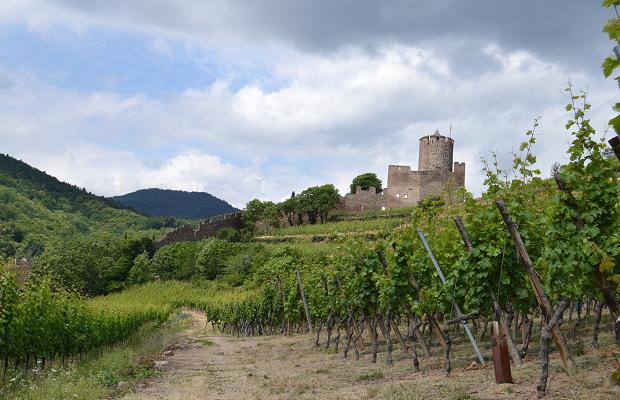
Kaysersberg, from the Grand Cru Schlossberg, (c) Cassidy Havens, http://teuwen.com/
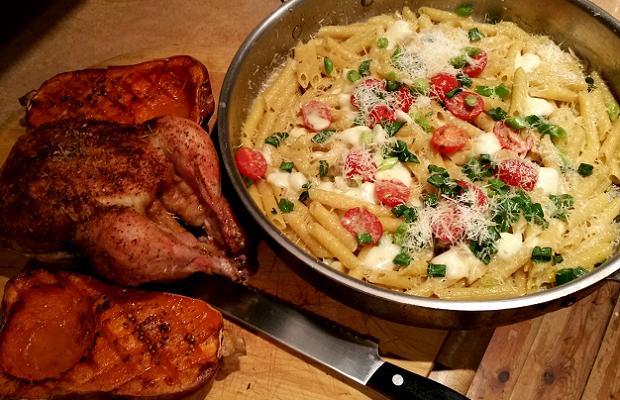
Slightly Barque dry-rubbed roast chicken, scored butternut squash with butter, agave and backyard coriander seed and penne with grape tomato, bocconcini, padano and scallion
Spring has finally sprung. The air and the psyche have found collective exosmosis, leaving the colder, thicker air of winter behind, to begin passage through the membrane into lower pressure. With the exhale and lighter sense of being comes the same in wine. We egress to ferments of lower concentration. In reds we will welcome Gamay, Pinot Noir, Zweigelt, Blaufränkisch and Cabernet Franc.
White wine has more potential in legerity and litheness of being. While Riesling, Pinot Gris and Pinot Blanc are most certainly apropos choices for spring, there are others, variations on the theme, not technically “white” per se, but fitting the bill nonetheless. Like Sparkling wine, and Sake.
Tastings of late have focused on the white stuff and there are many that have already left an indelible mark during this period of emergence, this recent transudation through conduit, out of too many months mired in ice and snow. The parameters of white wine blurred a bit, this group of twelve wines will do you no harm. In fact, any or all will help restore that healthy attitude so desperately needed in this time of rejuvenation. Spring.
From left to right: Château De La Bretesche Muscadet Sèvre Et Maine Sur Lie 2013, Emiliana Adobe Reserva Sauvignon Blanc 2014, La Joya Viognier Reserve 2014, Charles & Charles Chardonnay 2013, Hugel Gentil 2013 and Tokaj Kereskedoház Grand Selection Semi Dry Tokaji Furmint 2012
Château De La Bretesche Muscadet Sèvre Et Maine Sur Lie 2013, Ac Loire, France (412163, $12.95, WineAlign)
From the VINTAGES April 18, 2015 release
From the stable of Domaine de la Chauvinière, the Château De La Bretesche is a gneiss Melon de Bourgogne, crafted at the hands of Muscadet master Jérémie Huchet. Melon of lightness, finesse, ripe restraint, elasticity and breadth beyond the norm. Karpos of many herbs and briny berries. Capable of nurturing and buttressing intensity. Though the scent here is subtle, when it comes to Muscadet, the fresh sea and shell of Pholas dactyls is necessary. In conjunction with its length and a price of $13, in this section of the Loire, the littoral zone and the peak are reached. Drink 2015-2020. Tasted March 2015 @MyLoireValley@LoireValleyWine
It would be hard to imagine Sauvignon Blanc with wilder eyes, as much pop and nearly the zesty fortitude as the Emiliana Adobe. The clarity of organic/biodynamic health in vine and by extension fruit is on blinking display. Fresh and popping, the zest of ripe citrus circulates naturally, as acidity, in juicy squeezes and with nothing but tireless pep. This is an example of exemplary SB for Chile and one can only imagine the depths that might come from older vines and/or a wild yeast meets barrel ferment trial. Drink 2015-2016. Tasted April 2015 @VinosEmiliana
La Joya Viognier Reserve 2014, Colchagua Valley, Chile (168542, $15.95, WineAlign)
From the VINTAGES April 18, 2015 release
As impressive as this very New World take on Viognier was in 2013, the follow-up furthers the absorption. The accented matters of alcohol, residual, mineral, bright fruit and soil continue the train of thought with forward ’14 thinking. This is nothing but a feel good, “why don’t you touch me now” Viognier, a gem-filled musical box of herbs, blanched nuts, flowers and spices. It’s a round and melodic nursery rhyme that’s fun to sniff, taste and listen for its mysterious ministrations and magical charms. Drink 2015-2018. Tasted March 2015 @VBisquertt@DrinkChile@vonTeichman@vonterrabev
Charles & Charles Chardonnay 2013, Columbia Valley, Washington (394734, $15.95, WineAlign)
I would liken this Columbia Valley Chardonnay to the Fourth of July. It’s got tiny moving parts, all in motion, trying to put it all together. Cool orchard fruit, a minor kiss of barrel, a raft of lees, some sweet tropical flavours and round acidity. Needs some time. If it succeeds “it will be like fireworks blowing up in the air like a Fourth of July night sky.” For now it’s a reserved, quietly efficient and harmless Chardonnay. But it does show signs of building momentum. Drink 2016-2020. Tasted March 2015 @KVintners@Dandurandwines
Hugel Gentil 2013, Ac Alsace, France (367284, $15.95, WineAlign)
From the VINTAGES April 18, 2015 release
The five grape blend works confidently and vehemently strives with more love and sympathy than the austerely commandeered Riesling. Sylvaner and Pinot Blanc matter here, helping to negate the dominant aromatic push of the Gewürztraminer and Pinot Gris. Quite dry (3.9 g/L RS), with twitching (5.86 g/L) though steady acidity. This has ingratiating integration and unswerving tannic grain. A coherently textured Riquewihr conflation that is more than well-made. Drink 2015-2020. Tasted March 2015 @Hugelwine@HalpernWine@VinsAlsace
Hungary and more succinctly Hegyalja is on a terrific role of late. I would put many marbles into the probability basket and roll straight to the quality bank on the backs of so many Tokaji examples. This Furmint is not on the lighter, fresher side, but more so the seasoned and effluvious strand. “Regardless of the balance life has become” this Furmint is lush and conversely piercing, an acquired density, thick and profoundly cumbersome. Though it rallies and rails in many ways, “too heavy too light, too black or too white, too wrong or too right, today or tonight,” it’s also honeyed and a riot to drink. Would like to give this seven Mary three years to settle down. Drink 2017-2020. Tasted March 2015 @TokajCE@WineofHungary
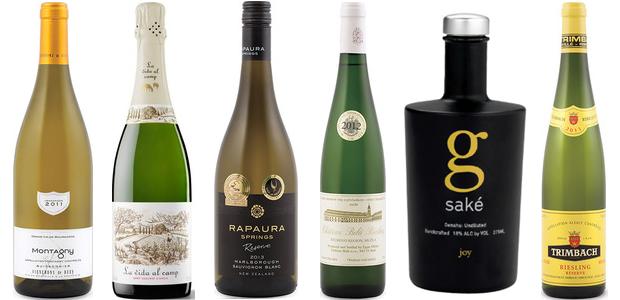
From left to right: Vignerons De Buxy Buissonnier Montagny 2011, La Vida Al Camp Cava Brut, Château Belá Riesling 2012, Rapaura Springs Reserve Sauvignon Blanc 2013, Momokawa G Joy Junmai Ginjo Genshu and Trimbach Réserve Riesling 2011
Vignerons De Buxy Buissonnier Montagny 2011, Ac Burgundy, France (382879, $19.95, WineAlign)
From the VINTAGES April 18, 2015 release
Another VINTAGES (2011) shipment of this great value in Côte Chalonnaise Chardonnay from the most southerly portion of the Côte d’Or is fortuitous because eight months has only helped to extricate the fruit from its Marly soil, variegated with White Burgundy-loving limestone shell. This is Montagny with intensity and in language of Burgundy’s essential tenets. Aromas scheme as white fruit punch and fruit that packs a punch. Might be thought of as heavy, syrupy even, in terms of Chardonnay, but the meeting of equal and opposing tannin terms balance. The clay-crusted pebbles in the marl have crawled inside the bottle. Suck on them long enough and they will reveal their inner stone. I dare you to spit them out. Drink 2015-2020. Tasted March 2015 @VinexxWine
La Vida Al Camp Cava Brut, Penedès, Spain (Agent, $19.95, WineAlign)
This blend of Macabeu, Xarel-Lo and Parellada is not only distinguished for Cava, it should be highly regarded in the pantheon of all Sparkling wine. Swelling with personality and urging in demonstrative energy that fizzes and suspends with fervent animation. The activity is one of quick reactions and accumulation. From sweet yeast in lees, from an on the line oxidative cold front and through the warmth of tropical spice. Cava like clouds combing stormy skies from equal and opposing directions and densities. Though marked by a leathery aromatic rind, it’s creamier and less lactic than outright citrus. These are fine bubbles, of twinkling titillations and striking flavours. Drink 2015-2018. Tasted March 2015 @lavidaalcamp@TheVine_RobGroh
Château Belá Riesling 2012, Muzla, Slovakia (410951, $19.95, WineAlign)
From the VINTAGES April 18, 2015 release
For something completely different and yet not, look to Slovakian Riesling at the hands of a German icon. Here from Muzla, a most elemental, atmospheric and petrol driven wine, out of Loess, with blessings beyond Riesling character. A bit reductive, funky and porcine like Baden Grauburgunder, frankly. Heads to an off-dry intersection on the palate, in Spätlese-like headiness. Returns to Trocken in angles of mineral tang and a late, ferocious bite down. Stays this way for nearly a minute. A challenging and compelling respite away from the Mosel. Drink 2016-2022. Tasted March 2015 @ChateauBela@WinesOfSlovakia
Rapaura Springs Reserve Sauvignon Blanc 2013, Marlborough, South Island, New Zealand (388421, $21.95, WineAlign)
From the VINTAGES April 18, 2015 release
Blame it on the midnight, the rain or the Wairau River, but the flow past a rocky aquifer and into the vineyard weaves through this Sauvignon Blanc to achieve an uncanny Marlborough balance. The accord is struck between high tones and mineral undertones. Between tropical lushness and direct citrus connectivity. Between herbal grounding and stratospheric elevation. Really flavourful and structured by texture. In a saturated world it is noted “everywhere is all around, comfort in the crowd,” through a sea of Sauvignon Blanc. Shame on the moon but the Rapaura Springs Reserve stands out for its gentle, meandering and crooning ways. It is highly recommended. It is possessive of an ability to braid, reticulate and evolve. Drink 2015-2020. Tasted March 2015 @Rapaurasprings@nzwine@VinexxWine
Momokawa G Joy Junmai Ginjo Genshu, Oregon (239426, $26.95, WineAlign)
From the VINTAGES April 18, 2015 release
Made from pure, Sacramento Valley Calrose rice polished to 60 per cent and undiluted. The short trek to Oregon is made for the G, a Saké with a foot in two worlds. The Koji-kin and yeast strains are from Japan and the water from Oregon. The American-Japanese arrangement will succeed in pleasing palates east and west. Sacramento soil is in here, enriching the rice with savoury tall grasses and expanding spice. Oregon water draws subterranean salinity and combined with the Japanese elements, comes out like toasted nori. This is lovely and floral, rich and finishes with a feeling of wet stones. Tasted March 2015 @SakeOne@MetroWineSake
Trimbach Réserve Riesling 2011, Ac Alsace, France (995316, $29.95, WineAlign)
From the VINTAGES April 18, 2015 release
Some old vines and a strict selection of grapes from Ribeauvillé and vicinity compose the Trimbach Réserve, another storied chapter of sharpness and focus. Builds upon the similar 2010 and with greater depth. At this price on the Riesling plain this will be a star for the vintage, even it it takes five more years to reach adjudication. With this portal to the finest fruit and handling in mind, it can only be imagined what the same vintage will convey from the terroirs of Geisberg and Osterberg for Cuvée Frédéric Émile. The standard Réserve is rich and propelled to compounding causatum. Aromas go through lemon glade and glaze, then turn the key to lime. The texture is a crackling bite of corral with salinity drawn from oceans far away. The stone cold austerity is a frozen moment of time, a long pause in which there is nothing to do but swallow and forget. Small price to pay for such a thing. Drink 2016-2022. Tasted March 2015 @trimbach@WoodmanWS@AlsaceWines
We get this sort of query all the time. “Why does Ontario wine cost so much?” Actually, it’s often more a complaint then a question. We get upset. Granted, many international wines are cheaper….but do you know why? My colleague and Man Friday Gerardo Diaz has this to say “Don’t complain. Do some research and come back.”
As many of you know, I play every day in the fortuitous role of Wine Director at Barque Smokehouse. As we speak I am in the throes of an auspicious new plan, setting the wine program with Diaz for Barque’s next venture. Coming soon. Two years ago, just after Brian Schmidt of Vineland Estates was able to initiate the keg wine revolution by overhauling VQA regulations, we convinced Jonas Newman of Hinterland Wine Company in Prince Edward County to partner with us. Wine on Tap at Barque was born. Since then we have worked with a dozen Ontario wineries.
It’s more than accessibility that drives our decision to work with and pour exclusively of Ontario wines. We had always been supporters of the local industry but the keg program allowed us to expand the portfolio and the sales. Ontario wines account for nearly 50 per cent of all wine sold at Barque.
So when guests (and I get the same questions and complaints from family and friends) wonder aloud about the necessity for Ontario to be so present, I have much to say. The Ontario wine industry is the best kept secret in the world. It has grown, accelerated and advanced with more success than might have been imagined as recently as five years ago. In November I wrote, “Ontario winemakers have figured it out. The “world-class” comparative humanities of aging and longevity aside, the comprehensive and widespread phenomenon of excellence, regardless of vintage, is now an Ontario reality.”
I also wrote this, quite some time ago. “That is producing unique, cutting edge and brilliant takes on cool climate grapes. They also match beautifully with the songs referenced in their tasting notes. When the wines are assessed and considered in part or as a whole, who would dare to say there are no great wines being produced?”
As a cool-climate viticultural entity, there are few rivals around the world. The geology and micro-climate are ideal for growing specifically chosen vinifera. The winemakers in Niagara, Prince Edward County and Lake Erie North Shore are highly educated, state-of-the-art savvy and maniacally progressive professionals. In the categories of Riesling, Chardonnay, Pinot Noir, Cabernet Franc, Gamay and Sparkling wine, Ontario crafts excellence at all price points. After the two brutal winters of 2014 and 2015, no other set of vintners could have succeeded with unfailing ability more than the women and men of Ontario’s industry.
Proof of Ontario’s acumen and price-worthiness need not be found any further away than at your local LCBO. Private VQA wine shops and independent retailers would only advance the cause. Spend a few hours at an Ontario gathering and you will be changed forever. Shawn’s Ontario Wine Chat discusses and promotes the ideal every Wednesday night. The Ontario Wine Society holds tastings and events year ’round. The Ontario Wine Awards asks many of those top scribes to sniff, taste, sip and pick the best of the best. Wine Country Ontario is out there all the time, spreading the gospel. This is one religion you need to get behind.
The Ontario wine tasting season is now in full swing. Taste Ontario just recently passed through Montreal and Ottawa. WineAlign is bringing Prince Edward County to Toronto on April 16th with County in the City. Somewhereness also arrives in Toronto on April 20th. In July the 5th annual Chardonnay i4C conference will descend upon Niagara. The best way to experience Ontario wine is to get out and visit. I can recommend plenty.
Why do I taste Ontario wine every day? I do it in the LCBO lab, in Ontario’s tasting rooms and cellars, at Barque, when I order wine in other restaurants and at home. I do not need convincing but I do have decades more learning to do. Here are the recent Ontario wines that have passed my desk and my lips. Five are coming to VINTAGES next week as part of the April 18th release. Others are available at the winery. Seek them out. You will then count yourself among the converted. I guarantee it.
Flat Rock Riesling 2014, 13th Street Merlot 2013, Burning Kiln Chardonnay Cureman’s Chard 2011, Fielding Cabernet/Syrah 2012, Flat Rock Chardonnay The Rusty Shed 2012, Closson Chase Chardonnay Closson Chase Vineyard 2013, Cave Spring Csv Riesling 2012, Norman Hardie Niagara Unfiltered Chardonnay 2013
Talk about bottled up compression. Twist the screwcap and thwop! The cap nearly popped like a Champagne cork. This baby has energy and drive. The vintage is compressed and pile-driven as nosed by the density opposed by reticulated 9.5 per cent alcohol. This has Mosel tattooed on its being, from neck to bottom. A dead ringer for fine Kabinett, the tropical fruit in apricot and dragon reaching back to join Ontario, in apple and pear. A good flinty stone and raging acidity combine forces to exaggerate a Riesling reticulum in what is not the missive’s greatest ever vintage. Will live five to seven easy and just go for soda. Go ahead and quaff the hell out of this one, from 2015-2020, from bottles one through twelve. Tasted March 2015 @Winemakersboots@UnfilteredEd@brightlighter1
13th Street Merlot 2013, VQA Creek Shores, Niagara Peninsula, Ontario (270504, $17.95, WineAlign) From the VINTAGES April 18th release
Yet another Niagara red that could only have been crafted at the hands of winemaker Jean-Pierre Colas, a wild and dubiously natural Creek Shores Merlot. In 2013 the vineyard funk reeks of an instinctive, undomesticated slur in seldom seen Merlot speak. The variety normally avoids, scatters and runs away to the hills, but not this time. The flow is a movement of dried, caked, saline silt and pine needle paint. There is woodsmoke too but the suffusive Creek Shores cespitose encompasses all and runs wild. A settling will happen, so then it’s really a matter of fruit, a thing which in ’13 is not observed as overtly generous. Drink 2017-2019. Tasted March 2015 @13thStreetWines
Burning Kiln Chardonnay Cureman’s Chard 2011, VQA Ontario (310243, $19.95, WineAlign) From the VINTAGES April 18th release
In this BK variant, Chardonnay is procured by fruit not put through any drying and so very fresh it remains. The barrel helps and yet also distracts but not in any unusual or detrimental way. Just another solid Chardonnay with nothing to set it apart from the sea. Drink 2015-2017. Tasted March 2015 @BurningKilnWine
Fielding Cabernet/Syrah 2012, VQA Niagara Peninsula, Ontario (258657, $24.95, WineAlign) From the VINTAGES April 18th release
I have always been skeptical of the Peninsula take on the OZ-styled blending of a Bordeaux and a Rhône but if there is one Niagara winemaker to trust, Richie Roberts gets the nod. High-toned, crikey warm and struth oozing. Still, the balance is struck by Mediterranean-like savoury aromatics (black olive and brine), along with beautifully integrated wood. The VA is less than minimal, the fruit rosy, plum-filled and strawberry flavoured. Either variety can play second or short and both can make the turn. Will have a long life. Drink 2016-2022. Tasted March 2015 @FieldingWinery@RichieWine
Flat Rock Chardonnay The Rusty Shed 2012, VQA Twenty Mile Bench, Ontario (Winery, $24.95, WineAlign)
Accumulated cognizance exudes from the laid back Shed, here as relaxed and user-friendly as it has ever been. If the texture is not vintage induced and made of low yield than I’ll sell my LP’s and switch outright to Songza and Neil’s PonoMusic. The herbs are basil and chervil sweet, the verbena and lemon balm redolent, the flavours beaming, bolstered by preserved lemon and candied ginger. The stuffing must be questioned, but not the elegance. This Chardonnay is porous, blessed, void of rust and of an interior with plenty of space in the shed. Let it fill.
From my earlier note of February 2014: “There will be 660 cases of this barrel cherry-picked, now iconic Bench Chardonnay. The warm vintage called for a combo-malo approach, part batch all in, part arrested development. Gravity influenced top down blending also work to seek a svelte elegance and this ’12 really straddles the humid line. Thinks to be ribald but remains chaste, only allowing a kiss from the barrel and a caress from the rocks beneath the soil. Accept immediate but know that deferred gratification is the hallmark of this bottling.
Last tasted March 2015
Closson Chase Chardonnay Closson Chase Vineyard 2013, VQA Prince Edward County, Ontario (Winery, $27.95, WineAlign)
This CCV Chardonnay is one of departed winemaker Deborah Paskus’ final acts at Closson Chase. It will forever be noted as a legacy-cementing, swan song of career excellence. Crafted by Paskus and bottled by the next one, current winemaker Keith Tyers, the 2013 CCV is simply a tour de force. No such combination of richness, tropicality and pure grape tannin has ever infiltrated this Chardonnay, from this vineyard. I’m not sure there is a comparison in Ontario, at this level of excellence and at this price. A wine of pure impression, with Montrachet-like structure and Folatières-like precision. Seemingly capacious, its facile legerity is hypnotizing, quantitatively escalating in assembly of aromas, flavours, through texture and finally to longevity. The wine spent 16 months in a mere (17.25 per cent new) oak. That it notes 12.5 per cent alcohol on the label is next to impossible. The substance is just too buttressed to be so tender and effete. Impeccable balance, refinement and mineral finish. This is Chardonnay to confuse the world’s fine white collectors, to wreak havoc at international tastings for five to 10 years. Only 712 cases are available and at $27.95, is down $2 in price from the 2012. Best ever, hands down. Drink 2017-2023. Tasted March 2015 @ClossonChase
Cave Spring Csv Riesling 2012, Cave Spring Vineyard, VQA Beamsville Bench, Niagara Peninsula, Ontario (566026, $29.95, WineAlign) From the VINTAGES April 18th release
In the pantheon of 2012 Bench-Ridge-Escarpment Riesling, the CSV is bound for glory. As expected it unfailingly draws innate wisdom from vines that understand their soil with deep intent. It can be said that every vintage rocks a Cave Spring Riesling but this one brings fruit out of a willingness to give and give. Winemaking connects with this vineyard and this specific Riesling, like mother and child. The depth of fruit lies under a shale of uncompromising, petrous funk and acidity. All tolled, this is a top CSV that begins on edge and then walks along, pointed towards a fruitful direction. It stays the furcate course, captivates and lingers, with no immediate end in sight. Drink 2017-2027. Tasted March 2015 @CaveSpring
Tasted from a sample, in bottle, not yet labeled. It’s one thing to make a natural wine in Ontario and a world away to do so with Chardonnay. The concept is simply off the charts with respect to fruit sourced out of arguably Tawse’s most important mineral site, the Quarry Road Vineyard. So, with that plot and winemaker Paul Pender’s inner vision, the progression to this point in Ontario winemaking is fascinating. “The law was never passed, but somehow all men feel they’re truly free at last. Have we really gone this far through space and time?” Pender must have shut his eyes tight, imagined the wonder and whiffed his ways through those barrels. Based on a taste through all the Quarry barrels with Pender in April 2014 (carrying 2013 fruit) I would think the Mercurey (Large barrel, CLL toast) would best suit the natural, oxidative bent of this Quarry. This plays the hallmark bass note in natural odour; funk, wondrous gentility, wood and rhythm and blues stone, as opposed to wood and rock. Something other, preposterous and gorgeous permeates the mess. Something melodic. The wine is perfectly in tact, piercing and exact. Direct, vibrant, positively wistful and wishful. Filled in by a strings mid-palate, with acidulated apple slices from a potent cocktail. The finish goes deeper, so the sum of the parts gains on the intricacies, teeing it up for much success. That said, don’t wait for it to fall apart. Drink 2015-2016. Tasted March 2015 @Tawse_Winery@Paul_Pender
Norman Hardie Chardonnay Niagara Unfiltered 2013, VQA Niagara Peninsula, Ontario (184432, $39.00, WineAlign) From the VINTAGES April 18th release
Hardie’s Niagara Chardonnay will not be recessed into the Peninsula’s everyday lexicon, nor does it draw any direct comparisons. How can this be? I will say that the 2013 exhibits less reduction, less elemental fever and a dramatic decrease in tension, so in that sense it has comes back to the norm. Yet it dances dramatically, like a blind bee in a ripe melon, in free spirited, holistic and counter-cultured ways. A wine of gold wiring, wrung out in splashes and swaths of lamé sheets. Shows a commitment to soil, full malolactic conditioning and punched down musts in its every breath. What is obvious is that 2013 is no putty in the hand. It’s moulded clay, shaped by the mitts of its maker, immortalized by the barrel’s oven and just about ready to begin being beautified by ornamentation. Time will effect its tribal markings and ultimate finish. Give it three to five so that it may add surge to its restrained power. Drink 2017-2022. Tasted March 2015 @normhardie
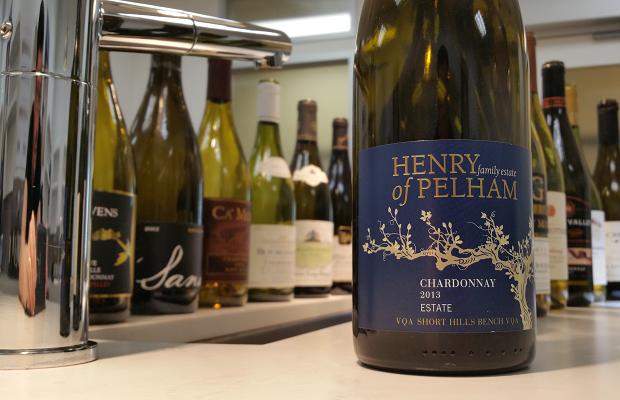
Henry of Pelham Estate 2013 amid a sea of April 4th, 2015 VINTAGES Chardonnay
You can find them from coast to coast. This coming Saturday six VINTAGES Canadian releases, four from Ontario and two from British Columbia, are wines that speak on behalf of exceptional vineyards, out of important places. These are bottles made by winemakers entrenched in their territory and from grape varieties purposed to grow there.
The Creekside Estates white blend known as Laura’s White has become a poster child for varietal blends on the Niagara Peninsula. Winemaker Rob Power has found a way to make a consistent expression in every vintage.
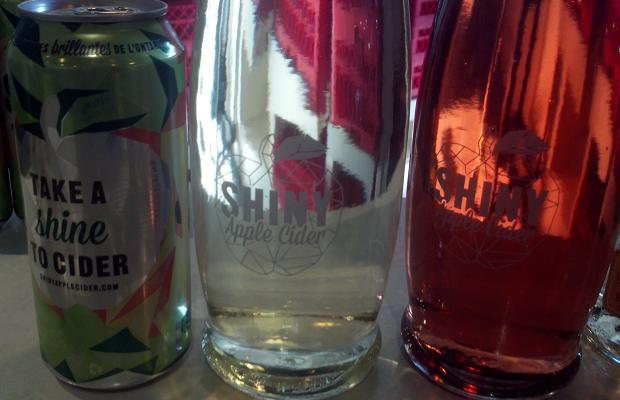
Shiny Apple Cider by Small Talk Vineyards
Angela Kasimos was the winemaker at Riverview Cellars and is now leading the charge at Small Talk Vineyards. The Small Talk Syrah is yet another example to speak on behalf of pushing for more plantings, especially down by the Niagara Lakeshore. But that’s not all. Kasimos is also making Cider at Small Talk. It’s called Shiny Apple Cider, made from Grey County apples and Niagara grapes. You heard me. The White Cider is augmented by 10 per cent Riesling, the Rosé with 15 per cent Pinot Noir. You should try it on tap at Barque Smokehouse.
The Cuvée Black Ball Riesling by François Morissette failed on several occasions to pass through the VQA panel’s strict discretion. The atypical one has finally broken down the barrier and it’s now your turn to decide if it pleases or causes consternation. My chance to opine is laid clear in the review below.
From B.C., Gehringer Brothers out of Oliver offers a unique, Golden Mile take on Pinot Gris. More than just coincidence to be here today as yesterday marked a new direction for British Columbia‘s wine industry. The #GoldenMileBench just became the province’s first sub-appellation.
Sandra Oldfield of Tinhorn Creek called the day momentous. She wrote this on her blog. “Something as elemental as the brown given to vineyard stones by a passing universe. In casual simplicity, I toast to you, the Golden Mile Bench, British Columbia’s first sub appellation.”
The five recognized wine regions in British Columbia are The Okanagan Valley, Similkameen Valley, Fraser Valley, Vancouver Island and the Gulf Islands. The new designation was announced by the provincial government on March 30 and will legally identify where grapes are grown. In this case, the escarpment southwest of Oliver which runs south from Fairview Road and near Highway 97.
So long as 95 per cent of the grapes were grown in the area, wineries will now legally be allowed to indicate the Golden Mile on their labels. The list includes CC Jentsche Cellars, Checkmate Artisanal Winery, Culmina Family Estate Winery, Fairview Cellars, Gehringer Brothers Estate Winery, Hester Creek Estate Winery, Inniskillin Okanagan Vineyards, Golden Mile Cellars, Rustico Farm and Cellars, Tinhorn Creek Vineyards, and Willow Hill Vineyards.
In Jauary I wrote about Burrowing Owl Winery. I talked about the extreme nature of their location and what is does for their wines. “That the winery is situated on the most northern outpost of the Sonoran desert, an arid and agriculturally inhospitable stretch of terroir that originates in Mexico, is not exactly so well-known. That the Owl can produce such wines of extraction spinning on a compass of intensity is one of the wonders of the Okanagan Valley.”
Here are notes on six new local releases coming to stores this Saturday.
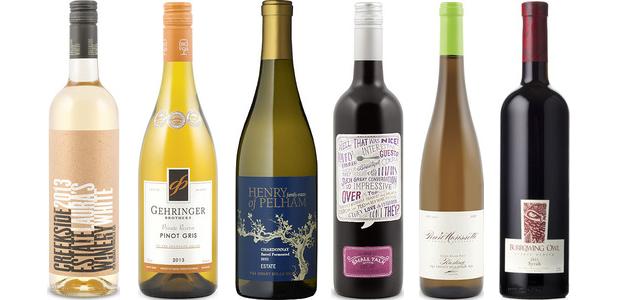
From left to right: Creekside Estates Laura’s White 2013, Gehringer Brothers Private Reserve Pinot Gris 2013, Henry Of Pelham Estate Chardonnay 2013, Small Talk Vineyards Recap Syrah 2012, Pearl Morissette Cuvée Black Ball Riesling 2013 and Burrowing Owl Syrah 2011
When I tasted the 2012 Laura’s White again with winemaker Rob Power two weeks ago my last note said “this has the grab, tempered by the warmth of the vintage, so look for ’13 to nail it with a hook.” That it does, along with the most balm and herbs of the last five vintages. This blues traveller goes deeper into complexion and white varietal compilation. The fruit is very tropical in 2013, softer, easier, lighter in complexity, but it has that musical trigger, the jingle, the popper, the hook. If ’12 was the revivalist blend, then ’13 will try to be the proselytizer. “Because the hook brings you back, ain’t tellin’ you no lie. The hook brings you back, on that you can rely.” Everyone can drink this. While it may not stand up a decade or longer later, you will be able to look back on it fondly and remember it was a wine for the times. Drink 2015-2020. Tasted March 2015 @CreeksideWine
Gehringer Brothers Private Reserve Pinot Gris 2013, BC VQA Okanagan Valley, British Columbia (347203, $18.95, WineAlign)
A concrete set of aridity rules are the modus operandi here in a reserved, stoic and aerified sort of Okanagan Pinot Gris. Paler and thus less oxidative then the last vintage to pass through these parts. Very much cut into pear, less so of white peach. The grape tannin is noticeable, even obdurate. Generous alcohol contributes to the mulish attitude though with the aridity and slight citrus push you’d be hard-pressed to really notice the call. Tasted March 2015 @GB_Wines@UncorktheSun
Henry Of Pelham Estate Chardonnay 2013, VQA Short Hills Bench, Ontario (268342, $19.95, WineAlign)
Sunlight is the key to this ripe Chardonnay, snatched from vines that grow on the most easterly of the Niagara Escarpment’s sub-appellation. Here Henry of Pelham calmly puts its hegemony over Short Hills Bench Chardonnay on display. The fruit layering is very impressive, compressed even, with just a spiced spirit injection from the barrel. The Estate Chardonnay is in a mid-range class of its own, this gatherer of heat days, hoarder in spring water retention, cleanser in sand and gravel drainage. The vintage just seems perfect for this niche bottling, balanced, primed to finespun texture, stretched for length and good to age at least five years. Last tasted March 2015 @HenryofPelham@SpeckBros
Small Talk Vineyards
Small Talk Vineyards Recap Syrah 2012, VQA Niagara On The Lake, Ontario (415612, $24.95, WineAlign)
In the hands of new winemaker Angela Kasimos, Small Talk Vineyards should consider going with and increasing their plantings of Syrah. It’s clear that Kasimos has inherited good solid fruit and the Small Talk (formerly Stonechurch Wines) treatment in ’12 is a very good start towards what should become a great varietal relationship. Smokey, savoury and full of positive brine vibrations, this has body but no overripe or caramelizing denouement. Nor is it green, though it exhibits tonalities that whisper volatility and chews that say sinew. Yet it persists healthy and clean. This is Syrah of lovely curves, rounded shapes, bright peaks and gently sloping valleys. Who doesn’t like Syrah young and infectious like this? Tasted March 2015 @SmallTalkWines@AngelaKasimos
Pearl Morissette Cuvée Black Ball Riesling 2013, VQA Twenty Mile Bench, Ontario (416073, $32.20, WineAlign)
Let’s get something immediately out of the way. The wines of François Morissette are not meant to please curmudgeons, skeptics, contrarians or members of the wine media. This Riesling has no desire to kiss ass. This will not appeal to late harvest lovers, from Kabinett to Auslese. Is it ripe? Not quite. Is it different? Absolutely. This compares to almost nothing. Like a Champagne ginger, lime and bronze filings cocktail, the Blackball ’13 is so very developed and despite the colour, is a hyperbole in primary existentialism. That it has essentially no residual sugar and an achieved 11.5 per cent alcohol is a complication only the clinical doyenne has the answers to. Riesling in between dreams, “never knowing shocking but we’re nothing.” The Blackball has struck, is not yet stricken and will offer remore pleasure for another six months. Then it will deconstruct, dissolve and devolve into darkness and funk. Five years later it may emerge like a phoenix, jack up like a Rangen Riesling, into the ethereal. Will it happen. I couldn’t possibly tell you. We may never know. But I can say that then, and only then, will it truly tell its story. Drink 2020-2025.Tasted March 2015 @PearlMorissette
Burrowing Owl Syrah 2011, BC VQA Okanagan Valley, British Columbia (73072, $39.95, WineAlign)
Just when it seems that Burrowing Owl could not coax beyond the perceived maximum in ripeness and richesse out of desert sage country Syrah, the envelope pushes higher in this ripping 2011. An absolute circum whirl of dark fruit, crushed peppercorns, Cassis and candied violets draw syrupy into bottle. Big, brawny and modern, styled like Syrah from peak perches overlooking the French Riviera with a small percentage of mitigating northern Rhône sensibility. Texture is pure silk. Acids are tame but very present. Tasted March 2015 @BurrowingOwlBC@winebcdotcom@LeSommelierWine
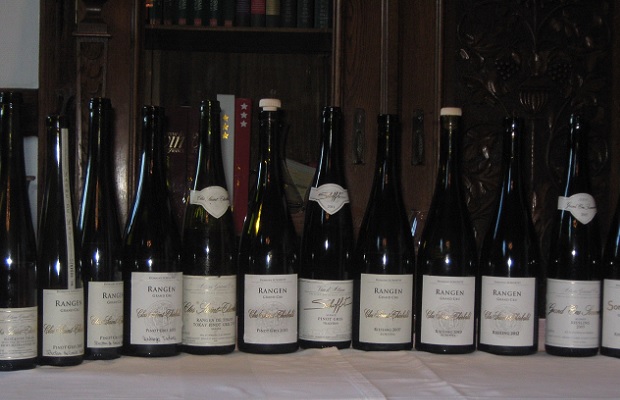
Like so many Alsace winemakers, the Schoffits were and continue to be torch bearers who made wine to remember generations. Though their history traces back more than four hundred years, the modernity of their oeuvre is a case of futuristic pioneering. That path is laid crystal clear by a tasting and a learning about their wines in discourse through the precocious young lens of Alexandre Schoffit.
The volcanic terroir of Rangen, Alsace as told through the precocious & intelligent young mind of Alexandre Schoffit pic.twitter.com/x4IVQP7cou
During a week in Alsace we tasted many wines 25 years and older. At that age there can be no guessing. At Schoffit we were presented wines that fell into the four to fourteen range. No longer primary and not yet secondary, the assessments of adolescence can be difficult, confusing, beyond comprehension. The relationship between many wine’s character with its aromatics and flavours is usually that of gristle and fat on the bone of meaning. But not Domaine Schoffit. There is no gap between the structure and the wine.
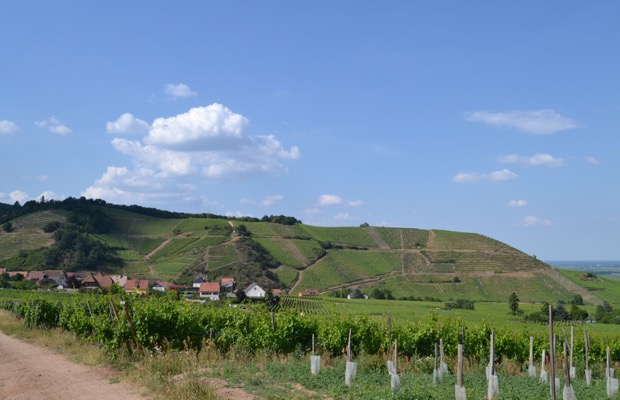
The Harth Lieu-dit is the Alsace home vineyard and grounded muse for the varietal wines of Domaine Schoffit. Eleven hectares of Pinot Gris, Riesling, Gewürztraminer, Pinot Blanc, Sylvaner, Chasselas and Pinot Noir make up the core of the domain’s 100,000 bottle production. The alluvium, permeable pebble soils in Colmar and France’s most generous amount of sunshine provide the sustenance. Robert, Bernard and now Alexandre Schoffit are the facilitators of clockwork winemaking, on time, always with a shine.
If Harth is the guts, the glory comes from the volcanic sharp hillsides of the Grand Cru Rangen de Thann, acquired by Bernard in 1986. This is the only siliceous rocks and lava base in all of Alsace. It is here by the monopole and medieval church Clos St. Théobald that the foundation of the Schofitt legend lives. Rangen might borrow from the German, meaning “row.” Legend has it Saint Théobald brought the finger of the Archbishop from Bubbio, Italy because the ring was promised to the monks. The saint fell asleep in the vineyard and passed on. Another story tells of Hercules having been the one to sleep in the vineyard because the Rangen wine was so strong. His mace graces the label on the Schoffit coat of arms. Today the church and the monopole memorialize St. Théobald and his name.
From as far back as 1041 records discuss the 3rd incarnation of the monks who worked the vineyards on the treacherous slopes. Rangen Riesling and Pinot Gris need cellar time, to pay hommage to the provider’s history and to create one of its own. Grand Cru from these vines lives a life of its own. Notes Alexandre Schoffit, “in the Rangen we are not avoiding malolactic fermentation, but if it happens we are not bothered by it.” The monks knew of the connection between the Thur River’s dark waters and what happens to these wines after long rests in the cellar. “If you know the Rangen, you can tell it by the colour.”
Schoffit’s other Grand Cru is located in the Sommerberg, between the towns of Niedermorschwihr and Katzenthal. The granite hillsides are the proviso for mineral moxie and the resolution to provide what Riesling demands. Only le roi of Alsace grape varieties is made in Sommerberg. The crumbling granitic bedrock is ideally suited for the racy wines it begets.
Riesling is royalty in Alsace and at Domaine Schoffit, it is king. When he introduces his family’s Pinot Gris, Alexandre Schoffit explains, “the wines are a little more simple; full-bodied, concentrated.” This attitude is prevalent across the region though some winemakers seem to love all of their children equally. Others, like Alexandre and like Jean Boxler (Domaine Albert Boxler) clearly put Riesling on the throne.
Pinot Gris is a different sort of child to raise. As a rule in Alsace and especially on the volcanic or granitic steep slopes, it must go deeper than Riesling, must burrow even further into the fissures of rock for nutrients. In Pinot Gris the mineral extraction and grape tannin suppress any thoughts of cloying or insipid sweetness.
In June of 2014 I sat down with Alexandre Schoffit at the winery in Colmar to taste 14 of his wines, along with Montreal’s Fred Fortin, Sommelier au Restaurant Laurea and New York’s Jonathan Ross, Sommelier at #ElevenMadisonPark. A tour of the facility showed us the stark minimalism and puritanical cleanliness that defines the three generations of winemakers at the domain. The wines echo their attention to detail, their storied history and a focus on keeping up with advancements of the times. Here are the notes from Domaine Schoffit.
Cropped at 40-50 hL/l because they are careful not to let it get out of control. According to Alexandre Schoffit this number is like 20 hL/L for any other grape variety. Chasselas here for easy drinking, with mildly sweet (4.7 g/L) flavours that express green herbs and vegetables. Round (12.8 per cent abv) and sound Chasselas, helped by the balance of the vintage. Though not exceptional in acidity (4.4 g/L) this is not the hallmark of the grape. A wine that is almost entirely exported to foreign markets.
Riesling Lieu-Dit Harth Tradition 2012,
From the winery’s home Colmar vineyard composed of gravel and sandstone, this has open-knit fruit of early morning flowers. An apricot tang, ripeness and just a few shades away from bone-dry (7 g/L RS) and yet in a balanced (7.2 g/L TA) dry style. To taste this is as traditional as Alsace Riesling can be. Proper, as expected.
From granitic soil, the first reaction is to the beguiling strike of a match, the split to fissure of rock, the firing of a gun. The impression that begins is not just one of smell, but deeper, as if a deafening sound. This and the brisk surround of near-extreme acidity (7.7 g/L). Only 800 bottles a year are produced of this startling Riesling, a rare production for a wine of so much stone and that searing, direct energy. Clean as Riesling can and ought to be.
Riesling Grand Cru Sommerberg 2005
During a week in which many 2005’s are laid out on tasting tables, here is another spot on example. “The vintage makes the wine,” insists Alexandre and this Sommerberg drives the point. The age has had very little evolutionary effect on the aromatics. The lapidarian has perhaps had its stone face suffused by a fleshy permeate, Jacked by a temporary balladeering smother, though it will undoubtedly re-emerge hard-core lithic further on down the road. Typical, it seems, of granite-based Alsatian Riesling. Begins in matchstick, enters lanolin, beeswax and wooly sphericity at eight to ten years of age, then returns to flint later in life. Acidity is the catalyst in this development. “And if we are fools in love, then a happy fool I would rather be, and I’ll be glad to learn from you,” though I know Sommerberg has nothing to learn from me. Racy Riesling, seemingly understood but never really known. “Well that’s the magical kind cause its flowing all the time.”
Riesling Grand Cru Rangen De Thann Clos St. Théobald 2012 (Agent, $60.00, WineAlign)
Here the volcanic axiom. Not the one that includes magnetic reversals, dinosaur populations and the stock market, but yes, the one concerning global rhythms. The 2012 global and Alsace vintage heat sees Rangen yield at just under 40 hL/L, with soaring aromatics in a wine that will lack the stuffing for longevity. Simpler and so lifted in florals while herbiage balms and bombs the (“Schistes” label-designated aridity) in salinity and fruit driven to immediate assets. The Clos St. Théo’s young acidity is so much rounder than ’10 and ’07, though still very disciplined. Purely and effortlessly representative Rangen to enjoy while the others sleep.
Riesling Grand Cru Rangen De Thann Clos St. Théobald 2010 (Agent, $60.00, WineAlign)
The label is also known as the “Schistes,” indicating a new de facto dry style and another example to speak about the Schoffit purity, clarity and precision. A whiff of smoke pursues the ethereal in this terrific and exemplary 2010, like the 2000’s of a decade earlier, balanced and elevated by a low and slow evolution. The schist soil impart brings a lime acidity in piercing precision. The near-optimum vintage is taken full advantage of, perfect to show off the Schoffit style. The only imperfection is the lack of economics, a result of the yields (under 30 hL/L). Never mind the wash, this has aridity and salinity in frozen waves, immense like a raging river’s falls suspended in animation. Rangen Riesling is as dramatic an expression as any in the world and this ’10 perches amongst the top of the class. Drink 2018-2030.
Riesling Grand Cru Rangen De Thann Clos St. Théobald 2007 (Agent, $60.00, WineAlign)
The ’07 Rangen is not showing age with the same advancement as the Sommerberg but the idea is just the same in that the roundness or richness has stepped in to soften the volcanic salinity and mineral mouthfeel. The rigid attributes persist but currently reside in a purgatorial state of temporary stoicism. The dry finish is the locus point to indicate (five more years) time is needed to see past the salty breakwater and to reach the true meaning in its character. Also, because this ’07 has been through malolactic, unlike the Sommerberg, yet the consequences are not a question of compromise for balance. Drink this from 2019-2027.
Quelques grappes du futur Pinot Gris Grand Cru Rangen Clos Saint-Théobald 2013 (c) https-::www.facebook.com:schoffit:
Pinot Gris Tradition 2011
Here the Schoffit proclivity towards the potency of Pinot Gris as a straightforward and heady white. The sugar (13.1 g/L) is felt and yet its strength is conveyed by elasticity, bespoken towards needing to give this a few years to settle. Propellant wound acidity (5 g/L) keeps the proportion in flavours of peach, pear and the appendix of savour. Drink this paradigmatic Pinot Gris from 2016-2020.
Pinot Gris Grand Cru Rangen De Thann Clos St. Théobald 2010
In this volcanic soil plussed Pinot Gris the anxiety is palpable. The sugars are derived from orchard fruit at a ripeness pulled by acerbity (9.5 g/L) in clairvoyance of that volcanic mind, skewed and eschewed through utter dramatic density. A good bitterness prevails over the tension with a finish in citrus intensity. Moments of delicacy give a peek to where this will go, that and the incredulous observation on how remarkable 37 g/L of residual sugar is tempered along. Drink from 2018-2025.
Pinot Gris Grand Cru Rangen De Thann Clos St. Théobald 2000
So here is what 14 years provides from the depths of a steep volcanic slope high atop the Rangen. Like a burning candle meets crème brûlée, the wax smouldering, the sugars caramelizing, the symbiotic augmentation crystallizing in natural sweetness, in seamless fusion. This represents the reason we take time to look at and see what happens to Pinot Gris, from altitude-afflicted vines with volcanic interruption and through the neurasthenia of originally-picked unsullied, purest fruit. The cleanest botrytis. Rapturous PG. Drink now through 2025.
Pinot Gris Grand Cru Rangen De Thann Clos St. Théobald Vendanges Tardives 2010
Quite clean and lean for VT out of that exaggerated hyperbole of a terroir-driven vintage. The richness and fullness is on the palate at this early stage in its development. Very full (approximately 50-60 per cent) botrytis affected grapes in a repeat recording for hygienic, pellucid and precise. The aromas are from white fruit, flowers and tender apricot. The acidity (5.8 g/L) is unexceptional, observed in relation to a lower block’s fruit (on the middle slope) which is naturally lower in acidity and less concentrating (128 g/L) to the grapes. While the verve may have wandered away in marronage, the delicacy here stands apart. Drink sooner rather than later.
Pinot Gris Grand Cru Rangen De Thann Clos St. Théobald Sélection de Grains Nobles 2007
From a vintage of concentration for SGN. A very smokey note bristles with the highlight of lit beeswax intensity. Telescoped and rapt aromas of peach and apricot turn syrupy on the palate. This SGN is extremely young at heart and bounds about like a whelp of limitless innocence and energy. If the highest pinot in volcanic absorption could be measured in Alsace, this Rangen might top the bimetal thermometer. Fills the fullness and complexity kettle yet somehow, miraculously remains light on its feet. With “hair of gold and lips like cherry it’s good to touch the green, green grass of home.” This is oozing (265 g/L) dessert wine, sticky, infiltrating the pores of fingers the moment it leaves the glass. The finish is marked by citrus (9.5 g/L) and the classic Schoffit lit wick. From George Jones to a Scony Mack kind of SGN, like the back of a woman’s knee.
Pinot Gris Grand Cru Rangen De Thann Clos St. Théobald Sélection de Grains Nobles “Larme de Lave” 2007
A mere 500 plus bottles (with sugar at 510 g/L) are produced of this SGN which I believe will live forever. “This bottle is made to show what can be done,” says Alexandre Schoffit. “It’s more than a dessert wine. It’s a meditative wine.” When it pours into the glass it takes a moment to settle into itself. That’s how viscous it is. Moves beyond pure apricot, into the essence of a multitude of fruits. Picked hand by hand, seeking only the botrytis-affected berries. The unadulterated soul of natural grape sugar. Few words can express the need to ceremonialize its incredulity. With alcohol at 4.9 per cent and a potential of 37.2, the Lave will live more than 100 years, of that we can be sure.
Gewürztraminer Grand Cru Rangen De Thann Clos St. Théobald Sélection de Grains Nobles 2006
Richer, with an early increase in caramel, colour and in warm concentration. There is licorice (no, really) on the nose and also pine. “A really complicated vintage,” explains Alexandre. This has a drier sensibility as compared to the Pinot Gris, with dried fruit flavours of mango and apricot. An oily, petrol note adds to the confusion and a hard-pressed, on the spot ability to pick this out blind as Gewürztraminer would certainly be a reality. Orange peel and slate fall in late. The residual momentum (162 g/L), acidity (8 g/L) and alcohol (11.7 per cent) may be misfit bedfellows but messing with what the vintage and the slope gives would be a bite upon the hand that feeds. It is what it is, you can’t change it. This is the fragmentary varietal character of the Rangen.
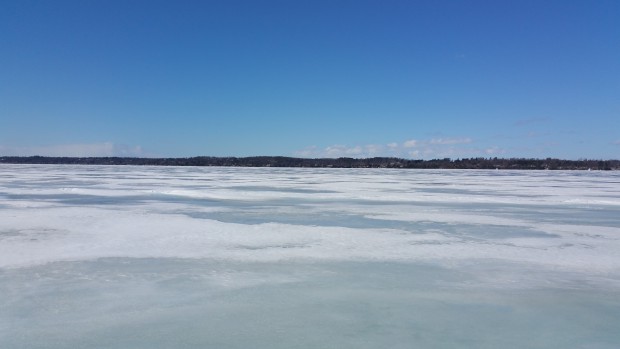
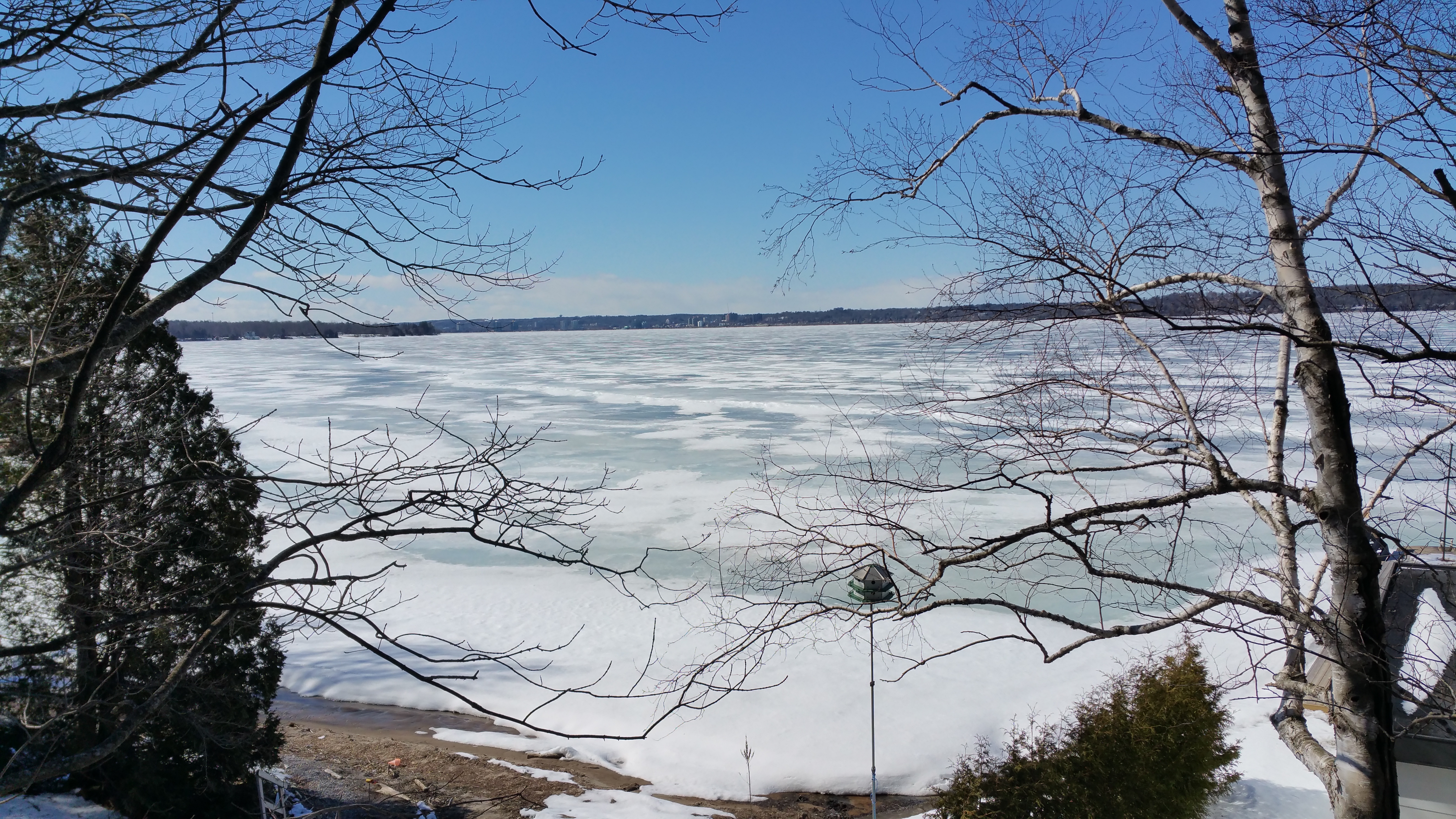
The lake remains frozen though stepping foot upon its precarious ice flow would not be recommended. By this time next week the waves will concuss the gelid islands and slowly deliquesce them down into the frigid water. As of this Saturday spring will have officially come to southern Ontario and with it a whole new outlook on life.
If you ask my colleague Rick VanSickle, the spring of 2015 will mean the boot up to overhaul the future of wine and craft beer sales in Ontario. According to VanSickle, “there is a brave new world coming for the retailing beer and wine in Ontario. These are heady times. Behind closed doors a lot of discussion is happening, a lot of debate and planning is going on in advance of the day Wynne’s Liberal government utters those words many of us have longed to hear for so long: An end to the LCBO and Beer Store monopolies on wine and beer in Ontario.”
For Rick’s full report on his site WinesInNiagara, please click here:
I read Rick VanSickle’s work on a regular basis and I know him to be as pragmatic and as skeptical as they come. I doubt very much that Rick would get ahead of himself on an issue with so much on the line. Using his ins to gain sagacity from insiders who possess relevant information, VanSickle writes with confidence that Kathleen Wynne has given Ed Clark and his privatization panel carte blanche to effect real change. The consequences of what Rick is predicting are enormous. For consumers, for industry professionals and for writers. We would all have to reconsider and recalibrate the way we approach wine and beer in Ontario.
That is why I remain ever the conspiracy theorist. I remain unconvinced. I see the smoke and mirrors of the entire charade. Even when new licenses are granted, I imagine grocery retailers only selling the largest and most heavily marketed brands. I don’t see VQA wine stores and specialty shops tailored to the demographics of neighbourhoods. I see the LCBO and the Beer Store continuing to exercise their powers of monopoly and controlling how all the changes are implemented. I just do not see the revolution as being imminent and around the corner.
My apologies to you Rick. Your report is thorough and covers everything we need to know. Were these great advances to happen we would all be the beneficiaries but your words sound more like wishes than predictions. Ontario is not Alberta. It never has been and isn’t likely to happen any time soon. I hope I am dead wrong. I will owe you a sit down over a craft beer and a never before seen in Ontario stores bottle of wine if I am. If the revolution is upon us, I will happily count my blessings over one with you.
So, back to the business of reporting on the VINTAGES releases at the LCBO. With spring coming this Saturday so too does an entire new set of wines on shelves. Last week I talked up Riesling and iconic wines.
The rest of the March 21st release is expressed in value, in wines that offer serious compensation for what you spend. Wines in generosity of backbone, psyche and enthusiasm. Wines that are simply good, regardless of their cost. Here are notes on nine.
Marqués De Cáceres Antea 2013, Barrel Fermented, Doca Rioja, Spain (518985, $15.95, WineAlign)
Here barrel fermented Rioja brings a buffet of culinary impressions to the aromatic and gustatory table. Soft scrambled egg and cream in Tortilla Española, Serrano ham, buttery puff pastry, natillas. All would pair well with the hickory stick barrel spice and the slightly volatile tang. Accents of orange juice and rind work the angles, along with the calcified acidity. This Rioja is not shy but it represents good complexity and value for the price. Tasted March 2015 @Marques_Caceres@RiojaWine@DionysusWines
Castello Di Ama Chianti Classico Riserva 2009, Docg (375ml), Tuscany, Italy (403824, $16.95, WineAlign)
Kudos must be afforded Castello di Ama for putting CCR in half-bottles. It’s like listening to Green River on vinyl. The layers of texture, nuance, and groove are amplified. The expedited evolution and compact formula make cause for a bottled up compression, a concentration, not a reduction. More winemakers should bottle in the 375 mL container. There are so many reasons for it. Space, quality, half the cost and best of all, nothing left at the end of the night, just the empty bottle. This 2009 has seen its fair share of evolution, with notes of forest floor, truffle, mushroom and compost tea but in certain respects the aromas are old-school Brunello. The antiquity of the composition is nothing but endearing, a romantic comfort zone to give this Ama a sense of place. The wood, bite into sinew and gristle tannins add to the archaic mystique. Most modern imbibers would like more fruit but at this paltry price the complexity is more than enough reward. “Well, take me back down where cool water flow, yeh. Let me remember things I love.” Drink now. Tasted March 2015 @CastellodiAma@chianticlassico@HalpernWine
Boutari Grande Reserve Naoussa 2008, Naoussa, Greece (140111, $17.95, WineAlign)
In this Xinomavro there is beauty and bog consistence, like wild calla palustris. Imagine a wine thick as consonants, dense and defined by solid rock bubbling like stew, from out of a marsh. Wood adds intricate layers and a mothering of leather hiding and protecting dried cherries. Game, spice, liquorice, funk and things that heal flavour the wine’s liqueur. Silky smooth with a run of grain and the salinity of ancient longing. Racy acidity intrudes, puts in a charge and takes care to see six to eight years more life will be a guarantee. Easily and possibly 10 will pass before it sheds the chalky loops. Terrific vintage with impressive depth and range of flavour. Tasted February 2015 @boutari@KolonakiGroup@DrinkGreekWine@winesofnaoussa
Wolfberger Signature Pinot Gris 2013, Ac Alsace, France (398172, $18.95, WineAlign)
The resident oenologist at Wolfberger is Bertrand Praz, in charge of the cooperative located in Eguisheim, south of Colmar. As far as a ‘basic’ union Pinot Gris is concerned, this one hits the right marks and preserves proper tradition. It’s both saline and full of pith, with lemon is scrapes and ladles, yet it could very well be thought of as Riesling were it tasted blind. Good ripeness, nothing serious and quite righteous with an intent to carry an Alsace torch of dry, finely crafted Pinot Gris. What’s most important is the statement it makes for what will follow out of the 2013 vintage. Tasted March 2015 @wolfberger_fr@Smarent
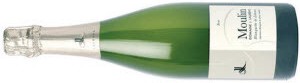
Domaine J. Laurens Le Moulin Brut Blanquette De Limoux, Méthode Traditionnelle, Ac, France (180323, $18.95, WineAlign)
The pause of oxidation. The evidence concrete and stratified, the bite pure and hollow petrified, like into bone and the interval below the organic soil. Crisp cut above the normal. Mouth-filling and expansive. Perfectly bitter. Much lemon, ginger and further spice. Length too.
From my earlier note of April 2014: A southern French (Pyrenean foothills, just south of Carcassonne) blend dominated by the traditional grape variety of Limoux, Mauzac (90 per cent), with support from Chardonnay. The lees is very direct and in your face on this Limoux, the baking aromas strong and the texture quite dense. Citrus and white grapefruit crawl up the middle and aridity mixed with horseradish salt comes through on the finish. Claims territory in viridity of complexity, an acumen for dewiness and is blessed with a marked appeal to hipster fizzters. @DneJLaurens@LanguedocWines@oenophilia1
Last tasted March 2015
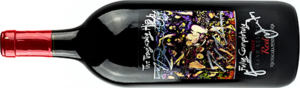
The Tragically Hip Fully Completely Grand Reserve Red 2012, VQA Niagara Peninsula, Ontario (411595, $24.95, WineAlign)
Twenty three years ago this October the Hip’s third record changed the course of Canadian Pop and Rock music. While this Jeff Hundertmark, Kingston-bred band and Bordeaux blend will not have a similar effect on the Ontario wine industry, it’s certainly not a tragically vinified red. It’s looking for a place to happen, has the wherewithal to age with some grace and the courage to represent Stoney Ridge with power. The wall of sound, smell and taste is achieved through forest compost, bruised berries, melted liquorice, plum flavour and glycerin texture. Hung “long out in the sun,” the pencil graphite and hard acidity is a scratch and a flaw but also a calling card to see this age in the classic Niagara red style. “Either it’ll move me or it’ll move right through me; fully, completely.” Tasted March 2015 @stoneyridgewine@WeirRidgeYnmakr@thehipdotcom@ImportWineMAFWM
The passion from the Thomas Bachelder Niagara project has shifted into Domaine Queylus. With no disrespect to Thomas’ eponymous bottling from vineyards so nearby, the quality time has now been granted the Tradition. Here lies Mountainview and Le Petite Colline earth, here crushes Niagara cherries in hand, juice running down a clay caked forearm. Fresh and bright yet streaked by chalk and enveloping brushstroke. Sour? For a flash but in neither malic nor astringent form. This is a must buy.
From my earlier June 2014 note: Reverberates with the unmistakable calling card character of the storied Neudorf family La Petite vineyard with equal and opposite amounts of attraction and new life breathed in by the Lincoln Lakeshore fruit. Ethereally sifted earth of old meets cherries of new. Enriching Pinot Noir, a bit gangling like a primitive young giraffe but near to finding its legs. Hard working red, insistent, confident and having already paid some dirty fingernail dues. Excellent length.
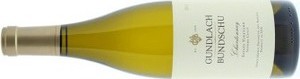
An intimately affordable Chardonnay from Sonoma Coast fashioned by a family in its 157th year of production is a rarity. Even more so from a cool-climate region oft-marred by the misperception that its Chardonnay are fat, buttery, over-oaked fruit bombs. From fruit grown on the Rhinefarm Estate Vineyard on southwest slopes of the Mayacamas Mountains, eight miles north of San Pablo Bay. Consider the antonymous solecism of zero per cent malolactic fermentation and you will see where this (20 per cent new) barrel fermented Chardonnay has come from and where it is going. Weekly battonage compresses and stirs up texture. Fog plays its part on the cool slopes of Huichica clay loam soils mixed in with gravel deposits. Acidity is preserved, hitting a classic number on top of healthy (14 plus per cent) alcohol. This is not a small Chardonnay. It stretches its legs and walks like a giant but not in 80’s or 90’s acid washed jeans or big hair ways. This is Chardonnay that leads in style and confidence of a most modern vernacular and fashion. It’s also a steal. Tasted October 2014 @gunbunwine@LeSommelierWine
Lately I’ve noticed a whole bunch of take a book, leave a book mini libraries popping up on front lawns in many Toronto neighbourhoods. The concept is right on so many levels and it occurs to me that the same could be done with wine. Open a few bottles and have a taste of each then exchange them with a friend or colleague so that each of you can sample new wines the following night without having to open anything new.
Last week the practice was put to good use and it allowed me to taste upwards of 40 wines without the benefit of a trade or media tasting. I traded wines with friends and colleagues over the course of three days and two nights. Yes, you can trust your friends to keep the provenance of a bottle so that your experience is just as fulfilling as theirs. Yesterday’s post covered the notes on 12 wines from the boot.
Here are nine more tasting notes from a wider global range, with a focus on Victoria, McLaren Vale and Langhorne Creek in Australia along with samples from the Mosel, Penedès, the Columbia Valley and the southern Rhône.
Grapes from neighbouring vineyards in the Mosel are brought to St. Urbans Hof Winery and vinified in the Nik Weis way. This stresses the Weis notion where “cool climate vines develop flavours, not simply sugars.” Though straightforward and quite traditional, the Urban is clean and shy on flint but there is a slate’s medicinal bleed and piercing acidity. Lime and more lime. Quite dry and in moderate (9.5 per cent) alcohol. This represents quintessential entry-level Qualitätswein. Tasted March 2015 @TheVine_RobGroh@WinesofGermany
Taltarni ‘T’ Series Shiraz 2013, Pyrenees, Victoria, Australia (Agent, $16.95, WineAlign)
A warm, highly perfumed entry with a hot stone streak runs forward and uphill through waves of lush berries. A wrinkle of vim is but a moment of abstruse behaviour. The macerated fruit careens in sweetness above the subtleties of savour but the spice directed oak takes over, along with a scaleable wall of tannin. This woven textile of a Shiraz needs a few years to soften. Drink 2017-2020. Tasted March 2015 @Taltarni@TheVine_RobGroh
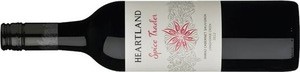
Heartland Spice Trader Shiraz Cabernet Sauvignon 2013, Langhorne Creek, Australia (Agent, $16.95, WineAlign)
Langhorne Creek is the source for winemaker Ben Glaetzer’s blend, an Australian curated combination that has secured its rightful ownership within the assemblage vernacular. The star anise on the label is apropos considering the red braised pork belly and Phở tái aromatic suggestiveness. That and red plums, poached and in a sweet bun’s paste. Add to them the steam from hot rocks and warm raspberry compote. Certainly on the syrupy side of texture but the palate is equally savoury as it is sweet. Lots of character here and a finish with extension. Tasted March 2015 @heartlandwines@langhornecreek@TheVine_RobGroh
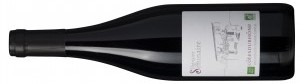
Domaine du Séminaire Côtes du Rhône 2013, Rhône Valley, France (Agent, $14.95)
A rustic must is the truth serum here, the corollary of proper old school CdR winemaking. An affinity is sensed to both an Albert Mann Pinot Noir and a Baden Spätburgunder with porcine aromatics and an antediluvian aridity. Very cherry, dusty and plainspoken like a trending linear regression. Such a welcome step up from so many over the top sunshine dramatized Rhônes of excessive residual and alcohol. Though this clocks in at 14 per cent you would never know to read it on the spirit hydrometer. Direct energy and pulse would make this a very keg worthy red. Tasted March 2015 @VINSRHONE@RhoneWine@HospiceduRhone@TheLivingVine
Tapestry Bg & V Shiraz 2012, McLaren Vale, South Australia (247155, $19.95, WineAlign) From the VINTAGES March 7, 2015 release
A regional vigneron’s blend from two vineyards, BG and V: The Baker’s Gully (old Lloyd Light Vineyards) at the base of the Southern Mt. Lofty Ranges and Oliver’s Road (the continuation of Field Street) near to the Vale Township. Really elegant and refined in spite of a big, bold and juicy character. Ripe, sunny and warmer categorical climate expression. Quite tightly wound with a metallic iron post or fist in your face, layered and initializing the baking effect. Needs three or four years to fully integrate at which time the pie will be ready. Tasted March 2015 @mclaren_vale
L’école No 41 Semillon 2013, Columbia Valley, Washington (SAQ 10707077, $22.25, WineAlign)
Sauvignon Blanc (13 per cent) adds buoyancy to the main attraction in this vanguard and reputable Columbia Valley pioneer. Quite toasty and marked by early nose-hair splitting and splintering barrel notes. Dare say reductive but not in a rubber sap run way. More like Sémillon-dominated Bordeaux, of big bones, cut through soluble rock, created a sinkhole that swallows up flavours, only to release them in geyser like fashion in later years. So with patience and age-time in mind, this Sem will have better years ahead, when the heavy (14.5 per cent) alcohol integrates and the lemon drop-butterscotch flavours mellow. Generous pH (3.2) and high Brix (24.2) were the product of a very warm vintage. Rounded by concentric circles of acidity and bitter pith tannin, this is very tropical, like Gewürztraminer, but more in mango than lychee. Needs five years minimum because the oak is overdone. Tasted March 2015 @lecole41@WINESofWA
La Vida Al Camp Cava Brut Rosé, Penedès, Spain (Agent, $25.95, WineAlign)
Blush Cava blend of Macabeu, Xarel-Lo and Trepat. Aromas scale the neck of the bottle with immediate desperation even before the cork has fully disengaged. The wine just looks savoury with its bronzing salmon patina. Possessive of an ultra-fine mousse, aridity in immediate initialization and very much the sum total of base elements. Sweeter than expected to taste, seemingly oxymoronic to the nose and in conjunction with a low to moderate 11.5 per cent alcohol. The overall package is one of those beautifully impossible pH/rS/aBV agglomerations. Flavours lean to strawberry and ginger. The Trepat gives it a Costers del Segre angle of anxiety. This has moments of Pinot Noir-esque kinship with some finer Crémant d’Alsace Rosé (like Louis Sipp) in such a refined way. Tasted March 2015 @lavidaalcamp@TheVine_RobGroh
Bottled in 2012, this Taltarni is showing some age, in a positive way, in dried fruit and Cassis less sweet. Baking fruit and warm spice are grounded by earth and a chalky, citrus, lactic underlay. Has fully integrated components that some time ago included a grit of acidity and tannin, at this juncture no longer in control, but fully primed for peak time. In fact this Victorian has reached the secondary stage of its life. The raisining of fruit means drink it now and for another year. Tasted March 2015 @Taltarni@TheVine_RobGroh
Jamsheed Harem La Syrah 2013, Yarra Valley and Pyrenees, Victoria, Australia (Agent,$29.95)
Only 900 cases were made of this blend of Upper Goulurn (80 per cent) and Yarra Valley (20) fruit. Indigenous yeasts were used and 80 per cent was fermented as whole bunches then aged in new and older 500L puncheons. So very fresh, the Harem (Harum…) was bottled with out fining or filtering eight months after picking. “Amidst a sea of wheat,” in a world of jammy Shiraz, say hello to this 13.2 per cent alcohol Victorian Syrah. This is fully exposed and in exposition of its naked beauty. Were more of Victoria produced in this progressive rock, singer/songwriter style, the throngs would applaud. Pure, smokey, opaque and sultry, not exceedingly complex but built on whole bunch bravery. Lyrical, harmonious and eminently listenable. Quite rightly so, shines on brightly, a good album side. Tasted March 2015
13th Street June’s Vineyard Riesling 2013 – VINTAGES March 21, 2015 release
Last weekend, in a packed Carriage House at Vineland Estates Winery I tasted through 19 Rieslings from the Escarpment, Vinemount Ridge and Twenty Mile Bench sub-appellations of the Niagara Peninsula. It got me thinking, again. Thinking about Riesling. Thinking about drinking more Riesling. Thinking about how my life is not complete, without Riesling.
Riesling at the Carriage House, Vineland Estates Winery – March 7, 2015
More about that #CAPSCAN15 and Wine Country Ontario tasting at a later date. For now the delve need be into the history of Riesling and how it has had a profound effect on the world of fine wine. I have written about Riesling as much or more than on any other grape variety. In March of 2013 my column, 100 kilometre wine for spring stated firmly “can there be a more versatile white grape? From natural, mineral spring, bone-dry to concentrated, candied sweet, this grape runs the diversity gamut like no other.” In Niagara, “‘The Bench’ is home to a mineral wealth of local Riesling, singular in composition not only by way of a global comparison, but also from plot to plot, soil to soil and vineyard to vineyard.”
In June of 2014 I wrote about Germany in Talkin’ ’bout my Generation Riesling. The theme of the show was the ever elusive Trocken Riesling and how “the new German wine label no longer feels the need to inform the consumer of every aspect contained within the wine’s birth certificate.” In August of that same year I penned Walking an Alsace mile in their Riesling shoes, a full-on summary of a June visit to Alsace with 31 tasting notes on, wait for it, Riesling.
So, with the VINTAGES March 21st, 2015 release just over a week away, I shall be Riesling.
From left to right: Dr. Hermann Erdener Treppchen Riesling Kabinett 2010, Fielding Estate Riesling 2014, Flat Rock Cellars Nadja’s Vineyard Riesling 2013, 13th Street June’s Vineyard Riesling 2013, Vineland Estates Elevation St. Urban Vineyard Riesling 2012 and Trimbach Riesling 2012
Dr. Hermann Erdener Treppchen Riesling Kabinett 2010, Pradikätswein, Mosel, Germany (402420, $17.95, WineAlign)
Here the wild, out there, cosmic side of Mosel Riesling is on display, amplifying peach and lemon notes through aromatic grunge filters, like a medicative tonic. The palate is sweet and spritzy, even oxidative and this is textured with heavy, monumental levels of pure Riesling noise. The acidity is marked by citrus in every incantation. Though this may be the kind of Mosel you’ve “just never tried, it’s still the place.” Not so much a dinosaur but a junior, a wild Kabinett for very little cost and from an increasingly endearing vintage. Tasted March 2015 @WinesofGermany
The Richie Roberts take on Riesling brings Beamsville to the populace, combining the natural acidity of the variety with the micro-saddle-plot-climat ipseity that the sub-appellation provides. This early to market ’14 is quite tropical, offering an en primeur portal into what invariably will follow. Fresh, juicy, accessible and in near-perfect balance. Slate, calcareous bleed and fruit generosity make for one tidy, markedly gratifying Riesling. Tasted March 2015 @FieldingWinery@RichieWine
Niagara Riesling Royalty at the LCBO Lab – March 6, 2015
A year has turned a once frantic Nadja into a yet excited but in control Twenty Mile bencher. Acidity has circled the flock of juices; the sweet and the stony, to graze together. While ’12 expressed a texture to see it grace ages, here the up front verve makes for a more direct impression. There is no immediate hurry but the ginger on the lime indicates can earlier finality.
From my earlier note of February 2014: From a sample just pulled from the tank. Jay Johnston’s concept for Nadja is to create many fermentations together, using 2000L tanks and some barrels. The ferments are arrested when they achieve balance and then blended. Nadja still has her young fizz on and she’s exaggerated in Metallica meets a wondrous kind of sour. Already showing an unfurling of (mostly citrus) fruit but also spice and hurried depth. Frantic Riesling, will she “stop to warm at karmas burning, or look ahead, but keep on turning?”
13th Street June’s Vineyard Riesling 2013, VQA Creek Shores, Niagara Peninsula, Ontario (147512, $19.95, WineAlign)
Continues to throw its weight about and has now engaged a phase of typical J-P Colas redolence and pungency. Strict adherence to Creek Shores citrus minerality injects the June for future time-lapse release, an internal ooze that will take years to push its way upwards to the surface.
From my earlier note of December 2014: 2013 was a perfect follow-up for Niagara Riesling, after a vintage where so many exceptional wines were made. The ’12 June’s by Jean-Pierre Colas was his best and with this repeat performance in ’13, the consistency of June’s vineyard is further cemented. Once again, the citrus injection is a Creek Shores thing, a vehemence not matched by other sub appellations. Where ’13 differs is its weight. There is a textural density improved upon and at the same time dragging on the freshness of the fruit. The trade-off will mean less immediate gratification in lieu of more flesh and bone for a longer period of aging. Given at least five years rest, the 2013 June’s Riesling will discover a Ribeauvillé like future. @13thStreetWines
The layering is nothing short of remarkable, like the rings that tell the history of a tree. In its youth the upper vertex where effluvium and concentration meet is painfully obvious but when it comes to Riesling, breath is meant to be taken away. The prose is already written, running on adrenaline, unparalleled, if not yet understood.
From my earlier note of November 2014: Who has not waited for Elevation to hit out of the 2012 vintage? Straight up it must be noted that this will rank over and above the best from the St. Urban Vineyard. The ’12 Elevation will not only find long-term success among the great values in Bench Riesling, it will go down as one of the best ever, at any price. The vintage impart is a natural for this wine. At the moment it is the most primary of all because of the layers that texture bring. The Elevation will go thirty years and climb higher and higher into the stratosphere, gaining flesh and personality. The already seamless gathering of fruit and mineral is palpable. And still a reminder, the price is $20. This is a Schmidt gift to Ontario, for anyone and everyone to be one of the lucky ones. To purchase in increments any less than a case may be considered a crime against Riesling. @VinelandEstates@benchwineguy
Last tasted March 2015
Trimbach Riesling 2012, Ac Alsace, France (734517, $21.95, WineAlign)
To Jean and Anne Trimbach and most Alsatians, this Riesling from their ‘Classic’ range may represent the best that basic can be but when it travels oversees it gains a stature well beyond its humble roots. Here is another one of the those dictionary entry wines meant to depict and define. Quite simply emblematic Alsace. Built with acidity to envelop sweetness, marked by herbiage that is alive and fresh. Weight and density draw from Ribeauvillé rocks. Parity is realized in osmosis by fruit and mineral. As always, there is the tannic underlay, the length and the purposed bitter finish. Tasted March 2015 @trimbach@WoodmanWS