Chianti Classico’s Canadian dream

Gallo Nero, Castello di Querceto, Greve in Chianti

Il sogno Canadese del Chianti Classico: Embracing the most noble of Italy’s Sangiovese

Related – as seen in Chianti Classico Magazine, translated into Italian – Il sogno Canadese del Chianti Classico abbraccia il più nobile dei Sangiovese Italiani

The year 2018 has come to a close, a new one has begun and we naturally reflect on where we’ve been, what we have done and where we are going. This last vintage was a most significant and rewarding one for me and my relationship with Chianti Classico. For the great Tuscan territory it was marked by a meaningful and historical transition. In 2018 we witnessed the region’s fate and fortune transferred from long-time friend and President Sergio Zingarelli of Rocca delle Macie into the hands of Fontodi’s Giovanni Manetti. For Chianti Classico the future looks bright, sangiovese and now.

One of the best red wines from all over the world, deserving of space in place with the best – Giovanni Manetti, Fontodi, Panzano in Chianti

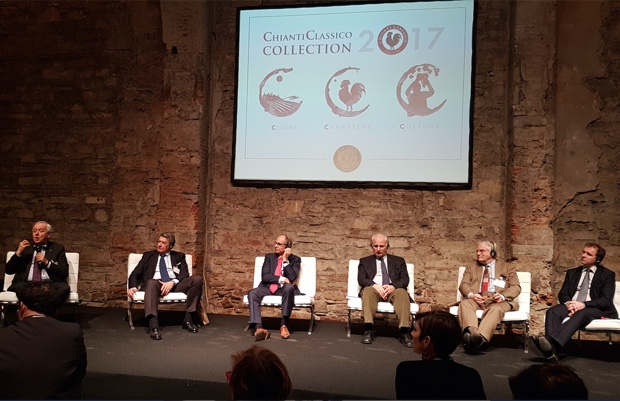
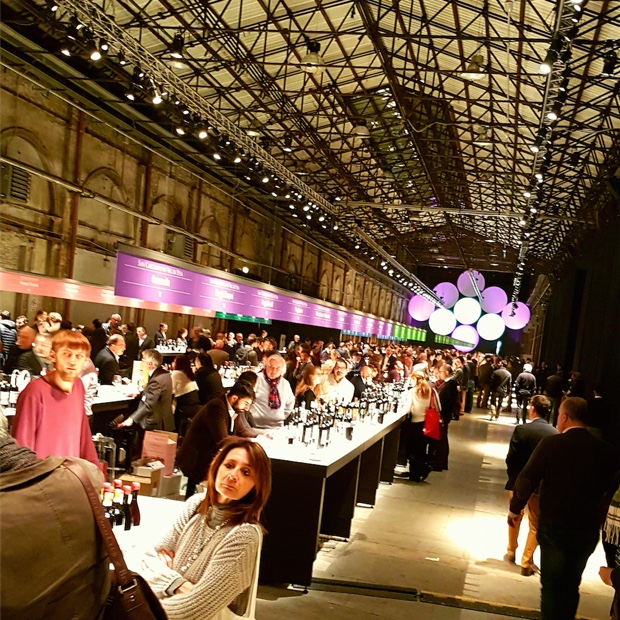
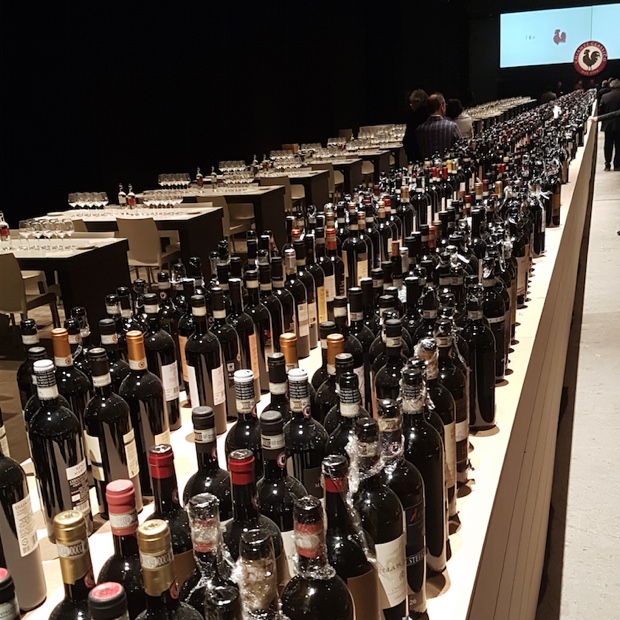
In just nine days the world will converge on Stazione Leopolda in Firenze for the two day Chianti Classico Collection 2019. The 2017 Annata will be poured by producers ready to show their newest sangiovese. During a September 2018 visit with the Consorzio’s recently elected President, the proprietor of Fontodi in Panzano referred to his territory as home to “one of the best red wines from all over the world, deserving of space in place with the best. I find great harmony in the wines,” said Manetti, “like I do in Renaissance paintings, vineyards and landscapes modelled by many generations. Harmony is what everyone and every winemaker should and will find. It’s something you feel.”

It is perhaps a recurring question that only happens in dreams but the clarity is quite real. Il Chianti Classico è il centro del mondo del vino italiano? Is Chianti Classico the centre of the Italian wine world? Without needing to offer up a response the query is still both curious and serious. When you pause to consider the 2018 buzz around Chianti Classico wines both at home and abroad, regardless of which is which to you, are you able to stop yourself from at least considering the question?

We are at the new era of the great potential – Paolo de Marchi, Isole e Olena, Barberino Val d’Elsa

It makes for compelling discourse to be sure. The rise of the Gallo Nero is a fascinating one, not merely because sales of Chianti Classico are rising with numbers never seen before. There is the exponential, across the board increase in quality, the ever-evolving multiplicity of the territory’s sangiovese and then there are these continuing controversies. Not exactly controversial issues as much as healthy debates, dialectics about sub-zones, boundaries, crus and designations of origin. We’ll get to that shortly.

Consorzio Vino Chianti Classico President Giovanni Manetti, Fontodi, Panzano in Chianti

In the past 31 months I have travelled to the land of the Gallo Nero on six occasions and have made a minimum 70 estate visits, 46 of them being unique. I’ve tasted and reviewed no less than 434 wines and written at least 12 articles about the region. In February 2019 I will arrive to report on a third consecutive Chianti Classico Collection. And I’ve just begun this lifelong journey into the highly complex world of sangiovese. In the middle of this odyssey of wanderlust there has already been a very special moment. Every wine region needs ambassadors to educate in the diaspora and in 2018 I was humbled to be chosen as one of Chianti Classico’s first five. This was indeed one of the great honours my life. I’m quite sure Jeffrey Porter, Michaela Morris, Massimo Castellani and Isao Miyajima felt the same.

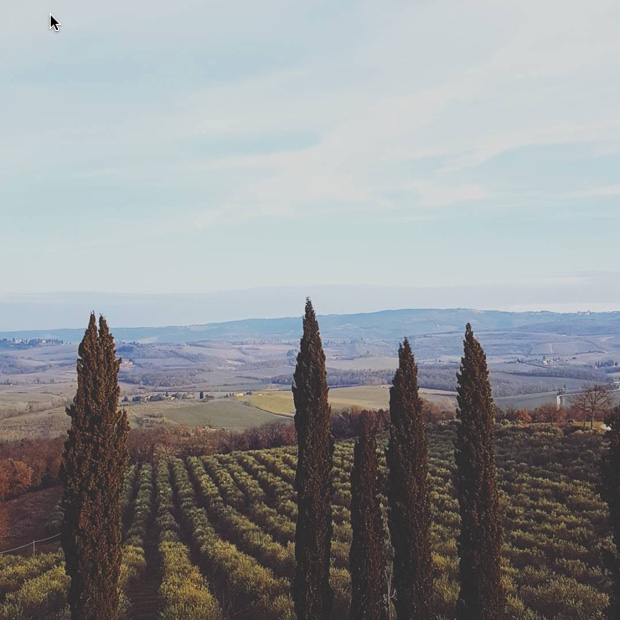
The region and its nine communes share a commonality expressed in varietal and landscape but look to the maps, the ridges, hills and individual estates to note that there is more soil diversity than we can possibly wrap our brains around. When I arrive in Chianti Classico I am intrinsically aware that each trip will add a new dimension to the project, legend and story. More to the point I am hyper aware that the best is yet to come. Just two weeks ago I stood on the great Galestro ridge of Isole e Olena, Barberino Val d’Elsa to hear Paolo de Marchi say “we are at the new era of the great potential.”

Simplicity is the best thing in life. Simplicity is freedom – Principessa Coralia Pignatelli della Leonessa, Castell’inVilla, Castelnuovo Berardenga

Speaking of the number 31, in Dante’s 31st canto of the Inferno the Italian poet writes “on its circular parapets / Montereggione crowns itself with towers”. The poet’s fascination with the famous castle and turrets of Monterrigioni located just outside the Classico zone are used as a simile for his otherworldly journey that brought him to the horrible giants who, sunk into the infernal rock, guarding the ninth and last circle, where traitors are punished. For a moment, that frightening sight looked like high towers, like the ones of the ancient castle. This is not, however, a reference to proponents of 100 per cent sangiovese versus assemblage, nor is it one to the soils of Chianti Classico, but only a coincidental notation with respect to discussing what lays underground.

Sangiovese is the future – Montefioralle, Greve in Chianti

In Bourgogne there is one word used to describe the relationship between the weather, the land and the interaction with the people who raise vines on that land. Climat is expressed as a highly complex chain of topographical, elemental and ethnological conditions. There is no such word in Italian, at least none that sum up the notion in una sola parola. We could perhaps take the liberty and make use of two words, acclimazione and sottosuolo to delineate such a meaning. To “acclimatize the underground” is to infer that over time vines tended by humans get used to the subsoils beneath their climate. Just as the Burgundians discuss Climat not as something above in the sky but rather below their feet, so can the Chianti Classico cognoscenti do so with the notion of acclimazione sottosuolo. Last week at Castell’inVilla in Castelnuovo Berardenga Principessa Coralia Pignatelli della Leonessa told me “simplicity is the best thing in life. simplicity is freedom.” In September Principe Duccio Corsini used the term genius loci, from the Latin, meaning “terroir plus the action of man.” Combine this with the “acclimatization of the underground.” The notions takes a very difficult and complex set of circumstances and distill it down into something simple.

The ideas of acclimazione sottosuolo and genius loci are a matter of agriculturalists interacting with the stratified Chianti Classico layers beneath the vines. Three major types of mineral soils are present, prevalent and essential to how, why and where sangiovese acts and thrives in the territory. The rocks of alberese (calcareous limestone), galestro (schisty marl) and macigno (sandstone) are the three most important sub-soil types but they are not the only significant rocks that contribute to character. River stones and marine fossil shells are also found in various vineyards and bring more than their fair share of personality-gifting traits. Though we would so very much love to draw geological and geographical lines that explain what soils exist and where, it is simply impossible to do so. The complex weave of patterns and designs, not to mention the venn diagram circles of commonalities would make for the most intricate mapping anywhere in Italy. Yet is that not the foundation and the nature of Chianti Classico’s set of exemptions and eccentricities? No two soils are the same and the resulting sangiovese are all different. Yes, they are snowflakes.

The Galestro of Isole e Olena, Barberino Val d’Elsa

The official line tells us that geologically the land is a shield of clayey schists (marl), with layers of scaly clay, alberese and fine limestone sandstone. The dark brown soil tends not to be deep, with structures ranging from clayey-sand to stony with average clay content. Almost all the Chianti Classico production area, though, has soil rich in stony material, especially marl. Two-thirds of the whole area is covered with woods. Oak trees are present everywhere while chestnuts are found mainly in the eastern area, conifers in the higher altitudes and pine woods in the lower hills south of Florence.

The type of land varies considerably from one area to another, making it impossible to make a clear subdivision of the various soil types typical of Chianti. But it can also be said that marl-based soil is widespread in the San Casciano in Val di Pesa, while Greve in Chianti and all the lower altitude areas have typically clayey limestone soil; large sandstone rocks characterize the Monte dei Chianti ridge; alberese is the principal element of the central-southern area, and tuff stone rock is found in most of the Castelnuovo Berardenga area. The area with a marked sandstone presence are severe and steep while the limestone hills are softer and rounder, and the clayey hills are even gentler.

Not all stone in Chianti Classico is created equal – at Pomona, Castellina in Chianti

In 1716 the Grand Duke Cosimo III set the borders of the Gallo Nero production zone, defining it as extraordinary and suitable for the making of high quality wines in what today covers nine municipalities under the provinces of Florence and Siena. In 1984 the adjective “Classico” was added by ministerial decree to distinguish the original Chianti from the wine made outside the territory delimited in 1716. In 2002 the sangiovese number permitted by production regulations was raised from a minimum of 80 per cent with a maximum of 20 red indigenous  (i.e. colorino and canaiolo) or international grapes permitted by production regulations. Since 2005 the Black Rooster trademark has stood for the entire Chianti Classico appellation with a graphic re-styling to make it stand out even more on every bottle of Chianti Classico. Two locations have been permitted, on the neck or on the back label. The year 2010 was the beginning of Chianti Classico truly distancing itself from Chianti through a change to an Italian law banning the production of Chianti wine in Chianti Classico production zone. In 2013 the Gran Selezione was introduced to stand at the top of the quality pyramid. 

évero

We now live in a world where diversity leads to prosperity and though current global political and national climates are pushing back against that truth, success comes from celebrating and embracing differences. A territory that recognizes its individualities, multiplicities and idiosyncrasies is destined for greatness. This is Chianti Classico, a region where the wines have 300 years of recorded history to support its message but also a history that includes evolution and change. You’d better sit down for what’s coming.

In the early 1980s a group of rogue producers reacted to the idea of Chianti Classico not being allowed to be labeled as such if the contents were 100 per cent sangiovese. The IGT Toscana for the region was born out of varietal necessity. No fewer than 12 significant and iconic producers began labelling their best wine as IGT. With the recent advent of Gran Selezione as being the most important wine at the top of the pyramid could we possibly see a backlash 30 years after the last one? Might the 12 producers make a joint announcement that their collective IGT will now be bottled under the label of Gran Selezione or take it to the great extreme and simply label it Chianti Classico? Speculation is the thing but first there is the notion of having the Gran Selezione category as being restricted to 100 per cent sangiovese. Would this decree help to define the category or hinder its progress? Would it shed light and help to educate the consumer?

Pasta is the protagonist of the table – Principe Duccio Corsini, Le Corti – Principe Corsini, San Casciano

Then there is the all important discussion about cru and labelling. Menzioni geografiche are on the way in as a means to identify the communes, villages and cru within the greater territory. We are witnessing the rise of the associazioni, subsets of viticultural associations uniting producers of communes and also villages within the communes. These associations are formed so that the common good is furthered, both in terms of exchanging and promoting like-minded ideas but also to access a potential for commercial and economic gain. The question is who will benefit by way of these detailed additions to Chianti Classico labels. Producer or consumer? Perhaps both?

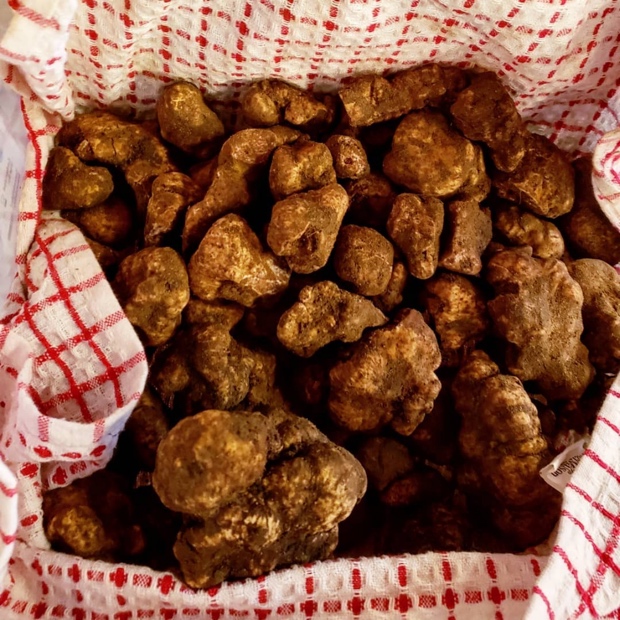
Fresh harvested truffles at Carpineta Fontalpino, Castelnuovo Berardenga

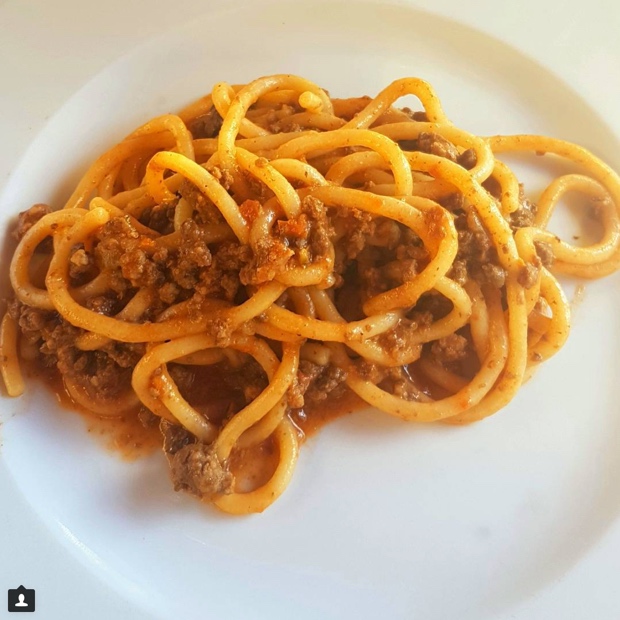
These are the debates of men and while their meaning and importance should never be discounted, there is another way to look at the territory’s peregrination of significance. Whether or not the wines are made from 100 per cent sangiovese, from an assemblage that includes other endemic as well as international varietals, or from expatriate grape varieties, there is one common kinship that binds them all. They are wines made from grapes grown on Chianti Classico soils. Many would argue to the bitter end that the place is always stronger than the grape. Most important and sometimes forgotten is how they work with the food. How can one be considered without the other? Sit down to dinner with Principe Duccio Corsini and you will learn about the Tuscan symbiosis. “Pasta is the protagonist of the table,” says Corsini. Truth.

Which brings us to some all important numbers. The top export markets in 2015 for Chianti Classico (in volumes) were the US (31 per cent), Italia (20), Germany (12) and Canada (10). In 2016 the numbers were US (32), Italia (22), Germany (13) and Canada (8). In 2017, US (33), Italia (23), Germany (12) and Canada (8). This year is just about complete and already it looks like the unofficial-official statistics are in. In 2018 for Chianti Classico we find the US at 34 per cent, Italia (23) and Canada (11). Export numbers to the US and Italy continue to rise slow but steady but it is Canada’s near 38 per cent increase from 2017 to 2018 that is most significant. Canada’s is a market loyal to repetitive purchasing from wine regions that produce consistent and recognizable wine so what changed to encourage consumers to drink outside the box and to seek out sangiovese? The most obvious answer lies in the work of Chianti Classico producers at the vineyard level but the true catalyst seems to be educational efforts that have awaken the sangiovese wolf of the Canadian consumer.

The author Godello in Radda in Chianti

The Consorzio has travelled tirelessly across Canada, staging events, masterclasses and grandi degustazioni in major Canadian cities. Ambassador competitions have reeled in some of this country’s finest sommelier minds to help spread the great secret of the Gallo Nero’s sangiovese. Michaela Morris and Jason Yamasaki (Vancouver), Steven Robinson (Ottawa) and Kler-Yann Bouteiller (Quebec) are all apart of the revolution. The next and essential step is to win over the hearts and minds of sommeliers and restaurant buyers, especially in urban centres like Vancouver, Toronto and Montreal. Such a program would surely push Chianti Classico up the precipice where numbers do not lie in a scenario where exports could very likely equal those nationally in the 20-25 per cent range.

Finding ways to increase imports to Canadians is the ultimate goal and in a country where monopolies and one-tier purchasing systems are the norm it is the rise of wine clubs that could very well be the most important next step. Gargoyle out of Alberta and the WineAlign Exchange out of Ontario are poised to become critical avenues for the importation of Chianti Classico wines into Canada. In fact, the WineAlign community wine exchange program will be facilitating upwards of 150 cases of Chianti Classico into Ontario in 2019. Consider that the Consorzio normally calculates export percentages on a total of 35/6 million of sold bottles, which means that in 2018 approximately 3,000 cases (of 12 bottles) were exported to Canada. Even with a highly generous expectation for that number to increase by 38 per cent again from 2018 to 2019, 150 of 4,140 cases would represent 3.6 per cent of the total imports for next year. That is surely a significant contribution to sales.

So what will 2019 bring? Will it usher in a new era of Chianti Classico bottles noted by villages and crus on the labels? Will sangiovese long designated IGT come back to the appellation? Will Gran Selezione gain further ground and find itself endeared by the hearts of more women and men? Will the category seek 100 per cent sangiovese status? One thing is certain and that is Canada’s connection and bond to the territory will only grow stronger. When we convene at this time in 2019 the sales figures will prove that the process is moving in the right direction.

See you at the 2019 Chianti Classico Collection.

Good to go!

Godello

Gallo Nero, Castello di Querceto, Greve in Chianti

Twitter: @mgodello

Instagram: mgodello

WineAlign

Chianti Classico: Nine communes deep

Radda in Chianti

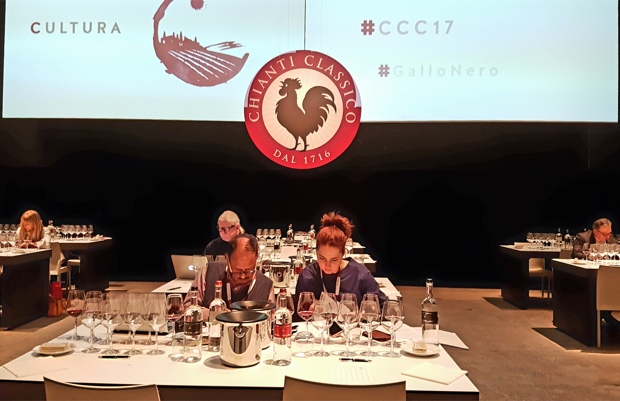
In February I travelled to Tuscany for the 2018 Anteprime. In Florence I spent two days tasting sangiovese at the Chianti Classico Collection held at Stazione Leopolda. My WineAlign colleague John Szabo M.S. and I then paid visits over the next two and a half days at Poggio di Guardia, Castello di Volpaia, Rocca di Montegrossi, Rocca di Castagnoli, Castello di Ama, Isole E Olena, Podere Poggio Scalette, San Giusto A Rentennano and Valiano. Once again I am proud to be a messenger on a subject that continues to write itself. Chianti Classico. Where the slow pace is grounded in grace and nature slowly renders an intoxication of faith. Where the exceptionality of place, experience and innovation can’t be underestimated.

Related – All in with Chianti Classico

Chianti Classico and the Gallo Nero, a symbol not only designed and enshrined to classify the wines, but to ingrain something deeper, meaningful and soulful. The Gallo Nero stamps each bottle of sangiovese with a seal of approval, for a conceit of quality.

Godello and #gallonero ~ #chianticlassico

Two years ago the Gallo Nero celebrated its 300 year anniversary. At that time the appellation’s newest and noblest expression at the top of the quality pyramid was introduced in Toronto, the Gran Selezione. In 2017 the focus was on sangiovese, the grape at the heart and centre of the Chianti Classico universe. This year the greater whole is broken down, to give due to the nine pieces of the territory’s puzzle and the villages at their core.

Chianti Classico goes nine communes deep: Barberino Val d’Elsa, Castellina in Chianti, Castelnuovo Berardenga, Gaiole in Chianti, Greve in Chianti, Poggibonsi, Radda in Chianti, San Casciano Val di Pesa and Tavarnelle Val di Pesa. Digging into these sub-zones of the territory is done with thanks to the generous work and spirit of Chianti Classico’s producers and with unwavering guidance from the Consorzio Vino Chianti Classico: President Sergio Zingarelli, Vice-Presidents Sebastiano Capponi and Giovanni Manneti, Director Carlotta Gori, who I’d like to point out is the first woman to take the helm of the Consorzio Chianti Classico, PR & Communications Manager Silvia Fiorentini and Event Manager Christine Lechner.

Il Signore del Chianti Classico

Every wine region needs ambassadors to educate in the diaspora and as you can see in this picture, the first five were chosen this past February in Firenze. This was indeed one of the great honours of my life. I’m quite sure Jeffrey Porter, Michaela Morris, Massimo Castellani and Isao Miyajima felt the same.

Chianti Classico farmers and producers have spent three hundred organized years studying their soils to arrive at an understanding that this territory is better for growing sangiovese than all of the lands beyond its borders. This is very important. We break the territory down by commune. Chianti Classico will always come first but in all of Toscana only it is possessive of such distinct communes.

The first question to raise is why do we need to discuss Chianti Classico as composed of nine communes and why are many of them (along with smaller micro-territories or sub-sub zones) establishing associations to promote their wines? To communicate who they are and what kind of wine comes out of their section of the territory. These are things we need to recognize and talk about, not necessarily along lines of geology but rather in terms of community and especially styles and characteristics of the wines. Over the past two years I’ve made four visits to Chianti Classico and tasted more than six hundred wines. I truly believe that the sangiovese changes from commune to commune. While it may be far too difficult to say that each commune has a specific set of characteristics, the sangiovese made by each producer are in fact singular and surely related to the soil within the boundaries of their commune. We tried a very interesting exercise in Florence back in February, a blind tasting called La Prova dei Nove, or “The Proof of the Nine,” to see if 100-plus journalists and sommeliers could taste the commune through the sangiovese. I was 3 for 9 and quite pleased with myself. I sat with two prominent winemakers and one of them was 1 for 9.  The conclusion? It’s really hard to taste the commune. But I’ll tell you why it’s still very important to discuss Chianti Classico as a sum of these essential parts.

ine wines, nine communes, this will be easy…not so much #blindtasting @chianticlassico #laprovadeinove so thanks @drinkeatlove now I’ll have to think about and pen another 100,000 word

Let’s create a hypothetical situation. Imagine you are the average wine consumer in Ontario. You come into the LCBO looking for an Italian red wine, a Tuscan red. You see nine bottles of Chianti Classico. Five just say that on the bottle, two add the word Riserva and two Gran Selezione. These additional label notations and the prices tell you about the difference in probable quality but the bottles are still all the same, from the same place. How do you choose? Well, if each were labeled with the nine different communes you might be curious and pick one, let’s say from Gaiole. Then after tasting it you might think to yourself, I really like the Chianti Classico from Gaiole. Now you’ve entered a whole new world of discovery, of comparisons. Some of you might say “but the consumer doesn’t even know the difference between Chianti and Chianti Classico. This just makes it harder.” The devil’s advocate would say, on the contrary, adding the commune to the label does not add confusion, it adds intrigue and raises the profile of all the communes and the wines. Like Volnay, like Pommard, like Marsannay. But Bourgogne has 84 AOCs. Chianti Classico are only nine and surely their names all refer to quality. All of them. Chianti Classico means quality. It means sangiovese. Discussing the wines in new terms like communes does not say that one is better than another or that the wines from any one are of higher quality. It simply updates the profile and raises the bar for all. Hypothetically speaking.

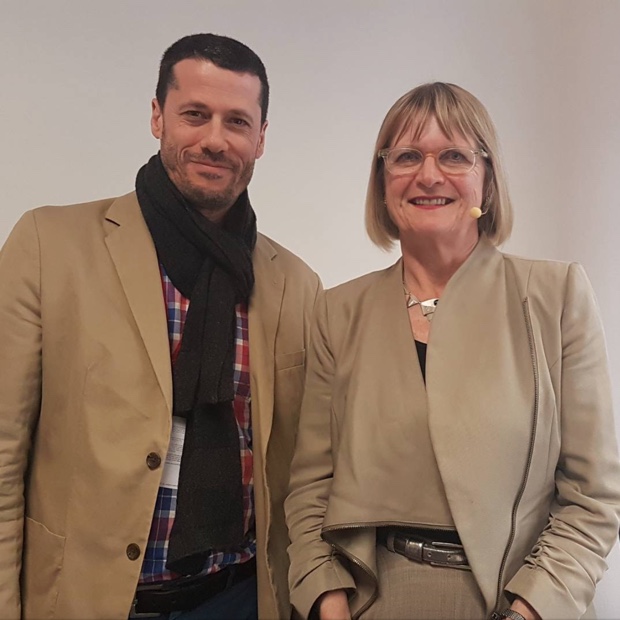
A coupla @chianticlassico ambassadors enjoying the moment. With Jeffrey Porter, a.k.a. @drinkeatlove

Many wine regions are defined by their soils and the fine lines that separate greatness from mediocrity. The two soil epochs of Barolo are divided by a diagonal line that runs from the northeast down to the southwest. On one side Tortonian and the other, Serravallian, both formed millions of years ago and each capable for producing different styles of nebbiolo. In Bordeaux one bank celebrates cabernet sauvignon while the other merlot and cabernet franc. In Chablis the Grand Cru and Premier Cru vineyards are specifically drawn while in greater Bourgogne the composition of the soil gradates from north to south and so that we know where pinot noir and chardonnay must be planted and for best probable results. In Montalcino we understand the differences between northern and southern vineyards but also know where you are relative to the hill of Montalcino and from which micro-climate will have a great effect on the wines.

So what about Chianti Classico? Comparing or thinking about Chianti Classico as needing to be understood like Bourgogne, Piemonte or Montalcino is not the answer. It’s not the same and never will be. Considering the communes as adding up to the whole is a step in the right direction.

The cartologist Alessandro Masnaghetti has concentrated on the parameters of each commune and drawn precise topographical maps. They are great resources for understanding where but still they don’t tell us why. Why do wines typically turn out the way they do? Remember that the crus of Chianti Classico are not farmed by multiple producers. So consider that the approach might best begin with the producer so that we don’t say this Chianti Classico from Castellina made by Rocca delle Macie tastes like this but rather, this Rocca delle Macie tastes this way and it is from Castellina, in Chianti Classico. It’s a subtle rearrangement but it must always begin with the producer.

Before we move on to the wines, one commune at a time, it should be noted that the 2017 vintage presented one of the greater challenges in recent Chianti Classico times. After the intense heat of the driest of summers it was essential that growers waited out the early September rains, followed by the beautiful and phenolic ripeness ensuring warmth of the next three weeks. “I noticed that most producers had already, inconceivably, finished harvesting by the 15th of September!!! A haste that can’t be positive.” These are the wisest of words from Rocca di Montegrossi’s Marco Ricasoli. It remains to be seen but we’ll see if Marco’s prophecy will ring true and be confirmed at Anteprime’s Chianti Classico Collection in February 2019.

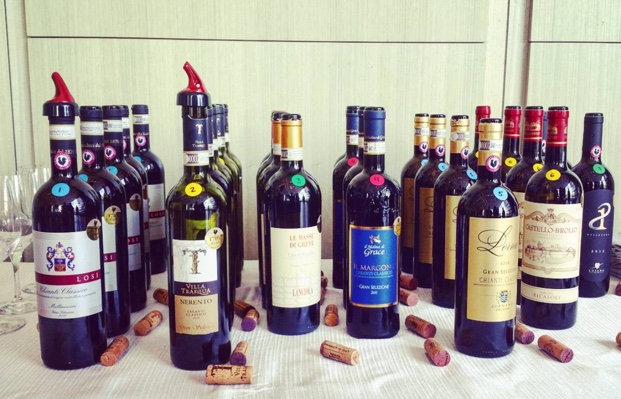
These 112 reviews cover the wines I tasted at the February Chianti Classico Collection 2018 in Firenze and three subsequent days of touring through Chianti Classico.

Castellina in Chianti

Related – Castellina in golden light

Bibbiano Chianti Classico DOCG 2016, Tuscany, Italy (168286, $23.95, WineAlign)

Ripeness is the deeper virtu and virtue in Bibbiano’s ’16 and as always there is this push-pull of two terroirs. One is of fruit the other rock but both layer intersectional and complimentary. This is a breakthrough, if it may be said, an aha moment for a Bibbiano Annata, educational and exemplary. More reward will come from subsequent vintages. The block here is some firm Castellina tannin but even more so one specific to the Bibbiano plateau and angles. It’s important to wait at least a year for the pressed intensity to subside. Drink 2019-2024.  Tasted February 2018  bibbianowines  lesommelierwine  @bibbianowines  @LeSommelierWine  Bibbiano Chianti Classico  Le Sommelier, Wine Agency

Bibbiano Chianti Classico Gran Selezione Vigna del Montornello DOCG 2015, Tuscany, Italy (Agent, WineAlign)

Yet another Gran Selezione that tells us how the producers intuit the difference between the category and Riserva even while the consumer is still not quite in the know. GS is deeper and represents a place or a gathering of the best fruit, not a step up in aging only, but all things gathered and put into place. This from the northern side of the estate, opposite Capannino. Montornello is the sweet and savoury, even salty of the Bibbiano GS but also the one of great strength. But it too takes the vintage and gives a little bit more, not quite a hug (sic) but certainly some earlier pleasure. All things are relative. Drink 2020-2027.  Tasted February 2018  bibbianowines  lesommelierwine  @bibbianowines  @LeSommelierWine  Bibbiano Chianti Classico  Le Sommelier, Wine Agency

Bibbiano Chianti Classico Gran Selezione DOCG Vigna del Capannino 2015, Tuscany, Italy (Agent, WineAlign)

It should be expected that out of 2015 the Bibbiano Gran Selezione would show more fruit, less brood and for sure not near the abstruse consternation that young, more demanding vintages have shown. At least from Capannino. This is the truth in 2015 though the nature of this slope demands at least a few raises of the eyebrow and tension rising of the shoulders. Thinking about Capannino can’t happen without remembering that the fruit comes from ’58 and ’62 sangiovese grosso vines put in by Giulio Gambelli, then grafts from that material for masale propogation in 1999 and the 2000s. Tommaso Marrocchesi Marzi will figure out the nuances of these tracts of specific Castellina terroir before too long and this flat out chewy mouthful of sangiovese is the next step there. Needs three years though. Didn’t you know that already? Drink 2020-2028.  Tasted February 2018  bibbianowines  lesommelierwine  @bibbianowines  @LeSommelierWine  Bibbiano Chianti Classico  Le Sommelier, Wine Agency

Buondonno Chianti Classico DOCG 2016, Tuscany, Italy (WineryWineAlign)

Gabriele Buondonno and Valeria Sodano bought the Castellina in Chianti farm known as Casavecchia alla Piazza in 1988, a plot that clearly appeared on the maps of the Capitani di Parte Guelfa in 1549 and is marked as the “place of Lionardo Buonarroti,” nephew to Michelangelo. Their Chianti Classico is 90 per cent sangiovese, plus merlot and syrah from a place Michelangelo once wrote to his uncle “I would rather have two barrels of Trebbiano than eight shirts.” Clearly pulled of of a special terroir, Buondonno’s organic Annata is pretty and purposed, with fresh tart strawberry and an intensity of acidity. It’s very long, unrelenting, showing some focus above and beyond. Drink 2019-2023.  Tasted February 2018  #buondonno  #buondonno

Castellare Di Castellina Chianti Classico DOCG 2016, Tuscany, Italy (970095, $24.95, WineAlign)

The Castellina ideal is furthered by Castelllare’s ’16, the one concerning purity and honesty from sangiovese. There is a beauty to this one, mildly mineral, tangy and tart but silky smooth without any unnecessary welling of syrupy liqueur. Lovely Annnata. Drink 2019-2023.  Tasted February 2018  #castellaredicastellina  dionysuswines  @CastellareWines  @DionysusWines  @CastellarediCastellina   @DionysusWinesTO  

Gagliole Chianti Classico DOCG Rubiolo 2015, Tuscany, Italy (WineryWineAlign)

As the name might suggest, it seems this Rubiolo is a redhead and means some serious sangiovese business, with pressed, rolled and laid out red fruit, mostly berry but with an accent of (merlot dished) plum and pomegranate. The limestone here strikes as Galestro though there too is this cakey weight that only Castellina in Chianti argilo would deal. The architecture for Rubiolo is one of houses built to last. Drink 2019-2024.  Tasted February 2018  anticopoderegagliole  @Gagliolewines  @Gagliole

Lornano Chianti Classico DOCG 2015, Tuscany, Italy (211599, $17.95, WineAlign)

Lornano comes out of Castellina in Chianti with such prominent perfume, grit and surprising intensity. It’s a much bigger wine than many 15s but perhaps not surprising from a Chianti Classico crafted by the agronomist and oenologist hands of Silvio Campatelli, Franco and Matteo Bernabei. Also when Nicolò Pozzoli tells you “sangiovese needs the bottle” you listen and make a note to self saying “he is correct.” This is a very early point in time to taste such a youthful and walled in Lornano. Will begin to soften in the later months of this year. Drink 2019-2024.  Tasted February 2018  @LornanoWines  Frontier Wine Merchants  lornano  @lornanochianticlassico

Gallo Nero

Lornano Chianti Classico Riserva DOCG Le Bandite 2013, Tuscany, Italy (230672, $19.95, WineAlign)

Le Bandite just recently went to bottle at the same time as the Annata Classico 2015 and so the window is open just a crack. Once again it is this team of vitculturalist Silvio Campatelli with oenologists Franco and Matteo Bernabei that deliver true sangiovese value to our Ontario market. The field and cellar work offer generosity above and beyond, not to mention the patience to hold back a wine such as this for at least an extra year so that it is ready upon release. That said the structure of Lornano is sneaky firm, grippy and long, so another year (plus) in bottle will add to the gift. By now we know about the exceptionality of 2013, especially at the (extra time in wood) Riserva level, here from Castellina with spice, frutta di bosco and terra selvaggia. The wood is very much in, from a 50-50 split between barriques and botti grandi that brings layering, balance and again, so much spice. Don’t be in a rush to drink this. Savour it next decade. Drink 2020-2026.  Tasted February 2018  lornano  @LornanoWines  @lornanochianticlassico

Mazzei Chianti Classico Riserva DOCG Ser Lapo 2015, Tuscany, Italy (288530, $22.95, WineAlign)

Ser Lapo is a generous, gregarious and wealthy fruit spilling Riserva full of ripe and ropey 2015 fruit. It’s quite the chewy mouthful of sangiovese and merlot that takes no overly traditional or rustic chances. Modern, plush and international. Methinks Signore Lapo would approve. Drink 2018-2022.  Tasted February 2018  marchesimazzei  profilewinegroup  @MarchesiMazzei  @ProfileWineGrp  Marchesi Mazzei – Castello di Fonterutoli  Profile Wine Group

Rocca Delle Macie Chianti Classico Riserva DOCG Famiglia Zingarelli 2015, Tuscany, Italy (930966, $23.95, WineAlign)

Takes the warmth of the vintage and turns its Famiglia Zingarelli beauty into power. Vineyards delivering higher quality fruit then ever before bring the gold out of Castellina and provide great presence and firm disposition. There is a savoury note under the liquor but all in all this is most pleasing sangiovese. Drink 2018-2022. Tasted February 2018  @roccadellemacie  @roccadellemacie  @ProfileWineGrp  Profile Wine Group  roccadellemacie

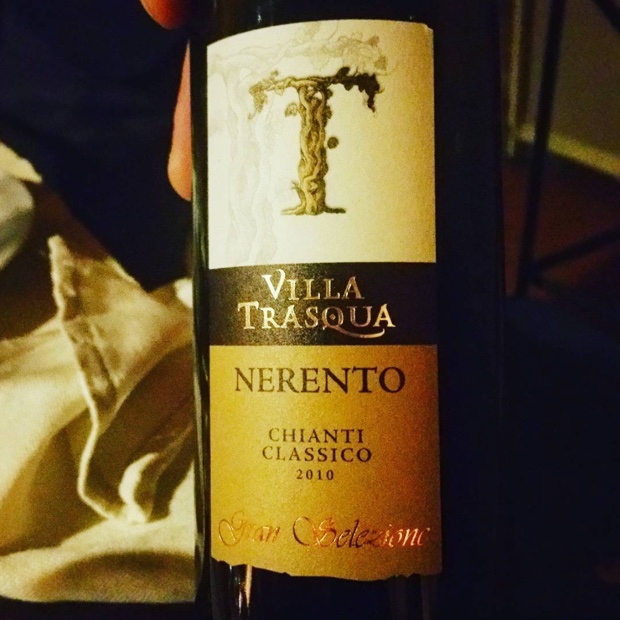
Villa Trasqua Chianti Classico DOCG 2015, Tuscany, Italy (Agent, $17.95, WineAlign)

It would not be a stretch to assume and acknowledge how the powers that be at Villa Trasqua are almost certainly and perfectly happy and proud of this effort from 2015. Fruit from Nerento and surrounding rolling Castellina in Chianti hills came out as ripe, crisp and clean as it ever has. The level of quality runs high and while the stylistic is certainly a come and get me one, the sneaky level of structure will get you in the end. A coup of an Annata here from the brothers Hulsbergen. Drink 2019-2023. Tasted February 2018     @tenutavillatrasqua  @HULSI_II  Frontier Wine Merchants  villatrasqua

Cena @chianticlassico #ccc2018 @stazione_leopolda

Castelnuovo Berardenga

Related – Into the Castelnuovo Berardenga great wide open

Cantine Bonacchi Chianti Classico DOCG 2016, Tuscany, Italy (AgentWineAlign)

Deeply pressed full fruit, dark black cherry sangiovese with high level acidity and plenty of minty savour. A many and all things going on Annata from Castelnuovo Berardenga with a heat streak running in early and lingering. Might settle in a year. Drink 2019-2021.  Tasted February 2018   #cantinebonacchi  @TheCaseForWine  Cantine Bonacchi

Borgo Scopeto Chianti Classico DOCG 2015, Tuscany, Italy (23325, $16.95, WineAlign)

The early and often persistence of pressed ripe and ready fruit sits floating at the fore of this glass. Value is acquiesced with great immediacy so look to see this on the market as soon as any from Castelnuovo Berardenga and indeed in the entire territory. No time is wasted nor fruit held back with quick to chime acidity and a dusty, slightly chalky finish. Drink 2018-2019.  Tasted February 2018  borgoscopetorelais  @BorgoScopeto  @rubenelmer  Borgo Scopeto  Ruben Elmer

Castell’in Villa Chianti Classico DOCG 2013, Tuscany, Italy (SAQ, 908228, $21.80, WineAlign)

Castell’In Villa’s is a beautifully rendered and now beginning to evolve Castelnuovo Berardenga sangiovese from the vintage that increasingly generates an opinion that 2013 is indeed a highly enjoyable vintage. Sweet developed fruit and spice, a bit of smoulder and a long, elastic, stretched like fior di latte finish. Drink 2018-2023.  Tasted February 2018  Castell In Villa  Les Importations Olea inc.  marino_castellinvillarestauran

Castello Di Bossi C. Berardenga Chianti Classico DOCG 2015, Tuscany, Italy (994608, $22.95, WineAlign)

Once again the concept of the single-monlithic sangiovese sensation is squashed and trashed by yet another twisting turn and dart into something completely other. Bossi’s carries an aroma new and exotic, of incense and peppermint, cola and coffee bean. Its texture is quite exquisite, the flavours into a purée, spiked by laurel and its bay. As smooth on its exit as it was on the way in. Drink 2018-2021.  Tasted February 2018  #castellodibossi  oeno2  #CastellodiBossi  @oenophilia1  @CastellodiBossi  Connexion Oenophilia

Dievole Chianti Classico DOCG 2016, Tuscany, Italy (283101, $23.95, WineAlign)

The Dievole Annata stands out for 2016 with the sweetest noted fruit, bright, ripe and pulsating. Wow and oh my has this got a bounce in its step. While certainly tart and intense it’s possessive of more pure joy than many, easily avoiding the trappings of over-extraction and over-pressing. Some may find this too electric but what reason could there be not to get excited by such an abundance of sangiovese energy? Drink 2019-2024.  Tasted February 2018  @dievole  profilewinegroup  @Dievole  @ProfileWineGrp  dievole  Profile Wine Group

Fèlsina Berardenga Chianti Classico DOCG 2016, Tuscany, Italy (730788, $36.99, WineAlign)

From the great wide Berardenga open Fèlsina’s is just the Annata to tell us how these snowflakes are all just a bit different from one another, each with a new vintage, redefined temper, starting from singular points of soil interest. The greatest purity and unbridled joy in Chianti Classico sangiovese is found in the young Annata and it is Fèlsina’s that tells a full story. The curative wisdom and variegated stratum as told by thick as thieves though stretched and elastic fruit is just amazing. Drink 2019-2026.  Tasted February 2018  felsina_wines  liffordgram  @felsinawines  @LiffordON  Felsina  Lifford Wine and Spirits

Losi Querciavalle Chianti Classico DOCG 2013, Tuscany, Italy (Agent, $19.95, WineAlign)

Though Querciavalle holds their Annata back longer than almost any this ’13 remains or should say persists so taut and coiled reductive, though it is so close to opening up. The earth runs through, now composted and integrated with juicy fruit. There is a special liquidity vis a vis this gathering of fruit, soil and acidity though now the tannins have melted and joined the mix. It may as well be Riserva, not technically, but certainly in spirit. Concentrate on the texture and you will feel the generational pull, thread and wisdom in the Losi sangiovese. Drink 2018-2022.  Tasted February 2018  valerialosi  @Valerialosi  @NaturalVines  @marzia_gallo   @famiglialosi  Valeria Losi  Marzia Gallo

Losi Querciavalle Chianti Classico Riserva DOCG 2012, Tuscany, Italy (Agent, $24.95, WineAlign)

Were you to Google traditional + Chianti Classico + Castelnuovo Berardenga you would likely land on a Losi Querciavalle page. Family values and the sharing forward of generational knowledge happens at this estate with the greatest of innate and intuitive possibility. In a world of climate change and extremes it becomes increasingly difficult to fashion consistency from sangiovese. The winter of 2012 was followed by the dry heat of summer oft times leading to dehydrated and concentrated fruit. And yet Losi’s strong and firm Riserva has found the beauty in this well of sangiovese liquor, first with “benevolenza” and then by “graziosità.” The fruit is sweet against the wall of acidity and tannin so with thanks to the family’s patience is now in synch together. Drink 2018-2023.  Tasted February 2018  valerialosi  @Valerialosi  @NaturalVines  @marzia_gallo   @famiglialosi  Valeria Losi  Marzia Gallo

Fattoria Di Petroio Chianti Classico DOCG 2015, Tuscany, Italy (WineryWineAlign)

From Quercegrossa, carries some baggage, weighted down in reductive tendency so that structure can develop for longer than other sangiovese Annata. Dark raven-streaked fruit commits to the density and the corporeal purpose. A microbe or three of volatile acidity props and distributes tension so balance has its parts if just a hair or two in asymmetrical stride. Not the most definitive Chianti Classico for Castelnuovo Berardenga. Drink 2019-2021.  Tasted February 2018  fattoriapetroio  @diana_petroio  Fattoria di Petroio

San Felice Chianti Classico DOCG 2016, Tuscany, Italy (282996, $19.95, WineAlign)

Particularly standard and middle road taken sangiovese, expressive of ripe annata 2016 fruit, tart and pressed to weight. Filled in and ready for the earliest enjoyment is clearly the intent, from fruit taken full advantage and tannin kept to a minimum. Just a touch of verdant berry intertwine is noted. Drink 2018-2020.  Tasted February 2018  borgosanfelice  #BorgoSanFelice  Borgo San Felice

San Felice Chianti Classico Gran Selezione DOCG Il Grigio 2015, Tuscany, Italy (403477, $48.95, WineAlign)

Il Grigio di San Felice shows terrific red and black fruit marking the aromatic entry in a Gran Selezione of power and beauty. Very distinguished vintage with chalky tannins though not the acidity of some, it works the balance of this particular Castelnuovo Berardenga room. Drink 2019-2027.  Tasted February 2018  borgosanfelice  #BorgoSanFelice  Borgo San Felice

Tolaini Chianti Classico DOCG Vallenuova 2016, Tuscany, Italy (AgentWineAlign)

Vallenuova is crunchy sangiovese, closed and airtight. Dusty wild cherry nose but not much else save for a brush past a rosemary bush. Drink 2018-2020.  Tasted February 2018  tolainiwine  breakthrubevcanada  @TolainiWines  @BreakthruBevCAN  Tolaini Wine  Breakthru Beverage: Canada

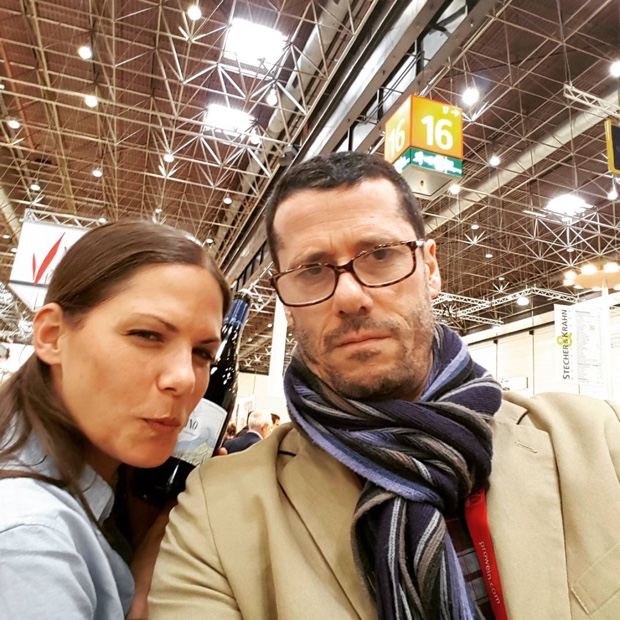
My beloved Sommelier and me #CCC2018

Valiano Chianti Classico DOCG 2015, Tuscany, Italy (354019, $19.95, WineAlign)

From the Piccini family this Valiano Chianti Classico is give or take 90 per cent sangiovese and 10 per cent merlot, from rolling Castelnuovo Berardenga terroir, in the spot just west of the Gaiole peinsula and just below Radda. The soils are argilo, calcareous clay with 70 hectares in over 30 plots of (now organic) total production. An aromatic profile that is perfumed, not exactly floral but more an extract of eau de vivre and then a seriously polished texture and flavour. The wood is very much involved, in spicy notes up front and deep set in the back. A really solid and in its finest moments, sexy Annata. Drink 2018-2021.  Tasted February 2018  picciniwines  @PicciniWinesUK  PICCINI WINES

Valiano Chianti Classico DOCG Poggio Teo 2013, Tuscany, Italy (354019, $19.95, WineAlign)

Poggio Teo is a Castelnouvo Berardenga cru up on the hill and a selection of grapes are made for this separate Annata wine. A very similar profile, especially in perfume, with an essential oiliness adding to the eau di vive, pretty, pulchritudinous and concentrated. Another rich rendition, as modern and forthright as it gets, with tart and spicy acidity and easy going tannins. Chewy and longer finish, deep, dark and handsome for 2013. Much more Tuscan, territorial and parochial. Drink 2018-2021.  Tasted February 2018  picciniwines  @PicciniWinesUK  PICCINI WINES

Valiano Chianti Classico Gran Selezione DOCG 6.38 2013, Tuscany, Italy (WineryWineAlign)

Valiano’s is a single-vineyard Gran Selezione with 6.38 a reference to the coordinates of that vineyard, not the hour the workers wake up to prune, pluck and pick in the vineyards. An extension in hyperbole from and connected to the lineage of the Annata, but more like a 2013 than the Teo, with salumi and ropey, red citrus edging on the dark fruit. Smoky and it is the merlot always bringing the fat round curves but also spice and cake, especially when small barriques are involved. Would not refer to this as elegant in terms of Gran Selezione but the fruit carries more than a full amount of purpose. Drink 2019-2024.  Tasted February 2018  picciniwines  @PicciniWinesUK  PICCINI WINES

Villa Di Geggiano Chianti Classico DOCG 2015, Tuscany, Italy (Agent, $35.95, WineAlign)

Geggiano’s particular corner of Castelnuovo Berardenga delivers the gift of calm and collected, deeply fruity and sneaky, streaky, stony sangiovese. It gets neither more subtle nor more appreciable than these wines and in 2015 there is warmth indeed but also a cool sliver of mineral truth. This Chianti Classico does not guess at its ways and intentions, it commits to them with implicit and intuitive, life affirming strength. Great length, really great length. Drink 2019-2024.  Tasted February 2018  villa_di_geggiano  andreaboscu  barrelselect  @VilladiGeggiano  @BarrelSelect  @VilladiGeggiano  @barrelselectinc

Monti in Chianti

Gaiole in Chianti

Related – Because the night in Gaiole

Barone Ricasoli Chianti Classico Docg Brolio Bettino 2015, Tuscany, Italy (Agent, $32.95, WineAlign)

This second CC Brolio label carries the name of Bettino Ricasoli, inventor of the Chianti formula in 1872. The 2015 edition of the Iron Baron’s Chianti Classico is indubitably vintage driven with far softer feelings and expressions than we last saw in the grippy 2013. After tasting through a pile of such fresh, firm and intense ‘16s this first nose of ’15 is almost an apposite shock. So bloody different in fact the first thought is hematic as opposed to the ferric nature of the ’16s. The 2015 sangiovese are the blood of the decade, the lifeline, life-affirming and life giving Chianti Classico. Brolio’s Bettino is a pure and exemplary one to talk of such things. It delivers fruit and the defined nature of acidity that is a multi-purposed Annata drawn from a gathering off of multiple and variegated types of aisle in Chianti soils. Perfectly ready and in the zone. Drink 2018-2021.  Tasted February 2018  francescoricasoli  churchillcellars  @barone_ricasoli  @imbibersreport   Ricasoli 1141  Churchill Cellars Ltd.

Barone Ricasoli Chianti Classico Riserva Docg Rocca Guicciarda 2015, Tuscany, Italy (943613, $24.95, WineAlign)

Not that recent vintages were not appealing for the Rocca Guicciarda Riserva but why would 2015 not be the bomb for this ready to go edition? The fruit is at its selected best, with no shortage of phenolic ripeness and flavour compounds. It’s a multitude of berries that make this drink with such early pleasure so make use of this Gaiole in Chianti sangiovese while the more curious and challenging ’13s and ‘14s take their time in getting where they need to go. Drink 2018-2021. Tasted May 2018  francescoricasoli  churchillcellars  @barone_ricasoli  @imbibersreport   Ricasoli 1141  Churchill Cellars Ltd.

Cantalici Chianti Classico DOCG Baruffo 2015, Tuscany, Italy (Agent, $24.95, WineAlign)

Here comes the sort of Chianti Classico of swagger and charming, parochial Gaiole in Chianti character. It’s tacky, meaning it zigs and zags with travels from aromas through flavours. It’s also extremely bright like being blinded by too much sun on a beach day. There is great fruit in this Barrufo 2015, perhaps a shade too deep into adornment but who can deny the utter deliciousness? Really chewy and gastronomic sangiovese at the end of the day. Drink 2018-2020.  Tasted February 2018  __cantalici_winery__  @wineCantalici  Cantalici  Carlo Cantalici  Angela Butini  

Castello di Ama Chianti Classico DOCG 2016, Tuscany, Italy (Agent, $34.95, WineAlign)

In this new era where modern parlance includes Gran Selezione this next stop on the road for Ama continues with the seventh vintage of the Château-expressionist bottling. Ama is, as it is known, like Prince or Bono, a really rich and full ’16, a brick house of sangiovese, liquid clay streaked by chalky liquidity. It’s might is mighty borne and bred, taking the season’s gifts and letting it all hang out. Quite substantial for 2016 and for Annata CC as a category. Impressive for its concentration and the balance managed considering the collected ambition. Acumen is to be lauded. Tells us that these Gaiole vineyards are some of the finest in the territory. Drink 2018-2022.  Tasted February 2018  castellodiama  halpernwine  @CastellodiAma  @HalpernWine  @castellodiama  @halpernwine

Castello di Ama Chianti Classico Gran Selezione DOCG San Lorenzo 2015, Tuscany, Italy (418897, $48.95, WineAlign)

Though not technically a single-vineyard wine the fruit source depends highly on this portion of the Gaiole in Chianti estate. As a blend of all the best plots of the property from a vintage with both La Casuccia or Bellavista having been produced it is truly fortunate that nature gifted so much promising fruit so that the right stuff could find its way into San Lorenzo. It is Gran Selezione of great history and no vintage has been as generous as this ’15. It’s accessibility above and beyond the category is astounding, probably because it shares the finest and sweetest acidities plus tannins. The plural is employed because the complexities are varied and variegated. Wonderful red fruit and seamless integration. Drink 2020-2027.  Tasted February 2018  castellodiama  halpernwine  @CastellodiAma  @HalpernWine  @castellodiama  @halpernwine

Castello di Ama Chianti Classico Gran Selezione DOCG Vigneto Bellavista 2015, Tuscany, Italy (Agent, $242.59, WineAlign)

There was no Vigneto Bellavista produced in 2014 and while the über-specific Bellavista Vineyard Gran Selezione is polar-antithetical to San Lorenzo you can’t help but feel the tiro di famiglia and shared connection to the past. What is contrapositive is the Bellavista modern twist, I suppose, less about acidities and tannin, more about fruit and barrel. Spices, baking scents and bricks combine with black fruit for a hematic and ferric take on Gran Selezione. It’s a big wine with firm grip to be sure and it feels like we don’t yet belong in its space. At this stage we are like The Observer, with a telescopic lens into the vineyard as per the Ilya & Emilia Kabakov installation at Ama. We and Bellavista will need five years to get comfortable and to incorporate the integration of weight and charm. Drink 2022-2031. Tasted February 2018  castellodiama  halpernwine  @CastellodiAma  @HalpernWine  @castellodiama  @halpernwine

I Sodi Chianti Classico DOCG 2015, Tuscany, Italy (Agent, 435123, WineAlign)

I Sodi is dusty, high-toned, bright acid covered and tart red fruit sangiovese, more house-styled than either Gaiole or vintage, or so it would seem. Drink 2019-2022.  Tasted February 2018  Agriturismo Le Trappoline – Azienda Agricola I Sodi

Rocca Di Castagnoli Chianti Classico Riserva Docg Poggio A Frati 2013, Tuscany, Italy (23358, $32.95, WineAlign)

Poggio A Frati ’13 is 95 per cent sangiovese plus canaiolo, “just to keep the traditional blend, but without any true impact,” says Angelo Dalbello. The Riserva comes from schisty Alberese soil at Poggio Fratti, the hills of the friars. A 12-hectare plot that shines in 2013, a Riserva vintage through and through, in how you may think it rustic though it’s clearly more complex than the Annata in every way and ultimately spinning the Gaiole sapidity. Aged for one year in tonneaux plus an extra year in bottle. No barriques. I repeat, no barriques. The aroma dominance is wild strawberry and then it gives woods, wind and air. The spice is red citrus piqued and the tart edging like a fence around the fruit. A pure and honest, ode to all that led to this moment Riserva for Gaiole. Truly a sangiovese expression of terroir. Drink 2019-2025.  Tasted February 2018  roccadicastagnoli  profilewinegroup  @Roccacastagnoli  @ProfileWineGrp  Rocca di Castagnoli  Profile Wine Group

Tomorrow I’ll be presenting @chianticlassico to trade and media in Toronto so naturally I went to Barrie and bought the last two @roccadicastagnoli Stielle left in the province ~ #gaiole

Rocca Di Castagnoli Chianti Classico Gran Selezione Stielle 2013, Docg Tuscany, Italy (459529, $45.95, WineAlign)

From a vineyard that records indicate was planted as far back as 970, Stielle is built upon a foundation of more Galestro soil. Why? As a factor of that soil and probably because it could ripen. This ’13 was fermented by 100 per cent whole bunch, not common for sangiovese, but the high acidity, from high elevation and this soil, led to making such a decision. Not as rich and smooth (or perhaps firm and brooding) in youth as compared to let’s say Chianti Classico in Castellina or Castelnuovo Berardenga but the acidity and sapidity will deliver the velvet with the passage of time, in a way, more like Radda.  Last tasted February 2018

Le Stielle in 2013 and its just faint hint of high acidity mixed and boxed with volatility is just on the most correct side of ripe meets structured life. When Gran Selzione gains such a cherry and fine salty mineral meeting of the structured minds it’s a special thing indeed. This is a fine GS with precision and understated, refined and capable power. Really fine, even just firm enough to deliver 10-15 years of slow developed 100 per cent sangiovese expression. Drink 2019-2028.  Tasted September 2017  roccadicastagnoli  profilewinegroup  @Roccacastagnoli  @ProfileWineGrp  Rocca di Castagnoli  Profile Wine Group

San Marcellino texture and acidity in the #roccadimontegrossi clay and Galestro of Monti in Chianti.

Rocca di Montegrossi Chianti Classico DOCG 2016, Tuscany Italy (Agent, $29.99, WineAlign)

The Chianti Classico 2016 was bottled just three months ago (in November) and is quite consistent to 2015 though at this stage not as gentle and in a way, deeper hued and fruit compressed. The structure follows the thread, always carrying the colour and depth of these Gaiole vineyards, from great thick clay and fantastic, friable Galestro. It’s a very specific grain of texture and tannin, chalky but chewy. This has just a great kick, swagger and confidence, mainly due to the exceptional fineness of acidity. It challenges, tempers and is quicker to integrate that grainy tannin so that more elegance is derived. Such a cool, sapid and structured mouthful. Fantastic Chianti Classico. Drink 2018-2024.  Tasted February 2018  #roccadimontegrossi  vinoallegrobc  devonmasciangelo  #roccadimontegrossi  @VinoAllegro @VinoAllegroBC  @RoccadiMontegrossi  Vino Allegro BC  Devon Masciangelo

Rocca Di Montegrossi Chianti Classico Gran Selezione DOCG Vigneto San Marcellino 2013, Tuscany, Italy (Agent, $63.49, WineAlign)

The first vintage as a Gran Selezione was 2010, before having been labeled as Chianti Classico Vigneto San Marcellino. It was never referred to as a Riserva and so the switch to GS was a matter of celebrating vineyard and especially a pronouncement of aging (minimum 50 months barrel plus bottle). Even now six more months in bottle has altered the texture, integrated the grain and added to the cool sapidity. Great acidity from the vintage in my opinion that makes the greatest strides with the longer aging period.  Last tasted February 2018

Marco Ricasoli-Firidolfi’s Gran Selezione boasts more than its share of Chianti Classico history and epochal location in its DNA. Legend dates back to 1039 for Azzi di Geremia Ricasoli and just as far back for the 1000 year-old Pieve San Marcellino. The vineyard gains more archetypal status with each turn of the calendar and the use of just a little bit of endemic pugnitello is awarded the singular varietal assist for Gaiole. With the 2013 vintage well tucked into the back pocket of this iconic Gran Selezione there is this sense of calm and refined, controlled intensity that just begs to get out, but the tannin and rigid structure have it well sealed in. This is what happens when the best fruit and a near perfect vintage come together. It’s fineness of tannin takes on great responsibility and it can do nothing but be a match to the task. Rocca di Montegrossi’s single entity Vigneto San Marcellino is sangiovese of density, intensity and power. It is assuredly one of the finest examples of the vintage. Drink 2020-2030.  Tasted September 2017  #roccadimontegrossi  vinoallegrobc  devonmasciangelo  #roccadimontegrossi  @VinoAllegro @VinoAllegroBC  @RoccadiMontegrossi  Vino Allegro BC  Devon Masciangelo

John Szabo and Luca Martini di Cigala

San Giusto A Rentennano Chianti Classico DOCG 2005, Tuscany, Italy (WineryWineAlign)

Age is apparent on the nose of Luca Martini di Cigala’s Chianti Classico 2005, if hardly whatsoever in the comparative hues of a showing side by side with 2015. This Annata wisps with a smoulder while fruit remains fresh and alive, as if released only yesterday, not 13 years ago. Was a warm year 2005 so this is even more remarkable. A suggestion of truffle and balsamic may be there but you have to concentrate hard to notice so it’s more conceptual than a verified reality. Liquid chalk from what should have been a perfect vintage though rains at harvest diminished the hope and yet how great is this? Seems more Alberese affected than the 2015, that and the hanging tree fruit flavours of dried carob and bokser. Drink 2018-2021.  Tasted February 2018  #sangiustoarentennano    #sangiustoarentennano

San Giusto A Rentennano Chianti Classico Riserva Le Baròncole 2004, DOCG Tuscany, Italy (WineryWineAlign)

Luca Martini di Cigala pours ’04 side by side with the next grossly undervalued vintage. First a re-taste of the very perfumed La Baròncole 2014, from the underestimated vintage that should not be so. With a texture that is San Giusto, if possibly also Gaiole meets a border with Castelnuovo. Then onto Chianti Classico Riserva 2004, from a late harvest, finishing the pick on the 15th or 16th of October, really late for the area. Great acidity is so persistent even if there seems to be some more complex progression as compared to the ’05 Annata, but that is the nature of Riserva, with more dried fruit and savoury-liquorice secondary notes. More spice too, both baking and tobacco and so it is a deeply hematic and plush hyperbole of the younger versions of itself. I imagine this to be in the waning years of its life and soon, perhaps two years from now will mellow and soften into the downy moments it will seek and find. In the meantime, just like its ten years forward sibling, tart never had it this good and linger it does for a decade in your mouth. Do you have to let it linger? The cranberry acidity won’t give you a choice and even if you feel used, it may just hang around there forever. Drink 2018-2026.  Tasted May 2018  #sangiustoarentennano    #sangiustoarentennano

Greve in Chianti

Related – A river runs through Greve

Carpineto Chianti Classico DOCG 2016, Tuscany, Italy (356048, $19.95, WineAlign)

Much further along the road to expression is the way I’d have to announce the immediacy from Carpineto’s quick to gratify Annata ’16. The fruit aches to be pounced upon and used as quickly as you can make this happen. And yet there is a moment of microbial grounding to keep it honest and traditional. In the end it’s a really full and gregarious expression for sangiovese with true red limestone liquidity. Drink 2018-2021.  Tasted February 2018  carpinetowines  univinscanada  @CarpinetoWines  @UNIVINS  Carpineto Wines  @agence.UNIVINS  

Castello di Querceto Chianti Classico DOCG 2016, Tuscany, Italy (680496, $24.95, WineAlign)

Castello di Querceto’s Greve in Chianti 2016 is perfumed by just a lovely fresh fruit nose, a mixed bowl of berries, juices yet running, plump, swelling, dusty and sanguine. Certainly on the riper end of the spectrum and with a finishing moment of bitters. Drink 2018-2021.  Tasted February 2018  castellodiquerceto  profilewinegroup  @CastQuerceto  @ProfileWineGrp  Castello di Querceto  Profile Wine Group

Castello di Querceto Chianti Classico Riserva DOCG 2014, Tuscany, Italy (650754, $28.95, WineAlign)

Still reluctant at this three-plus year mark it is the challenging vintage that really speaks and tells us that patience is needed for longevity and understanding. A depth of dark, liquorice-black cherry meets Cassis gathering suggests cabernet sauvignon adds strength in fruit to savoury 2014 sangiovese dominance. Time will tell just what will come from this formidable Riserva. Drink 2019-2024.  Tasted February 2018  castellodiquerceto  profilewinegroup  @CastQuerceto  @ProfileWineGrp  Castello di Querceto  Profile Wine Group

Tenuta di Nozzole Chianti Classico DOCG Nozzole 2016, Tuscany, Italy (WineryWineAlign)

From the Greve in Chianti project of Ambrogio Folonari and son Giovanni, Nozzole’s Chianti Classico is immediately wild strawberry noted, a pretty, pretty wine, ripe and balanced. Such a persistent sangiovese with nice focus, knows what it needs and wants to be. Drink 2019-2023.  Tasted February 2018  folonaritenute  @FolonariTenute  Ambrogio e Giovanni Folonari Tenute

Vicchiomaggio Chianti Classico DOCG San Jacopo 2016, Tuscany, Italy (710194, $19.95, WineAlign)

A syrup quells and wells on the nose in Vicchiomaggio’s Greve drawn San Jacopo, like an anaesthetic offering temporary numbing before the scents of fennel and baking spices shake you clear. Here the vintage is spoken early and with weight, density and deep impression. Everything fires on quick cylinders; fruit, wood spice, smoulder and verdant savour. It’s all in and immediate. Drink 2018-2021. Tasted February 2018  castellovicchiomaggio  @vicchiomaggio  @SignatureWS1  Castello Vicchiomaggio

Vicchiomaggio Chianti Classico Riserva DOCG Agostino Petri 2015, Tuscany, Italy (993360, $29.95, WineAlign)

Agostino Peri is an expressly and explicitly written Riserva from Vicchiomaggio, dusty, high in acidity and ultimately, ostensibly wholly, traditional. Sits on a perch above Greve in Chianti lands to tell the world. Drink 2019-2024.  Tasted February 2018  castellovicchiomaggio  @vicchiomaggio  @SignatureWS1  Castello Vicchiomaggio

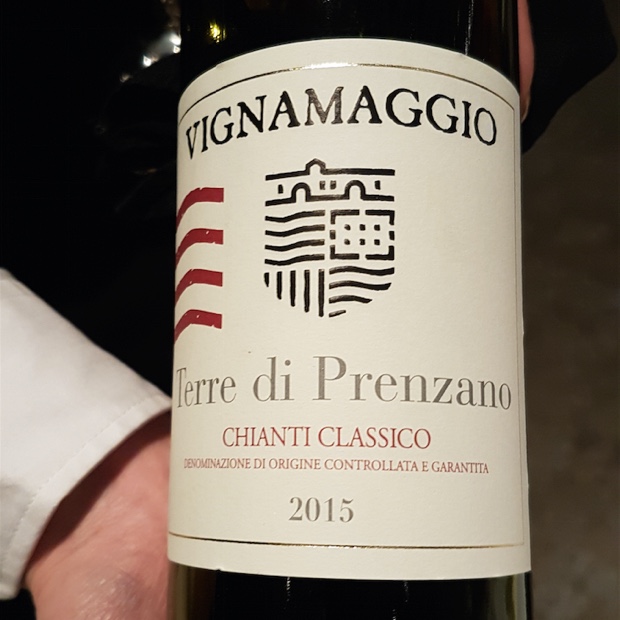
Vignamaggio Chianti Classico DOCG Terre di Prenzano 2016, Tuscany, Italy (AgentWineAlign)

The single block Terre di Prenzano out of Greve is a particularly expressive aromatic ocean, with a tidal flow of dusty, edgy florals and fruit replete with waves of sweet acidity and candied tannin. This is a departure, welcome and exciting. Few Chianti Classico pulse with such activity and locomotion this early, especially for the vintage. So much promise avows and abounds. Really like the direction Vignamaggio is heading. Drink 2019-2024.  Tasted February 2018  vignamaggio  #hhdimports  @vignamaggio  @HHDImports_Wine  Vignamaggio  vignamaggio

Vignamaggio Chianti Classico Riserva DOCG Gherardino 2016, Tuscany, Italy (AgentWineAlign)

Gherardino is Greve in Chianti old school, in a way, with dried fruit, potpourri and a wealth of fennel-liquorice savour. Spice notes are very prevalent, as is the idea that in three years or so this will turn over into balsamico, porcini and tartufo. Wise and traditional Riserva. Drink 2018-2023.  Tasted February 2018  vignamaggio  #hhdimports  @vignamaggio  @HHDImports_Wine  Vignamaggio  vignamaggio

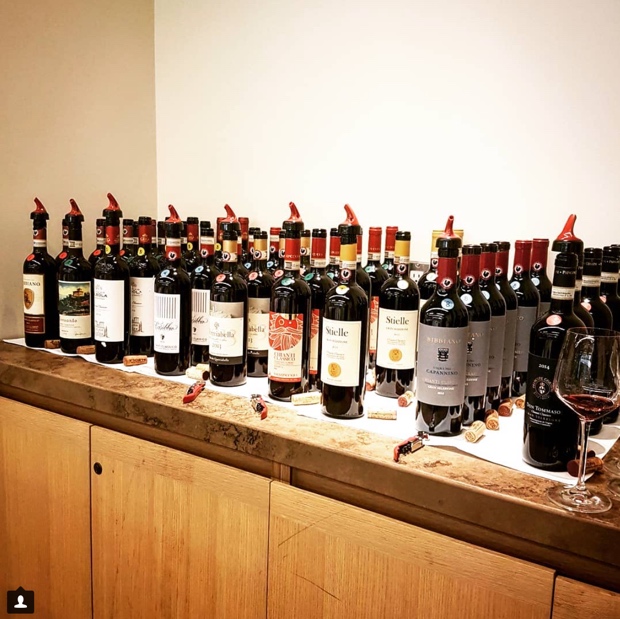
Chianti Classico Collection 2018

Lamole

Fontodi Chianti Classico DOCG Filetta di Lamole 2015, Tuscany, Italy (Agent, $36.95, WineAlign)

Lamole, though still wild west and yet underdeveloped is clearly the next important Chianti Classico sub-sub-zone terroir. With so much untapped potential it is Giovanni Manetti’s of Fontodi that speaks the earliest, clearest truth about such capabilities. Not that we want to see too quick an exploit of this unique micro-climate and geological wonder but the insatiable thirst of curiosity begs to know. What earth gets into, inside and beneath this sub-strata is dramatic and so bloody personal. It’s a thing of forest floor, rock interface, space and sky, all encompassing, with the filtered, dappled light of sangiovese all pervasive and ethereal. Great chalk and dust particles visible to the naked eye in those streaks of lightning acidity and fine tannin swirl to lightness of being. Though 2014 is a sangiovese of great brood, flavour and commercial appeal, now there is greater potential. This ’15 is perhaps the first Fontodi of Lamole that has crossed into the true reality of the territory. Drink 2019-2025.  Tasted February 2018  #Fontodi  rogersandcompanywines    @rogcowines  Az. Agr. Fontodi  #fontodi

I Fabbri Chianti Classico DOCG Terra di Lamole 2016, Tuscany, Italy (WineryWineAlign)

Lamole in Greve is the source for this high toned, stone-tined and savoury aromatic young Annata, traditional, mildly volatile in its wise rusticity and surprisingly tannic. This is the sort of pressed sangiovese you’d find over the decades, from information and technique passed down and upheld by the current generation. Continues the thread with more microbes and real live tart notes to taste. Builds and builds upon its old-school foundation. Drink 2018-2021.  Tasted February 2018  ifabbriclassico  @IFabbriLamole  I Fabbri

I Fabbri Chianti Classico DOCG Terra di Lamole 2015, Tuscany, Italy (WineryWineAlign)

Into the Lamole lair we delve from I Fabbri with 90 per cent sangiovese (grosso) plus canaiolo nero of great potential and it should also be said, probability, if not right now then soon, very soon. This terroir is different and if we are not quite sure exactly how or why then perhaps the producers are not quite sure either. The fruit is 98 per cent ripe but I can’t help but wonder how greatness could have been were the number perfect. That may be asking too much but something is amiss, even while the dusty excesses and fine acidity support of wild red fruit is there to see, sense, feel and enjoy. That is the end game after all. Drink 2018-2022.  Tasted February 2018  ifabbriclassico  @IFabbriLamole  I Fabbri

Lamole Di Lamole Chianti Classico DOCG Blue Label 2015, Tuscany, Italy, (476317, $23.95, WineAlign)

From the Lamole sub-section of Greve in Chianti this is 80 per cent sangiovese plus 10 each cabernet and merlot, the latter raised in barriques. A minimum of 22 months is total, this is found to be quite the jammy Annata, surely vintage driven from out of the higher altitude diurnal temperature swings in Lamole. A wine of typicality for the territory and certainly pressed and expressed for immediate gratification. Really plum-fruit fleshy with notable wood spice, especially on the international varieties. Moves into and finishes with dark and stormy tannins in a controlled weather pattern. Drink 2018-2021.  Tasted February 2018  lamoledilamole  philippedandurandwines  @LamoleDiLamole  @lamolewines  @Dandurandwines  Lamole di Lamole  Vins Philippe Dandurand Wines

Lamole Di Lamole Chianti Classico DOCG Etichetta Bianco 2015, Tuscany, Italy, (Agent, $23.95, WineAlign)

The second of two Chianti Classico Annata is the Etichetta Bianca, which unlike the Blue Label bottle spends six months in steel, followed by six in big oak casks. Once again offers the Lamole perspective with a glimpse into the limestone, schist and altitude potential of the zone. The absence of barrique aging means the (80 per cent) sangiovese stands out and works with the earth, though here in more ochre, lower hanging, warmer tones. There would seem to be a high percentage of clay from lower hill sites on this fruit because the acidity is subdued and the fruit darker in flavour, though not because of wood. It is a delicious glass of sangiovese regardless and presents yet another moment to talk about sub-sub-zone potential. Drink 2018-2020.  Tasted February 2018  lamoledilamole  philippedandurandwines  @LamoleDiLamole  @lamolewines  @Dandurandwines  Lamole di Lamole  Vins Philippe Dandurand

Lamole Di Lamole Chianti Classico Riserva DOCG Etichetta Grigia 2014, Tuscany, Italy, (280651, $28.95, WineAlign)

Winemaker Andrea Daldin is very proud of his work in 2014, the challenge as great as ever, but he’s sure he’s done great work. A vendemmia ultra-selezionale. Andrea came back from holiday in late August and removed all the foliage to open up the bunches to whatever sun might come and in September it did. Three passages were performed to seek out stages of phenolic ripeness and the sorting table really came in handy on this work. It’s 85 per cent sangiovese and 15 per cent canaiolo, “to bring more typicity for the area.” Here is a deep and rich, generous and extremely carefully curated (grey label) Riserva, OCD style, with no albarese, galestro or macigno stone left unturned. It’s a very pretty nose, elevation and all angles curved, holes filled and everything made whole in Riserva style. Quite ferric and serious, there is some tart astringency at the finish, a sign of vintage and youth but this too shall pass. Drink 2019-2024.  Tasted February 2018  lamoledilamole  philippedandurandwines  @LamoleDiLamole  @lamolewines  @Dandurandwines  Lamole di Lamole  Vins Philippe Dandurand

Lamole Di Lamole Chianti Classico Gran Selezione DOCG Vignetto di Campolungo 2014, Tuscany, Italy, (231241, $37.95, WineAlign)

The Vigneto di Campolungo 2014 spent an extra few years in bottle after élevage for what directs this Gran Selezione to market, developing its flavours, integrated into a fine chain of tannin command. This reminds more of let’s say Bibianno’s Montornello than Lamole though it does have that Lamole acidity. Very composed, very directed, very serious. Full barrel advantage, phenolic ripeness, glycerin and tannin. In the big time. Drink 2020-2026.  Tasted February 2018  lamoledilamole  philippedandurandwines  @LamoleDiLamole  @lamolewines  @Dandurandwines  Lamole di Lamole  Vins Philippe Dandurand

Lamole Di Lamole Chianti Classico DOCG 1993, Tuscany, Italy, (WineryWineAlign)

In quite good standing, this ’93 has held up beautifully and was Andrea Daldin’s first vintage. The wild strawberry and balasmico are now combining in fine secondary character. The Lamole acidity is fading but hanging in while tannins are long gone. Changes to fade in dappled light tones after minutes in the glass while always remaining a brilliant claret. Still a solid salumi wine, in mimic and support. A pleasure to taste from a terrific, storied and meticulously sheltered, worked and kept Lamole terroir. Shades of stone are everywhere; from Macigno to Alberese, Albarese with Calcium Carbonate and Galestro. Returns for a little bite of toffee and sip of coffee, before riding off into the sunset Drink 2018.  Tasted February 2018  lamoledilamole  philippedandurandwines  @LamoleDiLamole  @lamolewines  @Dandurandwines  Lamole di Lamole  Vins Philippe Dandurand

Podere Poggio Scalette Chianti Classico DOCG Lamole Nonloso 2015, Tuscany, Italy (AgentWineAlign)

Nonloso is a new label for Jurji Fiore with his daughter from a one point eight hectare vineyard across the valley on the Lamole hill, from 25-year old terraced sangiovese (mostly) and this may just be the most elegant sangiovese you are ever likely to taste. If the comparison is even possible it might be said that this sangiovese is made in a Côtes de Nuits style, in one 500L old and one new 228L barrel. The fruit comes from altitude up at 500m, same sandy soil as Ruffoli but less Arenaria stone in Lamole. The biggest difference is the water, in Lamole you drive up through forest while in Ruffoli you climb through rock up to the moon. Perfumed like Volnay and with distinct bright acids but unmistakable as Lamole, perhaps just a hill, valley or river bend away from so many other Greve terroirs but so singular. Very special parochial piece of the territory right here for a Chianti Classico that along with Fontodi begins to tell a sub-zone within a commune story. I don’t know. Seems pretty clear to me. Drink 2019-2029.  Tasted February 2018  Podere Poggio Scalette  profilewinegroup     @ProfileWineGrp  Podere Poggio Scalette  Profile Wine Group

Montefioralle

Montefioralle Chianti Classico DOCG 2015, Tuscany, Italy (Winery, WineAlign)

Perhaps this vintage is necessary to gain an understanding of Montefioralle or perhaps it was always there and a connection just needed to be found. The inhalant of elemental abstraction is remarkable and singular so let us open the discussion about the interest and in fact the necessity for Montefioralle. Just gorgeous from a fruit perspective, dusty and rising in tone with breaches considered and levels touched but never crossed. The risks are many with the rewards justified, palpable and great potential comes as a result. Check out Montefioralle. This tells you why. Drink 2019-2025.  Tasted February 2018  montefioralle  Castello Di Montefioralle    Montefioralle Winery

Montefioralle Chianti Classico Riserva DOCG 2014, Tuscany, Italy (Winery, WineAlign)

Montefioralle is a deeply felt sensation of sangiovese preservation bringing everything that is Montefioralle within Greve with power and grace. Such fruit wealth is remarkable for 2014, distinct from its geological birthing and powerful to the end. Oh how this celebrates a zone within a zone. Drink 2019-2025.  Tasted February 2018  montefioralle  Castello Di Montefioralle    Montefioralle Winery

Castello Di Verrazzano Chianti Classico DOCG 2015, Tuscany, Italy (Agent, $30.25, WineAlign)

From the sub-zone of Montefioralle this very ready and welling fruit is willing to please, if not at this very moment then just around the corner, where spring lies in wait. Here is yet another quick and painless example of that ’15 acidity, ripe and burgeoning. This will develop its charm by late 2018 and deliver copacetic Greve in Chianti sangiovese for a good two to three year run. Drink 2018-2021.  Tasted February 2018  verrazzanopeople   @StaffVerrazzano  @Smallwinemakers  Castello di Verrazzano  The Small Winemakers Collection

Villa Calcinaia Chianti Classico Riserva DOCG 2015, Tuscany, Italy (Agent, $43.95, WineAlign)

Calcinaia’s is firm and direct, drawn from the Greve rise above and west of the river to mark a Montefioralle concern off of its southeastern quadrant. If ever a Greve Riserva continues the stylistic and prevalent hematic ooze of its Annata predecessor this would be the one. Torbido and seminal stuff from Sebastiani Capponi. Drink 2020-2027.  Tasted February 2018  @villacalcinaia  @Nicholaspearce_  villacalcinaia  nicholaspearcewines  @calcinaia  Nicholas Pearce

Villa Calcinaia Chianti Classico Gran Selezione Vigna Contessa Luisa and Monty Waldin

Villa Calcinaia Chianti Classico Gran Selezione DOCG Vigna Contessa Luisa 2014, Tuscany, Italy (AgentWineAlign)

Vigna Contessa Luisa was planted by Ferrante Capponi in 1959, dedicated to his mother Luisa Vonwiller and it is the oldest vineyard still in production at Villa Calcinaia. It’s also responsible for Sebastiano Capponi’s newest Calcinaia Gran Selezione and it is not surprisingly the most elegant of the three (along with La Fornace and Bastignano). The most poignant and concentrated liqueur but also because it comes to market a year after the other two, so it has had a chance to settle and shed its cracked outer earthy layer. Now spicy and taut still it’s got so much wonderful fruit, dark, stormy, spicy and long. It’s almost ghostly. Will live in infamy. Drink 2021-2031.  Tasted February 2018  @villacalcinaia  @Nicholaspearce_  villacalcinaia  nicholaspearcewines  @calcinaia  Nicholas Pearce

Viticcio Chianti Classico DOCG 2015, Tuscany, Italy (283580, $19.25, WineAlign)

A high-toned Monetfioralle affair in 2015 from Viticcio brings very bright red Greve in Chianti fruit and a zing of zesty acidity. This may not be as warm as some ‘15s, which in its singular way is a good thing but there is no compromise to classicism and intensity. You must appreciate the waves of rusticity and tradition but also the high acid style in the face of a vintage that wants to talk about other things. Stands out for this but also for its use of barrel, at least in this early woody stage. Drink 2019-2024.  Tasted February 2018  viticciowinery  majesticwinesinc  @viticciowinery  @MajesticWineInc  Viticcio Winery  Majestic Wine Cellars

JSz in the February #concadoro

Panzano

Related – The ins and outs of Panzano in Chianti

Fontodi Chianti Classico DOCG 2015, Tuscany, Italy (933317, $36.95, WineAlign)

If balance were the ultimate end to all sangiovese means then one nose into this Annata 2015 tells us most of what we need to know. When Giovanni Manetti talks of 2015’s great acidity we may not have been able to inuit or ultimately know what he meant, at least as far as the peer into the collective lens of other wines. Through Manetti’s Panzano focus we now understand. The integration, inclusion and open-armed grande abbraccio of Fontodi’s 2015 talks of fineness, precision, elegance and soft-spoken power. There is the finest of sangiovese dust and the circling of tannic wagons enveloping optimized fruit and bringing the entire family in this wine together. It’s a great vintage for Fontodi. Drink 2019-2025.  Tasted February 2018  #Fontodi  rogersandcompanywines    @rogcowines  Az. Agr. Fontodi  #fontodi

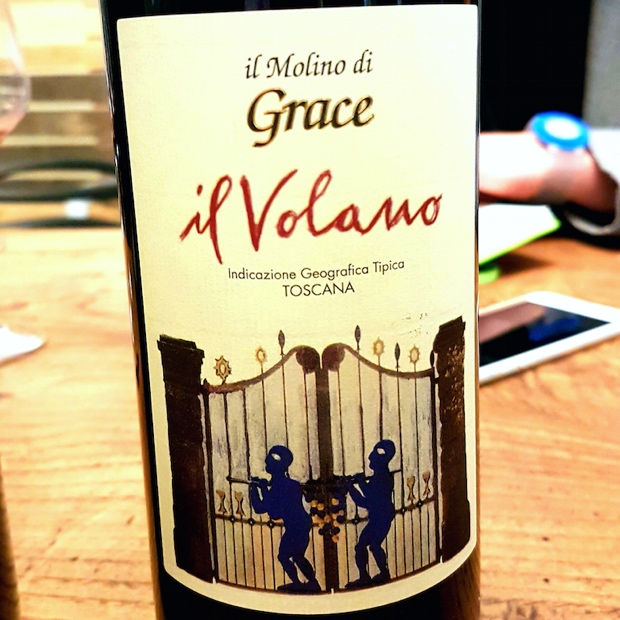
Il Molino Di Grace Chianti Classico DOCG 2015 SoloSangiovese, Tuscany, Italy (Agent, $19.95, WineAlign)

It’s a statement to be sure, adding the moniker of “SoloSangiovese” to the label of a Chianti Classico. It’s not just a matter of making comment with regards to varietal purity but the way in which Il Molino di Grace skirts party lines with an explicit display of the grape variety, just a shade smaller then the territory on the bottle. We may be expected to know what comprises (or should be inside) a Chianti Classico but how many really do? So here we are, where we’ve never been before, but have always been. Same deep and intense cimmerian Molino hue, big barrel spice and pure sangiovese grace. There is a connected energy that pulses, to the rest of the portfolio, with or without merlot and found here in a cleanest of Annatas, through clarity and with focus. Solo and proud, wrapped in the varietal flag. Drink 2019-2023.  Tasted February 2018  ilmolinodigrace  @Ilmolinodigrace  Il Molino di Grace

Il Molino Di Grace Chianti Classico Riserva DOCG 2015, Tuscany, Italy (Agent, $24.95, WineAlign)

You should know that the Chianti Classico of Il Molino di Grace are always deep, dark as night sangiovese but they begin as juice so beautifully opaque red that the transformations are always a thing of great wizardry. It’s more than the barrels, the Slavonian slumbers and the effect of wood. It’s the Galestro soil, parochial Panzano and it is, as mentioned, pure magic. This 2015 Riserva is huge, a wine to launch a thousand ships and faces. I am afraid of and mesmerized by the power. Fortunately this vintage gifts more fruit than many and so the ambition is tempered with juicy restraint and integration. This is ultimately where balance is found despite such high acidity and pitchy macchiò, buio offuscato or oscurità. We’ll see where this lands in a few years time. The plan is to wake up, nose the Galestro and go on with the day. Drink 2020-2028.  Tasted February 2018  ilmolinodigrace  @Ilmolinodigrace  Il Molino di Grace

Il Palagio di Panzano Chianti Classico DOCG 2015, Tuscany, Italy (WineryWineAlign)

Very ripe, rich and deeply felt Annata, pressed for the here, now and yet not forever. Very rich and to be enjoyed in the present tense. Consumers can get a sense of vintage but more to the point, drink this with a steak today. Drink 2018-2019.  Tasted February 2018  @palagiodipanzano  palagiopanzano

Le Fonti di Panzano Chianti Classico DOCG 2015, Tuscany, Italy (282848, $31.95, WineAlign)

Le Fonti is the life work of Vicky Schmitt-Vitali, organic, sustainable and Europe’s first Bio-Distretto di Viticultura, leading their Panzano-Greve community in the charge of “attractive territories for a sustainable world.” Her 2015 Chianti Classico was bottled in September of 2017 so it has had time to settle in. This is where sangiovese captures the warmth and relative ease of a vintage, like bottling sun, gravel, schist, limestone, sand and clay for better days ahead. Sangiovese may be young and restless but here in its unadulterated state it renders spice and extends a hand with a firm shake for mutual accord. At some point next year it will bloom with perfume and then prepare to smell the Galestro, along with the flowers, for several more after that. Drink 2019-2023.  Tasted February 2018  poderelefonti  thevineagency  @LeFontiPanzano  @TheVine_RobGroh  Fattoria Le Fonti – Panzano   @thevineto

Le Fonti di Panzano Chianti Classico Riserva DOCG 2014, Tuscany, Italy (282921, $44.95, WineAlign)

From the village of Panzano set in an amphitheatre in a southern nook of Greve, this 2014 is lithe, whimsical and understated for Riserva. Cinnamon spice and roses just picked, fresh and fragrant emit an elegant perfume for sangiovese, challenged by a vintage that asked alot from these producers. It’s a bit closed down, more than the average vintage and according to Vicky Schmitt-Vitali this is to be expected. It’s also sangiovese which plays hard to get at the best of times so be prepared to aerate and act with the same light-hearted patience. Drink 2018-2022.  Tasted February 2018  poderelefonti  thevineagency  @LeFontiPanzano  @TheVine_RobGroh  Fattoria Le Fonti – Panzano   @thevineto

Le Fonti di Panzano Chianti Classico Riserva DOCG 2012, Tuscany, Italy (282921, WineAlign)

Time has had an impact on the development of texture and this Panzano Riserva is now a rich, viscous and dense liqueur. It’s just amazing when you consider how it’s a child from the freeze-dried soil out of the vintage where winter saw so much wind and snow. Then came a dry heat like no other so as with all vintages there could really be no idea what might happen and like every other one, the challenge was new again. There is more than the usual spice in 2012 to augment the richness and the intensity of the fruit. Perhaps it’s atypical but at five and a half years of age this sangiovese is coming around very nice. Drink 2018-2020.  Tasted February 2018  poderelefonti  thevineagency  @LeFontiPanzano  @TheVine_RobGroh  Fattoria Le Fonti – Panzano   @thevineto

Panzanello Chianti Classico DOCG 2015, Tuscany, Italy (WineryWineAlign)

Panzanello’s sangiovese is augmented with a small amount of merlot. Lots of pressing, bringing out oozing fruit, plenty of early acidity and dusty tannin all combining for a quick entry into the 2015 vintage. It’s all here, right here, right now, in an already fully committed Panzano CC, with drying fruit and an herbal, arid finish. Drink 2018-2019.  Tasted February 2018  panzanello_1427  @Panzanello  @Panzanello1427

Jurji Fiore of #PoggioScalette on the top of the #rufoli hill in #greveinchianti one of the great cru of #chianticlassico

Ruffoli

Podere Poggio Scalette Chianti Classico DOCG 2015, Tuscany, Italy (AgentWineAlign)

Alta Valle delle Greve is one of Chianti Classico’s highest vineyard sites in Greve on a perch at the top of the Ruffoli hill. Poggio Scalette’s is fermented in concrete, in part because all the sangiovese comes in together and the decision for what to use for Il Carbonaione is not made until later on. Then the Chianti Classico is separated and works further with the concrete, maintaining the highest level of fresh fruit character. Pure sangiovese from younger vineyards, this is so direct, of pure acidity that alights the fruit and delivers honest, unadulterated delight.  Last tasted February 2018

The seventh vintage for the cement-aged Annata is a firm one, especially for 2015, of quick aromatic demand, already thinking ahead, not necessarily for the here and now. Like the other sangiovese (di Lamole) from decent Greve in Chianti altitude (450m) also delivers some hillside (mountain-ish) herbs and fennel, with chicory too. To the palate comes a char on cinghiale roasting over the fire. Top quality acidity rounds out this traditional, fiery red sangiovese with grip and persistence. Drink 2019-2024.  Tasted February 2017  Podere Poggio Scalette  profilewinegroup     @ProfileWineGrp  Podere Poggio Scalette  Profile Wine Group

Chianti Classico Collection 2018

Querciabella Chianti Classico DOCG 2015, Tuscany, Italy (728816, $30.25, WineAlign)

Digging deeper, or in this case higher as fruit from this eastern section of Greve comes in part from vineyards up on the Ruffoli hill. For 2014 winemaker Manfred Ing pointed out how they used a lot less Radda fruit in the mix due to pest problems and so much of that fruit was dropped. This 2015 is a different story, of Ruffoli meets Radda for a regional Annata, a true territorial Chianti Classico. The hill’s spice and high tonality weaves into Radda’s depth and richness is the quotient, even for a ’15 but not unusual for a Querciabella. It’s a fourth in a row (100 per cent) varietal wine, a sangiovese gelée if you will and really pure. The most purity, with back bite spice but rendered and creatively displaced. Impeccable farming, meticulous sorting and precise winemaking add up to the cleanest of Chianti Classico. I’ll have my sangiovese neat, thank you very much. Drink 2019-2024. Tasted February 2018  querciabella  grape_brands  @Querciabella  @querciabella

Querciabella Chianti Classico Riserva DOCG 2014, Tuscany, Italy (Winery, WineAlign)

This young and impressionable Riserva has been a year in bottle and with more (to mostly) Ruffoli fruit than normal it can’t help but speak a very specific language. Ad with the Annata from the same vintage there were problems with the Radda fruit and so the near-solo journey means less rounded edges and higher tones. The best fruit came from Greve, followed by Radda and then Gaiole. What you notice from this ’14 is its depth of beautiful cherry liqueur with earth tones and musky leather. The acidity is the constant, so very Ruffoli and the tannins are surprisingly sweet. Should all come together in another year or so. Drink 2019-2024.  Tasted February 2018  querciabella  grape_brands  @Querciabella  @querciabella

Poggibonsi

Tenuta Cinciano Chianti Classico DOCG 2016, Tuscany, Italy (WineryWineAlign)

Cinciano is 100 sangiovese from chalky Poggibonsi vineyards at 250-350m of elevation. Youthfully speaking this ’16 sits en retard, reductive and only seems to want to breathe as a deep inhalant of argilo sangiovese. This CC is an even bigger than the average, broader and scope encompassing expression to taste with an impressive ferric intensity. The potential is great. Drink 2019-2021.  Tasted February 2018  fattoriacinciano  @InfoCinciano  @fattoriadicinciano

San Fabiano Calcinaia Chianti Classico DOCG 2015, Tuscany, Italy (Agent, $23.95, WineAlign)

If you are looking for a flat-out juicy, chewy and full-flavoured example of Chianti Classico with unbridled 2015 warmth then look no further. SFC’s Poggibonsi annata delivers drinkable fantasy in sangiovese and that is all there is to that. Drink 2018-2020.  Tasted February 2018 sanfabianocalcinaiasrl  gsoleil123  @SanFabiano  @GroupeSoleilTO  Società Agricola “San Fabiano Calcinaia”  Groupe Soleil Fine Wines

Isole E Olena Chianti Classico DOCG 2016, Tuscany, Italy (704346, $29.95, WineAlign)

Chianti Classico 2016 is composed of 80 per cent sangiovese, (15) canaiolo and (5) syrah, which since the 1980s has always held a spot, in fact it may have been as much as 10 two plus decades ago. Paolo de Marchi explains.”Syrah in my opinion, was really about thinking, about blending in an earlier ripening variety.” It also added colour, not for quality necessarily, but for pleasure. “If I were a consultant I don’t think I would recommend to plant it anymore.” But Paolo loves it, its bright acidity and lower pH, and loves the warmth. You can feel the liquid peppery hug from the combination of canaiolo and syrah in the constitution of this CC and now a new texture evolved from a traditional one, clearly passed on through generations. It is spoken in the clarity of this 2016, but it has taken decades to arrive here. Finessed, soft tannins and an effulgent acidity wrap fruit chewy and yet very crisp. Singular again and alone but quicker to please, at least for now. Perhaps it too will shut down in 2019. Perhaps not. Drink 2019-2024. Tasted February 2018.

Isole E Olena Chianti Classico DOCG 2015, Tuscany, Italy (704346, $29.95, WineAlign)

Paolo de Marchi’s Annata is not exactly the most typical ’15 because of its unabashed sapidity, still a bit reductive out of origins in freshness incarnate, with acids burgeoning and expanding in the mouth. Liquorice and carob flavours climb on top of the lingering smell of balsam wood. Full and expansive, intense and bigger than many though a right-proper texture it most certainly delivers. “This is only one-third of the potential of the vintage,” says Demarchi about how it is showing a year and a half in, now imploding and beginning to shut down. This seems to be the trend in Paolo’s wines, fresh and vibrant just when and after being bottled, then protective of themselves before turning into something beautiful once again. This will develop into a decades long lived Chianti Classico. Drink 2020-2033.  Tasted February 2018  #isoleeolena  @HalpernWine    halpernwine  Isole e Olena  @halpernwine

Isole E Olena Chianti Classico Gran Selezione DOCG 2015, Tuscany, Italy (Agent, WineAlign)

“Chianti is not a territory that gives minerality in wines. The low pH and high acidity are the factors that matter most. Here the back palate has bite, but it’s not salinity.” So says Paolo de Marchi as he introduces a series of Gran Selezione. In 2015 the difference between this GS and the Cepparello is not an enigmatic one, nor is it a mystery that de Marchi was not in favour of creating a new category. Still he foresaw and excepted the outcome, so  decided to make something special. “In time, after me, it will be a single-vineyard.” Barrel selected from the Cepparello selection, this is not a 100 per cent sangiovese but rather something still in transit, even moving. So tight and tannic, fine-grained, with a new fineness of acidity, but just missing something. Like cabernet franc it is quipped, but no, it wouldn’t have worked anyway. So what then? Time, that is all. Drink 2020-2029.  Tasted February 2018

Isole E Olena Chianti Classico Gran Selezione DOCG 2013, Tuscany, Italy (Agent, WineAlign)

When the Gran Selezione 2013 was in the conception stage there was “the search to integrate the experience of Super-Tuscan into the research of sangiovese.” The acidity is even higher in this ’13 than the same vintage Cepparello, because of 90 per cent sangiovese. Something textural is ganache oozing, connected to an espresso-noted and tobacco waft, followed by such spice. This is a moist intense expression of GS, likely needing 10 years to settle in. Long and exciting, plugged in and pulsating. Drink 2022-2032.  Tasted February 2018

Isole E Olena Chianti Classico Gran Selezione DOCG 2010, Tuscany, Italy (Agent, WineAlign)

Isole E Olena Gran Selezione 2010 graces a factor in which “the blend lifts up the quality,” a noble venture or undertaking that balances the angles and trips into light. The reductive one is, as per the firm and grippy vintage, tannic and taut, wound still in the present, with the carob and the savour. The minty one, in a way, and with graphite and creosote. Very sapid, tight and intense. The most brooding of the four (’15, ’13 this and ’06). Drink 2021-2030.  Tasted February 2018

Isole E Olena Chianti Classico Gran Selezione DOCG 2006, Tuscany, Italy (Agent, WineAlign)

Gran Selezione 2006 is the very first. “It is a wine I decided to make for the family, on the 50th anniversarry of my father buying the estate,” tells Paolo de Marchi. “Before Gran Selezione it was already a wine that was in my head. A wine that is the experience of a Super Tuscan with the experience and character of Chianti Classico.” It’s 80 per cent sangiovese with syrah and cabernet franc, plus a touch of merlot. Worked, re-adjusted, working for complexity. This was the first year of GS and even though it had already been bottled, it qualified because Paolo has made a special selection of barrels for a specific wine.  It may just be the biggest of them all, a ground breaker, and it made great use of cabernet franc. Nothing if not big and bright, effulgent, massive and balanced. It’s still so fresh and alive. Drink 2018-2030.  Tasted February 2018

Serious #sangiovese showing @chianticlassico Masterclass @agotoronto ~ #castellodigabbiano #castellodimonsanto #castellodialbola #carobbio #vallepicciola #querciabella #roccadicastagnoli

Radda in Chianti

Related – Get Radda for Chianti Classico

Borgo La Stella Chianti Classico DOCG 2015, Tuscany, Italy (AgentWineAlign)

A variegation of soils prepositioned by slopes higher than many make the sangiovese from Radda in Chianti both unique and fascinating. Borgo La Stella invokes the dramatic use of Alberese and Macigno rock, sand and stone to rise up and tell a story of purposed cool climate Chianti Classico curiosity. The ’15 is amenable sangiovese with classic high scope, tonality, soil tang and acidity. The apex at which fruit and drama connect is both exciting and new. This house and its young vines are just getting started and 2015 is the meeting point to join the journey. Drink 2018-2022.  Tasted February 2018  borgolastella  devonmasciangelo  #BorgoLaStella  Borgo la Stella  Devon Masciangelo

Brancaia Chianti Classico DOCG 2016, Tuscany, Italy (519173, $24.95, WineAlign)

Brancaia’s tone is dialled high in these earliest of days, bright, effusive and expressive. Tart cherry fruit prescribed and duly described exactly as this is doted on by equal and uplifting acidity. You just feel like chewing on this glass of effulgent fruit, in rumination and for an easy route through the complacency of sangiovese digestion. That acidity is notable though it too is easy to assimilate and so upon return the fruit feels the same. Drink 2018-2022.  Tasted February 2018  brancaia_com  noble_estates  @CasaBrancaia  @Noble_Estates  @Brancaia  @NobleEstates

Brancaia Chianti Classico Riserva DOCG 2015, Tuscany, Italy (260802, $36.95, WineAlign)

The vintage is the succulent one for Brancaia’s Riserva, an (80 per cent) sangiovese, (20) merlot Radda in Chianti beauty that saw 16 months in a combination of barriques and tonneaux. Here we feel the point where 2013 and 2014 intercede, propagate and deliver a child that is observed to grow up so fast. While so tart, it’s primary concern is to deliver pleasure with a substantive and toothsome payoff. The wood is still a bit heavy but necessary to carry the ecumenical fruit forward three to five years. Drink 2019-2023.  Tasted February 2018  brancaia_com  noble_estates  @CasaBrancaia  @Noble_Estates  @Brancaia  @NobleEstates

Time travel through the generoso @volpaia back pages with Giovannella Stianti and Federica Mascheroni #coltassala #chianticlassico #1987 #1988 #1993 #1999 #castellodivolpaia

Castello di Volpaia Chianti Classico Riserva DOCG 2015, Tuscany, Italy (705335, $41.95, WineAlign)

The Riserva is now sourced from a different vineyard than the Annata, with the single vineyard now in delivery of the fruit for the Gran Selezione from 2015 moving forward. The nose here is firmly demanding, savoury, mentholated, with metal magic, creosote and graphite. Now 100 per cent sangiovese, this silky Riserva is frankly silly-stupid young and yet you just know it is a wine that has adjusted to a climate that was once something other and in fact the evolutionary adjustment in time won’t begin to happen for this ’15 until another two or three years. That will be followed by two or three more to ready the open window and offer an aromatic sense of the decomposing sandstone and lime in earth underfoot. Then two or three more for some real change to happen. Drink 2021-2027.  Tasted February 2018  castellodivolpaia  rogersandcompanywines  @volpaia  @rogcowines  @volpaia  Rogers & Company

Castello di Volpaia Chianti Classico Riserva DOCG 1987, Tuscany, Italy (WineryWineAlign)

Chianti Classico Riserva 1987 is habituated and living life to the fullest in a state of complete and utter sound body and mind. It is sangiovese made at a time when it could it not have been known how impressive it would show 30 years later. Volpaia ’87 is from way back in the cold, pre-climate change days, the acid-washed, roaring 80s, now umami-earthy, cherry-plum fruit with some celery and a real salty-sandstone vein. Still blessed by a healthy, rhythmic pulse of acidity and finally, pure pleasure. Chalk it to bottle luck or a vintage that just had an inkling of greatness that would surely come but this is truly a special and memorable moment to taste. It needs saying with a thank you in words to Giovannella Stianti for sharing, but that will never be enough. Grazie infinite. Drink 2018-2021.  Tasted February 2018  castellodivolpaia  rogersandcompanywines  @volpaia  @rogcowines  @volpaia  Rogers & Company

Castello di Volpaia Chianti Classico Gran Selezione DOCG Coltasalla 2015, Tuscany, Italy (WineryWineAlign)

Welcome to the new age for Chianti Classico Gran Selezione aging, meaning this is one to go longer, deeper, well into the Radda in Chianti night. In answer to the question of category content, Coltassala was a Riserva (labeled as IGT) until the ’14 vintage (and there is no ’14 GS), always with five per cent mammolo, from the plot co-planted at the end of the 1960s. Then the vineyard was grafted in the late 70s (before Coltassala was created) in the early 80s. “Coltasalla is a question of what was in this vineyard” notes Giovannella Stianti Mascheroni. Most interesting is how this Chianti Classico carries 10 times the acidity of the Annata and the Riserva, in great tension and demand, dominating and to be honest, is quite distracting. It’s nearly an impossible proposition of structure but from a night when a 1987 Riserva showed zero signs of decline, anything is to be believed. Coltasalla is truly a body of work to represent this 500m vineyard and Volpaia with the highest nobility. Drink 2022-2032.  Tasted February 2018  castellodivolpaia  rogersandcompanywines  @volpaia  @rogcowines  @volpaia  Rogers & Company

Colle Bereto Chianti Classico DOCG Gran Selezione 2014, Tuscany, Italy (Agent, $67.50, WineAlign)

Colle Bereto’s is a Radda in Chianti single-vineyard expression from La Vigna del Convento which lies at the foot of the former Il Convento di Radda, now Casa Chianti Classico. The Galestro soil is surely the catalyst for this 23 year-old block. There is no substitute for the acumen and the hard work that develops such a wise and mature Gran Selezione. Firm, no shortage of virility, fine acidity, finer tannin and exceptional length. Drink 2020-2030.  Tasted February 2018  colleberetowinery   @NokhrinWines  Azienda Agricola Colle Bereto  Azienda Agricola Colle Bereto

Castello Monterinaldi Chianti Classico DOCG 2015, Tuscany, Italy (383604, $19.95, WineAlign)

No other sangiovese yet and perhaps won’t again brings the smell of anise like Monterinaldi’s. Though this ’15 Annata is not the single-vineyard Boscone it truly is a Radda in Chianti terroir based wine. After the fennochio love-in the flavours turn to tart cherry and chalky soil. This is real savoury sangiovese, like chewing on soil, leaves and frutta di bosco. Traditional but not necessarily rustic, this is simply a matter of the earth. Drink 2019-2022. Tasted February 2018  #monterinaldi  @monterinaldi  C & E Worldfinds  @monterinaldi  

Castello Monterinaldi Chianti Classico DOCG Vigneto Boscone 2015, Tuscany, Italy (WineryWineAlign)

The single-block expression from Vigneto Boscone is really quite different from the fennel uncanny purposed Monterinaldi Annata, here with sweeter scented and less savoury, brushy and bushy fruit. This is a much broader brushstroke of sangiovese, or rather a swath of fruit, rich, layered and developed. The herbal, amaro component is there but clearly secondary to the fruit. This is very composed, clearly arranged and doted upon Chianti Classico with a lot of purpose. The palate is chewy and persistent. Drink 2019-2025.  Tasted February 2018  #monterinaldi  @monterinaldi  C & E Worldfinds  @monterinaldi 


Istine Chianti Classico Docg Vigna Cavarchione 2015, Tuscany, Italy (WineryWineAlign)

Angela Fronti produces three single-vineyard Chianti Classico, this being the one from Vertine in Gaiole. She began vinifying her three parcels separately in 2012 but also makes a general Annata and a Riserva that combines the three. The real passion comes through in these single expressions and Cavarchione might just be the the most impressive, at least in this vintage, even if it happens to be the outlier so far from the Istine estate. Precocious wisdom born of age-old dispensation is what drives this sangiovese, just as it does in the Vigna Istine (between Radda and Castellina) and the Vigna Casanova dell’Aia (near Radda). Cavarchione shows deep wisdom, perfect impression and with an eye looking forward for a terroir reveal. It’s an intensely calm sangiovese and while this is not as immediately drinkable as the Annata ‘normale’ it is not far from warming up and bringing the heat. Drink 2019-2024.  Tasted February 2018  istine_raddainchianti  angela_fronti    @angelafronti  Istine  Angela Fronti

Poggerino Chianti Classico DOCG 2015, Tuscany, Italy (SAQ 878777, $25.95, WineAlign)

This next Annata from Radda in Chianti is impressive for its delivered impression of simulated Riserva quality and with a bit of reserve on the nose. Poggerino’s stands apart in this respect. There are many layers in the variegated red fruit, at times really dusty and often liquified of a chalky strength. It is this presence that says all the best fruit is right here. It will be very interesting to taste the Riserva Bugialla to compare, contrast and quite likely re-think. Drink 2019-2024.  Tasted February 2018  fattoriapoggerino  vins.balthazard   @vinsbalthazard  @poggerino  @VinsBalthazard

Poggerino Chianti Classico Riserva DOCG Bugialla 2015, Tuscany, Italy (Agent, $45.00, WineAlign)

Now the interest in the Poggerino house and the quest for Bugialla gains momentum in a Riserva that picks up right where the Annata left off and somehow manages to raise the essence of sweet perfume and beautiful liqueur. The elevation is in a hyperbole of fineness, from fruit, by acidity and in developing notable structure. Bugialla out of Radda in Chianti is just a velvety, sumptuous, viscous and elegant Riserva. Amazing nobility, gentle touch and restrained power. Drink 2019-2026.  Tasted February 2018    fattoriapoggerino  vins.balthazard   @vinsbalthazard  @poggerino  @VinsBalthazard

Vignavecchia Chianti Classico DOCG 2015, Tuscany, Italy (AgentWineAlign)

Sometimes there comes along a sangiovese of seriousness and classic nature to explain some things, particularly about the commune and the ground underfoot. Vignavecchia’s is such a Radda in Chianti animal, rooted in mineral traced earth, fruit seeping in its own bled liqueur and the chains of acidity and tannin strung together with inexplicable seamlessness. The fine exquisite character of this sangiovese is a testament to honesty, purity and clarity. This house just travels from strength to strength, with no break in the accord. Drink 2019-2025.  Tasted February 2018  vignavecchiafattoria    @VignaVecchia

Vignavecchia Chianti Classico Gran Selezione DOCG Odoardo Beccari 2014, Tuscany, Italy (AgentWineAlign)

Vignavecchia’s Odoardo Beccari is the obstinate one showing the first major number of reduction or at least it acts this way relative to nine other examples. Perhaps an opinion is skewed by having been in awe of recent examples or maybe its just a hunch or a feeling but this is stylistically found to be closer to Riserva and further from Gran Selezione. That is said in the most positive way. Still the soil is everything and the fruit abides. Crazy tannin here overtop serious acidity. Remains six years away, at least, from opening to charm and enjoyment. The structure is founded in deep classicism. Just remarkable sangiovese. Drink 2022-2030.  Tasted February 2018  vignavecchiafattoria    @VignaVecchia

San Casciano in Val di Pesa

Related – If you’re going to San Casciano

Mercatale Val di Pesa

Marchese Antinori Chianti Classico Riserva DOCG 2015, Tuscany, Italy (512384, $42.95, WineAlign)

Antinori’s is a deep and satisfying Riserva with dark fruit taken from Mercatale Val di Pesa vineyards at the estate’s Tenuta Tignanello. It’s very juicy and forthright, readier than many though the acidity is quite strong. This is heavily influenced by wood spice and there is no turning away from its spikes and charms. Quite dark and intense, no doubt due to the vineyard location between the Greve and Pesa river valleys and between the two villages of Montefiridolfi and Santa Maria a Macerata. Drink 2019-2023.  Tasted February 2018  marchesiantinori  halpernwine  @AntinoriFamily  @HalpernWine  @MarchesiAntinori  @halpernwine

Castello di Gabbiano Chianti Classico DOCG 2016, Tuscany, Italy (219808, $19.10, WineAlign)

Castello di Gabbiano’s Chianti Clsssico may repeat itself and act the obvious one, but once again in 2016 it is full and ripe, filled in at every turn, deep, dark and handsome. The ability to deal in pleasure is immense from gathered quality fruit and as always this Annata finds the quickest line for us to appreciate the unwavering sense of equilibrium. Simply put it is Gabbiano and winemaker Federico Cerelli who offer a quality guarantee at the most attractive price. Leaves no reason to doubt. Drink 2018-2021.  Tasted February 2018  castellodigabbiano  markanthonyon  @castgabbiano  @MarkAnthonyWine  @castellogabbiano  Ivano Reali (Castello Di Gabbiano)  Mark Anthony Wine & Spirits

Carus Vini Chianti Classico DOCG Baldéro 2015, Tuscany, Italy (WineryWineAlign)

Baldéro the name might be a character reference from the 1858 Firenze published “Le Poesi Originali di Ippolito Pindemonte,” enemy to Arminio. As a wine this is sangiovese and a small addition of merlot from a plot of land straddling San Casciano and Mercatale in Val di Pesa. Technically belonging to the former, the appellative personality is ingrained, first as quite reductive sangiovese, especially for 2015. Baldéro is still locked tight, shut, door closed. Mountain tea and brushy herbs, rosemary and fennel are the most notable aromas so if not altitude it is the locality of smooth hills and moderate clay that must be the key players. The fruit behind the curtain seems dark and black cherry stormy but it’s not yet at the surface. Structure is the thing, time the factor. This may turn into one exceptional Chianti Classico. “Io tuo nemico?” Not this Baldéro. Drink 2019-2024.  Tasted February 2018  carusvini  @carus_vini  @Carusvini

Cigliano Chianti Classico DOCG 2015, Tuscany, Italy (Agent, 189803, $19.95, WineAlign)

Cigliano’s is high-toned and potentially so lovely, with fruit that speaks as if to say “we the berries were picked at exactly the correct time, each and every one of us.” These berries have co-conspired, commingle and have coagulated into a terrific mess of multiplicity within one young and impressionable Chianti Classico through the specific geological lens of San Casciano in Val di Pesa. Great work here via the hands of Niccolò Montecchi. Drink 2019-2024.  Tasted February 2018  Villa del Cigliano  dbwineandspirits    @VilladelCigliano  @dbwineandspirits

La Querce Seconda Chianti Classico DOCG 2015, Tuscany, Italy (Winery, WineAlign)

Just a stone’s throw from Florence is where La Querce Seconda produces this 100 per cent organic sangiovese from San Casciano in Val di Pesa. There is something about the affinity between the commune and the 2015 vintage, connecting cooler sites with a beautifully warm and engaging season so that fruit moves from firm to fruity. This is of course a relative and generalized ideal but in the case of the LQS Annata it speaks clearly to the point. Talk about the passion, this is implosive, intense and structured Chianti Classico of sweet fruit meeting at chalky intercession. It’s amorous, modern and spicy. So open and ready with plenty of life ahead. Drink 2019-2025.  Tasted February 2018  laquerceseconda  #laquerceseconda  La Querce Seconda

La Sala Chianti Classico DOCG 2015, Tuscany, Italy (Winery, WineAlign)

La Sala’s Annata 2015 is a bambino, a San Casciano in Val di Pesa sangiovese with 10 per cent merlot to speak for sites at 300m, seemingly more instructed by Galestro from out of the Argilla Rossa in 2015. It was raised in grande (45 hL) botti and has now only been in bottle for five months. It’s tart and firm, strong with doppio shots of espresso and very structured for the vintage. Tells a tale about the sort of sangiovese that comes from San Casciano. Drink 2019-2024.  Tasted February 2018  cantinalasala  @LaSalaVini  @toohotrightnow  La Sala  Stefano Pirondi

La Sala Chianti Classico Riserva DOCG 2015, Tuscany, Italy (Winery, WineAlign)

Much like the Annata the use of grande (45 hL) botti is key to structure but the Riserva also sees some time in third and fourth passage barriques, if only for a few months. This just smooths, cultures and adds some grace to some of the firmer sangiovese in not just San Casciano, but in all of Chianti Classico. Galestro makes a greater case in the Riserva so that the sapid-savoury streak will begin to come into emanation earlier but also because of the 10 per cent cabernet sauvignon picked from 45 year-old vines on Galestro soil. There is incredible purity in this CCR but also richness and presence. The perfume suggests Cassis, black cherry and black currant leaf but that youthful modernity will submit to the limestone before you can say Val di Pesa. Very polished and impressive wine. Drink 2018-2023.  Tasted February 2018  cantinalasala  @LaSalaVini  @toohotrightnow  La Sala  Stefano Pirondi

Luiano Chianti Classico DOCG 2016, Tuscany, Italy (Agent, $24.50, WineAlign)

While 2014 showed a winemaker’s ability to survive and ultimately thrive in spite of a great challenge and 2015 proved a different sort of sangiovese mettle, 2016 is more accented and accentuated. The tobacco mid-point on a crunchy mid-palate moves away from gelée and into gravelly pronouncements. Though only in bottle a few days you can’t help but feel the power, grit and structure from this youthful 2016. It’s so very primary and needs to be heard but I’ve asked for a rain-check, looking forward to a re-visit in late ’18 or early ’19. Drink 2019-2023.  Tasted February 2018  luianowine ale_luiano  tre.amici.imports  @LuiLuiano  @treamiciwines  Luiano®  Alessandro Palombo  Tre Amici Wines

Luiano Chianti Classico DOCG 2015, Tuscany, Italy (Agent, $24.50, WineAlign)

As if a-ha moment notable as a San Casciano Val di Pesa reality, it’s hard to fathom such qualitative smooth consistency and parochial existence from sangiovese. That is what might be referred to as a 2015 epiphany in the soil, hands and mind of Alessandro Palombo. The place lifts his benevolent Chianti Classico into a form almost gelée in savoury consistency, insistent with resolve to please and evolve. It’s sangiovese candy without sweetness but is a matter of just desserts. It might be compared to a fresh picked tomato at optimum ripeness and flavour, leafy, herbal and rife with acidity. San Casciano acidity. Have you ever been faced with such a thing? It’s like the sun. Drink 2018-2022.  Tasted February 2018  luianowine ale_luiano  tre.amici.imports  @LuiLuiano  @treamiciwines  Luiano®  Alessandro Palombo  Tre Amici Wines

Poggiopiano Chianti Classico DOCG 2015, Tuscany, Italy (WineryWineAlign)

Poggiopiano is the work of Stefano Bartoli out of San Casciano in Val di Pesa. Here a highly likeable, sweet scenting black raspberry hug of fruit with mild acidity and even milder tannin. Drink now, early and often sangiovese while the ones with the greater 2015 acidity take their time. Drink 2018-2019.  Tasted February 2018  poggiopiano.galardi  @PoggiopianoFI  @FattoriadiPoggiopiano

Poggiopiano Chianti Classico DOCG Terre di Cresci 2015, Tuscany, Italy (WineryWineAlign)

Terre di Cresci’s more specific San Casciano in Val di Pesa terroir brings a broad waft of the same upfront dark fruit but with a more muted delivery and notable increase in acidity. Really full, savoury and satisfying Chianti Classico. Drink 2019-2023.  Tasted February 2018  poggiopiano.galardi  @PoggiopianoFI  @FattoriadiPoggiopiano

Principe Corsini Chianti Classico DOCG Le Corti 2015, Tuscany, Italy (400861, $29.95, WineAlign)

Duccio Corsini’s sangiovese is the amenable one in the name of Villa Le Corti 2015, rich and fully developed, chalky and chewy as only San Casciano can be, There is extraction with a purpose towards a rendering of the most modern expression leading to great appeal. The fine-grain in the structure will help to lead this down an even and timely developing path. Drink 2018-2022.  Tasted February 2018  principecorsini  artisanal_wine_imports  @PrincipeCorsini  @ArtWineGuru  Principe Corsini  Artisanal Wine Imports

Tavarnelle Val di Pesa

Il Poggiolino Chianti Classico DOCG Il Classico 2015, Tuscany, Italy (WineryWineAlign)

Il Classico some with lovely floral, spiced and released to sell character. Sometimes sangiovese just gets bright-eyed for the present Annata, here acting out ’15 with clarity and purity. Just a bit of earthy funk tempers the beauty, or doubles down on it, depending on your perspective. Nice touch from Tavarnelle Val di Pesa. Drink 2018-2020.  Tasted February 2018  @IlPoggiolino 

Stay-tuned for the amphora and half-magnum story of @FattMontecchio with Francesca Semplici and Stefano di Blasi

Montecchio Chianti Classico DOCG 2015, Tuscany, Italy (WineryWineAlign)

Montecchio’s new look is a curved Bordolese bottle that brings to mind a half magnum. Proprietor Riccardo Nuti’s ’15 is 90 per cent sangiovese with small additions of merlot, cabernet sauvignon and a touch of alicante. It’s soft and spicy, charming in texture and of a new sort of Annata tannin with thanks to amphora aging. The fruit is wrapped taut in a spinning wheel of acidity, round and blanketing. It does not so much rage against as circles around the machine and certainly gains our full attention. Good Chianti Classico will do that. Drink 2019-2025.  Tasted February 2018  fattoriamontecchio  @FattMontecchio  Fattoria Montecchio

Montecchio Chianti Classico Riserva DOCG 2013, Tuscany, Italy (WineryWineAlign)

The 2013 vintage just gets better and better and I am a fan of estates showing off their Riservas at this four and a half year stage. The Montecchio half magnum, stubby bottle 2013 is 90 per cent sangiovese with cabernet sauvignon and alicante that spent 26 months in Grandi Botti of 25 hL. It may be a product of Tavernelle Val di Pesa but it’s savour is pure San Donato in Poggio. It is no wonder that owner Riccardo Nuti is the first President of the just recently formed L’Associazione di Viticoltori San Donato in Poggio. There is more richness and spice than your average Annata and with a Gran Selezione on the horizon this Riserva really works the room. It’s time is soon, perhaps even now. Drink 2019-2025. Tasted February 2018  fattoriamontecchio  @FattMontecchio  Fattoria Montecchio

Podere La Cappella Chianti Classico DOCG 2016, Tuscany, Italy (Agent, $28.95, WineAlign)

Only San Poggio in Donato delves into this kind of specific calcaire, the Colombino in lieu of most other’s Galestro. The coolest of notes are broken down and fragmented in mimic of the soil and run like a river of savoury stone through stratified fruit. There is a perception of sweetness, imagined as perfectly ripe, low-lying fruit in early summer. But the sweetness is just a dream because with such a level of mineral, not salty but sapid, it is impression that supersedes expression. The young vines are growing up before our noses and eyes, lending impeccable balance in the here and now, with appreciable development laid out ahead. Drink 2019-2025.  Tasted February 2018  #poderelacappella  #poderelacappella  Natascia Rossini

The view at 630m from Poggio di Guardia where Federico Cerelli and Stefano di Blasi tend their vines in #raddainchianti

Good to go!

Godello

Twitter: @mgodello

Instagram: mgodello

WineAlign

The ins and outs of Panzano in Chianti

Looking for two horsemen in #chianticlassico

Characterizing Chianti Classico as a most heterogeneous wine region is substantiated by the multiplicity of its sangiovese and the endless permutations of soil. The territory is commonly divided by commune but its tiers of structure do not end there. There lies within more specific sub-zones, zonazione, places of interest where microclimates and shared geologies bring land and producers together. Five of the nine Chianti Classico communes have their own Associazione Viticoltori or Vignaioli; Castellina in Chianti, Castelnuovo Berardenga, Gaiole in Chianti, Radda in Chianti and San Casciano Val di Pesa. Greve is the notable exception because the precincts of Lamole, Montefioralle and Panzano in Chianti have each formed their own associations. Panzano in Chianti exists inside the greater neighbourhood that is Greve in Chianti and while it is not the only sub-zone of its kind, at this triennial level of the pyramid it is arguably the most unified and defined frazioni of all. For good reason.

Related – Into the Castelnuovo Berardenga great wide open

Panzano is the first consolidated district for organic wine production in Italy and in which 90 per cent of its vineyards are grown according to the criteria of organic viticulture. There are other tertiary Chianti Classico zones associated with the hamlet they surround, like the aforementioned Lamole and Montefioralle in Greve, Vagliagli in Castelnouvo Berardenga and Monti in Gaiole. These towns, the vineyards and associated producers are tied by a parochial set of idiosyncrasies but they’ve yet to coagulate into an equally unified level of coercion that is found in Panzano. That being said, in Panzano there are both practical and political decisions that charge some producers to remain on the fence or even outside the tight circle of the area’s union. These kinds of decisions work two ways, whether you are in or out, dentro o fuori dal territorioThe question is whether or not diplomacy would lead to greater success for all involved. Does the group need the high-profile individual or the individual the high-profile group?

Related – Because the night in Gaiole

Either way you look at it, there is no denying that a band of brothers and sisters sharing information and mapping out their territory together is beneficial, especially towards defining the finest vineyards. The dividing lines in Chianti Classico are very difficult to establish because one always has to be wary of possible arguments over where a certain cru vineyard ends and another, lesser plot begins. If you ask the 19 members, Panzano is less prone to such argumentation. Besides, producers will speak their minds, but they may not always be able or willing to tell us exactly what we need to know. It’s ultimately a question of menzioni geografiche, or geographical notations, especially on wine labels, to tie the wines to place of origin. For Panzano the idea seems quite obvious with a playing field more equal than most but it’s not necessarily so simple for other frazioni in the region. Chianti Classico is fragmented and diverse with municipalities that may not always be homogeneously or consistently representative in terms of terroir or production style.

Because he’s Dario F-in Faccin, that’s why g-dammit! #carobbio #sangiovese #chianticlassico #panzano #galestro

Related – Castellina in golden light

The original Panzano Winemakers Association was founded in 1995 to celebrate common ground and for like-minded producers to articulate the necessity and pursuit of shared interests. With the famous Conca d’Oro at its epicentre, Panzano encompasses a set of hills aboard and encircling a plateau rich in Galestro and a rather significant altitude where vineyards are planted to between 350 and 500 meters above sea level. Today there are 19 member producers of the Unione Viticoltori Panzano; Candialle, Casaloste, Castello dei Rampolla, Cennatoio, Fattoria La Quercia, Fatttoria Rignana, Fontodi, Il Molino di Grace, Il Palagio, L’Orcio a Ca’ di Pesa, La Massa, Le Cinciole, Le Fonti, Monte Bernardi, Panzanello, Renzo Marinai, Tenuta degli Dei, Vecchie terre di Montefili, Vignole and Villa Cafaggio. There are 91 producers in Greve, 31 of those are in Panzano. The 12 non-members are Carobbio, Vallone di Cecione, San Cresci, Sassolini, Reggine, La Marcellina, Le Bocce, Il Vescovino, Festeggiata, Fattoria Casenuove, Fattoria Montagliari and Campocorto.

Related – Get Radda for Chianti Classico

“To ensure for themselves a healthy environment the wine makers decided to take the path of sustainable and organic viticulture, which allowed to enhance aromas, flavors, character and personality of the wines, produced exclusively from grapes of their vineyards” are the words of Ruggero Mazzilli, an agronomist with experience in viticulture biodiversity, who since 2000 has been working with the Panzano Association.  In a Chianti Classico world where drawing lines along commune or sub-zone borders fails to recognize the multi-faceted and variegated intendments of geology, it is Panzano that suggests  borders can be drawn by “fellow producers to organise their individual communes and sub-commune designations under their own respective unions, as Panzano in Chianti has already done.” The argument can be made not just one way or the other, but in so many ways. I am no genius nor close to the first to perpetuate the idea that drawing borders along any definable lines in Chianti Classico is a very complicated subject. This is why we continue to seek the truth in the villages.

Complimenti @johnszabo for riding 87 kms #granfondo @chianticlassico #gallonero looking fresh and refreshed post lunch at #osterialapanzanelle

John Szabo M.S., Brad Royale and I had arrived from Budapest after three volcanic days (in many and every respects) in Hungary. We arrived in Castellina to the sounds and sights of race cars before settling in at Pierafitta. The following morning John competed in the Gran Fondo del Gallo Nero and with great Canadian representation completed the 87 kilometre Media Fondo in world-class time. Congratulazioni Gian Burrasca. Non siamo degni. Meanwhile Brad, Steve Robinson and Godello joined Il Molino di Grace’s Iacopo Morganti for a preview of the 2017 infant sangiovese straight from the tank, followed by a walk through Vigne Raphaella, Magdalena and Jae, culminating with a new look meets retrospective tasting in IMG’s brand new tasting room.

Gian Burrasca

A few days later we returned to Panzano for a morning spent with Giovanni Manetti at Fontodi. A full report on that visit is chronicled in a link below. Later that afternoon we concluded our week-long Chianti Classico visit with Dario Faccin at Carrobio. This is the fifth instalment (of seven) reports concerning communes and sub-zones in Chianti Classico. In total I’ve written 24 notes on wines poured by these three Panzano producers. Enjoy.

Newly planted Carrobio Sangiovese vineyard on a dramatic Galestro slope

Carobbio

Related – Caro Carobbio

If my first visit with Dario Faccin was a profound and moving experience than my second Panzano summons later last calendar year could only be thought of as an epiphanic. In round one and nearing the conclusion of an epic lunch prepared by Chef Claudia, it was then that Faccin poured three acroamatic sangiovese blasts from the past in the forms of Chianti Classico 1997, 1991 and Leone 1995. In my Carobbio report I wrote “a great honour to taste this 1995 and in memory of Carlo Novarese, Thank you Dario and Silvia. Would like the chance to do it again in 22 years.” Though I was making reference to the age of Leone (and also a nod back in time to my 1995 Chianti Classico honeymoon) I was also making comment on the ideas of fortuity and generosity. I could not have known that I would return to Toscana seven months later and this time to be present when Dario chose to open both a 1990 and a 1982 Chianti Classico. Collectively these five 1980-90s sangiovese have shed so much light on evolution and on what Dario is setting out to accomplish at Carrobio. As you may have noticed, Carobbio is not part of the UVP.

A walk in the newly planted sangiovese vineyard tells me everything I need to know. The dramatic Galestro slope captures humidity in spite of drought conditions to keep infant vines alive with vital growth in their earliest formative years. This fruit will be a Chianti Classico game changer. It all begins with the rocks and soil of these über-specific Panzano vineyards. It moves into the winery where Carobbio’s position as protector and purveyor of sangiovese purity and honesty reigns over all else. It concludes in the wisdom and generosity of the annate wines, with consistency and focus.

Tenuta Carobbio Rosato Terrarossa 2016, IGT Toscana, Italy (Winery, $32.95, WineAlign)

Rosato Terra Rossa is the same 100 per cent sangiovese in 2016, from the red soil vineyard, a child of 15 days fermentation to a maximum 15 degrees of temperature and ultimately dry as the desert. The specs and methodology turn forth a classic blush of aridity, acidity and minerality; 6.0 tA, 3.35 pH, no malo, cooled down to six degrees after fermentation and one month on the lees. Dario Faccin lays it out clear and simple. “For me this is a wine, not an aperitif.” It is in fact built on character that lies between Rosé and the light Rosso; sapid, saline, rich and textured. Full of dry extract, perfect for lunch. La prossima annata may be even better. Drink 2017-2020.  Tasted September 2017  @ 

Tenuta Carobbio Chianti Classico Riserva 2013, IGT Toscana, Italy (Winery, $58.95, WineAlign

A 100 per cent sangiovese from three vineyards in which Galestro, clay and Alberese each contribute by percentage of 30,30 and 10 towards an inextricably calculated Carobbio sangiovese in reward. Variegated for multiplicity purposes while complicit in even ripeness meets high and polished acidity. Once again the salty sapidity and the highest of polyphenolic qualities adds up to density, extract and layering. This wine will not turn secondary for at least five years and certainly not tertiary for 15. The composition and composure are one in the same and continue to repeat over and upon one another.  Last tasted September 2017.

For Chianti Classico Riserva the solo performance is 100 per cent sangiovese and just as 2013 must be this grabs you by the olfactory senses with elegant inhalant immediacy. You are immersed straight away into a wine without reserve in the way that the only the purest of Riserva can be. Philanthropic, generous and kind. Even more so and because it is Carobbio, there is no fence to jump over, hoop to hurl through or great wall to climb. Not in aroma and then what follows is palate texture and finally fine-grained tannin. Not even acidity will lash out but rather support, with more kindness. Everything is presented from the start with a wisdom that doesn’t rely on oxidative or cured character. Just elegance. Rich and affirming, for sangiovese and life. Humour this CCR ’13 and wait just one more year, per il rispetto. Drink 2018-2027. Tasted February 2017

Tenuta Carobbio Leone 2013, IGT Toscana, Italy (Winery, $119.95, WineAlign

Sangiovese as Leone sees 20 months in new French barriques and a minimum eight months in bottle. “I have only one child. This is my second son,” smiles Dario Faccin. The prodigal sangiovese is seductive, spicy and intense from south exposed vines, at the time 35 years of age. The Carrobbio extract meets ripe acidity is unquestioned and on repeat albeit with an extra note of conceit, attitude, promise and as a cumulative, ultimate respect. The first vintage was 1989. Last tasted September 2017.

Leone is Chianti Classico incarnate, a single-vineyard sangiovese and perhaps the artist of the future known as Gran Selezione. The aromatics are a force from fruit raised in front of the river (Pesa) on the border between Florence and Siena, a high-density (5,000-5,500 plants per hectare) vineyard. In the first week of June Dario says “I take all the leaves off of the stems,” executed with risk-reward abandon but on second thought, as a factual matter of personal volition and intuition. Then two weeks later the smaller leaves begin to grow. This allows the early phenolic process to work on the young skins and increase the early offerings of photosynthesis. The skins carry a natural protection against the sun (in June) but not in August. Voila, wine begins in the vineyard. Leone is incredibly young and perfumed with so much restraint. It gets neither more precise, elegant or wise, or even more important, as a vineyard representative or as such a mindful and consistently right expression as this. The tannins are the finest of any you are likely to taste in sangiovese. The fruit is so perfect, red and purple, living and loving together, and you don’t need to name them. Dario insists on the simple and the obvious. That you taste the grapes every day at harvest and when the bottom of the skins do not attack you with aggressive tannin and the brown seeds crunch, you are ready to pick. “If you want to produce a great wine, you have to walk in the vineyard every day.” Leone’s got soul and only 4,000 bottles are produced. Drink 2020-2033.  Tasted February 2017

Tenuta Carobbio Pietraforte 2013, IGT Toscana, Italy (Winery, $119.95, WineAlign

Pietraforte as cabernet sauvignon and its splash of cabernet franc is Carobbio’s ode to the Tuscan name for Galestro rock. Less than 1000 bottles were made and though it is a son or a daughter from French mothers, it is impossible to take the Panzano vineyard out of the wine. The varietal notes of Cassis and graphite are here, as is a pyrazine-savour but the sapidity and extraction of a Dario Faccin wine talks with clarity, even while thjs very dense young wine is so many years away from speaking loud and clear. The new wood is in charge, the perfume a bit closed and the tannins demanding more than the rest. Three years are needed, at the base minimum.  Last tasted September 2017

Pietraforte is the Carobbio diversion into 95 per cent cabernet sauvignon (plus five cabernet franc) out of a 30 year-old vineyard that generally yields 3,500 kg per hectare or what Dario Faccin deems “niente.” Only 2,000 bottles are produced and 2013 is still a bambino, with wood more apparent on the nose than the sangiovese, quite spiced and then even spicier on the palate. Nothing vegetal takes any place at this international varietal table but the franc lends its must give current, of currants and even a little espresso. This has cool red soil savour that the cabs will inherit from the wind and the earth. But I have to say and say it with conviction, this is more varietally correct and obvious than most. More cabernet than Toscana. Needs five years, minimum. 2022-2030.  Tasted February 2017

Carobbio Chianti Classico 1990 and 1982

Tenuta Carobbio Chianti Classico 1990, Tuscany, Italy (WineryWineAlign

I love the irony of Dario Faccin choosing to open a 1990 and a 1982, two vintages from when Italy hosted (1990) and won (1982) the FIFA World Cup. Ironic because the next tournament will be the first without the great footballing nation for the first time since 1958. The 1990 Chianti Classico is from an exceptional vintage, in fact there are many who feel the finest 1990s are some of the best CCs ever made. The youth on this bottle is dumbfounding, still in full possession of the freshness originally locked in by the sweet and optimally extracted sangiovese fruit. This is the school of Vittorio Fiore and the vintage is a great contrast to the 1991 Riserva that we tasted seven months prior. In 1990 it’s so much more about fruit quality and though the acidity continues to lift and execute, the tones here are less floral, not as bright and fruit is a matter of pure thought. The innocence, clarity and luck of time and place is on display in this capsule. What more can you say? Drink 2017-2022.  Tasted September 2017

Carobbio Chianti Classico 1982

Tenuta Carobbio Chianti Classico Riserva 1982, Tuscany, Italy (WineryWineAlign

Everyone knows that 1982 was one of Italy’s greatest years in the 20th century. Their beloved Azzuri won the FIFA World Cup 3-1 over West Germany and the wines were pretty darn good all over the boot. It was the final match of Group C stage play that may have been one of the most dramatic, exciting and famous because Italy won 3–2 with Italian striker Paolo Rossi scoring a hat-trick. The result eliminated Brazil. Meanwhile the only thing that matters right now about 1982 with respect to this Chianti Classico is how it shows and I’m overwhelmed with emotion to say it’s perfect. By now we’ve come to know that Dario Faccin demands a mentality of excellence, emotion and soul. He would not open a 1982 and a 1990 were they unable to meet expectations and deliver an intelligent quotient of age. These were and remain great and structured sangiovese to this day. This 1982 is full of fruit, like cherries preserved in cryogenic syrup and violets captured at the height of their scent, only to be released when the wine is poured into the glass. If this vintage was at all austere it could only have been for the benefit of guarding the fruit so that its purity and original virility and viridity could be revealed again and again, as it has here in 2017. Remarkable showing for a piece of Gallo Nero history. Drink 2017-2021.  Tasted September 2017

48 hours @chianticlassico picked Sept 22, #sangiovese so primary, for breakfast @ilmolinodigrace

Il Molino Di Grace

For a full report on the history and current production at Il Molino di Grace please click on the following link.

Related – Grace in Chianti Classico

Back in @chianticlassico with the progressivo, non dogmatico #sangiovese @ilmolinodigrace #volano #panzano #chianticlassico #chianticlassicoriserva #granselezione #ilmargone #gratius

Il Molino Di Grace Chianti Classico 2015, DOCG Tuscany, Italy (85209, $19.95, WineAlign)

Have yet to encounter an Il Molino di Grace Chianti Classico that was not deeply hued, refreshing and spirited. Nor has there be one not designed to drink early but 2015 refuses to be left on the racks. It’s a progeny of upbringing in large Slovenian casks with zero panoply by wood addendum, of freshness kept and preserved. The spice is indubitable sangiovese and the tannins are wistful ones. There is some chewy constitution, more than most 15s and those dreamy tannins have texture too, chalky and fine yet grainy, with a fine grated finish of good dark chocolate shavings. Drink 2017-2023.  Tasted September 2017

Il Molino Di Grace Chianti Classico 2014, DOCG Tuscany, Italy (85209, $19.95, WineAlign)

Now in a great place, fresh, direct, focused, clear, nothing to hide. This tells us right now why we should be more than satisfied with normale in ’14, with or without needing Riserva, because with no Gran Selzione and much of the Gratius grapes ending up in here you have a most impressive wine, with great structure.  Last tasted September 2017

Incidentally the first vintage on which the label reads organic, 2014 captures the freshness and the true Chianti Classico, its nature and its truth. No mask, nothing to hide behind, nowhere to run. “In some ways 2014 is more typical a vintage,” suggests Iacopo Morganti, because like other passed over and quickly assessed ones of the recent past (such as 1996, 1998 and 2008) the intrepid purity of sangiovese is decisive and built to last. This is deeply hued Chianti Classico, refreshing, spirited and crafted with a very specific type of actionable drinkability. With pasta, with filetto, with friends. Will not change course for four years and drink comfortably for four more. Sangiovese accented with canaiolo, colorino and malvasia nero. Drink 2017-2025.  Tasted February 2017

Il Molino Di Grace Il Volano 2015, IGT Toscana, Italy (Agent, WineAlign)

Il Volano is a new label for the house, the wheel of the windmill, “il volano di molino” and also really, the name of the place as a whole. It brings together sangiovese (75 per cent) and merlot, raised only stainless steel, for a chill and a quick spill. Here from a vintage that gets better with some young age added, perhaps now at its best so this is a wine to drink, with little to no thinking required. Drink 2017-2019.  Tasted September 2017

Il Molino Di Grace Chianti Classico Gran Selezione Il Margone 2013, DOCG Tuscany, Italy (435115, $39.95, WineAlign)

It bears remembering that Il Molino’s Gran Selezione is the kind of Chianti Classico that remains in perpetual motion, of a consistency and of guarantees, like gravity and tides, from vintage to vintage. It is the embodiment of water passing over stone, like the windmill it carries in its name and it is a wine that was always the Gran Selezione, before, like the water and after, on the vine and in the barrel. Saw the same 18 months in barriques, the selection having long before begun in the vineyard. Violets are all over this very young GS, the elegant one, but typically tannic and while ’13 is very good, it seems to be showing its cards early. This is a surprise and a welcome thought because there needs to be one Il Margone to enjoy while other more fierce vintages take their sweet time to unfold. Drink 2020-2031.  Tasted September 2017

Il Molino Di Grace Chianti Classico Gran Selezione Il Margone 2012, DOCG Tuscany, Italy (435115, $39.95, WineAlign)

Chianti Classico Gran Selezione Il Margone 2012 comes structured from a vintage with frost in May that compromised 50 per cent of the crop and as a result, bestowed lowest of low yields and concentrated berries. After that happenstance of natural selection the vintage turned to hot and dry, with great weather at harvest. This is and could only have developed into a fleshy and magnanimous Gran Selezione with acidity equivocal and anti-acrimonious to bones draped with the ripest of fruit. And it’s a good thing the acidity is set to high because that fruit and richness will need it going forward. Such a GS had to be crafted this way, with compound aggression and aggressive behaviour. Ultimately defines what it means to be affirmative action Gran Selezione. Drink 2021-2030.  Tasted February and September 2017

Il Molino Di Grace Chianti Classico Gran Selezione Il Margone 2011, DOCG Tuscany, Italy (435115, $39.95, WineAlign)

The 2011 is persistent, that much is obvious, in a hulking, Gran Selezione monstrous state, big in alcohol and bones. A curious and precocious chocolate-balsamic secondary note is just faintly starting to peek through, teasing the idea of drying the fruit by nature and leading towards the beginning of a savoury ascent. This may really take hold ahead of schedule, perhaps at some point in the latter stages of 2019.  Lasted tasted September 2017

What is Il Margone? “This is the best selection. We taste the wine in the cellar and decide the wine that will be, to the end,” explains Iacopo Morganti, director of Il Molino di Grace. The name must also refer to the particular construction of the vineyard at Montefili, on Panzano’s west side, of its altitude, slope and the Galèstro within. Il Margone is a kind of wine for the (Molino) windmill, where the water goes over the stone and it is a wine that was always the Gran Selezione, before and after, on the vine and in the barrels. Now it can be called what is has been whereas before it was the second Riserva but the more important one, the best one. It now spends 18 months in barriques, 50 per cent new and 18,000 bottles are made. It runs deeper still, far through the Galèstro and into the pietra forte, for the cementing of strong sangiovese (not just religious buildings). From the hot vintage of 2011 and with the alcohol to prove it (14.5 per cent), there is an inherent sense of yeasty culture, a sheep’s milk pecorino that runs through the warmth. It functions as a cooling centre, then compression, layered spice and tannin. That late attack co-conspires with acidity to freeze the mouthfeel and seek years of patient desire. Really energetic Sangiovese, iron-fisted and demanding but with so much seeping cherry fruit. Wait four years minimum. Drink 2019-2025.  Tasted May 2016

Sangiovese and Galestro at Il Molino di Grace in Panzano

Il Molino Di Grace Gratius 2012, IGT Toscana, Italy (Agent, $49.95, WineAlign)

Gratius 2012 is not the bomb that was (and still is) 2011, from the single, 70 year-old vineyard located seven kilometres away from the estate. Many of those vines are still thriving, with the hope to keep grafting for the purpose of perpetuating the biotypes through future plantings on the estate. Gratius is 95 per cent sangiovese with bits of canaiolo and colorino that spent 12 months in barriques. It’s always a chunky and tannic affair, of savoury red fruit but the nose here is more beautiful now, finally, as Gratius has scaled back just enough to be beautiful. When it’s now dry in the right way and not bent to steal anything from you or your palate it then reveals the chivalry and the charm. Lovely work here from the Bernabei-Morganti-Grace group. Drink 2019-2024.  Tasted September 2017

Fontodi vineyards in the Conco d’Oro, Panzano

Fontodi

To read my full report on this September 2017 visit with Giovanni Manetti at Fontodi please click the following link.

Related – Fontodi’s one hundred per cent sangiovese

Sangiovese of Fontodi

Fontodi Meriggio 2016, IGT Colli Toscana Centrale, Italy (WineAlign)

Meriggio is 100 per cent La Rota vineyard sauvignon blanc, whole cluster pressed with native yeasts, 75 per cent stainless steel ferment, no malo, 15 per cent in amphora and 10 per cent in French barriques. That said, without temperature control some malo, like it, happens. To go to Meriggio means to go and have a rest in the shade, from the verb meriggiare in reference to the (not Tuscan) poet Eugenio Montale, “merrigiare pallidio e assorto.” Empty is the literal translation but it’s more a case of the unoccupied mind at rest. Sauvignon should always be so calm and yet spirited, here with little to no oxidative character but rather metallurgy, saltiness and pure tang. The leesy reductive environment and Panzano acidity conspire with calcaire for a demonstrative locution. Bloody delicious sauvignon blanc for the man in me. Drink 2017-2022.  Tasted September 2017

Fontodi Chianti Classico 2014, Tuscany, Italy (933317, $36.95, WineAlign)

No surprise here from stalwart Fontodi, to take a difficult vintage, push vanity aside and select the best fruit for a pure expression of sangiovese, natural and organically made, with precision and clarity. The red Panzano fruit spikes with cran-pom-rasp-currant bursting freshness. It’s just the right amount of tart and sapid, carefully rippling in acidity. So well made. Drink 2018-2022.  Tasted February and September 2017  #Fontodi  rogersandcompanywines    @rogcowines  Az. Agr. Fontodi  #fontodi

Fontodi Chianti Classico Filetta Di Lamole 2014, Tuscany, Italy (Agent, $35.95, WineAlign)

The old Lamole winery is owned by Giovanni Manetti’s cousins, where the grandfather made important wines until he passed away in the 80s and the grapes were then sold to bulk. Then Giovanni began working with the family in the 2000s and this first vintage was ready because the finesse of 2014 spoke to him, to begin the new journey. This has seriously improved, settled, come together, developed its excellence with seven months added in time to bottle. Its characters of amaro, earth and texture are now as one, inseparable and fully vested in the calm. Drink 2017-2023.  Last tasted September 2017

From the “forgotten corner of Chianti Classico,” Lamole of Greve in Chianti is perched in a natural amphitheatre between Volpaia to the south and Panzano to the west. Some of the vineyard’s older vines are still pruned in the alberello (bush) style. This is Giovanni Manetti’s inaugural vintage of the Filetta in cohorts with his cousin. So, decidedly a diffident partner and opposing force to the Fontodi Annata because the earthy-subterranean dwelling aromatics brood beneath the red, verging to riper and darker fruit. There is a liquor, aperitif amaro-ness to the Lamole. The clay must be darker and more compressed. The balance is struck though on deeper, more brooding and warmer alcohol-felt lines and in 2014, as if it were a Riserva. It’s an oak “vessel’ aged 100 per cent sangiovese, as opposed to other the estate’s usual use of barriques. It is perhaps counterintuitive but this acts more evolved than the “normale.” Neither better or worse but enjoyment time is now.  Tasted February 2017

Father and son- Giovanni and Bernardo Manetti @fontodi #panzano #chianticlassico

Fontodi Chianti Classico Gran Selezione Vigna Del Sorbo 2014, Tuscany, Italy (Agent, $83.95, WineAlign)

The older vines are between 52 and 54 years old, the first vintage being 1985 and until 2011, contained some cabernet sauvignon, vines that have since been pulled out. The now site-specific, 100 per cent sangiovese Vigna del Sorbo may have been muscular in 2012 but no such hyperbole exists in 2014. The vintage determined this and despite the deep black cherry chalkiness the true spirit and stripped down honesty of sangiovese is in display. Purity has returned, floral like an artistically-rendered natural, realist and perpetual field of flowers in bloom, in installation, of violet light and rose-scented glass. I can imagine drinking this for decades, with its albarese-galestro saltiness and effortless concentration. Sometimes sangiovese never relents and at the same time never tires. Meraviglioso. Drink 2020-2038.  Tasted September 2017

Fontodi Chianti Classico Gran Selezione Vigna Del Sorbo 2013, Tuscany, Italy (Agent, $81.00, WineAlign)

Fontodi Chianti Classico Gran Selezione Vigna del Sorbo 2013. (Takes deep breath). Just imagine a box filled with all things sangiovese, in all its incarnations and permutations, each aspect teaching something about what you need to know. History, legacy and tradition. Risk taking, forward thinking and progress. What is learned (in retrospect) from two poles; heat and power (2012) and cool savour and elegance (2014). The ’13 is not a matter of being in between but rather an exceptionality, a sangiovese of energy, precision, clarity, purity and a pure reflection in the window of honesty. Everything this vineyard can offer is in the 2013; florals, herbs, fruit, acidity and fine, fine tannin. All in, together, as one. Perhaps its best years will end sooner than 2014 but the time spent will be unparalleled. Drink 2019-2035.  Tasted September 2017

Fontodi Chianti Classico Vigna Del Sorbo 1986, Tuscany, Italy (AgentWineAlign)

Fontodi’s Vigna del Sorbo was obviously not a Gran Selezione designated Chianti Classico in 1986 but it was at the top of the pyramid. A sangiovese in which the acids and fine pear bitters stir in the tray, with a fruit from the (Sorbo) tree that was used to mix with grapes for Vin Santo. Not any more. In 2017 the freshness is impossible, implausible, perpetuated in the most floral and fine acidity combination of any older sangiovese ever experienced. This is like sucking on the most perfect lozenge of fruit, salt, mineral and Panzano mystery. This is Panzano sapidity perfectly realized, preserved and expressed. There is a touch of Cassis, less pyrazine but you can detect the cabernet sauvignon character, even in 10 per cent but combined with sangiovese it’s this frutta di bosco feeling. Just fantastic. Drink 2017-2023.  Tasted September 2017

In @chianticlassico mano nella mano 1986, @fontodi #vignadelsorbo & #flaccianello thank you Giovanni Manetti for sharing these two opposing forces of the Tuscan paradox #chianticlassico

Fontodi Flaccianello della Pieve 2014, Tuscany, Italy (Agent $125.00, SAQ 12123921, $97.25, WineAlign)

Flaccianello comes off of a different slope, aspect and exposition than Vigna del Sorbo, here facing straight south, collecting all the sun it can in the golden glow of the Conca d’Oro. The richness celebrates the legacy of this 100 per cent sangiovese, once so atypical and untraditional back in 1981, now the most legacy defining there may just be for varietal Panzano and for the territory in the sense of the greater good. Pure, nonpartisan just, unadulterated and perfectly powerful sangiovese with length from Firenze to Siena and back. Drink 2021-2036.  Tasted September 2017

Fontodi Flaccianello della Pieve 2013, Tuscany, Italy (Agent $125.00, SAQ 12123921, $97.25, BCLDB 55392, $109.99, WineAlign)

The Flaccianello is the Fontodi expression of uva nostrala, “our grape,” explains Giovanni Manneti, the most important local variety owned by Chianti Classico, protected and exalted by Fontodi. Sangiovese the solo act that must define Gran Selezione, to explain what is Chianti Classico in its purest form and to separate how it grows and what wine it produces, particularly when you are to compare it from commune to commune. This Flaccianello separates itself from the Vigna del Sorbo vineyard and Gran Selezione category, even from itself, with another bonafide elegant layer of Conca d’Oro stratified limestone richness and this ultra-savoury umami level of minty-herbal intensity. What else is there to say? Drink 2020-2034.  Tasted September 2017

Fontodi Flaccianello della Pieve 2006, Tuscany, Italy (WineAlign)

Tell it to the vintage perhaps but 2006 is so very floral, more than any Flaccianello in the memory bank and expressly sangiovese in temper. It’s a year with massive tannins and extreme acidity. For these reasons there is a tightness of being and even at 10-plus years it’s silly young to work with but the concentration impresses. Fruit at a premium indicates some citrus, in orange and lemon with compound interest calculated in further variegated acidity. The most sapid Flaccianello of them all has 15 years more initial development ahead before true secondary character will take over. It’s amazing when you stop to think about sangiovese of such structure. Drink 2019-2031.  Tasted April 2017

Fontodi Flaccianello della Pieve 2005, Tuscany, Italy (WineAlign)

“This is the vintage I open when I host a party or an important dinner, because no one asks me to open it.” The words are Giovanni Manetti’s and for him none truer are spoken, with a smile. The younger vines and super-selection from the “Bricco” part of the top of the hill in the exceptional vineyard make for a sangiovese of fine-grained tannin plus what the smallest berries of the smallest bunches gift. Their integration with wood has become a matter of balance, in terms of delicasse, even while supported by such structure. Secondary character is happening, in herbal, balmy and savoury, slightly pulsed and edging into balsamico. But it’s such a gentle and slow-sliding slope, years yet away from tertiary. Drink 2017-2026.  Tasted September 2017

Fontodi Flaccianello della Pieve 1986, Tuscany, Italy (WineAlign)

Flaccianello in 1986 is actually though not surprisingly so different from Vigna del Sorbo, more than any other reason because of the cabernet sauvignon, but in a more philosophical way, because they have built a paradox, from the Super Tuscan ideal in revolution. Now the sangiovese going forward will be the most important and also the best wine, like looking back at this 1986, OK, not better than Sorbo but purer, honest, a clearer picture from which to learn from and ultimately a model for the future. Beautiful power, restraint, structure and yes, the kind of wine that deserves to be praised with the term elegance, overused, or not. Perfectly rustic, earthy and full of fruit with its accompanying complimentary, enervating and necessary acidity. Drink 2017-2023.  Tasted September 2017

Looking for two horsemen in #chianticlassico

Good to Go!

Godello

Twitter: @mgodello

Instagram: mgodello

WineAlign

Into the Castelnuovo Berardenga great wide open

Rancia Vineyard at Fèlsina, Castelnuovo Berardenga, Chianti Classico

Two weeks from today I will make my way back to Toscana for another week-long immersion into all things sangiovese. More to the apposite point is a furthered plan for thorough if recondite excavations into the stone-cold secrets of Galestro, Alberese and other stratified limestone soils in Chianti Classico’s sub-zones. The preoccupation concerns communes, an instinct to break down the greater territory into its parts and a continued look at fissures and faults underfoot. It’s a matter of deeper understanding and meaning.

Related – Because the night in Gaiole

Once again I am proud to be a messenger on a subject that continues to write itself. This is the fourth edition in an ongoing series meant to encompass and expand upon definable territories in the municipalities of Castellina in Chianti, Gaiole in Chianti, Greve in Chianti and Radda in Chianti, Barberino Val d’Elsa, Castelnuovo Berardenga, Poggibonsi, San Casciano Val di Pesa and Tavarnelle Val di Pesa. This report is a by-product of the generous work and spirit of Chianti Classico’s producers and with unwavering guidance from the Consorzio Vino Chianti Classico: President Sergio Zingarelli, PR & Communications Manager Silvia Fiorentini, Event Manager Christine Lechner and Caterina Mori, Marketing and Communications.

Look Ma, I’m on top of the #chianticlassico #albarese at Tenuta Mocenni, Bindi Sergardi

I’ve come to consider Castelnuovo Berardenga the outlier for Chianti Classico, not for being so unlike the other constituents but because of its location and size. As the largest of the communes it covers 177 square kilometres while only Greve and its 169 square kilometres comes close in total area. When you drive out from Siena or Castellina the approach is most efficiently taken along highways and larger roads. This in great contrast to the switchback and zig-zagging over winding roads connecting proximate sub-zones like Radda, Gaiole, Greve, Panzano and Castellina. Castelnuovo Berardenga also forms much of Chianti Classico’s southern border and there is this particularly striking contrast between its hills and soils in opposition to the ulterior geography and geology of Chianti Colli Senesi below. There is also a feeling of the great wide open, of vast expanses and a great big sky.

All aboard the Alberese with the intrepid Brad Royale

Related – Castellina in golden light

A little bit of history. Berardenga took its district name from the noble Frankish Berardo who lived in the second half of the 10th century. His lineage follows that of Guinigi, Count of Sienna. The family Berardenga reigned over a vast area of the eastern part of the territories of Sienna (Terra Berardinga) between the 10th and 13th centuries. In 1366 the government of Sienna decided to construct the castle of Castelnuovo in the centre in this important territory. It was soon assaulted by the Florentine army but not successful until 1554 with the annexation of all the Sienna territories to the Duchy of the Medici. Montaperti in the municipality of Castelnuovo was the theatre of the battle of  September 4th, 1260 which saw the victory of the Sienna Ghibellines over the Florentine troops and their Guelph allies.

Related – Get Radda for Chianti Classico

John Szabo M.S. at Villa a Sesta. The Italian job or TJ Hooker?

Today there are 54 estates (out of 580 total members) in the district, a number that is surprisingly small when you consider the vastness of the territory. Castelnuovo Berardenga is the commune with sweeping vistas, views of Siena’s towers in the distance and with crests of hills that on some mornings sit perched above the clouds. It’s a very powerful landscape with a tremendous amount of wind, less shelter than most and a place you often feel small and vulnerable to the elements and the power of the place. It’s also home to some of the most impressive Galestro and Alberese soils in all of Chianti Classico. In Castelnuovo Berardenga, even the size of these limestone variant boulders seem bigger.

Related – Three days, eight estates, Chianti Classico

I’ve been extremely fortunate to pay some unforgettable visits to estates in Castelnuovo Berardenga in the recent past, including Losi Querciavalle with Valeria and Pietro Losi and twice with Andrea Bianchi Bandinelli at Villa di Geggiano. On my most recent trip back in September 2017 I was joined by John Szabo M.S., Brad Royale and Steven Robinson for three calls within the district. I tasted and reviewed 21 wines at Bindi Sergardi, Fèlsina and Villa a Sesta. Here are the notes.

Alessandra Casini Bindi Sergardi introduces the Mocceni Estate

Bindi Sergardi

A family run business for 23 generations, the estate has long been in the hands of Nicolò Casini, grandson of Elisabetta Bindi Sergardi. It is his daughter Alessandra Casini Bindi Sergardi’s turn, after joining in 2005, she now leads the company into the future. The Mocenni Estate near Vagliagli is without exception one of the most beautiful spots in Castelnuovo Berardenga but there are so many others reasons to say it too occupies a place at the breathtaking locus pinnacle for all of Chianti Classico. What transpires in the aura and sphere of a Bindi Sergardi visit is memorable. First a pause on the road to stand amidst the wild fennel, above the clouds and gaze out towards Siena’s spires in the deep distance. Then a walk in La Ghirlanda Vineyard with the Alberese, Galestro and the sirenic Bindi Sergardi in disssertative delivery on history, change and expectation. Finally a tasting through these wines of fineness, harmony and passion with Alessandra and Giulia Bernini.

Alessandra Casini Bindi Sergardi

Bindi Sergardi Chianti Classico La Ghirlanda 2015, DOCG Tuscany, Italy (WineryWineAlign)

La Ghirlanda makes reference to the woods “the shape of a garland,” in a CC of 100 per cent sangiovese (and the first as such for the estate). This is a form of the purest vineyard expression, a vintage “da manuale,” a vineyard in the amphitheatre, from part organic and part inorganic plots, halfway up the slopes above the Riserva and below the Gran Selezione. Serves memory with clarity in vision, impossibly old school but bright as a passage through the portico into the future could possibly be. These cherries are not only ripe, they are in phenolic harmony. Tannins are so refined on the heels of just as fine acidity. In terms of élévage it was 50 per cent in third passage barriques, plus 50 per cent in cement and/or stainless steel. Only botti grandi will be employed going forward. La Ghirlanda is highly composed, cultured and of calm demeanour in Chianti Classico. The price is approximately $20 US. Drink 2017-2021.  Tasted September 2017  @BindiSergardi  Alessandra Casini Bindi Sergardi  @bindisergardi  bindisergardi

Bindi Sergardi Chianti Classico La Ghirlanda 2014, DOCG Tuscany, Italy (WineryWineAlign)

The dark fruit and ripe black cherry with fine acidity and now more vibrant than memory serves from February. Really juicy and forward, a modern sangiovese in retro clothing. It has brightened and improved so will likely age much longer than previously thought. Drink 2017-2022.  Last tasted September 2017

The Castelnuovo Berardenga Ghirlanda vineyard is found on the Mocenni estate, near Vagliagli. The modern palate in search of Riserva in Chianti Classico will want this, of extraction and compression, not to mention density and a sweeping vat of deep black cherry liqueur. A nice mineral streak comes from soil rich in galestro and alberese at 450 meters. in the shadow of Monteriggioni. It’s tart and tannic but of tannins that are already fully engaged, chalky and established in their grip. It’s all in there now. Drink 2017-2018.  Tasted February 2017

Bindi Sergardi Chianti Classico Riserva Calidonia 2014, DOCG Tuscany, Italy (WineryWineAlign)

Calidonia is Castelnuovo Berardenga CCR from the Vigneto della Signora Chiara on the Mocenni estate near Vagliagli.
The terrain is rich in galestro and albarese stones at an altitude of 450m, a room with a view of the towers and spires of Siena in the distance. The Albarese and Galestro stones variegated into one-third each sand, clay and silt keep the sangiovese faith from what was one of the coldest vintages of the past 20 years. So much rain, especially in June and so this carries higher acidity and tough, fresh tannins, especially for Riserva quality. Here the truer originality of older schooling shows through but again with forward thinking clarity and understanding of a plant’s vegetative cycle. The south exposition and southerly location was a help in 2014. Remarkably a dark cherry from 2014, with depth of fruit and fineness of tannin. Some warmth for sure. Not as much of a departure from the Classica as many CC to CCRs can be. Drink this raven-haired beauty early. Would be approximately $28-32 US. Drink 2017-2019.  Tasted September 2017

Szabo and Alberese

Bindi Sergardi Chianti Classico Riserva Calidonia 2012, DOCG Tuscany, Italy (WineryWineAlign)

Chianti Classico Riserva Calidonia refers to the marriage of Calidonia Bindi to Sergardi, in a way to say thank you to the people who came before. This expression is so different from what’s to come later on, not quite acetic but much older schooled, with the red citrus sting and dried fruit, the tartness from acidity and the bleed from Albarese and Galestro so obvious, present and accounted for. From a low yielding vintage (which will replay in 2017), and then a real maturation shows up, with very developed grape flavours. This has entered into its drinking window. Drink 2017-2020.  Tasted September 2017

Bindi Sergardi Chianti Classico Riserva Calidonia 2011, DOCG Tuscany, Italy (WineryWineAlign)

Calidonia 2011 is the child of a vintage of few surprises, easy and regular in harvest, with some rains and cooler temperatures in September, helping to elongate maturation. Not as mature or advanced as 2011 mind you, still a bit reductive and even showing some volatility but it really opens with some proper agitation. Quite smooth and yet bright, even tight, tannins present and speaking with an authoritative voice. This will live much longer. Very composed Chianti Classico of terrific structure. Drink 2017-2024.  Tasted September 2017

Bindi Sergardi Chianti Classico Gran Selezione Numero “1989” 2013, DOCG Tuscany, Italy (WineryWineAlign)

The Gran Selezione Numero ‘1989’ is consistently 100 per cent sangiovese and here we are in wholly, truly, inexorably inorganic, fully stony soil, from vines planted in 1998. There is this composure and this understanding in Gran Selezione that is at the top of the pyramid chart, a fineness of tannic structure, a roundness of acidity and a perpetual motive and emotive fruit that will not give up or in. This is the Bindi Sergardi expression, sultry and offers up every reason to believe in the category. This is the GS that tells us why and how the top of the quality pyramid begins to be explained, with intrinsic value and great confidence from this 2013 vintage. Approx. $58-62 US. Drink 2019-2031.  Tasted September 2017

Bindi Sergardi Chianti Classico Gran Selezione Numero “1989” 2011, DOCG Tuscany, Italy (WineryWineAlign)

Bindi Sergardi’s Numero ‘1989’ 2011 is a statuesque sangiovese, cemented in stone, built upon a foundation of Galestro and Albarese. When the possibility of the Gran Selezione category came along it became the perfect dress for a wine that used to be an IGT. The age is a part of it but there is more red citrus, high acidity and rusticity in this sangiovese. The tannin structure is consistent with the later 2013 but this certainly feels like it’s from another era. The window is now and will persist for another three to five years. Drink 2017-2022.  Tasted September 2017

Bella mattina @felsinawines

Fèlsina

In the spectrum of “winery tours” there are few that can match the breadth of Fèlsina. In May of 2017 I was fortunate to break bread in Toronto with Fèlsina’s Giovanni Poggiali, oldest of Giuseppe’s three sons and current leader of the thousand year-old estate. Arguably the most famous and influential of Castelnuovo Berardenga’s wineries, it is here that many sangiovese clones and rootstocks have been developed, allowing them “to have an infinite palette of nuances and possibilities, much like a painter has infinite shades to work with.” Fèlsina is one of Chianti Classico’s great sangiovese innovators and champions. As Fèlsina goes, so goes Castelnuovo Berardenga and Chianti Classico. Our visit was led by Export Manager Chiara Leonini. A four-wheel trek through the vineyards up to Rancia. A walk through the appassitoio where grapes lay drying to make Vin Santo. A tasting through sparkling, chardonnay, Chianti Classico, Riserva, Gran Selezione and Fontalloro IGT.

Fèlsina Vino Spumante Di Qualità Brut Metodo Classico, Tuscany, Italy (Agent, WineAlign)

The zone of production is Chianti Classico, in the commune of Castelnuovo Berardenga southeast of Siena. Blended from 60 per cent sangiovese with 20 each chardonnay and pinot noir, Fèlsina’s is a gingery, yeasty, rich and textured sparkling wine, definitely not Franciacorta or anything remotely Lombardic. The time wait is 24 months on the lees and not labeled millesimato but rather non-vintage despite indeed being 100 per cent 2014 fruit. A little direct and green with early harvested sangiovese the reason but it’s been transformed in conjunction with the Champagne varietals. The fantasy to make quality sparkling wine, especially in this furthest southerly Chianti area is made into reality by the Fèlsina risk taking, culminating in such delicious and textured reward. Drink 2017-2020.  Tasted September 2017

Fèlsina Chardonnay I Sistri 2015, IGT Toscana, Italy (Agent, $41.99, WineAlign)

The sisters is IGT Toscana chardonnay that was first made in 1997. “This is our white wine, with a little bit of history,” says Chiara Leonini, from the ancient instrument sistro, shaken with a sound dedicated to agriculture. Quite a sunshine, golden hue, buttery, almond marzipan-laden chardonnay for the undisputed lover of such a phenomenon. Drink 2017-2020.  Tasted September 2017

Fèlsina Chianti Classico Berardenga 2015, Docg Tuscany, Italy (730788, $29.95, WineAlign)

Chianti Classico 2015 is forged from a selection drawn off of the eleven parcels on the estate with many soils, clones, expositions and slopes. I can’t help but look at the commune’s name Berardenga and see Fèlsina’s estate plot swept gathering as a grazing sangiovese, from the Italian “radere” or “radente.” Big and medium oak casks are used, mostly Slavonian and eight-ish months in mainly used barriques. This CC is 210 of 480,000 total bottles produced on the estate. It’s certainly not too serious, fresh as need be but still with a thick consistency and a pure, rustic edge. Carries some cure, char and corporeal reality though it’s got its number pointed towards elegance. It was not hard to make great wine in 2015 and yet so many missed the point. Not Fèlsina. This is classic and I mean classico Chianti. Drink 2017-2021.  Tasted September 2017

Fèlsina Chianti Classico Berardenga 2014, Docg Tuscany, Italy (730788, $29.95, WineAlign)

Still in a closed state of restraint, demure and only now gifting dried herbs, dusty fennel and a bit of char. The time is not yet but much further away for the challenged 2014. The acidity and structure are exceptionally intertwined and it should not be forgotten that with no Rancia made in ’14 the best grapes are here and much dedication is afforded this not oft so serious wine. It’s quite serious in 2014. Drink 2018-2024.  Tasted September 2017

Fèlsina Chianti Classico Riserva Rancia 2013, Docg Tuscany, Italy (82362, $55.75, WineAlign)

The vineyard takes its name from the historic Rancia farmhouse, once a Benedictine monastery and few if any vineyards in Chianti Classico are equipped with vines as genetically predisposed as here. More recent plantings utilize DNA from massal selections gathered from the old vineyard, a decision not lost on the perpetuation of vine ancestry and classic ability. Rancia is the true Riserva, solely entrenched as such, kept safe from the temptations of Gran Selezione and always antithetical to sangiovese IGT. It’s all good in 2013 and from the stellar season comes one of CC’s most storied Riservas replete with layers of fruit from great parcels, in more wood than almost any brethren or sistren could handle and it amalgamates, integrates and ultimately transcends the sangiovese-Riserva continuum with seamless ease. The curative, hung long for slow development style brings such restrained power, exercised finesse and unbridled energy. This will live 20 years easy. These are wines of acumen and of a deep and pure understanding of sangiovese, Alberese and Galestro soil. Bravo Giovanni. Drink 2019-2029.  Tasted September 2017

Fèlsina Chianti Classico Riserva Rancia 2005, DOCG Tuscany, Italy (82362, $55.75, WineAlign)

Rancia 2005 is an astute choice to follow-up the exceptional 2013, here from a warm year and it shows but it’s just as if everything has drawn further in, the fruit drying but keeping its flavour, its charm and its delicasse. The acid-tannin structure has not really changed, or so it seems because its composition was simply right and nothing seemingly can break it down. There is the secondary notion that imagines compressed and condensed balsamico but it has not yet even come close to syrup or liqueur. These sangiovese clones do not go there. It’s a special biotype and the farmers who have worked it surely have known what to do with it. “It was an ethical choice.” Drink 2017-2024.  Tasted September 2017

Fèlsina Chianti Classico Gran Selezione Colonia 2011, DOCG Tuscany, Italy (Agent, $208.99, WineAlign)

Chianti Classico Gran Selezione Colonia 2011 is clearly designed to be different and unlike 99 per cent of the other wines in the category. Fèlsina’s shows the most restraint meets elegance in power shown by a 2011 GS, a year where big, grand, brooding and robust is usually the name of the game, order and direction. Not at Fèlsina where melting, integrating and implosive intensification is wrapped inside the great sangiovese enigma. Here the dusty, curative, floral and herbal aromas are expressive but the flavours, tannins and acidity are a kept group. The energy is controlled and the length is outstanding. “Our idea of Gran Selezione is this one,” tells Chiara Leonini. Was an IGT in 2006 and then GS in 2009. There are 3000 bottles produced, in wooden cases, kept separate and special. Drink 2019-2031.  Tasted September 2017

Fèlsina Fontalloro 2013, IGT Toscana, Italy (Agent, $89.99, WineAlign)

Fontalloro 2013 is not as much of a departure as most IGT, here the consistency of biotype and what you do with your exceptional grapes is followed with the same clarity, finesse and detailed instruction. The grapes come from vineyards straddling the border between Chianti Classico and the Chianti Colli Senesi denomination, bringing sandy, loamy, silty with pebbles and marine sediments into the calcareous Alberese and Galestro make-up. The variegation means the broadest of sangiovese expression for Fèlsina. Marvellously rendered and structured, no holes, seamless transitions and the ease with which fine acidity and even more fineness of tannin work as one. When understanding comes freely and easy like this you know there are reasons why the sangiovese universe does sometimes align. Drink 2018-2026.  Tasted September 2017

Tasting at Fèlsina

Villa A Sesta

Villa a Sesta, the name of the ancient Castelnuovo Berardenga village and also the winery owned by Riccardo Tattoni, Founder of CIGP Group. The hamlet lies along the provincial road that leads to Brolio in Gaiole. Until the mid ninth century it belonged to the Berardenga counts and in 1882 their estate was assigned to the San Salvatore Abbey in Campi, known as ‘della Berardenga’. Written evidence regarding the Church of Santa Maria in Villa a Sesta dates as far back as the eight century and it was once a subsidiary of the hamlet of San Felice. Our visit began with one of the greatest meals in my life time at L’Asinello Ristorante in the village of Villa a Sesta. Sales Director Franco Russo led us through mini verticals of Il Palei CC, CC Riserva and VAS IGT Toscana. We then followed to the winery for some barrel sample tastings with Technical Director Roberto Ciani.

Tasting through Villa a Sesta

Villa A Sesta Chianti Classico Il Palei 2014, DOCG Tuscany, Italy (Agent, $23.99, WineAlign)

Il Palei, perhaps translated as the “ancient geological one” is 100 per cent sangiovese and nosing it side by side with ’13 the similarity is quite striking. Dusty fennel pollen and also the earth and stone, friable, crumbled in the air. Tart and black cherry flavours dominate. Shows off the work of the enologist Marco Mazzarrini from Alto Adige who toiled in the Bolgheri and began working with Villa a Sesta in 2011, so now there is a lighter, less pressed, more floral (here violets) perfume. Here in the southeast butterfly wing of the Castelnuovo Beradenga territory. Opens with time and develops more charm, character and length. Drink 2018-2021.  Tasted September 2017

A week’s worth of sustenance in Toscana # 7- L’Asinello Ristorante’s Tarragon pesto risotto con funghi porcini

Villa A Sesta Chianti Classico Il Palei 2013, DOCG Tuscany, Italy (Agent, $23.99, WineAlign)

Chianti Classico Il Palei 2013 shows the same dusty reserve as ’14 and is not so giving, especially for the vintage. A bit more compressed, even a bit more pressed and intense, from sites at 450m with Galestro in the soil. There is a calm about it even while the intensity climbs but there is not much fruit because of so many early immovable parts. Plenty of stone and earth but the fruit is hidden away. Yet there is a lightness and a brightness, hard to explain but there. Also like ’14 opens after some time, with near secondary notes on the precipice. Drink 2017-2020.  Tasted September 2017

Villa A Sesta Chianti Classico Riserva 2013, DOCG Tuscany, Italy (Agent, $33.99, WineAlign)

Villa a Sesta’s Chianti Classico Riserva 2013 is a great example of the conundrum in some 13s, acting quite reserved (as per the house style) but also quite dramatic and volatile, yet miles from reductive. Tart red citrus meets currants and pomegranate on the direct attitude of the palate, with etches of dark black fruit and yet there are these hidden aromatic violets hiding in the wings. Waiting on integration and fleshing would be a smart move. Drink 2018-2023.  Tasted September 2017

A week’s worth of sustenance in Toscana #8 – L’Asinello Ristorante’s Nastri di cioccolato, gel di zafferano e mango

Villa A Sesta Chianti Classico Riserva 2012, DOCG Tuscany, Italy (Agent, $33.99, WineAlign)

Chianti Classico Riserva 2012 is the richer of the two (tasted side by side with 2013) for sure. Still there is the dark black cherry fruit and violet aromatic undertones, also the one pressed deeper and with the wood felt stronger, though with less vintage-determined volatile behaviour it comes by this character honestly. Drink 2017-2021.  Tasted September 2017

Godello with L’Asinello Chef Senio Venturi and Elisa Bianchini

Villa A Sesta VAS 2013, IGT Toscana, Italy (WineAlign)

Vas Toscana IGT 2013, as in Villa a Sesta, here clearly modern, with what just has to be cabernet sauvignon and merlot. It’s flat-out juicy, Cassis and mulberry laden, yeah, so juicy from wild berry flavours. Just a touch more cabernet is would seem (maybe 60 per cent), internationally styled and really clean, transparent even and did I say juicy? Spent 18 months in barriques but it’s not woody whatsoever. Turns on an about-face dime away from the sangiovese as much as any estate thus far but in the finest possible way. It is not possible not to find some enjoyment in this wine, even while it sheds or celebrates any regional character. Drink 2017-2021.  Tasted September 2017

Villa a Sesta

Villa A Sesta VAS 2012, IGT Toscana, Italy (WineAlign)

Vas Toscana IGT 2012 is quite similar to ’13 but with a slightly higher acidity and consequently more località or sense of place. It would seem that ’13 is purely a sangiovese vintage while ’12 finds a way to elevate the Bordeaux. A bit of roasted or braised meat flavour, with spice. Hard to say but that is what this wine tells us. Really shows the step up in quality with ’13. Drink 2017-2019.  Tasted September 2017

Rancia Vineyard at Fèlsina, Castelnuovo Berardenga, Chianti Classico

Good to go!

Godello

Twitter: @mgodello

Instagram: mgodello

WineAlign

Castellina in golden light

Gallo Nero of Rocca delle Macie in Castellina in Chianti

Each time I travel to Chianti Classico the conversation regarding sub-zones rises closer to the surface. The deep and profound understanding of sangiovese as contributing to the greater good and power of Chianti Classico will not soon be superseded but producers are increasingly adamant about presenting their wines in the context of località and cru classificata. An annata is coming soon from which the names of both commune and village will proudly by worn on the bottle. With time comes change, however slowly, as necessity draws nearer and clearer into focus.

Granted there are some exceptions in Chianti Classico where fruit from neighbouring communes get together to make a Chianti Classico blend, so to speak, but these examples are few and far between. The Gallo Nero producers own, farm and harvest grapes from estate vineyards surrounding or in very close proximity to their production facilities. Chianti Classico is a highly territorial place, protected to the ultimate end of and by a family’s (or a custodian’s thereof) genealogy, history and legacy. As the region continues its march into the most modern of golden age there is a palpable and emotional push to celebrate the places within the place.

Related – Get Radda for Chianti Classico

The thinking or imagining about the landscape of Chianti Classico is more often than not acquiesced by a general feeling of winding roads through hilly landscapes, verdant vineyards and lines upon lines of cypress trees leading up drives to Etruscan estates. Generally speaking there is plenty of truth in such a conjuring but the distinct vistas, angles, geologies and visually speaking, the casts of light are so very different from one collateral enclave to the next. In Castellina there is a sense of wide open space and undulation you just don’t find in neighbouring lands. Borders are shared with Castelnuovo Berardenga to the southeast, Radda to the east, Greve to the north and Barberino Val d’Elsa to the northwest.  There can’t help but be some venn diagram drawn circles to adduce commonalities with neighbouring communes but Castellina is unique to itself and to its 66 producers associated with the Consorzio Vino Chianti Classico. In many respects and though it may be a generalization to say so, the sangiovese of Castellina are of the most lush, full-bodied and modern wines in the region. There is a thread that runs through, deep, mature and wise, an echelon of tangibility, from umbrage through illumination to loop a Castellina character from beginning to end and back again. The circle always returns to a point where Castellina is bathed in golden light.

This past September an ambassadorial group of Canadians paid visits to three historical properties in Castellina in Chianti. John Szabo M.S., Brad Royale, Steven Robinson and Godello took another step into the world of understanding, unearthing and disseminating the particular characteristics of communes and in the case of Castellina the epiphany was found in the consistency of the wines. It may be abstract to say but the Chianti Classico found here offer the greatest probability of correctness, high quality and regional guarantee. Read these 21 notes from Bibbiano, Castello di Fonterutoli and Rocca delle Macie, then judge for yourself.

Bibbiano

Related – Chilling with the bad boy of Chianti Classico

My second visit in as many years with Tommaso Marrocchesi Marzi reinforced the duality of landscape and sangiovese personality that the highly cerebral and zealous winemaker accepts, cherishes and celebrates through his wines. Bibbiano’s extraordinarily unique plateau position is a place of great dichotomy. The vines of Montornello slides gracefully down on the northwestern side and on the southwestern, Vigna del Capannino. “With glaring clarity is the determinate or indeterminate Bibbiano slope each wine draws their fruit from. In some cases one or the other and in others, a combination of the two. Montornello and Vigna del Capannino. The descending vineyards on either side of the Bibbiano plateau offer up an incredible study in contrasting Chianti Classico geology.”

We tasted eight wines with Tommaso, some of which were revisits for me. He also shared three new vintage samples, first a 2016 barrel pull from fruit drawn off the northern side. From tonneaux it gave beautiful, sexy fruit, spicy, tart, of great acidity and fine, spicy tannins. Structurally speaking this can only be from Montornello, albeit from wood, unblended with concrete sangiovese, so tannic, and very much in spice. The 2016 southern side is sangiovese grosso, from 25hL Slavonian oak botti and again, could only be the Capannino side with its big, thick and cakey fruit, massive, spicy and long. A 2016 blend or “taglio” may or may not have had some malvasia nera in there, from French tonneaux. Such perfume, alarmed, unparalleled, velvety, mouth coating and intense. With spice again and tight, taut, tannic (tight grain) structure. Really cakey and the thought again is just wow.  Here are the notes on the eight finished wines.

Bibbiano Listrice 2016, IGT Toscana, Italy (WineAlign)

Listrice is a blend of trebbiano and malvasia, pretty much 50/50, a fantasy name says Tommaso Marrocchesi Marzi. Il Istrice is a simple, fresh, straightforward white representative of the area. It’s salty, directly tart and made from fruit pulled only off the northern site/side of the Bibbiano estate. Is this so named because the northern vineyard’s fault dip is steeper near the surface then shallower with increased depth? Perhaps one day Tommaso will concur. There were approximately 2000 bottles produced. Drink 2017-2018.  Tasted September 2017  bibbianowines  lesommelierwine  @bibbianowines  @LeSommelierWine  Bibbiano Chianti Classico  Le Sommelier, Wine Agency

Bibbiano Rosato Scappalepre 2016, IGT Toscana, Italy (WineAlign)

Scappalepre, as in “the run away hare,” another whimsical name for a Bibbiano wine. This follows the growing number of specifically designed Tuscan rosés, especially for the Chianti Classico territory, to join the trendy ranks but with great sangiovese purpose. Scappalepre is from 100 per cent sangiovese fruit picked off of north and south vineyards and harvested purposely for Rosato. It is picked early, at least a few days before for Chianti Classico. Not quite saignée method but with a wealth of Rosé possibility, fresh and structured, confusingly phenolic and up there in the 14-plus per cent alcohol realm. A wine of sugars, acids and alcohol. It’s in a league of its own. Approx. 2000 bottles produced. Drink 2017-2019. Tasted  September 2017

Bibbiano Chianti Classico 2015, Tuscany, Italy (168286, $23.95, WineAlign)

“It’s a very genuine grape. It will never try to have fun with you,” explains Tommaso Marrochesi Marzi. This could easily have been said about the 2014 sangiovese though we know by now that the grape’s resilience has and will continue to bring itself about, and around. This 2015 shows its colours early, often and in great fruit strength. It’s beautiful and expressive, a spoken varietal message that is clear and understood. It should be enjoyed while it talks in fruit this way. Silky smooth, textured like fine satin, caressing and even sexy, sulty and lush. No colorino now and perhaps its inclusion with be more likely when the new vineyard grows up but for now the indigenous grapes are used in the Bibbianaccio IGT. Here again raised in all concrete for the élévage lending freshness, properly oxidative, anti-reductive character. Drink 2017-2019.  Tasted September 2017

John Szabo M.S., Steven Robinson, Brad Royale, Silvia Fiorentini and Tommaso Marrocchesi Marzi

Bibbiano Chianti Classico Riserva 2014, Tuscany, Italy (AgentWineAlign)

The first vintage not called Montornello is now a Chianti Classico Riserva on its own with that (northern slope) vineyard separated as a Gran Selezione. The smooth depth of sangiovese fruit character here is entirely Riserva though without edges or toughness. No grit, some minor grip, fineness and silkiness of tannin. The perfect summer of September allowed picking to happen at the end of the month, in delivery of enough quantity and quality for both Riserva and Vigne di Montornello Gran Selezione. A Riserva as polished, modern, clean and drinkable as they come and a terrific effort for the challenging vintage. Drink 2017-2022.  Tasted September 2017

Bibbiano Chianti Classico Gran Selezione Vigne di Montornello 2014, Tuscany, Italy (AgentWineAlign)

The artist formerly known as Chianti Classico Riserva is now Vigne di Montornello beginning in 2014, from the northern side so not a single-vineyard so to speak but a collection of very specific vineyards. Spent 18 months in a mix of wood, the thread carried forward from the Riserva but with a more focused, intense and layered approach. Having already needed a reset of the compass to wrap my head around the Riserva now taking in some Capannino side fruit, the recalibration also involves moving upwards in pyramid quality. The plan is for the best of Montornello fruit to work with precocious acumen so that it may immediately transport this GS to a new plenary place for Bibbiano. It’s offer of gratification is fleeting in comparison because it’s a conceptual baby as compared to the Capannino, in this or any near future vintage really. Drink 2018-2024.  Tasted September 2017

Bibbiano Chianti Classico Gran Selezione Vigna Del Capannino 2013, DOCG Tuscany, Italy (AgentWineAlign)

The Chianti Classico Gran Selezione Vigna Del Capannino 2013 is monstrous, from ’58 and ’62 sangiovese grosso vines put in by Giulio Gambelli, then grafts from that material for masale propogation in 1999 and the 2000s. The departure from Brunello is here, a huge, muscular, dare it be said Bibbianaccio of the sangiovese Bibbiano family, in GS form, thick, tannic, brooding, exceptionally structured, robust and 15 years away from announcing its true plans. This bottle is subdued however slightly from a spot of TCA but not enough to warrant skipping on past. Wow. Drink 2021-2032.  Tasted September 2017

Bibbiano Chianti Classico Gran Selezione Vigna Del Capannino 2011, DOCG Tuscany, Italy (AgentWineAlign)

The vineyard “Del Capannino” was planted in the 1950’s by the late great Giulio Gambelli, assistant to Tancredi Biondi-Santi. Not surprisingly and in connection to Brunello di Montalcino it is a clonal planting of sangiovese grosso, with further propagation done in the 1990s. The rich Albarese soil of Del Capannino enjoys the finest exposure and microclimate on the estate and is considered the best expression of Bibbiano’s “genius loci,” the spirit of the place. The first single vineyard vintage was 1998 and the Riserva designation switched to Gran Selezione in 2014, retroactive to the 2010 vintage. Today Bibbiano uses Botti (di rovere) Grande and Tonneaux (beginning in 2008) after barriques had been used for years. Still and always has been 100 per cent grosso, the only producer to do so in Chianti Classico. And so theirs is a liqueur that of course takes your mind to Brunello but this is purely Castellina and Chianti Classico so don’t be confused or tempted to settle for idyll comparisons. This has freshness, purity and that enticing meets teasing acidity, certainly consistent with and of no divergence to Bibbiano style. Ties to CC and CCR are blatant, necessary and so very pleasing. There is great structure but you can think about drinking this in its youth. It wont let out all its secrets but it will begin to tell its story. A story of territory. Drink 2019-2028.  Tasted February and September 2017

Bibbiano Bibbianaccio 2011, Igt Toscana, Italy (AgentWineAlign)

Bibbianaccio comes to light in its inaugural vintage, “the bad boy of Bibbiano.” Who is this bad boy, wine or man, referring to Tommaso Marrocchesi Marzi perhaps, or is it something other? The 50 per cent sangiovese, (40) colorino and mixed varietal (including malvasia bianca) blend is an ode to a time before, when Chianti Classico regional wines were blends filled with whatever grew in the fields and men were men. This (mere production of 2,000 bottles) one is forged with extended battonage, malolactic is done in tonneaux and then the blend is assembled and sent to Slavonian oak. The bad more likely refers to a departure, a break from the stylistic and the the territorial approach. His purpose is “to show that we are capable of anything,” insists Tomasso. His rebel is floral and it reminds me of a northern Rhône syrah-viognier, in a sangiovese-colorino with white grape addendum body. Colorino brings the colour, but texture is also ushered in. The punch downs, the stalks mined in, the wood and the compression all give this a vivid, fleshy reality. It’s also much more tannic than the straight-shooting sangiovese. Bibbiannacio is yet another wine tasted in Chianti Classico with no frame of reference, or certainly not one that I have ever tasted before. It is drawn fruit on down from both sides of the Bibbiano plateau but I really taste the calcaire, liquid chalky and mixed with that tannin showing that some further bottle time is needed. Drink 2019-2025.  Tasted February and September 2017

Castello di Fonterutoli

The Mazzei family lays claim to Chianti Classico’s origins in a document authored by Ser Lapo Mazzei in 1398. In correspondence from the 16th of December between “the keen notary” and Francesco Datini, “the merchant from Prato “Ser Lapo Mazzei made reference to “Chianti” as a production region and denomination. In 1435, when his granddaughter Madonna Smeralda Mazzei married Piero di Agnolo da Fonterutoli, the holding became part of the family’s estate. Since then, for 24 generations, the Mazzei family have produced wine at Castello di Fonterutoli.

Filippo Mazzei led us through a tasting of seven wines, including the experimental and visionary “Mix 36,” an IGT composed of 36 clones of Fonterutoli planted sangiovese. We then followed Filippo across the road from the estate and village to Osteria di Fonterutoli for lunch and some spirited discourse on sangiovese and the future of Chianti Classico.

Mazzei Badiola 2015, IGT Toscana, Italy (662197, $19.95, WineAlign)

Badiola is a sangiovese-merlot, 70-30 mix and its name comes from the tiny Roman times (circa 998) church set in one of the estate vineyard at 650m. This so happens to be the highest elevation in the area. Badiola sees 10 months in mainly used barriques for the intent to fashion a fruity, round, “everyday” Super Tuscan. It’s actually a bit lactic, dark berry dusty and with some solid grip. Drink 2017-2019.  Tasted September 2017  marchesimazzei  profilewinegroup  @MarchesiMazzei  @ProfileWineGrp  Marchesi Mazzei – Castello di Fonterutoli  Profile Wine Group

Castello di Fonterutoli No. 10 2014, IGT Toscana, Italy (AgentWineAlign)

No. 10 is something akin to a lottery pick, chosen from a group of samples and this specific sample was number 10 in the testing. It’s a dusty, properly volatile, minor bretty young sangiovese (with some other varieties mixed in) and led by dark currant to black cherry fruit. It’s neither avant-garde nor a legend but it is very particular in style. Drink 2018-2021.  Tasted September 2017

A week’s worth of sustenance in Toscana #5- Pici con ragu di cinghiale at Osteria Di Fonterutoli

Mazzei Chianti Classico Riserva Ser Lapo 2014, DOCG Tuscany, Italy (288530, $22.95, WineAlign)

Fonterutoli’s Chianti Classico Riserva Ser Lapo is named for Filippo Mazzei’s ancestor “Mr. or Signore Lapo,” the first to use the word “Chianti Classico” on a wine label, in December of 1398. This Riserva is 90 per cent sangiovese with 10 merlot and while it no longer fetches three florins, 26 soldi and 8 dinari for 6 barrels, it consistently represents one of the finest values for Riserva level on the CC pyramid. This 2014 spent 14-15 months in barriques and its classic, old time, rustica red tart fruit sangiovese with fine tannins wastes no time into the sidetracked distraction of unwanted meanderings. Walks the Chianti Classico line with classic distinction. Drink 2018-2022. Tasted September 2017

Mazzei Castello Di Fonterutoli Chianti Classico Gran Selezione 2013, DOCG Tuscany, Italy (Agent, $75.00, WineAlign)

Some malvasia nera and colorino are blended in with the 92 per cent sangiovese, raised in 60 per cent new barriques plus tonneaux. The Mazzei GS is selected from the best parcels and finest quality grapes within those parcels. This is the fourth vintage, 2010 being the first and from a lineage for the wine known as Castello that began in 1995. Was not a Riserva before but just the Castello (IGT). It’s 2013 to be sure but with a deeper, nearly hematic and brooding character. Still the Fonterutoli dusty red fruit but with some iron fisted tannic management. It does carry this sexy feel and yet it’s so serious, so ’13. Drink 2018-2023.  Tasted September 2017

Filippo Mazzei in discussion with Brad Royale and Steven Robinson

Castello di Fonterutoli Mix 36 2013, Igt Toscana, Italy (AgentWineAlign)

Castello Fonterutoli’s Mix 36 IGT Toscana is a brilliant stroke of insular blending genius, from a plot with the 36 sangiovese biotypes planted together but all from the same rootstock, planted in 2003 and 2004. It’s from a very clay vineyard at 300m. An experimental wine to be sure, the commotion variegates layer upon strata, of multi-sangiovese personality interwoven with 35 more variations of its own distinct character self. The becoming may be muddled but it’s simply delicious, fruit juicy, high in acidity though the tannins seem tamed and rendered. Filippo Mazzei insists this to be considered at the top of the pyramid, on a Gran Selezione level. He’s more correct that even he might realize. Just bloody delicious multiplicity of sangiovese. Drink 2018-2024.  Tasted September 2017

Castello di Fonterutoli Concerto Di Fonterutoli 2015, IGT Toscana, Italy (AgentWineAlign)

Concerto di Fonterutoli is the Super Tuscan that started in 2001, originally with 20 per cent cabernet sauvignon. In the nineties there was only half a hectare, and so ’94 was then the last vintage. Over the last 20 years there has been a gradual migration to sangiovese and a restoration of this historical vineyard, but now there is a return or at least a mimic of what was done 20 years ago. So it’s a return to the 80-20 split, not a wine from Concerto Vineyard but a fantasy name, bringing two together, now sangiovese from Fonterutoli and cabernet sauvignon from Siepi. It’s deeply cakey, rich, tannic, very wooden sheathed, with almost a sweetness as a result, more like Napa than almost any wine from lands in Chianti Classico. It wells with big, sweet, grainy and chalky tannins. Huge monster of a wine. Drink 2019-2026.  Tasted September 2017

Castello di Fonterutoli Siepi 2015, IGT Toscana, Italy (AgentWineAlign)

Siepi is the 200m vineyard, west of Fonerutoli, a historical place that already had vineyards planted when the family arrived in the 1400s. This is the only exception to what is being done at the estate. Sangiovese (1995-2000) and merlot (1985) grown, picked and vinified separately. It’s essentially a single-vineyard blend, though on two sides of a road. A 50-50 split, separated and then brought together. It carries more tartness, high acidity and fine tannic structure. Very fine, less cake then Concerto and more of a seamless affair. Merlot in certain parts of Chianti Classico just seems to have this affinity, alone and in partnership with sangiovese, in ways that cabernet sauvignon just does not. Drink 2019-2027.  Tasted September 2017

Rocca delle Macie Estate, Castellina

Rocca delle Macie

Sometimes it just feels like Rocca delle Macie sits at the epicentre of not only Castellina in Chianti but the greater territory that is Chianti Classico. Consorzio President and estate proprietor Sergio Zingarelli is certainly a principal reason for the sentiment but it’s more than that. No other three-tiered pyramid set of examples for Chianti Classico, Chianti Classico Riserva and Chianti Classico Gran Selezione speak to the perseverance of presence and consistency of quality in the Ontario market (plus 40 other countries) and yet it feels as though Rocca delle Macie is just beginning to reinvent its oeuvre. Zingarelli’s late father Italo, a former boxer and producer of spaghetti westerns, bought Rocca delle Macìe in 1973 and today the company produces wines off of six estates, including Macie, Fizzano and Sant’Alphonso. Sergio and his wife Daniela, daughter Giulia, son Andrea and Marketing and Communication Manager Thomas Francioni welcomed us into the Zingarelli home for a comprehensive tasting and the most exceptional home cooking. Not to mention the finest gelato in Toscana and Andrea’s very special craft gin. I made notes on the following six wines.

ry  And in #castellinainchianti we taste @chianticlassico @roccadellemacie with The Presidential #sergiozingarelli

Rocca Delle Macìe Moonlite 2016, IGT Toscana, Italy (400879, $17.95, WineAlign)

Moonlite 2016 gathers vermentino, chardonnay and pinot grigio (40/40/20) from vineyards in southwest Toscana, not far from Grossetto. The lands are really, ostensibly, technically in the Morellino area. A white Super Tuscan so to speak, it’s fresh but also rich and funny in that it’s almost as wet stone smelling as it is pear fruity. There is this ubiquitous Italianate feel about it, not necessarily Tuscan but as a regional white (not sangiovese) it’s harder to define. The vermentino lends a saltiness and the nearby seaside a secondary note as such. Drink 2017-2019.  Tasted September 2017  roccadellemacie  profilewinegroup  @roccadellemacie  @ProfileWineGrp  @roccadellemacie  Profile Wine Group

Rocca Delle Macìe Chianti Classico 2015, DOCG Tuscany, Italy (741769, $18.95, WineAlign)

This VINTAGES Essential in Ontario delivers a contiguous style continued since the brand switched to fresher, less brooding gears over the past five or six years. Sees 10-12 months in large Slavonian casks (5000L), from many estates and a selection of vineyards. Freshness is a virtue and depth of fruit as important as anything, in a consistent, well-mannered and fleshy experience, top to bottom. Carries a small amount or Bordeaux varieties.  Last tasted September 2017

Rocca delle Macie’s Chianti Classico 2015 makes the adjustment and will be perfect for the current market, now changing in style again, away from dark colour, with less cabernet sauvignon, to be so very sangiovese and to celebrate the vintage. The classic fresh, bright and righteously dusty red cherry is just so very subtle and refined for what sangiovese can be. You will be hard pressed to find a more amenable, reachable and commercially getable Chianti Classico from a vintage ready to roll. Drink 2017-2019.  Tasted February 2017

A week’s worth of sustenance in Toscana #4- Ribollita da Daniela Zingarelli

Rocca Delle Macìe Chianti Classico Tenuta Sant’Alphonso 2015, DOCG Tuscany, Italy (Agent, $22.95, WineAlign)

Tenuta Sant’Alphonso is the single vineyard Chianti Classico, from one of five estates, mostly clay and dictated by 100 per cent sangiovese. French oak of smaller size (25 hL mostly, up to 30) is employed because of the clay. The robust flesh and tannins need it and are coupled by it, but also refined by it. Aggressiveness only goes so far in sangiovese and then it hits you over the head so accepting the depth in espresso, dark chocolate and the eventuality of balsamic needs to be understood. The use of cement tanks (and less time in Inox tanks) helps to stave off reduction. This is one of the more Riserva like CCs on the market, carrying many characteristics that happen with more and smaller barrique aging. Drink 2018-2022.  Tasted September 2017

Rocca Delle Macìe Chianti Classico Riserva 2013, DOCG Tuscany, Italy (930966, $23.95, WineAlign)

Rocca delle Macìe’s is a selection of the best grapes pulled from all four estates, but in different (separate) vinifications and vivifications, aged in French barrels, half new and half 2-plus year old. The methodology looks for consistency in every vintage, because it’s the gathering of best fruit, (including half the fruit from the Sergio Zingarelli Vineyard). Very round, fleshy, composed, integrated, a high acidity (more than many) vintage, dry and intense.  Last tasted September 2017

The vintage is not so much one for Gran Selezione but that category’s loss is the Riserva’s gain. This is a very balanced and structured Riserva with a healthy dose of oak and an even greater sense of the Zingarelli family style. It’s crucial and obvious, correct and loyal, so very modern. Why shouldn’t it be? Let is settle for one year. Drink 2017-2021.  Tasted September 2016

Rocca Delle Macìe Chianti Classico Fran Selezione Riserva Di Fizzano Single Vineyard 2013, DOCG Tuscany, Italy (699454, $33.95, WineAlign)

Fizzano is the historical single vineyard that Sergio’s father Italo purchased from The Bertoli family (who did not have any vines) in 1984. From 1985 to 2010 it was CC Riserva and moved to the category of Gran Selezione for the 2010 vintage, keeping the Fizzano name. Mostly (95 per cent) sangiovese with five merlot, only French oak (20 per cent barriques), from calcareous (with quite a mix of sandy) soil. iIt’s a silky affair, ripe in tannin and from fruit so much so. One of the oldest vineyards (planted in 1985 to 1990) but needing replanting, to a higher (5,000+ plants per hectare) density. Not so much exceptional length but now having evolved into a really round, balanced and amenable CC. More than almost any GS.  Last tasted September 2017

Certainly the most affordable Gran Selezione on the market, Rocca Delle Macie’s From Castellina in Chianti is remarkably defined and tannic. The (32nd) vintage prepares for another profitable possibility, with ripe fruit, solid structure and those formidable edges. The re-branded single-Fizaano vineyard Riserva to Grand Selezione is again worth every bit of that advantage. Big, balanced and in the end, still brooding, let this rest for another two years. Drink 2019-2026.  Tasted January 2017

Rocca Delle Macìe Roccato 2010, IGT Toscana, Italy (Agent, $51.95, WineAlign)

Roccato is the second Super Tuscan of the estate (along with Ser Gioveto), this beginning with the 1988 vintage. It’s a 50 per cent sangiovese and 50 cabernet sauvignon split and the reasons for pouring a not so current vintage will become clear. Aged only in barriques Roccato is rich beyond the pale and with the first (very apparent) volatility and bretty culpability, though remarkably not as tannic as expected. It’s quite a smooth, silky, velvet cupboard but filled with acidity. This seven year point of age is certainly part of the mystique and secondary character is beginning (or has well begun to take this next step). Most supple and round and then the finish goes into chocolate ganache, dark toffee and a feigned note of sweetness. Will likely carry more cabernet sauvignon in the future and conversely Ser Gioveto (not tasted) will likely become a Chianti Classico Riserva. Drink 2017-2020.  Tasted September 2017

Gallo Nero of Rocca delle Macie in Castellina in Chianti

Good to go!

Godello

Twitter: @mgodello

Instagram: mgodello

WineAlign

All in with Chianti Classico

Ci vediamo domani @chianticlassico #cc17 #gallonero #chianticlassico

The Chianti Classico Collection 2017 was held over two days, February 13th and 14th at Stazione Leopolda in Florence, Italy. The largest of the Tuscan Anteprime poured more than 430 examples of DOCG sangiovese grown and produced from estates in the region. There is no other such opportunity to taste such a wide diversity of one multi-faceted entity in one place. Even if you’ve been privileged to attend before and are fortunate enough to be afforded the chance again, sitting in at Anteprima Chianti Classico should always be viewed as a once in a lifetime opportunity.

Related – Three days, eight estates, Chianti Classico

I must always remind you that what we are talking about is Chianti Classico, two words strung together that mean so much. One without the other diminishes the meaning and the significance. Chianti Classico was my rock, my galestro and my home base in and out of February Anteprime tastings. I made six new estate visits in 2017, bringing the total number visited in the last calendar year to 14.

In advance of the two-day affair I joined the Consorzio Vino Chianti Classico’s Christine Lechner on February 12th for a three-estate visit, first to Podere La Cappella, next to Bibbiano and finally, back to Villa Trasqua. I tasted in the most impressive and unparalleled of press rooms on the morning and into the early afternoon of the 13th, followed by a walk through on the producers’ side to assess further with winemakers and vintners. My focus on day one was Annata 2015 and 2014 with a short delve into some young Riserva examples. I took a break to take in a panel discussion led by the Consorzio’s Director Giuseppe Liberatore and on the night of the 13th attended the gala dinner.

Consorzio Vino del Chianti Classico Director Giuseppe Liberatore hosts an Anteprima panel discussion

On the second day of #CCC2017 I began with an Annata refresher and then worked my way through Riserva and Gran Selezione, careful to attack all vintages presented so as to gain some understanding into the tenets of agreeability, evolution, development and to be able to compare and contrast with these thoughts in mind. At the end of day two I jumped in Iacopo Morganti’s car and high-tailed it out of Dodge. We drove to Il Molino di Grace. The next day I joined Silvia Fiorentini for another two visit excursion, to Villa Calcinaia and Carobbio.

Anteprima Chianti Classico 2017

This step back into Chianti Classico time was purposed for an all in, taste as many sangiovese as is humanly possible two-day inculcation at Anteprima 2017. The uninitiated will wonder and ask how this is accomplished. How do you taste so many wines of the same ilk and differentiate from one to the next? The answer is really quite simple and straightforward. The sangiovese of Chianti Classico are like children. They are all different. They are snowflakes.

Related – The most important red wine from Italy

To a world who considers all sangiovese to be cut from the same cloth, from a fichu always woven of volatile acidity, fresh cherry and old leather, there are some things worth knowing. Like for instance did you know that both the Ricasoli and Carobbio estates are variegated with five unique and distinct soil types? Did you know that in Chianti Classico marl and limestone come in many variations, three of which are called Galestro, Alberese and Colombino? Soil matters for what differentiates hundreds of contrastive sangiovese.

But why or more importantly, how are they different? What factors separate Castellina from Tavarnelle Val di Pesa or Gaiole, San Casciano from Poggibonsi or Greve, Mercatale Val di Pesa from Barberino Val d’Elsa or Radda, Castelnuovo Berardenga from Monti, Lamole, San Donato in Poggio or Panzano. Take these last two micro sub zones and dig deeper still. How do the micro-terroirs within these sub-appellative areas like Panzano or San Donato in Poggio differentiate within themselves from one ridge, hill or valley to the next. How is it that one side of the Conca d’Oro is responsible for wines that so profoundly contrast with the other? The answers are never simple but let’s see if we can gain some understanding, especially through an analysis of the DOCG wines presented at the Chianti Classico Collection 2017. Later this month I will host a Masterclass at the Shangri la Hotel and we’ll look to acquiesce some answers through the eyes and the knowledge of seven outstanding producers.

Many of you will recognize the following potentially controversial quote from Roberto Stucchi’s “The Evolution of Chianti Classico.” Stucchi writes “this zone is too large and diverse to remain locked in the current DOCG regulations, which make no distinction between the extremely diverse expressions of Sangiovese in its original territory. The first natural level of evolution above the simple “Chianti Classico” appellation would be naming the Comune [township] of origin of the grapes for wines that truly represent their territory. The next step would be to define the village appellations, the smaller zones that are distinctive and that would clearly define some of the top wines in the appellation. So we could have Panzano, Monti, Lamole, as possible zones as well as the many others that have a common geography and history. This type of classification wouldn’t eclipse the current definitions of Classico, Riserva, Gran Selezione.”

Now I am not here to revive a discussion about breaking Chianti Classico up into sub-zones, based on geology or not, although I wouldn’t get in the way of highly experienced, intelligent and opinionated Chianti Classico folks from expressing their own views. We know that defining sub-zones and sub-sub zones is partially arbitrary, certainly based on subjective opinion, potentially discriminatory and so ultimately, controversial. There are no borders underground so to try and compartmentalize by geology is almost impossible. The only way to draw lines is above ground, by commune, village, river or road.

No, I am here to talk about the multiplicity of sangiovese. Though it is almost impossible to qualify what that means and by the end of this discussion we all may feel even further away from a clear and concise regional definition, we will have traveled through a healthy discourse that sheds more light on the personality and character of these wines. I’m not going to lead us into a pedagogical wasteland but rather open the door to the diversity of Chianti Classico. What we need is to talk about is the allogeneous capabilities of the grape, so that’s the plan.

#chianticlassico #gallonero #cc17

My friend and colleague Dr. Jamie Goode noted “The soils vary quite a bit, and it’s not easy to make a link between the geology and the way the wine tastes.” Jamie’s comment refers to the disconnect between geological zones and administrative boundaries. I don’t disagree with the challenge presented but I wholeheartedly oppose the idea that Chianti Classico’s variegated rocks and earth underfoot do not influence the taste of the wines. This is where the positive and as I have been warned, even the negative connotations of the word complexity come into play. Simply drawing lines and borders does not do justice to the multiplicity of sangiovese throughout the region. There are pockets of each of the many sub-soils found all over. Galestro is not confined to one location with a defined and easily traceable perimeter.  Wherever it is found, the other trace minerals, clay, silt, Macigno sandstone or calcareous tufa it might mix into will alter the character building nutrients it lends to the roots and their vines. Sangiovese in Radda with Galestro in the soil has a distinct character, just as it does a different one in Panzano. Even within Panzano the wines will differ, depending which slope and depression in the land on which the sangiovese digs deep into that galestro.

#cc17 #chianticlassico #gallonero

In Chianti Classico, just as there are anywhere grapes are grown, there are these schema of the earth created and then developed over millions of years. Just as one example there is this ridge, an escarpment really that works its way from Tavernelle and across to San Donato in Poggio. The intendment of this geology and geography and its unique aspects play a vital role in determining some of the most complex sangiovese. The significance of this is not lost on my mission.

Galestro is a sedimentary rock deposit left behind by the ancient Ligurian-Piedmontese ocean. When the Apennine mountain chain was formed the sediments were raised and pushed to the east giving rise to the Tuscan-Emilian Apennines. The galestro, clay and rock known as the “iolithium unit” is also referred to as “palombini” or “colombini” limestones, found (among other locations) in San Donato in Poggio, while in ​​Castellina in Chianti there is this gray-hazel limestone, of fine grain and concoid fracture.

After tasting through 150 sangiovese over two days at Stazione Leopolda in Firenze I joined Iacopo Morganti for the drive to a pin on the map south from Firenze along the Chiantigiana, sidestepping for the Florentine view from Impruneta, then through Greve and into Panzano. The reason for my return began as it always does, to adduce a lifelong pursuit deep into the meaning of sangiovese. It also fosters a fixation dug into the variegated soils of Chianti Classico and even further still, to the nurturing, sub-appellative specificity of sangiovese’s intaglio secrets. With each return it also ingrains a feeling of coming home. In this case home feels like Il Molino di Grace.

#pasta #perfetta #castagnoli

Related – Grace in Chianti Classico

I first visited Il Molino di Grace in May 2016 and was graciously welcomed into the family’s estate by Morganti. In the months leading up to that first visit I had opportunities to assess Chianti Classico, Chianti Classico Riserva and Chianti Classico Gran Selezione at LCBO media lab tastings in Toronto. I became an instant convert and a buyer even before I stepped foot onto Il Molino di Grace’s sloping Galèstro soil-driven vineyards in Panzano. After that May visit I was transformed into a life-long friend.

Later that May I was handed the keys to Chianti Classico’s Gran Selezione Masterclass presentation at The Four Seasons Hotel in Toronto. My role was to open the door to sangiovese perception before a crowd of Toronto sommeliers, agents, buyers and media. It was the Gallo Nero’s 300 year anniversary and its Ontario reputation was entrusted to me by the consorzio braintrust of President Sergio Zingarelli, Director Giuseppe Liberatore, Silvia Fiorentini and Christine Lechner. At that Toronto event I had the pleasure to meet and sit on the panel with Tim Grace.

To say that Il Molino di Grace is an authentic producer of terroir-driven Chianti Classico would be an understatement. Their vineyards are set upon some of the finest Galèstro soil in all of Chianti Classico. The permeations and permutations from that soil have separated this estate from so many others with a portfolio of wines constructed with power, finesse and yes, grace.

The Count Sebastiano Capponi of @villacalcinaia in his element #greveinchianti #ilconte #conticapponi #chianticlassico

Related – Six hundred years of Villa Calcinaia in Chianti Classico

The following morning, on a more than crisp and impossibly beautiful February morning, the Consorzio Vino Chianti Classico’s Silvia Fiorentini, Sebastiano Capponi and I took a walk around Villa Calcinaia, away from the Greve River and onto the fanned amphitheatre of a hill that encompasses the estate’s holdings. Within Calcinaia’s boundaries the soils change dramatically, not unusual for Greve, so the consistency of the landscape alters depending on the proximity to the river. Just across the road it changes again. At Calcinaia we tasted the four classico tiers of Annata, Riserva, Gran Selezione and Vin Santo along with a second line called Piegaia, also organic and produced from younger vines at a slightly more attractive price point.

Silvia Fiorentini and Dario Faccin

Related – Caro Carobbio

What about Tenuta Carrobio? Aside from the specialized plots that deal with Dario Faccin’s best wines, there is this specific, steep-terraced red clay soil vineyard he uses for Rosato. Rosé? Single-vineyard. Terra Rossa. Yes, this is what Chianti Classico brings to the table. A year ago in 2016, as I do now,  I repeat the mantra. Singularite, diversite, qualite. Tenuta Carobbio at Panzano in Chianti lies at the heart of Chianti Classico and below the hilltop town sits the “golden basin” of the Conca d’Oro, once a prized wheat producing area interspersed with grape vineyards and olive groves. Carobbio is not so easy to find. The tight twisting road from Panzano climbs and descends before turning off-road for the descent into the valley where tucked away and recondite Carobbio lies. It is no stretch to call Carobbio a hidden gem. The soils are characterized by a significant proportion of deep clay, sandstone, siltstone strata, marl and Alberese, the latter two most typical of Chianti Classico.

Related – The heart and the hearth of Podere La Cappella

The day before the Chianti Classico Anteprima I toured the region with the Consorzio’s Christine Lechner. Which brings me to this very special visit I made to see Bruno and Natascia Rossini at Podere La Cappella. You do your best to breathe in and with eyes wide open examine to commit to memory the simple and extraordinary truths that you see around a property such as this. You see it as beatific, elysian, baronial and devout, as a small piece of paradise in a sea of paradisiacal estates in Chianti Classico, but here unequivocal to San Donato in Poggio.

Related – Chilling with the bad boy of Chianti Classico

If you stand on the plateau at Bibbiano and look down one slope and then the other, another epiphany will follow. You listen to what Tommaso Marrocchesi Marzi has to say about his vineyards, how each affect his wines but also what happens when he combines the two together.  What stands apart with glaring clarity is the determinate or indeterminate Bibbiano slope each wine draws their fruit from, in some cases one or the other and yes still in others, a combination of the two. Montornello and Vigna del Capannino. The descending vineyards on either side of the Bibbiano plateau offer up an incredible study in contrasting Chianti Classico geology.

A study of the district of Castellina in Chianti and geomorphological Bibbiano is paradigmatic to the variety of the appellation. The estate is placed at the southwestern side of the area with altitudes varying from 250m to 600m. It’s plateau is perched on two slopes, on a late Miocene and early Pliocene seabed platform aged 5-10 million years. On one side the highest and eastern is based on primary boulder platforms; the lowest and western on silt sediments. More specifically it is broken down as calcareous silt and sediments of diverse kinds of clay mixed with round pebbles, rare sands, rare chalk veins on the NE estate side; pure gray clay with fragmented limestones, shattered schists on the SW estate side.

On that glorious February 12th afternoon in between Anteprime days I exited the car at Bibbiano and noticed this most beautiful stone wall bathed in Chianti Classico light. Castellina in Chianti light to be precise, overlooking the Elsa Valley towards the castle of Monteriggioni and I laid my body down for a quick rest. Here in Bibbiano with Montornello on the northwestern side and on the southwestern, Vigna del Capannino. A stillness filled the air. Minutes later, refreshed and ready, I sat down to taste Bibbiano’s wines. A river of adroit style runs through the wines of Bibbiano. They are uncluttered, ingenious, precise and successive sangiovese (and sangiovese grosso) wines of tradition and modernity. I tasted Chianti Classico Annata, Riserva, Gran Selezione.

A restful return and new visit with the #chianticlassico of #villatrasqua #castellinainchianti Thank you Sven. Thank you Giorgia. #graziemille

Related – A Chianti Classico return to Villa Trasqua

Like love, sangiovese from Chianti Classico can’t be owned because no two are the same. It was a return to Villa Trasqua where the revelation snuck into my brain and my heart because while their wines are no exception to the Chianti Classico rule, they are becoming increasingly exceptional and each are their own emotive exemption. I joined Sven Hulsbergen and Villa Trasqua’s Export Manager Giorgia Casadio for dinner and to taste through the estate’s current releases, not to mention some spirited conversation and debate.

I have tasted, assessed and reviewed 121 Chianti Classico Annata, Riserva and Gran Selezione since February 2017. Most of these tasting notes were taken at the Chianti Classico Collection and during my six estate visits. A handful were also done at ProWein 2017 in Düsseldorf, Germany in March.

Journalists at Chianti Classico Collection 2017

Chianti Classico DOCG (Annata) 2015

Villa Belvedere Campoli Chianti Classico 2015, DOCG Tuscany, Italy (WineAlign)

Since January 2016 the estate has been under the ownership of Conte Ferdinando Guicciardini, on the ridge of the hills between Mercatale and Montefiridolfi at an altitude of about 400 meters. Since the 18th century it was held by the Winchler family attending the court of grand duke Pietro Leopoldo of Lorene, located in the village of Mercatale Val di Pesa. The 2015 is notable for a remarkable fresh raspberry purée but with some firm and rich grip. Softens on the palate into a very easy, gulpable, gamay-like sangiovese. Just a fractive bit of sweet tannin comes up the backside, unannounced and soothing. Cool minty finish and ultimately noted as a mineral, Mercatale specific sangiovese. Drink 2017-2018.  Tasted February 2017   Villa Belvedere Campoli  #villabelvederecampoli

Cantine Bonacchi Chianti Classico 2015, DOCG Tuscany, Italy (Agent, WineAlign)

From Castelnuovo Berardenga. Quite bretty and old-school, not so funky but certainly earthy-volatile. Still reeling and not settled in its glass house. Scents of strawberry and the rubbed or bruised leaves, so the savour and herbiage is a good foil to the funk. Chalky finish. Drink 2018-2019. Tasted February 2017  @TheCaseForWine  Cantine Bonacchi  #cantinebonacchi

Castello di Ama Chianti Classico 2015, DOCG Tuscany, Italy (Agent, $34.95, WineAlign)

“The road from Radda leads to Amma,” where some of Chianti Classico’s most fertile land treats sangiovese vines as if they were planted in a garden. Hard not to experience this Gaiole Chianti Classico as a sangiovese of extreme youth for a quick to bottle Ama, so floral and what just has to be so as a result of some whole cluster, feigning carbonic and hyperbole of managed freshness. Some exotic spice in perfume and real, certain, credible clarity. Not that this will entertain notions of Ama longevity but the purity clarifies the 2015 vintage position of consumer and critical mass quality. Drink 2017-2019.  Tasted February 2017  @CastellodiAma  @castellodiama  @HalpernWine  castellodiama  halpernwine  @halpernwine

Castello Di Gabbiano Chianti Classico 2015, Docg Tuscany, Italy (219808, $17.95, WineAlign)

A broad brushstroke of sangiovese around San Casciano in Val di Pesa conjoins and completes Gabbiano’s Chianti Classico, a rich to riches ’15 of pure red berry and some plum fruit. Spice blankets the expression and is certainly needed to match and offset the level of ripeness. This is hands off, ultra-clean work from winemaker Federico Cerelli and über exemplary of the vintage. Consumers will not be able to resist. Drink 2017-2019.  Tasted February 2017  @castgabbiano  @MarkAnthonyWine  castellodigabbiano  markanthonyon  @castellogabbiano  Ivano Reali (Castello Di Gabbiano)

I Collazzi I Bastioni Chianti Classico 2015, DOCG Tuscany, Italy (Agent, WineAlign)

Collazzi has been producing this CC since 2002 from seven hectares located in the adjacent town of San Casciano. The exposure is south/south western on rocky, well drained soils. Quite firm and somewhat muted aromatic entry out of the good must but musty nonetheless. I’m getting white to grey clay but not much fruit. Really solid texture and structure to the palate though again not a Chianti Classico of fruit sort vintage. Austere and demanding though pleasure surely lies ahead. Not absent minded of a fruit deprived style but just that it’s too young. Drink 2018-2020.  Tasted February 2017    @CollazziVini  collazzivini

Colle Bereto Chianti Classico 2015, DOCG Tuscany, Italy (Agent,, $31.95, WineAlign)

From Radda in Chianti and one of Chianti Classico’s great young, forward thinking winemakers Bernardo Bianchi the wisdom is easily noted, deduced, accepted, considered and abided. Red fruit with an earth’s dusty, cracked crust allows for smells like fresh tiles and the just mixed mortar but that fruit is aching to burst forth. Very seamless for a young Chianti Classico, so this building will stand strong and last through the centuries, which in wine years equates to seven, maybe ten. Terrific sweet acidity, life-affriming sapidity and vitality. As good as young CC gets with the longest, pitch perfect tang in elongation, drift and persistence. Drink 2018-2025.  Tasted February 2017    @NokhrinWines  Azienda Agricola Colle Bereto  Azienda Agricola Colle Bereto

Dievole Chianti Classico 2015, DOCG Tuscany, Italy (WineAlign)

The Castelnuovo Berardenga fruit beyond the tart generalities of red cherry delves into something a bit deeper, of that next level from extraction. With this in mind there might be some expectation of tannin onto which fine bitters latch below but this ’15 takes the vintage’s best offerings and travels up the high road. High acidity is both the magnifier and the qualifier so this has to wait, at least a year plus before the mineral-chalk and sustainable grip begin to integrate. Look at this Dievole as existing in the modern Chianti Classico realm that will be at its best in the near but over the dale future.  Drink 2019-2022. Tasted February 2017  @Dievole  @dievole  dievole

Fattoria Nunzi Conti Chianti Classico 2015, DOCG Tuscany, Italy (WineAlign)

Another sangiovese in the slightly calm, quiet and demurred realm where some seem shy and not quite ready to speak. Though that being said the red fruit is gorgeous, alive, with great balancing acidity and tannin. This really works, strikes, reels, lashes again, reveals earth and fruit intertwined. A refined and actually quite modern CC from San Casciano in Val di Pesa. There is a very smart winemaker working this room. Drink 2018-2023.  Tasted February 2017    @famiglianunzicont  Antonio Nunzi Conti  #nunziconti

Fattoria Di Ruppiano Astorre Noti Chianti Classico 2015, DOCG Tuscany, Italy (WineAlign)

Quite tart to nose with funky meanderings and some microbial activity. Palate is better but the grainy, chalky, bitter and astringent tannin brings out the fruit, which happens to be green. From Castelnuovo Berardenga. Drink 2017-2019.  Tasted February 2017  @fattoriadiruppianoastorrenoti  #ruppiano

Pasolini dall’Onda Chianti Classico Sicelle 2015, DOCG Tuscany, Italy (WineAlign)

One of the freshest sangiovese, pure of red fruit, essence of ripe berries and a natural feel that is too often rarely there. This strikes as wild yeast organic, perfectly tart, thirst quenching and second, third and fourth sip inducing. No funk, so clean, precise and pleasing. Takes its Barberino Val d’Elsa hilly clay sloped with gravelly-ciotoloso streaks and runs like a river right through it. Ease of ability, confidence and just fruit to enjoy for the first two years of utmost most enjoyment. Drink 2017-2019.  Tasted February 2017  Fattoria Pasolini dall’Onda Borghese  #FattoriaPasolinidallOnda

Podere La Cappella Chianti Classico 2015, Tuscany, Italy (Agent, $28.95, WineAlign)

Every Chianti Classico tasting should begin with a 2015 and Podere La Cappella’s is the ideal portal. Breaks it consistently down with 90 sangiovese and 10 merlot because, as we are informed by Natascia Rossini, “if you want to make Chianti Classico and drink it (relatively) young, you need to blend in a little bit of merlot or cabernet.” This is the wise sangiovese, from vines seven to 10 years old and still the mineral gives, even from young vines. Important in that it is raised with no new oak and in which richness is balanced by the sort of acidity that tries to remain out of focus, out of the spotlight. The fruit is dark and broods in youth, so a comparison to ’14 will be smart. The contrast reminds us of a more getable, dare it be said commercial vintage in this two sides of the moon sangiovese. Robust, consolidated, sober and gorgeous. Still, a year will make a difference. Drink 2018-2025.  Tasted February 2017      #poderelacappella  Natascia Rossini

Podere Poggio Scalette Chianti Classico 2015, DOCG Tuscany, Italy (Agent, WineAlign)

The seventh vintage for the cement-aged Annata is a firm one, especially for 2015, of quick aromatic demand, already thinking ahead, not necessarily for the here and now. The sangiovese di Lamole from decent Greve in Chianti altitude (450m) delivers some hillside (mountain-isn) herbs and fennel with chicory too. To the palate comes a char on cinghiale roasting over the fire. Top quality acidity rounds out this traditional, fiery red sangiovese with grip and persistence.  Drink 2019-2024.  Tasted February 2017  @ProfileWineGrp    Podere Poggio Scalette  Podere Poggio Scalette

Renzo Marinai Chianti Classico 2015, Docg Tuscany, Italy (WineAlign)

You can take the boy out of the vintage but you can’t take the vintage out of the boy. It may very well be 2015 but the estate style is clear and vivid, wild and intense. This is a massive Panzano-fortified CC in relation to most others. Deep, dark fruit, wild acidity and crazy tannins. Not typically 2015, full of structure and quite the lion. Now is way too early to enjoy and if this is not the CC you want for the here and now so be it. Find another. This is the way of Marinai. This is built for a long journey ahead. But there is no worrying over the rise and fall of the cake. Drink 2018-2026.  Tasted February 2017    #renzomarinai  Renzo Marinai Panzano

Rocca delle Macie Chianti Classico 2015, Docg Tuscany, Italy (741769, $18.95, WineAlign)

Rocca delle Macie’s Chianti Classico 2015 makes the adjustment and will be perfect for the current market, now changing in style again, away from dark colour, with less cabernet sauvignon, to be so very sangiovese and to celebrate the vintage. The classic fresh, bright and righteously dusty red cherry is just so very subtle and refined for what sangiovese can be. You will be hard pressed to find a more amenable, reachable and commercially getable Chianti Classico from a vintage ready to roll. Drink 2017-2019. Tasted February 2017  @roccadellemacie  @roccadellemacie  @ProfileWineGrp  Profile Wine Group  roccadellemacie

Vignamaggio Chianti Classico Terre di Prenzano 2015, DOCG Tuscany, Italy (Agent, WineAlign)

The single-vineyard Greve in Chianti Prenzano is quite traditional sangiovese from vines are 15-20 years old. As with so many 2015’s the youth is glaring and in Vignamaggio coupled with elevated tones. The flowers are in bloom big time, the dark fruit just picked. The settling required here is more pressing so imagine this shed of its current stark realities softening in two years and gifting the warmth and balance of the vintage. Drink 2018-2021.  Tasted February 2017  @vignamaggio  @HHDImports_Wine  Vignamaggio  vignamaggio

Chianti Classico DOCG 2014

Bibbiano Chianti Classico 2014, DOCG Tuscany, Italy (168286, $23.95, WineAlign)

Taken out of both the north and south vineyards (the estate sits on the ridge of Bibbiano at 310m) from the difficult, rainy vintage. Tommaso Marrocchesi Marzi notes that “being organic you have to be very careful with your farming” but despite the adversity the fruit came clean. You get freshness, acidity, florals of a wide range, fennel-liquorice, mint and savour, taut sapidity, but not wound so tight you can’t gain access. The vintage solicited a careful selection, more so than usual but not so out of the ordinary. Yields were low as result. This is very sturdy, essential sangiovese of tradition, proper description of its dual terroir and what it means to be in this wine. From calcareous pebbles in variegated clay and sharp schist in red clay. Smells like the slopes and its natural growth, with just a touch of colorino, raised all in concrete and no wood. Is what it is, perfect and imperfect. Drink 2017-2021.  Tasted February 2017  @bibbianowines  VineWhys Wine Experts  @bibbianowines  bibbianowines

Bindi Sergardi Chianti Classico La Ghirlanda 2014, DOCG Tuscany, Italy (WineAlign)

The Castelnuovo Berardenga Ghirlanda vineyard is found on the Mocenni estate, near Vagliagli. The modern palate in search of Riserva in Chianti Classico will want this, of extraction and compression, not to mention density and a sweeping vat of deep black cherry liqueur. A nice mineral streak comes from soil rich in galestro and alberese at 450 meters. in the shadow of Monteriggioni. It’s tart and tannic but of tannins that are already fully engaged, chalky and established in their grip. It’s all in there now. Drink 2017-2018.  Tasted February 2017   @BindiSergardi  Alessandra Casini Bindi Sergardi  @bindisergardi  bindisergardi

Brogioni Maurizio Chianti Classico 2014, DOCG Tuscany, Italy (WineAlign)

Brogioni Maurizio is plain good funky Greve in Chianti Classico of its own sweet funk with a bounce in its step, a funk that does not so much blow away as carry on with the musicality of the fruit. The palate piles on with great harmonic volatility. The beat is part disco and part Funkadelic R & B  all wrapped and warped into one crazy fun wine.  Drink 2018-2020.  Tasted February 2017  Maurizio Brogioni  #brogionimaurizio

Silvia Fiorentini and Dario Faccin

Tenuta Carobbio Chianti Classico 2014, Tuscany, Italy (Agent, $37.95, WineAlign)

Chianti Classico 2014 is a Panzano in Chianti, Conca d’Oro sangiovese with five per cent merlot that takes just one whiff to gain an understanding of what’s going on with wine director Dario Faccin, Carobbio and where these wines are heading. From the start I would ask to leave vintage concern or controversy out of the equation and simply concentrate on the purity from a variegated sangiovese that is entirely specific to the vineyards here. The red to purple sangiovese, transversing a line from a classic to ultra modern without ever veering from what sangiovese must have been and quintessentially is, off of vines tendered into Carobbio’s soils. The only comparison thus far is the Radda in Chianti Colle Bereto from Bernardo Bianchi, here of course so different, but with perfect hue, avoidance of massive structure and bullish tannin, in a word or two, “molto elegante.” Precise. Drink 2017-2025.  Tasted February 2017  @Tenuta_Carobbio  @apparitionwines  @tenutacarobbio  carobbio_wine

Casa al Vento Chianti Classico Aria 2014, Tuscany, Italy (WineAlign)

In terms of Vendemmia 2014, Aria from Gaiole In Chianti is a wilder expression, more da capo than di sorbetto, with cherries so bright to the point of vivid and a deep exhaling, high-toned and rising still. There is a dusty fennel note as well mixed into the faint but frank acetone. This improves dramatically on the palate and with oak more presence than you would think would or could transmute. Quite fine for a 2014 and looking back on it, pressed deftly for success. Drink 2017-2019.  Tasted February 2017  @casaalvento  borgocasaalvento  @AgriturismoChiantiCasaAlVento

Castello di Monsanto Chianti Classico 2014, Tuscany, Italy (WineAlign)

Monsanto’s sangiovese (with 10 per cent canaiolo and colorino) comes from Barberino Val D’Elsa and the line here is walked by the darker fruit, albeit dusty with a shade of new leather, richness and depth. You can sense the low-yielding, classic savour of the 2014 vintage. Chianti Classico possessive of such fruit, spice, bite and chew. Feels a touch warm at present so needs some settling, but this is quite structured juice. Drink 2018-2022.  Tasted February 2017  @castelmonsanto  castellomonsanto  @castello.dimonsanto

Castello Monterinaldi Chianti Classico 2014, DOCG Tuscany, Italy (383604, $19.95, WineAlign)

The producer notes that the Annata “is both field blend and a cellar cuvée into a worth greater than the sum of Monterinaldi’s single vineyards.” The Castle of Monte Rinaldi is situated in the commune of Radda in Chianti and this sangiovese helps to amagine the air inside, closed and somewhat musty. This Chianti Classico is reserved, not giving too much away at such a young stage. What speaks now is more earth than fruit, with quite a clay grain running through and a hollowness to the mid-palate. Indeed “the Annata usually starts life in a secretive way before conceding herself.” Drink 2019-2021. Tasted February 2017  @monterinaldi  C & E Worldfinds  @monterinaldi  #monterinaldi

Cigliano Chianti Classico 2014, DOCG Tuscany, Italy (189803, $19.95, WineAlign)

Deep, dark and sombre inhalant of grand vineyard fruit in the premium selezione vein, this is indeed a sobering San Casciano in Val di Pesa Chianti Classico with wild berries, herbs and drops of fine liqueur, almost like Vin Santo but without sugar. Cigliano takes a certain road for 2014 and gets away with murder. This could have turned out hot and bothered but the balance is struck by chords of great acidity and tension. This pulls no sangiovese or vintage punches and is clearly the work of a rogue winemaker. Drink 2018-2023.  Tasted February 2017    DB Wine & Spirits  @VilladelCigliano  Fattoria Cigliano

Fattoria Di Corsignano Chianti Classico La Coppia 2014, DOCG Tuscany, Italy (AgentWineAlign)

From Castelnuovo Berardenga and quite the aromatic exotica, of cinnamon, a touch of clove but not too much, nearly and veering volatile but not in a breezy way. It’s an intense potpourri and a very sour-tart palate but the fruit is sound and clear. More old-school than at first thought of and quite tannic but the hue, texture, structure and potential are all pure sangiovese the way it’s supposed to be. Nothing modern, fetischistic or ambitious about it. Will live a decade or more, but it has to be your cup of sangiovese style. Regardless it’s just the vintage done right. Drink 2018-2027.  Tasted February 2017   @corsignano  @tenutadicorsignano  Don Ackerman’s Wines & Spirits  fattoriadicorsignano

Fattoria Terreno Chianti Classico 2014, DOCG Tuscany, Italy (WineAlign)

The typically stony and gravelly galestro south by southwest terraced vineyard at 350m sits in the heart of the Greve Valley. Its sangiovese (with 10 pert cent merlot) resides on the extracted, modern and expressive shore, of black cherry and cabernet sauvignon-esque Cassis meets Ribena. A deep inhalant with mint, clove and menthol repetition. Some pleasantries and expressiveness exist gainfully  on the palate. Quite bright and full of flavour, savour and grip. Really ripe and get me sangiovese.  Drink 2018-2021.  Tasted February 2017   @terrenovino  #fattoriaterreno

Fontodi Chianti Classico 2014, DOCG Tuscany, Italy (933317, $36.95, WineAlign)

No surprise here from stalwart Fontodi, to take a difficult vintage, push vanity aside and select the best fruit for a pure expression of sangiovese, natural and organically made, with precision and clarity. The red Panzano fruit spikes with cran-pom-rasp-currant bursting freshness. iI’s just the right amount of tart and sapid, carefully rippling in acidity. So well made. Drink 2018-2022.  Tasted February 2017    @rogcowines  Az. Agr. Fontodi  #fontodi

Fontodi Chianti Classico Filetta Di Lamole 2014, DOCG Tuscany, Italy (Agent, $35.95, WineAlign)

From the “forgotten corner of Chianti Classico,” Lamole of Greve in Chianti is perched in a natural amphitheatre between Volpaia to the south and Panzano to the west. Some of the vineyard’s older vines are still pruned in the alberello (bush) style. This is Giovanni Manetti’s inaugural vintage of the Filetta in cohorts with his cousin. So, decidedly a diffident partner and opposing force to the Fontodi Annata because the earthy-subterranean dwelling aromatics brood beneath the red, verging to riper and darker fruit. There is a liquor, aperitif amaro-ness to the Lamole. The clay must be darker and more compressed. The balance is struck though on deeper, more brooding and warmer alcohol-felt lines and in 2014, as if it were a Riserva. It’s an oak “vessel’ aged 100 per cent sangiovese, as opposed to other the estate’s usual use of barriques. It is perhaps counterintuitive but this acts more evolved than the “normale.” Neither better or worse but enjoyment time is now. Drink 2017-2019.  Tasted February 2017    @rogcowines  Az. Agr. Fontodi  #fontodi

Il Molino Di Grace Chianti Classico 2014, Docg Tuscany, Italy (85209, $19.95, WineAlign)

Incidentally the first vintage on which the label reads organic, 2014 captures the freshness and the true Chianti Classico, its nature and its truth. No mask, nothing to hide behind, nowhere to run. “In some ways 2014 is more typical a vintage,” suggests Iacopo Morganti, because like other passed over and quickly assessed ones of the recent past (such as 1996, 1998 and 2008) the intrepid purity of sangiovese is decisive and built to last. This is deeply hued Chianti Classico, refreshing, spirited and crafted with a very specific type of actionable drinkability. With pasta, with filetto, with friends. Will not change course for four years and drink comfortably for four more. Sangiovese accented with canaiolo, colorino and malvasia nero. Drink 2017-2025.  Tasted February 2017  @Ilmolinodigrace  Il Molino Di Grace  Frontier Wine Merchants  ilmolinodigrace

La Querce Seconda Chianti Classico 2014, DOCG Tuscany, Italy (WineAlign)

From the most northern Chianti Classico vineyard located in the area of San Casciano Val di Pesa, La Querce Seconda by Niccolá Bernabei is high-spirited, of tart to volatile brightest of bright red fruit with toasted fennel to nose. Quite a tart palate as well with furthered  spirit and quite sweet tannin. This is old school but alive and vital. Will live this kind of life for a spell.  Drink 2018-2022. Tasted February 2017    @LaQuerceSeconda  laquerceseconda

Le Fonti di Panzano Chianti Classico 2014, DOCG Tuscany, Italy (282848, $26.95, WineAlign)

From organic sangiovese from Vicky Schmitt-Vitali in Panzano this Annata caries a most unique sweet, candied nose, part cotton and part hard shell on red delicious apple. Also turkish delight, unusually so, especially for 2014 Chianti Classico. Very ripe fruit with what noses as perhaps a few botrytis berries in the mix. That said it drinks really well with solid acid levels and firm but immediately gratifying engaged tannins. Le Fonti’s is the deepest well of ripe sangiovese offering exceptional consumer appeal for the here and now. Drink 2017-2018.  Tasted February 2017  @LeFontiPanzano  Fattoria Le Fonti – Panzano  @TheVine_RobGroh  @thevineto  poderelefonti

L’Erta Di Radda Chianti Classico 2014, DOCG Tuscany, Italy (WineAlign)

No shrinker this L’Erta Di Radda, the deep clay and what smells perhaps like galestro and certainly an affinity with the Colle Bereto style, if here more of a pressed brooder. Convincing and precise of Radda soils rich in both galestro and alberese, a depth of everything is counted quickly and then countered with grip in tannic structure. This is serious sangiovese, a deep inhalant, welling with aromatic texture and the avidity of layered ripe fruit. I find it exceptional for the vintage. Everything about this is place, terroir, territory, tradition and ambition. Wow. This may be one of the best ’14’s period. Great structure-acidity to tannin continuum. A vacuum of moving parts all in unison and seamless despite the rage inside its machine. Plums and pepper on the finish with great grains of chalky-pebbles, fine, pearly, pomegranate/sour cherry, tapioca like. Drink 2019-2029.  Tasted February 2017 @lerta.diradda 

Machiavelli Solatio Del Tani Chianti Classico 2014, DOCG Tuscany, Italy (WineAlign)

From Grupo Italiano Vini and located in San Casciano Val di Pesa. With s distant connection to exiled Florentine Niccolo Machiavelli on the  of the ancient Fontalle estate the Solatio Del Tani is a bit dark and brooding, “solace for now” in sangiovese pressed for impression. Then the geosmin factor steps up as it goes sweaty and confined, musty and reductive. The reduction is more than the idea of the bacterial but at the end of the solstice there is some not so clean fruit in here. Drink 2017-2018.  Tasted February 2017      @VillaMachiavelli  #villamachiavelli

Montefioralle Chianti Classico 2014, DOCG Tuscany, Italy (WineAlign)

An ambitous ’14 Greve in Chianti Classico of a welling pool filled with cherries steeping in strong herbal, mint and potpourri, aromaticized and certainly romanticized as a sangiovese dream. This has Riserva aspirations and modern Brunello styling. Very commercial, quite delicious and ready to please. Sweetness on the palate confirms it all. Drink 2017-2018.  Tasted February 2017     Montefioralle Winery  Castello Di Montefioralle  montefioralle

Il Palagio di Panzano Chianti Classico 2014, DOCG Tuscany, Italy (WineAlign)

Not to be confused with the Sting-Toscana IGT-Message in a Bottle thing, this is from the truly Chianti Classico-sangiovese- Conca d’Oro-Monia Piccini and Franco Guarducci Il Palagio di Panzano. Quite pretty and pitch vintage perfect for 2014, accomplished with step-back care and respect. Reeks well and fine of the land, dusty, soil savoury and sweet herbal garnish fancy. Quite simply what the vintage wanted, requested and in this balanced CC, to with has been complied. There is a proper sense of tension and fine-grained tannin to bring it all together. Drink 2018-2021.   Tasted February 2017 @palagiodipanzano  palagiopanzano

Piegaia Chianti Classico 2014, Docg Tuscany, Italy (Agent, $19.95, WineAlign)

If the 2014 Chianti Classico vintage was a summons to contest then it was winemaker Sebastiano Capponi that met it head on. Challenging weather and low yields tested mettle and solicited acumen so just as the Villa Calcinaia won the battle, so does the Piegaia. My rudimentary understanding would take this to mean “pious earth,” and it is the clay, silt and mineral Greve in Chianti soil that helps to define this wine. Here is inter-personal sangiovese, umami-aromatic, salato e piccante. There may be less refinement (and maturity) than the older sibling but it does not lack for varietal purity or classic character. Piegaia also confirms if perhaps expands on the tart flavours that define sangiovese, with natural acidity and non-combative tannins. I can’t think of a wine list that wouldn’t benefit from this juicy, organic and time-honoured Chianti Classico. Drink 2017-2020.   Tasted May 2017  @villacalcinaia  @Nicholaspearce_  villacalcinaia  nicholaspearcewines  @calcinaia  Nicholas Pearce

Podere La Cappella Chianti Classico 2014, Tuscany, Italy (Agent, $28.95, WineAlign)

As with the coming unrestricted vintage, the 2014 get together is 90 per cent sangiovese and (10) merlot but such a different animal. The acidity needed to be stronger for deferential (but classic) fruit squeezed from minuscule yields after so much rain. It all called for the requiem of very strict selection and there is this rusticity in ’14 along with so much more herbology and perfume. Roses and fennel, less fruit, more perfume. There is structure in 2014 and it is a wine that will develop secondary character because of the umami that is necessary without as much fruit due to sun deprivation. Frutti di bosco sharing equal aromatic time with frutti di conifere. Walks a more traditional, taut, direct and unconsolidated sedimentary line for Chianti Classico, with time travel ability to a future blooming with Angiosperms. It’s simple really. The sangiovese usually reserved for Corbezzolo went to Riserva and for Riserva relegated to Chianti Classico. Structure is not compromised. Drink 2018-2026.  Tasted February 2017      #poderelacappella  Natascia Rossini

Podere Poggio Scalette Chianti Classico 2014, DOCG Tuscany Italy (Agent, WineAlign)

In the Greve in Chianti Scalette way this takes traditional methodology and strides confidently into the CC future. Shows what a year can effect on this fruit, with deeper richness than ’15 despite the vintages purporting the opposite. The palate tells the real story here with great acids and fine tannin enveloping, protecting and sealing in the purity of the fruit. This has depth and structure. It’s quite the mouthful, brings history into the present and services Chianti Classico with classicism and possibility. Drink 2018-2025.  Tasted February 2017  @ProfileWineGrp    Podere Poggio Scalette  #poderepoggioscalette

Querciabella Chianti Classico 2014, Docg Tuscany, Italy (728816, $37.95, WineAlign)

I am at first quite surprised by the aromatic candy and volatility on this Greve in Chianti Querciabella when considered after the extraordinarily balanced 2013 recently tasted. But this ’14 is still silly young and the sweet opening is just a portal in which to crawl through. Once inside there is this specific liquor, a pool filled with more wealth of sangiovese fruit than the basin can currently hold. So it’s spilling over the edges in its youth and it’s simply too much for the glass to hold. I think the house took this a bit too far in reaction to ’14’s weather and a bit of balance has been compromised. I’m not sure this will ever find the elegance that ’13 showed but it does match the ripeness and the necessary triumvirate opposition forces of grip, acid and tannin. Huge wine. Maybe it just needs five years to settle into its skin because of course the fruit is red bright, not dark, hematic and brooding. Drink 2019-2026.  Tasted February 2017  @Querciabella  @rogcowines  @querciabella  querciabella  querciabella

Renzo Marinai Chianti Classico 2014, Docg Tuscany, Italy (WineAlign)

Renzo Marinai’s Chianti Classico comes from down in the colata of the Conca d’Oro, across the valley from Carobbio. I tasted the 90 per cent sangiovese plus 10 per cent cabernet sauvignon with Managing Director Janmario Hero Reina who tells me that the vintage dictated production of only Annata, so no Riserva and No Gran Selezione, In this fact of matter way Marinai separates itself from other estates but the decisions are also driven by location. After all, Panzano is the organic centre of the Chianti Classico universe. Few CC’s carry this kind of weight, structure and depth of liqueur steeping fruit. There is a touch of pretty volatility so the traditional weight presses upon this sangiovese but it’s a smooth running operator. Needs a year to settle and integrate. Drink 2018-2024.  Drink February 2017    #renzomarinai  Renzo Marinai Panzano

Rocca delle Macie Chianti Classico 2014, Docg Tuscany, Italy (741769, $18.95, WineAlign)

A year in bottle has been kind to what Sergio Zingarelli refers to as “our most important wine,” a VINTAGES essential that despite the low yields, still kept up the quantity in 2014. This was made possible by fruit gathered from near and far by growers engaged in the Rocca delle Macie quality ideal. Quite firm and still some tannins run through like fine grains of sand. Tart in just the right balance and a touch of refining sweetness on the finish. Drink 2017-2020.  Tasted February 2017  @roccadellemacie  @roccadellemacie  @ProfileWineGrp  Profile Wine Group  roccadellemacie

Rocca di Montegrossi Chianti Classico 2014, DOCG Tuscany Italy (AgentWineAlign)

Even at three years the Rocca di Montegrossi Annata ’14 is too young so with a wink and a nod it is understood why the powers that be should hold back their wines longer for best commercial benefit. The classic Rocca amalgamation of sangiovese with equal (five per cent) addendum by colorino and canaiolo is both traditional and necessary. In Gaiole there is this unwritten mythical and antediluvian law that dictates such practice. Though too much stock should not be placed on which varietals, international or otherwise should support sangiovese, this is Monti in Chianti. Enough said. Big (500L) barrels administer the low-yielding, meticulously selected, certified organic grapes with the most subtle and slightest dusty ride through a decidedly old-school Chianti Classico maturation. Copacetic feelings are provided by dehydrated and consequently ripe rehydrated fruit that turns dark and rich. The firm grip at the back end tells us that two more years of development is needed. Drink 2019-2026.  Tasted February 2017  #roccadimontegrossi  @RoccadiMontegrossi  Devon Masciangelo  #roccadimontegrossi

Savignola Paolina Chianti Classico 2014, DOCG Tuscany, Italy (WineAlign)

This sings of of so many Chianti Classico sweet aromatics, ripe red strawberry and raspberry, more palate sweetness and so very easy on the tension. One of the easier, simpler and quietly pleasurable ‘14s, not just from Greve in Chianti but the whole of the territory. Tartness and sour-edged acidity are complimentary if far from elevating. Drink 2017-2019.  Tasted February 2017    Savignola Paolina  savignolapaolina

Vallone de Cecione Chianti Classico 2014, DOCG Tuscany, Italy (WineAlign)

In Panzano, this organic and biodynamic Chianti Classico is the old, wise and profoundly aromatic sangiovese. It’s also built with tidy structure, due in part no doubt to the canaiolo inclusion from a producer that treats the ancient variety with great respect. Their varietal canaiolo is a bright, elegant and architectural wine. Even 10 per cent canaiolo inclusion here lends credible accent and catalyst support. This CC strands ripeness on account of proportion with beneficial elevated acidity melting into richness. It offers the whole package in 2014. Drink 2018-2024.   Tasted February 2017    #vallonedicecione  @vallonedicecione

Villa Calcinaia Chianti Classico 2014, Docg Tuscany, Italy (Agent, $25.95, WineAlign)

From a challenging and low-yielding vintage that took away more than it gave. The varied renditions of Chianti Classico are all over the map so it’s a revelation to come across Sebastiano Capponi’s calm and beautiful ’14 life. His is a sangiovese that was allowed to just be itself, aromatic to savoury, immune from the pressures placed upon by vintage and expectation. Calcinaia’s is a Greve in Chianti of roses, violets, more amenability than most ‘14s and without any real bother from the barrel. Quite pure with very mature sangiovese flavours, circulating and by extension from natural acidity. The length is exceptional for annata. Drink 2018-2022.  Tasted February 2017  @villacalcinaia  @Nicholaspearce_  villacalcinaia  nicholaspearcewines  @calcinaia  Nicholas Pearce

Chianti Classico DOCG 2013

Bibbiano Chianti Classico 2013, DOCG Tuscany, Italy (168286, $23.95, WineAlign)

A rich liquere, weight and warmth define this sangiovese from Castellina in Chianti by Tommaso and Federico Marrocchesi Marzi. While the old school leather, cherries and steeping liquor are in line with many Brunello this is pure Chianti Classico and not Riserva. The clarity and purity of fruit make that determination even if the wine is warm to mulled in feeling. Will settle a bit and develop its mushroom, truffle and forest floor nuances sooner rather than later. For fans of bold CC and the way it can be thought as has to be. Drink 2018-2022.  Tasted January 2017  @bibbianowines  VineWhys Wine Experts  @tenutacarobbio  bibbianowines

Il Molino Di Grace Chianti Classico 2013, Docg Tuscany, Italy (85209, $19.95, WineAlign)

Nine months later so provocative and round, still imbued of the deep pulpier purple Il Molino di Grace hue with ruby tinges. Floral but not bursting, warm, in control and easy. Manages fruit purity and then by extension, the grip from 100 per cent sangiovese. Now gelling into a liqueur typical of ’13, smooth and rapidly developing into a multi-faceted sip. A drink earlier in full enjoyment vintage.  Last tasted February 2017

The 2013 point blank sangiovese Chianti Classico is a softer, rounder version of its normale self, with less spice and dust and as a matter of course, from double the output. A dreamy downy growing season saw to 100,000 bottles and each are so eminently drinkable. There is a soil in there that seeps through because of the vintage, that combination of marl and limestone known locally as galestro and so while the concentration is wontedly in measure to 2012, it is ultimately just a matter of differing result. One wine’s pale is another one’s edge. This ’13 will present for immediate pleasure while ’12 spends one more year coming into view. Drink 2016-2019.  Tasted May 2016  @Ilmolinodigrace   Il Molino Di Grace  Frontier Wine Merchants  ilmolinodigrace

Fattoria La Presura Chianti Classico 2013, DOCG Tuscany, Italy (WineAlign)

La Presura’s Greve in Chianti is indeed under pressure sangiovese with volatility and orange zest all over the nose. This is microbial big time, with nothing left to show on the palate, save perhaps some old raspberry and a bite into a brick wall. Drink 2017.   Tasted February 2017  @www.lapresura.it  #fattorialapresura

Ormanni Chianti Classico 2013, DOCG Tuscany, Italy (Agent, WineAlign)

Ormanni’s is Castellina in Chianti sangiovese of such a beautiful beginning, a demurred, soft and kind-hearted one. Pure red berry fruit and a downy disposition. The palate is less so, with some deep liqueur lost to the drift. Good acidity and grip though in the end a bit commercial and simple so like the Riserva ’10 from a similar vintage, not the finest value around. Drink 2017-2018.  Tasted February 2017    Rogers & Company  #ormanni

Calcinaia 1959

Villa Calcinaia Chianti Classico 2013, Docg Tuscany, Italy (Agent, $25.95, WineAlign)

Chianti Classico 2013 is a Greve in Chianti by-product of what winemaker Conte Sebastiano Capponi will refer to as a cooler vintage. Elongated ripening was trespassed by early September rain so harvest was delayed. Capponi’s tredici Annata is a demurred and soft one, as if the low-lying cloud-cover created a protective environmental layer to keep the perfume of sangiovese perfectly intact and now omnipresent on the aromatics. This is textured CC of a gentle touch and round acidity, pretty, feminine and downy. Fans of the scuola femminile style will live and breathe this in for its first few years. Drink 2017-2020.  Tasted February 2017  @villacalcinaia  @Nicholaspearce_  villacalcinaia  nicholaspearcewines  @calcinaia  Nicholas Pearce

Villa di Geggiano Chianti Classico 2013, Docg Tuscany, Italy (Agent, $35.95, WineAlign)

Villa di Geggiano’s 2013 Annata had only been in bottle one week at the time of tasting so kudos to its confidence, stage presence and all around acumen to show this well. The richness of fruit in this Siena and proximate Castelnuovo Berardenga (Vignone di Geggiano) sangiovese is ushered forth by 18 months in (500L plus 10 per cent new 225L) French barrels. A minor (three to five) per cent augment of cabernet sauvignon distills lush rounding though aromatically speaking this still sits in a state of quiet demure. Geggiano has come a long way since I first visited the estate in 1995. Brothers Alessandro and Andrea Boscu Bianchi Bandinelli, his son Gregorio and partner Malcolm Caplan have led the 16th century estate from a time when wine production was mostly personal and parochial to fashioning Chianti Classico and IGT of international ability. Certified organic and fast forward thinking practices such as the use of dry ice during pressing brings cold temperature freshness to CC, less oxidation and as a result, lower sulphur usage too. This is really grippy sangiovese, fine spun, pure and full bodied-wood spice structured. It’s also gentle and very representative of the Ponte e Bozzone terroir. Geology, earth, time and place. Lovely. Drink 2019-2027.  Tasted February 2017  @VilladiGeggiano  @BarrelSelect  villa_di_geggiano  andreaboscu  barrelselect  @VilladiGeggiano  @barrelselectinc

Villa Trasqua Chianti Classico 2013, DOCG Tuscany, Italy (Agent, $19.95, WineAlign)

Trasqua’s from the Hulsbergen brothers (Alan and Sven) out of an idyllic, naturally rippling and undulating Castellina in Chianti bowl is 100 per cent sangiovese. I have to admit to fully agreeing with Sven when he tells me “you can drink this with red sauce.” I did in fact follow him up on this and tasted it alongside one prepared by him at the estate. The round, soft yet structured CC was, for the vintage and the pasta a perfect match. It’s that simple and you should try it, on a Monday night, as we did, in Chianti Classico, or anywhere else. This is traditional with its tart and edgy red fruit and some tannin. More than that is its smoke and smoulder, coming as it has from eight months in big barrels, eight more in concrete and finally, steel. Drink 2017-2019.  Tasted February 2017      @tenutavillatrasqua  @HULSI_II  Frontier Wine Merchants  villatrasqua

Chianti Classico DOCG 2012

Castell’in Villa Chianti Classico 2012, DOCG Tuscany, Italy (SAQ, 908228, $21.80, WineAlign)

A 100 per cent  Castelnuovo Berardenga sangiovese with floral entry that waltzes in with really pretty albeit traditional red sour fruit aromatics and then stops for all the room to stare. The palate tells me this is no lightweight as it is the terroir and the soil herein that really speaks. It’s a calcareous clay, a red clay perhaps with some variegation. This is old school, firm and decisive CC. It is ready and will drink well for another year or two, not beyond mind you so go, now. Drink 2017-2019.   Tasted February 2017  Castell In Villa  Les Importations Olea inc.  marino_castellinvillarestauran

Il Barlettaio Chianti Classico 2012, DOCG Tuscany, Italy (WineAlign)

From Radda in Chianti, 100 per cent sangiovese and help back like a student a grade behind to get it just right. Sees 24 months in barriques followed by a further 12 bottle, there is nothing about this I would not refer to as old-school, traditional, classic or otherwise. It’s quite firm and internalized, antithetical to the modern concept of Annata Chianti Classico, layered aromatically upon itself with a distinct note of raspberry, sandalwood and the humidity of the earth. So confident, set to purpose and rich without lingering wood or pressed for impressive impression. There is some natural fruit, soil sweetness and the wood melted, integrated, dissolved and nearly disappeared. The evolutionary process has brought about the right time to be with the sangiovese you love. Drink 2017-2019.  Tasted February 2017  @barlettaio    ilbarlettaio

The #alberese of #querciavalle #pontiganello @valerialosi #agricolalosi #sangiovese #granselezione

Losi Querciavalle Chianti Classico 2012, DOCG Tuscany, Italy (Agent, $19.95, WineAlign)

The vintage and five years have seen to some evolution but the tannins remain and persist, firm, grippy and intense. The personality celebrates many generations of winemaking from the family’s south-facing “Leccino” vineyard, a place of high ground sandstone, plus Galestro and Albarese lower down. Sangiovese and canaiolo see 18 months in 50 hL barrels and in concrete. This is very traditional Chianti Classico of rational barrel influence, natural and poetic, both polemical and persuasive. Incarnadine fruit polished and clashing with mixed soil minerality adds up to a wealth of Chianti Classico riches. Drink 2017-2023.  Tasted February 2017  @Valerialosi  @NaturalVines  @marzia_gallo  valerialosi  @famiglialosi  Valeria Losi  Marzia Gallo

Rocca di Cispiano Chianti Classico La Rocca 2012, DOCG Tuscany, Italy (WineAlign)

Located in Castellina in Chianti. Bright and shower curtain volatile and severely old school. One hand will ask for more time but the other will tell you this will all magnify and increase. Extracted but hollow, alora, something went missing here. Drink 2017.  Tasted February 2017  @roccadicispiano  roccadicispiano

Villa Montepaldi Chianti Classico Tagliafune 2012, DOCG Tuscany, Italy (WineAlign)

From vines in San Casciano Val Di Pesa this is a lovely demurred and ultra-ripe Chianti Classico with now perhaps the exact amount of optimum time slid beneath its belt. Joins the dark side of the fruit spectrum with some fig, a layer of caramelization, chocolate, balsamic and the beginning soft soy and five-spice. Has seen its fair share of affectation characterized by wood in a big way (barriques it would seem) so you must decide which camp you are from. This is classic sangiovese but recent classic, like 1995-2005 with real citrus pith and bitters on the finish. It’s highly complex but not the cleanest CC in camp. Drink 2017-2019.  Tasted February 2017   @VillaMontepaldi    villamontepaldi

Chianti Classico DOCG 2011

Sottol’aia Chianti Classico La Lama 2011, DOCG Tuscany, Italy (WineAlign)

Castelnuovo Berardenga. Really pretty inhalant, deep but fresh and certainly with thanks to humidity, balance and delineation in the soil. A combinative excellence met for fruit through earth and into sapidity. There is some older barrel chocolate and a whiff of vanilla in this grown-up juice but all is well where balance is concerned. This comes from winemaking with many tears of expertise, an understanding of the world, trends, reality and what type of CC must be made from this terroir.  Drink 2017-2020.  Tasted February 2017  #SottoLAia  #sottolaia

Solatione Chianti Classico 2011, DOCG Tuscany, Italy (WineAlign)

San Casciano Val di Pesa. Firm, perfectly evolved from really pure fruit and lovely texture. acidity continues to manage the striking raspberry resemblance in a dry, really fine-lined, direct and just ever so slightly microbial CC. This is right in that Rioja-CC aged and will continue to age beautifully wheelhouse. Expert classic winemaking. Speaks a true vernacular. Drink 2017-2020.  Tasted February 2017    #solatione

Chianti Classico Riserva DOCG 2014

Castellare Di Castellina Chianti Classico Riserva 2014, Docg Tuscany, Italy (508507, $29.95, WineAlign)

Castellina in Chianti. If you could imagine sangiovese inside a vacuum or whirling with intense speed lost inside a void you might just get a picture of Castellare’s 2014 CCR. Well what you really find is the vintage itself in Riserva form this early in life. To make Riserva from the mountain scaling challenge you had to be more selective with grapes and barrels than almost ever but with so few Riserva quality grapes and certainly no visions of Gran Selezione the Riserva is king. This is buzzing, percolating, spinning in centrifuge. The fruit is markedly intense and the acidity reeling. A piercing Riserva wound with extreme tightness and if overly sour just blame it on the youth. Drink 2019-2024. Tasted February 2017  @CastellareWines  @CastellarediCastellina  @DionysusWines  @DionysusWinesTO  #castellaredicastellina

Castello Di Gabbiano Chianti Classico Riserva 2014, Docg Tuscany, Italy (216309, $22.95, WineAlign)

The difficulties presented by the vintage were determinate in excluding the Gran Selezione Bellezza from production so it is that bottle’s loss that became the Riserva’s gain. The single vineyard’s 2014 yield may not have been stellar but its significance is not lost on the overall Riserva gathering, down 40 per cent in quantity. It is here that we see the expertise of a winemaker like Federico Cerelli, to work with new parameters literally thrown at him by chaos and uncertainty. Less than 18,000 bottles came out of 2014 and the wine saw its expected time in barriques and botti, none of which were new. This is CCR of sangiovese brightness meets firm ’14 grip. The varietal freshness is preserved in ways previous vintages were not. Once again this incumbent year is put on vivid display, befallen to knowing hands and forward thinking minds. The aging potential here is excellent. From San Casciano in Val di Pesa. Drink 2018-2029.  Tasted February 2017  @castgabbiano  @MarkAnthonyWine  castellodigabbiano  markanthonyon  @castellogabbiano  Ivano Reali (Castello Di Gabbiano)

Dievole Chianti Classico Riserva Novecento 2014, Docg Tuscany, Italy (WineAlign)

So not surprising considering the ripe and rich house style but do not be fooled. The vintage rules and youth is a rebellious and renegade thing. Dievole’s is a meeting of the extracted and the terse but it’s also graced by really sweet and tight, tight-grained tannins. This needs years to unwind and meld its mineral-chalky spice into its formidable structure. Drink 2020-2026. Tasted February 2017  @Dievole  @dievole  dievole

Il Molino Di Grace Chianti Classico Riserva 2014, Docg Tuscany, Italy (382945, $23.95, WineAlign)

Riserva 2014 is certainly positioned further down that democratic line from the Chianti Classico, its hue more variegated with three to four variations of shade and fruit still popping fresh. These two pronto pieces of personality are the hallmarks of the Il Molino di Grace style and singularity. To employ such darker fruit without any compromise to freshness, this is the magic of this place. Iacopo Morganti says there is no magic. “I like to see the colour of the vintage.” It is true, 2014 is one of purple violet fruit so it speaks of a time. As a Riserva it demonstrates guts and creates a shell of protection for itself, sufferable to whoever thinks it may fail to validate the idea of a classic vintage, which it most certainly will turn out to be. Drink 2019-2029.  Tasted February 2017  @Ilmolinodigrace  Il Molino Di Grace  Frontier Wine Merchants  ilmolinodigrace  ilmolinodigrace

Podere La Cappella Chianti Classico Riserva Querciolo 2014, Tuscany, Italy (Agent, $46.95, WineAlign)

The most recent release of Podere La Cappella’s “small oak tree” is a vintage success, as always a sangiovese (90 per cent) and merlot configuration and no other Riserva will ever give such defined perfume and richesse. In this smaller than small crop of a vintage the under-rock current is the galestro and the savoury, here with some spice from increased barrel, though of course no new oak. There is some fine chocolate and there is this sweet defined acidity and tannin. When you taste this side by side by each with the 2012 and the 2013 you begin to note these recurrent themes. The smell of orange skin (and in 2013 it was persimmon) is specific to Querciolo. In the pantheon of CCR this is very refined. Drink 2019-2025.  Tasted February 2017      #poderelacappella  Natascia Rossini

Rocca Delle Macie Chianti Classico Riserva Famiglia Zingarelli 2014, Docg Tuscany, Italy (930966, $23.95, WineAlign)

It takes little time to find more ease, balance and immediately agreeable notions from the Zingarelli Castellina in Chianti CCR ’14. This is a wine that belies the vintage and the early to market release. The fruit is very ripe and supported by relatively copacetic acidity and tannin. The intention here is surely geared towards early gratification to imbibe while so many others gather their collective 2014, Chianti Classico Riserva thoughts. Drink 2017-2020. Tasted February 2017  @roccadellemacie  @roccadellemacie  @ProfileWineGrp  Profile Wine Group  roccadellemacie

Villa Calcinaia Chianti Classico Riserva 2014, Docg Tuscany, Italy (Agent, $43.95, WineAlign)

In the low-yielding vintage like 2014 the current state of Villa Calcinaia’s Chianti Classico Riserva shows the signs of a growth stock as opposed to one that is generating lots of cash. This sangiovese is obviously young and not yet telling its Riserva tale, nevertheless I find it quite soothing and cool but really without any herbs or savour (to speak of). Tannins are fine but not so sweet (like ’13) so this wine begs for more time. Its length and it’s quietude will confirm such a request. The return will be generous and a just reward for those who have exercised patience. Drink 2019-2026.  Tasted February 2017  @villacalcinaia  @Nicholaspearce_  villacalcinaia  nicholaspearcewines  @calcinaia  Nicholas Pearce

Highlights from #cc17 #chianticlassicoriserva 2013

Chianti Classico Riserva DOCG 2013

Bibbiano Chianti Classico Riserva Montornello 2013, DOCG Tuscany, Italy (AgentWineAlign)

Montornello is 100 per cent sangiovese grown on the eponymous northern slope, the one with the variegated soil. Montornello is the (five million years) younger of Bibbiano’s two geologies, a platform of several types of partly calcareous, loose clay; red, yellow, amber and white. As floral as the ’14 annata but more mellow, serious and of a noted confidence. Some barriques are employed but the fruit is not shrouded in any way. Scents of liquorice again, plus graphite, a toasty char, warm tar and some beneficial bitters. Finishes strong, seamless and cool. Drink 2018-2023.  Tasted February 2017   @bibbianowines  VineWhys Wine Experts  bibbianowines  @bibbianowines

A river of adroit style runs through it @bibbianowines #ingenuity #uncluttered #succession #precision #chianticlassico #chianticlassicoriserva #granselezione #bibbianaccio #tomassomarocc

Ca’ Di Pesa Chianti Classico Riserva Burrone 2013, Docg Tuscany, Italy (WineAlign)

Despite reservations or perhaps with great hope from the simplest of labels, like looking for the grail and choosing the least adorned chalice, this is a revelatory 2013 Riserva. So simple, bright and honest. It may have spent Riserva time in barrel but they were certainly large ones and old as the winemakers’s grandparents. What is so special however is the purity and prurient clarity of fruit and even more the way the fruit plays so nicely in the sandbox with the gentle infiltration of Greve in Chianti soil. This has acidity and mild tannin, will age for years without knowledge of its own passage in time or any one knowing any change has taken place, then fade gracefully into the sunset. Drink 2017-2023.  Tasted February 2017    @cadipesa  cadipesa

Capanelle Chianti Classico Riserva 2013, Docg Tuscany, Italy

Reductive, hard and fast Gaiole in Chianti winemaking have shocked the fruit’s system and rendered this nearly paralyzed in its youth. Chalky, tart, grainy and lacking acidity. Will peak and then fade quickly Drink 2017-2018.  Tasted February 2017

Peaceful afternoon in February light at #carrobio #chianticlassico #panzano

Tenuta Carobbio Chianti Classico Riserva 2013, Tuscany, Italy (Agent, $58.95, WineAlign)

For Chianti Classico Riserva the solo performance is 100 per cent sangiovese and just as 2013 must be this grabs you by the olfactory senses with elegant inhalant immediacy. You are immersed straight away into a wine without reserve in the way that the only the purest of Riserva can be. Philanthropic, generous and kind. Even more so and because it is Carobbio, there is no fence to jump over, hoop to hurl through or great wall to climb. Not in aroma and then what follows is palate texture and finally fine-grained tannin. Not even acidity will lash out but rather support, with more kindness. Everything is presented from the start with a wisdom that doesn’t rely on oxidative or cured character. Just elegance. Rich and affirming, for sangiovese and life. Humour this CCR ’13 and wait just one more year, per il rispetto. Drink 2018-2027.  Tasted February 2017  @Tenuta_Carobbio  @apparitionwines  @chianticlassico  @ChiantiClassUSA  @tenutacarobbio  carobbio_wine

Casa al Vento Chianti Classico Riserva Foho 2013, Tuscany, Italy (WineAlign)

Foho is the “fire” in Tuscany, an organic Chianti Classico Riserva from Gaiole in Chianti and like the ’14 Annata it’s similarly striking, bright, vivid and for 2013, vintage driven. There is a slight musty note to dredge the earth a bit and put this in a dry, simply stated realm. A small percentage of merlot and 18 months in barrel rounds out the edges. A demurred Riserva to be sure. Drink 2017-2019.  Tasted February 2017  @casaalvento  borgocasaalvento  @AgriturismoChiantiCasaAlVento

Castello Di Gabbiano Chianti Classico Riserva 2013, Docg Tuscany, Italy (216309, $22.95, WineAlign)

First and foremost it is the wood, or the lack of wood that stands out in the CCR 2013. It may be observed as a different kind of wood, less polished and more natural but what really wins out is the fruit. The cherries are surfeited by impressed tannin and linger with good tonic for a good length of time. Great restraint shown by winemaker Federico Cerelli. From San Casciano in Val di Pesa. Drink 2018-2024.  Tasted June 2016 and February 2017  @castgabbiano  @MarkAnthonyWine  castellodigabbiano  markanthonyon  @castellogabbiano  Ivano Reali (Castello Di Gabbiano)

Castello Di Paneretta Chianti Classico Riserva 2013, DOCG Tuscany, Italy (AgentWineAlign)

As sweet, floral and fine on the aromatic scale as there is likely to be found from CCR 2013 and that says something. Raspberry purée spreads all over the nose and continues onto the palate with more sweetness and dusty notes. I sense a higher percentage of canaiolo in this CCR. Likely 10 per cent at least and there’s certainly not anything wrong with that. It’s quite delicious in a savoury dessert kind of way. Very commercial friendly and eminently drinkable CCR from Barberino Val d’Elsa. Drink 2017-2019. Tasted February 2017  @panerettavino  @HalpernWine  agriturismo Castello della Paneretta  @halpernwine  Castello Della Paneretta  halpernwine  #castellodipaneretta

Castello di Monsanto Chianti Classico Riserva 2013, Tuscany, Italy (WineAlign)

Monsanto’s Chianti Classico Riserva shows the Barberino Val D’Elsa house is clearly fluent in vintage speak because as much as the annata ’14 is deep, savoury and serious, this ’13 is proportionally and deferentially brighter, richly reasoned and chock full of 13’s amenable energy. The strawberry to raspberry realm is covered and though the architectural design is classic, it’s an ornate style (a.k.a. Baroque). This strutting peacock of a Riserva solicits earlier requests for the proverbial dive in, to be poured early and to be enjoyed. Drink 2018-2022.   Tasted February 2017  @castelmonsanto  castellomonsanto  @castello.dimonsanto

Colle Bereto Chianti Classico Riserva 2013, DOCG Tuscany, Italy (Agent, WineAlign)

Colle Bereto’s is just one of those Chianti Classico Riservas that seem caught in the nether land between shy reservation and greatness. The nose speaks but not yet with what it really wants to say. I’d call it serious but what it really is seems so much more than that. The Radda terroir and the great curving amphitheatre of slopes is what matters, not the barrel or just the talents of a great winemaker, though both offer up respectfully obvious interference. The travel from aromatics to palate with texture and into the stabilizing and configuring components of acidity and tannin are all perfectly aligned. The melting pastille texture and effortless lingering of fruit tells me the stars are aligned, not quite in single-vineyard beneath the ancient monastery of perfect exposure way but a really close and respectful second. I imagine this is about as perfect a vintage for Bernardo Bianchi’s  CCR as there ever has or will be. Drink 2019-2028.  Tasted February 2017    @NokhrinWines  Azienda Agricola Colle Bereto  #colleberetowinery

I Sodo Chianti Classico Riserva 2013, Docg Tuscany, Italy (Agent, $29.95, WineAlign)

I Sodi’s Gaiole in Chianti Riserva is on the volatile and over the top youthful side but you can really get a grip upon the terrific red berry and herbal-savoury accents. Certainly led by raspberry but red currants are quite prevalent. Must admit the palate leaves a fuller and more demanding impression which is always important as opposed to the other way around. The change of gears from accelerated vitesse to grip on the road around turns and into pits is a sign of great Italian design. The finish carries dried fruit and compressed acidity with not overly aggressive tannin. Drink 2018-2022.  Tasted February 2017  Agriturismo Le Trappoline – Azienda Agricola I Sodi

Il Molino Di Grace Chianti Classico Riserva 2013, Docg Tuscany, Italy (382945, $23.95, WineAlign)

A better vintage for Riserva (as it is in Chianti Classico for merlot) because of the warmth and highest available poly-phenolic qualities. A return here to deep purple, Il Molino di Grace’s ’13 Riserva is akin to 2009 (though seemingly more in control of its fruit) and also with thanks somewhat like ’14 Chianti Classico, popping, fresh and with its stark moments. It is necessary to stick around, keep checking the glass and it too will lead you down a sexy, sultry, sumptuous road. Shows signs of 2010 in these flaunting ways, with a forward and upwards trajectory through the notions drawn from its very specific Panzano territory. There is chocolatey richness mixed with driving acidity, because “this is the vintage.” Will live long enough, perhaps developing some exoticism and balsamic and/or mushroom notes after seven or eight years time. Drink 2019-2027.  Tasted February 2017  @Ilmolinodigrace  Il Molino Di Grace  Frontier Wine Merchants  ilmolinodigrace

Il Palagio Di Panzano Chianti Classico Riserva 2013, Docg Tuscany, Italy (WineAlign)

This services one of the more interesting aromatic entries thus far, not quite exotic but certainly different. It’s partly reduction, genesis and youth but also a certain soil plus some new barrel. Perhaps the most tannic wine tasted all day, this is way, way too young to gain any sense early of. The structural steel and petrified wood components are massive and untouchable, immovable and indestructible. There is great fruit lurking there and that soil, “under the soil, the soil, the soil, yes, deep in the soil.” So wait at least three years before supper’s ready. Drink 2021-2029.  Tasted February 2017  @palagiodipanzano

Le Fonti di Panzano Chianti Classico Riserva 2013, DOCG Tuscany, Italy (Agent, $33.75, WineAlign)

More special organic Panzano sangiovese here from Vicky Schmitt-Vitali for Riserva this time, surely floral and beautiful but also with some vintage heat on the nose. More than brevity; essence or essential oils of and also smoky, charred meat and forest floor in warm sunlight. Big bright, naturally curated red, chewy, extremely chewy, some chalky substance but nearly liquified, plenty of acidity and so very Panzano. The Galestro runs through this like a beam of laser light. Really airtight example of modern CCR without resorting to the barrel’s swath or crème. Drink 2018-2025.  Tasted February 2017  @LeFontiPanzano  Fattoria Le Fonti – Panzano  @TheVine_RobGroh  @thevineto  poderelefonti

Melini Chianti Classico Riserva Vigneti La Selvanella 2013, DOCG Tuscany, Italy (WineAlign)

From southwest facing,  mainly alberese soils on estate vineyards in the commune of Radda in Chianti, this is a youthful, full-mouthful of rich and barrel-influenced sangiovese, but the fruit is decidedly red and chewy, not soft and chocolate creamy.  This has plenty of monolith coating tannin and needs two years to integrate, including the beneficial bitters. Drink 2019-2024.  Tasted February 2017

Montefioralle Chianti Classico Riserva 2013, DOCG Tuscany, Italy (WineAlign)

The Brett monster has come to play. The nose is all volatility mixed with deep red fruit and variegated clay. The palate is swathed in texture, some bitter chocolate and intensity, merging to join the volatile acidity. Time may take both by the horns and settle the merging beast. Character abounds but just how much can you take? From Greve in Chianti.  Drink 2019-2024.  Tasted February 2017    Montefioralle Winery  Castello Di Montefioralle

Fattoria Nunzi Conti Chianti Classico Riserva 2013, DOCG Tuscany, Italy (WineAlign)

Like the 2015 Chianti Classico from San Casciano in Val di Pesa tasted before, the Fattoria Nunzi Conti CCR is a just, beautifully floral and gingerly aromatic sangiovese with the faintest whiff of toast and smoulder. A sumptuously textured red berry sangiovese with great acidity, bright and zinging, followed by the kind of calcareous-chalky texture that recalls red citrus fruits and a red bleed of rock from clay. This will last a long time. It has both the fruit and the stuffing. Drink 2019-2028. Tasted February 2017    @famiglianunzicont  Antonio Nunzi Conti

Ormanni Chianti Classico Riserva Borro Del Diavolo 2013, DOCG Tuscany, Italy (435149, $42.95, WineAlign)

Borro Del Diavolo, “The Devil’s Gully” is a stunner in 2013, of very ripe and bright red fruit, some tart to note on the nose intertwined with tang. As before it’s a Riserva of really persistent ambition and large-scale balance, not to mention massive tannic structure. It succeeds in carrying all of its massive moving parts together, thanks in large part to the generosity and in turn, the mimic of the vintage. Not a CCR for the immediate gratification seeker nor the faint of sangiovese heart. Let it rest.  Drink 2020-2026.  Tasted February 2017    Rogers & Company

Querciabella Chianti Classico Riserva 2013, Docg Tuscany, Italy (AgentWineAlign)

This Riserva picks up right where the ’13 normale left you hanging and wishing for more. As is so often the case when it can be excellent CC but disappointing, or at least, not quite meeting high expectations from CCR. This Querciabella carries the same pure fruit but with another layer of concentration and purity. Where it really excels is in a combinative and almost but not quite too serious combative struggle between texture and structure. The acidity is red tapioca pearly fine and the tannins ridiculously fine. So appreciative of this Burgundian-style, Beaune winemaking for sangiovese. Certainly Premier Cru in quality though in the end, if only by a splitting hair, I will always choose the CC.  Drink 2019-2025.  Tasted February 2017  @Querciabella  @rogcowines  @querciabella  querciabella

Renzo Marinai Chianti Classico Riserva 2013, Docg Tuscany, Italy (WineAlign)

A high-toned Panzano 2013 and very Riserva, of deep strawberry and raspberry fruit, intense and variegated tart palate structure and then a very long finish. The tannic structure is grainy and a bit wild. Expect two years minimum to tame these wild moving parts. Drink 2019-2026.  Tasted February 2017    #renzomarinai  Renzo Marinai Panzano

Savignola Paolina Chianti Classico Riserva 2013, DOCG Tuscany, Italy (WineAlign)

The Greve in Chianti Savignola Paolina comes with a pretty nose, classic, elongated and slightly upturned. Still a bit of reductive winemaking at play but it’s almost ready to open up. Aeration helps and releases the endorphins. It’s one of those wines that softens the grip on the palate and goes all soft, silky and downy. May as well drink up. Pleasant and correct in a 2004 sort of way. Drink 2017-2018.  Tasted February 2017    Savignola Paolina

Torcibrencoli Chianti Classico Riserva Mariagiaconda 2013, DOCG Tuscany, Italy (WineAlign)

From Greve in Chianti, the Mariagiaconda, loosely translated as “the lies of Maria,” but in all seriousness is actually named for founders Marcello Pini and Maria Gioconda Bucciolini. A Riserva made by children and grandchildren that is quite bright and somewhat volatile but give it time. Great red citrus joins that old-school aromatic sour-edged and tart winemaking style, with more canaiolo (eight per cent) addition than most. Still it is the sangiovese palate that shows some raisin and evolution though the acidity and tannin are fully engaged. Chocolate and espresso are all over the finish. A wild ride, mostly in a conventional sense but with an unconventional result. Drink 2017-2020.  Tasted February 2017   @torcibrencoli

Vallepicciola Chianti Classico Riserva 2013, DOCG Tuscany, Italy (WineAlign)

The complexity of character in this Chianti Classico Riserva extends straight from the name and throughout its being. More than just the “little one,” the Vallepicciola is like the Wormwood, the holy grass of aromatic plants, assenzio maggiore, dry, without sweetness and sometimes without petioles. The irony is not lost here for the name can also translate to petiole. Certainly an off the charts pH and dry extract sangiovese with 10 per cent merlot, from the south facing Val di Picciola vineyard, left of the Arbia River in Castelnuovo Berardenga. The immediate impression given by this exceptional CCR is one of understanding and balance, with aromatics in the ripe berry and plum spectrum. Plenty of earth on the nose, mostly dry and cool forest floor but also some aromatic leaves, herbs and fronds. Like a fennel, porcini and fiddlehead smoothie, with parsley and basil for savoury measure. Remarkable smooth and silky palate, mouthful and viscous nature, followed by plenty of round acidity and forward tannin. Not quite powerfully tonic, febrifuge or anthelmintic but it needs three years to integrate, settle and tell a tale. I will personally really want to know more about this pure and complex specimen. It just tastes expensive. Drink 2019-2028.  Tasted February 2017  @Vallepicciola  @vallepicciola  @vallepicciola

Villa Calcinaia Chianti Classico Riserva 2013, Docg Tuscany, Italy (Agent, $43.95, WineAlign)

So very diffident to that annata Chianti Classico, Villa Calcinaia’s Greve in Chianti Riserva 2013 changes a gear (or three), as it should, into a more reductive and yes, reserved sangiovese. The perfume is deeper clay resolved, texture is amplified and the tannins are not only sweeter than the CC but more toothsome than many Riserva. The acidity is very in line with the annata but perhaps also on the sweeter, even a bit more delicate side. This Capponi walks a very balanced, forward, slow gaining of elevation line, like the vineyards themselves the way they rise with facile incline away from the villa and winery. The peaceful easy feeling gifted by this Riserva impresses the estate’s inclinations, something that is reproduced through a miniature architectural rendering of Calcinaia’s property and vineyards. If you ever pay a visit, don’t miss this fascinating model. Drink 2018-2024.  Tasted February 2017  @villacalcinaia  @Nicholaspearce_  villacalcinaia  nicholaspearcewines  @calcinaia  Nicholas Pearce

Chianti Classico Riserva DOCG 2012

Carpineto Chianti Classico Riserva 2012, DOCG Tuscany, Italy (47118, $29.95, WineAlign)

Really expressive, extremely tonal sangiovese, inching ever so close to that microbial slash volatility threshold, with red citrus lactic notes dominant early and staying persistent. Turns to tapestry texture on the palate with continued earthy-Bretty character. Sweet fruit is certainly well-extracted and an integral part of that impression. Very long finish, certain as a representative of the vintage and its Greve in Chianti sangiovese roots. Drink 2018-2021.  Tasted February 2017  @CarpinetoWines  @UNIVINS  Carpineto Wines  @agence.UNIVINS  carpinetowines  univinscanada

Le Cinciole Chianti Classico Riserva Aluigi 2012, DOCG Tuscany, Italy (WineAlign)

Yet another most excellent Panzano in Chianti sangiovese, from galestro clay/limestone schist and sandstone soils in a southwest facing vineyard. Only 3,000 bottles are made of what is quite a pretty and pulchritudinous nose with bright, puréed red berry fruit. It’s a warm inhalant to be sure and a fine gain is found running in criss-crossing acidity to match tannin on the palate. The variegation of tang and sour is quite something and will need two years to weave, layer and integrate. Drink 2019-2023. Tasted February 2017    Podere Le Cinciole  “Le Cinciole”

Lornano Chianti Classico Riserva Le Bandite 2012, Docg, Tuscany, Italy (230672, $19.95, WineAlign)

By Ontario standards Chianti Classico Riserva value does not come better than Le Bandite, “the bandits,” a sangiovese drawn like a fine line into white sand. Twenty months in “the big barrels” perpetuates the Silvio Campatelli and Nicolò Pozzoli approach to expose the purity of this 100 per cent varietal expression. The vintage gets its say with firm grip and formidable structure so perhaps the fruit is considered the hunted from these grounds where such activity is prohibited. This ’12 is as big as a Lornano ever really gets, possessive of a Castellina in Chianti meets Montereggioni Tuscan reality, positioned somewhere between the bright and the impossible. Its youth mixed into deep clay settles rigid and full on the palate, like ’09 once did and so a year will be needed to open things up. Drink 2018-2025.  Tasted February 2017  @LornanoWines  Frontier Wine Merchants  loran  @lornanochianticlassico

Quercia Al Poggio Chianti Classico Riserva 2012, DOCG Tuscany, Italy (Agent, WineAlign)

From Barberino Val D’Elsa, this aromatically speaking has it all going on. High tones of some markedly round volatility, extreme brightness of cinnamon heart, tart red fruit and cool, savoury, mint-influenced herbology. Quite the toast, roast and over the top carrying notes. There is just too much of too many good and exaggerated things. Drink 2018-2021.  Tasted February 2017  @quercialpoggio  The Small Winemakers Collection  @Smallwinemakers  Quercia al Poggio in Toscana  @smallwinemakerscollection  quercia_al_poggio  

Chianti Classico Riserva DOCG 2011

Losi Querciavalle Chianti Classico Riserva 2011, DOCG Tuscany, Italy (Agent, $24.95, WineAlign)

Not unusual for 2011 Riserva, this is still a bit reductive and along with the loaded combination of galestro and heavy clay there is an impressive level of concentration and compression. My how this settles into its profound acceptance of geological contention to express sangiovese with as much sense of place as any with a Castelnuovo Berardenga address. Aromatics are also unique to the Pontignanello terroir, with notes of lemon and pith, orange, pomegranate and some spicy barrel accenting exotica. Not quite incense but not far from it either. The liqueur is simultaneously bright and deep. The sense of setting the compass right to Querciavalle makes this a soulful and poignant CCR to make grandparents proud. Drink 2019-2026.  Tasted February 2017  @Valerialosi  @NaturalVines  @marzia_gallo  valerialosi  @famiglialosi  Valeria Losi  Marzia Gallo

Machiavelli Chianti Classico Riserva Vigna Di Fontalle 2011, DOCG Tuscany, Italy (WineAlign)

Machiavelli is located at Sant’ Andrea in Percussina (San Casciano Val di Pesa) and yes, the it is place where the Italian Renaissance historian, politician, diplomat, philosopher, humanist, and writer was exiled. This single-vineyard Riserva Vigna Di Fontalle is jammy, slightly raisined and coming into an oxidative period. It’s a bit past its prime which is too bad because there was at some point some really ripe and expressive,  if now just a bit baked fruit.  Drink 2017-2018.  Tasted February 2017    @VillaMachiavelli  #villamachiavelli

Il Palazzino Chianti Classico Riserva Grosso Sanese 2011, DOCG Tuscany, Italy (WineAlign)

Il Palazzino is owned by Alessandro and Andrea Sderci and is located in Monti in Chianti, in Gaiole in Chianti, 20 km northeast of Siena. Their flagship wine is this Grosso Sanese, a sangiovese of gorgeous aromatic waft with complexities provided by fresh cut roses, deeply mined minerality and fresh sliced morning summer fruit. Great tension, so much more variegation from the earth and a natural, let it be who it is and from laissez-faire from Monti village emotion. This is CCR with true soul and it truly is a really clean and natural wine. Really fine tannin, sweetness from round acidity and architectural design set in the past with innovation for the future. Amazing CCR. Drink 2019-2029. Tasted February 2017    Agriturismo Il Palazzino  #ilpalazzino

Vignavecchia Riserva Chianti Classico Odoardo Beccari 2011, Docg Tuscany, Italy (Agent, $33.95, WineAlign)

A consistent and terrific follow-up to 2010 from old vines in Radda in Chianti, this is warm and creeping north (or south depending on your explanatory orientation) from deep, religious aromatics. Fresh slices of fennel bulb and wet concrete are rich, wet, juicy and vaporous. Sweet acidity and tannin join spicy red fruit from what is ostensibly the most unctuous and deeply tangy sangiovese you are likely to ever taste. This is quite something else, both hedonistically indulgent and propitiously wild and engaging. You had better like it hot and bothered, fleshy, gregarious and sexy. This really has it all. Drink 2017-2024.  Tasted February 2017  #vignavecchia    @VignaVecchia

Villa di Geggiano Chianti Classico Riserva 2011, Docg Tuscany, Italy (AgentWineAlign)

Older vines are employed for the Riserva (between 25 and 40 years old) from Geggiano’s southern (Castelnuovo Berardenga) Chianti Classico vineyards northeast of Siena and Ponte e Bozzone. Like the Annata the use of carbon dioxide in the vat followed by autochthonous yeasts in steel tanks delivers the first layer of locked in freshness. The next lengthy step sees 18 months in (12 year-old) 500L casks with 15 per cent augment by new 225L barriques. Another year in larger casks (including 2,000L big boys) sets this CCR up for time-delayed/lapse character release and to this day has retained its freshness. So what’s the secret? “It’s not anything we do,” admits Andrea Boscu Bandinelli Bianchi, “it’s our soil.” An aggregate of clay, river silt and Galestro keeps humidity stable and balanced, when the vintage is warm (or not) and for 2011 this is remarkable. It is admittedly calm, gentle and settled but the brightness carries on. Drink 2017-2022.  Tasted February 2017  @VilladiGeggiano  @BarrelSelect  villa_di_geggiano  andreaboscu  barrelselect  @VilladiGeggiano  @barrelselectinc

Villa Trasqua Chianti Classico Riserva Fanatico 2011, Docg Tuscany, Italy (Agent, $29.95, WineAlign)

Though not declared on the label Fanatico is 100 per cent sangiovese in 2011 and very much in line, vein and style to the Annata Chianti Classico. The Bernabei entusiasta/amatore/appassionato for Trasqua’s exceptional Castellina in Chianti terroir comes across with CC amplifications so this does by its nomenclature in attitude, acidity and big red fruit. To stay clear of hyperbole balance was key to the vintage and here struck with firm, grippy and almost gritty amplitude. As a result it’s nearly atypical to traditional but it speaks to the specificity of Trasqua grown sangiovese. Drink 2018-2023.  Tasted twice, February 2017     Villa Trasqua  @HULSI_II  Frontier Wine Merchants

Chianti Classico Riserva DOCG 2010

Casuccio Tarletti Chianti Classico Riserva Campoalto 2010, DOCG Tuscany, Italy (WineAlign)

From the sandy/clay Ponte a Bozzone section of Castelnuovo Berardenga. A bit warm to be sure and on the coulis to jammy side with plenty of aromatic personality. Has hit its secondary stride and the greenery is coming into view; nettles, herbs and ferns. A full-fledged forest floor in late spring or early summer. Some toast and even a flinty note. Mineralogist of sorts from Campoalto and though the tart, slightly reasoned and raisining fruit is leaning to wax, this is the wise old Chianti Classico speaking. Loving the traditional and the classic in full-bodied form is nothing to be ashamed about.  Drink 2017-2020.  Tasted February 2017

Fattoria La Ripa Chianti Classico Riserva 2010, DOCG Tuscany, Italy (984401, $26.95, WineAlign)

In Castellina in Chianti Ripa ripeness is a virtue and the road is full of clay. This must be pulled from vines reaching deep into the caked and the crusted because the level of density through structure is felt with palpable concentration. It’s a bit stinky and minutely Bretty but well within acceptable reason. Plenty of black cherry blossom and chocolate on the nose in a semi-confected way. Large specimen of CCR, full on, in and with the big barrel inside. Acidity still rages and tannin coats with gamey and hematic brush. Huge wine. Drink 2019-2029.  Tasted February 2017    Nicolas Caramelli  nicolascaramelli  #fattorialaripa

Piemaggio Chianti Classico Riserva Le Fioraie 2010, DOCG Tuscany, Italy (WineAlign)

Le Fioraie is a flower garden indeed, filled with the love, demure and the grace in its aromatics; fresh and dried flowers, gardenia of lavender and rosemary, plus roses and even violets. Really ripe and tender fruit remains in great shape though not ushered along by any true sense of acidity or furthering structure. This represents Castellina in Chianti with the sort of exemplary CCR for current contemplative sipping. Drink 2017-2019.  Tasted February 2017  @Piemaggio  piemaggio

Chianti Classico Riserva DOCG 2009

Casa Di Monte Chianti Classico Riserva Le Capitozze 2009, Docg Tuscany, Italy (WineAlign)

Le Capitozze is a Riserva captured from the estate’s best grape selection out of the Chiesanuova Vineyard in San Casciano Val di Pesa. Here some age and extract signals a return to aromatic raspberry purée though curiously without the dusty, jammy Bordeaux stylistic so sangiovese is categorically preserved in the varietal display. Secondary life has come to this ’09 CCR, with a roasted meat note and sweet tannic interplay. There still persists a red citrus acidity on the finish so three of four more years will find “The Captains” drinking well. “Elegante e leggermente?” É vero. Drink 2017-2020.  Tasted February 2017  Azienda agricola Casa di Monte  #capitozze

A taste of @VilladiGeggiano poured from a fountain of @chianticlassico youth #bianchibandinelli #villadigeggiano #castelnuovoberardenga #chianticlassico #chianticlassicoriserva #cc17 #ga

Chianti Classico Riserva DOCG 2007

Villa di Geggiano Chianti Classico Riserva 2007, Docg Tuscany, Italy (AgentWineAlign)

A warm and balanced vintage, older vines (between 20 and 35 years old) speak straight to me though proprietor Andrea Boscu Bianchi Bandinelli prefers his 2006. Geggiano’s Castelnuovo Berardenga Chianti Classico vineyards are located northeast of Siena and Ponte e Bozzone, a terroir composed of clay, river silt and galestro. Clean, pure and bright, this could easily pass for 2011, or even 2013. The aromatic brightness eases the mind and prepares the palate for the 10 year development of grit and power so in the end there is equity that leads to elegance. Chianti Classico Riserva as a gift of experience. Drink 2017-2021.  Tasted February 2017  @VilladiGeggiano  @BarrelSelect  villa_di_geggiano  andreaboscu  barrelselect  @VilladiGeggiano  @barrelselectinc

Chianti Classico Gran Selezione DOCG 2014

Castello di Ama Chianti Classico Gran Selezione San Lorenzo 2014, Docg Tuscany, Italy (418897, $48.95, WineAlign)

Even with the benevolent San Lorenzo as the sample size, going at 2014 Gran Selezione is like trying to crack a walnut shell with your teeth, the husk so tough you might break two or more trying. What is noted in the single-vineyard San Lorenzo is a hyperbole of 2014’s general characteristics; firm grip, savour, herbology and liqueur. There is extreme Gran Selezione personality humming in San Lorenzo and help me if two years are needed simply for assessment and five for the drinking window to open. The attention to soil and Ama’s prized Gaiole in Chianti climat is duly noted, as is the careful selection from the vintage. I will say this. No amount of selection, barrel or time can allow Gran Selezione to escape from 2014. In the short term it will be a downfall, in the long, long, long run a blessing. Drink 2021-2031.  Tasted February 2017  @CastellodiAma  @castellodiama  @HalpernWine  castellodiama  halpernwine  @halpernwine

Rocca delle Macie Chianti Classico Gran Selezione Riserva Di Fizzano Single Vineyard 2014, Docg Tuscany, Italy (699454, $33.95, WineAlign)

Only 7,000 bottles (as opposed to 30,000 in 2013) were produced and I think I can say with utmost certainly that this single-vineyard Fizzano is and will be the most approachable Gran Selezione out of 2014. The vineyard demands ripe and bright fruit, not too much coveting and even less wood. There is no heat and little to less herbs and savour on the nose. The palate is all smoky raspberry, smouldering rich and very near to coming into present and accounted for balance. Sweetness follows, mostly from fine, resolving tannin and then a return engagement with the perfumed, coulis fruit. Sergio Zingarelli tells me the harvest said great things to his winemaking team so the vintage’s already earned reputation is not what is deserved. The Fizzano is unctuous and savoury but pure and structured and blessed with such chewy, crunchy red fruit. It carries that no lo so liqueur of fruit that will survive and seek a truffled addendum in its tertiary future. Drink 2018-2025.  Tasted twice, at Anteprima Chianti Classico, February 2017 and ProWein, March 2017  @roccadellemacie  @roccadellemacie  @ProfileWineGrp  Profile Wine Group  roccadellemacie

Villa Calcinaia Chianti Classico Gran Selezione La Fornace 2014, Docg Tuscany, Italy (Agent, $67.95, WineAlign)

La Fornace was planted in 1975 in close proximity to the Greve River and its sandier soils bring a contradistinct voice to Chianti Classico produced off of other vineyards on the estate. “The Furnace” is so aptly named because of its solar exposure and how the wine takes it in, bathes in it and extricates it to texture. The plot is not denied some of the typical brick-gray Calcinaia clay and the variegation leads to a beautiful exaggeration of the Capponi sangiovese stylistic. Compared to and in conjunction of what I tasted out of barrel for ’15 this completes the Fornace picture, in line with the texture but leaning away from those sweet accents and returning back to more pure and distinct sangiovese roots. Much time will be needed to elongate those angles. Drink 2020-2029.  Tasted February 2017  @villacalcinaia  @Nicholaspearce_  villacalcinaia  nicholaspearcewines  @calcinaia  Nicholas Pearce

Villa Calcinaia Chianti Classico Gran Selezione La Bastignano 2014, Docg Tuscany, Italy (Agent, $67.95, WineAlign)

I’m not certain whether La Bastignano should translate to “good fortune or “good luck,” (buona fortuna or in bocca al lupo) but regardless of the nomenclature this Chianti Classico Gran Selezione will bring great happiness at some point halfway through the next decade. It is actually called Bastignano after the name of the holding on which the vineyards grow and the name refers to one of the four originally poderi of 1524. Bastignano is to me the most poignant and specific gaze into the mirror rendering of sangiovese, the Villa Calcinaia estate and the maker, a.k.a. Conte Sebastiano Capponi. This Greve in Chianti GS is such an ulterior varietal expression from less clay, more silt, less texture and more elastic structure as a result. There is less density in Bastignano, it’s more elegant and in single-vineyard Gran Selezione, reaching for the ethereal, especially out of 2014, because it has been handled with delicate hands. You get the grilling meats, herbs and an impression that is all location. The wine of place more than any in the Calcinaia line-up, with just a hint of concentrated earth on the finish. Drink 2019-2030.  Tasted February 2017  @villacalcinaia  @Nicholaspearce_  villacalcinaia  nicholaspearcewines  @calcinaia  Nicholas Pearce

Ambassadors of @chianticlassico to the world. 2013 #castellodigabbiano #granselezione (not pictured) will blow your mind #treasurywineestates #sancascianovaldipesa #ilbellezza #chianticlassicoriserva

Chianti Classico Gran Selezione DOCG 2013

Castello Di Gabbiano Gran Selezione Bellezza Chianti Classico 2013, Docg Tuscany, Italy (652438, $39.95, WineAlign)

Tasted with winemaker Federico Cerelli alongside the new era ushering 2012, a wine with six months further resolve, which is really just a moment in life. Looking at this 2013 it clings to that ’12’s ideal, still firm and in need of down time, stirring still, wasting some time. Here a gear switch, alteration and adjustment. A reduction of new oak, an increase of the mineral cogitation specific to the Albarese soil, with tannins great like in 2012 but finer, more elegant. This is more classic in the sangiovese thought because what also is allowed is the level of dry extract, “over 30 for sure” notes Cerelli. This Bellezza is pure sangiovese, the best Bellezza in years, classic to remind of many years ago but a very modern wine. It is the Gabbiano predicament and the predilection to announce what Gran Selezione means so in a word, bravo. You could actually drink this now and then over 25 years. “What is Bellezza? This is the best block of the estate” is the answer as told by Federico. Great tannins, simply great tannins. Drink 2019-2032.  Tasted May 2016 and February 2017  @castgabbiano  @MarkAnthonyWine  castellodigabbiano  markanthonyon  @castellogabbiano  Ivano Reali (Castello Di Gabbiano)

Colle Bereto Chianti Classico Gran Selezione 2013, DOCG Tuscany, Italy (Agent, $67.50, WineAlign)

The current incarnation of the single-vineyard Gran Selezione from “la vigna del Convento” is a wildly rich and structured, intuitive and interpretive expression. The vineyard resides in a great Radda amphitheatre, situated on the slope beneath Il Convento di Radda in Chianti. Winemaker Bernardo Bianchi does nothing to veer away from the house-composed, let the vineyard speak style, from a sun-worshipping, ambitious yet wise, 22 year-old Galestro soil block at a high Chianti Classico 500m peak. All together making for the new super Riserva of restrained power and elegance. If the aromatics in 2011 were of a wow factor they are somehow, magically and inexplicably improved upon in 2013. The field of flowering greens, the deep way you inhale the fruit and above all else, the mineral of this Galestro. It pervades and attacks, especially on the palate but when you taste sangiovese like this you understand the disconnected exaggerations, over-stressed acidity and the (comparative) imbalance in some of the GS peers. Bereto’s is one of the finest Gran Selezione and worthy of every charged sip. Drink 2020-2035.  Tasted February 2017    @NokhrinWines  Azienda Agricola Colle Bereto  Azienda Agricola Colle Bereto

Le Fonti di Panzano Chianti Classico Gran Selezione 2013, DOCG Tuscany, Italy (AgentWineAlign)

From Vicky Schmitt-Vitali in Panzano, the ’13 Gran Selezione is already showing some lovely evolution. There is a sumptuousness and sweet culminating vintage victory in this fruit with certain deep clay mineral undertones. This really delves down and mines for Galestro and as a result is somewhat mysterious mineral stuff. Acidity is beautifully integrated though not quite of the magical layering that can be displayed by the greats in the greatest vintages. Drink 2019-2025.  Tasted February 2017  @LeFontiPanzano  Fattoria Le Fonti – Panzano  @TheVine_RobGroh  @thevineto  poderelefonti

Villa A Sesta Chianti Classico Gran Selezione Sorleone 2013, DOCG Tuscany, Italy (Agent, $61.95, WineAlign)

The sangiovese means of communication comes in many types, some old and some new, like Villa A Sesta, the sixth estate, from the Siena hills in Castelnuovo Berardenga. Sorleone, the lion’s lion, for the lion, a sangiovese of great presence, of fruit over matter, mineral over mind and acidity in every facet of being. While it’s certainly striking and leaves the deepest of impression, in one respect this is quintessential Gran Selezione because it’s so perfectly Chianti Classico and on the other hand it’s a raging machine. So the question begs how long it will take to simmer, integrate and roar down. How much time does the pride of the Gallo Nero need to find its new age, reggae rastafari, Judah zion beat? It will, but that’s in upwards of 10 more years time. Fantastic display of alpha male GS. Drink 2022-2030.  Tasted February 2017  @villa_a_sesta  @StemWineGroup  #villaasesta  stemwinegroup  @villaasesta  @stemwine

Vicchiomaggio Chianti Classico Gran Selezione La Prima 2013, DOCG Tuscany, Italy (Agent, $60.00, WineAlign)

Vicchiomaggio’s ’13 was released just two months ago from the single vineyard La Prima, named for the first vineyard planted by British-Italian winemaker John Matta. On a hill built upon Galestro soil, of rock and clay facing south towards Greve in Chianti. A warm and very heartening Chianti Classico this is, deeply rich in fruit but with both feet deeply planted in that mixed earth. It’s herbaceous in its sweet coulis and lingers long. It’s the structure upon this length that brings perpetual strength. This Gran Selezione would help to push that boulder up the hill. You can count on it. Drink 2019-2029.  Tasted February 2017  @vicchiomaggio  @SignatureWS1  castellovicchiomaggio  Castello Vicchiomaggio

Chianti Classico Gran Selezione DOCG 2012

Concadoro Chianti Classico Gran Selezione 2012, Docg Tuscany, Italy (WineAlign)

Concadoro, from Castellina in Chianti, as opposed to the Conca d’Oro, in Panzano. A slightly musty and even a touch more soil funky for Gran Selezione so aeration is an absolute must. Don’t be afraid to splash this one around and get your hands wet. It needs the air, the multi-decant and the love. It is so much better off for the attention. What you are gifted is great clay with minerals lying in soak at the water table’s basin. You get unnamed fruit, red and rusty, rosy and ruby, ropey and wildly pure. You have curative and restorative power from the sort of GS (that’s just got to be 100 per cent sangiovese) that was always this way and will go forward the same. The fruity roll up flavour is no child’s play candy. It is marbled and textured. Very fibrous sangiovese with tremendous upside, given the shake up and four more years of patience. The old happen upon Gran Reserva Rioja parallel is drawn upon once again. Drink 2021-2034.  Tasted February 2017    Agriturismo Concadoro  #concadoro

Il Molino Di Grace Chianti Classico Gran Selezione Il Margone 2012, Docg Tuscany, Italy (435115, $39.95, WineAlign)

Chianti Classico Gran Selezione Il Margone 2012 comes structured from a vintage with frost in May that compromised 50 per cent of the crop and as a result, bestowed lowest of low yields and concentrated berries. After that happenstance of natural selection the vintage turned to hot and dry, with great weather at harvest. This is and could only have developed into a fleshy and magnanimous Gran Selezione with acidity equivocal and anti-acrimonious to bones draped with the ripest of fruit. And it’s a good thing the acidity is set to high because that fruit and richness will need it going forward. Such a GS had to be crafted this way, with compound aggression and aggressive behaviour. Ultimately defines what it means to be affirmative action Gran Selezione. Drink 2021-2030.  Tasted February 2017  @Ilmolinodigrace  Il Molino Di Grace  Frontier Wine Merchants  ilmolinodigrace

Melini Chianti Classico Gran Selezione Terrarossa 2012, DOCG Tuscany, Italy (WineAlign)

Melini is found in Radda in Chianti and their Gran Selezione clearly ear marks from terra rossa soil, a red clay soil variegate found in Radda and other Chianti Classico locales, like Carrobbio in Panzano. A musty note but once again it’s aeration and agitation that opens the gates to charm and appreciation. I don’t get 100 per cent sangiovese here, more like merlot and cabernet mixed in with the dusty, currant, Cassis, tomato leaf and peppery jolts accenting and sidling alongside the sangiovese. The mineral-saline aroma sears ahead of the fruit which is also bright of light cherry. There is some microbial activity noted and the palate falls a bit flat so this is surely not the most sound example. Drink 2017-2019.  Tasted February 2017

Rocca Delle Macìe Chianti Classico Gran Selezione Sergio Zingarelli 2012, Docg Tuscany, Italy (Agent, $122.95, WineAlign)

This is the flagship wine from the famed estate, a Gran Selezione that bears the patriarchal Sergio Zingarelli name. As expected it is a richer, deeper and depth welling GS, clearly aimed towards the crowning achievement of place, more hedonism, but of course, seeking purity and elegance. The extra year or two in bottle means integration and wood having subsided a bit. “We decided to change the vineyard in 1974 in front of Rocca to be the best vineyard with the best grapes and we will produce our best wine,” I am told by Zingarelli as we taste at ProWein. What was 90 per cent sangiovese (planted in 1999-2000) this 2012 is accented by colorino but in 2014 it will be 100 per cent sangiovese. Elegant as much as sangiovese and Gran Selezione will likely ever strive to be. It is hard not to be impressed with this wine. It bursts with the essence of plums and richest of red cherries, but it’s not without it’s requisite crunch and chew. The absence of astringency is remarkable and speaks to the quality of the fruit and the gentle touch while working with such phenolic ability. Start drinking this anytime. Drink 2017-2025.  Tasted March 2017  @roccadellemacie  @roccadellemacie  @ProfileWineGrp  Profile Wine Group  roccadellemacie

Rocca di Montegrossi Chianti Classico Gran Selezione San Marcellino 2012, DOCG Tuscany Italy (Agent, $59.00, WineAlign)

When the names San Marcellino and Monti in Chianti are invoked for Chianti Classico it evokes a singular sort of tradition and understanding. Stir in the grapes of a vineyard raised in the shadow of the 1000 year-old Pieve San Marcellino, 20-25 per cent of which are pulled from vines 50-plus years old and some ghosts will be summoned. Historians will recall that in 1039 Azzi di Geremia Ricasoli gave his brother all the rights he had on the district and many territorial disputes were to follow. Now in 2017 this 2012 top quality Gran Selezione is the current embodiment of all that tortuous history with welling tension of its own. Two years in barriques plus two more in bottle should be plenty to sooth a savage beast but this ’12 is not there yet. Thankfully a five per cent inclusion (since 2006) of local, endemic Pugnitello raises the complexity, complexion and complimentary game, lifting the sangiovese to bright heights. Red to black fruits on the nose give way to a mouthfeel that is surprisingly unshackling for top-tier Chianti Classico, in fact it’s soothing and comfortable. This is a tale of two Gran Selezione in one glass so leave it be for two years. Seamlessness awaits. Drink 2019-2026.  Tasted February 2017  #roccadimontegrossi  @RoccadiMontegrossi  Devon Masciangelo  #roccadimontegrossi

Vignamaggio Chianti Classico Gran Selezione Di Monna Lisa 2012, DOCG Tuscany, Italy (AgentWineAlign)

Vignamaggio’s Monna Lisa is blessed of demurred and beautifully hazy spirit, like a painting imbued of an artist’s ability to render a spiritual glow. Aromatics are delicate and lifted, certainly ripe berry and rendered by south exposure sunshine. This Gran Selezione is classic Greve in Chianti in every way, riper than many other Chianti Classico because of hill orientation, exposition and location. As always, when such a wine delivers more on the palate than it had in its shy way on the nose, success is immediately qualified. This carries that necessary but never overbearing acidity. Ingenuity and genuine honesty collide in a perfect world from what has to be the Monna Lisa’s great GS vintage. Bravo. Drink 2019-2028.  Tasted February 2017  @vignamaggio  @HHDImports_Wine  Vignamaggio  vignamaggio

Two soils of Bibbiano

Chianti Classico Gran Selezione DOCG 2011

Bibbiano Chianti Classico Gran Selezione Vigna Del Capannino 2011, DOCG Tuscany, Italy (AgentWineAlign)

The vineyard “Del Capannino” was planted in the 1950’s by the late great Giulio Gambelli, assistant to Tancredi Biondi-Santi. Not surprisingly and in connection to Brunello di Montalcino it is a clonal planting of sangiovese grosso, with further propagation done in the 1990s. The rich Albarese soil of Del Capannino enjoys the finest exposure and microclimate on the estate and is considered the best expression of Bibbiano’s “genius loci,” the spirit of the place. The first single vineyard vintage was 1998 and the Riserva designation switched to Gran Selezione in 2014, retroactive to the 2010 vintage. Today Bibbiano uses Botti (di rovere) Grande and Tonneaux (beginning in 2008) after barriques had been used for years. Still and always has been 100 per cent grosso, the only producer to do so in Chianti Classico. And so theirs is a liqueur that of course takes your mind to Brunello but this is purely Castellina and Chianti Classico so don’t be confused or tempted to settle for idyll comparisons. This has freshness, purity and that enticing meets teasing acidity, certainly consistent with and of no divergence to Bibbiano style. Ties to CC and CCR are blatant, necessary and so very pleasing. There is great structure but you can think about drinking this in its youth. It wont let out all its secrets but it will begin to tell its story. A story of territory. Drink 2019-2028.  Tasted February 2017  @bibbianowines  VineWhys Wine Experts  @bibbianowines  bibbianowines

Casa Di Monte Chianti Classico Riserva Gran Selezione Le Capitozze 2011, Docg Tuscany, Italy (WineAlign)

From San Casciano Val di Pesa, Casa Di Monte’s Le Capitozze, perhaps meaning “the spires.” This is the outlier, deeply perfumed and full of mentholated deep rub that wafts with reckless abandon from the glass. The volatility is part Brett and part over indulgence in minty-herbaceous behaviour. Drink 2017-2020. Tasted February 2017  Azienda agricola Casa di Monte  #capitozze

Passolini Dall’onda Chianti Classico Riserva Gran Selezione Sicelle 2011, Docg Tuscany, Italy (WineAlign)

From Barberino Val d’Elsa Sicelle is a fine Gran Selezione is a fine example here of how rich, ripe and strident fruit walks side by side with ripping acidity, never quite forming a perfect unison of cells, yet finding a way to coexist parallel to one another. This is a strong and red liquid ruby, tart and powerful example that certainly needs time to settle. Drink 2019-2023 Tasted February 2017  Fattoria Pasolini dall’Onda Borghese  #FattoriaPasolinidallOnda

Renzo Marinai Chianti Classico Gran Selezione 2011, Docg Tuscany, Italy (WineAlign)

Marinai’s Panzano Gran Selezione 2011 is 100 per cent pulled from the lower slope beginning at 450m and up to 550 called I Cappano, adjacent to La Massa, facing southeast (and also towards Carobbio). At this apropos time it is showing some lessening and integrating volatility along with some drying red fruit, that GS liqueur and plenty of barrique. It’s real time barrel stay is nine months in big barrel plus 18 in barrique. The vines are still quite young (in and around 15 years-old) but the galestro here is a mineral of will and strength. The style is so very 1990’s but one that has been accomplished with great acumen and skill. It’s the style, loyal to the estate and with the accompaniment of great structure. Like 1997 in so many ways. If you want to know something about the house philosophy, the words of the poet Iori Marinai may shed some light. “Come si fa a morire senza aver mai baciato un fiore? Or… “How do you die without ever kissing a flower?” Drink 2019-2026. Tasted February 2017    #renzomarinai  Renzo Marinai Panzano

Villa Trasqua Chianti Classico Gran Selezione Nerento 2011, Docg Tuscany, Italy (459685, $39.95, WineAlign)

Nerento lies at the heart of the Trasqua Vineyards and the vines take root in the deep red soil. The name might be mythical, a tree of life reference or from the Latin “nerent,” meaning courting. This is Gran Selezione that courts like a suitor, charming and suave but built on power and a deep liqueur, like at the bottom of a pure well. The sangiovese is still very kissed by wood and locked shut. The first bottle (over dinner) needed more than one hour to open, eventually releasing fresh florals (violets especially), herbs, savour and forest floor. The second bottle next day was not so eager to do the same. This is compact, woven, textured and refined sangiovese with forceful (and the promise of) delicate tannins. Drink 2019-2026.  Tasted twice, February 2017     Villa Trasqua  @HULSI_II  Frontier Wine Merchants

Good to go!

Godello

Twitter: @mgodello

Instagram: mgodello

WineAlign

Godello’s March through Prowein, The Ahr Valley and The Rheinhessen

Godello with Jancis Robinson

as seen on WineAlign

In March I attended Prowein in Düsseldorf, Germany, the world’s largest wine trade fair, tasting a fascinating array of wines. I also added short visits to lesser known regions, first the tiny Ahr Valley as well as Rheinhessen in Germany. Last month I published a brief synopsis report based on the following tastings:

Jancis Robinson, Alsace, Greek Assyrtiko, Chianti Classico, Franken Silvaner, The Ahr Valley and Rheinhessen…

It was one month ago that David and I attended Prowein 2017, the international wine congress in Düsseldorf, Germany of such immense proportion that words, description and explanation just fail to do it justice. If you are an agent your goals are simple; meet with your incumbent suppliers and taste with enough new ones to fill the holes in your portfolio. But what if you are a journalist like me? What do you concentrate on? Were do you start?

Canada’s two coolest wine cats present the country’s cool whites to a packed #Prowein house #Canadianwine #ontariowine #winesofbritishcolumbia #drjanetdorozynski #davidlawrason #beyondco

First things first. As a Canadian and a representative of Wine Country Ontario I hung around the Canadian pavilion, talked with our coast to coast winemakers, vintners and marketing representatives, took in the seminars on cool climate wines led by David and Dr. Janet Dorozynski and of course, tasted some wines. I’m glad I did because I might have otherwise missed out on four exceptional Canadian bottles.

It’s @jamiegoode talking up #Canadianwine at #Prowein

Pillitteri Estates Winery Cabernet Franc 2013, VQA Niagara Peninsula, Ontario (Agent, $24.95, WineAlign)

The quintessential cool climate vintage does for more than chardonnay and riesling as told by this classic tier cabernet franc. From winemaker Aleksandar Kolundzic who is rapidly developing guru status where cabernet franc is concerned, which comes as no surprise when you consider how many variations on the theme he lends his laser focus. The 16 months spent in two to three year-old oak leads to mellow melting integration and that seasoned, grace-gifting wood is used to great advantage. This is floral, expansive, chewy, firm and so very pretty. A wise old cabernet franc that will tell great stories of the years gone by well into the next decade. Drink 2017-2023.  Tasted March 2017  @Pillitteriwines pillitteriwines  @PillitteriEstatesWinery  @WineCountryOnt  winecountryont  @mkaiserwine  @WineCountryOntario

Vineland Estates Elevation Cabernet 2014, VQA Niagara Peninsula, Ontario (173609, $28.00, WineAlign)

The two thirds/one third cabernet franc/cabernet sauvignon stunner from Vineland Estates is pulled (and now labeled) from the 60-acre Bo-Teek Vineyard found within the designated viticultural area Niagara Escarpment (within the broader Twenty Mile Bench) sub-appellation. Estate cabernet of such acumen is predicated on the sound wisdom gathered by a viticulturist and Vineland’s Roman Prydatkewycz knows his cabernet. Winemaker Brian Schmidt takes this paradigmatic escarpment fruit, passes it through the optimal sorter, removes five to eight per cent imperfect berries and a quarter of the cabernet sauvignon fruit. What remains is hand-punched, sent to neutral barrels and is forgotten for 15 months. What emerges is a naturally sweet, vegetal-void elixir, sharp, focused, fervently nervous, tart and captured as if in a dark vacuum or void. It’s all tied inside snug, concentrated and intense. It’s too early for the burst but it will happen within another 12 months time, followed by a six to 12 year slow release of flavour, texture and descendent development of tannin. Drink 2018-2023. Tasted March 2017  @VinelandEstates  @benchwineguy  vinelandestates  benchwineguy  @winery.vinelandestates  Brian Schmidt  @WineCountryOnt  winecountryont  @mkaiserwine  @WineCountryOntario

Attention proweiners- Still time to discover cool @WinesofCanada in Hall 9 @CVAWine @WinesofNS #ontariowine #bcwine

Benjamin Bridge Brut Brut Rosé Sparkling 2012, Nova Scotia (Winery, $44.99, WineAlign)

The adjustment for vintage and evolution means that chardonnay takes more control in the Brut Rosé. Warmth and ripeness were easier to come by in 2012 and though the pinot decrease may seem antithetical and not obvious as a result, it is a brilliant stroke of adjudication. With a 43 per cent stake (plus equal parts noir and meunier) the 2012 Rosé rushes out as an open vein of fleshy aromatics, many of which you will have never nosed before. Citrus and floral exotica, like juice vesicles oozing out of fruit and herbal, of Murraya paniculata, pomelo and kumquat. The omnipresent vitality, energy, intensity and Bridge acidity is never denied and definitely not here but the vintage sets this ’12 apart and furthers the experience with travel around excellency. The liquid hits the palate, expands, vaporizes and recurs. It’s magic really, the sparkling wine tasting equivalent of vaping so cue the health benefits. Just when you thought Benjamin Bridge and winemaker Jean-Benoit Deplauriers had hit the mark they turn the mark on its head. Confirms two salient matters; the Nova Scotia sparkling wine leader is the Canadian commander and blush bubbles are what they do with constant consistency. Drink 2017-2022. Tasted March 2017  @Benjamin_Bridge  @jbdeslauriers  benjaminbridge  caveman__jones  @benjaminbridgevineyards  Jean-Benoit Deslauriers  @WinesofNS  #winesofnovascotia  @winesofns

Blomidon Estate Late Pick Sparkling Chardonnay 2011, Nova Scotia (Winery, $45.00, WineAlign)

The 2011 late-picked chardonnay, the “Hurricane” is a hyperbole of itself. Normally picked in later October, the frost-free weather allowed further time and development. Picked from seaside vineyards just ahead of another hurricane (in a season that included Irene), this is sparkling wine you just have to try. Though lean, taut and as intense as you are likely to taste, the developed character and complexity is visionary for Nova Scotia and Canadian sparkling wine. Three years on the lees brings the texture and fills the gaps, holes and voids created by such a tightly wound cool climate chardonnay. The dry factor is exaggerated in 2011 (a one-off says winemaker Simon Rafuse) but the wine takes full advantage of the Extra-Brut intent. Did it require the anxiety of a recent and an impending cyclone? Can it be duplicated? “That’s the story of the Hurricane.” Visionary for Nova Scotia and Canadian sparkling wine. Drink 2017-2022.  Tasted March 2017  @BlomidonEstate  blomidonestate  @blomidonestatewinery   Simon Rafuse  @WinesofNS  #winesofnovascotia  @winesofns

https://www.youtube.com/watch?v=QfiK17FhP4g

You can’t see it all, do it all or taste it all, so you pick your spots. The rest of my three-day, 12-pavilion cum airport hangar wanderings can be summed up in five ProWein experiences; Jancis Robinson, Alsace, Greece, Chianti Classico and a great exploration into Franken silvaner and spätburgunder. The grand dame of wine held a special intimate media tasting. With fewer than 18 international journalists in attendance, Jancis Robinson’s seven favourite wines at ProWein were poured, choices she noted “I think should be useful to our readers and seek out value.” Nahe and Weinviertel riesling, Chinese cabernet sauvignon, Crozes-Hermitage, Amontillado and my picks of the lot from Chile and Sicily.

Robinson’s full list of wines chosen and poured were as follows: Weingut Schäfer-Fröhlich Riesling Trocken Bockenaur Schiefergestein 2015, Nahe, Germany, Zillinger Grüner Veltliner Radikal 2015, Weinviertel, Austria, De Martino Cinsault Viejas Tinajas 2014, Itata, Chile, Tenuta delle Terre Nere Santo Spirito Rosso 2014, Sicily, Italy, Chateau Changyu Moser Family Cabernet Sauvignon 2013, Ningxia, China, Maison Tardieu-Laurent Vieilles Vignes 2015, Rhône, France, Williams & Humbert Jalifa 30 Year Old VORS Amontillado NV, Jerez-Manzanilla, Spain.

41 years experience. 65,000 to choose from. Seven meticulous picks. @jancisrobinson @Prowein #Prowein

De Martino Viejas Tinajas Cinsault 2014, Secano Interior/Coelemu, Maule, Chile (BCLDB, 72702 $16.99, WineAlign)

Poured by Jancis Robinson at ProWein 2017, the departure for Chile and cinsault hails from just south of Maule and well south of Santiago. Grapes come from a tiny commune called Coelemu and in fact the name Itata cannot be used for ‘un-noble’ grapes so Secano Interior is the nomenclature employed. Done up in old clay jars called “Tinajas,” the cinsault gets a sort of membrane, a cap if you will, of a layer of tannin and acidity due to the clay after 15 days of carbonic maceration plus a full year in those amphorae. The 31 year-old vines deliver the first strike, a natural cure, then bitter cherry and so the wine would service better with a further chill. Robinson notes that it’s “chock full of fruit and tradition,” an exploration wine, in a part of the world not on the bigger maps. Drink 2017-2019.  Tasted March 2017  @DeMartinoWines  demartinowines  @DeMartinoWines  @WinesofChile  @WinesOfChile  drinkchile  @DrinkChile

Tenuta Delle Terre Nere Santo Spirito Rosso 2014, Sicily, Italy (Agent, $56.95, WineAlign)

Here is a regional defining Etna Rosso that comes 16 years after the pioneers began to bring these volcanic magma gems to the world, like Frank Cornilessen and Andrea Franchetti of Tuscany’s Tenuto Trinoro in the Val D’Orcia. Made by Marco de Grazie, Santo Spirito is a single vineyard Etna made on the “black lands,” composed of 98 per cent nerello mascalese, deep dark and volcanic, off of 40-100 year old vines. It’s deeply hematic and the nose is like a cross between fennel and the marriage of lava and garrigue. The wine is aged in French barriques and it shows; of vanilla, really mellow liquid bitters. It’s warm (14.5 per cent), young, oak-welling though energetic, playful, like dark modern Burgundy. The finish as so very volcanic twang, like country music, Sicilian style. Such chewy and grainy tannin drapes all over that long finish. Drink 2018-2022.  Tasted March 2017  @tenutaterrenere  @WinesSiciliaDoc  @WinesOfSicily  @GroupeSoleilTO  tenutaterrenere  winesofsicily  realbenhardy  @TenutaDelleTerreNere  @WinesOfSicily

The honour and privilege to taste Alsace is always welcome and especially when the sit down happens with two exceptional humans like Christian and Valerie Beyer. Their Lieu-Dit pinot gris and noir were terrific examples but it was the Riesling that blew me away. From special limestone this is more refined than similar Alsace from granite, of a salty minerality and intensely elegant.

An @AlsaceWines reconnect with Christian & Valérie Beyer @EmileBeyer @Prowein #justlikestartingover #eguisheim #riesling #rieslinggrandcru #pfersigberg #pinotgris #lieudit #hohrain #pin

Emile Beyer Riesling Grand Cru Pfersigberg 2012, Ac Alsace, France (Winery, WineAlign)

The Pfersigberg or “hill of peach trees” consists of limestone conglomera Muschelkalk and Jurassic stone. Its south exposure on very deep soil produces early maturing wines but from the exceptional 2012 vintage Christian Beyer’s Pfersigberg will last a decade or more. His family’s domain has been farming organically since ’05, officially since ’12 and half of the producers in Egusheim are indeed organic. Christian explains that this Grand Cru is a special kind of limestone, so similar to Burgundy and it lends the salty minerality of itself. Always carries richness with lime fresh citrus, stone fruit acidity and some honey in a riesling that will turn waxy in secondary life. It’s really about mouthfeel and the crisp crunchy rock salt so I and I believe you should really concentrate on the aftertaste. This is more refined than similar Alsace from granite, here from 35-45 year old vines and 35 hL/L yields. Intensely elegant. Drink 2018-2028.  Tasted March 2017  @EmileBeyer  emilebeyer1580  Emile Beyer  Valérie Beyer  @VinsAlsace  @AlsaceWines  @drinkAlsace  vinsalsace  drinkalsace  @vinsalsace  @AlsaceWinesOfficial

With Panayiota Kalogeropouloun and Margarita Damigou of Domaine Sigalas at ProWein

I also sat down with Panayiota Kalogeropoulou and Margarita Damigou for a ProWein date with assyrtiko and it was a revelation to taste a single-vineyard white that turns the world on its head.

Domaine Sigalas Kavalieros 2015, Santorini, Greece (Agent, SAQ 11814421, $31.00, WineAlign)

I’ve not yet tasted the Kavalieros 2014, so this single-vineyard, 18 months on lees done in stainless steel Kavalieros 2015 made by “Mr. George” is the benchmark for Santorini, assrytiko and salty white wines everywhere. The first release was 2009. Straight up and turning the world on its head, like the old man on the label and upside down against Apollo’s Aegean Cyclades. This ’15 richer still, more than the seven villages wines and a hyperbole as compared to the entry-level assyrtiko, of deeper mineral, compressed, layered and fantastic. Crushed rocks permeate in aggregate, it’s quixotically saline and textured, of intense presence and finally, structured. For 15 years at least. A late shot of natural Santorini tonic swirls in centrifuge with assyrtiko so wound up. This will need 10 years to unwind and allow for cracks to form in the mineral shell, followed by the birth of its fruit. It should never be forgotten that assyrtiko can and will show fruit but with Kavalieros you’ll have to be patient. Drink 2020-2031.  Tasted March 2017  @DomaineSigalas  @MajesticWineInc  domainesigalas  @DomaineSigalas  Panayiota Kalogeropoulou  @DrinkGreekWine  winesofgreece  @newwinesofgreece

As does a natural Peloponnese Roditis, a white that ignites the light fantastic’s wire.

Domaine Tetramythos Roditis 2015, PGI Peloponnese, Greece (Agent, WineAlign)

Roditis 2015 is the natural one, racked from the top and finally now settled (so at this time of tasting 2016 is not yet in bottle but at this time of writing should already be as it always does in April). This is the cleanest and purest of the natural wines on the planet, low in pH, high of natural acidity and without a care in the world. With nothing to fear in regards to spoilage it can go on its own personal shopping spree, accumulate character, personality and confidence with the end result being that there is more of everything in the natural one. Its terrifically repeatable, replicable and clonal acidity makes it quite trippy, stepping on and igniting the light fantastic’s wire. You just have to take a stab in the dark with winemaker Panayiotis Papagiannopoulos’ roditis. Or ye have not yet lived. Drink 2017-2021.  Tasted March 2017  @Tetramythos  #tetramythoswines  @tetramythoswines  Devon Masciangelo  @DrinkGreekWine  winesofgreece  @newwinesofgreece

A roam through the Italian pavilion afforded tastings in Puglia, Sicily and as always Tuscany with a one on one face to face with Chianti Classico’s President Sergio Zingarelli and his estate’s flagship wine.

Rocca Delle Macìe Chianti Classico Gran Selezione Sergio Zingarelli 2012, Docg Tuscany, Italy (Agent, $122.95, WineAlign)

This is the flagship wine from the famed estate, a Gran Selezione that bears the patriarchal Sergio Zingarelli name. As expected it is a richer, deeper and depth welling GS, clearly aimed towards the crowning achievement of place, more hedonism, but of course, seeking purity and elegance. The extra year or two in bottle means integration and wood having subsided a bit. “We decided to change the vineyard in 1974 in front of Rocca to be the best vineyard with the best grapes and we will produce our best wine,” I am told by Zingarelli as we taste at ProWein. What was 90 per cent sangiovese (planted in 1999-2000) this 2012 is accented by colorino but in 2014 it will be 100 per cent sangiovese. Elegant as much as sangiovese and Gran Selezione will likely ever strive to be. It is hard not to be impressed with this wine. It bursts with the essence of plums and richest of red cherries, but it’s not without it’s requisite crunch and chew. The absence of astringency is remarkable and speaks to the quality of the fruit and the gentle touch while working with such phenolic ability. Start drinking this anytime. Drink 2017-2025.  Tasted March 2017  @roccadellemacie  @roccadellemacie  @ProfileWineGrp  Profile Wine Group  roccadellemacie  @chianticlassico  chianticlassico  @ChiantiClassicoUSA

Cantina di Ruvo Grifo Nero di Troia Riserva Augustale 2012, DOCG Castel del  Monte, Puglia, Italy (Winery, WineAlign)

Grifo in Castel del Monte was established in 1960 as a cooperative, with 400 farmers and still operates as such with flagship wines based on the local nero di troia. The output is quantified at 1,200,000 bottles per year and increasing. Augustale is the top tier varietal wine from a selection of the vines and produced in small quantities. There is no mistaking what it is, with that specific yeasty bright fruit, slightly volatile to funky but ripe and generous grape scent and bursting with flavour. Spent approximately one year in oak “but the greatest liars are the winemakers,” says Riccardo Ravasio, Direttore Generale presso (General Manager), with a wink and a smile. Mainly big barrels, plus a smaller percentage of small barriques. Fresher than primitivo and with more structure. This has presence and distinction with just a hint of dried fruit, flowers and truffle towards the finish. Classic adult, mature, experienced NdT.  Drink 2018-2022.  Tasted March 2017    @FedericaSchir  @cantinaruvodipuglia

Miracle on #etna from @PlanetaWinery eruptive #carricante of such acidity! The lime! #eruzione #1614 #patriciatoth #prowein2017 #winesofsicily #Prowein

Planeta Eruzione 1614 Carricante 2014, Doc Sicily, Italy (Agent, $39.95, WineAlign)

“Not everyone can carry the weight of the world,” save perhaps Planeta’s Patricia Tóth, a winemaker who celebrates the past, the endemic varietal and in the present, the glaring truth. The name Eruzione is evocative of the estate’s Cru dell’Etna and in a mind’s eye transports history through the narrative of carricante (with 10 per cent riesling). It brings the legendary 1614 Mount Etna eruption to life, a longest ever recorded catastrophe that lasted ten years, halting just on the border of the vineyards of Sciaranuova. This is veritable mountain altitude wine, from high (790-890m) terraced, volcanic black soils delivering fresh conifer savour, saltiness and palpable mineral style. It is sharp and composed on the nose, with citrus distillate and elevated acidity. It does not matter whether you are wide awake or deep in R.E.M sleep. At all times it is a revelation for carricante. This is what it can be! There was no need for crop thinning, it was picked four to five weeks after the sparkling and it spent five months on the lees. The texture and the potential longevity are thankful for this. “Combien, combien, combien du temps?” At least seven years. Talk about the passion. Drink 2018-2025.  Tasted March 2017  @PlanetaWinery  @Noble_Estates  planetawinery  plant dependent  noble_estates  @planetawinery  Tóth Patricia  @NobleEstates

No self-respecting wine journo departs #Prowein without tasting #carricante @PlanetaWinery with #patriciatoth #etna

The Germany pavilion is the epicentre of the ProWein universe. Gravity would naturally pull you to the Mosel and yet I was in search of an alternative experience. With travels to the Ahr Valley and the Rheinhessen looming I gravitated (naturally) to Franken and more specifically to an intensive workshop with silvaner and spätburgunder. The days of the old flattened ellipsoid, field bottle silvaner packaged in traditional Franconian Bocksbeutel are nearly behind us and while several modern, clean and pure examples match up with the great mineral fresh whites around the planet, one stood apart.

Franken Silvaner

Rudolf May Silvaner Retzstadter Langenberg Der Schäfer 2015, Franken, Germany (Winery, WineAlign)

May’s Der Schäfer silvaner comes from the Retztadter Langenberg, a slope of muschelkalk (predominantly from the lower muschelkalk, or wellenkalk) that characterizes the soil. Looking east the location is protected by the Retzstadt deciduous forest and the warm air of the Maintales flows from the west. This specialized and extra-special silvaner is balanced in its aromatic ability meets proper and right-willing alcohol (13.5), with great quality acidity. True salinity and caper brine put my mind’s senses into concepts where this shares a kinship with assytrtiko. It’s brilliant, stony-gemstone able, savoury, no actually sapid, and exceptionally mouth salivating. Just a touch of texture driven lees builds character and great persistence. Bitters before the end are finely distilled and character building. Fresh to drink now and with more ability than most to age. Drink 2017-2022.  Tasted March 2017  @frankenwein  #frankenwein  Frankenwein Fränkische Weinkönigin  @Weingut.Rudolf.May  @weininstitut  @WinesofGermany  @germanwineca  germanwine_ca  wines_of_germany  @germanwinecanada

So much to say about #silvaner and #spätburgunder #pinotnoir

Passion für Pinot Noir! is the avant-garde Deutscher Qualitäswein Franken slogan for spätburgunder. Rudolf May once again impressed with their Retzbach Benediktusberg but as I was about to pour myself a taste of the next wine, a Franken booth associate swooped in to slip me a Burgundy glass, so I knew this was going to be different. It was the next wine that taught me what Franken pinot noir can be.

Weingut Richard Östreicher Spätburgunder No. 1 Sommeracher Katzenkopf 2013, Franken, Germany (Winery, WineAlign)

No. 1 takes not only the estate’s best pinot noir pick but Franken spätburgunder and paradigmatic pinot noir to an entirely new level. The Katzenkopf (“cat’s head”) is Sommeracher’s best vineyard and it is Weingut Richard Östreicher that demands great respect. As I am about to pour myself a taste a ProWein Franken booth associate swoops in and slips me a Burgundy glass, so this must be different. Certainly an elegance and a refinement not seen yet. I’m thinking only on its perfume from the get go but this Franken sensibility is more important, a soil component that just acts of its own accord in the magic it brings to pinot noir. The compatibility of fruit and acidity with the finest grains of sweet and refined tannin is a revelation. The vintage is an important one to be sure and the firm but still amenably sweet finish mixed with a dash of tonic tells me about the longevity this No. 1 is capable to execute. Drink 2017-2027.  Tasted March 2017  #richardöstreicher  Richard Östreicher  @weininstitut  @WinesofGermany  @germanwineca  germanwine_ca  wines_of_germany  @germanwinecanada

The desparate grade of Ahr Valley vineyards

On day three of ProWein I jumped on the großer Magie Bus with 17 international journalists and headed for the Ahr Valley, one of Germany’s (of 13) furthest northern wine regions. With an area of 150 hectares (of 100,000 total in Germany), even the Mosel is not so far north. Our first visit was to Meyer-Näkel, a young winery in its third generation. Before that there was a winery (Meyer) and Näkel (restaurant). When the grandparents married the entities merged. In 1982 winemaker Meike Näkel’s father took the winery and her uncle the restaurant.

Michael and Meike

Starting out with two, now there are 20 hectares under vines. The slopes are ridiculously steep, prized for their blue slate soils and so difficult to work. Spätburgunder steals the Ahr Valley show and while Meyer-Näkel’s lieu-dit and grand cru (Großes Gewächs) are impassioned and important works, in Ontario you can find their affordable entry-level treat. It really is what basic German spätburgunder needs and is expected to be.

Meyer Näkel Spätburgunder 2015, Deutscher Qualitätswein, Ahr Valley, Germany  (427898, $26.25, WineAlign)

The entry-level pinot noir was bottled in the summer of 2016, after a hot season and dry elsewhere but in the Ahr it rained and it was cool overall. Picking was actually late and the aromatics show off the long, cool, floral temper. De-stemming and fermentation is immediately initialized but the maximum fermentation is 10 and usually six days. The pips are just a quick doo-wop to keep both green and bitter away. A focus on fruit, an absence of tannin and a pure varietal expression. Red trumps green, large wooden casks (15-20 years) also impart no tannin so the finality is simply cherry. That said, this carries some almond pit and green strawberry on the palate. It’s really what basic German spätburgunder is and expected to be. Nicely balanced and in at 13 per cent alcohol. Drink 2017-2019.  Tasted March 2017    @vonterrabev  Weingut Meyer – Näkel  vonterra  @MeyerNaekel  @weininstitut  @WinesofGermany  @germanwineca  germanwine_ca  wines_of_germany  @germanwinecanada

Yet nothing could prepare me for what a former German wine queen would pour. Julia Bertram grew up in Dernau, gained experience at Meyer-Näkel and Klumpp. In 2013 she launched her own her vineyard with just half a hectare and now farms three and a half. Nothing fascinates her and the “SchlAhrVino” (association of young Ahr vintners) as much as ripe wines, especially pinot noir. Her whole bunch, wild ferment spätburgunder is nothing short of intense. The world should get ready for her alternative Ahr universe.

World get ready for #juliabertram and her alternative #ahr universe pinot noir @weininstitut #ahrvalley #spätburgunder #handwerk

Julia Bertram Spätburgunder Handwerk 2015, Ahrweiler, Germany (WineAlign)

Former German Wine Queen Julia Bertram grew up in Dernau, gained experience at Meyer-Näkel and Klumpp. In 2013 she launched her own her vineyard with just half a hectare and now farms three and a half. Nothing fascinates her and the “SchlAhrVino” (association of young Ahr vintners) as much as ripe wines, especially pinot noir. Her whole bunch, wild ferment spätburgunder is nothing short of intense. Bone dry, tart and spirited by crisp acidity, the young vines and used barrels deliver notes that are embattled in a spontaneous, natural, posit tug. The world should get ready for her alternative ahr universe pinot noir. Drink 2017-2020.  Tasted March 2017    #juliabertram  Julia Bertram  @weininstitut  @WinesofGermany  @germanwineca  germanwine_ca  wines_of_germany  @germanwinecanada

The next two were Rheinhessen days, first with five Appenheim village winemakers at Weingut Willems & Hoffman, followed by a visit to taste more deferential and singular spätburgunder at Weingut J. Neus. The single vineyard of Hudertgulden in Appenheim is one of the Rheinhessen’s finest. At Neus we got grippy with the muschelkalk soil meets spontaneous ferments from the team of Operations Manager Lewis Schmitt and agronomist/oenologist/winemaker/cellarmaster Julien Meissner’s pinot noir.

Weingut Knewitz Riesling Hundertgulden 2015, Rheinhessen, Germany (WineAlign)

From the Burgundy-like soils of this special rolling hills nook in the Rheinhessen, replete with shells and corrals, the Hundertgulden, “hundred guilders” is the most important single vineyard in all of Appenheim. The vintage trumps 2014 and nearly bone dry is still the operative in this super salty, linear, lengthy and age-worthy riesling. A true blue limestone vernacular is spoken and the stone simply slides and glides through the wine. Definitive of place, with leesy texture, elegant, balanced and seamlessly woven through. There is more lime zest and juice than the Appenheimer and more overall citrus tendency. The mirror of Appenheim. Drink 2018-2022.  Tasted March 2017    weingutknewitz  @Weingut.Knewitz  @weininstitut  @WinesofGermany  @germanwineca  germanwine_ca  wines_of_germany  @germanwinecanada

Getting grippy with #pinotnoir #jneus @weininstitut #spätburgunder #ingelheim #muschelkalk

Weingut J. Neus Spätburgunder Muschelkalk Alte Raben Trocken Ingelheim Am Rhein 2014, Rheinhessen, Germany (WineAlign)

From vines 25-40 years old, depending on which barrels are chosen for the final blend, off of the estate’s singular limestone muschelkalk soils. Even some 45 year-old vine fruit can be used, ferments kept separate, just as winemaker Julien Meissner will do with the Großes Gewächs. After tasting the younger vines spätburgunder and trocken first this acts less up front fruit forward, now spirited, of a phenolic tonic, variegated, characterful, open and spontaneous. Large (600 and 1000L) 100 per cent new oak barrels add char and spice to the rampant cherry, but also structure that takes you on the ride from background to foreground. “A strict style of pinot noir,” says Meissner, a cellar master who triples as agronomist and oenologist. Reduction begs for patience and time, tannins are taut and there is this minty, Mornington Peninsula pinot effect. Fruit, tannin, chalk and the conduit of Neuss acidity. The whole package. Drink 2018-2022.  Tasted March 2017  @JNeus1881  jneus.ingelheim  @J.Neus.Weingut.seit1881  @weininstitut  @WinesofGermany  @germanwineca  germanwine_ca  wines_of_germany  @germanwinecanada

We moved away from the red wine thematic and into more familiar territory when we stopped in at Weingut Thörle for a visit with Christoph Thörle. The single-vineyard Hölle and Schlossberg rieslings are as exceptional as any in Germany but the Ontario presence of the Feinherb should never be overlooked.

Some of Germany’s finest #riesling coming to @TerroirTalk May 29th #thorle #Terroir2017 #christophthorle #saulheim #rheinhessen #terroirsymposium #holle #agotoronto

Thörle Riesling Feinherb 2016, Qualitätswein Rheinhessen, Germany (420091, $18.95, WineAlign)

Off-dry riesling does not always have to be bottled as such but in the Rheinhessen and at Thörle the category of Feinherb is anything but an afterthought. This started as a side fermentation in its first years but is now an important wine in the estate’s multi-tiered processes. The cuvée is gathered from younger vines plus one barrel of premier cru Saulheim fruit. A slight skin maceration (12-18 hours) is employed which helps to temper the tartaric acid though this will be swapped for whole bunch fermentation in warmer years. Hides some of its sugar, especially on the nose which is quite floral, of white flowers and honeysuckle. Honey and wax with sweet herbs bring all into playful light to taste, with plenty of sweet lime and lik-a-maid sour touches. For every Indian Food list in the world. Drink 2017-2020.  Tasted March 2017  Weingut Thörle  @WeingutThoerleGabsheim  @weininstitut  @WinesofGermany  @germanwineca  germanwine_ca  wines_of_germany  @germanwinecanada

On our last day in the Rheinhessen we stopped in at Weingut Manz and if you ever find yourself in their tasting room, expect a multi-varietal experience. On any given day you may taste weissburgunder (pinot blanc), riesling, grauburgunder (pinot gris), sauvignon blanc, spätburgunder (pinot noir), merlot, cabernet sauvignon and finally, huxelrebe trockenbeerenauslese. On this day it was the wines spoke to the territorial low yields and late harvest work of Eric Manz.

#goodcombo #weingutmanz #rieslingauslese #herrenberg #restaurantvolker #oppenheim

Weingut Manz Riesling Spätlese Trocken Kehr, Weinolsheimer 2015, Rheinhessen, Germany (WineAlign)

The Kehr from Eric Manz is riesling of extremely low yields and a late harvest for what shines to be high in complexity and aging potential. Generous skin contact and even more so in lees action effect makes this quite different than the Kehr “M” but also the Herrenberg Trocken Spätlese. With the sugar here remaining in line with the Hipping (Niersteiner) it is the high acidity that drives the Kehr machine. This seems less arid than the Hipping, more energetic and more reductive than the “M.” Higher potential for aging with so much lime cordial sparkles and brings spirit that will persist into a petrol and honey future that would have to be bright. Drink 2019-2026.  Tasted March 2017     Weingut Manz Weinolsheim   @weingut.manz.weinolsheim  @weininstitut  @WinesofGermany  @germanwineca  germanwine_ca  wines_of_germany  @germanwinecanada

I don’t always taste #roterhang Riesling but when I do it has to be in the #fockenberghütte

The week in Germany saw virtually no sun, that is until the final morning outdoors above the Rhein River under the shelter of the Fockenberghütte. Here we tasted the Nierstien wines of Weingut Domtalhof, St. Antony and Louis Guntrum with our charismatic M.C. Konstantin Guntrum. We walked the famed Roter Hang Vineyard and had the great fortune to taste Guntrum’s ethereal 1976 Neisteiner Heilgen riesling. Guntrum wears the passion for his home vineyard in his expression, on his sleeve and by the way he walks. “Roter Hang is a geological statement,” he explains. Red soils of friable sandstone, steep and breathtaking. Nierstein is the portal into which you can peer to wonder about great riesling grown above the Rhein.

Weingut Louis Guntrum Riesling Trocken Nierstein Oelberg 2015, Rheinhessen, Germany (WineAlign)

Nierstein’s Oelberg is for vintner Konstantin Guntrum a changing landscape, of different light and greater fog. This dry riesling gives off the sense of intelligence and so grabs your attention and demands your concentration. It also solicits conversation. Takes its time to open up, with no petrol note but the grace of mineral is back there. Lean but slowly changing and developing in just the short time in glass, the charm envelops your sense of smell and taste, renders them keen and then you give it up for the aftertaste and the persistence. While the layers will not yet peel away they will, though may need two full years to do so. Forget the need for immediate gratification because this one is mineral skin deep. Drink 2018-2024.  Tasted March 2017  @LouisGuntrum  #louisguntrum  Weingut Louis Guntrum  @weininstitut  @WinesofGermany  @germanwineca  germanwine_ca  wines_of_germany  @germanwinecanada

When you see one grand cru you’ve seen another grand cru #nierstein #rheinhessen #rhein #roterhang

The German wine experience is owed great thanks to Stefan Egge, Christiane Schorn, Brigitte Küppers, Michael Mandel and Carola Keller of ProWein press department, Messe Düsseldorf and Wines of Germany. I have been on many Press trips over the years and the organization in Germany was second to none. I will now begin looking forward to ProWein 2018. Until then.

Good to go!

Godello

Twitter: @mgodello

Instagram: mgodello

WineAlign

Grace in Chianti Classico

Panzano, Toscana

Panzano, Toscana

I first visited Il Molino di Grace in May 2016 and was graciously welcomed into the family’s estate by Director Iacopo Morganti. In the months leading up to that first visit I had opportunities to assess Chianti Classico, Chianti Classico Riserva and Chianti Classico Gran Selezione at LCBO media lab tastings in Toronto. I became an instant convert and a buyer even before I stepped foot onto Il Molino di Grace’s sloping Galèstro soil-driven vineyards in Panzano. After that May visit I was transformed into a life-long friend.

Later that May I was handed the keys to Chianti Classico’s Gran Selezione Masterclass presentation at The Four Seasons Hotel in Toronto. My role was to open the door to sangiovese perception before a crowd of Toronto sommeliers, agents, buyers and media. It was the Gallo Nero’s 300 year anniversary and its Ontario reputation was entrusted to me by the consorzio braintrust of President Sergio Zingarelli, Director Giuseppe Liberatore, Silvia Fiorentini and Christine Lechner. At that Toronto event I had the pleasure to meet and sit on the panel with Tim Grace. Last week I followed that up and made my way back to Tuscany to have a go at 400-plus Chianti Classico at Anteprima 2017.  When the two-day sangiovese adventure was done I returned with Iacopo back to Il Molino di Grace.

the-vineyard-at-il-molino-di-grace

The vineyard at Il Molino di Grace

Frank and Judy Grace purchased the vineyards in the mid 1990’s and restored an abandoned 19th century ruin into what is now the cantina of Il Molino di Grace, named for the centuries-old historic water-mill. The first vintage out of the new winery was in 1999. MdG became a certified organic winery in 2013, something they and indeed the entire 20 viticultural Panzano-in-Chianti producers are extremely proud of, all together as one. It took 20 years to get this way, with no spraying and even the workers who work the roads will cut, but never spray.

Related – Three days, eight estates, Chianti Classico

Tim Grace runs Il Molino di Grace along with Iacopo Morganti. Their consulting oenologist is none other than Franco Bernabei. To say that Il Molino di Grace is an authentic producer of terroir-driven Chianti Classico would be an understatement. Their vineyards are set upon some of the finest Galèstro soil in all of Chianti Classico. The permeations and permutations from that soil have separated this estate from so many others with a portfolio of wines constructed with power, finesse and yes, grace.

Related – The most important red wine from Italy

Iacopo poured a very strategic retrospective of the estate’s wines in an artfully designed schematic so that I was able to literally pick up where I left off last May. We travelled retrospectively astern through CC’14, CCR ’13, GS ’12 and IGT ’11 with prudent stops at intervals to re-visit previously tasted wines. The exercise never wavered from the safekeeping of sangiovese as the heart of the matter and the vintage interval play showed both the progression and the consistency of the estate. Here are the notes.

my-valentines-chianticlassico-of-ilmolinodigrace-and-of-course-iacopo

My valentines, @chianticlassico of @ilmolinodigrace and of course, Iacopo

Il Molino Di Grace Chianti Classico 2014, Docg Tuscany, Italy (85209, $19.95, WineAlign)

Incidentally the first vintage on which the label reads organic, 2014 captures the freshness and the true Chianti Classico, its nature and its truth. No mask, nothing to hide behind, nowhere to run. “In some ways 2014 is more typical a vintage,” suggests Iacopo Morganti, because like other passed over and quickly assessed ones of the recent past (such as 1996, 1998 and 2008) the intrepid purity of sangiovese is decisive and built to last. This is deeply hued Chianti Classico, refreshing, spirited and crafted with a very specific type of actionable drinkability. With pasta, with filetto, with friends. Will not change course for four years and drink comfortably for four more. Sangiovese accented with canaiolo, colorino and malvasia nero. Drink 2017-2025.  Tasted February 2017  @Ilmolinodigrace

Il Molino Di Grace Chianti Classico 2013, Docg Tuscany, Italy (85209, $19.95, WineAlign)

Nine months later so provocative and round, still imbued of the deep pulpier purple Il Molino di Grace hue with ruby tinges. Floral but not bursting, warm, in control and easy. Manages fruit purity and then by extension, the grip from 100 per cent sangiovese. Now gelling into a liqueur typical of ’13, smooth and rapidly developing into a multi-faceted sip. A drink earlier in full enjoyment vintage.  Last tasted February 2017

The 2013 point blank sangiovese Chianti Classico is a softer, rounder version of its normale self, with less spice and dust and as a matter of course, from double the output. A dreamy downy growing season saw to 100,000 bottles and each are so eminently drinkable. There is a soil in there that seeps through because of the vintage, that combination of marl and limestone known locally as galestro and so while the concentration is wontedly in measure to 2012, it is ultimately just a matter of differing result. One wine’s pale is another one’s edge. This ’13 will present for immediate pleasure while ’12 spends one more year coming into view. Drink 2016-2019.  Tasted May 2016

Il Molino Di Grace Chianti Classico Riserva 2014, Docg Tuscany, Italy (382945, $23.95, WineAlign)

Riserva 2014 is certainly positioned further down that democratic line from the Chianti Classico, its hue more variegated with three to four variations of shade and fruit still popping fresh. These two pronto pieces of personality are the hallmarks of the Il Molino di Grace style and singularity. To employ such darker fruit without any compromise to freshness, this is the magic of this place. Iacopo Morganti says there is no magic. “I like to see the colour of the vintage.” It is true, 2014 is one of purple violet fruit so it speaks of a time. As a Riserva it demonstrates guts and creates a shell of protection for itself, sufferable to whoever thinks it may fail to validate the idea of a classic vintage, which it most certainly will turn out to be. Drink 2019-2029.  Tasted February 2017

2013-and-2014

Il Molino Di Grace Chianti Classico Riserva 2013, Docg Tuscany, Italy (382945, $23.95, WineAlign)

A better vintage for Riserva (as it is in Chianti Classico for merlot) because of the warmth and highest available poly-phenolic qualities. A return here to deep purple, Il Molino di Grace’s ’13 Riserva is akin to 2009 (though seemingly more in control of its fruit) and also with thanks somewhat like ’14 Chianti Classico, popping, fresh and with its stark moments. It is necessary to stick around, keep checking the glass and it too will lead you down a sexy, sultry, sumptuous road. Shows signs of 2010 in these flaunting ways, with a forward and upwards trajectory through the notions drawn from its very specific Panzano territory. There is chocolatey richness mixed with driving acidity, because “this is the vintage.” Will live long enough, perhaps developing some exoticism and balsamic and/or mushroom notes after seven or eight years time. Drink 2019-2027.  Tasted February 2017

Il Molino Di Grace Chianti Classico Gran Selezione Il Margone 2012, Docg Tuscany, Italy (435115, $39.95, WineAlign)

Chianti Classico Gran Selezione Il Margone 2012 comes structured from a vintage with frost in May that compromised 50 per cent of the crop and as a result, bestowed lowest of low yields and concentrated berries. After that happenstance of natural selection the vintage turned to hot and dry, with great weather at harvest. This is and could only have developed into a fleshy and magnanimous Gran Selezione with acidity equivocal and anti-acrimonious to bones draped with the ripest of fruit. And it’s a good thing the acidity is set to high because that fruit and richness will need it going forward. Such a GS had to be crafted this way, with compound aggression and aggressive behaviour. Ultimately defines what it means to be affirmative action Gran Selezione. Drink 2021-2030.  Tasted February 2017

Il Molino Di Grace Gratius 2011, Docg Tuscany, Italy (Agent, $49.95, WineAlign)

“The ’11 Gratius is like a bomb,” says Iacopo Morganti with a shrug and a gesture of hands. The vintage parlays sangiovese that clocks in cresting and swimmingly close to breaching 15 degrees in alcohol, because it just had to be, like 2000, heavy and brooding. The aromatics are distended, bloated, full of over-exceptional life. Sangiovese in warm, mediterranean tones, black olive, sun-dried tomato and surfeited with bloody good chocolate. Sangiovese so big and youthfully musty-dusty must be accompanyed by and is in fact supported by the Il Molino di Grace acidity to carry this Gratius forward five years but not necessarily much more. In 2011 the composition is 95 per cent sangiovese with stabilizing colorino and canaiolo. Tasting this in 2017 is a gift that never stops giving. Drink 2018-2022.  Tasted February 2017

Il Molino Di Grace Gratius 2010, Docg Tuscany, Italy (Agent, $49.95, WineAlign)

Again, as before and going forward, Gratius is 95 per cent sangiovese with the supporting bits of canaiolo and colorino, In contrast to ’11 all the weight falls away with wistful pleasure. “Here you have fantasy,” smiles Iacopo Morganti. Your mind is taken places by the exotica and the clouds of perfume. Elegance derived from sangiovese so deep is possible when balance is struck and at 13.5 per cent alcohol, just what you want from such a wine. Contemplate the blades of acidity sharpening their teeth on the back sides of your tongue and know that the subsidies won’t begin their wane until 2022 or beyond. Yes Gratius, you are indeed elegant and long. Last tasted February 2017.

Gratius, meaning more pleasing, the author of a poem on hunting, opponent of the poet Archias and a contemporary of Ovid. The other sangiovese from Il Molino di Grace whose first vintage was 1999, of “a nose incredible,” says a wistful Iacopo Morganti and he is not wrong. From the Panzano-Greve in Chianti slopes of Montefili, at 500 meters, a 2.2 hectare single vineyard of old vines (70 years) co-planted with some colorino and canaiolo. So in that sense it’s a field blend but essentially sangiovese. Tuscan climat of rock and poor soil, where the wind blows and grapes whose fate is two weeks later maturation. Aromatics and elegance are in a calm struggle and like two brothers, rolling but not fighting. Such a wine of clean, pristine purity does not exist just anywhere. The inviting perfume solicits readiness and a willingness to be generous. No need to wait. Drink 2016-2022.  Tasted May 2016

Il Molino Di Grace Gratius 2005, Docg Tuscany, Italy (Agent, $49.95, WineAlign)

A next look nine months later confirms what Iacopo insists. “The acidity’s finished for me. It’s ready to drink now.” At this juncture Gratius 2005 has abandoned its fantasy in concession to a drink now reality. Last tasted February 2017

The Gratius 2005 shares DNA with 2009 aromatically speaking but in texture and expression the litheness is pinot noir like, with a bit of bretty volatility as an impression that is vineyard funk derived. Just now beginning a drinking window in performance for the art of perfect timing but why not imagine the installation persisting for 10-12 more years? Here the Montefili Galestro vineyard is clearly iterated in a funk-soil-chalk-liquid rubies way. A brilliant peek back because the tart is just so right. Ask the question, “what was the old wine like?” The answer is “it was like old wine, that is to say, like all old wines.” Drink 2016-2022.  Tasted May 2016

Good to go!

Godello

Twitter: @mgodello

Instagram: mgodello

WineAlign

The most important red wine from Italy

Singolarità, qualità, diversità. Grazie di tutto @chianticlassico

Singolarità, qualità, diversità. Chianti Classico

As seen on WineAlign

For three weeks in May my professional life focused entirely on the brave new world of Chianti Classico Gran Selezione. It began with a four day gambol through the heart of Toscana between two of the world’s great cities, Siena and Florence. It culminated with a Masterclass on Gran Selezione I guided for the Consorzio of Chianti Classico at Toronto’s Four Season’s Hotel.

The time in Italy brought me to eight estates plus a tasting of Gran Selezione at the former Convento di Santa Maria al Prato located in Radda in Chianti. It is here that the Consorzio has set up its new education and events centre to promote the wines of Chianti Classico. In Radda I tasted 12 selections with Consorzio president Sergio Zingarelli. The Masterclass in Toronto was organized as part of the region’s 300th anniversary celebration and the producers walked a crowd of 75 guests through eight Gran Selezione.

mondays-presentation-of-chianticlassico-granselezione-fstoronto-c-su-su-han

Monday’s presentation of @chianticlassico #granselezione @FSToronto (c) su su han

Related – Three days, eight estates, Chianti Classico

Critics comment and often complain that all Chianti Classico, Riserva and now Gran Selezione adhere to one style. They will say that because of minimum aging requirements that all wines are produced in the same way and towards the same end. Nothing could be further from the truth.

Today #toronto went to masterclass school on @chianticlassico #granselezione No going back now #chianticlassico #300years #300anni #gallonero #blackrooster

Today #toronto went to masterclass school on @chianticlassico #granselezione No going back now #chianticlassico #300years #300anni #gallonero #blackrooster

What Makes it Gran(d)

Gran Selezione must be composed of 80 to 100 per cent sangiovese and may contain up to 20 per cent red grapes (indigenous or international). It is produced from a single-vineyard or from a selection of the estate’s best grapes. The minimum aging requirement is 30 months, including three months in bottle before release. The manifesto portents a wine of new typology “at the summit of a denomination’s quality pyramid.”

“The use of the name ‘Chianti Classico Gran Selezione’ depends on issue of a suitability certificate based on chemical-physical tests conducted by authorized laboratories and approval of the wine’s organoleptic characteristics by special tasting committees as per Italian Ministerial Decree 16/12/2010 concerning batches of wine destined for bottling.” Some applications were granted retroactively for the 2009 vintage.

So, what is Gran Selezione? In the simplest terms, which means everything and yet nothing at all,  it represents a Chianti Classico producer’s finest Riserva expression at the top of the quality pyramid. Yes, it is aged longer, for an additional six months beyond Chianti Classico Riserva. But Gran Selezione is not simply one thing; it comes as a matter of interpretation. Some producers, like Nicolò Pozzoli and Silvio Campatelli of Lornano see others releasing the same wine already made, from the same vintage, with a new label and of course, a new price. Yet others see it as an opportunity to make a Selezione as a vineyard-designate Riserva, or as cru or climat based. For some it means opportunity, freedom, revelation or, like Pietro and Valeria Losi of Querciavalle, the realization of a dream.

Some quotes from producers:

“It’s a matter of compromise between what is needed for the small producers and the need to express through crus for the larger ones.” – Stefano Capurso, Barone Ricasoli

“It is not a military position.” – Bernardo Bianchi, Colle Bereto

“It is the best block of the estate.”  – Federico Cerelli, Castello di Gabbiano

“It is made in the vineyard,  from the best vines and the best grapes.” – Massimiliano Biagi, Barone Ricasoli

“It is from a mico-territory within a territory, a micro climate and geology, a climat, combined by exposure and soil, together with the work of a man.” – Alessandro Palombo, Luiano

“It is the best selection of barrels. We taste the wine in the cellar and decide the wine that will be, to the end.”– Iacopo Morganti, Il Molino di Grace

“Gran Selezione begins in the vineyard, in the barrels is too late.” – Pietro Losi, Querciavalle

“I already make my top wine so I simply now call it Gran Selezione.” – Sergio Zingarelli, Rocca delle Macie

Perhaps you remain skeptical. You may be unclear as to the clarity of the category and perhaps you do not find whole or justifiable insight. I can say this. In Chianti Classico I asked all 10 producers I met with this question. “What is Gran Selezione.” All ten responded immediately, emphatically and with unequivocal determination. All 10 answers were intuitive and no two were exactly the same.

Chianti Classico is not a small wine region by any means. It is home to upwards of 70,000 hectares (177,500 acres), of which a mere 10 per cent are planted to vines. Remarkably, impossibly even, no matter where you are, you can always travel from one estate to another in what seems like 30 minutes or less, using one of multiple routes. On my last day the Consorzio’s Silvia Fiorentini and I left Il Molino di Grace in Panzano and drove southeast to Radda in Chianti. We then travelled from Radda northwest to the Consorzio’s offices in Tavernelle Val di Pesa. Then Christine Lechner drove me north to Castello di Gabbiano in Mercatale Val di Pesa but I swear we passed by Panzano and Greve on route. Chianti Classico has more exposures and angles than any wine region I have been to. It would take many years to understand where you are in relation to where you’ve been and where you are going. The wines share an identical set of diverse parameters. Singularite, diversite, qualite.

A Look to the Past

More time has been spent making dry red wine in Chianti Classico than in Piemonte’s Barolo or Barbaresco, where it was essentially Recioto until the mid 18th century. Thus, more time has been spent understanding the hills and differing terrains of the region than Piedmonte for this purpose. Antinori and Brolio are families that have lived and gained an understanding in the region for centuries. Brunello has figured it out. It can certainly be done in Chianti Classico.

She may be hiding behind the scenes but you all need to know who Christine Lechner is. Christine is events coordinator for the Consorzio and along with Silvia Fiorentini is responsible for bringing Chianti Classico to the world. Silvia’s work with the Consorzio is threaded everywhere throughout the world. It is Giuseppe Liberatore, director of the Chianti Classico Consorzio who directs the troops to showcase the excellence of the region’s wines.

Critics will say that Chianti Classico is living in the past. With three hundred years of beautiful and profound history, from Grand Duke Cosimo Tre de’ Medici to incumbent Consorzio President Sergio Zingarelli, you are damn right they are living in the past. Gran Selezione wines exists in a realm far beyond just a shared fleeting moment with 21 carefully selected Chianti Classico Riservas. If I could name a wine region anywhere in the world with a commensurate kinship of family, lineage, conoscenza, storia and the contiguous passing forward of tradizione I would. But I can’t.

A Look To the Future

Gran Selezione can be interpreted in a number of ways, depending on producer. I do not stand alone in my need to ask many questions. Where does one truly understand the region and not just the producer? What ways can the consortium pursue to cherish their name, by not sharing it with many different versions of similar products. Can one of the producers explain the decision to raise the alcohol level requirement of the Gran Selezione? Or is it just a matter of fact, something that happens as part of the winemaking process.

How important is 100 per cent sangiovese to the GS discussion and when other varieties are blended in, does it matter if endemic ones are used, like colorinio and canaiolo, or international ones, like merlot and cabernet sauvignon? What about the decision to grandfather in some approved applications for older vintages to be labeled as Gran Selezione? How has the category progressed from the first vintage to the present one. And has the approach or the style already changed?

Is there any consideration to add subzones to the Gran Selezione label? Either in its simplest form, Siena or Florence, or more parochially, Radda, Gaiole, Castellina, Castelnuovo Berardenga, Poggibonsi, Greve, Barbaerino or San Casciano.

Sleep walking not advised #panzano #ChiantiClassico

Sleep walking not advised #panzano #ChiantiClassico

The Unione Viticoltori di Panzano is a recent development in the Chianti Classico region. Like Chianti Classico, they have their own logo that can be printed on labels that indicate the origin of place. The producers under one village have one common idea. To produce organic and/or biodynamic wine in and around the village just south of Greve. All of the vineyards are from 300-500 meters above sea level and represent the microclimate within the area. Whatever you think about organic, the common goal is something to appreciate.

These are all valid and important discussions going forward but the truth and the fact of the matter is simple. Barolo received DOC status in 1966, and Brunello in 1980. Brunello in 1980. Gran Selezione is a very recent development and growing pains will be a necessary part of its development. Patience and perseverance will see to reward. I would be shocked if Gran Selezione is not the most sought after red wine to come out of Italy by the year 2025. You heard me. Not just sangiovese. The most important red wine from Italy.

I tasted 21 Gran Selezione in Chianti Classico between May 11 and May 15. Here are my notes.

Complex by name, nature and nurture @chianticlassico #granselezione @luiluiano #ottantuno #fattoriadiluiano #alessandropalombo #sangiovese #antoniopalombo #luiano

Complex by name, nature and nurture @chianticlassico #granselezione @luiluiano #ottantuno #fattoriadiluiano #alessandropalombo #sangiovese #antoniopalombo #luiano

Luiano Chianti Classico Gran Selezone Ottontuno 2012, Docg Tuscany, Italy (Agent, $72.50, WineAlign)

From Luiano’s premier cru vineyard on white stones from an ancient natural spring that tumbled into a lake. The 85 per cent sangiovese plus (15) merlot are kept separate form the rest of the production. Here berries fold into mineral with wood-delineated spice (truffle, tumeric, saffron, etc.). An amazingly silky wine with that cartology of spice all over its map. The cru is one hectare that executes into 3000-4000 bottles per year. The nomenclature here is not a serious one, the “A” and and the “P” in representation of a signature by Alessandro and his father Antonio that also looks like an “8” and a “1.” It was Alessandro’s grandfather who built Luiano in 1959 and Antonio began working with him 1981. When you dream to make wine, you remember 1981 and when Alessandro was three years old in 1981, he said to his grandfather at lunch, “Ottontuno!” This is an extraordinary Gran Selezione, from a micro-territory within a territory, of a micro-climate and geology, a climat within Luiano. A terroir that combines exposure and soil, together with the work of a man, Antonio, planted in 1999. The merlot was added in 2001. The wine needed to be open for quite some time, to envisage the mineral florals and gain consciousness under the auspices of the spices. Drink 2018-2026. Tasted May 2016

Lornano Chianti Classico Gran Selezione 2011, Docg, Tuscany, Italy (Agent, $42.95, WineAlign)

Gran Selezione for Chianti Classico is a matter of interpretation, in this case a selection of the finest few barriques of both sangiovese and merlot. Lornano’s spent 30 months in all new barrels, resulting in the smooth operator that is this Gran Selezione, seductive and inviting within the context of its truth behind a veil of terribilita. This infancy is merely a window into 15 years of what may be, only a split second screen shot of the grand picture. To believe in anything but time would be short-sighted and disrespectful to what this sangiovese is capable of developing towards. Truth from vineyards built on stratified sands, shales, stony alluvials and limestone. History dating back to 1904. Drink 2017-2025.  Tasted May 2016

Structured and getable @chianticlassico via @LornanoChiantiC Il piacere è stato mio #NicolòPozzoli #SilvioCampatelli #montereggioni

Structured and getable @chianticlassico via @LornanoChiantiC Il piacere è stato mio #NicolòPozzoli #SilvioCampatelli #montereggioni

Lornano Chianti Classico Gran Selezione 2012, Docg, Tuscany, Italy (Agent, $42.95, WineAlign)

Lornano’s interpretation of Gran Selezione for Chianti Classico is a selection of the finest few barriques of both sangiovese and merlot. Thirty months in new barrels takes sangiovese through a fluid and rippleless ride, from the same élevage of 2011, though here showing its tannic teeth with more than just one less year by age. The cherries and the leather are both more extreme but this is a fleeting moment of assessment, from a sangiovese of acute youth, but the tannins are sweet. It is this crux that shows there is genetic lineage to scroll back through Chianti Classico and CC Riserva. More perfume in 2012, of violets and roses, even in the presence of human aromatic intervention. Drink 2018-2028.  Tasted May 2016

È vero, a special vineyard #VillaTrasqua @chianticlassico #castellinainchianti #montereggioni #granselezione

È vero, a special vineyard #VillaTrasqua @chianticlassico #castellinainchianti #montereggioni #granselezione

Villa Trasqua Chianti Classico Gran Selezione Nerento 2010, Docg Tuscany, Italy (Agent, $39.95, WineAlign)

Single-varietal, single-vineyard, sangiovese-vigna nerento Gran Selezione. From the vantage point of Villa Trasqua’s terrace you can look out and see the demarcation of this special plot, a cru that seems to throw a special light even at dusk and this Gran Selezione offers a changing luminescence as it warms and evolves in the glass. Nerento is a success from the early category days and not all producers were able to find commitment and distinction this early. At six years of age post vintage it drinks as it should, idiomatically fresh and precise in the unequivocal Castellina in Chianti way. Here is post modern Chianti Classico’s preferred exit because Nerento is an example that puts full trust in the grand theory and the ideology of the Selezione. Keep this in the glass for hours and contemplate; the vineyard, the perfectly cooked filet of beef and the quiet Chianti Classico night. Drink 2016-2022.  Tasted May 2016

The #alberese of #querciavalle #pontiganello @valerialosi #agricolalosi #sangiovese #granselezione

The #alberese of #querciavalle #pontiganello @valerialosi #agricolalosi #sangiovese #granselezione

Losi Querciavalle Chianti Classico Gran Selezione Losi Millenium 2010, Docg Tuscany, Italy (Agent, $39.95, WineAlign)

Every great wine dissolves a genre or creates a new one and in the context of Gran Selezione, Pietro Losi and Giorgio Baldi’s Millenium 2010 concludes the latter. In a category where so much changes and yet nothing at all, the choice to pick individual plants, specific vines and particular bunches of grapes as destined for a vision of greatness defines the ideal that wine is indeed made in the vineyard. This Chianti Classico Riserva sees 36 months in 10hL barrels and it is a wine that has essentially been made since since 1997. It went to market again in 1999 and then it was 2000 that prescribed the Millenium, followed by 2001, 2003, 2005, 2007 and 2009. Subsequent top quality vintages are 2011, 2012 and 2015. The selected vines and particular bunches produce on average and approximately 4800 bottles. Take note of the most perfume and yet not the most savour, forest or truffle but there are hints, with some fennochio and the most grip to lead a sangiovese (with five per cent each canaiolo and malvasia nera) structure. The finest tannic grain runs through, lifted by tang meets sour over tart so round and specific to Gran Selezione. This wine is a highly accomplished specimen and a portal in ode to a great grandfather who started his day with wine and cheese, for energy. He imbibed for everyday consumption, just as water would nourish as it should be with this wine for food and contemplation. A wine with a finish minutes long. Drink 2018-2028.  Tasted May 2016

Barone Ricasoli Castello Di Brolio Chianti Classico Gran Selezione 2012, Docg Tuscany, Italy (942607, $59.95, WineAlign)

A Chianti Classcio first borne in 1997 with the plan to create a maximum quality blend as an expression of the estate’s diverse terroir. A meticulous selection is combed from the estate’s vineyards, spread over 230 hectares of land. Though early on the fruit may have emerged out of good but not yet exceptional vineyards, nearly 20 years later the sangiovese (90 per cent) with cabernet Sauvignon and merlot (or perhaps petit verdot) adheres to grand vin excellence. The wood regimen is 18 months in tonneau followed by 18 in bottle. Perhaps you will not find a more accomplished, perfectly judged, matter of factly expressed Gran Selezione. Sangiovese in equality of spicing with fruit, acidity and tannin, perfectly integrated toast, wood impact and textural drive. Stefano Capurso admits this about the transition from Chianti Classico to Gran Selezione.”It’s a matter of compromise between what is needed for the small producers and the need to express through crus for the large ones.” Drink 2018-2025.  Tasted May 2016

Delivering purity with deep respect to exceptional vineyards @barone_ricasoli @chianticlassico #sangiovese #granselezione #merlot

Delivering purity with deep respect to exceptional vineyards @barone_ricasoli @chianticlassico #sangiovese #granselezione #merlot

Barone Ricasoli Castello Di Brolio Chianti Classico Gran Selezione Colledilà 2013, Docg Tuscany, Italy (AgentWineAlign)

Colledilà is the Ricasoli Chianti Classico “other side of the hill” cru developed and realized from 15 years of estate terroir sangiovese research. This vintage was cropped at less than six tonnes per hectare so no need for green harvest, out of limestone vineyards with southeast and southwest aspects on seven blocks. Only 15,000 bottles were produced from only the best grapes selected (the rest go into the Brolio GS). This 100 per cent sangiovese is the soil king agronomist Massimiliano Biagi’s favourite and it sees 18-20 months in 2nd fill tonneaux. Biagi is the custodian of the fractured mineral, the white rock, catalyst to this off-roading sangiovese of built in natural, shock absorbing structure. Notes of balsamic, baking spice, vanilla and lavender are antithetical to the Brolio GS. The Colledilà’s first vintage was 2007 and the seventh breadth is here remarkable, the acumen inherent, the result timeless. You should never give up on sangiovese and when I tasted this again upon return after the Casalferro I then came to realize and respect its power. But it is never overpowering. It whiffs the most perfume, in the end, in reverse. Drink 2018-2025.  Tasted May 2016

Il Molino Di Grace Il Margone Chianti Classico Gran Selezione 2011, Docg Tuscany, Italy (435115, $39.95, WineAlign)

What is Il Margone? “This is the best selection. We taste the wine in the cellar and decide the wine that will be, to the end,” explains Iacopo Morganti, director of Il Molino di Grace. The name must also refer to the particular construction of the vineyard at Montefili, on Panzano’s west side, of its altitude, slope and the Galèstro within. Il Margone is a kind of wine for the (Molino) windmill, where the water goes over the stone and it is a wine that was always the Gran Selezione, before and after, on the vine and in the barrels. Now it can be called what is has been whereas before it was the second Riserva but the more important one, the best one. It now spends 18 months in barriques, 50 per cent new and 18,000 bottles are made. It runs deeper still, far through the Galèstro and into the pietra forte, for the cementing of strong sangiovese (not just religious buildings). From the hot vintage of 2011 and with the alcohol to prove it (14.5 per cent), there is an inherent sense of yeasty culture, a sheep’s milk pecorino that runs through the warmth. It functions as a cooling centre, then compression, layered spice and tannin. That late attack co-conspires with acidity to freeze the mouthfeel and seek years of patient desire. Really energetic Sangiovese, iron-fisted and demanding but with so much seeping cherry fruit. Wait four years minimum. Drink 2019-2025.  Tasted May 2016

At the intersection of @chianticlassico and #singlevineyard there is #granselezione #collebereto

At the intersection of @chianticlassico and #singlevineyard there is #granselezione #collebereto

Colle Bereto Chianti Classico Gran Selezione 2011, Docg Tuscany, Italy (Agent, $67.50, WineAlign)

A single-vineyard Gran Selezione, as per the house interpretation of the category, from “la vigna del Convento” situated on the slope beneath il convento di Radda in Chianti. So very concentrated, modern, plush but unshaken, of no compression. Noses all the flowers and herbs of Radda in this glass; lavender, rosemary and many varieties of sage. “This is not a military position,” notes Bernardo Bianchi. The block is always in the sun over fully-occupied Galestro soil, 490m above sea level. All together making for a new Riserva of restrained power and elegance. Wow. Such mouthfeel and structure many Gran Selezione would kill for. The single monastery vineyard is very special at 20 years-old and has just entered its prime. Finishes with more mineral in what seems like Amaro bitters, but it’s mineral, all mineral and nothing but mineral. And it’s just a baby, at this time in bottle five months.  This is a very, very grown up wine. It solicits the requiem to be stashed away for future re-connection. Drink 2020-2031.  Tasted May 2016

Ambassadors of @chianticlassico to the world. 2013 #castellodigabbiano #granselezione (not pictured) will blow your mind #treasurywineestates #sancascianovaldipesa #ilbellezza #chianticlassicoriserva

Ambassadors of @chianticlassico to the world. 2013 #castellodigabbiano #granselezione (not pictured) will blow your mind #treasurywineestates #sancascianovaldipesa #ilbellezza #chianticlassicoriserva

Castello Di Gabbiano Gran Selezione Bellezza Chianti Classico 2013, Docg Tuscany, Italy (652438, $39.95, WineAlign)

Tasted with winemaker Federico Cerelli alongside the new era ushering 2012, a wine with six months further resolve, which is really just a moment in life. Looking at this 2013 it clings to that ’12’s ideal, still firm and in need of down time, stirring still, wasting some time. Here a gear switch, alteration and adjustment. A reduction of new oak, an increase of the mineral cogitation specific to the Albarese soil, with tannins great like in 2012 but finer, more elegant. This is more classic in the sangiovese thought because what also is allowed is the level of dry extract, “over 30 for sure” notes Cerelli. This Bellezza is pure sangiovese, the best Bellezza in years, classic to remind of many years ago but a very modern wine. It is the Gabbiano predicament and the predilection to announce what Gran Selezione means so in a word, bravo. You could actually drink this now and then over 25 years. “What is Bellezza? This is the best block of the estate” is the answer as told by Federico. Great tannins, simply great tannins. Drink 2019-2032.  Tasted May 2016

Selection of #granselezione @chianticlassico at the Convento di Santa Maria al Prato #raddainchianti

Selection of #granselezione @chianticlassico at the Convento di Santa Maria al Prato #raddainchianti

Castelli Del Grevepesa Panzano Chianti Classico Gran Selezione 2011, Docg Tuscany, Italy (SAQ 12626764, $38.00, WineAlign)

Fom San Casciano in Val di Pesa, a cooperative-produced Gran Selezione from vineyards all around the area. Quite barrel-influenced adding extracted layers around steroidal cherries, with aromas recalling shoe leather and polish. A rich and broad mouthfeel of elasticity like a stick of chewing gum with alkalescent flavours of lavender and vanilla. A highly oaked, cakey, middle of the road GS. Dusty as if surely some merlot would be the filler in here but it’s 100 per cent sangiovese. Well made coop Chianti Classico. Drink 2016-2020.  Tasted May 2016  @Grevepesa  @SelectFrechette

Mangiacane Z District Chianti Classico Gran Selezione 2011, Docg Tuscany, Italy (Agent, $49.95, WineAlign)

The big, heavy bottle, echoed in the wine’s tones, from wood and with extract. Very Igt in temper, with international varieties in here for sure, seemingly designed with cabernet sauvignon but perhaps also merlot (it’s actually the opposite). The intent here is a full expression of fruit, wood, acidity and tannin. A beast that requires years to integrate and settle. There is liquorice and fennel pollen in the later stages. It’s very chewy and certainly all in. Drink 2018-2022.  Tasted May 2016  @VillaMangiacane  @loyalimportsltd

Fontodi Vigna Del Sorbo Chianti Classico Gran Selezione 2012, Docg Tuscany, Italy (Agent, $95.00, WineAlign)

The plot specific, 100 per cent sangiovese Vigna del Sorbo is from organic vineyards in Panzano, now in its third year for re-branding the single-vineyard Riserva. Remarkably aromatic and in hyper reality of its unique and very own red fruit, high-toned, full bodied and certainly elevated of alcohol. A sangiovese of massive tannins and acidity but the fruit is equal to the task. This leans more to the modern wave of extraction and sun-drenching than any other Gran Selezione I have tasted recently, like 100 per cent grenache of say Chateau Rayas. A Chianti Classico tall, big, muscular and strong, of ample tannins, proportionate acidity, body, structure, all in and all together. A bit more elegance than Châteauneuf-du-Pape but along very similar lines. Also a product of the 2012 vintage. Drink 2018-2036.  Tasted May 2016  @rogcowines  #fontodi

Casaloste Chianti Classico Gran Selezione Don Vincenzo 2010, Docg Tuscany, Italy

From Gionanni Battista D’orsi, also from Panzano so organic. The vintner hails from Naples (note the tiny Vesuvius on the label), this is the first to show real acetone but it’s beneath the threshold. There is also wood in droves, woods and thickets with dark blackberry fruit to extreme ripe red plum. This needs years to settle down and play nice. It’s a very formidable GS, not so surprising considering the vintage as it is imagined. A bit less grit, girth and astringency will travel though future vintages although with Casaloste it’s certainly a stylistic choice. Drink 2018-2028.  Tasted May 2016  @Casaloste

Castello D’Albola Chianti Classico Gran Selezione Il Solatio 2012, Docg Tuscany, Italy (Agent)

From Radda in Chianti and owned by Zonin, this is typically lighter in body for the area. Composed of 100 per cent sangiovese, very much in red fruit and old-school Brunello-ish liqueur. Cherries macerating and gaining acidity in its pool, flavour is a ringer for Japanese omeboshi plum, and then fruit leather/roll-up made with strawberry. Liquid chalky and lactic. Great intensity. Drink 2017-2024.  Tasted May 2016

Premiata Fattoria di Castelvecchi Chianti Classico Gran Selezione “Madonnino della Pieve” 2010, Docg Tuscany, Italy

From Radda in Chianti, rich red to darkening fruit and some acetic dealings,. There is more than just a simple breadth of likeability in the layering and variegation of the red fruits in here.  Plenty of herbiage and more tonality on the second half of the ride. Somewhat old school and very taut, tight, vigorous and vital. Classic, traditional, ripe and attentive sangiovese. This will live quite long,  somewhere in the vicinity of 15-20 years. Drink 2018-2028.  Tasted May 2016    @BarrelSelect

Rocca Delle Macìe Gran Selezione Chianti Classico Riserva Di Fizzano Single Vineyard 2012, Docg Tuscany, Italy (699454, $32.95, WineAlign)

From Castellina in Chianti, another singular, unique and specifically to itself Gran Selezione, with dark red fruit and tones set above though there is nothing remotely acetic about the play. Purity from the Fizzano vineyard is apparent with much mineral (seems to be albarese) throughout. The mid-palate here is full and this strikes as both elegant and traditional. Great length, longer than many or even most. A very accomplished yet classico Classico. Re-branded and worth every bit of that advantage. Perfect transfer from single-vineyard Sangiovese (95 per cent) plus (5) merlot, to SV-GS. Even if you notice the wood in the mid-palate and through the structure, you do not finish with it. There are 26,000 bottles made for a wine first produced in 1986. Drink 2018-2024.  Tasted May 2016  @roccadellemacie  @ProfileWineGrp

Mazzei Castello Di Fonterutoli Chianti Classico Gran Selezione 2012, Docg Tuscany, Italy (Agent, $75.00, WineAlign)

From Castellina in Chianti by the Mazzei family, fashioned from 92 per cent sangiovese. There is so much wisdom in here, out of grace and for elegance with wood rounding out all the angles. Very much a particular and painstakingly precise selective Gran Selezione, from wide and far. Though curious to note that within the pantheon of the genre the Fonterutoli is almost middle of the road in style. This comes as a result of where is lies in the range occupied by the multifarious interpretations. This 2012 is demonstratively integrated with a high level of acidity spurring and embracing generational connectivity. Drink 2018-2030.  Tasted May 2016  @MarchesiMazzei  @TrialtoON

Castello di Cacchiano Chianti Classico Gran Selezione Millenium 2009, Docg Tuscany, Italy

From Gaiole in Chianti and one of the first to jump headfirst into the new category. Showing a bit of age, from a very warm vintage, this has the humid funk (and is consistent with the 2007 tasted earlier in the week). Rich, a bit caky, chalky and yet the acidity winds its way around with room-tying, rug-hooking ability. Older in schooling and traditionally-styled to be sure. Drink 2016-2019  Tasted May 2016

Rocca Di Castagnoli Stielle Chianti Classico Gran Selezione 2011, Docg Tuscany, Italy (SAQ 12489114, $47.00, WineAlign)

From Gaiole, with 20 per cent cabernet sauvignon, this is modish-modern, high-toned, rich and spicy, very wood apparent Gran Selezione. A bit splintered and flinty this early in toddler years but the mineral and high altitude vineyard impart is and will become gainfully employed as a major plus. Long finish. Strikes like a very modern Brunello in style and increasingly international with time in the glass. In some respects it may as well be Igt. Drink 2018-2024.  Tasted May 2016  @Roccacastagnoli  @ProfileWineGrp

Rocca di Montegrossi Chianti Classico Gran Selezione Vigneto San Marcellino 2011, Docg Tuscany, Italy (Agent, $59.00, WineAlign)

Supported by nine per cent pugnitello to accentuate hue, aroma and structure, this is organic sangiovese from Gaiole. Produced using the finest grapes from the San Marcellino vineyard that surrounds the namesake Church in Monti in Chianti. Saw 27 months in medium-toast Allier forest French barriques and tonneaux plus an additional 18 months in bottle before release. Yet another rich and high-toned example (pushing 15 per cent alcohol), with lots of liquorice and corporeal feel on the nose. A child of modern and rich styling with good animale tension, as well as ferric and hematic accents to the dark fruit. Very Tuscan Igt mixed with Classico ideals to speak for Gran Selezione through the voice of traditional varieties. Only 7,400 (plus 300 magnum) bottles were produced. Drink 2018-2028.  Tasted May 2016  

Good to go!

Twitter: @mgodello

Instagram: mgodello

WineAlign

If I could buy only thirteen

Look at all that chicken

Look at all that chicken

Over at WineAlign we recently introduced a new feature in our already comprehensive coverage of the bi-weekly VINTAGES releases.  If I Could Buy Only One offers subscribers a first in line, get inside the minds of four Ontario critics. As part of the overall recap on each release David Lawrason, John Szabo M.S., Sara d’Amato and I are asked the question: “If you could buy only one wine from this release – which one would it be and why?”

When it comes to tasting, assessing and scoring VINTAGES wines there is simply no equal to what WineAlign covers in Ontario. As a group we four are sure to collectively provide at least one tasting note and score for 100 or more wines per release. In most cases there are two and sometimes three or even all four. Where else in print or online can you access such a synoptic scope of sweeping current information?

We are not alone but we are at the head of the game. Our colleague Michael Vaughan is the only critic who tastes every wine on every VINTAGES release. His nearly three decades of utter dedication and encyclopedic memory is nothing short of incredible. Tony Aspler covers the releases and contributes to Vaughan’s newsletter. Tony’s decades of experience are invaluable to both his and Michael’s readership. Beppi Crosariol offers a handful of concise and epigrammatic weekly recommendations in the Globe and Mail, Carolyn Hammond in a Toronto Star nutshell and Rod Phillips meaty and marrowy in the Ottawa Sun.

The LCBO media tasting lab is frequented by many Ontario writers. Most notable is Tim Appelt. Tim sounds off extensively on the releases. Eric Vellend publishes recos in his column “Bottle Shop” for Billy, the Toronto Island Airport’s magazine. André Proulx brings his own ignited take to his website, Andre Wine Review and Michael Pinkus publishes his broad brushstroke on his Wine Review. Erin Henderson does so on The Wine Sister’s website and Dean Tudor at Gothic Epicures World Wine Watch. If you follow what comes through VINTAGES and sequester help and ideas, who do you turn to? The answer is simply WineAlign.

When asked to single out just one I chose another Chablis from the current September 17th release. Look for the stellar Simonnet Febvre & Fils Côte De Lechet Chablis 1er Cru 2013 review in my upcoming report on Chablis in Ontario. Today I’ve got 13 other solid recommendations from a wide range of places.

first-6

Man Family Warrelwind Sauvignon Blanc 2015, Rocca Delle Macìe Chianti Classico 2014, Dominio Dos Tares Estay Prieto Picudo 2012, Les Darons 2014, Pazo Das Bruxas Albariño 2014, Talley Vineyards Bishop’s Peak Chardonnay 2014

Man Family Warrelwind Sauvignon Blanc 2015, Wo Western Cape, South Africa (461004, $13.95, WineAlign)

Man’s upper reaches sauvignon blanc whirls and winds around open-affable, semi-pungent fruit and churns like citrus juice through a windmill. This multi-purpose white speaks with great acidity and deep tart flavours. Just a touch of sweet peach with lime zest and a spritz keeps it spinning. Lots of bang for just a few bucks. Drink 2016-2019.  Tasted September 2016  @MANVintners  @vonterrabev  @WOSACanada  @WOSA_ZA

Rocca Delle Macìe Chianti Classico 2014, Docg Tuscany, Italy (741785, $10.95, 375ml, WineAlign)

Tasted from a half bottle, The Zingarelli Chianti Classico 2014 is as expected, classic. Hits all the appropriate and life-affirming sangiovese notes; cherries, fresh leather, dried figs, old wood walls, bright acidity and fine-grained tannin. When commercial, protective and attention to detail get together in Chianti Classico, this is what comes out. Expectations met and dinner accompanied. Ready to drink now and should be so because of the freshness afforded. Drink 2016-2019.  Tasted September 2016  @roccadellemacie  @chianticlassico  @ProfileWineGrp

Dominio Dos Tares Estay Prieto Picudo 2012, Vino De La Tierra De Castilla Y León, Spain (393140, $15.95, WineAlign)

Flat out juicy prieto picudo if you must know is 100 per cent employed out of Castilla Y Leon. Drinkable and gulpable don’t get much better than this, like spicy gamay but with more weight. You can put the truck in reverse and open the back doors wide for this and its sultry sway from French and American oak. The oak does not intrude mind you but it certainly adds texture and punch. Utterly delectable. Drink 2016-2018.  Tasted September 2016  @DominiodeTares  @oenophilia1

Les Darons 2014, Ap Languedoc, France, Languedoc-Roussillon, France (448464, $17.95, WineAlign)

Fresh and dramatic Languedoc with amazing floraility, namely violets but also rose bushes in a mid-summer swelter. Vitality is ensured by the top notch acidity and the tempering here has nothing to do with chocolate. Tart just right and back bite. While some from the warm region seem “toujours le cup entre demux chaises,” this Jeff Carrel red is right where it needs to be, comfortable in its own skin. No Ogres des Barback. Simply Les Darons. Drink 2016-2019.  Tasted September 2016  @LanguedocWines

Pazo Das Bruxas Albariño 2014, Do Rias Baixas, Spain (417667, $19.95, WineAlign)

This is a fine example of Albarino bringing miles of rich, ripe fruit into a brew of ripping acidity. Very mineral motive as as well, so with so much stewing in the pot you can expect a whole lot of vigor, revelry and magic. The citrus on the back side is nothing short of scintillant-spurred from lemon and lime. Miles from balmy, this is quite electric Galicia. Witches’ Brew, Bitches Brew in a Spanish Key. May not be a revolutionary bottle but it’s as close to jazz-rock fusion Albarino as you are likely to find. Drink 2016-2020.  Tasted September 2016     @RiasBaixasWines

Talley Vineyards Bishop’s Peak Chardonnay 2014, Edna Valley, Central Coast, California (318360, $27.95, WineAlign)

Another well-managed, keep it in the cool-climate family entry-level chardonnay from Brian Talley, keeping the faith and the successful streak alive for the idea behind Edna Valley as an important haven for chardonnay. It’s nearly unoaked, with just some neutral barrels to keep it leesy and creamy but acidity and umami are clear to lead the way. Excellent effort if on the lean and mean side. Good length. Drink 2016-2019.  Tasted September 2016  @TalleyVineyards  @TheVine_RobGroh

From left to right: Roger & Didier Raimbault Sancerre Rouge 2013, Schiopetto Sauvignon 2013, Thirty Bench Sparkling Riesling, Emile Beyer L'hostellerie Gewürztraminer 2012, La Crema Chardonnay 2014, Château La Nerthe Châteauneuf Du Pape Blanc 2014 and Pascal Marchand Gevrey Chambertin 2013

From left to right: Roger & Didier Raimbault Sancerre Rouge 2013, Schiopetto Sauvignon 2013, Thirty Bench Sparkling Riesling, Emile Beyer L’hostellerie Gewürztraminer 2012, La Crema Chardonnay 2014, Château La Nerthe Châteauneuf Du Pape Blanc 2014 and Pascal Marchand Gevrey Chambertin 2013

Roger & Didier Raimbault Sancerre Rouge 2013, Ac Loire, France (446401, $28.95, WineAlign)

Cured, natural, direct and experiential red Sancerre. A case of hands-off winemaking if there ever was, leaving exceptional fruit to walk the road and find its own way. Red berries, currants and just a hint of natural smoke. Savoury not even on its radar. Very fresh and alive. Freedom in red Sancerre. Drink 2016-2019.  Tasted September 2016  @LoireValleyWine

Schiopetto Sauvignon 2013, Doc Collio, Friuli, Italy (165027, $32.95, WineAlign)

Ripe, pungent and forthright Collio sauvignon blanc from the regional leader Schiopetto, culled from top level terroir and exercised with great intent. No Aqualung here, no “start away uneasy.” Dives into stony, flinty and mineral tangy waters then emerges to tell a tale of richness and mille-feuille layering. Top level sauvignon blanc for anywhere but from a very specific, agriculturist place. Finishes with a creamy lemon curd and a shot of adrenaline. If any sauvignon blanc could help solve the answer to the distinction between religion and God, Schiopetto’s could very well be the one. Drink 2016-2022. Tasted  September 2016  @schiopetto  @LeSommelierWine

Thirty Bench Sparkling Riesling, VQA Niagara Peninsula, Ontario (469478, $34.95, WineAlign)

I will stand to be corrected but this first such sparkler from Thirty Bench (it’s my first) and its dry riesling stoicism is a first in its singular way for Ontario. Using a small dosage from Steel Post Vineyard riesling fruit, the quality level in this non-vintage bubble (but I would think that the primary vintage fruit is 2014) is elevated with that world-class juice and yet aridity is not compromised. The subtle, rich, elongated and amalgamated orchard fruit aromatics are pure Beamsville, Thirty Bench and Emma Garner with well-rounded Niagara Peninsula Sparkling couverture. One, Garner wouldn’t waste a thimble-full of her riesling to make less than stellar sparkling wine and two, it’s really good. Drink 2016-2022. Tasted  September 2016  @ThirtyBench  @PellerVQA

Emile Beyer L’hostellerie Gewürztraminer 2012, Ac Alsace, France (462556, $39.95, WineAlign)

The tense and focused aromatics lead the way in this very generous gewürztraminer, classically styled to be off-dry but the sweetness is the furthest thing from your mind. Seeping rose petals and pure lychee syrup are graced with lemon zest, fennel frond and a curious note of rooibos tea. An exemplary vintage for an elixir that never cloys but just touches on something spicy and thinks about the bitterness of nuts though never really goes there. Subtle, refined and Eguisheim cultured from Emile Beyer. So impressive and a steal to drink in its first 10 years. Drink 2016-2022.  Tasted September 2016  @EmileBeyer  @AlsaceWines  @drinkAlsace  @VinsAlsace

La Crema Chardonnay 2014, Los Carneros, Sonoma County, California (184929, $39.95, WineAlign)

Experience, vintage and location will conspire to deliver profundity when the winemaker is attuned to available excellence and in tune with the vines. La Crema’s Elizabeth Grant-Douglas has a large, who’s who and what’s what portfolio to plate. She does so with broad, brushstroke ability and triads. In 2014 she has simply dialled into Los Carneros. The cool, temperature mitigated rolling hills, wind and aspect/exposure of this largest appellation straddling Napa and Sonoma does wonders for Chardonnay. Here in ’14 the third of the drought vintages is cradled with zest, vitality and pure energy. If you like nougat then have a chew of this one. If rich and unctuous Champagne with a bit of age is your thing you may just sit back and sigh. This wine was fatter previously, vegetal and just too easy. Here it sings “cause it fits in well with the chords” its playing. Right in tune. “Getting in tune with the straight and narrow.” The line that runs through Carneros with chardonnay the voice and La Crema the orchestra. Drink 2016-2020.  Tasted September 2016  @LaCremaWines  @bwwines  @sonomavintners  @thesirengroup

Château La Nerthe Châteauneuf Du Pape Blanc 2014, Ac Rhone, France (704429, $56.95, WineAlign)

This is quite closed for white Châteauneuf-du-Pape, remarkable that way and dramatically caught between the rocks and stones of its upbringing. There is nothing yet fleshy or flashy about it but considering how tightly wound it is you just have to know that revelry is up around the bend. So many stone fruits will reveal during the unravel. At this rigid dry extract and carpeted stage something microbial stands out but this too shall pass. The grip is firm and the focus leering. A structurally imposing La Nerthe with the will to live 15-20 years. Drink 2018-2029.  Tasted September 2016    @WoodmanWS  @VINSRHONE

Pascal Marchand Gevrey Chambertin 2013, Burgundy, France (286450, $59.95, WineAlign)

Sweet, expertly extracted and gently pressed fruit provides the bassinet for a subtle, charming and effluent pinot noir from Pascal Marchand. This falls on the lithe and graceful side of pinot noir with well-managed oak and an inherent structure that speaks as softly as the fruit but that does not mean its not capable of stretching this into a second decade. This is really pretty stuff. Would love to see its secondary stage and later fruition next decade. Drink 2019-2025.  Tasted September 2016  @pasmarchand  @Burgundy_Direct  @BourgogneWines  @vinsdebourgogne

Good to go!

Twitter: @mgodello

Instagram: mgodello

WineAlign