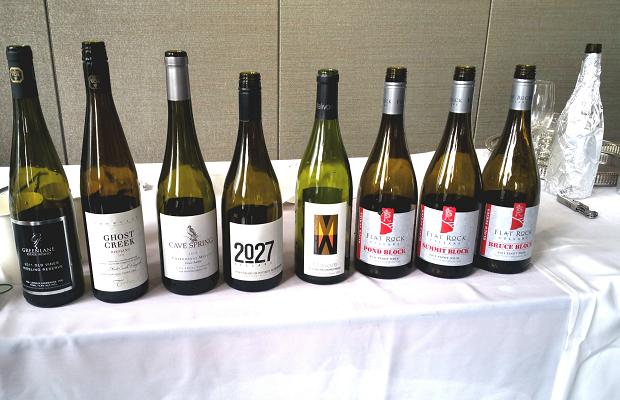
Twenty-four Canadian wines that rocked in 2024

Godello and Hare

Composing a best of list is something that takes a sedulous amount of time, a year’s accumulation of thought and above all else, ultra careful consideration. When more than 1,000 Canadian wines are tasted in a calendar year, narrowing it down to 24 feels like a profound task and weighty sense of responsibility. These twenty-four Canadian wines that rocked in 2024 represent the twelfth consecutive such register first published in 2013, annually iterated and guaranteed, never gratuitously settled upon and always as a show of Canada’s highest level of quality. Integrity too, which will become clear by the time you finish reading this exercise.

Related – Twenty-three Canadian wines that rocked in 2023
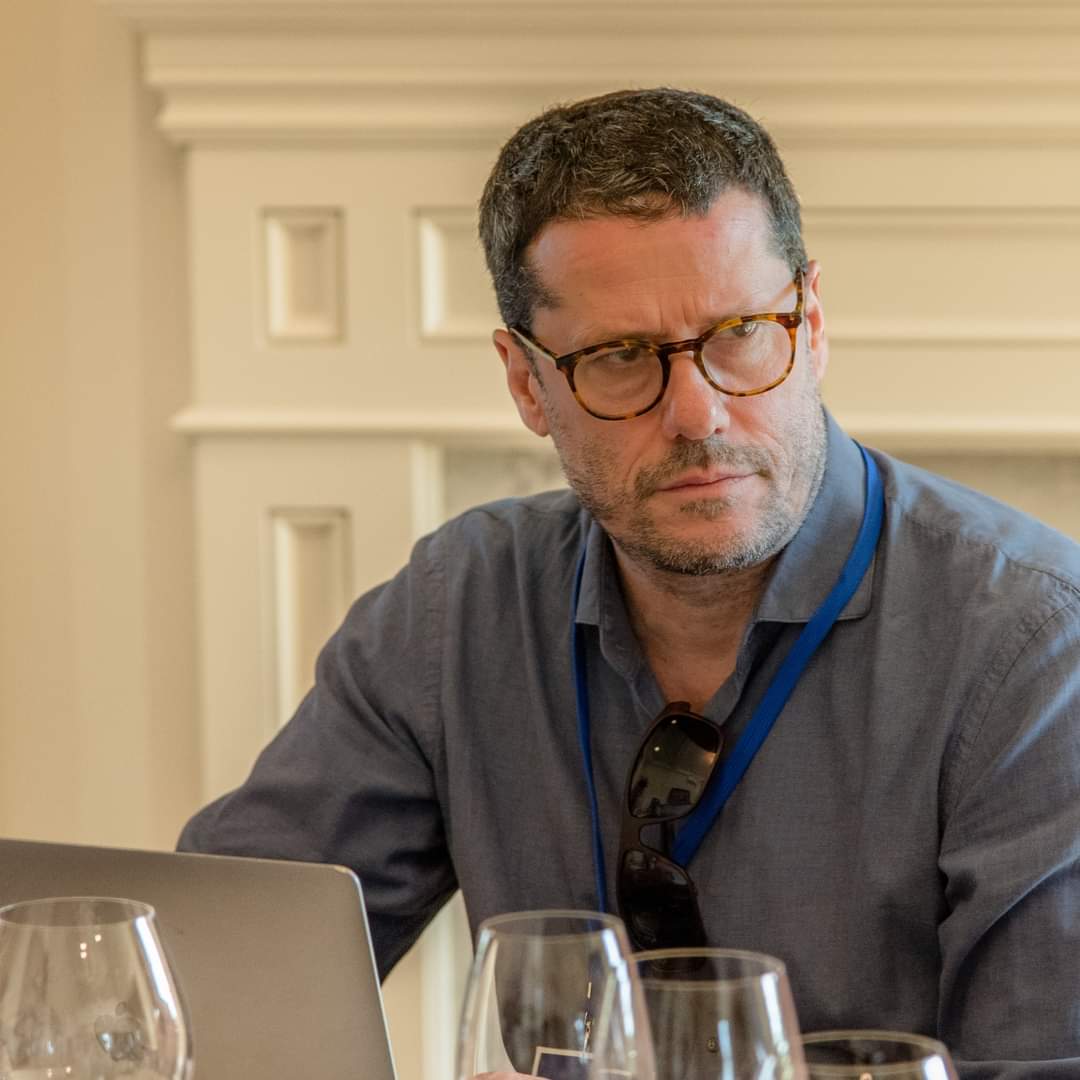
Godello at Dobbin Estate

Seven out of 24 (that’s nearly 30 percent for those scoring at home) are sparkling wines, a number that will only come as a shocking surprise to those who haven’t been paying attention. The math is really quite simple. Cool climate viticulture means longer growing seasons for more developed, therefore riper phenolics matched dutifully by kept acidities. Climates have changed but Canadian growing areas have not yet lost their edge and besides, extreme events are more likely and increasingly the culprit when it comes to extenuating snafu circumstances like crazy cold snaps that take out wide swaths of grapevines. For the most part this country can still hang a wide variety of grapes to create killer sparkling wines. Seven sparklers are here, from five growing areas in three provinces.

Related – Twenty-two Canadian wines that rocked in 2022
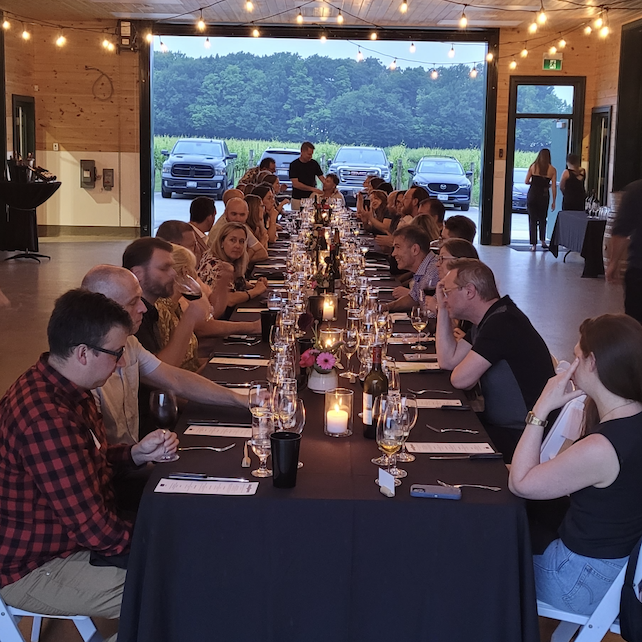
WineAlign dines at Hidden Bench

Six of Godello’s 2024s are chardonnay, if for no other good reason than it always being on Canadian minds. What’s the best way to go about growing and making wines of the highest quality? Is chardonnay a victim of its own ubiquity and adaptability? What makes it so special then, as an expression of place, as well as production and technique? Chardonnay should taste like it has come from a place, but also from a time. No one said it was easy but one thing is certain, it’s a hell of a lot easier to make great chardonnay that has been planted in the right location. Still the endeavour is puzzling, like getting lost and running through a maze, fraught with wrong turns and dead-ends. It’s about hunch work, gauging probabilities, accounting for what has come before and extrapolating towards what might be. In Canada trying to find locations that gift the sweet spot is, as if at midnight, where sugar ripeness, acid structure, phenolic ripeness and fruit character will probably meet for optimum results. We who feel like this and nod at one another knowingly are lovers of chardonnay; eager and desperate to be one with its varietal psyche, to imagine it synched in sycophant fixation with our own. Yet all the salient facts and aspects of a wine’s journey, in viticulture, pH, residual sugar, total acidity, élevage and in tasting, are really nothing if we are unable to find the theory of the wine and by extension, the winemaker who made it happen. Fortunately for us the top six Canadian chardonnays chosen here (and the list does not stop at that number), have all made it happen.

Related – Twenty-one Canadian wines that rocked in 2021

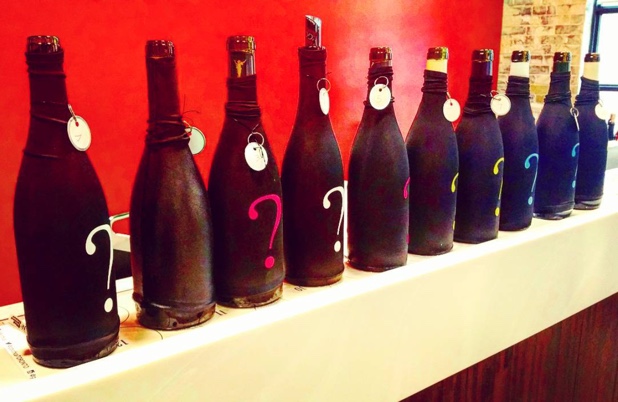
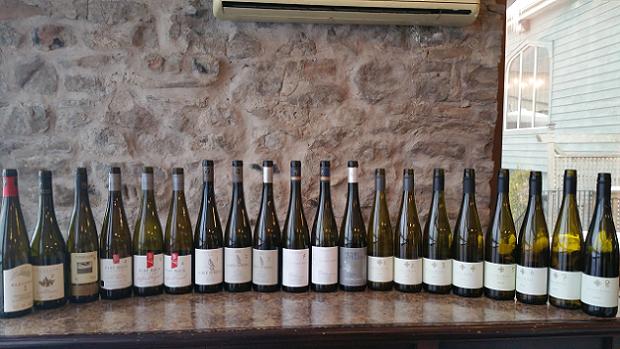
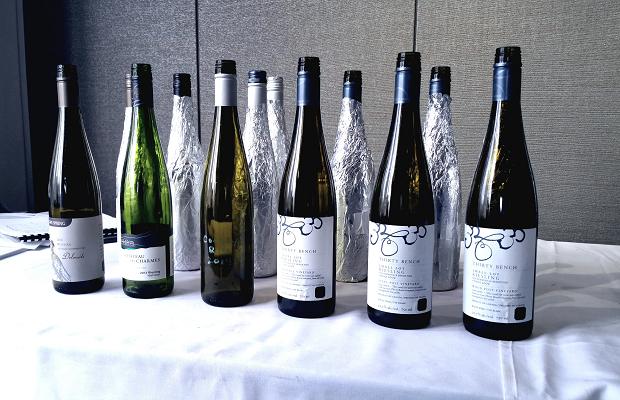
Flight #1 at the 2024 School of Cool
(c) i4C

A reminder that “Chardonnay is never too cool for school.” The article published after i4C 2024 had this to say. “Will fully admit to having seriously considered not using the word “cool” in the title for this latest exposé on i4C, Niagara’s annual International Cool Climate Chardonnay Conference. Then good conscience and reality set in because the original dub for Canada’s most important and successful wine congress will always be too good to dismiss. They coined it, built it and people have most certainly come. To foresee and then to consummate this collective pursuit of excellence inscribes Cool Chardonnay into the lexicon of wine forever. Hard to predict just how many more of these joyous to potentially annual profound (four-day) weekends there will be, but were this the last then hundreds upon hundreds of producers, winemakers, media, influencers and consumers over the years will have walked away happy, better for it and with memories to last a lifetime. The extraordinary 2024 edition of i4C went deeper still, to deliver the coolest quality and finest balance between information, socialization, revelry, society and of course, chardonnay. Cool as ever, gotta be cool, relax and never too cool for school.”

Related – Chardonnay is never too cool for school

Twenty Mile Bench

It was a very good year for tasting pinot noir and thus the grape is also well represented with five on the list. No other grape causes more of a stir, is responsible for more hair to fall and breaks more hearts. Does not play well with others, refuses to share, to be blended, to give anything less than 100 per cent. For many, there is no other grape variety. How often does a conversation begin with “what is your favourite wine” and end invidiously with “Burgundy?” While Bourgogne certainly persists as the historic locale possessive of the title “when it’s great, it’s the best,” pinot noir has found immense global success and Canadian soils are largely responsible for that. Thoughts with doubts about pinot noir’s viability in Canadian vineyards have long been laid to rest with proof arranged and clarified after yet another edition of the 2024 WineAlign National Wine Awards of Canada. The judging week saw the fourth most number of flights, all intriguing and arguably the finest collective showing of bottles poured from the fickle grape. From lithe, transparent, high-toned, red berry charmers to darker, brooding, seriously ripe and often tannic iterations. As it has been said, “beauties and beasts, belles et bêtes,” pinot noir the good can succeed one way or another, with harmony and in balance.

Related – Twenty Canadian wines that rocked in 2020
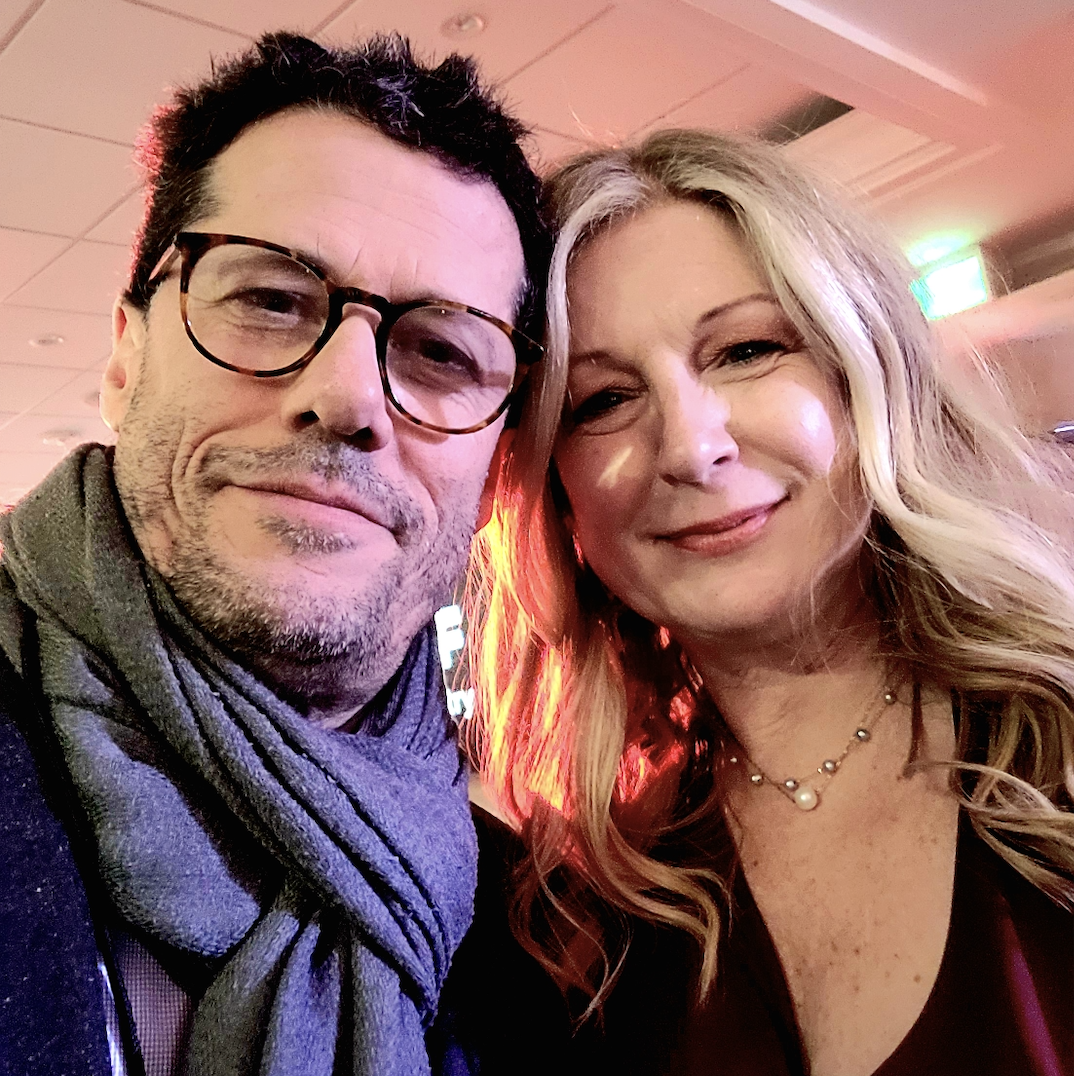
With Magdalena Kaiser

So what is the number one takeaway with regards to Canadian pinot noir? The answer lies in the way winemakers approach their product. Lowest of low cropping to achieve density and concentration is no longer the launching point towards making great pinot noir. Aggressive pressing, intense macerations and long wood aging, especially in newer (and smaller) vessels all lead to astringency and imbalance. All of these things are fading into the rear-view mirror, slowly but surely being replaced by first and foremost, sustainable and regenerative agriculture resulting in healthier vines. In the winery there is less handling, more finesse and attention paid to detail leading to more purity and also clarity in the wines. This is what pinot noir needs. If the most suitable and only the most suitable sites are used, the future will move from optimistic to auspicious. The number one takeaway? Canadian pinot noir has long been searching for and is now beginning to find inner peace. Let’s just hope it keeps on this path, despite and in spite of climate change.

Godello’s annual best of bundle feels easier to create because with each passing year there are so many more wines of wonderment tasted and yet, and yet the jumble is harder to defend. Great wines are not left off the list for reasons of inferiority, deficiency or lack of character. The game is one of numbers and the pool from which to choose grows exponentially every year.  These are the twenty-four Canadian wines that rocked in 2024.

With Heather Rankin – Obladee, Halifax

Benjamin Bridge Nova 7 Sparkling 2023, Nova Scotia

Benjamin Bridge is indeed correct and fully justified in self-proclaiming Nova 7 as “Nova Scotia’s favourite wine” because, well it just is. The blend for this resilient, magical, a decade and a half in the making, lightly effervescent and low alcohol sparkler is muscat, ortega, riesling, geisenheim, l’Acadie, vidal and petite pearl. The latter is a cold-hardy hybrid cultivar bred using a cross between MN 1094 and E.S. 4-7-26, grown in 25 US states and four provinces of Canada. The acidity for Nova 7 at 9 g/L integrates with ease and swirls 49 g/L of residual sugar into a comfort zone like a balanced Spätlese, with the peachiest of flavours and a refreshing, thirst-quenching and salty iced tea finish. A throwback in many ways and yet the 2023 is quite frankly as good as any Nova 7 there has ever been. Age a bottle three or four years to see what happens. What could go wrong? Drink 2024-2027.  Tasted October 2024

Blue Mountain Reserve Brut R.D. 2014, BC VQA Okanagan Valley

Aromatic complexity, a chardonnay and pinot noir (55-45) sear of raging citrus but never lean because there is flesh all over the palate. The lemon segments are ripe and delicious, the red fruit character compliments with added spice, the persistence endless and the winemaking clearly coming from a place of experience and respect to place.  Last tasted blind at i4C, July 2024

Always pleased to welcome the BR R.D. into a glass and here is an old but a proverbial goody, that being 2014 and consumers must be reminded just how special this research and development is to determine the excellence of Blue Mountain’s indagative sparkling wine. A blend of chardonnay and pinot noir, the first 10 percent more than the last with some of the most restrained, reserved and demure aromatics in the Okanagan Valley. All ways to say this is lovely, quietly generous and so settled to gift pleasure above all else. A most complex game of citrus and orchard fruit, distillate by nature, expertly seasoned with fine sea salt, white pepper and lemongrass powder. Such a gift nine years after vintage at a ridiculously reasonable price. Drink 2023-2027.  Tasted November 2023

Last House Joie De Vivre Blanc De Blanc 2021, VQA Prince Edward County

No dosage, categorically Brut Zero sparkling wine of leesy significance and gentlest positive oxidation. A bubble set up this way from the start and carrying the torch forward on a justifiably sound plateau that should see no significant changes for the next few years. Only chardonnay and no vintage heat to set its trajectory hastily forward, with full orchard and citrus fruit flavours on a sturdy frame backed by bedrock as backbone PEC limestone intensity. You need to try this – it represents a significant style and profound bottle of sparkling wine. Drink 2024-2028.  Tasted November 2024
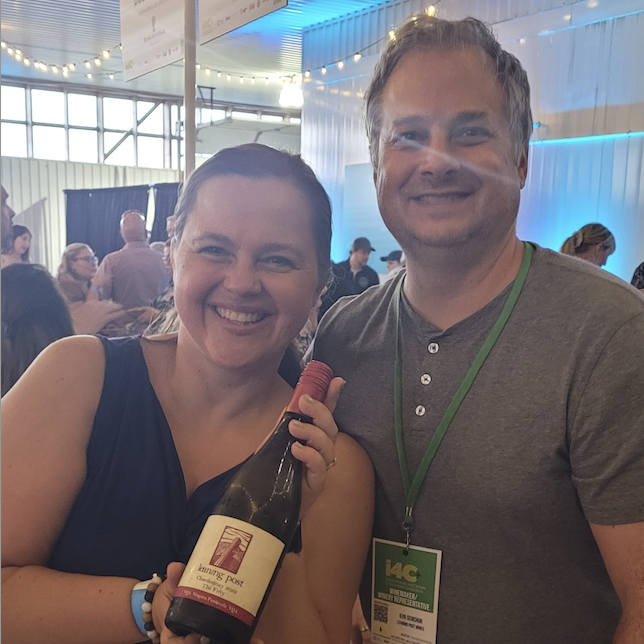
The Senchuks – Leaning Post

Leaning Post Blanc De Blanc Traditional Method Sparkling 2019, VQA Beamsville Bench

Old (35 year-old) chardonnay Hemeris Vineyard vines are the source for the LP traditional method Blanc de Blanc that sees four-plus years on the lees. The sugar is not quite zero but to be honest, nine-plus grams of acidity renders three g/L of RS essentially obsolete. And yet the mouthfeel is full, substantial and acting gregarious. Packed with aromas and flavours, seemingly impossible and so this from a less than heat-cumulate Niagara vintage (that would have made for seriously piqued and biting still chardonnays) is almost a sparkling oxymoron. As far from severe as B de B will be, instead generous and celebratory. Unexpected and mind-blowing in many ways. What sorcery is this pray tell, Senchuk and Senchuk? Drink 2025-2032.  Tasted November 2024

Dean Stoyka and J-J Groux – Stratus

Stratus Brut Nature Zero Dosage 2013, VQA Niagara-on-the Lake

J-L Groux explains that the main factor for making this kind of sparkling wine is PH, “because the aromatics will be built upon six to seven years of lees aging time.” J-L feels this ’13 is going to be the winner now, and for 20 years. Not far off it would seem because of the “partial disgorgement” method, well within VQA rules and thus you arrive at a toasty smoulder unlike any other sparkling wine. The lees are the thing, in fact they are everything. They prevent the aromas and the wine from oxidizing. Amazing.  Last tasted July 2024

Comes across a bit cloudy, at least as compared to the B de B with thanks to the natural, lees left intact style. The citrus component is so pronounced, as is the taut, direct, lean and intense manifold destiny of what is truly a singular Sparkling wine. That being a living, breathing, inhaling and exhaling wine, slowly releasing proteins, acids and realizing its B de B Nature dream. Just amazing what lees can do for sparkling wine.  Tasted July 2021

Released side by each with the Stratus Blanc de Blanc 2013 and while vintage and grape are the same, the similarities almost seemingly, ostensibly and allegedly end there. Yes in fact this 100 per cent chardonnay is a child of the most excellent varietal vintage and like the B de B spent six years on the lees. Comparisons cast aside it is the very fact that because much of the lees were transferred to bottle by a minimalist’s disgorging that this cloudy bubble with a Canadian artist’s series set of labels can’t help but elicit another memory. The Lilies of Monet and their clouds represent neither the horizon, nor the top or the bottom. Nor does a bottle of this Zéro Dosage Brut. The elements of water, air, sky and earth become intertwined in a composition without perspective, or so it goes in this hazy, opaque and dry as the desert sparkling wine. So many layers of lemon can be peeled, juiced and scraped away. If a Stratus wine could be a a riddle, wrapped in a mystery, inside an enigma then here it is. The texture here is palpable and the intrigue factor surely high, so it should be imagined that longevity will be this wine’s calling card. It’s more austere than the Blanc de Blanc but I think in fact it will. Drink 2022-2029.  Tasted November 2020

Tasting The Old Third at White Oaks

The Old Third Pinot Noir Sparkling À La Volée 2011, Prince Edward County

First bottle opened since last tasting this unicorn of a PEC sparkling wine back in October of 2015. Now in a state of settled grace, of a collected, stored and persistent slow release of energy that keeps on keeping on. Every County maker using pinot noir for a Brut zero (or near zero) style should find a bottle of À La Volée 2011 as a reference point because as interpreters they must translate still wines to become bubbles “on the fly,” without waiting for the end to begin, acting with hindsight.  Last tasted December 2024

“On the fly” is not exactly what comes to mind from this 100 per cent Pinot Noir, first Sparkling wine made by Bruno Francois. Calculated, attention to detail and intensity of ideation more like it. Three years on the lees, no dosage and from a vintage to speak in more than whispered voices, of acidity that announces its arrival with immediacy and a summons to contest. The nose does yeast, toast, citrus and ginger. A first release revelation as ever graced Ontario’s waves, as dry as the desert and lingering with switch back traces of its yeasty, toasty self. A single vineyard can be this way, equally and in opposition of natural and oxidative, with a hue less than Pinot Noir, though unrequited as a triumph when you get a ripe white from such Pinot. The production of 1200 bottles is relatively house high in a stunner that needs no sugar to draw up its flavours. Drink 2015-2023.  Tasted twice, July and October 2015

Marty Werner – York Vineyards

York Vineyards Reserve Brut, VQA Niagara-on-the Lake

York Vineyards’ Brut is a two-thirds to one-third chardonnay-pinot noir joint that sees 72 months on the lees. A sparkling sensation taking the country and apparently also the world by storm. The attention to detail, focus and determination are credible, felt with palpable energy and there is no doubt as to how much trial, experimentation and consideration went into making this and other York Vineyards wines. The Reserve moniker may at times feel like an add on but here one can imagine the assessment of base wines and the selection being both a stringent and anticipatory one. This is richness off the proverbial Ontario charts with a toasty-autolytic complex character that defies regularity. Toned, defined and appreciable because the flesh is yet to fully develop. Drink 2025-2030.  Tasted November 2024
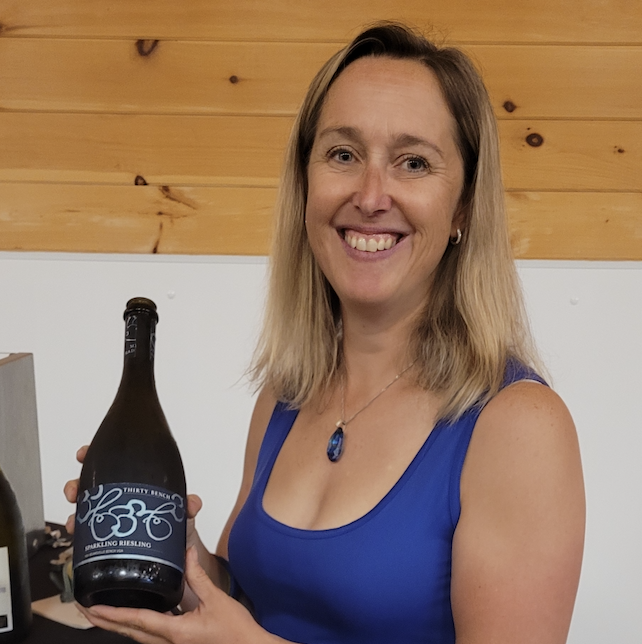
Emma Garner – Thirty Bench

Thirty Bench Steel Post Vineyard Small Lot Riesling 2020, VQA Beamsville Bench, Niagara Escarpment

An Ontario legend in terms of riesling and the one from Emma Garner at Thirty Bench that defies logic with a magical spell cast upon the grapes put to bottle. Probably the driest of the Small Lot series at just 11 g/L of residual sugar, impossibly converted and qualified by just 11.2 percent alcohol with what must be an acidity number that’s just about as high as the sweeter rieslings in the portfolio. The energy and vitality are exceptional, the warmth of the vintage delivers top quality, if absolutely pristine fruit and then there are the qualities of extract and tannin cohabitating at this highest level of composure. The potential here is unlimited. One of the finest rieslings ever made in Ontario and this one goes up to 11. Drink 2025-2035.  Tasted March 2024

Charles Baker Picone Vineyard Riesling 2021, VQA Vinemount Ridge

The word “tannic” does not often first (second or third) come to mind when riesling is the subject but ’21 and Picone from Charles Baker strikes that way from the first sip. This after a most unique aromatic begin, dried herbals for one thing and exotic spicing in a cumin-coriander masala way. Even more so fenugreek leaf and wait for it…maple syrup. Hard to say why ’21 emits this way but when these scents give way to the riesling’s body politic the effect is both exotic and promising. Baker himself says that the “2021 CB from Picone is true to form and represents the vintage properly. Elegant, refined, absorbs the richness with fine acidity. Long floral green toned finish. Will age beyond me.” Indeed this may just turn out to be Charles Baker’s longest lived of the Picones, right up there with the ’06, ’11 and ’16. Drink 2024-2036.  Tasted October 2024
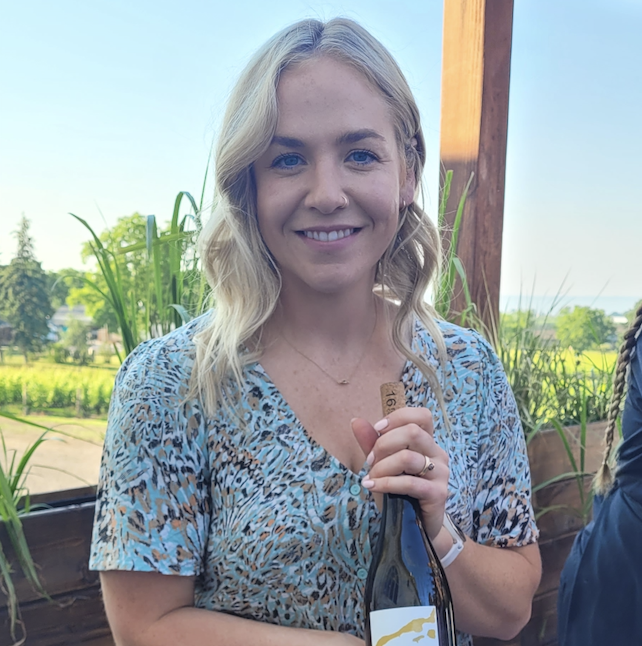
Morgan Juniper – 16 Mile

16 Mile Cellar Civility Chardonnay Single Vineyard 2020, VQA Creek Shores

From a block called Susan’s Vineyard, wild ferment, full malolactic, raised in oak puncheons of light toast. The growing location may be the lower Escarpment’s steppe of Creek Shores but who would not feel, see and recognize this 2020 as truly Bench chardonnay. No ambivalence in the method, execution or design, ample and plush, of an all in lemony curd to speak of the finest and cleanest lees. Truly singular style and without a doubt winemaker Morgan Juniper’s most comprehensive chardonnay to date. Drink 2024-2027.  Tasted June 2024
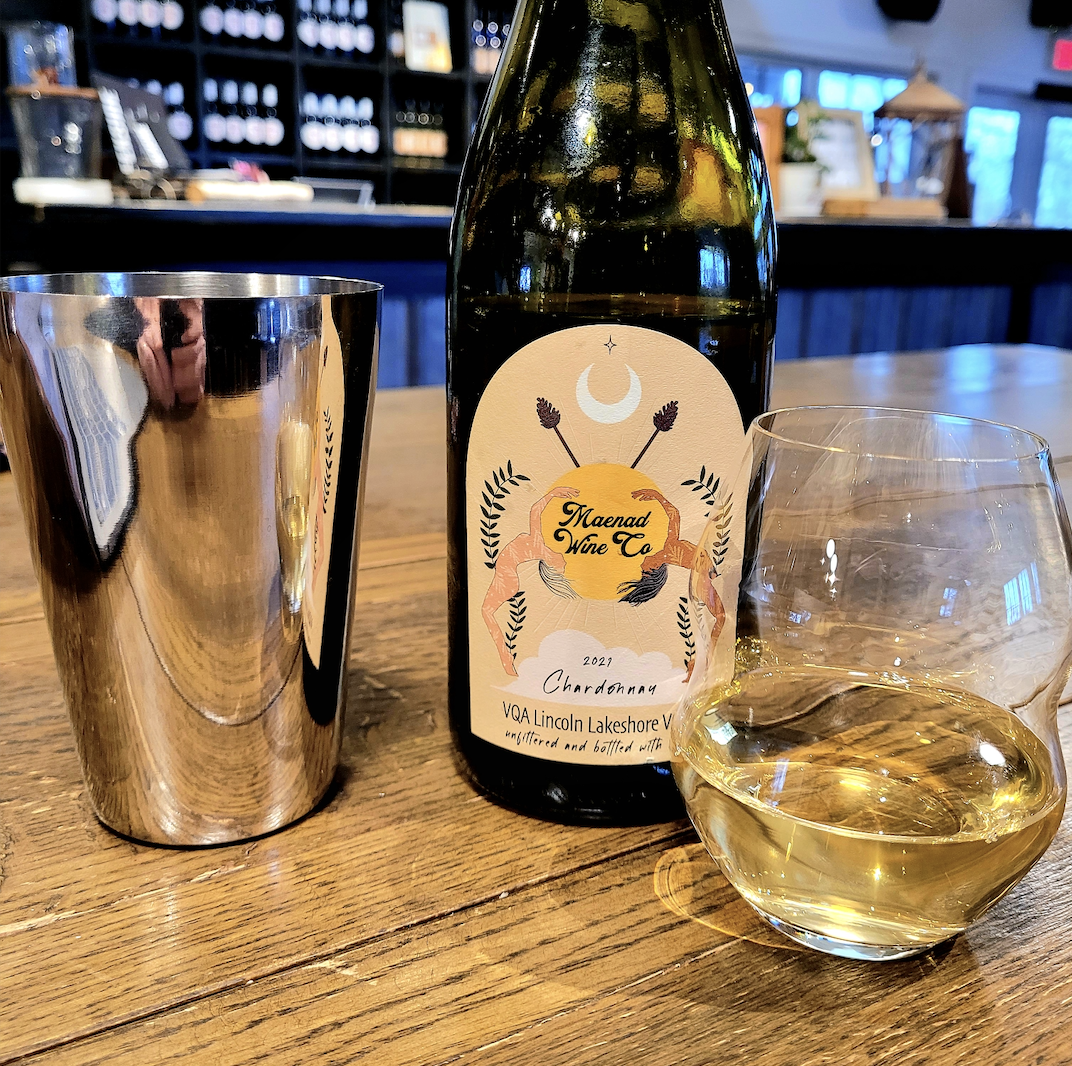
Maenad Wine Co.

Maenad Wine Co. Chardonnay Unfiltered And Bottled With Lees 2021, VQA Lincoln Lakeshore

From the young vines of Grimsby Hillside Vineyard and while this label shall remain nameless, the block is actually 295. “A wild terroir exploration” says the winemaking show that is Yvonne Irving, a winemaker used to making a full bodied style of chardonnay from the Queenston Mile Vineyard. Unmistakably GVH and if you’ve tasted a Senchuk or Bachelder iteration than you’d know the vineyard wins every time. The richesse is belied by this specificity of intensity that is unequivocally GVH. This northern spot produces the most brightness against the backdrop of ripeness, barrel fermentation and oak-aging. Full malolactic but always beneath the fruit, full on lees and amazing crunch. So full up the middle and yet vertical. Real deal, whole package and so much more to come. Drink 2024-2027.  Tasted March 2024

Henry Of Pelham Speck Family Reserve Chardonnay 2022, VQA Short Hills Bench

There is some truth to the advantage of tasting a stellar ’22 like this from Henry of Pelham when a great deal of other chardonnay being poured alongside are ‘21s, but letting chardonnays be chardonnay it matters less than we should actually be talking about. The SFR ’22 lives up to its blind billing and thrills without a moment’s hesitation. End of story.  Last tasted August 2024

The only reductive chardonnay in this flight of nine which speaks to an overall change in winemaking and in fact there have only been three like this, out of let’s say 50 tasted these days. Reductive as much as any chardonnay though the fruit can stand up and hang tightly on the upright frame. Notable style, bit of pyrazine, Behind the veil is most excellent and concentrated varietal fruit that to this mind celebrates a very specific sense of place. A Bench on a step up against a hillside or escarpment and its maker’s care is more than evident. Tastes akin to high end Marlborough chardonnay. Well thought out, serious intention and should age well. A seriously structured and balanced wine that drinks well now but will only improve over the next two years. Drink 2025-2030.  Tasted blind at #NWACS24, June 2024
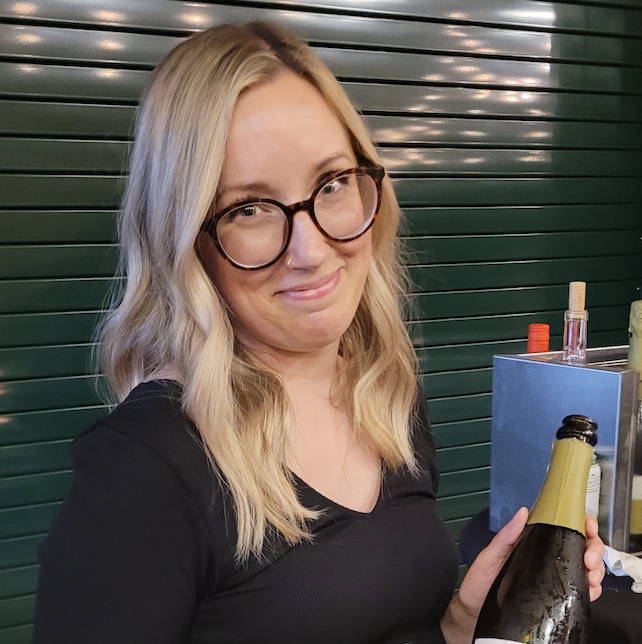
Jessica Otting – Tawse

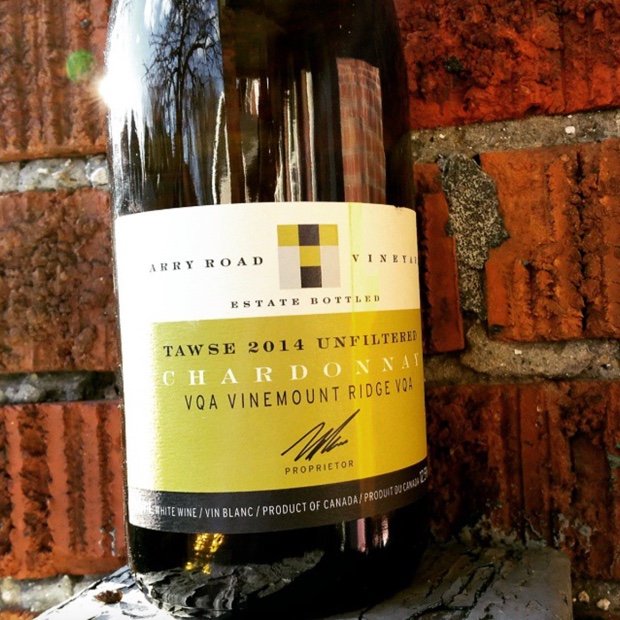
Tawse Chardonnay Quarry Road Vineyard 2021, VQA Vinemount Ridge

No shock or surprise that Quarry Road ’21 is a mineral bomb, coming away on that rocky side of the 50-50 fruit to stone compendium. Forget everything you’ve heard or read about this arch-cool Vinemount Ridge chardonnay, but also ignore all the noise about unmitigated disaster by vintage. Niagara winemakers should always make quality cool chardonnay these days and Tawse holds more water and responsibility than most. Jessica Otting is ten times equal to the task with a Quarry so precise and focused it may just make a tooth or two feel the mineral pain. A chardonnay chillingly representative of its vineyard yet, rewriting the jazz because of the shall not be named vintage. The naysayers can run away and hide in their holes because history will be kind to these wines, especially when they shine on in tastings ten years forward. No crutch or apology, sorry not sorry. Remember 2011 and 2013. Now forget them and only speak of 2021. Just great chardonnay. Drink 2025-2030.  Tasted at i4C, July 2024

Alex Baines – Hidden Bench

Hidden Bench Chardonnay Felseck Vineyard Unfiltered 2021, VQA Beamsville Bench

My goodness this is special chardonnay, coming as no surprise and if your thoughts and emotions for 2021 Niagara chardonnay need buoying than begin the bob right here. Precise aromas, immediate and echoing, more fruit than frankly necessity should expect as the mother of invention because mineral and saltness demand our utmost attention. Yet the fruit stands firm and even pulpy in the face of the crushed stone infiltrate from a vineyard stop on the grandest of Niagara cru tours. Exemplary to speak on behalf of a vintage that separates wheat from chaff, pinpointed location from just anywhere and adults from the gambling trials of youth. Drink 2024-2028.  Tasted July 2024
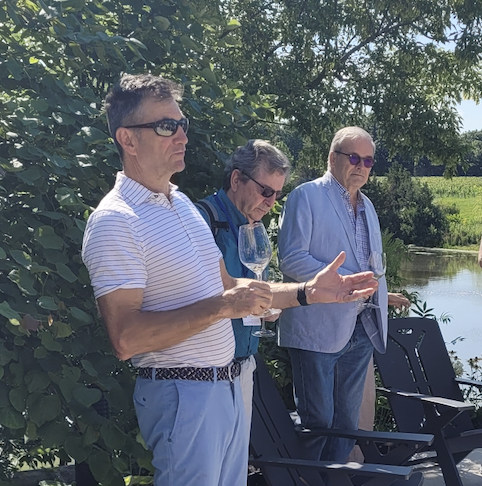
Wade Dobbin, David Lawrason and Peter Gamble

Dobbin Estate Chardonnay 2019, VQA Twenty Mile Bench

Not labeled as such but essentially a Reserve wine taken from a single barrel housing all estate fruit. High level of concentration and richness in the face of a vintage considered cool and challenging, but when you take a smallest of small lot wines like this that just does not apply. Everything about this is classic, basket pressed, natural ferment, full natural malolactic, 22 months maximum for oak aging, Burgundian obviously and medium of toast. “We come to barrel turbid – we like density,” notes Peter Gamble. (Peter) and Ann Sperling really liked this one particular barrel and decided to put it to magnums only. From late September and early October picks, finished at 14.5 percent alcohol and ultimately mouthfeel that rivals some pretty warm wine growing regions. A chardonnay that moves beyond Bourgogne to offer up its very own definition of Niagara’s Twenty Mile Bench.  Last tasted July 2024

This may be just the first stages of Dobbin’s tenure making high end wines from the Twenty Mile Bench but auspicious does not begin to describe the level of sophistication marking these beginnings. The erudite oenological consulting team of Ann Sperling and Peter Gamble have taken chardonnay into territory they are quite familiar with but always keep in mind that top terroir, vineyard conditioning and uncompromising preparation are what collectively set this up for success. This 2019 is from a cool climate vintage out of a cool climate place and recent history tells us that these are chardonnay that live good, long and healthy varietal lives. Luxe yet still crunchy, high quality wood used generously if judiciously and in the end this kind of rocks the world. In a chardonnay way. Drink 2024-2028.  Tasted April 2024

Spearhead Pommard Clone Pinot Noir 2022, BC VQA Okanagan Valley

A bit of aromatic restraint from a pinot noir keeping some secrets and what scents as some whole bunch percentage inclusive style. Good palate richness and berry to citrus emulsion like a fluid smoothie of reds, greens and acidity. Plenty of understated depth, so ample, focused and really well defined. Brightest of the flight, red fruit in flight, breathing easier, acids also up there and structure never too demanding. Could always drink a glass. Drink 2024-2026.  Tasted blind at #NWACS24, June 2024
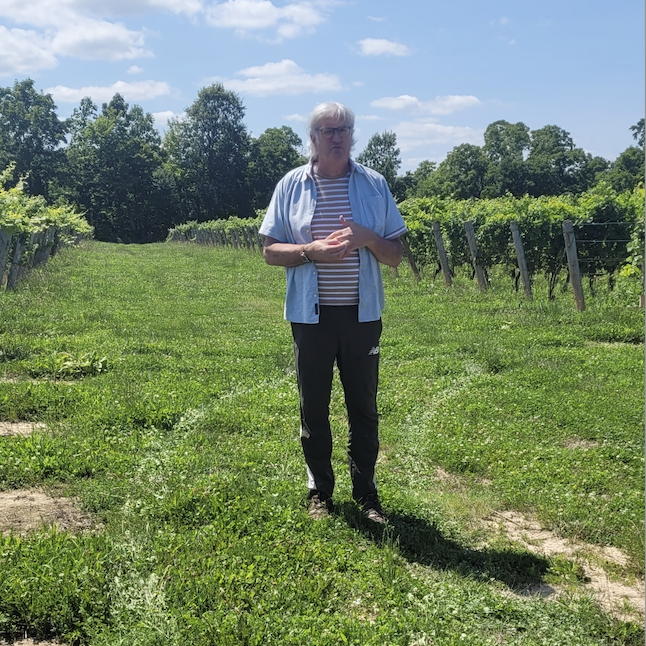
Thomas Bachelder in the wilds of the Twenty Mile Bench

Bachelder Wild West End Wismer Parke Vineyard Pinot Noir 2022, VQA Twenty Mile Bench

For Thomas Bachelder Wild West End, Wismer Parke Vineyard and pinot noir started out as the one of the most mystery, namely because Wismer could not name the clone and the first wine was even more sanguine than that of the Wismer Parke. Which says that the West End’s soil affects the clonal material in exaggerated ways and the question has always been, to tame or not to tame. The answer is vintage and not needing “a weatherman to know which way the wind blows.” Bachleder had to hang loose, stay cautious and learn about the vineyard’s situation, take other’s opinions into account and then proceed with action. This vintage feels like a culmination of necessity, a varietal mother of invention, a reality on display of full capabilities realized. The height of an epoch acceded by a grower and a winemaker on the same page. A wine of intelligence and acceptance because the ferric meets hematic parts oversee and tell fruit what to be and how to act. The people have learned how not to get in the way and the degree has been earned. The question is what’s next? Drink 2026-2033.  Tasted November 2024
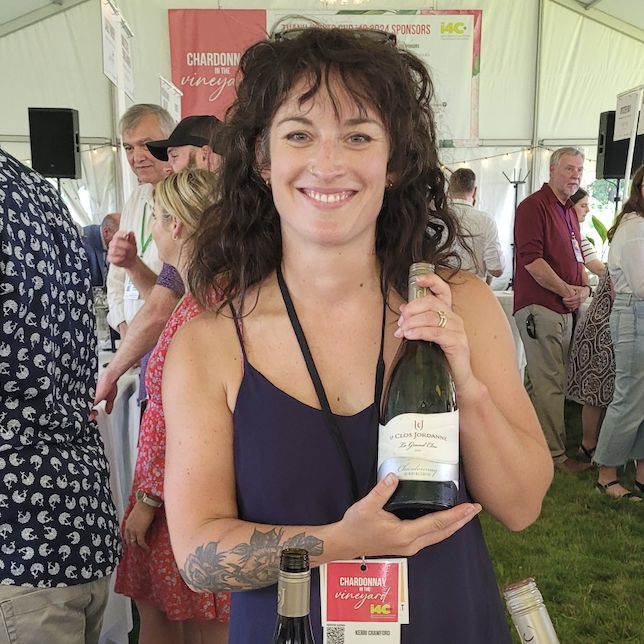
Kerri Crawford – Le Clos Jordanne

Le Clos Jordanne Le Grand Clos Pinot Noir 2021, VQA Twenty Mile Bench

As with Claystone Terrace the Grand Clos Vineyard blocks running from west to east move through this fruit gradation from structured and austere through to soft and amenable. For 2021 the middle ground is duly noted with a signature and arch classic Jordan/Twenty Mile Bench pinot noir that sings in youthful life as early as it ever has. The team (Thomas Bachelder, Kerri Crawford and Phillip Brown) have coaxed out the sweetest natural fruit. While it flows with ease it’s also equipped to slow down, reflect, and then re-emerge a few years thereafter, post pause and not atypical varietal dumb phase. Th3 2021 is found to be chic, suave and stylish as ever, fruit in a dark red cherry state and acidity meeting texture for mouthfeel of a most finessed kind. Drink 2025-2031.  Tasted July 2024

Carrying Place, Prince Edward County

Trail Estate Winery Pinot Noir Revival 2020, VQA Prince Edward County

Has to be the top of the top drop for Trail Estate but also for PEC, not to mention perched up there at the precipice of breaching the Provincial price rubicon for all wines. Some are one dimensional, others expressed in two and then there is Trail’s, which most definitely incorporates a third. Reductive and diesel fuelled with almost no precedence towards understanding just exactly what this aromatic unfamiliarity is all about. Confounding and yet a sip quickly adjusts the viewpoint because layers of recognizable fruit glide over the palate. The vintage is worth waiting for, the phenolics so ripe that not a stem should be wasted, while the savoury pastry of said whole bunches makes sure no holes are left unfilled. When the lowest yields and the most stringent selection meet risk-reward winemaking techniques there can be something special to come from all these hopes and dreams. If revival speaks to the human condition, a.k.a. struggles with sin, forgiveness and redemption, well then this pinot noir may just be the answer to a winemaker’s struggle, quest and renewal. Now let’s see her repeat this every vintage, or at least one here and there deemed worthy of the pain, journey and prize. Oh, and please give this at least another year to find its way so that the enigmatic behaviour should wane and eventually subside. Those who can afford the cost will then see the forest for the trees and be granted some personal form of immediate gratification. In the end the question begs as to how we value Revival as a three-dimensional pinot noir? By definition three coordinates are required to determine the position of a point (and a pinot), namely those you can pick up, touch, and move around. But in the end the simple answer is depth, which is what Revival and all great wines simply have. Drink 2025-2032.  Tasted April 2024
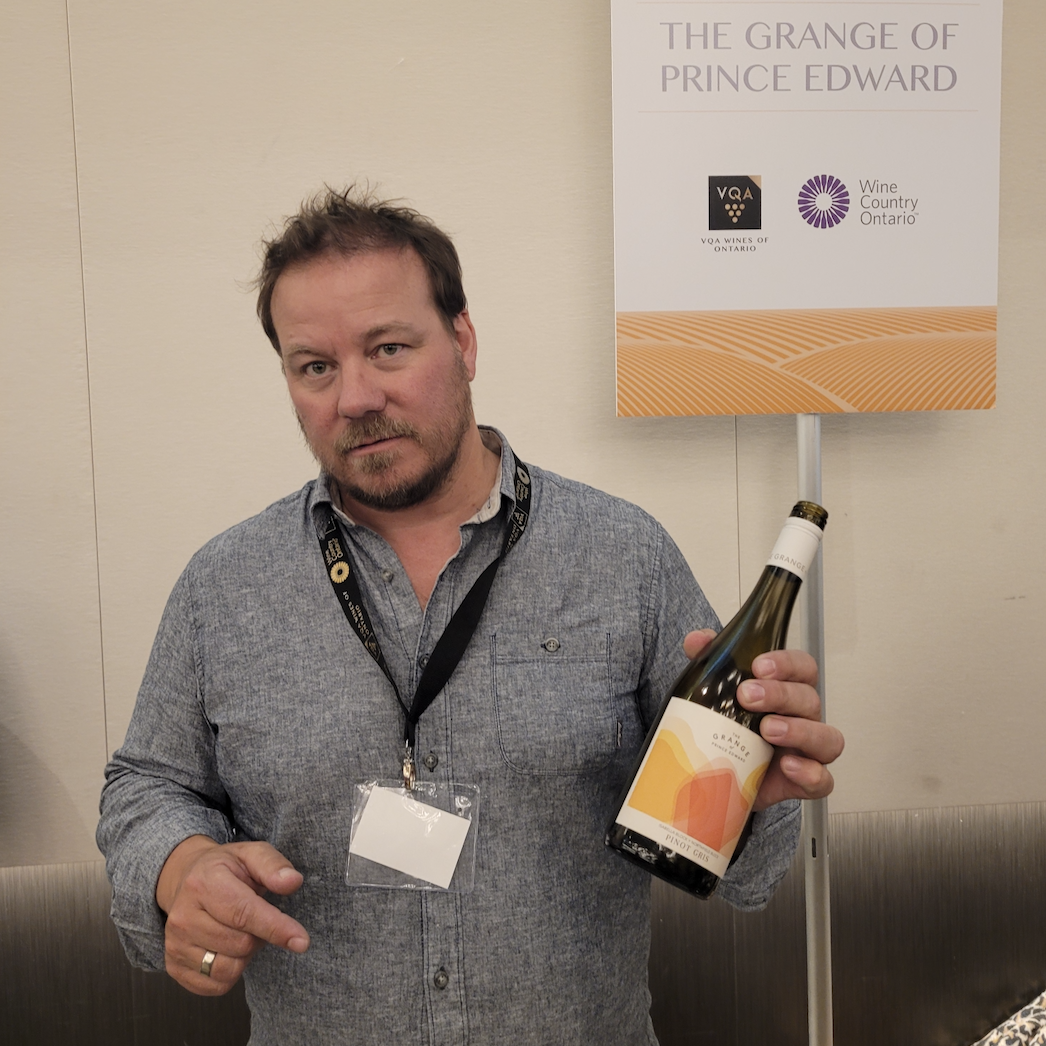
Jonas Newman – The Grange

The Grange Of Prince Edward Aurelia Pinot Noir 2023, VQA Prince Edward County

The golden one, Aurelia, from the Latin Aurelius and if you want to delve deeper, the name for Marcus Aurelius Antoninus, Roman emperor from 161 to 180. Even deeper still the character portrayed by Richard Harris in Gladiator. Also the top of the opus pinot noir at The Grange and what a golden one it surely is. Needs to be because it is bloody expensive but just 98 cases were made of a varietal harbinger that gets the full on spa treatment. Double sorted, first in the vineyard, then at the table. Whole cluster fermented, including carbonic for five days and then foot trodden. Ten days of délestage before being pressed off and blended to finish ferment in tank. Ages in the most expensive wood for 10 months, 33 percent new. Burgundy anyone? Yes this is the idea and the result is a pretty good approximation, all the while tended to by that County high life in acidity with a generous amount of volatile compound effect. Yet the fruit and that acidity are in cahoots, sweet, inviting and enlivening. At nearly $75 there is a whole lot of swagger, ambition and confidence but if money were no object I’d happily drink through a few bottles. Drink 2024-2027.  Tasted December 2024

Roche Wines Amulet Syrah 2021, BC VQA Okanagan Valley

Semi-serious syrah, surely built upon an upright skeletal frame with flesh hanging on its bones and acids piquing through the supple textures of that flesh. Also floral and the meatiness seems to increase with every sip. Iron bloodiness and tannins also grow as you work with what is now becoming a fully serious wine. Chocolate melting and coating the back end with the same function as the tannins of the wine. Drink 2025-2030.  Tasted blind at #NWACS24, June 2024

Phantom Creek Kobau Vineyard Syrah 2020, BC VQA Golden Mile Bench

Here is the syrah bomb that means serious business. Smoked meat, iodine, sanguine and that classic black olive tapenade. A veritable hematoma of red, black and blue, fruit, acid and tannic intensity. If it’s showing some volatility that’s just because of rebellious youth and unresolved structure. This is very serious wine. Drink 2026-2032.  Tasted blind at #NWACS24, June 2024

Okanagan Valley

LaStella Cabernet Sauvignon La Sophia 2019, BC VQA Okanagan Valley

When you look at the last 10 years of Okanagan wine-growing there is no doubt that 2019 resides near the peak and is a vintage that should be filling collector’s cellars. La Sophia is one of those wines, a cabernet sauvignon with a track record that speaks to consistency and excellence. Imminently recognizable as both La Stella and their extension of Black Sage Bench terroir in Oliver. If any local cabernet will resonate with the Oliver equivalent of the Tuscan coast’s Macchia Mediterranea than La Sophia would be it. Not exactly balsamico or garrigue but yes something Italianate, of rich dark fruit set against fine-grained tannin and that brushy, herbal, vinous and resinous scents of the terrain. Black Sage Bench issue, nothing standard about it and it needs a name. Like Okanagan Briar or Chaparral, but regardless you can’t miss the outback in this wine. Yes the 50 percent new wood needs to integrate further and it will, given the requiem necessary, in air and also time. Drink 2026-2035.  Tasted May 2024

Two Sisters Riesling Icewine 2023, VQA Niagara-on-the Lake (375ml)

Spicy waft from the 2023 riesling and a level of viscosity to speak of Icewine made in the most serious of ways. The haute and cultured fragrance makes one wonder why $89 should be the price when three times that amount might make sense, after consideration is taken for the time, effort and work required to make such a wine even possible. The fruit is extraordinary, the acidity at a high level for the vintage and Icewine in general. This is the what, how and why for the category to be celebrated, wines exulted, performance perpetuated and raison d’être defined. Give this two more years to fully see the riesling respond in the way it surely can. Drink 2026-2036.  Tasted June 2024

Good to go!

godello

Godello and Hare

Instagram

Facebook

Thirteen ways to taste Cuvée

Less than 24 hours after touching down at Pearson following a trip to Germany for ProWein (plus excursions through the Rheinhessen and Ahr Valley) I find myself in comfortable surroundings. Knotting a tie with Niagara Falls tumbling as it is always wont to do while in other proximate places Niagara’s wine folks get cleaned up real good, all of us ready to gather for Cuvée 2017. A grand affair.

The 29th annual Cuvée was indeed held last Friday, March 24 with the Grand Tasting at the Scotiabank Convention Centre in Niagara Falls. Organized by Brock University’s Cool Climate Oenology and Viticulture Institute (CCOVI), Cuvée presents an essential cross-section of Ontario VQA wines while also raising thousands of dollars to fund academic scholarships and research. A count of 750 guests were in attendance along with 48 participating local VQA wineries and celebrated regional chefs.

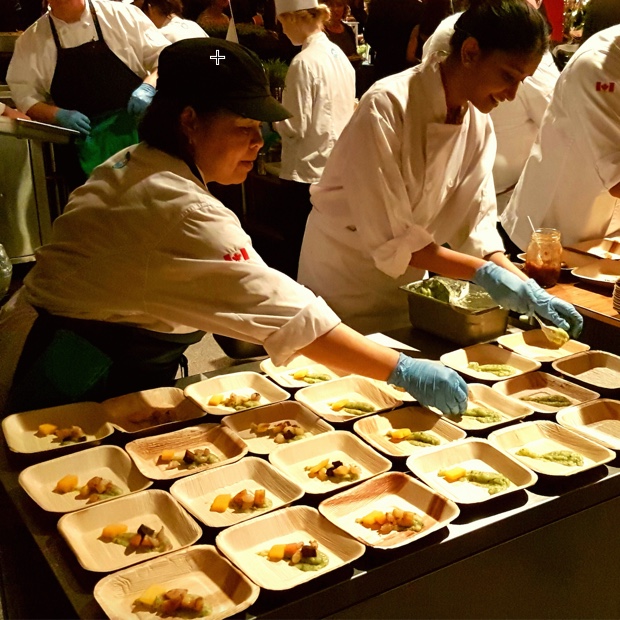
Chef Justin Lesso, Kitchen 76 at Two Sisters Winery, Roasted eggplant and zucchini caponata with sultanas, whipped ricotta, toasted pine nuts and sweet balsamic on crostini

Congratulations to the Cuvée award winners for 2017

Cuvée Vineyard of Excellence Award: Grower Gerald Klose, Niagara-on-the-Lake.

Tony Aspler Cuvée Award of Excellence: Wine journalist Ian D’Agata.

VQA Promoters Award for Lifetime Achievement:  Toronto restaurateur Roberto Martella, Grano.

VQA Promoters Award for Education: Barb Tatarnic, Brock University.

VQA Promoters Award in the LCBO: Melissa McFadden, Owen Sound.

VQA Promoters Award for Hospitality: Sommelier Mike Fish, Glassroots Restaurant in London.

VQA Promoters Award in Retail: Brian Hanna, sommelier at Huff Estates Winery in Prince Edward County.

VQA Promoters Award for Media: Angela Aiello, iYellowWineclub.

The Cuvée Scholarship winners are:

Cuvée Hosting Award for Academic Excellence: Jacob Johnsson-Werner

Cuvée Award for Academic Excellence: Stephanie Van Dyk

Cuvée Award for Academic Excellence in OEVC: Hannah Lee

Cuvée Graduate Scholarship: Jennifer Kelly

Scotiabank Centre chefs

New signage showed the way to 47 winery participants divided into a six-pack of of design, “hazarding all ones chances,” to seek and to find. Luckily I found my way, with ease, to divide, conquer and taste many wines. 

I’ve reviewed 13 from the Cuvée Grand Tasting. Here are the notes.

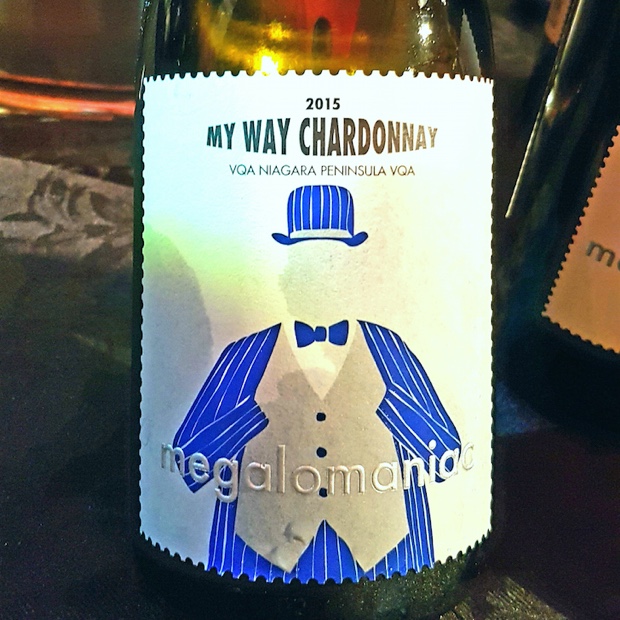
Megalomaniac Chardonnay My Way 2015, VQA Niagara Peninsula, Ontario (Winery, $24.95, WineAlign)

A new order for chardonnay begins at Megalomaniac with winemaker Sébastien Jacquey now doing things his way. Lyrically speaking, a once buttery and brain freeze style of Megalomaniac chardonnay is now made My Way. The song reference is via Paul Anka (also interpreted through Frank Sinatra and Sid Vicious) but here turning with learned impression into Jacquey’s way. The bite into crunchy green apple and tart russet sting is more than cool, it’s downright intense. The pulsating, ebullient pop burst is techno chardonnay at its finest, melodic and built on sonic texture. My Way reminds more of Temptation, “heaven, a gateway, a hope, just like a feeling inside, it’s no joke.” There is great ripeness from warm St. David’s Bench fruit a bit less mineral so conversely eased away from oak. Also easy on the stirring of lees, to keep the purity, clarity and as Séb notes “we are always trying to listen to nature.” Drink 2017-2020.  Tasted March 2017  @MegalomaniacJHC

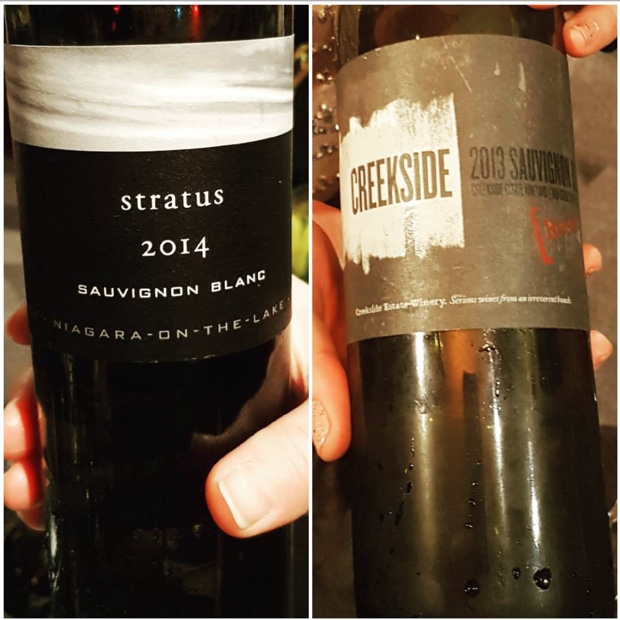
Tripping the #sauvignonblanc light fantastic @StratusWines @CreeksideWine “come and trip it as ye go / On the light fantastic toe.” #imaginative #cuvèe #cuvee2017 #skippedthelightfandango #whitershadeofpale #buthecrowdcalledoutformore

Creekside Estates Reserve Sauvignon Blanc Creekside Estate Vineyard 2013, VQA Creek Shores, Ontario (53371, $26.95, WineAlign)

Four months is an eternity in sauvignon blanc development and what was is not any more. Here again, “Ooo there I stand neath the Marquee Moon, hesitating.” Now some of the finest and most intelligently rendered spice you are ever likely to get from a bite anywhere in the SB diaspora is tasted. Effectively intense as it was not last fall, Creekside’s 50 per cent wood-aged ’13’s “life in the hive puckered up my night.” The risk is now rewarded. Last tasted at Cuvée with Yvonne Irving, March 2017  @CreeksideWine  @CellarMonkey  @PetiteOenophile  @AMH_hobbsandco

Of more worthy extraction and calculated tropical aromatics, the Reserve rendition of Creekside’s backyard vineyard play is deeply juicy and spiked with natural tonic. This wine makes full use of the slow, let it hang 2013 vintage and its dry, cloud covered temper. There are herbs and lime juice stirred into the cocktail and flavour does not pass by at a fleeting premium. This has richness and tangy appeal. The wish would be for more acidity but isn’t that always the case? Drink 2016-2019. Tasted November 2016

Stratus Sauvignon Blanc 2014, Niagara On The Lake, Ontario (Winery, $29.00, WineAlign)

Welcome to new adventures in hifi, J-L Groux-Stratus Vineyards-sauvignon blanc style. “Here it comes (and) I’m carried away” by the utter freshness and positively optimistic nature of the grape and its potential off of Niagara-on-the-Lake vineyards. Groux employed two Sancerre clones, 317 and 530, the former antiKiwithetical and the second more Loire obvious. Picked early straight out of REM sleep (for Stratus) though always loyal to aromatics, the crisp green apple bite is striking in a cool-climate designated white void of chive, grapefruit and green veg. The fitness, finesse and fineness really show on the palate, direct, fresh and very long. Speaks to the organoleptic language of taste. Could have very well been dubbed The Departure. Drink 2017-2020.  Tasted at Cuvée, March 2017  @StratusWines

Fielding Estate Sparkling Rosé, VQA Niagara Peninsula, Ontario (Winery, $29.95, WineAlign)

Fielding takes flight into traditional method, blush sparkling territory with this decidedly off-dry, fruit-driven, round and drinkable Rosé. Primarily 2013 based from pinot noir (84 per cent) and chardonnay (16) that spent up to 24 months on the lees. It’s habitual strawberry evidence and faint black cherry subtlety meet at the interstices of (13 g/L) of residual sugar, inviting and jacketing acidity. This is rose spectral, chaste stylish fizz to initiate Fielding’s investigation that will only become more and more complex. You’ll have to make a trip to Fielding if you want one, that or a reservation at Treadwell or Backhouse. All good options. Drink 2017-2020.  Tasted at Cuvée, March 2017  @FieldingWinery  @RichieWine  @Heidi_Fielding

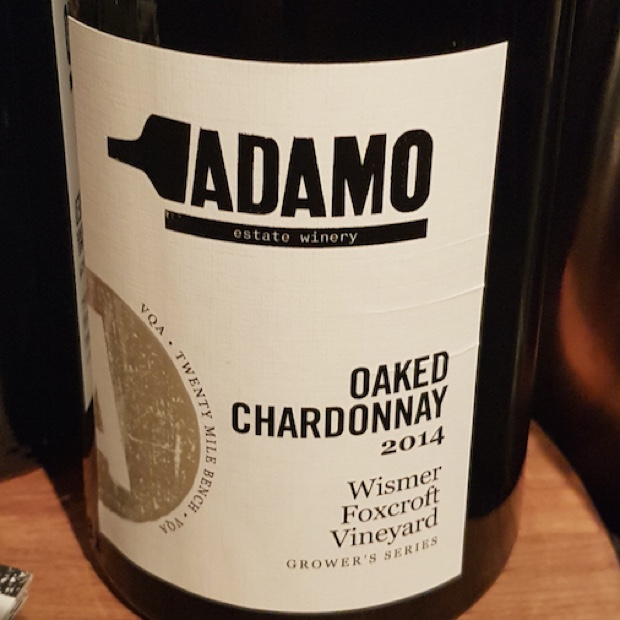
Adamo Oaked Chardonnay Wismer Foxcroft Vineyard 2014, VQA Niagara Peninsula, Ontario (Winery, $29.95, WineAlign)

Nine months later and without the blind tasting arrangement it is Adamo’s chardonnay that once again directs the discourse. This second vintage and first solo record from B.C. native and winemaker Shauna White is a risk-taking, tart, fruit major, reductive minor virtuoso effort. It’s fresh, crisp, crunchy, pure, cooled down, off and out chardonnay. It’s also a classic Wismer-Foxtrot rendering interpreted with troubadour-diva talent. Chardonnay to “bring you apples from the vine,” so “run the bath and pour the wine.” Makes me anything but down.  Last tasted at Cuvée 2017, March 2017  @AdamoEstateWine

Really effective actuality, from barrel for couverture and bite, through texture by lees and with inhalant because of the mineral play. This has it all going on. The middle palate is so beautifully filled in, the spice and smokiness just a mild, intoxicating smoulder. Lovely stuff and terrific length. Drink 2016-2021.  Tasted blind at #NWAC16, June 2016

Thirty Bench Vineyards Small Lot Riesling Steel Post Vineyard 2014, VQA Beamsville Bench, Ontario (Winery, $30.00, WineAlign)

The pattern forming from riesling in 2014 out of Niagara is coming into clear, linear focus and with great hyperbole from this single-vineyard Thirty Bench. True to its vineyard nature nomenclature Steelpost is apropos of steel pulse beats and smoky to flinty intensity. It has been many vintages since this type of Steelpost showing and methinks it the kind of wine so misunderstood in its youth. Riesling that cuts like a knife, right through fruit and gets right to the mineral heart of the matter. It’s like walking on a tightrope, “just, just take a look and see, yeah. I’d wait two years before digging a little deeper. A future of flesh and bone awaits. Drink 2019-2025.  Tasted at Cuvée, March 2017

Adamo Oaked Pinot Noir Lowrey Vineyard 2014, VQA St. David’s Bench, Ontario (Winery, $34.95, WineAlign)

Adamo’s second vintage takes a small but important step forward with reasons threefold by way of explanation. The first is fruit one year older, still a toddler relatively speaking but beginning to express itself with opinion and determination. Second is the baton and torch transfer from PEC set up man Jonas Newman to incumbent winemaker Shauna White. Third is simply Howard and Wes Lowrey’s Vineyard. This hallowed ground for Adamo is an allotted St. David’s Bench section as a gift with one stipulation. Don’t mess it up. With abide to terroir and essential tenets followed, this ’14 drinks as it should, rich, unctuous and tenuously structured. The spice is quite up front, dancing cheek to cheek with the precocious fruit. The continuance moves through a central vortex and into the back halls, carrying noticeable tannin down its dry and savoury descent. Might want to wait one more year. How is it this vineyard is able to speak regardless the maker? Only the one who knows his or her rows can answer the question. Drink 2018-2021.  Tasted at Cuvée, March 2017  @AdamoEstateWine

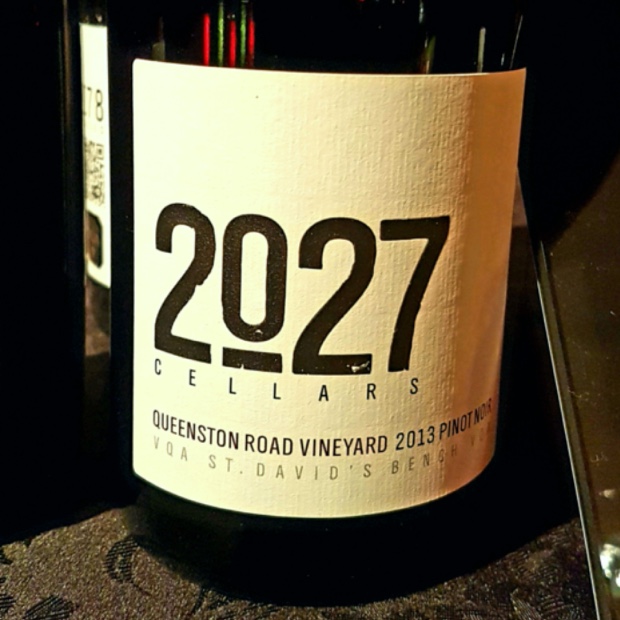
2027 Cellars Pinot Noir Queenston Road Vineyard 2013, VQA St. David’s Bench, Ontario (421370, Was $35.00, Now $28.25, WineAlign)

This is one of those wines you need to revisit. The 70 per cent whole berry and 18 months in wood give it this posit tug between carbonic restlessness and organza texture. The flavours are now developing out of the tobacco road nose, into flanked borscht boullion distilled, like aqua vitae with cinnamon, Szechuan pepper and cardamom spice.  Tasted at Cuvée, March 2017  @2027cellars  @TheVine_RobGroh

Bright, high-toned Pinot Noir with rambling warm, St. David’s Bench red fruit aromas, out of the raspberry patch (thorns and thistles in) and off of the ripening pomegranate tree. Some rusticity and quarried character refracts within a mild tannic frame. Very floral and high on acidity. Blissfully and blessedly not over pressed and in fact rather well made. Yet another success employed by winemaker Kevin Panagapka with stylistic firm talon grip from out of the Queenston Road Vineyard. Drink 2016-2020. Tasted February 2016 and March 2017

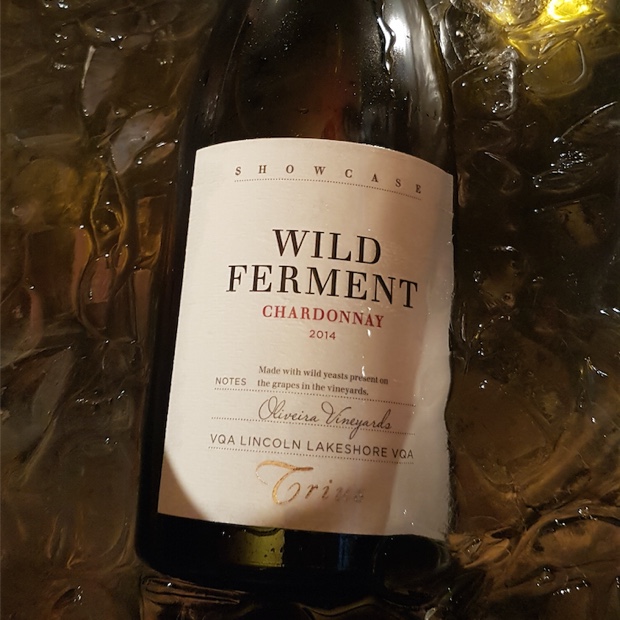
Trius Showcase Chardonnay Wild Ferment Oliveira Vineyard 2014, VQA Lincoln Lakeshore, Ontario (Winery, $36.20, WineAlign)

With fruit from the Niagara chardonnay mecca Oliveira Vineyard and the addendum of yet another stellar varietal vintage it is this Craig McDonald speciality that helps to steal the show. Striking out with near-raging acidity (pushing and possibly exceeding the 8 g/L mark) the Wild Ferment is one of the most formidable expressions of 2014, if not ever. All the moving parts work fervently and impressively as if the motor is running and the machine careening around the speedway. To keep composure it is texture that brings about grounding, balance and cadence, from obvious lees perfection and 30 per cent new wood plus the rest forged by two to five year old barrels. This is creamy, energetic and tannic chardonnay, all conspiring to express itself with both weight and poise. From a maker who’s been around the block a few times, the ’14 WF will go the distance. And you can start now. Drink 2017-2024.  Tasted at Cuvée, March 2017  @TriusWines  @PellerVQA

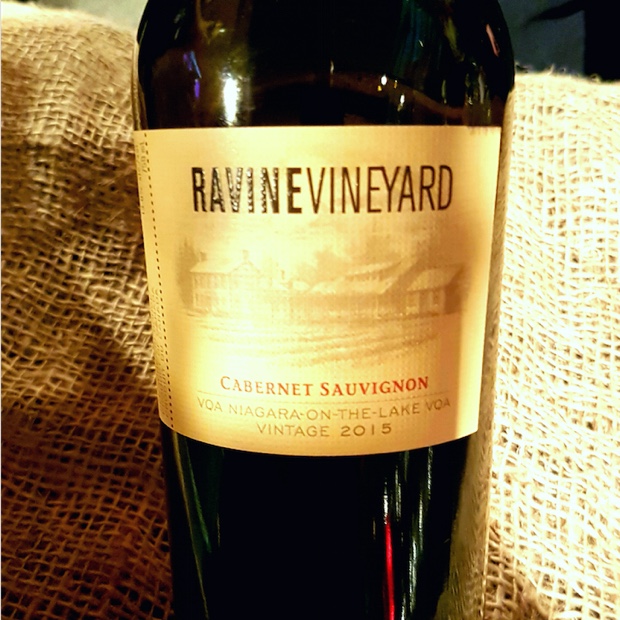
Ravine Vineyard Cabernet Sauvignon 2015, VQA Niagara On The Lake, Ontario (Winery, $35.00, WineAlign)

The designation is NOTL and the fruit is a fifty-fifty draw from Niagara River along with less sandy estate soils. The fruit came is nicely warm, in the geek-noted 22.5-23.5 brix level, now double fast-forwarded to the spring of 2017 after its initial nine months in barrel. The frame is classic cabernet sauvignon, no matter the origin, housing and because of beautiful peninsula fruit. Twenty-five percent of the wood is texture giving and spice lifting atop blueberry, blackberry and Cassis. This is ripe but in retention of its acids with the creamy vanilla anglaise consistency only really felt at the finish. Only then. Tidy little $35 red from Marty Werner and Ben Minaker. Drink 2019-2024.  Tasted at Cuvée, March 2017  @RavineVineyard  @marty_werner  @BMinaker23

Colaneri Estate Winery Insieme 2013, VQA Niagara Peninsula, Ontario (Winery, $39.95, WineAlign)

Insieme is built around and upon a foundation of high quality vintage conditioned merlot (36 per cent) with (31) cabernet sauvignon, (19) cabernet franc and (14) syrah. The fruit is subjected to 100 per cent appassimento processing, turning smooth, ambient, atmospheric, “e petto a petto, noi respiriamo insieme.” This is Niagara’s cinema paradiso red blend, composed with Morricone classicism in ode to Amarone. Two years in second pass cigar barrels brings the smoke and the smoulder, syrah adds a peppery jolt and dusty merlot turns into raspberry purée because the appassimento makes it that way. With sugar and acidity equally running high there is a knowing balance in 2013, a silken palate and the structure to see it age. If nothing else, even at 15 per cent alcohol it achieves one thing. “Solamente amore.” Drink 2018-2022. Tasted at Cuvée, March 2017  @ColaneriWinery

Tripping the #sauvignonblanc light fantastic @StratusWines @CreeksideWine “come and trip it as ye go / On the light fantastic toe.” #imaginative #cuvèe #cuvee2017 #skippedthelightfandango #whitershadeofpale #buthecrowdcalledoutformore

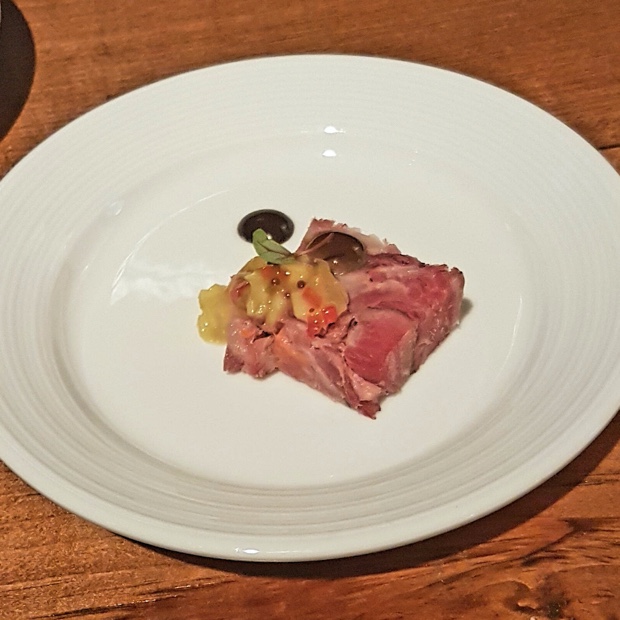
Chef Andrew McLeod, Bolete Restaurant, Pork hock terrine with Jerusalem artichoke relish and black garlic

Domaine Queylus Pinot Noir Réserve Du Domaine 2014, VQA Niagara Peninsula, Ontario (392886, $44.95, WineAlign)

Two pinot noir worlds collide in the Réserve du Domaine, one from Jordan and the other Beamsville, with fruit forged and fused via Neudorf Farm’s Le Petit and Mountainview Vineyard. The collaboration is never lost on the Thomas Bachelder-Kelly Mason winemaking cooperation. Le Petit firms up the plummy rich unctuousness of Mountainview like any good spouse should and the match is unpredictable, at times inflammatory but in the end, made in heaven. Whole berries do their carbonic foreplay thing, infusing energy and keeping things light with assistance from a vintage in echo of the sentiment. This is more flavourful and quite possibly, potentially more structured than 2013 though it may also compromise some classicism for ultra modernity. It’s too young frankly to make such bold statements so let’s just call it a draw. Drink 2018-2024.  Tasted at Cuvée, March 2017  @QueylusVin  @Bachelder_wines

Trius Showcase Cabernet Franc Red Shale Clark Farm Vineyard 2014, VQA Lincoln Lakeshore, Ontario (Winery, $45.20, WineAlign)

Showcase is from the wealthiest of cabernet franc Niagara fruit aboard the Clark Farm rows and placed in the hands of Trius for full effect. The Red Shale is housed in 30-35 per cent new oak, travels fully and completely through malolactic fermentation and lots of lees are kept, stirred, shaken and promoted with extreme prejudice. This is rich and beautifully reductive, a smoky batter enriched by 18 months in selected, set aside for a rainy cabernet franc day barrels. Something exotic this way wafts as it always does, with green herbal phenols and sweet spice island Syzygium aromaticum. In the end its incredibly long despite its rebel youth so know that it will be a finer Niagara cabernet franc with time tucked in pocket. Another notch etched in Clark Farm lore. Drink 2019-2022.  Tasted at Cuvée, March 2017  @TriusWines  @PellerVQA

Executive Chef James Price, Scotiabank Convention Centre, Lady Agnes’s roast duck saves the nation. Sloe berry and lavender brined duck, cellared vegetables, watercress and parsnip

Good to go!

Godello

Twitter: @mgodello

Instagram: mgodello

WineAlign

15 Canadian wines that rocked in 2015

15 in 2015

In the past 12 months I have tasted Canadian wines. Somewhere between hundreds and a thousand of them. Aside from day-to-day assessments at home, in the LCBO sensory lab, at the WineAlign office and at events in Ontario, I’ve also been a part of judging panels. In 2015 I sat in at the Ontario Wine Awards, WineAlign National Wine Awards of Canada, WineAlign World Wine Awards of Canada and Gold Medal Plates.

Flight 3, code red #pinotnoir redux. Right proper #NWAC15 picks & pours @FortessaCanada stems @winealign staff rock!

Flight 3, code red #pinotnoir redux. Right proper #NWAC15 picks & pours @FortessaCanada stems @winealign staff rock!

In 2014 the highlights numbered 14, just as in 2013 the number chosen to cant, recant and decant excellence in Canadian wine was 13. And so forth leads to 15 in 2015.

Related – 14 Canadian wines that rocked in 2014

The Legend, the Sommelier and the Godello #geddy #yyz #gmp2015 #goldmedalplates #rush

The Legend, the Sommelier and the Godello #geddy #yyz #gmp2015 #goldmedalplates #rush

Canadian wine is growing with exponential force, gaining ground in markets at home and abroad. Brits dig us. I know, they told me. British Columbia is a desert oasis of variable climates to fascinating degrees. Oh the Syrah, Riesling and Gamay that rocks forth. Ontario stood up to two straight brutal winters and screamed, “we still made great fucking wine.” Take that mother nature.

Related – 13 Canadian wines that rocked in 2013

And I quote. “Picking a top anything list is both a chore and a labour of loyalty. The opportunities to learn more about Canadian-made wine, especially the processes and the efforts, were numerous in 2014. Canadian winemakers opened their doors and when people came, they taught. They walked the vineyards, showed off their prized barrels and walked through the processes of making wine. Tasting and barrel rooms make for the greatest classrooms. Get out there in 2015. The experience is priceless.”

Riesling at the Carriage House, Vineland Estates Winery - March 7, 2015

Riesling at the Carriage House, Vineland Estates Winery – March 7, 2015

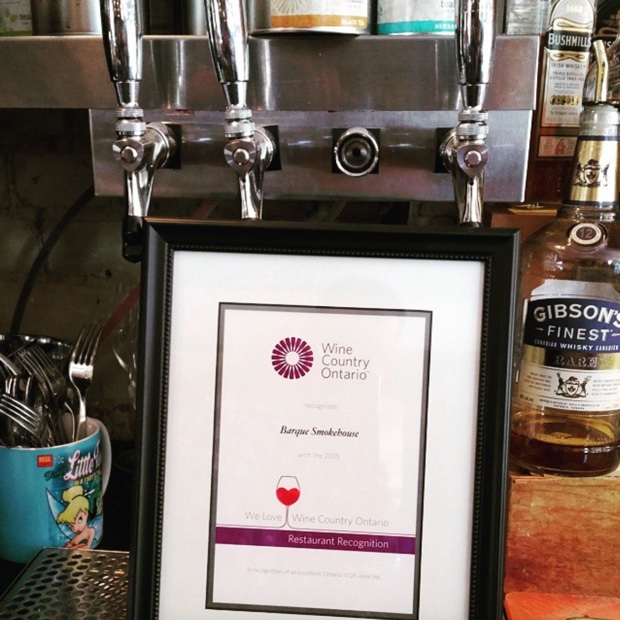
So I did. In 2015 I visited Niagara for Icewine Fest, discovered exceptional cider (with percentages of Pinot Noir and Riesling) made by Angela Kasimos at Small Talk Vineyards and have been pouring it on tap at Barque Smokehouse and Barque Butcher Bar ever since.

The pioneer for #vqa #wineontap feel good recognition from @winecountryont Thank you from @barquebbq #ontariowineweek #ontwine #drinkontario #pourontario

The pioneer for #vqa #wineontap feel good recognition from @winecountryont Thank you from @barquebbq #ontariowineweek #ontwine #drinkontario #pourontario

The taps at the two restaurants poured a record number of wines in 2015, from Tawse, Lailey, Norm Hardie, Creekside, Between the Lines, Kew Vineyards, Redstone, Stratus and Leaning Post. In March we travelled with CAPS Ontario for an eight-hour intense immersion into Niagara Riesling and Cabernet Franc.

Smiles with hops. Beer fridge @Niagara_College @mkaiserwine @chefmolson @drjamiegoode #niagarateachingbrewery #notwine #greatbeer

Smiles with hops. Beer fridge @Niagara_College @mkaiserwine @chefmolson @drjamiegoode #niagarateachingbrewery #notwine #greatbeer

Another visit with Ilya and Nadia Senchuk at Leaning Post Wines in Winona, Ontario shed new lights, especially for Syrah from the Lincoln Lakeshore. In June I toured the facilities at Niagara College with Dr. Jamie Goode, Magdalena Kaiser and our host Chef Michael Olson. Jamie and I tasted through an impossible number to count Domaine Queylus wines with Thomas Bachelder. On that I will report really soon. Really soon…

Cool Chardonnay at Ridley College

Cool Chardonnay at Ridley College

The Cool Chardonnay conference in July was in fact, the coolest yet. I spent three more glorious Annapolis-Gaspereau Valley days with Mike and Jocelyn Lightfoot in Wolfville, Nova Scotia. Visits to Domaine de Grand Pre, L’Acadie Vineyards and Benjamin Bridge filled out the east coast foray.

Comity in the County godello.ca #PECwine #princeedwardcounty #cherryvalley #clossonridge #danforthridge #greerroad #laceyestates #hubbscreekvineyard #hinterlandwine #lighthallvineyards #clossonchase #adamoestatewinery #northshoreproject

Comity in the County godello.ca #PECwine #princeedwardcounty #cherryvalley #clossonridge #danforthridge #greerroad #laceyestates #hubbscreekvineyard #hinterlandwine #lighthallvineyards #clossonchase #adamoestatewinery #northshoreproject

In the fall I made pilgrimage to Prince Edward County to get a grip on the eskers, ridges and aspects of what makes wine so special in that part of Ontario.

As always there are wines that should have, would have and could have made the cut were there more time, space and yet another, better headline to write. Some were knocked off the shortlist because they may not have been quite as exciting though were this list one of “most important,” then perhaps they would have stayed put. These four are perfect examples of that condition.

Château Des Charmes Old Vines Riesling 2008, VQA Niagara On The Lake, Ontario (277228, $16.95, WineAlign) Perhaps the assessment seven years later creates an unfair advantage but come now, a great wine is a great wine from its humble beginnings. At $16.95, in 2008 or 2015, in Niagara-on-the-Lake, on the Peninsula, this type of emerging propensity is more than gold or platinum, it’s money.

The Good Wine Cabernet Franc 2012, VQA Lincoln Lakeshore, Ontario (350751, $20.95, WineAlign) from winemaker Ross Wise and The Good Earth Wine Company’s Nicolette Novak is a necessary example of $20 Lincoln Lakeshore Cabernet Franc offering up every reason to drink it and demand that more me made.

Creekside Estate Winery Pinot Noir Queenston Road Vineyard 2013, VQA Niagara Peninsula, Ontario (Winery, $22.95, WineAlign) is what winemaker Rob Power refers to as a lay lady lay style. Still the Kama Sutra Pinot Noir of inviting behaviour.

Hubbs Creek

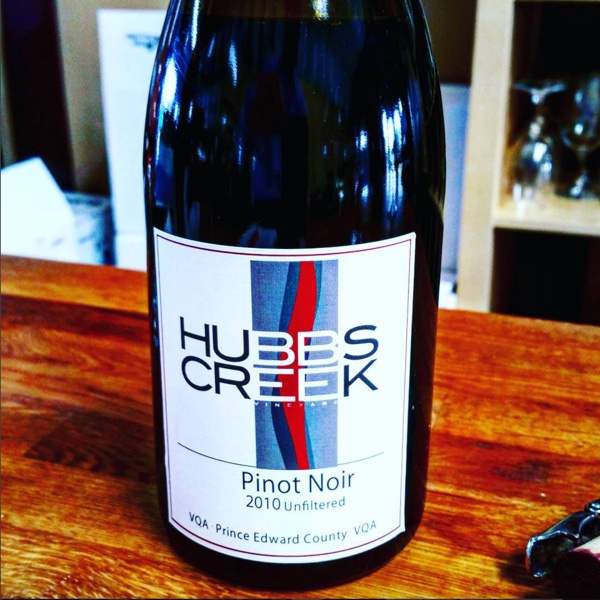
Hubbs Creek Vineyard Pinot Noir Unfiltered 2010, VQA Prince Edward County, Ontario (Winery, $28.95, WineAlign). The HCV Danforth Ridge is clearly a top Pinot site in the County (along with slopes on the Greer and Closson roads). Planted to high density the results are proven in wines like this 2010

The year that was 2015 seemed to bring out the adventurous winemaker, the risk-taker and the progressive thinker. While these five wines were not so much exciting as much as they were cerebral, they need to be mentioned. Whenever the envelope is pushed and the emotions of geeks are sequestered, well then a wine has achieved something special. These five really opened some doors.

Bergstrom and Hillebrand

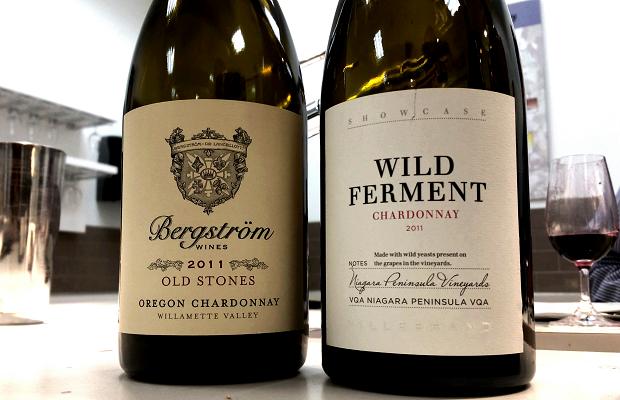
Hillebrand Showcase Series Wild Ferment Chardonnay 2011, VQA Lincoln Lakeshore, Niagara Peninsula, Ontario (199273, $36.20, WineAlign) speaks the treble language of the vintage, predicated on bold ideas looking forward towards a bright future. Ultimately it is yeast and vintage, non partisan to site, that elaborate the Wild Ferment.

Southbrook Vidal Orange Wine 2014

Southbrook Vidal Orange Wine 2014

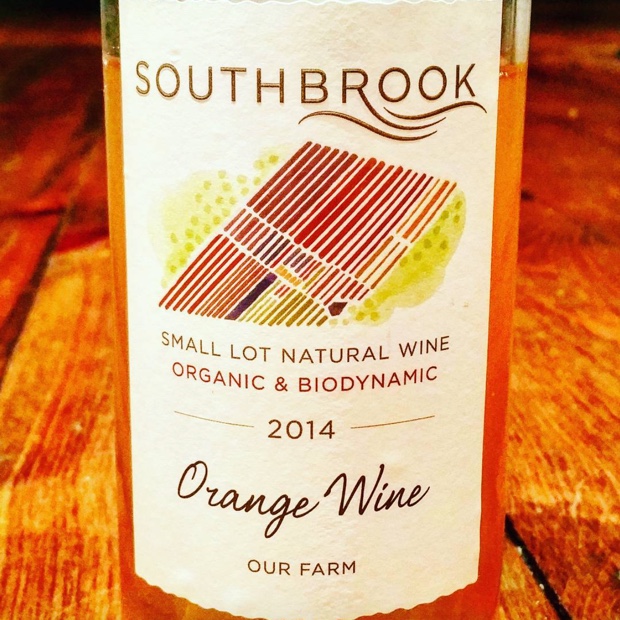
Southbrook Vineyards Whimsy! Orange Wine 2014, Niagara On The Lake, Ontario (Winery, $34.95, WineAlign). The technique and the practice is ancient and has been kept alive. The only questions need asking are “is it good, is it well-made and would I like to drink it?”

In bottle @Tawse_Winery #quarryroad 2014 #natural soon to tap @barquebbq #chardonnay #naturalwine #unfiltered #paulpender #vinemountridge #niagarapeninsula #vqa #ontwine

In bottle @Tawse_Winery #quarryroad 2014 #natural soon to tap @barquebbq #chardonnay #naturalwine #unfiltered #paulpender #vinemountridge #niagarapeninsula #vqa #ontwine

Tawse Chardonnay Quarry Road Natural 2014, VQA Vinemount Ridge, Niagara Peninsula, Ontario (Winery, $35.95, WineAlign). It’s one thing to make a natural wine in Ontario and a world away to do so with Chardonnay. “The law was never passed, but somehow all men feel they’re truly free at last. Have we really gone this far through space and time?”

The latest rendition of Vin de Curé, the “Parish Priest’s,” and the Jura’s Vin de Paille (Straw Wine) of Burning Kiln Stick Shaker Savagnin 2013, VQA Ontario (367144, $24.95, WineAlign) is a white elixir in search of roast pork, braised belly and cured bacon. Not to be missed.

Inniskillin Discovery Series Botrytis Affected Viognier 2013, VQA Niagara Peninsula (375ml), Ontario (405027, $39.95, WineAlign) though not a common Viognier practice can be imagined with Vendanges Tardives simulation.

Filtering Nova Scotia #peggyscove #eastcoastswing15

Filtering Nova Scotia #peggyscove #eastcoastswing15

I try to concentrate on new releases, unless something old (read: Riesling) jumps out and bites me in the ass. The 15 Canadian wines tasted in 2015 that wooed, wowed and whetted the appetite are the fingers, toes and tongues of their creator’s ideals, hopes and dreams. They are also quintessentially representative of their time and place.

And the winners are...

And the winners are…

Charles Baker Riesling Ivan Vineyard 2014, VQA Niagara Escarpment, Ontario (Winery, $27.00, WineAlign)

From the rich limestone and sandstone beneath the clay, 1.1 acre Misek vineyard, a southerly ledge up from Highway 8 and an easterly hill down from Cherry Avenue. A very linear Ivan combs the catacombs of the Escarpment’s underpinning. A retaining wall of vintage attenuated rocks and stones, a vineyard’s low yields and the voices in Charles’ head have produced a striking Riesling. In 2014 adolescence has entered adulthood. Now before us is a grown up Ivan, mature Ivan, maybe even wise Ivan. Texture is in manifest control in this loyal, stay at home Baker, not yet running wild like free-spirited Picone. Ivan has presence, sometimes a great notion and is Baker’s longest bit of prose to date. The next great Riesling vintage will make it iconic. Drink 2016-2020.  Tasted April 2015  @cbriesling

Swan Song- @ClossonChase Chardonnay CCV 2013 #clossonchasewinery #deborahpaskus #pecwine #pec #winecountryontario

Swan Song- @ClossonChase Chardonnay CCV 2013 #clossonchasewinery #deborahpaskus #pecwine #pec #winecountryontario

Closson Chase Chardonnay Closson Chase Vineyard 2013, VQA Prince Edward County, Ontario (Winery, $27.95, WineAlign)

This CCV Chardonnay is one of departed winemaker Deborah Paskus’ final acts at Closson Chase. It will forever be noted as a legacy-cementing, swan song of career excellence. Crafted by Paskus and bottled by the next one, current winemaker Keith Tyers, the 2013 CCV is simply a tour de force. No such combination of richness, tropicality and pure grape tannin has ever infiltrated this Chardonnay, from this vineyard. I’m not sure there is a comparison in Ontario, at this level of excellence and at this price. A wine of pure impression, with Montrachet-like structure and Folatières-like precision. Seemingly capacious, its facile legerity is hypnotizing, quantitatively escalating in assembly of aromas, flavours, through texture and finally to longevity. The wine spent 16 months in a mere (17.25 per cent new) oak. That it notes 12.5 per cent alcohol on the label is next to impossible. The substance is just too buttressed to be so tender and effete. Impeccable balance, refinement and mineral finish. This is Chardonnay to confuse the world’s fine white collectors, to wreak havoc at international tastings for five to 10 years. Only 712 cases are available and at $27.95, is down $2 in price from the 2012. Best ever, hands down. Drink 2017-2023.  Tasted March 2015  @ClossonChase

"There's no work in walking in to fuel the talk." @MalivoireWine Melon & @PearlMorissette Gamay #NWAC15 Parting of the Sensory #CuvéeMonUnique #shirazmottiar #treadwells #winealign #winecountryontario

“There’s no work in walking in to fuel the talk.” @MalivoireWine Melon & @PearlMorissette Gamay #NWAC15 Parting of the Sensory #CuvéeMonUnique #shirazmottiar #treadwells #winealign #winecountryontario

Pearl Morissette Gamay Cuvée Mon Unique 2014, VQA Lincoln Lakeshore, Niagara Peninsula, Ontario (Winery, $29.00, WineAlign)

In December of 2014 I counted the ’13 CMU Gamay as one of my mind-blowing wines of the year. Once again we are witness to the authentic, raw and natural impossibility of the wine, from 100 per cent whole clusters sent to cement fermenters. The hue is just impossible, the wine sulphur-free. That ’13 Gamay did not last. I tasted again this winter and it failed me. It may return. This ’14 will never leave. It is natural to the 14th degree and yet its rich, smokey chocolate  centre and structure of pure physical stature will not let it slide, into a dumb phase or oblivion. This Gamay will strut. It already does. Drink 2015-2020. Tasted June 2015  @PearlMorissette

Cave Spring Csv Riesling 2013, Cave Spring Vineyard, VQA Beamsville Bench, Niagara Peninsula, Ontario (566026, $29.95, WineAlign)

That flesh, that Kabinett flesh, fills the CSV in every crevice. In 2013 the residual sugar number lies between 15 and 16 g/L, and though the crop was bigger, it was still picked later than in 2012. The result is formidable corporeal concentration, consistency of house style and perhaps the only ’13 Niagara Riesling to imitate, perpetuate and extrapolate on the vintage that came before. This Cave Spring concentrates fruit and Escarpment into a powerful Riesling, streaming like charged particles through changing expressions. A lingering ascension hovers as it rises, until it slowly fades into the welkin, like a balloon that languidly gets lost into the blinding blue of a midday sky. Drink 2017-2025.  Tasted April 2015  @CaveSpring

Malivoire Mottiar Chardonnay 2012, VQA Beamsville Bench, Niagara Peninsula, Ontario (Winery, $29.95, WineAlign)

Any Chardonnay from a vineyard discovered on a bicycle just has to be the bomb. Winemaker Shiraz Mottiar has had many an adventure on his bicycle and it all began here in a plot of perfectly planted Chardonnay. A block that became his home vineyard. The fodder for this most balanced Chardonnay and its abilities transcend all that has come before. You would never know a barrel was ever involved and yet the silken sheaths of texture are well compressed and expertly ingrained. Nothing falls out of place. Everything remains in its right place. The radio is dialled in, from the top and outward in waves. “There are two colors in my head,” Everything in its right place. Drink 2016-2024.  Tasted November 2015  @MalivoireWine  @ShirazMottiar

Thirty Bench Small Lot Steel Post Vineyard Riesling 2009, VQA Beamsville Bench, Niagara Peninsula, Ontario (Winery, $30.00, WineAlign)

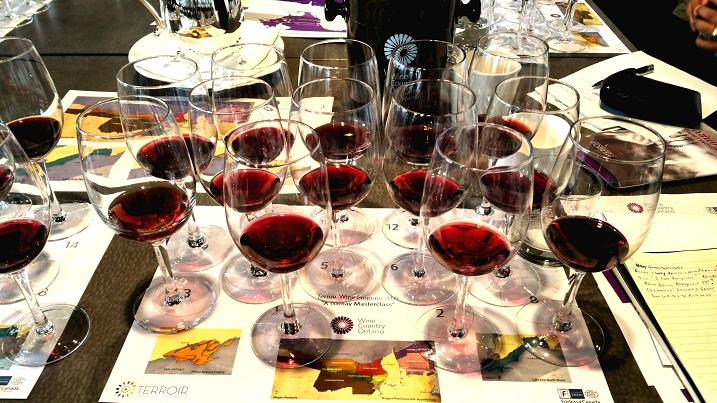
Riesling Masterclass

Riesling Masterclass at Terroir 2015

Balance is and therefore always was struck. The match percusses flint for a mere nano-second, with just a brush on cymbal, the rock bleeds but is quickly clotted because the fruit shines still, like around the clock light. The steely aspect is a posterior one, antithetical and yet purposed, from this vineyard. Youth tells common sense to think 2011. The Riesling behaviour seems to play that part, of a chalky, piercing acidity, so typical of that vintage and so distinctly Thirty Bench. That the wine is older is not a big surprise because 2009 is the bomb. It may just be the best Riesling vintage, from on that Bench, in the last 10. Drink 2015-2025.  Tasted May 2015  @ThirtyBench

C.C. Jentsch Syrah 2013, BC VQA Okanagan Valley, British Columbia, Canada (Winery, $34.95, WineAlign)

Oh so beautifully nasty Syrah, spicy, saucy and wicked. Resin, somewhere between myrrh and mastic, redacts reductively and tension stretches the savoury aspects in all directions. Blood orange and anise blend into the aromatic grain, repeating again through flavour mettle. Fruit, acidity and tannin are interwoven, circulating and on edge, in pitch perfect darkness. Syrah in the big time with the stuffing to age. Drink 2016-2022.  Tasted blind at WWAC15, August 2015  @CCJentschCellar

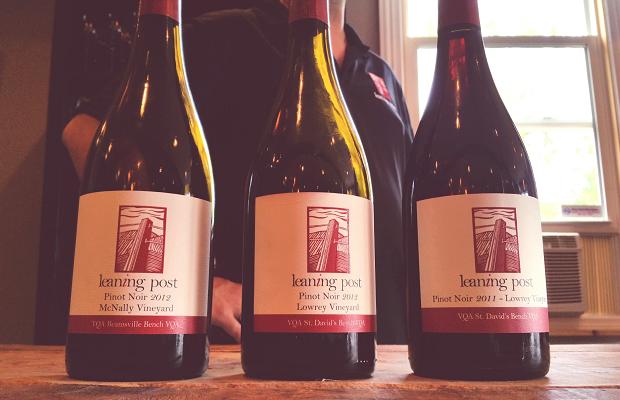
Three Pinot Noirs of Leaning Post

Three Pinot Noirs of Leaning Post

Leaning Post Wines Pinot Noir McNally Vineyard 2012, VQA Beamsville Bench, Niagara Peninsula, Ontario (Winery, $38.00, WineAlign)

“I want you to see the difference between vineyards. That’s terroir.” This the crux and the impetus to abide and acquiesce fruit from McNally, a cooler, higher site of younger vines. For Ilya, this is “truffle hunting, eating roasted pig, at the base of an oak tree.” The forest floor and the catalytic funk come across more in flavour than smell, following cherries in the dead of an aromatic night. Modernity be damned, this strikes ripe, layered and nearly indelicate. The wine’s got some real chew to it, along with crispy flowers, like nasturtium and lavender. “I think this is the best Pinot that I’ve made,” boasts Senchuk, from 15 year-old vines at Peninsula Ridge. Ilya’s muse came from the 2010 made by winemaker Jamie Evans, along with the Voyageur ’10 made by Ross Wise at Keint-He. Wines that spoke in a vernacular that Senchuk could understand and relate to on a deeper level. Prime ripeness defines 2012. Though it teases of grandiose terroir, its complexities reign in the power with each sip, every time. Drink 2016-2022.  Tasted June 2015  @LeaningPostWine

Potatoes, not wine #pei @normhardie

Potatoes, not wine #pei @normhardie

Norman Hardie County Unfiltered Pinot Noir 2013, VQA Prince Edward County, Ontario (125310, $39.00, WineAlign)

Procuring depth in County Pinot Noir is a tough task within the constraints of resisting a temptation to reach for sugars, alcohol and dark berry fruit. Norm Hardie’s 2013 unfiltered (at 10.9 per cent) and lambent exegesis succeeds because it offers the best of all available worlds. Roots for vines that burrow to limestone develop a structure that while may have at one time been inconsistent, have crossed the threshold in ’13 to establish a guarantee. A Hardie PEC Pinot Noir can be bright and accessible. It can also be tough, tart and tannic, as it is here, again, but not without its foil. The work is now innate, the transitions seamless, the crossroads left in the dust. This wine will please two camps; those who can afford and demand immediate gratification and those who are willing to wait for secondary (two to three years) and tertiary (four to seven) character development. Drink 2017-2022. Tasted April  and September 2015  @normhardie

Culmina Hypothesis 2013, BC VQA Okanagan Valley, British Columbia, Canada (Winery, $39, WineAlign)

In 2013 the blend is not listed on the label though it strikes as a return to Cabernet Franc, albeit with a layer of lush not yet perceived. The 2013 combines the best of worlds put forth by the two previous vintages; ripe fruit, earthy-mineral tang, proper acidity and ripe, tonic tannin. The composition here is the most, accomplished, distinguished and relished. In 2013 the enjoyment can be right now or up to 10 years on. All this with thanks to exceptional balance. Drink 2015-2023. This wine has not yet been released. Tasted November 2015  @CulminaWinery

Sparkling wines by Hinterland

Sparkling wines by Hinterland

Hinterland Les Etoiles 2012, VQA Prince Edward County, Ontario (Winery, $39.00, WineAlign)

An axial split between Pinot Noir and Chardonnay balances this traditional method Sparkling wine, specific to and what can only, obviously be from Prince Edward County. Acidity defines its existence in every facet of its being. A rich star to be sure, from a warm vintage, free from frost and more importantly, immune to mould. Jonas Newman talks of the methodology, in growing low to the ground. As the sun goes down, the canopy shades the fruit, slowing down the ripening, extending the season, developing the sugars, the complexities and preserving the acidity. At 6 g/L RS, with limestone communication and that sassy acidity, Les Etoiles in ’12 is pure County Sparkling. It exudes untamed apple and unnamed acidity. The Hinterland acidity. It strikes early and often. Just add warmth, stir and voila. Terrific year. Drink 2015-2021.  Tasted October 2015  @hinterlandwine

Ancienne Chardonnay and Pinot Noir 2013 with a glass of soon to be released Rose

Ancienne Chardonnay and Pinot Noir 2013 with a glass of soon to be released Rose

Lightfoot & Wolfville Pinot Noir Ancienne 2013, Nova Scotia (Winery, $40, WineAlign)

If de novo for Pinot Noir is to be found in Nova Scotia then count me in because the inaugural release from Lightfoot & Wolfville is the trailblazer for and from the extrinsic frontier. Tasting the painstakingly measured yet barely handled 2013 for the first time (from bottle) is like falling into a glass of Nova Scotia cherries. Somehow there is this simultaneous and virtual voyage abroad to imagine a comparison with Nuits-Saint-Georges, in its earth crusted, sanguine, welled up tension that begs questions and belies answers. A year yonder the taste from barrel and what can be said? Pinot Noir adjudicated, into a cortex of recognizable consciousness and thus into the natural Nova Scotia mystic. Ignore and forgive the dope of first returns, for no one could have imagined such ripeness and immediate gratification. Future releases will dial back in the name of structure. That said, in 2013 there is a red citrus, ferric debate that will send this to an exordium seven years down the road. Impossible inaugural release. Approximately 50 cases made. Drink 2015-2022.  Tasted July 2015  @lwwines  @rachel_hope

Stratus assemblage and varietals

Stratus assemblage and varietals

Stratus Tannat 2012, VQA Niagara On The Lake, Ontario (Winery, $42.00, WineAlign)

“To me this is one of the most successful new varieties we are planting,” exclaims J-L Groux. In similar ways with Stratus varietal cousin Petit Verdot, acidity rules the roost. Smells like a just sliced open bag of organic earth, freshly neutral, funkless and emptying into a (first use) terra cotta pot. A rich, looking straight ahead expression. What it hides in fruit is lost to the brilliance of balance though plum is the operative hidden flesh and it will make a clearer impression when it steps clear of the tar and the tannin. This is pitchy sagacity, with poise and length. Drink 2016-2022.  Tasted June 2015  @StratusWines

Tasting The Old Third at White Oaks

Tasting The Old Third at White Oaks

The Old Third Sparkling Pinot Noir à la Volée 2011, VQA Prince Edward County, Ontario (Winery, $59, WineAlign)

“On the fly” is not exactly what comes to mind from this 100 per cent Pinot Noir, first Sparkling wine made by Bruno Francois. Calculated, attention to detail and intensity of ideation more like it. Three years on the lees, no dosage and from a vintage to speak in more than whispered voices, of acidity that announces its arrival with immediacy and a summons to contest. The nose does yeast, toast, citrus and ginger. A first release revelation as ever graced Ontario’s waves, as dry as the desert and lingering with switch back traces of its yeasty, toasty self. A single vineyard can be this way, equally and in opposition of natural and oxidative, with a hue less than Pinot Noir, though unrequited as a triumph when you get a ripe white from such Pinot. The production of 1200 bottles is relatively house high in a stunner that needs no sugar to draw up its flavours. Drink 2015-2023.  Tasted twice, July and October 2015

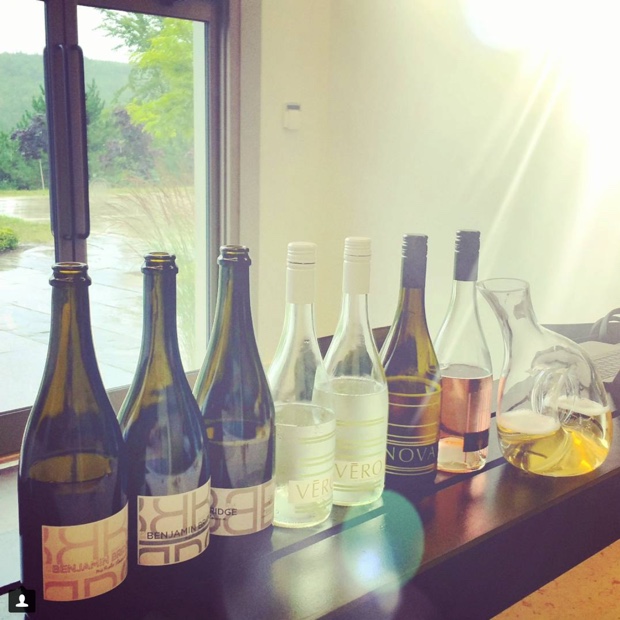
asting across the @Benjamin_Bridge Vero, '08's, '04, Sparkling & Cab Franc Rosé. Thanks JB, Scott & Mike

asting across the @Benjamin_Bridge Vero, ’08’s, ’04, Sparkling & Cab Franc Rosé. Thanks JB, Scott & Mike

Benjamin Bridge Brut Reserve Methode Classique 2004, Annapolis Valley, Nova Scotia (275396, $95.00, WineAlign)

The ’04 is hanging in beautifully, on a wire of impossible balance, at 11 years old not yet really transitioning. There is simply too much brightness for it to give up its youth. You have to strain your ears, nose and throat to assuage just a hint at oxygen, life affirming breaths and then a keener sense of toast and yeast. Still behold the grapefruit, a sign of remarkable adolescence, the hang time amplified and in mass hyperbole here, in this current appraisal, address and time. How can richness act and display with such alpha freshness? How can an aging body not shed baby weight, turn lanky, lean and awkward? How is it neither the bitter pill of juvenility or senility has been swallowed? That is not the case here in a Blanc de Blancs which still has five to seven years of very active life ahead. Drink 2015-2021.  Tasted July 2015  @Benjamin_Bridge  @jbdeslauriers

Good to go!

Twitter: @mgodello

Instagram: mgodello

WineAlign: Michael Godel

Facebook

Master classes of Terroir

A Gamay Masterclass, Terroir Hospitality Symposium, May 11, 2015, Arcadian Court

A Gamay Masterclass, Terroir Hospitality Symposium, May 11, 2015, Arcadian Court

The Terroir Hospitality Symposium took place on May 11, 2015 at Arcadian Court in downtown Toronto. The one day food and wine colloquium was a massive simmering feast set in sprawling fashion within an undersized, intricate urban labyrinth. Despite the frenzied and condensed action in the downtown venue, that congress merely offered a look at the tip of the proverbial Terroir iceberg. With upwards of 3o team members leading the charge, the movement left the big fat city address and trekked to set up shop at a local farm and out to the rock at the eastern outermost edge of the country. Terroir moves outwards, onwards and upwards, taking it to the fields and the oceans.

The Terroir Best Practice Culinary Mission went to St. John’s, Newfoundland from May 14th to 17th. The One Fish expedition travelled “to meet fishing industry experts, to explore and examine both the history and the current realities of an Atlantic community built on an economy of the fishing industry.” There was also “the feast that keeps on giving,” at which the Feast Ontario team was hosted at Grandview Farms in Thornbury, Ontario

Led by Founder & Chair Arlene Stein, Vice Chair & Awards Rebecca Leheup, Terroir Talk the dextrosinistral/sinistrodextral enterprise is an undertaking of the extreme variety.

A look at #Terroir2015 in images

Terroir is an event, a series of gatherings, a notion, a philosophy and a way of life. Its mandate is this: “Terroir Hospitality brings together innovative and creative influencers from the field of hospitality, including chefs, food and beverage experts, writers and business leaders.” It’s also not without detractors. There are some who feel it is a negative representation of the culinary and cultural scene in Toronto. That it’s “white, urban, Euro-centric. It ain’t Canada, or 2015. Not funny.”

If the list of participating speakers, chefs and winemakers had been correlated with shortsighted discrimination, ill-curated and preordained with exclusive, malice prepense, you would have been hard-pressed to get an interview with any guest who would have chosen to speak about the called-out lack of representation or narrow-minded decision-making. If the culture and the colour of the event needs to change it will do so with holistic bias and sympathy, with the right sort of urging from the global culinary and vinicultural community. If the pundits are correct, future sessions will reflect the will of the people. In 2015, the atmosphere was wholly copacetic.

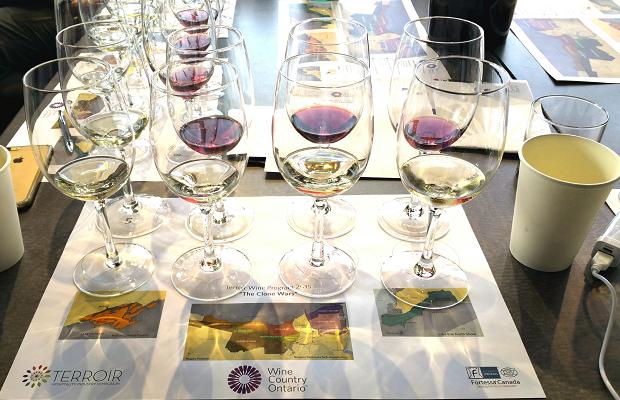
The 2015 Terroir wine sessions were marshalled with “an effort to raise the academic standards of the wine side of our symposium,” in three assemblies, to educate and entertain. These Masterclass jams, Gamay, Terroir, and Clone Wars were coordinated by Good Food Revolution’s Jamie Drummond and Magdalena Kaiser with great support from Wine Country Ontario.

The connection between food and wine is an intrinsic one. They are like chicken and egg, contrary to reason in electing which comes first. Chefs and winemakers, purveyors of the land from which their produce grows, transmuted into cuisine and fermented into wine. Facilitators of terroir, harvesting at optimum ripeness and then initiating the transmogrification with immediate haste, in urgency, to capture, lock in and bottle aroma, flavour and texture, before any chance of deterioration or spoilage.

But what the fuck is terroir? The most used word in the language of wine is in fact, terroir. Nothing else compares, comes even remotely close, or causes as much debate. Except for minerality, but those who concern themselves in the matters of ridicule, dismissal and denial ignore the fact that the opposite of fruit is simply, unequivocally and finally, incontestably, mineral.

Were the notion of terroir to be a belief as simple as “what happens in the vineyard, through environment, by geology, geography and topology, from naturally occurring elements and microbes in the soil, by air and of climate. Were it just a matter concerning “the impossible creator of perfect storms, from out of riddle and enigma,” well, then, we could all just go home. It’s much more complicated than that and real.

Most winemakers will agree, in principle, to this. “The final goal is to make the finest wines that express terroir.” Organic and biodynamic are important. Terroir is more important. But winemakers are no fools. They know that “during the grape’s life cycle, genealogy and climate shape its development. But even after it is plucked from the vine it still carries no true identity, in so far as what it will become as a wine. This is the point where nature gives way to nurture. Environment now acts as the catalyst to shape the wine’s life. Wine does not evolve because of natural selection. It evolves at the hands of the winemaker.” Anti-terroir?

At this year’s Terroir Talk Symposium, Gamay was chosen as the first wine session’s go to grape variety, to investigate both the serious and not-so serious sides of its existential weightlessness. To revel in its lithe, brightness of being and to unearth its deep roots. That we have come to a time in history where both aspects can be studied in Burgundy and in Ontario is fortuitous indeed. As a Gamay groupie, I feel blessed to be born under a good sign, at the right time.

As a reminder, it’s always the right time to be with the Gamay you love. I have been urging Ontario farmers to plant, cultivate and nurture Gamay; for winemakers to make it more and more. I made “a proclamation in favour of a great grape and one that forges signature wines out of Canadian soils. I am an ardent supporter of and a willing rider on the Gamay bandwagon, in the name of connaitre and savoirkennen and wissen, recognition and understanding.”

Related – Go Gamay Go

It’s working. Rosewood Estates just planted it for the first time. Gamay is poured at the cellar door, at tasting events and in private gatherings all the time now. Bottom line is Gamay costs half of the price compared to Pinot Noir and Syrah and it thrives in Ontario. It can make serious Cru quality reds and even at the highest end, sell for less than $30. It has been, continues to be and will always be #GoGamayGo time in Ontario.

Related – It’s go Gamay go time

Moderator Chris Waters and the Gamay Masterclass panel: Jamie Drummond, Magdalena Kaiser, Martin Malivoire, Shiraz Mottiar, Bill Zacharkiw and Guillaume de Castelnau

Moderator Chris Waters and the Gamay Masterclass panel: Jamie Drummond, Magdalena Kaiser, Martin Malivoire, Shiraz Mottiar, Bill Zacharkiw and Guillaume de Castelnau

The first Masterclass: Gamay The Next Little Thing

“The intent of the first of the three wine sessions, was meant to investigate how it performs in Ontario and elsewhere in the world.”

The Panelists:

  • Winemaker Guillaume de Castelnau, Chief Winemaker/Director, Château des Jacques, Louis Jadot Beaujolais (Beaujolais, France)
  • Vigneron Martin Malivoire (Malivore, Beamsville Bench, Ontario, Canada)
  • Winemaker Shiraz Mottiar (Malivoire)
  • Wine writer/Sommelier Bill Zacharkiw (Montreal Gazette/Wine Align, Montreal, Quebec, Canada)

The Moderator: Wine writer Chris Waters (Vines Magazine/Intervin, Ontario, Canada)

To many, Gamay is a wonderful drug and though much maligned, its suitors and supporters can never tire of its freshness and its lightness of being. Moderator Chris Waters refers to Gamay as “a gateway grape, to transition drinkers from white to red wine.” In a world according to Guillaume de Castelnau, “Gamay is lazy, generous and fragile.” Bill Zacharkiw minces nothing, not words, nor feelings. “I love Beaujolais.” In the Terroir Master Class, there were 13 variations on Gamay, from semi-carbonic to old and baked, with many shades, hues, intensities and variations in between. Here are my notes.

Ontario Masterclass Gamay

Ontario Masterclass Gamay

Malivoire “Le Coeur” Gamay 2014, VQA Niagara Escarpment, Niagara Peninsula, Ontario (Winery)

Shiraz Mottiar refers to the young, Beaujolais impressionist as “Sammy Carbono,” a semi-carbonically macerated Gamay, with one foot in Nouveau and the other in a dusty, freshly spirited aromatic whirl. The tanky feel makes it accesibly gulpable. Like a leaping horse it is also twitchy, hopping in dressage, popping in the mouth. Fun if beside the point. Drink 2015.  Tasted May 2015

Malivoire M2 Small Lot Gamay 2013, VQA Niagara Escarpment, Niagara Peninsula, Ontario (Winery, $19.95, WineAlign)

A month later the pepper runs from white to black, by way of red. Terrific sour edged fruit. Strawberry and cranberry tied together by citrus. Will need two years minimum to fully integrate.
From my earlier note of April 2015:
The profundity of tart, keen, briny berries dilates in its own very useful layers of citrus, tannin and concentration, beyond even what was observed in 2012. The zesty, spritely argot resonates from the unfurling of floral essentia out of a Gamay in desperate need of time. The flavours and overlay are somewhat impenetrable and yet leave quite an impression. While patience might be the virtue and the reward, if #gogamaygo is the modus operandi, a swig from the bottle like gentlemen of the road is certainly not out of the question. Drink 2016-2021.

Last tasted May 2015

Leaning Post Gamay 2013, VQA Niagara Peninsula, Ontario (Winery, $25.00)

A year has clarified the must into a venerable, beneficial decay, like effulgent, liquid rust. The shine of antiquity and then a blast of cinnamon dominates for the first major swirl. So lithe and profound like wise Pinot Noir, minus the Niagara coat of arms and lacquered veneer. Whatever anxiety may have held down the brightness has eased to deliver this current, optimum drinking window. Drink 2015-2016.  Tasted May 2015
 
From my earlier (tank sample) note of May 2014:

Guiltless and virtuous straight out of stainless, the meaty side of Gamay game boldly goes where few from the Bench have gone before. Like a rare venison steak sitting in a silky pool of lavender-scented demi-glace. Floral like Fleurie and despite zero new oak, vanilla joins the gravy. A Senchuk steal of quality Wismer (McLeary…sort of) fruit sets this Gamay up for easy sell success.

Fielding Gamay 2013, Niagara Peninsula, Ontario (Winery, $19.95, WineAlign)

Time has been a friend to the ’13 Fielding Gamay, a wine who’s elevated tones of floral fruit and acidity have settled in the name of structure. Dusty ground nubbins and mint swirl with layered if yet rigid fruit. Low-cropped vines are on display, in single-vineyard like attention to specific detail, akin to Malivoire’s Courtney. This is in fact sourced from a single-vineyard up on the cool Vinemount Ridge sub-appellation. The site is a couple of kilometres south of Peninsula Ridge’s McNally Vineyard, the source of Ilya Senchuk’s terrific Leaning Post 2012 Pinot Noir. The Procyshyn family has been farming this plot (without fanfare) for decades in Beamsville. The pristine fruit that Theo and Shelley Procyshyn grow, along with their three sons, Nolan, Dalton and Brayden, yield as low as 1.5 tonnes and up to 3.5 tonnes per acre, depending on the year. The ’13 was around 3 t/a. Fielding has never labelled this Gamay ‘single vineyard’ because they have always hoped to bring in new Gamay blocks on as part of that wine, but that’s not yet worked out. The ’13 is very, very red raspberry, with a craggy, spiked point of liqueur, like a weeping peak upon that Vinemount Ridge in the afternoon sun. Has Beamsville’s upper reaches written all over its corporeal self. Drink 2015-2017.  Tasted May 2015

13th Street “Sandstone” Gamay 2013, VQA Four Mile Creek, Niagara Peninsula, Ontario (Winery, $19.95, WineAlign)

May just be the first Gamay with a simulacrum towards a style best described as appassimento, what with the overripe fruit, aromatic cure, baked and sun-dried flavours. Sniff the confluence of black raspberry, scorched earth and roasting game bones, its sinew crackling over humid old growth wood. Gets rich into the vanilla, reeking of late harvest lavender and then a mutton funk. Could easily pass for a wealthy, unforgiving style of Cru Beaujolais, like Chénas from Christophe Pacalet. Or it could just be acting older than its age, by seven or eight years. Most prepossessing and confounding Gamay. Drink 2015-2018. Tasted May 2015

Stratus Gamay 2012, VQA Niagara On The Lake, Ontario (Winery, $29.00, WineAlign)

Esteem elevated by structure, matched in poise and presence mottled in smears of darker, richer black cherry. If a slight absence of brightness is sensed due to the syrupy compression, like New World, west coast Pinot Noir, the gleaning from acidity and tannin times perfectly the effluent escape.

From my earlier note of April 2015:

It may not be the most idiosyncratic Gamay in Niagara but the Stratus 2012 is without a doubt the most advanced and complex. Gamay fusion is on display, at once a bottle of Niagara’s finest pulchritudinous veneer and then a charcuterie board laid ample with cured bovine parts and sun-dried grapes. Maximum ripeness and then even later picking, to no one’s surprise, have led to this. Two years of ageing in neutral oak barrels has brought about a humid roundness and yet the centre is controlled by Oz-like mint and eucalyptus notes. The jam is gelid, as opposed to temperate. Rarely does Gamay go to such depths, of blackberry, chalk and grain, with an overlord of tannin. Quite serious stuff. Drink 2017-2020.

Last tasted May 2015

Château-De-Jacques and Malivoire Courtney in the Gamay Masterclass

Château-De-Jacques and Malivoire Courtney in the Gamay Masterclass

Château-De-Jacques Morgon 2013, Ac Beaujolais, France (653584, $24.95, WineAlign)

The flushed scarlet animation is active and astir, like a soft serve swirl of dusty, cherry molasses, bathing in its own natural acidity. Has the presence of wine to integrate chalk, grain and Morgon tannin, in equal, opposite and variegated layers. Nothing shy about this gateway Cru Beaujolais. Drink 2015-2019.  Tasted May 2015

Château-De-Jacques Morgon Côte du Py 2013, Ac Beaujolais, France (Agent, $53.95)

In this rigid and stoic Morgon, the south-facing, blue volcanic slopes of the Côte du Py have provided a measure of firm fruit that will require a minimum two to three years to crack. The gears of the Gamay machinery may be grinding but the windows are yet open, the doors locked tight. This is the least forward, most inwardly introspective and least gregarious of the CdJ Beaujolais. Sharp sapidity, biting tang and piercing penetrating tannin deny immediate or even short-term access. Even the middle palate seems lifeless, devoid of cherry fruit and seamless layering, medicinal even. Judgement should be reserved, with knowledge of pedigree and how a bottle such as this will suddenly, effortlessly spring to life with time. Drink 2018-2022.  Tasted May 2015

Château-De-Jacques Moulin a Vent 2010, Ac Beaujolais, France (Agent, $36.95)

The undergraduate’s blend comes from the appellation’s Château des Jacques parcels; Carquelin, Rochegrès, Champ de Cour, Thorins and La Roche. Granite soils from each spice with symptomatic diversification and combine for a flippant funk that hitches straightforward out of the gate. Here Gamay leaves dusty behind with an urging away from humble and towards nobility. Richly aromatic, amplifying into palate. Such acidity and such grain. For this MaV the time is now, the arrival already announced. A late sense of veneer on the lengthy bitter finish indicates more good times ahead. Drink 2015-2020.  Tasted May 2015<

Château-De-Jacques Moulin a Vent Clos de Rochegres 2010, Ac Beaujolais, France (Agent, $44.95, WineAlign)

From the appellation’s highest parcel, the red sandstone soils of the Clos de Rochegrès are gently sloping and fed by underground streams. I always sense salinity and an effusive, stony energy in wines blessed with subterranean irrigation. The drinking window for this 2010 is wide open and the funk meets age introduction has been made. Already in display of a dried fruit shrivel, the ’10 acts like Sangiovese of a similar senescence, like CCR or Vino Nobile with three to five years of age. The liqueur of roses, the earth and the cherries are culpable and yet the varnish and the baking spice crusting ensure that no one conclusion can yet be made. This is highly seasoned and not quite unfurled Gamay. Two more years should complete its conditioning. Drink 2017-2020.  Tasted May 2015

Château-De-Jacques Moulin a Vent Clos de Rochegres 2007, Ac Beaujolais, France (Agent, $43.95, WineAlign)

Poured from a magnum, the 2007 Clos de Rochgeres is the portal in which to peer, to see what can happen with Gamay. Baked, caked, figgy, funky and oxidative, more than ample fruit was present and persists, with the savoury edges now integrated throughout. Strawberry rhubarb pie comes to mind, with eyes closed and sniffing senses heightened. A bit indelicate, the humidity in tomato leaf and garrigue add to the idea of age though the citric punch and lactic texture are reminders of Gamay’s fun side. There is no shortage of complexity and evolution here. That said, consumption time is now. Drink 2015-2016.  Tasted May 2015

Malivoire Gamay Courtney 2007, VQA Beamsville Bench, Ontario (Winery, $29.95, WineAlign)

The wow aromatics can’t be denied, fully explained nor perfunctorily taken for granted. Age has educated the fruit, stratified and fully saturated this Gamay. Strawberries have shot from an adrenaline cannon and structure has been fully realized with (non-Gamay) Old World confidence. A note of orange blossom, like an early evening Sevilla garden, is rousing. The natural evolve of such a Gamay, with wood, yeast and fruit in expert harmony, recalls the impossible acts of red wines like those made by Emidio Pepe. If the stretch is considered a conceit of poetic licence, so be it. The yet beating heart of raging acidity circling plenteous fruit and so much savour is nothing short of a Gamay miracle. Power and masculinity, by way of a conduit in oak, have been used to great advantage. This has life yet to live. Drink 2015-2020.  Tasted May 2015

Château-De-Jacques Morgon Côte du Py 2006, Ac Beaujolais, France (Agent, $53.95)

Seamless and eminently structured, developed low and slow. The blue volcanic soil has procured an evolutionary subsumption, a roasted, developed personality. The seeping liquor oozes, of earthy cherries, again like Sangiovese, but inelastic and close-grained, as per the Côte du Py idiom. This ’06 offers clarity and gives reason to forgive the brutal ’13, to abstain for commenting further. This wine is quite ferric and still tannic. The oak remains a factor. Through the walls the Gamay fruit does transude and so the master plan is coming into effect, perhaps not immediately but will be very soon. Just around the corner. Drink 2016-2020.  Tasted May 2015
Moderator Sara d'Amato and the Terroir Masterclass panel: Magdalena Kaiser, Dr. Jim Willwerth, Emma Garner, Stuart Piggott and Dr. Kevin Pogue

Moderator Sara d’Amato and the Terroir Masterclass panel: Magdalena Kaiser, Dr. Jim Willwerth, Emma Garner, Stuart Piggott and Dr. Kevin Pogue

The second Masterclass: A Different Look At Terroir: How Much Do Soils Actually Matter?

“In this seminar/tasting we ask what the term really means, and how much do its many different elements actually influence the character of the finished wine?”

The Panelists:

  • Dr. Kevin Pogue Phd. Geology, Whitman College, Walla Walla, Washington State, USA
  • Dr. Jim Willwerth Phd. Biological Sciences: Plant Sciences; Oenology and Viticulture (CCOVI, Brock University, Niagara, Canada)
  • Winemaker Emma Garner (Thirty Bench, Beamsville Bench, Ontario, Canada)
  • Winewriter Stuart Pigott (Author of Riesling: Best White Wine On Earth, Berlin, Germany)

The Moderator: Wine writer/Sommelier Sara d’Amato (Wine Align, Toronto, Canada)

Dr. Willwerth offered up his opinion on how minerality is achieved in Riesling. “If you don’t get maturity in the variety at the end of the growing season, you won’t get the full expression of minerality. Overripe will eliminate minerality.” In Ontario, “The Bench is home to a mineral wealth of local Riesling, singular in composition not only by way of a global comparison, but also from plot to plot, soil to soil and vineyard to vineyard.” That persuasion has spread, down to the shores of Lake Ontario, by Niagara-on-the-Lake and in Prince Edward County. “Riesling brokers the nescient consumer with the gift of grape enlightenment.”

Seven Ontario Rieslings were tasted in the Masterclass. The notes.

Riesling Masterclass

Riesling Masterclass

Cave Spring Riesling Dolomite 2013, VQA Niagara Escarpment, Ontario (Winery, $16.95, WineAlign)

This is Cave Spring’s bridge, offering safe passage from Estate to CSV Riesling. Vinified with consistency in a quasi-Kabinett style, its elevated though classic numbers steadfast in sugar (17.55 g/L) and acidity (7.2 g/L TA). The dolomite limestone of the Escarpment means business in this calm, fit, chiseled and consumer-lissome Riesling. Palate is really the thing, seamless to attraction, from fruit to stone. Orchards and citrus groves alight to rock. Phenolically ripe yet shy of the tropical planet. Is there transference here? Absolutely. Drink 2015-2018.  Tasted May 2015

Château Des Charmes Old Vines Riesling 2013, VQA Niagara On The Lake, Ontario (277228, $16.95, WineAlign)

The happy place effect by age in the Château Des Charmes’ vines coupled with location is usually enough to carry this Riesling through an obvious and readily identifiable tunnel but 2013 confounds. The elemental ratio, derived from multiplying reduction by altitude leans thoughts to the Vinemount Ridge or the Cave Spring Escarpment Vineyard. The compound aromatic waft, or more succinctly, the deconstructed stone, the breaking down of periodic Hollywood squares is a force to reckon. That this arrives from such close proximity to the lake is nothing short of amazing. It’s as if this Riesling is the product of stressed vines and the pierce is just so pinpointed. Less accessible than ’12 for sure, so drink up previous vintages going back at least three before even thinking about getting to know 2013. Drink 2018-2022.  Tasted May 2015

Norman Hardie Riesling 2014, Prince Edward County, Ontario (Tank Sample)

At this prepossessed stage the terpenic fruit might fail in competition but succeed in the marketplace. Easy access, smelling of perfumed must, juicy, with citrus and burgeoning acidity. Low alcohol and good length stretch out an endless lemon summer. The wine will reverse itself within a year and beat impossible odds. A Hardie always does.  Tasted May 2015

Thirty Bench Riesling Small Lot Triangle Vineyard 2009, VQA Beamsville Bench, Niagara Peninsula, Ontario (Winery, $30.00, WineAlign)
The brilliant hue slides through patina and heads for gold. Some fumes have emerged with age, part petrol, part pure mineral, but of what kind and more importantly how, or why? Viscous, near oily, waxy and the most Glück of the three Thirty Bench single-vineyard Rieslings. Tossed with spice, pepper, lemon and honey that is more molasses than clover. The mineral is a result of the lowest water retentive soil as compared to Steel Post and Wood Post. The transmission for (orchard or tropical) fruit is minimized, the vigour low. The result is mineral. Drink 2015-2020.  Tasted May 2015

Thirty Bench Riesling Small Lot Steel Post Vineyard 2009, VQA Beamsville Bench, Niagara Peninsula, Ontario (Winery, $30.00, WineAlign)

Balance is and therefore always was struck. The match percusses flint for a mere nano-second, with just a brush on cymbal, the rock bleeds but is quickly clotted because the fruit shines still, like around the clock light. The steely aspect is a posterior one, antithetical and yet purposed, from this vineyard. Youth tells common sense to think 2011. The Riesling behaviour seems to play that part, of a chalky, piercing acidity, so typical of that vintage and so distinctly Thirty Bench. That the wine is older is not a big surprise because 2009 is the bomb. It may just be the best Riesling vintage, from on that Bench, in the last 10. Drink 2015-2025.  Tasted May 2015

Thirty Bench Riesling Small Lot Wood Post Vineyard 2009, VQA Beamsville Bench, Niagara Peninsula, Ontario (Winery, $30.00, WineAlign)

Age is a factor but less so than its Bench sisters due to a fine sense of calm. Showing less evolution, less viscosity, less wax and honey. More than that, the periodic table has yet to fill in. The Wood Post exhibits more warmth, savour and balm. A taste offers a sapidity that combines toasted fennel and candied lemon. Poised and yet incomplete, the vineyard fetters this Riesling to breath slowly and take its (will get to) sweet time. Drink 2017-2027.  Tasted May 2015

Flat Rock Cellars Riesling Nadja’s Vineyard 2009, VQA Twenty Mile Bench, Niagara Peninsula, Ontario (578625, $19.95, WineAlign)

Going back a few years, this Flat Rock Weis 21 clone Riesling from atop the Niagara Escarpment was made by former winemaker Ross Wise. Six years has concentrated both aromas and flavours while concurrently reducing the cutting drill. The hyperbole is read by tablet, of etchings in stone, immortalizing the terroir (not so) long before it was truly known how this could happen. What sticks out the most is the bleeding limestone texture and the striking aridity. Later vintages of Nadja improve on the flesh. Drink 2015-2017. Tasted May 2015
Clone Wars Masterclass

Clone Wars Masterclass

The third Masterclass: “The Clone Wars”: What Do Different Clones Bring To The Glass & Why?

“Looks at Riesling, Cabernet Franc and Pinot Noir. The varying clones utilized are a point of pride for some winemakers, and yet not even mentioned by others. Over the course of this detailed seminar/tasting we hope to answer why this is the case.”

The Panelists:

  • Dr. Kevin Pogue Phd. Geology Whitman College, Walla Walla, Washington State, USA
  • Dr. Jim Willwerth Phd. Biological Sciences: Plant Sciences; Oenology and Viticulture (CCOVI, Brock University, Niagara, Canada)
  • Winemaker Angelo Pavan (Cave Spring, Jordan, Ontario, Canada)
  • Winemaker Jay Johnston (Flat Rock, Beamsville Bench, Ontario, Canada)

The Moderator: Sommelier Katy Moore (Langdon Hall, Cambridge, Ontario, Canada)

Dr. Jim Willwerth asserts that “clones are essential for viticulture, propagated asexually, through cuttings.” Angelo Pavan notes “clonal research to cold heartiness is very important for Niagara and also for yields.” Clones no doubt drive the industry, at least behind the scenes, but when it comes to making great wine, is it the be all, end all? “I still believe plot trumps clone,” says Jay Johnston. The defence rests. Here are the wines tasted in the final Masterclass.

Clone Wars Masterclass line-up

Clone Wars Masterclass line-up

Greenlane Riesling Old Vines 2011, VQA Lincoln Lakeshore, Niagara Peninsula, Ontario (351486, $21.95, WineAlign)

While aridity suggests Alsace Clone 49, this is actually Weiss 21, made saline and arid out of Lincoln Lakeshore soil. The herbal aspect has propagated to combine with Twenty Bench like distinction and with less citrus than Vinemount Ridge or Beamsville Bench. The Mosel density has developed with time in bottle. Drink 2015-2019.

From my earlier note of October 2013:

Cracks the mineral whip, froths lime into foam and atomizes stone fruit into sweet and sour heaven. Wants to be semi-dry but never quite goes there. Walks a fine line, a tightrope actually. Up there with Charles Baker and Thirty Bench for sheer madness.

Last tasted May 2015

Trius Winery At Hillebrand Showcase Riesling Ghost Creek Vineyard 2013, VQA Four Mile Creek, Ontario (Winery, $25.00, WineAlign)

The Ghost Creek Riesling comes from the shadow of a river bed vineyard planted to the Alsace clone 49. The fruit is much richer than most, coupled with the aridity and salinity that former stony wadi plots and this particular clone will conspire to effect. The citrus intensity is however tempered by a humidity that comes from seemingly sunburnt fruit, tanned and wet down by the revenant reservoir. Drink 2015-2017.  Tasted May 2015

Cave Spring Estate Bottled Chardonnay Musqué 2013, VQA Beamsville Bench, Niagara Peninsula, Ontario (246579, $15.95, WineAlign)

Produced from the 77 clone, the vintage has heightened the high herbal and feigned sweetness aromatic pastis. The palate is extraordinarily viscous, with Yellow Muscat and Gewürztraminer attributes, not so out of the ordinary considering Cave Spring’s older world execution. Drives from lemon to mandarin, through almond pit and into peach. Always solid Musqué. Drink 2015-2017.  Tasted May 2015

2027 Cellars Chardonnay Wismer Vineyard Fox Croft Block 2012, VQA Twenty Mile Bench, Ontario (Winery, $30.00, WineAlign)

In the hands of winemaker Kevin Panagapka, Craig Wismer’s fruit retains un underlay of power not recognized in other Foxcroft Chardonnays. Neither Thomas Bachelder nor Ross Wise (Keint-He) make anything near spirited as this 2027 take. Chardonnay loves the sun in the Foxcroft Block and Panagapka loves to see that sun hook up with the inside of a barrel. This ’12 makes a nice date for a wood wedding. A product of the Dijon 96 clone, the reduction in this Chardonnay drives its fresh, spritely if mettlesome nature, with a bark and a barrel bellow, but longevity will not suffer as a result. This could take 30 years to oxidize, it’s that audacious and also courageous. Let it and its buttered popcorn rest a while. Drink 2017-2025.  Tasted May 2015

Malivoire Chardonnay Moira 2011, VQA Niagara Peninsula, Beamsville Bench, Ontario (243113, $39.95, WineAlign)

When it comes to clones, winemaker Shiraz Mottiar distills the Moira Vineyard into the realm of “field selection.” Not to be confused with field blend though I suppose that’s what it is, of sorts. The ’13 is the dictionary entry for Moira, typically balanced, from pedigree, in warmth, amiability, gathered and distributed, from acumen and confidence, to customary placement. Fruit and acidity relax on a sofa of equilibrium, taking little in the way of risks, making no mistakes. Reduction isn’t even a twinkle in its fresh versus oxidative eye. The vintage and the handling purports to throw infantile, developed and matured into one big machine for a readout that grants immediate gratification. Exemplary take on cool-climate, Niagara Peninsula, slightly warmer Beamsville Bench Chardonnay proper. Not for the long-term. Drink 2015-2019.  Tasted May 2015

Flat Rock Pinot Noir Pond Block 2011, VQA Twenty Mile Bench, Ontario (Winery, $29.95, WineAlign)

Assessed blind it smells just like the Flat Rock’s Gravity Pinot Noir yet singled out in fractions. Here the mellifluent block, of sweet crooning fruit, careening and submissive to Siamese brother triplet Summit’s tension.

From my earlier note of October 2013:

Crosses the twain between Bruce and Summit. A cottony touch, most pronounced perfume and of the three, the lowest acidity. Mellow, easy, J.J. Cale peaceful, void of chalk, grain or angst. Speaks in a cherry voice, smells like cherry and returns that cherry to taste. Ripe and soft. “Sweet as a morning sunrise, fresh as a mountain dew.”

Last tasted May 2015

Flat Rock Pinot Noir Summit Block 2011, VQA Twenty Mile Bench, Ontario (Winery, $29.95, WineAlign)

The most perfumed and yes, Burgundian of the three blocks, the Pommard in the group. Still limestone chalky and gaining weight. This is a single-block wine to me made again.From my earlier note of October 2013:This block’s base is slightly deeper, spreading over dolomite limestone. Diminished average temperatures mean berries develop lower and slower, hang longer (up to three weeks) resulting in higher phenolic ripeness. Summit may be the caveman of the three, seemingly in dire straits, covered in leaves, snapped twigs, truffles and porcini mushroom but damn if impossible Burgundy does not come to mind. This is one to ask where do you think you’re going? It will surely reply, “if you ain’t with me girl, you’re gonna be without me.”Last tasted May 2015

Flat Rock Pinot Noir Bruce Block 2011, VQA Twenty Mile Bench, Ontario (Winery, $29.95, WineAlign)

The light and delicate place translates to hue, texture and ultimately elegance. Yet there persists an underlying anxiety, essential for gravity.

From my earlier note of October 2013:

From the northern most block, up at the Escarpment/Bruce trail. Thin, one foot deep soil meshes flaky limestone at this elevation. Smallish berries predominate and an earthly mote accents the flowers, cherries, strawberry and classic purity of this bonny Bruce. A Oregonian lightness of being, if you will. From one of the few south-facing slopes in Niagara (because of 20 Mile Creek), where the limestone chalk imparts fine-grained tannin so apparent to taste.

Last tasted May 2015

Good to go!

http://www.winealign.com/profile/2058-mjg