Chardonnay is never too cool for school

Flight #1 at the 2024 School of Cool
(c) i4C

Will fully admit to having seriously considered not using the word “cool” in the title for this latest exposé on i4C, Niagara’s annual International Cool Climate Chardonnay Conference. Then good conscience and reality set in because the original dub for Canada’s most important and successful wine congress will always be too good to dismiss. They coined it, built it and people have most certainly come. To foresee and then to consummate this collective pursuit of excellence inscribes Cool Chardonnay into the lexicon of wine forever. Hard to predict just how many more of these joyous to potentially annual profound (four-day) weekends there will be, but were this the last then hundreds upon hundreds of producers, winemakers, media, influencers and consumers over the years will have walked away happy, better for it and with memories to last a lifetime. The extraordinary 2024 edition of i4C went deeper still, to deliver the coolest quality and finest balance between information, socialization, revelry, society and of course, chardonnay. Cool as ever, gotta be cool, relax and never too cool for school.

Three panels of i4C School of Cool 2024

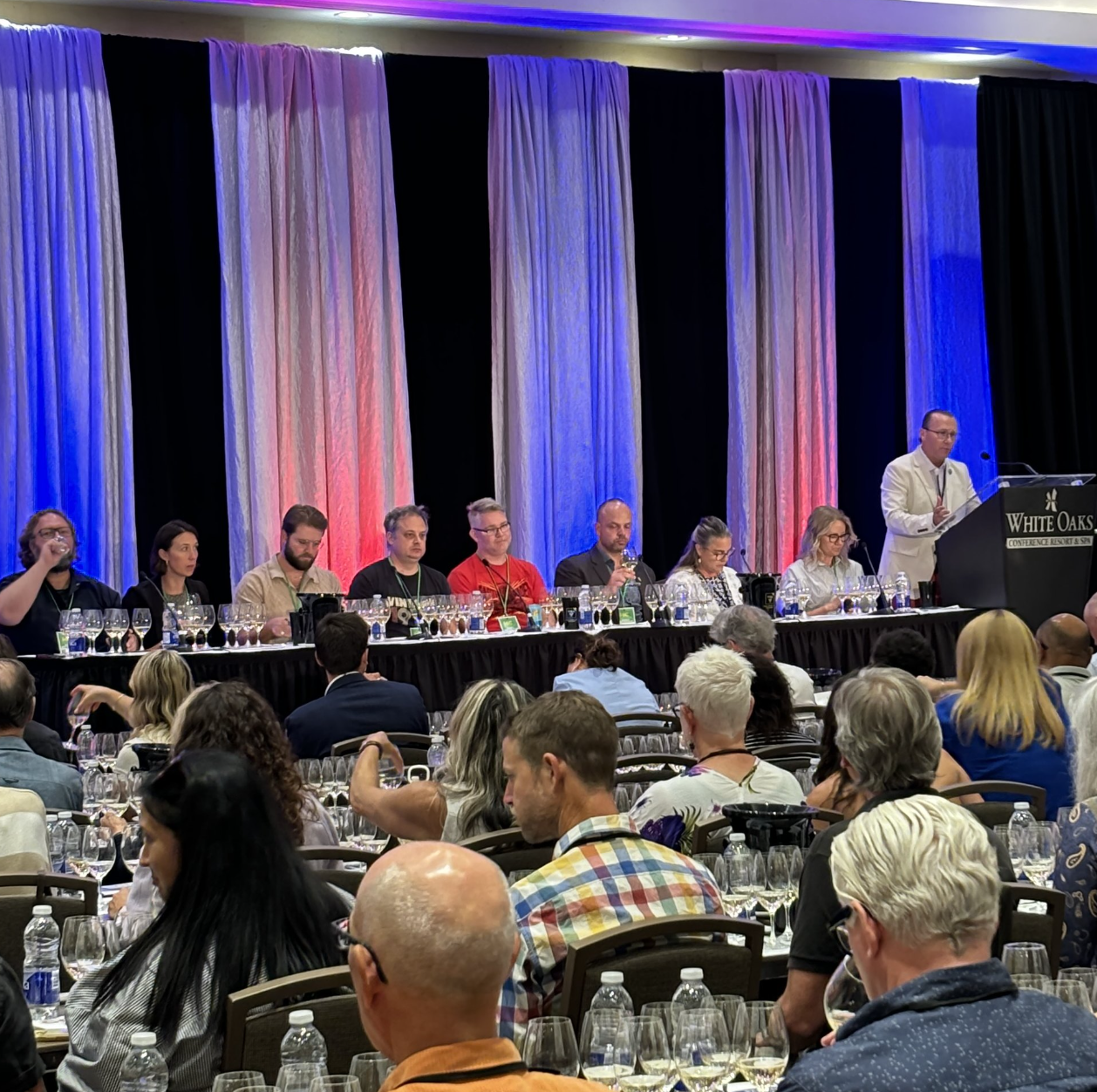
The School of Cool gets into sessions with wise and wily words from Past Chair Suzanne Janke, a lifer for the cool climate cause, public face of Stratus Vineyards and light of the room. Janke’s input, along with the i4C Board, Concierge Kim Auty and Event Director Trisha Molokach shows a highest level of intuition for what can only be judged as a cracker choice for keynote speaker at the 2024 School of Cool. That would be the affable character, next level intelligence and dry as the desert humour of Austrian-born, London-living Master of Wine Stefan Neumann. Mr. Neumann peeks out from behind his little boy grin to invoke the legend that is Laura Catena, to introduce his intentions as it pertains to cool climate chardonnay. “She slapped me on the brain and said there is no such thing as good warm climate chardonnay.” The wheels are turning, theories circulate and then from his own powers of reasoning Stefan announces, “I really think the world needs to know more about Canada and cool climate chardonnay, because it’s really important.” Not that he is late to the party, but the choir nods silently and knowingly, all smiling wryly. You can hear the collective internal dialogue working. “We like this guy.” Then he speaks to they who are not in the room. “Every cool chardonnay has a cool admirer out there,” he insists, “just as every pot has a lid.” The analogy might have got lost in translation from within the history of some ironic Viennese dialect. Note to self: Send Ernst Molden a note to ask for clarification. In any case Neumann comes from a place of hospitality. “As a guest you need someone who can help you,” he explains. “As a sommelier, if I’m going to explain cool climate chardonnay to a guest I’m not going to start with the Winkler classification.” Truer words never spoken.
School of Cool
(c) i4C

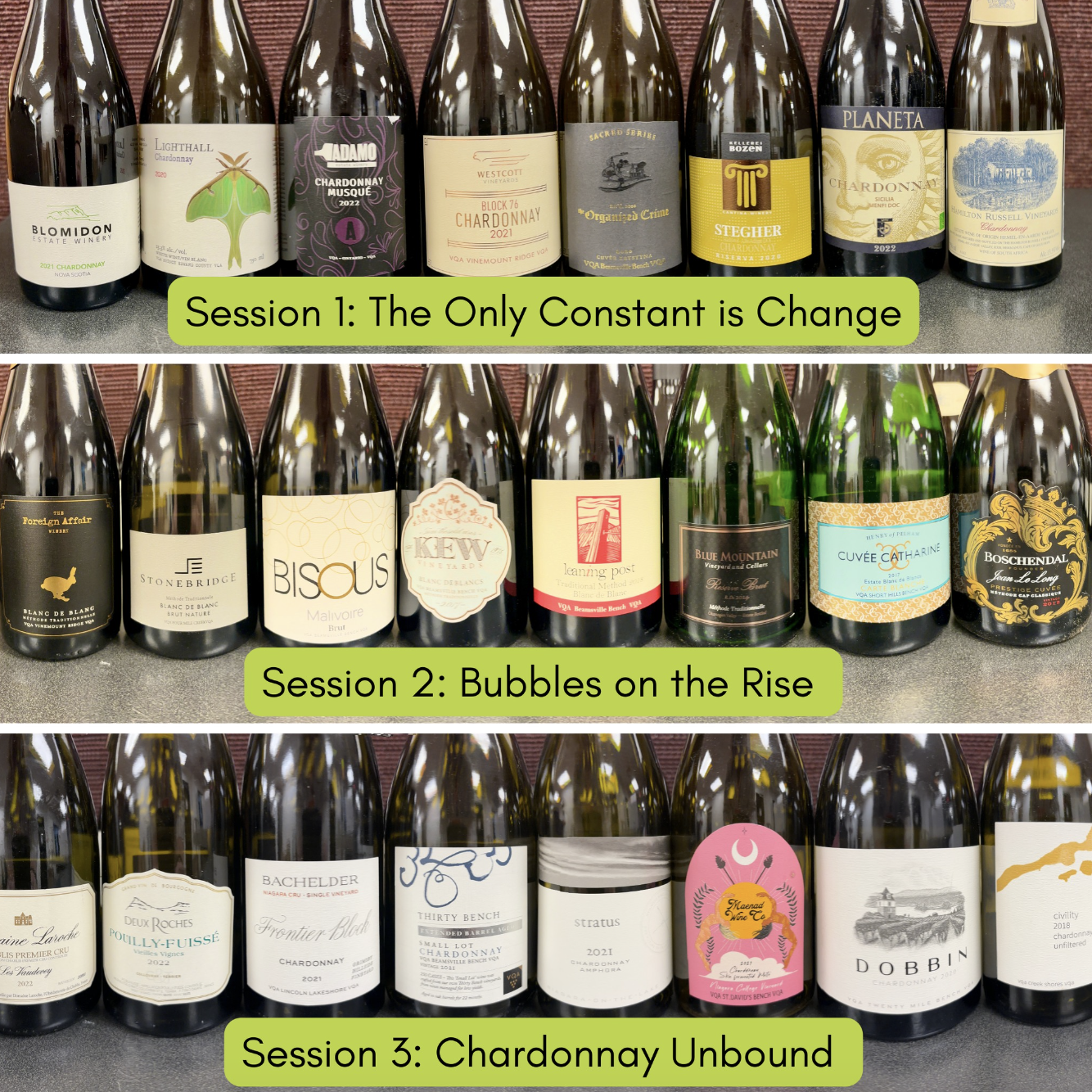
South Africa’s Anthony Hamilton Russell leads the first session where things turn immediately laugh out loud funny, if simply because Hamilton Russell is an Afrikaans lekker of off-the-charts intellect, dry wit and a brand of self-deprecating meets sweet roasting and toasting humour that is by all accounts infectious. “The only constant is change,” he begins with an address that may or may not attempt to tackle climate change. “All the hard rains and frosts are just noise in the background and it’s about how we are going to deal with it.” Anthony wisely chooses to order the chardonnay tasting from north to south. His first notation is to explain “how important it is to precipitate proper dormancy in chardonnay.” Then he poses the question, “what is the worst climate problem?“ He is answered by (Nova Scotia’s) Blomidon Estate winemaker Simon Rafuse. “Depending on when you ask me, the answer will be about what just happened.” For Adamo’s Vanessa McKean “it’s a big catch up in the spring to get ahead of things, remove the (geo-thermal) blankets as late as possible before the weeds get out of hand and also late frosts compounded by the textiles still in surround of the vines.” Westcott’s Casey Kulczyk notes that bud break occurs earlier, growing seasons are warmer and ripening is quicker, while also more uneven. Are you sensing a (lack of) discernible Canadian patterning? Even in winemaking, from west to east Canada is comprised of many different vine-growing countries.
Sparkling Flight led by Peter Rod
(c) i4C

Session two is led by Peter Rod, he of chivalrous and consortable character, a prodigy and mentor for Niagara educator royalty and if the audience thinks Neumann’s humour is dry, they are then treated to Rod’s mix of dead-pan, amusement and bemusement. Fine decision to put Peter at the fore for the Sparkling wine flight because nowhere does that category receive more attention, research and investigation than that at his seat of higher learning. Peter Rod is surrounded by bubbles at Brock University’s CCOVI where fizz is considered on a daily basis. An effervescent panel delves deep into discourse for what Peter dubs as “Bubbles on the Rise.” Then the third set of eight pours, this time returning to still waters, holds title for “Chardonnay Unbound,” a varietal discovery with different faces, from different countries. Stefan Neumann returns and keeps the room engaged. Then Suzanne Janke is back at the podium and tells the audience her outfit blends seamlessly into the drapes, as if no one had noticed. Janke’s words are sing-song, showing the skills of a melodist with a sweeping sense of purpose. All she says focuses on the patrons, panelists and chardonnay, but never the I. Piano-woman, “quick with a joke or to light up your smoke….Oh, la, la-la, di-dee-da. La-la, di-dee-da, da-dum.”
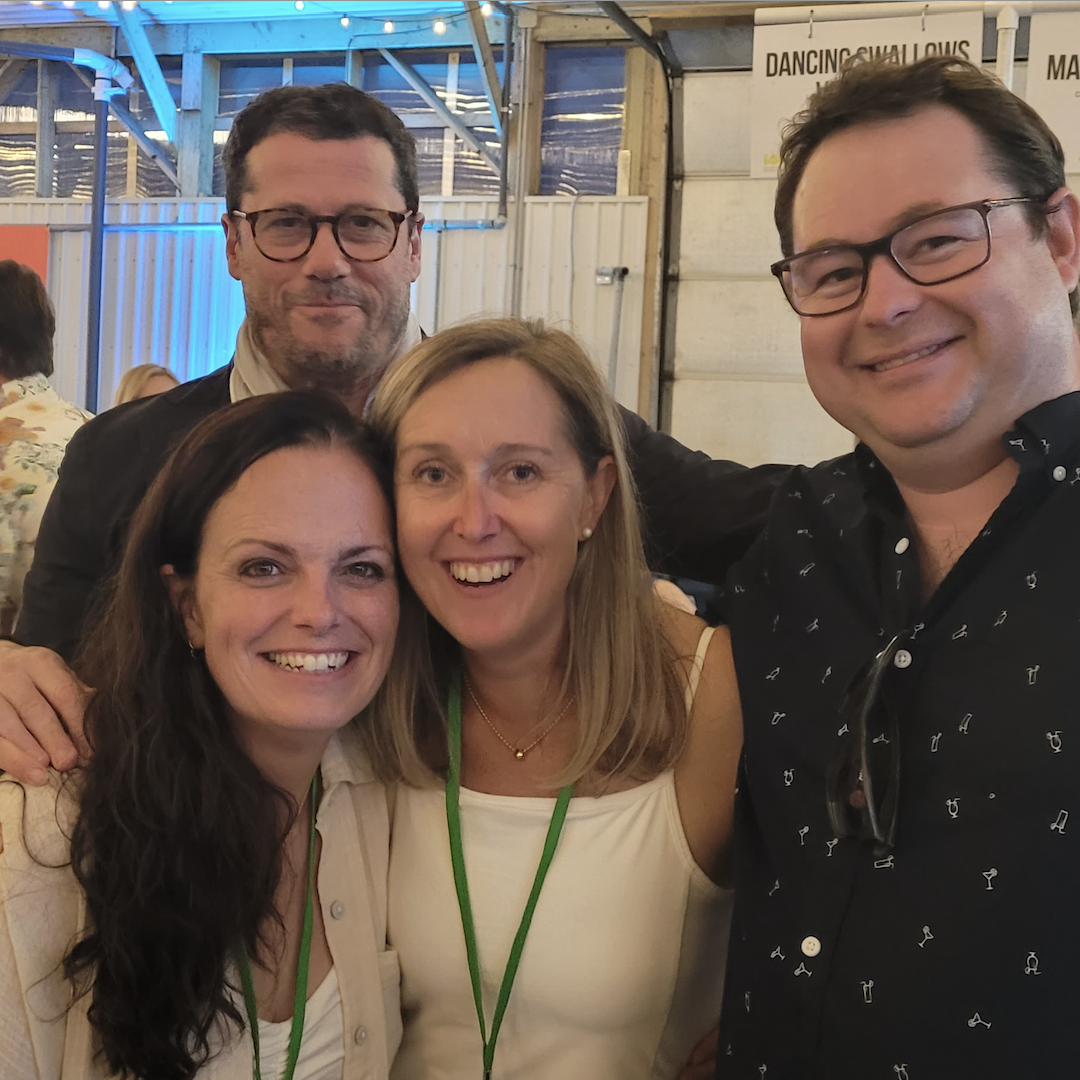
With Katie Dickieson, Emma Garner and Ben Minaker – Andrew Peller Ltd.

In the end these are three memorable panel experiences at the 2024 i4C Cool Chardonnay School of Cool. Three expertly moderated sessions by Anthony Hamilton Russell, Peter Rod and keynote speaker Stefan Neumann MS. Intel of the highest order from 21 Chardonnay winemakers. In 12 years of attending this conference there has never been a better organized, finer seamless set of transitions or more to learn. Bravo to Concierge Kim Auty, Event Director Trisha Molokach, Past Chair Suzanne Janke, the producers and entire team of volunteers. Friday night we tasted Friday Night Flights with the producers at Cherry Lane Farms in Vineland. On Saturday night we returned for Chardonnay in the Vineyard World Tour Tasting and Dinner at The Riverbend Inn, Niagara-on-the-Lake. And there were visits orchestrated by the Wine Marketing Association of Ontario’s Andrea Peters. To Chef Ryan Crawford’s Bar Ruffino with J-L Groux, Dean Stokya and Suzanne Janke of Stratus Vineyards. To Dobbin Estate with Wade Dobbin, Peter Gamble and Ann Sperling. To Flat Rock Cellars with Ed Madronich. To Le Clos Jordanne with Thomas Bachelder, Phillip Brown, Kerri Crawford and tasty treats from Chef Crawford. Finally, an i4C lunch at Westcott Vineyards’ Butlers’ Grant Vineyard with Grant Westcott, Carolyn Hurst, Casey Kulczyk and magnificence from Chef Tim Mackiddie. Alas, here are 83 tasting notes, 63 for chardonnay and 20 others. 

Three panel blinds

Blomidon Estate Winery Chardonnay 2021, Nova Scotia

“We have been growing chardonnay since the 1990s,” tells winemaker Simon Rafuse. “We can definitely ripen and picking is weeks ahead of the past, but we have experienced more extreme climate events in the last decade, whether it be frost, flash flooding, polar vortexes, hurricanes and disease pressure.” His ’21 is made in a clean style, whole cluster pressed, on lees for 12 months. Sharp yet rich, intense while full, apropos, meaningful and direct. Top vintage without a shadow of a doubt. Drink 2024-2027. Tasted at i4C, July 2024

Adamo Estate Chardonnay Musqué 2022, VQA Ontario

From an emerging Ontario region – Hockley Valley. Does not quite feel like 100 percent chardonnay musqué but more like an interplanting or layering with some linear, vertical and incisive Burgundian chardonnay. Less fruit from this bottle replaced by mineral salts yet with no compromise to the flowers by musqué. Producers and consumers of fleshy to buttery chardonnay will find holes but the rest will relish in this outcome all the same. “We farm in an area not great for growing grapes” says winemaker Vanessa McKean. ”We don’t have a large body of water to mitigate extreme temperatures so we cover out our entire 18 acres with geo-textile blankets.” Air flow through the vineyard is essential and being at the top of the hill is helpful. Barrel fermented in neutral wood with the musqué portion delivering more floral notes than most Ontario chardonnay. There is a tinned orchard fruit character that invites more than it distracts and the sharpness of this palate journeying acidity is really quite special. Drink 2024-2026.  Tasted twice at i4C, July 2024
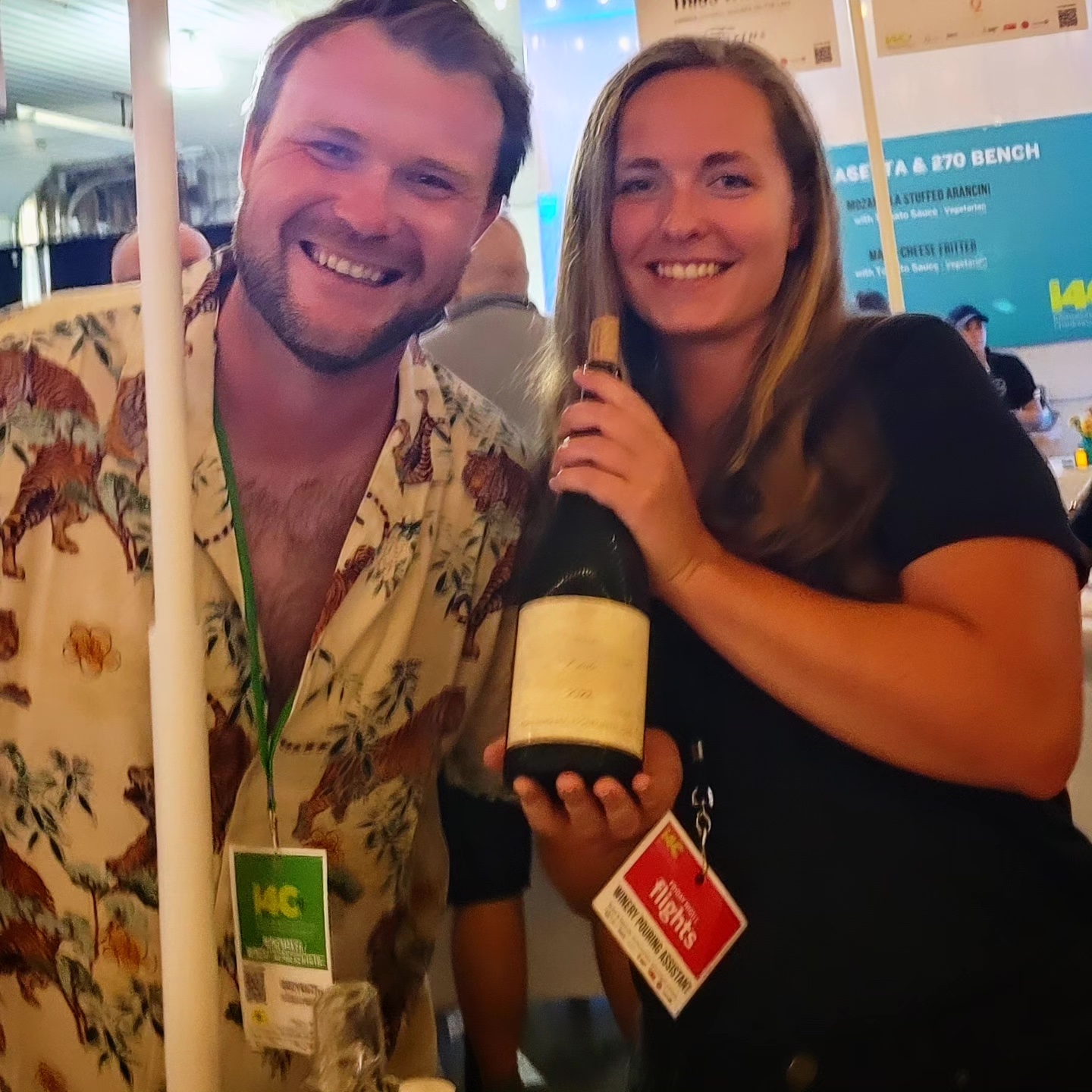
The winemakers are alright – Westcott Vineyards

Westcott Vineyards Chardonnay Block 76 2021, VQA Vinemount Ridge

From the home farm of 26 acres and the lowest elevation, teardrop block on shales and gravels, facing east. Earlier ripening, acid retentive and sees 10 months in barriques, followed by six months in puncheon filled with the previous vintages’ clean lees. Like connective tissue that links the past to the present to prepare the chardonnay for a longer future. Texture is mineral, set below tannin, in command of the palate from a chardonnay built to celebrate and also abide by it’s double-barrelled shotgun approach. Fires, attacks and conquers the palate from above and below so that there is no escape. Spirit of ’76 all the way with more vibrancy than ever. Impressive like few others. Will age really well. Made for seafood dishes poached, bathed and sautéed in butter. Drink 2024-2028.  Tasted at i4C, July 2024

Greg Yemen – The Organized Crime

The Organized Crime Winery Inc. Chardonnay Sacred Series Cuvée Krystyna 2020, VQA Beamsville Bench

As implosive and protected as any Niagara chardonnay to speak of a year older example that acts and feels as young as any on recent record. Terrific sweetness of fruit and a testament to a full and in this case also long ripening season. Crisp and biting, orchard fruit crunch and no sign of breaking down. Gambles with nature, shows off precision winemaking and confidence exudes from a chardonnay constantly reopening and one you can do so much with. There are savoury elements that suggest food pairing with be a most fun and rewarding exercise.  Last tasted twice at i4C, July 2024

Powerful, reductive and in charge chardonnay, assuming the risk and in delivery of the reward. Platinum gold hue and attitude, serious, grippy and über conscious of its abilities. Top notch with vanilla and cereals that swirl into the full fruit complement of a chardonnay you just bloody want to drink. Consume away, with abandon because it asks this of you. Abide and oblige. Drink 2022-2026.  Tasted blind at NWAC2022, June 2022

Kellerei Bozen Chardonnay Riserva Stegher 2020, Alto Adige, Italy

From a vineyard at 650m with picking happening at least a week earlier than just 10 years ago and a dolomitic mountain air that breathes great life into this special sort of cool climate chardonnay. A yellow apple just short of ripe, with acidity sweeter than the drupe itself and a classic northerly sharpness that speaks to place as well as any European chardonnay. Drink 2024-2026.  Tasted at i4C, July 2024

Planeta Chardonnay 2022, Sicilia DOC 

Production began in 1995 while the vines are now nearly 45 years of age. In the southwest part of Sicily, in the Ulmo area around the village of Menfi where a corridor of wind, “our favourite friend,” tells Santi Planeta, blowing through between the lake and the sea. Through vines growing between 100 and 450m, breathing cool life, especially in the summer. The 2022 vintage saw plenty of rain though not concentrated at any particular time and so the constant events of moderation were something remarkable considering how often extreme climate events are increasingly more prevalent. The coming vintage of 2023 and 2024 will be affected by them, mostly because there was no rain. This chardonnay is impeccably balanced between fruit and acidity, acidity and texture, texture and tannin. The progression is seamless, the result precise and anyone who does not the recognize the experience and continued work put in may not be paying close attention. That’s fine but know just how special a (relatively) large production, semi-cool climate chardonnay this truly is. Planeta’s year-to-year consistency is truly impressive. Drink 2024-2028.  Tasted at i4C, July 2024

Hamilton Russell Vineyards Chardonnay 2023, WO Hemel En Aarde Valley, South Africa

The spirited intensity is unrelenting and speaks to how the HRV chardonnay tastes more profoundly serious than any other of its ilk. “Young and primary,” insists Anthony Hamilton Russell. “I like the complexity that our chardonnay develops with time in the bottle.” Well said but truth be told the wine already exhibits an electric variegate character and so what’s to come may just blow the mind.  Last tasted at i4C, July 2024

Freshness and abundance incarnate for Hemel-en-Aarde Valley chardonnay from the HR team that simply gets this grape from this place. A citrus vintage, less reductive than some whilst bursting with energy. Delight in lemon custard, all the zest, crunchy, mellifluously honeyed and never over-arching above and beyond the target. A scintillant of fruit through variety, to ache with love and to please, simply and unequivocally by design. Peak performance, summarily in the best of ways.  Drink 2024-2029. Tasted July 2024

The Foreign Affair Blanc de Blancs 2021, Methode Traditionelle VQA Vinemount Ridge

Light toast, easy goes, no long lees but a good signed lease to hang around for a few years time. True as chardonnay blanc de blanc, apples part terpene and part mashed. Smells like baked and cooled apple pie. Palate spirit yet agin those apples are all over, all consuming and all in. Some wood aging, Brut in style, somewhere between six and 10 g/L of dosage laid over 24 months leased lees aging. The second iteration of this sparkling wine.  Last tasted blind at i4C, July 2024

The bottle lists Vinemount Ridge as the fruit source though the website writes Lincoln Lakeshore so lets go with the bottle! Regardless we are looking at 100 percent chardonnay crafted in the dry, intense, citric, high energy style. This shows real energy and a couple of sips nearly take your breath away. The elucidations are green apple, piques of white pepper and the flavour profile slash texture much like sabayon extended by a few shots of limoncello. So much interest here. Drink 2023-2026.  Tasted November 2023

Stonebridge Blanc De Blanc Brut Nature 2020, VQA Four Mile Creek

More autolytic than some and even more than that, mellow, malolactified and softening quickly. Botanical flavours and fine bitters, creamy style, easy and ready. From chardonnay first made off of the estate in 2017 and looking forward to seeing what can be learned from the idylls of experience towards trying this first sparkling wine made at Stonebridge. Old puncheons and stainless steel combine for a punchiness that come out of several cuvées to try and abide by site, structure and ultimately consumer appeal. Richness of the site begets texture and in turn that appeal. The flavours persist though this is ready to drink sooner than many. Drink 2024-2025.  Tasted blind at i4C, July 2024

Kew Vineyards Blanc de Blanc 2017, VQA Beamsville Bench

Golden toast, truly brioche style, equipped with fruit a plenty marked by a note that reminds of good and plenty. Stage presence, persistence and length. A dosage of 5.9 g/L of residual sugar which may be the highest in a flight of eight but still very low for sparkling that is essentially dry. Made by Phillip Dowell with chardonnay that would have been planted on the property back in 1980. As concentrated as it gets for chardonnay sparkling wine but the vintage was acid driven and so the sugar extends the flesh.  Last tasted blind at i4C, July 2024

High energy, raging acidity, captivating and intense Blanc de Noirs right here. Eye-opening, olfactory shocking and palate enervating in every which way but loose. Taut, tight and demanding. Party wine. Drink 2020-2023.  Tasted October 2020

Leaning Post Traditional Method Sparkling Blanc de Blancs 2018, VQA Beamsville Bench

From Hemeris Vineyard on the Beamsville Bench, primary fermentation for six months in barrel, another six with lees and then the full lees aging of 36 months. An emotive sparkling wine that elicits and solicits emotion. Could this be a unicorn wine in its own special way? Evocative of what it makes you feel and what you would like a bubble to taste like? The long lees aging is clearly appropriate and leads the autolysis to a place of warmth, beauty and comfort. Oxidative and yet searing, a blanc be blancs no doubter that mans serious chardonnay business. Complex and curious, crafty and creative.The acidity here is special and in charge. An ideal mix of 9.2 g/L of total acidity and 3 g/L of residual sugar. “The vineyard was asking to become this kind of wine” explains Ilya Senchuk. “The purpose is a single vineyard expression.” Here’s to hoping the 2019 will add a few more months on lees to take that next step upwards.  Last tasted blind at i4C, July 2024

Single vineyard block called Hemeris (an old term for garden, or “something like that,” from the Greek). Of chardonnay, location between (Hidden Bench’s) Rosomel Vineyard and Cave Spring, picked late September and sometimes early October, for sparkling. Base wine is barrel fermented and aged in oak for six months. Spent 36 months on lees in bottle, finished at 2 g/L dosage (so essentially bone dry) and is now about to be released. This was the wine Nadia Senchuk pushed her husband for and this is the chardonnay tract that was needed to create it. Listen to the vineyard says Ilya, “because it’s basically growing bubbles.” Rich and exciting in the same breath, essential through autolytic response elicited and the breath stolen, literally taken away, every move made for the connection between I and it. An auspicious debut and were it not for the prophetic mind and ravishing palate of the winemaker’s better half, well then access to supply might not be so limited. Drink 2022-2026.  Tasted June 2022

Blue Mountain Vineyard and Cellars Brut Reserve R.D. 2014, VQA Okanagan Valley

Aromatic complexity, a chardonnay and pinot noir (55-45) sear of raging citrus but never lean because there is flesh all over the palate. The lemon segments are ripe and delicious, the red fruit character compliments with added spice, the persistence endless and the winemaking clearly coming from a place of experience and respect to place.  Last tasted blind at i4C, July 2024

Always pleased to welcome the BR R.D. into a glass and here is an old but a proverbial goody, that being 2014 and consumers must be reminded just how special this research and development is to determine the excellence of Blue Moutnain’s indagative sparkling wine. A blend of chardonnay and pinot noir, the first 10 percent more than the last with some of the most restrained, reserved and demure aromatics in the Okanagan Valley. All ways to say this is lovely, quietly generous and so settled to gift pleasure above all else. A most complex game of citrus and orchard fruit, distillate by nature, expertly seasoned with fine sea salt, white pepper and lemongrass powder. Such a gift nine years after vintage at a ridiculously reasonable price. Drink 2023-2027.  Tasted November 2023

Henry Of Pelham Cuvée Catharine Carte Blanche Estate Blanc De Blancs 2017, Traditional Method, VQA Short Hills Bench, Niagara Escarpment

Stoic, reserved, full scenting, flavoured and expressive. Tons of fruit here in what could only be 100 percent chardonnay. From a vineyard planted in the 1990s to Clone 95 chardonnay and a place of incredible consistency, “one of the most I’ve ever worked with,” tells winemaker Lawrence Buhler. Sees 54 months on its lees and while it may be difficult four to five years ahead to know what will happen – this is Ontario’s benchmark sparkling wine that always comes through. Not merely a matter of replication but more like intuition conjoined with persistence.  Last tasted blind at i4C, July 2024

Consistently crafted as a Blanc de Blancs that sees 60 months on the lees from estate grown chardonnay. From a varietal growing season so ideally destined for sparkling wine because a cool and wet spring plus summer emerged in late August to hot days and cool nights through October. In the middle of that spell is the chardonnay pick for sparkling and as good, complex and riveting as this arch-classic Ontario bubble may have been before – well bring on 2017 for next level complexities. Tasty, piquant and toothsome, of toasty brioche like never before and this swirl of creamy fruits and exotic seasonings. Feels like aged Growers’ Champagne and the fact that it is from Niagara makes it all that much more satisfying. Plenty of crunch, succulence and acid-driven energy from a meticulous bubble. The benchmark for local. Drink 2023-2027.  Tasted November 2023
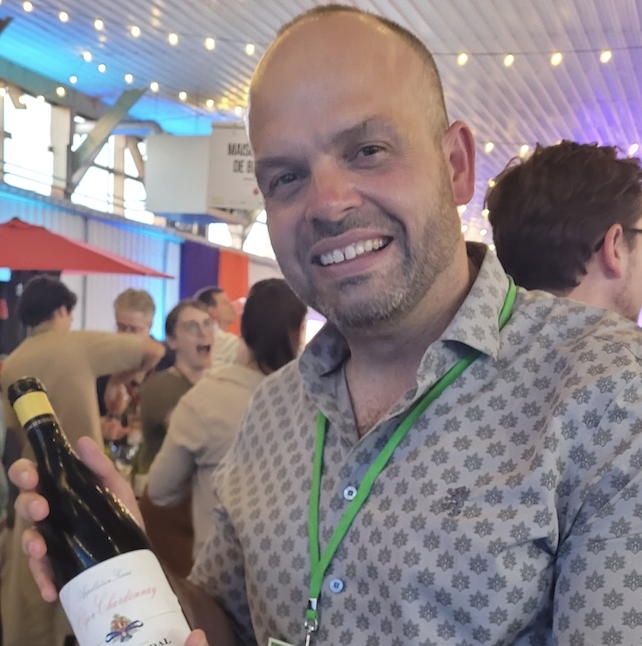
Jacques Viljoen – Boschendal

Boschendal Cap Classique Jean Le Long Prestige Cuvée Blanc De Blancs 2012, WO Elgin

Presented by cellar master Jacques Viljoen for a sparkling wine coming from one of South Africa’s coolest climate area. The first vintage was 2007 and these are vines planted south-facing (i.e. cooler in the southern hemisphere) and facing the sea. A place where grapes can hang long and develop phenolic ripeness even while coming in at a brix number just above 19. Lower dosage now and so the autolytic notes (if not globally classic in their expression) and also excitement are increased. As much toast, autolytic and oxidative notes as any in a blind flight of eight. Pushes the envelope to see what can be done with sparkling wine, malolactic fermentation, wood aging, near dry dosage and lees aging. Not so much the classic brioche or baked bread representation but there are complex notions perceived from that aforementioned style clearly chosen, conceived, attempted and for the greater part, succeeded. Drink 2024-2027. Tasted blind at i4C, July 2024

Kyle Loney and Whitney Collins – Advini and Domaine Laroche

Domaine Laroche Chablis Les Vaudevey Premier Cru 2022, Bourgogne AOC, France

The word precise is often used to describe Chablis and many other global chardonnays, sometimes gratuitously but here perfectly applies to the Laroche Vaudeyey. Les VdV ’22 is focused to a virtue with its equality, equanimity and equilibrium from start to finish. A lexical entry to figure out the crux and relationship between cru and village.  Tasted a second time, July 2024

The immediate feeling perceived would be of a chardonnay bottled with lees, of a certain level of autolysis though neither by brioche or with respect to the sparkling kind. More like washed cheese rind, preserved lemon and that kind of texture that skin contact whites also deliver. The sort that settles on the tongue like a dissolving salve but here the subtlety suggest lees in the bottle more than light “orange.” In fact this is essential Chablis and does it not just feel like Ontario winemakers (in particular) are trying to emulate such a style by keeping lees in their bottles? Drink 2024-2028.  Tasted blind i4C, July 2024

Deux Roches Pouilly-Fuissé Vieilles Vignes Deux Roches 2022, Bourgogne AOC, France

Also a bottled with lees style of chardonnay with a level of richness so rightly and righteously older/traditional schooled, but so bloody clean and expertly made. Express and expert tang, layers of citrus, more grapefruit than many, fine tonics and also sweet bitters. There is some fat here but also acidity and verticality, in other words tension, more so than many of the appellation. Recommended by Export Manager Romain Bourgeois and also Stefan Neumann M.S. to pair with The Little Sparrow, a.k.a. La Vie En Rose, the one and only Édith Piaf. Drink 2024-2027.  Tasted blind at i4C, July 2024

Bachelder Chardonnay Grimsby Hillside Vineyard Frontier Block 2021, VQA Lincoln Lakeshore

So much to digest, first with knowledge of chardonnay in the hands of one monkified human that shall be named Bachelder and second of so much to take in and absorb from the label on the bottle. Niagara Cru (there are many), Single Vineyard (there are more), Grimsby Hillside Vineyard (current status Grand Cru, in progress) and Frontier Block (one of two within the great new frontier, inclusive of Red Clay Barn). Two-toned, of bites and textural chew, sexy chardonnay, clean and focused. Highest level aromatics at the peak of what is possible out of Ontario, positively spicy, white peppery even. Cleanest lees usage for a chardonnay of clarity and relatively speaking, also substance.  Last tasted blind at i4C, July 2024

Vintage number three from Grimsby Hillside Vineyard and now more specific by way of a split, with the Frontier Block as the plot within the larger plot, along with that of Red Clay Barn. Drilling down into this historical vineyard that has risen as fast as any New World terroir, just about anywhere these sorts of things are measured. Here named for the final frontier, that being the “last terroir” in Niagara and who knows, maybe it will soon be the first rolling off of everyone’s lips. GHV-FB 2021 is a force, that much is clear from the first look. Or nose, for what matters. Cool and stony style from a wide open space where limestone, shale and gravels conspire to create something new and with absolute potential. It’s already arrived thank you very much and while words like luxe and opulent do not come to the tip, others like succulent and scintillating do. Just something so real and right at your doorstep, vivid beyond chardonnay compare, a stealth fish swimming in clear waters. Truly complex for chardonnay and it must be noted, unlike any other in the world though at the same time feeling like something you’ve known your whole life. Make an exception to delve into this exception because when it comes to chardonnay, this is what we need. Remarkable clarity and distinction, precision extraordinaire and a wine to cast nets far and wide to secure as many bottles that could be found. Drink 2024-2032.  Tasted December 2023

Thirty Bench Chardonnay Small Lot Extended Lees Aging 2021, VQA Beamsville Bench

Spent 22 months in barrel, in other words space was not needed for new juice after 10, nor did Emma Garner feel the need to remove this lot and so 22 months it was. For good reason, great measure and bonafide success. You know the extra wood melt is there and integration is so complete. No compromise to fruit from a vintage aboard the Beamsville Bench that gave of itself selflessly to mingle in cahoots with the cohorts of those barrels and nuances at every turn. Acumen begets probability which in turn generates prospect. Conclusions drawn are expressed with silent nods, a twinkle and smile. This will age gracefully for 10 years.  Tasted a second time, July 2024

Maximum ripeness, warm vintage no doubt, captured and locked into what feels like a reserve style of chardonnay. Full and fine, fleshy and yet sturdy, chiseled musculature, riveting and attention so locked in. As is ours because we simply can’t turn away. Not an easy vintage tells Emma Garner because there was some rot, botrytis and less than desirable grapes. But there was also plenty of great fruit once the chaff was culled, the wheat came in and in turn a terrific chardonnay was made. The length is outstanding.   Tasted blind at i4C, July 2024

Stratus Vineyards Chardonnay Amphora 2021, VQA Niagara-on-the-Lake

Several factors are here at play, namely lees but also vessel so that the mineral aspect exhumed and manifested as texture makes us think about place. Spices run amok and that housing continues to occupy the impression that is distinctly Ontario chardonnay. Bottled with lees would be the reason behind the feeling and also the fact that it has been aged in amphora. First edition, fermented and aged in the clay vessels, influenced by Rene Barbier Jr. says winemaker Dean Stoyka. “It really respects the fruit and causes some restraint in the wine,” he explains. “Giving some salinity and richness on the mid palate.” A unique way to make chardonnay indeed.  Last tasted blind at i4C, July 2024

Along with cabernet franc this chardonnay was also tucked into and raised in amphora, no surprise because these have been two varieties suited up for experimental tests. Very late harvested (November 4th) from the 2021 vintage and specs are not very elevated for this wine. Moderate across the board and yet it is the clay that defines what we nose, taste and feel. Wet clay, a preserve with notable vegetal and savoury elements, banana esters, soft wool and ultimately a new set of varietal parameters imagined. One assumes this is bottled with a similar amount of lees as the R & D Stratus OG chardonnay but the clarity and transparency of the AC suggests something other, or wise. All in all a conundrum frankly, jury still out, much left to figure, pilot, trial, error and decide. Drink 2023-2025.  Tasted September 2023
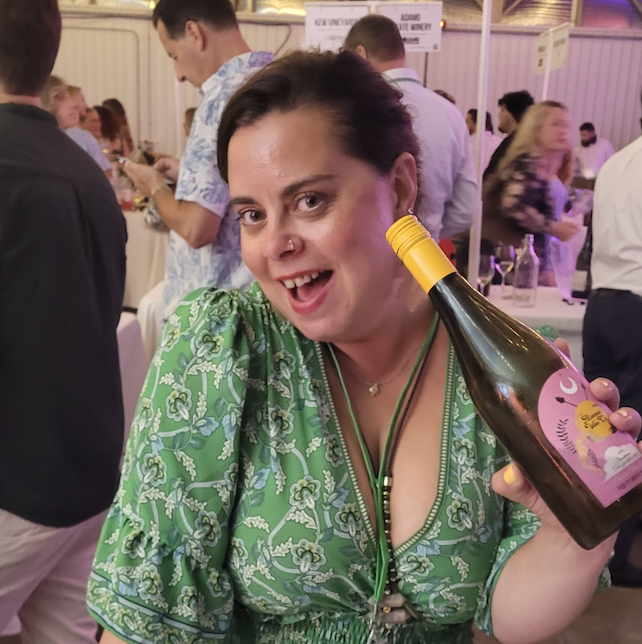
Maenad Wine Company’s Yvonne Irvine

Maenad Wine Co. Chardonnay Skin Contact 2021, VQA St. David’s Bench

Orange chardonnay is a thing and this leads by example. Cloudy, hazy and yet much cleaner than the visuals might suggest. From Yvonne Irvine’s virtual wine project, made at Creekside and sold through the retail license at Marynissen Estates. Breaks down regular conventions like busy beavers taking apart wood and making their dens. To be honest skin contact wines don’t get much more delicious than this, especially from chardonnay, fruit having been “borrowed” from the vineyard owned and farmed at Niagara College. Full malolactic, lees stirring, older French wood for seven months. The richness, roundness and cozy-fuzzy feeling on the palate shows just how well this turned out. Should be so interesting to see how this ages – can’t hep but think it will go through the process with ease. Drink 2024-2027.  Tasted blind at i4C, July 2024
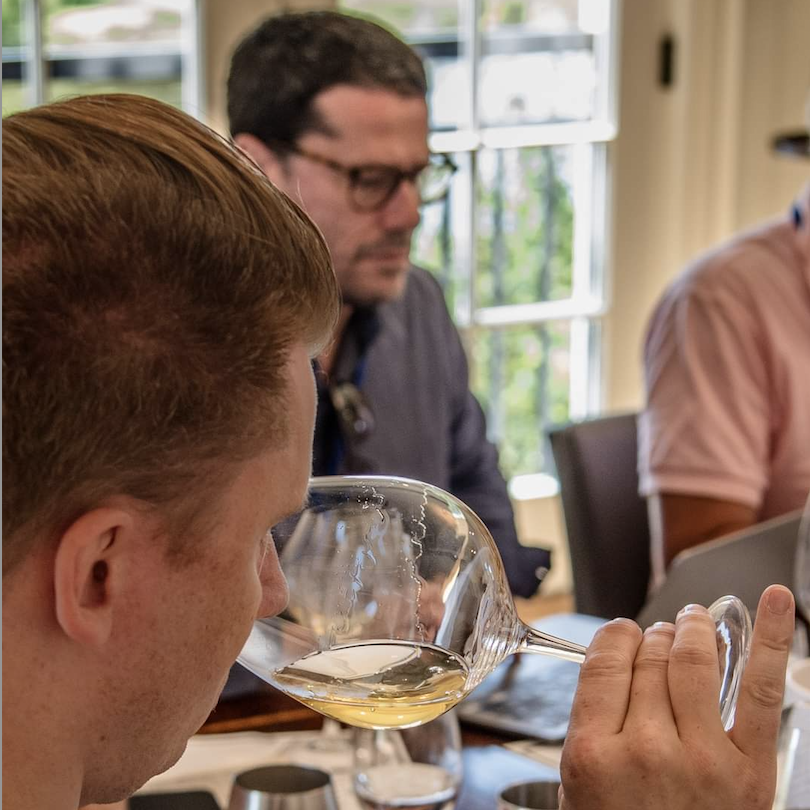
Stefan Neumann MS

Dobbin Estate Vineyard & Winery Chardonnay 2020, VQA Twenty Mile Bench

As full, rich and riveting a style of Niagara chardonnay as there has ever been. Ripeness at peak, wood in full glory, generously yet judiciously used and the overall effect is something usually reserved for what many will think of as a story written over centuries by Beaune chardonnay. There is delicacy here and if this chardonnay were a book it would be a page turner, which says this vintage in particular should likely appeal to a great and wide audience. Make no mistake though because a wine like this is comfortably affordable to the haves. That it turns out to be a Peter Gamble and Ann Sperling made chardonnay from a top warmth vintage comes as little surprise. Drink 2024-2027.  Tasted blind at i4C, July 2024
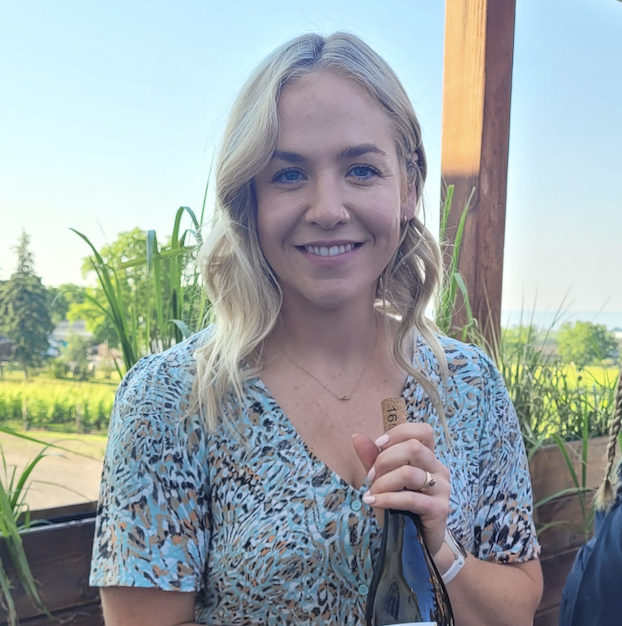
Morgan Juniper – 16 Mile Cellar

16 Mile Vineyard Chardonnay Civility 2018, VQA Beamsville Bench

Just carries and emits the feel of classic chardonnay winemaking, without hesitation or equivocation to result in something so knowably Niagara. The wood is on the weighty side and maturity has begun to see this wine acting its age. “I really think it’s important to honour the process of patience in winemaking,” says winemaker Morgan Juniper. The opportunity is not always available to do that but the ripeness here presented the proposition on a platter. “This wine is like waiting for a child to actualize their full potential,” she adds. “I wanted to push the boundaries to see this actualize at a later date.” As it has and the window is fully open with another year or two of enjoying this light lees-affected, barrel-aged and now of a chardonnay at this all in butterscotch stage. Drink 2024-2026.  Tasted blind at i4C, July 2024

Not labeled as such but essentially a Reserve wine taken from a single barrel housing all estate fruit. High level of concentration and richness in the face of a vintage considered cool and challenging, but when you take a smallest of small lot wines like this that just does not apply. Everything about this is classic, basket pressed, natural ferment, full natural malolactic, 22 months maximum for oak aging, Burgundian obviously and medium of toast. “We come to barrel turbid – we like density,” notes Peter Gamble. (Peter) and Ann Sperling really liked this one particular barrel and decided to put it to magnums only. From late September and early October picks, finished at 14.5 percent alcohol and ultimately mouthfeel that rivals some pretty warm wine growing regions. A chardonnay that moves beyond Bourgogne to offer up its very own definition of Niagara’s Twenty Mile Bench.  Last tasted July 2024

Friday, Saturday and Media room tastings

Trius Chardonnay Showcase Wild Ferment 2021, VQA Lincoln Lakeshore

A matter of factor decided by two essential aspects, the first being this chardonnay’s wild ferment and the second surely vintage. Turbidity endured and yeasty ebullition understood are how Wild Ferment ’21 co-opt and conjoin for aromas dedicated and unique to the Trius distinction. Scents of tropical fruit bathing in opaque waters cleansed by energy and movement to result in seriously complex chardonnay. Some spice tipping the tongue and tripping the palate fantastic for machinations of dreams and fantasy. Curious 2021, wild and woolly of texture with the confusion in delivery of a great part of the fun. The back label reminds that the fruit source continues to be Watching Tree Vineyard. Drink 2024-2027.  Tasted July 2024

Rosehall Run Chardonnay JCR Rosehall Vineyard 2021, VQA Prince Edward County

More of a restrained, stoic and while not reductive as chardonnay per se there is a wall erected between aromatics and early joy. A JCR dictated by its extract and structure, a compound butter in hard shell, surely not one in delivery of early returns. The crispiest, crunchiest, saltiest and most savoury of all the Dan Sullivan draws from the oh so important PEC Rosehall Vineyard. Try not to blink for many chardonnay that change straight away but with Rosehall that is far from the case. Twenty minutes in a glass and plus ça change, as they say. Immovably youthful chardonnay, stark and as a contrast, so sown, sworn, authoritative and stone cold of its own accord. There are 2021s from Ontario what will last comfortably in states of fickle freshness for 15-plus years. This could very well be one of them. Drink 2025-2031.  Tasted July 2024

Domaine Queylus Chardonnay Tradition 2022, VQA Niagara Peninsula

Warm and inviting, textural like silk, some glycerol and running soothingly smooth from start to finish shows a different look and separates itself from other vintages. Kelly Mason’s ability to change it up while still maintaining an always high level is a chardonnay testament to a team that ranks with the hardest working makers in Niagara Peninsula show business. There are clean yeasty notes, like sourdough in the proofing stage and subtle baking spice with texture truly divining the directive for high quality “classico” Niagara chardonnay. Never gives up or in, never too hot or cold, a great vintage in Mason’s estimation, but then again, “anything was better than ’21.” Drink 2024-2027.  Tasted July 2024

Taylor Emerson and Jonathan McLean – Black Bank Hill

Black Bank Hill Chardonnay Runway 2023, VQA Lincoln Lakeshore

Gotta be the first chardonnay out of the gates from the 2023 vintage and if this cracker example is any indication of what’s coming then hold on to your senses. Recently bottled and even with an early (September) pick this saw less than 10 months of aging, but the mix of indelible lees and high voltage (8.5 g/L) total acidity put this in scintillant, dare it be said Blanc de Blancs styled territory. So very different to the Runway White (blend) because of its intensity but also warmth at 13.8 alcohol, not quite torridity, but a white peppery scorch nonetheless. Wild and exciting shift from vintner Taylor Emerson and winemaker Jonathan McLean. Will be hard to wait and anticipate what the next level chardonnay turns out to be. Drink 2024-2026.  Tasted at i4C, July 2024

Alex Baines – Hidden Bench

Hidden Bench Chardonnay Unfiltered 2022, VQA Beamsville Bench

Say 10 months in French barrel, a warm vintage to coax out full concentration though “bunch weight and tonnage were actually lower than 2021,” tells winemaker Alex Baines. “More on the average” and yet this Estate level is all that 2022 could be and more, of fruit so silkily rendered, starred gastronomy plated and proffered as if by sous vide and reverse seared white meat, asparagus, salsify and yucca for one of HB’s most sweetly vegetal and succulently situated chardonnays. Gentle spice, firm grasp of the Beamsville Bench, extract accumulated at the peak of the proverbial chart and elastic tannin. All fine, refined and stylish.  Last tasted blind at i4C, July 2024

Full and wholly substantial chardonnay wth fruit juiciness, acidity and intensity. Never relents, takes a break or falls away. Keeps a straight line and follows the progression to a vanishing point. The perspective here is focused and linear. Top “Villages” example. Drink 2024-2027.  Tasted blind at NWACs24, June 2024

Dancing Swallows Chardonnay “Composite Number” Unfiltered 2019, VQA Ontario

Maturing, acetic and yet quite complex aromatics offer more than curious intrigue. Über cool climate, variegate ripenesses in the fruit and the acetone incites the proverbial shower curtain comment. All that said there is promise and even pleasure to be had.  Tasted July 2024

Hidden Bench Estate Winery Chardonnay Felseck Vineyard 2021, VQA Beamsville Bench

My goodness this is special chardonnay, coming as no surprise and if your thoughts and emotions for 2021 Niagara chardonnay need buoying than begin the bob right here. Precise aromas, immediate and echoing, more fruit than frankly necessity should expect as the mother of invention because mineral and saltness demand our utmost attention. Yet the fruit stands firm and even pulpy in the face of the crushed stone infiltrate from a vineyard stop on the grandest of Niagara cru tours. Exemplary to speak on behalf of a vintage that separates wheat from chaff, pinpointed location from just anywhere and adults from the gambling trials of youth. Drink 2024-2028.  Tasted July 2024
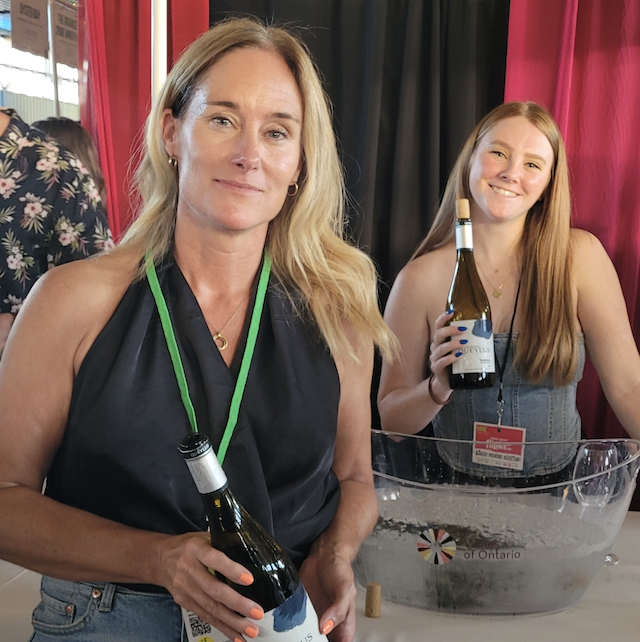
Kelly Mason and Brooke Husband – Domaine Queylus

Domaine Queylus Chardonnay Réserve du Domaine 2022, VQA Niagara Peninsula

Kelly Mason has hit the proverbial nail on the chardonnay head with her focused and balanced work with 2022 fruit to create what will forever exists as a quintessential Réserve du Domaine. The sort that will linger for years and be compared with when subsequent vintages are produced over the next 10-15 years. Remember the 2022 they will say. Ideal posit tug and a correct split between ripe fruit and stony goodness, also considered as mineral wealth to equip the wine with structure and subsequently longevity. All this despite a slight miss on acidity, which really turns out to be a thing of vintage. Brava team Mason. Sometimes there are misses when we taste blind.  Tasted July 2024

Oak all over, toasty notes in the orchard fruit aromas, mid-palate texture and no glissade but instead a settling on the palate. A bit heavy though just a year’s time will integrate the cloud. Lacks the right kind of acidity to really make it sing. Drink 2024-2026.  Tasted blind at #NWACS24, June 2024
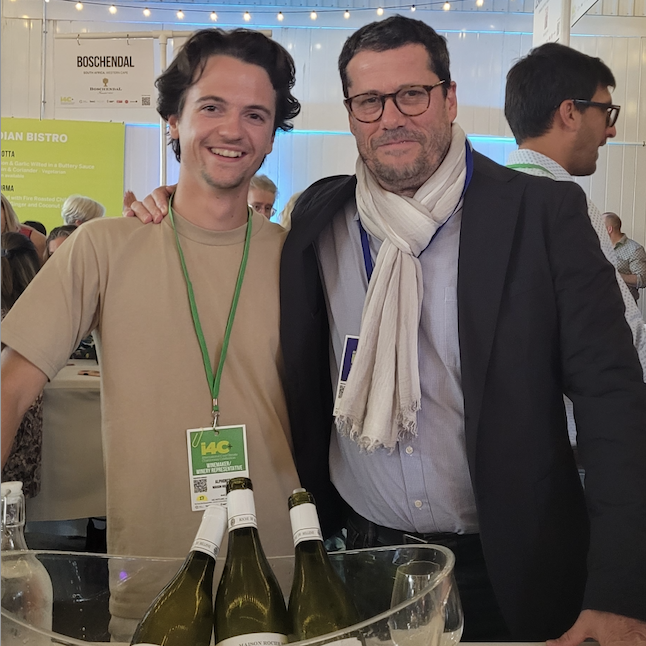
With Alphonse Potel – Domaine de Bellene

Maison Roche De Bellene Vieilles Vignes Bourgogne Chardonnay 2022, AC Bourgogne

A vieilles vignes at Bourgogne AOC level that proves the ’22 point just how universal these wines should be admired and can be your friend. Bellene’s is luxe, focused and balanced.  Last tasted at i4C, July 2024

Sharp chardonnay from Nicolas Potel’s Maison Roche de Bellene out of 2022, lightly reductive, tightly wound and beaming with energetic light. Got a buzz and a vitality about it, with old vines concentration keeping pace and developing texture as we speak. This has been a good sku in the past but Potel has hit the proverbial varietal nail on the head this time around. Drink 2024-2026.  Tasted July 2024

Nadia and Ilya Senchuk – Leaning Post

Leaning Post The Fifty Chardonnay 2022, VQA Niagara Peninsula

What was once a true matter of 50-50 barrel to steel raising has morphed and is now another matter. A concrete matter for today’s 50, full of fruit and fuller after its cementing, a posit tug still, even though wood and steel no longer play the push-pull game. More about fruit versus lees, tension so tight the rope never seems to budge, but it sways and slings within inches of itself. A bloody poignant vintage in spite of warmth, contiguous from its wild ferment and winemaking truth. Drink 2024-2026.  Tasted at i4C, July 2024

Matthias Messner – Kellerei Bolzen

Kellerei Bozen Chardonnay Bolzano 2022, Südtirol Alto Adige DOC

Really hot year tells Matthias Messner for a steel only raised chardonnay on lees from vines at 550-600m of elevation. Close to the south of Balzano, “a windy area” with cooling temperatures at nigt. Straight as a marksman’s arrow, cracker sharp and the sort of chardonnay to pierce your heart. Quenching, satisfying and Südtirol perfumed. So drinkable.  Last tasted at i4C, July 2024

Has been three vintages since getting back to tasting this archetypal Südtirol-Alto Adige chardonnay from top quality and quantity cooperative producer Bolzano. Can’t go wrong with the style or the effect, of no oaks given and the most lemony sunshine one could arrive hoping to find. This is a terrific vintage for a chardonnay we could all afford to drink a boatload of. Drink 2024-2026.  Tasted July 2024

Boschendal Chardonnay Appellation Series 2021, WO Elgin

“It’s easy to make quality chardonnay,” says cellar master Jacques Viljoen, “but hard to make sellable quality. Also scaleable but Boschendal seems to have accomplished all three with their high level tiered Appellation Series Chardonnay. What could be called a 2021 of dramatic restraint, of tension but never nervous, of grip but no abuse of power. Brilliant chardonnay and Ontario consumers should be happy to know it will become available in the upcoming VINTAGES September Classics. Drink 2025-2028.  Tasted at i4C, July 2024

Lydia Tomek – Ravine Vineyard

Ravine Vineyard Chardonnay 2021, VQA Niagara-on-the Lake

All Niagara-on-the-Lake fruit, from three vineyards and with just a wee bit of musqué inclusion to give Ravine’s chardonnay that gentle spirit and floral lift. Just that subtle hint of jasmine flower, oxalic acid lemony scent of purslane and faint anise of chervil. Spends 18 months in a majority of old wood which does develop texture to find this somewhere comfortably between pillowy and elastic tension. You may not always have you’re best stuff but you can still contribute admirably to the team. Though 2021 is not the recent vintage to set Niagara chardonnay up for its greatest balance, “you take everything you’re given and make the best of it,” reassures winemaker Lydia Tomek. Which she clearly does to deliver a chardonnay to keep the dream alive and the streak unbroken. Drink 2024-2026.  Tasted at i4C, July 2024

Thirty Bench Small Lot Chardonnay 2021, VQA Beamsville Bench

True to Bench chardonnay sprit and energy, standing upright, demanding to be noticed and in turn we are paying attention. A harvest of demand forces the team to focus and pay extra attention, to do everything possible for greater returns. Picking and sorting strategies finds the best available fruit to create something cool, gelid, succulent and shockingly Chablis like. Should age longer than first anticipated.  Last tasted at i4C, July 2024

Small Lot just has to be the ownver of the lowest of low alcohol number as it pertains to the Beamsville Bench and at 12.6 percent the conversion rate falls under the categorical auspices of magic. This is not a light chardonnay but it is a lithe, elastic and effusive one. Aromatically demure yet soft and almost caressing, without peppery (and sharp apple) bites or jolting in any way. The palate runs a similar course, gracing with soft and round flavours that are easy and stretched. Lovely and amenable 2021 here from Emma Garner and one to savour slowly, in a calm and tranquil setting. Drink 2023-2025.  Tasted July 2023

Katie Dickieson – Peller Estates

Peller Estates Private Reserve Chardonnay 2022, VQA Niagara Peninsula

A factor of chardonnay and also musqué interplanting, unique for Niagara and smartly put to a 50-50 ferment between steel and oak. What follows is 12 months in barrel and mostly no malolactic fermentation though says Katie Dickieson, “some might happen.” Clear, clean, precise, pristine and from an ideal vintage to make this style of direct, ready to rock chardonnay. Beautiful. Drink 2024-2025.  Tasted at i4C, July 2024

Westcott Chardonnay Estate 2022, VQA Niagara Escarpment

Wild ferment and malolactic happenstance, “and if it occurs simultaneously,” says winemaker Casey Kulczyk, “it’s fine, I want this.” Barrel fermented, super turbid going in and also desired. Welcome to 2022, a vintage for which its maker forgets and leaves everything behind because adversity and challenges always puts one on their toes. Cold snap in winter, vine damage and a 60-plus percent loss of buds (on chardonnay). Great quality nonetheless, a new or different estate mix to result in a more linear, tight, bright and for Westcott, extreme iteration. Yet this arrives brilliantly, very young, not itinerantly fruity, but sharp and hyper real. Drink 2025-2029.  Tasted at i4C, July 2024

Tawse Chardonnay Quarry Road Vineyard 2021, VQA Vinemount Ridge

No shock or surprise that Quarry Road ’21 is a mineral bomb, coming away on that rocky side of the 50-50 fruit to stone compendium. Forget everything you’ve heard or read about this arch-cool Vinemount Ridge chardonnay, but also ignore all the noise about unmitigated disaster by vintage. Niagara winemakers should always make quality cool chardonnay these days and Tawse holds more water and responsibility than most. Jessica Otting is ten times equal to the task with a Quarry so precise and focused it may just make a tooth or two feel the mineral pain. A chardonnay chillingly representative of its vineyard yet, rewriting the jazz because of the shall not be named vintage. The naysayers can run away and hide in their holes because history will be kind to these wines, especially when they shine on in tastings ten years forward. No crutch or apology, sorry not sorry. Remember 2011 and 2013. Now forget them and only speak of 2021. Just great chardonnay. Drink 2025-2030.  Tasted at i4C, July 2024

Cave Spring Estate Blanc De Blancs, VQA Beamsville Bench

Classic, sharp, intense and ideal. A ripper, “and I love that” says Stephen Gash. Dry as the desert in such a plainfully proverbial way. Scintillant extraordinaire.  Last tasted at i4C, July 2024

For the first time in quite some time the next look at the Cave Spring Estate Blanc De Blancs is bang on one year later and so yes, freshness is the thing. Crisp and crunchy, stylistically so consistent and really set up to act as the dictionary entry for chardonnay as sparkling wine out of Niagara. It’s just so spot on, high in energy and exacting for style, place and estate.  Tasted November 2023

Domaine Des Deux Roches Saint Veran Vieilles Vignes 2022, Bourgogne AC

From the estate’s flagship old vines holdings in the village of Saint-Véran on the slopes set below the famous two rock faces (Deux Roches). They happen to be the largest holder of hectarage and as such this is one of six cuvées in the Véran. As crunchy as any in the Bourgogne Mâconnais, or will ever be, with crisp bites and never dissipating tension. Sharp, representative of great value with several Premier Cru coming to mind and a vintage quality to solidify and formalize the overall trenchant intention, consolidation and voice. Drink 2024-2028.  Tasted at i4C, July 2024
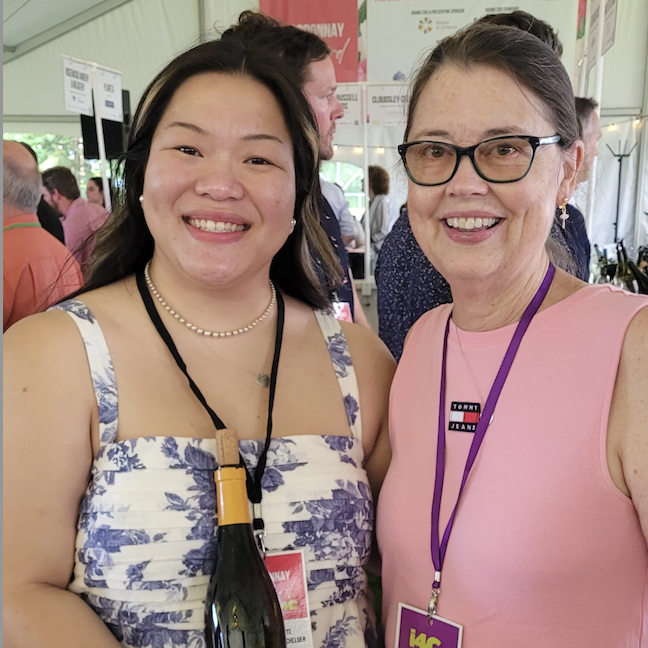
Violette Bachelder and Mary Delaney – Bachelder Vineyards

Bachelder Wismer Wingfield Chardonnay 2021, VQA Twenty Mile Bench

By this time Wismer-Wingfield is the standard Bachelder chardonnay, the one of great acumen and knowledge accrued, the most middle of the road of the Toussaint releases. This is said with greatest of compliment because there is no substitute for experience and Thomas has long since figured out how to make this most high level and consistent chardonnay. No lack for all this and more from 2021, of a wine where fruit and wood share equal space but both exist on the same footing. As always the presence of waxy, aerosol and resinous notes that chardonnay for Wismer-Wingfiled always displays. There is something to be said for the same old. Drink 2023-2026.  Tasted December 2023 and at i4C July 2024

Leaning Post Chardonnay Senchuk Vineyard 2021, VQA Lincoln Lakeshore

“I fought the grapes…and the grapes almost won,” quips Ilya Senchuk. We should note that the the temps are/were five to six degrees cooler in Grimsby/Senchuk Vineyard and so he and Nadia feel quite strong about their success for cool climate chardonnay out of the adversarial vintage. A “war of attrition” perhaps and some losses but in the end more wins, but you have to buy and taste these wines to find out. Ilya agrees that sometimes “you have to get out of the fruit zone,” and not just with respect to pinot noir. The mineral aptitude and stony goodness of this cracker ’21 Senchuk chardonnay will not be denied. Not to mention at 12.5 percent alcohol we need to look past lean and consider magical conversion rates. See for yourself. Drink 2025-2029.  Tasted July 2024

Cloudsley Chardonnay Twenty Mile Bench 2022, VQA Twenty Mile Bench

Always a mix of Wismer fruit, of Wingfield and Foxcroft, same bat fermentation and same bat channel. Wild ferment that is, followed by 18 months in French wood with one-quarter or so being new barrels. Balance of the old and new, the buttery and the grippy, the soft and the profound. A recurring fruit theme for 2022 with less tension and tightening as compared to say ’19 and ’21. Getable as chardonnay though persistent in its inherent cool climate origins. Still it will attract more and more consumers who hold preconceived notions about the idea of chardonnay. Drink 2024-2027.  Tasted July 2024
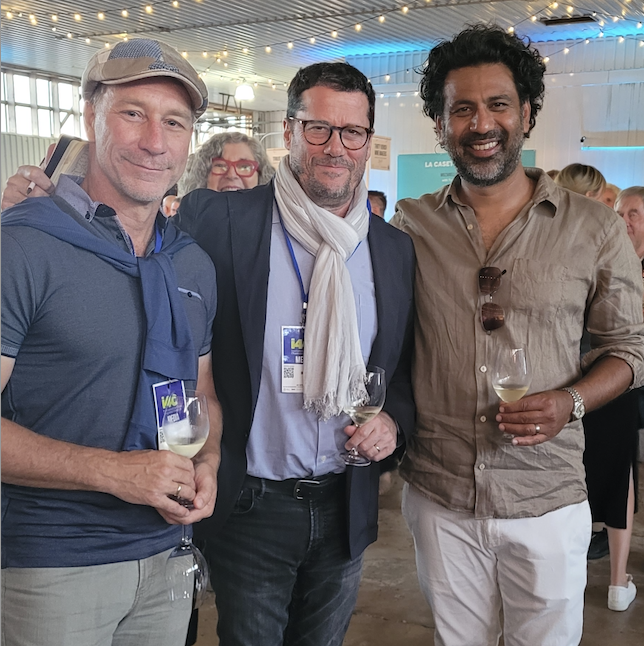
John Szabo M.S., Godello and Malivoire’s Shiraz Mottiar

Malivoire Chardonnay Mottiar 2020, VQA Beamsville Bench

In a state of grace resolve on course to deliver its best at every step of development. In the heart of the matter now, primary yet moving forward with finespun caramel right ahead. So well conceived and made to honour its origins.  Last tasted at i4C, July 2024

Sure there is a full and subtly opulent quality to the Mottiar 2020 but from the beginning there is confidence and balance. Always this way but ’20 is special in that regard, comfortable in its skin and so sure of what it brings to the chardonnay table. Beamsville Bench beauty and bounty, acidity so sweet and developed it feels like it has not yet acted just like this before. A hint of paraffin and beeswax, a lilt and a rise in beats here and there but most of all freshness and that aforementioned surety of conviction. Drink 2023-2027.  Tasted July 2023

Blomidon Brut Réserve NV, Annapolis Valley, Nova Scotia

Put to bottle in 2019 and so five years on lees ain’t nothing to develop complexities, eccentricities and potential variability. This pour comes out of sound and vision, disgorged in March of 2024, set to be released in the early Fall. Makes great use of 2016 and 2017 fruit, plus a small amount of the frost vintage 2018. Youthful, appropriately Blomidon Peninsula/Annapolis Valley tightly wound and in a way very chardonnay, though not glaringly so. “For us this is the future for non-vintage,” explains Simon Rafuse, “and to save the cooler vintages for Blanc de Blancs.” It’s a reverse engineering kind of approach. Simply put, in cooler vintages you can’t push wines through malolactic and so chardonnay is best purposed for sparkling when acids are high and pH levels are low.” Like 2011, but not 2010 and Rafuse adds that “the problem is you have to wait many years to see the results. But it’s worth it because they are really good.” True that. Drink 2024-2028.  Tasted at i4C, July 2024
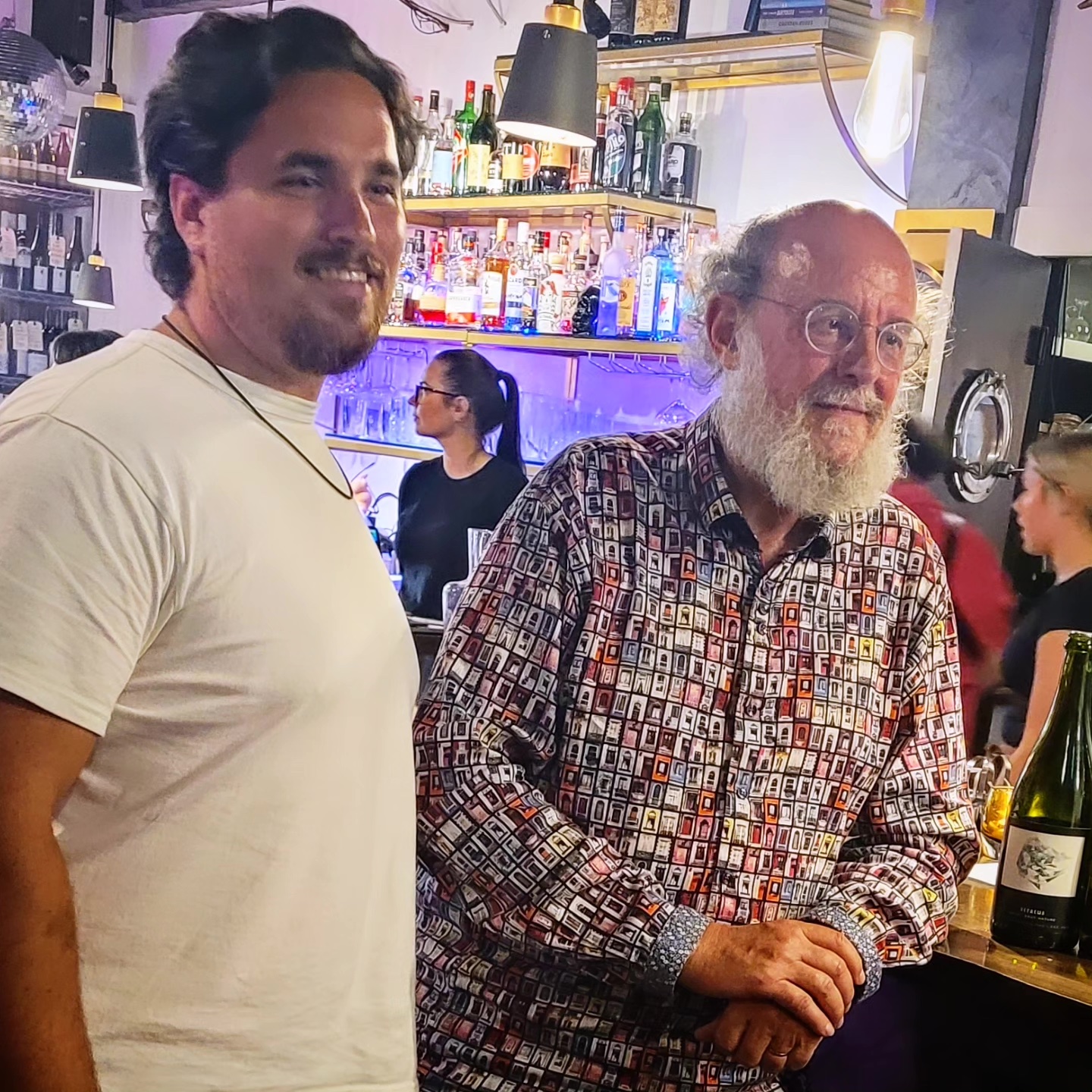
Dean Stoyka and J-L Groux – Stratus Vineyards

And there were visits

Stratus Vineyards at Bar Ruffino

Stratus Brut Nature Zero Dosage 2013, VQA Niagara-on-the-Lake

J-L Groux explains that the main factor for making this kind of sparkling wine is PH, “because the aromatics will be built upon six to seven years of lees aging time.” J-L feels this ’13 is going to be the winner now, and for 20 years. Not far off it would seem because of the “partial disgorgement” method, well within VQA rules and thus you arrive at a toasty smoulder unlike any other sparkling wine. The lees are the thing, in fact they are everything. They prevent the aromas and the wine from oxidizing. Amazing.  Last tasted July 2024

Comes across a bit cloudy, at least as compared to the B de B with thanks to the natural, lees left intact style. The citrus component is so pronounced, as is the taut, direct, lean and intense manifold destiny of what is truly a singular Sparkling wine. That being a living, breathing, inhaling and exhaling wine, slowly releasing proteins, acids and realizing its B de B Nature dream. Just amazing what lees can do for sparkling wine.  Tasted July 2021

Released side by each with the Stratus Blanc de Blanc 2013 and while vintage and grape are the same, the similarities almost seemingly, ostensibly and allegedly end there. Yes in fact this 100 per cent chardonnay is a child of the most excellent varietal vintage and like the B de B spent six years on the lees. Comparisons cast aside it is the very fact that because much of the lees were transferred to bottle by a minimalist’s disgorging that this cloudy bubble with a Canadian artist’s series set of labels can’t help but elicit another memory. The Lilies of Monet and their clouds represent neither the horizon, nor the top or the bottom. Nor does a bottle of this Zéro Dosage Brut. The elements of water, air, sky and earth become intertwined in a composition without perspective, or so it goes in this hazy, opaque and dry as the desert sparkling wine. So many layers of lemon can be peeled, juiced and scraped away. If a Stratus wine could be a a riddle, wrapped in a mystery, inside an enigma then here it is. The texture here is palpable and the intrigue factor surely high, so it should be imagined that longevity will be this wine’s calling card. It’s more austere than the Blanc de Blanc but I think in fact it will. Drink 2022-2029.  Tasted November 2020

Stratus Chardonnay Reserve 2002, VQA Niagara-on-the-Lake

Harvested between October 4th and 6th which for J-L Groux was early, akin to harvesting in early September in the Stratus world of today. Barrel fermented for 350 days in a mix of new, second and third fill French wood. Low(ish) acid and high pH vintage from the vineyard purchased just two years prior. The team went about immediately reducing yields from eight to two tonnes per hectare, “direct to concentration,” says J-L, who at the time partnered with Peter Gamble to make this rare iteration labeled as a Reserve wine. They selected barrels for this premium chardonnay and truth can feel counterintuitive because many years after having tasted the (Non-Reserve) 2002 it is this ultra varietal bottle that shows impossible freshness. Persistent in reserve, laden with grapefruit and as much texture as wood is want to impart. Well, actually a bit less than expected but as a chardonnay expression with the same fruit the special barrels chosen have come about with such a different result. Less preserved lemon, wax, late bitters and oxidation. Therefore sharper and fruitier while in the end likely just what Peter and Jean-Laurent were looking for. Drink 2024-2026.  Tasted July 2024
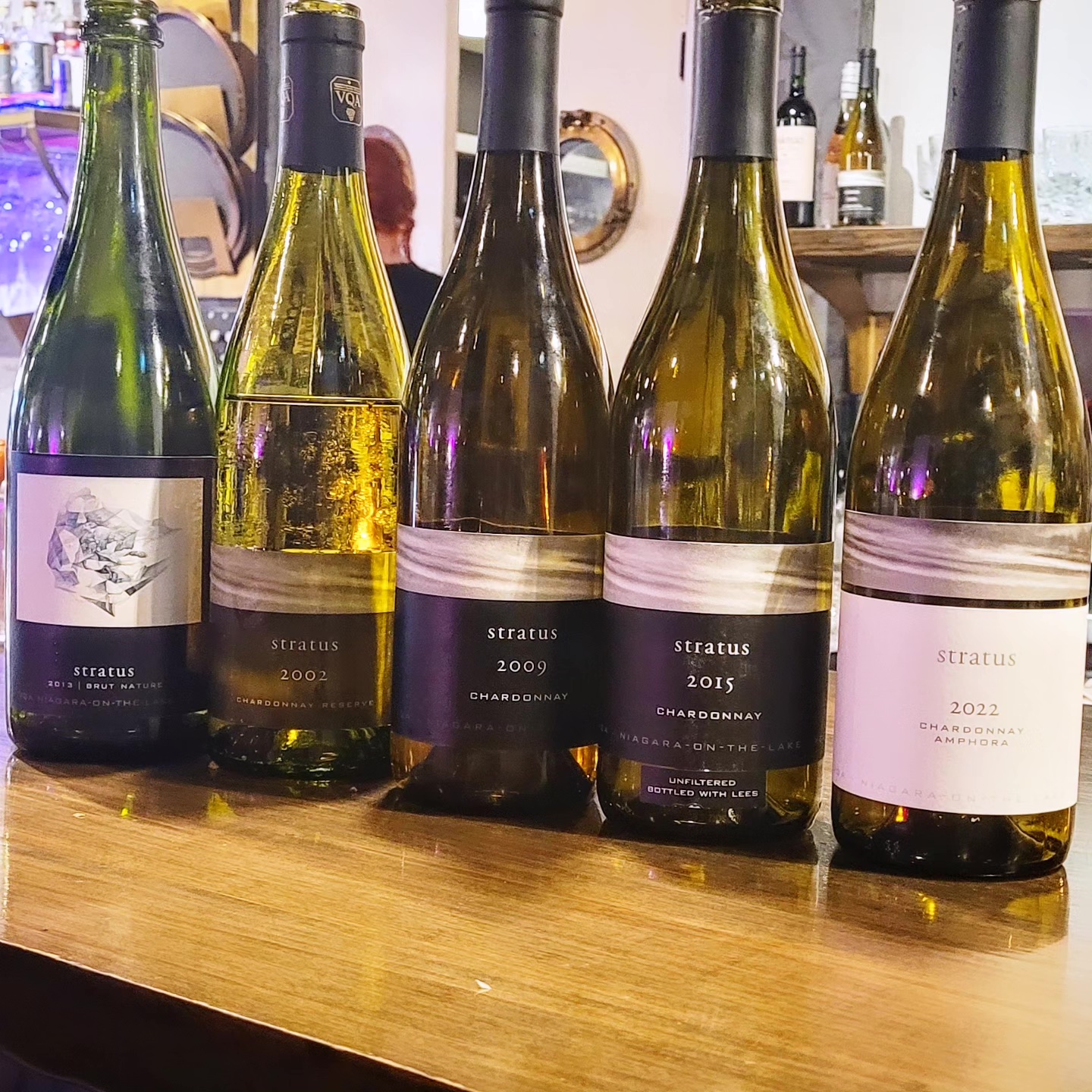
Stratus Vineyards Retrospective at Bar Ruffino

Stratus Chardonnay 2009, VQA Niagara-on-the-Lake

Late pick (November 10th), high acid, smoky and smouldering chardonnay, connecting it to a course of action for those that are made today. A precursor and one that the winemakers surely look back at and draw upon for current preoccupations. Especially Dean Stoyka who stirred some lees and learned how to get his chardonnay through malo during his Niagara College educational days. Looking at 2009 helps to consider the sparkling wine program because the specs and style of this wine are clearly inspirational towards that end.  Last tasted July 2024

Comes off like a white blend, aka Stratus White but this is the outright, unchaste vintage talking. Winemaker J-L Groux crafted three wines with viticulturist Paul Hobbs. Here they split the project 50/50 with Hobbs including wild yeast fermentation and whole bunch pressing and J-L adding short skin contact, controlled yeasts and no whole bunch pressing. From extreme low yields, this one puts on a show after only 10 months in barrel. High on aroma, brazen in texture, ambient in flavour bites. Very Niagara if inexactly Chardonnay.  Tasted March 2014

Stratus Chardonnay Bottled with Lees 2015, VQA Niagara-on-the-Lake

Medium acid and low pH year, picked across September which is early (and necessary because acids would have waned) but what matters most are the lees kept in bottle. To develop aromas over time and ward off oxidation. So unlike the 2009 tasted side by each, here from a “winter damage year” tells Dean Stoyka. Small crop, somewhere between 88 and 91 tonnes (the number changes form time to time), average heat and precipitation. Serious chardonnay concentration, fruit persistent, in great shape and a better wine today than it showed as seven years ago.  Last tasted July 2024

The 2014 vintage was essentially the first year when barrel lees would be left in the bottle and my how conservative this ’15 really was as compared to an evolution that culminates (currently) with the full on lees filled chardonnay vintage. Quite the opulent vintage mixed with aromatics still morphing, developing lees, brash and blushing by 40 per cent new oak, complimented by generous acidity. Showing with controlled drama and though the yields were low (only 88 tonnes) there is something quite special about this emotionally charged, vivid, scarce and remarkable chardonnay.  Last tasted July 2021

Stratus Amphora Chardonnay 2022, VQA Niagara-on-the-Lake

“Slightly, maybe three times more oxidative than a barrel,” explains Dean Stoyka as it pertains to amphorae. Kind of surprising but then again there needs to be a good reason for choosing these tight-grained Tava Amphora baked at higher temperatures, especially as compared to Georgian Qvevri. More oxidation means more lees and more lees means kept freshness plus the ability for aromas to develop into complexities over time. As for a a second kick at the chardonnay in amphora can by Stratus well then assessment out of expectation also triples and the learning curve realized by Stoyka becomes three times the fun. Where is the reference point? Who cares because the nurturing of this fruit and palate caress conspire to create a feeling, as if you have known this wine your whole life. A matter of great positivity and understanding. Dios mio, man. Longevity should never be questioned and reasons why never argued. Keep at it, keep on keeping on. Drink 2024-2030.  Tasted July 2024
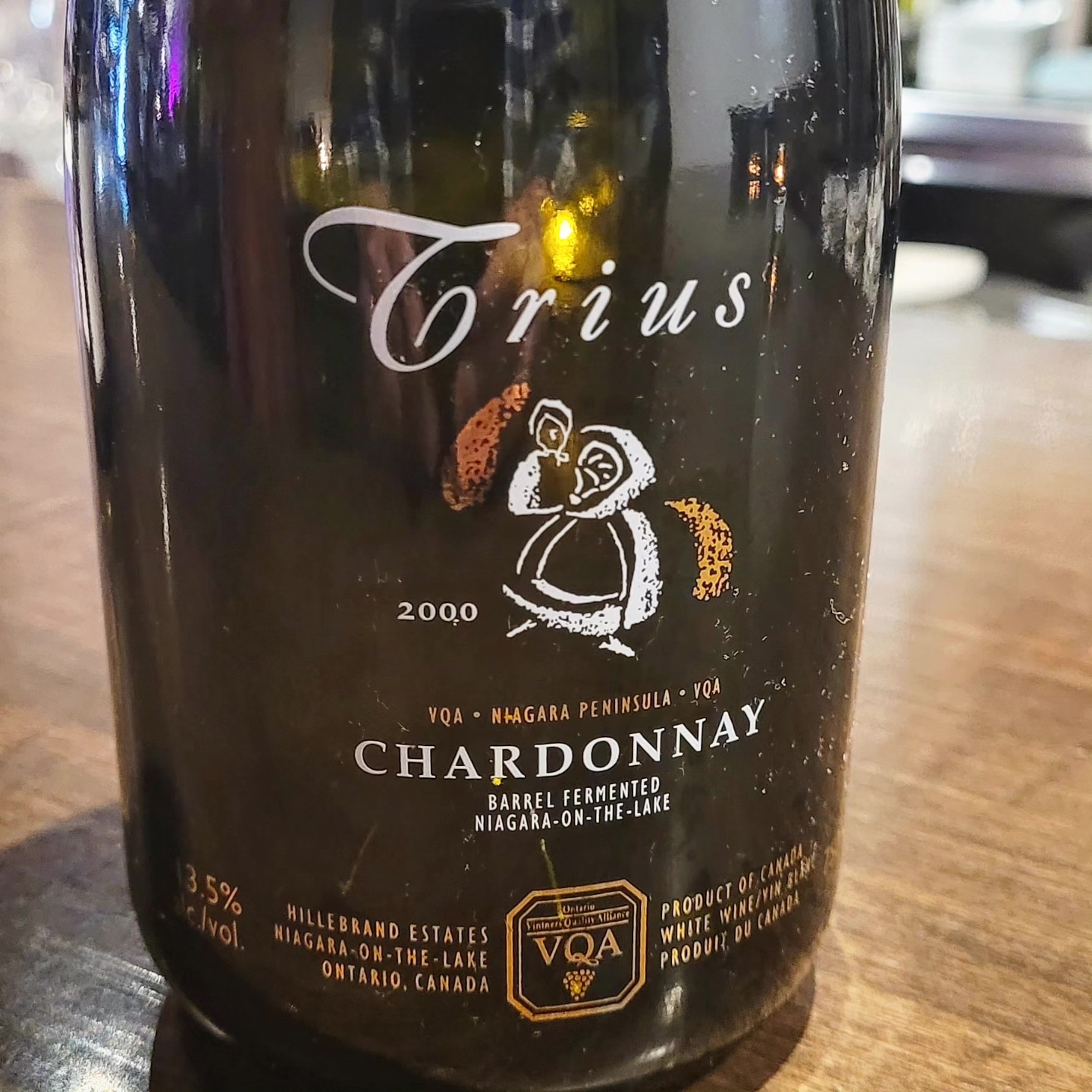
Hillebrand Trius Barrel Fermented Chardonnay 2000, VQA Niagara Peninsula

Nutty, flor oxidative and 24 years of age. From a very cool year and J-L Groux’s roots as a Niagara winemaker. Reluctantly fresh and honestly a good showing at this ripe old age easily into a time when the ideas and thoughts of mortality and finality can’t help but creep in. Though the wine would not shine to the dispassionate it does cause a stir of interest to a group of writers, influencers and sommeliers, all happy to drink one glass. Kudos to the Stratus team for offering up this cool piece of chardonnay history.  Tasted July 2024
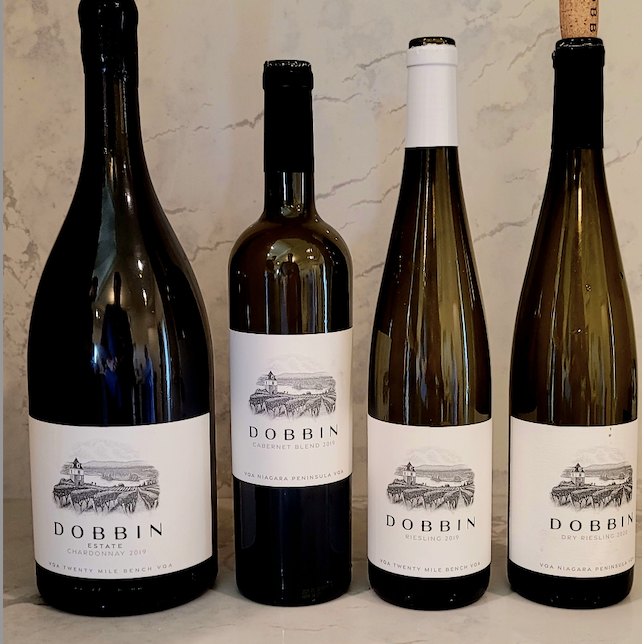
Dobbin Estate Vineyard & Winery

Dobbin Estate Vineyard & Winery Chardonnay 2019, VQA Twenty Mile Bench

This may be just the first stages of Dobbin’s tenure making high end wines from the Twenty Mile Bench but auspicious does not begin to describe the level of sophistication marking these beginnings. The erudite oenological consulting team of Ann Sperling and Peter Gamble have taken chardonnay into territory they are quite familiar with but always keep in mind that top terroir, vineyard conditioning and uncompromising preparation are what collectively set this up for success. This 2019 is from a cool climate vintage out of a cool climate place and recent history tells us that these are chardonnay that live good, long and healthy varietal lives. Luxe yet still crunchy, high quality wood used generously if judiciously and in the end this kind of rocks the world. In a chardonnay way. Drink 2024-2028.  Tasted April 2024

The Tower at Dobbin Estate

Dobbin Estate Vineyard & Winery Cabernet Blend 2019, VQA Twenty Mile Bench

From a cool vintage, long one though and cabernets cropped at the lowest of the low – less than one tonne per acre. ”A drinkable style,” says Peter Gamble and “I like the ‘19s from Niagara for that reason.” Pretty much a 50-50 final blend, almost too easy if by design and immensely popular with those who know, but also those who do not necessarily know the how or why. This is not a Caymus drinker’s red but it will inform and in turn impress they who should do better than their muscle memory habits of consuming over ripened, elevated alcohol, sugary reds. The ’19 is not particularly structured as a cabernet squared though the modelo drinking window is a good one.  Last tasted July 2024

First release for the new, high-end estate found on the Twenty Mile Bench with this stylish, Right Bank in make-up cabernet franc (inclusive of 15 percent merlot) having been sourced from a mix of the Homefront along with Creek Shores and Four Mile Creek. Oenologists Ann Sperling and Peter Gamble have consulted from the beginning and this is what would be considered a “Peninsula” wine because the fruit is drawn from three very different micro-climates. Sure seems like single site iterations are the future once each have been trialled and understood but for now the mix makes for a treat of layering and integration. Chic, full, substantial and generously oaky in the classic Sperling-Gamble style for full-bodied but never over the top Bordeaux reds for Niagara. The wood lends sweetness, fine chocolate ganache and a smoothness that is a hallmark of their wines. They did not go for structured broke in this inaugural bottle but the result is dreamy and leaves an impression, without seemingly trying to be impressive. No doubt a Napa Valley feel here which is always a compliment as it pertains to Niagara reds. The only qualm is the lack of franc-ness but that feels somewhat intentional. Drink 2024-2026.  Tasted April 2024
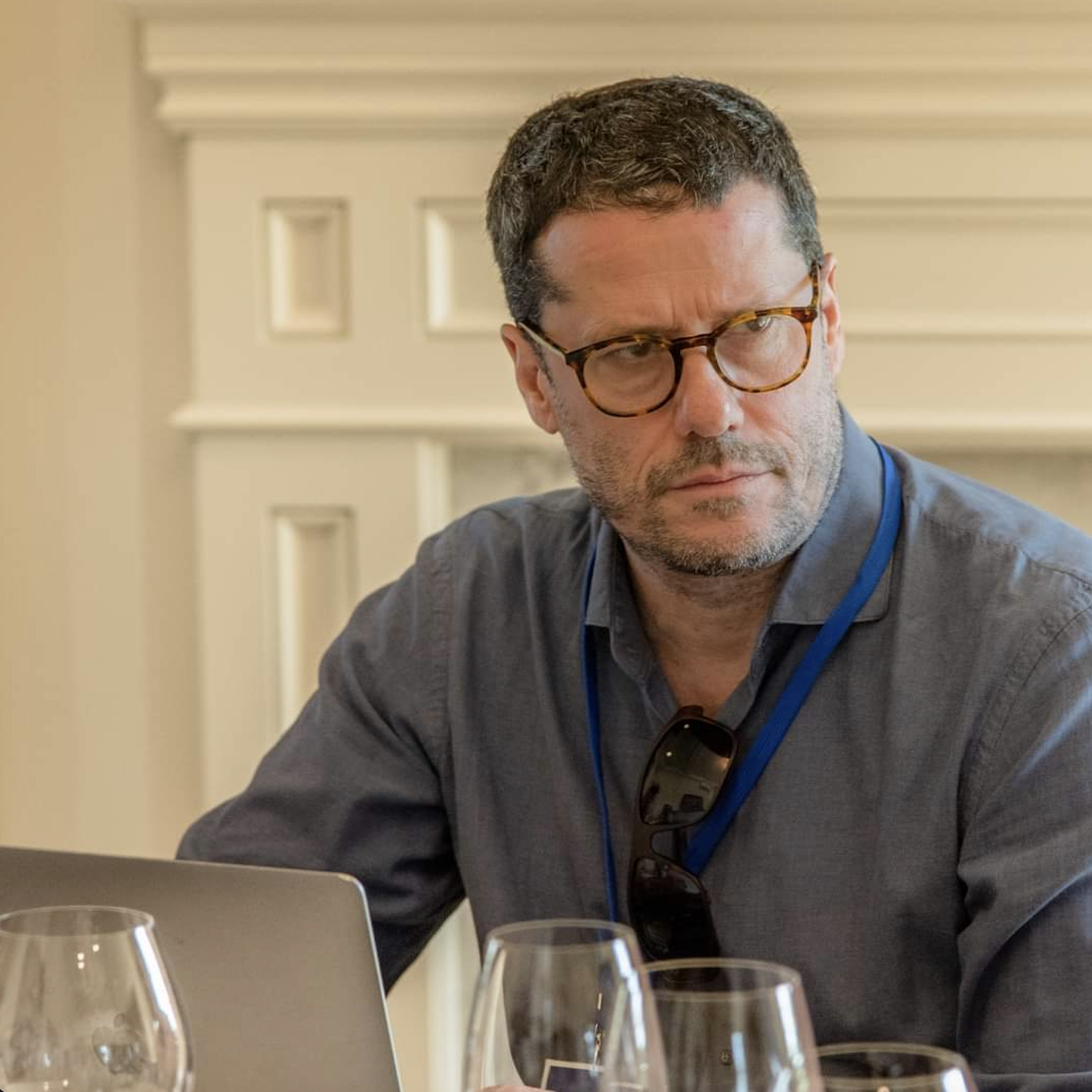
Tasting at Dobbin Estate

Dobbin Estate Vineyard & Winery Riesling 2019, VQA Twenty Mile Bench

Classic and balanced, concentration meeting at the intersection where a righteous mix of sugars and acidities form layers from. Vineyard blocks are what define the intention and i turn the results of this riesling. Nothing overt, neither by salinity or sapidity, though their are hints, shadows and subtleties indicated by both. And so the requiem for this riesling’s success lies in its ability to please without speaking loud or acting with any sort of impunity or demand. This is why people who know nothing about riesling will gravitate to enjoying this as a glass of a special white wine. And those who get it will be hard pressed to label or pigeon-hole it as Ontario. The inclusion of some botrytized grapes has something to do with this. Drink 2024-2028.  Tasted July 2024

Dobbin Estate Vineyard & Winery Riesling 2020, VQA Twenty Mile Bench

A much warmer vintage for all of Niagara and with riesling the difference between 2019 and 2020 is truly the proverbial might and day. Almost an about face style with the ripest and juiciest ripe fruit, lower sugar and (less botrytis) but truth be told there is more richness and flesh in 2020. Intensity by implosion and higher sugar number (15-16 g/L) as compared top 10.5 fro 2019. Unrelenting flavours and a profile more Germanic than that more chiseled and muscular ’19. Drink 2024-2028.  Tasted July 2024
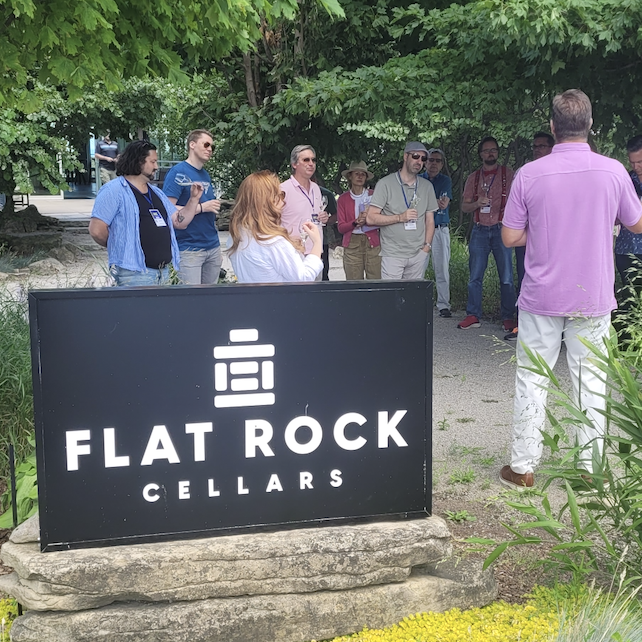
Ed Madronich holding court at Flat Rock Cellars

Flat Rock Cellars

Flat Rock Cellars Pinot Noir Foundation Series 2022, VQA Niagara Peninsula

The separation between Foundation and Gravity is essentially barrel selection with the winemaking being the same. So specific to this place, rusty and busy tart fruit, a mix of plum and cranberry, always curious, always complete. Gently and fluidly volatile, crunchy at its peaks and low rumbles in the valleys. A 5,000 case production (on average) as compared to 1,000 of Gravity. Never a question that this is and represents Flat Rock.  Last tasted at i4C, July 2024

No questioning the ripeness on all fronts, to the edge and precariously so with maturity and also a glycerol meets acetic set of circumstances. As such there is a raw cookie dough note, also potpourri and natural medicinals. A very specific tang carries the flavours and the sensation of style is duly noted. Gets chalky and the acidity takes over on the backside of this distinguishable pinot noir. Drink 2024-2025.  Tasted July 2024

Flat Rock Cellars Pinot Noir Gravity 2020, Twenty Mile Bench VQA

Warm vintage and about as high-toned that Gravity as pinot noir will ever be. A tight and to be frank also austere iteration that still remains and persists in this state of the unforgiven. If a Gravity has ever needed for time than this 2020 is certainly up for debate. Muscular, concentrated, broad shouldered, full of texture and buzz in its extremities. There is plenty of substance and so when the wine settles in it will do what intention asked it to do.  Last tasted July 2024

Jury’s still out on the season’s relationship between pinot noir, Niagara and especially the tattooed effect painted by the Escarpment’s benches. Gravity ’20 is still showing some early earthy, fermentative aromatic volatility by way of bread dough, tar, strawberry red fruit and coniferous-evergreen energy. Some stem inclusion surely, an early pick on acidity in a warm year, strength in maceration and equally pressed so that the Ontario greens also come through on the flexed rope of tannins. Like hastily hand-stretched pizza dough popping holes, or pulling liquorice too fast and causing cracks. Gravity is meant to fall softly downwards, gracefully and gently. The sour accents speak another language, a bit unfamiliar and yet the track record of this wine deserves respect and time. Jury will be hung and a new one will come back in two years for next assessment. Drink 2024-2027.  Tasted October 2022

Flat Rock Cellars Pinot Noir Gravity 2010, VQA Twenty Mile Bench

Really warm vintage, one of those in that time that ripened fruit to the max and so pinot noir went where it so boldly wished to go. One of those substantial examples that has surprisingly lasted deeper into its tenure than assessment of that vintage would have predicted. Good showing today and some duck prosciutto would work really well alongside.  Last tasted July 2024

Reels in Twenty Mile Bench fruit in a warm vintage as well if not better than any of its peers. Founder Ed Madronich is clearly slope and soil obsessed and this Pinot Noir is a study in topography and geology. To paraphrase Madronich, it’s ”more Pommard than Volnay, in a deeper and more masculine way than the Estate bottling.” Pinot barrels most representative of the Gravity style were chosen for the final blend, in this case noted by woodsy black cherry and spiced root vegetable. “Get a little savagery in your life.”  Tasted twice, April and December 2013
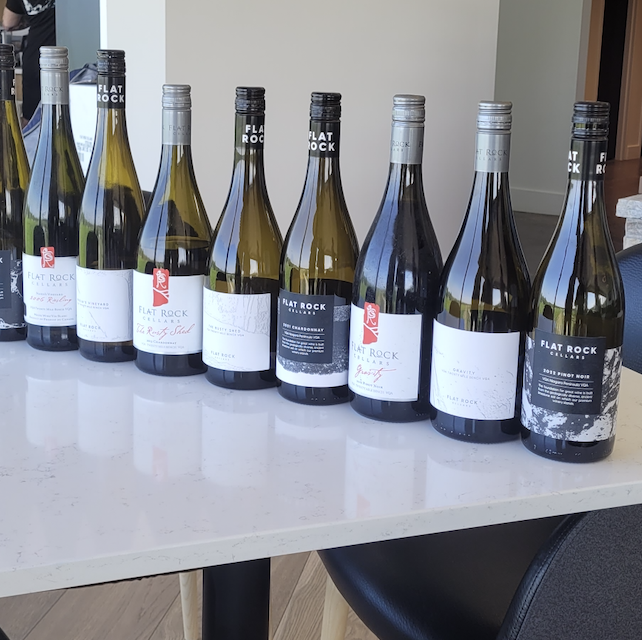
Flat Rock Cellars Chardonnay Foundation 2021, VQA Twenty Mile Bench

Middle road traveled, taken and projected for chardonnay definitive of a 25-year study by Flat Rock makers to arrive at this time. Lovely, juicy, prolific and in its Flat Rock way also a quintessential Twenty Mile Bench example of chardonnay What more needs to be said?  Last tasted July 2024

Foundation Series: Our Classics redefines the Flat Rock entry to market and gateway for their chardonnay. If you’ve been tasting these wines for a decade or more you’ll recognize these aromas from a 2021 that resonates of the house style. Inviting, somewhere between vanilla crème frâiche and lemon crème brûlée, soft and demure. Creamy palate texture, a swirl of butterscotch ripple curd and easy drinking all the way through. Many will find this soft but it’s best considered as a comfort food kind of chardonnay. Drink 2023-2024.  Tasted October 2023

Flat Rock Cellars Chardonnay The Rusty Shed 2021, VQA Twenty Mile Bench

If the Foundation delivers a quintessential Flat Rock chardonnay experience than The Rusty Shed takes it further. More substantial fruit and aromatic muskiness if less immediate joy and juiciness. No shock because RS is a wine that can and will age with this being one of those vintages that fit the bill. Reminds of 2011 or 2013, or maybe a combination of the two with the modern world of love and varietal development taking chardonnay from FR to new heights. Will hit the zone sometime later this year or early next. Drink 2024-2027.  Tasted July 2024

Flat Rock Cellars Chardonnay The Rusty Shed 2013, VQA Twenty Mile Bench

A more than appropriate vintage to pour side by each with 2021 because they share that Flat Rock Rusty Shed affinity of chardonnay needing some time to open up before delivering the juicy, gelid and fleshy character they will almost always eventually do. The ’21 will get to this place and few Niagara or Bench chards can go light years ahead into such a place of beauty. Just knew 2013 would get there and what a joy to be here with it.  Last tasted July 2024

It’s as if this label had bided all this time to be the benefactor of 2013 fruit. This Rusty Shed, this 20 miler with the track record to age, a wine that sheds baby fat over a 10 year mineral through echelon stratum, in ways few other peninsula to bench chardonnay can do. This Jay Johnston handled surfer of a wine, buoyant and balanced, centred and able to withstand turbulence, oscillation and tidal sway. Here with sumptuous and spiralled fruit gaged in lode intervals and a tartness held in lope and line by a membrane of extract and tannin. Best ever. Showing well, repeatedly and to forecasted repute. Impressing critics and consumers alike. Bravo. Drink 2016-2025.  Tasted June 2016
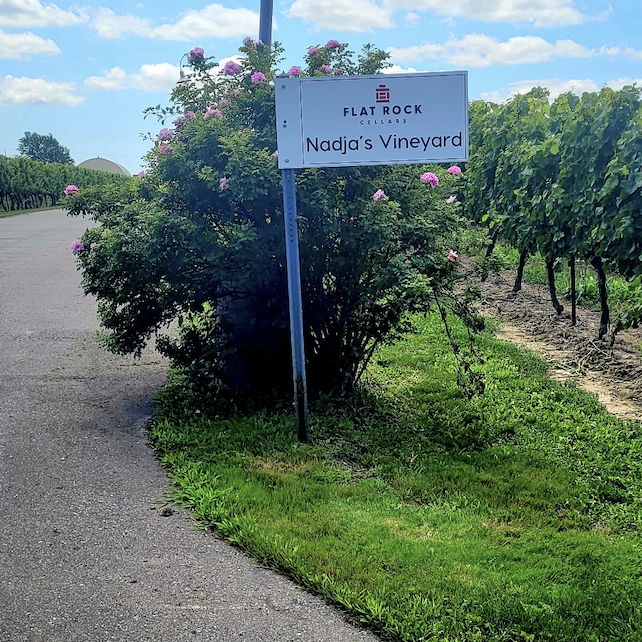
Flat Rock Cellars Riesling Nadja’s Vineyard 2021, VQA Twenty Mile Bench

A savoury, mineral and waxy Nadja as riesling, citrus as high and spritzed with energy as it will ever be. Not a vintage of concentration but rather one that is structured and so bloody specific to the vineyard higher up upon the estate’s step of the Niagara Escarpment. Flat Rock is perhaps the only estate with this level of elevation change, as much as a 10 story building from the this top vineyard to the (pinot noir) bottom. A place of air flow, equidistant to the lake and to the top of the Escarpment. Crisp, crunchy, tart and high level intensity, even for Najda. Need to wait a few years to see what next steps it will take. Drink 2025-2029.  Tasted July 2024

Flat Rock Cellars Riesling Nadja’s Vineyard 2006, VQA Twenty Mile Bench

Tough vintage but are they not the ones that find the magic of aging to deliver a wine like this? Phenolic and mineral as the saltiest of Nadja rieslings, ultra aromatic and a bit yeasty but the vintage had much to do with this. The rest is soil and location, up on the Twenty Mile bench on a second step up towards the crest of the Niagara Escarpment. Crunchy in every way, citrus as always but accentuated here (as it will repeat 15 years forward with 2021) and as Nadja, so very recognizable. Drink 2024-2026.  Tasted July 2024
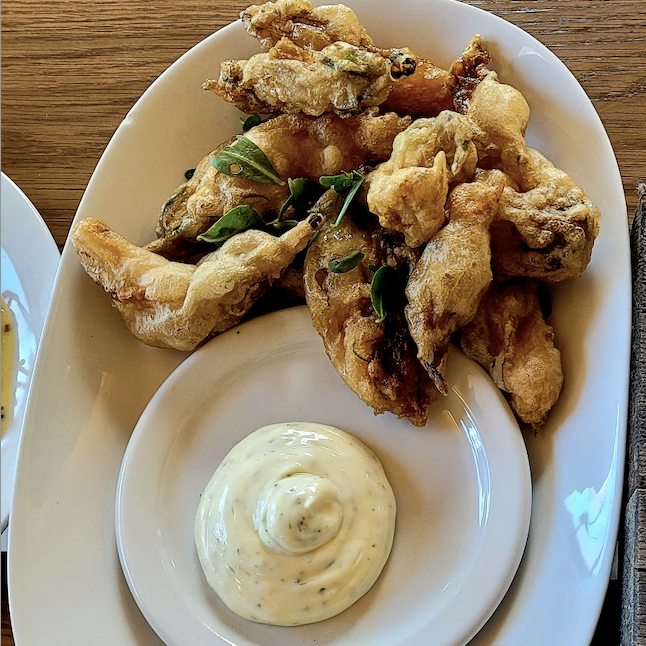
Chey Ryan Crawford’s Fried Zucchini Blossoms

Le Clos Jordanne

Le Clos Jordanne Pinot Noir Villages 2021, VQA Niagara Peninsula

A few more red fleshed drops of fruit after only three months further in bottle. Fine impression gained from these Jordan Bench blocks acceding a seamless layering and all is right in this Villages world.  Last tasted July 2024

Off the top a more structured pinot noir vintage for Le Clos Jordanne and the aromatics are not shy to announce their swaggered arrival. Bigger bones and flesh hanging tightly, tannins very much apart of the mix, holding firm, lightly chalky in constitution and a notable wine meant for aging, surely be design. Very different to the 2019 and 2020 LCJ pinots which is both curious and effective. Drink 2025-2028.  Tasted April 2024
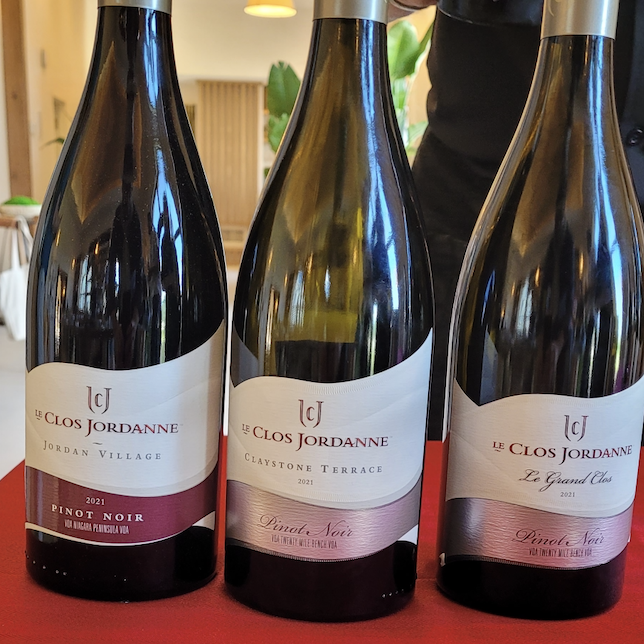
Le Clos Jordanne Pinot Noir Claystone Terrace 2021, VQA Twenty Mile Bench

This is a first kiss with and assessment of Claystone Terrace aboard the Twenty Mile Bench which Thomas Bachelder sets the record straight for how it is a contiguous tract connected with the terroir of the Jordan Bench. What it shares with Le Grand Clos Vineyard is a west to east gradation that moves from the structured to the blowsy. In other words every block acts differently but also incrementally and when their individual barrels are assembled they are done so to make the best and most balanced wine with nuts, bits, bolts and pieces drawn out of each gradation. From 2021 the softer aspects shine on because austerity and tension just don’t hold court as strong as they might in some cooler and also much warmer vintages. More middle road (for Claystone specifically) and the beneficiaries of such a pinot noir are all of us. Still another year will soften the last of the tannins and gripping tension. Drink 2025-2029.  Tasted July 2024

Le Clos Jordanne Pinot Noir Le Grand Clos 2021, VQA Twenty Mile Bench

As with Claystone Terrace the Grand Clos Vineyard blocks running from west to east move through this fruit gradation from structured and austere through to soft and amenable. For 2021 the middle ground is duly noted with a signature and arch classic Jordan/Twenty Mile Bench pinot noir that sings in youthful life as early as it ever has. The team (Thomas Bachelder, Kerri Crawford and Phillip Brown) have coaxed out the sweetest natural fruit. While it flows with ease it’s also equipped to slow down, reflect, and then re-emerge a few years thereafter, post pause and not atypical varietal dumb phase. Th3 2021 is found to be chic, suave and stylish as ever, fruit in a dark red cherry state and acidity meeting texture for mouthfeel of a most finessed kind. Drink 2025-2031.  Tasted July 2024

Chey Ryan Crawford’s Salmon Sack

Le Clos Jordanne Chardonnay Villages 2021, VQA Niagara Peninsula

Something about the Goldilocks vintage for chardonnay brings the three LCJ wines closer together. Villages may lack the complexities of Claystone Terrace and Le Grand Clos but its juiciness, open aromas, flavours and texture are all there. When you consider price there is no debate in how much value this offers and the gentle spice masala on all parts of the palate are really special. The attack of CT and le roi cru block LGC are there, albeit here less grippy and weighty, but Villages gives all that you want and need. Drink 2024-2026.  Tasted July 2024
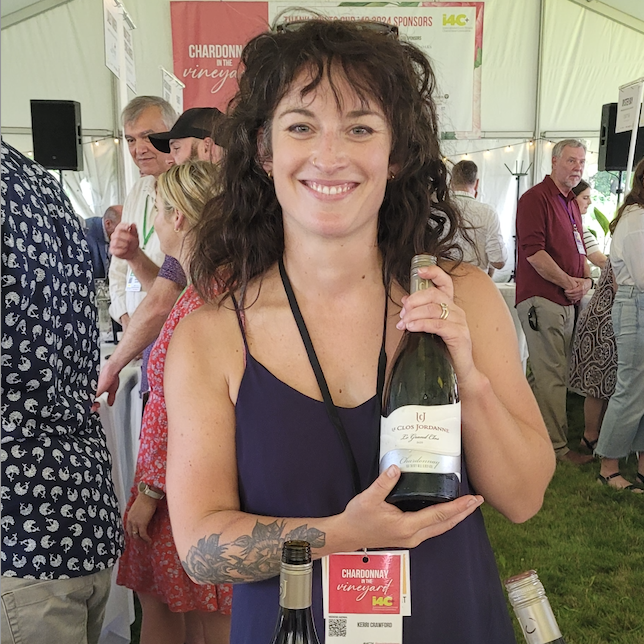
Kerri Crawford – Le Clos Jordanne

Le Clos Jordanne Chardonnay Claystone Terrace 2021, VQA Niagara Peninsula

The Claystone Terrace attacks direct into vision, up the olfactory and drilling into the cerebral cortex, no holds barred, nor does it wait to express anything it needs to say. Like a blast of sunlight straight out of the west on a late July afternoon, not blinding but warm and inviting, though not what would be considered subtle. This speaks from the vineyard in a more substantial way than Villages and also Le Grand Clos, if not quite at the level of aromatic and textural complexity of the highest tier, signature chardonnay. CT scans your senses and takes hold of them. It is anything but tripping the light but it is quite fantastic. Captain Claystone fantastic. The bomb for 2021 as a Le Clos Jordanne chardonnay. Drink 2024-2027.  Tasted July 2024

Le Clos Jordanne Chardonnay Le Grand Clos 2021, VQA Niagara Peninsula

Feels like a bit more easterly block fruit from barrels chosen for the 2021 Le Grand Clos because there is a softness (though far from blowsiness) about the mouthfeel and mellow flavours. The Claystone exhibits more drama and while complexities are on par it is this LCJ that should actually be consumed sooner rather than later. Thinking however that more folks would love and appreciate this style from this vintage.  Last tasted July 2024.

A bit sweet it needs saying straight away from wood aging that mixes with fruit quite ripe though not seductively so. Surely cool climate and well judged but the barrels do lend some oily texture and weight to this otherwise fine chardonnay. Solid mid-weight example. Drink 2024-2026.  Tasted blind at #NWACS24, June 2024

Westcott Vineyards

Westcott Vineyards Chardonnay Reserve 2022, VQA Vinemount Ridge

Like Block 76, also from the home farm of 26 acres on the Vinemount Ridge. Warmer parameters for richer and well-developed chardonnay cut through with fine chiseling because of the limestone bedrock beneath the slim soils for what can be best described as Westcott salinity. Reverberations and consequences are a mix of quantifiable component and marbling, also with thanks to the mix of 95 and 96 clones. Reserve always comes from the same rows of two blocks and while it may have once been a barrel selection, over time it has come to abide by the strictest regimen of only those rows. A retro Reserve if you will with a return to fully celebrating specific fruit no matter the vintage or circumstances. What separates this chardonnay is more than concentration, but rather the underlying salinity that is more pronounced that that of the Block 76.  Drink 2024-2027. Tasted July 2024

Westcott Vineyards Chardonnay Estate 2016, VQA Vinemount Ridge

Amazing how age can be a graceful and beautiful thing and the ideal truly applies to Westcott’s Estate chardonnay. The ’16 was made by then winemaker Arthur Harder and subsequently blended and bottled by Casey Kulzyck. Now in a pretty good place, fine and refined, Still some linger of primary fruit.  Last tasted July 2024

This is one of the first near-premium chardonnays to hit the market from 2016 and so a decision needs to be quickly made if the style is more vintage or house in origin. There really isn’t any estate precedence for this superabundance of fruit on the “normale,” like Christmas coming early or Niagara peaches appearing in June. The ripeness goes beyond freestone fruit and into the tropical realms occupied by mango and pineapple. There is no denying the nectarous and appetizing nature so I’d like to think it’s really a seasonal somewhereness that drives the druthers. Drink this young and with some poached seafood. It will satisfy the pairing. Drink 2017-2019.  Tasted July 2017
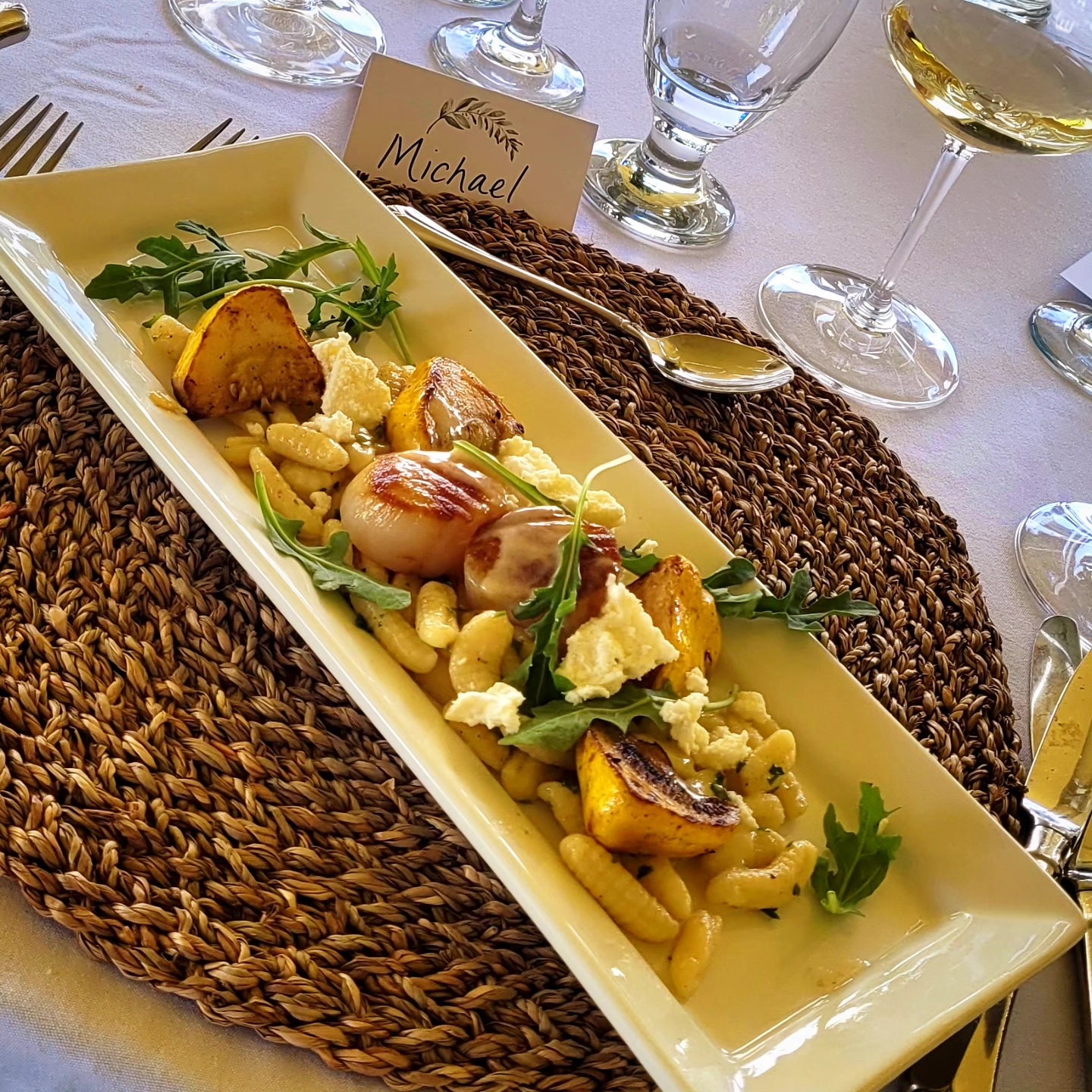
Chef Tim Mackiddie’s Scallops, Cavatelli and Chardonnay – At Butlers’ Grant, Wetscott Vineyards

Westcott Vineyards Chardonnay Butlers’ Grant Old Vines 2022, VQA Twenty Mile Bench

Old Vines refers to the 1989 planting of Clone 76 on a 5.08 acre block on the northwest side of the 43 acre Vineland Bench property. The long and rectangular chardonnay block culminates on the southeastern side at Butlers’ Workshops and is paramount for a site that was a grower’s vineyard up until the Westcotts purchased the land that immediately abuts the Bruce Trail. So many c’s are apt descriptors for this chardonnay; copacetic, coalescing, conditioned and commendable. From a recalcitrant vintage in some ways, adversarial and short of crop but the chosen fruit seemed eager to please and access feels easy. Concentration is impressive and immediate gratification is on offer. Extract and tannin take this to another level and so the probabilities are positive for a chardonnay you may choose to age. Drink 2024-2028.  Tasted July 2024

Westcott Vineyards Pinot Noir Butler’s Grant Carolyn’s Block 2020, VQA Twenty Mile Bench

From the block closest to the house planted to the 667 clone. Youth still the understatement, vintage accessibility be recognized and quickly cast aside. A mix of flintiness and delicacy when rich and fat could have been this pinot noir’s everything. Not in this case.  Last tasted July 2024

From riesling to chardonnay and now pinot noir, all planted in 1988 under the name of Butler’s Grant and here the pinot is dedicated to Westcott proprietor Carolyn Hurst. A clone first iteration, or at least one owning as much as site itself because vinous, resinous and intense is what oozes from this Twenty Mile Bench wine. Hard to find this much varietal expression so reminiscent of some Beaune counterparts because austerity, intensity and implosive behaviour are all compounded with tough love, seriousness and respect. The vintage gives and is in turn captured for a wine that will command your undivided attention, in part because some suspected whole bunch fermentation just seemed like recssecity is the mother of invention. Need is the primary driving force behind Carolyn’s strong-willed pinot noir. Drink 2024-2028.  Tasted August 2023

Westcott Vineyards Pinot Noir Butler’s Grant Carolyn’s Block 2019, VQA Twenty Mile Bench

The 2020 Carolyn’s Block is something joyous but get a scent of (a now well-aged) 2019 and the aromatic world changes dramatically. A vintage advantage and clearly a pinot noir in need of time to set it aromas straight. From eccentricity to complexity, wildly spiced and now entrancing. An affinity with Cuesta the the south and Hanck to the north yet perfectly idiosyncratic in between. Some sweet seduction, ripe acidity and organza texture.  Tasted July 2024

Westcott Vineyards Pinot Noir Butlers’ Grant Old Vines 2019, Twenty Mile Bench

The 2020 Carolyn’s Block is something joyous but get a scent of (a now well-aged) 2019 and the aromatic world changes dramatically. A vintage advantage and clearly a pinot noir in need of time to set it aromas straight. From eccentricity to complexity, wildly spiced and now entrancing. An affinity with Cuesta the the south and Hanck to the north yet perfectly idiosyncratic in between. Some sweet seduction, ripe acidity and organza texture.  Last tasted July 2024

Funny aroma to begin, paint or something metallic but also tomato purée. Verdant as well, chalky and chewy, ready to rock and roll. Something amiss or at least distracting but there is this great palate presence and structural appeal. Silkiness and wood define the finish. Drink 2022-2025.  Tasted blind at NWAC2021, October 2021

Westcott Vineyards Pinot Noir Butlers’ Grant Old Vines 2020, VQA Twenty Mile Bench

Elevated concentration, of course, but an immediate burst of energy and immediacy really command attention. Spice and potpourri, full and up front, unabashed, without hesitation, standing vertical to be noticed. Clone is 828 planted in 1988 on the southwest corner of the Vineland Bench property. Explicit varietal assemblage curving to the substantial to decide the outcome for pinot noir designed to please. The gratification is underscored by a mineral underlay to say that tine is on side. Two more great years and two to for more with positive secondary characteristics.  Last tasted July 2024

Dark fruit, ambitious and tannic. Bold and structured pinot noir from a hot summer clime. Drink 2024-2026.  Tasted blind at #NWACS24, June 2024.

Westcott Vineyards Pinot Noir Butlers’ Grant Old Vines 2019, VQA Twenty Mile Bench

The second harvest of this block foreshadows what will be concluded as a dramatic difference between the ’20 and this ’19 residing in the arena of the vivid. A level of chalkiness and therefore structure now explain why tasting this early would have been confusing to deduce how clone and place will conspire for great pronouncement. This Twenty Mile (or Vineland) Bench geology directs the show and old vines concentration does the rest. Who knows, maybe Carolyn’s Block will act like this 28 years from now. For now Butlers’ Grant Old Vines is the one in command.  Last tasted July 2024

Funny aroma to begin, paint or something metallic but also tomato purée. Verdant as well, chalky and chewy, ready to rock and roll. Something amiss or at least distracting but there is this great palate presence and structural appeal. Silkiness and wood define the finish. Drink 2022-2025.  Tasted blind at NWAC2021, October 2021

Westcott Vineyards Brilliant Traditional Method Blanc De Blancs, VQA Vinemount Ridge

Winemaker Casey Kulczyk explains how chardonnay is always picked at a minimum 19 brix which not only influences but extends flavours and also exaggerates texture. Plenty of acidity mind you though the complex profile wins over all else. Sees 30 months on lees and makes every iota of their use to accentuate and autolyze for increased extensibility, plasticity and the aforementioned flavour. Yes this shows smoother texture and strengthened chains of mousse. Westcott’s sparkling processes are at the head of the game. Drink 2024-2027.  Tasted July 2024

Westcott Vineyards Brilliant Traditional Method Blanc De Noirs, VQA Vinemount Ridge

As with the Blanc de Blancs the pick is done at a minimum 19 brix and lees aging time is 30 months. The mix of chardonnay, pinot noir and meunier shows off ample freshness and sharp acidity, leading to boundless energy tethered with creamy flavours. Red fruit prominent but the truth lies in mellifluous textures ruling the day. Drink 2024-2026.  Tasted July 2024

Good to go!

godello

Flight #1 at the 2024 School of Cool
(c) i4C

Twitter: @mgodello

Instagram: mgodello

WineAlign

Twenty-two mind-blowing wines of 2022

Godello in the Stellenbosch heather, Reyneke Wine Estate

We are who we are and we choose to live in a world according to wine. Within its walls are endless permutations and revelations, of the dark moments and the light, the romantic entanglements and the failures. We witness cycles of passion, highs and lows, endless accounts of quirky little episodes that reveal how grapes really live under the circumstances of a vintage. How they survive and thrive, eventually turning into the wine they become. A wine’s history is a lovely aside accompanied by a recorded and constructed account through the lens of someone who observes its transformations. We are messengers who take the land, plant and maker into consideration and always abide, recounting the story to those who would choose to listen. According to WineAlign I reviewed more than 3,000 wines in 2022, which means I tasted at least 3,500, if not more. In order to surmise this final list from a shortlist of more than 100 mind-blowing wines it meant another 2,900 are not even in the running and yet surely no less than a quarter are exceptional wines in their own right. That is how difficult, personal and stringent an exercise this annual choosing has become. I find it near impossible these days and yet somehow feel compelled to continue the drill. 

Godello in Chianti Classico

Related – Twenty-one mind-blowing wines of 2021

The year 2022 afforded multiple opportunities to get back on the road in search of great wines in places across the ponds and beyond. To Tuscany in both February and March, for the for the Chianti Classico Collection and also as chaperone to La Squadra Canadese for a week of exploration throughout the 11 UGAs of the territory. Forever in Chianti Classico included a masterclass presented by Italian wine expert Filippo Bartolotta and Consorzio President Giovanni Manetti titled Il Chianti Classico in 9 Decadi. This year-end summary includes one of those Chianti Classico wines dating back to 1949 but a few more could been here as well, including the fascinating Badia A Coltibuono Chianti Classico 1958. At Laura Bianchi’s estate the Castello Di Monsanto Sangioveto 1986 was one to blow my mind, as did Luca Martini di Cigala’s San Giusto a Rentennano Percarlo 2018 and VinSanto del Chianti Classico 1998. As a proud, card-carrying Ambasciatore there are dozens upon dozens of Classico and affiliate sangiovese that move me each and every calendar year. Il Molino Di Grace Gratius 2018 is an example and just one of many.

Related – Twenty mind-blowing wines of 2020

After that Tuscan adventure I moved on to Sicily for a five day exploration of The five estates of Planeta earth and my stay turned into two weeks. Covid-19 had caught me and yet the humanity of Alessio Planeta, Patricia Tòth and several winemakers aboard L’Etna turned a challenging test result into many days of discovery and deeper volcanic understanding. In fact L’Etna and Parco Statella saved my Sicilian quarantine. So many producers’ wines could and should be on this list: Azienda Agricola Sofia, Calcagno, Donnafugata, Eduardo Torres, Feudo Pignatone, Girolamo Russo, Graci, Scirto, Tascante, and Vigneti Vecchio. Oddly this was not a year for nebbiolo with likely the least amount of opportunities made available and yet a month from now I will spend 10 days in Piemonte to make up for the absence in 2022. That said there can be no forgetting Réva Barolo Cannubi 2018, from which impartiality is off the table because if you do not fall in love with this Barolo then you are not setting your palate free.

Travels in June and Abruzzo in four-part harmony included a bucket list visit with Emidio Pepe where I found that an unwavering commitment to land is everything that matters in making exceptional and memorable wine. It’s not only what you do but also who you are. Ahead of that trip I had tasted La Valentina Montepulciano d’Abruzzo DOC Bellovedere Riserva Terre Dei Vestini 2017, and there can be little doubt that it is a wine that resides at the top of the montepulciano food chain because this Riserva hails from a most specific and important terroir. After Abruzzo and then Rome I moved on to attend the first ever Anteprima for Simply Red: Rosso di Montalcino where the Brunello were set aside for one day only and the 2020 vintage of Rosso got directly under my skin, including Lorenzo Magnelli’s mind bending Le Chiuse Rosso Di Montalcino DOC 2020. Dieci Anni di Rosso di Montalcino (Ten Years of Rosso di Montalcino) and Selezione di Rosso di Montalcino (Rosso di Montalcino Selection) showed wines of age-ability and purpose; my if Alessandro Mori’s Il Marroneto Rosso Di Montalcino DOC Jacopo 2019 did not blow my mind. A visit with Violante Gardini Cinelli Colombini meant a pour of Donatella Cinelli Colombini Brunello Di Montalcino DOCG Io Sono Donatella 2015 for the most profound barrel expression of Le Donne’s Brunelli. 

Menfi

Related – Nineteen mind-blowing wines of 2019

In October the Cape Wine congress resumed after a four year absence and now more than ever this is what I have to say. South Africa is the most exciting and mind-expanding wine universe alive today. There are no less than 40 Western Cape wines from two dozen or so producers tasted in 2022 that could have made this list: A.A. Badenhorst, Alheit, Beaumont, Boekenhoutskloof, Crystallum, David and Nadia Sadie, Hamiilton Russell, Huis van Chevallerie, Kanonkop, Ken Forrester, La Motte, Leeu Passant, Klein Contsantia, Meerlust, Momento, Mullineux, Old Road Wine Company, Porseleinberg, Raal, Raats, Radford Dale, Restless River, Reyneke, Savage, Sijnn, Storm and The Sadie Family. To name but a few. Other southern hemisphere wines were killer in 2022, namely Torbreck Grenache Hillside Vineyard 2019, a special Barossa block to be sure.

With John Szabo MS and Rosa Kruger at the Old Vines Project tasting

In November a return to Montalcino for Benvenuto Brunello 2022 meant a look at the 2018 vintage but also the Riserva of 2017. At Col d’Orcia the Conte Francesco Cinzano Marone and his son Santiago led yet another vertical tasting, this time on the 8s and it was Brunello Di Montalcino Riserva DOCG Poggio Al Vento 1988 that stood both out and also the test of time. From Montalcino it was on to Vienna and then a Wagram-Traisental discovery tour that was both too short and mind-expanding – A return must and will happen soon. Meanwhile a tasting at home in the WineAlign office showed this Rheingau gem to the crü. Leitz Berg Schlossberg Grosses Gewächs Riesling Trocken 2019 is grand Rüdesheim indeed. 

These are the wines that blew my mind in 2022

Most of all 2022 was a year when associates, colleagues, wine professionals and especially friends reunited to break bread and taste great wines together. At a birthday party I had the opportunity to taste the following in one evening; Château Lafitte 1986, Château Mouton-Rothschild 1986, Chave Hermitage 2010, Guigal Côte-Rôtie La Turque 1999, Paul Jaboulet Aîné Hermitage La Chapelle 1990, Dom Perignon 2000, Veuve Cliquot La Grand Dame 1995 to name just seven of 20-plus icons. Bordeaux made several prominent appearances in ’22; Château Margaux 1989 (and 2004), Château Haut-Brion 2012 and Château La Mission Haut-Brion 2012. More importantly in 2022 we shared bottles of all ilk, pedigree and origin, not only the expensive and famous labels but all the great wines, big and small. Thank you to every person who poured, for every sip and taste, with heartfelt thanks. These are Godello’s 22 mind-blowing wines of 2022.

Markus Huber Grüner Veltliner Berg 1ÖTW 2021, Traisental, Austria

Highest and coolest vineyard of the Traisental Erste Lage because by three or four pm the forest casts shade over the vineyard. Limestone based soil as well, upwards of 380m and the only portion that has iron rich red elements in the earth. Actually finding a richness in this, surely vintage related and that is unexpected but it’s also the most savoury, minty cool, eucalyptus accented, or the like. Curious by comparison to Alte Zetsen and Zwirch, in what is assessed as almost dark, smoky, spicy volcanic-simulate stuff. Brings whole and utter meaning to grüner veltliner at the Grand Cru level. Drink 2023-2028.  Tasted November 2022

Godello with Charla Bosman

Sijnn White 2019, WO Malgas, South Africa

Up above the Breede River there are vines of chenin blanc, viognier, roussanne and verdelho, varieties that have been working towards a common goal, to eventuate at something great. Then 2019 comes along and the world changes. This is the vintage from which David Trafford, Sijnn and winemaker Charla (Hassbroek) Bosman take full reign of their collective charge. To be truthful the agriculture, winemaking and face of the brand is Bosman and were I in the market to hire someone of her passion, ability and professionalism I could not help but remunerate her like a top European footballer. But lucky we all are that she and Sijnn are together because she is at one with this impossible yet absurdly beautiful environment where wines like this White Blend are made and will blow your proverbial mind. They attach themselves and get so close to that personal part of you. Imagine Châteauneuf though I’d much rather consider Malgas because that is what this is. Rich and perfectly viscous, spicy, structured and fine. Drink 2024-2030.  Tasted October 2022

Girolamo Russo Etna Bianco DOC San Lorenzo 2020, Sicily, Italy

From the single vineyard at 730-740m of elevation and vinified in tonneaux. The 2009 was the first vintage of San Lorenzo Bianco for a wine that leads amongst the 80-90 thousand total bottles made by Giuseppe Russo from 18 hectares. A strong selection from the plants of carricante with cattaratto and grecanico. The carricante are the oldest and they provide the breadth in the mouth, the texture in unction and the presence that really makes you feel the vineyard. The difference between it and Nerina is really in the selection of the grapes. Giuseppe wants his whites to speak for his territory, here to be a bit more generous and 2020 obliges first because it was easier and second because it is such a vintage specific to the white wines. Such beauty and emotion is purity and life. No stress and a wine you want to drink. Drink 2022-2028.  Tasted March 2022

David And Nadia Sadie Wines Plat’Bos Chenin Blanc 2021, WO Swartland, South Africa

At a tasting where everything is Old Vines Project certified there must be something extraordinary about a wine to stand out from a crowd of greats. David and Nadia Sadie are in fact turning heritage vines chenin blanc (amongst other varietal explorations) into content born of context harboured though never paraded. They are rhythmic and scientific with just enough fantasy and romanticism, but never too much. Plat’Bos stands above Skaliekop and Hoë Steen because 2021 asks it to do so, not because it is better or more important, but it is surely chenin blanc profound. The 1981 Swartland planting is in the steady zone, shed of the mercurial and in ’21 so very linear yet salty of the earth in its sombre-sepulchral tone. There is reduction here because the poor soil nutrients demand that this chenin begins this way. The levels of tension and intensity are most elevated, sufficing to say as high as any from the Western Cape. Attention is paid unwavering to detail, sequencing is in order, purity incarnate, grape and place together pristinely kept. In Plat’Bos 2021 the palate is taken down to the whipping post by a wine built to endure. Given time there will be calm, healing and reward in the end. Drink 2024-2036.  Tasted October 2022

The Sadie Family Die Ouwingerdreeks Mev. Kirsten Wyn Van Oorsprong Stellenbosch Die Sadie Familie Wyne 2021, Stellenbosch, South Africa

The vines that supply Mev. Kirsten Wyn are the oldest chenin blanc in the country, out of Stellenbosch and planted in 1905. In 1947 every second row was pulled out to make room for tractors and the configuration still exists this way. “If South Africa has a true apex white Grand Cru vineyard then this is it” insists Eben Sadie. Facts are facts are you just can’t accede these levels of power, concentration, extract and tannin anywhere else. The nose communicates as an intoxicant of sublime forces and these grapes bestow chenin blanc 2021 are those that transcend fruit, deliver ethereality and a heightened sense of awareness. An awakening from necessary tension, crisis and personal freedoms, existential off the charts, poetic and epic. One hundred and sixteen stanzas recorded, in the books and the finest verse written right here in the most recent vintage. If enlightenment is to be gained from chenin blanc in the Western Cape, Mev. Kirsten would provide the fodder. “The grail. End of fucking story” concludes Sadie. All hail. Long live the queen. Drink 2025-2040.  Tasted October 2022

Iconic Bourgogne

Domaine De Bellene Vosne Romanée Premier Cru Les Suchots 2020, AC Bourgogne, France

“Suchots” originates from “souches,” the name given to the woods before the land was prepared to house these vines. Les Suchots is but a small 13 hectare part of the larger 220 in total for Vosne Romanée and was first planted in 1937. La Romanée and Saint Vivant are the closest plots, south of Echezeaux, north or Richebourg and though just six per cent of the appellation it is actually the largest Premier Cru Climat therein. The vineyard is divided in two by a road. The eastern part below lays just above the cemetery and the village terroir called Hautes Maizieres. The top part is located below Les Beaux-Monts. The 2019 was a dream, crème de la crème and yet 2020 seems to embrace the powerful vintage with a most extraordinary level of perfume. That and fruit concentrated to a maximum degree without falling into any of the trappings associated with hyperbole. The concept of pinot noir reaching regional levels like this seems counterintuitive to the variety-appellation contract but the balance and harmony at the top is something the likes almost never seen. This will surely be one of the wines that explain with hyper clarity what 2020 is as a vintage. Drink 2026-2040.  Tasted May 2022

Graci Etna Rosso DOC Arcurìa Sopra Il Pozzo 2017, Sicily, Italy

Sopra il Pozzo describes a special portion of the signature Arcurìa vineyard (and contrada of the same name), a block “above the well,” 100 per cent nerello mascalese picked in the last week of October. Treated to the same maceration and elévage as the Rosso for the same spontaneous style and time as Feudo di Mezzo. However Sopra il Pozzo’s “refuse” soil composition is different and requires patience in the name of time, due to its alternating layers of decomposed volcanics in stone and coarse sand. This is a section of recast material and the corresponding mascalese is both emasculated and chivalrous. The degree to which layers of fruit, mineral and umami incorporare and completare is finite and contiguous yet also lengthy, scorrevole and endless. There is rare Etna glycerin texture and perfectly timed acid tang. Tempismo perfetto. Grande. Drink 2024-2032.  Tasted April 2022

Elisabetta Foradori

Foradori Granato Teroldego 2019, IGT Vigneti Delle Dolomiti, Trentino-Alto Adige, Italy

Granato from Elisabetta Foradori resides at or near the peak of the Trentino-Alto Adige wine chain, a Dolomite force of varietal nature, richness incarnate and cragged to gain your full attention. Fruit comes at a great premium, not by absence of the heart but because so much site, land and space speak louder than words. A static red stuck in a state of cryogenic freeze, immovable and surely able to handle immobility and also time. Will drink beautifully for a decade and a half, or possibly more. Drink 2024-2034.  Tasted February 2022

Garage Wine Co. Truquilemu Vineyard Lot 97 Dry Farmed Old Vines Field Blend Carignan 2018, DO Maule Valley, Chile

The eastern facing side of the Coastal Range where the old vines grow, in places where you had to make wines for the Catholic Church, “to save souls.” The most aromatic of Derek’s wines, a true field blend with a je ne sais quoi of varieties bursting off of dry farmed bush vines. Showy with that combination of outright juiciness juxtaposed against iron-fisted structure. A wine that comes from a place where the farmer worked to break up the “los camellones”, strange diagonal lines drawn and a framer who shows how to separate the land so that making great wine is easier. This is a remarkable example of old, bush and real. Drink 2024-2030. Tasted July 2022

Barone Ricasoli Castello Di Brolio Chianti Classico 1949, Tuscany, Italy

Tasted as part of “Il Chianti Classico in 9 Decadi” led by Filippo Bartolotta with Giovanni Manetti at Stazione Leopolda in Florence at the Chianti Classico Collection. The oldest wine in the flight. apropos and just when you consider the Ricasoli heritage and lineage. A mineral layering which instinctively mimics the compaction of argiloso, macigno and calcari from Brolio’s soils, no longer feeling the separation or mille-feuille effect but now just all morphed into one and the same. There were surely some white wines in this mix, as per the formula written decades earlier by Bettino Ricasoli. Probably helped keep the freshness for some time and while this is now all earth and stone the wine is very much alive. There’s even some sweetness and citrus showing, indicative of blood orange some 73 years later, finishing with a trebbiano and malvasia Vinsanto tang.  Tasted March 2022

Isole E Olena Chianti Classico Gran Selezione DOCG 2016, Tuscany, Italy

“I did not like Gran Selezione, I did not have anything against Gran Selezione but the discussion about UGA (sub-zones) was already underway so why not wait for this next change to the appellation?” The thinking for Paolo de Marchi was more about the wines that did not qualify for the appellation becoming wines that now qualified, the issue being a new rule could not apply to only 30 or so producers. So what is needed for that to happen? “All grapes born here should be able to travel with a passport.” If it is more complicated than that then there is much more to discuss. A Chianti Classico from a long, linear and fortifying vintage delivers equally appropriate and extending tannins, gripping the composition while proposing to become elegant and fine. The seamlessness and never wavering focus keeps on keeping on, in the ways of emotion in motion. Will remain in bottle one year more before being released to the market. Drink 2023-2027.  Tasted February 2022

Great anticipation to taste La Casaccia and Montosoli side by each from a vintage carrying no option but to act out the passion play through the glaring clarity of a sense of place. There are facts involved and there is no hiding the truth formed by these plots of sangiovese in this vintage. By now it is understood how 2018 exists on its own accord at one with nature though Francesco Ripaccioli will tell you there are similarities with 2013, if only because that vintage was greatly ignored and is drinking well at this time. La Casaccia in the località of Canalicchio is the wildcard of Montalcino and tasting several wines from the frazione reveals a collective affinity supplied by the year’s gifts. Nothing was portioned or taken away from the ’18 Annata and yet this Vigna sings with even more range and depth than that wine. The acids are simply out of this proverbial world, the linear aspects drawn with precise architectural or even, in Old English speak, a Cutter’s line. Remarkable reserve in concentration and forward slicing finesse. Forever long. Forever young. Drink 2025-2038.  Tasted November 2022

Biondi Santi Brunello Di Montalcino Riserva DOCG 2016, Tuscany, Italy

Riserva 2016 is the 42nd such vintage since 1888 from estate vineyards and the oldest parcels therein. Meanwhile olive trees and other compatible local species grow in those places and there always seems to be lower pH and higher bright acidity coming off the grapes. The Federico Radi team seeks to broaden biodiversity with unlimited scope and more vineyards would benefit by following such a plan. When Biondi-Santi gets to their next position we can expect even more refined and higher quality wines. Meanwhile the harmony and extant abilities in this ’16 Riserva are almost impossible to believe. A Riserva of fruit termed as the locus of the points drawn at an equidistant from the centre. Sangiovese of no stops and starts existing on a special kind of ellipse in which the eccentricity is zero and the two foci are coincident. Simple descriptors like crunch, chew or crust are not in the lexicon nor do service to speak about the texture of this remarkable sangiovese. Subtlety and strength, a dappling of early morning light, patterning and shimmering as if on water. The phenolics are spot on, coherent and the connection with both palate and tannins perform as an unbreakable bond. A canvas flooded with colour and while there is a level of transparency there are no white spots. Everything is filled in. Clocks in at 14 per cent abv. Drink 2025-2040.  Tasted November 2022

Fontodi Flaccianello Della Pieve 2001, IGT Toscana Centrale, Tuscany, Italy

Youthful is the proverbial understatement, zesty and full of Panzano life the other. A sangiovese in strike of ideal accord, freshness captured in bottle and development low, easy and slow accrued. Just like the season, stress-free, never too hot, never too wet. Stellar autumn of warm days and retentive cool nights. A late harvest and full phenolic character. It all shows in this 20-plus year-old Flaccianello, singing a ballad, verse after verse, refrain post refrain. After 20 minutes a sweet porcini perfume emits and one wishes for a 50 day dry-aged Chianina Fiorentina. What fortune! Along with the special effects of smoky rosmarino and wild fennochio. Drink 2022-2029.  Tasted February 2022

Sassicaia 2019, DOC Bolgheri, Tuscany, Italy

Priscilla Incisa’s Tenuta San Guido is located one hour south of Pisa, going back many generations. The surface area covers 2,500 hectares in a “classic Tuscan agricultural estate, of vines, olive oil, cereals including wheat and feed for thoroughbred horses. There are 500 hectares towards the seashore dedicated to a wild life refuge “paradise” free from hunting and for migrating birds coming from northern Europe and heading to Africa, especially because a good part of the land is covered by water during the winter. Before 1994 the appellation was Vino da Tavola. The grand vin Sassicaia is always a minimum 80 per cent cabernet sauvignon (as per the appellation) with cabernet franc. The youthful perfume of Sassicaia is really something other, an invitation to the plume of a great and mighty bird that will soon migrate or not be seen or heard from until another season. The fruit is both wound taut and also layered, a mix of liquids, gasses and decomposed mineral, turning on its axes, literally the earth itself. The effort put in speaks volumes about the quality and yet the seamless transitions are as if there are no transitions at all, only one contiguous entity. Will release in Ontario as an Online Exclusive by lottery on October 20th. Drink 2025-2034.  Tasted September 2022

Emidio Pepe Montepulciano d’Abruzzo DOC 2002, Abruzzo, Italy

The subtle and gentle elegance of 2002 is almost mystifying, if at least a surprise that kinda hypnotizes. Memory serves up a case of conflict and adversity, if also vintage envy for the bookends of 2001 and 2003. And yet the cool of the night prevails to elongate a montepulciano for our pleasure and make it sing 20 years later. It was also decanted to reduce the lees sediment and then re-corked for our benefit. Words cannot express what a beautiful place this 2002 EP is found to be. It is a treat to taste and also behold, exactly as of right now. Drink 2022-2026.  Tasted June 2022

Planeta Santa Cecilia 2005, DOC Noto, Sicily, Italy

Finding oneself in a state of utter disbelief upon nosing an older Santa Cecilia has just happened with thanks to this 2005 and the unthinkable aromatics it possesses. There have been some older examples like 2007, 2008 and 2011 which all showed morphological magic but this, this is something other. The state of perfumed preservation is impossible, the floral emanations and fruit continuance implausible and in suspension of belief. The 2005 is almost perfect, dark berries and red citrus alive, acids in perfect condition, wood dissolved, resolved and walked straight out the door. The life and vitality reside in the arena of the flawless, faultless and achievable. This is what nero d’avola, Santa Cecilia, Noto and Planeta can be, at its collective finest. Will drink this way (and also that) for five more years and with ease. Drink 2022-2027.  Tasted April 2022

Château Cheval Blanc 1998, Saint-Émilion Grand Cru Classé, Bordeaux, France

The 24 year-old 1998 has been argued and predominantly defended as a Right Bank vintage, especially for merlot based wines, which the 1998 Cheval Blanc happens to be. Clocks in at 65 percent plus (35) cabernet franc and the two combine for hypnotic aromatics to put mind and palate in an immediately dizzying and gratifying tizzy. Dark, dark fruit of the “cimmérienne” kind yet of a grace and genteel manner shared by other profoundly distinguished red wines. Thoughts can wander and wonder as a result of tasting this blind and considering the depth it is nebbiolo that is imagined. Only for a moment because the numerous dual-toned vibrations direct towards knowing this to be a blend and so Right Bank combinations lead by their impression. Both of ’98 Cheval Blanc’s are blessed of ripenesses, acids and structural bones all having peaked at a shared summit. The conclusion can only be a two-part perception, of balance and beauty. Drink 2022-2042.  Tasted November 2022

Mullineux Schist Syrah 2019, WO Swartland, South Africa

Vines planted in 1999, mature if still 12 years away from being classified as “Old Vines.” Schist is the home Brownstone Vineyard, shallow and rocky of less than 20 cm of soil. An extreme site in which vines attempt to grow, but so much comes down to the where and how. Rows are close together and planted in an almost race track configuration within an amphitheatre. The roots spread and dig deep within the stripes of schist interspersed with iron and the grapes are harvested plant by plant to create two apposite cuvées. Visually these are small vines with smaller leaves and an airiness – physically speaking. The skeletal backbone here is upright, towering and commanding, the juiciest of varietal fruit hanging as flesh, taut and muscular upon these bones. Unyielding yet never brooding nor astringent, but bountiful and beautiful. Drink 2024-2032.  Tasted July 2022

Penfolds Grange 1981, South Australia

Poured blind and easily recognized as a wine of great depth with at least two decades of maturity. Either older or hastily advanced but there are indicators to the former, namely high tones, substantial crunchy acids and full on perfume. There is a touch of Brettanomyces but only a feathery tickle and the wine still has something left to give and also to prove. Great depth is provided by wood notes, of soy, balsamic, wild fennel and all together now a reduction keeping its form, a foxy liqueur, once Cassis but now Amaro, finishing with flavours bloody and gamy. The reveal as Grange 1981 explains that while shiraz is always the game and king it had been a season for which the cabernet sauvignon portion exceeded 10 percent. Winemaker John Duval felt that ’81 was a tannic one but they left the building long ago. Both Barossa and McLaren Vale were involved and so this look back at blending expertise matters in the context of all Aussie blends being tasted today. Being present to be poured a taste of Grange represents good fortune and from 1981 there abides a full and fair suck of the sauce bottle.  Drink 2022-2025. Tasted November 2022

Donnafugata Ben Ryé 2019, Passito Di Pantelleria DOC, Sicily, Italy

Ben, as in “son of” and Ryé, a Sicilian riff on the concept of making strong mocker from the wheat grass. Think of grapes instead, in this case zibibbo (muscat of Alexandria) grown off the southwestern coast of Sicily on the Island of Pantelleria. Passito di Pantelleria DOC is one of the world’s great sweet wines, found only on this windswept promontory where the grapes concentrate, drink in the sea and express a view to which only this place commits. The warmest of vintages develops and comprises these particular sugars into something surreal. Extraordinary orange-ginger crème brûlée, perfectly embittered and made viscous in the most natural of ways. Layers of dedication and spice, health affirming herbs, respiratory fixing drops and sweetness captured, effortlessly and to gift plaisir. Apricots ripe and glazed, zen zero limone, giusto intenso. Nearly perfect. Drink 2025-2039.  Tasted April 2022

Vintage Port (c) Sarah Goddard/WineAlign

Niepoort Vintage Port 2019, DOP Douro, Portugal

Expect top concentration in Vintage Port from what Niepoort calls a “return to balance in the vineyard” type of season. Summer was unseasonably cool and the timely rainfall on the 26/27th of August was invaluable, allowing fruit maturity to go to completion. A recall to 2008, of natural, acid driven, balanced musts. Foot trodden in circular granite lagares with 100 per cent stems, racked soon after harvest, aged in “tonéis” (large oak vats) in the Douro over the winter, and then moved to the cellars in Vila Nova de Gaia in the Spring of 2020. Acid vintage indeed, fruit caught by circumfuse so as to be surrounded, ignited and eventually dispersed for decades of slow release power. The liquid chalkiness of tannin is so fine-grained you swirl and mull over just how hypnotizing it is. Truly great Vintage Port will act out this passion play. Drink 2025-2048.  Tasted October 2022

Good to go!

godello

Twitter: @mgodello

Instagram: mgodello

WineAlign

High times in Bourgogne

Château du Clos de Vougeot, Côtes de Nuits


“Bourgogne vs. Burgundy: A critic’s take on the “plus” side of Bourgogne – the Best Places for Value”

Please join me on Tuesday, June 30th via Instagram for a Bourgogne video in which I talk about Les Hautes, “the plus side of Bourgogne,” where vineyards and producers of quality can be found. Bourgogne du Haut, “The Upper Bourgogne.”

I will also make a case for “Bourgogne against Burgundy: A critic’s take on why language is so essential to messaging, for preserving identity and tradition. Finally I will pose the question, What is Climat?

Then, on Monday, July 13th, from 10:30 to 11:15 am I will be hosting a Bourgogne webinar on Regional Appellations. The 45 minute seminar will be directed at sommeliers and the trade industry.

Searching for Bourgogne-Plus

Bourgogne holds many secrets yet discovered and that is why in November of 2019 my colleague and friend John Szabo M.S. and I travelled to France’s most revered wine region. The Bourgogne Appellation d’Origine Contrôlée (AOC) was authorized in 1937, for white wines extending to the three departments of Yonne, Côte-d’Or and Saône-et-Loire and for reds, to pinot noir from 299 communes throughout wine-growing Bourgogne. Designations have been immovable since the year dot for Bourgogne’s five wine-producing regions; Chablis and Grand Auxerrois, Côtes de Nuits, Côtes de Beaune, Côtes Chalonnaise and the Mâconnais. Opinion has come to expect a certain fixed and comprehensible understanding of the hierarchy of appellations; Grand Cru, Premier Cru, Village, Appellation Régionale Bourgogne. The latter to many simply translates as the ubiquitous Bourgogne AOC, though it is but one of six that fall within the category of La Région Bourgogne, the others being Coteaux Bourguignons, Bourgogne Aligoté, Bourgogne Passe-Tout-Grains, Bourgogne Mousseux and Crémant de Bourgogne. The deeper delve is all about the multiplicity of Les Appellations Régionales in the study of what collects beneath the larger umbrella referred to as les dénominations géographiques.

It’s 8:46 am, we’re at #latâche and that’s not our dog #canadiansinbourgogne #vindebourgogne #vosneeromanee #domainedelaromaneeconti

They the outliers have not been truly considered, at least not until recent times. At the head are Les Hautes, the parts of Bourgogne thought to exist in the nether realms and so previously passed over. “The heights,” out of sight fringe locations, places unseeable, host to wines untenable and from vines unsubstantiated. Or with some investigation, perhaps something else? There too are the siblings, Côte Chalonnaise, Côtes d’Auxerre, Côtes du Couchois, Chitry, Coulanges-la-Vineuse, Epineuil, Vézelay, Tonnerre, Le Châpitre, La Chapelle Notre-Dame, Montrecul and Côte Saint-Jacques. In the latterly days of November 2019 the opportunity was presented to visit these shadowy appellative entities, perchance to uncover their truths, they by vineyards and producers of Bourgogne-plus quality. Bourgogne du Haut, “The Upper Bourgogne.” High times in Bourgogne indeed.


Related – Bourgogne in a word: Climat

I penned that 2017 article in the last days of November, two years ahead of the trip that would rework my internal vision of a Bourgogne world order. At the time a choice was made to focus on the central theme that ties the Bourgogne room together. Climat. I asked the 50,000 euro question. What is Climat? Please read that post for the 10,000 word answer but the irony of my conclusion went like this. “The only true intrinsic reality gained through a discussion about Climat is accessed by the tasting and assessment of examples that represent a full cross-section of Bourgogne. The appellations of Chablis et du Grand Auxerrois, Côtes de Nuits and Hautes Côtes de Nuits, Côtes de Beaune and Hautes Côtes de Beaune, Côtes Chalonnaise and Couchois, the Macônnais and the Châtillonnais are best understood by comparative studies of Pinot Noir and Chardonnay. With more than 100 appellations (84 officially recognized) it would take a lifetime and then some to cover them all and several more to come to grips with the very specific meanings and interpretations of their personalized Climats. By that time the moving target would change so much that starting again would be the only option. Make the most of the time there is, which is the way of the Bourguignons.” Ironic because exactly two years later I returned to Bourgogne to begin my education anew in the light of a trip gone deep into the Hautes Côtes and satellite appellative explorations. The findings are remarkable, as I will elucidate in due course.

Beaune

Would a rose by any other name smell as sweet?

Bourgogne, now there’s the rub. In this case the party line and profound argument emphatically says no. Pause to consider the infallible cogency of the nuanced word. Then cringe at the platitude of an overused and confusingly perpetuated Brittanica translation that need not be named. Never could or should have but it must now be stressed that the imposter can no longer be considered a viable alternative for it changes meaning and even more importantly, emotion. If we must say it aloud then we may as well point the culprit out in matters point of fact. Burgundy takes its name from the Burgundians, an East Germanic people who moved westwards beyond the Rhine during the late Roman period and settled in Bourgogne. The seat of the Duc de Bourgogne was to be found west of the Saône along the narrow spit of land between Dijon to the north and the area just south of Mâcon. The reference “Duke of Burgundy” is but a translation. The first Google result that answers the query “Is Burgundy the same as Bourgogne” goes like this. “Burgundy is wine made in the Burgundy region in eastern France, in the valleys and slopes west of the Saône, a tributary of the Rhône.” The proper response to that would be to scream, to shout “answer the bloody $&**!!??&$@ question!” And to offer a strict reminder not to believe everything you read. The first recorded use of “burgundy” as a colour in English was in 1881. Making the argument that the word Burgundy dates back 300 years? Puh-lease. Who but the blind believer and the colonialist heeds this fallacy. These are the eyes of the old. They have seen things that you will never see. Leave it to memory. Dare the Bourguignons to breathe.

At Domaine de la Romanée-Conti’s La Tâche Vineyard, In the heart of Bourgogne

Plus grand est l’obstacle, et plus grande est la gloire de le surmonter

Just a little bit more than a year ago the Bourgogne Wine Board (BIVB) made the plea, on behalf of and at the behest of le vraiment Bourguignon, for a firm and clear pronouncement to take back their name, as is their right to do. “To re-affirm its identity as one of the most iconic vineyards of France, the region and its producers are reverting back to the original French iteration of its name: Bourgogne. Historically Bourgogne is the only French appellation that adopted an alternate identity for export markets with the use of the ‘Burgundy’ designation for the English speaking markets, or Burgund for the German speaking and many other translations according to the country. Today, this traditional ‘Bourgogne’ designation has already been adopted by nearly all the wines produced here – either via appellation designation or wine region labeling. By maintaining this one true identity, Bourgogne returns to its historical roots as the consummate vineyard treasured by consumers the world over.”

The devil might advocate for inclusion, to allow for levity and to argue against a parochialist stance. The contrarian might say, “why exclude a greater population when it might be to the detriment of market share. Tell the people they have to speak the language and they may feel alienated or worse, choose not to participate because it’s harder work, or just too much to ask.” They will say that language is merely colloquial, a matter of repetitive utterance, developed slang and simply a matter of evolution. Why fight it? Would it not make most sense to worry about making good wine and concentrating on selling the product?

“Plus grand est l’obstacle, et plus grande est la gloire de le surmonter. “The greater the obstacle, the greater the glory of overcoming it.” Indeed were Molière here today he would abide in support of the usage. Besides, un savant imbécile est plus un imbécile qu’un imbécile ignorant, “a learned fool is more a fool than an ignorant fool.” Bourgogne, name of the territory and also the name gracing each and every bottle conjoining all its appellative wines. Practice your pronunciation and become comfortable with using it. Do so with unequivocal conviction, daily, written, typed and in the vernacular of spoken word. Glad we got that out of the way.

Iconic Bourgogne

Related – Les Grands Jours de Bourgogne 2020 are suspended

Uncertain times

Things were going so well. Sales were up, wine importers and consumers the world over were beginning to embrace the affordable Bourgogne, these partisan orbiters in surround of their better established kin, these fine pinot noir, chardonnay, aligoté, sauvignon blanc and gamay blends of qualities and quality not seen before. No one ever really worries about the rising prices of the established and their place within the establishment. The new work concentrates on the new world and upwardly mobile millennial spending. Get the regional appellative wines of geographical designation to these new buyers, they of dollars aimlessly doling away to Argentina, Chile, South Africa and Australia, to the cheap and cheerful Italian and Spanish wines. Teleport these varietal outliers into their minds and the golden era will usher in. Then COVID-19 rears its ugly viral head.

Fear not for this will pass and while trade shows are an essential aspect of selling wine, they can be circumvented. Education is the key. There are educators around the world aching to tell a Bourgogne story and fill cups with the wines. The Bourgogne tome is a magnificent one, filled with centuries of great reality, overflowing with heartbreak, victory and desire. The viral hiccup is indeed dangerous, surely dramatic and as great a mortal nuisance as there is but it will leave as fiercely as it came. A trail of debris and sorrow will be left behind but the Bourguignons are a resilient people to get past and move on.

Dinner at Le Bistro des Cocottes in Beaune

Dovetailing and Denominations

In algorithm design, dovetailing is a technique that interweaves different computations, simultaneously performing essential tenets. Bourgogne moves in such rhythm, not only from Côtes de Nuits north to Maçonnais south but also in vortex web design that incorporates Les Appellations Régionales. In Bourgogne the greater territory is tied together by threading all its constituent appellative parts through a mortise, designed to receive corresponding appellations on another part so as to join or lock the parts together. The chardonnay and pinot noir of Les Hautes-Côtes are tenoned through Côtes de Beaune and Côtes de Nuits, just as the reds of Irancy and Bourgogne Epineuil are threaded through the whites of Chablis to define a northerly Yonne-Serein section of Bourgogne. The same applies to the Côtes de Couchois with the Côtes Chalonnaise.

Jump to:

Chablis and Grand Auxerrois
Côtes de Beaune
Côte Chalonnaise
Côte de Nuits
Bourgogne Coulanges-la-Vineuse
Bourgogne Côtes d’Auxerre, Saint-Bris and Irancy
Bourgogne Epineuil, Chablis and Bourgogne Tonnere
Bourgogne Hautes Côtes de Beaune
Bourgogne Côtes du Couchois
Bourgogne Côte d’Or
Bourgogne Hautes Côtes de Nuits

Producers:

Domaine Jean Claude Courtault and Stéphanie & Vincent Michelet

Domaine du Clos du Roi
Goisot Guilhem et Jean-Hugues
Domaine Gruhier (Domaine de L’Abbaye du Petit Quincy)
Domaine Alexandre Parigot
Maison Roche de Bellene
Maison Bertrand Ambroise
Cave de Mazenay
Domaine Theulot-Juillot
Domaine de L’Évêché Quentin & Vincent Viticulteurs
Cave des Vignerons de Buxy
Domaine Bart (Pierre)
Domaine David Duband
Domaine Cruchandeau

Quai de l’Yonne, Auxerre


Grand Auxerrois

The Grand Auxerrois covers a multitude of very old small plots which are today sorted into four terroirs:
• The Auxerrois covers around a dozen communes to the south and southeast of Auxerre
• Farther to the east, beyond Chablis, the vines of the Tonnerrois are found in the valley of the Armançon, the river that runs through the little town of Tonnerre.
• In the south of the Grand Auxerrois region is the Vézelien, which covers Vézelay, Asquins, Saint-Père and Tharoiseau
• The slopes of the Jovinien look down over the town of Joigny, to the north of Auxerre

On these limestone soils, the wines are mainly produced from the traditional Bourgogne varietals of chardonnay and aligoté for whites, and pinot noir and gamay for the reds. Smaller quantities of césar for reds, and sacy or melon for whites are used, while the very old Bourgogne varietal césar sometimes makes a minor appearance in certain Irancy wines. There is an exception in Saint-Bris, where the winemakers produce very aromatic whites from the sauvignon grape.

The Grand Auxerrois brings a wide palette of appellations to the Bourgogne winegrowing region, mainly specific appellations Régionales:

  • Appellations Villages: Irancy, Saint-Bris, Vézelay
  • Appellations Régionales specific to Grand Auxerrois: Bourgogne Chitry, Bourgogne Côte Saint-Jacques, Bourgogne Côtes d’Auxerre, Bourgogne Coulanges-la-Vineuse, Bourgogne Epineuil, Bourgogne Tonnerre


Bourgogne Coulanges-la-Vineuse

The education begins in Bourgogne Coulanges-la-Vineuse, south of Auxerre in northwestern Bourgogne at the hamlet of the same name surrounded by five valleys; les vallées de Chanvan, de Douzotte, des Champs, de Chamoux, de Droit à Vente and de Magny. There are just over 135 total planted hectares, only 18 of which are chardonnay, with seven producers in the village and 15 overall in the appellation. Unlike virtually all other appellations in Bourgogne the wines produced here all come from the regional appellation, save for a small amount of Côteaux Bourguignons.

Exploring the @vinsdebourgogne of #coulangeslavineuse with great curiosity, emerging engaged, engrossed and charmed. Instructive tasting at Domaine du Clos du Roi.


Domaine du Clos du Roi

Red, White and Rosé are produced at Domaine du Clos du Roi from 16 hectares of chardonnay, pinot noit and césar. Founded in 1969 by Michel and Denise Bernard the domaine has been run by Magali Bernard and her husband Arnaud Hennoque since 2005. Magali is in charge of winemaking and sales while Arnaud the business and the vines. Chardonnay are gifted by generous bâtonnage and raised in demi-muid. The pinot noir purports to be the most typical from these lands, somewhat glycerin rich and clay-chalky with relatively soft and easy tannin. Raised in foudres de chènes (44 hL), the barrels introduced by Ludovin’s father and made in the traditional and historic way of the domain. César is the varietal wild card as noted by the 15 per cent whole cluster worked into pinot noir for the Clos du Roi “Coline” Nos Origines. 

Click here to see all reviews for the wines of Domaine du Clos du Roi

Clos du Roi Cuvée Charly Nos Origines 2015, Coulanges La Vineuse AOC

From viticulturist Bernard Magali Nos Origines ia a wine of generous bâtonnage a much easier vintage required less stirring and more accounting from naturally fortifying lees. This exceptional child must have loved its comforting and nurturing stay in demi-muids so now the imagination runs wild with gently rolling spice and thoughts of well-deserved aperitíf moments, especially with a semi-soft, almost firm Epoisses. Has lost little energy at this point in fact it’s still fresh as can be. Tells us something about the future for the ’18 though ’16 and ’17 will outrun the latter. Drink 2019-2021.  Tasted November 2019.

Clos du Roi “Coline” Nos Origines 2017, Coulanges La Vineuse AOC

The only cuvée in the portfolio that contains some cézar, at 15 per cent mixed into the pinot noir. Coline, Magali’s daughter. Carries a foot-treading tradition, perhaps more Portuguese than Bourgignons but this is the playful wine, not necessarily the serious one. More floral and quite full of citrus, namely pomegranate and especially blood orange. Falls somewhere in the middle, not between red and white but within a red spectrum of its own. Can see this as the correct one to drink with charcuterie. That’s the sort of structure it considers, especially because of the whole bunch workings inside. Drink 2019-2022.  Tasted November 2019

Saint-Bris and Côtes d’Auxerre


Bourgogne Côtes d’Auxerre, Saint-Bris and Irancy

The Auxerre vineyards (pronounced “Ausserre”), lying on either side of the river Yonne, boast ancient lineage, thanks to the abbey of Saint-Germain and a proximity to Paris. Today they are very much alive. In 1993, wines from the communes of Auxerre, Vaux, Champs-sur-Yonne, Augy, Quenne, Saint-Brisle- Vineux and Vincelottes were granted the right to add a local identifier to the appellation Régionale Bourgogne.

Lying alongside the river Yonne in the heart of the Auxerrois region, Saint-Bris-le-Vineux is an old stone-built village beneath which are extraordinary medieval cellars, running everywhere, the most astonishing examples of their kind in Bourgogne. They cover 3.5 ha, 60 metres underground. The quarries at nearby Bailly supplied the building stone for the Pantheon in Paris.

Irancy, in the Grand Auxerrois region, stands on the right bank of the Yonne river, some fifteen kilometres South of Auxerre and South-West of Chablis. It is typical of the wine-growing villages of the district. It boasts a majestic church, as well as the house where G. Soufflot, architect of the Paris Panthéon, was born. The handsome winemaker’s houses make a fitting setting for a red wine with such a long-established reputation. It was raised to the status of an appellation Village, which it shares with the neighboring villages of Cravant and Vincelottes, in 1999.

Guilhem Goisot


Goisot Guilhem et Jean-Hugues 

The family tree of the Domaine Guilhem & Jean-Hughes Goisot traces roots back to the 14th century and today the estate raises vines biodynamically in the communes of Saint-Bris-Le-Vineux and Irancy. They are unique on a hill position that straddles both the Saint-Bris and Côtes d’Auxerre appellations enabling production of both sauvignon blanc and chardonnay. Irancy is the source for pinot noir. Their cellar lays beneath the 11th-12th century village. Guilhem’s parents Ghislaine and Jean-Hughes took over production in 1979 while he and his wife Marie assumed the lead in 2005. Guilhem’s collection of calcareous rocks and especially ancient seabed shells and fossils is perhaps the most incredible in Bourgogne. His translation of three terroirs is concise and exacting. These are some of Bourgogne’s most focused wines that elevate the power, precision and status of these three furthermore there appellations.

The precise, focused and compact pinot noir, chardonnay and sauvignon blanc of @guilhemgoisot from out of the @vinsdebourgogne proximate terroirs of #cotesdauxerre and #saintbris ~ Plus some of the great rocks anywhere.

Click here to see all reviews for the wines of Goisot Guilhem et Jean-Hugues

Goisot Guilhem et Jean-Hugues Les Mazelots 2017, Irancy AOC

A Villages wine from and for Irancy from 100 per cent pinot noir. Aromatically quiet, not unusual for the appellation and especially without any of the allowable 15 per cent cézar in the mix. Quite pure and similarly structured to the Côtes d’Auxerre in that it’s not full-bodied but is in fact tightly compact. More implosive intensity and idiosyncrasy with a chalky underlay from white to grey soil high in calcaire and layered with arglieux. Yet another very refined wine. This man knows how to use his sulphur properly. Clean, focused and very precise. Benchmark for Irancy. Drink 2020-2026.  Tasted November 2019

Goisot Guilhem et Jean-Hugues La Ronce 2017, Bourgogne Côtes d’Auxerre AOC

The next Climat behooves the already pronounced adage that these wines increase upwards from one to the next in delicasse, precision and possibility. There is an earthy grounding in La Ronce that seems absent in Le Court Vit and here makes for a new structure, or rather a more complex one. Now taking another step into variegated terroir replete with all the fossils, shells and epochs of clay, limestone and multi-hued soils all filling up the elemental well. These vines draw from it all and it shows with precise sapidity, aridity, salinity and validity in the aromatic character and flavour profile. A conditioning that is sweet because the fruit is pure and savoury with thanks to the acid-tannin structure that makes this sing. Amazing purity, grace and possibility. Drink 2022-2031.  Tasted November 2019

Goisot Guilhem et Jean-Hugues Gondonne 2017, Bourgogne Côtes d’Auxerre AOC

A soil of kimmeridgian and marl of white and blue, with great layering of fruit and that is in fact what you feel from Gondonne. There is something rich and overtly expressive here and while it’s anything but simple it could be imagined that so many consumers would understand this chardonnay, love it and want to drink it with abandon. That said the structure, gout de terroir and de vivre are just exceptional. The wood and the land just melt right in. Drink 2020-2029.  Tasted November 2019

Goisot Guilhem et Jean-Hugues La Ronce 2017, Saint-Bris AOC

Usually this is a Climat reserved for holdings in Côtes d’Auxerre but in this case the northwest exposure is indeed within the appellation of Saint-Bris. In fact there’s more affinity with chardonnay here and also conversely more terpenes in the notes. Also pyrazines which is more than curious. Ripe too and ultimately a most curious expression of sauvignon blanc. It’s got everything in here, in hyperbole and more. Drink 2020-2028.  Tasted November 2019


Bourgogne Epineuil, Chablis and Bourgogne Tonnere

The Tonnerrois region lies in the southern Yonne not far from Chablis. Épineuil the commune won the official right to identify its wines by name within the general appellation Bourgogne in 1993. The word Épineuil may only be appended to the word Bourgogne in the case of red or rosé wines produced within the defined area of the appellation. On the label, the word Épineuil must follow the word Bourgogne. The soils, full of white pebbles, resemble those of the nearby Chablis region (Kimmeridgian or associated limestones) and have definable qualities. Where the vineyard district is broken up into valleys, the vines are sheltered from the cold winds of the Langres plateau and reap the benefit of a favourable microclimate.

I’ve considered Chablis many times before. “There is little about Chablis that is not drawn up in contrasts. It begins with Left Bank versus Right Bank, the Serein River and the village of Chablis acting as the interface between. Petit Chablis giving way to the more important Chablis and then Premier Cru the varied and always impressive interloper separating the villages wines from the Grand Cru. Chablis as a varietal concept, as opposed to and unlike anywhere else in the world, seemingly unrelated to chardonnay.”

Related – Paradox in Chablis

“The greatest paradox of all is written in stone along a few ridges and across the most important set of hills above the river. Deep-rooted, inveterate purlieu of geology in eight names; Les Preuses, Bougros, Vaudésir, Grenouille, Valmur, Les Clos, Blanchot and unofficially (depending on political affiliations), La Moutonne. Les Grand Crus of Chablis are singled out not only for their exceptional terroir and climat but also for the impossibility of what happens when fruit is pulled from their chardonnay vines. The Grand Cru are oracles in complex riddles, transcendent mysteries and the most enigmatic of all Chablis. I suppose it’s because the rich fruit versus exigent stone is the epitome of Chablis paradox.”

Domaine Jean-Claude Courtault, Lignorelles


Domaine Jean Claude Courtault and Stéphanie & Vincent Michelet

Stéphanie Courtault-Michelet is the daughter of Jean-Claude and Marie-Chantal Courtault. She and her husband Vincent Michelet farm 20 hectares in the appellations of Bourgogne Epineuil and the four that comprise Chablis. The business dates back to 1984 and today both Domaine Jean-Claude Courtault and Stéphanie & Vincent Michelet produce Chablis from vineyards in Beines and Lignorelles, at a windy and cool spot on the top of the hill above the Vau Ligneau. Their Bourgogne Epineuil Climat is the Côte de Grisey from a valley and off of vines that face west.

Click here to see all reviews for the wines of Domaine Jean Claude Courtault and Stéphanie & Vincent Michelet

Stéphanie & Vincent Michelet Chablis AOC 2018

From only one hectare of vineyards right on the line between Lignorelles and Villy and much of the vines are in and about 60 years of age. A very concentrated yet somehow delicate and quite precise Chablis that weighs in above it’s appellative status, if only because it’s not considered one of the more coveted terroirs. Here at the limits of Chablis there is a micro-climate that speaks a Premier Cru vernacular, categorized or not. Very much a calcareous child, fresh, darting, never tiring and innocent. That means it’s focused and pure. Drink 2020-2026.  Tasted November 2019

Domaine Jean Claude Courtault Chablis Premier Cru AOC Mont De Milieu 2017

From young vines and certainly quality fruit that comes across as simple, sweet and charming. From a valley and vines that face west with a darkening cherry profile, mainly clay induced with just a little stoniness from the limestone. Finishes with just a touch of tannin in a notably dried herbs and arid way. Find your food match, like a little pot au feu of tête de veau. Drink 2020-2022.  Tasted November 2019

Dominique Gruhier


Domaine Gruhier (Domaine de L’Abbaye du Petit Quincy)

More often than not it should be a conscionable imperative to trust a man with a great hat. Dominique Gruhier in Epineuil walks around the Abbey of Quincy in a characteristic, dashing calibre lid. The Abbey was founded in 1212 by Cistercian monks, sold in 1792 as a natinal asset ands was preserved in pastoral and viticultural terms through 1914. Though it fell to Phylloxera and disrepute there was activity through 1970. Twenty years later The Gruhier family began the resurrection and today create Bourgogne Epineuil and Tonnerre wines that lead for the appellations. Dominique’s Sparkling Wine program is at the head of Bourgogne’s new world order for classic method Crémant de Bourgogne AOC preparations.


Click here to see all reviews for the wines of Domaine Gruhier (Domaine de L’Abbaye du Petit Quincy)

Domaine Gruhier (Domaine de L’Abbaye du Petit Quincy) Cuvée Juliette 2017, Bourgogne Epineuil AOC

Named for Dominique Gruhier’s eldest daughter Juliette. A lighter, more delicate and refined Tonnerrois with floral cherry and cherry blossom aromatics, moving away from the darker ultra-violet notes of the following vintage and also two forward based on what’s in barrel. The tannins are fine like those 2019s but the wine has more tension than 2018. Righteous structure in a wine to last well past the namesake’s 21 birthday.  Drink 2020-2024.  Tasted November 2019

Domaine Gruhier (Domaine de L’Abbaye du Petit Quincy) Grande Cuvée Pur Chardonnay Brut Nature, Crémant de Bourgogne AOC

The eminent one or rather the grand eminent. His eminence is a zero dosage, 100 per cent Crémant of zero put on. From an accumulated amount of solare the make up is 85 per cent 2015 and the other 15 a sparkling wine with everything up front, on its sleeve and one that just screams “won’t you come and join the party, dressed to kill.” A second, just opened bottle reveals the great strike, right from the opening keyboard whirl to the final shout. Drink 2019-2024.  Tasted November 2019


Côtes de Beaune

The Côte de Beaune vineyards lie on the upper slopes of the Montagne de Beaune just above the Premier Cru plots at heights of 300 to 370 metres and on brown limestone and calcium-rich soils, Oolitic and Rauracian (Jurassic) in origin. The special value of these vineyards is attested by the fact that one of the Climats belonging to this appellation, located on Mont Battois, is a dedicated part of Bourgogne’s vine-science research program. When Beaune’s twins AOCs were instituted in 1936, it was the higher altitude vineyards which became the Côte de Beaune appellation. Unlike the appellation Côte de Beaune-Village, with which it must not be confused, it refers to one commune only – Beaune. Within this relatively restricted area, the appellation Côte de Beaune produces one third white wines (chardonnay) to two-thirds red (pinot noir).

A night in Beaune. Thank you Nico. Je me souviendrai toujours.


Bourgogne Hautes Côtes de Beaune

The Bourgogne Hautes Côtes De Beaune Régionale appellation covers still red, white, and rosé wines produced in an area covering 29 villages that was defined in 1961. The vines are located at the foot of the limestone cliff on the sunny slopes of a ribbon of valleys perpendicular to the Côte de Beaune, from Les Maranges to Ladoix-Serrigny heading west. Wine from the Hautes Côtes de Beaune was drunk at the coronation of Philippe Auguste in 1180. The vines underwent a period of expansion, linked to economic growth throughout the 19th century, until phylloxera struck. Between 1910 and 1936, almost half of the vineyard disappeared. Its renaissance stemmed from the reestablishment of the winegrowers union of the Hautes Côtes de Beaune in 1945, which was responsible for the creation of the appellation on 4 August 1961.


Domaine Alexandre Parigot

Marie et Régis Parigot have handed the reigns to Domaine Parigot to their son Alexandre who is clearly poised to become a star for pinot noir threaded from Hautes-Côtes de Beaune through Savigny, Volnay and Pommard. Today Domaine Alexandre Parigot cultivates 18 hectares in total, 15 of which are pinot noir. The Hautes-Côtes de Beaune vines are of south, southwest expositions on very fine argileux-calcaire, quite sandy and causing wines of elegance and finesse. Le Clos de la Perrière is a benchmark for the appellation. Two to three weeks of classic remontage from which the closing of the tanks and raising of temperature to 32 degrees post fermentation brings this and these pumped over Parigot pinot noir into their silky and seductive state.

Click here to see all reviews for the wines of Domaine Alexandre Parigot

Domaine Alexandre Parigot Clos de la Perrière 2017, Hautes Côtes de Beaune AOC

The Domaine cultivates 18 hectares in total. The Hautes-Côtes de Beaune vines are of south, southwest expositions on very fine argileux-calcaire, quite sandy and causing wines of elegance and finesse. A fresh and silky pinot noir with 2017’s great purity and transparency of fruit. Transparency but subtle glycerin texture which is truly an extension of the sweet aromatic profile. A perfectly enlivening nine o’clock in the morning Haut-Côtes. Drink 2020-2024.  Tasted November 2019

Domaine Alexandre Parigot Pommard-Charmots Premier Cru AOC 2017

From the plot just beneath the village at the height of Pommard. The particularity of 2017 grapes is their fineness of skins and perfectly phenolic gifts donated with great philanthropy by the perfectly ripened seeds. But in this case the laces are once again pulled tight, with great power in even greater finesse. There’s an elegance opposed by a controlled tension that puts this in a position of posit and positive tug, though always charged with something higher and opposing. Drink 2022-2032.  Tasted November 2019

Domaine Alexandre Parigot Clos de la Perrière 2010, Hautes Côtes de Beaune AOC

The 2010 is incredibly fresh, showing negligible evolution, with no advancement into mushroom or truffled territory. Certainly no blood orange and still welling with cherries. No desiccation, only fresh fruit and high acidity. Very impressive showing for a nine year-old Hautes-Côtes de Beaune. Drink 2019-2024.  Tasted November 2019

And of course in Beaune we tasted 30 Bourgogne with Nico @johnszaboms @nicholaspearce_ @domaine_de_bellene


Beaune to be wild – Maison Roche de Bellene

There really is nothing Nicolas Potel can’t do, does not touch or lacks kinship with all things Beaune. Potel’s father Gérard was larger than life, local hero and legend, one of Bourgogne’s most cherished and beloved, the King of Volnay and who’s legacy can’t ever be forgotten. While at dinner in Beaune in November Nico suddenly disapparated to teleport 20 minutes home and back, to retrieve and then share his dad’s 1964 Domaine de la Pousse d’Or Pommard Premier Cru Les Jarollières. Why? It was suddenly the right time and it was sublime. In fact the city of Beaune was called Bellene back in the Middle Ages and this is the reason Potel chose the name for his brand/wine merchant/négoce domaine. Maison Roche de Bellene is a force to be reckoned with, a seer of all things and provider of a cross-section of many terroir to educate us all on the power of Bourgogne multitude and multiplicity. Nicolas does have a reputation for being the wild child of Beaune and yet he is also known for his generosity, mainly of spirit. One never forgets a night in Beaune with the infamous Nicolas Potel.

Tasting with Nicolas Potel at Maison Roche de Bellene

Click here to see all reviews for the wines of Maison Roche de Bellene

Maison Roche de Bellene Beaujolais Côte de Brouilly 2015

Larger than life, at least by normal Brouilly standards, here from Stéphane Aviron’s hands transferred into Nicolas Potel’s arms. There’s a blowsy, boisterous and open-handed handle in this gamay, ready for anything. Was ready, remains ready and will always be ready. Rich, fatter and appealing. Drink 2019-2022.  Tasted November 2019

Maison Tastelune Monthelie AOC 2017

Tastelune is a play on Tastevin in ode to how labels of Nuits-Saint-Georges Bourgogne were brought on an Apollo mission to the moon. Quite firm, grippy and near glycerin in texture, quite rich for 2017. Generally speaking the winemaker makes use of 30-40 per cent whole bunch, no punchdowns and just pump-overs. The result is a true sense of grip and grit. Drink 2020-2026.  Tasted November 2019

Maison Roche de Bellene Volnay AOC Vieilles Vignes 2016

A high quality fruit year means one major thing in Nicolas Potel’s hands and that’s 100 per cent whole bunch in the fermentation. These lignified brown stems add the sort of complexity that great Bourgogne just has to have. Plenty of fine tannin, grip for the future and real swagger. Drink 2022-2030.  Tasted November 2019

Maison Roche de Bellene Bourgogne AOC Chardonnay Vieilles Vignes 2017

The old vines chardonnay, just as Nicolas Potel has managed to effect with the pinot noir is a matter of bringing Bourgogne to the market. The old vines carries a purpose and an intendment to speak as a by the glass matter with a classic regional styling, clean, crunchy and white cherry fruit designed. Made reductively and for freshness to consume with great immediacy. That’s exactly what it does. Buy into the program. Drink 2019-2021.  Tasted November 2019

Maison Roche de Bellene Chassagne-Montrachet Premier Cru AOC Trés Vieilles-Vignes 2016

Why Trés? Because they are. They meaning the vines which are more than 80 years old. Wisdom, acumen and inbred understanding translated and transported into this Bourgogne of chic stature and the sort of class only Nicolas Potel can gift. Balance is spot on. Drink 2021-2031.  Tasted November 2019

Ludovine Ambroise, Maison Ambroise


Maison Bertrand Ambroise

Maison Ambroise dates its origins to the 18th century and 1960 is about the time the family begins making a life around the vineyard after two and a half centuries of unsettled times. The location is Premeaux-Prissey, across the road and proximate to Nuits-Saint-Georges on a dividing line that separates the two Côtes, de Beaune and de Nuits. In 1987 Bertrand Ambroise takes over management of the 17 hectare domaine which he now runs with his family; Martine, Ludovine and Françoise. These are chardonnay and pinot noir in the space between, dualistic, generous and austere, bold and forgiving, demanding and generous. Truly Bourgogne.


Click here to see all reviews for the wines of Maison Bertrand Ambroise

Maison Bertrand Ambroise Bourgogne Chardonnay Haut-Côtes de Nuits AOC 2018

A step up in height and tension for a reductive one that may not speak in the same fruit terms as the regional chardonnay of higher calling, but welcome to the new and exciting Hauts denomination. This is crackerjack Bourgogne, with real strength in tension. So much fun, joy, excitement and delight. Drink 2020-2024.  Tasted November 2019

Maison Bertrand Ambroise Bourgogne Pinot Noir Haut-Côtes de Nuits AOC 2018

From near the village of Villers there’s a refinement about this pinot noir that speaks to the chic abilities of the Haut-Côtes de Nuits. Black cherry and high acidity all oozing, welling and pulsing out of concentration. If the whites are crunchy then the reds are chewy and this sits at the top of the spectrum. The top pinot noir for sure and equipped with the finest tannins. Drink 2020-2026.  Tasted November 2019

Maison Bertrand Ambroise Nuits-Saint-Georges AOC 2017

A Villages Nuits-St.-Georges (sans Climat) with a peppery reduction that will blow off with time, just not in these few minutes of dating. In fact some hand-covered agitation does the trick and releases the florals you’d imagine would be present. The firm grip is just outstanding, as is the liquid velvet mouthfeel with true argiluex underlay. From fruit just north of the village and clearly a spot that delivers some of the appellation’s great finesse. Terrific pace and compact structure while also rich for 2017 but not so unexpected from the place. Drink 2021-2031.  Tasted November 2019

Côte Chalonnaise


Côte Chalonnaise

The appellation Bourgogne Côte Chalonnaise dates from 1990 and recognizes the distinct personality of wines from the 44 communes in the northern part of the department of Saône-et-Loire, an area some 40 km long and between 5 and 8 km in width. Lying between the valleys of the Dheune and Grosne and open towards the South, the Côte Chalonnaise offers a less rugged landscape than those of the Côte de Nuits to the North. These gentle hills are outcrops of the Massif Central thrown up by the creation of the rift valley known as the Bresse Trench. In the North, limestone forms the East-facing slopes and there are outcrops of lias and trias formations (Saint-Denis, Jambles, Moroges). South of the granitic block formation at Bissey, the hillsides slope either to the East or the West until they reach the hills of the Mâconnais. The soils below the Bajocian limestone corniche are marly, with sands and shaly or flinty clays at the foot of the slopes where there are also some gravel outcrops. Altitudes vary from 250 to 350 metres.

Pruning in the Côte de Couchois


Bourgogne Côtes du Couchois

The Bourgogne Côtes du Couchois Régionale appellation covers still red wines produced in an area covering six villages that was defined in 2000. An application for AOC-status for the white wines is currently ongoing. The vines of Bourgogne Côtes du Couchois are located to the south of the Côte de Beaune and the Hautes Côtes de Beaune, on the left bank of the River Dheune, which separates it from the Côte Chalonnaise to the east. They grow on the best slopes in this rolling landscape, offering some remarkable viewpoints. The vines are divided up across south- and southeast-facing slopes at between 280-420m above sea level, with a climate marked by continental influences that leads to relatively late ripening. The soil is characterized by granite from the Primary period, clay sandstone and clay from the Trias, and limestone from the Lower Jurassic. Most of the vines in the Bourgogne Côtes du Couchois appellation sit atop versicoloured clay from the Trias.

Château de Couches, a.k.a Marguerite de Bourgogne, Chagny


Cave de Mazenay

Jean-Christophe Pascaud is the Directeur of the Cave de Mazenay, Union des Producteurs at Négociants de l’AOC Côtes du Couchois, located in Saint-Sernin-du-Plain in Saône-et-Loire. Their most particular wine is the Blason de Vair from the Château de Couches vineyards. Although located since its creation in the very heart of the Couchois appellation, the cellar’s approach is not limited to the work of a single PDO. But also to the production of a complete range of Bourgogne wines, mainly from Côtes de Nuits to Côtes Chalonaises, and of course also including Côtes de Beaune. Their range is extensive and includes the sale of bulk wines. Production includes Bourgogne Pinot Noir et Hautes-Côtes, Maranges et Santenay, Savigny les Beaune, Pommard et Meursault, Gevrey Chambertin, Vin des Hospices de Beaune, Bourgogne Aligoté, Viré-Clessé, Rully, Givry et Mercurey, Crémant de Bourgogne.

The Cave is intrinsically tied to one of Bourgogne’s most famous castles and medieval fortification, the Château de Couches, known as Marguerite de Bourgogne, near Chagny and classified as a historic monument. The château is a former fortress of the Dukes of Bourgogne dating back to the 11th century, with a dungeon, underground, garden and of architecture designed between the end of the 11th and the 19th century. Acting as a form of protection for the route between Paris and Chalon-sur-Saône, over the centuries, the château underwent many changes, but its defensive character remains intact. This fortress dominates the road and the surrounding countryside from the top of its crenellated towers and its keep.

Marguerite of Bourgogne was the granddaughter of King Saint Louis and daughter of the Duke of Bourgogne. She spent part of her youth in this place. Her marriage to the future Louis X le Hutin made her a queen of France but, convicted of adultery, she was locked away in the fortress of Château Gaillard in Normandy. Legend claims that after the death of her royal husband, secret negotiations between the crown and the powerful Duchy of Bourgogne would have enabled her to end her days in Château de Couches.


Click here to see all reviews for the wines of Cave de Mazenay

Cave de Mazenay Château de Couches Blason de Vair Clin d’Oeil 2016, Côtes du Couchois AOC

The fruit meeting acidity seam is woven properly in this right proper grippy pinot noir with less wood notice and more up front terroir in the transparency of this wine. These are the Bourgogne cherries and sense of terroir piques we’ve come to expect and translate to our own language of understanding. Tightly wound with much finer tannins than the other wines. A much better vintage in this particular case. Drink 2020-2025.  Tasted November 2019

Cave de Mazenay Château de Couches Chardonnay Clos Marguerite Passonnément 2018, Côtes du Couchois AOC

A wood at the forefront chardonnay for now with a greater reductive freshness than the ’17. A similar ripe, sun-worshiped quality though more structure and integration it would seem. The winemaking is better in this second incarnation of the company’s top chazrdonnay. This would impress the Bourgogne seeker of higher end chardonnay. Drink 2020-2024.  Tasted November 2019

Nathalie and Jean-Claude Theulot, Domaine Theulot-Juillot


Domaine Theulot-Juillot

Few producers in Bourgogne will offer a more profound, deep, philosophical and über historical delve into the triumvirate of terroir, lieu-dit and Climat as Jean-Claude and Nathalie Theulot. Their Mercurey estate is one of the regions great sleepers, founded more than 100 years ago by Émile Juillot. Granddaughter Nathalie and her husband Jean-Claude run the 12 hectare farm of Mercurey Villages and sense of place pinot noir that can age 20-25 years.


Click here to see all reviews for the wines of Domaine Theulot-Juillot

Vignobles Nathalie Theulot Côte Chalonnaise AOC 2018

From Nathalie and Jean-Claude Theulot, their négoce part of the estate’s production, here a transparent and simple expression of chardonnay. Drawn from Mercurey vineyards though outside of the limit to name this Mercurey AOC, this is fruit grown specifically for basic consumption. The richesse and finesse take it further than many with traditional and classic touching great modernity. Just a bloody delicious and balanced chardonnay. That’s the proper stuff. Drink 2019-2022.  Tasted November 2019

Domaine Theulot-Juillot Mercurey Premier Cru AOC Les Saumonts 2018

A red terroir planted to white now 35 years ago, then and now, without fear. Clearly a more mineral, saline and fine brine inducing plot of Mercurey for chardonnay. Truly rich and developed with ideal, precise and extract sidling phenolics. Ripeness is truly a virtue and exclamation exercised with confidence and also restraint. The wood is necessary and invited, always present while finding a balance between thermal amplitude and cooling comfort. Very young, in structure and at heart. Drink 2022-2029.  Tasted November 2019

Domaine Theulot-Juillot Mercurey AOC Lieu-Dit Château Mipont 2018

From two words, “Mi” and “Pont,” meaning a milestone or military marker at the bridge on the ancient Roman road from Chalon to Autun. The house or fort would have been a dwelling on the plot where the stone was set and now the lieu-dit carries the name. This is still Villages appellation and yet there’s a climb above in quality, from texture for sure but also calcareous excitement. It’s a complicated spot to define but there is more limestone because the soil washes away in a section due to the exposition and the “plunge” of that part. There’s a tension but not an anxious one, no rather the lift is simply of joy in a rapid heartbeat, from love, not consternation. Drink 2022-2028.  Tasted November 2019

Domaine Theulot-Juillot Mercurey AOC Premier Cru La Cailloute 1999

A blind pour without knowledge of Climat, lieu-dit or vintage. Certainly older than 2010, now with mushroom and truffle involved but still high in acidity. There is also the ferric quality that was noted in the Cailloute. The tannins are so limestone driven with a red earthiness that converts sugars to savouriness and fruit to umami, Life affirming, longevity defying and quality of all its constituent parts. This is why Jean-Claude and Nathalie do what they do and share it with people like us. Drink 2019-2024.  Tasted November 2019

The Côte Chalonnaise from Domaine de L’Évêché Quentin & Vincent Viticulteurs


Domaine de L’Évêché Quentin & Vincent Viticulteurs

In the 17th century the Clos de L’Évêché was part of a larger property owned by the Bishop of Autun. Vincent Joussier purchased Domaine de L’Évêché in 1985 and runs the estate today with his wife Sylvie and son Quentin. The Côte Chalonnaise vineyards cover 14 hectares across several appellations: Mercurey, Bourgogne Côte Chalonnaise, Crémant de Bourgogne, Coteaux Bourguignons and Bourgogne Aligoté. Most of the production comes from pinot noir (80 per cent) and chardonnay (15) but also small amounts of aligoté and gamay.


Click here to see all reviews for the wines of Domaine de L’Évêché Quentin & Vincent Viticulteurs

Domaine de L’Évêché Quentin & Vincent Viticulteurs Mercurey AOC Les Ormeaux 2017

Just the terroir makes the difference,” explains Vincent Joussier, “and the age of the vines.” They are in fact 10 years older and handle their wood compliment with greater acceptance and ease. Still quite a creamy chardonnay but this time with lemon curd, dreamy demure and finer spice. A much more refined and defined wine with much greater sense of place. Certainly the Premier Cru of Vincent’s blancs. Drink 2021-2025.  Tasted November 2019

Domaine de L’Évêché Quentin & Vincent Viticulteurs Mercurey AOC Les Murgers 2017

Now into a pinot noir with some tension as purposed by a calcaire Mercurey terroir, as opposed to the simpler argile in the Côte Chalonnaise. Not just grip, tension and tannin but a fineness in those chains to extend the future’s possibilities. Fruit is relatively dark but there is a persimmon flavour and texture mixed with something citrus undefined. Maybe pomegranate but also wooly-earthy, like red Sancerre. Quite a complex wine with a sour complexion. Needs time to integrate to be sure. Returns to earth and fineness at the finish. The length is outstanding. Drink 2021-2025.  Tasted November 2019


Cave des Vignerons de Buxy

Bourgogne’s most impressive cooperative producer is none other than Cave des Vignerons de Buxy, established in 1931 and easily the largest in the Côte Chalonnaise. Located in the North of the Mâconnais, the “cave” groups together fifty or so family producers associated with the Cave des Vignerons de Buxy since 1976. The range of wines from the Mâconnais and the Côte Chalonnaise is nothing less than extensive. At least 20 white, red and rosé appellations are bottled and represented. At the forefront of it all is the passionate Rémi Marlin, he of knowledge encompassing all things Mâconnais and especially Côte Chalonnaise.


Click here to see all reviews for the wines of Cave des Buxy

Cave des Buxy Millebuis Côte Chalonnaise AOC 2017

A very different vintage but more backbone in 2017. Even fresher and even now than the 2018 with more than 90 per cent of the growers’ fruit the same. Less than 10 per cent fermented in barrel because the vintage served up the possibility and the chance taken was a prudent and ambitious one. Fresh and snappy, really and truly perfectly Côte Chalonnaise. Drink 2019-2021.  Tasted November 2019

Cave des Buxy Millebuis Côte Chalonnaise AOC Champ Cardin 2018

On the plateau up to the village of Culles (des Roches) only seven kilometres from the Cave. Champ Cardin makes use of its higher elevation at 300-plus metres above sea level. There is more fruit and acid attack along with a longer chain of extract  giving sharp mineral notes that also come through caused by less topsoil and more exposed rock in the upper reaches of the vineyards. Well-balanced chardonnay from a solid lieu-dit. Drink 2020-2023.  Tasted November 2019

Cave des Buxy Millebuis Montagny AOC Premier Cru Montcuchot 2017

Located at the entrance of “the circus,” in front of the amphitheatre, oriented south and southeast. At 350m and with the aspect it’s an early maturing Climat, of 12.3 hectares on steep hillsides with the vines are planted at the top of the slopes. Quite “clayeux,” as in chalky with that great Montagny richesse. You feel like you’re chewing this chardonnay long after it has left your mouth. Drink 2020-2026.  Tasted November 2019

Cave des Buxy Millebuis Côte Chalonnaise AOC 2016

The vintage for pinot noir to deliver and express the best of both worlds it is the sense of piquing spice that separates this Côte Chalonnaise from the pack. There’s also an earthy volatility that grounds, elevates and keeps it real. Chalky finish as expected in a pinot of really solid architecture. Drink 2020-2024.  Tasted November 2019


Cave des Buxy Millebuis Givry AOC Cur Clos Jus 2016

A high level of iron-oxide is contained withy the clay of Cur Clos Jus, just below the road from Givry to Mercurey. It’s a seven hectare plot re-planted in the late 70s early 80s and farmed by only five growers. Two years of age (more than the ’16) is finally showing some advancement and even a moment of relenting behaviour. A few portents for the future are hidden and then released in this bloody, meaty and piquillo-paprikas of a Givry. Drink 2020-2026.  Tasted November 2019


Côte de Nuits

The Côte de Nuits and Hautes Côtes is predominately cultivated with pinot noir and holds most of the region’s Grands Crus. Much of the small production of white wine is chardonnay though aligoté is also grown. The reputation of the appellations of the Côte de Nuits is firmly established. Some have even gone so far as to name this exceptional terroir the Champs-Elysées of the Bourgogne winegrowing region. This sophisticated pseudonym also explains the reality of the terrain. Between Dijon and Corgoloin, the wines grow along a narrow strip of hillside that is around 20km long and in parts, just 200 meters wide.

Andouillette


Bourgogne Côte d’Or

The vines of the Bourgogne Côte d’Or appellation extend across an area 65km long and between 1-2km wide, from Dijon to the Maranges. Geographically speaking, the Côte d’Or (golden slope) covers the Côte de Beaune and the Côte de Nuits. The reputation of the wines grown here is such that the department was named after the area during the Revolution. Vines have been grown here since antiquity, and were subsequently expanded by religious orders, the Dukes of Bourgogne, the wine merchants.

In the 19th century, new means of transportation facilitated and modernized the sale. The establishment of the AOC system led winegrowers to build a hierarchy of terroir on the Côte, thus marking out specific areas and protecting their Crus. In 2017, producers of the Régionale appellation Bourgogne from Côte de Nuits and Côte de Beaune were granted the extended name of “Bourgogne Côte d’Or”, their wines thus becoming Bourgogne Identifiés within the Régionale Bourgogne AOC, limited to specific geographical areas within the Bourgogne appellation.

If you ever find yourself in Bourgogne, Côte-d’Or, Nuits-Saint-Georges and Curtil-Vergy do not miss the cuisine and the playlist of Olivier Lebail. Grand jour! ~ #aupetitbonheur #aubergebourguignonne


Domaine Bart (Pierre)

Fifty years after André Bart was farming only six hectares of vines, sixth generation Pierre Bart is now the custodian in Marsannay-la-Côte, working 22 hectares of vines.  After André’s children Martin and Odile arrived in 1982 they founded a farming association for combined operations in 1987, to continue operating as the GAEC.  Pierre Bart is a community leader in the process to recognize the more important vineyards of the Marsannay appellation as Premier Cru. Approximately one in four identified blocks in separated bottlings of the appellation are up for Premier Cru status consideration and while his intention is to highlight these Climats, he is also pragmatic about which ones should remain in the Village appellation. The most likely to suceed are Champs Perdrix, Champ Salomon, Clos du Roi, Longeroies and Montagne.

Click here to see all reviews for the wines of Domaine Bart (Pierre)

Domaine Bart (Pierre) Bourgogne Côte d’Or AOC 2018

Bourgogne Côte d’Or AOC began in 2018 after years of incremental appellative movement. There was Bourgogne AOC in 1965, followed by Marsannay AOC in 1987. The entire cuvée comes from fruit grown in Marsannay, mostly on sandy soils created by washes coming down from the hills. In this case Combe Grand Vaux and Combe Semetot. If 2018 seemed open than ’17 is fully un-shuttered and doing great business. Interesting how on the calcareous soils you always get a chalky feel but here just smooth, silky and immensely amenable. What a great pour by the glass right here in so many ways to justify this from Marsannay in Bourgogne Côte d’Or AOC clothing. Fine and delicate.. Drink 2019-2021.  Tasted November 2019

Domaine Bart (Pierre) Marsannay Rosé AOC 2018

Marsannay Rosé AOC began in 1987 after years of incremental appellative movement. There was Bourgogne AOC in 1965, followed by Marsannay AOC in 1987. It can be drawn from both the Villages and the Bourgogne appellations, a particularity specific to labelling it Marsannay Rosé. The fruit is drawn from sandy soils and made from the Marsannay pinot noir. Two thirds direct press and one third (48 hour ) maceration. Not a huge quantity made in the appellation and here with plenty of fruit undercut by a current or streak of sweet salinity. Tons of flavour and unlimited drinkability. Drink 2019-2020.  Tasted November 2019

Domaine Bart (Pierre) Marsannay AOC La Montagne 2017

From a very small, seven barrel cuvée and a tiny parcel near the northern limit closest to the hill. There is some primary calcaire mixed into the white oolite dominated soil. Twenty per cent whole bunch fermentation and 20 per cent new oak with the accumulation result being a notable raise and rise in this Marsannay Villages Climat’s fine acidity-tannin relationship. There’s a study in here in consideration of Premier Cru though one that sits on the fence. A little too amenable and subtle of appellative grip to be in the running. Drink 2020-2026.  Tasted November 2019

Domaine Bart (Pierre) Marsannay AOC Au Champ Salomon 2017

From near the mountain and the place (Champ) where people were killed. Here is the Marsannay that I personaly have come to know and expect, laced pulled so tight but there is a quality to Bart’s fruit that is consistently woven through the Climats. Clearly a matter of hands off/hands on winemaking playful of whole bunch, new wood, temperature adjustment and easy movement work. These are wines of great pleasure and while the structure here moves the needle to a 10-15 year aging potential there is no question the pleasure is early and almost instant. There’s something very special about that. Drink 2021-2030.  Tasted November 2019

Signs and portents. First an afternoon Chevannes rainbow and then more examples of on-a-want-to-know-basis #hautscotesdenuits @vinsdebourgogne ~ Oh, some pretty stylish Climat and Grand Cru as well from Domaine #DavidDuband


Bourgogne Hautes Côtes de Nuits

At one time apparently doomed to disappear the vineyards of the Bourgogne Hautes Côtes de Nuits have since the 1950s undergone a patient, courageous, and ultimately successful restoration. They are situated overlooking the slopes of Gevrey-Chambertin and extending as far as the wood of Corton, the Hautes Côtes de Nuits. Little villages nested in the forest fringes lay waiting to be discovered. The vineyards located on a plateau behind the famous Côte de Nuits  and village of Nuits-Saint-Georges at altitudes of 300 to 400 metres cover all these slopes which enjoy favourable exposures and proudly preserve their proof of nobility going back to Vergy and the abbey of Saint-Vivant.

High-level discussion at Domaine David Duband


Domaine David Duband

The domaine was created in 1991 in the footsteps of David’s father Pierre who first started in 1965. From 1995 on and after his father’s departure the estate made several purchases and extended to making wines off of 17 hectares of vineyards. No less then 23 prestigious appellations are employed, including important Côtes de Nuits Premier and Grand Cru. The wines cover the Grand Cru of Echezeaux, Chambertin, Charmes-Chambertin and Clos de la Roche; the Premier Cru of Chambolle-Musigny Les Sentiers, Nuits-Saint-Georges Les Procès, Aux Thorey and Les Pruliers, Morey-Saint-Denis Clos Sorbè; Villages from Vosne-Romanée, Gevrey-Chambertin; Hautes Côtes de Nuits. The farming is organic since 2004.

Click here to see all reviews for the wines of Domaine David Duband 

Domaine David Duband Pinot Noir Louis Auguste Bourgogne Haut-Côtes de Nuits AOC 2017

Tasting with Laurent Berger. Located in the village of Chevannes, next to the Côte de Nuits with some vineyards in Nuits-Saint-Georges and some in Savigny. A négoce of most of the important Côte d’Or and Côtes de Nuits appellations. Here from the Hauts-Côtes at the top the south facing hill off of 35 year-old vines growing on full calcaire slopes. Mixes a wealth of fruit and tart acidity sent straight to the cerebral cortex, crux and cross of the heart. Well made, clean and ideally balanced. Drink 2020-2024.  Tasted November 2019

Domaine David Duband Morey-Saint-Denis AOC Premier Cru Clos Sorbè 2018

Clos Sorbè the Climat is located right in heart of Morey’s interior, right next to the cemetery. Now the rose’s petals are macerating with the cherries in a pinot noir of classic Bourgogne depth and understanding. The structure is quite elegant in a focused and rich way while weight seems developed by vine age in the 50-55 year range. An impressive Premier Cru of true blue cause, personality and effect. Drink 2022-2028.  Tasted November 2019

Domaine David Duband Grand Cru Chambertin AOC 2018

Taking a side step from Chames-Chambertin is the more transparent and seemingly lighter and more delicate Chambertin. Looks and first impressions are deceiving for the power lies in the aromatic complexity, garden and wild field floral plus a gastronomy that incites memories but also machinations of the great demi-glacés imaginable, The fruit pectin and sweet cerebral enhancements are at the top of this portfolio so if others were seductive and enticing this Chambertin is off the charts. Seamless, endless and utterly fine. Structure just at the precipice of pinot noir. Drink 2023-2036.  Tasted November 2019

Domaine David Duband Grand Cru Charmes-Chambertin AOC 2018

Wholly antithetical to the 2018 with much more Bourgogne, Duband and Charmes fruit in the delicate vein of great and sheer transparency. This takes an organza line along a finely threaded and woven seam. There can be no mistaking the understatement of the vintage and while it may not strike an arrow into the hearts of the deducted and seduced there can be no mistake found here. This is the pinnacle of this appellation in fine dress and perfectly classic vernacular. Drink 2022-2034.  Tasted November 2019

Julien Cruchandeau and his Pinot Noir


Domaine Cruchandeau

The estate was established in 2003 by Julien Cruchandeau and his first vines were purchased in Bouzeron. In 2007 expansion saw to the buying of a house in the village of Chaux, located in the Hautes Côtes de Nuits, with large cellars and an extensive vat room. In 2009 and 2010 investment helped to establish an agricultural land group (GFA) “Aux Saint Jacques,” thus extending the estate from Nuit-Saint-Georges to Savigny-les-Beaune. Julien grows chardonnay, pinot noir and some pinot blanc in the Hautes Côtes de Nuits, with four and a half hectares in the appellation that includes two parcels in the Villa Fontaine, a.k.a the mini Corton. Red parcels are Les Cabottes and Les Valançons, the latter being one you can see straight from the tasting room window at the estate of David Duband. Whites are made from Bourgogne Aligoté, Bouzeron and Puligny-Montrachet. In addition to the Hautes Côtes de Nuits other reds produced are from Savigny-Les-Beaune, Ladoix and Nuits-Saint-Georges.


Click here to see all reviews for the wines of Julien Cruchandeau

Julien Cruchandeau Haut-Côtes de Nuits AOC Vieilles Vignes 2018

From four and a half hectares in the appellation, including two parcels in the Villa Fontaine, a.k.a the mini Corton. Villa Fontaine plus if you will. It’s a top essence soliciting exposition that makes for a great floral chardonnay and one of pretty impressive finesse. Takes care of the vintage with great care and no ambition to overdue or over-exaggerate. Wood is in the background and at the finish, spices are very far eastern. Reminds of Indonesian sasak fruit as only a few chardonnay can and do. Different and exotic stuff. Drink 2019-2022.  Tasted November 2019

Julien Cruchandeau Puligny-Montrachet Premier Cru AOC Hameau de Blagny 2018

Very close to Meursault in every way and the smoulder is so very Puligny, as it should be with Julien’s exotic twist and turn of the storied fruit. A parcel like this does not come along every day so the coup is in Julien’s hands and the wine celebrates the possibilities. Takes your breath away for a fleeting moment but stays with you for minutes. Just 900 bottles were made and there are notes of toasted kernel or nut plus a recently extinguished candle. The suggestion says that the future may hold out for the possibility of a touch of honey. Drink 2021-2027.  Tasted November 2019

Julien Cruchandeau Haut-Côtes de Nuits AOC Les Valançons 2018

You can see Les Valançons straight from the tasting room window at the estate of David Duband. Here you find one of Bourgogne’s great terroirs deemed a satellite and not considered worthy of others fetching 10 times the price. Thirty to 40 year-old vines equate to exquisite south facing slope fruit to this glass and the mineral streak running through violets is just what you want and what you can drink for 10 plus years. Pay attention to the threefold relationship between Haut-Côtes de Nuits, Cruchandeau and Valançons. Superb. Drink 2021-2030.  Tasted November 2019

Julien Cruchandeau Nuits-Saint-Georges AOC Aux Saint Jacques 2018

Th Climat is next to Vosne-Romanée at the northern limit of Nuits-Saint-Georges and clearly raised on great promises. Julien has taken the exceptional ripenesses of the vintage and turned those promises into possibilities with pinot noir that effects juicy behaviour without maximum effort. And so probable is quickly becoming a reality. Very primary however and almost like it’s still in barrel. Just has that feel, like it’s not finished yet, still working, just a child. Speaks to the structure and what the future more than very likely holds. Just need the wood to begin a settling for the next phase to begin. Welcome to modern Bourgogne with one foot always entrenched in the past. Drink 2021-2029.  Tasted November 2019

With John Szabo at La Tâche

Good to go!

Godello

Château du Clos de Vougeot, Côtes de Nuits

Twitter: @mgodello

Instagram: mgodello

WineAlign