15 Mind blowing wines of 2015

Old Sherry at the Cariñena Museo del Vino

Old Sherry at the Cariñena Museo del Vino

“You can choose your philosophy of critiquing just as you choose how to live. The freedom to personalize or substantiate thoughts on structure sacrifices the detail to meaning and meaning to preciseness.” I wrote that nearly a year ago. It holds true, as before, near, dear and clear to me today.

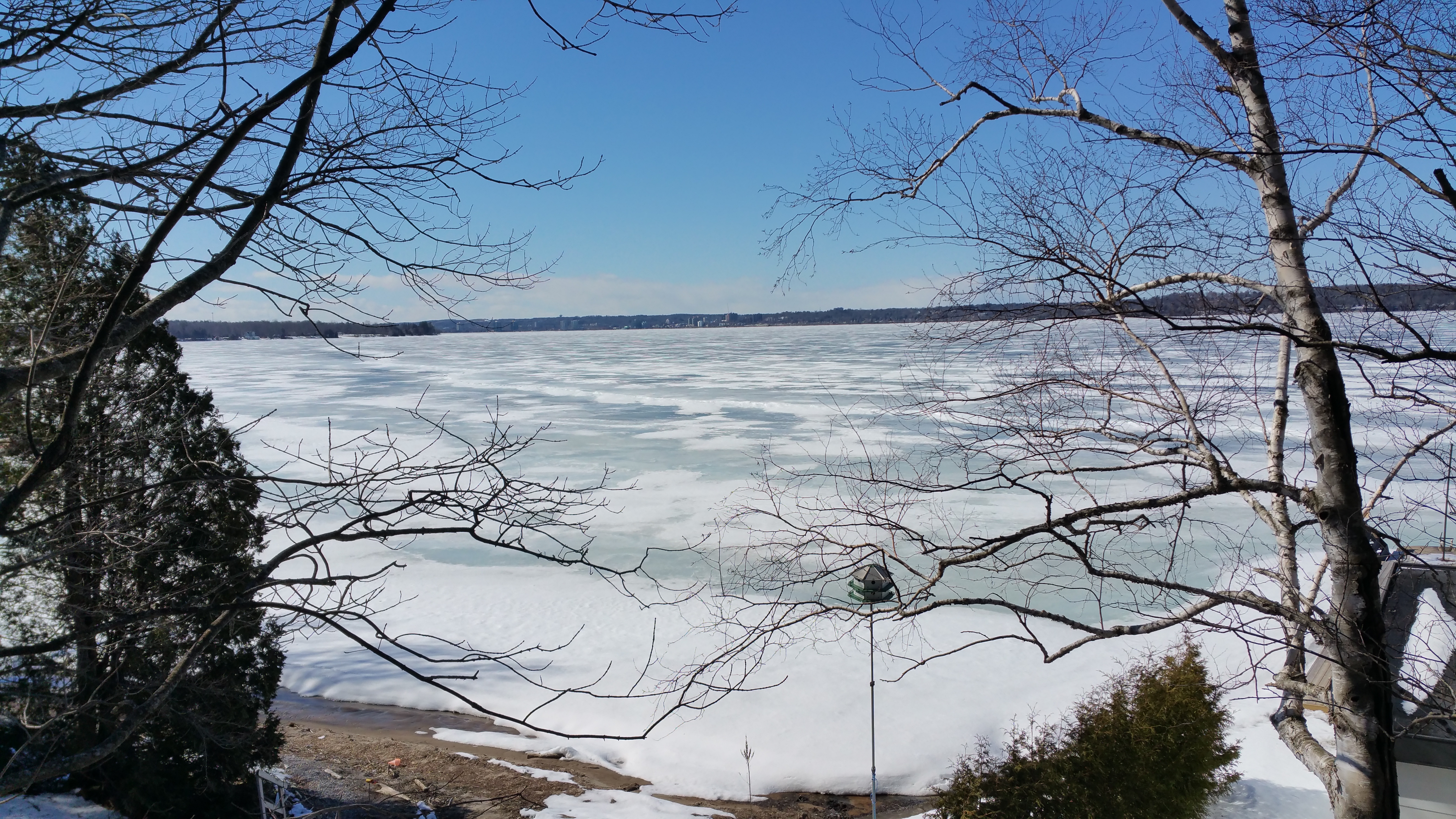
Extreme cold ushered in January of 2015 and the obvious lede was Coming wine from the cold. Halfway through the month an epiphany of sorts knocked upside the cerebral cortex, elaborated upon in Varietal Spanish wine. That smithy precursor would lead to revelations in October.

As January wound down and I prepared to hit the Niagara Icewine Festival, (revealed in We the Icewine) I first asked a matter of fat cat factual question, Is writing making a mess of wine? “The combined fugitive pieces of wine and its critics pose questions without answers. They must be asked very slowly.”

Related – Mind blowing wines of 2014

The weeks of suffering through frozen days and night breeds reflection and thought. While the temperatures remained cursedly south of 20 I begged the question, Why drink that?, “looking for heroic entablature and architectural wonder in bottles of wine. We see them as DNA and in their liquids we can read their entire future. We sip them again and again until we taste them for the first time. To remember generations.” Have wine forget winter.
Good bye and thank you for your hospitality South Africa @WOSA_ZA @WOSACanada @CapeWine2015

Good bye and thank you for your hospitality South Africa @WOSA_ZA @WOSACanada @CapeWine2015

I penned If it’s value you want, it’s South Africa you need and later in May, Shades of South Africa. Oh sweet, naive, wait until you travel there and see what’s really up, Godello. Same for A new Greek morning and Getting into Greece. One week in the Peloponnese and my psyche would be altered forever.

In March I explained Why it matters to taste wines again, urged sharing through the practice of Take a bottle, leave a bottle and waxed parenthetical in yet another meaningful soul-searching moment. Why hate wine? was waged with a comment on “the wine geek who hates certain wines. The wine aficionado who picks on specific bottles, bullies them to the point of hatred. Slags them beyond reproach. Rants to the world about the injustice of their existence.” Bugger off.
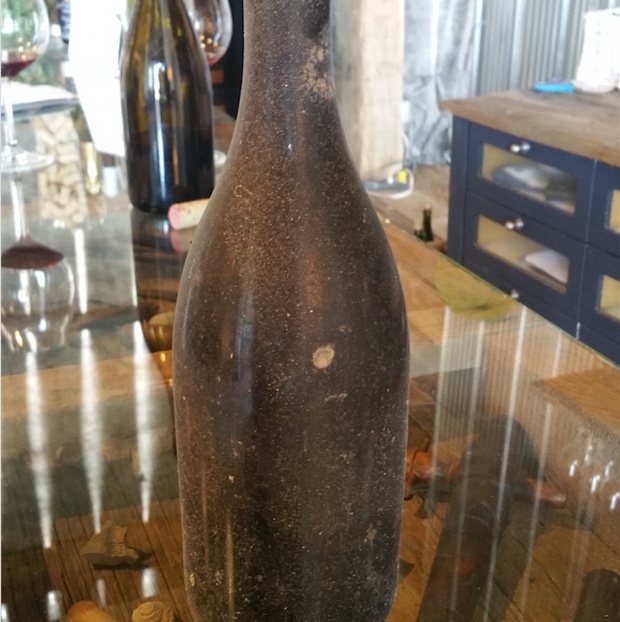
The Old Third, Pinot Noir 2008

The Old Third, Pinot Noir 2008

Then April. “The Ontario wine industry is the best kept secret in the world. It has grown, accelerated and advanced with more success than might have been imagined as recently as five years ago. Ontario winemakers have figured it out. The “world-class” comparative humanities of aging and longevity aside, the comprehensive and widespread phenomenon of excellence, regardless of vintage, is now an Ontario reality.” Now you know the answer to Why taste Ontario?

Related – 15 Canadian wines that rocked in 2015

In May further validation with Searching for Somewhereness and I’m a little bit County, setting the stage for an October visit to proportion enormity across ridges and eskers. Further understanding culled in The Old Third and older County wines and The ridges of Prince Edward County.
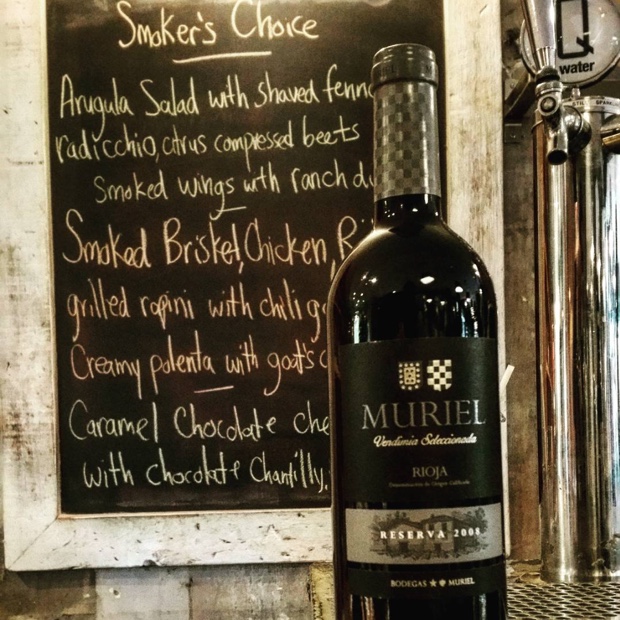
Saturday night @barquebbq #smokerschoice and '08 @bodegasmuriel #rioja #spain

Saturday night @barquebbq #smokerschoice and ’08 @bodegasmuriel #rioja #spain

“Wine is a commensurate animal, altricial such as it is, acaudal, acersous, agnostic, aculeate and allocryptic such as it is not. Wine that is not so much off the beaten path as actually growing on one.” Path straying wines. The game changer happened one day in May at Barque Smokehouse with Chiara De lulis Pepe and The natural wines of Emidio Pepe.

Cool Chardonnay at Ridley College

Cool Chardonnay at Ridley College

The June WineAlign National Wine Awards of Canada followed Ontario Wine Awards judging, inclusive of tastings at Niagara College, Creekside Estates, Ravine Vineyard, Trius, Treadwell CuisineDomaine Queylus and The Good Earth Wine Company. A great, learned experience at Master classes of Terroir shed brilliant light on Gamay. Then the most important query of the summer. Can Chardonnay get any cooler? Well, one of two. Great Chardonnay and Pinot Noir from Nova Scotia? My maritime wine sojourn is summarized in East coast swing 2015: Time, tides and wine.

View of the mountains from Tetramythos, Aigialia, Peloponnese

View of the mountains from Tetramythos, Aigialia, Peloponnese

My great Greek Achaian adventure was told in three tales, Till I reach Achaia groundBring me Achaia love and Gateway to Achaia, from Roditis to Mavrodaphne

South Africa’s memories spilled out in waves, from Once upon a time in the Western Cape to Wines of South Africa: It’s the fling itself, through South African duck dynasty and Wines of South Africa: Go Cars Go.
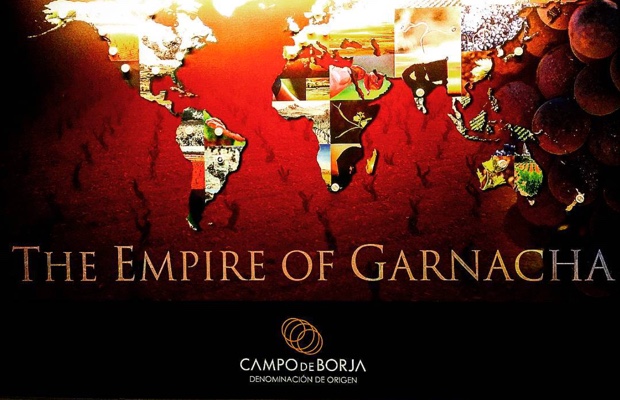
The Empire of Garnacha

The Empire of Garnacha

October and November trips to Aragaon, Catalonia and Franciacorta opened eyes and expanded minds like never before. We’ve Garnacha covered part one: Campo De Borja was followed by CariñenaSomontanoTerra Alta and Calatayud.

With Pablo Alvarez (#vegasicilia) and Laurent Drouhin (#josephdrouhin) at #fourseasonstoronto for #primumfamiliaevini Can there be a more visceral wine experience than tasting some of the world's greatest wine estates and all the while their principals just seem to only talk about history and family? Makes me think about parents, grandparents and children. About accomplishments, passing torches and smelling roses. Or something like that.

With Pablo Alvarez (#vegasicilia) and Laurent Drouhin (#josephdrouhin) at #fourseasonstoronto for #primumfamiliaevini…Can there be a more visceral wine experience than tasting some of the world’s greatest wine estates and all the while their principals just seem to only talk about history and family? Makes me think about parents, grandparents and children. About accomplishments, passing torches and smelling roses. Or something like that.

Far out, man

Far out, man

Here are some mind blowing wines tasted in 2015.
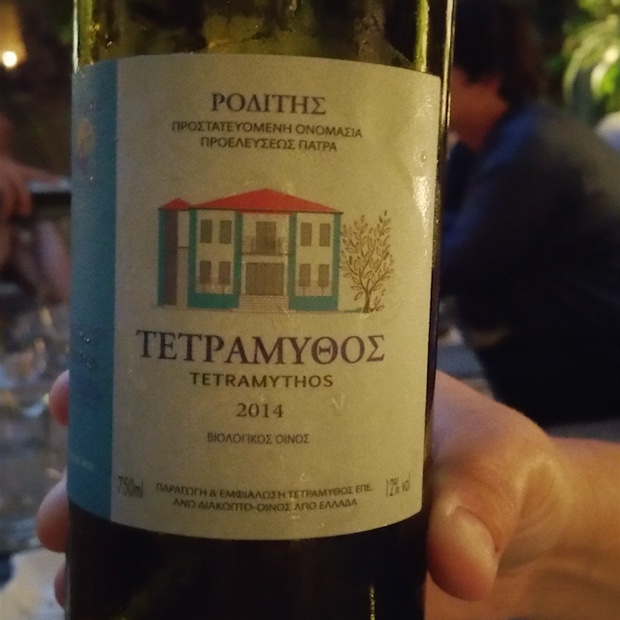
Tetramythos Roditis 2014

Tetramythos Roditis 2014

Tetramythos Roditis 2014, PDO Patras, Greece (SAQ 12484575, $15.75, WineAlign)

Pulled from four vineyards at 650-850m of altitude and from vines 19-42 years old. No skin contact though it shows a light, slight tinge of colour. Nearly platinum in its yellow hue, perhaps attributed to organics says Papagiannopoulos, Eighty per cent was achieved through natural ferment (with zero malolactic) plus “one tank for security.” Roditis can go clean or develop anti-austerity, texture, viscosity in the direction of a dirty projector. The Tetramythos glides “forward through the clover and the bergamot.” I can see what she’s seeing. Tasting like a leesy ripe peach, this is the best “basic” Roditis tasted in Achaia. Serious match of Aleria Restaurant‘s Sea Bass Tartare. Drink 2015-2020.  Tasted July 2015
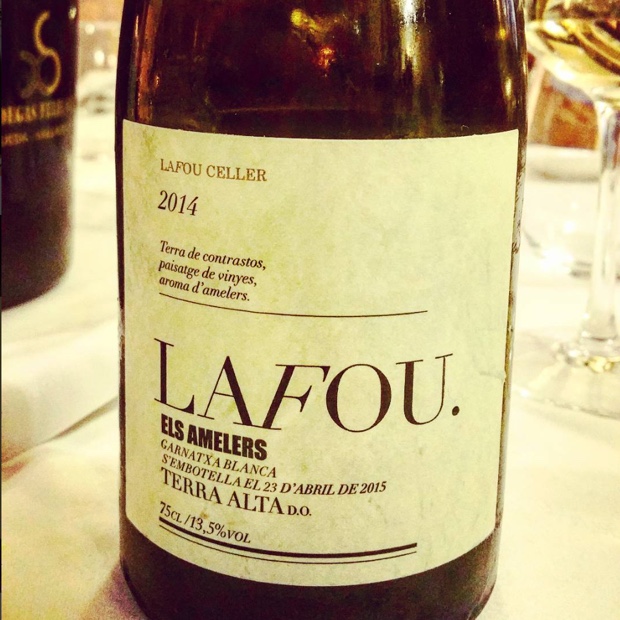
To taste again @lafouceller in @doterraalta is today's master plan @VINOS_ICEX #lovegarnacha #garnatxablanca #crdoterraalta

To taste again @lafouceller in @doterraalta is today’s master plan @VINOS_ICEX #lovegarnacha #garnatxablanca #crdoterraalta

Lafou Celler Garnatxa Blanca 2014, DO Terra Alta, Spain (WineryAgentWineAlign)

Ramon Roqueta Segalés, winemaker, soothsayer, visionary, seeker of the Garnatxa Blanca of today from “a narrow valley.” Ramon is very concerned with the valleys, the landscape, the geology, how the wind, the mediterranean climate and the ancient rivers that run through, having left their glacial deposits, all combine for this particular and most important expression of Garnatxa Blanca. Established in 2007, this wine was first released in 2011. Combines old and young fruit, some harvested fresher at a greener stage and others picked later, riper, brought together. Vinified separately, with some skin maceration, looking for fat to surround acidity. Ripe fruit (10 per cent) sees oak, the rest in egg shape concrete tanks with six to seven months of lees contact. Smells like a ripe peach, fresh and without sugar but instead a sprinkling of subterranean, ancient riverbed harvested salt. The tang is layered, variegated, mineral, mastered over and in corralling of oxidation, elaborated with gentle but forceful demand. “We learned that you can get a balance by harvesting and an early and a later stage, sometimes three times.” Finishes with lime, fresh squeezed, sweet tonic and distilled flowers. A wine that has succeeded in “mastering the oxidation process.” Plus the tannic (anti-oxidative) aspects offered in micro-oxygenation from the slightly toasted new oak. Approximate price $28.95 CAN. Drink 2015-2025.  Tasted October 2015  @lafouceller  @oenophilia1

Maps & Legends, from Cartology to Flotsam & Jetsam @ChrisAlheit @ZooBiscuitsWine #alheitvineyards #hermanus #capewine2015

Maps & Legends, from Cartology to Flotsam & Jetsam @ChrisAlheit @ZooBiscuitsWine #alheitvineyards #hermanus #capewine2015

Alheit Vineyards Flotsam & Jetsam Days of Yore 2014 (Winery)

Chris Alheit’s brand might allude to a chapter in J. R. R. Tolkien’s The Two Towers but Days of Yore must pay some homage to the 80’s thrash metal band and with great irony. This Cabernet Sauvignon and Cinsault blend is no Doomsday for the Receiver and certainly No Place for Disgrace. What it is instead is pure liquid brilliance. Old 1960 Cabernet Sauvignon bush vines are (even if unintentionally) farmed the way they used to be, back in the days of yore. Now cropped, tended and produced in pitch perfect cure, the resulting wine (when Cabernet is blended with Albeit’s dry-farmed, stomped and tonic-singular Cinsault) shows smoky depth and musicality. Sour-edged or tart can’t begin to describe the tang. It’s something other, unnameable, sapid, fluid and beautiful. It brings South Africa from out of the heart of its wayfinding darkness. Drink 2015-2025.  Tasted September 2015  @ChrisAlheit  @ZooBiscuitsWine
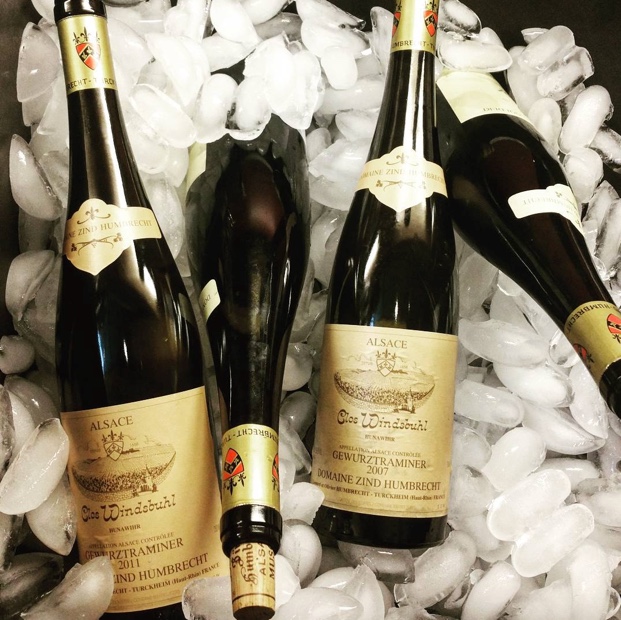
"If you can see the differences of terroir in Gewürz, then you won’t see it in Riesling" @AlsaceWines #olivierhumbrecht

“If you can see the differences of terroir in Gewürz, then you won’t see it in Riesling” @AlsaceWines #olivierhumbrecht

Domaine Zind-Humbrecht Gewürztraminer Clos Windsbuhl 2011, Ac Alsace, France (Agent, $64.00, WineAlign)

This is the most northerly Zind-Humbrecht vineyard, in Hunawihr. Like oil and water from this to 2012. So much more richness, unctuousness, classic western European riverbank gluck and heavy weighted metal. Layers upon layers of texture though not nearly as dramatically sweet as it might appear to be. Hides it so well, thanks to those remarkable Windsbuhl gifting phenols and intense grape tannin. This has presence so very rare in Gewürztraminer. In the end its a glass full of liquid gems, polished, elegant and refined. Allow the sugars several more years to fully realize its potential relationship with the acidity. Drink 2018-2033.  Tasted November 2015  @olivier_dzh  @TrialtoON  @AlsaceWines  @VinsAlsace  @drinkAlsace

Don Melchor Cabernet Sauvignon 2010

Concha Y Toro Don Melchor Cabernet Sauvignon 2010, Maipo Valley, Chile (403980, $70.00, WineAlign)

The 2010 Don Melchor harkens backwards, to years like 2001 and 2003, rephrasing and rewriting the paradigmatic book. From seven contiguous, sub-divided blocks of Cabernet, the ’10 speaks most highly of Lot Two, emphasized by chocolate, menthol and mineral, in cohorts with Lot Four, in elegance and depth. Extended glom and time-lapse picking between April 22 and May 27 was the casualty turned blessing of a cooler growing season in the semi-arid Mediterranean-like scrub desert of Puente Alto. The alluvial motion hauteur of slow-ripened fruit can’t be overestimated. The frame by frame capture has resulted in aromatics wafting off the charts; violet, anise, roasting cocoa bean, garrigue, ferric filings, mortar on wet stone, Cassis and eucalyptus. There is no heat, rendering the 14.6 declared alcoholic irrelevant. Best of all, it smells like Chile as much as it does Cabernet. There is no need to discuss the (97 per cent) CS in terms of Bordeaux, that is until you taste. Then the tobacco angst and silky texture elicit Margaux. Black currants and fine chocolate melt on the finish, still with a mouthful of stones. For winemaker Enrique Tirado, this may be his “El opus.” It will age effortlessly for 12-15 years. For anyone who purchased this wine more than 10 vintages ago, comparing current cost can be a byproduct in natural preoccupation. Who would not want a return to the sub-$50 Don Melchor going back a decade or more? Yet while tasting the present decimus, $100 crosses the fiscal mind and seems completely apropos. At $70 the clarity and sonority of its value is the blazon of an epistle. Few Cabernet Sauvignon dominant wines from Bordeaux or Napa Valley can compare. Drink 2016-2025.  Tasted April 2015  @conchaytoro  @MikeAikins1  @DrinkChile

Mullineux & Leeu Syrah Iron 2013, Wo Swartland, South Africa (WineryAgentWineAlign)

If such cure, grip, ferric grab and intense tannin has ever infiltrated South African Syrah it has not yet found its way over to me. In a side by side comparative tasting with the Schist Syrah this one wrestles to win. The Schist is all perfume and soft elegance. The Iron draws power to strength from strength. It is an unrelenting conduit of energy, from soil clearly designed to outlive humanity. The Syrah is a product of geological wonder and winemaking that steps aside to let the terroir speak its mind. Demanding and filled with tension now, time will soften the stranglehold and loosen the wires. Lots of time. Drink 2019-2028.  Tasted September 2015  @MullineuxWines  @MullineuxChris  @Nicholaspearce_

Fleury Père et Fils Cépages Blancs Extra Brut Champagne 1990, Champagne, France (Winery, Agent, WineAlign)

The expediency of weighted oxidation in flight flies effortlessly as a traveller propelled with verve and intrepid behaviour. Dried tangerine and so many tannic aspects are exaggeratedly exceptional for Champagne, fast forward thrusted and draughted with effortless urge. Derived as if from concrete shaped in purest form, of and before life. The dried fruits and a pith so calming are gathered for a level of citrus almost never before encountered. A very, very special 25 year-old bottle of bubbles from a pioneering organic and biodynamic producer in Courteron. Drink 2015-2020. Tasted February 2015  @ChampagneFleury
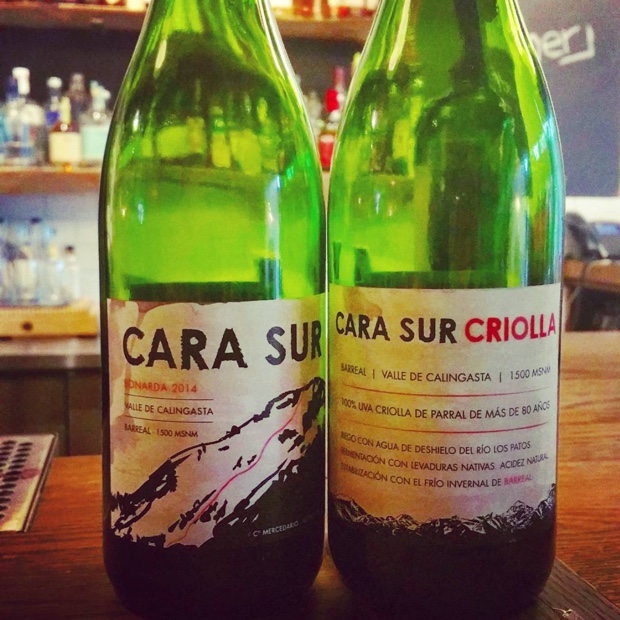
Most exciting wines tasted in a long time @winesorarg #carasur #bonarda #criolla #argentina #valledecalingasta

Most exciting wines tasted in a long time @winesorarg #carasur #bonarda #criolla #argentina #valledecalingasta

Cara Sur Bonarda 2014, Barreal, San Juan, Agrentina (Approx. $140)

Dry farmed, mordant and agile varietal red, a garagiste of a dirt road, in minuscule production, from natural run-off water and wild yeast. Only 500-600 bottles are produced, from north of Mendoza, in the Valle de Callingasta and Zuccardi funded. The natural cure is off the charts, the Emidio Pepe of Argentina, in which winemaking is really just perfect. Smells like the scrape of the amphora, already imbued of the aromatics of years, the answers of age, the design of ancients. You could keep this in the glass for a week and it will hardly evolve. Imagined as a 40 year wine for sure. Purity incarnate. Drink 2015-2040.  Tasted August 2015  @winesofarg
As I get on the 707 @penfolds 1999 #cabernetsauvignon carries me far away #treasurywineestates #southaustralia #bookofdreams

As I get on the 707 @penfolds 1999 #cabernetsauvignon carries me far away #treasurywineestates #southaustralia #bookofdreams

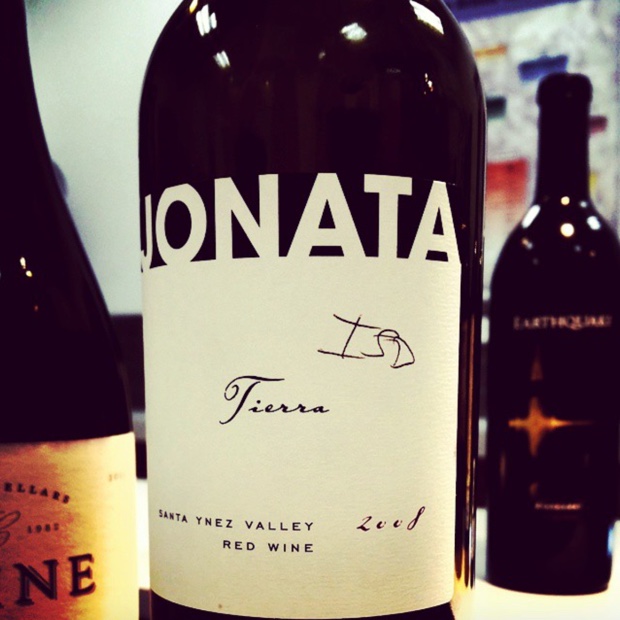
Jonata La Sangre De Jonata Syrah 2008, Santa Ynez Valley, Santa Barbara County, California (220517, $150.00, WineAlign)

A tremendously ripe, rich and layered Syrah that has few equals or rivals in California so in that sense the price is benevolently justified. Winemaker Matt Dees is no flash in the pan. His wines are cerebrated and cogitated with no stone left unturned. They are showy, chiselled wrestlers, boxers and ultimate fighters but they are the real deal. This ’08 is a veritable protein potpourri, of wafts from the finest boucherie, all hung limbs and wrapped sheep’s cheeses, in caves, on counters and under glass. The expression is also very Côte Rôtie meets côte de bœuf rôtie, with added luxe perfume, chalk and lacy grain. The fruit boundaries are endless, the chew meaty, cured and smoky. Ultra Syrah of never wavering red fruit in a packed vessel with alcohol declared at a meagre 14.9 per cent. Even if it is really more like 15.5, the wealth of fruit, acidity, tannin and structure can handle the heat. With so much happening, this wine will age like the prized hind quarters and mother’s milk solids it smells of. Jonata La Sangre De Jonata Syrah 2008 says something and I’d love to hear what that is 15 years down the road. Drink 2018-2028.  Tasted May 2015  @WoodmanWS  @CalifWines_CA

As I get on the 707 @penfolds 1999 #cabernetsauvignon carries me far away #treasurywineestates #southaustralia #bookofdreams

As I get on the 707 @penfolds 1999 #cabernetsauvignon carries me far away #treasurywineestates #southaustralia #bookofdreams

Penfolds Bin 707 Cabernet Sauvignon 1999, South Australia, Australia (Agent, $175.00, WineAlign)

The Bin 707 was first produced in 1964 though passed over from 1970 to 1975 and then in 1981, 1995, 2000, 2003 and 2011. With Grange in mind, were it to look in the mirror, it would see its reflection as Cabernet Sauvignon. A true South Australian Claret, multi-regional blend from Barossa Valley, Coonawarra, Padthaway, Robe and Wrattonbully. The ’99 was the 28th and as I get on board in 2015 and taste the 707, it carries me so far away. Today, in this world and how we play it, this is as fresh as Cabernet Sauvignon can be. It reads like a book of dreams. It is a miller of fruit, in secondary ester of refinement. It is a jet airliner, leaving behind a voluminous, velutinous trail of exhaust. “I feel like it’s all been done,” but not like this, aged for 18 months in 100 per cent new 300 litre American oak hogsheads. Not with this precision from veraciously selected fruit. Not like this. Look to 2025 for the tertiary period to begin. Drink 2015-2024. Tasted August 2015 @penfolds  #treasurywineestates 

Fino, Don P.X. '86 and '62 w: @sorgatoBTA @toroalbala @LeSommelierWine Magical, impossible, unchanging. Bucket list to revisit in 150 years #pedroximenez #bodegastoroalbala #montillamoriles #spain

Fino, Don P.X. ’86 and ’62 w: @sorgatoBTA @toroalbala @LeSommelierWine Magical, impossible, unchanging. Bucket list to revisit in 150 years #pedroximenez #bodegastoroalbala #montillamoriles #spain

Bodegas Toro Albalá Don P.X. Reserva Especial 1962, Do Montilla Moriles (424085, $205.00, WineAlign)

Unlike the 1986 which under recent European law (because it is not a red wine) must not be named Gran Reserva, this grandfather of a Pedro Ximenez is free to be what it’s supposed to be. A wine that was housed in a home somewhere in the village 10 years before the winery was created. A wine harvested in 1962, then took two months to ferment (to 7 or 8 per  cent alcohol). Estate distillate was added to fortify and raise it to 17 per cent, followed by a slumber for two years in concrete vats. The final resting place was in American wood where it slumbered peacefully for 49 years until it was bottled in 2011. In a show of future forward thinking and in retrospect, of historical allegiance, the signature on the bottle belongs to its original maker. Egresses from such delicate aromas, from citrus to coffee and stands in remarkable freshness belying its 50 years. The nuts are smoked with a zesting by citrus and a dusting in nutmeg. Chestnut and hazelnut curiously form a crasis of sensation, airy and creamy like mousse, sabayon or Caudreau. If you allow it, the finish will not let go. The sugar (300 g/L RS) and acidity (5.73 g/L TA) are the tangible aspects of its futuristic longevity. Like the ’86 this is another dessert wine secured of natural preservatives; undefined, magical, impossible. These wines opened could last for 20 plus years, unchanged. Unopened that number could surpass 100, without question, no problem. Like honey, this is an earthly substance that can last, seemingly forever. So, one glass of P.X. every day, going forward, for self-preservation. Drink 2015-2060. Tasted October 2015  @LeSommelierWine

The line-up from Emidio Pepe

The line-up from Emidio Pepe

Emidio Pepe Montepulciano d’Abruzzo Riserva 1983, DOC BIO Abruzzo, Italy (Agent, $279.95, WineAlign)

Give Emidio Pepe’s reds thirty odd years to develop and the impossible happens. To postulate in a moment’s assessment without remembering the pious tradition with which this was made would be a crime against Pepe, Abruzzo, the natural world and the wonders of the universe. With this much passage the spice cupboard that emits is wow times a thousand. Clove, cinnamon, cardamon, orange peel, galangal and like golden raisins that pass through quarries to become rubies. This wine is perfect. It has not broken down an iota. It requires no decanting. It defies logic, perception and time. There is no sediment, only energy. Speaks from the glass as if it were a child of destiny and mythology. The 1983 Emidio Pepe Montepulciano d’Abruzzo Riserva arrives from along the same road taken but its transmogrification proves that the result, with thanks again to the endemic froth, is different every time. Drink 2015-2029.  Tasted March 2015

Gaia Gaja and 1978 Barbaresco #veryproud #nebbiolo @StemWineGroup

Gaia Gaja and 1978 Barbaresco #veryproud #nebbiolo @StemWineGroup

Gaja Barbaresco 1978, Piemonte, Italy (Agent)

Tasted with Gaia Gaja as an added, as good a bonus as there ever was to an already exceptional line-up of Gaja wines, the 1978 Barbaresco is untangled, untwisted and liberated. Nebbiolo spoken with the utmost clarity. Cherries falling from the tree the moment the tips of fingers come within a hair of the touch. Spring is indeed in the air (despite it being early fall), a trick of the Gaja Genesis tale, “fields of incentive covered with green.” A mesmerizing Barbaresco, pure as driven snow, clear as a pool of fallen rain, quiet as an undisturbed slumber. Ancient longings of leather and dusty cocoa are but pipe stuffing, not yet lit. This Nebbiolo is pretty, feminine, beautiful and forcefully elegant. “When you’re asleep they may show you, aerial views of the ground, Freudian slumber empty of sound.” Only available from Nebbioli of the highest caste and order. Drink 2015-2028.  Tasted September 2015
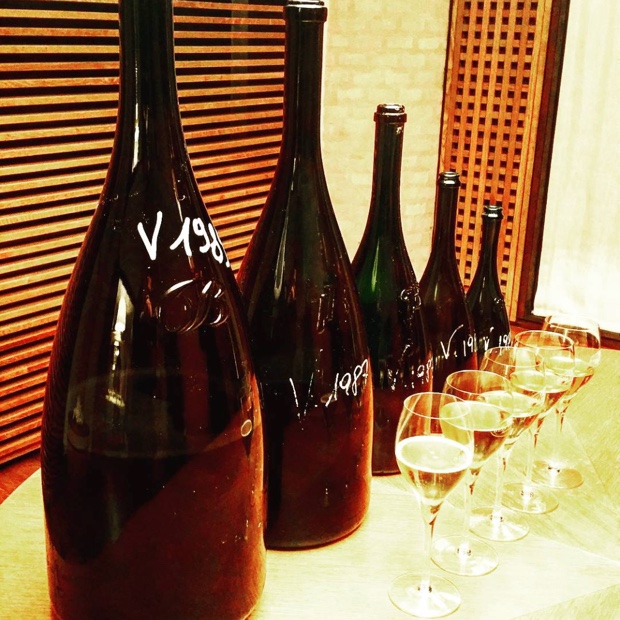
Five little ducks all in a row @BellaVistaVino #anothersongaboutthefizz #franciacorta #largeformats #1987 #1989

Five little ducks all in a row @BellaVistaVino #anothersongaboutthefizz #franciacorta #largeformats #1987 #1989

Bellavista Winery Brut Sparkling 1987, Franciacorta, Italy (From a Six litre bottle, Agent, Winery)

Tasted alongside a 750 mL, Magnum, Jeroboam and nine litre 1989. The Methuselah is the first wine to show similarly to any of the others so the comfort level rises and yet this rocks out flinty and reductive most like the 3L. The energy is consistent, but here the spice is magnified and the nutty sense that showed in the Magnum has come forth. This seems to combine the pique aspects of both the Magnum and the Jeroboam. A best of all worlds bottle plus what it brings that neither had. Absolute freshness. Does not evolve in the glass in its first few minutes like the others that came before. It evens glistens unlike the others, as if it knows how complex, special and alive it is. This is the bomb for sure. Dart straight through the heart. Crazy exceptional Sparkling wine. It should be interesting to try and assess, which is a major act of liberty in assumption, to gauge with accuracy how format affects age. To close one’s eyes tight and place a number on each wine, to where it has evolved and why. Here, Jeroboam still three to five years away from even that beginning. Truly. Drink 2018-2037.  Tasted November 2015  @BellavistaVino  @Noble_Estates

Good to go!

Twitter: @mgodello

Instagram: mgodello

WineAlign: Michael Godel
Facebook

Bring me Achaia love

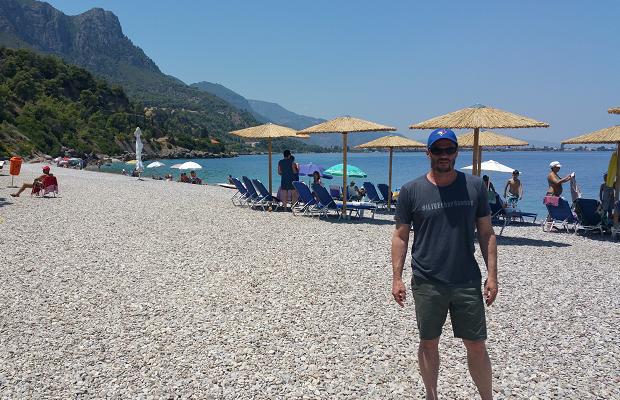
Godello on the beach at Pounta, Patras, Greece

Godello on the beach at Pounta, Patras, Greece

Travel. From either the early French travailler or Middle English travailen “to work hard,” “to make a journey” and “to torment.” The word conjures up intellection of exaggeration and impression, of simulacrum and eidolon. To think about picking up and going somewhere is nothing if not exciting. Embracing the notion of a journey makes mindful the portent for drifts far away and also those of inward retreat.

Travel in search of and on behalf of wine encompasses the territories defined in the etymology of the word. Yes, it is fun, certainly it can be glamorous and without equivocation, requires work ethic, stamina and focus. Then there is the travel, for work, with wine, to Greece. No journey with grapes in mind might be apprised in kind, of reflection, revelation and utter exhalation than what dwells in a rendezvous in specie with the northern Peloponnese. In Achaia, the confluence of grapes, gastronomy and tourism simply blows the mind. It also brings about utter balance and an ingress back down to earth.

Related – Till I reach Achaia ground

Achaia Love

The variegated landscape of Achaia, from Selinous to Kalavryta, from Patras to Ano Diakofto, are to a winemaker a place of great passion, history and in many respects, a supernatural calling from the processes of human imagination. It is here where the great Greek paradox is lived, like mysticism and mathematics conjoined, in the attitude of Greek philosophical winemaking. The work is achieved through the dichotomy of platonic thought and socratic character. Making wine from endemic or indigenous grapes is a calling to a higher love, in spite of harsh conditions, geographical difficulties and the relative channels of global obscurity.

Related – Gateway to Achaia, from Roditis to Mavrodaphne

The Achaian winemaker is a geometer and a mystic. They engage in rational winemaking coupled with the sound of an inner voice. Things look so bad everywherein this whole world, what is fair?

Winemakers do not worry or care about what stands in their way. Here they make wine because that is what they know from, but now it is more than that. Today the younger, aspiring viti-viniculturalists have European oenology degrees and come armed with a profane, ecumenical arsenal to make clean and progressive wines. The whole consolidation is awesome and yet Greek wine will never be mainstream. The people just like to drink their own wine. They export less than five per cent of their output and in Achaia, the number is even lower. It is high time for the world to sing bring me Achaia love.

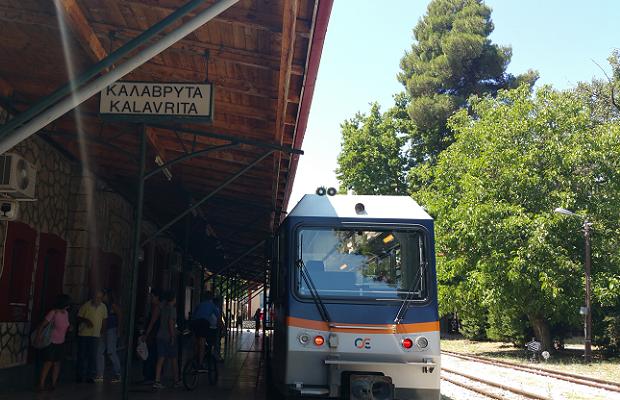
Train from Ano Diokopto to Kalvryta

Train from Ano Diokopto to Kalvryta

Agritourism

While the allure of vine and wine are the most important agricultural draws in Achaia, tourism is inextricably tied to points of interest dotted throughout the region. A ride up through the Vouraikos Canyon on the Diokfto to Kalavryta rack railway is essential towards understanding geology, topography and climate variation.

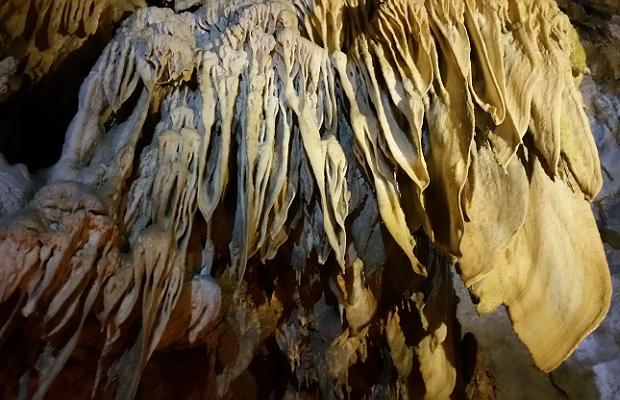
Cave of the Lakes (Spilaio Limnon)

Cave of the Lakes (Spilaio Limnon)

The Monastery of Megalo Spileo (Big Cave) oversees the great sloping vineyard of the Cavino stable and the Cave of the Lakes (Spilaio Limnon) are one of the great wonders of the (under) world. The Hades connection is not lost on anyone who walks through the subterranean, mythos labyrinth of rock and water.

The port city of Patras houses the architecturally and historically significant early civilization collection at the Archaeological Museum of Patras. An Achaian visit is made complete on a spectacular Patras beach such as Pounta and a trip across (and return by ferry) the not to be believed until having seen it Rio-Antirio Bridge.

Rio-Antirrio Bridge, Patras

Rio-Antirrio Bridge, Patras

Now the food. The unavoidable truth in Achaian pastime is one of variegated and highly diverse gastronomy. The cuisine from down on the Rio-Patras shore and up into the hills of Eigalia and Kalavryta makes perfect and surfeited use of local products.

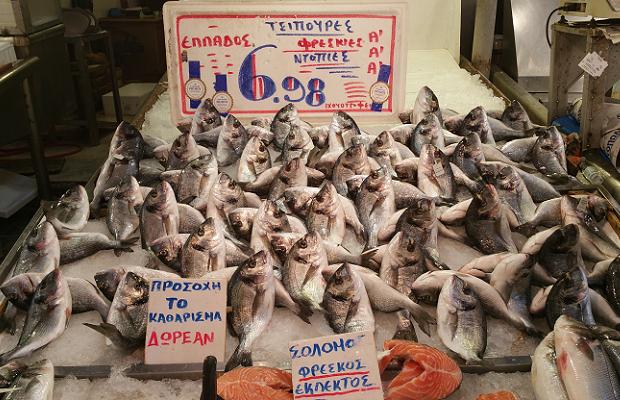
Athens Fish Market

Athens Fish Market

Fish and lamb are at every meal though the briarean advantage of vegetarian options offers an immense and restorative upside. Meals are long, extensive and dangerously satiating.

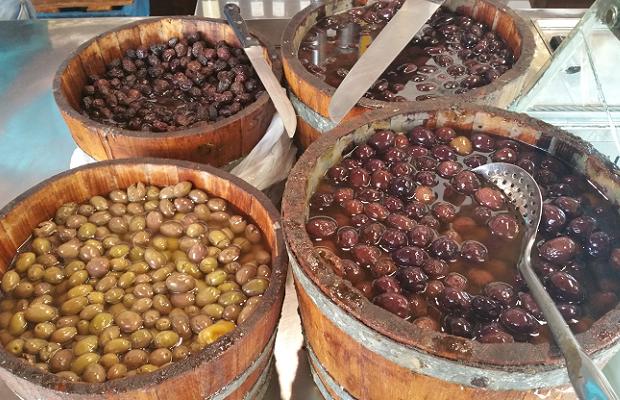
Kalavryta Olives

Olives in Kalavryta

Where to stay

Athens

Electra Plaza Hotel, 18 N. Nikodimou Str., 10557 Athens, Greece, 30 210 337 0000

View of Athens from The Radisson Blu Hotel

View of Athens from The Radisson Blu Park Hotel

Radisson Blu Park Hotel, Alexandras Avenue 10, 10682, Athens, Greece. 30 210 889 4500, info@rbathenspark.com

Rio-Patras

Porto Rio Hotel and Casino, Syrogianni, Rio, Achaia 265 00, Greece, 30 261 099 2102.

Situated in a verdant oasis near the city of Patra, surrounded by the crystal clear waters of the Patraiko Gulf, the famous Rio-Antirrio Bridge and Mt Panachaiko.

Egialia

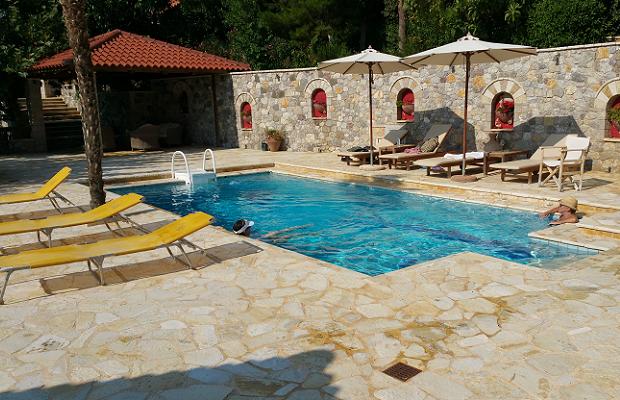
Tetramythos Pool

Tetramythos Pool

Studios Tetramythos, Ano Diakofto, Άνω Διακοφτό, Diakofto 251 00, Greece, 30 2691 097367, info@tetramythoswines.com.

Owned and operated by brothers Aristos and Stathis Spanos.

Where to eat

Athens

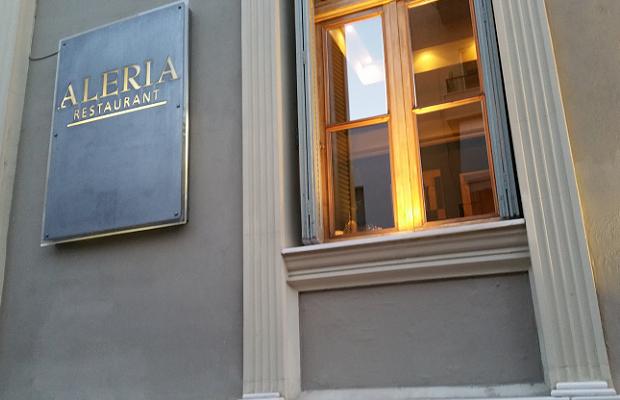
Aleria Restaurant

Aleria Restaurant, Athens

Aleria Restaurant, Meg. Alexandrou 57, Athens 104 35, Greece, 30 21 0522 2633.

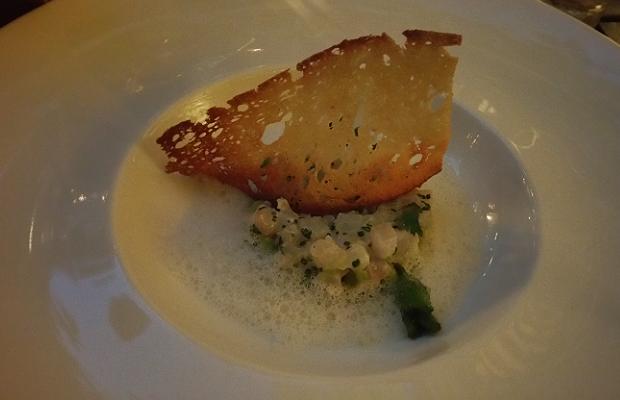
Sea Bass Tartare, avocado foam, greens at Aleria Restaurant, Athens

Sea Bass Tartare, avocado foam, greens at Aleria Restaurant, Athens

Chef Gikas Xenakis spins old-school Greek cuisine in modern, deconstructive ways. Structured flavours pop and inspire.

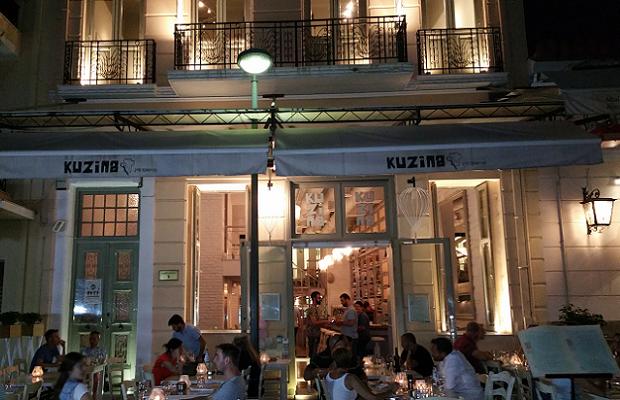
Kuzina Restaurant, Athens, Greece

Kuzina Restaurant, Athens, Greece

Kuzina Restaurant, Adrianou 9, Athens 105 55, Greece, 30 21 0324 0133.

Stylish gastronomy up on the terrace (Tarazza) with stunning views beneath the moonlight, Acropolis and Ifestos Temple.

Patras-Rio

“W” Rio, Posidonos 12, Rio, Greece, 30 261 099 5772.

Outdoor terrace restaurant directly on the shore of the Corinthian Gulf and the Rio-Antirrio Bridge.

Dimoriri, Akteon, Eleftherias 23, 26500, Map, Patra – Rio, 30 211 790 9399. Sommelier is Vasili-myrto Metaj.

Shrimp Saganaki, Dimoriri, Rio-Patras

Shrimp Saganaki, Dimoriri, Rio-Patras

One of the most well known traditional fish tavernas next to the bridge with a great selection of local wine and terrific meze.

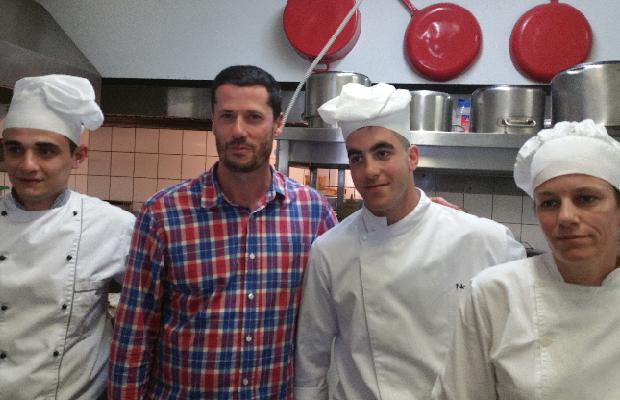
Godello and the talented young chefs of Nautiko, Rio-Patras

Godello and the talented young chefs of Nautiko, Rio-Patras

Naut-oiko, Posidonos 12, Rio 265 04, Rio, Greece. 30 261 099 5992, nautoiko@gmail.com

Pork Gyros at Nautiko Restaurant, Rio-Patras

Pork Gyros at Nautiko Restaurant, Rio-Patras

Specialties: Salanova with grilled potato, cottage cheese and mustard vinegar, Greek village pies with feta, tomato and onion, Pork Gyro, Small Balls of Meat on Grill, Veal with Green Beans.

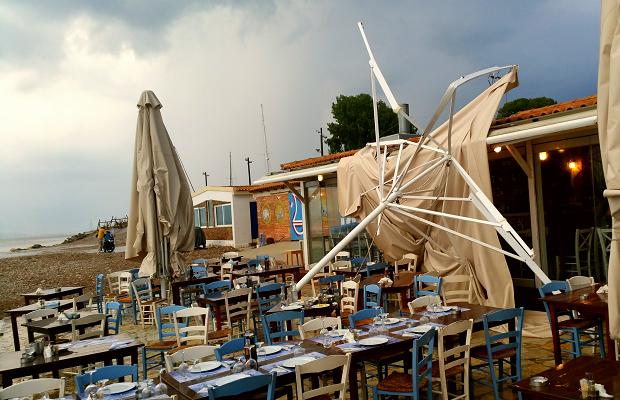
After the deluge, Istioploikos Omilos Patron, Patras

After the deluge, Istioploikos Omilos Patron, Patras

Istioploikos Omilos Patron, Iroon Polytechniou , 26500, Map, Patra – Downtown, 211 7909399

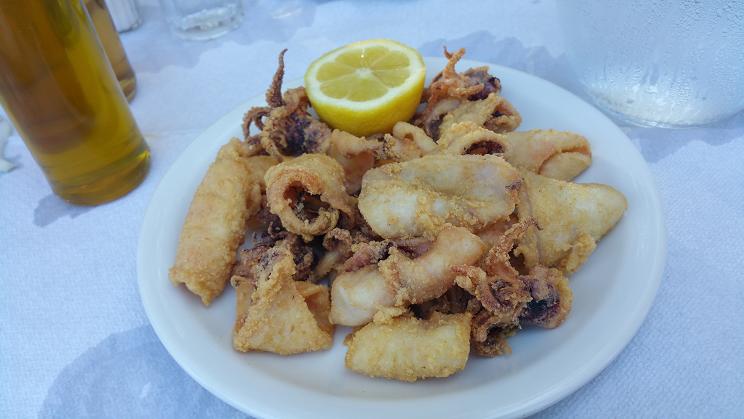
Fried Calamari, Pounta Beach, Patras

Fried Calamari, Pounta Beach, Patras

Pounta Beach Restaurant, Patras

Stuffed Calamari, Pounta Beach, Patras

Stuffed Calamari, Pounta Beach, Patras

Egialia

To Katafygio, 15ο km. Provincial Road Poudas – Kalavrita, 30 269 109 7292, info@to-katafygio.gr.

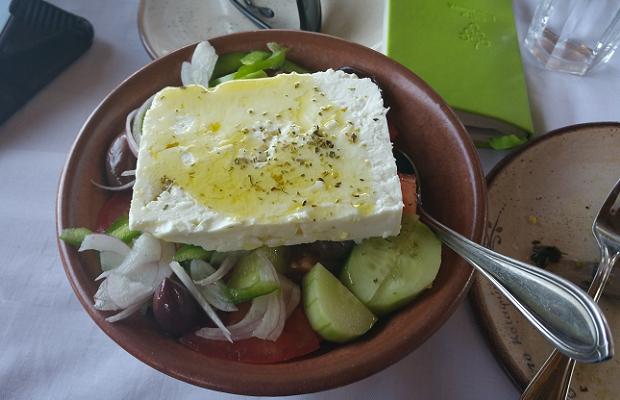
The Greek Salad, To Katafygi, Egialia, Achaia

The Greek Salad, To Katafygi, Egialia, Achaia

Home cooking at its Kalvritan best, of homemade spanakopita pie and braised meats to die for. Breathtaking view up in the mountains on the Kalavrita-Pounta Provincial road, on a pass with views of many peaks and the Corinthian Gulf.

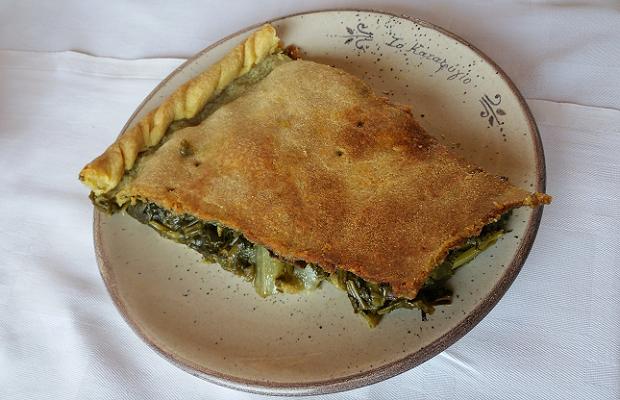
Spanokopita, To Katafygi, Egialia, Achaia

Spanokopita, To Katafygi, Egialia

Where to drink

Athens

Paradiso Restaurant, Ioannou Apostolopoulou 58, Chalandri 152 31, Athens, Greece, 30 21 0672 2290

By the glass3 G. Souris Str & Philellinon, Athens, Greece, 30 210 3232 560

Toronto

Sometimes a little, persistent or incessant lobbying can effect change, even at the LCBO. At the Danforth outlet of the LCBO, the largest collection of Greek wines (said to exist outside of Greece) is now to be found. This is no doubt in part with thanks to Steve Kriaris of The Kolonaki Group. Mr. Kriaris and his successful online shopgreekwine.com is an innovative model to champion and sell Greek wine. Kudos to the liquor board for the leap of hellenic faith. Representation for Achaian wine is negligible, though you can purchase Tentura Liqueur by Loukatos. The Mega Spileo Red is currently being presented in the consignment program. (Represented by United Stars (Michael Polienko, mpolienko@unitedstars.ca)
Authorities on Achaia

A visit to Achaia begins with the New Wines of Greece, the national inter-professional organization of vine and wine of Greece, based in Athens, headed up by Sofia Perpera and George Athanas. Perpera is a Bordeaux trained Oenologist and former Director of the Greek Wine Federation.

Menos Angelakis is head of the trade missions unit for Menos Angelakis is head of the trade missions unit for Enterprise Greece, 109 Vasillisis Avenue, 115 21, Athens, Greece, 30 210 335 5735, i.agelakis@enterprisegreece.gov.gr

The Chamber of Achaia is the office charged with the responsibility for commerce and industry in Patras. Attorney Nora Nikolopoulou is the Head of International Relations, 58 Michalakopoulou str., 26221 Patras, 30 2610 277 779, panoreanik@e-a.gr

Konstantinos Lazarakis MW is Greece’s only Master of Wine. Konstantinos is one of Greece΄s most ardent ambassadors and has written the definitive book on Greek wine, The Wines of Greece. He and his wife Antonia run one of the most heralded wine schools under WSET auspices and offer courses for the Court of Master of Sommeliers program. 6-8 Krinis Str., 185 39, Piraeus, Greece, 30 698 659 0404, laza23@gmail.com

Grigoris Michailos Aiws is a Sommelier and partner in the Wine Commanders, a web-based platform with the goal to “communicate our passion for Greek wine without exaggeration but with creativity and integrity and to persuade you to try them.” 30 6985941963, gmichailosaiws@gmail.com

Dimostanos Zanakos works for Achaia tours. He may be young but is wise beyond his years. With Dimos as translator, mediator, cruise director and navigating wizard, a trip to Achaia runs with perfection.

This today by way of Sofia Perpera. “The Greek Embassy in Ottawa noted that Greek wine sales from January to July 2015 in Canada were up by 7,5% in value over the same period last year. The average wine imports of other countries were up by only 3,7%! #DrinkGreekWine

Good to go!

http://www.winealign.com/profile/2058-mjg

Gateway to Achaia, from Roditis to Mavrodaphne

Gate to Achaia Clauss Winery, Achaia

Gate to Achaia Clauss Winery, Achaia

A week of immersion on the ground running in Achaia drafts a new set of varietal tasting parameters. What is new to me are anent varieties of old. Roditis, Sideritis, Mavrodaphne and Mavro Kalavryta may be the grapes of ancients but obscurity be sprinkled, their resurrection blows forth in full paroxysmal scatter. The appeal is symptomatic of the new search for greatness in far away places.

Related – Till I reach Achaia ground

In  the second week of July I tasted through Patras and Achaia in the Greek Peloponnese. Here are 55 reviews from 10 producers.

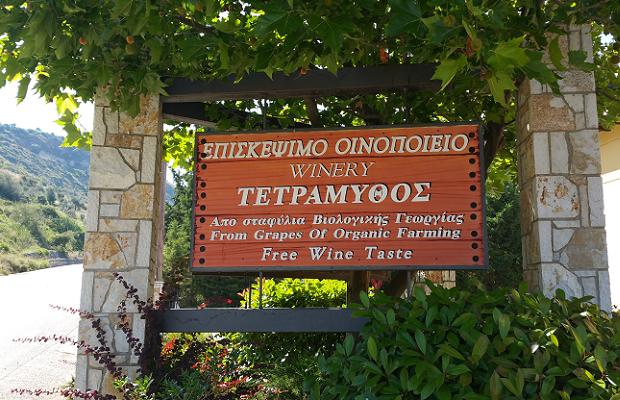
Tetramythos

8ο kil. Pounta-Kalavrita, Ano Diakopto, 25003, Greece, 2691097500 The most modern facility in all of Achaia, re-built after a fire destroyed the property more than 10 years ago. Owned and operated by the brothers Aristos and Stathis Spanos.

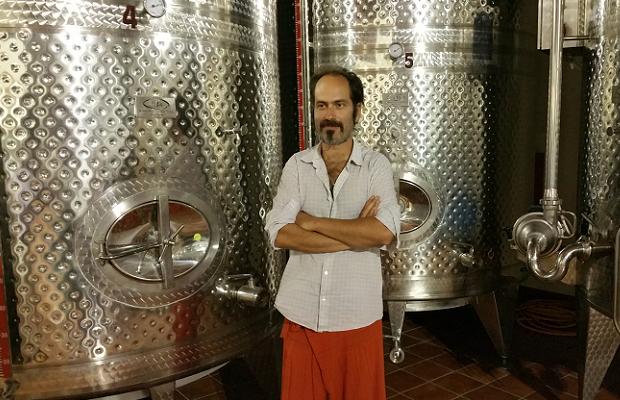
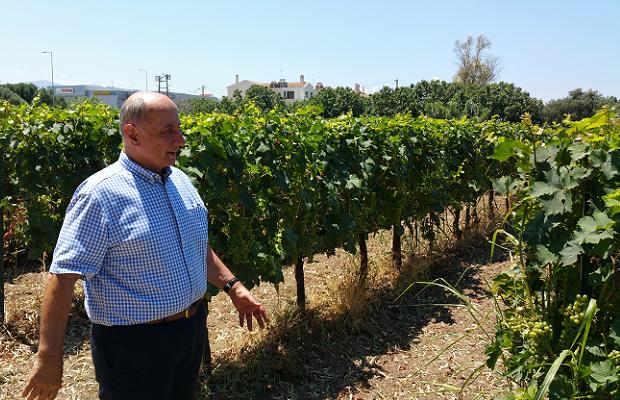
Panyiotis Panagianopoulos, Tetramythos Winery

Panyiotis Panagianopoulos, Tetramythos Winery

Oenologist since 1999 is Panayiotis Papagiannopoulos, a winemaker who may just have been separated from twin Frank Zappa at birth. Located at Ano Diakopto of Egialia, on the slopes of Mount Chelmos, the 14 hectares of vineyards (450-1,000m) are farmed organically (and have been since 1997). Bush vines make up 80 per cent and endemic varieties (85 per cent) cultivated (plus some expatriates) are Roditis, Malagousia, Sauvignon Blanc, Mavro Kalavryta, Agiorgitiko, Cabernet Sauvignon and Merlot. The total production is 13,000 cases with export to foreign markets (80 per cent) that exceeds peers by a wide margin.

Tetramythos Winery

Tetramythos Winery

Tetramythos Roditis 2014, PDO Patras, Greece (SAQ 12484575, $15.75, WineAlign)

Pulled from four vineyards at 650-850m of altitude and from vines 19-42 years old. No skin contact though it shows a light, slight tinge of colour. Nearly platinum in its yellow hue, perhaps attributed to organics says Papagiannopoulos, Eighty per cent was achieved through natural ferment (with zero malolactic) plus “one tank for security.” Roditis can go clean or develop anti-austerity, texture, viscosity in the direction of a dirty projector. The Tetramythos glides “forward through the clover and the bergamot.” I can see what she’s seeing. Tasting like a leesy ripe peach, this is the best “basic” Roditis tasted in Achaia. Serious match of Aleria Restaurant‘s Sea Bass Tartare. Drink 2015-2020.  Tasted July 2015

Tetramythos Roditis 2014, PGI Peloponnese, Greece (WineAlign)

Here speaks the truth in endemic Roditis, raised in unconscious, wild ferment, unfiltered, forsaken to fining and treated to minimal sulphur. From 47 year-old vines, this most natural Peloponnese is made for the French market (that includes Quebec) with elevated acidity, deeper mineral, higher tang, pomp, circumstance and attitude. Latin, really, striking actually. Drink 2015-2018.  Tasted July 2015

Tetramythos Roditis 2014, PGI Achaia, Greece (WineAlign)

Roditis is here designated as the traditional Retsina, subjugated to wild yeasts in clay amphora and no sulphur during alcoholic fermentation. From 25 year-old vines out of a single vineyard and pine resin collected from trees on the edge of the vineyard. Post low and slow fermentation the wine rests on its lees for two months.  Such a wild and sauvage display of terroir; pine resin, beeswax, sealants and amphora. Like pure pine distillate without excessive herbaceousness and in subtlety of its own complacency. The palate follows the other roditis renditions and the pine again returns on the finish. 14,000 bottles made. Drink 2015-2019.  Tasted July 2015

Tetramythos Malagoussia 2014, PGI Achaia, Greece (WineAlign)

A single vineyard at an altitude of 750m guided by 30 hours of skin contact, for mouthfeel, to saddle the cool climate herbiage, needed for structure and for distance. Exudes poise, presence, precision, not oily but somehow creamy, glistening, this glow of malagousia. Expresses the longest hang time in the mouth, lingering like no roditis can or is willing to. Thanks to early picking to preserve acidity, the alcohol is low (12.4 per cent) and that acidity (7.2 g/L) above and beyond. Only here does malagousia keep this kind of flinty bite, in kind to a mid-September pick, keeping on the right side of soft and hot. I think this will live longer than you think.  Drink 2015-2020.  Tasted July 2015

Tetramythos Roditis 2008, PDO Patras, Greece (WineAlign)

A wine to fulfill the promise of my own personal vindication. I had asked Angelos Rouvalis about laying Roditis down for three to five years or more, to see where it may go and he said, “why?” Here is why. Has fan vaulted to the skies, urged by petrol and a symphony of mythology. Akin and within aromatic mineral reach of sémillon or riesling, with just a basal drip of ambrosial, gaseous honey. The green notes (of pea and nettle) are exaggerated but that is attributed to 2008 fruit that may have never been fully ripe. Drink 2015-2017.  Tasted July 2015

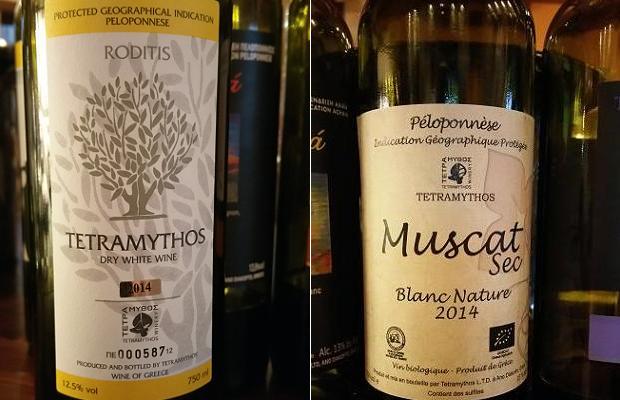
Tetramythos Roditis 2014 and Muscat Sec Blanc Nature 2014

Tetramythos Roditis 2014 and Muscat Sec Blanc Nature 2014

Tetramythos Muscat Sec 2014, PGI Peloponnese, Greece (WineAlign)

A slightly carbonic, reductive character – its natural protection, to keep the oxygen at bay, as if nouveau white Beaujolais. Combines bay laurel and beatific citrus, namely grapefruit after the banana blows off through the shutters of the cabana. Quite silky for muscat, of keys and zests citrus (major) and resin (minor). It may be sorry to leave you high and dry though there is no reason to feel a need to be weened off its charms. Far-out, groovy and compelling vin nature. Drink 2015-2018.  Tasted July 2015

Tetramythos Muscat Sec Blanc Nature 2014, PGI Peloponnese, Greece (WineAlign)

Nothing short of lucent, this friable, direct and crunchy raw muscat. Effusive of individual vowels and consonants, typically Achaian, extrapolated to Greek in its lambent and inventive simplicity. More glade than wax, it coats with orange and the spirit of lime. So different and yet so familiar, inevitably dry and straight as an arrow. Drink 2015-2018.  Tasted July 2015

Tetramythos Sauvignon Blanc Milia White 2014, PGI Achaia, Greece (WineAlign)

Not so many places are out there where sauvignon blanc grows at 1000m of altitude, so its got that going for it, which is nice. Add to that four months in new oak. What results is such a melon, citrus and high acidity tropical fruit mess. Wow is this piercing, almost over the top. Like sémillon this struts, in nod to the Hunter Valley. With time there is a varietal emergence. Eventually. Will age a spell. Drink 2015-2019. Tasted July 2015

Tetramythos Mavro Kalavryta 2014 (SAQ 11885457WineAlign)

A terrific example for a grape saved from extinction, Tetramythos owns 1.9 of a total four hectares of MK. Kudos for the effort especially considering the variety is thin skinned, slow to mature and difficult to cultivate. Saw nearly 20 days of skin contact because “the variety dictates the practice,” notes Konstantinos Lazarakis M.W. The fruit and bitters express a push-pull of terroir. One of two wineries making dry wines from the endemic variety, here the fresh red grape, the food friendly marker. Here confidently struts modern Achaian winemaking, from the ashes of naturalism and antiquity, the way Gamay or Loire Cabernet Franc are wont to do. Vibrant, with verve and a necessary natural funk. Herbal and with a rub of tomato skin, creamy, cool yet resinous, followed through from aroma to texture. Drink 2015-2018.  Tasted July 2015

Kotrotsos Moschofilero Erasmios 2014 and Tetramythos Mavro Kalavryta 2014

Kotrotsos Moschofilero Erasmios 2014 and Tetramythos Mavro Kalavryta 2014

Tetramythos Agiorgitiko 2013, PGI Peleponnese (SAQ 12178957WineAlign)

Raised in old oak barrels, it carries the wooden ship scent on the sea. Possessive of a world up in the wind, roofless, like an August cathedral and yet a grounding sense to burrow into earth. In all that sense it drafts like Nebbiolo indenture. Ferric and tannic, with end spice. Drink 2015-2018.  Tasted July 2015

Tetramythos Milia Red 2012, PGI Peloponnese, Greece (WineAlign)

A kaleidoscopic, cosmopolitan blend of merlot (66 per cent), cabernet sauvignon (20) and mavro (black) kalavrita (14) aged in 2nd, 3rd and 4th fill barrels. Here, again the use of Bordeaux varietals that cloud the vision of what the land wants to say. Sure it will speak in a language that resembles Terra Alta or some IGT but it has a nowhere man feel, a lack of somewheress and surely no word from the mouth of Papagiannopoulos. Very Mediterranean in feel, with a tapenade of black olive and caper. Drink 2015-2018.  Tasted July 2015

Tetramythos Cabernet Sauvignon 2011, PGI Aegialia Slopes (WineAlign)

A new Bordeaux language is created, in natural wild ferment, unfiltered and housed for 30 months in 2nd and 3rd fill barrels. A highly savoury cabernet sauvignon, with a lean and mean green streak. Tannic and very tight. Coated by a veneer and seething in teeth chattering acidity. Not for the faint of cabernet sauvignon heart and in need of double bottle time, in minimum two to one ratio of what it saw in wood. Much appreciation for the vision and the effort. Drink 2018-2021.  Tasted July 2015

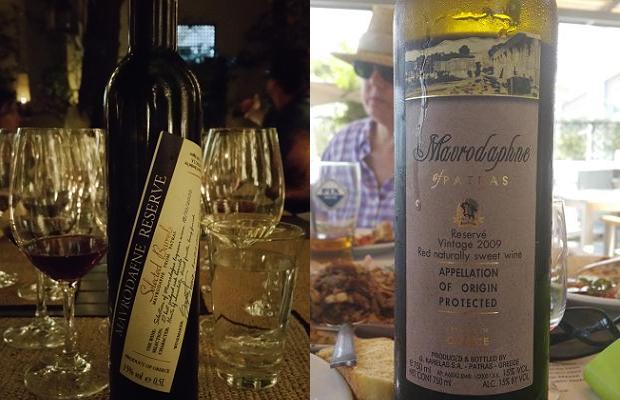
Tetramythos Mavrodaphne Vin Naturellement Doux, Peleponnese, Greece (WineAlign)

As with so many of the Tetramythos line-up, this regional blend is the same but different. First it’s non vintage and second it is out of zone so not considered for PDO Mavrodaphne of Patras status. At 16 per cent alcohol and 58 g/L the sweet elixir spent nearly three years spent spinning in the excruciatingly slow centrifuge of natural fermentation. Traditional method adherence with the addition of organic, sun-dried raisins, “to increase the sugar levels.” The house quotient is three kilos of dried Black Corinth Raisin for every 100 L of must, in purport to increase the alcohol by one per cent. Here sweeps clean, sweet Mavro,  its port sensibility an aged, natural, dried fruit, nut and caramel melange. Pure beauty. Drink 2015-2025.  Tasted July 2015

Domaine Mega Spileo (Cavino)

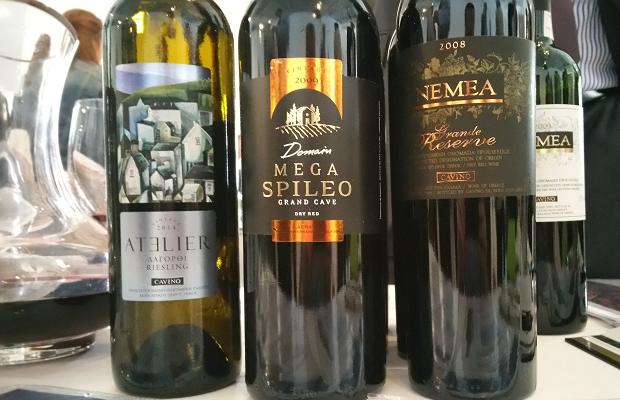
The domain is set within a dramatically oriented steppe of an amphitheatre, in a bowl beneath the shadow of a 940m rock that houses the great Greek Orthodox monastery of Mega Spileo (Grand Cave). Nowhere else in the Chelmos mountains does monk viticulture resonate as it does here. The great vineyard (Megali Ambelos) perches above the Vouraikos Canyon at 800m of height. The winemaker for the wines of Cavino and Mega Spileo is Stelios Tsiris. Varieties grown since re-planting in 1999 include Mavrodafne, Mavro Kalavritino, Cabernet Sauvignon, Merlot, Syrah, Lagorthi, Assyrtiko, Malagousia and Riesling.

Mega Spileo Monastery

Mega Spileo Monastery

Roditis 2014, PDO Patras, Greece

A textured Roditis, its constant refrain one of herbiage, mineral, savoury bite and a direct pinch of austerity. Radiates fashioned with poise and meaning. Drink 2015-2017.  Tasted July 2015

Malagousia 2014, PGI Achaia, Greece

From a blend of three vineyards at 800m in altitude, this is a creamier, riper, more tropical take on the categorical grape. It’s tropical even, leaving peach to ascertain mango. Like a comfortable broth of warm emotions, this Malagousia belongs to the generality of varietal Greek persistence. Drink 2015-2018.  Tasted July 2015

Moschato 2014, PGI Achaia, Greece

Nearly bone dry (4 g/L RS) and well-nigh nicked by acidity (6.2 g/L TA) this is really a true expression of the Muscat Blanc à Petits Grains, an elegant cold pour into a glass on a breezy, sunny day. Until now Muscat in Achaia “could never look me in the eye” but the flurry of aromatics sing like a songstress in white lace. Its gaze is like lemon and olive oil and its tongue like the sweet wax on the rind. Here the Moschato path has been properly and soulfully taken. Rich in gold, like the kingdom of Agamemnon at Mycenae. Drink 2015-2017.  Tasted July 2015

Deus NV, Peloponnese, Greece

A blend of Moschato (80-90 per cent) and Sideritis, with a prodigious dosage to leave this sparkling wine larboard in the realm of 55 g/L of residual sugar. Translates to a tropical, custardy, sticky and waxy bubble that will repeatedly get you back in Achaia life again. Take a few sips “and I’ll drink and dance with one hand free.” You could really get stoned on this fizz. Drink 2015-2018.  Tasted July 2015

Deus Rosato NV, Peloponnese, Greece

Made from 100 per cent Syrah and slightly sweeter than the Muscat, here at 60 g/L RS. The lees, cheese and funk from Syrah turned to sparkling distracts from the sweetness, sending this to parts of southern France in meditative, Mediterranean, savoire savour faire. Raspberry and cranberry vie for sweet and sour supremacy and the wine actually, seemingly turns dry on the peppery, fizzy, tanky and spirited back side. Never backs down and the last conceit is one of tannin. So much more successful than the Moschato. Drink 2015-2019.  Tasted July 2015

Mega Spileo Moschato 2014 Deus and Deus Rose

Mega Spileo Moschato 2014 Deus and Deus Rose

Domaine Mega Spileo Grand Cave 2009, PGI Achaia

A dry vinified blend of Mavrodaphne (60 per cent) and Mavro (black of) Kalavritino that slumbers for 18-24 months (depending on who is offering the dissertation) in “squeaky clean” French oak. A pioneering bottle leading the charging trend to make dry wines from Mavrodaphne. Here so very layered, rich, ferric and in that vein, so very IGT. The oak is judged with a direct gaze into the eyes and density is furthered by demanding Daphne tannin, while flesh and elasticity is the work of the Kalavritino. Like a missile of tannic Syrah with Tuscan like cure in its veins and clotted plasma hanging on its dangling hook. Formidable to be sure. Drink 2017-2022.  Tasted July 2015

Domaine Mega Spileo Cabernet Sauvignon 2008, Peloponnese, Greece

An internationally stylized red that invokes the highest thoughts of all in, all out hedonism, more so than just about any varietal Bordeaux outside of Napa, Sonoma or the original mother land.

Thirty-two “boom shaka-laka-laka boom shaka-laka-laka” months in new French and american oak will do that, shouting “I want to take you Achaia” and in retort you should plead don’t leave me Achaia dry.

Looking back, in making decisions to make a wine like this, the thought would be “it’s the best thing that you ever had, the best thing you ever, ever had.” Fruit showtime is now fruit showing its age while oak is determined to suspend structure in purgatory. “Ain’t no valley low enough” so this style must have been tempting to have a go at the time, but times are changing. Ain’t no mountain Achaia enough? Not these days. Drink 2017-2022.  Tasted July 2015

Cavino Mavrodafne Reserve 2000 (Winery)

“We are about to experience one of the best underdogs of Greece,” says Konstantinos Lazarakis M.W. by way of introduction. The world had to wait 18 months plus seven years years for this to appear. A Port-style fortified red, fashioned from the 27 best judged oak barrels and finished in October of 2000. The mix is Mavrodaphne (70 per cent) and Black Corinth (30), expertly amassed and positioned at a time when using the 49 percent maximum allowance of dried raisin was the norm. Ahead of its time in that regards but also because of its rangy acidity, incredible acidity actually, something that gives this dessert wine the essence and spirit of raisin radio. That and a beautiful oxidation and it succeeds in wooing palates, not to mention fulfilling the promise laid bare by Mr. Lazarakis. Drink 2015-2020.  Tasted July 2015

Parparoussis

Achilleos str., 264 42 Proastio, Patras, Greece, 30 2610 420334, info@parparoussis.com

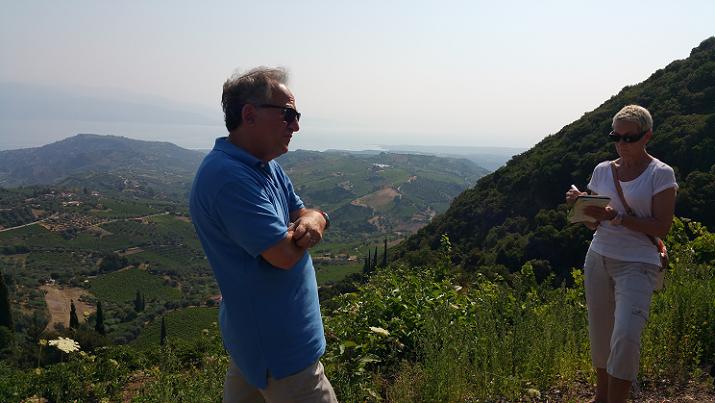
Antanassis Parparoussis and Moschato Vines, Domaine Parparoussis

Athanassios Parparoussis and Moschato Vines, Domaine Parparoussis

Founded in 1974 by oenologist Athanassios Parparoussis who works as winemaker while daughters   Erifili and Dimitra support on the business and marketing side. The winery is located in Patras and the property includes 10 hectares at Movri Achaias. Grapes are farmed organically and Parparoussis is one of only two vintners ion the region making wines from the rare and indigenous Sideritis. Parparoussis farms organically in principal but is not certified, nor is Athanassios concerned with the designation. It’s a matter of being devoutly pragmatic. “The soil is alive, so why kill it.”

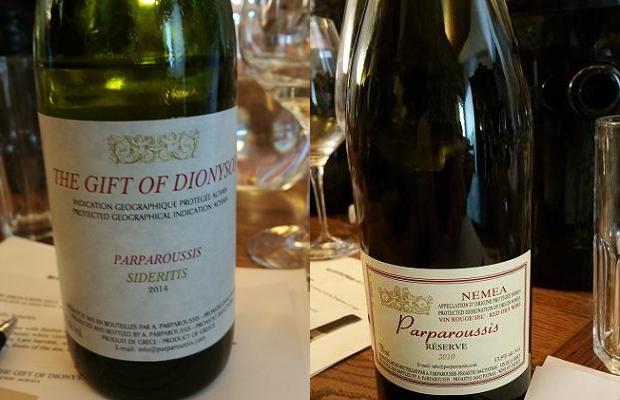
Parparoussis Sideritis Dons De Dionysos 2014, Peloponnese, Greece (SAQ 11900995, $21.00, WineAlign)

The 2014 “gift of Dionysus” is herbal, arid, directly unassuming and fixed with a very savoury, nearly resinous pastel palate. The wind blows rosemary and lavender and truthfully it’s like a naturally cured red feeling in a white package. All lemon citrus at the tail. Drink 2015-2016.  Tasted July 2015

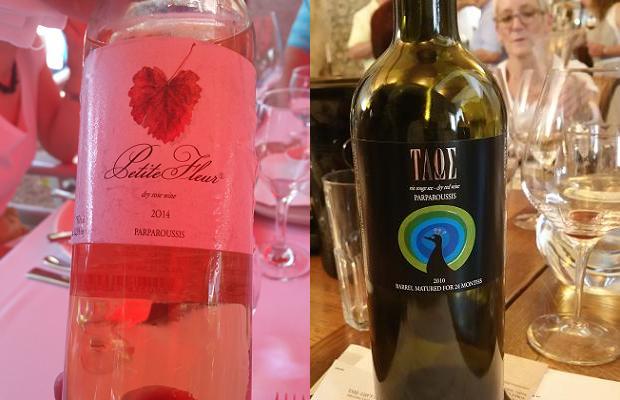
Parparoussis Rosé “Petite Fleur” 2014, PGI Achaia, Peloponnese, Greece

Just under 300 cases are made of this pale, lithe and prodigiously lithe blush wine, like the Dionysus, made from 100 per cent Sideritis. Skin maceration was performed overnight, “a one night stand,” while indigenous yeast was employed for a natural, dry vinification. The light and rust-directed antiquity of caste excess has caused an exaggerated herbal, namely oregano aroma. The overall feel is suppositious and may just be one of the great Rosé stories ever told. Drink 2015-2016.  Tasted July 2015

Parparoussis Sideritis Gift of Dionysus 2014 and Agiorgitiko Reserve 2010

Parparoussis Sideritis Gift of Dionysus 2014 and Agiorgitiko Reserve 2010

Parparoussis Les Dons de Dionysus 2010, PGI Achaia, Greece

Barrel Fermented blend of Assyrtiko (75 per cent) and Althorn (25). The first bottle is “not exactly as it should be,” oxidized and unpropitious, while the second pour much less so. In fact it tethers and teeters beautifully near that edge, on that razor the small creature walks, in a Dylan “what’s a sweetheart like you” way. So much more gumptive, anti-preemptive of depth, perception and possibility. Striking in its layering, stinging pierce of Assyrtiko with a suction of Althiri authority. Climbs upon itself and lingers in the air. “It’s done with a flick of the wrist.” Drink 2015-2020.  Tasted July 2015

Parparoussis Reserve Epilegmenos Oenos 2010, PDO Nemea, Greece

Further afield south in the Peloponnese comes this 100 per cent Agiorgitiko. The first bottle has a lactic-cheesy flaw, as if acetate of a mercaptan. One man’s flaw is another man’s history so the question does beg, was this meant to be? A winemaker’s intention? Apparently not. The second bottle, while still blessed of of a definite funk but one that is cleaner, unturned, a washed rind. So very dry. Drink 2015-2018.  Tasted July 2015

Parparoussis Rose Petite Fleur 2014 and Taos 2010

Parparoussis Rose Petite Fleur 2014 and Taos 2010

Parparoussis Taos 2010, PGI Achaia, Greece

A barrel fermented, dry vinified, 100 per cent Mavrodaphne. Naturally pitchy, high in acidity and purposed in tannin. A rare zero dilution at the hands of Black Corinthian Raisin and therefore not so high in alcohol, despite the richness of hue. Actually has a modern next tier level of complexity, complexion and aromatic intensity. Purple flowers and plum swirl in its circuitous, cycloid multiplicity. The savoury, resinous black bay laurel and chalky, cooked lentil, the grill and its smouldering charcoal are all in. Further resinous of bay oil on the back bitters and a very Tentura finish. Wild, sauvage, beautiful and built for the ling haul. Drink 2018-2025.  Tasted July 2015

Paparoussis Mavrodaphne of Patras Reserve 2003, PDO Patras, Greece

Vin Doux Nature poured from a 500 mL bottle, at 19 per cent, this is intensely nutty, of crème caramel and Cassis together as one. A marriage of godly sanctified vin santo cordial, with quite the balance from a brilliant vintage. There is heat that never burns, and a piquancy that offers no needed warning, Mavrodaphne of an aged, expertly developed expression. Such bitters at the finish end with wow. Drink 2015-2023.  Tasted July 2015

Paparoussis Muscat of Rio 2010, PDO Rio Patra

The sugar here is a strapping 160 g/L and the cost 15 euros for a 500 mL bottle. A vin de paille with so much more delicacy, structure and elegance and at only 13.5 per cent, a remarkable wine. Spice and relish is so smothered, coddled and pampered. The length is incredible. This is remarkable dessert wine with all tempos in balanace. Drink 2015-2030.  Tasted July 2015

Oenoforos (Rouvalis)

Selinous, 25100 – Aiyion, Greece, 30 2691029415, info@rouvaliswinery.gr.

Aneglos Rouvalis and WineAlign's DJ Kearney

Aneglos Rouvalis and WineAlign’s DJ Kearney

Eonologist is Angelos Rouvalis, a winemaker with an encyclopedic knowledge of every hill and slope in the mountains above Patras and where each variety grows best. Established in 1990 by Rouvalis, a Bordeaux-trained winemaker, recognized internationally as a pioneer in the renaissance that has taken place in the Greek wine industry in recent years. In 1994 Yannis Karabatsos, an agricultural engineer and expert in Greek viticulture joined the winery. “The Oenoforos winery consists of five levels on the slopes of Aigialeia in the village of Selinous. It combines monastic simplicity with state-of-the-art technology.”

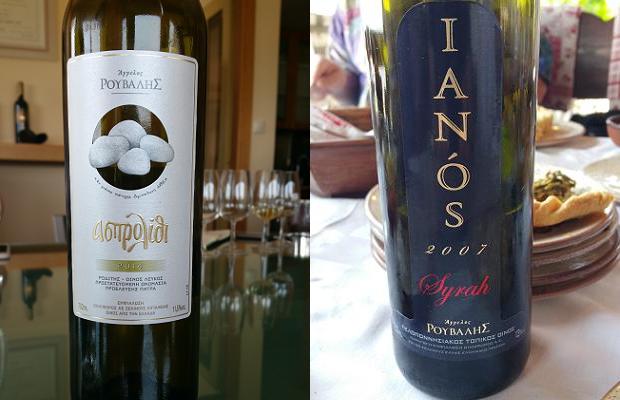
Oeneforos Roditis ‘Asprolithi’ 2014, PDO Patras, Greece (SAQ 978197, $16.50, WineAlign)

The “white stone” could be considered the Pinot Grigio of Greece though the pink-skinned variety grown here between 800-1000m is such a bleed of high altitude calcaire. An amalgamated, aromatic accumulation is all about citrus without the airs of pierce and secondary sandarac meets kedros that reminds of clementine. At 11.5 per cent alcohol and low pH it might confuse for Trocken Riesling if not for its classic herbiage and austerity. Drink 2015-2018.  Tasted July 2015

Oenoforos Chardonnay Ianos 2009, Peloponnese, Greece

So buttered and creamy, in condition of its two years in oak. Age has delivered corn to popcorn. It’s both unambiguous and atypically Peloponnese, if certainly symptomatic of Chardonnay in a diaspora that veers from its regional path. Like the oak of all clothed Chardonnays, expect the excepted and drink up. Drink 2015-2016. Tasted July 2015

Oenoforos Cabernet Sauvignon Ianos 2004, Peloponnese, Greece (SAQ 11607342, $22.95, WineAlign)

A current release, all in Cabernet Sauvignon 10 plus years down its road after two years in French oak. A bold and state-of-the art for its time cool-climate take, with a clear and ad hoc Sonoma-like intention, with attitude out of altitude despite ’04’s nothing but average growing season. Herbaceous and currant direct Cabernet with plenty of fruit that has remained true and in the bottle. Sweet scents, floral and red citrus and expressly, naturally Greek. Red fruit from red soil. Has a natural, slightly oxidative cure that has emerged out of that oak shell. Strikes as a wine that needed this extended held-back time to get to this place. The palate’s fruit is dried and saline now, with tannin insistent in persistence. Rich but not nearly so, a gently rolling and evolving Cabernet with life in it yet, though the raisin character suggests now is better than tomorrow. Not so much mythologically invented, as it is internationally purposed, so it’s more a matter of higher and lower. The wine’s universe is a flat disc with hills, touched at its rims by the vast dome of the heavens. Drink 2015-2016.  Tasted July 2015

Oeneforos Rosé Mikros Vorias 2014, Peloponnese, Greece

Syrah with Viognier and Roditis. A layer upon layer blush combing of dry extract over full extract. Another example of the region’s ability to achieve Rosé excellence and the practice should both be encouraged and expanded upon. Drink 2015-2016.  Tasted July 2015

Oeneforos Chardonnay-Sauvignon Blanc Mikros Vorias 2014, Peloponnese, Greece

The white blend representation for the house line of fresh and direct wines translates to “small northern wind,” and here the SB sticks out like an Achaian thumb, dominating the nose with grass and capsicum. It’s toasty and almost Pouilly-Fumé smokey mixed with a pinch of Fuissé. The identity quandary brings Galician Albariño to mind, seen in the spirited almost effervescent tinniness. Very lime palate and fast forwards to stage right, running all the way. Drink 2015-2016.  Tasted July 2015

Oenoforos Merlot-Cabernet Sauvignon Mikros Vorias 2014, Peloponnese, Greece

Rusty and cured, just not quite ripe red plum, from a 60-40 combo, with a healthy level of veneer. Has gumption, pierce and a citrus red bleed. Drink 2015-2018.  Tasted July 2015

Oenoforos Asprolithi 'White Stones' 2014 and Syrah Ianos 2007

Oenoforos Asprolithi ‘White Stones’ 2014 and Syrah Ianos 2007

Oenoforos Syrah Ianos 2007, Peloponnese, Greece

Ferric, volatile, bretty but believe me when I say, all in a good way. The lingering meaty chew and porcine Mulligatwany is the expatriate Syrah equivalent of high gastronomy. A wild and wooly match to the Beef Stifado at To Katafygio. Drink 2015-2016.  Tasted July 2015

Antonopoulos Vineyards

25008 Vassiliko Chalandritsas, Patra, 30 2694061447, info@antonopoulosvineyards.com

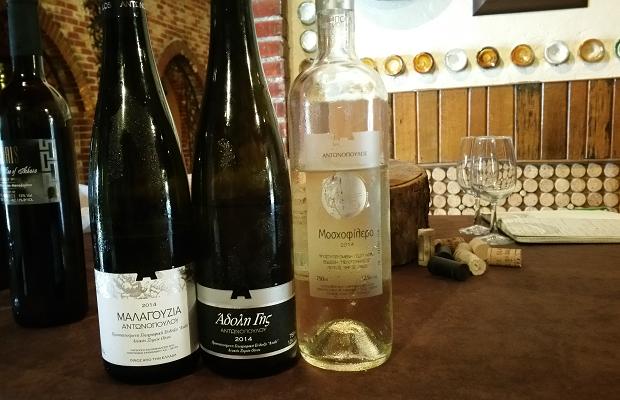
The winery was founded by the late visionary winemaker, Constantinos Antonopoulos near the city of Patras in the northwestern of Peloponnese. Constantinos saw the vast, untapped potential of this diverse landscape, especially the mountainous region of Achaia and the unique winemaking opportunities it presented. A new up to-date winery has been built recently at Vasiliko, Achaia, where the majority of the winery’s vineyards are. Indigenous Greek varieties are the focus. All three Antonopoulos wines tasted at the winery Achaia Clauss were clearly achieved through very serious work. Though clean beyond the pale, they all exhibit slightly to more than leesy and all finish with so much salinity and limestone inflection. The only thing missing is the crustaceous accent.

Antonopoulos Vineyards

Antonopoulos Vineyards

Antonopoulos Moschofilero 2014, PGI Arkadia, Greece

A rich, striking, citrus Moschofilero with a beautifully severe tannic tang and many layers, scraped from a stone’s bleed and a gaze into the rock’s mirror. A wine akin to a creation of a true alphabet, made complex like the dactylic hexameter in poetry or a rhythmic scheme. Drink 2015-2018.  Tasted July 2015

Antonopoulos Adholi This White 2014, PGI Achaia, Greece

Essential and pedigreed blend of Lohorthi 65 per cent), Chardonnay (20) and Roditis (15) that expresses increased aromatics much like Viognier. Nearly profoundly tropical but so very dry, like Assyrtiko in its cracking open but with the feel of wild yeast and the feign of barrel. Chalk it up to 800-900m clay-limestone speak and no more than that, creasing to a crisp effervescence without bubble, yet it does tingle of the tongue. Like it’s working all the while, then on to citrus on the end, in lemon and lime torque as if by Riesling. The Moschofilero might be Mycenaean Linear B and this the other, later Greek alphabet. Drink 2015-2018.  Tasted July 2015

Antonopoulos Malagousia 2014, PGI Achaia, Greece

From sand and clay vineyards in the region of Aghios-Athanasios at a height of 600-900m. Picked late near the end of September to early october and cocrete and thought the ferment is a stainless one, this Malgousia exhibits a natural yeasty funk commingling with moving texture and savour that incorporates grasses. The sting of nettle wins over the softness and spumes a hay fever of grass. A warming, adult of a wine, with some power to age. Drink 2016-2021.  Tasted July 2015

Acheon Winery

Korinthou 121, Aigio, Greece, 30 26910 28062, info@acheonwinery.gr.

Sosanna Katsikosta is Oenologist and General Manager while Katerina heads up business and marketing operations. The sisters are carrying on a winemaking tradition passed on to them from their late father. Konstantinos Katsikostas carried the torch from his father Luke who founded the winery in 1946 in the area of Palaiokamares of Aegio. Annual production of 2,000 cases. Katsikosta is desperately, passionately practicing, experimenting, trying to stir up vinous ghosts and find their way back to ancestry, to ways of elders, to bring to light what used to be and to establish an identity for the world to see.

Acheon Roditis 2014, PDO Patras, Greece

A quintessential “Fox” Roditis, from low yields (40 hL/L), 900 m above sea level, in organic balance at 12 per cent alcohol. A distinct stone tang, push, pierce and a slight tingle or fizz on the tip of the tongue. Highly concentrated out of an elevated dry extract, with mineral and lemon. One of the more expressive push-pull of fruit and mineral. For everyday consumption with a bit of honey in its two to three year future. Drink 2015-2018.  Tasted July 2015

Acheon Sideritis 2014, PGI Achaia, Greece

The nearly extant one, a rare variety, being revived, planted at low altitudes, with yields 70-75 hL/L. Aromatic and misunderstood, with a Savagnin character, a funky, musky skin, like leather but not as deep, yet something oddly tropical, like jackfruit, or gummy bear, dusty ginger, and resin, like thyme. Another variety being worked with to see what it can be and to link back to what once was. Really good acidity. Drink 2015-2016.  Tasted July 2015

Acheon Sideritis 2014 and Rose Fairytale 2014

Acheon Sideritis 2014 and Rose Fairytale 2014

Acheon Moschato 2014, PGI Achaia, Greece

A banana and metal White Muscat, with plenty of herbal qualities, terrific saline and stony acidity dominating the palate. A medicinal grapefruit chew, not of pith, but of skin. Arid as a grove in wind and finishing with good length. Very interesting. Drink 2015-2017.  Tasted July 2015

Acheon Laura Nera 2012, PGI Eigialia Slopes

Mavrodaphe and nothing but, vinified dry, subjected to no aging. The smell of bay laurel (thus the varietal name) and fashioned for freshness. Still in command of a musty emmision this one, a strange cure, like some cool-climate, winter hardy hybrids, like Maréchal Foch and Frontenac. Perhaps a touch warmer, like opening the doors to Pinotage without the toast and the oak to fill and sweeten the green, reductive gaps. Has the roadhouse blues so “Keep your eyes on the road, your hands upon the wheel.” Drink 2015-2017.  Tasted July 2015

Acheon Rosé Fairytale, Peloponnese, Greece

A semi-sweet Rosé composed from 90 per cent Muscat co-fermented with 10 per cent Mavrodaphne. Dessert of blush hue and sappy, leesy, medicinal bitters. Very orange rind and chlorite, somewhat port-esque but so much more a tisane of pekoe and cough elixir. Totally off the charts different. Really like nothing tasted before. Drink 2015-2016.  Tasted July 2015

Wines of Parparoussis, Loukatos and Kontrotsos, Parparoussis Winery, Patras

Wines of Parparoussis, Loukatos and Kontrotsos, Parparoussis Winery, Patras

Kotrotsos

Vassiliko Achaias TK. 25008, 30 26940 61 900, vinko@otenet.gr. Winemaker is Giannis Kotrotsos.

Kotrotsos Erasmios Moschofilero 2014, Peloponnese, Greece

An unctuous, ambrosial Moschofilero, highly aromatic, of citrus and orange grove. A 12.5 appealing alcohol per cent and surround sound of acidity, good length and a bitter ending that follows a twinge of steely crick. Drink 2015-2018.  Tasted July 2015

Kotrotsos Muscat NV, PDO Muscat of Rio Patras

Also based on the 2013 vintage and c charging in at 15 per cent alcohol, here there is more rust, funk and metal, certainly not as fruit forward as expected. Sweetness is elongated, stretched and elastic, then snaps back to linear and upright. Drink 2016-2022.  Tasted July 2015

Kotrotsos Mavrodaphne NV, PDO Mavrodaphne of Patras, Greece The standard 15 per cent alcohol and in this plugged in, short fuse sweet wine is highly intense and lit caper green, dried fruit and a serious pasticcio of botanicals, distilled into a major excitative and concentrated sweetness.  The second bottle tasted has so much more life and character. Much more sweet floral attractiveness and the sweetness is less pronounced as a result. Goes from spice and piquancy to sweetness with the right transitory methodology, culminating in a great LBV Port finish. Nutty and spicy. Tremendous fruit forward expression.  Drink 2016-2024.  Tasted July 2015

Kotrotsos Chardonnay Oinos Aekos 2014, PGI Achaia, Greece

Combinbes barrel and resin for a full on savoury effect and so much noticeable, piercing grape tannin. Fierce, uncompromising, non-integrating invaluable invalid of tannin. So very cool climate savoury Chardonnay. Striking actually and a very acquired taste. Drink 2015-2016.  Tasted July 2015

Kotrotsos Agiorgitiko Erasmios 2012, Nemea, Greece An intoxicating perfume, of violets and charcuterie, floral and cure, vegetative and saline. Lactic, talcy, opaque and dusty, like Cabernet Franc from the coolest locale. Finishes saline again, chewy even. Drink 2015-2018.  Tasted July 2015

Karelas Winery

Georgios J. Karellas A.V.E.E, 41-43, Skagiopouliou Str., Patras, 262 22, 30 2610 321 000, karelas7@hotmail.com

Karelas Winery was founded in 1936 by Georgios Karelas. Using the native ‘Mavrodaphne’ grape, the company is renowned for it’s sweet, dessert style Mavrodaphne wine.

Karelas Pelagos 2013, PGI Achaia, Greece

Merlot and Mavrodaphne share the cure and the veneer of a strange bedfellow blend, the old and the new, the rust and the dust, the red and the black, the visitor and the been there done that. Tough acidity and tannin over red citrus fruit. Not shy. Drink 2016-2020.  Tasted July 2015

Karelas Achais 2013, PGI Achaia, Greece

Cabernet Sauvignon and Mavrodaphne smothered in more  obvious oak, though less tension and demand. A softer wine in using Cabernet over Merlot, ripened easier, better, with a second gear and then  into acidity mode. Again the cool climate veneer with a warm, savoury, minty middle. Drink 2015-2019.  Tasted July 2015

Mega Spileo Mavrodaphne and Karelas Mavrodaphe Reserve 2009

Mega Spileo Mavrodaphne and Karelas Mavrodaphe Reserve 2009

Karelas Mavrodaphne Reserve 2009, PDO Mavrodaphne of Patras, Greece

The only Mavrodaphne aged in highly seasoned toasted new French barrels. The standard weight bearing 15 per cent alcohol and a similar feeling as with previous kicks at the sweet Mavrodaphne can, but more red fruit and brighter raisins in the sun. The spice and liqueur here seem less spirited and combine for a more mature, seasoned, reasoned, direct and ultimately cleaner expression. Captain Jack (or George) will get you Achaia tonight “and take you to your special island.” Drink 2015-2022.  Tasted July 2015

Loukatos

Loukatos Bros, Β 3 & ΟΤ 24, Industrial Zone Patra 25018 Achaia / Patra, Greece, 30 2610 647588,  info@loukatos.com.gr

Perhaps most famous for their local production of spirits, namely Tentura and Mastic, Loukatos does a bang up job with dessert wines, especially in their handling of Muscat from Patras.

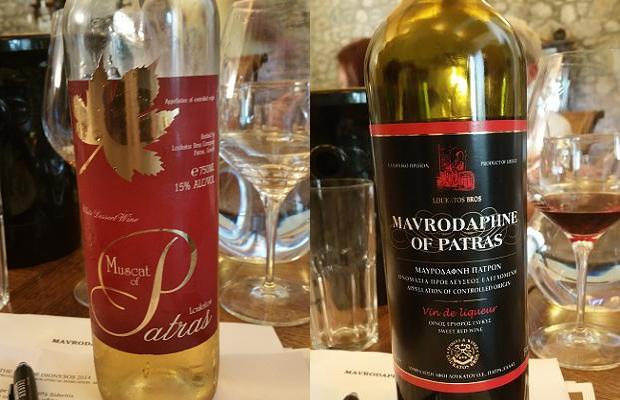
Loukatos Mavrodaphne NV, PDO Mavrodaphne of Patras, Greece

Vin de liqueur clocking in at 15 per cent alcohol. The dried roses and red flowers in liqueur link it to the likes of a Late Bottle Vintage Port. Wakes with a start, in sting and presence. Really lingers, tasting of blanched nuts and Halls mentholyptus. This batch was blended with 47 percent corinithian grape. The finish is so Manischevitz. Drink 2015-2023.  Tasted July 2015

Loukatos Muscat of Patras and Mavrodaphne of Patras

Loukatos Muscat of Patras and Mavrodaphne of Patras

Loukatos Muscat NV, PDO Muscat of Patras (WineAlign)

A 15 per cent abv Vin de Liqueur largely based on the 2013 vintage. Very clementine and apricot nosed, impeccably balanced from viscous to intensity in grape, with nothing musty or musky about it, though there is a musk melon sense, a botrytis that is very clean. Another excellent, natural sweet Patras example of what Muscat can do, again at super low cost, with high flavour and here, more fruit forward than the Kotrotos. Drink 2015-2021.  Tasted July 2015

Hahalis (Chahalis) Mavrodaphne 2011, PDO Mavrodaphne of Patras, Greece

Spent one year in barrel, the Tentura Castro “The Castle” is raisined and resinous with so much heavy artillery and coats of armour. The macro intent so black and porous, oxidative but alive, heavy and warm in alcohol but spirited and shooting cupid’s arrows. Sweet and Amarone trophy in a sense, with licorice and spice unlike anything else. Idiosyncratic to the nth degree. Drink 2015-2021.  Tasted July 2015

Achaia Clauss Mavrodaphne NV, PDO Mavrodaphne of Patras, Greece

From a lot penned Bin 601 at the standard 15 per cent alcohol and acting like it came from a 100 year-old barrel, of sitting bull wisdom and Bavarian history. Much like port, like brandy spirits and liquorice melting into cinnamon and clove. Not so idiosyncratic but resinous, sappy and piquant. Once you come to know these wines they speak this very direct language. Drink 2015-2025.  Tasted July 2015

Patraiki Mavrodpahe NV, PDO Mavrodaphne of Patras, Greece

A direct, rich, full-bodied leathery red of fruit the same that soaks in simple, sweet liqueur. The most accessible, commercial macro-intention of the black laurel lot. Drink 2015-2020.  Tasted July 2015

Crisis? No one’s gonna bring Greece down, nor me neither, ’till I again reach Achaia ground.

Good to go!

http://www.winealign.com/profile/2058-mjg

Whites after Labour Day

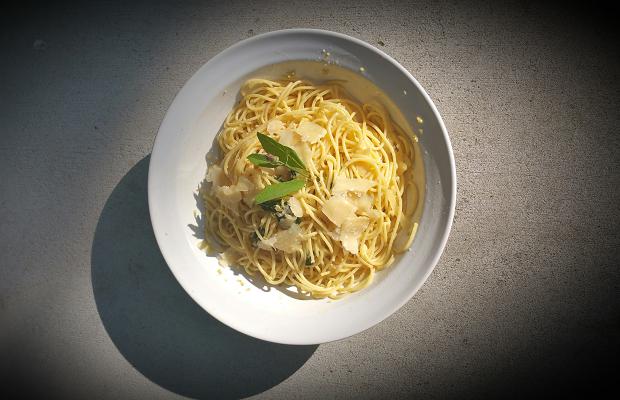
September salad

September salad

What is the only way to tell the difference between a wine geek and a wine snob? A geek will not drink just anything but will taste everything. In the name of science, of course.

Silly high society rules, like not drinking whites after Labour Day are the wine equivalent of late 19th century fashion precepts and as ridiculous as they may seem, you just can’t make this shit up. Just ask Google.

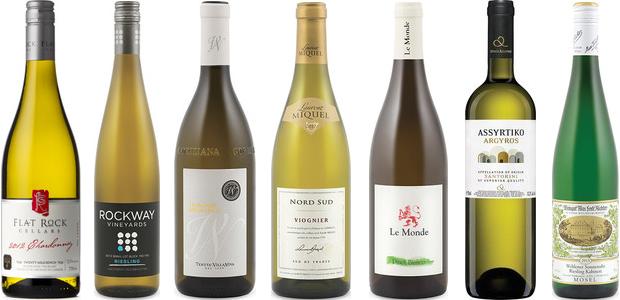
The first VINTAGES release of the new year (on the Hebrew calendar) or depending on your angle, the last of the summer (preceding Labour Day), is rich with excellent whites. There are 15 choices from September 5th that I highly recommend. Get them while they and it, are hot.

From left to right: Old Vines In Young Hands White 201, Dr. L Dry Riesling 2014, Domaine La Haute Févrie Sur Lie Muscadet Sèvre & Maine 2014, Thelema Sutherland Sauvignon Blanc 2013, Cave Spring Estate Bottled Chardonnay Musqué 2013, Flat Rock Riesling 2014, Boutari Santorini Assyrtiko 2014 and Bailly Lapierre Saint Bris Sauvignon Blanc 2014

From left to right: Old Vines In Young Hands White 201, Dr. L Dry Riesling 2014, Domaine La Haute Févrie Sur Lie Muscadet Sèvre & Maine 2014, Thelema Sutherland Sauvignon Blanc 2013, Cave Spring Estate Bottled Chardonnay Musqué 2013, Flat Rock Riesling 2014, Boutari Santorini Assyrtiko 2014 and Bailly Lapierre Saint Bris Sauvignon Blanc 2014

Old Vines In Young Hands White 2013, Doc Douro, Portugal (424374, $12.95, WineAlign)

Young winemakers, a country’s support, a new vernacular, simplicity and imaging in ode to old ways. The packaging and the intent is spot on. The wine follows suit. Arid, saline, savoury and elemental, like QBA Riesling or Peloponnese Kidonitsa. I’m digging and buying the style, both in clean winemaking and in appeal to a whole new world. Drink 2015-2017.  Tasted August 2015  @MichaelAndBrand  @winesportugalCA

Dr. L Dry Riesling 2014, Qualitätswein, Mosel, Germany (409680, $13.95, WineAlign)

Another sock it to me Dr. L, straight up, spot on, exactly what it purports to be. General index of Riesling expression. Read it, use it as a reference, calibrate your palate to where you want to go. Drink 2015-2016. Tasted August 2015  @drloosenwines  @Select_Wines  

Domaine La Haute Févrie Sur Lie Muscadet Sèvre & Maine 2014, Ac Loire, France (390625, $13.95, WineAlign)

Perfectly, typically, ostensibly and decidedly Melon for what it’s worth. The sea, its salt, a briny shell and crisp acidity for what ails. Simple, slightly spritzy, a touch balmy and ultimately refined, when cooled, with a mess of sea creatures. Odelay, “of elevator bones and your whip-flash tones.” Where it’s at. At your beck and call Muscadet. Drink 2015-2018.  Tasted August 2015  @LoireValleyWine  @oenophilia1

Thelema Sutherland Sauvignon Blanc 2013, Wo Elgin, South Africa (203877, $14.95, WineAlign)

Striking Sauvignon Blanc, minted by a flinty beginning, with perhaps the highest discernible level of sweet gooseberry on the nose that has ever been measured by the olfactometer. Hard to imagine such an inexpensive Elgin white to be so dramatically forthright in smile and open arms. Grapefruit of the pinkest, ripest most juicy crunch burst into flame flavours well-defined, not overbearing, properly bitter and in reprise, like a bite into juicy citrus with just perfectly ripe acidity. A new benchmark for value Sauvignon Blanc in South Africa. Raises the bar folks. Look to Elgin. Ask the producers to plant more. Impossibly long SB finish. Drink 2015-2018.  Tasted August 2015  @ThelemaWines  @WOSACanada  @WOSA_ZA  @EpicW_S

Cave Spring Estate Bottled Chardonnay Musqué 2013, VQA Beamsville Bench, Niagara Peninsula, Ontario (246579, $15.95, WineAlign)

As good as 2013 is a vintage for Niagara Chardonnay, relatively speaking it may be an even bigger quality boon for the aromatic Musqué. The level of depth, breadth and weight in this Cave Spring is new and improved. The florals are heightened, as if bottled in eau de. The parfum is an intoxicant and the flavours compressed, like roll up, like a Musqué napolean, of peach, plum and pear. Who knew? A fall necessity. Better than before. Drink 2015-2017.  @CaveSpring  @TheVine_RobGroh

From my earlier note of May 2o15:

Produced from the 77 clone, the vintage has heightened the high herbal and feigned sweetness aromatic pastis. The palate is extraordinarily viscous, with Yellow Muscat and Gewürztraminer attributes, not so out of the ordinary considering Cave Spring’s older world execution. Drives from lemon to mandarin, through almond pit and into peach. Always solid Musqué.
Last tasted May 2015

Flat Rock Riesling 2014, VQA Twenty Mile Bench, Niagara Peninsula, Ontario (43281, $16.95, WineAlign)

Talk about bottled up compression. Twist the screwcap and thwop! The cap nearly popped like a Champagne cork. This baby has energy and drive. The vintage is compressed and pile-driven as nosed by the density opposed by reticulated 9.5 per cent alcohol. This has Mosel tattooed on its being, from neck to bottom. A dead ringer for fine Kabinett, the tropical fruit in apricot and dragon reaching back to join Ontario, in apple and pear. A good flinty stone and raging acidity combine forces to exaggerate a Riesling reticulum in what is not the missive’s greatest ever vintage. Will live five to seven easy and just go for soda. Go ahead and quaff the hell out of this one, from 2015-2020, from bottles one through twelve. Tasted March 2015  @Winemakersboots  @UnfilteredEd  @brightlighter1

Boutari Santorini Assyrtiko 2014, Pdo Santorini, Greece (47985, $18.95, WineAlign)

A weighty Assyrtiko of breadth and gumption. The varietal salinity found virtually nowhere else is omnipresent and yet different of fruit in the hands of Boutari. Opulence beyond the Santorini norm and yet held back as if to say, “not yet, not yet.” There is a cool, wet patina as if by ruins slowly grown over at the bottom of the sea. A white swath of scraped rock paints the middle palate and is not removable. Can’t go wrong with a chilled bottle and a gaggle of calamari on the grill. Drink 2015-2017.  Tasted August 2015  @boutari  @KolonakiGroup  @Santoriniwines

Bailly Lapierre Saint Bris Sauvignon Blanc 2014, Burgundy, France (424655, $19.95, WineAlign)

Flint meets reduction in a Saint Bris plugged in both ways, AC/DC. Sauvignon Blanc of dirty deeds done dirt cheap. Quite savoury, spicy and cool up the nose like mint and eucalyptus ointment. Serious and strong, like Aligoté but with more verve and natural musculature. No shrinker here and very long, juicy and crazy for acidity. Such expression is rare for the hallowed if needfully paid further attention appellation. Show up anytime at my place with a bottle of Saint Bris, “We’ll have ourselves a ball.” Drink 2015-2018. Tasted August 2015  @BourgogneWines  @VinexxCanada

From left to right: Henry Of Pelham Estate Chardonnay 2013, Studert Prüm Graacher Himmelreich Spätlese Riesling 2009, Redstone Limestone Vineyard Sauvignon Blanc 2013, Pierre Sparr Mambourg Pinot Gris 2011, Hidden Bench Chardonnay 2013, Domaine Laroche Les Vaudevey Chablis 1er Cru 2012 and Dom Pérignon Brut Vintage Champagne 2005

From left to right: Henry Of Pelham Estate Chardonnay 2013, Studert Prüm Graacher Himmelreich Spätlese Riesling 2009, Redstone Limestone Vineyard Sauvignon Blanc 2013, Pierre Sparr Mambourg Pinot Gris 2011, Hidden Bench Chardonnay 2013, Domaine Laroche Les Vaudevey Chablis 1er Cru 2012 and Dom Pérignon Brut Vintage Champagne 2005

Henry Of Pelham Estate Chardonnay 2013, VQA Short Hills Bench, Ontario (268342, $19.95, WineAlign)

Sunlight is the key to this ripe Chardonnay, snatched from vines that grow on the most easterly of the Niagara Escarpment’s sub-appellation. Here Henry of Pelham calmly puts its hegemony over Short Hills Bench Chardonnay on display. The fruit layering is very impressive, compressed even, with just a spiced spirit injection from the barrel. The Estate Chardonnay is in a mid-range class of its own, this gatherer of heat days, hoarder in spring water retention, cleanser in sand and gravel drainage. The vintage just seems perfect for this niche bottling, balanced, primed to finespun texture, stretched for length and good to age at least five years.  Last tasted March 2015  @HenryofPelham  @SpeckBros

Studert Prüm Graacher Himmelreich Spätlese Riesling 2009, Prädikatswein, Mosel, Germany (409680, $21.95, WineAlign)

Blue slate in deep soil and steep, southwest-facing slopes elucidate the Graacher Himmelreich enterprise, quite possibly the most personal vineyard in the Mosel. Autonomy, astronomy, autocratic assuage and elemental tyranny are not for the Riesling faint of benevolence. The Studert Prüm Spätlese from the GH vineyard in 2009 is so very stubborn, stark and austere like matches struck on rocks, rocketing flares as if in a sci-fi action scene. It is possessive of a full, sweet and medicinal palate and enough energy if not the most balancing of acidities ever paired with the flint and the petrol. Good bitters and exceptional length will lead to many years of marbling evolution. Drink 2016-2024.  Tasted August 2015  @StudertPruem  

Redstone Limestone Vineyard Sauvignon Blanc 2013, VQA Twenty Mile Bench, Ontario (424648, $22.95, WineAlign)

If a Niagara Sauvignon Blanc could be endeared with the term ‘calcaire,’ Rene Van Ede’s Limestone Vineyard would lead the shortlist, not only because of the eponymous vineyard but because it oozes of the rock’s chalky chafe. Plenty of orchard fruit belies the lime, in an unoaked Chardonnay way and the wine makes full use of limestone’s hematic shed. This is one of the most stylish Sauvignon Blancs made in Canada, even if the average consumer were not able to recognize it as such. A winemaker from Sancerre would know it immediately and intuitively. Here a crushed reef of limestone memory permeates the wine from beginning to end. One of the more outstanding Sauvignon Blancs made in Ontario to date.  Tasted January 2015   @RedstoneWines

Pierre Sparr Mambourg Pinot Gris 2011, Ac Alsace Grand Cru, France (686451, $24.95, WineAlign)

Arid and direct, quite an ascending Pinot Gris, with almost unfindable residual and yet not the most distinct Grand Cru you are ever going to ponder. Has more weight and sweetness on the palate which tends to lychee, pineapple, apricot and lemon pith. Proper old school Mambourg. Drink 2015-2020.  Tasted August 2015  @AlsaceWines  @VinsAlsace  @ProfileWineGrp

Hidden Bench Chardonnay 2013, VQA Beamsville Bench, Niagara Peninsula, Ontario (68817, $28.95, WineAlign)

A best of both worlds Chardonnay; indicative of the giving vintage (in quality, not quantity, prestige, not prosper) and an Estate, house style with some cosmetics to enhance the consequence. Really typifies and explains what a Marlize Beyers Chardonnay is. Elegant, stylish, with perfect skin, tones, understated beauty and the soft vernacular of few yet precise words. The texture and feel of this Chardonnay is downy, lacey and so very understated. You simply can’t take your eyes off its charms and your palate away from its soft feel. A wine of character and poise. Drink 2015-2020.  Tasted August 2015  @HiddenBench  @BenchVigneron  @LeSommelierWine

Domaine Laroche Les Vaudevey Chablis 1er Cru 2012, Ac Burgundy, France (416057, $38.95, WineAlign)

Prudently flinty Vau de Vey, full of rocks, stones, cragges, broken pieces and slices of pure limestone. Such struck sensation could go too far but here it rises and lingers, tickles, fancies and plays, never bothering or acting with distraction. Quite remarkable and gentle of handling. Softer on the palate but still the limestone beats, with bitters. Just not enough circulating acidity in the end. Drink 2015-2020. Tasted August 2015  @DomaineLaroche  @BIVBChablis  @Select_Wines

Dom Pérignon Brut Vintage Champagne 2005, With Gift Box, Ac Champagne, France (280461, $219.95, WineAlign)

Surprisingly waxing en route to the oxidative side yet suspended in crystal animation. Apperceive the level of concentration, finesse and poise, a trinity of DPVBC not to be tested. These are serious, brooding, executively organized and effected bubbles. They are the real deal and they are not for everyman, either by price or for pleasure. They do not effect change or progress but they do speak of what has been, has worked and will not soon see any arresting waver. Another what it is moment in iconic Champagne. Drink 2015-2025.  Tasted August 2015  @MoetUSA  @ChartonHobbs  @Champagne  @ChampagneBureau

Good to go!

http://www.winealign.com/profile/2058-mjg

Till I reach Achaia ground

View of the mountains of Achaia from Tetramythos Winery and Homestay, Ano Diakopto of Aegialia, on the slopes of Mount Chelmos, Peloponnese

View of the mountains of Achaia from Tetramythos Winery and Homestay, Ano Diakopto of Aegialia, on the slopes of Mount Chelmos, Peloponnese

as seen on WineAlign

Man I wish I was there right now. Have you recently pondered or are you considering a visit to Greece? Have the sensational media reports of the last month cast a shadow of doubt on your travel plans? Are you worried about economic crises, ATM line-ups, looting and civil unrest? Don’t be. Do not fall victim as prey to dictum on what you or those who are telling you really do not know. You should go. Greece is just fine thank you very much. She welcomes visitors with open arms. This is what she wants and what she needs.

Crisis, what crisis? 

I am no John Maynard Keynes, have never rooted with Milton Friedman and can’t confidently say that my economic stars align with Paul Krugman, but on my recent trip to Athens and Achaia I saw nary a sign of unparalleled and utter economic disaster, of panic, anarchy or civil disobedience. I had many a conversation about government, taxes and the Euro. I learned that no is the new yes, “but whatever…” and that Greek wine aligns with the functions of the European union.

Write your problems down in detail Take them to a higher place

I am inclined to say, with indubitable and unequivocal doubt that Greece is the safest, most affordable and stupidly beautiful place on the planet. There is adventure, breathtaking vistas and scarcely, if commensurately discovered antiquity at every turn. And there is wine. Exceptional wine. Singular wine. Mythological wine. I can tell you five things I learned about the 21st century state of things Greece.

  1. Athens is a busy, hot, labyrinthian metropolis that somehow feels like an ancient village. It may just be the most unassailable and secure Gotham I have ever encountered. It did not leave me tired, on the contrary, it fuelled invigoration.
  2. Encounters with beautiful, nurtured and erudite folks along the course of a given day affords an equipotentiality to reaffirm faith in humans. Doors are always open.
  3. Bad governance may lead to civil jeremiad and global media strategies built upon the inevitable crumbling foundations of sensationalism and hyperbole, but Greece’s main concern is just that. Bad governance. Business carries on as usual, albeit with a noticeable reduction in smoking and petrol usage, but restaurants, cafes, coffee shops and shopping are not on hold. Centuries have seen such woe and yet Greece persists, remains and progresses. “Believe only half of what you see and nothing that you hear.” America may have long ago entered its Last Great American Whale period but Greece? Not even close. “They say things are done for the majority” and in the case of Greece, that just may be true. In a time of crisis, there are many business opportunists. Hard times? Grow better grapes. Can’t sell them at home? Export more than before and make better money.
  4. The combination of mountains, ocean, beaches and the symbiotic proximity of the appositeness is nothing short of mind-altering, awe-inspiring and soul-asservating.
  5. Forget the idea that Greek wine offers up some of the best values, anywhere. Consider that sort of posturing a given and or inconsequential in consideration of the adage that good wine is good wine, period, regardless of price. The wine producing regions of Santorini (Aegean), Thessaloniki/Naoussa (Macedonia) and Nemea (Peloponnese) have made wide inroads on the global scene. Yet how many of you have ever heard of Achaia and Patras in the northern Peloponnese? It is on the verge of breaking out. Obscurity no longer. Uncertainty be gone.

At the pass

Greece has been mired in waiting, or depending on your level of positivity and how to spin, poised to break out. The Greek wine industry is securely fastened in a place somewhere between the relic glow of early period brilliance and the cusp of legacy defining, career opus penning compositions. It is a work in process and the best is yet to come. The wines of Achaia are entirely indicative of this intellection. Antiquity is an amazing tourist attraction and in Achaia, as in the entirety of Greece, you can’t blink without stumbling upon a metaphorical doric this or an allegorical ionic that. Cradles of civilization just have a certain den xéro̱ ti and Greece is the world super-power. The question begs. How does this apply to wine?

Like so many wine producing nations not called France, Germany or Italy, Greece is poised for modern greatness but it has one distinct advantage. It lays ownership to some absolute conditions that easily separate it from emerging and developing, New World regions, but also from European peers. The first is obvious and that of course is a centuries old tradition of making wine. The second may come as a surprise, especially as it relates to wine. Mythology covets a paradigmatic relationship with Greek culture, however intangible it can be quantified. A visit to Achaia offers tantamount proof of such a notion. This from New Wines of Greece: “The fascinating archaeological sites with the notable museums and the grape-growing and wine-making history directly tied to the myth of Hercules are just some of the attributes that will appeal to those who indulge in wine tourism in the Peloponnese.”

Then there is the confluence from the slopes of Egialia, said to form the centre of the triangle of Ancient DelfiOlympia and Epidavros. It was not long ago that I connected the divine and the allegorical with Greek wine. I quote myself. “Me, I’ll concentrate on the divine mythology of Greek wine, of its place in the fractal world, how it can beautify and simplify, through recursion in dynamic systems, the bleak chaos of wine landscapes. Like the Morai, Greek wines are thread with motherly nurturing. For mere mortals, they direct fate from the birth of their drinking days to death. They are a highly independent bunch, unobstructed and driven by necessity.” It would be obtuse to ignore the hyper-reality of all these extraordinary things, to discount the divined revelation through profound symbols of religious myth. To see the analogy and pertinency with the mathematics of wine; pH, sugar, acidity and alcohol. Not exactly Pythagorean, certainly not Orphic, but mysterious somehow.

The Achaia advantage: From PGI to PDO and endemic varietals

The Peloponnese is located in the southernmost section of continental (western) Greece, its western and northern borders lining the Ionian Sea and the Corinthian Gulf. Homer called it Ampeloessa, meaning “full of vines.” The Achaian advantage is more than just a matter of slope and soil. The Nazi attrocities committed at Kalavryta will always be remembered as the darkest of Peloponnese days but neither war nor Phylloxera has truly interrupted centuries of growth and tradition.

Achaia is one of Greece’s largest wine regions and its 31 wineries accounts for approximately 10 per cent of the national wine output. The mesoclimate of Achaia is determined by a combination of mountain and sea. Erymanthos, Panachaikos and Chelmos range for vines at up to 850m though in Egialia grapes grow as high as 1050m. There are slopes here with a northern aspect, a factor which is not lost on the winemaker in search of cool-climate viticulture. The mountain man of Eigalia Angelos Rouvalis points to the hills and talks of  “a rare terroir, where facing north can achieve a significant drop in temperatures, creating specific vine balances, which is difficult to achieve in other places.” It is also here that the waters of the gulfs (Patras and Corinth) cool and temper the climate. Stronger winds ward off the warmer streams blowing up from Africa, creating a much cooler viticultural area than Patras.

The northern Peloponnese vineyards are divided into four distinct viticultural locales. In the east, in the areas of Egialia (Aegialia) and Kalavryta, the PGI Egialia wines are produced. Egialia’s temperate climate and northerly orientation on (250 to 850m) slopes are protected by the cool summer sea breezes of the Gulf of Korinthos (Corinth). Pausanias was a Greek traveler and geographer of the 2nd century AD, who lived in the times of Hadrian, Antoninus Pius and Marcus Aurelius. He referred to the villages of Egialia as ideal for cultivating vines. Egialia soils vary from white calcareous to fertile sandy loam with good drainage.

It is in Egialia that the endemic white (blush) and highly aromatic variety Roditis ripens ever so gently. The varietal take in the lower (450 to 500m), yet similar climate for the vineyards of Patras makes for wines of fuller body. Lower Patras slopes are positioned for another indigenous grape, the red varietal Mavrodaphne. Traditionally purposed for desert wine, modern usage of the “black” Daphne is happening for dry table wine, as is the black of Kalavryta (Mavro Kalavryta), from grapes grown on slopes close to the tourist town of Kalavryta. The coastal flatlands between Patras and Rio to the east are dominated by the white Muscat. The varietal watch is on for Mavro Kalavryta, a grape that performs like Gamay or perhaps Cabernet Franc. In the hands of a winemaker like Panayiotis Papagiannopoulos it will be a wine to help mark the act of Achaia’s second renaissance. Konstantinos Lazarakis M.W. sees it as “the best Gamay that is not Gamay.” This is a man who knows his audience. 😉 This is a grape that will define fresh and further down the Peloponnese road for red wines and begin to separate from itself from other red attempts. It’s future will see the establishment of plots into crus, to make simple fruity reds to drink and also more serious wines, to experiment and to use some older barrels and to envision the future when it has been given some age.

Konstantinos Lazarakis M.W. and Sofia Perpera, New Wines of Greece at the Sailing Club Restaurant, Patras

Konstantinos Lazarakis M.W. and Sofia Perpera, New Wines of Greece at the Sailing Club Restaurant, Patras

The four officially recognized PDO‘s are Muscat of Patras, Muscat of Rio Patras, Mavrodaphne of Patras and Patras. The first three are produced in the central and western section of Achaia. The local Muscat is known to the world as Muscat Blanc à Petits Grains and in Achaia as Moschidi. Under the regulations of both Muscat PDOs the wines may be vin naturellement douxvin doux or vin doux naturel. PDO Patras is made from 100 per cent Roditis, though there are several clones of this variety. Specific clones are generally chosen based on altitude, as each variant has been proven to work on particular slopes. The top wines are produced from a red Roditis, also known as Alepou. The PDO Mavrodaphne of Patras (Fortified, Vin De Liqueur) can be fashioned with up to 49 per cent dried and rehydrated Corinthian Raisin (Black Currant) in the mix.

Black Corinth Grapes

Black Corinth Grapes

Despite the fact that the predominant amount (almost 99 per cent) of Black Corinth ends up in a pouch full of currants, its agricultural significance continues to play a role in the sweet red Mavrodaphne of Patras. Top quality vineyards have historically been cultivated with the Black Corinth because they fetch as much as 300 per cent more money than wine grapes. The bizarre terroir-varietal-trade flow chart is changing for the better but the raisins remain a long way from extinction. Slopes that face the sun perpetuate the propagation. Then there is the unusual scenario of the earthquake factor. “In Patras we are either raisining or shaking,” quips Lazarakis.

Kalavryta Mountain Tea

Kalavryta Mountain Tea

Other white varieties grown in the region include the extremely rare Sideritis (only two producers for the variety that shares a name in common with a flowering plant known as Greek Mountain Tea), Malagousia, Lagorthi, Chardonnay and Sauvignon Blanc. Other red grapes cultivated include Agiorgitiko, Xinomavro, Merlot, Cabernet Sauvignon and Syrah. The wines of Achaia are built upon an alcohol premise that keeps them stable, in balance and immune from oxidation. Their attitude fights the life work of Louis Pasteur and Jean-Antoine Claude Chaptal. If the wines lost some footing due to the trending towards bacteria and sugar mien, now, with the world peeling back from manipulated wines, the Achaian style is poised to grab their market share.

Accidental tourists at the Archaeological Museum of Patras

Accidental tourists at the Archaeological Museum of Patras


Tetramythos

8ο kil. Pounta-Kalavrita, Ano Diakopto, 25003, Greece, 2691097500 The most modern facility in all of Achaia, re-built after a fire destroyed the property more than 10 years ago. Owned and operated by the brothers Aristos and Stathis Spanos.

Panayiotis Papagiannopoulos, Tetramythos Winery

Panayiotis Papagiannopoulos, Tetramythos Winery

Oenologist since 1999 is Panayiotis Papagiannopoulos, a winemaker who may just have been separated from twin Frank Zappa at birth. Located at Ano Diakopto of Egialia, on the slopes of Mount Chelmos, the 14 hectares of vineyards (450-1,000m) are farmed organically (and have been since 1997). Bush vines make up 80 per cent and endemic varieties (85 per cent) cultivated (plus some expatriates) are Roditis, Malagousia, Sauvignon Blanc, Mavro Kalavryta, Agiorgitiko, Cabernet Sauvignon and Merlot. The total production is 13,000 cases with export to foreign markets (80 per cent) that exceeds peers by a wide margin.

Ano Diakopto of Egialia

Tetramythos Winery, Ano Diakopto of Egialia

Tetramythos Roditis 2014, PDO Patras, Greece (SAQ 12484575, $15.75, WineAlign)

Pulled from four vineyards at 650-850m of altitude and from vines 19-42 years old. No skin contact though it shows a light, slight tinge of colour. Nearly platinum in its yellow hue, perhaps attributed to organics says Papagiannopoulos, Eighty per cent was achieved through natural ferment (with zero malolactic) plus “one tank for security.” Roditis can go clean or develop anti-austerity, texture, viscosity in the direction of a dirty projector. The Tetramythos glides “forward through the clover and the bergamot.” I can see what she’s seeing. Tasting like a leesy ripe peach, this is the best “basic” Roditis tasted in Achaia. Serious match of Aleria Restaurant‘s Sea Bass Tartare. Drink 2015-2020.  Tasted July 2015

Tetramythos Roditis 2008, PDO Patras, Greece

A wine to fulfill the promise of my own personal vindication. I had asked Angelos Rouvalis about laying Roditis down for three to five years or more, to see where it may go and he said, “why?” Here is why. Has fan vaulted to the skies, urged by petrol and a symphony of mythology. Akin and within aromatic mineral reach of Sémillon or Riesling, with just a basal drip of ambrosial, gaseous honey. The green notes (of pea and nettle) are exaggerated but that is attributed to 2008 fruit that may have never been fully ripe. Drink 2015-2017.  Tasted July 2015

Tetramythos Roditis 2014 and Muscat Sec Blanc Nature 2014

Tetramythos Roditis 2014 and Muscat Sec Blanc Nature 2014

Tetramythos Muscat Sec Blanc Nature 2014, PGI Peloponnese, Greece

Nothing short of lucent, this friable, direct and crunchy raw Muscat. Effusive of individual vowels and consonants, typically Achaian, extrapolated to Greek in its lambent and inventive simplicity. More glade than wax, it coats with orange and the spirit of lime. So different and yet so familiar, inevitably dry and straight as an arrow. Drink 2015-2018.  Tasted July 2015

Tetramythos Mavro Kalavryta 2014 (SAQ 11885457WineAlign)

A terrific example for a grape saved from extinction, Tetramythos owns 1.9 of a total four hectares of MK. Kudos for the effort especially considering the variety is thin skinned, slow to mature and difficult to cultivate. Saw nearly 20 days of skin contact because “the variety dictates the practice,” notes Konstantinos Lazarakis M.W. The fruit and bitters express a push-pull of terroir. One of two wineries making dry wines from the endemic variety, here the fresh red grape, the food friendly marker. Here confidently struts modern Achaian winemaking, from the ashes of naturalism and antiquity, the way Gamay or Loire Cabernet Franc are wont to do. Vibrant, with verve and a necessary natural funk. Herbal and with a rub of tomato skin, creamy, cool yet resinous, followed through from aroma to texture. Drink 2015-2018.  Tasted July 2015

Kotrotsos Moschofilero Erasmios 2014 and Tetramythos Mavro Kalavryta 2014

Kotrotsos Moschofilero Erasmios 2014 and Tetramythos Mavro Kalavryta 2014

Domaine Mega Spileo (Cavino)

The domain is set within a dramatically oriented steppe of an amphitheatre, in a bowl beneath the shadow of a 940m rock that houses the great Greek Orthodox monastery of Mega Spileo (Grand Cave). Nowhere else in the Chelmos mountains does monk viticulture resonate as it does here. The great vineyard (Megali Ambelos) perches above the Vouraikos Canyon at 800m of height. The winemaker for the wines of Cavino and Mega Spileo is Stelios Tsiris. Varieties grown since re-planting in 1999 include Mavrodafne, Mavro Kalavritino, Cabernet Sauvignon, Merlot, Syrah, Lagorthi, Assyrtiko, Malagousia and Riesling.

Mega Spileo Monastery

Mega Spileo Monastery

Moschato 2014, PGI Achaia, Greece

Nearly bone dry (4 g/L RS) and well-nigh nicked by acidity (6.2 g/L TA) this is really a true expression of the Muscat Blanc à Petits Grains, an elegant cold pour into a glass on a breezy, sunny day. Until now Muscat in Achaia “could never look me in the eye” but the flurry of aromatics sing like a songstress in white lace. Its gaze is like lemon and olive oil and its tongue like the sweet wax on the rind. Here the Moschato path has been properly and soulfully taken. Rich in gold, like the kingdom of Agamemnon at Mycenae. Drink 2015-2017.  Tasted July 2015

Deus Rosato NV, Peloponnese, Greece

Made from 100 per cent Syrah and slightly sweeter than the Muscat, here at 60 g/L RS. The lees, cheese and funk from Syrah turned to sparkling distracts from the sweetness, sending this to parts of southern France in meditative, Mediterranean, savoire savour faire. Raspberry and cranberry vie for sweet and sour supremacy and the wine actually, seemingly turns dry on the peppery, fizzy, tanky and spirited back side. Never backs down and the last conceit is one of tannin. So much more successful than the Moschato. Drink 2015-2019.  Tasted July 2015

Mega Spileo Moschato 2014 Deus and Deus Rose

Mega Spileo Moschato 2014 Deus and Deus Rose

Cavino Mavrodafne Reserve 2000 (Winery)

“We are about to experience one of the best underdogs of Greece,” says Konstantinos Lazarakis M.W. by way of introduction. The world had to wait 18 months plus seven years years for this to appear. A Port-style fortified red, fashioned from the 27 best judged oak barrels and finished in October of 2000. The mix is Mavrodaphne (70 per cent) and Black Corinth (30), expertly amassed and positioned at a time when using the 49 percent maximum allowance of dried raisin was the norm. Ahead of its time in that regards but also because of its rangy acidity, incredible acidity actually, something that gives this dessert wine the essence and spirit of raisin radio. That and a beautiful oxidation and it succeeds in wooing palates, not to mention fulfilling the promise laid bare by Mr. Lazarakis. Drink 2015-2020.  Tasted July 2015

Parparoussis

Achilleos str., 264 42 Proastio, Patras, Greece, 30 2610 420334, info@parparoussis.com

Antanassis Parparoussis and Moschato Vines, Domaine Parparoussis

Athanassios Parparoussis and Moschato Vines, Domaine Parparoussis

Founded in 1974 by oenologist Athanassios Parparoussis who works as winemaker while daughters Erifili and Dimitra support on the business and marketing side. The winery is located in Patras and the property includes 10 hectares at Movri Achaias. Grapes are farmed organically and Parparoussis is one of only two vintners ion the region making wines from the rare and indigenous Sideritis. Parparoussis farms organically in principal but is not certified, nor is Athanassios concerned with the designation. It’s a matter of being devoutly pragmatic. “The soil is alive, so why kill it.”

Parparoussis Sideritis Dons De Dionysos 2014, Peloponnese, Greece (SAQ 11900995, $21.00, WineAlign)

The 2014 “gift of Dionysus” is herbal, arid, directly unassuming and fixed with a very savoury, nearly resinous pastel palate. The wind blows rosemary and lavender and truthfully it’s like a naturally cured red feeling in a white package. All lemon citrus at the tail. Drink 2015-2016.  Tasted July 2015

Parparoussis Rosé “Petite Fleur” 2014, PGI Achaia, Peloponnese, Greece

Just under 300 cases are made of this pale, lithe and prodigiously lithe blush wine, like the Dionysus, made from 100 per cent Sideritis. Skin maceration was performed overnight, “a one night stand,” while indigenous yeast was employed for a natural, dry vinification. The light and rust-directed antiquity of caste excess has caused an exaggerated herbal, namely oregano aroma. The overall feel is suppositious and may just be one of the great Rosé stories ever told. Drink 2015-2016.  Tasted July 2015

Parparoussis Sideritis Gift of Dionysus 2014 and Agiorgitiko Reserve 2010

Parparoussis Sideritis Gift of Dionysus 2014 and Agiorgitiko Reserve 2010

Parparoussis Taos 2010, PGI Achaia, Greece

A barrel fermented, dry vinified, 100 per cent Mavrodaphne. Naturally pitchy, high in acidity and purposed in tannin. A rare zero dilution at the hands of Black Corinthian Raisin and therefore not so high in alcohol, despite the richness of hue. Actually has a modern next tier level of complexity, complexion and aromatic intensity. Purple flowers and plum swirl in its circuitous, cycloid multiplicity. The savoury, resinous black bay laurel and chalky, cooked lentil, the grill and its smouldering charcoal are all in. Further resinous of bay oil on the back bitters and a very Tentura finish. Wild, sauvage, beautiful and built for the ling haul. Drink 2018-2025.  Tasted July 2015

Oenoforos (Rouvalis)

Selinous, 25100 – Aiyion, Greece, 30 2691029415, info@rouvaliswinery.gr.

Aneglos Rouvalis and WineAlign's DJ Kearney

Aneglos Rouvalis and WineAlign’s DJ Kearney

Eonologist is Angelos Rouvalis, a winemaker with an encyclopedic knowledge of every hill and slope in the mountains above Patras and where each variety grows best. Established in 1990 by Rouvalis, a Bordeaux-trained winemaker, recognized internationally as a pioneer in the renaissance that has taken place in the Greek wine industry in recent years. In 1994 Yannis Karabatsos, an agricultural engineer and expert in Greek viticulture joined the winery. “The Oenoforos winery consists of five levels on the slopes of Aigialeia in the village of Selinous. It combines monastic simplicity with state-of-the-art technology.”

Oeneforos Roditis ‘Asprolithi’ 2014, PDO Patras, Greece (SAQ 978197, $16.50, WineAlign)

The “white stone” could be considered the Pinot Grigio of Greece though the pink-skinned variety grown here between 800-1000m is such a bleed of high altitude calcaire. An amalgamated, aromatic accumulation is all about citrus without the airs of pierce and secondary sandarac meets kedros that reminds of clementine. At 11.5 per cent alcohol and low pH it might confuse for Trocken Riesling if not for its classic herbiage and austerity. Drink 2015-2018.  Tasted July 2015

Antonopoulos Vineyards

25008 Vassiliko Chalandritsas, Patra, 30 2694061447, info@antonopoulosvineyards.com

The winery was founded by the late visionary winemaker, Constantinos Antonopoulos near the city of Patras in the northwestern of Peloponnese. Constantinos saw the vast, untapped potential of this diverse landscape, especially the mountainous region of Achaia and the unique winemaking opportunities it presented. A new up to-date winery has been built recently at Vasiliko, Achaia, where the majority of the winery’s vineyards are. Indigenous Greek varieties are the focus. All three Antonopoulos wines tasted at the winery Achaia Clauss were clearly achieved through very serious work. Though clean beyond the pale, they all exhibit slightly to more than leesy and all finish with so much salinity and limestone inflection. The only thing missing is the crustaceous accent.

Antonopoulos Vineyards

Antonopoulos Vineyards

Antonopoulos Adholi This White 2014, PGI Achaia, Greece

Essential and pedigreed blend of Lohorthi 65 per cent), Chardonnay (20) and Roditis (15) that expresses increased aromatics much like Viognier. Nearly profoundly tropical but so very dry, like Assyrtiko in its cracking open but with the feel of wild yeast and the feign of barrel. Chalk it up to 800-900m clay-limestone speak and no more than that, creasing to a crisp effervescence without bubble, yet it does tingle of the tongue. Like it’s working all the while, then on to citrus on the end, in lemon and lime torque as if by Riesling. The Moschofilero might be Mycenaean Linear B and this the other, later Greek alphabet. Drink 2015-2018.  Tasted July 2015

Acheon Winery

Korinthou 121, Aigio, Greece, 30 26910 28062, info@acheonwinery.gr.

Sosanna Katsikosta is Oenologist and General Manager while Katerina heads up business and marketing operations. The sisters are carrying on a winemaking tradition passed on to them from their late father. Konstantinos Katsikostas carried the torch from his father Luke who founded the winery in 1946 in the area of Palaiokamares of Aegio. Annual production of 2,000 cases. Katsikosta is desperately, passionately practicing, experimenting, trying to stir up vinous ghosts and find their way back to ancestry, to ways of elders, to bring to light what used to be and to establish an identity for the world to see.

Acheon Sideritis 2014, PGI Achaia, Greece

The nearly extant one, a rare variety, being revived, planted at low altitudes, with yields 70-75 hL/L. Aromatic and misunderstood, with a Savagnin character, a funky, musky skin, like leather but not as deep, yet something oddly tropical, like jackfruit, or gummy bear, dusty ginger, and resin, like thyme. Another variety being worked with to see what it can be and to link back to what once was. Really good acidity. Drink 2015-2016.  Tasted July 2015

Kotrotsos

Vassiliko Achaias TK. 25008, 30 26940 61 900, vinko@otenet.gr. Winemaker is Giannis Kotrotsos.

Kotrotsos Mavrodaphne NV, PDO Mavrodaphne of Patras, Greece The standard 15 per cent alcohol and in this plugged in, short fuse sweet wine is highly intense and lit caper green, dried fruit and a serious pasticcio of botanicals, distilled into a major excitative and concentrated sweetness.  The second bottle tasted has so much more life and character. Much more sweet floral attractiveness and the sweetness is less pronounced as a result. Goes from spice and piquancy to sweetness with the right transitory methodology, culminating in a great LBV Port finish. Nutty and spicy. Tremendous fruit forward expression.  Drink 2016-2024.  Tasted July 2015

Karelas Winery

Georgios J. Karellas A.V.E.E, 41-43, Skagiopouliou Str., Patras, 262 22, 30 2610 321 000, karelas7@hotmail.com

Karelas Winery was founded in 1936 by Georgios Karelas. Using the native ‘Mavrodaphne’ grape, the company is renowned for it’s sweet, dessert style Mavrodaphne wine.
Mega Spileo Mavrodaphne and Karelas Mavrodaphe Reserve 2009

Mega Spileo Mavrodaphne and Karelas Mavrodaphe Reserve 2009

Karelas Mavrodaphne Reserve 2009, PDO Mavrodaphne of Patras, Greece

The only Mavrodaphne aged in highly seasoned toasted new French barrels. The standard weight bearing 15 per cent alcohol and a similar feeling as with previous kicks at the sweet Mavrodaphne can, but more red fruit and brighter raisins in the sun. The spice and liqueur here seem less spirited and combine for a more mature, seasoned, reasoned, direct and ultimately cleaner expression. Captain Jack (or George) will get you Achaia tonight “and take you to your special island.” Drink 2015-2022.  Tasted July 2015

Loukatos

Loukatos Bros, Β 3 & ΟΤ 24, Industrial Zone Patra 25018 Achaia / Patra, Greece, 30 2610 647588,  info@loukatos.com.gr

Perhaps most famous for their local production of spirits, namely Tentura and Mastic, Loukatos does a bang up job with dessert wines, especially in their handling of Muscat from Patras.

Loukatos Muscat of Patras and Mavrodaphne of Patras

Loukatos Muscat of Patras and Mavrodaphne of Patras

Loukatos Muscat NV, PDO Muscat of Patras (WineAlign)

A 15 per cent abv Vin de Liqueur largely based on the 2013 vintage. Very clementine and apricot nosed, impeccably balanced from viscous to intensity in grape, with nothing musty or musky about it, though there is a musk melon sense, a botrytis that is very clean. Another excellent, natural sweet Patras example of what Muscat can do, again at super low cost, with high flavour and here, more fruit forward than the Kotrotos. Drink 2015-2021.  Tasted July 2015

Old cask and young DJ Kearney at Achaia Clauss, Aigialia, Achaia

Old cask and young DJ Kearney at Achaia Clauss, Egialia, Achaia

Crisis? No one’s gonna bring Greece down, nor me neither, ’till I again reach Achaia ground.

Good to go!

http://www.winealign.com/profile/2058-mjg

Getting into Greece

Thymiopoulos Young Vines Xinomavro 2013 and Yn Kai Oupavós 'Earth and Sky' Xinomavro 2012

Thymiopoulos Young Vines Xinomavro 2013 and Yn Kai Oupavós ‘Earth and Sky’ Xinomavro 2012

Tomorrow I fly to Greece. The Globe and Mail and most of the global media would have you believe that the country is gripped by fear and uncertainty. I’m going anyway. I would imagine the people of Greece understand your concerns but in the world of New Wines of Greece everything is business as usual and the country remains of the safest places to visit. It will be the most interesting of times, in life and in wine.

My Greek adventure will focus on the region of Achaia, in Patra, Diakofto and Kalavryta. I will visit with and taste the wines of Parparoussis, Kotrotsos, Loukatos, Achaia, Antonopoulos, Karelas, Hahalis, Union of Cooperatives of Patras, Aegialia, Oenoforos, Katsikostas, Cavino and Tetramythos.

A capital and paramount taste of Greece came to Toronto’s Sudbury-Glass Factory on May 5th. Fifty-one wineries were represented. The ingress to the New Wines of Greece was formidable and collectively the 150 plus wines spoke of a language that contains the ancient loneliness of ruins. They also spoke in presence of a present that looks with modern eyes to the future.

Related – A new Greek morning

Tomorrow I will head to Achaia, a part of the northern coast of the Peloponnese. The sweet red vin doux of Mavrodaphne, the Muscat of Patras and the lemon-saline whites of Roditis await. There will also be surprises I am not yet able to fathom.

In addition to a handful of exceptional wines tasted at the May event, on July 11th VINTAGES will be releasing two worthy adversaries to consider against a world of whites for the summer patio, cottage and all-around quenching season. Once you go Malagousia you may never go back.

Alpha Estate Axia Malagousia 2014, Pgi Florina, Greece (371666, $16.95, WineAlign) From the VINTAGES July 11th, 2015 release

Alpha Estate Axia Malagouzia 2014

Alpha Estate Axia Malagouzia 2014

A northwestern Greece, Amyndeon cuvée fashioned by winemaker Angelos Latridis, this Malagouzia resides on the metallic meets mineral spoke. The alloy is spoken in medium-bodied tones though it lengthens recursively to include bright, ripe orchard fruit. A solid, reputable and worthy venture into the world of new and varied varietal play, set to repeat. Drink 2015-2018.  Tasted June 2015  @EstateAlpha  @Eurovintage

Cavino

Cavino

Cavino Grande Reserve Nemea 2008, Pdo Greece (295618, $17.95, WineAlign)

Tasted once again, this time beside the $15 Nemea Reserve 2009, a wine that shows the subtle difference, namely the antiquity and rust that pronounces in the GR. If the fruit is cleaner and more direct in the Reserve, in the GR it is more like Schetos, black and strong. Try it at @BarqueButchers. Drink 2015-2018.
From my earlier note of April 2015:
St. George persists as a tremendous deal in Peloponnese red. Rustic charm and righteous liqueur fill the air from drift to waft. Prime Agiorgitiko acidity and fine-grained tannin. This will live for 7-10 years. Drink 2015-2018.

From my earlier note of November 2014:

Nemea strikes again. Dark rust, earth juiced on and of the . Like Sangiovese with attitude, made by Romans, like Syrah the way it was made in mythological times, by Greeks. A classical garden. This is actually quite modern and expressive for Agiorgitiko. Acts as if it were a touch clay (or amphora) baked but it’s really just a Peleponnese take on oak aging (18 months) and further bottle rest (12 months). This is right in its window and will be friendly for three to five years more. What a steal.

Last tasted May 2015

Thymiopoulos Vineyards Yn Kai Oupavós ‘Earth and Sky’ Xinomavro 2012, Unfiltered, Naoussa, Greece (371666, $19.95, WineAlign)

By my count this is Apostolos Thymiopoulos’ ninth vintage of the “Ghi kai Uranos,” a Xinomavro that while consummately Naoussan, could sketch out in seriatum somewhere between Cru Beaujolais and Barolo. The 2012 leans further to the side of the Nebbioli, but of a deep, dark and richly modern variety. More earth than sky, the ferric grit mixed with tar and roses symbiotically subsume one another. This intoxicating perfume goes right to the back of the aromatic and aneurusma eye. This wine has never shown so much body and wealth of layered flavour. Earth and sky, both, together meeting as if for the first time, love immediate, in whole accord, nodding and acknowledging the ten years of time needed to consummate their union. Drink 2017-2022.  Tasted May 2015  @thymiopoulosvin

Nicole Artopoulos of Victory wines and Spirits with Godello

Nicole Artopoulos of Victory wines and Spirits with Godello

Thymiopoulos Young Vines Xinomavro 2013, Naoussa, Greece (Agent, $20.00, WineAlign)

The Young Vines is an orange to the Earth and Sky’s apple, of a change of fruit and a pace that is hot off the press. Yet it is not without some ancient wisdom. In some new world sites vines up to 15 years of age would be considered old growth adults. In a Greek vineyard like that of a Naoussan like Thymiopoulos, they are babies of the sun. The Xinomavro here is fresh, momentarily acts strikingly brazen, bracing and ultimately, blatantly beatific. With a glass of the young vines in hand to it I say, “it’s not the pale moon that excites me, that thrills and delights me. Oh no, it’s just the nearness of you.” Like Norah Jones in a glass, sultry, contemporary, lightly smoky, of a jazz aesthetic and a pop sensibility. And wild berries. So fresh, so good. Drink 2015-2019.  Tasted May 2015

Domaine Gerovassiliou Malagousia Vieilles Vignes 2014, Thessaloniki, Greece (416792, $23.95, WineAlign) From the VINTAGES July 11th, 2015 release

Domaine Gerovassiliou Malagousia Vieilles Vignes 2014

Domaine Gerovassiliou Malagousia Vieilles Vignes 2014

Malagousia of a singular concentration and energizing as if by waters of Okeanos. Intensely, organically and historically purposed, of salinity that is perfectly mineral, but also fleshy and fruity, as if sourced from fresh water. Flavours are echoed in the guise of briny sea creatures and flinty eruptions coming together in a pool of ancient waters. Full open water rolling swells of unctuous palate depth, mineral to a titan degree and offering such a perfect foil for grilled seafood, dropped with pungent herbs and squeezes of citrus. Drink 2015-2020.  Tasted June 2015  @ktimagerovass  @KolonakiGroup  @DrinkGreekWine  @ShopGreekWine  @SteveKriaris

Peza Union Nissos

Peza Union Nissos Red 2013

Peza Union Nissos Red 2013, PGI Crete (Winery, No CDN price)

A fascinating red blend composed of Kotsifali (80 per cent) and Syrah (20) grown in south-central Crete. The thick-skinned variety Kotsifali releases resin and essential oils into the must and in the final product there is a keen sense of dark plums. It’s rich and dusty, not unlike Merlot but so much more island rustic Mediterranean, with attributes akin to the black olive, caper and garrigue aspects of southern France. The Syrah ensures this ratio and also helps to soothe the tannic grit. The Nissos also possesses a sense of coffee, but of a more natural crushed concoction, like chicory. Fine wine but certainly verdant, agrarian and countrified, though beautifully charming.  @winesofcrete

Gavalas

Gavalas

Gavalas Winery Assyrtiko Natural Ferment 2014, PDO Santorini, Greece (Winery, No CDN price)

A completely different animal in Assyrtiko, an edible that makes contact, by skin, with a nose that is entirely spontaneous and natal. The blanketing of perfunctory aromatics is startling, invigorating and comforting. In some ways it is a more dangerous Assyrtiko, as if it walks a razor’s edge and might bleed out its character at any moment. That tension and risk esteem is what drives the natural mechanism and renders it oxidative in just the right sort of way. So very pronounced in citrus, even at the expense of mineral until the finish. Its fullness and complexity allows acidity to survive and thrive. A wild one to be sure. Drink 2015-2020.  Tasted May 2015  @Santoriniwines

Santo Santorini Grand Reserve 2012

Santo Santorini Grand Reserve 2012

Santo Santorini Grand Reserve 2012, Pdo Santorini (Agent, Price Unknown)

Here Assyrtiko of an aroma never before nosed, like a bleed of fresh concrete, minerals under a computational microscope focused on the sense of smell. Like a wreath of dried white roses. This is an elixir of immortality, a nectar of gods and demigods. Already indicating the initialization of a slow-honeyed development, there will be 15 years in its quiescent and recessed future. This is the Greek equivalent of Bordeaux Blanc, a Grand Cru Classé in the guise of Santorini. Drink 2017-2027.  Tasted May 2015  @santo_wines  @KolonakiGroup

Biblia Chora

Biblia Chora

Biblia Chora Olivos White 2013, PGI Pangeon, Greece (Agent, Price unknown)

A remarkable and au courant 50/50 blend of Assyrtiko and Sémillon, like stumbling upon an undiscovered truth in assemblage. The wine spent nine months in oak, solidifying and hydrating the salinity. It certainly has an essence and a presence that reminds of OZ, of a Hunter Valley structure but the Olivos is so much more piercing, of citrus and mineral, due to the confidence and alpha variety élan of Assyrtiko. It’s also more direct and linear, of acidity and a double whammy of minerality. Salient brackish brine, chalky limestone like Burgundy and yet thinking, feeling, dreaming in Bordeaux. Just wow. Drink 2016-2022.  Tasted May 2015  @KolonakiGroup  @Wines_ofNorthGR

Good to go!

http://www.winealign.com/profile/2058-mjg

Seven inexpensive must try whites

Linguine, garlic, olive oil, sage

Linguine, garlic, olive oil, sage

Aromatics, spice, flowers in distillate of petals, viscosity, texture and the dichotomous, symbiotic posit tug between fruit and mineral. Are these not the explorations acceded in the neverending search for estimable white wine? Here, from a deep pool agglomerated by the VINTAGES June 13th, 2015 release are those attributes found in varietal determination; in Traminer, Viognier, Pinot Bianco, Assyrtiko and Riesling.

Two Ontario stalwarts have recently been reviewed and heretofore positioned in this posting format. They both hail from the most righteous and excellent growing sub-appellation known as the Twenty Mile Bench. The Flat Rock Cellars Chardonnay 2012, VQA Twenty Mile Bench, Niagara Peninsula (681247, $18.95, WineAlign) flat-out rocks. The Jay Johnston Chardonnays “they dig a funky spiel, they’ll make some spiel.”

Rockway Vineyards Small Lot Riesling Block 150 183 2013, VQA Twenty Mile Bench, Ontario (Winery, $19.95, WineAlign) will become a “rock, rock, rock, rock, rock ‘n’ roll” Riesling. It just wants to have fun and get some kicks.

As for the following five old world superstars from Italy, France, Greece and Germany, well they just know a thing or two about antiquity, acumen, eccentrically distributed stresses and just doing it right. Enjoy the sunshine folks, get out there and pour some whites.

From left to right: Flat Rock Cellars Chardonnay 2012, Rockway Vineyards Small Lot Riesling Block 150 183 2013, Villanova Traminer Aromatico 2014, Laurent Miquel Nord Sud Viognier 2013, Le Monde Pinot Bianco 2013, Argyros Assyrtiko 2014 and Max Ferd. Richter Wehlener Sonnenuhr Riesling Kabinett 2013

From left to right: Flat Rock Cellars Chardonnay 2012, Rockway Vineyards Small Lot Riesling Block 150 183 2013, Villanova Traminer Aromatico 2014, Laurent Miquel Nord Sud Viognier 2013, Le Monde Pinot Bianco 2013, Argyros Assyrtiko 2014 and Max Ferd. Richter Wehlener Sonnenuhr Riesling Kabinett 2013

Villanova Traminer Aromatico 2014, Doc Friuli Isonzo, Italy (411314, $13.95, WineAlign)

“Just as the sand made everything round, just as the tar seeps up from the ground,” this Gewürztraminer ringer is a bitter dancer, ever turning, metallic and exotic. An orange grove of aromatics, longan, lychee, mango and guava in four-part harmony, like fleet foxes, overtly tropical and melodic. A waxy skin coats the palate and herbals too, so oily, nutty, very, very nutty. Much exuberance and personality while it holds its notes and then finishes on plain, quick and painless. Drink 2015-2017.  Tasted June 2015

Laurent Miquel Nord Sud Viognier 2013, Vin De Pays D’oc, France (673236, $14.95, WineAlign)

Another terrific value in Midi Viognier. Such a clash of energies and riotous expression. Floral, tangy and juicy with spice notes and quite a colossal yet composed mouthfeel. The spice recycles into the acidity and persists through a held finish. Has presence of mind and body to punch way above its weight and price. Cuts right through the crap. “The South is up but the North is down,” so here in the Midi, all is in balance. Drink 2015-2019.  Tasted June 2015  @LaurentMiquel  @LiffordON

Le Monde Pinot Bianco 2013, Doc Friuli Grave, Italy (372417, $16.95, WineAlign)

Really expressive Pinot Blanc that pins a direct impression and leaves behind a lingering floral elegance. While typically tangy-mettalic as per the Friuli mirror conspiracy, white wine predicament corporation, this one treks to new territory for the variety, “pour voir plus clair,” into orange blossom and lemon curd, to peach tree and crisp freshness. Viscous and juicy, piquant and on the wilder side of le monde varietal spectrum. Thievery from Friuli, of hearts and palates. Drink 2015-2018.  Tasted June 2015

Argyros Assyrtiko 2014, Santorini, Greece (387365, $19.95, WineAlign)

Every release of the Argyros Assyrtiko is like a new Greek morning. Sunspot aridity, citrus salinity and innate volcanic ability define the wine’s blinding brine and naturally occurring bitter ooze. One sip and ” can’t you hear that rooster crowing? Rabbit running down across the road.” Can you not imagine the stone crag, the whitewashed mineral cliff, the late afternoon sunshine gazing into the shimmering Aegean from an Oia perch?

From my earlier note of April 2015:

The most distinct, pure and crisp expression of Assyrtiko comes from this Argyros bottle, magnified with more platinum rock bonding in ’14 than even in the previous few vintages. Exotic evolution has arrived early in this stoic and timelessly chronic Assyrtiko with dramatic fleshing, a hint of hloro tiri and ashen black sand grit. A volcanic goddess in patina hued dress, very mineral, very direct, that drives straight for the lumbar zone. Saline, full of shells and mollusc brine. Anything grilled on charcoal, of white flesh, whether porcine, foul or sea sweet will shine alongside, as it always does. Drink 2015-2019.

Last tasted June 2015  @KolonakiGroup  @DrinkGreekWine

Max Ferd. Richter Wehlener Sonnenuhr Riesling Kabinett 2013, Mosel, Germany (998120, $21.95, WineAlign)

When a Mosel Riesling sings in a high tenor voice the impression is wheedling and the stoic, stony flint echoes from and for So2 is par for the commanding Wehlener Sonnenuhr course. The poured elemental strike causes wheezing and coughing when the wine is this young, also due to aridity and stones infiltrating every atomic pore. Yet the tropical, seemingly mature palate with blanketing creamy mango is a reminder of the impossibly, beautifully dichotomous relationship that, when gathered and surrounded by popping acidity, can only mean one thing. Classic Mosel Kabinett. This rocks and rips it up in every way, Riesling purported to “walk on out unto the sky.” Gains a little richer aspect with each pass. Never relents, taking neither breath nor break. Awesomeness from a great vineyard, with texture, a long and bitter finish. Drink 2017-2025.  Tasted June 2015    @HHDImports_Wine

Good to go!

https://twitter.com/mgodello

http://www.winealign.com/profile/2058-mjg

A new Greek morning

Smythe Park

Smythe Park

Every day brings a new morning when wine tasting in on the schedule. There are many tasters, writers, critics and Sommeliers who do not love working in such a way, tasting wine so early in the day. A table full of jammy Shiraz or warm vintage Bordeaux might scare me too but a Greek tasting? In. There. Any time, night or day. Bring it on.

If you have not recently acquainted or re-acquainted yourself with the new wines of Greece, which are actually the old ones save for advancing technologies, clean as whistle viti-viniculture and winemaking brilliance from masters to young apprentices, it’s Mt. Olympus time you did.

Can’t you hear that rooster crowing?
Rabbit running down across the road

From Assyrtiko to Retsina, Debina to Moschofilero, Agiorgitiko to Xinomavro, Amyndeon to Zitsa, Nemea to Thessaloniki, Naoussa to Santorini, Greek wine is diverse, complex and critical to wine blessedness. Don’t even get me started on volcanic. That opus shall be left to Master Sommelier John Szabo.

Me, I’ll concentrate on the divine mythology of Greek wine, of its place in the fractal world, how it can beautify and simplify, through recursion in dynamic systems, the bleak chaos of wine landscapes. Like the Morai, Greek wines are thread with motherly nurturing. For mere mortals, they direct fate from the birth of their drinking days to death. They are a highly independent bunch, unobstructed and driven by necessity.

The call to assembly of WineAlign critics last week for a table full of Greek whites, reds and one righteous Rosé meant that fate was on side, ready and willing to facilitate a tasting full of exemplary and impressive wines. For a full report on Greek wines, read John Szabo’s words of necessity at WineAlign: Confident wines from Original Vines: Reasons to Drink Greek.

In anticipation of next week’s Greek wine show at which 50 wineries will pour for media and trade in Toronto, I tasted through 25 samples on that new morning. An exceedingly promising number (more than half of what was presented) showed state-of-the-art antiquity and eternal modernity. I’ve chosen ten to highlight here, all worthy of your attention, time and palate. All under $25.

From left to right: Kechri Kechribari Retsina, Kir Yianni Akakies Rosé 2013, Boutari Agiorgitiko 2013, Domaine Glinavos Primus Zitsa 2013 and Tselepos Classique Mantinia Moschofilero 2013

From left to right: Kechri Kechribari Retsina, Kir Yianni Akakies Rosé 2013, Boutari Agiorgitiko 2013, Domaine Glinavos Primus Zitsa 2013 and Tselepos Classique Mantinia Moschofilero 2013

Kechri Kechribari Retsina, Greece (581942, 500ml $7.75, WineAlign)

The resin, the steam room herbal essential oil, the ancient feeling of tonics to heal a wounded soul. It’s all in this tidy little $7 package of wine mythology. That there still exists a market for wine made in this way, with this attention to wise, classic detail, is just amazing. Rosemary and here, even more so oregano are distilled, purely, effortlessly, with peat and macro-oxygenated matter of fact sensibility. Unctuous and viscous elixir, old school to the xyz degree and a pure form of abc ancient Greece. As JS nots, “everyone needs a flagon of Retsina.” Truer words may not be spoken. One must debate, with well into the night philosophy, drawing inspiration from Plato and Aristotle, whether the long, long finish is good, or evil. I’m not sure this will ever tire, or spoil. Drink 2015-2022.  Tasted April 2015

Kir Yianni Akakies Rosé 2013, Ao Amyndeon, Greece (71050, $9.95, WineAlign)

Xinomavro from the Amyndeon vineyards in northwestern Greece done in a funky lactic, savoury and mom’s feta way. Dry, rhubarb wafting, rosemary branch smouldering, lime and pink grapefruit tasting Rosé. This will and should have many fans, particularly those of Tavel on holiday in the ancient continent and needing salinity to match their suckling roast. Clear, concise Rosé. Proper. Drink 2015-2106. Tasted April 2015

Kechri Kechribari Retsina and Kir Yianni Akakies Rosé 2013

Kechri Kechribari Retsina and Kir Yianni Akakies Rosé 2013

Boutari Agiorgitiko 2013, Nemea, Greece (172148, $11.85, WineAlign)

Fun, exuberant, fresh, modern cherry explosion expression. Simple, direct, positive energy and ease of drinkability. Has just enough spice, floral lift and back end bite to afford it three years of service, with any sort of roast meat or salty cheese. Good stuff. Drink 2015-2017.  Tasted April 2015

Domaine Glinavos Primus Zitsa 2013, Zitsa, Greece (395962, $12.55, WineAlign)

From the Debina variety in Ioannina, it would be hard to find another Greek white that offers up as much orchard fruit, primarily from the apple and pear tree thicket. Accents of white peach and lemon make a quick entry and exit just as quick. This is a really crunchy green apple white, picked ripe and finishes with ripe white tannin. It’s not very long but I can think of many, many savoury dishes that would complement with symbiotic pleasure. Drink 2015-2017.  Tasted April 2015

Tselepos Classique Mantinia Moschofilero 2013, Mantinia, Greece (724583, $14.75, WineAlign)

An example for racing Moschofilero against Pinot Grigio and passing it on the stretch run from the outside lane. There are many reasons to go with this variety when narrow thinking leans PG, mostly because it has more depth, mineral grain and positive energy. This is a basic but prime entry into the category. Has the passage of time in its wheelhouse but also the verve to keep it afloat in a sea of sun drenched whites. Drink 2015-2016.

From my earlier November 2014 note: A textured, minutely oxidative and bronzing Moschofilero with a confident sense of itself. The orchard has ripened and spilled into this bottle with peaches, apricots and citrus Portokalia Lakonias. Great metal tang, world turning acidity and length as long as the Nestani’s walk to Demeter’s Temple.

Last tasted April 2015

From left to right: Santo Assyrtiko 2014, Cavino Grande Reserve Nemea 2008, Argyros Assyrtiko 2014, Ktima Kir Yianni 2011, Domaine Gerovassiliou Malagousia Vieilles Vignes 2013

From left to right: Santo Assyrtiko 2014, Cavino Grande Reserve Nemea 2008, Argyros Assyrtiko 2014, Ktima Kir Yianni 2011, Domaine Gerovassiliou Malagousia Vieilles Vignes 2013

Santo Assyrtiko 2014, Pdo Santorini, Greece (Agent, $17.95, WineAlign)

Assyrtiko seemingly dredged in volcanic tuff erosion and tightly wound by straight-shooting citrus smack. A rocky cragg of funk leads to desire, for hearth roasted sea beauties and yet this is not even near the oxidized line. Such a white from Santorini needs at least three years to see where it might truly go. I know a sucker for acid driven volcanic wines that evoke the god Apollo. This is yet another fine example that will bring him sunshine and the moon. Drink 2017-2021.  Tasted April 2015

Cavino Grande Reserve Nemea 2008, Pdo Nemea, Greece (295618, $17.95, WineAlign)

St. George persists as a tremendous deal in Peloponnese red. Rustic charm and righteous liqueur fill the air from drift to waft. Prime Agiortiko acidity and fine grained tannin. This will live for 7-10 years. Drink 2015-2018.

From my earlier November 2014 note: Nemea strikes again. Dark rust, earth juiced on and of the rocks. Like Sangiovese with attitude, made by Romans, like Syrah the way it was made in mythological times, by Greeks. A classical garden. This is actually quite modern and expressive for Agiorgitiko. Acts as if it were a touch clay (or amphora) baked but it’s really just a Peleponnese take on oak aging (18 months) and further bottle rest (12 months). This is right in its window and will be friendly for three to five years more. What a steal.

Last tasted April 2015

Argyros Assyrtiko 2014, Santorini, Greece (387365, $19.95, WineAlign)

The most distinct, pure and crisp expression of Assyrtiko comes from this Argyros bottle, magnified with more platinum rock bonding in ’14 than even in the previous few vintages. Exotic evolution has arrived early in this stoic and timelessly chronic Assyrtiko with dramatic fleshing, a hint of hloro tiri and ashen black sand grit. A volcanic goddess in patina hued dress, very mineral, very direct, that drives straight for the lumbar zone. Saline, full of shells and mollusc brine. Anything grilled on charcoal, of white flesh, whether porcine, foul or sea sweet will shine alongside, as it always does. Drink 2015-2019.  Tasted April 2015

Greek back labels

Greek back labels

Ktima Kir Yianni 2011, PGI Imathia, Greece (419234, $19.95, WineAlign)

Xinomavro (40 per cent) submits to Merlot (60) in a rather weighty and warm Imathia out of Naoussa. Chewy to dense and yet floral dark fruit gives this eminent drinkability, especially with salty protein, though it would be hard to distinguish this from Tuscan Sangiovese or IGT. Very modern, really well made and certainly no stranger to oak. Drink 2015-2020.  Tasted April 2015

Domaine Gerovassiliou Malagousia Vieilles Vignes 2013, Thessaloniki, Greece (Agent, $24.95, WineAlign)

From old parcels planted to the indigenous variety Malagousia, resurrected like a Greek Jesus in the 1970’s by winemaker Vangelis Gerovassiliou. A classical composition with unexpectedly modern eccentricity. It would be hard not to fall for this Adonis of Greek whites; a strikingly beautiful Phoenician whose drops of liqueur turn to liquid alloy in a glass, of a striking green-gold patina, old barrel spirits and precious metals. This has layers of vine wisdom, fruit that holds its own against the mineral drubbing and ghosts of immortal gods in its aura. Rarely does a Greek white exude such ferocity of history and flesh to match. Calamari and octopus await, in whole roast over charcoal, not to mention great cheeses and roast pork. Fantastic. Will age dutifully. Drink 2016-2025.  Tasted April 2015

Good to go!

http://www.winealign.com/profile/2058-mjg

Value the first wine of spring

Lake yet frozen, March 18, 2015

Lake not yet defrosted, March 18, 2015

The lake remains frozen though stepping foot upon its precarious ice flow would not be recommended. By this time next week the waves will concuss the gelid islands and slowly deliquesce them down into the frigid water. As of this Saturday spring will have officially come to southern Ontario and with it a whole new outlook on life.

If you ask my colleague Rick VanSickle, the spring of 2015 will mean the boot up to overhaul the future of wine and craft beer sales in Ontario. According to VanSickle, “there is a brave new world coming for the retailing beer and wine in Ontario. These are heady times. Behind closed doors a lot of discussion is happening, a lot of debate and planning is going on in advance of the day Wynne’s Liberal government utters those words many of us have  longed to hear for so long: An end to the LCBO and Beer Store monopolies on wine and beer in Ontario.”

For Rick’s full report on his site WinesInNiagara, please click here:

Brave New World: How the new model for beer and wine retailing in Ontario could look

I read Rick VanSickle’s work on a regular basis and I know him to be as pragmatic and as skeptical as they come. I doubt very much that Rick would get ahead of himself on an issue with so much on the line. Using his ins to gain sagacity from insiders who possess relevant information, VanSickle writes with confidence that Kathleen Wynne has given Ed Clark and his privatization panel carte blanche to effect real change. The consequences of what Rick is predicting are enormous. For consumers, for industry professionals and for writers. We would all have to reconsider and recalibrate the way we approach wine and beer in Ontario.

That is why I remain ever the conspiracy theorist. I remain unconvinced. I see the smoke and mirrors of the entire charade. Even when new licenses are granted, I imagine grocery retailers only selling the largest and most heavily marketed brands. I don’t see VQA wine stores and specialty shops tailored to the demographics of neighbourhoods. I see the LCBO and the Beer Store continuing to exercise their powers of monopoly and controlling how all the changes are implemented. I just do not see the revolution as being imminent and around the corner.

My apologies to you Rick. Your report is thorough and covers everything we need to know. Were these great advances to happen we would all be the beneficiaries but your words sound more like wishes than predictions. Ontario is not Alberta. It never has been and isn’t likely to happen any time soon. I hope I am dead wrong. I will owe you a sit down over a craft beer and a never before seen in Ontario stores bottle of wine if I am. If the revolution is upon us, I will happily count my blessings over one with you.

So, back to the business of reporting on the VINTAGES releases at the LCBO. With spring coming this Saturday so too does an entire new set of wines on shelves. Last week I talked up Riesling and iconic wines.

Related – I shall be Riesling

Related – March 21 big guns

20150317_151442

Almost spring out on the lake

The rest of the March 21st release is expressed in value, in wines that offer serious compensation for what you spend. Wines in generosity of backbone, psyche and enthusiasm. Wines that are simply good, regardless of their cost. Here are notes on nine.

Marqués De Cáceres Antea 2013

Marqués De Cáceres Antea 2013, Barrel Fermented, Doca Rioja, Spain (518985, $15.95, WineAlign)

Here barrel fermented Rioja brings a buffet of culinary impressions to the aromatic and gustatory table. Soft scrambled egg and cream in Tortilla Española, Serrano ham, buttery puff pastry, natillas. All would pair well with the hickory stick barrel spice and the slightly volatile tang. Accents of orange juice and rind work the angles, along with the calcified acidity. This Rioja is not shy but it represents good complexity and value for the price.  Tasted March 2015  @Marques_Caceres  @RiojaWine  @DionysusWines

Castello Di Ama Chianti Classico Riserva 2009

Castello Di Ama Chianti Classico Riserva 2009, Docg (375ml), Tuscany, Italy (403824, $16.95, WineAlign)

Kudos must be afforded Castello di Ama for putting CCR in half-bottles. It’s like listening to Green River on vinyl. The layers of texture, nuance, and groove are amplified. The expedited evolution and compact formula make cause for a bottled up compression, a concentration, not a reduction. More winemakers should bottle in the 375 mL container. There are so many reasons for it. Space, quality, half the cost and best of all, nothing left at the end of the night, just the empty bottle. This 2009 has seen its fair share of evolution, with notes of forest floor, truffle, mushroom and compost tea but in certain respects the aromas are old-school Brunello. The antiquity of the composition is nothing but endearing, a romantic comfort zone to give this Ama a sense of place. The wood, bite into sinew and gristle tannins add to the archaic mystique. Most modern imbibers would like more fruit but at this paltry price the complexity is more than enough reward. “Well, take me back down where cool water flow, yeh. Let me remember things I love.” Drink now.  Tasted March 2015  @CastellodiAma  @chianticlassico  @HalpernWine


Boutari Grande Reserve 2008

Boutari Grande Reserve Naoussa 2008, Naoussa, Greece (140111, $17.95, WineAlign)

In this Xinomavro there is beauty and bog consistence, like wild calla palustris. Imagine a wine thick as consonants, dense and defined by solid rock bubbling like stew, from out of a marsh. Wood adds intricate layers and a mothering of leather hiding and protecting dried cherries. Game, spice, liquorice, funk and things that heal flavour the wine’s liqueur. Silky smooth with a run of grain and the salinity of ancient longing. Racy acidity intrudes, puts in a charge and takes care to see six to eight years more life will be a guarantee. Easily and possibly 10 will pass before it sheds the chalky loops. Terrific vintage with impressive depth and range of flavour.  Tasted February 2015  @boutari  @KolonakiGroup  @DrinkGreekWine  @winesofnaoussa

Wolfberger Signature Pinot Gris 2013

Wolfberger Signature Pinot Gris 2013, Ac Alsace, France (398172, $18.95, WineAlign)

The resident oenologist at Wolfberger is Bertrand Praz, in charge of the cooperative located in Eguisheim, south of Colmar. As far as a ‘basic’ union Pinot Gris is concerned, this one hits the right marks and preserves proper tradition. It’s both saline and full of pith, with lemon is scrapes and ladles, yet it could very well be thought of as Riesling were it tasted blind. Good ripeness, nothing serious and quite righteous with an intent to carry an Alsace torch of dry, finely crafted Pinot Gris. What’s most important is the statement it makes for what will follow out of the 2013 vintage.  Tasted March 2015  @wolfberger_fr  @Smarent

Domaine J. Laurens Le Moulin Brut Blanquette De Limoux

Domaine J. Laurens Le Moulin Brut Blanquette De Limoux, Méthode Traditionnelle, Ac, France (180323, $18.95, WineAlign)

The pause of oxidation. The evidence concrete and stratified, the bite pure and hollow petrified, like into bone and the interval below the organic soil. Crisp cut above the normal. Mouth-filling and expansive. Perfectly bitter. Much lemon, ginger and further spice. Length too.

From my earlier note of April 2014: A southern French (Pyrenean foothills, just south of Carcassonne) blend dominated by the traditional grape variety of Limoux, Mauzac (90 per cent), with support from Chardonnay. The lees is very direct and in your face on this Limoux, the baking aromas strong and the texture quite dense. Citrus and white grapefruit crawl up the middle and aridity mixed with horseradish salt comes through on the finish. Claims territory in viridity of complexity, an acumen for dewiness and is blessed with a marked appeal to hipster fizzters.  @DneJLaurens  @LanguedocWines  @oenophilia1

Last tasted March 2015

The Tragically Hip Fully Completely Grand Reserve Red 2012

The Tragically Hip Fully Completely Grand Reserve Red 2012, VQA Niagara Peninsula, Ontario (411595, $24.95, WineAlign)

Twenty three years ago this October the Hip’s third record changed the course of Canadian Pop and Rock music. While this Jeff Hundertmark, Kingston-bred band and Bordeaux blend will not have a similar effect on the Ontario wine industry, it’s certainly not a tragically vinified red. It’s looking for a place to happen, has the wherewithal to age with some grace and the courage to represent Stoney Ridge with power. The wall of sound, smell and taste is achieved through forest compost, bruised berries, melted liquorice, plum flavour and glycerin texture. Hung “long out in the sun,” the pencil graphite and hard acidity is a scratch and a flaw but also a calling card to see this age in the classic Niagara red style. “Either it’ll move me or it’ll move right through me; fully, completely.”  Tasted March 2015  @stoneyridgewine  @WeirRidgeYnmakr  @thehipdotcom  @ImportWineMAFWM

Domaine Queylus Tradition Pinot Noir 2011

Domaine Queylus Tradition Pinot Noir 2011, VQA Niagara Peninsula, Ontario (392738, $29.95, WineAlign)

The passion from the Thomas Bachelder Niagara project has shifted into Domaine Queylus. With no disrespect to Thomas’ eponymous bottling from vineyards so nearby, the quality time has now been granted the Tradition. Here lies Mountainview and Le Petite Colline earth, here crushes Niagara cherries in hand, juice running down a clay caked forearm. Fresh and bright yet streaked by chalk and enveloping brushstroke. Sour? For a flash but in neither malic nor astringent form. This is a must buy.

From my earlier June 2014 note: Reverberates with the unmistakable calling card character of the storied Neudorf family La Petite vineyard with equal and opposite amounts of attraction and new life breathed in by the Lincoln Lakeshore fruit. Ethereally sifted earth of old meets cherries of new. Enriching Pinot Noir, a bit gangling like a primitive young giraffe but near to finding its legs. Hard working red, insistent, confident and having already paid some dirty fingernail dues. Excellent length.

Last tasted August 2014  @QueylusVin  @Bachelder_wines

Gundlach Bundschu Estate Vineyard Chardonnay 2012

Gundlach Bundschu Estate Vineyard Chardonnay 2012, Sonoma Coast, California (400051, $34.95, WineAlign)

An intimately affordable Chardonnay from Sonoma Coast fashioned by a family in its 157th year of production is a rarity. Even more so from a cool-climate region oft-marred by the misperception that its Chardonnay are fat, buttery, over-oaked fruit bombs. From fruit grown on the Rhinefarm Estate Vineyard on southwest slopes of the Mayacamas Mountains, eight miles north of San Pablo Bay. Consider the antonymous solecism of zero per cent malolactic fermentation and you will see where this (20 per cent new) barrel fermented Chardonnay has come from and where it is going. Weekly battonage compresses and stirs up texture. Fog plays its part on the cool slopes of Huichica clay loam soils mixed in with gravel deposits. Acidity is preserved, hitting a classic number on top of healthy (14 plus per cent) alcohol. This is not a small Chardonnay. It stretches its legs and walks like a giant but not in 80’s or 90’s acid washed jeans or big hair ways. This is Chardonnay that leads in style and confidence of a most modern vernacular and fashion. It’s also a steal.  Tasted October 2014  @gunbunwine  @LeSommelierWine

Good to go!

http://www.winealign.com/profile/2058-mjg

Post Valentine’s polar vortex wines

Tawse Unoaked Chardonnay 2013 with Pho Cuu Long Mien Tay

Tawse Unoaked Chardonnay 2013 with Pho Cuu Long Mien Tay

Valentine’s Day came and went yet again. The 2015 edition of the polar vortex coincided with Cupid’s annual marketing juggernaut, bursting pipes, freezing the tails off brass monkeys everywhere and making life especially hell for those left out in the cold. Hearts were broken, mended and hopefully in more cases, joined as one.

Dundas Park Kitchen Valentine's Cake

Dundas Park Kitchen Valentine’s Cake

I was under the assumption you did not need my recommendations this year so I didn’t provide a pre-VD column to parade out a list of painfully obvious pink and sparkling wines. In the past I messed with the gratuitous holiday, first with just say no to pink wine for Valentine’s:

My advice is to just say no to pink. This year, you gotta be cruel to be wine for Valentine’s.

I followed that up by stating your man wants these wines for Valentine’s:

If you ask me, all I really want this Thursday, like any other day of the year, is a decent bottle of wine.

Last year I said You can kiss my sweet pink wine, Valentine:

February 14th is so hyper-candied that ingredients like salinity, minerality, positive bitterness, animale and tannin are essential in the name of balance. Just don’t pair your dry red wine with chocolate.

Red Velvet Waffles

Red Velvet Waffles

In early retrospect, my take on 2015 remains frozen like the crust of precipitation on my windows and my copper pipes. Nothing much to say but wait for the thaw. There were of course the proverbial dinners, chocolates, desserts and all you need is love; enough to go around for the whole family. And there was wine. The family day weekend offered ample opportunity to sample and take note of a dozen bottles, none earth shattering or iconic but most aimed to please. Here are some notes.

The wines of Grange-Barbastre

The wines of Grange-Barbastre

Château De La Grange Barbastre Muscadet Sur Lie 2013, Cotes De Grand Lieu, Loire, France (Agent, $14.00, WineAlign)

Little in the way of aromatics here. Were Honeydew Melon dried like mango, this Melon de Bourgogne might be its simple sweet candied flavour. That and a chalky, thin leesy residue. The texture improves as a by-product of the tangy finish on that palate that turns musky melon funky, like whiskey in the jar. Like an ole’ Irish ballad singing “musha ring dumb a do dumb a da,” this Muscadet is characterful if nothing else and good value at $14.  Tasted February 2015  @LoireValleyWine

Domaine De La Grange Barbastre Sauvignon 2013, Igp Loire, France (Agent, $14.00, WineAlign)

Here is a very effective, oleaginous tank simple Sauvignon Blanc with a white flower and candied salt dominant nose. The candy replays on the palate though in a more medicinal and saccharine way. The sweetness is one that drowns, submerges, without a sound. More salinity and blanched nuts round out the smooth finish. Succulent if one dimensional Loire specimen.  Tasted February 2015

Domaine De La Grange Barbastre Pinot Gris Sauvignon 2013, Igp Loire, France (Agent, $14.00, WineAlign)

This 50/50 split between Sauvignon Blanc and Pinot Gris is a rare sighting indeed from out of the Loire Valley. In this instance the Alsatian elevates the Loire game with its ability to draw mineral and salinity from the earth, not to mention extract and the achievement in balance. Here the fruit leaves the salty stones in the dirt and then reaches higher, into the branches of the orchard, for zest and flesh, of pear and lemon. A gradated layering and roundness prevails. Sweet without being sweet, salty without being salty, in the end, all about flesh and bone. Good length.  Tasted February 2015

From left to right: Waterbrook Pinot Gris 2013

From left to right: Lanciola Chianti Colli Fiorentini 2012, Boutari Grande Reserve Naoussa 2008, Liberty School Chardonnay 2013, Eos Estate Petite Sirah 2012, Henri Ehrhart Gewürztraminer 2012, Dei Rosso Di Montepulciano 2013, Waterbrook Pinot Gris 2013

Lanciola Chianti Colli Fiorentini 2012, Tuscany, Italy (330761, $16.95, WineAlign)

Entry level pricing rarely affords complexity and here, in this glycerin, shimmering Colli Fiorentini is an intoxicant of red fruit Sangiovese. Smells like warm celluloid and lamb. The “wool is soft and warm, gives off some kind of heat.” The plums within are charred, fleshy, clement and battered by a bretty funk. The carpet of texture is crawling with cellar micro-nutrients and gamey notes. There is nothing simple in the lamb’s coat and braised shank character. Wood splinters in the glass and the somewhat acquired flavours spread ambience through its broadway Florentine grooves. Another genesis Chianti Docg provides fodder for the further breaking down of appellations and designations of denominazione.  Tasted February 2015  @Collifiorentini  @LeSommelierWine

Boutari Grande Reserve Naoussa 2008, Naoussa, Greece (140111, $17.95, WineAlign) A VINTAGES March 21, 2015 release

In this Xinomavro there is beauty and bog consistence, like wild calla palustris. Imagine a wine thick as consonants, dense and defined by solid rock bubbling like stew, from out of a marsh. Wood adds intricate layers and a mothering of leather hiding and protecting dried cherries. Game, spice, liquorice, funk and things that heal flavour the wine’s liqueur. Silky smooth with a run of grain and the salinity of ancient longing. Racy acidity intrudes, puts in a charge and takes care to see six to eight years more life will be a guarantee. Easily and possibly 10 will pass before it sheds the chalky loops. Terrific vintage with impressive depth and range of flavour.  Tasted February 2015  @boutari  @KolonakiGroup  @DrinkGreekWine  @winesofnaoussa

Liberty School Chardonnay 2013, Central Coast, California (960120, $18.95, WineAlign)

A perfectly well-made, crowd-pleasing and sufficiently balanced Chardonnay with tree fruit notes in many shapes and sizes. The forward aromatics and restrained PG flavours are made for MOR, broad appeal. Though the texture and length are unexceptional, there is a spicy bite that slips more sips into the cards. A move along and return to again and again Chardonnay.  Tasted February 2015  @TrialtoON  @hopefamilywines

Eos Estate Petite Sirah 2012, Paso Robles, California (Agent, $19.95, WineAlign)

Petite Sirah is so often inelegant and black as night so the Eos take is refreshing and relatively tame in comparison. Here defined by a multitude of red fruits and a varietally timid 14.3 per cent alcohol declaration that is more than believable. Has a large stone flecking earth character that reminds of Vacqueyras, amplified by liquorice, bramble and pseudo-garrigue. Fine-grained acidity and tannin add depth and linear, progressive attitude. The inherent hunches of ferric and sanguine seem Tuscan, when considered by way of comparative mythologies. The sole glaring detractor is folksy oak that will not fully integrate before fruit decline. Leans sweet without veering to cloying and all tolled, adds up to complexity for value at under $20.  Tasted February 2015  @EOSwinery  @LeSommelierWine

Henri Ehrhart Gewürztraminer 2012, Alsace, France (392118, $19.95, WineAlign)

From Klevener de Heiligenstein, this is surely a step up in the Alsace Gewurz take.  Some reserve in the nose, holding back the far east florals and the sugar. There’s an aerified feel to this, an ethereal complement, a savoury edge. Really interesting and surely more than versatile aromatic white.  Good texture with creamy mangosteen and vanilla pod and then tight, even spicy, bracing acidity. Great deal here. Will live for a decade.   Tasted November 2014  @AlsaceWines  @drinkAlsace

Dei Rosso Di Montepulciano 2013, Tuscany, Italy (919430, $19.95, WineAlign)

Caterina Dei’s red fruit Rosso di Montepulciano is a noble seductress of necessity, younger and approachable, engaging for its purity and for its freshness. When compared to the Prugnolo Gentile that frames a Vino Nobile, it falls short, obviously, but its immediate appeal is what matters. Clean, clear and pristine juice is dropped with a tincture of beneficial medicine notes, for good sense, in place, measure and thought. A maquillage smear of sweet anise liqueure adds a dense streak in herbiage. The rehydrated fruit of tree pods is imagined, along with a vestige of Val D’Orcia garden shrub excretions. A malleable, permeating and nearly intoxicating Rosso. Drink now, now and again.  Tasted February 2015  @LeSommelierWine

Tawse Unoaked Chardonnay 2013

Tawse Unoaked Chardonnay 2013

Tawse Unoaked Chardonnay 2013, VQA Niagara Peninsula, Ontario (Winery, $19.95, WineAlign)

The Tawse take on Unoaked Chardonnay is definitive, exemplary, righteous stuff. It does not clock you over the back of the head, nor does it beg for attention. Its stainless steel raising causes a dichotomous sensation, merging fruit seemingly drawn directly from the apple and pear orchards to melt into a mineral bath. It’s like a collision of hot and cold, like lightning. One taste of this pale, pure Gegenschein elicits the idea of a relevant encounter and one willing to be experienced again and again.  Tasted February 2015  @Tawse_Winery

Waterbrook Pinot Gris 2013, Columbia Valley, Washington (918242, $22.95, WineAlign)

Very Gris (as opposed to Grigio), pure as Walla Walla running spring water, with mineral salts on the nose, juicy stone fruit on the palate and some tonic on the surprisingly long finish. Sweetness spoons over and lingers, perhaps trying just a bit too hard but “she brings the sunshine to a rainy afternoon.” Waterbrook’s PG is a yes wine, with components that are all expressive, if a bit scattered and not always in synch. If Washington Pinot Gris were progressive art rock, this Columbia Valley specimen might sing its song, with length to last out an album side.  Tasted February 2015  @WaterbrookWine  @LeSommelierWine

Boxwood Estate Trellis 2012

Boxwood Estate Trellis 2012

Boxwood Estate Trellis 2012, Middleburg, Virginia (Agent, $39.00, WineAlign)

A blend of Merlot, Cabernet Sauvignon and Cabernet Franc produced at John Kent Cooke’s historic estate, the Trellis spent 12 months in one to three year-old French oak. Classic nor-eastern aromatics share a kinship with North Fork clarets, but here warmer, riper and fuller of flesh. The advance comes by way of the 2012 heat day quotient and the latitude. The swath is a fresh coat, not sublimated from dried fruit. The plumpness is in fig, prune and plum, hydrated, dense and twisted with ties of tannin and acidity. The unmistakeable feel of cool-climate, new world expatriate Bordeaux-styled reds is explicitly fresh and clean. If it were $20 instead of $40 it would be an absolute no-brainer. As it stands, it’s worth a look though at the price its audience will not be large.  Tasted February 2015  @boxwoodwinery  @TrialtoON

Good to go!

http://www.winealign.com/profile/2058-mjg