High altitude heliophiles in Argentina

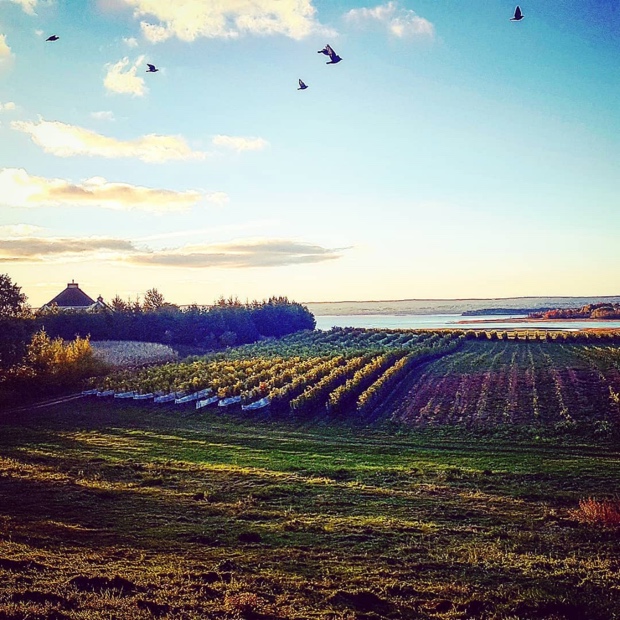
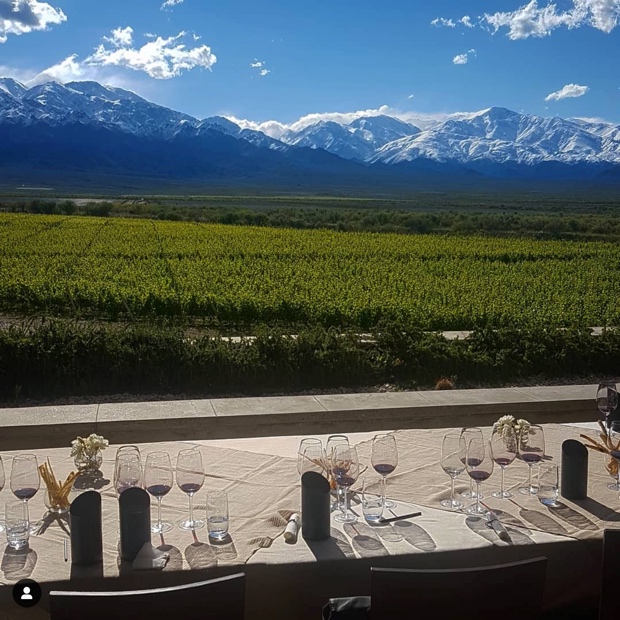
Bodega DiamAndes, Uco Valley, Mendoza, Argentina

As seen on WineAlign – A masterclass across Argentina

For the malbec, cabernet sauvignon, syrah, cabernet franc, criolla, torrontés and chardonnay of Argentina the present day vernacular promoted by the party line tells us “altitude defines a singular type of wine.” Most of the country’s wine lands are located on soils perched at impressive heights, at least with respect to sea level. To the naked eye the vineyards of Mendoza are of a perfect design to act as a collective poster child for a flat earth society manifesto, but looks are deceiving. The gentle climb from that province’s eponymous city centre at 750 meters above sea level to the rain shadow wall of the Andes Mountains is a subtle gradation that transfers vineyard elevations up to and exceeding well over 1,000 further metres. Say what you will about Mendoza’s absence of switchback ridges tracking rolling or angled foothills. Solar radiation is very real here and the effect of elevation on grape growing is a highly critical component of viticultural matters.
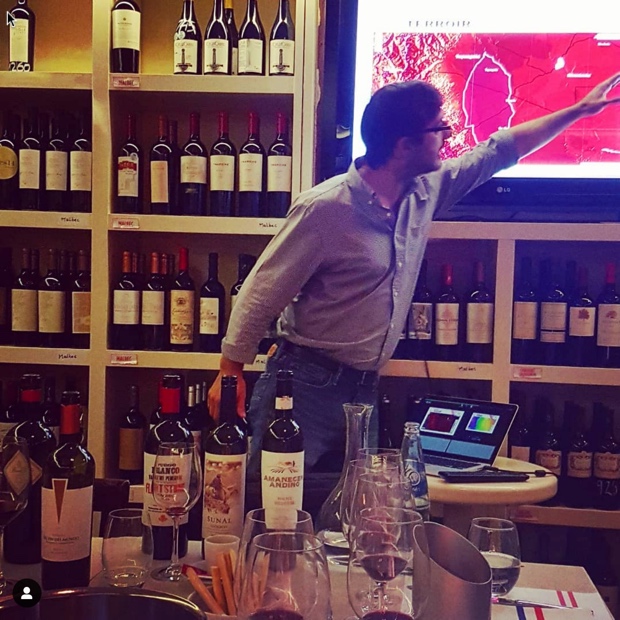
Joaquin Superman @hidalgojoaquin offers #CndsInArg a dissertation on high altitude terroir @winesofarg ~ @aldosvinoteca

It was only weeks ago that I had the favourable and fortuitous opportunity to travel around with the team at Wines of Argentina. Ontario’s WOFA representative Liz Luzza introduced me to her Quebec counterpart Marilyne Demandre. Together we were joined by Mark Bradbury, Bar Manager at The Bicycle Thief, Halifax, Nova Scotia, Yann Janvier, Le Sommelier Moderne in Montreal, Michael Mizzi, Co-Owner and Alexander Raphael, Bar Manager AMA Always, Toronto and Paul Madden, Director of Purchasing, Crowfoot Wines & Spirits, Calgary, Alberta for a group traverse across the South American country. We were led with the guidance of WOFA’s exceptional on the ground team; Soledad Juncosa, Sofia Brazzolotto, Paula Valle, Analia Lucero and Romina Ruiz. We did not make Lionel Messi’s acquaintance but we did experience first hand in Caminito and at the Buenos Aires Aeroparque Jorge Newbery the first leg of the Copa Libertadores final. I can only begin to explain the cacophony of roars when goals were scored during the intense rivalry between Boca Juniors and River Plate. The November trip took in Buenos Aires (including Recoleta Cemetery), Mendoza City, Luján de Cuyo (Agrelo), the Uco Valley (Gualtallary and Tupungato) and Salta Province (Cafayate and Calchaqui Valley). The journey will always be considered as a masterclass across Argentina because that is precisely what it was.
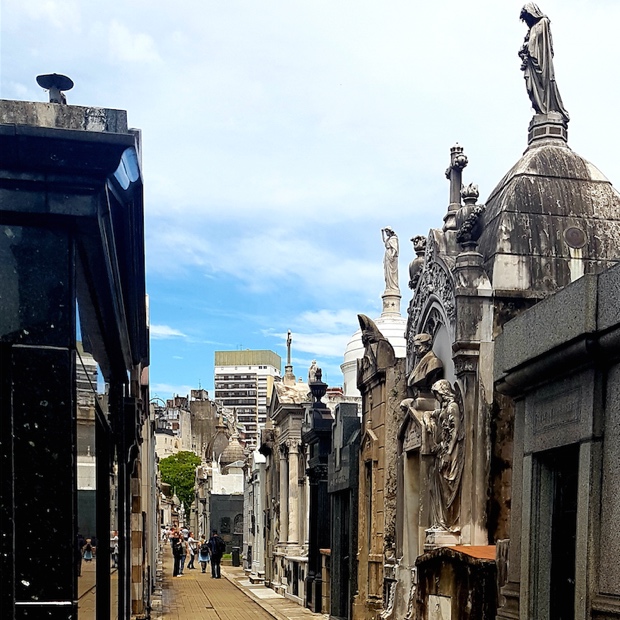
Recoleta Cemetery, Buenos Aires

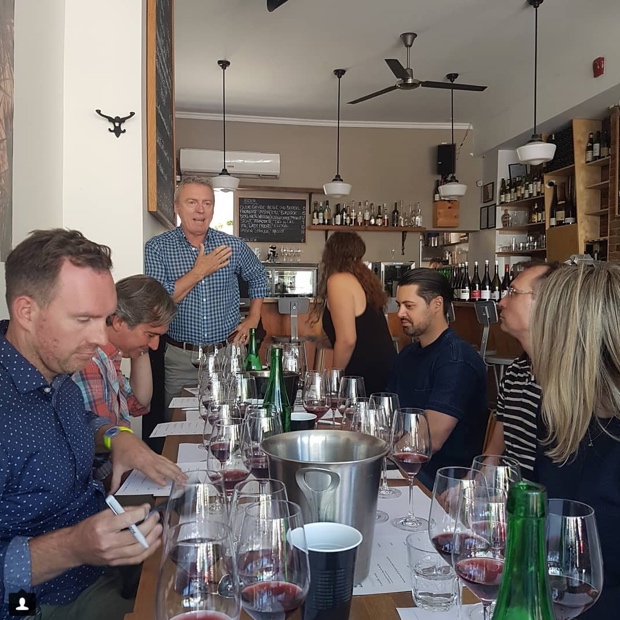
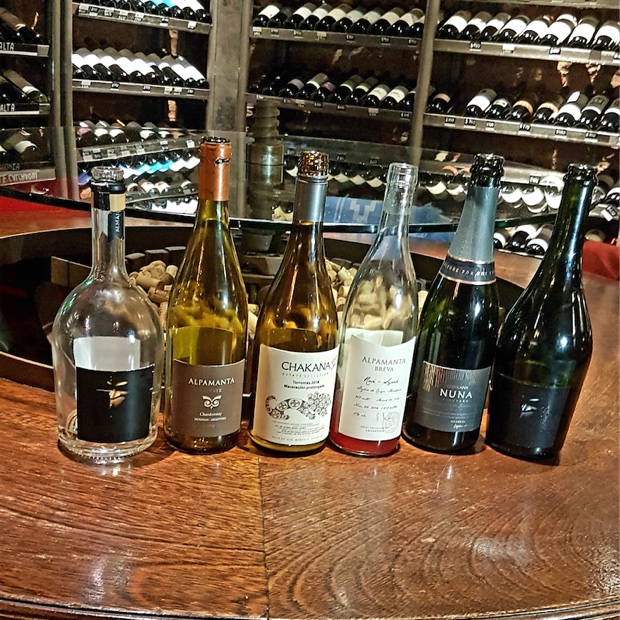
It began at a Buenos Aires institution, Aldos Restorán & Vinoteca for a dissertation on high altitude terroir through the savant Argentine eyes of Joaquin “Superman” Hidalgo. Joaquin did more than merely explain the effect of altitude and solar radiation, he also poured an extraordinary cross-section of the country’s malbec from Jujuy to Patagonia, Tucuman-Catamarca to Gualtallary-Tupungato, Uco Valley.  In the Palermo neighbourhood of Buenos Aires we convened at that city’s most coveted mecca for beef consumption, the exulted Don Julio Parilla, where we were schooled on the wines of Familia Schroeder and Patagonia. Later that night it was a wholly unexpected, antithetical and epiphanic tasting of white, pink and orange in Mendoza at Azafrán Resto with principals from Chakana Wines, Alpamanta and Ernesto Catena’s Domaine Alma Negra.
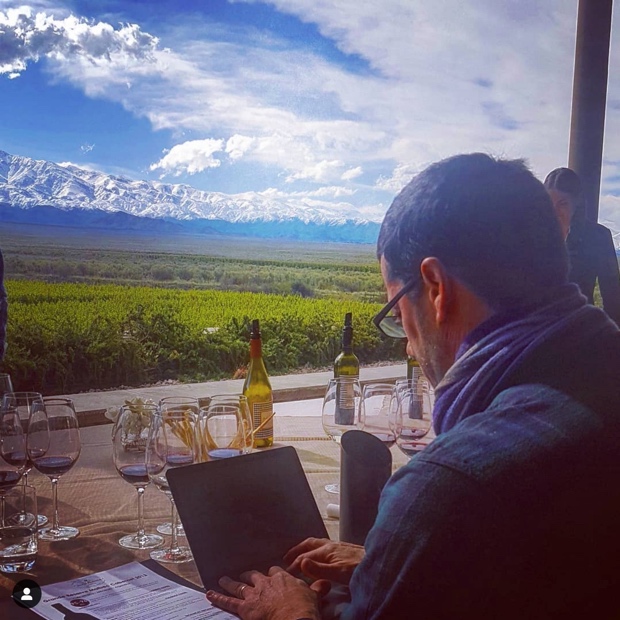
#tastingroom writing #tastingnotes @bodegadiamandes ~ #valledeuco #cdnsinarg @winesofarg

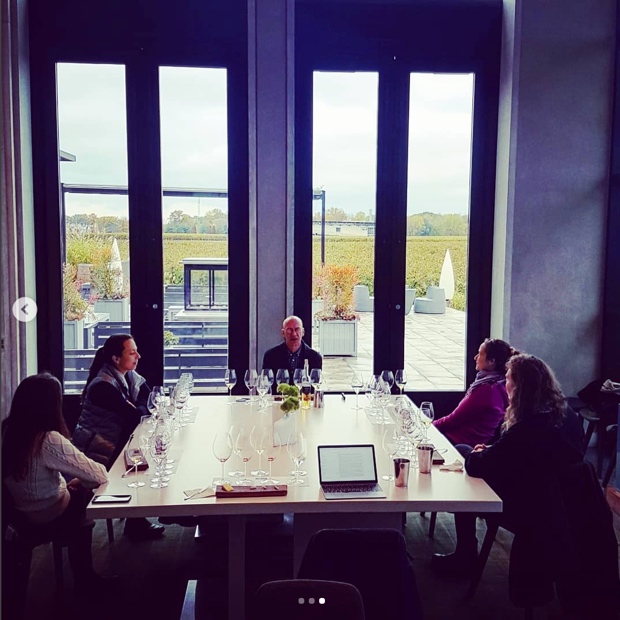
A visit to Finca Decero opened the window to the Agrelo advantage along with the wines tasted belonging to Alta Vista, Altos Los HormigasArgento, Susana Balbo and Trapiche. This was followed by a stop at Vicentin/Sottano. At Bodega Luigi Bosca it was head winemaker Pablo Cúneo who unlocked some secrets hidden inside the soils of Luján de Cuyo, with help from pours by Bodega CasarenaBodegas Navarro CorreasFinca Las MorasMascota Vineyards, Pascual Toso and Vina Cobos. Then we entered the Tupungato, Uco Valley portal at Domaine Bousquet along with the wines of Bodega Andeluna, Bodega Atamisque, Bodegas Bianchi, Familia Zuccardi and Finca Sophenia. The incomprehensible wall of beauty provided by the snow-covered Andes acted as the backdrop to the al fresco tasting room at Bodega Diam Andes. It was here that we gained a deeper understanding of the mountain connection to Clos de los Siete and Vista Flores-Valle de Uco wines. The wines of Bodega Piedra NegraCasa de Uco, Masi Tupungato and Bodega Salentein helped usher these sub-appellative Mendoza wines into the light.
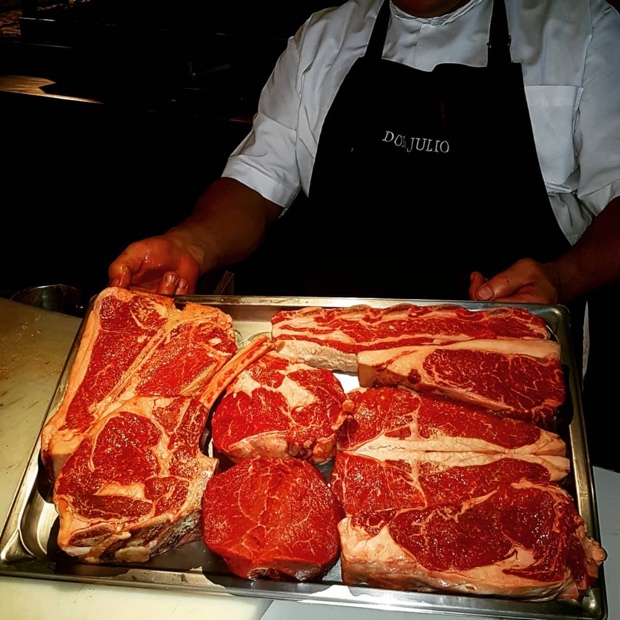
Salads in Argentina are exceptional

Before heading north we were met at our Mendoza hotel by Viña Cobos winemkaer Andres Vignoni for a seminar and tasting of cabernet franc and cabernet sauvignon. As a general rule cabernet franc is planted in dry Argentine climates, in Winkler Zones 11 and 111. It has nicely adapted to high altitudes (900m+) and its prominence began spreading after 1990, especially in Luján de Cuyo where 34 per cent of the country’s vines are grown. The varietal boom has really swelled in the last 18 years. Studies show that its best maturity is at 1000-1200m, with hot spots being at Los Arboles, San Pablo, Gualtallary, Agrelo, La Consulta and Paraje Altamira. The country’s third most planted red grape variety is cabernet sauvignon, historically raised in a “Bordeaux meets Rioja school,” with long barrel aging and traditionally grown in Maipu and Luján de Cuyo. The varietal has migrated to cooler spots, where greater freshness is being chosen ahead of over maturation, not to mention less/smaller use of new barrels. Sub-zone favourites are Las Compuertas, Perdriel, Agrelo, Cruz de Piedra, Gualtallary, La Consulta, Paraje Altamira, Cafayate and Santa Maria.
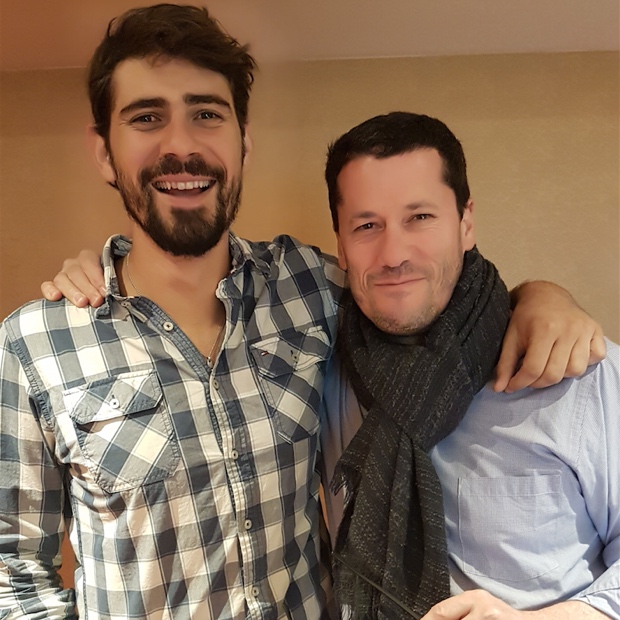
Godello post masterclass on cabernet sauvignon and franc with Viña Cobos winemkaer Andres Vignoni

From Ciudad de Mendoza Airpark we shuffled off to Salta, destination Cafayate. The drive took us though the desert monuments of Quebrada de las Conchas. The next day there was a fast, furious and fascinating look at Cafayate and Valle Calchaqui high altitude terroirs through the Donald Hess Bodega Colome and Bodega Amalaya lens. At Bodega El Esteco was walked beneath the 70 year-old criolla and torrontés vines. In the afternoon heat of Cafayate’s 30-plus degree early Spring sun we walked the limestone rocky desert moonscape of Piattelli Vineyards with proprietor John Malinski. A visit to Cafayate and the Valles Calchaquies would have been incomplete without a Bad Brothers Wine Experience. My understanding of Argentina’s fringe, edgy and extreme high altitude wines was confused until I met Agustín Linús and his Sunal malbec. Terruños de extrema indeed.
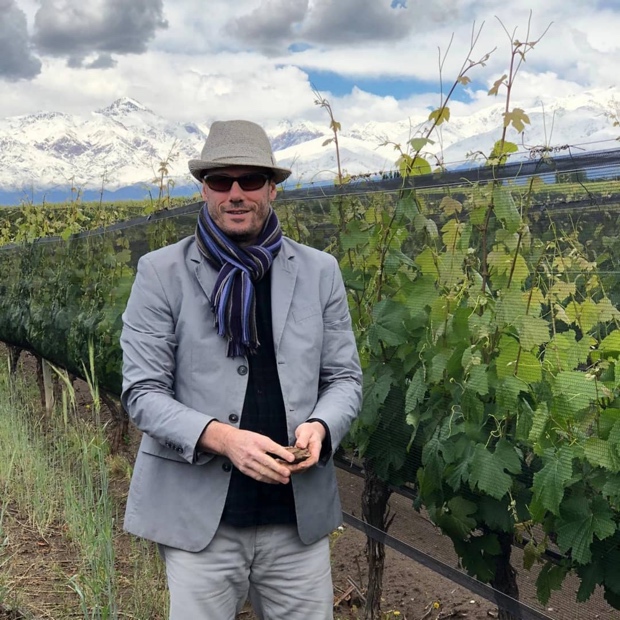
Snowy Andes backdrop makes Godello happy ~ snap (c) @marylinedemandre

One of the highest vineyards in Argentina is in Salta Province, 1,200 kms north of Mendoza. It is called Altura Máxima and it sits perched at 3,100 meters above sea level. Whaaat? It is one of the most extreme vineyards in the country, but not the only one. There are 20 or more, carved out of desert sand and rock where terroir is made up of climate, soil and in these extreme locations, the machinations of man. Climate is highly variable so rainfall and heliophany (the energy of the sun reaching the soil) and temperature are the most important factors. So when we speak of climate in Argentina we have to attach the altitude to the problem. The equation is always modified by the effects of altitude. Not to mention atmospheric pressure. Altitude in relation to temperature. For every 155m of linear rise, in temperate zones the average temperature of a point on the map drops by one degree. This effect is called vertical thermal gradient and the cause is due to atmospheric pressure. And then, with every 1,000m of linear rise, solar radiation increases by 15 per cent. In order to be more resistant to light, the plants produce more polyphenols. There is a proven relationship between UVB and a higher concentration of polyphenols and abdisic acid. In the end it’s a matter of cool climates with a great intensity of sun. Stress conditions at 1,500m or higher results in lower yields, high polyphenols, higher acidity and ultimately a marked variance of character. Explains Joaquin Hidalgo, “mastering the terroir is a challenge that involves another way of managing the vineyard.”

New Piattelli Vineyards planting in the high altitude desert of the Calchaqui Valley

The production and consumption of wine in Argentina dates back to over four hundred years ago when the first specimens of Vitis Vinifera were brought to the Americas by the Spanish colonizers in the early 16th century. Early in the 1900’s, the vineyard area had reached 519,800 acres but between 1982 and 1992 extensive uprooting of vineyards was undertaken and 36 per cent of the existing vineyards were removed. In the early 1990s a new era began for the Argentine wine industry. The arrival of Neoliberalism in the national economy led to the implementation of a model of adjustment and the incorporation of Argentina into the global market. With a population of 42 million inhabitants and a territory that is four times larger than France, Argentina is one of the world’s nature reserves. Privileged with outstanding natural richness and extraordinarily diverse landscapes, Argentina boasts high mountains and plains, lush vegetation and extreme deserts, forests and steppes, glaciers and waterfalls.
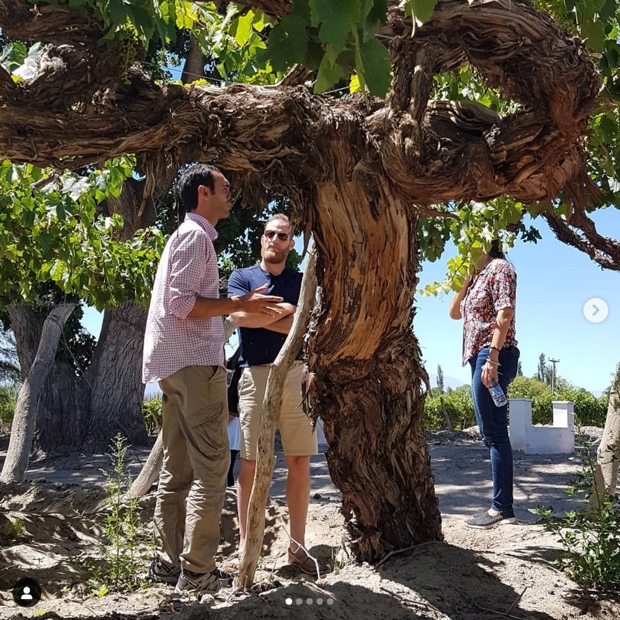
Stunning #cafayate morning in the 60-70 year-old #criolla and #torrontes vines @bodegaelesteco in Salta

This wealth of natural ecosystems includes vast, highly productive grape growing regions stretching at the foot of the Andean strip, to the West of the country, from latitude 22° south to latitude 42° south. The cultivated area covers more than 538,071 acres. The vineyard area of Argentina covers 545.737,99 acres (2017). From the total area just 502.895,78 acres are able to vinify. The breakdown is 56 per cent red, 19 white and 25 Rosé. The leading red varieties are malbec (36), bonarda (16), cabernet sauvignon (13) and syrah (10). For whites it is torrontés (25), chardonnay (16), sauvignon blanc and chenin blanc each (5).
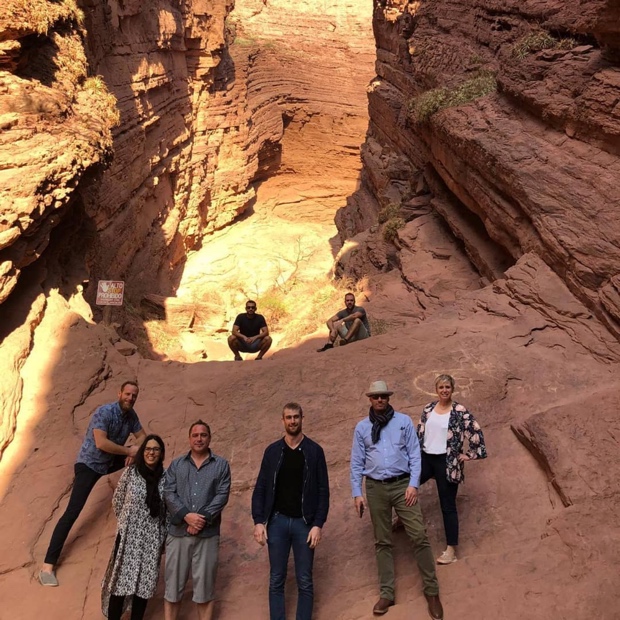
Canadians in Argentina at the Devil’s Throat in Salta Province ~ #quebradadelasconchas

Today, despite a skyrocketing national inflation rate, the wine industry continues to thrive. While certainly not immune to the economic crisis, exports are growing and the wines from Argentina are evolving to meet global demands. I tasted upwards of 150 wines in my week spent in Argentina. This report covers 37 wines from 37 producers. These are 37 that struck me as being exceptional, ahead of the curve or simply the perfect sort of examples to speak about climate, soil and of course, altitude.
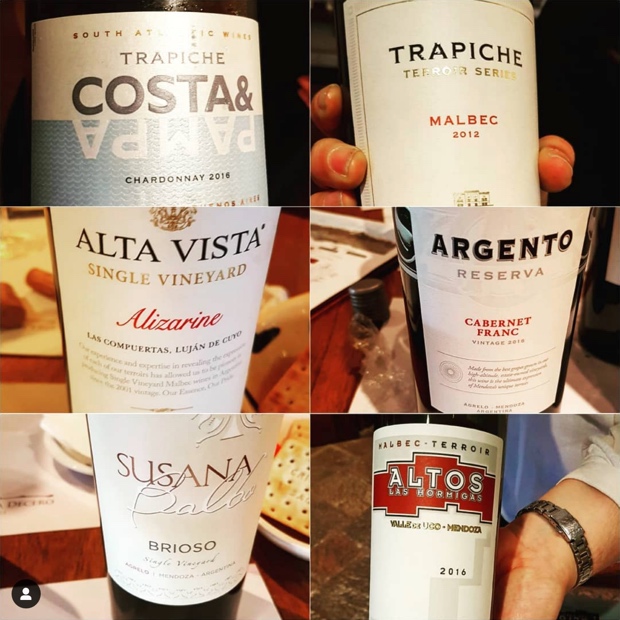
Mendoza shuffle with some fine examples and cross section of terroirs to represent #winesofargentina ~

Malbec

Bodega Amanecer Andino Malbec Reserva Quebrada De Humahuaca 2017, Tumbaya, Jujuy, Argentina (Winery, WineAlign)

From a new location for growing grapes, at 2,200 metres of altitude, very close to Bolivia. Even if malbec is not necessarily the most interesting varietal to grow at this altitude, it is the most elastic variety and will always work. The pH (3.77), the acidity (6.6 g/L) and the alcohol are all set to high but it does not come across like any other malbec any of us have ever tasted. Full bodied and very fresh, really salty, a malbec so affected by altitude. So bloody interesting. Drink 2018-2022. Tasted November 2018  amanecer.andino  @BodegaAmanecer 
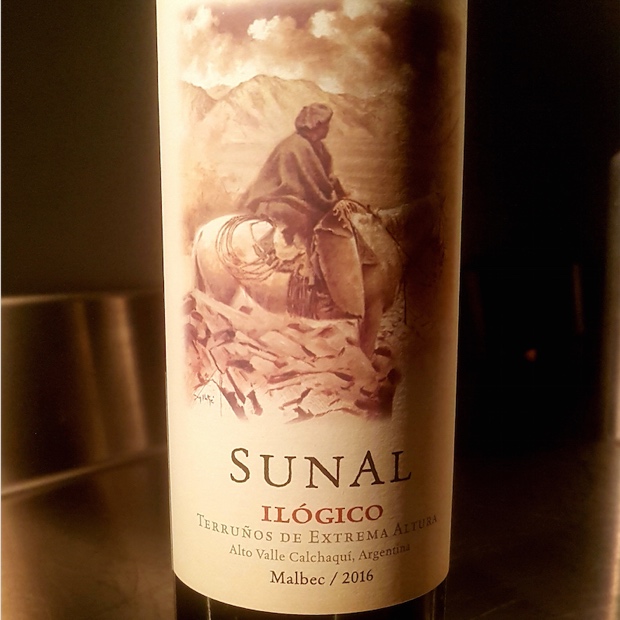
Agustín Lanús Wines Malbec Sunal Ilógico 2017, Tucuman Catamarca, Calchaqui Valley, Salta, Argentina (Winery, WineAlign)

The wine is drawn from vineyards in Pucará Salta, Lucaratao Salta, Amaicha del Valle Tucumán and Hualfin Catamarca. Real body and richness, savour and verdancy. The touch is delicately salty, with medium acidity and a constrained power. Really fine balance. The length is forever, a fact proven by an opened bottle showing exemplary freshness a full eight days later. Everything in Argentina might claim to be drawn away from high altitude but this from Agustín Lanús at 2,800m plus is the real deal. Drink 2018-2022.  Tasted twice, November and December 2018  agustinlanuswines  @agustin_lanus  Agustín Lanús  
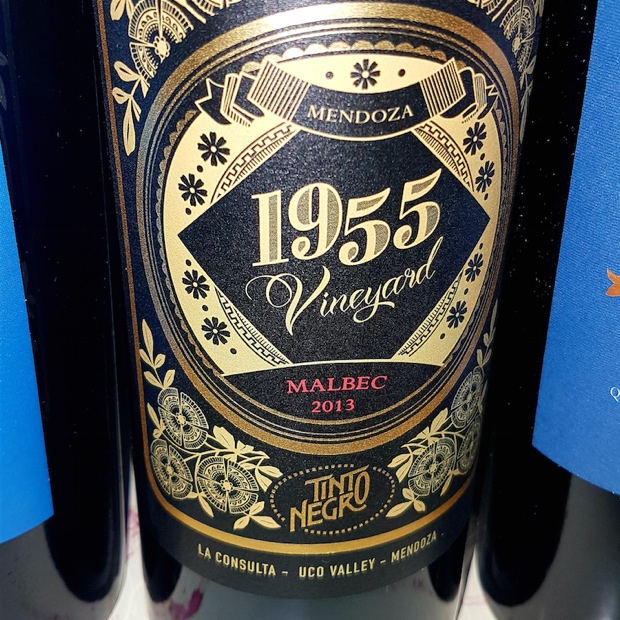
Tinto Negro Vineyard 1955 Malbec 2013, La Consulta, San Carlos, Uco Valley, Mendoza, Argentina (Agent, B.C. $81.99, WineAlign)

The most important factor in Altamira is not the altitude but the soil. It’s at 1000m but from the cooler, southern part of the Uco Valley. Very high pH (3.8) and well-managing acidity. This wine has it all; great fruit, savour, sweet viscosity, freshness, acidity and structure. Not to mention fine tannins and polyphenolic textural beauty. A high altitude and a place that keeps its cold air. Forget about how much oak and what the alcohol may be. The clay and the cool factor keep it all real. Drink 2019-2025.  Tasted November 2018  bodegatintonegro  thewinesyndicate    @winesyndicate  @thewinesyndicate

Catena Zapata Malbec Adrianna Vineyard River Stones 2015, Gualtallary, Tupungato, Uco Valley, Mendoza, Argentina (132340, $95.59, WineAlign)

In a line up that includes malbec from all walks of Mendoza life as well as some extreme altitude northern examples this is the first wine with a somewhat reductive quality, locked in freshness and very high acidity. It’s a wine of exceptional qualities. There is a highly intellectual and sensory balance executed through perfectly ripe fruit, that fine acidity and even more fineness in tannins. A beautifully linear wine that can come full circle if need be. This is a malbec that creates moisture in your mouth, never drying or taking anything away. A wine that is changing the way we are dealing with the idea of different terroirs in Argentina. Drink 2020-2027.  Tasted November 2018  catenawines  lauracatenamd  noble_estates  @CatenaMalbec  @LauraCatena  @Noble_Estates  @bodegacatenazapata  @NobleEstates
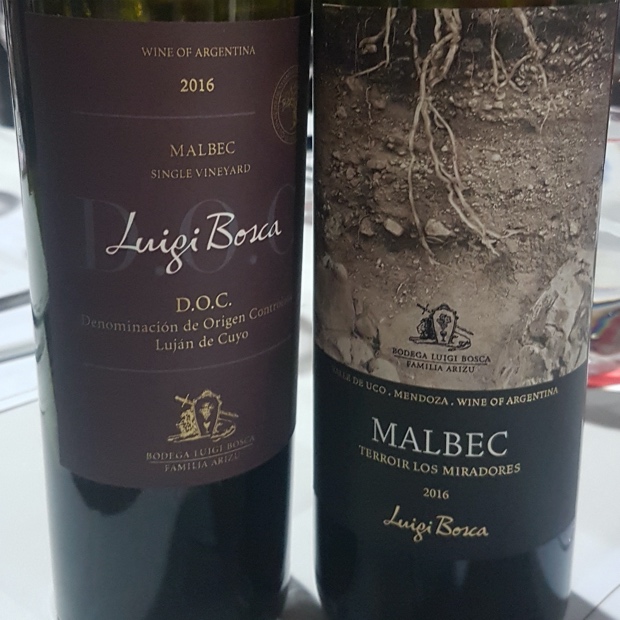
Luigi Bosca Terroir Los Miradores Malbec 2016, Uco Valley, Mendoza, Argentina (132340, $32.95, WineAlign)

From 70 year-old vines in Valle de Uco with lowest of low yields so that one vine does not even function to produce a whole bottle. From the same genetic cutting materials, massal selection of the DOC malbec, but with obvious concentration and specificity. So much more floral, of a baking spice and a fruit intensity that truly is the bomb. An implosive wine with modesty, purity and a 40 per cent oak housing. Big and balanced with great structure and tannins that invoke seven senses. Put some aside and we’ll have some further discussions in 10 years. Drink 2021-2029.  Tasted November 2018  bodegaluigibosca  fwmcan  @LuigiBoscaBodeg  @FWMCan  @BodegaLuigiBosca  @FWMCan
Domaine Bousquet Malbec 2018, Tupungato Valley, Mendoza, Argentina (160952, $13.95, WineAlign)

Draws fruit from Paraje Altamira and Gualtallary, no oak, simply in stainless. Fresh and equally savoury, relative concentration and simple in effusive red fruit. Really negligible tannins and a sweet as opposed to astringent finish. Perhaps the best vintage ever for this entry-level malbec. Drink 2018-2020.  Tasted November 2018   domainebousquet  @domaineBousquet  @DomaineBousquetUSA
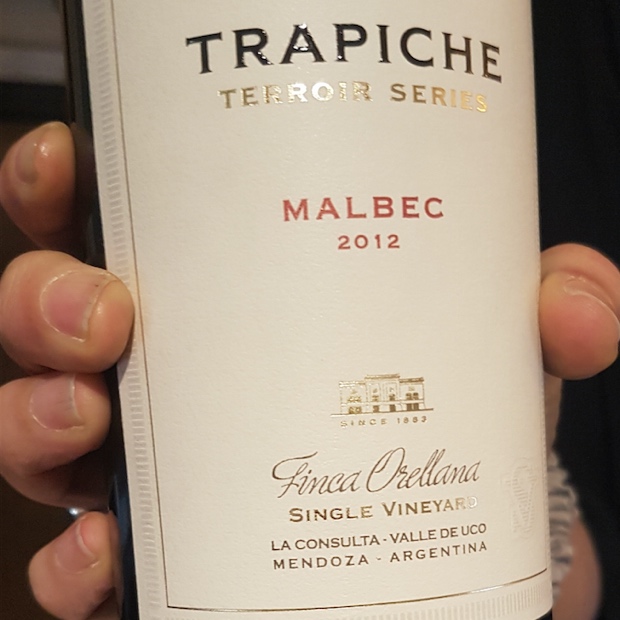
Trapiche Malbec Terroir Series Finca Orellana de Escobar Single Vineyard 2012, La Consulta, San Carlos, Mendoza, Argentina (178145, $39.95, WineAlign)

One of several malbecs in the Trapiche portfolio here the collaboration with the grower is exulted in this the 10th years of the Terroir Series. Every year the best three combinations of fruit and grower are chosen to represent the range. Sixty-one year old vineyards deliver minty herbal savour and a chalky liquidity in surround of spicy cherry fruit. Plummy too with ferric purity and big, big structure. Drink 2019-2025.  Tasted November 2018  trapichearg  trapichewines  philippedandurandwines  @TrapicheWines  @Dandurandwines   @TrapicheArgentinaInt  @VinsPhilippeDandurand
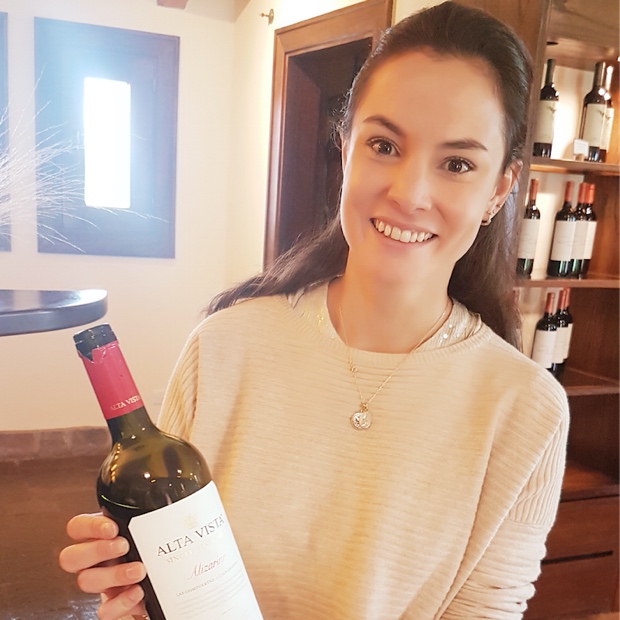
Rocio Campoy Morist with Alta Vista’s Alazarine

Alta Vista Malbec Single Vineyard Alizarine 2013, La Compuertas, Luján de Cuyo, Mendoza, Argentina (Winery, WineAlign)

Of three Alta Vista single-vineyard wines this is 100 per cent malbec and one of the richest, deeply textured and chocolate driven examples. From a warm vintage it’s not quite mature, even drying a bit though the fruit seems to just get more dense, intense and leathery. Justified elevation extrapolation makes for a classic malbec with some idiosyncratic Compuertas moments. Smooth, fully rendered and giving everything at this very stage. Drink 2018-2021.  Tasted November 2018  bodegaaltavista  hhdwines  @bodegaaltavista  @HHDImports_Wine  @BodegaAltaVista  @HHDImportsInc
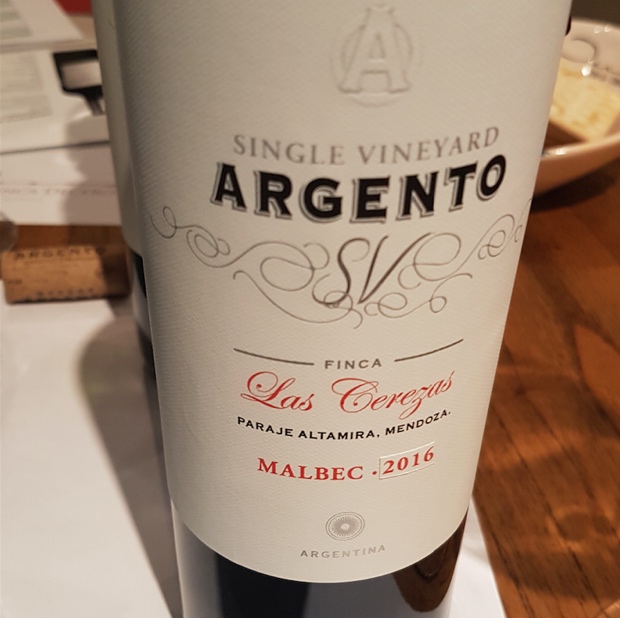
Argento Malbec Single Vineyard 2016, Paraje Altamira, Mendoza, Argentina (Agent, $24.00, WineAlign)

Argento terroir exploration is from Finca Las Cerezas, “the cherries” and lo and behold, it’s really that fruit incarnate. A reductive malbec to be sure and so very fresh, from a soil rich in limestone which tells us something about the speciality of this nook in Paraje Altamira. The red fruit receives a lightning strike from the cool stone touch and there is a salty vein that lifts the cherry up and into a whole other realm. Really quite beautiful this charming little number. Drink 2019-2025.  Tasted November 2018  bodegaargento  profilewinegroup  @BodegaArgento  @ProfileWineGrp  @bodegaargento  @ProfileWineGroup

Altos Las Hormigas Malbec Terroir 2016, Uco Valley, Mendoza, Argentina (366005, $22.95, WineAlign)

Three quarters of the terroir malbec is aged in concrete with the fourth in 3000L French foudres. The total aging time is 24 months, the last six of which were in bottle before release. Here is the smooth malbec with balancing and defining sour acids on edge and uplifting. The fruit is nicely integrated into this structure with a fine set of tannins to grant some pretty good potential. Wait a year and let the magic happen. Drink 2019-2023.  Tasted November 2018  altoslashormigas  @ALHmalbec  @ALTOSLASHORMIGASWINERY
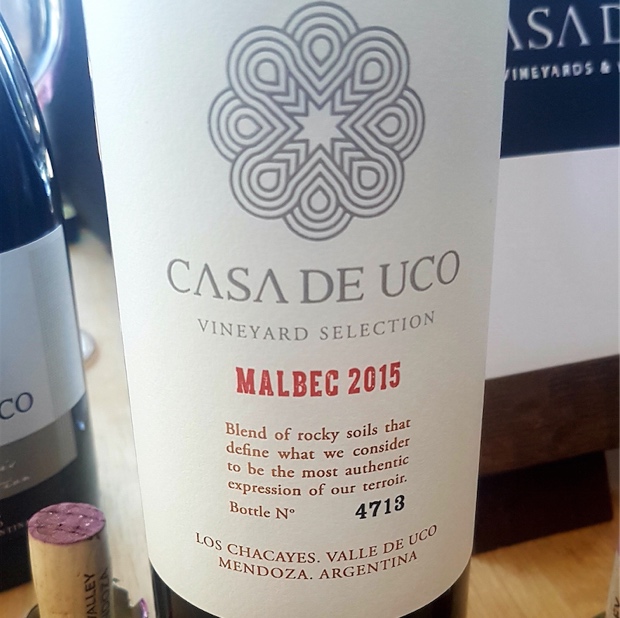
Casa De Uco Malbec Vineyard Selection 2015, Los Chacayes, Tunuyán, Uco Valley, Mendoza, Argentina (WineryWineAlign)

Considered their top expression from calcareous rocky soils this is the third incarnation of a malbec with some differences, turns and twists. Winemaking choices of 20-30 per cent whole bunch and partial carbonic macerations are extended to most of the chosen lots. You can feel the firm grip of the layered tannins on fresh, reductive and candy shell fruit. Concrete initiates the balance, there is no new oak to distract and enough acidity to keep it vibrant. There is a combination of energy and finesse on this malbec standing up to be noticed and counted. It’s both solid and expressive, real, emotive and truly curious. Drink 2018-2020.  Tasted November 2018  casadeuco  @CasadeUco  @CasadeUco

Extreme altitude malbec of Bodega Colomé

Bodega Colomé Malbec Lote Especial Colomé 2016, Calchaquí Valley, Salta, Argentina (Agent, $29.95, WineAlign)

Takes what is established by brother La Brava (and then El Arenal) and amplifies ideal. Now up to an altitude of 2,300m the dichotomous relationship between thermal amplitude and diurnal variegation is magnified, which can only mean more hyperbole. More concentration of fruit in equal extraction but with the extra 600 meters of altitude the tones are higher, the fruit more variegated and with a dried component out of the idea of some desiccation at harvest. It also seems saltier and the structure different, tighter and strung like a racket with ready to fray tension. One of the wildest malbec rides on the planet. Drink 2020-2028.  Tasted November 2018  bodegacolome  liffordgram  @BodegaColome  @LiffordON  @bodegacolome  @liffordwineandspirits
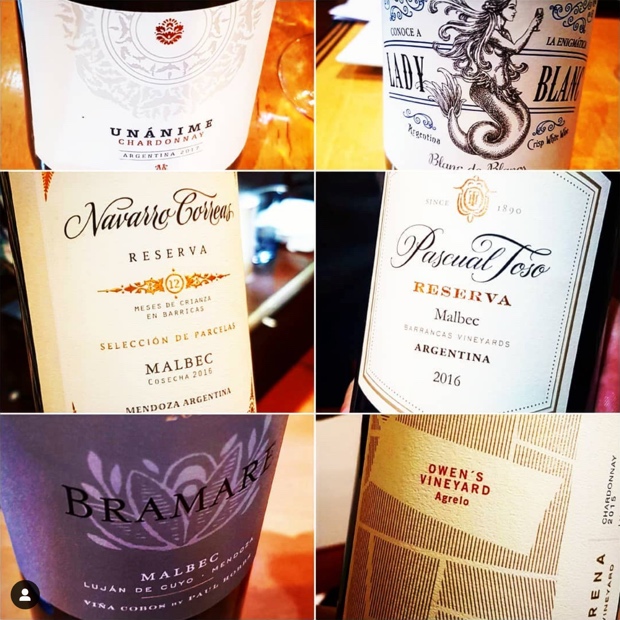
A flock of producers gather to educate on the multiplicity of munificent Mendoza ~

Syrah and Red Blends
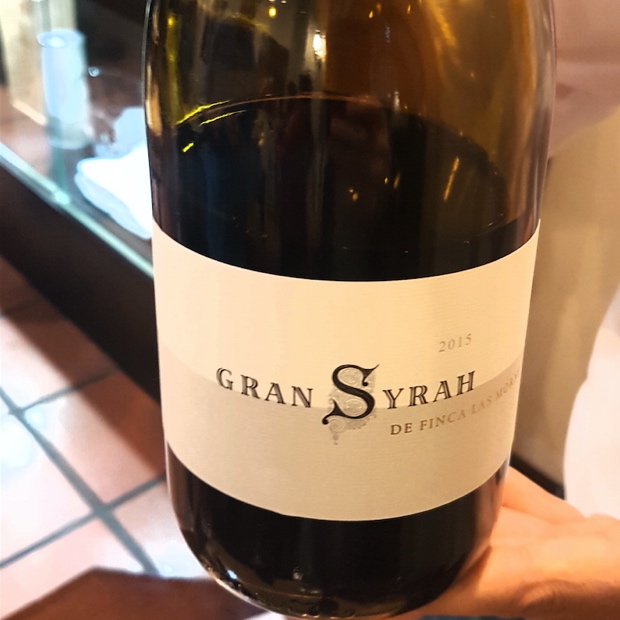
Bodega Finca las Moras Gran Syrah 2015, San Juan, Argentina (Winery, WineAlign)

From the three main valleys of San Juan; Tulum, Zonda and Pedernal at altitudes of 650, 800 and 1300 meters above sea level. Ripeness from the lower valleys meets peppery spice and herbology of the highest, with freshness lying somewhere in between. The effects of diurnal temperature swings and thermal radiation pile one on top of another for a highly variegated yet mostly seamless syrah. The queen mother of San Juan syrahs with plenty of swagger. It shouts floral rose then switches into bohemian rhapsodies of musky, ferrous and hematic waves. Really meaty and intense with major chord, mood and tempo swings. “Is this the real life? Is this just fantasy?” Drink 2019-2022.  Tasted November 2018  fincalasmoras  @FincaLasMoras  @fincalasmoraswineryCA
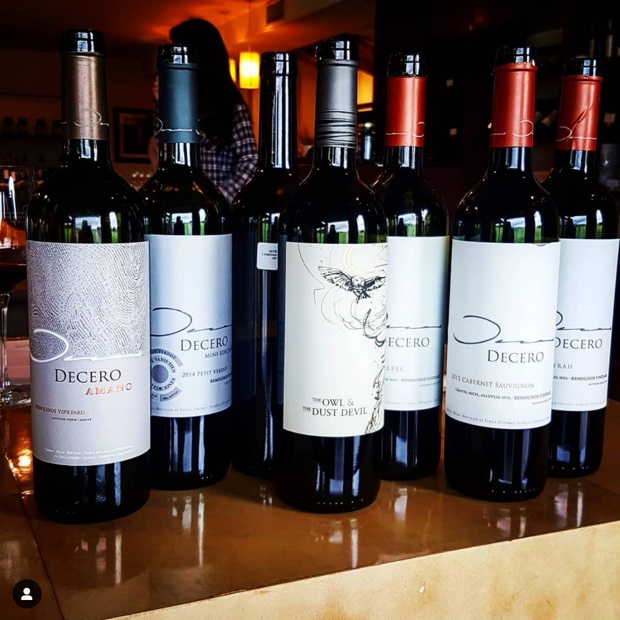
Finca Decero The Owl & The Dust Devil Remolinos Vineyard 2015, Agrelo, Luján De Cuyo, Mendoza, Argentina (Agent, $36.95, WineAlign)

The multi-level, purposed and floral flight of fancy red blend. A mix of real facts and a story; near equal parts malbec and cabernet sauvignon, with petit verdot and tannat. Must contain at least 30 per cent of the last two outlier varietals and in the end this completes the estate style, of big, smooth, polished reds that are completed through micro-vinifications of many single-vineyard blocks. More tannin and grip here. Drink 2019-2023.  Tasted November 2018
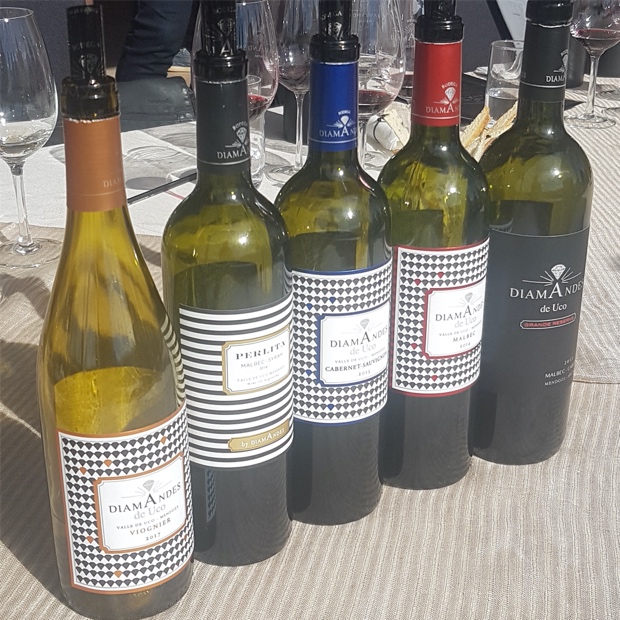
DiamAndes Gran Reserve Malbec/Cabernet Sauvignon 2013, Uco Valley, Mendoza, Argentina (295063, $32.95, WineAlign)

The signature red of the estate this is three quarters malbec to one quarter cabernet sauvignon set for 18 months in 100 per cent French oak, 50 per cent new. To say this is lush and ambitious would be an understatement but there is no questioning the quality of the agriculture, the fruit and the use of deep pockets technology. There is also humility within this classic modernism though not yet a true indication of soul. The fineness and the precision are so apparent which leads to believe that the human element noted will mean the epiphanies are coming soon. So much potential to become one of Argentina’s great red blends. Drink 2019-2022.  Tasted November 2018  bodegadiamandes  maitredechai_ca    @maitredechai  @diamandes  Francis Dubé  

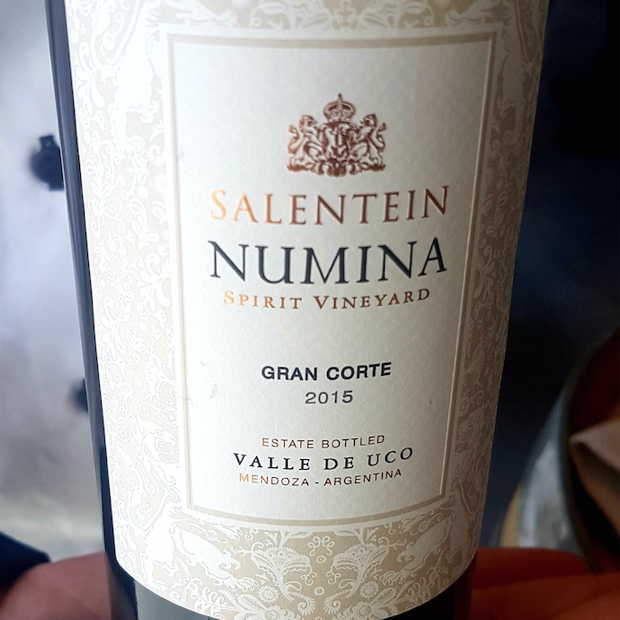
Salentein Numina Spirit Vineyard Gran Corte 2015, Uco Valley, Mendoza, Argentina (543405, $35.00, WineAlign)

The goal for Salentein’s Gran Corte “is to produce a wine with the grapes from the first vineyards planted in 1996” and so only these find there way into the Numina line. The blend in 2015 is malbec (68 per cent), cabernet sauvignon (12), cabernet franc (8), merlot (7) and petit verdot (5). It’s a true Bordelais five varietal ideal albeit with malbec at the fore. It see 16 months in total though 10 are go it alone and then six all housed all together. This quintuples down on the rich liqueur, all in spice and hyperbole of violet florals. Though currently liquid chalky and slightly gritty you can imagine the integration especially because the oak use is not new. A really nice wine on the road to becoming something fine. Drink 2019-2024.  Tasted November 2018  salenteinbodega  azureau  @BodegaSalentein  @azureau  @BodegasSalentein  @BodegasSalentein
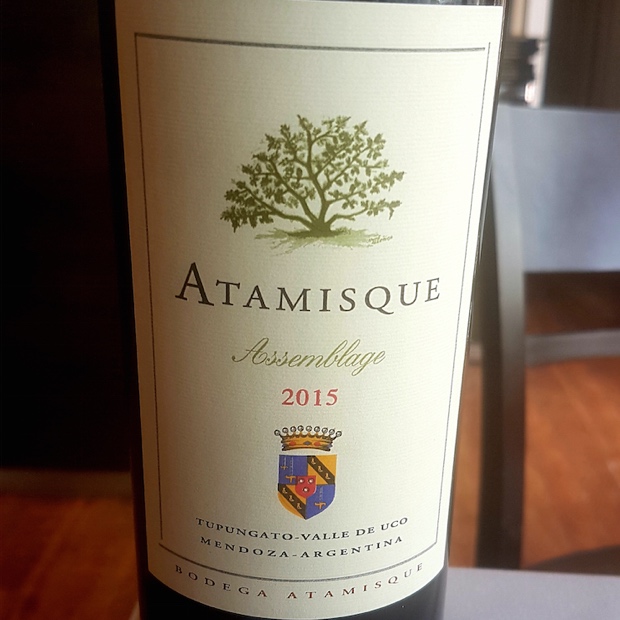
Bodega Atamisque Assemblage 2015, Tupungato, Uco Valley, Mendoza, Argentina (483032, $45.95, WineAlign)

The blend of malbec, cabernet sauvignon, merlot and petit verdot is fruit drawn from sites between 1,100 ands 1,300m and sees 14 months in 100 per cent new French oak. This being a wine made by forcing square pegs into one round hole in what amounts to an all for nothing, all in one treatment. It’s really something to note that despite all this the fact remains that red fruit abounds, fresh and pure with an accent of spice but no real overdo of make-up. There is elongated grace and generosity, like a Rhône blend with charming warmth and a fine smoulder. Drink 2019-2025.  Tasted November 2018  bodegaatamisque  #MCOwines    Bodega Atamisque

Masi Tupungato Corbec 2015, Uco Valley, Mendoza, Argentina (AgentWineAlign)

A blend of 70 per cent corvina with malbec treated to upwards of 25 per cent appassimento for 20 days. Spends 18 months in French oak. All about the baking spices, the unbounded limits of glycerin texture and specifically cinnamon all over the back pages. So rich and a ringer like no other for the Veneto motherland. Drink 2019-2024.  Tasted November 2018  masitupungato  masicanada  @MrAmaroneMasi  @MasiWineExperience  
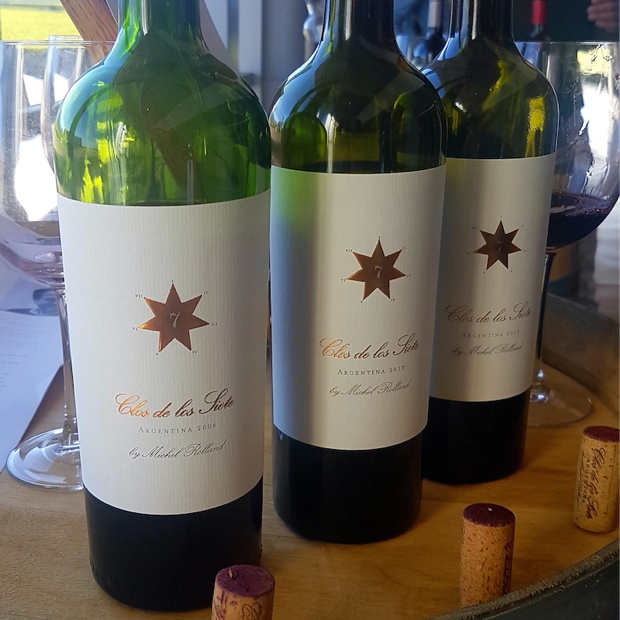
Clos De Los Siete 2015, Uco Valley, Mendoza, Argentina (622571, $23.95, WineAlign)

This was tasted side by side by each with the 2013 and the 2006 so quite fortuitous in terms of relativity and imagination. The blend in ’15 is high in malbec predominance (68 per cent), with merlot, cabernet sauvignon, syrah and petit verdot. Four wineries made contributions to this vintage (of a possible seven) and as per the dictum it’s a blend of blends created by Michel Rolland. It’s Rolland’s inceptive imagination that brought this special project into the Uco Valley landscape and though the assemblage can be up to seven-fold the possibility to age for a value-priced wine is quite impressive. This ’15 is richly endowed and structured, chalky and just plain excellent. Drink 2019-2024. Tasted November 2018  closdelossiete  philippedandurandwines  @closdelossiete  @Dandurandwines   @closdelossiete  @VinsPhilippeDandurand
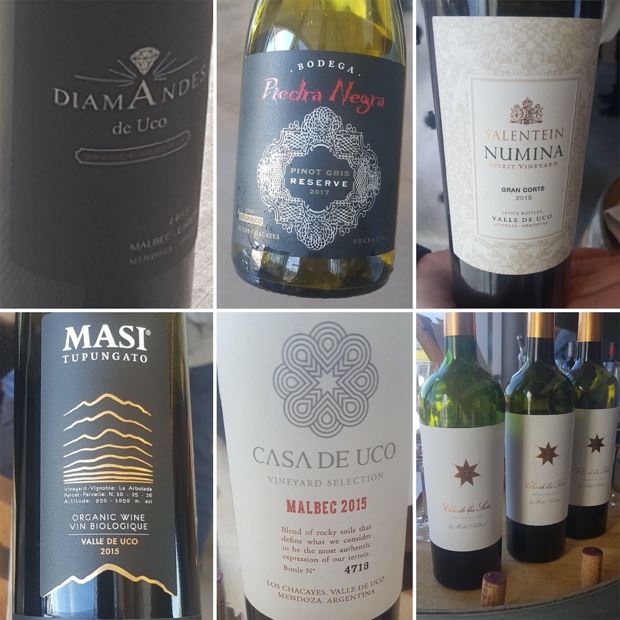
Tasting through the Uco Valley

Cabernet Franc
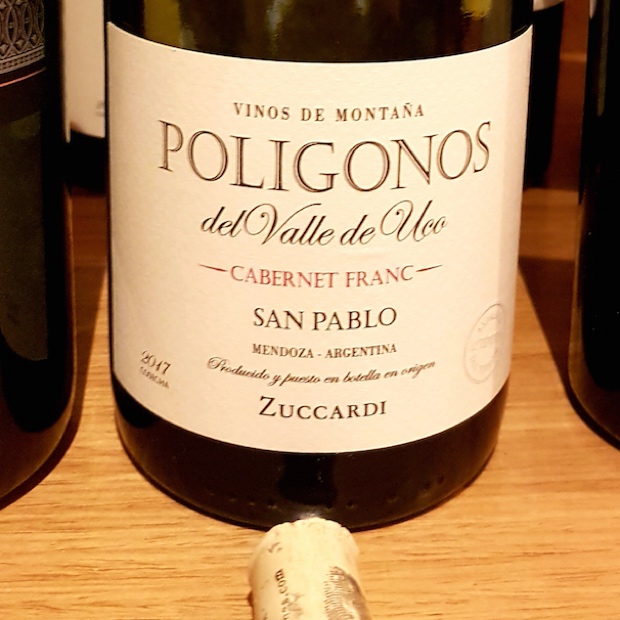
Zuccardi Cabernet Franc Polígonos 2017, San Pablo, Uco Valley, Mendoza, Argentina (Agent, $29.95, WineAlign)

The Polígonos exploration is a many vineyard sided affair and the altitude is significant at 1,300m from San Pablo in Valle de Uco, Mendoza. A relatively early pick preserves nigh high acidity and the alcohol is beautifully restrained. Just a hint of dusty, pyrazine edgy fruitiness drives the machine and keeps this pulsing with terrific energy. Both food amenability and aging potential here are excellent. If it’s verdant that’s a compliment to local character. Drink 2019-2024.  Tasted November 2018  zuccardivalledeuco  szuccardi  dionysuswines  @ZuccardiWines  @FamiliaZuccardi  @SebaZuccardi  @ZuccardiValleDeUco  @DionysusWinesTO

Trivento Cabernet Franc Golden Reserve Black Edition 2017, Altamira, Uco Valley, Mendoza, Argentina (AgentWineAlign)

Made by winemaker Germán Di Césare there is a respect for land (alluvial, sand and some lime) but also for varietal. It’s well-endowed, juicy, plummy and full flavoured though it’s oaky tendencies are quietly respectful as well. The tone of the wine hums and resonates with ambience in complete control. It’s really quite fine and just about to enter its perfectly integrated, resolved and balanced window. High acidity example and wouldn’t hurt to settle for just a few more months. Drink 2019-2022.  Tasted November 2018  triventoarg  triventoarg  #escaladewines  @Trivento   @TriventoArg  @TriventoCanada
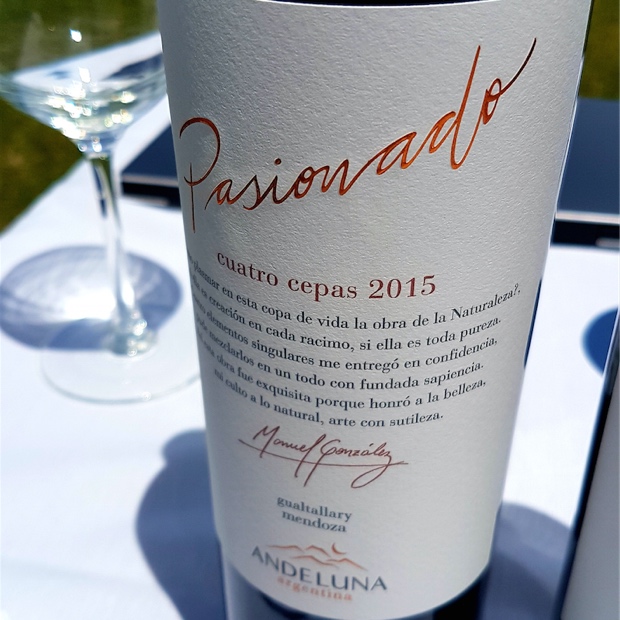
Bodega Andeluna Cabernet Franc Pasionado 2015, Gualtallary, Tupungato, Uco Valley, Mendoza, Argentina (Agent, $54.99, WineAlign)

Classic Uco terroir at high altitude (1,300m) that mixes alluvial soils with sand, limestone and here loam make for a pretty subtle rendition in terms of cabernet franc. That’s especially true when you consider the small vessels used (225L barrels) and much of it new. You feel the wood in vanilla and berry coulis, a bit of spice and liquified graphite. Quite a molten flow this cabernet franc and with demanding quality in its tannins. Drink 2018-2021.  Tasted November 2018  bodegaandeluna  stemwinegroup  @BodegaAndeluna  @StemWineGroup  @BodegaAndeluna  @stemwine
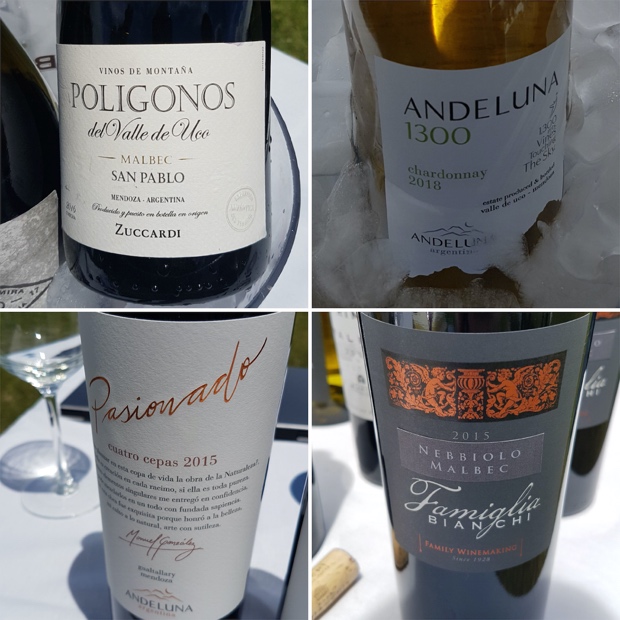
Zuccardi, Andeluna, Sophenia and Bianchi

Cabernet Sauvignon
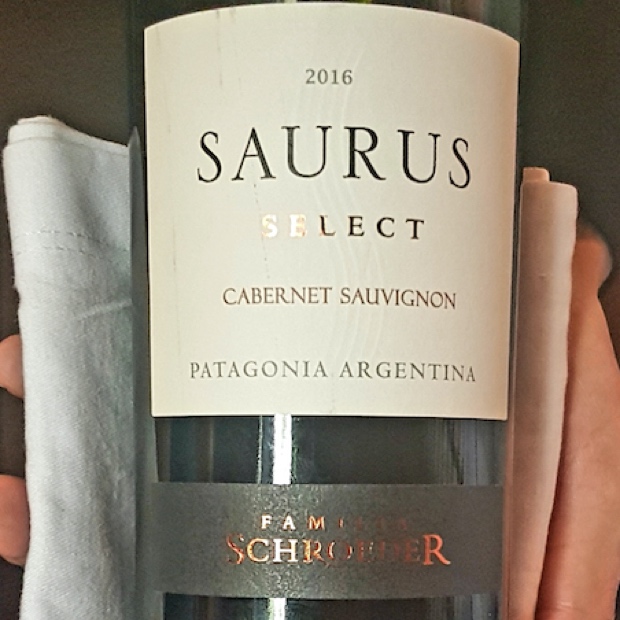
Familia Schroeder Cabernet Sauvignon Saurus 2017, Patagonia, Argentina (Agent, $21.95, WineAlign)

Schroeder is a Paul Hobbs Patagonia outpost and across the board they are truly smooth, cool and polished wines. Tasted after the pinot noir and malbec we see by now the consistency of style and with great evidence. Big time ripe and dark varietal fruit, salumi accents, all in, no holds barred and a cool factor with texture times purity. It finds its way through the ooze to act linear and come out quite elegant. In the end it warms and brings much comfort, finishing with a rendering and lingering spice. Drink 2019-2023.  Tasted November 2018  schroederwines  @SchroederWines  @stemaren  @BodegaFamiliaSchroeder 
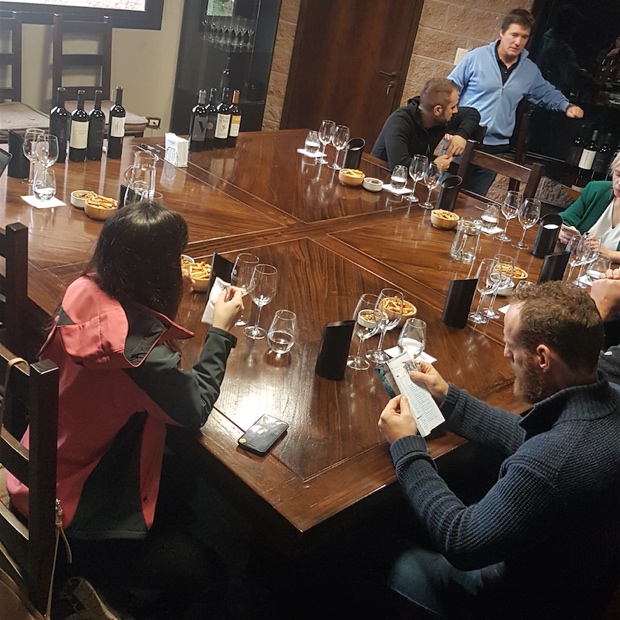
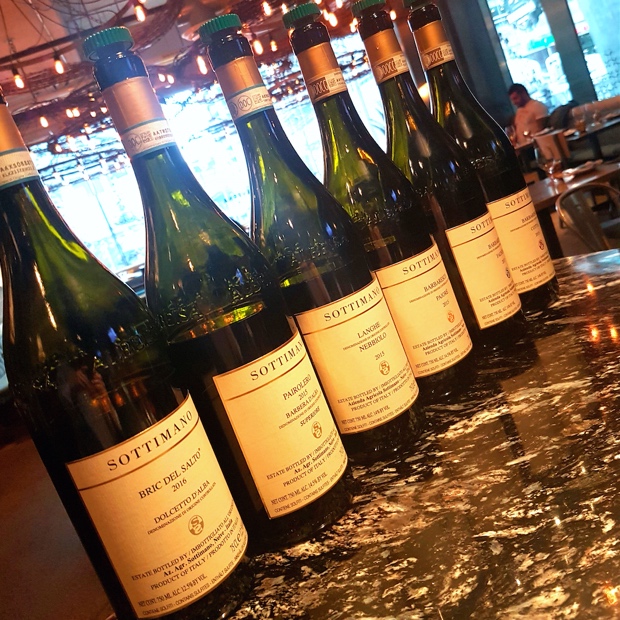
Tasting at Sottano

Sottano Reserva De Familia Cabernet Sauvignon 2016, Mendoza, Argentina (324707, $24.95, WineAlign)

Sottano’s cabernet sauvignon exhibits less of an oak influence or exaggeration, especially not a hinderance or a matter of make up. Smells like cabernet sauvignon with loads of ribena and black currant on top of each other and then the oak really takes over. Half of the grapes are estate and the other half Altamira in Uco Valley. Not so much a terroir investigation as it is a thing of Mendozan assemblage. It’s far from elegant but it is creamy smooth and velvety, if not the best wine thus far in the portfolio. Drink 2019-2024.  Tasted November 2018  bodegasottano  @bodegasottano  @bodega.sottano

Susana Balbo Cabernet Sauvignon Signature 2016, Uco Valley, Mendoza, Argentina (260919, $19.95, WineAlign)

From a wet year but locales with good exposure and drainage fared quite well. Regardless here is a rich, grippy and powerful cabernet sauvignon (with five per cent franc), of high natural acidity and cumulative depth. The parcels are Uco Valley and Los Arboles just below Gaultallary. Chocolate is cut by a rocky streak from fruit grown over a dry river bed with stones, quite the opposite from Agrelo. It’s a veritable expression of a unique set of alluvial and stony soils. Excellent work to bring out a sense of place. Drink 2019-2022.  Tasted November 2018  susanabalbowines  profilewinegroup  @sbalbowines  @ProfileWineGrp  @SusanaBalboWines  Susana Balbo  @ProfileWineGroup
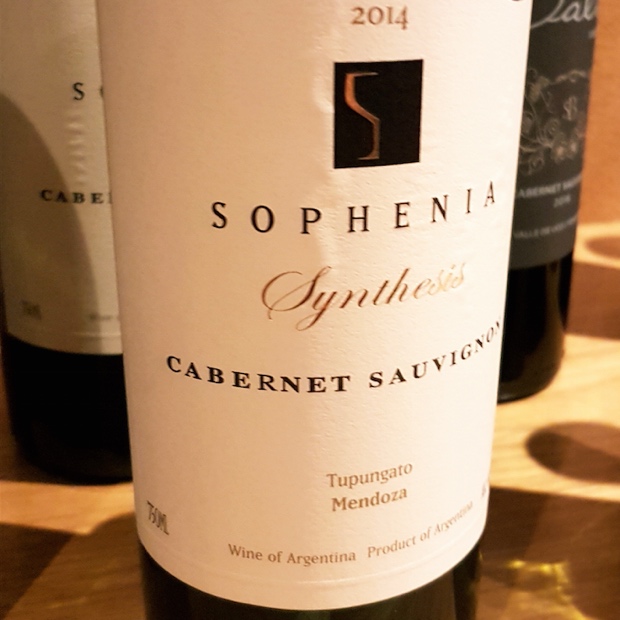
Sophenia Cabernet Sauvignon Synthesis 2014, Gualtallary, Tupungato, Uco Valley, Mendoza, Argentina (AgentWineAlign)

A wine made by Julia Hulupczok and Matiás Michelini. From a wild vineyard upwards of 1,300m where ripening is a challenge and tannins can be formidable. There’s a greenness to be sure and yet also a subtle grace about it. A different structure, impossibly dichotic and surely one you would not have found in Argentina just 10 years ago. Drink 2018-2024.  Tasted November 2018  fincasophenia  @FincaSophenia  @Juliahilux  @FincaSopheniaWines  Julia Halupczok
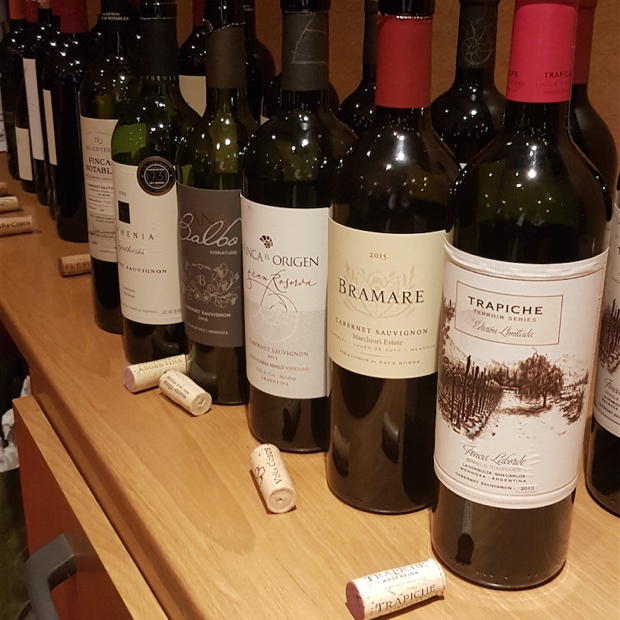
Masterclasses on cabernet sauvignon and franc with Viña Cobos winemaker Andreas Vignoni

Viña Cobos Bramare Cabernet Sauvignon Marchiori Estate 2015Perdriel, Luján de Cuyo, Valle de Uco, Mendoza, Argentina (Agent, $119.00, WineAlign)

At 1,000m few other cabernet wines out of Valle de Uco will deliver such concentration and polish. It’s also huge in acidity, grippy tannin and overall structure. Almost two-thirds new oak is used and the fortunate thing is really the highest quality fruit able to withstand this woody onslaught. Deep soils work hard for vines less than 25 years old, the upper strata built of clay-loam to sandy-loam and the substrata of river-washed cobbles and round stones. It was an early ripening vintage with harvest temperatures above the historical record. Not surprising to receive such a massive, not so much brooding but more like a swagger of attitude in a cabernet that can go the distance. Drink 2020-2027.  Tasted November 2018  vina.cobos  awsmwest  @VinaCobos  @AuthenticWineON  @vinacobos  @awsmon
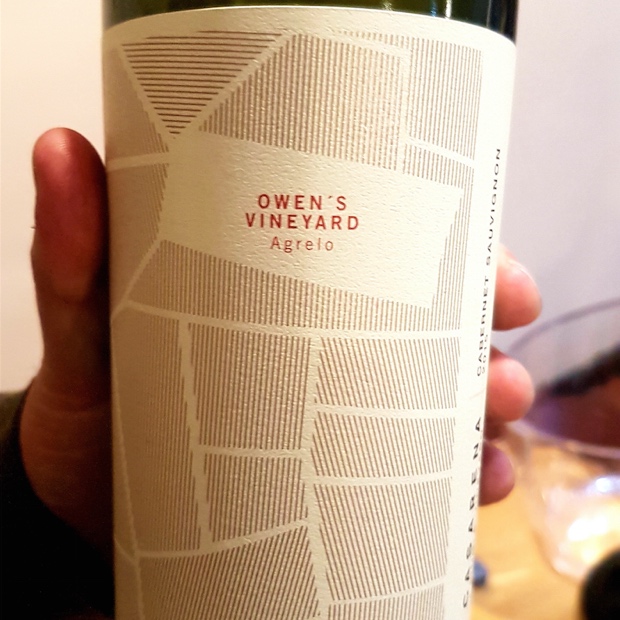
Bodega Casarena Cabernet Sauvignon Owen’s Vineyard 2015, Luján De Cuyo, Valle de Uco, Mendoza, Argentina (578062, $44.95, WineAlign)

Casarena’s Owen’s Vineyard is their special place, the key piece to this sector of the Luján De Cuyo puzzle. It’s importance is quite particular for the Napa Valley like repositioning of (Bourgogne) chardonnay and (Bordeaux) cabernet sauvignon. It’s a dry micro-climate with intense solar exposure and though not “mountain” fruit per se the wines draw upon matters of heliophany dictated by elevation. The Italian pergola-styled planted vines are old, some laid down as far back as 85 years in time. This approximately $30 US wine is a stunner, bloody beautiful in the darkest of Morello cherry red fruit that seems to macerate in its own liqueur. It is indeed reductive which only accentuates its freshness and there is a bountiful amount of acidity in support. Honest, apasionado, vehemente and intenso. Drink 2019-2023.  Tasted November 2018  bodegacasarena  noble_estates  @BodegaCasarena  @Noble_Estates  @BodegaCasarena  @NobleEstates
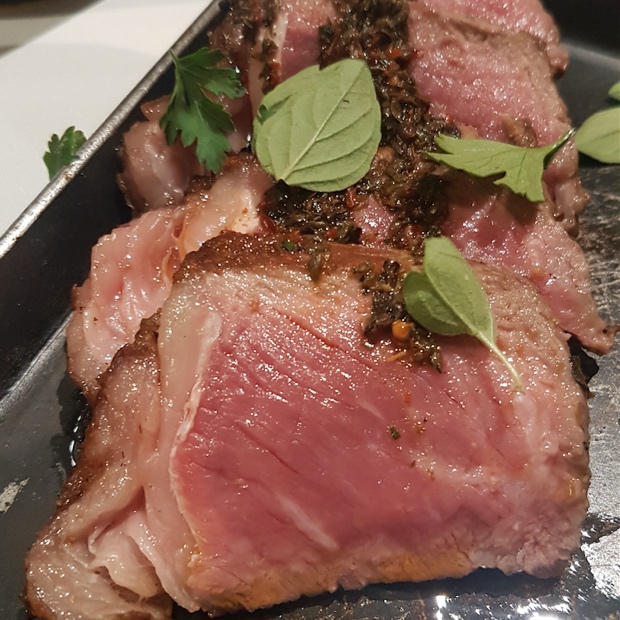
Filete at Luigi Bosca

Pascual Toso Cabernet Sauvignon Alta Barrancas Vineyards 2016, Mendoza, Argentina (441907, $32.95, WineAlign)

Alta is a huge cabernet sauvignon needing air, still very reductive in a hard protective shell sort of intense way. There can be no argument about these aggressive or rustic tannins needing time to integrate and settle. All the structural components are part of the note taking and note to self to add to the Mendoza cabernet sauvignon discussion. This example may not be the first but it does sit at the lead in terms of showing a real cool, minty herbal streak and a distinct amaro finish. Big, big wine with plenty of upside. Drink 2020-2027.  Tasted November 2018  pascualtoso  eurovintage  @PascualToso  @Eurovintage  @pascualtosowinesargentina  @Eurovintage

The next @winesofarg is naturally skin-contact orange, rosé and white. Pure, nervy, crystal examples of great interest from @chakanawines @alpamanta and @domainealmanegra

White, Orange and Rosé

Domaine Alma Negra Blanco Producción Limitada 2017, Vino Argentino, Bebida Nacional, Argentina (Winery, WineAlign)

From Ernesto Catena this is the second secret blend, a naranja vintage of the hide and seek, now you see a vino blanco, now an orange wine behind the mask. Maximum 500 cases are produced of this truly flexible white-ish orange, as it should be, as anyone’s guess and at the winemaker’s whimsy. “This comes from a place where you move away from knowing everything before you ever made a wine” explains Josefina Alessio on Ernesto’s behalf.  It’s meant to shake foundations and commit to things with blind and innocent intent. It’s a precocious orange, clean, pure, crisp and matter of fact. Smells like honey the drizzled over a tart slice of peach. The telling of varietal is kept hush but my money is on the likes of chardonnay, perhaps pinot gris and/or some torrontés. Nine months on skins, six in old barrels. Clarity and dumb luck precision with a pineapple dole of citrus, always in balance. Can’t believe it’s neither reductive nor oxidative and virtually tannin free. A 15 euro ex-cellar beauty. Drink 2018-2022.  Tasted November 2018  domainealmanegra  noble_estates    @Noble_Estates   @ernestocatenavineyards  @NobleEstates
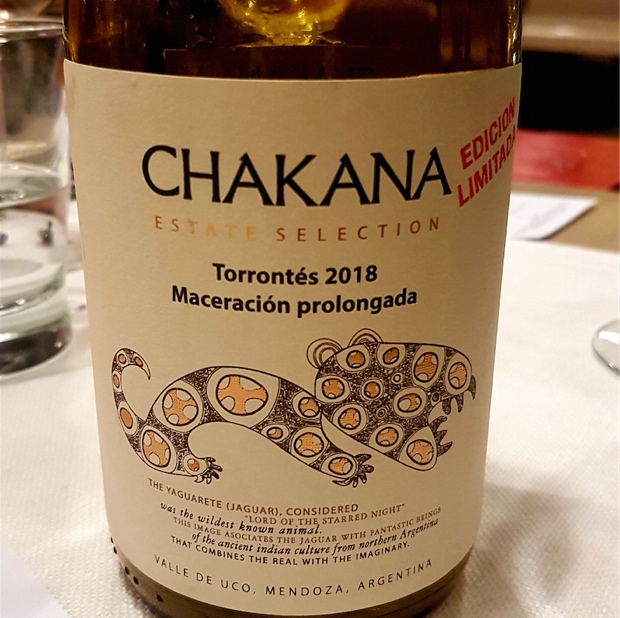
Chakana Estate Selection Torrontés Naranja Edicion Limitada 2018, Gualtallary, Tupungato, Uco Valley, Mendoza, Argentina (Agent, WineAlign)

This literal orange torrontés from only free run juice spent seven months on skins in 500L barrels. No additions, including sulphur but “we’re not interested in saying this is a natural wine,” insists winemaker Gabriel Bloise. “Because we’re not interested in the natural movement, but it is our pleasure.” Floral spice is a factor of “maceratión prolongada” as is the green melon, pomello and caviar. Takes torrontés to an entirely new level, in so many positive ways, with a salve, plenty of tannin and notice me character. Kudos for the exploration, for a team that’s clearly on to something and a winemaker acting on techniques that clearly float his boat. Drink 2018-2021.  Tasted November 2018  chakanawines  oeno2  @chakanawines  @oenophilia1  @bodegachakana  
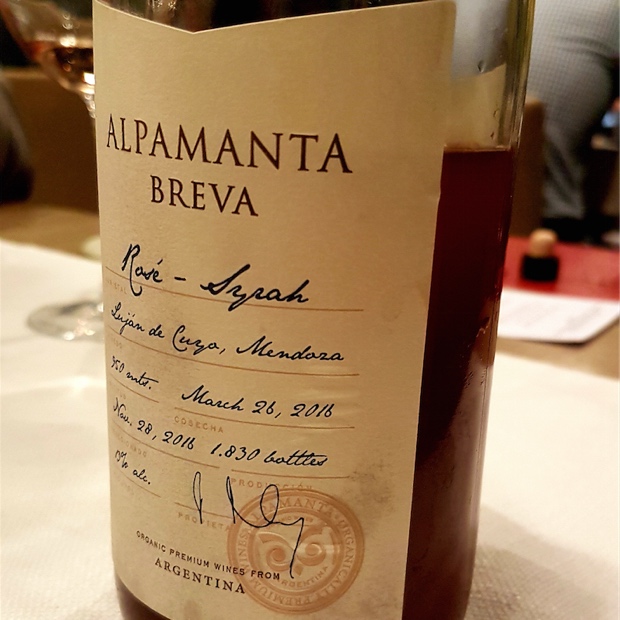
Alpamanta Rosé Syrah Breva 2018, Luján De Cuyo, Mendoza, Argentina (Agent, $42.95, WineAlign)

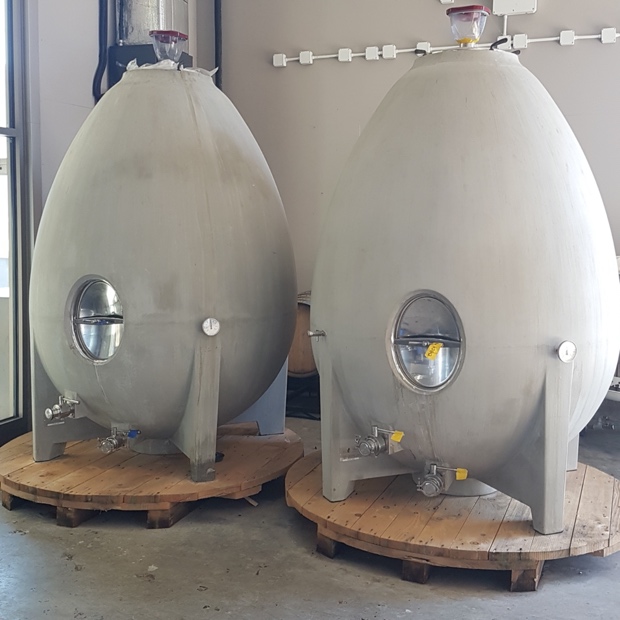
To call this a Rosé is to miss the point methinks. “In 2017 we decided to approach a new philosophy of wines,” explains Ukranian/Austrian/Dane/Argentine Managing Partner & CEO Andrej Razumovsky. It’s a perfectly lithe red wine made through the use of syrah picked real early direct to ferment in cement eggs for 11 months. The complete absence of second pressed grapes speaks not only to the method but also the teacher. “It goes well with intestines and seafood,” says Andrej. Now at a whopping 1,600 bottles made, which is in fact a great increase from the first vintage. Number two was a rainy one so six or seven months was not a sufficient amount of time to get this to its happy place. Pear, lemon and grapefruit are anti-red fruit notes but give it a good agitation to stave off reduction and then the wine just bursts with strawberry, fine bitters and endless aromatics imagined. It’s destined for danger and deliciousness because you really feel that you are drinking something that is alive. Not just from acidity, but like power breakfast juice that you would die for every morning. Killer stuff. Drink 2018-2020.  Tasted November 2018  alpamanta  rogersandcompanywines  @Alpamanta  @rogcowines   @alpamanta  @rogcowines
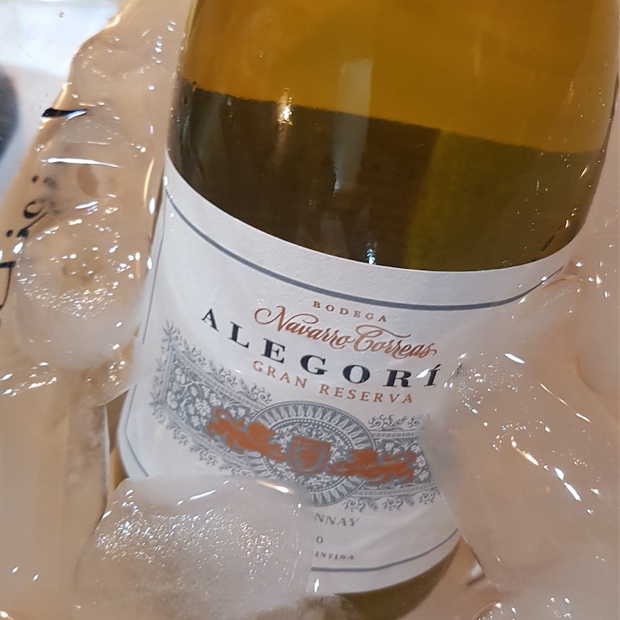
Navarro Correas Chardonnay Gran Reserva Alegoria 2015, Agrelo, Mendoza, Argentina (WineryWineAlign)

From Agrelo the Alegoria is chardonnay with true blue reduction and real apple bite. Spent six months in first and second use oak, now nicely aged with lemon-lime and orange zestiness. Toasty and quite wild from an ambient yeast ferment and shockingly crazy good. Drink 2018-2022.  Tasted November 2018  bodeganavarrocorreas  @BodegaNavarroCorreas

Bodega Piedra Negra Pinot Gris Reserve Vino Organico 2017, Los Chacayes, Uco Valley, Mendoza, Argentina (Winery, WineAlign)

New to the François Lurton portfolio and for the market is this pinot gris in classic older world mode. It’s really fine, spirited and with a creaminess that is suggestive of experimentation. There is some oak treatment but also some time spent in concrete egg. With no compromise to acidity there is a lieu-dit specificity and completeness so that it expresses fruit in a wholly different way than grigio and all other white wines in Argentina. Kudos to Lurton for going the distance and spending some cash on a product to separate itself from the pack. It’s a pinot gris we want to drink but also one to watch for not too distant sidesteps into something changed. Drink 2018-2021.  Tasted November 2018  bodegapiedranegra  @BgaPiedraNegra  @BPNvdu
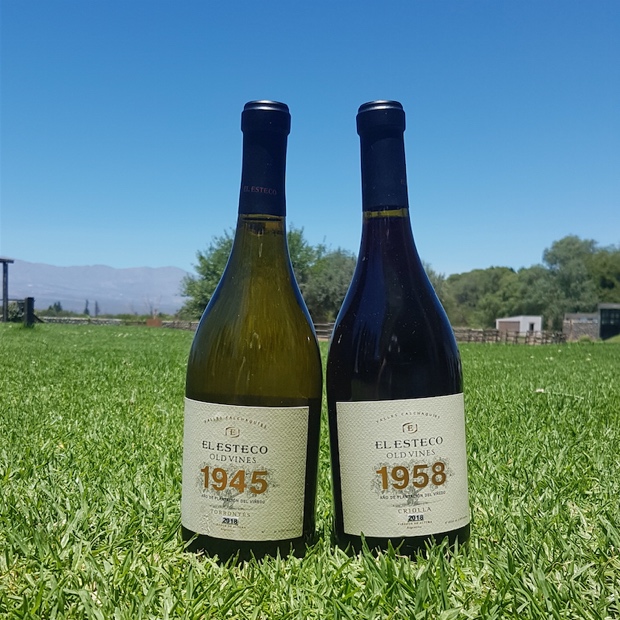
Bodega El Esteco Torrontés Old Vines 1945 2018, Valle De Calchaquí, Salta, Argentina (Winery, WineAlign)

From the original plantings of torrontés, as far back as 1945 but mostly vines in the 60-70 year old range. As saline and diamond sandy as it is floral but just as expressive as any. Very direct, linear, again that salty component which you could call mineral but also full-fleshy like Rhône varietal wines in new world climes. Could pass for high acidity driven whites from California or Washington state. Drink 2018-2022.  Tasted November 2018  bodegaelesteco  #mondiaalliance  @ElEstecoWines  @Mondia_Alliance  @elestecowines  @mondiaalliance

Piattelli Vineyards Reserve Torrontés 2018, Cafayate Valley, Salta, Argentina (Agent, $14.95, WineAlign)

Trained at Piattelli in Pergola, the ancient Mediterranean varietal is protected from direct sunlight and thrives in this desert where herbs of every imaginable kind grow wild and the aridity meets elevation and solar radiation. Piattelli’s is quite high in dry extract and concentration, ripeness and a maintained necessary acidity. This is the icon wine of the estate and few equal its magic in this vintage. It’s fresh, crunchy, crisp and explodes with tropical fruit. Bodes well for the ’18 reds. Drink 2018-2022.  Tasted November 2018  piattellivineyardsarg  piattellivineyardsusa  @piattelliusa  @PiattelliVineyardsARG  @PiattelliVineyardsUSA
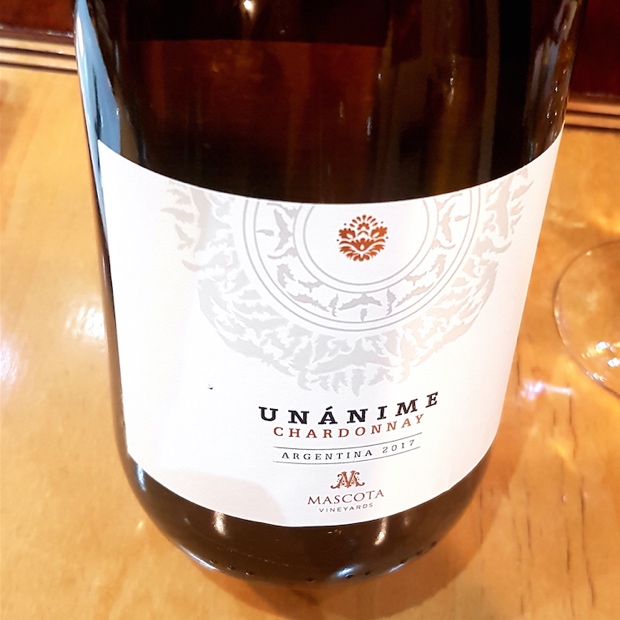
La Mascota Chardonnay Unánime 2017, Maipu, Mendoza, Argentina (Winery, WineAlign)

Grown at 1,300m “the pet” chardonnay is given a name meaning “unanimous” meaning it’s a wine from and for people who all feel the same way. The wine was raised 50/50 in concrete egg and large (500-1000m) oak foudres. It’s a very tannic chardonnay, with a salve texture, spice and lemon-vanilla molten creaminess. Plenty of texture and bite, not over the top but certainly ambitious to quite successful. Drink 2019-2022.  Tasted November 2018  mascotavineyards  univinscanada  @UNIVINS  @MascotaVineyards  @UnivinsCanada
Good to go!

godello

Bodega DiamAndes, Uco Valley, Mendoza, Argentina

Twitter: @mgodello

Instagram: mgodello

WineAlign

Eighteen Canadian wines that rocked in 2018

2017 Aldé Rosé, Interloper and As Is

The inaugural year-end summary of Canadian wine excitement posted to godello.ca was in 2013 and this sixth instalment naturally includes five more than the first. The necessity begs of the process to expand because five years later even the paltry number 18 is but a fraction of what could or should be noted, publicized and celebrated. This exercise is one of the most arduous writing assignments of the calendar year, difficult to pin down, even harder to leave wonder out in omission. As I’ve said before “it’s biased, exclusive and decisive but it is meant to celebrate a select few with a mandate to elevate and exult the rest. It’s also a proclamation read to many who remain ignorant to an ideal of great wine being made in Canada, to tell the insolent they are not welcome here anyway. The winemakers in this country are in full command of their acumen, craft and future. They own it.”

Related – 17 Canadian wines that rocked in 2017

Another year of tasting Canadian wine, another year of thousands of examples shared my way. Even more international travel made it difficult to keep up the pace but I’m sure I tasted more than 1000 wines once again. We are relentless in our attention paid to Canadian wines at the WineAlign office. The WineAlign National Wine Awards of Canada convened in June at the convention centre in Penticton B.C. and judging Ontario wines happened with David Lawrason at The Great Canadian Kitchen Party, the artist formerly known as Gold Medal Plates.

Related – 16 Canadian wines that rocked in 2016

Over the past 12 months my partner Scott Zebarth and I have upped our little négoce game with the fine folks at Ravine Vineyard Estate Winery. With the help of Marty Werner, Ben Minaker and Eden Garry we managed to crush, ferment, blend and bottle three new wines. In April there were 594 magnums of Aldé Rosé 2017, a 100 per cent VQA Niagara-on-the-Lake cabernet franc. Then in September we released the second vintage of Interloper Cabernet Franc 2017, VQA Niagara-on-the-Lake and our newest wine, As Is Field Blend 2017, VQA Niagara Lakeshore.

As Is Field Blend 2017, VQA Niagara Lakeshore, Ontario ($19.95)

The third wine in the little project with partner Scott Zebarth and Ravine Vineyard Estate Winery’s Marty Werner, Ben Minaker and Eden Garry A dream of fields, single-vineyard one-third each blend of pinot noir, merlot and cabernet franc, co-fermented with ambient yeasts. As Is.  scottzebarth  marty_werner  benminaker23  ravinevineyard  @Scottsomm  @marty_werner  @BMinaker23  @RavineVineyard  Scott Zebarth  Martin Werner  Ben Minaker  @RavineVineyardEstateWinery

In 2016 there were 16 wines noted. In 2015 I counted 15 on the filtered list. In 2014 the highlights numbered 14, just as in 2013 the number chosen to cant, recant and decant excellence in Canadian wine was 13. Last year you are correct, the list held 17 spots. Roll out the 2018 red carpet. Here are the 18 most exciting Canadian wines of 2018.

Back up the truck, glug glug Gamay Rosé Flipping the Bird by @hatchwines and where’s J-do?

The Hatch Wines Gobsmacked Flipping The Bird Pink 2017, Okanagan Valley, British Columbia (Winery, $21.99, WineAlign)

We pulled this Rosé from the ice and were utterly astonished and astounded at this particular bird. It was Jason Parkes, “he named you the bird. It’s how you were generally referred. We never really understood, never really thought about much.” So we tasted again and we raised a brow, got excited and then were utterly gobsmacked. Sometimes, there’s a wine. And I’m talkin’ about the Bird here. Sometimes, there’s a wine, well, he’s the Rosé for his time and place. Mostly go gamay go with some cabernet sauvignon, utterly fresh at the peak of perfect natural volatility, red berries and grapefruit. No salve texture nor trans fat feeling left in mouth behind neither. Crushable by any amount desired. A portion of the profits from the sale of this wine are donated to Parrot Island, a non-profit sanctuary for abandoned and abused exotic birds in Peachland BC. “With time, it only made more sense, As time went by, it just made more sense. You are the bird. You are the bird.” Thank you Jason, thank you Dude. Thank you Gord. Drink 2018-2019.  Tasted June 2018  hatchwines  @HatchWines  @hatchwines

Two years in a row. Well-deserved and just because.

Malivoire Rosé Moira 2017, VQA Beamsville Bench, Niagara Escarpment, Ontario (Agent, $24.95, WineAlign)

Malivoire’s most important and benchmark Ontario Rosé is one of the first to the table from the 2017 vintage and why not because its quick soak and lightness of being takes no time at all to get ready. This is the antithetical beauty of Rosé and how it must be approached for best results. Malivoire does not take a step forward from the most perfect ’15 and ’16 wines but there is more fruit in this ’17. You can actually nose and taste strawberry plus a hint of tart raspberry. This will appeal to more of the general Rosé loving populace without any compromise for the provincial, provençal geeks everywhere else. It’s ostensibly a better wine in 2017 because it will attract that growing audience without having made any concessions or dis to authenticity. Drink 2018-2021.  Tasted February 2018  malivoire  noble_estates  @MalivoireWine  @Noble_Estates  Malivoire Wine  Noble Estates Wine & Spirits

Fitzpatrick Fitz Rosé 2014, Okanagan Valley, British Columbia (Winery, $48.98, WineAlign)

Long lasting flavours of impression. Candied ginger, dried strawberry, every fruit shade of red, for redheads everywhere.  Last tasted December 2018  fitzwine  @FitzWine  @FitzWine

This pinot noir is lovely, quiet and mild, a lemon-strawberry aromatic blush of the faintest noir. Fine spun, wild yeasty, truly wound tight, so focused and persistent. Drink 2018-2022.  Tasted blind at NWAC18, June 2018

Trail Estate Riesling Foxcroft Vineyard Unfiltered 2016, VQA Twenty Mile Bench, Ontario (Winery, $35.00, WineAlign)

In 2016 the next wrinkle is a wild ferment (as opposed to the inoculated ’15), unfined and unfiltered, because as time progressed “I liked it more and more,” says winemaker Mackenzie Brisbois. No coarse filtration means some minor sediment will settle in the bottle. Smashed layers of tote-filled grapes are brought to the crushpad, in lieu of the crusher, to extract from the skins and stems, making use of the punchdown tool, while waiting before pressing. Recently bottled in December 2017 the BFR is something completely other and if 2015 was considered not, this follow-up is markedly fruity now, because it always was, all the way through during just more than a year in really old barrels. It’s a blonde riesling as per M. Gustave, if you will. “Why blonde? Because they all were.” This is the wisest of Mack Brisbois’ rieslings, calm, confident, collected and shining brightly from the word go. You don’t have to wait on this one, it’s riper, it’s unfiltered, made with a lot less sulphur than the skin contacts and those “dirty” 15s. “I like to see how little (sulphur) I can get away with,” notes Brisbois. The most accomplished riesling that she has made to date, the 16’s balance is spot on now and you will not have to wait for it to come into its cinematic stage. Drink it now and keep it longer. Drink 2018-2024. Tasted April 2018  trailestatewine  mackbrisbois  @TrailEstateWine  @MackBrisbois  Trail Estate Winery  Mackenzie Brisbois

Hard not to put the 1991 Cave Spring on the list but is there any good reason to not place the CSV on the list every single year?

Cave Spring CSV Riesling 2016, Cave Spring Vineyard, VQA Beamsville Bench, Niagara Escarpment, Ontario (566026, $29.95, WineAlign)

The CSV from a warm 2016 really expresses the vintage on the nose with a heavy dose of wet stone and every part of a ripe peach. You have to get past the early sulphur but once you do you take a good bite into the flesh of this riesling and the juices will run with accents and angles fit by tonic, pith, tangy, nervy acidity and a hidden sweetness. The sugars are surely more elevated than realized or will ever be felt because the combination of acidity and pith are covers that will never peel back. Size matters and this CSV is built with great Escarpment architecture, stepping out of the paradigmatic 2015 shadow and into another age. This 2016 begins an epoch of structural expressionism and should easily carry its construct through to the next decade. That consequently, is when this CSV will really be ready to rock and roll for a full decade more. Drink 2020-2030.  Tasted March 2018  cavespringcellars  thevineagency  @CaveSpring  @TheVine_RobGroh  Cave Spring Cellars  The Vine

Godello and Paul Pender of Tawse
PHOTO: Steven Elphick & Associates

Tawse South Bay Vineyard Chardonnay 2015, VQA Prince Edward County, Ontario (Winery, $35.15, WineAlign)

The South Bay Prince Edward County fruit from Huff Estates lands is simply exceptional produce, from where winds blow-dry leaning vines perched aboard a passel of solid limestone sliding into Lake Ontario. Tawse has always coveted this fruit and when Paul Pender is allowed to play with it he does so with great mindfulness in search of greater apogee. Methinks Pender both picked a few days to a week earlier and also worked the most mineral meets Ceres toast his barrels can afford. There is a deep, sonorous and resounding regard about this chardonnay. It’s both sumptuous and serious, with a flinty-mineral meets toasted hazelnut interplay. It is perhaps an Ontario nod to Les Caillerets, or just a far away coincidence, but regardless you just have to know that it’s a very special wine. Drink 2019-2026.  Tasted December 2018  tawsewinery  @Tawse_Winery  @tawsewines

Domaine Queylus Chardonnay Réserve Du Domaine 2016, VQA Niagara Escarpment, Ontario (Agent, $37.95, WineAlign)

Still in the vein of the Queylus chardonnay tradition where a winemaker is always on the watch, meaning you never take your eyes off the child or the prize. The Réserve is a matter gathered from the best barrel selections but says Kelly Mason “the treatment and the worry are the same.” Slides easily away from the tropical and sidles up the the rocky places from whence it came. Chardonnay is often round and liked that way but Queylus is direct, linear, angled and also far from angular. When the Escarpment rule is followed and traced along the lines of a malolactic ruler marked by clones (in this case 76 as opposed to 95) then structure is assured. The ambition is real, the intention serious and there is no roaming far to the west or the east. All that and richness is found through every bright sip. Drink 2018-2024.  Tasted July 2018  queylus  @Queylus  Domaine Queylus Winery

Hidden Bench Chardonnay Tête De Cuvée 2011, VQA Beamsville Bench, Ontario (278812, $45.20, WineAlign)

Still so youthful, now noted by smoked quince with a shot of peppermint schnapps where no sugar lives save for the sweetness of nature.  Last tasted December 2018  hiddenbench  markanthonyon  @HiddenBench @MarkAnthonyWine  Hidden Bench Estate Winery  Mark Anthony Wine & Spirits

Tête De Cuvée by Hidden Bench, like a Champagne best of the best abstraction, makes an appeal to self-esteem and esteem for others, to consumers who have come to recognize Niagara and even more specifically, the Beamsville Bench for head of the class, cool climate Chardonnay. That mouthful congregates and works in congruence with the quality in the Tête’s composition; full-on freshness, density, weeping cerate texture, toasted and popping kernel, fine-grained localization, utterly integrated barrel. There was scant quantity (32.5 hL/h) from some very old and wise vines, pronounced like others but louder than most, from the bullhorn of a stentorian vintage. What is felt and spoken about the quality inherent from out of the finest parcels in the Locust Lane and Rosomel Vineyards Chardonnay fruit is more than a patent observation. The ability to take on toast cuts to the nougat and the synoptic rises to the ethereal ozone. Not to mention gross minerality. On the shortlist for best Niagara Chardonnay to date. Drink now and beyond 2025. Tasted twice, September and October 2014

Roche Wines Pinot Noir 2016, Okanagan Valley, British Columbia (Winery, $24.90, WineAlign)

The 2016 is purchased pinot noir fruit by Dylan and Pénélope Roche from Kozier organic vineyard on the Naramata Bench. Hand harvested and fermented in stainless steel tanks with regular pumping over and pressed after three weeks on skins. The press wine was separated from the free run and aged for 10 months in stainless steel and neutral French oak. Knowing what I know after the first blind assessment it now turns this love of love into inspiration, away from the soulless, blind pinot noir love and to something real. If there is a more honest and crushable one I’d be shocked. So exciting and new.  Also tasted at Bench 1775, June 2018  rochewines  @RocheWines  @rochewines

Really ripe, I mean really ripe, a hematic liqueur that few others in the flight can match. From a warm site to be sure, full and thick as pinot nor  thieves. Not as structured but so very, bloody and reasonably drinkable. Drink 2018-2021.  Tasted blind at NWAC18, June 2018

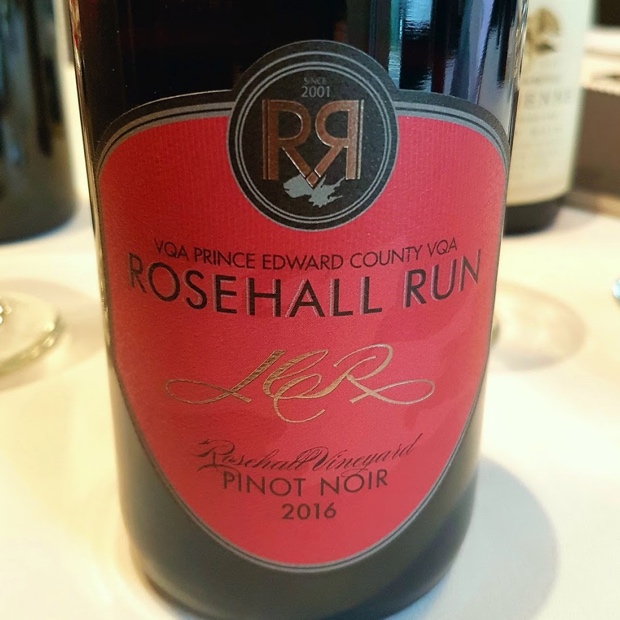
Rosehall Run Pinot Noir JCR Rosehall Vineyard 2016, VQA Prince Edward County, Ontario (Winery, $39.00, WineAlign)

Though statements of monadical hyperbole should very much be avoided, a taste of Dan Sullivan’s ’16 JCR makes one think it has all come to this. The glycerin fruit endowed with so much natural sweetness and magnificently low alcohol feels like an impossibility. In a way it is but it’s also a County reality. This may just be the least astringent PEC pinot noir ever produced and at the same time seems entirely void of tension. Yet there is structure and cohesion, two functors so very necessary to see it drink well for 10 years, with great charm and further curiosity for five more after that. Drink 2018-2028.  Last tasted July 2018  rosehall_run  sullywine  profilewinegroup  @Rosehall_Run  @sullywine  @ProfileWineGrp  @RosehallRun  Dan Sullivan  @ProfileWineGroup

Bright, red raspberry, light and effusive with a simple, liquid chalky feel. Really drinkable. The tart is part of a delight in composition. A good chew.  Tasted blind at NWAC18, June 2018

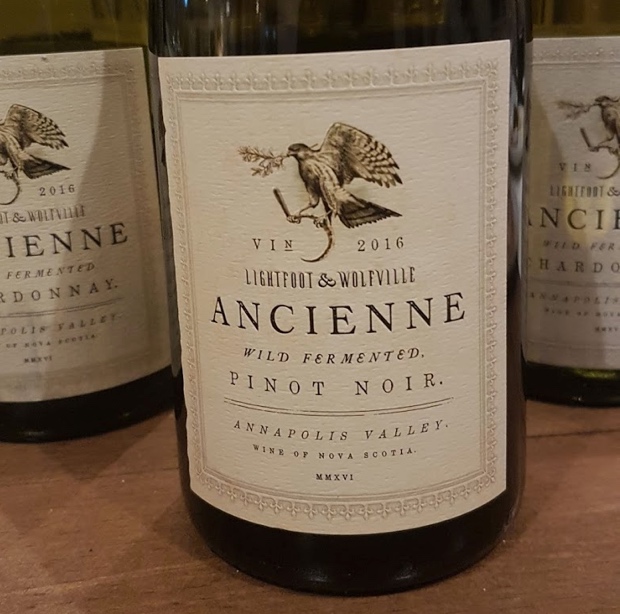
Lightfoot & Wolfville Ancienne Pinot Noir 2016, Nova Scotia, Canada (Winery, $40.00, WineAlign)

Driest year on record with nary a moment of disease pressure. Spent 18 months in older French oak, less one barrel. This is the richest Ancienne and Nova Scotian pinot noir to date, with firm grip, structure and outright intensity. Welcome to the pinnacle of the first L & W pinot wave, the culmination of the first epoch, after which nothing will be the same and so much learning will have been achieved. Begs the question of what happens next? The vines get better is what, in fact I walked the 2018 pinot noir vines today. Their maturity and contiguous consistency will be the answer to future questions and debate. They will speak for and on behalf of themselves. Drink 2019-2026.  Tasted October 2018  lwwines  rachhlightfoot  jhortonns  korilightfoot  @rachel_hope  @lwwines  @lightfootandwolfvillewines  Rachel Lightfoot  

Two Sisters Cabernet Franc 2014, VQA Niagara River, Ontario (Winery, $54.80, WineAlign)

Released on Monday July 16th and now a Platinum Award winner at NWAC18. “This has everything that ’13 had but just a bit more weight, structure and complexity, plus volume, those last three meaning on the palate,” explains winemaker Adam Pearce. Down in volumes (30 per cent), beautifully aromatic, low-cropped, (1.25 tonnes per acre), 15 per cent new wood, 32 months in barrel, in bottle for an additional 10 months. The focus, presence and confidence of this wine stand apart, all worked specific to place and the uniqueness of the appellation. Benefits from a double-lake effect and different soils. Chalk and river stone liquidity running as a river of its own right through. Drives the point of patience, to allow a vineyard the chance to speak of its singular phraseology. The 2014 Niagara River cabernet franc may still be a ways from reaching its full potential but it has certainly hit its stride. Drink 2019-2027.  Tasted July 2018  twosisters_vineyards  apearcevino  @TwoSisters_wine  @apearcevino  Two Sisters Vineyards  Adam Pearce  

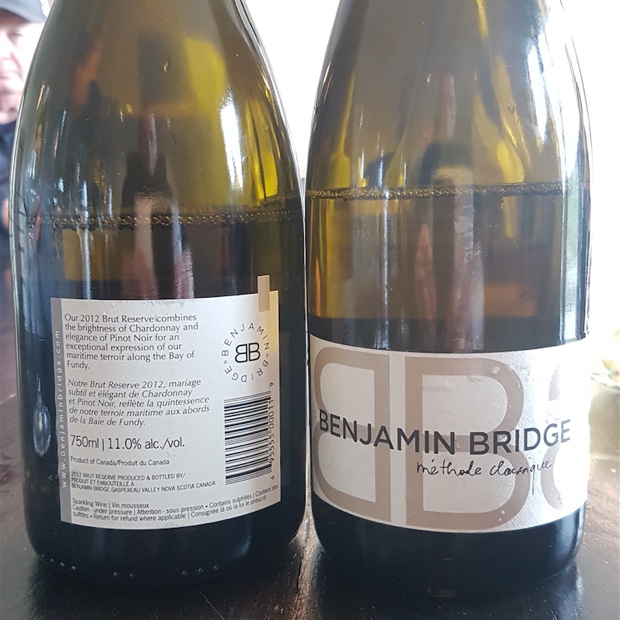
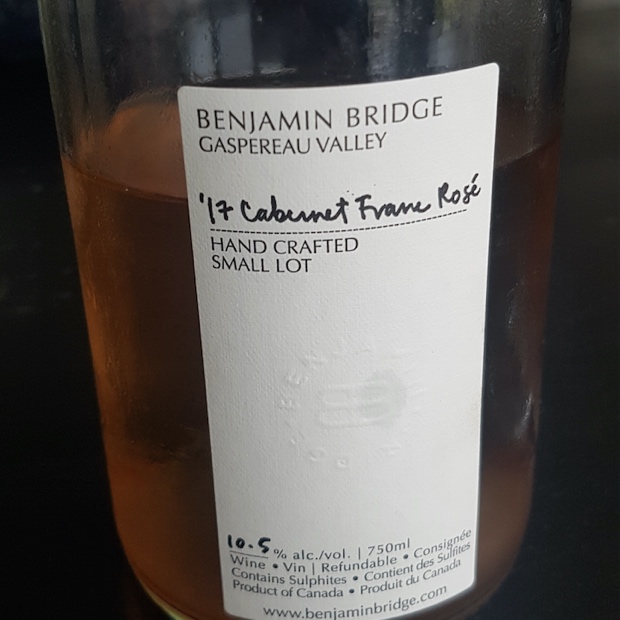
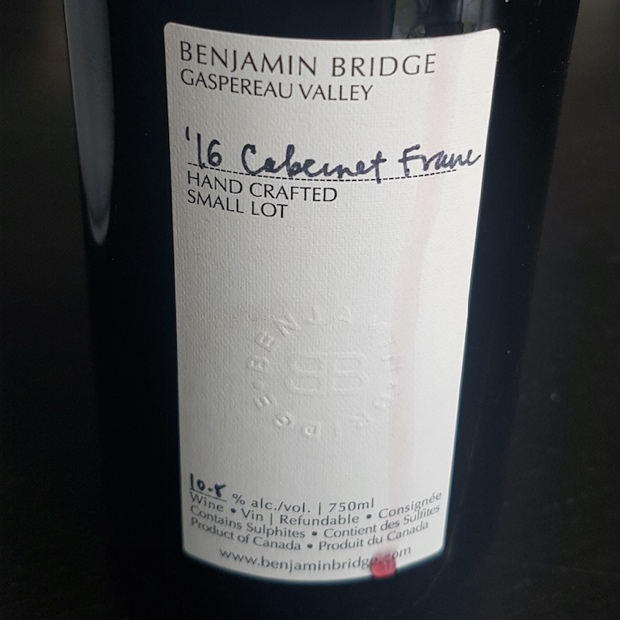
Benjamin Bridge Cabernet Franc Small Lot 2016, Nova Scotia, Canada (Winery, $57.95, WineAlign)

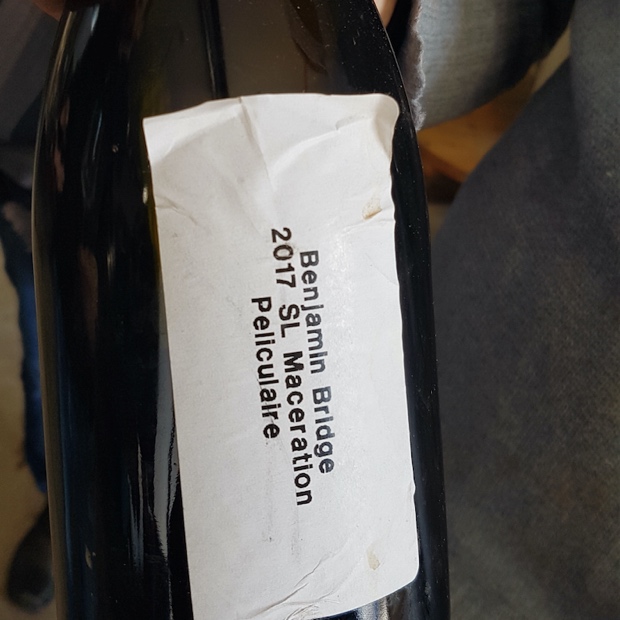
Still from the Kingsport farm fruit, a whole cluster ferment, no messing with stems, fully oxygenated, no carbonic maceration, 30-40 per cent whole bunch. Total output is “a barrel and a bit.” An infused aromatic ferment, green spice and a char of tobacco, utter intensity, compelling and a phenolic reality. “A myth buster incarnate,” says Jean-Benoit Deslauriers, ripened beyond the sensory borders, miles away from other territories, with generosity and juicy ripe legs. From a warm vintage, nine months in neutral oak plus nine in the bottle. Then a decant and oh how the florals open up, furthered, blooming and intoxicating. More than just a fun little experiment so please wake up and smell the Gaspereau Valley. So lively, a wee salty and all energy. Drink 2018-2024.  Tasted October 2018  benjaminbridge  caveman__jones  scott.savoy  @Benjamin_Bridge  @benjaminbridgevineyards  Jean-Benoit Deslauriers  Scott Savoy  

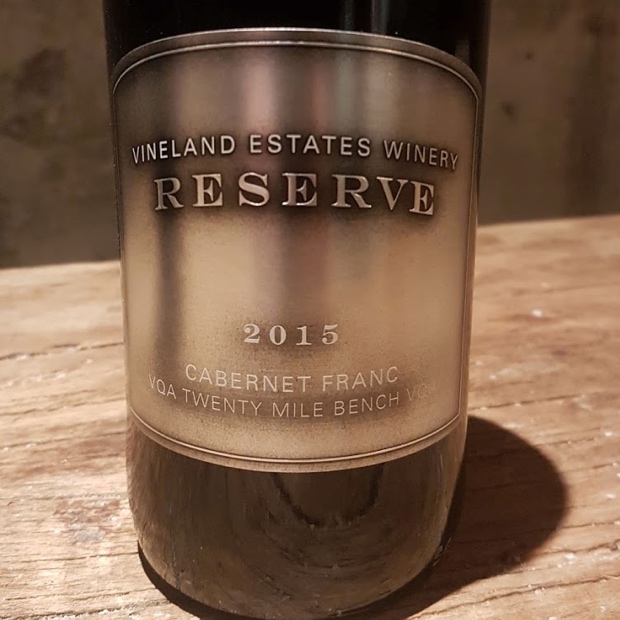
Vineland Estates Cabernet Franc Reserve 2015, VQA Niagara Peninsula, Ontario (Winery, $50.00, WineAlign)

Winemaker Brian Schmidt’s investigations into cabernet franc border on obsession but truth be told it’s not rocket science that makes so many fine varietal tiers. There are the six growers combed from six Niagara sub-appellations that add up to one entry-level, over-delivering cabernet franc. Then there is Bo Teek, the large estate vineyard planted in 1996 to clone 327 in the south and in 2006, to clone 214 in the north. Not to be forgotten in the cabernet franc make-up is the limestone substratum, highly significant for the trace mineral, elemental push up into these vines ensuring that no over-the top make up is required for varietal elevation, explanation and consummation. Vineland’s Reserve spends 16 months in barrel, none of which are any newer than from 2009. Fermentation, barrel, bottle, repeat. That’s it. No racking. This Reserve is the marriage of north and south, 60 and 40 per cent respectively, a combinative attack both phenolic and aromatic. The northern fruit sings some blues with crooning volatility whilst in delivery of sweet blackberry fruit. The south is all about stretched, nimble and elastic tones, elegant, more fragrance, black to red berries and less brooding. As one it’s a deeper and more intense wine than Bo Teek or Elevation, bottled in November, with higher acidity. The corollary variegation expands above what Bo Teek seems capable of executing solo. The structure here tells us it will not switch gears as early and live longer. Look for some secondary notes in the vein of black truffle, sweet balsam and dried lavender to show up after the turn of the decade. Drink 2020-2027.  Tasted April 2018  vinelanestates  benchwineguy  @VinelandEstates  @benchwineguy  @winery.vinelandestates  Brian Schmidt


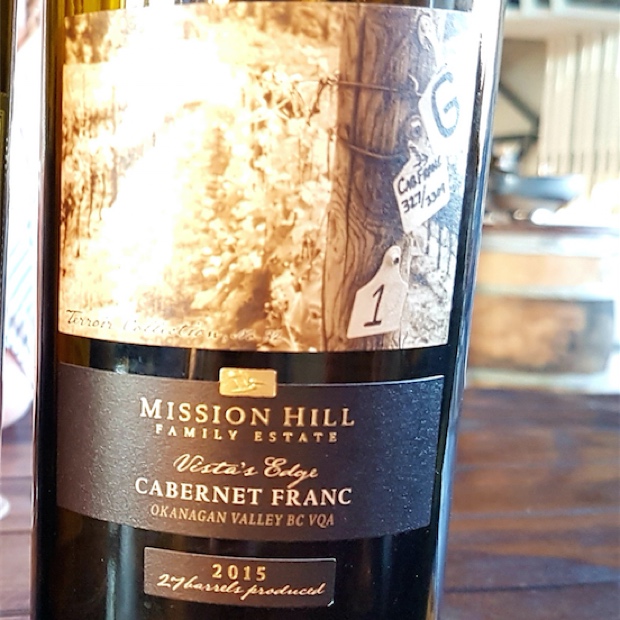
Mission Hill Terroir Series Vista’s Edge Cabernet Franc 2015, Okanagan Valley, British Columbia (Winery, $50,00, WineAlign)

You have to wonder why Mission Hill had not kicked at the can before because the Vista’s Edge is one of British Columbia’s brightest cabernet francs. It’s an important and exciting first effort from East Osoyoos fruit pulled from one of the Okanagan Valley’s farthest southern plantings. It’s a top three per cent single-vineyard, special terroir series edition that smells, tastes, feels and acts like cabernet franc. Nothing about this, not by barrel nor like varietal reminds of cabernet sauvignon. There are currant and peppery reductive meets pyrazine notes as red, bright and fresh as you’d hope they would be. The pitchy darkness of structure and hue falls because night must always follow the day and that’s what happens when cabernet franc is made this way. A long life ahead is conformed by the diphthong finish. Drink 2019-2026.  Tasted June 2018  missionhillwinery  @MissionHillWine  @MissionHillWine

Leaning Post Syrah Keczan Vineyard 2016, VQA Lincoln Lakeshore, Ontario (Agent, $45.00, WineAlign)

The eureka moment for syrah, Lincoln Lakeshore, Keczan and Leaning Post came years ago, for it, that, they, them and I. Not together mind you but passion knows no limits and opens doors to transcend time and space. This pinpointed farm on that flat expanse so perfectly proximate to the lake is where syrah can express itself without hindrance or opposition. Here the lake is like the Mediterranean and the river like the Rhône. Together they address the clay, create a moisture gathering effect, ship out the cold fronts and usher in the warm. They make syrah like this, rich in humus, hummus and hubris, olive tapenade and sweet brine. Fruit is fruit, also sweet, but savoury, acidulated and fine. Acidity is perfect in this vintage. Length is exceptional. A new benchmark, bred from passion with the intendment to inspire commitment. One of Ontario’s best red wines. Drink 2020-2032.  Tasted September 2018  leaningpostwine  nicholaspearcewines  @LeaningPostWine  @Nicholaspearce_  Leaning Post Wines  Nicholas Pearce

Kacaba Signature Series Reserve Syrah 2015, VQA Niagara Escarpment, Ontario (Winery, $44.95, WineAlign)

It’s about time we get something straight. Kacaba knows Syrah, in fact they should receive serious consideration for the title of Ontario’s top Syrah specialist. Two vineyards (with plantings that date back to 1997) provide fruit for several tiers, including the syrah from Terrace and Silver Bridge Vineyards and the highest quality chosen, hand-harvested fruit for this Signature Series Reserve. An escarpment’s dolomite limestone effect plays into these hands from fruit that arrives into glass through the body of arguably Ontario’s finest current syrah. The aromatic waft of a warm pastry crust is laden with red and blue berries that also fill the cool flavour centre of a pastille. The savoury candy gives way to a peppery kick before featuring a cure of salumi and a return full circle to that serious fruit. The apposite and complimentary smells and tastes are only intensified with a bottle’s decant so just imagine the possibilities that age will bestow. This is special work from Michael Kacaba with winemakers John Tummon and Vadim Chelekhov.  Last tasted February 2018  kacabavineyards  vadimwineguy  @KacabaVineyards    Kacaba Vineyards and Winery  Vadim Chelekhov

Oh what a beautiful peppery syrah, ripe and floral, all of its aspects, angles and components agreed upon, all in. When Canadian (and in this case, somewhere in Ontario) syrah gets down to business, gets straight to the meaty and smoky point it does so tart, tight and coiled around your tongue and finger. This, right here just nails it. It is the best of times. This is the man. Drink 2019-2027.  Tasted blind at #NWAC17, June 2017

Stratus Vineyards Sémillon Botrytis Affected 2016, VQA Niagara On The Lake, Ontario (Winery, $38.00, WineAlign)

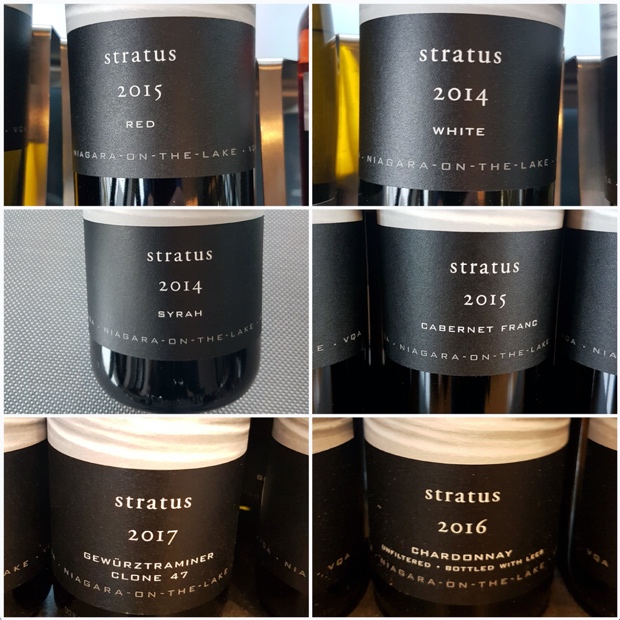
One of the most unique dessert wines in Ontario this is neither late-harvest nor Icewine in origin. Only the third time it has been made, the 2016 sémillon launches with a smoky beginning, as expected and yet, is always appreciated. Some of the fruit is harvested early, but other bunches in the same vineyard are some of the last to be harvested. This low alcohol anti-sticky is from the warm vintage and from the same spot in the vineyard, vintage in vintage out. Most interesting is how these pristine botrytis affected grapes are picked ahead of the rest of the clean fruit used for the dry sémillon. It’s a very vinous sém with distinct apricot and longan notes. Great acids in 2016. Has still retained some waxiness and found some tropical fruit despite the early pick. All of the counterintuitive ideals tell us that the warm vintages can make for top quality dessert wine. This is the masquerade party wine made by the Way Outs band. “That’s where the fun is, way out, WAY OUT!” Drink 2019-2028.  Tasted October 2018   stratuswines  @StratusWines  @StratusWines

Good to go!

godello

2017 Aldé Rosé, Interloper and As Is

Twitter: @mgodello

Instagram: mgodello

WineAlign

Eighteen mind-blowing wines of 2018

Godello, Museo civico e diocesano d’arte sacra di Montalcino

Welcome to Godello’s annual list of the most memorable, game-changing and mind-altering moments, also known as his 18 mind-blowing wines of 2018. Godello started this year-end assessment first in 2012 though first blessed the list with the moniker for the 14 mind-blowing wines of 2014. Whether it’s the fifth or the seventh incarnation matters little to negligible because in the end it’s all about the who, what and where.

Related – Seventeen mind-blowing wines of 2017

With thanks to the winemakers, friends, colleagues and pirates I welcome you to read on. Godello’s 18 mind-blowing wines of 2018.

Taittinger Comtes De Champagne Blanc De Blancs Vintage Brut Champagne 2006, Champagne, France (55277, $205.95, WineAlign)

Rarities are special for many reasons but in the case of the Comtes de Champagne Blanc de Blancs it’s a matter of chardonnay incarnate. Some details must be kept in the pocket of assessment. Only exceptional vintages lead to its production, fruit is drawn from the finest Côte des Blancs parcels of chardonnay and only the first press juice is used. So what? So the gathering might lead one to think of words like purity, elegance, refinement, finesse and delicasse. In actuality there is the finest wisp of smoke and smoulder, a bite from a perfectly ripe apple and the zen golden taste of honeyed Japanese toast. Who could not be overjoyed to zen out with the Comtes B de B, anytime, anywhere. Drink 2018-2030.  Tasted January 2018  champagnetaittinger  fwmcan  champagne_officiel  @TaittingerUK  @FWMCan  @Champagne_UK  Champagne Taittinger  @FWMCan

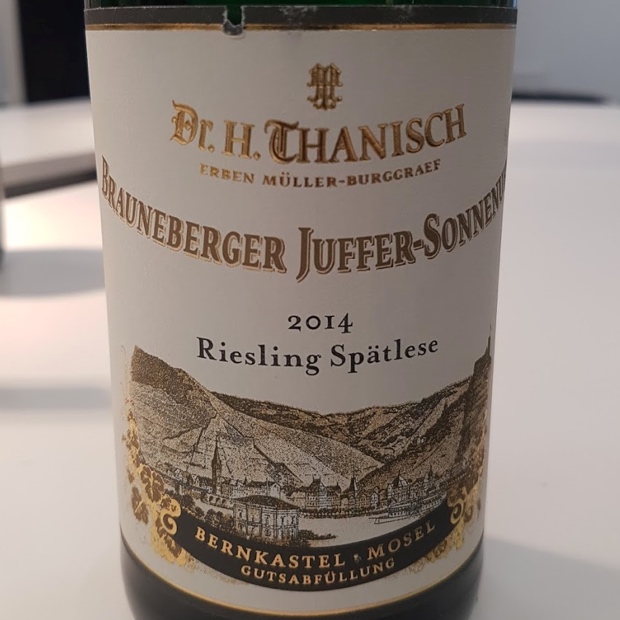
Dr. H. Thanisch Brauneberger Juffer Sonnenuhr Riesling Spätlese 2014, Prädikatswein, Mosel, Germany (298182, $40.95, WineAlign)

In a word, thank you, well two, to say how important, generous, fortuitous, philanthropic and poignant it is to taste Spätlese from this combination of producer, vineyard and alcohol. At 7.5 per cent proper and out of arrested necessity the frame on which the ultra-clean fruit and fineness of acidity hang is kevlar light and built to last. The poise and integrity in exhibition toasts lithely from stones warmed and earth cooled by night through excitable seasonal fluctuations. If this does not soothe the savage while wooing the unaware then few German rieslings will. This can’t be missed nor will it pass lips without eliciting a response set passionately in the ethereal and the sublime. Amazing. Drink 2021-2035.  Tasted April 2018  #braunebergerjuffer  awsmwest  germanwine_ca    @AuthenticWineON   @germanwineca  #braunebergerjuffer  @awsmon  @germanwinecanada

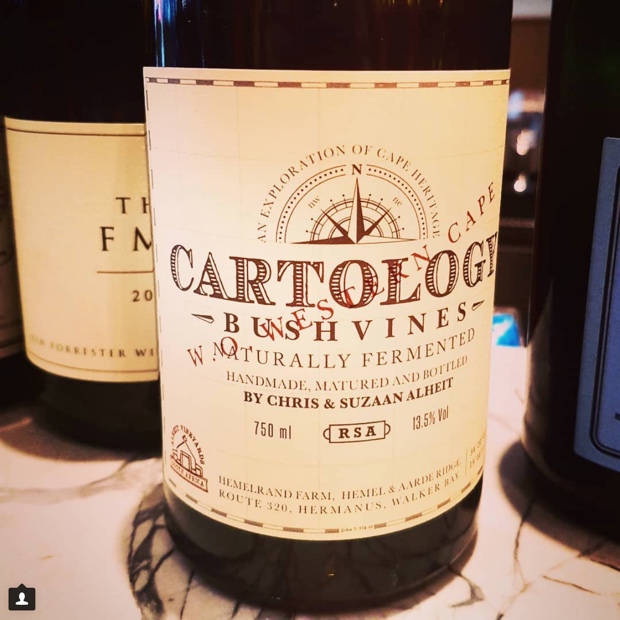
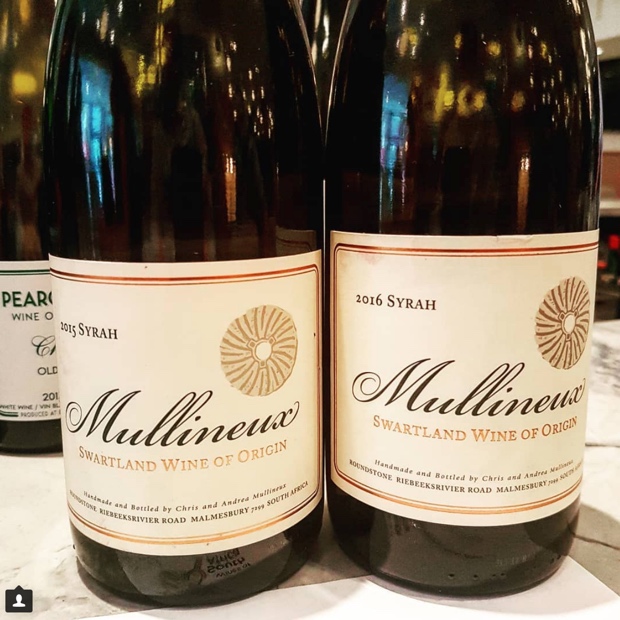
Into the South African mystic ~ A formidable line-up led by @mullineuxwines with thanks to Chris, LK @WOSACanada JG @lbstoronto @wosa_za @NicholasPearce_

Mullineux Schist Chenin Blanc 2014, Swartland, South Africa (Agent, $89.95, WineAlign)

Mullineux’s Schist is a 100-120 case production (though only 72 in 2014), from schist, of course, not granite, which adds mid-palate weight and texture. Also from older (36 and 40 years) vines based from soils of the Kasteelberg. It’s a heartfelt message and cerebral pulling string from the 2014 density gifting vintage. Older barrels wrap like a blanket for fruit richer than you’d ever imagine, full-bodied, beautiful and robed in petticoat unction. It’s also dry as the farmland desert. Truly one of the finest chenin blancs from South Africa and beyond. Drink 2018-2027.  Tasted May 2018  mullineuxwines  nicholaspearcewines  wosa_ca  @MullineuxWines   @Nicholaspearce_   @MullineuxWines  @WOSACanada  Andrea Mullineux  Chris Mullineux  Nicholas Pearce  @WOSACA

How to have an epiphany. Taste 25-30 year-old #southafrican white wines. Case in point @kleinconstantia sauvignon blanc

Klein Constantia Blanc De Blanc 1987, Constantia, Western Cape, South Africa (Winery, WineAlign)

Poured by Managing Director Hans Astrom in Cape Town alongside 1994 and 2009. Planted in 1979, the inaugural vintage and the first South African sauvignon blanc was 1986. The 1987 was not labelled as sauvignon blanc but rather as B de B because of the botrytis-affected vintage. Honeyed but not in the way you might expect, not pushed by a petrol-fuelled sweetness but instead as the action of an old world inspired mash up. Like Loire Jolivet Sancerre meeting Huet Demi-Sec chenin blanc head on. The collision explodes into a smoky smoulder with textural consequences. It’s a bees-waxy ethereal treading of chaotic spaces between worlds. The astral travel must have twisted through three decades of nether to arrive at this place, with the low pH vineyard soils to thank. And the magic, despite or perhaps in ode to the ’87 botrytis. In the end aridity wins and the wine drinks so proper, perfect and fine. Drink 2018-2020.  Tasted September 2018  kleinconstantia  halpernwine  wosa_za  @KleinConstantia  @HalpernWine  @hansverbier  @WOSA_ZA  @KleinConstantia  @halpernwine

Alheit Vineyards Sémillon La Colline Vineyard 2017, Franschhoek, Western Cape, South Africa (Winery, WineAlign)

“Qu’est-ce que c’est?” From a vineyard housing both light and dark skinned sémillon and if there are others in this world I am not privy to the information. The resulting wine is 85-90 per cent blanc and 10-15 gris. La Colline was planted in 1936 on the southern slope of Dassenberg and is now farmed by grandson Anton Roux, a direct descendant of the Huguenot refugee Paul Roux who arrived in Franschhoek in 1688. The vines stretch up the hill from 310-350m and it is the fruit from the middle slope that is best to leave for picking long after the chenin blanc. This is the indispensable fruit used in Alheit’s Cartology. Thick skins elevate the natural talking tendencies, from a super healthy pH for drupe of apposite attack and confusing like great whites you would not or should not compare it to. Chris Alheit’s invades your head’s consciousness with this amazing depth for sémillon, with no definable context, pretence or precedent. The impossibility is totally unique in the world and yet utterly South African. It’s both tense and nervous but somehow I can still relax. Psycho Killer sémillon.  Drink 2020-2028. Tasted September 2018  chrisalheit  gsoleil123  @ChrisAlheit  @GroupeSoleilTO  Chris Alheit  Groupe Soleil Fine Wines

Chablis Grand Cru can be found in the commune of Chablis on the right bank of the Serein River and the appellation comprises seven climats; Blanchot, Bougros, Les Clos, Grenouilles, Preuses, Valmur, and Vaudésir. “The terroirs, formed in the Upper Jurassic era, 150 million years ago, are composed of limestone and marl with Exogyra virgula, tiny oyster fossils. Chablis Grand Cru is one of the rare French AOC wines to make reference to its geology, notably the Kimmeridgean age.”

Christian Moreau Chablis Grand Cru AOC Les Clos 2015, Bourgogne, France (Agent, $82.00, WineAlign)

Who has not waited for the sovereign Grand Cru to get together with the 2015 vintage? I’m quite sure Christian Moreau was one of those who looked at the alliance with all his acumen and experience to craft a high point of Chablis benevolence. Christian’s ’15 is beautifully fruity, ultra fresh, richly endowed and reductive perforce. So young and precocious but begging for our patience, his is a model of Les Clos richesse. Resides on the cocotte or chouette side of Chablis with notes of white flowers and fresh herbs. Also layered of fruit over stone upon fruit, of peach, persimmon, citrus and wet stone. Implosive intensity reminds of Chablis Grand Cru structure though Moreau’s is more elastic than many, of a subtle and sultry liquidity. Great potential here. Drink 2021-2031.  Tasted May 2018  @christian_moreau_pere_et_fils  rogersandcompanywines  vinsdechablis  vinsdebourgogne  @ChristianMoreau  @rogcowines   @vinsdechablis  @GrandCruChablis  @purechablis  @VinsdeBourgogne  @BourgogneWines  Christian Moreau  @rogcowines

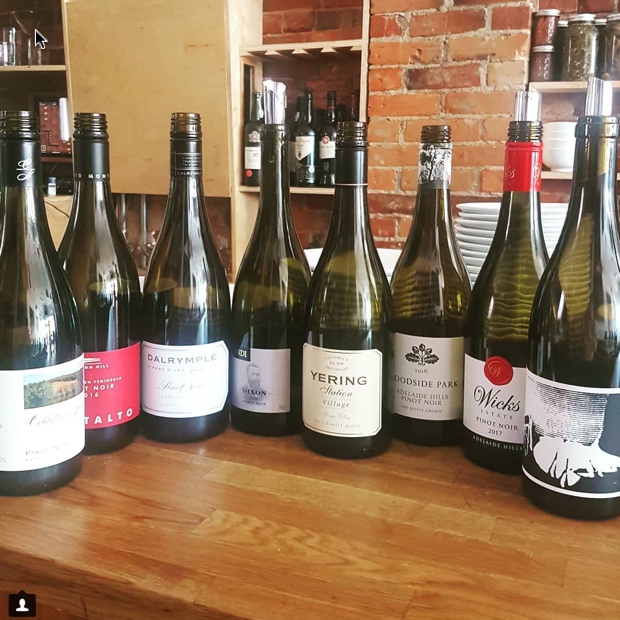
Makers’ cool pinot noir warmth from regional @wineaustralia as explained by the man, @vintagemarkdavo

Bindi Pinot Noir Dixon 2015, Macedon Ranges, Victoria, Australia (Winery, $85.00, WineAlign)

The Bindi Dixon Pinot Noir is based upon declassified grapes from the Original Vineyard planted in 1988 and grapes from the new Block K, planted in 2001. Crazy horse nose in the way that other varieties of the world will do, or at least try and simulate when they want to be pinot noir. Especially Italian varieties, like nerello mascalese, dolcetto, perricone and montepulciano. This is a natural leader for grape wishes like those of the lesser known. Very wise from the start, from birth, from creation with more savour and salumi then so many wannabe realists. There is a beautiful raw pasta dough note and then an exotica by fruit that isn’t really nameable. If this is the de-class from Michael Dhillon I’d like to meet the classified. Drink 2020-2028.   Tasted June 2018  bindiwines  wineaustralia  @Bindiwines  @wine_australia  @WineAustralia

50 years ago this #chianticlassico entered the world. Suffices to say 1968 was a pretty good year ~ @castellomonsanto

Castello Di Monsanto Chianti Classico Riserva DOCG Il Poggio 1968, Tuscany, Italy (Agent, WineAlign)

“A good, not an outstanding vintage, with some vines affected by botrytis,” explains Laura Bianchi, though truth be told she’s relating the information from stories and legends. You can taste it, in a sweetness that reminds of quince and apricot. Plums are dusted with white pepper, sherry drizzles over sugar plums and in the end, acidity continues to shine. It’s still a dramatic drop of sangiovese, with longevity preservation going back to the era (1962-1969) when the wines were aged in chestnut barrels. This at 50 years of age is so alive, time encapsulated, dew sweetened, ethereal. Drink 2018.  Tasted September 2018  castellomonsanto  @castelmonsanto   @castello.dimonsanto  Laura Bianchi  Carpe Vinum  

Castello Di Volpaia Chianti Classico Riserva DOCG 1987, Tuscany, Italy (Agent, WineAlign)

Chianti Classico Riserva 1987 is habituated and living life to the fullest in a state of complete and utter sound body and mind. It is sangiovese made at a time when it could it not have been known how impressive it would show 30 years later. Volpaia ’87 is from way back in the cold, pre-climate change days, the acid-washed, roaring 80s, now umami-earthy, cherry-plum fruit with some celery and a real salty-sandstone vein. Still blessed by a healthy, rhythmic pulse of acidity and finally, pure pleasure. Chalk it to bottle luck or a vintage that just had an inkling of greatness that would surely come but this is truly a special and memorable moment to taste. It needs saying with a thank you in words to Giovannella Stianti for sharing, but that will never be enough. Grazie infinite. Drink 2018-2021.  Tasted February 2018  castellodivolpaia  rogersandcompanywines  chianticlassico  @volpaia  @rogcowines   @chianticlassico  @volpaia  @rogcowines  @ChiantiClassicoUSA

Elisabetta Foradori

Foradori Granato 2013, IGT Vigneti Delle Dolomiti, Trentino, Italy (Agent, $74.95, WineAlign)

At the pinnacle of Elisabetta and Emilio Foradori’s mysterio teroldego pyramid is this Granato, theoretically or perhaps spiritually interchangeable with the world’s most fascinating and complex fruit, the pomegranate. There are many theories on separating the edible seeds from the pith and skin but those who know do it the right way. Foradori knows teroldego and raises this singular expression the right way. The roots dig deep into the Campo Rotaliano and Mezzolombardo stony alluvial soils with pebbles and gravel for an alternative-indie northern Italian red wine. Raised in large 20 and 30hL casks it’s still reductive, seriously internal and yet to shed layers, open up and externalize. The red fruit is alone and incredible, sweet and tonic-amended at the same time. It’s both retro and timeless. “And the world fell down, when the moon was blue, and you wore a crown and the word was true.” Like a pomegranate. Drink 2019-2024.  Tasted May 2018  eforadori  thelivingvine  @AzAgrForadori  @TheLivingVine  @elisabettaforadori  @thelivingvineinc

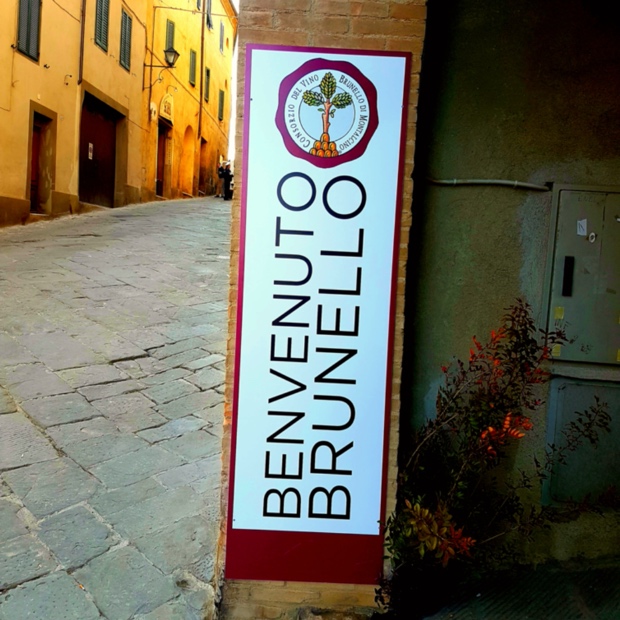
Benvenuto Brunello

Talenti Brunello Di Montalcino Riserva DOCG Pian Di Conte 2012, Tuscany, Italy (Agent, $120.00, WineAlign)

Two of the 20 estate hectares in Castelnuovo dell’Abate are dedicated to the the vineyard Paretaio, planted to a sangiovese clone selected by Pierluigi Talenti. Pian di Conte is only made in years deemed worthy of carefully selected grapes from 20-plus year-old vines out of this highly specific, 400m of altitude micro-climate block. It’s a wow Riserva from 2012, perfumed with classic extra time in barrel that Annata Brunello only seems to reach. Notes like dark berries, pipe smoulder and rich ganache, the 2012 is already showing some maturity signs of integration. It’s a fineness of tart dark citrus styled-sangiovese wrapped so tightly around the structure’s finger, indelibly inked, modern and with all parts fine-tuned in synchronicity. Riservas will often sting until they pass at least a ten-year mark but Talenti’s croons romantically with stand-up base note ease. For Montalcino it’s a hit of the vintage and to it I can safely say “I can see the destiny you sold turned into a shining band of gold.” Drink 2020-2030.  Tasted March 2018  talentiriccardo  brixandmortarwineco  brunellodimontalcino  @brixandmortar  @ConsBrunello  Riccardo Talenti  @brixandmortarwineco  BRUNELLO DI MONTALCINO

Feudo Montoni Nero D’avola Sicilia DOC Vrucara 2008, Sicily, Italy (Agent, WineAlign)

The answers are so simple and yet unanswered because magic is involved. You can understand the old vines and the way their fruit turns into wines that begin with ancient wisdom but move so little in the first seven years. What happens at 10 is the turning outward, to express the place and speak the dialect of the cru. The acidity is still high but is now in lift, with fruit at the height and en anergy that flows, really flows, moving across your palate with grace, grab and attention. A contiguous wine from start to finish, with intensity, impression and precision. The structure is come cavallo domato, like a trained horse. Dramatic nd’A but with no drama at all. Tamed and in respect of ancient vine, where it grows and what it wants to give. Ma zitto, a wine to keep you silent. Drink 2018-2029.  Tasted May 2018  feudo_montoni  wineofsiciliadoc  winesofsicily  @FABIOSIRECI  @WinesOfSicily Fabio Sireci Feudo Montoni (Fabio Sireci)  @feudomontoni  @WinesOfSicily

Cottá Azienda Agricola Sottimano cru spoiled by Elena Sottimano and Le Sommelier, Wine Agency ~ going vertical with Barbaresco and John Szabo — at Taverna Mercatto.

Sottimano Barbaresco DOCG Cottà 2010, Piedmont, Italy (Agent, $234.95, WineAlign)

While tasting through Pajoré, Fausoni, Currá and a mini-vertical of Cottá with Elena Sottimano it is here for the first time that some development appears in a wine. This glimpse into what might happen with their Barbaresco may only be a minor crack in the oasis but it begins to fall away from the curative, tannic intensity into something stretching its limbs towards the ethereal. I can ruminate with this nebbiolo swirling around in my mouth while I wonder how far along we are or have come. But it comes with knowing that no matter how much distance we walk there is still a marathon to run. There is this perfect wonderwall of wild cherry spinning like vinyl liqueur over the cheeks, tongue and gums, refreshing and working its magical fruit dance up to the edges of my nerves. “I said maybe, you’re gonna be the one that saves me. And after all,” you’re Sottimano. Drink 2019-2035.  Tasted April 2018  az.agr.sottimano ElenaSottimano  @AzAgrSottimano  @LeSommelierWine  @AziendaAgricolaSottimano  Elena Sottimano  @LeSommelierWine<

La Rioja Alta Gran Reserva 904 2001, Rioja, Spain (Agent, $65.00, WineAlign)

I am convinced the Reserva 904 is just one of those wines that must be held for 15 years before any deep understanding can be resolved. It beats down the adage that says if the fruit is not gorgeous from the beginning it will never be. At 17 years of age this Rioja of 90 per cent tempranillo and graciano remembers with a hyper-sensitive vividness the 40 year-old vines and the four year-old American oak barrels. The memories are crystal clear and it remembers the comfort, protection, protraction and the possibilities. The power is edifying, stabilizing and eventually but without great haste, emollient. La Rioja Alta has produced the 21st century purpose for what it is to mean Rioja. Drink 2018-2025.  Tasted June 2018  lariojaaltasa  riojawine_es  @LaRiojaAltaSA  @RiojaWine  La Rioja Alta  

And @winealign we tasted the greatest of #madiran terroir with the Man himself, #alainbrumont of @montusbouscasse

Château Montus La Tyre 2009, Madiran, Southwest, France (Agent, $135.27, WineAlign)

La Tyre, literally “the tire” is the pinnacle of Alain Brumont’s tannat from Madiran. It’s a wine that needs a decade to even begin to relent and open up for viewing, nosing and tasting. Pitchy to the nth cimmerian degree it would be hard not to see this wine as THE Madiran, the epitome of a red wine from Gascogne. The nose is über-umami and in fact in character it reminds so much more of Brunello Riserva meets sagrantino from Montefalco combined with Taurasi aglianico than it does Bordeaux. Not that Toscana, Umbria or Campania are the reference points but old school meets micro-oxidative winemaking surely is. The formidable acidity and the way in which the expense of barriques inject major influence is similar to what happens when sangiovese is subjected to said same sort of winemaking. The underbrush, garrigue and intensely concentrated argileux all combine, along with toasted wood to make this one of the most intense and structured red wines on the planet. Should seek and realize its best at some point in its late teens or early twenties. Drink 2025-2039.  Tasted October 2018  vinsdemadiran  montusbouscasse  markanthonyon  @MontusBouscasse  @MarkAnthonyWine  Marine Madiran  @MontusBouscasse  @MarkAnthonyWine

Catena Zapata Adrianna Vineyard Malbec River Stones 2015, Gualtallary, Tupungato, Uco Valley, Mendoza, Argentina (132340, $95.59, WineAlign)

In a line up that includes malbec from all walks of Mendoza life as well as some extreme altitude northern examples this is the first wine with a somewhat reductive quality, locked in freshness and very high acidity. It’s a wine of exceptional qualities. There is a highly intellectual and sensory balance executed through perfectly ripe fruit, that fine acidity and even more fineness in tannins. A beautifully linear wine that can come full circle if need be. This is a malbec that creates moisture in your mouth, never drying or taking anything away. A wine that is changing the way we are dealing with the idea of different terroirs in Argentina. Drink 2020-2027.  Tasted November 2018  lauracatenamd  catenawines  winesofarg  noble_estates  @LauraCatena   @CatenaMalbec  @ArgentinaWineCA  @Noble_Estates  @winesofarg  @bodegacatenazapata  Noble Estates Wine & Spirits  @winesofargentina

Roche De Bellene Clos De La Roche Grand Cru “Collection Bellenum” 2006, AC Bourgogne, France (Agent, $279.95, WineAlign)

The great Cru and the magnificent vintage conspiracy is a tour de force, even by the standards of Grand Bourgogne. I’m a bit surprised by the ascension to secondary life but it is Clos de la Roche that goes there early because of wisdom, curative indiscretion and life as it always was, right from the word character. Only this Cru delivers such soulful funk, perfectly classified and ethereal volatility and fully gathered expressions. It’s like a face that flashes a thousand looks in the span of a few seconds, there is that much going on. I am blown away by this. Still needs another year to settle, gather and explain itself. Drink 2019-2032.  Tasted May 2018  domaine_de_bellene  domaine_de_bellene  vinsdebourgogne  @Nicholaspearce_   @VinsdeBourgogne  @BourgogneWines  @BourgogneWines  @VinsdeBourgogneofficiel

Château Margaux 1989, AC Margaux, Bordeaux, France (176057,$1,645.00, WineAlign)

You never want to say that a vintage was perfect but in this case, the vintage was perfect. It seems impossible but the tannins are both present and even a bit drying so at least for this bottle there will be so much residual fruit at the end of the tunnel. Only those tannins seem altered from four years ago because the fruit and the flowers are exactly the same. What rises above, around and in darts between is the fineness and intensity of implosive acidity. Structure in this 1989 is forged by bars of steel as reinforced spikes in the concrete. It may never truly break down. Drink 2018-2044.  Last tasted March 2018  chateaumargaux  noble_estates    @Noble_Estates  @NobleEstates

The 1989 Château Margaux wears the response to a mondo Bordeaux axiom on its sleeve. Are First Growth wines made for people who want darts of instant pleasure?” Twenty years earlier and now like the 2009, here is a quintessential and exemplary vintage, from day one of bud break to the last day of harvest. Its appraisal as anything but incredible is to assassinate it as if it were the Franz Ferdinand of Bordeaux. The examination 25 years later sees a mellow funk meet a peerless and sublime perfume. A wine cast in utmost density, complexity and length. It noses strength, warmth verging on heat but only for a fleeting moment, to gain attention. The iconic wine has reached the first major peak, up a ways from base camp. In this second phase of young adulthood it looks with conceit to the top of the mountain, seeing 25 to 50 more years on the climb. Mr. Pontallier regrets he won’t be around to taste this wine at full maturity. Moi aussi. The fruit lingers in its full, original state, from the moment it passes lips and for minutes onward. Violets trump roses. Château Margaux 1989 is from a vintage that offers the blessing of ethereal balance. Hear her sing, “Ich heisse Superfantastisch!”  Tasted April 2014

Good to go!

godello

Godello, Museo civico e diocesano d’arte sacra di Montalcino

Twitter: @mgodello

Instagram: mgodello
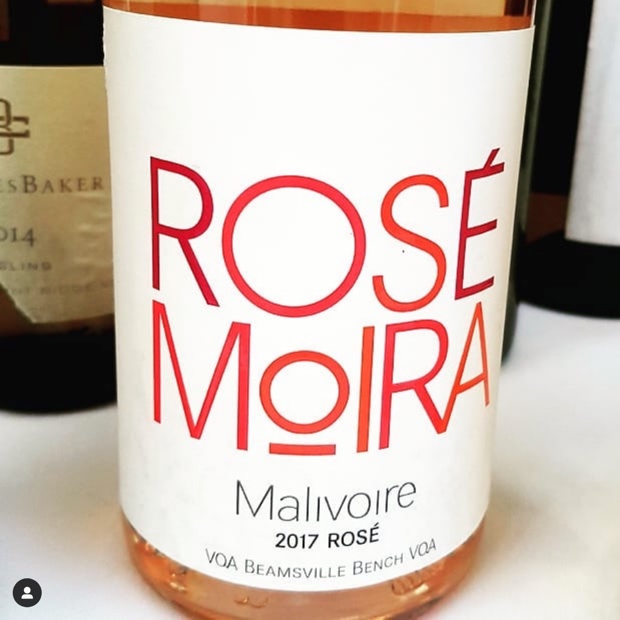
WineAlign

Crush on Benjamin Bridge

Benjamin Bridge Vineyards

It’s late October and I’m walking the vineyard with viticulturalist Scott Savoy who gestures below our feet into the genius loci where multiple layers of loam and sandy loam are mixed with river stones. In the vested interest of micro-climate orientation he points out the modest mountain ridges to the north and south, the stretch of valley to the east and west, to the big Bay of Fundy beyond and back down to the earth. He notes the fault line running diagonally away from the crush pad and tasting room, through the vineyard and down the slope to the river below. Today the namesake belongs to the winery but Benjamin Bridge is first and foremost a place. We all want to know about its history because there is something very special here. In this valley the apples are different and the vines grow berries smaller and unique. It’s a place that pulls on the heartstrings of innate curiosity.

Related – Consider the Gaspereau Valley

It comes from the name of the bridge that crosses the Gaspereau Valley and pays tribute to the Benjamin family who dammed up the river to become the first industrialists here. The name is a historical one, not one of fashion, trends, aggrandizement or narcissism. The ownership and the management of Benjamin Bridge Vineyards are fully cognizant of their place within a King’s County pantheon, of the past and for the future. Who among them wouldn’t pay a king’s ransom to protect it? They fully recognize how the tenets of farming, progression, life, struggle and ethos came before them and will continue long after they are gone. Just in case their work in making sparkling wines headed up by chief winemaker Jean-Benoit Deslauriers is not legacy defining enough they recently supplied a bottle of Benjamin Bridge Méthode Classique Brut Reserve 2012 to christen the first Irving Shipyard built Arctic patrol vessel. Sophie Trudeau used the bottle to christen the Harry DeWolf during an October ceremony on the Halifax waterfront. An interesting and poignant aside, this gesture.

Frost damage at Benjamin Bridge

The 2018 Nova Scotia harvest will live in infamy and perhaps not for the reasons everyone involved will want to remember. Frosts, rain, grape growing pressures and more frosts reduced quantities so drastically that emergency fruit was transported across two provincial borders from Ontario, a fact not lost as a notion that is pathetically-monopoly ironic. Annapolis Valley Vineyards were looking at losses of at least 50 per cent following a late Sunday frost overnight and into the morning of June 4th. Temperatures plummeted from the high 20s just two days earlier to minus three degrees celsius. There were some miraculous exceptions to the rule, like Avonport’s Oak Knoll Isle but damage ran from 20 to 100 per cent. Frost that settled in the lowest sections of valley vineyards were hardest hit.

All that happened to Nova Scotia’s wine industry plus more in, outs and twists than a Coen brothers comedy-drama and yet the greatest things happened anyway. The community of growers and producers banded together, traded grapes, shared experience and pulled each other through. This is a place where everyone understands that making wine is not about one vintage, individual accomplishments or accolades. Turning grape water into wine is a life-long partnership with the land, with the weather, the Bay of Fundy and each other. Success is wrought with challenges, adversity and responses to the contretemps of the day. Such tremendous odds give credence to Nietzsche saying “that which doesn’t kill you makes you stronger,” leading to an alignment with a maritime band of brothers and sisters. The year 2018 is the vintage during which the Nova Scotia wine producers in and around the Annapolis Valley were forced into a situation of needing one another and to become les retrouvailles, the reunited.

#lookoff in Canning, Nova Scotia

At the fore of this happenstance is Benjamin Bridge Vineyards, both in terms of being the helped and the helper. The Gaspereau Valley sparkling wine specialist is the unquestioned leader of their cottage wine industry and for so many reasons. Decisions made more than a decade ago to invest everything into this stretch of land south of the Bay carved through two micro-climate catalyst ridges for the purpose of creating the newest and most important innovative sparkling wine on the planet is nothing short of historical. The speed bumps may be serious but mark my words (and by many who have stated this before me), Nova Scotia is second only to Champagne for making the kind of sparkling wine we should and will want to drink. No disrespect intended to Franciacorta, Alta Lange, Prosecco, Crèmant de Loire, Bourgogne, Jura or d’Alsace. No ill will meant towards Sonoma County, Ontario, British Columbia, Tasmania, England or Roberston’s Méthod Cap Classique. I love you all but Nova Scotia can raise grapes for traditional method sparkling wine in ways and with results that blow everything else out of the proverbial water.

Not sure you need the banger. Jacket should scare them off!

Case in point, time and again, with variations on the theme, measurable and of a ceiling reckonable through infinite possibility. In this part of Canada vinifera varietals like chardonnay, pinot noir and pinot meunier can linger well in the autumn months, reach brix levels ideal for sparkling wine and still maintain acidities at levels all other regions can only dream of. The effect of the Bay of Fundy creates a unique environment, plain, simple and complex. Imagine adding up the flow of all the rivers in the world and asking that accumulation to submit to the power of one body of water’s tides that lower and rise as much as 17 metres every day. The Bay is like an air pump that moderates climate. Frosts be damned the picking in the Gaspereau of grapes just ripe enough for making wine is the latest anywhere. In Franciacorta for example picking of chardonnay happens in early August, just to keep natural acidity. In California it’s July and in the dead of night. We have begun to taste Nova Scotia bubbles at eight, nine and ten years on their lees. The results are astonishing with a combination of texture and acidity never seen before. As I said, the ceiling is boundless.

Crush at Benjamin Bridge: Chris Campbelll, Godello and Jean-Benoit Deslauriers

The charge at Benjamin Bridge is led by founder Gerry McConnell who purchased the property with his late wife Dara Gordon in the Gaspereau Valley in 1999. McConnell worked with Canadian oenological consultant Peter Gamble and Sparkling Wine Consultant/Champagne specialist Raphaël Brisbois to establish vineyards, a protocol and a long-term strategy for making world-class bubbles. Within three years of launching the project they knew it would work.

Sunday morning, #Kingsport Nova Scotia

The unfortunate passing of Raphaël Brisbois left a huge hole in the hearts and the ethos of the BB project but great timing, fortune and intellect came to the company in the extraordinary ethic and cerebral meanderings of head winemaker Deslauriers. Originally from Québec, J-B joined in 2008 and for 10 years has explored, extrapolated and elevated the game. No combination of diversity and focus is more apparent than it is now at Benjamin Bridge.

Winemakers at work, Jean-Benoit Deslauriers, Alex Morozov and Chris Campbell

The team on the ground and in the cellars is led by Head Viticulturist Scott Savoy and Chris Campbell who aides, abets and manages the trilogy of harvest, cellar and production operations. Alex Morozov is Assistant Winemaker to Deslauriers. Gerry’s twin daughters Devon and Ashley McConnell-Gordon have run the daily operations of the winery since early 2010, Keltie MacNeill manages the BB Club and Gillian Mainguy is the face of the place. Some of you may remember Gillian at Wines of Nova Scotia but now she is marketing, public relations and tireless world traveller on behalf the BB brand.

Racking chardonnay with head winemaker Jean-Benoit Deslauriers

In the third week of October I spent 48 hours with the gang at Benjamin Bridge. Crushing, talking, pressing, tasting, pumping, discussing, racking, ruminating, walking and speculating. There is a foundation of land, people and spirit you can’t know until you come here to really know.

The base is the matter and what matters comes from the great base

The discussion with Gerry and Jean-Benoit is now woven into the fabric of relationship with Pascal Agrapart who has been making wines at Champagne Agrapart & Fils since 1983. BB is keen on keeping a lineage with Champgane, a connection, to pursue more richness, texture and wines structurally rounder and fuller. Says Deslauriers, “we’re looking for the growers taking a Burgundian approach to winemaking, in the vineyard first. Pascal’s wines have always had that compelling textural quality.” Has anyone in Canada ever taken a grower’s approach to sparkling wine is the question. Here in Nova Scotia these are the wines with a stamp, of an equation in confluence from estate plus local vineyards and growing environments. The wines are not in jeopardy by adding this richness. “We still recognize the parcels we have selected through the wines we have made. There is still an inherent Benjamin-ness to the wines, ” adds Chris Campbell. I tasted the following wines off the record, some unfinished and others still who are the children of experimentation but even more so as matters of conceptual links to the reasons why Benjamin Bridge even exists at all.

Minas Friday morning

Brut 2016

Part estate and part Kingsport chardonnay fruit, with effervescence not the thing but it should tell a story. Already showing off its richness, density and concentration, even herein the “entry level,” the first full vintage for and from Pascal’s influence and tutelage. Cool stuff in here, decoupement particulare, this taking of different parcels for micro-vinifications.

Brut Reserve 2016

Of chardonnay and pinot noir, from the oldest estate blocks. There is so much more complexity, legit and from the word go. The terpenes are exceptional ones, and that is something they can be, built on acidity. Even without bubbles you can fully relate to it as the wine it knows it is. Grapefruit and tangerine, dry and sumptuous. The base is the matter and what matters comes from the great base. Perspective comes at you in solicitation of your emotions and opinions in many ways. You don’t always need CO2 to make contact with sparkling wines.

The future

Blanc de Noirs 2016

Now into pinot noir this new perspective makes you want to admit that it may be that chardonnay and pinot noir come together with a higher ceiling as a sum of their parts. Here it’s the antithetical aromatics of lemon rosewater and an amaro-herbal-red currant thing. Also oranges with spirit and a linger that reminds of the best athlete, with the greatest potential, but not the flashy star who scores early and often. 

Brut 2017

The secondary fermentation is only a few weeks old and it’s a very primary notation, with the bubble still on the way up. The rise is lime as a slow crawl along a coaster’s upward track, welling with tension and a coursing flow of anticipation. By way of comparison there is a tonic phenolic uprising either not noted or now having dissipated from the 2016.

Peculiar samples

Brut Reserve 2017

Once again the youth and the young phenols of very early fermentation but also a course led by the most unusual of vintages, cold and wet all summer long followed by 30-plus degrees in September and October. That’s 30-plus higher than right now in 2018. The contact here is unlike ’16, almost agitating and certainly unsettled. It would prefer not to be bothered at this time.

Brut NV

A non-vintage ’16, tirage in ’17. Could be vintage-dated but isn’t and won’t be. Higher acidity and more of the tonic phenolic-ness that the young ‘17s are showing. So I conclude that the NV is less structured and as an acumen-accumulated base wine it’s like a Blanc de Noirs or a reserve when younger. The translation states they are not only on to something and a real pattern is forming but they really know what they are doing, in separating micro cuvées and the outstanding wheat from the excellent chaff.

Kingsport cabernet franc

While I tasted these unfinished wines and other tank samples I also assessed 10 new wines from the portfolio. Here are my notes. The prices are all Nova Scotia retail from the winery.

Benjamin Bridge Méthode Classique Brut 2013, Nova Scotia, Canada (Agent, $45.00, WineAlign)

Disgorged June of 2018, now four plus months in bottle. Right from the beginning it is energy, spirit and tension. It’s mostly chardonnay but suggests richness marked by toast and flint. Quite a smokiness, not from oak, but an autolytic one. A true wine of secondary fermentation, naked and smouldering. Richness comes naturally, in second term existential notability, followed by density and length. The linger turns to mineral and salinity and you really want more right away, to layer upon what’s still left lingering behind. This is the Benjamin Bridge project incarnate, defined, teachable house style. The words of Jean-Benoit Deslauriers echo in your head, “with the possibility of absolute transcendency.” Eventually. Drink 2018-2028.   Tasted October 2018  benjaminbridge  liffordgram  @Benjamin_Bridge  @LiffordON  @benjaminbridgevineyards  @liffordwineandspirits

Benjamin Bridge Méthode Classique Brut Reserve 2012, Nova Scotia, Canada (275396, $74.95, WineAlign)

Now into a real vinous notion, with extra concentration that reminds you how Reserve wines have to be perfectly exceptional as still wine. The bubbles bring an added dimension but they are not the be all, end all. The richness here is taken to another level, still of course with a toasty edge but it’s the 2002 blocks of estate chardonnay and pinot noir (then 10 years old) that deal in this endearing fruit and enduring length. The sip expands and increases, with knowledge that it is that fruit, very apple orchard but a variety not fully known that drives this wealth. It’s also knife-edged and able to keep this youthful tension cut and fissured through the mouth. Not a sprinter but a climber able to amble and scramble up to heights for a decade plus. Drink 2018-2029.  Tasted October 2018

The following two wines were tasted in 2017 and a few months earlier at #i4c 2018, Ontario’s Cool Climate Chardonnay Conference in Niagara.

Benjamin Bridge Méthode Classique Estate Blanc De Blancs 2013, Nova Scotia, Canada (Agent, $119.50, WineAlign)

Tasted from a bottle disgorged in May 2017, there alights a plugged-in, three-pronged, dazed, charged and enchanted energy about the Bridge’s ’13 Blanc de Blancs. The history of go it alone pure chardonnay is a relatively short one for the estate so this quickly makes up for lost time or rather with haste sets the timer and heads out at first light. “Like sittin’ on pins and needles, things fall apart, it’s scientific.” Wild, of talking heads temper and yeasts, done up in demi-muids, with a wilder secondary fermentative push riding on the coattails of the primary fermentation. Everything in this wine is a productive child of the vineyard, of no third party sugars or consultations. “How do you do that without making a Pétillant Naturel,” I wonder aloud. It’s a second ferment, non-contiguous is the reason, even if the former is both influencer and mentor to the latter. It certainly falls under the category of “micro-cuvée. Like its cousin and predecessor (Blanc de Noirs 2011), this ’13 BdeB is mired intensely inward within its own specificity and is not so much a sparkling wine with competitive soul. It is a pure representative of chardonnay grown in Nova Scotia for one purpose. So let’s talk about true stories and wild, wild life. “You get on board anytime you like.” Drink 2018-2024.  Tasted July 2017

Benjamin Bridge Méthode Classique Estate Blanc De Blancs 2012, Nova Scotia, Canada (Agent, $119.50, WineAlign)

The vintage 2012 marks the beginning of the Benjamin Bridge oak program, here with some purchased fruit from friends and neighbours Lightfoot & Wolfville. This January 2018 disgorged bottle spent 66 months on its very, very fine lees and represents the inaugural departure away from reductive chardonnay in traditional method housing. Its acidity is striking, ripping and amazingly shot straight up to light and ignite the olfactory nerve. That is seems another six months to a year will only lead to textural and mouthfeel home improvements tells us there is seemingly no ceiling for how long on lees these south Fundy shore valley sparkling wines can go. The research is still one in progress but this much we know. The house of Nova Scotia is built on acidity. It’s a commodity much of the rest of the wine-growing planet will want to pay anything to use. Drink 2018-2024.  Tasted July 2018

Now back to October 2018.

Benjamin Bridge Riesling 2016, Nova Scotia, Canada (Agent, $24.95, WineAlign)

With time rieslings change drastically, much more so than traditional method sparkling, completely disconnected from their youth. So where is this going? Energy, tension, Nova Scotia. This is a Bay of Fundy riesling, ocean-wise, saline, poignant, direct. There are herbs and fennel but already this onset of glück and proverbial riesling stamp. Lemon-lime, tart angling, green to ripe apricot. Mostly fruit from grower John Warner, it’s not too edgy, a dry, albeit 15 g/L RS style. The Mosel frame is obvious and the ceiling for potential great but this strikes me as being three to four years away from really moving into another gear. Drink 2020-2027.  Tasted October 2018

Benjamin Bridge Riesling 2013, Nova Scotia, Canada (Agent, $24.95, WineAlign)

There is something I can’t simply put a nose or a finger on. It’s floral but also aerified, stratified, stratospheric, atmospheric. It’s sugary honeyed and very beeswaxy but not in a sticky way. The balance is a roundabout one where you have to travel the entire circumference in order to tie the whole room together. Something umami meets intangible allows you to imagine where 2016 will travel but it’s just an inkling coupled with a hunch. The wax is lit or rather unlit, snuffed, smouldering and beautiful. So worth this five years forward visit. Drink 2018-2022.  Tasted October 2018

Benjamin Bridge Sauvignon Blanc 2017, Nova Scotia, Canada (Agent, Approx. $47.95, WineAlign)

The 2013 was the inaugural release and so here the fifth marks the man, the myth, the legend. Should sauvignon blanc be a Nova Scotia something, grown here is this tiny stretch of narrow valley? The answer is no but taste the impossible results and then try to say it with a straight face. A man who loves Sancerre and has the vision to stick with this project through unsurmountable odds and adversity deserves to drink his very own, very excellent sauvignon blanc. This 2017 strings forward a great moment of continuity although in less tropical, more saline and increased tension ways. There is an infiltration by tonic, lemon and lime and yet still explosively aromatic with citrus peel that connects the two vintages by way of this unequivocal substance and emotion. Let’s wait on this buffering streamer. Drink 2020-2027.  Tasted October 2018

Benjamin Bridge Sauvignon Blanc 2016, Nova Scotia, Canada (Agent, $47.95, WineAlign)

The difference between this and the previous vintage is turbidity, having it and not. It’s a negotiable varietal that doesn’t really prepare for winter and it’s not a match made in heaven with the climate. That said the adversity makes for wines of great interest. Not driven by rational motivation but by passion and love, from 0.75 tonnes of yield per acre. Explosive from the concentration delivered to each privileged berry. Dry extract is through the roof. The passion fruit on this ’16 is uncanny, almost tropical in fact it really is and yet in the end there is a revival of salt, tonic and lime. Drink 2018-2022.  Tasted October 2018

Benjamin Bridge Nova 7 Sparkling 2017, Charmat Method, Nova Scotia, Canada (256289, $24.95, WineAlign)

You’ll be pleased to know that Nova 7 is a child of wild ferment and made in 15,000 cases. It’s not tied to any real natural winemaking processes, but considering all that is in the balance it was decided not to add any sulphur in the winemaking process, only before bottling. Hard line indeed. No messing with the aromatic spectrum, not the terpenes nor the esters or anything else, so that the wine has developed its full aromatic possibility. Just the greatest lithe hint of effervescence, the crushable one, better than mega purple sweet confections for people who want to drink flavour. Peach, strawberry and juicy fruit for the people, for everyman, woman and non gender specific imbiber, for people in the sticks who don’t, won’t and can’t drink grower’s Champagne. Aromatic backbone is New York Muscat, plus ortega, seyval blanc, l’acadie, vidal, riesling, chardonnay (and no perle). “It’s all a lot of oyster and no pearlA, perfect for this long December. And no need to swirl, so you get a kick from the natural CO2. Drink 2018-2020.  Tasted October 2018

Benjamin Bridge Cabernet Franc Rosé Small Lot 2017, Nova Scotia, Canada (Winery, $26.95, WineAlign)

“We knew in this season we wouldn’t have enough for a full-on commercial Rosé,” tells Jean-Benoit Deslauriers. This was harvested same day, red or pink, November 10th, whole cluster pressed for a few hours and then after débourbage transferred into concrete egg. There is remained for nearly six months and in March it was highly turbid at ferments’ end. No fining, no filtration, never a sulphur addition with thanks to natural acidities that protect. It’s a perfectly lovely oxidative note with creaminess brought by the egg, never to be stripped away. It emulates the Kingsport vineyard and the varietal. Orange skin, salinity and integrated variability, with good tonic bitters. Even a bit of firmness of tannin that says its come into its own now and will be a cerebral bit of fun for two or three more years. This is Rosé very much meant to be. There were in and around 200 cases made, this essentially estate exclusive, with a few exceptions. Drink 2018-2021. Tasted October 2018

Benjamin Bridge Cabernet Franc Small Lot 2016, Nova Scotia, Canada (Winery, $57.95, WineAlign)

Still from the Kingsport farm fruit, a whole cluster ferment, no messing with stems, fully oxygenated, no carbonic maceration, 30-40 per cent whole bunch. Total output is “a barrel and a bit.” An infused aromatic ferment, green spice and a char of tobacco, utter intensity, compelling and a phenolic reality. “A myth buster incarnate,” says JB, ripened beyond the sensory borders, miles away from other territories, with generosity and juicy ripe legs. From a warm vintage, nine months in neutral oak plus nine in the bottle. Then a decant and oh how the florals open up, furthered, blooming and intoxicating. More than just a fun little experiment so please wake up and smell the Gaspereau Valley. So lively, a wee salty and all energy. Drink 2018-2024.  Tasted October 2018

And one final tank sample.

Cabernet Franc 2017

A good portion of, as in 100 per cent whole berry, whole cluster fruit ferment. Heavily oxygenated, non-carbonic, from four barrels, to be bottled in December and then released next fall, so nine plus nine. There’s the floral rising from the glass, so pronounced. Strawberry, mint, cherry and liquorice, amaro, spice and tobacco. Green and pyrazine are looked for and not found. It’s the sand layer under the strat of mixed recent glacial run off rocks that mitigate the bubbling water beneath the soil and give this a tannic structure unheard of in Nova Scotia reds, Also remembering the urgency at the hands of the whole cluster ferment.  There are 900L available. Grab ’em by the growlers.

crush #interloper standing with harvest giants

Good to go!

Twitter: @mgodello

Instagram: mgodello

WineAlign

The Man of Madiran

Alain Brumont

In the southwest corner of France less than 100 kilometres east and inland from the Atlantic Ocean lay the wine lands of the Côtes de Gascogne, of Pacherenc Du Vic Bilh and of Madiran. It is here where the soils of argileux, galets stones and calcaire are of course found in a climate where it can get very warm, but there is this influence from the Pyrenees Mountains that bring drying winds, keeping temperatures down at night and making for dry conditions in the fall. There is also that Atlantic oceanic influence for the greater region of Gascogne, even if the sea lies 96 kilometres away, The waters are responsible for bringing fresh air and freshness into the wines of Madiran and are perhaps the greatest single key to the phenolic ripeness factor. All together the mitigating and micro-climate agglomerate conditions allow for longer grape hanging time deep into the season.

Tasting at WineAlign with Laurence Brumont, Alain Brumont and John Szabo M.S.

THE man of Madiran is a man known not just to his peers and colleagues nearby but to winemakers all over the world. Vineland Estate’s Brian Schmidt wrote, “this man has had a profound impact on wine all around the world.” Decanter’s Andrew Jefford has referred to them as “France’s most undervalued fine wines.” Indeed it is Alain Brumont’s pioneering work, with noble oak and barrels for making wine. “Elegance, freshness and apogée for a wine come with time, patience no acceleration of elements with an artifice like micro oxygénation,” says Laurence Brumont. “It’s the philosophy of Alain to give the time and the respect of environment, respect of grapes, respect of terroir.” Brumont is the dominant producer in his region and that he has found the way to teach and to tame the deepest and darkest of grapes is the stuff of legend. Monsieur Brumont and his wife Laurence brought their Château Montus and Château Bouscassé wines to the WineAlign offices just two weeks ago. They sat down with John Szabo and I to taste through a magnificent Pacherenc and a few examples of their exemplary Madiran. Here are the notes.

And @winealign we tasted the greatest of #madiran terroir with the Man himself, #alainbrumont of @montusbouscasse

Château Montus Pacherenc Du Vic Bilh 2013, Pacherenc Du Vic Bilh, Southwest, France (Agent, $30.99, WineAlign)

Pacherenc du Vic-Bilh, from the regional-dialectal word “paisheradas,” translated roughly as “vineyard rows” and Vic-Bilh, meaning “old country.” The small appellation is adjacent to and roughly the same size as Madiran, as part of Gascogne in far southwestern France. The appellation specializes in sweet whites, can be and often is a 100 per cent varietal wine and in Alain Brumont’s case it’s truly Vin de Garde, made solely from petit courbu, aged in a variety of barrel shapes and sizes. The varietal gathering can include petit courbu, petit manseng, gros manseng, courbu blanc and arrufiac but Brumont uses essentially only the first, with just a few points of petit manseng. It’s a subtle smokiness and a seriously honeyed late harvest white with the most exceptional golden hue. Apricots come from the nose, with candied lemon peel and then this acidity that preps your buds before you’ve even taking a sip. From a vintage in France that may have confounded but it only works to develop and accentuate complexities. Caramelizations inclusive of a sentimental awareness of burnt orange come through and the length is dramatic, variegate and extended. It’s never sweet or cloying in fact it almost makes you think that’s it’s vinified nearly dry. This makes it most fascinating and only aids in abetting the dialectic. Has been made since 1991/1992. Drink 2018-2026.  Tasted October 2018   vinsdemadiran  montusbouscasse  markanthonyon  @MontusBouscasse  @MarkAnthonyWine  Marine Madiran  @MontusBouscasse  @MarkAnthonyWine

Brumont Tour Bouscassé Madiran 2012, Southwest, France (414615, $17.95, WineAlign)

From a terroir with much variegation in the argileux; white, red, grey and black. Mostly tannat with some cabernet sauvignon. You do in fact need to taste this wine on repeat because at times it will surprise you with great freshness. Like now, at this moment, with bright (dark) black cherry fruit and striking acidity. There is still this brooding and structure with side snaps of brewed umami. Can’t help but be, what with tannat and wood. And yet, get your nose deep into this glass and the multifarious argileux will get right up into you. Drink 2018-2022.  Last tasted October 2018

There is always some pleasure to be derived from pre-aged Madiran at such a price, regardless of how polarizing a bottle can be. Brumont’s ’12 is lean, mean and more than touched by wood. There is chocolate and balsamic, soy and tar. Pre micro-oxidative work now sits comfortably at six years on and with many more to go. Good interest at $18. Drink 2018-2022. Tasted August 2018

Château Montus Madiran 2013, AC Madiran, Southwest, France (Agent, $33.76, WineAlign)

From the man Alain Brumont and at the lead for and with his neighbours who basically invented the by now highly strategized and in many cases essential practice of micro-oxidation. This is how and why Brumont’s tannat from southwestern France is able to move ever so slowly in bottle through the slow-developing evolutionary stages of life. The Montus is clearly structured to keep its character intact, through the hard shell of tannin and the pyramid built by barrels that teased oxygen early and now keep all important aspects locked up safe and tight. It’s a boozy feeling and yet high-toned, with the darkest of fruits and the sharpest of tacky edging. You can imagine this resting as is for a decade and then slowly revealing what secondary personality can only be coaxed when the tenets of tannin have begun to melt away. That said, the chocolate never will. Drink 2020-2029.  Tasted October 2018

Château Montus La Tyre 2009, AC Madiran, Southwest, France (Agent, $135.27, WineAlign)

La Tyre, literally “the tire” is the pinnacle of Alain Brumont’s tannat from Madiran. It’s a wine that needs a decade to even begin to relent and open up for viewing, nosing and tasting. Pitchy to the nth cimmerian degree it would be hard not to see this wine as THE Madiran, the epitome of a red wine from Gascogne. The nose is über-umami and in fact in character it reminds so much more of Brunello Riserva meets sagrantino from Montefalco combined with Taurasi aglianico than it does Bordeaux. Not that Toscana, Umbria or Campania are the reference points but old school meets micro-oxidative winemaking surely is. The formidable acidity and the way in which the expense of barriques inject major influence is similar to what happens when sangiovese is subjected to said same sort of winemaking. The underbrush, garrigue and intensely concentrated argileux all combine, along with toasted wood to make this one of the most intense and structured red wines on the planet. Should seek and realize its best at some point in its late teens or early twenties. Drink 2025-2039.  Tasted October 2018

Good to go!

godello

Alain Brumont

Twitter: @mgodello

Instagram: mgodello

WineAlign

Important and impromptu study session at Stratus

It was planned as a big chill weekend, set aside months before because if you don’t dot the calendar you will never find the time. It was a meeting of old friends who rarely see one another, coming from different cities and countries to gather in Niagara for reasons unknown. It was more than an important impromptu tasting at Stratus Vineyards on a blustery October Sunday. Thanks so much Ben, for the hospitality and new revelations.

I pack my case, I check my face
I look a little bit older
I look a little bit colder
With one deep breath, and one big step
I move a little bit closer, I move a little bit closer
For reasons unknown

https://www.youtube.com/watch?v=TG5X4kOjEX8

Related – Chase food pairings with Stratus

I’ve written about Stratus Vineyards before, about Yoda of assemblage and varietal maître winemaker J-L Groux. Ben Nicks is the winery’s hospitality master, mentor and guiding light. It’s no coincidence that Ben set us up with six current releases in the tasting board room with a tease of three local cheeses and a morsel of Mario Pingue’s salumi. A subtle arrangement this micro-pairing, seemingly inconsequential but oh so very poignant and perfect. 

The Ozonator

Related – The Stratus-Momofuku continuum

Ben leads us through the inner workings of Stratus and you should know that this behind-the scenes tour is no ordinary junket nor is what goes on back there any accident. Sustainability is key, planned to a T, in particular with respect to water use. We pass by the hydrosieve, a simple stainless box used to aerate wines during fermentation and Ben explains the great ozonator, to clean and preserve sterility in the winery. When ozone gas is introduced to an environment with bacteria, mold or any other organic material, it readily donates one of the oxygen atoms to oxidize or destroy that material. The ozonator is highly effective in controlling Brettanomyces populations.

More than an important impromptu tasting @stratuswines on a blustery October Sunday. Thanks so much Ben, for the hospitality and new revelations.

Related – Select tasting through years of the Stratus Red and White

In the boardroom we set about tasting with the saturated vineyards as our backdrop. Grapes continue to hang though there is no surprise in that. Stratus is known to wait out the rest of the Peninsula in search of more phenolic ripeness and infinite aromatic possibilities. Here are the seven wines tasted on Sunday, October 28th.

Stratus Vineyards White 2014, VQA Niagara Lakeshore, Ontario (660704, $38.00, WineAlign)

So what is White ’14’s status in late October 2018? Still pronouncing struck flinty with a capital F and elevated into the air on a pillow of fine smoulder. What is duly noted at this stage is the pause, at calm, unaffected by gravity and then, the length. In other words, a perfectly drinkable state.  Last tasted October 2018

White assemblage under the Stratus label is not like spinning a single record, it’s like Rock ‘n Roll radio. Opening a bottle brings great excitement and anticipation, with a sense of wonder. What songs am I going to hear or more to the point, which grape varieties am I going to taste, in which percentages and in what order? In 2014 it’s a medley of chardonnay, sauvignon blanc, viognier, sémillon and gewürztraminer. The blend spent 21 months in (15 per cent) new oak. The fruits are varied and each one (or mélange of several) represented a hit in their own right. Tutti frutti, orange blossom special, little green apples, the lemon song, kiwi, peach, tangerine and forbidden fruit. In the end I heard it through the grapevine, by way of a conduit provided by great and necessary acidity. A top quality Stratus White, worthy of repeat plays. Drink 2018-2025.  Tasted twice, May and June 2018

Stratus Vineyards Chardonnay 2016, VQA Niagara-on-the-Lake, Ontario (Winery, $48.00, WineAlign)

This Stratus is the year of the utmost natural chardonnay, the one where knuckling down and waiting with great patience leads to the most ambient of varietal wines. Not that the indigenous yeast plan is new (it dates back to ’09) but it is unfiltered and the aromatics are wonderfully nostalgic. This too (like the White) has that uncanny and unmistakeable flinty smokiness but in the realm of chardonnay it’s surprisingly delicate and finessed. ’Twas a warm vintage and so there must be an initialization of richness and the lush contextual accession will continue to develop but for now its tighter and sitting in a pool of quietude. Revisits in two and three years will tell the wine’s story. Drink 2019-2026.  Tasted October 2018

Stratus Vineyards Gewürztraminer 2017, VQA Niagara-on-the-Lake, Ontario (Winery, $29.00, WineAlign)

The plantings are Clone 47, one of two from Alsace (along with 48) that are often used in Ontario. There are few regional equals like this one of subtle floral expression in lemon waxy spray, yellow rose fragrance and citrus oil incumbency. The acidity is buoyant, unaggressive and supportive and so the residual sugar number is probably higher than expected, perhaps in the mid to upper teens. Works the derivative volatile aroma compounds drawn from flowers, fruits, leaves, and stems to great aromatic effect. In any case it’s a health affirming gewürztraminer by essential oil and through the act of sumptuous behaviour. Drink 2018-2022.  Tasted October 2018

Stratus Vineyards Red 2015, VQA Niagara-on-the-Lake, Ontario (131037, $48.00, WineAlign)

Harvested over a week’s time in mid to late November from a warm if unremarkable vintage that followed a polar vortex winter, the just released 2015 Red is the five-headed Bordelais made from cabernet sauvignon, merlot, cabernet franc, petit verdot and malbec. If indeed perception is conceived to occur through five senses then all are needed to feel the fingers and toes of this assemblage. It’s also a matter of mathematical relevance, especially if you’ve tasted a few vintages of this most consistent appellative blend. And so standard deviation is relevant in assessment. From one Stratus Red to another we are looking at two sets of five different numbers that have the same mean but different standard deviations and it can be argued (because of the methodology), the same standard deviation but different means. If only J-L Groux knows the answer to the mean and standard of each Red set we can still look at this ’15 and note how it’s quite dusty and high-toned in its youth, with a richness that will eventually bring it all down to earth. It’s a chewy Red with some dried, leathery fruit, as per the mean, equal and opposing to the fresh and friendly, as per the standard deviation. As a matter of assemblage it’s as classic and recognizable as any in the accumulative history and also reminiscent of the past, like ’07, ’10 and ’12, to name just a few. With cabernet sauvignon at the head it tells us that ripeness is the virtue and comfort the result. By the way, the varietal breakdown of 40, 24, 23, 11 and 2 equates to a mean of 20 and a standard deviation of 14.40. For what it’s worth. Drink 2019-2026.  Tasted October 2018

Stratus Vineyards Cabernet Franc 2015, VQA Niagara Peninsula, Ontario (412759, $38.65, WineAlign)

The 2015 cabernet franc of warmth and layering is wise in the ways of fruit. It’s an overt and resolute varietal wine picked at intervals and in succession with on the fly intent. The endeavour is worthy of the ideal and in turn, every moment of our consideration. Here is where you can begin any one of your carefully thought on handful of cabernet franc explorations, not just any mind you but from those that start at the top of the pyramid, from the top down. What is striking about 2015 is the sweet herbal quality, with a bushy tisane in place of hard to ascertain, high-toned pyrazine. What you will find is actually quite simple; cabernet franc grown, raised and fashioned by winemaker J-L Groux at Stratus. I just love this fruit. These chips have fallen where they may. Drink 2020-2038.  Tasted October 2018

Stratus Vineyards Syrah 2014, VQA Niagara Peninsula, Ontario (Winery, $48.00, WineAlign)

Stratus turns back time and into varietal subtleties so that sniffs and sips of this ’14 are met with pauses. This iambic syrah is indeed something other, with dusty peppery notes and an unforced extraction that does little (at first) to challenge or demand that you work for your sips. The floral aromas form the crux of the unstressed syllables and are followed by strong flavours, a.k.a. the stressed syllables. The poetic feel is one of clause, pause and punctuation, with acidity strong but also fine and the even ripening from the grapes is a matter of obvious clarity. I suggest that the winemaking is more hands off than before and the wine needed little to no clutter to reach this goal. The richness is subdued and the balance as bountiful as it is beautiful. The drinker must read-render this syrah stanza so that it is both comprehended and appreciated. There may be some potential tension in doing so because you need to know how to seek out the stressors but also where to find the metrical pauses. Unearthing all the elements will help to pair with food that reads the same, like a seared duck breast, rare and sliced, or a lean piece of beef, carved tagliata style. Drink 2019-2025.  Tasted October 2018

Stratus Vineyards Sémillon Botrytis Affected 2016, VQA Niagara On The Lake (Winery, $38.00, WineAlign)

One of the most unique dessert wines in Ontario this is neither late-harvest nor Icewine in origin. Only the third time it has been made, the 2016 sémillon launches with a smoky beginning, as expected and yet, is always appreciated. Some of the fruit is harvested early, but other bunches in the same vineyard are some of the last to be harvested. This low alcohol anti-sticky is from the warm vintage and from the same spot in the vineyard, vintage in vintage out. Most interesting is how these pristine botrytis affected grapes are picked ahead of the rest of the clean fruit used for the dry sémillon. It’s a very vinous sém with distinct apricot and longan notes. Great acids in 2016. Has still retained some waxiness and found some tropical fruit despite the early pick. All of the counterintuitive ideals tell us that the warm vintages can make for top quality dessert wine. This is the masquerade party wine made by the Way Outs band. “That’s where the fun is, way out, WAY OUT!” Drink 2019-2028. Tasted October 2018

Good to go!

godello

Twitter: @mgodello

Instagram: mgodello
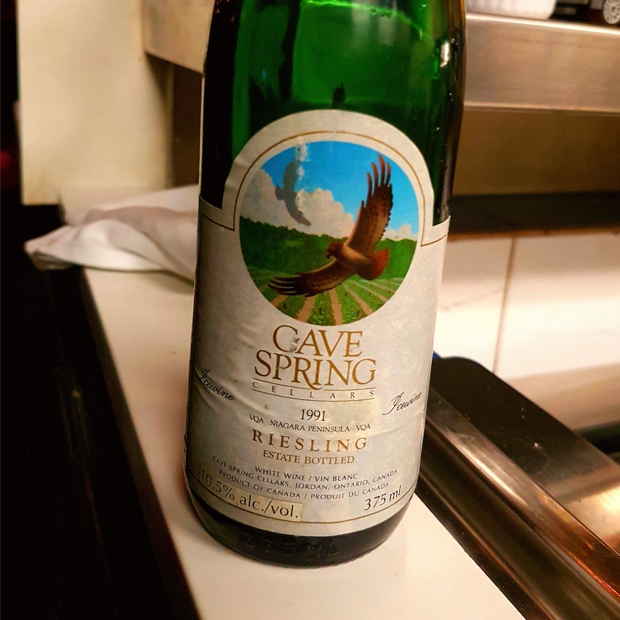
WineAlign

Sonoma County: Diverse by nature plus California, Italy and others in VINTAGES Oct 27th

Taste of Sonoma – Diverse by Nature

Related – WineAlign Buyers’ Guide to VINTAGES Preview – Oct 27th, 2018

In last week’s preview covering the October 27th release it was John who wrote about the “Premium Parade.” John has reminded us all, as did David in his previous report for October 13th that VINTAGES likes to roll out the big guns in the two months leading up to the holiday season. What a shocker. I’m pleased to follow-up on the theme with more than a few overflowing handfuls of high-end wines that settle with great weight and density into a more than similar ilk.

It’s more than just a late October release that delivers gifts of such hedonistic and full character flavour. The Sonoma County Vintners came through town just last week with armfuls of the good stuff. There was a trade and media walk-around tasting in the afternoon of the 16th followed by a VINTAGES supported consumer affair in the evening. Thirty-three producers showcased 75 wines and it is safe to say that Sonoma knows how to put on a show. What piqued my interest the most was a Masterclass/Tutored Tasting titled “Diverse by Nature” and hosted by none other than WineAlign’s John Szabo. My notes on the wines poured are featured just below. All of the 75 wines continue to be available for purchase on the VINTAGES Shop Online site.

The VINTAGES opinion is one that states “Sonoma County is predominantly family farmers who produce some of the world’s best grapes and wine and have done so for generations. It’s also the first wine region in the US to commit to becoming 100% sustainable by 2019.” They noted that the event features “a bounty of stellar Pinot Noirs, full-bodied Cabernets, stylish Chardonnays and spicy Zinfandels – most with 90+ scores.” This is nothing but truth. I scored all 10 wines I tasted at the Sonoma seminar at 90-plus.

Greg MacDonald, VINTAGES Category Manager, New World Wines, North America (excluding Ontario) & South Africa, explains where Sonoma stands in the current pantheon of California wines. “I would agree that many top wines from Sonoma can stand toe-to-toe with their Napa counterparts on quality and while many offer relative value, there are now iconic wines from Sonoma that can and do command similar top-tier price points. What Sonoma can still offer that Napa can’t anymore (for the most part), is wines at more approachable price points for everyday consumers – the sheer size of Sonoma County makes this possible.  This means it’s a win for both collectors and consumers. I don’t consider Sonoma an emerging region for California as a buyer – it’s arrived.”

John Szabo M.S.

So what is so special about Sonoma County? First look at its size. With approximately 75,000 planted acres only Bordeaux is bigger (much bigger) and Sonoma easily outgrows Napa Valley, New Zealand, Bourgogne and the Okanagan Valley. Nearly 500 wineries grow a multitude of varieties but there is some definitive concentration and specialization. In terms of hectares chardonnay is king, at 6,500 while pinot noir and cabernet sauvignon follow closely at roughly 5,400 each. The next four most planted grape varieties are zinfandel, merlot, sauvignon blanc and syrah.

Five distinct soils make up the multifarious terroir of Sonoma; Francisco Complex covers nearly half of the west and northern territories. Then we find Salinia, Glen Ellen Formation, Sonoma Volcanics and Wilson Grove Formation. The coolest spots and perfect for chardonnay are Green Valley and Carneros while it is the pinot noir appellations of Fort Ross-Seaview, Sonoma Coast and Russian River Valley that bridge the gap to a moderate climate. In that mid-temperature category we see the merlot high ground of Chalk Hill and Bennet Valley.

Both chardonnay and cabernet sauvignon work well in the moderate to quite warm spots of Sonoma Mountain and Sonoma Valley. Slightly warmer are the zinfandel hot spots of Rockpile and Dry Creek Valley. The warmest areas that are best suited to cabernet sauvignon are Alexander Valley, Fountaingrove, Knights Valley and Pine Mountain-Cloverdale Park. Let us not forget the rest of the Sonoma County AVAs, Moon Mountain, Northern Sonoma and Petaluma Gap.

Most important these days is what’s found inside and within these distinct regional territories. In Sonoma they like to call them “neighbourhoods,” micro-climates like Middle Ranch and Laguna Ridge in the Russian River Valley. These are akin to the Villages of Bourgogne so consumers can now begin to seek out varietal specificities with which to align from these hoods.

These fantastic humans helped to bring the excellence of @sonomacountyvintners to Toronto today. And it was great ~ @california.wines #sonomacounty #sonoma #sonomavalley #alexandervalley

Don’t look for a singular regional-varietal character, but rather look at the towns, a.k.a in that Bourgogne sense of the ideal, the Villages. Look back to 1857, to the story of the Buena Vista Count, collector of European grapevines (mainly in Vienna) brought back to California. This got everything started, including the Croatian variety zinfandel which at the time was being cultivated as part of the Austro-Hungarian empire. Look at the transfer from bulk to premium wine in the 1970s and the infamous moment at the Judgement of Paris when Chateau Montelena was the shocking victorious wine.

John mentioned last week that the main VINTAGES theme for October 27th is in fact Italy and not California and so David and I offer up some critics’ love for the great wines of that vast producing country. We take you to Umbria, Veneto, Toscana (including Chianti Classico) and Piemonte for some stellar choices. We wrap up the selections with some miscellaneous wines from around the globe, including some homegrown picks just a jog down the QEW and onto the Niagara Peninsula.

Sonoma Chardonnay

Sonoma Picks

Three Sticks Durell Vineyard Chardonnay 2016, Sonoma Coast, California (VINTAGES, $79.95, WineAlign)

From the confluence of three appellations, coast, valley and mountain, not to mention a combination of rock and soil in ratios that as assets determine influence. Buttery and if aromas were textured this would be viscous, licked up from the thickness of fog filling in the mid-palate. Notable is that here the change in Sonoma styles over the past decade is arriving at this gate of transparency. Sharper now and gummed by less glück is the simplest way to sum it all up. Expressive in the ways of varietal and place is the bigger picture summarized. Drink 2018-2022.  Tasted October 2018   threestickswines  halpernwine  @ThreeSticksWine  @HalpernWine  @threestickswines  @halpernwine

Patz & Hall Chardonnay 2016, Sonoma Coast, California (VINTAGES, $65.00, WineAlign)

Much more direct, sharp, pinpointed and poignant for modern day chardonnay, with ripe orchard park flavours, high acidity and great internalized impression. Five vineyards get together in this perfectly tidy house conglomerate and added up the stylistic is expressly P & H. From many famous Sonoma vineyards sometimes, often but not always inclusive of Sanchietti, Parmalee Hill, Pleasant Hill, Gap’s Crown, Dutton Ranch and Durell. A necessary parts when integrated are counted as contributors to the whole. Drink 2019-2022.  Tasted October 2018   patzhall  philippedandurandwines  @PatzHall  @Dandurandwines  @PatzHall  @VinsPhilippeDandurand

Ramey Wine Cellars Chardonnay 2016, Sonoma Coast, California (VINTAGES, $57.99, WineAlign)

Wild ferment and thrown in to bottle, literally. From Goldridge, those parochial, sought after soils, composed by 70 per cent Martinelli Charles Ranch and (30) Platt Vineyard. Rich without weight, texture without acting overly creamy. A beautifully balanced wine. Drink 2018-2021.  Tasted October 2018   rameywinecellars  liffordgram  @RameyWineCellar  @LiffordON  @RameyWineCellars  @liffordwineandspirits

Siduri Pinot Noir Parsons Vineyard 2015, Russian River Valley, California (VINTAGES, $70.00, WineAlign)

Just west of the winery is the flat topography characterized by compact clay soils of Parsons’ Vineyard on the Santa Rosa Plain. The 2015 pinot noir is one of high energy ripe fruit but also beautiful acids. This is the ripe pinot noir we’ve come to know from the last 20 years and occupying a chair at the hyperbole of thought and execution. Such a guarantee of what to expect from the Russian River Valley. Strawberry jam, cola and the artfully managed barrel dodger. Broad and velvety. Drink 2018-2022.  Tasted October 2018   siduriwines  halpernwine  @SiduriWines  @HalpernWine  @halpernwine  @Siduriwines  @halpernwine

Chalk Hill Estate Pinot Noir 2015, Russian River Valley, California (VINTAGES, $80.00, WineAlign)

Broad, even riper, of real lush texture and a bit ferric. Tart, tight, intense with at the edge evolution, development and ripeness. This is the trimmer set to the finest setting, allowing some room for growth but also leaving behind a stylish, nearly clean to the skin style. Drink 2018-2022.  Tasted October 2018   chalkhillestate  liffordgram  @ChalkHillEstate  @LiffordON  @chalkhillestate  @liffordwineandspirits

Deloach Vineyards Pinot Noir Estate 2014, Russian River Valley, California (VINTAGES, $70.00, WineAlign)

The organically and biodynamically farmed Olivet Ranch Vineyard estate block has been owned by Boisset Family Estates since 2003. In 2014 this is bigger, fuller, taller, riper and certainly imbued with more wood influence. This from the J.C. Boisset stable is almost a throwback to innocent and precocious times. While the acidity in this vintage carries the dark fruit to terrific heights, it really is impressive how this works the glass and the room. Drink 2018-2021.  Tasted October 2018   deloachvineyards  jc_boisset  jcb_collection  liffordgram  @DeLoachVineyard  @JC_Boisset  @LiffordON  @deloachvineyards  @BoissetCollection  @liffordwineandspirits

Dry Creek Vineyard Old Vine Zinfandel 2015, Dry Creek Valley, Sonoma County, California (VINTAGES, $55.00, WineAlign)

Shows an extreme ripeness of being reaching to the breach and teetering on the edge while so successfully camping there. Dark fruit, nearly dusty and so filled in. Ripe, figgy and raisined with managed acidity to keep things in swimming balance. Berries of varying ripeness on old vines make for the great multi-juxtaposed connections. The 22 per cent petite sirah increases the curiosity, that plus three types of oak. So much going on and a good vintage for this OV zin. Drink 2018-2021.  Tasted October 2018   drycreekvineyard  wineloversca  @DryCreekVnyd  @WineLoversCA  @drycreekvineyard  @WineLoversCA

Seghesio Cortina Zinfandel 2014, Dry Creek Valley, Sonoma County, California (VINTAGES, $55.00, WineAlign)

From 1972 planted vines on Cortina soil and yet curiously not referred to as old vines. The high-toned dark fruit does in fact present a curious juxtaposition, ripe and hematic but also savoury, dusty and mineral. This is just around the corner from entering into the perfect window of its life, integrated and in delivery of its gravelly-loam origins. Only identifiable as Seghesio and always on point. Drink 2019-2024.  Tasted October 2018   seghesio  pellerwines  @seghesio  @APImportAgency  @seghesio  Andrew Peller Import Agency

Silver Oak Alexander Valley Cabernet Sauvignon 2014, Alexander Valley, Sonoma County, California (VINTAGES, $118.95, WineAlign)

Take some time to allow Silver Oak’s cabernet to settle in and you might just smile a bit more. Here we are at that point, certainly glued to a house style, big in barrel with American influence and set up with Daniel Baron’s signature passed on through Nate Weis, most recent accomplice as Director of Winemaking. Pencil shavings and early harvested balance plus some wood waiting out of that wood means you are given some Alexander Valley grace at this stage of fine tannin development. Drink 2019-2024.  Tasted October 2018   silveroakcellars  halpernwine  @SilverOak  @HalpernWine @SilverOakCellars  @halpernwine

Rodney Strong Vineyards Cabernet Sauvignon Rockaway Single Vineyard 2013, Alexander Valley, Sonoma County, California (VINTAGES, $100.00, WineAlign)

This is the “lay down in the third bed and it was just right” Rodney Strong cabernet sauvignon from half new French barrel and nicely integrated at this point. Here the darkness of fruit and tighter if rounder structure comes from mountain fruit. Dusty dark black with briny Mediterranean accents leads this down a spice route road. In a delicious spot right now with a finishing bite of very dark, high cocoa content chocolate. Drink 2018-2022.  Tasted October 2018   rsvineyards  markanthonyon  @rsvineyards  @MarkAnthonyWine  @Rodney.Strong.Vineyards  @MarkAnthonyWine

Buyers Guide to VINTAGES Oct 27th

California Picks

Cline Ancient Vines Zinfandel 2016, Contra Costa County, Central Coast, California ($24.95)

Kenwood Jack London Vineyard Cabernet Sauvignon 2014, Sonoma Mountain, Sonoma County, California ($39.95)

Mount Veeder Winery Cabernet Sauvignon 2014, Napa Valley, California ($49.95)

Chateau Montelena Cabernet Sauvignon 2014, Napa Valley, California ($74.95)

Italian Picks

Zenato Valpolicella Superiore 2016, Vento, Italy ($18.95)

Carpineto Farnito Cabernet Sauvignon 2012, IGT Toscana, Italy ($28.95)

Ruffino Riserva Ducale Oro Gran Selezione Chianti Classico 2014, Tuscany, Italy ($47.95)

Castello Della Sala Cervaro Della Sala 2016, Umbria, Italy ($68.95)

Palazzo Brunello di Montalcino 2013, Tuscany, Italy ($69.95)

Ca’ Romé Romano Marengo Cerretta Barolo 2012, Piedmont, Italy ($72.95)

Grillesino Battiferro 2016 Morellino di Scansano, Tuscany, Italy ($18.95)

Miscellaneous Picks

Thelma Mountain Vineyards Sutherland Pinot Noir 2015, Elgin, South Africa ($19.95)

Redstone Chardonnay 2015, Niagara Peninsula, Ontario ($19.95)

Charles Baker Riesling Ivan Vineyard 2017, Niagara Escarpment, Ontario ($27.20)

José Pariente 2016 Verdejo 2016, Rueda, Spain ($19.95)

Echeverria 2015 Gran Reserva Syrah, Maipo Valley, Chile ($15.95)

André Brunel 2015 Cuvée Sabrine Côtes du Rhône Villages, Rhône, France ($15.95)

Stoller Family Chardonnay 2016, Dundee Hills, Yamhill County, Oregon ($27.95)

Hidden Bench Estate Chardonnay 2016, VQA Beamsville Bench, Niagara Escarpment, Ontario ($29.95)

Luigi Bosca Terroir Los Miradores Malbec 2014, Uco Valley, Mendoza, Argentina ($32.95)

I’ve been in fervent travel mode, scrambling voraciously around the globe gathering as much knowledge as my brain can handle. I’m also on the constant tasting and discovering lookout for gems to add into the WineAlign Exchange. Recent trips have taken me to Chianti Classico, Nova Scotia and Niagara. I’ve also recently judged with David Lawrason at the Great Kitchen Party (formerly Gold Medal Plates) in Toronto. I’m off to Argentina, followed by Chianti Classico and Piemonte. There will be no rest when there are so many wines to discover! Until later,

Good to go!

Godello

Taste of Sonoma – Diverse by Nature

Twitter: @mgodello

Instagram: mgodello
WineAlign

Going back to South Africa

In just a few more sleeps I’ll be back in South Africa. Since attending Cape Wine in 2015 I have had the great fortune to spend many mornings, evenings and excursions with several groups of South African producers here in Ontario. In the past year we entertained visits from the Premium Independent Winemakers (PIWOSA) and most recently this May Chris Mullineux led a masterclass on mostly Chenin Blanc at lbs. Restaurant. Chabrol Restaurant also held a tasting and lunch with representatives from seven outstanding South African wineries.

Related – Around the Cape in 50 wines

On my way to one of those events I was in the car and listening to the CBC. The DJ began talking about Handel as being the composer who could have become a hip hop artist. I’ll explain what he meant in a minute. When I think about South African wines it’s almost impossible to put your finger down to think of it as one thing, one style, or one type of music. You can apply this just about anywhere but in the Capelands there is so much diversity; there are rock n’ roll stars in the Swartland, R & B, soul & Motown in Stellenbosch, Jazz in Elgin, Classical music wherever you want to hear it. But what there is everywhere is flow. Reggae flow, soulful Stevie Wonder flow, hip-hop flow.  What the DJ was trying to say is that a composer who writes with this ease of ability, with an unconscious penning of notes coming from a place that was always there from the beginning, with a creativity that comes out of effortless ease, it just flows. South African wines, collectively, have flow.

Great soils, weather and a Mediterranean climate

When I returned from that 2015 Cape Wine congress I said that South African wine is not what we thought it was. This mantra can’t be repeated often enough. Introduce me to a winemaker who is not in tune with his or her terroir and I’ll show you a winemaker who is either faking it or blindly towing a company line. That breed is few and far between. In South Africa I met exactly none of that ilk.

Related – Once upon a time in the Western Cape

LK @wosa_ca introducing Chris @mullineuxwines for what will be a wild ride through the Western Cape ~ #winesofsouthafrica

I don’t feel the same way, not quite exactly the same way, three years later. Now I see the necessity of not planting whatever you feel like wherever you feel like, but specializing, picking out micro-plots of terroir for very specific grape varieties. Narrowing the focus, figuring out what works best and why. It’s the Burgundian way and indeed the way all great wine regions make their mark. I am also inclined to agree with the heritage seekers and protectors. Old vines, especially dry, bush-farmed vineyards are the backbone of South Africa’s diversity and possibility.

At the lbs gathering Chris Mullineux noted there was a time when chenin blanc tasted like sauvignon blanc, green and sharp, or creamy like chardonnay and sweet. There have been so many styles. Mullineux explained. “We’re no longer trying to make chenin taste like sauvignon blanc or chardonnay, or Huet for that matter.” The grape variety has been in the country for more the 350 years, since the 1650s and it can withstand warm and dry conditions and perform really well. No discourse on new versus old in South Africa can be addressed without first looking at the modish dialectal of Chenin Blanc. The combination of bush and old vines, coupled with indigenous ferments and skin contact addresses has elevated the stalwart, signature grape to its current reality. Sixteen wines were presented that morning, including eight by Andrea and Chris Mullineux.

Into the South African mystic ~ A formidable line-up led by @mullineuxwines with thanks to Chris, LK @WOSACanada JG @lbstoronto @wosa_za @NicholasPearce_

Simonsig Chenin Blanc 2017, WO Stellenbosch, South Africa (981167, $13.95, WineAlign)

From Stellenbosch, the pride and joy, the rainmaker, hay-maker, large volume wine. Decomposed shale provides perfume to chenin, picked over three passes, early acidity, middle palate savour and later harvest tropical fruit, namely guava. There is texture, something firm in its structure and a clear-cut ripeness of acidity. Drink 2018-2019.  Tasted twice, May 2018   simonsigwines  azureau  @SimonsigWines  @azureau  @SimonsigWines  @azureauwinesandspirits

MAN Family Wines Chenin Blanc Essay 2017, WO Western Cape, South Africa (Agent, $14.95, WineAlign)

‘Essay’ is MAN’s chenin blanc with more more stone and citrus fruit, crisp, almost crunchy, getting into texture and would really elevate the fish game. Drink 2018-2019.  Tasted May 2018   manfamilywines  vonterra  @MANVintners  @vonterrabev  @MANFamilyWines  @vonterra

Deetlefs Chenin Blanc 2016, WO Breedekloof, Western Cape, South Africa (465443, $16.95, WineAlign)

The youngest wine route in South Africa and just 90 km outside of Cape Town, the Breedekloof wine route lies in the Breede River Valley, which stretches from Gouda in the west, McGregor in the south, Montagu in the east and the Tankwa-Karoo National Park in the north. “We call it over the mountains,” explains Chris Mullineux, “around that bend from Cape Town.” It’s an area with a long history of chenin by the river bed. A place of fertile soils, where young vines have great vigour and then when they reach 35 years plus, deliver great concentration. Some green pepper and pyrazine here, a throwback to the sauvignon blanc ringer days and also more weight and laced up tightness. It’s a savoury but quite cool expression. Gets crunchy and chewy, one and then the other, like Napolitano pizza dough, in a way. Drink 2018-2020.  Tasted May 2018   deetlefswineestate  nicholaspearcewines  @Deetlefs_Wine  @Nicholaspearce_   @DeetlefsWineEstate  Nicholas Pearce

May 23rd, 2018 #lobsterroll by @lbstoronto ~ #lostinamoment ~ pairs beautifully with South African #cheninblanc

Pearce Predhomme Chenin Blanc Old Vine/Wild Ferment 2017, Clear Mountain, Stellenbosch, South Africa (Agent, $22.99, WineAlign)

The next chapter in the Nicholas Pearce-Will Predhomme chenin blanc joint is the richest to date, as a matter of unction without presumption. The great blended barrel and tank amalgamation dishes an orchard tone citrus smoothie with rigour, tension and then perhaps, yes, a posit tug of confident Stellenbosch belief. Presumption even, knowing that you will adore it. And you will. Drink 2018-2022.  Tasted May 2018   pearcepredhomme  nicholaspearcewines  willpredhomme  @PearcePredhomme  @Nicholaspearce_   @WillPredhomme  Nicholas Pearce  willpredhomme

Ken Forrester Old Vine Reserve Chenin Blanc 2016, WO Stellenbosch, South Africa (Agent, $17.95, WineAlign)

Texture from old plants can never be underestimated and this number two of four tiers in the Forrester stable digs so much deeper. It’s more passionately meets seriously defined out of a labour of love so you have to pause and stay with it.  Last tasted May 2018

Reserve is a funny term for wines like this because it speaks to the idea that it should be put aside for further use. I don’t think that is Ken Forrester’s plan and here he once again raises his old vines game with the 2016 chenin blanc. Fruit and mineral are entrenched in this great posit tug of war, each shredding the twain and meeting at the trenchant median. Stellenbosch continues to dole out some of the planet’s most striking and finest whites with chenin blanc at the centre of it’s value universe. With major thanks to Ken Forrester. Drink 2017-2020.  Tasted March 2017   fmcwine  noble_estates  @KFwines  @Noble_Estates  Ken Forrester  Ken Forrester  @NobleEstates

I want to eat the dishes chef wants to cook ~ @jwillcook killed it last night @lbstoronto with the wines of South Africa

Survivor Chenin Blanc 2017, WO Swartland, South Africa (Agent, $17.95, WineAlign)

Survivor is richer, deeper, creamier, the chardonnay chenin, in a way, with round and mild acidity. Very tropical, from guava and papaya to mango and ultimately, simple like a banana, with coconut and cream. Drink 2018-2019.  Tasted May 2018   survivorwines  kirkwooddiamondcanada  @SurvivorWines  @KDC_NATIONAL  @SurvivorWines  @KirkwoodDiamondCanada

Mullineux Kloof Street Chenin Blanc Old Vines 2017, Western Cape, South Africa (Agent, $27.26, WineAlign)

Still in the middle of drought, the 100 per cent chenin is so youthful right at this stage. Part Paardeberg, ancient granite decomposed into sand, plus rocky, shallow slate, better in the blend out of cooler years. Still a flint strike but also something verdant, smouldering too, like white tobacco, if there is such a thing.  Last tasted May 2018

You would think this came straight from the vines and into the glass because fresh was never this new, exciting and getable. In fact when thinking about tasting 2015, 2016 and now this 2017 there is no doubt this is the most immediate and gratification guaranteeing Kloof Street yet. It’s already in delivery of ripe citrus, orchard and tropical fruit, all three, fleshy, unctuous and divine. So juicy, unconsciously so and as drinkable as any chenin blanc on the planet. Drink 2018-2020.  Tasted January 2018   mullineuxwines  nicholaspearcewines  @MullineuxWines  @Nicholaspearce_  @MullineuxWines  @MullineuxWines  @MullineuxWines  @MullineuxWines

Mullineux Kloof Street Chenin Blanc Old Vines 2016, WO Western Cape, South Africa (Agent, $22.95, WineAlign)

From the very dry year this 100 per cent chenin is from 36 and 38 year old vines in two vineyards, so considered old vines because its certified (above 35, a labelling law that came into place this year). Natural ferment, freshness meets a terrific sense of place, with downy texture by one third barrel. Aging nicely.  Last tasted May 2018

Some older vines (in the 40 year range) combed off of variegated soil types from several Swartland vineyards combine for definitive Western Cape effect. Kloof Street is the poster child for the way in which Chris and Andrea Mullineux’s are taking South African by storm. Though they spend so much effort concentrating on specific soils with über specific wines, this chenin blanc is the multi-purpose white to teach a thing or two about the rest of their work. It’s exemplary of ripe and perfectly extracted, multi-sensory fruit and personality. Though this 2016 is a bit warmer and deeper than previous vintages (and the portion of barrel ferment is further felt), it continues the thread of honesty, decency and consumer educational necessity for the Cape wine oeuvre. It will also develop some peaches, herbs and honey with time. Drink 2017-2021.  Tasted March 2017

Mullineux Old Vines White 2016, Unfiltered & Unfined, WO Swartland, South Africa (Agent, $36.95, WineAlign)

The old vines are between 36 and 65 years old and the 60-65 per cent chenin blanc is blended with grenache blanc, clairette blanc and viognier. There is also a smidgen of sémillon gris, unique to sémillon, then mutated after 45-50 years, becoming like gewürztraminer. Really flinty, lightning across the sky moving with strikes through the glass, but somehow rich and grippy, then elastic, slippery, moving like an glacial ooze. Extraordinary really. Cryptic white blend, in the end.  Tasted again, May 2018

From French water mill to Swartland bread basket the Old Vines White continues to woo and sooth savages with its exceptional quality. From winemaker Andrea Mullineux this is equation building by chenin blanc (62 per cent) plus grenache blanc (15), viognier (11), clairette blanc (8) and sémillon. It may as well be Meursault Premier Cru Genevrières or Châteauneuf-du-Pape blanc transposed into the body of chenin-plus in South Africa. The combination of flinty strike and sun-fleshy body is perfectly tugged with posit force, stretching, flexing and relaxing with each effortless sway. The tease of lemon curd, sweet herbal pesto and creamy warm climate fruit never submit to the realities of ambition or extension. All remains calm, purposed and transfixed. As am I. Drink 2020-2028.  Tasted May 2018

Mullineux Old Vines White 2015, Unfiltered & Unfined, WO Swartland, South Africa (Agent, $36.95, WineAlign)

The Old Vine White 2015 is a revelation, built by 36-65 year-old vines, of 60ish per cent chenin blanc mixed with grenache blanch, clairette blanc, viognier and the mutated sémillon gris. A year adds almost nothing to the development save for a minor magnification of the flinty feeling but the linger, oh the linger. This is length unparalleled for South African white wine and how it is left to breathe in its broad expression is there forever. You can walk around the block and these old vines will be with you, by your side, in mind, body, spirit and never-ending flavour. Drink 2019-2028.  Tasted May 2018

Ken Forrester Chenin Blanc The FMC 2016, Stellenbosch, South Africa (37291, $64.95, WineAlign)

The straight-lined FMC is chenin blanc on a path of the shortest distance between two points from straight-shooting Ken Forrester. It’s ambitious and righteously so, a statement wine, no longer (if ever) Loire but now indelibly Stellenbosch stamped,. Not an off-dry, botrytis copying style but now from larger barrel and so minor oak and lack of noble rot addendum. It’s simply older vines from the same old vineyard and so comfortable in its own skin. Yes it has a honeyed note but it’s from the bees replete with a sexy, waxy feeling. The aging possibilities are long to endless. Drink 2019-2029.  Tasted May 2018

Varietal and single-vineyard wines are great but #cartology is forever ~ so pleased to get a chance at this today ~ another laser from @chrisalheit

Alheit Vineyards Cartology Bushvine Chenin Blanc Sémillon 2016, Western Cape, South Africa (Agent, $46.95, WineAlign)

Chris and SuzaanGroupe Soleil Fine WinesAlheit’s Cartology ’16 exhibits a citrus layering that separates it from other Western Cape white blends and an implosive intensity that is simply stunning, but also frightening. As a reminder the blend is a smaller amount of eighty year-old La Colline sémillon from Franschhoek running ambagious with 30-40 year old chenin blanc grown in Skurfberg, Perdeberg, Bottelary Hills and Kasteelberg. Few white wines anywhere in the world are even remotely positioned in this field where energy and light spin with infinite speed in the centrifuge of life. That doesn’t even speak to texture for a wine that is the topographical depiction of these nooks of the Western Cape. Needs two years to flesh out, evolve just a hair and bring another level of interest to the glass. Drink 2020-2028.  Tasted May 2018  chrisalheit  gsoleil123  @ChrisAlheit  @GroupeSoleilTO  Suzaan Alheit  Groupe Soleil Fine Wines

Mullineux Schist Chenin Blanc 2014, Swartland, South Africa (Agent, $89.95, WineAlign)

Mullineux’s Schist is a 100-120 case production (though only 72 in 2014), from schist, of course, not granite, which adds mid-palate weight and texture. Also from older (36 and 40 years) vines based from soils of the Kasteelberg. It’s a heartfelt message and cerebral pulling string from the 2014 density gifting vintage. Older barrels wrap like a blanket for fruit richer than you’d ever imagine, full-bodied, beautiful and robed in petticoat unction. It’s also dry as the farmland desert. Truly one of the finest chenin blancs from South Africa and beyond. Drink 2018-2027.  Tasted May 2018

Mullinuex Olerasay Straw Wine NV, WO Swartland, South Africa (Agent, $59.95, WineAlign)

Mullineux’s non-vintage Straw Wine is fashioned from grapes hung in trees for three weeks. The key is to concentrate the acidity which doubles from the pressing number, plus sweetness that is off the charts. No rain in the picking season means no fear of rot. The use is of chenin blanc from the same vineyard as Kloof Street and it’s amazing how the same grapes can deliver such a different expression from the same place but with the simplest adjustment of winemaking methodology. An amazing look from a healthy 14 barrels made, so distinct as a dessert wine, with pineapple, lemon preserve and apple purée. Bold and delicious. Drink 2019-2031.  Tasted May 2018

A little bit of this, a little bit of that. A little bit of schist, a little bit of granite. Amazing vintage variation, from ethereal to powerful. Singular @mullineuxwines

Mullineux Syrah 2016, Swartland, South Africa (Agent, $42.95, WineAlign)

The first drought vintage for the Swartland syrah and so the extract, concentration and density are all in compression mode. The change is felt with palpable impression, meatier, more char, even tar, and a little bit of dogma was necessary to bring in more granite-raised syrah to keep things swimmingly cool and savoury along. It’s a hematic one in 2016. To some this would be the bomb, the massive reason to believe and to others it might seem an impossible wall to scale. With a combination of love and patience the ’16 will please them all. Drink 2020-2028.  Tasted May 2018

Mullineux Syrah 2015, Swartland, South Africa (Agent, $42.95, WineAlign)

Mullineux’s Syrah is sourced from several different vineyards around the Swartland, from granite, schisty slate (structure and tannin), plus the mid-palate giver, from lighter, porous soil suited to arenicolous vines. Here is a complex weave of geology, barrel usage and ultimately textures. There is a meaty char but also a floral, violet potpourri. A wine with a lot of integrity and generosity. From a vintage widely considered fantastic everywhere, moderate in every respect; cool, rain, sun, wide picking window. Easy. Drink 2018-2024.  Tasted May 2018

Paul Cluver with Ken Forrester’s Chenin Blanc

A few wines from the PIWOSA visit, June 2017

Paul Cluver Riesling Close Encounter 2015, Elgin Valley, South Africa (Agent, $23.99, WineAlign)

Paul Cluver’s Close Encounter is a matter of remarkable contrast elevated by texture so that sugar and acidity are seamlessly meshed, gathering both apple orchard and mango grove into one sweet and sour package. Channels its inner Rheinhessen like no other southern hemisphere riesling but does so with pure Elgin elegance and individuality. Most excellent riesling.  Last Tasted June 2017

A more serious effort than the sibling ‘Dry Encounter’ because this riesling knows what it wants to be. On its left may be Alsace and on its right the Mosel but in truth this speaks to a Kabinett reasoning, with Elgin layering. At nine per cent alcohol, 36 g/L RS and 8.2 g/L TA it knows the difference and speaks the truth about off-dry riesling, with elevated and yet balancing acidity. It pretends to be nothing but what is of and for itself. Flint and an attainable stratosphere (between 300-500m above sea level) accept the airy drifts of oceans and the gathering returns to earth with the weight of wax and glade. If you think South African riesling is “a real nowhere man, sitting in his nowhere land,” taste Elgin and think again. The skeptical Nowhere man is ignorant to the new frontier for riesling and to him I say “please listen, you don’t know what you’re missing.” Drink 2015-2020.  Tasted September 2015  paulcluverwines  hobbsandcompany  @paulcluverwines  @amargarethobbs  @paulcluver  @HobbsandCo

De Grendel Op Die Berg Pinot Noir 2014, Elgin Valley, South Africa (Agent, WineAlign)

“The Latch” in Dutch it means, where once settlers used the hill as a beacon for navigation. A crunchy, chewy and soil driven pinot noir, so bloody terroir driven, as if the bleed of the earth wells in the bottle and glass. There is fineness to the tannin but more than this acidity that defines the structure, or drives it and leaves you sipping on repeat. Cool summer nights do the savoury, spicy accents. Clearly this piece of Elgin was meant to raise pinot noir. Drink 2017-2020.  Tasted June 2017   degrendelwines  churchillcellars  @degrendelwines  @imbibersreport   @degrendelwines  @imbibersreport

Exceptional lads of South African wine take Toronto @chabrolto led by fearless leader Will ~ @WOSACanada @WOSA_Za

Seven producers, seven varietal wines

This tasting was led by master South African messenger Will Predhomme at Chabrol, Toronto’s smallest space and largest kept secret in the hands of Niall McCotter and Chef Doug Penfold.

First up was Sean Griffiths introducing Mulderbosch, based in Stellenbosch, “the centre of the universe,” He spoke of how South Africa has a long history of winemaking and Mulderbosch started in 1659. Looking forward to 2019 that is 360 years, a perfectly symmetrical number, of degrees, coming around full circle.

Mulderbosch Sauvignon Blanc 2017, WO Western Cape, South Africa (933424, $17.95, WineAlign)

The 2017 is the 25th vintage and “we’re always looking for cool-climate fruit.” notes Sean Griffiths. Fermented with its lees in the search for a fuller, richer style. It is surely round, rich and finish-able. A wine of great heritage, for itself and South Africa as a bigger entity but it’s not a replica of anything, least of all “old world.” Hints at a subtlety of weight, pungency, citrus, thiols, vegetation and flint. It’s 100 per cent sauvignon blanc, more passion than pamplemousse, more fruit than mousse. Touched but not bound by tradition. Maritime salinity finishes the spirit. Everything is under control. Drink 2018-2020.  Tasted May 2018   mulderboschvineyards  abconwine  @MulderboschV  @AbconWine  @Mulderbosch  Abcon Wine

Next up, Johannes De Wet from pioneering chardonnay specialist De Wetshof in Roberston, an area of limestone presence and the context of that rock is important. All estate work; farming, winemaking and bottling. First regional planting of chardonnay was in the late 1970s and then in the early 1980s. Johannes’ dad was a chardonnay smuggler.

De Wetshof Limestone Hill Unwooded Chardonnay 2017, WO Robertson, South Africa (419622, $16.95, WineAlign)

From four vineyards on clay with high limestone content, and high pH soils. Citrus abounds, all around, first lemon peel, and then grapefruit. Lots of lees (110 days) but unoaked with the end result being a desired weight. The source is 80 kms from the sea, a place of wind and cold nights, not surprisingly a great area for bubbly. Limestone Hill is a ridge, a step up to the mountain. This chardonnay is striking, sharp, full of energy and then calm, so drinkable. Crunchy and pure, honest, transparent and in its way, just perfect. Drink 2018-2020.  Tasted May 2018  dewetshofwines  glencairnwines    @glencairnwines  @dewetshofwines  @GCwines

Marthinus van der Vyver is Country Manager, North America, Ken Forrester Wines. Ken began with five restaurants in Stellenbosch and one day he saw an auction sign and three hours later, boom he walked away with a winery. If you have met or just heard of Ken Forrester, you know he is a force not just in wine, but a figure larger than life and hugely responsible for putting South African wines on the world’s stage. Partly because of his work to establish a premium level Chenin Blanc but also because of a tireless ethic, an entrepreneurial spirit and certainly his ambassadorial work. Forrester is a team player in the way a Football or Rugby captain rallies his teammates, his club and his country. I’ve had the pleasure of a four-hour tasting session with Ken in Stellenbosch and that interaction is indelibly stamped in my memory forever. Great guy whom Marthinus has the pleasure of calling Dad. He is Ken’s son-in-law and is responsible for taking care of the most important treasures in his life.

Ken Forrester Roussanne 2016, WO Stellenbosch, South Africa (Agent, WineAlign)

The 2016 is the third vintage of this wine, from 39 year-old vines. ‘Tis a risk-reward white held at bay, away from the safety of blending, of barref fermentation, and time spent in 80 per cent used 400L barrels. The vineyard is on the second last farm before you reach the Heldeberg, where hot days give way to late afternoon sea breezes. These are 15 of 60 roussanne hectares in Stellenbosch. Striking aromatics, a flinty, saline and pulsating white with presence and a stand up demand to be noticed. Drink 2018-2022.  Tasted May 2018  fmcwine  noble_estates  @KFwines  @Noble_Estates  Ken Forrester  Ken Forrester  @NobleEstates

Stephen Joubert is viticulturalist at DGB. “My passion is to understand South African terroir and to figure out what grows best and where.” Ocean is the thing, heavy soils, cold winters, dry summers, sea breeze influence, to keep acidity and freshness. We happened to have been in Sicily at the same time back in May. I’m curious to see what grape varieties gave him ideas for what to do back home in The Cape.

Bellingham The Bernard Series Old Vine Chenin Blanc 2016, WO Stellenbosch, South Africa (12724, $29.95, WineAlign)

This Bellingham Estate chenin blanc from old vines watched over by viticulturist Stephen Joubert carries an indelible stamp of richness, from that vine age and the leesy style. From granite and weathered shales, a minor note of reduction climbs over top of the rich, chic, stylish and full fruit and while it seems like the wood is very much in play it’s really more lees than anything that terms the texture and renders the weight. Old vines provide the density and structure to allow wood to take part in an ambitious attempt to create longevity. The locked in    spirit will go a long way to seeing some developed fruition but there may be a bit too much extraction so an oxidative quality might creep in before the wood has fully settled and integrated. Should work out well in the mid-term. Drink 2019-2022.  Tasted May 2018   bellingham_wines  dionysuswines  @Bellinghamwines  @DionysusWines   @bellinghamwines  @DionysusWinesTO

Danie de Kock presents Spier from Stellenbosch, going strong since 1692, always family owned, most recently purchased in 1993 and since 1996 Johannes Smith is the viticulturalist. Using the word “Signature” on their labels infers or might be what the chef wants to be known for. You should recognize varietal and get what you expect from that name on the bottle. In Spier’s case merlot should be a grape that gives you a great big hug.

Spier Signature Merlot 2016, WO Stellenbosch, South Africa (454827, $15.95, WineAlign)

Spier’s Signature Merlot 2016 is raised on alluvial soils, some estate, some purchased. “We’re trying to show a good solid wine.” Receives seven to eight months of dance floor wood for the fruit to express its moves, of 3rd and 4th passage. The best selling South African merlot in the LCBO happens to be the only one. Acidity and tartness at good height and level while reduction is lower than low. Breadth is a matter that is chalky, in chocolate guise and far from reduced, cooked out, even with just a touch of honest pyrazine. Drink 2018-2019.  Tasted May 2018   spierwinefarm  @SpierWineFarm  @SylvestreWSON  @spierwinefarm  Stephen Marentette

Francois Bezuidenhout from MAN family wines explains how the estate’s seven varietal wines are each equipped with an Afrikaans name. The vintner started out with three friends looking to make everyday varietal wines in 2001, as an anagram after their wives, Marie, Annette and Nicky. MAN. Chenin is the signature white.

Man Vintners Shiraz Skaapveld 2016, WO Coastal Region, South Africa (71332, $14.95, WineAlign)

Named Skaapveld, meaning “sheep’s field” this shiraz is a spicy, deep plum and raspberry red fruit red, a touch reductive and rusty-firm-grippy-transparent. Fruit is essentially from Paarl (with also some out of Stellenbosch), on decomposed granite and clay, dry-farmed and not the usual irrigation because of water retentive soils. Liquid chalky, talcy, oozing of chocolate and a shot of espresso but always returns to the red fruit. Mediterranean, black olive mixed with the chocolate. Peppery rotundo and lovely really. Drink 2018-2020.  Tasted May 2018   manfamilywines  vonterra  @MANVintners  @vonterrabev  @MANFamilyWines  @vonterra

Murray Barlow manages the winemaking at the 880 hectare property, larger than Pomerol, from an estate who’s first wine was made in 1692. In the early 1800s it was split in two, one purchased by John X Merriman. Rustenberg was one of the first to re-plant vineyards after phylloxera. The pioneer owned it until 1926 and was also the last Prime Minister previous to modern day South Africa. In 1941 Peter and Pamela Barlow bought the estate. Their son Simon took over the running of the farm in 1987. Winemaker Barlow represents the third generation of his family to make wine at Rustenberg wines on the foot of the Simonsberg Mountain in Stellenbosch, South Africa. Murray is the vini, father Simon is the viti. The Barlows have been at Rustenberg for 77 years: the longest period any one family has owned the farm during its well over 300 years old term. It’s a new world estate and like many others is  much older than the Boredelaise.”

Rustenberg John X Merriman 2014, WO Simonsberg-Stellenbosch, South Africa (707323, $24.95, WineAlign)

This is from altitudes between 250-500m, of deep rich red granite, high iron soils at the foot of the Simonsberg Mountains. Always 100 per cent estate fruit, merlot on south facing slopes which are cooler spots and then cabernet from those leading west (for afternoon sun). Fruit that thrives on cooling influences but no frost or hail and including beneficial breezes. A wet season preceding three successive drought vintages. Wow in that it’s so very Bordeaux and that’s saying alot because so many varietal or regional ode South African blends are not like their old world ancestors. Here all five Bordelais varieties work together, see plenty of barrel (20 months) and bottle time (one year) for it all to come together. Tobacco, olive, chocolate, classic Bordeaux stylistically and in the hands of a true South African pioneer, right along with the Meerlust Rubicon. Best at 10-15 years but can go 30. Drink 2020-2030.  Tasted May 2018   rustenbergwines  woodmanws  @RustenbergWines  @WoodmanWS  Rustenberg Wine Estate  @WoodmanWS

Good to go!

Godello

Twitter: @mgodello

Instagram: mgodello

WineAlign

Sottimano a Sottimano

It was back in April when Bernard asked John and I to meet for a quick tasting because Elena Sottimano was in town. Several decades ago her father Rino Sottimano began his nebbiolo journey with just a few hectares but those precious blocks were in the Cottá Cru. It suffices to say that it was more than luck but also the Piemontese version of land meeting human intervention that have brought these wines to the pinnacle they are found to be at today.

Sottimano is the 18 hectare, Neive in Barbaresco project of Rino Sottimano, his wife Anna and children, Andrea and Elena. These are some of the most human, understood, necessary, gratifying and satisfying Piemontese wines you are ever going to taste. They make you think, smile, wink, cry and sigh. They speak of the vineyard and how properly they are treated. The nebbioli get under your skin, teach you what you need to know and tell you that everything is alright. They are good friends, therapists and if need be, they can be festaioli.

Elena led us through delightful dolcetto, ante-brooding barbera, worth twice the price Langhe and then six Barbaresco from four outstanding Cru; Pajoré, Fausoni, Cottà and Currá. Thanks to Le Sommelier, Sottimano’s Ontario agent and Taverna Mercatto, for hosting. Here are my notes on the nine wines.

John Szabo M.S., Godello and Elena Sottimano

Sottimano Dolcetto d’Alba DOC Bric Del Salto 2016, Piemonte, Italy (330738, $22.95, WineAlign)

From a vintage certified as classical for a modern and grounded dolcetto style in the vein of 2004 and 2010. This from the first vineyard planted by Elena’s father in 1975 and 41 years later turns out a purity of fruit for one of the most important modern vintages in Piemonte. Warm days, cold nights, easy and simple work in the winery, so overall just perfect conditions. Simply put this is found to be rich, salty, fresh and bright. Bric del Salto is a fantasy name, the “jump or peak of the hill,” made up for this combing of three vineyards. It’s curative, made ideal with hard crumbly cheese and a bowl of red sauce pasta plus a slice of pizza. And this bottle. Rendered only in stainless steel, fresh and perfect. Drink 2018-2020.  Tasted April 2018  az.agr.sottimano ElenaSottimano  @AzAgrSottimano  @LeSommelierWine  @AziendaAgricolaSottimano  Elena Sottimano  @LeSommelierWine</

Sottimano Barbera d’Alba DOC Superiore Pairolero 2015, Piemonte, Italy (Agent, $33.95, WineAlign)

Barbera’s is a similar vinification, 25 days like Barbareso, a long maceration, bringing the magical, natural cure and understated barbera skin affection. Sees a small (10) per cent of new French wood plus second, third and fourth passage barrels, eight to 10 months sur lie and natural malolactic. There is nothing so wound, tart, tang and gently sour like this, in fact it’s perfect for barbera. Red fruit perfect, no darkness and no brooding. Vines are in San Cristoforo and Basarin, on sandy clay soil, keeping it mineral, salty, long and ultimately classic. Drink 2018-2022.  Tasted April 2018

Sottimano Langhe Nebbiolo DOC 2015, Piemonte, Italy (454017, $32.95, WineAlign)

Langhe Nebbiolo is from the Basarin Vineyard, not used for single-vineyard Barbaresco because the vines are only 15-20 years old, planted in 2000. It is aged for one year in oak, eight to 10 months sur lie. Elena Sottimano admits that perhaps their fruit will be committed to Basarin as they age, but for now they are separated or if you will, de-classified. There is a cool, mentholated streak running through, with a particular spice and though it used to be 25 per cent new barrel, starting in 2015, it’s a mere 10 per cent new. The lees is so apparent, in texture but also in the way the wine knows itself from birth and doesn’t need time to announce who and what it is. Chalky and tannic in a greater ionic way, prosodic of two short followed by two long syllables, architectural in the way nebbiolo must be. At this price and labeled Langhe this from Sottimano slings more pleasure and as much structure as at least half af all Barbaresco twice its cost. Drink 2019-2022.  Tasted April 2018

John Szabo M.S. and Elena Sottimano at Tavrena Mercatto

Sottimano Barbaresco Pajoré DOC 2015, Piemonte, Italy (Agent, $103.95, WineAlign)

Pajoré materializes off pure limestone soil at a hovering 380m of altitude. It’s really just a name this Cru, dialectical, as is its nebbiolo. Sees two years in 220L barrels made by François Frères, La Tonnellerie who receive a sample of your wines before deciding what barrels to send, if any. Time on lees is 20 months and there is no racking. This is pure nebbiolo in requiem of zero to next to no sulphur. It gets neither more natural nor more understated and exacting as this. The wine knows itself like a great human perfectly comfortable in its own skin and it might live to 2040 without experiencing one single moment of stress. It is truly a remarkable condition of the human meeting vine equating to wine spirit. Pajoré is a Cru worthy of a word to describe what you would get by combining ambiente with intervento umano. As in Climat, but Italian. Tannins are as formidable and elegant as there can dialectically be. Drink 2021-2035.  Tasted April 2018

Sottimano Barbaresco Fausoni DOC 2015, Piemonte, Italy (Agent, $103.95, WineAlign)

Fausoni is a small one point five hectare plot of sand and clay only six kilometres away from Pajoré. The vines range in age from 50 to 70 years old and there is certainly more depth and richness though contrastively speaking, more freshness and open aromatic perfume. There is also a verdant note and then this taut fixture of body and architecture in structure through the overall feeling. Deeper and more pressing, an antithetical nebbiolo, intense and perhaps not what you would expect. Likely a matter of sub-strata, of mystery and enigma. Pajoré just seems to intuit its character while Fausoni will need to feel, shift and oscillate its way through life. As with Pajoré the wood is retrofitted by La Tonnellerie François Frères, surfeiting Fausoni for a life more passionate and hard-lived if not quite as calm and relaxing as the one enjoyed by Pajoré. Top quality nebbiolo irregardless of style or fashion. Drink 2019-2032.  Tasted April 2018

Cottá Azienda Agricola Sottimano cru spoiled by Elena Sottimano and Le Sommelier, Wine Agency ~ going vertical with Barbaresco and John Szabo — at Taverna Mercatto.

Sottimano Barbaresco Cottà DOC 2015, Piemonte, Italy (Agent, $103.95, WineAlign)

From the two point eight hectare vineyard with 45 year-old vines, Cottà receives the same élévage as Pajoré and Fausoni, on skins for 25 days and in Tonnellerie François Frères for 24 months. Fifteen per cent are new and the remainder of the barrels have been used up to four times. It’s like a combination of the other Cru, their best of both worlds in symbiosis, deep and exacting, comfortable and with a structure that never quits or breaks down. It’s unrelenting, with aromatic exoticism, power, precision, more fragrance and balance. The tannic building blocks are exceptional, verging into unparalleled. Drink 2022-2045.  Tasted April 2018

Sottimano Barbaresco Cottà DOC 2013, Piemonte, Italy (Agent, $178.95, WineAlign)

A confounding vintage for thinking about drinking in 2018 because it is simply too young but there can be no discounting the acumen of restraint and the wisdom imparted. This from a Cru that knows full well what it will give. The 1970s planted vines add up to a shade under three hectares, southwest facing, in delivery of energetic red fruit, sweet herbs and that always present Sottimano cure. Cottà is the estate’s great constant, with the most layers needing to be husked for its kernels of wisdom and pearls of pulchritude to be revealed. Patience will be your virtue if you can just wait for the reward. Drink 2021-2033.  Tasted April 2018

Sottimano Barbaresco Cottà DOC 2010, Piemonte, Italy (Agent, $234.95, WineAlign)

While tasting through Pajoré, Fausoni, Currá and a mini-vertical of Cottá with Elena Sottimano it is here for the first time that some development appears in a wine. This glimpse into what might happen with their Barbaresco may only be a minor crack in the oasis but it begins to fall away from the curative, tannic intensity into something stretching its limbs towards the ethereal. I can ruminate with this nebbiolo swirling around in my mouth while I wonder how far along we are or have come. But it comes with knowing that no matter how much distance we walk there is still a marathon to run. There is this perfect wonderwall of wild cherry spinning like vinyl liqueur over the cheeks, tongue and gums, refreshing and working its magical fruit dance up to the edges of my nerves. “I said maybe, you’re gonna be the one that saves me. And after all,” you’re Sottimano. Drink 2019-2035.  Tasted April 2018

Sottimano Barbaresco Currá DOC 2013, Piemonte, Italy (Agent, $178.95, WineAlign)

Only 200 bottles produced from this single hectare Cru of vines edging beyond 55 years-old. The vinification process mimics that of Pajoré, Fausoni and Cottà but Currá remains in bottle for an additional six months because it is special and asks for this. There is humour in that minor extension because opening this Cru from such a recent vintage any earlier than seven or eight years into its life will deprive you of its magic and potential charms. The smell of the sea is in Currá, fossil shells briny and salty, certainly mineral. It’s measurable, quantifiable and verifiable. It’s there in the taste. The reaction is more than one of epiphany, it’s a revelation. No, in fact it’s more than that. If for a moment it is explainable it then moves on and flees, remaining out of grasp. Damn you Currá. Drink 2021-2045.  Tasted April 2018

Good to go!

Godello

Twitter: @mgodello

Instagram: mgodello

WineAlign

Why we’re always tasting Australia

Why is godello so pleased? #grenache @Wine_Australia @vintageMD and @Caplansky that’s why.

Mark Davidson, that’s why. We taste Australian wines with thanks to the intrepid Wine Australia ambassador, traveller and purveyor of everything you could ever want to know about that country’s wine scene. Davidson passes through our Toronto parts on manifold missions each calendar year and graces our collective wine writer-meets sommelier soul with non bottle-o Aussie bounty, not oft tasted before. In mutual abide our local agents are always willing to throw some gems into Mark’s mix and our finest restos lay out the food-matching compliments to accede the most excellent of wine tasting gatherings.

The last three sessions took place in June 2018, February 2018 and September 2017. For that September get together we convened at Caplansky’s Deli for a Smoked Meat and Grenache Lunch. “Pastrami to me smells like grenache,” says Davidson in candid equation. “Drink some and eat some meat.” In 2015 there were 1500 hectares of the varietal under vine, this compared to 44,000 of shiraz. On its agriculture in Australia he added “if you leave it untended it will go blowsy and slutty.” What about wood? “I don’t think new oak works with grenache. It dominates it.” These are my notes on the eight wines.

Yalumba Bush Vine Grenache 2015, Barossa Valley, South Australia (Agent, $19.95, WineAlign)

There is nothing here to raise an eyebrow’s moment of a suspicious mind. What you taste is what you get. Pure grenache. Tangy and spicy, fresh and walking with an easy stride. The youngest vineyard is from 1972 so that explains the confidence and yes, you can call this old vine, said with a wry smile. Really smart and teachable wine. When it comes to grenache, “we can’t build our dreams, on suspicious minds.” Drink 2017-2020.  Tasted September 2017  @yalumbawine  breakthrubevcanada  @yalumba  @BreakthruBev  yalumbawine  @BreakthruBeverageCanada

Alpha Box & Dice Grenache Tarot 2016, McLaren Vale, South Australia (Agent, $24.99, WineAlign)

Lighter style by way of a McLaren Vale mentality. Perhaps like somebody that I used to know the “death card” is a resurrective grenache to “chuck in the fridge and drink it,” as per the suggestion of Dylan Fairweather. But it’s really something else, comforting, helpful. Like Gotye, “a friendly face will bring you around and you’ll feel better.” This is a solidly pressed grenache with some cured, curative meaty notes, just where the varietal tendency should lead. “Better than before.” Drink 2017-2019. Tasted September 2017  alphaboxdice  awsmwest  @AlphaBoxDice  @AuthenticWineON  @alphaboxdice  @awsmon

d’Arenberg The Custodian Grenache 2013, McLaren Vale, South Australia (713040, $19.95, WineAlign)

This grenache may straight out remind “but what’s puzzling you is the nature of my game.” Place, name and grape all combine for notoriety, perhaps controversy but certainly greatness. The iconic house of d’Arenberg is the grenache custodian for McLaren Vale, the keeper of nearly one third of the region’s varietal vines. The process includes foot-treading, which does not make it old school as much as it presses the idea that human intervention is very much a part of the wine. The basket press adds to the beggar’s banquet gentility of the Custodian’s mystery, a deeply satisfying grenache of wealth and place. This is the juiciest of juicy grenache vintages, perfectly tart and sweet like candy for the soul. At four years of age the balance is struck and the evolution just right for current enjoyment. A rolling stone that will stand the test of time, one plus one bottle at a time. Drink 2017-2021. Tasted August and September 2017   darenbergwine  churchillcellars  @darenbergwine  @imbibersreport  @darenbergwine  @imbibersreport

Chapel Hill Bush Vine Grenache 2014, McLaren Vale, South Australia (Agent, $35.95, WineAlign)

Showing more than a major amount of fruit than most in a flight of eight grenache. Creamy, full of textured elements, tart and graced by a ying-yang of tenebrous-generous tannins. The ripeness is run through raised and chalky, like a mineral feel, searing at moments but mostly in a just so it happens or it happened way. Plenty of joy, curiosity and obfuscation. Give it a year or more to continue finding its course. Drink 2018-2021.  Tasted September 2017  chapelhillwine  chartonhobbs  @chapelhillwine  @ChartonHobbs  @ChapelHillWine

Kilikanoon Prodigal Grenache 2013, Clare Valley, South Australia (482547, $20.95, WineAlign)

From 80-90 hectares in the Clare. Kevin Mitchell’s bigger style is evident but not compared to 10 years earlier. Now in control of tangy grace and tempered volume. Needed six months to continue its settling and will only continue to improve.  Last tasted September 2017   kilikanoonwines  chartonhobbs  @kilikanoonwines  @ChartonHobbs  @KilikanoonWines

The fruit works well with the soil, sharing equal time in the sandbox and the acidity takes time to unfold but when it does, it comes smiling candid and sweet. A fine grenache and typically Clare Valley, perhaps more than what it offers in terms of varietal representation. Otherwise unexciting meaning easy to like and consume. Drink 2017-2019.  Tasted February 2017

Oldest #grenache vines in Australia is one thing, über religiously delicious @cirillo1850wine juice another #barossavalley #ancestorvines

Cirillo 1850s Grenache 2011, Barossa Valley, South Australia (Agent, $69.00, WineAlign)

Australia’s oldest grenache vines provide the setting, architecture and unfathomable bestowal for a singular standard of grenache. So what does it all mean? First there is the lighter, cooler vintage setting the stage for this queued up, cued slice of Barossa history. In most respects this is grenache prone to and prepared for drought vintages, preserving a guarantee of tannic structure. Sure, it may be seen as well beyond perhaps but six years forward offers more than enough information and explanation. This is simply beautiful, just and enlightening. Flowing, plum ripe, melting, liquorice, smack piquant, mellowing and so bloody cool. Drink 2017-2022.  Tasted September  2017 cirilloestatewines  bokkewines  @Cirillo1850wine  @bokkewines  Cirillo 1850 Estate  Marco Cirillo  @BokkeInc

Jauma Grenache Gramp Ant 2015, McLaren Vale, South Australia (Agent, $54.95, WineAlign)

This one’s for their kids’ grandfather, Grandpa Antony, a grenache sourced from the best corners of their McLaren Vale Foreman block and Blewitt Springs Genovese Vineyard. The James Erskine and Fiona Wood “keep me satisfied, please keep me calm, keep me pacified” grenache. Renders sulphur and volatility into must with magic and preservation. Old plantings (to the 1970s) offer the prospect of a whole cluster, 40 days on skins raising. It smells and tastes like the scrapings and peelings of plums, peaches, apples, cherry and cranberry. The concentration factor is spiked by anise and tonic bitters, working out the kinks and comfortably leaving an aftertaste of pure finessed liqueur. There is no question in my mind that of the two, Gramp Ant is not merely superior to Like Raindrops but is so much more fun to drink. From thirst to appetite. “Sitting by the riverside.” Drink 2019-2025. Tasted September 2017  jaumawines  thelivingvine  @JaumaWines  @TheLivingVine  James Danby Erskine  The Living Vine inc.

Ochota Barrels The Fugazi Vineyard Grenache 2014, Adelaide Hills, South Australia (Agent, $57.95, WineAlign)

A different look for Australian reds and connective with Tool’s James Maynard Keenan but if Post-Punk, Prog-Rock grenache is what you’re after than this Tolken Silmarillion Fugazi is the one for you. Its fruit spent 80 days on skins and the resulting whole bunch umami resides in an MDMA-Ecstasy-Fugazi realm. Clean, pure and of a transparency that speaks to the realism of the dream. It’s bloody juicy and anything but messed up beyond recognition. In fact it speaks to the opposite of the nomenclature. “Do you realize, this world is totally fugazi?” Great wines like these are the head, the voice and the heart. Maybe even the prophet, the visionary, the poet and the sentimental mercenary. Drink 2017-2022. Tasted September 2017  ochotabarrels  thelivingvine    @TheLivingVine @Ochota Barrels  The Living Vine inc.

In February 2018 Mark hosted a tasting of 12 (mostly) alternative varietals at George Brown College. It began with the Clare Valley, once a massive mountain range, now an extension of the loft mountain ranges and just shy of a great outback. It’s an amazing micro-climate with huge diurnal temperature changes, It can be 40 degrees during the day in peak growing season and five at night. “There is dew and there is this revival process that happens with riesling.” Here are the notes.

There are seminars and there are elucidative @vintageMD seminars. The oracle of @wine_australia has been illuminated

Grosset Polish Hill Riesling 2017, Clare Valley, South Australia (SAQ 10956022, $50.00, WineAlign)

Grosset’s riesling at Polish Hill Vineyard was planted in 1981, young for Australia, on limestone, shale and clay, underneath of which is 10,000,000 year-old blue slate. Austere when young, usually, it’s fleshier and more floral than limey but as always, it acquiesces the crisp, clear and cut brilliance Jeffrey Grosset expects and suspects Clare Valley riesling just is, or at least must be. So the choice is yours, enjoy it now because it can be, wait on its sneaky persistence or wait 20 years after you’ve tired of imagining the possibilities. Wait at least five for the screwcap to loosen and the riesling to abide as if. It’s pretty clear this is a forbearer clarified by a crystalline vintage. Drink 2021-2036.  Tasted February 2018  grossetwines  @GrossetWines  @GrossetWines

Pewsey Vale The Contours Old Vine Riesling 2012, Eden Valley, South Australia (Agent, $42.00, WineAlign)

Originally planted in 1847, passed through challenges, purchased by the Hill-Smith family and re-planted in 1961. This includes fruit from that original block, the “contoured site,” hence the name. Here five years on with some first developed character, with the airy, gassy (or Rose’s lime marmalade to an Australian ambassador), lemon-lime citrus spray ringing the inside of the glass. It’s a salty gas-powered riesling with innate Barossa ability to move forward with deceptive speed. This fin-slicing vapour trail of tonic and fine bitters is a personality I would gladly draught in for a bottle or more. One of the finest acidities of any wine on the planet. This is still the current release and that’s just perfect. Drink 2018-2027.  Last tasted February 2018

From vines originally planted in 1847, here is Riesling worthy of the longest run on sentence. Riesling of conventional wisdom from a cold, windy, chilly place, pricked with holes, atomized infiltrations, queued with basic intent, wise, driven, young, gaseous, of concentrated rage, bone dry and no, it does not feign sweetness, even if the texture makes nefarious attempts at confusing the palate. A decade on this will blow your mind, if you let it. Drink 2018-2024.  Tasted at the Langton’s Classification Seminar, February 2016  pewseyvalevineyard  breakthrubevcanada  @PewseyVale  @BreakthruBev  @pewseyvalevineyard  @pewseyvalevineyard  @BreakthruBeverageCanada

Ochota Barrels Chardonnay The Stint Vineyard 2016, Adelaide Hills, South Australia (Agent, $57.95, WineAlign)

Chardonnay out of the Stint Vineyard is from Lenswood in the hills in surround of Adelaide, up to elevations of almost 600 metres. It’s really about site exposure, and undulations, but to be honest it does little at first to tell me that is noses as chardonnay because there is a layer of impregnable wax and forest wall. Impenetrable because it’s so verdant, equally distributable and obscured by clouds. Picked on acid, as in profile, not elevation, cloudy because of no filtration. Likely 20 year-old fruit and if you consider this as funk you’ve not quite been listening to the right beats. The funk will only get better. Ochota Barrels repping the Basket Range Collective with a side of Rolling Stones. Drink 2019-2024.  Tasted February 2018  ochotabarrels  thelivingvine    @TheLivingVine  @Ochota Barrels  The Living Vine inc.

Murdoch Hill Artisan Sulky Blanc 2016, Adelaide Hills, South Australia (Winery, $62.95, WineAlign)

From winemaker Michael Downer the blend is riesling (50 per cent), sauvignon blanc (30) and pinot gris (20), left on skins, sent to barrel and also to tank. For an ambitious white it’s got remarkable entry-level gulpability. It’s an appellative blend built on acidity and so into the combinative texture. What you feel in the end is the alcohol, in a boozy warmth that hovers, broods and compresses climate like a rainforest village above the clouds. Drink 2018-2021.  Tasted February 2018   murdochhill_wines  @Murdoch_Hill  @murdochhillwine

Angove Family Vineyards Shiraz-Grenache Warboys Vineyard 2013, McLaren Vale, South Australia (537209, $46.00, WineAlign)

No matter where you are in the throes of this blend there is a maritime influence and in a way, a Mediterranean-like feeling, with plum, black olive and brine. It’s saltier and more ferric than a Rhône syrah-grenache (plus likely one with mourvèdre) and it feels more like shiraz than grenache because of the grip, vintage-driven or not. Drink 2018-2022.  Tasted February 2018   angovewine  churchillcellars  @AngoveWine  @imbibersreport  @AngoveWine  @imbibersreport

Henschke Henry’s Seven 2015, Barossa Valley, South Australia (685578, $42.95, WineAlign)

Shiraz is co-fermented with viognier, deciding the direction with holes and angles filled then lined by the grenache and the mataro. It’s floral, by flowers but also the leafiness that comes from raspberry and strawberry plants. Smells like fruit compost, sweet and savoury, Great acids and fine tannins. Really composed and grippy to delicious pile to be happy having consumed. Will be ideal in 18 months, give or take no time at all. Drink 2019-2026.  Tasted February 2018   henschke  breakthrubevcanada  @henschkewine  @BreakthruBev  @HenschkeWine  @BreakthruBeverageCanada

D’arenberg The Derelict Vineyard Grenache 2013, McLaren Vale, South Australia (Agent, $35.00, WineAlign)

If there is a juicier, riper or more gregarious nose on a grenache anywhere I’d like to know. Which is all the more surprising considering the level of grippy tannin that comes around to knock you upside the cerebral cortex. Fascinating wine, always and with perpetual craziness. The old derelict vineyard strikes again. Drink 2019-2024.  Tasted February 2018   darenbergwine  churchillcellars  @darenbergwine  @imbibersreport  @darenbergwine  @imbibersreport

John Duval Wines Grenache Annexus 2016, Barossa Valley, South Australia (Agent, $85.00, WineAlign)

There is certainly less immediacy and perhaps generosity but in its taut aromatic quietude there is this dusty, savoury fennel feeling going on. It is very much a grenache expressed in a vein like pinot noir, then again not really, but there is a skin-rubbed, umami quality about how it develops in the glass. It’s both forceful and virile. Duval does grenache in Barossa like Pommard in the Beaune. Warm climate and litheness get together at a grenache crossroads for firm if wonderful balance. Drink 2019-2024.  Tasted February 2018   johnduvalwines  breakthrubevcanada  @JohnDuvalWines  @BreakthruBev  @johnduvalwinesbarossa  @BreakthruBeverageCanada

Delinquente Wine Company Vermentino Screaming Betty 2017, Riverland, South Australia (Agent, $20.00, WineAlign)

It’s by now safe to call vermentino an “emerging variety” for South Australia, here from Riverland off some of the 120 total hectares planted. You just know it’s vermentino but you also know it’s not grown along the Ligurian coast. It’s so bloody big, aromatically fruity and full of dry extract, wants to be savoury, but it’s more of a light charcoal sensation. That and an essential oil distilled through cookie dough, with white chocolate and peach. It’s tannic without being grippy and in the end, dry as the desert. Drink 2018-2021.  Tasted February 2018   delinquentewineco  bespokewineandspirits  @BespokeWines  @delinquentewineco  Matt Wolman

Paxton Graciano 2016, McLaren Vale, South Australia (Agent, $26.99, WineAlign)

Rarely does an Australian red climb up to the tonal heights of this McLaren Vale graciano but there it is in the rare, aerified air, with red berries and their leaves. Steps into the Riverland, light, gives away this gulpable Kombucha in a flat out tart and quenching drink. Lovely at 11 per cent alcohol, high acidity and a pinch of residual sugar. Drink 2018-2020.  Tasted February 2018   paxtonwines  noble_estates  @paxtonwines  @Noble_Estates  @PaxtonWines  @NobleEstates

Brash Higgins Nero D’avola Amphora Project 2016, McLaren Vale, South Australia (Agent, $51.95, WineAlign)

Part of the amphoric project of Brad Hickey, raised in 200L amphorae, the volatility is but a whisper, way more calculated than careless. A full come about turn away from the previous Riverland Graciano this digs deep into the soil for a funky nero d’avola, far away from the caky Sicilian style and now under the auspices of perspiring glands. It’s not nearly as dense and intense you’d think it might be, nor is it so very varietally obvious, but it’s level of intrigue meeting with the need to get in my mouth is the stuff of lyrical innocence inspiration. Nero, nero on the wall, who’s the coolest Vale of all? Drink 2019-2026.  Tasted February 2018   brashhiggins  thelivingvine  @BrashHiggins  @TheLivingVine  @BrashHigginsWine  The Living Vine inc.

Alpha Box & Dice Dolcetto Dead Winemaker’s Society 2016, Adelaide Hills, South Australia (Agent, $21.95, WineAlign)

The name refers to an industry drinking session where you bring a wine made by a winemaker no longer alive and who was influential on you. From two vineyards (Paddock and Christmas Hill), southeast facing, 50-50 pick, fermented separately, all in old oak (as opposed to the 50 per cent in stainless from 2015). A much fresher vintage so thus the decision making. Such a ripe and joyful dolcetto should be every winemaker’s dream and it shows where the area first settled by Italians this variety and others like it would have been in the ground from the get go. Sour cherry and pomegranate, currants and all things citrus, red and ripping gather for great light possibilities. Surprisingly dry and tannic at the finish. Really just a joy. Drink 2018-2021.  Tasted February 2018   alphaboxdice  awsmwest  @AlphaBoxDice  @AuthenticWineON  @alphaboxdice  @awsmon

Vintage MD time ~ #pinotandporchetta @archive909 ~ welcome back Mark

In June of 2018 we connected with Mark once again, this time at Archive Wine Bar for pinot noir and porchetta. We travelled through eight from the 2015 and 2016 vintages.

Coldstream Hills Pinot Noir 2016, Yarra Valley, South Australia (Agent, $29.95, WineAlign)

A steeped black meets rooibos tea enters and opens before black cherry, orange and marmalade deliver the message of a three-fold schist-clay-volcanic earthiness. It’s a full combing in 2016, valley floor, lower and upper slope all contributing to character, structure and acidity. Bigger vintage than 2015 with a wealth of fruit and it will improve in a year. Drink 2019-2022.  Tasted June 2018   #coldstreamhills  markanthonyon    @MarkAnthonyWine  @coldstreamhillswinery  Mark Anthony Wine & Spirits

Montalto Pinot Noir Pennon Hill 2016, Mornington Peninsula, Australia (Winery, $30.00, WineAlign)

Lifted, higher and higher, sitting on a plateau built upon an acid structure squeezed from red currants and bled from stone. Also a slight cured salumi note mixed with wet concrete. Great palate presence and persistence, repeatable, replaying phenolics purely currant and with more electric current from leafy savour. Drink 2018-2023.  Tasted June 2018  montaltovineyardandolivegrove  @montaltowine  @montaltovineyard

Dalrymple Pinot Noir 2015, Tasmania, Australia (Agent, $49.95, WineAlign)

Tougher nut to crack with a bit of a muted nose. Dalrymple is a Yalumba property in cool Tasmania and when this airs it brings spice first and foremost. Add to that some garrigue, fresh tea leaf and salumi savour. Sweeter fruit to taste, of watermelon and red apple plus cherry fruit and a slight pith. Pretty intense, inward and impressionistic pinot noir. Drink 2019-2023. Tasted June 2018  dalrymplevineyards  breakthrubevcanada  @DalrympleWine @BreakthruBev  @DalrympleVineyards  @BreakthruBeverageCanada

Bindi Pinot Noir Dixon 2015, Macedon Ranges, Australia (Winery, $85.00, WineAlign)

The Bindi Dixon Pinot Noir is based upon declassified grapes from the Original Vineyard planted in 1988 and grapes from the new Block K, planted in 2001. Crazy horse nose in the way that other varieties of the world will do, or at least try and simulate when they want to be pinot noir. Especially Italian varieties, like nerello mascalese, dolcetto, perricone and montepulciano. This is a natural leader for grape wishes like those of the lesser known. Very wise from the start, from birth, from creation with more savour and salumi then so many wannabe realists. There is a beautiful raw pasta dough note and then an exotica by fruit that isn’t really nameable. If this is the de-class from Michael Dhillon I’d like to meet the classified. Drink 2020-2028.  Tasted June 2018  bindiwines  @Bindiwines  Michael Dhillon

Makers’ cool pinot noir warmth from regional @wineaustralia as explained by the man, @vintagemarkdavo

Wicks Estate Pinot Noir 2017, Adelaide Hills, South Australia (Agent, $25.95, WineAlign)

Lovely balance from the word yes by Wicks in a straightforward pinot noir expression with no agenda and no ulterior motive. It’s very forward, outwardly fruity and if basic, so be it because it really works. Some elevation (450-500m) makes a difference, bringing lift and cool tones to the ripe, sweeter and weighty warmth of magnanimous fruit. Drink 2018-2021. Tasted June 2018 wicksestate  azureau    @azureau  @wicksestate  @azureauwinesandspirits

Yering Station Village Pinot Noir 2015, Yarra Valley, Victoria, Australia (552166, $24.95, WineAlign)

Lifted into appropriate levels of volatility and ripe acidity the balance is struck by wide-ranging Yarra Valley fruit layering away and tempering the tonic coming from the tannin. Big bones and spirit for so little is quite the combination.  Last tasted May 2018

The Yarra Valley is pinot noir, for so many great reasons and Yering Station knows a thing or two about the connection. The brightness of acidity and tart cherry fruit meet with a sour edginess and sweet textural coverings to bring some sunshine to a dreary day. This is Victoria, cool and edgy in the grand scheme of Aussie reds but in the end, very true and correct for varietal and place. Drink 2018-2021.  Tasted June 2018  yeringstation  noble_estates  @yeringstn  @Noble_Estates  @YeringStation  @NobleEstates

Woodside Park Pinot Noir 2016, Adelaide Hills, South Australia (47828, $20.95, WineAlign)

A rush of the juiciest Adelaide Hills pinot noir red fruit plays from the Woodside Park, a wine of breeze and potentially, so many memories. There is an early note of understanding, like a riff that reminds of childhood and in a way how wine knows how it will come to eventually be, even when its still so young. It’s this rustic, old world sensibility, with dried fruit, leathery to cedar forest feelings and a rustic cure. Drink 2017-2020.  Tasted August 2017 and June 2018   #woodsidepark  nicholaspearcewines  @Nicholaspearce_   Nicholas Pearce

Ochota Barrels Pinot Noir Impeccable Disorder 2016, Piccadilly, South Australia (Agent, $99.95, WineAlign)

Impeccable disorder or as I like to call it conventional dysfunction. It’s a late picked pinot noir from one of winemaker Taras’ cooler sights, not so much a regional Piccadilly snapshot as much as realistic dystopian universality. Lifted volatility, pure orange juice and whole bunch pressing add up to wild rides through a flat earth. It’s like seeing things in 3D without glasses or drugs. It’s filmmaking in a glass and it tastes like pinot noir should, not as it does. Wrapped so tight, chewy, chalky and its own tonic-twisted, shaken and stirred cocktail in a glass. Drink 2020-2028.  Tasted June 2018   ochotabarrels  thelivingvine    @TheLivingVine  The Living Vine inc.

Good to go!

Godello

Twitter: @mgodello

Instagram: mgodello

WineAlign