In February, Cuvaison Estate Wines in Carneros, The California Wine Institute and Napa Valley Vintners welcomed a group of curious Canadians for a walk in the fields and a comprehensive tasting. Some older and old-ish bottles were opened in the session with Cuvaison’s winemaker Steve Rogstad, Groth’s Suzanne Groth, Schramsberg’s Hugh Davies and Trefethen’s Loren Trefethen. Journalists and sommeliers are always pleased to see some (bottle) age in a tasting.
Youthful ingress into back pages of @GrothWines nearly three decades past @NapaVintners @CalifWines_CA #napavalley
We drink wine to experience moments that do not occur in other situations, settings or with other beverages. When we taste older wines we look into the past and pause, for thought and for who might have had a hand in this glass, back then, for us to wonder about now. To dislike older wines is to arraign a censuring of the past and a refusal to let it testify on its own behalf. The dismissal of aged wine is an act of complacent idleness. It is spiteful, incurious and therefore inept. It may seem pedantic to harp on the anti-older wine curmudgeon but let’s face it. The act of self-moralizing without admitting to being a moralist is just not cool.
In 1981 Napa Valley became the first Califronia-designate American Viticultural Area to hold such a distinction. You have to pay a visit not only to comprehend its beauty but also its stature. In terms of size it is just 30 miles long and a few miles wide, is planted to a mere five per cent for viticulture and represents just four per cent of California’s wine grape harvest. And it’s a mammoth in the global wine industry.
Cuvaison, Carneros, Napa Valley
Los Carneros is the largest AVA and the only appellation located at the crossroads of two major wine regions, the Napa and Sonoma Valleys. The area is influenced by the maritime breezes and fog from its southern border with the extension of the San Francisco Bay. Cuvaison is a Pinot Noir and Chardonnay specialist taking full advantage to use that cool fog for its rolling hills perched above San Pablo Bay. Time spent in Carneros with winemaker Steve Rogstad and President Jay Schuppert leads to a coveting, of its undulating vineyards and its tasting room warmth. A room with a view and an uncanny ability to turn all into calm.
A great Manitoban tastes at Cuvaison
A motley Canadian crew of Quebeckers, Ontarians and one great Manitoban saunter through the winter mustard with Schuppert and Rogstad who explains that the plant material in Napa Valley then (twenty-five plus years ago) was not what it is today. There was so much virus so ripeness conversion was very different. Today with everything being so clean, ripeness is less of a challenge.
Though this is one of the first stops on the compressed and consigned three-day Napa Valley tour, the thematic is already unfolding like the bedtime transformation inside a sustainable, high-tech, architecturally modish, 800 square foot, pre-fab home. Napa Valley’s chief concern, like the home’s comfort, efficiency, giving back to the grid and common sense, equates to ripeness. It’s what everyone is after. It’s what matters. If a grape completes its phenolic journey and achieves optimum ripeness, related to and specific to site, then the mission is complete. What follows is less important.
Though the quest for ripeness is easily assessed in 2016, especially because the last four Napa vintages have seen to produce perfect fruit, there is something to be said for what happened back in the day. Napa Valley garnered attention long before the vines were this clean of disease and virus. Ripeness was a virtue and still is, but today’s definition has little or nothing to do with what passed for fulfillment in the 8o’s and 90’s. Today’s wines are bigger, darker, deeper, higher in alcohol, hedonistic and lush. They are not this way because of stylistic divergence. They are this way because that’s what the weather and the vines are giving. My recent visit confirmed this sense of clarity.
We tasted eight comparative wines with Hugh, Steve, Suzanne and Loren. Here are my notes.
Schramsberg Sparkling J. Schram 50th Anniversary Late disgorged 1999, Napa Valley, California (Winery $175 US, Agent)
In celebration of Schramsberg’s golden anniversary, 50 years after Jack and Jamie Davies revived the historic Schramsberg estate for the purpose of making the nation’s first Chardonnay and Pinot Noir based, bottle-fermented sparkling wines. A North Coast (57 per cent Napa, 25 Mendocino, 15 Monterey and 13 Sonoma) blend of 74 per cent Chardonnay and 26 Pinot Noir. Seventeen years have come to ginger, cumin, coriander and galangal in laminous, oxidative ingenuity, wholly arid in kicking up the aromatic dust. Flavours of pressed lemon, bitter brioche and then tannin, yes tannin. From a protracted year, picked as late as October 19th, disgorged in August of 2014 at a dosage of (very necessary) 11.5 g/L RS. Blessed with high natural acidity of 9.8 tA. How can I not concur with Hugh Davies. “What we’re really showing here is Napa Valley Chardonnay.” Drink 2016-2031. Tasted February 2016 @Schramsberg@TheVine_RobGroh
Schramsberg Sparkling J. Schram 2007, Napa Valley, California (Winery $120 US, Agent)
A Blanc-domainted sparkling dedicated to Schramsberg’s founder Jacob Schram, gathered from the very best base wine lots of approximately 250 that simmer each year. North Coast (65 per cent Napa, 19 Sonoma, nine Mendocino and seven Marin) Chardonnay (84 per cent) and Pinot Noir (16) from significantly low pH, high habitual acidity and healthy dosage define the signature sparkler in the arsenal of winemakers Sean Thompson and Hugh Davies. Spent seven years on the lees and was disgorged less than a year ago. So similar to 1999 but obviously brighter, though the profile is a microcosmic version. With citrus more pronounced, by lime and grapefruit in addition to the lemon. I wonder if they might fully dissipate with time. Not as dense and pressed but again, thank/blame time and/or vintage relations, not to mention evolutionary stresses. Earlier dosage is certainly a factor. This 2007 is a more moderate bubble from a vintage finished by the end of September. Drink 2016-2024. Tasted February 2016
Steve Rogstad
Cuvaison Pinot Noir Estate 2009, Los Carneros, Napa Valley, California (Agent, $42.95, WineAlign)
Very expressive Pinot Noir that within the context of tone I find the VA noticeably elevated, as are the aromas of fennel and a transition from balsamic to soy. Quite advanced while aerating brings out a floral foil, namely violet. A sweet and tart palate comes with a bite of what seems ironically like mustard seed, thoughtfully Japanese in origin and condiment. This would pair well with the eclectic flavours of teppanyaki. Drink 2016-2018. Tasted February 2016 @cuvaison@LiffordON
Cuvaison Pinot Noir Spire 2013, Los Carneros, California (Agent, Winery, $52.00 US)
Part of winemaker (since 2002) Steve Rogstad’s Single Block Series, from a drought vintage’s fruit aged for 16 months in French oak puncheons. Fresh and bright, within and without, from a solid black cherry core to framed by the same. Cool from San Pablo Bay fog, savoury and dusty with cocoa to long espresso. Typical Carneros ripe and pure Pinot Noir to the nth degree. Drink 2016-2022. Tasted February 2016
Groth Cabernet Sauvignon Reserve 2012, Oakville, Napa Valley, California (Agent, $179.95, WineAlign)
Tasted alongside the alluring 1987 with Suzanne Groth. Extremely primary and struck as if by cool fog and mineral mist. Unmelted and unshaken tempered chocolate to be sure, cracked and fissured into shards. The flavours welcome Cassis and graphite with quite the lightning on the tongue. Enervating Cabernet, pulsating and tingling. Should age long but not quite like the 1980’s. Contains 12 per cent Merlot and saw 22 months in 100 per cent oak, but notes Suzanne, “other than that everything is completely different.” Drink 2018-2032. Tasted February 2016 @GrothWines@TheVine_RobGroh
Groth Cabernet Sauvignon Reserve 1987, Oakville, Napa Valley, California (Agent, WineAlign)
Not so much the look but it is the feel that is fuelled by dill weed and a touch of mushroom soy. Almost inconsequential older aromas are dissed by the positivity of flowers, some dried into potpourri while other’s drape sprung and stoic in the hanging pot’s balance. A slice of dried orange sits on the wrought iron porch table. Here is the wonder of 28 year-old Cabernet that persists as a pleasure to drink, not because it’s exciting but because its lovely and alive. Blessed with a truffled finish. Quite amazing actually. A child of a small crop and very healthy year, with 10 per cent Merlot, 22 months in 100 per cent French oak and the nerve to emerge like this in 2016, which is quite incredible. Made at a time when the fruit was protected from burn. “Definitely tastes like Cabernet from the 1980’s.” Drink 2016-2018. Tasted February 2016
Trefethen Family Vineyards Cabernet Sauvignon Oak Knoll District 2001, Napa Valley, California (Agent, Winery $60 US)
From one of Napa Valley’s lithesome and adroit plots, the gravelly soils in the northwestern quadrant of Trefethen’s estate vineyard. Fifteen year-old Cabernet in a demurred state of grace, pausing, reflecting its own incredible condition. Cool and stretchy, still so primary, kernel coated in chocolate and dark berries. Mineral too with a few plus a couple of years to go. A creature conditioned by a soil’s alluvial fan giving courage and strength. Drink 2016-2021. Tasted February 2016 @trefethenfamily@Vinexxperts
Trefethen Family Vineyards Cabernet Sauvignon Oak Knoll District 2012, Napa Valley, California (Agent, Winery $60 US)
Forceful, almost brooding, with a plethora combined of chocolate and savour, from mint and with a touch of eucalyptus. Wonderful fruit components are accented by spice. Here the accumulated knowledge of re-planted vineyards has come to this in which elegance meets power and with your next great meal in mind. Loren Trefethen notes the use of double T trellising so that the grapes are subjected to a dapple light effect with which they are neither tanning nor shaded. Certainly some levied tones that will need to settle. Fascinating wine of geology, vineyard management and a redux return to an older way of fashion. Drink 2018-2029. Tasted February 2016
Exceptional-Outstanding-Excellent Langton’s Class. VI @Wine_Australia @VinConservatory #AussieWine
Twenty-four days ago, on February 1st, 2015 I attended the Langton’s Classification VI at the Vintage Conservatory in Toronto. For those of you who are new to Australian rules wine classifications, Langton’s is the continent’s premier wine auction house and the LC is their prestigious list of iconic wines classified as excellent, outstanding and exceptional.
The criteria of determination are based on demand of attraction and a ten-year realized price index. The class is commonly referred to as the ‘hour role’ for Aussie wine. The intimate Toronto seminar was moderated by Mark Davidson, one of the hardest working Australian wine advocates on the planet. Winemaker Sue Hodder of Wynns Coonawarra Wine Estate sat in. That same week David Lawrason, Sara d’Amato and I filmed a segment with Sue at Barque Smokehouse in Toronto over a glass of her Black Label Cabernet Sauvignon. You can watch that segment here.
Sue Hodder’s Black Label Cabernet was the outlier in the Langton’s line-up but only in price. Few varietal examples worldwide can match it for quality, authenticity and age-ability. The wine sat in as understudy (again, only in price) for the absent Coldstream Hills Reserve Pinot Noir 2012.
The seminar offered a welcoming respite from my monthly treadle of reviewing. The Langton’s wines collectively commit to the idea that wine is a blueprint with entrepreneurial elements, an elixir akin to the maker’s inventive secret machines. It is always refreshing to taste wines that are not exaggerated or sentimental. These Aussies are representative of all this and more.
Such a gathering of Australian wine delivers the preponderance of form, with the incantatory capacity of narrative to bring truth to light and fulness out of pleasure. Here are twelve wines to drive that point.
Such a showing of 12 from Langton’s does @Wine_Australia proud. Formidable, exemplary #AussieWine #vintagewineconservatory
Pewsey Vale The Contours Old Vine Riesling 2012, Eden Valley, South Australia, Australia (Agent, $42.95, WineAlign)
From vines originally planted in 1847, here is Riesling worthy of the longest run on sentence. Riesling of conventional wisdom from a cold, windy, chilly place, pricked with holes, atomized infiltrations, queued with basic intent, wise, driven, young, gaseous, of concentrated rage, bone dry and no, it does not feign sweetness, even if the texture makes nefarious attempts at confusing the palate. A decade on this will blow your mind, if you let it. Drink 2018-2024. Tasted February 2016 @PewseyVale@bwwines
McWilliams Mount Pleasant Lovedale Sémillon 2007, Hunter Valley, New South Wales, Australia (Agent, $59.00, WineAlign)
From vines originally planted in 1946 by Morris O’Shea on sandy grey loam. I tasted this five months ago and just this short interval in bottle has propagated a textural leesy funk exhibiting like ebullient streaks in the steely, cool disposition and out of the combing citrus. In effect this eight and half year old ripper has just recently acquired more flesh to rock up with its ever adding layers of pierce. The jam remains in check so the citrus flows with the lees lingering in bottle. Textbook is the operative word under the broiler. The challenge has begun to relent and still, weary, uninformed buyers and collectors are not buying in. They do not know what they are missing. So demonstrative, so inescapably Hunter Valley Sémillon. Drink 2017-2032. Tasted February 2016 @McWilliamsWines@MtPleasantWines@gallocareers
Leeuwin Estate Art Series Chardonnay 2013, Margaret River, Western Australia (Agent, $99.95, WineAlign)
Young is the operative understatement, whilst toast and butter in peak pomade are equally opposed yet lifted by the blossoms of white flowers. What erudite reduction brings and how it stops time. The best barrel selections from powerful Block 20 fruit cause the commotion in a zero shame Chardonnay, philosophically captured though perhaps one step back from unabashed. Ripeness was clearly not an issue. Freshness balances all else. At present the youth is seemingly everlasting. The effects of a moderate climate and corresponding alcohol, in at 13.5 per cent, are edifying to the western tongue. The length is exceptional. In this opinion, classification easily and unquestionably upheld. Drink 2017-2025. Tasted February 2016 @Leeuwin_Estate@TFBrands
Wynns Coonawarra Estate Black Label Cabernet Sauvignon 2013, Coonawarra, South Australia (84996, $27.95, WineAlign)
Wynns holdings of more than 10 per cent of all Cabernet Sauvignon planted in Coonawarra is expressly manifested in the Black Label bottling. It is the spokesperson for the Terra Rossa soil and the cool climate style. The natural freedom and cure is special in this vintage, initially notified by a ferric repute which is neither heavy nor laden. The 2013 is a Cabernet seemingly fast forwarded to what it will become, already there in the now, yet not advanced or evolved in any way. Black cherry sure but also a savoury beat from continental climate trees, their fruit and the dry wind that blows through. The age ability is undeniable. Twelve plus years will change next to nothing, visual, audible, olfactory or gustatory. It already has wise character. There aren’t many places in the world for your mind to travel and find such ethereal Cabernet. Coonawarra is definitely near the top of the list. Drink 2016-2028. Tasted February 2016 @sueatwynns
Clonakilla Shiraz/Viognier 2013, Canberra District, New South Wales, Australia (Agent, $106.95, WineAlign)
From the Canberra District in New South Wales, this Shiraz exemplifies a good Shiraz soldier’s illustration of progression d’effet. Every note carries the wine forward and it holds the taster’s interest. Simultaneously meaty and floral, the “meadow of the church” is a restrained, co-fermented blissful drop. Granite grips, loam expands and brittle clay deepens the expression. Saline, savoury, salivating Shiraz. Whole bunch balm and Viognier spur. There is youth, rebellion, revolution and caution thrown to the wind. Nothing old school in here really. This is the future. Don’t imagine this to go into a deep distance but will show with remarkable conceptualization for a minimum four to seven years. Drink 2016-2023. Tasted February 2016 @Clonakilla@Alto_Vino
Brokenwood Graveyard Vineyard Shiraz 2013, Hunter Valley, New South Wales, Australia (Agent, $169.95, WineAlign)
Somehow you just get the feeling the Graveyard Vineyard compresses and elucidates vast amounts of soil information into this formidable account of Shiraz. It does not get much dustier or arid in lovingly excoriated varietal Australia. The inflammation is followed up by a ferric punch. This may very well be the new bent and intent in New South Wales from the depths of iron soil Syrah. The profile freewheels with a punchy aesthetic and a fervent behavioural nature. Very plum pudding and mince meat pie. The soil in here is pushy, weighted, distilled, wreaking textural havoc. Enough fruit will wait out the mineral though the latter will always be the defining signature. A highly demanding drop in need of two years (at the very least) to open the cemetery gates. Drink 2018-2028. Tasted February 2016 @Brokenwood@LiffordON
Perfectly multiloquent masterclass by @VintageMD for Langton’s @Wine_Australia #AussieWine
Rockford Basket Press Shiraz 2008, Barossa Valley, South Australia (Agent, $110.00, WineAlign)
A whole other animal ingratiates itself amongst a field of diverse Australian red wine champions and even with seven years age is still so very primary. Smoked meat sweats while the sentiment is challenging and if it were ever overripe it was simply not. There is almost no sweetness or confiture, though there is plenty of red citrus and essential flower oil perfume. This is exceptional Barossa Shiraz, old school and pertinent. A wine remembered by its own, singular accord and one that is refreshing to taste because it is not puerile or straining to be noticed. Drink 2016-2023. Tasted February 2016 @bwwines
Torbreck Runrig Shiraz 2010, Barossa Valley, South Australia (Agent, $220.00, WineAlign)
It’s hard to be sure which came first, the drawn Northern Rhône comparisons or the self-proclaimed Côte Rôtie look in the mirror but regardless, the reflection is there. This is consistently flirtatious, sultry Shiraz, warm and full of fruit jacked upon its own fruit. Do not dismiss the intent. With tongue lashing, high alcohol and mind-numbing anaesthesia cooperated in support by a tag-team workout of acidity and tannin you might think this is just a massive wine that can only be considered today. No such basic cop out luck. The amount of fruit will carry this through a decade and a half of virtually unchanged animation. Spend big and wait. That has to be the plan with the Run Rig. Drink 2020-2030. Tasted February 2016 @TorbreckBarossa@Noble_Estates
Majella The Malleea Cabernet Shiraz 2010, Coonawarra, South Australia (Agent, $70.00, WineAlign)
The flagship red from winemaker Bruce Gregory makes use of the ripest parcels from the estate’s oldest vines. The significance for cool-climate Coonawarra lies in that phenolically-realized fruit. When you taste this amongst a class of varietal wines, such a procreated Australian blend can’t help but seem to play the part of outlier. A very pretty all in red, The Malleea (green paddock) is full of same hued fruit, plenty of florality and copious spice cutting a course across the coarse palate. Texture is less a drift than a tattoo. Raging acidity elevates the tones. This shines with the most volatility on the table but without shame, nor does it dishonour the righteous, ripping fruit. Cooler stables means more currants and savour. It comes with the territory. Drink 2016-2022. Tasted February 2016 @HalpernWine@CoonawarraWine
Moss Wood Vineyard Cabernet Sauvignon 2012, Margaret River, Western Australia (Agent, $120.00, WineAlign)
The coastal Wilyabrup Cabernet Sauvignon with support from Cabernet Franc and Petit Verdot is a minced savoury, mulberry dusty and naturally mined fossil fuel kind of red, with less up front fruit and more deep cure. Aroma to texture imagines purple flowers floating in a slick of oil. In this wine we can forgive alot of stasis because the textural rewards are so very high. Quite a load of dark cherry, red citrus and black olive on the middle palate. Very tannic. Their is some disproportion though five plus years will bring the pole into the middle. Drink 2018-2023. Tasted February 2016 @Moss_Wood@TFBrands
Wynns Coonawarra Estate John Riddoch Cabernet Sauvignon Limited Release 2010, Coonawarra, South Australia (466748, $99.95, WineAlign)
A flagship wine from a simple plan and a beautiful mind. Only the best fruit from across the Coonawarra and made only in vintages of quality and esteem. The John Riddoch is like an exaggeration of the Black label, of attributes all repeated but concentrated, layered and natural to supplementary, afterburner degrees. Terra Rossa to the tenth, tannins multiplied, fruit in reduction and excavations carving down to the oft envisaged ancient coastline. A deeper, increased blending result, of variegation from soil and integration of pickings. Those tannins are so established and in control. Sue Hodder’s John Riddoch 2010 carries meaning dispersed parthegonetically throughout the wine. If the idea is to imagine the Riddoch as a pasturalist and a parliamentarian then both homage and altruism are attained. The temperament and ambassadorship fit the bill so yes, honour is upheld. Fifteen years before much change (in my opinion) lay ahead. Drink 2018-2034. Tasted February 2016 @sueatwynns
Henschke Cyril Henschke 2010, Eden Valley, South Australia (Agent, $188.00, WineAlign)
Completely different here. Intensity not exhibited by others in the Langton’s Classification or perhaps even immediately capable of. Gives more for more right upfront. Candied flowers, sour savour, some soil funk. An example of Eden Valley warmth and purposed direction. A Cabernet Sauvignon zealot, member of the brigade, willing to act on rich, ripe fruit and go the pleasure fight distance. This strikes me as an example of South Australian Cabernet that would not show best in its first five years post vintage but will steal spotlights everywhere for the next five. Its type of mid-grain, poa Bermuda-like tannins have softened and won’t hold up for decades. This is a beautiful wine for the rest of these teens but in my opinion not necessarily to be carried and kept into the 20’s. Drink 2016-2021. Tasted February 2016 @henschkewine@bwwines
Niedermorschwihr and Sommerberg Grand Cru Vineyard, Alsace
It has been more than 15 months since I returned from a pivotal, seminal and transmogrifying week in Alsace. The thoughts transposed to words continue to flow freely and with crystalline clarity. This may be the curtain call on that trip. Or not.
Type in the words “Alsace” and “philosophy” into a Google search page and the results will tell a Grand Cru story. The Alsace home page launches from terroir. It has to. Every winery, trade, marketing or governing organization’s website is ingrained to emphasize the rubric, to explain the true essence of Alsace wine. The local philosophy, indicating the cerebral and the spiritual component for producing exceptional wine, is both necessary and fundamental. There is nothing remotely parenthetical about the notion of terroir, not in Alsace.
As wine geeks we are constantly seeking it out and sometimes we imagine it, chat it up when it’s not really there. After we are immersed in Alsace, we cannot deny its existence. Terroir, defined as “the complete natural environment in which a particular wine is produced, including factors such as the soil, topography and climate.” Or, goûts de terroir, as in “taste of the earth.” Wherever wine is made around the world, soil is always as important, if not more important than any facet of the winemaking oeuvre. In Alsace, it is religion. I suss it, you suss it and in Alsace, they might say, “we all suss terroir.”
Alsace presents as a long strip of stupidly beautiful, verdant vistas, wedged between the faults and valleys forged with the Vosges Mountains on its west side and the Germany buffering Rhine River to the east. To consider its location as a province of France, drive 500 kilometres east of Paris and draw a line south from Strasbourg, to Colmar and to Basel. Wars have seen to make sure the region can never be too comfortable with its identity, causing an ever-annoying oscillation in governance.
Godello and Restaurant Laurea Montreal’s Fred Fortin
Alsatians are the possessed refugees of Europe, tossed around like orphaned children from one foster family to another. That they can be so comfortable in their own skin is to accept their conceit as a French paradox, through ignoring its Franco-Germanic past, its passage back and forth between hands and its current state as a region governed by France. The confluence of cultures and of shared borders (and airports) would think to cause a crisis of identity. The names of towns and villages may act out a who’s who or what’s what of French sobriquet and German spitzname. None of that matters. The people, the places, the food and the wine are purely and unequivocally in ownership of their own vernacular, dialect and culture: Alsatian.
Phillipe Blanck in the Schlossberg Photo (c): Cassidy Havens, http://teuwen.com/
When a winemaker wants to lay an insult upon you he will say something like “oh, that’s so Anglo-Saxon.” Ouch. He will mean it, for sure, but he will also grace you with a wink and a smile. He likes you and he respects your choice to come from far away to learn something of his wines. And you like him. The winemaker will also complement you when your palate aligns with his, when your thoughts intuit something about his acuity and his groove. His flattery will be genuine. The winemaker will pour old vintages and without a hem or a haw. She will share generously, not because she wants to sell more, but because she wants better people to drink her wine.
To ascertain a grip on the Alsace codex it must begin in the vineyard. The steep slopes, zig-zagging ridges and fertile valleys are composed of highly intricate, alternating and complex geological compositions. The landscape switches repeatedly from clay to marl, from calcaire (limestone) to schist, from volcanic to granitic rock. Each vineyard and even more parochial, each plot contributes to define the wine that will be made from that specific micro-parcel. The wine grower and winemaker’s job is to treat the soil with utmost respect. To plow the land, to add organic material, to refuse the use of fertilizers and to spray with solutions composed of non-chemical material.
Organic and biodynamic viticulture is widespread across the globe but Alsace is a leader in the practices, particularly in the latter’s holistic, asomatous way. Though more than 900 producers make wines, including many who do not partake in a bio-supernal and subterraneal kinship with the vines and the earth, the ones who do are fanatical about their winegrowing ways. Alsatian winemakers bond with their fruit, by employing the Austrian philosopher Rudolf Steiner’s teachings as a predicate from which to apply spiritual connections to the physical act of tending vines.
Godello and Christophe Ehrhart, Domaine Josmeyer, Kientzenheim
The belief is that great wine can only be made from healthy, natural and disease resistant plants. Steiner’s studies on chemical fertilizers looked into the effect on plants growing near bombs in the earth. The growth was observed to be abnormal and unhealthy. Christophe Ehrhart of Domaine Josmeyer compared this to humans, who eat too much salt and thus need to drink too much. I tasted more than 150 naturally made wines from biodynamically farmed soils. The proof of quality and complexity is in the glass.
The winemaker of Alsace shows a respect for the earth that might be seen as a verduous variation on the teachings of theologian, philosopher, physician, medical missionary and humanitarian Albert Schweitzer. The Alsatian-born Schweitzer gave to the world his theory on the “reverence for life,” a term he used for a universal concept of ethics. “He believed that such an ethic would reconcile the drives of altruism and egoism by requiring a respect for the lives of all other beings and by demanding the highest development of the individual’s resources.” The biodynamic approach, through its human to vegetable relationship, echoes the concept. Careful care not to disrupt the balance of nature allows the vines to develop the strength to survive and to flourish in less than optimum climatic conditions, especially during times of drought. The quality of grapes and in turn, the complexity of wine, is the result.
Grand Cru Riesling, Alsace
The focus on soil and terroir is ultimately disseminated into the idea of tasting minerality in wine, a most contentious aspect of the wine tasting and writing debate. Nary an expert will admit that the impart of trace minerals can be ascertained from a wine’s aroma and most believe that it can be found in taste. An American geologist debunked the mineral to taste theory at the annual meeting of the Geological Society of America held in Portland Oregon. “The idea is romantic and highly useful commercially, but it is scientifically untenable,” wrote Alex Maltman, a professor at the Institute of Geography and Earth Sciences at Aberystwyth University. Maltman’s claim is simple. Vines absorb minerals from the earth but the amount is far too small for human detection.
Christophe Ehrhart of Domaine Josmeyer in Wintzenheim agrees to disagree. Ehrhart concedes that the quantitative number is small (only three to five percent) for a vine to derive its personality, divined though the earth’s brine. The remainder is a consequence of photosynthesis. Ever the spiritual and natural advocate, Christophe borrows from the writings of David Lefebvre. The journalist and wine consultant’s The minerality from David Lefebvre tells the story of why natural wines without sulfur express minerality. Lefebvre makes clear the argument that naturally-farmed (biodynamic and/or, but necessarily organic) vines are qualitatively richer in (salt minerals) than those raised with chemicals. “All fermentation, from milk to cheese, from grape to wine, is accompanied by the appearance of the component saline, one could say mineral, in the taste of the fermented product.” Chemicals and fertilizers inhibit growth and vigor, ostensibly wiping out an already minuscule number. If food is available at the surface, vine roots will feed right there. They will then lose their ability to create the beneficial bacteria necessary to metabolize deep earth enzymatic material. They essentially abandon their will to fight for nutrition deep within the fissures of the rock. Lefebvre’s conclusion? “All biocides and other products that block mineralization, such as SO2, inhibit the expression mineral.”
At the end of the day Lefebvre is a wine taster and not a scientist and the argument must be considered within the realm of the natural world. “The taste of stone exists in Alsace, Burgundy, the Loire (all France) when the winegrower uses organic farming and indigenous, winemaking yeasts.” American made wine rarely does this, though change is occurring. Ontario winemakers are different. Taste the wines of Tawse or Southbrook and note the difference. Or, taste the difference a vegetable, like a tomato, or a piece of fruit, like a peach tastes when picked straight from the garden, or orchard, as opposed to the conventional piles of the supermarket. There can be no argument there.
A week tasting through nearly 300 wines in Alsace may sound exhausting when in fact it is an experience that had me constantly, “as the expression goes, gespannt wie ein Flitzebogens,” or as it is loosely employed from the German in the Grand Budapest Hotel, “that is, on the edge of my seat.” I watched Wes Anderson’s film on the Air France flight over from Toronto to Paris and enjoyed it so much that I watched it again on my return. That kind of spiritual, dry European humour is not unlike that of the fraternity of Alsatian winemakers and how they discuss their wines. From Olivier Zind-Humbrecht to Pierre Blanck, to MauriceBarthelmé and to Jean-Pierre Frick there is an Edward Norton to Bill Murray, Tom Wilkinson to Harvey Keitel, Adrien Brody to Ray Fiennes affinity. Or perhaps it’s just me.
Alsace is distinguished by a very specific set of vinous attributes. No other area in France is as dry and only Champagne is further north in latitude. The aridity of the summer months, followed by the humidity of the fall fosters the development of a beneficial fungus called Botrytis cinerea, the fungus better known as noble rot, which concentrates the sugars and preserves acidity. Pierre Gassmann of Rolly Gassman says all of his wines are noble rot wines, but he calls them Riesling.
The uninitiated into the wines of Alsace think it is one big pool of sickly sweet and cloying white wine. If perhaps this were, at least to some extent, once true, it is no longer. The progressive and philosophically attentive producer picks grapes (especially the particularly susceptible Pinot Gris) before the onset of botrytis. If a dry, mineral-driven style is the goal, picking must be complete before what Phillippe Zinck refers to as D-Day. Pinot Gris goes over the edge in an instant, even more so because of the advancing maturation due to the warm temperatures induced by Global Warming.
Sommerberg Grand Cru
The global wine community’s ignorance to the multeity of Alsace wines, “as mutually producing and explaining each other…resulting in shapeliness,” needs addressing and so steps in the valedictorian, Christophe Ehrhart. The Josmeyer viniculturalist devised a system, a sugar scale to grace a bottle’s back label. Whites are coded from one to five, one being Sec (Dry) and five Doux (Sweet). The codification is not as simple as just incorporating residual sugar levels. Total acidity is taken into consideration against the sugar level, like a Football team’s plus-minus statistic. In Alsace the relationship between sugar, acidity and PH is unlike any other white wine region. Late Harvest (Vendanges Tardives, or Spätlese in German) is Late Harvest but Vin desprit sec or demi-sec in Alsace should not generally be correlated to similar distinctions in Champagne or the Loire. In Alsace, wines with vigorous levels of acidity and even more importantly PH bedeck of tannin and structure. Perceived sweetness is mitigated and many whites, though quantified with residual sugar numbering in the teens, or more, can seem totally dry.
Returning to the idea of increasingly warmer seasonal temperatures, the red wines of Alsace have improved by leaps and bounds. “We could not have made Pinot Noir of this quality 20 years ago,” admits Maurice Barthelmé. Oh, the humanity and the irony of it all.
This sort of quirky response to nature and science is typical of the artisan winemaker. There is more humour, lightness of being and constater than anywhere else on this winemaking planet. There just seems to be a collective and pragmatic voice. Maurice makes a 10,000 case Riesling called Cuvee Albert, “because I have to make a wine for the market.” Yet Maurice is also a dreamer and a geologist. To him, “Pinot Noir, like Riesling, is a mineralogist.”
Domaine Albert Mann’s Jacky Barthelmé: “Before Jesus Christ was born we have had vines here in the Schlossberg. So it is a very old story.” The Alsace vigneron is only human and works in a vinous void of certitude. They do not fuck with their land or attempt to direct its course. The young Arnaud Baur of Domaine Charles Baur insists that you “don’t cheat with your terroir or it will catch up with you. You will be exposed. You can make a mistake but you will still lose the game.” What an even more wonderful world it would be if he only understood the complexity in his multiple entendre.
Philippe Blanck is a philosopher, a dreamer, an existentialist and a lover. He is Descartes, the aforementioned Bill Murray and Bob Dylan rolled into one, a man not of selection but of election. He is both prolific and also one who buys the whole record catalogue, not just the hits. He opens old vintages freely and without hesitation. When asked how often does he have the opportunity to open wines like these he answers simply, “when people come.”
Pierre Frick et Fils
Then there is the far-out Jean-Pierre Frick, the man who let a 2006 Auxerrois ferment for five years before bottling it in 2011. “After one year I check the wine and he is not ready. I see him after two years and he says I am not ready. So I wait. After five years he says, I am finished. So I put him in the bottle.” On his Riesling 2012 he says, “This is a wine for mouse feeding.” Upon cracking open his remarkable, natural winemaking at its peak 2010 Sylvaner he chuckles like M. Gustave and smirks, “he is a funny wine.”
Few wine regions tell their story through geology as succinctly and in as much variegated detail as Alsace. The exploration of its Grand (and other vital) Cru (for the purposes of this trip) was through soils (or not) variegated of clay, sandy clay, marl, granite, volcanic rock, limestone and sandstone. To complicate things further, a Cru can be composed of more than one type of terra firma and still others have more than one arrangement within the particular plot. All very complicated and yet so simple at the same time. The Crus tasted came from the following:
Domaine Schoenheitz Linsenberg Riesling 1990, Ac Alsace, France (Winery, 196618, WineAlign)
During a picnic, on a plateau up on the Linsenberg lieu-dit set above the Wihr-au-Val, this 24 year-old bottle acts as a kind of Alsatian Trou Normand. A pause between courses, which involves alcohol and you need to ask for its proof of age. Culled from deep dug vines out of stony and shallow granite soil. Soil rich in micas with a fractured basement. From a dream vintage with marvellous semi-low yields and a student of south-facing, self-effacing steep steppes. A sun worshipper prodigy of winemaker Henri Schoenheitz, a child of terroir du solaire. Rich and arid in simultaneous fashion (the RS is only 8-10 g/L), the years have yet to add mileage to its face and its internal clock. It may ride another 15, or 20. Drink 2015-2030. Tasted June 2015 @VinsSchoenheitz
Schoenheitz Picnic, Wihr-au-Val
Domaine Albert Boxler Pinot Blanc Reserve 2013, Ac Alsace, France (SAQ $27.70 11903328, WineAlign)
From fruit drawn off the granitic Grand Cru of the Brand but not labeled as such. Laser focus (what Jean Boxler wine is not) and texture. Possessive of the unmistakable Brand tang, like mineral rich Burgundy. The minerality ann the acidity from the granite are exceptional in a wine known as “Pinot Blanc Reserve.” As good a developing PB are you are ever likely to taste. Drink 2015-2019. Tasted June 2014
Domaine Albert Boxler Riesling Old Vines Sommerberg Grand Cru 2013, Ac Alsace, France (SAQ, 11698521, WineAlign)
A direct expression of winemaker (since 1996) Jean Boxler and his 150 year-old casks. This is Riesling suspended in the realm of dry extract, texture and a precision of finesse rarely paralleled in Alsace. It reads the truth of facteur for Sommerberg, its face, slope and pitch. Exceeds the clarity of the younger parcel in its contiguous continuance of learning, of pure, linear, laser styling. There is more maturity here and the must had to have been exceptional. “The juice must be balanced when it goes into the vats or the wine will not be balanced,” insists Jean Boxler. And he would be correct. Drink 2016-2025. Tasted June 2014
Domaine Albert Boxler
Domaine Albert Boxler Tokay-Pinot Gris Sommerberg Grand Cru 1996, Ac Alsace, France (Alsace)
From volcanic and granitic soils together combining for and equating to structure. A matter concerning “purity of what you can do from a great ground,” notes Master Sommelier Romain Iltis. Perception is stronger than reality because despite the sugar, the acidity reign to lead this to be imagined and reasoned as a dry wine. Ripe, fresh, smoky, with crushed hazelnut and seamless structure. Stays focused and intense in mouthfeel. Takes the wine down a long, long road. Quite remarkable. No longer labeled “Takay” after the 2007 vintage. Drink 2015-2026. Tasted June 2014
Domaine Albert Mann Pinot Gris Grand Cru Furstentum 2008, Alsace, France (Winery)
The Marl accentuated Hengst and its muscular heft receives more Barthelmé limelight but the always understated Furstentum Grand Cru is a special expression of the variety. As refined as Pinot Gris can be, with a healthy level of residual sugar, “like me” smiles Marie-Thérèse Barthelmé. The sugar polls late to the party while the acidity swells in pools, but the finish is forever. “Pinot Gris is a fabulous grape but we serve it too young,” says Maurice. “It needs time to develop its sugars.” Truffle, mushroom, underbrush and stone fruit would match well to sweet and sour cuisine. Flinty mineral arrives and despite the residual obstacle, is able to hop the sweet fencing. The potential here is boundless. Drink 2018-2026. Tasted June 2014 @albertmannwines
Dinner wines at La Table du Gourmet, Riquewihr
Domaine Paul Zinck Gewürztraminer Grand Cru Goldert 2010, Alsace, France (Agent)
From the village of Gueberschwihr and from soil composed of sandstone, chalk and clay. The vines average 50 years in age and the wine saw a maturation on the lees for 11 months. Philippe Zinck notes that “the terroir is stronger than the variety.” If any grape would stand to contradict that statement it would be Gewürztraminer but the ’10 Goldert begs to differ. Its herbal, arid Mediterranean quality can only be Goldert talking. Though it measures 20 g/L of RS it tastes almost perfectly dry. It reeks of lemongrass, fresh, split and emanating distilled florals. This is classic and quintessential stuff. Drink 2015-2025. Tasted June 2014 @domainezinck@LiffordON
Domaine Zind-Humbrecht Gewürztraminer Vendanges Tardives Goldert Grand Cru 1985
Tasted from magnum at Les Millésimes Alsace, a wine described by Caroline Furstoss as “unusual for late harvest,” because the terroir is simply stronger than the variety. Another economically non-viable low yield LH, “from a vintage more on the reductive than the oxidative side.” Even at 30 years it requires aeration and time to open up. Travels from spicy to smoky with that air. There is a density in bitterness, an attrition miles away from resolve and a promise for rebate, if further patience is granted. The spices inherent are ground, exhumed and combine with the base elements to rise atomically. A spatially magnificent wine of sugars not yet clarified and an acquired taste not quite elucidated. A taste of an ancient kind. Drink 2015-2035. Tasted June 2014
Marno-Calcaire/Marl-Limestone (Altenberg de Bergheim, Clos Hauserer, Eichberg, Hengst, Kappelweg de Rorschwihr, Mambourg, Mandelberg, Osterberg, Pfersigberg, Sonnenglanz, Steingrubler)
Marcel Deiss Schoffweg “Le Chemins Des Brebis” 2010, Bergheim, Alsace, France (Agent, $60.95, WineAlign)
A pulsating and metallic, mineral streak turns the screws directly through this spirited Bergheim. From Schoffweg, one of nine Deiss Premier Crus planted to Riesling and Pinots. A pour at Domaine Stentz Buecher from fellow winemaker Carolyn Sipp simulates a trip, to stand upon a scree of calcaire, the earth below a mirror, reflecting above a multitude of stars. “He’s a character,” smiles Sipp, “and perhaps even he does not know the actual blend.” The amalgamate is surely Riesling dominant, at least in this impetuous ’10, a savant of fleshy breadth and caracoling acidity. The Schoffweg does not sprint in any direction. It is purposed and precise, geometric, linear and prolonging of the Deiss magic. This is a different piece of cake, an ulterior approach to assemblage, “a bigger better slice” of Alsace. It should not be missed. Tasted June 2014 @LeSommelierWine
Marcel Deiss Mambourg Grand Cru 2011, Bergheim, Alsace, France (Agent, $114.95, WineAlign)
In a select portfolio tasting that includes a trio of highly mineral yet approachable 2010’s (Rotenberg, Schoffberg and Schoenenbourg), the ’11 Mambourg stands out for its barbarous youth. It seems purposely reductive and strobes like a hyper-intensified beacon. Rigid, reserved and unforgiving, the Mambourg is also dense and viscous. Acts of propellant and wet concrete circulate in the tank, compress and further the dangerous liaison. This is a brooding Deiss, so different than the jurassic citrus from Rotenberg, the terroir monster in Schoffberg and the weight of Schoenenbourg. In a field of supervised beauty, the Mambourg may seem like punishment but there can be no denying the attraction. Five years will alter the laws of its physics and soften its biology. The difficult childhood will be forgotten. Drink 2019-2026. Tasted June 2014 @LeSommelierWine
Rogue Alsace, classic Deiss five varietal field blend specific to one hangout. The steep, terraced, granite Langenberg, terroir from Saint Hippolyte. Deiss coaxes, expects and demands precocious behaviour from four supporting varieties to lift and place the Riesling, with the intent being a result in “salty symphony.” This is approachable, something 2011 could not have been easy to accomplish. The accents are spice, sapidity and acidity, from the granite, for the people. Isn’t this what a mischievous brew should be about? Drink 2015-2022. Tasted June 2014 @LeSommelierWine
Léon Beyer Riesling Cuvée Des Comtes D’Eguisheim 1985, Alsace, France (316174, $50.00, WineAlign)
I wonder is any Alsace Riesling sublimates history, religion and occupation more than Cuvée Des Comtes D’eguisheim. It breathes the past; of popes, Augustinians of Marbach, Benedictines of Ebersmunster, Cistercians of Paris and Dominicans of Colmar. From the limestone-clay for the most part of the Grand Cru Pfersigberg and only produced in exceptional vintages. In 1985 low yields, same for botrytis and then 29 years of low and slow maturation. In 2014, is the herbal, aromatic, limestone salinity a case of vineyards, grape or evolution? All of the above but time is in charge. It has evolved exactly as it should, as its makers would have wished for. It is ready to drink. The defined minerality, with fresh lemon and a struck flint spark has rounded out, without the need for sugar. Drink 2015-2017. Tasted June 2014 @TandemSelection
Charles Baur Riesling Grand Cru Eichberg 2009, Ac Alsace, France (Winery)
Arnaud Baur understands his place and his family’s position in the Alsace continuum. “You can make a mistake and you can still lose the game.” His use of entendre is subconsciously brilliant. In 2009 the warmth went on seemingly forever and so Baur did not even bother trying to make a dry Riesling. “We really respect the vintage,” says Arnaud. Meanwhile at 18 g/L RS and 7.0 g/L TA the balance is struck. Many grapes were dried by the sun, ripeness was rampant, flavours travelled to tropical and acidity went lemon linear. The 14.2 per cent alcohol concludes these activities. Matched with foie gras, the vintage is marinated and married. There is certainly some crème fraîche on the nose and the wine plays a beautiful, funky beat. As much fun and quivering vibration as you will find in Alsace Marno-Calcaire. Drink 2015-2024. Tasted June 2014
Dinner wines at L’Epicurien, Colmar
Charles Baur Gewürztraminer Grand Cru Pfersigberg 2007, Ac Alsace, France (Winery)
A good vintage for Riesling and considering the heat, an even better one for Gewürztraminer. The vineyard offers 50-70cm of clay atop Jurassic yellow limestone where roots can penetrate the rock. They suck the life into this enzymatic white. This, of digestibility, “a wine you don’t want to drink two glasses of, but three.” Delicious, clean, precise Gewürz that Mr. Baur recommends you “drink moderately, but drink a lot.” Arnaud is very proud of this ’07, for good reason. Two actually. Balance and length. Drink 2017-2027. Tasted June 2014
Domaine Albert Mann Pinot Gris Grand Cru Hengst 2013, Alsace, France (SAQ $41.50 11343711, WineAlign)
Tasted not long after bottling, the yet labeled ’13 is drawn from a vintage with a touch of botrytis. “We don’t sell too much of this,” admits Maurice Barthelmé. Along with the sweet entry there are herbs and some spice, in layers upon layers. Almost savoury, this interest lies in the interchange between sweet and savour, with stone fruit (peach and apricot) elevated by a feeling of fumée. A playful, postmodernist style of short fiction. Drink 2017-2024. Tasted June 2015 @albertmannwines@Smallwinemakers
Domaine Albert Mann Pinot Gris Grand Cru Hengst 2008, Alsace, France (SAQ $41.50 11343711, WineAlign)
In 2008 the brothers Barthelmé used the Hengst’s strength and the vintage to fashion a remarkable Pinot Gris. It is blessed of antiquity, like concrete to bitters, with power, tension and a posit tub between fruit and sugar. At 34 g/L RS and 7.6 g/L TA there is enough centrifuge to whirl, whorl and pop, culminating in a healthy alcohol at 14 per cent. Quite the reductive Pinot Gris, to this day, with a sweetness that is manifested in mineral flavours, glazed in crushed rocks. “It smells like mushroom you threw into a dead fire,” notes Fred Fortin. This is the bomb. Needs four more years to develop another gear. Drink 2018-2033. Tasted June 2015 @albertmannwines@Smallwinemakers
Domaine Albert Mann Gewürztraminer Grand Cru Steingrubler 2008, Alsace, France (Winery)
From marly-limestone-sandstone, “a fa-bulous terroir,” says Maurice with a smile. The “stone carrier wagon” is mostly calcaire, especially in the middle slope. This has a roundness, an approachability. It really is clean, clean, Gewürztraminer. It’s erotic, gorgeous, certainly not slutty or pornographic. The colder limestone preserves the freshness, with a need for magnesium, to cool the factor further and to develop the terpenes. Gelid and stone cold cool wine. Drink 2018-2035. Tasted June 2015 @albertmannwines@Smallwinemakers
Bott Geyl Riesling Grand Cru Mandelberg 2010, Alsace, France (Agent)
The Mandelberg receives the early morning sun and so this Grand Cru is an early ripener and the first of the Bott-Geyls to be picked. The added warmth of 2010 introduced noble rot into a vineyard that often avoids it so the residual sugar here is elevated to an off-dry (even for Alsace) number of 30 g/L. The rush to pick in this case preserved the natural acidity, allowing the flint to speak. Additional notes of cream cheese and formidable dry extract have helped to balance the sweetness. Truly exceptional Riesling from Christophe Bott-Geyl. Drink 2015-2025. Tasted June 2014 @bott_geyl@DanielBeiles
Pierre Frick Sylvaner Bergweingarten 2010, Alsace, France (Winery)
The vines of southeast exposure are in the 35 year-old range for this Vin moelleux, “young vines” says Jean-Pierre Frick. “I am a defender of Sylvaner.” This ’10 is freshly opened, as opposed to the ’09 poured after sitting open a week. That ’09’s healthy amount of noble rot is not repeated in this ’10, what Frick refers to as “a funny wine.” A two year fermentation and a potential for 17 per cent alcohol (it’s actually in the 14-15 range), a touch of spritz and no sulphur means it goes it alone, natural, naked, innocent. It’s a passionate, iconoclastic Sylvaner, distilled and concentrated from and in lemon/lime. It may carry 53 g/L of sugar but it also totes huge acidity. Enamel stripping acidity. Full of energy, that is its calling, its niche, its category. The honey is pure and despite the level of alcohol it’s as though it has never actually fermented. Natural winemaking at the apex, not out of intent but from a base and simply purposed necessity. Drink 2015-2025. Tasted June 2014 @LeCavisteTO
Fleischanaka at Domaine PIerre Frick
Sablo-Argileux/Sandy-Clay (Schlossberg)
Domaine Albert Mann Riesling Schlossberg Grand Cru 2008, Alsace, France (SAQ 11967751 $48.25, WineAlign)
What a fantastic expression of the Schlossberg, like a cold granite countertop. A Riesling that tells you what is essentiality in granite from what you thought might be the sensation of petrol. Full output of crushed stone, flint and magnesium, but never petrol. Now just beginning to enter its gold stage, just beginning to warm up, in energy, in the sound of the alarm clock. “You can almost see the rock breaking and the smoke rising out,” remarks Eleven Madison Park’s Jonathan Ross. A definitive sketch with a 12 g/L sugar quotient lost in the structure of its terroir. A Schlossberg a day keeps the doctor away. Drink 2015-2025. Tasted June 2014
Pierre Frick Auxerrois Carrière 2006 (Embouteille en 2011), Alsace, France (Winery)
“He has fermented five years,” says Jean-Pierre Frick, stone faced, matter of factly. “That’s how long he took.” Here, one of the most impossible, idiosyncratic and unusual wines made anywhere in the world. On on hand it’s a strange but beautiful experiment. On another there can be no logical explanation as to why one would bother. The third makes perfect sense; allowing a wine to ferment at its own speed, advocate for itself and become what it inherently wanted to be. Auxerrois with a little bit of sweetness (16 g/L RS) and a kindred spirit to the Jura (and with a potential of 15 per cent alcohol). This is drawn from the lieu-dit terroir Krottenfues, of marl-sandstone soils in the hills above the Grand Cru Vorbourg. Tasting this wine is like slumbering through a murky and demurred dream. Drink 2015-2021. Tasted September 2015
Pierre Frick Auxerrois Carrière 2006 (Embouteille en 2011)
Argilo-calcaire/Clay-Limestone (Eichberg, Engelberg, Kanzlernerg, Pflaenzerreben de Rorschwihr, Steinert)
Paul & Phillipe Zinck Pinot Blanc Terroir 2011, Alsace, France (BCLDB 414557 $15.79, WineAlign)
From 35 year-old vines on Eguisheim’s argilo-calcaire slopes with straight out acidity, trailed by earth-driven fruit. Less floral than some and pushed by the mineral. A difficult vintage that saw a full heat spike to cause a mid-palate grape unction. Pinot Blanc with a late vintage complex because of that sun on the mid slope. Drink 2015-2017. Tasted June 2014 @domainezinck@LiffordON
Paul & Phillipe Zinck Pinot Gris Terroir 2012, Alsace, France (Agent, $22.99, WineAlign)
From chalk and clay soils surrounding the Eichberg Grand Cru, this is a decidedly terroir-driven style and far from overripe. In fact, Philippe Zinck is adamant about picking time, especially with Pinot Gris. “The most tricky grape to harvest in Alsace,” he tells me. So hard to get serious structure and many growers are duped by high brix. Philippe tells of the 24-hour varietal picking window, the “D-Day” grape. Zinck’s ’12 is pure, balanced and bound by its earthy character. Drink 2015-2017. Tasted June 2014 @domainezinck@LiffordON
“I like acidity, whoo-ahh,” says Pierre Frick, dry as Monsieur Ivan. The sugar on top of acidity here, it’s exciting. This one is a gift from nature, for culture. So interesting, a dream, a story. This has a citrus sweetness, telling a story never before experienced. There’s a depth of reduced apricot syrup, pure, natural, holy. “Tell no one. They’ll explain everything.” Drink 2015-2040. Tasted June 2014
From Argilo-Calcaire vineyards flanking the Rot Murlé, at a time when a minor amount of sulphuring was employed (1999 was their first sulphur-free vintage). Was Demeter certified, in 1992! This is all about intensity and acidity. An incredibly natural dessert wine, upwards of 150 g/L RS but balanced by nearly 10 g/L TA. The power is relentless, the finish on the road to never-ending. Drink 2015-2022. Tasted September 2015
Domaine Ostertag Tokay Pinot Gris Grand Cru Muenchberg 1996, Alsace, France (Agent, $65, WineAlign)
From clay and limestone, fully aged in barrel, taking, sending and stratifying in and away from its own and everyone else’s comfort zone. Only the best barrels would do and yet the quality of the wood thought aside, this is Ostertag’s unique and fully autocratic take on Tokay-PG. Stands out with a structure wholly singular for the overall prefecture, with a twenty year note of white truffle, handled and enhanced by the wood maturation. Yellow fruits persist as if they were picked just yesterday but the glass is commandeered by the complex funk. It’s nearly outrageous, bracing and yet the flavour urged on by the aromatics return to their youth. To citron, ginger and tropical unction. This is oscillating and magnificent. Drink 2015-2026. Tasted June 2014 @TheLivingVine
Audrey et Christian Binner Grand Cru Kaefferkopf 2010, Alsace France (Winery)
A blend of Gewürztraminer (60 per cent), Riesling (30) and Muscat (10) that spent two years in foudres. Christian has no time for technicalities, specs and conventions. “I just make wine.” At 13.5 per cent alcohol and 20 g/L RS the expectation would be vitality and striking lines but it’s really quite oxidative, natural and nearly orange. “But it’s OK. It’s the life,” he adds. An acquired, unique and at times extraordinary taste, complex, demanding, like Frick but further down a certain line. “For me, to be a great Alsace wine, it must be easy to drink. You have to pout it in your body.” Drink 2015-2019. Tasted September 2015
You see, no wine is poured, tasted and deliberated over without the introduction of the soil (or lack thereof) from which it came. To confine any study to just the Grand Cru would do the entire region an injustice. Though the original 1975 appellative system set out to define the plots of highest quality and esteem, many wines not classified GC are fashioned from terroir comingling with, surrounding, located next or adjacent to a vineyard called Grand Cru. Serious consideration is being given by CIVA and the winemakers to establish a Premier Cru and Villages system. While this will certainly increase levels of definition and understanding for Alsace, it may also disregard some quality wines, not to mention further alienate some producers whose artisanal and progressive wines go against the norm. A further consequence may result in elevating some average wines currently labeled Grand Cru into undeserved stratospheres.
The Grand Cru story is heavy but not everything. Rarely has there been witnessed (outside of Burgundy) the kind of symbiotic relationship between vineyard and village. Perfect examples are those like Schlossberg and Furstentum with Kintzheim, Sommerberg and Niedermorschwihr, Hengst and Wintzenheim, Brand and Turckheim or Steingrübler and Wettolsheim. Domaine Weinbach’s cellars sit across and just down the road from both Kitzheim and Kayserberg. Albert Boxler’s cellar is right in the fairy tale town of Niedermorschwihr, just like Albert Mann’s location in Wettlosheim.
It is time, finally and thankfully, for a return to the reason for such a rambling on. With respect to the “cerebral and the spiritual component for producing exceptional wine” being “necessary and fundamental,” examples tasted in June of 2014 indicate that the notion of terroir grows from nature and is nurtured by the vigneron. These 25 wines surmise and summarize, either by connecting the dotted lines of constellatory figuration or by Sudoku interconnectivity, the imaginable chronicle that is Alsace.
From left to right: Vinum Africa Chenin Blanc 2012, Ken Forrester Reserve Chenin Blanc 2013, De Morgenzon Reserve Chenin Blanc 2011, Boschendal 1685 Shiraz/Mourvèdre 2013, Graham Beck The Game Reserve Shiraz 2012 and Kanonkop Pinotage 2012
A sit down at Montecito Restaurant last month engaged three flights of South African wines, introduced by master of presentation ceremonies Will Predhomme, who declared a federal truth politic. “This is meant for sommeliers but you journalists will get what you need out of it.” Mr. affable’s public service announcement held great meaning. Pour 15 wines from South Africa to a group of somms, journos and consumers to discover there will be something for everyone.
When execution and style is so varied from within one very large wine region, things can turn into dramaturgy verging on the absurd. At any sort of political theatre tasting comprising a range of disparate wines, three things need to go right. First the presenter must have a keen sense of the rug that ties it all together. Second, the support needs to be in place from the larger powers that be and third, the wines must be good. Three for three, first in the care of Jimson Bienenstock and the kitchen at Montecito, then with thanks to Wines of South Africa Canada and finally by way of succinct explanation via Mr. Predhomme.
Lunch at Montecito
A tasting like this, explained Predhomme, “is about expressing what South Africa is but with wines that are available in our market.” South Africa’s wine history, or at least how it exists in relation to the modern world, is quite young yet has advanced with incredible speed. Imagine that Chardonnay did not arrive until 1983 and had to be smuggled in. Some of the world’s finest Chardonnay is now made on South African soils.
Nelson Mandela’s release from prison and the country’s strive for democracy had a profound effect on the revolution, evolution and expedient rush to embrace modernity. Twenty one years later “South Africa as a whole is really starting to see where it fits,” says Predhomme, “though it will still take at least another generation to really figure it out.”
Home to 600 producers, the country exported 22 million litres in 1992 and 417 million in 2012. The U.K. is the number one buyer, followed by Holland and then Canada, who ranks number seven. “You can’t maintain this type of growth,” notes Predhomme, “but you can shape it.” This is why WOSA has set up shop in nearly a dozen countries.
Winegrowing regions of South Africa
South Africa is a geographical and geological land of wonder, of ancient soils and picturesque intrusions. Extreme examples include the shale and schist of Swartland that turns into dust and the granite domes of Paarl, which are 30 million years old. “Beginning of time stuff, but how does it impart into wine?” Taste fifteen wines and you will get a sense.
South Africa is barely older than Ontario in terms of the modern era of winemaking and yet it produces some 18,000 hectares of Chenin Blanc, double the amount in the Loire Valley. In Swartland the betide is nothing short of a Rhône revolution, with producers doing “whatever they want.” There are hot climate wines from dry-farmed table lands with bush vines similar to Mendoza, minus the Andes. A huge diurnal shift is taking place. Wines are coming from high elevations, where it’s hot but the nights are cool. New upcoming areas in cool, coastal areas, in places like Elgin, Bot River and Walker Bay’s Hemel-en-Aarde Valley have Sonoma like conditions, with maritime influences and fog. All of this adds to the diversity of the South African palette.
Montecito
Whites Flight
Villiera Sauvignon Blanc 2014, Stellenbosch-Elgin, Western Cape, South Africa (Agent, $17.95, WineAlign)
Western Cape in the hands of winemaker Jeff Grier is all about varietal fruit, here Stellenbosch helped into blending-like ambition by young, spritely Elgin berries. A kitchen sink varietal nose gathers gooseberry and fig fruit, incorporates earthly elements (3.46 pH), medicines, sugars and tonics. The Sauvignon Blanc aspect is riper than most. Where the discombabulation comes is from atmospheric pressures, rescued in part by a candied (3.7 g/L RS) Granny Smith apple, pyrazine palate. The MOR alcohol (12.9 per cent) and final act of tart (6.3 g/L) acidity is the calling card to remember, acting as the twist, the tie and the rock. Drink 2015-2017. Tasted April 2015 @villiera@AbconWine
Vinum Africa Chenin Blanc 2012, Wo Stellenbosch, South Africa (739995, $15.95, WineAlign)
Robust, high-strung, wrapped tight Chenin Blanc that acutely pushes the limits of excitable fruit. The aromatic tonality causes salivation and the eyes to water, as the nose drifts upwards, like the feeling of looking straight into the sun set high against a perfect blue sky. Then the palate lifts to off-dry, sending tingling sensations rippling through, with a cool-climate Chardonnay like prickling. Some oak and crunchy mineral add a smack of Stellenbosch in this rangy white from Alex Dale from the Winery of Good Hope. Drink 2015-2018. Tasted April 2015 @WineryGoodHope@Noble_Estates
Ken Forrester Reserve Chenin Blanc 2013, Stellenbosch, South Africa (231282, $17.95, WineAlign)
The 2013 Forrester OV Chenin has less early, obvious and striking appeal but that does not take away from its persistent and indubitable quality. This is a most fine and elegant vintage, with a faint yet obvious quiver of honey. Yellow fruit and their flowers mingle with the fleeting sweetness, in the name of balance and purity. A slide from one moment effortlessly into another, through a waft, from a swirl. Though the fruit is harder to find, it’s a cause of placing the origin; something south Asian but not quite tropical sweet. Like Salak or Kumquat or Jack. So much mineral, tightly wound on a spindle, wound to unwind, unwinding to rewind. Drink 2016-2022. Tasted April 2015 @KFwines@Noble_Estates
De Morgenzon Reserve Chenin Blanc 2011, Stellenbosch, South Africa (339762, $29.95, WineAlign)
Even at four years of age, the wood aspect of this Chenin Blanc exaggerates rather then amalgamates. At the time, winemaker Carl van der Merwe held nothing back to fashion a white with considerable heft and weight. Alcohol (14.1 per cent) persists in linking with the barrel for a humid, toasty and sultry affair, cosigned by matching (7.7 g/L) sugar and acid tones. This is a prime example of a love/hate Chenin Blanc relationship. If you are on the varietal fence then the magnifications will drive you away. If Chenin Blanc and barrel fermentation are your splintered cup of tea then this will woo you with passion. The hyperbole of rocks, medicines, tonics, peats, elements (including iodine and heterocyclic aromatic organic compounds) are all here. It’s a veritable CB feast. Drink 2016-2020. Tasted April 2015 @DeMorgenzonWine@TandemSelection
Glenelly Cellars Grand Vin Chardonnay 2012, Wo Coastal Region, Stellenbosch, South Africa (382200, $19.95, WineAlign)
From out of Stellenbosch in the Idas Valley, on the southern slopes of the Simonsberg Mountain, opened in 2010 by May de Lencquesaing. State-of-the-art facilities give range and class to this whole cluster pressed Chardonnay, aged for 10 months in new and second fill 500L barrels and left for nine months on the lees. The intensity of chalk, remedy, tang and tart fruit volleys and assails in many ways. It hangs on the edge and teases. You can take the Chardonnay out of the Coastal Region but you can’t remove the ancient geology granite and schist, reinforced iodine aroma from the Chardonnay. Drink 2015-2018. Tasted April 2015 @GlenellyWines@HHDImports_Wine
Chenin Blanc
Bordeaux Cultivars
Raats Family Cabernet Franc 2010, Stellenbosch, South Africa (Agent, $39.95, WineAlign)
From decomposed Dolomite granite soils and vines in that vigorous young adulthood range of 18 to 25 years. A Cabernet Franc of ripeness, extraction, warmth, picked at fully realized sugar potential and vinified nearly bone dry. No stranger to wood, it spent 18 months in French Vicard and Mercury oak barrels (25% new, 25% second, 25% third fill and 25% fourth fill). Was neither fined nor filtered. All tolled it is quite steroidal, highly ferric and plugged in. Transmits currants by frenetic current, by bush smoulder and melts with macerated cherries. What minor holes in the oak blanket that show through are patched with a thin veneer of pungent compound, decomposed stone and the effects of dry farming. The lack of irrigation trumps the iron gait and grit, limiting the solvent to minute drips and drops. This is a big, arid red with few tears and many years ahead. Drink 2017-2024. Tasted April 2015 @RaatsWines@TandemSelection
Kanonkop Cabernet Sauvignon 2010, Wo Simonsberg-Stellenbosch, South Africa (403964, $48.00, WineAlign)
A mouthful to be sure, this Simonsberg is a cup runneth over “red wine bowl” of a Cabernet. Such a ripe, rich, rapturous and varietally obvious wine, overflowing with red fruit (berries and plums) and gilded enough to beat the ferrous inference into submission. Just a dusty rub of greenery, a sage and charcoal aggregate residue that dissolves into the sappy juice and the rush of late acidity. Quite a clout of sauvage and garrigue in this modern red with a loyal, rustic swell. Drink 2016-2022. Tasted April 2015 @KanonkopEstate@Noble_Estates
Constantia Glen Three Cape Peninsula 2010, Constantia Valley, South Africa (Agent, $21.95, WineAlign)
A stone’s throw from of Cape Town comes this maritime red as close to cool-climate as you are likely to find in those environs. Two Cabs and a Merlot legato conjoin to continue the bent to modernist winemaking, with a twist of old world funk and soul. Smoky jazz beats darken the room filled with bright, ripe, con brio waves of concentrated fruit. Though this has the gauze and the grippy, firm, gritty B key blow of tenor sax, the cool middle tinkling keyboard bars temper the tension and the nerves. Bordeaux blend with a wall of sound and value to boot. Drink 2015-2020. Tasted April 2015 @ConstantiaGlen@TandemSelection@constantia1685
Hartenberg Estate Cabernet Sauvignon 2011, Stellenbosch, South Africa (Agent, $35.00, WineAlign)
A healthy swath of oak (18 months in 60 per cent new and 40 in second fill French) buoys and blankets this deep, cimmerian Cabernet. The nose is quite candied and while floral too, those edibles are dipped in a frosty coating. There are separations between the lines of intention, at once all forest floor, truffle and mushroom and again sugary, sappy and like a stew. Lustrous and silky of texture, with a grain running on tension and a drying out on the finish. Big, brawny, toothsome and hot. Drink 2015-2019. Tasted April 2015 @HartenbergWine@hobbsandco
Villiera Cabernet Sauvignon 2012, Stellenbosch, South Africa (Agent, $18.95, WineAlign)
The nose is quite unusually pretty and floral. So much strawberry, of fruit and leaves. A cool and polished red with a late push of varietal ferrous on the back of the tongue. This has layer upon layer, wave over wave, a veritable cake and vegetable garden, a terrace of nightshades and beets. May not be everyone’s cup of multi-varietal Napolean but it is complex. Drink 2015-2020. Tasted April 2015
Rhône/Blend/Indigenous
Boschendal 1685 S & M Shiraz/Mourvèdre 2013, Wo Coastal Region, South Africa (403667, $19.95, WineAlign)
From the hands of winemaker Bertho van der Westhuizen, this puts 70 per cent Shiraz from vineyards in the Faure area of Stellenbosch, Helderberg and Bottelary hills sites together with 30 per cent Mourvèdre from the Paardeberg area. Goes directly to a happy place so not quite the S & M you might have expected. The playful reverse psychology and complex fermentation regimen spins the world right around (80 per cent of the wine went into 300L oak barrels, a quarter each in 1st, 2nd, 3rd and 4th fill, while the remainder was left unoaked). The S & M spits out with a remarkable impression of weightlessness, of hovering inches above the ground. Like the gentle, almost awkward and swerving of a bouncing rubber ball, playful and innocent, into comfortable Rhône territory. Smoked berries, fine cherry and very persistent, in memory, forward and onwards. Drink 2015-2019. Tasted April 2015 @BoschendalWines@LiffordON
Boekenhoutskloof Syrah 2011, Wellington, South Africa (Agent, $69.95, WineAlign)
A ripe, plush, super annotated, developed and slowly developed aromatic layering that defies even South African logic. A smoky, slow-roasted Syrah seemingly only winemaker Marc Kent could procure, like a combined 24-hour brisket and an entire porcine roast in a pit of sand on Brendan Beach. And yet tell me this does not somehow smell like Curry? Like a full-on, whole spice ground, stratified Masala, of cardamom, dalchini, jaiphal and kalonji. This is Syrah of intense concentration, ripe hauteur, serious breadth and a sense to be Rhône without the bacon cure. Won’t be going anywhere, anytime soon. Drink 2018-2025. Tasted April 2015 @TheWolftrapWine@TandemSelection@PorcupineWines
Graham Beck The Game Reserve Shiraz 2012, Wo Stellenbosch, South Africa (383570, $18.95, WineAlign)
The game is in The Game with musky scents from just charred roast venison and wild boar hide. Also modern, reminiscent of internationally-styled blends from Terra Alta or Montsant. The game works in smothering partnership with heavy, fully ripe and extracted fruit. This is a strong, big willed and boned $18 South African red that should help to alleviate old prejudices and is really quite seamless at the price. Almost tastes volcanic. Wood is used and used well, without pretence or obnoxious behaviour. Drink 2015-2020. Tasted April 2015 @GrahamBeckWines@VinexxCanada
Kanonkop Pinotage 2012, Wo Simonsberg-Stellenbosch, South Africa (Agent, $44.95, WineAlign)
Estate, pedigree and price raise all the bars of expectation for the grape with a modern crush on and for espresso and mochaccino. OK Pinotage, what have you got at $45? A deep red wine in demand to draw plenty of attention, to pluck strings with pizzicato and reverberation? The answer is yes and my attention is indeed captured. Light on chocolate, mocha, creme and nary a lissom or bouncing tone, but instead this Pinotage sings straight lines of red fruit. A stone temple of Pinotage, a pilot of its own fruitful flight. The Pinotage flavour, of tar in summer comes late, is more obvious, notable and grounded as the wine dries to its finish. This is one of the better, even great renditions to date. Bravo. Drink 2017-2022. Tasted April 2015 @KanonkopEstate@Noble_Estates
Bouchard Finlayson Hannibal 2012, Hemel-En-Aarde, Walker Bay, South Africa (Agent, $47.99, WineAlign)
The varietal potpourri is an Italian-French polygamous matrimony, a cross-section of colour, aroma and flavour that somehow comes righteously together. Call it a lavandino della cucina or évier de cuisine but either way you translate this mix is one of gastronomy and oenology, crafted, blended, sautéed and vinified. Hanibal is barrel matured for sixteen months after fermenting the different grapes separately, comprised of Sangiovese, Pinot Noir, Shiraz and Mouvedre, with Nebbiolo and Barbera. The culmination revolves on an axis bold as love, of Brett, funk and circumstance. A wildly natural wine, very 1960’s, smoky and with wafts so thick you need a fork to eat and goggles to see through the haze. A wicked blend of heaven and earth. Meaty, cured, sanguine and charred. Super-charged and running hot. Drink 2016-2022. Tasted April 2015 @BouchFinlayson@LiffordON
Somewhereness is not really a word. It’s hokum. Gibberish. Nonsense. Look it up in Merriam-Webster or Oxford. Not there. Its conceived convenience is recorded in Wiktionary, Your Dictionary and other online glossaries though, because there is always an online presence ready and willing to immortalize anything and everything.
The definition of Somewhereness, according to the online “dictionaries.”
The state or quality of being in, occurring in, or belonging to a specific place.
The state or quality of existing in a place that is unknown or cannot be pinpointed.
The unique characteristics imparted on a wine by the conditions of the place in which it was grown.
Somewhereness is not a state of mind, of being, of knowing something is intrinsically right within the parameters or context of here, there, anywhere or everywhere. Somewhereness is not merely a function of good decision-making, of exercising the ideal to expand on terroir, to create something to talk about. Yet that third so-called definition is on the right track. Belief says terroir is what happens in the vineyard, through environment, by geology, geography and topology, from naturally occurring elements and microbes in the soil, by air and of climate. Terroir is the great one. The impossible creator of perfect storms, from out of riddle and enigma. Somewhereness, by extension, is the next one.
Somewhereness exists, albeit with just as much abstruse behaviour and paradox, inside the finished bottle. That’s all you really need to know. Terroir happens before. Somewhereness happens after. The line is drawn when wine enters its final resting place. It evolves, develops and finds its somewhereness inside the bottle. In the case of Champagne (and the wines of Emidio Pepe), the first bottling is merely a temporary shelter and somewhereness knows to wait for the final call. In those cases there are the stages of terroir, disgorgement and finally, somewhereness.
In Ontario, somewhereness has been found (as opposed to “was founded”) by Norman Hardie, Jonas Newman, Vicky Samaras, Bill Redelmeier, Ann Sperling, J-L Groux, Charles Baker, Doug Witty, J.P. Colas, Ed Madronich, Jay Johnston, Tom and Len Pennachetti, Angelo Pavan, Moray Tawse, Paul Pender, Harald Thiel, Marlize Beyers, Mary Bachelder-Delaney, Thomas Bachelder, Martin Malivoire and Shiraz Mottiar.
Somewhereness may have been born to these Ontario parents but it has and will not remain exclusive to the 12 who discovered it. Somewhereness belongs to all wine with true and truthful origins in terroir. The great wines of the world share in the expression and the mystery, even if the gold inside their bottles has never been affixed with such a label. Somewhereness is found inside a bottle of Dujac Bonnes Mares. You will taste it in an Egon Müller Scharzhofberg. It can’t be missed from out of a Margaux pour by the hands of Paul Pontallier. Wines of manic manipulation will never find it. They either do or they don’t, will or they won’t. Somewhereness just happens. Don’t ask me to explain. I’m just the messenger.
Over the past few years, much godello.ca white space has been set aside for glossing in written word and the ever-evolving rumination on the spiritual effect of somewhereness.
Konrad Ejbich holding court in front of De La Terre’s breads
“For a comprehensive look at our province, make sure you read A Pocket Guide to Ontario Wines, Wineries, Vineyards, & Vines by Konrad Ejbich. The discourse concerning somewhereness in Ontario is in full swing. In October of 2012 I wrote, “character and quality has never been better. Riesling continues to impress and let us not ignore the high level of ever-evolving Chardonnay vines. Reds have made great strides, especially Pinot Noir, Gamay and Cabernet Franc. The future looks very bright for Ontario [wines].”
“Abeyance be gone, these next few years have the potential to cement an industry’s power. Only a minority has even the slightest clue that liquid gold is mined out of the peninsula’s glacial clay and limestone. The time is ripe to tell the world the story of somewhereness. The embryo is about to grow in a major way. Financial reward is within reach. So how to alert the world?”
“History may one day remember them as the group of twelve, or perhaps, “The Ontario School.” They are the 12 wineries who have banded together to ensconce a strange but beautiful word on the tongue, in the dictionary and out in the world. Somewhereness. They are purveyors of the land from which their grapes grow and ferment into wine. Facilitators of terroir, working a canvas forged by millions of years of geological and climatic evolution. Their assembly is based on both exigency and on Moira; destiny, share, fate. Like that other famous group, “collectively they agree.” Ontario’s cool-climate wine regions need to qualify and certify a distinctive winemaking style. In juxtaposition to old world, European tradition, the intensity of somewhereness needs to reflect an increasingly Ontario-centric partiality.”
“The Ontario wine industry is the best kept secret in the world. It has grown, accelerated and advanced with more success than might have been imagined as recently as five years ago. In November I wrote, “Ontario winemakers have figured it out. The “world-class” comparative humanities of aging and longevity aside, the comprehensive and widespread phenomenon of excellence, regardless of vintage, is now an Ontario reality.”
Wine Country Ontario’s Magdalena Kaiser
All wonderful hyperbole, to be sure. But for years I missed the point. Somewhereness is not about agreeing, in principle, on how to make wine from a particular place so that it can collectively result in a thing. It is something other. It’s in the bottle. It has always been there but the key lies in Ontario’s industry having matured to a point where we can now taste it, again and again, inside the bottle. The work made it happen. It is well-deserved.
Thomas Bachelder and Mary Delaney-Bachelder
So with the assistance of Trisha Molokach, Dorian Anderson and the vintners who came to realize what happens when terroir is used to bottle divine pleasure, another Somewhereness (the event) happened, at St. James Cathedral in Toronto, on April 20, 2015. Food partners completed the stellar event; Best Baa Dairy, Monforte Dairy, Upper Canada Chees Company, Fat Chance Hand Sliced Cold Smoked Salmon Co., Chef Ryan Crawford & Beverly Hotchkiss of Backhouse, De La Terre Kitchen and Bakery and Schott Zwiesel. Hinterland was not present in 2015 and I skipped two tables, due to quite recent full portfolio tastings, at Bachelder and at Southbrook. Here are some other notes.
Norman Hardie Riesling 2013, VQA Ontario (Winery, $21.00, WineAlign)
With less residual sugar than in 2012 and slightly higher alcohol (the bottle says 10.1 per cent but it’s actually 9.8), the house style persists, if only as a refrain that adjusts and adheres to the vintage. A hint of oyster shell is more than significant, in working alongside Hardie’s Calcaire, effected out of lees fermentation. The minute loss of high-toned aromatics is pitched in favour of fruit, if only from one exploited tank, within the context of producing 1000 cases. The ’13 (70 Niagara/30 PEC) is like very modern Alsace, akin to Schoffit, what with its texture fitted through a tiny hole. Drink 2015-2018. Tasted April 2015
Norman Hardie Calcaire 2013, VQA Ontario (Winery, $23.00, WineAlign)
The field blend of Marcel Deiss is the starting point. Lees imparts texture and the proverbial minerality is rounder than the Riesling, though the acidity just as linear. The breakdown is Chardonnay (40 per cent), Riesling (40), Melon de Bourgogne (10) and Pinot Gris (10). It should be noted that the mid-palate is caressed by a silky cheese curd, sour milk atonement. Drink 2015-2019.
From my earlier note of August 2014:
If any wine growing and producing region not called Alsace has the right to label a wine Calcaire, Prince Edward County is that place. The irony squared of Norman Hardie’s choice of nomenclature is not lost. Olivier Humbrecht makes use of the term because some of his single-varietal wines can no longer (under the local AOC rules) be labeled with the name of the wine-growing village. Marcel Deiss produces ‘field blends’ composed of several varieties grown on Grand Cru soil but he can’t (under other regional rules) label them Grand Cru. Hardie takes Niagara and PEC Grand Cru grapes, fashions an Ontario white blend, not unlike J-L Groux and calls it Calcaire, in ode to the limestone underlay of the County. Are you following me here? This may be new, innovative, yet understood and an early impression, but this cuvée initiates the PEC march to white blend supremacy, much like Stratus White has done over the course of 10 vintages in Niagara. Norm’s Calcaire is a Chardonnay, Pinot Gris, Riesling and Melon de Bourgogne mélange, co-fermented on the lees, striking, all in limestone, full out mineral consequence. There is purified pear and white melon fruit in distillation. There is a house in Wellington, “they call the Rising Sun.” That this animal succeeds so early in its tenure shows the Norm conceit and the swagger. That it will define white blends for a millennium is an arrogance of traditional song and of scripture. So be it.
The ’12 Niagara has swapped spontaneity for coherence, licentiousness for logic. Has entered the stage of non-reductive peel, where skin is discarded, flesh is exposed and juices run free. If you like your Chardonnay settled and yet vitally fresh, now is the time to enjoy the Hardie 2012 Niagara Chardonnay. Drink 2015-2022.
From my earlier more of May 2014:
Norm’s Niagara is such a different animal to the County 2012. The warm summer and dry fall means more humidity and even more reduction. Currently cothurnal so less like Burgundy but only because there elevates the high-tones and percipience from Niagara. Texture is key but this Hardie needs time. It’s not angular but it is steroidal, injected, like a wild thing, as if the yeast were still in control, munching away even though there is no more sugar to be had. Undomesticated ’12, at heart, in spirit, out of mind. Hard to imagine there could be this much anxiety from the even-tempered vintage, but when you pick real early and keep the oak to a bare minimum, Hardie happens. Norm picked ripe fruit between September 7 and 10, six weeks ahead as compared to some years. He said the fruit had a “golden tan, ready to go.” The use of smallish 500L barrels works wonders for texture and though 40 per cent was new wood, you would never know it. Malolactic fermentation didn’t happen until late August, nearly a full year on so no sulphuring was required until that time. This is Hardie’s freshest Niagara fruit ever, from Duarte Oliveira’s farm between Victoria and Ontario Street, the same spot as Hillebrand’s Chardonnay Reserve. Terrific Beamsville Bench Chardonnay.
Hidden Bench’s ’13 Riesling is a pure, soft-spoken and balanced reflection of her maker, winemaker Marlize Beyers. Only a month or two of lees and no stirring has brought her Riesling into this current corporeal state. The citrus is all flesh, void of pith and with acidity that has already incorporated, disguised and covered the zest. If any Hidden Bench Riesling suggest tropical fruit, here it is and yet again, not. Drink 2015-2020.
From my earlier note of September 2014:
The Estate Riesling is as vigneron-defining as any wine on the Niagara Escarpment. Hidden Bench is a 100 per cent estate-fruit operation so this Riesling is spokesperson, prolocutor, mouthpiece, champion, campaigner and advocate for the concept. The estate ’13 reaches deeper for nutrient pot sweetening, into shale and in conceit of its varied, positively cultivated terroirs. Compact and jelled, this is several steps up from most other entry-level Niagara Riesling and in fact, is really anything but. The transparency here is patent. This is Riesling that simply knows what it is; pure Bench, unequivocally real and forthright. Knows what it wants to be.
Produced exclusively for licensee, the Bistro follows a very similar profile to the Estate Riesling, with exactitude in weight and alcohol 911 per cent). The flesh is less, the zest increased and overall you can sense more youth. The Bistro juice comes from Roman Block cuttings planted in Felseck Vineyard in 2008. The simmer here is a simpler, more straightforward pot of sustenance, entirely capable of acting as spokes-Riesling for the Hidden Bench house druthers. The vines will grow up and the juice will move on but other, newer, youthful cuttings will take up residence and the Bistro line will endure. Drink 2015-2017. Tasted April 2015
The (five to) six percent Sémillon speaks at present, in a waxy, bitter gourd winter melon and smoky flint tightness. In this wound moment, it is perceived that another year will be needed for the next unwind. Now vacuous, spinning and whirling as if in a processor’s bowl, an amphitheatre of expression. Drink 2016-2022.
From my earlier notes of September and (at Gold Medal Plates Toronto) November 2014:
Less than six weeks after my first introduction to the NB ’12 complexity shines anew. Such a delicate and elegant take on the Bordeaux white axiom. Void of all the gangly G’s; grasses, gooseberry and green vegetable. Leans to custards and curds with a savoury accent and a limestone tang. Willing to be paired with a multitude of gastronomy. Long finish. From my earlier, September 2014 note: “Taking what the vintage gives, Rosomel’s Sauvignon Blanc was king in 2012, dominating at a 95 per cent share of the Bordeaux-styled blend with Sémillon. Barrels were stirred weekly during fermentation and the creamy texture thanks that regimen, as does the tannic fullness of the round back-end. It rocks out bracing, formidable and nobly bitter, in pear and its pith, in lemon, of rind and in curd. The SB lounges in tall grasses but avoids goose feathers and blanching veg. So very savoury, in gorse tension, thistle and nettle. These notes all cut through the roundness and are finally tied together by the flinty rock of Rosomel.”
A meandering young blend of Pinot Noir, Malbec and Viognier that is super dry (3.2 g/L of residual sugar), “hey, hey, my, my.” The aromas suggest a succession from strawberry to green and red onion but “there’s more to the picture, than meets the eye.” The medley, interrupted by ballads and road stories is like a subtle, sweet, sour and savoury gastronomical pickle, ramps in brine, scopes in sweet alkali. Can there be a drier, more windswept crag, neal to a southern French style made anywhere on the Peninsula than from the Escarpment coliseum up on Locust Lane? Drink 2015-2018. Tasted April 2015
While persistent in aridity as a disciple to the Locust Lane, this Bordeaux blend Rosé packs a fruitier punch. Elevated residual sugar (as compared to the Double L) mans a higher rate of variability and accessibility, not to mention more chance of Ontario patio success. This licensee bottling will work for summer, across the province. Drink 2015-2016. Tasted May 2015
Meg McGrath and and Marlize Beyers of Hidden bench
Still tightly wound with the tannic grain criss-crossing at interstices of fruit (pomegranate/cranberry/strawberry) and acidity (sharp/pointed/direct). A fine, pointillist’s rendering; Locust as Seurat, nobly bitter, to the end. Drink 2016-2022.
From my earlier note of April 2014:
The Locust Lane Vineyard, originally planted in 1998, was Hidden Bench’s first acquisition, in 2003. It has a unique perpendicular cross-slope effect, undulating in all four directions, gathering sun hours in its own special way. The vineyard produces the richest and warmest Pinot Noir with fruit flavours more akin to ripe plum and black cherry than almost anywhere on the Beamsville Bench, certainly as any from the Hidden Bench stable. While the ’11 is not the biggest beast nor the Bordeaux bully of the Terroir Caché, it is surprisingly tannic and strong. It’s anything but hot, though it attacks with fervor. Big berry fruit, macerated strawberry, rich pie notes and spice. A great Locust vintage.
There is so much floral presence in 2011, a showy perfume that parades the relative elegance of Niagara’s Bordeaux reds in the vintage. Structure is comparable to 2010, not in beast mode but rather with a delicacy derived from less burning, high-toned fruit. Still here lays a wine so young, of social encumbrance that might be passed off as a mark of impertinence. This faintly embarrassing condition can be suppressed in a dark cellar, in which the foundation can be laid for the beginning of a cure. The Terroir Caché 2011 will show its best between 2017 and 2020, then develop, slow down, suspend animation and age further, effortlessly and exceptionally. Drink 2017-2024. Tasted April 2015
Oh, the accessibility of Quarry Road in 2012. Still totes the emerald shine, the gemstone tannic scrape and yet the flesh is rendered rich, ripe, ratcheted and riled up. This has tonality like never before, layered and strudel buttery. At this point the vines for Quarry are 17 years of age, sophic and erudite, compounded by the organic, biodynamic and prudent pruning practices that have cemented its vigour. The clay-limestone, fresh-mineral, push-pull is a veritable careening of expression. Though its longevity may not pile towards a compressed future like that of ’09 or ’11, the earlier and often response will act both as Chardonnay charming and Quarry Road magnetizing. For the next five years it will be very hard to turn away. Drink 2017-2020. Tasted April 2015
Tawse Laundry Vineyard Cabernet Franc 2011, VQA Lincoln Lakeshore, Niagara Peninsula, Ontario (130997, $34.95, WineAlign)
A year had added rich note to this ’11, furthering the inflammatory vibrations and purposefulness of Bordeaux (as opposed to Loire) red makings from the vintage. The depth of cherry merging to smoked currants is cool, collected and shaded by brushy, briny strokes. Hints at brambly, even. This is so very Cabernet Franc and even more so, Lincoln Lakeshore. Drink 2015-2019.
From my earlier note of April 2014:
A lean Laundry with as much finesse as winemaker Paul Pender has ever shown in his poignant Cabernet Franc realm. When a vintage deals you calm and scale you sit back and relax. The Lincoln Lakeshore advancing in years vines bring yet unseen front end red berry, licorice and red currant softness in 2011. There is elegance but also a refusal to yield its back end bite. A level of enveloping grain and chalk is unique to this bottle and should be seen as a very good effort with the possibility ahead
Last tasted April 2015
Cave Spring Cellars
Cave Spring Extra Dry Sparkling Riesling 2010, VQA Niagara Escarpment, Niagara Peninsula, Ontario (Winery, $24.95, WineAlign)
From the clay-limestone bench lands abutting the Escarpment, specifically one block of 11 year-old vines at the Beamsville Bench Cave Spring Vineyard. Traditional method fizz accessed of low brix (early picked, 19.3 degrees) and mortar (2.97 pH) numbers, then elevated under microscope magnified sugar (15.5 RS g/L) and acidity (8.4 g/L). So what? So this is a pure CS expression of Riesling, cured and curated in the house style, led to textile weave from 14 months on the lees and finalized just that side of Brut. Functions like a Blanc de Blancs suitably this side of acidity rage and with corresponding remarkable, if close to impossible aridity. Less fat than might be expected and with a swath of sauvage. There sweats ginger and the cuttings of foraged wild things. The extension on the finish is protracted even after the liquid has left the building. Finishes with dry stones, nuts and a rightful oxidative thrust. Drink 2015-2020. Tasted April 2015
Cave Spring Csv Riesling 2013, Cave Spring Vineyard, VQA Beamsville Bench, Niagara Peninsula, Ontario (566026, $29.95, WineAlign)
That flesh, that Kabinett flesh, fills the CSV in every crevice. In 2013 the residual sugar number lies between 15 and 16 g/L, and though the crop was bigger, it was still picked later than in 2012. The result is formidable corporeal concentration, consistency of house style and perhaps the only ’13 Niagara Riesling to imitate, perpetuate and extrapolate on the vintage that came before. This Cave Spring concentrates fruit and Escarpment into a powerful Riesling, streaming like charged particles through changing expressions. A lingering ascension hovers as it rises, until it slowly fades into the welkin, like a balloon that languidly gets lost into the blinding blue of a midday sky. Drink 2017-2025. Tasted April 2015
At present there are sweets, bitters and rich Adam fruit. Only the shadows of a limestone outcrop near the crest of the Niagara Escarpment know why the Adam is so juicy. A chew like no other. Drink 2015-2020.
From my earlier note of October 2014:
A classic Adam, amplified in 2013, riper and not as piercing as previously noted vintages. Still the layering is omnipresent but there is more juicy fruit and texture then ever before. This is a consumer friendly Adam, gregarious, outgoing, off-dry as never before. New slang for the bottling.
From my earlier note of July 2014:
According to Cave Spring’s website this newer Riesling from older (18 to 35 year-old plantings) is from “a single block of vines in the shadows of a limestone outcrop near the crest of the Niagara Escarpment, known as ‘The Adam Steps’. Really apropos, for this Riesling is the cantilever, the one with the outstretched arm. At 10.5 per cent alcohol and with an unmistakably stony, sweet and sour whiff the wine speaks of its off-dryness. The juiciest of all the Cave Spring Rieslings, with rounder acidity and good persistence. This is the all-around good guy, the one with an open invitation, the bridge from Estate to Dolomite to Csv. The well-adjusted one steps up its game to help win one for the team, especially out of the convivial 2013 vintage.
Last tasted April 2015
Cave Spring Cabernet Franc 2012, VQA Beamsville Bench, Niagara Peninsula, Ontario (391995, $19.95, WineAlign)
The 2012 Cabernet Franc needed six further months for the high-toned fruit to settle just enough for the spiced richness to shine. Though Dolomite-designated, this sheds Beamsville light purity, along with a grain variegated by (pomegranate) citrus and chalk. The cool centre is elongated and expansive though it seems to inuit the correct time for retraction. The aerial fruit stresses condense and accept the angles prepared by coriander and eucalyptus. Drink 2015-2018. Tasted April 2015
The Twenty Mile Bench in Jay Johnston’s hands flat out rocks. The Chardonnays “they dig a funky spiel, they’ll make some spiel.” The ’12 Estate has crossed into pretty territory, not shy to wear its thin lamina of oak make-up and not too proud to say drink me now. Drink me here, there and everywhere. Drink 2015-2017.
From my earlier note of March 2014:
Has spent some quality time and knows its way around a barrel but its attitude is young, fresh and alive. From 12 and 13 year-old estate vines and kissed by only 15 per cent new oak. “But here’s a funky fact that I know is real.” Flat Rock’s Chardonnays are red hot and this fresh-faced ’12 has “baby appeal.” Blatant, colorable value on the Twenty.
Always expressive of such manifest certitude, the 2014 can’t be anything but Nadja though there adds a fleshy dimension that pins it to the broader spectrum of Twenty Mile Bench, in as much as what the vineyard culls from its capacious diagrammatic. That broader outlook provides understanding into Nadja’s decrease of stentorian language in the fractionally stagnant vintage. There is a variegation within the sweetness lining the tunnel of aridity. Fourteen is nothing overly special and Nadja suffers as a result. It’s still a very, very good Riesling, just not one for the ages. Drink 2015-2019. Tasted April 2015
The vintage acts as a launch point for Flat Rock Pinot Noir and prepares a palate for the 20 Mile Bench by coating it with utmost approachability. Violets and Nebbiolo-like roses are raised in warmth, albeit beneath the safety net of cloud cover. You’ll find no burn, rust spots and yet you will acquire comfort, in and out of sips. Drink 2015-2018.
From my earlier note of April 2014:
As with Flat Rock’s Chardonnays, here is a vintage and an evolutionary coming of age that becomes a matter of scaling back oak. The quotient here is less than 40 per cent new, leaving the wizened vines and maker’s acumen to coax maximum character, brilliant sheen and recognizable aroma. The 2012 Pinot teases black cherry but never really goes there.
From my earlier note of February 2014:
Nearly 4000 cases will be available of this nearly-unfiltered, very established and always well-thought out Pinot Noir. A consideration of the plots and barrels micro-management that determine the crasis of this Estate wine demands an extrapolation in full-on assessment. The medium-coarse Chinois filtering lends to a tannic chain of texture thick in grain and chalk. A heavier Estate because when the weather gives you heat you make a climate appropriate wine. This monkey is not a product of arctic air and it “got too deep, but how deep is too deep?” Thermal vintage melt, ritzy ripe cherry stuff in 2012. From the Ritz to the Rubble, if you like, or the Flat Rock.
Last tasted April 2015
13th Street Pinot Gris 2012, VQA Creek Shores, Niagara Peninsula, Ontario (Winery, $19.95, WineAlign)
From two blocks on one farm in the centre of Creek Shores, one picked earlier to avoid botrytis. No malo, stainless steel tank fermentation leads to pure, crisp and clean Pinot Gris. The soil-driven funk meets faux-sulphur is typically J.P. Colas, a specificity in undertone that culminates in a dry, variegated finish. Drink 2015-2017.
From my earlier note of April 2014.
Here you have an honest, 100 per cent stainless steel treated Pinot Gris from an estate vineyard located adjacent the market on Fourth Avenue in the Creek Shores appellation. So very dry and really fine fruit, crisp, neoteric, rising and falling in waves of tempered acidity. Made in a comfortable, country-twanged, folk-rock style, like a Cowboy Junkie. Juicy, mouth watering work and very easy to fall for. An angel mine, this 13th Street, “and I know that your skin is as warm and as real as that smile in your eyes.” This effort by Jean-Pierre Colas is as good as it gets, a tally for Creek Shores and its kinship with the variety.
Four months has upped the funk in for ’13, with tar and bitters still and thick as summer air. Rich and ripe, notable for its black cherry aroma and that J.P. Colas natural truncation. Unique, as always and very Gamay. Drink 2015-2019.
From my earlier note of December 2014:
Fruit was sourced from both the Sandstone and Whitty Vineyards for 13th Street’s Gamay Noir, a focused and gritty adjunct in ode to the Cru Beaujolais approach. This ’13 raises the aromatic and texture bar and just may be the most striking from a 13th Street estate mix. All the important berries are there, as are the mineral quandaries. In a Gamay moment this will lead you to gulp and giggle with #GoGamayGo delight.
Fruit was sourced mainly from Wismer Vineyard (Vineland) and a smaller proportion from AJ Lepp (Niagara-on-the-Lake) for this dry as the desert Syrah of deep extract, warmth and density of fruit. All set upon a highly tannic frame, with every indication that longevity will be its best friend, as much as any red has ever been produced in Ontario. A formidable vulcanization marks the entry, a not so inappropriate entreaty to beg for time and lots of it. The current pavane of fruit is exhibitive of excruciating physical reticence though behind the wall there is more than enough indicators to stand the test of time. No new oak (though the Essence saw an extended slumber in three to four year old barrels) has allowed the tapestry of intertwined layers to set up shop and dig in for the long haul. If big-boned Syrah and Niagara are in your cellar plans, this 13th Street 2012 has to have a prominent place. Drink 2020-2027. Tasted April 2015
A dual block blush, from two clones in the Moira Vineyard. Made from 100 per cent Pinot Noir, this second vintage is pale as can be, dry, saline and reeking of fresh peaches and strawberries. The level of purity and intensity is nothing short of amazing. This will rise quickly into the ranks of the Peninsula’s finest Rosés. Drink 2015-2017. Tasted April 2015
The purity and fine-lines of Pinot Gris are defined, delineated and deftly prepared by Shiraz Mottiar and team in 2014. This is a calm rendition, void of tremors, certainly not taking any risks but also not a white of unfulfilled promises. Herbs, lemon, mint and fine PG tannin draws salt from stone. A perfectly dry finish is in play, as with all malivoire whites, to cement the deal. Drink 2015-2018. Tasted April 2015.
It’s hard to recall memories of so much syrup, liqueur and high tonality as coming from Stouck, from any Meritage for that matter and yet the 2011 Bordeaux varietal wines out of Niagara continue to astound. If excess or vivid character is a negative, just look away. The combination of rich extraction and explicit oak generosity dope out fruit from a dry September into wonders of dried timbre and inflection. The drupe is enriched, as is the tannin and a Beamsville buttressing that warps and wraps like never before. At this four-year juncture, the Niagara ’11 varietal compendium is officially a thing, witnessed in example through this Stouck. More than just dramatic Shiraz Mottiar foreshadowing here, but further into thoughts of what vintages co do for red wine as a Peninsula whole. The ’11 Stouck Meritage stands upright at the mirror and its reflection looks right back. Drink 2017-2021. Tasted April 2015
Malivoire M2 Small Lot Gamay 2013, VQA Niagara Escarpment, Niagara Peninsula, Ontario (Winery, $19.95, WineAlign)
The profundity of tart, keen, briny berries dilates in its own very useful layers of citrus, tannin and concentration, beyond even what was observed in 2012. The zesty, spritely argot resonates from the unfurling of floral essentia out of a Gamay in desperate need of time. The flavours and overlay are somewhat impenetrable and yet leave quite an impression. While patience might be the virtue and the reward, if #gogamaygo is the modus operandi, a swig from the bottle like gentlemen of the road is certainly not out of the question. Drink 2016-2021. Tasted April 2015
Charles Baker Riesling Ivan Vineyard 2014, VQA Niagara Escarpment, Niagara Peninsula, Ontario (Winery, $27.00, WineAlign)
From the rich limestone and sandstone beneath the clay, 1.1 acre Misek vineyard, a southerly ledge up from Highway 8 and an easterly hill down from Cherry Avenue. A very linear Ivan combs the catacombs of the Escarpment’s underpinning. A retaining wall of vintage attenuated rocks and stones, a vineyard’s low yields and the voices in Charles’ head have produced a striking Riesling. In 2014 adolescence has entered adulthood. Now before us is a grown up Ivan, mature Ivan, maybe even wise Ivan. Texture is in manifest control in this loyal, stay at home Baker, not yet running wild like free-spirited Picone. Ivan has presence, sometimes a great notion and is Baker’s longest bit of prose to date. The next great Riesling vintage will make it iconic. Drink 2016-2020. Tasted April 2015
The petrol and mighty bee’s sting have taken over, with the honey again not far behind. A lemon prepares to spill its juices as it warms above a bunsen flame. At present it is almost too elemental to define. Will change course again when midnight strikes in 2016. Then it will come into its own. Drink 2016-2020.
From my earlier note of April 2014:
Tasted at Somewhereness 2014 as part of a vertical retrospective going back to 2007. The Vinemount Ridge’s now famous Picone Vineyard is set within a 10-acre estate on the Niagara Escarpment. Planted to the Weis 21 clone, the Riesling grown here digs in for complexity from sectional moieties of clay and sandy soil atop a unique base of limestone bedrock. Charles Baker began working with these grapes in 2005 and it is this 2008 where the learning curve took a turn for the Riesling stratosphere. The ’06 found luck in the stars but this vintage lays the framework and foundation for a master plan. At this stage in the ’08 evolution there is a prodigious and viscous honeyed textured. Ripening tree fruit juices run like maple sap in spring and the run off is beginning to think syrup. A cutting ridge of acidity arrests the sugaring, allowing citrus and flinty rock to recall the wine’s first, fresh steps. Baker’s Riesling time travels in circles with no real beginning and no real end. From my earlier, September 2012 note: ““Whoo-ahhh” Mojito, green apple skin scent of a Riesling. Seductive to sip, a bodacious body of influence, then back-end bite. A wolf pack in sheep’s clothing.”
A blend of Cabernet Franc and Merlot with some Sauvignon Blanc and Riesling added for lift and what J-L Groux admits is rendered “for the consumer.” This essentially marks the twain between sweet and dry, if not quite halfway then pretty darn close. Plenty of herbs and citrus nail the aromas on the proverbial head with more than a grapefruit or two on the half circle. A highly approachable, end-user friendly blush. Drink 2015-2016. Tasted April 2015
Stratus White 2012, VQA Niagara On The Lake, Ontario (660704, $44.20, WineAlign)
In 2012 the blend is Chardonnay, Sauvignon Blanc and Riesling. Viognier was left out because according to winemaker J-L Groux “it did not work in blending trials.” The vintage has laid the foundation for the most density, and unctuous fruit for the Stratus White in what must be, ever. At the high aromatic end there is peppery beeswax, reverberating and echoing in scales and arpeggios. Like an open string singing warmly, the vintage, extraction and residuum combine for texture in mottled unction. Sapid lemon, more beeswax and lanolin mark the palate and then the White drifts into spaces occupied by smoky, back beats and bites. This has great pitch with a knowledge of the path to pleasure. Drink 2017-2025. Tasted April 2015
Stratus Gamay 2012, VQA Niagara On The Lake, Ontario (Winery, $29.00, WineAlign)
t may not be the most idiosyncratic Gamay in Niagara but the Stratus 2012 is without a doubt the most advanced and complex. Gamay fusion is on display, at once a bottle of Niagara’s finest pulchritudinous veneer and then a charcuterie board laid ample with cured bovine parts and sun-dried grapes. Maximum ripeness and then even later picking, to no one’s surprise, have led to this. Two years of ageing in neutral oak barrels has brought about a humid roundness and yet the centre is controlled by Oz-like mint and eucalyptus notes. The jam is gelid, as opposed to temperate. Rarely does Gamay go to such depths, of blackberry, chalk and grain, with an overlord of tannin. Quite serious stuff. Drink 2017-2020. Tasted April 2015
Stratus Red 2012, VQA Niagara On The Lake, Ontario (131037, $44.20, WineAlign)
The Stratus Red 2012 resides both in a virtuoso’s hollow and in a pantheon inhabited by some of Niagara’s great reds. The fact that such ripe phenology can anticipate and foretell to balance and freedom in the byplace of the blending process is nothing short of amazing. Sinuous and exact, of berries so indefatigable, layering raspberry over blackberry atop strawberry. Cedar and red citrus compound, without jamming the fluidity, but certainly accentuating the Fragaria vesca. Confident and fluid in movement, the ’12 neither shakes nor stirs and its acidity is flat out terrific. At this early point in its evolution it is showing as well as could be expected, or hoped for. Its core of fraises du bois will always be there. Time will be kind, gentle and patient. Drink 2015-2024. Tasted April 2015
I had met Gaia Gaja twice before. The first time she was working the Gaja table at a tasting event swamped with what seemed like half the attendees in the room. Still she found a way to make a connection. The second time was with a small group at Bosk – Shangri-La Hotel
Gaja owns 250 acres of vineyards in Barbaresco and Barolo. In 1994 they acquired Pieve Santa Restituta in Montalcino, Tuscany and in 1996 they added Ca’Marcanda in Bolgheri, Tuscany on the coast. The significance of this acquisition lies in the Bordeaux varieties grown there; Merlot, Cabernet Sauvignon and especially Cabernet Franc. There will come a day, not so far away, when that Cabernet Franc will make some truly exceptional wine.
The Gaja brand, while nearly 155 years young, has recently climbed into a league of its own. To consider the wines, the estates and the aura that surrounds, you might think there was a marketing team of hundreds blanketing the earth. On the contrary. There is Gaia Gaja.
The wines made famous and expensive by Angelo Gaja define much of what the world knows and thinks about Italy and yet Gaia can talk about nothing but antiquity, historical culture, economy and social structure. She is proud of the UNESCO heritage designation for Barolo, Barbareso and Langhe. Her nostalgic, her family’s connectivity with place and her knowledge of vines is astounding. Gaia Gaja knows everything about Piemonte.
Gaja Line Up
To Gaja, it is not simply a matter of vines, it is about the land with vines growing upon it. For the wines, lees contact is essential. “Four fingers of lees,” Gaia holds up her hand, “like red mayonnaise, after half the time they become dry and bitter. They are protectors and emulsifiers of the wine.”
Gaia speaks of biodiversity in the vineyard. She is responsible for experimentation, like seaweed treatments, essences and extracts, from garlic and rosemary. She believes in using grasses to suppress disease and mildew. These are the practices of an estate that commands designer prices for their labels. This is not a contradiction, it is a way of life.
Gaia Gaja and Godello
The vineyard management is what protected Gaja from the most challenging of vintages in 2014. August temperatures of 17 degrees celsius and so much water wreaked havoc. Swelled but not diluted berries remained pure, with clarity and surprisingly good tannic structure, not to mention decent yields. “It’s all about vineyard management,” reminds Gaia Gaja.
Thanks must be afforded Robert Tomé and Tony Macchione of Stem Wine Group for allowing me the one-on-one time with Gaia. It will always be one of those hours I’ll not want to give back. Here are the five wines we tasted together.
From left to right: Gaja Pieve Santa Restituta Brunello Di Montalcino 2009, Gaja Ca’marcanda Magari 2012, Gaja Rossj Bass 2013, Gaja Dagromis Barolo 2009 and Gaja Barbaresco 2010
Gaja Pieve Santa Restituta Brunello Di Montalcino 2009, Tuscany, Italy (Agent, $68.99, WineAlign)
Beginning with the 2005 vintage, the Gaja family changed direction with the production of this coalesced Brunello, made from fruit grown at Sugarille and Rennina (Santo Pietro, Castagno, and Pian dei Cerri) and Torrenieri, in the northeastern subzone of the appellation. This fifth meld in stylistic vicissitude is more relucent than the monochromatic coquette that was 2007. More than fruit, this has spice, liqueur and fennel. So much aniseed a biscotti might pour from the bottle. Smoothly textured with a middle grain fostered by more spice, out of wood and into a promising slow-simmered future. That liqueur just needs to become an aperitif. Give it five years to do so. Drink 2019-2025. Tasted October 2014
A blend of Merlot (50 per cent), Cabernet Sauvignon (25) and Cabernet Franc (25) with a bright future, a modest, diffident and anything but arrogant Bolgheri. Loam and clay-rich terre brune strike mineral, goudron and tar for a distinct Tuscan, not Bordeaux expression. Displays more earthy funk than the other Ca’marcandas (Promis and Camarcanda) and a chalkier, grainer texture. In the middle realm there is cool mint and eucalyptus, followed by more yucca grain, so in that sense this Bolgheri is tropical and exotic. Gaja encourages this wine to follow a vinous Piemontese dialect and yet speak of Maremma, all the while without conceit. In that it succeeds. Drink 2018-2024. Tasted October 2014
The Chardonnay (85 per cent) comes from the Rossj and Bass vineyards in Barbaresco and much of the Sauvignon Blanc (15 per cent) from Alteni di Brassica in Serralunga. The latter’s “little walls of yellow springtime flowers” are more than just a thought. Along with tall wind-blown grasses, the stone mineral and honey-florals are a major part of this neoteric and iconic to be white from Piedmont. Must say that Chardonnay is not the first thing that comes to mind. In terms of flesh, full-flavour and intensity of excavation, the Rossj Bass is like white Châteauneuf-du-Pape, at least in aura and attitude. This will have a long life. That much is sure. Drink 2016-2022. Tasted October 2014
Nearly 15 years after Angelo Gaja acquired two old (Serralunga next to Sperss and La Morra to Conteisa) Gromis family vineyards, the 2009 vintage takes the Nebbiolo to a new modernity. Rich, bright and so very vivid, no longer controlled by the iron-rich, Tortonian-era clay and marl. Don’t misunderstand, this is still a meaty, smoky red with massive tannins that will take years to assimilate, but the texture is more like kaolin meets terra cotta, rigid but malleable. Has a taste of fennel and a smack of sultry savour. Serious Dagromis, albeit with softer features and hands. Drink 2018-2024. Tasted October 2014
Typically sourced from 14 vineyards in and around the village of Barbaresco, the estate bottling may not be the kind of rare, single-confluence testimonies that are Sori San Lorenzo, Sori Tildin and Costa Russi but it is undoubtedly Gaja’s iconic rock. Made from 100 per cent Nebbiolo (others include a few points of Barbera), separate Barbaresco lots are aged for one year in barriques (approx. 20 per cent new, with a balance in one and two year old casks). The 14 lots are then blended and racked to large Slavonian oak casks ranging in age from five to fifteen years. The understated character, delicate perfume, kind acidity and red fruit floral flavours define the vintage. The previous year was not so kind, cooler and fuller in body. The bolstered acidity will elevate with more buoyancy than ’11 even and what makes Gaia Gaja smile is the thought that this ’10 “smells like Barbaresco in the spring.” The drifts are like stretching roots and tubers and shoots, in an ethereal way, unlike Barolo. At this juncture the wine is such a baby, contemplative, self-reflective. The Burgundy bottle with the Bordelaise neck houses a Gaja Barbaresco to stand the test of time with some of the estate’s greats; 1961, 1971, 1978, 1982, 1983, 1985, 1988, 1989, 1990, 1996, 1998 and 2005. It will be 2020 or later before the ’10 can be assessed in such terms. Drink 2020-2035. Tasted October 2014
A visit to Alsace cannot be complete without a stop at Trimbach, the epicentre of rhythm in Ribeauvillé. If that excursion includes a jaunt over to Riquewihr and lunch at Le Sarment d’Or with Jean and Anne Trimbach and their soulful wines, the exercise can be surmised in one word: élan.
Le Sarment d’Or, Riquewihr
The Trimbach aura is triggered by joie de vivre, in pulse, metre and cadence. The wines reflect their makers and out there in the Alsace diaspora Trimbach is what I would refer to as an approachable, accessible and ever-so friendly icon. The wines are paradigmatic and emblematic of Alsatian acidity, from entry-level to preeminence. They are professional and represent the purest form of Alsatian confessional. The wines of Trimbach open up to the world, hide no skeletons, spin no agenda and simply ride out on a prosperous, musical mission to please. Here are notes on four wines tasted in Alsace, June 2014.
Fish Tartare, Le Sarment d’Or, Riquewihr
Réserve Pinot Gris 2011, Ac Alsace, France (971762, $23.95, WineAlign)
For Trimbach this is a top quality vintage to make an example for one of the domain’s signature value wines. This firm and straight shooting Pinot Gris comes from limestone-dominant parcels not so different from the PG taken out of the winery’s Osterberg Grand Cru, just above Ribeauvillé. That a Pinot Gris can bring a nearly (8 g/L) elevated level of residual sugar to the table and come across bone dry, like a walkabout in the outback, remains one of life’s great mysteries. Picked prudently early, or as Alsatians like to say, “right on time,” this Trimbach is eloquent, reeks of wet, cold stone and lies over an ocean tasting of salty minerals. Pour it with the freshest, uncooked fish and a light vegetable pickle.
Seductively Sauternes-like in its orange marmalade viscosity. An immense Gewurz-like PG. Off-dry tropical fruit, lanolin and a macadamia nut streak foils lemon, peppery orange and gold nasturtium. The edible florals are replayed in its sun-blazing technicolour. At 14 g/L of residual sugar and 14 per cent alcohol it marks the vintage but with incredible acidity. Jean Trimbach notes the balance is due to the efforts of his brother Pierre, in spirit, energy, texture and acidity. Drink 2015-2020. Tasted July 2012 and June 2015
Talk begins, if only because of its arresting singularity and how it flashes like a beacon, with the 1998 Cuvée Frédéric Émile’s acidity. Vintage-bound and determined with an exceptional focus that is clear, crisp and precise. From marl-limestone-sandstone and fossil-flecked Muschelkalk out of the Ribeauvillé terroirs Geisberg and Osterberg. A bone dry Riesling with a microscopic number of botrytis in absolute control of its 16 year-old adolescent body and emotions. Decidedly masculine, strong, confident and of a musculature that is developed yet immature. Not quite reckless and not yet taking any unnecessary risks, this will go through a racy period over the next few years before maturing into an industrious and wise adult. In this 1998, with the vineyards in mind, a parallel is drawn from 1990. Drink 2018-2028.
On Monday, June 16th at the Millésimes Alsace, the professional trade fair for Alsace wines, older vintages were poured at the Master. Among them was one of Trimbach’s iconic Riesling.
Introduced as a wine with “the capacity to air” by Sommelier Caroline Furstoss at the Millésimes Alsace Master Class. Riesling from a near-perfect and clean vintage (less than five per cent botrytis) that lays reclined in an evolution that has come to a balance in weightlessness. Frédéric Émile is a cuvée of beautifully impossible chemistry, a meld of dichotomous terroirs, of Geisberg and Osterberg, of stony clay geologically folded into both multicoloured sandstone and calcareous marl. The two plots may be hard to tell apart but this wine is so important because it innately knows how to make magic from the subtle differences and idiosyncratic intricacies of those soils. In 1990 the execution found results in the grandiose. There is no adipose tissue in this Riesling, no wasted notes, no moments of daydreaming. Laser clarity and still wagering its 25 year-old impetuous limestone acidity against the energy that might oppose it. “You can feel the granite soil in the body of the wine,” notes Furstoss. Aromatics call upon orange peel, ginger and a brulée imbued of a late, finishing noble bitterness. Amaranthine Alsace.
The great estates of the world do not endure for lifetimes, generations and centuries without an innate endowment to carry on, no matter the circumstances. Through tragedy there is always a prevail. There just has to be. I did not get the chance to meet Laurence Faller. I am sure that I would have loved to. Having tasted some of her wines at the domaine where she nurtured and finished them is at least a small concession. When I visited Weinbach last June, I did have the opportunity to meet her mother Colette Faller and I am lucky to have done so.
Thanks to Catherine Faller, who gave generously of her time and her family’s wines, the visit in the winery’s caves and up on the Schlossberg Grand Cru opened up the portal into Domaine Weinbach, Kayserberg and Alsace. Tradition and progress at Domaine Weinbach carries forward in the hands of winemaker Ghislain Berthiot, who worked with Laurence for 11 years. Here are the six wines tasted in June of 2014 and their notes.
Domaine Weinbach Muscat Réserve 2013
Muscat Réserve 2013, Alsace, France (SAQ 10273521 $45.00, WineAlign)
True belief denotes Muscat as the launching point for any Alsace tasting, but nowhere does the ontology mean more than at Domaine Weinbach. The vintage cements the doctrine. Darts straight back to the nadir of taste and smell, to the points of the tongue and inner nose unable to elude such an attack. From vines of the Clos des Capucins, soil composed by marno-calcaire at the foot of the Altenbourg Grand Cru. Low-yields (28 hl/L) drive acidity and fruit purity atop cut and cutting apricot crossed with the essentia of a grape. Here is an apéritif extraordinaire, cocktails and caviar, crunchy canapé and pure distillate. Opens the doors to Weinbach perception. Drink 2015-2025.
Riesling Grand Cru Schlossberg Cuvée Sainte Catherine 2013, Alsace, France (Agent, $66.00, WineAlign)
From a difficult vintage with rain at harvest. A large crew was needed in mid-October to get the pick done with haste. This ’13 is essentially being given away, so it’s a gift to the world, in a sense. The fruit comes from some of the oldest Riesling vines, situated half way up the granite Schlossberg slope. Tasting this in 2014 is 12-15 years premature. Such an infant this Schlossberg, so very primary, as if by tank, as if by womb. Assumes the role of the richest of Weinbach’s Riesling aridity, exercised by the most established finesse. Peaches are exorcized in attack and persistent. Currently mired in a micro-oxidative state. You can sense it working, churning, moving in animation. If a taste of 2005 is any indication, it will be 2022 before this wine will begin the Cuvée Sainte Catherine reveal. Look for the open window to fall between 2025 and 2030.
Domaine Weinbach Riesling Grand Cru Schlossberg Cuvée Sainte Catherine 2005
Riesling Grand Cru Schlossberg Cuvée Sainte Catherine 2005, Alsace, France (Agent, $66.00, WineAlign)
Here the rich and panegyrical Riesling from the first biodynamically farmed vintage at Domaine Weinbach. The old vines from the Grand Cru’s mid-slope averaged 60 years in this ’05, a wine that managed the best southern exposure to great effect. “You can have a whole lot of fantasy when it comes to food” with this Riesling vintage says Catherine Faller. That’s because there is a magnified, munificent and magnificent toast in this ’05, like some older Burgundy. The spice notes are right on the tip of the tongue with all the necessary sapidity of youngish Alsace, wise and wistful. Now having just entered the secondary window, this wine is such a perfect portal for the gauging of aging, itself looking for ideal consumption between 2020 and 2025. Full reward offered to those with further patience.
Gewürztraminer Cuvée Laurence 2011, Alsace, France (Agent, $68.00 (B.C.), WineAlign)
From an altitude of 225 to 250 metres and out of the marly limestone soil beneath the lieu-dit of Altenbourg, located at the base of the great Grand Cru Furstentum vineyard. In conjunction with the micro-specific sub-Mediterranean climate and the Indian Summer of the 2011 vintage, the results here are of the elegant kind. The total effect upon carefully judged fruit and in the late Laurence Faller’s Gewürztraminer magician’s hands, this “foie maker” is lifted, exotic and ethereal, like exceptional, fermented Yuzu. A subtle and quiet entry gives to a confident middle and a demanding, spicy finish. Lets go and slides softly into ethereal flavours. Catherine Faller’s eyes light up when she imagines a Cuvée Laurence pairing with “blood orange duck.”
Pinot Gris Altenbourg Quintessence De Grains Nobles Cuvée D’or 2010, Alsace, France (Agent, 375 mL $539.00, WineAlign)
Domaine Weinbach created the moniker “Quintessence” when it was coined to describe the 1983 cuvée. The nickname is apt for the rapt selection of rare pearls from the lieu-dit Altenbourg. The marl, limestone and sandstone Clos is a gentle slope between 225 and 250 metres high, just beneath the limit of the Grand Cru Furstentum. In a late harvest SGN like this one from the low yielding 2010 vintage, at a sky-high residual of 200 g/L you would think sweet to the back of the brain. You would be right but each time that intensity is carefully brought back from the brink by formidable, if unctuous Pinot Gris acidity, a bubble within a bubble, never bursting, always teasing. The concentration and purity here are magnificent, the flavours hanging in extract of endless, suspended animation. A wine to sip, to share and to save for senectitude.
Large Foudres at Domaine Weinbach, (c) Cassidy Havens, http://teuwen.com/
At the Millésimes Alsace, the professional trade fair for Alsace wines, one of Laurence Faller’s great legacy wines was poured.
Domaine Weinbach Gewürztraminer Furstentum Grand Cru Vendanges Tardives 1994
Gewürztraminer Furstentum Grand Cru Vendanges Tardives 1994, Alsace, France (SAQ, 11521362 $132.00 (2012), WineAlign)
The wine was presented in Colmar by Sommelier Caroline Furstoss who began with the soulful tribute of “Laurence is felt in this wine.” Deduction, by salience and sobriety of grace, is considering the Faller’s ’94 a pure expression of the Furstentum terroir. Noted are the aromas of quince, apricot, their blooms and a grain of spices. Though already twenty years in, it remains conspicuously fresh. The richness and concentration are at such a high level. Flavour begins with a marmalade in defiance of confection and has no end. Though the vintage is decadent, warm and unctuous, there is always balance. Has a tannic impression and smells like flowers from warmer France. Furstoss reminded everyone that it is “an expression of a daughter.” Impeccable balance.
Kaysersberg, from the Grand Cru Schlossberg, (c) Cassidy Havens, http://teuwen.com/
Fear not dear reader. This is not a top ten list or a call to promote the best of the worst. It is not, most thankfully, a post on what wines are being released at the LCBO through VINTAGES. No, a one or two-day break is being granted, mercifully, to explore some wines over at the SAQ in Quebec and others available, by the case, in consignment by way of Ontario agents.
WineAlign is ever so surely becoming the tasting office of choice. It offers the opportunity to explore that critic’s dream realm of “so many wines and so little time.” The home office checks in a close second, with samples ready and carefully kept under temperature control. I tasted and scribbled with much verve last week and over the weekend. There will be more to follow, but for now, the Italian notes.
Leneo is 100 per cent Sangiovese, half of which is matured in small oak French barrels for approximately six months. From vineyards near Greve in Chianti, this is the epitome of fresh. The strawberry and raspberry aromas are so very height of summer, the tension having long left the ferment. Fruit and buoyant acidity remain to lift and cut spirit. A late flavour of rosemary and olive adds a nice Mediterranean touch. Tasted March 2015 @TorracciaPresur@TheVine_RobGroh
There is noticeable volatility in this Syrah though it strikes a congenial balance between fruit and alcohol. The wine is not hot but is currently unsettled. That comes through in the sooty sinew and tree sap aromas. Black raspberry fruit abounds, as does liquorice and black tea. The overall accord works the parts but some time will be required for reconciliation. Sweet and sour is accented by a savoury, though moderately lengthened finish. Tasted March 2015 @TheVine_RobGroh
A Sangiovese blush made from organic grapes, arid as the Corso Vannucci is long, linear and direct as la strada centrale leads to the Fontana Maggiore. Has a savoury flex and a salinity that central Italian Rosé almost always displays, a pull from two seas not hard to reach heading either east or west. The glycerin texture and tangy, just this side shy of reductive aromas are a propriety of pure yet driven fruit. Has the slant of Sangiovese, even in the absence of its sour edge and devitalizing tannin. A very fine example of Umbrian Rosé. Tasted March 2015 @roccafiorewines@TheVine_RobGroh
Fashioned from organic (and specialized clones of) Grechetto di Todi and Trebbiano Spoletino. The ordinary is abutted with prejudice in this Roccafiore take, in full mineral action out of Umbria. This one speaks to me, never mind the current reductive accent. The organic vines exude healthy fruit and this fleur-de-lis is regal, royal and full of life. Wet stones, not flinty but certainly crouching on the rocky forefront. The balance between orchard fruit, the rocks and the load carrying acidity is spot on. This is an expertly crafted, intelligent and gratifying white. Tasted March 2015 @roccafiorewines@TheVine_RobGroh
Sangiovese and Montepulciano combine forces in this organic Umbrian, the punica granatum or pomegranate. Like the uniquely variegated, sour, sweet and highly mineral fruit, this red mimics the savoury pleasures. It’s dry, possessive of natural salts and fruity, but not in a sugary way. The acids are citrusy, much like pomegranate, but void of true citrus. Very pure, penitent, clean and crisp, with mild tannins and a ferric touch. Very Umbrian, regal, Franciscan, Friars Minor to bigger, bolder Sangiovese. Tasted March 2015 @roccafiorewines@TheVine_RobGroh
Brancaia Il Bianco 2013, Tuscany, Italy (SAQ 11797174,$21.35, WineAlign)
Sauvignon Blanc stands soprattutto to Viognier, Gewürztraminer and Sémillon in this tannic white wine from Castellina in Chianti, in the far south-east corner of Chianti Classico. Five months on yeasts has not only built breadth but also compensated for no oak or malolactic. The repercussion is a curtailment and a feigning of qualitative casting, as if from sea stones and ancient feelings. Pretty pleasures are a supraliminal by-product of the effect, in a leavening of lime and rock. This reminds me of a young, petite Stratus White, in which a mélange of grape varieties combine and effectively cancel one another out, with nary a dominant, alpha varietal limelight steal. This Bianco would create even more buzz with a 10-20 per cent barrel influence. Tasted March 2015 Brancaia
Here is Prugnolo Gentile with a swagger and quite the attitude. Don’t be fooled by the new adventist-adventurist, retro-romantic label. This Rosso has a mean streak. Funky aromas of the barn and the compost heap may be secondary to red fruit but they are definitely there. High iron content, less so in botany and rich like a long braise of dark veal shank ragu. Complexity is in, basics are out and there is much to dwell on in this Rosso, event if its intent is to induce simple pleasures. This needs salty protein, like the aforementioned idea of ragu. Tasted March 2015 @TheVine_RobGroh
The Argiano NC-IGT must be awarded points and applause for the sheer felicity it affords the discerning drinker who knows when they have been pleased. This is juicy stuff from a terrific vintage. A latin lover of voluptuous body and luscious-laden lips. A flirtatious Tuscan ragazza, outgoing, friendly, hand-holding and demonstrative. Liquid freshness, with layers of red fruit and circulating acidity. Very modern, in an Aussie Rhône-blend way, with liquorice, cocktail beginnings and Tawny Port ends. Quite a swirl of flavours and pulsations. Drink now and for another two years. Tasted March 2015 @Argianowinery@TrialtoON
Traditional Nebbiolo that is neither austere nor of such a hard shell to crack. Roses and street cover in summer give sweet and fume aromas. Has an elemental scent, like a science lab but with experiments that broadcast harmony, synthesis and balance. Glycerin and tannin revolve around in the Nebbiolo oscillator. Some late funk creeps in, indicating some time (five years) needed to see a proper fruition. Represents very good value at $30. Tasted March 2015 @Fontanafredda_@Noble_Estates
This IGT from Castelnuovo Berardenga blends Merlot into Sangiovese, a push and pull varietal relationship if ever there was one. The Sangiovese is Mary while the Merlot whispers. The sacred and the profane. The ancient and the modern. “Uh-will the wind ever remember the (Tuscan wine) names it has blown in the past?” A red house of aromas, a gypsy’s soul and balance are found in this whirling, flavour-filled glass of noise. This is wild Tuscan magic, if a bit disjointed and occupied by strange, though harmonious bedfellows. Rippling red wine, tannic and in need of a few years to soften. “After all the jacks are in their boxes and the clowns have all gone to bed.” Tasted March 2015 @TolainiWines@BanvilleJones@bwwines
In antithesis to the angular ’12 Rosso, this ’11 Vino Nobile is Prugnolo Gentile at its liquor-like most. This is a painted Sangiovese, with impasto, with style that is strong of colour and meaning. With very plush, oak-managed Caciotti brush stroke and thick creamy flavours. Intensely glycerin, polished and agreeable, especially considering the often tannic and ferric side of Vino Nobile. This will not be a 20-year Tuscan as it already exhibits signs of age, in dried fruit, velutinous toffee and baking blackberry pie. Oh but it will go beautifully with a rare slice of roast and a side of truffled spuds. Tasted March 2015 @TheVine_RobGroh
The opposite, the antithesis, the polar paradox of to egregious IGT Tuscan blending is here in this delightful blend of Cabernet Sauvignon, Sangiovese and Cabernet Franc. Oak plays a prominent, spicy and sandalwood barmy role, as does the (mere five per cent) CF, giving currant energy and savoury plug-in to the softer CS. The middle notes and flavours are all Sangiovese, which is a good thing and a wise winemaking decision. The request begs for more Cabernet Franc in Tuscan composites, please. The Castelnuovo Bereardenga and Tuscan climate as a whole agrees with the variety, fleshes it, embraces it, encourages it to support Sangiovese and the less animale Cabernet Sauvignon and Merlot. Here squares off a total package, in substance and in familiarity. Tasted March 2015 TolainiWines@BanvilleJones@bwwines
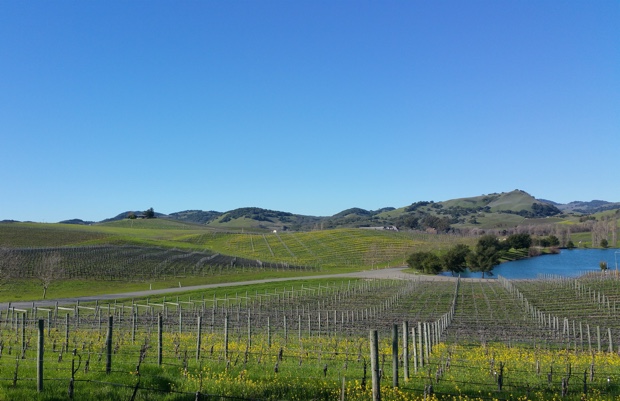
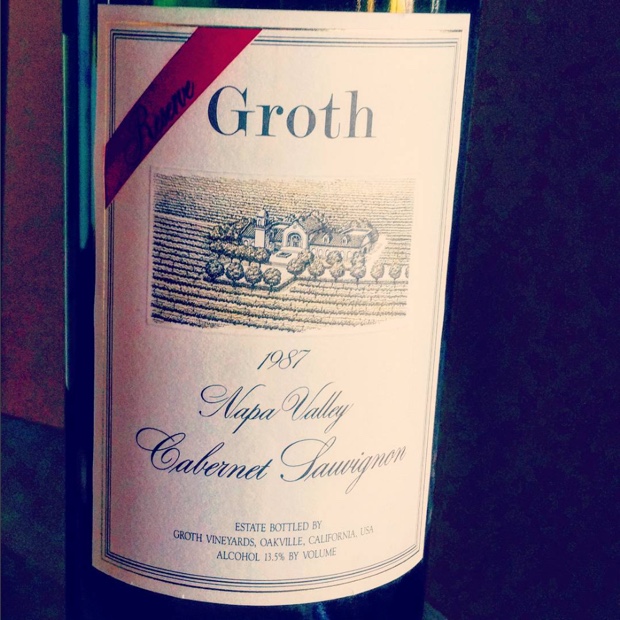
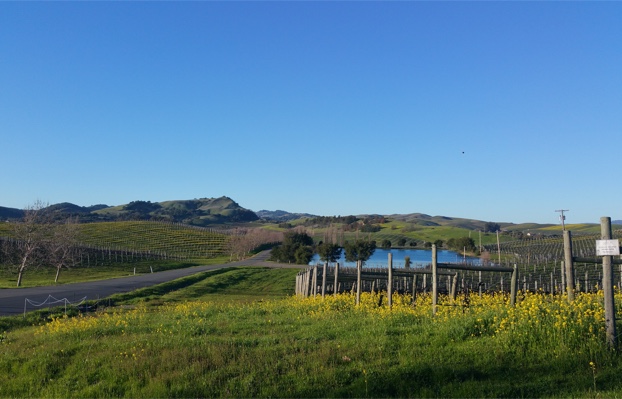


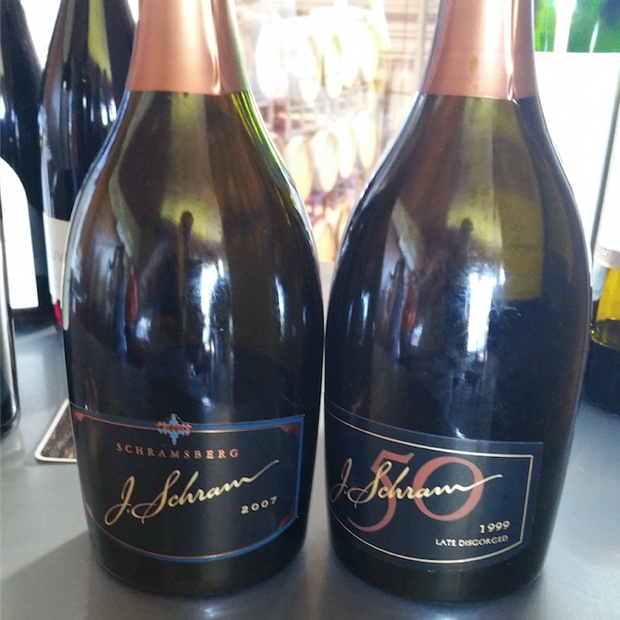


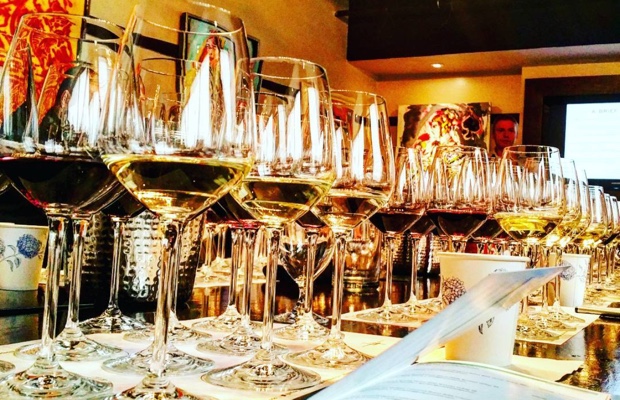
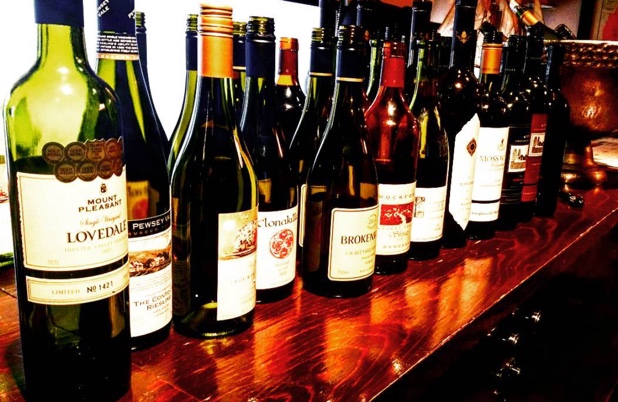
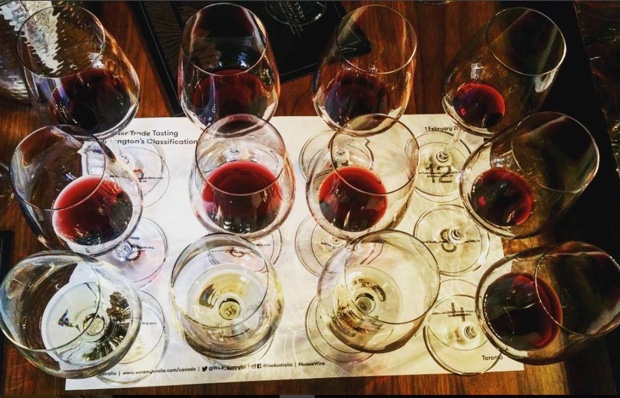

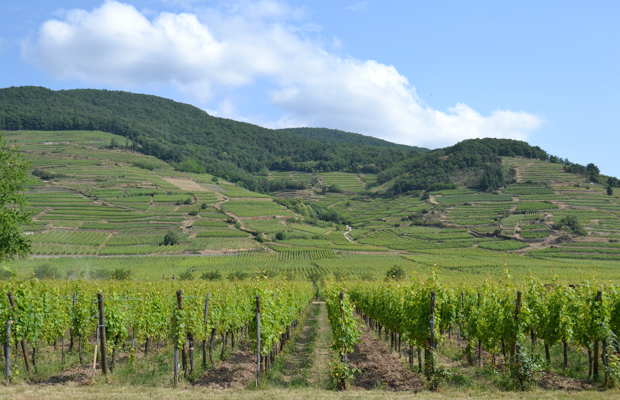
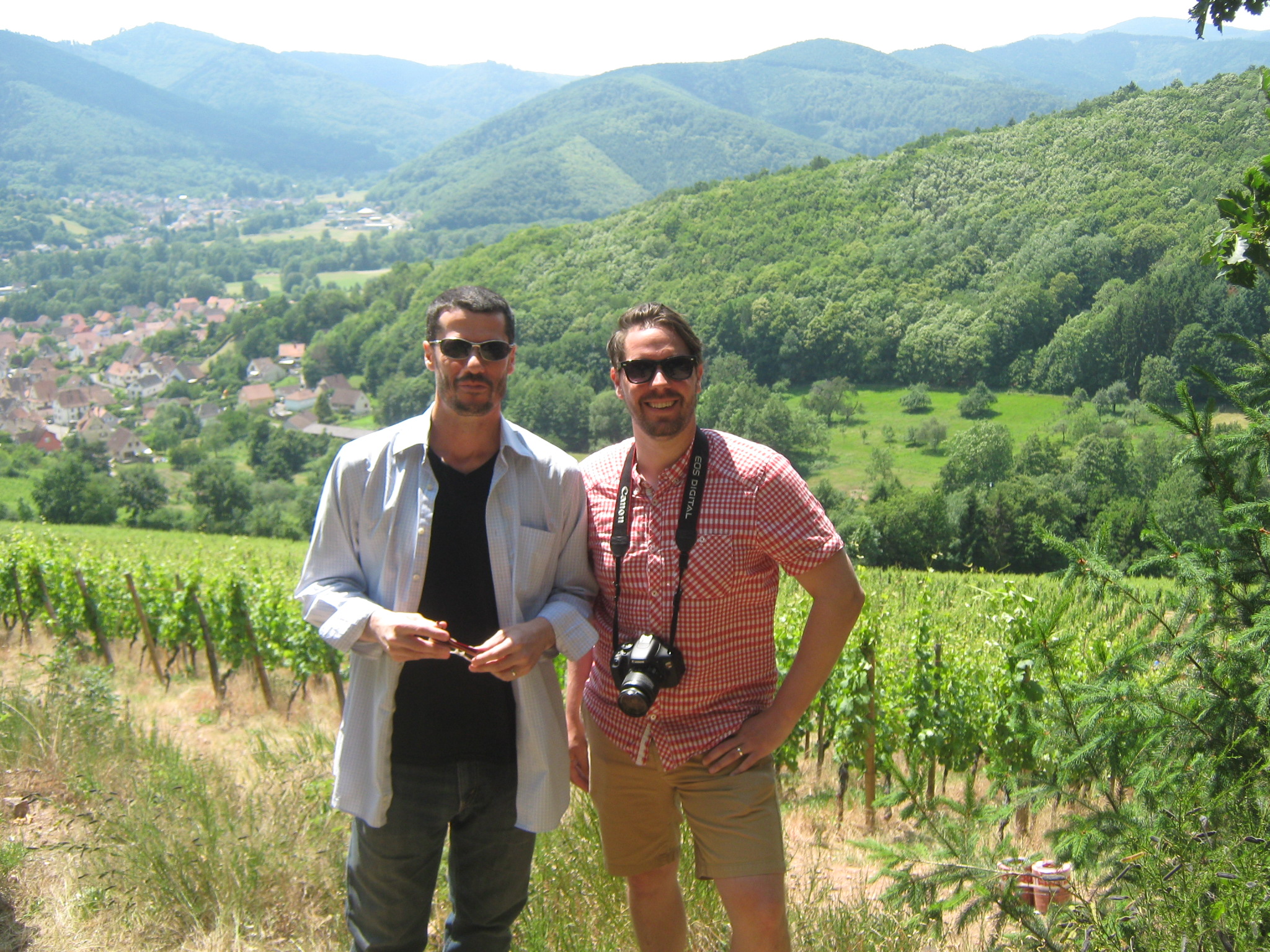
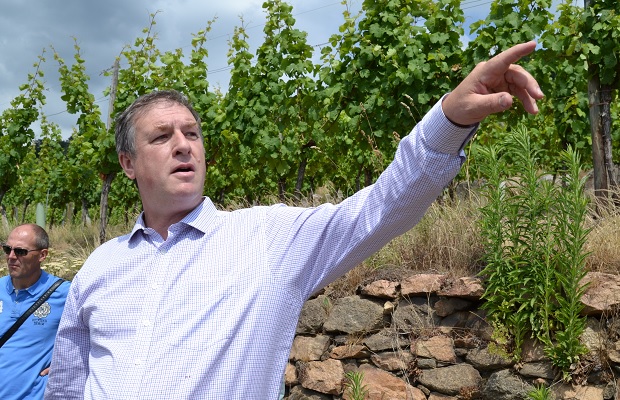
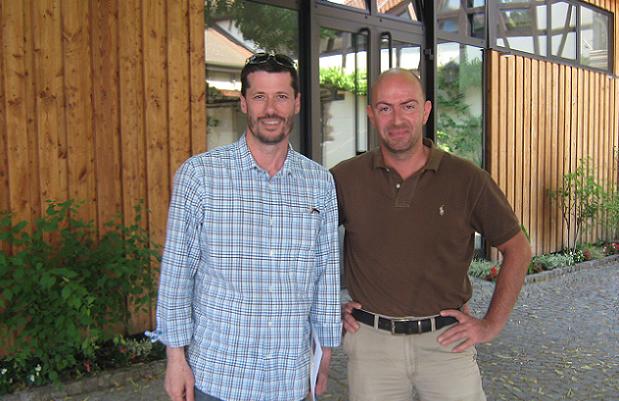
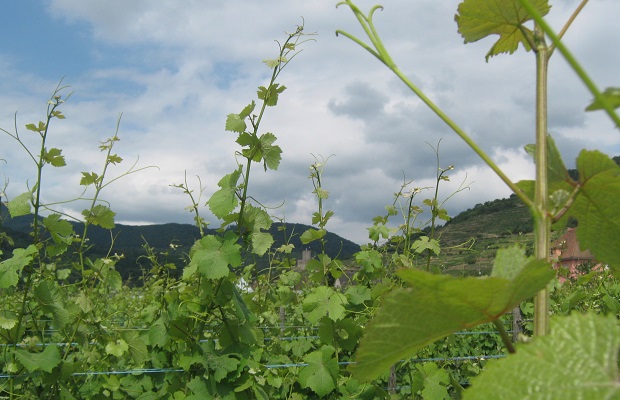

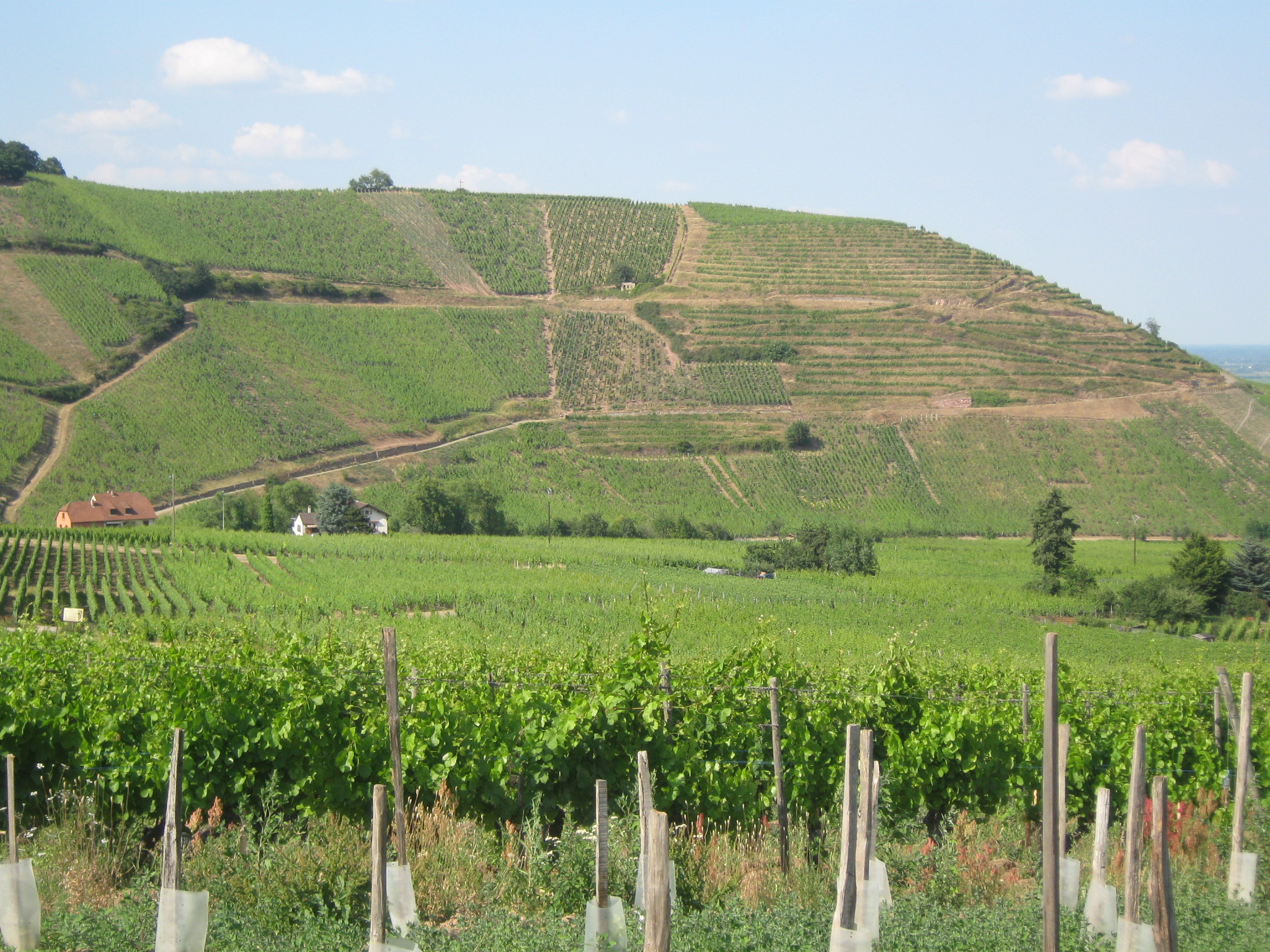
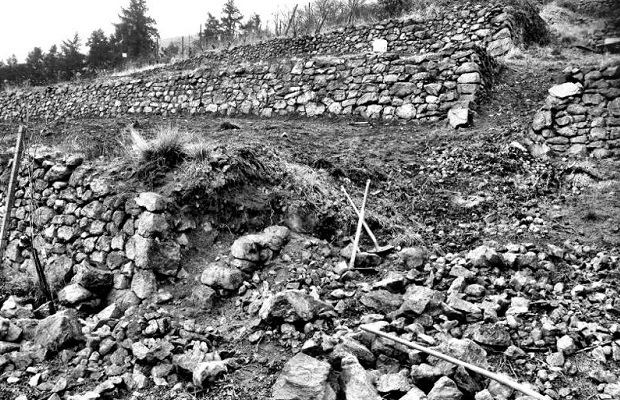
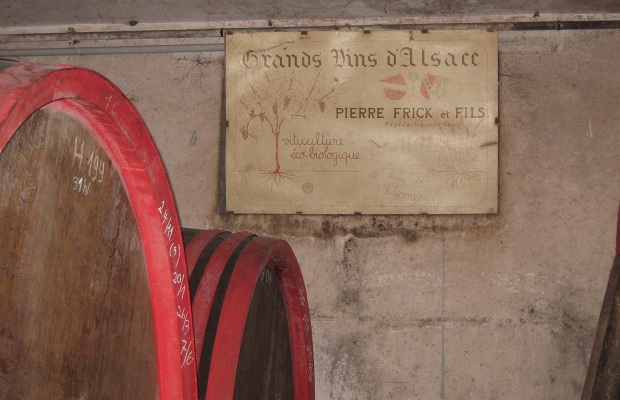

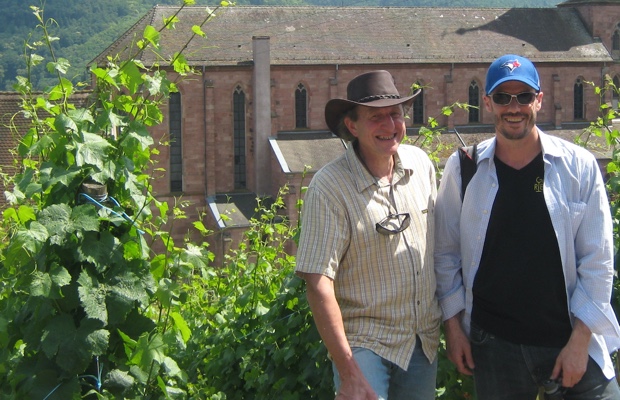

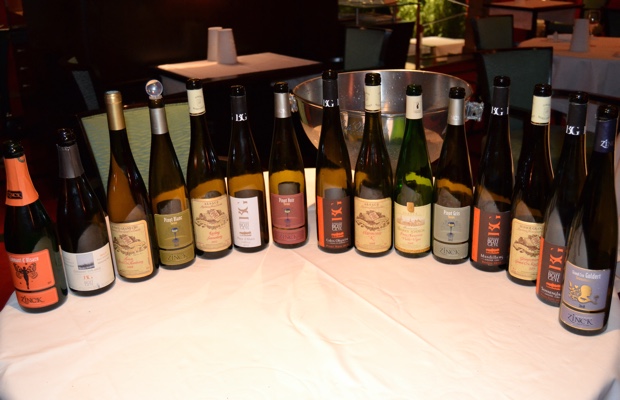
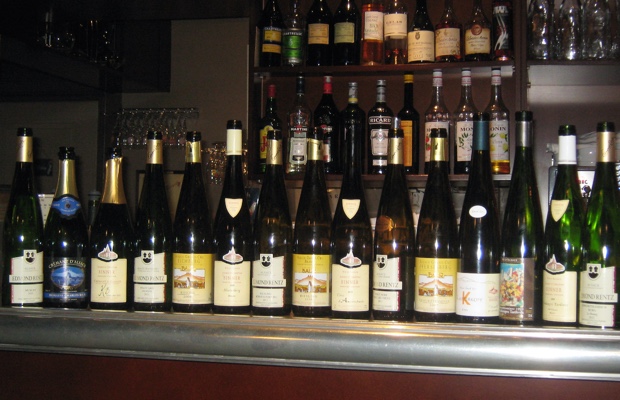


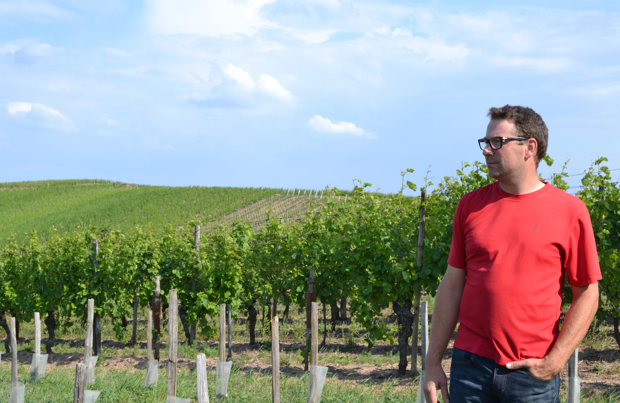
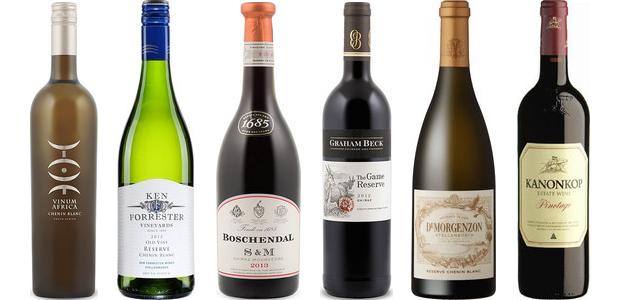
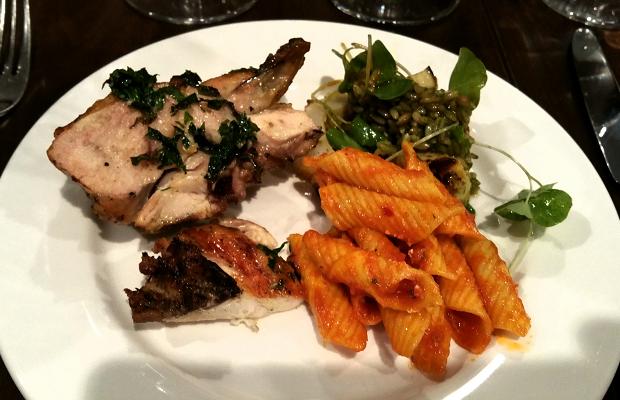
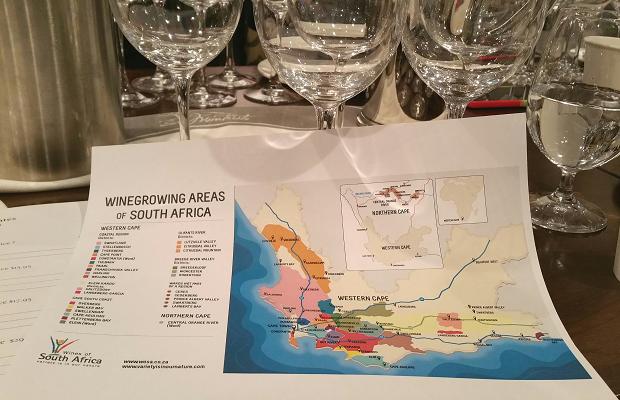
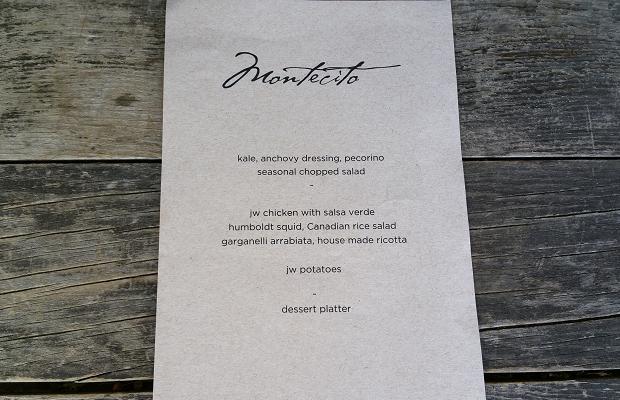
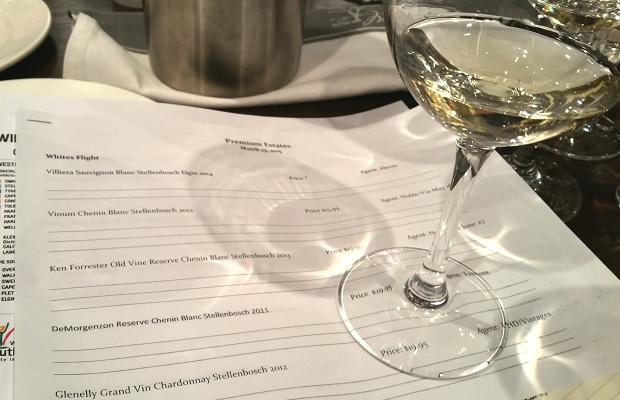
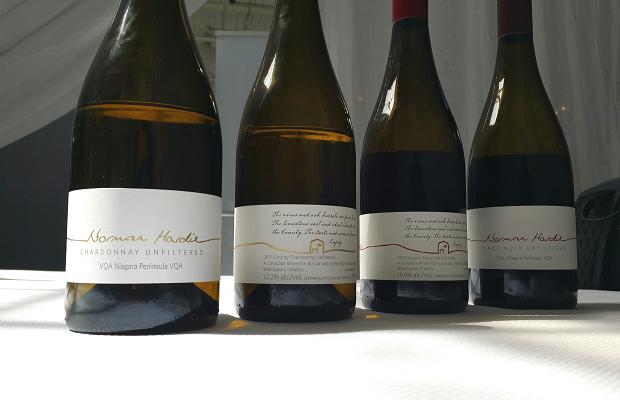


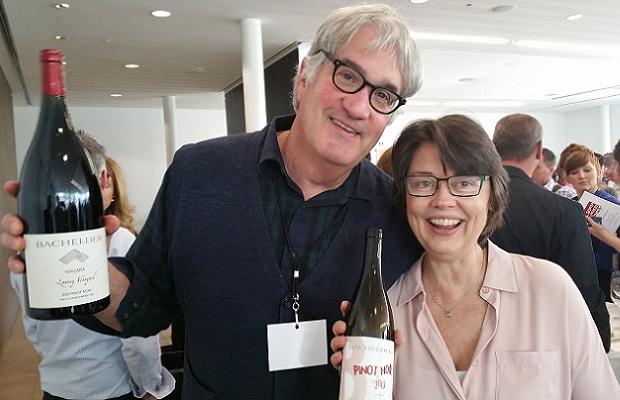

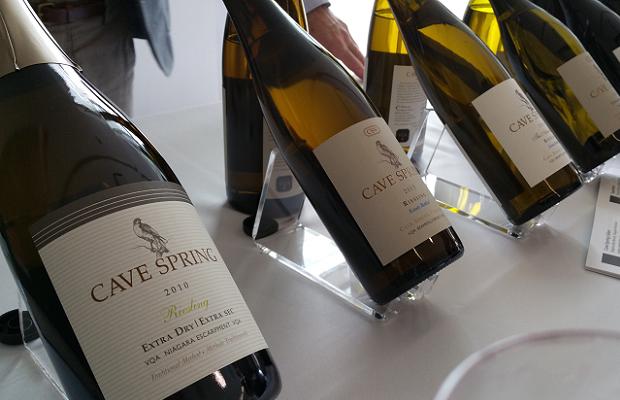
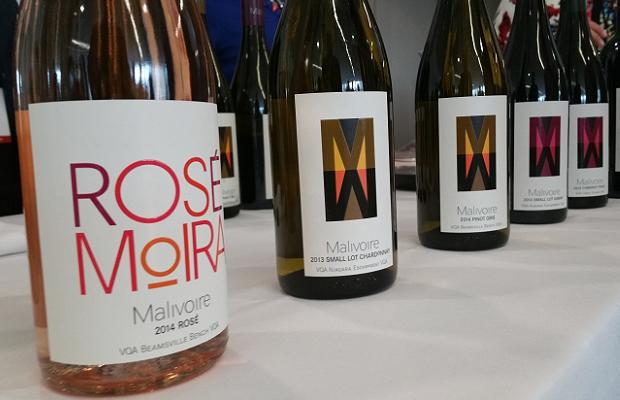
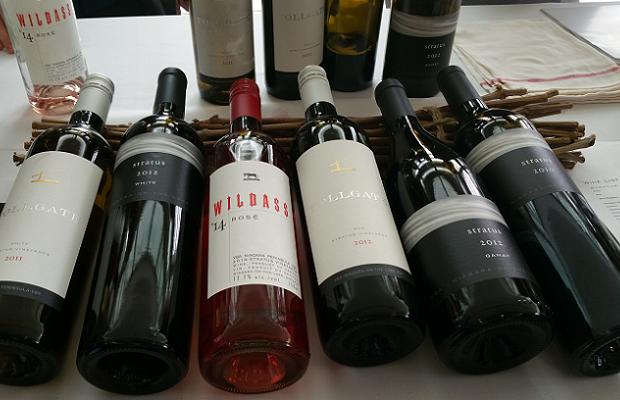
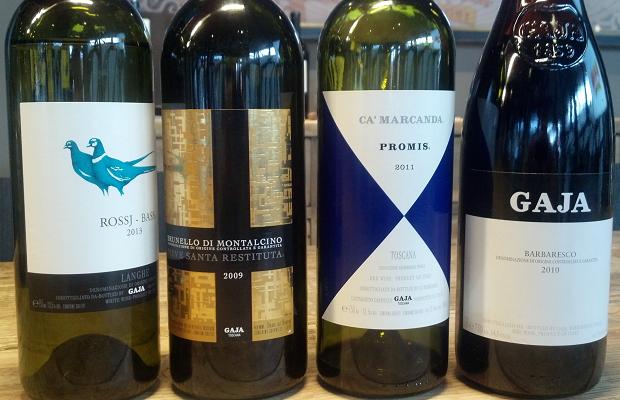
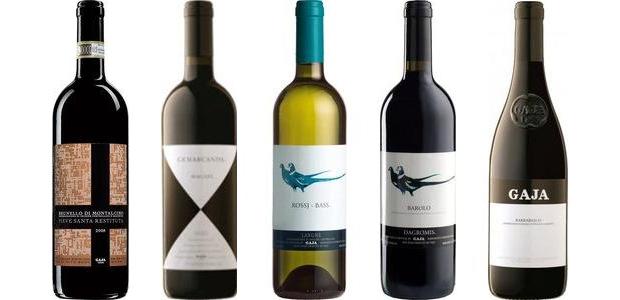
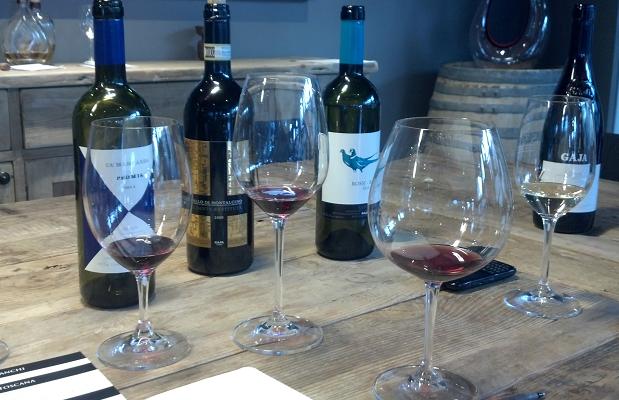

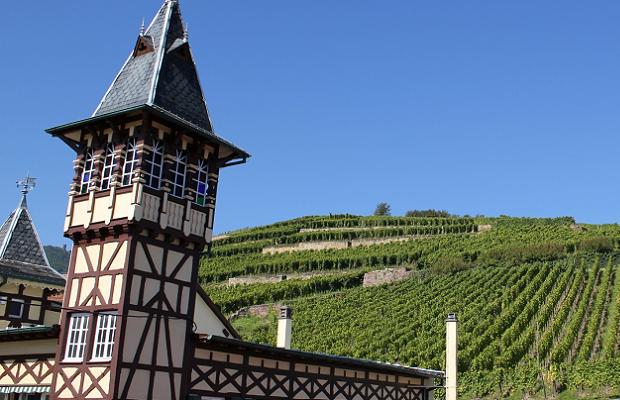
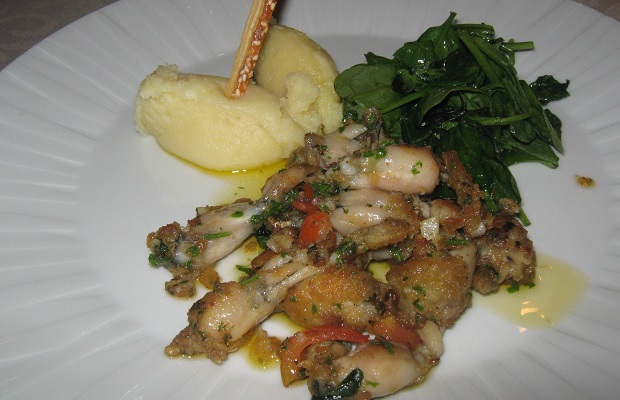
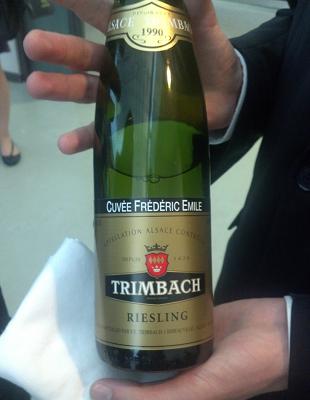

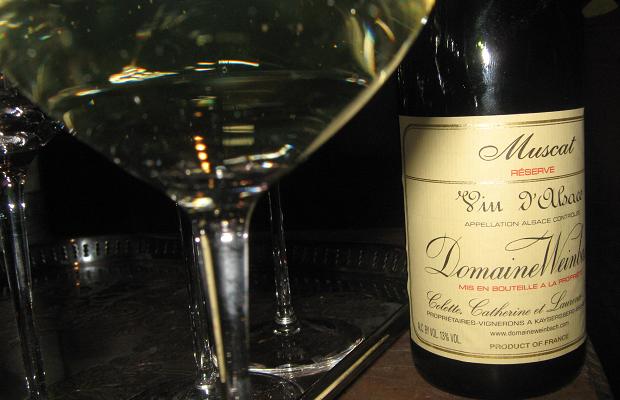
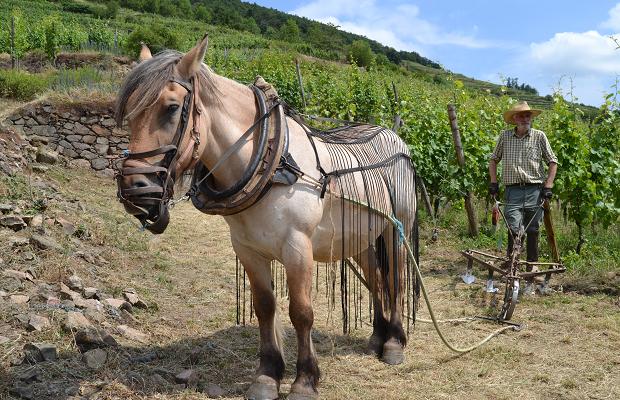
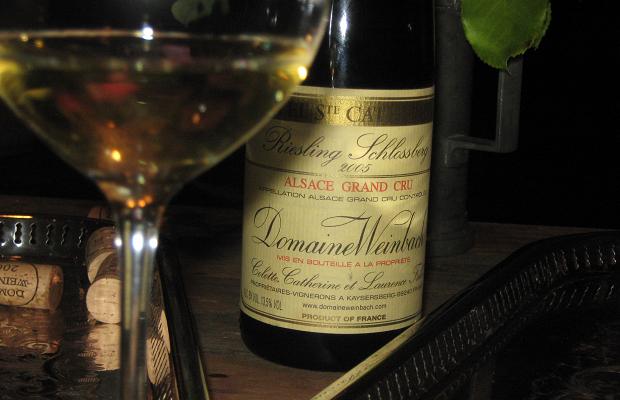
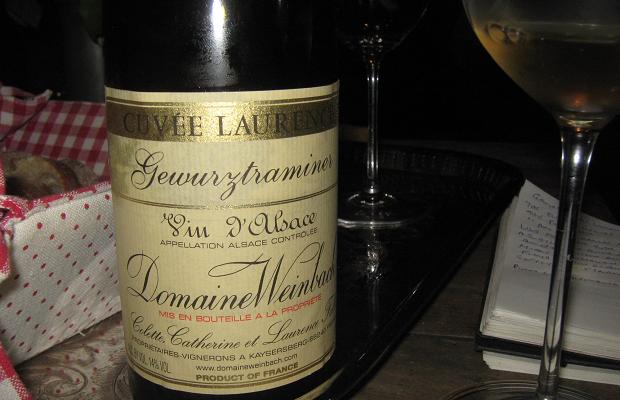
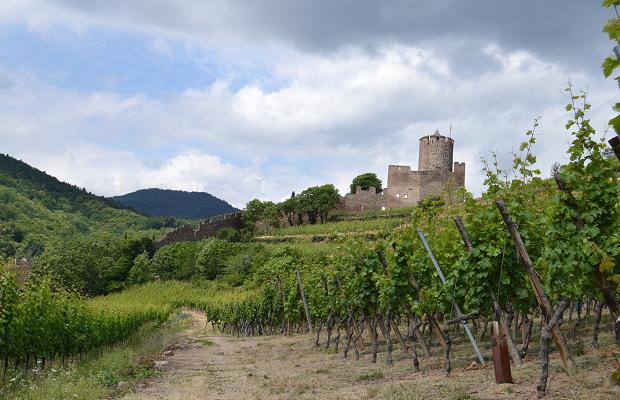
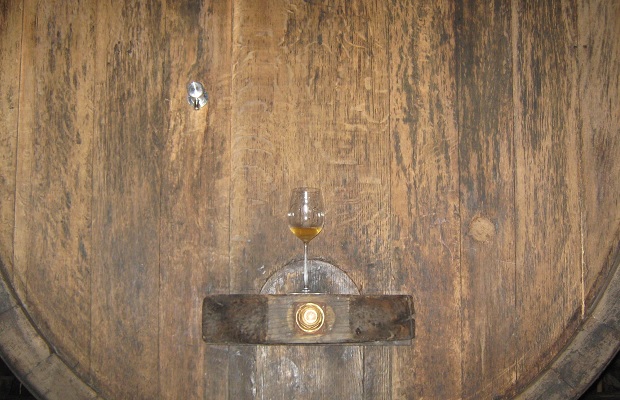

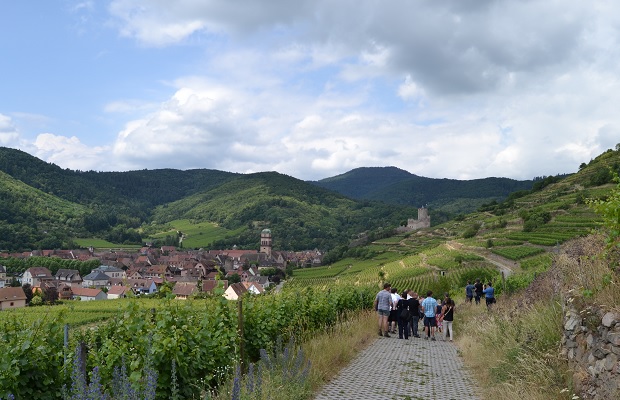



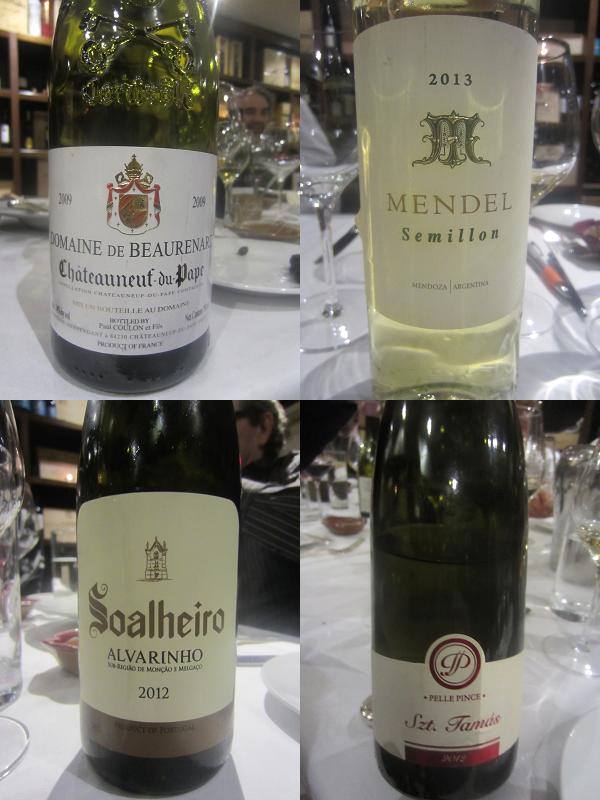
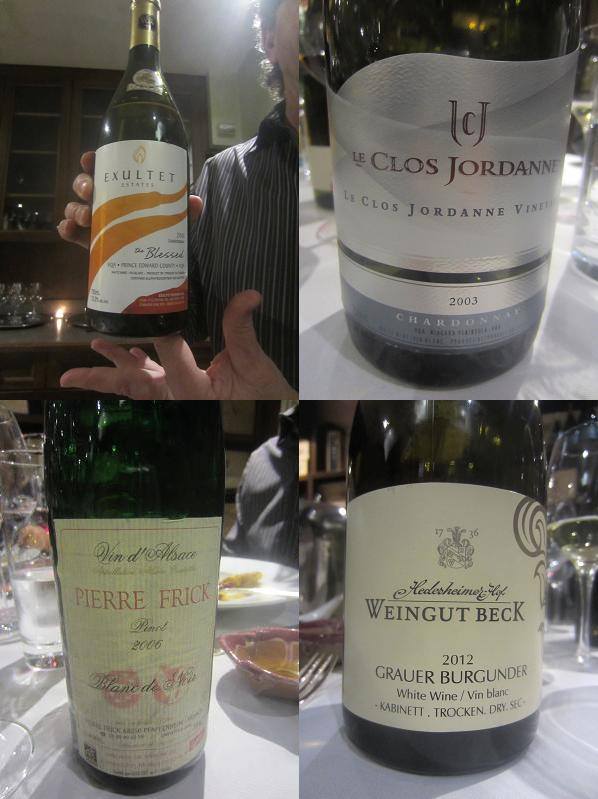
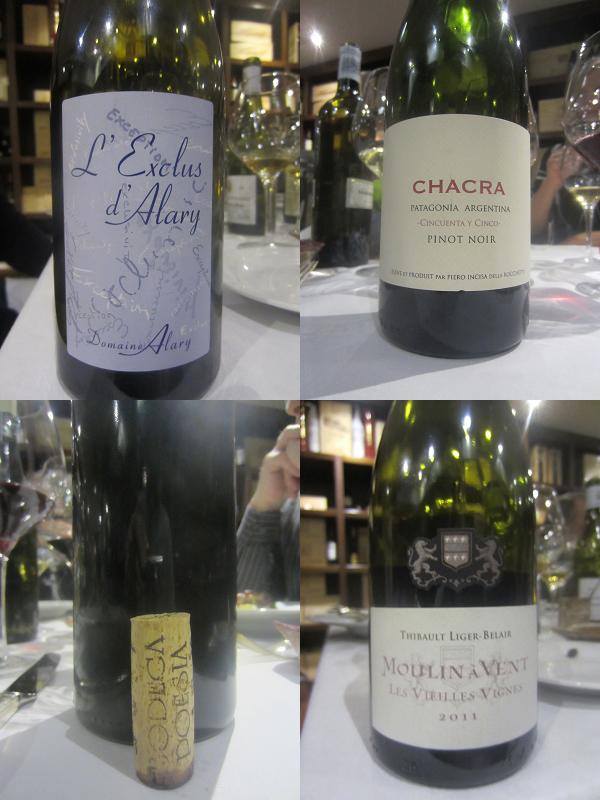

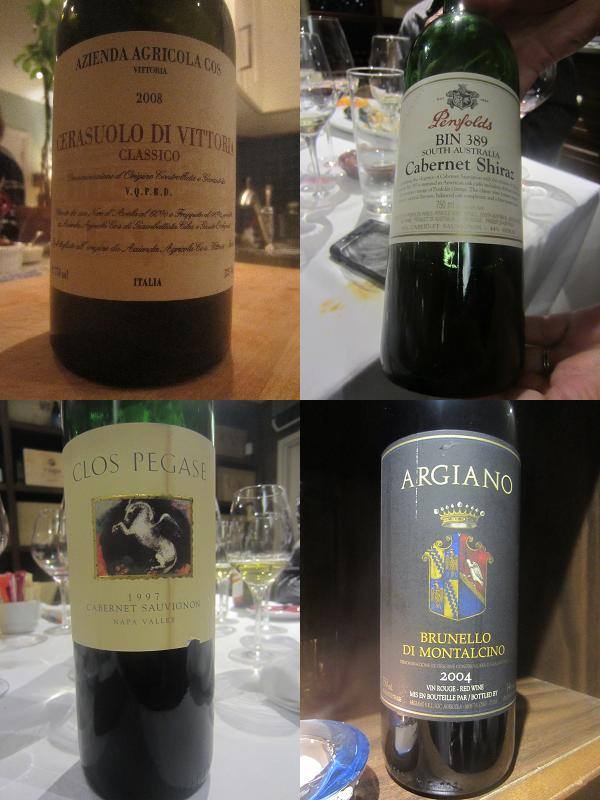
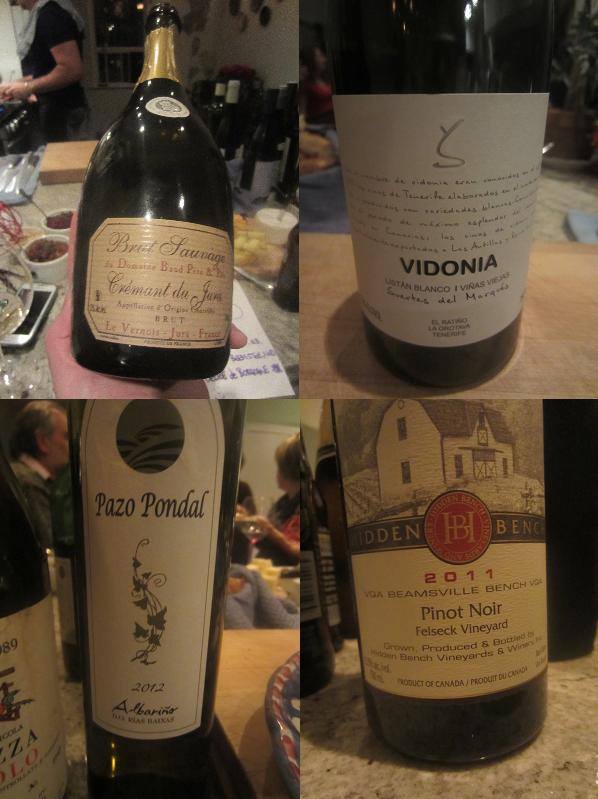

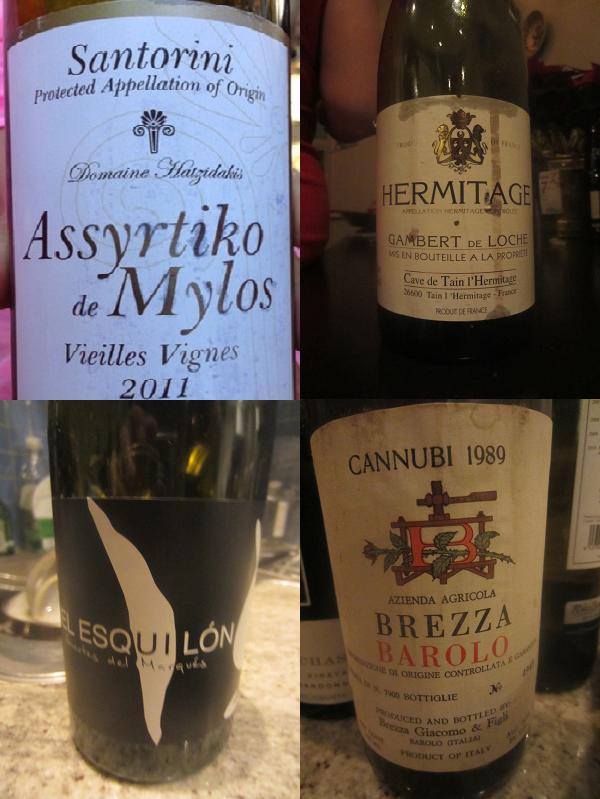
 Godello