On tasting blind and VINTAGES April 30th

"Every time I look at you I go blind." #timetotaste @WineAlign

“Every time I look at you I go blind.” #timetotaste @WineAlign

Saturday will bring forth yet another LCBO Ontario VINTAGES release. Every other Friday (and most Tuesdays) I taste through them, along with my colleagues at WineAlign (David Lawrason, John Szabo M.S. and Sara d’Amato), as well as a dozen or more multifarious and multi-motley wine writers. The wines and spirits are laid out with Warsaw Pact jibing intendment and we plod through, free as birds, privy with full disclosure for what we are assembled to inspect.

Related – Heading out for the west coast

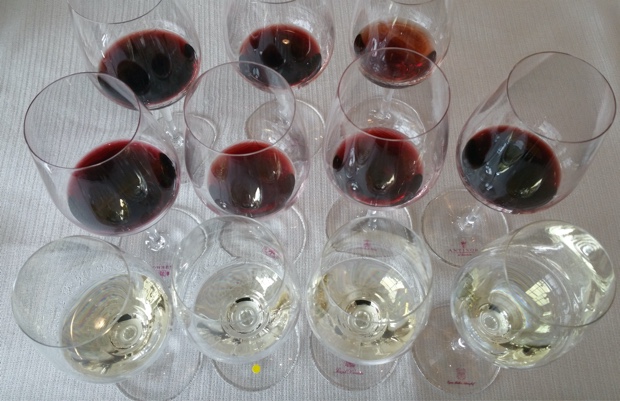
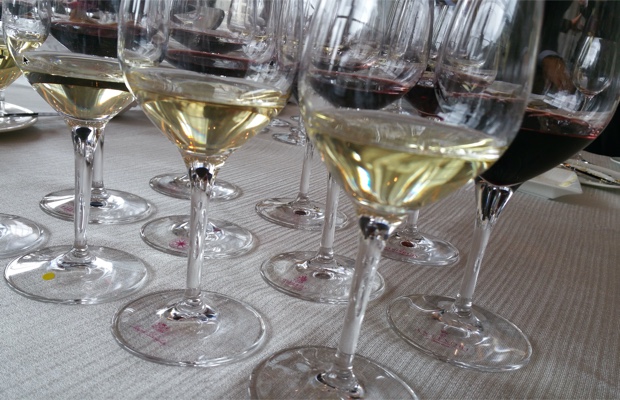
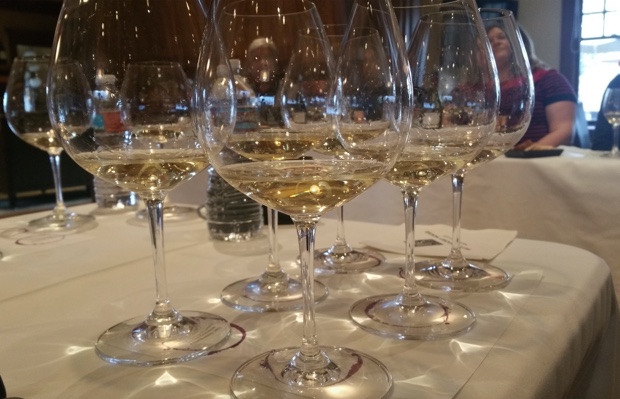
At WineAlign David, John, Sara, Steve Thurlow and I spend quality time with LCBO and/or VINTAGES destined products but we do so with wine-apprisement obliquity. When we arrive at the office and sit down to taste we are met with bottles covered with aluminum foil. We taste blind. Not completely mind you. A spreadsheet tells us the varietal(s) and region/country of origin. I too wonder if this can be truly be considered tasting blind.

The debate chases down critics and systems of evaluation with dogged persistence. Should wine be judged without any prior knowledge or preconceived notion about what’s in the glass? Must a tasting be conducted blind for a critic to objectively dispense an unbiased, unswayed and uninfluenced assessment of a wine?

The short answer is yes. Wine competitions are conducted blind, with only the varietal and perhaps place of origin as the sole bits of information with which to go on. The understanding is that if there are medals to be doled out, picking winners must be done with prejudice and favouritism set deliberately aside. But the wringer runs deeper. By definition, should any information be available at all?
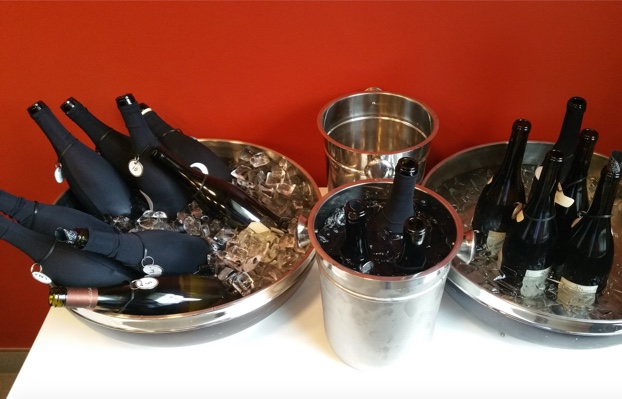
Blinds

To blind or not to blind, that is the question

As for grapes, a Gamay should be judged against other Gamays and so a critic may as well know that the flight is filled with nothing but Gamay. Mixing varietals within a flight distorts the playing field and skews the results. Place of origin is more complicated. While it is helpful to know where a wine hails from so that it may get a fair shake against competitors or peers composed of the same grape, that seemingly insignificant bit of information adds bias to the process. At the WineAlign Wine Awards of Canada the region is not pre-disclosed, except that the judges know that all the wines come from Canada. In competitions involving wines from around the world the regions are also excluded. Only the grape and price range is mentioned. Shouldn’t we do the same for all blind tastings? In fact, the bias of price might also be avoided.

I don’t know what it is

Something in me just won’t give it a chance

I think it’s just that I feel more confused by the deal

The tougher question is whether we as critics should be tasting all wines blind, all the time, or at least whenever possible. That is to say, whenever investigations are being processed for the purpose of publishing tasting notes and perhaps more importantly, assigning scores or ratings. Who does not believe that wine must be tasted without any assistance from marketing, pedigree and prior experience? The devil’s advocate approach would declare it unfair to so many honest wines to not be given credit for many years of hard work and success. Why should a wine with a longstanding reputation for excellence have to begin again in every vintage just to prove itself? The rub I feel, is there.

I think it’s that because I have seen all the fuss

And it’s no big deal

The following 11 recommendations from the VINTAGES April 30th release were not tasted blind. They succeed because they are honest, well-made and accurate representations of varietal and place. I am confident they would all fare just as well had they been assessed without knowing what they were. Good wine has a habit of finding its way into a taster’s heart, blind, or not.

Mcguigan Bin 9000 Semillon 2015, Hunter Valley, New South Wales, Australia (444554, $14.95, WineAlign)

Distinguishes itself for the Hunter Valley oeuvre with impossibly pale yet rich and stark-dressed fruit. More fruity than most and so nearly, just on the cusp of getable at such a young age. A terrific example to gain entry into the valley’s great white varietal hope while waiting for the serious crew to open the doors to their longevity-accrued perceptions. Takes one for the team with bells ringing and whistles blowing. It will drink well for five years and just develop a bit of that aged Semillon character near the end of the fruit line. Drink 2016-2020.  Tasted April 2016  @mcguiganwines  @Wine_Australia  @ChartonHobbs

Featherstone Black Sheep Riesling 2015, VQA Niagara Peninsula, Ontario (80234, $16.95, WineAlign)

Impressively expressive early to market 2015 Riesling, off-dry, partially pungent and markedly concentrated. The Black Sheep always smells and tastes like this; fifty-fifty fruit to mineral, concentrated and sweet from ripe extract and tannin. Whether you are an expert or a newbie to Niagara Peninsula Riesling, the Black Sheep is guaranteed. Drink 2016-2020.  Tasted April 2016  @featherstonewne

El Maestro Sierra Pedro Ximénez Sherry, Do Jerez, Spain (451468, $17.95, WineAlign)

Now. We. Are. Talking. Vino dulce natural of quite reasonably low alcohol and extreme elevated unction. Nutty and full of dried apricots, sweeter than some but really well balanced. Dessert all by itself with just enough acidity. Tart and tight, nuts again, spice and marzipan. Really tricks the tongue and pricks the senses. Sweet. Drink 2016-2018.  Tasted April 2016  @MaestroSierra  @TFBrands

Montes Outer Limits Sauvignon Blanc Zapallar Vineyard 2015, Aconcagua Valley, Chile (389643, $19.95, WineAlign)

This is an exciting hyperbole of Chile, a Sauvignon Blanc from the coast with wild flavours and singing aromatics. An inwardly deliciousness SB filled from within by a lactic streak and an exceptionally reserved tartness. Great length. So different, so new, so exciting. If it’s a bit warm and perhaps higher than alcohol than it notes, so be it. It has real vitality. Job well done with this newly directed Montes. Drink 2016-2020.  Tasted April 2016  @MontesWines  @WinesofChile  @DrinkChile  @ProfileWineGrp

Wildass

Stratus Vineyards Wildass Red 2012, VQA Niagara On The Lake, Ontario (86363, $19.95, WineAlign)

It would be hard to figure any sub-$20 red Ontario blend showing a deeper sense of ripeness, wood intent, sinew, cure, triturate resin and dry barbecue rub – than this Stratus ’12. It’s a bit of a head scratching, game-changing meritage, altering the course for $20 red blends forever. At the risk of forming comparisons, it puts me in mind of other places, like Roussillon, Campania and Navarra. It has coal running through its arteries and tonic spewing out of its fountains. Wild my ass? Yes. Drink 2015-2019. Tasted September 2015  @StratusWines

13th Street Gamay Noir 2013, VQA Niagara Peninsula, Ontario (177824, $19.95, WineAlign)

Four months has upped the funk for ’13, with tar and bitters still and thick as summer air. Rich and ripe, notable for its black cherry aroma and that J.P. Colas natural truncation. Unique, as always and very Gamay. Drink 2015-2019.

From my earlier note of December 2014:

Fruit was sourced from both the Sandstone and Whitty Vineyards for 13th Street’s Gamay Noir, a focused and gritty adjunct in ode to the Cru Beaujolais approach. This ’13 raises the aromatic and texture bar and just may be the most striking from a 13th Street estate mix. All the important berries are there, as are the mineral quandaries. In a Gamay moment this will lead you to gulp and giggle with #GoGamayGo delight.

Last tasted April and Sepetember 2015, April 2016  @13thStreetWines  @Noble_Estates
Chianti

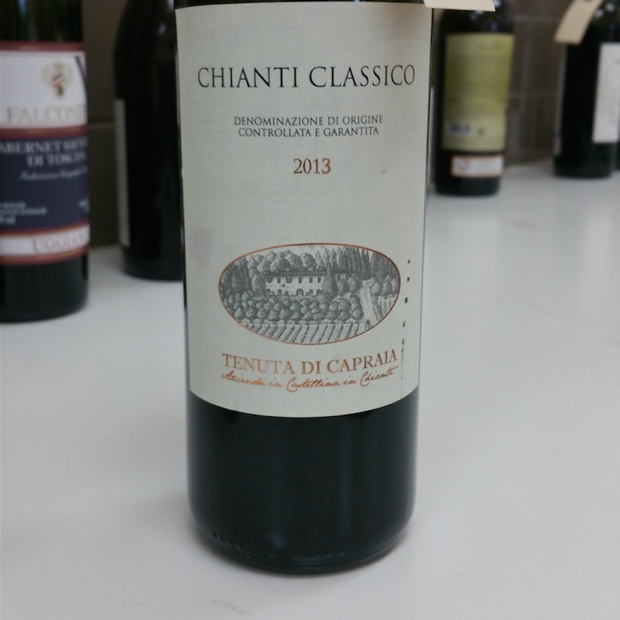
Tenuta Di Capraia Chianti Classico 2013, Docg Tuscany, Italy (135277, $21.95, WineAlign)

Extreme freshness, ripe red fruit and ripping acidity in such a young Chianti Classico. Possessive of an underlying mineral and dry tannic structure with such correct use of older oak and kept clean under the threshold of over-modernising alcohol. This reeks of some whole cluster work and tastes of the soil though never in any funky way. It’s extreme purity and cleanliness is second to none. This will last for longer than imagined. Drink 2016-2023.  Tasted April 2016    @chianticlassico  @ProfileWineGrp

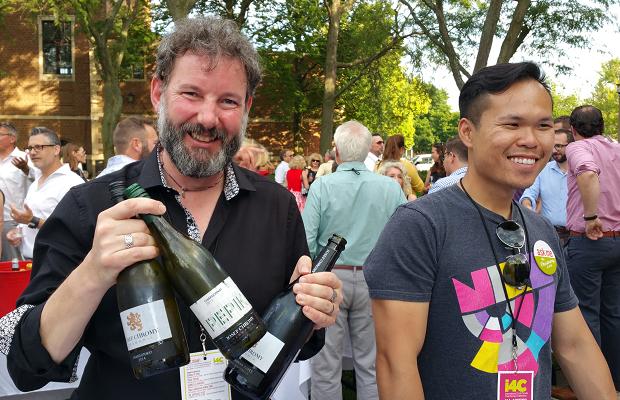
Jeremy Dineen of Josef Chromy Wines, Tasmania

Jeremy Dineen of Josef Chromy Wines, Tasmania

Josef Chromy Chardonnay ‘Pepik’ 2014, Tasmania, Australia (378240, $22.95, WineAlign)

Combines beauty and bitters for a streak of natural selection through a field of texture. Heads for the cream risen to the top of rich, pulls over and steps aside to allow for a crunch of green apple. The bite is real, lit by match and cut with spice. Great length. Drink 2015-2020.  Tasted July 2015  @JosefChromy  @bwwines

Grendel

De Grendel Shiraz 2013, Wo Coastal Region, Durbanville, Coastal Region, South Africa (174557, $24.95, WineAlign)

Strapping, youthful, dark as night Cape of Good Hope Shiraz, full of rich beginnings, soil reduction and barrel imaging. Vivid off the charts, rich red fruit, mineral undercurrent, wreaths of floral tethering and a rip tide riding rolling waves of cape intensity. Quite wow. Crazy good value. Drink 2018-2025.  Tasted April 2016  @degrendelwines  @WOSA_ZA  @WOSACanada  @imbibersreport

Vincent Mothe Chablis 2014, Ac Burgundy, France (390468, $26.95, WineAlign)

Perfectly pretty little village Chablis, flinty, lemon piercing and pouring like crystal clear, tiny drops of rain. Chardonnay on needles and pins, a white scintillant with tart berries, tannin and extra layers of dry extract. Terrific for so many reasons and with every reason to pair and to believe. While others moan “I been meek and hard like an oak,” with a glass of the Mothe I am blessed with “buckets of moonbeams in my hand.” If this were $20 it would be right up there with best ever. Close enough. This is a perfect example of why everyone should drink Chablis. Drink 2016-2019.  Tasted April 2016    @BIVBChablis  @bourgognespress  @BourgogneWines
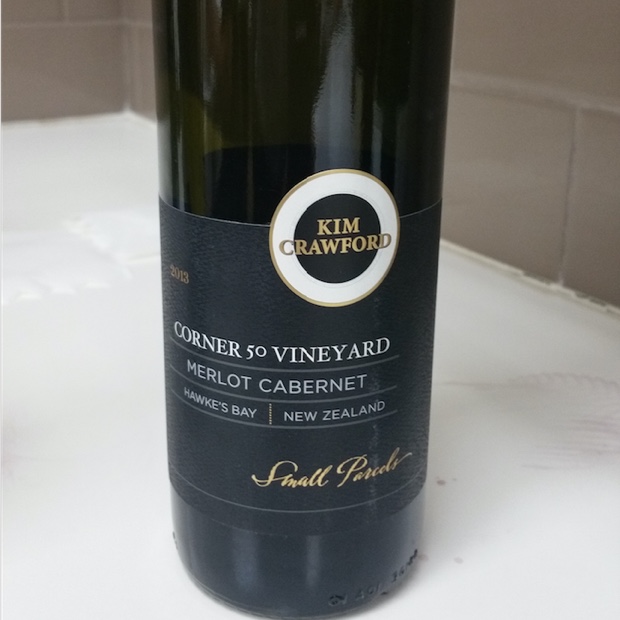
Crawford

Kim Crawford Small Parcels Corner 50 Vineyard Merlot/Cabernet 2013, Hawkes Bay, North Island, Marlborough, New Zealand (447433, $29.95, WineAlign)

Made from fruit grown in the Corner 50 vineyard located in the Bridge Pa Triangle wine district on the western side of the Heretaunga Plains of Hawke’s Bay. Diverse soils of Ngatarawa Gravels, Takapau Silty-loam (free draining red metal of mixed alluvial and volcanic origin) work towards a Bordeaux kind of varietal character and charm. Red recreational fruit and ripe, ropey acidity interact together in this very spirited North Island red. A Hawke’s Bay beauty with vivid and spirited energy. The oak is still very much in play but in no way on top. The cake factor is very low, the lushness happening in texture though not on the level of plush. Really good effort. Drink 2016-2018.  Tasted April 2016  @kimcrawfordwine @CBrandsCareers  @nzwine  @NZwineCanada

Norman Hardie Niagara Unfiltered Chardonnay 2014, VQA Niagara Peninsula, Ontario (184432, $39.00, WineAlign)

It’s hard not to compare Norman Hardie’s Niagara Chardonnay side by side with his County-grown and produced estate counterpart but also with other top end Niagara bottles. The fruit he sources from Duarte Oliveira’s Beamsville Bench farm offers the first leg up. The reductive and minimalist handling style is the second piece of the impossibility puzzle. Though not as closed as some in the past, freshness has never been so bright. The slow Hardie Chard evolution and painstaking road to malolactic could result in perdition but miraculously never does. The cumulative culled from out of patience leads to a reward in near perfect textural deference and defiance. The 12.2 per cent declaration of alcohol is exemplary though it could hardly cross the 11.5 threshold if it wanted to or tried. Chardonnay left alone, to find its way, fend for itself, unstirred, unassailed and deft above or beyond reproach. Enjoy a Hardie Niagara Chardonnay in its early youth. They are not meant to be stashed away forever. Drink 2017-2021.  Tasted April 2016  @normhardie

Trapiche Terroir Series Malbec Finca Ambrosia 2010, Single Vineyard, Mendoza, Argentina (402941, $39.95, WineAlign)

The pitchiest Malbec of dark black fruit, weight and substance. Really ambrosial, a thick swath of berry, wood and tannin. This Malbec can run with the players any day of the week. Structurally sound and massive, fully, completely accomplished and offering much reward. There is a resinous, cedar and briar note of amalgamation and complexity. It will take three or more years to bring all the exceptional components together. Drink 2019-2024.  Tasted April 2016  @TrapicheWines  @winesofarg  @ArgentinaWineCA

Good to go!

Twitter: @mgodello

Instagram: mgodello

WineAlign

Facebook

Heading out for the west coast

Pinot Noirs of Oregon

Pinot Noirs of Oregon

On a Friday in mid-April a group of veteran wine tasters come upon a table of Oregon Pinot Noir laid out beneath the white neon wash of light in the LCBO sensory lab. Most are more than duly impressed. One extreme professional refers to the line-up as the greatest grouping ever assembled for a VINTAGES release. Roger that straight from the shoulder VINTAGES assessment.

Related – Sonoma gaps and single vineyards

The quaternary Oregon Pinot Noir contingent stands out like a fantastic four in a justice league of second tier super heroes. The rest of the Pacific thematic from Oregon and Washington is filled with average to good examples, the best of which are the A to Z Wineworks Chardonnay and the Unbroken Bordeaux Blend from Horse Heaven Hills in Washington. The act of trying to assay these wines invites California thoughts, especially with Sonoma County Pinot Noir so latterly fixated upon by personal hermeneutic. Those who sell you on the idea that Oregon is becoming like California have never truly immersed themselves into the underground Willamette salinity and ancient riverbed imparting minerality. Nor do they intuit that no two wines from Sonoma County are the same. “The multeity of style and the illimitable viticultural approach illustrates how Sonoma’s 16 AVA’s (American Viticultural Areas) are a study in variegation and variance.”

California dreaming aside, let’s shift our thoughts back to Oregon. More than anywhere else in the diaspora where the Burgundy expatriate is re-produced, the Pinot Noir from out of the Willamette Valley transmogrifies the parataxis of French narration. It understands that to repeat a note can be an enrichment, not an exhaustion. Oregon doesn’t merely resemble Burgundy, it actually exceeds it.

In Ontario we consider specific Niagara sub-appellations as capable of narrating a Beaune fictive, including those from the Benches of Beamsville and St. David’s. Prince Edward County’s limestone viaduct of geology and Burgundian geography is always part of the wine country Ontario Pinot Noir discussion. Central Otago and other New Zealand regions can be given due genetic consideration, as can very isolated parcels in Alsace, the Western Cape, the Mornington Peninsula and the Ahr. In the case of Oregon vs. Burgundy, ask Norman Hardie, Thomas Bachelder, Will Predhomme or Nicholas Pearce. They will tell you that it is most certainly not Niagara and while neither are Burgundy, it is the former where the closest comparisons can be made.

I reviewed the four Pinot Noir coming through VINTAGES on April 30th. They are all worth the investigation and two are exceptional. To the purpose of expanding on the west coast leitmotif I have added a white from Oregon, a sumptuous red blend from Washington and two big reds from California and B.C. Next weekend, head out for the west coast.

Portlandia Pinot Noir 2013, Oregon (445486, $28.95, WineAlign)

West coast offence Pinot, essentially Willamette Valley though labeled as Oregon. Rich and just a bit soil funky, with a slight rubber reductive quality in its still beating youth. The glass is very full when Pinot such as this is poured, the dial turned up and the sun seemingly always high in the sky. Will use of most of its energy in the next few years. Drink 2016-2020.  Tasted April 2016  @RareEarth_Wines

Solena

Soléna Domaine Danielle Laurent Pinot Noir 2012, Yamhill Carlton, Willamette Valley, Oregon (446112, $35.95, WineAlign)

Gorgeously perfumed Pinot Noir from Domaine Danielle Laurent, crossing femininity with a lithe scorching and torching of earth. Ripeness is a virtue, the road is full of bloody tension, “beauty walks a razor’s edge” and the partnership between fruit and tannin is rife with love. Big within correct and structured means. There have been others but this YC-WV is currently on my mind, to put aside and then “someday I’ll make it mine.” Perfect companion with which to take shelter from the storm. Drink 2017-2024.  Tasted April 2016  @solenaestate  @Oregon_Wine  @Nicholaspearce_

Willakenzie

Willakenzie Estate Gisèle Pinot Noir 2013, Certified Sustainable, Yamhill Carlton, Willamette Valley, Oregon (452656, $36.95, WineAlign)

So pretty and so very restrained, near tart and sweet but never going too close to either edge. Drinking this on a daily basis would be so easy to abide, with its ripe and slightly spicy berries, plums and mild citrus. Would expect it to turn tart or sour but it leans to mild tannin instead. Not necessarily a wine for 10 years but exceptional for five. Drink 2016-2020.  Tasted April 2016  @willakenziewine  @MalcolmCocks1

Lenvoye

Maison L’envoyé Two Messengers Pinot Noir 2013, Willamette Valley, Oregon (453357, $41.95, WineAlign)

The two messengers are winemakers Louis-Michel Liger-Belair and Max Marriott and somehow they have crafted a most amazing Pinot Noir from out of the potentially disastrous tale of three harvests: fruit picked before, during and then after the typhoon. The fruit comes from four AVA’s and eight vineyards: Eola Amity – Eagle Crest, Eola Springs, Popcorn; McMinnville – Hyland; Willamette Valley – Croft; Yamhill Carlton – Fairsing, Gran Moraine, Stardance. A Côte de Nuits ringer in Willamette clothing, multi-terroir dependent and singing the amalgamated praises of its serious sense of place. Whatever combination of hill, nook and petite colline this was culled from has fed the Burgundy machine. The sweetness is palpable but created by soil and tannin. Quite seamless, not to mention travelling along underfoot with the Willamette salinity rolling along in the ancient river below. Terrific Pinot Noir with stuffing and age ahead ability. Does it succeed in “pursuing transcendent Pinot Noir through gilded terroir?” I’d say yes. Drink 2017-2024.  Tasted April 2016  @MaisonLEnvoye

A To Z Wineworks Chardonnay 2014, Oregon (269258, $24.95, WineAlign)

Plenty of grape extract feigning sweetness, more exuberant on the palate then in the aromatics. A composed and highly concentrated Chardonnay with accents, spice and extra flavour provided by the barrel plans. Crafty and well-executed in craft. Drink 2016-2019.  Tasted April 2016  @AtoZWineworks  @Gr8TanninWines  @Nicholaspearce_

McKinley Springs Unbroken Blended Red 2012, Horse Heaven Hills, Washington (444729, $26.95, WineAlign)

Cabernet Sauvignon (43 per cent), Merlot (37), Malbec (19) and Cabernet Franc (11) fill in the baritone blend, unbroken, as in spirit, as opposed to thinking in terms of single-varietal. Though the warmth and wood are gainful and very much a part of the chain, the fruit and the grain are interwoven, fully integrated, spice regaled and determinate. Great red fruit, graphite and grip. So very impressed with the spirit of this Horse Heaven Hills red. Drink 2016-2021.  Tasted April 2016  @mckinleysprings  @WINESofWA  @HHDImports_Wine

LFNG

Laughing Stock Portfolio 2013, BC VQA Okanagan Valley, Ontario (71464, $54.95, WineAlign)

The five-varietal classic Bordeaux blend in 2013 is Merlot (41 per cent), Cabernet Sauvignon (30), Cabernet Franc (18), Malbec (8) and Petit Verdot (3). Together they seamlessly amalgamate in 36 per cent new barrel and (64) second fill for 19 months. All tolled the group is characterized as not shy. There is a squaring of deep, deep intent, dark, dark pitchy hue and full, full body. Phenolically ripe and properly volatile on the edge of the precipice with bringing it acidity. Tastes of berries and brine, rare venison and caramelized plantain. The more abstract flavour profile is described as a ferric welling with hematic humour. For now take one deep breath of the beauty and wait two years with the rest for full enjoyment. Drink 2018-2024.  Tasted April 2016  @lfngwine  @winebcdotcom

Ferrari

Ferrari Carano Reserve Cabernet Sauvignon 2010, Mountain Vineyards, Alexander Valley, California (450429, $74.95, WineAlign)

Hefty, rich and spicy Cabernet with yet raging, formidable tannins. Caky, savoury, currant, graphite and cassis laden fruit. Some liquorice, peace stone and dipped chocolate berries. All of everything, the above, earth and sky. The fountains and the cup runneth over. Hedonistic, oak behemoth of exceptional mountain vineyard fruit overlooking the Alexander Valley. Drink 2018-2025.  Tasted April 2016  @FerrariCarano  @HalpernWine

Good to go!

Twitter: @mgodello

Instagram: mgodello

WineAlign

Facebook

Sonoma gaps and single vineyards

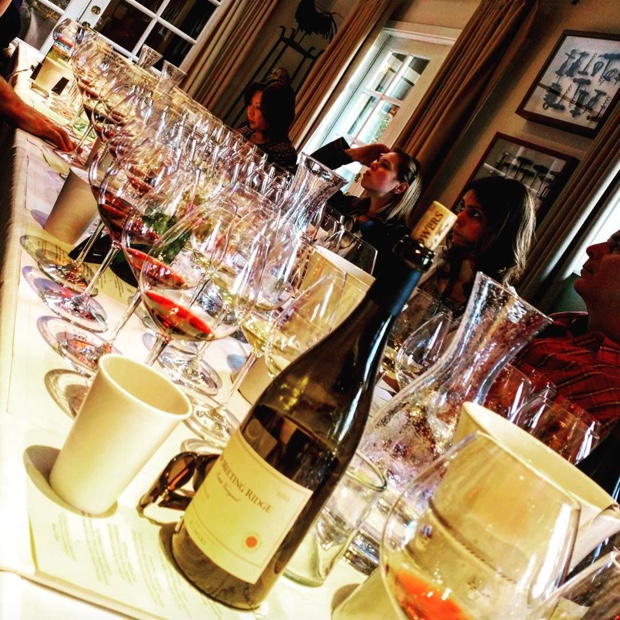
Exceptional @sonomavintners discourse @patzhall @FlowersWinery @BoissetFamille @DeLoachVineyard #hartfordcourt #santarosa #sonomacounty #sonoma #califwine #pinotnoir #chardonnay

Exceptional @sonomavintners discourse @patzhall @FlowersWinery @BoissetFamille @DeLoachVineyard #hartfordcourt #santarosa #sonomacounty #sonoma #califwine #pinotnoir #chardonnay

No two wines from Sonoma County are the same. I believe that statement to ring expressly true and so should you. Jean-Claude Boisset saw the potential in Sonoma and created Boisset Family Estates with singular viniculturaliste swagger. Boisset Family Estates is led by Jean-Charles Boisset, who is also President of Boisset, La Famille des Grands Vins. Eight wineries make up the California collection, including DeLoach Vineyards. It was there that we tasted eight conspicuous examples of Pinot Noir and Chardonnay.

Mapping a cru systematic out of Sonoma County is a massive and seemingly boundless undertaking. This wine country section of Northern California is one of the most complex regions in the world, with valleys, plains, ridges, slopes and mountains of every aspect. There are more single-vineyard wines pulled from vines dotting micro-climatic, highly specific sites than anywhere in the world. Or so it seems. Unlike Burgundy, so many vintners farm and/or produce the only wine made from that specific parcel. The permutations of cru definition are multiplied 100-fold. The diagram is drawn with near-infinite numbers of circles and lines.

The multeity of style and the illimitable viticultural approach illustrates how Sonoma’s 16 AVA’s (American Viticultural Areas) are a study in variegation and variance. The multifarious geographical scope of coast, penetrating valleys and mountain ranch land conspire to design the impossibility of squeezing out clarity from a region in direct contrast to concepts that choose to exhort compounding synchronisms.

Related – Sonoma peaks from out of the fog

The last time I approached the Sonoma expostulation I talked of course about the fog. “Sonoma’s fog is a stern exertion of soda and salt and when its atomic dipoles get together to dance with ripe grapes and the puffy gaieties of yeast, the syntagmatic rearrangement in the region’s wines are all the merrier and made most remarkably interesting. Fog complicates and makes complex the ferments from Sonoma’s hills and valleys. The second fiddle status to Napa Valley’s hugeness is both ridiculous and absurd. Sonoma Chardonnay and Pinot Noir is already known for its kinetic inquisitiveness but other varieties are also gaining major traction. Cabernet Sauvignon, when ripened upwards of that fog and yet inextricably linked to the miasma, gains a level of synergistically precipitated elaboration that blows Napa out of the water.”

That still holds water but it’s just not that simple, nor is it a matter of direct comparison. Sonoma’s cool-climate condition is incomparable to other aptly-named wine regions, from Napa to Niagara. The coastal fog bank blows in, “accompanied by cold air capable of such rapid temperature shrinkage it can be measured by swings as much as 50 ºF. The manifest vital spark that runs through all of Sonoma County’s fiords and chords, spuming with an irrepressible puissance is that fog.”

Related – Five more impressive, cool-climate, fog-injected wines from Sonoma County

When I returned from California in February I wrote “the most pertinent question now in my mind is this. Can European wine keep up with the fictionality of North American reality?” Unearthing discoveries from idiosyncrasy to heterogeneity is what people want and it’s not just rambling wine journalists or thrill-seeking sommeliers who are looking for wine-contrariety nirvana. Craft is in. Small batch, low-production, around the corner from nowhere, never heard of that is what sells. And Sonoma has got more than enough answers to last for centuries.

Which brings us to the discussion centring on Pinot Noir and Chardonnay, the varietal darlings of Sonoma County, especially when the vineyards that grow them are tied directly to the fog’s greatest chaperone, the Petaluma Wine Gap. The different strokes inherent to the Burgundian expatriates raised on the coast, on inbound slopes and on craggy ridges is mind-numbing. The thread that ties them together is related to the fog but it is not enough to formalize, generalize or philosophize a unifying theme. Bring the wines of DeLoach, Patz & Hall, Flowers and Hartford together in one room and you might expect some repetition. I found none, save for one mien of chiaroscuro connection. Creep out from that shadow and find a world of deference and difference, from Pinot to Pinot and from Chardonnay to Chardonnay.

In conjunction with California Wines Canada, The California Wine Institute, Sonoma Vintners and Boisset Family Estates, a group of Canadian journalists and sommeliers were invited to DeLoach Vineyards to taste four Pinot Noir and four Chardonnay. Here are my notes.

Flowers

Flowers Camp Meeting Ridge Chardonnay 2013, Sonoma Coast, Sonoma County, California (416529, US $80.00, WineAlign)

Camp Meeting Ridge is what Director of Winemaking Dave Keatly considers a “remarkable site” with shallow soils, a product of volcanic and tectonic activity. Even with two plus years tucked away this persists as a tight, tense infant of a Chardonnay suspended within a reductive environment. The trenchant draught seems to emanate directly from the wildly imagined vineyard, with the scent of white flowers and ripping green fruits, from lime to mango. Focused, linear, compact, wound, wire patrolling Chardonnay. This was bottled 17 months after pick with a tank aging component, for phenolic structure and a healthy presentation of fruit. Certainly the most Burgundian (from Boisset Estates and in the greater Sonoma sphere) with engaging spice. Drink 2016-2024.  Tasted February 2016  @FlowersWinery  @rogcowines

Flowers Pinot Noir Estate Sea Ridge Vineyard 2013, Sonoma Coast, Sonoma County, California (328062, US $65.00, WineAlign)

Older vines (planted in 1998) provide the wisdom while winemaking (Dave Keatly) encourages atticism. A 50 degree, nine day cold soak, native fermentation and 18 months in (35 per cent) new French oak lay down the parameters. Post nurturing it’s all about time travel back to nature. Back to the organic and biodynamically farmed extreme (with elevations of 1,400 to 1,875 feet) Sea View Ridge Estate Vineyard. The site is antediluvian, a former sea bed where ridge tops are shallow and rocky, lower blocks are volcanic and high ones filled with broken sandstone and shale. Yields are naturally, unavoidably low. This Pinot Noir is defined not just by its elevation but also by its proximity to the coast. Sea Ridge is not on the label but will eventually be. The pleasure and maritime elegance is winnowed from the start. There is no need to wait for it. Quite amazing considering the young age of the vineyard. Very pure, almost impossibly so and yet, just a bit of sweetness softens and demures. A mineral driven and lithe red though the hue is not a harbinger for what will follow. The tannic structure will let this go at it with purpose and drive but without haste. Drink 2016-2023.  Tasted February 2016

Patz & Hall Chardonnay Zio Tony Ranch 2013, Russian River Valley, Sonoma County, California (Agent, US $70.00, WineAlign)

Cool, infinitely linear Chardonnay that when considered in mind of Dutton Ranch and Hyde Vineyard, is prepossessed of a creamier, open-door policy. From an easy vintage to ripen, it was treated with grand respect, first with whole clusters and then small barrel fermentation, 100 per cent malolactic, sur lie. From fruit on a Frei Road farm owned by the Martinelli family, an east facing, rolling vineyard on the western hills of the Gravenstein highway. The soil is fluffy Goldridge,”like walking through flour, volcanic, porous and dusty up to the knees,” explains Donald Patz. Rarely does Chardonnay seem ferric but Zio Tony carries that metal from a feeling deep into that soil. The output is small, between 300-500 cases a year. The high acid site makes for Chardonnay incurrent as toasty and taut, tense and terse. The open door will be agape after its need for some time to unwind. Drink 2017-2022.  Tasted February 2016  @PatzHall  @TrialtoON

Patz & Hall Pinot Noir Gap’s Crown Vineyard 2013, Sonoma Coast, California (Winery, US $70.00, WineAlign)

From a vineyard with boundless potential, still young and procuring youthful wines. All necessary energies have graced this Pinot Noir, nothing has been left behind or filtered out. The sweetness on the nose is an intoxicant and a bit of reduction joins in, realized upon a sniff. There is anxiety in both its ripeness and its tannin though the acidity plateaus on an even stephen hep. The Gap’s Crown is furthest east of a set of four vineyard cousins, significant for its rocky hillside essence. Done up with 15 per cent whole clusters and indeed it’s not entirely fruity, anything but blackberry juice, leaning more to the savour and the chaparral. With thanks to the Petaluma Wind Gap bringing in all that cool air. The Sonoma Coast, fog, mineral, Patz & Hall style. They all “gather up strength, as thoroughfare gap. No distance, it’s the ride.” All towards a crowning achievement. Sometime early in the coming decade towards that end. Drink 2017-2024.  Tasted February 2016

Hartford Court Chardonnay Fog Dance 2013, Green Valley of Russian River Valley, Sonoma County (Agent, US $65.00, WineAlign)

Though this coils in tight wind to a certain degree there is more cream, increased silken texture and a more obvious dose of newer oak. An all indigenous ferment, 16 months barrel fermentation and sur lie. There is a density of all the aspects; aroma, flavour and lees texture. Add the parlay of barrel feel and you get so much layered density and character for your money. The slightly southwest facing vineyard that runs down to Green Valley creek, “in a little bowl” is named Fog Dance says winemaker Jeff Stewart, “because it’s a lot sexier than Jones or Ross Road.” That or the time lapse view of the fog coming in over this 500 foot ridge top. The vines grow in a toupée of yellowish, fluffy soil, farmed organically, of no ferric adjunct and impelling citrus drive, but also exotic with a heavy accent. Like a margarita, yes, it has that too, thought the thought of Chablis runs in its RRV veins. Drink 2016-2020.  Tasted February 2016      @RRVWinegrowers

Hartford Court Pinot Noir Fog Dance 2013, Green Valley of Russian River Valley, Sonoma County (Winery, US $65.00, WineAlign)

Pinot Noir from a hillside vineyard in full vaporous view and under the influence from the omnipresent swirling samba of Sonoma fog. Pine and black combine for an elevated, revenant-rich, full-bodied and warm expression. Also possessive of a reductive, almost rubber-accented note but on second thought, even more so of meaty and smoky flavour. From classic Goldridge soils, planted in the 1990’s, from the holy trinity of Dijon clones, 667, 777 and 115.  The sidling saunter of a blood orange note separates itself from the rest. So very viscous and bone dry, this is a big Pinot Noir, even for Hartford. It could use another year in bottle to collect composure and then drink with style for five more after that. Drink 2017-2022.  Tasted February 2016

DeLoach Vineyards Chardonnay Estate 2013, Russian River Valley, Sonoma County, California (Agent, US $50, WineAlign)

Rich and decadent, into some simplicity, supple, safe and yet savoury Chardonnay. The taster is aware of the lees, malo and barrel, all hyper present and apparent. From loamy soil with a clay layer two or three feet down, these are vines that must be controlled to keep the roots from descending too far. Beautifully presented Chardonnay with no smoke or mirrors, from whole clusters, native yeasts, 14-15 months and 40-50 per cent new oak. A classic drink young, glass half full expression. Drink 2016-2018.  Tasted February 2016  @DeLoachVineyard  @LiffordON

DeLoach Vineyards Pinot Noir Estate 2013, Russian River Valley, Sonoma County, California (Winery, US $70, WineAlign)

Eric Pooler grows Pinot Noir from 20 year-old vines in Huichica Loam for DeLoach on the Olivet Ranch Vineyard. This estate block is farmed organically and biodynamically and has been owned by Boisset Family Estates since 2003. The vegetal aspect of this Pinot Noir purports strength, umami flavours and an abstract celebration of the vineyard’s health from metabolic growth. From safflower through barley and into grapes, the structure and conditioning of this Pinot has travelled from medicinal, through cereal and now into fruit richness. Good 2013 ripeness and extraction passes through a toll of sweet and sour complexion. The reduction and meaty vinyl is in here as well. There is a definite thread running through the De Loach Estate, the Hartford Fog Dance and the Patz & Hall Gap’s Crown. Only the Flowers Sea Ridge doesn’t seem to have it. It is more than fog; it’s the Pinot Noir version of chiaroscuro, in which strong contrasts between light and dark affect the greater composition. Picked clone by clone, block by block, the last of which saw whole cluster fermentation, adding weight and tension. Drink 2016-2019.  Tasted February 2016

Good to go!

Twitter: @mgodello

Instagram: mgodello

WineAlign

Facebook

The LCBO keeps Kosher

Kosher Wines

Kosher Wine Boutique, 675 Wilson Ave. (near Dufferin), North York

The LCBO has begun to keep Kosher, that is they have just celebrated the grand opening of three kosher boutique stores as part of the relatively new initiative “Products of the World” program. In addition to the boutique stores, more seasonal kosher products have been released than ever before, ahead of Passover, including Canada’s first kosher Icewine.

Each of the three destination stores offer more than 100 different kosher wines and spirits. While more than 500 LCBO stores across Ontario carry kosher offerings, the three destination boutiques are stocked with an expanded selection pulled from exclusive wines and spirits out of the Consignment Program. The selection will be regularly refreshed and will include many products previously only available to licensees. The LCBO kosher boutique locations are:

·      675 Wilson Ave. (near Dufferin), North York

·      180 Promenade Circle, Promenade Mall, Thornhill

·      502 Lawrence Ave. W. (near Bathurst), Toronto

Related – Is Kosher wine being passed over?

The LCBO boutique program is a renaissance of sorts for the Kosher category, one that only last year seemed to be entering the category of “passed over.” I had relayed the concern to more than one higher level VINTAGES representative and while I am quite confident my message had nothing to do with the elevated attention, perhaps I was not the only voice of dissidence. Good on the LCBO for stepping up their Kosher game.

Related – New wave under $20 wines go kosher for Passover

Last minute Passover shopping is upon the Jewish community of Ontario. I reviewed the five VINTAGES products from the March 19th, 2016 release. While these five are just a drop in the available bucket, they are the only wines that were presented to the media for assessment.

Kosher Boutique, Wilson and Dufferin LCBO

Kosher wine section, Wilson and Dufferin LCBO

Tzafona Cellars Cold Climate Riesling Kp 2014, VQA Niagara Peninsula, Ontario (445569, $19.95, WineAlign)

Light, middle of the road, innocuous, easy-going Riesling. Slightly dilute and yet certainly, obviously and respectably Riesling. You could commit worse acts of hostess gifting by bringing this to auntie Mimi’s Seder. Drink 2016.  Tasted March 2016

Teperberg Vision Cabernet Sauvignon/Petite Sirah Kpm 2014, Samson, Israel (325746, $19.95, WineAlign)

Interesting Samson blend, both in bedfellows and locale. The Petite Sirah inclusion is more than obvious. This one is decidedly cooked. Drink 2016-2017.  Tasted March 2016

Segal’s Merlot/Cabernet Franc/Cabernet Sauvignon Kp M 2013, Galilee Heights, Israel (157206, $24.95, WineAlign)

High-toned aromatics, plums and cherries, very modern and not so Bordeaux. Not so shaken and splintered, which is nice but it is a bit carbonic and lactic. Simple and drinkable with a spice accent on the back end. Drink 2016-2018.  Tasted March 2016

Related – KP Duty – Kosher For Passover Wines

Gilgal Pinot Noir Kp 2013, Galilee, Israel (440651, $29.95, WineAlign)

From Yarden, Golan Heights Winery. This smells just like a cup of tea. Fruit tea, orange zinger, rooibos or something fruity. Simple, easy Pinot with negative tannins and just a hint of staying alive acidity. Certainly Pinot though and with no baking activity whatsoever. Drink 2016-2017.  Tasted March 2016

Tulip Winery Just Cabernet Sauvignon 2014, Upper Galilee, Israel (440420, $29.95, WineAlign)

Have always appreciated the natural and honest feel of the Tulip Cabernet Sauvignon, with pure and ripe red fruit. It’s just and right, picked and developed with simple, sweet, spicy and leathery flavours. Cassis gets in there. It’s well made. Hanging round for days. “Teach you how to be a holy cow.” Drink 2016-2018.  Tasted March 2016

Psâgot Winery M Series Chardonnay Kp 2014, Jerusalem Mountain Vineyards, Israel (441675, $33.95, WineAlign)

A new and improved Chardonnay listing for the LCBO from limestone at altitude (900m) in the Jerusalem (Mountains) Hills. Not exactly “Great Revolt” or “Amphora” antiquity but this has some old school Chardonnay character while making spicy use of the modern barrel. Apples and mango or somewhere in between define the fruit while cool, upper altitude climate reminds of Sonoma. Wish it carried terrific acidity. If it had it would have been the best KFP Chardonnay to grace this market in a stone age. Still decent work for Mevushal. Drink 2016-2017.  Tasted March 2016

Related – Passover that big glass of red

Recanati David Vineyard Reserve Cabernet Sauvignon Kp 2012, Upper Galilee, Israel (356683, $42.95, WineAlign)

Shaken, presently volatile, rich and reductive Cabernet with plenty of new, rich and swaddling oak. With this David Vineyard release the house is clearly going for a rich west coast style though the acidity, acetic venting and tart fruit puts it more in line with the Galilee. And that’s a good thing, a biblical foil to what it doesn’t get right. There is a hint of cooked fruit on the hot finish and loads of tannin. The pentateuch of fruit, mineral, oak, acidity and tannin may at times seem overbearing but there is a sensitivity that greatly refreshes if sometimes estranges. I can promise however, it will not be familiar to those who have been drinking Mevushal wines for many years. Drink 2016-20219.  Tasted March 2016

Good to go!

Twitter: @mgodello

Instagram: mgodello

WineAlign: Michael Godel

Facebook

All in the Primum Familiae Vini

Primum Familiae Vini tasting at Toronto's Four Seasons Hotel, April 23rd, 2015

Primum Familiae Vini tasting at Toronto’s Four Seasons Hotel, April 23rd, 2015

Can there be a more visceral wine experience than tasting some of the world’s greatest wine estates and all the while their principals just seem to only talk about history and family? Makes me think about parents, grandparents and children. About accomplishments, passing torches and smelling roses. Or something like that.

Perhaps it was the news of Etienne Hugel’s passing that was the impetus for me to relive this day, where giants gathered and mere mortals did their best to take in the magnitude of such a coterie of distinction. That afternoon gifted me and others their five minutes with Mr. Hugel, the epitome of Alsatian, a tireless ambassador for the Hugel brand, Alsace wines and the Primum Familiae Vini congregation of producers. Or maybe it was just the right time, a crossroads one year later where the confluence of circumstance and thought conjoined to let the notes come out.

Primum Fam

Tastes of PFV

As a stark contrast to the increasingly agitating globalization of wine, the Primum Familiae Vini members stand out as leading wine families whose aim it is “to defend and promote the traditions and values of family owned wine companies, and ensure that such ideals survive and prosper for future generations.” The PFV is an international association of some of the world’s finest wine producing families from France, Germany, Italy, Portugal and Spain. Created in 1992, membership into the organization is by invitation only, with a maximum of 12 highly respected families contributing generations of expertise.
PFV

PFV

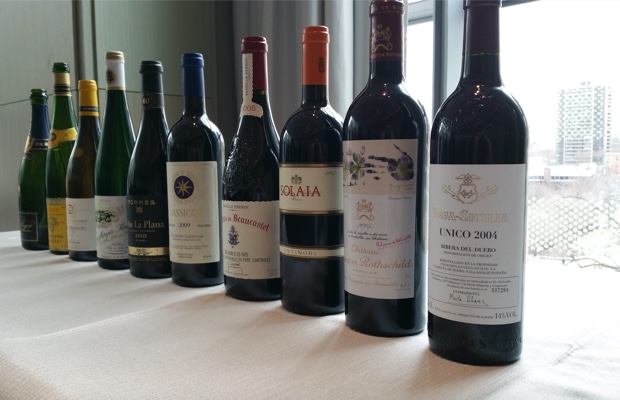
The PFV estate principals arrived in Toronto for an April 23rd, 2015 Press Lunch at the Four Seasons Hotel organized by wine ambassador Christophe Brunet. On hand were Hubert De Billy, Etienne Hugel, Laurent Drouhin, Egon Müller, Miguel Torres, Priscilla Incise della Rocchetta, Thomas Perrin, Allegra Antinori, Julien Beaumarchais de Rothschild, Pablo Alvarez and Rupert Symington. Each arrived to represent eleven of the world’s leading families that at the time of the tasting, made up the association: Marchesi Antinori, Château Mouton Rothschild, Joseph Drouhin, Egon Müller Scharzhof, Hugel & Fils, Champagne Pol Roger, Famille Perrin, Symington Family Estates, Tenuta San Guido, Miguel Torres and Vega Sicilia. Each family owns vineyard estates, is one of its country’s most prestigious producers, and enjoys an international reputation for its wines. Each year in turn, a member of the association is elected President. The 2014/2015 President was Alessia Antinori, while in 2015/2016 she was succeeded by Miguel Torres.

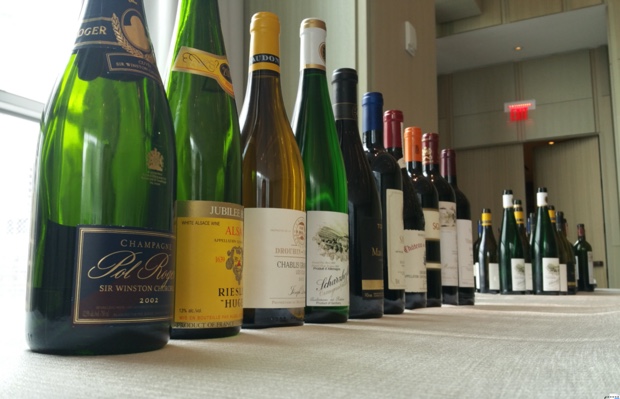
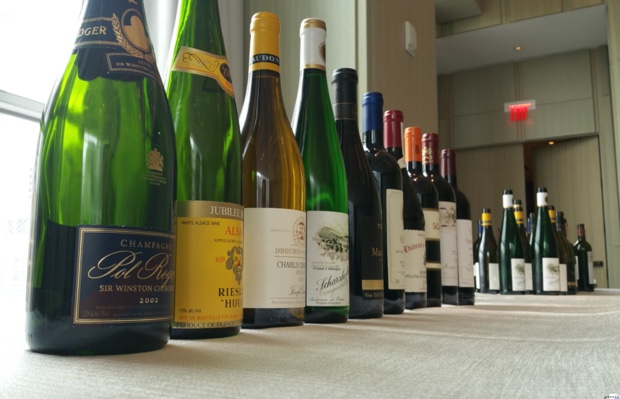
PFV wines

PFV wines

Primum Familiae Vini supports charitable causes, hosting gala dinners to raise funds for a local charity by auctioning a PFV Collection Case. The beneficiaries have primarily been focused on helping disadvantaged children, the handicapped and specialist hospitals including. Some of these beneficiaries have been Childhood Brazil, Brasil, San Patrignano Charity, Italy, Grapes for Humanity, USA, Somdetya Charity Fund, Thailand, Kidney Dialysis Foundation (KDF), Singapore, The Public Welfare of Bunkyo Ward, Tokyo and the The Toronto Foundation for Student Success. In total, over $325K has been raised.

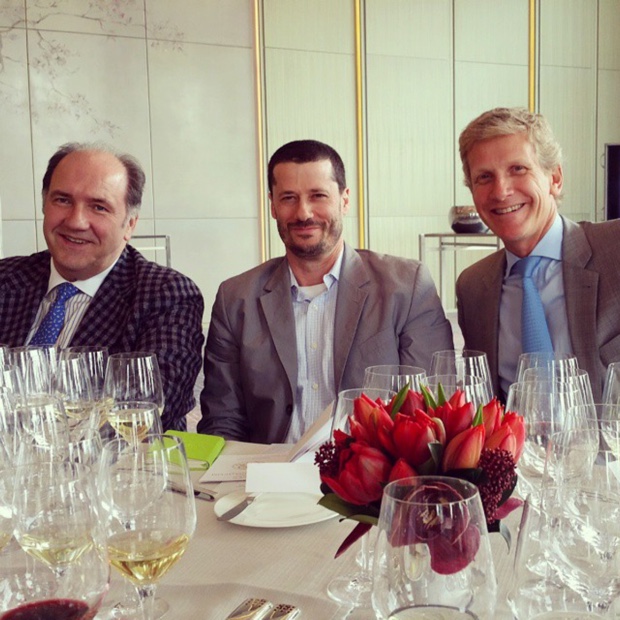
Pablo Alvarez, Vega Sicilia with Godello and Larent Drouhin, Maison Joseph Drouhin

Pablo Alvarez, Vega-Sicilia with Godello and Larent Drouhin, Maison Joseph Drouin

As you well know it’s all about the wine and the tasting note for Godello. The art of composing snapshots of wines tasted is a cathartic experience and the only way to bring about closure. It is a necessary process, cannot and will not be abandoned. The scores attached can stay put or go away. Neither relevant nor essential, scores are merely road signs on the exegetical path through wine. Once you pass them by their use is no longer needed.

My notes for the wines tasted are long and prosaic, even longer than most that I write, which says something about the profundity of such a tasting. That it took me the better part of a year to finalize my thoughts is not surprising. Until now I found no way to serve proper justice to these wines.

Primum Familiae Vinum

Primum Familiae Vini

Famille Hugel Riesling Jubilee 2010, Aoc Alsace, France (731448, $55.00, WineAlign)

The Jubilee’s style mirrors a reflection, of name, its maker and in the ripples it will gently spread as it progresses through time. Riesling that will eventuate to luxe, calme et volupté, like coming home after 50 years, resolved of sin, “in this year of jubilee each of you shall return to his property.” Hugel’s Jubilee is sourced from family-owned vines on the steep slopes of the Grand Cru Schoenenbourg above the village of Riquewihr. Terroir of great variegation; Keuper, marl, dolomite and gypsum, quaternary siliceous gravel, Vosges sandstone, Muschelkalk and periphery Lias marl limestones. The vintage is special, with no allowance for yields to climb and rife with sought after Riesling attributes. That of tannic intent, coursing coarseness of mineral condensation and repossessing acidity wrapped up in an enigma. Going forward it will gently give back but also remain rigid, slightly hidden, at times dormant, until such time when paraffin and honey take over. One of the finer Riesling cuvées of Alsace. Drink 2018-2022.  Tasted April 2015  @FamilleHugel  @HalpernWine  @AlsaceWines  @VinsAlsace  @drinkAlsace

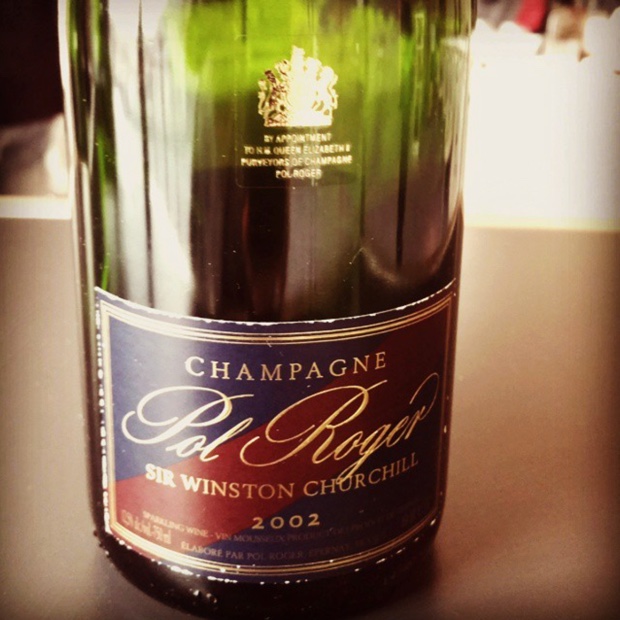
Super #champagne overture. I will always surrender. @Pol_Roger #sirwinstonchurchill 2002 #primumfamiliaevini

Super #champagne overture. I will always surrender. @Pol_Roger #sirwinstonchurchill 2002 #primumfamiliaevini

Pol Roger Cuvée Sir Winston Churchill Vintage Brut Champagne 2002, Champagne, France (SAQ, 12027016, $247.25,  WineAlign)

From one of the great Champagne vintages of the last 20 years, the 2002 ode to the British Bulldog is full of French vigor and supernatant rationalism. In 2015 its hue is golden gingered and the fine mousse causes sensory skips in the heart’s beats. These bubbles pay attention and tease the most sensitive olfactory nerve endings. The brioche baking and crumbs toasting are still just mere twinkles in the aromatic eye. The year 1996 is on many tasters’ minds and this wine has no qualms telling a direct lineage tale. Can there be more proof than what is spoken in the structure of this young wine? The bitters are forged from compression, without weight and void of oppression. A pleasure to taste, this Champagne is a deactivated refugee from an ancient European dominion. It’s hard to imagine it ever being anything but elegant and cool. Drink 2016-2027.  Tasted April 2015  @Pol_Roger  @Champagne  @HalpernWine

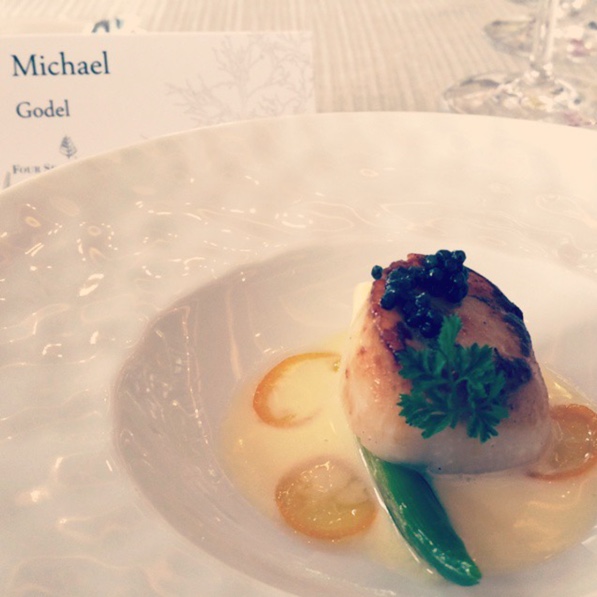
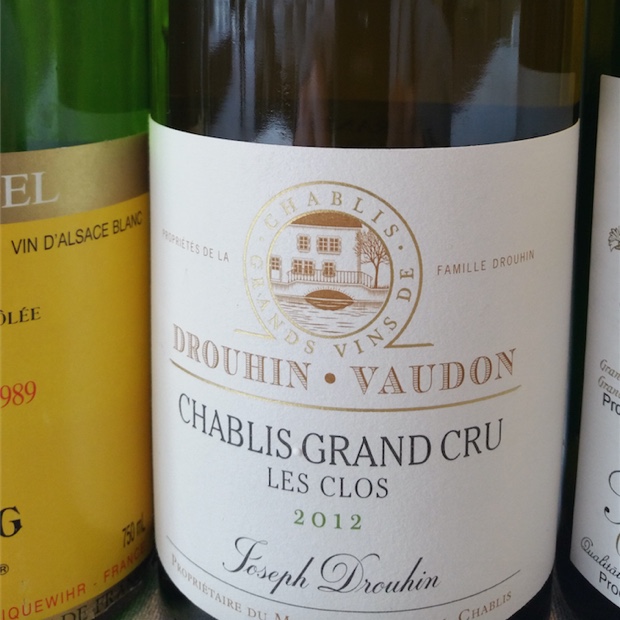
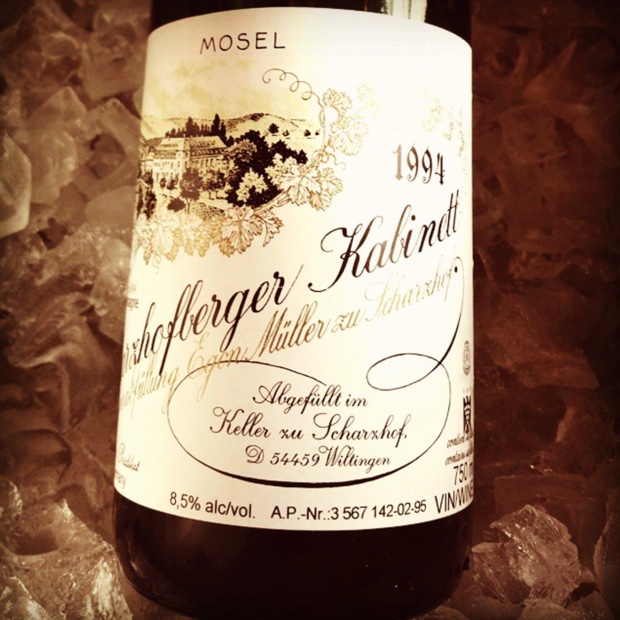
Scallop, kumquat, baby leek, caviar #fourseasonstoronto #julienlaffargue #primumfamiliaevini with #drouhin #chablis grand cru les clos 2012 and #egonmuller #riesling #scharzhofberger kabinett 1994

Scallop, kumquat, baby leek, caviar #fourseasonstoronto #julienlaffargue #primumfamiliaevini with #drouhin #chablis grand cru les clos 2012 and #egonmuller #riesling #scharzhofberger kabinett 1994

Drouhin Chablis Grand Cru Les Clos 2012

Joseph Drouhin Chablis Grand Cru Les Clos 2012

Joseph Drouhin Chablis Grand Cru Les Clos 2012, Burgundy, France (SAQ, 10998708, $88.00, WineAlign)

Drouhin’s Les Clos is Chablis incarnate. It delivers the importance of form and structure, with the incantatory power of storytelling to foresee the eventuality of its Moirai. It possesses the staying power to reveal the truth and reward with the fullness of gratification. Imagine pears, some dried and some fresh, pulverized and turned into gold stone. That is Les Clos. Barrels used are one to four years old and since 2004 there is no stirring of the lees. This determination arranges to opt for longevity of structure over immediacy in elegance. The enclosure is lacy organza, the interior filled with ripe fruit. Time (60 minutes) induces a mine of mineral wealth emergence, of shifting plates and rising outcrops from the quarry underfoot. Patience is required to bring all the moving parts in line. Drink 2017-2027.  Tasted April 2015  @JDrouhin   @BIVBChablis @BourgogneWines  @FWMCan  @Dandurandwines

Keep the car running. Magic 1994 #riesling from #egonmuller #primumfamiliaevini #scharzhofberger #rieslingkabinett

Keep the car running. Magic 1994 #riesling from #egonmuller #primumfamiliaevini #scharzhofberger #rieslingkabinett

Egon Müller Scharzhofberger Kabinett Riesling 1994, Mosel, Germany (SAQ, 12587945, $79.75, WineAlign)

It must first be said that after 90 minutes in the glass the orange blossoms open in the early morning to release their spring fragrance into the room. In a conference room at Toronto’s Four Seasons Hotel. Now I don’t really know if the Scharzhofberg vineyard was actually planted by the Romans or if it was occupied by eighth century Trier St Marien ad Martyres monks. If following the French Revolution it was in the possession of the Duchy of Luxembourg I couldn’t say. I can equivocate, with irrefutable conviction that tasting Egon Müller’s 1994 twenty one years after its release confirms the vineyard’s reputation for housing irreverent Riesling. The arcade fire of remarkable hue, life-affirming aromatic energy and sky-lift brilliance is palpable. At 20 plus years the ideology, eventuality and passionate progression of purely distilled Mosel fruit is realized. Currently suspended in jet-trail animation, the sugars over gas of this Kabinett are quantitatively resilient. The relationship has seen a symbiotic feeding for longevity. Riesling of stoicism, classic prevalence and perfect balance. The specific Scharzhofberg tang has been revised to elevate a new order derivative recorded in every pure note. “There’s a weight that’s pressing down, late at night you can hear the sound.” Time held will move forward ever so slowly. Keep the car running. Drink 2015-2034.  Tasted April 2015    @germanwineca

Miguel Torres Mas La Plana 2010

Miguel Torres Mas La Plana 2010

Miguel Torres Mas La Plana Cabernet Sauvignon 2010, Penedès, Spain (129676, $59.00, WineAlign)

The Torres Mas La Plana explains to the world why Penedès is one of the most important Cabernet Sauvignon outposts on the planet. In deference to its moniker, flat is not the operative word. With such lifted exuberance, richness and depth of fruit, it must be dared said that Bordeaux wisdom speaks from its Spanish roots. If Mas La Plana can always be good, this vintage is great. The layering of wood over Penedès soil gives it spice and subterranean pungency; cinnamon, clove, truffle and morel. This wine is now an internationally-styled giant, an expatriate made French wine with Spanish flair. Layered, structured and so much special fruit. All about the fruit. Drink 2016-2023.  Tasted April 2015  @TorresWines  @dopenedes

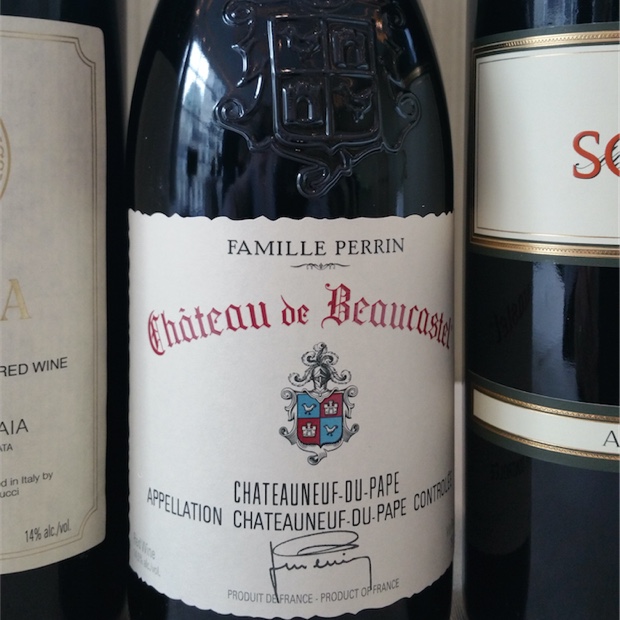
The reds of lunch. #vegasicilia #moutonrothschild #sassicaia #solaia #chateaudebeaucastel #maslaplana #primumfamiliaevini

The reds of lunch. #vegasicilia #moutonrothschild #sassicaia #solaia #chateaudebeaucastel #maslaplana #primumfamiliaevini

Château De Beaucastel Châteauneuf Du Pape 2005

Château De Beaucastel Châteauneuf Du Pape 2005

Château De Beaucastel Châteauneuf Du Pape 2005, Rhône, France (711317, $89.95, WineAlign)

Expectations are high for 2005 and the opening notes of warmth, amenity and avail confirm the dream. Soon thereafter the Beaucastel plays hard to get, walks away and closes down. At this 10 year juncture its evolution is only matched by its elegance, especially considering the initial arterial ardor in mimic of the vintage. Resurfacing to conjure up character in aromatics, mint, eucalyptus, garrigue, coal and tar evince this pure Châteauneuf Du Pape. A wine of global receptiveness, the 2005 rendition tames the conception. There is very little about its personality that is parochial but rather it represents what it means to be a star, everywhere, omnipresent, for everyone. After 60 minutes it actually closes down again. This will be one of the longest lived Beaucastels. Drink 2017-2045.  Tasted April 2015  @Beaucastel  @RhoneWine  @VINSRHONE  @ChartonHobbs

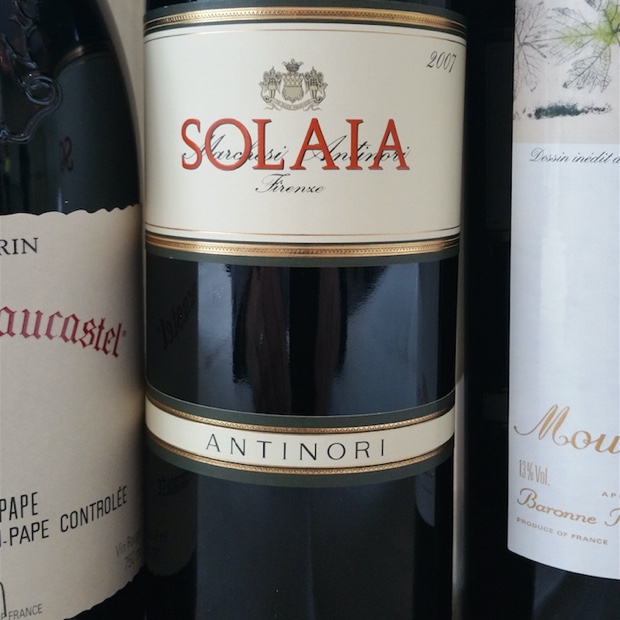
Antinori Solaia 2007

Antinori Solaia 2007

Antinori Solaia 2007, Igt Toscana, Italy (987586, $249.95, WineAlign)

Tasting the 2007 Solaia feels like looking directly skyward into the high noon sun with a semi-peeled orange in one hand, juices dripping, zest split and fragrant. Flowers bloom all around, cypress trees stand as sentries, sentient and giving off a savoury musk. The rosemary joins in, as do the lavender and the fennochio, because there is a breeze. Then there is only the pitchy darkness, the iron and the animale. This Solaia exudes sunshine, creme caramel and maturity. As per the style, especially in warmer vintages, Solaia always speaks of early evolved character though you know it will last for a very long time. This I have come to know, expect and believe. Drink 2015-2022.  Tasted April 2015  @AntinoriFamily  @HalpernWine

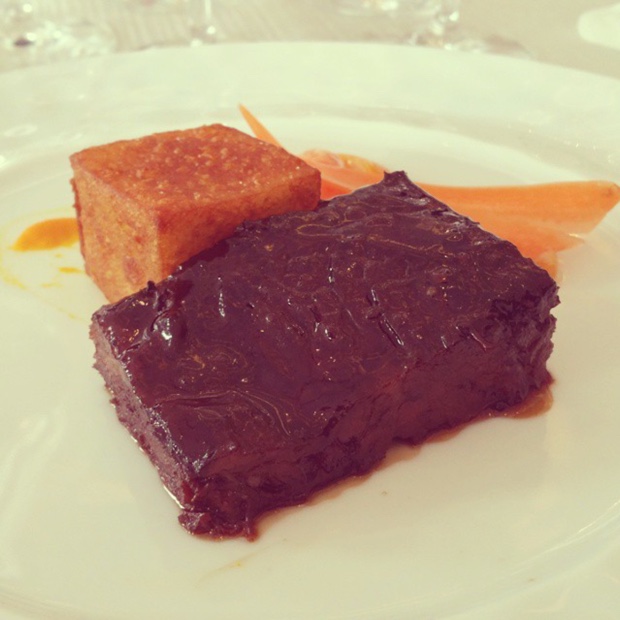
Braised Bison Shortrib, spring carrot, pommes dauphines @FSToronto #solaia 2007 #moutonrothschild 2005 #vegasiciliaunico 2004 #primumfamiliaevini #julienlaffargue #fourseasonstoronto

Braised Bison Shortrib, spring carrot, pommes dauphines @FSToronto #solaia 2007 #moutonrothschild 2005 #vegasiciliaunico 2004 #primumfamiliaevini #julienlaffargue #fourseasonstoronto

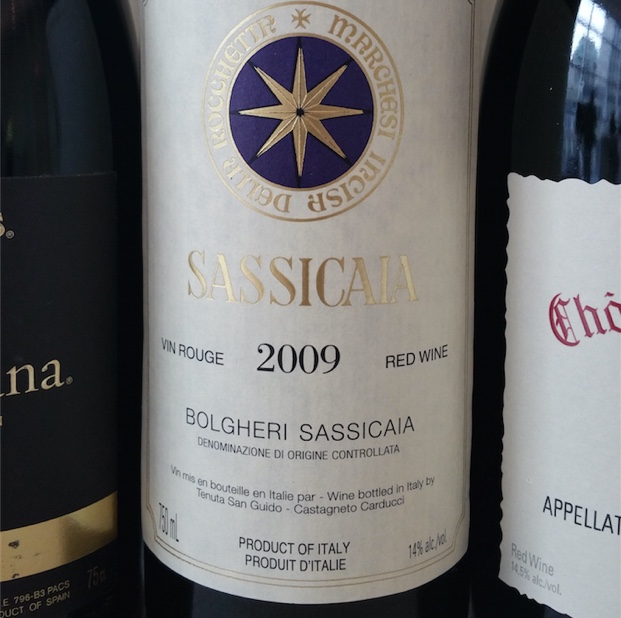
Sassicaia 2009, Doc Bolgheri Sassicaia, Tuscany, Italy (480533, $199.95, WineAlign)

Now increasingly accessible, the ripe and ferric Sassicaia ’09 continues to roar but the gamy musk of the wild beast is on the subside. The tannins have begun to relent and yet no holes, empty spaces or time-outs are to be found. With 60 minutes of air time the fruit speaks of plum hyperbole and dried flowers fill the air. Ten more years lay comfortably ahead. Drink 2015-2025. Last tasted April 2015     @Smarent

Sassicaia 2009

Sassicaia 2009

From my earlier note of November 2012:
The raven brunette is anything but sappy or syrupy yet is impossibly viscous. Hints at ripe berries growing in the crags of maritime gravel and the most expected hits of sanguine, animal musk. A huge wine in the making, the adolescent hunter Sassicaia off-roads up a steep incline to go tell it on the mountain of tannin. Disappears into parts unknown and will only reappear as a mature adult. Look to 2025 and it may say “the perspective to say the very least, changes only with the journey.”

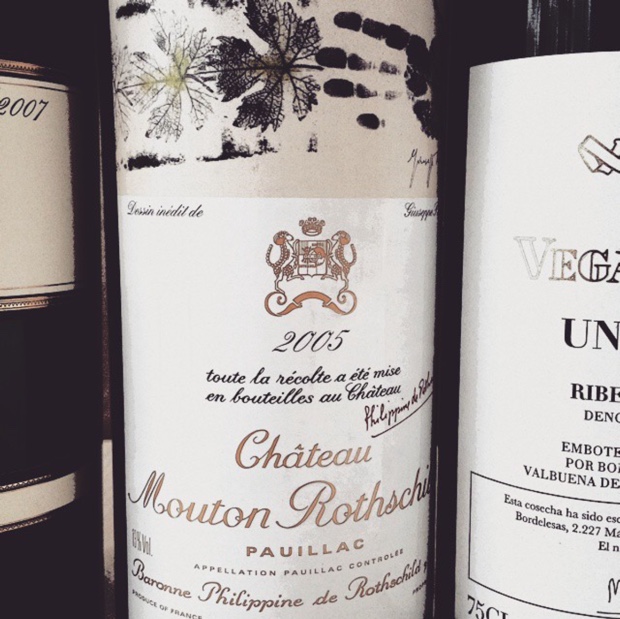
No cartoon. The real deal. Gehry lines. #chateaumoutonrothschild 2005 @PFvini #firstgrowth #paulliac #bordeaux #onceinalifetime #primumfamiliaevini

No cartoon. The real deal. Gehry lines. #chateaumoutonrothschild 2005 @PFvini #firstgrowth #paulliac #bordeaux #onceinalifetime #primumfamiliaevini

Château Mouton Rothschild 2005, Ac Pauillac, Bordeaux, France (SAQ 10654286, $965.00, BCLBDB, 649582, $1895.00, WineAlign)

Where to begin? That Cabernet Sauvignon can so facilely lay down the law, with deputy Merlot and deputized Cabernet Franc in support, that it can syncopate and elucidate the infinite, of soil information into warmth and depth, that is does so in such a wondrous way, well, that is the crux. Mouton of incredulous form, of a liqueur that is wholly unique, even to Bordeaux. An intoxicant and yes, funky, a distilled terroir, compressed, eschewing the fractional and essaying to integration. Reduced, layered and yet bereft of cheese, cloy or cake. Healthy as a community of organisms can be, wealthy in its archetypal discretion and drawn of an architectural line to ritualize structure. Precise, innate, insistent and balanced. The cleanest, purest and ripest fruit from 10 years ago had always and continues to cut an exegetical rug on one of the greatest dance floors of wine. An age exemplary Mouton in requiem of Italian sculptor Giuseppe Penone’s label design. After 60 minutes it neither closes nor shrinks away. Open for business. Drink 2015-2045.  Tasted April 2015  

Vega-Sicilia Único 2004

Vega-Sicilia Único 2004

Vega-Sicilia Único 2004, Ribera Del Duero, Spain (702852, $475.00, WineAlign)

In a room full of Primum Familiae Vini no iconic red stands out with more singular parlous deference than the 2004 Unico. Sitting next to Pablo Alvarez and seeing his immediate reaction speaks volumes about its place in time and how it is showing. Alvarez does not smile so much as he simply acknowledges the work put in. Unico is correct and it is priceless. Is Alvarez making a comparison in his mind? Is he thinking 1970 or perhaps 1994? It does not matter because this blend of Tempranillo (87 per cent) and Cabernet Sauvignon (13) obviates derivative characteristics and so exhibits a kind of synoptic insatiability. Its persona is simply me, myself and I. The liqueur is not Bordeaux or IGT. The aromatics are exotic to the nth degree. The succulence and sucking inward grape tension is old and wise but the wine has 30-40 years of undetected evolution ahead. There is no need for a longevity prayer, just let it be. My ears hear “mais qu’est-ce que c’est bon!” perhaps from Alvarez, or maybe it came from Laurent Drouin to my left. The youthful Unico is like Les Enfantastiques, it has the “no se que” and we can call it terroir, from place, soil, climat and culture. Something that advances this early and yet has gone nowhere should be impossible. The precocious wisdom is beyond years, has reached a point at 10 that is palpable and yet so far from what it may become. It should be left alone for five more to find out. Drink 2020-2055.  Tasted April 2015  @Tvegasicilia  @DORibera

1977 @grahams_port...Oh to live to 111 and re-taste in 2077. @PFvini #symington #symingtonfamilyestates #rupertsymington #port #vintageport #primumfamiliaevini

1977 @grahams_port…Oh to live to 111 and re-taste in 2077. @PFvini #symington #symingtonfamilyestates #rupertsymington #port #vintageport #primumfamiliaevini

Graham’s Vintage Port 1977, Douro, Portugal (706663, $109.00, WineAlign)

The year 1977 was a huge one for the Douro and this Peter Symington vintage interpretation echoes the overemotionalism. The pitchy rim seems to be writhing, the aromatics roiling and my first thought is one of a houseguest that wishes he could escape an over vivid host. Vegetative freshness calms the savage beast; bouquet garni, garrigue and savoury herbiage from high yielding fruit. If cherries were roses and vice versa, they too would deter and distract. This VP has presence and distinction. It changes tempo, wades in the waters of age and treads with minimum effort. The toasted nut component is subtle, more than many and certainly in comparison to the modern era of Graham’s and others. The dry florals whiff as if the petals never dropped or ever will. The perfume drives upwards, to the ethereal. Nice little piece of Vintage Port history. Drink 2015-2022.  Tasted April 2015  @grahams_port  @winesportugalCA

Good to go!

Twitter: @mgodello

Instagram: mgodello

WineAlign: Michael Godel

Facebook

The white stuff

From broth to Phở bò tái nạm

From broth to Phở bò tái nạm

While rambling in Vinho Verde last week, I was taken by overnight precipitation that would carpet the mountains above 400m with white stuff. It was magical to wake up in Amarante, Ponte da Barca and Melgaço to see the late March greenery contrasted with a jacket of celestial deliquescence. Then I returned to Toronto. Early April snow just didn’t quite have the same heart-stirring effect.

In VV the reputation is for producing crisp, light and refreshing wines. This from a place where it rains a lot. Nearly all the time. The land is so green you can see the fairies and pixies scurrying about. The place is such a verdant paradise it feels as though life springs from every tuft, tuffet and bit of life-affirming turf. With so much damp, wet and soggy abound you might think that hearty reds are both essential and necessary. To the contrary, it is Alvarinho, Loureiro, Arinto and Avesso that speak the most sincere truths. White wines rule.

The VINTAGES April 16th release is the launching pad for whites and my seven picks will lock in to every wheelhouse wished for, from $16 to $30 and from grape varieties both recognizable and habituated outside the familiar box. From Jacquere to Assyrtiko, through Riesling, Pinot Gris and Chardonnay. Something for all.

Here we are in mid-April, temperatures still hovering around the zero mark and Spring still fighting to break out. Like Frog and Toad I keep turning around, left and right, expecting to find Spring just around the corner. It never seems to come. So in ode to Vinho Verde, the current plan is to seek out cool, crisp whites and to wait patiently, for without even realizing it has happened, Spring will have sprung.

ch and Vine

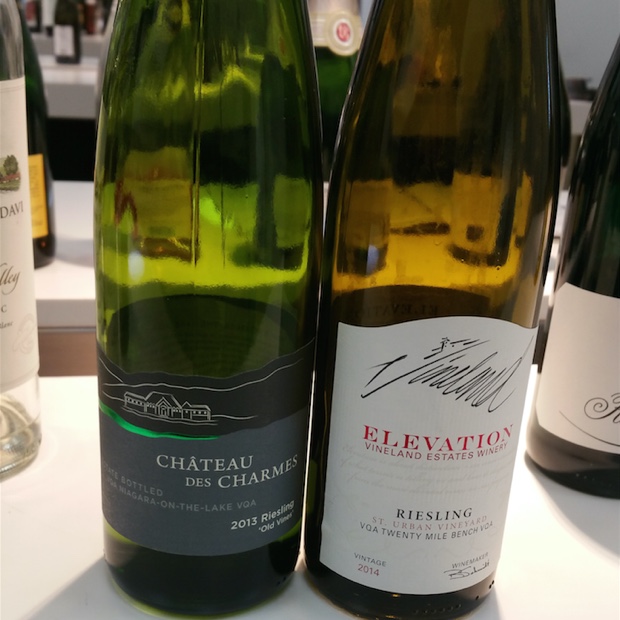
Château Des Charmes Old Vines Riesling 2013, VQA Niagara On The Lake, Ontario (277228, $16.95, WineAlign)

The happy place effect by age in the Château Des Charmes’ vines coupled with location is usually enough to carry this Riesling through an obvious and readily identifiable tunnel but 2013 confounds. The elemental ratio, derived from multiplying reduction by altitude leans thoughts to the Vinemount Ridge or the Cave Spring Escarpment Vineyard. The compound aromatic waft, or more succinctly, the deconstructed stone, the breaking down of periodic Hollywood squares is a force to reckon. That this arrives from such close proximity to the lake is nothing short of amazing. It’s as if this Riesling is the product of stressed vines and the pierce is just so pinpointed. Less accessible than ’12 for sure, so drink up previous vintages going back at least three before even thinking about getting to know 2013. Drink 2018-2022. Tasted May 2015 and April 2016  @MBosc  @WineCountryOnt

Sparr

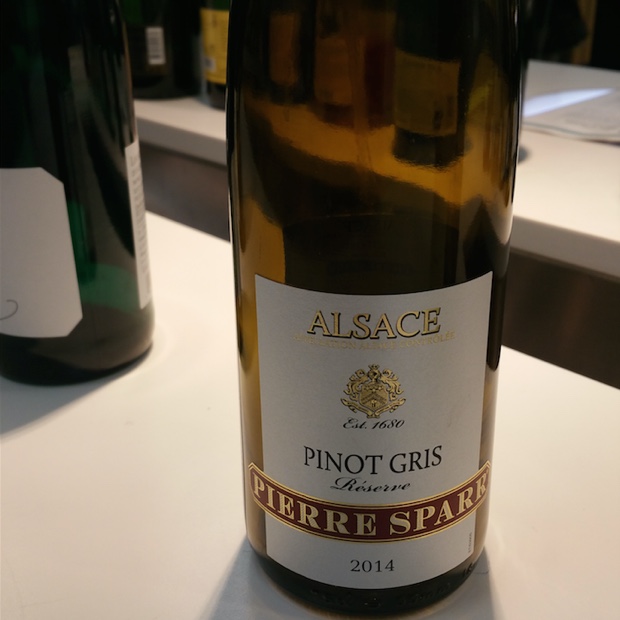
Pierre Sparr Réserve Pinot Gris 2014, Ac Alsace, France (983395, $16.95, WineAlign)

Mineral trumps fruit is this dry take on Pinot Gris from a house on a seriously competitive roll. Good beneficial bitters join tannic sweetness on the broad palate. This is a prime example of what PG can and should be, albeit without the intensity delivered out of more demanding Alsatian vineyards. Drink 2016-2019.  Tasted April 2016  #PierreSparr @VinsAlsace  @AlsaceWines  @drinkAlsace  @ProfileWineGrp

Jean Perrier & Fils Cuvée Gastronomie 2014, Ac Savoie Abymes, France (320093, $18.95, WineAlign)

This montane-raised 100 per cent, low alcohol (11.5 per cent) Jacquere is built on premises of tart, savoury, herbal and peppery fruit not so high in acidity. A very aromatic and flavourful Savoie that could easily confuse for Sauvignon Blanc and without transversing over to high tones territory. Good for patio imbibing and for spring vegetables of all shapes, sizes and subjected to various levels of sauté. Drink 2016-2019.  Tasted April 2016

Vineland Estates Elevation St. Urban Vineyard Riesling 2014, VQA Niagara Peninsula, Ontario (38117, $19.95, WineAlign)

Here in 2014 the triumvirate expression that is St. Urban, of low alcohol, captured natural acidity and necessary sugar talks the Elevation talk. This is a vintage in which expectation is met without waver, whatsoever. It’s very young and not yet exciting. The aerified territory is in teasing, not succeeding mode and the tension floats without ties to anything grounded. This ’14 will have to wait. It should be letf to waft around in the Riesling winds of Bench time until a future arrives when secondary notes will begin to appear, like acacia, honey and maple nectar. At present the stoicism is a trifle frustrating. The willingness to wait will offer just reward. Drink 2018-2026.  Tasted April 2016  @VinelandEstates  @benchwineguy

Argyros

Argyros Santorini Assyrtiko 2015, Pdo Santorini, Greece (387365, $22.95, WineAlign)

Seems to be richer, deeper and increasingly unctuous in 2015 though its extreme youth could be the source. The sheer, utter mineral macho meaning is always felt, along with the purity of its fun. What is so special about this Santorini is not just the early life mineral with the soothsaying protraction to a future filled with thyme-infused honeyed fruit drizzled over stone. No, it’s more complex than that. It’s about the true-heartedness with which it represents consciousness. This essential Argyros always offers the pleasure to bathe in its saline, sunlit waters and drink of its energy. Never failing Assyrtiko. Drink 2016-2020.  Tasted April 2016  @Santoriniwines  @DrinkGreekWine  @KolonakiGroup

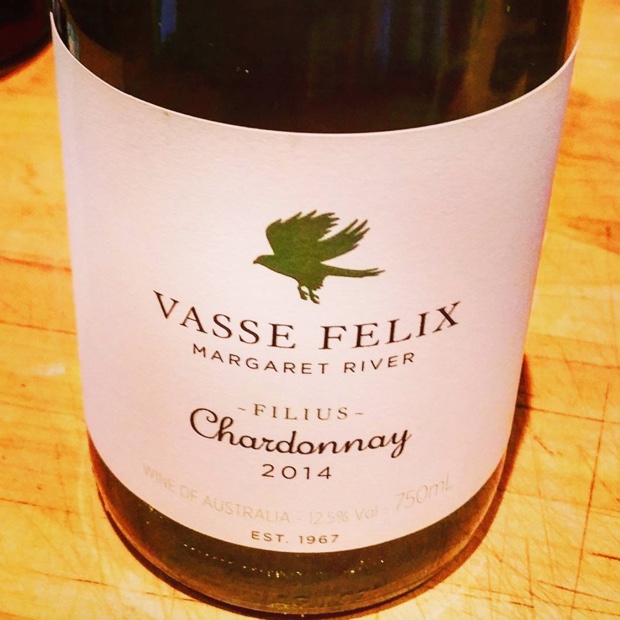
Coming to #VINTAGES April 16th @vassefelix Filius #chardonnay 2014. Try and find more gem for $25 #idareyou #youcant #margaretriver #virginiawillcock

Coming to #VINTAGES April 16th @vassefelix Filius #chardonnay 2014. Try and find more gem for $25 #idareyou #youcant #margaretriver #virginiawillcock

Vasse Felix Filius Chardonnay 2014, Margaret River, Western Australia, Australia (416511, $24.95, WineAlign)

It would be an impossible expectation for winemaker Virginia Willcock to do more for the Filius Chardonnay with equal or less in 2014. The 2013 is a cracker for a pittance. The 2014 holds the candle and bears the torch. A prodigal ‘son of’ fathers Premier and Heytsbury and up to the Margaret River task, Filius is the good. Fashioned in the freshest, reductive and ultra-modern way with a sous-vide savoury and animale gait. Crispy, crunchy green apple fruit is joined by a transparent, manifest barrel written in cursive and ladling out a healthy dose of duck soup. This is Australia’s great cool-climate value Chardonnay. The mineral finish is excavated agleam of gemstones. Case buy. Drink 2016-2021.  Tasted March 2016  @vassefelix  @MargaretRiverWi  @WestAustralia  @Wine_Australia  @bwwines

Bouchard

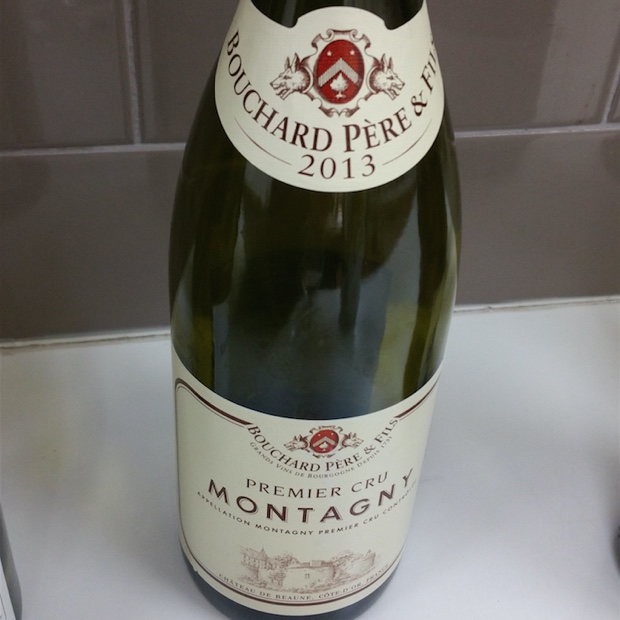
Bouchard Père & Fils Montagny Premier Cru 2013, Burgundy, France (653683, $29.95, WineAlign)

Quite the round and reductive Chardonnay with exceptional ripe fruit and tamed acidity. Love the tannin and the rotation. This is highly pleasurable though not meant to linger for much of an extended stay. Enjoy it now with something that swam, flakes and is marked by a slight char. Drink 2016-2019.  Tasted April 2016  #BouchardPereEtFils  @WoodmanWS  @BourgogneWines  @bourgognespress

Good to go!

Twitter: @mgodello

Instagram: mgodello

WineAlign: Michael Godel

Facebook

Chardonnay in the Napa luxury

Treasury Wine Estates Napa Valley Chardonnay

Treasury Wine Estates Napa Valley Chardonnay

What’s in a varietal? Do Greek Roditis or Savatiano float your endemic boat? Are Italian Grecanico or Cerasuola your wayfaring, off the beaten path, go to grape variety strays? Could it be that French Arbois or Sylvaner are your geek out points of reference? If any or all of the above speak coquettish truths about you, then how do you extrapolate epiphanies from a credit-worthy, dyed-in-the-wool list borne out of the Napa Valley?

Related – Napa Valley: The next generation

On a California journey the indenture is written as a very fixed notion, a contract between vintner and taster, specific to and bonded by preordained expectation. So far I have waxed on about Cabernet Sauvignon and ripeness. I have made not so infrequent mention of Sauvignon Blanc and I have dipped with fervent foray into the inner workings of Pinot Noir. On that same trip the holiest of sunshine daydream holies was presented to our sundry Canadian group. The light of west coast life. Napa Valley Chardonnay.

Related – Napa Valley two: A question of age

Six Napa representatives of the highest order, the vinetarius maximus of the valley if you will, gathered in a great big house out on the St. Helena Highway. They came to the 10,000 square foot, Luther Turton-designed Rutherford House at Beaulieu Vineyard to pour their Chardonnay wares. Our moderator was Ginevra Altomara AS, CSW, Trade Education Manager for Treasury Wine Estates. The six of the best tasting gathered together winemakers Jon Priest of Etude Wines, Mark Beringer of Beringer Wine Estates, Domenica Totty of Beaulieu Vineyard, Christophe Paubert of Stags’ Leap Winery, Matthew Glynn of Acacia Vineyard and Harry Hansen of Sterling Vineyards. There was no sighting of any alleged ghost that lives under the staircase.

Related – Napa Valley: Where ripeness happens

The best of the six draws into question old versus new world theories and Napa Valley’s current position relative to Burgundy. Times have changed. Forget about the 1976 Judgment of Paris. Its relevance in 2016 is merely historical. California Chardonnay is more diverse than it has ever been. Progression, climate change, raw materialistic availability and market share all conspire to reside on its beautiful hillsides. So it must be asked, can Burgundy keep up with the fictionality of the Napa Valley reality? If Chardonnay in these parts is worthy of fetischistic yardsticks usually extended to measure anthologist wines, how can the European union keep up with the North American machine?

The epiphany drawn from such a tasting corroborates the intellection of suggestive antithetical theory that the further south you plant Chardonnay in Napa Valley, the more restrained and elegant it will have a chance to be. If Carneros was not already widely agreed upon as the sub-appellation to rival Sonoma for cool-climate Chardonnay distinction, these wines conjoin to push the point. The apodictical is in the tapioca.

View of the Mayacaymas Mountains from Rutherford House

View of the Mayacaymas Mountains from Rutherford House

Etude Heirloom Chardonnay 2013, Carneros, Napa Valley, California (Agent, Winery, $60 US, WineAlign)

Taken exclusively from the estate ranch, out of well draining, volcanic soils at 400 feet of elevation. Rocky, cobbly, clay loam  soils that “takes you off of the floor of the valley.” Makes for compact grapes, condensed, of low yields. “Hens and chicken clusters” notes Jon Priest. A beautifully wood restrained Chardonnay, with orchard fruit aromas and a lacy, silky texture. Mineral tang as gossamer as any, with a fine, cool and clear circuitous Carneros night carnival of vivid luminosity. Old school winemaking you might say, introduced by some skin contact, set in all French oak (10-15 per cent new), ubiquitous yeast spontaneous, primary and then elongated malolactic fermentation. Protracted wine of length the same, for delicasse, with ode to 16 months sur lie making for the gossamer texture. Autolytic Chardonnay that is totally dry but with fruit sweetness. Of the bees and to light a candle to last in the temple. Only 300 cases made. Drink 2016-2023.  Tasted February 2016  @etudewines  #treasurywineestates

Beringer Luminous Chardonnay 2013, Oak Knoll District, Napa Valley, California (395699, $39.95, WineAlign)

This is the 3rd vintage of the Luminous, taken from one vineyard site on Big Ranch Road in the Oak Knoll District. Seductively reductive and and celestially volatile for Chardonnay, tender rich in mineral and rendered in citrus fruit. The accumulative tang gives its luminous aspect ratio, like glowing metal, infrared, incandescent. Compressed orange, of zest but not flesh really opens as the acidity prepares the palate for waves of scraped citrus. Done up all in French oak, 30 per cent new. A long fermentation ameliorates the aromatics and opens the door for subsequence by subtle toast. All that said, the tension is not so high, but the finish is long. Drink 2016-2020.  Tasted February 2016  @beringervyds

Beaulieu Vineyard Ranch 8 Chardonnay 2014, Carneros, Napa Valley, California (AgentWinery, $35 US, WineAlign)

A foot in two worlds young Chardonnay, at once easy with ripe fruit and honey butter spread on golden, caster crystallized toast. Fashioned in a very accessible and peripheral commercial style, more block than greater vineyard driven. The well-drained, hilly site is off of Deadly Lane, at a southerly aspect, on the beach, against a sand bar. Eight is from an earlier pick then the rest of the ranch, for a Chardonnay of natural acidity, sweetly viscous and rich. Crafted to be a high malolactic influenced, 55 per cent new, 11 months in French oak of medium toast structured, in avoidance of caramel and butterscotch Chardonnay. Within and without of 25 per cent natural fermentation and 95 per cent malolactic, made with a yeast cocktail. Driven to be a softer, textural wine, which it is. Soothing Carneros Chardonnay for when “I follow the road, though I don’t know where it ends.” Drink 2016-2021.  Tasted February 2016  @BVwines

Stags’ Leap Winery Chardonnay Barrel Selection 2013, Carneros, Napa Valley, California (AgentWinery, $45 US, WineAlign)

A big barrel effect is wholly, utterly and diametrically mitigated with exceptional fruit quality and a minerality as stoked and striking as any. This represents the multi-faceted displays of all in Chardonnay replete with a linear streak of raging acidity.  Bathed in 50 per cent new oak and considering the implosive integration that is nothing short of remarkable. The fruit comes by way of 65 per cent northerly Stanly Ranch vineyard, the rest from Poseidon in the south of Carneros. Settling was encouraged before going to (a shortish stay) barrel, for protection, then bottled in May. Only available through the winery, this barrel selection Chardonnay should easily linger into its 10th birthday. Only 500 cases made. Drink 2016-2024.  Tasted February 2016  @stagsleapwines

Civilization found in Napa Valley @CalifWines_CA #treasurywineestates #etude #beringer #stagsleap #acacia #beaulieuvineyard #sterlingvineyards

Civilization found in Napa Valley @CalifWines_CA #treasurywineestates #etude #beringer #stagsleap #acacia #beaulieuvineyard #sterlingvineyards

Acacia Chardonnay Sangiocomo Vineyards 2012, Carneros, Napa Valley, California (AgentWinery, $55 US, WineAlign)

The most sunshine and buttery goodness. Full on expression with new oak at the forefront. A style that has stuck and wont go away. Grown in the “California sprawl,” from 30 year-old vines with just two wires, floppy vines with fruit tucked inside a canopy plus exposed fruit, caramelized and glazed. The disposition is nothing less than blessed, with charismatic personality and weight. Native yeast leads the faux-secondary fermentation, acts and acquiesces to quite toasty and really lingers. Definitely makes a statement, albeit a natural, 14.9 per cent alcohol one. A six or seven chord wine, atmospheric and orchestrated, with thankful necessary acidity to render it more than likeable, sellable and consumable. Needs two years to reign in the wood. Drink 2018-2022. Tasted February 2016  #acaciavineyard

Sterling Vineyards Chardonnay Reserve 2012, Napa Valley, California (AgentWinery, $60 US, WineAlign)

Commensurate restraint emerges and out of a vintage that gave generously. Fruit comes first though barrel has more than a few paragraphs to dictate for a very ripe wine on the edge of ripeness. Rutherford provides 58 per cent of the fruit (in a vineyard located across the street from BV house). The balance (42) comes from Oak Knoll District,  a warm, warmer and warmest place. The addition is both hefty and prodigious, with brown butter glazed on route. The barrels are 100 per cent French, 60 per cent of them new and malolactic is gifted to 100 per cent. It all surmises up, up and away to the creamiest of expressions, flavoured in baked apple, vanilla and crème caramel. Drink 2016-2020.  Tasted February 2016  @sterlingwines

Perfect lunch at Rutherford House

Perfect lunch at Rutherford House

Good to go!

Twitter: @mgodello

Instagram: mgodello
WineAlign: Michael Godel

Facebook

Seven south of $20 in VINTAGES April 2nd

Vinho Verde, Portugal

Vinho Verde, Portugal

Olá, a partir de Vinho Verde. At the moment I am whirling about in a scalene triangle of grapes up here in the cool, rainy, verdant north west region of Portugal. Alvarinho, Trajadura and Loureiro are on my mind, not to mention what red revelations lurk in Vinhao. I will return before you can shoot “look, there’s the Super New Moon.” No waxing prosaic preamble today folks while I scour the hills and cellars of Vinho Verde for the next great white epiphany. Next weekend’s April 2nd VINTAGES release is full of spills and chills, along with some fine values for spring sun and for 10 degree rainy days.

Related – Eight is enough

I will return next week with a report on what’s available for Passover taken from the March 19th release. For now here are seven sub-$20 values for April 2nd.

mers

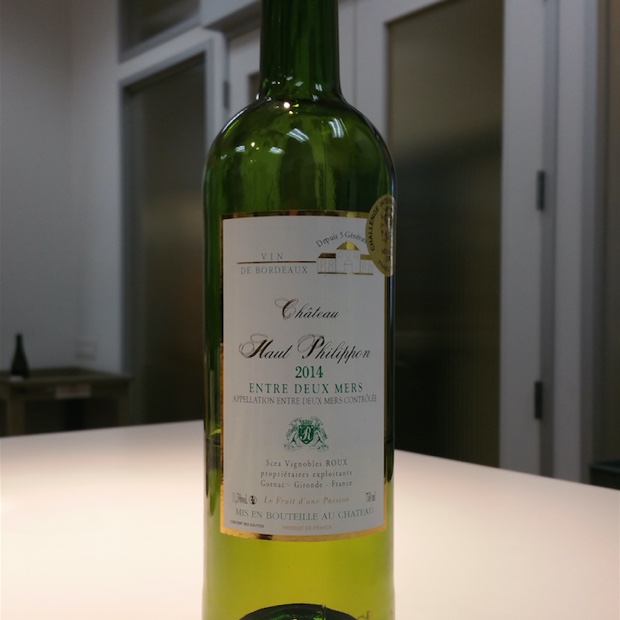
Château Haut Philippon 2014, Ac Entre Deux Mers, Bordeaux, France (445171, $14.95, WineAlign)

More and more the wines of Entre-Deux-Mers creep into the positive vibrations of Sauvignon Blanc pleasure. This highly expressive beauty makes great work of the ideal with 20 per cent Semillon and 10 Muscadelle lending balancing left and right hands. The herbiage is a cool savour and on the ripe mineral edge of flinty. The value quotient runs high between the seas. Drink 2016-2019.  Tasted March 2016  @FWMCan

Dr. Hermann From The Slate Riesling 2013, Qualitätswein, Mosel, Germany (446617, $17.95, WineAlign)

Lovely mineral weight compresses the sugars in this mildly flinty and even more so, slight and lithe by citrus Riesling. Doctor, my eyes now see the light into this Qualitätswein from the house that Hermann built. “Cause I have wandered through this world and as each moment has unfurled,” because of acidity, in which there mingles tropical and beneficial bitters. The action makes for a great little drop from soils fractured with slate. Exemplary Mosel, especially at the gifted price. Drink 2016-2020.  Tasted March 2016  @germanwineca  @WinesofGermany

Fabre Montmayou Reserva Malbec 2012, Mendoza, Argentina (261867, $18.95, WineAlign)

Made up in the direct, in your face, ripe and firm Mendoza style, from full on sunshine-fleshy Malbec with a decidedly ferric undertone. This has attitude and gumption. It needs a few years to settle into its leathery hide. Always one of the better value propositions although spiked in price for 2013 to where it should rightfully be. Drink 2018-2022.  Tasted March 2016  @FabreMontmayou  @ArgentinaWineCA  @winesofarg

Paolo Conterno Bricco Barbera D’alba 2014, Doc Piedmont, Italy (744714, $19.95, WineAlign)

Exemplary Barbera, firm and with tart red fruit, spikes of spice and nicely drying tannin. The sour lactic flavours are full of bright red berries and an edge of astringency while the length is more than merely exceptional. Bricco to win. Drink 2016-2019.  Tasted March 2016  @LiffordON

Marques De Gelida Exlusive Brut Gran Reserva Cava 2010, Do Penedès, Spain (441956, $19.95, WineAlign)

The aromas are painted at dusk, misty, musty and compressed. The palate shows much more vitality and even a shot of exuberance. By the time the two ends of the sparkling spectrum come to an accord the baking spices of ginger, cardamom and turmeric have taken charge. Painted bottles and an oxidative Cava. Packaged to sell. “Painted ladies and a bottle of wine mama…They took my money like I knew they would.” Drink 2016-2019.  Tasted March 2016

Deu La Deu Alvarinho 2014, Monção E Melgaço, Doc Vinho Verde, Portugal (40642, $19.95, WineAlign)

Rich and unctuous Vinho Verde, full in with lemon and custard, like a Pasteis de Nata swimming in a pool of Moscatel liqueur. High in tang and even more so with spirit. Nothing really lithe about it though it expresses Vinho Verde life with clear and concise language. A far cry from the commercial Vinho Verde found on most LCBO shelves. Drink 2016-2019.  Tasted March 2016  @terroirimports

Lodi

Ravenswood Old Vine Zinfandel 2014, Lodi, California (942599, $19.95, WineAlign)

The old vines advantage is exercised with altruistic gifting in Joel Peterson’s 2014 through a stealth advent in savoury, smoky red fruit, a smouldering olive branch and off the Zinfandel chart, blooming roses. This has a fine streak running through, not mean, but assuredly firm, mildly tannic and very, very mineral. It reminds at times of schist Syrah and alluvial flats Grenache. There’s something about Zinfandel old vines that educes such a pipe dream. The metal backbone is neither copper nor rust but something umami ore other. Terrific complexity from OV Lodi. Let it rest a bit just to be sure you can handle its orthodoxy. Drink 2017-2021.  Tasted March 2016  @CBrandsCareers

Good to go!

Twitter: @mgodello

Instagram: mgodello
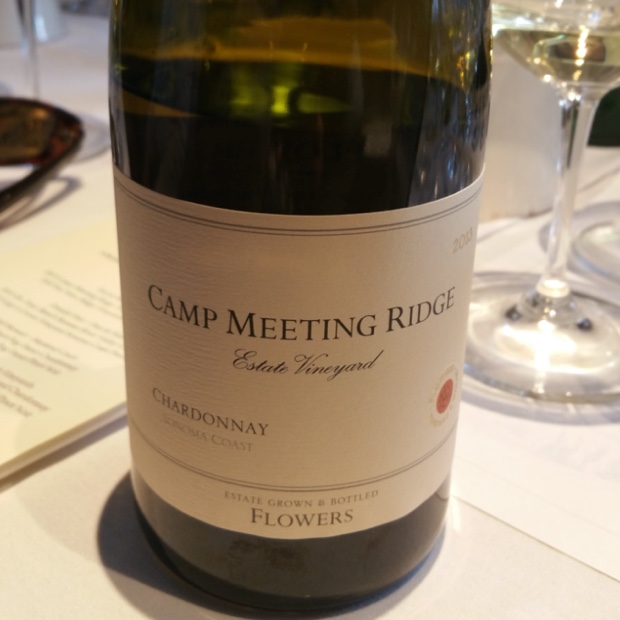
WineAlign: Michael Godel

Facebook

Eight is enough

Asparagus, chard, lemon and nutty cheese #chablis

Asparagus, chard, lemon and nutty cheese #chablis

I spent more than 20 years cooking. It was hard work and it was fulfilling work. When I was 19 a fellow McGill student asked my why I cooked so much. I said that when I was cooking I never thought I should be doing something else. I never felt guilty that I wasn’t studying or considered that I might be wasting time. I started writing about wine in 2005 and really had no plans to make a career out of it. I would have been content occupying my time working as hard as any wine professional, writing tasting notes and developing prose for eight or nine hours a day. I began the wine writing partly to avoid working on harder things but also for the pleasure of it.

Here I am 11 years later, working as a professional in wine. I feel like Dick van Patten, sitting at my desk in a house where kids come and go, typing away, solving life’s problems one wine at a time. Tom Bradford did not have VINTAGES bi-weekly releases to keep him busy but lucky me, I get to review 150-plus wines every month from the endless cycle of offerings.

For April 2nd and in the category of “expensive but affordable because they’re good” I think that eight is enough. Here are my notes.

Cunto

Alois Cunto Pallagrello Nero 2011, Igp Terre Del Volturno, Campania, Italy (440743, $24.95, WineAlign)

Possibly an ode to the 17th century fairytale “Lo cunto de li cunti,” the tale of tales, or story of stories, now called Pentamerone by seventeenth-century Italian poet and courtier Giambattista Basile. Maximum ripeness, almost into dried fruit but on the naturally cured and curated edge. Pallagrello Nero finds its way into ethereal while living dangerously close to that razor’s edge. Dry tannic finish, firm and ragged. If that collection of tales could influence the form of fairytales in Europe, perhaps the Alois Palagrello Nero can do the same for natural wine. Drink 2016-2021.  Tasted March 2016  @vinialois  @Reg_Campania

Maison Chanzy En Rosey Rully 2013, Ac Burgundy, France (446153, $26.95, WineAlign)

Rusty and firm Pinot Noir from Rully with enough bright fruit and acidity to keep it from hiding in caves and stepping into shadows. Even brighter on the palate with Côte Chalonnaise’s own specific tangy red fruit flavour and really ripe tannins. Terrific Rully, better known for its Chardonnay but this is a stellar example of its Pinot Noir. A poor person’s Burgundy bargoon. Drink 2017-2022.  Tasted March 2016  @le_tastevin  @maisonchanzy  @BourgogneWines

Ruffino Modus 2012, Igt Toscana, Italy (912956, $29.95, WineAlign)

A VINTAGES re-release for the ostensible Tuscan, a perennially accessible Super food with as much mineral feel and ferric substance as it has ever shown. Not so much a showy vintage as it is a production made for best in show. Red stone fruit bounds fleshy and just a touch of properly bitter accents are provided by wood, much appreciated by the weight and pitch. A tight but lyrically measured Modus of restraint and moderation that would do well with a major decant and some char on an aged hunk of flesh on the bone. Walk before you run to find this ode. Drink 2017-2021.  Tasted March 2016 @RuffinoWines  @CBrandsCareers

Rocca Di Castagnoli Poggio A’frati Chianti Classico Riserva 2011, Docg Tuscany, Italy (23358, $29.95, WineAlign)

Chianti Classico Riserva rarely smells like this these days. It’s not as though this harkens back twenty years but it certainly recalls a time from the turn of the century when Sangiovese was Sangiovese and Tuscans were Tuscans. The musk, sour cherry, leather, pannetone, meat and gladiator brawn from honest fruit sent to spend time in big casks sitting like giant buddhas underground. Here CCR does what it once did best, preserving and freezing time, only to emerge unscathed, healed and ready to tell a life-time of stories. Drink 2016-2023.  Tasted March 2016  @ProfileWineGrp  @chianticlassico

Sylvain Mosnier Côte De Lechet Chablis 1er Cru 2013, Ac Burgundy, France (318139, $35.95, WineAlign)

Classic Chablis from a very old vineyard (belonged to the Pontigny’s monk) with southeast exposure west of the town of Chablis and just above the small village of Milly. Mosnier’s parcel gifts delicate fruit, just so fortuitous in quantity and quality of lees overtures on stony lime-driven texture. Chardonnay in hands of terroir so flinty, lacy, organza fine. What more could be asked of for this next to nothing 1er Cru Chablis price? Drink 2017-2024.  Tasted March 2016  @BIVBChablis

Burrowing Owl Syrah 2013, BC VQA Okanagan Valley, British Columbia (73072, $40.95, WineAlign)

More Northern Rhone depth drives a beefy steak through the desert heart of Burrowing Owl’s 2013 Syrah, a wine of smelting liqueur and fierce ooze. The layers are so compressed, like tumbled earth and rock at the bottom of a steep slope. The flavours are covered in a rich ganache for the time being but a gravelly unearthing is already starting to begin excavations. This is a big Syrah with plenty of time on its side. “Let it ride. Let it ride easy down the road. Let it take away all of the darkness.” Drink 2018-2024.  Tasted March 2016  @BurrowingOwlBC  @LeSommelierWine  @winebcdotcom

Jean Luc Colombo Terres Brûlées Cornas Syrah 2012, Ac Rhone, France (448837, $72.95, WineAlign)

The darkest knight for Colombo full of every crush imaginable. Hematic and welling up with tension. Rich behind the pale and with acidity that scales it back, not elevates it out of reach. Wild berries and some vineyard funk. Quite the mouthful and spicy kick on the back. Wow Cornas, sumptuous Syrah. Drink 2018-2025.  Tasted March 2016  @vinscolombo  @bwwines  @RhoneWine  @VINSRHONE

Groth

Groth Cabernet Sauvignon 2012, Oakville, Napa Valley, California (606517, $112.95, WineAlign)

Exactement. Exacting 2012 to explain the weather in Napa Valley from a vintage all were thankful for. High brix. Optimum ripeness. Rich and spicy. How does this Groth fall in line with the question to age? Ten years for sure. What about 25? Though it remains to be seen, today’s ripeness quotient in cool, dry, elongated years is not consistent with 1982, 1992 or 2002. This Groth ’12 finds itself poised in balance and answers no skewed questions of structure. It is more accessible than many peers and also as compared to itself, right now, or with the equivalent of a one year decant. Drink 2017-2024.  Tasted March 2016  @GrothWines  @TheVine_RobGroh  @NapaVintners

Good to go!

Twitter: @mgodello

Instagram: mgodello
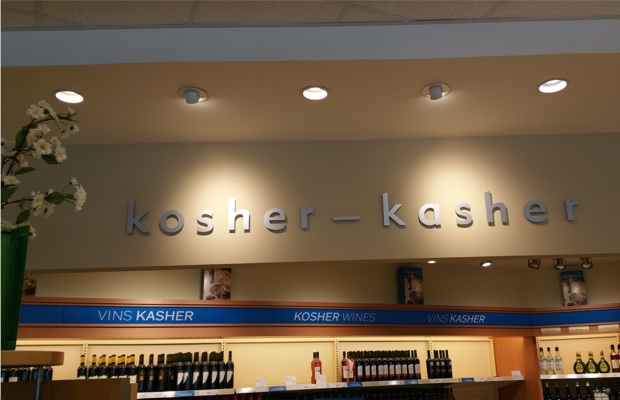
WineAlign: Michael Godel

Facebook

The dawning of the age of Austrian wine

At a loess for words. Exceptional multi-vintage #grunerveltliner tasting with thanks to @austrianwine

At a loess for words. Exceptional multi-vintage #grunerveltliner tasting with thanks to @austrianwine

On Tuesday, October 27th, 2015 Grüner Veltliner supervened in Toronto. It was long past due for the community of Sommeliers, Media and Austrian advocates to convene for the purpose of a vertical tasting followed by an Austrian wine bar of product currently available in Ontario. An ausbreitung of the highest Grüner order. I was fortunate to be a part of the Spoke Club fest and thought it high time I said something about it.

The Austrian Wine Fair comes to Toronto’s St. James Cathedral, Library & Snell Hall on April 14th, 2016. The Austrian Wine Marketing Board and 30 Austrian vintners will be showcasing 165 wines, to media, trade and in partnership with WineAlign, to an evening reception for consumers.

The Schedule

Tutored Tasting for Sommeliers and Media, 11 AM – 12:30 PM.

Trade Walk-Around Tasting for trade professionals only, 12:00 PM – 4:30 PM.

Austrian Wines – A Taste of Culture, consumer tasting 4:30 PM – 6:30 PM. Only $55 for WineAlign members (regular cost is $60). Reserve your tickets here.

WineAlign’s John Szabo, MS has this to say. Austria has a terrific culture of wine, producing and drinking. Beyond the world’s best Grüner Veltliner, you’ll also find astonishing Riesling, as well as more exotic white grapes with singular flavours. But it’s the Austrian reds – Blaufränkisch, St. Laurent & co. – that may shock you most, in tune with the zeitgeist of the modern drinker. I look forward to reconnecting with the folks who make them.”

For more information contact Birgitta Samarvarchian, toronto@advantageaustria.org, 416 967 3348. The closing date for registration is April 13, 2016.

Traditionally known for its white wines, few realize that one third of Austria’s vineyards are planted to red. At the Austrian tasting an educational seminar will feature flights of the three red aces, the indigenous grape varieties Zweigelt, Blaufränkisch and St. Laurent, plus a rare flight of Austrian Pinot Noir. Two years ago I concurred:

“The whites, mainly centered around the signature variety Grüner Veltliner, showed the mineral and salinity so necessary to the grape’s success. Reds made from Zweigelt and Blaufränkisch are Austria’s trump card, ready and willing to take on the world’s reds imbued of elegance and finesse.”

Related – A ramp to Austrian wine

Back to that October tasting. Outside of making the trip to Vienna and forging an itinerary that includes no less than a dozen high profile producers who generously agree to crack open some older vintages, what other setting could present Grüner Veltliner in such light? The age ability recognition factor knocked another one off the bucket list and opened new doors to perception. If for no other reason, and there are many, he Austrian tasting coming to Toronto should not be missed.

On the road w: @zoltanszabo & @tonyaspler we concur. Expert overture @austrianwine #grunerveltliner via @johnszabo

On the road w: @zoltanszabo & @tonyaspler we concur. Expert overture @austrianwine #grunerveltliner via @johnszabo

Flight #1

Stift Göttweig Grüner Veltliner Göttweiger Berg 2014, Kremstal, Austria

Freshness, with a minimal amount of Co2, herbal certainly, with pears and stones. The fruit finale is up, up and away. Very flavourful, almost tropical Grüner.

Fritsch Grüner Veltliner Ried Steinberg Ruppersthal 2014, Wagram, Austria

Has a candied meets medicinal nose and more than its share of mineral to taste. Lingers with a sweetness that is not sugar. It’s a tang derived from grape tannin.

Weixelbaum Grüner Veltliner Reserve Ried Wechselberg 2013, Kamptal, Austria

Very ripe, so tropical to nose and smells like candy floss, like enticing spun sugar. Mouthfeel is more like unoaked Chardonnay. Global entry strategy for Grüner to take the market by fresh storm turns exit strategy without reason.

Edlmoser Grüner Veltliner Ried Himmel 2013, Wien, Austria

The mineral expression of the young Grüner. Elemental and metallic. Good range of motion, right side of the mineral tracks. Really fine tracking and length.

Liegenfeld Grüner Veltliner Ried Himmelriech 2013, Burgenland, Austria

Full-ish and bullish, especially in flight comparison. Quite the fruit monster here, with a sugarless sour candy sensation and savoury linger. An eastern European cough candy with enough subtlety to keep it from crossing any uncomfortable lines. The outlier.

Flight #2

Holzapfel Grüner Veltliner Smaragd Ried Achleiten 2012, Wachau, Austria

A tiny bit of botrytis giving off a mushroom and truffle note, perfect at this stage for a ’12 though it will likely increase going forward, possibly at the compromise of the stellar fruit and even deeper mineral passion play. This is an intense wine with acidity that may be waning but the wine cuts a deep and serious bowie wound. The lees really rules and reigns in the rest. Turns to cider after 10-15 minutes. Changes. “Oh, yeah, Mmm. Still don’t know what I was waitin’ for. And my time was runnin’ wild.”

Domäne Wachau Grüner Veltliner Smaragd Ried Kellerberg 2012, Wachau, Austria

Quite stoic, clear, clean, steely, like unoaked Chablis. Wondering where the lees are in this, how much and for how long because it has that distinct mineral tang that lees will give to a wine made like this. Exemplary but simple. Though the acidity is low so it finishes fat. Still, proper and simple.

FJ Gritsch Mauritiushof Grüner Veltliner Smaragd Ried Singerriedel 2012, Wachau, Austria

This has the candied nose, the tropical fruit and the lactic feel. Quite a mouthful of same flavours in repeat on top of the aromatics and an overall layered tang. Like those white blends again.

Leth Grüner Veltliner Ried Scheiben “1ÖTW” 2012, Wagram, Austria

Powerful loess in concentration, smells like scraped wet soft tuff-like rocks, almost powdery and not a fruit-driven Grüner. Better acidity than some and finishing bitters. The first to do so.

Allram Grüner Veltliner Reserve Ried Gaisberg “1ÖTW” 2011, Kamptal DAC, Austria

Age is creeping in, with a petrol and tannic note that take this into steep slope, white stoicism. The slate is really in, the acacia barrel giving a near-nutty note and certainly white flower distillate. Like eau de vivre. Got a spark.

Salomon Undhof Grüner Veltliner Reserve “Von Stein” 2010, Kremstal DAC, Austria

Gas and stone again, with more verve and life. The first to give soil funk without sweetness or botrytis. A slight Co2 note, a spark, very mineral character. Old vines give concentration, rocks do tannin and acidity lingers nicely. Got stein. Old Riesling reduction and energy equals implosive energy. Flight #2 really speaks to the loess and here is it definitely on high.

Flight #3

Rudi Pichler Grüner Veltliner Smaragd Ried Wösendorfer Hochrain 2008, Wachau, Austria

A fine slow decline in grace, elegance, bald, striking. Here the reason not to fear and for any and all decisions to protract age from Grüner. There has been no discernible deterioration and without a doubt the cleanest fruit in its original state. No flaws. So in that sense an ageless wonder. Strikes as so much younger; colour, aroma, flavour, tannin and linger. Ageless.

Brundlmayer Grüner Veltliner Reserve Ried Lamm 2007, Kamptal DAC, Austria

Certainly showing age here, through all its components and has a sugary gaseous feel. Says Trocken so I wonder what the RS really is. Mineral and acidity are in great interplay. Good length. Really smart and necessary look into aged Grüner. Reductive torque from a top vineyard. The French paradox in analogy is Sémillon.

Hiedler Grüner Veltliner “Familienreserve” 2006, Kamptal, Austria

There was some dirty fruit here, past its prime, late harvest certainly, smelling of tropical fruit past ferment and into decay. But, there is acidity so there is life. Lots of bitters. Some volatility. In a way, The Frick of Austria. Heavy lees, acacia barrels. No fining, no filtration, some biodynamic principals applied to grape growing.

Malat Grüner Veltliner “Das Beste vom Veltliner” 1999, Kremstal, Austria

I find this so much fun at 16 years of age with burnt orange, caramel, white pepper, spices, and an elemental, aerified glory that is some kind of serious inhalant and intoxicant. Late harvest again, clementine segments of flavour, with citrus acidity and great mental acuity. Great bitters. This is on par with some aged Alsace, somewhere between Riesling and Gewürztraminer. Weighs in and integrates its 19 g/L of RS with distinction.

Flight #4

Herbert Zillinger Grüner Veltliner Reserve “Radikal” 2013, Weinviertel DAC, Austria

Oxidative, spontaneous ferment, leading to tang upon tang. The methodology has led to tannin in layers, some orange segment and bitters. Acidity is not striking and its aridity means drink this early.

Geyerhof Grüner Veltliner “wildlux” 2013, Kremstal DAC, Austria

I get terpenes, like cool-climate Chardonnay, well, more cool than Chardonnay and then it gains in salinity, sea salts, brine, groove but not necessarily mineral. Has real verve, life and yet again, not for age. Known for their natural winemaking.

Zillinger Johannes Grüner Veltliner “Numen” 2013, Osterreich, Austria

Amphorae wine, old vines, certainly oxidative, thick texture from lees, but there is acidity. Orange again and edgy, with a piercing limestone tang that runs directly through. Numen “natural spirit inhabiting a place or just natural genius (of spirit).” No external intervention.

Sepp Moser Grüner Veltliner Ried Schnabel “Minimal” 2013, Weinland, Austria

Here is the Alsatian Grüner, natural and with the addition of slow micro-oxidation of old barrels. Eighteen months seems almost on the lee side of time, as we find so much preserved lemon and a lack of Grüner impression. Certified biodynamic. “Will not meet the expectations of wine consumers today.” Dill pickle meets a tomato of volatility.

Wimmer-Czerny Grüner Veltliner “Pur” 2012, Wagram, Austria

Hard to believe this is only 2 g/L of RS. Real Muscat character in aromatics and again terpenes but with a naturally oxidative bent.

One in the April 2nd, VINTAGES release

Loimer Grüner Veltliner 2014, Dac Kamptal, Austria (142240, $21.95, WineAlign)

Flat out delicious Grüner Veltliner with a nice split between fruit and mineral, mas o menos, neither really leading the other. Citrus and a bit of an airy, gravel feel. Drink 2016-2019.  Tasted March 2016  @LeSommelierWine  @FredLoimer

Good to go!

Twitter: @mgodello

Instagram: mgodello
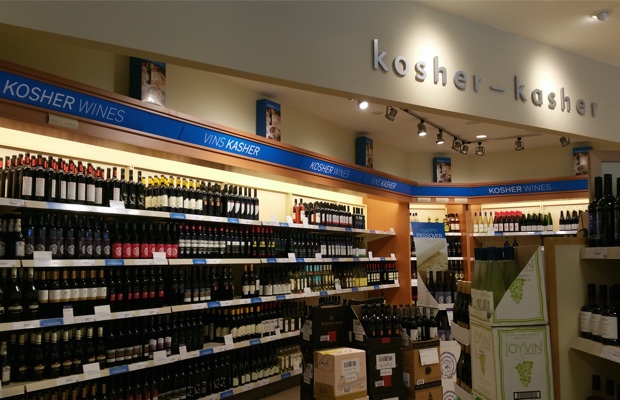
WineAlign: Michael Godel

Facebook