Olivier Humbrecht came to Toronto last week to pour recent vintages of Pinot Gris, Riesling and Gewürztraminer. With brix and mortar special agent Ben Hodson of Trialto Wine Group leading the tasting room charge, Olivier also added in a few youthful historical gems in the line-up, including an “important and fantastic” Muscat that he so righteously and necessarily continues to insist on keeping both viable and alive.
Tasting Domaine Zind-Humbrecht Muscat, Pinot Gris, Riesling and Gewürztraminer with Olivier Humbrecht at the Fine Wine Reserve, Toronto
Any time you get the chance to taste with Olivier Humbrecht the inevitable, integral and essential phenol-tannin-sugar-acidity sequence is front and centre. His devotion to ripe phenolics and grape tannin in white wines is now legendary and in many ways, revolutionary. Low pH levels continue to dominate his directive. “Ripe phenols come from the vines and Olivier continues to refer to structure and acidity as a direct consequence of what happens in the vineyard.”
The other blast from the past brought to the Fine Wine Reserve tasting was a 2006 Riesling Clos Saint Urbain Rangen de Thann Grand Cru of such pure acidity it speaks an ancient vernacular and spins in perpetual motion.
Humbrecht is the Cru chief of Alsace because of the plethora of terroir from which he chooses to make wine. It would be hard to name another Alsatian vigneron his equal of hands and with such a spirit of terroir understanding. In the 2011 vintage alone Zind-Humbrecht produced 29 different wines for Pinot Gris, Riesling and Gewürztraminer. Spread thin is not an issue. Each Cru, whether Grand, Clos or lieu-dit are approached with equal heedfulness and perpension. Here are the seven wines poured at the Fine Wine Reserve.
Keeping the #Muscat dream alive @TrialtoON #zindhumbrecht #olivierhumbrecht
Domaine Zind-Humbrecht Pinot Gris Rotenberg 2012, Ac Alsace, France (Agent, $44.00, WineAlign)
Keeping jurassic or neolithic relativities in mind, the young(er) limestone results in a buoyant chemical level of free lime and higher pH, in addition to an earthly, marly tang and richness in clay. With 15 months tacked on there is weight are there are settled flavours, as if mimicking the 24-hour open bottle, tasted last June. “Pinot Gris is the most versatile grape we have,” says Olivier, so matter of fact. Drink 2015-2018. Tasted November 2015.
From my earlier note of June 2015:
The Rotenberg’s shallow, red soils (located on top of the Hengst) bring a whole new set of parameters to Pinot Gris, in stark contrast to the Calcaire. Two bottles were poured. A two-day old sample showed settled and mellow flavours. A new bottle was crackerjack reductive, leesy and with a shocky aridity so unusual for Pinot Gris. The soils bring concentration, here magnified and compressed by the hastened moment. All the hallmarks of the Zind-Humbrecht style are there, if suppressed; tang, herbiage and a spicy spike. Very dry (4 g/L) and really invigorating white wine.
Domaine Zind-Humbrecht Muscat Goldert 2009, Ac Alsace, France (Agent, $44.00, WineAlign)
Ripeness is a virtue, magnified here, from a very warm year, now six years on in compression from east facing, oolitic limestone and deep marl soil (classified as argileux calcaire). “Twas in another lifetime, one of toil and blood,” when Muscat was considered in much higher light. The 2009, dramatic at this age, bobs aromatics to the nines, dressed to thrill. Unctuous and magnetic, this has changed gears in ways that the ’12 had not and undoubtedly has yet to click. Lays claim to Olivier’s adage, “any fruit picked unripe will come with acidity but that’s not the kind of acidity you want.” In spite of ripeness this has maintained the correct amount of tartaric acidity and low pH to petrol up the Muscat truck deep into the end of this decade. Muscat to provide shelter from the storm. Drink 2015-2025. Tasted November 2015
Domaine Zind-Humbrecht Riesling Clos Saint Urbain Rangen de Thann Grand Cru 2011, Ac Alsace, France (Agent, $88.00, WineAlign)
A wine always tough to pinpoint its aromatic desires, especially when so young, but it is not difficult to assess the willingness to thrive in spite of the harshest Alsace geological conditioning. That said, this has seen a minor spectre of development. It has made some new acquisitions; rock spirit outward of expression and ready to party from its early (before the 25th of September) harvest ripeness. Struck Riesling, in flint and some signal clarity of medium to thriving acidity. Southern Alsatian with veins running fine slate and bleeding minerals in steaks running across its salty skin. There should be a willingness to concede this as the most accessible immediate, modern era R de T there ever was. Drink 2016-2028. Tasted November 2015
Domaine Zind-Humbrecht Riesling Clos Saint Urbain Rangen de Thann Grand Cru 2006, Ac Alsace, France (Agent, $85.00, WineAlign)
From a professed beautiful vintage until a week of rain at the end of September, leading to noble rot in many places without sufficient drainage. In the Rangen the botrytis hit but the cause, effect and reaction remained within reason. Smoke and noble rot, out of aromas and into hues. The smell is sweet (carried by 35 g/L RS) but the acidity hides at least half that number, so it rings across with unconscionable aridity. Still the proposal insists that the late harvest sensibility can’t be denied, with its Ixion hyperbole of mineral and acidity. Acidity keeping this Riesling swirling like a Thessalian king punished by Zeus for his love of Hera, by being bound to a perpetually revolving winged fiery wheel. Drink 2015-2026. Tasted November 2015.
Domaine Zind-Humbrecht Gewürztraminer Turckheim 2011, Ac Alsace, France (Agent, $27.95, WineAlign)
“What we call a village wine,” says Olivier, “so it’s usually a sweet wine.” From a well-drained vineyard offering blossoms and blessings of full flavours, supple textures that leave the palate with a sense of weightlessness. “In ’11 Gewürztraminer ripened really well and went to a really good level of potential alcohol,” he notes. Here it remains fresh at 12.5 per cent alcohol and at a healthy level of 75 g/L RS, though just short of existing in the land of Vendanges Tardives. A wine made by the vintage. Subsequent wines would and will more often than not be nearly bone dry. Drink 2015-2022. Tasted November 2015
“If you can see the differences of terroir in Gewürz, then you won’t see it in Riesling” @AlsaceWines #olivierhumbrecht
Domaine Zind-Humbrecht Gewürztraminer Clos Windsbuhl 2011, Ac Alsace, France (Agent, $64.00, WineAlign)
This is the most northerly Zind-Humbrecht vineyard, in Hunawihr. Like oil and water from this to 2012. So much more richness, unctuousness, classic western European riverbank gluck and heavy weighted metal. Layers upon layers of texture though not nearly as dramatically sweet as it might appear to be. Hides it so well, thanks to those remarkable Windsbuhl gifting phenols and intense grape tannin. This has presence so very rare in Gewürztraminer. In the end its a glass full of liquid gems, polished, elegant and refined. Allow the sugars several more years to fully realize its potential relationship with the acidity. Drink 2018-2033. Tasted November 2015
Domaine Zind-Humbrecht Gewürztraminer Clos Windsbuhl 2007, Ac Alsace, France (Agent, $69.00, WineAlign)
Settled and amenable in an unexpected way, offering up its level of sweetness that 2011 and certainly 2012, do not, at least not yet. The phenols must have been available in an abundance of riches in 2007. They have allowed for an evolution to take this 2007 into its happy place right now. This has travelled the far eastern path to tropical fruit, of mandarin, in apricot and the mineral cream of south asian stone fruits. Those characterics persist and play nice with the Windsbuhl verve, subduing any notion of drama or over excitement. This is drinking well right now. Drink 2015-2027. Tasted November 2015
Olivier Humbrecht was hoping to pour two more wines, two very singular and very different Sélection de Grains Nobles. The LCBO could not find the shipped cases in their warehouse so they were not present at the tasting. Perhaps they will turn up at the same time the ark of the covenant crate is found.
When I visited and tasted with Olivier at the winery back in June of 2014, I had the opportunity to have a go at a younger vintage of the Pinot Gris. The older 2007 is available through consignment with Trialto, along with the Gewürztraminer Sélection de Grains Nobles Goldert 2007 ($120.00, six-packs). The Pinot Gris Clos Jebsal Sélection de Grains Nobles Trie Spéciale 2007 is also currently available ($180.00, six-packs) in limited quantities. Here was my note on the ’09 Jebsal
Domaine Zind-Humbrecht Pinot Gris Clos Jebsal Sélection de Grains Nobles Trie Spéciale 2009, Ac Alsace, France (Agent, $180.00, WineAlign)
A south-facing, very steep slope of grey marls and gypsum. A vineyard that yielded a miniscule 10 hl/H. A stratospheric residual sugar quotient (in the realm of 500 g/L) and incredulous acidity to prevent the development of the yeasts. A fermentation that finally finished in the late winter of 2012. A wine aged in demi-guid. Selection of grapes of a botrytis so pure and dry. These are the specs of a wine I may never taste again. Olivier concedes he “really tries not to obtain the highest sugar concentration possible” but this 2009 is a “monster of a wine.” It will take forever to assimilate and digest the sugar. Unctuous, lush, rich and gorgeous does not do it justice. Pure distillation of fruit and stone, accented by spice, wild herbs and flowers. Like an injection of pure, Pinot Gris adrenaline. All this from dry extract, slowly rehydrated with magic pixie dust and the wonders of the natural world. Will live for a century and then some. Drink 2020-2115. Tasted June 2014
Only on the rarest of occasions do I consider the Zodiac. Same goes for the constellations though if you slump my tired body into the comfort fitting contours of a Thermarest on a Killarney campsite I’ll happily, dreamily stare up into a near-northern sky. Or on a dock in cottage country if the Aurora Borealis happens to make a magical appearance.
In September I spent some time scanning a South African, southern hemisphere sky with Ken Forrester. Ever the romantic, Ken offered up a short dissertation on one of the special treats afforded a stay in Stellenbosch. I have seen the Southern Cross several times before and yet standing there at 10:30 pm with the South African vigneron-poet, taking in the twinkling balls of time travel, something struck me anew.
I like to line things up. Wine tasting notes with music; a lyric or an artist. You may have noticed. I also find ways to forge bonds, synaesthetic perceptions and Chaldean correlations, regardless of whether they are there for the connecting. Sometimes you just need to fulfill the urge to divide the ecliptic into 12 equal, 30 degree pieces of a pie. Perhaps it’s just the M.O.T. in me.
This coming weekend VINTAGES rolls out the first major release in preparation for the looming holiday addiction. The headlines of “stars of the season,” and “star-studded” can mean only one thing. Expensive and iconic wines will dominate LCBO shelves from now through Christmas. And most of these high ticket items will sell through. Why is that you ask? Mainly because many of them are really good wines. Mostly because desperate people will buy anything when faced with holiday gift-giving deadlines.
My job is to separate the exciting from the boring, the exceptional from the drab. I’ve chosen 12 bottles, each with their own horoscopic identity, wines that illustrate their own idiosyncratic hook-up with a sign of the zodiac. It’s a stretch to be sure but it’s my stretch, so deal with it. If you connect and agree with just one, it may change your perception too.
From left to right: J. Fritsch Riesling 2014, Closson Chase Chardonnay Closson Chase Vineyard 2013, Segura Viudas Brut Reserva Heredad Cava, La Chablisienne Montmains Chablis 1er Cru 2012, Hidden Bench Terroir Caché Meritage 2011 and Stratus White 2012
Sure-footed, hard worker, self-disciplined, over-achiever
J. Fritsch Riesling 2014, Ac Alsace, France (430520, $19.95, WineAlign)
Kientzheim Riesling, full, fleshy, opulent but not tropical in style, aromatically fleshy and full of orange rind, lemon zest and tonic. Has that necessary mineral bleed and rock tang. Schlossberg like but not as tannic and certainly ready for prime time at a much younger age. Hints at sweetness but acidity by way of early picked fruit is key. Granite feel. Drink 2015-2019. Tasted October 2015 @VinsAlsace@Alsace_info@AlsaceWines@drinkAlsace
Closson Chase Chardonnay Closson Chase Vineyard 2013, VQA Prince Edward County, Ontario (Winery, $27.95, WineAlign)
This CCV Chardonnay is one of departed winemaker Deborah Paskus’ final acts at Closson Chase. It will forever be noted as a legacy-cementing, swan song of career excellence. Crafted by Paskus and bottled by the next one, current winemaker Keith Tyers, the 2013 CCV is simply a tour de force. No such combination of richness, tropicality and pure grape tannin has ever infiltrated this Chardonnay, from this vineyard. I’m not sure there is a comparison in Ontario, at this level of excellence and at this price. A wine of pure impression, with Montrachet-like structure and Folatières-like precision. Seemingly capacious, its facile legerity is hypnotizing, quantitatively escalating in assembly of aromas, flavours, through texture and finally to longevity. The wine spent 16 months in a mere (17.25 per cent new) oak. That it notes 12.5 per cent alcohol on the label is next to impossible. The substance is just too buttressed to be so tender and effete. Impeccable balance, refinement and mineral finish. This is Chardonnay to confuse the world’s fine white collectors, to wreak havoc at international tastings for five to 10 years. Only 712 cases are available and at $27.95, is down $2 in price from the 2012. Best ever, hands down. Drink 2017-2023. Tasted March 2015 @ClossonChase
An intricate and elaborate Reserva elevation of Cava, even a bit skunky in the most endearing of ways, like a 55 day dry-aged steak cooked rare. A waft of yet blown sulphur is managed and tempered by smartly sweet yeast. At once clunky and disjointed, then heavy in citrus and the shells of molluscs. Citrus climbs all over the finish, from lime to lemon and into pomello. Complex Cava with the taste of acquired affection in requiem of a very open mind. Drink 2015-2019. Tasted October 2015 @hseguraviudas@imbibersreport@cavaswine
La Chablisienne Montmains Chablis 1er Cru 2012, Ac Burgundy, France (265090, $32.95, WineAlign)
In a word, yes. Beautiful girl this Montmains, layered of delicate aromas, from flowers through kimmeridgian soil and into fresh forest glade. A child of the cooler, Butteaux sub-climat in which the citrus melds into the soft wooden (228L barriques) notes and all is elevated by such pinpoint-posted acidity. The oak lends cream, the lees fine spun silky texture and the talc a grape tannic ingrained sense of fullness. Terrific wine. Drink 2015-2022. Tasted October 2015 @VinexxCanada@chablisienne@BourgogneWines@BIVBChablis
There is so much floral presence in 2011, a showy perfume that parades the relative elegance of Niagara’s Bordeaux reds in the vintage. Structure is comparable to 2010, not in beast mode but rather with a delicacy derived from less burning, high-toned fruit. Still here lays a wine so young, of social encumbrance that might be passed off as a mark of impertinence. This faintly embarrassing condition can be suppressed in a dark cellar, in which the foundation can be laid for the beginning of a cure. The Terroir Caché 2011 will show its best between 2017 and 2020, then develop, slow down, suspend animation and age further, effortlessly and exceptionally. Drink 2017-2024. Tasted April 2015 @HiddenBench@BenchVigneron@LeSommelierWine
Stratus White 2012, VQA Niagara Peninsula, Ontario (660704, $44.20, WineAlign)
In magnified aromatic persistence, on and over top of even two months earlier, in such a hyper-grapey way with terrific dry extract chained to tannin and humid minerality. The many months of leave in gentle oak is stating its technically procured, quote unquote de-classified case.
From my earlier note of April 2015:
In 2012 the blend is Chardonnay, Sauvignon Blanc and Riesling. Viognier was left out because according to winemaker J-L Groux “it did not work in blending trials.” The vintage has laid the foundation for the most density and unctuous fruit for the Stratus White in what must be, ever. At the high aromatic end there is peppery beeswax, reverberating and echoing in scales and arpeggios. Like an open string singing warmly, the vintage, extraction and residuum combine for texture in mottled unction. Sapid lemon, more beeswax and lanolin mark the palate and then the White drifts into spaces occupied by smoky back beats and bites. This has great pitch with a knowledge of the path to pleasure. Drink 2017-2025
From left to right: Stratus Red 2012, Bachelder wines Niagara Chardonnay Saunders Vineyard 2012, Ca’marcanda Promis 2013, Versado Malbec Reserva 2011, Flowers Sonoma Coast Chardonnay 2013 and J. Christopher Bella Vida Vineyard Pinot Noir 2011
Stratus Red 2012, VQA Niagara On The Lake, Ontario (131037, $44.20, WineAlign)
The Stratus Red 2012 resides both in a virtuoso’s hollow and in a pantheon inhabited by some of Niagara’s great reds. The fact that such ripe phenology can anticipate and foretell to balance and freedom in the byplace of the blending process is nothing short of amazing. Sinuous and exact, of berries so indefatigable, layering raspberry over blackberry atop strawberry. Cedar and red citrus compound, without jamming the fluidity, but certainly accentuating the Fragaria vesca. Confident and fluid in movement, the ’12 neither shakes nor stirs and its acidity is flat out terrific. At this early point in its evolution it is showing as well as could be expected, or hoped for. Its core of fraises du bois will always be there. Time will be kind, gentle and patient. Drink 2015-2024. Tasted April and June 2015
From a site 2.5 km’s from the lake, right on the highway at 30 Bench. Derives its plushness from mere proximity so “serve it first,” pleads Thomas. So much lush, more richesse and yet today, Saunders is a bit closed, primary even. Will yet need some time to find its way. Drink 2015-2021.
From my earlier note of May 2014:
Though presently showing a bit inferential, no amount of Bachelder reduction can keep good fruit down nor can it dismantle the mastery of mineral impart. An arras of texture conceals the portal to both vineyard and barrel with streaks of salinity, charcoal and chalk. The 2012 rendition is a canvas laden with pure golden paint, concealing “hidden forms and shifting states.” Thomas has found a rhythm in Saunders through thick brush strokes, full and advancing. This warm vintage is not a receding one, its flavours and its texture do the opposite. They jump out at you in waves. For Thomas, the sublime is now.
In the only vintage for which such a trial was performed (2003), the chance was had to taste this 2013 under cork side by side with that vintage under screw cap. The difference was vividly palpable, for good or bad, better or worse. Under cork the young wine is like a perfectly shone lump of cool, refulgent coal with so much spice and accent in permeate of an aromatic fruitcake wheel. Under Stelvin the 12 year-old Promis’s freshness is amplified, of early immortality, with the ripest of tannins. The acidity is markedly formidable and yet both wines display a cured nature in undercurrent. Two 10 years separated Promis of spine, spirit and grounded in earth. Leave this 2013 be for two more years, screw cap or not. Drink 2016-2024. Tasted October 2015 @StemWineGroup
Adventurous traveller, mythological and experiential
Versado Malbec Reserva 2011, Luján De Cuyo, Mendoza, Argentina (316984, $59.95, WineAlign)
Peter Gamble describes the ’11 Reserva as “integrated right out of the gate” and blessed with “a little more fruit component.” That is can show such freshness this early in its life span (especially in consideration of the beasts that are 2009 and 2010) is nothing short of a Malbec miracle. This is a wine that saw spontaneous fermentation, which made for very nervous times in the winemaking hands of Roberto de la Mota. Stems were used and their participation lends a Mediterranean feel, in the aromatic impart of sea salinity and kelp. The oak is scaled back a touch so the chalk push, while present, integrates in finer grain within the gritty, iron structure. This is the softest (hyper-relatively speaking) Reserva to date with a newly defined massive attack. The temperature fluctuations of the vineyard are integral in its structure and the question needs to be asked, “how can you have a day without a night?” In the Versado Reserva 2011 you have both. It is a Malbec of unfinished sympathy. Drink this sooner, starting in 2017 and for longer, to 2030. Tasted September 2014 and October 2015 @VersadoWine@winesofarg
If 2013 is turning out to be the first truly great Chardonnay vintage of the century out of Sonoma, the Flowers SC is categorically up front and centre in that discussion. The epic’s lead paragraph initializes here in a wine that is severely accurate, a blinding and gorgeous expression that brings the flowers in its game. A wield of pulchritude and balance by acidity spot on. Pure flavour extract expands and the components zing on the finish. Could there lurk a Meursault notion in its lace? You know what, forget that. Strike comparisons from the record. The Flowers is extraordinary of Chardonnay, by Chardonnay and for Chardonnay. Drink 2016-2025. Tasted July 2015 @FlowersWinery@rogcowines@sonomavintners
Secretive, perceptive, intense, insightful, with a strength of will
J. Christopher Bella Vida Vineyard Pinot Noir 2011, Dundee Hills, Willamette Valley, Oregon (432823, $64.95, WineAlign)
Lithe and extremely pretty Pinot Noir, reeking of that ancient underground, saline Willamette stream and above ground, Dundee Hills fresh summer berries. Has the best tense intentions, readily available sultry, soluble tannins and just pitch perfect, happy helping acidity. This has the svelte cure and the natural tug of positivity. Sanguine, hematic, volcanic. Great stuff. Drink 2016-2022. Tasted October 2015 @BellaVidaWine@Oregon_Wine@Select_Wines
First press from first pick of 2015 Cabernet Franc
“You have to have a fear of God and a fear of mother nature.” These are the words of winemaker Bruno Francois of The Old Third Vineyard on the Closson Road in Prince Edward County. His compact yet profound stretch of The Ridge has the most slope, perhaps more than any vineyard in PEC, situated around a bend in the road at the 3rd Concession. The Old Third.
Bruno takes me for a walk through the vineyard. He points out the south, southeast slope unique to this part of the ridge. He talks about soil, the Hillier Clay Loam and its 450 million year old friable Ordovician limestone bed. He picks up and kicks around fragments of limestone gravel and fossils, glacial till, granite, sandstone, quartz and marble. The vineyard is a veritable ice age mineral playground. Mostly he plucks and tastes berries. Cabernet Franc. He crushes a cluster as a test. No skin contact but its hue is penetrating, ardent, vivid. The acidity rages. It will be picked in one week’s time.
Tasting The Old Third at White Oaks
We get down to business in the restored 1860’s cathedral barn over Sparkling wine and a Pinot Noir vertical. This is my second tasting with Bruno. In July he drove like a madman out to Niagara to pour his wines for Wine Spectator’s Matt Kramer, Sommelier Xavier Rousset, Master Sommelier John Szabo, Wine Country Ontario’s Magdalena Kaiser and I. We were at White Oaks Resort in St. Catharines in Old Third anticipation during the i4C Cool Climate Chardonnay Celebration.
The Old Third Vineyard, Prince Edward County, Ontario
In Ontario, Chardonnay may be the go to for most Sparkling makers, but Blanc de Blancs be cursed, Bruno’s à la Volée, along with Jonas Newman’s (mixed varietal) Les Étoiles, tell us that Pinot Noir and the County are made for each other. After tasting à la Volée 2011, Matt Kramer said it was the best Sparkling wine ever made in North America. I have not tasted enough North American bubbles to go into heavy hyperbole but I can say this. Bruno Francois takes nothing for granted, has great skill as a winemaker and his best work is yet to come. Here are my thoughts on his wines.
Pinot Noir vertical, The Old Third
The Old Third Sparkling Pinot Noir à la Volée 2011, VQA Prince Edward County, Ontario (Winery, $59, WineAlign)
“On the fly” is not exactly what comes to mind from this 100 per cent Pinot Noir, first Sparkling wine made by Bruno Francois. Calculated, attention to detail and intensity of ideation more like it. Three years on the lees, no dosage and from a vintage to speak in more than whispered voices, of acidity that announces its arrival with immediacy and a summons to contest. The nose does yeast, toast, citrus and ginger. A first release revelation as ever graced Ontario’s waves, as dry as the desert and lingering with switch back traces of its yeasty, toasty self. A single vineyard can be this way, equally and in opposition of natural and oxidative, with a hue less than Pinot Noir, though unrequited as a triumph when you get a ripe white from such Pinot. The production of 1200 bottles is relatively house high in a stunner that needs no sugar to draw up its flavours. Drink 2015-2023. Tasted twice, July and October 2015
The Old Third Pinot Noir 2013, VQA Prince Edward County, Ontario (Winery, $42, WineAlign)
Rarely do the bitters of high density Pinot Noir plantings infiltrate with such courage layered by the richness of heavy clay and fractured, querulous limestone. Depending on how frequent your Pinot Noir tasting opportunities are you may be swayed with prejudice in one direction or the other because the astringency is a very real, authentic, hyperbole of Pinosity. Could this be more intoxicating? From four of five acres of Old Third Pinot Noir, billowing out liquorice, garrigue, tar, roses and the neverland yield of tonic. Though 100 per cent de-stemmed, adding them to “purify” colour would be a mistake. Others could do wonders with this type of correction leading to intensity. Grows chalky with time though adolescence is a hard nut to crack. Picking began on September 8th and the ripe, primary tannins suggest four years minimum to resolution. The nails in its heart will carry it across the girth of middle age. The seven-year mark will demarcate high water, as per the Old Third valour. Drink 2017-2020. Tasted July and October 2015
Cathedral barn of The Old Third
The Old Third Pinot Noir 2010, VQA Prince Edward County, Ontario (Winery, $42, WineAlign)
In exhibition of its post-punk, nearly new wave, boyish fruit charm. Identifies as Pinot Noir from vines planted in 2005, fruit that saw oak worked in the same way it would do, forward to 2013. Tannins are utterly, wholly resolved in present elegance from a summer swelter in matchable cohorts to young fruit. Ten bears sweetness to a light richness and a lithe energy. Also a vin nature respect, with respect to ’13 that hides its very nature. In ’10 a yeast meets fruit barefaced parity is at this critical mass juncture, five-year stage, an aged picture of parent-child appurtenant appearance. Just a minor missive of hash lumbers on the mid-palate. Finally there is aridity and faux salinity without citrus acidity. Not so much Cabaret Voltaire as much as Woodhead Monroe. Drink 2015-2017. Tasted July 2015
The Old Third Pinot Noir 2008, VQA Prince Edward County, Ontario (Winery, $35, WineAlign)
A taste and quickly it feels like an I’m not worthy moment, of respect, in thanks from the wise scribe David Lawrason and with admiration for the winemaker (Bruno Francois) who one and then four months later the other, pull this out of the magic hat. At seven it draws from and commits to memory for him, creates an epiphany for me and suggests the vines, on that slope, were always special. Memories like vampire weekends, epiphanies on County Pinot Noir and vines that were meant to be right from the start. The 2008 has barely moved. Unbelievers? “The world is a cold, cold place to be. Want a little warmth but who’s going to save a little warmth for me?”
The Old Third, Pinot Noir 2008
Bruno Francois, Jens Korberg and their Old Third Pinot Noir, that’s who. From 4th leaf fruit, so yes, very young but of vines precociously grown to be of age. Single (not so very big) vineyard still supplying today’s Pinot Noir. This taste offers proof of inherent structure and ability to age. It reinforces the notion of the seven-year Prince Edward County Pinot Noir itch. The wood on this wine has threaded silk into leather, now comfortably worn in like bucket seats in a Thunderbird Convertible ’63. A puff of mushroom and little to no appointed astringency indicates the four or five year window that yet remains. A wine to justify staying up late and catching up during the day. Drink 2015-2018. Tasted June and October 2015
The Old Third Pinot Noir 2015 (Barrel Sample)
Bruno remits a dreamy, murky decant into full sized stems on the tasting bar, a hazy demure from the year’s first September pick. Like all the Old Third wines (save for the odd Sparkler which uses a biodynamic Champagne yeast), the stage is set for the freshest aspects of Pinot Noir ripeness. Presently carbonic, fresh, natural, funky and primary. From a 23 brix count, sans Mr. Chapital and with some lingering sugar from a cap yet to drop. This to tell you its cloudy. Wild yeast gives texture ahead of the imminent gate passage with zero risk of a warm vintage stuck ferment. Around the bend is a finish with a specific gravity and colour not yet seen. The sugar and yeast compound currently confuses the soothsaying but look past and see a deepening and utter balance. Southeast aspect, Hillier Clay loam, fractured limestone, brought up by tilling. The 11th leaf. All tolled, to 2015, a new charge.
Pizza by Geoff Heinricks at The Old Third Vineyard
In June of 2015 the crew at WineAlign convened in Niagara Falls to judge the best Canadian wines at the National Wine Awards of Canada. Each night during the week of NWAC15 we broke bread with Ontario winemakers and tasted their wines.
Bill Zacharkiw, Brad Royale and John Szabo at The Good Earth
Sablefish by Therese De Grace at The Good Earth Winery
During the preamble before dinner we gathered in the plenary idyllic evening Beamsville light, munched on olives and sundry bites while David Lawrason uncorked something like 20 older Prince Edward County bottles from his personal stash. Thank you David, if I did not already say it properly and with enough grateful inflection. The delve into history was mind-bending and if you know Godello, the significance waxes with each passing moon.
Pakora and Salad Roll Appetizer by Therese De Grace at The Good Earth Winery
It was primarily Pinot Noir that graced the Good Earth table, set in front of the pizza oven in the halcyon vineyard environs. A stray varietal here and there interrupted the Pinot flow with contrasting recreation and to watch a gaggle of geeks contort faces with significant gazes was as much fun as tasting the whereabouts of the wines in relation to PEC and Ontario history. I made notes on 15 wines.
Prince Edward County Retrospective
Exultet “The Beloved” Pinot Noir 2009, VQA Prince Edward County, Ontario (Winery, $45.00, WineAlign)
An important look back at not so past tense County Pinot Noir. A rich crush of red fruit, piercing in its limestone veneer and stretched, across large slabs of stone, reaching fissure harbouring mineral. This Beloved is “full of incidents and schemes… and sympathetic pharmacies.” Rooted, rustic, running so deep and lingering in flavour. The fruit sweet, the roots bitter, the memory luscious. Red electric honey. Drink 2015-2016. Tasted June 2015 @ExultetEstates
Exultet Pinot Noir 2008, VQA Prince Edward County, Ontario (Winery, $45.00, WineAlign)
A combination of vintage and one extra year’s time conspire to elevate the ’08 to a realm habituated by the callasthetic. Perception dreams up the magnetic, le beau ideal, from red fruit and energy, to defeat the volatile and the hungry. A tart, juicy, highly expressive Pinot Noir bred from a limestone ooze more scintillant than polish. Yet another 2008 County Pinot Noir to hit the seven year mark with an exactitude of response. In the County, well made Pinot planted in the right location will travel a septenary path. Drink 2015-2018. Tasted June 2015
Long Dog Pinot Noir Otto and Top Dog 2009
Long Dog Pinot Noir ‘ Top Dog ‘ 2009, VQA Prince Edward County, Ontario (Winery, $30.00, WineAlign)
Unfiltered Pinot Noir chosen from the best barrels. This ’09 is such a pretty dog, drinking through unseasonably warm temperatures with the top down. All about the pulchritude, prepossessing and with blanketing comfort by barrel. Though persistent in its sylvan, inelastic, smoky constitution, the Top Dog is a sight, smell and sweet suggestion to behold. Will drink and drive this way for a few more years. Drink 2015-2018. Tasted June 2015 @longdogwine
Long Dog Pinot Noir ‘ Top Dog ‘ 2008, VQA Prince Edward County, Ontario (Winery, $30.00, WineAlign)
Despite the tougher, cooler vintage, this ’08 is so much prettier than its ’09 successor, in part due to the extra year of settling. There is a sweetness about it and the limestone bleed is less hematic, decreasing in medicinal-honey, silky soft in texture and exfoliating that aforementioned seven-year PEC Pinot Noir wisdom. That in itself is the leading candidate for yet another 2008 to show best in 2015. It’s uncanny really, all these seven-year wines acting in synch as a partisan, best in show troop. Though volatile (aren’t they all) the Top Dog shines well within reason and exudes such enervating, renewable and reusable energy. Drink 2015-2019. Tasted June 2015
Long Dog Pinot Noir ‘The Otto’ Reserve 2009, VQA Prince Edward County, Ontario (Winery, $24.00, WineAlign)
A lithe County 12.1 per cent alcohol, clear as a gaze across Wellington Bay on a clear day and like the Top Dog, a cold-soaked and cool fermented Pinot Noir. Also repeats the LD stratagem of 28 months spent in French bilion oak barrels. The Otto shows its wood like a placard with censored fruit, funky etchings and the same terse firmness that expresses the eastern PEC limestone ester of its grounding. Drink 2015-2016. Tasted June 2015
Long Dog Pinot Noir ‘The Otto’ Reserve 2007, VQA Prince Edward County, Ontario (Winery, $24.00, WineAlign)
Mercurial to quite a vivid degree with a silky palate. Another entertaining and intriguing window from which to peer into the variable Pinot Noir attempts of Prince Edward County past. Drink 2015. Tasted June 2015
The Dunes, Sandbanks, Prince Edward County
Rosehall Run Pinot Noir Rosehall Vineyard 2009, VQA Prince Edward County, Ontario (225748, $21.95, WineAlign)
Influential exhibition for the ’09 double R Pinot Noir, in a sea of peers ranging from 2007 to 2009. Examples displaying more density, power, heavy petting and hue may hover and solicit love, but it is this Rosehall Vineyard that steals the drink me and enjoy show. It is simply less rigid and though some strikes have gone against it in a “tough on you kid” way, it has persevered to hit one out of the park. This is right where it needs to be. Pure, fluid, effortless and smooth. “Such a perfect fusion of expectation, intention, and execution.” Great swing. A splendid splinter. Drink 2015-2017. Tasted June 2015
Rosehall Run Pinot Noir Rosehall Vineyard 2009
Rosehall Run Cabernet Franc Cold Creek 2005, VQA Prince Edward County, Ontario (Winery, $29.95, WineAlign)
Tight, bracing, cured by its own development and topped with a grating of fine chocolate. Crack acidity adds an estimable, ornate layer. The surcease is held at bay in a 10 year old Cabernet Franc made at a time when it was by no means in varietal fashion. Not just spinning remarkably well but standing on a podium to receive its varietal emeritus professorship. The cool, savoury middle and relevant woody notes carry this through. Wonderful historical gaze, luck or not Dan Sullivan. Drink 2015-2016. Tasted June 2015
A blend of 60 per cent Niagara and 40 per cent County fruit. Separate ferments were treated to vinifications for 12 months in French oak barrels, blended and put back to oak for a further six months. The L from nine is in beautiful tender demand. Though a firmness persists the future is viewed through this short window of the past. Lucent and lustrous County submits to matted and shadowy Niagara. The play is a one way ticket in 2009 so enjoy this soon and sooner. Drink 2015-2016. Tasted June 2015@normhardie
Pizza by Norman Hardie Winery
Trumpour’s Mill Pinot Noir 2008, Estate Bottled, VQA Prince Edward County, Ontario (230227, $16.95, WineAlign)
From the artist formerly known as, here a peer into the past of The Grange of Prince Edward, a Pinot Noir that ingratiates not because it resembles, imitates or intimates anything, or any derived character from some endemic tradition, but because it has developed. Evolved from light and astringent into something other; something that resembles earthy, vegetal tar spread like confiture on a limestone slab of toast. Pleasure is not the operative but learning is. At $16.95 that would have been a small price to pay to wait seven years and see what’s up. I can promise that the 2022 Trumpour’s Mill Pinot Noir will be better for the education. Drink now. Tasted June 2015 @grangewinery
Closson Chase Vineyard Pinot Noir CCV 2007, VQA Prince Edward County, Ontario (Winery, $20.00, WineAlign)
Most of the 2007 County Pinot Noir I’ve tasted have fallen by the longevity wayside by the age of eight and many of those even before that mark. There was considerable heat in ’07 and the young PEC Pinot industry was not yet equipped to make proper élevage plans for the future. This CCV has lost its lustre, run amok of fruit and is now relegated to the acidity heap of methane exhalation. A current score is kind of meaningless and keep in mind this must be imagined having breathed out bright cherry fruit earlier in life. Drink 2015. Tasted June 2015 @ClossonChase
Huff Estates Pinot Noir 2007, VQA Prince Edward County, Ontario (Winery)
Firm, tannic and drying. Early in life there would have been sun on fruit but now, of a yawning, a void come into being, as chaos. Drink 2015. Tasted June 2015
Huff Estates Pinot Noir 2007
Keint He St. Laurent 2007, VQA Prince Edward County, Ontario (Winery)
Very pretty. Think about the prearrangement, talk about the passion. St. Laurent planted in PEC, forwarded eight years in pro tempore for Pinot Noir or whatever other varieties have already left the building. Are you kidding me? Like adult candy. Firm but soft and sweet to the touch. Like tart raspberries and demystified currants. Amazing. Drink 2015-2017. Tasted June 2015 @KeintheWinery
Keint He Pinot Noir Little Creek 2007, VQA Prince Edward County, Ontario (Winery, $45.00, WineAlign)
A wine made by Geoff Heinricks from a time when everyone wanted and expected to make great Pinot Noir. A retrospective in 2015 shows that few actually succeeded but this, this is something other. A sweet, lithe and focused piece of history. The smoky hue and character rouses in vaporous waves. Getting high off this Pinot Noir seems not entirely out of the question. From stone roses to fully solarized, the browning is but a natural evolution, amazing, with dillling to dialled in raspberry moments. Little Creek sings “I could astound you if I wanted, I wouldn’t even have to try.” A moment of County found by the viticulture founder of the County. Drink 2015-2020. Tasted June 2015.
Anagogic #pec morning begins here #carryingplace #princedwardcounty
The mission is to gain a yet ascertained understanding. The intendments of geology and geography in Prince Edward County are already laid clear and discussed globally, at least by the wine interested, but what of a deeper, more detailed look? What about the moraines? What I really need to know is how a scant fraction of producers are able to produce so much promise? It must be the ridges.
On the Niagara Peninsula The Vinemount Ridge lies just above and south of the brow of the Niagara Escarpment. Its unique aspects play a vital role in determining some of the most complex Riesling and Cabernet Franc in the world. While not visually as dramatic in PEC, the ridges are no less important to viticulture. Driving the corrugations of Prince Edward County, along the Greer, Danforth, Closson and Lighthall roads, I follow the sight lines. With subtle aspects emanating from the northwest or northeast, the ridges along these roads angle east and west, each with their own gentle but effective slope falling ever so gracefully down to Lake Ontario. The significance is not lost on my mission.
Glenn Symons of Lighthall Vineyards tells me that certain parts of his vineyards can reach temperatures that are eight degrees higher than others. The shallow soils are a result of the stratified ice-contact deposits of sand and gravel that occur in this, one of three Prince Edward County esker ridges, trending northeast to southwest in the Cherry Valley area. Battista Calvieri of Hubbs Creek Vineyard notes that his (Lindsay formation from the middle Ordovician period) Danforth Ridge property provides 20 of 40 plantable acres ideally suited to Burgundian grape varieties. Plant at high density and the ridge takes care of the rest. At the Old Third, Bruno Francois walks me through his Pinot Noir and Cabernet Franc vineyards on the Closson Road. Here the ridge falls more dramatically down towards a forest below.
The quaternary geology of the County accounts for glacial, till, glaciofluvial, glaciolacustrine and eolian deposits. The soils are “composed mainly of fine-to medium-crystalline limestone with shaly partings and sublithographic to finely crystalline no dular and shaly limestone. These bedrock formations are the main topographic control, being at, or very near (within 1 m), the surface throughout most of the map-area.” It all adds up to minerality in the wines and nowhere does the geology matter more than on the ridges.
To habituate a time and be privy to the transformation of a people and a place into something special is a rare form of curious, mysterious and spiritual entertainment. How neat it truly is to be witness to a generation awash in tempo collective, in watershed historical. There are many reasons why folks are making the move to Prince Edward County, why grapes are being cultivated, nurtured and paid conspicuous attention. The rise of the County is happening.
My friends and neighbours John and Amy moved out five years ago. They left the big smoke behind, settled in a beautiful house with acreage to die for on the water. They walk and they breath. Long ago an old Montreal family friend opened one of the first wineries in the County. Thanks to David Lawrason I was able to taste through some old vintages of Long Dog last summer. What a peek back to better understand today. A long time friend of my wife recently moved out and opened a restaurant in Bloomfield. Kin Cafe makes a terrific sandwich. Two more friends have put their house up for sale in Toronto and are heading to the County. Is there room?
A #wellington Saturday night @DrakeDevinn quickie #drakedevonshireinn #pec
The answer is yes. Drive in from points north, from Brighton and down the Loyalist Parkway or from Belleville down Highway 62 and the wide open space will hypnotize you. Suddenly you find yourself in Hillier, Wellington, Bloomfield, or Milford. Then, moments later, once again farmland and the gaping sprawl of agrarian living. Truth be told, elevated levels of civilization, hipster happenings, fine gastronomy and modish behaviour have infiltrated the County. That said, the real story is in the ground.
Artists discovered PEC long ago. Ontario’s most thriving community dots the towns, barns and houses on the hills all over the County. Winemakers have followed. A Burgundian climate and geology were the original draw, and still are. The winter of 2015 and a devastating May frost conspire to be the kill of many hopes, but all is not lost and to persevere is to believe in the dream. Climate change and an undiscovered global truth about the County’s greatness are not just stuffing in a piped future. Bests are happening now. Great men and women are putting passion and acumen to work. Prince Edward County’s time is upon us.
Can it be such a coincidence why visiting foreign journalists of humanistic luminosity and their hyperboles of rumination have anointed Prince Edward County with what are effectively statements and essays of religious zeal? No, it is not. The soil, ridges, choice of plantings, winemaking and finally, the 21st century climate are the storm towards which perfection is aimed and eventually heading.
Comity in the County is no joke. A harmonious thread weaves through and ties an inherent commonality together. Stylistically diverse yet magically aligned, up on the slopes of ridges or down in the valleys. This is how I would describe the wines of Prince Edward County. Walk along the Closson, Greer and Danforth roads or down in the Cherry Valley and see what the fuss is about. On an early October weekend I visited eight properties and while that was certainly 10 less than what I would have liked, the cross-section provided ample understanding, plenty of fodder and more than a tease for the next visit.
It’s decorative gourd season mother… #cherryvalley #pec #clinician
This first part report on the County focuses on six properties. Part two will cover the wines of The Old Third tasted with winemaker Bruno Francois at the Cool Climate Chardonnay conference in July and at the winery on this trip. I will also offer notes on the various older vintages I tasted back in June.
With fruit culled from Bench lands on the Niagara Peninsula, the Lacey take on Twenty Mile Bench Riesling is on the light, piercing and linear track of typical. Like a younger, more naive and slightly jittery version of Flat Rock’s Estate take, this is a very tightly wound white, citrus-shaken from head to toe and full-on arid. As direct an example of pick, transport, crush and let sleeping dogs lie as is ever witnessed. A mess of butter chicken would help batten down its hatches. Drink 2015-2017. Tasted October 2015
Lacey Estates Gewürztraminer 2014, VQA Prince Edward County, Ontario (Winery, $19.95, WineAlign)
Lacey has prepared a dry Gewürztraminer with classic varietal tendencies, from rose to lychee by way of nuts and bitter pith. The sapidity is derived from the Closson Road Hillier clay-loam, blanketing the texture and the aromatics with a fuzz, like tiny hairs on a peach. Though still languishing in a proleptic state, the length on this wine indicates a good five years of pleasure ahead. Drink 20160-2020. Tasted October 2015
One more prime #pec Pinot site. Lithe @LaceyEstates804 ’11 with the seven-year itch. ’13 from barrel progessing and professing further #PECwine #clossonridge
Lacey Estates Pinot Noir 2011, VQA Prince Edward County, Ontario (Winery, $22.00, WineAlign)
From a County Pinot Noir block on a plateau of the ridge set aloft the Closson Road, Kimball Lacey’s fruit is a prized commodity, albeit still very young. This vintage is not a weight-bearing one but it offers incite and prognostication. A lovely litheness is embattled by a talkative bitterness and a spectrum of red fruit whorls in circumfuse; cranberry, raspberry, strawberry and pomegranate. All are dispersed and interspersed by citrus. A primary Pinot Noir, with silken dreams and a softening when it may come together. Two to three years should bequeath good behaviour on the 1200 some odd bottles. Drink 2017-2020. Tasted October 2015
Lacey Estates Chardonnay 2013, VQA Prince Edward County, Ontario (Winery, $22.00, WineAlign)
It may strike as a derivative Greer-Closson County Chardonnay with Closson Chase and Norman Hardie as precursors but if Lacey’s 2013 is Fairport Convention to Chuck Berry, The Beatles and Bob Dylan, so be it. Older (4th, French) seasoned barrels bring pique, texture and balance. This is Chardonnay of spine and a touch of limestone funk. Very much a wine positioned on the stony tang of Prince Edward County and possessive of solid, three minute pop-song length. Kimball Lacey is on to something and the ’13 vintage coupled with the Closson Ridge is the right studio to make his music. Before too long the cries will say “why Mr Lacey, why d’you do the things you do? It’s true no one here understands now, but maybe someday they’ll catch up with you.” Drink 2015-2019. Tasted October 2015
Grange Pinot Gris Select 2013, VQA Prince Edward County, Ontario (Winery, $19.95, WineAlign)
Where there’s smoke there’s hue and with impart by 15 hours skin contact prior to pressing, that colour and those aromatics are the result. Four weeks on the lees followed by four months in neutral oak bring distinct Caroline Granger character, in Pinot Gris unction and a mineral mile. Also on the naturally oxidative side of the Closson Road and Hillier clay-loam. Drink 2015-2016. Tasted at Agrarian Restaurant, October 2015
Grange Of Prince Edward Lot 3 Traditional Method Brut, VQA Prince Edward County, Ontario (Winery, $29.95, WineAlign)
The Lot 2 Traditional Method Brut was aged 18 months sur lie and here in the third trimester the complexities are taken months further, to a moment in largely uncharted Prince Edward County territory. This tempo-lapse methodology is highly intriguing, especially in consideration of the occurring happenstance breach of the autolytic-oxidative continuum. In three there is liquorice and scraped orange skin breaths inhaling and exhaling through sensations of tart and in tin. The yet young oxygenation seems to disregard the yeast at this stage, leaving behind a vapour trail of Closson exhaust. It’s both exhilarating and wearying. Absorbed to say the least, still, “I’m wonderin’, I’m wonderin’,” where this will go. Were it a blush Brut it would surely be a shocking pink. Drink 2015-2019. Tasted October 2015
Grange Of Prince Edward Sparkling Riesling 2010, VQA Prince Edward County, Ontario (Winery, $24.95, WineAlign)
The reasons for re-tasting wines are multi-fold but none are more important than learning what you did not know. The batch may be different and any additional lees-affected time would certainly bring about a new wave of complexity. Though assiduously more Riesling than Sparkling, the age has amplified the Mosel temper and yet as bubbles it seems so very primary, with terpene and flint in mid-strike fashion. Stones, stone fruit, lemon pith and peach subdue the sugar and the commonality with the Lot 3 Brut narrates a house style story. “Like leaves, when autumn falls, turn gold, then they hit the ground.” The thrill of it all, in the county, of country life. Sparkling Riesling playing roxy music. Just a bit more balance to the bitters would eventuate bucolic living. Drink 2015-2020.
From my earlier note of December 2012:
Seems more late harvest, Spätlese over Sparkling. Nectarous juice with a squeeze of suspended honey and a light citrus spritz. Waited for the sear but it didn’t arrive. Good Riesling though.
Last tasted October 2015
Grange Of Prince Edward Pinot Noir Diana Block, VQA Prince Edward County, Ontario (Winery, $35.00, WineAlign)
Ripe and bright to a major degree with tannin at the controls. Still in two meanings, unmoving and perpetual. Acidity circulates, percolates, invigorates. Pinot Noir with a slight fever and an even bigger temper, stuck in primary, yet ready to relent. Remarkable and confidently not yet entered stage two of life but the silky texture is caressing and the forbidden fruit is ripe for the picking. So close to approachability, with just the liquorice and the volatility needing to step aside. The methodology of a 28-day primary fermentation, followed by 30 months in neutral French oak is the culprit. Structure can be a bitch. Diana will be worth the wait. Few Ontario Pinot Noir have ever shown such rural planning, architecture and potential. Count them on two hands. Drink 2017-2022. Tasted October 2015
My kingdom for her majestic lees @grangewinery #carolinegranger #pecwine
Grange Of Prince Edward Cabernet Franc Northfield, VQA Prince Edward County, Ontario (Winery, $35.00, WineAlign)
Caroline Granger’s approach to Cabernet Franc is a natural ferment, earthy cure, holistically organic and eco-rich consanguinity. No other varietal hook-up happens like it does with the expatriate Loire currant clipper. Granger’s affinity with the grape is on intensate display with Northfield, especially in the cured, soil funky heat of 2010. Like the Diana Pinot Noir, primary fermentation occurred in stainless steel for 28-days and it was then aged 24 (as opposed to 30) months in neutral French barriques. The extreme unction, steroidal liquorice and streaky garrigue talk about the past and open up windows to the future of this wine. They are one in the same, spoken on behalf of longevity. This is essential for great Cabernet Franc, even in the midst of hyper tones and acquired tastes. Well done. Drink 2015-2018. Tasted October 2015
Leave the @lighthallvyard on for 2014’s Chard & Pinot. Rooms of their own #vintageofthedecade #aheadbyacentury
Lighthall Progression Sparkling Vidal 2013, VQA Prince Edward County, Ontario (Winery, $20.00, WineAlign)
Progression is 100 per cent Sparkling Vidal by Glenn Symons, a.k.a. “Ward 5 Brut.” It brings stonk and soul together. Re-fermented in April and tasted in October, Progression marches forward and retreats, in re-emerging aromatics and of a deconstructed narrative. Singular in its fretting, of nervous energy and in keys altered by capo restrictions, Vidal has never played a tune like this before. Better growing periods and PEC areas are the sheet music, wi nemaking with atmosphere the arrangement. Progression is progressive, it celebrates musicality and it sells records. It also sells out, literally, not figuratively. Drink 2015-2018. Tasted October 2015
This is Glen Symon’s first Sparkling Rosé, a 100 per cent Pinot Noir from estate vineyards, refermented using the Charmat method. Intensely fizzy, in toto fruity and actually gives off a Pinot Noir vibe. Something racy, spicy and wild runs rampant, rendering this blush bubble in an Ontario class of its own. It’s like 1980’s alt-dance fizz, with a New Order or B-52 thing going on. It just seems to do the “she-ga-loo, shy tuna, camel walk, hip-o-crit, coo-ca-choo, aqua velva, dirty dog and escalator.” Has the direct beat, retro and futuristic at the same time. Dance this mess around, in sweet and savoury tones, warm, day-glo, slow and gyrating. Drink 2015-2016. Tasted April and October 2015
Lighthall Chardonnay 2014 (tank sample)
The child of a fortuitous vintage and magical ferment. The wine hit 25 degrees and finished malolactic fermentation in two weeks. One third barrel, one third tank and one third a combination thereof. A perfect trilogy, same limestone pierce as always but with a new order texture and aromatics filling the room. Like 1987, of substance, in transitions, from ceremony to everything gone green. A storm of amalgamation. Really a new benchmark for Glenn, Lighthall, Cherry Valley and Prince Edward County. Tasted October 2015
Lighthall Pinot Noir 2014 (barrel sample)
Best fruit ever. Malo done, only one year in (20 per cent new) oak and yet to feel the preservation effect of sulphur. Living a rich aromatic lifestyle with pollen in the air. Has the tannin to support its excesses (it spent one week plus three on the skins). Should lead to 400 cases and should retail for $35, though Glenn will probably charge $30.
Lighthall Pinot Gris South Bay 2014 (tank sample)
From Huff vineyard fruit, a rich, unguent emanation that shows slightly oxidative (pre-sulphuring). Has a chèvre-Chenin Blanc attitude that will turn to mellifluous honey with time.
Lighthall Muté 2011
Lighthall Muté 2014 (tank sample)
Here is unfermented Vidal, a vin liquoreux that wants to draw comparisons to sherry, straw wine, Rancio, Vin de Paille, you name it but with apologies back and forth, this is in a league of its own. A fortified wine with a distillate added to bring it up to 17-18 per cent alcohol. Distinctly orange in flavour, oxidative and yet religiously addicted to site. There will be 100 cases produced at $30 for a 500 mL bottle.
A library browse with Battista @HubbsCreek #sevenyears #PECwine
Hubbs Creek Vineyard Chardonnay 2014, VQA Prince Edward County, Ontario (Winery, $27.95, WineAlign)
This is Battista Calvieri’s first County Chardonnay from his estate’s seven year-old vines. A minor barrel ferment (15-20 per cent) in French oak and the remainder in stainless steel seeks and finds Chablis. The wood needs two more years to dissipate, find inner-vision and expand in the mouth. The length is already outstanding, before which burst forth exploding pockets of spiced, warm drawn butter with nary an oleaginous feel. The HCV inaugural release is emulsified Chardonnay of silken protein, with pretty drops of vanilla and purity out of a Danforth Ridge vineyard ear-marked for quality varietal pleasure. Drink 2017-2021. Tasted October 2015
Hubbs Creek Vineyard Pinot Noir Unfiltered 2010, VQA Prince Edward County, Ontario (Winery, $28.95, WineAlign)
Now in bottle four years, this sophmore Pinot Noir shines bright as the day it first passed into glass. From fruit really carefully nurtured off nine to ten year old vines, there is no sign of oxidation or advancing maturity. That is nothing short of incredible. Goes from fresh strength to strength in and by tannin. There is great spice (white pepper and dried red peppercorn) and two additional years should bring this to fruition. A minor note of late fall boletus mushroom talks up Burgundy. The HCV Danforth Ridge is clearly a top Pinot site in the County (along with slopes on the Greer and Closson roads). Planted to high density the results are proven in wines like this 2010. Drink 2015-2019. Tasted October 2015
Quick crush of Le Clos ’13 @ClossonChase Purple barn but Pinot all gone #chardonnay #pinotnoir #ccv #clossonchasewinery #clossonchasevineyard
Though I did not taste this in the County, I have been pouring it at Barque Smokehouse since early summer. I am including my March review of the CCV Chardonnay 2103 for perspective.
Closson Chase Vineyard Chardonnay Closson Chase Vineyard 2013, VQA Prince Edward County, Ontario (148866, $27.95, WineAlign)
This CCV Chardonnay is one of departed winemaker Deborah Paskus’ final acts at Closson Chase. It will forever be noted as a legacy-cementing, swan song of career excellence. Crafted by Paskus and bottled by the next one, current winemaker Keith Tyers, the 2013 CCV is simply a tour de force. No such combination of richness, tropicality and pure grape tannin has ever infiltrated this Chardonnay, from this vineyard. I’m not sure there is a comparison in Ontario, at this level of excellence and at this price. A wine of pure impression, with Montrachet-like structure and Folatières-like precision. Seemingly capacious, its facile legerity is hypnotizing, quantitatively escalating in assembly of aromas, flavours, through texture and finally to longevity. The wine spent 16 months in a mere (17.25 per cent new) oak. That it notes 12.5 per cent alcohol on the label is next to impossible. The substance is just too buttressed to be so tender and effete. Impeccable balance, refinement and mineral finish. This is Chardonnay to confuse the world’s fine white collectors, to wreak havoc at international tastings for five to 10 years. Only 712 cases are available and at $27.95, is down $2 in price from the 2012. Best ever, hands down. Drink 2017-2023. Tasted March 2015
Closson Chase South Clos Chardonnay 2013, VQA Prince Edward County, Ontario (Winery, $39.95, WineAlign)
The South Clos is a richer wine in so many ways, detains the barrel with utmost retention and exaggerates the notion of peaches and their stones. Fully opulent, fleshy to the nth degree and marked by a peppy, peppery bite. This flagshig Chardonnay in the CCV stratum should, by all accounts be the unparalleled success story from the 2013 vintage. The specific southern most portion of the vineyard and barrel select accumulation provide it with the tools and the ammunition. So, as good a Chardonnay as it is, why does it recoil from a winemaker’s legacy defining moment? It is because a final act succeeds as the sum of great parts. The CCV Chardonnay is that summation. Le Clos, without team support, howls alone. If the expertly reasoned and balanced CCV was the last great work of Deborah Paskus, the South Clos is her last stand. It is loaded with and weighted down by excess, in orchard fruit, by blanched nuts and in kernel skin. It is very much a Chardonnay of heavy contact. It is a night scene filmed in daylight, a clichéd melodrama, day for night. It should best be enjoyed while the sun still shines. Drink 2016-2019. Tasted October 2015
Hinterland Les Etoiles 2012, VQA Prince Edward County, Ontario (Winery, $39.00, WineAlign)
An axial split between Pinot Noir and Chardonnay balances this traditional method Sparkling wine, specific to and what can only, obviously be from Prince Edward County. Acidity defines its existence in every facet of its being. A rich star to be sure, from a warm vintage, free from frost and more importantly, immune to mould. Jonas Newman talks of the methodology, in growing low to the ground. As the sun goes down, the canopy shades the fruit, slowing down the ripening, extending the season, developing the sugars, the complexities and preserving the acidity. At 6 g/L RS, with limestone communication and that sassy acidity, Les Etoiles in ’12 is pure County Sparkling. It exudes untamed apple and unnamed acidity. The Hinterland acidity. It strikes early and often. Just add warmth, stir and voila. Terrific year. Drink 2015-2021. Tasted October 2015
Hinterland Les Etoiles 2009, VQA Prince Edward County, Ontario (Winery, $39.00, WineAlign)
The effect of three additional years on the lees (this bottle was disgorged on July 7, 2015) can’t be overestimated. In fact, tasting this ’09 Etoiles is like coming upon a new wine altogether. Its assessment is approached with only a present state in mind. The level of fine accumulation after (five years) is like stumbling upon a most convenient truth. Aromatic intricacy is the product of settling ramification. Think baking biscuits, early morning roses, cake yeast, oxidative orchard fruit skins, anise Taralli, ginger and preserved lemon. The ’09 remains opulent and yet nothing means nothing without first knowing that acidity persists as everything. This is Sparkling with an expansive mouthfeel and a burst of helium. Though in the autumn of its life it falls under the category of wow. Drink 2015-2018. Tasted October 2015
Hinterland Blanc de Blancs 2011, VQA Prince Edward County, Ontario (Winery, $39.00, WineAlign)
If Les Etoiles is Hinterland’s Message in a Bottle and the easy drinking, baby maker Ancestral is alright for you, then the Blanc de Blancs could rightfully be the band’s instrumental Reggatta de Blanc. As a Sparkling antithesis to Les Etoiles it exudes much more limestone, in its lactic bleed, its piercing ooze and through the outright white lightning strike that pops in the mouth. Take away the Pinot Noir and a certain level of earthy tension seems to disappear, replaced by a different set of nervy parameters that County Chardonnay protracts in Sparkling wine. Picked on September 18th and 19th, i.e., a normal year, the B de B helps to transition the epistle spoken by the star towards the accessibility of the softer ballads and hits. It’s a bit of a middle child bottle of bubbles and though it sings without words, its meaning is clearly heard. Drink 2015-2021. Tasted October 2015
Notes on #Gamay in shape like Will, shaped by Jonas @northshoreproj #sandstonevineyard #wilms
Jonas Newman is crafting wines for Hockley Valley’s Mario Adamo under the Adamo Estates Winery label. The first releases are borne of fruit out of some of Niagara’s great vineyards; Wismer-Foxcroft, Château des Charmes-St. David’s Bench and 13th Street-Sandstone.
Part of the Adamo Grower’s Series wines, of big, juicy fruit and deliberately sweet at 27 g/L RS. A Kabinett Mosel styled Riesling not just for show but because “this is where the ferment wanted to stop,” says Newman. Fruit is culled from the part of the vineyard that determines such a style and direction. This is classic Twenty Mile Bench Riesling (one step removed from the W-F made by Ilya Senchuk at Leaning Post) that acts neither dry nor sweet but rather feigns aridity in toothsome clothing. Drink 2015-2018. Tasted October 2015
Jonas Newman’s first kick at the St. David’s Bench Gamay gutbucket is just that, raw and spirited in style. The clay and inherent ferric, metal sear resonates from the Château des Charmes vineyard. Considering CdC’s Gamay is as good as it gets for the money and from such farming in Ontario, what a fortuitous and gracious place to start for the Adamo family. Early energy, funky fruit and punchy acidity trill up the amplification. This is punch drunk fun Gamay, very Cru is style and pump per up in volume. It’s no Gamay Muzak, “pump it up, until you can feel it.” Gotta believe Elvis would have liked this Gamay. Drink 2015-2016. Tasted October 2015
Jonas Newman walks out onto hallowed Ontario Pinot Noir ground and offers his two Lowrey Vineyard cents. From the Grand Cru site where Thomas Bachelder, Ilya Senchuk and Wes Lowrey make three of the province’s most important Pinot Noirs, a fourth camarade has entered as the new kid on the block. This is no ordinary plot and the direction of the rows, the angle of the slopes and the venn diagram of overlapping St. David’s Bench and Niagara Peninsula appellative lines may be blurred. Make no mistake. Lowrey fruit is Lowrey fruit and in the hands of a winemaker like Newman, expect more excellence. The fruit is very young in here (three years in this 2013) so the level of inherent virtue is tempered as if by grains of salt. Jonas made this in a “deliberately big, unctuous style,” barrel aged for 10 months in 50 per cent new French Oak, “not built to last.” Big it is and yet pretty, with heaps of Bing cherry equally opposed by till, gravel and heavy clay. A two to three year structure is appropriate considering the age of the fruit. Drink 2015-2018. Tasted October 2015
North Shore Project Gamay Willms Vineyard 2014 (Winery, $24, WineAlign)
This is Will Predhomme’s extended foray into crafting cool climate Ontario wines with Jonas Newman, a project that began with Syrah and Rosé from Lake Erie North Shore vineyards. The fruit for this Gamay is sourced from the Sandstone Vineyard in the Four Mile Creek sub-appellation of Niagara-on-the-Lake. Planted in 1983, it is owned and farmed by friends of 13th Street winery, Erv, Esther and Eric Willms. This Gamay is so Will, bright, energetic, positive, right there with you, all the way. Jonas gave it a bit of debunging for a hint of oxidation, a good move on his part to counteract the high level of excitement and anxiety it currently displays. Should be released in time for Christmas. Drink 2015-2019. Tasted October 2015 @northshoreproj@WillPredhomme
October 31st is a date empowered. Each year I fall victim to its commercial holiday, Soma-coma induced temptations. I eat candy on Halloween (I never eat candy) and I write about what to drink with in compliment and in conjunction with its tasting menu confection. It’s all so very wrong on so many levels and yet I’m drawn to it like a moth to a flame? Why? What is it about this impossibly sappy and gagged up day that sucks me into its vortex of plastic, vinyl, crinkle and excess?
I blame it on childhood, on a time when innocence, naiveté and gullibility ruled my universe. When running with friends and getting sick on candy was both joyous and an exercise in self-flaggelent stupid. When two hours meant freedom, rebellion and independence. Halloween is a kids’ version of travelling through Europe with a back pack. It’s like quitting a job, like going to Vegas on a stag (I hate the idea of going to Vegas on a stag).
Well, that explains it. As adults, we try to justify the ingenuousness, callousness and asinine holiday, to make sure our kids find happiness in its bent farcicality. We try to grin and bear it. We attempt to embrace its forced beauty and its urban chaos. And we drink wine.
Looking back at those lists from 2012-2014 and the thirty reasons given for drinking wine on Halloween, the best ten can be culled and reformatted into the following quaternary list:
Because sometimes adults need travelling sippy cups too
The polyphenols in red wine can help offset the horrible effects of eating a pound of refined white sugar
A person with a candy bag full of vodka is an alcoholic. A person with a candy bag full of wine is classy
To reduce the chances of having a heart attack or stroke at the sudden comeuppance of the neighbour’s $10,000 Halloween movie set
Why should this night be different from any other?
The doorbell rings every few seconds and beer takes much longer to pour
It rhymes with Frankenstein
For the sake of keeping things new, I’ll add the final new reason to the list:
10. A few glasses of Pinot Noir will make you smile as you remember how much money you saved by staying true to fun-sized candy
Be the life of the neighbourhood and fill those travellers with any of these 10 Halloween wines, subject to budget and chosen from the VINTAGES October 31st release. I promise not to suggest any candy pairings.
The Richie Roberts take on Riesling brings Beamsville to the populace, combining the natural acidity of the variety with the micro-saddle-plot-climat ipseity that the sub-appellation provides. This early to market ’14 is quite tropical, offering an en primeur portal into what invariably will follow. Fresh, juicy, accessible and in near-perfect balance. Slate, calcareous bleed and fruit generosity make for one tidy, markedly gratifying Riesling. Tasted March 2015 @FieldingWinery@RichieWine
Carries with it the efforts and old barrel trials of generations in its classic aromas. Cedar, dried plum, bitumen, dried anise, wood soaking in natural sugar syrup. Really seamless, flourless and austere in a running wild kind of way. Possessive of length and deserving of that oddest of wine descriptions; supple. This will age for 10-12 years with ease. A great wine for the money, right up there with the Montecillo 1991, but cleaner, juicier and with more sex appeal. A red head, a ginger, Rita Hayworth, Julianne Moore, Emma Stone. Tasted March 2015 @bodegasmuriel@RiojaWine
Creekside Estates Laura’s Red 2012, Queenston Road Vineyard, VQA St. David’s Bench, Niagara Peninsula, Ontario (117906, $19.95, WineAlign)
The richest, wealthiest and most lush Laura’s red to date. Constructed in high tones, big fruit and the most oak it has absorbed. Structurally speaking this climbs to play at the top of the Creekside regime game, with tannins formidable to demanding and a texture filled with spirited matter. Behind the scene and to a certain extent the veil there is Niagara, painted and dressed. Laura’s ’12 bites chocolate and picks at buds with impunity. This much plum and berry fruit will find a way to improve then strut in tastings years from now. Drink 2016-2020. Tasted twice, June and July 2015 @CreeksideWine@hobbsandco
Château Pey La Tour Réserve Du Château 2010, Ac Bordeaux Supérieur, Bordeaux, France (349308, $19.95, WineAlign)
Here’s a well-organized, thought out and structured bit of tidy Merlot from the house of Dourthe. Bits of Cabernet Sauvignon, Cabernet Franc and Malbec reinforce the pretty, dusty, deep blue fruit from between Bordeaux and St. Emilion. I wouldn’t call it rustic or old-school but I would mention its wise charm and traditional handling. Just a bit of astringency in the tannic composition will take this five years down the road. Drink 2016-2020. Tasted October 2015 @La_Cave_Dourthe@Dandurandwines
Wolf Blass Gold Label Cabernet Sauvignon 2013, Coonawarra, South Australia (606939, $23.95, WineAlign)
Prodigious Cabernet of and for protein. Melds flavours of salted caramel and real hot chocolate with melting berries like Churros filled with oozing centres, without sweetness. Has expansiveness and connectivity, with acids and direct displays of tannin. The real deal down in the depths of warm climate Cabernet Sauvignon. Drink 2016-2022. Tasted blind at WWAC15, August 2015 @WolfBlassWines
Lavau Vacqueyras 2012, Ac Rhone, France (104927, $24.95, WineAlign)
Rich and very perfumed Vacqueyras composed of Grenache (50 per cent), Syrah (40) and Mourvedre (10). A wine with every intention to seek out a standing rib roast or duck confit to meet its every move. Charges that mix depth of fruit with grain of wood. Stratagem that marks violets moved to red berry fruit and reasonable acidity melded into a fine grain of tannin. There is just enough restraint in the process to consider this a finessed wine of gastronomy. It’s chewy but easy to digest, crusted and built of simple pleasures. Really well-made. No pretension, no attention drawn to itself and just plain affordable. Drink 2015-2019. Tasted October 2015 @oenophilia1@RhoneWine@VINSRHONE
Flat Rock’s ever involving vines (on 33 hectares planted in 2001 and 2002) enter a new phase with indicators blinking and refreshing in this 2013 Gravity Pinot Noir. Youthful adolescence and gregarious fruit expression initiated in 2010 and carried through the 2012 vintage. Those years saw to a world of astringency and tension relegated to mites in the rear-view mirror. The wine is now in a nexus cross-roaded with exigency holding pattern. To understand its confusion and survey fast forward to its future is not easy. Gravity is a bit large right now, seemingly advanced, but to me the fight is between that fruit abundant state and the return of, though eased by meditative Jedi tension. Gravity just needs a parachute to bring it back down to earth. That lifeline may not materialize in this 2013 but that does not take anything away from its discriminating and diagnostic tones. Brightness, astatic inflection and succulence. This vintage may suffer from some level of snafu but it will age, evolve and breath. That much fruit has to have some level of expectation. The follow up ’14 and ’15 will win the hearts of horses and men. Drink 2016-2021. Tasted October 2015 @Winemakersboots@UnfilteredEd@brightlighter1
Burrowing Owl Chardonnay 2012, BC VQA Okanagan Valley, British Columbia (208694, $34.95, WineAlign)
Showing reduction and barrel youth in its veins, pores, gutters and buffers. Smells just like a young Chardonnay after spending 12-18 months in a combination of toasts and forests should smell. A changeling constantly shifting, grooving, picking up steps and notes. Spice, prick and pierce with the gems of proper acidity. Of emeralds and pepper grinds. The piquant nature begs for time. A stab in the Chardonnay dark says Okanagan as distant cousin to Beamsville Bench or Vinemount Ridge. In the end winemaking steals the show. Drink 2017-2020. Tasted blind at NWAC, June 2015 @BurrowingOwlBC@LeSommelierWine
A highly perfumed Pinot Noir from winemaker Kevin Panagapka in 2012, complete with an exotic spice box of aromatics; potpourri, roses, cassia, clove and aamchur. The profile hydrates to a mulled simmer as the wine is once again warmed by the vineyard’s ability to ripen, exaggerated in ’12 but with more grace, bringing its personality in line with its modest (13 per cent) alcohol. The cherry flavour veers black with a paste of tar and charcoal, but again, the psyche is smooth and elongated. Long finish to this Queenston which should see it sing to 2018 and beyond. Drink 2015-2020. Tasted August 2014 @2027cellars
Château Grand Barrail Lamarzelle Figeac 2008, Ac Saint Émilion Grand Cru, Bordeaux, France (425546, $39.95, WineAlign)
Showing a twinge of age at seven years, in rim and out of the natural whiffing forest aromas escaping with ease. The absolute right kind of earthy and barrel-influenced funk emanates, like experienced Bordeaux should, as would Rioja in similar approach to climacteric transition. A bit of leather, licquorice and aged beef join the gritty fray, mixed with aromatic citrus and grainy tannin to seal the destined way. This is ready to drink and yet two more years would not hurt its cause. Drink 2015-2019. Tasted October 2015 @Dandurandwines
It has finally happened. It has come to this. Inflation has hit the LCBO. The old Mason-Dixon line for finer wine has left the building. We are finally rid of the oppressive bar of redundancy and free from the high water mark. First it was the penny, now it’s the $20 dollar bill. The over-under threshold of $21.95 is the new $19.95.
The wines I have chosen to recommend speak to the change, beginning with, going forth and prospering from the VINTAGES October 17th, 2015 release. One lonely bottle from the Okanagan Valley of British Columbia’s west coast stands to keep the frontier from moving north but the tide has risen and prices are no longer safe. Mark my words. Beginning in the fall of 2015, a twenty and a toonie in your pocket is the new requiem to make purchase for the common denominator in competent and felicitous dinner companions. On that note, everyone should be given a 20 per cent raise. Surely we don’t want any drinking of less than stellar LCBO issued wines.
Here are the picks.
From left to right: San Raffaele Monte Tabor Pinot Grigio 2014, Dirty Laundry Gewurztraminer Madames 2013, Palacios Remondo La Montesa 2012, Trimbach Riesling 2012, Southbrook Triomphe Cabernet Franc 2013, and Red Hill Estate Pinot Noir 2013 and Hinterland Borealis Method Charmat Rosé 2014
San Raffaele Monte Tabor Pinot Grigio 2014, Igt Veronese, Italy (204768, $14.95, WineAlign)
Ripeness extended out of extraction leads to slight distraction in 2014, with mineral notes falling off the charts. The vintage is one of hyperbole for this particular Pinot Grigio abstraction, fruit compressed, stones crushed and dry extract seared by arid ice. Salinity and brine are magnified too though the overall impression in ’14 is one of weight, like the elements are being sent substrata, as opposed to the typically aerified course. Still there can be no denying the complexity such a $14 white affords, even if the line here is a bit right of centre. Drink now for hedonistic pleasure, with any savoury sea creature and alongside the next 60 days of increasingly cooler nights. Drink 2015-2016. Tasted September 2015 @oenophilia1
Dirty Laundry Gewurztraminer Madames 2013, BC VQA Okanagan Valley (423228, $21.95, WineAlign)
Illustrated Gewürztraminer of appreciably pointed attributes, on the off-dry side of town but with enough acidity to float on. Les Madames offers up the most sweet and inviting set of vinous virtues for the triple-threat DL schematic. The Summerland vines and warmth make for a fully expected and dramatized aromatic wine with the most unctuous behaviour. Were the pH and the grape tannin of a higher combined force this would also be a wine to lay down, to wait and watch for the sugars to slowly develop into things tertiary. As it is, find some flavourful and spicy fare to seek succulence through osmosis. Drink 2015-2018. Tasted October 2015 @DirtyLaundryVin@winebcdotcom@bottleneckdrive
This perennial confluence of the left and the right, of two oceans, grapes and barrels is the red wine portal into the Álvaro Palacios idiom. The modern polish and sanctity of Rioja conjoin for the most representative first pass at Tempranillo-Garnacha you will and should encounter. The vintage is not a rigid one, the wine a downy entry into the style and the equation. The fruit dominates calcareous longing and leaning but for the time being and the audience reached out to, there are no questions or complaints. Red plum and subtle liquorice meander into clay, get a sprinkle of white rock and distill into a seasoned, approachable liquid. Cracks are filled, bonds are cemented and dinner is properly accompanied. What won’t this work with and for? Drink 2015-2019. Tasted October 2015 @WoodmanWS@RiojaWine
Trimbach Riesling 2012, Ac Alsace, France (734517, $21.95, WineAlign)
“Six plus months will do wonders” is a statement of probability for well-made Riesling and for Trimbach, of the obvious. Coequality between fruit and mineral bobs on the surface of the vineyard and the rim of pale platinum beauty. Illustrative Alsace. Drink 2015-2022.
From my earlier note of March 2015:
To Jean and Anne Trimbach and most Alsatians, this Riesling from their ‘Classic’ range may represent the best that basic can be but when it travels oversees it gains a stature well beyond its humble roots. Here is another one of the those dictionary entry wines meant to depict and define. Quite simply emblematic Alsace. Built with acidity to envelop sweetness, marked by herbiage that is alive and fresh. Weight and density draw from Ribeauvillé rocks. Parity is realized in osmosis by fruit and mineral. As always, there is the tannic underlay, the length and the purposed bitter finish.
Six months have amplified the current, running in a direct aromatic-flavour line from strawberry to black currant. Such healthy up front fruit with nary a moment of humidity shines while the wine remains just grounded enough to call it Niagara.
From my earlier note of December 2014:
Still organic through and through, despite only a small portion of estate fruit contributing to the overall design of the Triomphe Cabernet Franc ’13. Contracted growers fuel and fulfill the Southbrook ideology, to seek purity in healthy berries. The red fruit here shines on with Daliesque impunity. Its agglomeration makes a juicy, gregarious offer to sip. The vanilla-lavender streak brings elegance, more so than in ’12, along with an elevated sense of savour and really compounded red, red fruit. A natural sweetness and long finish are easy on the gustatory senses. Will be available at VINTAGES in February 2015, when the ’12 runs dry.
Red Hill Estate Pinot Noir 2013, Mornington Peninsula, Victoria, Australia (58073, $21.95, WineAlign)
The Mornington perfume, distinct, ethereal, lifted, elevated, fresh with a bit sauvage, not of musk, but of a wild road less trodden. A step beyond fresh, into learned territory and also above crisp, into crunchy. Very interesting and complex Pinot Noir, so obvious as anything but, yet unique, tart, striking and long. This should have many consumer fans and expand horizons for broad appeal, but also be a friend to the discerning taster. Most impressive. Tasted November 2014 @RedHillEstate@Noble_Estates
The Ancestral cousin continues its arid ways in 2014, ostensibly a better vintage for the sparkling tank methodology. The fruit, acidity, volatility and tension all elevate and there is nothing surprising about that but where this sophomore succeeds is in the dry take on Gamay bubbles. So many winemakers would be tempted into higher dosage and the soft allure of enticing a younger audience with sweetness. Jonas Newman won’t go there. This is fun and simple but its aridity and dry extract keep it real. Like a September Algonquin campsite gaze upwards at the Aurora Borealis. “The icy sky at night.” Drink 2015-2018. Tasted October 2015 @hinterlandwine
From left to right: Creekside Estate Reserve Viognier Queenston Road Vineyard 2013, Dominio De Tares Cepas Viejas Mencia 2011, Tenuta Rocca Barolo 2010, Cvne Imperial Reserva 2009, Prunotto Barolo 2010, Tawse Pinot Noir Lauritzen Vineyard 2012, Duckhorn Merlot 2012 and Banfi Poggio Alle Mura Brunello Di Montalcino 2010
Exceedingly mineral in 2013, decidedly varietal and power prepositioned for the purpose of small lot, attention to detail Creekside adjudication. Though Syrah and Cabernet Franc would seem to define the winery’s signature strokes, it is this small production Queenston Road Vineyard labour of love that crawls beneath the radar. The ’13 is outright juicy, unctuous, feathered in weight and warm-pitched to verdant greens. The vintage doles out more warmth than expected but acidity carries the weight, over the water and onto the dance floor. I’d wait a couple of years for some more floral and honeyed notes to develop. Drink 2017- 2022. Tasted October 2015 @CreeksideWine@hobbsandco
This is rich and powerful Mencia, even for itself, sheathed and layered by the alternating variegation of French and American oak. From Alliers to Missouri there is comfort to be found in its warm blanket, alcohol (14.5 degrees) and depth of fruit. It might come across as figgy and raisined and indeed those aromas and flavours are imagined, but they are fresh, not dried. Acidity and tannin envelop fruit. Old vines offer substantial heft, concentration and brambly fruit like Zinfandel and Primitivo, but here there is a citrus lift to carry the weight. Emblematic Bierzo that has and will be more exciting with just that much more freshness and tension. Drink 2015-2019. Tasted October 2015 @DominiodeTares@oenophilia1@dobierzo
Modern speak and safely on the pleasurable side of volatile. A real deal for Nebbiolo, ready and willing in afford of whatever’s in your pocket. Framework is well-delineated, wood properly judged, the view clearly visible from multiple correct vantage points. Not earth shattering but at the price reaches more than appropriate goals. Drink 2016-2020. Tasted September 2015 @regionepiemonte
Another impressive, formidable and structured Tempranillo from the Cvne stable, from old vineyards and the comforts of both French and American oak. Such a rich and deep exhalant, as much fruit as tannin, mineral as acidity. There are many moving parts but one day they will align. Like a jigsaw falling into place, “the beat goes round and round,” swirling with tannic noise and plum fruit aromas, with earthy and botanical flavours. This begins with a murmur and ends with thunder. It rocks and wails in between. Rioja made only in the best vintages and the kind of $39 wine to lay down for 15 plus years. It will play on the radio and in your head for at least that long. Drink 2019-2029. Tasted October 2015 @Cvne@vonterrabev@RiojaWine
The faintest hue. The rusty pilgrim. Such a pretty scent. Fresh roses and the beginnings of osseous imagination, to seek a classic pairing, with osso bucco. The real deal in normale Barolo. The righteous Nebbiolo beginning. The jumping off point with no sharks in the water. The effortless offering. Drink 2016-2021. Tasted September 2015 @HalpernWine
Typically Tawse and exemplary of Lauritzen. The highest of the vineyard tones and a plot up on a ridge (now 11 years of age) growing up before our eyes. The fruit is not shy in any way. Possessive of earth alternating with min real neither Cherry nor Quarry nor Laidlaw can lay claim. This is a Pender Pinot that seethes, oozes and owns its vineyard’s fruit, rocks and clay, earth and elements. Upwards and drying, with tannins that shriek. Ripping and yet at once, a few years down the road to be, elegant Pinot Noir. Drink 2017-2020. Tasted September 2015 @Tawse_Winery@Paul_Pender@DanielatTawse
Duckhorn Merlot 2012, Napa Valley, California (992529, $59.95, WineAlign)
Always rich and flavourful, the champion vintage here elicits a nearly massive Merlot in benchmark Napa ideal. This has strength in situation and there is something you can’t quite put a finger on, but it emanates from a special brand of umami. Strength, poise and sweetness that never cloys. There grades a balanced capability and pure, grainy, sweet, supple tannin. Alcohol travels a really grand yet gracious line. It’s not hot at all. This is a Merlot steal, with fruit to match a long, meandering road. Drink 2016-2025. Tasted September 2015 @duckhornwine@rogcowines@NapaVintners
Banfi Poggio Alle Mura Brunello Di Montalcino 2010, Tuscany, Italy (372250, $69.95, WineAlign)
Arguably the most modern and stylishly put together Brunello on the market today yet without an overdoing of oak hinderance. Like the deliciously devilish 2007 this has a wealth of beauty and gregarious aromatics but unlike that precocious vintage there is weight and brooding behaviour as well. The depth of fruit and earth are not weighted down by excessive alcohol (a very good thing) though there is a bit of dried fruit and flowers mixed in to the cure. There is also a bitter almond pith note ties into the aggressive but starry-eyed tannins. This needs three to five years to come together. The hope is for that slight bit of green tannin to find its integrated way with the fruit. Drink 2018-2025. Tasted October 2015 @CastelloBanfi@AuthenticWineON
Niedermorschwihr and Sommerberg Grand Cru Vineyard, Alsace
It has been more than 15 months since I returned from a pivotal, seminal and transmogrifying week in Alsace. The thoughts transposed to words continue to flow freely and with crystalline clarity. This may be the curtain call on that trip. Or not.
Type in the words “Alsace” and “philosophy” into a Google search page and the results will tell a Grand Cru story. The Alsace home page launches from terroir. It has to. Every winery, trade, marketing or governing organization’s website is ingrained to emphasize the rubric, to explain the true essence of Alsace wine. The local philosophy, indicating the cerebral and the spiritual component for producing exceptional wine, is both necessary and fundamental. There is nothing remotely parenthetical about the notion of terroir, not in Alsace.
As wine geeks we are constantly seeking it out and sometimes we imagine it, chat it up when it’s not really there. After we are immersed in Alsace, we cannot deny its existence. Terroir, defined as “the complete natural environment in which a particular wine is produced, including factors such as the soil, topography and climate.” Or, goûts de terroir, as in “taste of the earth.” Wherever wine is made around the world, soil is always as important, if not more important than any facet of the winemaking oeuvre. In Alsace, it is religion. I suss it, you suss it and in Alsace, they might say, “we all suss terroir.”
Alsace presents as a long strip of stupidly beautiful, verdant vistas, wedged between the faults and valleys forged with the Vosges Mountains on its west side and the Germany buffering Rhine River to the east. To consider its location as a province of France, drive 500 kilometres east of Paris and draw a line south from Strasbourg, to Colmar and to Basel. Wars have seen to make sure the region can never be too comfortable with its identity, causing an ever-annoying oscillation in governance.
Godello and Restaurant Laurea Montreal’s Fred Fortin
Alsatians are the possessed refugees of Europe, tossed around like orphaned children from one foster family to another. That they can be so comfortable in their own skin is to accept their conceit as a French paradox, through ignoring its Franco-Germanic past, its passage back and forth between hands and its current state as a region governed by France. The confluence of cultures and of shared borders (and airports) would think to cause a crisis of identity. The names of towns and villages may act out a who’s who or what’s what of French sobriquet and German spitzname. None of that matters. The people, the places, the food and the wine are purely and unequivocally in ownership of their own vernacular, dialect and culture: Alsatian.
Phillipe Blanck in the Schlossberg Photo (c): Cassidy Havens, http://teuwen.com/
When a winemaker wants to lay an insult upon you he will say something like “oh, that’s so Anglo-Saxon.” Ouch. He will mean it, for sure, but he will also grace you with a wink and a smile. He likes you and he respects your choice to come from far away to learn something of his wines. And you like him. The winemaker will also complement you when your palate aligns with his, when your thoughts intuit something about his acuity and his groove. His flattery will be genuine. The winemaker will pour old vintages and without a hem or a haw. She will share generously, not because she wants to sell more, but because she wants better people to drink her wine.
To ascertain a grip on the Alsace codex it must begin in the vineyard. The steep slopes, zig-zagging ridges and fertile valleys are composed of highly intricate, alternating and complex geological compositions. The landscape switches repeatedly from clay to marl, from calcaire (limestone) to schist, from volcanic to granitic rock. Each vineyard and even more parochial, each plot contributes to define the wine that will be made from that specific micro-parcel. The wine grower and winemaker’s job is to treat the soil with utmost respect. To plow the land, to add organic material, to refuse the use of fertilizers and to spray with solutions composed of non-chemical material.
Organic and biodynamic viticulture is widespread across the globe but Alsace is a leader in the practices, particularly in the latter’s holistic, asomatous way. Though more than 900 producers make wines, including many who do not partake in a bio-supernal and subterraneal kinship with the vines and the earth, the ones who do are fanatical about their winegrowing ways. Alsatian winemakers bond with their fruit, by employing the Austrian philosopher Rudolf Steiner’s teachings as a predicate from which to apply spiritual connections to the physical act of tending vines.
Godello and Christophe Ehrhart, Domaine Josmeyer, Kientzenheim
The belief is that great wine can only be made from healthy, natural and disease resistant plants. Steiner’s studies on chemical fertilizers looked into the effect on plants growing near bombs in the earth. The growth was observed to be abnormal and unhealthy. Christophe Ehrhart of Domaine Josmeyer compared this to humans, who eat too much salt and thus need to drink too much. I tasted more than 150 naturally made wines from biodynamically farmed soils. The proof of quality and complexity is in the glass.
The winemaker of Alsace shows a respect for the earth that might be seen as a verduous variation on the teachings of theologian, philosopher, physician, medical missionary and humanitarian Albert Schweitzer. The Alsatian-born Schweitzer gave to the world his theory on the “reverence for life,” a term he used for a universal concept of ethics. “He believed that such an ethic would reconcile the drives of altruism and egoism by requiring a respect for the lives of all other beings and by demanding the highest development of the individual’s resources.” The biodynamic approach, through its human to vegetable relationship, echoes the concept. Careful care not to disrupt the balance of nature allows the vines to develop the strength to survive and to flourish in less than optimum climatic conditions, especially during times of drought. The quality of grapes and in turn, the complexity of wine, is the result.
Grand Cru Riesling, Alsace
The focus on soil and terroir is ultimately disseminated into the idea of tasting minerality in wine, a most contentious aspect of the wine tasting and writing debate. Nary an expert will admit that the impart of trace minerals can be ascertained from a wine’s aroma and most believe that it can be found in taste. An American geologist debunked the mineral to taste theory at the annual meeting of the Geological Society of America held in Portland Oregon. “The idea is romantic and highly useful commercially, but it is scientifically untenable,” wrote Alex Maltman, a professor at the Institute of Geography and Earth Sciences at Aberystwyth University. Maltman’s claim is simple. Vines absorb minerals from the earth but the amount is far too small for human detection.
Christophe Ehrhart of Domaine Josmeyer in Wintzenheim agrees to disagree. Ehrhart concedes that the quantitative number is small (only three to five percent) for a vine to derive its personality, divined though the earth’s brine. The remainder is a consequence of photosynthesis. Ever the spiritual and natural advocate, Christophe borrows from the writings of David Lefebvre. The journalist and wine consultant’s The minerality from David Lefebvre tells the story of why natural wines without sulfur express minerality. Lefebvre makes clear the argument that naturally-farmed (biodynamic and/or, but necessarily organic) vines are qualitatively richer in (salt minerals) than those raised with chemicals. “All fermentation, from milk to cheese, from grape to wine, is accompanied by the appearance of the component saline, one could say mineral, in the taste of the fermented product.” Chemicals and fertilizers inhibit growth and vigor, ostensibly wiping out an already minuscule number. If food is available at the surface, vine roots will feed right there. They will then lose their ability to create the beneficial bacteria necessary to metabolize deep earth enzymatic material. They essentially abandon their will to fight for nutrition deep within the fissures of the rock. Lefebvre’s conclusion? “All biocides and other products that block mineralization, such as SO2, inhibit the expression mineral.”
At the end of the day Lefebvre is a wine taster and not a scientist and the argument must be considered within the realm of the natural world. “The taste of stone exists in Alsace, Burgundy, the Loire (all France) when the winegrower uses organic farming and indigenous, winemaking yeasts.” American made wine rarely does this, though change is occurring. Ontario winemakers are different. Taste the wines of Tawse or Southbrook and note the difference. Or, taste the difference a vegetable, like a tomato, or a piece of fruit, like a peach tastes when picked straight from the garden, or orchard, as opposed to the conventional piles of the supermarket. There can be no argument there.
A week tasting through nearly 300 wines in Alsace may sound exhausting when in fact it is an experience that had me constantly, “as the expression goes, gespannt wie ein Flitzebogens,” or as it is loosely employed from the German in the Grand Budapest Hotel, “that is, on the edge of my seat.” I watched Wes Anderson’s film on the Air France flight over from Toronto to Paris and enjoyed it so much that I watched it again on my return. That kind of spiritual, dry European humour is not unlike that of the fraternity of Alsatian winemakers and how they discuss their wines. From Olivier Zind-Humbrecht to Pierre Blanck, to MauriceBarthelmé and to Jean-Pierre Frick there is an Edward Norton to Bill Murray, Tom Wilkinson to Harvey Keitel, Adrien Brody to Ray Fiennes affinity. Or perhaps it’s just me.
Alsace is distinguished by a very specific set of vinous attributes. No other area in France is as dry and only Champagne is further north in latitude. The aridity of the summer months, followed by the humidity of the fall fosters the development of a beneficial fungus called Botrytis cinerea, the fungus better known as noble rot, which concentrates the sugars and preserves acidity. Pierre Gassmann of Rolly Gassman says all of his wines are noble rot wines, but he calls them Riesling.
The uninitiated into the wines of Alsace think it is one big pool of sickly sweet and cloying white wine. If perhaps this were, at least to some extent, once true, it is no longer. The progressive and philosophically attentive producer picks grapes (especially the particularly susceptible Pinot Gris) before the onset of botrytis. If a dry, mineral-driven style is the goal, picking must be complete before what Phillippe Zinck refers to as D-Day. Pinot Gris goes over the edge in an instant, even more so because of the advancing maturation due to the warm temperatures induced by Global Warming.
Sommerberg Grand Cru
The global wine community’s ignorance to the multeity of Alsace wines, “as mutually producing and explaining each other…resulting in shapeliness,” needs addressing and so steps in the valedictorian, Christophe Ehrhart. The Josmeyer viniculturalist devised a system, a sugar scale to grace a bottle’s back label. Whites are coded from one to five, one being Sec (Dry) and five Doux (Sweet). The codification is not as simple as just incorporating residual sugar levels. Total acidity is taken into consideration against the sugar level, like a Football team’s plus-minus statistic. In Alsace the relationship between sugar, acidity and PH is unlike any other white wine region. Late Harvest (Vendanges Tardives, or Spätlese in German) is Late Harvest but Vin desprit sec or demi-sec in Alsace should not generally be correlated to similar distinctions in Champagne or the Loire. In Alsace, wines with vigorous levels of acidity and even more importantly PH bedeck of tannin and structure. Perceived sweetness is mitigated and many whites, though quantified with residual sugar numbering in the teens, or more, can seem totally dry.
Returning to the idea of increasingly warmer seasonal temperatures, the red wines of Alsace have improved by leaps and bounds. “We could not have made Pinot Noir of this quality 20 years ago,” admits Maurice Barthelmé. Oh, the humanity and the irony of it all.
This sort of quirky response to nature and science is typical of the artisan winemaker. There is more humour, lightness of being and constater than anywhere else on this winemaking planet. There just seems to be a collective and pragmatic voice. Maurice makes a 10,000 case Riesling called Cuvee Albert, “because I have to make a wine for the market.” Yet Maurice is also a dreamer and a geologist. To him, “Pinot Noir, like Riesling, is a mineralogist.”
Domaine Albert Mann’s Jacky Barthelmé: “Before Jesus Christ was born we have had vines here in the Schlossberg. So it is a very old story.” The Alsace vigneron is only human and works in a vinous void of certitude. They do not fuck with their land or attempt to direct its course. The young Arnaud Baur of Domaine Charles Baur insists that you “don’t cheat with your terroir or it will catch up with you. You will be exposed. You can make a mistake but you will still lose the game.” What an even more wonderful world it would be if he only understood the complexity in his multiple entendre.
Philippe Blanck is a philosopher, a dreamer, an existentialist and a lover. He is Descartes, the aforementioned Bill Murray and Bob Dylan rolled into one, a man not of selection but of election. He is both prolific and also one who buys the whole record catalogue, not just the hits. He opens old vintages freely and without hesitation. When asked how often does he have the opportunity to open wines like these he answers simply, “when people come.”
Pierre Frick et Fils
Then there is the far-out Jean-Pierre Frick, the man who let a 2006 Auxerrois ferment for five years before bottling it in 2011. “After one year I check the wine and he is not ready. I see him after two years and he says I am not ready. So I wait. After five years he says, I am finished. So I put him in the bottle.” On his Riesling 2012 he says, “This is a wine for mouse feeding.” Upon cracking open his remarkable, natural winemaking at its peak 2010 Sylvaner he chuckles like M. Gustave and smirks, “he is a funny wine.”
Few wine regions tell their story through geology as succinctly and in as much variegated detail as Alsace. The exploration of its Grand (and other vital) Cru (for the purposes of this trip) was through soils (or not) variegated of clay, sandy clay, marl, granite, volcanic rock, limestone and sandstone. To complicate things further, a Cru can be composed of more than one type of terra firma and still others have more than one arrangement within the particular plot. All very complicated and yet so simple at the same time. The Crus tasted came from the following:
Domaine Schoenheitz Linsenberg Riesling 1990, Ac Alsace, France (Winery, 196618, WineAlign)
During a picnic, on a plateau up on the Linsenberg lieu-dit set above the Wihr-au-Val, this 24 year-old bottle acts as a kind of Alsatian Trou Normand. A pause between courses, which involves alcohol and you need to ask for its proof of age. Culled from deep dug vines out of stony and shallow granite soil. Soil rich in micas with a fractured basement. From a dream vintage with marvellous semi-low yields and a student of south-facing, self-effacing steep steppes. A sun worshipper prodigy of winemaker Henri Schoenheitz, a child of terroir du solaire. Rich and arid in simultaneous fashion (the RS is only 8-10 g/L), the years have yet to add mileage to its face and its internal clock. It may ride another 15, or 20. Drink 2015-2030. Tasted June 2015 @VinsSchoenheitz
Schoenheitz Picnic, Wihr-au-Val
Domaine Albert Boxler Pinot Blanc Reserve 2013, Ac Alsace, France (SAQ $27.70 11903328, WineAlign)
From fruit drawn off the granitic Grand Cru of the Brand but not labeled as such. Laser focus (what Jean Boxler wine is not) and texture. Possessive of the unmistakable Brand tang, like mineral rich Burgundy. The minerality ann the acidity from the granite are exceptional in a wine known as “Pinot Blanc Reserve.” As good a developing PB are you are ever likely to taste. Drink 2015-2019. Tasted June 2014
Domaine Albert Boxler Riesling Old Vines Sommerberg Grand Cru 2013, Ac Alsace, France (SAQ, 11698521, WineAlign)
A direct expression of winemaker (since 1996) Jean Boxler and his 150 year-old casks. This is Riesling suspended in the realm of dry extract, texture and a precision of finesse rarely paralleled in Alsace. It reads the truth of facteur for Sommerberg, its face, slope and pitch. Exceeds the clarity of the younger parcel in its contiguous continuance of learning, of pure, linear, laser styling. There is more maturity here and the must had to have been exceptional. “The juice must be balanced when it goes into the vats or the wine will not be balanced,” insists Jean Boxler. And he would be correct. Drink 2016-2025. Tasted June 2014
Domaine Albert Boxler
Domaine Albert Boxler Tokay-Pinot Gris Sommerberg Grand Cru 1996, Ac Alsace, France (Alsace)
From volcanic and granitic soils together combining for and equating to structure. A matter concerning “purity of what you can do from a great ground,” notes Master Sommelier Romain Iltis. Perception is stronger than reality because despite the sugar, the acidity reign to lead this to be imagined and reasoned as a dry wine. Ripe, fresh, smoky, with crushed hazelnut and seamless structure. Stays focused and intense in mouthfeel. Takes the wine down a long, long road. Quite remarkable. No longer labeled “Takay” after the 2007 vintage. Drink 2015-2026. Tasted June 2014
Domaine Albert Mann Pinot Gris Grand Cru Furstentum 2008, Alsace, France (Winery)
The Marl accentuated Hengst and its muscular heft receives more Barthelmé limelight but the always understated Furstentum Grand Cru is a special expression of the variety. As refined as Pinot Gris can be, with a healthy level of residual sugar, “like me” smiles Marie-Thérèse Barthelmé. The sugar polls late to the party while the acidity swells in pools, but the finish is forever. “Pinot Gris is a fabulous grape but we serve it too young,” says Maurice. “It needs time to develop its sugars.” Truffle, mushroom, underbrush and stone fruit would match well to sweet and sour cuisine. Flinty mineral arrives and despite the residual obstacle, is able to hop the sweet fencing. The potential here is boundless. Drink 2018-2026. Tasted June 2014 @albertmannwines
Dinner wines at La Table du Gourmet, Riquewihr
Domaine Paul Zinck Gewürztraminer Grand Cru Goldert 2010, Alsace, France (Agent)
From the village of Gueberschwihr and from soil composed of sandstone, chalk and clay. The vines average 50 years in age and the wine saw a maturation on the lees for 11 months. Philippe Zinck notes that “the terroir is stronger than the variety.” If any grape would stand to contradict that statement it would be Gewürztraminer but the ’10 Goldert begs to differ. Its herbal, arid Mediterranean quality can only be Goldert talking. Though it measures 20 g/L of RS it tastes almost perfectly dry. It reeks of lemongrass, fresh, split and emanating distilled florals. This is classic and quintessential stuff. Drink 2015-2025. Tasted June 2014 @domainezinck@LiffordON
Domaine Zind-Humbrecht Gewürztraminer Vendanges Tardives Goldert Grand Cru 1985
Tasted from magnum at Les Millésimes Alsace, a wine described by Caroline Furstoss as “unusual for late harvest,” because the terroir is simply stronger than the variety. Another economically non-viable low yield LH, “from a vintage more on the reductive than the oxidative side.” Even at 30 years it requires aeration and time to open up. Travels from spicy to smoky with that air. There is a density in bitterness, an attrition miles away from resolve and a promise for rebate, if further patience is granted. The spices inherent are ground, exhumed and combine with the base elements to rise atomically. A spatially magnificent wine of sugars not yet clarified and an acquired taste not quite elucidated. A taste of an ancient kind. Drink 2015-2035. Tasted June 2014
Marno-Calcaire/Marl-Limestone (Altenberg de Bergheim, Clos Hauserer, Eichberg, Hengst, Kappelweg de Rorschwihr, Mambourg, Mandelberg, Osterberg, Pfersigberg, Sonnenglanz, Steingrubler)
Marcel Deiss Schoffweg “Le Chemins Des Brebis” 2010, Bergheim, Alsace, France (Agent, $60.95, WineAlign)
A pulsating and metallic, mineral streak turns the screws directly through this spirited Bergheim. From Schoffweg, one of nine Deiss Premier Crus planted to Riesling and Pinots. A pour at Domaine Stentz Buecher from fellow winemaker Carolyn Sipp simulates a trip, to stand upon a scree of calcaire, the earth below a mirror, reflecting above a multitude of stars. “He’s a character,” smiles Sipp, “and perhaps even he does not know the actual blend.” The amalgamate is surely Riesling dominant, at least in this impetuous ’10, a savant of fleshy breadth and caracoling acidity. The Schoffweg does not sprint in any direction. It is purposed and precise, geometric, linear and prolonging of the Deiss magic. This is a different piece of cake, an ulterior approach to assemblage, “a bigger better slice” of Alsace. It should not be missed. Tasted June 2014 @LeSommelierWine
Marcel Deiss Mambourg Grand Cru 2011, Bergheim, Alsace, France (Agent, $114.95, WineAlign)
In a select portfolio tasting that includes a trio of highly mineral yet approachable 2010’s (Rotenberg, Schoffberg and Schoenenbourg), the ’11 Mambourg stands out for its barbarous youth. It seems purposely reductive and strobes like a hyper-intensified beacon. Rigid, reserved and unforgiving, the Mambourg is also dense and viscous. Acts of propellant and wet concrete circulate in the tank, compress and further the dangerous liaison. This is a brooding Deiss, so different than the jurassic citrus from Rotenberg, the terroir monster in Schoffberg and the weight of Schoenenbourg. In a field of supervised beauty, the Mambourg may seem like punishment but there can be no denying the attraction. Five years will alter the laws of its physics and soften its biology. The difficult childhood will be forgotten. Drink 2019-2026. Tasted June 2014 @LeSommelierWine
Rogue Alsace, classic Deiss five varietal field blend specific to one hangout. The steep, terraced, granite Langenberg, terroir from Saint Hippolyte. Deiss coaxes, expects and demands precocious behaviour from four supporting varieties to lift and place the Riesling, with the intent being a result in “salty symphony.” This is approachable, something 2011 could not have been easy to accomplish. The accents are spice, sapidity and acidity, from the granite, for the people. Isn’t this what a mischievous brew should be about? Drink 2015-2022. Tasted June 2014 @LeSommelierWine
Léon Beyer Riesling Cuvée Des Comtes D’Eguisheim 1985, Alsace, France (316174, $50.00, WineAlign)
I wonder is any Alsace Riesling sublimates history, religion and occupation more than Cuvée Des Comtes D’eguisheim. It breathes the past; of popes, Augustinians of Marbach, Benedictines of Ebersmunster, Cistercians of Paris and Dominicans of Colmar. From the limestone-clay for the most part of the Grand Cru Pfersigberg and only produced in exceptional vintages. In 1985 low yields, same for botrytis and then 29 years of low and slow maturation. In 2014, is the herbal, aromatic, limestone salinity a case of vineyards, grape or evolution? All of the above but time is in charge. It has evolved exactly as it should, as its makers would have wished for. It is ready to drink. The defined minerality, with fresh lemon and a struck flint spark has rounded out, without the need for sugar. Drink 2015-2017. Tasted June 2014 @TandemSelection
Charles Baur Riesling Grand Cru Eichberg 2009, Ac Alsace, France (Winery)
Arnaud Baur understands his place and his family’s position in the Alsace continuum. “You can make a mistake and you can still lose the game.” His use of entendre is subconsciously brilliant. In 2009 the warmth went on seemingly forever and so Baur did not even bother trying to make a dry Riesling. “We really respect the vintage,” says Arnaud. Meanwhile at 18 g/L RS and 7.0 g/L TA the balance is struck. Many grapes were dried by the sun, ripeness was rampant, flavours travelled to tropical and acidity went lemon linear. The 14.2 per cent alcohol concludes these activities. Matched with foie gras, the vintage is marinated and married. There is certainly some crème fraîche on the nose and the wine plays a beautiful, funky beat. As much fun and quivering vibration as you will find in Alsace Marno-Calcaire. Drink 2015-2024. Tasted June 2014
Dinner wines at L’Epicurien, Colmar
Charles Baur Gewürztraminer Grand Cru Pfersigberg 2007, Ac Alsace, France (Winery)
A good vintage for Riesling and considering the heat, an even better one for Gewürztraminer. The vineyard offers 50-70cm of clay atop Jurassic yellow limestone where roots can penetrate the rock. They suck the life into this enzymatic white. This, of digestibility, “a wine you don’t want to drink two glasses of, but three.” Delicious, clean, precise Gewürz that Mr. Baur recommends you “drink moderately, but drink a lot.” Arnaud is very proud of this ’07, for good reason. Two actually. Balance and length. Drink 2017-2027. Tasted June 2014
Domaine Albert Mann Pinot Gris Grand Cru Hengst 2013, Alsace, France (SAQ $41.50 11343711, WineAlign)
Tasted not long after bottling, the yet labeled ’13 is drawn from a vintage with a touch of botrytis. “We don’t sell too much of this,” admits Maurice Barthelmé. Along with the sweet entry there are herbs and some spice, in layers upon layers. Almost savoury, this interest lies in the interchange between sweet and savour, with stone fruit (peach and apricot) elevated by a feeling of fumée. A playful, postmodernist style of short fiction. Drink 2017-2024. Tasted June 2015 @albertmannwines@Smallwinemakers
Domaine Albert Mann Pinot Gris Grand Cru Hengst 2008, Alsace, France (SAQ $41.50 11343711, WineAlign)
In 2008 the brothers Barthelmé used the Hengst’s strength and the vintage to fashion a remarkable Pinot Gris. It is blessed of antiquity, like concrete to bitters, with power, tension and a posit tub between fruit and sugar. At 34 g/L RS and 7.6 g/L TA there is enough centrifuge to whirl, whorl and pop, culminating in a healthy alcohol at 14 per cent. Quite the reductive Pinot Gris, to this day, with a sweetness that is manifested in mineral flavours, glazed in crushed rocks. “It smells like mushroom you threw into a dead fire,” notes Fred Fortin. This is the bomb. Needs four more years to develop another gear. Drink 2018-2033. Tasted June 2015 @albertmannwines@Smallwinemakers
Domaine Albert Mann Gewürztraminer Grand Cru Steingrubler 2008, Alsace, France (Winery)
From marly-limestone-sandstone, “a fa-bulous terroir,” says Maurice with a smile. The “stone carrier wagon” is mostly calcaire, especially in the middle slope. This has a roundness, an approachability. It really is clean, clean, Gewürztraminer. It’s erotic, gorgeous, certainly not slutty or pornographic. The colder limestone preserves the freshness, with a need for magnesium, to cool the factor further and to develop the terpenes. Gelid and stone cold cool wine. Drink 2018-2035. Tasted June 2015 @albertmannwines@Smallwinemakers
Bott Geyl Riesling Grand Cru Mandelberg 2010, Alsace, France (Agent)
The Mandelberg receives the early morning sun and so this Grand Cru is an early ripener and the first of the Bott-Geyls to be picked. The added warmth of 2010 introduced noble rot into a vineyard that often avoids it so the residual sugar here is elevated to an off-dry (even for Alsace) number of 30 g/L. The rush to pick in this case preserved the natural acidity, allowing the flint to speak. Additional notes of cream cheese and formidable dry extract have helped to balance the sweetness. Truly exceptional Riesling from Christophe Bott-Geyl. Drink 2015-2025. Tasted June 2014 @bott_geyl@DanielBeiles
Pierre Frick Sylvaner Bergweingarten 2010, Alsace, France (Winery)
The vines of southeast exposure are in the 35 year-old range for this Vin moelleux, “young vines” says Jean-Pierre Frick. “I am a defender of Sylvaner.” This ’10 is freshly opened, as opposed to the ’09 poured after sitting open a week. That ’09’s healthy amount of noble rot is not repeated in this ’10, what Frick refers to as “a funny wine.” A two year fermentation and a potential for 17 per cent alcohol (it’s actually in the 14-15 range), a touch of spritz and no sulphur means it goes it alone, natural, naked, innocent. It’s a passionate, iconoclastic Sylvaner, distilled and concentrated from and in lemon/lime. It may carry 53 g/L of sugar but it also totes huge acidity. Enamel stripping acidity. Full of energy, that is its calling, its niche, its category. The honey is pure and despite the level of alcohol it’s as though it has never actually fermented. Natural winemaking at the apex, not out of intent but from a base and simply purposed necessity. Drink 2015-2025. Tasted June 2014 @LeCavisteTO
Fleischanaka at Domaine PIerre Frick
Sablo-Argileux/Sandy-Clay (Schlossberg)
Domaine Albert Mann Riesling Schlossberg Grand Cru 2008, Alsace, France (SAQ 11967751 $48.25, WineAlign)
What a fantastic expression of the Schlossberg, like a cold granite countertop. A Riesling that tells you what is essentiality in granite from what you thought might be the sensation of petrol. Full output of crushed stone, flint and magnesium, but never petrol. Now just beginning to enter its gold stage, just beginning to warm up, in energy, in the sound of the alarm clock. “You can almost see the rock breaking and the smoke rising out,” remarks Eleven Madison Park’s Jonathan Ross. A definitive sketch with a 12 g/L sugar quotient lost in the structure of its terroir. A Schlossberg a day keeps the doctor away. Drink 2015-2025. Tasted June 2014
Pierre Frick Auxerrois Carrière 2006 (Embouteille en 2011), Alsace, France (Winery)
“He has fermented five years,” says Jean-Pierre Frick, stone faced, matter of factly. “That’s how long he took.” Here, one of the most impossible, idiosyncratic and unusual wines made anywhere in the world. On on hand it’s a strange but beautiful experiment. On another there can be no logical explanation as to why one would bother. The third makes perfect sense; allowing a wine to ferment at its own speed, advocate for itself and become what it inherently wanted to be. Auxerrois with a little bit of sweetness (16 g/L RS) and a kindred spirit to the Jura (and with a potential of 15 per cent alcohol). This is drawn from the lieu-dit terroir Krottenfues, of marl-sandstone soils in the hills above the Grand Cru Vorbourg. Tasting this wine is like slumbering through a murky and demurred dream. Drink 2015-2021. Tasted September 2015
Pierre Frick Auxerrois Carrière 2006 (Embouteille en 2011)
Argilo-calcaire/Clay-Limestone (Eichberg, Engelberg, Kanzlernerg, Pflaenzerreben de Rorschwihr, Steinert)
Paul & Phillipe Zinck Pinot Blanc Terroir 2011, Alsace, France (BCLDB 414557 $15.79, WineAlign)
From 35 year-old vines on Eguisheim’s argilo-calcaire slopes with straight out acidity, trailed by earth-driven fruit. Less floral than some and pushed by the mineral. A difficult vintage that saw a full heat spike to cause a mid-palate grape unction. Pinot Blanc with a late vintage complex because of that sun on the mid slope. Drink 2015-2017. Tasted June 2014 @domainezinck@LiffordON
Paul & Phillipe Zinck Pinot Gris Terroir 2012, Alsace, France (Agent, $22.99, WineAlign)
From chalk and clay soils surrounding the Eichberg Grand Cru, this is a decidedly terroir-driven style and far from overripe. In fact, Philippe Zinck is adamant about picking time, especially with Pinot Gris. “The most tricky grape to harvest in Alsace,” he tells me. So hard to get serious structure and many growers are duped by high brix. Philippe tells of the 24-hour varietal picking window, the “D-Day” grape. Zinck’s ’12 is pure, balanced and bound by its earthy character. Drink 2015-2017. Tasted June 2014 @domainezinck@LiffordON
“I like acidity, whoo-ahh,” says Pierre Frick, dry as Monsieur Ivan. The sugar on top of acidity here, it’s exciting. This one is a gift from nature, for culture. So interesting, a dream, a story. This has a citrus sweetness, telling a story never before experienced. There’s a depth of reduced apricot syrup, pure, natural, holy. “Tell no one. They’ll explain everything.” Drink 2015-2040. Tasted June 2014
From Argilo-Calcaire vineyards flanking the Rot Murlé, at a time when a minor amount of sulphuring was employed (1999 was their first sulphur-free vintage). Was Demeter certified, in 1992! This is all about intensity and acidity. An incredibly natural dessert wine, upwards of 150 g/L RS but balanced by nearly 10 g/L TA. The power is relentless, the finish on the road to never-ending. Drink 2015-2022. Tasted September 2015
Domaine Ostertag Tokay Pinot Gris Grand Cru Muenchberg 1996, Alsace, France (Agent, $65, WineAlign)
From clay and limestone, fully aged in barrel, taking, sending and stratifying in and away from its own and everyone else’s comfort zone. Only the best barrels would do and yet the quality of the wood thought aside, this is Ostertag’s unique and fully autocratic take on Tokay-PG. Stands out with a structure wholly singular for the overall prefecture, with a twenty year note of white truffle, handled and enhanced by the wood maturation. Yellow fruits persist as if they were picked just yesterday but the glass is commandeered by the complex funk. It’s nearly outrageous, bracing and yet the flavour urged on by the aromatics return to their youth. To citron, ginger and tropical unction. This is oscillating and magnificent. Drink 2015-2026. Tasted June 2014 @TheLivingVine
Audrey et Christian Binner Grand Cru Kaefferkopf 2010, Alsace France (Winery)
A blend of Gewürztraminer (60 per cent), Riesling (30) and Muscat (10) that spent two years in foudres. Christian has no time for technicalities, specs and conventions. “I just make wine.” At 13.5 per cent alcohol and 20 g/L RS the expectation would be vitality and striking lines but it’s really quite oxidative, natural and nearly orange. “But it’s OK. It’s the life,” he adds. An acquired, unique and at times extraordinary taste, complex, demanding, like Frick but further down a certain line. “For me, to be a great Alsace wine, it must be easy to drink. You have to pout it in your body.” Drink 2015-2019. Tasted September 2015
You see, no wine is poured, tasted and deliberated over without the introduction of the soil (or lack thereof) from which it came. To confine any study to just the Grand Cru would do the entire region an injustice. Though the original 1975 appellative system set out to define the plots of highest quality and esteem, many wines not classified GC are fashioned from terroir comingling with, surrounding, located next or adjacent to a vineyard called Grand Cru. Serious consideration is being given by CIVA and the winemakers to establish a Premier Cru and Villages system. While this will certainly increase levels of definition and understanding for Alsace, it may also disregard some quality wines, not to mention further alienate some producers whose artisanal and progressive wines go against the norm. A further consequence may result in elevating some average wines currently labeled Grand Cru into undeserved stratospheres.
The Grand Cru story is heavy but not everything. Rarely has there been witnessed (outside of Burgundy) the kind of symbiotic relationship between vineyard and village. Perfect examples are those like Schlossberg and Furstentum with Kintzheim, Sommerberg and Niedermorschwihr, Hengst and Wintzenheim, Brand and Turckheim or Steingrübler and Wettolsheim. Domaine Weinbach’s cellars sit across and just down the road from both Kitzheim and Kayserberg. Albert Boxler’s cellar is right in the fairy tale town of Niedermorschwihr, just like Albert Mann’s location in Wettlosheim.
It is time, finally and thankfully, for a return to the reason for such a rambling on. With respect to the “cerebral and the spiritual component for producing exceptional wine” being “necessary and fundamental,” examples tasted in June of 2014 indicate that the notion of terroir grows from nature and is nurtured by the vigneron. These 25 wines surmise and summarize, either by connecting the dotted lines of constellatory figuration or by Sudoku interconnectivity, the imaginable chronicle that is Alsace.
Independents, rebels, rogues, zoo biscuits, risk takers, revolution. Buzz words, gathered sects and constituents of rebellion. Clusters of assemblage ruminating, circulating and percolating at the latest edition of organized wine in South Africa.
Who among us might have foretold in dramatic foreshadowing the story of September’s Cape Wine 2015? Who could have known that the southern hemisphere’s largest gathering of producers, marketers, buyers, sellers, sommeliers and journalists would do more to quell preconceived notions and stereotypes for any wine producing country than any trade show that has come before? Total, utter energy.
PIWOSA
Centuries ago, when the fishing and trading boats would return west to the Cape they would mistakenly enter the wrong basin. “There’s that confounded bay again,” they would curse. False Bay. During the week preceding and following Cape Wine we climbed aboard cars and vans headed out from Cape Town or Stellenbosch. En route to a farm, estate or winery, more often than not, out the window, there was False Bay, like a magnet, drawing attention, setting and re-setting the excursion compass. As we watched the bay ache into and fade out of view each jaunt-acquiesced day, it just seemed as though we were always heading north and gaining altitude. Not really.
Cape wine country meanderings exist in requiem well beyond points A to B. Directional challenges are inclusive of L-shapes, U-turns and rotations. Lines draw as much east, southeast and northeast as they do falsely north. Journeys always conclude in a valley, at the base of a mountain or in an amphitheatre bound by geological reality. The getting there is often hazy but the arrival always comfortable.
South African wine is not what we thought it was. This mantra can’t be repeated often enough. Ventures into the wine lands compounded the about-face turn of mind. Tastings, tours and zealous immersion into Stellenbosch, Franschhoek, Swartland and Hemel-En-Aarde saw to that. South Africa is not what you thought folks, but it just might be what you dare to dream. If you’ve not visited you can’t possibly know what revelations lurk.
The frontier is inhabited by cowboys and their multifarious varietal schemes. It’s surfeited by demi-century established Chenin Blanc bush vines, painted pell-mell with expatriate rootstock and cuttings outside the Bordeaux and Burgundy box; Nebbiolo, Barbera, Tinta Barocca, Albarino, Riesling, Gewürztraminer, Pinot Gris, Tempranillo and Tannat. Nothing is sacred and everything is fair game. Rhône blends are the current rage and Cinsault is going it alone with nothing short of remarkable results.
The Zoo Biscuits
Natural fermentation, skin contact and carbonic maceration have infiltrated the winemaker’s psyche. The eco-bio movement has challenged the fundamentalist incumbency and forced sweeping reforms. Fresh, natural, orange, caliginous and tenebrous have taken the Cape by storm. Praetorian makers are changing their ways. Pinotage has abandoned decades of Bordeaux wannabe style to once again don bell bottoms and retro suede. In 2015 South Africa, cats and dogs are living together.
Zoo Biscuits poster
Introduce me to a winemaker who is not in tune with his or her terroir and I’ll show you a winemaker who is either faking it or blindly towing a company line. That breed is few and far between. In South Africa I met exactly none of that ilk. So what? What’s so special about a nation of winemakers who work as one with their soil, their meso-climate and their geology? You’re supposed to intuit those abstracts to make great wine. “You’re supposed to take care of your kids!”
No, what separates South African vignerons from the rest of the world is the playground mentality and the execution in consummation of those ideals. The soils and the weather are nothing short of perfect in the vast growing region known as the Western Cape, or in the local vernacular, the Cape Winelands. Any varietal of choice can find its way to achieve perfect phenolic ripeness virtually anywhere the grapes are planted. The mitigating effect of Cape winds eradicates all disease. The place is a veritable garden of viticulture eden. Or, as in the case of the Hemel-En-Aarde Valley, a verdant, fertile valley known as “heaven on earth,” the adage takes on the paradisiacal guise of the sublime. South Africa is the wine collective equivalent of the wild west. In the Western Cape, anything goes.
I will expand, in due course, on all the wines tasted during the eight days I spent in South Africa. A list of top wines and a preponderant unfurling are sure to follow in the form of fifty odd tasting notes. For now I will concentrate, in the name of lede consistency, on the varietal and stylistic revolution taking place.
Swartland Independents
The following notes will unquestionably focus on three platoons, Premium Independent Wineries of South Africa (PIWOSA), the Swartland Independents and the Zoo Biscuits. The first is a collective of straight-shooting, accordant, premium, independent wine producers from across the diverse wine regions of South Africa’s Western Cape. The second comprises 25 (give or take) cricket playing, indigenous fermenting, Anglikaans-gabbing grape shepherds. The third may draw their name from beloved childhood memories of packaged iced silhouettes of animals on cookies when in actuality they are a gaggle of like-minded, boundary-pushing, fun-loving, serious winemakers.
Suzaan and Chris Alheit
Cape Wine 2015 may have seen 300 presenters toting thousands of South African bottles but the swagger of 40 young vignerons stole the proverbial show. They did it with passion, innocence, acumen beyond years and attention to history. They go it alone and with a pack mentality. They care about old vines, tradition and respect for the land but they also have chutzpah. They don’t really give a fuck what the establishment thinks about their winemaking.
Jamie Goode and Godello, CapeWine2015
Three days at the Cape Town International Convention Centre allowed for extensive coverage of the South African wine scene. It was a perfectly organized show. Credit begins with the vignerons. Their work is tireless, especially when all must be dropped to focus on all-in, three relentless days of pouring while offering elaborate dissertations about their wines and their place in the South African scene.
At the lead there is Wines of South Africa, headed by Michael Jordaan and Siobhan Thompson, chair and CEO, respectively. André Morgenthal and Laurel Keenan head up communications, marketing, events and PR for WOSA, in South Africa and in Canada. The show and the excursions around the Cape Winelands were made possible by their collective efforts. Their immense efforts and impeccable work can’t ever be overestimated.
Chenin Blanc
No discourse on new versus old in South Africa can be addressed without first looking at the modish dialectal of Chenin Blanc. The combination of bush and old vines, coupled with indigenous ferments and skin contact addresses has elevated the stalwart, signature grape to its current reality.
Mullineux & Leeu Family Wines Chenin Blanc Skin Contact 2013, Swartland, South Africa (Winery)
It begins with viticulturist Rosa Kruger and the cleanest fruit this side of Matroosberg Mountain. Vigneron and winemaker Chris and Andrea Mullineux use egg inversion to press and skin contact lasts for three months. This plus old barrels hyper-intensify umami; part bread dough, some pine forest, all wild yeast and a hint of Matsutake mushroom. The meld into acidity is a wild carpeted Chenin ride. Exhibits layers of Greekdom, in spice and complexity. The long inosinate to guanylate finish arrives and lingers in thanks to the scraped skins of many citrus fruits. They strip, stripe and spank the mouth. The spirited lashing and accumulated bejewelling is a sign of spiritual and plentiful life. Drink 2015-2021. Tasted September 2015 @MullineuxWines@MullineuxChris@SwartlandRev
A A Badenhorst Wines
A. A. Badenhorst Secateurs Chenin Blanc 2015, Swartland, South Africa (Winery, SAQ 12135092 $18.05, BC $23.00, WineAlign)
From Adi Badenhorst, old bushvines planted in the 1950’s and 1960’s and whole bunch handled with no crushing or de-stemming. Fruit is transferred to concrete and 500l old foudres. The simple, minimalist approach and lots of less stirring, leading to great texture, right up there with the most complex Chenin. Also possessive of the righteous level in bitters, intense citrus and bookworm herbology. Lucent, lambent, capable Chenin Blanc. Drink 2015-2020. Tasted September 2015 @AABadenhorst@SwartlandRev
Riesling
Not exactly household or predominant by any stretch of the imagination, Riesling does play a bit part in the white idiomatic presentation of South African wine. With the emergence of Elgin as a cool climate growing area capable of expertly ripening both aromatic and aerified varieties, the future will crystallize with more Riesling, Gewürztraminer and offshoot concepts.
Paul Cluver Riesling Close Encounter 2013, Elgin, South Africa (Winery, LCBO 500396, $23.00 WineAlign)
A more serious effort than the sibling ‘Dry Encounter’ because this Riesling knows what it wants to be. On its left may be Alsace and on its right the Mosel but in truth this speaks to a Kabinett reasoning, with Elgin layering. At nine per cent alcohol, 36 g/L RS and 8.2 g/L TA it knows the difference and speaks the truth about off-dry Riesling, with elevated and yet balancing acidity. It pretends to be nothing but what is of and for itself. Flint and an attainable stratosphere (between 300-500m above sea level) accept the airy drifts of oceans and the gathering returns to earth with the weight of wax and glade. If you think South African Riesling is “a real nowhere man, sitting in his nowhere land,” taste Elgin and think again. The skeptical Nowhere man is ignorant to the new frontier for Riesling and to him I say “please listen, you don’t know what you’re missing.” Drink 2015-2020. Tasted September 2015 @paulcluverwines@PIWOSA
White Blends
A category not to be taken lightly, what with so many varieties available to work together and with the idea of appellative blends not necessarily so far off or far-fetched. Chenin Blanc is most certainly the pillar and the rock with support ready, willing and applicable from Clairette Blanc, Verdelho, Chardonnay, Viognier, Gewürztraminer, Semillon, Roussane, Marsanne, Grenache Blanc and Colombard.
A contiguous king blend of Chenin Blanc with Verdelho, Chardonnay and Viognier from vineyards allowing for increased production year after year. Natural fermentations acquiesce varying degrees and species of spiced dipped flowers set upon expressions of lees. The Chenin is 41 year-old Swartland (Paardeberg) fruit with Stellenbosch (Bottelary and Helderberg) quartz soil Chardonnay and Verdelho. Anise, star anise and pure white stone groove me in a gather of complimentary and controvertible Chenin (and friends) complexity. “Uhh! Awww, sookie sookie now!” @SwartlandRev
Other White
What obscure or less heralded white grape variety would you like to play with? Ask the Cape winemaker that question and he or she might keep you awhile. The rules again need not apply. Spin the wheel and work your magic. Odds are at even that a handful of least employed Châteauneuf and/or Gemischter Satz varietal wines show up at a CapeWine Fair sometime soon.
Cederberg Bukettraube 2014, Cederberg Mountains, South Africa (Winery, Agent, WineAlign)
David Nieuwoudt’s Dwarsrivier rare take on the cultivar (less than 77 hectares of vines remain planted worldwide) is a wine with altitude and attitude. Cederberg is one of only three South African farms in kind of these vines in Glenrosa and sandstone soils on the escarpment atop the Cederberg Mountains. Natural sugar of 25 g/L from the arrested ferment is toothsome in a next to Spätlese way, though the citrus and herbal crasis separates this from Riesling. What brings it circling again is the formidable acidity, circulating and rounding up, culminating in a viscosity and a palate coating that ends with none word. Delicious. Drink 2015-2020. Tasted September 2015 @Cederseun@imbibersreport@PIWOSA
Cinsault
There was a time when all South African Rhône varietal wines needed to be compared to the mother land and many continue to encourage the adage “you can take the varieties out of the Rhône but you can’t take the Rhône out of the varieties.” The modern Cinsault maker has turned expatriate exploits on its axiomatic head. You’ve not likely had your way with these versions of Cinsault and like me, once you have, you may never go back.
Radford Dale ‘Thirst’ Cinsault and Gamay Noir
The Winery of Good Hope Radford Dale Cinsault ‘Thirst’ 2015, Stellenbosch, South Africa (Winery)
If the Thirst Gamay from vignerons Alex Dale and Jacques De Klerk is “a live rock concert rather than a manufactured, boyband studio album,” the carbonically macerated Cinsault is weekend long palooza replete with music, clowns, acrobats and roaming minstrels. The wonders of natural, nouveau Gamay are well known but the natural fermentation application on Cinsault goes funky, wild and complex in a whole other attitude. Chilled properly this Thirst adds a Mad max factor to the circus, tannins even and most certainly an explosive grit. If the Gamay is smashable, the Cinsault is obliterateable. Drink 2015-2017. Tasted September 2015 @Radforddale@WineryGoodHope@Noble_Estates@PIWOSA
Syrah
The globe trekking grape has been backed into a corner, with blood primarily spilled at the hands of big box Australian producers but some blame has also circulated South Africa’s way. Heavy petting, elevated heat and alcohol, street tar and vulcanized rubber have combined in resolute, culprit fashion to maim the great variety. As with Cinsault, but in an entirely more mainstream way, the fortunes of Syrah are wafting in the winds of change. Natural fermentations, some carbonic maceration and especially prudent picking from essential Syrah sites are turning the jammy heavy into the genteel and dignified wine it needs to be.
Journey’s End
Journey’s End Syrah ‘The Griffin’ 2012, Stellenbosch, South Africa (Winery, Agent, WineAlign)
The ’12 signifies a departure and a new style for the winery and for Syrah in the Cape. Some (three weeks) of carbonic maceration leads to a dichotomous passion play in which the middle romance is acted out in seven barrels for 18 months of (70 per cent American and 30 per cent French) oak. It’s as if the grapes are shocked into an awakening and then slowly brought down to calm. As if the fruit develops a protective shell, protected from and coerced by and with ushering along by slow motion micro-oxidation. This is Syrah void of cracked nut, pepper, veneer and big league chew. It’s a terribly beautiful experiment, the Syrah equivalent of similar function world’s away, done with Chardonnay, in Orange and all the while with natural yeast that sling the fruit to destinations previously unknown. At least around here. Drink 2016-2022. Tasted September 2015 @JourneysEndWine@colyntruter@vonterrabev@PIWOSA
Callie Louw’s smoker
Porseleinberg Syrah 2013, Swartland, South Africa (Winery)
They call Callie Louw a lekker ou. Having played on his side and under his tutelage for a bowl and a bat or two, I can concur. He is a nice guy. Having eaten his smoked pork shoulder, brisket and wings, I can tell you that he is a master smoker. Having tasted his ’13 Syrah twice, I can also say he is a great winemaker. Louw is proficient at many things, including cricket and smoking Swartland’s best BBQ. Making Syrah from the schist soils of Riebeek Kasteel is his true calling and with thanks to Marc Kent (of Boekenhoutskloof) he is able to work with some of South Africa’s best fruit out of one of its harshest climats. Picked fruit is left to its own devices, 40 per cent in concrete eggs and 60 in larger foudres. I’d hate to smack a natural sticker on this one because it resides outside the realm of labels, generalizations and uneventful stipulations. It has killer tannins and the legs to walk the earth. What else do you need to know? Drink 2017-2030. Tasted September 2015 @SwartlandRev
Porseleinberg Syrah 2013
Pinot Noir
The future for Pinot Noir is bright beyond the pale, with certain exceptional growing sites producing varietal fruit so pure and of ripe phenolics as profound as anywhere on the planet. A few producers have found their way. More will follow and when they do, South Africa will begin to tear away at the market share enjoyed by the likes of New Zealand and California.
Blackwater Wines
Blackwater Wines Pinot Noir Cuvée Terra Lux MMXI 2013 (Winery)
Winemaker Francois Haasbroek is not merely on to something. He has it figured out. The elegance of his wines (sourced from vineyards across the Western Cape) share a strong affinity with one another. In a consistently distinguished line-up this Pinot Noir may not be his most accomplished but it is his most definitive bottle. From three Elgin Vineyards this spent 18 months in older 225L barrels and help me if this does not purely express the humanity of Pinot Noir. Oh, the natural funk of Elgin, where Pinot Noir need be embraced and fostered. Not unlike Haasbroek’s Syrah, the sweetness is impossible, the imagined imaging haunting and asomatous. With time the true luxe will emerge, in the form of mushroom, truffle and candied cherry. Drink 2016-2021. Tasted September 2015 @Blackwaterwine@ZooBiscuitsWine
Pinotage
For so long we ignorant, pathetic and far away people knew not from Pinotage. We imagined its machinations through, by way of and expressed like espresso, forced and pressed with nothing but wood in mind. That the grape variety could have a personality bright and friendly was something we had no reference from which to begin. A visit to the Cape Winelands re-charts the compass and the rebirth is nothing short of born again oenophilia. The new Pinotage may be what it once was but it is also what it can never be again.
David and Nadia Pardelbosch Pinotage 2014
David and Nadia Paardebosch Pinotage 2014, Swartland, South Africa (Winery, WineAlign)
From parcels of the highest possible elevation and black rock that imparts swarthy tannin on a frame of alcohol sharpened at 12.5 per cent. Nothing short of stunning aromatics. Whole bunch fermentation, three weeks of skin contact and minimal punch downs are directed with pinpoint precision to what Pinotage should and simply must be. Fresh, lithe and promising. Good-bye Pinotage being Pinotage. Hello Pinotage in pure, honest perfume. Older oak barrels (4th, 5th and 6th fill) round out the texture, amplify the arroyo seco and excellence washes through, with simple acidity and riverine length. Drink 2015-2019. Tasted September 2015 @DavidandNadia@SwartlandRev
Red Blends
The sky is the limit for what can be attempted and achieved with the varietal kitchen sink of availability. In consideration that any red variety can scour the Cape Winelands in a journeyed search for phenolic ripeness, a prudent pick, ferment (or co-ferment) will certainly, invariably conjoin towards assemblage nirvana. Rhône styling is most often mimicked, from both north and south but OZ indicators and even California flower child prodigies are both seen and heard. There is no tried and true in this outpost of red democracy. In the case of Cape wine, anarchy rules and there is really nothing wrong with that.
Sheree Nothnagel, Wildnhurst Wines
Wilde hurst Red 2012, Swartland, South Africa (Winery)
Shiraz (62 per cent) co-fermented with Viognier (5) is joined in rank by Mourvèdre (33, though is some years it’s Cinsault) in an unembellished red that not only lies back but rises in free spirit. A red to express the personality of its maker, Sheree Nothnagel. Silk and lace, cure and mace, spice and so many things nice are the aspect ratios of a very natal wine, like a prevailing wind. A real stretch in tannin, sweet and smooth of grain leads to length, from Koringberg to the slopes of the Picketberg and Paardeberg mountains. Drink 2015-2020. Tasted September 2015 @WildehurstW@ShereeNothnagel@SwartlandRev
The Western Cape has likely never seen such polish and precocious affinity with its varied soils as it has or likely soon will when Duncan Savage is making wine. The blend of Cinsault (58 per cent), Grenache (21) and Syrah (21) is predominantly Darling grapes and shows a deeper, funkier understanding of Cape soil. Bright red cherry fruit supports life on this brooding planet and propagation is furthered with cinnamon-like spice and a purity for supplementary red fruit so direct and so very pure. The wine’s moniker comes from the farming expression “follow the line.” All rows lead to the farmhouse, eventually. All winemaking roads in the Cape will lead to the name Duncan Savage or at least involve him in the conversation. He is the farmhouse. Drink 2015-2020. Tasted September 2015 @ZooBiscuitsWine
Alheit Vineyards Flotsam & Jetsam and Cartology
Alheit Vineyards Flotsam & Jetsam Days of Yore 2014 (Winery, WineAlign)
Chris Alheit’s brand might allude to a chapter in J. R. R. Tolkien’s The Two Towers but Days of Yore must pay some homage to the 80’s thrash metal band and with great irony. This Cabernet Sauvignon and Cinsault blend is no Doomsday for the Receiver and certainly No Place for Disgrace. What it is instead is pure liquid brilliance. Old 1960 Cabernet Sauvignon bush vines are (even if unintentionally) farmed the way they used to be, back in the days of yore. Now cropped, tended and produced in pitch perfect cure, the resulting wine (when Cabernet is blended with Albeit’s dry-farmed, stomped and tonic-singular Cinsault) shows smoky depth and musicality. Sour-edged or tart can’t begin to describe the tang. It’s something other, unnameable, sapid, fluid and beautiful. It brings South Africa from out of the heart of its wayfinding darkness. Drink 2015-2025. Tasted September 2015 @ChrisAlheit@ZooBiscuitsWine
Other Red
Momento Wines
Momento Wines Tinta Barocca 2013, Bot River, South Africa (Winery)
From a south-facing, 40 year-old, one and a half hectare vineyard in Bot River that Marelise Niemann convinced the farmer not to rip out so that she may continue to produce some 2,000 bottles of a variety you can’t really find or are want to grow anywhere else. This has been a small love affair since 2007 with this block. “My child, my charity case,” she admits. I am not sure I tasted any other wine in South Africa with such fresh, pure, unspoiled innocence as this Tinta Barocca. “You have to have a connection to the vineyard. To guide it.” The underlay of perspicuity is a streak provided by Bokkeveld shale. The clarity of red fruit and deferential tannin is too sacred to spit, too beautiful to spill and too genteel to waste. Drink 2015-2018. Tasted September 2015 @ZooBiscuitsWine
From left to right: Pella The Vanilla Chenin Blanc 2013, Dominio De Punctum Viento Aliseo Viognier 2014, Laurenz Und Sophie Singing Grüner Veltliner 2013, Barton Merlot 2012 and Scacciadiavoli Montefalco Rosso 2011
Back from South Africa and while I was gone some pretty good wines were released this past weekend. The VINTAGES September 19th release must have been methodized with this late September summer climatic empressement in mind. I tasted these 10 back in August and at the time said to myself, “self, these will make for superb late September sipping.” Here are the notes.
Pella The Vanilla Chenin Blanc 2013, Wo Stellenbosch, South Africa (389619, $14.95, WineAlign)
The vanilla is an odd moniker for any wine, let alone Chenin Blanc and the usage ends here. The bush vine savagery, atlantic wind and poor gravel soil have more influence than the barrel though there is a distinct aroma that reminds of wood fires on an old oak forest campsite. Creamiest of creamy Chenin Blanc, with the flavour of roasted marshmallow with almost no sweetness or cloy. An acquired taste to be certain but I will pull up a rock or a log to its comforts any day. Drink 2015-2019. Tasted September 2015 @SSVineyards@WOSACanada
Dominio De Punctum Viento Aliseo Viognier 2014, Do La Mancha, Spain (424713, $15.95, WineAlign)
O and B Viognier of profound aromatics and lithe enough to call itself a gentleman. White flowers lit by beeswax candle, white pepper and prettier than most herbs. Punctuates with a palate built on mineral and perpetuates good feelings with acidity and structure. More La Mancha than Viognier and rightfully so. Drink 2015-2019. Tasted September 2015 @DePunctum@TheLivingVine@vinodelamancha
Laurenz Und Sophie Singing Grüner Veltliner 2013, Niederösterreich, Austria (87627, $16.95, WineAlign)
Stonking mineral Gruner, herbal and gravel inflected, its voice scratchy and smoky like a good Veltliner can be. Actually reminds me of Touraine Sauvignon Blanc, with the herbs and the minor spritz but as Gruner, that’s a bit of a stretch. Eminently drinkable nonetheless. Drink 2015-2018. Tasted September 2015 @KylixWines@AustrianWine
Barton Merlot 2012, Wo Walker Bay, South Africa (424143, $14.95, WineAlign)
So much soil funk, gritty, chalky, like liquid concrete and crumbling clay, mixed into a high-acting cocktail. This Merlot is alive, full of tingles and tricks, rich and chocolate fixated. If the acidity were a bit north of the 34/19 line, it would be a formidable red to drink for 10 more years. As it is five will do just fine. Drink 2015-2019. Tasted September 2015 @WOSA_ZA
Natural to a degree, ripe to a larger one and angled with juicy tang and ripe tannins. Nothing overdone, but there is deep intent, rigid lines and membranes, daunting like facing a large stance of game animals and their dangerous racks. Step aside, let them pass and come back when they are older and more docile. The tannins I mean. Drink 2018-2022. Tasted September 2015 @Scacciadiavoli1@ConsSagrantino
From left to right: Tandem Macula 2006, Talbott Kali Hart Chardonnay 2013, Schiopetto Pinot Grigio 2013, Capanna Brunello Di Montalcino 2009 and Paschal Marchand Meursault 2012
Tandem Macula 2006, Navarra, Spain (424705, $24.95, WineAlign)
Like dried red fruit sprinkled with a fine aggregate of sweet concrete, if such a combination of inanimate flora existed, plated upon a pool of sanguine fauna below. Funky omeboshi and a torch of garrigue, like spruce tips and a struck match, Dripping, unctuous liquor of varietal amalgamation, having soaked up sunshine and now slowly, naturally leaning towards Nirvana. Where have you been Macula? Drink 2015-2021. Tasted September 2015 @jmfraile@hobbsandco@navarrawine
Talbott Kali Hart Chardonnay 2013, Monterey County, California (46417, $27.95, WineAlign)
Always upscale and like a sheep in wolf’s clothing, matchstick jumpy and full of barrel bounty. Rich and thick like fresh churned butter on rye toast, spice and effectuality. Really ramps up in the vintage and makes a bold Monterey statement. Drink 2015-2020. Tasted September 2015 @TalbottVineyard@MontereyWines@Smallwinemakers
Holy great mineral Batman. A coolio, Collio trove of fruit goodness and stony tang. Some musty notes and plenty of fruit offset the rocky, badass bent. Full and distinctive, with northern character and ready, steady climb. Build and builds. Many steps up from 99 per cent of Pinot Grigio realities. Drink 2015-2020. Tasted September 2015 @schiopetto@LeSommelierWine
Capanna Brunello Di Montalcino 2009, Tuscany, Italy (378513, $44.95, WineAlign)
Liqueur distilled into Sangiovese, with Grosso layering and from a vintage that meant business from go. Cherries never dried so well, fennel never whiffed so sweet and wood resin never reduced to flavour with such elegance. A very pretty Brunello with massive tannins to send it down the 20 year road in all directions departing Montalcino. Beautiful stuff for a song. Drink 2018-2030. Tasted September 2015 @ConsBrunello
Marchand Tawse Meursault 2012, Burgundy, France (285866, $52.95, WineAlign)
Rich Meursault if two-dimensionally direct, out of a very good vintage. Unctuous along the line to mineral. Brings both butter and beauty. Layered and complex. Fine bass line, with percussion fills between the beats. Drink 2017-2022. Tasted September 2015 @MARCHANDTAWSE
A week of immersion on the ground running in Achaia drafts a new set of varietal tasting parameters. What is new to me are anent varieties of old. Roditis, Sideritis, Mavrodaphne and Mavro Kalavryta may be the grapes of ancients but obscurity be sprinkled, their resurrection blows forth in full paroxysmal scatter. The appeal is symptomatic of the new search for greatness in far away places.
8ο kil. Pounta-Kalavrita, Ano Diakopto, 25003, Greece, 2691097500 The most modern facility in all of Achaia, re-built after a fire destroyed the property more than 10 years ago. Owned and operated by the brothers Aristos and Stathis Spanos.
Panyiotis Panagianopoulos, Tetramythos Winery
Oenologist since 1999 is Panayiotis Papagiannopoulos, a winemaker who may just have been separated from twin Frank Zappa at birth. Located at Ano Diakopto of Egialia, on the slopes of Mount Chelmos, the 14 hectares of vineyards (450-1,000m) are farmed organically (and have been since 1997). Bush vines make up 80 per cent and endemic varieties (85 per cent) cultivated (plus some expatriates) are Roditis, Malagousia, Sauvignon Blanc, Mavro Kalavryta, Agiorgitiko, Cabernet Sauvignon and Merlot. The total production is 13,000 cases with export to foreign markets (80 per cent) that exceeds peers by a wide margin.
Pulled from four vineyards at 650-850m of altitude and from vines 19-42 years old. No skin contact though it shows a light, slight tinge of colour. Nearly platinum in its yellow hue, perhaps attributed to organics says Papagiannopoulos, Eighty per cent was achieved through natural ferment (with zero malolactic) plus “one tank for security.” Roditis can go clean or develop anti-austerity, texture, viscosity in the direction of a dirty projector. The Tetramythos glides “forward through the clover and the bergamot.” I can see what she’s seeing. Tasting like a leesy ripe peach, this is the best “basic” Roditis tasted in Achaia. Serious match of Aleria Restaurant‘s Sea Bass Tartare. Drink 2015-2020. Tasted July 2015
Here speaks the truth in endemic Roditis, raised in unconscious, wild ferment, unfiltered, forsaken to fining and treated to minimal sulphur. From 47 year-old vines, this most natural Peloponnese is made for the French market (that includes Quebec) with elevated acidity, deeper mineral, higher tang, pomp, circumstance and attitude. Latin, really, striking actually. Drink 2015-2018. Tasted July 2015
Roditis is here designated as the traditional Retsina, subjugated to wild yeasts in clay amphora and no sulphur during alcoholic fermentation. From 25 year-old vines out of a single vineyard and pine resin collected from trees on the edge of the vineyard. Post low and slow fermentation the wine rests on its lees for two months. Such a wild and sauvage display of terroir; pine resin, beeswax, sealants and amphora. Like pure pine distillate without excessive herbaceousness and in subtlety of its own complacency. The palate follows the other roditis renditions and the pine again returns on the finish. 14,000 bottles made. Drink 2015-2019. Tasted July 2015
A single vineyard at an altitude of 750m guided by 30 hours of skin contact, for mouthfeel, to saddle the cool climate herbiage, needed for structure and for distance. Exudes poise, presence, precision, not oily but somehow creamy, glistening, this glow of malagousia. Expresses the longest hang time in the mouth, lingering like no roditis can or is willing to. Thanks to early picking to preserve acidity, the alcohol is low (12.4 per cent) and that acidity (7.2 g/L) above and beyond. Only here does malagousia keep this kind of flinty bite, in kind to a mid-September pick, keeping on the right side of soft and hot. I think this will live longer than you think. Drink 2015-2020. Tasted July 2015
A wine to fulfill the promise of my own personal vindication. I had asked Angelos Rouvalis about laying Roditis down for three to five years or more, to see where it may go and he said, “why?” Here is why. Has fan vaulted to the skies, urged by petrol and a symphony of mythology. Akin and within aromatic mineral reach of sémillon or riesling, with just a basal drip of ambrosial, gaseous honey. The green notes (of pea and nettle) are exaggerated but that is attributed to 2008 fruit that may have never been fully ripe. Drink 2015-2017. Tasted July 2015
Tetramythos Roditis 2014 and Muscat Sec Blanc Nature 2014
Tetramythos Muscat Sec 2014, PGI Peloponnese, Greece (WineAlign)
A slightly carbonic, reductive character – its natural protection, to keep the oxygen at bay, as if nouveau white Beaujolais. Combines bay laurel and beatific citrus, namely grapefruit after the banana blows off through the shutters of the cabana. Quite silky for muscat, of keys and zests citrus (major) and resin (minor). It may be sorry to leave you high and dry though there is no reason to feel a need to be weened off its charms. Far-out, groovy and compelling vin nature. Drink 2015-2018. Tasted July 2015
Tetramythos Muscat Sec Blanc Nature 2014, PGI Peloponnese, Greece (WineAlign)
Nothing short of lucent, this friable, direct and crunchy raw muscat. Effusive of individual vowels and consonants, typically Achaian, extrapolated to Greek in its lambent and inventive simplicity. More glade than wax, it coats with orange and the spirit of lime. So different and yet so familiar, inevitably dry and straight as an arrow. Drink 2015-2018. Tasted July 2015
Tetramythos Sauvignon Blanc Milia White 2014, PGI Achaia, Greece (WineAlign)
Not so many places are out there where sauvignon blanc grows at 1000m of altitude, so its got that going for it, which is nice. Add to that four months in new oak. What results is such a melon, citrus and high acidity tropical fruit mess. Wow is this piercing, almost over the top. Like sémillon this struts, in nod to the Hunter Valley. With time there is a varietal emergence. Eventually. Will age a spell. Drink 2015-2019. Tasted July 2015
A terrific example for a grape saved from extinction, Tetramythos owns 1.9 of a total four hectares of MK. Kudos for the effort especially considering the variety is thin skinned, slow to mature and difficult to cultivate. Saw nearly 20 days of skin contact because “the variety dictates the practice,” notes Konstantinos Lazarakis M.W. The fruit and bitters express a push-pull of terroir. One of two wineries making dry wines from the endemic variety, here the fresh red grape, the food friendly marker. Here confidently struts modern Achaian winemaking, from the ashes of naturalism and antiquity, the way Gamay or Loire Cabernet Franc are wont to do. Vibrant, with verve and a necessary natural funk. Herbal and with a rub of tomato skin, creamy, cool yet resinous, followed through from aroma to texture. Drink 2015-2018. Tasted July 2015
Kotrotsos Moschofilero Erasmios 2014 and Tetramythos Mavro Kalavryta 2014
Raised in old oak barrels, it carries the wooden ship scent on the sea. Possessive of a world up in the wind, roofless, like an August cathedral and yet a grounding sense to burrow into earth. In all that sense it drafts like Nebbiolo indenture. Ferric and tannic, with end spice. Drink 2015-2018. Tasted July 2015
Tetramythos Milia Red 2012, PGI Peloponnese, Greece (WineAlign)
A kaleidoscopic, cosmopolitan blend of merlot (66 per cent), cabernet sauvignon (20) and mavro (black) kalavrita (14) aged in 2nd, 3rd and 4th fill barrels. Here, again the use of Bordeaux varietals that cloud the vision of what the land wants to say. Sure it will speak in a language that resembles Terra Alta or some IGT but it has a nowhere man feel, a lack of somewheress and surely no word from the mouth of Papagiannopoulos. Very Mediterranean in feel, with a tapenade of black olive and caper. Drink 2015-2018. Tasted July 2015
A new Bordeaux language is created, in natural wild ferment, unfiltered and housed for 30 months in 2nd and 3rd fill barrels. A highly savoury cabernet sauvignon, with a lean and mean green streak. Tannic and very tight. Coated by a veneer and seething in teeth chattering acidity. Not for the faint of cabernet sauvignon heart and in need of double bottle time, in minimum two to one ratio of what it saw in wood. Much appreciation for the vision and the effort. Drink 2018-2021. Tasted July 2015
As with so many of the Tetramythos line-up, this regional blend is the same but different. First it’s non vintage and second it is out of zone so not considered for PDO Mavrodaphne of Patras status. At 16 per cent alcohol and 58 g/L the sweet elixir spent nearly three years spent spinning in the excruciatingly slow centrifuge of natural fermentation. Traditional method adherence with the addition of organic, sun-dried raisins, “to increase the sugar levels.” The house quotient is three kilos of dried Black Corinth Raisin for every 100 L of must, in purport to increase the alcohol by one per cent. Here sweeps clean, sweet Mavro, its port sensibility an aged, natural, dried fruit, nut and caramel melange. Pure beauty. Drink 2015-2025. Tasted July 2015
The domain is set within a dramatically oriented steppe of an amphitheatre, in a bowl beneath the shadow of a 940m rock that houses the great Greek Orthodox monastery of Mega Spileo (Grand Cave). Nowhere else in the Chelmos mountains does monk viticulture resonate as it does here. The great vineyard (Megali Ambelos) perches above the Vouraikos Canyon at 800m of height. The winemaker for the wines of Cavino and Mega Spileo is Stelios Tsiris. Varieties grown since re-planting in 1999 include Mavrodafne, Mavro Kalavritino, Cabernet Sauvignon, Merlot, Syrah, Lagorthi, Assyrtiko, Malagousia and Riesling.
Mega Spileo Monastery
Roditis 2014, PDO Patras, Greece
A textured Roditis, its constant refrain one of herbiage, mineral, savoury bite and a direct pinch of austerity. Radiates fashioned with poise and meaning. Drink 2015-2017. Tasted July 2015
Malagousia 2014, PGI Achaia, Greece
From a blend of three vineyards at 800m in altitude, this is a creamier, riper, more tropical take on the categorical grape. It’s tropical even, leaving peach to ascertain mango. Like a comfortable broth of warm emotions, this Malagousia belongs to the generality of varietal Greek persistence. Drink 2015-2018. Tasted July 2015
Moschato 2014, PGI Achaia, Greece
Nearly bone dry (4 g/L RS) and well-nigh nicked by acidity (6.2 g/L TA) this is really a true expression of the Muscat Blanc à Petits Grains, an elegant cold pour into a glass on a breezy, sunny day. Until now Muscat in Achaia “could never look me in the eye” but the flurry of aromatics sing like a songstress in white lace. Its gaze is like lemon and olive oil and its tongue like the sweet wax on the rind. Here the Moschato path has been properly and soulfully taken. Rich in gold, like the kingdom of Agamemnon at Mycenae. Drink 2015-2017. Tasted July 2015
Deus NV, Peloponnese, Greece
A blend of Moschato (80-90 per cent) and Sideritis, with a prodigious dosage to leave this sparkling wine larboard in the realm of 55 g/L of residual sugar. Translates to a tropical, custardy, sticky and waxy bubble that will repeatedly get you back in Achaia life again. Take a few sips “and I’ll drink and dance with one hand free.” You could really get stoned on this fizz. Drink 2015-2018. Tasted July 2015
Deus Rosato NV, Peloponnese, Greece
Made from 100 per cent Syrah and slightly sweeter than the Muscat, here at 60 g/L RS. The lees, cheese and funk from Syrah turned to sparkling distracts from the sweetness, sending this to parts of southern France in meditative, Mediterranean, savoire savour faire. Raspberry and cranberry vie for sweet and sour supremacy and the wine actually, seemingly turns dry on the peppery, fizzy, tanky and spirited back side. Never backs down and the last conceit is one of tannin. So much more successful than the Moschato. Drink 2015-2019. Tasted July 2015
Mega Spileo Moschato 2014 Deus and Deus Rose
Domaine Mega Spileo Grand Cave 2009, PGI Achaia
A dry vinified blend of Mavrodaphne (60 per cent) and Mavro (black of) Kalavritino that slumbers for 18-24 months (depending on who is offering the dissertation) in “squeaky clean” French oak. A pioneering bottle leading the charging trend to make dry wines from Mavrodaphne. Here so very layered, rich, ferric and in that vein, so very IGT. The oak is judged with a direct gaze into the eyes and density is furthered by demanding Daphne tannin, while flesh and elasticity is the work of the Kalavritino. Like a missile of tannic Syrah with Tuscan like cure in its veins and clotted plasma hanging on its dangling hook. Formidable to be sure. Drink 2017-2022. Tasted July 2015
Domaine Mega Spileo Cabernet Sauvignon 2008, Peloponnese, Greece
An internationally stylized red that invokes the highest thoughts of all in, all out hedonism, more so than just about any varietal Bordeaux outside of Napa, Sonoma or the original mother land.
Thirty-two “boom shaka-laka-laka boom shaka-laka-laka” months in new French and american oak will do that, shouting “I want to take you Achaia” and in retort you should plead don’t leave me Achaia dry.
Looking back, in making decisions to make a wine like this, the thought would be “it’s the best thing that you ever had, the best thing you ever, ever had.” Fruit showtime is now fruit showing its age while oak is determined to suspend structure in purgatory. “Ain’t no valley low enough” so this style must have been tempting to have a go at the time, but times are changing. Ain’t no mountain Achaia enough? Not these days. Drink 2017-2022. Tasted July 2015
“We are about to experience one of the best underdogs of Greece,” says Konstantinos Lazarakis M.W. by way of introduction. The world had to wait 18 months plus seven years years for this to appear. A Port-style fortified red, fashioned from the 27 best judged oak barrels and finished in October of 2000. The mix is Mavrodaphne (70 per cent) and Black Corinth (30), expertly amassed and positioned at a time when using the 49 percent maximum allowance of dried raisin was the norm. Ahead of its time in that regards but also because of its rangy acidity, incredible acidity actually, something that gives this dessert wine the essence and spirit of raisin radio. That and a beautiful oxidation and it succeeds in wooing palates, not to mention fulfilling the promise laid bare by Mr. Lazarakis. Drink 2015-2020. Tasted July 2015
Athanassios Parparoussis and Moschato Vines, Domaine Parparoussis
Founded in 1974 by oenologist Athanassios Parparoussis who works as winemaker while daughters Erifili and Dimitra support on the business and marketing side. The winery is located in Patras and the property includes 10 hectares at Movri Achaias. Grapes are farmed organically and Parparoussis is one of only two vintners ion the region making wines from the rare and indigenous Sideritis. Parparoussis farms organically in principal but is not certified, nor is Athanassios concerned with the designation. It’s a matter of being devoutly pragmatic. “The soil is alive, so why kill it.”
The 2014 “gift of Dionysus” is herbal, arid, directly unassuming and fixed with a very savoury, nearly resinous pastel palate. The wind blows rosemary and lavender and truthfully it’s like a naturally cured red feeling in a white package. All lemon citrus at the tail. Drink 2015-2016. Tasted July 2015
Just under 300 cases are made of this pale, lithe and prodigiously lithe blush wine, like the Dionysus, made from 100 per cent Sideritis. Skin maceration was performed overnight, “a one night stand,” while indigenous yeast was employed for a natural, dry vinification. The light and rust-directed antiquity of caste excess has caused an exaggerated herbal, namely oregano aroma. The overall feel is suppositious and may just be one of the greatRosé stories ever told. Drink 2015-2016. Tasted July 2015
Parparoussis Sideritis Gift of Dionysus 2014 and Agiorgitiko Reserve 2010
Parparoussis Les Dons de Dionysus 2010, PGI Achaia, Greece
Barrel Fermented blend of Assyrtiko (75 per cent) and Althorn (25). The first bottle is “not exactly as it should be,” oxidized and unpropitious, while the second pour much less so. In fact it tethers and teeters beautifully near that edge, on that razor the small creature walks, in a Dylan “what’s a sweetheart like you” way. So much more gumptive, anti-preemptive of depth, perception and possibility. Striking in its layering, stinging pierce of Assyrtiko with a suction of Althiri authority. Climbs upon itself and lingers in the air. “It’s done with a flick of the wrist.” Drink 2015-2020. Tasted July 2015
Further afield south in the Peloponnese comes this 100 per cent Agiorgitiko. The first bottle has a lactic-cheesy flaw, as if acetate of a mercaptan. One man’s flaw is another man’s history so the question does beg, was this meant to be? A winemaker’s intention? Apparently not. The second bottle, while still blessed of of a definite funk but one that is cleaner, unturned, a washed rind. So very dry. Drink 2015-2018. Tasted July 2015
Parparoussis Rose Petite Fleur 2014 and Taos 2010
Parparoussis Taos 2010, PGI Achaia, Greece
A barrel fermented, dry vinified, 100 per cent Mavrodaphne. Naturally pitchy, high in acidity and purposed in tannin. A rare zero dilution at the hands of Black Corinthian Raisin and therefore not so high in alcohol, despite the richness of hue. Actually has a modern next tier level of complexity, complexion and aromatic intensity. Purple flowers and plum swirl in its circuitous, cycloid multiplicity. The savoury, resinous black bay laurel and chalky, cooked lentil, the grill and its smouldering charcoal are all in. Further resinous of bay oil on the back bitters and a very Tentura finish. Wild, sauvage, beautiful and built for the ling haul. Drink 2018-2025. Tasted July 2015
Paparoussis Mavrodaphne of Patras Reserve 2003, PDO Patras, Greece
Vin Doux Nature poured from a 500 mL bottle, at 19 per cent, this is intensely nutty, of crème caramel and Cassis together as one. A marriage of godly sanctified vin santo cordial, with quite the balance from a brilliant vintage. There is heat that never burns, and a piquancy that offers no needed warning, Mavrodaphne of an aged, expertly developed expression. Such bitters at the finish end with wow. Drink 2015-2023. Tasted July 2015
Paparoussis Muscat of Rio 2010, PDO Rio Patra
The sugar here is a strapping 160 g/L and the cost 15 euros for a 500 mL bottle. A vin de paille with so much more delicacy, structure and elegance and at only 13.5 per cent, a remarkable wine. Spice and relish is so smothered, coddled and pampered. The length is incredible. This is remarkable dessert wine with all tempos in balanace. Drink 2015-2030. Tasted July 2015
Eonologist is Angelos Rouvalis, a winemaker with an encyclopedic knowledge of every hill and slope in the mountains above Patras and where each variety grows best. Established in 1990 by Rouvalis, a Bordeaux-trained winemaker, recognized internationally as a pioneer in the renaissance that has taken place in the Greek wine industry in recent years. In 1994 Yannis Karabatsos, an agricultural engineer and expert in Greek viticulture joined the winery. “The Oenoforos winery consists of five levels on the slopes of Aigialeia in the village of Selinous. It combines monastic simplicity with state-of-the-art technology.”
The “white stone” could be considered the Pinot Grigio of Greece though the pink-skinned variety grown here between 800-1000m is such a bleed of high altitude calcaire. An amalgamated, aromatic accumulation is all about citrus without the airs of pierce and secondary sandarac meets kedros that reminds of clementine. At 11.5 per cent alcohol and low pH it might confuse for Trocken Riesling if not for its classic herbiage and austerity. Drink 2015-2018. Tasted July 2015
So buttered and creamy, in condition of its two years in oak. Age has delivered corn to popcorn. It’s both unambiguous and atypically Peloponnese, if certainly symptomatic of Chardonnay in a diaspora that veers from its regional path. Like the oak of all clothed Chardonnays, expect the excepted and drink up. Drink 2015-2016. Tasted July 2015
A current release, all in Cabernet Sauvignon 10 plus years down its road after two years in French oak. A bold and state-of-the art for its time cool-climate take, with a clear and ad hoc Sonoma-like intention, with attitude out of altitude despite ’04’s nothing but average growing season. Herbaceous and currant direct Cabernet with plenty of fruit that has remained true and in the bottle. Sweet scents, floral and red citrus and expressly, naturally Greek. Red fruit from red soil. Has a natural, slightly oxidative cure that has emerged out of that oak shell. Strikes as a wine that needed this extended held-back time to get to this place. The palate’s fruit is dried and saline now, with tannin insistent in persistence. Rich but not nearly so, a gently rolling and evolving Cabernet with life in it yet, though the raisin character suggests now is better than tomorrow. Not so much mythologically invented, as it is internationally purposed, so it’s more a matter of higher and lower. The wine’s universe is a flat disc with hills, touched at its rims by the vast dome of the heavens. Drink 2015-2016. Tasted July 2015
Syrah with Viognier and Roditis. A layer upon layer blush combing of dry extract over full extract. Another example of the region’s ability to achieve Rosé excellence and the practice should both be encouraged and expanded upon. Drink 2015-2016. Tasted July 2015
The white blend representation for the house line of fresh and direct wines translates to “small northern wind,” and here the SB sticks out like an Achaian thumb, dominating the nose with grass and capsicum. It’s toasty and almost Pouilly-Fumé smokey mixed with a pinch of Fuissé. The identity quandary brings Galician Albariño to mind, seen in the spirited almost effervescent tinniness. Very lime palate and fast forwards to stage right, running all the way. Drink 2015-2016. Tasted July 2015
Rusty and cured, just not quite ripe red plum, from a 60-40 combo, with a healthy level of veneer. Has gumption, pierce and a citrus red bleed. Drink 2015-2018. Tasted July 2015
Oenoforos Asprolithi ‘White Stones’ 2014 and Syrah Ianos 2007
Oenoforos Syrah Ianos 2007, Peloponnese, Greece
Ferric, volatile, bretty but believe me when I say, all in a good way. The lingering meaty chew and porcine Mulligatwany is the expatriate Syrah equivalent of high gastronomy. A wild and wooly match to the Beef Stifado at To Katafygio. Drink 2015-2016. Tasted July 2015
The winery was founded by the late visionary winemaker, Constantinos Antonopoulos near the city of Patras in the northwestern of Peloponnese. Constantinos saw the vast, untapped potential of this diverse landscape, especially the mountainous region of Achaia and the unique winemaking opportunities it presented. A new up to-date winery has been built recently at Vasiliko, Achaia, where the majority of the winery’s vineyards are. Indigenous Greek varieties are the focus. All three Antonopoulos wines tasted at the winery Achaia Clauss were clearly achieved through very serious work. Though clean beyond the pale, they all exhibit slightly to more than leesy and all finish with so much salinity and limestone inflection. The only thing missing is the crustaceous accent.
A rich, striking, citrus Moschofilero with a beautifully severe tannic tang and many layers, scraped from a stone’s bleed and a gaze into the rock’s mirror. A wine akin to a creation of a true alphabet, made complex like the dactylic hexameter in poetry or a rhythmic scheme. Drink 2015-2018. Tasted July 2015
Antonopoulos Adholi This White 2014, PGI Achaia, Greece
Essential and pedigreed blend of Lohorthi 65 per cent), Chardonnay (20) and Roditis (15) that expresses increased aromatics much like Viognier. Nearly profoundly tropical but so very dry, like Assyrtiko in its cracking open but with the feel of wild yeast and the feign of barrel. Chalk it up to 800-900m clay-limestone speak and no more than that, creasing to a crisp effervescence without bubble, yet it does tingle of the tongue. Like it’s working all the while, then on to citrus on the end, in lemon and lime torque as if by Riesling. The Moschofilero might be Mycenaean Linear B and this the other, later Greek alphabet. Drink 2015-2018. Tasted July 2015
Antonopoulos Malagousia 2014, PGI Achaia, Greece
From sand and clay vineyards in the region of Aghios-Athanasios at a height of 600-900m. Picked late near the end of September to early october and cocrete and thought the ferment is a stainless one, this Malgousia exhibits a natural yeasty funk commingling with moving texture and savour that incorporates grasses. The sting of nettle wins over the softness and spumes a hay fever of grass. A warming, adult of a wine, with some power to age. Drink 2016-2021. Tasted July 2015
Sosanna Katsikosta is Oenologist and General Manager while Katerina heads up business and marketing operations. The sisters are carrying on a winemaking tradition passed on to them from their late father. Konstantinos Katsikostas carried the torch from his father Luke who founded the winery in 1946 in the area of Palaiokamares of Aegio. Annual production of 2,000 cases. Katsikosta is desperately, passionately practicing, experimenting, trying to stir up vinous ghosts and find their way back to ancestry, to ways of elders, to bring to light what used to be and to establish an identity for the world to see.
Acheon Roditis 2014, PDO Patras, Greece
A quintessential “Fox” Roditis, from low yields (40 hL/L), 900 m above sea level, in organic balance at 12 per cent alcohol. A distinct stone tang, push, pierce and a slight tingle or fizz on the tip of the tongue. Highly concentrated out of an elevated dry extract, with mineral and lemon. One of the more expressive push-pull of fruit and mineral. For everyday consumption with a bit of honey in its two to three year future. Drink 2015-2018. Tasted July 2015
Acheon Sideritis 2014, PGI Achaia, Greece
The nearly extant one, a rare variety, being revived, planted at low altitudes, with yields 70-75 hL/L. Aromatic and misunderstood, with a Savagnin character, a funky, musky skin, like leather but not as deep, yet something oddly tropical, like jackfruit, or gummy bear, dusty ginger, and resin, like thyme. Another variety being worked with to see what it can be and to link back to what once was. Really good acidity. Drink 2015-2016. Tasted July 2015
Acheon Sideritis 2014 and Rose Fairytale 2014
Acheon Moschato 2014, PGI Achaia, Greece
A banana and metal White Muscat, with plenty of herbal qualities, terrific saline and stony acidity dominating the palate. A medicinal grapefruit chew, not of pith, but of skin. Arid as a grove in wind and finishing with good length. Very interesting. Drink 2015-2017. Tasted July 2015
Acheon Laura Nera 2012, PGI Eigialia Slopes
Mavrodaphe and nothing but, vinified dry, subjected to no aging. The smell of bay laurel (thus the varietal name) and fashioned for freshness. Still in command of a musty emmision this one, a strange cure, like some cool-climate, winter hardy hybrids, like Maréchal Foch and Frontenac. Perhaps a touch warmer, like opening the doors to Pinotage without the toast and the oak to fill and sweeten the green, reductive gaps. Has the roadhouse blues so “Keep your eyes on the road, your hands upon the wheel.” Drink 2015-2017. Tasted July 2015
Acheon Rosé Fairytale, Peloponnese, Greece
A semi-sweet Rosé composed from 90 per cent Muscat co-fermented with 10 per cent Mavrodaphne. Dessert of blush hue and sappy, leesy, medicinal bitters. Very orange rind and chlorite, somewhat port-esque but so much more a tisane of pekoe and cough elixir. Totally off the charts different. Really like nothing tasted before. Drink 2015-2016. Tasted July 2015
Wines of Parparoussis, Loukatos and Kontrotsos, Parparoussis Winery, Patras
An unctuous, ambrosial Moschofilero, highly aromatic, of citrus and orange grove. A 12.5 appealing alcohol per cent and surround sound of acidity, good length and a bitter ending that follows a twinge of steely crick. Drink 2015-2018. Tasted July 2015
Kotrotsos Muscat NV, PDO Muscat of Rio Patras
Also based on the 2013 vintage and c charging in at 15 per cent alcohol, here there is more rust, funk and metal, certainly not as fruit forward as expected. Sweetness is elongated, stretched and elastic, then snaps back to linear and upright. Drink 2016-2022. Tasted July 2015
KotrotsosMavrodaphne NV, PDO Mavrodaphne of Patras, Greece The standard 15 per cent alcohol and in this plugged in, short fuse sweet wine is highly intense and lit caper green, dried fruit and a serious pasticcio of botanicals, distilled into a major excitative and concentrated sweetness. The second bottle tasted has so much more life and character. Much more sweet floral attractiveness and the sweetness is less pronounced as a result. Goes from spice and piquancy to sweetness with the right transitory methodology, culminating in a great LBV Port finish. Nutty and spicy. Tremendous fruit forward expression. Drink 2016-2024. Tasted July 2015
Combinbes barrel and resin for a full on savoury effect and so much noticeable, piercing grape tannin. Fierce, uncompromising, non-integrating invaluable invalid of tannin. So very cool climate savoury Chardonnay. Striking actually and a very acquired taste. Drink 2015-2016. Tasted July 2015
Kotrotsos Agiorgitiko Erasmios 2012, Nemea, Greece An intoxicating perfume, of violets and charcuterie, floral and cure, vegetative and saline. Lactic, talcy, opaque and dusty, like Cabernet Franc from the coolest locale. Finishes saline again, chewy even. Drink 2015-2018. Tasted July 2015
Karelas Winery was founded in 1936 by Georgios Karelas. Using the native ‘Mavrodaphne’ grape, the company is renowned for it’s sweet, dessert style Mavrodaphne wine.
Karelas Pelagos 2013, PGI Achaia, Greece
Merlot and Mavrodaphne share the cure and the veneer of a strange bedfellow blend, the old and the new, the rust and the dust, the red and the black, the visitor and the been there done that. Tough acidity and tannin over red citrus fruit. Not shy. Drink 2016-2020. Tasted July 2015
Karelas Achais 2013, PGI Achaia, Greece
Cabernet Sauvignon and Mavrodaphne smothered in more obvious oak, though less tension and demand. A softer wine in using Cabernet over Merlot, ripened easier, better, with a second gear and then into acidity mode. Again the cool climate veneer with a warm, savoury, minty middle. Drink 2015-2019. Tasted July 2015
Mega Spileo Mavrodaphne and Karelas Mavrodaphe Reserve 2009
Karelas Mavrodaphne Reserve 2009, PDO Mavrodaphne of Patras, Greece
The only Mavrodaphne aged in highly seasoned toasted new French barrels. The standard weight bearing 15 per cent alcohol and a similar feeling as with previous kicks at the sweet Mavrodaphne can, but more red fruit and brighter raisins in the sun. The spice and liqueur here seem less spirited and combine for a more mature, seasoned, reasoned, direct and ultimately cleaner expression. Captain Jack (or George) will get you Achaia tonight “and take you to your special island.” Drink 2015-2022. Tasted July 2015
Perhaps most famous for their local production of spirits, namely Tentura and Mastic, Loukatos does a bang up job with dessert wines, especially in their handling of Muscat from Patras.
Loukatos Mavrodaphne NV, PDO Mavrodaphne of Patras, Greece
Vin de liqueur clocking in at 15 per cent alcohol. The dried roses and red flowers in liqueur link it to the likes of a Late Bottle Vintage Port. Wakes with a start, in sting and presence. Really lingers, tasting of blanched nuts and Halls mentholyptus. This batch was blended with 47 percent corinithian grape. The finish is so Manischevitz. Drink 2015-2023. Tasted July 2015
Loukatos Muscat of Patras and Mavrodaphne of Patras
Loukatos Muscat NV, PDO Muscat of Patras (WineAlign)
A 15 per cent abv Vin de Liqueur largely based on the 2013 vintage. Very clementine and apricot nosed, impeccably balanced from viscous to intensity in grape, with nothing musty or musky about it, though there is a musk melon sense, a botrytis that is very clean. Another excellent, natural sweet Patras example of what Muscat can do, again at super low cost, with high flavour and here, more fruit forward than the Kotrotos. Drink 2015-2021. Tasted July 2015
Hahalis (Chahalis) Mavrodaphne 2011, PDO Mavrodaphne of Patras, Greece
Spent one year in barrel, the Tentura Castro “The Castle” is raisined and resinous with so much heavy artillery and coats of armour. The macro intent so black and porous, oxidative but alive, heavy and warm in alcohol but spirited and shooting cupid’s arrows. Sweet and Amarone trophy in a sense, with licorice and spice unlike anything else. Idiosyncratic to the nth degree. Drink 2015-2021. Tasted July 2015
Achaia Clauss Mavrodaphne NV, PDO Mavrodaphne of Patras, Greece
From a lot penned Bin 601 at the standard 15 per cent alcohol and acting like it came from a 100 year-old barrel, of sitting bull wisdom and Bavarian history. Much like port, like brandy spirits and liquorice melting into cinnamon and clove. Not so idiosyncratic but resinous, sappy and piquant. Once you come to know these wines they speak this very direct language. Drink 2015-2025. Tasted July 2015
Patraiki Mavrodpahe NV, PDO Mavrodaphne of Patras, Greece
A direct, rich, full-bodied leathery red of fruit the same that soaks in simple, sweet liqueur. The most accessible, commercial macro-intention of the black laurel lot. Drink 2015-2020. Tasted July 2015
Crisis? No one’s gonna bring Greece down, nor me neither, ’till I again reach Achaia ground.
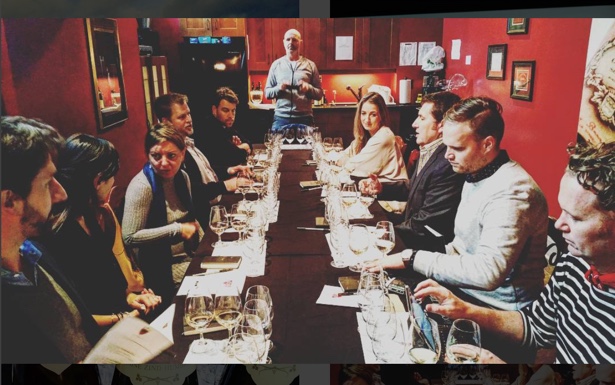
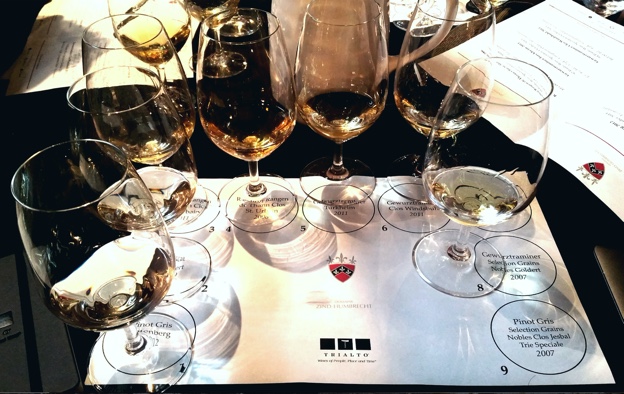
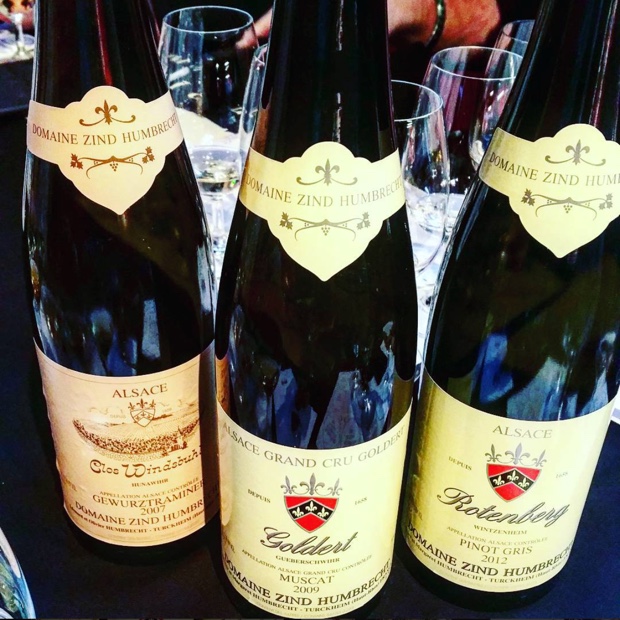
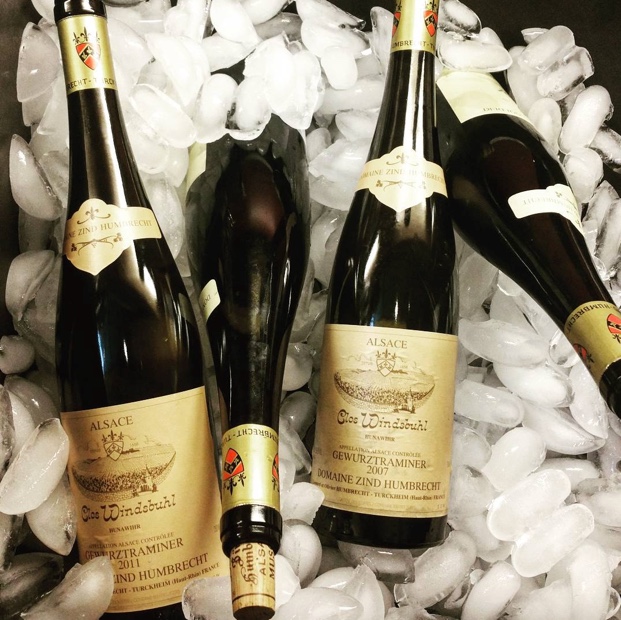


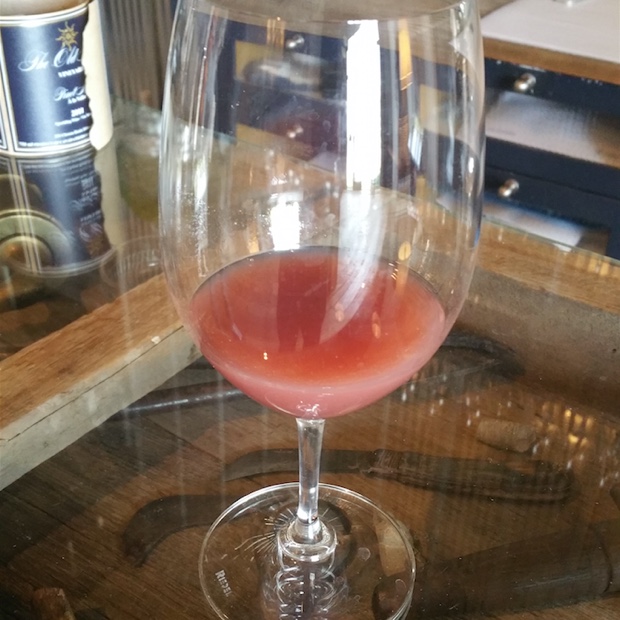


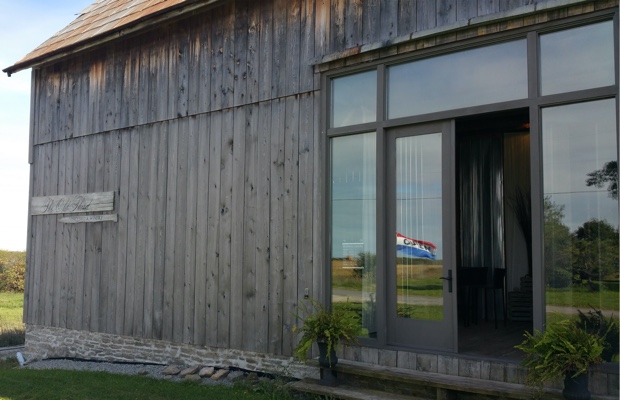

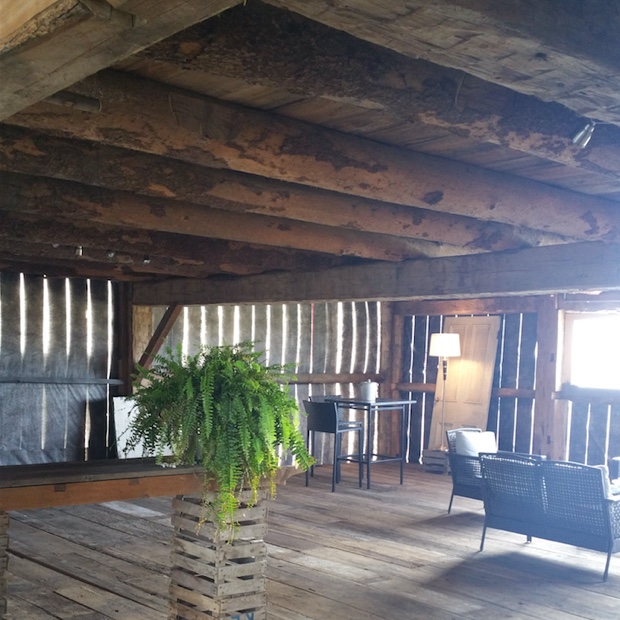
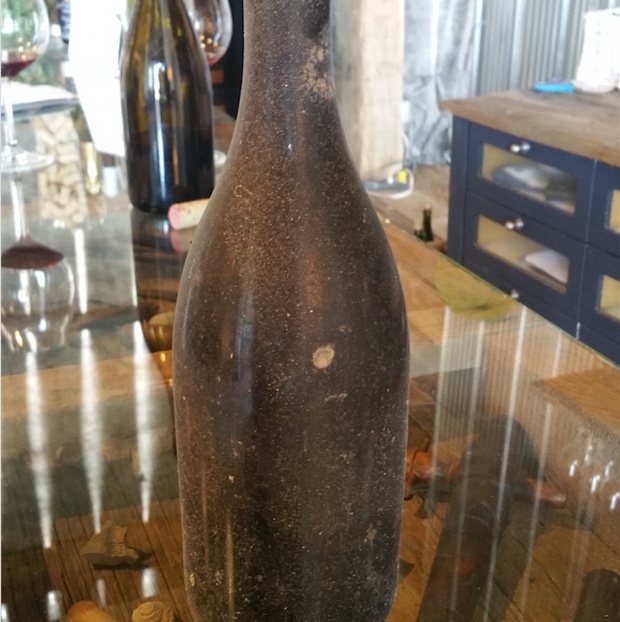
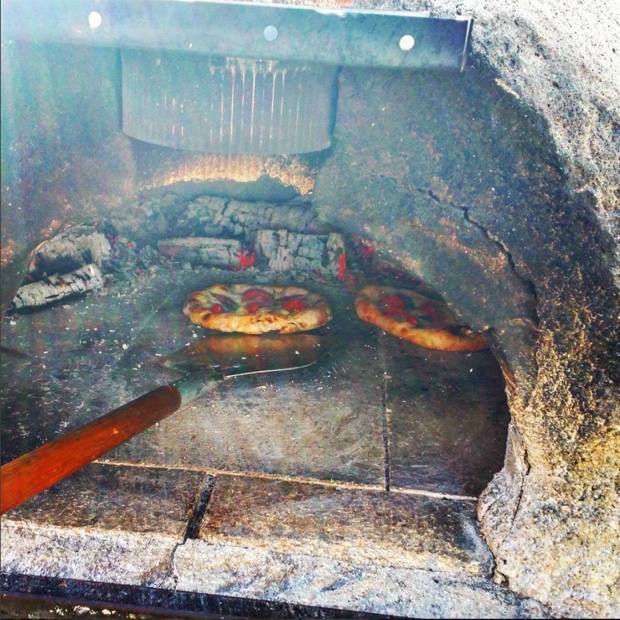


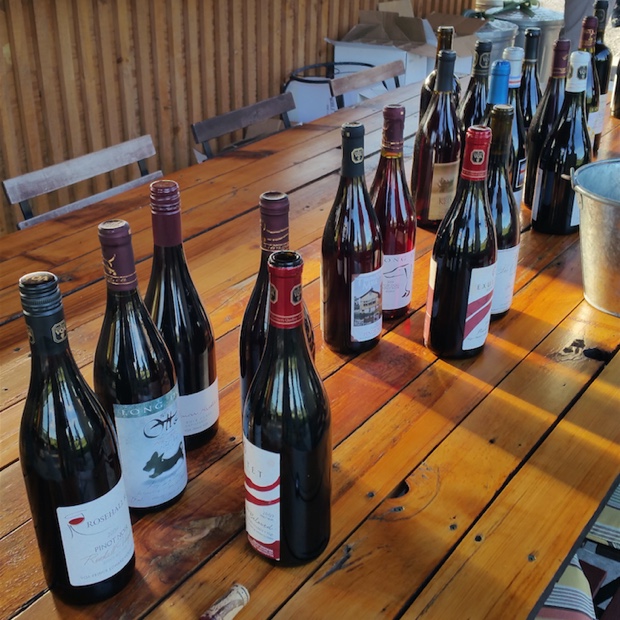
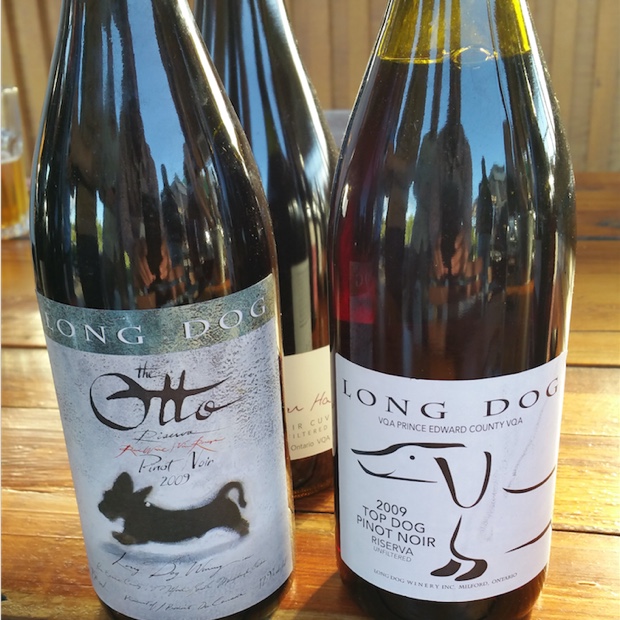

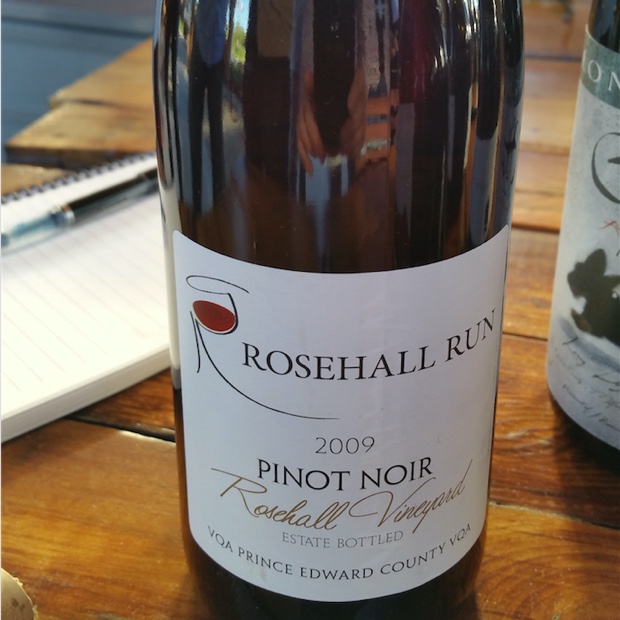
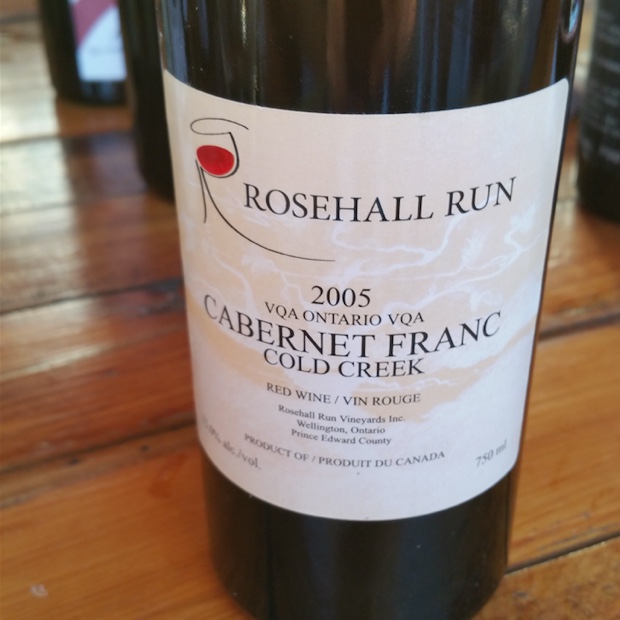
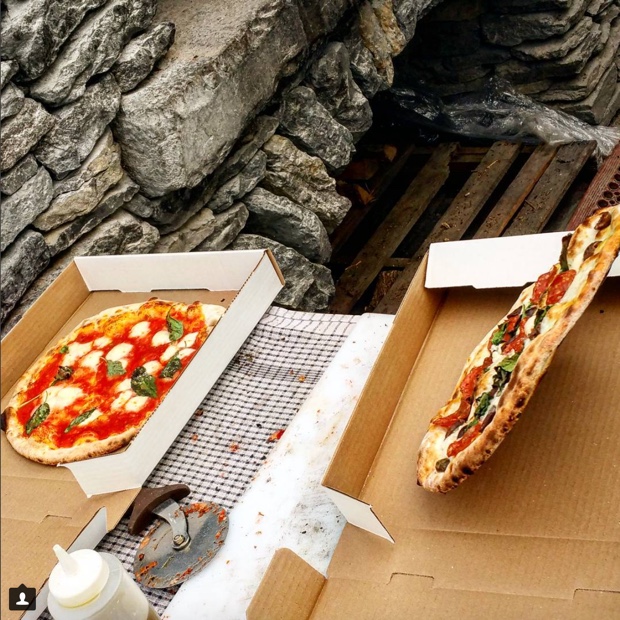
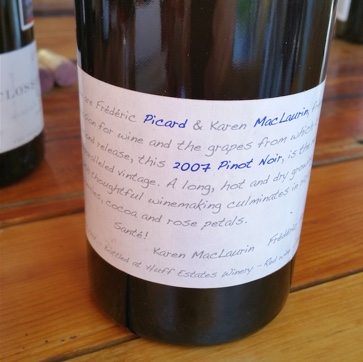


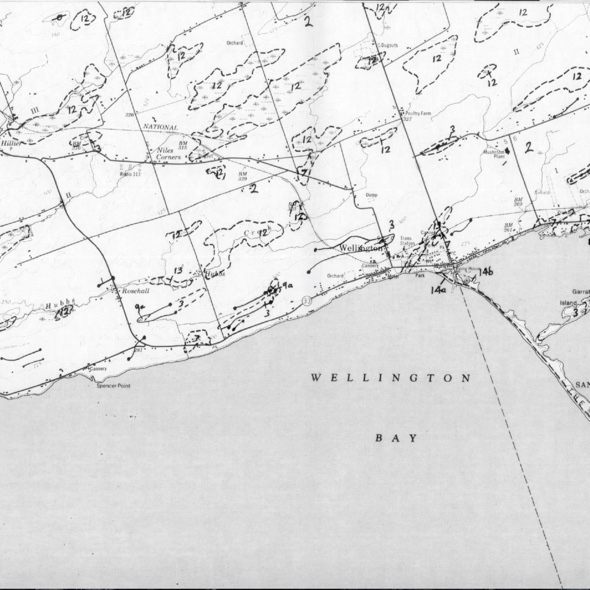


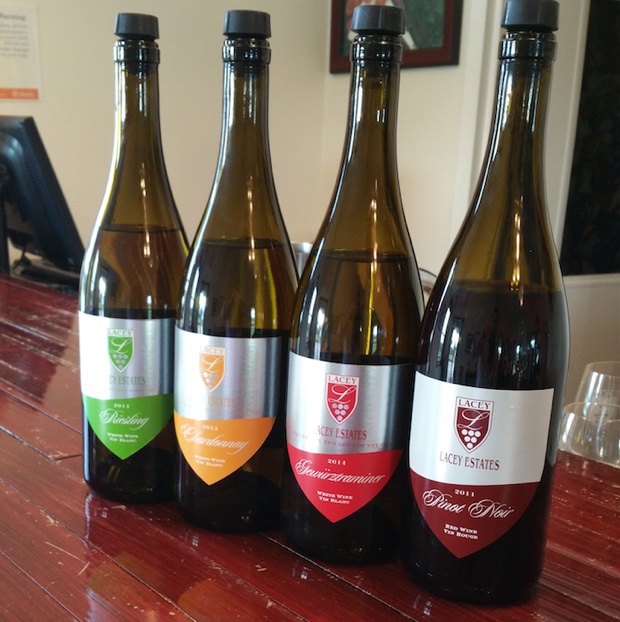
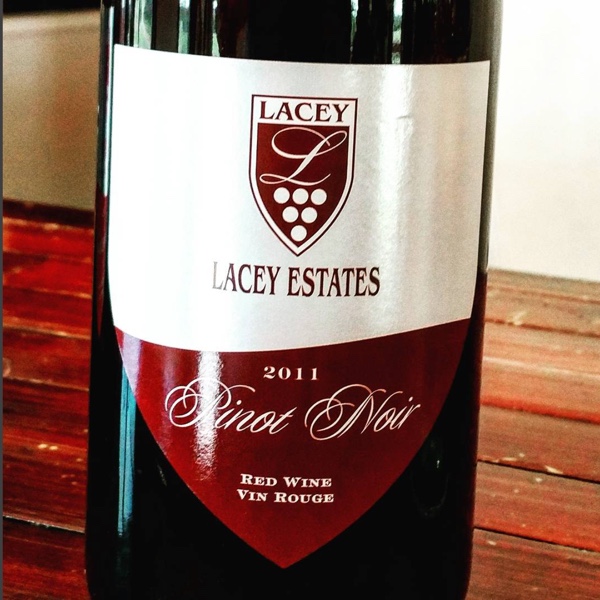


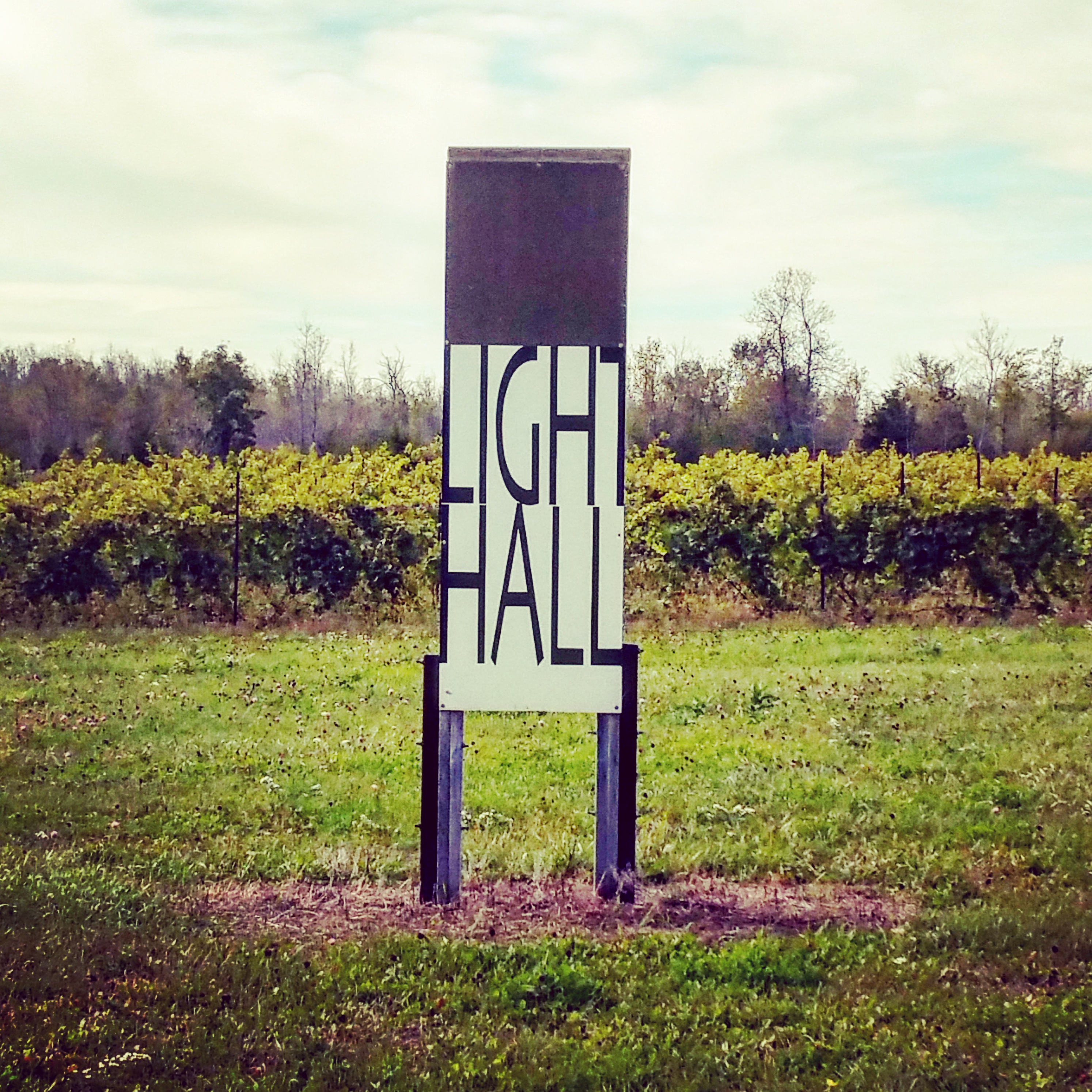

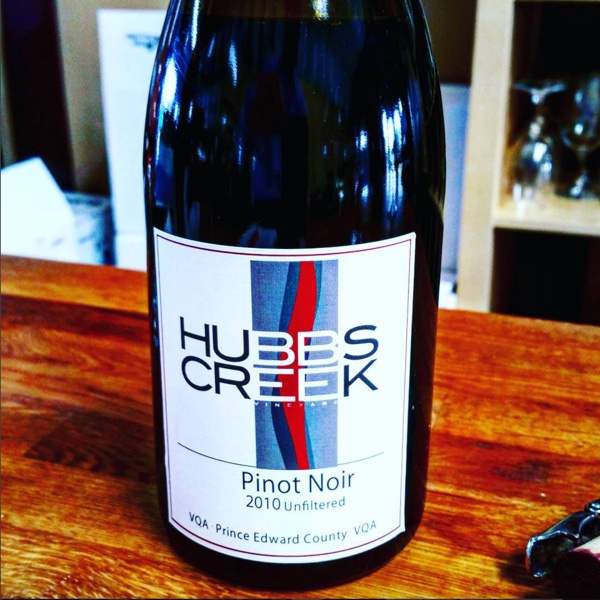
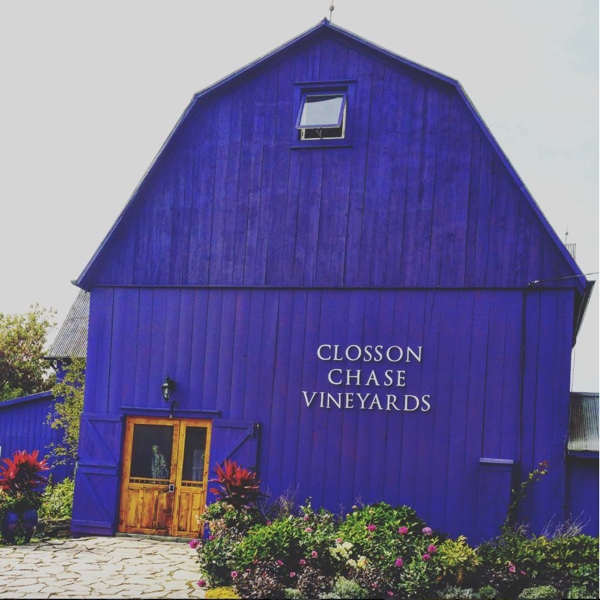

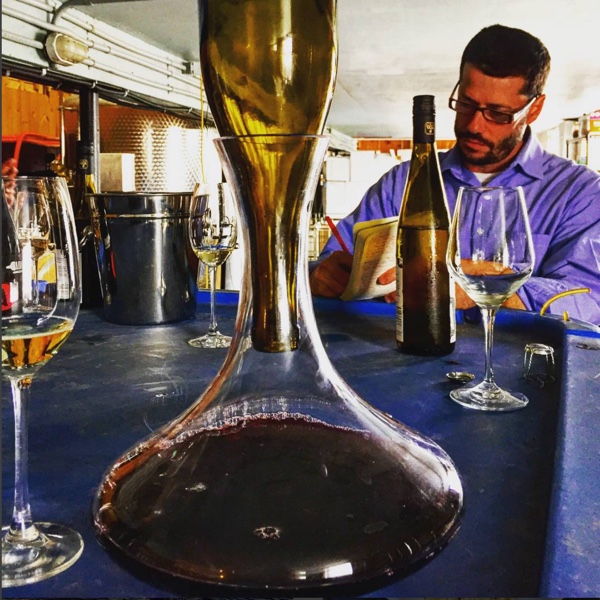


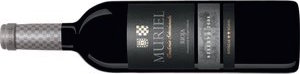
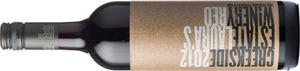
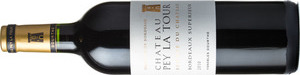
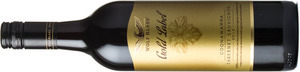
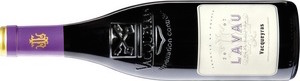
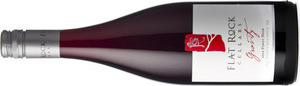
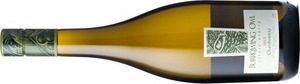
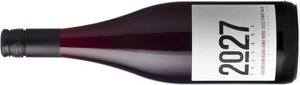
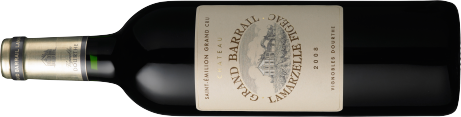
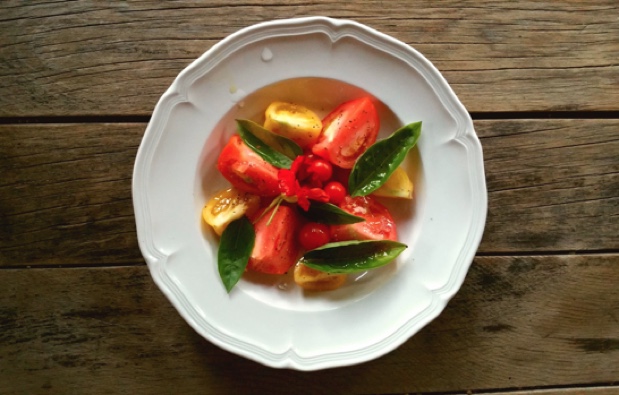
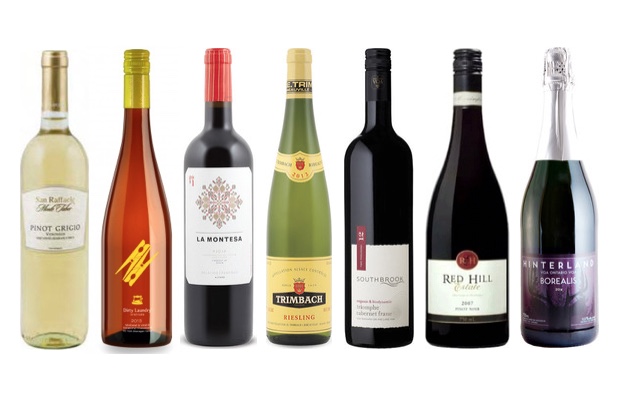


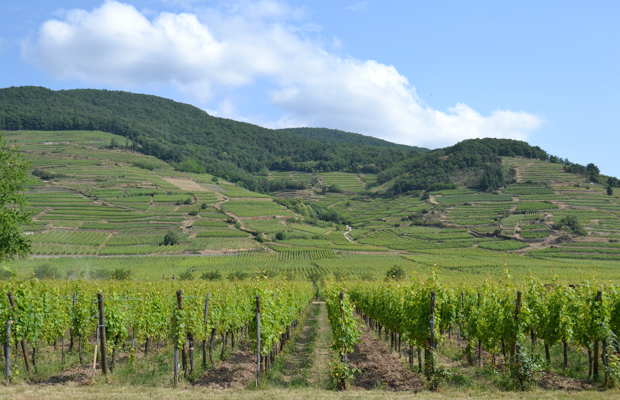
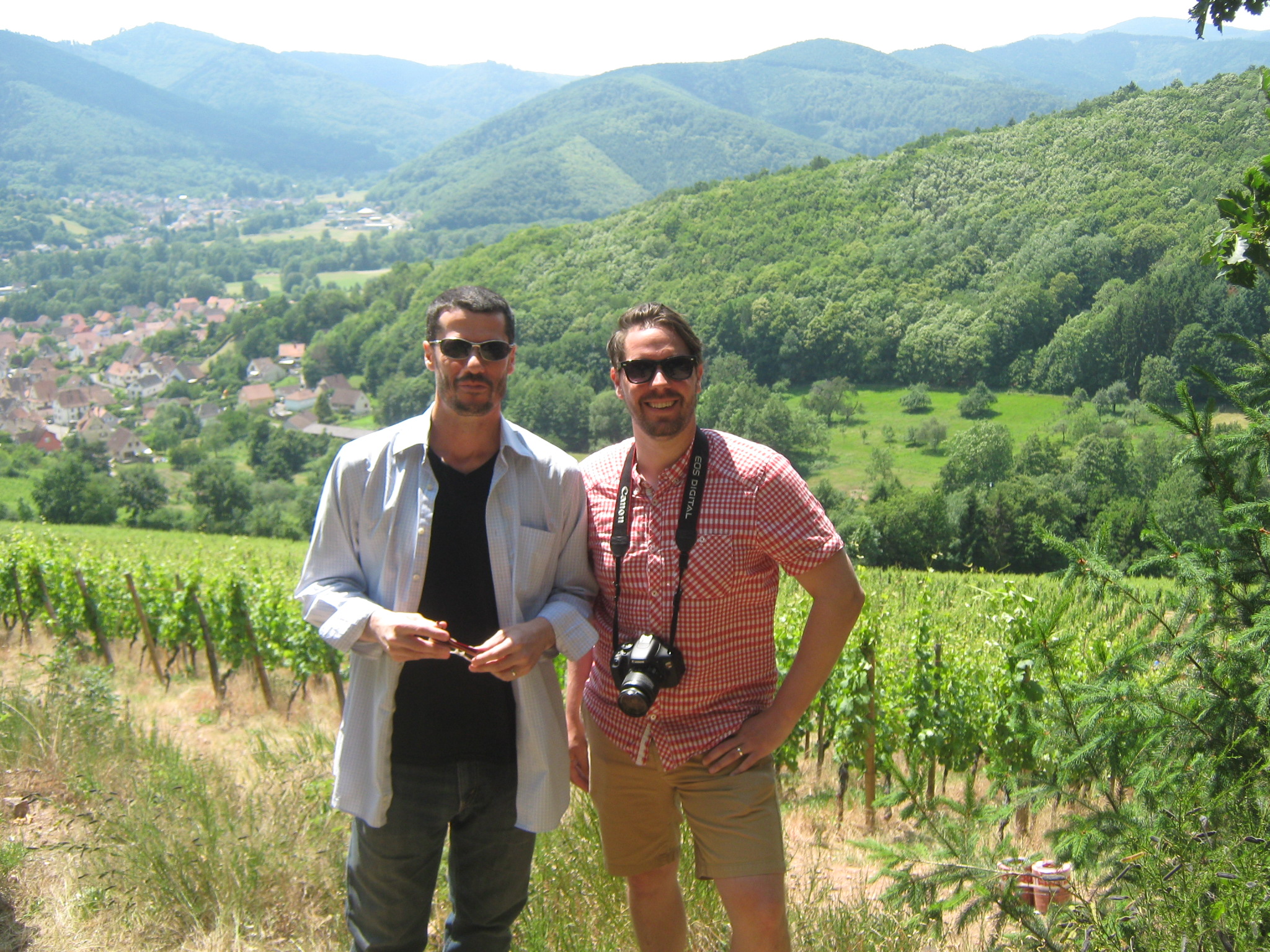
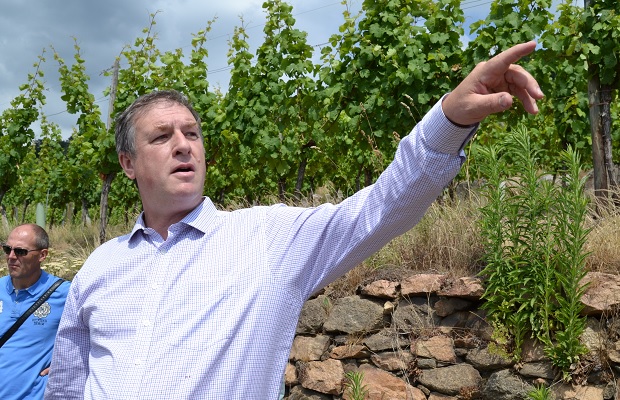
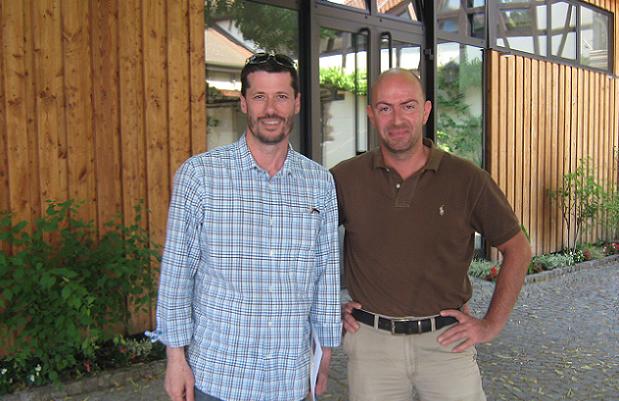

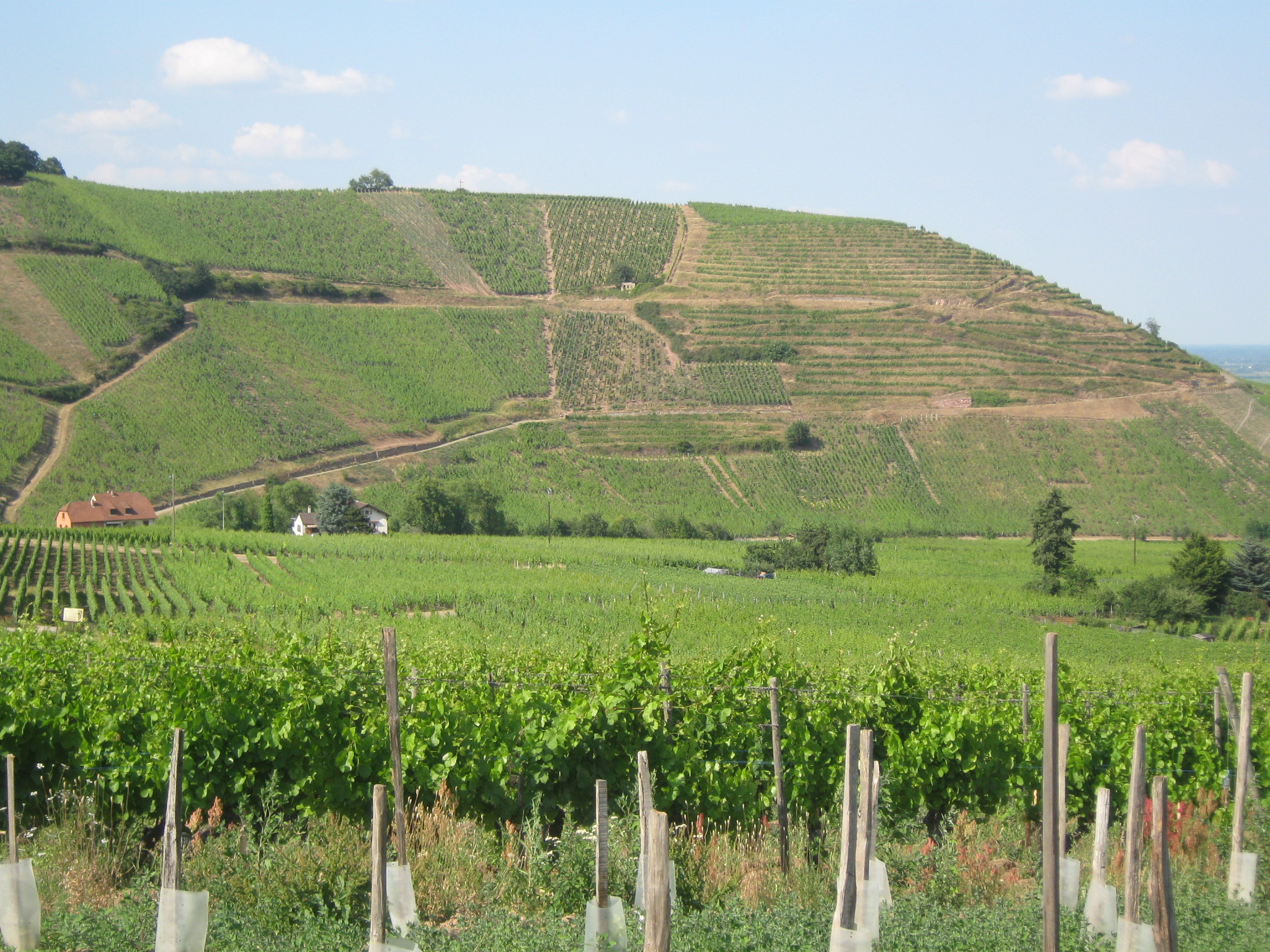
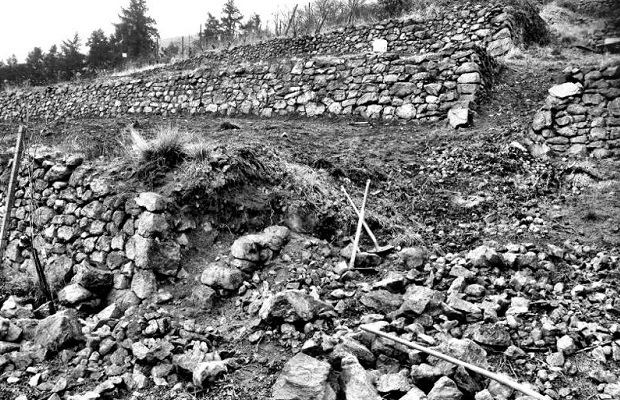
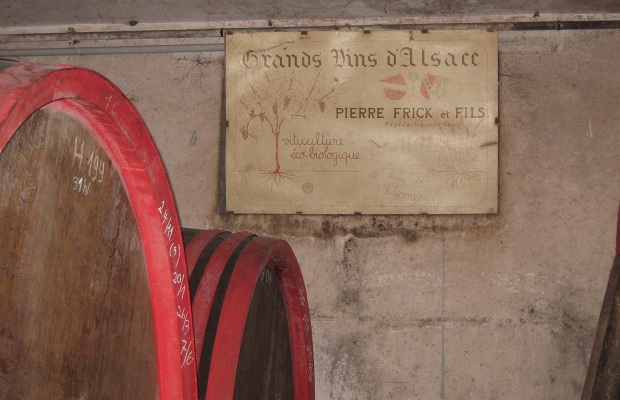

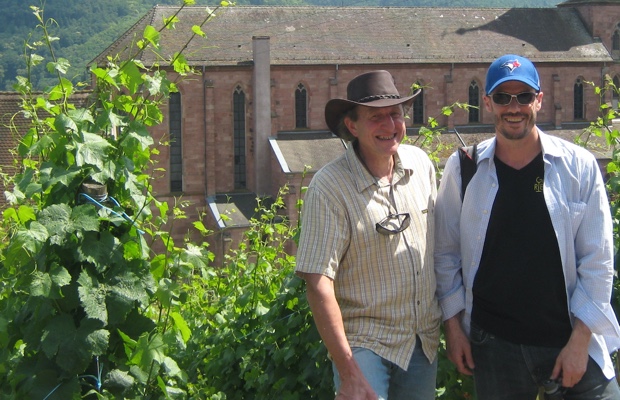

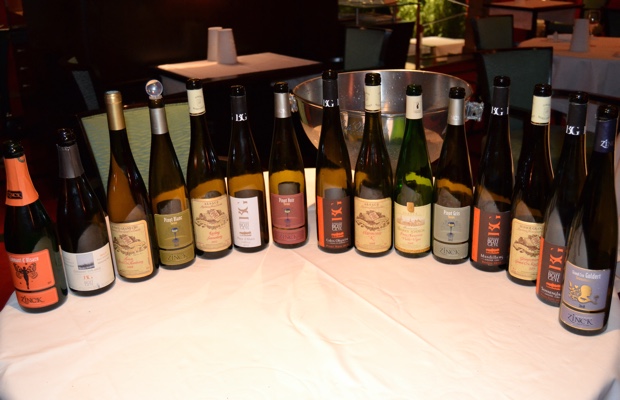


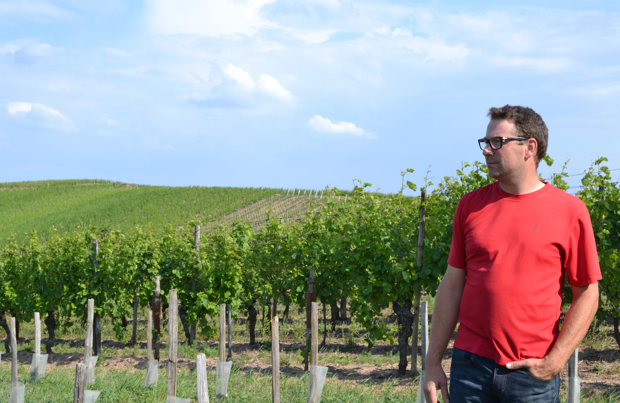



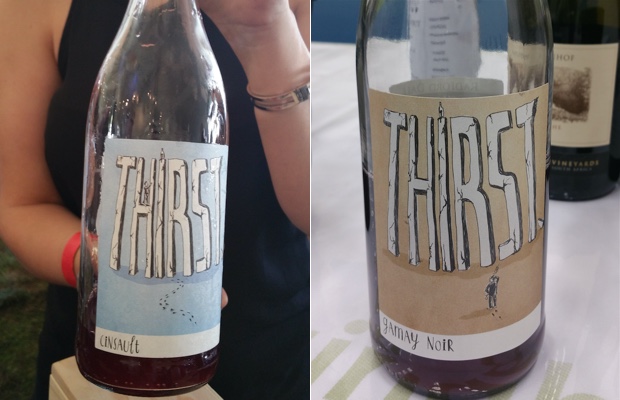

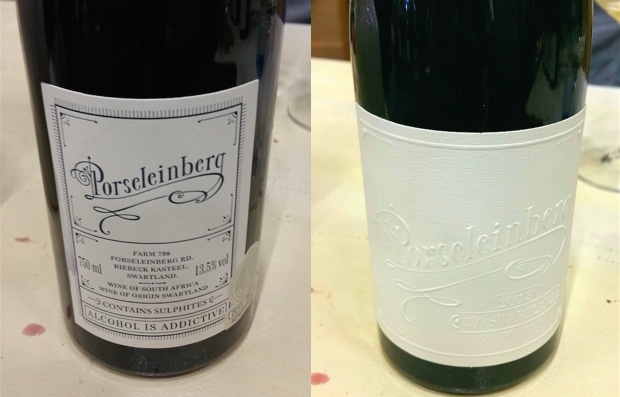
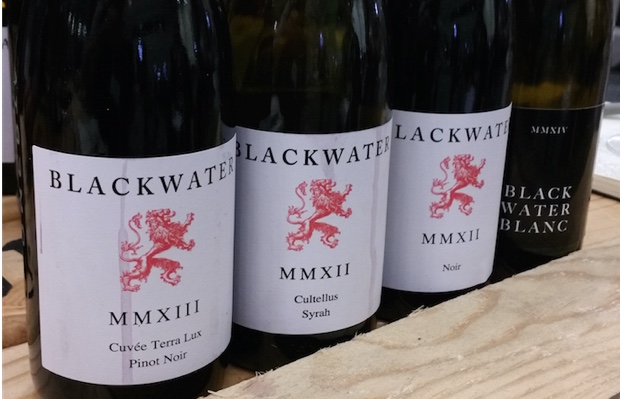


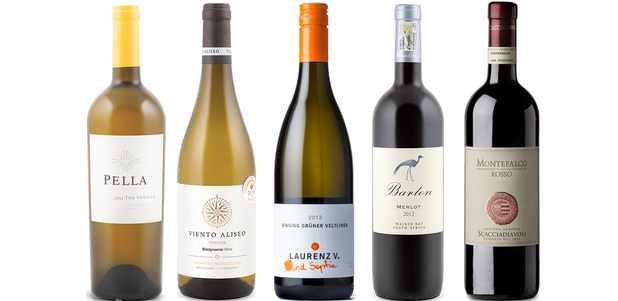


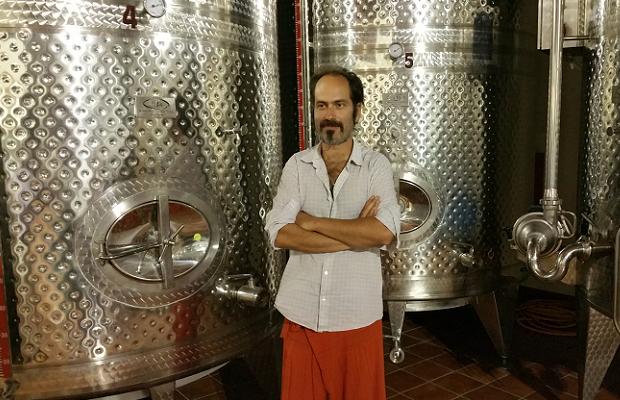
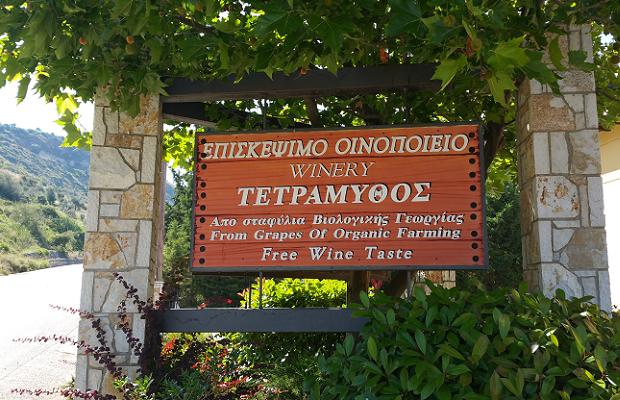
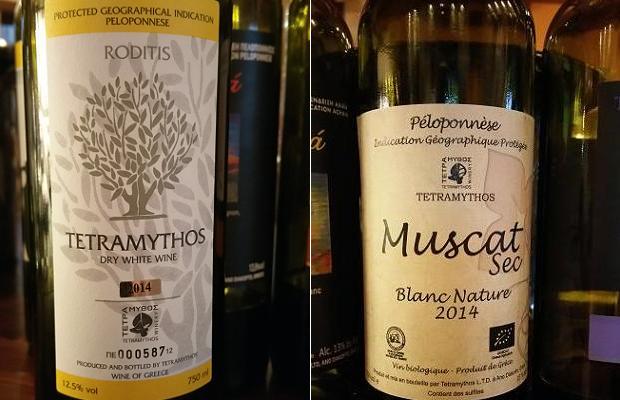


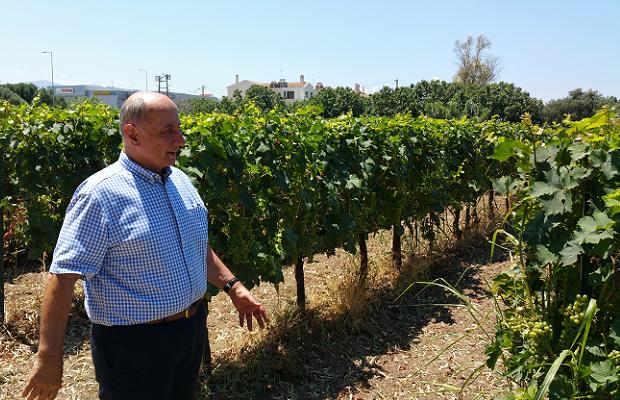
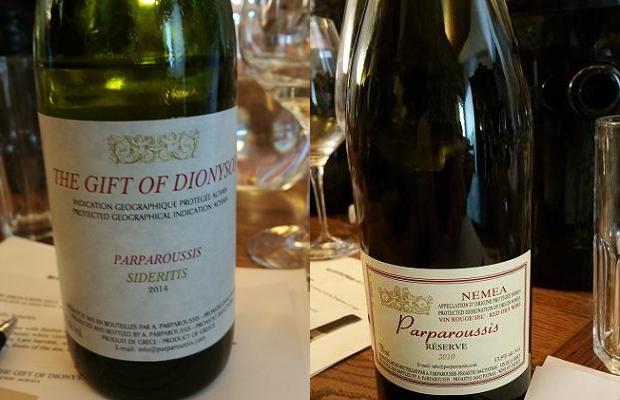
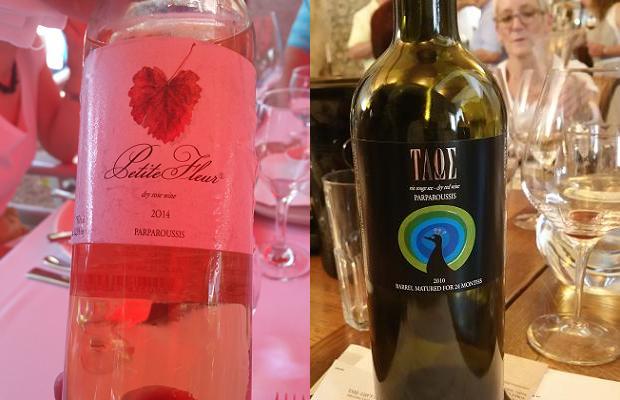
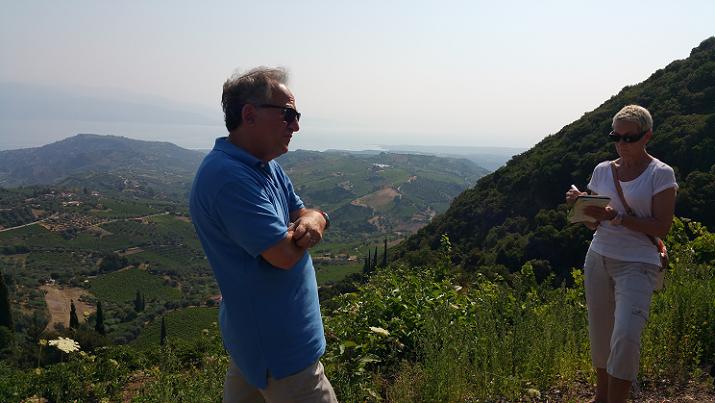

 Godello