From VINTAGES for Thanksgiving, in wine and with song

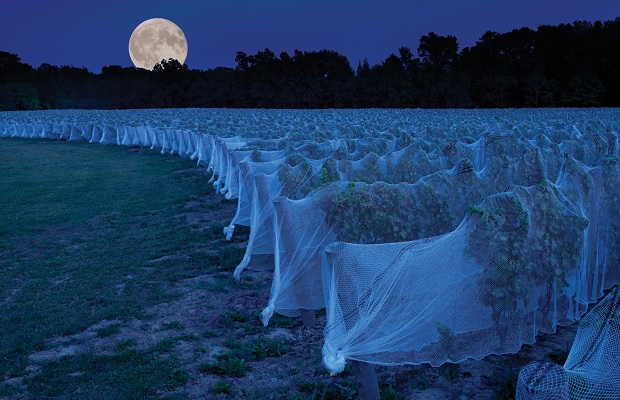
Le Clos Jordanne Vineyard Photo: (www.leclosjordanne.com)

Le Clos Jordanne Vineyard
Photo: (www.leclosjordanne.com)

Whatever your plans are for Canadian Thanksgiving weekend, I highly recommend they include wine and music. Last year my picks to meet the bird emanated from a Loire state of mind. A new Sancerre makes this year’s shortlist because “you can always use a good Sancerre.”

Related – A Sancerre Thanksgiving

The consistency with which wine picks jive from one year to the next is self-consciously and self-prophecy predicting, to be sure, with Chile and California making repeat appearances. New and bold in choice for 2014 is the idea that “now you say Morocco and that makes me smile. I haven’t seen Morocco in a long, long while.” A promising wine region lurks in the North African dessert and for $15, find out for yourself.

Two years ago I also offered up a brief history lesson on the origins of Thanksgiving when I said “Canada, let me pour your Thanksgiving wines.” At the time I was not suggesting we all go out and fill a curved goat’s horn with fruit, grain and Pinot Noir.

There are better ways to get your cornucopia or horn of plenty on.

In 2013 the message was simple.  Thanksgiving is a weekend to celebrate the harvest, all that was once and will again be good. When I took a good look ahead at Canadian wines for Thanksgiving I meant what I said and I said what I meant. Canadian wine will impress you, 100 per cent.

Related – Good look ahead at Canadian wines for Thanksgiving

This Thanksgiving the great indulgence that should grace your meditative and purposed consciousness is a local one. When should it not be? At a time when Thomas Bachelder was making wine at Le Clos Jordanne out of the vineyards on the Jordan Escarpment, greatness emanated and worship followed. Though it may have seemed so at the time, the Chardonnay and Pinot Noir at LCJ were not the ideal terroir for Bachelder. His work there, albeit progressive, standard setting and earth shattering, was only a precursor for his true calling; to Wismer, Saunders, Willamette and Beaune. Granted his total touches seek and mine gold but the LCJ soils were meant for a different pair of mits.

Those hands belong to winemaker Sébastien Jacquey, Burgundian, naturist, environmentalist, terroirist.  Jacquey’s résumé reads like a laureate’s; university diploma in Technology and Biology in 2002. National Diploma in Oenology and Professional Agricultural Aptitude certificate in 2004 and Master of Earth and Environment studies, specializing in Vine Management and Terroir in 2005 at l’Institut Jules Guyot. Engineer of Oenology and Viticulture in 2007 at l’Institut Supérieur d’Agriculture, Rhones-Alpes.

It has taken Sébastien Jacquey a few vintages under belt (three as assistant and now two as chief winemaker) to feel the groove of his vineyards. To me, 2011 marks the turning point and the launch pad for the exceptional career that will define the winemaker. To a wine, every 2011 Chardonnay and Pinot Noir I have tasted has the finesse, restrained richness and markedly pure clarity of great Burgundy. More important is that the wines are clearly Niagara and even more so, distinctly Le Clos Jordanne. One step further even. All Sébastien Jacquey.

All of Ontario must rejoice, applaud and give credit to the effortless grace with which he is bringing evolution to the LCJ continuum. I urge you to try his wines. On this October 11th, 2014 VINTAGES release and in stores this coming Thanksgiving weekend the two eponymous vineyard bottlings hit the shelves. Try a Le Clos Jordanne Vineyard with friends and family. Then put another two away for future consideration. You will be glad you did. Here are 10 wines to seek out for the October long weekend and some tunes to spin alongside.
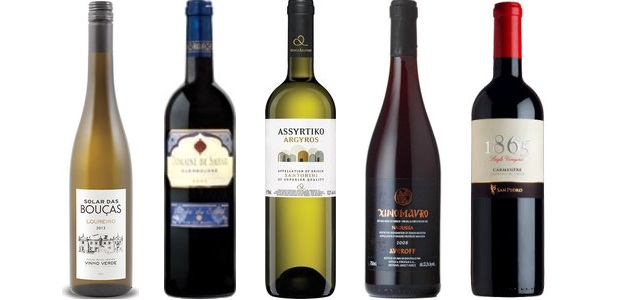
From left to right: San Pedro 1865 Single Vineyard Carmenère 2011

From left to right: Solar Das Bouças Loureiro 2013, Domaine De Sahari 2012, Argyros Assyrtiko 2013, Katogi & Strofilia Averoff Xinomavro 2008, San Pedro 1865 Single Vineyard Carmenère 2011

Solar Das Bouças Loureiro 2013, Doc Vinho Verde, Portugal (221036, $13.95, WineAlign)

Initially this opens slower than snail’s snot so “mute it to a whisper and spin your solar sister.” Petillance hidden, this is rich, greasy, fat and sumptuous Vinho Verde, not your avô’s take, that’s for certain. Can’t say I’ve yet nosed these kind of tropical aromas in VV before, so in that sense it’s a Posies breath of alternative, equatorial air. Comes back to pears and herbs, citrus on the palate and wraps up with wild acidity. Like frosting on the beater. Quite a bang for $14 bucks. Good, long finish. The minor spritz comes after the buzzer.  Tasted October 2014  @VinhoVerdeCA

Domaine De Sahari 2012, Guerrouane A.O.G., Morocco (92825, $14.95, WineAlign)

Considering the geography and the utter aridity of the climate, more than just latitude should be afforded this Vin Rouge de Maroc. That’s because it’s a well-made, properly judged, toothsome Bordeaux-styled blend. Think Australian claret, say from Margaret River or even Coonawarra. If “that’s much too old a story to believe,” have a taste and note the fine balance betwixt Cabernet and Merlot, between earth and sky. Slightly rustic and funky, there is real, leathery fruit and a wood-chalky texture. The acidity is wound tight and the residual sugar slightly elevated but if “you say Morocco and that makes me smile,” I’ll know I’ve just had a taste of something fine.  Tasted August 2014  @TandemSelection

Argyros Assyrtiko 2013, Santorini, Greece (387365, $19.95, WineAlign)

This Assyrtiko has a small bass note, down below, beneath the snare and the jump back. It causes quite a Rufus rumpus. Its got sax notes that drive a wild personality. While not blessed with the usual fruit to meet its acid intensity, the consistency persists. Santorini’s sun-drenched rocks break it down and the indigenous sapidity of Greek garrigue can’t help but stamp the authenticity. This needs to develop a year or two to get beyond its awkward, acetic adolescence. “If one should bite before I wake, jump back baby jump back.” It will serve purposed grilled meats when it does.  Tasted October 2014  @Santoriniwines  @KolonakiGroup

Katogi & Strofilia Averoff Xinomavro 2008, Pdo Naoussa, Greece (249615, $19.95, WineAlign)

It’s not that every Xinomavro is infallible but every Xinomavro is worth exploring. The Averoff is classic; smoky, rich plum meets cherry intensity, tannic and textured, layered, like old school Pinot Noir. Liqueur of Naoussa terra firma, rocks and sweet beets. Balance of earth, wind and fire, fun funky and moving. Shares the spice of life so “let this groove, light up your fuse, alright. Let this groove, set in your shoes.” Parts unknown gather to subvert the uninitiated and make them move to Greece.  Tasted October 2014  @katogistrofilia

San Pedro 1865 Single Vineyard Carmenère 2011, Maule Valley, Chile (249201, $19.95, WineAlign)

Nose of notable Carmenère character checked and in restraint. Certainly modern, somewhat fortified, but acceptably precipitous, delectable and fun. The whiffer is sweet pepper, currants and rings of defined tobacco. The give way goes to flavours silky in roasted pepper and a shot of espresso. If, “in the winter of ’65, we were hungry, just barely alive,” this Carmenère would have kept us warm. No cake, no jam, no overwrought excessive behaviour. Though like any good band, it does drive Dixie down. Well made.  Tasted October 2014  @Dandurandwines
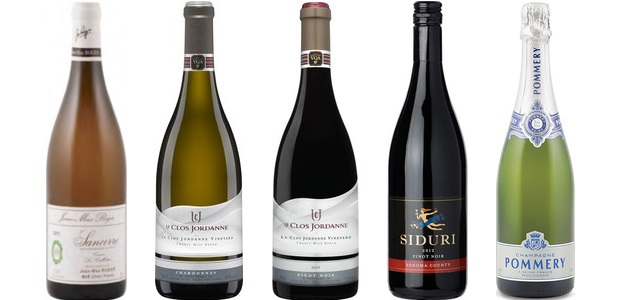
From left to right: Jean Max Roger Cuvée Les Caillottes Sancerre 2012, Le Clos Jordanne Chardonnay Le Clos Jordanne Vineyard 2011,  Le Clos Jordanne Pinot Noir Le Clos Jordanne Vineyard 2011, Siduri Sonoma Coast Pinot Noir 2012, Pommery Brut Silver Champagne

From left to right: Jean Max Roger Cuvée Les Caillottes Sancerre 2012, Le Clos Jordanne Chardonnay Le Clos Jordanne Vineyard 2011, Le Clos Jordanne Pinot Noir Le Clos Jordanne Vineyard 2011, Siduri Sonoma Coast Pinot Noir 2012, Pommery Brut Silver Champagne

Jean Max Roger Cuvée Les Caillottes Sancerre 2012, Ac, Loire, France (65573, $26.95, WineAlign)

The most chalky, medicinal and intensely forward of the Jean Max Roger stable. Also the most floral and aromatic, like Viognier, Gewürztraminer, Muscat even. It is anything but, of course, and one taste quells thoughts of Rhône-ish or Alsatian aromatic whites and allows Sauvignon Blanc to give of its green grass and wet hay. There is a coarse, hoarse voice in Les Caillottes, the small pebble, stony, flinty Sancerre. It’s a striking, swashbuckling, swordplay but “clear the thistles and brambles” because time waits for Sancerre. Not years mind you, so drink this Cuvée out of the clay-limestone soils in the village of Bué and in the hamlet of Amigny between 2015 and 2017 for maximum pleasure.  Tasted October 2014  @oenophilia1

Le Clos Jordanne Chardonnay Le Clos Jordanne Vineyard 2011, VQA Twenty Mile Bench, Niagara Peninsula, Ontario (33910, $40.00, WineAlign)

A 2011 assessment of the winery’s Chardonnay quartet shows this vineyard from the eastern section of the Le Clos Jordanne estate as divulging the most amplified soundgarden of floral proclivity. The cool vintage made demands for a choate winemaking process, all in the name of freshness. Vosges forests provided the bulk of the wood (15 per cent or less new oak), barrel ageing was ceased at 13 months and limited stirring in older barrels were all performed in the name of carrying the freshness name. Leaving them to age in bottle for up to six months prior to release confirmed the commitment to completing a prime time wine. The LCJ vineyard also expressed itself by way of candied marigold and nasturtium. This is Chardonnay with a full sunshine aspect, southerly and rich in ways not previously observed. It also shares an affinity with other 2011 Niagara whites, in citrus and fresh tendrils of burgeoning acidity, like simliar takes in Semillon and Riesling, in honeyed, stony layers. Balance is brought together by tannic texture, giving the wine grip and glide through a glade carpeted in ground cover, like lemon thyme and creeping sweet moss. For winemaker Sébastien Jacquey, this level of excellence may have been a “long time coming,” but it’s just the beginning.  Tasted October 2014  @LeClosJordanne

Le Clos Jordanne Pinot Noir Le Clos Jordanne Vineyard 2011, VQA Niagara Peninsula, Twenty Mile Bench (33902, $45.00, WineAlign)

The most cherry meets earth LCJ to date, in the vein of a Cherry Road Pinot Noir, regardless the vintner. So much attention to clean fruit detail, this has lines and streaks of rock, chalk and variegated soil, piercings, tattoos and fine art running through its veins. Sébastien has coaxed maximum freshness and given it supporting balance. From my earlier February 2014 note: “Extremely good showing for this stalwart in what is becoming a classic Twenty Mile Bench vintage. Cran/Raspberry earthy-straw scents layered in a cake of overlapping, alternating flavours in raspberry (again) and quality chocolate. More intensity than the other ’11 LCJ’s at this early stage, simultaneously concentrated and light, like a ball-distributing point guard with 20-20 vision. Increased oak in dribble drive motion really ties the spiced flavours together, without sacrificing freshness. This will improve for five years, if not more. Winemaker Sébastien Jacquey must have called on his muse for this LCJ because “some kind of madness has started to evolve,” and from here on in this Pinot will solicit a “need to love.”  Last tasted October 2014  @LeClosJordanne

Siduri Sonoma Coast Pinot Noir 2012, Sonoma Coast, California, USA (253369, $49.95, WineAlign)

The nonexclusive Sonoma Coast from Siduri comes by way of an even keeled vintage. It marries plush with lissomeness. Aptly concentrated while simultaneously acting out of pure Coast decorum, this is exemplary of place, mind and space. Pinot Noir that is “always looking for the sun to shine.” Raspberries romp through its fibers, reel, allow a minor savoury slant, then return, replay and remain the dominant fruit characteristic. Heading to the finish it’s momentarily ripping but the ripe and supple character ride on gentle waves, then bring it back to class. Can’t imagine it falling from grace anytime soon so enjoy to the end of the decade.  Tasted August 2014  @SiduriWines

Pommery Brut Silver Champagne, Ac, France (385161, $58.95, WineAlign)

The Silver is a gorgeous, grand green patina, stoic and manifest dry, classic glass of Champagne. Aromas are in exaction, in compliance and in direct connectivity to a grower’s condition. Just a sliver of earthy, sweet oxidative sumptuousness streaks up the middle palate, lingers, turns away from the sun and lets the mist fall in late. Fine, linear acidity takes over and tangs the tame beginning, which proceeds to relinquish submissively, relegating it as just a faint memory. “What a swell party this is! What Pommery!” Exceptional class, chaste and chasmic-bridging Champagne. Well, did you evah?  Tasted October 2014  @LeSommelierWine

Good to go!
Taste Ontario’s polarity of personality

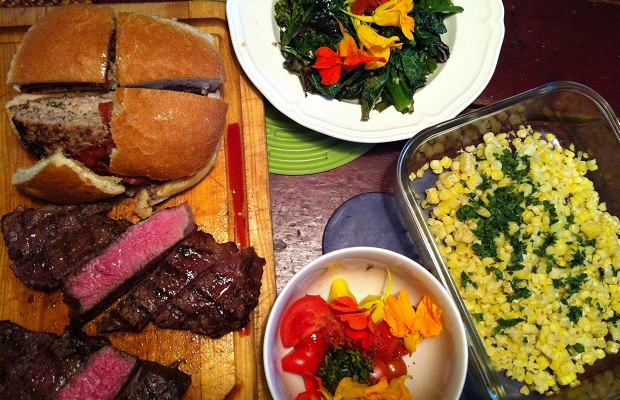
Ontario home cooking Photo: (www.godello.ca)

Ontario home cooking
Photo: (www.godello.ca)

Wine Country came to town last week betwixt what has seemed like the most expansive sectarian LCBO campaign in recent memory, or possibly ever. Hashed out, tagged and promoted by such catch slogans as #LCBOtastelocal, #LCBOGoLocal and #LoveLocal, Ontario’s wine superstars have been dancing on the monopoly’s main stage and in stores, since September 15th and through to October 11th. As part of the phrontifugic campaign, the LCBO has quaintly persisted in matching local wine with pie.

https://twitter.com/LCBO/status/519554566119899136

It has not just been a talking affair, this love for the wine regions of Niagara, Prince Edward County and Lake Erie North Shore. VINTAGES walked the walk by welcoming 55 Ontario wineries last Thursday, October 2, 2014 to Toronto’s Bronfman Hall at the Royal Ontario Museum.

Related – Top wines shine at Taste Ontario 2013

Taste Ontario is a curated and correlated gathering and the sixth annual did something the first five failed to accomplish. The agglomeration left no book of wines behind on the varietal bus. This year the offering sought a cogent cross-section of everything Ontario works its vinicultural tail off at, from stalwart signatures Chardonnay and Riesling through to the global gamut of expatriate Vinifera. Pinot Noir and Cabernet Franc continued their most righteous and requisite climb to prominence. The increasingly genuflected niches occupied by Pinot Gris, Sauvignon Blanc and Red Meritage Blends upped the ante and their game. Finally and with much market grab ado, Sparkling, Gamay and Syrah crossed the bridge to be more than gratuitously represented.

This is what happens when Wine Country Ontario, the LCBO and the winemakers do whatever it takes to get on the same page. The miserable and disenfranchised put their gripes aside. There was no talk of private wine stores, organics, biodynamics and wishes to reformulate the VQA certification process. No, all of the important issues facing the Ontario wine industry were swept under the rug to focus on one thing. Current and recent releases.

Ontario’s expansion in diversity and prosperity has not climbed aboard the gravy train without challenges. Growing, nurturing and manufacturing (despicable term, I know) the varieties of the European shtetl is a labour of New World love. The results have polarized the region, dividing its critics into glass half full or empty rural planners, into partisans and dissidents. The wines themselves can be brutally honest takes, but also classic, arguably heroic examples of despair refusing to take itself seriously.

The critic will tell the Ontario winemaker who strays from the comfortable cool home confines for Chardonnay, Pinot Noir, Riesling and Cabernet Franc that all else is a complete waste of viticultural time. They will insist that you can’t have doppeltes Glück, that your bread cannot be buttered on both sides. Cake is not to have and eat it too. The winemaker will respectfully disagree.

Never before, in the presence of so many Ontario wines at a single tasting, have the poles been blurred, bent and bemused. Martin Werner’s 2013 Riesling challenges the laws of typicity, even while it expands on the boundaries of what can be achieved. VQA found no fault. Francois Morissette did the same (and more) and yet his Cuvée met with the ball’s black curtain. Ravine’s Riesling barely caused a batting of the VQA lash. Gordon Robert’s Gamay 2013 has a sense of Cru with a tension that belies Beaujolais. Others found it thin and volatile, yet it breaks new ground and carries a #GoGamayGo torch. Marynissen Estates has re-invented itself (with Pinot Gris and Chardonnay in tow) and still the paradigmatic radar gun is silent, its registry empty and reading zero in the wrist slap department. Is everyone paying attention?

Taste Ontario has bore the ancient marvelous into the modern everyday. The gathering has developed as a show of VQA magic realism, a look at the mundane through a hyper-realistic lens. While there are many consumers who would still not drink these wines at a Leamington tomato auction, the number of converts increases exponentially with each passing congress. With yet another Taste Ontario in the books, the conversation has been furthered, the level of fitness elevated and the report card in. Ontario wine is worthy of cerebral ramparts. Discussion to ensue.

I tasted more than 50 wines through the course of the provincial day and with time, space and brevity as my leader, I have thus far reviewed but a lagniappe, beginning with those that spoke with the clearest voice and tender personality. Polarized or not, here are 10 new releases assessed, in a wide range of categories, tasted at Ontario’s signature event.

From left to right: Marynissen Estates Gamay Noir 2013

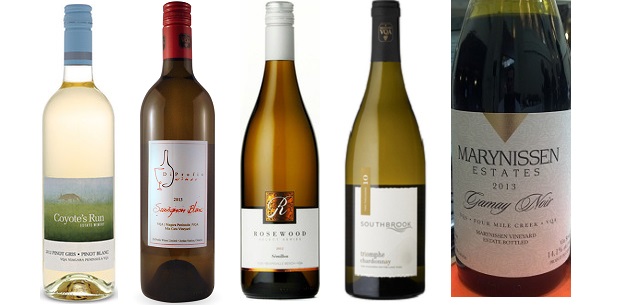
From left to right: Coyote’s Run Pinot Gris/Pinot Blanc 2013, Rosewood Select Sémillon 2013, Di Profio Wines Limited Sauvignon Blanc 2013, Southbrook Vineyards Triomphe Chardonnay 2013, Marynissen Estates Gamay Noir 2013

Coyote’s Run Pinot Gris/Pinot Blanc 2013, Niagara Peninsula (112144, $15.95, WineAlign)

A most pleasant symbiosis of Pinots in this rhyming wine. Juicy equal parts align and run together in fresh time. Extraction is bang on, with gentle lime pressings layered in line. Scents of orange rind and lemon thyme. Reminiscent of another land and another time, gathering up old knowledge and I me mine. “No one’s frightened of playing it, everyone’s saying it” and this white blend is “flowing more freely than wine.” Very functional, with just enough Loire meets Alsace, which is fine, working in unison to keep a welcoming consumer feel the sun shine.  Tasted October 2014  @coyotesrun

Rosewood Select Sémillon 2013, VQA Beamsville Bench, Ontario (winery, $18.00, WineAlign)

After tasting Rosewood’s ’12, I urged the region’s cultivation of the great white wolf variety. Then the winter of 2014 happened. Rosewood’s vines were wiped clean off the map, erased like a child of parents who never met. The ’13 Sem is the last Mohican and its 12.5 per cent alcohol (down two from ’12) is a fitting, subdued and graceful epitaph to an amazing Beamsville run. This final cut is lean, stark, raving mad. So very savoury, tannic and built to linger for longer than most. The Rosewood honey is in hiding,”far from flying high in clear blue skies,” but like all memorable vintages of this wine, it will emerge in time. This Sémillon asks, “and if I show you my dark side, will you still hold me tonight?” Yes is the answer, and not just because she is the last one. Terrific curtain call.  Tasted October 2014  @Rosewoodwine

Di Profio Wines Limited Sauvignon Blanc 2013, VQA Niagara Peninsula, Ontario (winery, $18.00)

From estate fruit out of the Mia Cara Vineyard in Jordan Station. Not sure any Ontario SB has ever hit the nail on the proverbial head like Fred Di Prfio’s ’13. Subtle touches of wet hay, mowed grass, capsicum, juiced berries, goose feathers and passing through the rising steam of just about to be blanched green vegetables. Acidity brings the party to another level but it’s not an all night affair. The verve is quick, dancing on tongues, layered on the floor, spread on a raft of herbs, ready for smoking beneath the fish just out of the river. Great, late balm, like after the rain in an equatorial zone. Yes to this beauty.  Tasted October 2014  @diprofiowines

Southbrook Vineyards Triomphe Chardonnay 2013, VQA Niagara On The Lake, Ontario (172338, $22.95, WineAlign)

The immediate impression is the increased richness as compared to 2012, as if the “Richness” fruit were here in the Triomphe. What this will mean in terms of the Whimsy’s potential should be cause for anticipation. This is the most triumphant essential Southbrook Chardonnay to date and much thanks must be awarded the Saunders Vineyard for helping to bolster the mix. The gentle Beamsville Bench of old-vine Chardonnay impart is ephemeral, in mineral and lushness. The layered result atop Niagara flatland fruit in Triomphe ’13 is texture. This is the key and the king component. In that sense what you have here is a wine of social heredity. It is drinking well now and will do so for five plus years.  Tasted October 2014  @SouthbrookWine

Marynissen Estates Gamay Noir 2013, VQA Four Mile Creek, Ontario (winery, $25.00, WineAlign)

Really clean Gamay, ripe but entangled nowhere in the vicinity of over extraction. Ambrosial entry, nectarous middle and sweet finish. Has a sense of Cru with a tension that belies Beaujolais. Cherries in fleshy drupe simulating veraison to black cherries, anise in legume gumming to licorice. What’s not to like? Its vapours, tranquilized and centred by meditation are the furthest thing from volatile. A new genesis of anesthetizing Gamay, like a “Freudian slumber empty of sound.” This does the #GoGamyGo train proud.  Tasted October 2014  @Marynissen

From left to right: Bachelder Lowrey Vineyard Pinot Noir 2012

From left to right: reekside Estates The Trad Reserve 2011, Tawse Meritage Grower’s Blend 2011, Ravine Vineyard Riesling 2013, Creekside Estates Broken Press Syrah Queenston Road Vineyard 2011, Bachelder Lowrey Vineyard Pinot Noir 2012

Creekside Estates The Trad Reserve 2011, VQA St. David’s Bench, Niagara Peninsula, Ontario (winery, $28.95, WineAlign)

The Trad ’11 has a classic toast and yeast aromatic waft and so it goes that everything that follows is embraced with curiosity and an open mind. Ginger, citrus, bronze and the sweet scents of the inside of a candy machine, its candy long gone. Creekside’s winemaker Rob Power will never be accused of dialing this sparkler in. Tasting trials help determine the necessary, final blend. The single, Queenston Road Vineyard puts 56 per cent Pinot Noir and (44) Chardonnay, aged 2 years in bottle, together for a highly effective, expansive but not explosive fizz. At 8.7 g/L of residual its dry but not quite falling off the bone. The sweetness is tempered by elevated (9.98 g/L) acidity and tension. Spent 24 months on the lees and was bottled back in February. There is balance and pleasure and a good, stretchy finish. No band-aid. Clean, precise, fizz of the day.  Tasted October 2014

Tawse Meritage Grower’s Blend 2011, VQA Niagara Peninsula, Ontario (winery, $29.95, WineAlign)

Having tasted through single-varietal Bordeaux barrels with Paul Pender last January, I was amazed to be informed at Taste Ontario that much of that juice was declassified into this inaugural Grower’s Blend. At that time the richness and poise of the varieties seemed destined for the winemaker’s top of the heap Meritage. That loss is this blend’s gain. Composed of Cabernet Sauvignon (42 per cent), Merlot (40) and Cabernet Franc (18), the GB brings together the hallways of always high quality David’s Block Merlot, Cabernet Sauvignon and Redstone Cabernet Franc. So very juicy, the fruit is mastered by a tannic anxiety so in its current state, the wine is haunted by its own house. This Tawse 2011 is a haunting idle, “an instrumental that serves as a breath-catcher,” If the finish of minutes riding the quark is any indication, sometime between five and 10 years from now this union will speak with wonderful clarity.  Tasted October 2014  @Tawse_Winery

Ravine Vineyard Riesling 2013, VQA St. Davids Bench, Niagara Peninsula, Ontario (winery, $30.00, WineAlign)

Martin Werner’s botrytis-affected 2013 accesses virgin territory, embraces a unique if puzzling style and challenges Niagara Riesling scholarship. Something in this St. David’s Bench yield reminds me of Rolly Gassman’s (Alsace) Pflaenzerreben but also the eccentric and magnetic Benjamin Bridge (Gaspereau Valley) Sauvignon Blanc. The winemaker lineage from Werner, through Peter Gamble to Jean-Benoit Deslauriers is cause for fellowship-fraternity thought. The methodology here makes use of 40 per cent noble rot impaired (organically and biodynamically raised) grapes that were arrested in fermentation at a residual sugar number in the 35-40 g/L range. The intent may have been Germanic (or more specifically, a Mosel one) but the vernacular spoken in yogurty tones and the abrupt dry finish confound thoughts at seeking direct comparisons. Its hydrated puffballs of bacterial fuzz give intensity and yet this is a Riesling that defies known laws of atomic weight. So interesting, so unique. Requires a re-visit in five years time.  Tasted October 2014

Creekside Estates Broken Press Syrah Queenston Road Vineyard 2011, VQA St. David’s Bench, Niagara Peninsula (202127, $39.00, WineAlign)

Only Creekside Syrah smells like this, like bending down to smell black raspberries on the shores of a briny capsicum lake in the middle of a pine forest. The 2011 Syrah has fruit residing on the edge of impossibly ripe, factored inside a pipeline, while piping lavender and plum pastry cream float atop rare duck breasts. If Syrah were to ooze or drip without sticking to surfaces along the way, this would be it. If Syrah came forth from the maw of the beast it would speak in these demanding tones. Creekside’s BP talks the tense, nervous and twitching talk. It’s smeared with a coat of epoxy spread over fine grain in wood. It sweats an air of metallic cordiality. If given five years to come together it will vape and realize togetherness.  Tasted October 2014  @CreeksideWine

Bachelder Wines Lowrey Vineyard Pinot Noir 2012, VQA St. David’s Bench, Niagara Peninsula, Ontario (361816, $44.95, WineAlign)

To those who wonder aloud about the annual love affair with this vineyard, suck it and see. This connectivity and this wine renew again. Same time, this year. Bursts of all that have come from it before, are here now and in temptation of what will be for years to come. Has “the type of kisses where teeth collide,” a Sam Cooke ages to Arctic Monkeys kind of reckless serenade. It’s also a balladeer, this scaled back Bachelder, if that can be said to be done. Here now soft, elegant, perfumed, demurred, sweet, downy, pretty, not yet fleshed, surprisingly void in tannin, anxiety and tension. Work with it for 10 minutes and it will then begin to bite back, show its teeth, pearly white as they are, grind it out. There will be 10 years of development in this Lowrey, if not less, but in ’12, that is more.  Tasted October 2014  @Bachelder_wines

Good to go!

The artfully applied science of Versado Malbec

Versado Vineyard Manager Sergio Rinaldi reviews the plan for the harvest with winemakers Ann Sperling and Peter Gamble Photo: (Elene Galey-Pride, www.winestains.ca)

Versado Vineyard Manager Sergio Rinaldi reviews the plan for the harvest with winemakers Ann Sperling and Peter Gamble
Photo: (Elena Galey-Pride, http://www.winestains.ca)

A popular but unconfirmed theory claims that Malbec is a mathematical acronym, “Math, Algorithms, Learning, Brains, Engineering, Computing.” The inky and tannic grape variety no doubt connects growers and winemakers in scientific ways but that hardly separates the expatriate, signature Argentinian from other varietal relationships. The learning, perception, and behaviour of the people who produce the dark wine is the crux and the rub.

Malbec’s spread may be the work of a Hungarian peasant, it was surely introduced to Argentina by French agronomist and botanist, Miguel Aimé Pouget and the natural lines differentiating modern renditions of Cahors and Argentina blur like the Clarets of Napa and Bordeaux. The homogeneity in style, mainly due to elevated quantities in production, has begun to deplete the star power of the Mendozan idol. The computative cipher jives because Malbec requires an analytically brilliant dream team to coax humanity from the quotidian grape. The wine making axiom, “is it science or art” applies to Malbec as much as any other. Making exceptional Malbec requires artfully applied science.

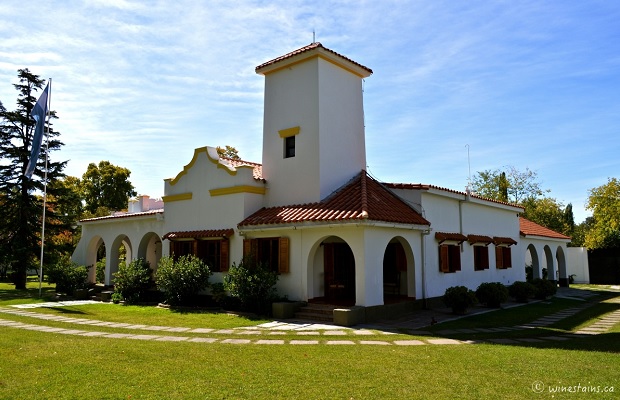
Villa Viamonte in Chacras di Coria Photo: (Elena Galey-Pride, www.winestains.ca)

Villa Viamonte in Chacras di Coria
Photo: (Elena Galey-Pride, http://www.winestains.ca)

In 2007, Peter Gamble and Ann Sperling, winemakers who may as well be endowed with the title “First Canadian Couple of Wine,” went to Argentina to seek their cerebral Malbec fortune. With the aid of investors Moray Tawse and Gerry McConnell, the two found their varietal calling in Mendoza. They settled at the estate of Villa Viamonte in the old town of Chacras de Coria, now a neighbourhood of Mendoza.

With the aid of the experienced and professional Roberto de la Mota they purchased an ancient vineyard on the legendary Cobos Road. Altitude, meso-climates, topography and ‘micro-terroirs’ became their linguistic vernacular, a royal, ancient and new Malbec their opera omnia. Vineyard Manager Sergio Rinaldi directs all the daily viticulture activities.

Versado means ‘well-versed’ and the phrase describes the Gamble-Sperling output as well as any that can be equivocated.  The Canadian dream team travels circuitously from British Columbia, to Ontario, Nova Scotia and through Argentina in mimic of the seasons for a vine’s life cycle. Through the stages of weeping, flowering, fruit set, veraison and harvesting, Peter Gamble and Ann Sperling are in constant motion, checking in at all their properties to make essential decisions. I am exhausted by the prospect.

Harvest starts early - the Versado vineyard before sunrise Photo: (Elena Galey-Pride, www.winestains.ca)

Harvest starts early – the Versado vineyard before sunrise
Photo: (Elena Galey-Pride, http://www.winestains.ca)

Versado is a unique Malbec outpost, a place of river, road and air. The ancient bed of the Rio Mendoza, the Calle Cobos and the cool air corridor of that river combine for a micro-climate to challenge all micro-climate comers in the region. Increased thermal amplitude (up to 15 to 16°C difference between day and night-time temperatures) means low pH numbers for their Malbec. The results should translate to elegance and balance. As the Versado team begins to scale back their oak program, the wines will increasingly reflect their specialized and cooler terroir.

Peter Gamble told me “we’re making them with classic tannin structures.” That statement intimates French and even Italian but with Mendoza’s already rich history, it also endorses a notion of Argentina. Versado’s Malbecs are both serious and epicurean. They are gorgeous and alone. They come from a very specific parcel of land, though Peter Gamble admits that “borders are sort of Alice in Wonderland in Argentina.” The Versado Malbec origins may participate in a Mendozan Venn Diagram but their character is utterly unique. Here are six tasted over the past 12 months.

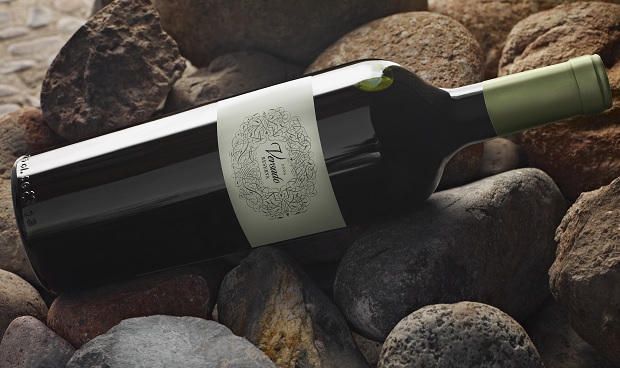
Versado Malbec 2013, Luján De Cuyo, Mendoza, Argentina (317008, $25.95, WineAlign)

The rocks beneath the earth precede the rich, dark fruit. After the berries and the candy beets and the spices subside the flowers grow and take over the room. The vintage brings more layers than before. Malbec of character and belief, even a touch of good VA, a coat that only the Southern Hemisphere can provide. It is not usually present in Mendozan Malbec so it’s really a breath of fresh paint here in the Versado. Great purity. Protracted length. Most expansive and intriguing vintage to date. The Reserva will be killer.  Tasted September 2014

Versado Malbec 2012, Luján De Cuyo, Mendoza, Argentina (317008, $25.95, WineAlign)

Having been defined early in its development by the Mistral-esque drying eastern lee slopes Andean wind known as viento zonda, the low-yielding 2012 Malbec is berry intense and highly concentrated. The foehn or, rain shadow wind had a major effect on flowering and so 2012 may be considered a Malbec example of what happens when vines are subjected to the first law in thermodynamics. The vintage gaveth depth and structure, even as it taketh away moisture, quantity and profits. In this Malbec, earth in terroir stands firm and while the fruit is full, it must fight for early investigative attention. Though presently rigid, a time will come when that fruit will fully receive its due. Sanguine and ferric, the adiabatic Versado 2012 is a heat transfer work in progress. Its system will integrate into its surroundings after a minimum three years have passed. Drink from 2015-2022.  Tasted September 2014

Versado Malbec 2010, Luján De Cuyo, Mendoza, Argentina (317008, $25.95, WineAlign)

The sub-terra tectonic shift and uprising to firma awakening is just beginning to give after four integrated years. That said, this Malbec continues to play a ragtime roll in shades of cumulative bandwidth. When the ’10 entered bottle it may have insisted “I don’t care what mama don’t allow I’ll play my guitar anyhow.” Now settled, somewhat, it persists in saying “I don’t care what mama don’t allow, we’re all gonna play all at the same time anyhow.” The dusty fruit, the resolving tannins, the revolving door of driving blues, of crossover terroirs. “Borders are sort of Alice in Wonderland in Argentina,” notes Peter Gamble. The Venn circles include piano, rare earth, bass, big fruit and guitar.  Tasted September 2014

Versado Malbec Reserva 2009 Photo: (www.versado.com)

Versado Malbec Reserva 2009
Photo: (www.versado.com and http://www.stevenelphick.com/)

Versado Malbec Reserva 2011, Luján De Cuyo, Mendoza, Argentina (316984, $59.95, WineAlign)

Peter Gamble describes the ’11 Reserva as “integrated right out of the gate” and blessed with “a little more fruit component.” That is can show such freshness this early in its life span (especially in consideration of the beasts that are 2009 and 2010) is nothing short of a Malbec miracle. This is a wine that saw spontaneous fermentation, which made for very nervous times in the winemaking hands of Roberto de la Mota. Stems were used and their participation lends a Mediterranean feel, in the aromatic impart of sea salinity and kelp. The oak is scaled back a touch so the chalk push, while present, integrates in finer grain within the gritty, iron structure. This is the softest (hyper-relatively speaking) Reserva to date with a newly defined massive attack. The temperature fluctuations of the vineyard are integral in its structure and the question needs to be asked, “how can you have a day without a night?” In the Versado Reserva 2011 you have both. It is a Malbec of unfinished sympathy. Drink this sooner, starting in 2017 and for longer, to 2030.  Tasted September 2014

Versado Malbec Reserva 2010, Luján De Cuyo, Mendoza, Argentina (316984, $59.95, WineAlign)

The floral emergence is a lodestar as periscope just now peering up from the seamless cake layering in Versado’s most liberally applied oak-imbued Malbec. The 2010 adheres in sticky savour though it remains two to three years away from finding its true gliding form. From my earlier notes through tastings on Oct. 25 and Nov. 14, 2013. “This ultra-premium Mendozan from the Canadian winemaking team of Peter Gamble and Ann Sperling boasts fruit from “the finest barrels from the finest blocks.” While certainly riding a splintered and jammy horse (what fully extracted Mendozan does not), this reserve Malbec has so much else happening, I owe it my time and focus. Dances to a triple jump height in oozing berry, compacted, brick wall infrastructure and overlapping delineation. Really like the consistency here, with no hollow middle, no umlaut, no pregnant pause. Very well made.” Last tasted September 2014

Versado Malbec Reserva 2009, Luján De Cuyo, Mendoza, Argentina (316984, $59.95, WineAlign)

From a vintage the seasoned Mendozan pro knew to rank with the best, the 2009 Reserva persists as a concentrated, wild beast. On a rare occasion, such as tasting this Reserva, Malbec leans in an Italianate direction, no doubt a result from the combining forces of aridity, concentration and micro-heteroclitic terroir. The dry, slow ripening conditions sealed a vineyard funk into the shriveled, dehydrated berries. Though the wine is just now beginning to come around, that funk will take years more to play nice with the huge flavours, striking structure and resounding tannins. Fast forward to 2017 and imagine the crest over which a plateauing initiative will trigger. It may very well be 2025 before the slow decline begins.  Tasted September 2014

Good to Go!

https://twitter.com/mgodello


Consider the Gaspereau Valley

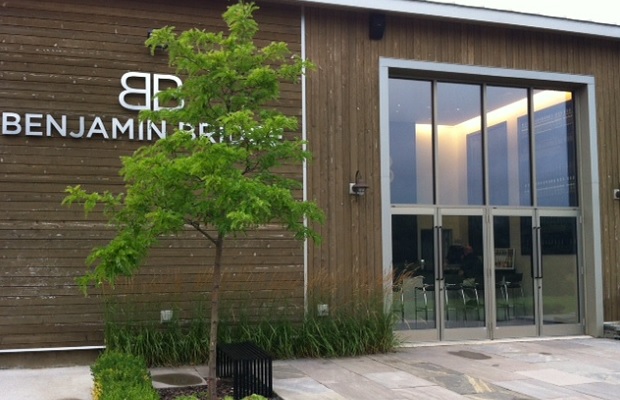
Benjamin Bridge, Gaspereau Valley, Nova Scotia

Benjamin Bridge, Gaspereau Valley, Nova Scotia

No one gets us like we get ourselves. Not so long ago that statement still held more water than the combined towers in all of Canada’s small towns. Here’s another grandiloquent statement. Exceptional wine is made in British Columbia and in Ontario. The proverbial and parochial Canadian wine thinker is privy to that erudite credence, as are many global wine experts, but what of Nova Scotia? If you didn’t already know, Benjamin Bridge and more specifically, Peter Gamble have launched the revolution.

Related: The tides that bind: East Coast swing

Just past the mid-point of my July 2014 east coast swing there happened a planned yet improvisational reconnaissance with Gamble, Canada’s flying winemaker and A-team consultant. Gamble’s work with Stratus, Southbrook and Ravine Vineyards in Niagara, his partnership with Ann Sperling in B.C. and at Versado in Argentina are well documented. His work with Benjamin Bridge Vineyards is already the stuff of Canadian wine lore. What he will touch in his new appointment at Lightfoot & Wolfville Vineyards will make Nova Scotia history.

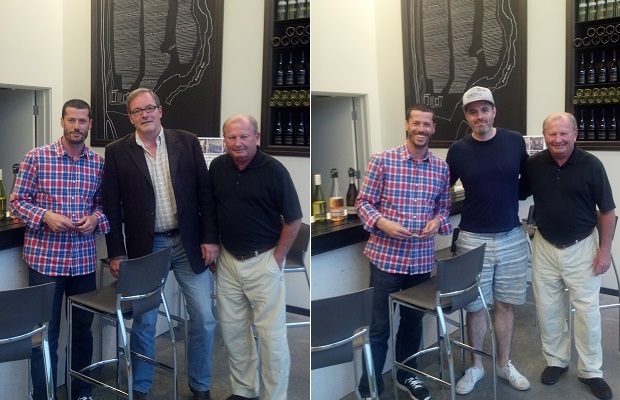
Godello, Winemaker Jean-Benoit Deslauriers and Proprietor Gerry McConnell

Godello, Consulting Benjamin Bridge Winemaker Peter Gamble and Proprietor Gerry McConnell/Godello, Benjamin Bridge Winemaker Jean-Benoit Deslauriers and Proprietor Gerry McConnell

I noted that “it is there, in the heart of the Gaspereau Valley, that the essence of Nova Scotia’s wine industry walks out from beneath the fog to reveal itself in an elongated moment of clarity.” I tasted with Gamble, Benjamin Bridge winemaker Jean-Benoit Deslauriers and proprietor Gerry McConnell at the Gaspereau Valley winery. The next day I toured the vineyards of Lightfoot & Wolfville with Peter, along with owners Mike and Jocelyn Lightfoot, as well as winemaker Josh Horton. We also tasted through barrels. Other visits and tastings were done at Gaspereau and Luckett Vineyards. After the visit with Lightfoot, I was duly impressed.

Nova Scotia is home for Peter Gamble. When Gerry McConnell invited him to assess the potential for making wine in the Gaspereau Valley, Peter insisted, without equivocation, that the concepts of Vinifera and Sparkling be the driving equation. McConnell always wanted to make Sauvignon Blanc so the first idea was a given. But Sparkling wine? In Nova Scotia?

Peter Gamble had more than just a hunch. The Gaspereau’s cold, yet specific micro-climate was perfectly suited to ripening Chardonnay, Pinot Noir and Pinot Meunier, the classic varieties that make up traditional method, Champagne-styled Sparkling wine. The grapes in the Valley could be developed and harvested with the right level of brix (sugars) and acidity, as well as pH. Though still wines from Chardonnay, Pinot Noir, Riesling and Sauvignon Blanc were less obviously suited to the climate, setting their place in Nova Scotia’s wine future had begun.

Hans Christian Jost was the first to plant in the Gaspereau Valley, in 1992-1993. Gerry McConnell bought his (seventh generation Westcott family) farm land in 1999. “We know what we don’t know and we don’t pretend to know what we don’t know,” admits McConnell. It was Gamble (recommended to McConnell by Jost) who sparked the idea of bubbles in 2000.

“Our mission was sparkling wines, world class,” says McConnell. They hired the late, great Champenois expert, oenologist Raphaël Brisebois to consult after Peter went to England for some collaborative discussion with Tom Stevenson, the British writer who many regard as the world’s leading authority on Champagne. Then in 2008, Jean (Lebron) Benoit Deslauriers was drafted from California on Raphaël’s recommendation.

McConnell wanted to plant all 50 acres “but I talked him down,” jokes (not) Peter. It took nearly 10 years but in 2010 they began to release what they considered to be their first (2004) crop of world-class Sparkling, a Brut Reserve and Blanc de Noirs.

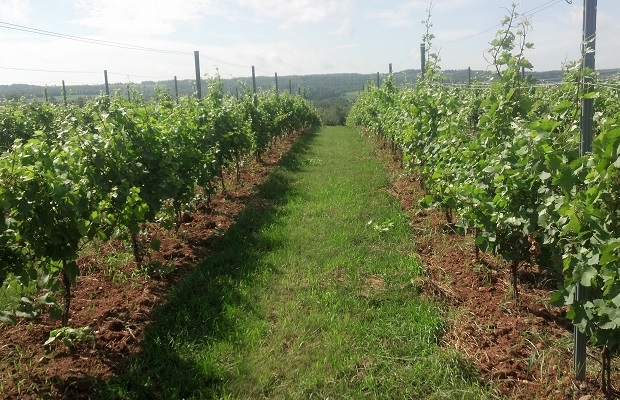
Benjamin Bridge Vineyard

Benjamin Bridge Vineyard

So what makes Benjamin Bridge tick out of a region that resides in relative global obscurity? Number one, the river that runs through the valley doesn’t freeze; it’s a tidal flow. That water keeps the lower part of the vineyard safe, like a warm winter blanket. It conveys the moderating effect of the Bay of Fundy. Two, the soils are extreme in granulation, in rocks and stones under clay. Three, there is great air flow, between, in and out of slopes. Four, the vineyards are south-facing, almost direct and in full advantage of the westerly sun. Last and just as important, “there is always a factor of luck.” Words to make wine by, from the ever thankful and pragmatic Peter Gamble.

The Benjamin Bridge pansophy adheres to low-yielding productivity. The average yearly production (excluding winter effect) is one to one and a half tons per acre. “We consider the fruit from Pinot Noir and Chardonnay on this property to be Grand Cru,” insists Gamble. ” The climactic micro-reality is really important here,” adds Deslauriers, in reference to the BB style. “All great wines have the acidity to express a sense of their environment. We want to express the vineyard in the bottle.”

Related – Notes on previously tasted Benjamin Bridge Sparkling wines:

Nova 7 2013, Gaspereau Valley, Nova Scotia (256289, $25.95, WineAlign)

Nova 7 2012, Gaspereau Valley, Nova Scotia (256289, $25.95, Nova Scotia $24.99, WineAlign)

Nova 7 2011, Gaspereau Valley, Nova Scotia (256289, $25.95, Nova Scotia $24.99, WineAlign)

Brut Reserve Méthode Classique 2007, Gaspereau Valley, Nova Scotia (275396, $74.95, NSLC 1012526, $74.79, WineAlign)

Brut Reserve Méthode Classique 2005, Gaspereau Valley, Nova Scotia (275396, $74.95, NSLC 1012526, $74.79, WineAlign)

Benjamin Bridge

Here are notes on four new wines tasted.

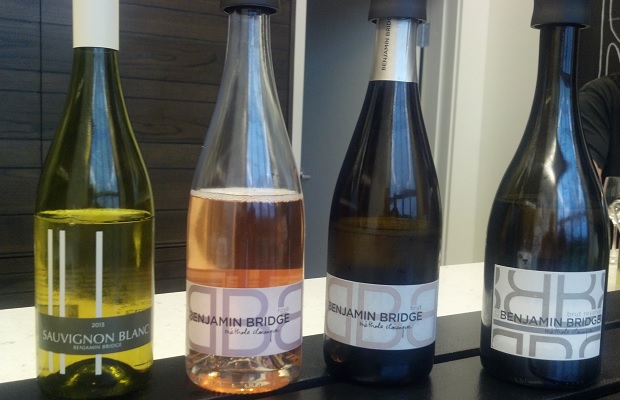
Benjamin Bridge Wines from left to right: Sauvignon Blanc 2013, Brut Rosé Sparkling 2010, Brut Methode Classique 2009, Brut Reserve Methode Classique 2008

Benjamin Bridge Wines from left to right: Sauvignon Blanc 2013, Brut Rosé Sparkling 2010, Brut Methode Classique 2009, Brut Reserve Methode Classique 2008

Brut Methode Classique 2009, Gaspereau Valley, Nova Scotia (1018464, NSLC $44.99, 313106, B.C. $49.97, WineAlign)

Essentially, or at least philosophically a Blanc de Blancs, the blend is 57 per cent L’Acadie Blanc, 25 Chardonnay and 18 Seyval Blanc. The acidity is key and certainly elevated (12.8 g/L), keeping line tabs on the stone ground, clean fruit in gingered mousse. A defined elegance and accumulated synergy of site comes from a lower-slope perceived sweetness, down by the river. By no means piercing, there is a length here that lays down the foundation for the high-end, Vinifera-driven Sparkling wine program. The Brut ’09 conveys the growing environment, in freshness and in ripeness. A wine with such a refreshing upside.  Tasted July 2014

Brut Rosé Sparkling 2010, Gaspereau Valley, Nova Scotia (1015073, NSLC $44.99 WineAlign)

A blend of Pinot Noir and Chardonnay, the 2010 Brut Rosé is possessive of intricate intensity and unparalleled elegance for the style and genre. It is the watershed bottle, anywhere in Canada. These bubbles are the confluence of early picked red berries, distinct platinum minerality and bitterless savoury edges. Whether or not the bitter principle is masked or eliminated by a feigned sweetness matters little. “You taste so bitter and so sweet, oh I could drink a case of you darling and I would still be on my feet.” This sets the new benchmark for Rosé sparkling out of Canadian soils. It’s so blush and melodic it’s blue. In fact, the treatment here is tender, slow and steady, sad even, also spare and beautiful.  Tasted July 2014

Brut Reserve Methode Classique 2008, Gaspereau Valley, Nova Scotia (275396, $74.95, WineAlign)

The 2008 Brut Reserve is composed of 61 per cent Chardonnay and 39 Pinot Noir. If any wine in the Benjamin Bridge continuum defines the legacy left behind by Raphaël Brisebois and passes the sparkling torch to Jean-Benoit Deslauriers, this ’08 is it. Here is the vintage that begins to emulate the grower’s Champagne of the motherland, in deeper learning, understanding and connection to the estate’s vineyards. At present this is such an infant, reductive and with a blowzy palate that suggests a fidgety, elemental state. The attack is in burgeoning mousse. After spitting, the wine persists, as if there remains a mouthful, causing the cheeks to expand. The citrus is weighty in texture and this ’08 goes deeper than the previous Brut reserves. Three years will be required to allow for a settling and 20 years lay further ahead for secondary, tertiary and quaternary development.  Tasted at the winery, July 2014

Sauvignon Blanc 2013, Gaspereau Valley, Nova Scotia (1019689, NSLC $27.79,  WineAlign)

The 2013 marks the inaugural release for a wine that is “the by-product of an unconditional labour of love in commitment.” Gerry McConnell always wanted to make Sauvignon Blanc, Peter Gamble fostered the dream and Jean-Benoit Deslauriers made it a reality. A de facto Sauvignon force is behind the wine, 13 years in the making. Fashioned from drastically low yields, the ’13 SB is concentrated in literally handfuls of berries. It’s a style that could almost be considered eccentric. It feigns lees effect, slow fermentation, years of barrel age and late harvest. It’s a magnetic, beast of intensity, goes sweet up the middle (7 g/L residual sugar) and finishes extremely dry. There were 206 cases made.  Tasted July 2014

Lightfoot and Wolfville

This apple farm turned organic and biodynamic winery will take everything anyone has ever thought about the Nova Scotia wine industry and turn it on its head. Hybrids and local varieties will continue to be a part of the stratagem. In the unpredictable climate of Nova Scotia’s wine growing regions that is a necessity but it’s what Chardonnay and Pinot Noir will do that will put the province on the map and the world’s stage.

Young Vines in Lightfoot and Wolfville's Oak Knoll Vineyard

Young vines in Lightfoot and Wolfville’s Oak Isle Knoll Vineyard

Up on a hill near Avonport with a view of and at the head of the Gaspereau Valley is “Le Corton,” the Oak Isle knoll. It is here that Lightfoot and Wolfville, with the expertise of Peter Gamble, are banking on the future success of Vinifera grapes. There is more vigor up here in these vines (as compared to Benjamin Bridge) and the varieties planted are dual in purpose. One hand can make a serious Chardonnay, the other a Sparkling. It’s a question of vintage and ripening. The plan is essential for making wine in Nova Scotia.

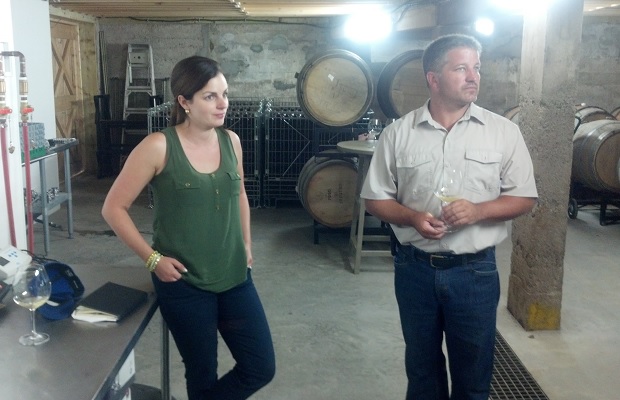
Owners Jocelyn and Mike Lightfoot in the cellar at Lightfoot and Wolfville Vineyards

Owners Jocelyn and Mike Lightfoot in the cellar at Lightfoot and Wolfville Vineyards

The winery will manage Chardonnay, Pinot Noir, Riesling, Sauvignon Blanc, Gewürztraminer, Chenin Blanc, Chasselas and Scheurebe with New York Muscat and Vidal. I tasted through the 2013 Chardonnay and Pinot Noir resting in barrel, along with a most intriguing 2012 Late-Harvest Chasselas.

Lightfoot and Wolfville Winemaker Josh Horton with barrel samples of 2013 Chardonnay

Lightfoot and Wolfville Winemaker Josh Horton with barrel samples of 2013 Chardonnay

Pinot Noir 2013

This will be L &W’s first Pinot Noir, from 15 year-old vines in Canning, near Blomidon Estates and aged in three year-old (Stratus-used) barrels.  The fruit comes by way of a grower named Al McIntyre, who was convinced to reduce yields by dropping fruit, as he traditionally made Sparkling from more vigorous vines. The profile is both fresh fruity and gravelly, like Burgenland, or perhaps Baden. Bright, black cherry meets marly earth. The tannins are present and accounted for post-traditional two-year Burgundian élevage. This is Nova Scotia Pinot Noir and it is remarkably pure.  Tasted July 2014

Chardonnay 2013

From a sample out of a neutral barrel transferred halfway through the process into two year-old barrel. The old world autolytics are textbook and this Chardonnay has already added much of its weight. The reduction at this stage is at a nearly indiscernible level. If this does not intimate Chablis, it would be tough to imagine what does. Beautifully clean Chablis, with a wild yeast accent and tropical accessories. The tannins head straight for the back of the cheeks. This is Chardonnay from Nova Scotia? Yes, it is.  Tasted July 2014

Chardonnay 2013

From a sample out of a brand (medium toast) new barrel with Meursault the intended target. It certainly leans Côte de Beaune, with a lemon, honey and wet glade aromatic soup. The latter note comes across as something herbal without being earthy and sorry to use the M word but the minerality is definitely in here. Rich and glaring in grape, not wood tannins, the length is a testament to future endeavors.  Tasted July 2014

Chardonnay 2013

A blend of the two samples brings the ghosts of the farm’s apples together in the glass. Overall the fruit came in (early November) at 21.5 to 22.8 brix. The pH falls in at 3.18-3.2 and the total acidity 9-10 g/L.

Chasselas Late Harvest 2012

A sweet wine with stinking acidity and a dry finish. At 100 g/L, this has both sugar and acidity through the roof. “It wanted to be this,” notes Josh Horton. “We didn’t plan to go this route, but we did.” Unleashed and wild LH.

Gaspereau Vineyards

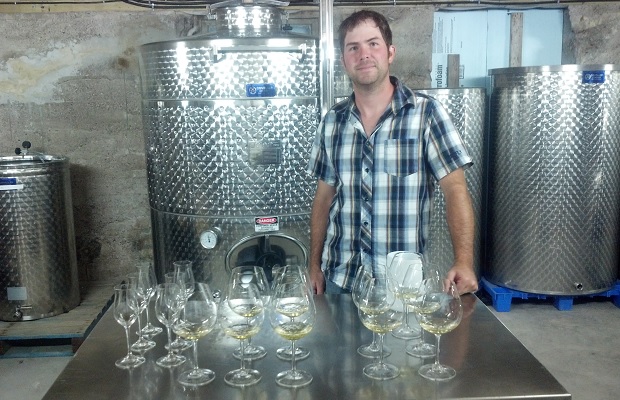
After a morning spent with the Lightfoots, Peter Gamble brought me to taste at Gaspereau Vineyards with Rebecca Griffin, Associate Winemaker & Vineyard Manager at the winery’s parent entity, Devonian Coast Wineries. Gaspereau winemaker Gina Haverstock, who I tasted with at Brock University’s Technical Sparkling Wine Symposium in May, was away on holiday. After being guided through Haverstock’s Rieslings, I can safely say that I will look forward to tasting future (and hopefully library vintages) with her on my next visit east.

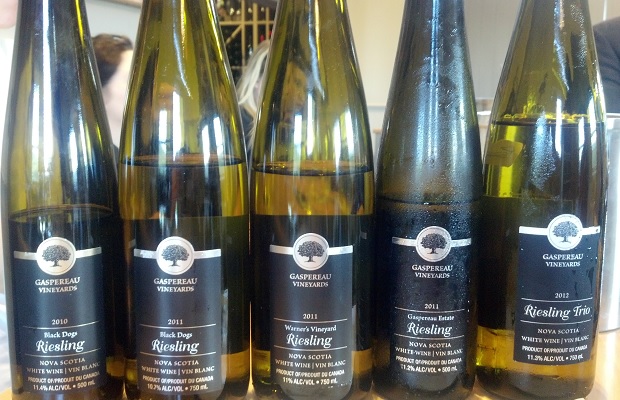
The Rieslings of Gaspereau Vineyards - Front Label

The Rieslings of Gaspereau Vineyards – Front Labels

Griffin led us through renditions of Nova Scotia’s signature white Tidal Bay, an Icewine and five exceedingly promising Rieslings. The tightly wound and magnanimous acidity of the lot impressed not just for their food versatility but also their kinship with some of the greater Riesling producing regions of the world. Both Clare Valley and the Beamsville Bench came to mind, as well as the Okanagan Valley and Alsace. Here are notes on the wines tasted.

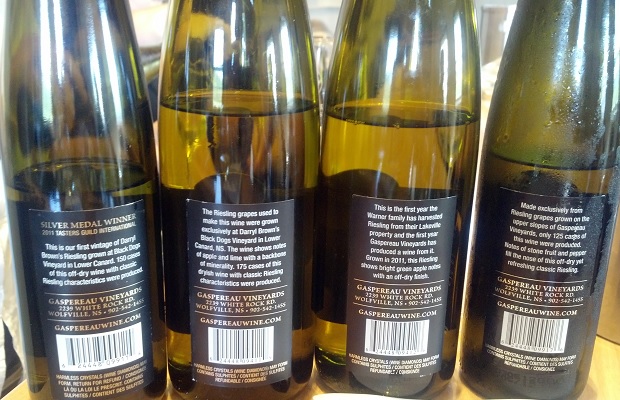
The Rieslings of Gaspereau Vineyards - Back Labels

The Rieslings of Gaspereau Vineyards – Back Labels

Riesling Black Dog 2010

The vintage gives rich fruit, tempered by a mineral and lime layering. Though very dry and somewhat angular with a clamp down bite, the warmth inherent and abundant flavours give it bounty.  Tasted July 2014

Riesling Black Dog 2011

Tighter even, full-on snare driven Riesling. Less luxuriant than the ’10, with more pierce, a zigzagging beat in angles and relentless drive that’s “gonna make you sweat, gonna make you groove.” Gets the lead out with a juicy burst of orange zest. This Black Dog is a howler and goes on for minutes on end.  Tasted July 2014

Riesling Warner’s Vineyard 2011

This single vineyard Riesling shows more brightness, in white fruit and an increase in mineral. Conversely it also displays a reductive funk. Wild, in ferment, with eyes that never lie and a timeless, earth-driven, low and slow layering.  Tasted July 2014

Riesling Estate 2011

Bottled in a 500 mL format because of drastically low quantities. Only 125 cases in the half litres were made. At first it’s fresh, bright orchard fruit with a minor key in funk. Moves into ginger, lime and the white heat of lit limestone, or more specifically, gypsum. Smells a bit like machine gun powder, leading to a plugged in “ignited fever and I can’t put out the flame.” Hot Riesling in a band of gypsies, with a rat tat tat sound and a nose for excitement.  Tasted July 2014

Riesling Tri0 2012

The Trio is assembled from Warner, Black Dog and Estate vineyards. Richer, warmer, rounder Riesling. The aromatics are more pronounced but also muddled together. Not as stark as compared to the others. Not so much sweeter as rounder, fuller and less piercing. Still, the Gaspereau Riesling funk persists.  Tasted July 2014

Good to go!


A Bordeaux family of wines

Château Léoville Las Cases of Domaines Delon http://www.domaines-delon.com/en/accueil.html

Château Léoville Las Cases of Domaines Delon
http://www.domaines-delon.com/en/accueil.html

Finding recherché in the classicism of a family run wine business is obscured by today’s speculative boardroom market of classified growths, futures and the wheeling of the négociant. When Bordeaux comes to town the connection is by and large a sterile one. How refreshing it is when the introduction is made in terms of kith, kin and tradition. The Delon family has been in the Bordeaux game since the middle ages. The estate of Château Potensac has been in Jean-Hubert Delon’s bloodline “since time immemorial.” The Delon holdings include Château Nenin (Pomerol), Potensac (Médoc) and Château Léoville-Las Cases (Saint-Julien).

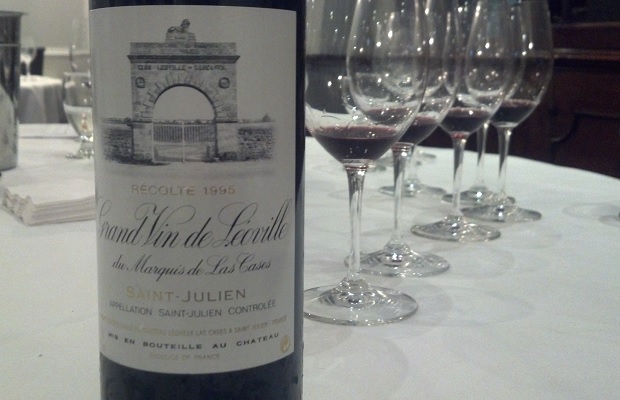
Château Léoville-Las Cases 1995

Château Léoville-Las Cases 1995

Léoville-Las Cases or “LLC,” as it is affectionately known, is one of the oldest Médoc properties and though it has always played 2nd Growth fiddle to its elite Classified Growth neighbours, Las Cases is anything but second class. The terroir, micro-climate, vines, ripening potential, history, track record and wine acumen of Léoville-Las Cases is equal to those of Lafite Rothschild, Latour, Margaux, Haut-Brion and Mouton. It might be considered the fifth major (or, in wine, the sixth), like the PGA’s Player’s Championship. Of the players, for the players. In fact, the estate is like an island green of itself, unique, accessible, of the people and for the people. LLC attracts an elite field but its success is shared and enjoyed by a level of consumer who may never afford or even come to taste a bottle of First Growth wine.

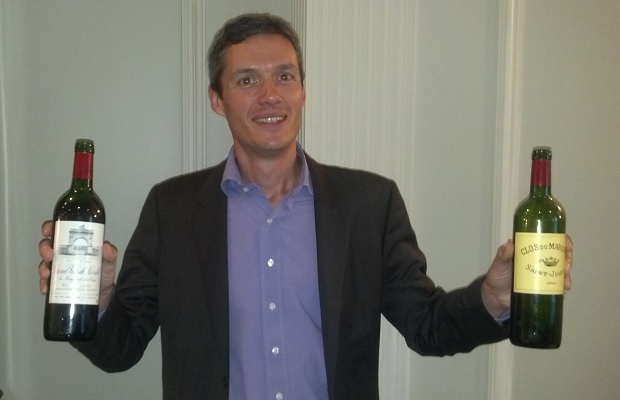
Pierre Graffeuille, Commercial Export Director, Domaines Delon

Pierre Graffeuille, Commercial Export Director, Domaines Delon

Pierre Graffeuille (Commercial Export Director) came to Toronto’s National Club on Wednesday, September 24, 2014 to present and to pour a cross-section of the Delon group of wines. Mr. Graffeuille was quick to point out “we do not want to make blockbusters.” The wines of Potensac, Clos de Marquis, Nenin and Léoville-Las Cases are meant for “lunches and dinners, not for tastings.  We focus on elegance, not concentration.”

The Delon philosophy is based on “a continual and incontestable search for excellence.” The ontology is shared and spread throughout the 550 acres of production between the three properties. VINTAGES is sharing the Delon belief with an extensive offering from the properties, including a long vertical of LLC.

Château Potensac is situated in the north Médoc, close to Saint-Estèphe and is possessed of a similar terroir. Set on 200 acres, the vines average at 40 years-old, with some plots exceeding 80. The plantings are Merlot (50 per cent),Cabernet Sauvignon (35) and Cabernet Franc (15). Soils are clay limestone/small gravel and the density of 8000 vines/ha is congruent with classified growths. Traditional Médoc élevage is 1/3 new French oak for 12-14 months.

Château Nenin is 0ne of the largest estates in the appellation of Pomerol. It comprises 80 acres on the Pomerol plateau, land of clay with gravel and more clay underneath in sub-soil. Nenin’s neighbours include Château Trotanoy and Le Pin. The vines are now at 25 years in average, young by Pomerol standards but with huge potential. The acreage was originally planted to Merlot (78 per cent) and Cabernet Franc (22), though little by little the Franc is increasing with each passing vintage. “For freshness,” notes Pierre. The Nenin élevage is generally 30 per cent new French oak for 14-18 months.

Château Léoville-Las Cases has been in the Delon family since the 19th century and represents the heart and more than 60 per cent of the former (17th century) estate. The famous walled enclosure houses the most prestigious plot just below the (Gironde) river that separates it from Château Latour in Paulliac. This geographical allusion is key to understanding the LLC oeuvre. The wines are the amalgamated embodiment of and yet are neither Saint Julien nor Paulliac. The vines grow within a plot that brings the Venn diagram circles of both appellations into play. Once again, Las Cases is the island of Bordeaux, in fact, it is the archipelago of wine estates. It draws detail, deed and qualification from without, then internalizes all within. Even the Clos de Marquis, from vines grown on soils of more sand and less clay gathers and concentrates its holdings. The Clos combines “2nd wine” conceptualization with affordability in unparalleled ways. It is a benchmark for the intellection in Bordeaux.

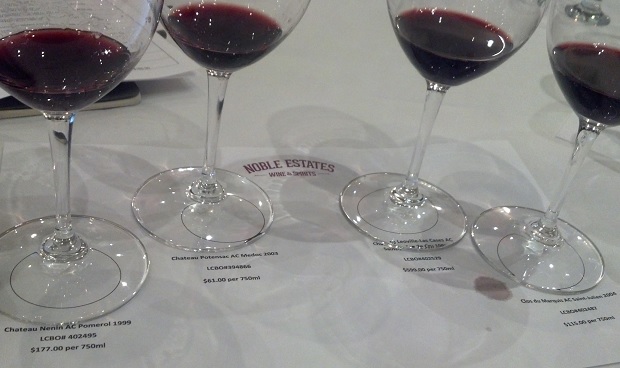
With thanks to the markedly too legit to quit Mark Coster and Noble Estates, the pleasure was had to taste four wines from the Domaines Delon. Here are the notes.

Domaines Delon: Château Nenin 1999, Château Potensac 2003, Château Léoville Las Cases 1995, Clos Du Marquis 2004

Domaines Delon: Château Nenin 1999, Château Potensac 2003, Château Léoville Las Cases 1995, Clos Du Marquis 2004

Château Potensac 2003, Ac Médoc, Bordeaux, Left Bank, France (394866, $61.00, WineAlign)

What with its congruence to Saint-Estèphe terroir amplified by the humidity of the 2003 vintage, Potensac mines the gene pool for pure, unadulterated Médoc. The breakdown in ’03 is equal parts 41 per cent Cabernet Sauvignon and Merlot with Cabernet Franc rounding out the holy Bordeaux trinity. Certainly atypically warm in vintage, it has marinated and maintained its push vs. pull of freshness and warmth. Smells of black fruit, licorice, scrub brush and is no doubt really ripe with the heat still in control. Chalk, grain and mineral layers dominate the piquant palate. Finishes with capers and olives on top of small stones. The limestone is really prominent. Has hit its cruising speed and will stay there for a projection of three more years.

Clos Du Marquis 2004, Ac St Julien, 2nd Wine Of Château Léoville Las Cases, Bordeaux, Left Bank, France (402487, $115.00, WineAlign)

Ten years have got behind this baby Château Léoville Las Cases from the estate’s vineyard silted of more sand and less clay than that of the 2nd Growth’s esteemed enclosure. Composed of Cabernet Sauvignon (57 per cent), Merlot (38) and small rounding out amounts of Cabernet Franc and Petit Verdot, the Marquis enters with quite a bass note and plucky twang. It lives on the dark side of the fruit spectrum, with notable Cassis, black currants and a funk progression in the tonic minor. A savoury spike which has Mediterranean pique, richness and wood spice ticks in rhythmic metronome and lingering cool notes. Prickly in woody funk. Cool, herbal funk. There is a late great push to stretched length. Clos de Marquis “you are young and life is long and there is time to kill today.” Drinking well at 10 and will live for 10 more.

Château Nenin 1999, Ac Pomerol, Bordeaux, Right Bank, France (402495, $177.00, WineAlign)

From one of the largest estates in the appellation, the Nenin’s terroir is clay with gravel and more clay underneath in the sub-soil. The layered richness is apparent as far back as this ’99, an early vintage fashioned from Merlot (88 per cent) and Cabernet Franc (12). These are numbers that would gradually invert in future vintages. As per the LLC practicum, this spent 14-18 months in 30 per cent new French oak. This 15 year-old Nenin is earlier generation softer in style, lush and mellow. There are plums mixed with a Right Bank truffle, which, with time and shelled terroir, has come out to play. Now that the wine is a teenager, it wears the vineyard funk as its make up. A shadow of soft red fruit and a shave of fungi are accented by some wood relish. Age is this Merlot’s best friend. The fruit has dissipated but certainly remains in the audience, just not quite at centre stage.

Château Léoville Las Cases 1995, Ac St Julien, Bordeaux, Left Bank, France (402529, $599.00, WineAlign)

This 2nd Growth, Grand Vin is a product of nurturing and environment, a study in 12 superb soil subsets, from sand to clay to stone. From mature, edified vines split between Cabernet Sauvignon (70 per cent), Cabernet Franc (16) and Merlot (14). The LLC ’95 is grounded and centered on its highly confident axis while swirling within a centrifuge of inwardly concentrated, ripe but not ripest fruit. Merlot here is the anchor, Cabernet Sauvignon the mast. This is a relationship of pure linear fruit meets acidity. The full and fresh attack is refined with soft-pedaled tannins. It’s neither St. Julien nor Paulliac. It is Las Cases. No other Bordeaux is such an island, a distinctly personal expression, an event of its own. This is a window to the greatest vintages, a portal to extend to the benchmarks of 1996, 2000, 2005 and 2009, but also to step into the history of physiological cortex, to gain insight into previous legendary vintages, like 90, 89 and 82. The ’95 is silky, caressing, rapturous enveloping in a reverse osmosis of fruit and acidity, acidity and tannin. Another sip notices the layering, the grain left in tannin, the lingering richness of the fruit. The absolute sweet caress.

Good to go!

September 27th at VINTAGES rolls into October 2nd with Taste Ontario

Taste Local, Love Local Photo (www.lcbo.com)

Taste Local, Love Local
Photo (www.lcbo.com)

This coming weekend’s VINTAGES release will parlay values from around the globe into the meeting place of Ontario stores. Many of the bargains tie directly into a PB and J campaign, a parochial bandwagon advertising juggernaut. The LCBO and Wine Country Ontario‘s #Tastelocal, #Lovelocal and #LCBOGolocal slogans are currently omnipresent, fast forwardly gaining both steam and traction with restos, critics and consumers.

The late, great VINTAGES wine facilitator David Churchill once told me that putting together Taste Ontario was one of the LCBO’s great endeavors. David said the work and time that VINTAGES allotted the event was extraordinary and great care was always afforded the exercise. Next week the chance to taste the most current, largest and impressive cross-section of Ontario wines in one setting will happen with the annual Taste Ontario gala event. When Wine Country Ontario comes to town and joins forces with VINTAGES, it is the writers, sommeliers and restaurant wine junkies who collectively jump trains, catch flames and do what they do. This in the name of getting to know Ontario wines.

On September 27th VINTAGES will release the following 17 wines, though most will already be on shelves before you skim through this tasting note report with all the brevity you can afford. This week’s recommendations come by way of one Sparkling, four Chardonnay, two Riesling, three Pinot Noir, a Sangiovese, a Malbec, a Veneto, a Zinfandel, one Rhône and two Bordeaux blends.

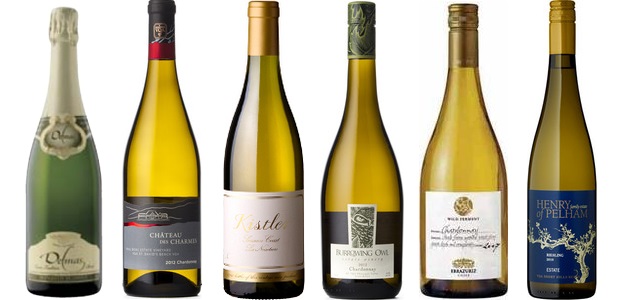
From left to right: Delmas Cuvée Tradition Brut Blanquette De Limoux, Château Des Charmes Paul Bosc Estate Chardonnay 2012, Kistler Chardonnay Les Noisetiers 2012, Burrowing Owl Chardonnay 2012, Errázuriz Wild Ferment Chardonnay 2012, Henry Of Pelham Estate Riesling 2012

From left to right: Delmas Cuvée Tradition Brut Blanquette De Limoux, Château Des Charmes Paul Bosc Estate Chardonnay 2012, Kistler Chardonnay Les Noisetiers 2012, Burrowing Owl Chardonnay 2012, Errázuriz Wild Ferment Chardonnay 2012, Henry Of Pelham Estate Riesling 2012

Delmas Cuvée Tradition Brut Blanquette De Limoux, Ac, Languedoc-Roussillon, France (179978, $19.95, WineAlign)

Organic and Biodynamic sparkler with a personality all its own. Made primarily from the local grape variety Mauzac (with some Chardonnay and Chenin Blanc), Blanquette is the dry and sylvan style of Limoux. The “little white one” is a lovely little lemon curd Blanquette pulsating in spatially atomic subtlety. Aerified notes hint at sulfur but the breeze is so minor so as not to obstruct the citrus and crucible of candied ginger.  Green apple flavour delights with really good gin and tonic (juniper), lime bitters and a muddle of basil. Pertinent and invigorating example.  Tasted September 2014  @AOCLIMOUX  @RareEarth_Wines

Château Des Charmes Paul Bosc Estate Chardonnay 2012, VQA Niagara On The Lake, Ontario (179978, $21.95, WineAlign)

Much oak and buttery crustaceans in this need to relax and settle into a self-induced state of Chardonnay. Quite lactic but that’s not a detractor; it’s a textural overlay that with time will turn lacy, organza even. I would imagine the wrong kind of attitude will not see the acidity for the forest and instead feel that malic is short for malicious behaviour. On the contrary. This is a very good vineyard giving fruit of the right St. David’s kind. With five years it will prove its merit and play matronly with that fresh catch on your plate.  Too big and clunky you say? Put it down. Let it breathe. Take a good inhale/exhale yourself. From my earlier, August 2014 note: “It would be a shame to have missed the found ardor in this tractile, careening Chardonnay. Chances have been taken in 2012, from a vineyard near and dear to a proprietor’s heart and perhaps even his soul. Picked bright and early, vinified bone dry and sent to a Burgundian school, the Paul Bosc Vineyard Chardonnay suffers from ESS (early stricture syndrome) because it (and particularly its shaken lees) have yet to settle. The barrel is confusingly, hardly noticeable and so the ’12’s awkwardness must then be attributed to a milky, marmalade and blues-influenced free-form run. It’s as if the crowd is waiting for one (Garcia-Saunders) song to end and another to begin. The new “anyway you do” slang take on an old blues riff may be misconstrued but, when all is said and done, that’s alright mama, there’s jam and space for your kind too.”  Last tasted September 2014  @Mbosc

Kistler Chardonnay Les Noisetiers 2012, Sonoma Coast, California (251223, $75.95, WineAlign)

Expansive, all over the coast display of Kistler ambition and conceit. Fully ripe and not shy to swim with splinters. Lemon meringue pie, baked Alaska and tarte au citron on one gorging dessert plate. Then the flavours kick in. A lemon Negroni (is there such an animal?) and lemon Hollandaise atop white aspagarus. Decadent, even for Kistler, without the poise and subtlety of the single-vineyard bottlings.  A full on glass of California sunshine. From my earlier, (tasted three times), July 2014 note: “Long distance runner built for endurance, a cool customer able to withstand the heat from a season’s relentless, though moderate, gentle sun, from start to finish. No shortage of ripe fruit and certainly not wanting for the micro-oxygenated slow release of a prized barrel. This might be the two-bit Kistler bottling but it offers up exemplary Sonoma fruit with the temperament and conceit of high caste Burgundy. The style is culled from two poles and pulls in two directions.  At once sharp and piquant, then golden and in mirth. All in all it’s exactly what should be wanted for the buyer who wants what it has to give.”  Last tasted September 2014

Burrowing Owl Chardonnay 2012, BC VQA Okanagan Valley (208694, $33.95, WineAlign)

Intimates warm sunshine but can’t hide from its cool nights. An element of periodic surprise wafts straight up and grabs the little nose hairs by the tips, tugs and then let’s go. Hatchoo. Wisps green apple skin, daikon radish and a metal tang. Full on fruit-mineral-earthy expression. Big Chardonnay as ripe as its gets for the Okanagan but carries a hefty (though you might ponder an inordinate exorbitance of 14.5 per cent abv) with relative ease. Goes on at length, about what, I do not yet know, but I’m willing to hang in there for 5-7 years to find out.  Tasted September 2014  @BurrowingOwlBC

Errázuriz Wild Ferment Chardonnay 2012, Casablanca Valley, Chile (738393, $22.95, WineAlign)

The wild ferment Francisco Baettig oeuvre brings into focus a nicely balanced and intimately-integrated-aligned Chardonnay. There is wildness in the form of a toasted bread, rich enzymatic energy and a leather strapping, bullied brawn. The countrified personality is tempered by a roundness, thus limiting its ability to display like an alpha male. Though not delicate or elegant by any stretch, this is Chilean power unleashed and reigned in. It represents really good value.  Tasted September 2014  @errazurizwines  @Dandurandwines

Henry Of Pelham Estate Riesling 2012, VQA Short Hills Bench, Niagara Peninsula, Ontario (557165, $17.95, WineAlign)

Classic Short Hills Bench Riesling, magnified by and exemplified in the vintage. Soda enriched fresh juice, bursting berry nose, off-dry palate. Meets all expectations for the realms of juicy and savoury. One of the best yet from H of P at this price. Great value.  Tasted September 2014  @HenryofPelham

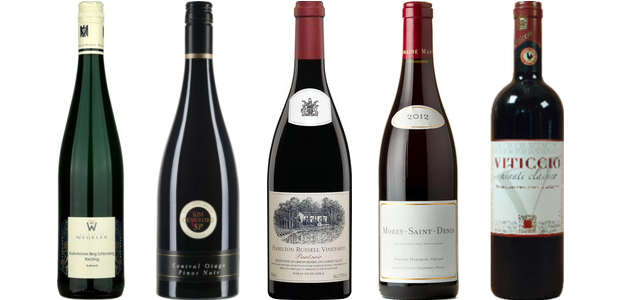
From left to right: Wegeler Rüdesheimer Berg Schlossberg Riesling Kabinett 2012, Kim Crawford Small Parcels Rise & Shine Pinot Noir 2012, Hamilton Russell Pinot Noir 2012, omaine Marchand Grillot Morey Saint Denis 2012, Viticcio Chianti Classico 2011

From left to right: Wegeler Rüdesheimer Berg Schlossberg Riesling Kabinett 2012, Kim Crawford Small Parcels Rise & Shine Pinot Noir 2012, Hamilton Russell Pinot Noir 2012, omaine Marchand Grillot Morey Saint Denis 2012, Viticcio Chianti Classico 2011

Wegeler Rüdesheimer Berg Schlossberg Riesling Kabinett 2012, Prädikatswein, Rheingau, Germany (378083, $24.95, WineAlign)

From the steepest Rheingau vineyard named after the nearby castle (Schloss) ruin “Ehrenfels” which was built in 1211. The stony terroir for this definitive Riesling is quarzite from the Taunus region with layers of slate. Oh, this has the sultry charm of most excellent Kabinett. Aerified to the stratosphere, dry, toasty and buoyant. The soda blows away into the sky with just a vigorous swirl and the aromas turn to fruit and to stone. Rocking great intensity of many fruits, of trees and of natural grape sugar (in the 80-90 g/L residual range) that is everywhere and nowhere. Acidity is linear and impossibly round at the same time. Typically low in alcohol (around 8 per cent by volume), this rude boy is a crazy Kabinett. It’s like a Barbadian songstress rated “R.” You may ask it “is you big enough?” It will answer, I’m as good as it gets.  Tasted September 2014

Kim Crawford Small Parcels Rise & Shine Pinot Noir 2012, Central Otago, New Zealand (35337, $29.95, WineAlign)

Rich, ripe black cherry and just a hint of earth. Some cola but of the cherry kind. Tart yet sweet, hot and roomy. Built of a scrupulous structure where tannin and astringency bend in many ways.  Does its yoga poses with reluctance then hits the gym. Confounding for Central Otago with what may perhaps be a great future ahead but for now, really wonky. Where is this going? To the dark side, to return in five years and to offer good value in aged CO Pinot Noir.   Tasted September 2014  @kimcrawfordwine  @CBrandsCareers

Hamilton Russell Pinot Noir 2012, Wo Hemel En Aarde Valley, Walker Bay, South Africa (999516, $44.95, WineAlign)

he right and fantastic Pinot Noir stuff from the winemaker with the King Midas (or in this case the Queen Modjadji) touch. The Walker Bay Burgundian specialist fashions some most elegant Chardonnay and Pinot Noir. It seems that every vintage is turned to gold, or brings rain when there is drought. The 2012 is marked by bright cherries and really pungent, compressed earth. Fantastically ripe but just before the fall. Pleasure of the incarnate kind. The coat of South African red wine arms is animatedly there but it’s contained, restrained, elegant and yet still powerful. Long, fashionable flow with no visible finish line. This will age for a minimum 10 years and get that smoky glaze and glare.  Tasted September 2014  @TrialtoON

Domaine Marchand Grillot Morey Saint Denis 2012, Ac, Burgundy, France (210906, $54.95, WineAlign)

Here the entry is musty, blows off considerably and leaves the leaf and sweet fruit from strawberry and raspberry. For the spell it’s clean, crisp, pure and inviting. Roses and red fruit, violets and violent rocks careening with a rushing spring river. Those musty notes do persist again, blanketing the dolce, disguising that red fruit. Sharpness stings like Kiwi. Packs a punch of tannin, a bitter, mineral rangy streak that elevates the middle hallows and sends this MSD into really lengthy elasticity. Creamy vanilla comes to the palate with herbal undertones, like Lavender ice cream. This is old school with a modern twist. A really fine example. Tasted twice, September 2014, including blind at the WWAC14  @AmethystWineInc

Viticcio Chianti Classico 2011, Docg, Tuscany, Italy (283580, $24.00, WineAlign)

Big, bad and brooding. Black fruits are intense but surprisingly not overbearing or huge in demanded extract. Chalky, tannic, acidic, long. This is neither average nor to be ignored. It’s in the 13.5 per cent proper Chianti wheelhouse and marches in hipster stride without ever acting obnoxious. Some sanguine activity, along with iron and tension. The real deal. Not the brightest Chianti in the hills but one of a raw, unleashed power.  Tasted September 2014  @chianticlassico   @MajesticWineInc

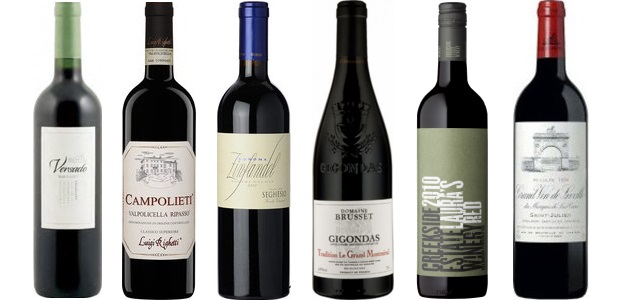
From left to right: Versado Malbec 2013, Luigi Righetti Campolieti Ripasso Valpolicella Classico Superiore 2012, Seghesio Zinfandel 2012, Domaine Brusset Tradition Le Grand Montmirail Gigondas 2012, Creekside Laura’s Red 2011, Château Léoville Las Cases 2006

From left to right: Versado Malbec 2013, Luigi Righetti Campolieti Ripasso Valpolicella Classico Superiore 2012, Seghesio Zinfandel 2012, Domaine Brusset Tradition Le Grand Montmirail Gigondas 2012, Creekside Laura’s Red 2011, Château Léoville Las Cases 2006

Versado Malbec 2013, Luján De Cuyo, Mendoza, Argentina (317008, $25.95, WineAlign)

The rocks beneath the earth precede the rich, dark fruit. After the berries and the candy beets and the spices subside the flowers grow and take over the room. The vintage brings more layers than before. Malbec of character and belief, even a touch of good VA, a coat that only the Southern Hemisphere can provide. It is not usually present in Mendozan Malbec so it’s really a breath of fresh paint here in the Versado. Great purity. Protracted length. Most expansive and intriguing vintage to date. The Reserva will be killer. Tasted September 2014  @VersadoWine

Luigi Righetti Campolieti Ripasso Valpolicella Classico Superiore 2012, Doc, Veneto, Italy (695890, $18.95, WineAlign)

Classic really. Juicy must, musty juiciness. Earth and fruit. Fruity earth. Simple but so effective. Never gets beyond itself or out of its mind. Just the right amount of funk. Maybe the best yet. Great value.  Tasted September 2014  @Smallwinemakers

Seghesio Zinfandel 2012, Sonoma County, California, USA (942151, $29.95, WineAlign)

Rich plum and spicy Zinfandel. Young and tightly wound on a spindle. Needs time to unravel and reveal its charms. In a varietal sense this vintage of the Seghesio has got everything Zin needs and more. More specifically, the definition is out of a cooler vintage, with clear, well-delineated fruit and acidity. Sharp,spicy, focused and full, without ever acting hot, or bothered.  Tasted September 2014  @seghesio

Domaine Brusset Tradition Le Grand Montmirail Gigondas 2012, Ac, Rhône, France (960104, $29.95, WineAlign)

A thick, baking cake of a Gigondas, full of expected dark red Rhône fruitiness, but all in balance. Soapy sandalwood and chalky tannins. Quite grainy. Big, brawny and teeth staining, its “teeth ready, sharpened to bite.” It’s warm but not too hot. Cool centres, some spice and garrigue. Nothing to run away from. Though firm and loyal in the tradition of place, this has rolling stones in its blood so it will age gracefully in a well respected, cool, calm and collected manner. Will grow and grow on you as you work with it. This will age forever as there is just so much fruit. Hedging my bets on 25 years, safe to say.  Tasted September 2014  @rogcowines

Creekside Laura’s Red 2011, VQA Niagara Peninsula, Ontario (117960, $19.95, WineAlign)

The most dead red Laura to date, juicy and earthy, like a licorice, plum and pomegranate demi-glace. Really expressive of earth and fruit.  Traditional house blend of Cabernet Sauvignon, Merlot, Syrah, Malbec and Petit Verdot. A no coat unfastened Niagara, consumer-friendly but also swelling with stuffing. “The light is red. The camera’s on,” the strokes are rich in energy though the tannins dry out a touch. Drink now and for two more years.  Tasted September 2014  @CreeksideWine

Château Léoville Las Cases 2006, Ac St Julien, 2e Cru, Bordeaux, France (566661, $299.00, WineAlign)

The LLC Grand Vin vineyard is very close to the Gironde river, creating a micro-climate that tempers the vines in climate control and matronly comfort. Cabernet Sauvignon and Franc develop here as well as anywhere in the world. Here is an interesting retrospective look at this formidable St. Julien, now having reached the tender and yet developed age of eight. Earthbound distance fruit by way of a chocolate (real dark) truffle and layers of soul stew. Still chalky and tannic, there is enough fruit to keep this going for a decade and a half, or more. Licorice, Cassis and graphite. Wow. Very broad across the late palate, indicating an integration that has begun to realize the potential of this wine. A very good vintage looking back, not one for the ages, but certainly expressive and rich.  Tasted September 2014  @Noble_Estates

Good to go!

https://twitter.com/mgodello


A traditional afternoon with the wines of Carpineto

Carpineto Molin Vecchio 2004

Carpineto Molin Vecchio 2004

Carpineto brings “la Toscana e i suoi vini magliori” to the world. The producer near Greve in Chianti fashions wines from most of the better, best, requisite and constituent locales of Tuscany. The Carpineto library has been laid down from foundations in the DOC and DOCGs of Montereggio, Chianti Classico, Vino Nobile di Montepulciano and Brunello di Montalcino. Were the Bolgheri on the Maremma coast a part of their portfolio their reputation would surely be further cemented amongst the elite agricole of the region.

What dials Carpineto’s wines in to the natural and honest zone, especially when compared to so many modern peers, is their attention to simple detail. The wines across the board are restrained in alcohol, low in residual sugar and unencumbered by an excess of new oak. The wines are pure Tuscany distilled with seamless though mitigated texture. To a bottle they are a pleasure to taste.

Last Thursday Antonio Michael Zaccheo Jr. of Carpineto came to the WineAlign offices, along with eight of his wines. Together with Tandem Selections, WineAlign principals David Lawrason and Steve Thurlow we tasted through this noteworthy cross section of the Carpineto registry.

From left to right: Rosato 2013, Dogajolo Rosso 2012, Chianti Classico 2012, Chianti Classico Riserva 2008, Vino Nobile Di Montepulciano Riserva 2007, Farnito Cabernet Sauvignon 2009, Molin Vechio 2004

From left to right: Rosato 2013, Dogajolo Rosso 2012, Chianti Classico 2012, Chianti Classico Riserva 2008, Vino Nobile Di Montepulciano Riserva 2007, Farnito Cabernet Sauvignon 2009, Molin Vechio 2004 Photos: Jason Dziver, Photographer (http://www.jasondziver.com/)

Rosato 2013, Tuscany, Italy (699934, $15.95, WineAlign)

The Dogajolo Rosato is a right proper and serviceable Rosé, made from 90 per cent Sangiovese and 10 Canaiolo from holdings in both Chianti Classico and Vino Nobile. Sells quite well at the LCBO and even better at the SAQ where there is a different “attitude towards Rosé.” A gaseous medicine with exceptional salinity. Very dry saigneé, savoury and approachable. The freshly pickled strawberry is a nice touch.

Farnito White 2012, Tuscany, Italy ($24.95, WineAlign)

The Carpineto “White” is made from 100 per cent Chardonnay. Though the intent may be Burgundy, the Tuscan take here is very Italian; tight and forthright in flexure and focus. It is quite amazing how very primary it shows, with its whisper of a kiss by just a chip off the old barrel. Fresh, bone dry and bestowed the angle of Tuscan herbiage. So young that it offers the sensation of just having left the tanks and the wood. Like a leaner and cleaner version of the Cervaro della Sella. Can you say Linguine con le Vongole?

Dogajolo Rosso 2012, Igt Toscana, Tuscany, Italy (361501, $14.95, WineAlign)

Maybe it’s just a marketing term but Carpineto’s Antonio Michael Zaccheo Jr. refers to this as a “baby Super Tuscan,” because that is what it is. To pay $15 for a quarter century of winemaking acumen is anything but a hardship. Lithesome of fruit as opposed to sweet, it’s actually bone-dry (one g/L residual sugar), and artfully crafted for both the primi and secondi piatti. “Now we are in the Sangiovese camp, so good to go.” Well said, Antonio.

Chianti Classico 2012, Tuscany, Italy (356048, $21.95, WineAlign)

For Chianti Classico, 2012 was a good year, not too warm yet ripening occurred early, with the quality set to high, but the quantities were low. A winemaker’s vintage. Carpineto’s CC comes from the northern aspect of the appellation, from a conca (amphitheater) seven km’s east of Greve, by the piccolo hamlet of Dudda. It’s cooler in this part of Chianti, with more rock imparting flavour and textured sensations into the reds. The ’12 is essentially 90 percent Sangiovese and 10 per cent Canaiolo, give or take 10 per cent. Aromas of roses and wet rocks, fresh ripe plums mashed into tomatoes, herbs and a spicy side note. Old school and precisely what CC should be, minus the funk (which it does not have or need). Ultimate pasta wine right here. Traditional style in an up to date way with temperature control and all the tools of a modern facility. No VA, no barnyard, but really natural. This explains the axiom of maintaining tradition. With so many story lines already spoken for in sectarian Chianti, maybe that is the only thing Carpineto has left to hang their Zuccotto on. David Lawrason hits the nail head on. A Chianti that “resets the compass.”  Coming to VINTAGES April 18, 2015

Chianti Classico Riserva 2008, Tuscany, Italy (47118, $29.95, WineAlign)

A wine that is “already performing at purchase time,” like the Chianti Classico but turned up to 11. This has a more than a touch of funk, not exactly barnyard, but surely an earthy forest carpeting. Attribute this to the extra concentration and the élevage – time spent soaking up the barrel. The added marinade works to opposite effect as compared to the CC normale and in my opinion it’s an adverse one. Lost is the freshness and spirit. Still a wine of great Tuscan antiquity, in maintenance of its acidity and full of dark, iron and sanguine pulsing fruit.

Carpineto line-up at www.winealign.com

Carpineto line-up at http://www.winealign.com

Vino Nobile Di Montepulciano Riserva 2007, Tuscany, Italy (368910, $29.95, WineAlign)

Carpineto’s Vino Nobile hails from further inland, where the climate is more continental and the dry-farmed clay soils help carry the grapes through warm summers like 2007. Has an intense grapey, raisin and resin character. Really big fruit yet still old school enough to remind us all of the Carpineto oeuvre. This has stuffing, with nary an advancing moment towards a premature future. Blessed with a seamless nose to palate to tannins structure. This is really fine Vino Nobile, “scelto,” a chosen mocker. It’s thick and full but not from oak in any shaken or splintered way. This Prugnolo Gentile comes by its substance naturally, with minimal effort or need of applause.

Farnito Cabernet Sauvignon 2009, Igt Toscana, Tuscany, Italy (996553, $29.95 WineAlign)

Cabernet planted as 8,000 vines per hectare in Montepulciano resulting in the production of one bottle per vine. Love that equation. Eight tons per hectare is low but not an economically impossible yield. Antonio Michael Zaccheo Jr. insists the single vineyard plot is the largest contiguous vineyard in all of Italy. The vineyard was 15 years old at the time this wine was made, so we’re talking prime time for making world class wine. Spent one year in one third new French and American oak and then a few years in bottle. Not quite as ready to pop and pour like the CCR, this has beast mode written all over its expatriate face. Juicy, chalky and dusty which puts it in contrast to the Sangiovese. This is much more internationally styled and “needs cholesterol of any kind, “ says Antonio Michael. It’s more floral than the Chiantis and the Vino Nobile. Ripe but not overripe, international but unmistakably Tuscany.

Molin Vechio 2004, I.G.T. Toscana, Tuscany, Italy (995308, $59.00, WineAlign)

This vintage is from a single, five hectare vineyard (the wine moves around through vineyards, depending on an assessment of which shows best from year to year). Spent one year in new oak and was bottled in spring 2006. The “Old Mill” is a Tuscan-Bordeaux-Rhône gathering of Sangiovese (70 per cent), Cabernet Sauvignon (20) and Syrah (10). This has a Boschetto al Tartufo (shaved white truffles in cheese) note that is intoxicating. From sandy clay soils, southerly facing with marine sediments planted in the early nineties so the marine impart is just starting to show. Recent vintages should give increased salinity and minerality. Has the aroma of roasting game and savoury, Mediterranean bushes – this is akin to some southern Rhône big wines but the texture is stretched and seamless, not cake-baked and chalky. Great acidity and length. Still quite edgy. Needs at least five more years to come around. Released as part of the VINTAGES September Classics.

Good to go!


The LCBO and WineAlign go local

Grange of Prince Edward Trumpour's Mill Gamay Noir 2012, Southbrook Triomphe Cabernet Franc 2012, Norman Hardie Unfiltered Niagara Pinot Noir 2011, Stoney Ridge Estate Excellence Pinot Gris 2010

Grange of Prince Edward Trumpour’s Mill Gamay Noir 2012, Southbrook Triomphe Cabernet Franc 2012, Norman Hardie Unfiltered Niagara Pinot Noir 2011, Stoney Ridge Estate Excellence Pinot Gris 2010

If you ask  Heather MacGregor or Lisa Murray, the two responsible for leading the LCBO’s media relations and communications department, they will tell you this. “For the last 23 years LCBO has been a steadfast and proud supporter of locally produced Ontario VQA wine.”  That is certainly true.

Three things would add measurable weight to that statement. Private VQA wine stores, increased shelf space in current LCBO stores and a lifting of  the embargo for “typicity” qualifying standards of locally and exceptionally produced wine. Not to mention speaking out publicly on the necessity of developing a Canadian wine culture by allowing the importing of VQA wine into Ontario that is made in other Canadian provinces. Oh, but I seriously digress.

Sales performance and trends

In fiscal 2013-14, sales of Ontario wine at LCBO were $396 million, 4.1per cent higher than the year before. VQA sales ended the year at $123 million, growth of nearly 2.1 per cent over fiscal 2012-13. Year-to-date 2014-15, VQA wines are up an impressive 5.8 per cent and significantly outpacing imports. Give credit where it is due. With their backs to the proverbial sandbox wall, the LCBO is working feverishly to put Niagara, Prince Edward County and Lake Erie North Shore on the monopoly map. They can thank Wine Country Ontario for the support, the expertise and the professional lead.

Growing product selection

The LCBO WINES category offers 526 Ontario- produced wines, including 330 VQA wines. What makes up the other 196 might be questioned and that category could be improved were it to include, let us say, for the purposes of argumentation, a Pearl Morisstte Riesling. That said, 330 is a highly significant number. Good on you LCBO.

Our Wine Country Boutiques

Three stores in St.Catharines, Niagara Falls, and Windsor boast excellent local wine selections. The sommelier and restaurant community in Toronto has embraced Ontario wines. Their presence at events like Cool Chardonnay and the Ontario Technical Sparkling Wine Symposium are proof of the phenomenon. So are dozens of wine lists city-wide. The question is why does an Our Wine Country Boutique not exist in a flagship store such as Queen’s Quay or Bayview Village? The Toronto consumer requires chiding and the flock will submit if shown the righteous path. Bring OWCB’s to the city.

The LCBO is doing yeomans work to help small wineries in their own parochial scene and the bigger picture is taken care of through VINTAGES releases. The work has just begun. Change and progress are necessary. A good first step is an event such as was held on Thursday August 14th: Taste Local, Love Local. The match was to pie, kitschy yet effective. There were 21 wines on hand. These were the best three.

Grange of Prince Edward County Gamay Noir 2012, VQA Prince Edward County, Ontario (615062, $14.95, WineAlign)

As Gamay continues to gain traction, it is examples such as this ’12 from Grange that will help to solidify its position as a go to variety for versatile food matching and pure, simple quaffing pleasure. Though this ’12 and its warm vintage baggage render it beefy, spicy and veering to black cherry, it holds freshness and juicy acidity in retainer. The ripe tree fruit sensation never really relents so the style is heady but it shows the strength and excellent value to be found in Gamay.  Tasted August 2014  @grangewinery

Southbrook Triomphe Cabernet Franc 2012, VQA Niagara On The Lake, Ontario (275958, $21.95, WineAlign)

The 2012 Triomphe Cabernet Franc receives a meld of mellow, blending support from 12.4 per cent Merlot and the marriage is quietly non-contentious. That blending decision by winemaker Ann Sperling, along with the praiseworthy choice to forgo obtrusive oak is as good as a golpe on the Niagara Cab Franc oeuvre. The use of large format (80 hectolitre), no splinters allowed oak vats over wood spice and milkshake imparting barrels is an easy swallow for sore palates. The ’12 Triomphe is an elongated and elastic Cab Franc, with nary a foray into the tobacco, bell pepper and cloying currant currency of so many predecessors. The co-fermenting of disparate, north and south, estate blocks in those vats has done wonders on the preservation of a warm vintage’s, judiciously-picked (21.8 per cent brix at harvest) fresh fruit. Terrific decisions all in for a highly accessible, brand and varietal ambassador for Niagara.  Tasted August 2014  @SouthbrookWine

Norman Hardie Unfiltered Niagara Pinot Noir 2011, VQA Niagara Peninsula, Ontario (208702, $39.00, WineAlign)

Hardie’s 2011 Pinot Noir comes out of deep clay, 20 Mile Bench soil, an impart not lost in the rich though dusty character of the wine. The flesh is both corporeal and marbled and a chalky grain runs through, with thanks to what feels like smithereens of limestone blasted through. “It was long ago, seems like yesterday,” that Norm’s Niagara Pinot carried an unwieldy level of anxiety but here the tannins have settled, the volatility has relented and there is a curious combination now, of blood and roses. Though meaty, the ’11 Pinot’s juices are concentrated, contained, not running out. The aromas are floral, heightened and intoxicating. Once again, classic comes by way of low alcohol and minimalist intervention.  Tasted August 2014  @normhardie

Meanwhile, back at the WineAlign ranch, yet another local standout is available for tasting. This Pinot Gris was a most excellent surprise.

Stoney Ridge Estate Excellence Pinot Gris 2010, VQA Niagara Lakeshore, Ontario (Winery, $24.95, WineAlign)

From the deep soil of the Twenty Mile Bench sub-appellation, this is certainly made in a honeyed, Pinot Gris, noble bitter excellence style, conjuring up a Pierre Frick Pfaffenheim reminiscence. The golden hue and blanched nut aroma indicate a slight yet subtle advanced oxidation but the low (3.4) pH and necessary fortifying (5.8 g/L) acidity round-up and subdue the sugar (4.5 g/L) and alcohol (13.3 per cent), whose specs are nothing to cause any real concern in the first place. The intensity is only overshadowed by the natural sweetness which comes across the palate by way of texture and tannin. A mineral underlay is noted with props to a limestone and shale drip from the Bench down through soil towards the Niagara Lakeshore. This 2010 found symmetry in moving parts to reach its current peak and to propel the Excellence towards a 10 year future of graceful decline.  Tasted August 2014  @stoneyridgewine

Good to go!
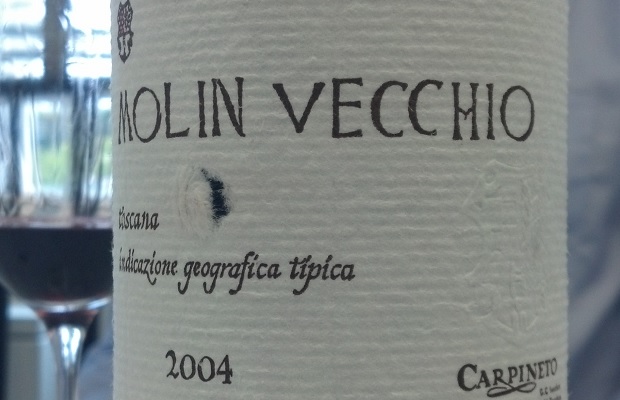
 

Giving Grand Cru Pinot Noir d’Alsace its due

The Vineyards of Domaine Albert Mann<br /> photo (c) https://www.facebook.com/albertmannwines "Pinot Noir, like Riesling, is a mineralogist."

The Vineyards of Domaine Albert Mann
photo (c) https://www.facebook.com/albertmannwines
“Pinot Noir, like Riesling, is a mineralogist.”

You won’t find a rare or carefully considered older vintage of Pinot Noir tasted and discussed at a Millésimes Alsace Master Sommelier class. Nor will it be featured in a magazine article’s varietal spotlight on the great wines of the region. The world may ignore the potentiality and the well-established roots of the expatriate Burgundian in Alsace, but there are winemakers who know. The future of the grape with a long history is already entrenched in the Alsace progression.

Pinot Noir is the only red grape variety authorized in Alsace. The official marketing and regulatory board for the region, Le Conseil Interprofessionnel des Vins d’Alsace (CIVA) recognizes the trenchant antiquity. “What is today considered a novelty in the region is in reality a legacy of the past that is becoming increasingly successful.” According to the Wine Society, the oldest recorded grape variety in Alsace is in fact Pinot Noir, predating Riesling by at least seven centuries.” That exaggeration aside, records dating back to the 16th century indicate that the grape variety was stored in Abbey caves and poached in tithes by the Church.

Out in the diaspora the affirmation of what best indicates Burgundy is the requiem for respect. Oregon, Central Otago and certain pockets of (cooler) California are well into their seasons of repute. Yet sometime around 10-15 years ago the $60 Sonoma Pinot Noir became serious fashion. Thanks to darlings like Kosta Browne, the sky became the limit, in California and elsewhere. A host of producers joined the ranks of the rich and famous. Looking back now, the black cherry bomb initiative temporarily cost the New World its mojo.

Those growing pains have worked to great advantage. Today you have to be better and fashion elegant Pinot Noir to attract an audience and become a hero. This goes for Sonoma County, Napa Valley, Santa Maria Valley, Santa Barbara, the Willamette Valley, Marlborough, Martinborough, Nelson and Otago. This applies to the Okanagan Valley and South Africa too. Niagara and Prince Edward County have followed suit. Vignerons like Norman Hardie, Thomas Bachelder, Moray Tawse and Harald Thiel understand what needs. Their wines have ushered in a $40-plus Pinot Noir era in Ontario. But Alsace? Please. Today a reckoning about Pinot Noir incites nothing but a series of car wrecks along the wine route from Thann to Marlenheim.

Burgundy and Bordeaux do not accept varietal expatriate inclusions. So, why should Alsace? For one, global warming. Say what you will about that load of scientific horse crap but the biodynamic culture that permeates much of Alsace is in tune and well aware of temperature change and ripening schedules. More and more growers are picking their whites earlier, to preserve freshness and acidity, not to mention the conscious decision to cheat botrytis and elevated residual sugar. Embracing Pinot Noir is on many of their minds. Some are ahead of the curve and have already made some exceptional wines. Many examples from the first eight years of the 21st century are showing beautifully in 2014. Phillipe Blanck poured a very much alive 1991. How many Alsace wineries can lay claim to one of those in their cellars?

It’s common knowledge to an Alsatian cognoscenti that white wines drive the mecca. Riesling, Pinot Gris and Gewürztraminer and their associations with the Grand Cru and lieu-dits are the it vines. Vendanges Tardives (VT or, Late Harvest) and Sélection de Grains Nobles (SGN, or selection of noble berries) sit on thrones of glory. Even traditional varieties like Auxerrois and Muscat continue to outshine and suppress the possibilities for Pinot Noir.

Pinot Noir has yet to receive any proper respect both in and outside of Alsace. Can there be justice served in a wine region where a noble variety must share nomenclature with a bottom feeder like Pinot d’Alsace, which is not really a Pinot at all. The scavenging white blend draws attention while making unsubstantiated use of the Pinot prefix. Pd’A need only contain a small percentage of any type of Pinot (Blanc, Auxerrois, Meunier or Noir) in conjunction with other white Alsatian varieties. According to wikipedia:”Lack of acidity and complexity often prevent Alsatian Pinot Noir from achieving anything more than pleasant, easy drinking, quality levels.” Them’s fighting words.

That faux Pinot sideshow is really a whole lot of nothing. The real terror is that if you grow exceptional quality Pinot Noir on Grand Cru terroir in Alsace you can’t label it as such. If you produce Riesling in the Hengst, you are good to go. If you grow Pinot Noir in any of the storied “male horse,” vineyards, the resulting wine, with respect to the variety, is only considered lieu-dit and must be labeled as such. This is the Alsace Grand Cru taboo.

As part of his recent three-part report on Alsace, British journalist Tom Cannavan covers some of the wines of the Grand Cru Hengst. Cannavan so rightly notes that “the problem is, not only is Pinot Noir ineligible for Grand Cru status, but the name Hengst cannot even appear on the label.” He did sample some basic Pinot examples and wondered aloud about the injustice being a non-sequitur. He missed the boat. Case in point Domaine Albert Mann. Back that up with Pinot Noir made elsewhere by Pierre Blanck, Jean-Pierre Frick and Mélanie Pfister, among others.

Maurice and Jacky Barthelmé of Domaine Albert Mann shirk the system with the use of a simple letter, an “H” or a “G” in place of Hengst and Pfersigberg. Philippe Blanck of Paul Blanck & Fils does the same thing with an “F” for Furstentum. It’s a wink-wink, say-no-more kind of approach. A grand parade of life-giving packaging. The brothers Barthelmé and Mr. Blanck know what excellence lies in their Pinot Noir holdings and understand the bright red future for Alsace. “Pinot Noir, like Riesling, is a minerologist,” insists Maurice. Don’t think of the brothers as pioneers so much as pragmatists. CIVA has surely taken note and despite the resistance to add Burgundy to the charges, change is inevitable. The Pinot Noir eyes never lie.

Here are two dozen Pinot Noirs tasted in Alsace during a week in June.

Domaine Albert Mann

@Smallwinemakers

Diversity of the parcels of land, disseminated and however subtly intertwined, which are the particularity of the domaine

François Bruetschy

Pinot Noir (and Pinot Gris) of Domaine Albert Mann

Pinot Noir (and Pinot Gris) of Domaine Albert Mann

Pinot Noir Clos De La Faille 2012

Though geologically speaking this Pinot Noir out of 1997 plantings in calcaire and redstone soils is a fault on the hill of nature, as a wine it shows no discernible impropriety. This represents a tectonic shift for Alsatian Pinot Noir, a lithe and floral wine of articulation and an eye opener to prepare for the intensity of Mann’s Grand letters. It’s a lightly woven, silky soft Pinot, with a furrowed brow and the necessary Mann clarity of responsibility. Density is through a looking-glass, a gateway to Alsace and what future varietal decorum may be achieved.

Pinot Noir Les Saintes Claires 2012

From calcareous soil and still the Albert Mann zealous clarity, with similar intensity and protracted density. There is a lacuna permeated by a hint at black cherry but the ken is never fully realized. At 13 per cent abv and with a set of fine, sweet tannins (even more so than La Faille), these 20 year-old vines have procured a piled Pinot Noir.

Pinot Noir Les Saintes Claires 2010

A top-notch (though cool and late harvested from a small crop) vintage for Mann (and Alsace) Pinot Noir, here the calcareous parcel at Sigolsheim above an old monastery called “Les Clarisses.” Some early rot and bottle reduction have both been stabilized as the wine peels off the rust and goes mellow, in full humanizing and sensual mystery. “How great the wine is when you can see the vintage, ” chimes Maurice. Controlling the effects of both nature and fermentation seems no biggie to the brothers Barthelmé. The act is of such minor tragedy, the climax characterful and sacred. A tingle of eastern spice twitches over bright fruit and a certain florality, materializing what can only be described as obvious commitment. It’s all about the journey.

Domaine Albert Mann Pinot Noir Les Saintes Claires 2008 and Grand P 2012

Domaine Albert Mann Pinot Noir Les Saintes Claires 2008 and Grand P 2012

Pinot Noir Grand “P” 2012 (Tasted from a 375 mL bottle)

From a blend of plantings (1975 and 2004) in Wintzenheim limestone-sandstone soils on the Grand Cru Pfersigberg. Whole bunch pressed grapes (60 per cent) saw a range of oak; 25 per cent new, 50 one-year old and 25 older barrels. A light filtration was used to combat some reduction. This P is a touch ferric, not unlike Volnay but also because of the vintage. The vines in ’12 were subject to cool, then humid, then dry weather. The flux makes for a full floral display, from iron through to roses, but the wave stays linear and rigid. In its youth, the P is calm and on a level plain along its ECG-considered PQRST journey. It will soon spike past Q, up to R and then settle in for the long haul. Will hit its glide at S and T at the end of the decade.

Pinot Noir Grand “P” 2011

From what Maurice Barthelmé describes as a “paradoxical vintage” that started out dry and turned rabidly humid. This has huge personality, less refinement but more delicacy than the Hengst. Once again it’s a touch reductive and that tenuity is in the form of cured meat. The style here emulates Burgundy more than any of the P’s, much more than the H’s and worlds beyond the Failles and the Claires. The iron gait exceeds ’12 with a railroading layer of grand P funk. A chain of earth-resin-tannin has “got the knack,” jumps up, jumps back, does the locomotion with “a little bit of rhythm and a lot of soul.” The 2011 Pfersigberg is unlike any other Alsatian Pinot. It requires plenty of air and even more time to unwind. Look for it to become a classic 20 years after release.

Pinot Noir Grand “P” 2009 (Tasted from a 375 mL bottle)

In the ’09 you can smell how five years of bottle time (slightly accelerated by the small format) brings Pfersigberg Pinot fruit into a Grand Cru station. This is in the zone and just about as perfect an example can be to represent the young cottage industry that is Alsace Pinot Noir. Five more years would send it into philosophical complexity. The classic “P” reduction is there, with amazing structure from the palate. Wonderful funk, the proverbial Brett-esque creature of Pfersigberg, along with cherry and resin of pine. Wonderful animal.

Pinot Noir Grand “H” 2012 (Tasted from a 375 mL bottle)

From a south-facing plot in Wintzenheim on the Grand Cru Hengst. The soils are deeper, the clive made of consolidated clay or marly limestone and sandstone. All aspects of the Pinot Noir here are enriched by the density of nutrition; extract, spice and tannin. Any thoughts of overripe character in any way are thwarted a circular saw of energy that cuts through the cake, breaking it down with extreme prejudice. Tasted at 9:00 am this is a wake up call of the highest order. Notes Maurice Barthelmé, “this must be planted in calcaire soil.” Strike another notch on the Grand Cru petition.

Pinot Noir Grand “H” 2009, 

Typically Hengst, with a whiff of reduction, though never as pronounced as the Pfersigberg. In the ’09, which was a star-caste vintage, the “H” stands for high. As in hue, extract and phenolics. It could be imagined that Syrah were blended in (Maurice said it) and like its namesake (German translation), “Hengst is a stallion.” The reduction is (sic), as Eleven Madison Park’s Jonathan Ross noted, “favourable flavour. A creaminess comes from grape tannin, not oak.” This is meaty Pinot Noir, seeking out rare flesh, in beef or game. It will travel well and live for a decade or more.

Kientzheim, Alsace

Kientzheim, Alsace

Pinot Noir 2008

This vintage preceded forward seasons that brought out warm, fully ripe and optimal phenol-realized fruit. From Maurice Barthelmé’s vineyard, between Mambourg and Furstentum, in Kientzheim. Clear, clean and precise. This was perhaps a bit ambitious in its oak soak from a year that Maurice considers “difficult and early,” but the parcel never lies and what a parcel it is. “Pinot Noir, like Riesling, is a mineralogist, ” says Barthelmé. This is Mann’s purest Pinot, if a touch under ripe, but that is the key. Whole bunch pressing and the oak envelopment has created a round flavour lock and Maurice feels he needs 10 more years to master this technique. Though this may have been the early stages in the development of the Mann Pinot candidacy, by 2018 it will reign in Alsace.

Paul Blanck & Fils

@rogcowines

“We’re looking for authenticity. Not wines of impression, but wines of expression.

Philippe Blanck

Phillipe Blanck, Domaine Paul Blanck & Fils

Philippe Blanck, Domaine Paul Blanck & Fils

Pinot Noir 2012

From granite and gravel soils, the former bringing a bitter component, the latter what Philippe Blanck calls “a facile aspect.” Dark fruits, like black cherry and plum are flecked with pepper and cloaked in a silky robe. “Almost a sort of texture wine,” considers Blanck. The bitterness is beautiful and offers a window of proof towards the ageing capabilities of Pinot Noir in Alsace. “Everybody has an idea of what is a Pinot Noir in the world,” says Philippe. “This is a classic one. And they age crazy.” Classic vintage too. From now and for 10 years.

Pinot Noir 1991

From 20-year old vines (at the time) and a low-yielding (20 hl/ha), cold vintage. The wine was not filtered and 13 years on remains very much alive. Retains the unmistakable smell of Fragaria Vesca, fraise de bois, the herbaceous and wild alpine strawberry. Mix in a metallic, iron and wine tinge and still viable tannins and you’ve got yourself a wonderfully aged Alsace Pinot. An example to encourage a future for the grape variety in Alsace. “So may the sunrise bring hope where it once was forgotten.” Blanck said “nothing to prove, just to experiment. Some wet, moldy berry in here.” Roasted game lends a note as well to this upward, over the “mountain wine.”

Pinot Noir “F” 2009 

The F is for Furstentum, the Grand Cru on the northern slopes of the Weisbach valley split between the communes of Kientzheim and Sigolsheim. The soil is marl. Philippe Blanck insists “we’re looking for authenticity. Not a wine of impression, but a wine of expression.” Here is cherry set on high, bright and exploding, with savoury wild herbs and direct linear of acidity. Authentic yes, silky no. Can age for 10 more years and somewhere along that line the direction will find a more approachable intersect.

Domaine Pfister

Pinot Noir 2009

From a vintage Le Conseil Interprofessionnel des Vins d’Alsace (CIVA) called “precocious” and of irresistible wines. Mélanie Pfister’s ’09 comes from the calcareous Clos Bamhauer, went through two weeks maceration in Inox and then spent a slow 18 months in Burgundy barriques. Incredibly fragrant, with a rich density and a charge of wood spice. Its black cherry waft brings Burgenland to mind, that and the elastic, silty grit by way of some vines grown on gravelly soil. What sets it apart from everywhere else not called Burgundy is the lack of any sort of varnished note. Purity prevails.

Domaine Zind-Humbrecht

@TrialtoON

Pinot Noir 2012

To Olivier Humbrecht, the location and managing the ripeness of Pinot Noir is key. “You can’t hide green character in Pinot Noir,” he asserts. Fruit comes from the Heimbourg vineyard, from west-facing slopes out of marl and limestone. This is a cooler, later ripening position with a draught between the hills. At 13 per cent alcohol it is pleasantly ripe but not as rich and intense as 2009. Still ripe enough for positive and effective phenols. Tannins are present and accounted for, wrapping a veil over the chalky, chewy, slighted coated fruit. The mineral is felt in texture coming from what is a simple, proper and elegant palate.

Domaine Pierre Frick

“Wine is not intellect, it’s emotion.”

Jean-Pierre Frick

@LeCavisteTO

Pierre Frick Pinot Noir 2008 and 2009

Pierre Frick Pinot Noir 2008 and 2009

Pinot Noir Rot-Murlé 2009

This block is literally le muret rouge or, the red stone wall. From brown, ferric (ferrugineux), hard calcaire soils. In 2008 you could not write organic on the label (this changed with the 2012 vintage) so Frick sub-labeled the bottle Vin Biologique Zéro Sulfites Gioutés. Natural wine. Rustic, full of horns on acidity. The combination of clay, marl and the fact that the plot benefits from extended late-afternoon sun all lead to vigor, rigor and rigidity. This is Jean-Pierre Frick’s thickest and most Romantic brushstrokes. Richly textured like a Gaugin portrait of the The Schuffenecker Family. Post-impressionist Pinot Noir.

Pinot Noir 2008

From the Strangenberg lieu-dit, a hill parcel known as la colline aux pendus. Soil composition is hard, durable brown calcaire. After a quick whiff of farm droppings blow off, Jean-Pierre Frick’s Pinot Noir reveals a bright, light and feminine side. It is now blessed by gentle, resolved tannins. The generous spirit, kind heart and gentle soul of this Pinot offer nothing but calm pleasure. Its coat has not even a trace of primer. It is simply thoughtful and considerate. The iron minerality persists but with static and clinging trace fibers. A wine perfectly suited for a middle course at today’s table.

Pierre Frick Pinot Noir Strangenberg 2003 and Pinot Noir 2008

Pierre Frick Pinot Noir Strangenberg 2003 and Pinot Noir 2008

Pinot Noir Strangenberg 2003

Sub-label notes this ’03 as Vin Biologique Vinifié Sand Souffre. Years before it was fashionable or righteous to farm and vinify organically and without sulphites, Jean-Pierre Frick was looking to the stars. The Strangenberg is a very dry part of Alsace, Mediterranean in climate. This is earthy Pinot, like reds from Corbières or Sardinia, with its mutton-funky and roasted game aromas. Here is proof that non-sulphured wine can age, with the simple equation of fruit, acidity and tannin. It’s actually hard to believe so much tannin can emit from the collines of Haut-Rhin in Pinot Noir. Crazy actually. There is an underdeveloped green note along with some roasted and cooked flavours so peak has been reached. When left for 30 minutes in the glass the tannins begin to dry out. Like southern French and Italian reds, another 10 years would bring caramel, soy, figs and raisins. Either way. now or then, this Frick will also be interesting.

Domaine Schoenheitz

Pinot Noir Linzenberger 2013 (Barrel Sample)

Spent six months in one-year old (Allier forest) barrels. Bright, tight, full-on red cherries. A quick, fun, pure expression, clean and full of cherry. A two to three-year Pinot Noir.

Pinot Noir Sainte Gregoire 2012

From the Val Saint Grégoire lieu-dit, the historic name of the Valley of Munster (before the Protestant reform). The soil is decomposed granite rich in micas. Leans warm and extracted but with a high-toned, spiced coat tension. A generalization would place it more New World than Old, verging to black cherry, though again, the spirit is high. In contrast the yields were low (17 hl/ha) from the Cru, let alone the top-level of output from such a low yielding vintage. “When nature isn’t generous the yields go down fast,” confirms Dominique Schoenheitz. Good balance and well-judged.

Gustave Lorentz

@AmethystWineInc

Pinot Noir La Limité 2009

From the lieu-dit Froehn on the edge (the limit) of the Grand Cru Altenberg de Bergheim. Such a spicy florality and the underlay of calcaire from what is ostensibly hard limestone and Jurassic Lias marls meet one another in a geological confluence of fossils, red ferruginous soil and hard rock. A slow 12-month accumulation to fermentation has brought this Pinot Noir to land’s end. It bares un uncanny resemblance to the Prince Edward County Pinot Noir ’12 by Norman Hardie. Over exposure to sun, wind and everything else nature delivers gives this wine its vigor, its core strength and its vibrant personality.

Edmond Rentz

Pinot Noir Piece de Chene 2011

The Rentz take on Pinot Noir grows up in oak for 14-18 months, from a mix of new and used (no older than four years) barrels. The style is decidedly rich Pinot of a sweet tooth with a soft spot for quality chocolate. Spice supplements of orange and cinnamon, along with ethical acidity bring forth a wine bien charpentée, agreeable and ready for PDQ consumption.

Domaine Paul Zinck

@liffordretail

Pinot Noir Terroir 2012

Flat out fresh, mineral Pinot Noir. Only 100 cases were produced from a chalk and clay single parcel, on the Grand Cru Eichberg. GC yes to Phillipe Zinck, “but not official.,” Very little barrel influence here, in fact two-thirds of the Terroir was fermented in stainless steel, “to keep the mineral.” The cherry scents has tinges of plum, licorice and black olive, but just around the periphery. It’s otherwise bright and fresh with a quiescent streak throughout. Excellent.

Domaine Boyt-Geyl

Pinot Noir Galets Oligocène 2010

From the village of Beblenheim, this Pinot Noir gets the moniker from deposits of Oligocène of the tertiary period consisting of conglomerated rock on a base of marl. Jean-Christophe Bott considers the low-lying grapes of this terroir on lower slopes to be Grand Cru (in quality). Picked early to avoid resinning, cooked or jammy flavours, the wine was matured in (one year-old) barriques for 14 to 18 months. Quite earthy and spiced explicitly by cinnamon, though delicious, this is Pinot that flirts with what Bott wants to avoid. Served with a good chill it harmonizes its intent.

Good to go!
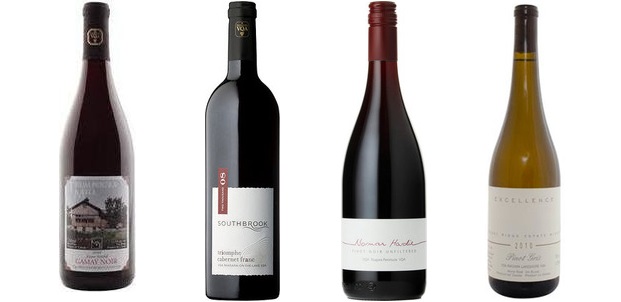
 

Taylor made Port

Taylor Fladgate 10, 20, 30 and 40 Year-Old Tawny Ports, Single Harvest 1964, Single Harvest 1863

Taylor Fladgate 10, 20, 30 and 40 Year-Old Tawny Ports, Single Harvest 1964, Single Harvest 1863

Taylor, Fladgate, & Yeatman. A name synonymous with Port. Purveyors of exceptional, axiomatic and accessible Port. Last week we WineAlign critics gathered (David Lawrason, John Szabo, Sara d’Amato and Julian Hitner) to taste a rare selection of Cask-aged benevolent pours. A chance to take measure of an evolutionary history from the vendibles of a “long and unbroken family tradition” makes cause for some adjectival arcana. Though the house is widely recognized for making epochal, fortified vintage-declared elixirs that can age for decades, it is the Tawny tales that deliver its most exciting and impossible gifts. Were a time capsule be floated into space for future, other worldly generations or alienigenate life forms to discover, a Taylor Port, a Tawny, would have to be in the mix.

The Taylor opus dates back to 1692, a most dubious vintage if you were to practice say, witchcraft in Massachusetts, but in Portugal it was a pretty good year to begin making Port. With thanks for the pull from the Taylor website, they are the house with the “largest reserves of rare cask aged wines from which its distinguished aged tawny Ports are drawn. The house is also known as the originator of Late Bottled Vintage, a style which the firm pioneered and of which it remains the leading producer.”

Rare cask aged wines. Ay, there’s the rub. I must admit that I am utterly fascinated by the new, progressive and forward thinking Taylor deal. “Tis a consummation devoutly to be wished.”  Under the supervision of Managing Director Adrian Bridge, Taylor has systematically scoured the Porto cathedrals in search of casks housing excellence and propriety. The world is now the beneficiary of the program. Old Tawny Ports, in pristine condition, being auctioned off to bidders who won’t be forced or coerced into taking out third mortgages.

With thanks to the WineAlign concierge, Head Wineaux Bryan McCaw, along with Associate Wineauxs Carol Ann Jessiman and Sarah Goddard, we were afforded the once in a lifetime chance to taste the 1863 Single Harvest Porto. With no disrespect to the most munificent and gratifying 10, 20, 30 and 40 year-old Tawny bottlings and no dis to guest chamberlain Stephen Marentette of Sylvestre Wines and Spirits, it was the 1863 and 1964 that took our collective breath away. “Time is an asterisk.”

Taylor Fladgate 10 Year-Old Tawny Port, Douro, Portugal (121749, $34.95, WineAlign)

Taylor’s 10, composed from no less than six Touriga and Tinta grapes (aged an average of 10 years in neutral oak) is the definitive and most accessible for the genre. Sourced from Cima Corgo and Douro Superior vineyards, the 10 puts a most tender fruit-wood balance on display. Sweet emotive fruit intensity with spice notes and a sliding scale of gathering acidity combine for full, though not over the top perfervid Porto nationalism. Late flavours of roasted figs, candied almonds and filberts round out this most effective Tawny, an example that acts as a portal to the overall Taylor oeuvre.

Taylor Fladgate 20 Year-Old Tawny Port, Douro, Portugal (149047, $68.95, WineAlign)

An average barrel period of 20 years heightens the eye-opening fruit sensations of this impeccable Tawny Port. The extended élevage makes cause for such huge contrast, poles apart from the near-conflagrant intensity displayed by the Taylor Tawny 10. At 20 the flames weaken to a diminishing point. Poured from a cool (15-17 degrees Celsius) temperature into a proper (minimum 12 oz, Bordeaux-shaped bowl) stem, the 20 warms and opens quickly, revealing an immediate soft and creamy caramel nose and body. Recently bottled (2013), this is quite youthful and its nuttiness is neither toasted nor roasted. It is a tactile wine of tact, wholly intact, seamless and gives of itself with effortless ease. Carries a century of residual sugar with tempering acidity and potential hydrogen poise. One hot flash sweats it out at one of the corners but it flashes the leather and makes the play. Enjoy the long finish four to six weeks after opening. Is 20 not the ideal, balanced number, in weight, pleasure and economy for a Taylor Tawny?

Taylor Fladgate 30 Year-Old Tawny Port, Douro, Portugal (540252, $180.95, WineAlign)

Bottled in 2014, the Taylor 30 year-old Tawny dramatizes the intensity of the 10 in medley with the elegance of the 20. Presents warm and velutinous, with a minor, nape of the neck hair raising (and not illogical) level of volatile acidity. The sweetness in the formidable 30 is cavernous, full of weightless gravity, flitting around in aerified circles, while the acidity sharpens its spears and arrows. Once the wine has opened and the drawn breathes have taken in its dried fruit, slow-roasted nuts and spirit enhancing liqueur, the acidity then pierces a straight line through its ambrosial, fleshy heart. The finish combs flavours of citrus, orange tisane and tarte flamande noix de coco. You can almost sense the minor (one to two per cent) addition of older barrel juice, say from the 1800’s. It just has that kind of wisdom and experience. Want to relax? Have a glass of the Taylor 30 year-old Tawny.

Taylor Fladgate 40 Year-Old Tawny Port, Douro, Portugal (540260, $239.95, WineAlign)

If the 30 year-old Taylor Tawny was beautiful, the 40 is untouchable. Soft, downy texture and wholly resolved, highly expressive aromas; rose and bougainvillea in full bloom, seeped Ceylon tea, potpourri, expensive yet undemonstrative perfume. The palate increases in density and viscosity but with both licorice and butterscotch candy. The nuts are darker and more exotic, the fruits too. There is also a citrus-spiked demi-glace flavour. There is a far-east pungency to both its smell and taste. The 40 is a much more serious wine, brooding even and encumbered by tropical humidity. That and the intensity of its confection are what makes its style so markedly different and perhaps even contentious, when contrasted to the 30. That said, if you compare it to the price of say, an 18 year-old Single Malt Scotch, it represents screaming value. Though the window to drink may only be four to six weeks after opening, the not yet cracked Taylor 40 can be stored for another half decade, at the least.

Taylor Fladgate Single Harvest Porto 1964, Douro, Portugal (Agent, $299.95, WineAlign)

This program is new to the Taylor agenda, the releasing of single-cask, single-vineyard, single-vintage Tawny Ports that have aged for 50 years. Taylor sourced a number of casks for the catalog, including this 1964 and more will follow. The choice was made to not call it a Colheita, though technically that is really what it is. It shines in the deep hue of recently lacquered mahogany with a brickish outer layer. Both hue and texture are like treacle, with the aromas barbed by clove, white pepper and orange peel. The aromas fly out as if pulled by a vacuum. It is virtually impossible to assess all of its incense in just a few short minutes. There is caramel and a recently extinguished cask fire. Though the palate indicates sweetness, the intensity is more refined than the decades-designated Tawny Ports yet also lengthened, in part because the acidity is 33 per cent lower. The overall effect is a low and slow, micro-oxygenated coming out party. Your nose can rest six inches above the glass and the perfume will leap to it. This is a piece of Porto history that stands and rears on its hind legs, a musky, Rum-raisin flavoured bear of a wine. Injecting single-harvest, single-vintage Ports into the marketplace is key, the only disadvantage being the price. That’s because at $300, the value is so extraordinary that gift giving might totally ignore the 30 and 40 year-olds. It’s a good thing they and this 1964 will live in perpetuum.

Taylor Fladgate Single Harvest Porto 1863, Douro, Portugal (Agent, $3,995.00, WineAlign)

The two casks of 1863 reached the Taylor family in pristine condition, from one of the last great pre-Phylloxera vintages of the 20th century. This wine came from the cool and damp Port lodges of Oporto, “the cathedrals of wine.” This was a once in a lifetime chance to taste a piece of history, a most natural and organic fluid encased for 151 years in its integument of time. The year 1863 was significant in many respects, including being the birth year of Henry Ford and Franz Ferdinand. This is Port that creates the future and yet dwells on the past. The hue is both progressive and fathomless in subterranean fantasy. Its many shades of warm, advancing colours resemble the faux brown rings of Mars. The aromas are built around toffee and with accents of many mints; spearmint, chocolate and pepper. You can smell the 1863 from rooms and world’s away. It conjures up many songs. “When you’re half way from a dream, is it hard to work out what is real?” That is its love illumination. It has the strange advance “of killing time and dreams.” The flavours are extreme and exotic, with South-Asian spices highlighting its deep, late night humidity. The finish is endless. Is this brilliance or a stroke of incredible luck? It is certainly pristine and wondrous. It has to be considered a perfect wine, for its niche and genre, by its makers, David Guimaraens and Adrian Bridge. Having let the days of 151 years go by, this is not a wine to compare with others, it is not the same as it ever was. In the end, “you may ask yourself, well…how did I get here?” Thanks to Stephen Marentette of Sylvestre Wines and Spirits.  @Smarent


Good to go!