De Rigueur Sicilia en Primeur 2025

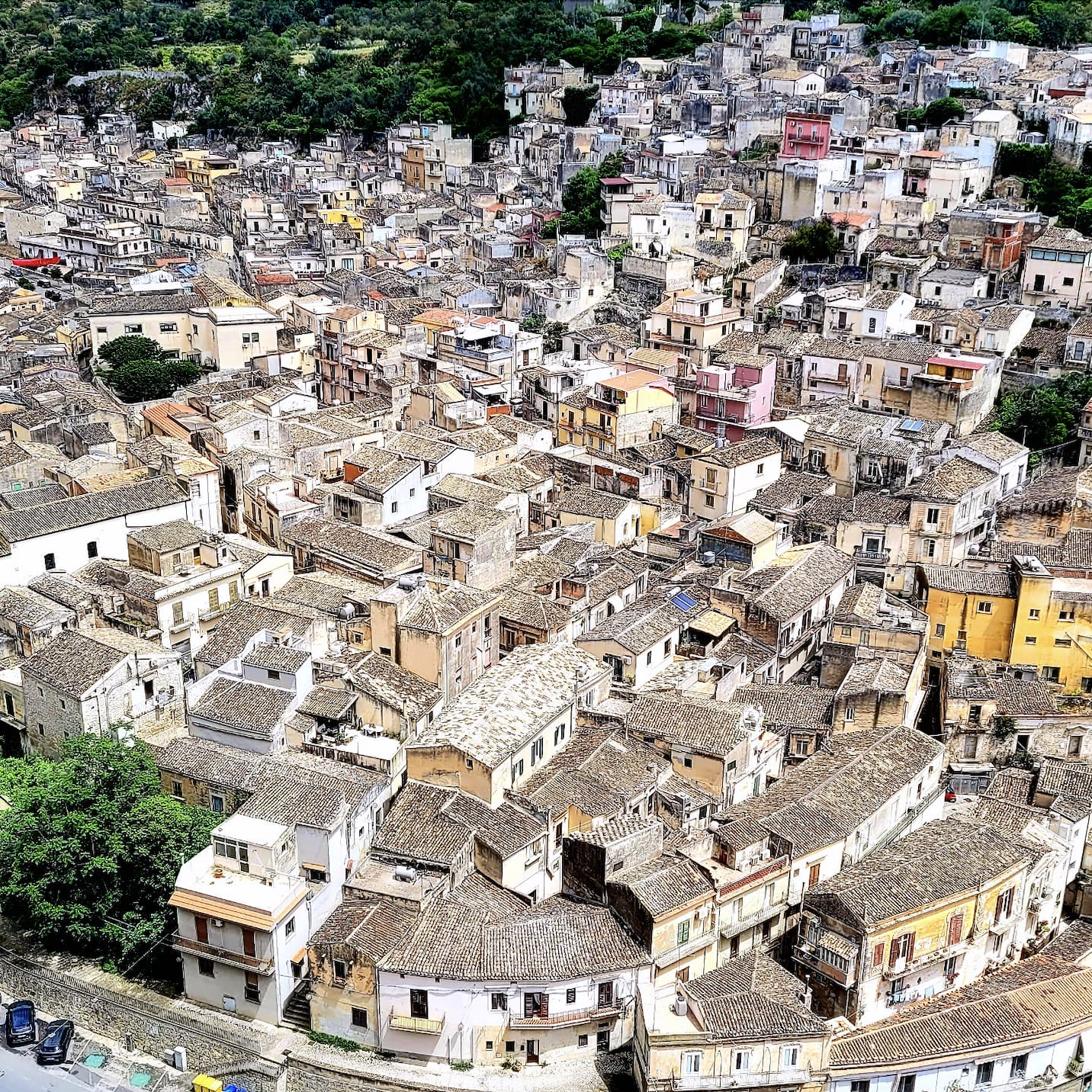
Modica

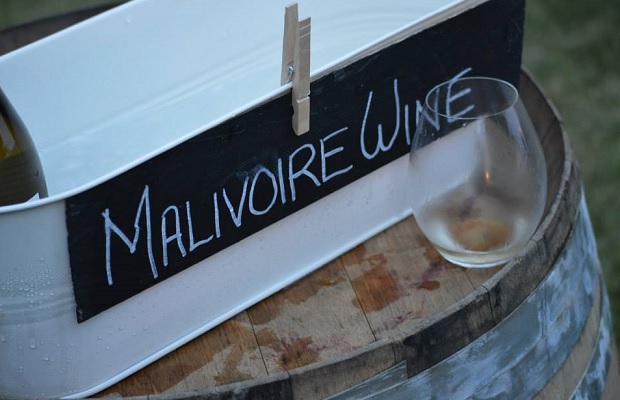
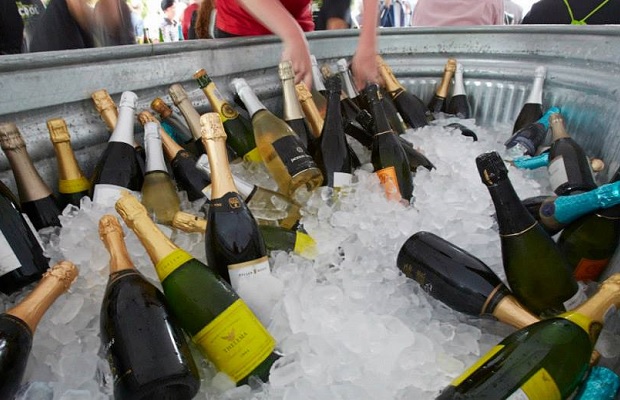
From May 6th through 10th, 2025, the 21st Sicilia en Primeur signalled the annual return of Assovini Sicilia’s proper, correct and yes, also decorous event. Journalists from all over the world arrived by invitation only for a week during which de rigueur was encouraged and for best results, most definitely required. A strict precision needed in adhering to the dictates of weather, cultural fashion, tasting and taking in the final night gala at a luxurious palazzo. The 21st edition’s title “The Culture of Wine in Sicily: A Thousand-year Story that Looks to the Future,” was defined by Mariangela Cambria, President of Assovini Sicilia as “the culture of wine today also translates into a culture of travel.” This is why the abiding delegation of 100 journalists were focused on this essential part of this journey, with their charge to bring the message back home. They came from Italy and many parts of Europe (France, Poland, Sweden, Germany, Norway), also from non-EU countries (Canada, USA, Japan, China, South Korea, Israel, Brazil, and the United Kingdom). Together they engaged in a collective etiquette to celebrate Sicilian wine, food and culture, inclusive of gorging on piping hot finger foods between en primuer tastings at lunch under a hot Modica sun because in Sicily, eating Arancini with your hands is de rigueur.
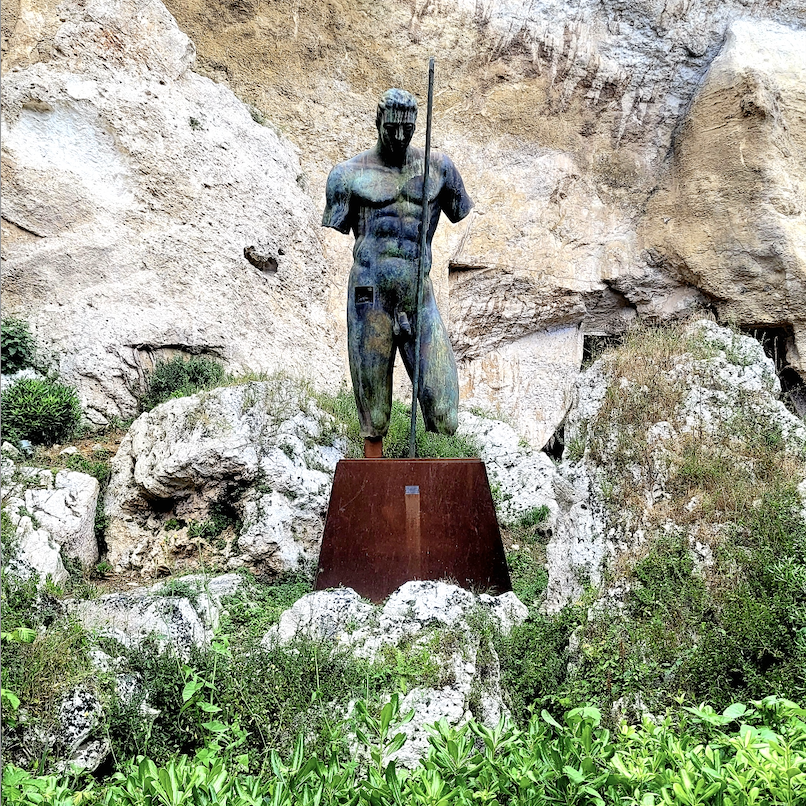
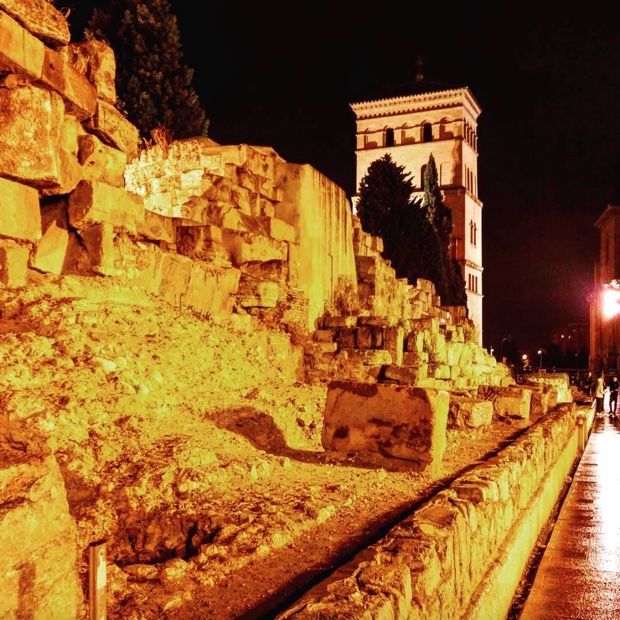
Neapolis Archaeological Park

As always the Sicilian Ante-Antreprima sees groups of international journalists making pilgrimages to wineries geographically positioned within a particular quadrant on the largest Mediterranean island. In 2025 Godello joined Zedcomm’s Lucia Boarini and JustSicily’s Marcos del Rio, along with journalists Fernanda Roggero (Sole 24 Ore), Christer Byklum (Mywinesandmore), Giuseppe Lauria (Weinwisser), David Ransom (The Connected Table) and Matthias Stelzig (Weinwelt) for an Enotour around the area of Noto. The group took in the ancient urban ruins of the Neapolis Archaeological Park, the seaside village of Marzamemi, Noto city (Including a caffè and dolce at Corrado Assenza’s Caffè Sicilia) and a stay at the beautifully charming and calming Villa Giulia Hotel. Visits were paid at Zisola, La Giasira, Ramaddini, Feudo Maccari and Planeta. When all was said, tasted, travelled, assessed, satiated and done, the group then joined the rest of the journalists fresh off of their own tours for the two-day Sicilia en Primeur at the Castello dei Conti di Modica.

Godello in Noto

Assovini Sicilia was founded in 1998 by Giacomo Rallo, Diego Planeta and Lucio Tasca and today has 101 member companies producing approximately 900 labels. After a day of technical tasting everyone convened at the Teatro Garibaldi in Modica for more de rigueur talks, including a discussion about “the culture of wine understood as informed and conscious drinking,” led by Dr. Sara Farnetti, Ph.D in Pathophysiology of Metabolism and Nutrition. Master of Wine Andrea Lonardi spoke on the “S factor: The uniqueness of the Sicilian wine continent.” Words from Dario Stefàno, President of the Wine and Oil Tourism Centre (Lumsa University) and Antonello Maruotti, Professor of Statistics (Lumsa University) concerned “The south innovating through events, e-commerce and new hospitality models for wine tourism.” Then finally it was Alessio Planeta, President of the SOStain Sicilia Foundation, speaking about “the sustainable future of Sicilian wine.”
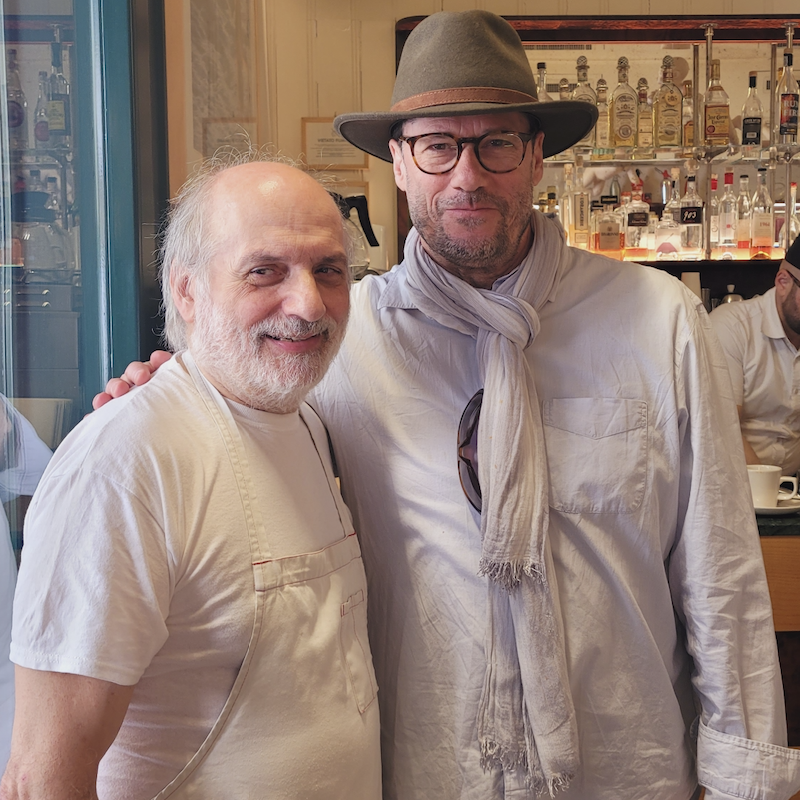
With Corrado Assenza – Caffè Sicilia, Noto

The event concluded on the 10th of May, again at the Castello dei Conti, with tastings of wines from the 57 Assovini Sicilia producers. As always Godello wishes to thank the professional and gracious organization of Zedcomm’s Cecilia Zanasi, Delia Demma, Martina Romeo, Lucia Boarini and Michele Marmino; JustSicily’s Giusi Macchiarella, Giuliana Palazzolo, Giuliana Licata di Baucina, Silvia Mantegna, Marcos del Rio and Federica Matranga; Assovini Sicilia’s Liliana Rosano. These are Godello’s 188 tasting notes from Noto visits at Zisola, La Giasira, Ramaddini, Feudo Maccari and Planeta, along with the wines tasted at Castello dei Conti.
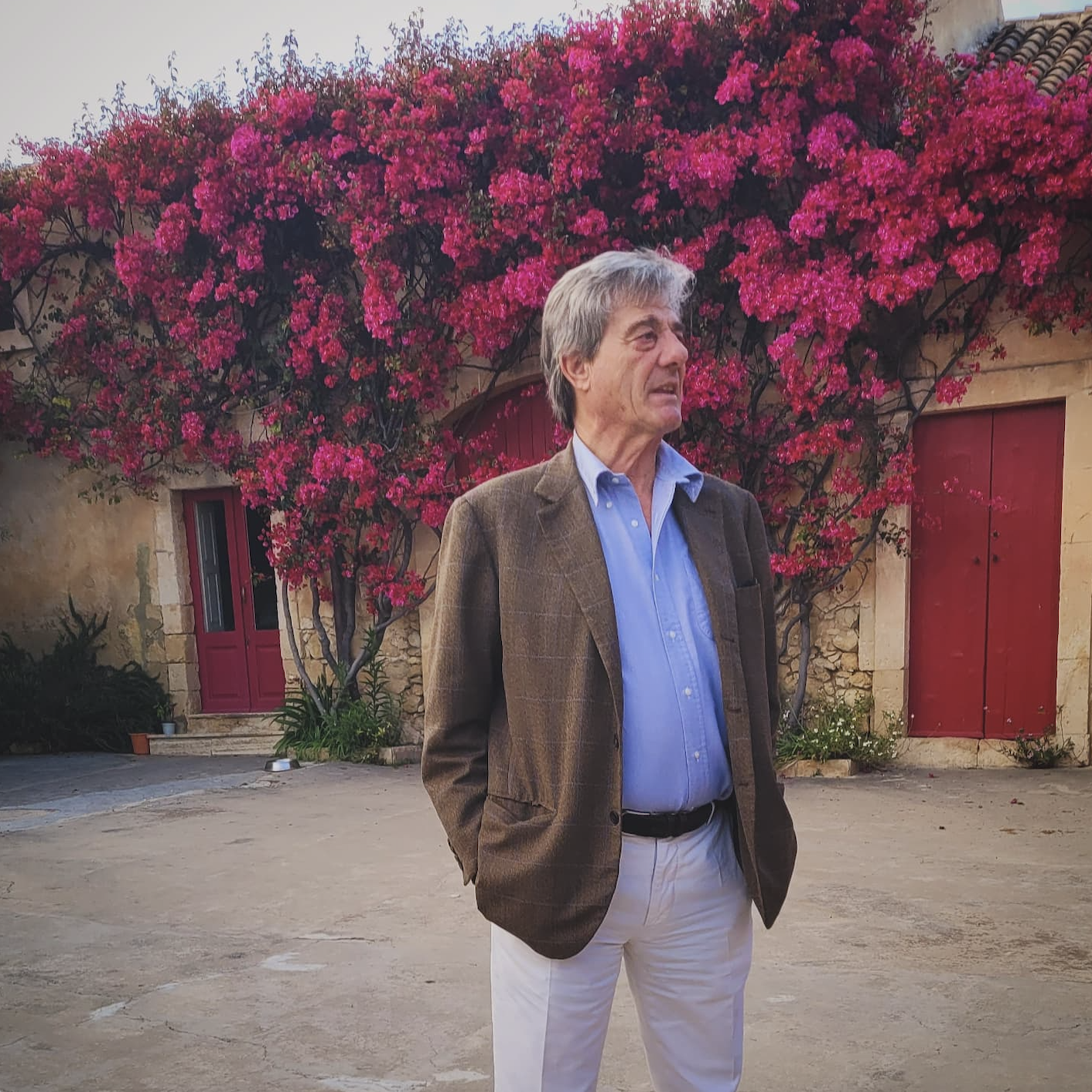
Filippo Mazzei at Zisola

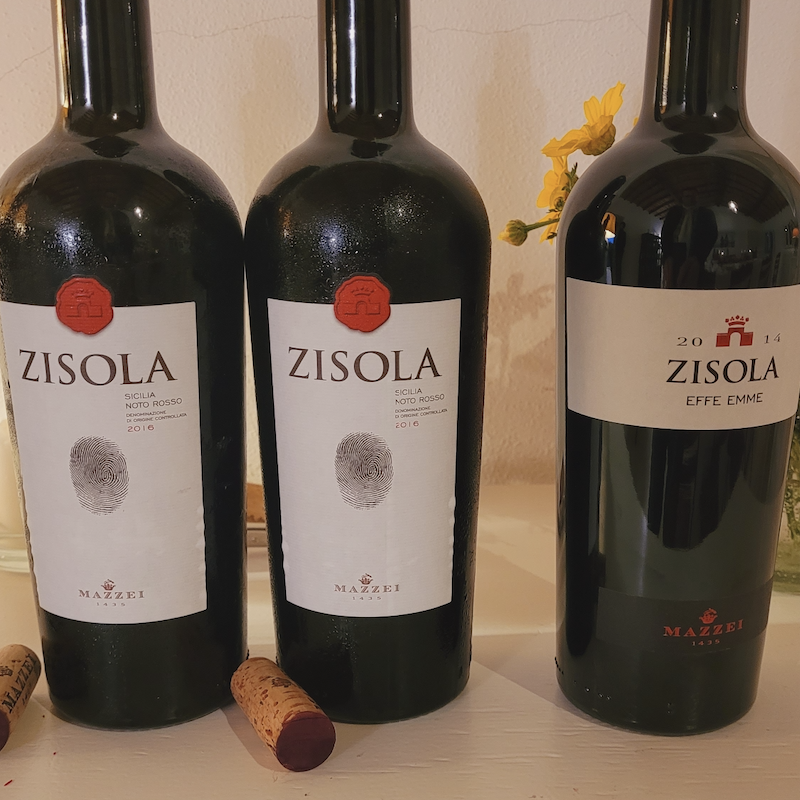
Zisola

Filippo Mazzei and family have spent 20 years managing the biodiversity of Zisola, where lemon, pink grapefruit, clementine and almond trees line the vineyard. These are white soils though in Sicily they do not reflect the sun and raise temperatures, as they do in Tuscany. “This kind of soil can keep humidity for a long time,” explains Mazzei. “Even in July and August we don’t have A/C at Zisola.” The first plantings were 20 hectares of nero d’Avola plus one each of  syrah and petit verdot. Later on grillo and catarratto, all within six to seven kms of the sea and three to Noto. There are now 25 total hectares of vines and the fermentation cellar was built in 2004.
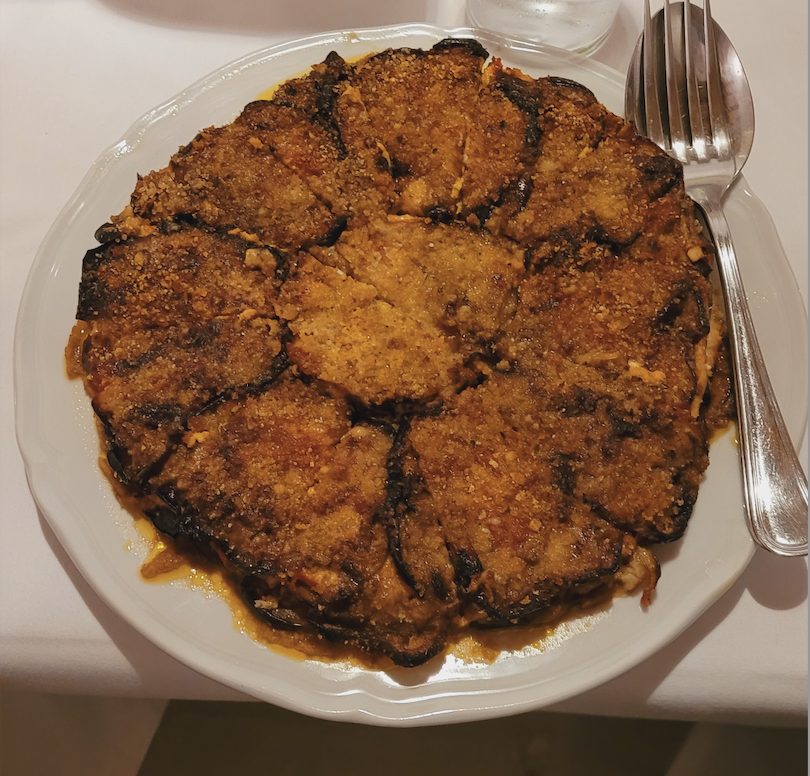
Zisola’s Parmigiana di Pesce Spada

A visit to Zisola will surely include a walk through one of Sicily’s great vineyard blocks followed by a tasting of highest calibre wines. A word of encouragement will say that three dishes might also show up on the table. Parmigiana di Pesce Spada, Penne con Finnochietto and Gelo di Limone. Should you be so lucky, karma would not be a b@%&h. Karma would be calm, neutral, reasonable and generous.

Zisola Azisa Grillo Sicilia DOC 2024

Zisola is not a place where there is a tradition for white wine and there is just one hectare of grillo planted. The name is an extension from Azisa which can translate as “beautiful.” A small percentage is fermented on skins for 36 hours, “to increase body” says Filippo Mazzei. Balances well with the freshness and waxy-aerosol style for a white that screams citrus with a combination of lemon and especially clementine. Surely owing to the plethora of fruit trees growing about the vines. A rarity for Zisola, not only Sicilia and truly a saisfying wine. Drink 2025-2026.   Tasted May 2025

Mazzei Zisola Bianco Contrada Zisola 2023, Terre Siciliane IGT

The most unique of the Zisola wines is this white catarratto made like a red, fermented on skins for three months in “cocciopesto” (as opposed to calling it what we know as amphora), a medium specific to the area. The third vintage for a sku started with the purchase of the vessels in 2021 and each are completely different, a matter of happenstance and not conscious changes or alterations. The 2023 is bloody delicious, suggestively salty, in delivery of an agreed upon “guarantee” of verticality, crazy complexity and something peculiar. Hard to describe and yet also a factor of Alberello (bush) vine training. The grillo is so very clementine but catarratto is more lemon, pink grapefruit and a finishing kiss of almond. Aging should bring about real curious transformations. Drink 2025-2029.   Tasted May 2025

Mazzei Zisola Bianco Contrada Zisola 2022, Terre Siciliane IGT

A glimpse into how catarratto can begin to age and truthfully (yet also technically) nothing has yet happened. A citrus explosion, lemon first and last with great freshness and intensity. Clean and though it may be a new breed of Noto white wine it already shows an ensconced maturity with a precocious character belying its years.  Last tasted May 2025

The second vintage of a 100 percent catarratto from plants that went in back in 2015 on white calcareous soils. Only bush vines and at first made into a blend with grillo. The change was made to do some skin contact and aging in amphora. Really that simple and that is the advantage, no overdoing or distraction in trying to impress. But this does just that, with vibrancy and succulence. Really taut, lemon tight, nearly but not quite piercing. Will change after three years and get honeyed. Reminds of really young Hunter valley sémillon. Top echelon decisions and so bravo Filippo Mazzei and team. Drink 2024-2028.  Tasted May 2024

Zisola Sicilia Noto Rosso DOC 2022

The flagship, calling and business card from 80 percent of Zisiola’s 25 planted hectares, a nero d’avola made in the freshest of Sicilian styles. Clocks in at 12.5 percent, picked early (September 8th) for brightness and well-captured high(ish) acidity. You can feel a bit of wood (from one-third new) and there is no doubt that 20 years into this Mazzei tenure what now matters has been figured out to make nero in the way it should be made. Climbs to the current peak and while better wines are sure to come, this 2022 hits the proverbial and varietal nail on the head.  Last tasted May 2025

Zisola is a project for Filippo Mazzei that began with a 700 km drive around Sicily accompanied by Diego and Alessio Planeta. Noto was chosen because of the biodiversity of the flora, to Filippo not unlike Tuscany. He also fell in love with the old Baroque town and could see a comparison between nero d’avola and sangiovese. “The decision was made based on a feeling.” The 2022 is so much fresher than the nero of 15 years ago, not to mention the balance accrued by way of alberello trained vines. Open up the dictionary and here it is. Drink 2024-2027.  Tasted May 2024

Mazzei Zisola Sicilia DOC Noto Rosso 2016

Seven years later and keep in mind that Zisola is the nero d’Avola made in the largest quantity and not the Rosso destined for extended aging. But in can and 2016 is a perfect example of potential. The lustre and energy are waning though there is little secondary character, just now softening with amiable pleasantries on offer.  Last tasted May 2025

Tasted with Filippo Mazzei in Palermo, Noto Rosso is nero d’avola from the Cantina in Sicily owned and operated by the Castellina in Chianti estate that produces Fonterutoli. A stainless ferment is followed by 50 per cent aging in stainless and 50 in 2nd and 3rd passage oak barrels, It’s a perfectly rich and plummy nero with great red liquorice tang and a distinction to celebrate pure, honest commerce. Very nero, very Noto. Drink 2018-2021.  Tasted May 2018
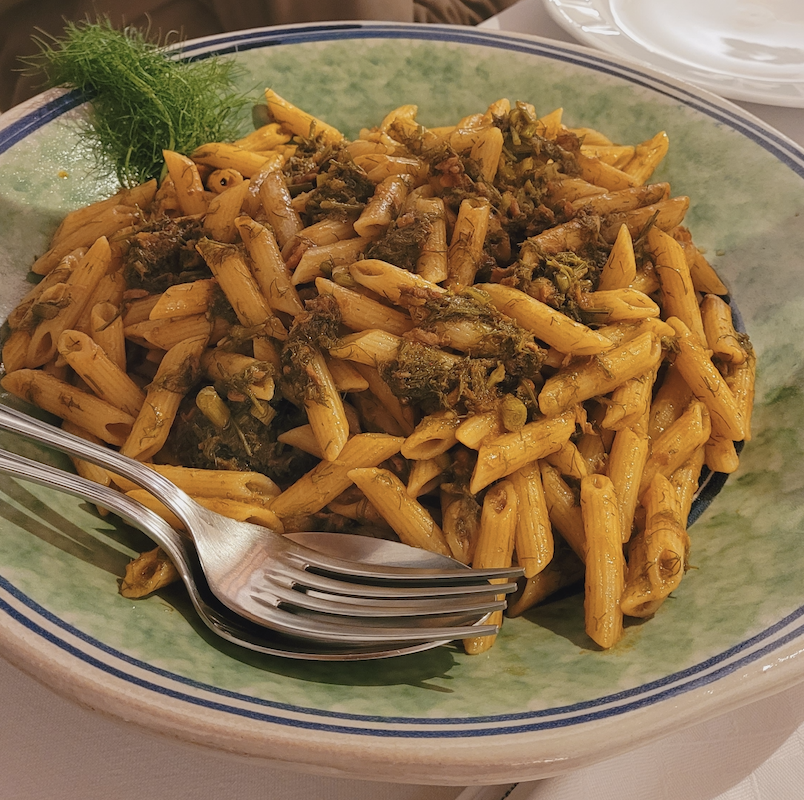
Zisola’s Penne con Finnochietto

Zisola Effe Emme Petit Verdot Sicilia DOC 2021

Effe Emme is varietal petit verdot from just one hectare planted, the album rock radio red of Zisola and monogram for Filippo Mazzei. He might prefer to see this PV stitched as if by tailored cloth but the spicy aromas, exotic bouquet and volatility suggested frankly indicate something more progressively oriented. The wood is generously, suggestively and importunely employed to exaggerate notes for extended play. Requires some further aging to settle the barrel and finish the score.  Last tasted May 2025

Varietal petit verdot planted in 2004, only 1.5 hectares, just about at the very beginning of Zisola. Incredibly chalky to say that it really speaks for the calcaire but time has come to effect changed so that the vines have come into balance. As petit verdot Effe Emme is not as dark and concentrated as it once was. Really showing its colours, what it is, a child of limestone soils. “Effe Emme,” F.M., long-play radio, well-spoken, one who tells things as they are, Filippo Mazzei. Drink 2024-2027.   Tasted May 2024

Zisola Effe Emme Petit Verdot Sicilia DOC 2014

Second look ten-plus years forward for petit verdot that would have come off of not yet 10 year-old vines at Zisola. Showing most of its age, a smoky varietal red with truffle and a held reserve of concentration and persistent local Balsamico. Violet aromas as well, they are the beauty of perfume while the wine drifts into liquid chalkiness. On the decline but interest still holds and will do so for another 12-18 months.  Last tasted May 2025

A 100 per cent petit verdot, 4,000 bottles made, big structure and at 15 per cent a massive wine. Needed to be held back an extra year and still needs two more years in bottle to soften, release and re-integrate. Big boned, spicy, wood massive and intense. Hematic with welling black fruit. Drink 2020-2027.  Tasted May 2018
Zisola Doppiozeta Sicilia Noto Rosso DOC 2021

Doppiozeta is at least twice as concentrated and focused as compared to the nero d’Avola “classico,” Cru in origin on the more calcareous soils of the estate, picked just two days after the bulk of the nero and yet acidity is not insignificantly higher. Owing to the limestone but also 50m higher in elevation which surely brings just that extra amount of wind. The style of Doppiozeta is ever evolving and this 2021 marks a height of freshness and drinkability, but with a seriousness and focus to share space with top quality nerello mascalese, sangiovese and nebbiolo. Would give the ’21 another year to realize its true potential.  Last tasted May 2025

Yes another fine Doppiozeta nero d’avola from the Mazzei family and their Sicilian estate. Crispy exterior, chewy interior, spice and herbs as accents, salt and pepper seasoning, chalky tannic, reasoned and knowably fine. Consistently well raised, made and delivered, signed and sealed as a really good wine. The freshness is always there and the acidity so ideally suited to grape and style. Drink 2025-2030.  Tasted May 2024

Zisola Doppiozeta Sicilia Noto Rosso DOC 2017

Many hot vintages have powered through Italy as of late, including 2017 and yet Sicily was not that way, not in Noto, not anywhere. And so there is a fine and persistent freshness to Doppiozeta for ’17. A seductive sweetness from a time when the nero d’Avola was made in a more extracted, concentrated and barrel-aged way. Nevertheless in 2025 the wine is showing with distinction. Drink 2025-2027.  Tasted May 2025

Mazzei Zisola Achilles 2021, Terre Siciliane IGP

Just one hectare of syrah as part of the original plantings at Zisola for one of three ultra distinct varietal reds. The most hematic meets sanguine is in a way the closest cousin to all that famous Mazzei sangiovese made way up yonder in Tuscany. In other words the syrah here seems to take on a mineral-elemental feel as notable as any red wine in Sicily. Deeply serious, concentrated and in 2021 also structured, namely because of the season. Also uniquely southeastern Sicilian and yes a few years having passed in bottle has resulted in some movement, though barrel and secondary notes are both just barely detectable. Drink 2026-2031.  Tasted May 2025
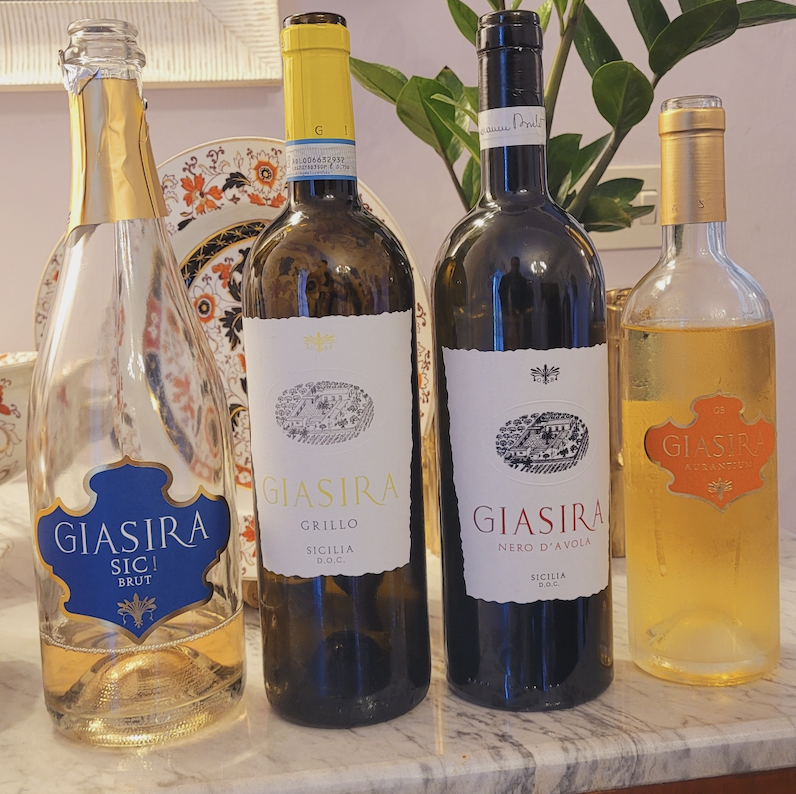
La Giasira

La Giasira is Piedmontese Giovanni Boroli and his wife Veneta Isabella dating back to to 2004. The estate is 130 hectares with 13.5 under vines, of grillo, moscato, catarratto, nero d’Avola and nerello mascalese. They produce 60,000-70,000 bottles annually from vines grwoing in 10-30 cm of soil atop pure limestone bedrock. Tilling happens maybe once a year on this site at 250m above the Telaro Valley (within the Noto Valley), 20 km to both Noto and Modica, equidistant between the Ionian Sea and Sicilian Channel.

La Giasira Bianco 2024, Terre Siciliane IGT

A blend of chardonnay, moscato bianco and catarratto, picked earlier than just about ever, begun in the last week of July. From serious calcareous soils for just 5,000 bottles of Noto area clarity fermented and aged in just Inox tank. Aromatic, all in citrus and freshness captured despite or maybe thanks to the early pick. Bit of almond both floral and raw, the scents of roses and blossoms from clean start to salty finish. Drink 2025-2027.  Tasted May 2025

La Giasira Grillo Sicilia DOC 2023

The grillo stands apart and alone in style when tasted side by each with the catarratto and bianco blend. Here the focus is all fruit, lemon and stone fruit, ripe and fleshy, juices running for a very full and refreshing expression. A capture of southeastern Sicilian sunshine, many heat days accumulating in this juicy grillo. Pour it cold and drink it long. Drink 2025-2027.  Tasted May 2025

La Giasira Keration 2023, Terre Siciliane IGT

Varietal catarratto made with specifically catarratto lucido, just 8.000 bottles (of 60,000-ish total) from the thin soils above limestone bedrock at Giasara. Just stainless steel for six months and three in bottle ahead of release. Noticeably different to the Bianco blend, a decrease in floral citrus and jasmine, an increase in fruit (including the smell of spun sugar) and accompanying viscosity. Immediate level of gratification from a wine with luxe mouthfeel. Drink 2025-2028.  Tasted May 2025

La Giasira Keration 2022, Terre Siciliane IGT

Tasted side by side with the 2023 and the consistency is more than obvious, namely by mouthfeel and viscous feel. A citrus yet reminding of bergamot in curd or granita form. Really persistent white, lingering for a minute with a moment of almond at the finish. More sapid than salty, even more so than the still truly fresh 2023. Drink 2025-2027.  Tasted May 2025

La Giasira Rosato 2024, Terre Siciliane IGT

Made with 100 percent nerello mascalese from the early pick of vines planted back in 2006. If it smells and tastes like mascalese than it must be mascalese, of roses and tart red berries, here salted and finishing at rhubarb. Rosé that quenches by doing what it should for a simple and specific purpose. Ends on a sapid botanical note. Drink 2025-2027.  Tasted May 2025
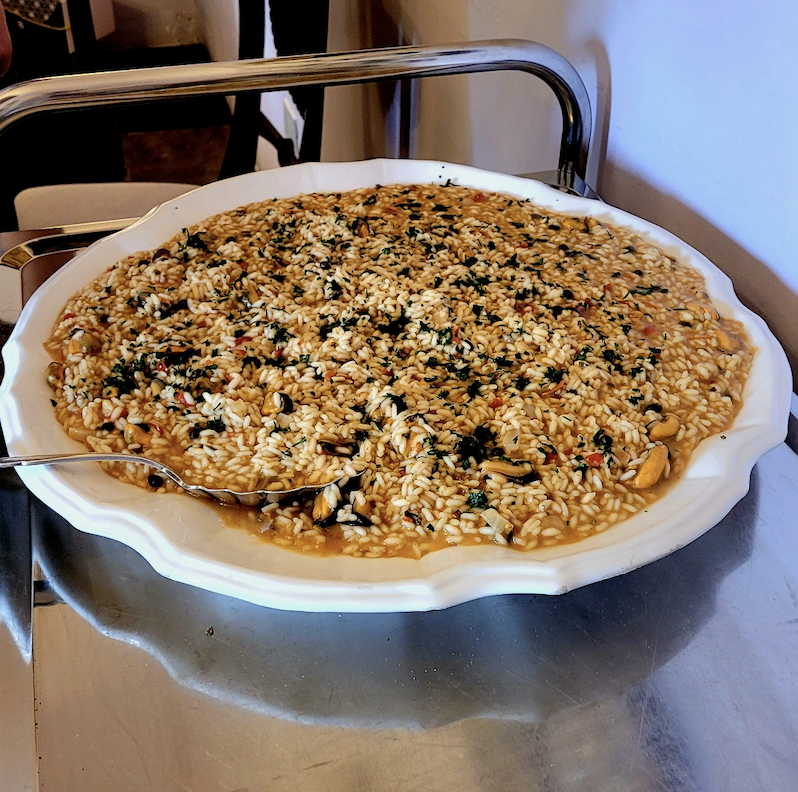
Unbelievable Risotto con Pesce at La Giasira

La Giasira Morhum 2023, Terre Siciliane IGT

Morhum is 100 percent nerello msacalese off of hybrid Cordone Speronato/Guyot trellised vines planted in 2006, aged nine months in (25 hL) botte grande. Several intensities noted, first floral and then an implosive tart palate style with more than impressive controlling acidity. Surely picked early extending forth to fineness and a finesse wound up in the tension. Tannins are fine and also wound tight for a light yet currently aggressive nerello mascalese. Drink 2026-2029.  Tasted May 2025

La Giasira Nero d’Avola Sicilia DOC 2021

One of ten small production skus, here at 6,000 bottles of nero d’Avola raised on Cordone Speronato trellising and the serious calcareous geology at Giasira. Spends 12 months in botte grande, followed by six months in bottle ahead of release. Current vintage and so six months is more like 30 to mature a tannic nero d’avola ready and drinking in balance, just as its 13.5 percent alcohol frame would want. Forget the big, wooded and thick nero you may know and see the nebbiolo meets pinot noir forest for the Noto nero trees. The conceptual origin is kind of obvious, that being Piemonte so that here you might almost believe this to be a cool climate red. For Giasira the pick is later than most of the rest of the farm, in the last 10 days of September. There is some verdancy but it works and in all the right ways, finishing with good and proper tension. Drink 2025-2028.  Tasted May 2025

La Giasira Nero d’Avola Sicilia DOC 2018

More than a notable amount of persistent freshness yet now a whole lot of exotic spice going on. Getting cardamom and cinnamon (but no clove) from a nero d’avola now at the epitome of “morbido,” in this case smooth as opposed to soft. The nose shows development if not age in terms of oxidation or secondary character. More maturity on the palate with dried bokser pod and carob. In other words classic for nero d’Avola from a warm climate made just six years ago with more wood and concentration, though nothing like some other very wooded peer examples. Drink 2025-2027.  Tasted May 2025

La Giasira SIC! Spumante Metodo Classico Brut Rosato, Terre Siciliane IGT

Just nerello mascalese aged 24 months and finished below Brut with what feels like just a few grams of residual sugar. Quenching and not so serious while in delivery of great satisfaction. The clarity is palpable for such a clean sparkling wine. Taste this nerello bubble with a risotto blessed with fresh mussels and capers for a true gustatory experience. Drink 2025-2027.  Tasted May 2025

La Giasira Passito di Noto Sicilia DOC 2022

A passito from grillo not produced in every vintage, citrus zesty and aerosol though teasingly dry on the nose before unveiling its sweetness and tang on the palate. Lemon gelée with the bite of granita and truth be told the limestone of Giasira’s soils surely effect the dessert wine as much as the dry whites and reds. Nice botanical edgy finish too. Drink 2025-2030.  Tasted May 2025
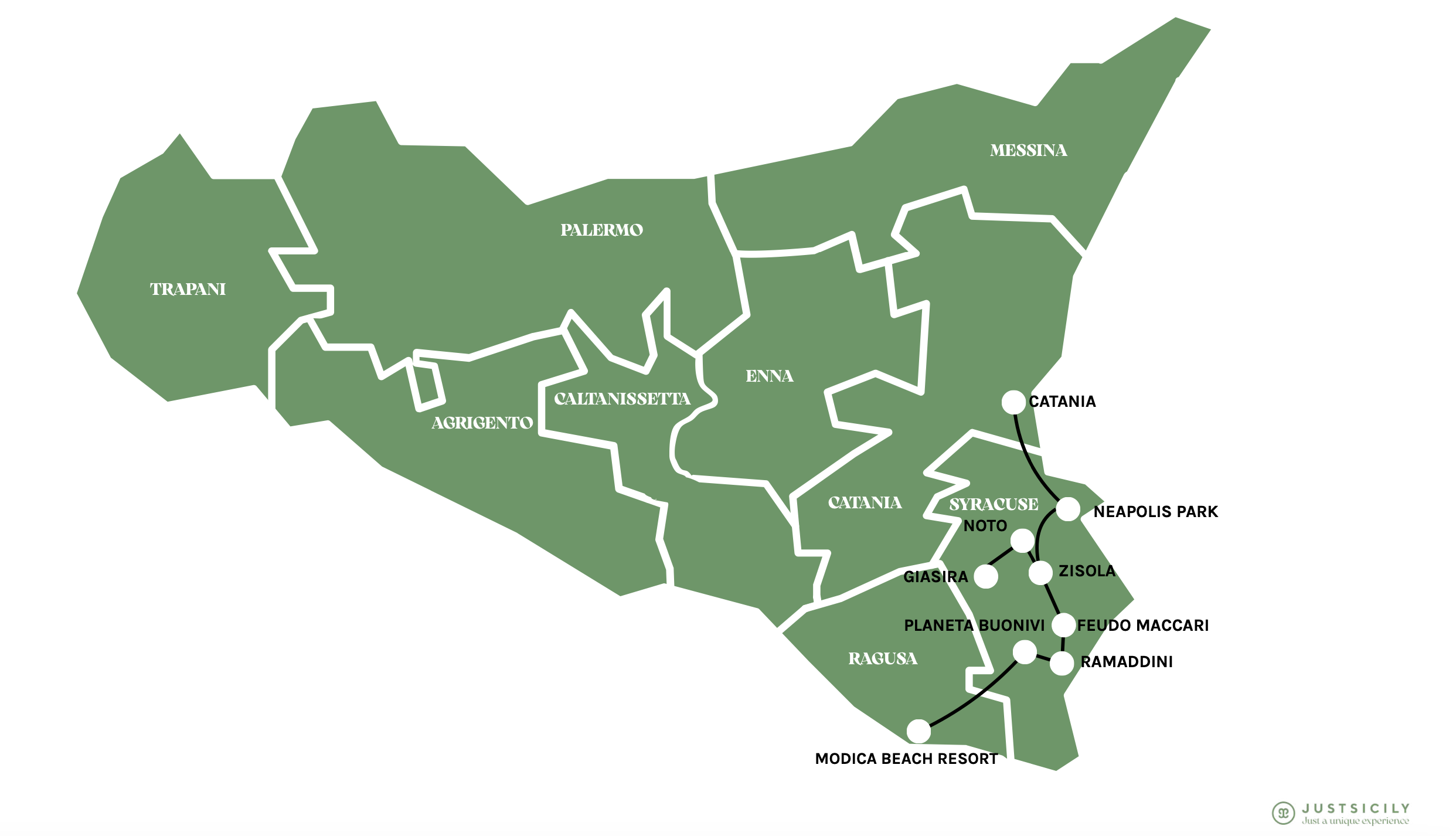
Sicilia en Primeur Enotour 11 – Noto

Ramaddini Perla Marina Vino Spumante Brut, Terre Siciliane Bianco IGT

Charmat method sparkling wine made with the local moscato di noto, soup sugary, neutral and vague selvatica meets macchia aromas. Sweet but in a typical Brut way and number with more than vague bitters at the finish.  Tasted May 2025

Ramaddini Grillo Nassa Sicilia DOC 2024

Nassa, a fishing reference for the catching of fish (owing to the nearby seaside), a 100 percent grillo grown in the Rammadini Contrada up in the hills four kilometres away from the cantina and five from the sea at Marzamemi. Lemon through and through, pith and seeds included for a bitter tonic of grillo, yellow and also green. High vigour and yields make for an insipid, vapid and diluted white wine.  Tasted May 2025

Ramaddini QuattroVenti 2024, Terre Siciliane Bianco IGT

A blend of chardonnay and catarratto aged in wood and the notes waft out immediately, like smoke from a chimney. The aromas are problematic, as a baked potato which indicates the challenge of diethyl acetate. The palate does not improve much and the vanilla overpowers the fruit.  Tasted May 2025

Ramaddini Nero d’Avola Sicilia DOC Noto Nere 2022

A varietal nero d’Avola aged in 70 percent steel and (30) barriques as smoky and vanilla-toasty as the whites. Surely some residual sugar fills in the holes and mellows the greenness in the wine. Waxy, sappy and syrupy.  Tasted May 2025

Team JustSicily

Ramaddini Syrah Sicilia DOC Noto Nere 2022

Purely syrah as smoky and toasted as the nero d’Avola to a point where distinguishing one from the other is like trying to identify the difference between identical twins Richard and Geoff Saunders back in high school. I wonder if the syrah can write nero d’avola’s Math exam and nero can go sub in for a date with syrah’s girlfriend? But seriously there is nothing to distinguish this as Sicilian syrah, nor is their any charm, or joy to be found.  Tasted May 2025

Ramaddini Patrono Nero d’Avola Riserva Sicilia DOC 2021

Longer wood aging and the signature varietal nero d’avola that takes Rammadini’s work to the next level. Not necessarily a wine that speaks to more attentive farming but instead to more attention in the cellar. The philosophy concentrates on how the wines are made and aged with the most focus on Patrono and it shows. The notes of vanilla, lavender, red berry and white chocolate shake exert themselves with impunity. You can age this for a few years and see it mellow into a soft, creamy, thickened and emulsified red. Drink 2026-2028.  Tasted May 2025

Ramaddini Al Hamen Passito di Noto Sicilia DOC

Strange mix of marmalade and diesel in a moscato passito as botanical as it is gaseous. If apricot was a metal and orange slices were urinal pucks. Flawed.Can’t fathom what happened here.  Tasted May 2025

Feudo Maccari

Feudo Maccari

The Sicilian exploration of Tuscany’s Moretti family of Tenuta Sette Ponti. As with several other Noto area estates, Maccari was set up 25 years ago  on 200 hectares with 65 planted to vines, most trained to Alberello (medio).  Much like the others the location is heavily influenced by limestone soils set halfway between the Ionian and Mediterranean seas. There are predominantly nero d’Avola and grillo, but also seven hectares of syrah. The company also farms 11 hectares on L’Etna (called Etnae), namely in the Contrada Santo Spirito.

Feudo Maccari Anima Lucente Etna Bianco DOC Contrada Santo Spirito 2024

Anima Lucente is the only Maccari Etna Bianco, made with 85 percent carricante and (15) minella grown in a 700m, 60-plus year-old “garden vineyard,” on Passopisciaro bush vines. Natural ferment, half in steel and half in ”blanched” second passage French wood. Just bottled a few weeks ago and already the wood is easily integrated, subtly specialized without so much as a toasty, vanillin or buttery trace. Racy Etna Bianco from head to tail, judged, interpreted and translated as a garden blend should. Quite edenic for the ilk and of dreams realized. Not the most complex, nor does it need to be but it’s so hard not to be seduced through to the mineral-metal finish. 10,000 bottles produced. Drink 2025-2029.  Tasted May 2025

Feudo Maccari Anima Vulcano Etna Rosso DOC Contrada Santo Spirito 2022

Red counterpart to the white Anima Lucente, moving from luminescent to charcoal volcanic in Rosso that spends only a reasonable and amply fortifying eight months time in barrel. Perfectly professional, seasoned, stylized and straight up the middle road taken for the DOC and more importantly but also specifically the contrada of Santo Spirito. Speaks in the clearest double “S” vernacular, explains and delivers just what is expected and frankly wanted from a contrada-specified Etna Rosso. Acids are in synch with the rusty grit split between fresh and dried elements. Stamp of guarantee. 3,000 bottles. Drink 2025-2029.  Tasted May 2025

Feudo Maccari Animardente Etna Rosso DOC Contrada Santo Spirito 2022

Slightly higher elevation also from the Passopisciaro contrada of Santo Spirito, here at 750m and same vine age in and around 60 years. This time the qualifying suffix “ardente” refers to passion or a burning for something, that surely being the raising of impressive Rosso from out of the Etna lava stone flows. The reference also elicits the heat and colour of the magma fused with the current orange-hued basalt. A more serious Etna Rosso of depth and tannic intensity, doubly structured and needing time. The botanical feels mixed with structural elements more than grip the palate, hold on tight and show no immediate sign of letting go. Give this two more years. 3,000 bottles. Drink 2027-2032.  Tasted May 2025

Feudo Maccari Animantica Etna Rosso DOC Contrada Santo Spirito 2022

From the owners of Tuscany’s Tenuta Sette Ponti. Animantica, a compounded abbreviation of anima and mantica, i.e. “soul and divination.” A spiritual combination for the smallest of Etna Rosso productions from Contrada Santo Spirito. Exhibits the freshness and accessibility of Anima Vulcano juxtaposed against the tannic frame and freight of Animardente but the expression is subtle, restrained and without the ardent flaunt of necessity. The vines here are 100-plus years pre-phylloxera grown in the “garden vineyard,” inclusive of some (white) minella. Rosso as graceful as any on the Etna and therefore fully qualifying as mountain wine. The tannins are suave and fluid to see a “divinazione” of 10 years or more. Just 800 bottles. Drink 2027-2036.  Tasted May 2025
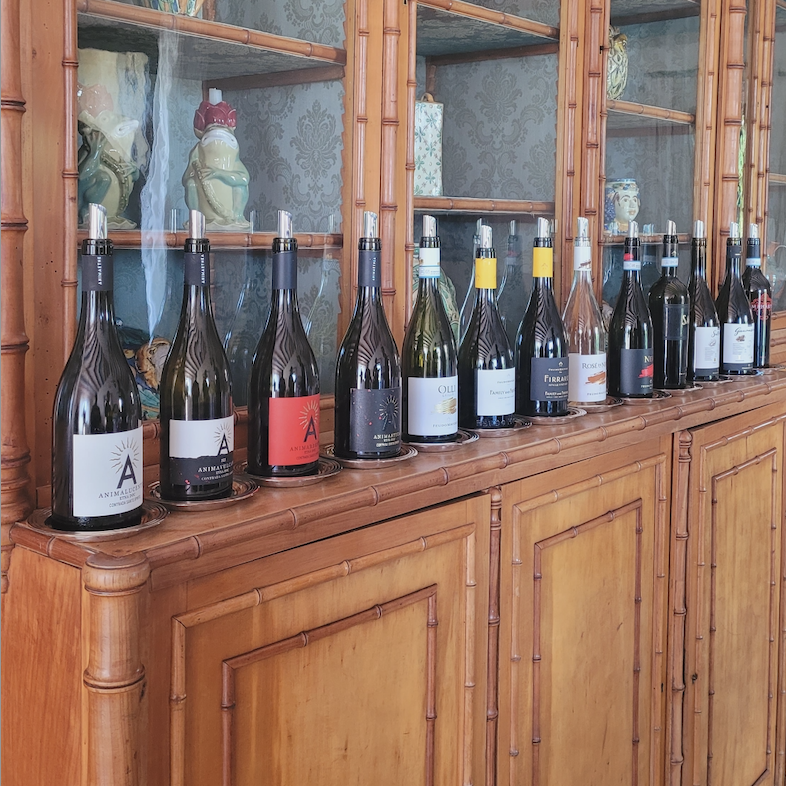
Feudo Maccari Grillo Sicilia DOC Olli 2024

Olli, part of grillo read backwards and a local name for the grape. A reminder how it arrived as a cross between catarratto and zibibbo, developed by Baron Antonio Mendola of Favara. Clean, fresh, ripe and accessible to all, for all the correct reasons and any time at all. Yellow fruit and flowers, some sapidity and the easiest drinking white anywhere from Sicily. Vines averaging 20 years bring the knowhow and concentration. Drink 2025-2026.  Tasted May 2025

Feudo Maccari Family and Friends 2023, Terre Siciliane Bianco IGP

The wine once made for, you guessed it, family and friends that first became a commercial label with the 2012 vintage. Vineyard is now more than 20 years old with grillo vines growing in sand and limestone. The label advocates “only the best grapes” and the amenability meets style of this varietal wine suggests that to be the honest truth. A lemon intensity in concentration and bursting fleshy segments are juicing through the entirety of the wine. Again a sapid (as opposed to salty) element, not quite botany or “macchia” but savoury nonetheless. Hides the 14.5 percent alcohol frame with ease. Drink 2025-2027.  Tasted May 2025

Feudo Maccari Vigna Firraru Family and Friends 2023, Terre Siciliane Bianco IGP

The most important grillo comes from the black-soiled clay vineyard above the cantina, a.k.a. Fabbro, from Sicilian dialect the name Firraru describes the colour of that terroir. Alberello vines are 20 years of age (as with all the grillo plantings) and now having come into their zone. A ferric element emerges as per the soil to separate this grillo from the other Family and Friends varietal white. Even more sapid, metallic surely and length increases. The French wood, richness and generous alcohol all impress while doing their part in well rehearsed integration. Drink 2025-2028.  Tasted May 2025

Feudo Maccari Rosé di Neré Sicilia DOC 2024

More than obviously stuck to Provençal style guns with a Rosato made with nero d’Avola softly hued, pale and simple. Just two hours of skin contact plus five months of aging in steel. A lees effect, however soft and in restraint though consistently designed and presented with the Feudo Maccari sapidity up front. Showing some true to from nero notes, of ripe berries and sweet herbal savour. Well made and reachable for all. Drink 2025-2026.  Tasted May 2025

Feudo Maccari Sicilia DOC Neré 2022

A mix of nero d’avola vines young and old, of 10 and over 30 for the signature varietal business card of a red wine. Dusty and notable Balsamico with a local nickname for the most important variety, not only for Noto but all of Sicily. Neré is more restrained and quaffable than ever before, with crusted, skin musky fruit and high acidity. A wine to chill and spill without thinking too much on anything at all. Drink 2025-2026.  Tasted May 2025

Feudo Maccari Sicilia DOC Saia 2022

Saia comes from Arabic, a word making reference to centuries old rainwater collecting irrigation canals and the first label produced by Feudo Maccari in 2002. These are the oldest estate bush vines, now more than 30 years of age with the eyes, canes and fruit of experience. More obvious depth and layers to nero d’Avola as Saia, a treasure trove and trough filled with fruit and accompaniments in complexity. A nero adorned but also soft with some pruning of the fruit while still amply structured. Not grippy or with tension per se but in control and able to age. Drink 2025-2029.  Tasted May 2025

Feudo Maccari Nero d’Avola Sicilia DOC Sultana 2022

A single vineyard nero d’avola from white limestone soils of 20-plus years that sees 10 months in tonneaux, coming out in the 15 percent alcohol range. Just one hectare like Guarnaschelli and aromatically speaking the most mineral-elemental and therefore salty nero d’avola for Feudo Maccari. Genuine depth and ideal push-pull posit tug between fresh and dried elements with a chalky understreak that speaks to the brown skeletal soil and its limestone content. A wine made in the vineyard, as they say, exaggerating and celebrating the local Balsamico and singular savoury improvisations. “Autentico.” Just 1,000 bottles made. Drink 2026-2033.  Tasted May 2025

Feudo Maccari Nero d’Avola Sicilia DOC Guarnaschelli 2022

A single vineyard nero from black volcanic soils of some 60 years that sees 10 months in tonneaux, coming out in the 15 percent alcohol range. Just one hectare like Sultana and the terroir directs the result. Greater intensity and grip but also a converse style due to the ulterior elements that come from basalt as opposed to limestone. There is a richness to the mix of dried and fresh fruit, Balsamico and macchia, a layering that continually delivers more and more. The clarity and finesse from Guarnaschelli do well to balance and smoothen both the new wood and elevated level of alcohol. Just 1,000 bottles made. Drink 2027-2035.  Tasted May 2025

Feudo Maccari Syrah Sicilia DOC Mahâris 2022

From seven hectares of syrah, the second label produced at Feudo Maccari, first vintage 2005. The name refers to Arab watch towers along the sea coast and it is the wine “that symbolizes the meeting of different styles and cultures.” In other words syrah brought to Sicily and how it has prospered, with FM being one of the pioneers in terms of scale and time having worked with the French variety. Then again the legend of Marcus Aurelius, Syracusa and the variety have by now become one to make this one of the island’s own. The 2022 is full and wooded, seasoned to the hilt and within good reason because this is what the grape wants from Noto. Fruit and structure are tied by sweet acidity as much as they are by tannic freight. Full wine and one to impress. Drink 2026-2032.  Tasted May 2025

With Santi and Alessio Planeta in Noto

Planeta

Diego Planeta. Pioneer, visionary and a man who considered the entire island an agricultural playground where anything was possible. The Planeta family has Spanish origins and roots dating back five hundred years. Diego Planeta was the former president of the Settesoli Cooperative and founder of Planeta winery. His passing in 2020 left an irreplaceable hole but 15 cousins, including Alessio, Francesca and Santi Planeta are the beneficiaries of their uncle’s plans and legacy. Five family members run the day-to day operation and more than 200 vinicultural, viticultural, administrative and marketing artisans share in the collective vision. Today they work, farm sustainably and reap the benefits of five distinct estates but more than that they bring the fruits of these locations to the world. No other producer in Sicilia does this, not with the scope and breadth they do.

Noto is the birthplace of nero d’Avola, graced with calcareous soils like Jerez and Champagne, not really comparable to anywhere else. Noto is close to Vittoria in how the wines come to be but it’s a mobile texture, silken and with velvety tannins. The soft hills of Buonivini are blessed by soft breezes arising from the meeting of two seas, ideal for nero d’Avola and moscato, but also almonds, carobs and olives, symbolic plants of the Mediterranean location. The three vineyards are agliastro, buonvini and zuppardo on 45 hectares, acquired piece by piece, today producing the DOC wines Santa Cecilia, Moscato di Noto and Passito di Noto.
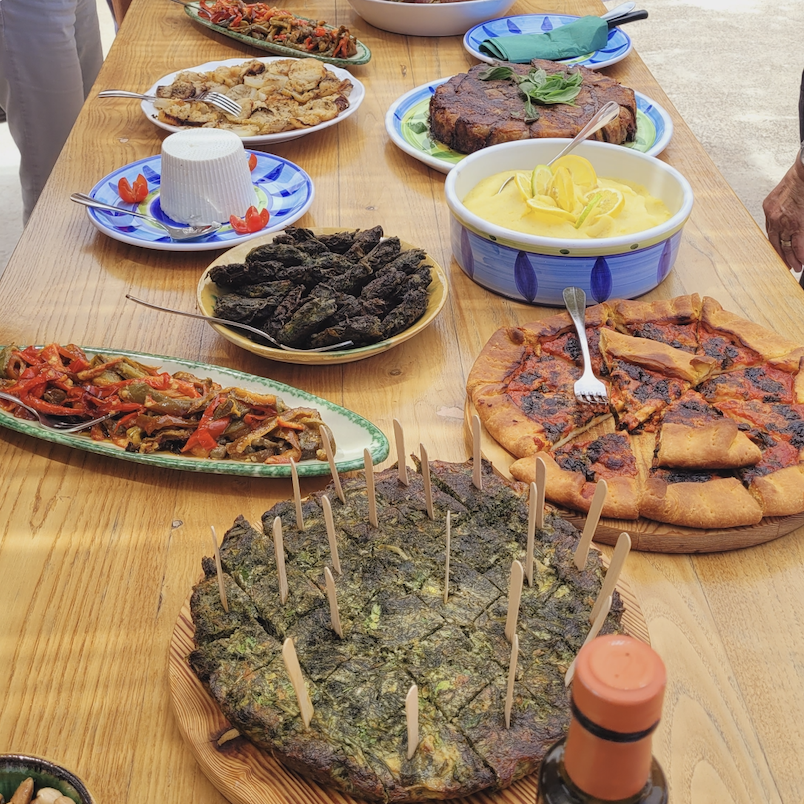
Country lunch at Planeta, Noto

Planeta Noto DOC Allemanda 2024

Always the (totally) dry moscato from Noto, white grape that has been a focus for Planeta not quite but almost since the beginning. From the Bounivini – Agliastro vineyards built of lime, soy marl and whitest of white chalk. A low production vintage because of drought and small berries though the aromatic variety translates as high and expressive as ever. Freshness and botanicals meet at the middle where citrus predominates. No questioning the quality and intensity for what must be viewed as a singular style and effect of white wine. Never searing and of a sapid notion that seems too bely the calcari, but that is exactly why this moscato works as a dry white wine. If you like top echelon dry palomino then this will induce interest along a similar line. Drink 2025-2029.  Tasted May 2025

Planeta Noto DOC Allemanda 2020

A fine Sicilian vintage with ideal climatic conditions and looking back four years you get some evolution in the way you might think about what happens with dry sémillon or riesling. Now an arriving mix of honey and petrol to compliment the concentrating mandarin and lime blossom notes. In a way it feels like a sweetness is developing but that is a faux reality because there is literally no sugar in this moscato. Testing 2020 in 2025 seems just about right – another year and things will really go secondary. Drink 2025-2027.  Tasted May 2025

In the Noto cellar with Alessio Planeta

Planeta Noto DOC Allemanda 2014

More than 10 years have passed and forget secondary because tertiary has come to town. Fully developed maturity between the honey and petrol, sapidity strong and metal savoury, everything having coalesced into a finished and now finishing wine. This is where moscato will go, here with distinction because of how clean and competent it bagged character all those years ago. Drink 2025.  Tasted May 2025

Planeta Nero d’Avola Noto DOC Controdanza 2021

The first vintage of this specialized dance in Noto was 2016 and here five years later we begin to see the balance and personality really showing forth. Also from where and how the heavy presence of white limestone grabs ahold of nero d’Avola’s soul and hauls it straight down to the ground. All the carob and some liquorice define the flavours of Controdanza for a full and satisfying experience, replete with fine acidity and elastic intensity. Drink 2025-2028.  Tasted May 2025
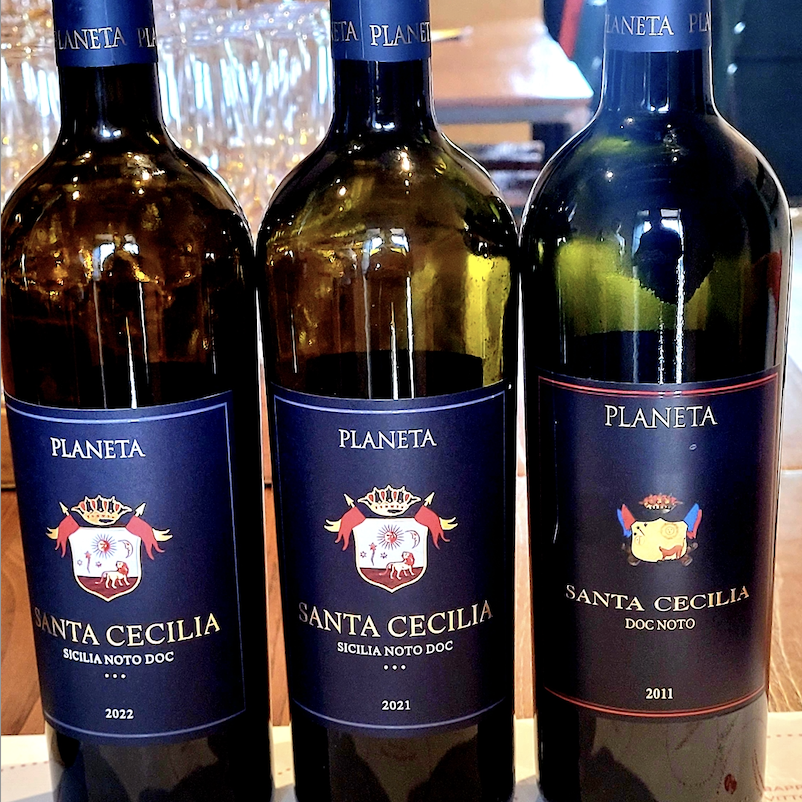
Planeta Santa Cecilia Noto DOC 2022

A preview yet to be released but a finished wine bottled a year ago. The first vintage (as a reminder) was 1997 and 50 percent is aged (12 months) in new wood, the rest of the nero d’Avola in used barrel. Two parcels of the Zuppardo and Agliastro they are, both contributing to the mille-feuille layers that deliver wave after wave of varietal flavour, character and soul. They are the most importantly identified white (calcareous) soils chosen for this flagship varietal red in the Planeta world. Santa Cecilia owns a chalkiness in its tannic profile that feels singular, non-inimitable and willing to take 10-15 years to fully transform. The 2022 is a prime example of a latest vintage produced serving as its best. Drink 2027-2035.  Tasted May 2025

Planeta Santa Cecilia Noto DOC 2021

Not much movement as of yet, save for a moment of carob, naturally honeyed with caramel and earthiness. Speaks to ripeness as much as maturity. The acids from 2021 are at the fore right now, loudest of clamour and opening the window for clarity and the complex fruit component coming into focus. Yes there is a minor feeling off secondary character but just in infancy to suggest three more years in this stage.  Last tasted May 2025

Such a fine iteration of nero d’avola as Santa Cecilia, a 2021 more mature and open than before but is that not what it should be? Fruit so naturally curated, sweet and generous to speak of a great potential and long future. Fine acidity as well while also necessary and yet as the wine sits on the palate those credible and knowable quality of nero tannins remind of Cecilia’s past. Anyway this is both handsome and beautiful, vulnerable and strong. Fluid and confident, loving and powerful, with a spoonful of Noto nourishment to last a very good long time. Drink 2025-2034.  Tasted May 2024

Planeta Santa Cecilia Noto DOC 2011

Now well into secondary with plenty of tertiary having come to take over the personality of Santa Cecilia 2011. Still there is some freshness of fruit and especially how acidity affects the development of original elements transforming into later life pleasure. Now showing as a perfectly gorgeous 13-14 year-old nero d’Avola from a second stage understanding within the overall Planeta idiom.  Last tasted May 2025

Santa Cecilia from 2011 is a special nero d’avola, balanced in silent but sweetly deadly acquiescence of Noto’s white chalky soils. Her tannins are abundant and smooth, running in one direction and so it’s a wonder how un-evolved and yet so involved this nero d’avola is equipped to believe about and with great kindred spirit with itself. That it presents this youthful and yet to advance is a thing magical and sincere. Inner strength is one thing but outward beauty is the real deal. Or is it the other way around? Either way they combine for one of Cecilia’s greatest acuity and remainder of structure. Drink 2018-2026.  Tasted May 2018 and April 2022
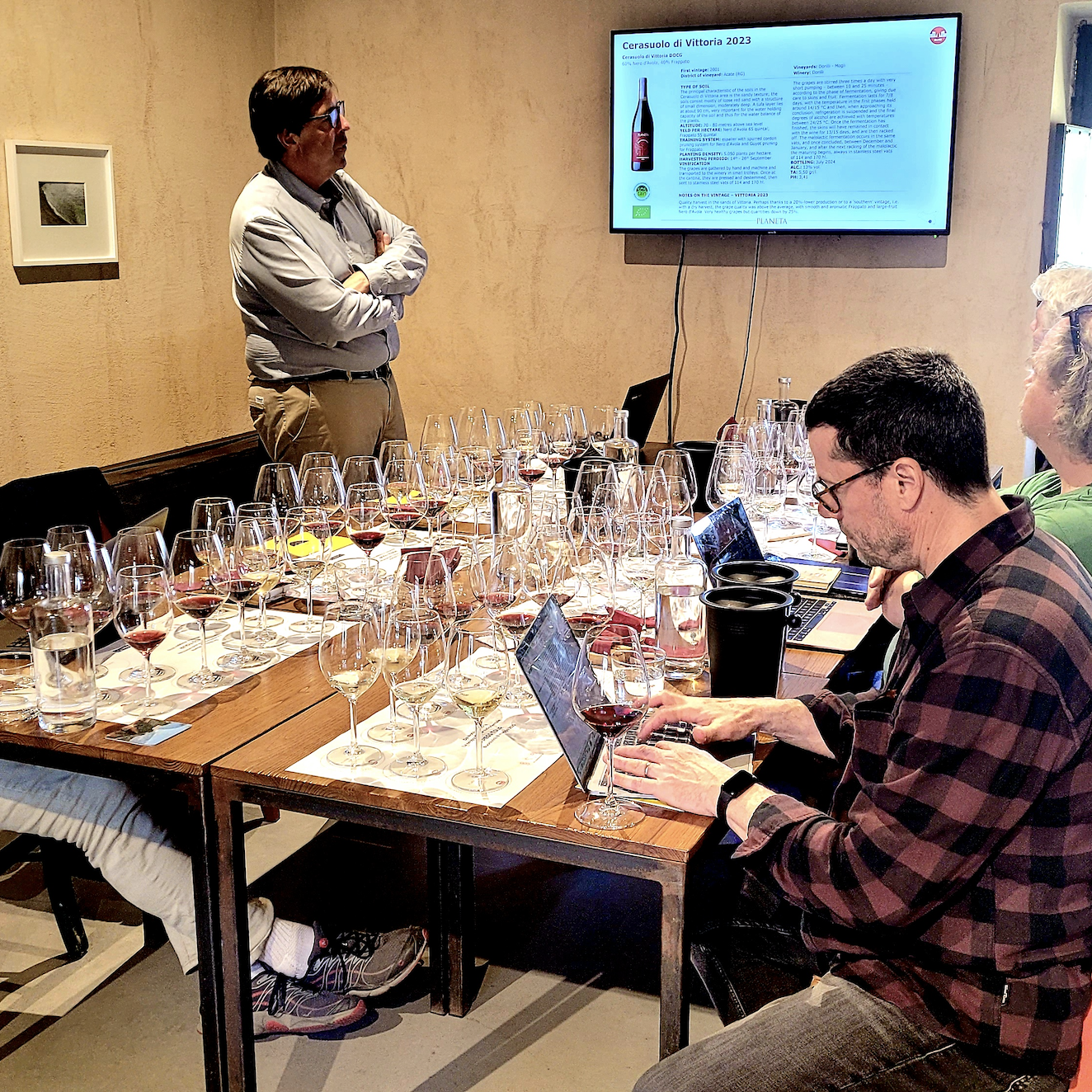
Tasting at Planeta, Noto


Planeta Frappato Vittoria DOC 2024

Great freshness and red berry fruit define frappato for Vittoria, “a grape that is magic and if you plant it outside of Vittoria it is not so interesting,” explains Alessio Planeta. “In my opinion.” The aromas and flavours of the grape are expertly preserved, here bursting and the herbal or savoury aspect is so much sweeter from Vittoria, noting like basil or chervil. What matters is the soil’s origin, that being marine and when the grape is frappato the handling simplifies so that the freshness, fleshiness and simple beauty is exulted. This may be simple but it’s also brilliant. Low alcohol (12.5 percent) and above average pH matched by just below tart acidity to result in fragrance and balance. Drink 2025-2028.  Tasted May 2025

Planeta Frappato Vittoria DOC 2023

The first vintage of Planeta’s Cerasuolo Di Vittoria was 2001 from the area of Acate and vineyards of Dorilli and Mogli. Acidity just a bit higher than varietal frappato and pH conversely lesser. The effect of nero d’avola leads to this wine’s balance between fresh fruit and linear structure. Quantity was down 20-ish percent in 2023 and concentration feels elevated, corresponding to healthier levels of quality and tannic structure. Not always a 60-40 nero d’avola to frappato but that does seem to be the comfort zone, although Alessio Planeta is not adverse to a much higher number for the nero. I mean this is just perfectly balanced, juicier than ever and subtly structured for a five-plus year run. Drink 2025-2030.  Tasted May 2025

Planeta Cerasuolo di Vittoria Classico DOCG Dorilli 2022

Dorilli is the single-vineyard nero d’Avola residing at the pinnacle of Cerasuolo for Planeta. Brighter and upwardly airy to ethereal than ever before, here with a 10 percent increase of the nero d’Avola from the classico Cerasuolo and yet alcohol, acidity and pH are almost always aligned within a tightly defined spectrum. This regardless of how much of each grape are employed which tells us that soils and place, clay-limestone soil and Vittoria are the greatest determining factors for results. That being lithe, fresh and frankly also exciting. Cru Beaujolais lovers must not turn away from Cerasuolo, not when it is made in this style. Drink 2026-2032.  Tasted May 2025
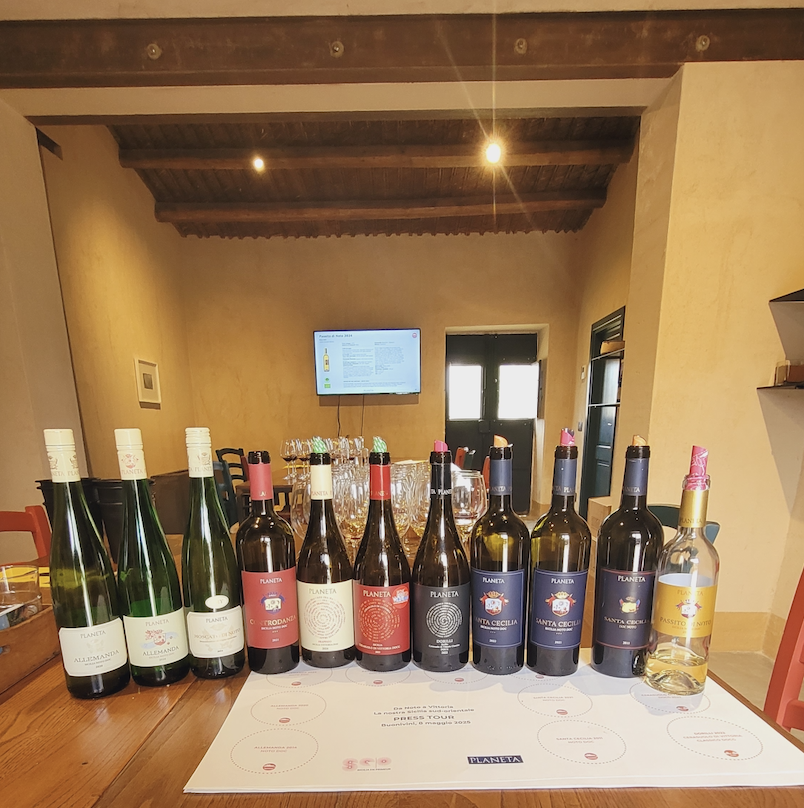
Planeta Passito di Noto DOC 2024

From Noto’s Buonavini winery/vineyard and also that of Agliastro and their whitest of white limestone terroir. Lemon and mandarin incarnate in any way your imagination can conjure, from curd through gelée to granita. Pure and focused, clean and all about the fruit. The best thing you could do is put a glass of this Passito next to a plate of Sicily’s finest master pastries made by Corrado Assenza at Café Sicilia. Drink 2025-2032.  Tasted May 2025

Planeta Nocera Sicilia DOC 2023

A world unto itself with few peers making the yeoman work of nocera production and yet this grape holds plenty of potential. It may be ancient and perceived as rustic but in the hands of Planeta it’s tamed and gifted as something easy, satisfying and quite complex. You can drink this with ease and without tension, its fruit more musky and leathery than say frappato but with nary a meant of drying, tough chew or earthiness. This 2024 is youthful and got right for a varietal teaching moment that also delivers a true sense of pleasure matched by pace.  Last tasted May 2025

One of the very few pleasantly made varietal nocera on the island and the only one presented here at the ’24 Anteprima. Surely found to exist along similar lines to nero d’Avola, with a touch more rusticity, also chewy liquorice and leathery fruit character. The 2023 is a good if not high acid nor rather tannic vintage, assembled and delivered for earlier drinking than some. Drink 2024-2026.  Tasted May 2024
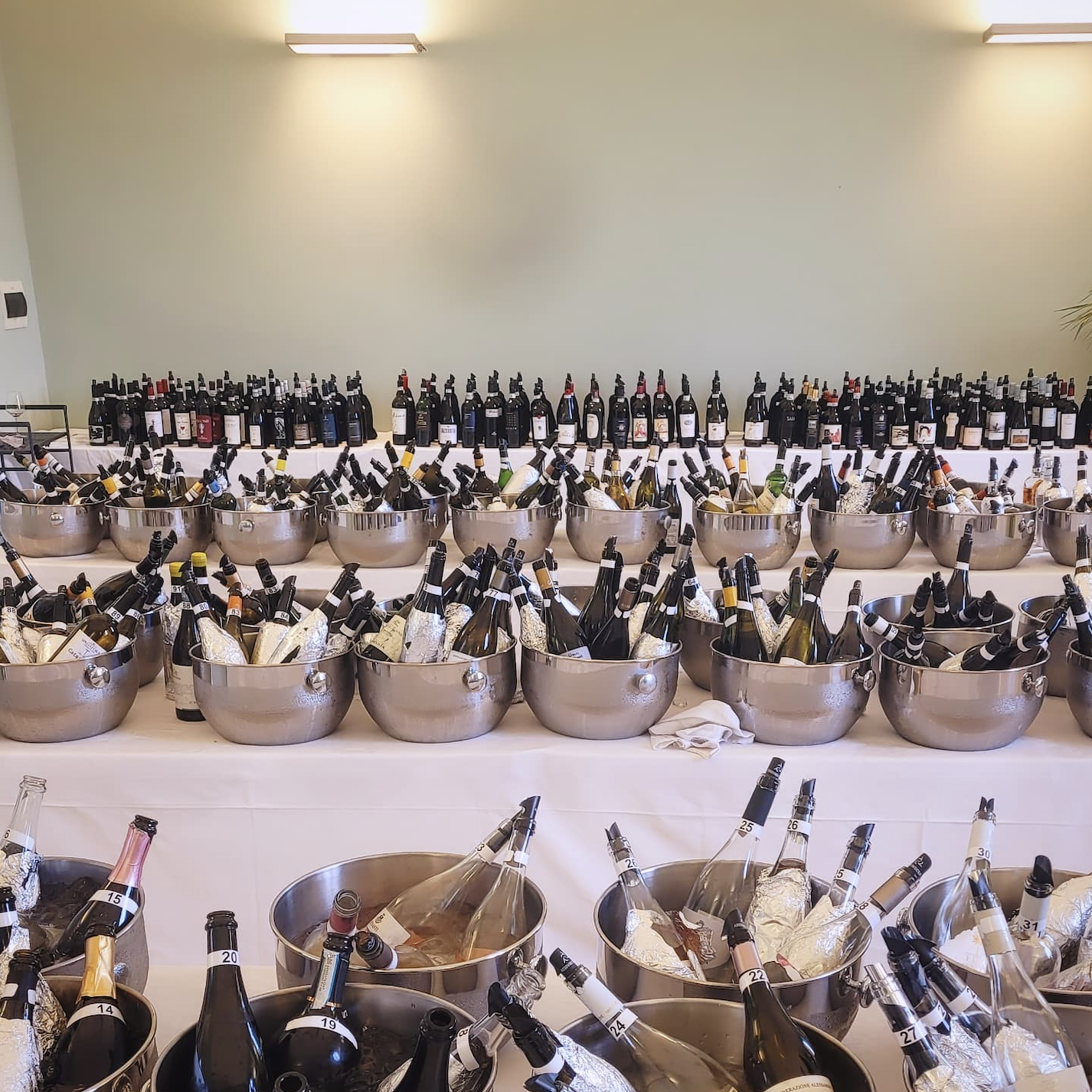
All the wines of Sicilia en Primeur

Sparkling

Alessandro di Camporeale Método Classico 2020

Solo catarratto, vibrant, exciting, exploding, 36 months on the lees. Crazy flavours on your palate. Ginger and smoulder. Drink 2025-2026.  Tasted May 2025

Alessandro di Camporeale Método Classico 2017

This is the second vintage and for a catarratto that spent 72 months on the lees it’s actually mind-blowing. The wine is crisp, crunchy, salty, expansive, vertical and frankly exceptional. Next up 96 months? Drink 2025-2030.  Tasted May 2025

Cantine Fina Pas Dosé 2019

A proper smoulder leads off for this 70 percent chardonnay and (30) pinot noir blend finished clean and unadulterated. No dosage? No problem because of the toasty, umami-savoury, macchia-laden, of plants identified and also those not. Palate exhibits some peanut shell which speaks to a momentary temperature drag in the processing but with all the exotics running amok there is terrific interest nonetheless.  Last tasted May 2025

A mix of chardonnay and pinot noir, 70 and 30. Toasty style, sharp and focused, 36 months on the lees to give it aromatic volume from the get go. Certainly not an oxidative style, far from it and the middle ground for Bruno Fina’s sparkling program that began with 24 months and has progressed to 60 on yeast time. More volume on the palate and even fleshiness than expected to suggest that Fina is a natural at making sparkling wines. No wood – only stainless steel. Experimentation has come thus far and perhaps wood aging is coming in the future. Wishing for more length but the linger is full and positive. Drink 2024-2027.  Tasted May 2024
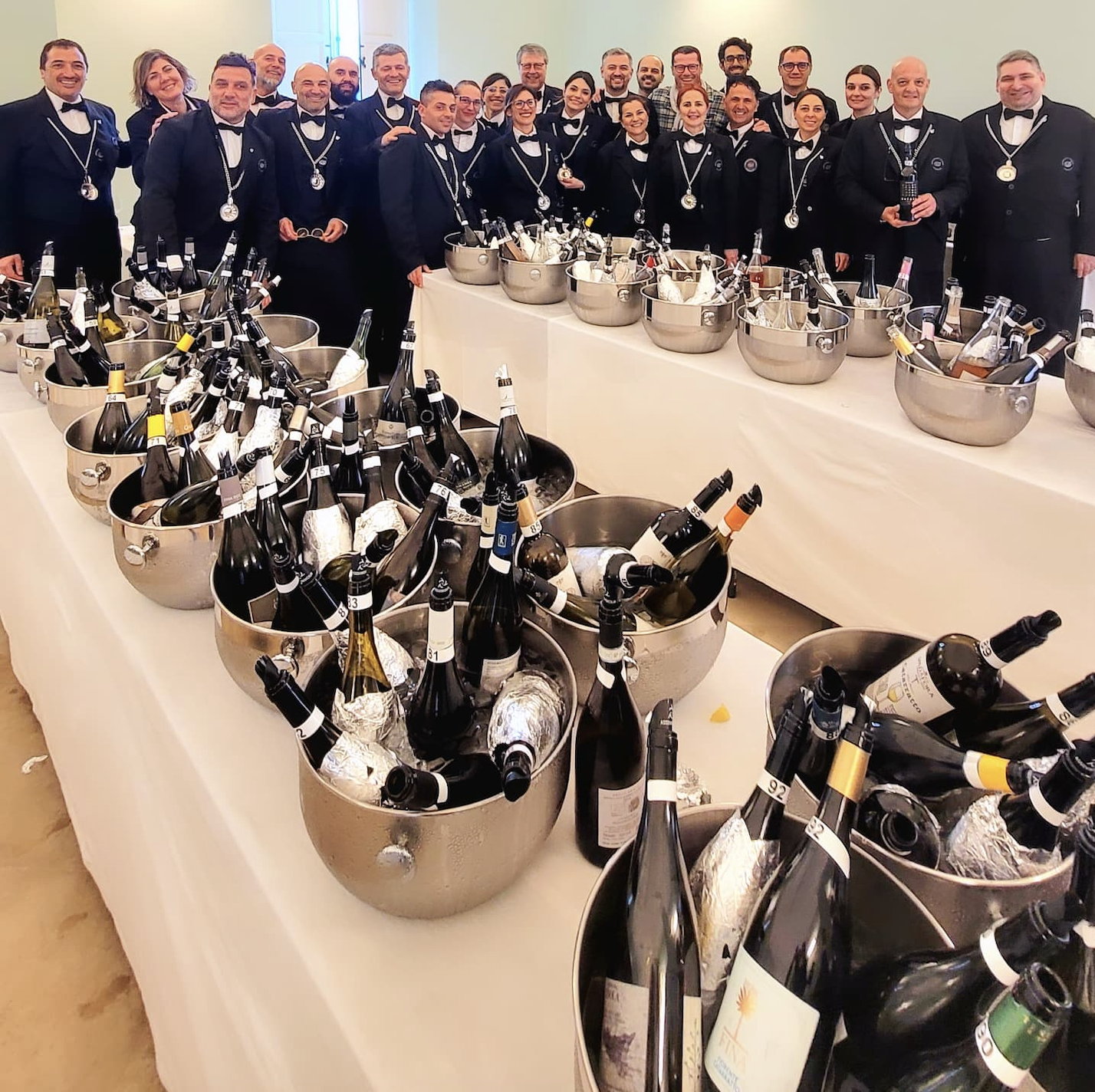
With the Sommeliers of AIS Sicilia

Fazio Brut Blanc de Blancs Erice DOC

Concentrated and pulpy fruit forward fizz from chardonnay picked at higher ripeness than most. Feels like Cuvé Close style, big fruit and carbonation doing their best to get together. Simple and juicy-frothy with neither issue nor complexity. Drink 2025-2026.  Tasted May 2025

Feudo Dsisa Rene’ Sicilia DOC 2017

Über reductive and reactive chardonnay sparkling not perfectly clean. Not quite bitterness in the flavours but more like toasted almond skin. Medium toast and mid-level persistence. No excitement or positive linger neither. Drink 2025-2026.  Tasted May 2025

Principe di Butera Metodo Classico Nero d’Avola Pas Dosé 2019

A classic method sparkling wine 36 months on the lees, charged and excited, rich and buttressed for full mouthfeel with bubbles that elevate the game. Harvested in the second part of August also off of plants that were first planted 27 years ago. The higher parts richer in limestone are used for the Pas Dosé and those in the valley clays more for Brut. Drink 2025-2028.  Tasted May 2025

Principe di Butera Metodo Classico Nero d’Avola Rosato Extra Brut 2019

A 24 months on lees after a couple of hours on the skins for Extra Brut with some sugar but nothing gratuitous and vines growing in the lower parts where limestone gives way to clay. Smooth, really with uplifting acidity and rusty red fruit character. Professionalism incarnate and ideal stylish personality for Sicilian sparkling wine. Drink 2025-2028.  Last tasted May 2025

Not labeled as such and this is the first vintage release but the vintage is in fact 2019. Twenty four months on the lees and this being the beginning to introduce the wine but subsequent vintages that will likely age longer. Extra Brut so right around 6-7 g/L with explosive acidity so the balance is spot on. Orange and lemon, no pith and less bitters to speak of. Really clean and good length.  Tasted May 2023
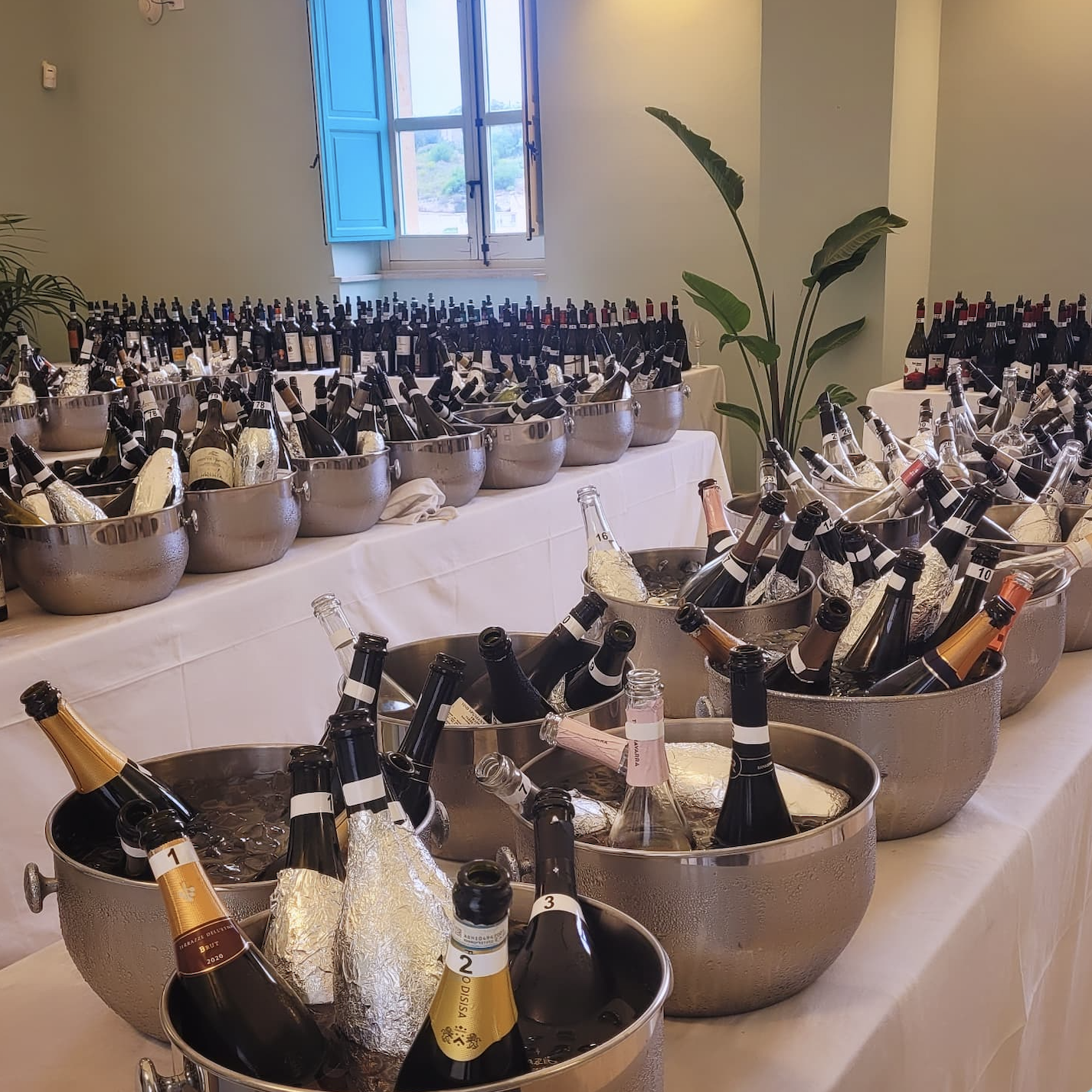
Tenuta Ferrata Etna DOC Spumante 2021

Fine fizz work with the local nerello mascalese stripped of skin muskiness and replaced with a volcanic savour so distinctly if discreetly basaltic in nature. What should sparkling wine from L’Etna do? This actually, with linger and persistence. Grows on the palate and finishes with edible fungi, umami in nature, all in all a positive result for those who are carriers of that “other” positive sensory gene. Drink 2025-2028.  Tasted May 2025

Tenute Nicosia Sosta Tre Santi Etna Brut DOP “Sessantasei” Método Classico 2018

Quiet, admittedly demure entry, of nerello mascalese and the trenchant intention to develop all three essential tenets of sparkling wine. Aromas, textures and flavours are all slowly and incrementally enhanced by serving a long time period upon the lees. In the vicinity of six years for this bubble and dio mio, man how things have come to a combination of curiosity and softness. Spicing yes, but texture is key, mouth-filling, reaching all corners and edges through a lengthy journey resulting in rolling waves, oscillations and blanketing couverture. Substantial sparkling with grace. Drink 2025-2028.  Tasted May 2025

Terrazze Dell’Etna Blanc Brut 2020

Reductive and flinty bubble unique to Etna with a can’t miss the chardonnay character. A sharp and crunchy bite into a just picked yellow apple. Balanced and softening on the palate for one of the most tenable blanc sparkling wines ever to try from a mountain producer. Drink 2025-2027.  Tasted May 2025
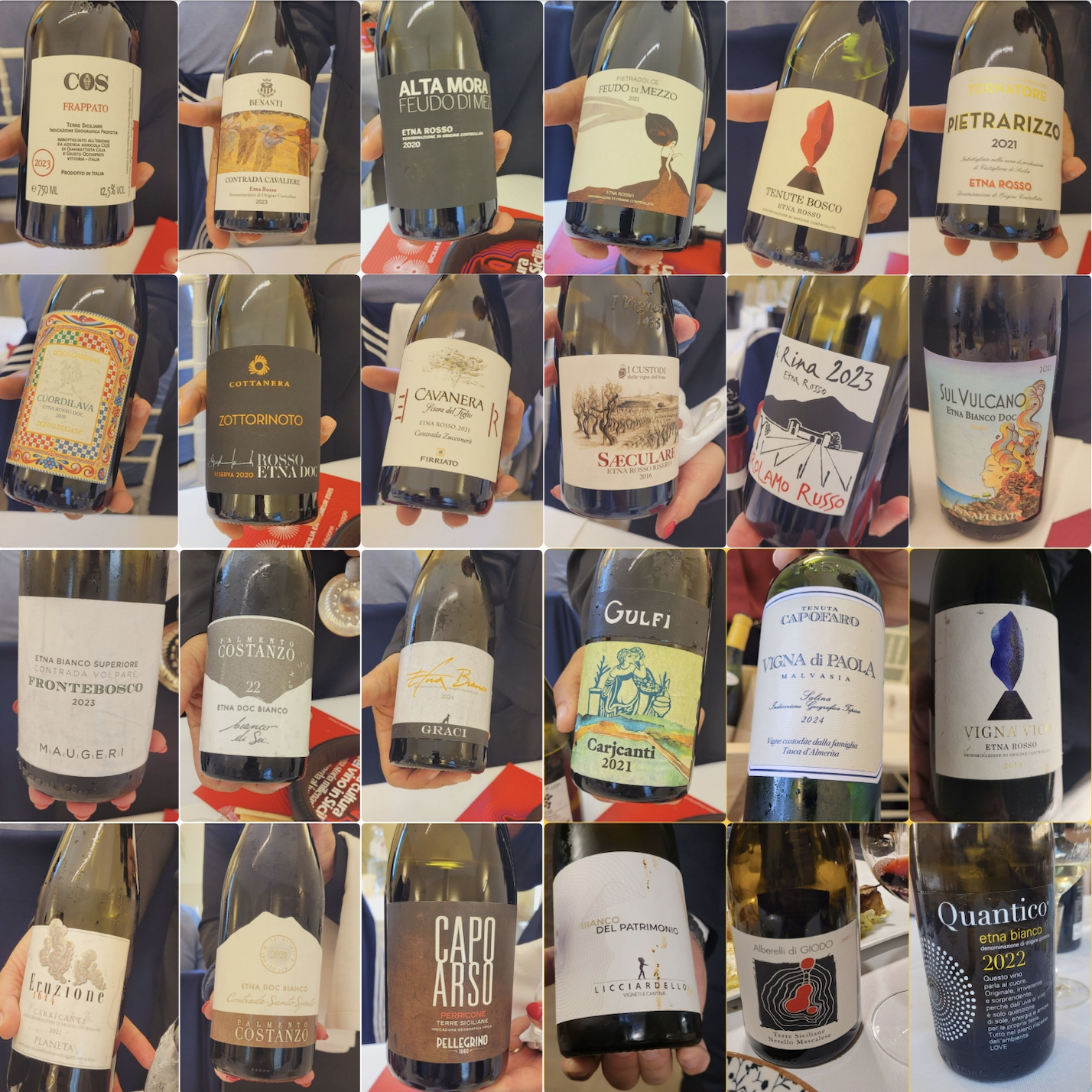
Rosato

Benanti Etna Rosato DOC 2024

High aromatic substance, tree fruit blossoms, fruit forward with concentration. Stone fruit, nerello mascalese skin muskiness, though never pungent. Caught at reputable ripeness for Rosato, its verdancy a matter of natural extension, acidity never sharp, nor failing. Palate luxe and soft though the savour persists and it all falls into place for the category. Drink 2025-2026.  Tasted May 2025

Cantine Fina Rosato Hanami 2024, Terre Siciliane IGT

Rosé of merlot and syrah, lithe and salty, a vague earthy funk that comes from a mix of soil and how these grapes interact as such. First vintage was 2019 and the path is getting clearer. The tang is extremely high which makes for a slightly vivid example out of this vintage. Drink 2025-2026.  Tasted May 2025

Cottanera Etna Rosato DOC 2024

As straightforward, generous and fruit-centric as Etna Rosato can be, open for all blush needs. Summer is a glass as they say and no, Etna Rosé was not like this just 10, or perhaps even five years ago. Yet here they are and come to the world with all the fulfillments the genre could offer. Plenty good and good for plenty of reasons. Drink 2025-2026.  Tasted May 2025

Feudo Montoni Rosé di Adele Nerello Mascalese 2024, Terre Siciliane IGT

Intense nerello mascalese aromatics, of floral red berry bloom perfume and into savoury flavours, of all that lives and breathes in a natural Sicilian world. Perhaps a smaller crop and size of berry is the reason for these results but regardless the concentration alters the ’24 course of a Montoni Rosato. Would love to sip this alongside any of the many eggplant preparations by Montoni’s Melissa Muller. Drink 2025-2027.  Tasted May 2025

Girolamo Russo Etna Rosato DOC 2024

Finely composed and balanced Rosato from Giuseppe Russo, ideally mixing ripe nerello mascalese with sweetly captured acidity. You can sip his 2024 and feel the composure straight away, plus enough generosity and grace befitting of all the wines in the strongest of portfolios. Here Rosé is a gift because the fruit is precious in that it should rightly have become Rosso. Drink 2025-2027.  Tasted May 2025

Planeta Rosé Sicilia DOC 2024

A mix of nero d’Avola with syrah and sauvignon blanc for more spark and sharpness which Rosato by Planeta most definitely has. Crisp bites, herbal, some macchia and provider of thirst quenching abilities. Drink 2025-2026.  Tasted May 2025
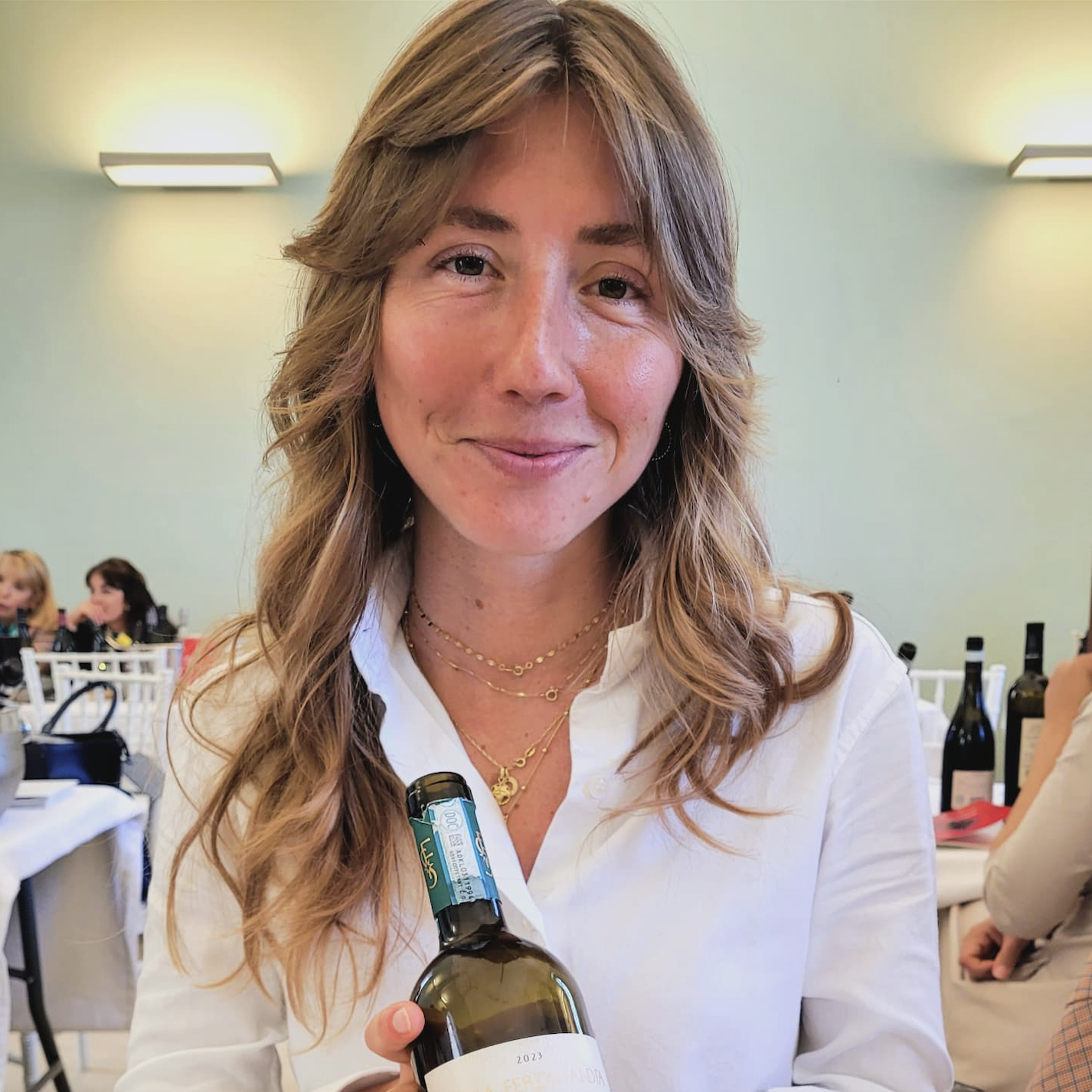
Cecilia Carbone – Serra Ferdinandea

Serra Fernandinea Rosato Sicilia DOC 2024

It rained on the 9th of May and then not again until the 19th of August. Picked between the 11th and 14th of August (with Ferragosto in between) and with this in glass most will have no idea it’s even Rosé. Vin gris is the look but not the intention because when you press nero d’Avola it’s a matter of minutes between this and colour. Remember the owners are Provençal and in southern Sicily the same effect is desired. That would be lithe, salty, fresh and with unlimited spirit. The spirit and nature of the place. As this does and is just that. First scent speaks to Rosato of a distinct and singular nature, like a marine breeze blowing in and through the macchia-mediated and reconciled fruit of the vine. Of nero d’avola used for all essential Rosé purposes under the southwestern Sicilian sun. Not entirely sure if the yields were lower in 2024 (they likely were) but the high levels of concentration and sneaky controlled energy put this in a new echelon for a Serra Ferdinandea Rosé. Would make for both a curiosity and a scientific test to age this two years and see what new impact comes about. Only the independent variable of time changes and the conclusion should rightly seek and mount higher ground. Drink 2025-2027.  Tasted twice, May 2025

Tenute Navarra Rosemosse 2024, Terre Siciliane IGT

Full outward wave of red berry fruit, a capture of frappato in fizz, its mousse creamy and soft. Strawberries in cream, a shortcake because of some faux autolysis and pretty much just really simple. Holds a place for reasons like Valentine hearts and others that represent an amenability to all. Drink 2025-2026.  Tasted May 2025

Terra Costantino Etna Rosato DOC deAetna 2024

Fine mix of fruity and also savoury elements, all understated and trickling forward, low and slow. If a fruit were needed to be invoked it would be white cherries, conjured from a quick soak and maceration before stripping away nerello mascalese skins while capturing both their perfumes and a modicum of their structure. For Etna this is the Provençal style albeit with volcanic properties instilled and made whole by natural processes. Come for the fruit, stay for the minerals. Drink 2025-2027.  Tasted May 2025
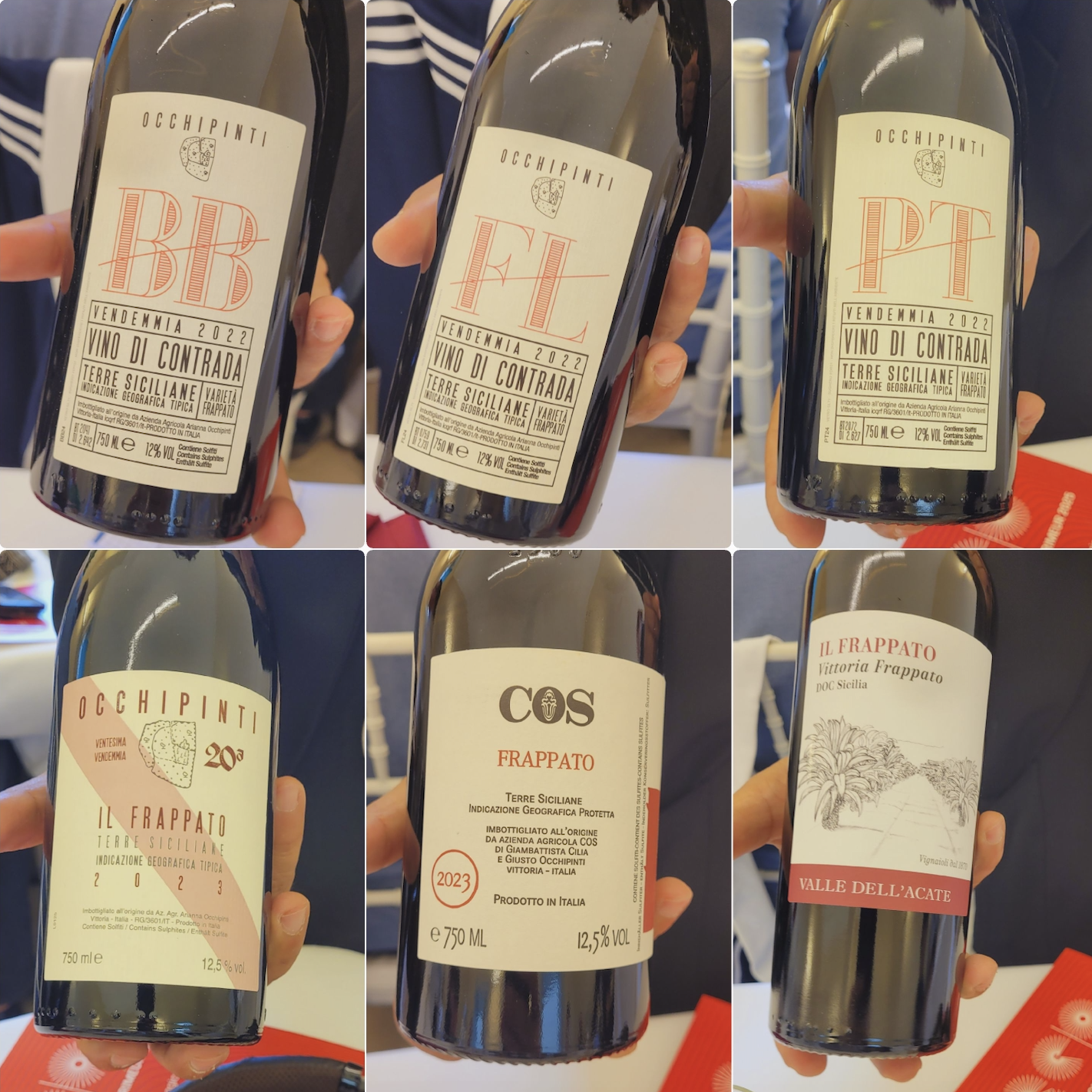
Rosso

Arianna Occhipinti BB Frappato Vino di Contrada 2022, Terre Siciliane IGT

BB, a.k.a Bomboliere feels like the OG for a contrada-designate frappato in the Vittoria occupied Occhipinti world, a varietal expression from the home front with more experience and acumen to treat all things equal, they being available and worthy of leaning against and leading towards ultimate balance. As here from a fine and rocking 2022, crunchy exterior and chewy interior, a Balsamico crust and mix of fruits captured within. Though the Villages frappato is the most accessible it is this BB that ranks as the most well-rounded and if there is any austerity it won’t cause any psychosocial pain. Yet BB is tannic enough to age, stirs up emotion and is truly representative as a best of all worlds wine, more so than either the FL or PT. Drink 2025-2033.  Tasted May 2025

Arianna Occhipinti FL Vino di Contrada Frappato 2022, Terre Siciliane IGT

Not all of Arianna Occhipinti’s three contrada originating frappato are created equal and FL (Fossa di Lupo) is the one with most up front and forward extending fruit. The fruit comes from just 15 year-old alberello frappato out of Arianna’s original six hectare vineyard. This from the outstretched arm of generosity, more like the Villages label than either the BB or the PT. More obvious as frappato and still there is some structure, high acid pulse, saltiness and earthy to funky beats. Likely owing to this soils of brown sand over limestone rock. Then again FL is cleaner and more understandable with varietal clarity, that which speaks to terroir, obviously and without equivocation. Drink 2026-2030.  Tasted May 2025

Arianna Occhipinti PT Vino di Contrada Frappato 2022, Terre Siciliane IGT

One of three contrada frappato for Occhipinti and immediately obvious how different (at least this PT, or Pettineo) is from the Villages label. Structured with impunity and its immunity keeps maturity at bay. Hard to believe how tight an expression this is when you consider the grape, but this contrada means serious terroir business. Of crucial significance is the fact that the less than one hectare parcel is home to the oldest (60-plus years) frappato vines in all of Vittoria. The vines grown on fine orange sand over tufa (a porous limestone) and the grapes are harvested ahead of both BB (Bombolieri) and FL (Fossa di Lupo). There is a volatility in PT that for some will be challenging to understand, though should patience be exercised than all will eventually be resolved and subsequently revealed. Drink 2027-2032.  Tasted May 2025

Arianna Occhipinti Frappato 2023, Terre Siciliane IGT

Frappato the solo artist is Arianna Occhipinti’s “Villages” red, a mix of contrada fruit for her classic or classico expression marking the entry point into her multifarious varietal world. The most crunchy and yet juicy frappato imaginable, high in intensity come to the world with open arms and in turn the world should embrace this wine. If your goal is either to introduce this most getable of grapes and/or a keen desire to enter the varietal gates then Occhipinti’s is the one. Come on in. Drink 2025-2029.  Tasted May 2025

Arianna Occhipinti Grotte Alte 2020, Cerasuolo di Vittoria Classico DOCG

Were Grotte Alte tasting blind you would not be judged for thinking you might have Brunello di Montalcino in your glass and from a producer with ancient wisdom crossed and forward thinking. A true terroir-driven Balsamico marks the entry and the construction is a bit severe which means the tannins are austere. Volatility swirls like sangiovese but here are nero d’Avola and frappato co-mingling in their rarefied air. Some will find the grip and the volatile elements severe and yet others will check their egos to wait and allow these grapes to be ratified and conjoined after years of settling and care. Choose the latter and great reward will follow. Drink 2027-2033.  Tasted May 2025

Cantine Fina Vitraolo Vino Rosso 2023, Terre Siciliane IGT

A purely Sicilian red wine, something of history, culture and remembrance, of freshness and sheer drink-ability. Tart for certain, that and a chewy character but without weight or density. The fiercest passion in an authentic, austere and rustic red. This despite a challenging vintage of heat, humidity and low yields. Drink 2026-2029.  Tasted May 2025
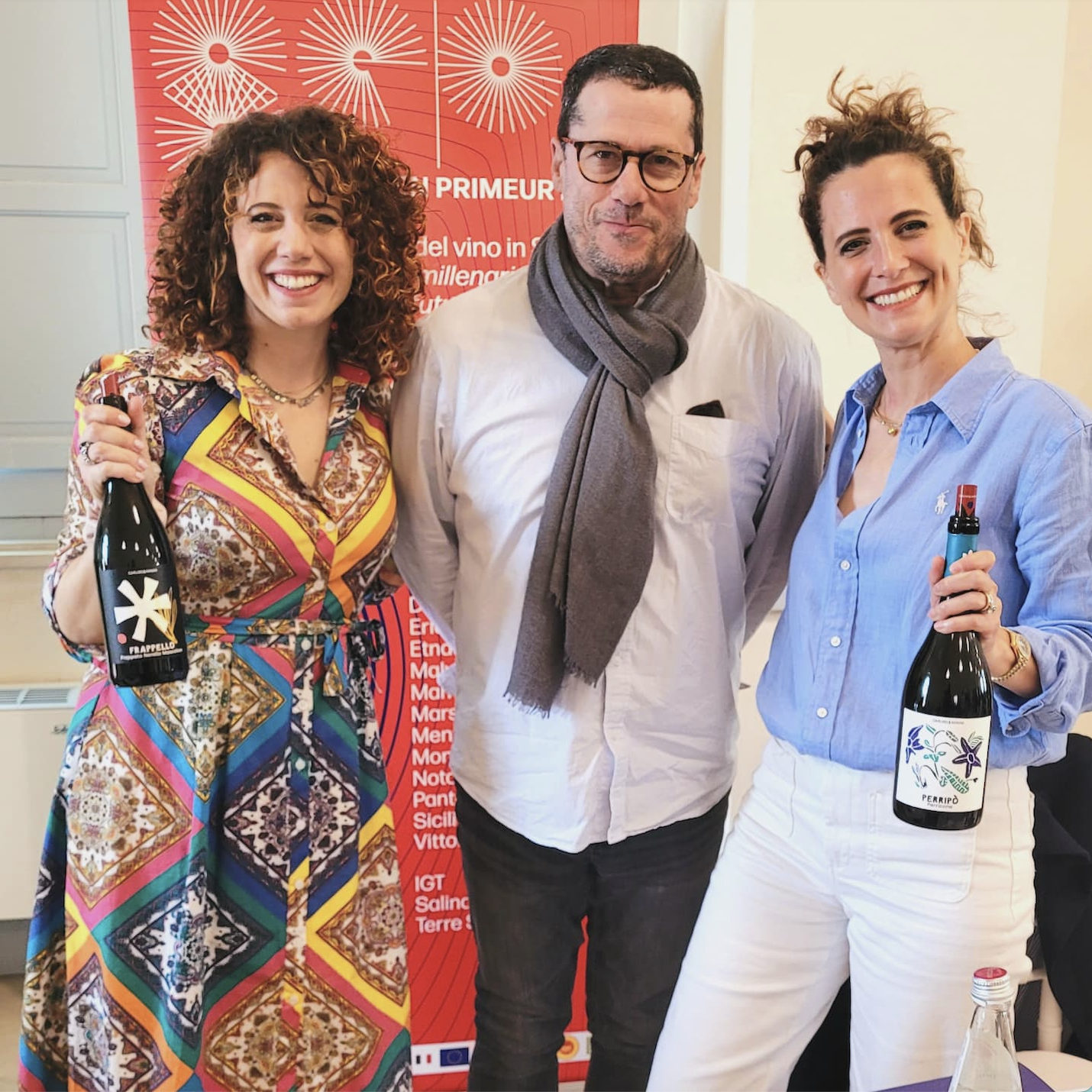
With Giovanna and Rosanna Caruso – Caruso e Minini

Caruso & Minini Perricone Perripo’ 2022, Terre Siciliane IGP

The pretty dabs of perricone perfume come easy out of the dialectical sounding and expressive Perripo’ because, well clarity and purity. Plump and juicy raisin to plum with more freshness than leathery feels and sneaky structure partially shrouded beneath. Proper varietal effort, vintage fun, in and out, especially with fine and gifting 2022 as the source. Really something unique, finishing at a local Balsamico, especially like mint. Drink 2025-2028.  Tasted May 2025

Caruso E Minini Frappello 2023, Terre Siciliane IGT

A blend of frappato and nerello mascalese, first vintage was 2004, now 20 years later, same strong colour contrast from the first to less out of the last. Tannins are the opposite and so the wine has remained the same. Gustatory in every way, “the wine for everybody,” says Giovanna Caruso. From a vintage “non facilisimo,” she says because of heat but Caruso E Minini’s growing zone sees strong winds to help maintain freshness in spite of the temperatures. Full and satisfying with really sweet acidity. Drink 2025-2027.  Tasted May 2025
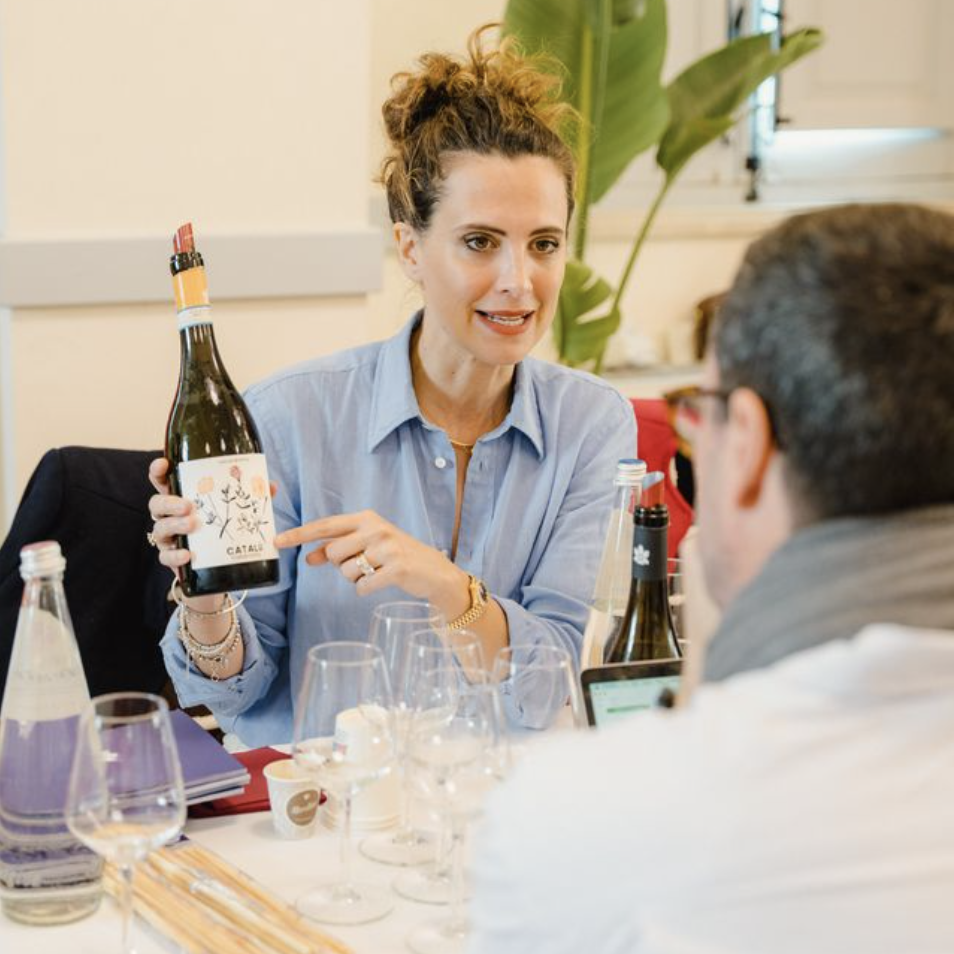
Tasting with Giovanna Caruso – Caruso e Minini

Caruso E Minini Nero d’Avola Sicilia DOC Vuvalà 2022

The solo nero d’avola from western Sicily where strong winds and sea air make for some of the saltiest on the island. Persistent keeper of faith and fruit freshness when it really wants to dry out and head into the local Balsamico. It does not but stays a most hospitable marine airy course. The vines also grow in round stones (very similar to Rhône Galets) which keep the soils cool. Delicious and dreamy for nero. Drink 2025-2027.  Tasted May 2025

Caruso E Minini Nino Rosso 2015, Terre Siciliane IGT

Four grape blend made in appassimento, a.k.a Amarone style in honour of grandfather and his red suspenders. Persistent and somehow still showing some fresh fruit despite the austerity and aridity created by the methodology. A juicy explanation to remind just how fine things can be when attention to detail and passion put collective hearts into making a wine. The mix is nerello mascalese, perricone, frappato and nero d’avola for just 7,636 bottles produced. Drink 2025-2030.  Tasted May 2025

Cos Frappato 2024, Terre Siciliane IGT

Beautifully clean, fragrant and fruit blossom perfumed frappato of immediate and seductive engagement. A whirl of controlled volatility, sweet acidity and carry over to palate flavours in mimic of the florals up front. All the fruit that could be desired, of a focus and a finesse to bely any pre-conceptualized DOC limitations and simply a varietal red you will want to taste and drink on a consistent basis, by the glass, to share with others and as a varietal teaching moment for what is possible. Drink 2025-2028.  Tasted May 2025

Cos Cerasuolo di Vittoria Classico DOCG 2022

Unexpectedly, remarkably and acceptingly fruit forward Cos Cerasuolo for which 60 percent nero d’Avola and (40) frappato occupy the same place and time. Sharing the stage of open generosity and to elicit immediate gratification. Welling with fruit (as opposed to bursting), expressive of skin muskiness and layered for notable purpose. That is to gift the DOCG by way of introduction and without challenge, neither by grip nor out of austerity. Drink 2025-2027.  Tasted May 2025
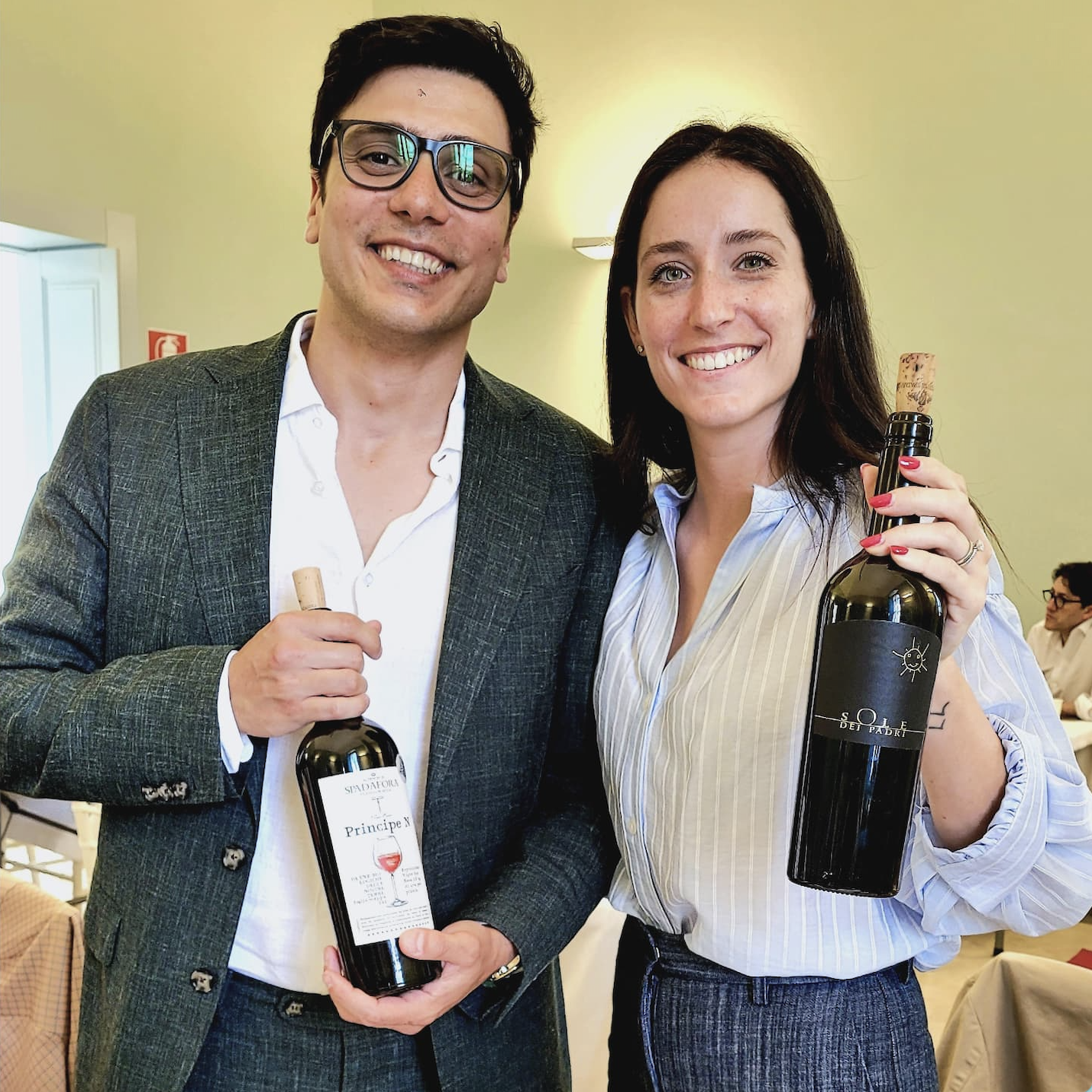
Gabriele Di Paola and Enrica Spadafora – dei Principi di Spadafora

Dei Principi Di Spadafora Vignaioli In Sicilia Principe N 2022, Terre Siciliane IGT

Only nero d’avola from concrete followed by steel though still not quite as expressive as it should be because of having just being bottled. From Spadafora’s central location towards the western half of Sicily of classic nero fruit from red through black, high acidity, intensity and spirit. Can’t wait to see what happens after another year (and even better two-plus) in bottle. Drink 2027-2031.  Tasted May 2025

Dei Principi Di Spadafora Sole dei Padri 2012, Terre Siciliane IGT

The first vintage of a signature red one year in bottle, only syrah from the highest vineyard on top of the hill at 450m. Very exposed with direct sun which would have been a challenge for nero and so, syrah. Richness at the height for grape and style, woody still and this is 2012 but freshness will persist and the wine will integrate. This may sound absurd but truth is truth and Spadafora likes old wines. As will you.  Last tasted May 2025

Sees one year in barriques and the rest in tank, bottled in July of 2022. Lengthy aging but just a short wood stay so don’t come expecting heavy vanilla, lavender or other French barrel notes. Come instead for the florals, spices, spiciness, liquid pepper, but no smoke. Chalky, tannic and all soil-related, created and driven. Can last for another 10 years. Clean and varietally obvious though not the iodine-meaty syrah kind. Perfume and texture are everything. Balsamico and mint at the finish. ”La terra,” shrugs Francesco Spadafora. Drink 2024-2034.  Tasted May 2024

Firriato Perricone Ribeca Sicilia DOC 2019

Singular styled perricone, about face and in complete opposition to those from both central and western Sicilia. Here more related to macchia and Balsamico, brushy, herbal, botanical, verdant and dusty. A stand alone and idisosyncratic varietal red that teaches so much about the triad of place, style and effect. You only need to taste to believe and be aware that this is the sort of Sicilian red to surely show up in masterclasses through time. Drink 2026-2029.  Tasted May 2025

Gulfi Cerasuolo di Vittoria Classico DOCG 2020

The aromas are all fruit skins, of 70 percent nero d’Avola and (30) frappato musky and dried fruit grippy. The aging time in bottle has done the work to bring this Cerasuolo into the initial stages of secondary character which means the ideal drinking window is right where you stand with bottle in hand. With thanks to steel and neutral oak there is just enough freshness and vibrancy to make it work. Drink 2025-2027.  Tasted May 2025
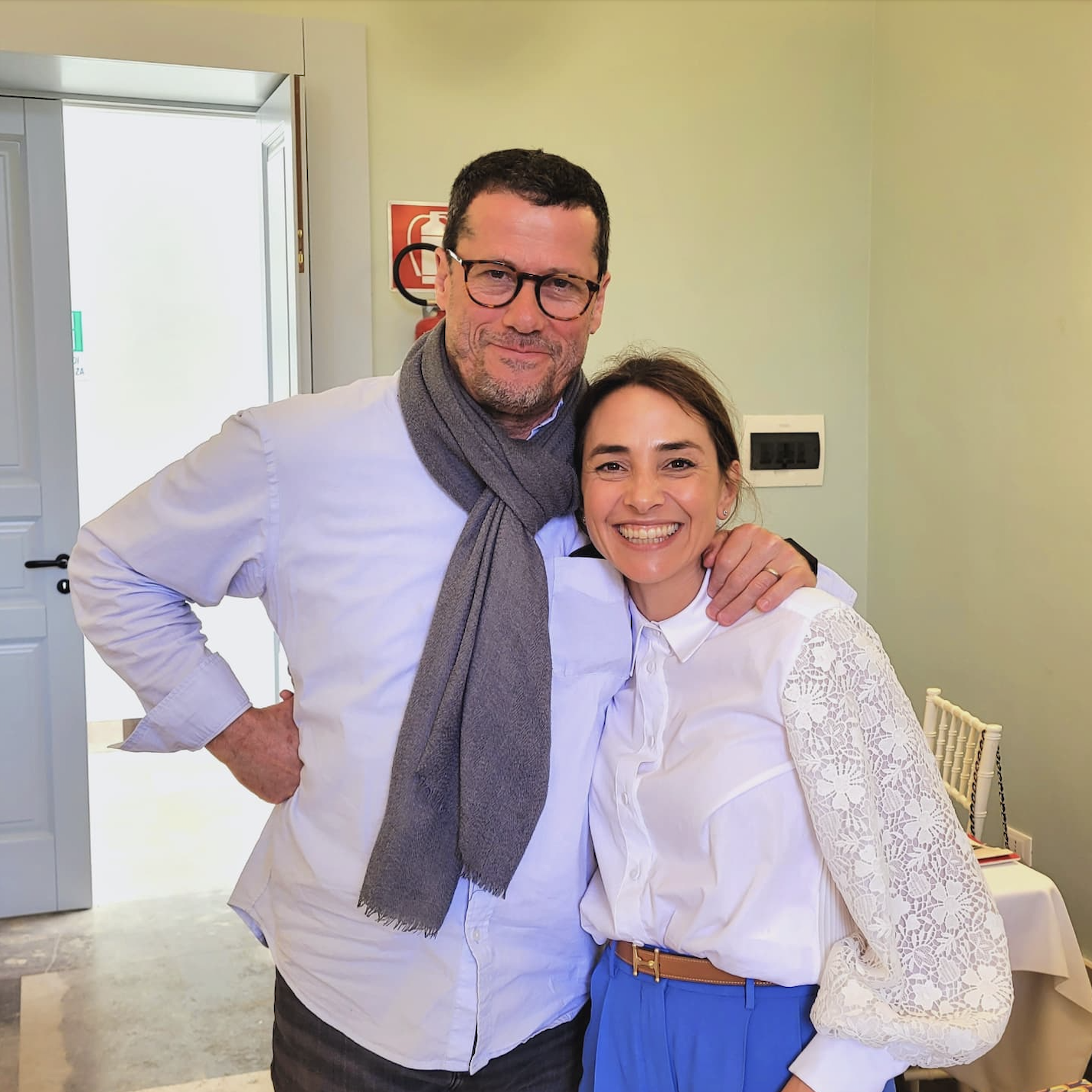
With Anna Ruini – Pellegrino 1860

Pellegrino 1880 Perricone Capoarso 2022, Terre Siciliane IGT

And then, and now welcome to perricone from western Sicily at the hands of a producer with a long and winding history of research, development and investigation into varietal wines. Here this combination of spice masala and richness, low and slow developed flavours and macchia. A savoury event run through and many complexities to discover.  Last tasted May 2025

A varietal perricone, a.k.a pignatello, always strong and spicy, best raised in richer soils. Pellegrino’s is simply, unequivocally and unmistakably true to the variety, of a rustic edge and yet here undeniably pure as it not only should, but will be. Not a tannic example, nor is it particularly long, but it does what wants and needs. Drink 2024-2026.  Tasted May 2024

Pellegrino 1880 Nero d’Avola Sicilia DOC Gazzerotta 2022

From Pellegrino’s main estate near to Mazara del Vallo and Campobello di Mazara with views across the sea to Pantelleria. Rich, chalky and seriously spicy nero at the height of intense heights. A wine that needs time to settle into its skin and be good to itself. One made for good times ahead. And BBQ. Just sayin’. Drink 2026-2029.  Tasted May 2025

Planeta Eruzione 1614 Nerello Mascalese 2021, Terre Siciliane IGT

To be sure a different vintage than Feudo di Mezzo 2023, with two years in bottle and yet elevation (between 840 and 890m) does everything to create, install and define freshness for nerello mascalese aboard L’Etna. Time, barrel and place have come together and the volcanic sense of earth and rock is inseparable from the varietal fruit, even from a 2021 that in some other cases is having a time maintaining its distinction. Eruzione is a lone wolf, a nerello as if by blood dripping from the animal’s mouth. Drink this with iron-rich meat – Fegato, either as Pâté or skewered and grilled. Drink 2025-2031.  Tasted May 2025

Planeta Nero d’Avola Sicilia Menfi DOC Plumbago 2022

If only because tasting with the team at Planeta is equal parts revelation and comedy, it’d hard not to think about and invoke finning things. Like “I want you to cut down the mightiest Plumbago in the forest…with a herring!” But not too big. But this is the biggest of the Plumbago because the vintage gave great heat and therefore the Plumbago shrubbery could not help but take over the entirety of the savoury elements in this nero d’Avola. Full on Menfi Balsamico, or an otherwise named local macchia, like fragrant hay, a.k.a. Plumbago. Drink 2025-2031.  Tasted May 2025

Principi di Butera Inzolia Serò Sicilia DOC 2018

Varietal insolia and from the central Sicilian producer having long ago made the decision to see a white variety that should and can age. Made in a reductive way, now into full on flint and smoulder, a lit paraffin note meeting something petrol-like in the wild ways of sémillon. Surely as curious as it is inviting and while by itself there is this feeling of curiosity it’s all in fine and helpful fun to enjoy when the timing is right. Which can be said for 2018 right now and so a good choice to pour at Sicilia en Primeur 2025.  Last tasted May 2025

A new soil which is both a blessing and a curse, a pain and a joy to work with. Quality comes from lower yields and specific soils. Here insolia grazes into hyper-metallic and mineral territory, protected from the heat of the sun, in avoidance of saturated copper, sunflower and gilded gold. Very short skin-contact and nurturing care turn insolia into this, sapid and even salty, expressive of the calcareous soil and the sea breezes coming from a mere eight kilometres away. Drink 2019-2023.  Tasted May 2019
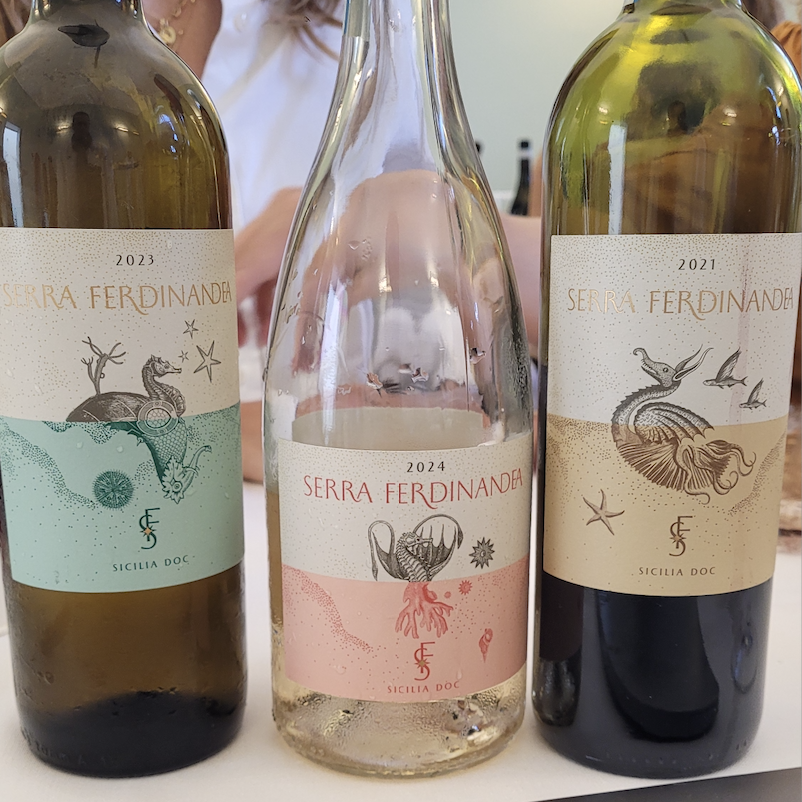
Serra Ferdinandea Rosso Sicilia DOC 2021

Still from a time when the team was working with young vines and not yet having reached the point where they could express the true nature of Serra Ferdinandea. Of syrah set to elevation and nero d’Avola, the latter planted in the windiest and driest place. This for fruit meeting backbone and the hope they will find each other, layer, integrate and create spemthing special in their shared space. The style is invoked even if the full finesse is not yet found. Oh so close to what really matters and whole bunches used in 2022 will help encourage this next level of reality. Rosso at stage one is primary, a work in progress and a harbinger for what is to come. Just a bit woody and chalky-grainy at this time. Drink 2026-2028.  Tasted May 2025

Tasca d’Almerita Tenuta Regaleali Rosso Del Conte 2020, Sicilia Contea Di Sclafani DOC

One of Sicily’s most famous red blends with a track record for aging, of nero d’Avola and perricone out of Tasca’s grand Vigna San Lucio. The large block was first identified and isolated in 1959, now 60 years into its tenure. Aging is multifold, in chestnut barrels, Slavonian cask and small French wood. This 2020 is officially the 50th anniversary of the Rosso del Conte label with one of the most developed richness of them all, all the while maintaining its recognizable grace and every subtle aspect its always meant to express. Poise and focus but also impressive fitness. Will age two decades. Drink 2026-2036.  Tasted May 2025
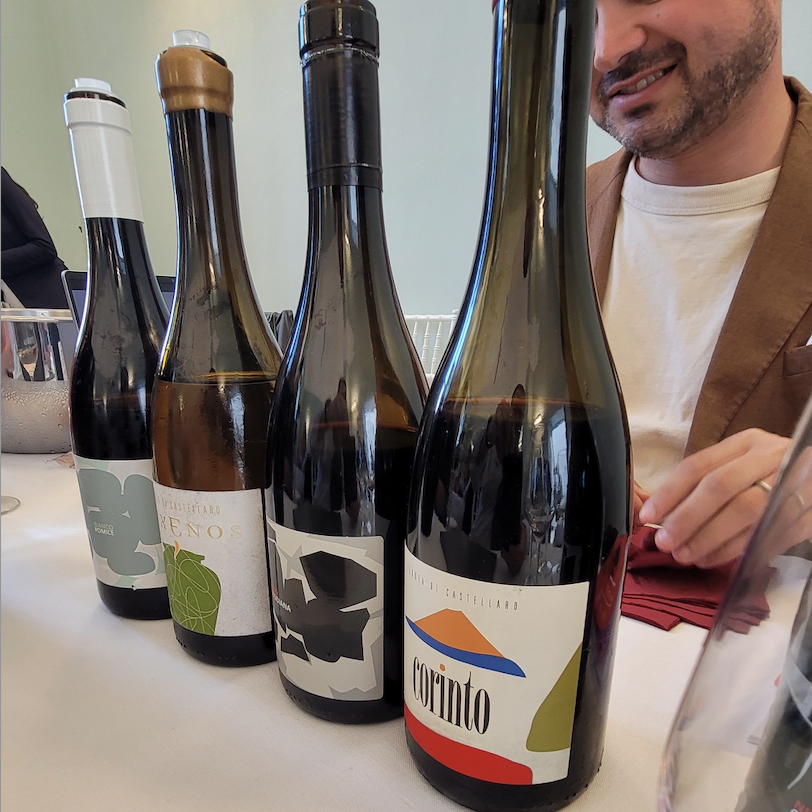
Tenuta di Castellaro Nero Ossidiana 2022, Terre Siciliane Rosso IGT

From Massimo Lentsch’s Lipari Island winery with the seedless grape corinto (well actually one central seed) which means high acidity, low pH and also tannin. Not to mention lessening of alcohol that barely reaches 13 percent. A spoonful of nero d’avola augments but changes the sharp and basaltic obsidian nature of the wine. Sees 18 months in cask and you can serve this lightly chilled. This due to the relative low tannic profile and elevated acidity which also means juicy, summery and fresh. Don’t let the colour fool you. Drink 2025-2028.  Tasted May 2025

Tenuta di Castellaro Corinto 2021, Terre Siciliane Rosso IGT

Pure corinto, seedless and more straightforward than Ossidiana but both are made for drinking cool, fresh and long. A bit more rusticity and also richness because there is some (third passage) tonneaux aging involved in the maturation. More tannin but still nothing austere or causing any real tension. Just 3,000 bottles made of this unique Lipari red. Drink 2026-2029.  Tasted May 2025

Tenute Navarra Disiato Frappato Sicilia DOC 2024

Riper fruit, dark and later picked, rusty edging for black cherry style. Easy style of frappato but surely readied sooner and with more colour needs than fruit substance as compared to many. No sense holding onto any of these bottles. Drink up. Drink 2025-2026.  Tasted May 2025

Vall Dell’Acate Frappato di Vittoria Frappato 2024, Sicilia DOC

Extremely fruit evident and forward, distinctly frappato as its varietal source, a dictionary entry and open window into its Vittoria world. Crunchy red, of pomegranate, cranberry and red crabapple, tart and juices flowing for thirst quenching activities. Open the wine glossary to “F,” scroll down to frappato and this wine may very well be there to explain what it is you are tasting. Drink 2025-2027.  Tasted May 2025

Vall Dell’Acate Frappato Vigna Bidone Sottana – Vino di Contrada Vittoria Frappato DOC 2024

The single vineyard slash contrada wine is a different beast as compared to the Vittoria DOC “Villages” label because it really is a tannic beast. The fruit chosen must surely be blessed with a certain ability to work with austerity and depth in its tannins. Vigna Bidone Sottana is both harder to approach and currently unclear to comprehend. A crusted exterior holds importance within, of fruit and acidity in layered composure and intendment, each working through machinations together and for a later, greater purpose. Needs a year, better yet two to come together and begin to express itself. Drink 2027-2032.  Tasted May 2025
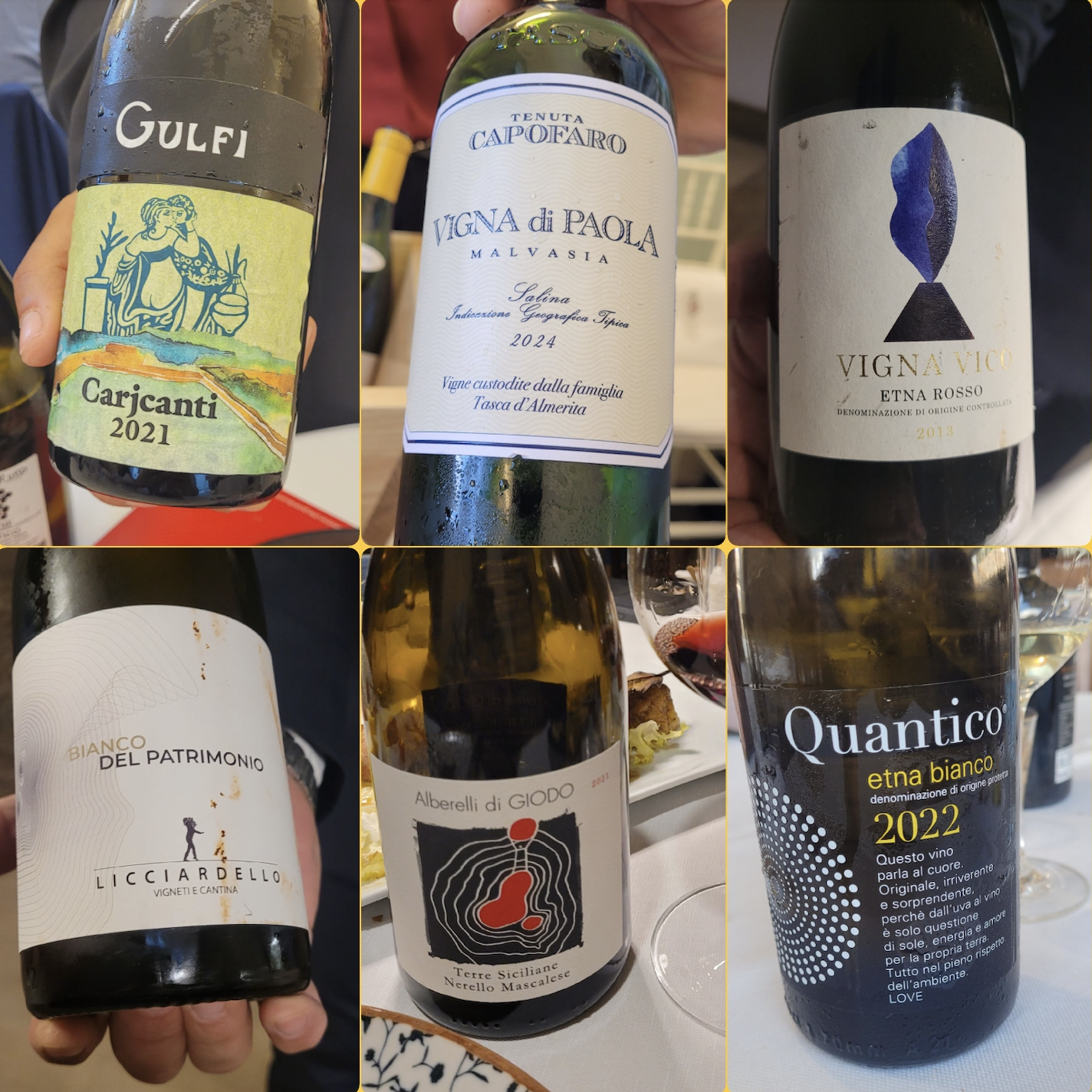
Bianco

Alessandro di Camporeale Catarratto Monreale DOC Mandranova 2020

From the cru called Mandranova in Monreale and a a little portion of tonneaux used to induce flesh but also texture and expand the possibility for some time in bottle. Ambitious to a degree but there is no taking the place out of the wine. Stone fruit pulpy, sapid, sweetly herbal and with citrus meandering through lemon, lime and mandarin. Check back in two years. Drink 2025-2028.  Tasted May 2025

Cantine Fina Catarratto Fiorente 2024, Terre Siciliane IGT

From the most northern zone for Fina and yet distinctly western Sicilian in origin, style and effect. A bounce back vintage for the winery and ideal for the grape to express its sense of place. Crunchy and salty, mineral and satisfying. Drink 2025-2028.  Tasted May 2025

Tasting with Sergio Fina – Cantine Fina

Cantine Fina Grillo Firma del Tempo Sicilia Riserva DOC 2023

A stand out and alone grillo because Riserva and therefore we intuit part of the ferment being sent to wood. An ambitious way to approach the variety, to give it the chardonnay touch for a fuller, richer and even buttery expression. French barrel but still there is the marine saltiness and sandy soil inscriptred sapid character. You can take grillo out of Trapani but you can’t take Trapani out of the grillo. Drink 2025-2029.  Tasted May 2025
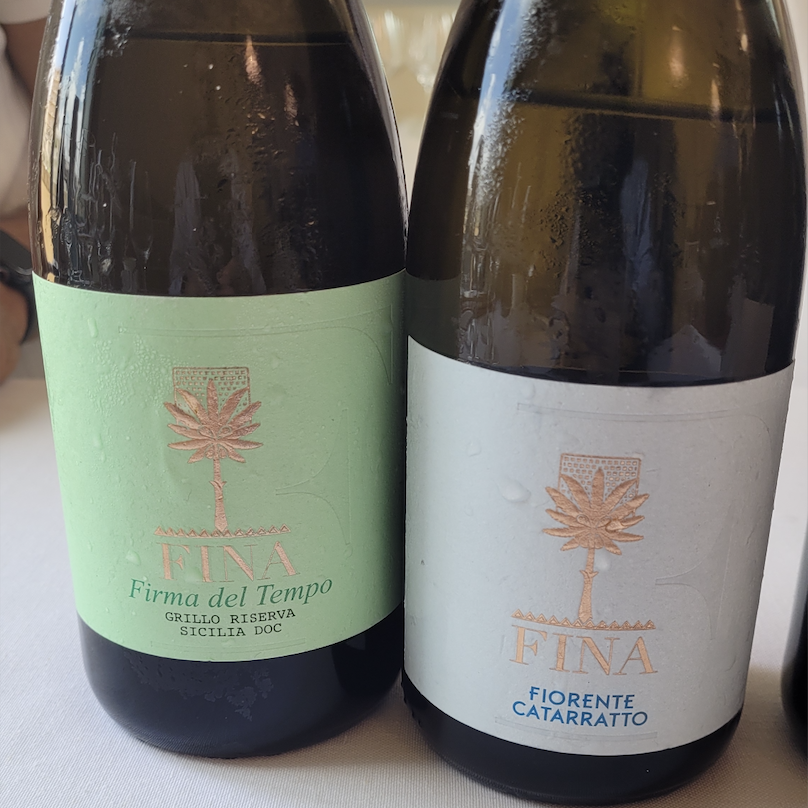
Cantine Fina Grillo Kebrilla Sicilia DOC 2024

The second of two grillo, also raised partially in steel and part in French wood. The younger and fresher one, with green apple bite, more sapidity, less wood and similar styling. Crunchy and with green Chile capsicum bite on the back end. Just a bit overdone yet without the concentration of Riserva. Drink 2025-2027.  Tasted May 2025

Caruso e Minini Grillo Lillo Sicilia DOC 2024

Hard not to see this as vehemently Western Sicilian grillo, from the sea and the winds for a slice of experience but also one that assimilates some skin musky aromatics to enhance the grillo fruit. Ideal mix of salinity and sapidity with some metal at the finish. Never a wrong time for a sip of Lillo. Drink 2025-2027.  Tasted May 2025
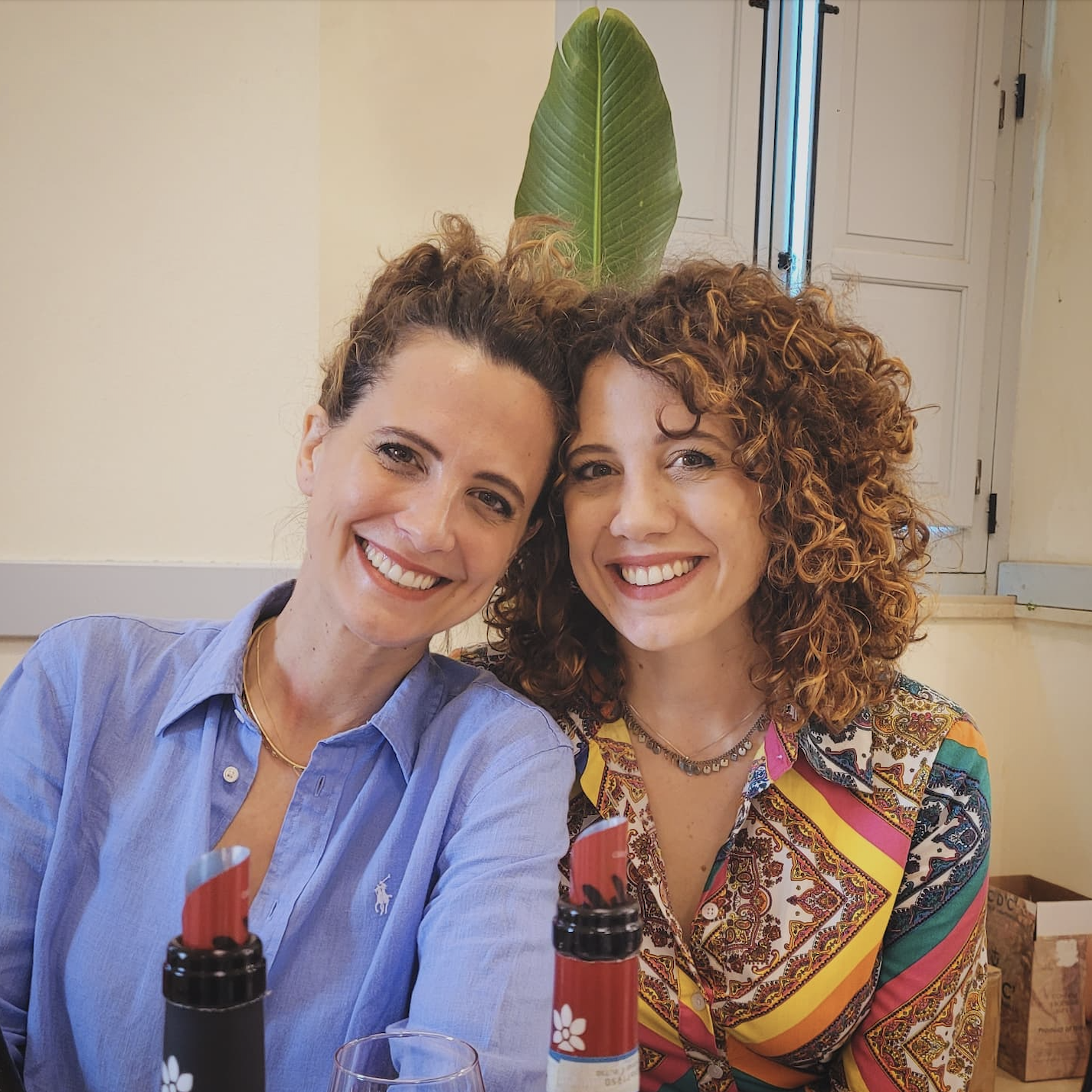
Giovanna and Rosanna Caruso – Caruso e Minini

Caruso e Minini Catarratto Catalù Sicilia DOC 2024

Not only unique for catarratto but authentic and existing right at the heart of the concept of ARCA, “associazione regionale catarratto autentico.” The story of grape coming from place with its marine airy and salty entry morphing through rusty fruit, citrus, fennel and finally into a sapid, botanical finish. Drink 2025-2028.  Tasted May 2025

Dei Principi di Spadafora Vignaioli in Sicilia Catarratto 2024, Terre Siciliane IGT

The catarratto is timeless and you can drink it any time of the day. Literally and expalins Enrica Spadafora, “in our area the freshness of the land is what determines what comes from the grape and place.” A bit tannic however, sneakily so and things will change if you allow them to. Drink 2025-2028.  Tasted May 2025

Dei Principi di Spadafora Vignaioli in Sicilia Don Pietro Monreale Bianco 2024

Only catarratto which qualifies as a varietal wine for the Monreale denomination, no longer inclusive of grillo, from concrete to steel in terms of fermentation and maturation. The feeling of skin contact is palpable even though it is just four days because a salve texture and tannic profile settle into the palate. Still the acidity and freshness are preserved for a balanced varietal wine. Drink 2026-2029.  Tasted twice, May and June 2025

Dei Principi di Spadafora Vignaioli in Sicilia Principe G 2021, Terre Siciliane IGT

Just grillo and six months on lees for body and spirit with time having brought about some maturing notes to create great varietal curiosity, like preserved pears or peaches and a settling on the palate. Persistent but not of a waxing energy per se. Plenty of texture and flavour to mull over, on and about. Drink 2026-2029.  Tasted May 2025

Feudo Montoni Inzolia Sicilia DOC Fornelli 2024

A rebound vintage but at Feudo Montoni consistency is king because Fabio Sireci will never force a square peg into a round hole. The 2024 season was an easier fit to produce varietal wines as he sees fit, here with that great mix of the salty and the sapid. Just spot on and poured at the right temperature inzolia is just so, so good. Drink 2025-2028.  Tasted May 2025

Feudo Montoni Catarratto Sicilia DOC Masso 2024

Sharp catarratto, cut through fruit and palates like a knife, a specific mineral that of course is a bit saline but in catarratto it’s really all about sapidity. Fabio like his whites with some austerity and this is the white that has the most, with bitter almond notes come out in the aroma, as marzipan at the finish. This can age, you better believe it. Drink 2026-2031.  Tasted May 2025

Feudo Montoni Grillo Sicilia DOC Timpa 2024

More aromatic than catarratto, not quite moscato floral but scenting yellows and whites, a honeysuckle imagined with lemon citrus blooms. Still ’24 grillo is taut with vague austerity (thought not catarratto austerity) and as with all the Montoni whites the grillo too is so very linear and vertical. Drink 2025-2029.  Tasted May 2025

Gulfi Carjcanti 2021, Terre Siciliane IGT

From the wine with the dialectical name for carricante and a beautifully bittered tincture that speaks to sunshine for fruit first and volcanic feels second. They come together but will only improve their relationship with tome in bottle. Drink 2026-2029.  Tasted May 2025
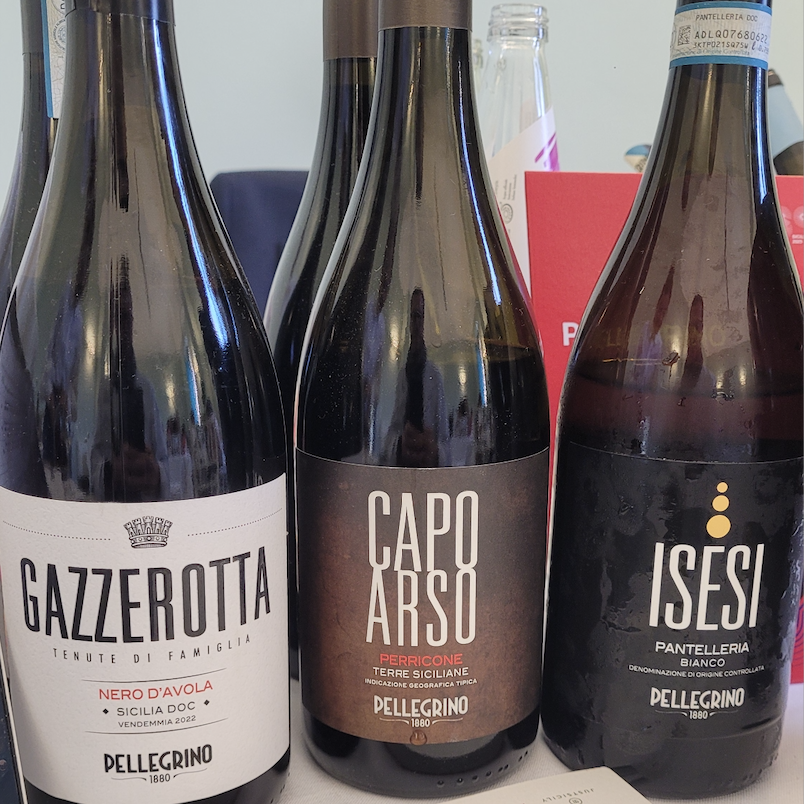
Pellegrino 1880 Grillo Sicilia Superiore DOC Senarià 2023

Senarìa means “cold” for a clone of grillo planted in 1980 ’s since been propagated by Pellegrino for more hectarage. The only grillo produced as a superior in Sicily with age and clonal specificity creating the identifiable DOC. Almost like serious chardonnay in style and effect, a Burgundian bite and crispy character that’s part unexpected and part intense. The richness comes from the palate, as it should for a two-part experience growing and will continue to grow in stature. Drink 2025-2028.  Tasted May 2025

Pellegrino 1880 Isesi Pantelleria Bianco DOC 2022

A Bianco in which zibbibo is the key with altitude and exposition to the winds being the catalyst. Different plots in several contrada are chosen as contributors of their varietal fruit expressed as a white wine that should and will age for years. Falls into the semi-aromatic, cousin in style to moscato sort of way and the tannins lay really low. They are the underscore, the horizontal backbone that fruit but also acidity glide over and develop their motion. This is a wine of journey, never static and one to look forward to tasting when it passes five to ten years of age.  Last tasted May 2025

Pellegrino 1880 Vergine Marsala Riserva DOC Single Barrel Nº 018 2005

Vergine means marsala fortified with soy alcohol and as Riserva (2005) it means more than 20 years of aging. Mainly grillo with (30 percent) catarratto and inzolia, limited production, 2,163 bottles and finished at 19.5 percent alcohol. The sugars developed could imagine honey, brown sugar or maple syrup but they are so much more complicated and therefore unnamed. Also fruit like apricot and pineapple but think moire exotically or better still just admit that something unusual and ethereal is happening. The palate is dry as the desert, the flavours, brown butter nutty, intense and spicy. This is not a dessert wine by any stretch of the imagination but something much more gustatory and ready to receive culinary inspiration. Drink 2025-2040.  Tasted May 2025

With Planeta winemaker Patricia Tóth

Planeta Eruzione 1614 Carricante 2022, Sicilia DOC

At a time it was the high elevation and now it’s really more about the established appellative functionality that dictates the specific DOC labelling of Eruzione 1614. There are varietal carricante on L”Etna and there is Eruzione, a Bianco as definitive to tell an old story and relay the message of soil, stone and place. The 2022 is exceptional, rising and seemingly hovering above the ground, something very hard to do for fruit grown on volcanic terroir! Yet here is this levitating Etnese, a Bianco of weightlessness and incredible acidity. Will drink well for five years, in another terrific alternate state for five more and then who knows what magic through five more after that. Drink 2027-2037.  Tasted May 2025

Planeta La Segreta Bianco Sicilia DOC 2024

Ninety percent of the blend is three-fold, of grillo, grecanico and chardonnay, plus 10 percent “others” which includes the aromatic viognier. All adds up to one of Sicily’s most drinkable whites and there can be no argument there. Cool, chill, kick back, sip and relax. Here, there and everywhere. Put on the Beatles or whatever makes you tick. Just drink it. Drink 2025-2027.  Tasted May 2025

Planeta Chardonnay Sicilia Menfi DOC 2023

Warmth begets riches and yet 2023 is not the warmest of Ulmo vintages but chardonnay has so much experience, developed vine age and proven track record to get into this full and substantial place. Without fail and the fans of this large production Sicilian pioneer will again be granted their wish. Chardonnay is big and it is grand, with the benefits of barrel and sun, all in balance. Drink 2026-2029.  Tasted May 2025
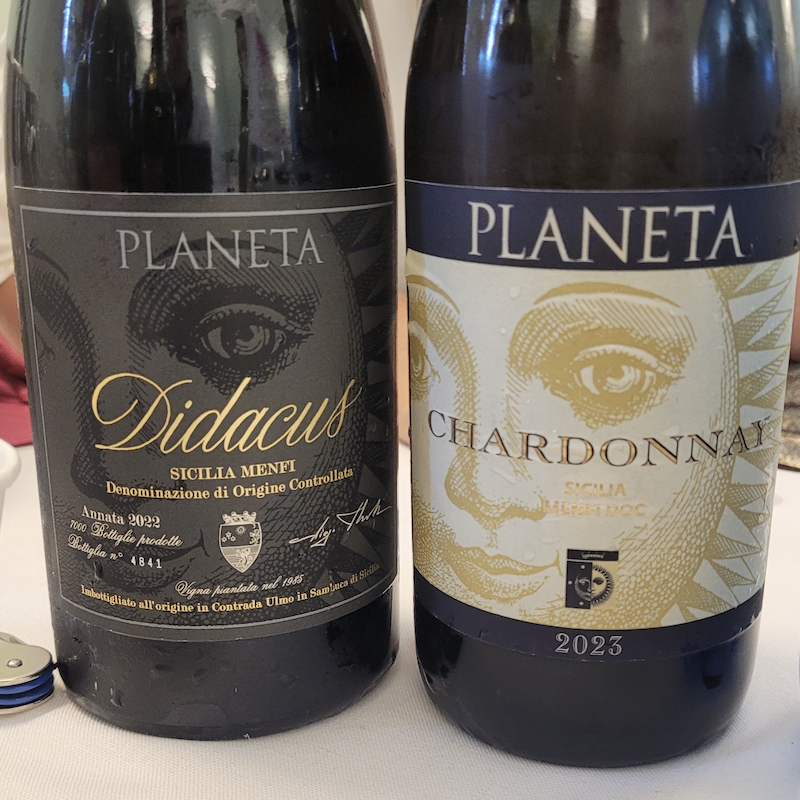
Planeta Chardonnay Sicilia Menfi DOC Didacus 2022

For Didacus chardonnay rises to the island’s highest level because it receives the respect and elévage it so deserves. Hard to find a vintage as firm and as tight as 2022, weather related of course with heat units having come fast and intense, but also elongated through to the earliest pf picking times. That would be the first week of September and thankfully so because acidity keeps the dream alive. Didacus is drinking at peak right now – do not sleep on it’s power or potential and find a way to get there now.  Last tasted May 2025

Production began in 1995 while the vines are now nearly 45 years of age. In the southwest part of Sicily, in the Ulmo area around the village of Menfi where a corridor of wind, “our favourite friend,” tells Santi Planeta, blowing through between the lake and the sea. Through vines growing between 100 and 450m, breathing cool life, especially in the summer. The 2022 vintage saw plenty of rain though not concentrated at any particular time and so the constant events of moderation were something remarkable considering how often extreme climate events are increasingly more prevalent. The coming vintage of 2023 and 2024 will be affected by them, mostly because there was no rain. This chardonnay is impeccably balanced between fruit and acidity, acidity and texture, texture and tannin. The progression is seamless, the result precise and anyone who does not the recognize the experience and continued work put in may not be paying close attention. That’s fine but know just how special a (relatively) large production, semi-cool climate chardonnay this truly is. Planeta’s year-to-year consistency is truly impressive. Drink 2024-2028.  Tasted at i4C, July 2024

Serra Ferdinandea Bianco Sicilia DOC 2023

A 50-50 split between grillo and sauvignon blanc from a season with drama because of early heavy rains and yet there no Perenospera (mildew) developed up on the vineyard’s hills. In this vintage the directness and linearity of the sauvignon takes control but this is also the style, from clean maceration for a capture of saline intensity to keep fleshy and golden maturity at bay. The grillo plays along but never speaks up or steps out of place. Drink 2025-2027.  Tasted May 2025

Tasca d’Almerita Tascante Chardonnay C’Eragià 2022, Sicilia DOC

Etna chardonnay made with French wood completely un-toasted out of Rampante where a chardonnay vineyard already existed when Alberto Tasca bought the estate. The wood is virtually unnoticeable, lemon attacks the palate and the energy is simply great. Graceful while volcanic spirit adds the intangible pizzazz. Drink 2026-2029.  Tasted May 2025

Tasca d’Almerita Fondazione Whitaker Grillo Mozia 2024, Sicilia DOC

Grillo from Mozia island off the coast of Trapani and Marsala, the only important variety and 40 year-old vines for the most unique expression of the grape. An ancient expression if you will and quite possibly the saltiest of them all. Some will find this sharp and austere but there is sneaky richness and intensity that belies the sear and strike of the grillo. Drink 2026-2029.  Tasted May 2025
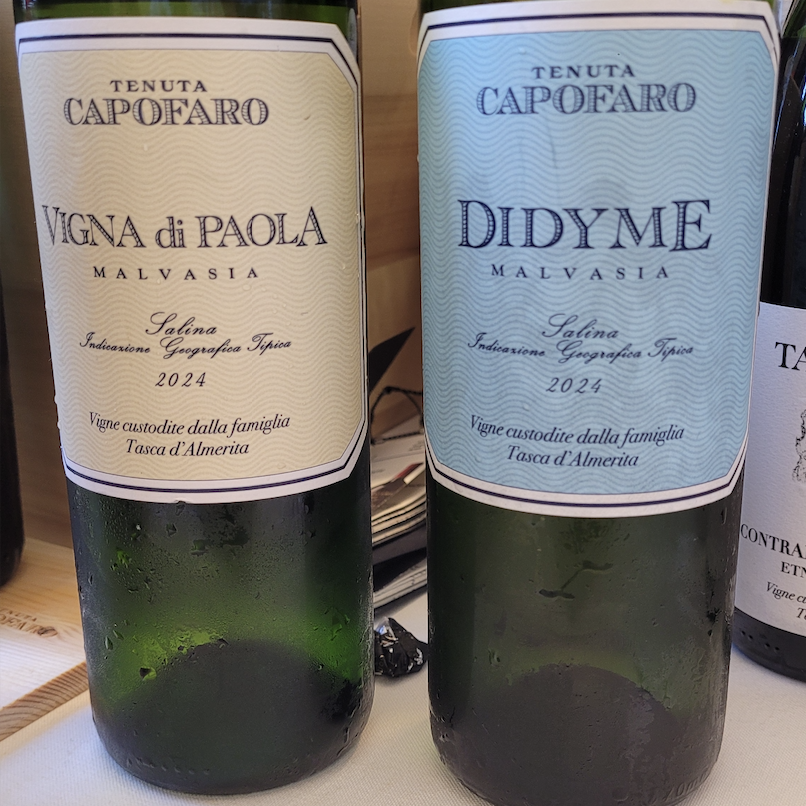
Tasca d’Almerita Tenuta Capofaro Malvasia Vigna di Paola 2024, Salina IGT

Saltier and more vertical of the two Salina malvasia, less fleshy but also juicy character, instead a more briny caper measure and mix of marine elements. Volcanics come into the soul of this malvasia with impunity and the mineral austerity is nothing short of intense. If Didyme intoxicates it is this Vigna di Paola that takes full control of your senses. Drink 2026-2029.  Tasted May 2025

Tasca d’Almerita Tenuta Capofaro Malvasia Didyme 2024, Salina IGT

Iron volcanic sands make for vines and grapes that develop a relationship only Salina will own, different even than Lipari and in terms of malvasia there is nowhere else in the varietal diaspora where it comes way like this. A mineral that gets in you, an intoxicant that runs through the veins and causes a true stoning. Imagine capers and ricotta, shrimp and lime. It’s all there in sweet, salty and semi-aromatic intensity. Drink 2026-2029.  Tasted May 2025

Tenuta di Castellaro Bianco Pomice 2024, Terre Siciliane Bianco IGT

A blend of malvasia (della Lipari) and carricante as an extremely youthful and so in certain ways playing the part of a 2024 preview although it’s a finished wine. There really is nothing like this, nine months on lees with bâttonage every month. Consider this as “Etna Bianco plus” with more marine influence, a spirited buzz about it and a fleshiness matched by this mix of flint and isle mineral feel. Just bloody delicious. Drink 2026-2029.  Tasted May 2025

Tenuta di Castellano Eúxenos 2022, Terre Siciliane IGT

Just malvasia di Lipari, ”lightly” fermented on skins in one cacciopesto amphora, a lightly permeable type for just 1,800 bottles. Simulates an imagining of a history of sunken greek amphora and so a message is felt and transmitted for making a wine that just needed to be made in reference to the lore. Ultra textural and a fascination with fate that requires one to abandon a perspective firmly embedded within a knowable methodology of winemaking culture. Drink 2026-2029.  Tasted May 2025

Tenuta Regaleali Catarratto Sicilia DOC Buonsenso 2024

Intensity and concentration of sweetly herbal and salty fruit with persistence as much as any varietal wine in Sicliy. Happens to be catarratto, one so full, expansive and linear. Drink 2025-2028.  Tasted May 2025
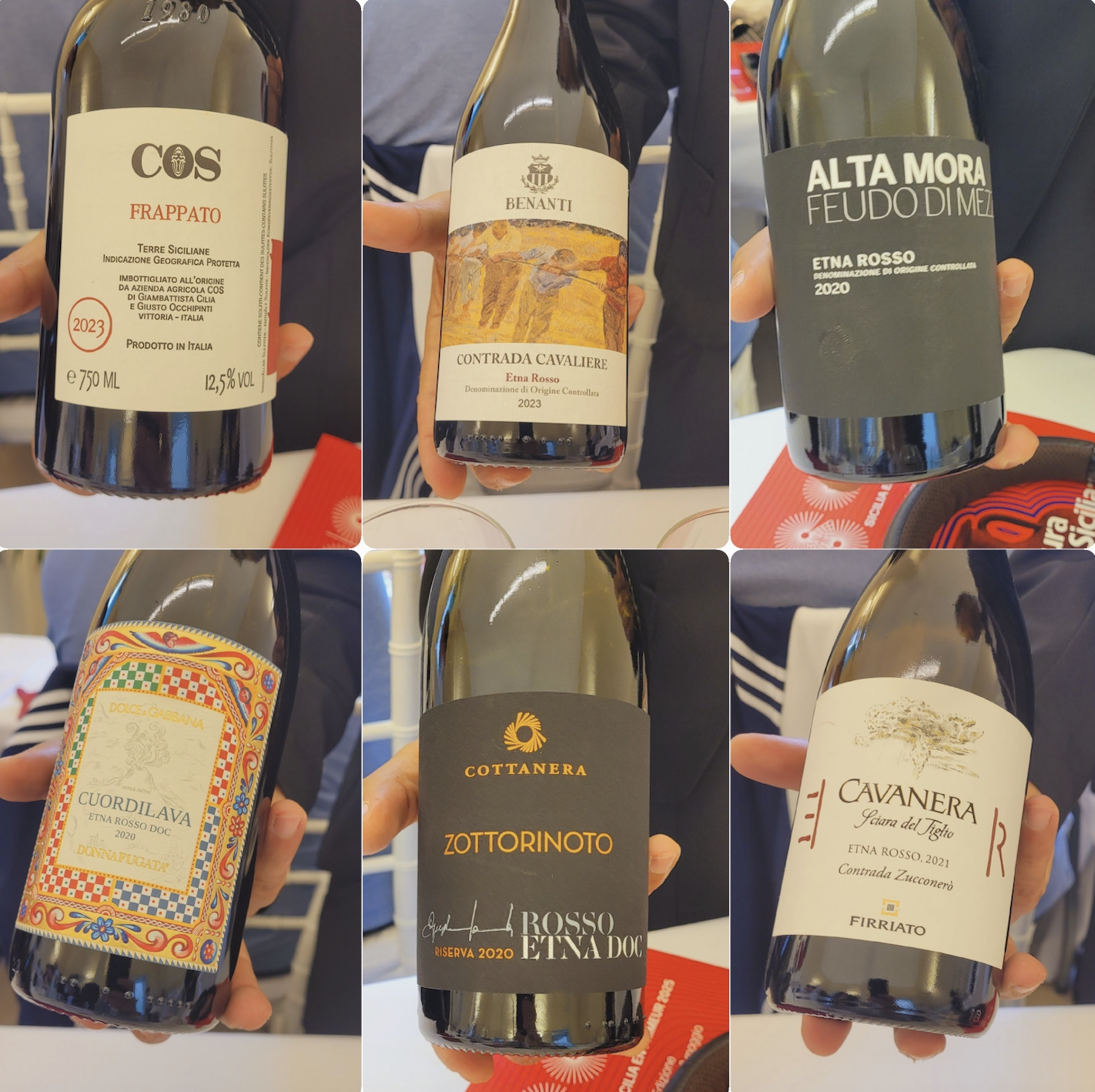
Etna Bianco

Benanti Etna Bianco DOC Contrada Cavaliere 2023

Cavaliere as a contrada white is getable and found in mid course for carricante of middle weight, fleshiness and structure. In other words a balanced Etna Bianco that has arrived early and readied for consumption ahead of the other single place wines. The metallic notes are purely basaltic and while fruit is plenty pleasant it’s not really the lead driving factor. Cavaliere is specific and noted for that. Drink 2025-2028.  Tasted May 2025

Benanti Etna Bianco DOC Contrada Rinazzo 2023

Rinazzo as a contrada Etna Bianco is surely more reserved and stoic especially as compared to (Cavaliere), as if it were let’s say Vaucopins and Cavaliere were Beauroy. Unnecessary wine region comparisons aside there is a richesse and a golden sun meets volcanic mineral accumulation to set Rinazzo aside. Definitely its own Bianco, at once structured and then feeling mature. Feels like a wine having arrived and yet not quite there. Makes for another great and curious Etna Bianco study in contrada-designed peculiarities. Drink 2025-2030.  Tasted May 2025

Benanti Etna Bianco DOC Contrada Monte Serra 2023

There is Cavaliere, Rinazzo and then there is Monte Serra. Hard to imagine three Etna Bianco from the same producer could each act so different. Monte Serra is the reductive and hard to access carricante, stuck in the basalt, shut tight and currently immovable. Not exactly expressive nor seemingly looking to act so any time soon. Would give this a year to sort out its thoughts and reconcile its differences between parts. That said the distribution of weight in Monte Serra’s design creates a sense of stability and harmony in its architecture. Thinking further we’d all consider waiting two years to see a release of the magic and fantasy. Drink 2026-2031.  Tasted May 2025

With JustSicily’s Federica Matranga

Cottanera Etna Bianco DOC 2024

First ’24 out of the gates, clean, open, fragrant and fresh. Apple juiced and as readied in simplicity without fuss, obfuscation or muss, in as much as it seems possible from Etna Bianco. The time to drink is now. Drink 2025-2026.  Tasted May 2025

Cottanera Etna Bianco DOC Contrada Calderara 2023

Next level interest and complexity comes from this Etna Bianco out of the Contrada Calderara where reds shine and whites like this are golden proud. Equanimous mix of stone fruit and volcanic savour come together and do so with seamless ease. For someone who wishes to experience the next level above and beyond regional or say “Villages” Etna Bianco it is this carricante that will help show the way. Drink 2025-2029.  Tasted May 2025

Cusumano Alta Mora Etna Bianco DOC 2023

Rich, luxe et volupté carricante for the sort to seduce and reel in hundreds of new varietal consumers. Also that which should surely please many who have already attended the party. More than ample freshness, crisp bites, orchard fruit, mineral sparks and finishing bitters. Drink 2025-2027.  Tasted May 2025

Donnafugata Etna Bianco DOC Sul Vulcano 2022

Oh so specific style of Etna Bianco from carricante tucked into the volcano and scenting like a garden wet with rain. As if petrichor soaked into basalt, effusive and smelling like nothing ever before, especially when the Ginestra joins the mix. Crunch and sway, crisp apple bites and varietal oscillations. Top vintage for this Donnafugata Etnese white, clean and yet leesy, complex and inviting. Drink 2025-2029.  Tasted May 2025

The team of Generazione Alessandrio

Generazione Alessandro Etna Bianco DOC Trainara 2023

Of 85 percent carricante and (15) catarratto near Lingualossa which being on the eastern slope increases the marine influence. Push-pull posit tug between the volcanic and the botanical or perhaps they are actually one in the same. Clean and focused Etna Bianco in any case. Drink 2025-2028.  Tasted May 2025

Girolamo Russo Etna Bianco DOC Nerina 2024

Rich and fulsome, as concentrated as Nerina will ever be and surely a factor of tight, small and low yielding bunches. These as a sub-factor from a condensed vintage of heat units and less water accumulated in each berry. Nerina as Etna Bianco 2024 travels right up the rising angles of the palate, gets into that nook at the top of the jaw before receding into full golden fleshiness. Drink 2025-2028.  Tasted May 2025

Girolamo Russo Etna Bianco DOC Feudo 2023

Feudo as the cleanest of Russo’s carricante, crisp and of a contrada clarity for whole rounded expressiveness. Good clean lees living from 2023 Feudo with segments of lemon and white grapefruit providing a plethora of fresh citrus flavour. Nothing herbal or savoury about it, just the facts, of fruit and mineral.  Last tasted May 2025

New Bianco for Giuseppe Russo, a selection of 100 percent carricante from three hectares within the Feudo di Mezzo vineyard and contrada. Feudo is not San Lorenzo but it is something remarkable in its own right. More botanical and phenolic but also a level of citrus preserve not noted anywhere but Feudo. Crazy level of implosive citric intensity and taut character. The behaviour is so different to San Lorenzo with flavours that mean business in the most impressive way imaginable. Intensity off the charts, concentration so impressive, energy that builds and builds. Drink 2024-2029.  Tasted May and September 2024

With Giuseppe Russo and Alberto Graci

Graci Etna Bianco DOC Muganazzi 2023

Graci’s Muganazzi is a true blue contrada Bianco from stone, of mountain reduction by way of its processes. The palate gets past the wall of aromatic sound to tell us what we need to know, or at least part of what the future holds. This is serious and protractive carricante, cased in a hard protective shell, waiting to be released. Crispy and encrusted but time will do what’s necessary. There is a great an substantial amount of fruit which is what matters most. And of course the volcano. Drink 2027-2033.  Tasted May 2025

Graci Etna Bianco DOC Arcurìa 2023

Apposite to Muganazzi is Arcurìa, a contrada carricante with more immediate flesh and plenty of backbone in support. Arcurìa is also the truly leesy Etna Bianco, built on the yeasty stuff and more akin to wooded Chablis than almost any other. This reminds of Fourchaume if such a comparison could be tolerated, but either way the wine is built to last. Drink 2026-2031.  Tasted May 2025

I Custodi delle Vigne dell’Etna Bianco DOC Ante 2021

Smoky from its reductive and flint stone struck moments, the fruit not only behind but well back with volcanic sand after a rain wedged expressively in between. Everything about Ante screams volcanic Etna, in stone, rock, sand, mineral and elemental style. A must try to begin believing. Drink 2027-2032.  Tasted May 2025

I Custodi delle Vigne dell’Etna Bianco DOC Imbris 2020

I Custodi is the kind of place to raise cariccante and Imbris the kind of label to speak in Etna Bianco clarity. The cool-climate factor and style might make you think the area is cold as hell but oh,no,no,no and Imbris is a kind of rocket man. The 2020 holds such a beautiful combination of lees driven fruit and volcanic mineral so there is no doubt a new age is upon this estate. The wines have been working towards this moment and here they are. Beautiful and inviting, welcoming and fine.  Last tasted May 2025

Varietal carricante at 800m fermented in steel, put to barrel and then one year in bottle. So much corporeal flesh on the body of a seriously developed Bianco. Has come into a fine place but my goodness so much texture, citrus and length. Drink 2024-2027.  Tasted May and September 2024
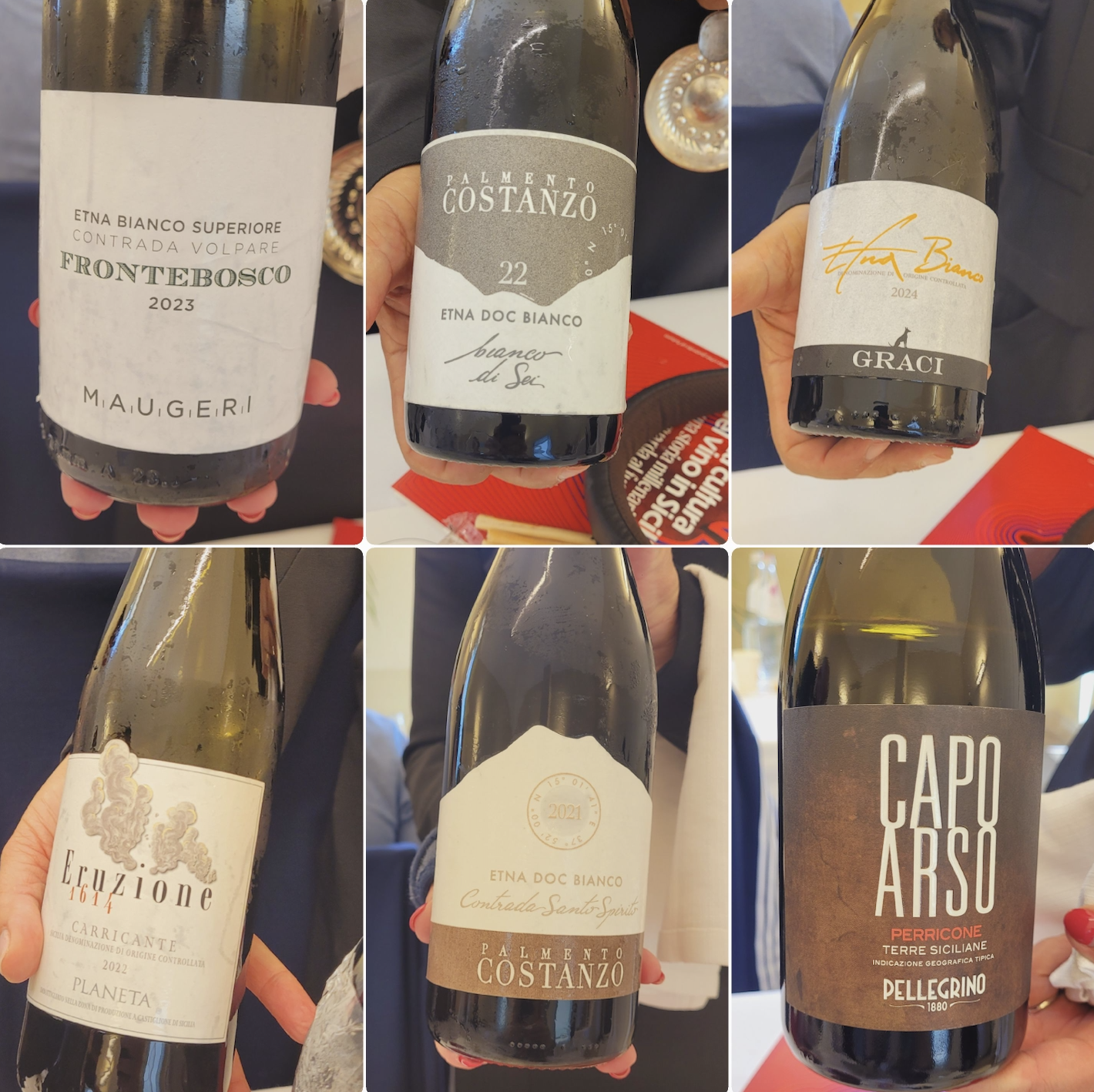
Maugeri Etna Bianco DOC Superiore Contrada Volpare 2023

Confident, cool and still presently stoic holding on to a controlled, yet to open the gates and be released intensity. Perfectly clean lees living within a structure of carricante built for pleasure and also aging. Really fine work from Contrada Volpare with many years of expressive reveal still to come.  Last tasted May 2025

Youthful is the understatement and Volpare the name, so say it loud. This is indeed singular Etna Bianco, as they should be but some are in a league of their own, as Mugeri’s eastern wines clearly are. The estate has taken it to the next level with an ascension of elevated mountain fortuity but also depth determined by terroir which can only be transmitted when agriculture abides. Abides because the maker makes it happen and Volpare delivers generously while also with precision and finesse. Leave this for 18 months or more to settle the relationship between rocks and acidity. After tasting Frontebosco and also Frontemare you realize the latter is the true catalyst to propel this cuvée selection. Drink 2026-2032.  Tasted September 2024

Maugeri Etna Bianco DOC Superiore Contrada Volpare Frontebosco 2023

Seemingly an understatement made but its only by the music this Etna Bianco will be free. No doubting more finesse, focus and precision from the carricante out of the vineyard facing the forest, an herbal cooling coming in, upping the botanical feels, its development low, slow and perhaps still far away. The taut nature of Frontebosco means the requiem to await what’s coming should be at least a year. Last tasted May 2025.

Versante est which separates Mugeri from not just the north but also the south and the future will surely look to this area for greatness. Not only Volpare contrada but a section within, here called Frontebosco, as in facing or in front off the forest and so the herbals here within are assumed to be elected by the nearby woods. Makes for freshness but also a fruit fleshiness that the more general Volpare does not show. A full, substantial and impressive Etna Bianco that might just appeal to everyone. Superiore indeed. Drink 2025-2033. Tasted September 2024.

Maugeri Etna Bianco DOC Superiore Contrada Praino Frontemare 2023

From the first to the sea we now receive the carricante out of the vineyard facing the Ionian, a stiff breeze blowing through, keeping the sails taut and the speed up, all the while a finish line yet far away. More lees coming from Frontemare mixing with sea spray for an Etna Bianco tight as they come, yet airy and rising. Would wait two more years for parts to come together and waves to calm down. There will be smooth sailing ahead.  Last tasted May 2025

Frontemare, “facing the sea,”as opposed to Frontebosco, “facing the wood.” As such this would be east facing from Etna’s east sector and so the block with the view creates a unicorn of an Etna Bianco as fascinating as it seemingly gets. The most crisp, crunchy, fresh and intense of Mugeri’s whites, citrus squeezed throughout and long as the zig-zagging wind of a single road down to Catania and into the sea. Just wow, with layers upon layers to unreel, unfurl and unroll for a long aging period ahead. Drink 2026-2034.  Tasted September 2024
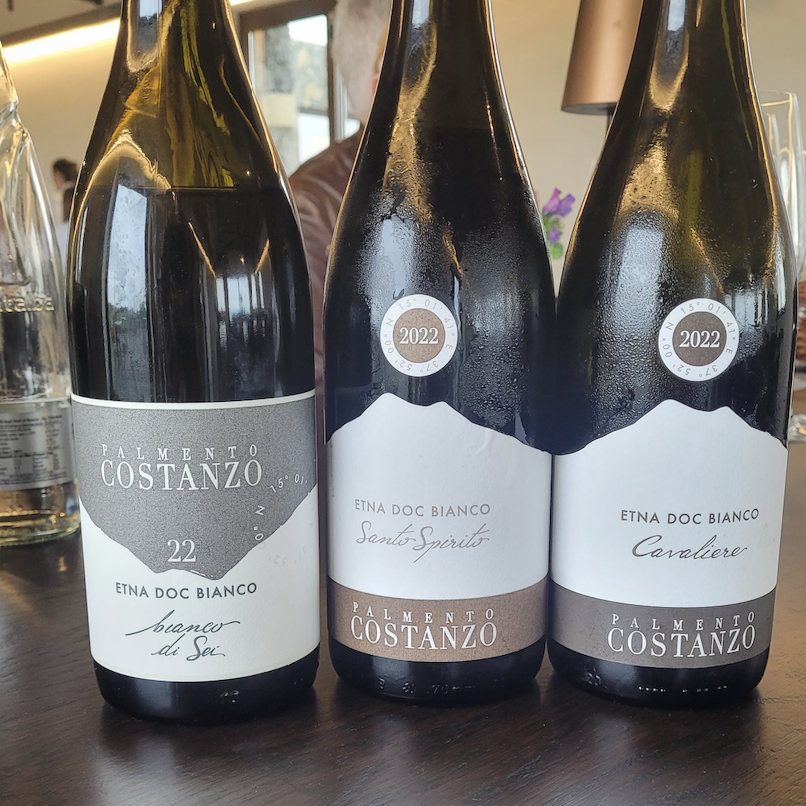
Palmento Costanzo Etna Bianco DOC Bianco di Sei 2022

Perfectly expressive carricante from 2022 for a vintage not always caught at optimum, however the Costanzo team’s relentless.  Last tasted May 2025

A cuvée of all parcels from different contrade, including the homefront Santo Spirito, along with Cavaliere. On average 90 percent carricante with (10) catarratto. Only raised in stainless steel, persistently fresh and if any region in the world might be compared with it would be Chablis AOC, direct, salty, smart and widely purposed.  Tasted September 2024

Just have to say wow because Bianco di Sei comes equipped with a level of intensity that was not quite expected from 2022. Not so much a volume or an explosion aromatically speaking but an extreme set of eccentricities that crash aboard the palate. Likely needing some rest and down time to integrate because the level of extract here (including volcanic activity) is simply off the charts. Etna incarnate, pointed and exciting. Drink 2025-2029.  Tasted May 2024

Palmento Costanzo Etna Bianco DOC Contrada Santo Spirito 2022

In reality these last three or four years have always been warm but ’22 was frankly very good, warm yet without any real challenges. What drives this carricante is an unwavering focus and persistence, a balance from start to finish without dips or oscillations. The relationship between Costanzo and Santo Spirito in Bianco is seamless, now seven years into their partnership.  Last tasted May 2025

High level aromatic volume and concentration from Santo Spirito ’22 and we know right away that this wine knows exactly who it is, where it comes from and where it wants to go. Volcanic salts are also present on the nose from a Bianco of great stage presence and such a smart textural weave that gains every bit of the palate’s confidence. The connection is prescient, reaction calming and conclusion poignant. This is how you make and present Contrada-specific Etna Bianco. Drink 2025-2033.  Tasted September 2024

Palmento Costanzo Etna Bianco DOC Contrada Santo Spirito 2021

High spirit from the Contrada specific blocks to speak on behalf of local saints and soils. Volcanic vernacular, citrus and herbal, gelid cool, leesy clean and indefatigably healthy. Fine carricante for 2021 and a vintage that is sometimes confounding. Not here in an expressive and beautifully made example. So very 1879 in terms of volcanics and therefore Santo Spirito tells the story.  Last tasted May 2025

Note the colour of the lava soil on the label, lighter brown for Santo Spirito, from the contrada vineyard at 700m on the northern slope that comprises one out of three “islands within the island” of L’Etna. Still just an infant, implosive and insular, wound so tight, yet to explode. Give this another year, just as the first taste had indicated for months prior.  Tasted September 2024

A fine vintage and and even finer Contrada, that being Santo Spirito where carricante (and 10 percent cattarrato) are given every soil, geological and micro-climatic advantage. There is an accumulation of ripeness and stone cool mineral groove from location and acumen that make this move with incremental ability. It will slowly define itself over along period of time that will be fascinating to watch every step of the way. Drink 2025-2032.  Tasted May 2024

Palmento Costanzo Etna Bianco DOC Contrada Cavaliere 2022

The most recent bottling for the cru Bianci and this out the contrada vineyard down slope from Palmento Costanzo. Perhaps not the tension of Santo Spirito and surely more richness yet still the balance between fruit and the structural parts. Cavaliere is remarkable for its quality consistency year in and year out. Unwavering Bianco. Drink 2025-2028.  Tasted May 2025

Palmento Costanzo Etna Bianco DOC Contrada Cavaliere 2021

Very different to Santo Spirito, riper and richer, more cumulate golden sun, lees still a major factor in the overall expression. Just a touch of reduction, tart with tight lines and increased juxtaposition between stylistic parts. Not as focused as Santo Spirito but surely seductive and generous.  Last tasted May 2025

Note the colour of the lava soil on the label, darker brown for Cavaliere, from the contrada vineyard at 700m in the southwest “island” of L’Etna. A different expression to that of Santo Spirito, volumetric in terms of aromatics and less austere or rather locked tight. Here more sapid and botanical, less basaltic salinity and fleshier early on. More fruit forward, pulpy stone fruit like, amenability run higher and the Contrada-designate Bianco to drink while waiting for Santo Spirito to mature. Drink 2024-2027.  Tasted September 2024

Pietradolce Etna Bianco DOC Archineri 2023

Archineri as a Bianco is really open and expressive, delicious and generous from the word go and ready to please. Clean lees, a cool basaltic factor and white peachy stone fruit. The citrus is a bit neutral yet surely supportive and helpful in the overall feel of the wine. Really good quality and clean winemaking results in a wholly accessible and aiming to please white from L’Etna. Drink 2025-2027.  Tasted May 2025
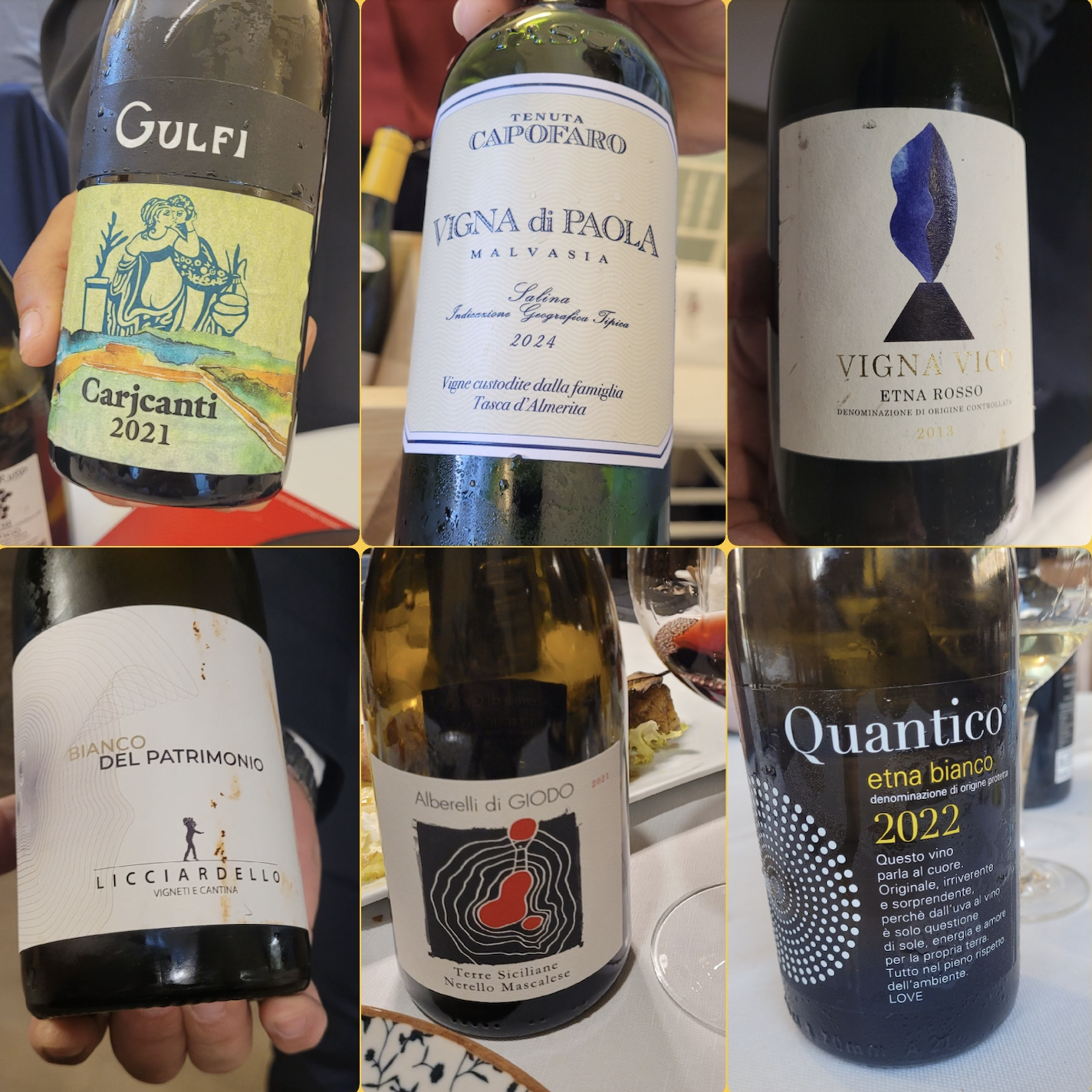
Tasca d’Almerita Tascante Etna Bianco DOC Contrada Sciaranuova 2022

Lees shows to be so integral and essential in the early development of Tascante’s Etna Bianco 2022 from the very important Contrada Sciaranuova. There is a play of current confusion while this youthful because the parts inside are bigger than the house that fits them. Expanding from within and needing more room to grow, to shed its weight even after eight months time.  Last tasted May 2025

Vinified and aged in Slavonian Grandi Botti, “to preserve the verticality and freshness of the carricante” explains Tasca d’Almerita agronomist Michele Brusaferri. Plays hard to get and acts demure inside the halls of its aromatic silence but you know that the elevation and fine basaltic soil are the portents of Tascante’s main Contrada Sciaranuova that will see to conditions for change. Though soft you feel the wood, present with confidence yet the thread of cool, herbal and botanical rins from Buonora into this Bianco. Fruit will soon peek through and announce a scintillant’s arrival, blossoms too, namely orange and then to salty lime later on. Just takes some air, agitation and swirl to coax out the excitement and up into the stratosphere. Turns out to be crunchy and seriously salty Etna Bianco, like flakes of Maldon or Slovenian platinum for what can best be described as living the high seasoned life of Etna Bianco. Structure is there and so this should age quite well. Drink 2025-2031.  Tasted September 2024

Tasca d’Almerita Tascante Etna Bianco DOC Buonora 2024

Both the good hour and bonaire as from the French and carricante just about as fresh as you will ever experience. Fresh and fleshy, fleshy and delicious, delicious and satisfying. Just what you desire on the 12th of May at 650m above sea level aboard L’Etna. Drink 2025-2028.  Tasted May 2025

Terra Costantino Etna Bianco DOC deAetna 2023

The term “deEetna” comes from a Latin pamphlet dated to 1494 expressing the sacredness of the oenological universe. Terra Costantino’s is one of the finer examples for 2023 by way of a blend led by carricante plus (15 percent) catarratto and (5) minnella. Ripening to fruition happened in the last ten days of September off of vines averaging 20 years. Yes to the palpable feeling of gainful concentration in juxtaposition to a fine and chiseled example with more wiry flesh hanging tuat on the mineral frame. Really well composed. Drink 2025-2029.  Tasted May 2025

Tornatore Etna Bianco DOC 2024

The straightest and fullest of Etna Bianco expressions with all in clean lees bulking up the substantial aspects of the wine. This is the entry point, the gate for which to walk through into the ever expanding idiom that is Etna Bianco. Start here and then explore the rest.  Last tasted May 2025

The vintage is represented in a most viscous way. Almost an oily character to 2024, indicative of the variable vintage with September having delivered some much needed warmth and sunshine for full phenolic grape development. A sapid iteration, botanical notes pervading and in the end it is texture that drives this Bianco machine. Drink 2025-2028.  Tasted March 2025

Tornatore Etna Bianco DOC Pietrarizzo 2022

Full on sun cumulate carricante from Pietrarizzo for what is surely as ripe and calculated an expression as they come. Full advantage taken of 2022 fruit for all that can be wanted from a Contrada Bianco example.  Last tasted May 2025

Pietrarizzo is both available and confident, not idiosyncratic like Zottorinotto and also richer of fruit. There is an herbal and botanical way about this cru Bianco with splashes of catarratto bringing seasoning to the carricante. A bit spicy and even humid though the fruit is the thing and the volcanics an accent making for even more spice entertained. Such a solid Contrada based Bianco. Drink 2024-2028. Tasted and September 2024

Tenute Tornatore Etna Bianco DOC Zottorinotto 2021

No comparison between Pietrarizzo and Zotorinotto, first of course because of location but in this case also dramatically caused by vintage. The 2021s are not holding up with the same stage presence as wished for last year and the year before. In fact they’ve transformed into this idiosyncratic space. No different here with a carricante of reductive meeting wet stony elements. Feels like some diesel creeping in, not petrol per se (akin to TDN) and smoky rather than smouldering. A bit of a strange advance with likely something new again on the horizon.  Last tasted May 2025

Of Tornatore’s cru-designated Bianci it is Zottorinotto that acts the most reductive and hard to crack. Great shell of protection and disguise, needing agitation and better still time. That said the 2021 is also fully formed, developed and very much ready to get at – make sure to aerate, decant if you can and allow the pleasures to be released. Drink 2024-2026.  Tasted May 2024
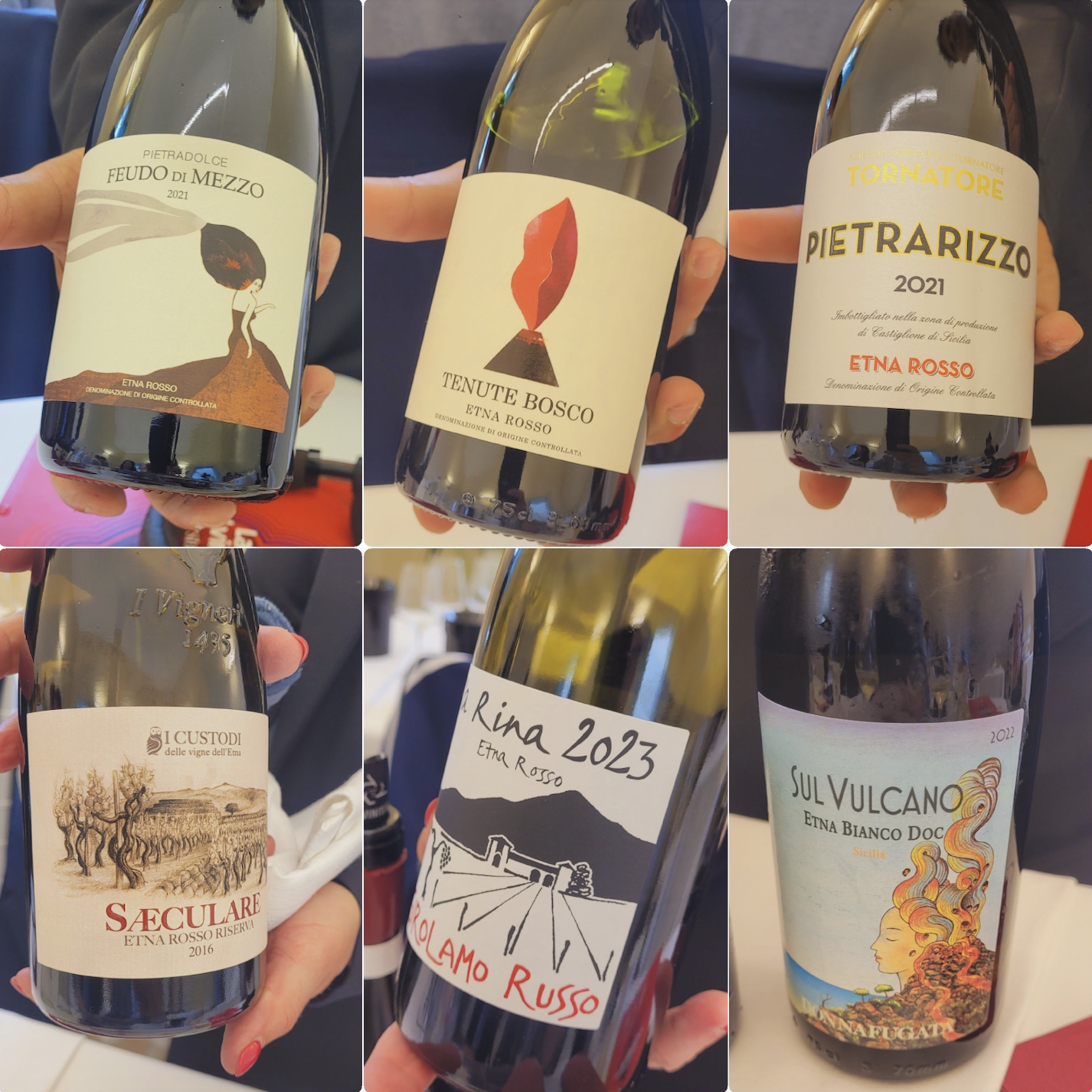
Etna Rosso

Benanti Etna Rosso DOC Contrada Monte Serra 2023

Strong aromatic presence and pulse for Monte Serra 2023, mildly and effectively reductive holding parts known and unknown. Not to say the aromas are stifled because they burst if within a bubble and yet to explode without. The epitome of nerello macalese filling our hopes, thoughts and dreams with anticipation. Cuts from stone some dreams of its own and though restrained it keeps a watch over the distance with a look to the future. Monte Serra is always an Etna Rosso with the grip and structure to look farther on, to hold back the fruit and preserve it for later days. The 2023 is balanced and prepared for longevity – that much is clearly true and in view. Drink 2027-2032.  Tasted May 2025

Benanti Etna Rosso DOC Contrada Cavaliere 2023

Tasting Monte Serra and Cavaliere 2023 side by side reveals much about place of origin because while the former looks farther on, the former engages today. A nerello masaclese that makes us see where we’ve both been, reaches us with immediacy and in turn we pay close attention. So much fruit interned so early, so little time to realize just how much is right there in this glass. It’s just that not opening and consuming bottles in the present will be hard to avoid. Drink 2025-2029.  Tasted May 2025

Cottanera Etna Rosso DOC 2023

Knowable bricks and mortar nerello mascalese as Etna Rosso and dictionary entry for the DOC. Sweet vintage fruit, competently concentrated, simply and effectively structure. Does what needs and does it very well. Drink 2025-2027.  Tasted May 2025

Cottanera Etna Rosso Contrada Feudo di Mezzo DOC 2021

Feudo di Mezzo of clout, expressiveness of largesse from the fullness of its old vines nerello mascalese fruit. Still a bit of a reductive nut to crack, a force field to break through, a softening needed to find full pleasure in the wine. A 2021 neither too hard nor to soft, the Goldilocks vintage as they say though the pressure is still applied. This FdM should come into its best years in six months or so. Drink 2026-2031.  Tasted May 2025

Cottanera Etna Rosso DOC Contrada Zottorinoto 2020

Give Zottorinoto an extra year an it will express itself with utmost generosity and here the Contrada’s Rosso is more than ready to go. Fruit sweeping and swelling across the plate, acids mellowed and tannins as well. As drink now a Rosso for the Contrada, as compared to any or all of this ilk on the mountain. Drink 2025-2027.  Tasted May 2025

Cusumano Alta Mora Etna Rosso DOC Feudo di Mezzo 2020

Dusty and Balsamic terroir expression, especially for Etna Rosso and also Feudo di Mezzo. A high acid style to compliment and even more so extenuate the circumstance of nerello mascalese. A specific style as well and one that garners attention, namely because its persistence and length are really quite outstanding.  Last tasted May 2025

Middle ground traveled and promise delivered for the large Feudo di Mezzo as Contrada sizes come, with fruit able to defend itself against generous wood though all parts launch a collective attack on the senses and palate. Big Rosso for Etna, strong boned and willed with the intention to impress. Drink 2025-2028.  Tasted September 2024

Donnafugata Etna Rosso Courdilava Dolce & Gabbana DOC 2020

Red stone fruit skin’s aromatic musk, pulpy to chewy within and fresh enough to keep a leathery character at bay. More tannin than expected and in fact they build quickly – this despite some four plus years having had the chance to settle the score. Still quite grippy and with a level of tension needing to subside. Impressive Etna Rosso. Drink 2026-2029.  Tasted May 2025

Donnafugata Etna Rosso DOC Fragore Contrada Montelaguardia 2021

Noticeable ulterior as an expression of Etna Rosso in comparison to the Dolce & Gabbana Donnafugata label. A fullness of nerello mascalese pressed, dressed and prepared for success. Clearly one to serve up and explain the nature but also importance of a single contrada wine, lacking for nothing and of layers far from being shed. Give time because otherwise this wine will attack with impunity and not let go. Drink 2026-2030.  Tasted May 2025

Firriato Cavanera Etna Rosso DOC Contrada Zucconerò Sciara del Tiglio 2021

Grainy if fine in that respect from specialized and decomposed volcanic sands that lend a very specific profile to Etna Rosso. Also quite ripe and so the palate holds a liquorice, leathery fruit chew character which speaks to drinking sooner rather than later. No doubt a singular wine and one that screams for best food accompaniment. The duck at Cavanera Wine Resort is ideal. Drink 2025-2028.  Tasted May 2025
Generazione Alessandro Etna Rosso DOC Croceferro 2023

Only nerello mascalese off of the northeastern slope of Etna and the place where the iron cross, therefore Croceferro sits in the vineyard. A rich and tannic nerello with a tease of immediate gratification but the austerity in this tannins reminds that time will be the operative and necessity for best results. Drink 2026-2029.  Tasted May 2025

Generazione Alessandro Etna Rosso DOC Scaramantica Vigna Vecchia 2021

Oldest vines are 80 years of age and nerello macacesle is joined by several others for a true Etnese field blend. Increases the fruit immediacy with concentration but even more so the tonic profile with fine-grained ruling and austerity that requests time, plenty of time. Seriously structured Etna Rosso no matter how you slice it. Drink 2026-2029.  Tasted May 2025

Girolamo Russo Etna Rosso DOC San Lorenzo 2022

Open for business, fruit and acids intertwined at their combined sweet heights. Good palate spiciness and a riveting sense of energy. Liquid chalky tannins still in transformation, likely to finish their movements in another year or so. But don’t hesitate as San Lorenzo is drinking beautifully right now.  Last tasted May 2025

The gifts of San Lorenzo are of a slow release ilk the other cru and vineyards of Girolamo Russo are not, but this from 2022 is so full of riches it brings early joy. A great pleasure to have a glass even now with gregarious perfume and readied flavours, of red berries, liquid chalky to candied palate swaths and immediacy from this bottle of wine. San Lorenzo shows off the most glyercol and silken texture – it’s almost candied but of course it’s not. Spicy on the back side, sneakily structured and all the while with a glass we’re feeling fine. Can only improve and integrate with a couple of years time. Drink 2025-2030.  Tasted May and September 2024

Girolamo Russo Etna Rosso DOC San Lorenzo Piano delle Colombe 2022

If San Lorenzo is drinking at early peak right now then Piano delle Colombe should rightly be close behind. Yes in one sense and that would be more intensity of fruit concentration but then again no, because of this landslide of grippier tannin. There is no argument about seeing 2022 as a top Etna Rosso vintage and still the wood on 2022 Piano delle Colombe persists without melting or dissolving in. Some might find a bit too much while others will beg to strongly differ. The 2022 is right there where elements should rightly want to connect, intersect and layer. Perhaps not right away but in time, which will only embolden this Rosso with the wisdom and grace it is destined to express. Wait and anticipate seeing its reflection in the snow covered mountain. Drink 2026-2032.  Tasted May 2025

Girolamo Russo Etna Rosso DOC A Rina 2023

Put a ring around A Rina because no other Russo Rosso comes into view any sooner. None exhibit this level of juicy, luxe and getable richness and none shall pass, not for any reason at all. A Rina is a full and substantial nerello mascalese out of 2023, with the most liquidity come after dissolving grains of tannin for earliest drinking. No reason to wait. Drink 2025-2028.  Tasted May 2025

Graci Etna Rosso DOC 2023

A reminder about origin, they being estate vineyards at 650-750m and aging of 18 months in concrete though this ’23 feels as though at least one big barrel was involved. Not quite as linear and serious an Etna Rosso as the previous 2022 surely was and still is. Youthful yes but more chew than crispiness in 2023, ripeness and sweetness in acidity. No reduction, open for business and read to rock. Drink 2025-2028.  Tasted May 2025

Graci Etna Rosso DOC Arcurìa 2022

Spicing, spacing and perfume define Arcurìa with equal an opposing reflections for signs of Etna Rosso perfections and imperfections. Arcurìa from 2022 is showing quite the amount of barrel at this early stage, notes indicative of spice and challenge. Fruit is up to the task, metered, rising and falling in waves, there to speak of the open and closed spaces. All this to say the journey will end up in reflection in regards to a Rosso drinking forward for eventual gratitude. Drink 2026-2031.  Tasted May 2025

Graci Etna Rosso DOC Arcurìa Sopra Il Pozzo 2020

The piece of Arcurìa needing two extra years of aging and settling time is Sopra Il Pozzo, ad esempio a me piace il sud. Or the north as it applies to this slope of L’Etna and this piece is expressive of the sweetest spicing over fruit as any on the mountain. Yes the southern section is also liked but here Pozzo is an Etna Rosso of wood that needs to melt in, puddle below and allow a rising of fruit. That it will with the nerello mascalese climbing the firm backbone of this 2020 with fine and upstanding repose. Impressive and structured for a very long life still laid out ahead. Drink 2026-2034.  Tasted May 2025

I Custodi delle Vigne dell’Etna Rosso DOC Aetneus 2020

Fascinating study in Etna Rosso because these from I Custodi are different, stand out and alone nerello mascalese with (20 percent) nerello cappuccio. More than just the cappuccio but soil and location add up and amount to what’s in this glass. A certain kind of dried fruit, rich and leathery, studied and mature, weighty but without density. Now a settled wine with heavy mineral presence, a volcanic factor specific to I Custodi and when mixed with the winemaking style it all comes out a very certain way. Do you like it? Try it and find out. Drink 2025-2028.  Tasted May 2025

I Custodi delle Vigne dell’Etna Rosso DOC Saeculare 2016

The consistency of style from one I Custodi Etna Rosso to another is remarkable, to a wine, in all the wine. Yes the 20 percent nerello cappuccino is partly responsible for the semi-rustic, chewy dried fruit character but look further, or rather deeper into fine decomposition of basaltic soil. Location of course but whether you have 2020 or this 2016 in glass they all seem to be at nearly the same maturity. As here with Saeculare although it’s particular grip and structure see it age longer than Aetneus and this is prime time for tasting and in turn drinking this label. It will seem mature to some but know that this is the way and style of the house. Drink 2025-2027.  Tasted May 2025

Palmento Costanzo Etna Rosso DOC Nero di Sei 2021

Fine verticality even from Rosso di Sei because, well 2021 and also the lava. Feels firmer than eight months ago and as a result may live even longer.  Last tasted May 2025

Nero di Sei 2021 comes quicker to the point with near-immediate gratification because of vintage and also by way of the team allowig and even encouaging this to happen. Or abided more like it, with red berry fruit aromas that nerello mascalese can gift when the conditions are right. This is not to say that 2021 will fade into early light because it is in fact equipped with volume, concentration and backbone. A truly exceptional vintage that will appeal to all. Drink 2025-2030.  Tasted September 2024

Palmento Costanzo Etna Rosso Doc Contrada Santo Spirito Pre Phylloxera 2021

Not that the wine isn’t tight but my goodness how the tension is matched by fine verticality from Rosso with an intensity of volcanic chalkiness so specific to Santo Spirito’s 1870 lava. When vines are pre-phylloxera they have a true connection to the actual eruption and basalt because the lava had barely cooled when the first grapes appeared on the vines. A “no lo so” factor in this nerello mascalese character cools the Rosso so that herbal and stony notes prevail and persist, long after the wine has passed over the palate. A remarkable wine (isn’t it always) and another near perfect vintage. Drink 2027-2037.  Tasted May 2025

With Fosca Tortorelli

Pietradolce Etna Rosso DOC Barbagalli 2020

Grand and expressive, epically proportioned, factor of a remarkable vineyard brought to life through the coursing of its nerello mascalese. Hard to imagine an Etna Rosso so fine and linear could be considered crushable but this is Barbagalli and its vines more experienced than just about any aboard L’Etna. Crushable as a fleeting feeling but everything is truly in place, all parts inclusive of fruit, minerals, elements and constructions right where they should formulate. The last of the wine is no such thing because the weights, measures and taciturn moments linger for seemingly ever. Wowed and energized by Barbagalli. Drink 2027-2039.  Tasted May 2025

Pietradolce Etna Rosso DOC Archineri 2021

A different and singular animal for Pietradolce is Archineri, chewier and more palate workable than the rest of the Rosso portfolio. Lots of wood still noted on the 2021, changes yet to take effect, not here, not anywhere. Not tight as much as unable to come to be on the other side. Remains to be seen where this road will lead. To be honest it’s a bit resinous but youth is rebellion and maturity will come to experience.  Drink 2027-2030. Tasted May 2025

Pietradolce Etna Rosso DOC Rampante 2021

Effusive perfume from Rampante 2021, more floral than Pietradolce’s other reds, tannins sweeter and less austere. An approachable character though we know that structure is built for a long and full experience. The most immediately recognizable balance and still time will be kind to this Rosso. Air is on side now, time as well for 10 years forward. Drink 2025-2033.  Tasted May 2025

Pietradolce Etna Rosso DOC Feudo di Mezzo 2021

Some dried fruit and a maturity in the feels of Feudo di Mezzo 2021 but oh my goodness what a charming, graceful and lovely bit of nerello mascalese love in this bottle. Opens slowly and I also feel like their is some sort of obfuscation but the truth is the truth and FdM ’21 is in a very good and right place. Drink this while Rampante and Archineri work through their challenges. Drink 2025-2029.  Tasted May 2025

Pietradolce Etna Rosso DOC Santo Spirito 2021

From the opening salvo Santo Spirito is notable for its restraint and a closed aromatic tilt still very much a factor involved. Like Archineri, floral along with Rampante and so residing either in-between or as a combination of the two. A Rosso of layers, stepping stones taken up towards its eventual plateau. The barrel is melting here so slowly, the fruit fills full and substantial, the power less than intense and the energy still rising, Wait some more and then some more after that. Drink 2027-2031.  Tasted May 2025

Planeta Etna Rosso DOC Feudo di Mezzo 2023

First vintage as a solo Feudo di Mezzo and labeled this way. Not that this Contrada ever creates the darkest nerello mascalese but 2023 is at the peak of lithe, airy and transparent. The vintage takes over from the Contrada with ever-persistent and linear consistency controlling its volcanic destiny. Without density or extravagance, not in any shape or form but instead a fineness that seeks no desperate gratification. Will it age? Of course it will. These are really old vines growing in volcanic rocks, though if perhaps not for decades.  Tasted a second time, May 2025

Full and substantial Etna Rosso for Planeta and 2023, a challenge accepted and met, the effect positive and gaining. Spicing is essential, cumulative macchia also a matter of great importance with layers yet to be peeled away. The reveal is coming, let’s say after another 12-18 months, at which time we will speak of fruit leading and tannin trailing. Grande. Drink 2026-2030.  Tasted May 2025

Tasca d’Almerita Tascante Etna Rosso DOC Contrada Pianodario 2020

Varietal nerello mascalese only grown at 790m in Contrada Pianodario raised for one year in large Slavonian cask. This Etna Rosso is exactly what nerello mascalese is today. It may take a consumer three of four times and vintages before they get it but once they do they will never go back. High acid, transparency, brightest of red fruit, no rusticity and refined tannins. Delicate and at the same time serious. Just keeps getting better each time.  Last tasted May 2025

Lighter of body but not aroma as it now enters with the volume turned up, a feeling of idiosyncrasy and high-level curiosity. Wild and exotic spicing owing to a 17th century lava flow now in a state of degradation to make certain the nerello mascalese growing in its sands are the recipient of its mineral profile.  Tasted September 2024

High-toned, spirited and transparent nerello mascalese from Tasca’s L’Etna Tascante out of Contrada Pianodario. Red berry shine, acids excited and fruit a willing participant. Tarragon and Basil herbal, so very basaltic stony and truly a wine of place. Crunchy and ever so slightly resinous with balsamico mixing into the sweetness of fruit and acidity. Drink 2024-2029.  Tasted May 2024

With Sofia Ponzini – Tenute Bosco

Tenute Bosco Etna Rosso DOC 2022

Spiced and lifted aromatics create an effect to deliver Etna Rosso with linearity, grace and stature. Scan a room and you will not miss this nerello mascalese because its confidence, poise and presence stand out in a crowd. Beautiful in a post classic way, part demure and beyond a doubt unmissable. Barrel that needs to settle down and in will do so in two years time and see five-plus years of ideal drinking after that. Brava Sofia, as always. Drink 2027-2032.  Tasted May 2025

Tornatore Etna Rosso DOC 2022

Straight shooter this Etna Rosso, accessible and amenable to all, now and for all the right reasons. Fruit first, ripe and delicious, aromatically charged and energizing the entirety of the wine. Rosso for Rosso’s sake, crunchy and palatable with great toothsome character, A guarantee and stamp of quality in the most professional of Etna Rosso ways. Unwavering consistency from Tornatore. Drink 2025-2028.  Tasted May 2025

Tornatore Etna Rosso DOC Pietrarizzo 2021

Etna Rosso as Pietrarizzo is nothing short of expressive, energetic and impressive. Fruit comes in waves, in and out of every pore and this “etichetta” exhibits finer and sweeter acidity than so many peers. Commercially viable for a lifted Etna Rosso to explain much about the mountain’s nerello mascalese. Quite fine, true substantial and very composed.  Last tasted May 2025

If Tornatore’s classico Etna Rosso is the most understandable and straightforward 2021 DOC entry point there could be than we should expect Pietrarizzo to hyperbolize that idea. Exaggerate and also exist in a vacuum where great acidity and sneaky formidable structure combine for all that could be wanted and needed. Such is the case and with the estate’s glide into maturity because ripeness happens and getting to the point always in season. Fine work, as always, expected and desired. Should be ready, fully and completely in the late winter months. Drink 2025-2029.  Tasted October 2024

Tornatore Etna Rosso DOC Trimarchisa 2018

A cumulative experience in Etna Rosso, fruit three ways, acids and tannins in and out off every layer, a wine to imagine all the mountain can deliver. Tart, tight and substantial, all the nooks filled with elements fruity and minerally volcanic. As they should be. Drink 2026-2029.  Tasted May 2025

Good to go!

godello

Modica

Instagram

Facebook

The grower’s spirit of William Saintot Champagne

Only a grower’s Champagne could reveal so much distinction from cuvée to cuvée ~ Behold the diversity of @williamsaintot ~ with thanks to @riverdalewines

Looking for Champagne for the holiday season? Wanting Grower’s Champagne with a négoce angle to the story? In today’s changing climate and through the multifarious meaning of that expression we are sensing and seeing a decline of former and rise of the latter. The landscape and scales are changing, mainly for reasons pertaining to logistics plus economics and so the blurred lines of growing, grape-accumulating and bottling are the rising trend, fashion and reality of the Champagne business. For a full, comprehensive and brilliant report on the subject, right-click, open a new tab and migrate over to read Treve Ring’s take at Jamie Goode’s Wine Anorak on the burgeoning subject.

Related – Beyond grower Champagne: where have all the growers gone?

Last April I had the immense pleasure to sit down with Riverdale Wines and taste the portfolio of William Saintot Champagne. These are the notes and yes I highly recommend making these wines your go to fizz for the upcoming last two weeks of 2019 revelry.

William Saintot La Cuvée Séduction Blanc De Blancs Champagne Premier Cru ($82.00)

The parcel for this cuvée is 50-plus years of age, 100 per cent chardonnay on Bisseuil limestone. We don’t often describe Champagne straight out as fruity but this goes all out to deliver. Fresh fruit, sliced, sluiced and dripping; peach, yellow plum and lemon, humid and in the air. Great freshness though more than just acidity is the seducer here. Gets tropical, into lemongrass and more. Appealing in the highest end commercial way. Drink 2019-2022.  Tasted April 2019

William Saintot Brut Blanc De Noirs Champagne Premier Cru ($62.00)

Fruit from 2014 (94 per cent) and 2015, in stainless steel tanks from the three pinot growing areas. Fresh and toasty and a seamless gathering of three pinpointed pinot noir terroirs. Avenay, Val d’Or and Muligny et Bisseuil get together for a three-layer, triad-pronged effect of fruit, acidity and exceptional Champagne tannin. Brilliant Blanc de Noirs (of 6.5 rS) and exceptional length. Drink 2019-2025.  Tasted April 2019

William Saintot Blanc De Noirs Champagne Premier Cru Chopine ($62.00, 375ml)

From the same pinot noir triad of terroirs (as the 750 mL B de N) but here in a split of the Brut and fruit going back to 2011 and 2010. That’s really the only difference, a monumental one truthfully speaking and disgorged in 2017. The toasty tastiness is accentuated and if you like brioche, baked apple, salve of texture, greater tannin and enough freshness to bely the oxidative tendency of ginger feathery Champagne then you will find the brilliance in this wine. Finishes with a smirk of orange créme brûlée. Great fun, pomp and circumstance in a serious way. Drink 2019-2023.  Tasted April 2019

William Saintot La Roseraie Champagne Premier Cru ($64.00)

Two growing areas contribute to this saignée Rosé, Muligny and Busseuil, with vines that average old, older and oldest, from the 60s – 80s, with some 100 year old plants. The blend is 72 per cent pinot plus (28) chardonnay, disgorged in 2018. The sugar level is raised just a touch to 6.5 rS and the alcohol a consistent 12 per cent. Berries and currants gain spirit from cranberry and pomegranate in a really energetic, tension-driven fruit affair. Truly stylish. Drink 2019-2023.  Tasted April 2019

William Saintot La Cuvée Prestige Champagne Premier Cru ($77.00)

The Prestige is an 80 per cent pinot noir and (20) chardonnay get together, disgorged in 2018. It’s a retrospective, trend-setting style, based on the Solera ideal with fruit inclusion going back to 2010. It’s not nearly as oxidative as you might expect, in fact its freshness is a sustainable guarantee. There are layers and layers involved that will take as long to peel away as they took have taken to accumulate since 2010. So much citrus in so many ways and once again that amazing grower’s acidity. It really works. Drink 2019-2026.  Tasted April 2019

William Saintot Brut Millésime Champagne Premier Cru 2012 ($89.00)

From chardonnay at Avenay Val d’or planted in 1970 plus chardonnay in Bisseuil planted in 1964. Here the most spirit, citrus accentuation and for the next time (not the first) a real distinction from one wine to the next. This shows the grower individuality and from one Champagne to the next. There is fennel, garrigue and beautiful savoury aspects here but still mainstream enough to challenge every household name for what to drink. Drink 2019-2027.  Tasted April 2019

William Saintot Extra Brut Champagne Premier Cru La Côte De Chignon 2011 ($150.00)

Disgorged 2017, nature and 2.6 rS, 100 per cent pinot from Avenay Val d’Or, only 1250 bottles made. The first to challenge our notions of earthy, elemental and even funky in Champagne. Lemon, seville orange and ginger, fresh and dried herbs but also a wet concrete meets clay earthiness. Fruit is managed and anything hut relegated while acidity keeps all the mille-feuille parts integrated, in-synch and complimentary. Very special Grower’s Champagne. Drink 2019-2028.  Tasted April 2019

Good to go!

godello

Only a grower’s Champagne could reveal so much distinction from cuvée to cuvée ~ Behold the diversity of @williamsaintot ~ with thanks to @riverdalewines

Twitter: @mgodello

Instagram: mgodello

WineAlign


Valpolicella, Ripasso Valpolicella

#rondinella #valpolicella #novaia

In September of 2016 seven Ontario friends, colleagues and I paid visits to 18 Valpolicella estates over four days. We stayed at the perfectly situated Hotel Villa Moron in Negrar. We were formally introduced to the Veronese gastronomy and a set of Valpolicella wines at Locanda ‘800, a Negrar Valley institution. I expect some of you will know it. We visited the following estates. Buglioni, Pasqua, Santa Sofia, Ca’ La Bionda, Novaia, Sartori di Verona, Nicolis, Tenute Salvaterra, Valentina Cubi, Fidora, Cantina Valpolicella di Negrar, Ettore Righetti, Tenuta Santa Maria Alla Pieve, Massimago, Corte Adami, Bertani, Zonin and Ca’ Rugate. Dinners were also taken at Osteria Numero 1 in Fumane, Antica Osteria Paverno in Marano and Ristorante Nicolis in Verona. It is my pleasure and, indeed, my privilege to tell you this Valpolicella story. Such as it is.
Valpolicella 101 for i canadese #locanda800 @C_Valpolicella

The permutations are many but well-defined. Valpolicella, a style of wine as much as anything though qualified as a set of possibilities all capable of being labeled as a DOC; Valpolicella, Valpolicella Superiore and Valpolicella Classico Superiore. Ripasso, a next level stylistic, a traditional technique that promotes a second fermentation through the basic Valpolicella’s contact with warm dried grape skins from which Amarone has been pressed. This practice slightly decreases the acidity and increases the alcoholic content and enriches the wine with a greater concentration of sugar, glycerine, dry extract, polyphenolic substances and aromas. Ripasso intends to promote a heavier structure and longevity.

Amarone knowingly set aside, at least outside the terms of this report, tradition looks to Ripasso as the top of the pyramid for Valpolicella wines but when we talk of terroir, of marl, clay and limestone, of 11 valleys and all the hills, what represents the truest expression of Valpolicella? Authenticity must be borne out of spontaneity, in a product that shows itself in different ways, in every year. It should never act the same way twice. Valpolicella must remember the primaries; geology, geography and climate but also colours, uncontrollable forces and natural tendencies. Memories are only built on that which is not forced. “The importance of little details,” with thanks to Camilla Rossi Chauvenet.

Lavoro stradinario da cuoco Diego Donatelli #locanda800 #negrar #valpolicella

It’s all about the valleys. Do the grapes grow in the Valpolicella Classica or not? Corvina is king, corvinone and rondinella (often for colour) support while molinara may or may not bring up the rear. Sometimes there is croatina and oseleta. Pergola or Pergoletta Veronese is perpetuated as the training system of record, at times in double Pergoletta style. Guyot and high density planting continues to creep into consciousness. The Burgundy ideal will always play into the minds of all.
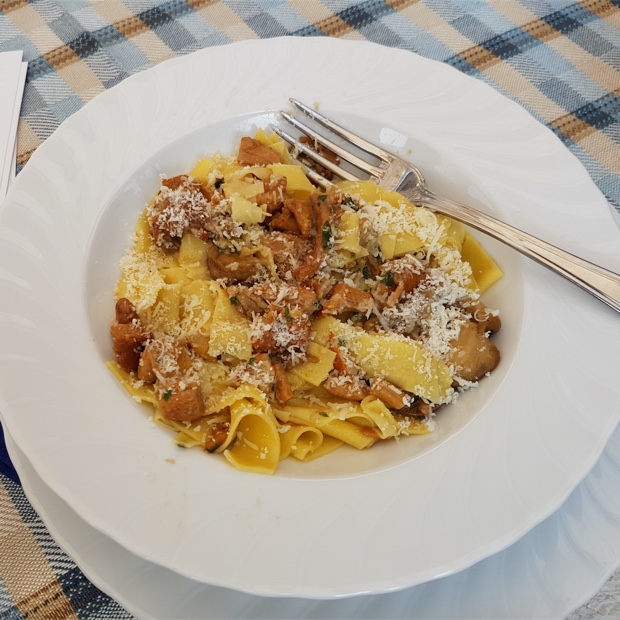
Valpolicella hails from the hills north and east from Verona. To the immediate west is Lago Garda and further to the east, Venezia. The Valpolicella extends from Sant’Ambrogio di Valpolicella to Val Tramigna in three sub zones, Valpolicella DOC Classico, Valpolicella DOC Valpantena and the eastern or extended Valpolicella DOC. The valleys; Fumane, Marano, Negrar (Valpolicella Classica), Quinzano and Avesa (Valpolicella), Vaplantena (independent), Squaranto, Marcelisse, Mezzane, Illasi and Tramigna (Eastern Valpolicella). The area is 80,000 hectares of which 7,600 are planted under vine. The Classico area is 45 per cent of the total. More than 60,000,000 bottles are produced annually, 45 per cent of which are Ripasso and (32) Valpolicella. For an in-depth analysis of the appellation production zone and a proposal for the delimitation of the principal viticultural areas of the hillsides seek out the map of Valpolicella Crus by Alessandro Masnaghetti.

Masnaghetti contends “however vast and variegated it might be, the Valpolicella is rather easy to sum up and describe.” Geographically speaking, that much is true. From a quality standpoint, there can be much debate. Tradition, even if spoken in terms of dry red wines, is hard to break and in Valpolicella the collective style is virtually unparalleled anywhere, considering the breadth and quantity of wine produced. Over the past 20 years the area of vineyards has doubled in the Valpolicella and the 60M bottles produced put it highest for any Italian PDO. The consistency of homogeneity is clearly a harbinger of sales and quality but sustaining such growth without a compromise to quality is surely the tallest of orders. Those producers attempting to challenge the current order are necessary for diversity and to preserve the perpetual health of Valpolicella.

When the light is just right #verona

A trip to Valpolicella is a most intense, concentrated and often repetitive exercise, much like and in mimic of the wines produced throughout the vast area and so pit stops in and out of Verona are both obvious and necessary. Verona may be most famous as the setting for Shakespeare’s Romeo and Juliet but it is truly one of the unconscionably beautiful cities of this world. It is a place that brings characters and events to you. With eyes open wide and faculties able to maintain focus you will continuously look and carefully listen, so that the stories come to you. Verona repeatedly delivers moments of awe. At dusk overlooking the Adige from the Ponte Pietra. At night in the busy Piazza delle Erbe. Musing over several hundred varieties of Gin at the Frz Lab Bar. Sipping on Champagne outside of Osteria Alcova del Frate and Patrick Piuze Chablis at Antica Bottega del Vini.

Via Marconi, #verona #frzlab #ginbar

I’ve included some examples of IGT Verona at the end of this report to expound on two polar bookends of the 21st century ideal. Winemakers make use of the designation to fashion Super Veronese, wines of local meets expatriate varietals bathed in oak. Still others make Valpolicella doppelgängers with traditional varieties that can sometimes act more like Valpolicella than so many legal examples approved under the DOC. The IGTs with international grape varieties blended in and subjected to new oak need time to develop and will age into their bubbles welling with balsamic, chocolate, espresso and even truffle. There is no disputing the modernity and mimicry of other Italian brethren and sistren. Recent changes to labelling say that a wine exceeding 80 per cent of a local variety (like corvina) could in fact now be called a Classico Superiore though if the methodology of winemaking (and/or growing) messes with the plan there are some that don’t resemble one in any shape or form.

More pertinent to this investigation is in holding hope that wines produced under the auspices of rogue decisions will soon find their way out of the scrap heap piled high due to discriminatory DOC penalties. Things like bottling under screwcap, omitting sulphites and exploring “the terroir and grape varieties to the fullest by pushing all boundaries.” Valpolicella is and can be even more progressive, not just to increase market presence, Amarone sales and the bottom line of all Valpolicella wines riding the skins of their provider, but also to lead with innovation.

This report is due with great respect and thanks to Olga Bussinello, Director of the Valpolicella Consorzio Tutela Vini. Also to John Szabo M.S. and Federica Shir. The trip and subsequent 8,500 words would not be possible without the company of esteemed, stupid smart and even funnier colleagues; Julie Garton, Joshua Corea, Annette Bruley, Lauren Hall, José Luis Fernández and Nick Chajoglou. Last but certainly at the top of the list are the Valpolicella wineries, their proprietors, winemakers, export and marketing folks who received us. Tiziano Accordini, Roberta Speronello of Bertani, Mariano Buglioni, Alessandro Castelanni of Ca’ La Bionda, Giorgia Lanciai of Ca’ Rugate, Valentina Cubi, Gabriele Righetti (and the whole family) of Ettore, Eugenia Torelli and Emilio Fidora, Camilla Rossi Chauvenet of Massimago, Luca Bissoli of Cantina Valpolicella Negrar, Martina Fornaser and Giuseppe Nicolis, Marcello Vaona of Novaia, Chiara Pinamonte of Pasqua, Gianpiero Rotini of Salvaterra, Alex Guardini, Elisa Biasolo and Giancarlo Begnoni of Santa Sofia, Carmen Stirn and Andrea Sartori, Gaetano Bertani of Tenuta Santa Maria and Francesco Zonin.

I give you 64 reviews; Valpolicella, Ripasso Valpolicella and IGT.

Great old table, Villa Mosconi Bertani

Valpolicella

Bertani Valpolicella DOC 2015, Veneto, Italy (Agent, WineAlign)

Bertani’s Valpolicella is not classified Classico because the grapes come from Valpantena and Valpolicella Classica, 80 per cent corvina and 20 rondinella. Fermented in stainless and aged one year in concrete. Basic, commercial, effective, red cherry and tanky leather, seamless and untouchable. Commercially corrected and correctly traditional Valpolicella. Low in alcohol, acidity and complex capability. Drink 2016-2017.  Tasted September 2016  cantine_bertani  churchillcellars  @CantineBertani  @imbibersreport  @cantine.bertani  @imbibersreport

Cantina Di Negrar Valpolicella DOC 2015, Veneto, Italy  (467936, $11.95, WineAlign)

It gets neither more obvious or direct in a perfectly commercial Valpolicella package, one that is highly fruity with a sidle over to the funky cherry side and would always benefit from a slight chill. A leathery note more suede than new strop distracts but only for a moment because of the omnipresent acidity. Drink 2016-2017.  Tasted June 2016  cantina_valpolicella_negrar  noble_estates  @CantinaNegrar  @Noble_Estates  @CantinaValpolicellaNegrar  @NobleEstates

Ca’ Rugate Valpolicella DOC Rio Albo 2015, Veneto, Italy (Agent, SAQ 10706736, $18.00, WineAlign)

Rio Albo is drawn from vineyards in the hilly area of Montecchia di Crosara and is a blend of corvino (45), corvinone (40) and rondinella (15). Fresh fruity, very tangy, viscous, liquorice and plum Valpolicella. Firm but very juicy, with quite a bit of concentration. Very modern and forward but not overly extracted or pressed. Just up there with the ambitious, confident and in balance. Drink 2016-2019.  Tasted September 2016  carugatevini  @carugate.aziendaagricola

Tasting at Fidora

Fidora Valpolicella DOC Monte Tabor 2015, Veneto, Italy (Agent, $24.95, WineAlign)

Monte Tabor is the name of the Sant’Ambrogio estate and this is pure delight from the purest, cleanest and most honest red fruit found anywhere in Valpolicella. Fermented and aged in only stainless steel, to push the fruit borne in requiem of a proper selection, even in the giving 2015 vintage, but pushed by higher learning from the challenge of the previous one. Establishes a base, like a song in celebration tells Emilio Fidora. “We are very good farmers, even if we are not super with making wines.” Joking aside there is no cheating here, just honesty and back to basics ethics. The notes talk of cherries at peak but then there is this calcari and marbling as per the mimic of the terroir. Drink 2017-2020.  Tasted September 2016 and July 2017  fidorawines  thelivingvine  @eugeniatorelli    @TheLivingVine  @fidorawines  The Living Vine inc.

Fidora Valpolicella DOC Monte Tabor 2014, Veneto, Italy (Agent, $24.95, WineAlign)

From the Illasi Valley, composed of 50 per cent corvina, (30) corvinone and (20) rondinella, another singular effort in its inaugaural vintage, rusty and rustic, not exactly light in spite of its transparency. Great visceral soil tang, in line with a top notch bardolino and while firm there is a brightness about it. A moment of tonic. Could drink this often and with thanks to some good length in its persistence. Excellent for the vintage with 5 g/L of RS and also richer than you think. Drink 2016-2018.  Tasted September 2016

“I gotta have some of your attention, give it to me.” @massimago #special #brassinpocket

Massimago Valpolicella 2014, Veneto, Italy (Agent, $29.95, WineAlign)

Few reference points can prepare you for Massimago’s style of Valpolicella so simply use this as the ingress. Plucked from vines in the Mezzane Valley in the east part of Verona province, rising from the village of Vago towards Mezzane di Sotto. Camilla Rossi Chauvenet’s precocious blend is the crisp, crunchy, pure as driven white limestone portal into the soils laid out in amphitheatre vineyard grid. Camilla uses only stainless steel tanks here to accentuate a basal clarity brush stroke on her Valpolicella canvas. This from a selection of the grapes that will not enter the Amarone process, the second and third pass harvested bunches. Cherry and silty saline mingle at the interces of limestone. How can you miss the white stone in the naked Valpolicella? You can’t. It’s without make-up, transparent, naked to the world. The wine speaks a natural vernacular and the land is spoken for. If villages-level Bourgogne were made like this all would be well in the world. Lithe, delicate and perfumed. Drink 2016-2019.  Tasted September 2016

Marcello Vaona of Novaia

Novaia Valpolicella DOC Vino Biologico 2015, Veneto, Italy (Winery, WineAlign)

Family history matters. It begins with Paolo Vaona, then Bruno, followed by two sons, Gianpaolo and Cesare. Today it is Marcello (Gianpaolo’s son) and Cristina (Cesare’s daughter) who have transformed Novaia, or “new courtyard” into the organic farm it is but also to the new age for Valpolicella, predicated on experimentation, mistakes, triumphs and changing the way the region will think about its storied wines. Because, as Marcello reminds us, “in the beginning there was only Recioto. So getting to this moment was a long journey and Novaia’s Valpolicella named Vino Biologico can’t be labled Classico because it’s under screwcap. That will change. It’s fresh, spicy and of no oak. It’s natural ease and yeasty feel mesh with saline, terroir-drawn variegate and it’s so very specific and focused. Love the cherries and the lithe 12 per cent frame. Drink 2016-2018.  Tasted September 2016  bwwines  @NovaiaAgricola  @bwwines  Marcello Vaona (Novaia)  @bwwines

The last tasting with The Master and the Canadian apostles at #fumane

Valentina Cubi Valpolicella DOC Iperico 2014, Veneto, Italy (Winery, WineAlign)

Iperico (St John’s Wort) is made of corvina (65 per cent), rondinella (25) and molinara (10), a wine confidently in purport of the ’14 intel., with an early note of musty, damp forest floor, currants and flower compost. All of the earthy components are exaggerated by the vintage with nothing to cover it up, but the palate is silky in a transparent way and acidity that softens, like a saline streak, as an ancient underground river would impart, as if by Willamette Valley pinot noir. This is singular stuff in Valpolicella. As before, raised only in steel. Drink 2016-2021.  Tasted September 2016

Valentina Cubi Valpolicella DOC Iperico 2013, Veneto, Italy (Winery, WineAlign)

Iperico is a blend of corvina (65 per cent), rondinella (25) and molinara (10), similar in character to 2014 but with a compressed reduction to the compost and yet a striking come about from an increase to the sharpness. The acetic push is a key factor in the linear definition. Torched marshmallow skin, bitter herbs, umami savour, the flowers still fresh, the fruit vibrant and all tolled, a beautiful vitality. An intense wine, again like pinot but also like Trentino-Alto Adige/Südtirol teroldego or Piemonte alter-ego varieties, specifically grignolino. As with Sin Cero, raised only in steel. Drink 2016-2019.  Tasted September 2016  #valentinacubi  @valentina_cubi  Valentina Cubi

Good times in #valpolicella with @johnszabo

Valpolicella Classico

Buglioni Valpolicella Classico DOC 2015, Veneto, Italy (Winery, WineAlign)

In 2014 the entire crop was sold off to bulk wine because the quality was not considered up to standard. The Valpolicella Classico 2015 is composed of corvina, rondinella and 18 per cent croatina, with no oak and a flash raised three months in stainless steel. An increase in quality might arise from training by Guyot (2-4 but generally 3 kilos) says Mariano Buglioni, but this Valpo is from vines trained by pergola to yield quantity (3.5 to five kilos per vine). Certainly some warmth on the nose and the result here is both floral and acetic, fully crushed, simple, firm and fruity, though not too firm nor infirm. The vintage is promising across the range and here this lingers quite long, clean, crisp and a bit chewy. Drink 2016-2018. Tasted September 2016  buglioni_azienda_agricola  marianobuglioni    @cantine.buglioni.9

A sense of wonder beneath the pergola, Vigneti di Ettore

Vigneti Di Ettore Valpolicella Classico DOC 2015, Veneto, Italy (Winery, WineAlign)

From the Righetti family, from grandfather Ettore to grandson Gabriele, Vigneti di Ettore’s Valpolicella Classico may just be possessive of the most quaffability of any Classico, all red fruit and in the optimum bring it on zone. The acidity and whatever momentary firmness accorded is functiional and better still, beautiful. As basic and categorical as life in Valpolicella grapes should be and only made more complex because it pleases so. Drink 2016-2018.  Tasted September 2016 vigneti_di_ettore     @vignetidiettore

Vigneti Di Ettore Valpolicella Classico DOC 2014, Veneto, Italy (Winery, WineAlign)

Stylistically this Ettore Valpolicella Superiore ’14 is a departure, or perhaps it is ’15 that changes course. I get the feeling there is more grandfather Ettore inherent here and grandson Gabriele drives the ship next season. Or perhaps it’s just a case of vintage. Nature versus nurture arguments aside this ’14 takes a step deeper and away from simple red fruits into a more variegated gathering that includes blue (berry) and black (currant). Still quiet and quite restrained, elegant even, said despite the creative license employed with that word. Greater acidity balances the more developed and deeper fruit and so balance is fully realized. More pleasure in a slightly adjusted bell-curve way. I’d drink up some ’15s for a couple more months while waiting for the more awkward 14s to come around. Drink 2016-2020.  Tasted September 2016

Cantina Santa Sofia

Santa Sofia Valpolicella Classico DOC 2014, Veneto, Italy (Agent, WineAlign)

So simply pure, clear, concise and precise. Ripe cherry, brightness, transparency and unadulterated. Every day Valpolicella, the way it was and the way it needs to be encouraged to remain. Drink 2016-2018.  Tasted September 2016  santa_sofiawines  @SANTASOFIAwines  @SantaSofiaWines

Tasting and lunch at Tenute Salvaterra

Tenute Salvaterra Valpolicella Classico DOC 2014, Veneto, Italy (Winery, WineAlign)

A post oxidative must has made transference to personality lifted by a reductive odour within and expressive of ripe, firm fruit without. Dark but not exactly black cherry, with little to no oak but certainly cariries the characteristics of a wine that has had a cup of coffee with wood. The collection is ultimately reductive, smoky and dangerous. The caramel finish is a sign of a wine not unlike some new world takes on old world grapes. Drink 2016-2018.  Tasted September 2016  tenute_salvaterra  tre.amici.imports  @vinosalvaterra  @treamiciwines  @tenutesalvaterra  

Buongiorno from @sartori_verona @C_Valpolicella

Sartori Valpolicella Classico DOC 2015, Veneto, Italy (378109, $12.95, WineAlign)

This silly inexpensive blend of 45 per cent corvina, (30) corvinone, (20) rondinella and (five) croatina spent five months housed in the big barrels. Valpolicella of stronger, deeper, traditionalist methodology. Firm and low tonal, baritone Classico, mahogany and leather, naugahyde and deep black cherry. Clean and balanced. Old school with a great understanding of things done right. Drink 2016-2018.  Tasted September 2016  sartoriverona  fwmcan  @Sartori_Verona  @FWMCan  @SartoriVerona  @FWMCan

Zonin Valpolicella Classico DOC 2015, Veneto, Italy (475145, $13.10, WineAlign)

Zonin’s Valpolicella Classico 2015 is corvina with some molinara and rondinella, aged in 2nd and 3rd passage large barrels but no barriques. Clean red fruit and despite some tonneaux time really quite fresh. Sour cherry, textbook, elevating, commercial, technically sound. Clean as a whistle. Drink 2016-2018.  Tasted September 2016  zonin1821  @Zonin_USA  @zonin

Ponte Di Castelvecchio

Valpolicella Superiore

Massimago Valpolicella Superiore DOC Profasio 2012, Veneto, Italy (Agent, $54.95, WineAlign)

Profasio establishes new territory for Valpolicella Superiore from Mezzane Valley fruit in a wine over dinner “that lets you talk.” A careful and specific selection of Corvina, Corvinone and Rondinella (65/30/5) is subjected to “un leggero appassimento,” or a “slight withering” from one month of drying and the rest kept thankfully and respectfully fresh. The child is raised in stainless steel for five months plus one year in 2nd and 3rd passage barrels. This is Valpolicella meant to partner up with dinner for two, replete with secret recipes and crossing glances. “We feel the appassimento method is about levels of aromatics,” tells Camilla Rossi Chauvenet. In such a contrary to Superiore belief we find freshness and anti-jam the goal and as a result, the wine is allowed to tell a story. A script written cursively, crisp and pure, crunchy like the normale with an addendum of aromatic profiling; cherry, leather and red citrus. Profasio is a wine of good temper and vision (and could mean profezia, or prophecy, or perhaps a surname in reference to Dante and the Veronese ebraico’s Almanacco Perpetuo), a Valpolicella into a second level of contemplation, but not too much. The wine causes no worries, no anxiety and shoes are left at the bottom of the mountain. Profasio with its hint of dried momentum is a wine of communication and a new way of communicating. Drink 2016-2021.  Tasted September 2016  massimago  @Massimago  Massimago

Valpolicella Classico Superiore

Buglioni Valpolicella Classico Superiore DOC 2013, Veneto, Italy (Winery, WineAlign)

Mariano Buglioni’s Valpolicella Superiore 2013 sees a blend of French and Slavonian oak, aged for two years, the first 18 in Inox plus six months in the barrels. The blend is nearly the same as the Valpolicella Classico 2015 but with eight to 10 per cent croatina. A well-balanced split between fresh and dried fruit comes through on the nose, with some fennel, tar and rosemary. Firm and mildly tannic, black cherry and bokser to the palate, chewy again, of texture, with structure and the slightest tingling fizz. Not so much a fizz as much as an electric current tang. Drink 2016-2018.  Tasted September 2016

Good morning @C_Valpolicella from @accordinilgino

Stefano Accordini Valpolicella Classico Superiore DOC ‘Acinatico’ 2015, Veneto, Italy (Agent, WineAlign)

From the Fumane Valley, an airy, aerified, soft and blowsy, carbonic felt Valpolicella, at once to a whole bunch sensory response and then for thoughts to big hose pumpovers. Saline, from vineyards stretching up the hillside from 350 up to 500 plus metres high. Classic red fruit and nettle meets impartial red limestone, citrus with as much salty sting as their can be. Many Valpolicella turn out this way but few are as blatant and obvious as this. Drink 2016-2018.  Tasted September 2016  accordini_stefano  majesticwinesinc  @AccordiniIgino  @MajesticWineIn  @accordini  @majesticwinecellars

Once you go Casal Vegri you can never go back, Eh @lesommelierwine ?? #calabionda

Ca’ La Bionda Valpolicella Classico Superiore DOC ‘Campo Casal Vegri’ 2015, Veneto, Italy (Agent, $32.95, WineAlign)

In 2015 the blend is 70 per cent corvina, with 20 corvinone, rondinella and molinara. Some producers decide not to produce this level in Valpolicella but Alessandro stresses its importance. It allows him to make a selection for the other categories and the young vines can better service this wine. Only in stainless, bottled in February, this is beautifully natural. Molinara has less colour but brings salinity (a.k.a minerality). Here plays the opening card for the cellar. Fresh cherries, inviting acidity, such freshness, bright, effusive, so drinkable. Began the harvest on September 2nd. Must have been the first in town. The acidity is that special. As a footnote, no Amarone is made from this vineyard. Drink 2016-2020.  Tasted September 2016  #calabionda  lesommelierwine    @LeSommelierWine  Azienda Agricola Cà La Bionda  @LeSommelierWine

Ca’ La Bionda Valpolicella Classico Superiore DOC ‘Campo Casal Vegri’ 2014, Veneto, Italy (Agent, $32.95, WineAlign)

In the world of Valpolicella Classico Superiore 2014 was a difficult vintage with lots of rain, some development of botrytis and as a result many bunches were dropped, reducing the output from 120,000 to 80,000 bottles. It was also (and concurrently) not a great vintage for Amarone so some of the vineyards that would feed the big wine were diverted to the Superiore. Aged 18 months in oak barrels, averaging 20 years (16-25) from Casa Vegri vineyard, the wood is by now integrated, the vintage compendium resolved with kept freshness and ripe tannins. Very young, alive, in and out of biting but never sharp. Drink 2016-2020.  Tasted September 2016

Ca’ La Bionda Valpolicella Classico Superiore DOC ‘Campo Casal Vegri’ 2012, Veneto, Italy (Agent, $32.95, WineAlign)

It was a warm vintage, similar to 2009, here at four years with a stand up and be counted, noticed and no questions asked applauded level of maintained freshness, despite the heat of the moment. I say this because there is a slight elevation in volatility, a hyperbole as compared to 2014, but also more compression and mineral tonic. With eyes shut tight I get to this point with such properly rendered corvina, corvinone et al swirling in my mouth and my senses acute to the variegated fruit character. And I know this is more serious and of a Campo Casal Vegri structure to let it age another seven to eight, at the least. How does this apply to later vintages? Only time will tell. Drink 2016-2024.  Tasted September 2016

Dry, baby dry. Corvina at #calabionda

Ca’ La Bionda Valpolicella Classico Superiore DOC ‘Campo Casal Vegri’ 2010, Veneto, Italy (Agent, $32.95, WineAlign)

Alessandro Castelanni comments how “it’s nice to taste old vintages because we have to stop and note the things we need to do. To figure out how to get acidity, freshness, lesss quantity, more quality.” Looking forward to 2016 Campo Casal Vegri will be the first vineyard of full organic certification and looking back 2002 was the last year using selected yeasts. And 2010? “One of my favouritre, classic vintages,” smiles Alesandro, “cool, with some rain but not too much.” A season of the enervating diurnal shifts in temperature and with “the colour of corvina.” Late September harvest, now here, suddenly, the magical Classico Superiore impossibility, shy but real, the moment of volatility anything but, the plum-cherry-strawberry current running through with live wire elegance. Natural wonder of corvina and subsidiaries, with secondary character just beginning though they were always there, fennel, the territory occupied by he who may not be named, but fresher, cleaner, more precise. Again, not a baby Amarone and not giving the market what it ignorantly thinks it wants. This wine can establish or re-establish the market, to bring back (or bring the contiguous and contagious style from out of the dark and into the mind of tasters that need to be directed. Drink 2016-2023.  Tasted September 2016

Ca’ La Bionda Valpolicella Classico Superiore DOC ‘Campo Casal Vegri’ 2008, Veneto, Italy (Agent, $32.95, WineAlign)

A little bit more rustic than the foward ’10 and ’12 vintages, more liqueure and from a smaller production, more bretty volatility, certainly concentrated, with colour and yet the acidity is still buzzing. “Too rustic for my tastes,” insists Alessandro and here greener than the younger vintages. The linger is quicker and the drying tannin a force more blunt than the forward years. Drink 2016-2017.  Tasted September 2016

Generations of Ca’ La Bionda

Corte Adami Valpolicella Classico Superiore DOC 2013, Veneto, Italy (Winery, WineAlign)

When the vintage offers great fruit ambition often follows and so the strength, volatility and power comes with little surprise. A really dense and equally tart Superiore has this citrus streak running through. After an hour in the glass it’s all chocolate and the perception of heat units increases though 13.5 per cent alcohol is a reasonable frame on which to cling. Give it a year to come together and see it seduce with some secondary notes, including balsamic, dried fruit and spices. Drink 2017-2020.  Tasted September 2016  corte_adami  coliowinery    @ColioWinery  @CorteAdami  @coliowinery

#lastsupper #nicolis #verona

Nicolis Valpolicella Classico Superiore DOC 2015, Veneto, Italy (Agent, WineAlign)

The traditional wines of Nicolis are mostly from the Valpolicella Classica region which are night and day different than those from Valpantena (central Valpolicella and eastern Valpolicella “alla garta,” the stertched boundary. Their Classico shows high acid, cherries, past red before black fruit, liquid pomegranate, red ruby chalk. Reduction keeps talking, a bit hot methinks but with some air it cools off and just acts simple, amenable and what it needs to be, which is fruity. Drink 2016-2018.  Tasted September 2016  nicoliswinery  #thevineagency  @NicolisWinery  @TheVine_RobGroh  @NicolisWinery  The Vine – Robert Groh Agency

Novaia Valpolicella Classico Superiore DOC 2012, Veneto, Italy (Winery, WineAlign)

This Valpolicella is ahead of the Ripasso in terms of quality because it is a particular Superiore, from a volcanic soil and single vineyard, “I Cantoni” at 400m. The wine submitted to a 10 per cent loss during the one month drying process plus 18 months in wood in a combination of barriques but also 1000L and 1500L larger barrels. An expanded, airy, moussy, floating fresh Superiore. There is spice in its step and so it dances on the tongue. Not so much floral as ambrosial in its rich and thick aromatics. Definite bitter chcolate and cimmerian dried fruit but the palate is not heavy or cloying. Some mushroom and truffle demi-glace, savoury, umami initialization in in the stages of the begin. But it can still improve. Drink 2017-2024.  Tasted September 2016

Vero @SantaSofiawines @C_Valpolicella

Santa Sofia Valpolicella Classico Superiore DOC Montegradella 2013, Veneto, Italy (Agent, WineAlign)

Montegradella is 70 per cent corvina and corvinone plus 30 rondinella that saw 40-45 days of drying. The grapes come from the Valpolicella classica region, from vineyards planted on loamy marl in the hilly countryside of Fumane, San Pietro in Cariano and Marano. A special multi-vineyard designate Valpo aged for two years in 70 per cent large oak and 30 per cent small barriques. Some of the terse corners receive the smooth couverture of the amalgamation of barrels, the amore and aroma deeper into black cherry and beginning to hint at chocolate melting into espresso. Structure forms like the first sculpted clay to practice and prepare before switching more permanently to work with the marble of it to receive its first chisled stroke. Persistent and concentrated, Montegradella is a full cupboard of slow-developed spice. Drink 2017-2021.  Tasted September 2016

Valentina Cubi Valpolicella Classico Superiore DOC Il Tabarro 2014, Veneto, Italy (Winery, WineAlign)

Il Tabarro (The Cloak) is an opera in one act by Giacomo Puccini to an Italian libretto by Giuseppe Adami, based on Didier Gold’s play La houppelande. Il Tabbaro the Valpolicella is a house-consistent blend of corvina (65 per cent), rondinella (25) and molinara (10) plus some wood aging after the steel. The use of selected yeasts, temperature control and some sulphite addition separate it from Iperico though the Guyot, Pergola doppia and Pergola semplice growing methods are the same. A selection is completed both in the vineyard and in the winery to pick the right grapes for this classification. Deeper and richer but still pure red fruit, wild cherries and because of the treatment, an extra level of refinement. I would still drink this any day over a high percentage of the region’s Classico Superiore. Bright and alive palate with nothing but fruit and spice. And length. Plenty of length. Drink 2016-2020.  Tasted September 2016

A #verona right of passage #getinthere

Ripasso Valpolicella

Bertani Ripasso Valpolicella DOC 2014, Veneto, Italy (395087, $17.95, WineAlign)

Just released, also a combination of Classica and Valpantena fruit, 85 per cent corvina, 10 merlot and 5 rondinella. Not much distinction from the Valpolicella, of a similar fruit profile, cherry and leather, here restained in alcohol and in avoidance of seeling itself with sugar. Some firm grip, a step towards liqueur but very clean, celar and precise for Ripasso. Quite dry especially in relation to many other regional takes. Aged in Slavonian oak barrels. Drink 2016-2019.  Tasted September 2016

Fidora Ripasso Valpolicella DOC Monte Tabor 2014, Veneto, Italy (Agent, WineAlign)

Certainly carries the torch forward from the Valoplicella but with some pomace addendum, without the concentration and with a mere tacky furthering from the barrels. Older ones (225L) and for just six months. Same on the verge but quite shy of oxidative so that the fruit stands out and the rusty quality remains bright. Plums are fresh with that variegated purple skin/red fleshiness and then plenty of spice. The sugar level is 6.5 g/L RS but it’s negligible considering the style. Drink 2016-2020.  Tasted September 2016

Massimago Ripasso Valpolicella DOC Marchesi Mariabella 2014, Veneto, Italy (Agent, $40.95, WineAlign)

Yet another new launching point, this time for the much maligned Ripasso category, acquiesced through the fresh urgency of the whimsical Marchesi MariaBella. The fruit is borne of a a much earlier ripening vineyard outside of Massimago, perched only at an insignificant 100m on Argileux soil. This a Ripasso I will wager large you have never tasted before. La Bella Poesia, “is different because its literary destiny has followed a strange path.” To say that a feminine disposition, temperament and engagement fills not just the aromatics but also the texture would be a Valpolicella understatent of this early century. There is virtually no dried fruit on the nose; there is more tension than the two classic Valpolicellas which is both counter-intuitive to terroir and to methodology. Ripasso needs to carry both weight and tension. It needs to have some elegance. It requires acidity and freshness. This walks that very line and it will age gracefully and with beauty. Incidentally to answer the query of whimsy each character on the label represents the democracy of the proletariat. Drink 2016-2022.  Tasted September 2016

Novaia Ripasso Valpolicella DOC 2014, Veneto, Italy (Winery, WineAlign)

From a not very good to certainly difficult vintage, the alt-Ripasso is made in the following manner because Macrello Vaona explains that “it’s a strange way to make wine but we do it to improve the body and the structure.” No drying, just the use of the wet skins towards the second fermentation. This has a very elegant, smooth, controlled, cool (13.5 abv) temper. Sees one-year in barriques and larger tonneaux, very little new to gain the calming Ripasso. Black cherry though light and fresh but on the flip side firm and direct. “What I want to produce is a drinkable wine, without thinking too much because the wine is too strong and has destroyed the food.” Well done Marcello. Drink 2016-2021.  Tasted September 2016

Novaia Ripasso Valpolicella DOC 2013, Veneto, Italy (Winery, WineAlign)

The vintage in Novaia’s hands is antithetical in terms of Ripasso, with more acetic notes but also elevated florals, more fresh than potpourri. It’s quite spiced but in deep, masala ways, into the umami of mushroom and a roasted forest wood smoulder. Plenty of tea and then a clearing of the skies with brightness at the finish. One of the more variegated Ripasso studies to ever come across. Drink 2016-2018.  Tasted June 2016

Post i canadesi light lunch carnage @PasquaWinery

Valpolicella Ripasso Superiore

Pasqua Valpolicella Ripasso Superiore DOC Romeo & Juliet 2014, Veneto, Italy (476903, $18.95, WineAlign)

In the realm of Ripasso this busy label Romeo and Juliet love letter of a Venetian is markedly more Valpolicella Superiore in style. No Ripsasso ever breathes so fresh and light and the Pasqua-made red is therefore part deception and part delight. I for one am pleased with the result, all fruit and little to less hydration and rehydration. There is a simplicity to it that leans nouveau but again, the simple and pure act of red fruit love is a laudable attribute. Just a bit of white peppery spice late reminds that fruit was once passed over some Amarone lees and that barrels parts were in the leavening mix. Chill this for best results. Many a consumer will enjoy the platitude. Drink 2017-2018.  Tasted twice, September 2016 and February 2017  pasquawines  #ChartonHobbs  @PasquaWinery  @ChartonHobbs  @pasquawinesitaly  

Hey #rossettadimontagna endemic grapes drying museum #cantinadinegrar #valpolicella #totallycool

Valpolicella Ripasso Classico Superiore

Stefano Accordini Ripasso Valpolicella Classico Superiore DOC ‘Acinatico’ 2014, Veneto, Italy (85159, $19.25, WineAlign)

An inviting initial feigned freshness but then a posit tug of structure in the difficult vintage. Plum fruit and the same balsamic tone afforded the Classico but here the darkness begins to cover the fruit, with the classic but modern secondary fermentation passage over the Amarone skins. One year in French oak plus some large Slavonian oak. Already showing some secondary mushroom and truffle. High acidity, stark and driven, like a Doors Texas back beat. The smokiness heads straight to the back of the brain. Drink 2016-2018.  Tasted September 2016

Stefano Accordini Ripasso Valpolicella Classico Superiore DOC ‘Acinatico’ 2010, Veneto, Italy (Agent, $19.95, WineAlign)

Quite similar and consistent to the ’14 though with more personality and further resolved into the secondary character traits; mushroom, truffle, forest floor, savoury herbs, tart berries, juniper, tonic and nearly umami. Pretty much what would be expected. Some affirming vitality reappears at the end. Nice Ripasso. Drink 2016-2018.  Tasted September 2016

Stefano Accordini Ripasso Valpolicella Classico Superiore DOC ‘Acinatico’ 2009, Veneto, Italy (Agent, $19.95, WineAlign)

Quite evolved, deeper into the boletus and digging into a spongy, mid-autumn forest. Composted pine and some limestone here with more chcolate than either of the two younger (’11 and ’14) were showing. Seems to be more oak impart in 2009, either because the barrels were newer or because the vintage made the request or showed some intrinsic accord with it. Acidity is still quite solid, tannins nearly past. Drink 2016-2017.  Tasted September 2016

Stefano Accordini Ripasso Valpolicella Classico Superiore DOC ‘Acinatico’ 2008, Veneto, Italy (Agent, $19.95, WineAlign)

More acetic vintage and not as much oak as expected, especially as compared to 2009. A consistency of secondary aromas is noted, from the woods and the boletus that appears every fall, depending on the vintage, in 2008 not quite as pronounced. Good persistence, very classic, totally in the zone. Drink 2016-2017.  Tasted September 2016

Buglioni Ripasso Valpolicella Classico Superiore DOC ‘Bugiardo’ 2013, Veneto, Italy (Winery, WineAlign)

Fermented on skins from the Amarone, Buglioni’s Ripasso went with four weeks of drying grapes, blended as 75 per cent with 25 per cent. Nicknamed “Bugiardo,” the liar, because this is what the wine is. Another electric Valpo but here with some salumi, quite a bit of salumi actually and some liquid cherry smoke. Also earthy with a truffled note and then more smoke, smoulder, in the chamber beside the fire. Quite an even keeled Ripasso, in between concentrations, acidity and tannin. Clocks in at a very reasonable 14 per cent. Drink 2017-2021.  Tasted September 2016

Ca’ Rugate Ripasso Valpolicella Classico Superiore DOC 2014, Veneto, Italy (Winery, WineAlign)

Here we are again fully entrenched in 2014, from whence it was nearly impossible to make a really fine, elegant and getable Ripasso. Again 45, 45 and 15 (corvina-corvinone-rondinella), the holes filled in with more extract and careful selection than many. The green current and tobacco are not instigators but rather spectators to the fruit. Perhaps a lower percentage of skins here and more fresh fruit. This has the liquid red ruby citrus-grapefruit and orange play and then some grain in the tart, quite tannic structure. Modernity again and a success for 2014. Drink 2016-2020.  Tasted September 2016

Ca’ Rugate Ripasso Valpolicella Classico Superiore DOC 2015, Veneto, Italy (Winery, WineAlign)

Produced in the traditional way where the pomace from the dried Amarone grapes are left to referment in a Valpolicella wine from the same vintage. The wine is aged half and half in tonneaux and stainless steel for approximately eight months. The gravel and limestone estate vineyards are located in the hills around Montecchia di Crosara. This 2015 perpetuates the house blend of (45 per cent) corvina, (40) corvinone and (15) rondinella, consistent and familial similar to ’14 but carrying more freshness, bite and intensity. It will require a year more settling to bring the Ripasso vigour and rigour into real time Valpolicella by way of Amarone connectivity. Drink 2018-2022.  Tasted September 2016

Cantina Di Negrar Ripasso Valpolicella Classico Superiore DOC Le Roselle 2014, Veneto, Italy (620831, $17.95, WineAlign)

Le Roselle is a woman’s name, the diminutive of Rosa but in Valpolicella terms her character is both rich and acetic, fully consumed from Amarone skins and pressed to the maximum for colour and potential. Her name should see her as feminine from head to toe, but here in Ripasso she is highly permeable to the atmosphere of wherever she happens to be. She can repeat herself too, like the bird or parrot, so that her consistent nature will translate wherever she is consumed. In 2014 the results are quite intense, with full-on acidity wrapping up the optimum concentrated fruit in a Ripasso package so global, so far and wide reaching. Drink 2016-2018.  Tasted September 2016

Cantina Di Negrar Ripasso Valpolicella Classico Superiore DOC Domìni Veneti Vigneti Di Torbe 2014, Veneto, Italy (Agent, $19.95, WineAlign)

Domìni Veneti Vigneti Di Torbe Ripasso is made with the skins of Recioto (as opposed to Amarone), drawing uopn the sweet-bleeding for refermentation towards a developing potential, with heavy fuel, dense compression and brooding character. Another Cantine Negrar cooperative stylistic to make the biggest wine possible from a variegated collection of Classica grapes. Full bore plum fruit, a rage of acidity and some Amaro tannin. Even bigger of an expreession than the already glycerin-listed Le Roselle. Drink 2016-2019.  Tasted September 2016

Cantina Di Negrar Ripasso Valpolicella Classico Superiore DOC Domìni Veneti Vigneti Di Torbe 2013, Veneto, Italy (Agent, $19.95, WineAlign)

This is the third of three Negrar Ripassi tasted side by side by each from a much better vintage without the necessity to over do, not from pressing, not for extract nor to dish hyperbole of concentration and last but so very important, accomplished without heavy oaking. The fruit is a bit baked but not without charm, the sun-ripened and passed over skins sets of berries turned to dehydrated plum and piqued by a contiguous found balance from major wood spice. The equilibrium here is quite improved and born that way. Drink 2016-2019.  Tasted September 2016

Vigneti Di Ettore Ripasso Valpolicella Classico Superiore DOC 2014, Veneto, Italy (Winery, WineAlign)

Ettore’s Ripasso comes from 20 year-old vines, of four grapes, corvina (45 per cent), corvinone (30), rondinella (15) and croatina (10). Needs air because of a minor reduction and a whiff of SO2. The first vintage was 2008 (as with all the Ettore labels) and here the small portion of dried grapes melds into passed over Recioto skins for a (5 hL) tonneaux experienced Ripasso of great spice and cool savour. This is arid and tense Ripasso with linear drive and vital spirit. Ripasso of clarity and direct connectivity, to the 40 million year old friable rock soil, the calcaire and the basalt. Well-made in a very difficult vintage. Drink 2016-2019.  Tasted September 2016

Vigneti Di Ettore Ripasso Valpolicella Classico Superiore DOC 2013, Veneto, Italy (Winery, WineAlign)

The aromatic tones are quite high and even acetic (especially as compared to the bookend vintages) but this Ettore is as floral as they come. It’s a veritable potpourri flower bowl and then meaty, in dried charcuterie and splashed by balsamic. Deep flavours dip into chocolate and then a back bite into char-crusted, rare roast beef. Acidity pierces into the finish, with an injection of pure vanilla and finally some sour cherry. A satisfyingly gastronomic wine. Drink 2016-2019.  Tasted June 2016.

Lunch at Ettore Righetti

Vigneti Di Ettore Ripasso Valpolicella Classico Superiore DOC 2012, Veneto, Italy (Winery, WineAlign)

Assuming Ettore’s Ripasso Valpolicella Superiore ’12 grape make-up is the same as in 2014 the benefit is beautifully obvious from a most excellent vintage that is a gift (especially in comparison to ’14). The real purport to avoid the “sumo-warrior” Valpolicella shows in this bottle of finesse and one that you can finish. These are pure plum notes, in aroma and flavour, with balancing acidity and really fine tannins. This wine is so young still, spicy and spirited, jumping from the glass. What Ripasso can be. Drink 2016-2020.  Tasted September 2016

Nicolis Ripasso Valpolicella Classico Superiore Seccal DOC 2013, Veneto, Italy (Agent, $29.95  WineAlign)

Seccal is a single-vineyard Ripasso, 70 per cent corvina, (20) rondinella, plus five each molinara and croatina. It spends 16 months in big Slavonian oak barrels and takes the stylistic reigns from the fruit juicy Classico. With a firm grip it adds low and slow big wood time lapse release to develop breadth and slightly bretty volatility. Reductive again (a recurring Ripasso theme) dry and tangy, very soil-driven to supersede the volatility and so it really reminds of cooler climate grenache (top part of the southern Rhône Valley) or even salty, marine cannonau. I find this really terroir driven with the fruit less prominent but acids are high and tannin low. A very specific, old-school, the way it used to be Valpolicella but with a tie to the vineyard that is undeniable. Though the grapes comes from a single vineyard because Amarone grape skins are used for the second fermentation its single-vineyard status is changed. Drink 2016-2020.  Tasted September 2016

The @garton_jules and #godello at such a nice place #tenutasalvaterra

Tenute Salvaterra Ripasso Valpolicella Classico Superiore DOC 2013, Veneto, Italy (Winery, WineAlign)

The closest of cousins to the Valpolicella Classico, from a different vintage but similar in styling. Reductive and silky in texture, with the dried grapes addition adding layers of impression and compression. Acidity is neither tough nor linear and while it is present, its support is a lift, not a distraction. Drink 2016-2018.  Tasted September 2016

Santa Sofia Ripasso Valpolicella Classico Superiore DOC 2013, Veneto, Italy (Agent, $27.95, WineAlign)

The Ripasso 2013 is 70 per cent corvina and corvinone plus (30) rondinella, of no dried grapes, only secondary fermentation with amarone grape skins, simply and originally Ripasso. “Many Ripasso are like the small brother of Amarone,” explains proprietor Giancarlo Begnoni, “but in our case Ripasso is the big brother of Valpolicella Superiore.” Something added, augmented, not taken away. Aged only in old (up to 30 years) old (Slavonian) oak barrels. This is completely new and yet so very old, modern but ancient. The great dichotomy built through slow evolved structure. Tense, terse, direct, liquid yellow tufo rock with red citrus, pomegranate and the most refined tonic. More structure than so many but less freshness than some for sure. Superiore speaks only to the appellative minimum content plus context and speaks nothing to structure. That changes in the stylistic hand of Novaia. Drink 2017-2020.  Tasted September 2016

Andrea Sartori and our Lauren Hall

Sartori Ripasso Valpolicella Classico Superiore DOC Valdimezzo 2014, Veneto, Italy (Agent, $17.95, WineAlign)

Sartori’s Ripasso Valdimezzo is a blend of corvina (60 per cent), corvinone (20), rondinella (15) and croatina (five) in a mix of medium and large format oak casks. The deep mahogany wainscotting and black cherry notation is recognized for aligning house style clarity though the acidity and the vital tonality are elevated. The purple to black plum fruit controls the depth. Really high acidity. Drink 2016-2019.  Tasted September 2016

Old school indeed @dobianchi @tenutapieve #gaetanobertani #classico

Tenuta Santa Maria Ripasso Valpolicella Classico Superiore DOC 2014, Veneto, Italy (WineryWineAlign)

Some vibrant bright red fruit bridging fresh to dried, right on that line. The kind of Ripasso that feigns fortified when it really isn’t that way at all. Lots of spice and once again the liqueur like old school, old barrel aged tempranillo or sangiovese but here on the fresher side. Plush texture and tannin. Very solid for a 2014 and not so dry, with 8 g/L RS. Drink 2016-2020.  Tasted September 2016

Valentina Cubi Ripasso Valpolicella Classico Superiore DOC Arusnatico 2013, Veneto, Italy (Winery, WineAlign)

Arusnatico is dedicated to one of the few underground groups that refused to submit to the Romans. This is hard to be believed as Ripasso, light, cool, crisp, very citrus (orange) directed and a bite into chocolate that might be white or dark I couldn’t really say. The nose does not speak to Ripasso (nor does the hue or the construct) but the palate does more so. Richness is observed and permitted with grace throughout and and as more than just an impression. Hard to believe that Amarone pomace is used and in fact it will be impossible to know what churns this Ripasso until we return and the similarly vintage-dated Amarone is tasted. Once again in a league of its own. Drink 2016-2020.  Tasted September 2016

Zonin Ripasso Valpolicella Classico Superiore DOC 2014, Veneto, Italy (170142, $16.40, WineAlign)

Very similar, in fact impossibly consistent with the Classico, of red fruit first, freshness second and commerciality in confident control. Clean, crisp, here smoky and with just those slight notes of earth, forest floor, savour, tobacco, umami. The additions are the smokiness and the 2014 challenges unable to find their clear. Drink 2016-2017.  Tasted September 2016

Zonin Ripasso Valpolicella Classico Superiore DOC 2005, Veneto, Italy (AgentWineAlign)

A test of time for this Ripasso is an all well and incredible Superiore certainty, now all mushroom and truffle, earthy forest, umeboshi plum, darkening soy sauce and bubbling brown sugar. The acidity is clearly alive, then tempered chocolate, dried and slightly torched espresso bean, ground and pressed. Very alive. One punch and a knockout, short finish. Drink 2016-2017.  Tasted September 2016

Valentina Cubi

IGT Rosso Verona, Veneto and Venezia

Valentina Cubi Sin Cero IGT Rosso Verona 2015, Italy (Winery, WineAlign)

The truthful or sincere one is the third vintage after 2012 and 2013 (there was no 2014), a blend of corvina (75 per cent) and rondinella (25), of zero sulphites and possessive of the naturalische, straight from the soil and a breath of fresh air. There too is a bready, yeasty, enzymatic air and this is IGT you are pleased to put in your mouth. Spontaneous fermentation and microbes no other Valpolicella varietal IGT (or approved) has thus far granted. Is it typical? No. Could it be labled Classico Superiore? Stylistically speaking why not. But it’s bloody atypical, potentially consumer confusing but there is every reason to drink it. It’s beautifully dirty and with a cereal quality, like sugar crisp but not the commercial, fructose glazed crap, but more like the bulk bags of slightly earthy, whole foodies stuff. Fermented and aged only in steel. Drink 2016-2020.  Tasted September 2016

Bertani Secco-Bertani IGT Rosso Verona 2013, Italy (Agent, WineAlign)

Secco Bertani is an IGT Verona composed from corvina (80 per cent), sangiovese grosso (10) plus equal parts merlot and cabernet sauvignon. Aged in (cherry and chestnut) Veronese barrels, this is IGT of high tones, red and black fruit and dry-aged beef bresaola. Travels through an acidity fire and comes out smouldering with tobacco and chocolate. Cimmerian IGT of high acidity and big, sweet tannins. Needs two years to settle down before beginning to age into balsamic and truffle territory. Drink 2018-2024.  Tasted September 2016

Vigneti Di Ettore Rosso Veronese IGT Arsi 2011, Italy (Winery, WineAlign)

Arsi is from 15 year year-old vines at 400m in volcanic soil. No malolactic and higher acidity bleed lava from corvina veronese (30 per cent), corvinone (30), croatina (30) and pelara (10). A different wine for Valpolicella and for IGT, the wine is highly saline, from grapes dried for 50 days, of lovely red fruit with the saline streak that is not found in the other wines. A wine I feel many winemakers, especially from the larger houses and cooperatives would not understand. Though there is some emptiness on the palate this highly distinctive, salty umami Rosso is in a world of its own and that world is one I am delighted to visit. Drink 2016-2021.  Tasted September 2016

Nicolis Rosso Verona IGT Testal 2012, Italy (Agent, WineAlign)

Testa, “the head,” from grapes at the head of the vine, left to hang for two or three weeks longer than usual. The Ripasso aspect is the short drying time on the vine. A late harvest IGT from Corvina (90) and 10 per cent other (not named) varieties. This alters the house style and does something other, something Classico Superiore but it can’t be this because it exceeds the DOC Corvina maximum of 80 per cent. The large casks have added more sheathing than you might expect. This is highly wooded and toasty with quite a bit of vanilla, lavender and clove. Certainly made for a crowd that loves this style. Changes to labelling mean you can’t call this Rosso del Veronese anymore but now this wine could in fact be a Classico Superiore. Though it doesn’t resemble one in any shape or form. Drink 2016-2021.  Tasted September 2016

Pasqua Passimento 2014, IGT Veneto, Italy (141952, $13.95, WineAlign)

Passimento is “Passione Sentimento,” part of the Romeo & Juliet line, composed of merlot (40 per cent), corvina (30), and croatina (30). It’s somewhat experimental and yet traditional, from grapes partially dried for one month, half way between Valpolicella Superiore and Amarone, in weight and alcohol. Four months in barriques has given this lean and green red a decidedly merlot bent, with memories of stems and herbal dill plus some balancing corrected sweetness. At 14 per cent alcohol and extra body it represents market driven wine in a nutshell. Drink 2016-2018.  Tasted September 2016

Tenuta Salvaterra Rosso Delle Venezie Igt Lazzarone 2011, Italy (WineryWineAlign)

The word Lazzarone comes from Campania, from the men who hung around the church either begging money or looking for a day’s work. Just a small portion of grapes are dried (30-40 per cent) and for a shorter period than Amarone, between five to seven weeks. A baby Amarone this one, maybe with a bit more umami or certainly a different one, wooly and weedy, herbal and crazy. Some teroldego is added in here with the corvina and rondinella. Some freshness and palate softness but still, it’s the modern house style. The soft back side is filled with plump raisins, fresh figs and a shave of truffle. Oh will people eat this up, for breakfast, lunch and dinner. Drink 2016-2019.  Tasted September 2016

Elisa Biasolo and Giancarlo Begnoni of Santa Sofia

Santa Sofia Igt Rosso Del Veronese Arlèo 2011, Italy (Agent, WineAlign)

Arléo is 85 per cent corvina, the wine Giancarlo Begnoni is proud to have invented, from a longer (60 day) dry-aging, more like Amarone, plus 15 per cent of (not dried) merlot and cabernet sauvignon. Two years in large Botti plus one year in barriques, for body, complexity and variegated intensity. Bretty volatility delivers in the great and righteous stylistic success that walks up to the threshold, teases to climb over, turns, grins and perches at the precipice. This shares a commonality with sangiovese, either Brunello or Gran Selezione, in more ways than you would imagine or think it should. But this is structure, traditional risk and wisely decided upon confident decision making, calculated and successful. The right grapes are essntial to pull it off and the winemaker musty have known otherwise or would not have moved them or this wine in this direction. Drink 2017-2021.  Tasted September 2016

Tenuta Santa Maria Igt Rosso Veronese Pràgal 2013, Italy (WineryWineAlign)

Pràgal is corvina (50 per cent), syrah (25) and merlot (25), all estate fruit and admittedly kind of foxy and boxy. Dried red fruit, fresh figs and grape must. Rustic and oxidative. Then an old Rioja or Chianti liqueur, so in some ways this walks the line. Quite the smouldering, bretty, lit up experience with a note of pickling brine and wet horse. Drink 2016-2017.  Tasted September 2016

The Verona gang, Ponte Di Castelvecchio

Good to go!

Godello

Twitter: @mgodello

Instagram: mgodello

WineAlign

We’ve Garnacha covered part one: Campo De Borja

Estación de Delicias de Zaragoza at dusk #CarlosFerrater #aragon #espana

Estación de Delicias de Zaragoza at dusk #CarlosFerrater #aragon #espana

In October of 2015 WineAlign colleague Sara d’Amato and I travelled together with Christopher Waters of Vines Magazine.  The trip’s mission was to discover Spain’s Wines of Garnacha in their natural habitat, the five distinct and allied Denominación de Origen in the regions of Aragón and Catalonia.

Related – For a comprehensive report by Sara d’Amato and I read WineAlignDiscover the Flavours: Wines of Garnacha

Christopher Waters, Ivo André Alho Cabral, Sofía González Martínez and Sara d'Amato in Zaragoza

Christopher Waters, Ivo André Alho Cabral, Sofía González Martínez and Sara d’Amato in Zaragoza

Our host in Zaragoza was The Spanish Institute for Foreign Trade (Instituto Español de Comercio Exterior, ICEX), the Wines of Garnacha campaign and the office of Garnacha Origen. The trip was orchestrated with expertise by Aragón Exterior Managing Director Ignacio (Nacho) Martinez de Albornoz and Head of Wines from Spain (ICEX) Alfonso Janeiro. Our chaperones Sofía González Martínez, Ivo André Alho Cabral, Roser Mestre and Ignacio left no Aragonese or Catalonian stone unturned during a week-long investigation, immersion and intercommunication with the vineyards, winemakers, mayors, restaurateurs, residents and cultures of Aragón and Catalonia.

Rare rain all day in Aragon did not deter Los Canadienses @waters_wine @saradamato #lovegarnacha

Rare rain all day in Aragon did not deter Los Canadienses @waters_wine @saradamato #lovegarnacha

As a rule, the provincial link between traditional varietal and felicitous region gathers together ancient history and existentialist wine culture in the most acute of ways. The racking path from endemic to modernist is trod for the purpose of explaining why this place is an essential source for affordable wines of exceptional quality. This is the crux of what the Aragón and Catalonian vignerons are after. For decades they have been farming century-aged bush-vines, harvesting fruit that sells for one euro per kilo (plant) and seeing their wine demand a paltry $12-15 CAN (often the equivalent of $9.99 US). The lack of congruent nature of the equation and let’s be serious, the undignified injustice of the flow through is something that needs to be addressed. The challenge is one of necessity and immediacy.

The five DO’s of Aragón and Catalonia are heavily populated by cooperatives and very few wine-producing countries or regions (save perhaps for Chablis or Barbaresco) achieve so many positives from that kind of wine-producing philosophy and execution. This weight of such a collaborative culture is not lost on anyone.

Where didn't the Romans build a wall? #citieswithruins #Zaragoza

Where didn’t the Romans build a wall? #citieswithruins #Zaragoza

The argument as to why the wines of Garnacha origin will not command justifiably higher prices defaults to geography and history. This northeastern quadrant of Spain (including Catalonia) has seen a lion’s  share of war, famine, poverty and neglect. The people have suffered and persevered, albeit in a state of relative isolation. Terra incognita within a stone’s throw of (less than two hours to either Madrid or Barcelona) civilization. It is ironic that the wines are perhaps too comfortable, likewise fruit juicy and easy to consume. Global perception would imagine the wines of Campo de Borja, Cariñena, Somontano, Terra Alta and Calatayud as inaccessible, austere and rustic. Nothing could be further from the truth.

I would contend that the problem is that the wines are not tough enough. Garnacha is supported by all the fight corner help it needs but it’s just too darned soft. The lack of rain, abundance of wind, embarrassment of altitude and slope riches allow for levels of diversity and complexity other wine regions would kill for. Very few pockets of wine growing acreage have any trouble ripening grapes. Day and night temperature fluctuations are constant and in some areas, extreme. Disease is nearly non-existent thanks to the prevailing winds that blow nearly two out of every three days year-round. Soils are chalk full of rocks, stones and vine-affirming mineral. Plants must work hard to penetrate the poor soils. Climate, geography and geology are not the problem.

Why complain about wines that are perfectly ripe? Isn’t that what every farmer wants from his children, for them to complete their phenolic journey and grow up fast? I would argue no, that the grapes need to be picked when the graphing of ripeness and acidity are protracted at the crossroads of their perfect vertices. I would also argue that pressing needs to be done at colder temperatures and for the younger grapes, in certain situations, with some carbonic maceration.

As far as the old vines are concerned, the primary concern is shelf life. Most of the Garnacha produced in this part of Spain carries with it a potential for aging of no more than five years. Many producers keep that maximum goal in mind. A week of tasting through red and white Garnacha reinforced the point but there were a handful of wines that begged to differ. Laying down Garnacha is possible. The winemakers must be willing to take some risks.

Think of this. A producer presents two bottles of Garnacha Tinto, one from younger vines and one from 50-plus year-old bush vines. The first sees only stainless steel fermentation or perhaps three to six months in older oak barrels. The second sees an extended élevage though only a frugal amount (less than 20 per cent) of new wood. They both come in at a maximum 14 per cent alcohol, carry residual sugar numbers of less than 3 g/L and yet both maintain a vibrant acidity number of at least 5-6 g/L. In some cases concrete egg fermenters and/or large foudres are part of the processes. Their pedigree is brimming with history, tradition and physiographic earth sciences. Their agriculture is essentially organic (though they require no formal certification), the fruit is picked early to preserve optimum natural acidity and their fermentations are as wild as the day yeast came to be on this earth.

The young wine if fresh, clean, crisp, pure and full of vitality. It will drink well from now and up to five years. The more serious Reserva-style bottle will have the potential to evolve and develop, though it carries with it that impossible feeling of having already aged right from the start. It will drink beautifully for up got 20 to 25 years. The wines retail in Canada for $18.95 and $34.95, respectively. Which one would you buy? Seeing as how they compliment each other so well, why not both?

Campo De Borja

The Empire of Garnacha

The Empire of Garnacha

The Empire of Garnacha

Of the five DO’s (Denominación de Origen) that comprise the collective wine growing regions located in Aragon and Catalonia, none walk with a swagger like Campo de Borja. President Eduardo Ibañez Aranda and Secretary José Ignacio “Nacho” Gracia Lopez rule the Empire of Garnacha, a self-proclaimed stewardship for the grape and for Campo de Borja as the centre of its universe.

The Cistercian Monasterio de Veruela

The Cistercian Monasterio de Veruela

The two proud men have reason to state such territorial claim. Campo de Borja will play host to Grenaches du Monde. “The Weekend of Garnachas,” organized by the Roussillon Inter-professional Wine Council of France (CIVR). Grenaches of the World was held in France in its first three years. In 2016, Campo de Borja plays host to the competition.

Monasterio de Veruela

Monasterio de Veruela

The oldest vineyards in Campo de Borja date back to 1145. A visit to the 12th century Cistercian Monasterio de Veruela, home to the offices occupied by the Denominación de Origen, wine shop and wine museum (Museo del Vino), answers the historical query. Marble columns in three-dimensionally sculpted relief show grape leaf craftsmanship dating back to the middle ages.

Veruela was the home of one of the most important Romantic Spanish poets: Gustavo Adolfo Bécquer, who lived in the abbey during 1863. He is the author of the following verses, maybe among the most famous pieces in the History of Spanish literature:

Qué es poesía?, dices mientras clavas en mi pupila tu pupila azul. Que es poesía? Y tú me lo preguntasPoesía… eres tú.

What is poetry?, you say. As you fix my eyes with yours of blue. What is poetry!… You ask me that? Poetry… It is you!

Rima XXI, Gustavo Adolfo Bécquer

In Aragón, diverse soils, altitude, slopes and prevailing winds all contribute to grape growing excellence. Campo de Borja’s trump card is a mountain. Other regions such as Cariñena find benefit from Moncayo, but nowhere does its 2,315m in altitude have an effect on vines as it happens in Campo de Borja.

“Cierzo que almuerza y cent, dura tuna quincena”

Museo del Vino Campo de Borja

Museo del Vino Campo de Borja

More than 2,000 hectares are 30+ yr-old vines. The climate receives an Atlantic influence and above all else there is the famous wind. El Cierzo blows 234 days a year, the “strong wind” blows after the rain, dries out the vines, eradicates disease and elicits increased probabilities for grape concentration. The saying goes “today is raining, tomorrow it will blow.” El Cierzo, as it has been called for 2,000 years, “has lunch and dinner lasts for a fortnight.” No one knows why. Maybe the Zaragozan Virgin of Pilar knows.

Campo de Borja is described as a “homogeneous physical space capable of producing wines with peculiarities.” Much of its viticulture, in kinship with the other four Aragonese DO’s, perpetuates the viñedo en vaso, “vines in a glass,” or bush vines, calculated at 2000 plants per hectare in density with three metres between rows.

The soils of Campo de Borja

The soils of Campo de Borja

Great fluctuations happen in this D.O., located 30 miles west of Zaragoza, where the earliest maturing, lowest section habituates the Ribera del Ebro at 239m and yet other vines are planted up to 1000m. At low altitudes (200-300m) there are finer, lighter soils. In between the vineyards of Ainzon, Borja and Fuendejalon are situated between 450 and 550 metres above sea level, occupied by the terraces of  La Huecha river, a tributary of the Ebro with soils composed of stones and ferrous-clay. The D.O’s top plantations are in the upper reach, Moncayo foothills area of Alta de Ainzon and Fuendejalon, as well as the municipalities of Tabuena, El Buste and Vera. At these higher climes (up to 900-1000m) there is more limestone and iron, so darker soils with obvious increase of mineral.

Yields are quite low (30-35 hL/L), very vintage dependent and in some areas, in certain years it can be as low as 20-25. Yields are the key to understanding the value of wines from Campo de Borja, that and the iron-rich soil minerality.

Vines here see long cycles, with late maturing fruit of soft tannins and high glycerol concentration. Garnacha is a pro at climate and poor soil adaptation. It can be picked well into November and despite the lower tannins, treated properly it possesses the flexibility to develop complexity with short-term aging.

Every Grenache growing region of the world (The Rhone, Australia, South Africa) have their own special aromatic identity, whether it by garrigue, earthy reduction or soil-driven funk. A mountain herb called tomillo (thyme) grows everywhere around Moncayo. In Aragon there is an expression “when it is foggy in the morning there will be walking in the evening” and when it rains there is an all-encompassing scent in the air. That perfume is what gives these wines their special something. The amalgamation of mineral, earth and herb.

Meetings of the minds: Aragón Exterior Managing Director Ignacio Martinez de Albornoz, President Eduardo Ibañez Aranda Campo de Borja and Head of Wines from Spain (ICEX) Alfonso Janeiro

Meetings of the minds: Aragón Exterior Managing Director Ignacio Martinez de Albornoz, President Eduardo Ibañez Aranda Campo de Borja and Head of Wines from Spain (ICEX) Alfonso Janeiro

Christopher Waters, Sara D’amato and I sat down at the offices of the Campo de Borja for a presentation and a tasting of the D.O. wines with President Eduardo Ibañez Aranda, Secretary José Ignacio Gracia Lopez, Aragón Exterior Managing Director Ignacio Martinez de Albornoz and Head of Wines from Spain (ICEX) Alfonso Janeiro.

The wines tasted were Fagus, Coto de Hayas Garnacha Centenaria and Don Ramón Garnacha Imperial, by Bodegas Aragonesas; Ruberte Trésor, by Ruberte; Santo Cristo Garnacha Selección and Aletta, by Bodegas Santo Cristo; and Pdm, by Pagos del Moncayo.

Garnatxa of Campo de Borja

Garnatxa of Campo de Borja

Santo Cristo Seleccion Garnacha 2013, DO Campo de Borja, Spain (Quebec Agent Ontario Agent, WineAlign)

From a cooperative in the town of Ainzon, a 100 per cent Garnacha distributed by Eurovin (in Quebec) from 30-35 year-old bush vines at 500-600m altitude. Smoking of a deep black cherry, with violets and mild anise giving the feigned attitude of a candied sweetness. Though it’s warm and accented with quite the spice, aridity reigns and folds into the voluminous mouthfeel. This is extreme velvet, approachable and really put together, structurally speaking. Will benefit from two years further in bottle. There is plenty of fruit to support such patience balanced by a char and a density on the long finish. Would retail for approximately $14 CAN. Drink 2016-2019.  Tasted October 2015

Santo Cristo Seleccion Garnacha 2012, DO Campo de Borja, Spain (Quebec Agent Ontario AgentWineAlign)

The 2012 vintage of the Ainzon cooperative’s 100 per cent Garnacha is a blend of separately vinified stainless steel tanks. The clean compound works in appendices here and there of liquorice, graphite and pencil lead. The simple, red fruit compounds upon itself in oak-less layers for straightforward, easy pleasure. Would retail for approximately $13.50 CAN. Drink 2015-2017.  Tasted November 2014

Bodegas Aletta 2013, DO Campo de Borja, Spain (Agent, WineAlign)

From vineyards of 15-25 years old in Pozos de Mata and Aliagares at an altitude of 400-500m. A combination of soil types leads to a complexity of dichotomies, drawing from terraced stony, rich organic brown-calcaire and Moncayo mountain more stony, ferrous clay. Low yields (less than two Kg per vine) in this 100 per cent Garnacha seek an ever increasing perfume and aromatics from ripeness, urged on by a skill set of diverse fermentations.  The minerals incite and an increase of tannin is found in this darker, deeper, yet persistently straight-up juicy Garnacha. Pressed straight to tank this is simply all juice and nothing but the juice. Still a highly clean and modern expression that sees no wood. Good length again. Would retail for approximately $14 CAN. Drink 2015-2018.  Tasted October 2015

Blissful Zaragoza comfort food at <a href="https://twitter.com/AuraRestaurante" target="_blank">Aura Restaurante</a> local jamon, mushrooms, astir eggs

Blissful Zaragoza comfort food at Aura Restaurante local jamon, mushrooms, astir eggs

Bodegas Pagos del Moncayo Garnacha 2012, DO Campo de Borja, Spain (Agent, Winery, WineAlign)

Pedro Aibar was oenologist at Viñas del Vero and El Coto and now crafts wines from Grenache and Syrah plantings in the hills of Sierra del Moncayo. Produced with the Export company Axial, this 100 per cent old bush vines Garnacha from the eco-certified vineyard of La Marga saw 10 months in oak. At 14 per cent alcohol and deep as a cimmerian night it inhales and exhales in balanced Garnacha breaths. The barrel gives vanilla, chocolate and a bit of espresso. This is a nearly massive yet somehow laid back and accessible expression of Garnacha, foot-crushed, traditionally natural, with depth in its meaty cure. There were 70,000 bottles produced in the singular Campo de Borja that reaches for another layer, of earth and mediterranean funk.  Would retail for approximately $20 CAN. Drink 2015-2020.  Tasted October 2015  @louisgeirnaerdt

Bodegas Pagos del Moncayo 2012

Bodegas Pagos del Moncayo 2012

Bodegas Ruberte Tresor 2013, DO Campo de Borja, Spain (Winery)

Made by Susanna Ruberte from 100 per cent Garnacha off of 10+ year-old vines. The winery was founded in 1948. From lower altitude Campo de Borja (350-400m) stony vineyards and of low-production, here is a very perfumed Garnacha, expressing the violet nature of the grape and also a tonality impressed by a touch of SO2. Just a hint of barrel (one month) inflects vanilla and spices, unrelated to fruit surrounded by near-acrimonious acetone. Spiked by an aridity that climbs inside the cheeks. Greatest asset is concentration and depth. Will price in the range of $13-14 CAN. Drink 2015-2017.  Tasted October 2015  @BodegasRuberte

Solo Rosado Centofolia 2014

Solo Rosado Centofolia 2014

Bodegas Aragonesas Rosado Centifolia Solo 2014, DO Campo de Borja, Spain (WineryAgent, WineAlign)

Garnacha of different plots, “offering unique organoleptic qualities.” So very lithe and pretty, saline but not briny. The fruit is certainly strawberry though low-pitched, the hue a pale complexion from the most fleeting skin contact. A luminescent gemstone pink. Like a slice of strawberry angel short cake. Garnacha grounded by a “pretty pink ribbon” of Moncayo earth, without it would be blown by the Cierzo and “float down to the sea.” Drink 2015-2016.  Tasted October 2015   @B_Aragonesas

Bodegas Aragonesas Garnacha Don Ramón Imperial Roble 2012, DO Campo de Borja, Spain (Winery, Agent, WineAlign)

Aragonesas farms 55 per cent of the total production of the area, largest in Campo de Borja. This 100 per cent Garnacha is culled from various (450-800m) elevations. Another prime example of so much concentration, marked by a push-pull of bright-volatile, with dark fruits and liquorice. A date with American oak for six months brings vanilla and cocoa powder, chalk and grain, tar, char and a faint vinyl rub. Good solid held finish. This has power, presence and persistence. It successfully handles and owns its volatility. Quite the polish. Would price in Canada at $14-15. Drink 2015-2017.  Tasted October 2015

Bodegas Aragonesas Garnacha Centenaria Coto de Hayas 2014, DO Campo de Borja, Spain (Winery, 94805, $12.95, WineAlign)

Young wine, old vines. A different sort of 100 per cent Garnacha, this time from arid slate soils close to El Moncayo. The scent of jamon, seemingly impossible, but it’s there. Four months in French oak. Vines are between 80-100 year old with drastically low (10-15 hL/L) yields and from 750m altitude. At 14.5 per cent the brightness pounds the volatility into relative submission but it’s still present, there can be no disputing that. Very smooth and silky, coming on the heels of those always in prevail violet and spice aromas. A smoky dash of Aleppo pepper. French oak, used for the higher end wine, gives a candied wood flavour and roasted flesh of a protein push and some sweet salinity to mineral compenium. Possessive of quite the inner vision meets juicing sensation. Drink 2015-2017.  Tasted October 2015

Oh to be back in the truffle again. At Restaurante El Fogón, San Martín de la Virgen de Moncayo #verademoncayo

Oh to be back in the truffle again. At Restaurante Asador “El Molino de Berola” #verademoncayo

Bodegas Aragonesas Garnacha Fagus de Coto de Hayas Selección Especial 2012, DO Campo de Borja, Spain (WineryAgent, WineAlign)

Fagus is “beech tree” from the Latin and Coto de Hayas (small forest) from hillsides of the Cordillera Ibérica range. This ’12 is actually 85 per cent plus 7.5 per cent each from ’11 and ’13, all from 40-50 yr old vines. Yet another Garnacha of yields less than 1kg per vine and a slumber in French oak for 10 months. Fagus sweats the most prominent perfume though its level of volatility lies somewhere in the middle of the Coto de Hayas range. Here the OS is built on a foundation of earthy funk, sprites red citrus and is certainly the sweetest of the group. Like mixed berry play dough. A South African Rhone varietal style comes to mind, in earth meets vinyl. The special elaboration is of selected (toasted) barrels, with a hyperbole of vanilla, in waves, bean scrapes and baking elevation. Liquid chalk oozes on the finish, long and with bitters too. Would retail for between $22 and 25 CAN. Drink 2015-2020.  Tasted October 2015

Restaurante Asador "El Molino de Berola" #verademoncayo

Restaurante Asador “El Molino de Berola” #verademoncayo

Bodegas Aragonesas Garnacha Fagus de Coto de Hayas Selección Especial 2009, DO Campo de Borja, Spain (WineryAgent)

Fagus is “beech tree” from the Latin and Coto de Hayas (small forest) from hillsides of the Cordillera Ibérica range. The 2009 shows the most minor notes of evolution, still in command of fruit and well within the threshold of balance within its generous oak conditioning. A really good example struts forth here, to show what red Grenache can be at midel age for the DO, not too hard and not too soft. Not too cold and not too hot. Just about right.  Drink 2015-2020.  Tasted October 2015

They call it cheesecake at <a href="https://twitter.com/AuraRestaurante" target="_blank">Aura Restaurante</a> but this is something other, extraordinary, ethereal.

They call it cheesecake at Aura Restaurante but this is something other, extraordinary, ethereal.

Good to go!

Twitter: @mgodello

Instagram: mgodello

WineAlign: Michael Godel

Facebook

Angles of Leaning Post

Leaning Post Wines

Leaning Post Wines

Leaning Post Wines in Winona, Ontario is a must stop on every wine pursuer’s bucket list. The budding to burgeoning vintner may not call Beamsville, Vineland, Jordan, Virgil, St. David’s or Niagara-on-the-Lake home, but turning off of the QEW and onto the Fifty Road need never be thought of as a time-wasting detour.

Set in a warm nook abutting the Niagara Escarpment, Ilya and Nadia Senchuk‘s base is but a mere stone’s throw from significant points metropolitan, rural and urban Niagara, from Toronto, Hamilton, the towns along The Bench, St. Catharines, Niagara Falls, Oakville and Burlington. I have meandered through portfolios, tanks and barrels with Ilya mano a mano three times now, twice during visits on spring pilgrimages. His wines reside in the complex realm of obliquity, in a physical zone known as the borderland between fracas and order. And while they seem to follow no comfortable or obvious pattern, without prevarication I can safely say there is such a thing as the Senchuk style.

Related – Lean on, Macduff

Ilya Senchuk has little interest is making wine like everyone else in Niagara. His modus vivendi is predicated on basic, unembellished and crucial tenets. Three V’s. Vineyard, vintage and variance. Senchuk truly believes that greatness is determined by varietal variegation, from vineyard to vineyard and from year to year. Perspective and point of view are an advantage, not to mention prejudice. Hands-off winemaking? Natural wines? Forget about it. Make the best possible wine using the best possible fruit and in the best possible way. End of story.

Related – Vineyards, winemakers and their sense of place: Bachelder and Leaning Post

Senchuk is on mission. He is a Pinot Noir specialist and is one of only three winemakers to produce from holdings in arguably the finest Grand Cru (sic) Peninsula site, a.k.a. the Lowrey Vineyard. The others are Thomas Bachelder and Wes Lowrey. He makes Riesling with impunity. His Chardonnay is modernity incarnate. Gamay in a class of its own. Syrah to redefine what can be done in the cool countenance of the New World. The 2012 was pressed the night (second son) Ruslan was born so the wine is (rightfully so) dedicated to wife Nadia. It is also in support of a farm growing Syrah purposed for greatness.

Ilya arranged a tasting through his current portfolio. Melissa Bogaert was tasting next to me in the barn’s renovated room with assistant winemaker Ryan Corrigan. It was nice to put a face to a Twitter personality. Senchuk and I followed the current selections with a ride through some tanks and barrels to get a sense of the resting ’13 Pinot, Merlot and Syrah. My interest in his agglomerated use of both French and American oak was certainly piqued, but we’ll save that talk for another, finished wine in bottle day. The notes here are (mostly) on the finished wines.

At the Leaning Post tasting

At the Leaning Post tasting

Rosé 2014 (Winery, $25.00, WineAlign)

A Gamay (70 per cent) and Cabernet Franc (30) split, all picked at an acidity weight-bearing 19 brix from Cattail Creek’s farm. Unlike 99.9 per cent of the Rosé produced on this planet, this fruit was explicitly grown and picked with complicity for Rosé, not red wine. Saigneé be damned, Ilya Senchuk has entered a world of savoury relish, as opposed to herbal pain. From berries to citrus and mouth feel only such blush can know. There is weight without density, more rutaceae on the finish and in a strange Winona way, like a red ringer for skin contact Sauvignon Blanc. So says just a messenger. Drink 2015-2017. On tap at Barque Smokehouse.  Tasted multiple times in June and July 2015

Leaning Post Gamay 2013 and Rosé 2014

Leaning Post Gamay 2013 and Rosé 2014

Gamay 2014 (Tank Sample), VQA Niagara Peninsula, Ontario (Winery, $25.00)

Increases the colline built of earth and endemic Gamay character. Keeps the funk grooving with a precise, focused beat. So very like Pinot, with grains and tannin interwoven to length. Chewy, sanguine and gamy, a manducate of meaty sashimi or a mouthful of raw, marbled rib-eye, seconded on charcoal for a split second. On tap at Barque Butcher Bar.

Leaning Post Rosé 2014 on tap at Barque Smokehouse

Leaning Post Rosé 2014 on tap at Barque Smokehouse

Gamay 2013, VQA Niagara Peninsula, Ontario (Winery, $25.00, WineAlign)

A year has clarified the must into a venerable, beneficial decay, like effulgent, liquid rust. The shine of antiquity and then a blast of cinnamon dominates for the first major swirl. So lithe and profound like wise Pinot Noir, minus the Niagara coat of arms and lacquered veneer. Whatever anxiety may have held down the brightness has eased to deliver this current, optimum drinking window. Drink 2015-2016.
 
From my earlier (tank sample) note of May 2014:

Guiltless and virtuous straight out of stainless, the meaty side of Gamay game boldly goes where few from the Bench have gone before. Like a rare venison steak sitting in a silky pool of lavender-scented demi-glace. Floral like Fleurie and despite zero new oak, vanilla joins the gravy. A Senchuk steal of quality Wismer (McLeary…sort of) fruit sets this Gamay up for easy sell success.

Last tasted May 2015

Pinot Noir Lowrey Vineyard 2011, VQA St. David’s Bench, Niagara Peninsula, Ontario (Winery, $38.00, WineAlign)

Senchuk’s swallow of Lowrey fruit from rows part sloping St. David’s Bench and Niagara-on-the-Lake flats are heretofore known as The “Pommatago.” Stated with utter, dire, climeractic swoon, it begs saying that it’s actually pretty. I mean gorgeous. Florals range from roses to violets. A departure from ’09 and ’10 to be sure, this combines Pommard (al fresco detail) and Central Otago (potpourri). The late grip, girth and mirth rounds out like Nebbiolo, with a (13 per cent alcohol) finality in litheness with legs. Structure to age is written in blatant physiognomy. The tannic grain wields from out of 15 months in barrel, followed by eight plus months in bottle, to release its hounds. Says Senchuk, “I like what Pinot does after 24 months.” So will we. Drink 2015-2021.  Tasted June 2015

Three Pinot Noirs of Leaning Post

Three Pinot Noirs of Leaning Post

Pinot Noir Lowrey Vineyard 2012, VQA St. David’s Bench, Niagara Peninsula, Ontario (Winery, $38.00, WineAlign)

Here, the numbers game. The 2012 Lowrey is riper and yet lighter than ’10, like taking ’10 and turning it up to ’11. A Pinot Noir of spine, tapped from Grand Cru Niagara Peninsula fruit, of St. David’s Bench underwritten by Niagara-on-the-Lake. From a year where 20 degrees was the new 28 (as in 2010) and so density at its very core is bankrolled by that vintage. Accents are the beast; spice, smoked brisket and still a hint of haute, though not quite as delicate like ’11. The delicacy is enriching even in the early absence of litheness. It’s gastronomy is old world, albeit a western one and then in retrospect on the finish, you realize it dances remarkably light on it hovering feet. The transition to tannin on the finish is seamless, moving beyond the fits, stops and restarts of ’11. The barrel sees it to this end. “Certainly, in the topsy-turvy world of heavy rock, having a good solid piece of wood in your hand is often useful.” Accessibility be thy Pinot name in 2012. Drink 2015-2020.  Tasted June 2015

Pinot Noir McNally Vineyard 2012, VQA Beamsville Bench, Niagara Peninsula, Ontario (Winery, $38.00, WineAlign)

“I want you to see the difference between vineyards. That’s terroir.” This the crux and the impetus to abide and acquiesce fruit from McNally, a cooler, higher site of younger vines. For Ilya, this is “truffle hunting, eating roasted pig, at the base of an oak tree.” The forest floor and the catalytic funk come across more in flavour than smell, following cherries in the dead of an aromatic night. Modernity be damned, this strikes ripe, layered and nearly indelicate. The wine’s got some real chew to it, along with crispy flowers, like nasturtium and lavender. “I think this is the best Pinot that I’ve made,” boasts Senchuk, from 15 year-old vines at Peninsula Ridge. Ilya’s muse came from the 2010 made by winemaker Jamie Evans, along with the Voyageur ’10 made by Ross Wise at Keint-He. Wines that spoke in a vernacular that Senchuk could understand and relate to on a deeper level. Prime ripeness defines 2012. Though it teases of grandiose terroir, its complexities reign in the power with each sip, every time. Drink 2016-2022.  Tasted June 2015

Five from Leaning Post

Five from Leaning Post

Syrah Keczan Vineyard 2012, VQA Lincoln Lakeshore, Niagara Peninsula, Ontario (Winery, $42.00, WineAlign)

As much as Pinot Noir attempts to define what Leaning Post represents, this intoxicating inhalant from the Lincoln Lakeshore elucidates the bent and the intent for 2012. Rich in smoking meats, lavender and white pepper, the Hwy. 8 vineyard (where Quarry Road comes down) site transmits flavour, purports cool-climate necessity and is yet warm enough to purpose ripe fruit of a briny, Mediterranean cure. The plot is one km closer to Beamsville than the Redstone Vineyard and very near to Malivoire’s Stouck. More than just prime Cabernet Franc territory, Keczan is the epicentre of Niagara Syrah. This has layers of texture, at once gripping and then conversely popping. At 13.8 per cent alcohol it’s physical without being crazy, warm yet short of cured, rich but shy of acting nubilous. A benchmark. Drink 2015-2022.  Tasted June 2015

Chardonnay ‘The Fifty’ 2014 (Barrel Sample), VQA Niagara Peninsula, Ontario (Winery, $25.00)

A oaked/unoaked split that Senchuk says this about.”I don’t like air in my Chardonnay. I like a bit of reduction (for freshness) but don’t want to make a reductive wine.” Tasted from barrel, on its lees (not stirred), this is all about texture. It is creamy with a hint of nuts in nougat. The reductive aspect is negligible to unnoticeable. Has kept its dextrous, youthful charm, inoculated by the lees, exhibiting nary a disparaging phrase. Will champion the style that is so very Senchuk.

Good to go!

http://www.winealign.com/profile/2058-mjg

50 cool Chardonnay in 5,000 words or more

I arrived at Brock University for the Cool Chardonnay conference on Friday and we began tasting the first of 117 sometime around 11:00 am. On Friday night we convened under the stars st 13th Street Winery for the Barrels and Bonfires event. On Saturday I taxied up the Cave Spring Road runway for an afternoon in the Cave Spring vineyard with the Pennachettis and on Saturday bussed over to Vineland Research and Innovation Centre for the grand Cool Chardonnay dinner.

Related – The meaning of Chardonnay: You’ve gotta be cool to be kind

On Sunday we wrapped up at Ravine Vineyard. In between events, we tasted Chardonnay in the Media Room at White Oaks Resort and Spa. All of this not would not have been possible without the efforts of Wine Country Ontario.  I posted 20 or so tasting notes in Monday’s column, scribbles apropos to the events associated with the presented wines.

Here are 50 more tasting notes in 5,000 Godello words, add or subtract a few hundred. If you follow doctor’s orders and take one Chardonnay every hour for 50 hours, this is the result.

I've fallen and I can't get up. @mikedicaro channelling his inner MacGyver to save #i4c14

I’ve fallen and I can’t get up. @mikedicaro channelling his inner MacGyver to save #i4c14

Angels Gate Old Vines Chardonnay 2010, VQA Beamsville Bench, Niagara Peninsula, Ontario (116350, $23.95, WineAlign)

The long hanging fruit left to develop sugar and richness, the new oak, the eight months rest on the lees. These are all winemaker favourite things, stylistic choices that contribute to a viscous mess of a Chardonnay. A full take has been liberally advantaged from the hot vintage. The alcohol is listed at 13.5 per cent but the wine sweats higher, in a sun-caramelized toast, leaning to oxidative, even bruised and battered orchard fruit territory. As a consequence and in retreat, the acidity dot does follow. The new wood has melded well and good so in terms of texture, the old vines feel right.  Tasted July 2014

Angels Gate Mountainview Chardonnay 2010, VQA Beamsville Bench, Niagara Peninsula, Ontario (116384, $15.25, WineAlign)

The Mountainview, despite being a value offering as compared to the Old Vines just seems to be in better temper. There is more mineral on the palate, too. Angles here are less extreme, fruit not as languid or encumbered. The persistence in length seems greater, thanks in most part to freshness, even if the fruit is not quite as fleshy as the OV.  Tasted July 2014

Bachelder Wismer Vineyard Chardonnay 2011 and Hidden Bench Felseck Chardonnay 2011

Bachelder Wismer Vineyard Chardonnay 2011 and Hidden Bench Felseck Chardonnay 2011

Bachelder Wismer Vineyard Chardonnay 2011, VQA Twenty Mile Bench, Niagara Peninsula, Ontario (345819, $44.95, WineAlign)

Has Wismer found a cruising altitude? Has this Grand Cru vineyard from a most perplexing 2011 vintage entered the telephone booth in civilian clothes, only to soon emerge as a super hero? Will it sing, “I am, I am Superman and I can do anything?” Wismer has rounded out a bit, at present in a grounded form, but we know it will fly to greater heights and at faster speeds. From my earlier, February 2014 note: “Got game tonight, in auxiliary moxie, magisterial atmosphere and long strides up and down the ice.” Earlier notes: “Increased richesse and oomph and though I continue to hesitate to admit it, Saunders is the (Jackson Browne) elegant bottling in ’11. Wismer the (Warren Zevon) gregarious, mineral character werewolf of Niagara, what with it’s touch of anxiety, fuller texture and “bite down…draw blood!” From my earlier November 2013 note: “From the Wingfield Block within the 20 Mile Bench grand cru vineyard, ’11 Wismer is greener, in apple and sapid behaviour. The tension is palpable, quarryful, querulous, more calciferous. Fruit here is picked at an altitude as high as the lowest part of Flat Rock’s vineyard. Can a spot be pinpointed, anywhere on the peninsula that produces more piercing Chardonnay in 2011 as this Wismer micro-block?”  Last Tasted July 2014

Blue Mountain Chardonnay 2012, Okanagan Valley, British Columbia (350108, $23.95, WineAlign)

Juicy and immediately perceived as existing in unwavering balance. The juxtaposition of the stainless steel and (three year-old oak for seven months) barrel aging intertwines fresh and reductive aromas to a common meld. More orchard fruit than I remember, more linear acidity, more expression. Raises the bar and the score. From my earlier, April 2014 note: “Half barrel-aged, this Chardonnay has a silky mouth feel and as much nip as can be assimilated in a single mouthful. Green apple, blanched nuts and a metallic tickle give the sensation of chewing on crumbling stones. There is considerable girth and texture here, spicy folds and tangible tension. The alloy trumps the fruit so consider drinking up now and for another year or two.”  Last tasted July 2014

Blue Mountain Chardonnay 2011, Okanagan Valley, British Columbia (350108, $23.95, WineAlign)

A thick, rich and medicated goo this ’11 Blue Mountain Chardonnay. “Mother Nature just brewed it and there’s nothing really to it I know.” A traffic of oak waves in not so much woody but more so simply tannic. The palate is clenched, those tannins angular and ever so slightly bitter, intense and want to be bigger than the fruit would be willing to allow. This is Chardonnay with personality and ability, if just a bit big for its own head. Tasted July 2014

Cave Spring wines

Cave Spring wines

Cave Spring Blanc De Blancs Brut, VQA Niagara Escarpment, Ontario (213983, $29.95, WineAlign)

Today a fine misty Blancs, looking very much the coppery, crisp slice of apple it need be. Slate stone tone directive, grapefruit very much in play. A slice of tart key lime pie. From my earlier May 2014 note: “The freshest style of the #ONfizz B de B flight. Fruit, escarpment bench stone layering, richesse, biscuits and toast are all in. Acidity meets complexity.” From my earlier, December 2012 note: “Sees no malolactic fermentation and sits at the top end of dry (12-14 dosage). Most of the fruit is 2008, despite the NV designation. A soda fountain of argon and nitrogen bunsens forth through clean lines and carries an entire cider house orchard of Spartan apple. This one certainly hints at Champagne-like characteristics, of brioche and toast. The apples never relent.” Last tasted July 2014

Cave Spring Dolomite Chardonnay 2012, VQA Niagara Escarpment, Ontario (902610, $16.95)

The Dolomite is the eponymous CS Chardonnay via 86 per cent Beamsville Bench (Cave Spring Vineyard) and 14 per cent Lincoln Lakeshore . Driven to the licensee market, this is 25 years of winemaking in a nut (or limestone) shell. Made in a fresh, clean, juicy and oh so approachable style, the Dolomite finishes with a slight bitter pith, very obvious citrus zest slant. Remains clean and pure throughout, thanks in large part to the 26 percent more aromatic and very presentable portion of Chardonnay Musqué.  Tasted July 2014

Cave Spring Estate Bottled Chardonnay Musqué 2011, Cave Spring Vineyard, VQA Beamsville Bench, Niagara Peninsula, Ontario (246579, $15.95, WineAlign)

Musqué is slowly creeping into the Niagara consciousness and into the hearts of winemakers across the peninsula. The aptitude with which it accedes to perfumed heights and respectable complexity without needing excessive coercion makes it both necessary and inviting, especially when a vigneron like Cave Spring is attempting to produce so many levels of quality juice. Chardonnay made easy and without compromise, exemplified here, though the CS take heads straight to the mandarin-clementine stage. Dry, direct, linear, fine and knowing Musqué, not unlike basic yet effective Gruner Veltliner.  Tasted July 2014

Cave Spring Estate Chardonnay 2012, Cave Spring Vineyard, VQA Beamsville Bench, Niagara Peninsula, Ontario (256552, $18.95, WineAlign)

The vine age on the Estate runs between 18 and 35 years, a wisdom not to be ignored. Usage of older Hungarian oak lends spice to Chardonnay on-line and always climbing the right and proper varietal tower. From my earlier, May 2014 note: “Terrific balance to the warm and inviting fruit, certainly orchard driven and kissed by the Spring’s obvious mineral slate. Clean, open-knit, ready, willing and able.”  Last tasted July 2014

Cave Spring Csv Estate Bottled Chardonnay 2011, VQA Beamsville Bench, Niagara Peninsula, Ontario (529941, $29.95, WineAlign)

Though currently subtle and reserved, if the Csv were once in a wonky phase, the doors to a new perception are now open. Soaked orchard fruit, the underlay of stone and a surround sound of chalky tenderness leads to length, for time is what this Chardonnay has got. From my earlier, May 2014 note: “Here is a vibrant and wild at heart expression of Bench Grand Cru terroir, the Cave Spring Vineyard. While the first impression may be a warm one it seems (for the vintage) that is because it’s big, boisterous and a bit clumsy in wood right now. The acidity seems buried at times and at others on top. It is also a touch reductive so this will need more years to settle and to play nice. The aromas indicate green apple meets metal pipe, the flavours orchard and salinity by way of limestone minerality. The length is more than admiral and admirable.” Last tasted July 2014

Clois du Bois Calcaire Chardonnay 2011, Russian River Valley, California, USA (421941, $28, WineAlign)

Inserting the calcaire nomenclature into your RRV label is to announce that your Chardonnay is influenced by calcium carbonate and the ancient, long ago decomposed bones of coral and foraminifera. A heady designation for sure and Clos Du Bois backs it up with its sedimentary and chalky textured ’11. There is a fine stone-ground spice and floral lilt, not to mention a demurred wave, like an under water coral and vegetative scene in slow motion. Clean, pure, lively fruit, picked just in time and left to develop low and slow. I can see this Calcaire gaining complexity for 10 plus years and always living up to its name.   Tasted July 2014

Creation Chardonnay 2012, WO Walker Bay, South Africa (379297, $29, WineAlign)

A macadam drafts from the Creation drawn from what might provocatively be a pair of gravel pits at the base of the Hemel En Aarde Valley. A soul 2012 brother to the Sumaridge though grounded and layered by the lower slopes. That said it does the heavy lifting, offers up more green apple driven fruit and less tannic mineral activity. A bigger wine but by no means a serf to its wood liege. Another stellar ’12.  Tasted July 2014

Creation Chardonnay 2013, WO Walker Bay, South Africa (378554, $32, WineAlign)

Creation brightens in 2013, lifts up to more intense rose flower and potpourri aromas. The intensity follows on the very viscous palate, bringing an increased ocean breeze salinity and scraped rock sensibility. There is a granitic feel that reminds of Rangen Riesling in its own tannic way. In the end the elegance factor takes over and the wine perseveres for a spell.  Tasted July 2014

Decelle Villa Savigny Les Beaune Blanc 2012, Ac Burgundy, France (378208, $40.95, WineAlign)

From low-yielding (20 hL/l) vines, like all of Burgundy (wink, wink, nudge, nudge), as opposed to the 40-45 quotient that might be expected from much of ‘lighter’ Savigny Les Beaune, especially for Chardonnay. Aged for 12 months in two year-old, 500l barrels, there is an alluring and rich feel here, though the wine is fresh, inviting and immediately integrated. A more than approachable White Burgundy to relish now and for a quick tour of the village.  Tasted July 2014

Decelle Saint Aubin 2012

Decelle Saint Aubin 2012

Decelle Villa Saint Aubin 1er Cru Sur Gamay 2012, Saint Aubin, Burgundy, France (377713, $69, WineAlign)

From the partnership of Olivier Decelle, Pierre-Jean Villa and the confidence of winemaker Jean Lupatelli. The town is Gamay, the variety Chardonnay. Only five barrels (125 cases) were produced by a trio of men with zero interest in speculating over land, fruit or success. Barrel fermentation is key, natural yeast a must and a kinship with Puligny uncanny. Not surprising considering the famed locale is but three kilometres away. This cooler fruit spent 15 months in two year-old barrels and though only bottled five weeks prior to tasting there is nary a shocky note. Such a well-adjusted Gamay. Entrancing and engaging Chardonnay.  Tasted July 2014

Domaine Dublère Savigny-Lès-Beaune Aux Vergelesses 1er Cru 2011, AC Burgundy, France (376095, $58.95, WineAlign)

Unusual nose that begins with white candy floss, transforms to gun powder and finishes into the toasty mystic. Unexpectedly warm, buttery and tingling on the tongue, though that is just a faint and fleeting notion. A taste brings out apple-butter terpenes, though once again, that’s just for an instant. While looking for richness their instead ticks intelligence but everything is in foreign tongue shorthand. Balance is key and that it has but ultimately there lacks a certain level of depth.  Tasted July 2014

Domaine Dublère Les Terres Blanches Nuits-St.-Georges 1er Cru 2011, AC Burgundy, France (376079, $105, WineAlign)

Big, boisterous and highly terpenic, so steroidal in apples. MdC  “Donut wines…a hole in the middle.” A tang as well that just doesn’t sit right, a dog that bites. Bitter, tight, bracing, non repentant for its sins.  Don’t really get it.   Tasted July 2014

Gérard Bertrand Domaine De L’Aigle Limoux Chardonnay 2012, AC Midi, France (377671, $33.00, WineAlign)

Rich, honeyed and seemingly sweet, not from sugar (3 g/L) but rather the pressing, squeezing and juicing of stones. That limestone tannin is a trick only grape must and its parent vines know, wondrous and inexplicable. Great body and mouthfeel come from this baby Aigle, a Chardonnay with locally incomparable structure, if not quite the elastic length and girth of the Bertrand Royal. Exceptional quality from the Midi.  Tasted July 2014

Gérard Bertrand Aigle Royal Chardonnay 2012, AP Limoux, Midi, France (377689, $75.00)

Anxiety in high caste mineral, in ingot and in southern French platinum rock. Full textured beauty of attitude and high-slope altitude, with formidable weight, smouldering, perfumed toast and exceptional texture. Full in every way, taking every liberty in the name of equality, and quality. A who knew such bounds could be leaped by the warmth of the place.  Tasted July 2014

Godello and Harald Thiel of Hidden Bench Winery

Godello and Harald Thiel of Hidden Bench Winery

Hidden Bench Chardonnay 2012, VQA Beamsville Bench, Niagara Peninsula, Ontario (68817, $28.95, WineAlign)

Yet rigid in its youth, the wood is not yet settled. Bottled in September of 2012, the ’12 will need every day of its first year to be ready, willing and able to please upon release. From my earlier, May 2014 note: “Always aromatically embossed and texturally creamy, the Estate Chardonnay finds a way to elevate its game with each passing vintage. The uplifting elegance factor acquiesces the poise needed to battle the effects of ultra-ripe fruit out of a warm vintage. In ’12 the middle ground exchanges more pleasantries though the finale speaks in terse, toasted nut and piquant daikon terms. Not harshly or witchy, mind you, but effectively and within reason of the season. When you look in the window at Harald (proprietor Thiel) and Marlize’s (winemaker Beyers) Chardonnay, “you’ve got to pick up every stitch.”  Last tasted July 2014

Hidden Bench Felseck Vineyard Chardonnay 2011, VQA Beamsville Bench, Niagara Peninsula, Ontario (winery, $38, WineAlign)

Bottled in March of 2014, the Felseck draws fruit from vines planted in 1988. Proprietor Harald Thiel notes a three-pronged picking regimen, early, mid and late, vinified separately and brought together to bring layering and tapestry out of this extraordinary vineyard and into the finished wine. The many folds and clay-silt soil provide a tannic structure dichotomously “champlant” in style, pastoral even, subdued and ethereal. The nerve in this Chardonnay comes by way of the active limestone, highest in Felseck as compared to any other HB block. This may be the most direct Chardonnay in all of Niagara, the house of permanent cards, the as of yet not witnessed balance achieved. This is the check that affirms a stand and a step towards a legacy.  Tasted twice, July 2014

Godello and Jeremy Dineen of Josef Chromy Wines

Godello and Jeremy Dineen of Josef Chromy Wines

Josef Chromy Chardonnay ‘Pepik’ 2012, Tasmania, Australia (378240, $22)

Chardonnay of stainless steel from Chromy’s estate vineyard at Relbia in northern Tasmania, cool, savoury green, spirited and grinding in tight, sharp angles. From what winemaker Jeremy Dineen describes as “a pungent must,” the Pepik is entry-level and anything but. There is a gentle, stable and clarified zesty personality in ‘er, fragrant, snappy and poignant. Versatile for a walkabout with many a pre-dinner flavour.  Tasted July 2014

Josef Chromy Chardonnay 2013, Tasmania, Australia (378232, $32, WineAlign)

In a world where 30+ degrees celsius is a veritable anomaly and the maritime winds spray salt to and fro, there can be little argument against the celebration of (winemaker) Jeremy Dineen’s Chardonnay at a cool climate conference. Sulphured early and housed in one-third new French oak, his lees were stirred often and always. Highly textured, he is succinctly clean, cutting and crunchy with an underlying chalky rationale and smokey, tonic toast. The Chromy ’13 is a demanding croon that must creep up to get a hold of you. Though you tell him “you treat me badly, I love you madly,” there is a miracle in his non-malolactic ways.   Tasted July 2014

Kistler Les Noisetiers 2012, Sonoma Coast, California (251223, $80, WineAlign)

Long distance runner built for endurance, a cool customer able to withstand the heat from a season’s relentless, though moderate, gentle sun, from start to finish. No shortage of ripe fruit and certainly not wanting for the micro-oxygenated slow release of a prized barrel. This might be the two-bit Kistler bottling but it offers up exemplary Sonoma fruit with the temperament and conceit of high caste Burgundy. The style is culled from two poles and pulls in two directions.  At once sharp and piquant, then golden and in mirth. All in all it’s exactly what should be wanted for the buyer who wants what it has to give.  Tasted three times, July 2014

Kistler Stone Flat Vineyard 2012, Carneros, California (agent, $80, WineAlign)

The Carneros vineyard of Tuscan clay is filled with giant river stones. It consequently offers up more of a stone groove, but also an everglade humidity, a lemony spray and a rub of savoury, evergreen. The palate brings a crisp, cool, mountain morning, a rushing stream of fresh water and the cool mountain air. There is a piercing bite on the mid-palate, a peppery spice that lingers than releases for a full wash, a cleanse in mineral. Amazing balance in tightrope tension and length to a horizon out of sight.  Great wine. Finds its elegance and its cool without any effort, like the power lift of a ballet dancer.  Tasted three times, July 2014

Kistler Vine Hill Vineyard 2011, Sonoma Coast, California (agent, $89.95, WineAlign)

This is from the vineyard in surround of Kistler’s home base and from soil anything but flattering to the host vines. Sandy, deficient in nutrients, “like beach sand,” says Geoff Labitzke, MW, that seemingly has no bottom. Irrigational tubing is employed and perhaps some nitrogen in mid-summer but as per the Kistler stratagem, the VH is dry-farmed. This has the most golden sunshine of the three Chardonnays tasted at #i4C14. It’s brighter, with linear acidity and a very toasty, nutty feel. Sitting with it a while is necessary to appreciate its charm and gathering power.  Tasted July 2014

Derek Barnett, Lailey Vineyard at 13th Street Winery

Derek Barnett, Lailey Vineyard at 13th Street Winery

Lailey Brickyard Chardonnay 2012, VQA Niagara River, Ontario (2908, $30.20, WineAlign)

From a vineyard planted in 2004 on the east end of the Lailey property, right next to the river. The red clay soil, the cooler nights and the longer growing season produced just 70 cases of this highly singular and stupidly inexpensive Niagara Chardonnay. This is a vineyard transformed over 10 years from a brickyard and cherry tree farm, now rich yet elegant in simultaneous motion, not to mention seamless in transition, within and without. Brother Derek Barnett is generously giving this rare, small lot Chardonnay away, all the while “talking, about the space between us all…and life flows on,” along the Niagara River.  Tasted July 2014

Lailey Vineyard Chardonnay Old Vines 2012, VQA Niagara River, Niagara Peninsula (Winery, $40.20, WineAlign)

The old Vines were planted between 1974 and 1978, ancient by Niagara standards. Only gnarly old, gristle veteran dudes like these could handle the beastly burden of 16 months in 50 per cent new French oak, not to mention all the while sitting on top of the lees heap. It may ask you “am I hard enough, am I rough enough, am I rich enough?” You may tell it “you’re tropical, you’re subtle, you’re sweet yet cool in mouthfeel, you’re elegant and you’re “not too blind to see,” but you carry that oak with ease.  Tasted July 2014

Malivoire Chardonnay 2012, VQA Niagara Peninsula, Ontario (573147, $19.95, WineAlign)

Essentially bone-dry, kissed by a minor peck of new oak and consistently established, here from fruit out of Estate, Moira and (10 per cent) Vinemount Ridge vineyards. The latter adds flinty complexity by way of an intangible, aeriform note, magnified by the warmth of the vintage. The humidity is very minor, thanks to prudent early (September 1 to 12) picking of Beamsville Bench grapes in ever-present rooted stability. Here is hospitable Chardonnay gaining traction and interest with each passing vintage, showcasing the work of winemaker Shiraz Mottiar and as a portal to the investigations of Small Lot, Moira, Mottiar and Cat on the Bench. Tasted July 2014

Malivoire and Riedel, Image (c) Elena Galey-Pride

Malivoire and Riedel, Image (c) Elena Galey-Pride

Malivoire Chardonnay Mottiar 2011, VQA Beamsville Bench, Niagara Peninsula, Ontario (winery, $29.95, WineAlign)

In admiral control this summer, rich in stone-churned butter and in residence of a right honourable place. From my earlier, April 2014 note: “Gamay may be winemaker Shiraz Mottiar’s decisive resource but Chardonnay is his thing. The Moira’s ranks as one of Niagara’s best, vintage in, vintage out and this Mottiar, from the winemaker’s home vineyard is the trump card. This Malivoire special agent is set in 2 – 5 year old 300 L French oak hogsheads and aged on the lees in barrel for 10 months. The result? Texture. With the use, or lack thereof in new oak, Mottiar’s Chardonnay becomes a study in compages, with strong abilities and the accents of green orchard fruit and a faint sensation of blanched nut. Nothing toasty mind you because it’s all about density and girth; a Shiraz thing. I find his Chardonnay is all about texture.”  Last tasted July 2014

Manciat-Poncet Crémant de Bourgogne Brut NV, Burgundy, France (378653, $28)

A tragically gingered peach, a candied rhinestone, a ready to bake hip cake for the easy oven. Safe bubbles here, “pale as a light bulb hanging on a wire, sucking up to someone just to stoke the fire,” from a distance, with simplicity and caution. Like getting caught in New Orleans with a sinking feeling.  Tasted July 2014

Marie-Pierre Manciat Les Morizottes Mâcon 2012, Burgundy, France (376137, $27, WineAlign)

There are some unhinged and unusual aromas in this Mâcon, of carbon copies, a stainless tank and Musa. Pears too, pinballing and ready for poaching. Faux or perhaps near-mineral texture, slightly saline, with flint and slate. The complexities are boundless and confounding. Highly expressive but the expressions are not all created equal.   Tasted July 2014

Marie-Pierre Manciat Les Petites Bruyères Pouilly-Fuissé 2012, Burgundy, France (376129, $39, WineAlign)

There is a deep rust, faded jeans vine wisdom in the Pouilly-Fuissé. It steps out with more richness and tension than the Mâcon. Balanced energy and stretched length.  Tasted July 2014

Marimar Estate La Masía Don Miguel Vineyard Chardonnay 2010, Russian River Valley, Sonoma, (331918, $49, WineAlign)

First notes are high in the hills of the tropics, in pineapple, mango and papaya. A veritable smoothie of very ripe, creamy fruit and though it carries a 14 per cent mark in alcohol there rests a jury of acceptable behaviour. Finesse has won the argument, leaving bits of white pepper, reduction and vineyard funk behind. There is a persistence that belies the price on this judiciously-oaked Chardonnay, complete with its avocation of high-powered notations in an expensive suit.  Tasted July 2014

THe Chardonnay of #i4c14

The Chardonnay of #i4c14

Maycas Del Limarì Sumaq Chardonnay 2013, Limari Valley, Chile (Agent, $15.00, WineAlign)

This unoaked Chilean is fresh yet herbal, though mildly so and lime-accented, but certainly not spiked in any Tequila or other southern hemisphere distilled spirit from a large seeping plant kind of way. Fine and subtle actually, so not overtly cool or lifted by altitude influenced climatic acidity. Peacefully, Pacifically tempered Chardonnay.  Tasted July 2014

Maycas Del Limarí Reserva Especial Chardonnay 2010, Limarí Valley, Chile (162040, $20.00, WineAlign)

This unoaked Chilean is fresh yet herbal, though mildly so and lime-accented, but certainly not spiked in any Tequila or other southern hemisphere distilled spirit from a large seeping plant kind of way. Fine and subtle actually, so not overtly cool or lifted by altitude influenced climatic acidity. Peacefully, Pacifically tempered Chardonnay.  Tasted July 2014

Maycas Del Limarì Quebrada Seca Chardonnay 2011, Limari Valley, Chile

Known as the “dry cliff” this is from a southern parcel (Pinot Noir comes from the north), a calcium carbonate plot that leads to this stone-driven Chardonnay. Nearly 200 metres above sea level, the altitude brings more cool to this bottling, more ventilated salinity, an almost wet-air, asthmatic sense of breathing. Really defined by oyster shell, this has more fruit than the value-based offerings, increased density, more citrus, both dried and condensed. A lot going on here, quite unique and worth a good look.  Tasted July 2014

Niagara College Teaching Winery Balance Barrel Fermented Chardonnay Donald Ziraldo Vineyard 2011, VQA Niagara Peninsula, Ontario ($19.15, WineAlign)

From the St. David’s Bench, this avant-garde label saw 11 months in French and American barriques, along with regular lees stirring. Certainly hovering and circulating in wide-ranging textural graces. A whole lotta love and learning is in this bottle; it’s round and golden with a high-spirited tang. At once typical and contrived, it’s also reeking and soaking like a sponge. Many an orchard makes an aromatic class audit. A high-toned citrus exam demands attention and focus. The wood is obvious but it too will learn. All in all this is cool Chardonnay, well-made and ready for the world.  Tasted July 2014

Ravine Vineyard Chardonnay 2012, VQA Niagara Peninsula, Ontario (173377, $24.00, WineAlign)

Winemaker Martin Werner’s 2012 may just be the hardest working Chardonnay in showbiz and in Niagara. Winnowed from Estate (St. David’s Bench) and (Niagara) river fruit, there lurks within, a 20-30 percent perfumed compression of Chardonnay Musqué. The additive is a tonic fanned from the wine’s olfactic communicative nerve centre, adding tree fruit notes no more serious than should be gathered. Werner picked real early, like five weeks ahead (first of September) and the resulting noisome perfume makes for some funk. “It’s these little things, they can pull you under,” but they blow away and settle into a rich, viscous Chardonnay for the palate to collect, contain and command. “Oh, oh, but sweetness follows.” This Ravine works automatically, of the people, for the people.  Tasted July 2014

Ravine Vineyard Chardonnay Reserve 2011, VQA Niagara Peninsula, Ontario (381905, $40.00, WineAlign)

From 100 per cent hillside Estate fruit, a limestone and slate parcel in St. David’s on the Niagara Escarpment. This is fruit from low yields that spent 24 months of unabashed pleasure in French oak. Though highly concentrated and bent in an oxygenated stratosphere, the reduction is in elevated citrus aromas and piercing mineral flavours. Bigger than many, than your head, than a yottabyte. The complex notations are elevated in so many ways. Strung tighter than a leer kite, the heterocyclic aromatic organic compounds are years away from settling so put this Ravine away. Come back next decade to see where it’s at.  Tasted July 2014

Rex Hill Dijon Clone Chardonnay 2011, Willamette Valley, Oregon (378455, $46.00, WineAlign)

Palate cleansing Chardonnay, an attribute that can’t be stressed or praised enough when tasting 117 renditions in a span of 50 hours. The Rex Hill is lithe, crisp and pure, a wine with a sense of wisdom. He is a subtle act of wine generosity. He smells like clove-scented, fine-casted ingot and is full of health increasing salinity and minerality. A wine of direct discovery, simple professionalism, restraint and impeccable balance. There is a green apple flavour, gently pressed and juiced. There is a texture from quarry rocks, the creamed kind, slightly piquant, merely dusted. The Rex is a very fine, calm representative with a sure sense of place.  Tasted July 2014

Southbrook Vineyards Whimsy! “Richness” Chardonnay 2012, VQA Niagara On The Lake, Ontario (winery, $34.95, WineAlign)

This special, specific and idiosyncratic batch by winemaker Ann Sperling is a whirlwind of terpene, wood and lees, all in a whorl. Though all three demanding notions make a play to bully the fruit, this is no ordinary fruit and touched by no passive hands. Complex and textured like angelic cake, there is a distinct aroma coming from the righteous barrel, a high octane, tropical nuance, in smouldering pineapple, creamy mango and mangosteen. This Chardonnay spits the vintage heat out through the gap in its front teeth, goes all tense and nervous, does not relax. There is chalk and stone, like slate, like Calcaire Riesling, all in at 14.3 per cent abv. An all out intense effort, a wow bit of Niagara, but what exactly is this monster? The amazing thing is that there is just a ton of fruit so you can let this settle down for 10 years or more. As BMS notes, “it’s raw and unleashed.”  Tasted July 2014

Southbrook Vineyards Poetica Chardonnay 2011, VQA Niagara Peninsula, Ontario (366500, $50.00, WineAlign)

Has integrated nicely though certainly persists as a big, lush Chardonnay. If there were splinters or sinewy bits they have melted away.  From my earlier, May 2014 note: “The Poetica underwhelms at the present time, or perhaps hides in her youth. She’s a calm, buttery, mildly toasted, supportive softie and more accessible than her Sperling west coast sistren. Like a cool Chardonnay soffit hiding beneath a warm bench, the Poetica speaks not for the vintage but more for the current vineyard, a warm and hip spot in the Four Mile Creek appellation. The site remains (at least to me) understood but the unctuous aspect in texture and gathering sweetness with time in the glass will realize a richesse yet unseen. Poetica’s refrain is like “wind on the weathervane,” her tragically subdued fruit quiet, but able to travel long. Time will be the reveal, so be patient.”  Last tasted July 2014

Sumaridge Chardonnay 2012, Wo Upper Hemel En Aarde Valley, South Africa (378760, $35, WineAlign)

In direct antithesis to what was a more than commendable 2011, this follow-up takes the Sumaridge illustrious Cru torch and raises the Hemel En Arde bar to the most complex portion of the ridge. Proprietor Holly Bellingham notes the near perfect vintage, with rain falling gracefully and slowly throughout, unlike the heavy shelling just before the 2011 harvest. Here the seamless connections of ocean winds, granite give and beatific vines mean this ’12 is super bad. Sunshine intensity, cool godfather of soul moves and dancing nerve are all as one. This is like a mineral sponge, sopping up fresh fruit and the slightest notion of toasted nuts. “Gimme, gimme, gimme, gimme, gimme, gimme, gimme. Heeeeey, (scream). Uh, come on!” How will Sumaridge top this?  Tasted July 2014

Sumaridge Chardonnay 2011, Wo Upper Hemel En Aarde Valley, South Africa (378760, $35, WineAlign)

Though it lacks the elegance of the astonishing 2012, there is a freshness and a vigor that still defines the Valley. The aromatics create an expectation despite the heavy rains at harvest, a deluge that had a thinning effect on the fruit. The kick or punch in the pith caused neither dilution nor disease and this ’11 rebounded to carry the fire. From my earlier, May 2014 note: “Though it would be naïve to think every Chardonnay produced out of the Hemel En Aarde Valley is the stuff of grand cru, recent examples have done nothing but impress. Sumaridge joins Hamilton Russell and Creation on the Walker Bay dream team. Ocean breeze-cooled slopes and deprived soils of decomposed granite loam with quartzite manage rich fruit with cool ease. In this 2011 a most excellent trifecta of dryness (1.7 g/L), acidity (6.9 g/L) and PH (3.45) brings together texture and tannin. Though seemingly sweet it is anything but a cloying example. Buttery but mild in toast, quite piercing yet tempered by an herbal quality, not warm or balmy, but inexorably herbal. Schematically waxy, splashed by lemon and piqued by zest.”  Last tasted July 2014

Talley Vineyards Chardonnay 2012, Arroyo Grande Valley, California, USA  (agent, $41.95, WineAlign)

Tasted with proprietor Brian Talley at Cave Spring Vineyard in a setting to do justice for a wine with an irrigated gully of heart. Barrel fermented, using wild yeasts and aged for 10 months in French oak, 20 per cent of it new. Pours thick, rich and viscous into the glass with a reality that is pure, light and elegant. This is so much cooler in direction than could be perceived or believed. “I want to make wine that tastes like our grapes and not someone else’s barrels,” insists Talley. That philosophy equates to a pansophy of orange citrus and the misty spray of its scored skin, so aromatic, so in blossom, so floral. Not sure there has been nosed such succulence in restraint from Arroyo, from California or from anywhere Chardonnay grows in warm climes.  Tasted July 2014

Talley Vineyards Rincon Vineyard Chardonnay 2012, Arroyo Grande Valley, California, USA  (winery, $61.95, WineAlign)

The Rincon Block was planted in 1984, the “home” vineyard next to the winery. Tight, bracing, savoury and bound by a tannic, mineral extraction. Only 17 barrels (just under 500 cases) were produced of this 100 per cent (14 months in 20 per cent new oak) barrel fermented Chardonnay marked by wow intensity. “Jump back, what’s that sound, here she comes, full blast and top down.” Wailin’ Halen Chardonnay trampled underfoot, what can you say, like chanting “Panama ah-oh-oh-oh-oh.” Talley’s Rincon ’12 never relents, stays on the throttle, puts the pedal to the metal and speeds the van towards a persistent, consistent finish. Bring on the Digby, Nova Scotia scallops, from coast to coast.  Tasted July 2014

Tantalus Chardonnay 2012, VQA Okanagan Valley, British Columbia (VINTAGES 378821, $42, BC VQA, 114884, $29.90, WineAlign)

The immediacy of this Chardonnay is felt, in perfumed poise, in palate roundness, in a velvet wrap of texture. A finely balanced and over-achieving elegance from out of a single vineyard, specifically “block 6,” which sits above a gravel bed, on an eastern aspect in South East Kelowna. A mild toast, a blanch of nuts and creamy citrus coagulate to create a transcendent B.C. Chardonnay experience, one that seems like it could be eaten with a spoon. “It peels off and ties that bind me,” and after tasting I saw the light. Chardonnay with an unconscious redirection of feelings, a transference unique and welcome.  Tasted July 2014

Thelema Mountain Blanc de Blancs 1994, WO Stellenbosch, South Africa (376111, $28)

Méthode Cap Classique fine bubbles still motivated and in blender motion that if fading can be excused with a thousand pardons. With no more than 2 g/L of residual sugar it’s an Extra Brut style that has survived two decades. Far eastern spices and orange melon that remain cool, juicy and unfermented give it youthful aromas. One of those hard to believe 20 year-old success stories that will continue to give to 25. Wild yeast and grated wasabi square off the peg in this Stellenbosch ringer for vintage Champagne. Buy one now at VINTAGES Shop Online, bring it to a party, be the coolest Chardonnay cat around.  Tasted July 2014

A selection of international and Ontario sparkling wines on ice. Photo (c) Steven Elphick & Associates

A selection of international and Ontario sparkling wines on ice. Photo (c) Steven Elphick & Associates

Tinhorn Creek Chardonnay 2012, Okanagan Valley, British Columbia (20431, $23, WineAlign)

Fruit divides time and space from the (sandy, Black Sage) Diamondback Vineyard and the (sandy gravel, Golden Mile) Tinhorn Creek Vineyard. So what? So let’s dance to Andrew Moon and Sandra Oldfield’s fresh recognisance mission, to offer up a slight oak and stirred lees textural sui generis, but mostly the intent to keep things crisp and real. The sugar and PH are low, the acids medium to high. Overall there generates a cool orchard fruit blooming breeze and a south-west feeling of ease. Bring it on.  Tasted July 2014

Good to go!

https://twitter.com/mgodello

Nine big November best buy wines

The Canadian wine harvest is essentially done. The vines have turned, in cycle as per their natural perforce and in colour.Photo: Phil_Good/Fotolia.com

as seen on canada.comLike it or not, the first week of November demands that we begin planning for the holiday season. The wine industry’s senses in Canada are highly acute to the preparations, as witnessed by the unparalleled number of tastings, travel, discussions, wine competitions and awards.

Our provincial liquor boards are especially proactive, wasting no expense to roll out glossy magazines and the proverbial red carpet for a host of high-end, super rich and ripe wines. When the clock strikes Christmas, anything that presents to the consumer that necessary combination of excellence and value will have long been sold through.

The Canadian wine harvest is essentially done. The vines have turned, in cycle as per their natural perforce and in colour. Another signal to seek advice from the wine retinue and to stock up for winter.

To get you headed down the white, yellow, red and black brick road to wine Oz, here are nine serious wines being released this coming weekend, to cellar and to share in these last frantic weeks of 2013.

From left: BELLINGHAM THE BERNARD SERIES OLD VINE CHENIN BLANC 2012, PRINZ VON HESSEN ROYAL RIESLING KABINETT 2011, and HIDDEN BENCH CHARDONNAY 2011

BELLINGHAM THE BERNARD SERIES OLD VINE CHENIN BLANC 2012 (12724, $22.95, SAQ 11154911, $24.75)

Though I was as first confused by the metal guts and bolts of this supertramp of a Chenin Blanc, in a short time I came to understand the greatness of its seasoned ways. From Niël Groenewald’s altitudinous bush vines, I put away the question, “who put Chardonnay in my Chenin Blanc” and replaced it with “don’t criticize, they’re old and wise.” His vines and their wisdom. Lemon drop, candied flower, buttered breakfast apples and apple pie. Can look into the pensieve and smell it in the morning from when I went to school.  91  Tasted October 4, 2013  @BellinghamWines

PRINZ VON HESSEN ROYAL RIESLING KABINETT 2011 (345769, $26.95)

An atomized and candied Kabinett brought into balance by zippy, ranging aromatic peaks. Porcupine tree of atmospheric disturbance, proving yet again that with German Riesling, “the more I get to know the less I find that I understand.” Royal flushed sweet entry, mid-palate plunging cliff jump and in the end a rising launch into the stratosphere of mouth watering acidity.  92  Tasted October 4, 2013

HIDDEN BENCH CHARDONNAY 2011 (68817, $28.95)A study in Beamsville Bench equitable tension, from its wagered ripe fruit in optimum extraction, to a responsible and fundamental barrel absorption. Woody but not wooden, woolly yet not woolen, would be greatness and not what would’ve been. Fine lines, linen and lace. A wine that echoes, acts and appears as an honest product of its makers. Further definitive stuff from Marlize Beyers, Harald Thiel and Hidden Bench.  91  Tasted July 20 and October 4, 2013   @HiddenBench  @BenchVigneron

From left: PEARL MORISSETTE CUVÉE DIX-NEUVIEME CHARDONNAY 2011, NORMAN HARDIE UNFILTERED NIAGARA PINOT NOIR 2010, and BURROWING OWL SYRAH 2010

PEARL MORISSETTE CUVÉE DIX-NEUVIEME CHARDONNAY 2011 303602, $40.00)

A child of a hot and dry summer, a stress-free winter slumber and a non-invasive spring awakening.  Sets out lean, tight and mean, but the dry extract invites spicy, stone fruit and an emergence of tropical lushness. Can there be another specimen that so rightfully defines Pearl Morissette, the top of the Bench or Niagara as a whole in 2011?  93  Tasted July 19, 2013  @PearlMorissette

NORMAN HARDIE UNFILTERED NIAGARA PINOT NOIR 2010 (208702, $39.00, SAQ 11638481, $38.75)

That Norman Hardie can make Pinot Noir in Prince Edward County that could never be confused with any other makes it that much more incredulous to nose this Niagara cousin and know it can only be his. A barb on the very verge of ripe, tart cranberry and as smoky a nose as Hardie’s Pinot wants to be. Strawberry and raspberry red beret. Ashes to ashes but not funk to funky, we know Hardie is a Pinot junkie. Still, this is a warm and melodious Pinot with only one coat of primer. Impressive.  91  Tasted October 4, 2013  @normhardie

BURROWING OWL SYRAH 2010 (73072, $41.95, B.C. $39.99, Alberta $44.99)

This Syrah will cure so many ails. Vouchsafe for a pepper-laced, plasmic mouthfeel, a maroon liquid pewter party of rocks and stones in the mouth. Playful and childlike, digs a pony, playing and offering really good fun. Does its own Okanagan thing becuase “ev’rything has got to be just like you want it to.”  92  Tasted October 4, 2013  @BurrowingOwlBC

From left: CLOSA BATLLET GRATALLOPS 2007, CHÂTEAU LE CAILLOU 2006, and JIM BARRY THE MCRAE WOOD SHIRAZ 2008

CLOSA BATLLET GRATALLOPS 2007 (156398, $49.95)

Stupid gorgeous Priorat and though inaccessible to most of us mere mortals, if you were to shell out $50 in November for one wine, this has to be considered. A blend of 65 per cent Cariñena, 22 per cent Garnacha, with a smattering of Syrah and Merlot. Pure purple pitch, an early summer Catalonian garden in bloom, air warm, breeze light. Wow. Blows high priced Napa and over the top Châteauneuf-du-Pape out of the water. The oak is so beautifully integrated.  94  Tasted October 4, 2013

CHÂTEAU LE CAILLOU 2006 (45682, $49.95)

She’s so very pretty, this righteous and bankable “girl with the right allocations.” She’s a lovely slice of layer cake, alternating in coffee, toffee, vanilla cream and mineral rime. Though her tannins are still grainy, her fruit lingers on. She’s “a girl with a smooth liquidation…a short skirt and a lonnnnng…. lonnng jacket.” Le Caillou continues to bite but she’s not huge, and that’s just right.  92  Tasted October 4, 2013  @VinsdePomerol

JIM BARRY THE MCRAE WOOD SHIRAZ 2008 (737817, $59.95)

So, this 17th vintage tips the brix/alcohol scale in dangerous liaisons but it’s really quite a scorching, gorgeous number. A bomb to be sure, with layers and layers of the most savvy and sygian fruit. A realm of balance is achieved by way of a probing groove. Baking spice, blueberry pie, very peppery, tight, intense, tense, cohesive and righteous.  92  Tasted October 4, 2013  @Jimbarrywines

Good to go!

Ten more reasons to pour a glass of wine on Halloween

Top 10 reasons to pour a glass of wine on Halloween
PHOTO: QUAYSIDE/OTOLIA.COM

as seen on canada.com

If you missed or would like to be reminded of last year’s top ten list, care to tempt a fate of Sisyphean dread or comedic retribution, then click here:

Related – Top ten reasons to pour a glass of wine on Halloween

Halloween candidly breaks down continence as the most pagan, gluttonous and sickly-sweet, over indulgent night of the year. Sure, self-restraint takes a baseless plunge into holiday abysses; Christmas, Eid al-Fitr, Easter, Thanksgiving, Hanukkah, Hari Raya Puasa, Sukkot and the list goes on around the world. But a night of candy? Don’t kid yourself. Your not the only one. One Mars bar for the cute seven year-old in the Smurfette costume, two Oh Henry’s for you.

PHOTO: Michael Godel
Cute seven year-old in a Smurfette costume

A few weeks post liminal to the Halloween hangover of 2012 I penned the entry, A toast to the endangered Twinkie. This Twinkie posturing was not only met with cries of “WTF?” but lambasted in the outright anger of many a hipster and political cognoscente who felt insulted and damaged by the hideous notion. The raillery between the lines in my faux ode to the extinct snack was clearly lost, despite a reference to the “Twinkieapocalypse.” So, I swear on the vinocratic oath and please, no wine and peanut butter cup pairings this year. No bubbles and sour candies, no port and milk chocolate bars. If it were available, I might however, have recommended this wine:

I’m no stranger in being an advocate as to the health benefits that can be enjoyed from a glass or two of wine. My column, A wine prescription for cold and flu was met with much love and even more sniggering. Yet the fact remains that a balanced meal and a glass or two of good quality (read: non-chaptalized, honest, light-handed) wine is good for the mind, body and soul.

My suggestion? Eat that early meal, pour yourself and your better half a glass and keep that bottle open for the neighbours and their begging to be topped up travellers.  Do be careful what you wish for – you might be the popular, go to house. Just don’t forget to stock up on extra treats. Here are another top 10 reasons to pour a glass of wine and the three bottles I plan to open and dole out on Halloween.

  1. So you will consider the phrase “trick or treat, smell my feet” as a compliment
  2. To build up immunity to better brave the cold and show off your sexy Halloween costume.
  3. So you have a proper excuse to turn down a creepy Blood Hemorrhage or Martha Stewart Blood Orange cocktail
  4. To help forget about traffic infuriating October construction, Ford more years, Miley Cyrus, Senate cheques and work for at least for one night
  5. To reduce the chances of having a heart attack or stroke at the sudden comeuppance of the neighbour’s $10,000 Halloween movie set
  6. Nothing says “thank you neighbour” like a good glass of wine on Halloween
  7. If you are not already, you just might become more tolerable of gay and lesbian rights and of children dressed up as Kathleen Wynne
  8. A person with a candy bag full of vodka is an alcoholic. A person with a candy bag full of wine is classy
  9. A good man can make the hot witch costume you are wearing make you feel sexy, wanted, desired…oh, wait… that’s a bottle of wine
  10. Nothing like a glass of wine on Halloween puts you in the mood to have another glass of wine on Halloween

From left: Château Des Charmes Old Vines Cabernet/Merlot 2010, Rosewood Estates Pinot Noir 2011, and Bodegas La Val Orballo Albariño 2011

Château Des Charmes Old Vines Cabernet/Merlot 2010 (222372, $19.95) from two Cabs and Merlot picked out of select estate vineyards, is aged for nine months in French oak. Sanguine, sweat and sweet-smelling, racing, pulsating red. Liquid adult candy, chewy licorice, a walk in the dark weald. Hallow wine, a thriller, “for no mere mortal can resist.”  88  @Mbosc

Rosewood Estates Pinot Noir 2011 (winery, $20) and her libidinous solid core of red fruit habituated by a fencing of skin-tight acidity will see prolonging returns. Will run on like a Dave Matthews jam, in wine years scads longer than the temperate Rosewood ’10 . An Escarpment’s native flint rocky note whispers “hey little dreamer’s eyes open and staring up at me…wait until I come I’ll take your soul.” Halloween wine indeed.  89  @RosewoodWine

Bodegas La Val Orballo Albariño 2011 (Profile Wine Group, $19.95) from the estate’s Pexegueiro vineyard in Spain’s Rías Baixas region is a brazenly, stony straight, sharpshooting white. Rock star sniper with a retinue of advising. aromatic angles, including citrus and green, tropical tree fruit . “Cold dry stone” granitic smile, nearly discernible effervescence and long, salivating freshness. Albariño in chains. On the card at Barque.  89  @BodegaslaVal  @ProfileWineGrp

Good to go!

Momofuku meet Henriot

Momofuku Daishō’s Roasted Rice Cakes
PHOTO: GABRIELE STABILE

as seen on canada.com

Stratus pairing last Spring defined modernity incarnate. Dinner at David Chang’s Má Pêche in NYC’s Chambers Hotel introduced me to “dishes as colourful canvasses, never over-painted nor as monochromatic abstractions.” Supper at Toronto’s Daishō this past September acquainted me with chef’s meticulous small plates and the finest crab dip the city has ever seen.

A 200 year-old Champagne house tasting was my fourth Momofuku experience and though it flashed before my eyes, it may have left the deepest impression. The Daishō kitchen and team, most notably Beverage Director Jonathan Gosenhauser and Front of House Manager Steve Sousa popped and poured five renditions of Henriot Champagne in expedient time. With out missing the beat of a room full of writers’ bleeding hearts, the gang then delivered six sublime courses in 15 minutes flat. Impossible. No.

The group was in a hurry to travel 20 minutes north on foot to the Royal Ontario Museum for the Napa Vintners Association seminar and tasting. With no disrespect intended, I would have been quite content to spend some further quality time with cellar master Laurent Fresnet of Henriot, our hosts Russell, Jason and Rachel Woodman, Mr. Gosenhauser and the all-day textures of Daishō’s plates. Another time.

PHOTO: champagne-henriot.com
Champagne Henriot

The wines of Champagne Henriot are a relatively new addition to the Ontario market. Founded in 1808, under Apolline Henriot, this is one of the last independent and family-owned houses in Champagne. Chardonnay is Henriot’s muse and each of the five wines at the Momofuku tasting stood singularly in contrast to one another. If I had to consider one to define the Henriot style, it would have to be the assemblage of their Blanc de Blancs. First, the plates.

PHOTO: Michael Godel
Momofuku Daishō’s Falafel Bun, sesame, turnip, yogurt

Kimchi, napa cabbage
Falafel Bun, sesame, turnip, yogurt
Roasted Rice Cakes, pork sausage, Chinese broccoli, tofu
Hanger Steak, (McGee farms ON), kimchi, onions, bibb lettuce
Whole Speckled Trout, (kolapore ON), shrimp, tomato, smoked milk
Brussels Sprouts, fish sauce, puffed rice, mint
Crack Pie

PHOTO: Michael Godel
Momofuku Daishō’s Whole Speckled Trout, (kolapore ON), shrimp, tomato, smoked milk

Champagne Henriot Tasting, presented by Woodman Wines and Spirits

Momofuku Daishō – Monday, October 21, 2013

From left: Brut Souverain NV, Blanc De Blancs NV, Brut Millésimé 2005, and Cuvée Des Enchanteleurs 1998

Brut Rosé NV (Consignment) from 15 blended crus, contains a smidgen of Pinot Meunier along with a shade less than 15 per cent Pinot Noir to mantle the Chardonnay in bronze patina. Though not intended as a “visual wine,” Fresnet noted “We blend rosé in dark glasses so we’re influenced only by nose & taste, not by colour.” The quip that followed: “Perhaps everyone should blend in dark glasses.” Limitless aromatics, pear, ginger and the ticking kicker, the freshest peach. An alluvial toast, citrus emergence and a bull’s-eye of atomic probing all wrap this blush into one consumer-friendly basket of bubbles. Boundless beyond base.   92

Brut Souverain NV (959643, Nov. 9th, $59.95) from upwards of 25 crus hunts house parity in Chardonnay and Pinot Noir. Looking back in retrospect of the tasting, the Souverain is a brutally honest vampire in binding a consistency of the stable’s house style. So much so, “you found you’ve walked along these halls.” Faux-fumé, in a way, with toasted nuts, spice, grapefruit citrus and charcoal. An arid arrow through my Champagne heart, perfect for weekend sipping.  89

Blanc De Blancs NV (Private Order) is an assemblage of Chardonnay grapes mainly from the Côte des Blancs and village crus: Mesnil sur Oger, Avize, Chouilly, Vertus, Montgueux, Trépail, Epernay and the Vitry region. Though a blend of vintages, this B de B sulks and broods in adolescence. Red, skinless apple and citrus pith are its card of youthful exuberance. Gorgeous in reserve juice with a brioche waft on the back end. In a phase of careful consideration, this NV fizz will be held in kind hands for a good, long time.  91

Brut Millésimé 2005 (Private Order) is a du pareil au même complex union of Chardonnay and Pinot Noir from 15 crus, mainly Côte des Blancs and Montagne de Reims; Mesnil sur Oger, Avize, Chouilly, Mareuil-surAÿ, Avenay, Verzy and Verzenay. In light of its own accord and magnificence from increased toast and an exotic level of perceived sweetness. The most ethereal of the line-up.  92

Cuvée Des Enchanteleurs 1998 (83774, VINTAGES Classics) is a mother of pearl, equipoise of Chardonnay and Pinot Noir from six Grand Crus: Mailly Champagne, Verzy, Verzenay on Montagne de Reims, Mesnil-sur-Oger, Avize and Chouilly on Côte des Blancs. Shows plenty of lively, savoury goods; caper berry, herbal sauvage, marmite jam, baking orchard fruit, aromatic bitters. The elaboration is confounding and a lesson in 15 year-old Champagne humility. The deciduous, Crazy Mary of the line-up. One Champagne lover’s edulcoration is another one’s bitter pill. “Take a bottle, drink it down, pass it around.”  90

Cuvée Des Enchanteleurs 1990 (Private Order, from magnum) from 15 crus, including the most prestigious: Mesnil-sur-Oger, Avize, Chouilly, Mareuil-surAÿ, Oger, Verzy, Verzenay, Ay and Vertus. Showing more youth than that bottle of blooming ’98. Spoons out more segmented grapefruit, more saveur, more washed Langres rind. Blithesome like an evergreen forest after rain. Wild fennel and citrus in the most parched way. Linear nobility and mobility that appeals to my mathematical mind. Speaks as if to say, “I want to change your mind, said I want to set it right this time.”  Moving Champagne.  94

Good to go!

He spits, he scores: World Wine Awards of Canada results

Fresh off the presses, here are the results from World Wine Awards of Canada 2013, presented by WineAlign
Photo: kotoyamagami/Fotolia.com

as seen on canada.com

Drinking, by definition, includes consuming and that would obviously be counterproductive to the wine evaluation process. So, wine writers and critics spit for their living. Why would anyone buy a wine on the recommendation from someone who spit it into a bucket? Good question.

Consider another question. How many wine critics does it take to change a light bulb? If the answer were 10, that would be because it would take one to hold the bulb and nine to spin the room. Or the answer might be three. One to decant, taste and spit, and two to take him to the hospital before he bleeds to death. Is the joke and are these responses indicative of how the general public feels about wine criticism? If yes, then the wine consumer’s attitude towards the relevance of wine competitions and the doling out of awards may not exactly be positive and indiscriminate.

A bit of insight for you into the modus vivendi of those who judge wine. Chew over this. A wine is submitted to a concours, tasted several times by a minimum of three critics, all of whom are kept blind as to the clues regarding producer, appellation, region and country. These wine professionals are chosen by and with their peers to judge, sniff, sip, spit and repeat. They consider, contemplate and formulate on the spot tasting notes and then discuss the attributes with a panel before passing final judgement. Seems like a perfectly and indisputably sound and reasonable approach, don’t you think? But what about the spitting part?

Whatever you might think about the use of such an exercise to determine the merit of a bottle of wine, competitions, when run and operated with unbiased integrity, do in fact empower justice to the entrants. Poke fun at the wine critic if you must, felicity knows they can take it, but know their modus operandi is just the same as yours. To seek out the most worthy and best value wines available in their market. The wine critic is self-taught, to internalize the intricacies and idiosyncrasies of a wine without swallowing it. It takes focus and years of practice to figure it out.

WineAlign World Wine Awards of Canada 2013

PHOTO: WineAlign.com
WineAlign World Wine Awards of Canada 2013

The WineAlign World Wine Awards of Canada (WWAC) held in September featured a week-long evaluation process for nearly 1,000 wines (996 to be exact) from around the world. Assembled and organized by an army of volunteers, the Herculean task was orchestrated by one of North America’s most respected wine critics and WineAlign Partner Anthony Gismondi, aka The Spitter. The Vancouver Sun columnist was also responsible for the immeasurable and exacting task of overseeing the pouring and the critical timing of delivery to the judges. Not to mention piles upon piles of tasting notes and scores.

WineAlign WWAC13 Wine Room

WineAlign WWAC13 Wine Room

The WWAC is open to both imported and domestic wines for sale in Canada, provided the wine sells for less than $50 somewhere in the country.  This affords an unparalleled opportunity for all wines sold in Canada to show that they can compete in quality and value with wines from anywhere in the world.  Wines are tasted in three price categories based on the lowest selling price in Canada. Less than $15, from $15 to $25 and from $25 to $50. As a consequence WWAC is really three competitions in one with wines being tasted alongside their peers by price and with awards given by price category.

I was invited to join the other 17 judges for the preliminary rounds. If I were to measure my prosperity by the company I keep, I would indeed be a pecunious wine scribe. I was joined in Mississauga, Ontario by David Lawrason, John Szabo, MS, Steve Thurlow, Sara d’Amato, Bill Zacharkiw, Janet Dorozynski, Rémy Charest, Marc Chapleau, Rhys Pender, MW, Ben Macphee-Sigurdson, DJ Kearney, Treve Ring, Brad RoyaleJulian Hitner, Evan Saviolidis, Anne Martin and Zinta Steprans.

WineAlign WWAC13 judges John Szabo, Julian Hitner and Sara d'Amato

WineAlign WWAC13 judges John Szabo, Julian Hitner and Sara d’Amato

Judges sit three or four together at a table, taste solo through flights of like varieties, procure notes and assign individual scores. Each flight of (three to 12) wines is then discussed, argued, debated and an ultimate meeting of the vinous minds either pushes a wine through to the next round or relegates it to the discard heap. This method of awarding by committee ensures that good wines receive their due blessings and flawed specimens are put in their rightful place.Here’s the kicker. Aside from knowing the price range and specific variety or varieties in a blend, the judges taste all the wines blind. Continent, country, region, appellation and vineyard are not part of the equation. This ensures the most equitable results.

So, fresh off today’s presses, here are the results from WWAC13, presented by WineAlign. Special thanks go out to Head Wineaux, Bryan McCaw, along with Steve Thurlow, Carol Ann Jessiman and Sarah Goddard.

2013 World Wine Awards of Canada Results

Each judge was asked to write reviews on a specific cross-section of wines they were a part of assessing during the competition. Here are my notes on my 28 of them, across a wide range of categories.

From left: Gustave Lorentz Cuvee Amethyste Riesling 2011, Caliterra Sauvignon Blanc Reserva 2013, Yealands Sauvignon Blanc 2012, and De Vine Vineyards Vrm 2011

Riesling $0-15

Gustave Lorentz Cuvee Amethyste Riesling 2011, Alsace, France $14.95

WWAC 2013 Judges’ Choice WWAC 2013 Best of Variety Under $15

Peppery, perspiring, basal, nasal fruit. Propellant driven with a bite of crisp golden delicious apple and green goddess acidity. At under $15 this achieves Trocken success. Unshakable, abecedarian if not the most formidable Riesling.  88  @AmethystWineInc  @drinkAlsace

Loosen Bros. Dr. L Riesling 2012, Qualitätswein Mosel, Germany $13.95

Pressed and packed with tropical fruit, as if a roll-up, in liquid form. Thoughts head east and south but the textural, angular and vertical intensity peels back that inclination. The extended play and fruit replay is a study in delineated Riesling depth. There must be some history behind the bottle.  87  @drloosenwines  @Select_Wines

Jackson Triggs Reserve Riesling 2012, Niagara Peninsula, Ontario, Canada, $13.99

Drawn to the off-dry resonance which is both tropical and florid in citrus maxima. That pomello repeats to taste but it falls under a balmy and herbal spell, in a relaxed way. A valley’s elongated attitude, at the foot of a mountain and architecturally sound. Re-mastered, utilitarian Riesling.  85  @Jackson_Triggs

Chardonnay Oaked $15-25

Robert Mondavi Private Selection Chardonnay 2012, California, USA $16.95

Deft, lissome touch of oak. Subtle, determined orchard fruit, namely pear, barely kissed by a rose and the barrel. Exiguous yet meaningful and pragmatic aromatics. Bright Chardonnay so “a light hits the gloom on the grey.” Seals the deal astir with tang on the snappy finish.  88

PHOTO: Michael Godel White wine flight at the WineAlign WWAC13

Sauvignon Blanc $15-25

Caliterra Sauvignon Blanc Reserva 2013, Casablanca Valley, Chile $9.95

WWAC 2013 Judges’ Choice

Great show savvy, really great show. Outright fast flint, white pepper, citrus and fresh herbs. Luscious texture, convincing up the middle and goes deeper than many. Grapey and succulent. Clean, concise winemaking.  90  @Caliterra  @imbibersreport

Yealands Sauvignon Blanc 2012, Marlborough, South Island, New Zealand $15.95

WWAC 2013 Judges’ Choice

Equatorial and profuse but not over the top. Quick, painless slice of jalapeno, a sweet heat capsicum moment. Sauvignon Blanc with a drop of Sriracha, spritz of lime and pinch of salt on ripe tree fruit, like papaya and mango. Add in golden pineapple and kumquat for good salad measure. Nearly great value, if only it were graced with a bit more finesse.  88  @yealands  @TrialtoON

The Ned Sauvignon Blanc 2013, Marlborough, New Zealand $15.99

Stoic initially, with acute notes of gooseberry, grass and blanched legume. Turns tropical and balmy with a sense of orange marmalade. Confounding in that it could be South Island or Sancerre, but being subjected to such toe tipping is this Sauvignon Blanc’s calling card.  88  @MariscoWine

Kim Crawford Sauvignon Blanc 2013, Marlborough, South Island, New Zealand $18.95

Commodious Sauvignon Blanc, candid, candied and calcified. Tropical from what must be an intense vintage, whiffing dewy teak gold plum and prickly pear. Full-bodied and blessed with a long aftertaste. A slice of southern hemisphere confiture on toast.  88  @kimcrawfordwine

White Blends $15-25

De Vine Vineyards Vrm 2011, Okanagan Valley, British Columbia, Canada, $23.00

WWAC 2013 Judges’ Choice WWAC 2013 Best of Variety $15 – $25

A Rhône-ish boy with a tithe of Marsanne in support of equal 45′s of Roussane and Viognier. Mutters in rhyme, beating the drum slowly, in a subtle white flower, pretty print dress. Nothing muddy about the waters this graceful swimmer treads. Sidled by just enough rigor to replay in refrain, “I’m a natural born lovers” wine. Egalitarian revolutions per minute.  90  @deVineVineyards

Road 13 Honest John’s White 2012, BC VQA Okanagan Valley, British Columbia, Canada $25.95

A group of seven grapes, riding on a carousel. A who’s who of white varieties going “round and round and round and round with you. Up, down, up, down, up, down, too.” Elegant and in control, like the stationary horses, this endearing and human blend. Nectarine and longan make appearances in the by committee, ensemble performance.  88  @Road13Vineyards

Pfaffenheim Tete A Tete Pinot Gris Riesling 2012, Alsace, France $15.49

A 50/50 split of Riesling and Pinot Gris, please do not adjust your set, go head to head, mano a mano to duke it out, agree to disagree and ultimately settle to blend and accept the results. Together they procure Époisses and worn socks. On the bright side there is orange zest and fresh squeezed grapefruit. “So they’ve got that going for them, which is nice.” Tangy and pithy finish. Abbreviated and horizontal.  85  @AlsaceWines

From left: Jackson Triggs Merlot Gold Series 2008, Road 13 Syrah Malbec 2011, Creation Syrah Grenache 2011, and Cassiano Amarone Della Valpolicella 2008

Syrah $0-15

Fifth Leg Old Dog New Tricks Shiraz 2011, Western Australia, Australia, $15.95

Less calamitous fruit compression in relation to the rest of the flight. Blueberry pie and a concord of baking spices predominate, along with unsettling though bracketing elevated levels of tannin and acidity. Wild and whacking lack of overall integration but possessive of many positive moving parts.  87

Mission Hill Reserve Shiraz 2011, VQA Okanagan Valley, British Columbia, Canada, $19.60

A convection of raspberry jam and forest floor verdant wildness. Notable in not being nearly as wood-driven in relation to peers in adjacent stemware. An inelasticity and diaphanous texture suggests Syrah. Simpatico Shiraz.  87  @MissionHillWine

Red Blends $0-15

Hardys Stamp Series Shiraz/Cabernet 2012, South Eastern Australia, Australia $10.05

Initial thoughts lean towards flattery, in finesse and generosity. Rhône-like rocks and stones trot out the red fruit, spiked by citrus (ripe orange, juiced and reduced). Structured in oxymoronic astringent elegance. Decent to medium length.  87

Sumac Ridge Cabernet Merlot Private Reserve 2011, BC VQA Okanagan Valley, British Columbia, Canada, $14.99

Stands apart from the under $15 Red Blend flight as an axiomatic, soft conifer in a forest of hardwoods. I was admittedly fooled into thinking Niagara when it really calls the Okanagan Valley home. Semi-hemi-ripe, red stone fruit soused in halogen, spiced by Ween’s seventh album and Korean red pepper. “Even If you don’t” like the alternative character you will be charmed by its friendly production and likable wine/musicianship.  87  @SumacRidgeWine

Louis Bernard Côtes Du Rhône Rouge 2012, Rhone, France $13.00

A copacetic Grenache and Syrah Côtes du Rhône blend that just seems to exist in an Iberian state of mind. It’s the modernity speaking, in deep mauve, lilaceous essence and a palate clotted with poached tomato. Stops adroitly short of cooked or stewed fruit character. Juicy fruit from presumably young vines. Quick yet resplendent.  87  @LouisBernard84  @AuthenticWine

Masi Tupungato Passo Doble Malbec Corvina 2011, Mendoza, Argentina $13.95

Malbec and Venetian Corvina in Ripasso’s Argentinian hands. Raising, hair-triggering, eye-opening aromas in acerbic Daikon intensity. Black bean paste and cedar, earth and char. The flavours echo and further Ripasso’s absorptive ability. Tack on a  snippet of sour mix and an elevated, grizzly bear, altitudinous attitude. This one leaves me “frozen in my tracks.” Certainly not gun-shy85 

Merlot $15-25

Jackson Triggs Merlot Gold Series 2008, BC VQA Okanagan Valley, British Columbia, Canada, $23.99 WWAC 2013 Judges’ Choice

Like a wine lover’s dessert, this JT Merlot spoons gobs of sun-dried fruit, anise and dried raisin over a compressed and chalky cake of balmy green tea. Youth purloined by developed character, marked by the sauce, not unlike some manic red advance cassettes from Italy’s Mezzogiorno. Now long in the tooth, “how you wound me so tight,” with your unique style, so “don’t say that I’ve lost you.” Its heft will carry it through.  88  @JacksonTriggsBC

Michael Godel, Zinta Steprans and David Lawrason at the WineAlign WWAC13

Red Blends $15-25

Musella Valpolicella Superiore Ripasso 2009, Verona, Veneto, Italy, $15.95

Soaked and sappy, with braised tree fruit flavours, concentrated and passed over upon itself. Certainly trying very hard to entice and invite hedonistic pleasure. Like an upside down plum and fig cake, dripping in macerated syrup but with enough mineral tension to prorogue another day. Good rehydrated example.  88  @3050Imports

La Fiole Cotes Du Rhone 2010, Rhone, France $15.05

Simultaneously juicy and brooding. Tension from the get go. A depth of dried, fruit leathery plum, soaking in spiked Kefir grain. Bound tight but aching to race free. In Rhône ranger territory, or a Rhône acting on a Hollywood set. Tannic, oaky, manly yes, but I like it too. Admirable length.  88

California Square Paso Robles Red Bland 2012, California, USA $18.95

Downy soft, delicate, cheerful red blend. Pastel watercolour, flower-patterned print as perfume. Warm climate red licorice, plum permeate and cherry saturate, well-integrated acidity and some iron astriction. Would gain weight alongside rich foods.  86  @TrialtoBC

Vignoble Rancourt Meritage 2007, VQA Niagara Peninsula, Ontario, Canada $19.80

Chalk dust followed by quality, perceptive, frank and just red fruit. Understated, not overly expressive and walking softly down the road.  85

The Cloof Cellar Blend 2009, Wo Darling, South Africa $20.00

Leaps from the glass with earth expanding aromas. Strapping Pinotage java component shows accommodating restraint in advance of a Turkish viscidity. Red fruit is bright, adhesive and enervetic. Overall a bouncy, tannic and splintered affair.  85  @Cloofwines_ZA

Red Blends $25-50

Road 13 Syrah Malbec 2011, BC VQA Okanagan Valley, British Columbia, Canada, $25.00

A count five psychedelic strawberry and savoury rhubarb aromatic behemoth. Crazy cherries too. Then, a mind-altering, animal hide moment, not exactly gamey, but something other, enough to cause a psychotic reaction. “(Shouted) And it feels like this!”  90  @Road13Vineyards

Creation Syrah Grenache 2011, Walker Bay, South Africa $32.50

A requiem for an exaggerated swirl, or at least the respect of a decant. Quite a head-smacking whack of mineral-iron-metal, with the tempering lift of a citrus-scented candle. Kirsch, vanillin oak “and my time is a piece of wax fallin’ on a termite, who’s chokin’ on the splinters.” I am the loser, the wine is the winner. Very berry, big and beautiful.  90  @gradwellwines

Cassiano Amarone Della Valpolicella 2008, DocVeneto, Italy $35.25

Quite the animal, this plum juicy and high-octane alcohol, cloying acetone and chocolate-dipped red licorice Venetian red blend. Sounds ridiculously Ripasso and near-Amarone delicious and were it endowed with the balance and structure to walk with the giants I’d sing its praises. Even so, I really believe it’s a “soul who’s intentions are good” so please don’t let it be misunderstood.  87

Masi Costasera Amarone 2008, Veneto, Italy $39.95

A stew of red fruit, prune and fig. Cauterized, steroidal, excessive, welling sensory overload. Leaking car fluids. Certainly a problematic, off-bottle from a reliable, age worthy brand.  80

Pinot Noir $25-50

Leyda Lot 21 Pinot Noir 2012, Leyda Valley, Chile $45.00

Beaucoup de terre, or more likely, mucho suelo. An extreme example of Pinot Noir, a flamboyant king, ostentatious, peacockish and wired by a constriction of spices. There is perhaps too much earthly, saftig body. Though my first impression was admittedly old world, there is no way that theory will hold. A glass in and the thrill is gone, “And now that it’s over, all I can do is wish you well.”  87  @BadDogWine  @WinesofChile

Good to go!