A go long weekend wine list

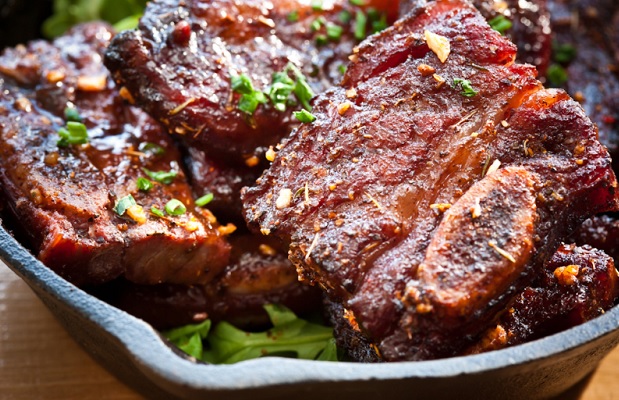
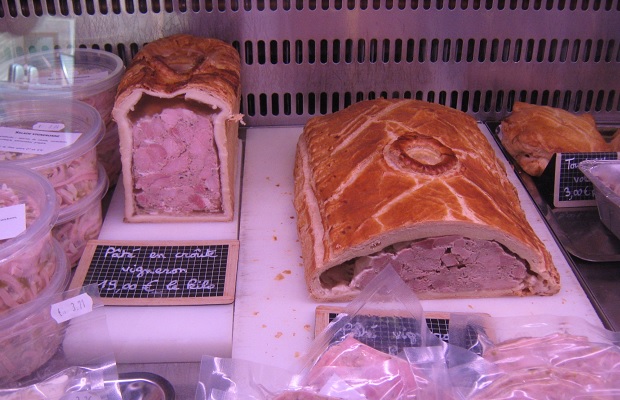
Pâté en Croûte, Niedermorschwihr, Alsace, France PHOTO: Michael Godel

Pâté en Croûte, Niedermorschwihr, Alsace, France
PHOTO: Michael Godel

The first long weekend of the 2014 summer is on the way. A fortuitous confluence of the calendar means a longer than usual respite from the tribulations of work, construction and city angst. Bottom line is with four straight days of nothing you’re going to need more wine. Last weekend’s VINTAGES release was filled with admiral and admirable choices, short on Canada’s finest mind you, but long on global composition.

Here are ten wines tasted, reviewed and given the Godello stamp of approval.
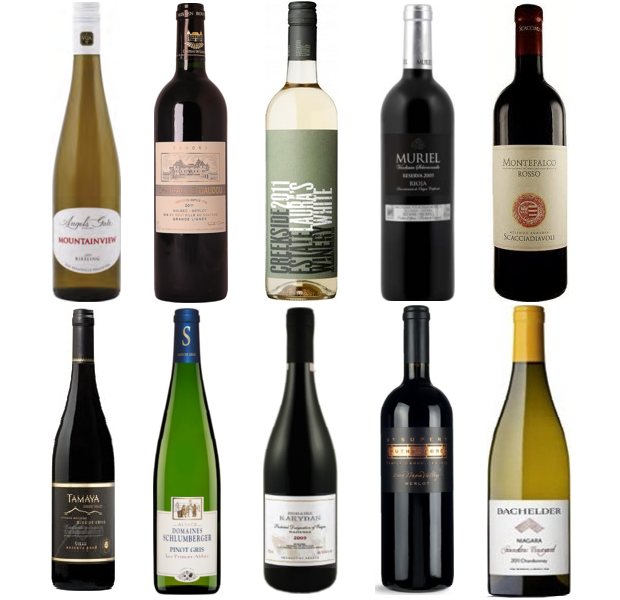
Clockwise from left to right: Angels Gate Mountainview Riesling 2009, Château De Gaudou Grand Lignée Malbec/Merlot 2010, Creekside Estates Laura's White 2012, Muriel Reserva 2008, Scacciadiavoli Montefalco Rosso 2009, Tamaya Syrah Gran Reserva 2011, Domaines Schlumberger Les Princes Abbés Pinot Gris 2011, Domaine Karydas Naoussa 2009, Bachelder Saunders Vineyard Chardonnay 2011, St. Supéry Rutherford Merlot 2010

Clockwise from left to right: Angels Gate Mountainview Riesling 2009, Château De Gaudou Grand Lignée Malbec/Merlot 2010, Creekside Estates Laura’s White 2012, Muriel Reserva 2008, Scacciadiavoli Montefalco Rosso 2009, Tamaya Syrah Gran Reserva 2011, Domaines Schlumberger Les Princes Abbés Pinot Gris 2011, Domaine Karydas Naoussa 2009, Bachelder Saunders Vineyard Chardonnay 2011, St. Supéry Rutherford Merlot 2010

Angels Gate Mountainview Riesling 2009, VQA Beamsville Bench, Niagara Peninsula, Ontario (373175, $16.95, WineAlign) From the VINTAGES June 21, 2014 release

Riesling that could dry tears. Just seems to write the Bench book. Dry and drier, numb and number. Though hard to see past the stark aridity there cries and froths forth a spirited and significant citrus zest.  A Riesling to be told, “don’t tell me you don’t know the difference, between a lover and a fighter.” The cry lingers for a Costello verse or three, then tiptoes away in everyday refrain. Drink up.  Tasted May 2014  @angelsgatewines

Château De Gaudou Grand Lignée Malbec/Merlot 2010, Ac Cahors, Southwest, France (370239, $18.95, WineAlign) From the VINTAGES June 21, 2014 release

This southern French ArtPop blend of Malbec and Merlot will sell through a boat load of bottles if the post-modern palate gets a hold of its velvety crush and ambient oak overture. Decidedly more Malbec than Merlot in approach though the latter does offer softness and dusty grain. Wood spice and tobacco are fervent and ardent suppliers of good, peppery fun. A red meat, outdoor grill wine if there ever was one, its aridity only eclipsed by its ladylike modernity. If it went deeper toward le zone des buts it would merit more applause. As it is, geeks, critics and pop culture freaks will go gaga for it.  Tasted May 2014  @wineonline_ca

Creekside Estates Laura’s White 2012, VQA Niagara Peninsula, Ontario (121764, $18.95, WineAlign) From the VINTAGES June 21, 2014 release

With a tilt of the head to 90 degrees the bottle is assessed and the glass contemplated. She’s a flirt, a gregarious girl this Laura, so orchard driven and with a perfumed attraction. From my earlier, February 2014 note: “Laura’s White combines Sauvignon Blanc, Pinot Gris, Chardonnay, Riesling and Gewürztraminer in a kitchen sink blend that sees a bit of oak. What’s notable about the ’12 is the omission of two highly aromatic components, the previously employed stalwarts Viognier and Chardonnay Musqué. The adage is justified in that you take what the vintage gives you. If it gives you lemons, (shift tangents) you let the busy aromatics of more flavourful grapes (like Chardonnay) do the floral work. Laura’s ’12 will be a standout for the concept, a revivalist blend to help bring back some religion to the region’s renditions. Coming to VINTAGES in June.” Last Tasted May 2014  @CreeksideWine

Muriel Reserva 2008, Doca Rioja, Spain (276030, $19.95, WineAlign) From the VINTAGES June 21, 2014 release

Call it tradition or simply forget the pleasantries and call a Bret a Brett. This old-school Tempranillo oozes character and the vineyard layering of a quilted past, never mind that it’s such an inexpensive young stud. Big, ripe red fruit, the stable’s terra mierda and iron rust. If you like a funky red with coarseness and a bit of age under its saddle, not to mention a penchant for the past, then this Rioja is for you.  Tasted May 2014

Scacciadiavoli Montefalco Rosso 2009, Doc Umbria, Italy (372458, $21.95) From the VINTAGES June 21, 2014 release

Rockin’ it old school goes this Montefalco with more terroir than fruit, more vine earth than crush. Great spice, old wood notes, licorice and stretched bitterness. A gritty, coarse, fun and combative wine. If there are fruits they are very red. Such tension. Great value.  Tasted May 2014

Tamaya Syrah Gran Reserva 2011, Limari Valley, Chile (374306, $21.95) From the VINTAGES June 21, 2014 release

Sweet candied bacon and cool mountain scents. Salinity, tight and wonderful. Big, brawny, minty mountain herbs and greenery. Tobacco. Complex.  Tasted May 2014

Domaines Schlumberger Les Princes Abbés Pinot Gris 2011, Ac Alsace, France (21253, $22.95, WineAlign) From the VINTAGES June 21, 2014 release

Always exceptional value in Pinot Gris, picked on time and before any real discernible level of botrytis can set in. While it would never be considered truly dry, the round white tannins and salinity from volcanic subsoil in Schimberg’s Guebwiller valley give this bottling good structure, density and muti-national flavours. This vintage seems a bit softer though it is never a high acid monster. Juicy orchard fruit leading layers of flesh and zest grow better with time and develop a sweetness which stems from the purity and quality of the fruit.  Tasted May 2014  @VinexxCanada

Domaine Karydas Naoussa 2009, Dop Naoussa, Greece (272013, $26.95, WineAlign) From the VINTAGES June 21, 2014 release

Spicy Xinomavro, a veritable bonfire of Greek humility and good fortune in cinnamon, clove, anise, wood-spice, wood smoke and tobacco. Intriguing and worthy of its place. Not a young fresh red fruit-styled Xino but more so a deeper, earthy and smouldering one. A touch of matchstick and even more campfire. Great acidity and wow length. Yes sir.  Tasted May 2014  @KolonakiGroup

Bachelder Saunders Vineyard Chardonnay 2011, VQA Beamsville Bench, Niagara Peninsula, Ontario  (324103, $44.95, WineAlign) From the VINTAGES June 21, 2014 release

Yet another look at the Saunders ’11 confirms its tapestry of texture and its density. A Boulangerie’s roll of perfect, flaky puff pastry filled with a honey drizzled nougat and marzipan filling. Very bright, full-on sunshine driven Chardonnay. From my earlier February 2014, November and July 2013 notes: “Saunders is quiet right now, in cool waiting and in display of the most elegance I’ve encountered from any Bachelder Chard, at anytime, anywhere. Background spice, backing vocals are in the isolated spotlight. This I am keying on as much as any note, in any wine here tonight. Not giving it up as easy as before. Extra swirl time required. Will re-visit in the summer. Right, Thomas? From my earlier July and November 2013 notes: “From Beamsville, right beside 30 bench, has a texture, a depth and a mouth feel in ’11 that bounds and leaps towards the ethereal. A dancing stag, displaying, performing a mating ritual dance. Melons, ripe and fleshy are in this Saunders. “What’s carrying this wine is site, site and site.” A great clay slice of the Beamsville Bench. From my earlier note: ”Takes the baton from Wismer ’10 in a transfer of power, tension and excitement. Clarity of textural fruit is driven by Beamsville Bench clay-silt soil. Highly dependent on yeast chains, sticking, spreading and expanding. Savoury, buttered stones show negligible encumbrance due to vines that will not carry an excess of new oak.”  Last Tasted May 2014  @Bachelder_wines

St. Supéry Rutherford Merlot 2010, Napa Valley, California, USA (376939, $58.95, WineAlign) From the VINTAGES June 21, 2014 release

Enormous Merlot in sonic youth, pushing ripeness boundaries but with so much natural fighting and balancing acidity. If you like dusty, cake-layered, oak oil-sweating, sweetly viscous bleeding Merlot, well, this is for you. It has all the stuffing with its huge fruit and big acidity, not to mention formidable tannins. Imbued in “shards of sweet shine of voice and flute.” This will go long, something like 20 years, into a dripping dream, slowly and gracefully integrating its largesse, all the while being generous for all that time.  Tasted May 2014  @StSupery


Good to go!
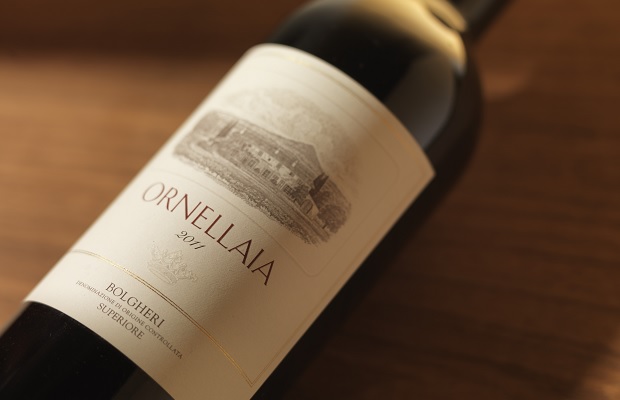
Down on the Ornellaia

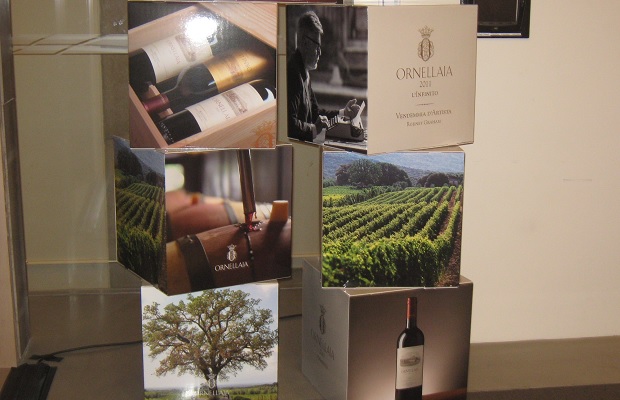
Ornellaia 2011 PHOTO: http://www.ornellaia.com/

Ornellaia 2011
PHOTO: http://www.ornellaia.com/

It’s no secret the heart’s soft spot will gladly make room for fine and expensive wine, but not all will walk through that open door. Much Bordeaux intimidation vicariously hectors by way of outlandish collusion in en primeur dictation and so hardens the arteries. Though less so, the Burgundy intimidation relegates the lesser earthling to hide, cower and tense up in circulatory distress. Champagne can be quite kind. Even more so is the Bolgheri.

Tenuta Dell’ornellaia is the benchmark for Super Tuscan solicitude. It pours with pleasure. It reminds us of what was once good and approachable in the pretentious and obnoxious world of expensive wine. It resembles its patriarch, a man who comes to Toronto as a patron of the arts and as a steward of his wine’s goodness.

After tasting through mind-altering back vintages of Ornellaia I am typing away on my laptop in the Art Gallery of Ontario where the Marchesi de’ Frescobaldi and winemaker Axel Heinz are generously sharing their wares with a group of journalists, sommeliers and restaurateurs. Ferdinando leans over on a knee, like Brando in the garden of the grand film and smiles at me. “Perché non mangi?” he asks. “Si accende, anche una piastra. Si prega, si mangia.” I may as well be in his home, in Tuscany, in his kitchen, snacking on formaggi. But I am in Toronto and contemplating $1000 worth of exceptional red wine.

One of the softest spots is for Ornellaia. It’s a gorgeously perfumed principessa. Both the previously tasted and reviewed 2010 and 2009 perpetuate the notion.

Related – Holiday wine gems hit November shelves and The Best Wine Releases of 2012

Facilitated by Authentic Wines and Spirits and Sherry Naylor and Associates, the Marchese Ferdinando Frescobaldi and Mr. Giovanni Geddes da Filicaja came to represent Ornellaia for a vertical tasting presented by Axel Heinz. The visit coincided with the 2011 vintage and its association with “Vendemmia d’Artista.” Beginning with the 2006 vintage, the Estate launched the special art project, purposed to celebrate the unique character of each new vintage matched by an artist’s interpretation of that vintage.

Vendemmia d'Artista

Vendemmia d’Artista

For 2011, the “Infinity” character or “L’Infinito” was interpreted by Canadian born artist Rodney Graham. Graham created a work of art and a series of exclusive labels for large format bottles. Each one individually signed and numbered and adorned 100 3-litre Double Magnums, 10 6-litre Imperials and a unique 9-litre Salmanazar. An auction was held at the AGO and raised $126,000 for the institution.

There are vertical tastings and then there are vertical tastings that bring you up. One such as this makes just cause to say I am down on Ornellaia. “People come from all around to watch the magic boy…Bring a nickel, tap your feet.” Here are my notes on the Ornellaia wines tasted at the AGO.

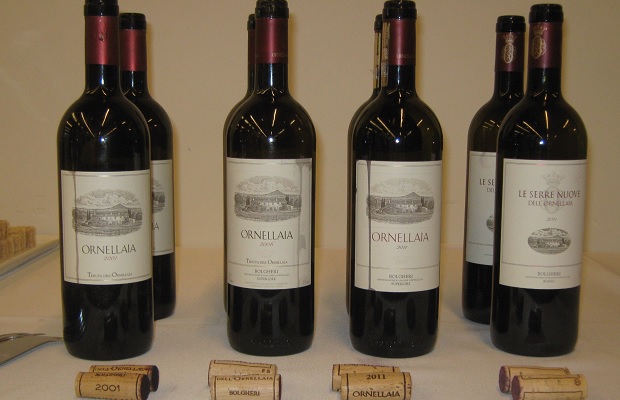
Ornellaia Vertical

Ornellaia Vertical

Le Serre Nuove Dell’ornellaia 2011, Doc Bolgheri Rosso, Tuscany, Italy (606194, $59.95, WineAlign)

Produced since the 1997 vintage, from younger vines and with the intent to produce a ripe and approachable wine. Agefd in barriques (25 per cent new and 75 per cent one year-old). Left for 15 months though assembled after 12 and returned for the last three. The practice induces settling and approachability. Cleary focused with an Ornellaia intent, with the goings on of deep, dark fruit and dusty hedonistic, mulberry fruit. Not quite the Da Vinci muscled cherub that is the big brother renaissance wine, but still the Serre Nuove can’t help show an uncanny resemblance as a younger sibling to Ornellaia. Rich, vanilla mocha, thick and mildly tannic. A three to five-year full-on gamut of pleasure awaits.  Tasted twice, October 2013 and June 2014

Ornellaia 2011, Doc Bolgheri Superiore, Tuscany, Italy (SAQ, 11973238, $189.25, LCBO, 722470 (2010), $189.95, WineAlign)

The blend of the 2011 Rosso Superiore is Cabernet Sauvignon (51 per cent), Merlot (32), Cabernet Franc (11) and Petit Verdot (6). From a near-sweltering vintage, tempered by a cooling spell in June and July. The late August heat spike brought on early ripening which explains the intense aromatic waft that fills the AGO’s tasting room air. Though following the same (post 12-month) assemblage and return to barriques for a further six months, the richesse in fruit quality and 70 per cent new oak envelopes this ’11 with so many structured layers there remains many years to see where it will go. The rose petal meets violet florality can elicit no parochial parallel, the anxiety in hematological ooze neither. A consideration of the phenolic exceptionality follows suit. Chalky tannins follow chains in a world spinning ’round in lush circles. This is the reference point for such assemblage in Bolgheri. The breakdown will not begin for a minimum 10 years and evolution will continue comfortably, gently and effortlessly for 15-30 after that.  Tasted June 2014

Ornellaia 2006, Doc Bolgheri Superiore (722470, $189.95, WineAlign)

The blend of the 2006 Rosso Superiore is Cabernet Sauvignon (56 per cent), Merlot (27), Cabernet Franc (12) and Petit Verdot (5). Tasting its not yet developed charms, what is most clear is its strength and vigor. A different Ornellaia, with perfect conditions to ripen Merlot and Cabernet Franc so that their characters have combined to speak their peace. Rolling huge but cool, mint-spiked, black currant and stone emotions come across the aromatic profile. Those right side of the river brain varieties and the Cabernet Sauvignon dominant fruit were clearly all picked at such levels of ripeness as to put the ’06 at harmonious level of sugar, alcohol and rich fruit likely never before seen from this grand vin. The ’06 was fashioned with each vineyard block fermented separately, for a total of 66 different base wines. “So stealthy, so animal quiet,” give this Ornellaia 15 more years of time and it will come to your emotional rescue. It will whisper in a falsetto voice, “I’ll be your savior, steadfast and true.”  Tasted June 2014

Ornellaia 2001, Doc Bolgheri Superiore (Agent, $189.95, WineAlign)

The blend of the 2001 Rosso Superiore is Cabernet Sauvignon (65 per cent), Merlot (30) and Cabernet Franc (5). Though strange to say and admittedly a retrospective comment, the minute quantity of Cabernet Franc and not yet inclusion of Petit Verdot result in a more straightforward and not as heavily layered Ornellaia. The structure is more linear and understandable, the fruit not as variegated. Complexity and Tuscan spiritualism are not compromised by the Cabernet Sauvignon and Merlot dominant line, in fact, assessing the evolution at 13 years on reveals the Bolgheri terroir in ways the magnanimous and opulent more recent vintages just don’t reach. There is a refreshing acidity in this young and developing ’01 in a streak that again, the baby Superiore do not seem to possess. This is a striking Ornellaia, a wine that would work with exceptional cuisine of varied cultures. It can be enjoyed now and will respond with grace and thanks for 30 plus years more. Tasted June 2014

Good to Go!


Thirteen wines ‘ere Friday the 13th

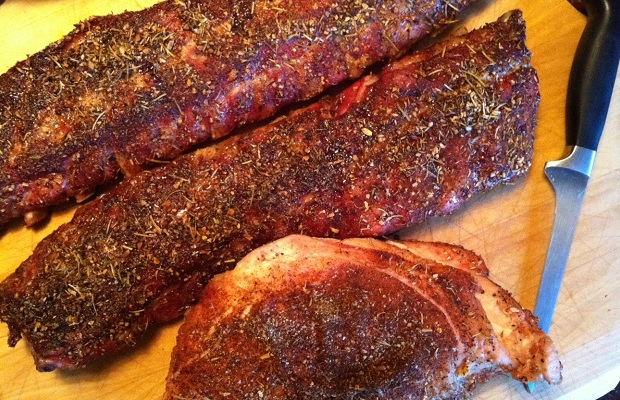
Ribs meet Turkey PHOTO: Michael Godel

Ribs meet Turkey, rubs by Barque Smokehouse
PHOTO: Michael Godel

The last four times the calendar’s folklorique confluence brought a Friday and the 13th of a month together occurred in December and September of 2013, July and April of 2012. On that April Friday the arbitrariness shared a birthday with the sinking of the titanic. That kind of anti-kismet “does not bode well for the superstitious kind.” So once again, if you are one of the many inflicted with paraskevidekatriaphobia then tomorrow may not be your favourite day. If you also suffer from oenophobia, I feel for you.

Here are thirteen things that make me think of the number thirteen.

  1. Apollo 13. Moon mission gone bad.
  2. Thirteen years ago this week Radiohead went to No. 1 on the UK album chart with their album Amnesiac.
  3. The Leviathan, Thomas Hobbes, Chapter XIII: “The weakest has strength enough to kill the strongest.”
  4. Thirteen Days, The Movie. John F. Kennedy and the Cuban Missile Crisis.
  5. Friday the 13th in Port Dover, Ontario.
  6. The song “13” by Big Star.
  7. The 13 Principles of Jewish Faith.
  8. 13th Street Wines.
  9. The thirteenth man. How the Saskatchewan Roughriders lost the 2009 Grey Cup.
  10. June 13th, 1913. The New York Yankees win their 13th game of year after losing 36 games.
  11. The 13th Amendment to the US Constitution abolishing slavery and segue to the great Nelson Mandela, who died on December 5, 2013.
  12. Steve Nash. Dan Marino. Wilt Chamberlain. Mats Sundin. Godello.
  13. 13” the name of the new album by Black Sabbath.

Nice list. Of even greater importance is choosing some wine for the fitful 13th day of June and for Father’s Day on the weekend that follows. Thirteen wines ‘ere Friday the 13th, for and with dad.

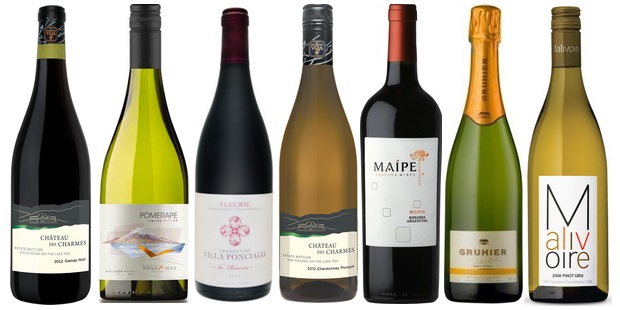
From left to right: Château Des Charmes Gamay Noir 2012, Volcanes De Chile Pomerape Limited Edition Sauvignon Blanc 2011, Villa Ponciago Beaujolais Villages 2012, Château Des Charmes Chardonnay Musqué 2012, Chakana Maipe Reserve Bonarda 2011, Gruhier Extra Brut Crémant De Bourgogne 2010, Malivoire Pinot Gris 2012

From left to right: Château Des Charmes Gamay Noir 2012, Volcanes De Chile Pomerape Limited Edition Sauvignon Blanc 2011, Villa Ponciago Beaujolais Villages 2012, Château Des Charmes Chardonnay Musqué 2012, Chakana Maipe Reserve Bonarda 2011, Gruhier Extra Brut Crémant De Bourgogne 2010, Malivoire Pinot Gris 2012

Château Des Charmes Gamay Noir 2012, VQA Niagara On The Lake, Ontario (57349, $12.95, WineAlign) LCBO General List

Give this vibrant crush of boyish red fruit a slight chill and with this pinnacle ideal vintage, at this ridiculously right price, go hither and convince a world of Gamay naysayers to get on board. Never mind the many years of “uninspired, drenched and tired” Gamay beach songs and tired voyages. Never mind the bad rap and out of tune harmonies thrust upon the world by dull vintages and bulk fruit. This CdC Gamay continues to breach the value quotient. Here is fresh, pure, unadulterated adult’s juice. It cruises from harbour with a clove-studded orange spritz and sets out past a rocky jetty to open seas. “Sail on, sail on sailor.”  Tasted June 2014  @MBosc

Volcanes De Chile Pomerape Limited Edition Sauvignon Blanc 2011, Leyda Valley, Chile  (371138, $14.95, WineAlign) VINTAGES June 7, 2014 release

So very peppery and Ají Cristal notes come from this warm weathered Chilean Sauvignon Blanc, indicating a Leyda Valley specificity that can’t be denied. So much unctuous character swallows whole the herbiage and schmaltz, as does the rapid fire acidity. Powerful SB, not subtle, not understated. There is no shortage of fruit, with nettles and a volcano in current eruption. It’s as if it would plead, “spider got eight legs and I got two. This guitar got six strings, what about you, well, what do you got?” So much going on, with more palate tingling white pepper, bending notes and angles. Jacks from ballad to wailing guitar, from rhapsodic to metallic. A Sauvignon Blanc with fly farm blues. I think it has an appeal to a red wine drinker who wants to drink a big white and I think it will age quite well, something like five to seven more years.   Tasted May 2014  @WoodmanWS

Villa Ponciago Beaujolais Villages 2012, Ac, Beaujolais, France (325134, $15.30, WineAlign) LCBO General List

When this Villages Millésime was mentioned for the purpose of offering a contrast to Ponciago’s La Réserve, it was honestly assessed as having “paint and tar notes.” When considered on its own merit it’s all about softness, perfume and poise. Pure red berry fruit just seems encased in a web of gossamer texture, it’s that pleasant to drink. Though it may lack the stuffing of La Réserve and Les Hauts Du Py, at $15 and change this is the real deal in Beaujolais. Even more impressive in consideration to the challenges of the vintage.  Tasted June 2014  @WoodmanWS

Château Des Charmes Chardonnay Musqué 2012, VQA Niagara On The Lake, Ontario (640516, $16.95, WineAlign)

Clone 809 strikes again. The pioneering Bosc family tells the usual oak suspects to stay clear of their pure St. David’s Bench meets Seven and Seven Vineyard fruit so the intensity of flowers and blanketing minerality can speak with utmost clarity. Never mind all that, this ’12 is the most tropical Chardonnay Musqué yet made by CdC. Its heart is a drum, “free as a driving wheel, circling around your iron will.” OK, so that Seven and Seven soil makes for alloy heaven. Just ring this clone and she will be at your beck and call.  Tasted May 2014  @MBosc

Chakana Maipe Reserve Bonarda 2011, Mendoza, Argentina (361212, $18.95, WineAlign) VINTAGES May 24, 2014 release

Bonarda is on the rise and threatening to challenge Malbec in Mendoza, especially when it poses with such an obvious, rich and cakey Andean attitude. This example is clearly culled from a state of the art production facility because despite the slightly funky, gritty, tense and nervous layering and radio fuzz, it shows such a polished quality. Picked & mixed by real humans, this is varietal desert euphoria paradise, full of plum drive and chocolate coating.  Tasted May 2014  @Oenophilia1

Gruhier Extra Brut Crémant De Bourgogne 2010, Burgundy, France (375428, $18.95, WineAlign) VINTAGES June 21, 2014 release

The Grahier is an exhilarating, extremely arid, purposed blend of Pinot Noir (60 per cent) and Chardonnay (40). Though technically Extra Brut (less than 6 g/L residual sugar) this highly stylish Crémant teases with a perceived ripe orchard fruit sweetness. Versatility comes across in every spice and toast-driven bubble, for a cocktail pour, to blend into a cocktail or to match a wide range of dinner flavours. So useful and so smart. Offers up unparalleled value in Bourgogne sparkling.  Tasted June 2014  @Oenophilia1

Malivoire Pinot Gris 2012, VQA Beamsville Bench, Niagara Peninsula, Ontario (591305, $19.95, WineAlign) VINTAGES June 7, 2014 release

Malivoire presents a Pinot Gris in good temper, better balance and even greater controlled anxiety to add grit on top of the sweet, spicy pepper and lightly pickled palate. Really approachable, workable and elastic in extended length.  Tasted May 2014  @MalivoireWine

From left to right: Creekside Estates Laura’s Red 2010, Nyarai Cellars Viognier 2012, William Fèvre Champs Royaux Chablis 2012, Thirty Bench Red 2011, Smith Madrone Chardonnay 2011, Brokenwood Maxwell Vineyard Semillon 2007

From left to right: Creekside Estates Laura’s Red 2010, Nyarai Cellars Viognier 2012, William Fèvre Champs Royaux Chablis 2012, Thirty Bench Red 2011, Smith Madrone Chardonnay 2011, Brokenwood Maxwell Vineyard Semillon 2007

Creekside Estates Laura’s Red 2010, Queenston Road Vineyard, VQA St. David’s Bench, Niagara Peninsula, Ontario (117906, $19.95, WineAlign) VINTAGES June 7, 2014 release

Wonderfully balanced blend with a bit of wood spice, plenty of good character and tannin. Tense fruit, layered and tight. Tighter than I last tasted it. Must be the accumulation. From my earlier, February 2014 note: It’s funny, more than any other wine tasted, this Laura has that Niagara varnish other Creekside reds seem not to possess. “Stock up in the big years” suggests Matt Loney, and “consolidate in the tougher ones.” It could be argued that you can make more interesting wines in the lean years but this blend of Cabernet Sauvignon, Merlot, Syrah, Malbec and Petit Verdot lays a claim to seriousness, if needing at least three years to settle down. There is much cassis, sweet oak, iodine and a milk/dark chocolate swirl. Complexity for sure if just a bit huge within its own skin.  Last tasted May 2014  @CreeksideWine

Nyarai Cellars Viognier 2012, VQA Niagara Peninsula, Ontario (Winery, $21.95, WineAlign) On the card at Barque Smokehouse  @barquebbq

Look, I get it. Wine is made from grapes so why command a host of other fruits to offer context for aromas and tastes? Just have a moment with Steve Byfield’s “virtual” Viognier 2012. Virtual tree meets stone fruit. Smells just like a ripe peach. The flavour bears an uncanny resemblance to apricots. Virtual my Equus africanus asinus. The winery is virtual, the Viognier anything but. Speaks a Condrieu varietal truth by way of Niagara’s Redfoot vineyard. Carries a soil-driven, mineral-flecked, microscopically-oxidized metal tang so essential to invigorating Viognier. Blessed stuff from a Shona’s humble hands.  Tasted twice, March and June 2014  @NyaraiCellars

William Fèvre Champs Royaux Chablis 2012, Burgundy, France (276436, $22.05, WineAlign) LCBO General List

The Champs Royaux from mainly purchased fruit may be the runt of the Fèvre litter but it’s no austere duck soup and this despite the challenging vintage. Chalk another win for organic viticulture, here again worked to great effect. The practice encourages acidity levels to consistent ends aligned with ripe fruit and year in, year out betterment of the wines. The ’12 Champs Royaux exudes the idea of classic unoaked and flinty Chablis, as well as seawater and the smell of a lit halogen bulb. Elemental without being metallic, it blinks from a citrus flash before finishing balmy and warm.  Tasted June 2014  @BourgogneWines

Thirty Bench Red 2011, VQA Beamsville Bench, Niagara Peninsula, Ontario (320986, $24.00, WineAlign)

The consistency and subtlety in red wine of the earth in this perennially approachable Bench wine can’t be overestimated. Really high quality red purity is ascertained from this blend, its spicy, tangy, moving parts coming together to unionize the fruit. Just enough tension to keep traffic moving, with Merlot really doing its yeoman’s work, Cabernet Franc as sweet and expressive as it can be without going over to the shaken, splintered and mocha chocolate dark side. This is always red and red-fruited. Ready, willing and will offer pleasure for five to seven years.  Tasted May 2014  @ThirtyBench

Smith Madrone Chardonnay 2011, Spring Mountain District, Napa Valley, California, USA (363556, $39.95, WineAlign) VINTAGES June 7, 2014 release

Holy reductive toast Napa man. Aromas of buttered toast, glade, duck fat and pencil graphite, which I must say is one stellar note. Flavours of ripe Mutsu (specifically) apple and a resinous chew of late autumn sweet forest needles. Yes the toast is high but so is the quality. Don’t blame the barrel, he’s just the messenger. A great Chardonnay for shellfish and molluscs of the briny kind. Linger on in your golden yellow eyes.  Tasted May 2014  @SmithMadrone

Brokenwood Maxwell Vineyard Semillon 2007, Hunter Valley, New South Wales, Australia (371484, $47.95, WineAlign) VINTAGES June 7, 2014 release

A lifelong search for great Sémillon is fraught with peaks and valleys. Finding greatness is so rare it’s blue. The Hunter Valley in New South Wales beckons for a rush to strike gold. Many roads lead nowhere and others, like the dusty lane up to Brokenwood’s Maxwell Vineyard, lead to OZ. This young one has barely broken bread, or even a sweat. Sémillon of primary concern, like a tank sample. Varietal beauty as a cryogenically frozen specimen inundated by the table, the whole periodic table and nothing but the table. Guided by a laser beam of focus, great intent and expectations. Bob’s your uncle this David to the world’s white wine Goliaths. Son of racing studs and mares. Wow Sémillon. Not a faint moment about or in it.  Tasted May 2014  @Brokenwood

Good to go!

Let it wine

From left: Quails' Gate Merlot 2011

From left: Jean Maurice Raffault Chinon Rosé 2013, Anselmann Edesheimer Rosengarten Siegerrebe Spätlese 2012, Delas Frères Les Launes Crozes Hermitage 2011, Tabalí Reserva Especial 2009, Flat Rock The Rusty Shed Chardonnay 2011, Quails’ Gate Merlot 2011

We’ve pleaded, we’ve begged. We’ve been down on hands and knees. We’ve asked for spring. It has finally (sort of) arrived. There is only one thing left to say. Let it wine.

Just in case you happen to live in Ontario and were not aware of the system’s system (or you’ve forgotten), here is a friendly primer and reminder. VINTAGES rolls out a new set of wines every two weeks. We (the wine media) taste them a month ahead and comment on their correctness. Sometimes we even admit which ones we really like.

More reviews than space here permits are available, along with other critics’ thoughts at WineAlign, the place to go for access to bi-weekly previews of critics’ release notes and their top recommendations for all VINTAGES new releases.

These wines are in stores now. They are just six of my recommendations from the May 10th, 2014 release.

Jean Maurice Raffault Chinon Rosé 2013, Ac, Loire, France (119693, $16.95, WineAlign)

There is a cautious though skilled reservation in this Rosé, the Cabernet Franc currant and peppery aromas a faint and subtle thought. Light and refreshing Chinon as dry as dry ice and built with tang and length. The late note is of slightly charred bell pepper. Excellent food versatile Rosé, even if it falls away quicker than should be.  Tasted April 2014  @LeSommelierWine

Anselmann Edesheimer Rosengarten Siegerrebe Spätlese 2012, Prädikatswein, Pfalz, Germany (910554, $16.95, WineAlign)

A really fun wine. Siegerrebe is not meant to be contemplated by a panel of ancient philosophers with modern doctorates. In its most basic incarnation it is a sipper, a warm weather, sundowner tipple to quaff on its own or as an aromatic lifter in conjunction with fortifiers in a light, fizz-induced cocktail. This Spätlese (late harvest) later-picked variation offers a step up the beanstalk of residual sugar-laced complexity. At the price it begs to be tried. The fruit is both sweet and drying at the same time, like Moscato in a waxy, soapy, juicy fruit, bitter way. Tasted April 2014

Tabalí Reserva Especial 2009, Limarí Valley, Chile (107540, $22.95, WineAlign)

A mating of masculine, slow, open-grill smoked meat and cooking bacon aromas and a dehydrated Syrah lees, coarse pepper crust is tempered by feminine, cool eucalyptus and juniper accents. A big wine that is rounded and grounded by some Cabernet Sauvignon and Merlot. Anxious, tight, modern and a real finisher.  Tasted April 2014  @TabaliWines   @oenophilia1

Delas Frères Les Launes Crozes Hermitage 2011, Ac, Rhône, France  (701359, $22.95, WineAlign)

What a gorgeous flower and wet stones nose in this Syrah. So pretty and inviting. Tart, sweet berries, smooth and integrated fruit acid continuum, very sure and correct. A perennial righteous bottling, anything but excessive and a tremendous value is every way. Don’t be Delas to know.  Tasted April 2014  @HHDImports_Wine

Flat Rock The Rusty Shed Chardonnay 2011, VQA Twenty Mile Bench, Niagara Peninsula, Ontario,  (1552, $24.95, WineAlign)

The Shed’s balance is best in ’11, the equation solved. A sweetness on the palate is buttery, the length languid, smooth and graceful. A very pretty Shed. A spirit in the night. “Stand right up and let it shoot right through you.” From my earlier February 2014 note: “Conspicuous by its texture from a mild to middling vintage “when you picked before or after the rain.” Though combined, the antechamber of acidity and good cheer trumps the mudroom of funk and doldrums. A Guns ‘n Roses vintage, a pull in two directions, with a potential for breakdown. “Ev’rything was roses when we held on to the guns.” A soft, buttery note tempers the tang and yet that tang lifts the fruit. The tension is what sets the ’11 up for a classic run.  Last tasted April 2014

Quails’ Gate Merlot 2011, BC VQA Okanagan Valley, British Columbia (169961, $25.95, WineAlign)

From estate vineyards on the Boucherie Mountain bench, this is cool Merlot, from a cooler vintage, with cool climate anxiety. The conditions and the style wave a finger to promote some vineyard funk to speak, along with Merlot’s characteristic dust and powder. “A big red beacon,” as in berries and plums, earth and spice. Red all around. Smoky, still so young, with lots of acidity and tannin that will need five years to come together. Kneel down to show some appreciation for this quality Merlot. A bit of late bitter stringency but of no real matter. Tasted April 2014  @Quails_Gate 

Good to go!


Château Margaux hits the road

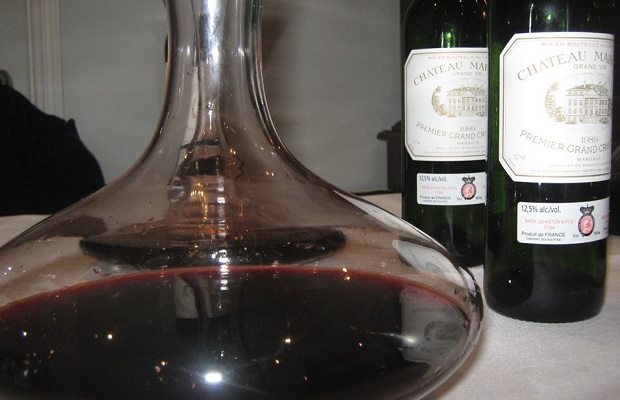
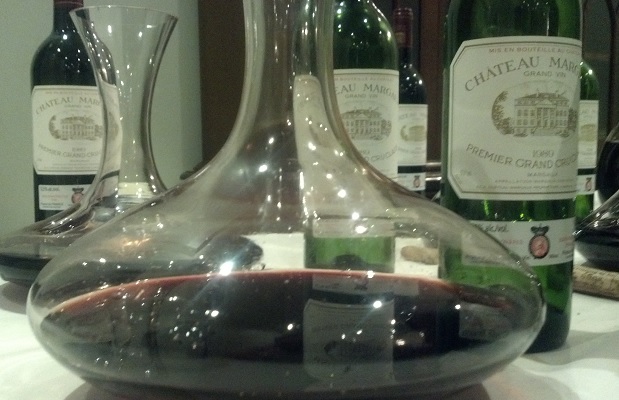
Decanted Château Margaux 1989, The National Club, Toronto, May 1, 2014 PHOTO: Michael Godel

Decanted Château Margaux 1989, The National Club, Toronto, May 1, 2014
PHOTO: Michael Godel

The wines of Château Margaux need no introduction. First Growth Bordeaux. One of the most famous brands in the world. Iconic and beyond mortal means, especially in the greatest vintages; 1953, 1961, 1982, 1989, 1996, 2000, 2009. So why is Paul Pontallier on the road to promotion? Do the wines not automatically sell themselves?

The answer is both yes, and no. Château Margaux annually produces 130,00o bottles of its Grand Vin. The 2009 is listed at nearly $1,800 in Ontario. They will sell through, if not this year, certainly eventually and inclusive of the calculated, incremental cost of inflation. The more pressing incendiary matter is a concern of distributive demand. Chinese and other south Asian markets have spent the better part of the last decade scooping up First Growths by the palette load. Mr. Pontallier clearly understands if you can’t see the forest for the trees, you risk losing touch with how you arrived here in the first place. Château Margaux needs to reconnect with North America.

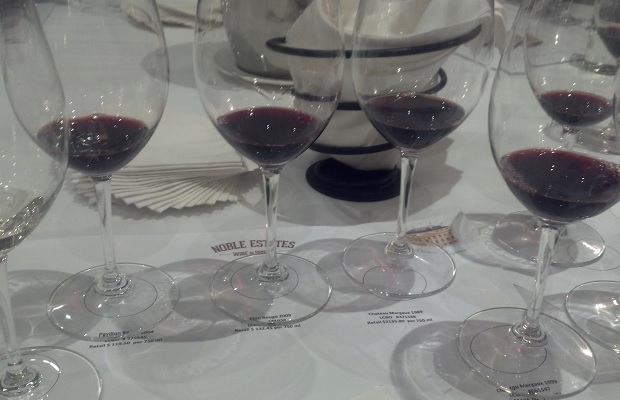
Paul Pontallier is the Managing Director of Château Margaux. He joined the team of Corinne Mentzelopoulos in 1983. Along with Aurélien Valance, Senior VP Commercial Director, the most distinguished of Margaux houses came to Toronto’s The National Club at the facilitating invitation of wine agent Noble Estates on Thursday May 1, 2014. A 10:00 am start. Château Margaux for breakfast. “Probably the best time to taste wine,” quips Pontallier.

Château Margaux Tasting

Chateau Margaux Tasting

At the estate’s crux is the significance of territory. The wines are “not just a marketing ploy,” asseverates Pontallier, “they are based on the insistence of the terroir.” There exists a significant heterogeneity between the plots. “We try to protect them as much as possible. We can’t expand.” There is a sense of frustration in the director’s voice. “Château Margaux hasn’t changed since the late 17th century.”

Then there is savoir-faire. “Even three or 400 years isn’t a lot of experience. There is only one possibility, one harvest each year, for experimentation. But, the asset, the depth of experience is as important as the terroir.” Does the excellence of top Bordeaux require genius? No, contends Pontallier. He speaks of hard work, respect for history and the constant need to change, not just for its own sake, but to doubt what’s come before and to improve every gesture. Organic, though it won’t ever be noted on the label, is the end result of many years of research and development. “Our tradition in not a closed one. We are open to what science can bring us.”

On change? “How can we pretend that our tastes do not change. Language, accents, words, everything changes.” Though the accusation is of a response to market demand, the Margaux position is one that insists that it is about a natural evolution, not a response to consumer demand. Change is inevitable. “It would risk not reaching excellence. It would write off the wonderful experience we have inherited. We can adapt, we can play, within reason.”

On the 2013 (challenging) vintage from which weather during flowering affected the quantity. A wonderfully dry, hot summer gave way to damp and wet weather at the end of September. Perfect conditions were set up for rot (botrytis) to develop. Margaux rushed to pick five to six days earlier than usual. “In these conditions, the exceptionality of terroir was so important.” The conclusion? “Less complexity, less depth, less quality. In Bordeaux as a whole, the lesser terroirs were affected by the situation.” According to Pontallier the result of the mediocre conditions did not result in mediocre wines because of the technical progress achieved over the last 25-30 years.

Pontallier is a pragmatist, a funny thing to say considering the domain he oversees. “It’s not always the most impressive wines that are the most pleasurable to drink,” he admits. “Burgundy has a wonderful balance.” His thoughts on the primeur system? “It has always been efficient for some, or just a few wines. If you can find wines a few years later on the market at the same price, it doesn’t make sense.” Here are notes on the fives wines poured.

From left: Pavillon Blanc Du Château Margaux 2011, Pavillon Rouge 2004, Pavillon Rouge 2009, Château Margaux 1999, Château Margaux 1989

From left: Pavillon Blanc Du Château Margaux 2011, Pavillon Rouge 2004, Pavillon Rouge 2009, Château Margaux 1999, Château Margaux 1989

Pavillon Blanc Du Château Margaux 2011, Ac Bordeaux, France (374579, $142.40, WineAlign)

Extreme temperatures in June sent signals to convince the grapes to begin ripening in mid July. Though harvest would be the earliest since 1893, vintage imbalance was averted by cooler summer temperatures. A limited production, 100 per cent Sauvignon Blanc with 300 years of experience in its blood. Once known as Vin Blanc de Sauvignon, the Pavillon earned its modern era moniker in 1920. From a single block that was abandoned near the turn of the century because it was sensitive to frost. Re-discovered and re-planted in the 1970’s and 80’s, the plot is a haven for aromatic protection and preservation. Today’s Pavillon is made from only one-third of the estate’s Sauvignon Blanc production, the rest secretly sold off in bulk. The ’11 saw eight months in barrel, 25 per cent new oak. Sparks with intense minerality and creamy corpulence contained within an acidity enclosure. Feigns early advancement though not near ready to burst and bust open, with the sense that terroir will trump variety. A slow release of ripe fruit will be measured in decades. Tremendous concentration, density and depth. Has Sauvignon Blanc ever ingratiated itself with such poise? Will begin to open in two to three years and ripple in waves for 20-25 more.

Pavillon Rouge 2009, Ac Margaux, 2nd Wine Of Château Margaux, Bordeaux, France ($132.45, WineAlign)

From a wine that “used to be a tool,” comments Paul Pontallier to a “second wine” out of an incredible vintage “at least as good, or better than the four previous vintages of the first wine.” Them are fighting words and no sooner are they more truthfully spoken then over a swirling glass of the wine that has improved the most at Château Margaux. The Pavillon Rouge ’09 is indeed the best in modern times, in part due to immaculate selection and because it makes up just one-third of the total red grape production at Margaux. In the 1980’s it was the opposite but with a third wine now pushed to the European and Japanese restaurant market beginning in this vintage, Pavillon is now a grand brand, in a connected and assiduous way as never before. There are 100 lesser ’09 Bordeaux that fail to assimilate the wood and the crush of density, not to mention the tannin and Expressionist brushstroke. Pavillon manages a suppression of the admiral elements, including the scientific ones. The fruit is deeper, riper, with more brooding levels of pectin and anthocyanin. An earthy funk makes a late appearance on a finish of extended length to indicate where this Pavillon will range, forward 25-30 years and back to a 1989 type of history.

Pavillon Rouge 2004, Ac Margaux, 2nd Wine Of Château Margaux, Bordeaux, France ($119.50, WineAlign)

The Pavillon 2004 was and remains a “second wine,” insomuch that it predates the greatness of the modern Pavillon and because it finds itself sandwiched between two magnanimous harvests, 2003 and 2005. “We accept the fatalism of lesser vintages,” admits Mr. Pontallier, “selection is key to success.” The goal is to always make a good wine so it was necessary the Pavillon ’04 set out to benefit from “extreme” berry selection. Spent 18 months in 50 per cent new oak. Persistently young and overwhelmingly perfumed, in violet, tobacco and strawberry so ripe yet still must fight for aromatic airspace with dewy earth. Soft, velvety tannins envelop the Margaux notion of restraint and elegance. The ’04 has found success, despite the conditions, something that could not be said of the Château’s wines made 25-30 years ago. Drinking well now and will continue to do so for five to 10 more years.

Château Margaux 1999

Château Margaux 1999

Château Margaux 1999, Ac Margaux, Bordeaux, France (BCLDB 187799 $1,000.00, WineAlign)

The 1999 Château Margaux is a timeless wine. Tasted alongside the notorious 1989, its inhibitions are forced on display. Though repressed by the diluting effects of late September heavy rain, the 1999 may be subtle and modest, lack any discernible funk, but by no means is it soft. Wondrous aromatically like a hanging garden, with roses everywhere. “This is the perfume of Château Margaux,” notes Paul Pontallier. A difficult wine to describe. Its complexity, warmth and perfumed character define Margaux. Not as dense as the ’89, from grapes that benefitted from maturation conditions, from perfectly ripe if slightly diluted fruit. The proportions and shape (12.5 per cent alcohol by volume) are perfect and exacting but on a smaller scale. Smooth and resolved at a young 15 year-old, teenage age. The tenuous tranquility can be a point of deception. Beneath the lace there is body and hidden depth to give it 15 to 25 more years of growth. “Fall fall fall fall, into the walls. Jump jump out of time.” Though not the beast that is the ’89, this ’99 is a suffused bottle of remarkable concentration, of luxe, calme et volupté. A wine to help cure what ails.

Chateau Margaux 1989

Château Margaux 1989

Château Margaux 1989, Ac Bordeaux, France (176057, $1,645.00, WineAlign)

The 1989 Château Margaux wears the response to a mondo Bordeaux axiom on its sleeve. Are First Growth wines made for people who want darts of instant pleasure?” Twenty years earlier and now like the 2009, here is a quintessential and exemplary vintage, from day one of bud break to the last day of harvest. Its appraisal as anything but incredible is to assassinate it as if it were the Franz Ferdinand of Bordeaux. The examination 25 years later sees a mellow funk meet a peerless and sublime perfume. A wine cast in utmost density, complexity and length. It noses strength, warmth verging on heat but only for a fleeting moment, to gain attention. The iconic wine has reached the first major peak, up a ways from base camp. In this second phase of young adulthood it looks with conceit to the top of the mountain, seeing 25 to 50 more years on the climb. Mr. Pontallier regrets he won’t be around to taste this wine at full maturity. Moi aussi. The fruit lingers in its full, original state, from the moment it passes lips and for minutes onward. Violets trump roses. Château Margaux 1989 is from a vintage that offers the blessing of ethereal balance. Hear her sing, “Ich heisse Superfantastisch!”

Good to go!

The group of twelve

History may one day remember them as the group of twelve, or perhaps, “The Ontario School.” They are the 12 wineries who have banded together to ensconce a strange but beautiful word on the tongue, in the dictionary and out in the world. Somewhereness.

They are purveyors of the land from which their grapes grow and ferment into wine. Facilitators of terroir, working a canvas forged by millions of years of geological and climatic evolution. Their assembly is based on both exigency and on Moira; destiny, share, fate.

Like that other famous group, “collectively they agree.” Ontario’s cool-climate wine regions need to qualify and certify a distinctive winemaking style. In juxtaposition to old world, European tradition, the intensity of Somewhereness needs to reflect an increasingly Ontario-centric partiality.

These are the members. 13th Street, Bachelder, Cave Spring, Flat Rock, Hidden Bench, Hinterland, Malivoire, Charles Baker, Norman Hardie, Southbrook, Stratus and Tawse. Matt Kramer of Wine Spectator used the term and now it defines an enterprise. “As a group of 12 wineries growing small lots of site-specific vines in Ontario’s ancient glacial soils, we’ve invoked Somewhereness as a word enabling us to articulate in one collective voice.”

How do you get to Somewhereness? As related to wine that is like asking, Who am I? Why do we exist? What is the meaning of life? The Somewhereness movement, the notion, comes to light through this statement. “Somewhereness is revealed in the mysterious time capsules we know as bottles of wine. As ethereal gifts of a carefully tended location and a moment in time, each is imprinted with a vineyard’s sense of place,
its soil, climate, seasons, vintage variations — and its maker’s methods.”

In 2013 I wrote about Somewhereness over the Canadian wine rainbow. “Above all else, the rainbow’s fulcrum is the “somewhereness” of Canada’s wine regions. Terroir is the great catch word for wine. A vine’s home determines its potential, its structure, its sense of place. Micro-climates, soil, geology, altitude, slope and vegetation all contribute to the make-up of a wine forged from that specific parcel, lot or locale.”

In Come together, over wine I continued the discussion. “Intensity is in the air. The artists are at work, blessed with a geographical, geological and climatic canvas unique to the planet. They share arts and letters, compare and contrast methods, style and results. The sense of community is palpable, obvious and quite frankly awesome. They are Ontario winemakers and they are coming together. Right now.”

At the end of last year my column 13 Canadian wines that rocked in 2013 reviewed what Canadian winemakers do best. “That is producing unique, cutting edge and brilliant takes on cool climate grapes. They also match beautifully with the songs referenced in their tasting notes. When the wines are assessed and considered in part or as a whole, who would dare to say there are no great wines being produced?”

On Wednesday April 9th, Somewhereness brought the band to St. James Cathedral for a full-on tasting that is rapidly being recognized as a must not miss Ontario event. Here are notes on some of the wines I sampled.

From left to right:

From left to right: Malivoire M2 Small Lot Gamay 2012, Flat Rock Nadja’s Vineyard Riesling 2012, 13th Street Sandstone Old Vines Gamay Noir 2012, Southbrook Whimsy! Cabernet Sauvignon 2009, Tawse Laundry Vineyard Cabernet Franc 2011, Charles Baker Picone Vineyard Riesling 2008 and Norman Hardie County Unfiltered Pinot Noir 2012

13th Street Pinot Gris 2012, VQA Creek Shores, Niagara Peninsula, Ontario (Winery, $19.95, WineAlign)

Here you have an honest, 100 per cent stainless steel treated Pinot Gris from an estate vineyard located adjacent the market on Fourth Avenue in the Creek Shores appellation. So very dry and really fine fruit, crisp, neoteric, rising and falling in waves of tempered acidity. Made in a comfortable, country-twanged, folk-rock style, like a Cowboy Junkie. Juicy, mouth-watering work and very easy to fall for. An angel mine, this 13th Street, “and I know that your skin is as warm and as real as that smile in your eyes.” This effort by Jean-Pierre Colas is as good as it gets, a tally for Creek Shores and its kinship with the variety.

Malivoire M2 Small Lot Gamay 2012, VQA Niagara Escarpment, Niagara Peninsula, Ontario (Winery, $19.95, WineAlign)

A six-month lay in French oak for 60 per cent of the Gamay fruit sourced exclusively from Malivoire’s Beamsville Bench estate vineyard is just what the go doctor ordered. Only Malivoire’s Gamay smells specifically like this; of tart and savoury capers, of small, earthy gemstones, of peppery currants, of meaty braising Bouille. A striking wine from a fortuitous Gamay vintage and great value that puts me in mind of how special the Courtney will be. Though the soils may differ, proximity wise they are close cousins.

Flat Rock Nadja’s Vineyard Riesling 2012, VQA Twenty Mile Bench, Niagara Peninsula, Ontario (578625, $19.95, WineAlign)

Just add three months and witness a new evolution, a density, from a honeyed thing. Entering a pre-adolescence with a new bounce in its step. From my earlier, January 2014 note: “A champion cyclone of forces combined to elevate the already incumbent position of this Twenty Mile Bench Riesling. An ideal growing season magnified transmission upon a paradigmatic two and a half-acre block. This southern-most and highest altitude section of Flat Rock’s vineyard rests aboard a solid bed of limestone and wake me up if that rock was not drawn up into the vines in this stellar Riesling vintage. Sure its warm and nearly off-dry but such an effortless squeeze of lemon hydrates and elevates orchard fruit and honey out of the year of the lemon. After each sip its “every time you kiss me, lemon crush.” Love this prince of a Twenty Mile white in 2012, the dynamism smiling on the tart, succulent fruit. The length is one of outright bravado. This will develop for 20 years, of that I am convinced. There is just so much fruit. A Nadja for the ages.”

Cave Spring Dolomite Pinot Noir 2011, VQA Niagara Escarpment, Niagara Peninsula, Ontario (winery, $21.95, WineAlign)

Part Beamsville Bench (70 per cent), part Twenty Mile Bench (30), this best of both worlds Pinot is full of calcium magnesium carbonate, Jurassic bark. Playful as opposed to angry, this is not so much Snoop Dogg’s Dolomite but more like an animated Futurama. Seduces with a sweet red berry entry and bound by a really fine acid/tannin/fruit balance. Admittedly not overly complex but for the price it shows good structure. As far as Pinot goes, this one is a made for beef or rack of veal.

Hinterland Whitecap 2013, VQA Ontario, Charmat Method, Ontario (332809, $22.00, WineAlign)

The most versatile fizz in the Hinterland portfolio, what winemaker Jonas Newman refers to as his “chameleon.” As aromatically floral as this Charmat method bubbles (secondary fermentation in tank) ever gets, the ’13 brings out the garden under the mist of a sprinkler, late on a summer evening. It’s not so much about fruit as it is about texture, pollen and wet rocks. Try it at Barque.

Bachelder Niagara Pinot Noir Wismer Park/Lowrey (Tank Sample) 2013, Niagara Peninsula, Ontario (146985, $29.95, WineAlign)

This binary vineyard symbiosis will be bottled as the Niagara Pinot. Just filtered a few days ago it strides out with the utmost confidence in swagger, with a purity of fruit is spite of Thomas’ shock, awe and reductive apology. A bright sway of terroir gives rapture to a peaking raspberry bush imagined forward into a cooled pie. A renewed elegance abides with an absence of humidity and with a fully ameliorated knowing that a fleshing will happen. Really fine.

Malivoire Mottiar Chardonnay 2011, VQA Beamsville Bench, Niagara Peninsula, Ontario (146985, $29.95, WineAlign)

Gamay may be winemaker Shiraz Mottiar’s decisive resource but Chardonnay is his thing. The Moira’s ranks as one of Niagara’s best, vintage in, vintage out and this Mottiar, from the winemaker’s home vineyard is the trump card. This Malivoire special agent is set in 2 – 5 year old 300 L French oak hogsheads and aged on the lees in barrel for 10 months. The result? Texture. With the use, or lack thereof in new oak, Mottiar’s Chardonnay becomes a study in compages, with strong abilities and the accents of green orchard fruit and a faint sensation of blanched nut. Nothing toasty mind you because it’s all about density and girth; a Shiraz thing. I find his Chardonnay is all about texture.

13th Street Sandstone Old Vines Gamay Noir 2012, VQA Four Mile Creek, Niagara Peninsula, Ontario (130195, $29.95, WineAlign)

If roses were stones they would produce an aroma that only 13th Street’s Sandstone Gamay would recall. Some previous vintages have pushed the boundary to sky-high excess and a subterranean ferrous burrowing but in 2012 the perfume is both grounded and ethereal. The sandy tuff rock is so in that glass, like the smell of a rugged beach, mist and salinity spraying and rising off the rocks. The ’12 now knows “I don’t have to sell my soul.” Wholly singular Gamay and with hopes it will always be this going forward. Where as before it said “I want to be adored,” it now confirms “you adore me.”

Tawse Laundry Vineyard Cabernet Franc 2011, VQA Lincoln Lakeshore, Niagara Peninsula, Ontario (130997, $34.95, WineAlign)

A lean Laundry with as much finesse as winemaker Paul Pender has ever shown in his poignant Cabernet Franc realm. When a vintage deals you calm and scale you sit back and relax. The Lincoln Lakeshore advancing in years vines bring yet unseen front end red berry, licorice and red currant softness in 2011. There is elegance but also a refusal to yield its back-end bite. A level of enveloping grain and chalk is unique to this bottle and should be seen as a very good effort with the possibility ahead for movement and a gaining of flesh. A graceful, gently pressed Laundry.

Southbrook Whimsy! Cabernet Sauvignon 2009, VQA Niagara On The Lake, Niagara Peninsula, Ontario (260281, $34.95, WineAlign)

A 100 per cent Cabernet Sauvignon whose barrel aging specs are integral to discussing its unfolding. This Whimsy is a seven barrel (172 case) lot of which 86 per cent was aged for 13 months in (71 per cent) French oak. Plain and simple, a wood-heavy decision that has provided allied excellence five years after that demanding vintage. The agglomeration is one of steroidal currants, rocket red berries and an assiduous savoury edge. Just now are the beginnings of a caramel oozing from out of the centre of a dark chocolate house. Really quite an amazing, rich cake example from the vintage. Showing so right and so strong now, in its territory and wheelhouse.

Norman Hardie County Unfiltered Pinot Noir 2012, VQA Prince Edward County, Ontario (125310, $35.20, WineAlign)

Hardie’s 2012 County Pinot Noir is a beacon, a flashing light on the shore, an invitation to copycats because this is what making red wine from limestone foundations is all about. To taste this ’12 is to experience Hardie’s purest berry maceration and distillation to date. It’s as if there was no alcohol present and in fact, at 11.5 per cent it is a modest and transparent pronouncement. Longevity may not bless the ’12 as in other vintages but this is certainly the most groomed and coiffed County Pinot Noir.

Charles Baker Picone Vineyard Riesling 2008, VQA Vinemount Ridge, Niagara Peninsula, Ontario (241182, $35.20, WineAlign)

Tasted at Somewhereness 2014 as part of a vertical retrospective going back to 2007. The Vinemount Ridge’s now famous Picone Vineyard is set within a 10-acre estate on the Niagara Escarpment. Planted to the Weis 21 clone, the Riesling grown here digs in for complexity from sectional moieties of clay and sandy soil atop a unique base of limestone bedrock. Charles Baker began working with these grapes in 2005 and it is this 2008 where the learning curve took a turn for the Riesling stratosphere. The ’06 found luck in the stars but this vintage lays the framework and foundation for a master plan. At this stage in the ’08 evolution there is a prodigious and viscous honeyed textured. Ripening tree fruit juices run like maple sap in spring and the run off is beginning to think syrup. A cutting ridge of acidity arrests the sugaring, allowing citrus and flinty rock to recall the wine’s first, fresh steps. Baker’s Riesling time travels in circles with no real beginning and no real end. From my earlier, September 2012 note: ““Whoo-ahhh” Mojito, green apple skin scent of a Riesling. Seductive to sip, a bodacious body of influence, then back-end bite. A wolf pack in sheep’s clothing.”

Hidden Bench Terroir Caché 2010, VQA Beamsville Bench, Niagara Peninsula, Ontario (505610, $38.20, WineAlign)

No other Niagara red and for sure no alternative Peninsula Bordeaux blend exists in such a vacuum of dichotomous behaviour. Act one is an out-and-out boastful, opulent show of Rococo. Act two a gnawing and gnashing by beasts. The pitch and pull of the Terroir Caché 2010 optates and culls the extraordinary through the practice of extended délestage, what Hidden Bench notes as “a traditional method of gently draining the wine and returning it to tank with its skins during fermentation.” The ’10 is about as huge as it gets, highly ferric and tannic. Still chemically reactive, you can almost imagine its once small molecules fitfully growing into long chains. Berries of the darkest night and he who should not be named black fruit are confounded by minerals forcing the juice into a cold sweat. Will require a minimum of 10 years to soften its all-powerful grip. From my earlier March 2013 note: “has rich, voluptuous Napa Valley written all over it. Sister Merlot dominant, Beamsville Bench sledge monster. Plumbago, mineral, blackberry and coffee in a wine that will be the ringer in a blind tasting 10 years on. Harald may be saying “this is our family jewel.” Mr. Thiel, you make good wine”

Stratus Cabernet Franc 2010, VQA Niagara Peninsula, Ontario (winery, $38.20, WineAlign)

Patient as ever with the cool-climate, slow and low ripening Cabernet Franc, winemaker J-L Groux stuck with belief, regardless of the warm 2010 vintage. The Stratus single varietal space and time continuum of let it hang (though not to December), 20ish months of aging, nearly half in French oak barrels, has brought forth the most dense and luxe Cabernet Franc to date. “It’s never old school, all brand new,” with Groux so this red swells in wholly pure black currant fruit and is as big as it gets for J-L, which is saying something. This beastie boy will age over a 20-year period. Style is the thing, and yes, the aromatics.

Hidden Bench Locust Lane Vineyard Pinot Noir 2011, VQA Beamsville Bench, Niagara Peninsula, Ontario (winery, $48.00, WineAlign)

The Locust Lane Vineyard, originally planted in 1998, was Hidden Bench’s first acquisition, in 2003. It has a unique perpendicular cross-slope effect, undulating in all four directions, gathering sun hours in its own special way. The vineyard produces the richest and warmest Pinot Noir with fruit flavours more akin to ripe plum and black cherry than almost anywhere on the Beamsville Bench, certainly as any from the Hidden Bench stable. While the ’11 is not the biggest beast nor the Bordeaux bully of the Terroir Caché, it is surprisingly tannic and strong. It’s anything but hot, though it attacks with fervor. Big berry fruit, macerated strawberry, rich pie notes and spice. A great Locust vintage.

Good to go!


Reds for a blood moon

Reds for a blood moon

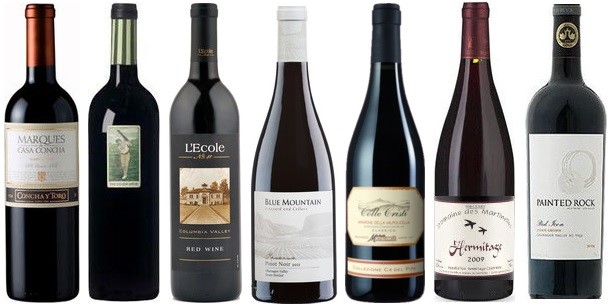
From left to right: Concha Y Toro Marques De Casa Concha Carmenère 2008, Jim Barry The Cover Drive Cabernet Sauvignon 2010, L’ecole No. 41 Red Wine 2011, Blue Mountain Reserve Pinot Noir 2011, Michele Castellani Colle Cristi Collezione Ca’ Del Pipa Amarone Della Valpolicella Classico 2008, Domaine Des Martinelles Hermitage 2009, Painted Rock Red Icon 2011

That the ‘Blood Moon” tetrad of 2014-2015 fall on Passover and Sukkot should come as no surprise. That it’s snowing again on April 15th while the Moon meets the Earth’s shadow for a total lunar eclipse is a cosmic connection that requires red wine. Big reds.

Last weekend’s VINTAGES April 12th release had some beauties and a recent tasting at WineAlign of B.C. wines showed that power and finesse can co-exist on the Left Coast. Who knew they would come in handy with the mercury again dipping below zero and people everywhere howling at a moon they can’t see. Crazy times.

Thanks to Dave Dickinson, the lunar phenomenon is broken down into laymen’s terms, in shades of red. “Does the eclipsed Moon appear reddish to you? What you’re seeing is the sunlight of a thousand sunsets worldwide, streaming through the Earth’s atmosphere into the shadow. This color can vary considerably from eclipse to eclipse, causing it to appear anywhere from a dark tea-stained color to a bright cherry red. This variation is due to the amount of dust currently in the Earth’s atmosphere, and is measured on what is known as the Danjon scale.”

Here are seven immense red wines, from three continents, each with their own unique style, to match with a blood moon.

Concha Y Toro Marques De Casa Concha Carmenère 2008, Peumo Vineyard, Rapel Valley, Chile (169862, $19.95, WineAlign)

A trifecta of regard makes this worth looking at, the least of which, at first thought, is the effect of some age. The Concha y Toro Carmenère examination, in Carmín de Peumo, in Terrunyo and in Marques de Casa Concha is the Chilean reference point for the variety. The impart of deep, clay soils and the expectation of gentle tannins make for a curiosity call when considering an ’08 specimen. Tough and gritty, on one hand, on the other soapy, sandalwood and waxy. The third hand has smouldering wood, berries and tannins. Very much like its Cab and Merlot brethren, the fruit is just starting to be outrun. Try it now and see what Carmenère can bring.  Tasted March 2014  @conchaytoro

Jim Barry The Cover Drive Cabernet Sauvignon 2010, Coonawarra, South Australia (677476, $26.95, WineAlign)

Young-ish vines on the site of the old Coonawarra Penola cricket ground receive perpetual hydro-mineral support from porous limestone under rich terra rossa soil. That fruit is then blended with extract from estate vineyards in the Clare Valley. Smashes the cover off the grapes towards a full on gain of flavour. Charred peppers and lush black berries are smothered and splintered by a 50/50 split of French and American oak in no less than a crush of conceit. Tannin, grit, joy, flesh, full on deep fruit and mineral. Obviously over-swung and with too much club (switching sports), like using Driver used when a long iron would have sufficed. But you drive for show and this Barry can putt for dough.  Tasted March 2014  @Jimbarrywines

L’ecole No. 41 Red Wine 2011, Columbia Valley, Washington, USA (366237, $29.95, WineAlign)

A really good, high-octane red blend if blatantly massive. Like the smell of a shiny, varnished, fresh wood cabin glazed by highly aromatic and resinous epoxy extract. That’s the simple tasting note. The more complex version includes a perfume potpourri of Bougainvillea, violet, orange peel, cinnamon, dark chocolate and a lumber factory. The electric, fully plugged in blend is Syrah, Merlot, Cabernet Sauvignon, Malbec, Cabernet Franc and Grenache (38, 36, 15, 6, 4 and 1). The quotient seeks learned Nirvana and with a little luck, some power chords, a bit of screaming and historical, retro-cult exoneration, it may just get there. Right now it just feels like High School. Impulsive and uncomfortable. Wouldn’t you believe it, it’s just my luck. No recess.”  Tasted March 2014  @lecole41

Blue Mountain Reserve Pinot Noir 2011, Okanagan Valley, British Columbia, Canada (Winery, $36.00, WineAlign)

The Reserve Pinot is intoxicating to say the list. Some whole clusters in the fermentation process add mouth feel, cure and needed grit but how this can not be viewed overall in the shiniest west coast light would be confounding. The reserve ’11 is both “sky as I kite, sticky as lips” and “as licky as trips.” If there was ever an Okanagan Pinot Noir to get you high, this would be the one. What a boisterous effort out of a less than scorching vintage and considering the modest to riches price, no shame in visiting with flavourful fare, imbued with spice, any day of the week.  Tasted April 2014  @BlueMtnWinery

Michele Castellani Colle Cristi Collezione Ca’ Del Pipa Amarone Della Valpolicella Classico 2008, Veneto, Italy (222109, $45.95, WineAlign)

The magic of age is a friend to Amarone and funk trumps fruit. In a nutshell the axiom describes the old-school Colle Cristi. A brooding Amarone, cut by zest that’s citrus-like and savoury/earthy in pine needles, juniper and a Venetian forest in autumn. Inviatura and Chiaroscuro. Caravaggio meets Giorgione. The most complex Valpolicella in the April 12th VINTAGES line-up.  Tasted March 2014

Domaine Des Martinelles Hermitage 2009, Rhone, France (112268, $54.95, WineAlign)

Clearly modern and style-heavy though not out-of-place in the world of Hermitage. From steep slopes of stony brown sand, a high level of grit might be expected but this Syrah is refined, lush and smooth as silk. At 14.5 percent it’s no shrinking violet, honest and futuristically traditional. At $55 it’s a mandatory, appellative Northern Rhone steal. Matter-of-fact acidity, verve and mineral content are all in, with elegance and balance. Really fine Syrah with a five to ten-year fruit-tannin power struggle ahead.  Tasted March 2014  @LeSommelierWine

Painted Rock Red Icon 2011, VQA Okanagan Valley, British Columbia, Canada (Agent, $55.00, WineAlign)

Painted Rock’s red icon could be considered more black than red, as exemplified by the layering of grapes, their pitchy extracts and the fruit associated with their gathering. If the man should ask, “tell him what we said ’bout ‘Paint It Black.’ Rock ‘n Roll is here to stay.” Yes, the Icon will be a big star someday and perhaps this ’11, despite the cooler vintage, will be the first. Might have to wait 13 years or more to find out because the tannic structure is in beast mode and will remain so for likely that much time. The wine plays memorable chords and its song lingers on the brain.  Tasted April 2014  @liffordwine  @PaintedRockJohn

Good to go!


Up on Creekside Estates

Creekside Estate Wines Photo: Eric Vellend

Creekside Estate Wines
 Photo: Eric Vellend

It was the weekend of Godello’s excellent Cuvée adventure, a Niagara winepalooza that included the Brock University Cool Climate Oenology and Viticulture Institute’s Expert’s Tasting. On the road to The Falls there happened an extensive tank, barrel and vertical go round at Flat Rock Cellars and then, with chef riding shotgun, the next essential stop came up on Creekside Estates, a seventeen year-old Jordan winery on 4th Avenue.

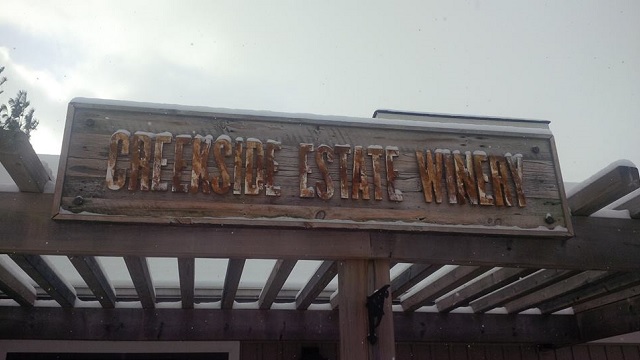
Creekside Estate Winery
2170 4 Ave. Jordan Station, ON L0R 1S0
1 (877) 262-9463 or (905) 562-0035

@CreeksideWine

Creekside was founded in 1997 by owner Laura McCain on a 15-acre vineyard at the 4th Ave. site. The early days of the winery saw an attitude towards varietal antidisestablishmentarianism, with Sauvignon Blanc and Shiraz at the forefront of production. Daring to be different from the start, Creekside has carved an antithetical, Niagara Peninsula religious wine belief, slightly devious, with a manifesto towards creating wickedly good wines.

Creekside Estate winemaker Rob Power Photo: http://www.creeksidewine.com/

Creekside Estate winemaker Rob Power
Photo: http://www.creeksidewine.com/

In the early days there was winemaker Rob Power and mad scientist partner in crime Craig McDonald, now the chief of what happens in bottle at Trius. Powers graduated in the first oenology class out of CCOVI and began his vinous stirring with Creekside, a post he continues to develop, never-resting on earlier laurels. Back then the two cubs fermented and blended together, with caution swirling tohu vavohu in the wind. Some of those Meritage blends from the early 2000’s were brilliant strokes of luck, or as winemaker’s like to call it, hard work. Or destiny, or god’s favour. The Creekside credo has never wavered. Being overly serious is not an option. Having made decisions such as purchasing the unparalleled Queenston Road Vineyard on the St. David’s Bench on its side, Creekside thrives by an exhibition of capricious behaviour, adroit winemaking and the rope savvy marketing of veracious and affordable wines.

Assistant winemaker Yvonne “Cellar Monkey” Irvine and Director of Sales, Marketing and Necessary Evil Matt “Semi-Illustrious Career” Loney ushered a tasting of 12 Creekside wines. Here are the notes.

Creekside Estates Winery Photo: http://www.creeksidewine.com/

Creekside Estates Winery
Photo: http://www.creeksidewine.com/

Sauvignon Blanc 2012, VQA Niagara Peninsula, Ontario (620724, $13.95, WineAlign)

Leans and veers to the tropical side, no doubt as a result of a record-setting sugar vintage, but this ’12 manages to finish very dry. The arid descent follows a warm and fuzzy peach feeling, set about by some skin contact and buoyed by citrus and zest. Front yard value.

Backyard Sauvignon Blanc 2013 (Tank Sample), VQA Niagara Peninsula, Ontario (341792, $17.95, WineAlign)

A Creek Shores SB that bridges the gap between spring and summer fruit. From a year in which the choice was made to not blend off into the estate bottling. Recognizable Creekside aromatics stand out in a more than obvious mineral deposit and grapefruit zest way. Here the band plays across The Great Divide so “just grab your hat, and take that ride.” Will be a VINTAGES August 30 release.

Sauvignon Blanc Reserve 2012, VQA Niagara Peninsula, Ontario (142570, $26.95, WineAlign)

Seven barrels make up the Reserve, ferments new (four) and old (three), leading to a richer, fatter and spicier style. Dreamy really, as matchstick and flint join the fray in a Pouilly-Fumé way. That pierre à fusil is exaggerated by the warmth of 2012, with an elevated tang, rendering the flavours even more akin to Old World, Loire Sauvignon Blanc. Close your eyes and when you awake, “when you believe, you will relieve the only soul that you were born with, to grow old and never know.” The Creekside band created an old SB soul in ’12.

Laura’s White 2012, VQA Niagara Peninsula, Ontario (121764, $18.95, WineAlign)

Laura’s White combines Sauvignon Blanc, Pinot Gris, Chardonnay, Riesling and Gewürztraminer in a kitchen sink blend that sees a bit of oak. What’s notable about the ’12 is the omission of two highly aromatic components, the previously employed stalwarts Viognier and Chardonnay Musqué. The adage is justified in that you take what the vintage gives you. If it gives you lemons, (shift tangents) you let the busy aromatics of more flavourful grapes (like Chardonnay) do the floral work. Laura’s ’12 will be a standout for the concept, a revivalist blend to help bring back some religion to the region’s renditions. Coming to VINTAGES in June.

Viognier Estate Reserve 2011, VQA Niagara Peninsula, Ontario (22058, $29.95, WineAlign)

A 60-80 cases annual production from the Queenston Road Vineyard is not nothing because “ya take what ya need and ya leave the rest.” Aside from a miniscule addition out of stainless steel tank, this is all neutral barrel fermented fruit. Reigned in, less boozy and subordinate in oleaginous slide than in the sweaty years. Translation? A superlative vintage. The night they drove a whopping six rows of old ’11 Dixie Viognier fruit down for crushing the band began to play. This, knowing full well there would be no dirty peach martini, but rather a perfumed dropper distilling flowers, wildflower honey and wild tarragon. Rises and falls to verse like a Richard Manuel keyboard march with length to match the Queenston Road.

Rosé 2013 (Tank Sample), VQA Niagara Peninsula, Ontario (winery, $15.95)

A Cabernet Sauvignon (71 per cent) and Cabernet Franc (29) full-on saignée Rosé with colour balance given by way of the CF bleed. An arid entry creeps to sweet with a pause amongst the whispering pines, finishing tinny and with a breath of fresh herbs. Niagara Rosé can get lost sometimes, in extract, hue and a candied, sinking feeling. This is a scaled back vintage which is more than a good thing, so there’s no waiting, “until it all goes round…the lost are found.”

Syrah 2012, VQA Niagara Peninsula, Ontario (121764, $15.95, WineAlign)

A healthy 3,200 cases are managed and executed with ease from mostly estate fruit. Certainly warm in this vintage, dare I say, like McLaren Vale. If it must not be said, too bad, but it’s also a bowl of fresh berries with a rocky Rhône intent. Terrific tar and ash finish.

Cabernet Shiraz Estate 2011, VQA Niagara Peninsula, Ontario (305300, $16.95, WineAlign)

A traditional Oz combination of Cabernet Sauvignon (55 per cent) and Shiraz (45), clearly new world in style, as Yvonne Irvine says, like “trying to make a big, rich, unctuous Shiraz.” The question could be posed, “temptation stands just behind the door, so what you want to go and open it for?” This one goes right to the jawbone with serious backbone and streak of acidity. Not to mention chalk, grain and a Shiraz solo. The American oak accent is clear and the tannins say wait two to three years, please. The fruit may, or may not comply.

Laura’s Red 2010, Queenston Road Vineyard, VQA St. David’s Bench, Niagara Peninsula, Ontario (117906, $19.95, WineAlign)

It’s funny, more than any other wine tasted, this Laura has that Niagara varnish other Creekside reds seem not to possess. “Stock up in the big years” suggests Matt Loney, and “consolidate in the tougher ones.” It could be argued that you can make more interesting wines in the lean years but this blend of Cabernet Sauvignon, Merlot, Syrah, Malbec and Petit Verdot lays a claim to seriousness, if needing at least three years to settle down. There is much cassis, sweet oak, iodine and a milk/dark chocolate swirl. Complexity for sure if just a bit huge within its own skin.

Merlot Reserve 2008, VQA St. Davids Bench, Niagara Peninsula (winery, $34.95, WineAlign)

Here is a wine that is aging gracefully, works with and fits into the vintage, Merlot as objet d’art, grown in stature as if by wizened verdigris. Smells like Goulash or Côte de boeuf à la Bordelaise, even cured meat. Might also be considered in terms of funk, a note sometimes brought on by Hungarian oak. Tons of red fruit, pencil, anise and “the smell of the leaves, from the magnolia trees in the meadow. King Harvest has surely come.” Few Ontario reds succeeded in ’08 like this Queenston Road stunner and few will live as long. Another classic by the band.

Cabernet Sauvignon Reserve Queenston Road Vineyard 2010, VQA St. David’s Bench, Niagara Peninsula (winery, $34.95, WineAlign)

Impeccable correctness in terms of the variety from a year where the heat giveth and the heat taketh away. Works Cabernet properties properly, embracing and minimizing oak without pretending it’s not there. This red is expressly lush and oak driven, as it should be, it being Cabernet and all. Leaves its appendages out for a Mediterranean pedicure, a glaze of Cassis, black olive and black cherry dug in a chair entrenched in the warm confines of the St. David’s Bench.

Lost Barrel Red 2007, VQA Niagara Peninsula (46470, $65.00, WineAlign)

Just 60-80 cases are made from the tips of the best barrels through a process that takes 56 months to complete. The secret ingredient is Sangiovese and bless the band‘s soul if the ferric, iron and animal musk is not attributed to the addition. This is a different kind of wine, with lees in the bottle, not unlike some big, bad Spanish wines. It’s ’07 and still reductive which makes it seem peculiarly modern (note, Spanish) but it’s really not. Despite the monster tannins, it “just gave my heart a throb to the bottom of my feet and I swore as I took another pull,” the Lost Barrel can’t be beat. Up on Creekside Estates.

Good to go!

Release the wines, catch an Ontario phrase


Pinot Noir from the Mountainview Road on the Beamsville Bench.  Photo: William Roman, http://www.rosewoodwine.com/

Pinot Noir from the Mountainview Road Vineyard on the Beamsville Bench.
Photo: William Roman, http://www.rosewoodwine.com/

In the past 10 days there have been opportunities to taste the Ontario wine industry’s state of the union. Tawse Winery rolled out the red carpet, the Key Keg and a must check ’em out set of new wines in a sister brand known as Redstone Wines. County in the City presented a major introspective of Prince Edward County at the Berkeley Church and Somewhereness, the definitive Ontario goût de terroir on display April 9th at St. James Cathedral has the local wine community abuzz with new catch phrases.

Full reports on those three events will be coming out over the next couple of weeks. In the meantime, Ontario wines and winemakers are well represented in this week’s VINTAGES April 12th release. That and a mess of catch phrases, idioms, colloquialisms and overall word play.

A sundry type of tasting note composition can theoretically make cause to “burn one’s boats” though the phrase “crossing the Rubicon” holds more water and instills greater confidence. Before feeling the need to act on a Mr. Bursian attack and screaming “release the hounds,” it is highly recommended to read between the lines, click on the pop culture references but refrain from and “don’t look the gift-horse in the mouth.”

Ontario wines have come so far and in such a short period of time. Sure there are some outfits that might be considered a “flash in the pan” and specific examples weighted down by “feet of clay.” Who does not hope that as a group, wines from Niagara, Prince Edward County and Lake Erie North Shore avoid a “hoist with one’s own petard’ or go “sailing under false colours.” There should be no fear. Ontario wines are no longer merely improving. They are “throwing down the gauntlet.” There is no reason to reject the idea of spending $38 on an Ontario red or white. Quality is officially and incontestably in the bottle.

Here are six wines in stores now, five from Ontario, the other made by an Ontario winemaker, to have a go at this weekend.

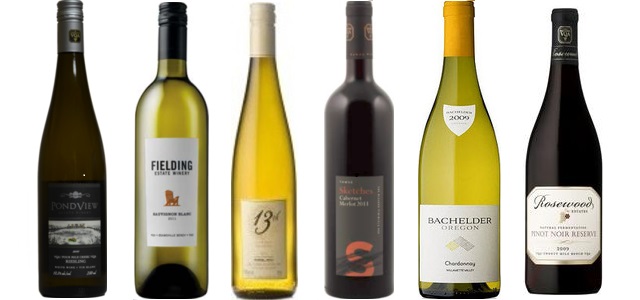
From left to right:

From left to right: Pondview Riesling 2012, Fielding Estate Sauvignon Blanc 2013, 13th Street June’s Vineyard Riesling 2011, 13th Street June’s Vineyard Riesling 2012, Bachelder Oregon Chardonnay 2011, Rosewood Estates Reserve Pinot Noir 2010

Pondview Riesling 2012, VQA Four Mile Creek, Niagara Peninsula, Ontario (271148, $15.95, WineAlign)

While winemaker Fred di Profio’s ’12 remains true to the Pondview idea of mineral-driven Riesling, the vintage dictates the course and this one simply carries four miles of juicy fruit, accented by green herbs and a spread of lime jam. It’s dry, vinous and cidery with a slight sour aftertaste. A lamb Riesling, lambic, iambic and pedantic. Good value. Tasted March 2014  @Pondviewwinery

Fielding Estate Sauvignon Blanc 2013, VQA Beamsville Bench, Niagara Peninsula, Ontario (131235, $18.95, WineAlign)

Ever orchard fruit bearing, omnipresent juicy Sauvignon Blanc. Pliable and informal, typical in itself and for the local marl. Kept on its toes by a wailing, sharp green peppercorn cut by caper line that runs through, then gracefully descends towards a grassy, song of freedom refrain. Tang is the final act of its redemption. Well-structured and proper. Does a Fielding wine ever not abide and chant “we forward in this generation, triumphantly?” Tasted March 2014  @FieldingWinery

13th Street June’s Vineyard Riesling 2011, VQA Creek Shores, Niagara Peninsula, Ontario (147512, $19.95, WineAlign)

June’s vineyard, now in its (correct me if I’m wrong) 12th year is both nascent and senescent, increasingly producing a blatant expression of Creek Shores Riesling. Today’s fleeting study faces a direct, anti-diminutive aridity and more dried herbs. In 2011, the austere vineyard speaks but the Riesling realizes atonement through a corpulence of flesh and bone down by the sheltered shores. A much tougher assignment than the gilded platinum hand dealt to vineyards upon the upper reaches of the Escarpment.  Tasted September 2013  @13thStreetWines

From my September 2013 note: “from Niagara’s Creek Shores and built of the classic Alsatian Clone 49 inordinately defines place and time in an agglomerated manner. Maximum floral intensity, zero petrol tolerance and an arid accumulation speak volumes about the appellation. To taste you will note it just barely believes it’s off-dry. Unique and unambiguous, plosive Riesling.”  Tasted March 2014

Tawse Sketches Of Niagara Cabernet/Merlot 2011, VQA Niagara Peninsula, Ontario (130252, $20.95, WineAlign)

Call it whatever you like; house red, Bistro red, un verre de vin rouge maison. All phrases to describe a refreshing and wholly compatible glass of red wine. The Tawse is crafted for such purpose, combining Cabernet Sauvignon, Cabernet Franc and Merlot in a Médoc state of mind. Aromatically it spews tobacco, tea, currants and white pepper, all wrapped in a tight, food-friendly package and demanding to be paired this way. Solid red.  Tasted March 2014  @Tawse_Winery

Bachelder Oregon Chardonnay 2011, Willamette Valley, Oregon (273334, $29.95, WineAlign)

The citrus stands out today. If the base and necessary oak treatment is your kryptonite, by all means, walk away from the Oregon Bachelder Project. But that decision deprives that part of your brain that processes progress and reason. This is not the oak-driven Chardonnay of your 1985. This is the future. Embrace the angles, the quotients and the variables. Fruit as function, rock as relation and barrel as the algebraic cauldron that allows the wine to come to conclusion. Sure there’s oak but it drives the equation. Deal with it. Tasted April 2014  @Bachelder_wines

From my earlier February 2014 note: “Yet another three months later re-taste to show Bachelder’s Oregon terroir may be the most difficult to assess in its infancy. This short slumber has changed everything. Oregon distinction, smell it, commit it to memory and you’ll never forget it. “Picture yourself staring at a loved one in a restaurant,” says Thomas. “Would you be able to pick this out as Chardonnay?” Some ciderish activity, from sedimentary and volcanic soils that used to mingle with ocean waters, give this a sea salt and fossilized lava stillness. More buttery (dare I say, popcorn) goodness than the rest. And restrained tang. And length. Wow.

From my earlier November 2013 note: “While Burgundian in hopes and dreams, this is very much a $29 Oregon white. No mask, no hidden altruism, simply the right Chardonnay for the right price. Bone dry, orchard driven, high acid, void of harmful terpenes. There is a salinity and piquancy not influenced by PH, perhaps by the ocean, by sandstone, but regardless it’s unique to place, unlike Niagara, Prince Edward County, or for that matter Burgundy.”

Rosewood Estates Reserve Pinot Noir 2010, VQA Twenty Mile Bench, Niagara Peninsula, Ontario (318345, $39.95, WineAlign)

Prettier in 2010 the Rosewood is, the aromas a precise glowing arcade of earthy, warm, peppery fire. April redolent of a burgeoning, sweet cranberry marsh. Present, accounted for though not tough tannins. Glazed by an unobtrusive candy shell. A fine, inviting, sweet and soft Rosewood Pinot, true to vintage and neighborhood. “Then I’ll dig a tunnel, from my window to yours.”  Tasted March 2014  @Rosewoodwine

Good to Go!


Passover that big glass of red

Barque Smokehouse Miami Ribs PHOTO: Kevin Hewitt and Jill Chen (http://www.freestylefarm.ca/)

Barque Smokehouse Miami Ribs
PHOTO: Kevin Hewitt and Jill Chen (http://www.freestylefarm.ca/)

The Torah says, “Guard the month of the spring, and make [then] the Passover offering.” Meaning, Jews need to ensure that Passover is celebrated in the spring. In Canada that proclamation was in danger. Had Passover fallen in March, 2014 may just have seen the coming of the apocalypse.

An understanding of the rules and laws that govern wine on Passover is on a need to know basis. There are really just three key variants of information essential to purchasing and consuming on Pesach. This applies to Jews and non-Jews alike.

Number one. Passover wine is specific to a Jew’s level of Kosher. From Reform, to Conservative, to Orthodox, all Jews have different variances of belief. A Reform Jew will likely drink any wine on Passover and then again, may not. But, he or she will almost certainly not require the bottle to be Mevushal. A Conservative may only drink Mevushal but in more cases than not, Kosher is good enough. An Orthodox Jew goes it only one way, or the highway. Strictly Mevushal KFP, do not pass go, do not collect Afikoman (the broken Matzah) money.

I covered the gory and bitter (herb) details in last year’s Passover wine column. “All wines labelled “Kosher for Passover” are kosher, but not all kosher wines are kosher for Passover.”

Related – New wave under $20 wines go kosher for Passover

In 2012 I spent some time on the limiting, frustrating and constipating food component of the ancient Jewish holiday. “Try cooking with and having to eat nothing but Matzo, eggs and oil for eight days.”

Related – KP Duty – Kosher For Passover Wines

Kosher wines migrate bigger and bigger with each passing Lunisolar calendar year and their not so arbitrary inclusion or not of an intercalary month (shanah meuberet – Adar I) added in the 3rd, 6th, 8th, 11th, 14th, 17th and 19th years of the 19 year lunar cycle. Israel continues to race towards big, lush, often high alcohol reds. This trend could be seen as a masking or a compensating/mitigating strategy to oppose the rigors and past failings of making Kosher wine. It can also be viewed as a stylistic choice, to mirror what has taken place in Bordeaux, in California and in Australia for the past 20 years.

In Canada, Kosher wine selections are extremely limited. There are smaller, garagiste producers in Israel, especially in the hills surrounding Jerusalem, that are making fresher, less oaked reds, but good luck seeing them on shelves on this side of the ponds. It was refreshing, however, to find the Kosher contingent on the VINTAGES March 1st release to be Israel-focused. In past years the group was dominated by Australia, Italy, France and California. Israel is making the best Kosher wines on the planet. Go figure.

Barque Events offers a full Passover catering menu. View the selections. Here are six big reds and a token white tasted and recommended for the Passover table.

Golan Cabernet Sauvignon 2007, Galilee

From left to right: Recanati Chardonnay 2012, Kosher For Passover, Non Mevushal, Upper Galilee, Golan Cabernet Sauvignon 2011, Galilee, Galil Mountain Alon 2010, Kosher For Passover, Upper Galilee, Teperberg Family Estate Meritage 2011, Kosher For Passover, Elah Valley, Tabor Earth Series Shiraz 2011, Kosher For Passover, Upper Galilee, Saslove Aviv Marriage 2011, Kosher For Passover, Upper Galilee, Galil Mountain Yiron Kp 2009, Upper Galilee

Recanati Chardonnay 2012, Kosher For Passover, Non Mevushal, Upper Galilee, Israel (128322, $19.95, WineAlign)

Rich, unctuous and viscous. Soft and discreet, more like a modern, New World sketch of a Grenache Rhône-blend than a warm climate Chardonnay. There is little or no affront to this clement and polite Israeli of scant tension or acidity.   Tasted February 2014

Golan Cabernet Sauvignon 2011, Kosher For Passover, Galilee, Israel (Vintage Wines – 611152, $26.95, WineAlign)

From winemaker Victor Schoenfeld, the stylish “G” will answer the pecuniary call for just about any Passover feast. Well-rounded, worldly, soft-spoken and generous of fruit. A 100 per cent Cabernet that knows its way around a blackberry, a ripe plum, a bouquet of violets and a chamber of faint tobacco smoke. Lush but not heavy, the only detractor is a slight caramel, oxidative note that indicates near-term consumption, which is basically a given anyway. The finish hints at a lava flow in the direction of the fourth cup, but because this G is so easy to drink, it should be enjoyed while still at the table.  Tasted April 2014

Galil Mountain Alon 2010, Kosher For Passover, Upper Galilee, Israel (354522, $20.95, WineAlign)

Alon makes use of Syrah to create its party mix, to work with 41 per cent Cabernet Sauvignon, 6 Petit Verdot and 6 Cabernet Franc. Another monster red blend, coming in hot and huge at 15.5 per cent alcohol. For the price, what more can you ask for? Passover may be a four glass exercise but two through four are top ups so it’s really a two glass night. This wine will not ruin your 2nd Seder morning wake-up after consuming a maximum two glasses at the 1st Seder. Rich, mocha berry driven shake, spicy and with non-invasive meaty aromas. Hot, sweet and bothered.  Tasted February 2014  @azureau 

Teperberg Family Estate Meritage 2011, Kosher For Passover, Elah Valley, Israel (157016, $23.95, WineAlign)

Proper Bordeaux aromatics, of tobacco, tea, black currant and grilled meat. Nothing gritty going on here, all four varieties playing a role and hanging together. With good tannins, sweet sinuous and slinky, this is a very versatile Passover red that will also benefit from a year or two in bottle. Better than average value.  Tasted February 2014

Tabor Earth Series Shiraz 2011, Kosher For Passover, Upper Galilee, Israel (356709, $23.95, WineAlign)

In an unusual turn of the earth, this smells like someone dropped a piece of Emmental to melt in the heat upon the must of this Shiraz. It does swirl away and a solid core of red berry remains, though for just a spell. Simple, semi-structured and proper, without hard edges or tannins, but falls quickly. Will work well with many Passover flavours but drink it up in 2014.  Tasted February 2014

Saslove Aviv Marriage 2011, Kosher For Passover, Upper Galilee, Israel (354514, $29.95, WineAlign)

This Aviv consolidates Bordeaux, Piedmont and the Rhône into one complex and perplexing blend within the confines of a single bottle. The Northern Rhône meatiness of the Shiraz stands out firm and at attention, essentially suppressing the Meritage marriage intent and thus renders the wine monochromatic. Still its lively and spicy, ready for the bigger and more pungent foods on the Passover table. The Shiraz might say, “this is a crisis I knew had to come, destroying the balance I’d kept.” The other varieties, meaning Merlot, Cabernet Sauvignon, Petit Verdot, Cabernet Franc and Nebbiolo are the silent partners in this polygamy of a wine marriage. They play their parts despite the joy division.  Tasted February 2014

Galil Mountain Yiron Kp 2009, Upper Galilee, Israel (95075, $34.95, WineAlign)

The Yiron is a beast but because I am so pleased to see the Kosher feature composed of all Israeli wines (as opposed to Australia, France, Italy, Argentina and Chile) I am focused and ready to work with anything on this table. Despite the 15.5 per cent alcohol and plethora of oak treatment, this blend shines in rich, meaty and anise-spiked flavours. The mix of Cabernet Sauvignon (60 per cent), Merlot (35) and Petit Verdot (5) may seem monstrous but it is not stupidly expensive now and in relation to what it cost in previous vintages ($50). Though certainly not a wine of elegance, grace and restraint, the Yiron pulls no punches and remains true to its warm climate conditions. It is what it is.  Tasted February 2014

Good to go!

https://twitter.com/mgodello