November 30th in Piemonte: Sandrone and Punset

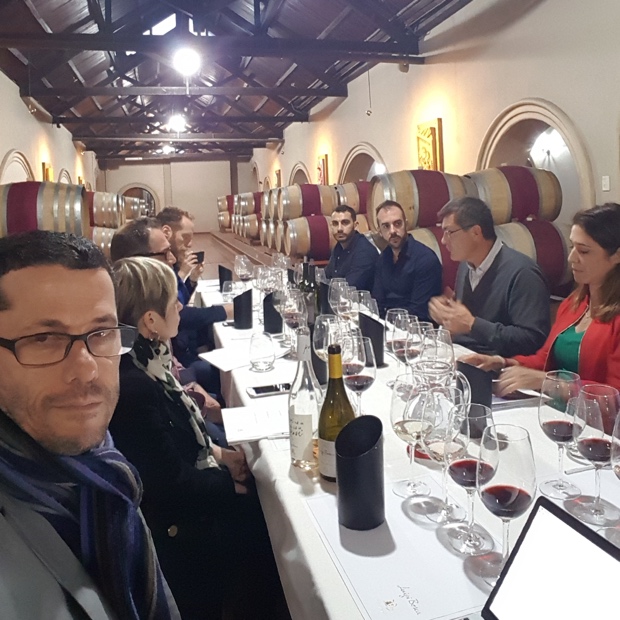
In quieter, happier and still innocent times there were days when you could freely take a Saturday morning drive down the A33 from Asti, skirt past Alba and into the sleepy environs of Castiglione Falletto. On that last sunny one of November I did just that to pay a visit with Barbara Sandrone. Later that day I moved north to Barbaresco to do the same with Marina Marcarino at Azienda Agricola Biologica Punset. I am thinking of them both and their families at this most challenging time of the past 75 years. Their estates are so very different and yet both Barbara and Marina are two of Piemonte’s strongest women, fearless in their pursuit of excellence, integrity and their respective family’s dreams to tell exacting stories of very specific places.

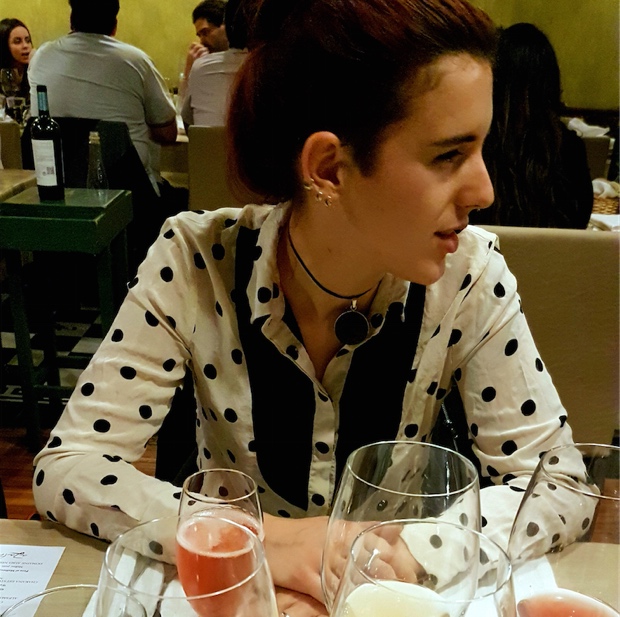
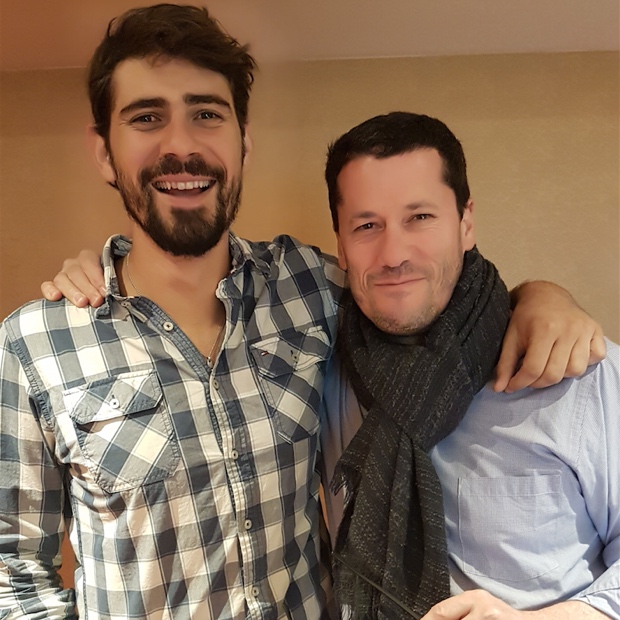
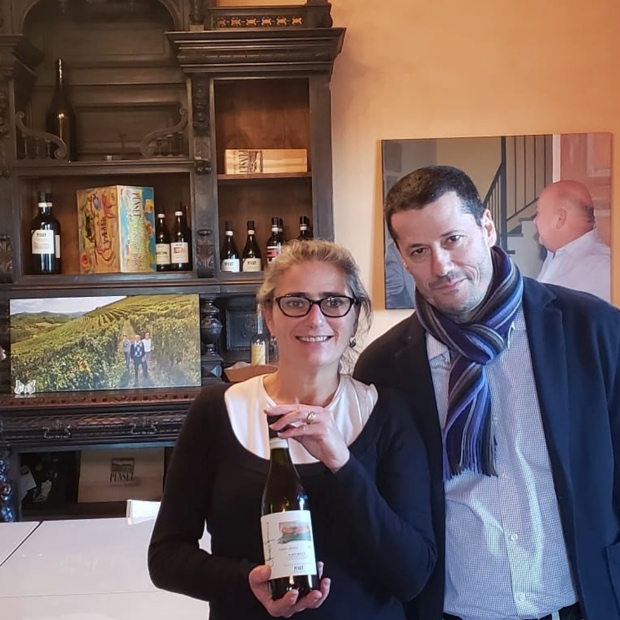
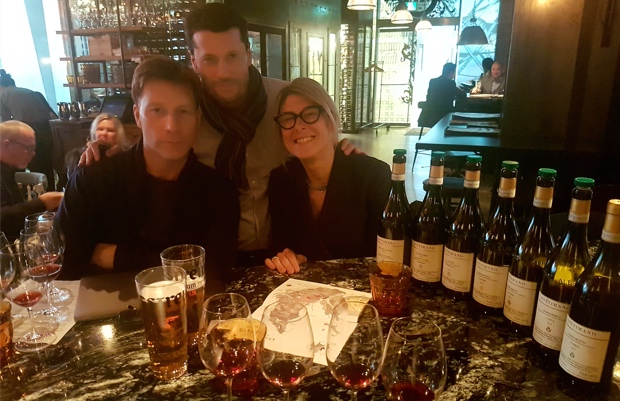
With Marina Marcarino

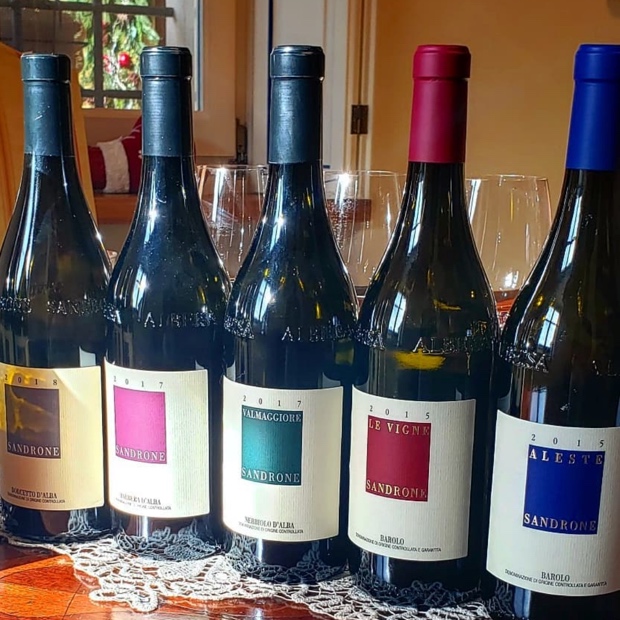
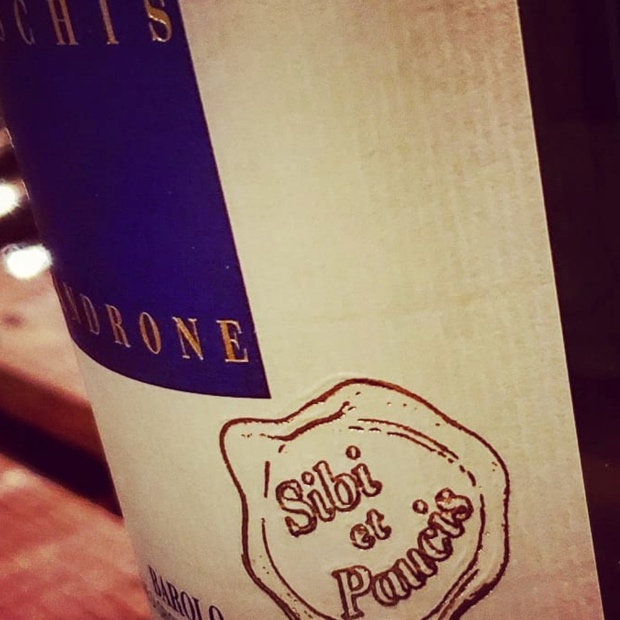
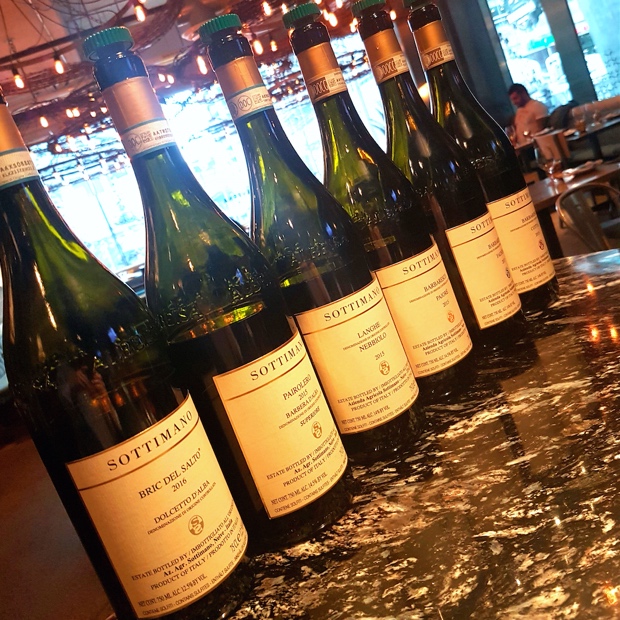
Sandrone in found south down the slope and slightly to the west of the tiny hamlet of Castiglione Falletto, also the name of the commune in the Province of Cuneo. The town of Barolo is further afield south down SP3 Via Alba. Barbara’s family wines are made by her father Luciano, pioneer, founder and visionary, along with her uncle Luca. Luciano founded the winery in 1978 after working at Borgogno and being the cellar master in charge at Marchesi di Barolo. One of the winery’s most progressive concepts is actually a retro one. They concern Barolo that are neither selections nor Riserva but rather of intuition, “to free nebbiolo’s innate resistance to time.” Sibi et Paucis, “a few who are the favoured,” in that a small percentage of the three seminal nebbolo bottlings are held and stored in the winery’s cellar. “The harmony of wine expressed through passion and patience” is Sandrone’s credo and it is the Valmaggiore, plus Le Vigne and Aleste Barolo that are released six, 10 and 10 years forward (respectively) to supply restaurants with a desire to sell old vintages, but don’t necessarily have the space to store them. Here are the five wines I tasted that morning at Sandrone. Thank you Barbara and I hope you and your family are well.

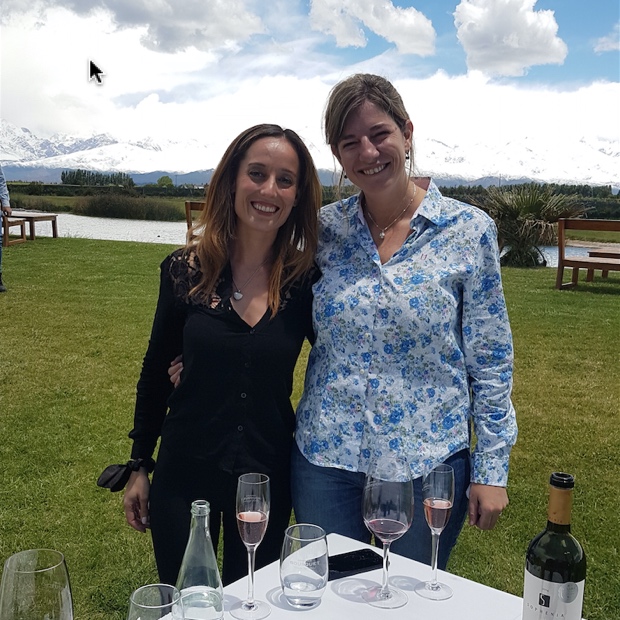
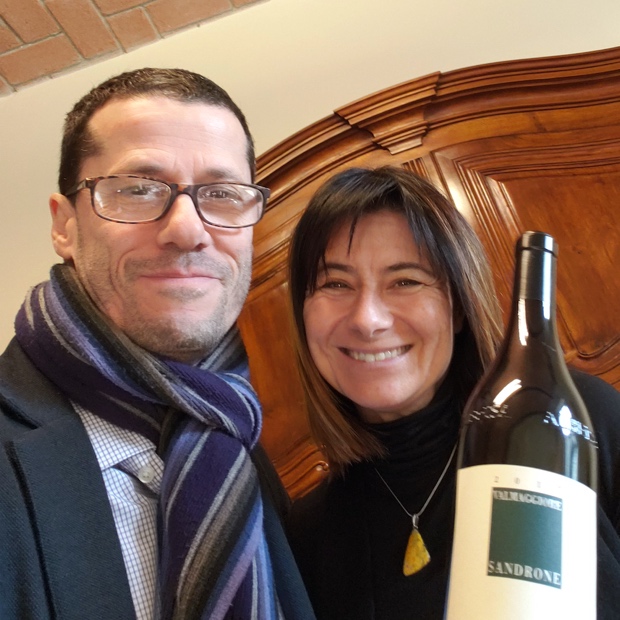
With Barbara Sandrone

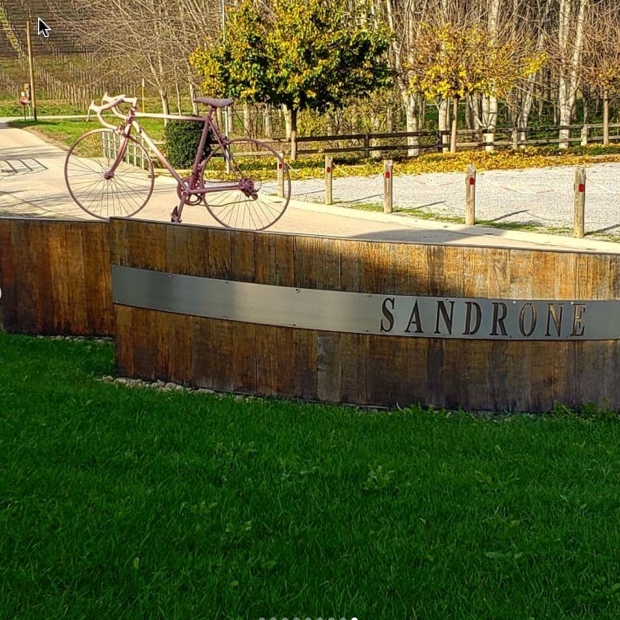
Sandrone

Sandrone Dolcetto d’Alba DOC 2018 ($29.95)

The keys to the dolcetto city are granted when fruit, freshness and high level acidity coordinate as they do in bringing 10 different plot expressions together from Monforte and Barolo. High level excitability in control and though it has a short life expectancy (three to four years) there is charm and there is balance. Drink 2019-2022.  Tasted November 2019

Sandrone Barbera d’Alba DOC 2018 ($44.95)

From the area very close to Grasso at the top of the hill at 450m. Dark black cherry and weight from a hot vintage and so the wind and the aerification up at this great Langhe height has kept the wine fresh and breezy. Works well to accede and succeed going forward. Crisp for barbera d’alba. Drink 2019-2024.  Tasted November 2019

Sandrone Nebbiolo d’Alba DOC Valmaggiore 2017 ($59.95)

Comes from sandy soils in Roero, the youngest and more openly friendly of the three brothers, along with Le Vigne and Aleste. One year in tonneaux and one year in bottle. Chalky and largely chunky but always the acidity and the charm. Solid as it can possibly get for the appellation, a mid-term traveller with everything under control. Drink 2019-2023.  Tasted November 2019

Saturday morning @sandroneluciano on a perfectly November Piedmontese day. Grazie Barbara. Yours, your father’s and your family’s wines take care to do what’s good and beautiful and right.

Sandrone Barolo DOCG Le Vigne 2015 ($159.95)

A formidable construct forms the outline and strengthens the bones of Sandrone’s Le Vigne. This nebbiolo strikes the heart with what just seems like the crux-filling soul of these nebbioli standing at its own attention with intention and promise. The inner sanctum of succulence and intentionally high-strung parts moves the dial in the direction of forever with time-stopping ability. There seems no way forward now while at the same time the earth revolves because you just know it does. But you can’t feel it. What you can feel is yourself breathing and Le Vigne is teaching you through the moment. Drink 2023-2035.  Tasted November 2019

Sandrone Barolo DOCG Aleste 2015 ($179.95)

Aleste goes deeper and more introspectively into the clay and limestone with this uncanny ability and intuitiveness to mimic its compact terroir. You can imagine the nebbiolo here softening in cold, wet months and hardening when dry and warm. The tannic structure is not that of Le Vigne and in a way (if I can be allowed to say) there is more Luciano Sandrone’s youth years in Aleste and more morbido times of wisdom in Le Vigne. There can be no reason to consume cases of Aleste any earlier than the age of 10, or even 15. It’s packed so tight and without holes in its armour for to ensure longevity with the greatest Baroli and that includes the most historical, traditional and famous. What a moment this wine gives and will bring to those who make one their own. Drink 2025-2040.  Tasted November 2019

Azienda Agricola Biologica Punset

After a brief stop for lunch in Castiglione Falletto I made my way back up the Autostrada, took the SP3 Barbaresco off-ramp, crossed over the Tanaro, turned towards Castagnole Lanze and headed for Neive. In the hills above the village is Azienda Agricola Biologica Punset. The literal meaning is “beautiful hill” or “peak,” a name derived from dialectical Piedmontese legend which tells of this nickname given by the Count of Neive. Punset is run by fifth generation winemaker Marina Marcarino, organic instrumentalist, agricultural trailblazer and arguably the Langhe’s greatest disco dancer. Marcarino made a decision to farm organically in the 80s when commercialism, conventionalism and conservatism were the rampant norm. She was the witch of Barbaresco, feared and surely admired though many did not yet understand the breadth of her powers.

Today’s world of natural wine has got nothing on Marina Marcarino. She was into the match long before today’s winemakers were even out of huggies. Marina explains what her wishes are going forward. “What I would like for the future? Being able to communicate my experience as an example of personal achievement to the new generations, spurring them to get into the game.” Never before have philosophies like this meant so much. Most recently Marcarino has devoted an incredible amount of time and effort as President of the L’Associazione Produttori Vini Albesi. Dear Marina, I trust you are staying positive through these troubling months and I have an important request. When we all come through this, please save the next dance for me. These are the nine wines tasted with Marina on that day in late November.

Punset Neh! Langhe Bianco DOC 2018 ($18.95)

Ne’? is the “Piedmontese” way of ending a sentence, like ‘eh in Canada. A 50-50 arneis and favortita mix, salt missive over fruit and extremely fresh. The aperitíf white that connects dialectal territory with those in the diaspora that want a taste. Drink 2019-2021.  Tasted November 2019

Punset Neh! Langhe Rosso DOC 2017 ($18.95)

Mainly dolcetto (70 per cent) with barbera and nebbiolo. Not much of the latter but necessary to widen the expression of the Langhe. Here it’s an explanation point, not a question, as in a confirmation of the exclamatory Piedmontese expression. Bright red amalgamated fruit with proper acidity and the ability to work alongside anyone and all. Drink 2019-2022.  Tasted November 2019

Punset Arneis Langhe DOC 2018 ($26.95)

The gastronomic DOC Langhe with 100 per cent arneis and right from the top you can tell the difference. Not just the increase in limestone mineral push but also texture and even structure. Liquid salty wave, creamy without abandoning roots and reason. Lingers longer than most arneis and you’re very pleased to have it hang about. Besides it’s more a winter white than a summer one. Drink 2019-2024.  Tasted November 2019

Punset Dolcetto d’Alba Langhe DOC 2017 ($21.95)

The luxuriously natural dolcetto, richly phenolic and rustic, lactic and reasonably so. A pure varietal expression, true to place and to form. Great fruit and essential first course red. Drink 2019-2023.  Tasted November 2019

Punset Barbera d’Alba DOC 2018 ($24.95)

From two vineyards, one planted in 1996 and one in 2003. Rich and spicy with some of the varieties’ greatest clarity. Very few comes across with this sort of red fruit. Maintains the fragrance and the “frankness” of the variety. No French oak, no confiture. “It’s the easiest wine for us because we do nothing,“ shrugs Marina Marcarino, expect for picking at the right times and pressing gently. That and cement. Drink 2019-2023.  Tasted November 2019

Punset Langhe Nebbiolo DOC 2017 ($31.95)

From the tiniest production made from the youngest vines from times when there is more vegetation and verticality for health. This practice started about 20 years ago, which harks to a very specific pruning system and because Guyot is tough on the vines. They are nurtured like the children they are and the results are in the natural order of things and in the personality of this genuine Langhe. It’s volatile you should know. It’s also biodynamic, dynamic and beautiful. Drink 2019-2023.  Tasted November 2019

Punset Barbaresco DOCG Basarin 2014 (302786, $66.95)

Very traditional nebbiolo coming from the southeast part of Marina Marcarino’s vineyards, very steep, the rock bed 8m deep. Classic nebbiolo with classic tannins, 40 days on skin, softly removed. Slavonian 2500L and no less than two years refining time, 14 months of that in the wood. Emits a not to be missed scent of menthol and faint herbs mixed with fennocchio, It’s the vineyard talking and though we would want to there’s nothing more to specifically name, so just chalk it up to memories created, of another time and in this same place. Drink 2022-2033.  Tasted November 2019

Punset Barbaresco DOCG Basarin 2013 (302786, $66.95)

If 2014 in general was not considered a great vintage it might as well have been so here, of mild temperatures and not so wet. Fresh and excitedly savoury with a mint-vegetative note but it matters little because this ’13 is different and was built with bigger structure, not the power of some and many, though surely these never are. The aroma is very similar and so we deduce that this is what Punset Barbaresco smells exactly like. Something growing in the vineyard, or maybe something deep and well within the ground, or even in the air. It’s just what it smells like. An aroma divine. Drink 2022-2033.  Tasted November 2019

An afternoon tasting through the Neive wines of Italy’s first organic wine producer. Marina Marcarino began her impassioned and unwavering journey in 1982 ~ Shout out to @nicholaspearcewines for getting these gems to Ontario.

Punset Barbaresco DOCG Campo Quadro Riserva 2012 ($71.95)

A cru Barbaresco, meaning squared, and the place is just like a painting. Carries a double entendre and as Marina Marcarino explains, there “probably is a third meaning that we don’t know.” Take in the math of 12,000 square metres and 12,000 bottles of wine produced, making use of 70 per cent of the potential. Different aromatics than the very traditional, non-Riserva Barbaresco, deeper and richer, more sweet red fruit and less savour. A bigger vintage, with a similar fermentation and aged in French barriques and botti. Some spice for sure, with 36 wood aging a major part of the profile, followed by 36 further months in bottle. Great structure, wild ride, all in total control. Drink 2022-2033.  Tasted November 2019

Good to go!

godello

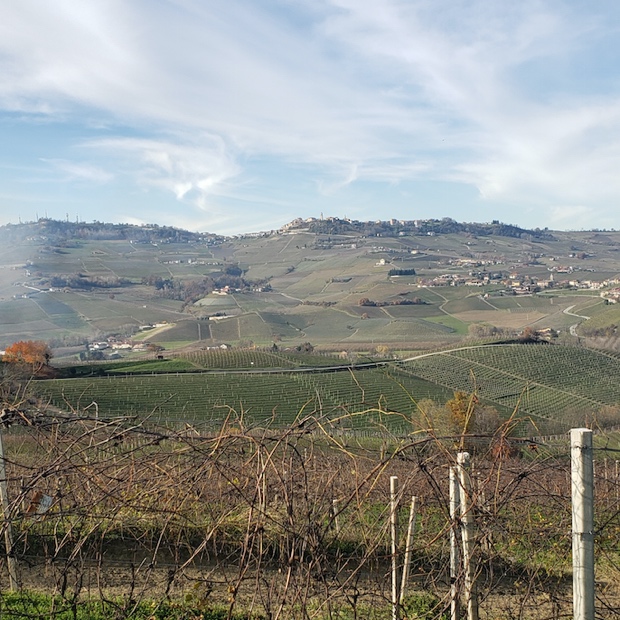
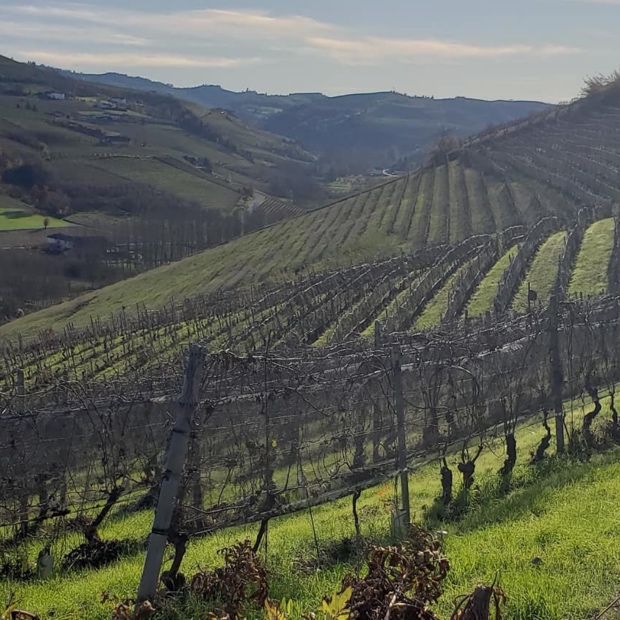
Castiglione Falletto from Via Alba

Twitter: @mgodello

Instagram: mgodello

WineAlign

Gone Vajra in Piemonte

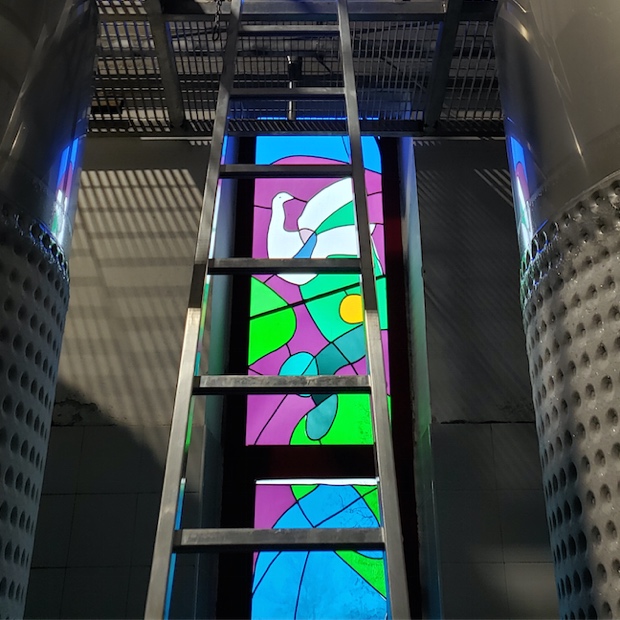
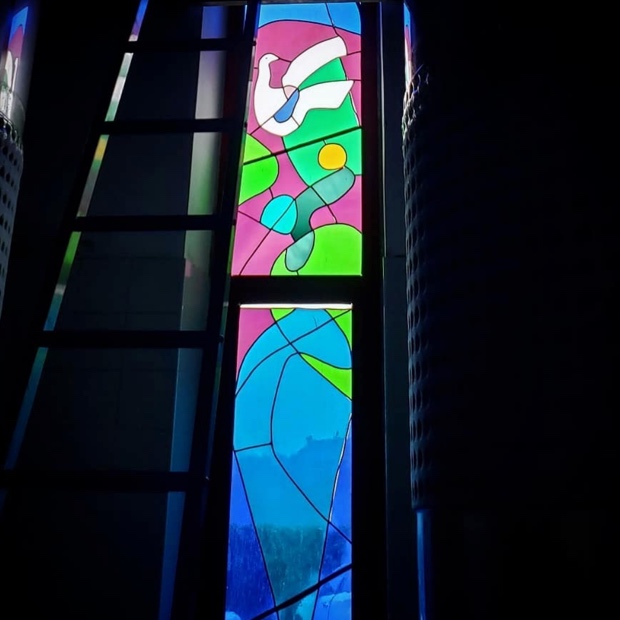
Stained Glass Window by Padre Costantino Ruggeri and Vajra’s Inox Tanks

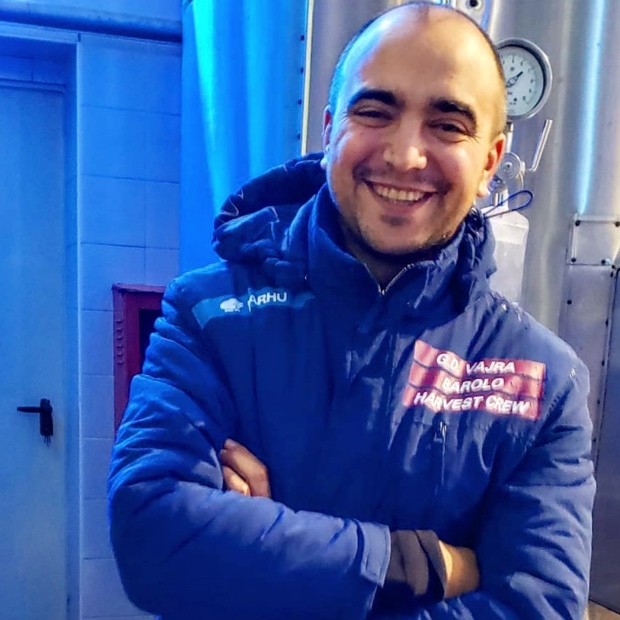
Head west from the village of Barolo, climb the SP3 up to 400 metres above sea level and you will arrive in Vergne, the highest village of the regal Piedmontese appellation. This is where the most forward thinking, visionary and traditionally romantic estate of G. D. Vajra is found. Vajra is the house that Aldo and Milena Vaira built, are in the continued process of building (literally) and produce wines along with their children, Francesca, Giuseppe and Isidoro. On a recent December 2019 trip to Piemonte I drove down the A33 from Asti through Alba, skirted Barolo up the SP3 to spend a few hours with Isidoro and Francesca Vaira on a soggy Sunday morning. Vajra’s wines have been trending big time, gaining ground, rising in prominence and spreading fast. I knew it was time to find out why things have gone Vajra.

Family, roots and vineyards. Having talked and tasted with Francesca and Isidoro @vajra_barolo there can be no doubt many words and feelings will follow. Their’s is a story of resilience and constant renewal.

If you engage in obsessive study or even share a casual interest in religious iconography and emblematic ordnance then the term Vajra will no doubt be recognizable. Vajra, a symbolic ritual tool or object used in Buddhism, Hinduism, and Jainism to represent the unyielding power of spirit. Vajra, the symbol of the Vajrayāna school of Buddhism, a type of club with a ribbed spherical head, the “diamond thunderbolt.” The family may not adhere to the far eastern credo or for that matter even mention any possibility of connection, but a listen to their story and a study of their life’s work can be looked at in the emblematic light of ideals relating to indestructibility and irresistible force. An explanation is forthcoming and in due course.

Dude’s getting married next week. No wonder Isidoro Vaira is a happy man.

It’s only one week before his wedding and Isidoro generously takes the time to meet. He begins with a winter’s tale, extolling the virtues of snow cover, which incidentally arrived to the slopes in December and early January, then subsequently disappeared for the remainder of the mild 2020 winter. The Piedmontese saying goes like this. Sotto la neve, il pane, orunder the snow, the bread.” Snow is better than water because it holds more oxygen and encourages the plants to draw more nutrients from the soil. This is an example of generational knowledge because as Isidoro reminds us, when you spend time with your father and the elders “you learn the importance of nature.”

sotto la neve, il pane

under the snow, the bread

Aldo Vaira began this six decades old journey in 1970 with a 0.3 hectare plot at Bricco Viole. The first vintage was 1972, of no ripeness and fruit sold away. He thought “with this money I don’t pay for my work,” and so began to bottle for himself. By 1986 Aldo was farming seven hectares but on the 29th of May the storm of the century killed everything, save for 300 bottles worth of fruit. He was in his mid-30s, with one child already born and two more to come over the next four years. It was what we call the point of calling it quits or forging ahead with no turning back. Milena stepped up, in fortitude, conviction and an ultimatum issued to her husband. Aldo responded, made a life decision and ploughed ahead.

The Vairas began anew, hailstorms occurring five to seven times each decade be damned and dug their heels into the Vergne terra firma.  With experience as a teacher and having built a winery Aldo became affectionately known as Dutur, a dialectical Piedmontese term of endearment which could allude to the word doctor but also as a part of the Italian word for producer, or produttore. Francesca tells me that 1986 is the vintage form which “you could have (or begin) your dream, by being resilient, persistent and move forward.” She shrugs. “It had to be a priority.” And so from 1986 on the Viaras completely changed direction and course.

Thirty-three years have beget great success. Francesca explains the impetuses for how her family goes about their lives. “What we have learned from our parents is not just life and to make wine but a social motivation to have the life of the people. Imagine a life without these things; music, art, books and wine. It’s not possible.” The goal is to make connections. “We need to make wine to make people happy. Our prices are very democratic.” There are always new considerations, like the “diversification of risk” and it has become the ingrained philosophy, in terms of wines and varieties but also the idea of a two-month long picking time. Always diversity, all the time. One step inside the winery and the light shines in. The stained glass windows that adorn the fermentation room are a reflection of everything that is embodied by the Vajra oeuvre.

They hang in their stark and prolate ways as a severe yet arrant contrast to the line of steel tanks below. When Aldo and Milena went to visit the artist at Canepanova Convent in Pavia he answered the door dressed as a Franciscan Monk with a blue hat. A crazy man in a crazy beautiful studio. Padre Costantino Ruggeri was in fact a real monk, ordained a priest in 1951 by Cardinal Schuster in the Cathedral of Milan. That meeting yielded no conclusion for a commission, or so thought the Vairas, that is until the Father showed up with the first installation, in 1989. He was given no instruction or direction. The rest as they say is history and the works are nothing short of magnificent. They succeed, in Ruggeri’s words, “in that moment of light and mystery the stained glass window captures (the infinite) and introduces it naturally into the temple, as a total dimension that is divine as well as human.” The metal that holds the glass is effected a piombo, aplomb, vertical, exact. No two pieces are the same.

What congruence links a Ruggeri stained glass to other masterpieces of art? Gazing upon the padre’s windows elicits a feeling of consonance and beauty is easy to find. They are arranged exactly as they should be, that much is clear. Their power is felt because of their interaction with their cold and utilitarian surroundings. They hold our gaze and work together with us, inexplicably and without reservation. Their universal appeal transfers energy, pivots, solicits our personal and singular nature so that we share in their consonant form.

On June 24th 2007, his last sculptural work representing “Franciacorta’s Facets” was presented in Adro, his birthplace. On the following day, June 25th 2007, Costantino died at the hospital of Merate, near the convent of Sabbianello, where he had spent the last weeks of his life. The spirit of his work carries on at Vajra where 160 different fermentations are carried out because explains Francesca “harvest is the only time of year when you can really learn. If you have to ask for permission then you are not a true artist.” Just like Father Costantino who created without asking.

“Always think of the cherry. The grapes will follow,” reminds Isidoro. Organics. Methodologies. Patience. Picking decisions are made day by day, by brother Giuseppe and by Aldo. For them 2018 was a great nebbiolo vintage, of cold nights and warm days with humidity. The high risk of rainstorms at harvest made for some sleepless nights and the weather was tough on the skins of the grapes. So 100 pickers were employed, to ensure quality but Vajra’s altitude and attitude makes them one of the last to pick so the harvesters were available. They finished on October 22nd and in 2019 on the 23rd. 

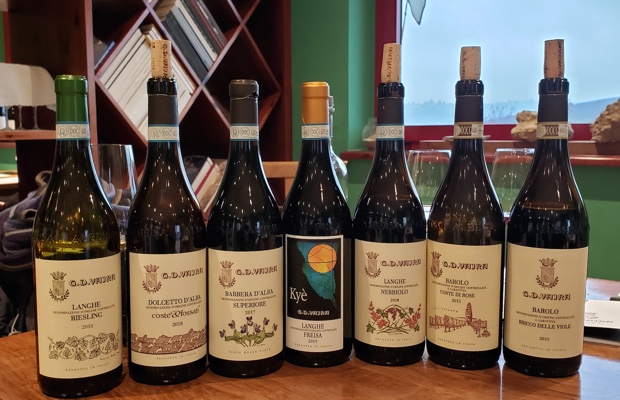
On that day in December Francesca poured seven of her family’s wines, including riesling, dolcetto, freisa, barbera and nebbiolo. These are my notes.

G.D. Vajra Riesling Pétracine 2018, Langhe DOC ($55.95)

The law changed to be able to plant in 1985 and a new opportunity arose in 2018 for a vineyard with sandy soil beneath the clay. Going back the first planting came from a Geisenheim clonal selection and planted at the top of the hill above the cru Fossati. The second vineyard is from Marcel Deiss clonal selection material, just outside the Barolo production area. Here a combination of the two, and the first wine that got together was 2011. There’s weight, energy and balance to this riesling and it is so very real. Remarkable verve and youthful freshness and the impression of great aridity. It is in fact quite dry. Drink 2021-2029.  Tasted December 2019

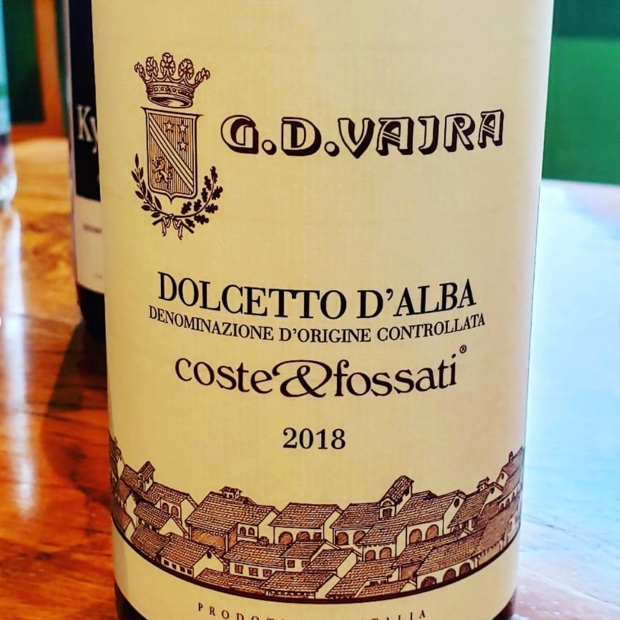
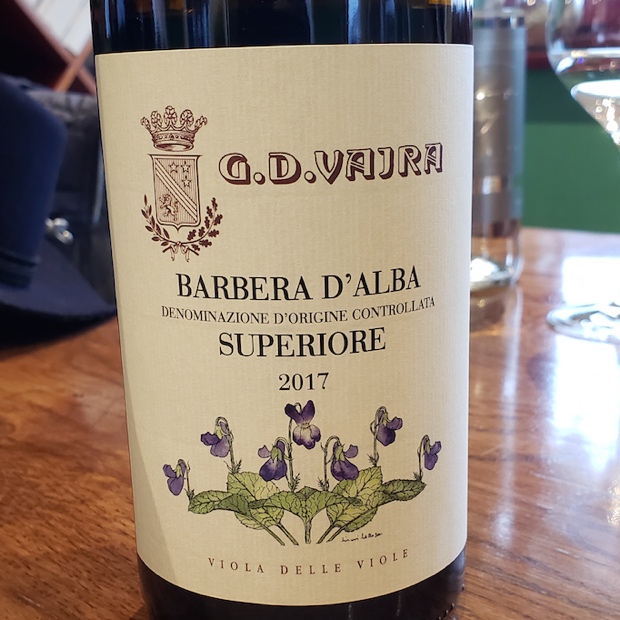
G.D. Vajra Coste & Fossati 2018, Dolcetto d’Alba DOC ($31.95)

From two old cru Barolo vineyards, Coste di Vergne and Fossati, close by to one another at the top of their shared hill. De-stemmed and crushed separately, of vines 40 years in age. If there is dolcetto that carries the structure to age you best believe this is the one. Tannic in its youth, a house with the potential to grow roses in one year and then violets in another. Modern and grounded, better with fresh eggs and delicate proteins, certainly the romantic tartufo Piemondtese. Already teasing something floral but still in a shell and cast under a spell. Wait two years or more. Drink 2021-2027.  Tasted December 2019

G.D. Vajra Barbera d’Alba DOC 2017 ($31.95)

Like the dolcetto, barbera is drawn off of two vineyards with tow soil types, from Bricco delle Viole and in Serralunga d’Alba, Bricco Bertone. An east-west expression, at once rich and luxurious and then inward, implosive and almost intolerant. Could only be barbera with its sweet fruit and dark berry compote but it’s a variety that needs time, it needs the bottle and then, the glass. Somehow bright through all the dark fruit, like the singular stained glass that allows light to shine in.  Drink 2022-2028.  Tasted December 2019

G.D. Vajra Kyè 2015, Freisa Langhe DOC ($60.95)

Like the French “C’est qui?” this dialectical freisa is actually two syllables, key-eh, and you cannot define this wine with anything or any other freisa. Darker, woolly and a bit of wild, feral and animale beauty. Like somewhere between red Sancerre and Faugères but bigger, more power and also more control. Herbaceous, iron-clad and hematic. Mimics blood-red preparations of proteins; duck breasts, rack of lamb, venison. Also Rhône-ish and laying somewhere between barbera and nebbiolo. Make your head spin with comparisons when none are correct. There is evidence of climatic cut and biodynamic preparations. Earthy, rich and poignant. Drink 2022-2029.  Tasted December 2019

G.D. Vajra Langhe Nebbiolo DOC 2018 ($34.95)

The Baroli are made from vines minimum 10 years old and the younger vines are used for this Langhe, which includes fruit from Bricco Bertone just outside the territory. Creeps up with its structure, nothing powerful or demanding but nebbiolo architecture nonetheless. Cherries, pencil lead and mountain herbs. Keeps the vineyard faith and accumulates even as it opens which tells us it is also youthfully closed. The potential is two years and thence forth. Tasted from two bottles opened a day apart, the first ready and willing, the second yes at first and then making a request for time. Drink 2022-2030.  Tasted December 2019

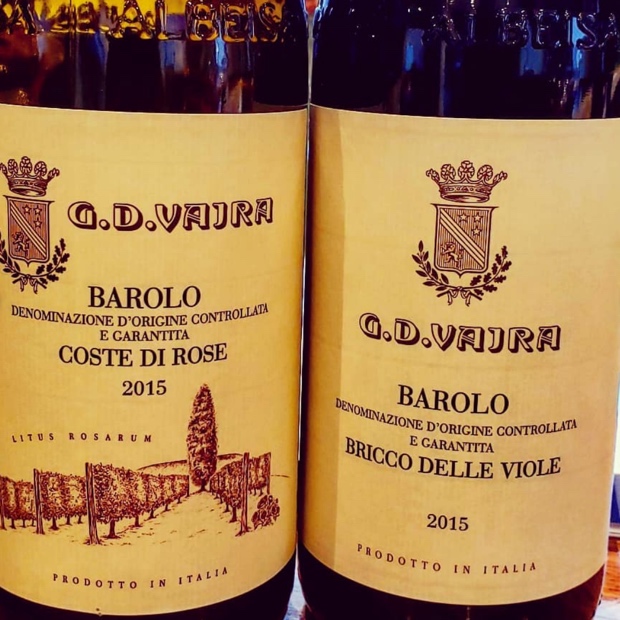
G.D. Vajra Barolo DOCG Coste Di Rose 2015 ($101.95)

A very sandy decomposed peculiar site and soil type rich in Arenaria (sandstone) with the presence of sandstone rocks of quite decent size. The first vintage is this 2015 and from vines 30 years old going up the hill from Bussia. Delivers very pretty fruit of sneaky structure and intent. The rose floral gift of a vineyard, part apposite and part complimentary to Bricco delle Viole. It’s a ventilated place translating to a great freshness in the wine. Drink 2021-2029.  Tasted December 2019

G.D. Vajra Barolo DOCG Bricco delle Viole 2015 ($113.95)

An about face in style and character with more dimensions accessed and so many aromatics acquiesced. Vines are 40-80 years old and the handling involves a diversification of treatments; longer maceration and fermentation, up to 45-60 days. A tight, compact and fine-grained construct with so much taken from the beneficial skins and the assistance of a submerged cap (a merso) during that fermentation (in stainless steel), followed by at least 24 months in large casks, some 25hL and some 50 hL. Some tonneaux but just as an addendum. Such a tactile nebbiolo, fruit of presence and intricacy out of a Cru that is felt as much as it is nosed or tasted. It’s not just a matter of nebbiolo and Barolo but a thing of great importance, mainly tradition and family. Drink 2023-2034.  Tasted December 2019

Good to go!

godello

Stained Glass and Inox Tanks

Twitter: @mgodello

Instagram: mgodello

WineAlign

Nineteen mind-blowing wines of 2019

1964

Tout vient à son heure pour qui sait attendre, wrote Clément Marot, Renaissance poet. Everything comes at its appointed time. From Cahors to Turin. War, peace, hate, love, fruit, acid and tannin. Wine is all about the pauses and the balances. At its core the value is in that feeling of things being natural and equal. That’s the way it should be. When you drink you enjoy what you have, without competition. One sensation after another. You feel like you have more, even if you have less. Like consomée with just a chop of vegetables.

Welcome to Godello’s annual list of the most conspicuous, head-turning and psychotropic moments, better known as his 19 mind-blowing wines of 2019. Godello first initiated the concept for a year-end culminating evaluation in 2012 though did not actually coin the phrase until publishing his 14 mind-blowing wines of 2014. Call it the sixth or the eighth but who really cares because the wines are the crux and the heart of the matter.

Related – Eighteen mind-blowing wines of 2018

Related – Seventeen mind-blowing wines of 2017

Hard to know how many wines he actually tasted in 2019 but the best guesstimate would be 2,500 because that is how many reviews have been posted to WineAlign in this calendar year. A couple hundred were for wines tasted in 2018 but the editing and posting of at least that many for wines tasted in 2019 have yet to become permanent. So the number is pretty close, one way or another.

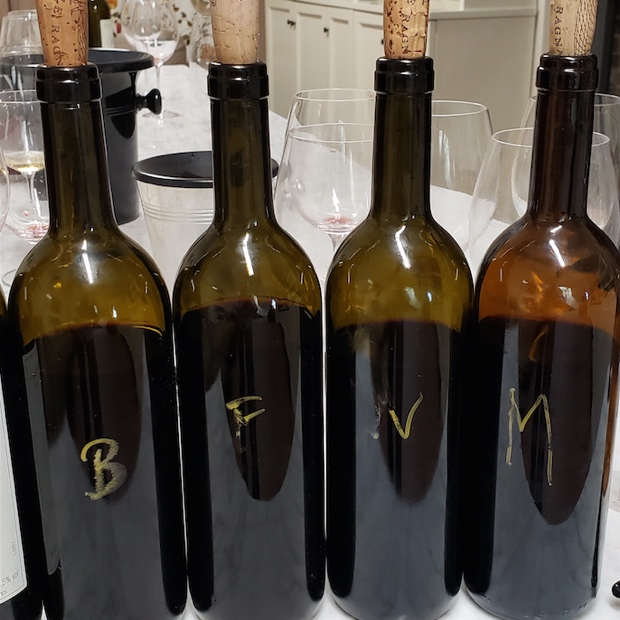
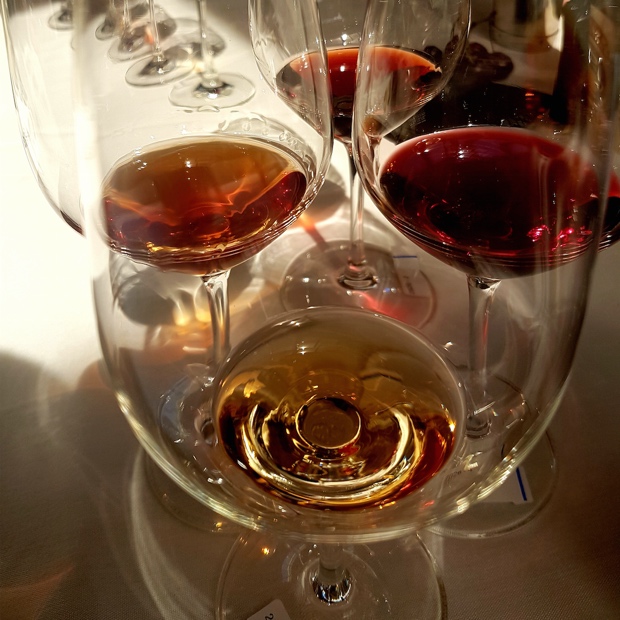
There were at least a few dozen stellar and jaw-dropping wines that should of, could of, would of made this list. For every one chosen another was left behind for no reason other than necessity and its relationship to the mother of invention. These images exhibited are but a few that had every reason to be one of 19’s 19.

Related – 16 mind-blowing wines of 2016

With thanks to everyone who poured a glass. The producers, winemakers, export managers, friends, colleagues and pirates, please be encouraged and read on. Godello’s 19 mind-blowing wines of 2019.

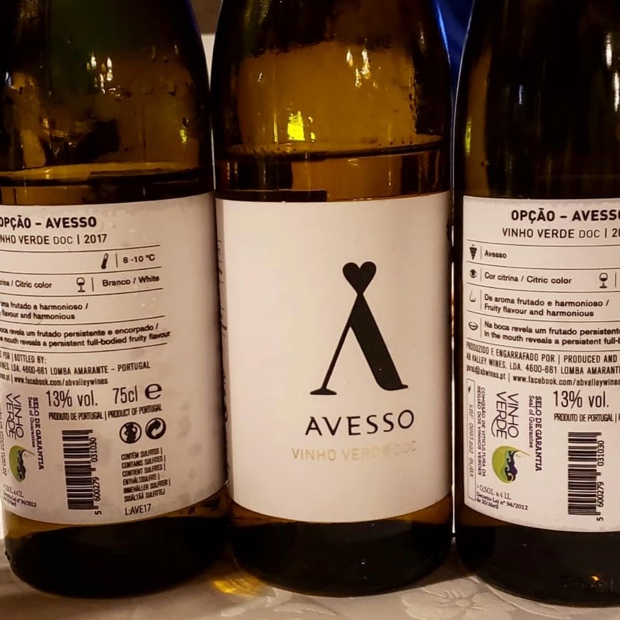
AB Wines Opçāo Avesso “A” Vinho Verde 2016, Portugal

From winemaker/oenologist António Sousa’s personal label (with partner Bernardo) and a vineyard planted in 2003, in Amarante. These are avesso grapes just a few years away from what António considers the optimum age, when they reach 18 years, 10 years older than the age from which they begin to deliver excellence. This A is in position A, from a perfect vantage point out of a very good vintage. This is the role model and exemplar for avesso, from a project that began in 2016, with all the adjunct components in line; lemon, lime, orange, ripe acidity, juicy nature and just a minor creamy, fleshy and boozy happiness. Great balance. Drink 2019-2025.  Tasted October 2019

Marco Felluga Russiz Superiore Tocai Friulano Collio DOC 1997, Friuli, Italy

So remarkable, from the old messaging in the riesling/tocai bottle, stricken from the consorzio record. This is now a wine bottled in Bordeaux style but this look back 20-plus years shows freshness, spirit and only the beginnings of secondary character. Gassy and lemon intense, a near-perfect example of what was and could be, of how aged whites of Collio can keep freshness and the saltiness of place. All thjis and without crazy acidity. That is the conundrum and the magic of Collio. The persistence is romanticism incarnate with fruit oozing out of pores in great remain. Drink 2019-2021.  Tasted May 2019

Goisot Gulhem Et Jean Hugues Gondonne 2017, Bourgogne Côtes D’auxerre AOC, Bourgogne, France

A soil of kimmeridgian and marl, of white and blue, with great layering of fruit and that is in fact what you feel from Gondonne. There is something rich and overtly expressive here and while it’s anything but simple it could be imagined that so many consumers would understand this chardonnay, love it and want to drink it with abandon. That said the structure, goût de terroir and joie de vivre are just exceptional. The wood and the land just melt right in. Drink 2020-2029.  Tasted November 2019

Ken Forrester Old Vine Reserve Chenin Blanc 2007, WO Stellenbosch, South Africa

These Helderberg vines would have been 33 years of age at the time and to think the wine would have cost $10 or so. Now 12 years later we’re graced with this hyperbole of toast, smoulder, lit paraffin and the edge of saffron honey. It’s hard to believe and this the from the tier-two, non-selected grapes at the back of the line behind a Forrester wine like the FMC. Nothing less than incredible. Drink 2019-2021. Tasted October 2019

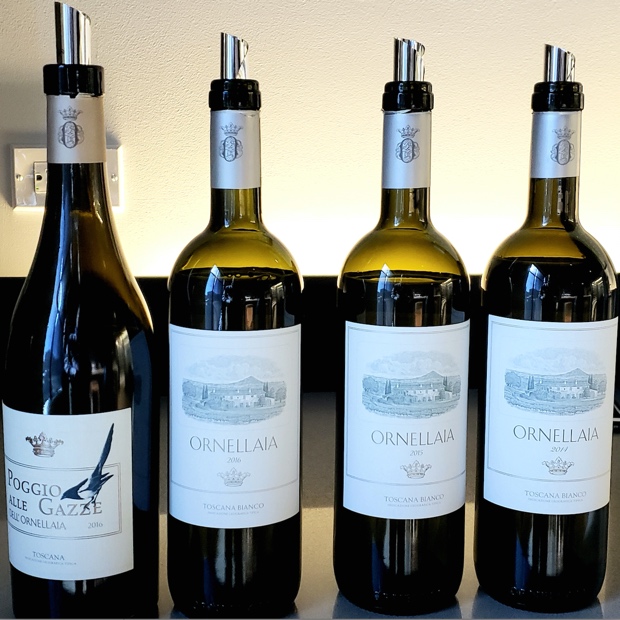
Ornellaia Bianco 2016, IGT Toscana Bianco, Tuscany, Italy

The Bianco was first introduced in 2013, following fast forward to the original 1980s and 1990s work with Poggio alle Gazze dell’Ornellaia. That project had been abandoned because says Axel Heinz “stylistically it just wasn’t right.” That wine was mainly sauvignon blanc on one of Ornellaia’s great vineyard sites. What was wanted was something more than a varietal wine and a new age of finding vineyard sites that were more than merely good for white wine. That means making use of northern slopes and those blocks favourable to whites, including the use of (indigenous) vermentino and viognier. The practice had already been proven with success by colleagues. Bianco is the alter ego to the Rosso, priced as such “and reflects the spirit of Ornellaia, but it had to build itself up to that premium level. We intend to make one of the great white wines of the world,” explains Heinz. That may sound like bragging swagger but the reality is that experience, acumen and especially confidence breed the truth. I Bianci are aged for 12-15 months in (30 per cent new) barriques before bottling. I do dare you to find a wine that smells anything like this Bianco. They are flowers unnamed or perhaps not yet discovered. The flinty reductiveness is also truly and wholly unique. Though the way sauvignon is raised and the place are surely not the same, the Bordeaux styling and sensibility of affinities are more than uncanny and even served by purpose. The vintage brings great maturity, fruitiness and salinity. Fruit presence under the spell of fleur de sel. Nothing but a brilliant combination. Says Heinz without equivocation, “it’s a benchmark for us, ’16 that is.” Drink 2020-2031.  Tasted March 2019

Domaine Bouchard Père & Fils Chevalier Montrachet Grand Cru 2017, AOC Bourgogne, France

The couverture is all encompassing acting as a full sheathing tapestry in surround of a fruit core of sheer concentration and yet as a whole so understated. It’s hard to imagine more coaxing and less pronouncement. Relatively speaking there’s no estate equal to what has happened here. Great mineral crash into life and love, into fruit and impossible acidity. A magnificent chardonnay with 25 years of life ahead. Drink 2021-2039.  Tasted September 2019

Adelsheim Pinot Noir Boulder Bluff 2015, Chehalem Mountains AVA, Oregon

From a steep, southwest facing site and picked really early, especially in the warm 2015 vintage. Again the confluence of vineyard conflagration of more than one soil type leads to an estate stylistic but let’s face it one that is bent into shape by focus and precision. There is great generosity and freshness, again in spite of or despite the hot vintage. More floral from this bluff and bigger, albeit finer quality signature tannin from this neighbourhood, with more thanks to basaltic blocks. Long ageing surely ahead with fruit turning to bramble, at times. Drink 2021-2028.  Tasted April 2019

Tenute Bosco Etna Rosso DOC Vigna Vico Pre Phylloxera 2015, Sicily, Italy

The litheness of this nerello mascalese from Mount Etna off of 100-plus years of age pre-phylloxera vines cannot be over-stated or overstressed. The light, ethereal beauty of this wine may very well transport you to a place, to a vacuum within a bubble that is a hidden world inside a biodome. Few words are available when a wine speaks to you such as this Vico does to me at this time. This impossibility of such fruit concentration is also implausibly understated, as are the tannins and the acidity, yet all align and intertwine along a perfectly rendered line. You recognize the automatic brilliance, for the people and from the place. You just know it when you taste it. If you can find this wine, if you ever get the chance to purchase a bottle or two, you owe it to yourself to act, for you and for anyone you might happen to share it with. Drink 2019-2035.  Tasted May 2019

Donnafugata Mille E Una Notte 1996, DOC Contessa Entellina, Sicily, Italy

An arch classic from Sicilia sud Occidentale and more specifically Tenuta Contessa Entellina. Of the oldest wines this is one of the highest tonality, not unlike older and older schooled nebbiolo from Barbaresco, in a queen’s throne sort of way. There is siply no way to argue that this wine did not deserve to be aged this way and to be waited on for such a moment of appreciation. Age worthy and load management indeed, with every resolution hoped for and expected. Brilliance and a benchmark, with a half decade of life still ahead. Drink 2019-2026.  Tasted May 2019

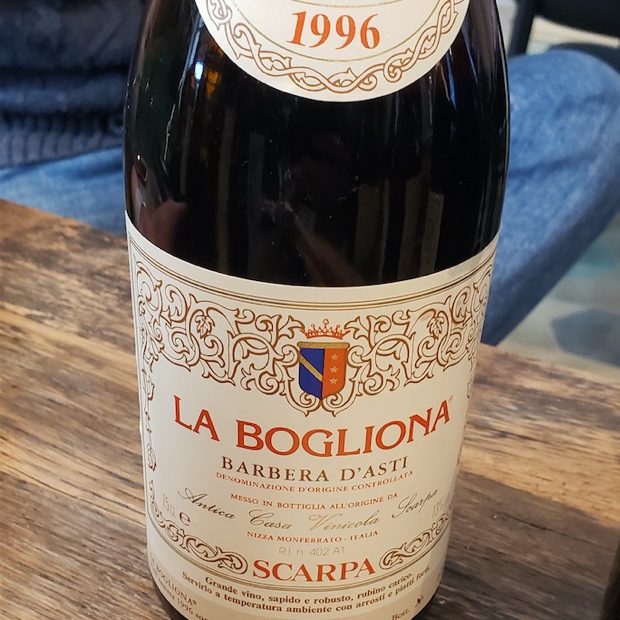
Scarpa Barbera d’Asti DOC La Bogliona 1996, Piedmont, Italy

At 23 years you just have to launch yourself headfirst into the blood orange. That this piece of barbera wow factor happened before the year 2000 is the thing, especially because climate was very different. Rain fell often and slowly through the year, as opposed to the deluges of globally disaster-orchestrated today. Higher acidity simply speaking and this of the great lean, salty and direct-fitted pieces of barbera composure. Still fresh with dried fruits and low alcohol (at 13.0 per cent declared) but who knows which way the marketing directed labelling in those days? More than a lovely look back. Educational, instructional, cerebral and mind-bending from the lesser appreciated Piedmontese sector. Drink 2019-2024.  Tasted December 2019

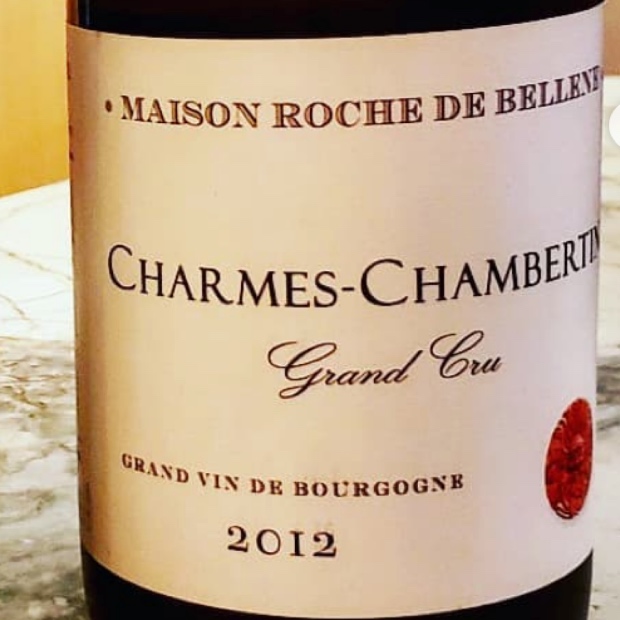
Maison Roche De Bellene Charmes Chambertin Grand Cru 2012, AOC Bourgogne, France

Do not adjust your set. The vintage brought everything to the table and while the foreground presents a picture crystalline and transparent the entirety of the frame is frozen clear. As for the aromatics this teases a meaty cure like few other and teases as if by the ambience of a cave, restricted of access, hiding what lurks, hangs and excites. Crunchy to say the least, layered to say more and complex to speak the ultimate truth. Magnifique and still twenty years away from the beginning of the end. Drink 2022-2037.  Tasted September 2019

Domaine De La Pousse D’or Pommard Premier Cru Les Jarollières 1964, Appellation Pommard Controlée, Bourgogne, France

Calling this 55 year-old Bourgogne Premier Cru a piece of history is not enough to do justice because family, lineage and the passing of the generational torch beyond domaine lines are everything that matters. Nicolas Potel pulled this one out of thin air and not merely by a human ability to disappear and reappear. No, Nico chose the way of disapparating and then apparating (in the wizard sense of “apparition,” a magical form of teleportation). His father Gérard’s ’64 was in his hands and a great big, merde-eating grin was posted all across his face. Les Jarollières is a 1.44 ha plot of marl and calcaire and even today half of the plantings are those that were fitted in 1925 and 1962. It was Gérard Potel who resurrected Domaine de la Pousse d’Or to its glory and in 1964 he acquired the domaine through a marriage to the then owner’s niece. Along with Henri Boillot this cru has been famous being meaty, earthy and owning an ability for supernatural integration. This 1964 had taken all that, everything and more, left nothing in the vineyard and had now become the epitome of the ethereal. The fruit was fully intact, so bloody strawberry, still with lightning quick reflexes and able to pour fresh glasses of spirit and energy over the course of a full hour. The experience was a once in a lifetime type, a shared moment and the kind to create a banked memory that will always be generous when a good one is needed. Thank you Nico. Drink 2019-2024.  Tasted December 2019


I Fabbri Chianti Classico DOCG 2000, Tuscany, Italy

At the time it was labeled as an (Annata) Chianti Classico though it was really Riserva. Yes it has evolved but 18-plus years should have moved it much further along. Carries a spice like the exoticism in resemblance to 2006 but this is something other. Still some very fine, present and notable acidity. Amazing purity, honesty, luck, circumstance, place and gentile personality. The sapidity is there again and the age ability nothing short of remarkable. Drink 2019-2021.  Tasted February 2019

Volpaia Chianti Classico Gran Selezione DOCG Il Puro 2015, Tuscany, Italy ($150.00)

Il Puro takes her purity to another level in 2015 with fruit so silky fine and chalky tannins integrated into liquid even finer than that fine. The accumulation is just impressive and the charm meeting grace even more so than that. The Mascheroni-Stianti family has really found a stride in this GS to explain why it exists and how it can make many people happy. The structure here will take this through two or three decades of unfolding. There is a house record to prove it, ironically regardless and in spite of the bottle’s name. This is sangiovese. Drink 2023-2037.  Tasted February 2019

Le Chiuse Brunello Di Montalcino Riserva DOCG Diecianni 2010, Tuscany, Italy

“A muscle vintage, of huge character,” tells Lorenzo Magnelli. The name of the wine is Diecianni to tell us that Lorenzo’s Riserva is not released until the 10th year. Brings about all the complexities that come from such an extended elévage. Tobacco, savour, forest floor, frutta di bosco and frutto secco but don’t be succumbing to depths and sottosuolo because the freshness persists. A wine so wise beyond its years, like its maker. Sure you can release a Riserva one year after Annata but when it has been protected and taken care of for you then it presents as it was intended to. We are thankful for the triage and the investment on our behalf. The fruit persists with great natural sweetness out of 2010. Drink 2019-2035.  Tasted October 2019

Conti Costanti Brunello Di Montalcino DOCG Colle Al Matrichese 2015, Tuscany, Italy

Andrea Costanti is convinced this is a great vintage. “One of the best.” The weather was perfect following a beneficial cold winter. The harvest was early but not compromisingly so and it saw no hurdles, obstacles or intendments. The barrel use is bigger, older and wiser. This is the sort of concentrated Costanti that speaks to the 2019 philosophy, of acidity, ripeness and balance. Time on skins was about a month (including two weeks of fermentation and oxidation introducing délestage) and no protective sulphur. There is a control in this sangiovese, a powerful restraint but more than that, more so a calm, but not before storm. Finesse, grip and beauty, like a statue of a stag, in a courtyard, lit by moonlight. Tannins are all pervasive, fully stated, yet to feel a necessity for attack. They will and we will retreat, Then we will advance, with caution, further to find full pleasure for two decades. At the very minimum. Drink 2023-2039.  Tasted February 2019

Le Ragnaie Brunello Di Montalcino DOCG Vigna Vecchia 2015, Tuscany, Italy ($177.00)

Planted in 1968 and from a warm vintage all the way to the end, into October. Riccardo Campinoti is smiling wryly, knowingly and confidently after he pours and begins to speak of it. “The longer you waited the riper it became” and the healthy grapes allowed for hanging to mid-October. Deeper and of more sponge-soaked earth in the old vines with a higher tone juxtaposed against the depth drawn by long vine roots. The aromatic complexities run, jump and ride off the proverbial charts and you may find yourself drunk and mystified just from the smells. Once you gain palate entry you are hooked and then you climb in, headfirst, unencumbered, no strings attached. A tour de force beloved of sangiovese, Montalcino and old vines. Vigna Vecchia is the epitome of a true structured wine, one which does not grow old, despite the passage of time. Drink 2023-2039.  Tasted October 2019

Antiche Cantine Dei Marchesi Di Barolo 1990, Barolo Riserva, Piemonte, Italy

A grande dame or marchesa in the parlance of these woods, a nebbiolo of persistence, resilience and strength of character. Initiates contact with the past and a contract with tradition by way of the things that matter most. Family for one, roots dug into the earth second and the vineyard’s tongue, if it were able to speak. The overall gist in the parlance is heard and even understood although the dialect is hard to decipher if you are not of this place. This 1990 is found to be of high though level tempered energy and then with an ear, a nose and a soul so close to the earth. Smells like the soils amalgamated, preserved and demonstrated through the tempered liquor of a wise old 29 year-old nebbiolo. So much more than a piece of the past, this is an auguri gathering of storytelling, kin, culture and DNA. You must pay thanks for a chance to taste a thing such as this. Drink 2019-2033.  Tasted December 2019

Gaja Sorì Tildìn 2016, Barbaresco DOP, Piemonte, Italy ($810.00)

Angelo Gaja sees 2016 as a perfect vintage in Barbaresco and the one from which climate change is viewed with great irony in the wink-wink guise of parenthetical thanks. That means the cosmic and astronomical alignment makes for wines that are both pleasant in their youth and also impossibly structured to age. Named for the sunny position of the slope and Mr. Gaja’s grandmother Clotilde. Now the clay and the calcaire have conspired, along with the purchased land of which Clotilde was custodian and in how she pushed her husband to make great wine. The vines are now on average 50 years-old and the composition meeting aspect bring a depth of complexity as poignant as it gets in this tiny part of nebbiolo production. All the flowers, rocks and elements are contained within the interior walls of this gently forceful Langhe red. It mimics the matriarch by the strongest power of suggestion and will not take no for an answer. Perhaps never will. Drink 2025-2045.  Tasted December 2019

Good to go!

godello

1964

Twitter: @mgodello

Instagram: mgodello

WineAlign

Making tracks in Argentina

Where there’s smoke there’s Godello

Deeper varietal discussion about Argentina’s terroir diversity, 128 images and 118 more wines reviewed

As first seen on WineAlign

Old torrontés vineyards at El Esteco, Cafayate Valley, Salta

A November 2018 journey to Argentina did so much more than simply introduce me to that great country’s wines. That trip was a bold reminder that travelling to the source is precisely how we leave our preconceptions behind and allow for new education to change and alter our thoughts. The people behind the product are the real story and meeting so many of Argentina’s amazing people has transubstantiated my personal Wines of Argentina psyche. I hope for your wine sake you all will find the opportunity to experience what I have, but failing that many have taken part in a short term solution. 
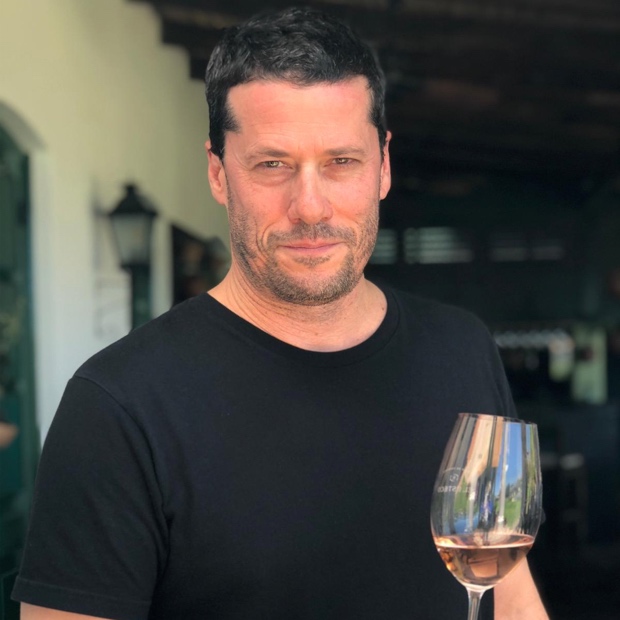
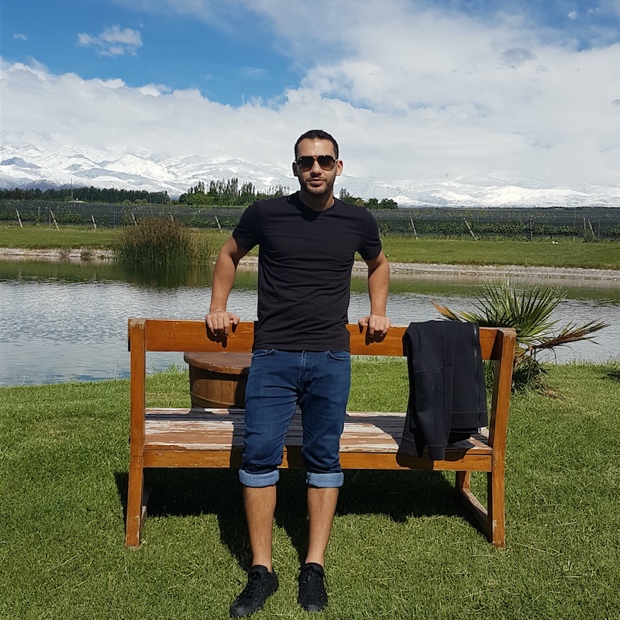
The author in Cafayate, Salta, Argentina

Related – High altitude heliophiles in Argentina

Not too long ago I published that article about a trip that was indeed exactly what the title says. A Masterclass across Argentina. Visits to Mendoza and Salta helped me to gain a deeper understanding of solar radiation and high altitude wines. WineAlign has now finalized the WineAlign Exchange Argentine Wine Masterclass 12-pack. Those who have not made immediate plans to travel to Argentina they have instead signed up to have that country’s remarkable wines come to them instead.
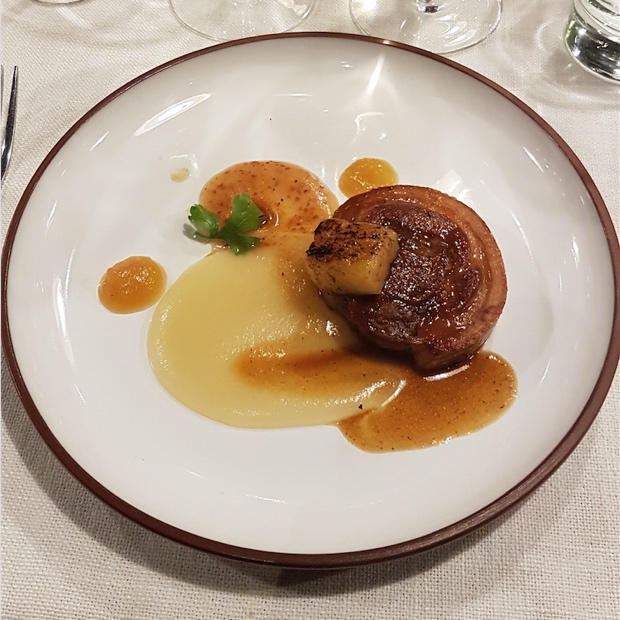
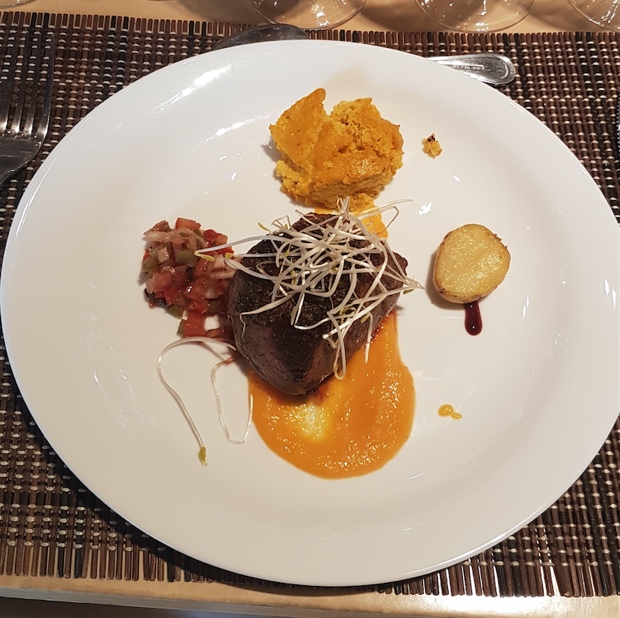
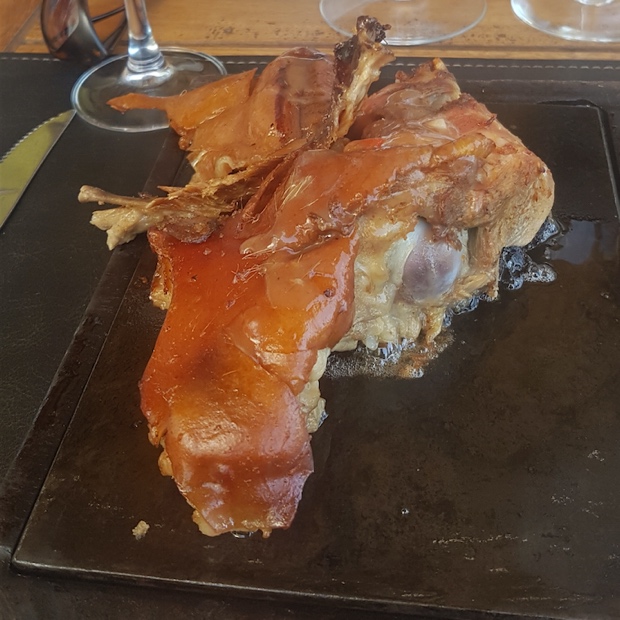
Baby pork, apple, pineapple, Azafrán, Mendoza

In November I had the favourable and fortuitous opportunity to travel around with the team at Wines of Argentina and now WineAlign has teamed up with WOFA to bring 12 carefully curated wines to the Ontario consumer. The box holds 12 archetypal examples (malbec and much more), selected in unanimous accord by the WineAlign crü of critics, through tastings in Argentina and at our offices. Quality in all regions of Argentina has never been higher so the pool from which to pick was deep and wide. This is the invitation to taste the diversity of high-altitude vineyards.

El Esteco, Cafayate Valley, Salta Province

For those who see Argentina as a unilateral place of malbec, malbec and more malbec, think again. New plantations from 1200m to 2200m have characterized the need to qualify the variegate and highly diverse terroirs of Mendoza. There are now more than 1,000 hectares of cabernet franc and 18,000-plus of cabernet sauvignon. Yes there are 42,000 of malbec but that’s two-thirds and not necessarily increasing. Wouldn’t you have thought that number to be much greater? I certainly did. WOFA Educator Joaquin Hidalgo calls it “big noise from some nuts,” which loosely translates to “don’t believe everything you read or hear.” In fact 85 per cent of malbec is grown in Mendoza and there are great ulterior terroirs out there. The key is to seek and create new styles of malbec. Notes Hidalgo, “if we use the variety to create terroir diversity it will be a great benefit.”
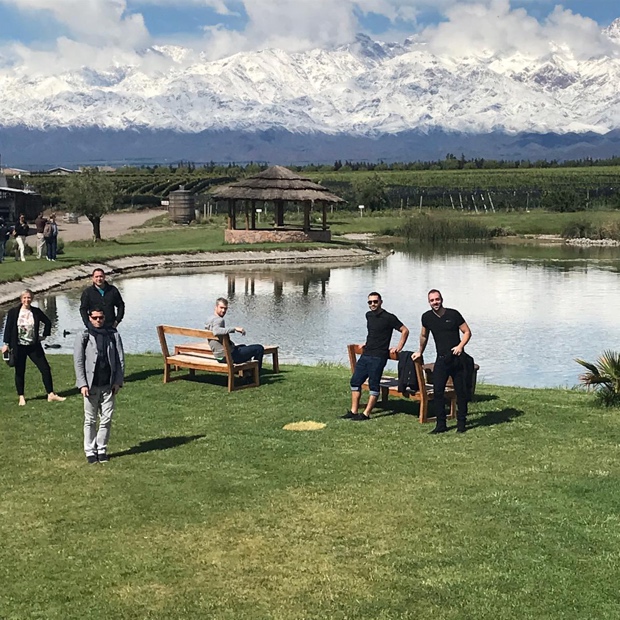
Canadians, Tupungato and the Andes

Only 2,249 of 21,000 plantable hectares in Guatallary are full with vines. Huge potential is still out there but water/irrigation is a limiting factor.  As are ants (again, who knew?) and the foxes who chew through irrigation lines. So farmers put out water to satiate them. They must also deal with the Zonda, hot and dry winds that often come off of the eastern slopes of the Andes. Through all these challenges there is more and more talk about moving to an elegant way of producing wines. “Argentina can produce better wine. The more you talk about oak not being the thing to notice the more its shows how oaky the wines really are. The idea is to offer fruity, not so oaky wines.”

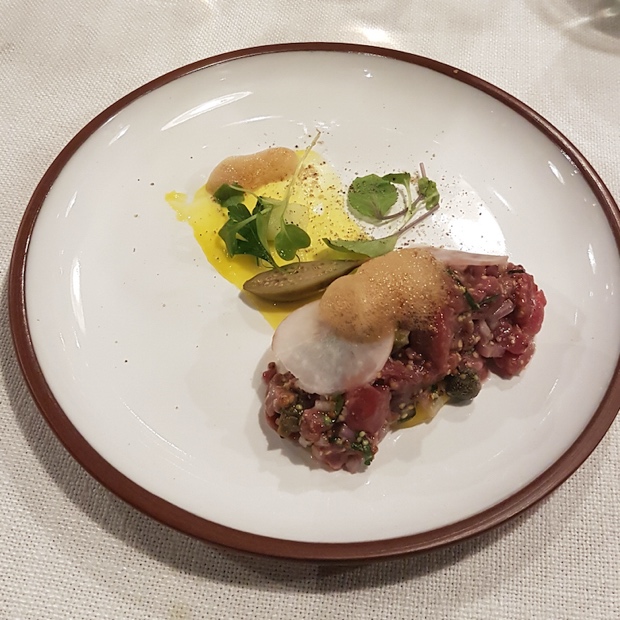
Beef tartar, egg yolk, pickles, soy, Azafrán, Mendoza

Conversations with winemakers, agriculturalists, estate directors and export managers bred a consistency of attitude and expectation across the country. And yet each encounter meant and led to something different. Dinner with Winemaker Gabriel Bloise of Chakana, Josefina Alessio of Ernesto Catena and Andrej Razumovsky of Alpamanta focused on alternative varietals, new, innovative and alternative winemaking styles. Razumovsky talked about the rains of 2016 and how harvest was three full weeks late. “Everyone was nervous,” tells Andrej, “with so much rot but the yields were so low and yet the grapes we picked were so healthy.” Strike another notch for organic and biodynamic grape growing.
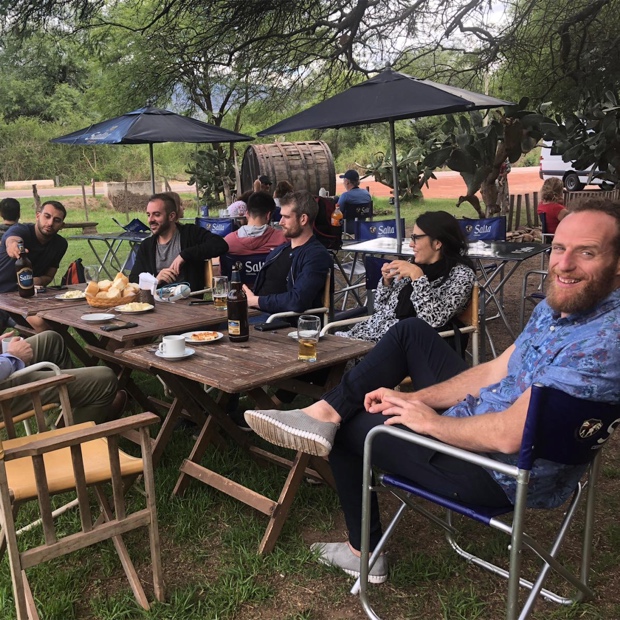
Enjoying a Salta in Salta

In Agrelo Finca Decero has predicated it’s success on a massive single vineyard called Remolinos but smaller production projects are the new norm. It has lead to growing cabernet franc (plus tannat and syrah) and the recent addition of larger barrels is leading to wines of more florals ands overall complexities. “We’re trying to separate what we perceive is different,” explains CEO Juan Marcó. “This means increased micro-vinifications of specific blocks and plots as part of the larger single-vineyard.” Decero “from nothing” also has 15 hectares of planted petit verdot, which accounts for at least five if not close to 10 per cent of the total in Argentina.
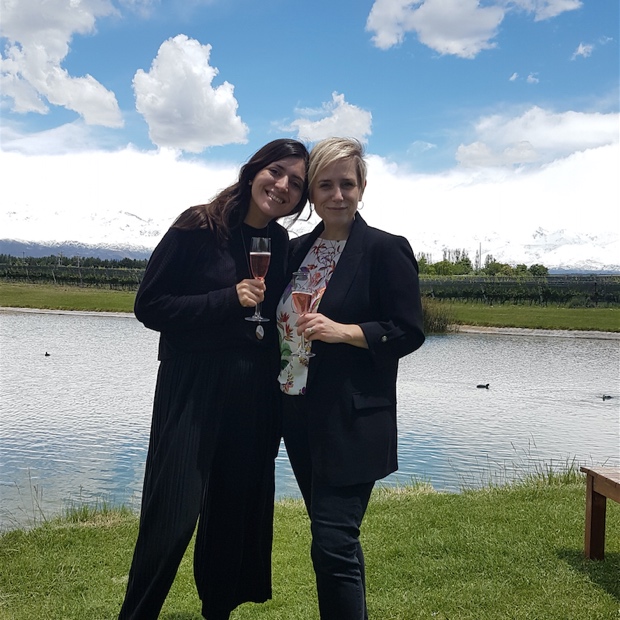
Ani Lucero and Marilyn Demandre, WOFA

In Cafayate, Salta Province it is the Amalaya/Colomé agriculturalists, winemakers and oenologists, (including Jorge Noguera. Thibaut Delmotte, Rafael Racedo and Javier Grané) who know about the “expectation of a miracle,” especially with respect to finding water, but for here, the miracle is to be able to grow grapes and make wine. The prized vineyard El Adrenal literally means “sunny place.” and its altitude brings the sun direct to the vines. El Esteco’s Agriculturalist Rosario and Winemaker Alejandro Pepa showed us sun-kissed criolla and torrontés vines vines of 70 years or more. The moonscape of Piattelli Vineyards is where John and Arlene Malinski’s team produces exceptionally concentrated wines out of the desert; Agriculturalist Santiago Acosta, Winemakers Valeria Antolín and Javier Saldaño, Consulting Oenologist Roberto de la Mota.
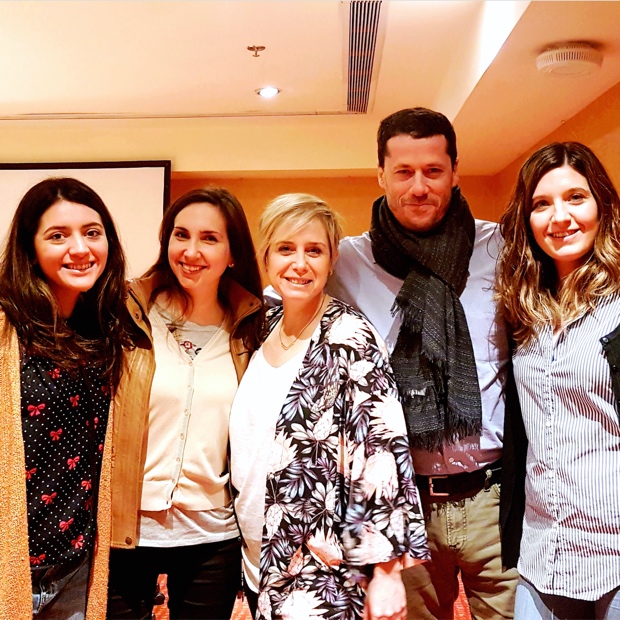
With the Women of WOFA in Mendoza

I tasted upwards of 150 wines in my week spent in Argentina. That first report covered 37 wines from 37 producers. They were the 37 that struck me as being exceptional, ahead of the curve or simply the perfect sort of examples to speak about climate, soil and of course, altitude. The following 118 tasting notes expand on so much of what Argentina does best. Crafting quality wines at high altitudes, from Patagonia to Mendoza and Salta.
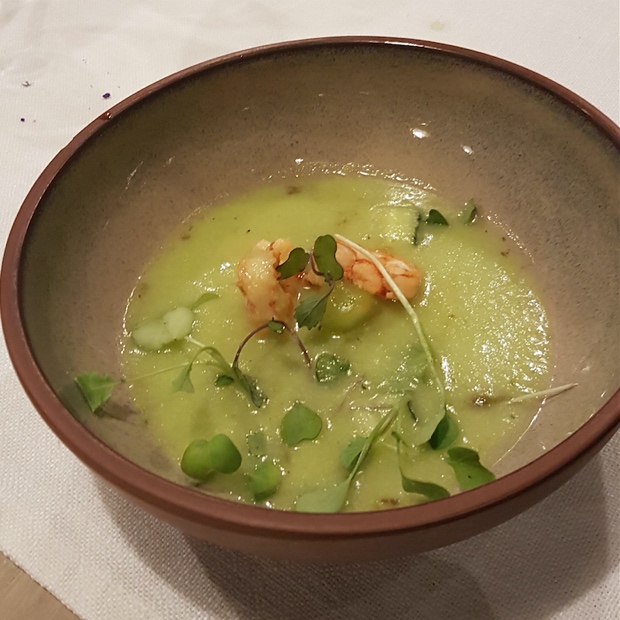
Melon soup, prawns, cucumber, Azafrán, Mendoza

Sparkling Wines

Chakana Vino Espumante Nuna Vineyard NV, Luján De Cuyo, Mendoza, Argentina (Agent, WineAlign)

This biodynamic Brut is a chardonnay-sauvignon, 60-40 split of ambient yeasts and natural acidities. A dry Brut at 4 g/L dosage made in the Charmat Method. Full and I mean full mousse effect, light on the sweet sweats and a nectarine, peach and pear profile. Creamy character and so good alongside melon soup with cucumber and prawns. It seems so perfectly arid and right in balance. Drink 2018-2019.  Tasted November 2018  chakanawines  oeno2   @chakanawines  @oenophilia1  @bodegachakana  @ConnexionOenophilia

Josefina Alessio, Alma Negra and Ernesto Catena Wines

Domaine Alma Negra Brut Nature NV, Mendoza, Argentina (Agent, WineAlign)

A traditional method Rosé and while Josefina Alessio insists “we don’t confess on grape varieties,” this is in fact a pinot noir and malbec sparkler of eight to as much as 16 months on lees. The grapes comes from uncertified biodynamic vineyards in the production zones of Vistaflores, Tunuyán, Mendoza (3,608 feet) and Gualtallary, Tupungato, Mendoza (4,265 feet). An implosive bubble, all about energy and a side-step, two-step into texture. Raspberry is everywhere, as if it could be nerello mascalese sidling up to malbec. Low pH and just about dry adds up to red fruit, lime and overall zest. Drink 2018-2020.  Tasted November 2018  domainealmanegra   Alma Negra  Ernesto Catena Vineyards
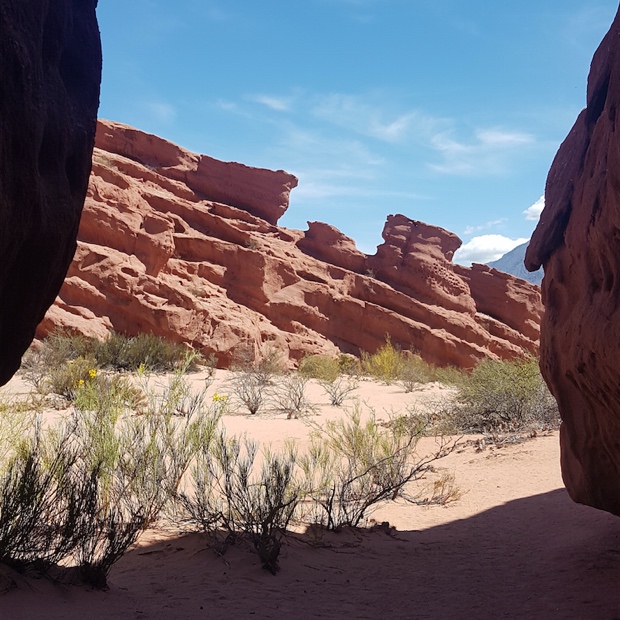
Quebrada de las Conchas

Amalaya Brut Nature, Valle De Cafayate, Salta, Argentina (Winery, WineAlign)

A charmat method sparkling wine made from riesling (80 per cent) plus torrontés. A fizz of cloudy demure and a leesy funk directed by the warm climate at 1,750m in sand near La Mercedes. Also smells of lime doused guava and orange blossoms from the torrontés. Simple with notable sweetness, creamy and just tart enough to offer balanced fun. Drink 2018-2019.  Tasted November 2018  bodegaamalaya  hesscollection  liffordgram  @AmalayaBodega  @HessCollection  @LiffordON  @bodegaamalaya @hesscollection  @liffordwineandspirits
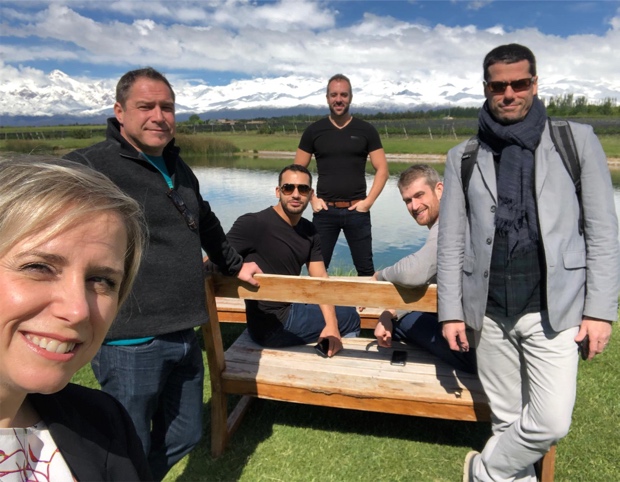
Canadians in Tupungato

Whites

Familia Schroeder Alpataco Chardonnay 2018, Patagonia, Argentina (629428, $16.95, WineAlign)

No oak, only stainless steel and all cool, southern Argentina climate in this Paul Hobbs Patagonia outpost chardonnay. Fresh and green apple delicious, simple and crisp. Really crisp. Like a bite into an edgy tart nectarine with slight green note. Beautifully salty and grippy, like Petit Chablis. Would be just perfect to kick back with a half dozen oysters. Drink 2018-2021.  Tasted November 2018  schroederwines   @SchroederWines  Familia Schroeder

Andrej Razumovsky, Alpamanta

Alpamanta Breva Estate Chardonnay 2016, Luján De Cuyo, Mendoza, Argentina (Agent, WineAlign)

This is biodynamic produced chardonnay that saw 13 months in oak foudres after a slow fermentation, no malo and then, no filtration. “Typical of the  area,” says Austrian born Andrej Razumovsky and yet his run is a mere 2,000 bottles. From a vintage where “it rained like Europe,” 1200mm, six times the norm. High acidity is the result, very dramatic but all the while propping up and celebrating fruit. Rich, viscous and forward, full of pulse and energy. Drink 2018-2021.  Tasted November 2018  alpamanta  rogersandcompanywines  @Alpamanta  @rogcowines  @alpamanta  @rogcowines

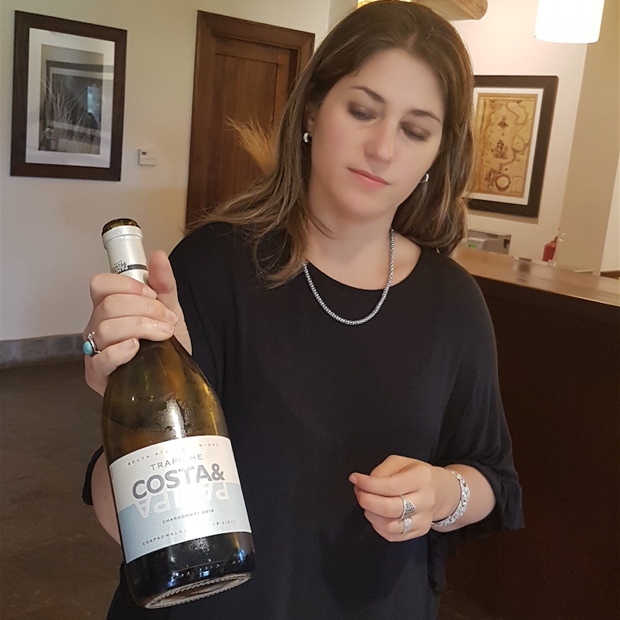
Carla Castorina, Trapiche

Trapiche Chardonnay Costa & Pampa 2016, Chapadmal, Buenos Aires, Argentina (Agent, WineAlign)

Costa & Pampa is Trapiche’s south Atlantic foray into a new appellation down on the coast southeast of Buenos Aires. Their chardonnay is a rich, youthful, precocious and grippy one, crisp and guaranteed to sell you on quality and possibility. Terrific first look. Drink 2018-2020.  Tasted November 2018  trapichearg  trapichewines  philippedandurandwines  @TrapicheWines  @Dandurandwines   @TrapicheArgentinaInt  @VinsPhilippeDandurand
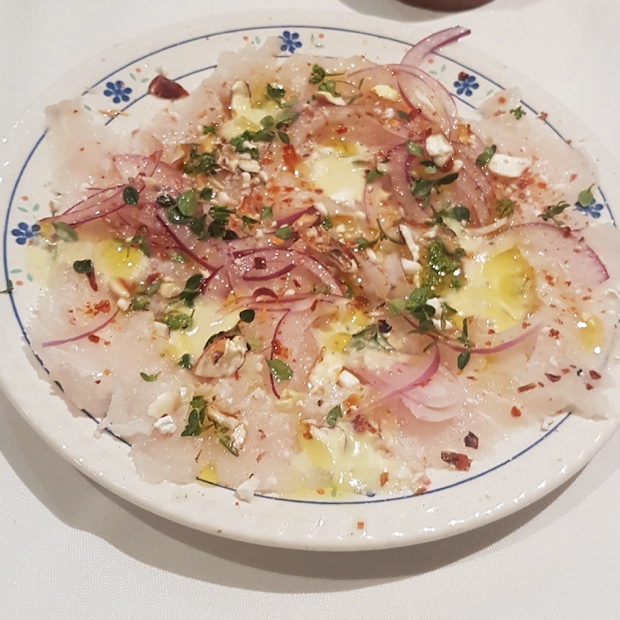
Fish at Luigi Bosca

Casarena Chardonnay Owen’s Vineyard 2015, Agrelo, Mendoza, Argentina (Agent, WineAlign)

From Agrelo down south of Luján de Cuyo and next to Casarena’s other single vineyards, Lauren and Naoki. Owen’s is named after a grandchild, one of four. Nice and properly reductive, the work her from winemaker Leandro Azin shows a learned ambition, a nod to Bourgogne and a grounding in greater Mendoza chardonnay need. It’s a tart, angular and yet fleshy chardonnay, urgent and delicious, welling in grape tannin, extract and acidity. Drink 2018-2021.  Tasted November 2018
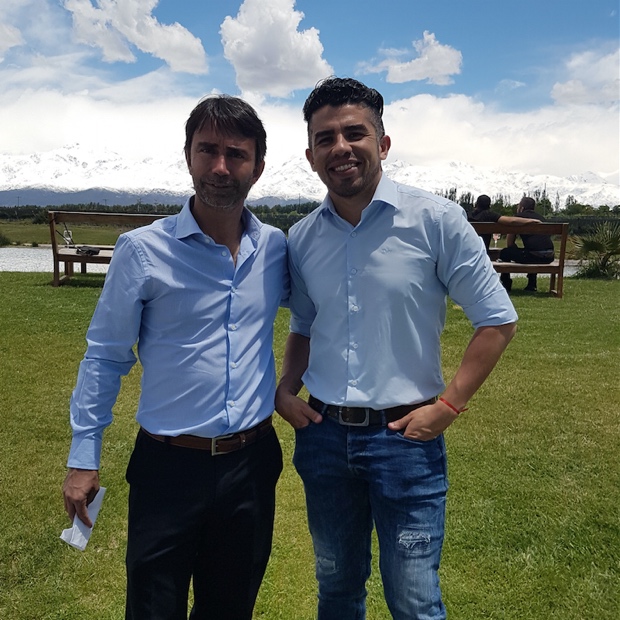
Federico Landrone, Andeluna and Damian Rubin, Bodega Bianchi

Andeluna 1300 Chardonnay 2018, Tupungato, Mendoza, Argentina (Agent, $16.99, WineAlign)

Represents and sets the imagination free to accept the Andean rain shadow, masl manifesto “vines touching the sky.” An fresh, crisp, clean and cool unoaked chardonnay of exceptional clarity and superb value. Apple bite with a similar note by pear from a soil-climate-altitude driven white with purity and finally, acidity. Drink 2018-2020.  Tasted November 2018

Snacks at Domaine Bousquet

Familia Zuccardi Q Chardonnay 2017, Mendoza, Argentina (232702, $18.95, WineAlign)

Zuccardi’s Tupungato chardonnay is a best of both worlds effort, from Gualtallary and El Peral, one giving the sun and the other layering over with freshness. Ferments done up all in concrete then the usage of some older (third and fourth use) barrels. Feel the fruit and the acidity as interchangeable parts plus a true sense of varietal purity. Very orchard apple, taut and pretty, polished and petit, as in Chablis. Drink 2018-2021.  Tasted November 2018
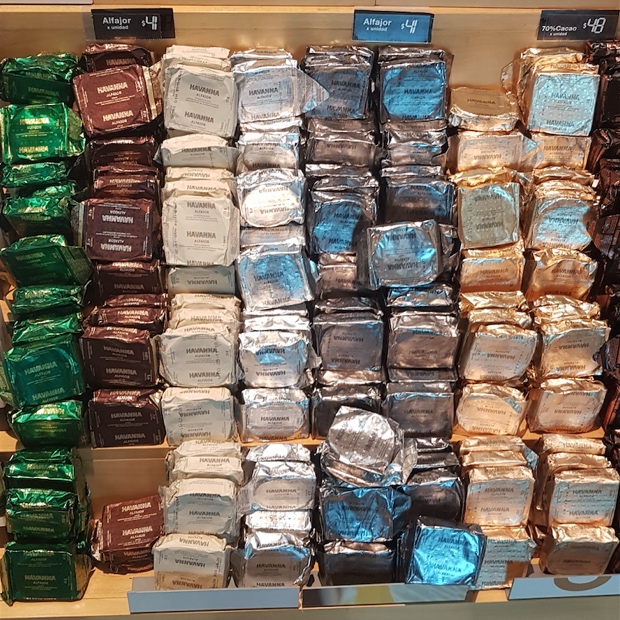
Snacks

Famiglia Bianchi Chardonnay 2017, San Rafael, Mendoza, Argentina (1461, $18.95, WineAlign)

A 50-50 stainless steel-barrel raised chardonnay with as much bite as any. Reductive and creamy with bitters and crackling acidity. The oak is very present, not so much in texture but certainly in palate character. Tart and finishing with further bitters. Drink 2018-2019.  Tasted November 2018

Boys at Finca Decero

Susana Balbo Signature Barrel Fermented Torrontés 2016, Uco Valley, Mendoza, Argentina (384339, $19.95, WineAlign)

Sees four to six months of barrel and plenty of lees stirring. Tells the truth to say it’s all about texture so that it separates itself from a sea full of achromatic torrontés. The idea is to tame and temper both the terpenes and the florals. It succeeds in this regard and is in delivery of a very viscous wine. Still floral but very textural. Drink 2018-2019.  Tasted November 2018
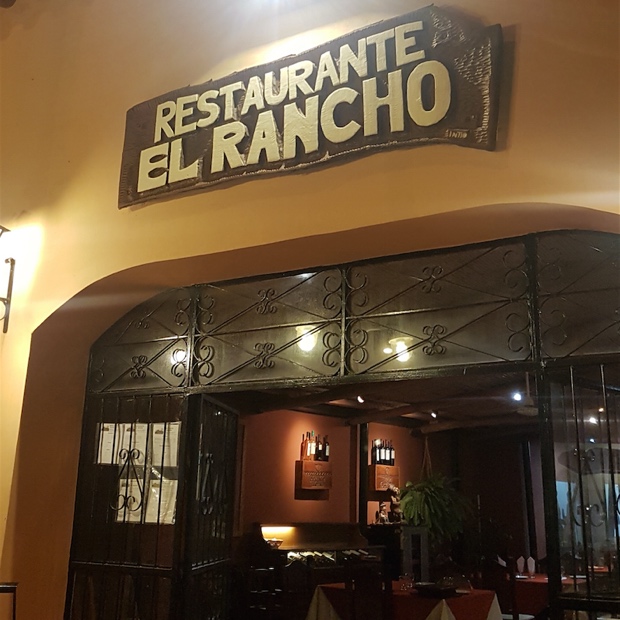
Restaurante El Rancho, Cafayate

Colomé Estate Torrontés 2018, Calchaquí Valley, Salta, Argentina (357913, $15.95, WineAlign)

There is no substitution for altitude and temperature fluctuations to manage the balance in torrontés. Yes it’s floral but also driven by tonic, white fruit and acidity. It’s also fleshy and creamy from fruit like guava and peach but the aridity and altitude dry this into a fierce creature home from a hot climate. Better than ever, with more concentration from the vintage. Drink 2018-2020.  Tasted November 2018  bodegacolome  hesscollection  liffordgram  @BodegaColome  @HessCollection  @LiffordON @bodegacolome  @hesscollection  @liffordwineandspirits
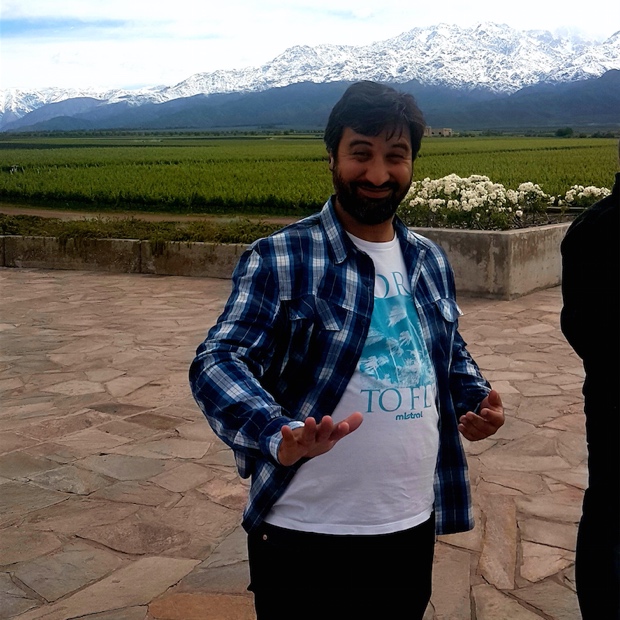
Winemaker Ramiro Balliro, Bodega DiamAndes

Bodega DiamAndes de Uco Viognier 2017, Uco Valley, Mendoza, Argentina (SAQ 11963806, $23.35, WineAlign)

Thirty percent of the French oak used is new on fruit from the foothills of the Andes at 1100m. Warm alcohol on the nose and the intensity of a white flower distillate. Very vanilla, a minor heed of oak spice and more dry extract than many, viognier or otherwise. “Blue girls come in every size, some are wise and some otherwise, they got pretty blue eyes.” The genesis of Uco Valley viognier in solar radiated ripples and minor bitters rippling effect. Drink 2018-2021.  Tasted November 2018  bodegadiamandes  maitredechai_ca    @maitredechai  @diamandes  Francis Dubé

Domaine Bousquet

Atamisque Serbal Viognier 2018, Tupungato, Valle Du Uco, Mendoza, Argentina (Agent, WineAlign)

A viognier high on citrus and notable for tangerine though curiously more about flavour than aromatics. Sharp, tangy and calcareously salty with proper sour edging and plenty of energy at the entry level. Drink 2018-2020.  Tasted November 2018
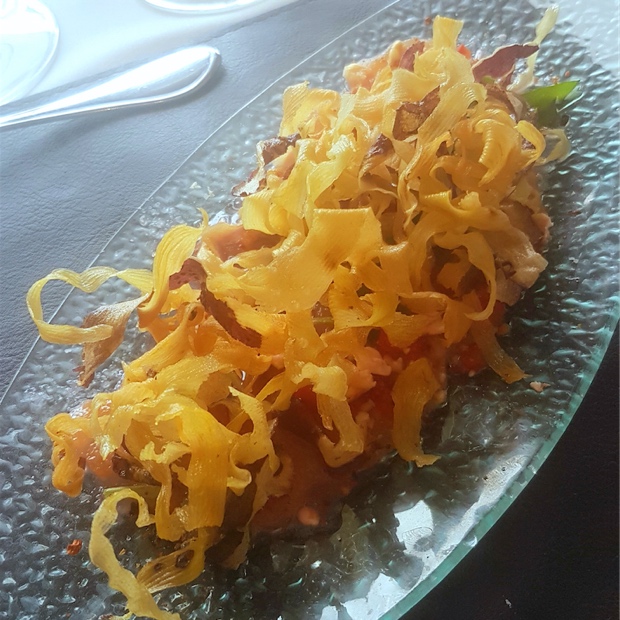
Crudo, Domaine Bousquet

Domaine Bousquet Sauvignon Blanc 2017, Tupungato, Mendoza, Argentina (Agent, WineAlign)

Particularly fresh and vibrant expression with some energy created by residual CO2 still pulsing in the bottle. Quality acidity encapsulates a wealth of fruit from apples through peaches. Mild pungency and ultimately a right proper way of expressing sauvignon blanc. Drink 2018-2020.  Tasted November 2018  domainebousquet  @domaineBousquet  @DomaineBousquetUSA

Bousquet, Tupungato

Salentein Sauvignon Blanc Portillo 2018, Valle De Uco, Mendoza, Argentina (Agent, WineAlign)

Described as fashioned through the matter of “nieve carbonica,” carbonic snow, to prevent oxidation, like using dry ice on garganega to protect and preserve freshness. Quite fresh in fact right here, pure and precise. Somewhat stoic even for a wine that believe it or not was first produced in 2009. Where is this in our market? Drink 2018-2019.  Tasted November 2018  salenteinbodega  azureau  @BodegaSalentein  @azureau  @BodegasSalentein  @BodegasSalentein
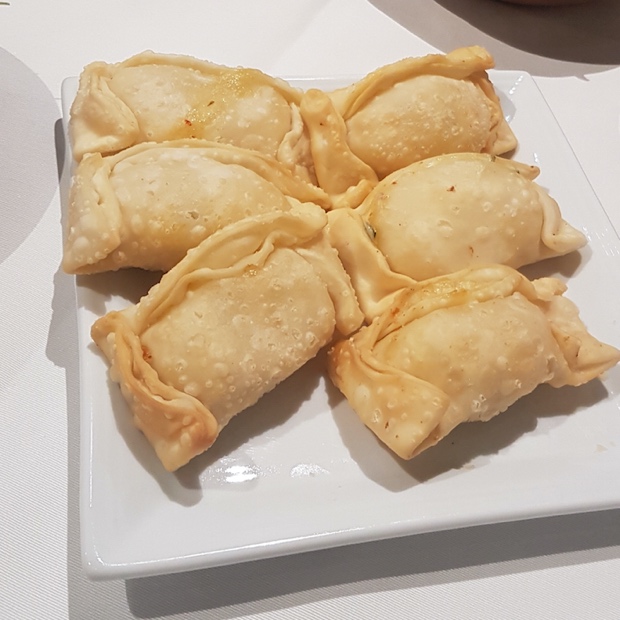
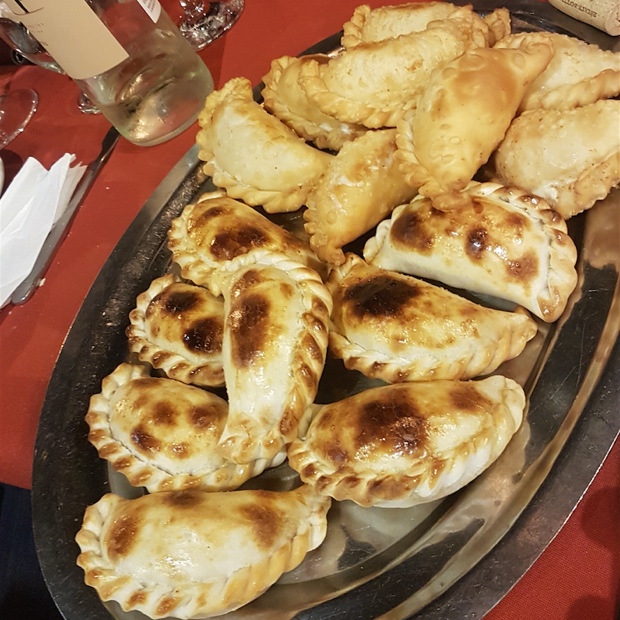
Empanadas at Luigi Bosca

Luigi Bosca Del Alma White Blend 2018, Wine of Argentina (WineryWineAlign)

“From the soul,” which is a base of chardonnay (30 per cent) blended with sauvignon blanc (30) viognier (20) and riesling (20). Some carbonic pulse to this metallic and simple blend of extreme freshness. Really good acids, melon flavours and a true tang at the finish. Citrus tablet and pears too. Drink 2018-2019.  Tasted November 2018  bodegaluigibosca  fwmcan  @LuigiBoscaBodeg  @FWMCan  @BodegaLuigiBosca  @FWMCan

Empanada, Restaurante El Rancho, Cafayate

Amalaya Blanco De Corte 2013, Valle De Cafayate, Salta, Argentina (Winery, WineAlign)

The signature, entry-level white blend is torrontés (85 per cent) with riesling. When you think about torrontés as being one of the most floral white grapes this is exactly what you expect. The riesling manages the potpourri with a splash of stone, acidity and ultimately freshness. Drink 2018-2019.  Tasted November 2018
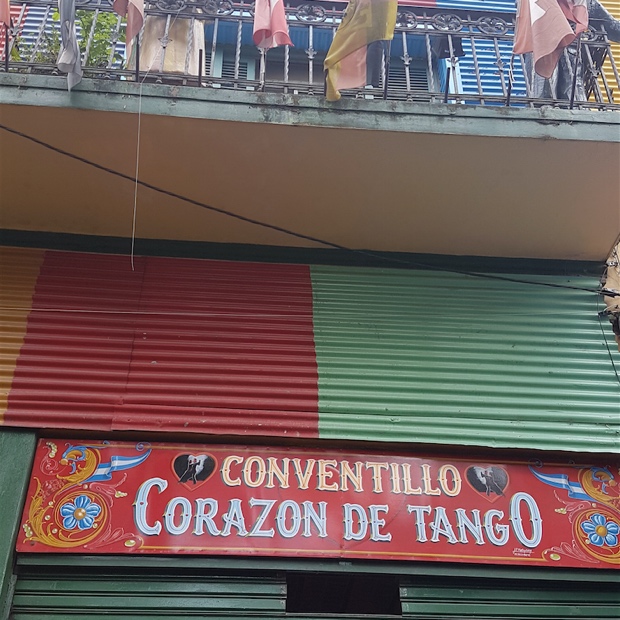
Caminito, Buenos Aires

Fincas Las Moras Sea Creatures Lady Blanc (De Blancs) 2018, San Juan, Argentina (Agent, WineAlign)

A curious concoction of trebbiano, chenin blanc and viognier from Tulum in the lower valley of San Juan. White flowers and white fruit fill the air while citrus and grape spirit flavour bring high favour to the fresh and crunchy spirit. Also some verdancy and in the end really likeable. Drink 2018-2019.  Tasted November 2018
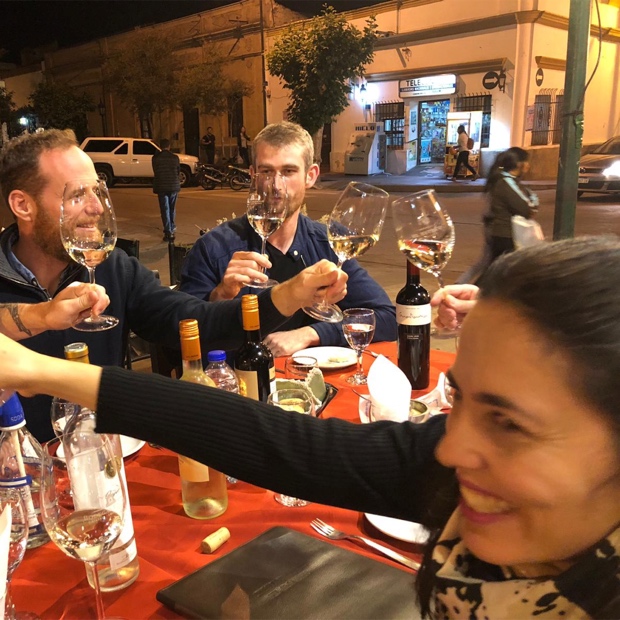
A toast in Cafayate

Casa De Uco El Salvaje Blend De Blancs 2017, Valle De Uco, Mendoza, Argentina (Winery, WineAlign)

A three-pronged blend and élévage from sauvignon blanc, chardonnay and torrontés raised with concrete, oak and steel ferments. Sweet fruit in layers, quite floral and triply aromatic, easy, balanced and with resdiual sugar mitigated by near equal acidity. The new appellative Uco Valley blend. Peak effect. Drink 2018-2019.  Tasted November 2018  casadeuco  @CasadeUco  @CasadeUco

Snacks at Bodega DiamAndes

Masi Tupungato Passo Blanco 2017, Mendoza, Argentina (Agent, WineAlign)

The connective tissue is altitude at 1,100m to tie pinot gris (60 per cent) with torrontés done up with some dried grape appassimento styling. High ion dry extract, creeping up there in glycerin and though low in acidity it’s quite rich, stylish and persistent. Drink 2018-2019. Tasted November 2018  masitupungato  masicanada  @MrAmaroneMasi  @MasiWineExperience  

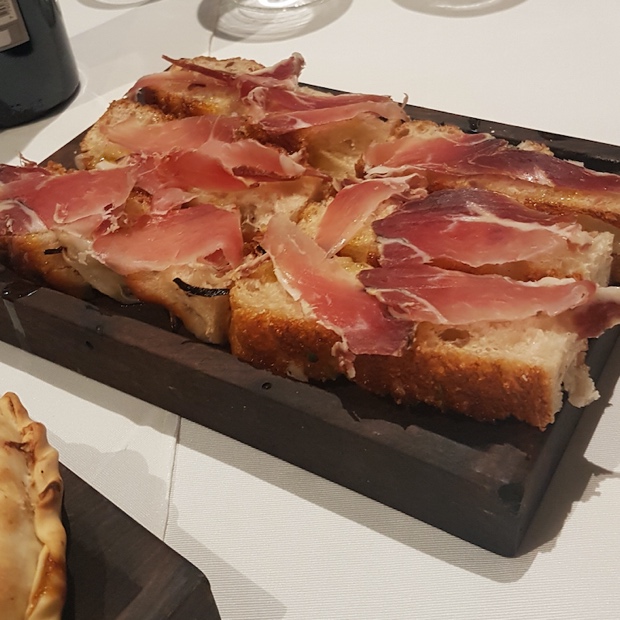
Jamon at Bosca

Luigi Bosca A Rosé Is A Rosé Is A Rosé 2018, Wine of Argentina (553032, $19.95, WineAlign)

Drawn from Maipu, 60 per cent pinot noir with (40) pinot gris. Lithe, rusty, low in alcohol, tangy and fresh. Very citrus, very vin gris, very serviceable and lovely in its saltiness. Solid. Drink 2018-2019.  Tasted November 2018
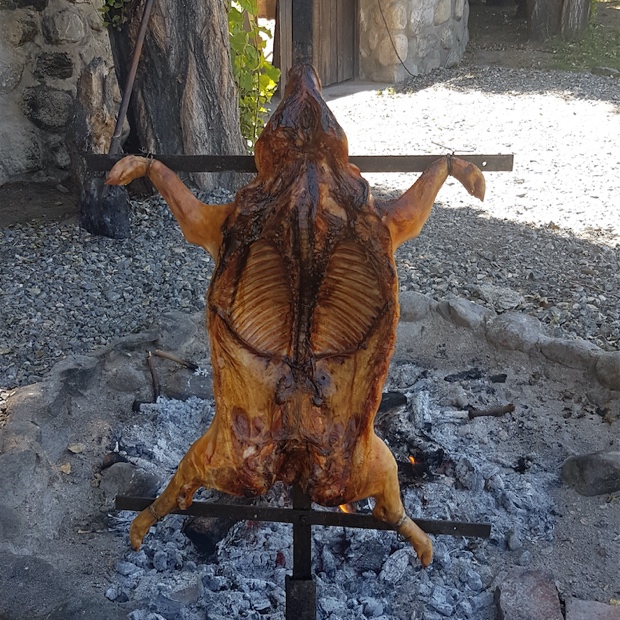
BBQ at El Esteco

El Esteco Blanc de Noirs 2015, Valle De Calchaquí, Salta, Argentina (Agent, WineAlign)

A table wine raised 50-50 in concrete eggs and stainless steel, Rosé by nature, freshness wholly preserved and tannins very much apart of the mix. Ever bearing for strawberries and with a real lemon citrus bend. The dry extract-tannic effort is more than notable. Drink 2019-2023.  Tasted November 2018

Malbec

Familia Schroeder Saurus Select Malbec 2017, Patagonia, Argentina (379313, $34.95, WineAlign)

A malbec from which only the highly concentrated dry-skin maceration is sent straight to 225L barrels for fermentation. The time was a precise one, eight months plus one week and taken out on November 22nd. The Hobbsian obsession of full out expression is on full display, with fruit bombing the senses in hyper-real layers of bright intensity. Locked in, big, bountiful and moving. Gets in and attacks the olfactory nerves with purpose, like smelling salts, as only Patagonian malbec can do. A truly polished wine. Drink 2019-2024.  Tasted November 2018
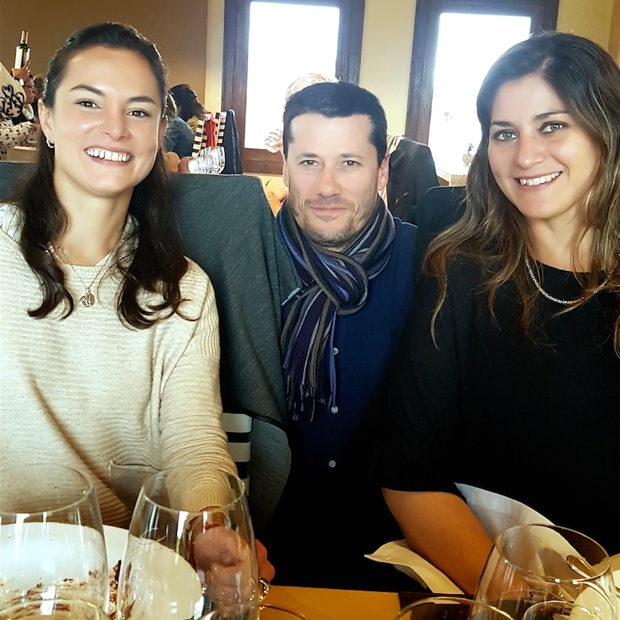
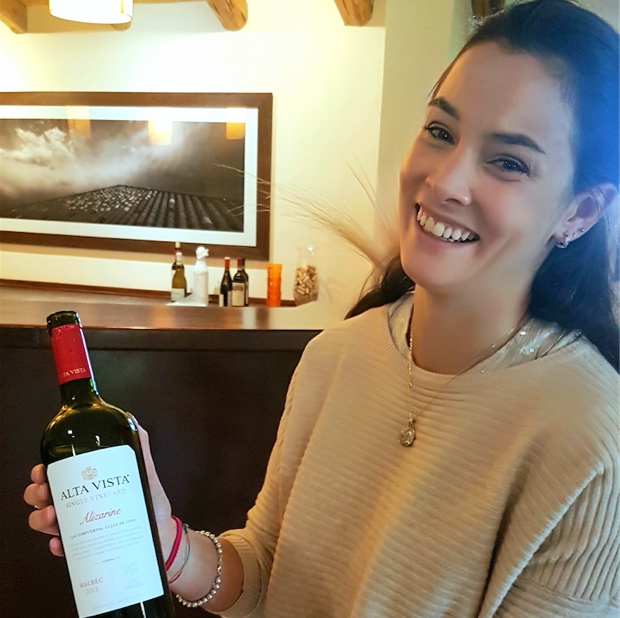
With Rocío Campoy Morist, Alta Vista and Carla Castorina, Trapiche

Trapiche Medalla Malbec 2016, Uco Valley, Mendoza, Argentina (547869, $17.00, WineAlign)

This grippy middle tier Uco malbec is rich in chocolate and spice supplied by generous oak and 40-plus year-old vines. Earth is the catalyst for character a bit scorched and also lending a particular brand of Mendoza funk. Certainly malbec of a combined wisdom and personality to separate itself from other high-volume lots. Drink 2018-2020.  Tasted November 2018
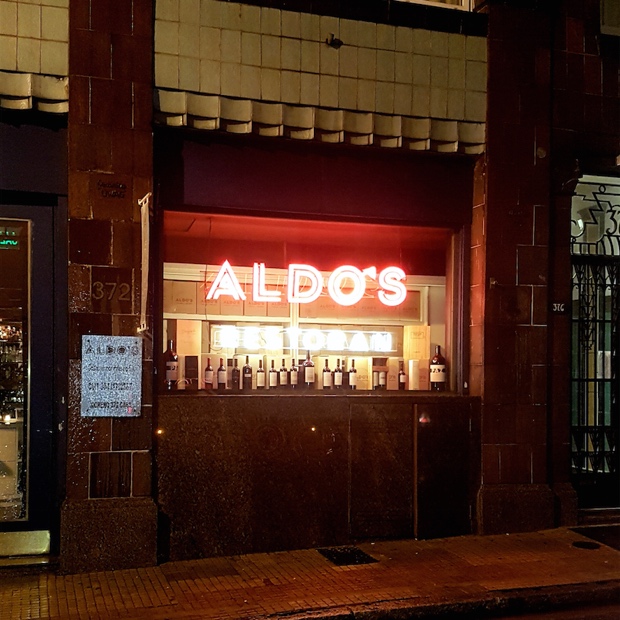
Fuego Blanco Malbec Flintstone 2016, Do Valle Del Pedernal, San Juan, Argentina (Winery, WineAlign)

More or less at 1,500m and 800 kms south of Salta from the extreme climate of San Juan, here’s a brooding, able-bodied and highly hematic malbec. The glass is a bit reductive-effluent so work with it but it’s really quite stubborn and an earthy-worthy malbec with a bit of green meets paratrophic funk. Lower alcohol, pH and acidity, higher learning and curiosity.Then again it’s 70 per cent fermented in concrete egg so that explains quite a bit. Drink 2018-2021.  Tasted November 2018  fuegoblancowines  Fuego Blanco
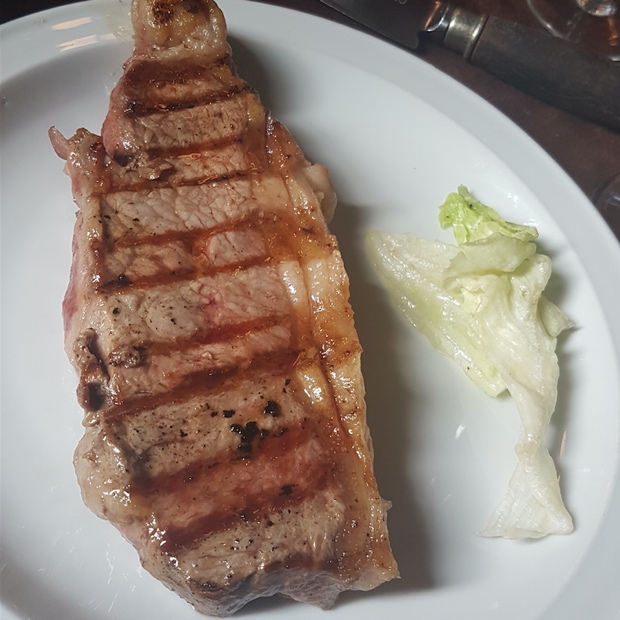
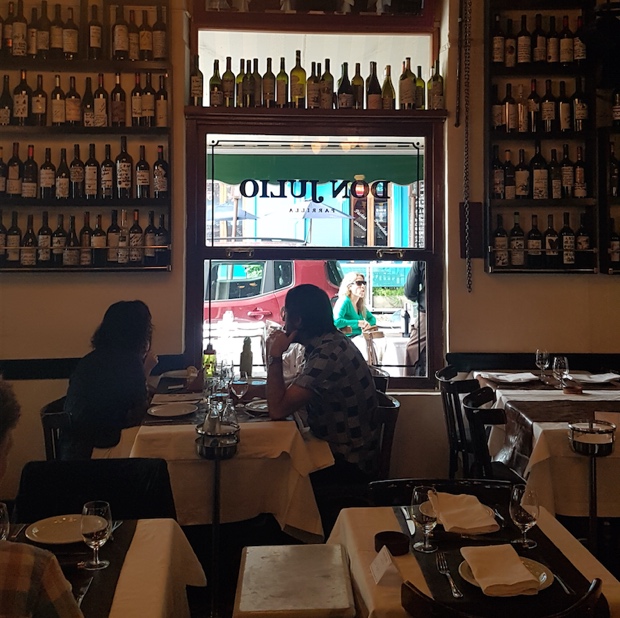
Don Julio, Buenos Aires

Bodega Del Fin Del Mundo Reserva Malbec 2017, San Patricio Del Chañar, Neuquen, Patagonia, Argentina (Winery, WineAlign)

A warm location, even in Patagonia, low in altitude. At 350m and a wine that explains why malbec is planted everywhere, because it’s one that matches latitude and altitude to climate. Moderate alcohol and acidity comes explosively out of high pH and the overall feeling of sweet fruit, more fruit and all fruit. A very familiar and comforting red. Drink 2018-2022.  Tasted November 2018  findelmundowines  @BodFinDelMundo  Bodega Del Fin del Mundo

Caminito, Buenos Aires

Lamadrid Single Vineyard Gran Reserva Malbec 2015, Agrelo, Luján De Cuyo, Mendoza, Argentina (375485, $25.95, WineAlign)

Middle of the numbers road in every way, alcohol, acidity and pH. MOR in so many stylistic and emotional response respects. It’s sweetly fruity, somewhat salty, full, rich, thick and perched comfortably in balance right on the median line. Drink 2018-2022.  Tasted November 2018  lamadridwines  @LamadridEstate  Lamadrid Estate Wines

Beef tartar, egg yolk, pickles, soy, Azafrán, Mendoza

Hector Durigutti HD Reserva Malbec 2016, Paraje Altamira, San Carlos, Uco Valley, Mendoza, Argentina (322735, $34.95, WineAlign)

From a 1955 planted vineyard at 1,150m. Rich but also salty, really giving you the feeling of ripeness and elasticity. It’s made in just a minor reductive way that supports the fruit and then in terms of tannin goes through this chalky texture influx for structure. So very interesting. Drink 2019-2025.  Tasted November 2018  hectordurigutti  duriguttiwinemakers  @HectorDurigutti  @DuriguttiWines  Hector Durigutti  DURIGUTTI Winemakers 
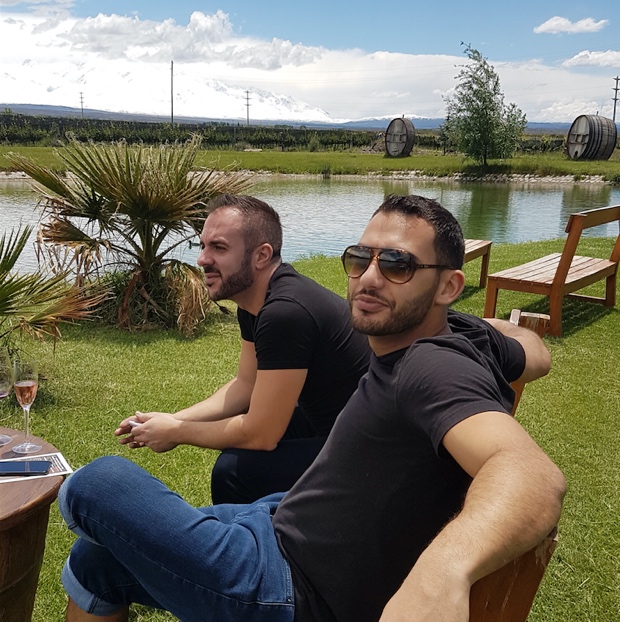
The boys of Ama Always, Michael Mizzi and Alexander Raphael

Finca Decero Malbec Remolinos Vineyard 2015, Agrelo, Luján De Cuyo, Mendoza, Argentina (195677, $25.99, WineAlign)

From the vineyard of mini whirlwinds that twirl on a site where many of these little gusts of air stir up the bare earth into dancing spiral forms. More floral than both the syrah and the cabernet sauvignon. Violets certainly come to mind. Smooth and the flavour is almost candied rose petal with oak integration providing a finishing spice. Very smooth wine. Drink 2018-2021.  Tasted November 2018

Bodegas Sottano Malbec Classico 2017, Mendoza, Argentina (WineryWineAlign)

“The idea of this line of varietal wines is drinkability, to maintain freshness and fruitiness,” explains Christian Magnenat. Sottano’s is simple, correct malbec, of dark red fruit, balanced, drawn from many disparate, moving and amalgamated vineyard parts. From here, Agrelo, Uco Valey and others. Slightly astringent finish. Drink 2018-2019.  Tasted November 2018  bodegasottano  @bodegasottano  @bodega.sottano

Roasted rabbit, bacon, black radish, Azafrán, Mendoza

Vicentin Blend de Malbecs 2016, Mendoza, Argentina (299735, $19.95, WineAlign)

The core wine of Vicentin, it’s dark, hematic and so very sheathed in many barrels of all shapes, sizes and origins. Full and completely structured malbec constructed out of 60 per cent (on average) new barrels. Again the palate takes it to a better place, namely because of texture and then the concentration takes over with some bitters on the finish. Yes it surely is a power pumped wine. Drink 2019-2022.  Tasted November 2018

Mark Bradbury

Vicentin Colosso V 2015, Mendoza, Argentina (WineryWineAlign)

This 100 per cent malbec is all resinous oak, soupy umami aromas and syrupy flavours. Cedar, rosemary, tobacco and really high toned acidity. It’s kind of akin to a Chuck Wagner meets Rioja with plenty of residual sugar. Drink 2019-2022.  Tasted November 2018
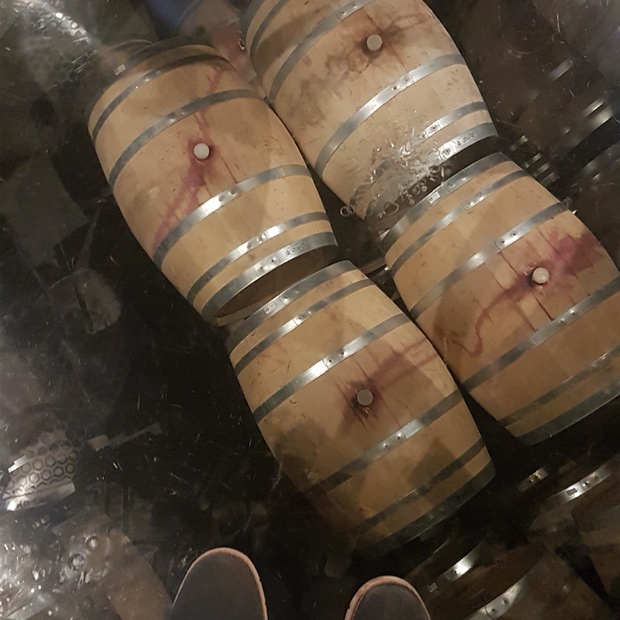
Bodegas Sottano Malbec Judas 2015, Mendoza, Argentina (WineryWineAlign)

A blend of malbecs that was a single-vineyard wine. Quite resinous and sinewy, of great depth, some violet florality and much ado about high-toned acidity meeting deep woody notes. Once again more astringency but balanced by the smooth consistency. Clearly a step up in ambition and quality. Drink 2019-2022.  Tasted November 2018
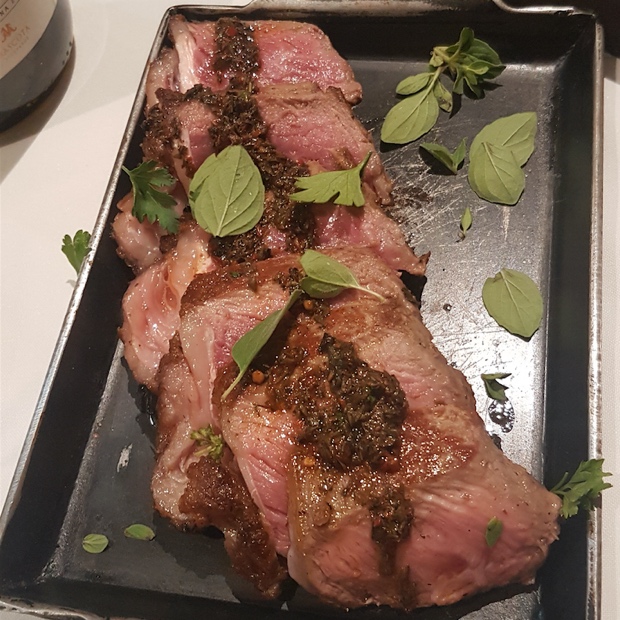
Beef at Bosca

Luigi Bosca La Linda Private Selection Old Vines Malbec 2016, Luján De Cuyo, Mendoza, Argentina (WineryWineAlign)

The PS or Private Selection puts a focus on young wines of fresh fruit character. From the oldest vines (35 years-old) in La Linda, the highest area of Luján de Cuyo. A smoky, charred, grilled herbs and garriga multiplicity in character. It’s true Criolla plant garrique, bushy and fragrant with dark raspberry fruit, juicy acidity and spicy bite. All in balance. Drink 2018-2022.  Tasted November 2018
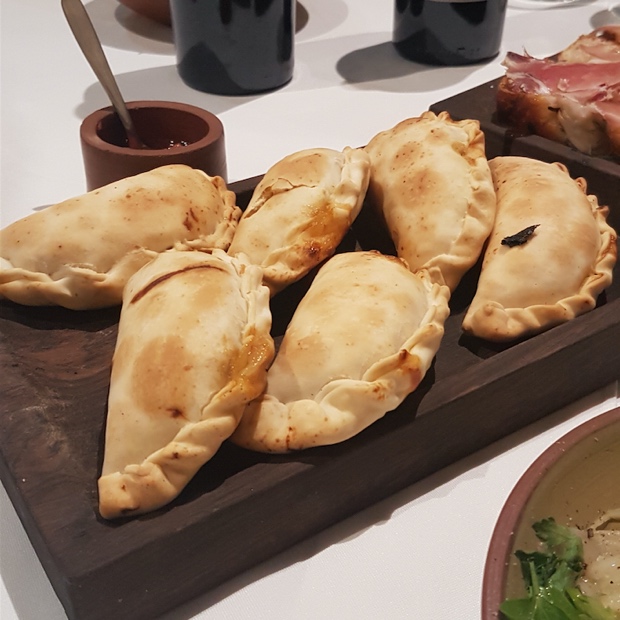
Bosca Empanadas

Luigi Bosca Malbec DOC 2016, Luján De Cuyo, Mendoza, Argentina (452672, $18.95, WineAlign)

The DOC was established in 1989 and this icon of a malbec was first produced in 1991. From Luján de Cuyo fruit, remarkably rich and emblematic for the whole of Mendoza Province. Just what you expect, need and could ever want without an ounce of pretence or ambition. Drink 2019-2023.  Tasted November 2018
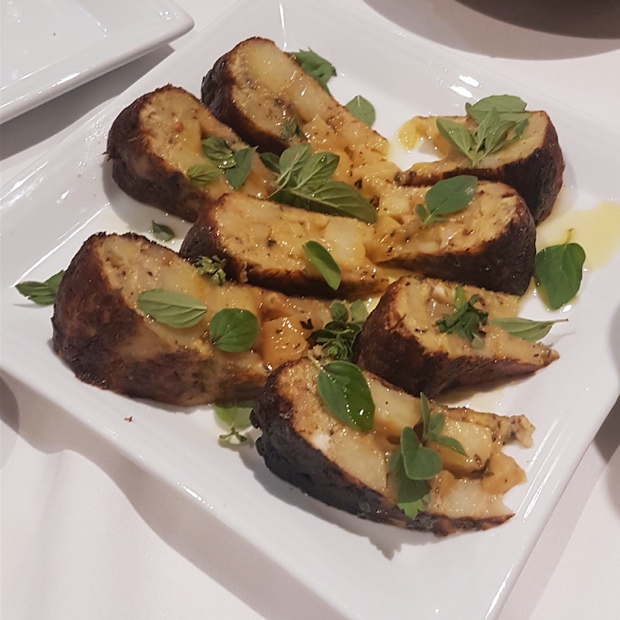
Tortilla at Bosca

Luigi Bosca Terroir Los Miradores Malbec 2016, Uco Valley, Mendoza, Argentina (132340, $32.95, WineAlign)

From 70 year-old vines in Valle de Uco with lowest of low yields so that one vine does not even function to produce a whole bottle. From the same genetic cutting materials, massal selection of the DOC malbec, but with obvious concentration and specificity. So much more floral, of a baking spice and a fruit intensity that truly is the bomb. An implosive wine with modesty, purity and a 40 per cent oak housing. Big and balanced with great structure and tannins that invoke seven senses. Put some aside and we’ll have some further discussions in 10 years. Drink 2021-2029.  Tasted November 2018

Yann Janvier – snap (c) @marylinedemandre

Domaine Bousquet Malbec 2018, Tupungato Valley, Mendoza, Argentina (160952, $13.95, WineAlign)

Draws fruit from Paraje Altamira and Gualtallary, no oak, simply in stainless. Fresh and equally savoury, relative concentration and simple in effusive red fruit. Really negligible tannins and a sweet as opposed to astringent finish. Perhaps the best vintage ever for this entry-level malbec. Drink 2018-2020.  Tasted November 2018   domainebousquet  @domaineBousquet  @DomaineBousquetUSA

Flank Steak, Domaine Bousquet

Domaine Bousquet Malbec Grande Reserve Vino Orgánico 2015, Tupungato Valley, Mendoza, Argentina (WineryWineAlign)

The top tier malbec is a full barrel seasoned one though no new oak, with five per cent each cabernet sauvignon, merlot and syrah blended in. Reduction and spice are dominant but true blue black fruit layers, lingers and lurks. High-toned overview above and beyond the cimmerian aspect so it’s just a matter of time before the slope adjusts and the fruit takes control. Violets meet deep savour with mid-term age probability a real opportunity. Quite taut and spicy, a true testament to mixing fruit from Tupungato and Guatallary. Drink 2019-2025.  Tasted November 2018
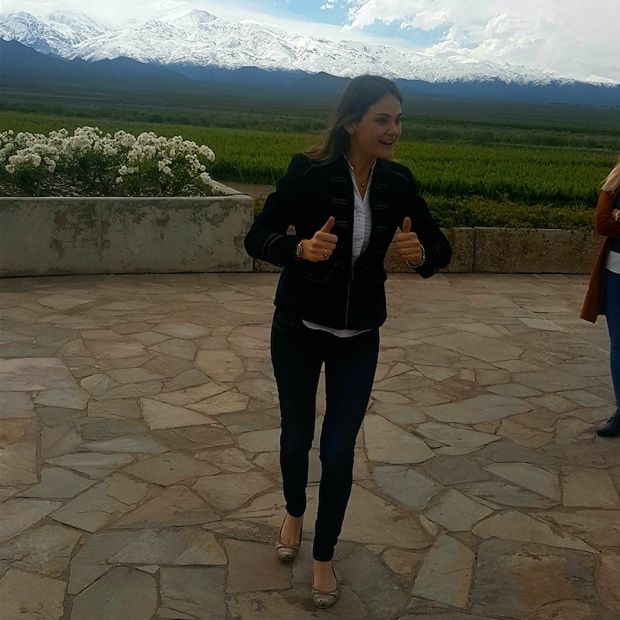
Julianne Pons, Bodega DiamAndes

Bodega DiamAndes de Uco Malbec 2013, Uco Valley, Mendoza, Argentina (404145, $23.25, WineAlign)

Harvested between March 18th and April 16th, this style of malbec is certainly gone for broke in 30 per cent new French oak for 12 months. There is less savour and more sweetness in both the fruit and the tannins and while it’s certainly the typical and the archetypal for the Uco Valley, it’s not quite as complex as the cabernet. It’s splitting hairs to say so but to be honest this is the wine to drink now and for three to five years while the cabernet and its great structure will go longer. Drink 2019-2022.  Tasted November 2018

Beef, Restaurante El Rancho, Cafayate

Amalaya Malbec 2017, Valle De Calchaquí, Salta, Argentina (Agent, $19.99, WineAlign)

The flagship red in the Amalaya/Donald Hess property in Salta from high altitude in the northern Calchaquí Valley is a rich and concentrated wine heading towards these eastern foothills of the Andes mountain range. Dominated by malbec with cabernet sauvignon (10 per cent) and (5) petit verdot. Rich, succinct and driven by solar radiated concentration. Drink 2018-2019.  Tasted November 2018

With Marilyne Demandre, WOFA Canada in Salta Province

Colomé Malbec Lote Especial La Brava 2016, Valle De Calchaquí, Salta, Argentina (Agent, $29.99, WineAlign)

From a mainly sandy soil with small gravel pebbles at 1,700m and one of three site specific Colomé malbec investigations. The combination of flavour concentration and saltiness is exceptional in a wine fully equipped with solar radiation, acidity preserving temperature fluctuations and altitude enlivening libido. The combination of fruit layering and tannic structure is nothing short of remarkable. Drink 2019-2024.  Tasted November 2018
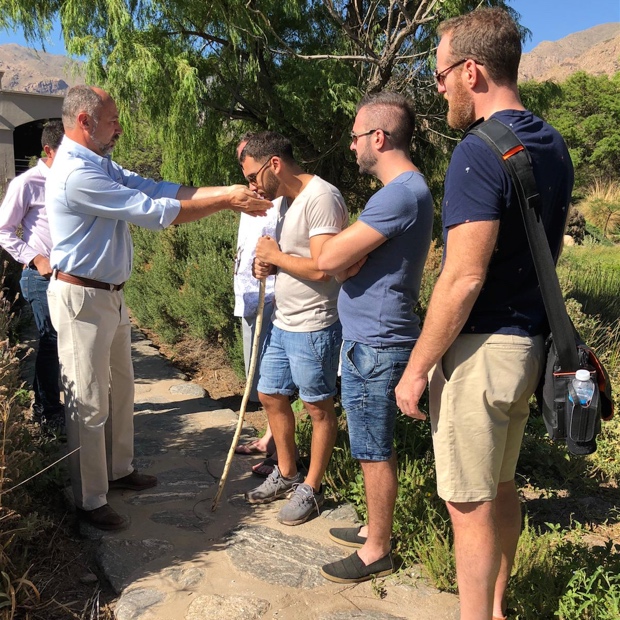
Smelling the Garrigue at Amalaya

Colomé Malbec Lote Especial El Arenal 2016, Valle De Calchaquí, Salta, Argentina (575290, $29.95, WineAlign)

The vineyard here is at 2,600m and the first vineyard purchased by Donald Hess, in a place and at an altitude that did not yet exist in Argentina. So the question is what does an added 300m (and 900 as compared to La Brava) bring to malbec? The answer is simply more of everything but especially concentration. This is smoother and more silk-textured, with less high-tonality and more Napa like consistency. It’s certainly the richest and most consumer friendly. Drink 2019-2024.  Last tasted November 2018

El Arenal is the pinpointed location for Colomé’s deep, dark and delicious malbec, especially for the Calchaquí-Salta locale. A warmth by vintage and richness by extraction has matched the saltiness of the air and the aridity of the place. The lengthy finish is notable and fruit persevering. Drink 2019-2023.  Tasted September 2018
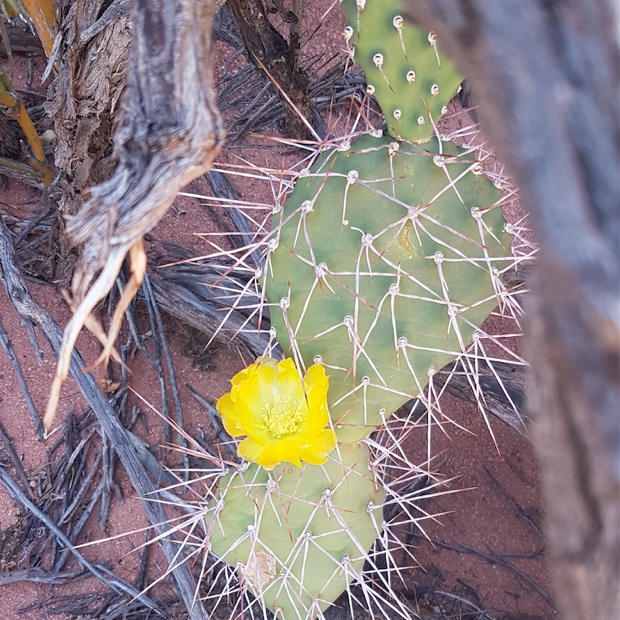
Quebrada de las Conchas

Colomé Estate Malbec 2016, Calchaquí Valley, Salta, Argentina (477315, $24.95, WineAlign)

The Estate gathering draws from all three Lote Especial vineyards (La Brava, Colomé and El Arenal) plus fruit from Altura Maxima at 3,100. Bring them all together and the broadest expression with the middle ground concentration and the fullest texture is realized. It’s a cooler, more savoury malbec with a balance of richness and high tonality. Drink 2019-2022.  Tasted November 2018
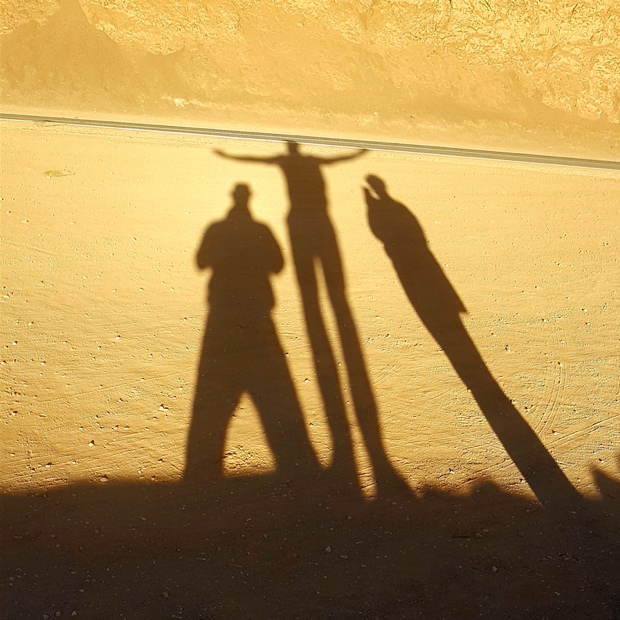
Canadians at Tres Cruces

Bodega Colomé Malbec Autentico 2017, Calchaqui Valley, Salta, Argentina (Agent, WineAlign)

This malbec is drawn from 2,300m of altitude and the vineyard of oldest vineyards raised with no oak, only stainless steel. The idea is “the typical malbec from the Valle de Calchaquí.” The vineyards are pre-phylloxera and the wine is naked to the world, fresh and floral, salty, tangy, tart and quite intense. It’s even more rugged and rustic than expected but rich and full of possibilities. Peppery too in a reductive meets carbonic way. Drink 2019-2024.  Tasted November 2018
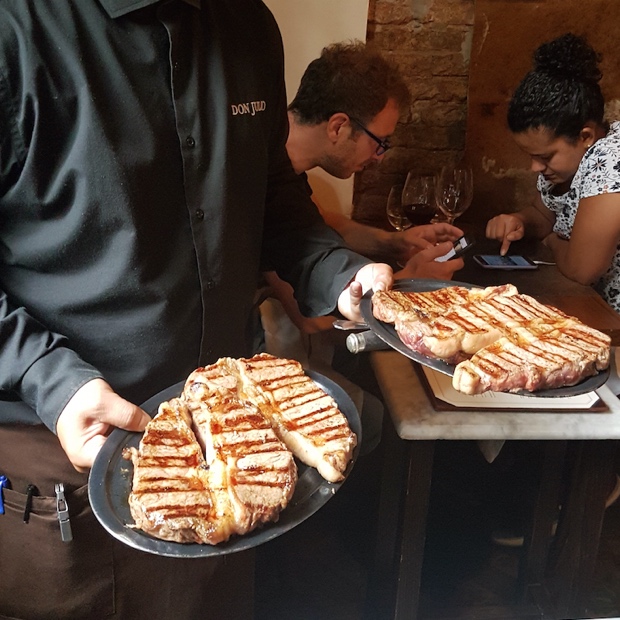
Steaks at Don Julio

Colomé Malbec Altura Maxima 2015, Calchaqui Valley, Salta, Argentina (Agent, WineAlign)

From the Donald Hess farm purchased in 2005, with plantings between 3,000 and 3,200m of altitude. The extreme nature of this (and some of Argentina’s) highest of estate vineyards means frost and hail are very much apart of the challenge. And when you taste it side by each with the three Lote Especial malbecs you see that it is something very different indeed. The floral aspect is dramatic and the flavours the most intense. The saltiness and high tonality are off the charts. This will age for two decades without pause. Drink 2021-2033.  Tasted November 2018
El Esteco

El Esteco Malbec 2016, Valle De Calchaquí, Salta, Argentina (Agent, WineAlign)

From two terroirs, Punco and Cafayate, aged in second and third passage oak barrels. Like blackberries and Yerba Seca, a native savoury brushy herb that grows in this cactus populated desert. So reminds of sage pointed reds from the Okanagan Valley, albeit with more brine. Drink 2018-2021.  Tasted November 2018  bodegaelesteco  philippedandurandwines  @ElEstecoWines  @Dandurandwines  @elestecowines  @VinsPhilippeDandurand  
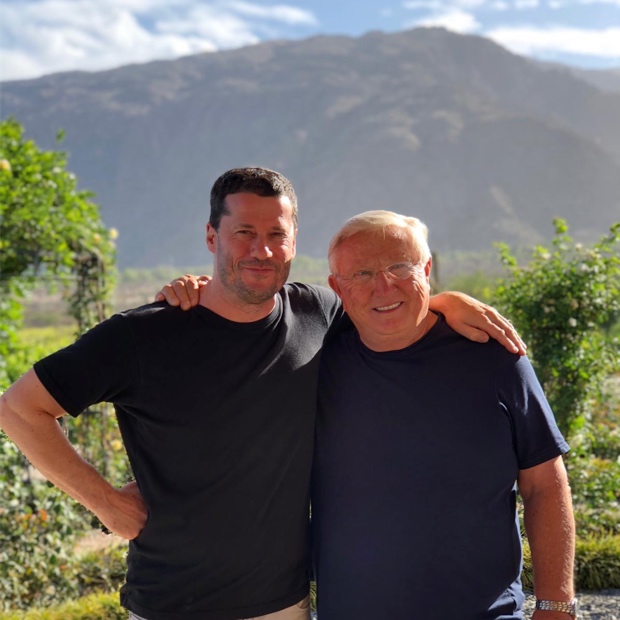
With John Malinski, Piattelli Vineyards

Piattelli Vineyards Reserve Malbec 2017, Cafayate Valley, Salta, Argentina (Agent, WineAlign)

Malbec at 6,000 feet on a gentle rising slope in Cafayate is aged for nine months in only American barrels. Few malbec are clothed with as much barrel class in a Rioja way as this and no French is used, namely because of cost in a much larger production wine. The oak is done to bury the pyrazines and it works like a charm. Drink 2018-2021.  Tasted November 2018

New Piattelli Vineyards planting in the high altitude desert of the Calchaqui Valley

Piattelli Vineyards Gran Reserve Malbec 2016, Cafayate Valley, Salta, Argentina (Agent, WineAlign)

In this version of Piatelli’s high altitude malbec the components are all bigger, stringer, faster and of specs where pH, alcohol, glycerin and also acidity are all elevated. The Grand Reserve sees both American and French oak and for 13 months time. The Spanish connection, whether it be Ribera del Duero or Montsant is evident in polish, silky texture, vanilla and liquid graphite. Very sweet black cherry, pencil shavings and even a note of cigar. Chalky, earthy finish. Drink 2019-2023.  Tasted November 2018
Altos Las Hormigas Malbec Clásico 2017, Mendoza, Argentina (Agent, WineAlign)

Approximately 20 per cent of the fruit comes from the Uco Valley with the yeoman’s work provided by vines grown in Luján de Cuyo. What the house considers as a good vintage with a great 2018 looming on the horizon. At present a bit peppery-rubber stamped reductive so truly a baby with grip and concentrated liqueur. Strange in how it reminds of Western Cape syrah and ultimately solicits an expression of wow. Drink 2019-2022.  Tasted November 2018  altoslashormigas  @ALHmalbec  @ALTOSLASHORMIGASWINERY

At Luigi Bosca

Navarro Correas Reserva Malbec Selección Del Parcelas 2017, Mendoza, Argentina (Agent, WineAlign)

The reserve malbec story is a three-fold one, from three blocks each no bigger than two hectares; La Consulta (San Carlos, Uco Valley), Los Árboles (Tunuyán, Uco Valley) and Agrelo (Luján de Cuyo). Each adds their own piece into the puzzle, from florals through red fruit to cool savour. Adds up to a layered malbec big in fruit, acidity and bones. Drink 2019-2022.  Tasted November 2018
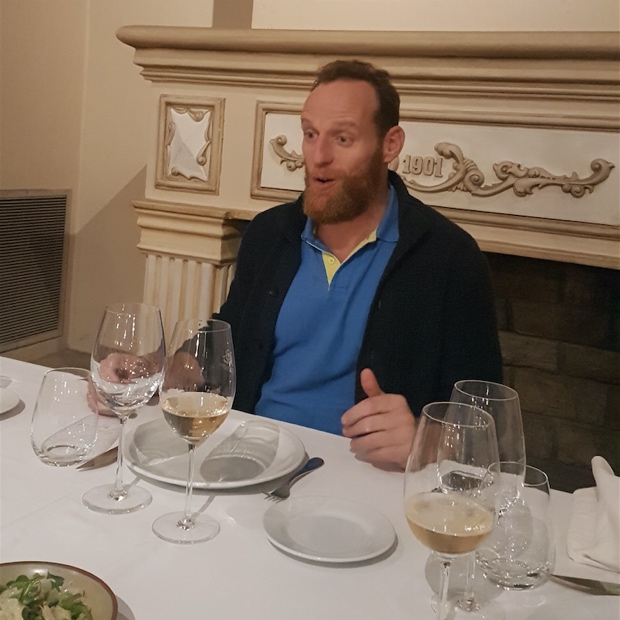
An excited Yann Janvier eyeing dinner at Luigi Bosca

Pascual Toso Malbec 2016, Mendoza, Argentina (35170, $14.25, WineAlign)

If you are looking for a malbec on the spectrum that is brighter and lighter with properly and wisely integrated wood into that effulgent fruit, here is your $14 best bet. The Mendoza malbec tenets of smoky and spicy are quite subtle and fruit stands out, ushered along by a calming and supportive energy. Drink 2018-2019.  Tasted March and November 2018

Fritters at Bosca

Viña Cobos Felino Malbec 2017, Mendoza, Argentina (118067, $19.95, WineAlign)

A blend of several properties’ fruit though 70-80 per cent comes from vines growing in 40 vineyards situated in Luján de Cuyo. A big sweet fruit and high acidity bomb meeting at the intersection of grip and freshness. The blend of sites amalgamates and mediates to spread great malbec love for all to share. Drink 2018-2021.  Tasted November 2018
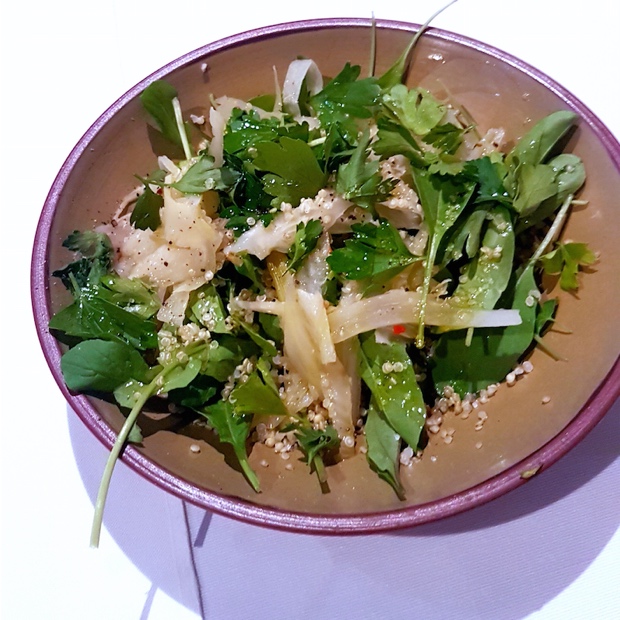
Salad at Luigi Bosca

Viña Cobos Bramare Malbec 2016, Uco Valley, Mendoza (123729, $39.95, WineAlign)

Not the easiest vintage to deal with but the low quantity of fruit availability surely means quality of the highest order and a malbec here that could never be accused of flat, peppery or fat. The Luján de Cuyo fruit from four farmed estate vineyards is 100 per cent all in for a true to terroir malbec that even Paul Hobbs can’t override, no matter how hard he and his team might try. The accessibility playing field is levelled by an intensity built by alternating stratifying layers of acidity and structure. Smoke, smoulder, spice and then patience move from availability through need. Drink 2020-2027.  Tasted November 2018
Mark Bradbury and Marilyne Demandre, Buenos Aires

Bodegas Bianchi Finca Los Primos Malbec 2018, Mendoza, Argentina (572123, $12.40, WineAlign)

Made from 100 per cent San Raphael fruit on alluvial soils with clay. Leads to great malbec depth plus surely hematic pulse and strength. It’s red fruit albeit highly concentrated, extracted, intense, spicy, smoky and full. Drink 2018-2020.  Tasted November 2018
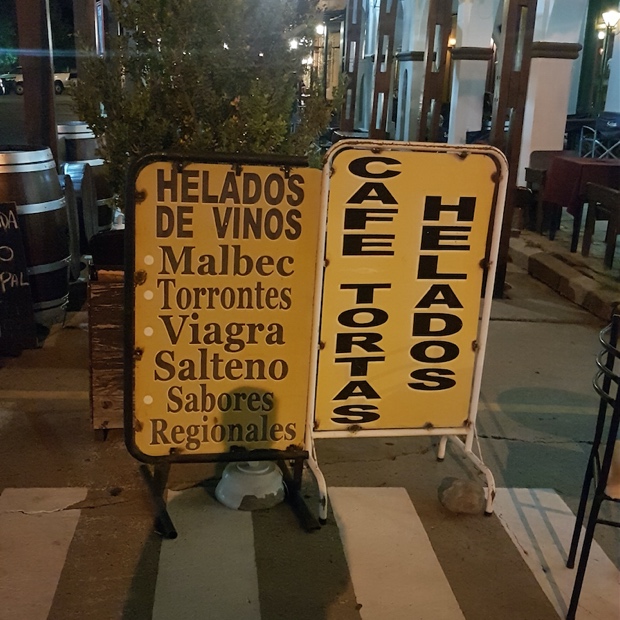
Andeluna Malbec Altitud 2016, Gualtallary, Tupungato, Uco Valley, Mendoza, Argentina (Agent, $25.99, WineAlign)

Fruit is 100 per cent Gualtallary and yes Altitud is a factor of a rise towards the Andean wall. More than altitude this malbec carries attitude, in good solid grip and firm intensity. A very meaty malbec, pitchy and sure of itself in every respect. These Tupungato soils give way top some pretty heady and deeply satisfying red fruit, especially malbec. Drink 2018-2022.  Tasted November 2018
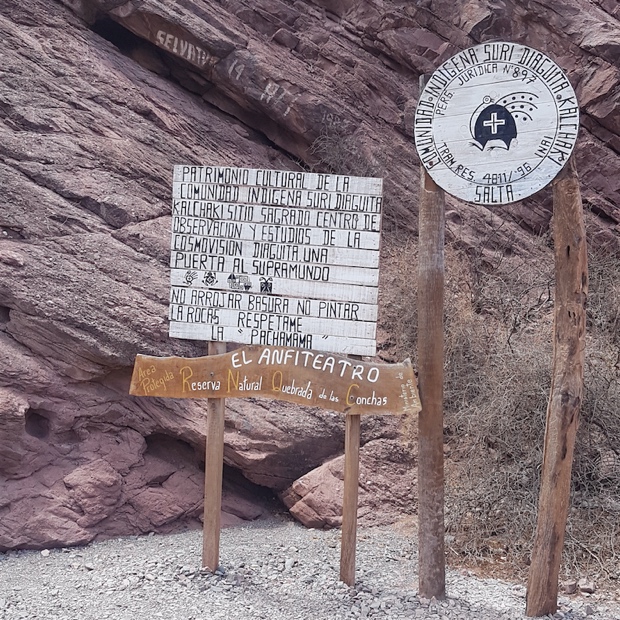
Bodega Atamisque Serbal Malbec 2018, Tupungato, Mendoza, Argentina (444737, $15.95, WineAlign)

Simply stated pinot noir of strawberry red fruit, a fluff of spice and ultimately easy to comprehend. Highly drinkable stuff that speaks a varietal language with obviousness and without complication. Nothing more needs top be said. Drink 2018-2019.  Tasted November 2018
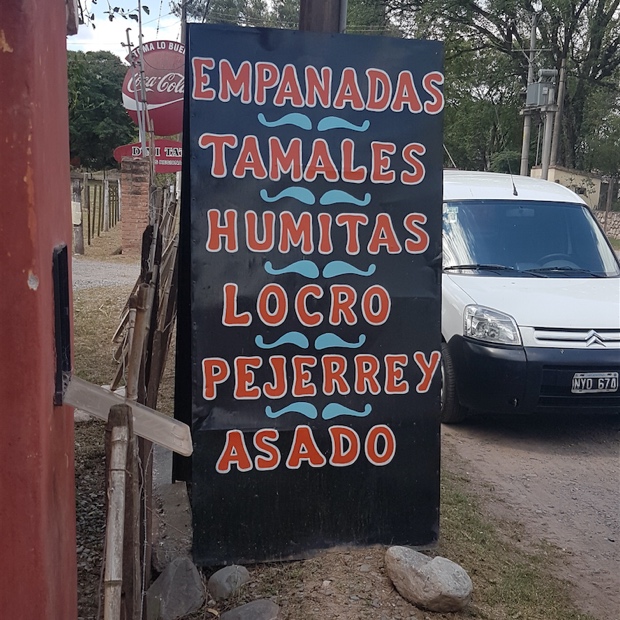
Zuccardi Polígonos 2016, San Pablo, Uco Valley, Mendoza, Argentina (568915 $29.95, WineAlign)

The Vinos de Montaña line from Zuccardi employs the name Poigomnos to refer to the many sides of a vineyard, also mimicked by Seb Zuccardi in his drive to celebrate micro-vinifications and the new diversity of Mendoza terroirs. The soils are alluvial and very stony, an elemental-mineral transference fact that needs to be contemplated and copnsidered within the context of a malbec effect and from this place in San Pablo, Uco Valley. This is in fact a different sort, from pyrazine to pepperoncino, dry, tannic and unique in its new spark of dark fruit. Quite remarkable for its ulterior motive and unique way of speaking for both the specific place and the estate. Drink 2019-2025.  Tasted November 2018   zuccardivalledeuco  szuccardi  dionysuswines  @ZuccardiWines  @FamiliaZuccardi  @SebaZuccardi  @ZuccardiValleDeUco  @DionysusWinesTO

Cecilia Carrasco, Zuccardi and Julia Halupczok, Finca Sophenia

Zuccardi Concreto Malbec 2017, Paraje Altamira, Uco Valley, Mendoza, Argentina (455774 $39.95, WineAlign)

Concreto as noted and understood is a malbec raised only in concrete and not a barrel, stave or chip to be found anywhere near the purity of this fruit. Paraje Altamira is the pinpointed location and one of the Uco Valleys great new frontiers at 1,100masl. The spot is a spectacular alluvial fan laid out beneath the Andes and a certain depth meets richness of red fruit abounds, accented or rather accentuated by Zuccardi’s use of concrete vats. A very fine liqueur is the result and if the ’16 was thought to be luxe, this next step (and warmer, more nurturing vintage) brings malbec into luxury, bordering on hedonism. But it’s pure, exacting and transparent. Drink 2019-2023.  Tasted November 2018
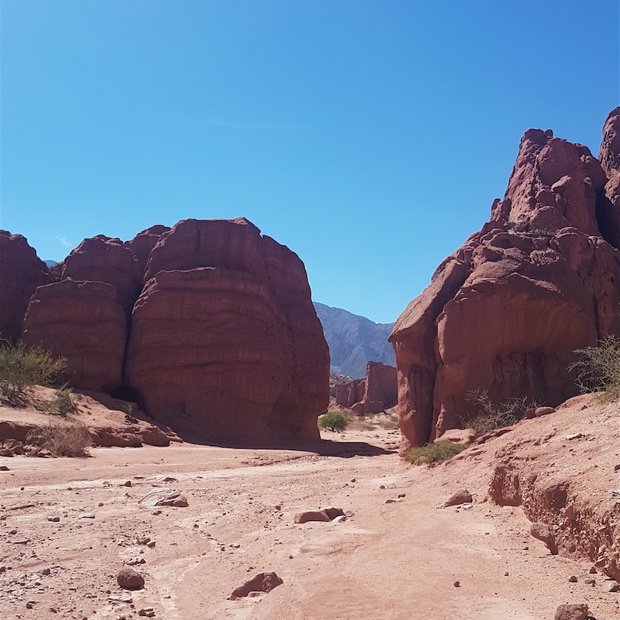
Finca Sophenia Estate Wine Malbec 2017, Tupungato, Mendoza, Argentina (Agent, WineAlign)

All estate fruit from vineyards at 1,200masl surrounding the winery in Gualtallary. Winemaker Julia Halupczok brings out the sweetest red fruit of simple purity and pleasure, augmented with mild oak spice. Gracious, generous and in the end, grateful for such a malbec. Drink 2018-2020.  Tasted November 2018
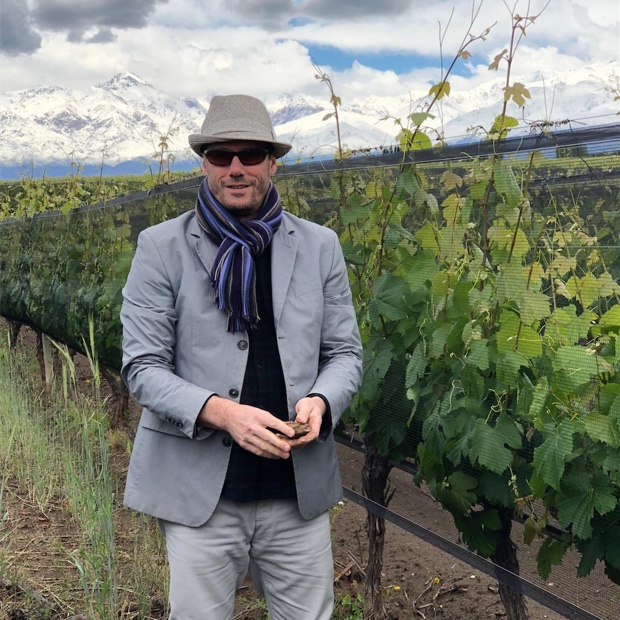
Salentein Reserve Malbec 2017, Uco Valley, Mendoza, Argentina (640854, $17.95, WineAlign)

Located at one of Mendoza’s highest altitude terroirs at upwards of 1,300m in the Uco Valley. Mostly older (third use) barrels bring a combination of peppery reduction and oak accented spice. Actually a bit quiet to begin and then the fits, jolts and sparks begin to announce the presence of pent up energy and near aggression. This will take a couple of years to settle, unfold and allow the protected fruit to speak up. That it will, with good grip and even better structure. Drink 2019-2022.  Tasted November 2018

Cabernet Franc

Zuccardi Cabernet Franc Polígonos 2017, San Pablo, Uco Valley, Mendoza, Argentina (Agent, $29.95, WineAlign)

The Polígonos exploration is a many vineyard sided affair and the altitude is significant at 1,300m from San Pablo in Valle de Uco, Mendoza. A relatively early pick preserves nigh high acidity and the alcohol is beautifully restrained. Just a hint of dusty, pyrazine edgy fruitiness drives the machine and keeps this pulsing with terrific energy. Both food amenability and aging potential here are excellent. If it’s verdant that’s a compliment to local character. Drink 2019-2024.  Tasted November 2018  zuccardivalledeuco  szuccardi  dionysuswines  @ZuccardiWines  @FamiliaZuccardi  @SebaZuccardi  @ZuccardiValleDeUco  @DionysusWinesTO

Rocío Campoy Morist, Alta Vista

Alta Vista Premium Cabernet Franc 2016, Mendoza, Argentina (609081 $17.95, WineAlign)

The estate’s highest vineyards are the source for this beautifully pungent cabernet franc and strike another notch on the varietal card for growing this is in the right spots in Mendoza. It’s a dark fruit expression with high and mighty acidity to find equitable footing. The tangy, tart and intense acidulated liquidity really drives the point even if the woody aspects are just a bit up and above what would make this nearly complete. So drinkable and offering up great interest nonetheless and completely understandable for its style. Drink 2018-2022.  Tasted October and November 2018  bodegaaltavista  hhdwines  @bodegaaltavista  @HHDImports_Wine  @BodegaAltaVista  @HHDImportsInc

Trivento Cabernet Franc Golden Reserve Black Edition 2017, Altamira, Uco Valley, Mendoza, Argentina (AgentWineAlign)

Made by winemaker Germán Di Césare there is a respect for land (alluvial, sand and some lime) but also for varietal. It’s well-endowed, juicy, plummy and full flavoured though it’s oaky tendencies are quietly respectful as well. The tone of the wine hums and resonates with ambience in complete control. It’s really quite fine and just about to enter its perfectly integrated, resolved and balanced window. High acidity example and wouldn’t hurt to settle for just a few more months. Drink 2019-2022.  Tasted November 2018  triventoarg  triventoarg  #escaladewines  @Trivento   @TriventoArg  @TriventoCanada

Bodega Andeluna Cabernet Franc Pasionado 2015, Gualtallary, Tupungato, Uco Valley, Mendoza, Argentina (Agent, $54.99, WineAlign)

Classic Uco terroir at high altitude (1,300m) that mixes alluvial soils with sand, limestone and here loam make for a pretty subtle rendition in terms of cabernet franc. That’s especially true when you consider the small vessels used (225L barrels) and much of it new. You feel the wood in vanilla and berry coulis, a bit of spice and liquified graphite. Quite a molten flow this cabernet franc and with demanding quality in its tannins. Drink 2018-2023.  Tasted November 2018 bodegaandeluna  stemwinegroup  @BodegaAndeluna  @StemWineGroup  @BodegaAndeluna  @stemwine

snap (c) @marylinedemandre

Escorihuela Gascón Pequeñas Producciones Cabernet Franc 2016, San José De Tupungato, Mendoza, Argentina (Winery, WineAlign)

At just under 1,100m this from Matias Ciciani is Mendoza tradition in a varietal glass. There is a later picked, well-extracted feel to the fruit, with a dried component, though plenty of freshness is maintained. It feels like oxygen was introduced to this at the correct time and so it’s developed, ready but also protected from advancing too quickly. Lovely wine with some firm grip and tension inits structure. Drink 2018-2021.  Tasted November 2018  escorihuelag  @Escorihuelag  Escorihuela Gascón

Godello post masterclass on cabernet sauvignon and franc with Viña Cobos winemkaer Andreas Vignoni

Viña Cobos Bramare Cabernet Franc Chañares Estate 2016, Los árboles, Tunuyán, Valle De Uco, Mendoza, Argentina (Winery, WineAlign)

At just under 1,200m, off of well-drained alluvial soils with a good presence of larger stones and pebbles. From an El Niño season of extra rainfall, this is still certainly polished and endowed with a fully rendered liqueur. The varietal character is there though early on it’s behind the veil of wood. Big structure, concrete architecture and timeless really. The Chañares Estate in Los Árboles is clearly capable of delivering one of Argentina’s great cabernet franc terroirs. While this is surely an impressive Uco Valley red the story of varietal and place is yet to truly be told. Drink 2018-2022.  Tasted November 2018  vina.cobos  awsmwest  @VinaCobos  @AuthenticWineON  @vinacobos  @awsmon

Filet Mignon, pumpkin and white chocolate purée, criolla sauce with black olives, pan-seared potato and sea asparagus, Finca Decero

Finca Decero Cabernet Franc Mini Ediciones Remolinos Vineyard 2017, Agrelo, Luján De Cuyo, Mendoza, Argentina (AgentWineAlign)

The simple and emotional response to this special effort is more cabernet franc, in Remolinos, Agrelo, Luján de Cuyo please. Varietal notability for sure with more than ample barrel smoothing and gentle spice character. Tannins are bigger and more grippy than you might think. Plenty of age potential here. Drink 2019-2024.  Tasted November 2018

Vicentin Dorado Cabernet Franc 2016, Mendoza, Argentina (WineryWineAlign)

Labeled the “Tiger of the Rivers” it reeks of American oak, welling with vanilla, lavender and graphite. Couldn’t pick this out as a cabernet franc blind because all varietal notes, Loire, Mendoza or anywhere are hidden behind the Silver Oak meets Rioja sheathing. The palate is an improvement with good savoury flavours, even a squeeze of fresh pomegranate but the acidity is a conundrum. Where are the realities of place? Drink 2018-2020.  Tasted November 2018  vicentinfw  @carotizio ‏ Vicentin Wines

Vicentin Banda de Los Tres Sucios Se Busca Vino/Sin Tomar El Tramposo Cabernet Franc Peligroso E Imparable 2016, Mendoza, Argentina (WineryWineAlign)

Now 18 months in barrel, the name is the Cheater and the band of three; cheater, smuggler and renegade. It’s all oak and more oak with almost no cabernet franc character. It’s red fruit with green, tobacco and concentrated variabilities. Mostly French and some (20 per cent) American oak. Not much linger or staying power in terms of the finish. Whimsy without equitable substance. Drink 2019-2022.  Tasted November 2018
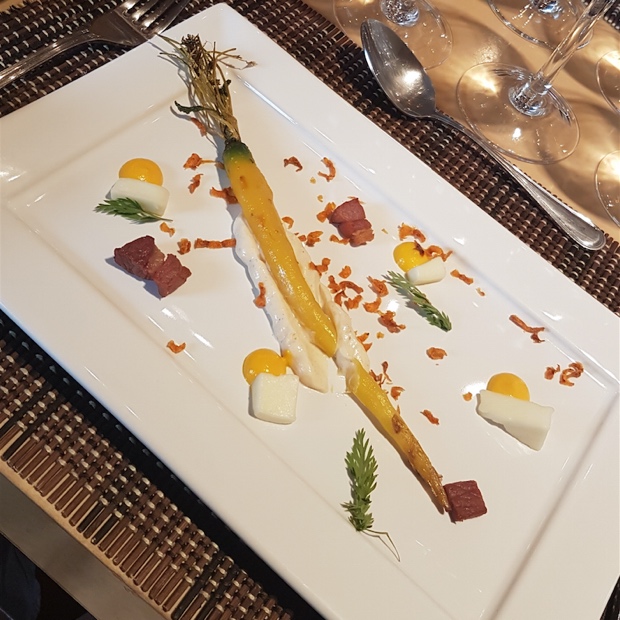
Carrot at Decero

Argento Reserva Cabernet Franc 2016, Mendoza, Argentina (Agent, $18.99, WineAlign)

A beautiful freshness here without too much barrel sheathing, in and out of second and third passage wood. A gainfully employed and effective franc, true to varietal, crunchy and quite serious for value. Incidentally Argento is from the owners of Uruguay’s Bodega Garzón, Chianti Classico’s Dievole and Montalcino’s Podere Brizio. Drink 2018-2020.  Tasted November 2018  bodegaargento  profilewinegroup  @BodegaArgento  @ProfileWineGrp  @bodegaargento  @ProfileWineGroup

Cabernet Sauvignon

Familia Schroeder Saurus Cabernet Sauvignon 2016, Patagonia, Argentina (Agent, $21.95, WineAlign)

After tasting a few examples of the Paul Hobbs influence on these Patagonian wines it is quite clear just how evident there is this smooth consistency of style. Big time ripe fruit, darkening as per varietal and here a sense of cured salumi, all in, no holds barred and also fully developed and rendered texture. That factor times purity allows this to lean linear almost into elegant. Warm, comforting and then with rendered spice. Drink 2019-2023.  Tasted November 2018

Pascual Toso Cabernet Sauvignon Alta Barrancas Vineyards 2016, Mendoza, Argentina (261958, $33.95, WineAlign)

How deep is the impact from the altitude out of this part of Mendoza? Deep as it is wide, from every corner abutting and always facing the wall of the Andes. Even at a low steppe like Maipú. Plenty of barrel style here, mixed with a cool vintage and so the pH is low in such a tricky year. Acidity is high and it’s pretty darn fresh considering the oak. From 700-800m, very floral and so all the parts are somewhat confounding yet also remind of Rioja tempranillo. This needs a few years to settle down. Drink 2020-2026. Tasted November 2018  pascualtoso  eurovintage  @PascualToso  @Eurovintage  @pascualtosowinesargentina  @Eurovintage
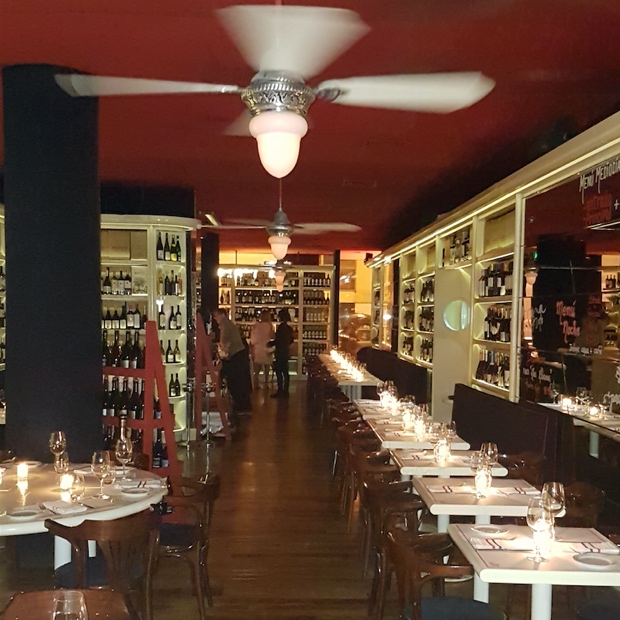
Aldo’s, Buenos Aires

Familia Schroeder Cabernet Sauvignon Saurus 2017, Patagonia, Argentina (Agent, $21.95, WineAlign)

Schroeder is a Paul Hobbs Patagonia outpost and across the board they are truly smooth, cool and polished wines. Tasted after the pinot noir and malbec we see by now the consistency of style and with great evidence. Big time ripe and dark varietal fruit, salumi accents, all in, no holds barred and a cool factor with texture times purity. It finds its way through the ooze to act linear and come out quite elegant. In the end it warms and brings much comfort, finishing with a rendering and lingering spice. Drink 2019-2023.  Tasted November 2018  schroederwines  @SchroederWines  @stemaren  @BodegaFamiliaSchroeder

Tasting at Sottano

Sottano Reserva De Familia Cabernet Sauvignon 2016, Mendoza, Argentina (324707, $24.95, WineAlign)

Sottano’s cabernet sauvignon exhibits less of an oak influence or exaggeration, especially not a hinderance or a matter of make up. Smells like cabernet sauvignon with loads of ribena and black currant on top of each other and then the oak really takes over. Half of the grapes are estate and the other half Altamira in Uco Valley. Not so much a terroir investigation as it is a thing of Mendozan assemblage. It’s far from elegant but it is creamy smooth and velvety, if not the best wine thus far in the portfolio. Drink 2019-2024.  Tasted November 2018  bodegasottano  @bodegasottano  @bodega.sottano

Dessert at Decero

Susana Balbo Cabernet Sauvignon Signature 2016, Uco Valley, Mendoza, Argentina (260919, $19.95, WineAlign)

From a wet year but locales with good exposure and drainage fared quite well. Regardless here is a rich, grippy and powerful cabernet sauvignon (with five per cent franc), of high natural acidity and cumulative depth. The parcels are Uco Valley and Los Arboles just below Gaultallary. Chocolate is cut by a rocky streak from fruit grown over a dry river bed with stones, quite the opposite from Agrelo. It’s a veritable expression of a unique set of alluvial and stony soils. Excellent work to bring out a sense of place. Drink 2019-2022.  Tasted November 2018  susanabalbowines  profilewinegroup  @sbalbowines  @ProfileWineGrp  @SusanaBalboWines  Susana Balbo  @ProfileWineGroup

With Soledad Juncosa, WOFA

Sophenia Cabernet Sauvignon Synthesis 2014, Gualtallary, Tupungato, Uco Valley, Mendoza, Argentina (AgentWineAlign)

A wine made by Julia Hulupczok and Matiás Michelini. From a wild vineyard upwards of 1,300m where ripening is a challenge and tannins can be formidable. There’s a greenness to be sure and yet also a subtle grace about it. A different structure, impossibly dichotic and surely one you would not have found in Argentina just 10 years ago. Drink 2018-2024.  Tasted November 2018  fincasophenia  @FincaSophenia  @Juliahilux  @FincaSopheniaWines  Julia Halupczok

Viña Cobos Bramare Cabernet Sauvignon Marchiori Estate 2015Perdriel, Luján de Cuyo, Valle de Uco, Mendoza, Argentina (Agent, $119.00, WineAlign)

At 1,000m few other cabernet wines out of Valle de Uco will deliver such concentration and polish. It’s also huge in acidity, grippy tannin and overall structure. Almost two-thirds new oak is used and the fortunate thing is really the highest quality fruit able to withstand this woody onslaught. Deep soils work hard for vines less than 25 years old, the upper strata built of clay-loam to sandy-loam and the substrata of river-washed cobbles and round stones. It was an early ripening vintage with harvest temperatures above the historical record. Not surprising to receive such a massive, not so much brooding but more like a swagger of attitude in a cabernet that can go the distance. Drink 2020-2027.  Tasted November 2018  vina.cobos  awsmwest  @VinaCobos  @AuthenticWineON  @vinacobos  @awsmon

Lunch, El Esteco

Bodega El Esteco Finca Notables Cabernet Sauvignon 2015, Calchaquí Valley, Salta, Argentina (WineryWineAlign)

In addition to a more “generalized” cabernet sauvignon, which is so odd to say when you consider the extreme altitude as its source, nevertheless this is the other one from El Esteco and Peñaflor. A single-vineyard draw from an “Alturas” block at 1,700m in the Valles Calchaquíes from winemaker Alejandro Pepa, the lowest of yields, off of deep loamy and sandy soil. Very tart, tight, taut, almost reductive, peppery and really herbal cabernet sauvignon. A true mildly sweet liqueur bitters red, of dark fruit and iodine. Drink 2018-2021.  Tasted November 2018  bodegaelesteco  #mondiaalliance  @ElEstecoWines  @Mondia_Alliance  @elestecowines  @mondiaalliance

Finca El Origen Reserva Cabernet Sauvignon 2015, Uco Valley, Mendoza, Argentina (128991, $15.95, WineAlign)

Grapes are taken from La Esperanza in Vista Flores at 1,200m. Very spicy cabernet sauvignon, with some verdant pyrazine and also high toned, smoky bites and lots of chocolate. Very different winemaking style and from notable pH into edgy, volatile acidity with some dried fruit, raisin character. Drink 2019-2022.  Tasted November 2018  fincaelorigen  chartonhobbs  @Fincaelorigen  @ChartonHobbs  @fincaelorigen  Charton Hobbs Canada

snap (c) @marylinedemandre

Trapiche Cabernet Sauvignon Terroir Series Editíon Limitada Finca Laborde 2013, La Consulta, San Carlos, Mendoza, Argentina (Winery, WineAlign)

At nearly 1,000m and a very high-toned cabernet with grippy acidity and still raging tannins. The 18 months in barrel will take at least three times that amount to integrate, settle and slip into a balanced state of grace. So I’d look to 2020 or so before imagining that transformation to have really begun. Chocolate is all over the finish, in fact it begins deep in the recesses of the mid palate. Drink 2020-2027.   Tasted November 2018  trapichewines  trapichearg  philippedandurandwines  @TrapicheWines  @Dandurandwines  @TrapicheArgentinaInt  @VinsPhilippeDandurand  
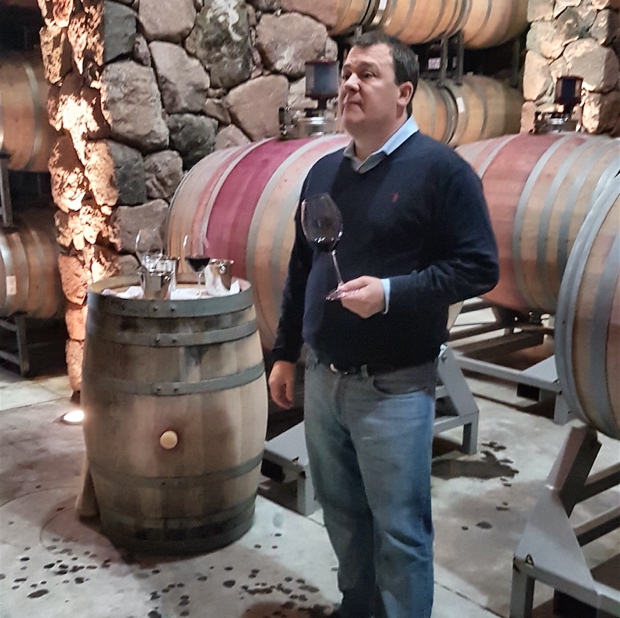
Juan E. Marcó CEO, Finca Decero

Finca Decero Cabernet Sauvignon Remolinos Vineyard 2015, Agrelo, Luján De Cuyo, Mendoza, Argentina (195677, $23.99, WineAlign)

Deep fruit meets savour and takes the time to enjoy a cup of coffee. In cabernet sauvignon you get a sense of the barrel but also the shrubs that grew here before the vineyard was planted. It’s a very transparent varietal wine that acts like a window to the terroir. A bit chewy and yet also soft for a very pleasant mouthfeel. Perfectly lengthy in the grown at altitude varietal way. Drink 2018-2022.  Tasted November 2018

Marilyn Demandre, DiamAndes

Bodega DiamAndes de Uco Cabernet Sauvignon 2015, Uco Valley, Mendoza, Argentina (WineryWineAlign)

Harvested on April 22nd. A gone for it style of cabernet sauvignon in 30 per cent new French oak for 12 months, fully purposed alcohol and ripeness at the threshold of the Andes’ foothills. Big wine, full malo, extracted and concentrated. This is cabernet sauvignon for real, in the big league, time and place. It could only be Valle de Uco. Truly. Drink 2020-2027.  Tasted November 2018
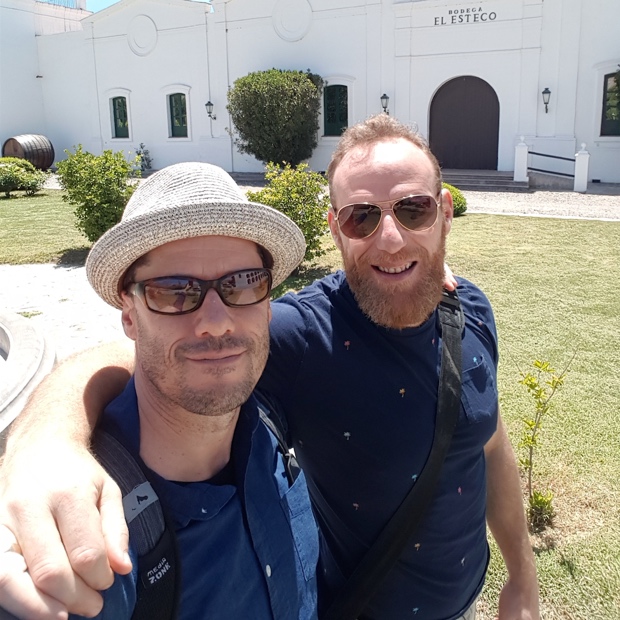
With Yann Janvier, El Esteco

Bodega El Esteco Finca Notables Cabernet Sauvignon 2015, Calchaquí Valley, Salta, Argentina (WineryWineAlign)

The pyrazine factor runs high though in red bell pepper as opposed to green and the sweet fruit is very cherry, tangy, tart and in hard candy form. The closest comparison would be Australian, namely Langhorne Creek or Adelaide Hills, with a bit of Coonawarra in its rosa feel. Deeply savoury. Drink 2018-2023.  Tasted November 2018
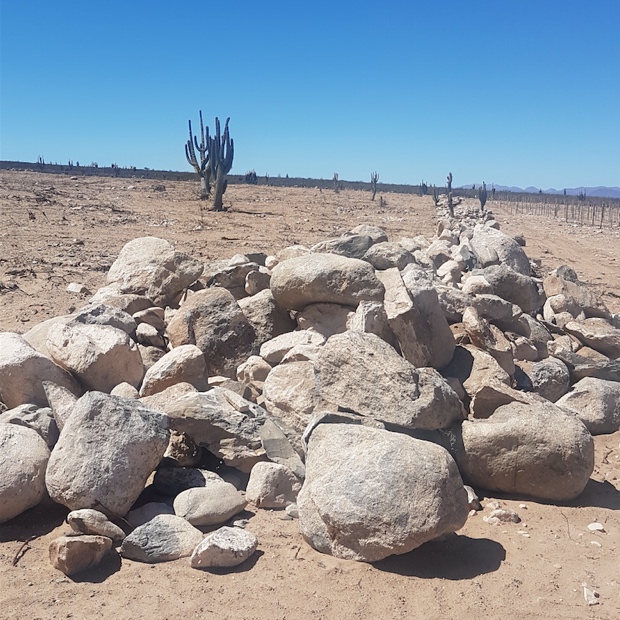
Piattelli Vineyards

Piattelli Vineyards Reserve Cabernet Sauvignon 2017, Cafayate Valley, Salta, Argentina (Agent, WineAlign)

From the high altitude vineyards in Cafayate aged in both French and American barrels. It’s a polished and highly correct cabernet from the most arid of world climates, where at up to 2,000m solar radiation is the real deal. Ripe, savoury and adjustable in every way. The savoury verdancy is the complexity that raises the bar for this particular varietal wine. Drink 2018-2021.  Tasted November 2018
Argento Cabernet Sauvignon Reserva 2016, Mendoza, Argentina (164764, $18.95, WineAlign)

Like the cabernet franc the treatment is a stainless ferment followed by a three-quarter aging in older (two and three year-old barrels) plus one-quarter kept in steel. Luján de Cuyo and Ugarteche are the sources for this reductive, hematic and highly savoury cabernet sauvignon. There’s a depth in its character and an ability of mildly if notably structured tannins. Trades the sister franc’s freshness for grip. Drink 2019-2022.  Tasted November 2018

Paul Madden

Navarro Correas Alegoría Cabernet Sauvignon Gran Reserva 2015, Agrelo, Mendoza, Argentina (AgentWineAlign)

From Agrelo’s rising flats in the 900m range and a true varietal wine of Cassis and Ribena with plenty of brushy savour. Plenty of spice, tobacco smoulder and freshly ground peppery jolts from a winemaker who really likes wood and knows how to use it. Drink 2019-2022.  Tasted November 2018

La Mascota Cabernet Sauvignon 2017, Cruz De Piedra, Mendoza, Argentina (292110, $15.50, WineAlign)

From Maipú a cabernet notched into stainless steel followed by 50-50 French and American wood of second and third passage. Delicate red fruit is treated to a shift towards reduction, of graphite and vanilla, spice and red liquorice. Sweetly fruity and silky smooth. Drink 2018-2021.  Tasted November 2018
Finca Sophenia Estate Wine Cabernet Sauvignon 2017, Tupungato, Mendoza, Argentina (Agent, WineAlign)

Transparently varietal wine and yet just like the malbec; 100 per cent estate vines in Gualtallary, sweet red fruit, gerenous and gracious. The conclusion quickly ascertained is of a winemaker asking for the terroir to be given its due. This 1,200m place talks the talk and walks the walk. It’s lightning struck red fruit, tart, with currants and a liquid chalky feel. Drink 2018-2020.  Tasted November 2018
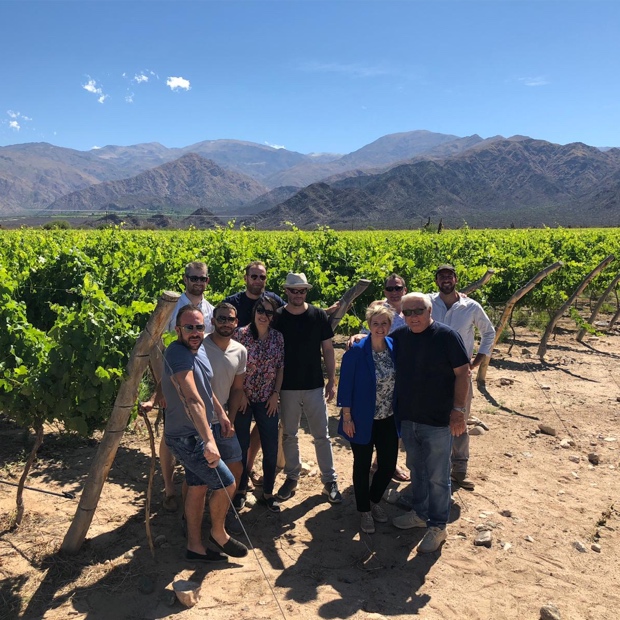
Other Reds and Blends

Familia Schroeder Saurus Select Pinot Noir 2017, Patagonia, Argentina (55442, $23.95, WineAlign)

Sauras makes reference to fossilized dinosaur bones found at the winery right at the surface of the Patagonian terroir. Schroeder’s is effusive pinot noir with a cured salumi character, from a dry and windy place where rainfall is curiously scarce. It has that lack of watering, needing to struggle personality. There is a lovely bit of dusty volatility and an acidity-tension pull. Sweet red fruit, indicative of strawberry and a maritime moment of ripeness make for a perfect entry into the regional ideal. Drink 2018-2022.  Tasted November 2018

Bodega Atamisque Serbal Pinot Noir 2018, Tupungato, Mendoza, Argentina (AgentWineAlign)

Simply stated pinot noir of strawberry red fruit, a fluff of spice and ultimately easy to comprehend. Highly drinkable stuff that speaks a varietal language with obviousness and without complication. Nothing more needs top be said. Drink 2018-2019.  Tasted November 2018  bodegaatamisque  #MCOwines    Bodega Atamisque
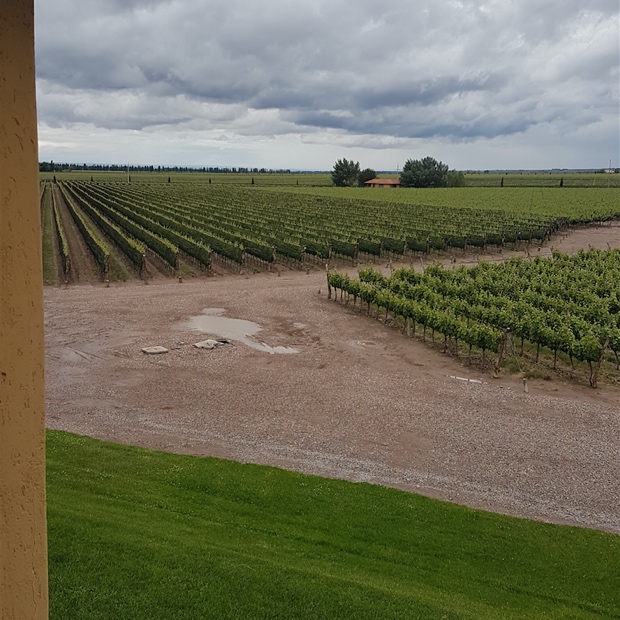
Finca Decero Syrah Remolinos Vineyard 2015, Agrelo, Luján De Cuyo, Mendoza, Argentina (AgentWineAlign)

Remolinos Vineyard is the place of the “tiny whirlwinds,” grown on bare land where only wild shrubs grew. At 3,500 feet (1,050 meters) it is Agrelo’s highest plateau and its syrah is round, full and welling with some iodine and a hematoma of dark fruit. Soft actually with a proper balance in acidity and unaggressive tannins. An absence of meaty, charred or cured character is noted. Quite a pure expression of the vineyard, in a Hobbsian style, at least in terms of syrah. Drink 2018-2021.  Tasted November 2018  fincadecero  liffordgram  @FincaDecero  @LiffordON  Finca Decero  Lifford Wine and Spirits

Yann Janvier

Finca Decero Petit Verdot Mini Ediciones Remolinos Vineyard 2014, Agrelo, Luján De Cuyo, Mendoza, Argentina (Agent, $44.99, WineAlign)

The fruit is different here, almost tropical and certainly developed. Plum, pomegranate, apricot and quince, even persimmon, hung to dry and allowed to turn intensely fruity-tangy-leathery with time. Great acidity, big time grip and lots of forward thinking purpose. Drink 2020-2025.  Tasted November 2018
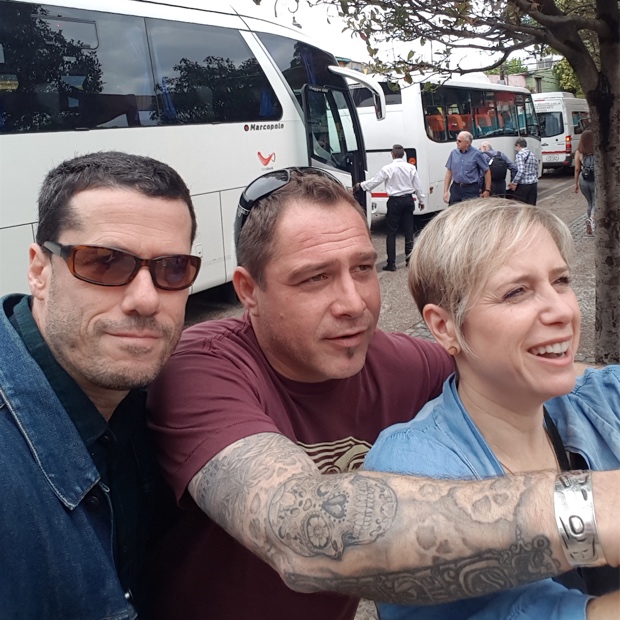
Tourists in BA, with Paul Madden and Marilyn Demandre

Colonia Las Liebres Bonarda Clasica 2018, Mendoza, Argentina (Agent, WineAlign)

Vines are grown in the Pergola method to protect the vulnerable bonarda from direct sunlight. Organic (though label certification will begin on the 2019 label). Early ripening and in fact was picked on February 23rd for a deeply rendered and pitchy red with briny acidity and subtle, if fine and supple tannin. Drink 2018-2021.  Tasted November 2018
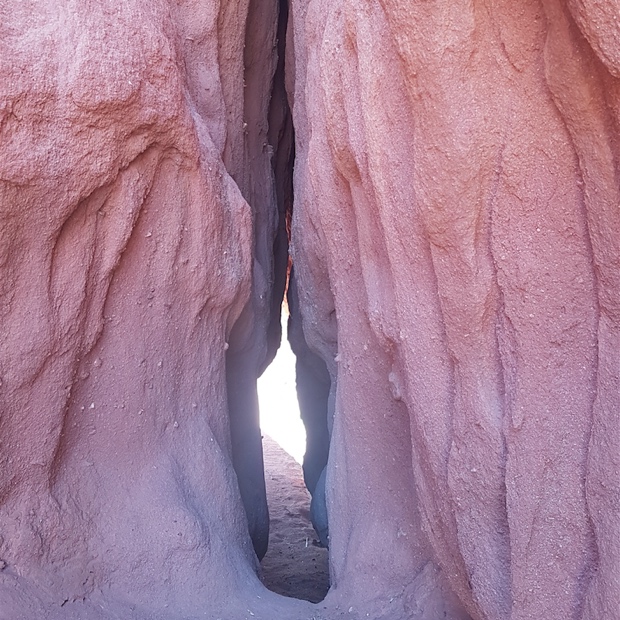
Finca Decero Amano Remolinos Vineyard 2014, Agrelo, Luján De Cuyo, Mendoza, Argentina (270975, $79.99, WineAlign)

The top wine of the estate, the great blend driven by malbec (approx. 66 per cent), with (25) cabernet savignon and smaller percentages of petit verdot and tannat. Lots of clonal material from B1 and B2 malbec blocks in one of the biggest, broadest and most hematic wines around. Smooth, polished and clearly the hedonistic one of the line-up. For the owner, the owner’s cronies and every restaurant list that sells iconic, big bottles. Big, bold flavours as king of the hill at the top of the heap. Drink 2020-2027.  Tasted November 2018
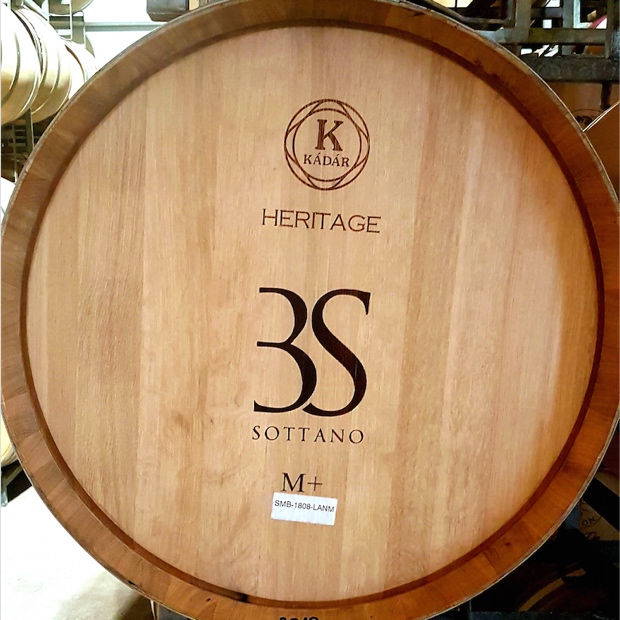
Bodegas Sottano Reserva Blend 2016, Mendoza, Argentina (WineryWineAlign)

“The influence of oak is meritorious,” it is said at the tasting table, in this case 12 months in new and second use barrels, plus several months more in bottle before release. All three oaks are employed; 60-70 per cent French plus American and Hungarian. Includes up to 20 per cent cabernet sauvignon and franc. Also contains malbec from Vista Flores. The aromas are violets, all berries, bitters and simple syrup. Polished and built as a liqueur of a red blend that solves the business equation of supply and demand, in fads and through trends, for what the average consumer is out to buy. A go large red for big box upscale restos, i.e. Milestones and Keg. Drink 2018-2021.  Tasted November 2018

Pablo Cúneo, Head Winemaker, Luigi Bosca

Luigi Bosca La Linda Private Selection Smart Blend Cabernet Sauvignon, Syrah & Tannat 2016, Luján De Cuyo, Mendoza, Argentina (WineryWineAlign)

This Private Selection blend is deeply rendered, hematic with unaggressive pyrazine and pepper purée, so much pepper in every shade and crunchiness. Black fruit everywhere with capsicum bite. Smoky again and the tannat shrinks away in no way at all. Grippy tannins and in the end, a variegated amaro meets roasted bell pepper liqueur. Drink 2019-2023.  Tasted November 2018
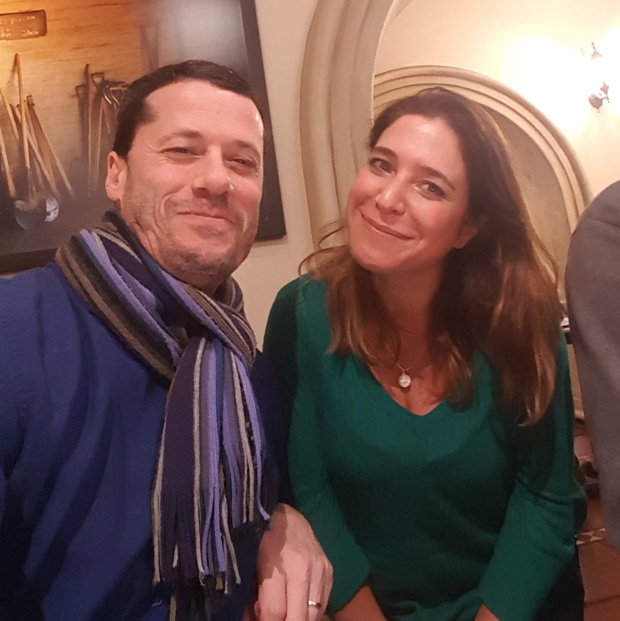
With Gabriela Millan, Luigi Bosca

Luigi Bosca Gala 2 DOC, Luján De Cuyo, Mendoza, Argentina (542647, $36.95, WineAlign)

A Bordeaux blend of two cabernets and merlot, a wine that was first made in 2001. From Vistalba Carodilla y Las Compuertas in Luján de Cuyo. There is a wild berry and peppery aspect, as Bosca wines are always want to be and do. Bountiful and hedonistic but in a very different way than the old vines malbec, now more liqueur and satin texture, with caressing tannins at the iron hand wearing a velvet glove. Drink 2020-2027.  Tasted November 2018
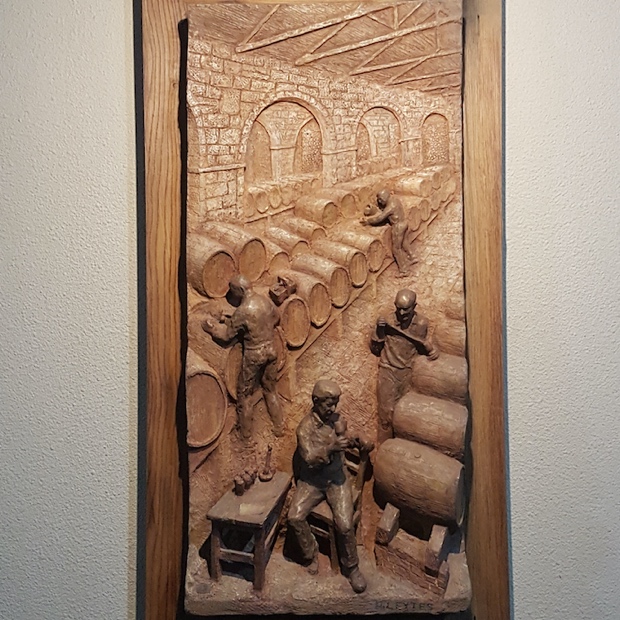
Luigi Bosca

Luigi Bosca Finca Los Nobles Cabernet-Bouschet “Field Blend” 2013Las Compuertas, Luján de Cuyo, Mendoza, Argentina (WineryWineAlign)

A field blend that combines cabernet sauvignon with bouschet which is considered an ancient clone of cabernet franc. The smokiness and spice are now joined by a Dry Creek Valley like dried fruit and bramble character. It’s so rich and the oak is really felt. Needs time though it will go umami-oxidative before these fine but demanding tannins fully settle in. It remains to be seen if that perfect optimum balancing point is really possible but it would be so much fun to wait one out and try. Drink 2021-2028.  Tasted November 2018
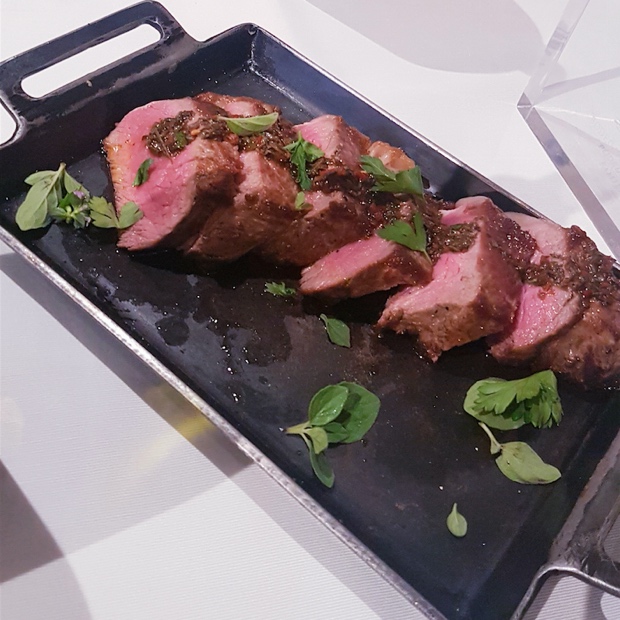
Beef Tenderloin at Luigi Bosca

Luigi Bosca Icono 2011, Las Compuertas, Luján de Cuyo, Mendoza, Argentina (WineryWineAlign)

The blend is malbec (57 per cent) and cabernet sauvignon, in push-pull, touch and go, ying and yang, fraternal twin relationship struggle. The most liqueur, fructose-pectin personality is how this rolls with texture and viscosity. Once again here is the Bosca peppery character and with more structure meets age probability than any wine in the portfolio. With two years further (than the Field Blend) it is beginning to show its settling but there are at least three more to go before the window will really be open. Will travel in to balsamic and other savoury-umami notes when it does. Drink 2021-2028.  Tasted November 2018
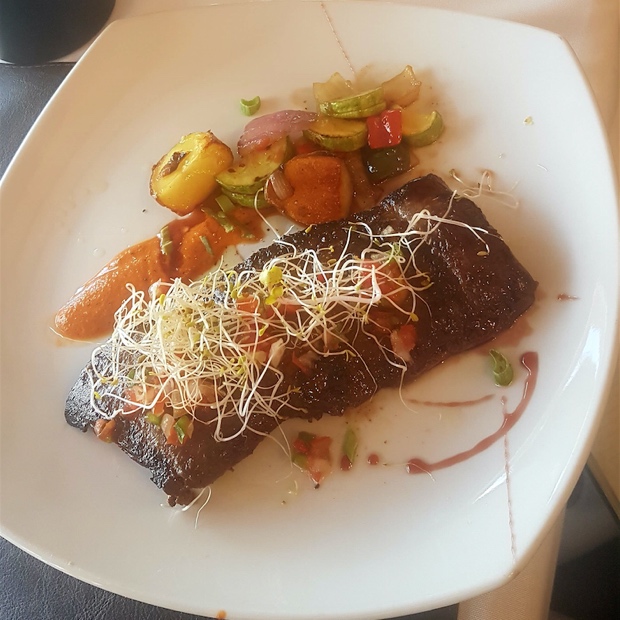
Flank Steak, Domaine Bousquet

Domaine Bousquet Gaia Red Blend Vino Orgánico 2017, Tupungato Valley, Mendoza, Argentina (WineryWineAlign)

The earth is a malbec (50 per cent), syrah (45) and cabernet sauvignon blend. The syrah brings pepper, clove and further edgy baking spice to the red-black fruit malbec. Quite concentrated and while the wood is not over the top it is tipping a bit ahead of all else in a wine trying hard in striving for balance. Juicy and hot at the same time, with high pH and just enough acidity to make it work well with anything pulled from the grill. Drink 2018-2022.  Tasted November 2018  
DiamAndes Gran Reserve Malbec/Cabernet Sauvignon 2013, Uco Valley, Mendoza, Argentina (295063, $32.95, WineAlign)

The signature red of the estate this is three quarters malbec to one quarter cabernet sauvignon set for 18 months in 100 per cent French oak, 50 per cent new. To say this is lush and ambitious would be an understatement but there is no questioning the quality of the agriculture, the fruit and the use of deep pockets technology. There is also humility within this classic modernism though not yet a true indication of soul. The fineness and the precision are so apparent which leads to believe that the human element noted will mean the epiphanies are coming soon. So much potential to become one of Argentina’s great red blends. Drink 2019-2022.  Tasted November 2018
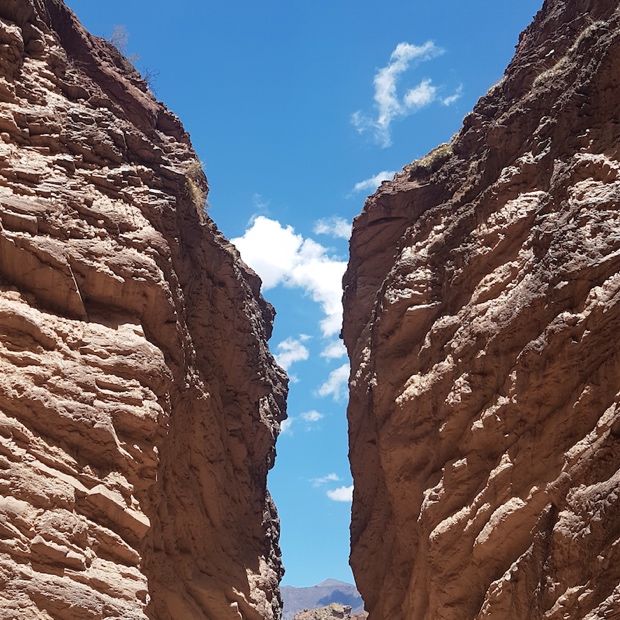
Quebrada de las Conchas

Amalaya Gran Corte 2016, Valle De Calchaquí, Salta, Argentina (Agent, WineAlign)

Malbec is blended with cabernet franc for a most concentrated red of high solar intersection and arid climate where latitude brings ripeness and altitude brings balance. This is the more raisin and dried fruit red in the portfolio. Drink 2018-2019.  Tasted November 2018
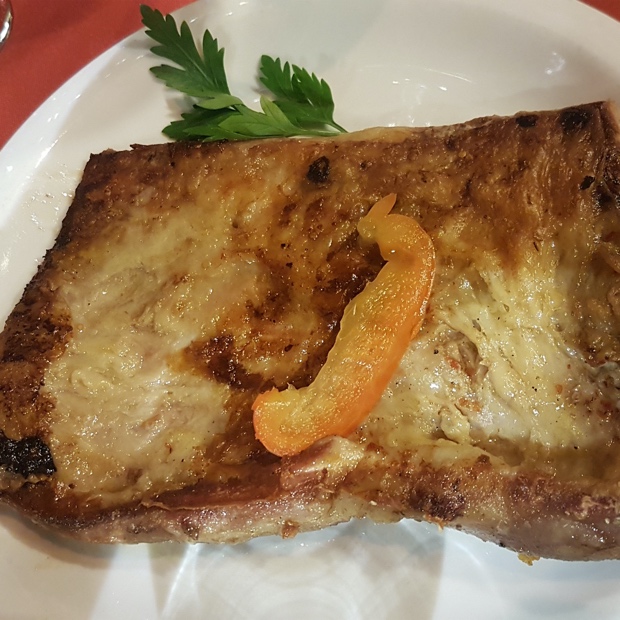
Pork Steak, Restaurante El Rancho, Cafayate

Colomé Lote Especial Tannat 2016, Calchaqui Valley, Salta, Argentina (575308, $28.95, WineAlign)

As noted in the last vintage tannat is the Calchaquí Valley unicorn. What Colomé seeks is something different and on its own tannat acts with deeper rock salt intent. It’s such a concentrated and severely tannic wine, even more so than in 2015. And that is its trump card and speciality. Needs five years to play nice. Drink 2022-2027.  Tasted November 2018
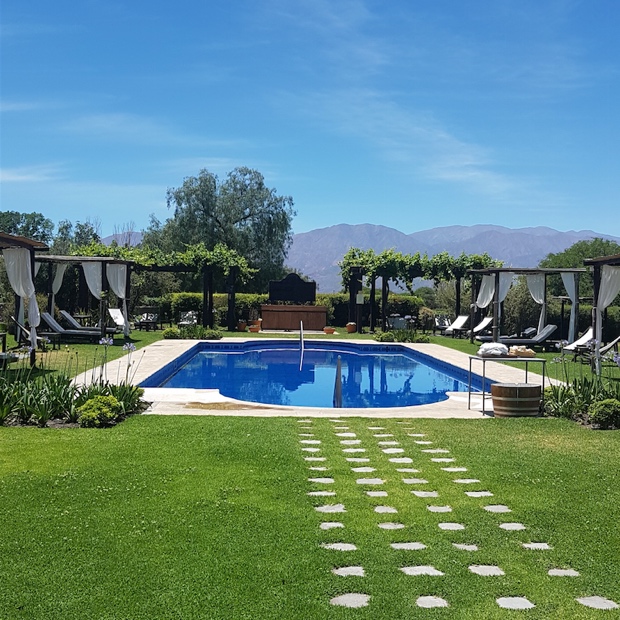
El Esteco

El Esteco Merlot Fincas Notables 2015, Valle De Calchaquí, Salta, Argentina (Agent, WineAlign)

Also from the same 1,700m of altitude in the Calchaquí Valley here merlot takes on the land and arid climate with tomato leaf and red pepper purée. Also quite briny in a southern French, overlooking the Mediterranean way. Quite evolved and a bit oxidative though with high acidity. Unique and ulterior look at merlot. Drink 2018-2021.  Tasted November 2018
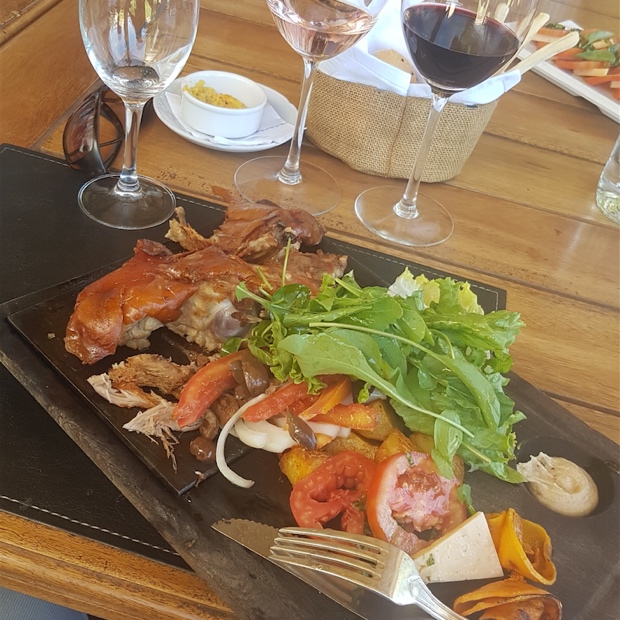
Lunch at El Esteco

El Esteco Tannat Fincas Notables 2015, Valle De Calchaquí, Salta, Argentina (Agent, WineAlign)

Then there is the tannat effect, tannic effect and the way in which this winery has figured it out. High temperatures, sunshine and altitude can lead this varietal to great heights provided the farming is done right. The freshness is miraculously preserved and though the spice and the tannins are off the charts there is some early noted blackberry and white chocolate grace to its character. These parts will help it stay palatable through its evolutionary processes. Drink 2021-2027.  Tasted November 2018
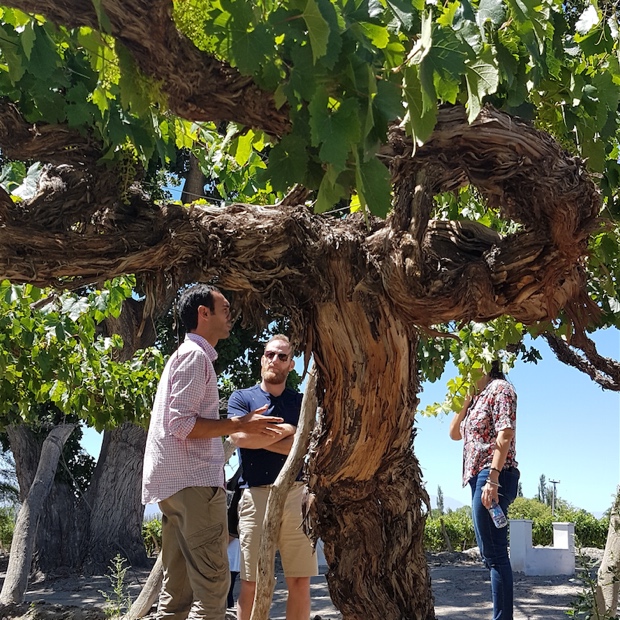
Under the Criolla, El Esteco, Cafayate

El Esteco Altimus Icon Wine 2015, Valle De Calchaquí, Salta, Argentina (Agent, WineAlign)

Altimus “the highest” is a matter of both altitude and the best selection of a harvest’s grapes. Malbec always leads with cabernet sauvignon in support though the other constituents may come from a myriad of other varieties, including and in no particular order cabernet franc, petit verdot, merlot, syrah, tannat and bonarda. Meticulous is the operative word for Altimus, the rolled into one icon, flagship and signature wine of the estate, a Salta blend that speaks to heights, solar radiated intensity and the hand to voice experience of winemaker Alejandro Pepa. Ripe, polished and ultimately no expense spared. Argentina’s other hedonism expressed, apposite to Mendoza in every respect, untamed, without reins and unlimited in potential. The pace may need to change but the power here will simply not be denied, like love lying bleeding in hand. Drink 2020-2026.  Tasted November 2018

Bad Brothers Wine Experience, Cafayate

Piattelli Vineyards Reserve Malbec/Tannat 2017, Cafayate Valley, Salta, Argentina (Agent, WineAlign)

Equal parts malbec and tannat from the high altitude vineyards in Cafayate aged for six months in both French and American barrels. The oak takes no time to announce its presence and the fruit is bold, firm, strong and solid as the granite rock beneath its vines. Big bones and components, of pH, in alcohol, some glycerin and all the necessary adjustments. Strong but fine-grain tannins make for a long finish. Drink 2019-2021.  Tasted November 2018
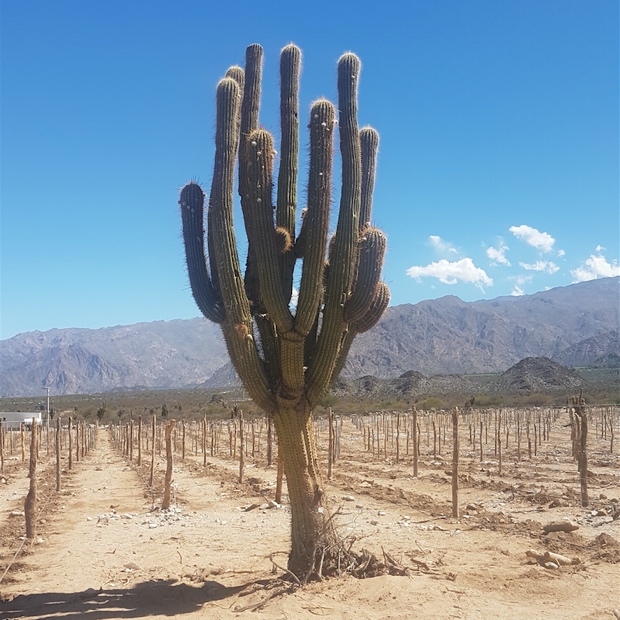
Piattelli Vineyards

Piattelli Vineyards Arlene Series Blend 2016, Cafayate Valley, Salta, Argentina (Agent, WineAlign)

The flagship wine of the estate and named in honour or proprietor John Malinski’s wife, the blend is dominated by malbec (70 per cent), accentuated by (20) cabernet franc and (10) cabernet sauvignon. It’s both ambitious and scarce, spending 18 months in French and American oaks after some concrete egg fermentation. It’s the best of the best, hand picked berry by berry, painstakingly so by a team of daybreak to dusk workers. Again the dials are set on high, with generous pectic-glycerin and generous acidity. Napa Valley in a Chuck Wagner vein is the ideal but the profile couldn’t be further from that proprietor’s blend  truth. Only 560 cases were produced of this flashy malbec blend with its skin pulled taut and mid-section laced tighter than an impenetrable corset. Plastic surgery in a bottle. Drink 2020-2025.  Tasted November 2018

Tupungato

Susana Balbo Brioso 2016, Agrelo, Mendoza, Argentina (Agent, WineAlign)

Brioso might mean enérgico or spirited and this ideal is magnified by “what you can do in a difficult vintage.” Estate single vineyards bring cabernet sauvignon (53 per cent), cabernet franc (24), malbec (16) and petit verdot (13) together for a serious blend. It’s not the round and velvety vintage but rather one so linear, vertical, direct and grippy. Big and structured though quite in balance. Drink 2019-2026. Tasted November 2018

Caminito

Navarro Correas Juan De Dios Gran Vino De Corte 2013, Agrelo, Mendoza, Argentina (Agent, WineAlign)

An ode to a pioneer whose work dates back to the year 1798, when Juan de Dios Correas planted the first vines in the land of Mendoza. This is the estate’s icon/flaghship wine, blending cabernet sauvignon (82 per cent) with malbec and lending a woodworker’s hand for 18 months in barrel. Spice runs linear and long, flavours stretch elastic and acidity points the fruit towards a far away horizon. With low pH and moderately generous alcohol this is a wine from which the winemaker (Gaspar Roby) needs to have paid great attention ion the vineyard. And he does, that much is clear, as witnessed by pitch perfect ripeness. Drink 2019-2025.  Tasted November 2018

Mark Bradbury – snap (c) @marylinedemandre

Viña Cobos Cocodrilo Corte 2016Mendoza, Argentina (Agent, WineAlign)

This Paul Hobbs Mendoza foray began in 1999 and the crocodile is a cabernet sauvignon based blend (76 per cent) from estates and vineyards in Luján de Cuyo and Valle de Uco. The former terroir is fed by the snow-melt of the Andes through the Mendoza River at altitudes ranging from 945-1,100m. The latter’s soils are alluvial, with a subsoil of clay, sand, silt and rock. The supporting varieties are malbec (10 per cent), merlot (nine) plus bits of petit verdot and cabernet franc. Cocodrilo is all Cassis, rich and concentrated, meant to showcase place, grape and the great possibility/potential of the relationship. As the kingpin in a proprietary blend the cabernet brings blunt smoky and spicy accents, with black currants running through. Meet the new big boss blend, same as the old boss, won’t get fooled again. Drink 2019-2022.  Tasted November 2018
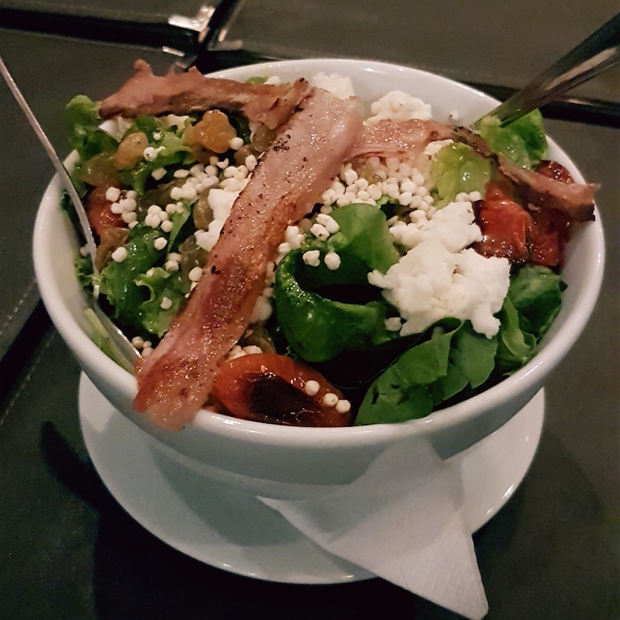
Bad Brothers, Cafayate

Fincas Las Moras Paz Malbec 2016, San Juan, Argentina (520486, $18.95, WineAlign)

Paz is a 50-50 two cabernets joint from Tulum in San Juan at 650m. A multitude of peppers abounds, red fresh and dried mixed with red berry fruit. Savoury, rich and cool, nearly interchangeable with a similar style on the other side of the Andes. Drink 2018-2021.  Tasted November 2018 and March 2019  fincalasmoras  univinsetspiritueux  @FincaLasMoras  @UNIVINS  @fincalasmoraswineryCA  

Alexander Raphael in Tupungato

Unanime Gran Vino Tinto 2014, Uco Valley, Mendoza, Argentina (466938, $29.95, WineAlign)

The unanimous winemaking decisions about beguiling fruit drawn off Uco Valley sites makes this malbec (60 per cent), cabernet sauvignon (25) and cabernet franc (15) blend a big and generous proposition. That and the heavy times spent in oak for twenty months add up to some serious girth, grip and density. I can’t see this thick and lush concoction moving even an inch in the next few years and it may need seven or more to begin its earliest settling period. Dramatic foreshadowing at its best makes us think there will be interesting times ahead. Drink 2021-2027. Tasted October and November 2018
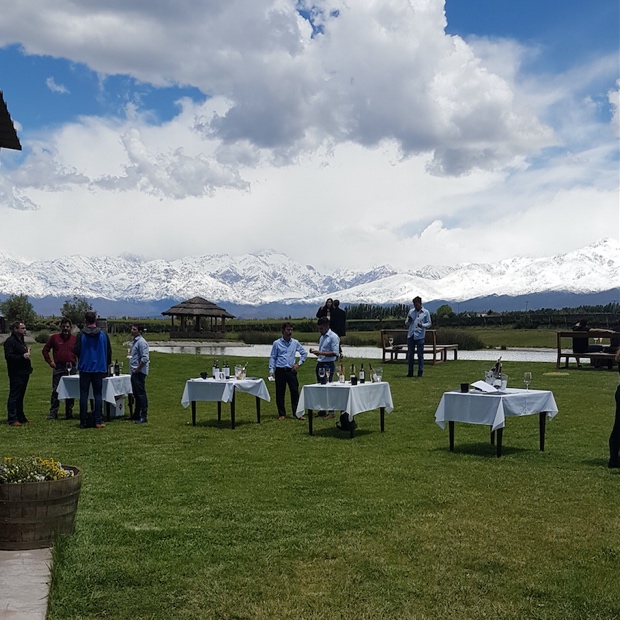
Outdoor Tasting, Domaine Bousquet

Famiglia Bianchi Nebbiolo Malbec 2015, San Raphael, Mendoza, Argentina (Agent, WineAlign)

In San Raphael (and including Las Paredes) off of soils of sandy loam and a 50-50 varietal split. Hematic and ferric at the same time, of tar and ripe cherries. Again the extractive factor is not shy, nor is the resulting concentration. Finishes full and downy, with weight and warmth. Drink 2018-2019.  Tasted November 2018
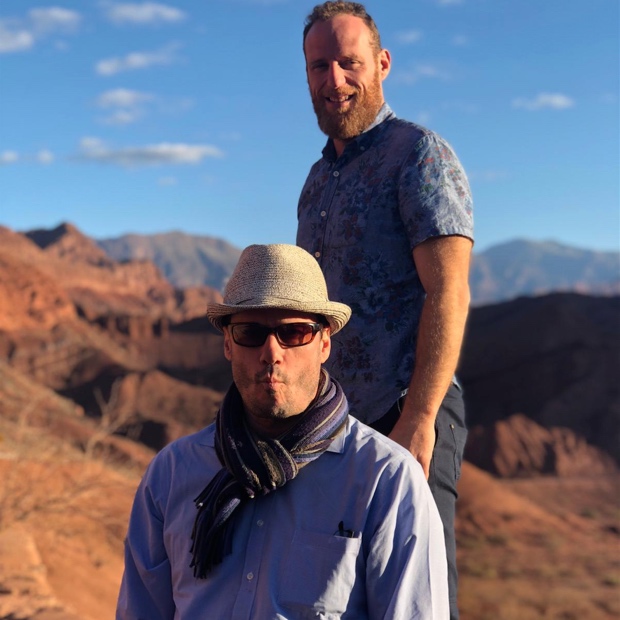
Yann Janvier and Godello – snap (c) @marylinedemandre

Andeluna Pasionado Quatro Cepas 2015, Gualtallary, Tupungato, Uco Valley, Mendoza, Argentina (Agent, $59.99, WineAlign)

The four-poster blend from Gualtallary is led by malbec with support by cabernet sauvignon, merlot and cabernet franc. It’s a big wine filled with extractive liqueur, generously oaked in both French and American wood. Acidity keeps it humming even while it smokes in its cooking ways. Polished and elevated by altitude-driven freshness to mitigate the concentrated fruit and spice welling away in syrupy constitution. While formidable now it will soften and turn into something velvety smooth and rich in chocolate. As for now you’d better locate some salty protein and a decanter. Drink 2020-2026.  Tasted November 2018
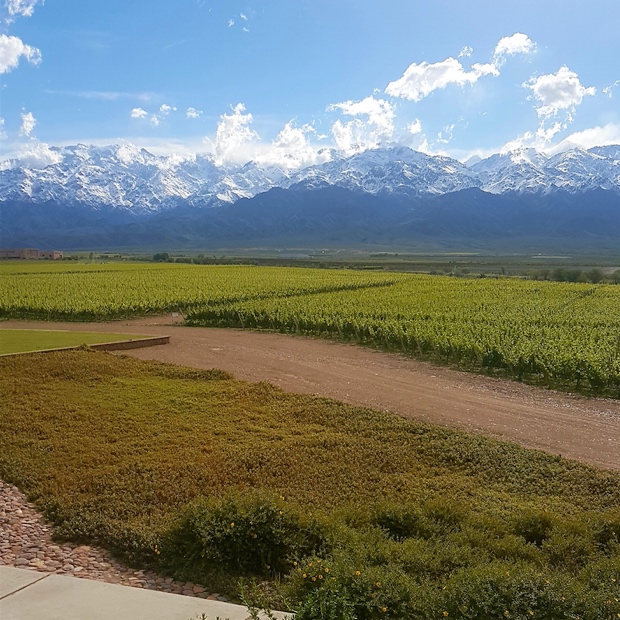
Andes, DiamAndes

Masi Tupungato Passo Doble Malbec Corvina 2016, Mendoza, Argentina (620880, $14.95, WineAlign)

Malbec (85 per cent) plus appassimento augmented corvina spent nine months in French oak. So the question begs, why the methodology and Tupungato? The first answer is easy. Masi. The second is about mountains and weather, the Andes and dry heat. The best substitute for Veronese hills are here in the Uco Valley and the result in 2016 (a cool and wet year) means more savour than raisin and more freshness than aridity. If warmer vintages were carefully crafted to mimic 2016 it would all be smooth sailing. Drink 2018-2020.  Tasted November 2018
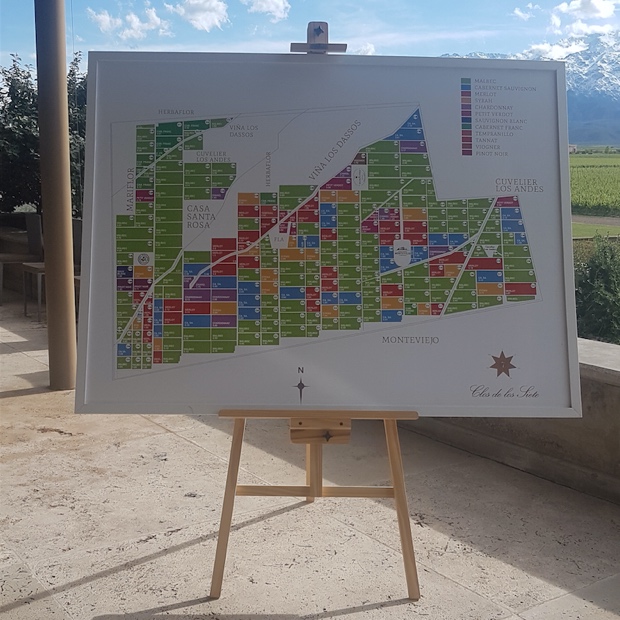
Clos de Los Siete

Clos De Los Siete 2013, Uco Valley, Mendoza, Argentina (622571, $23.95, WineAlign)

Three years further and the skies have now opened to retrospectively reveal a fresher vintage. There is a transference now into some dried fruit with sour edging but spoken with that renewed sense of freshness. The ’13 blend is 53/23/12/8/4 for malbec, merlot, syrah, cabernet sauvignon and petit verdot. Th elevation of vineyards with their Andean backdrop is noted bow, if not before and so proof that the Clos is a wine of structure and needed patience. Five years is now the harbinger, 10 the ultimate goal.  Last tasted November 2018  closdelossiete  philippedandurandwines  @closdelossiete  @Dandurandwines   @closdelossiete  @VinsPhilippeDandurand

Big and bigger, as always, wholly ripe, rich and raging with acidity. Yet somehow the Clos de los Siete finds a way to charm its way through the dark forest and into hearts. Flavour abounds, firmness rules and the finish lasts. Drink 2016-2019.  Tasted October 2016

Good to go!

godello

Where there’s smoke there’s Godello

Twitter: @mgodello

Instagram: mgodello

WineAlign
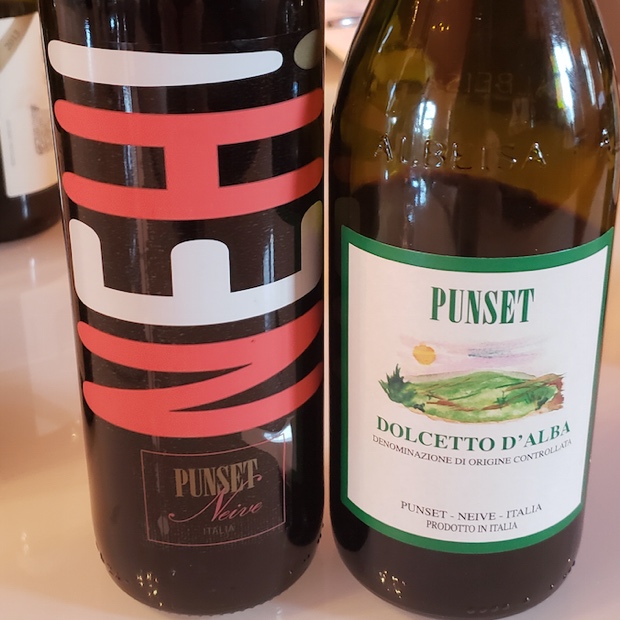
Eighteen mind-blowing wines of 2018

Godello, Museo civico e diocesano d’arte sacra di Montalcino

Welcome to Godello’s annual list of the most memorable, game-changing and mind-altering moments, also known as his 18 mind-blowing wines of 2018. Godello started this year-end assessment first in 2012 though first blessed the list with the moniker for the 14 mind-blowing wines of 2014. Whether it’s the fifth or the seventh incarnation matters little to negligible because in the end it’s all about the who, what and where.

Related – Seventeen mind-blowing wines of 2017

With thanks to the winemakers, friends, colleagues and pirates I welcome you to read on. Godello’s 18 mind-blowing wines of 2018.

Taittinger Comtes De Champagne Blanc De Blancs Vintage Brut Champagne 2006, Champagne, France (55277, $205.95, WineAlign)

Rarities are special for many reasons but in the case of the Comtes de Champagne Blanc de Blancs it’s a matter of chardonnay incarnate. Some details must be kept in the pocket of assessment. Only exceptional vintages lead to its production, fruit is drawn from the finest Côte des Blancs parcels of chardonnay and only the first press juice is used. So what? So the gathering might lead one to think of words like purity, elegance, refinement, finesse and delicasse. In actuality there is the finest wisp of smoke and smoulder, a bite from a perfectly ripe apple and the zen golden taste of honeyed Japanese toast. Who could not be overjoyed to zen out with the Comtes B de B, anytime, anywhere. Drink 2018-2030.  Tasted January 2018  champagnetaittinger  fwmcan  champagne_officiel  @TaittingerUK  @FWMCan  @Champagne_UK  Champagne Taittinger  @FWMCan

Dr. H. Thanisch Brauneberger Juffer Sonnenuhr Riesling Spätlese 2014, Prädikatswein, Mosel, Germany (298182, $40.95, WineAlign)

In a word, thank you, well two, to say how important, generous, fortuitous, philanthropic and poignant it is to taste Spätlese from this combination of producer, vineyard and alcohol. At 7.5 per cent proper and out of arrested necessity the frame on which the ultra-clean fruit and fineness of acidity hang is kevlar light and built to last. The poise and integrity in exhibition toasts lithely from stones warmed and earth cooled by night through excitable seasonal fluctuations. If this does not soothe the savage while wooing the unaware then few German rieslings will. This can’t be missed nor will it pass lips without eliciting a response set passionately in the ethereal and the sublime. Amazing. Drink 2021-2035.  Tasted April 2018  #braunebergerjuffer  awsmwest  germanwine_ca    @AuthenticWineON   @germanwineca  #braunebergerjuffer  @awsmon  @germanwinecanada

Into the South African mystic ~ A formidable line-up led by @mullineuxwines with thanks to Chris, LK @WOSACanada JG @lbstoronto @wosa_za @NicholasPearce_

Mullineux Schist Chenin Blanc 2014, Swartland, South Africa (Agent, $89.95, WineAlign)

Mullineux’s Schist is a 100-120 case production (though only 72 in 2014), from schist, of course, not granite, which adds mid-palate weight and texture. Also from older (36 and 40 years) vines based from soils of the Kasteelberg. It’s a heartfelt message and cerebral pulling string from the 2014 density gifting vintage. Older barrels wrap like a blanket for fruit richer than you’d ever imagine, full-bodied, beautiful and robed in petticoat unction. It’s also dry as the farmland desert. Truly one of the finest chenin blancs from South Africa and beyond. Drink 2018-2027.  Tasted May 2018  mullineuxwines  nicholaspearcewines  wosa_ca  @MullineuxWines   @Nicholaspearce_   @MullineuxWines  @WOSACanada  Andrea Mullineux  Chris Mullineux  Nicholas Pearce  @WOSACA

How to have an epiphany. Taste 25-30 year-old #southafrican white wines. Case in point @kleinconstantia sauvignon blanc

Klein Constantia Blanc De Blanc 1987, Constantia, Western Cape, South Africa (Winery, WineAlign)

Poured by Managing Director Hans Astrom in Cape Town alongside 1994 and 2009. Planted in 1979, the inaugural vintage and the first South African sauvignon blanc was 1986. The 1987 was not labelled as sauvignon blanc but rather as B de B because of the botrytis-affected vintage. Honeyed but not in the way you might expect, not pushed by a petrol-fuelled sweetness but instead as the action of an old world inspired mash up. Like Loire Jolivet Sancerre meeting Huet Demi-Sec chenin blanc head on. The collision explodes into a smoky smoulder with textural consequences. It’s a bees-waxy ethereal treading of chaotic spaces between worlds. The astral travel must have twisted through three decades of nether to arrive at this place, with the low pH vineyard soils to thank. And the magic, despite or perhaps in ode to the ’87 botrytis. In the end aridity wins and the wine drinks so proper, perfect and fine. Drink 2018-2020.  Tasted September 2018  kleinconstantia  halpernwine  wosa_za  @KleinConstantia  @HalpernWine  @hansverbier  @WOSA_ZA  @KleinConstantia  @halpernwine

Alheit Vineyards Sémillon La Colline Vineyard 2017, Franschhoek, Western Cape, South Africa (Winery, WineAlign)

“Qu’est-ce que c’est?” From a vineyard housing both light and dark skinned sémillon and if there are others in this world I am not privy to the information. The resulting wine is 85-90 per cent blanc and 10-15 gris. La Colline was planted in 1936 on the southern slope of Dassenberg and is now farmed by grandson Anton Roux, a direct descendant of the Huguenot refugee Paul Roux who arrived in Franschhoek in 1688. The vines stretch up the hill from 310-350m and it is the fruit from the middle slope that is best to leave for picking long after the chenin blanc. This is the indispensable fruit used in Alheit’s Cartology. Thick skins elevate the natural talking tendencies, from a super healthy pH for drupe of apposite attack and confusing like great whites you would not or should not compare it to. Chris Alheit’s invades your head’s consciousness with this amazing depth for sémillon, with no definable context, pretence or precedent. The impossibility is totally unique in the world and yet utterly South African. It’s both tense and nervous but somehow I can still relax. Psycho Killer sémillon.  Drink 2020-2028. Tasted September 2018  chrisalheit  gsoleil123  @ChrisAlheit  @GroupeSoleilTO  Chris Alheit  Groupe Soleil Fine Wines

Chablis Grand Cru can be found in the commune of Chablis on the right bank of the Serein River and the appellation comprises seven climats; Blanchot, Bougros, Les Clos, Grenouilles, Preuses, Valmur, and Vaudésir. “The terroirs, formed in the Upper Jurassic era, 150 million years ago, are composed of limestone and marl with Exogyra virgula, tiny oyster fossils. Chablis Grand Cru is one of the rare French AOC wines to make reference to its geology, notably the Kimmeridgean age.”

Christian Moreau Chablis Grand Cru AOC Les Clos 2015, Bourgogne, France (Agent, $82.00, WineAlign)

Who has not waited for the sovereign Grand Cru to get together with the 2015 vintage? I’m quite sure Christian Moreau was one of those who looked at the alliance with all his acumen and experience to craft a high point of Chablis benevolence. Christian’s ’15 is beautifully fruity, ultra fresh, richly endowed and reductive perforce. So young and precocious but begging for our patience, his is a model of Les Clos richesse. Resides on the cocotte or chouette side of Chablis with notes of white flowers and fresh herbs. Also layered of fruit over stone upon fruit, of peach, persimmon, citrus and wet stone. Implosive intensity reminds of Chablis Grand Cru structure though Moreau’s is more elastic than many, of a subtle and sultry liquidity. Great potential here. Drink 2021-2031.  Tasted May 2018  @christian_moreau_pere_et_fils  rogersandcompanywines  vinsdechablis  vinsdebourgogne  @ChristianMoreau  @rogcowines   @vinsdechablis  @GrandCruChablis  @purechablis  @VinsdeBourgogne  @BourgogneWines  Christian Moreau  @rogcowines

Makers’ cool pinot noir warmth from regional @wineaustralia as explained by the man, @vintagemarkdavo

Bindi Pinot Noir Dixon 2015, Macedon Ranges, Victoria, Australia (Winery, $85.00, WineAlign)

The Bindi Dixon Pinot Noir is based upon declassified grapes from the Original Vineyard planted in 1988 and grapes from the new Block K, planted in 2001. Crazy horse nose in the way that other varieties of the world will do, or at least try and simulate when they want to be pinot noir. Especially Italian varieties, like nerello mascalese, dolcetto, perricone and montepulciano. This is a natural leader for grape wishes like those of the lesser known. Very wise from the start, from birth, from creation with more savour and salumi then so many wannabe realists. There is a beautiful raw pasta dough note and then an exotica by fruit that isn’t really nameable. If this is the de-class from Michael Dhillon I’d like to meet the classified. Drink 2020-2028.   Tasted June 2018  bindiwines  wineaustralia  @Bindiwines  @wine_australia  @WineAustralia

50 years ago this #chianticlassico entered the world. Suffices to say 1968 was a pretty good year ~ @castellomonsanto

Castello Di Monsanto Chianti Classico Riserva DOCG Il Poggio 1968, Tuscany, Italy (Agent, WineAlign)

“A good, not an outstanding vintage, with some vines affected by botrytis,” explains Laura Bianchi, though truth be told she’s relating the information from stories and legends. You can taste it, in a sweetness that reminds of quince and apricot. Plums are dusted with white pepper, sherry drizzles over sugar plums and in the end, acidity continues to shine. It’s still a dramatic drop of sangiovese, with longevity preservation going back to the era (1962-1969) when the wines were aged in chestnut barrels. This at 50 years of age is so alive, time encapsulated, dew sweetened, ethereal. Drink 2018.  Tasted September 2018  castellomonsanto  @castelmonsanto   @castello.dimonsanto  Laura Bianchi  Carpe Vinum  

Castello Di Volpaia Chianti Classico Riserva DOCG 1987, Tuscany, Italy (Agent, WineAlign)

Chianti Classico Riserva 1987 is habituated and living life to the fullest in a state of complete and utter sound body and mind. It is sangiovese made at a time when it could it not have been known how impressive it would show 30 years later. Volpaia ’87 is from way back in the cold, pre-climate change days, the acid-washed, roaring 80s, now umami-earthy, cherry-plum fruit with some celery and a real salty-sandstone vein. Still blessed by a healthy, rhythmic pulse of acidity and finally, pure pleasure. Chalk it to bottle luck or a vintage that just had an inkling of greatness that would surely come but this is truly a special and memorable moment to taste. It needs saying with a thank you in words to Giovannella Stianti for sharing, but that will never be enough. Grazie infinite. Drink 2018-2021.  Tasted February 2018  castellodivolpaia  rogersandcompanywines  chianticlassico  @volpaia  @rogcowines   @chianticlassico  @volpaia  @rogcowines  @ChiantiClassicoUSA

Elisabetta Foradori

Foradori Granato 2013, IGT Vigneti Delle Dolomiti, Trentino, Italy (Agent, $74.95, WineAlign)

At the pinnacle of Elisabetta and Emilio Foradori’s mysterio teroldego pyramid is this Granato, theoretically or perhaps spiritually interchangeable with the world’s most fascinating and complex fruit, the pomegranate. There are many theories on separating the edible seeds from the pith and skin but those who know do it the right way. Foradori knows teroldego and raises this singular expression the right way. The roots dig deep into the Campo Rotaliano and Mezzolombardo stony alluvial soils with pebbles and gravel for an alternative-indie northern Italian red wine. Raised in large 20 and 30hL casks it’s still reductive, seriously internal and yet to shed layers, open up and externalize. The red fruit is alone and incredible, sweet and tonic-amended at the same time. It’s both retro and timeless. “And the world fell down, when the moon was blue, and you wore a crown and the word was true.” Like a pomegranate. Drink 2019-2024.  Tasted May 2018  eforadori  thelivingvine  @AzAgrForadori  @TheLivingVine  @elisabettaforadori  @thelivingvineinc

Benvenuto Brunello

Talenti Brunello Di Montalcino Riserva DOCG Pian Di Conte 2012, Tuscany, Italy (Agent, $120.00, WineAlign)

Two of the 20 estate hectares in Castelnuovo dell’Abate are dedicated to the the vineyard Paretaio, planted to a sangiovese clone selected by Pierluigi Talenti. Pian di Conte is only made in years deemed worthy of carefully selected grapes from 20-plus year-old vines out of this highly specific, 400m of altitude micro-climate block. It’s a wow Riserva from 2012, perfumed with classic extra time in barrel that Annata Brunello only seems to reach. Notes like dark berries, pipe smoulder and rich ganache, the 2012 is already showing some maturity signs of integration. It’s a fineness of tart dark citrus styled-sangiovese wrapped so tightly around the structure’s finger, indelibly inked, modern and with all parts fine-tuned in synchronicity. Riservas will often sting until they pass at least a ten-year mark but Talenti’s croons romantically with stand-up base note ease. For Montalcino it’s a hit of the vintage and to it I can safely say “I can see the destiny you sold turned into a shining band of gold.” Drink 2020-2030.  Tasted March 2018  talentiriccardo  brixandmortarwineco  brunellodimontalcino  @brixandmortar  @ConsBrunello  Riccardo Talenti  @brixandmortarwineco  BRUNELLO DI MONTALCINO

Feudo Montoni Nero D’avola Sicilia DOC Vrucara 2008, Sicily, Italy (Agent, WineAlign)

The answers are so simple and yet unanswered because magic is involved. You can understand the old vines and the way their fruit turns into wines that begin with ancient wisdom but move so little in the first seven years. What happens at 10 is the turning outward, to express the place and speak the dialect of the cru. The acidity is still high but is now in lift, with fruit at the height and en anergy that flows, really flows, moving across your palate with grace, grab and attention. A contiguous wine from start to finish, with intensity, impression and precision. The structure is come cavallo domato, like a trained horse. Dramatic nd’A but with no drama at all. Tamed and in respect of ancient vine, where it grows and what it wants to give. Ma zitto, a wine to keep you silent. Drink 2018-2029.  Tasted May 2018  feudo_montoni  wineofsiciliadoc  winesofsicily  @FABIOSIRECI  @WinesOfSicily Fabio Sireci Feudo Montoni (Fabio Sireci)  @feudomontoni  @WinesOfSicily

Cottá Azienda Agricola Sottimano cru spoiled by Elena Sottimano and Le Sommelier, Wine Agency ~ going vertical with Barbaresco and John Szabo — at Taverna Mercatto.

Sottimano Barbaresco DOCG Cottà 2010, Piedmont, Italy (Agent, $234.95, WineAlign)

While tasting through Pajoré, Fausoni, Currá and a mini-vertical of Cottá with Elena Sottimano it is here for the first time that some development appears in a wine. This glimpse into what might happen with their Barbaresco may only be a minor crack in the oasis but it begins to fall away from the curative, tannic intensity into something stretching its limbs towards the ethereal. I can ruminate with this nebbiolo swirling around in my mouth while I wonder how far along we are or have come. But it comes with knowing that no matter how much distance we walk there is still a marathon to run. There is this perfect wonderwall of wild cherry spinning like vinyl liqueur over the cheeks, tongue and gums, refreshing and working its magical fruit dance up to the edges of my nerves. “I said maybe, you’re gonna be the one that saves me. And after all,” you’re Sottimano. Drink 2019-2035.  Tasted April 2018  az.agr.sottimano ElenaSottimano  @AzAgrSottimano  @LeSommelierWine  @AziendaAgricolaSottimano  Elena Sottimano  @LeSommelierWine<

La Rioja Alta Gran Reserva 904 2001, Rioja, Spain (Agent, $65.00, WineAlign)

I am convinced the Reserva 904 is just one of those wines that must be held for 15 years before any deep understanding can be resolved. It beats down the adage that says if the fruit is not gorgeous from the beginning it will never be. At 17 years of age this Rioja of 90 per cent tempranillo and graciano remembers with a hyper-sensitive vividness the 40 year-old vines and the four year-old American oak barrels. The memories are crystal clear and it remembers the comfort, protection, protraction and the possibilities. The power is edifying, stabilizing and eventually but without great haste, emollient. La Rioja Alta has produced the 21st century purpose for what it is to mean Rioja. Drink 2018-2025.  Tasted June 2018  lariojaaltasa  riojawine_es  @LaRiojaAltaSA  @RiojaWine  La Rioja Alta  

And @winealign we tasted the greatest of #madiran terroir with the Man himself, #alainbrumont of @montusbouscasse

Château Montus La Tyre 2009, Madiran, Southwest, France (Agent, $135.27, WineAlign)

La Tyre, literally “the tire” is the pinnacle of Alain Brumont’s tannat from Madiran. It’s a wine that needs a decade to even begin to relent and open up for viewing, nosing and tasting. Pitchy to the nth cimmerian degree it would be hard not to see this wine as THE Madiran, the epitome of a red wine from Gascogne. The nose is über-umami and in fact in character it reminds so much more of Brunello Riserva meets sagrantino from Montefalco combined with Taurasi aglianico than it does Bordeaux. Not that Toscana, Umbria or Campania are the reference points but old school meets micro-oxidative winemaking surely is. The formidable acidity and the way in which the expense of barriques inject major influence is similar to what happens when sangiovese is subjected to said same sort of winemaking. The underbrush, garrigue and intensely concentrated argileux all combine, along with toasted wood to make this one of the most intense and structured red wines on the planet. Should seek and realize its best at some point in its late teens or early twenties. Drink 2025-2039.  Tasted October 2018  vinsdemadiran  montusbouscasse  markanthonyon  @MontusBouscasse  @MarkAnthonyWine  Marine Madiran  @MontusBouscasse  @MarkAnthonyWine

Catena Zapata Adrianna Vineyard Malbec River Stones 2015, Gualtallary, Tupungato, Uco Valley, Mendoza, Argentina (132340, $95.59, WineAlign)

In a line up that includes malbec from all walks of Mendoza life as well as some extreme altitude northern examples this is the first wine with a somewhat reductive quality, locked in freshness and very high acidity. It’s a wine of exceptional qualities. There is a highly intellectual and sensory balance executed through perfectly ripe fruit, that fine acidity and even more fineness in tannins. A beautifully linear wine that can come full circle if need be. This is a malbec that creates moisture in your mouth, never drying or taking anything away. A wine that is changing the way we are dealing with the idea of different terroirs in Argentina. Drink 2020-2027.  Tasted November 2018  lauracatenamd  catenawines  winesofarg  noble_estates  @LauraCatena   @CatenaMalbec  @ArgentinaWineCA  @Noble_Estates  @winesofarg  @bodegacatenazapata  Noble Estates Wine & Spirits  @winesofargentina

Roche De Bellene Clos De La Roche Grand Cru “Collection Bellenum” 2006, AC Bourgogne, France (Agent, $279.95, WineAlign)

The great Cru and the magnificent vintage conspiracy is a tour de force, even by the standards of Grand Bourgogne. I’m a bit surprised by the ascension to secondary life but it is Clos de la Roche that goes there early because of wisdom, curative indiscretion and life as it always was, right from the word character. Only this Cru delivers such soulful funk, perfectly classified and ethereal volatility and fully gathered expressions. It’s like a face that flashes a thousand looks in the span of a few seconds, there is that much going on. I am blown away by this. Still needs another year to settle, gather and explain itself. Drink 2019-2032.  Tasted May 2018  domaine_de_bellene  domaine_de_bellene  vinsdebourgogne  @Nicholaspearce_   @VinsdeBourgogne  @BourgogneWines  @BourgogneWines  @VinsdeBourgogneofficiel

Château Margaux 1989, AC Margaux, Bordeaux, France (176057,$1,645.00, WineAlign)

You never want to say that a vintage was perfect but in this case, the vintage was perfect. It seems impossible but the tannins are both present and even a bit drying so at least for this bottle there will be so much residual fruit at the end of the tunnel. Only those tannins seem altered from four years ago because the fruit and the flowers are exactly the same. What rises above, around and in darts between is the fineness and intensity of implosive acidity. Structure in this 1989 is forged by bars of steel as reinforced spikes in the concrete. It may never truly break down. Drink 2018-2044.  Last tasted March 2018  chateaumargaux  noble_estates    @Noble_Estates  @NobleEstates

The 1989 Château Margaux wears the response to a mondo Bordeaux axiom on its sleeve. Are First Growth wines made for people who want darts of instant pleasure?” Twenty years earlier and now like the 2009, here is a quintessential and exemplary vintage, from day one of bud break to the last day of harvest. Its appraisal as anything but incredible is to assassinate it as if it were the Franz Ferdinand of Bordeaux. The examination 25 years later sees a mellow funk meet a peerless and sublime perfume. A wine cast in utmost density, complexity and length. It noses strength, warmth verging on heat but only for a fleeting moment, to gain attention. The iconic wine has reached the first major peak, up a ways from base camp. In this second phase of young adulthood it looks with conceit to the top of the mountain, seeing 25 to 50 more years on the climb. Mr. Pontallier regrets he won’t be around to taste this wine at full maturity. Moi aussi. The fruit lingers in its full, original state, from the moment it passes lips and for minutes onward. Violets trump roses. Château Margaux 1989 is from a vintage that offers the blessing of ethereal balance. Hear her sing, “Ich heisse Superfantastisch!”  Tasted April 2014

Good to go!

godello

Godello, Museo civico e diocesano d’arte sacra di Montalcino

Twitter: @mgodello

Instagram: mgodello

WineAlign
Sottimano a Sottimano

It was back in April when Bernard asked John and I to meet for a quick tasting because Elena Sottimano was in town. Several decades ago her father Rino Sottimano began his nebbiolo journey with just a few hectares but those precious blocks were in the Cottá Cru. It suffices to say that it was more than luck but also the Piemontese version of land meeting human intervention that have brought these wines to the pinnacle they are found to be at today.

Sottimano is the 18 hectare, Neive in Barbaresco project of Rino Sottimano, his wife Anna and children, Andrea and Elena. These are some of the most human, understood, necessary, gratifying and satisfying Piemontese wines you are ever going to taste. They make you think, smile, wink, cry and sigh. They speak of the vineyard and how properly they are treated. The nebbioli get under your skin, teach you what you need to know and tell you that everything is alright. They are good friends, therapists and if need be, they can be festaioli.

Elena led us through delightful dolcetto, ante-brooding barbera, worth twice the price Langhe and then six Barbaresco from four outstanding Cru; Pajoré, Fausoni, Cottà and Currá. Thanks to Le Sommelier, Sottimano’s Ontario agent and Taverna Mercatto, for hosting. Here are my notes on the nine wines.

John Szabo M.S., Godello and Elena Sottimano

Sottimano Dolcetto d’Alba DOC Bric Del Salto 2016, Piemonte, Italy (330738, $22.95, WineAlign)

From a vintage certified as classical for a modern and grounded dolcetto style in the vein of 2004 and 2010. This from the first vineyard planted by Elena’s father in 1975 and 41 years later turns out a purity of fruit for one of the most important modern vintages in Piemonte. Warm days, cold nights, easy and simple work in the winery, so overall just perfect conditions. Simply put this is found to be rich, salty, fresh and bright. Bric del Salto is a fantasy name, the “jump or peak of the hill,” made up for this combing of three vineyards. It’s curative, made ideal with hard crumbly cheese and a bowl of red sauce pasta plus a slice of pizza. And this bottle. Rendered only in stainless steel, fresh and perfect. Drink 2018-2020.  Tasted April 2018  az.agr.sottimano ElenaSottimano  @AzAgrSottimano  @LeSommelierWine  @AziendaAgricolaSottimano  Elena Sottimano  @LeSommelierWine</

Sottimano Barbera d’Alba DOC Superiore Pairolero 2015, Piemonte, Italy (Agent, $33.95, WineAlign)

Barbera’s is a similar vinification, 25 days like Barbareso, a long maceration, bringing the magical, natural cure and understated barbera skin affection. Sees a small (10) per cent of new French wood plus second, third and fourth passage barrels, eight to 10 months sur lie and natural malolactic. There is nothing so wound, tart, tang and gently sour like this, in fact it’s perfect for barbera. Red fruit perfect, no darkness and no brooding. Vines are in San Cristoforo and Basarin, on sandy clay soil, keeping it mineral, salty, long and ultimately classic. Drink 2018-2022.  Tasted April 2018

Sottimano Langhe Nebbiolo DOC 2015, Piemonte, Italy (454017, $32.95, WineAlign)

Langhe Nebbiolo is from the Basarin Vineyard, not used for single-vineyard Barbaresco because the vines are only 15-20 years old, planted in 2000. It is aged for one year in oak, eight to 10 months sur lie. Elena Sottimano admits that perhaps their fruit will be committed to Basarin as they age, but for now they are separated or if you will, de-classified. There is a cool, mentholated streak running through, with a particular spice and though it used to be 25 per cent new barrel, starting in 2015, it’s a mere 10 per cent new. The lees is so apparent, in texture but also in the way the wine knows itself from birth and doesn’t need time to announce who and what it is. Chalky and tannic in a greater ionic way, prosodic of two short followed by two long syllables, architectural in the way nebbiolo must be. At this price and labeled Langhe this from Sottimano slings more pleasure and as much structure as at least half af all Barbaresco twice its cost. Drink 2019-2022.  Tasted April 2018

John Szabo M.S. and Elena Sottimano at Tavrena Mercatto

Sottimano Barbaresco Pajoré DOC 2015, Piemonte, Italy (Agent, $103.95, WineAlign)

Pajoré materializes off pure limestone soil at a hovering 380m of altitude. It’s really just a name this Cru, dialectical, as is its nebbiolo. Sees two years in 220L barrels made by François Frères, La Tonnellerie who receive a sample of your wines before deciding what barrels to send, if any. Time on lees is 20 months and there is no racking. This is pure nebbiolo in requiem of zero to next to no sulphur. It gets neither more natural nor more understated and exacting as this. The wine knows itself like a great human perfectly comfortable in its own skin and it might live to 2040 without experiencing one single moment of stress. It is truly a remarkable condition of the human meeting vine equating to wine spirit. Pajoré is a Cru worthy of a word to describe what you would get by combining ambiente with intervento umano. As in Climat, but Italian. Tannins are as formidable and elegant as there can dialectically be. Drink 2021-2035.  Tasted April 2018

Sottimano Barbaresco Fausoni DOC 2015, Piemonte, Italy (Agent, $103.95, WineAlign)

Fausoni is a small one point five hectare plot of sand and clay only six kilometres away from Pajoré. The vines range in age from 50 to 70 years old and there is certainly more depth and richness though contrastively speaking, more freshness and open aromatic perfume. There is also a verdant note and then this taut fixture of body and architecture in structure through the overall feeling. Deeper and more pressing, an antithetical nebbiolo, intense and perhaps not what you would expect. Likely a matter of sub-strata, of mystery and enigma. Pajoré just seems to intuit its character while Fausoni will need to feel, shift and oscillate its way through life. As with Pajoré the wood is retrofitted by La Tonnellerie François Frères, surfeiting Fausoni for a life more passionate and hard-lived if not quite as calm and relaxing as the one enjoyed by Pajoré. Top quality nebbiolo irregardless of style or fashion. Drink 2019-2032.  Tasted April 2018

Cottá Azienda Agricola Sottimano cru spoiled by Elena Sottimano and Le Sommelier, Wine Agency ~ going vertical with Barbaresco and John Szabo — at Taverna Mercatto.

Sottimano Barbaresco Cottà DOC 2015, Piemonte, Italy (Agent, $103.95, WineAlign)

From the two point eight hectare vineyard with 45 year-old vines, Cottà receives the same élévage as Pajoré and Fausoni, on skins for 25 days and in Tonnellerie François Frères for 24 months. Fifteen per cent are new and the remainder of the barrels have been used up to four times. It’s like a combination of the other Cru, their best of both worlds in symbiosis, deep and exacting, comfortable and with a structure that never quits or breaks down. It’s unrelenting, with aromatic exoticism, power, precision, more fragrance and balance. The tannic building blocks are exceptional, verging into unparalleled. Drink 2022-2045.  Tasted April 2018

Sottimano Barbaresco Cottà DOC 2013, Piemonte, Italy (Agent, $178.95, WineAlign)

A confounding vintage for thinking about drinking in 2018 because it is simply too young but there can be no discounting the acumen of restraint and the wisdom imparted. This from a Cru that knows full well what it will give. The 1970s planted vines add up to a shade under three hectares, southwest facing, in delivery of energetic red fruit, sweet herbs and that always present Sottimano cure. Cottà is the estate’s great constant, with the most layers needing to be husked for its kernels of wisdom and pearls of pulchritude to be revealed. Patience will be your virtue if you can just wait for the reward. Drink 2021-2033.  Tasted April 2018

Sottimano Barbaresco Cottà DOC 2010, Piemonte, Italy (Agent, $234.95, WineAlign)

While tasting through Pajoré, Fausoni, Currá and a mini-vertical of Cottá with Elena Sottimano it is here for the first time that some development appears in a wine. This glimpse into what might happen with their Barbaresco may only be a minor crack in the oasis but it begins to fall away from the curative, tannic intensity into something stretching its limbs towards the ethereal. I can ruminate with this nebbiolo swirling around in my mouth while I wonder how far along we are or have come. But it comes with knowing that no matter how much distance we walk there is still a marathon to run. There is this perfect wonderwall of wild cherry spinning like vinyl liqueur over the cheeks, tongue and gums, refreshing and working its magical fruit dance up to the edges of my nerves. “I said maybe, you’re gonna be the one that saves me. And after all,” you’re Sottimano. Drink 2019-2035.  Tasted April 2018

Sottimano Barbaresco Currá DOC 2013, Piemonte, Italy (Agent, $178.95, WineAlign)

Only 200 bottles produced from this single hectare Cru of vines edging beyond 55 years-old. The vinification process mimics that of Pajoré, Fausoni and Cottà but Currá remains in bottle for an additional six months because it is special and asks for this. There is humour in that minor extension because opening this Cru from such a recent vintage any earlier than seven or eight years into its life will deprive you of its magic and potential charms. The smell of the sea is in Currá, fossil shells briny and salty, certainly mineral. It’s measurable, quantifiable and verifiable. It’s there in the taste. The reaction is more than one of epiphany, it’s a revelation. No, in fact it’s more than that. If for a moment it is explainable it then moves on and flees, remaining out of grasp. Damn you Currá. Drink 2021-2045.  Tasted April 2018

Good to go!

Godello

Twitter: @mgodello

Instagram: mgodello

WineAlign
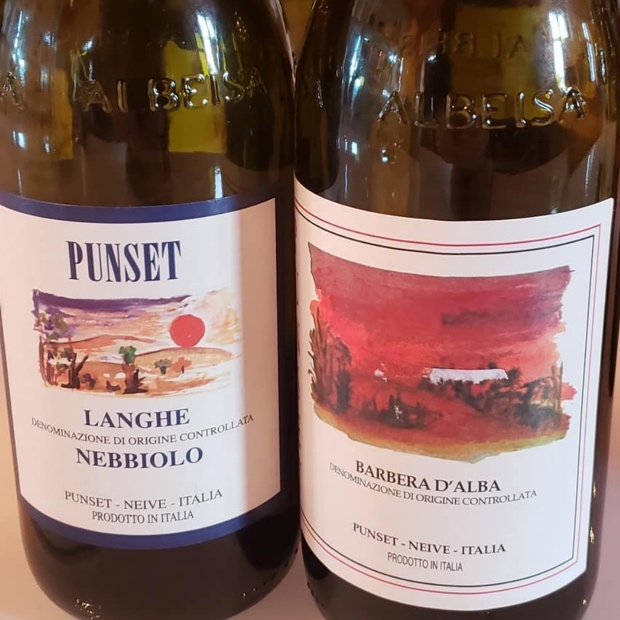
Seventeen mind-blowing wines of 2017

No, wines do not have to be old to blow your mind but there is just something so mysterious, magical and hypnotizing about the experience of age in preservation. When we use the cliché “tasting history” it distracts from what is most poignant about tasting older wines. It’s the humbling and how wisdom, acumen and meteorological circumstance conspire to take us away from our troubles, to forget about life for a while and to realize that forces greater than us are truly in charge.

There are also young wines so precocious and wise beyond their years that they somehow intuit the future. These too can blow our minds, addle us as if lovestruck and disoriented so that only this confluence of smell, taste, texture and structure are what we know. It takes all kinds to populate a list that separates greatness from the rest, but that does not means only 17 wines were tasted to be extraordinary in 2017.  It means that some struck a vein while others grazed on the skin. Most important is that all were experienced because someone chose to share them. Thank you to the producers and the benefactors for bringing these bottles to light.

Related – 16 mind-blowing wines of 2016

Honourable Mentions

Château Haut-Brion 1986, Saffredi 2004, Brokenwood Sémillon 2007, Domaine Gros Frères Clos Voguent Musigni 2013, M. Lapierre Morgon 2010, Domaine G. Roumier Bonnes-Mares Grand Cru 1996, Domaine Jamet Côte-Rôtie 2006, Coppo Barbera d’Asti Nizza Riserva della Famiglia 2009, Le Fraghe Bardolino 2015, Sordo Barolo Riserva Gabutti 2006, Carobbio Chianti Classico 1990, J & J Eger Kékfrankos 2006, Château Léoville Las Cases 2001, François Cotat Chavignol Sancerre Rosé 2009, Domaine La Vieux Télégraphe Châteauneuf du Pâpe La Crau 2005, D’Arie Syrah 2012, Julia Bertram Handwerk Spätburgunder 2015, Planeta Carricante Eruzione 1614 2015, Dominus 1994, Château Lafite Rothschild 1998 and Esmonin Gevrey-Chambertin Clos Saint-Jacques 1993.

Several times a years I gather with groups of like-minded, wine-spirited folks, to break bread and to pop established icons, singular archetypes, varietal rarities and supernumerary misfits. Many of the wines on this 2017 list are a result of having been fortunate enough to be included in repeated repasts with pirates on picnics and doctors at dinner.  Most of the rest are travel related, in fact this year alone I tasted approximately 700 sangiovese, 200 barbera, 200 corvina and 100 nebbiolo. So many more of those praiseworthy reds and rosés deserved spots on this docket but alas, the list is short. I do not fulminate them, nor you neither. Here are Godello’s 17 mind-blowing wines of 2017.

It began like this and I got 15 dollars hid above the stove.

Möet & Chandon Dom Pérignon Vintage Brut Champagne 1990, Champagne, France (280461, AgentWineAlign)

Tasted blind the hue immediately leads the mind in one of two directions; hot vintage or decades of age. I’m tempted to consider a combination of the two, so the decision is warm vintage and a minimum of twenty years age. Further introspection takes me back to 1990 and when the reveal confirms this and in the abide of Dom Pérignon it means one thing. Start the process of thinking again. This wine has done its work, having accumulated a diverse set of developmental traits and processed them so that the language it now speaks is clear and pure. At 27 years of age it’s delicate, smooth, soft-spoken and settled. The finest golden toast (again in hue and more importantly in aroma) glows into the creamy texture, like preserved lemon transformed into gelid curd. The mouthfeel is exceptional with baking bread rising, puffy and satiny glazed across the palate. The seamlessness of this Champagne seeks, solicits and makes rendezvous with no peer or challenger its equivalent, not should any comparison be made. Kudos to a wine that stands on its own and makes you feel this good. It will continue to do so up to and perhaps beyond its 40th birthday. Drink 2017-2030.  Tasted March 2017  moetchandon  @chartonhobbs  @MoetUSA  @ChartonHobbs  @Champagne  Moët & Chandon  Charton Hobbs Canada  Champagne

Famille Picard Saint Aubin Premier Cru Le Charmois 2014, AOC Bourgogne (522078, $57.95, WineAlign)

This is a chardonnay to place the village of Saint Aubin in a remarkable light if only because it’s the most stony, flinty and tightly wound example just about ever. The Charmois is the elevator that carries the appellation into a purity of climat for Bourgogne Premier Cru. In this case terroir delivers the idea of Climat but it is the interaction of the maker that defines the notion simply because there is no mess and no fuss. It just feels like drinking straight from a bleed of the calcareous land, as might happen in a limestone goblet filled with Montrachet. You have no idea how good a deal this is from the most excellent 2014 vintage. Drink 2019-2028.  Tasted October 2017  domainesfamillepicard  profilewinegroup  #bourgognewines #FamillePicard  @ProfileWineGrp  @BourgogneWines  Domaines Famille Picard  Profile Wine Group  Bourgogne Wines

Domaine Bouchard Père & Fils Chevalier Montrachet Grand Cru 2015, AOC Bourgogne (Agent, $480.00 WineAlign)

Chevalier-Montrachet is a matter of aromatics, of the finest of the finest, preserved, reserved, impressionable and of quietly powerful impression. The deistic and the parrhesiastic are reached in this Grand Cru, “one who speaks the truth to power.” Elysium in chardonnay is captured for the perfectly ripe orchard and crushed stones. The young palate is almost severe but takes its first steps down the most ethereal path, with the finest drawn lines and rendered streaks of energy lit, sparked and smouldering. This is Bourgogne of intrinsic value, slowly rising to a crescendo where a flame flickers but within the sheltered lamp of a hurricane. How is such harnessed power even possible? Only like this, in Chevalier-Montrachet . Drink 2021-2037.  Tasted April 2017  bouchardpereetfils  woodmanws  vinsdebourgogne  @BouchardPere  @WoodmanWS  @VinsdeBourgogne  Bouchard Père & Fils  Woodman Wines & Spirits  Vins de Bourgogne / Burgundy wines

Domaine Sigalas Kavalieros 2015, Santorini, Greece (SAQ 11814421WineAlign)

I’ve not yet tasted the Kavalieros 2014, so this single-vineyard, 18 months on lees done in stainless steel Kavalieros 2015 made by “Mr. George” is the benchmark for Santorini, assrytiko and salty white wines everywhere. The first release was 2009. Straight up and turning the world on its head, like the old man on the label and upside down against Apollo’s Aegean Cyclades. This ’15 richer still, more than the seven villages wines and a hyperbole as compared to the entry-level assyrtiko, of deeper mineral, compressed, layered and fantastic. Crushed rocks permeate in aggregate, it’s quixotically saline and textured, of intense presence and finally, structured. For 15 years at least. A late shot of natural Santorini tonic swirls in centrifuge with assyrtiko so wound up. This will need 10 years to unwind and allow for cracks to form in the mineral shell, followed by the birth of its fruit. It should never be forgotten that assyrtiko can and will show fruit but with Kavalieros you’ll have to be patient. Drink 2020-2031.  Tasted March 2017  @DomaineSigalas  @MajesticWineInc  winesofgreece  domainesigalas  @MajesticWineInc  @DrinkGreekWine  @DomaineSigalas  Panayiota Kalogeropoulou  Wines of Greece

Penfolds Grange 2011, South Australia (356121, $750.00, WineAlign)

There is just something about cool, rainy and irreconcilably regarded vintages that brings out the best in wines made by winemakers of elite acumen. Deliver your best from the greatest of harvests but also “give me your tired, your poor, your huddled masses yearning to breathe free. The wretched refuse of your teeming shore.” Leave the middle of the road to someone else. This Grange faced adversity and won. The yields and output may only be 50 per cent of normal but what gives is the silky texture of Grand Cru Bourgogne. This chosen one of singular vision to represent the multi-tiered and faceted Penfolds Estate tells us about the world inhabited by the instinctual and the ethereal. It combines tannin, structure and aesthetic deeply engrossed in the shadow of its own looming destruction, but is designed from the first with an eye to its later existence as a ruin, forever preserved. If a perfect plum and a magical olive were crossed they would welcome this collective spice of no equal. The quality of bite and chew lead to rumination and the savour rests on a chart clearly defined but in high contrast and only to itself. An analgeisc meets hypnotic cooling is mentholated though if not specific in origin it is only and highly natural. Legendary vintage? Why not. This calm, cool and collected 2011 may just outlast some of the more recently considered top vintages of ’06, ’08 and ’10. Drink 2019-2035.  Tasted May 2017  penfolds  markanthonyon  wineaustralia  @penfolds  @MarkAnthonyWine  @Wine_Australia  Penfolds  @MarkAnthonyWine  Wine Australia

A deep #eredichiappone vertical delve with Daniele for perspective and a release of endorphins @ilNizza possibilities #progrettovini #collisionimonferrato

Erede Di Chiappone Armando Barbera D’asti Superiore Nizza DOC RU 2006, Piedmont, Italy (WineAlign)

RU by Daniele Chiappone is this, at first something altogether inexplicable but when tasted alongside his 2005, 2010 and 2011 it makes such perfect sense. Sense in where this fits in his evolution and to speak on behalf of the age-worthy ability of Nizza barbera. In a world where barbera perfume so often performs with perfunctory brevity this goes on and on. It is a unique combination of fennel frond, incense, hibiscus and violet to create an intoxicant and an anaesthetic. Yet another exceptional vintage is revealed, traditional and so alive, spun from earth crusting over cherry and then this smooth leather. The portal backwards 10 years allows for looks forward 10 more, especially into what’s coming from 2015 and 2016. To say the match with a prodigiously spiced in aromatic ragu over linguine was agreeable would be the understatement of the Monferrato century. Perfectly timed acidity seals the deal. This is barbera folks, of wit, age and history. Drink 2017-2021.  Tasted July 2017  erededi  ilnizza  @erededi  @ilNizza  Erede Di Chiappone Armando  IlNizza

Robert Mondavi Reserve Cabernet Sauvignon To Kalon Vineyard 1999, Napa Valley, California (WineAlign)

This from a time when Mondavi labeled the reserve cabernet sauvignon as “To Kalon Vineyard,” a moniker of essential meaning that would return 14 years later on the 2013 bottle. If this were what Mark de Vere referred to as “a confusing moment in history” I could not say but “this strange bottling” provided an unequivocal and seminal turning point in this wine’s storied past, present and future. It was in fact a small, special cuvée, a little bit different than the ’99 Reserve. “The coolest vintage on record, until it wasn’t,” because of a warm period at the end of summer and early fall that ushered forth a certain, singular sort of ripeness. Regardless of memories, characterizations and twists of fate, this single-vineyard cabernet is as finessed, focused and precise as any Mondavi Reserve. It persists chalky, fine and gritty in tannin running amok, dragging the acidity forward and around. The workout is something to behold, a dispatch of late Napa fashion and never more successful than right here. The dépêche mode of To Kalon is by now famous but culminated with this ’99 for everything to follow, with consistency and a guarantee of modern quality. Listen to it croon “try walking in my shoes.” Many have and many continue to pay homage to this Napa Valley originator and pioneer. It’s a cabernet sauvignon of faith and devotion. Drink 2017-2029.  Tasted May 2017  robertmondavi  @RobertMondavi  Robert Mondavi Winery

Quilceda Creek Cabernet Sauvignon 2003, Columbia Valley, Washington (Agent, WineAlign)

A truly remarkable nose, notably violets and peregrine species of spices. There is so much perfume and beauty, an Aishwarya Rai Bachchan nose and then there is the fruit. Blackberry, Cassis then into vanilla, scented happiness like ruby red grapefruit and bergamot. If it should have aged I can’t say but it’s still a voluminous and voluptuous thing to sip. It blinds like first Growth Bordeaux with its perfect extraction. Thoughts keep at it, to blueberries, cigar box and Kirsch. The tannins are sweet and gritty, not fully resolved and imagine Margaux. You could consider taking out a mortgage on yours and your neighbour’s house for this one. It was one of many great reds tonight but I’ve just tasted this. And I wept. Drink 2017-2024.  Tasted March 2017  @QuilCreekWinery  @thevineagency  winesofwashington  wa_state_wine  @QuilCreekWinery  @TheVine_RobGroh  Quilceda Creek Vintners  @WINESofWA  The Vine – Robert Groh Agency  Washington State Wine

A great honour to taste this 1995 #carobbio #leone and in memory of #carlonovarese Thank you Dario and Silvia. Would like the chance to do it again in 22 years #toscana #sangiovese

Tenuta Carobbio Leone 1995, IGT Toscana, Italy (WineAlign)

Leone 1995 was made under the auspices of the Vittorio Fiore-Gabriella Tani oenology stylistic for Carlo Novarese. To say that this single-vineyard sangiovese is youthful would be the biggest IGT understatement of the century. From vines that at the time were 25 years-old, Leone is not just a survivor of a universally-declared incredible vintage, it is a singular expression from 1990’s Tuscany, in Chianti Classico and for Panzano. The violets, dried espresso and plum-amaretti semifreddo (savoury, not sweet) mixes with fennel frond, fresh rosemary and the 20-plus years lingering Carobbio tobacco. The acidity is fully intact, still travelling up and down the sides of the tongue, repeatedly and soliciting so much savour, sapidity, a desire for a mouthful of hematic, rare sear of Claudia’s beef filet and then more and more sipping. After 20 minutes the aromatics deliver a raspberry purée and even a black olive and mineral-saline, short of briny caper into the fray by stroke of some aromatic brush and bush in the light afternoon wind. That’s enough. I’m not sure my heart can take any more. Time for Vin Santo. Drink 2017-2029.  Tasted February 2017  carobbio_wine  chianticlassico  @Tenuta_Carobbio  @chianticlassico  Tenuta Carobbio  Chianti Classico

In @chianticlassico mano nella mano 1986, @fontodi #vignadelsorbo & #flaccianello thank you Giovanni Manetti for sharing these two opposing forces of the Tuscan paradox #chianticlassico

Fontodi Flaccianello della Pieve 1986, Tuscany, Italy (WineAlign)

Flaccianello in 1986 is actually though not surprisingly so different from Vigna del Sorbo, more than any other reason because of the cabernet sauvignon, but in a more philosophical way, because they have built a paradox, from the Super Tuscan ideal in revolution. Now the sangiovese going forward will be the most important and also the best wine, like looking back at this 1986, OK, not better than Sorbo but purer, honest, a clearer picture from which to learn from and ultimately a model for the future. Beautiful power, restraint, structure and yes, the kind of wine that deserves to be praised with the term elegance, overused, or not. Perfectly rustic, earthy and full of fruit with its accompanying complimentary, enervating and necessary acidity. Drink 2017-2023.  Tasted September 2017  Fontodi  chianticlassico    @chianticlassico  Chianti Classico  Az. Agr. Fontodi

Cortonesi La Mannella Brunello Di Montalcino Riserva 2010, Docg Tuscany, Italy (Agent, $202.95, WineAlign)

There are few Brunello vintages afforded more attention in the last 10-plus, certainly ’04 and ’06, increasingly better even from ’08 and looking forward towards what greatness will come in 2015. Yes but not solely magnified through the lens of patience and bottle time, from 2010 La Mannella has coupled upon and layered over itself like compressed fruit and puff pastry. Though it begs for drink now attention, another seven years will be needed before it can safely be labeled as uncoiled and to reveal all that is wrapped so tight. Rich is not the operative but unmistakeable as Cortonesi it is; that natural clay soil funk of resolution and fully hydrated chalk. This is to sangiovese as Les Preuses Grand Cru Chablis or Rangen Grand Cru Alsace are to Riesling. It carries in its pocket the absolute meaning and genetic responsibility of where it comes from, with a curative and restorative ability to get you lost. Drink 2019-2031.  Tasted February 2017  marcora85  nicholaspearcewines  brunellodimontalcino  @LaMannella  @Nicholaspearce_  @ConsBrunello  Tommaso Cortonesi  Nicholas Pearce  Consorzio del Vino Brunello di Montalcino

Maison Roche De Bellene “Collection Bellenum” Grand Cru Clos De La Roche 1998, AOC Bourgogne, France (Agent, $364.95, WineAlign)

Clos de La Roche 1998 may be 19 years old but you have to swirl the britches out of this Grand Cru because reduction persists in its make-up. Once you work your way over the wall a field of wildflowers and a roses bouquet lays out as far as the nose can mind’s eye. This is pure candy in its most arid, blessed and gout de terroir way. It is as charming as Burgundy can be and yet so fine of tannin, tight and duplicitously-grained in clone upon itself. One of those wines so difficult to put to words because it teaches and you can do nothing but listen. I’d still want to wait two more years, maybe more, before knowing I’ve waited long enough. Close de la Roche speaks to me but to answer with any real credibility and respect I will need to think some more. Drink 2019-2035.  Tasted February 2017  domaine_de_bellene  nicholaspearcewines  vinsdebourgogne  @RochedeBellene  @Nicholaspearce_  @VinsdeBourgogne  Bellene  Nicholas Pearce  Vins de Bourgogne / Burgundy wines

Not just #meerlust more like major lust. Thank you for the sexy time travel @meerlustwine Laurel Keenan and The South African Wine Society.

Meerlust Rubicon 1984, Wo Stellenbosch, South Africa (WineAlign)

Meerlust dates back to 1693, the house that is “love or pleasure of the sea.” Less than five kms south from the Atlantic Ocean, the property was purchased in 1756 and to this day remains family owned, now in its eighth generation with 260 years of continuity. Rubicon 1984 is poured (with brilliant decision making) from magnum and is therefore fresher than the 1996 with an incredibly controlled level of fineness in tannin, from acidity and at the threshold of understood volatility. “Perhaps one did not want to be loved so much as to be understood,” like this early Rubicon. The future of Meerlust is foretold with Orwellian transparency, bold honesty and expert ability. “Who controls the past controls the future.” Drink 2017-2019.  Tasted September 2017  meerlustwine  wosa_za  wosa_ca  liffordgram  @MeerlustWine  @LiffordON  @WOSA_ZA  @WOSACanada  MEERLUST ESTATE  Lifford Wine and Spirits  Wines of South Africa

Boscarelli Vino Nobile Di Montepulciano Riserva 1982, Tuscany, Italy (WineAlign)

The Boscarelli acts like a much younger Nobile, from an exceptional vintage and a producer way ahead of its time. The key is to decide which side of the evolutionary fence we’re on, closer to that 1967 from Contucci or to what is happening today. This may actually be the turning point for Vino Nobile because it really has one foot entrenched in each world. Very much in the mushroom and truffle aromatic atmosphere, where sangiovese should feel free and comfortable to travel in the twilight of its golden years. This is beautiful, with some dark fruit persisting and acidity still in charge. You can imagine the old tannins but they no longer make any demands. Drink 2017-2020.  Tasted at Anteprima del Vino Nobile di Montepulciano 2017, February 2017  #PoderiBoscarelli  lucadeferrarildf  artisanal_wine_imports  consorzionobile  #poderiboscarelli  Nicolò De Ferrari   Luca De Ferrari  @artisanalwineimports

Antichi Poderi Dei Marchesi Di Barolo Gia’ Opera Pia Barolo 1958, Piedmont, Italy (WineAlign)

Poured by Ernesto Abbona on his wife Anna’s birthday, a ’58 at the ripe old age of 58 (though it will turn 59 later this year). Simply, in the words of the Abbona family, “a special evening, special friends, special vintage,” with a cork that looks as good as new, though Ernesto takes great time and care in its extraction. The aromas are blessed of a collective umami but would better be served by a new descriptor because they are antediluvian and impossibly preserved. Forget mushrooms and truffles. These scents are brand new, with no truly identifiable frame of reference, as if plucked from some guise of Eden where never before tasted dark berries fall effortlessly into the hand off of gariga savoury-scented bushes, brambly and crawling intertwined with nasturtium on a composting forest floor. The 1958 was and still is a nebbiolo of struttura, of a fibra morale that tells a story of consistency and longevity. With air it became more complex if deeper and turbido. That this magical nebbiolo from another era hovered in the lasting air of a 30 minute long ethereal says that you could open a few more but perhaps not much beyond its 60th birthday. Drink 2017-2018.  Tasted July 2017  marchesibarolo  majesticwinesinc  @MarchesiBarolo  @MajesticWineInc  @marchesibarolo  Majestic Wine Cellars

The mythology of #thorle #riesling in Beerenauslese and Trockenbetenauslese #weingutthörle #gabsheim #rheinhessen #holle

Thörle Riesling Trockenbeerenauslese Hölle 2011, Rheinhessen, Germany (WineAlign)

The Hölle TBA 2011 is a minuscule 180 bottle single-vineyard production and the vintage was simply perfect for the effort. The process involved the collection of a few berries at a time over the course of three weeks, started in the fridge and was then pressed when the amount of approximately 100L could be obtained. “This is the king’s discipline for creating such a riesling” explains Christoph Thörle. Thick like honey, full of unctuousness and viscosity. It is expressly noticed how the colour and the development have not advanced considering the six year mean. The exoticism is what separates this, with fruits far east, creamy and perfectly easy to assimilate, in flavour, consistency and understanding. Sweet herbology, of thai basil and thyme and candied mandarin rind. Here, a piece of history and legacy from Christoph and Johannes. Drink 2021-2041.  Tasted March 2017  thorle_c  thorleestatewinery  univinscanada  @thoerle  @UNIVINS  @germanwineca  @gen_riesling

Will be a top ’17 from 2017 #louisguntrum #1976 @weininstitut #rieslingauslese #niersteiner #heiligen #nierstein #niersteinamrhein #roterhang

Weingut Louis Guntrum Riesling Auslese Niersteiner Heilibengaum 1976, Rheinhessen, Germany (WineAlign)

“Roter Hang is a geological statement” says Louis Konstantin Guntrum. If you want to hang around and try to understand its red soils and friable limestone fettle it requires a focused state of mind. Guntrum introduces this 1976 by saying “it’s a young guy, 40 years old,” the same thing he could have said years ago about a 1917 Roter Hang Riesling. The comparative studies is a matter of perspective, a theory of relativity, in reduction, colour, drama, florality and fabulousness. While certain vintages and specific wines will blow you away more than others there is something to be said about older just being more interesting, whether 1917, 1976 or whatever back vintage you want to try your luck with. It’s simply remarkable and crazy how sugar and acidity can preserve riesling like this, especially and/or truly withstanding the Roter Hang. The honey and candied orange blossom are so prevalent but it almost seems dry (relatively speaking) even though 100 grams or more of sugar have driven this wine. Beauty from bitter phenols blend with lanolin, paraffin, ginger and ginseng. Keep returning for 15 more years. Drink 2017-2031.  Tasted March 2017  #louisguntrum  @weininstitut  wines_of_germany  @LouisGuntrum  @WinesofGermany  Weingut Louis Guntrum  German Wine Institute i.e. Wines of Germany

\

Good to go!

Godello

Twitter: @mgodello

Instagram: mgodello

WineAlign
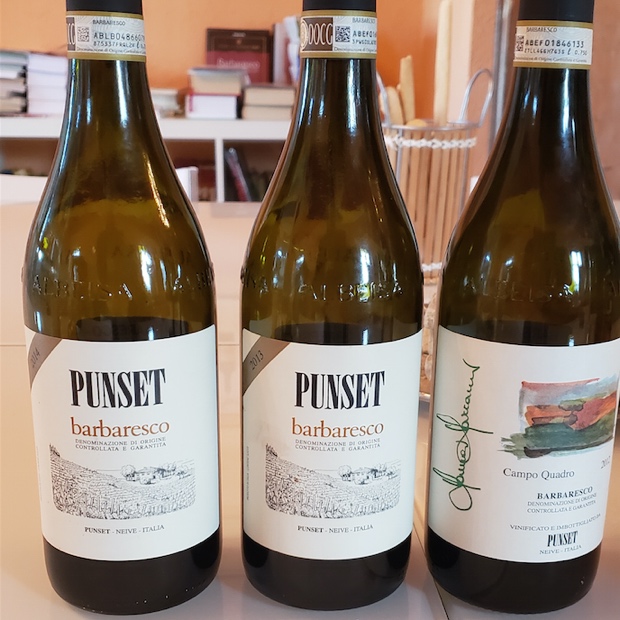
 

A Sordo affair

Sordo – I Fantastici 8 Crus di Barolo 2013

On Thursday, July 13, 2017 an event dedicated to  the “Fantastic 8 cru of Barolo 2013” was held at the farm of Giorgio Sordo. The program included a guided visit to the historic part of the 1912 cellar, the modern 2016 cellar and a tasting of Sordo’s eight Crus di Barolo, attended by experts, opinion leaders, sommeliers, influencers and journalists from all over the world. Senior Sordo Enologist Ernesto Minasso introduced the Sordo terroir and then Ian D’Agata took over, Scientific Director of Vinitaly and the Wine Project of the Collisioni Festival. The teachings of (Armando) Cordero were invoked, in discussion of respect for what each site can deliver, in working them exactly the same way, so that what you are left with is a true sense of each site, to recall an Ontario “climat” terminology, a Barolo somewhereness if you will, tells Mr. D’Agata. Sitting there, listening to these introductions and pronouncements, self says to self  “let’s see about these things.” A dinner followed, prepared at the hands of Chef Danilo Lorusso of La Crota di Roddi.

The two soil epochs of Barolo are divided by a diagonal line that runs from the northeast down to the southwest, drawn between Roddi and Grinzane through Castiglione Falletto down through Barolo and to Novello. The appellation’s two soil types are Tortonian and Serravallian (or Helvetian), both of which were formed millions of years ago and each are responsible for producing different styles of nebbiolo. La Morra and Barolo to the west are lands less compact and more fertile and the general consensus puts these nebbioli in the realms of the elegant and more (relatively) amenable. In and around Serralunga d’Alba, Monforte and Castiglione Falletto, the Serravallian is marked by dense, compact marl and the Barolo there tends to greater body and alcohol, ideal for a potential to longer aging.

La Morra’s famous cru include Arborina, Brunate, Cerequio, Gattera, Gianchi, Marcenasco and Rocche dell’Annunziata. Barolo’s are Bricco Viole, Brunate, Cannubi, Cannubi Boschis, Sarmassa, Via Nuova, Rue and San Lorenz0. In Castiglione Falletto there are Bricco Rocche, Villero, Monprivato, Fiasc, Mariondino, Pira and Ravera. In Serralunga d’Alba the Cru include Falletto, Francia, Marenca, Vigna Rionda, Marenca-Rivette, La Serra, Margheria, Ornato and Parafada. Monforte d’Alba holds the vineyards of Bussia, Cicala, Colonnello, Dardi, Ginestra, Mosconi, Munie, Romirasco and Santo Stefano.

The official recognition of the DOC Barolo happened in 1966 and the DOCG followed, in 1980. The grape variety is 100 per cent nebbiolo in a production zone covering the entire township of three villages; Barolo, Serralunga d’Alba and Castiglione Falletto, plus part of the territory of eight other small townships.  Sordo’s excellent eight are what the parlance of Barolo times would refer to as “sorì”, or Menzione Geografica Aggiuntiva (MGA), or individual vineyard names. There are more than 100 officially recognized MGAs in Barolo.

Sordo’s eight cru are spread across 53 hectares, 80 per cent cultivated to nebbiolo, plus dolcetto, barbera, arneis, chardonnay, viognier and sauvignon blanc. The total production is 350,000 bottles, with vineyards subsidized by grass and ground cover between the rows. No chemicals though sulphur is used, with stainless steel ferments, élevage in large Slavonian oak casks, further time in bottle of six months, 36 for riserva. The vintage 2013 saw a warm, dry winter, above average in that regard, a cold March, rainy spring, warm summer and dry fall. A 15 day harvest was executed across October. Here are the notes on the eight 2013 cru plus three extras poured with dinner.

Sordo Barolo Monvigliero 2013, DOCG Piemonte, Italy (459677, $47.95, WineAlign)

Monvigliero might very well be considered the “Grand Cru” of Verduno village, facing south/south east at 280-320 metres above sea level. The soils are loose, fine and dry marls and in 2013 the harvest happened on the 12th of October. The first vintage was 2005, from a cru set on the west side of the diagonal line drawn between Roddi and Grinzane through Castiglione Falletto down south west through Barolo and to Novello. Here the make up is more (relatively) fertile Tortonian epoch soils, facilitator of earlier developing Baroli. The comparison might be to Paulliac and Saint-Estèphe, to nebbiolo needing four to six years before entering the drinking window. Every producer that owns parcels in Monvigliero ends up with a top three Barolo portfolio cru from within. Here the Sordo ’13 is so very perfumed, of violet and rose petal, certainly an aromatic potpourri, light in hue and transparent, with texture, sour acidity as of cherry, not yet into the tar. The pearls of magnesium rich marly liquid rubies run amok in the mouth. Returning after tasting the last three (Rocche, Villero and Monprivato) musketeers this now shows how lithe, lovely and accessible (relatively speaking of course) this Monvigliero really is. There are 12,900 bottles made. Drink 2020-2029.  Tasted July 2017  sordowine  collisioni  @sordo_wine  @Collisioni  @SordoVini  @CollisioniFestival

Sordo Barolo Ravera 2013, DOCG Piemonte, Italy (AgentWineAlign)

Ravera is on the eastern slope of the township of Novello, also left bank of the diagonal soil epoch dividing line and like Monvigliero, facing south/southeast. Cuts more attitude and altitude, between 420-450 masl. Loose but richer, whitish marl and grey soils typify the cru. The Ravera harvest was on the 19th October, leading to 20,500 bottles and its first vintage was also 2005. It shows more austerity than Monvigliero, owing to being characterized by Serravallian soils found on the right bank, so this is the cru with an identity complex. This is compact, grippy, intense, sour wrapped up in a mystery folded into an enigma. A reticent, brooding hidden gemstone and texture of compression Sordo, but hard to get. Will unravel and work into its flesh no sooner than six plus years on. From a Ravera sweet spot but it’s not sweet now, nor are some other renditions. A return (30 minutes later) brings the unmistakeable nose of fennel. Drink 2022-2032.  Tasted July 2017

Sordo Barolo Perno 2013, DOCG Piemonte, Italy (AgentWineAlign)

Perno belongs to Monforte d’Alba and this particular single-vineyard portion (6.6 hectares of 190.96 total hectares in the large cru) is owned entirely by Sordo, though others farm the rest. Vines age from 15-35 years-old, on red soils with stones and it was the 18th of October for this harvest. The first vintage was 2000. Only Bussia and San Pietro are bigger in all of Barolo so there will be some variegation coming from the Cru. Located on the right bank, immediately to the east of the diagonal line, into Serravallian soils, of calcareous limestone and compacted sands. It’s bloody tannic, but aromatically speaking it does in fact speak its mind, of a fine porous vessel holding a sparked and stark, bitter and macerating cherry liqueur. The palate follows sharp and piercing, compressed, intense, of powerful structure and endless length. Brooding and massive but harnessed power that could run a small nation-state. That power never relents though a silk road certainly runs through that country. There were 48,000 bottles produced. Drink 2024-2036.  Tasted July 2017

Sordo Barolo Gabutti 2013, DOCG Piemonte, Italy (AgentWineAlign)

Gabutti (Serralunga d’Alba) sits at 250-300 masl, in compacted clay with 1989 being the first vintage. It ranges to the far east set into the quintessential seravalian soil and try hard to argue against the idea that it is the cru almost impossible to figure young. Sordo submits to its potential as unlimited and outrageous. There are spice aromas and acidity up front but otherwise it slams the door, locked tight. I disagree with Id’A in that the nose is not floral and accessible but do agree that it is civilized, on the first wave of palate, with soaking cherries and the idea of tar. Then the clutch sticks, it breaks down and shuts down. Wait 10 years from harvest with proof provided that 30 minutes does nothing to allow a Gabutti relent. It does indeed show some further precison when you get back to the back palate. Ultimately there can be little to say but that the jury is so fully out on Gabutti. There were 26,000 bottles made. Drink 2023-2035.  Tasted July 2017

Sordo Barolo Parussi 2013, DOCG Piemonte, Italy (AgentWineAlign)

Parussi comes from Castiglione Falletto at an elevation of 270-290 masl, with 15-40 year-old vines on loose surface soil and limestone with whitish, grey marls. The harvest was the 15th of October and the first vintage goes back to 2005. Sordo farms 1.8 of a small (13.4) hectares but the whole cru is not suited to nebbiolo, so only 83 per cent is planted to the grape. We are to understand that the idea goes beyond Parussi in that only certain portions are truly nebbiolo-Barolo cru territory. Parussi is from the crossroads of two soil epochs, between Barolo and Monforte and Serralunga to the south and east. The questions is asked whether or not it achieves a balance, of two banks on either side of a diagonal epoch line, like St. Julien, part Margaux and part Paulliac. It does but certainly resides on the brightest side, with the most fruit. The tart cherries are possessive of this striking personality so that they achieve a suspended animated moment in which they equilibrate to sweetness tempered by sour acidity moments and great fineness of demanding tannin. There are 13,000 bottles. Drink 2022-2034.  Tasted July 2017

Vitello Tonnato at Sordo

Sordo Barolo Rocche Di Castiglione 2013, DOCG Piemonte, Italy (AgentWineAlign)

Also from Castiglione Falletto is Rocche Di Castiglione, a formidable nebbiolo from 30-60 years of vine age, including a 1960’s planting. The elevation creeps up to 300-350 masl, on white and blue marl with dry and compacted sandstone. Harvest was on the 17th of October and production goes back to 1987 in this, Sordo’s first original cru. One of the greatest vineyards in all of Barolo, the new name is now Rocche di Castiglione Falletto, a place of crooked cragges or peaks, the altitude delivering more power and structure, but also grace and refinement. This is nebbiolo of a cooler climate personality, wound so tight, with sour cherry, rose petal and so much fruitier on the nose, certainly more than Villero. There is this smooth, satiny consistency through the modernity of flavours on the oldest fruit. A great dichotomy achieved. Drink 2023-2040.  Tasted July 2017

Sordo Barolo Villero 2013, DOCG Piemonte, Italy (AgentWineAlign)

Villero is an accumulation of purchased grapes from a farmer who follows a strict regimen. The cru is composed of calcareous, grey marls and compact grey sand and in this first 2013 vintage the later harvest was the 20th of October. Almost dukes it out with Rocche, this second of three musketeers with Castiglione and Monprivato. A balanced locale submits to make for optimum equilibrium for nebbiolo cru, looking at it this early as big, brawny, stiff and strong in its austerity. Giving so little away and yet it’s all imagination, driven by time. The cru is 22 hectares large with Sordo owning 0.4 and change, very small but it’s a true nebbiolo vineyard. Villero is nothing if not erected as a wall of acidity and tannin, so intensely taut, wound and as of yet, unforgiving. There are 3,600 bottles. Drink 2024-2039.  Tasted July 2017

Sordo Barolo Monprivato 2013, DOCG Piemonte, Italy (AgentWineAlign)

Monprivato is the third of the Castiglione Falletto cru, at variegated elevations from 240-320 masl. Sordo’s are 40 year-old vines and in this inaugural 2013 it was picked earlier (than Villero) on the 17th of October. Another true representative of Serravallian epoch austerity, with formidable tannin and a get down on my knees and beg to ask for more time before delivering accessibility. One of the true great Barolo vineyards, 98 per cent planted to nebbiolo. The 7.12 hectare large site gifts somewhere between the structure of Villero and the richness of Rocche. You get spice and sour cherry right away but also some other fruit in spice format, mulled in a way, of orange rind, apricot and pomegranate. It’s as if a piece of La Tâche suddenly became available to be farmed by someone else. Such fineness and nobility of tannins, richness and fine bitters, in the end the most tonic of all. This may be the whole package, a compromise in a way but an impressive and charming nebbiolo like no other. There are 3,200 bottles. Drink 2023-2040.  Tasted July 2017

More Sordo

Sordo Roero Arneis Garblet Sué 2016, DOCG Piemonte, Italy (AgentWineAlign)

Garblet Sué is on the Bricco Fiasco, a Castiglione Falletto vineyard owing in name to the Garbelletto Superiore farm that lies below. Sordo’s roero is rich in metallurgy, orchard fruit purity sporting equal parts pear and citrus, almost but not quite savoury. The balance of fruit, soil and salty mineral melts into arneis tannin. Overall it’s simply suave and polished stuff. Drink 2017-2021.  Tasted July 2017

Sordo Barolo Rocche Di Castiglione 2011, DOCG Piemonte, Italy (AgentWineAlign)

It’s difficult to say and even harder to admit that ’11 Rocche is any further advanced than the ’13 tasted 90 minutes prior. The fruit is a bit riper and if development can be quantified it’s a matter of millimetres by cru standards. And so the sour cherry is sweetened, rendered with more baking spice caress and attention to length, elastically so and with precise action. Five years further on and it will fall effortlessly into its next perfect phase, in a place called beautiful. Drink 2021-2032.  Tasted July 2017

Sordo Riserva Barolo Gabutti Edizione Limitata 2006, DOCG Piemonte, Italy (AgentWineAlign)

Sometimes it’s just a case of instant recognition, of the transparent Barolo-nebbiolo purity, crowned by acidity read from a very particular cru vernacular, spoken without any interference. At this 11-year itch, which incidentally seems only a year or two shy of the optimum window, Gabutti runs just a touch hot. A minor distraction in bitter phenol is balanced by ripe Sordo fruit that when combined acts like a salve melting on a tongue coated with tannin. Can formidable and elegant co-exist? In Gabutti, yes they can, easily, readily and in truth. Drink 2018-2028.  Tasted July 2017

Good to go!

Godello

Twitter: @mgodello

Instagram: mgodello

WineAlign
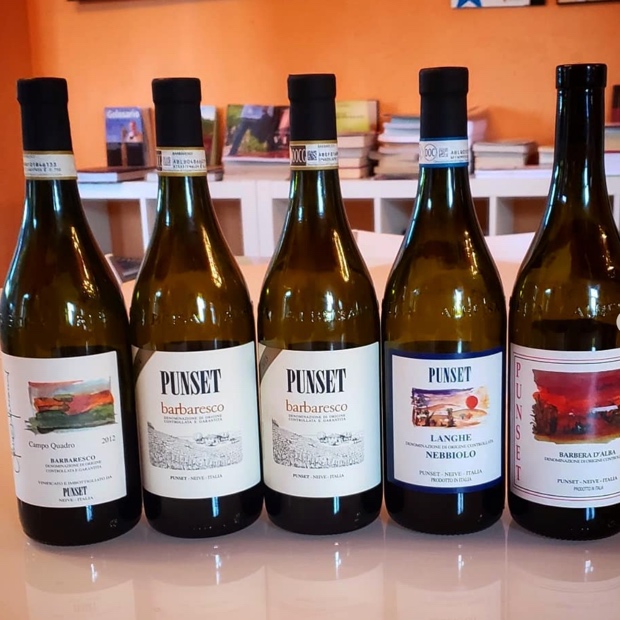
Eleven fifteen

"We ate flank" "You ate flank?" "We ate flank."

“We ate flank”
“You ate flank?”
“We ate flank.”

It may just be my favourite time of day. The flurry begins at seven. It takes four hours to shake off the rust, clear the morning ill, brush away the demands piled up since the night before and effectively settle the morning score. By a quarter past the hour calm begins to set in. 11:15. And now, a bit of Torah, Bible and liturgy.

The imagery of sweet rock ‘n roll, Revelations style is synonymous with the farthing, quartern, mid-morning, all change of pace: The Seventh Trumpet. The day after the Shofar has sounded to end the holiest of holy Jewish days, a sonorous wind-blown through the ram’s horn, a call to lead a flock home and into a new year. Is there a connection between the purpose of the blowing of the Shofar on Rosh Hashanah (and Yom Kippur) and the end of satan’s authority at the Seventh Trumpet?

The seventh angel sounded his trumpet, and there were loud voices in heaven, which said:

“The kingdom of the world has become
    the kingdom of our Lord and of his Messiah,
    and he will reign for ever and ever.”

The Shofar. Old Testament instrument as central element of the Rosh Hashanah liturgy. The summoner to assemble before the Lord, a sound for battle and the announced coronation of a new king. New Testament return of Christ in the clouds to gather God’s people via rapture, sound the Lord’s wrath of battle cry and Christ’s returning as the King of the world. Seems obvious enough but where is the eschatological connection: How does the Jew’s attempt to summon God’s past and promised redemption share common ground with the Christian’s call to Satan?

https://www.youtube.com/watch?v=tFGYEkUQ0eY

A rabbinic tradition may indicate that the shofar is sounded on Rosh Hashanah to confuse Satan (or some he who shall not be named evil tempting spirit). The multiple blows and shrieks invoke the idea (and promise) that the Messiah had arrived and thus putting an end to the pernicious authority. Revelations agrees. “It is time for the dead to be judged. To reward your servants, the prophets, the saints, and all who fear your name, both unimportant and important.”

There’s an angel standing in the sun, 
and he’s crying with a loud voice, 
“This is the supper of the mighty one”, 
Lord of Lords, 
King of Kings, 
Has returned to lead his children home, 
To take them to the new Jerusalem.

Nah. It’s simply a matter of judgment and kingship. Like suggesting wines from a VINTAGES release. October 15th is but two days away. At 11:15 am you may just be arriving at your local LCBO in search of a few bottles. Here are 11 recommendations.

3c

3c Premium Selection Cariñena 2013, Do Cariñena, Spain (461350, $14.95, WineAlign)

The grape the place come across with classic Cariñena firmness and regional culture out of the impressive Grandes Vinos e Vinedos cooperative. You may recognize Spain’s third largest cooperative as the producer of Beso de Vino garnacha. The 3c is juicy and gregarious like so many garnacha but here as cariñena, with moderate alcohol, acidity and amenable tannin. This represents very good value for the price, as well as the brusque and breviloquent Aragonese appellation. Drink 2016-2019.  Tasted September 2016  @VinosCarinena  @Noble_Estates

Fielding Estate Bottled Riesling 2015, VQA Beamsville Bench, Niagara Peninsula, Ontario (251439, $19.95, WineAlign)

The Bench can’t help but determine the style but what winemaker Richie Roberts is able to gather and concede is what needs from the vintage. The brutal winter and subsequent mild, calm and elongated season means that acidity can be tempered, sugar should play a small role and fruit will lead the way. In this riesling it does, with help, let and place from the support staff. Really juicy, slightly tart, citrus-spiced and purely Bench styled. Proper. Drink 2016-2020.  Tasted September 2016  @FieldingWinery  @RichieWine

easy

Ernie Els Big Easy 2014, Wo Western Cape, South Africa (220038, $19.95, WineAlign)

This latest Big Easy swings harder than the previous 2013, a wine that quietly emulated its founder’s approach. This 2014 displays more grit, firm grip and big dog length. This is no three-wood off the tee, lay up or fat part of the green safe play. This goes straight for the pin, over water, false fronts be damned and defiant to danger all around. It’s exciting and full-throttle, high acid and risky. But the reward is now, busily bursting with energy, not mired in tannin and ready to play. Makes for great TV. Drink 2016-2018.  Tasted September 2016  @ErnieElsWinery  @TheBig_Easy  @VintageTrade  @_AlexHamilton_  @WOSACanada  @WOSA_ZA

loosen

Dr. Loosen Blue Slate Riesling Kabinett 2015, Prädikatswein, Mosel, Germany (160846, $22.95, WineAlign)

Tremendous verve, vitality and energy from buoyant and round acidity brings immediate balance to sweet citrus and tart tropical fruit. This Mosel ripper has a tender side and will sooth many a savage beast. Kind of like Elvis. If you want to turn someone onto riesling this is a wonderful place to start. So good and worth protecting. “Well, you can do anything but stay off of my blue” slate riesling. Drink 2016-2024.  Tasted September 2016  @drloosenwines  @Select_Wines  @germanwineca

optima

Anthonij Rupert Wines Optima L’ormarins 2012, Franschhoek, South Africa (455915, $24.95, WineAlign)

Franschhoek Bordeaux stylistic defined in affordability by structure and for dark, depth of fruit. Espresso dusty and soil imparted make for the specific Anthonij Rupert departure. The headline reads: Unheralded and righteous outfit makes red blend to go the distance. Drink 2018-2024.  Tasted September 2016  @AnthonijRupert  @Vinexxperts  @WOSACanada  @WOSA_ZA

manzoni

Rocche Dei Manzoni Bricco Manzoni Langhe Rosso 2010, Doc Piedmont, Italy (459651, $38.95, WineAlign)

And then there were three; Barolo, Barbaresco and Langhe. Here a serious perfume and brooding emits from Manzoni’s Langhe Rosso, a back to the genesis of roots nebbiolo highly skilled and deep into the motherlode of many equally appointed Barolo. “Ah well if you knew then, just what you know today,” the divergent paths of Langhe and Barolo may have been very different. Even if some of the Bricco Manzoni’s parts may walk at large the tannin is in your face and ready to rumble. There is a sweetness about the fruit and an oaky layering but darkness never descends upon this wine. It remains bright and alive. It will live for a decade or more. Drink 2018-2030.  Tasted September 2016  @RoccheManzoni

juillot

Domaine Theulot Juillot Mercurey Premier Cru La Cailloute 2014, Burgundy, France (473793, $39.95, WineAlign)

The beautiful dichotomous relationship between ripe and juicy opposite firm and sweetly tannic is met in this functional Mercurey, a premier cru of upbeat excellence. Very representative of place because of the grip but it goes light years beyond the lithe and the under-performed. You could pour this for Burgundy label chasers and they would cry sweet Nuits St. Georges. Raspberry and strawberry with plenty of umami minerality and that firm tannin up the back. Really tempurpedic acidity never reacts and always supports. This is a 10-15 year Mercurey. No fooling. Drink 2018-2029. Tasted September 2016  @vinsdebourgogne  @BourgogneWines

ham-russell

Hamilton Russel Vineyard Chardonnay 2015, Hemel-en-Aarde Valley, South Africa (931006, $42.95, WineAlign)

The pattern repeats in HR’s 2015 chardonnay, up there with the Cape’s most elegant and wholly indicative of the Hermanus oeuvre. Ripeness, just a hint of the barrel and windy sunshine locked up in chardonnay that could not come from anywhere but the Hemel-En-Aarde Valley. The finish allows for some noted sensations indicative of yeast, warm bread, drawn butter and a golden bathed afternoon. A time to linger and make a polite request of this chardonnay to indicate best show times in the near to not-to-distant future. Though tempting to drink now this will improve and up the elegance factor. Drink 2018-2023.  Tasted September 2016  @OliveHR  @WOSACanada  @WOSA_ZA  @hermanuswine

orcia

Col D’orcia Brunello Di Montalcino 2010, Tuscany, Italy (306852, $49.95, WineAlign)

Largesse and a firmess of being as per the house style are rampant in Col D’Orcia’s 2010, a wine that reminds me of 1998 and 2000. A wine that will seem lean, mean and terrifying in its youth but will prove everyone wrong when it hits the 12-15 year stride. This is a monster bringing leather and chocolate to the table. It is nearly unapproachable at the present time but you can imagine and embrace the possibility of potential. Drink 2020-2035.  Tasted September 2016  @Coldorcia  @ConsBrunello  @DionysusWines

gagliardo

Gianni Gagliardo Barolo 2011, Piedmont, Italy (713602, $54.95, WineAlign)

Instinctive, intrinsically essential nebbiolo without any equivocation whatsover. The fruit at the core is the crux and the catalyst to aseemble the forces of Barolo entrance strategy. The floral freshness in potpourri does not concede any more quality than right here. Suave, gentle, restrained and yet so forthright, generous and inviting. The grip is right at the back, in the mouth and on the brain. Diligent, purposed and highly intelligent nebbiolo with decades of future ahead. Drink 2019-2039.  Tasted September 2016  @giannigagliardo  @WineLoversAgncy

ridge

Ridge Geyserville 2014, Alexander Valley, Sonoma County, California (723072, $63.95, WineAlign)

A deep and thoughtful vintage for Geyserville, from plenty of sunshine, deep aridity and top notch acidity. The fruit is wondrous, full of berries in all shades and even some black currants. Shadowing with less chocolate than some this is all about fruit with tannin to structure it for a long haul. So very Geyserville and nothing but pure pleasure in bottle. Drink 2019-2027.  Tasted September 2016  @RidgeVineyards  @VinoTorino  @rogcowines  @sonomavintners

Good to go!

Twitter: @mgodello

Instagram: mgodello

WineAlign

But first, October

steak

L’shanah tova, happy new year, peace, happiness and health to all the members of the tribe out there. New beginnings, sweet and good times to you and yours. I’ve just returned from Italy, specifically Verona and Valpolicella. While I was in transit a new VINTAGES release crept into stores.

Related – The most important red wine from Italy

Tuscany, Rioja, Thanksgiving. These are the main themes of the VINTAGES October 1st release. As from me for the first it is Chianti Classico’s Gran Selezione that occupies the best sangiovese position in the central thematic. Second comes entry-level excellence from Álvaro Palacios and for the last three, pinot noir from disparate outposts; Sonoma County, the Willamette and Hemel-En-Aarde Valleys. A further 12 recommendations explore 10 regions; South Africa’s Coastal Region, Veneto, Loire Valley, Beaujolais, Alsace, Piedmont, Calatayud, Montagny, Paarl, Arroyo Seco and 14 additional grape varieties; chenin blanc, garganega, sauvignon blanc, gamay, riesling, arneis, garnacha, sylvaner, chardonnay, grenache blanc, picpoul blanc, roussanne and nebbiolo. Something for everyone.

Boschendal Rachelsfontein Chenin Blanc 2015, Wo Coastal Region, South Africa (455881, $12.95, WineAlign)

Classic chenin blanc from Boschendal, tart, balmy, savoury, smoky and spirited. Conjures up simple pleasures, breathing and bliss. A morning walk in a glade, a bubbling brook, herbs everywhere, wildlife. Drink 2016-2018.  Tasted September 2016  @BoschendalWines  @LiffordON  @WOSA_ZA  @WOSACanada

San Raffaele Monte Tabor Soave 2015, Doc Veneto, Italy (277392, $14.95, WineAlign)

Always a good Soave buy and especially in the ripe and easily commercialized 2015 vintage. In fact this preface is a clear indication for such a wine because it can basically make itself so it smells, tastes and delivers just like itself. Citrus and herbs, Maresina, Pisacan, Sciopeti and then more citrus, followed by a mouth feel with an accent of stone. Delicious little commercial Soave. So correct. Drink 2016-2018.   Tasted September 2016    @RegioneVeneto

versant

Foncalieu Le Versant Sauvignon Blanc 2015, Vins De Pays D’oc, Loire, France (470336, $14.95, WineAlign)

Terrific scintillant of a sauvignon blanc with extract to burn and the gesture of giving generously. Pungency be damned this goes at it with vitality, energy and the great sweetness feigning, peachy sauvignon blanc equalizer. There are few Midi SBs that can both thrill and appease with ease like this Pays d’Oc. Crowd pleaser to pour at weddings and other large gatherings. The finish guarantees success. Drink 2016-2019.  Tasted September 2016  @foncalieuwines  @LoireValleyWine  @azureau

aviron

Stephane Aviron Beaujolais Villages 2014, Beaujolais, France (468744, $15.95, WineAlign)

The juicy appeal of gamay. In its purest form it struts and flaunts in full peacock display as in this $16 Aviron Beaujolais. He or she who could not drink a tank full of this BV is missing out on one of the go to pleasures of the wine world. Fresh and outright getable, when risked with a more than slight chill this could do no harm. Drink 2016-2018.  Tasted September 2016 @DiscoverBojo  @Nicholaspearce_

palacios

Palacios Remondo La Vendimia 2014, Doca Rioja, Spain (674564, $15.95, WineAlign)

Rioja to grab for, spread out the blanket, pull out the jamon and kick back. Fresh, juicy, slightly smoky and full of nothing but fruit with a quick shake of spice. The simple pleasures provided by Alvaro Palacios at the lowest of low affordability. You can find Rioja with a much greater and historically profound sense of place but it will cost an arm and a leg. And I’m not sure it will get you anywhere. So put aside the serious face and embrace this modish value-driven sketch by Palacios. I too will abide. “It’s not that I care any less for that philosophy, but I would spend one night with you in trade for all that I’ve achieved.” Drink 2016-2018.  Tasted September 2016  @WoodmanWS  @RiojaWine

kuhlmann

Kuhlmann Platz Riesling 2014, Ac Alsace, France (196741, $16.95, WineAlign)

From the cooperative Cave de Hunawihr where the winemaking is overseen by Nicolas Garde here is a typically tart and citrus-driven riesling from alluvial flats. Salinity and a touch of brine with a minor note of spritz makes this nothing but fun. It’s certainly lean and direct but such an Alsace riesling line is fine when done with no agenda in mind. Well made with enough complexity to add five years onto its life. Drink 2016-2021. Drink 2016-2021. Tasted September 2016  @VinsAlsace  @AlsaceWines  @drinkAlsace  @ChartonHobbs

arneis

Cordero Di Montezemolo Langhe Arneis 2015, Piedmont, Italy (455162, $21.95, WineAlign)

Prodigious and revered producer meets resurrected varietal in this hear me roar and highly expressive roero arneis. From Langhe vineyards in La Morra, Guarene and Govone. The level of extract and texture is elevated to where the grape can go but we so very rarely get a chance to enjoy. This has mineral, loads of mineral, like a chew of rocks in bubble gum form. With this on offer who wouldn’t choose to chew every day. More acclaim for arneis and that makes me smile. The freshness will offer perfect window drinking in years one through three but why not put one or two aside and watch them develop some honey and petrol in years five through ten. Drink 2016-2022.  Tasted September 2016    @ProfileWineGrp

breca

Breca Old Vines Garnacha 2013, Do Calatayud, Spain (329086, $22.95, WineAlign)

Very floral garnacha from gravelly slate with more than enough blueberry and blackberry to bake into a hundred pies. As per the modern norm this 100 per cent garnacha from typically regional (upwards of 100 year) old vines pushes the scales in extraction, weight and alcohol. If any Aragonese garnacha can handle such largesse it is Calatayud because the combination of gnarly vines and rocky soil gives essential nutrients to fruit for balance. It may only be a distraction but when the wine is polished (albeit sweetly so) the looming alcohol is kept in threaded check. Drink 2017-2021.  Tasted September 2016  @CSWS_ON  @WinesofGarnacha  @GarnachaOrigen  @docalatayud

wildewood

Wildewood Pinot Noir 2013, Willamette Valley, Oregon (462994, $23.95, WineAlign)

If mountain herbs and tea could burrow or seep their savoury ways into a Willamette Valley pinot noir this Wildewood would be a viable candidate. It’s a global, pinot from everywhere and for everyone affair in here so call the aromas what you will; fynbos, rooibos, Peloponnese clandestina, wild thyme, rosemary, lavender. So pretty in its sauvage, so suave in its ruggedness. This pinot noir understands what it is saying and selling. Unlike the gritty poet, it is in complete control of its phenolics and its faculties. The palate pales but delivers straight to structure. The aridity and the salinity seal the deal. Drink 2016-2020.  Tasted September 2016     @Nicholaspearce_

Maison Roche De Bellene Montagny 1er Cru 2014, Ac Burgundy, France (470476, $26.95, WineAlign)

Such thews and texture are wonderful to elevate Montagny and you can tell that important Nicolas Potel time was allocated into turning this into something rocking. Plenty of citrus and wood intertwine in layers of chardonnay flesh. This is quite something. Gregarious, talkative and alive. Drink 2016-2019.  Tasted September 2016  @RochedeBellene  @vinsdebourgogne  @Nicholaspearce_  @BourgogneWines

sylvaner

Domaine Loew Vérité Sylvaner 2013, Ac Alsace, France (462598, $25.95, WineAlign)

The truth of sylvaner explodes into olfaction with the flats left for others and the slopes of Alsace greasing their way into this wine. A wow factor of 13 on the texture scale brings it here. Oily doesn’t due this sylvaner justice. You could run heavy machinery on this juice. Beyond the oléagineux there is great bite from old wood, tonic from the varietal necessity and bitters so very artisan crafted in nature. More British aperitif than Italian digestif in that sense but strictly Alsatian and in requiem for a match made in Foie Gras heaven. Needs two years to settle. Drink 2018-2028. Tasted September 2016     @VinsAlsace  @AlsaceWines  @drinkAlsace

avondale

Avondale Armilla Blanc De Blanc 2009, Méthode Cap Classique, Wo Paarl, South Africa (451930, $29.95, WineAlign)

From a farm dating to 1693 purchased by Johnathan Grieve’s family in 1996. Poster bubbles, for the Blanc de blancs habitation and for the Avondale oeuvre, the Armillary sphere, Roman “circle of life” and ancient astronomical instrument used to show the position of stars around the earth. Traditional production, with a kiss of oak and a final act of dosage. Five total years on the lees, including two on coarse and one in bottle. Picking was accomplished at the end of that January, in purpose of stylistic elegance and beautiful bitters born of natural and integrated acidity. Terrific dip of biscuits into honey. Like Baklava in a glass though equally savoury to dessert. Baller bubble, balanced and with the sense to envision evolution, to the look ahead of an adult age. Would retail for approximately $28 CAN. Drink 2015-2027. Tasted twice, May and September 2015  @Avondalewine  @WOSA_ZA  @WOSACanada  @RareEarth_Wines

doon

Bonny Doon Beeswax Vineyard Le Cigare Blanc 2013, Arroyo Seco, Central Coast, California (95331, $34.95, WineAlign)

The Beeswax Vineyard is not just a pretty face. That this blend reeks of the bee’s work can’t be a coincidence. The ‎Rhône is but a mere smirk or memory here with fruit so ripe and vital you can hear yourself think. Arroyo Seco does cool chardonnay but it works for these varieties in another worldly way; with viscosity and texture. The pitch from the lemon and the flesh of creamy tropical fruits come together with a party gathering crafted tonic. And yet there is this rhythmic, low-toned, folk-roots-blues riff tenderness to Le Cigare Blanc. Really. J.J. Cale (by way of Don Nix) if you will. I’m going Doon, Doon, Doon, Doon, Doon, Doon. Drink 2017-2024.  Tasted September 2016  @BonnyDoonVineyd  @RandallGrahm

https://www.youtube.com/watch?v=Fm-euFpRLMg

ama

Castello Di Ama San Lorenzo Gran Selezione Chianti Classico 2011, Docg Tuscany, Italy (418897, $48.95, WineAlign)

Castello di Ama has chosen their signature San Lorenzo Vineyard to qualify for Gran Selezione designation, one of three such highest level Chianti Classico produced at the estate. The high Gaiole elevation and argilo-calcaire soil make for a specific style, still deep and mineral but not so much like what happens from sangiovese raised on Galestro or Albarese solis. The liqueur here is a grander kind of sangiovese ooze (with 20 per cent malvasia and merlot), more hematic and of a purity only it can express. There is more liquorice and less leather, more iron and less cherry. Certainly less fruity but not as mineral. Here the umami is conspicuously undefined and so I am oriented to say it is simply San Lorenzo. Drink 2019-2026.  Tasted September 2016  @CastellodiAma  @HalpernWine  @chianticlassico

ratti

Renato Ratti Marcenasco Barolo 2011, Docg Piedmont, Italy (713479, $53.95, WineAlign)

The Ratti Marcenasco is in a league of it own but it shares the club with like-minded nebbioli, wines that steep in tradition and breath an aromatic liqueur only its kind resemble. Deep waters here, always mysterious and hiding sunken treasures. Candied roses and liquid tar, savoury forbidden forests and intricate tannic chains. You have to exercise extreme patience with Marcenasco, avoiding years five to 10 and best to look in at 15. Everything will rise to the surface. Drink 2021-2031. Tasted September 2016    @LiffordON

hr-pinot

Hamilton Russel Vineyard Pinot Noir 2015, Hemel-en-Aarde Valley, South Africa (999516, $57.95, WineAlign)

In 2015 the hyperbole of the Hemel-en-Aarde shines bright in magnified reflection with fruit and land combining for full effect. I get cola and beet root in ways I cant necessarily recall from most recent Hamilton Russell pinot noir and I also get depth like I’ve not encountered before. This is a massive expression in 2015, not a gentle one. I imagine the vintage was raging with adrenaline and testosterone so you have to take what is given. A masculine wine is the result, muscular, chiseled and ripped. At present the Hamilton Russell homiletic Hemel-En-Aarde verbiage is a tad evangelical. With such Adonis-like features and marbled structure it will need a few years to recoil, recalibrate and recharge. By next decade it will soften and preach with a bold style yet remain humble enough to change. Drink 2019-2025.  Tasted September 2016  @OliveHR  @hermanuswine

flowers

Flowers Pinot Noir 2014, Sonoma Coast, California (215202, $68.95, WineAlign)

Pinot Noir that is all coastal, from vineyards far and wide but inclusive of some fruit from the Sea Ridge Estate Vineyard. An extreme brightness of being pinot noir with that distinctive Sonoma Coast feigned red candy nose, first raspberry and then strawberry. Exquisitely perfumed and gainfully rendered with mindful, purposed and calibrating acidity, propped up and misty fine. Such effete fruit and unassuming character does not materialize with enough regularity out of these parts. The finesse and fineness of this wine is what California does best when it comes from the heart and not from the hand. Though his chardonnay is otherworldly you just have to appreciate David Keatley’s touch with Sonoma Coast pinot noir. Drink 2016-2022.  Tasted twice, February and September 2016  @FlowersWinery  @rogcowines  @sonomavintners

Good to go!

Twitter: @mgodello

Instagram: mgodello

WineAlign