We’ve Garnacha covered part one: Campo De Borja

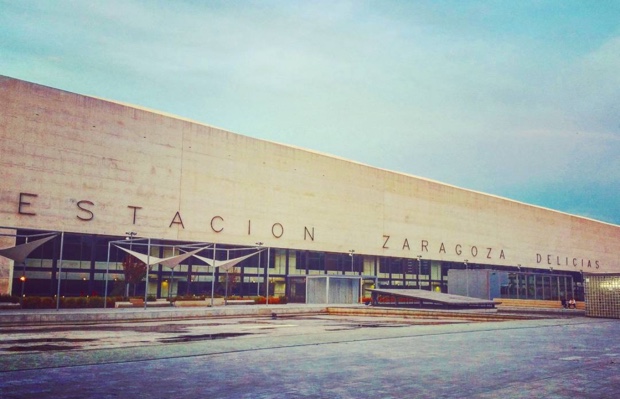
Estación de Delicias de Zaragoza at dusk #CarlosFerrater #aragon #espana

Estación de Delicias de Zaragoza at dusk #CarlosFerrater #aragon #espana

In October of 2015 WineAlign colleague Sara d’Amato and I travelled together with Christopher Waters of Vines Magazine.  The trip’s mission was to discover Spain’s Wines of Garnacha in their natural habitat, the five distinct and allied Denominación de Origen in the regions of Aragón and Catalonia.

Related – For a comprehensive report by Sara d’Amato and I read WineAlignDiscover the Flavours: Wines of Garnacha
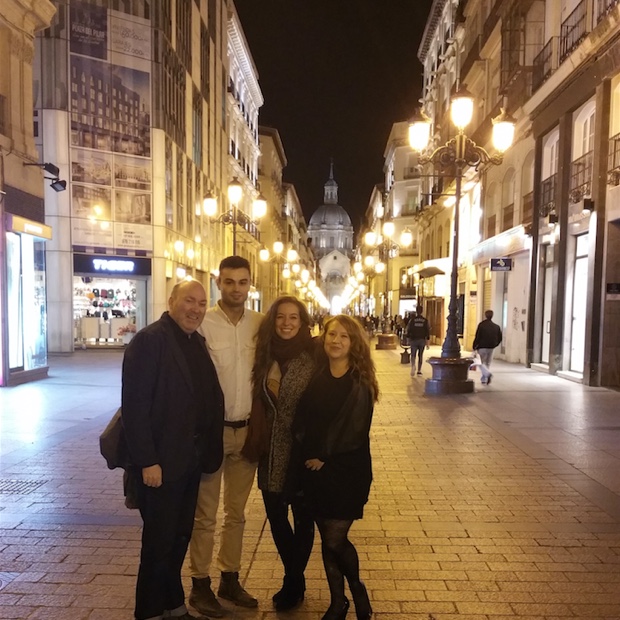
Christopher Waters, Ivo André Alho Cabral, Sofía González Martínez and Sara d'Amato in Zaragoza

Christopher Waters, Ivo André Alho Cabral, Sofía González Martínez and Sara d’Amato in Zaragoza

Our host in Zaragoza was The Spanish Institute for Foreign Trade (Instituto Español de Comercio Exterior, ICEX), the Wines of Garnacha campaign and the office of Garnacha Origen. The trip was orchestrated with expertise by Aragón Exterior Managing Director Ignacio (Nacho) Martinez de Albornoz and Head of Wines from Spain (ICEX) Alfonso Janeiro. Our chaperones Sofía González Martínez, Ivo André Alho Cabral, Roser Mestre and Ignacio left no Aragonese or Catalonian stone unturned during a week-long investigation, immersion and intercommunication with the vineyards, winemakers, mayors, restaurateurs, residents and cultures of Aragón and Catalonia.

Rare rain all day in Aragon did not deter Los Canadienses @waters_wine @saradamato #lovegarnacha

Rare rain all day in Aragon did not deter Los Canadienses @waters_wine @saradamato #lovegarnacha

As a rule, the provincial link between traditional varietal and felicitous region gathers together ancient history and existentialist wine culture in the most acute of ways. The racking path from endemic to modernist is trod for the purpose of explaining why this place is an essential source for affordable wines of exceptional quality. This is the crux of what the Aragón and Catalonian vignerons are after. For decades they have been farming century-aged bush-vines, harvesting fruit that sells for one euro per kilo (plant) and seeing their wine demand a paltry $12-15 CAN (often the equivalent of $9.99 US). The lack of congruent nature of the equation and let’s be serious, the undignified injustice of the flow through is something that needs to be addressed. The challenge is one of necessity and immediacy.

The five DO’s of Aragón and Catalonia are heavily populated by cooperatives and very few wine-producing countries or regions (save perhaps for Chablis or Barbaresco) achieve so many positives from that kind of wine-producing philosophy and execution. This weight of such a collaborative culture is not lost on anyone.
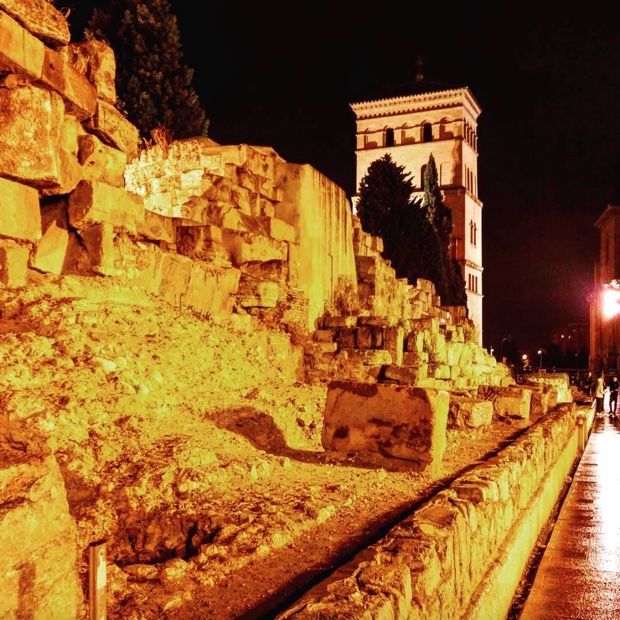
Where didn't the Romans build a wall? #citieswithruins #Zaragoza

Where didn’t the Romans build a wall? #citieswithruins #Zaragoza

The argument as to why the wines of Garnacha origin will not command justifiably higher prices defaults to geography and history. This northeastern quadrant of Spain (including Catalonia) has seen a lion’s  share of war, famine, poverty and neglect. The people have suffered and persevered, albeit in a state of relative isolation. Terra incognita within a stone’s throw of (less than two hours to either Madrid or Barcelona) civilization. It is ironic that the wines are perhaps too comfortable, likewise fruit juicy and easy to consume. Global perception would imagine the wines of Campo de Borja, Cariñena, Somontano, Terra Alta and Calatayud as inaccessible, austere and rustic. Nothing could be further from the truth.

I would contend that the problem is that the wines are not tough enough. Garnacha is supported by all the fight corner help it needs but it’s just too darned soft. The lack of rain, abundance of wind, embarrassment of altitude and slope riches allow for levels of diversity and complexity other wine regions would kill for. Very few pockets of wine growing acreage have any trouble ripening grapes. Day and night temperature fluctuations are constant and in some areas, extreme. Disease is nearly non-existent thanks to the prevailing winds that blow nearly two out of every three days year-round. Soils are chalk full of rocks, stones and vine-affirming mineral. Plants must work hard to penetrate the poor soils. Climate, geography and geology are not the problem.

Why complain about wines that are perfectly ripe? Isn’t that what every farmer wants from his children, for them to complete their phenolic journey and grow up fast? I would argue no, that the grapes need to be picked when the graphing of ripeness and acidity are protracted at the crossroads of their perfect vertices. I would also argue that pressing needs to be done at colder temperatures and for the younger grapes, in certain situations, with some carbonic maceration.

As far as the old vines are concerned, the primary concern is shelf life. Most of the Garnacha produced in this part of Spain carries with it a potential for aging of no more than five years. Many producers keep that maximum goal in mind. A week of tasting through red and white Garnacha reinforced the point but there were a handful of wines that begged to differ. Laying down Garnacha is possible. The winemakers must be willing to take some risks.

Think of this. A producer presents two bottles of Garnacha Tinto, one from younger vines and one from 50-plus year-old bush vines. The first sees only stainless steel fermentation or perhaps three to six months in older oak barrels. The second sees an extended élevage though only a frugal amount (less than 20 per cent) of new wood. They both come in at a maximum 14 per cent alcohol, carry residual sugar numbers of less than 3 g/L and yet both maintain a vibrant acidity number of at least 5-6 g/L. In some cases concrete egg fermenters and/or large foudres are part of the processes. Their pedigree is brimming with history, tradition and physiographic earth sciences. Their agriculture is essentially organic (though they require no formal certification), the fruit is picked early to preserve optimum natural acidity and their fermentations are as wild as the day yeast came to be on this earth.

The young wine if fresh, clean, crisp, pure and full of vitality. It will drink well from now and up to five years. The more serious Reserva-style bottle will have the potential to evolve and develop, though it carries with it that impossible feeling of having already aged right from the start. It will drink beautifully for up got 20 to 25 years. The wines retail in Canada for $18.95 and $34.95, respectively. Which one would you buy? Seeing as how they compliment each other so well, why not both?

Campo De Borja

The Empire of Garnacha
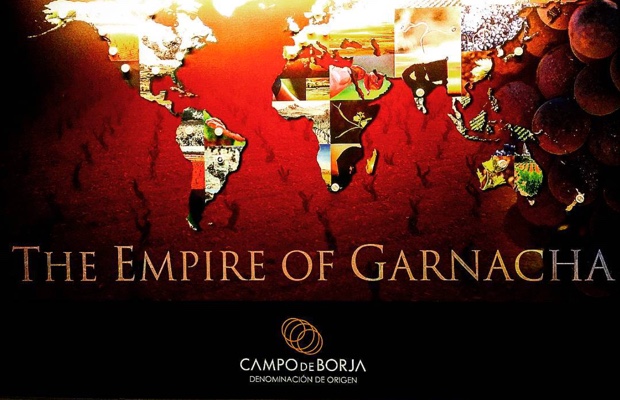
The Empire of Garnacha

The Empire of Garnacha

Of the five DO’s (Denominación de Origen) that comprise the collective wine growing regions located in Aragon and Catalonia, none walk with a swagger like Campo de Borja. President Eduardo Ibañez Aranda and Secretary José Ignacio “Nacho” Gracia Lopez rule the Empire of Garnacha, a self-proclaimed stewardship for the grape and for Campo de Borja as the centre of its universe.
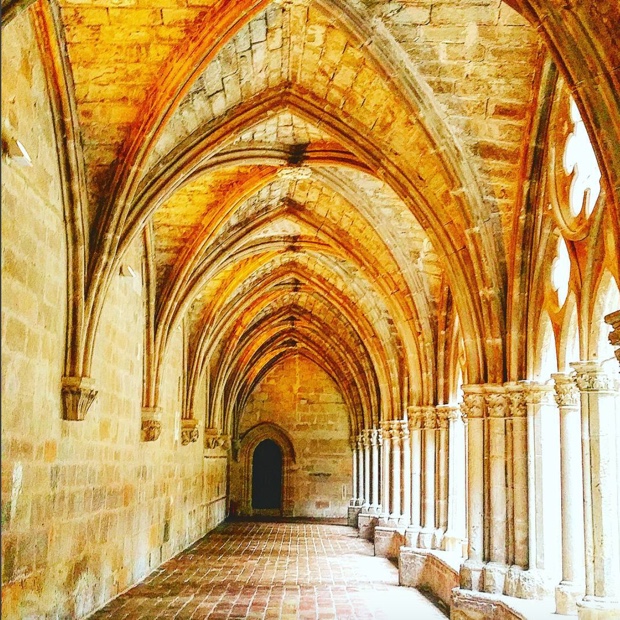
The Cistercian Monasterio de Veruela

The Cistercian Monasterio de Veruela

The two proud men have reason to state such territorial claim. Campo de Borja will play host to Grenaches du Monde. “The Weekend of Garnachas,” organized by the Roussillon Inter-professional Wine Council of France (CIVR). Grenaches of the World was held in France in its first three years. In 2016, Campo de Borja plays host to the competition.

Monasterio de Veruela

Monasterio de Veruela

The oldest vineyards in Campo de Borja date back to 1145. A visit to the 12th century Cistercian Monasterio de Veruela, home to the offices occupied by the Denominación de Origen, wine shop and wine museum (Museo del Vino), answers the historical query. Marble columns in three-dimensionally sculpted relief show grape leaf craftsmanship dating back to the middle ages.

Veruela was the home of one of the most important Romantic Spanish poets: Gustavo Adolfo Bécquer, who lived in the abbey during 1863. He is the author of the following verses, maybe among the most famous pieces in the History of Spanish literature:

Qué es poesía?, dices mientras clavas en mi pupila tu pupila azul. Que es poesía? Y tú me lo preguntasPoesía… eres tú.

What is poetry?, you say. As you fix my eyes with yours of blue. What is poetry!… You ask me that? Poetry… It is you!

Rima XXI, Gustavo Adolfo Bécquer

In Aragón, diverse soils, altitude, slopes and prevailing winds all contribute to grape growing excellence. Campo de Borja’s trump card is a mountain. Other regions such as Cariñena find benefit from Moncayo, but nowhere does its 2,315m in altitude have an effect on vines as it happens in Campo de Borja.

“Cierzo que almuerza y cent, dura tuna quincena”
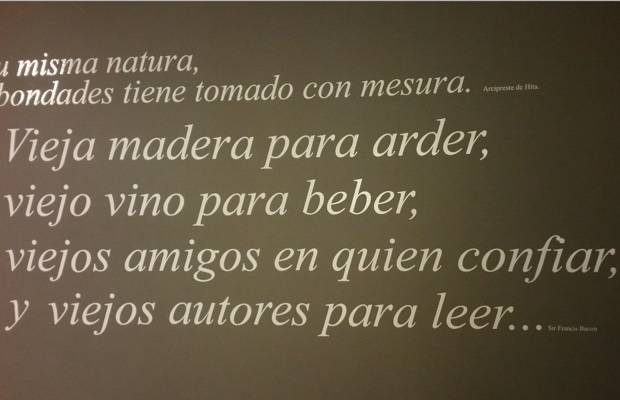
Museo del Vino Campo de Borja

Museo del Vino Campo de Borja

More than 2,000 hectares are 30+ yr-old vines. The climate receives an Atlantic influence and above all else there is the famous wind. El Cierzo blows 234 days a year, the “strong wind” blows after the rain, dries out the vines, eradicates disease and elicits increased probabilities for grape concentration. The saying goes “today is raining, tomorrow it will blow.” El Cierzo, as it has been called for 2,000 years, “has lunch and dinner lasts for a fortnight.” No one knows why. Maybe the Zaragozan Virgin of Pilar knows.

Campo de Borja is described as a “homogeneous physical space capable of producing wines with peculiarities.” Much of its viticulture, in kinship with the other four Aragonese DO’s, perpetuates the viñedo en vaso, “vines in a glass,” or bush vines, calculated at 2000 plants per hectare in density with three metres between rows.
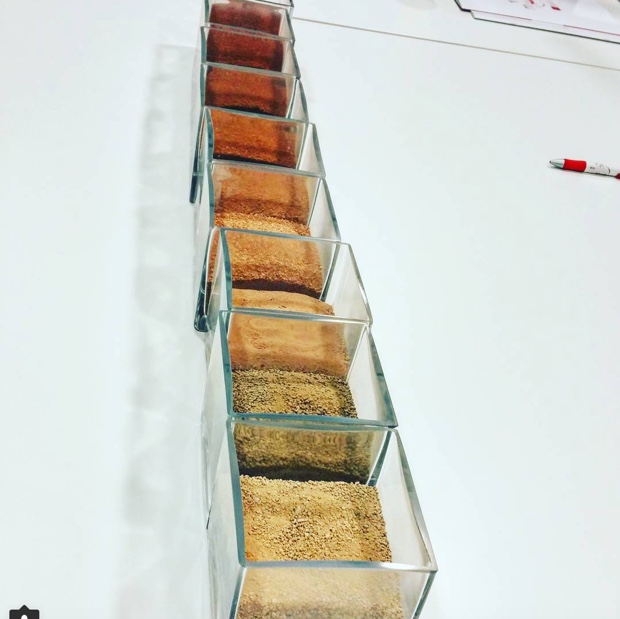
The soils of Campo de Borja

The soils of Campo de Borja

Great fluctuations happen in this D.O., located 30 miles west of Zaragoza, where the earliest maturing, lowest section habituates the Ribera del Ebro at 239m and yet other vines are planted up to 1000m. At low altitudes (200-300m) there are finer, lighter soils. In between the vineyards of Ainzon, Borja and Fuendejalon are situated between 450 and 550 metres above sea level, occupied by the terraces of  La Huecha river, a tributary of the Ebro with soils composed of stones and ferrous-clay. The D.O’s top plantations are in the upper reach, Moncayo foothills area of Alta de Ainzon and Fuendejalon, as well as the municipalities of Tabuena, El Buste and Vera. At these higher climes (up to 900-1000m) there is more limestone and iron, so darker soils with obvious increase of mineral.

Yields are quite low (30-35 hL/L), very vintage dependent and in some areas, in certain years it can be as low as 20-25. Yields are the key to understanding the value of wines from Campo de Borja, that and the iron-rich soil minerality.

Vines here see long cycles, with late maturing fruit of soft tannins and high glycerol concentration. Garnacha is a pro at climate and poor soil adaptation. It can be picked well into November and despite the lower tannins, treated properly it possesses the flexibility to develop complexity with short-term aging.

Every Grenache growing region of the world (The Rhone, Australia, South Africa) have their own special aromatic identity, whether it by garrigue, earthy reduction or soil-driven funk. A mountain herb called tomillo (thyme) grows everywhere around Moncayo. In Aragon there is an expression “when it is foggy in the morning there will be walking in the evening” and when it rains there is an all-encompassing scent in the air. That perfume is what gives these wines their special something. The amalgamation of mineral, earth and herb.

Meetings of the minds: Aragón Exterior Managing Director Ignacio Martinez de Albornoz, President Eduardo Ibañez Aranda Campo de Borja and Head of Wines from Spain (ICEX) Alfonso Janeiro

Meetings of the minds: Aragón Exterior Managing Director Ignacio Martinez de Albornoz, President Eduardo Ibañez Aranda Campo de Borja and Head of Wines from Spain (ICEX) Alfonso Janeiro

Christopher Waters, Sara D’amato and I sat down at the offices of the Campo de Borja for a presentation and a tasting of the D.O. wines with President Eduardo Ibañez Aranda, Secretary José Ignacio Gracia Lopez, Aragón Exterior Managing Director Ignacio Martinez de Albornoz and Head of Wines from Spain (ICEX) Alfonso Janeiro.

The wines tasted were Fagus, Coto de Hayas Garnacha Centenaria and Don Ramón Garnacha Imperial, by Bodegas Aragonesas; Ruberte Trésor, by Ruberte; Santo Cristo Garnacha Selección and Aletta, by Bodegas Santo Cristo; and Pdm, by Pagos del Moncayo.

Garnatxa of Campo de Borja

Garnatxa of Campo de Borja

Santo Cristo Seleccion Garnacha 2013, DO Campo de Borja, Spain (Quebec Agent Ontario Agent, WineAlign)

From a cooperative in the town of Ainzon, a 100 per cent Garnacha distributed by Eurovin (in Quebec) from 30-35 year-old bush vines at 500-600m altitude. Smoking of a deep black cherry, with violets and mild anise giving the feigned attitude of a candied sweetness. Though it’s warm and accented with quite the spice, aridity reigns and folds into the voluminous mouthfeel. This is extreme velvet, approachable and really put together, structurally speaking. Will benefit from two years further in bottle. There is plenty of fruit to support such patience balanced by a char and a density on the long finish. Would retail for approximately $14 CAN. Drink 2016-2019.  Tasted October 2015

Santo Cristo Seleccion Garnacha 2012, DO Campo de Borja, Spain (Quebec Agent Ontario AgentWineAlign)

The 2012 vintage of the Ainzon cooperative’s 100 per cent Garnacha is a blend of separately vinified stainless steel tanks. The clean compound works in appendices here and there of liquorice, graphite and pencil lead. The simple, red fruit compounds upon itself in oak-less layers for straightforward, easy pleasure. Would retail for approximately $13.50 CAN. Drink 2015-2017.  Tasted November 2014

Bodegas Aletta 2013, DO Campo de Borja, Spain (Agent, WineAlign)

From vineyards of 15-25 years old in Pozos de Mata and Aliagares at an altitude of 400-500m. A combination of soil types leads to a complexity of dichotomies, drawing from terraced stony, rich organic brown-calcaire and Moncayo mountain more stony, ferrous clay. Low yields (less than two Kg per vine) in this 100 per cent Garnacha seek an ever increasing perfume and aromatics from ripeness, urged on by a skill set of diverse fermentations.  The minerals incite and an increase of tannin is found in this darker, deeper, yet persistently straight-up juicy Garnacha. Pressed straight to tank this is simply all juice and nothing but the juice. Still a highly clean and modern expression that sees no wood. Good length again. Would retail for approximately $14 CAN. Drink 2015-2018.  Tasted October 2015
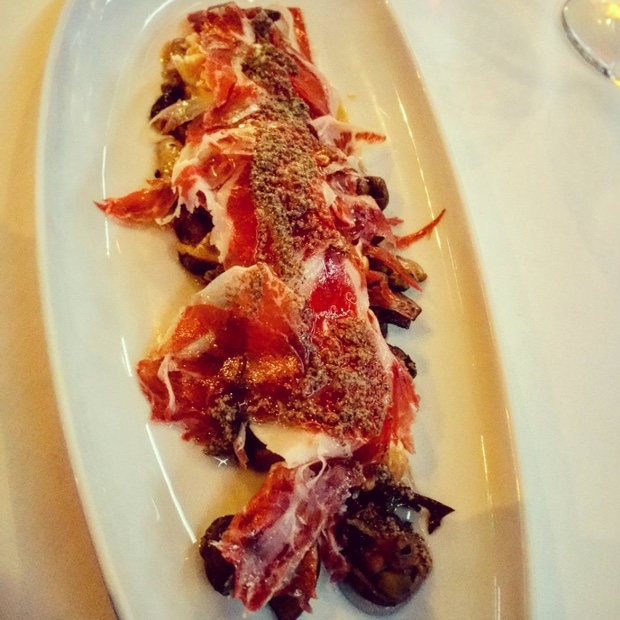
Blissful Zaragoza comfort food at <a href="https://twitter.com/AuraRestaurante" target="_blank">Aura Restaurante</a> local jamon, mushrooms, astir eggs

Blissful Zaragoza comfort food at Aura Restaurante local jamon, mushrooms, astir eggs

Bodegas Pagos del Moncayo Garnacha 2012, DO Campo de Borja, Spain (Agent, Winery, WineAlign)

Pedro Aibar was oenologist at Viñas del Vero and El Coto and now crafts wines from Grenache and Syrah plantings in the hills of Sierra del Moncayo. Produced with the Export company Axial, this 100 per cent old bush vines Garnacha from the eco-certified vineyard of La Marga saw 10 months in oak. At 14 per cent alcohol and deep as a cimmerian night it inhales and exhales in balanced Garnacha breaths. The barrel gives vanilla, chocolate and a bit of espresso. This is a nearly massive yet somehow laid back and accessible expression of Garnacha, foot-crushed, traditionally natural, with depth in its meaty cure. There were 70,000 bottles produced in the singular Campo de Borja that reaches for another layer, of earth and mediterranean funk.  Would retail for approximately $20 CAN. Drink 2015-2020.  Tasted October 2015  @louisgeirnaerdt
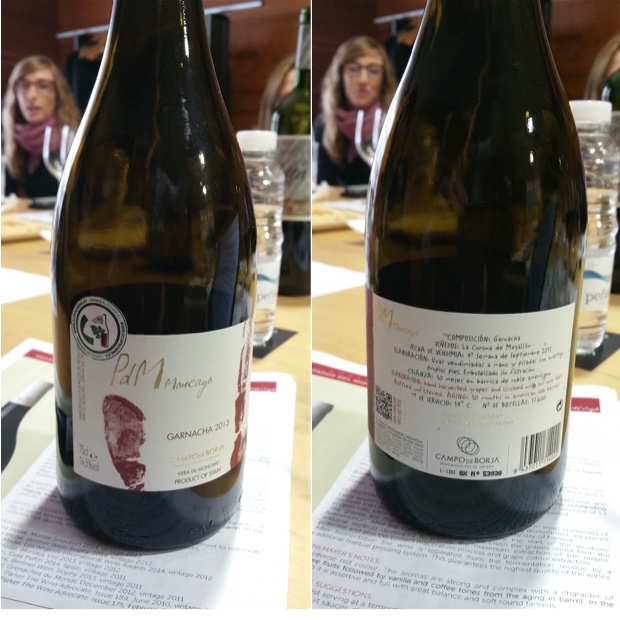
Bodegas Pagos del Moncayo 2012

Bodegas Pagos del Moncayo 2012

Bodegas Ruberte Tresor 2013, DO Campo de Borja, Spain (Winery)

Made by Susanna Ruberte from 100 per cent Garnacha off of 10+ year-old vines. The winery was founded in 1948. From lower altitude Campo de Borja (350-400m) stony vineyards and of low-production, here is a very perfumed Garnacha, expressing the violet nature of the grape and also a tonality impressed by a touch of SO2. Just a hint of barrel (one month) inflects vanilla and spices, unrelated to fruit surrounded by near-acrimonious acetone. Spiked by an aridity that climbs inside the cheeks. Greatest asset is concentration and depth. Will price in the range of $13-14 CAN. Drink 2015-2017.  Tasted October 2015  @BodegasRuberte
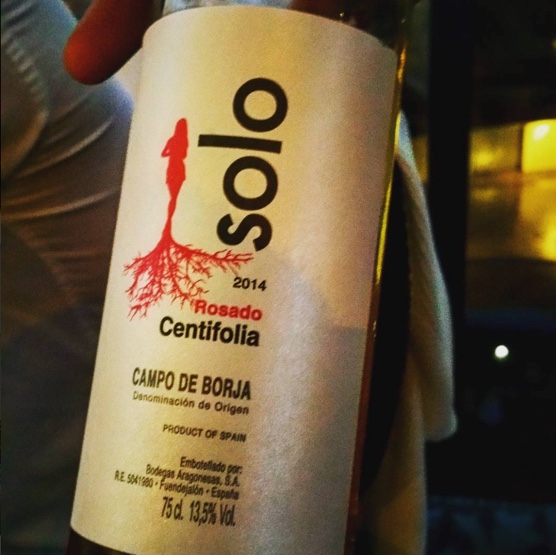
Solo Rosado Centofolia 2014

Solo Rosado Centofolia 2014

Bodegas Aragonesas Rosado Centifolia Solo 2014, DO Campo de Borja, Spain (WineryAgent, WineAlign)

Garnacha of different plots, “offering unique organoleptic qualities.” So very lithe and pretty, saline but not briny. The fruit is certainly strawberry though low-pitched, the hue a pale complexion from the most fleeting skin contact. A luminescent gemstone pink. Like a slice of strawberry angel short cake. Garnacha grounded by a “pretty pink ribbon” of Moncayo earth, without it would be blown by the Cierzo and “float down to the sea.” Drink 2015-2016.  Tasted October 2015   @B_Aragonesas

Bodegas Aragonesas Garnacha Don Ramón Imperial Roble 2012, DO Campo de Borja, Spain (Winery, Agent, WineAlign)

Aragonesas farms 55 per cent of the total production of the area, largest in Campo de Borja. This 100 per cent Garnacha is culled from various (450-800m) elevations. Another prime example of so much concentration, marked by a push-pull of bright-volatile, with dark fruits and liquorice. A date with American oak for six months brings vanilla and cocoa powder, chalk and grain, tar, char and a faint vinyl rub. Good solid held finish. This has power, presence and persistence. It successfully handles and owns its volatility. Quite the polish. Would price in Canada at $14-15. Drink 2015-2017.  Tasted October 2015

Bodegas Aragonesas Garnacha Centenaria Coto de Hayas 2014, DO Campo de Borja, Spain (Winery, 94805, $12.95, WineAlign)

Young wine, old vines. A different sort of 100 per cent Garnacha, this time from arid slate soils close to El Moncayo. The scent of jamon, seemingly impossible, but it’s there. Four months in French oak. Vines are between 80-100 year old with drastically low (10-15 hL/L) yields and from 750m altitude. At 14.5 per cent the brightness pounds the volatility into relative submission but it’s still present, there can be no disputing that. Very smooth and silky, coming on the heels of those always in prevail violet and spice aromas. A smoky dash of Aleppo pepper. French oak, used for the higher end wine, gives a candied wood flavour and roasted flesh of a protein push and some sweet salinity to mineral compenium. Possessive of quite the inner vision meets juicing sensation. Drink 2015-2017.  Tasted October 2015
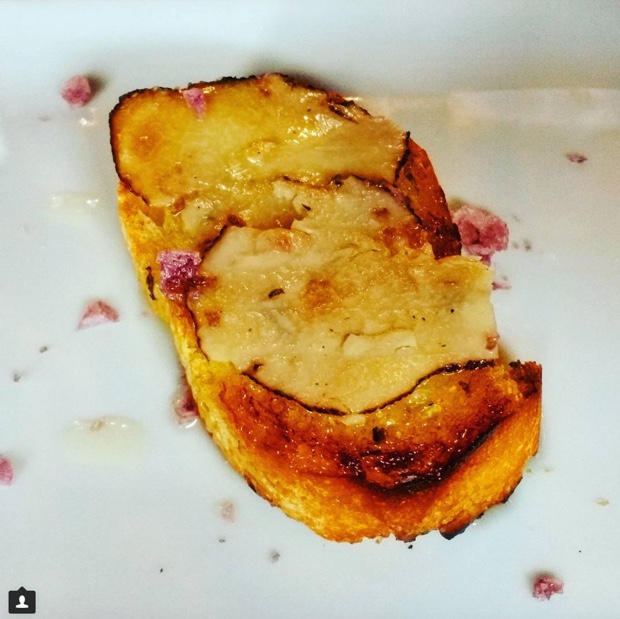
Oh to be back in the truffle again. At Restaurante El Fogón, San Martín de la Virgen de Moncayo #verademoncayo

Oh to be back in the truffle again. At Restaurante Asador “El Molino de Berola” #verademoncayo

Bodegas Aragonesas Garnacha Fagus de Coto de Hayas Selección Especial 2012, DO Campo de Borja, Spain (WineryAgent, WineAlign)

Fagus is “beech tree” from the Latin and Coto de Hayas (small forest) from hillsides of the Cordillera Ibérica range. This ’12 is actually 85 per cent plus 7.5 per cent each from ’11 and ’13, all from 40-50 yr old vines. Yet another Garnacha of yields less than 1kg per vine and a slumber in French oak for 10 months. Fagus sweats the most prominent perfume though its level of volatility lies somewhere in the middle of the Coto de Hayas range. Here the OS is built on a foundation of earthy funk, sprites red citrus and is certainly the sweetest of the group. Like mixed berry play dough. A South African Rhone varietal style comes to mind, in earth meets vinyl. The special elaboration is of selected (toasted) barrels, with a hyperbole of vanilla, in waves, bean scrapes and baking elevation. Liquid chalk oozes on the finish, long and with bitters too. Would retail for between $22 and 25 CAN. Drink 2015-2020.  Tasted October 2015
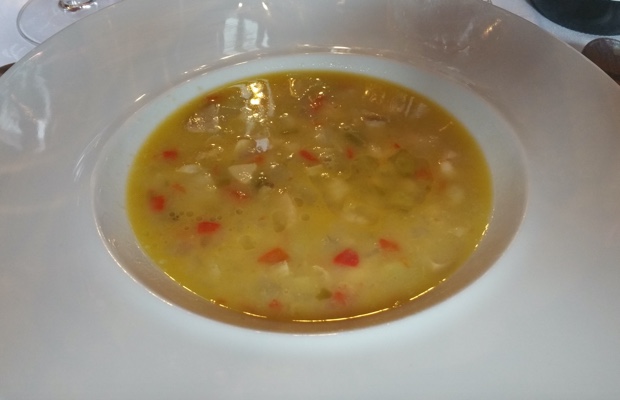
Restaurante Asador "El Molino de Berola" #verademoncayo

Restaurante Asador “El Molino de Berola” #verademoncayo

Bodegas Aragonesas Garnacha Fagus de Coto de Hayas Selección Especial 2009, DO Campo de Borja, Spain (WineryAgent)

Fagus is “beech tree” from the Latin and Coto de Hayas (small forest) from hillsides of the Cordillera Ibérica range. The 2009 shows the most minor notes of evolution, still in command of fruit and well within the threshold of balance within its generous oak conditioning. A really good example struts forth here, to show what red Grenache can be at midel age for the DO, not too hard and not too soft. Not too cold and not too hot. Just about right.  Drink 2015-2020.  Tasted October 2015
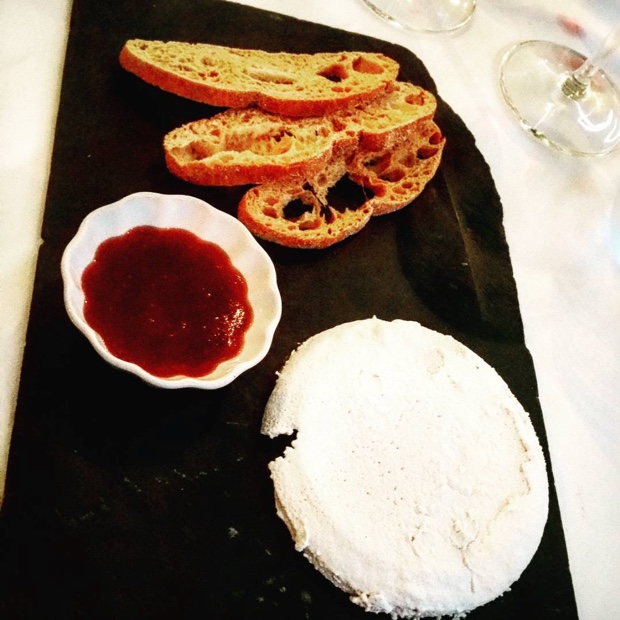
They call it cheesecake at <a href="https://twitter.com/AuraRestaurante" target="_blank">Aura Restaurante</a> but this is something other, extraordinary, ethereal.

They call it cheesecake at Aura Restaurante but this is something other, extraordinary, ethereal.

Good to go!

Twitter: @mgodello

Instagram: mgodello

WineAlign: Michael Godel
Facebook

Master classes of Terroir

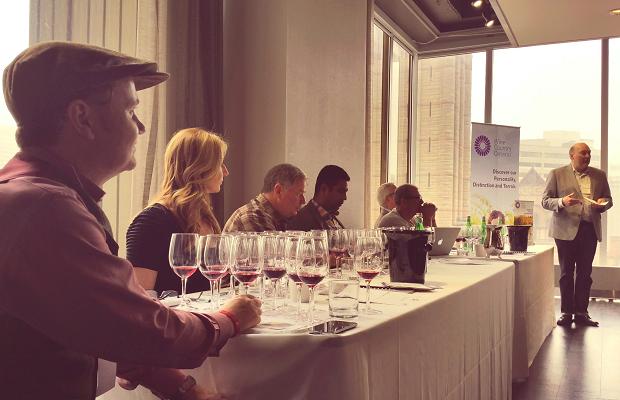
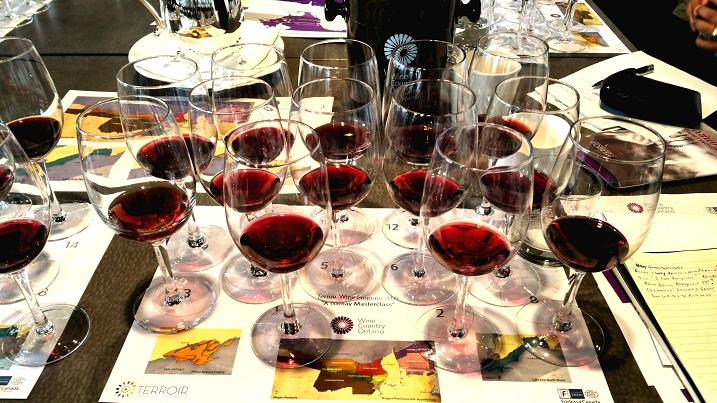
A Gamay Masterclass, Terroir Hospitality Symposium, May 11, 2015, Arcadian Court

A Gamay Masterclass, Terroir Hospitality Symposium, May 11, 2015, Arcadian Court

The Terroir Hospitality Symposium took place on May 11, 2015 at Arcadian Court in downtown Toronto. The one day food and wine colloquium was a massive simmering feast set in sprawling fashion within an undersized, intricate urban labyrinth. Despite the frenzied and condensed action in the downtown venue, that congress merely offered a look at the tip of the proverbial Terroir iceberg. With upwards of 3o team members leading the charge, the movement left the big fat city address and trekked to set up shop at a local farm and out to the rock at the eastern outermost edge of the country. Terroir moves outwards, onwards and upwards, taking it to the fields and the oceans.

The Terroir Best Practice Culinary Mission went to St. John’s, Newfoundland from May 14th to 17th. The One Fish expedition travelled “to meet fishing industry experts, to explore and examine both the history and the current realities of an Atlantic community built on an economy of the fishing industry.” There was also “the feast that keeps on giving,” at which the Feast Ontario team was hosted at Grandview Farms in Thornbury, Ontario

Led by Founder & Chair Arlene Stein, Vice Chair & Awards Rebecca Leheup, Terroir Talk the dextrosinistral/sinistrodextral enterprise is an undertaking of the extreme variety.

A look at #Terroir2015 in images

Terroir is an event, a series of gatherings, a notion, a philosophy and a way of life. Its mandate is this: “Terroir Hospitality brings together innovative and creative influencers from the field of hospitality, including chefs, food and beverage experts, writers and business leaders.” It’s also not without detractors. There are some who feel it is a negative representation of the culinary and cultural scene in Toronto. That it’s “white, urban, Euro-centric. It ain’t Canada, or 2015. Not funny.”

If the list of participating speakers, chefs and winemakers had been correlated with shortsighted discrimination, ill-curated and preordained with exclusive, malice prepense, you would have been hard-pressed to get an interview with any guest who would have chosen to speak about the called-out lack of representation or narrow-minded decision-making. If the culture and the colour of the event needs to change it will do so with holistic bias and sympathy, with the right sort of urging from the global culinary and vinicultural community. If the pundits are correct, future sessions will reflect the will of the people. In 2015, the atmosphere was wholly copacetic.

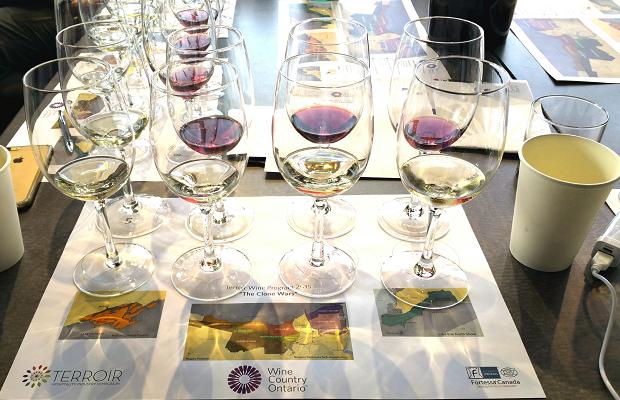
The 2015 Terroir wine sessions were marshalled with “an effort to raise the academic standards of the wine side of our symposium,” in three assemblies, to educate and entertain. These Masterclass jams, Gamay, Terroir, and Clone Wars were coordinated by Good Food Revolution’s Jamie Drummond and Magdalena Kaiser with great support from Wine Country Ontario.

The connection between food and wine is an intrinsic one. They are like chicken and egg, contrary to reason in electing which comes first. Chefs and winemakers, purveyors of the land from which their produce grows, transmuted into cuisine and fermented into wine. Facilitators of terroir, harvesting at optimum ripeness and then initiating the transmogrification with immediate haste, in urgency, to capture, lock in and bottle aroma, flavour and texture, before any chance of deterioration or spoilage.

But what the fuck is terroir? The most used word in the language of wine is in fact, terroir. Nothing else compares, comes even remotely close, or causes as much debate. Except for minerality, but those who concern themselves in the matters of ridicule, dismissal and denial ignore the fact that the opposite of fruit is simply, unequivocally and finally, incontestably, mineral.

Were the notion of terroir to be a belief as simple as “what happens in the vineyard, through environment, by geology, geography and topology, from naturally occurring elements and microbes in the soil, by air and of climate. Were it just a matter concerning “the impossible creator of perfect storms, from out of riddle and enigma,” well, then, we could all just go home. It’s much more complicated than that and real.

Most winemakers will agree, in principle, to this. “The final goal is to make the finest wines that express terroir.” Organic and biodynamic are important. Terroir is more important. But winemakers are no fools. They know that “during the grape’s life cycle, genealogy and climate shape its development. But even after it is plucked from the vine it still carries no true identity, in so far as what it will become as a wine. This is the point where nature gives way to nurture. Environment now acts as the catalyst to shape the wine’s life. Wine does not evolve because of natural selection. It evolves at the hands of the winemaker.” Anti-terroir?

At this year’s Terroir Talk Symposium, Gamay was chosen as the first wine session’s go to grape variety, to investigate both the serious and not-so serious sides of its existential weightlessness. To revel in its lithe, brightness of being and to unearth its deep roots. That we have come to a time in history where both aspects can be studied in Burgundy and in Ontario is fortuitous indeed. As a Gamay groupie, I feel blessed to be born under a good sign, at the right time.

As a reminder, it’s always the right time to be with the Gamay you love. I have been urging Ontario farmers to plant, cultivate and nurture Gamay; for winemakers to make it more and more. I made “a proclamation in favour of a great grape and one that forges signature wines out of Canadian soils. I am an ardent supporter of and a willing rider on the Gamay bandwagon, in the name of connaitre and savoirkennen and wissen, recognition and understanding.”

Related – Go Gamay Go

It’s working. Rosewood Estates just planted it for the first time. Gamay is poured at the cellar door, at tasting events and in private gatherings all the time now. Bottom line is Gamay costs half of the price compared to Pinot Noir and Syrah and it thrives in Ontario. It can make serious Cru quality reds and even at the highest end, sell for less than $30. It has been, continues to be and will always be #GoGamayGo time in Ontario.

Related – It’s go Gamay go time

Moderator Chris Waters and the Gamay Masterclass panel: Jamie Drummond, Magdalena Kaiser, Martin Malivoire, Shiraz Mottiar, Bill Zacharkiw and Guillaume de Castelnau

Moderator Chris Waters and the Gamay Masterclass panel: Jamie Drummond, Magdalena Kaiser, Martin Malivoire, Shiraz Mottiar, Bill Zacharkiw and Guillaume de Castelnau

The first Masterclass: Gamay The Next Little Thing

“The intent of the first of the three wine sessions, was meant to investigate how it performs in Ontario and elsewhere in the world.”

The Panelists:

  • Winemaker Guillaume de Castelnau, Chief Winemaker/Director, Château des Jacques, Louis Jadot Beaujolais (Beaujolais, France)
  • Vigneron Martin Malivoire (Malivore, Beamsville Bench, Ontario, Canada)
  • Winemaker Shiraz Mottiar (Malivoire)
  • Wine writer/Sommelier Bill Zacharkiw (Montreal Gazette/Wine Align, Montreal, Quebec, Canada)

The Moderator: Wine writer Chris Waters (Vines Magazine/Intervin, Ontario, Canada)

To many, Gamay is a wonderful drug and though much maligned, its suitors and supporters can never tire of its freshness and its lightness of being. Moderator Chris Waters refers to Gamay as “a gateway grape, to transition drinkers from white to red wine.” In a world according to Guillaume de Castelnau, “Gamay is lazy, generous and fragile.” Bill Zacharkiw minces nothing, not words, nor feelings. “I love Beaujolais.” In the Terroir Master Class, there were 13 variations on Gamay, from semi-carbonic to old and baked, with many shades, hues, intensities and variations in between. Here are my notes.

Ontario Masterclass Gamay

Ontario Masterclass Gamay

Malivoire “Le Coeur” Gamay 2014, VQA Niagara Escarpment, Niagara Peninsula, Ontario (Winery)

Shiraz Mottiar refers to the young, Beaujolais impressionist as “Sammy Carbono,” a semi-carbonically macerated Gamay, with one foot in Nouveau and the other in a dusty, freshly spirited aromatic whirl. The tanky feel makes it accesibly gulpable. Like a leaping horse it is also twitchy, hopping in dressage, popping in the mouth. Fun if beside the point. Drink 2015.  Tasted May 2015

Malivoire M2 Small Lot Gamay 2013, VQA Niagara Escarpment, Niagara Peninsula, Ontario (Winery, $19.95, WineAlign)

A month later the pepper runs from white to black, by way of red. Terrific sour edged fruit. Strawberry and cranberry tied together by citrus. Will need two years minimum to fully integrate.
From my earlier note of April 2015:
The profundity of tart, keen, briny berries dilates in its own very useful layers of citrus, tannin and concentration, beyond even what was observed in 2012. The zesty, spritely argot resonates from the unfurling of floral essentia out of a Gamay in desperate need of time. The flavours and overlay are somewhat impenetrable and yet leave quite an impression. While patience might be the virtue and the reward, if #gogamaygo is the modus operandi, a swig from the bottle like gentlemen of the road is certainly not out of the question. Drink 2016-2021.

Last tasted May 2015

Leaning Post Gamay 2013, VQA Niagara Peninsula, Ontario (Winery, $25.00)

A year has clarified the must into a venerable, beneficial decay, like effulgent, liquid rust. The shine of antiquity and then a blast of cinnamon dominates for the first major swirl. So lithe and profound like wise Pinot Noir, minus the Niagara coat of arms and lacquered veneer. Whatever anxiety may have held down the brightness has eased to deliver this current, optimum drinking window. Drink 2015-2016.  Tasted May 2015
 
From my earlier (tank sample) note of May 2014:

Guiltless and virtuous straight out of stainless, the meaty side of Gamay game boldly goes where few from the Bench have gone before. Like a rare venison steak sitting in a silky pool of lavender-scented demi-glace. Floral like Fleurie and despite zero new oak, vanilla joins the gravy. A Senchuk steal of quality Wismer (McLeary…sort of) fruit sets this Gamay up for easy sell success.

Fielding Gamay 2013, Niagara Peninsula, Ontario (Winery, $19.95, WineAlign)

Time has been a friend to the ’13 Fielding Gamay, a wine who’s elevated tones of floral fruit and acidity have settled in the name of structure. Dusty ground nubbins and mint swirl with layered if yet rigid fruit. Low-cropped vines are on display, in single-vineyard like attention to specific detail, akin to Malivoire’s Courtney. This is in fact sourced from a single-vineyard up on the cool Vinemount Ridge sub-appellation. The site is a couple of kilometres south of Peninsula Ridge’s McNally Vineyard, the source of Ilya Senchuk’s terrific Leaning Post 2012 Pinot Noir. The Procyshyn family has been farming this plot (without fanfare) for decades in Beamsville. The pristine fruit that Theo and Shelley Procyshyn grow, along with their three sons, Nolan, Dalton and Brayden, yield as low as 1.5 tonnes and up to 3.5 tonnes per acre, depending on the year. The ’13 was around 3 t/a. Fielding has never labelled this Gamay ‘single vineyard’ because they have always hoped to bring in new Gamay blocks on as part of that wine, but that’s not yet worked out. The ’13 is very, very red raspberry, with a craggy, spiked point of liqueur, like a weeping peak upon that Vinemount Ridge in the afternoon sun. Has Beamsville’s upper reaches written all over its corporeal self. Drink 2015-2017.  Tasted May 2015

13th Street “Sandstone” Gamay 2013, VQA Four Mile Creek, Niagara Peninsula, Ontario (Winery, $19.95, WineAlign)

May just be the first Gamay with a simulacrum towards a style best described as appassimento, what with the overripe fruit, aromatic cure, baked and sun-dried flavours. Sniff the confluence of black raspberry, scorched earth and roasting game bones, its sinew crackling over humid old growth wood. Gets rich into the vanilla, reeking of late harvest lavender and then a mutton funk. Could easily pass for a wealthy, unforgiving style of Cru Beaujolais, like Chénas from Christophe Pacalet. Or it could just be acting older than its age, by seven or eight years. Most prepossessing and confounding Gamay. Drink 2015-2018. Tasted May 2015

Stratus Gamay 2012, VQA Niagara On The Lake, Ontario (Winery, $29.00, WineAlign)

Esteem elevated by structure, matched in poise and presence mottled in smears of darker, richer black cherry. If a slight absence of brightness is sensed due to the syrupy compression, like New World, west coast Pinot Noir, the gleaning from acidity and tannin times perfectly the effluent escape.

From my earlier note of April 2015:

It may not be the most idiosyncratic Gamay in Niagara but the Stratus 2012 is without a doubt the most advanced and complex. Gamay fusion is on display, at once a bottle of Niagara’s finest pulchritudinous veneer and then a charcuterie board laid ample with cured bovine parts and sun-dried grapes. Maximum ripeness and then even later picking, to no one’s surprise, have led to this. Two years of ageing in neutral oak barrels has brought about a humid roundness and yet the centre is controlled by Oz-like mint and eucalyptus notes. The jam is gelid, as opposed to temperate. Rarely does Gamay go to such depths, of blackberry, chalk and grain, with an overlord of tannin. Quite serious stuff. Drink 2017-2020.

Last tasted May 2015

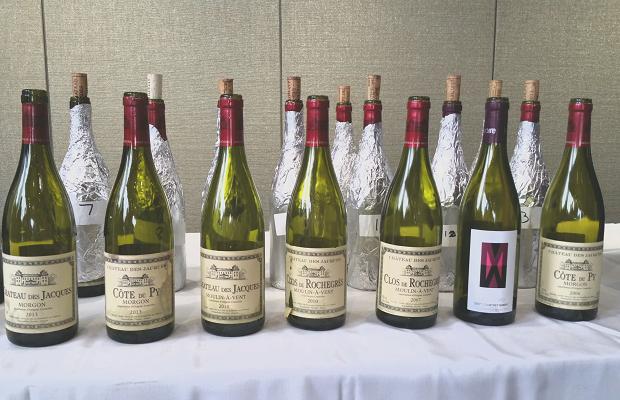
Château-De-Jacques and Malivoire Courtney in the Gamay Masterclass

Château-De-Jacques and Malivoire Courtney in the Gamay Masterclass

Château-De-Jacques Morgon 2013, Ac Beaujolais, France (653584, $24.95, WineAlign)

The flushed scarlet animation is active and astir, like a soft serve swirl of dusty, cherry molasses, bathing in its own natural acidity. Has the presence of wine to integrate chalk, grain and Morgon tannin, in equal, opposite and variegated layers. Nothing shy about this gateway Cru Beaujolais. Drink 2015-2019.  Tasted May 2015

Château-De-Jacques Morgon Côte du Py 2013, Ac Beaujolais, France (Agent, $53.95)

In this rigid and stoic Morgon, the south-facing, blue volcanic slopes of the Côte du Py have provided a measure of firm fruit that will require a minimum two to three years to crack. The gears of the Gamay machinery may be grinding but the windows are yet open, the doors locked tight. This is the least forward, most inwardly introspective and least gregarious of the CdJ Beaujolais. Sharp sapidity, biting tang and piercing penetrating tannin deny immediate or even short-term access. Even the middle palate seems lifeless, devoid of cherry fruit and seamless layering, medicinal even. Judgement should be reserved, with knowledge of pedigree and how a bottle such as this will suddenly, effortlessly spring to life with time. Drink 2018-2022.  Tasted May 2015

Château-De-Jacques Moulin a Vent 2010, Ac Beaujolais, France (Agent, $36.95)

The undergraduate’s blend comes from the appellation’s Château des Jacques parcels; Carquelin, Rochegrès, Champ de Cour, Thorins and La Roche. Granite soils from each spice with symptomatic diversification and combine for a flippant funk that hitches straightforward out of the gate. Here Gamay leaves dusty behind with an urging away from humble and towards nobility. Richly aromatic, amplifying into palate. Such acidity and such grain. For this MaV the time is now, the arrival already announced. A late sense of veneer on the lengthy bitter finish indicates more good times ahead. Drink 2015-2020.  Tasted May 2015<

Château-De-Jacques Moulin a Vent Clos de Rochegres 2010, Ac Beaujolais, France (Agent, $44.95, WineAlign)

From the appellation’s highest parcel, the red sandstone soils of the Clos de Rochegrès are gently sloping and fed by underground streams. I always sense salinity and an effusive, stony energy in wines blessed with subterranean irrigation. The drinking window for this 2010 is wide open and the funk meets age introduction has been made. Already in display of a dried fruit shrivel, the ’10 acts like Sangiovese of a similar senescence, like CCR or Vino Nobile with three to five years of age. The liqueur of roses, the earth and the cherries are culpable and yet the varnish and the baking spice crusting ensure that no one conclusion can yet be made. This is highly seasoned and not quite unfurled Gamay. Two more years should complete its conditioning. Drink 2017-2020.  Tasted May 2015

Château-De-Jacques Moulin a Vent Clos de Rochegres 2007, Ac Beaujolais, France (Agent, $43.95, WineAlign)

Poured from a magnum, the 2007 Clos de Rochgeres is the portal in which to peer, to see what can happen with Gamay. Baked, caked, figgy, funky and oxidative, more than ample fruit was present and persists, with the savoury edges now integrated throughout. Strawberry rhubarb pie comes to mind, with eyes closed and sniffing senses heightened. A bit indelicate, the humidity in tomato leaf and garrigue add to the idea of age though the citric punch and lactic texture are reminders of Gamay’s fun side. There is no shortage of complexity and evolution here. That said, consumption time is now. Drink 2015-2016.  Tasted May 2015

Malivoire Gamay Courtney 2007, VQA Beamsville Bench, Ontario (Winery, $29.95, WineAlign)

The wow aromatics can’t be denied, fully explained nor perfunctorily taken for granted. Age has educated the fruit, stratified and fully saturated this Gamay. Strawberries have shot from an adrenaline cannon and structure has been fully realized with (non-Gamay) Old World confidence. A note of orange blossom, like an early evening Sevilla garden, is rousing. The natural evolve of such a Gamay, with wood, yeast and fruit in expert harmony, recalls the impossible acts of red wines like those made by Emidio Pepe. If the stretch is considered a conceit of poetic licence, so be it. The yet beating heart of raging acidity circling plenteous fruit and so much savour is nothing short of a Gamay miracle. Power and masculinity, by way of a conduit in oak, have been used to great advantage. This has life yet to live. Drink 2015-2020.  Tasted May 2015

Château-De-Jacques Morgon Côte du Py 2006, Ac Beaujolais, France (Agent, $53.95)

Seamless and eminently structured, developed low and slow. The blue volcanic soil has procured an evolutionary subsumption, a roasted, developed personality. The seeping liquor oozes, of earthy cherries, again like Sangiovese, but inelastic and close-grained, as per the Côte du Py idiom. This ’06 offers clarity and gives reason to forgive the brutal ’13, to abstain for commenting further. This wine is quite ferric and still tannic. The oak remains a factor. Through the walls the Gamay fruit does transude and so the master plan is coming into effect, perhaps not immediately but will be very soon. Just around the corner. Drink 2016-2020.  Tasted May 2015
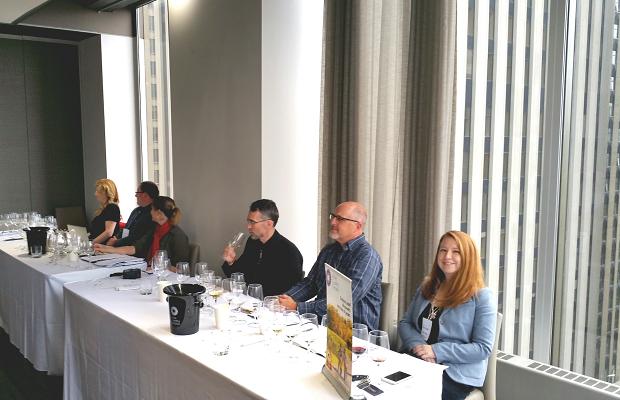
Moderator Sara d'Amato and the Terroir Masterclass panel: Magdalena Kaiser, Dr. Jim Willwerth, Emma Garner, Stuart Piggott and Dr. Kevin Pogue

Moderator Sara d’Amato and the Terroir Masterclass panel: Magdalena Kaiser, Dr. Jim Willwerth, Emma Garner, Stuart Piggott and Dr. Kevin Pogue

The second Masterclass: A Different Look At Terroir: How Much Do Soils Actually Matter?

“In this seminar/tasting we ask what the term really means, and how much do its many different elements actually influence the character of the finished wine?”

The Panelists:

  • Dr. Kevin Pogue Phd. Geology, Whitman College, Walla Walla, Washington State, USA
  • Dr. Jim Willwerth Phd. Biological Sciences: Plant Sciences; Oenology and Viticulture (CCOVI, Brock University, Niagara, Canada)
  • Winemaker Emma Garner (Thirty Bench, Beamsville Bench, Ontario, Canada)
  • Winewriter Stuart Pigott (Author of Riesling: Best White Wine On Earth, Berlin, Germany)

The Moderator: Wine writer/Sommelier Sara d’Amato (Wine Align, Toronto, Canada)

Dr. Willwerth offered up his opinion on how minerality is achieved in Riesling. “If you don’t get maturity in the variety at the end of the growing season, you won’t get the full expression of minerality. Overripe will eliminate minerality.” In Ontario, “The Bench is home to a mineral wealth of local Riesling, singular in composition not only by way of a global comparison, but also from plot to plot, soil to soil and vineyard to vineyard.” That persuasion has spread, down to the shores of Lake Ontario, by Niagara-on-the-Lake and in Prince Edward County. “Riesling brokers the nescient consumer with the gift of grape enlightenment.”

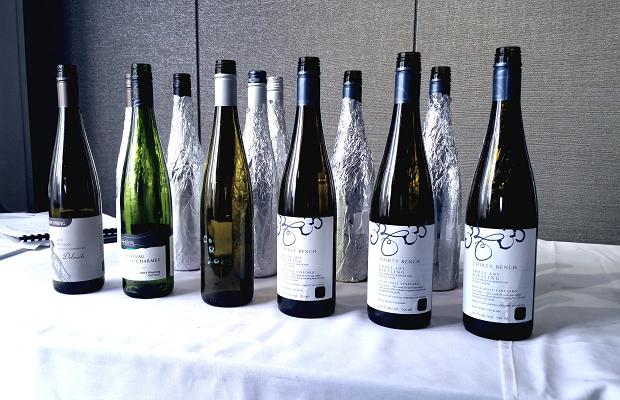
Seven Ontario Rieslings were tasted in the Masterclass. The notes.

Riesling Masterclass

Riesling Masterclass

Cave Spring Riesling Dolomite 2013, VQA Niagara Escarpment, Ontario (Winery, $16.95, WineAlign)

This is Cave Spring’s bridge, offering safe passage from Estate to CSV Riesling. Vinified with consistency in a quasi-Kabinett style, its elevated though classic numbers steadfast in sugar (17.55 g/L) and acidity (7.2 g/L TA). The dolomite limestone of the Escarpment means business in this calm, fit, chiseled and consumer-lissome Riesling. Palate is really the thing, seamless to attraction, from fruit to stone. Orchards and citrus groves alight to rock. Phenolically ripe yet shy of the tropical planet. Is there transference here? Absolutely. Drink 2015-2018.  Tasted May 2015

Château Des Charmes Old Vines Riesling 2013, VQA Niagara On The Lake, Ontario (277228, $16.95, WineAlign)

The happy place effect by age in the Château Des Charmes’ vines coupled with location is usually enough to carry this Riesling through an obvious and readily identifiable tunnel but 2013 confounds. The elemental ratio, derived from multiplying reduction by altitude leans thoughts to the Vinemount Ridge or the Cave Spring Escarpment Vineyard. The compound aromatic waft, or more succinctly, the deconstructed stone, the breaking down of periodic Hollywood squares is a force to reckon. That this arrives from such close proximity to the lake is nothing short of amazing. It’s as if this Riesling is the product of stressed vines and the pierce is just so pinpointed. Less accessible than ’12 for sure, so drink up previous vintages going back at least three before even thinking about getting to know 2013. Drink 2018-2022.  Tasted May 2015

Norman Hardie Riesling 2014, Prince Edward County, Ontario (Tank Sample)

At this prepossessed stage the terpenic fruit might fail in competition but succeed in the marketplace. Easy access, smelling of perfumed must, juicy, with citrus and burgeoning acidity. Low alcohol and good length stretch out an endless lemon summer. The wine will reverse itself within a year and beat impossible odds. A Hardie always does.  Tasted May 2015

Thirty Bench Riesling Small Lot Triangle Vineyard 2009, VQA Beamsville Bench, Niagara Peninsula, Ontario (Winery, $30.00, WineAlign)
The brilliant hue slides through patina and heads for gold. Some fumes have emerged with age, part petrol, part pure mineral, but of what kind and more importantly how, or why? Viscous, near oily, waxy and the most Glück of the three Thirty Bench single-vineyard Rieslings. Tossed with spice, pepper, lemon and honey that is more molasses than clover. The mineral is a result of the lowest water retentive soil as compared to Steel Post and Wood Post. The transmission for (orchard or tropical) fruit is minimized, the vigour low. The result is mineral. Drink 2015-2020.  Tasted May 2015

Thirty Bench Riesling Small Lot Steel Post Vineyard 2009, VQA Beamsville Bench, Niagara Peninsula, Ontario (Winery, $30.00, WineAlign)

Balance is and therefore always was struck. The match percusses flint for a mere nano-second, with just a brush on cymbal, the rock bleeds but is quickly clotted because the fruit shines still, like around the clock light. The steely aspect is a posterior one, antithetical and yet purposed, from this vineyard. Youth tells common sense to think 2011. The Riesling behaviour seems to play that part, of a chalky, piercing acidity, so typical of that vintage and so distinctly Thirty Bench. That the wine is older is not a big surprise because 2009 is the bomb. It may just be the best Riesling vintage, from on that Bench, in the last 10. Drink 2015-2025.  Tasted May 2015

Thirty Bench Riesling Small Lot Wood Post Vineyard 2009, VQA Beamsville Bench, Niagara Peninsula, Ontario (Winery, $30.00, WineAlign)

Age is a factor but less so than its Bench sisters due to a fine sense of calm. Showing less evolution, less viscosity, less wax and honey. More than that, the periodic table has yet to fill in. The Wood Post exhibits more warmth, savour and balm. A taste offers a sapidity that combines toasted fennel and candied lemon. Poised and yet incomplete, the vineyard fetters this Riesling to breath slowly and take its (will get to) sweet time. Drink 2017-2027.  Tasted May 2015

Flat Rock Cellars Riesling Nadja’s Vineyard 2009, VQA Twenty Mile Bench, Niagara Peninsula, Ontario (578625, $19.95, WineAlign)

Going back a few years, this Flat Rock Weis 21 clone Riesling from atop the Niagara Escarpment was made by former winemaker Ross Wise. Six years has concentrated both aromas and flavours while concurrently reducing the cutting drill. The hyperbole is read by tablet, of etchings in stone, immortalizing the terroir (not so) long before it was truly known how this could happen. What sticks out the most is the bleeding limestone texture and the striking aridity. Later vintages of Nadja improve on the flesh. Drink 2015-2017. Tasted May 2015
Clone Wars Masterclass

Clone Wars Masterclass

The third Masterclass: “The Clone Wars”: What Do Different Clones Bring To The Glass & Why?

“Looks at Riesling, Cabernet Franc and Pinot Noir. The varying clones utilized are a point of pride for some winemakers, and yet not even mentioned by others. Over the course of this detailed seminar/tasting we hope to answer why this is the case.”

The Panelists:

  • Dr. Kevin Pogue Phd. Geology Whitman College, Walla Walla, Washington State, USA
  • Dr. Jim Willwerth Phd. Biological Sciences: Plant Sciences; Oenology and Viticulture (CCOVI, Brock University, Niagara, Canada)
  • Winemaker Angelo Pavan (Cave Spring, Jordan, Ontario, Canada)
  • Winemaker Jay Johnston (Flat Rock, Beamsville Bench, Ontario, Canada)

The Moderator: Sommelier Katy Moore (Langdon Hall, Cambridge, Ontario, Canada)

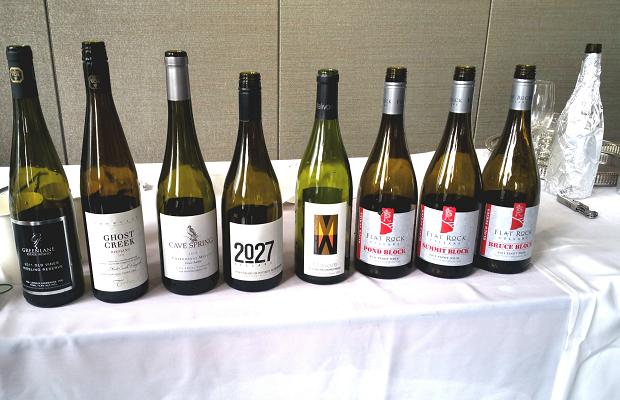
Dr. Jim Willwerth asserts that “clones are essential for viticulture, propagated asexually, through cuttings.” Angelo Pavan notes “clonal research to cold heartiness is very important for Niagara and also for yields.” Clones no doubt drive the industry, at least behind the scenes, but when it comes to making great wine, is it the be all, end all? “I still believe plot trumps clone,” says Jay Johnston. The defence rests. Here are the wines tasted in the final Masterclass.

Clone Wars Masterclass line-up

Clone Wars Masterclass line-up

Greenlane Riesling Old Vines 2011, VQA Lincoln Lakeshore, Niagara Peninsula, Ontario (351486, $21.95, WineAlign)

While aridity suggests Alsace Clone 49, this is actually Weiss 21, made saline and arid out of Lincoln Lakeshore soil. The herbal aspect has propagated to combine with Twenty Bench like distinction and with less citrus than Vinemount Ridge or Beamsville Bench. The Mosel density has developed with time in bottle. Drink 2015-2019.

From my earlier note of October 2013:

Cracks the mineral whip, froths lime into foam and atomizes stone fruit into sweet and sour heaven. Wants to be semi-dry but never quite goes there. Walks a fine line, a tightrope actually. Up there with Charles Baker and Thirty Bench for sheer madness.

Last tasted May 2015

Trius Winery At Hillebrand Showcase Riesling Ghost Creek Vineyard 2013, VQA Four Mile Creek, Ontario (Winery, $25.00, WineAlign)

The Ghost Creek Riesling comes from the shadow of a river bed vineyard planted to the Alsace clone 49. The fruit is much richer than most, coupled with the aridity and salinity that former stony wadi plots and this particular clone will conspire to effect. The citrus intensity is however tempered by a humidity that comes from seemingly sunburnt fruit, tanned and wet down by the revenant reservoir. Drink 2015-2017.  Tasted May 2015

Cave Spring Estate Bottled Chardonnay Musqué 2013, VQA Beamsville Bench, Niagara Peninsula, Ontario (246579, $15.95, WineAlign)

Produced from the 77 clone, the vintage has heightened the high herbal and feigned sweetness aromatic pastis. The palate is extraordinarily viscous, with Yellow Muscat and Gewürztraminer attributes, not so out of the ordinary considering Cave Spring’s older world execution. Drives from lemon to mandarin, through almond pit and into peach. Always solid Musqué. Drink 2015-2017.  Tasted May 2015

2027 Cellars Chardonnay Wismer Vineyard Fox Croft Block 2012, VQA Twenty Mile Bench, Ontario (Winery, $30.00, WineAlign)

In the hands of winemaker Kevin Panagapka, Craig Wismer’s fruit retains un underlay of power not recognized in other Foxcroft Chardonnays. Neither Thomas Bachelder nor Ross Wise (Keint-He) make anything near spirited as this 2027 take. Chardonnay loves the sun in the Foxcroft Block and Panagapka loves to see that sun hook up with the inside of a barrel. This ’12 makes a nice date for a wood wedding. A product of the Dijon 96 clone, the reduction in this Chardonnay drives its fresh, spritely if mettlesome nature, with a bark and a barrel bellow, but longevity will not suffer as a result. This could take 30 years to oxidize, it’s that audacious and also courageous. Let it and its buttered popcorn rest a while. Drink 2017-2025.  Tasted May 2015

Malivoire Chardonnay Moira 2011, VQA Niagara Peninsula, Beamsville Bench, Ontario (243113, $39.95, WineAlign)

When it comes to clones, winemaker Shiraz Mottiar distills the Moira Vineyard into the realm of “field selection.” Not to be confused with field blend though I suppose that’s what it is, of sorts. The ’13 is the dictionary entry for Moira, typically balanced, from pedigree, in warmth, amiability, gathered and distributed, from acumen and confidence, to customary placement. Fruit and acidity relax on a sofa of equilibrium, taking little in the way of risks, making no mistakes. Reduction isn’t even a twinkle in its fresh versus oxidative eye. The vintage and the handling purports to throw infantile, developed and matured into one big machine for a readout that grants immediate gratification. Exemplary take on cool-climate, Niagara Peninsula, slightly warmer Beamsville Bench Chardonnay proper. Not for the long-term. Drink 2015-2019.  Tasted May 2015

Flat Rock Pinot Noir Pond Block 2011, VQA Twenty Mile Bench, Ontario (Winery, $29.95, WineAlign)

Assessed blind it smells just like the Flat Rock’s Gravity Pinot Noir yet singled out in fractions. Here the mellifluent block, of sweet crooning fruit, careening and submissive to Siamese brother triplet Summit’s tension.

From my earlier note of October 2013:

Crosses the twain between Bruce and Summit. A cottony touch, most pronounced perfume and of the three, the lowest acidity. Mellow, easy, J.J. Cale peaceful, void of chalk, grain or angst. Speaks in a cherry voice, smells like cherry and returns that cherry to taste. Ripe and soft. “Sweet as a morning sunrise, fresh as a mountain dew.”

Last tasted May 2015

Flat Rock Pinot Noir Summit Block 2011, VQA Twenty Mile Bench, Ontario (Winery, $29.95, WineAlign)

The most perfumed and yes, Burgundian of the three blocks, the Pommard in the group. Still limestone chalky and gaining weight. This is a single-block wine to me made again.From my earlier note of October 2013:This block’s base is slightly deeper, spreading over dolomite limestone. Diminished average temperatures mean berries develop lower and slower, hang longer (up to three weeks) resulting in higher phenolic ripeness. Summit may be the caveman of the three, seemingly in dire straits, covered in leaves, snapped twigs, truffles and porcini mushroom but damn if impossible Burgundy does not come to mind. This is one to ask where do you think you’re going? It will surely reply, “if you ain’t with me girl, you’re gonna be without me.”Last tasted May 2015

Flat Rock Pinot Noir Bruce Block 2011, VQA Twenty Mile Bench, Ontario (Winery, $29.95, WineAlign)

The light and delicate place translates to hue, texture and ultimately elegance. Yet there persists an underlying anxiety, essential for gravity.

From my earlier note of October 2013:

From the northern most block, up at the Escarpment/Bruce trail. Thin, one foot deep soil meshes flaky limestone at this elevation. Smallish berries predominate and an earthly mote accents the flowers, cherries, strawberry and classic purity of this bonny Bruce. A Oregonian lightness of being, if you will. From one of the few south-facing slopes in Niagara (because of 20 Mile Creek), where the limestone chalk imparts fine-grained tannin so apparent to taste.

Last tasted May 2015

Good to go!

http://www.winealign.com/profile/2058-mjg

Point, Dog Point

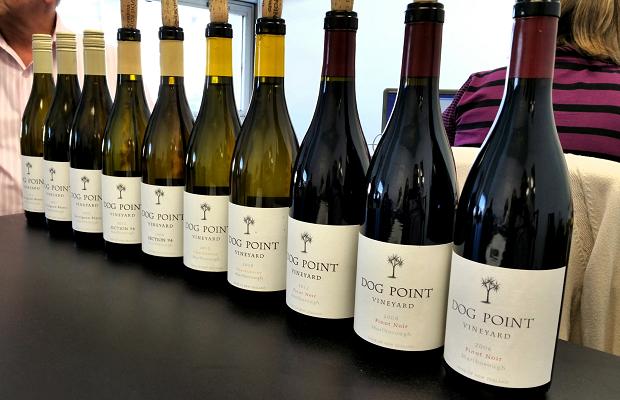
The wines of Dog Point Vineyard

The wines of Dog Point Vineyard

Dog Point Vineyard sits at the confluence of the Brancott and Omaka Valleys in Marlborough, New Zealand. Owned and operated by Ivan and Margaret Sutherland and James and Wendy Healy, the Wairau Valley vintners farm clay-loam soils sustainably and with organic, viticultural practices.

Sutherland and Healy are the men responsible for the success of the first iconic New Zealand brand, Cloudy Bay and together they left to form Dog Point in 2004. The name is in reference to the earliest European settlement of Marlborough, the sheep, their herders and the marauding dogs who prowled the scrub-covered hill overlooking the Wairau Plains. The early settlers called it Dog Point.

James Healy

James Healy

Dog Point produces Sauvignon Blanc which ranks amongst, if not tops the long list of New Zealand’s output, for quality, ubiquity and consistency.  The single-vineyard Section 94 Sauvignon Blanc takes the varietal intensity to another, barrel-influenced level. Chardonnay and Pinot Noir are made in a uniquely Dog Point style, neither emulating nor simulating Burgundy. This is the essence of the winery’s modus vivendi.

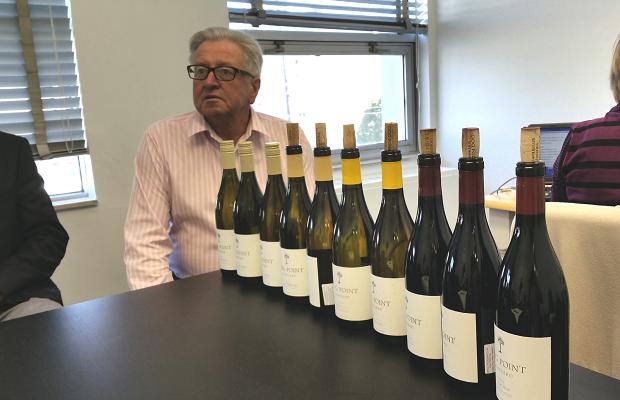
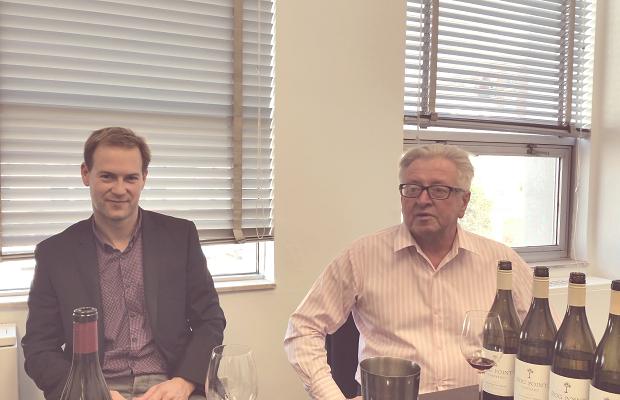
James Healy and viticulturist Nigel Sowman brought Dog Point’s wines to Toronto last week, to celebrate their 10th anniversary. I sat down with them at WineAlign, along with Trialto Group’s Richard Dittmar and fellow WineAligners Sara d’Amato and Steve Thurlow. Here are the notes on the 10 wines poured.

Nigel Sowman and James Healy

Nigel Sowman and James Healy

Dog Point Sauvignon Blanc 2014, Marlborough, South Island, New Zealand (677450, $24.95, WineAlign)

What James Healy calls “the generic Marlborough style,” with flint and ever-present though much faded reduction, grapefruit and lime. The vintage (2014) was not cold at all so it lacks the verdure. There is subtle, gentle clementine and palate viscosity. The acidity is all about bringing balance. So fresh, spritely, lime-juicy and always essential.

From my earlier note of March 2015:

So orderly and aligned, from ripe picked fruit with fervent acidity and all proportions in perfect working order. Four months settling in bottle has only worked to reinforce positive opinions. Grassless and flinty but no discernible elemental vagary, certainly no sulphur. This Sauvignon Blanc may just be the most consistent in every vintage, not only stylistically but also for the hedging of probability bets for guaranteed Marlborough quality. This is a superb vintage for the pied-à-terre phraseology. Like school in fall, winter and spring, the Dog Point is all class.

From my earlier note of November 2014:

The prototypical Marlborough Sauvignon Blanc hitting all the classic numbers is right here in the Dog Point 2014. Low pH, high acidity, minuscule residual sugar and elevated aromatics. It’s ripe but ripped by citrus juice and zest. Like cubes of honeydew, bitter winter melon and dried lemongrass soaking in and flavouring a dish of briny scallop carpaccio with coarse sea salt and capers. The sapidity is palpable, the excesses vivid. I would avoid too much variegated gastronomy when sipping this wine. Opt for simpler fare because its talents would otherwise be mimicked and suppressed.

Last tasted May 2015

Dog Point Sauvignon Blanc 2011, Marlborough, South Island, New Zealand (677450, $23.95, WineAlign)

Certainly showing some secondary characteristics in evolution and yet the composition is as close as a first cousin to the current 2014, with more than just thanks in part to identical yeasts. This has lees, “a feature of the 2011 wines,” notes James Healy. Time has magnified the flint but it has also stretched and elasticized it. The struck aromatic glint has passed and will continue to bob in slow motion. Dog Point in presentation of how and why Sauvignon Blanc can be enjoyed with age, over time.”Ain’t no reason to go up, ain’t no reason to go down. Ain’t no reason to go anywhere.” The late palate is lime, as per usual, but also lemon, in ’11, with a paraffin coating. “Time passes slowly and fades away.” Three to four more years for this SB. Drink 2015-2019.  Tasted May 2015

Dog Point Sauvignon Blanc 2008, Marlborough, South Island, New Zealand (677450, $23.95, WineAlign)

It must be said straight out that a wine such as this wins hearts and points for its longevity, if nothing else. The kudos is warranted tenfold especially because it’s a Sauvignon Blanc and one that has emerged unscathed and even star bright. From a warmer year and extended growing season. Bigger bunches resulted, like in 2014 and this has evolved with considerable spice, as if, but not by wood, yet less developed than the petrol and lanolin slinging ’11. This is a wine that unequivocally proves that Sauvignon Blanc can age, gracefully and properly. Has an almost indiscernible flinty reduction, which means it never really had it in any concerning level in the first place. A vintage-specific white, with Chenin-like feigned sweetness and lactic feel. Marvellous to note that the final taste can be nothing but Sauvignon Blanc so in the end, the flavour profile wins out. Drink 2015-2017.  Tasted May 2015

Dog Point Sauvignon Blanc Section 94 2012, Marlborough, South Island, New Zealand (325977, $42.95, WineAlign)

The Section 94 is, in the estimation of James Healy, “a particularly good Sauvignon Blanc block.” Planted in the 1990’s, the now wise old plot is churning out exceptional fruit with cold, cold acidity. Says Healy, with respect to the vintage,” we didn’t want to muck around with malolactic,” so the fruit notches naturally in barrel, with indigenous yeasts. “They won’t stop prickling for over a year,” adds Healy. Bottled at about 18 months, this is a wine given the full solids treatment and is more than obviously a major step up in Sauvignon Blanc complexity. Offers a feel like pebbles bobbing and popping around in the clot of the wine. Wood spice and so much grapefruit are the grumous layers, along with lactic, citric acidity. Time has thus far been very kind, the matchstick reduction now really subsiding in this subsidized white. Drink 2015-2019.  Tasted May 2015

Dog Point Sauvignon Blanc Section 94 2008, Marlborough, South Island, New Zealand (325977, $42.95, WineAlign)

It is interesting to note that 2012, from a cold vintage, has evolved with a lactic palate and yet this ’08 seems so very fresh. Petrol and developed, thickened honey in wax are the bees knees in here. While a touch lactic in its own right, the tapestry weaves into second, third and fourth layers. A Sauvignon Blanc that really offers the best of all worlds. The leesy, lactic-secondary and flint-tertiary feel is round and in surround. This is the most Bordeaux white of all in the DP-SB continuum, with presence, savoury herbiage and pointed, sumptuous flavours. Grapefruit and bitter, beautiful tonic orbiculates the finish. The unanimous conclusion is of a wine that is very much like Champagne, without the bubbles. Drink 2015-2020.  Tasted May 2015

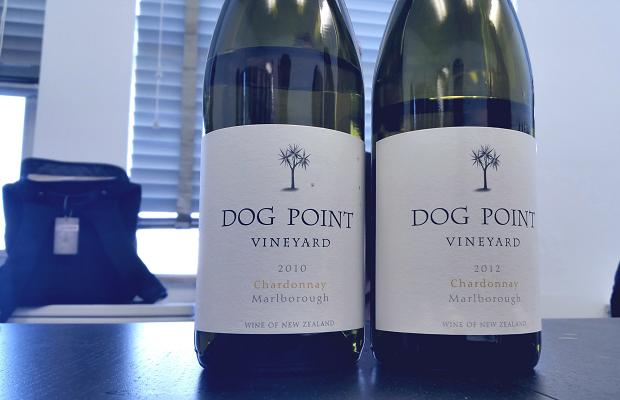
Dog Point Chardonnay

Dog Point Chardonnay 2010 and 2012

Dog Point Chardonnay 2012, Marlborough, South Island, New Zealand (238568, $39.95, WineAlign)

The barrel, in and out of reduction, defines the yet early life stage of the ’12 Chardonnay. The count is 15 per cent new with heavy toast “because we just like that heavy toast flavour, just not too much of it,” notes James Healy. Fully malolactic, but a very late one, this slow-cooked Chardonnay, with matching matchstick acidity. In expression it is of a very cool-climate style with tons of lime and emulsified to a gemstone melt, green goddess consistency. A wine that could be a cousin to, share spirit with Paul Pender’s Vinemount Ridge Quarry Road, of “emerald shine, the gemstone tannic scrape.” The Dog Point etymology is two-thirds Mendoza clone and one-third Dijon 95, the former needing sugar to get ripe, but it provides the citrus and the acidity for the palate. Drink 2017-2020.  Tasted May 2015

Dog Point Chardonnay 2010, Marlborough, South Island, New Zealand (238568, $39.95, WineAlign)

Remarkably similar to the later 2012, tasted side by side, here with toast, nuts and grapefruit. It may be just a touch warmer, with more fruit yet still cool by nature. The ’10 is not as green, not as salient in polished stone feel, with less weight and girth. The sugars and bitters are increasingly integrated and push more direct, unbiased pleasure. Just a strike of flint ties it to the sibling Sauvignon Blanc. “Statues made of matchsticks, crumble into one another.” Marlborough Chardonnay is better than you think, love minus zero, no limit. It’s true if it’s been said. “She doesn’t have to say she’s faithful, yet she’s true like ice, like fire.” The Dog Point ’10 persists, bobs, rhymes, talk in and out of line. It finishes strong, in grapefruit, without sophistry or equivocation. Drink 2015-2018.  Tasted May 2015

Dog Point Pinot Noir 2012, Marlborough, South Island, New Zealand (329672, $49.95, WineAlign)

From vines now coming of age (12-13 years old) and an increase in stem inclusion (20 per cent). Ripeness consistency was achieved with the aid of shoot cutting/thinning. All this to arrive at the Dog Point Pinot’s place in its necessary evolution. A wine of black cherry and roses, dark, dusty, ripe, in depth of earth, concentric circles of fruit and acidity. Great length.

From my earlier note of April 2015:

Perfectly bright Pinot Noir while simultaneously deep, dark and recondite. Energetic in spirit, ripe and packed with barbed, piquant fruit sewed in threaded badges of spice. Perfumed as if by cinnamon and displacing rose petals. Like the scent of a crystal clear summer’s night, all warm, dry and of dried strawberry juice cracked paint. Grounded and fulfilling, of its own holes, in the mouth and finishes with a feminine touch. A thoroughbred, a filly, that trots on an on, long after it has crossed the finish line. Drink 2016-2021.

Lasted tasted May 2015

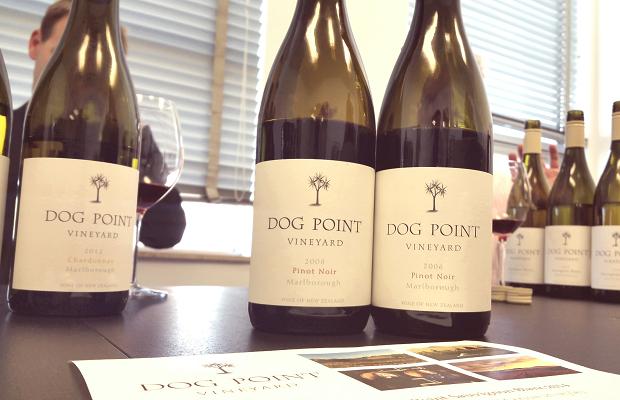
Dog Point Pinot Noir

Dog Point Pinot Noir 2008 and 2006

Dog Point Pinot Noir 2008, Marlborough, South Island, New Zealand (329672, $49.95, WineAlign)

Just a small amount of stem inclusion, a practice that will increase in subsequent vintages, helps to define structure and to a lesser extent, aromatics and taste. Yet the effect is has on tempering and mitigating sweetness is overt and protrusive. “That whole ripe stem thing…it’s a dog’s breakfast, ” says James Healy. Both he and vineyard manager Nigel Sowman have accepted and embraced the necessity of stem inclusion but as Sowman notes, “is there such a thing as a ripe stem, because you’re after sap, not astringency.” The stems here have balanced out the really ripe, jammy fruit. This ’08 is all about florals, of many flowers that offer invitation to then investigate the Pinot Noir morphology. This has turned to liqueur yet still cracks, pops and finishes with bitter, tangy and swelling cranberry. Drink 2015-2018.  Tasted May 2015

Dog Point Pinot Noir 2006, Marlborough, South Island, New Zealand (329672, $49.95, WineAlign)

In 2006 stems were not yet part of the practicum and though the wine remains very much alive it has lost a modicum of structure and a minor key of balance. The highest degree (though certainly not over the top) of paint, varnish and veneer emanates from the edges of the jammy fruit. This youngest and lower on the amicable scale for a Dog Point Pinot Noir is both sweet and sour. The depth (mostly due to very young vines) pales in comparison with even ’08 and the flavours are disparate but what is there is fun and so very Pinot Noir. Can be nothing but and is really the most Burgundian of the three (’06, ’08 and ’12) tasted. That said, it’s not necessarily a good thing because Dog Point does and should try to avoid emulation. The final assessment and most poignant note concerns how barely evolved this nine year-old Pinot sits. Tasted blind you would be hard pressed to guess closely at its age. “If we had an ’06 vintage today we would make better wines,” admits James Healy. A touch of cola and a grapefruit note hit the finish. A Dog Point thing. Drink 2015-2020.  Tasted May 2015

Good to go!

http://www.winealign.com/profile/2058-mjg

Buy the case

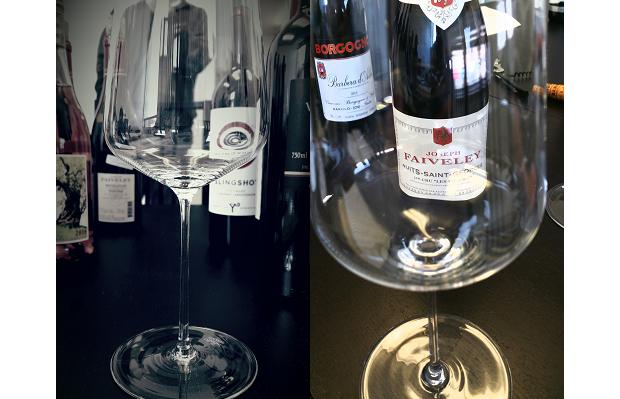
Trialto Group tasting at WineAlign with Zalto glasses

Trialto Group tasting at WineAlign with Zalto glasses

“What wines would you recommend that are not available at the LCBO?” has made its constitutive and bounden way to the top of the FAQ list. This applies to both consumers in search of quality and ease of acquisition, along with restaurateurs who want to build a diverse, anterior, ulterior and eclectic wine list. The answer is consignment. Working with Ontario wine importing agents opens up a world you never knew existed and they deliver direct to your door.

“But I don’t want to purchase by the case” is the most common response. “What if I don’t like the first bottle?” The answer is WineAlign. You already trust and put your dollars in the hands and palates of a critic or a group of critics whose judgements you trust. You order stuff online all the time, mainly because they are products you want to purchase but also because you love the home or office delivery aspect of the transaction. Wine? Yes, it’s possible. In cases of six or 12, of a wine you trust will do nothing but please, it just makes sense to order by the case.

As you know, I am a regular and increasingly active contributor at WineAlign, the most essential source for critical reviews of wines released in Ontario. Just like the coverage in this province, WineAlign tackles the scenes in Alberta and British Columbia as well. More and more samples of B.C. wine has have traipsed through the office doors so the opportunity to taste west coast output has become a regular duty and a pleasure. Still, the release gamut in Ontario remains the primary focus.

At WineAlign we have launched a new program called Buy The Case. To understand what the ‘Buy The Case’ program is really all about, click on the link to hear it from our most esteemed critic David Lawrason.

Buy The Case: Trialto Wine Group

I sat down with David and Sara d’Amato to taste through a cross-section of the Trialto Wine Group portfolio. Trialto has a great Canadian presence, in Alberta, Quebec, Ontario and British Columbia. The Ontario team has a group of highly knowledgeable wine professionals and their portfolio is chock full of gems, top values and products that will appeal to the most cerebral and fastidious of Sommeliers or discerning consumers.

The following list highlights the wines that I chose as most representative for the Buy The Case program, employing the top 10 good reasons as the guideline for making such decisions.

From left to right: Montresor Capitel Alto 2013, Giacomo Borgogno &amp; Figli Barbera D'alba 2013, Joseph Faiveley Bourgogne 2012, Vietti Perbacco Langhe Nebbiolo 2012, Terras Gauda Abadia San Campio Albariño Rias Baixas, Montresor Castelliere Delle Guaite Primo Ripasso 2011 and 2014 Neal Cabernet Sauvignon 2009

From left to right: Montresor Capitel Alto 2013, Giacomo Borgogno & Figli Barbera D’alba 2013, Joseph Faiveley Bourgogne 2012, Vietti Perbacco Langhe Nebbiolo 2012, Terras Gauda Abadia San Campio Albariño Rias Baixas, Montresor Castelliere Delle Guaite Primo Ripasso 2011 and 2014 Neal Cabernet Sauvignon 2009

Curio Selections

Montresor Capitel Alto 2013, Soave Classico, Veneto, Italy (Agent, $16.95, WineAlign)

High floral tones are at the top end for Soave and here more than a step up from the Classico bottling. The primrose and aster give way to creamy chestnut folded into savoury custard. A smooth palate feel turns to nuts, stones, fine bitters and gentle tonics. Quite the salubrious Soave, purveyor of good feelings and with the words party pleaser inscribed across its Veronese face. Drink 2015-2018.  Tasted April 2015  @TurismoVeneto

Restaurant Pours by the Glass

Giacomo Borgogno & Figli Barbera D’alba 2013, Piedmont, Italy (Agent, $19.95, WineAlign)

Popping Barbera full of strapping substantial fruit, mind-meddling acidity and thankfully, playful rhythm and blues chords. Full of plums and cherries baked in the sun, rehydrated to syrup and filled with a whole lot of old-school, funky, soulful flavour. Once this Hozier Barbera finds its way through, past a “mid-youth crisis all said and done, it then needs “to be youthfully felt, cause God” it “never felt young.” Goes round and round, like vinyl on a well-used turntable. We could grow old with this and more vintages of Borgogno’s Barbera. Years in “we’ll name our children Jackie and Wilson, raise ’em on rhythm and blues.” Drink 2015-2020.  Tasted April 2015  @regionepiemonte

Joseph Faiveley Bourgogne 2012, Burgundy, France (Agent, $23.95, WineAlign)

Pinot Noir’s most base cumulative history has arrived here, in the second decade of the 21st century, in this commodious and convenient 2012, fashioned to the letter of entry-level Bourgogne law. Bright, animated, ripe, affable, under-currant earthy and wholly, purposefully, decidedly approachable. Strawberry and raspberry mixed with dried rose-dominated potpourri. The thrill of acidity flush with direct energy jigs to finis. What more might be petitioned from the fruit of les villages? Drink 2016-2019.  Tasted April 2015  @BourgogneWines

Function Wines

Vietti Perbacco Langhe Nebbiolo 2012, DOC Piedmont, Italy (Agent, $26.95, WineAlign)

Modern, ripe and pushing maximum extraction in Nebbiolo. A single-vineyard Langhe of full, flaunting expressive ideas and protein matching aspirations. The combination of Cassis, cedar, currants and berries link this, in aromatic tumescence, to Sonoma Cabernet. Yet its prevailing and concurrent Nebbiolo presence, of tar and roses, are really magnified and inextricably tied to its declassified Barolo vineyard. Quite sappy sentimental, with sinew to one side and dusty chocolate to the other. Quality acidity and tannin keep it brutally honest. Drink 2016-2010. Tasted April 2015  @vietti_vino  @vinidelpiemonte

Seasonal Wines

Terras Gauda Abadia San Campio Albariño Rias Baixas 2014Albariño/Alvarinho, Spain (Agent, $21.95, WineAlign)

From Bodegas Terras Gauda in Galicia this likens to white blend style, in complex varietal aromatics, as if a combing of Pinot Gris, Viognier, Chardonnay and Sauvignon Blanc were vying for and forming connections in conundrums. Has a slight Vinho Verde effervescence and plenty of bright, spirited character. A monk’s white, quietly serving in piety and in the presence of the unspoken. Lingers for longer than expected. Fine example of Albariño. Drink 2015-2029.  Tasted April 2015  @TerrasGauda @RiasBaixasWines

Cellaring Wine

Montresor Castelliere Delle Guaite Primo Ripasso 2011, Doc Valpolicella Superiore, Veneto, Spain (Agent, $24.95, WineAlign)

Fortified village of Venetian varietal strength, yelping with warm, extracted, dense and chewy Valpolicella fruit and stepping beyond the acid scrubbed boundaries of the typical gauge. Pitches braised beef and a full on drupe of berry, plum and fig fruit. While at present time the confluence of worked over flavours are an over abundance of riches, this will flesh and caramelize towards a mini-Quintarelli-like future, where the rust and antiquity of innate history turns liqueur into ethereal mocker. Buy a case, wait up to 10 years and drink it over the next 10. You’ll revel in telling everyone how much you paid in back in 2015. Drink 2020-2032.  Tasted April 2015  @RegioneVeneto

Neal Cabernet Sauvignon 2009, Napa Valley, California (Agent, $59.00, WineAlign)

Nothing but Cabernet Sauvignon from both mountain and valley floor fruit. Has that keen, innate sense of proprietary wisdom. A wine that seemingly has more age on it, as if it were already 15 plus years old, when the fact is it’s a mere toddler. Somehow you just yet know it will evolve in this exact state for another 10 before fading anywhere near towards a tequila sunset. Spirited, elated, elevated tones and full, fleshy fruit endow this Neal with long term capabilities. Sweet tannins and a soft, creamy oak blanketing contain the tension and a desire for hurried, premature development. Velveteen chocolate to be sure but one of really fine grain. Very good length. Drink 2017-2024.  Tasted April 2015  @NealVineyards  @NapaVintners

Good to go!

http://www.winealign.com/profile/2058-mjg

WineAlign guide to VINTAGES April 4th and Easter recipes

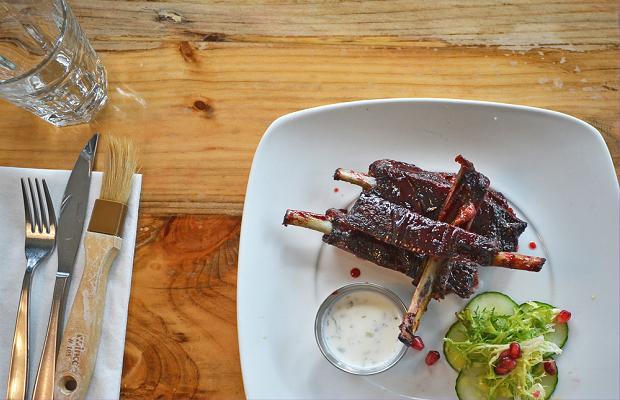
Lamb Ribs by Barque Smokehouse

Lamb Ribs by Barque Smokehouse

On January 18, 2013 I began adding wine reviews to WineAlign. Review ground zero was Mallory & Benjamin Talmard Mâcon Uchizy 2010, an inauspicious little Burgundy described in “the coat of white.” A Genesis of great #ffffff value.” Beginnings, Genesis, ground zero. The Godello thing.

Two plus years and 2,023 reviews later much has changed. The wisest of wine scribes David Lawrason and WineAlign head wineaux Bryan McCaw asked if I would like to become a part of the April 4th, VINTAGES release newsletter and buyer’s guide. With renaissance banzai and Master Sommelier John Szabo leading the charge, along with most generous guidance and help from cake baker and palate extraordinaire Sara d’Amato, I have joined the fray.

Buyers’ Guide to VINTAGES April 4th – Part One

This week’s guide leads WineAlign subscribers to Easter Lamb and red wine, plus pre-dinner whites and a glass for dessert. The three recipes cover everything  you could possibly want at your table on the resurrection weekend. The recipes are for Traditional Easter lamb by John, Moroccan lamb loin chops by Chef Michael Pataran and Barque‘s smoked lamb ribs.

Here is what John wrote in his introduction of me. “If at first you don’t understand Michael’s reviews, just drop a couple of hits of acid, smoke a joint or put on some classic 70s tunes and they’ll all make more sense. Maybe.” The irony is that amongst the seven wines I contributed to the newsletter I made only one musical reference. Oh, and one to the Grand Budapest. So, maybe you will understand them. Maybe.

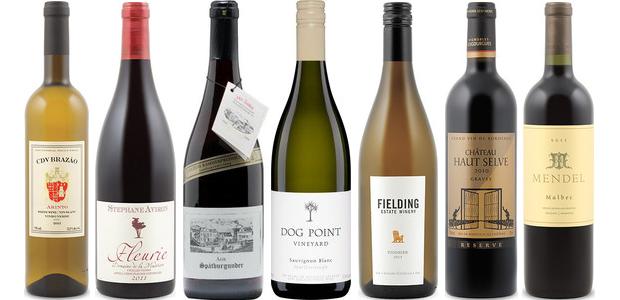
From left to right: Cdv Brazão Colheita Seleccionada Arinto 2013, Stéphane Aviron Domaine de la Madrière Vieilles Vignes Fleurie 2011, Mayschoss 140 Jahre Jubiläumswein Trocken Pinot Noir 2013, Dog Point Sauvignon Blanc 2014, Fielding Estate Viognier 2013, Château Haut Selve Réserve 2010 and Mendel Malbec 2011

From left to right: Cdv Brazão Colheita Seleccionada Arinto 2013, Stéphane Aviron Domaine de la Madrière Vieilles Vignes Fleurie 2011, Mayschoss 140 Jahre Jubiläumswein Trocken Pinot Noir 2013, Dog Point Sauvignon Blanc 2014, Fielding Estate Viognier 2013, Château Haut Selve Réserve 2010 and Mendel Malbec 2011

Cdv Brazão Colheita Seleccionada Arinto 2013, DOC Vinho Verde, Portugal (405217, $16.95, WineAlign)

A highly unique Vinho Verde that works as a sipper and as a solid, pair me with just about anything table wine. Savoury and blessed with a Bica de Queijo cheese aroma, you’ll be glad you gave it a swirl and a whiff. There is nothing shinking or violaceous about this. It’s medicinal like Moscato, toasty like Pouilly-Fumé and gangly like Garganega. Citrus juice and flesh add body and beautify its inherent male pattern baldness. Perhaps a bit of a river fish of a Vinho Verde but very fresh and a great catch. This Arinto will tie appetizers together and buy time until the bird, hock or shank is on the table with the feast’s big reds. Drink from 2015-2017.  Tasted March 2015  @vinhosverdes  @exCellarsWines

Stéphane Aviron Domaine de la Madrière Vieilles Vignes Fleurie 2011, AC Beaujolais, Burgundy, France (405779, $21.95, WineAlign)

Old vines and Fleurie scream holiday dinner wine in my books. Here struts out where it’s at Gamay from a terrific Cru, of maturity, chutzpah and depth. Bang on 13 per cent alcohol, most mature and munificent, so very forward and yet of a depth, richness and layering in fruit meeting acids. Black cherry with an accent of mint, sour citrus drop and blueberry. A minor chalky grain, just enough to evoke oak tenderness, but not enough to be cut by splinters. Very Burgundian, where it’s at and even better length. Talk about a red wine that could equally double down for the Easter and Passover table. Gamay that swings both ways, AC/DC, “it’s got two turntables and a microphone.” Drink 2015-2022.  Tasted March 2015  @DiscoverBojo  @warren_walden

Mayschoss 140 Jahre Jubiläumswein Trocken Pinot Noir 2013, Ahr, Germany (409649, $21.95, WineAlign)

Ahr Pinot Noir (as opposed to those from Germany’s Baden region) are just that much more accessible and wider table friendly. That’s because of volcanic soil and older vines like you find in this Qualitätswein. The fruit is richer, the cure more refined, the flavours full and the wine structurally sound. Give this some air and the roast swine will make an entry, with intoxicating aromas, balanced by earthy notes, ripe plums and berries. Structurally sound, the ripeness continues into a fleshy cure of wurst with good bite. The citrus tang is round and barkless. No matter the colour of your braise or roast, this Pinot Noir will compliment the hue. Drink 2015-2021.  Tasted March 2015  @LeSommelierWine  @WinesofGermany

Dog Point Sauvignon Blanc 2014, Marlborough, South Island, New Zealand (677450, $24.95, WineAlign)

So orderly and aligned, from ripe picked fruit with fervent acidity and all proportions in perfect working order. Four months in bottle has settled only worked to reinforce positive opinions. Grassless and flinty but no discernible elemental vagary, certainly no sulphur. This Sauvignon Blanc may just be the most consistent in every vintage, not only stylistically but also for the hedging of probability bets for guaranteed Marlborough quality. This is a superb vintage for the pied-à-terre phraseology. Like school in fall, winter and spring, the Dog Point is all class. Drink from 2015-2024.

From my earlier note of November 2014:

The prototypical Marlborough Sauvignon Blanc hitting all the classic numbers is right here in the Dog Point 2014. Low pH, high acidity, minuscule residual sugar and elevated aromatics. It’s ripe but ripped by citrus juice and zest. Like cubes of honeydew, bitter winter melon and dried lemongrass soaking in and flavouring a dish of briny scallop carpaccio with coarse sea salt and capers. The sapidity is palpable, the excesses vivid. I would avoid too much variegated gastronomy when sipping this wine. Opt for simpler fare because its talents would otherwise be mimicked and suppressed.

Last tasted March 2015  @DogPointWines  @TrialtoON  @nzwine

Barque Smokehouse Lamb Ribs - Spring 2014

Barque Smokehouse Lamb Ribs – Spring 2014

Fielding Estate Viognier 2013, VQA Niagara Peninsula, Ontario (142323, $25.95, WineAlign)

Winemaker Richie Roberts has worked tirelessly with Viognier to find out where it fits into the lexicon and ambience of Niagara Peninsula white grape varieties. The 2013 vintage marks a turning point in his and by extension, all of our understanding. The tropical fruit is now reigned in and the tension on the back bite a perfect foil to that well-judged, rich fruit. Trumps the layered ’12 with a new, aerified floraility that gives it more prototypal Viognier style. Short of leaving fruit to hang into late harvest (not recommended for the variety) this is like being wrapped in banana leaf along side young bamboo. Sip it joyously on its own or bring on the Easter Rijsttafel and a strolling procession down the cuisine of Kho San Road.  Drink 2015-2020.  Tasted March 2015  @FieldingWinery  @RichieWine  @Heidi_Fielding

Château Haut Selve Réserve 2010, Ac Graves, Bordeaux, France (235424, $27.95, WineAlign)

Who wouldn’t want to find a well-priced and expertly made Bordeaux to accompany an Easter feast? The abstraction is not as easy as it may have once been but once in a Paschal full moon a wine comes along and affords the opportunity. Stately structured, mid-range Graves that is so very much a combination of Cabernets. It reeks of currants, cool mint, Cassis, caramel and chocolatey oak. Kept shy in alcohol (13 per cent) and heat, the tannins are mildly grainy and though just a touch oxidative, it is a a most serviceable, generous and honest Bordeaux. From a workingman’s vintage of the century. This Graves will seal the Easter deal with its cool savour and chocolate hops. Drink 2015-2019.  Tasted March 2015  @BordeauxWines  @ProfileWineGrp

Mendel Malbec 2011, Mendoza, Argentina (108225, $27.95, WineAlign)

On the rare occasion when a Mendoza Malbec exhibits restraint, balance and all around congenial behaviour, it is imperative to sit up and take notice. This is finely fashioned juice, albeit rich, smokey red fruit swathed in good quality chocolate and a late kick of spice. Suppose there’s nothing really wrong with that. The Mendel will seduce, hypnotize and cause general swooning. Like a Grand Budapest Hotel box of treats, it will sooth even the savage beast. Ripe tannins will make this drinkable now to 2020. Tasted March 2015  @MendelWines  @TrialtoON  @winesofarg

Good to go!

http://www.winealign.com/profile/2058-mjg

A biography of Ontario and B.C. wines

Two Sisters Grapevines Photo © http://www.twosistersvineyards.com/

Two Sisters Grapevines
Photo © http://www.twosistersvineyards.com/

Like a weather map, when you take account of a wine, you are leafing through time. One could chart a wine through location, soils, geology and climatic influences. The biographical footprint is also measured after the vine has been stripped and in the winemaker’s hands.

The reconstruction of biography is about as arbitrary as predicting the future. It’s just as puzzling, untraceable and like running through a maze, is fraught with wrong turns and dead-ends. It’s about hunch work, gauging probabilities, accounting for what has come before and extrapolating towards what might be. It involves using  unsubstantiated and even unrecorded information to try proving a current state of affairs.

The conjuring of a wine to define the present and the future deals not with what is extant but what may never have been. It relies on tastes, sensations and feelings that have done the big vamoose and left no trace. Wines are reticent subjects, unable to defend themselves, posthumously fudged together. We gorge on the lives of famous wines and those culled from beneath overturned rocks, impressible with the fixations of our own.

We are lovers of wine; eager and desperate to be one with their psyche, to imagine it synched in sycophant fixation with our own. Yet all the salient facts and aspects of a wine’s journey, in viticulture, pH, residual sugar, total acidity, élevage and in tasting, are really nothing if we are unable to find the theory the wine and by extension, the winemaker live by.

In Ontario, wine writers spend an inordinate amount of time tasting new releases, generally the most current vintage of wines we have made acquaintance many times before. The bright lights of revelation dim increasingly out of sight due to the nature of that redundant beast. Yet on a Thursday in January at WineAlign the kid in a candy store factor presented through bottles yet discovered from wineries lined up and waiting to be counted.

A few weeks ago David Lawrason, Sara d’Amato and I assembled to have a go at four new (or not nationally recognized) Canadian wineries. Redstone Wines is the newest venture from Moray Tawse, with director of winemaking Paul Pender as headmaster to the rising, structured elegance of winemaker Rene Van Ede‘s compositions. Two Sisters in Niagara has pounced on the scene with precocious nerve, having released a few vintages in a short time. Some older wines were crafted in virtual virtuosity by current Ravine winemaker Marty Werner. The Sisters (Angela Marotta & Melissa Marotta-Paolicelli) have come to the present with Adam Pearce at the helm and his affinity for aromatic whites is the newest Niagara revelation. I will look forward to seeing him push some envelopes, with barrels, hang time, micro-plots and fermentative experimentation.

Redstone Wines Rosé from KeyKeg at Campagnolo Restaurant Photo © Michael Godel

Redstone Wines Rosé from KeyKeg at Campagnolo Restaurant
Photo © Michael Godel

Though I’ve not tasted more than a handful from the Okanagan Valley’s CedarCreek Vineyards, all thus far have touched gold. Winemaker Daryl Brooker‘s varietal wines are pure, precise and affordable. This may just be one of the most exciting wineries to watch out for in British Columbia. Fort Berens does Burgundy in the shadow of Fraser Canyon’s Mountains. A taste of Rolf de Bruin‘s Chardonnay and Pinot Noir offers terrific insight into DNA and in them you can read B.C.’s varietal future. Daydreamer Wines is winemaker Marcus Ansems‘ collective energy of intention, wines to sip again and again until you taste them for the first time.

Here are the notes on 23 Ontario and B.C. wines tasted on January 22, 2015.

Redstone Winery Viognier 2013, Limestone Vineyard Sauvignon Blanc 2013, Riesling 2013, Cabernet Sauvignon 2011 and Chardonnay 2012

Redstone Winery Viognier 2013, Limestone Vineyard Sauvignon Blanc 2013, Riesling 2013, Cabernet Sauvignon 2011 and Chardonnay 2012

Redstone Viognier 2013, VQA Lincoln Lakeshore, Ontario (Winery, $18.00, WineAlign)

Where there’s Lincoln Lakeshore there is red clay and with it winemaker Rene Van Ede goes it old school. Staid and static, Viognier is the star, in as much as it can be in the solid soil by the lake. On the leesy side, a sprite of lime and a dusting of chalk give texture, augmenting an already noticeable, package deal Redstone white wine portfolio. A yeast strain trend seems to be the uniting force. This is weighty but not dense, solid for the varietal and indicative of the winemaker’s style.  Tasted January 2015  @RedstoneWines

Redstone Cabernet 2012, VQA Niagara Peninsula, Ontario (Winery, $19.95, WineAlign)

Part Cabernet Franc and parcel Cabernet Sauvingon, this Redstone spent 16 months in French oak. Having melded wood into savour, the plum fruit is more than up front ample, with a pepper over and a chocolate under. A fair shake of spice and insistent tannin makes for quite a bracing red mouthful, indicating needed air and age time. Like the Tawse Bordeaux-styled reds that have come before, here is yet another slice of red fruit meets the iron life.  Tasted January 2015

Redstone Limestone Vineyard Sauvignon Blanc 2013, VQA Twenty Mile Bench, Ontario (Winery, $22.95, WineAlign)

If a Niagara Sauvignon Blanc could be endeared with the term ‘calcaire,’ Rene Van Ede’s Limestone Vineyard would lead the shortlist, not only because of the eponymous vineyard but because it oozes of the rock’s chalky chafe. Plenty of orchard fruit belies the lime, in an unoaked Chardonnay way and the wine makes full use of limestone’s hematic shed. This is one of the most stylish Sauvignon Blancs made in Canada, even if the average consumer were not able to recognize it as such. A winemaker from Sancerre would know it immediately and intuitively. Here a crushed reef of limestone memory permeates the wine from beginning to end. One of the more outstanding Sauvignon Blancs made in Ontario to date.  Tasted January 2015  @DanielatTawse

Redstone Winery Riesling 2013, Niagara Peninsula, Ontario (Winery, $18.00, WineAlign)

Such a stoic, atomic, inwardly myopic, microscopic Riesling. Dry and drier on the not yet quite ripe pear side of the tree fruit diapason. A juicy, tangy palate follows, with viscous treasures tasting of lime curd kicked up by spice accents. A kinship here with the Tawse Limestone Ridge Vineyard, with minerals that have not forgotten what it’s like to think about magma. So much lime continues to kick in and the stone it acidulates. Narrow, focused, long and rising Riesling.  Tasted January 2015

Redstone Pinot Noir 2012, VQA Twenty Mile Bench, Ontario (Winery, $29.95, WineAlign)

Fruit for Redstone’s Pinot Noir is sourced from a 15 year-old block and it saw 16 months in French oak. A wine defined by up front spice, oak obviousness and a candescence in extraction. This the vintage gives, to clamber along with the barrel, in addition to red fruit tones that trump earth. The glass is filled with a waft of raspberry pie and a drizzle of macerated cherries. A ferric streak, as would absolutely be expected, line the red fruit basket and keeps the Redstone savour animated. Know this about Twenty Mile Pinot Noir. It is alive.  Tasted January 2015  @RedstoneWines

Redstone Cabernet Sauvignon 2011, VQA Lincoln Lakeshore, Ontario (Winery, $29.95, WineAlign)

The Redstone Vineyard is a plot of red clay and large stones, set within the 38-acre estate. This red beauty saw an extended stay (18 months) in French oak, a relevant encounter to see it come out with remarkable purity, not to mention sensuality. This from out of the 2011 vintage, one that did not flatter many Niagara reds though on the Lincoln Lakeshore much success has been found. Plum and strawberry scents emerge from a wine warmer than would be thought, sanded by chalky and grainy parts in synch. A well-delineated progressive and fine-tuned machine should age for a minimum five years.  Tasted January 2015

Redstone Winery Chardonnay 2012, VQA Niagara Peninsula, Ontario (Winery, $31.95, WineAlign)

A very buttery Chardonnay, warm, tropical, steeped from rich soil, seeping orchard fruit and yet soaking from the generous amount of French oak. Handled with poise and ease, the fruit just seems to inuit its amalgamated Peninsula place and understand its place in the Niagara Chardonnay spectrum. This grows and grows, like a vine, upwards yet inwards, with instrumental interplay and no excess notes. Just the bare Chard essentials; no waste, all focus, trim and elegant.  Tasted January 2015  @Tawse_Winery

Two Sisters Vineyards  Merlot 2010

Two Sisters Vineyards Riesling 2013, Unoaked Chardonnay 2013, Sauvignon Blanc 2013, Chardonnay 2013, Eleventh Post 2011 and Merlot 2010

Two Sisters Riesling 2013, VQA Twenty Mile Bench, Ontario (Winery, $24.00, WineAlign)

An auspicious coming out vintage from winemaker Adam Pearce with fruit sourced from the Foxcroft block of the Wismer Vineyard. So very Twenty Mile Bench, with fleshy, near to bursting exotic aromatics in the vein of other Foxcroft Rieslings, like those made by Paul Pender, Ilya Senchuk and Kevin Panagapka. The classic stone fruit, their stones and the soil’s stones trampled underfoot. The kinship goes deeper, with Jay Johnston’s Nadja and Pender’s Limestone Ridge. Pearce’s take endears with notes of clementine and creamy mango pudding. Though the residual inflates more expansively than all the others, there is an aridity in the end, one that intimates modern Alsace. A pleasure to taste, with good (though not great) acidity and low (10.6 per cent) alcohol. The finish improves with each pass of the lips.  Tasted January 2015

Two Sisters Unoaked Chardonnay 2013, VQA Creek Shores, Ontario (Winery, $24.00, WineAlign)

From the Creek Shores appellation, a precinct of the Peninsula with a habit of firing citrus shots into Riesling and Chardonnay. The injections are at their hyper best from June’s Vineyard and here, in this Adam Pearce crafted, barrel-broaching bottle of white stone immaculate. Tons of character graces this Chardonnay, with a salinity drawn from the heavy Creek Shores soil overtop solid rock that permeates the wine’s earth. Lees affected, this may well be Petite Chablis, what with its texture and sugary smells. There is a perceived effervescence, a lively streak that gives it life and a swelling of its heart. The acidity is rampant and despite the inkling of SO2, the wine is quite expressive and a step-up from many cut of the same genre.  Tasted January 2015

Two Sisters Sauvignon Blanc 2013, VQA Niagara Peninsula, Ontario (Winery, $29.00, WineAlign)

Here is a veritable, potable example of Niagara SB 101, breath freshening, varietal refresher. Crafted with the lightest Sauvignon Blanc touch, with hints of grass and goose feathers, hold the berries. Soft, slight and slightly herbal with a thin veiled membrane of circular acidity. Amiably done.  Tasted January 2015

Two Sisters Chardonnay 2013, VQA Creek Shores, Ontario (Winery, $32.00, WineAlign)

Not unexpectedly, the Two Sisters oaked Chardonnay is a dramatically opposing force to the unplugged abbess. If not for the pierce afforded a Creek Shores drawn Chardonnay, winemaker Adam Pearce might have found himself stuck with a big, buttery bag of popcorn on its way to becoming a can a of creamed corn. The wooden ship is thankfully mitigated by citrus and sails calmly across buttery seas in search of herbal lands. The handling is not one fumbled by heavy mitts and the cool climate intent is managed bravely. There is admiral balance with just enough wood incantation to see it stretch across a few years time.  Tasted January 2015

Two Sisters Eleventh Post 2011, VQA Niagara River, Ontario (Winery, $39.00, WineAlign)

A Bordeaux blend of Cabernet Franc, Cabernet Sauvignon and Merlot that is very savoury, with a dry and dusty white/red pepper component. This has good verve from out of the challenging 2011 vintage. It forges ’10 louder, amps the dial up to ’11, in tempo and sapidity. A very persistent and intense heritage, with chalky tannin and grains running crosswise. Though the final wish would be for more length, it is a dogged specimen with a few years left ahead.  Tasted January 2015

Two Sisters Merlot 2010, VQA Niagara River, Ontario (Winery, $48.00, WineAlign)

This was a “virtually” made wine at the time by current Ravine Vineyard winemaker Martin Werner. From the warm and high ripening 2010 vintage, with additional blanketing and layering from the Niagara River appellation. Oak provides a creamy flannel swaddle. Certainly soft, dreamy and downy, void of tension and so easy to consume. Though by now it has fully evolved and is rapidly descending into the river’s sunset, its flavour temperament is more than Merlot palatable. Were the price considerably lower it would please on more levels.  Tasted January 2015  @2SistersVine

CedarCreek Chardonnay 2013 and Platinum Block 4 Pinot Noir 2012, Fort Berens Chardonnay 2013 and Pinot Noir 2012

CedarCreek Chardonnay 2013 and Platinum Block 4 Pinot Noir 2012, Fort Berens Chardonnay 2013 and Pinot Noir 2012

CedarCreek Chardonnay 2013, VQA Okanagan Valley, British Columbia (Winery, $17.95, WineAlign)

With a component of this wine having been housed in mammoth, old-school (2250 litre) oak barrels, the wood is spread like citrus honey butter, evenly and judiciously, through every sip. Chardonnay of tang and by lees, with apples everywhere, along with a streaky flint mien. Fine Chardonnay.  Tasted January 2015  @CedarCreekWine

CedarCreek Platinum Block 4 Pinot Noir 2012, VQA Okanagan Valley, British Columbia (Winery, $39.95, WineAlign)

From a vineyard planted in 1995, this wild yeast inoculated Pinot Noir is tough, sinewy, rigid and masculine. Dark red fruits are surrounded by racing, bracing, running on the spot acidity. Here is a west coast wine that needs enough time, somewhere in the area of five years, to soften and bring flowers. When it does, they will be roses.  Tasted January 2015

Fort Berens Chardonnay 2013, VQA British Columbia (BC VQA, 559492, $19.99, WineAlign)

With Fraser Canyon’s mountains as the backdrop, the sandy soil and sage brush make for a cool yet herbal Chardonnay. The foothills earth gives Lillooet mineral, not unlike Chablis but in B.C., with a tropical twist. This has plenty of leesy, Chablis character. Quite spirited, chalky and with a hint of soft metals, as if the cold world melts, “the noise a song.” Any way you look at it or listen to its electronica grooves, this is another cool-climate beauty. With good oscillating texture and length, it could easily be imagined to be drinking a tankful on a hot summer’s day.  Tasted January 2015  @FortBerens

Fort Berens Pinot Noir 2012, VQA British Columbia (Winery, $25.99, WineAlign)

This wine of many clones came together from Lilloet soils and was housed in barrels from many coopers. It’s bright, funky, meaty and fecundated with a clafouti of red fruits. Though jammy it’s neither hot nor over-extracted. The jam is a compote, teased by citrus rind and rubbed herb stems. In the end the sweetness prevails so find some salty charcuterie to match and drink up.  Tasted January 2015

Marcus Ansems Shiraz 2013

Daydreamer Wines Pinot Gris 2013, Jasper 2013, Amelia 2013 and Chardonnay 2013, Marcus Ansems Chardonnay 2013 and Shiraz 2013

Daydreamer Wines Pinot Gris 2013, VQA Okanagan Valley, British Columbia (Winery, $22.00, WineAlign)

Here a small batch Pinot Gris from winemaker Marcus Ansems out of an organic (Naramata Bench) vineyard. Dry and inhabiting atmospheric space, tightly wound, aerified and vacuous. Smells of fruit and blasted bits housed in concrete; pits, stones and blocks of rock. Flavours come from tree fruit, citrus and crushed seeds. Clean like Alsatian Pinot Gris (Schoffit comes to mind) and really balanced, with a soft crooning lilt. It’s quite elemental and elementary dear Watson, approachable and comforting. “When my head is heavy on my shoulders, daydreamer gonna make it over.” Linear acidity gives further meaning, in planar and stretched grooves. Deserving of the generic comment “really good food wine.”  Tasted January 2015  @Daydreamerwines

Daydreamer Wines Jasper 2013, VQA Okanagan Valley, British Columbia (Winery, $25.90, WineAlign)

This blend of Merlot (83 per cent) and Cabernet Franc is a dry, dusty pepper, mace and plum red with a silky texture and some advanced character. In retention of necessary acidity it manages to stay on the wire, with a citrus ability and a lees meets cheese rind cure. The flavours carry this forward with a chew of dried jerky, only to return to the aromatic takeover of dried flowers and cracked nasturtium pods. The great appeal here is on the nose, nothing to sneeze at or take for granted. The lasting appeal is a smell of salt pulling lilacs into the sea, or like a garden of flowers of trance inducing aromas that have absorbed many daydreams.  Tasted January 2015

Daydreamer Wines Amelia 2013, VQA Okanagan Valley, British Columbia (Winery, $25.90, WineAlign)

The organic B.C. winery presents a northern Rhône dreamer singing like a bird on its very personal Okanagan hejira. Composed of (90 per cent) Syrah and more than a dash (10 per cent) of Viognier, it also hits you like a linebacker, with waves of pepper and steeping cherries, or perhaps plums. Silky smooth and haunting up the middle, but the cure is in, the meats drying and the flavours massive. The fruits dehydrate in a way to question, have you got a date? Dates this Syrah has, in clusters, made saline by capers and sage. Leaves “vapor trails across the bleak terrain,” with streaks of octane fruit and tannin in refrain. This should be left to rest for a few years, to play out the song, to avoid “dreams, Amelia, dreams and false alarms.”  Tasted January 2015

Daydreamer Wines Chardonnay 2013, VQA Okanagan Valley, British Columbia (BC VQA, 410076, $29.90, WineAlign)

A weighty example in excess of the chameleon Chardonnay’s necessities, skittering with jerking movements and changing rapidly within the assessment in minutiae. Plenty of scorched earth and toasted barrel putter about and the aromatics remind of an old Eastern European home. Braising biennial Brassica, Pot au Feu and a wood smoker linger into a leesy and citrus tang. The sapidity takes charge and warms to the glass and the senses. A more than serviceable if scattered Chardonnay here brings much character to the table.  Tasted January 2015

Marcus Ansems Chardonnay 2013, VQA Okanagan Valley, British Columbia (BC VQA, 410076, $29.90, WineAlign)

The winemaker’s personal label is derived from more finesse and delves into upstanding seriousness than what is shown by his Daydreamer counterpart. Very cool-climate, acidity on top, with the suite of buttered toast, green apples and spice notes harmoniously intertwined. Pining notes opine to imagine pine forests and natural twine. Intense tang and verve stretch to protected length. Cooler in many ways, like a trio of established artists coming together for a first record, to offer their collective sound, on a “Friday evening, Sunday in the afternoon, what have you got to lose?” Nothing at all, from a glass of this blue-eyed Chardonnay.  Tasted January 2015  @HemispheresWine

Marcus Ansems Shiraz 2013, VQA Okanagan Valley, British Columbia (Winery, $34.90, WineAlign)

This Golden Mile Bench, west coast red leans northern Rhône with pronounced cured pork belly and smoked meat aromas. The savoury edge is like capers growing from cracks in limestone, the olives and other pickled berries coming by way of warmer, more southerly climes. Modern, violaceous and a touch oxidative, with some southern hemisphere gauze and rubber mercurial style points. There is a smell like that of baked potato, baked underground, after lightning has struck. A big wine from a little known pocket for Shiraz lore, the Ansems Shiraz will appeal to a masculine palate.  Tasted January 2015

God to go!

http://www.winealign.com/profile/2058-mjg

Gold Medal Plates Toronto 2014

Gold Medal Plate, Toronto 2014: Canoe's Chef John Horne Grandview Short Ribs Glazd with Tree Syrups (c) Ronald Ng Photography

Gold Medal winning plate, Gold Medal Plates, Toronto 2014: Canoe’s Chef John Horne’s Grandview Short Ribs Glazed with Tree Syrups
(c) Ronald Ng Photography

When head judge David Lawrason asked me to join him and fellow WineAlign colleague Sara d’Amato to preside over the wines at Gold Medal Plates Toronto, I paused for a brief moment. I knew right away the answer was an emphatic yes but I had to breathe in the possibilities. One: Sample 10 wondrous culinary creations by 10 sacrosanct chefs. Two: Spend an evening with Canadian Olympic medallists and recording artists. Three: Taste and judge the sagacious efforts by some of Ontario’s most venerated winemakers.

Gold Medal Plates was founded in 2003 and is so much more than an organization. It is a Canadian institution. The primary goal of the coast to coast galas are to “celebrate Canadian excellence in food, wine, athletic achievement and entertainment.” The tour makes stops in 11 Canadian cities and raises funds for the Canadian Olympic Foundation to support Olympic athletes. Net proceeds are donated to support high performance programs such as Own The Podium. To date over $8.2 million has been raised. (Update: Gold Medal Plates tweeted on December 10th that the number is now $9.5 million).

Gold Medal Plates Toronto 2014 bronze, gold and silver medal winning chefs Damon Campbell, John Horne and Jason Bangerter<br />  (c) Ronald Ng Photography

Gold Medal Plates Toronto 2014 bronze, gold and silver medal winning chefs Damon Campbell, John Horne and Jason Bangerter
(c) Ronald Ng Photography

In each city the invited chefs prepare a regional dish and in Toronto, more than 700 people tasted through a complex variety of creations. The gold medal chef in each city goes on to compete at the Gold Medal Plates Finale at the Canadian Culinary Championships. In 2015 the host will be Kelowna, British Columbia on February 6 and 7. The term “career changer” is used to describe the chef who is crowned tops in Canada.

With unprecedented support from the event’s title sponsor Deloitte, the Toronto event was held at the Metro Toronto Convention Centre on Wednesday, November 12, 2014. The culinary judging was headed up by former Toronto Life Magazine food critic James Chatto. Joining Mr. Chatto were chef/author Sasha Chapman, chef/TV personality Christine Cushing, author/CBC radio host Anita Stewart, George Brown chef school’s John Higgins and the 2013 Canadian Culinary Champion Lorenzo Loseto of George Restaurant.

Candian musicians and atheletes sing O Canada at Gold Medal Plates Toronto 2014 (c) Ronald Ng Photography

Candian musicians and atheletes sing O Canada at Gold Medal Plates Toronto 2014
(c) Ronald Ng Photography

At the Toronto event, emcee skaters Tessa Virtue and Scott Moir were joined by dozens of Olympic medallists and future hopefuls. The entertainment on stage was an all-star Canadian band led by Blue Rodeo’s Jim Cuddy. Cuddy was joined by The Barenaked Ladies’ Ed Roberstson, Barney Bentall, 5440’s Neil OsborneDanny Michel, Anne Lindsay and the astoundingly soulful guitarist Colin Cripps.

Slient auction signed guitar

Slient auction signed guitar

The plates in Toronto were really quite incredible. Canoe’s Chef John Horne was the gold medal winner. His Grandview Farms Short Ribs glazed with tree syrups was a ground breaker, an original composition of intrigue, a wild sequestered spot of gastronomy. The other plates were exceptional, each in their own right, but chef Horne travelled to a zone alone. Congratulations Chef.

Gold Medal Plates wines (c) Ronald Ng Photography

Gold Medal Plates wines
(c) Ronald Ng Photography

In David Lawrason’s recap to the audience, he noted how close the wine judging really was. “It was the highest quality level from bottle to bottle I have seen in the country this year, making the judging of the Best of Show Award rather tough. But when each judged ranked their top five, the same five wines showed up. It was then the ordering that became difficult, and only two points separated first and second place.” In the end we chose Norman Hardie‘s Niagara Unfiltered Pinot Noir 2011 as the Gold Medal winning wine. Hardie’s take on Twenty Mile Bench Pinot Noir is pure, complex and made with a deft, hands-off approach.

The wines ware all impressive, each and every one. The Hidden Bench approach on a Bordeaux-styled white is as impressive as any that have come before it, which is why the Nuit Blanche Rosomel Vineyard 2012 finished a very close second, taking home the Silver Medal. Syrah in the hands of winemaker Rob Power is a beautiful thing indeed. Creekside Estate‘s Iconoclast Syrah 2012 was the Bronze Medal winner. Pinot Noir by Leaning Post and Cabernet Franc by Rosewood Estates were fractional points behind.

David, Sara and I tasted and judged 12 wines, 10 of which were paired to the 10 chef’s plates. Here are the tasting notes and pairings.

Gold Medal Plates Toronto 2014 dishes and paired wines

Gold Medal Plates Toronto 2014 dishes and paired wines

Peller Estates Baco Noir Private Reserve 2013, VQA Niagara Peninsula, Ontario  (Winery, $17.95)

High acidity, negligible tannin and no surprise, the black burn of charcoal crushed, tarry fruit. A wallop of pepper for accented measure stings as per the effect of a Rhône, so like Syrah this is a good example of Baco. An airplane taxiing down a tobacco road. “But it’s home, the only life (its) ever known.” Definitely Baco.  Tasted at Gold Medal Plates Toronto, November 2014  @PellerVQA

Peller Estates Chardonnay Private Reserve  2012, VQA Niagara Peninsula, Ontario (Winery, $18.95, WineAlign)

Like bottled pastry, sweet, soft apples baking. Warm wafting aromatics, mild toast and caramelizing butter, effectively creamy and palate coating. Evolved to the point of full integration and absolute oak resolution. Drink now.  Tasted at Gold Medal Plates Toronto, November 2014  @PellerVQA

Creekside Estates Syrah Iconoclast 2012, VQA Niagara Peninsula, Ontario  (Winery, $18.05) Paired with Canoe’s Chef John Horne’s Grandview Farms Short Ribs Glazed with Tree Syrups

Winemaker Rob Power is on the fast track (if he is not there already) at becoming the King of Syrah in Ontario. The Queenston Road vineyard helps. Years of acumen development is key. Passion for the Rhône and Niagara’s climatic and stylistic kinship wraps the package. A ton of effort goes into the production of this $19 wine. The methodology here differs greatly from the co-fermented two-clone meets Viognier (and twice the price) Brokenpress Syrah. Here the fruit from three vineyards (including the Queenston Road) were fermented separately in stainless steel tanks and 1 tonne fruit bins. Malolactic fermentation took place in barrel where the wine aged for 12 months. The (30 percent new) barrel mix is (53 per cent) American, (42) French and (five) Hungarian. The result? In Rob Power’s hands, you can take Syrah out of the Rhône and Australia but you can’t take the cool climate out of the Syrah. Meat, pepper and smoke pique, pinch and pop. Pow! A totem in proclivity for the variety. The water is at times dishy but the fruit swells and fills in every gap.  Tasted at Gold Medal Plates Toronto, November 2014  @CreeksideWine

13th Street Gamay Noir 2012, VQA Niagara Peninsula, Ontario (177824, $19.95, WineAlign) Paired with Bestellen’s Chef Rob Rossi’s 60 Day Dry-Aged Beef Crudo, B.C. Pine Mushrooms, Concord Grape Mustard and Truffle Sauce

Spice and rich fruit head straight to Gamay welkin derived direct from the soil’s core, of Sandstone, Schwenker and the winery’s home vineyard at Fourth Avenue. Swirl away the gathered must and moss to reveal more Cru fruit than you can shake a stirring rod at. Such verve, said grit, such persistence. The thing about Gamay is, “if you want inside of her, well boy you better make her a raspberry swirl.” 13th Street has certainly made the raspberry sing in the ’12 Gamay so “raspberry swirl, mmm let’s go.”  Tasted at Gold Medal Plates Toronto, November 2014  @13thStreetWines

Hidden Bench Nuit Blanche Rosomel Vineyard 2012, VQA Beamsville Bench, Ontario (Winery, $20.00, WineAlign) Paired with Splendido’s Chef Victor Barry’s Smoked Rocky Point Oyster, Yukon Gold Potato and Chive

Less than six weeks after my first introduction to the NB ’12 complexity shines anew. Such a delicate and elegant take on the Bordeaux white axiom. Void of all the gangly G’s; grasses, gooseberry and green vegetable. Leans to custards and curds with a savoury accent and a limestone tang. Willing to be paired with a multitude of gastronomy. Long finish. From my earlier, September 2014 note: “Taking what the vintage gives, Rosomel’s Sauvignon Blanc was king in 2012, dominating at a 95 per cent share of the Bordeaux-styled blend with Sémillon. Barrels were stirred weekly during fermentation and the creamy texture thanks that regimen, as does the tannic fullness of the round back-end. It rocks out bracing, formidable and nobly bitter, in pear and its pith, in lemon, of rind and in curd. The SB lounges in tall grasses but avoids goose feathers and blanching veg. So very savoury, in gorse tension, thistle and nettle. These notes all cut through the roundness and are finally tied together by the flinty rock of Rosomel.”  Last tasted at Gold Medal Plates Toronto November 2014  @HiddenBench

Marben Restaurant's Chef Rob Bragagnolo's Canadian Paella, Crab, Lobster & Mussel Suquet, Crispy Wild Rice, Red Pepper-Saffron Aioli and Almond (c) Michael Godel

Marben Restaurant’s Chef Rob Bragagnolo’s Canadian Paella, Crab, Lobster & Mussel Suquet, Crispy Wild Rice, Red Pepper-Saffron Aioli and Almond
(c) Michael Godel

Rosewood Estates Cabernet Franc Origin Series 2012, VQA Beamsville Bench, Ontario (Winery, $26.20, WineAlign) Paired with Marben Restaurant’s Chef Rob Bragagnolo’s Canadian Paella, Crab, Lobster & Mussel Suquet, Crispy Wild Rice, Red Pepper-Saffron Aioli and Almond

From fruit grown on the Estate’s Beamsville Bench (Renaceau) vineyard. As per the house directive, this is not oak shy. So as the house finds collective varietal success from inside a barrel, the Origin Cabernet Franc 2012 falls into line. Fruit is bright and sour-edged, softened, filled in and tempered by wood. Lush berries and plums, herbs and did I mention oak? A roasted kind of sweetness comes wafting and pan-dripping in, with currants, mint and eucalyptus with a far away look. Intensely modish CF, with a swath of chocolate, springy and extensible length.  Tasted at Gold Medal Plates Toronto, November 2014  @Rosewoodwine

Rosewood Estates Chardonnay Origin Series 2012, VQA Beamsville Bench, Ontario (Winery, $28.20) Paired with Buca’s Chef Rob Gentile’s Ravioli alla Tonnara, Tuna Blood Pasta, Tuna N’duja and Stracciatella Cheese

The Chardonnay formerly known as Renaceau Estate Vineyard, followed by Reserve and now Origin continues to hail from the Beamsville locale and persists as one of the most viscous and rich of its ilk. The glaring mismatch in sugar (20.8 g/L) and acidity (1.8 g/L) could spell disaster but to the contrary, this finds its tongue. Quite drawn, in a southern sort of lobster dipped in butter drawl. Unrequited malo fermentative linguistics suppress any tension that might distract from the bounty of warm vintage, perfectly ripe fruit smothered in a creamy lather of French oak (nine months in 50% new and 50% seasoned).  Tasted at Gold Medal Plates Toronto, November 2014  @Rosewoodwine

The Farm Pinot Noir 2012, VQA Twenty Mile Bench, Ontario (Winery) Paired with Café Boulud’s Chef Tyler Shedden’s Haida Gwaii Pink Salmon, Preserved Porcini Mushroom, Nasturtium and Smoked Sabayon

Those familiar with the Neudorf farm fruit know it well because of the single vineyard Pinot Noir “La Petite Colline” made by then Le Clos Jordanne winemaker Thomas Bachelder and carried forth by Sébastien Jacquey. Most of the harvest was then scooped up by Bachelder’s newest Niagara venture with some Quebec buddies at Domaine Queylus. In 2012 the Neudorf family decided to allocate a small commercial gifting of their own minuscule production of Estate Pinot Noir. Eleven restaurants in Southern Ontario carry this luxurious and humid red. The aromatics are pure Neudorf; a blackberry-rapt silt and clay-earth mingle with a sideshow of coated limestone primer. Just a smidgen past ripe, this blood pedigree redaction has plenty of charm if less earnest finesse than the Bachelder siphoned bottles.  Tasted at Gold Medal Plates Toronto, November 2014

Langdon Hall's Chef Jason Bangerter's Wild Flower & Herb Smoked Game Fowl, Fermented Berry & Celery Root (c) Ronald Ng Photography

Langdon Hall’s Chef Jason Bangerter’s Wild Flower & Herb Smoked Game Fowl, Fermented Berry & Celery Root
(c) Ronald Ng Photography

Leaning Post Pinot Noir Lowrey Vineyard 2010, VQA St. David’s Bench, Niagara Peninsula, Ontario (Winery, $38.20, WineAlign) Paired with Langdon Hall’s Chef Jason Bangerter’s Wild Flower & Herb Smoked Game Fowl, Fermented Berry & Celery Root

One year later and in conjunction with stopping to think about them (other vintages and other reds at #GMP2014), the most terroir and aromatic focus comes from Ilya Senchuk’s ’10. Cherry, pomegranate and earth. Only Lowrey goes deep like this. Such a palate refresher. From my earlier, November 2013 note: “Can’t say I’m all that surprised but this is so much more approachable, pretty and glamorous. From an unrelenting hot vintage (picked Sept. 11th), a full six weeks earlier than ’09 and from the same vineyard. This was necessary as a means to preserve freshness. More sunshine, less earth but still there’s a cure and metal tendency that really defines Lowrey. Could of course be considered more of a crowd pleaser but it’s not as simple as that. That I can taste these two mano a mano, in my life is a rubber soul stamp. “All these places have their moments.” 125 cases.”  Last tasted at Gold Medal Plates Toronto, November 2014  @LeaningPostWine

http://vimeo.com/81371452

Norman Hardie Unfiltered Niagara Pinot Noir 2011, VQA Niagara Peninsula, Ontario (208702, $39.20, WineAlign) Paired with The Drake Hotel’s Chef Alexandra Feswick’s Beef Tongue, Plums and Almonds

The tension in the ’11 Niagara Pinot is palpable, ongoing and yet, as noted previously, not like it used to be. Expertly judged in a major key of complexity. Like candied nuts strung along a chain of tannin. Layers of depth and active ingredients. From my earlier, August 2014 note: “Hardie’s 2011 Pinot Noir comes out of deep clay, 20 Mile Bench soil, an impart not lost in the rich though dusty character of the wine. The flesh is both corporeal and marbled and a chalky grain runs through, with thanks to what feels like smithereens of limestone blasted through. “It was long ago, seems like yesterday,” that Norm’s Niagara Pinot carried an unwieldy level of anxiety but here the tannins have settled, the volatility has relented and there is a curious combination now, of blood and roses. Though meaty, the ’11 Pinot’s juices are concentrated, contained, not running out. The aromas are floral, heightened and intoxicating. Once again, classic comes by way of low alcohol and minimalist intervention. Last tasted at Gold Medal Plates Toronto, November 2014  @normhardie

The Chase's Chef Michael Steh's Tuna Toro, Foie Gras, Ginger Pork Dumpling and Damsum Plum Sauce (c) Michael Godel

The Chase’s Chef Michael Steh’s Tuna Toro, Foie Gras, Ginger Pork Dumpling and Damsum Plum Sauce
(c) Michael Godel

Stratus White 2010, VQA Niagara On The Lake, Ontario (660704, $44.20, WineAlign) Paired with The Chase’s Chef Michael Steh’s Tuna Toro, Foie Gras, Ginger Pork Dumpling and Damsum Plum Sauce

Tropical notes are currently blanketing the radar on the long flight to future decades. From my earlier, October 2013 note: “Quite possibly the most textured yet. A casted mass, like ingot or sélection de grains nobles, where viscosity meets candied fruit, apricot, quince and acacia flowers. A white moon with a medicinal and peaty tang that shows so much verve, earth floor even. This cracker jack ’10 will continue to add heft and flesh to earn its white stripes. Could be a classic for 20 years plus.” From my earlier, September 2013 note: “Sends me immediately towards Bordeaux, in neo-marmalade, but also buoyed in perfume and body by 25 percent Viognier. “This variety worked so well in the vineyard in 2010,” notes Groux. Niagara honey and near-botrytis via Semillon and Sauvignon Blanc void of grass, full of vigor. A sharp note, neither metallic nor mineral, but a combination of the two is present in this so very concentrated ’10. Of a warm vintage (self-explanatory) fully picked by October 23. Though loaded with early Spring maple sap, foie gras and appley terpines, its sharp and framed by “tannic” tang and protracted length.” Last tasted at Gold Medal Plates Toronto, November 2014

The Shangri-La Hotel's Damon Campbell Nova Scotia Lobster, Potato Gnocchi, Forest Mushroom, Black Truffle and Lobster Emulsion (c) Ronald Ng Photography

The Shangri-La Hotel’s Damon Campbell Nova Scotia Lobster, Potato Gnocchi, Forest Mushroom, Black Truffle and Lobster Emulsion
(c) Ronald Ng Photography

Southbrook Poetica Chardonnay 2011, VQA Niagara Peninsula, Ontario (366500, $50.20, WineAlign) Paired with The Shangri-La Hotel’s Chef Damon Campbell’s Nova Scotia Lobster, Potato Gnocchi, Forest Mushroom, Black Truffle and Lobster Emulsion

There is still a tough outer layer to crack. A poem of many stanzas has only just begun. Mute yet delicate, the stratified vineyard is the Poetica’s poetry; tight, yet forwardly futuristic towards the ephemeral and the aerified. From my earlier July 2014 note: “Has integrated nicely though certainly persists as a big, lush Chardonnay. If there were splinters or sinewy bits they have melted away.” From my earlier, May 2014 note: “The Poetica underwhelms at the present time, or perhaps hides in her youth. She’s a calm, buttery, mildly toasted, supportive softie and more accessible than her Sperling west coast sistren. Like a cool Chardonnay soffit hiding beneath a warm bench, the Poetica speaks not for the vintage but more for the current vineyard, a warm and hip spot in the Four Mile Creek appellation. The site remains (at least to me) understood but the unctuous aspect in texture and gathering sweetness with time in the glass will realize a richesse yet unseen. Poetica’s refrain is like “wind on the weathervane,” her tragically subdued fruit quiet, but able to travel long. Time will be the reveal, so be patient.”  Last tasted at Gold Medal Plates Toronto, November 2014  @SouthbrookWine  @thesirengroup

He spits, he scores: World Wine Awards of Canada results

Fresh off the presses, here are the results from World Wine Awards of Canada 2013, presented by WineAlign
Photo: kotoyamagami/Fotolia.com

as seen on canada.com

Drinking, by definition, includes consuming and that would obviously be counterproductive to the wine evaluation process. So, wine writers and critics spit for their living. Why would anyone buy a wine on the recommendation from someone who spit it into a bucket? Good question.

Consider another question. How many wine critics does it take to change a light bulb? If the answer were 10, that would be because it would take one to hold the bulb and nine to spin the room. Or the answer might be three. One to decant, taste and spit, and two to take him to the hospital before he bleeds to death. Is the joke and are these responses indicative of how the general public feels about wine criticism? If yes, then the wine consumer’s attitude towards the relevance of wine competitions and the doling out of awards may not exactly be positive and indiscriminate.

A bit of insight for you into the modus vivendi of those who judge wine. Chew over this. A wine is submitted to a concours, tasted several times by a minimum of three critics, all of whom are kept blind as to the clues regarding producer, appellation, region and country. These wine professionals are chosen by and with their peers to judge, sniff, sip, spit and repeat. They consider, contemplate and formulate on the spot tasting notes and then discuss the attributes with a panel before passing final judgement. Seems like a perfectly and indisputably sound and reasonable approach, don’t you think? But what about the spitting part?

Whatever you might think about the use of such an exercise to determine the merit of a bottle of wine, competitions, when run and operated with unbiased integrity, do in fact empower justice to the entrants. Poke fun at the wine critic if you must, felicity knows they can take it, but know their modus operandi is just the same as yours. To seek out the most worthy and best value wines available in their market. The wine critic is self-taught, to internalize the intricacies and idiosyncrasies of a wine without swallowing it. It takes focus and years of practice to figure it out.

WineAlign World Wine Awards of Canada 2013

PHOTO: WineAlign.com
WineAlign World Wine Awards of Canada 2013

The WineAlign World Wine Awards of Canada (WWAC) held in September featured a week-long evaluation process for nearly 1,000 wines (996 to be exact) from around the world. Assembled and organized by an army of volunteers, the Herculean task was orchestrated by one of North America’s most respected wine critics and WineAlign Partner Anthony Gismondi, aka The Spitter. The Vancouver Sun columnist was also responsible for the immeasurable and exacting task of overseeing the pouring and the critical timing of delivery to the judges. Not to mention piles upon piles of tasting notes and scores.

WineAlign WWAC13 Wine Room

WineAlign WWAC13 Wine Room

The WWAC is open to both imported and domestic wines for sale in Canada, provided the wine sells for less than $50 somewhere in the country.  This affords an unparalleled opportunity for all wines sold in Canada to show that they can compete in quality and value with wines from anywhere in the world.  Wines are tasted in three price categories based on the lowest selling price in Canada. Less than $15, from $15 to $25 and from $25 to $50. As a consequence WWAC is really three competitions in one with wines being tasted alongside their peers by price and with awards given by price category.

I was invited to join the other 17 judges for the preliminary rounds. If I were to measure my prosperity by the company I keep, I would indeed be a pecunious wine scribe. I was joined in Mississauga, Ontario by David Lawrason, John Szabo, MS, Steve Thurlow, Sara d’Amato, Bill Zacharkiw, Janet Dorozynski, Rémy Charest, Marc Chapleau, Rhys Pender, MW, Ben Macphee-Sigurdson, DJ Kearney, Treve Ring, Brad RoyaleJulian Hitner, Evan Saviolidis, Anne Martin and Zinta Steprans.

WineAlign WWAC13 judges John Szabo, Julian Hitner and Sara d'Amato

WineAlign WWAC13 judges John Szabo, Julian Hitner and Sara d’Amato

Judges sit three or four together at a table, taste solo through flights of like varieties, procure notes and assign individual scores. Each flight of (three to 12) wines is then discussed, argued, debated and an ultimate meeting of the vinous minds either pushes a wine through to the next round or relegates it to the discard heap. This method of awarding by committee ensures that good wines receive their due blessings and flawed specimens are put in their rightful place.Here’s the kicker. Aside from knowing the price range and specific variety or varieties in a blend, the judges taste all the wines blind. Continent, country, region, appellation and vineyard are not part of the equation. This ensures the most equitable results.

So, fresh off today’s presses, here are the results from WWAC13, presented by WineAlign. Special thanks go out to Head Wineaux, Bryan McCaw, along with Steve Thurlow, Carol Ann Jessiman and Sarah Goddard.

2013 World Wine Awards of Canada Results

Each judge was asked to write reviews on a specific cross-section of wines they were a part of assessing during the competition. Here are my notes on my 28 of them, across a wide range of categories.

From left: Gustave Lorentz Cuvee Amethyste Riesling 2011, Caliterra Sauvignon Blanc Reserva 2013, Yealands Sauvignon Blanc 2012, and De Vine Vineyards Vrm 2011

Riesling $0-15

Gustave Lorentz Cuvee Amethyste Riesling 2011, Alsace, France $14.95

WWAC 2013 Judges’ Choice WWAC 2013 Best of Variety Under $15

Peppery, perspiring, basal, nasal fruit. Propellant driven with a bite of crisp golden delicious apple and green goddess acidity. At under $15 this achieves Trocken success. Unshakable, abecedarian if not the most formidable Riesling.  88  @AmethystWineInc  @drinkAlsace

Loosen Bros. Dr. L Riesling 2012, Qualitätswein Mosel, Germany $13.95

Pressed and packed with tropical fruit, as if a roll-up, in liquid form. Thoughts head east and south but the textural, angular and vertical intensity peels back that inclination. The extended play and fruit replay is a study in delineated Riesling depth. There must be some history behind the bottle.  87  @drloosenwines  @Select_Wines

Jackson Triggs Reserve Riesling 2012, Niagara Peninsula, Ontario, Canada, $13.99

Drawn to the off-dry resonance which is both tropical and florid in citrus maxima. That pomello repeats to taste but it falls under a balmy and herbal spell, in a relaxed way. A valley’s elongated attitude, at the foot of a mountain and architecturally sound. Re-mastered, utilitarian Riesling.  85  @Jackson_Triggs

Chardonnay Oaked $15-25

Robert Mondavi Private Selection Chardonnay 2012, California, USA $16.95

Deft, lissome touch of oak. Subtle, determined orchard fruit, namely pear, barely kissed by a rose and the barrel. Exiguous yet meaningful and pragmatic aromatics. Bright Chardonnay so “a light hits the gloom on the grey.” Seals the deal astir with tang on the snappy finish.  88

PHOTO: Michael Godel White wine flight at the WineAlign WWAC13

Sauvignon Blanc $15-25

Caliterra Sauvignon Blanc Reserva 2013, Casablanca Valley, Chile $9.95

WWAC 2013 Judges’ Choice

Great show savvy, really great show. Outright fast flint, white pepper, citrus and fresh herbs. Luscious texture, convincing up the middle and goes deeper than many. Grapey and succulent. Clean, concise winemaking.  90  @Caliterra  @imbibersreport

Yealands Sauvignon Blanc 2012, Marlborough, South Island, New Zealand $15.95

WWAC 2013 Judges’ Choice

Equatorial and profuse but not over the top. Quick, painless slice of jalapeno, a sweet heat capsicum moment. Sauvignon Blanc with a drop of Sriracha, spritz of lime and pinch of salt on ripe tree fruit, like papaya and mango. Add in golden pineapple and kumquat for good salad measure. Nearly great value, if only it were graced with a bit more finesse.  88  @yealands  @TrialtoON

The Ned Sauvignon Blanc 2013, Marlborough, New Zealand $15.99

Stoic initially, with acute notes of gooseberry, grass and blanched legume. Turns tropical and balmy with a sense of orange marmalade. Confounding in that it could be South Island or Sancerre, but being subjected to such toe tipping is this Sauvignon Blanc’s calling card.  88  @MariscoWine

Kim Crawford Sauvignon Blanc 2013, Marlborough, South Island, New Zealand $18.95

Commodious Sauvignon Blanc, candid, candied and calcified. Tropical from what must be an intense vintage, whiffing dewy teak gold plum and prickly pear. Full-bodied and blessed with a long aftertaste. A slice of southern hemisphere confiture on toast.  88  @kimcrawfordwine

White Blends $15-25

De Vine Vineyards Vrm 2011, Okanagan Valley, British Columbia, Canada, $23.00

WWAC 2013 Judges’ Choice WWAC 2013 Best of Variety $15 – $25

A Rhône-ish boy with a tithe of Marsanne in support of equal 45′s of Roussane and Viognier. Mutters in rhyme, beating the drum slowly, in a subtle white flower, pretty print dress. Nothing muddy about the waters this graceful swimmer treads. Sidled by just enough rigor to replay in refrain, “I’m a natural born lovers” wine. Egalitarian revolutions per minute.  90  @deVineVineyards

Road 13 Honest John’s White 2012, BC VQA Okanagan Valley, British Columbia, Canada $25.95

A group of seven grapes, riding on a carousel. A who’s who of white varieties going “round and round and round and round with you. Up, down, up, down, up, down, too.” Elegant and in control, like the stationary horses, this endearing and human blend. Nectarine and longan make appearances in the by committee, ensemble performance.  88  @Road13Vineyards

Pfaffenheim Tete A Tete Pinot Gris Riesling 2012, Alsace, France $15.49

A 50/50 split of Riesling and Pinot Gris, please do not adjust your set, go head to head, mano a mano to duke it out, agree to disagree and ultimately settle to blend and accept the results. Together they procure Époisses and worn socks. On the bright side there is orange zest and fresh squeezed grapefruit. “So they’ve got that going for them, which is nice.” Tangy and pithy finish. Abbreviated and horizontal.  85  @AlsaceWines

From left: Jackson Triggs Merlot Gold Series 2008, Road 13 Syrah Malbec 2011, Creation Syrah Grenache 2011, and Cassiano Amarone Della Valpolicella 2008

Syrah $0-15

Fifth Leg Old Dog New Tricks Shiraz 2011, Western Australia, Australia, $15.95

Less calamitous fruit compression in relation to the rest of the flight. Blueberry pie and a concord of baking spices predominate, along with unsettling though bracketing elevated levels of tannin and acidity. Wild and whacking lack of overall integration but possessive of many positive moving parts.  87

Mission Hill Reserve Shiraz 2011, VQA Okanagan Valley, British Columbia, Canada, $19.60

A convection of raspberry jam and forest floor verdant wildness. Notable in not being nearly as wood-driven in relation to peers in adjacent stemware. An inelasticity and diaphanous texture suggests Syrah. Simpatico Shiraz.  87  @MissionHillWine

Red Blends $0-15

Hardys Stamp Series Shiraz/Cabernet 2012, South Eastern Australia, Australia $10.05

Initial thoughts lean towards flattery, in finesse and generosity. Rhône-like rocks and stones trot out the red fruit, spiked by citrus (ripe orange, juiced and reduced). Structured in oxymoronic astringent elegance. Decent to medium length.  87

Sumac Ridge Cabernet Merlot Private Reserve 2011, BC VQA Okanagan Valley, British Columbia, Canada, $14.99

Stands apart from the under $15 Red Blend flight as an axiomatic, soft conifer in a forest of hardwoods. I was admittedly fooled into thinking Niagara when it really calls the Okanagan Valley home. Semi-hemi-ripe, red stone fruit soused in halogen, spiced by Ween’s seventh album and Korean red pepper. “Even If you don’t” like the alternative character you will be charmed by its friendly production and likable wine/musicianship.  87  @SumacRidgeWine

Louis Bernard Côtes Du Rhône Rouge 2012, Rhone, France $13.00

A copacetic Grenache and Syrah Côtes du Rhône blend that just seems to exist in an Iberian state of mind. It’s the modernity speaking, in deep mauve, lilaceous essence and a palate clotted with poached tomato. Stops adroitly short of cooked or stewed fruit character. Juicy fruit from presumably young vines. Quick yet resplendent.  87  @LouisBernard84  @AuthenticWine

Masi Tupungato Passo Doble Malbec Corvina 2011, Mendoza, Argentina $13.95

Malbec and Venetian Corvina in Ripasso’s Argentinian hands. Raising, hair-triggering, eye-opening aromas in acerbic Daikon intensity. Black bean paste and cedar, earth and char. The flavours echo and further Ripasso’s absorptive ability. Tack on a  snippet of sour mix and an elevated, grizzly bear, altitudinous attitude. This one leaves me “frozen in my tracks.” Certainly not gun-shy85 

Merlot $15-25

Jackson Triggs Merlot Gold Series 2008, BC VQA Okanagan Valley, British Columbia, Canada, $23.99 WWAC 2013 Judges’ Choice

Like a wine lover’s dessert, this JT Merlot spoons gobs of sun-dried fruit, anise and dried raisin over a compressed and chalky cake of balmy green tea. Youth purloined by developed character, marked by the sauce, not unlike some manic red advance cassettes from Italy’s Mezzogiorno. Now long in the tooth, “how you wound me so tight,” with your unique style, so “don’t say that I’ve lost you.” Its heft will carry it through.  88  @JacksonTriggsBC

Michael Godel, Zinta Steprans and David Lawrason at the WineAlign WWAC13

Red Blends $15-25

Musella Valpolicella Superiore Ripasso 2009, Verona, Veneto, Italy, $15.95

Soaked and sappy, with braised tree fruit flavours, concentrated and passed over upon itself. Certainly trying very hard to entice and invite hedonistic pleasure. Like an upside down plum and fig cake, dripping in macerated syrup but with enough mineral tension to prorogue another day. Good rehydrated example.  88  @3050Imports

La Fiole Cotes Du Rhone 2010, Rhone, France $15.05

Simultaneously juicy and brooding. Tension from the get go. A depth of dried, fruit leathery plum, soaking in spiked Kefir grain. Bound tight but aching to race free. In Rhône ranger territory, or a Rhône acting on a Hollywood set. Tannic, oaky, manly yes, but I like it too. Admirable length.  88

California Square Paso Robles Red Bland 2012, California, USA $18.95

Downy soft, delicate, cheerful red blend. Pastel watercolour, flower-patterned print as perfume. Warm climate red licorice, plum permeate and cherry saturate, well-integrated acidity and some iron astriction. Would gain weight alongside rich foods.  86  @TrialtoBC

Vignoble Rancourt Meritage 2007, VQA Niagara Peninsula, Ontario, Canada $19.80

Chalk dust followed by quality, perceptive, frank and just red fruit. Understated, not overly expressive and walking softly down the road.  85

The Cloof Cellar Blend 2009, Wo Darling, South Africa $20.00

Leaps from the glass with earth expanding aromas. Strapping Pinotage java component shows accommodating restraint in advance of a Turkish viscidity. Red fruit is bright, adhesive and enervetic. Overall a bouncy, tannic and splintered affair.  85  @Cloofwines_ZA

Red Blends $25-50

Road 13 Syrah Malbec 2011, BC VQA Okanagan Valley, British Columbia, Canada, $25.00

A count five psychedelic strawberry and savoury rhubarb aromatic behemoth. Crazy cherries too. Then, a mind-altering, animal hide moment, not exactly gamey, but something other, enough to cause a psychotic reaction. “(Shouted) And it feels like this!”  90  @Road13Vineyards

Creation Syrah Grenache 2011, Walker Bay, South Africa $32.50

A requiem for an exaggerated swirl, or at least the respect of a decant. Quite a head-smacking whack of mineral-iron-metal, with the tempering lift of a citrus-scented candle. Kirsch, vanillin oak “and my time is a piece of wax fallin’ on a termite, who’s chokin’ on the splinters.” I am the loser, the wine is the winner. Very berry, big and beautiful.  90  @gradwellwines

Cassiano Amarone Della Valpolicella 2008, DocVeneto, Italy $35.25

Quite the animal, this plum juicy and high-octane alcohol, cloying acetone and chocolate-dipped red licorice Venetian red blend. Sounds ridiculously Ripasso and near-Amarone delicious and were it endowed with the balance and structure to walk with the giants I’d sing its praises. Even so, I really believe it’s a “soul who’s intentions are good” so please don’t let it be misunderstood.  87

Masi Costasera Amarone 2008, Veneto, Italy $39.95

A stew of red fruit, prune and fig. Cauterized, steroidal, excessive, welling sensory overload. Leaking car fluids. Certainly a problematic, off-bottle from a reliable, age worthy brand.  80

Pinot Noir $25-50

Leyda Lot 21 Pinot Noir 2012, Leyda Valley, Chile $45.00

Beaucoup de terre, or more likely, mucho suelo. An extreme example of Pinot Noir, a flamboyant king, ostentatious, peacockish and wired by a constriction of spices. There is perhaps too much earthly, saftig body. Though my first impression was admittedly old world, there is no way that theory will hold. A glass in and the thrill is gone, “And now that it’s over, all I can do is wish you well.”  87  @BadDogWine  @WinesofChile

Good to go!