Lean on, Macduff

Leaning Post Wines
Leaning Post Wines, PHOTO: Michael Godel

Leaning Post Wines was until very recently virtual and to the uninitiated, wholly abstract. The young Niagara Peninsula operation located at 1491 Highway 8, in Winona, Ontario is now the real deal, a bricks, barn board, mortar and hand fashioned nails winery. The risk taken and the effort put into establishing a winery in Winona is nothing short of heroic. LPW is the hands and knees, sweat and blood project of winemaker Ilya Senchuk and wife Nadia, Winnipeggers living the dream on the eastern edge of Niagara’s winegrowing Escarpment.

Related – Vineyards, winemakers and their sense of place: Bachelder and Leaning Post

Grapes need the support of posts and wires, thus the name. With a couple of vintages under his actual Winona belt, new acreage planted and only a couple of years away from producing estate fruit, now is the time to lean on Ilya Senchuk for righteous Niagara wine. Senchuk is no Macbeth. His tasting room is no Dunsinane Castle. The alternative choices he has made are emphatic but not combative ones. He would not say, “Lay on, Macduff, and damned be him who first cries ‘Hold! enough!’” He’s confident his locale and his methods will lead to success. He believes in the microclimate and soil composition of the Winona flats tucked in like a pocket between the Escarpment and the Lake. Ilya has taken up the good fight. He is an antagonist and a hero in the Niagara play.

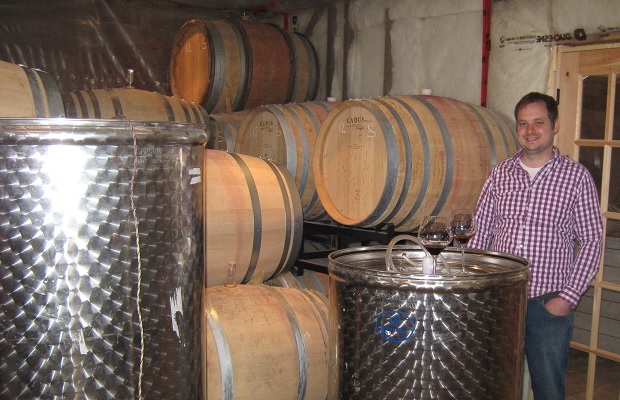
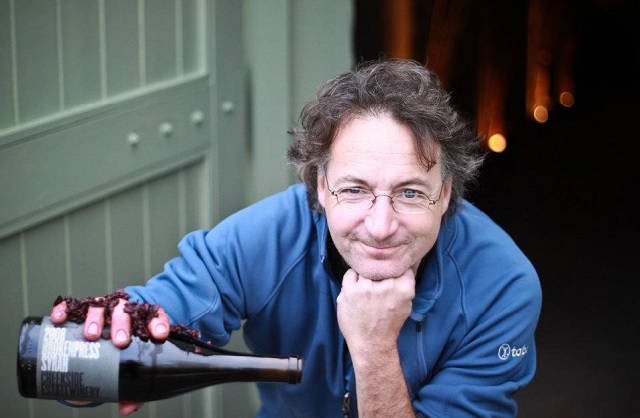
Winemaker Ilya Senchuk in the Leaning Post Barrel Room

Winemaker Ilya Senchuk in the Leaning Post Barrel Room

Senchuk is part of a breed of young and risk-taking Niagara winemakers ready and willing to push the envelope. Ilya’s wines may not fall into a stylistic category defined and categorized by standard Niagara varietal or appellative descriptions. Some of his wines challenge the notion of what is considered a true representation of the Niagara Peninsula. Though he may run into VQA panel consternation on some future occasions, he will be a part of the evolution and reworking of its mandate towards the open-minded acceptance of modern, varietal expression. He believes in ripe fruit. He’s a strong proponent of terroir, even if it means redefining or pioneering new plots.

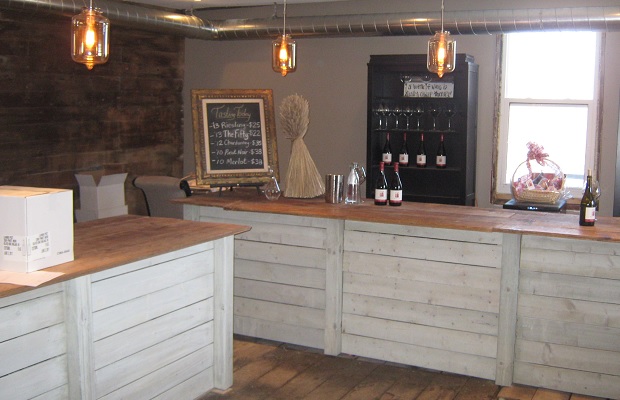
Leaning Post Tasting Room

Leaning Post Tasting Room

The wines will offer a balance of Bench terroir, with its vigorous, heavy clay meets loam and the Winona landscape, where sandy soil is maculated by largish stones three to four feet down. This atop a bed of grey clay so the low vigor of the sandy soil will be offer up a flipside, a foil to the heavy clay of the Bench. The agglomeration should be more than interesting to follow.

On the occasion of the “eve eve” for two new Leaning Post releases, the 2013 Chardonnay ‘The Fifty’ and the 2013 Riesling, here are some notes on the wines I tasted two weeks ago at the Winona winery. Senchuk led me through the new releases, along with the comings along of his wines in barrel and in tank.

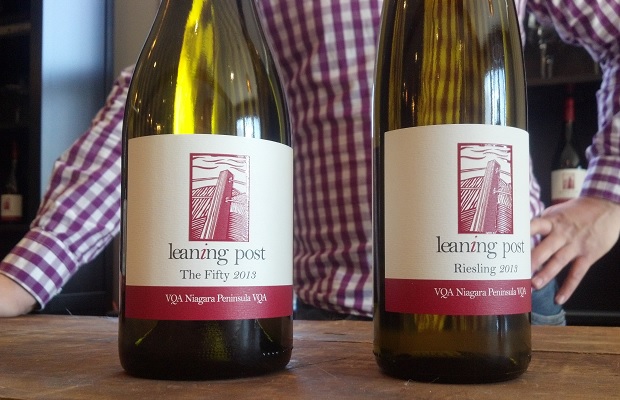
Leaning Post 'The Fifty' Chardonnay 2013 and Riesling 2013

Leaning Post ‘The Fifty’ Chardonnay 2013 and Riesling 2013

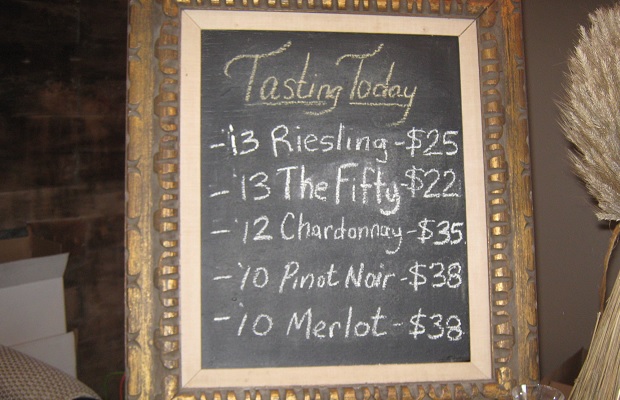
Leaning Post Chardonnay 2012, VQA Niagara Peninsula, Ontario (Winery, $35.00, WineAlign)

The 2012 Chardonnay has now been in bottle four months, just enough settle time to grant access to its magnanimous 14.2 per cent alcohol frame. This from fruit that came in at 22.5 – 23.5 brix, or as winemaker Ilya Senchuk calls “the conversion rate of the century.” From a warm year that offered a sweet Smörgåsbord for the inoculated (as opposed to wild) yeast. Chewy, dense, catalytic toast with butter. Butterscotch flavour atop a waft of Crème Brûlée, the sugar in a feverish pitch to reach hardball. This is a really big wine, a confident expression, a national statement. Lean on this Chardonnay and let it lead because “everybody wants a sip of wine to drink, everybody wants a little more time to think.”  Tasted April 2014

Leaning Post Chardonnay ‘The Fifty’ 2013, VQA Niagara Peninsula, Ontario (Winery, $22.00, WineAlign)

This is a barrel-fermented but not barrel-aged Chardonnay that borrows its name from the old town of Winona. From approximately 9-10 barrels of Foxcroft fruit racked off and thrown into tank. The aught omission of full Malolactic fermentation means a clean and jerk feel, though the wine’s lees perform the middle palate and textural duty. Bottled just eight days before sampling and yet eminently drinkable. “A wine to make friends” and make friends with. A soft and creamy sensation brings to mind Bordeaux Blanc, or more specifically Semillon’s contribution, but also the notion of Wismer Sauvignon Blanc. Make no mistake, it’s absolutely Chardonnay, in toto unique and still influenced by both the barrel and the vineyard.  Tasted April 2014

Leaning Post Riesling 2013, VQA Niagara Peninsula, Ontario (Winery, $25.00, WineAlign)

Marks a return to the variety for Senchuk, with a dynamic and resounding charge. This barely resembles what may be pigeon-holed as Niagara Peninsula Riesling as it disses the lean, citrus pierce of the dry norm. Don’t panic, it’s not that different, but it does comment on “homes, places we’ve grown, all of us are done for.” From 18 year-old (south block) Foxcroft vines, 15.8 grams of residual sugar and 11.3 grams acidity. Bottled just eight days ago, this is a wine that was “left to develop on its own,” on it lees and with no stirring. “It’s not late harvest, it’s mature, with just enough sugar to make it palatable.” Makes a cold play for warmth, extract, viscosity and natural sweetness. Reaches for complexity beyond acidity, to places old and new, to Germany and to Niagara. Gotta citrus back, endgame palate. I can’t say with certainty that in time this vintage will push the sweetness to the background and develop leathery, gamey and earthy characters. I can say that given some more experience, Senchuk will develop the acumen to make it happen. “There’s nothing here to run from ’cause here, everybody here’s got somebody to lean on.”  200 cases made.  Tasted April 2014


Notes on wines from barrel and tank

Gamay 2013 – Guiltless and virtuous straight out of stainless, the meaty side of Gamay game boldly goes where few from the Bench have gone before. Like a rare venison steak sitting in a silky pool of lavender-scented demi-glace. Floral like Fleurie and despite zero new oak, vanilla joins the gravy. A Senchuk steal of quality Wismer (McLeary…sort of) fruit sets this Gamay up for easy sell success.

Pinot Noir Lowrey 2012 – Sweet fruit, remarkable purity, length and certainly warm.

Pinot Noir Mcnally 2012 – The vineyard made famous by Peninsula Ridge. In Ilya’s hands and from young vines higher in elevation there is spice-spiked orange, in clove, cardamom and also black cherry. A bigger style, akin to Central Otago (as per the Senchuk half-beat). Only two barrels (45 cases) will be made.

Syrah Keczan Vineyard 2012 – White pepper, smoked meat, game all in but still somehow delicate. Mediterranean sensation, in black olive and with some salinity. The least ripe and the most savoury of all the wines. Has got grit, tang, florality, hubris and verdigris.

Good to go!

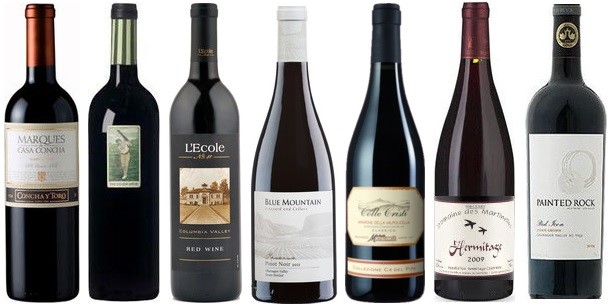
Reds for a blood moon

Reds for a blood moon

From left to right: Concha Y Toro Marques De Casa Concha Carmenère 2008, Jim Barry The Cover Drive Cabernet Sauvignon 2010, L’ecole No. 41 Red Wine 2011, Blue Mountain Reserve Pinot Noir 2011, Michele Castellani Colle Cristi Collezione Ca’ Del Pipa Amarone Della Valpolicella Classico 2008, Domaine Des Martinelles Hermitage 2009, Painted Rock Red Icon 2011

That the ‘Blood Moon” tetrad of 2014-2015 fall on Passover and Sukkot should come as no surprise. That it’s snowing again on April 15th while the Moon meets the Earth’s shadow for a total lunar eclipse is a cosmic connection that requires red wine. Big reds.

Last weekend’s VINTAGES April 12th release had some beauties and a recent tasting at WineAlign of B.C. wines showed that power and finesse can co-exist on the Left Coast. Who knew they would come in handy with the mercury again dipping below zero and people everywhere howling at a moon they can’t see. Crazy times.

Thanks to Dave Dickinson, the lunar phenomenon is broken down into laymen’s terms, in shades of red. “Does the eclipsed Moon appear reddish to you? What you’re seeing is the sunlight of a thousand sunsets worldwide, streaming through the Earth’s atmosphere into the shadow. This color can vary considerably from eclipse to eclipse, causing it to appear anywhere from a dark tea-stained color to a bright cherry red. This variation is due to the amount of dust currently in the Earth’s atmosphere, and is measured on what is known as the Danjon scale.”

Here are seven immense red wines, from three continents, each with their own unique style, to match with a blood moon.

Concha Y Toro Marques De Casa Concha Carmenère 2008, Peumo Vineyard, Rapel Valley, Chile (169862, $19.95, WineAlign)

A trifecta of regard makes this worth looking at, the least of which, at first thought, is the effect of some age. The Concha y Toro Carmenère examination, in Carmín de Peumo, in Terrunyo and in Marques de Casa Concha is the Chilean reference point for the variety. The impart of deep, clay soils and the expectation of gentle tannins make for a curiosity call when considering an ’08 specimen. Tough and gritty, on one hand, on the other soapy, sandalwood and waxy. The third hand has smouldering wood, berries and tannins. Very much like its Cab and Merlot brethren, the fruit is just starting to be outrun. Try it now and see what Carmenère can bring.  Tasted March 2014  @conchaytoro

Jim Barry The Cover Drive Cabernet Sauvignon 2010, Coonawarra, South Australia (677476, $26.95, WineAlign)

Young-ish vines on the site of the old Coonawarra Penola cricket ground receive perpetual hydro-mineral support from porous limestone under rich terra rossa soil. That fruit is then blended with extract from estate vineyards in the Clare Valley. Smashes the cover off the grapes towards a full on gain of flavour. Charred peppers and lush black berries are smothered and splintered by a 50/50 split of French and American oak in no less than a crush of conceit. Tannin, grit, joy, flesh, full on deep fruit and mineral. Obviously over-swung and with too much club (switching sports), like using Driver used when a long iron would have sufficed. But you drive for show and this Barry can putt for dough.  Tasted March 2014  @Jimbarrywines

L’ecole No. 41 Red Wine 2011, Columbia Valley, Washington, USA (366237, $29.95, WineAlign)

A really good, high-octane red blend if blatantly massive. Like the smell of a shiny, varnished, fresh wood cabin glazed by highly aromatic and resinous epoxy extract. That’s the simple tasting note. The more complex version includes a perfume potpourri of Bougainvillea, violet, orange peel, cinnamon, dark chocolate and a lumber factory. The electric, fully plugged in blend is Syrah, Merlot, Cabernet Sauvignon, Malbec, Cabernet Franc and Grenache (38, 36, 15, 6, 4 and 1). The quotient seeks learned Nirvana and with a little luck, some power chords, a bit of screaming and historical, retro-cult exoneration, it may just get there. Right now it just feels like High School. Impulsive and uncomfortable. Wouldn’t you believe it, it’s just my luck. No recess.”  Tasted March 2014  @lecole41

Blue Mountain Reserve Pinot Noir 2011, Okanagan Valley, British Columbia, Canada (Winery, $36.00, WineAlign)

The Reserve Pinot is intoxicating to say the list. Some whole clusters in the fermentation process add mouth feel, cure and needed grit but how this can not be viewed overall in the shiniest west coast light would be confounding. The reserve ’11 is both “sky as I kite, sticky as lips” and “as licky as trips.” If there was ever an Okanagan Pinot Noir to get you high, this would be the one. What a boisterous effort out of a less than scorching vintage and considering the modest to riches price, no shame in visiting with flavourful fare, imbued with spice, any day of the week.  Tasted April 2014  @BlueMtnWinery

Michele Castellani Colle Cristi Collezione Ca’ Del Pipa Amarone Della Valpolicella Classico 2008, Veneto, Italy (222109, $45.95, WineAlign)

The magic of age is a friend to Amarone and funk trumps fruit. In a nutshell the axiom describes the old-school Colle Cristi. A brooding Amarone, cut by zest that’s citrus-like and savoury/earthy in pine needles, juniper and a Venetian forest in autumn. Inviatura and Chiaroscuro. Caravaggio meets Giorgione. The most complex Valpolicella in the April 12th VINTAGES line-up.  Tasted March 2014

Domaine Des Martinelles Hermitage 2009, Rhone, France (112268, $54.95, WineAlign)

Clearly modern and style-heavy though not out-of-place in the world of Hermitage. From steep slopes of stony brown sand, a high level of grit might be expected but this Syrah is refined, lush and smooth as silk. At 14.5 percent it’s no shrinking violet, honest and futuristically traditional. At $55 it’s a mandatory, appellative Northern Rhone steal. Matter-of-fact acidity, verve and mineral content are all in, with elegance and balance. Really fine Syrah with a five to ten-year fruit-tannin power struggle ahead.  Tasted March 2014  @LeSommelierWine

Painted Rock Red Icon 2011, VQA Okanagan Valley, British Columbia, Canada (Agent, $55.00, WineAlign)

Painted Rock’s red icon could be considered more black than red, as exemplified by the layering of grapes, their pitchy extracts and the fruit associated with their gathering. If the man should ask, “tell him what we said ’bout ‘Paint It Black.’ Rock ‘n Roll is here to stay.” Yes, the Icon will be a big star someday and perhaps this ’11, despite the cooler vintage, will be the first. Might have to wait 13 years or more to find out because the tannic structure is in beast mode and will remain so for likely that much time. The wine plays memorable chords and its song lingers on the brain.  Tasted April 2014  @liffordwine  @PaintedRockJohn

Good to go!


Up on Creekside Estates

Creekside Estate Wines Photo: Eric Vellend

Creekside Estate Wines
 Photo: Eric Vellend

It was the weekend of Godello’s excellent Cuvée adventure, a Niagara winepalooza that included the Brock University Cool Climate Oenology and Viticulture Institute’s Expert’s Tasting. On the road to The Falls there happened an extensive tank, barrel and vertical go round at Flat Rock Cellars and then, with chef riding shotgun, the next essential stop came up on Creekside Estates, a seventeen year-old Jordan winery on 4th Avenue.

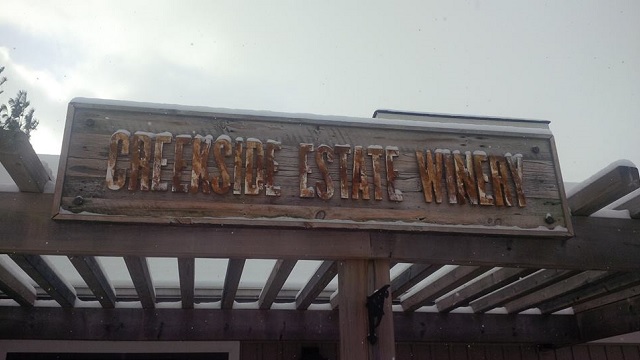
Creekside Estate Winery
2170 4 Ave. Jordan Station, ON L0R 1S0
1 (877) 262-9463 or (905) 562-0035

@CreeksideWine

Creekside was founded in 1997 by owner Laura McCain on a 15-acre vineyard at the 4th Ave. site. The early days of the winery saw an attitude towards varietal antidisestablishmentarianism, with Sauvignon Blanc and Shiraz at the forefront of production. Daring to be different from the start, Creekside has carved an antithetical, Niagara Peninsula religious wine belief, slightly devious, with a manifesto towards creating wickedly good wines.

Creekside Estate winemaker Rob Power Photo: http://www.creeksidewine.com/

Creekside Estate winemaker Rob Power
Photo: http://www.creeksidewine.com/

In the early days there was winemaker Rob Power and mad scientist partner in crime Craig McDonald, now the chief of what happens in bottle at Trius. Powers graduated in the first oenology class out of CCOVI and began his vinous stirring with Creekside, a post he continues to develop, never-resting on earlier laurels. Back then the two cubs fermented and blended together, with caution swirling tohu vavohu in the wind. Some of those Meritage blends from the early 2000’s were brilliant strokes of luck, or as winemaker’s like to call it, hard work. Or destiny, or god’s favour. The Creekside credo has never wavered. Being overly serious is not an option. Having made decisions such as purchasing the unparalleled Queenston Road Vineyard on the St. David’s Bench on its side, Creekside thrives by an exhibition of capricious behaviour, adroit winemaking and the rope savvy marketing of veracious and affordable wines.

Assistant winemaker Yvonne “Cellar Monkey” Irvine and Director of Sales, Marketing and Necessary Evil Matt “Semi-Illustrious Career” Loney ushered a tasting of 12 Creekside wines. Here are the notes.

Creekside Estates Winery Photo: http://www.creeksidewine.com/

Creekside Estates Winery
Photo: http://www.creeksidewine.com/

Sauvignon Blanc 2012, VQA Niagara Peninsula, Ontario (620724, $13.95, WineAlign)

Leans and veers to the tropical side, no doubt as a result of a record-setting sugar vintage, but this ’12 manages to finish very dry. The arid descent follows a warm and fuzzy peach feeling, set about by some skin contact and buoyed by citrus and zest. Front yard value.

Backyard Sauvignon Blanc 2013 (Tank Sample), VQA Niagara Peninsula, Ontario (341792, $17.95, WineAlign)

A Creek Shores SB that bridges the gap between spring and summer fruit. From a year in which the choice was made to not blend off into the estate bottling. Recognizable Creekside aromatics stand out in a more than obvious mineral deposit and grapefruit zest way. Here the band plays across The Great Divide so “just grab your hat, and take that ride.” Will be a VINTAGES August 30 release.

Sauvignon Blanc Reserve 2012, VQA Niagara Peninsula, Ontario (142570, $26.95, WineAlign)

Seven barrels make up the Reserve, ferments new (four) and old (three), leading to a richer, fatter and spicier style. Dreamy really, as matchstick and flint join the fray in a Pouilly-Fumé way. That pierre à fusil is exaggerated by the warmth of 2012, with an elevated tang, rendering the flavours even more akin to Old World, Loire Sauvignon Blanc. Close your eyes and when you awake, “when you believe, you will relieve the only soul that you were born with, to grow old and never know.” The Creekside band created an old SB soul in ’12.

Laura’s White 2012, VQA Niagara Peninsula, Ontario (121764, $18.95, WineAlign)

Laura’s White combines Sauvignon Blanc, Pinot Gris, Chardonnay, Riesling and Gewürztraminer in a kitchen sink blend that sees a bit of oak. What’s notable about the ’12 is the omission of two highly aromatic components, the previously employed stalwarts Viognier and Chardonnay Musqué. The adage is justified in that you take what the vintage gives you. If it gives you lemons, (shift tangents) you let the busy aromatics of more flavourful grapes (like Chardonnay) do the floral work. Laura’s ’12 will be a standout for the concept, a revivalist blend to help bring back some religion to the region’s renditions. Coming to VINTAGES in June.

Viognier Estate Reserve 2011, VQA Niagara Peninsula, Ontario (22058, $29.95, WineAlign)

A 60-80 cases annual production from the Queenston Road Vineyard is not nothing because “ya take what ya need and ya leave the rest.” Aside from a miniscule addition out of stainless steel tank, this is all neutral barrel fermented fruit. Reigned in, less boozy and subordinate in oleaginous slide than in the sweaty years. Translation? A superlative vintage. The night they drove a whopping six rows of old ’11 Dixie Viognier fruit down for crushing the band began to play. This, knowing full well there would be no dirty peach martini, but rather a perfumed dropper distilling flowers, wildflower honey and wild tarragon. Rises and falls to verse like a Richard Manuel keyboard march with length to match the Queenston Road.

Rosé 2013 (Tank Sample), VQA Niagara Peninsula, Ontario (winery, $15.95)

A Cabernet Sauvignon (71 per cent) and Cabernet Franc (29) full-on saignée Rosé with colour balance given by way of the CF bleed. An arid entry creeps to sweet with a pause amongst the whispering pines, finishing tinny and with a breath of fresh herbs. Niagara Rosé can get lost sometimes, in extract, hue and a candied, sinking feeling. This is a scaled back vintage which is more than a good thing, so there’s no waiting, “until it all goes round…the lost are found.”

Syrah 2012, VQA Niagara Peninsula, Ontario (121764, $15.95, WineAlign)

A healthy 3,200 cases are managed and executed with ease from mostly estate fruit. Certainly warm in this vintage, dare I say, like McLaren Vale. If it must not be said, too bad, but it’s also a bowl of fresh berries with a rocky Rhône intent. Terrific tar and ash finish.

Cabernet Shiraz Estate 2011, VQA Niagara Peninsula, Ontario (305300, $16.95, WineAlign)

A traditional Oz combination of Cabernet Sauvignon (55 per cent) and Shiraz (45), clearly new world in style, as Yvonne Irvine says, like “trying to make a big, rich, unctuous Shiraz.” The question could be posed, “temptation stands just behind the door, so what you want to go and open it for?” This one goes right to the jawbone with serious backbone and streak of acidity. Not to mention chalk, grain and a Shiraz solo. The American oak accent is clear and the tannins say wait two to three years, please. The fruit may, or may not comply.

Laura’s Red 2010, Queenston Road Vineyard, VQA St. David’s Bench, Niagara Peninsula, Ontario (117906, $19.95, WineAlign)

It’s funny, more than any other wine tasted, this Laura has that Niagara varnish other Creekside reds seem not to possess. “Stock up in the big years” suggests Matt Loney, and “consolidate in the tougher ones.” It could be argued that you can make more interesting wines in the lean years but this blend of Cabernet Sauvignon, Merlot, Syrah, Malbec and Petit Verdot lays a claim to seriousness, if needing at least three years to settle down. There is much cassis, sweet oak, iodine and a milk/dark chocolate swirl. Complexity for sure if just a bit huge within its own skin.

Merlot Reserve 2008, VQA St. Davids Bench, Niagara Peninsula (winery, $34.95, WineAlign)

Here is a wine that is aging gracefully, works with and fits into the vintage, Merlot as objet d’art, grown in stature as if by wizened verdigris. Smells like Goulash or Côte de boeuf à la Bordelaise, even cured meat. Might also be considered in terms of funk, a note sometimes brought on by Hungarian oak. Tons of red fruit, pencil, anise and “the smell of the leaves, from the magnolia trees in the meadow. King Harvest has surely come.” Few Ontario reds succeeded in ’08 like this Queenston Road stunner and few will live as long. Another classic by the band.

Cabernet Sauvignon Reserve Queenston Road Vineyard 2010, VQA St. David’s Bench, Niagara Peninsula (winery, $34.95, WineAlign)

Impeccable correctness in terms of the variety from a year where the heat giveth and the heat taketh away. Works Cabernet properties properly, embracing and minimizing oak without pretending it’s not there. This red is expressly lush and oak driven, as it should be, it being Cabernet and all. Leaves its appendages out for a Mediterranean pedicure, a glaze of Cassis, black olive and black cherry dug in a chair entrenched in the warm confines of the St. David’s Bench.

Lost Barrel Red 2007, VQA Niagara Peninsula (46470, $65.00, WineAlign)

Just 60-80 cases are made from the tips of the best barrels through a process that takes 56 months to complete. The secret ingredient is Sangiovese and bless the band‘s soul if the ferric, iron and animal musk is not attributed to the addition. This is a different kind of wine, with lees in the bottle, not unlike some big, bad Spanish wines. It’s ’07 and still reductive which makes it seem peculiarly modern (note, Spanish) but it’s really not. Despite the monster tannins, it “just gave my heart a throb to the bottom of my feet and I swore as I took another pull,” the Lost Barrel can’t be beat. Up on Creekside Estates.

Good to go!

Passover that big glass of red

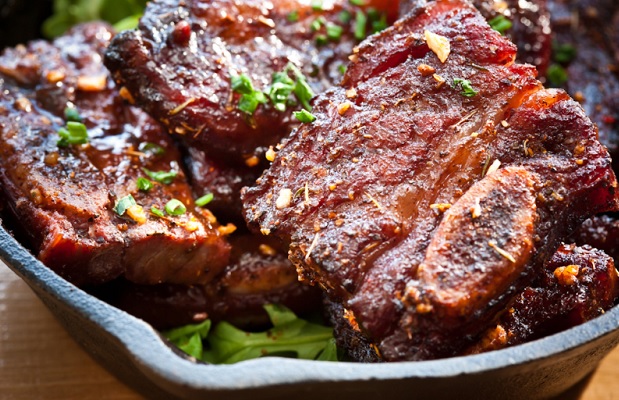
Barque Smokehouse Miami Ribs PHOTO: Kevin Hewitt and Jill Chen (http://www.freestylefarm.ca/)

Barque Smokehouse Miami Ribs
PHOTO: Kevin Hewitt and Jill Chen (http://www.freestylefarm.ca/)

The Torah says, “Guard the month of the spring, and make [then] the Passover offering.” Meaning, Jews need to ensure that Passover is celebrated in the spring. In Canada that proclamation was in danger. Had Passover fallen in March, 2014 may just have seen the coming of the apocalypse.

An understanding of the rules and laws that govern wine on Passover is on a need to know basis. There are really just three key variants of information essential to purchasing and consuming on Pesach. This applies to Jews and non-Jews alike.

Number one. Passover wine is specific to a Jew’s level of Kosher. From Reform, to Conservative, to Orthodox, all Jews have different variances of belief. A Reform Jew will likely drink any wine on Passover and then again, may not. But, he or she will almost certainly not require the bottle to be Mevushal. A Conservative may only drink Mevushal but in more cases than not, Kosher is good enough. An Orthodox Jew goes it only one way, or the highway. Strictly Mevushal KFP, do not pass go, do not collect Afikoman (the broken Matzah) money.

I covered the gory and bitter (herb) details in last year’s Passover wine column. “All wines labelled “Kosher for Passover” are kosher, but not all kosher wines are kosher for Passover.”

Related – New wave under $20 wines go kosher for Passover

In 2012 I spent some time on the limiting, frustrating and constipating food component of the ancient Jewish holiday. “Try cooking with and having to eat nothing but Matzo, eggs and oil for eight days.”

Related – KP Duty – Kosher For Passover Wines

Kosher wines migrate bigger and bigger with each passing Lunisolar calendar year and their not so arbitrary inclusion or not of an intercalary month (shanah meuberet – Adar I) added in the 3rd, 6th, 8th, 11th, 14th, 17th and 19th years of the 19 year lunar cycle. Israel continues to race towards big, lush, often high alcohol reds. This trend could be seen as a masking or a compensating/mitigating strategy to oppose the rigors and past failings of making Kosher wine. It can also be viewed as a stylistic choice, to mirror what has taken place in Bordeaux, in California and in Australia for the past 20 years.

In Canada, Kosher wine selections are extremely limited. There are smaller, garagiste producers in Israel, especially in the hills surrounding Jerusalem, that are making fresher, less oaked reds, but good luck seeing them on shelves on this side of the ponds. It was refreshing, however, to find the Kosher contingent on the VINTAGES March 1st release to be Israel-focused. In past years the group was dominated by Australia, Italy, France and California. Israel is making the best Kosher wines on the planet. Go figure.

Barque Events offers a full Passover catering menu. View the selections. Here are six big reds and a token white tasted and recommended for the Passover table.

Golan Cabernet Sauvignon 2007, Galilee

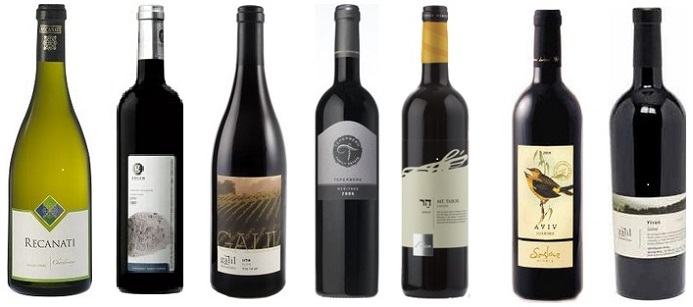
From left to right: Recanati Chardonnay 2012, Kosher For Passover, Non Mevushal, Upper Galilee, Golan Cabernet Sauvignon 2011, Galilee, Galil Mountain Alon 2010, Kosher For Passover, Upper Galilee, Teperberg Family Estate Meritage 2011, Kosher For Passover, Elah Valley, Tabor Earth Series Shiraz 2011, Kosher For Passover, Upper Galilee, Saslove Aviv Marriage 2011, Kosher For Passover, Upper Galilee, Galil Mountain Yiron Kp 2009, Upper Galilee

Recanati Chardonnay 2012, Kosher For Passover, Non Mevushal, Upper Galilee, Israel (128322, $19.95, WineAlign)

Rich, unctuous and viscous. Soft and discreet, more like a modern, New World sketch of a Grenache Rhône-blend than a warm climate Chardonnay. There is little or no affront to this clement and polite Israeli of scant tension or acidity.   Tasted February 2014

Golan Cabernet Sauvignon 2011, Kosher For Passover, Galilee, Israel (Vintage Wines – 611152, $26.95, WineAlign)

From winemaker Victor Schoenfeld, the stylish “G” will answer the pecuniary call for just about any Passover feast. Well-rounded, worldly, soft-spoken and generous of fruit. A 100 per cent Cabernet that knows its way around a blackberry, a ripe plum, a bouquet of violets and a chamber of faint tobacco smoke. Lush but not heavy, the only detractor is a slight caramel, oxidative note that indicates near-term consumption, which is basically a given anyway. The finish hints at a lava flow in the direction of the fourth cup, but because this G is so easy to drink, it should be enjoyed while still at the table.  Tasted April 2014

Galil Mountain Alon 2010, Kosher For Passover, Upper Galilee, Israel (354522, $20.95, WineAlign)

Alon makes use of Syrah to create its party mix, to work with 41 per cent Cabernet Sauvignon, 6 Petit Verdot and 6 Cabernet Franc. Another monster red blend, coming in hot and huge at 15.5 per cent alcohol. For the price, what more can you ask for? Passover may be a four glass exercise but two through four are top ups so it’s really a two glass night. This wine will not ruin your 2nd Seder morning wake-up after consuming a maximum two glasses at the 1st Seder. Rich, mocha berry driven shake, spicy and with non-invasive meaty aromas. Hot, sweet and bothered.  Tasted February 2014  @azureau 

Teperberg Family Estate Meritage 2011, Kosher For Passover, Elah Valley, Israel (157016, $23.95, WineAlign)

Proper Bordeaux aromatics, of tobacco, tea, black currant and grilled meat. Nothing gritty going on here, all four varieties playing a role and hanging together. With good tannins, sweet sinuous and slinky, this is a very versatile Passover red that will also benefit from a year or two in bottle. Better than average value.  Tasted February 2014

Tabor Earth Series Shiraz 2011, Kosher For Passover, Upper Galilee, Israel (356709, $23.95, WineAlign)

In an unusual turn of the earth, this smells like someone dropped a piece of Emmental to melt in the heat upon the must of this Shiraz. It does swirl away and a solid core of red berry remains, though for just a spell. Simple, semi-structured and proper, without hard edges or tannins, but falls quickly. Will work well with many Passover flavours but drink it up in 2014.  Tasted February 2014

Saslove Aviv Marriage 2011, Kosher For Passover, Upper Galilee, Israel (354514, $29.95, WineAlign)

This Aviv consolidates Bordeaux, Piedmont and the Rhône into one complex and perplexing blend within the confines of a single bottle. The Northern Rhône meatiness of the Shiraz stands out firm and at attention, essentially suppressing the Meritage marriage intent and thus renders the wine monochromatic. Still its lively and spicy, ready for the bigger and more pungent foods on the Passover table. The Shiraz might say, “this is a crisis I knew had to come, destroying the balance I’d kept.” The other varieties, meaning Merlot, Cabernet Sauvignon, Petit Verdot, Cabernet Franc and Nebbiolo are the silent partners in this polygamy of a wine marriage. They play their parts despite the joy division.  Tasted February 2014

Galil Mountain Yiron Kp 2009, Upper Galilee, Israel (95075, $34.95, WineAlign)

The Yiron is a beast but because I am so pleased to see the Kosher feature composed of all Israeli wines (as opposed to Australia, France, Italy, Argentina and Chile) I am focused and ready to work with anything on this table. Despite the 15.5 per cent alcohol and plethora of oak treatment, this blend shines in rich, meaty and anise-spiked flavours. The mix of Cabernet Sauvignon (60 per cent), Merlot (35) and Petit Verdot (5) may seem monstrous but it is not stupidly expensive now and in relation to what it cost in previous vintages ($50). Though certainly not a wine of elegance, grace and restraint, the Yiron pulls no punches and remains true to its warm climate conditions. It is what it is.  Tasted February 2014

Good to go!

https://twitter.com/mgodello

Bottles, barrels, tanks and a vertical

Flat Rock Vineyard, Twenty Mile Bench, Niagara Peninsula

Flat Rock Vineyard, Twenty Mile Bench, Niagara Peninsula
Photo: Brian Barton

as seen on canada.com

Listening to Flat Rock Cellars’ winemaker Jay Johnston rattle off the numbers and particulars of his 2013 Pinot Noir harvest you can’t help but survey the odds of something preternatural. Vintage speculation for 2013 in Niagara has met with tempered interpretation, a play down on the effects of weather and generalizations that it was just another normal meets classic year. Nothing to see here. You sure about that?

This according to VQA Ontario. “2013 was an interesting year with some significant weather variations through the growing season…weather conditions during the 2013 season were quite variable…with some isolated late frosts in Niagara…temperatures through September and October were slightly higher than normal but October was wet putting pressure on harvest schedules and many wineries worked long hours to optimize harvest strategies around the weather.” Sound the alarm?

Flat Rock’s vineyard is a wondrous bit of topography. Peer out from the conclave tasting room and witness a rolling set of undulating and breaking waves, ascending, descending and demarcating the landscape. Let Ed Madronich point out individual plots and blocks. Imagine each sub-section of the vineyard as its own little hermetic world, with its own soil biology and guided by its own little set of rules. Now taste Pinot Noir tank samples from 19 disparate parcels. Internalize, disseminate, deconstruct and reconstruct. As if you were the master of single varietal assemblage. Mind blowing actually. Nerdy, but mind-blowing.

House and Home Food Editor Eric Vellend and I sat down with Johnston and Madronich at the winery for a comprehensive look at those ’13 Pinots, fresh out of their infancy and just beginning to offer a glimpse of what they will be. A total of 185 tonnes were harvested at a more than modest 24 to 24.5 brix, a sugar quotient effectuated by timing as much as sunshine. Nineteen chapters delineate the story, in 160 barrels and in the end there will be two wines. The 2011 Block Series experiment will once again go unrepeated, though Jay notes a return could be considered for 2014.

2013 Vintage Flat Rock Pinot Noir Samples

PHOTO: Eric Vellend
Flat Rock Cellars Pinot Noir samples from the 2013 vintage

The tank room was very cold on this last day of February 2014 (you don’t say) so Johnston brought up the samples in what can only be described as a highly classified, secret society of winemakers, high-tech way; in plastic water bottles and Erlenmeyer Flasks. The goal was to offer a representation of the fingerprint of the vineyards and the fermentation management through full composite blends of each batch. We tasted through eight of the 19. The first three are from batches that end up in the Flat Rock Estate Pinot Noir. Clonal selections are noted in brackets.

Flat Rock Cellars 2013 Tank Samples

PHOTO: Michael Godel
Flat Rock Cellars 2013 Tank Samples


South (115)

Tang at the forefront, a mineral streak, red berries and a lingering whisper of citrus squeeze from recent (X-mas) sulphuring.

Horseshoe (777)

Dusty and also juicier, from an icy, polar beginning to come back around, calm down and seek a softer, common (to South) end.

Road (777)

Beastly, meanest sucker of the three, speaking with the most rock. The only one (of the first set of three) with some funk.

Monster (A blend of clones)

Funkadelic funky but also the fresh maker. Cherries and high-toned perfume, a feral hint in a leafy, good compost way.

Pond (667/777)

Most like cousin Monster, with increased ferrous activity and striking as the most recognizable to be Flat Rock Pinot Noir, even at only four months of age.

Mountain (667)

The darkest hue yet, with more smoke, heavy rock and a fuller structure.

Bruce/Summit

Bottom and top of the (west) vineyard collide with a mineral tie connecting the two. Grit and toughness here, depths of Mordor and Prunus Serotina, cherries gone black. The combo effect confuses the fruit, rendering the B/S the least subtle and distinctive.

Bruce West

Back to dust but also tang and bigger tannins. Vines with less vigor and smaller berries to thank.

These eight samples all begin in antipodal and far away places but come together to seek common ground. As a window to the outlook for 2013 I can say with unequivocal doubt that if these wines were in bottle they could all be enjoyed right here and now. Pinot Nouveau. They are possessive of a computation in complexity to each tell an individual story. It would be hard to figure Jay and Ed waiting a full 12 months to see them into bottle, especially from the showy blocks. Look for Flat Rock to knock some off to racking in late spring to preserve their amazing level of freshness. The 2013 vintage looks to offer immediate gratification. Its longevity remains to be seen.

Vineyard view, Flat Rock Cellars

PHOTO: Michael Godel
Vineyard view, Flat Rock Cellars. Note the warmest rows.


Notes on (not yet released) 2012′s and 2013′s

Pinot Noir 2012, VQA Niagara Peninsula (1545, $18.95, WineAlign) VINTAGES Essential

Nearly 4000 cases will be available of this nearly-unfiltered, very established and always well-thought out Pinot Noir. A consideration of the plots and barrels micro-management that determine the crasis of this Estate wine demands an extrapolation in full-on assessment. The medium-coarse Chinois filtering lends to a tannic chain of texture thick in grain and chalk. A heavier Estate because when the weather gives you heat you make a climate appropriate wine. This monkey is not a product of arctic air and it “got too deep, but how deep is too deep?” Thermal vintage melt, ritzy ripe cherry stuff in 2012. From the Ritz to the Rubble, if you like, or the Flat Rock.  88

The Rusty Shed Chardonnay 2012, VQA Twenty Mile Bench, Niagara Peninsula (1552, $24.95, WineAlign)

There will be 660 cases of this barrel cherry-picked, now iconic Bench Chardonnay. The warm vintage called for a combo-malo approach, part batch all in, part arrested development. Gravity influenced top down blending also work to seek a svelte elegance and this ’12 really straddles the humid line. Thinks to be ribald but remains chaste, only allowing a kiss from the barrel and a caress from the rocks beneath the soil. Accept immediate but know that deferred gratification is the hallmark of this bottling.  89

Nadja’s Vineyard Riesling 2013, VQA Twenty Mile Bench, Niagara Peninsula  (578625, $19.95, WineAlign)

From a sample just pulled from the tank. Jay Johnston’s concept for Nadja is to create many fermentations together, using 2000L tanks and some barrels. The ferments are arrested when they achieve balance and then blended. Nadja still has her young fizz on and she’s exaggerated in Metallica meets a wondrous kind of sour. Already showing an unfurling of (mostly citrus) fruit but also spice and hurried depth. Frantic Riesling, will she “stop to warm at karmas burning, or look ahead, but keep on turning?”  89-90 

Pinot Noir Rosé 2013, VQA Twenty Mile Bench, Niagara Peninsula (39974, $16.95, WineAlign)

Tasted from a tank sample. The 2013 Rosé marks a change in direction and approach. No longer a one-dimensional, typical method blush made by saignée, bled off cold soaks, the ’13 goes at it half and half through skin fermenting. As soon as the skins dry out they are removed. The result (though not really apparent four months in) will be aridity with the sweet balance arriving by way of a six to seven percent sulphured dose of Gewürztraminer. The sample swims both upstream and down, through waves of salinity and dulcitude. Will lay claim to being one of the more interesting Rosés from the vintage.  87-88

Red Twisted 2012, VQA Twenty Mile Bench, Niagara Peninsula (86918, $19.95, WineAlign)

Tasted from a barrel sample, this singular Bench brew of Syrah, Merlot and Pinot Noir. After 14 months in barrel, all separated at birth, the varieties were blended in mid-January and will be bottled this March. Yet unsettled, there is a level of unctuousness and cake layering. A big red for the believers, for those who lust for big reds. Currently showing its wood, freshness, acids and potential for balance.  87-88

Sparkling Brut 2006, VQA Twenty Mile Bench, Niagara Peninsula (0238311, $35.00, WineAlign)

Tasted with proprietor Ed Madronich at the winery. This was Flat Rock’s first ever Sparkling wine made in a challenging vintage. The base wine was fermented dry and sent to neutral barrels. Sugar and yeast were added after eight months and it then entered the bottle. Newer vintages may see time stretched to 20 months. At this stage it is very much alive, showing the whole orchard and nothing but the orchard, albeit with some fallen fruit. Some sugar lingers but not enough to pull it from dry. With time the orchard gives to grapefruit. In the end it’s big and biscuitous. Says Madronich, “Our wines can go 15 years, no problem.” We’ll see about that.  89 

Unoaked Chardonnay 2007, VQA Twenty Mile Bench, Niagara Peninsula (68015, $16.95, WineAlign)

Tasted with proprietor Ed Madronich at the winery. Six and a half years have done this unoaked Chardonnay six and a half years of wonder. Green herbs and apple jam spread on a whole wheat cracker. To believe there is not a day of oak on this wine is to bury one’s head in the sand and begin again. It’s that stubborn Bench limestone doing the fooling. “We have great soil,” grins Ed. A few minutes and a few more swirls in it begins talking in the vernacular of Chablis, in a matchstick tone. It’s also fleshing as it goes. Six plus years and $17? “It’s crazy.”  90

Flat Rock Cellars Rusty Shed Vertical

PHOTO: Eric Vellend
Flat Rock Cellars Rusty Shed Vertical


Rusty Shed Chardonnay Vertical 2011-2006,  VQA Twenty Mile Bench, Niagara Peninsula (1552, $24.95)

Barrel fermented, barrel aged, gravity fed. No other Niagara winery can offer up a vertical like this, in this price range. If there is another, let me know and I’m there.

2011 (WineAlign) Conspicuous by its texture from a mild to middling vintage “when you picked before or after the rain.” Though combined, the antechamber of acidity and good cheer trumps the mudroom of funk and doldrums. A Guns ‘n Roses vintage, a pull in two directions, with a potential for breakdown. “Ev’rything was roses when we held on to the guns.” A soft, buttery note tempers the tang and yet that tang lifts the fruit. The tension is what sets the ’11 up for a classic run.  91

2010 (WineAlign) Increased sugar from a hot year with early ripening. Picking decisions played a crucial role, the prudent winery avoiding the heat of the day. This was key to preserving freshness and acidity. Though the aromas are soft and muted, the palate is lush and plush with a mid-section of adolescent body fat.  89

2009 (WineAlign) A slow and even ripening season culminated with a warm and dry harvest. Ideal harvest conditions. This ethereal ’09 has that late harvest come of age feel but is unwavering from a dry sense of humour. Acting as fresh as the day it was bottled, ole’ blue eyes is in ownership of the best of all the surrounding vintages. It was a very good year for the old Rusty Shed, like “life as vintage wine from fine old kegs, from the brim to the dregs and it poured sweet and clear.” A classic crooner, with wood now neutral and supportive, that will last alongside fruit, to the autumn of its years.  91

2008 (WineAlign) From a cooler, wetter, “Burgundian” vintage. Noticeable terpenes and delineated streaks in the aroma, palate continuum. Like mild cider in a diluted but not watered down way. A matter of elegance and refinement. The oak integration may be the most calming yet and the wine has maintained its freshness. A vintage to measure with clonal ancestors and distant cousins if not Flat Rock siblings.   90

2007 (WineAlign) From a very warm and dry vintage with low yields. Dichotomous, with clean fruit working with and against some barrel and earthy notes. Was a tough year to “manage acidity and freshness,” a fight that was paramount to success. Flint and matchstick also work this ’07, as much like Riesling as Chablis so in that sense this is reminiscent of the Unplugged. In another way, the earth says this is as much of a Brett-influenced vintage as any.  89

2006 (WineAlign) Like the 2007, this has that golden hue so it appears that seven to eight years is the marker for the apogee of consumption. A vintage tough on reds, good on whites. Though not high on opulence, the ingot sheen is like fool’s gold and the trickery works to great effect. A fortune is won in patience because this elegant ’06 eventually sheds its rust, gives up fresh apple and palate cleansing acidity. A show of age and propriety.  90

One more for the road.

Pinot Noir 2003, VQA Niagara Peninsula (WineAlign)

Less than a case is left of this first Pinot Noir made by Ed Madronich. At the time Flat Rock made just 500 cases, including two Rieslings (Estate and Nadja) plus two barrels (43 cases) of Chardonnay. From a cool vintage, 11 years on this Pinot is reddening to maroon, with sour cherry flavours submitted to earth. A hint of soy and toffee. Herbaceous, young vine minted, accented by dill and mushroom. Holding on and showing that older vintages had (not known at the time) depth and structure. Creamy texture if not the cleanest Pinot ever made. First world problem.  88

Good to go!

Wine experts Brock and roll, Brock on

Wine tasting

The Expert’s Tasting is more than just a study on Niagara wine.
Photo: JEAN-PIERRE MULLER/AFP/Getty Images

as seen on canada.com

Part two: 25th anniversary of the Cuvée 2014 Expert’s Tasting at Brock University

Flights three, four and five: Pinot Noir, Red Blends and Wine Options.

Related – When experts break wine together

The Expert’s Tasting is more than just a study on Niagara wine. It eulogizes what came before, reflects back on what is lost and ultimately asks the questions, “Where do we go from here? Which is the way that’s clear?” Grow grapes, make wine. Rock on.

The Brock University Cool Climate Oenology and Viticulture Institute now lays claim to being the central hub of information and guidance for Niagara’s wine industry. In partnership and in sharing expertise with Wine Country Ontario, the Grape Growers of Ontario, the Vineland Research and Innovation Centre, VQA Ontario and Niagara Culinary College, Brock’s CCOVI is the go to rock, central to Niagara’s world-class wine growing soil.

In 2015, the annual Cuvée gala weekend, one of the most prestigious celebrations of Ontario wine and food, will now be organized by Brock University’s Cool Climate Oenology and Viticulture Institute (CCOVI). The theme will be a look forward to Ontario’s significant wine styles and emerging varieties. Props to that.

The #CCOVI event continued the task of celebrating the annual VQA Promoters awards, handed out to the individuals who supported and promoted the industry through media, the LCBO, at large and over the course of a lifetime.  The 2014 awards were handed out to William Mancini, Lloyd Schmidt, Erik Peacock, Shawn McCormick, David Lawrason and posthumously, care of his wife Rose Lamas-Churchill, to David Churchill.

#CCOVI Expert's Tasting Pinot Noir Flight

PHOTO: Michael Godel
#CCOVI Expert’s Tasting Pinot Noir Flight

At the Expert’s Tasting wines were poured blind. The third and fourth flights (Pinot Noir and Red blends respectively) showcased just how far Niagara has travelled in fashioning quality reds. The Pinot Flight was all about balance and elegance. Bench Pinot stands out like a beacon on the Escarpment’s shelves. Blends centred around Merlot, Cabernet Sauvignon and Cabernet Franc are excelling with each passing vintage, in kind to the ever-increasing wine acumen of the growers and winemakers. That and the macro-intense studies of Niagara’s micro-terroirs.

This final flight of five wines (in order, Chardonnay, Pinot Noir, Syrah, Riesling and Cabernet Sauvignon-based blend) made for a less confounding competitive round, which was not the case in 2013. I clearly found vicarious fortune through the mates at my table. It’s not just who you know, but who’s palate you draft behind.

Here are my notes on the final 19 wines poured at the Expert’s Tasting 2014.

FLIGHT #3 – YOU’VE BEEN PINOT’D!!

From left: Devil’s Corner Pinot Noir 2012, Flat Rock Gravity Pinot Noir 2012, Inniskillin Pinot Noir Reserve 2011, 13th Street Essence Pinot Noir 2010, and Fielding Estate Pinot Noir Jackrabbit Flats Vineyard 2010

From left: Devil’s Corner Pinot Noir 2012, Flat Rock Gravity Pinot Noir 2012, Inniskillin Pinot Noir Reserve 2011, 13th Street Essence Pinot Noir 2010, and Fielding Estate Pinot Noir Jackrabbit Flats Vineyard 2010

Presented by Dr. Belinda Kemp, CCOVI Scientist, Oenology. “There is nothing funny about Pinot Noir,” she complains in deadpan humour, “it’s the unfunny grape. Fascinating, but nothing to laugh at. It’s not funny at all.”

Devil’s Corner Pinot Noir 2012, Tamar Ridge, Tasmania, Australia (317966, $23.95, WineAlign) From the VINTAGES March 1, 2014 Release

A good fresh start to the flight. At first earthless, weightless, cran-raspberry scented. Feminine, warm, inviting and then turning temperamental, difficult, evolving. Ultimately maternal, clay-influenced, brought down to mother earth. Vanilla ringer.  87  Tasted March 2014  @BrownBrothers

Un bon nouveau départ à la (troisième de l’expert de dégustation) vol. Au début Earthless, en apesanteur, cran-framboise parfumée. Féminine, chaleureuse, accueillante et puis, se tournant capricieux, difficile, en constante évolution. En fin de compte maternelle, argile influencé, ramené à la terre mère. Vanille sonnerie.  Dégusté Mars 2014

Flat Rock Gravity Pinot Noir 2012, VQA Twenty Mile Bench, Niagara Peninsula (1560, $29.95, WineAlign)

In a vintage potentially muddled by warmth and a humidor of radio frequency, duplicating berry phenolics, Flat Rock’s Gravity remains a definitive, signature house Pinot Noir. In 2011, the head of the FR class from its most expressive barrels shared the limelight (and top juice) with the Pond, Bruce and Summit one-offs. In ’12, Gravity’s sandbox was its own. The style is surely dark, extracted, black cherry bent, as per the vintage. Yet only the Rock’s soil does earth in this variegate, borne and elevated by the barrel’s grain. There are no fake plastic trees in a Flat Rock Pinot. “Gravity always wins.”  90  Tasted March 2014  @Brighlighter1

Dans un millésime potentiellement confus par la chaleur et une cave de la fréquence de la radio, la duplication des composés phénoliques des baies, la gravité de Flat Rock reste un définitif, maison de signature Pinot Noir. En 2011, la tête de la classe FR de ses barils les plus expressifs partage la vedette (et le jus dessus) avec les mesures ponctuelles Pond, Bruce et Summit. En ’12, bac à sable de gravité était son propre. Le style est certainement foncé, extrait, pliée de cerise noire, selon le millésime. Pourtant, seulement le sol de la roche ne terre dans ce variegata, porté et élevé par le grain du baril. Il n’y a pas d’arbres en plastique faux dans un Flat Rock Pinot. “Gravity gagne toujours.”  Dégusté Mars 2014

Inniskillin Pinot Noir Reserve 2011, VQA Niagara Peninsula (winery, $24.95, WineAlign)

A by-product of a rain-heat-rain, cold soak-warm ferment-16 month French barrel childhood. The ’11 Reserve Pinot is impressively floral while simultaneously brooding and serious. The middle palate binds citrus and savoury, gilded, dulcet rose, Langhe-like. Breakdown happens late, in syrupy alcohol and charred pulp. “In that case I’ll have a rum and coca-cola.” Complex Pinot for the common people88  Tasted March 2014  @InniskillinWine

Un sous-produit d’une pluie-chaleur-pluie, le froid tremper-chaud ferment-16 mois baril français enfance. Le ’11 Réserve Pinot est alors impressionnante floral simultanément couvaison et grave. Le milieu de bouche se lie d’agrumes et salé, doré, rose suave, Langhe-comme. Répartition arrive en retard, dans l’alcool sirupeux et pâte carbonisée. “Dans ce cas, je vais avoir un rhum et de coca-cola.” Pinot complexe pour les gens ordinaires.  Dégusté Mars 2014

Domaine Queylus Pinot Noir ‘Le Grande Reserve’ 2011, VQA Niagara Peninsula (winery, $65, WineAlign)

The Thomas Bachelder mentored, two-vineyard assemblage Grande Reserve Pinot Noir grinds more cracked pepper than any predecessor. Every barrel from the Twenty Mile Bench (formerly Le Clos Jordanne’s, Neudorf Family La Petite Colline Vineyard) and Mountainview vineyard were scrutinized to determine the final blend. Bachelder sees black fruit in the early life yet despite the ebullient seasoning, the LGR’s genes are intrinsically feminine. Red cherry, tellus fertility and a mother’s strength hold the family of barrel children together. This is an ambitious and hard to read Pinot Noir. Judgement reserved for five years before the word classic will be used.  92  Tasted March 2014  @QueylusVin

Le Thomas Bachelder mentor, l’assemblage de deux vignoble Grande Réserve Pinot Noir broie poivre craqué plus que ses prédécesseurs. Chaque baril de Lincoln Lakeshore (anciennement Le Clos Jordanne de, Neudorf famille La Petite Colline Vineyard) et le Twenty Mile Bench (Mountainview) appellations ont été examinées attentivement afin de déterminer l’assemblage final. Bachelder voit fruits noirs dans le début de la vie et pourtant, malgré l’assaisonnement bouillante, les gènes de la LGR sont intrinsèquement féminin. Rouge cerise, tellus la fertilité et la force de la mère détiennent la famille des enfants de baril ensemble. Il s’agit d’un Pinot Noir ambitieux et difficile à lire. Jugement réservé pendant cinq ans avant le mot classique sera utilisé.  Dégusté Mars 2014

13th Street Essence Pinot Noir 2010, VQA Niagara Peninsula, Ontario (237222, $44.95, WineAlign)

Five months have aged the Essence with more bronzing minerality and core strength. Imagine the old-world chemistry it will enumerate after five more years. Previous note: “Only the second coming of The Essence. Lucid, willing and able Pinot Noir from an assemblage of fruit sourced across the region. Atypical in that sense, speaking to a broader range of terroir and to a wider audience. Breadth and depth much like a Côte de Beaune, earthy of serious dirt layered over top a cherry core. Attention now and for five plus years is needed because though to taste it’s currently confounding, time will see more complexity, development and emerging emotion. It will then solicit a cry of  ”baby, sweet baby, you’re my drug. Come on and let me taste your stuff.”  91  Tasted October 2013 and March 2014  @13thStreetWines

Cinq mois ont vieilli l’essence avec plus de minéralité de bronzage et la force de base. Imaginez la chimie du vieux monde, il va énumérer après cinq années de plus. Note précédente:… “Seule la seconde venue de l’Essence Lucid, désireux et capables Pinot Noir à partir d’un assemblage de fruits provenant de toute la région atypique en ce sens, parler à un plus large éventail de terroir et à un public plus large étendue et la profondeur un peu comme un Côte de Beaune, terreuse de terre grave posés sur le dessus une cerise noyau. attention maintenant et pour cinq ans et est nécessaire parce que le goûter est actuellement confondre, le temps voir plus de complexité, le développement et l’émotion émergents. Elle sera ensuite solliciter un cri de “bébé, bébé doux, tu es ma drogue. Venez et laissez-moi goûter vos trucs.”  Testé Octobre 2013 et Mars 2014

Fielding Estate Pinot Noir Jackrabbit Flats Vineyard 2010, VQA Lincoln Lakeshore (winery, $24.95, WineAlign)

Though a recent phenomenon, a Bench area winemaker’s keen interest in the Lincoln Lakeshore as a unicorn Pinot growing locale has come out of the forest’s shadows. From dual-vineyard plots and specific barrel choosing, the JRF expressly microwaves its agminate gathering, that is, 14 months on lees in barrel, a warm vintage and virtually unfiltered ferment. Completely free of its closet, there is coffee, toffee and strong tea overtop rufescent fruit close to its earthly roots. An austere, tough and gritty Pinot Noir, from the Burgundy side of the pond, echoing the presenter’s choice of words. “It’s fascinating but nothing to laugh about.”  89  Tasted March 2014  @RichieWine

Bien que d’un phénomène récent, le vif intérêt d’un vigneron de la zone du Banc de la Lincoln Lakeshore comme un Pinot locale croissante licorne est sorti de l’ombre de la forêt. Des parcelles à double vignoble et choix de canon spécifique, la JRF tout micro-ondes expressément sa collecte de agminate, soit 14 mois sur lies en barriques, un millésime chaud et ferment pratiquement non filtré. Complètement libre de son placard, il ya du café, caramel et thé fort overtop Rufescent fruit proche de ses racines terrestres. Un austère, dur et graveleux Pinot Noir, du côté de l’étang de Bourgogne, en écho le choix du présentateur de mots. «C’est fascinant, mais pas de quoi rire.”  Dégusté Mars 2014

The Foreign Affair Pinot Noir 2009, VQA Niagara Peninsula (winery, $43.95, WineAlign)

An ambitious and in retrospect streetwise project now in the golden age of its life. From fruit grown both on the estate’s Crispino Vineyard and at the Vineland Research Centre. Then winemaker Ilya Senchuk dried 40% of the grapes which subsequently spent 15 months in French and Hungarian oak. The modest 13.1 per cent alcohol has realized a resolved, gentle and effortless balance of figgy/raisin-driven fruit and clear spirit. The beaver is not so different from a Tawny meets Reserve Port, Pinot-style. Appassimento, you’ve been Pinot’d.  ‘Ciao’ for hello and goodbye because now is the time to drink.  88  Tasted March 2014  @wineaffair

Un projet ambitieux et débrouillard, rétrospectivement, maintenant dans l’âge d’or de sa vie. De fruits cultivés à la fois sur Crispino Vignoble de la succession et au Centre de recherche de Vineland. Puis vigneron Ilya Senchuk séché 40% des raisins qui a ensuite passé 15 mois en fûts de chêne français et hongrois. Le modeste alcool 13.1 pour cent a réalisé une résolu, équilibre doux et sans effort de figgy / fruités raisins secs et l’esprit clair. Le castor n’est pas si différent d’un Tawny Port répond Réserve Pinot style. Appassimento, vous avez été Pinot’d. «Ciao» pour bonjour et au revoir parce que c’est maintenant le temps de boire.  Dégusté Mars 2014

FLIGHT #4 – RED ROAD TEST – ARE WE ON THE RIGHT TRACK?

From left: Konzelmann Estate Winery Heritage Reserve 2012, Hillebrand Trius Red 2011, Fielding Estate Winery Cabernet Merlot 2010, Trius Grand Red 2010, Stratus Red 2007, Creekside Estates Reserve Meritage 2004, and Henry Of Pelham Estate Cabernet/Merlot 2002

From left: Konzelmann Estate Winery Heritage Reserve 2012, Hillebrand Trius Red 2011, Fielding Estate Winery Cabernet Merlot 2010, Trius Grand Red 2010, Stratus Red 2007, Creekside Estates Reserve Meritage 2004, and Henry Of Pelham Estate Cabernet/Merlot 2002

Presented by Trius Winery at Hillebrand winemaker Craig McDonald. McDonald makes one of Niagara’s now flagship red blends, the Trius Grand Red. He brings red blend experience to the table in spades and hearts, particularly from his work at Penfolds in the Barossa Valley, but McDonald is an ardent voice for the relationship between varietal and land. He wants you to decide for yourself, are red wines working and excelling in Niagara? In this flight, Craig’s advice is “I want you to think about the dominant varietal.” Not as easy as you might think.

Konzelmann Estate Winery Heritage Reserve 2012, VQA Niagara Peninsula (149179, $30, WineAlign)

A Merlot-based blend with support from Cabernet Sauvignon and Cabernet Franc. The dominant varietal is the blend’s soft presence, lifting up an otherwise ground espresso, black pepper, currant and verdigris paste in its 14 per cent frame. Yet so young and unsettled, with Franz drive, chalky extract and hard bite. In this Heritage’s “edges and lines your engine’s alive,” so as a first red road-test, it sets a solid course.  88  Tasted March 2014  @KonzelmannWines

Un mélange à base de Merlot avec le soutien de Cabernet Sauvignon et Cabernet Franc. Le cépage dominant est la présence douce du mélange, soulevant un espresso moulu contraire, de poivre noir, de cassis et vert de gris coller dans son cadre de 14 pour cent. Pourtant, si jeune et instable, avec Franz entraînement, extrait calcaire et morsure dur. Dans ce patrimoine “des bords et des lignes en vie, de votre moteur” de manière un premier rouge route-test, il établit un plan solide.  Dégusté Mars 2014

Hillebrand Trius Red 2011, VQA Niagara Peninsula  (303800, $22.95, WineAlign) VINTAGES ESSENTIAL

Most of the 47 per cent Merlot, 40 Cabernet Franc and 13 Cabernet Sauvignon fruit was sourced from the Clark and Carlton Vineyards in Four Mile Creek. From the outset age is the focus point. Is this already showing wear and tear or is the sinewy, cassis, toffee, sweet balsamic and emulous acidity congregation preparing a long road ahead for this Niagara exhibit? Crisis? What crisis? It’s just a normal day and this Meritage will say, “maybe I’ll find my way.”  87  Tasted March 2014  @TriusWines

La plupart des 47 pour cent Merlot, Cabernet Franc 40 et 13 Cabernet Sauvignon fruits provenait de les Clark et Carlton Vignobles à Four Mile Creek. Dès l’âge de départ est le point de mise au point. Est-ce montre déjà l’usure ou est le nerveux, de cassis, de caramel, balsamique doux et jaloux acidité congrégation prépare un long chemin à parcourir pour cette exposition Niagara? Crise? Quelle crise? C’est juste une journée normale et ce Meritage dira, «peut-être que je vais trouver mon chemin.”  Dégusté Mars 2014

Fielding Estate Winery Cabernet Merlot 2010, VQA Niagara Peninsula (winery, $35.20, WineAlign)

Does anybody really know what wine this is? Does anybody really care? The experts do, as do I. Chosen for back-to-back Expert’s Tastings by a panel of Niagara’s finest palates? AYFKM? What does that say? Today Richie Robert’s CF (42), Merlot (33) and CS (25) master stroke from Lincoln Lakeshore (warm), Beamsville Bench (warmer) and St. David’s (Lowrey Vineyard – warmest) is singing. Charred cherries, animale game and soft funk like top IGT. Raises its own bar. Previous note: “Alights in lithe tendrils before adding coffee, meritage mid-weight. Currants, nasturtium and red fruit compote buoy this cooler Niagara blend that combines fruit from the Lincoln Lakeshore, St. David’s and Beamsville Benches. A good dancer with “the kind of body that would shame Adonis.” Expertly balanced with the spine to age.”  90  Tasted March 2013 and 2014  @FieldingWinery

Quelqu’un sait-il vraiment ce vin ce que c’est? Est-ce que quelqu’un se soucie vraiment? Les experts font, comme moi Chosen pour Dégustations Expertises dos-à-dos par un panel des meilleurs palais du Niagara? AYFKM? Qu’est-ce que cela veut dire? Aujourd’hui Richie FC Robert (42), Merlot (33) et CS (25) coup de maître de Lincoln Lakeshore (chaud), Beamsville (plus chaud) et Saint-David (Lowrey Vineyard – le plus chaud) chante. Cerises carbonisés, jeu animale et funk doux comme haut IGT. Déclenche son propre bar. Note précédente: “. Descend en vrilles agiles avant d’ajouter le café, meritage mi-poids Groseilles, capucine et compote de fruits rouges bouée ce refroidisseur mélange Niagara qui combine les fruits de la Lincoln Lakeshore, Saint-David et Beamsville Bancs Un bon danseur.” L’ type de corps qui honte Adonis. “experte en balance avec la colonne vertébrale de l’âge.”  Dégusté Mars 2013 et 2014

Trius Grand Red 2010, VQA Niagara Peninsula (winery, $55.00, WineAlign)

Roll out the best barrels from the same Four Mile Creek Clark and Carlton Vineyards. Gravity drip freshly-pressed juice directly into barrel, wait 18 months and voilà, the flagship red from winemaker Craig McDonald. The 45/33/22 Merlot/Cabernet Franc/Cabernet Sauvignon blend radiates of everything under the sun. It’s rich and lush, marked by huge extract and yet it’s also graced by sweet, limber tannins. The middle ground gives faint notes of soy and dill though it can be imagined they will be smothered as the chain lengthens and the flesh becomes more pliable. I’ve one put aside for a visit in 2018.  89  Tasted March 2014

Etaler les meilleurs fûts de les mêmes Four Mile Creek Clark et Carlton Vineyards. goutte à goutte par gravité jus de fruits fraîchement pressés directement dans le cylindre, attendre 18 mois et voilà, le rouge phare de vigneron Craig McDonald. Le 45/33/22 Merlot / Cabernet Franc / Cabernet Sauvignon mélange rayonne de tout sous le soleil. Il est riche et luxuriante, marqué par d’énormes extrait et encore il est également honoré par des tanins doux et souple. Le terrain d’entente donne des notes faibles de soja et aneth si on peut imaginer qu’ils seront étouffées comme la chaîne s’allonge et la chair devient plus souple. J’ai un mets de côté pour une visite en 2018.  Dégusté Mars 2014

Stratus Red 2007, VQA Niagara On The Lake, Niagara Peninsula (winery, $44.20, WineAlign)

On a day like today, the 2007 Stratus Red’s long, long sleep (644 days in mostly new French Oak) seems particularly magnified. Today the moody tincture is a cocktail shaker filled with peat, clay, iodine, strawberry compote, sangria and divaricated tannin. No other red blend today is as complex, shows more road rage or tries to speed off the track. Previous note: “Puts a twinkle in Groux’s eye. “Still very enjoyable, agreeable and ageable,” he smiles and I note it’s not candied like it may have once been perceived.  A healthy and high 88 per cent dose of new oak but it’s not the encumbrance you might expect. Still quite tight, eking strawberry and plum, and indubitably a unique amalgamation. Will offer up five more years of pleasure.”  91  Tasted September 2013 and March 2014  @Stratuswines

En un jour comme aujourd’hui, long, long sommeil de 2007 Stratus Rouge (644 jours dans la plupart neufs de chêne français) semble particulièrement agrandie. Aujourd’hui, la teinture de mauvaise humeur est un shaker rempli de tourbe, de l’argile, de l’iode, compote de fraises, sangria et les tannins divaricated. Aucune autre mélange de rouge aujourd’hui est aussi complexe, montre plus de rage au volant ou tente d’accélérer la piste. Note précédente: “. Met une étincelle dans l’oeil de Groux” Toujours très agréable, agréable et gérable “, il sourit et je constate que ce n’est pas confits comme il peut avoir été une fois perçu une saine et haute 88 par dose cent de chêne neuf, mais il est. pas la charge que vous pourriez vous attendre. toujours très serré, eking fraise et de prune, et sans aucun doute une fusion unique. offrira jusqu’à cinq années de plaisir “.  Dégusté Septembre 2013 et Mars 2014

Creekside Estates Reserve Meritage 2004, VQA Niagara Peninsula (sold out, $45, WineAlign)

A straight up self-starter, 55/45 Cabernet Sauvignon/Merlot, Left Bank galvanized blend. Craig McDonald noted that he and Rob Power “had no idea what we were doing.” What they had was a four year-old vineyard on the Queenston Road, St. David’s Bench in Four Mile Creek. They made this Bordeaux in a challenging vintage when there might not have been a sound mind around (who was paying them any attention) for guidance or encouragement. Though it has crossed the threshold into resinous mannerisms and elements of an armamentarium, the two mad scientists found a way to take 12 per cent alcohol and real fruit on a 10-year journey to the museum. Shows what potential there has always been and where the distinction of the 2014 Niagara reds will be in 2024.  89  Tasted March 2014  @CreeksideWine

A vous auto-démarreur droite, 55/45 Cabernet Sauvignon / Merlot, Rive Gauche galvanisé mélange. Craig McDonald admis que lui et Rob Power “n’avait aucune idée de ce que nous faisions.” Ce qu’ils ont trouvé un vignoble de quatre ans sur la route de Queenston, la Cour du Banc de Saint-David à Four Mile Creek. Ils ont fait ce Bordeaux dans un millésime difficile quand il pourrait ne pas avoir été un esprit sain autour (qui les paie aucune attention) pour obtenir des conseils ou des encouragements. Bien qu’il a franchi le seuil de tics et éléments d’un arsenal résineux, les deux savants fous ont trouvé un moyen de prendre 12 pour cent d’alcool et de vrais fruits sur un voyage de 10 ans pour le musée. Montre ce potentiel, il a toujours été et où la distinction de 2014 rouges Niagara sera en 2024.  Dégusté Mars 2014

Henry Of Pelham Estate Cabernet/Merlot 2002, VQA Short Hills Bench, Niagara Peninsula (winery, $34.95)

A Cabernet Sauvignon and Merlot split with 12 per cent support from Cabernet Franc. Right up there with other classic H of P blends, in ’98, ’05 and ’07. All three levels, the basic Cab/Merlot, this Reserve and the Speck Family Reserve have stood the test of time, perhaps better than any other Bordeaux blends from the region. You can tell this was an enormous wine at one time. Has gently and slowly evolved into its comfortable skin yet the tannin and grit are still in working order. He’s a crooner this CM2, with a soulful Roy Orbison voice. There aren’t many like him. “That’s why I sigh and sip my lonely wine.” If anything has been learned and if anyone had been paying attention to Ron Giesbrecht while he made his wines, there should be many more to come.  91  Tasted March 2014  @HenryofPelham

FLIGHT #5 – WINE OPTIONS

From left: Stratus Chardonnay 2009, Rosewood Estates Pinot Noir 2011, North Shore Project Syrah 2012, and The Foreign Affair ‘The Conspiracy’ 2012

From left: Stratus Chardonnay 2009, Rosewood Estates Pinot Noir 2011, North Shore Project Syrah 2012, and The Foreign Affair ‘The Conspiracy’ 2012

Presented by Peter Bodnar Rod Sommelier and member of the Brock WSET Team. After four serious and wind-sapping flights, the ice was again broken by the jocose Bodnar Rod when he made comment to the hand coverings of a wine pourer. “Maybe Jamie and I can go out tonight with black latex gloves?” Not a word in response from Mr. Drummond but if I were a betting man I’d say he just might join in that fun.

Stratus Chardonnay 2009, VQA Niagara Peninsula (winery, $55)

Comes off like a white blend, aka Stratus White but this is the outright, unchaste vintage talking. Winemaker J-L Groux crafted three wines with viticulturist Paul Hobbs. Here they split the project 50/50 with Hobbs including wild yeast fermentation and whole bunch pressing and J-L adding short skin contact, controlled yeasts and no whole bunch pressing. From extreme low yields, this one puts on a show after only 10 months in barrel. High on aroma, brazen in texture, ambient in flavour bites. Very Niagara if inexactly Chardonnay.  Tasted March 2014  91  Tasted March 2014

Se détache comme un mélange blanc, aka Stratus Blanc mais c’est la pure et simple, parler cru impudique. Oenologue JL Groux conçu trois vins viticulteur avec Paul Hobbs. Ici, ils partagent le projet 50/50 avec Hobbs y compris sauvage fermentation de la levure et le groupe entier urgent et JL ajoutant un bref contact de la peau, des levures contrôlées et pas toute la bande de pressage. De rendements extrêmement faibles, celui-ci met sur un spectacle après seulement 10 mois en barrique. Haute sur l’arôme, la texture d’airain, ambiant dans les piqûres de saveur. Très Niagara si inexacte Chardonnay.  Dégusté Mars 2014

Rosewood Estates Pinot Noir 2011, VQA Beamsville Bench (112177, $21.95)

What an arid specimen, tasted blind so distinctly Bench Pinot though the earthy, cranberry and cherry dust had me leaning Short Hills. The Rosewood reveal reminds of “little lonely eyes open and radiant,” berries from acidity victorious Wismer blocks on the Twenty Mile Bench. Previous note: “…and her libidinous solid core of red fruit habituated by a fencing of skin-tight acidity will see prolonging returns. Will run on like a Dave Matthews jam, in wine years scads longer than the temperate Rosewood ’10. An Escarpment’s native flint rocky note whispers “hey little dreamer’s eyes open and staring up at me…wait until I come I’ll take your soul.” Halloween wine indeed.”  89  Tasted September 2013 and March 2014  @RosewoodWine

Quel spécimen aride, dégustés à l’aveugle Banc si distinctement Pinot bien terrestre, la canneberge et de cerise poussière m’avait appuyé Short Hills. Le Rosewood révéler rappelle “petits yeux solitaires ouverts et rayonnants,” baies de l’acidité victorieux blocs Wismer sur le banc Twenty Mile. Note précédente: “… et son noyau solide libidineux de fruits rouges habitués par une clôture de l’acidité de la peau étanche verront rendements prolongeant sera exécuté sur une confiture comme Dave Matthews, dans les années à vin scads plus long que le tempéré Rosewood ’10.. silex natif notes rocheux chuchotements d’un escarpement “hey les yeux du petit rêveur ouverte et les yeux fixés sur moi … attendre jusqu’à ce que je viens je vais prendre votre âme.” vin de Halloween en effet. ”  Dégusté Septembre 2013 et Mars 2014

North Shore Project Syrah 2012, VQA Lake Erie North Shore (sold out, $22)

A project part Will Predhomme (off the charts Sommelier), Hinterland Wine Company (head of the class Sparkling Wine producer) and Colio Estates (top of the heap Lake Erie North Shore red wine maker). More than impressive first outing with a burst of pretty flowers, varietal perspicuity and articulation. As Predomme notes, this is “pure, naked Syrah.” Farmed at Colio, crushed in LENS and fermented at Hinterland. There is a hint (what can best be described as) carbonic maceration in banana sweetness but it does not linger and the lightness of being meets intensity shows adventure and promise.  87  Tasted March 2014  @northshoreproj

Cave Spring Cellars Riesling ‘CSV’ Estate Bottled 2010, VQA Beamsville Bench, Niagara Peninsula (566026, $29.95, WineAlign)

Was not so easy to return to Riesling 25 wines and three hours later but thanks goodness it was this old (35 years give or take) vines CSV. From the east Bench where limestone rules and rocks, there are apples upon apples in this vintage in waves of luxurious fruit. While Bench Riesling can be so tragically austere, racy and piercing, often in a state of hip “melancholy wine-soaked tenderness,” this CSV ’10 is bathed in luxury and pure pleasure. It’s so much more Germanic in an off-dry way and never forgets its limestone roots. Not necessarily classic Beamsville but not to be missed.  90  Tasted March 2014  @CaveSpring

N’était pas si facile de revenir à 25 Riesling vins et trois heures plus tard, mais Dieu merci, c’était ce vieux (35 ans donner ou prendre) vignes CSV. De la magistrature est, où les règles et les roches calcaires, il ya des pommes sur les pommes dans ce millésime dans les vagues de fruits de luxe. Bien Banc Riesling peut être si tragiquement austère, racé et perçant, souvent dans un état de hanche “mélancolique tendresse de vin trempé,” ce CSV ’10 est baigné dans le luxe et le plaisir pur. C’est tellement plus germanique de manière demi-sec et n’oublie jamais ses racines de calcaire. Pas nécessairement classique Beamsville mais à ne pas manquer.  Dégusté Mars 2014

The Foreign Affair ‘The Conspiracy’ 2012, VQA Niagara Peninsula (149237, $19.95, WineAlign) From the VINTAGES Feb. 15, 2014 Release

Young, huge, rich and oozing in oak soaked spice. Currants, pepper, whole grain, berries and chalk. All in for $20. Previous Note: Quickly reminiscent of its 2011 predecessor but also different, in a basking, vintage-related warmth and reductive currency. This could not have been an easy wine to temper in 2012 considering the ripasso methodology. Just softened plum is painted all over its sheen with the poaching aromas steaming away. Grilled, melting licorice, caramelizing and disapparating before your eyes. Not to mention a French vanilla creamy garagiste waft, like nuts and bolts ice cream. But I will admit the tang, acidity and tenacity increases with each sip and swirl. Such a unique bottling to Ontario. Is there anything else like it not from Lake Erie North Shore?  89  @wineaffair  Tasted February and March 2014

Jeune, grand, riche et suintant en chêne imbibé d’épices. Groseilles, poivre, grains entiers, fruits et craie. All-in pour 20 $. Note précédente:. “Vite rappelle de son prédécesseur 2011, mais également différente, dans un pèlerin, de la chaleur vintage liés et monnaie réductrice Cela n’aurait pas été un vin facile à tempérament en 2012 compte tenu de la méthodologie de ripasso prune juste ramolli est peint partout. son lustre avec les arômes de braconnage vapeur loin. grillé, fondant réglisse, caraméliser et disapparating devant vos yeux. Sans oublier une vanille française crémeuse garagiste bouffée, comme les écrous et boulons de la crème glacée. Mais je vais admettre la saveur, l’acidité et la ténacité augmente avec chaque gorgée et remous. telle une bouteille unique à l’Ontario. Y at-il quelque chose de semblable pas du lac Érié Côte-Nord? ”  Dégusté Février et Mars 2014

Good to go!
Are you getting your daily serving of wine?

Wine tasting

Here are 10 current releases to help keep the wolves of virus and disease at bay.
Photo: chiyacat/Fotolia.com

as seen on canada.com

I know you are about to scream at your screen. Not another column about the health benefits of drinking wine. Delete. Wait, hear me out.

Related: A wine prescription for cold and flu and Feeling under the weather? Drink wine

In a recent joint study between the Health Sciences Department, Brock University and the Oncology Department, McMaster University, scientists set out to prove the Inhibition of human lung cancer cell proliferation and survival by wine. Published a month ago, here is the paper’s conclusion: “Red wine inhibits proliferation of lung cancer cells and blocks clonogenic survival at low concentrations.” Nice.

The study was prefaced through the idea that “compounds of plant origin and food components have attracted scientific attention for use as agents for cancer prevention and treatment. Wine contains polyphenols that were shown to have anti-cancer and other health benefits.” Put two and two together and voilà. The group investigated the “effect of wine on proliferation and survival of human non-small cell lung cancer (NSCLC) cells and its effects on signaling events.” The findings are nothing short of astonishing.

The operative observation here is that low doses (read: moderate consumption) of wine may have anti-cancer and chemo-preventive properties.” White wine’s cancer fighting properties exist (at two per cent concentration) though they are not in the same league as Red wine (five per cent). Or, you need to (very rough math) drink 250 per cent more white wine to reap similar benefits. Such a quagmire.

Evangelia Litsa Tsiani, associate professor of community health sciences at Brock University added “our next step is to use doses of wine that correspond to moderate wine consumption in humans – one to two glasses per day – and examine the effect on tumor growth in mice.”

We already know that the Brock University Cool Climate Oenology and Viticulture Institute’s lecture series (now in its seventh season) has had a major impact on the global grape industry. Dr. Belinda Kemp, CCOVI Scientist, Oenology noted that “they’re a great resource for the wine industry and wine researchers anywhere in the world.” I wonder if the department has plans for a wine and health benefits lecture during its eight season. Hint, hint.

The ancients, or late Bronze Age people’s such as the Egyptians, Arameans, Assyrians and Babylonians used the natural world to prevent sickness and disease. Archaeologists recently discovered wine in an Israeli wine cellar, dating back to 1700 BCE. Think the Greeks invented wine? This discovery is 1,262 years older than the Parthenon. That’s nearly as old as the Pyramids. Wine and health relations go back to a time when a woolly mammoth still walked the earth, a time when The Hammurabi code was written. The premise? A commitment to protection of the weak from being brutalized by the strong. Just like wine.

In an attempt to justify what may be construed as profligate connections, the fact of the matter remains. With each passing study conjured up and proven by internationally recognized educational institutions, the health benefits of wine continues to develop as a thing of undeniable valence. Take honest wine with food, take it regularly and live longer. Here are 10 current releases to help keep the wolves of virus and disease at bay.

From left: Dante Robino Bonarda 2011, Domaine Des Amadieu Cuvée Vieilles Vignes Cairanne Côtes Du Rhône Villages 2011, Bodegas Olarra Anares Reserva 2006, Fantinel Sant’helena Pinot Grigio 2012, and Mike Weir Limited Edition Riesling 2012

From left: Dante Robino Bonarda 2011, Domaine Des Amadieu Cuvée Vieilles Vignes Cairanne Côtes Du Rhône Villages 2011, Bodegas Olarra Anares Reserva 2006, Fantinel Sant’helena Pinot Grigio 2012, and Mike Weir Limited Edition Riesling 2012

Dante Robino Bonarda 2011, Mendoza, Argentina (277640, $14.95, WineAlign) From the VINTAGES March 1, 2014 Release

Sourced from the Santa Rosa sub region of Mendoza. From sandy soils and built upon a brooding, musty set of wood-influenced aromatics that put the lurking fruit to test. Painfully dry with pronounced flavours of red licorice, sour black cherry, spice and baked figs. Gains richness as it breathes and then the drying tannins take over. Quite an effort for $15. Worth a look for something different and in spite of the idiomatic value it speaks.  88  Tasted February 2014  @DanteRobino

Provenant de la sous-région de Santa Rosa de Mendoza. De sols sableux et construit sur un ensemble de moisi couvaison des composés aromatiques du bois d’influence qui mettent le fruit qui se cache à l’épreuve. Péniblement sec aux saveurs prononcées de réglisse rouge, griotte, d’épices et de figues cuites. Les gains richesse comme il respire, puis les tanins de séchage prendre le dessus. Tout un effort pour 15 $. Cela vaut le coup pour quelque chose de différent et en dépit de la valeur idiomatique elle parle.  88   Dégusté Février 2014

Domaine Des Amadieu Cuvée Vieilles Vignes Cairanne Côtes Du Rhône Villages 2011, Rhone, France (354233, $18.95, WineAlign) From the VINTAGES March 1, 2014 Release

Paying a bit of extra attention to lower-priced, high alcohol Rhônes can offer rewards. There is much metal and merit in this Cairanne. At the price it imitates the grandeur of more expensive villages, like Châteauneuf-du-Pape and to a more realistic extent, Vacqueyras. Hued in drupe, holly berry pitch, saturated in berries, spiked by berry liqueur and seeping along with spices and extracts. Outwardly generous in flavour, knowing well that “while we’re on the way to there, why not share.” All in all he ain’t heavy, he’s my brother89  Tasted February 2014  @Amadieu_G

Payer un peu d’attention supplémentaire à bas prix, Rhônes forte teneur en alcool peut offrir des récompenses. Il ya beaucoup de métal et de mérite dans cette Cairanne. Au prix il imite la grandeur de villages plus chers, comme Châteauneuf-du-Pape et dans une mesure plus réaliste, Vacqueyras. Hued en drupe, houx hauteur de baie, saturé dans les baies, dopés par baie liqueur et infiltration avec des épices et des extraits. Extérieurement généreux en saveurs, sachant bien que “pendant que nous sommes sur le chemin de là, pourquoi ne pas partager.” Dans l’ensemble, il n’est pas lourd, il ya mon frère.  89   Dégusté Février 2014

Bodegas Olarra Anares Reserva 2006, Rioja, Spain (244723, $19.95, WineAlign) From the VINTAGES March 1, 2014 Release

Perhaps it’s just as a comparison to the rest of this Spanish armada fiasco I am in the throes of tasting but this Tempranillo with minor support from two G’s, Garnacha and Graciano, really has got a hold on me. I grant that it’s a bit faded and heading to melted toffee but at $20 and with the idea to enjoy it now, the wild raspberries, gariga and spicy wood notes are a treat. Savoury, licorice, roast tomato and grilling baby veal flavours will help with a slow braise of the animal’s tougher cut.  90  Tasted February 2014

Peut-être c’est juste que la comparaison avec le reste de cette armada fiasco espagnol je suis dans les affres de la dégustation mais ce Tempranillo avec le soutien mineur de deux G, Garnacha et Graciano, vraiment a obtenu une prise sur moi. Je reconnais que c’est un peu défraîchi et la position de caramel fondu mais à 20 $ et avec l’idée de profiter de ce moment, les framboises sauvages, gariga et des notes de bois épicés sont un régal. Salés, réglisse, rôti de tomate et griller saveurs bébé de veau aideront avec un lent braise de coupe plus difficile de l’animal.  90   Dégusté Février 2014

Fantinel Sant’helena Pinot Grigio 2012, Collio, Friuli, Italy (310144, $19.95, WineAlign) From the VINTAGES March 1, 2014 Release

High quality Pinot Grigio from Friuli, with an Alps to Adriatic micro-climate ideally suited to both warm and cool the needs of the variety. You might ask, what difference does that make? Plenty. So much more distinct than reputation would hold and anything but just a Northern Italian white. Lit candle waxy and spiced in Sandalwood, with a lemon peel feel, cool climate salinity and gravelly, silt-inflected Spring run-off. The world’s fleet of Pinot Grigio “have been through hell and high tide,” but thanks to Friuli, the grape keeps its respect. Full flavoured, with smithy verve, punchy, more than practical.  90  Tasted February 2014  @ProfileWineGrp

Mike Weir Limited Edition Riesling 2012, VQA Beamsville Bench, Niagara Peninsula, Ontario (229286, $22.95, WineAlign) From the VINTAGES March 1, 2014 Release

The off-dry nose is an anomaly and I’m very curious to see where this goes. Persists very sweet to taste, without enough acidity, unfortunately, though the tropical flavours are boisterous and plentiful. This is a more than admirable attempt at a Kabinett style done right by a Mosel intimacy and attitude, though it’s lacking in body and structure. Still, it will age longer and develop more secondary characteristics than many a Niagara Peninsula Riesling, especially for the price. Worth tracking a case of 12 for five to 10 years.  89  Tasted February 2014  @WeirWine

Le nez de demi-sec est une anomalie et je suis très curieux de voir où cela va. Persiste très doux au goût, sans suffisamment d’acidité, malheureusement, bien que les saveurs tropicales sont bruyants et copieux. Il s’agit d’une tentative plus admirable à un style Kabinett bien fait par une intimité Moselle et de l’attitude, si elle fait défaut dans le corps et la structure. Pourtant, il va vieillir plus longtemps et développer des caractéristiques plus secondaires que beaucoup de Niagara Peninsula Riesling, surtout pour le prix. Suivi d’un cas de 12 pour cinq à 10 ans la peine.  89  Dégusté Février 2014

From left: Southbrook Triomphe Cabernet Sauvignon 2012, Trimbach Réserve Riesling 2010, Le Clos Jordanne Village Reserve Pinot Noir 2011, Marchand Tawse Meursault 2011, and Kistler Mccrea Vineyard Chardonnay 2011

From left: Southbrook Triomphe Cabernet Sauvignon 2012, Trimbach Réserve Riesling 2010, Le Clos Jordanne Village Reserve Pinot Noir 2011, Marchand Tawse Meursault 2011, and Kistler Mccrea Vineyard Chardonnay 2011

Southbrook Triomphe Cabernet Sauvignon 2012, VQA Niagara On The Lake, Ontario (193573, $22.95, WineAlign) From the VINTAGES March 1, 2014 Release

Southbrook’s seminal Cabernet has become that kind of go to, reliably delicious and affordable red, not unlike Sterling’s Napa bottling that emerged in the late 1990’s. That this can happen in any vintage out of the Niagara Peninsula is really quite amazing. Even more incredible is that here in 2012, it’s almost too much of a good thing, too hot, too sweet. Still, only Triomphe smells like this and on that note I must give it my thumbs up. The Peninsula’s earth, the purity of that warm, rich ’12 fruit, a touch of disco, that Sperling perfume. The palate is explicitly sweet, on that I’m sure most would agree but the wood is an afterthought. Alcohol is in check, berries are ripe, tannins are refined, ready to resolve slowly, efficiently and with pleasure. Direct, solid and righteous, despite the sugar high.  89  Tasted February 2014  @SouthbrookWine  @TrialtoON

Trimbach Réserve Riesling 2010, Alsace, France (995316, $27.95, WineAlign) From the VINTAGES March 1, 2014 Release

Such a dry and powerful Alsatian example. Tight, angular, typically piercing and even more citrus-driven than ever. Jacked up, better than your average Joe Riesling. As a textbook example from a place where the variety rules, it tells “me that this world is no place for the weak.” Still, I find the Reserve bottling a bit overpriced, not having as much personality such as the cost-equivalent Zind-Humbrecht Herrenweg de Turckheim. Another Trimbach that’s just “gotta have no illusions” and look sharp90  Tasted February 2014  @trimbach  @WoodmanWines

Un tel exemple alsacien sec et puissant. Tight, angulaire, généralement perçant et même plus agrumes axée que jamais. Mis sur cric, mieux que votre moyenne Joe Riesling. Comme un exemple classique d’un endroit où les règles de la variété, il dit “moi que ce monde n’est pas un endroit pour les faibles.” Pourtant, je trouve la Réserve embouteillage un peu trop cher, ne pas avoir autant de personnalité tels que le coût équivalent Zind Humbrecht Herrenweg de Turckheim. Un autre Trimbach qui est juste “Gotta Have pas d’illusions” et regardez pointu.  90   Dégusté Février 2014

Le Clos Jordanne Village Reserve Pinot Noir 2011, VQA Niagara Peninsula, Ontario (33894, $30.00, WineAlign) From the VINTAGES March 1, 2014 Release

Something’s missing, or rather something is happening here. The LCJ omnipresent warm Pinot coat of harm is conspicuous in its absence, or has it been reigned in? This 2011 is so much more friendly, more soft-spoken, expertly judged and picked ripe fruit richer than before. Plenty of tang and tannin but the pronouncement is in a savoury basil/chervil kind of way. Not just another high made by just another crazy guy. A most excellent, bright, Roxy Village Reserve, full of atmosphere and ambient music.  91  Tasted February 2014  @LeClosJordanne

Il manque quelque chose, ou plutôt quelque chose qui se passe ici. Le manteau chaud omniprésent LCJ de Pinot de préjudice brille par son absence, ou at-il été régné en? Ce 2011 est beaucoup plus convivial, plus à la voix douce, experte jugé et ramassé des fruits mûrs plus riche qu’avant. Beaucoup de saveur et de tanin mais la déclaration est dans un savoureux basilic / cerfeuil sorte de façon. Pas seulement un autre haut fait par juste un autre gars fou. Un excellent, clair, roxy Village Reserve, plein d’atmosphère et musique d’ambiance.  91  Dégusté Février 2014

Marchand Tawse Meursault 2011, Burgundy, France (285866, $66.95, WineAlign) From the VINTAGES March 1, 2014 Release

Winemaker Pascal Marchand possesses post-modern abilities to coax the most richesse from out of the basic of basic appellations in the Burgundian universe. This ’11 elevates an umbilical villages to exalted heights and it has really settled into its skin since I last tasted it in May of 2013.  The land is speaking and oozing in a primordial drenching. The tang and verve melts in the mouth, like foie gras cotton candy. What sets it apart is the end game mellow melding of pronounced flavours left to free fall effortlessly into a black hole of critical mass.  92  Tasted May 2013 and February 2014

Vigneron Pascal Marchand possède des capacités post-modernes pour amadouer le plus Richesse de l’extérieur de la base des appellations de base de l’univers bourguignon. Cette ’11 élève un villages ombilical à des hauteurs exaltées et il a vraiment installé dans sa peau depuis que j’ai goûté en mai 2013. La terre parle et suintant dans un trempage primordial. La soie et la verve fond dans la bouche, comme le foie gras de barbe à papa. Ce qui le distingue est la fin du jeu fusion douce de saveurs prononcées de gauche à la chute libre sans effort dans un trou noir de masse critique.  92  Dégusté mai 2013 et Février 2014

Kistler Mccrea Vineyard Chardonnay 2011, Sonoma Mountain, Sonoma County, California (353706, $92.95, WineAlign) From the VINTAGES March 1, 2014 Release

The vineyard speaks first, has the microphone, tells of its volcanic, limestone story going back to 1988. Talks in a Chablis whisper which may come across as narcissistic or somehow simple, but surely deserving to receive the benefit of the doubt. The kind of toast that has you reaching for the last jar of homemade berry jam. Lemon/lime reduction, as a gelée, consommé or demi-glace of fine Chardonnay whiffed by subtle smoke and non-discernible fat. The most subtle of all the Kistlers.  93  Tasted February 2014  @TheVine_RobGroh

Le vignoble parle d’abord, a le microphone, raconte sa volcanique, calcaire histoire remontant à 1988. Pourparlers dans un murmure Chablis qui peut apparaître comme narcissique ou en quelque sorte simple, mais sûrement digne de recevoir le bénéfice du doute. Le type de pain que vous a atteint pour la dernière pot de confiture de petits fruits maison. Citron / réduction de la chaux, comme une gelée, consommé ou demi-glace de fin Chardonnay whiffed par la fumée subtile et graisse indiscernable. Le plus subtil de tous les Kistlers.  93  Dégusté Février 2014

Good to go!

From Cinquante to wine with Canada-U.S. hockey

Canada\'s Marie-Philip Poulin (L) celebrates with Canada\'s Meghan Agosta-Marciano.

Canada’s Marie-Philip Poulin (L) celebrates with Canada’s Meghan Agosta-Marciano.
Photo: ANDREJ ISAKOVIC/AFP/Getty Images

as seen on canada.com

I hope the Canadian men’s hockey team watched the women this afternoon. Lesson number one: Play to the last friggin’ millisecond. Canada versus the United States is hockey incarnate. The games are always exciting.

When we gathered for that first historic Salt Lake City Gold Medal game in 2002, we drank cinquante. Mario would have wanted it that way. For the 2010 Vancouver golden goal win we convened with Steam Whistle. That historic Sunday in February was my first time out of the house after a right AC (acromioclavicular) joint shoulder rebuild. Hockey injury, of course. Wine did not factor into those generation defining Olympic hockey games. Back in 2002 names like Lemieux, Sakic, Fleury, Brodeur, Hull, Leetch, Modano and Roenick were toasted with beer, though back then the brands were not so craft related. In 2010 it was all Sidney Crosby and had I been acquainted at the time with the wonders of Sparkling wine from Nova Scotia, Benjamin Bridge would surely have been flowing.

Meanwhile, Super Mario turned out to be a serious wine collector so I wonder what Le Magnifique will be opening this Friday at noon. Team Canada architect Steve Yzerman is also known to follow the way of the grape and though he won’t be sipping Napa Cabernet with the other brass during the game, I’ve a feeling there’s a ’97 waiting in his hotel room should Canada prevail over their arch rivals.

Hockey stick and wine bottles

Hockey stick and wine bottles

The great Rhône wine scribe George Heretier posed the all-important debate, ”who says wine and hockey don’t make a good match?” If you want to exercise the powers of superstition, pulling out those two winning vintages will call upon the hockey gods to carry our Canadian men to gold. That and a Loonie buried beneath the surface at centre ice.

Here are eight great Canadian 2002 and 2010 wines to crack open and sip along with another Canada-U.S. classic hockey meeting.

Clockwise from left: Southbrook Vineyards Cabernet Franc ‘Watson Vineyard’ 2002, Henry of Pelham Family Estate Winery Speck Family Reserve Cabernet Merlot 2002, Rosewood Estates Winery Sémillon 2010, Southbrook Triomphe Cabernet Sauvignon 2010, Burrowing Owl Syrah 2010, Huff Estates Cuvée Janine Sparkling Rosé 2010, and Stratus White 2010

Clockwise from left: Southbrook Vineyards Cabernet Franc ‘Watson Vineyard’ 2002, Henry of Pelham Family Estate Winery Speck Family Reserve Cabernet Merlot 2002, Rosewood Estates Winery Sémillon 2010, Southbrook Triomphe Cabernet Sauvignon 2010, Burrowing Owl Syrah 2010, Huff Estates Cuvée Janine Sparkling Rosé 2010, and Stratus White 2010

Southbrook Vineyards Cabernet Franc ‘Watson Vineyard’ 2002 ($30, winery) From A long and ‘wine-ding’ tasting road

Shows amazing longevity and freshness. Proof of the Peninsula’s magic to state ”you will never never never know me.” Simply solid red.  91  Tasted March 2013  @SouthbrookWine

Stratus White 2002, VQA Niagara Peninsula (660704, $44.20, WineAlign)  From Select tasting through years of the Stratus Red and White

Performs a demi-sec act which is not such a stretch, considering the late harvest actualities of the Gewürztraminer and the Riesling within. Could pass for dessert-like, cool-climate French (Jura) though after the chimerical declension it’s still nothing but a Chardonnay-galvanized meritage. Like warm honeycomb buttering steamed crustaceous matter. That Stratus White medicine, in rose potpourri and honey completes the classic scene within the portal.  93  Tasted September 2013  @Stratuswines

Stratus White 2002

PHOTO: Michael Godel
Stratus White 2002

Henry of Pelham Family Estate Winery Speck Family Reserve Cabernet Merlot 2002 ($50, wineryWineAlign) From A long and ‘wine-ding’ tasting road

From the Niagara Peninsula shows toffee and concentrated, oxidized fruit. That said, it has aged well and still offers intellectual spirit in dried fruit and potpourri. Great old tune to Dance, Dance, Dance along to.  89  Tasted March 2013  @SpeckBros

Rosewood Estates Winery Sémillon 2010 (177758, $17.95, WineAlign) From Showcase Showdown: Rosewood Sémillon

Shows little procrastination with a superfluity of lemon, lime and paraffin but like all great Sémillon, the wine needs time. A block of wax keeps the honey down but look for a mellifluous ooze three years on. Glittering sheen, diamond-like focus and crusted by an accent of lemon zest. Krystina Roman will lead this grape to stardom. “Come on you stranger, you legend, you martyr, and shine!” Top white. Shine on you crazy Sémillon.  90  Tasted October 2012 and May 2013  @RosewoodWine

Southbrook Triomphe Cabernet Sauvignon 2010, VQA Niagara On The Lake, Ontario (ON, VINTAGES Essential, 193573, $22.95, WineAlign) From: Good Look Ahead at Canadian Wines For Thanksgiving

Drifts effortlessly along in an extreme brightness and lightness of being. A perfumed exotic beauty that displays definitive Cabernet Sauvignon character. Tea, tobacco, Cassis, vanilla, dark berries, proper acidity, good grip and length. Dictionary entry for the vintage, the Niagara-on-the-Lake appellation and the genre. No other sub-$25 Ontario Cab does the warm vintages (’02. ’05, ’07 and ’10) with this kind of grace and power. From and kudos to winemaker Ann Sperling.  91  Tasted September 2013  @SouthbrookWine

Burrowing Owl Syrah 2010 (73072, $41.95, B.C. $39.99, Alberta $44.99, WineAlign) From: Nine big November best buy wines

This Syrah will cure so many ails. Vouchsafe for a pepper-laced, plasmic mouthfeel, a maroon liquid pewter party of rocks and stones in the mouth. Playful and childlike, digs a pony, playing and offering really good fun. Does its own Okanagan thing becuase “ev’rything has got to be just like you want it to.”  92  Tasted October 2013  @BurrowingOwlBC

Huff Estates Cuvée Janine Sparkling Rosé 2010 ($29.95, winery only, WineAlign) From: You can lead a county to the city

100 per cent Pinot Noir grapes is a phenomenal, inaugural genesis effort. More sanguine in colour than one would imagine, this sparkler is wonderfully sweet but also ”turns sweat, turns sour.” Pinot Noir is always potentially so dramatic but who knew it could be like this, like blood swirling in the glass. “Bottled in a strong compression,” with black raspberry, noticeable yeast and impressive finesse.  Out of the cage.  91  Tasted May 2013  @HuffEstatesWine

Stratus White 2010, VQA Niagara Peninsula (660704, $44.20, WineAlign)  From Select tasting through years of the Stratus Red and White

sends me immediately towards Bordeaux, in neo-marmalade, but also buoyed in perfume and body by 25 percent Viognier. “This variety worked so well in the vineyard in 2010,” notes Groux. Niagara honey and near-botrytis via Semillon and Sauvignon Blanc void of grass, full of vigor. A sharp note, neither metallic nor mineral, but a combination of the two is present in this so very concentrated ’10. Of a warm vintage (self-explanatory) fully picked by October 23. Though loaded with early Spring maple sap, foie gras and appley terpines, its sharp and framed by “tannic” tang and protracted length.  92  Tasted September 2013

Good to go!

You can kiss my sweet pink wine, Valentine

Pink lipstick

Here are five wines that say “you can kiss my sweet pink wine, Valentine.”
Photo: VILevi/Fotolia.com

as seen on canada.com

Friday is Valentine’s Day, again. May as well be Groundhog Day, only the movies aren’t as good. You do know that songs about Valentine’s Day rarely look at the bright side of life. Case in point David Bowie, Linkin Park, Marilyn Manson and even JewelLast year I played the cruel card against a worthy Valentine’s adversary, the wine in the pink pajamas, Rosé. Like it or not, I’m sticking to the 2013 pronouncement, “just say no to pink wine for Valentine’s.”

I can and will pick wines for any and every occasion, from the Ice Storm to the Super Bowl, from Halloween to sipping along with Rock and Roll. Valentine’s Day receives no exemption but there can be no sugar coating cupid’s get in the mood juice by way of the pink stuff. Blush and bride do not connect as the greatest Valentine’s Day pairing.  A real man will drink Rosé any day of the year, just not tomorrow. February 14th is so hyper-candied that ingredients like salinity, minerality, positive bitterness, animale and tannin are essential in the name of balance. Just don’t pair your dry red wine with chocolate.

The wines I’ve picked out for her, for him and for each other all exhibit at least a few complex characteristics. They also hail from nooks in the world a patron saint of lovers might find a respite away from the demands on his match-making time. Here are five wines that say “you can kiss my sweet pink wine, Valentine.”

From left: Terres Blanches Muscat Sec 2012, Boutari Santorini 2012, Domaine Lambrusques Esprit Sauvage 2011, The Foreign Affair The Conspiracy 2012, and Verbena Brunello Di Montalcino 2008

From left: Terres Blanches Muscat Sec 2012, Boutari Santorini 2012, Domaine Lambrusques Esprit Sauvage 2011, The Foreign Affair The Conspiracy 2012, and Verbena Brunello Di Montalcino 2008

White for her

Terres Blanches Muscat Sec 2012, Pays D’oc, Languedoc-Roussillon (Midi), France (653188, $13.95 WineAlign) From the VINTAGES Feb. 15, 2014 Release

Dry Muscat can be dull as paint drying and though this entry-level rarity (for Canada) is a bit aromatically quiet for the species, the palate really shines. This must be the place to explore the dry example of the variety. A naïve melody with “feet on the ground, head in the sky.” Will appeal to fans of Unoaked Chardonnay and white Rhône blend rangers. Tasty bits of clementine, nougat and anise. The good bitters of a cocktail coming up to room temperature. Good tangy finish that goes on for quite some time. We’re talking head of the class.  88  Tasted February 2014

White for him

Boutari Santorini 2012, Santorini, Greece  (47985, $15.95, WineAlign) From the VINTAGES Feb. 15, 2014 Release

The soda, stones and salinity of Assyrtiko from Santorini can be a trifecta of allegorical wonderment. This one has all that but it is the lemon drop nose that leads so in that sense it’s more basic than others. That said it is a perfect pale-bronzing entry into Thira’s Cycladic, Aegean world. At this price there is more pith and bitter nut oils but the wine remains lively. Add to that the savoury garrigue of the island’s low-bush vineyards and a slow-flowing note of warm lava. Not surprising given the above average temperatures of 2012, leading to a reductive note. Still, Assyrtiko always thrills.  89  Tasted February 2014  @Boutari  @DrinkGreekWine

Red for her

Domaine Lambrusques Esprit Sauvage 2011, Pic Saint Loup, Languedoc-Roussillon (Midi), France (354142, $17.95, WineAlign) From the VINTAGES Feb. 15, 2014 Release

This Languedoc-Roussillon red blend wheels out a quirky beat but is so generous of flavour it will have great appeal, if not to the masses. Unmasked by wood or cane, it almost seems to apologize for being so tasty. Pic St. Loup may not be a household name and though it “started off with nothing,” this village might tell the Esprit Sauvage  “you’re proud that you’re a self-made man.” Confident in bracing tannin and acidity though they steal away like a Xeroxed, three-minute George Harrison pop song. At the end of the day I’m happy to be stuck in Midi with a Pic St. Loup.  89  Tasted February 2014

Red for him

The Foreign Affair The Conspiracy 2012, VQA Niagara Peninsula, Ontario, Canada (149237, $19.95, WineAlign) From the VINTAGES Feb. 15, 2014 Release

Quickly reminiscent of its 2011 predecessor but also different, in a basking, vintage-related warmth and reductive currency. This could not have been an easy wine to temper in 2012 considering the ripasso methodology. Just softened plum is painted all over its sheen with the poaching aromas steaming away. Grilled, melting licorice, caramelizing and disapparating before your eyes. Not to mention a French vanilla creamy garagiste waft, like nuts and bolts ice cream. But I will admit the tang, acidity and tenacity increases with each sip and swirl. Such a unique bottling to Ontario. Is there anything else like it not from Lake Erie North Shore?  89  @wineaffair  Tasted February 2014

Red for each other

Verbena Brunello Di Montalcino 2008, Tuscany, Italy (165126, $39.95, WineAlign) From the VINTAGES Feb. 15, 2014 Release

A conundrum here. On one hand this Verbena is ready to take up residence in the modern world. On the other, there are hallmark ancient Sangiovese Grosso varietal and Montalcino cellar smells. Leather, game, seeping, weeping cherries, dried flowers, cave must and animale. The game really stands out and though it’s neither mutton nor bretty funk, it’s got musk. Angular yet sweet tannins envelop flavours of roasted plum and licorice. Copiously endowed with intense, dense, chewy fruit so expect this to last for 10-15 years. Makes for great value in Brunello out of a trying but thankfully not flamboyant vintage.  92  Tasted February 2014  @ConsBrunello

Good to Go!

Deep freeze: Controversies, polar vortex and icewine

Extreme Lows, Niagara Peninsula, December 2013 and January 2014

Extreme Lows, Niagara Peninsula, December 2013 and January 2014
Photo: Weather INnovations Consulting LP (WIN)

as seen on canada.com

The physiological and emotional roller coaster heaped upon grapes and growers these past 55 days has been nothing short of exhilarating, frightening and exhausting. First this monster climatic Dementor known as the Polar Vortex. Along with the demonic weather came the devastation of an ice storm, followed by record low temperatures. More recently, thaw and re-freeze. Consequences and challenges have abounded. Also, a silver lining. Freezing temperatures can kill grape buds on vines unprepared and left to fend for themselves. Those little vine kinder can also just be unlucky enough to grow up in the wrong place at the wrong time. Some Niagara growers are reporting heavy losses to Riesling, Cabernet Franc and Chardonnay vines. Here are the numbers as reported by Wines In Niagara’s Rick VanSickle.

I spoke with winemaker Paul Pender of Tawse Winery in Vineland, Ontario yesterday. Paul is both unconcerned and not yet ready to make any sort of call on damage to his crops. “It’s still too early to tell,” he notes, “I won’t really head out to assess any potential damage until early March.” While Beamsville vineyards are reportedly hard hit, Pender is confident that his team’s strident and prudent vineyard management will see the vines through.

Balanced pruning means leaving a specific number of buds during the winter on a dormant cane for this year’s crop, the number based on the amount the vine grew the previous season. Tawse’s canes are cut back to two feet, the dead wood removed before winter’s freeze can hit. Buds this season were thinned from 12 to six, giving those tender bits a fighter’s chance to survive. And while Pender will not enter into an unequivocal conversation with respect to the heartiness of his vineyards as a consequence of 100 per cent organic and biodynamic farming, I can hear the surety in his voice and imagine the twinkle in his eye at the thought.

Other growers concern themselves with what may happen inside the many parts of the vine when there are freezes, thaws and re-freezes. Again, Pender is not concerned. Proper pruning should prepare a vine for a harsh winter, whether or not they are protected by a warm blanket of snow. In New York’s Finger Lakes region, Lenn Thompson is reporting “some minor bud damage to vinifera vines, but little to no vine death.” Steve Shaw of Shaw Vineyards on Seneca Lake had this to say. “Yes, this winter is definitely presenting itself in a rather volatile manner. As far as I can tell from checking a number of varieties and many buds, there does not seem to be any catastrophic primary bud kill. There is damage, but not too bad so far. I do not think that with things being this wacky that we can really rest easy until most of the winter has passed.” Brock University’s Cool Climate and Viticulture Institute in St. Catherines helps local growers with much needed information and infrastructure to deal with damaging weather. Their VineAlert program helps protect vineyards during frigid temperatures.

Icewine Hours 2013

PHOTO: Weather INnovations Consulting LP (WIN)
Icewine Hours 2013

The news is not all bad. According to many icewine makers in Niagara, 2013 will shape up to be what many are forecasting the best ever vintage for the province. Temperatures dipped to the requiem in late December and most picked their shriveled, sugary berries before the new year. That is unprecedented, allowing this season’s icewine to remain high in necessary balancing acidity and well ahead of the fermentation arresting challenges from most years. Wine Country Ontario reported that “early icewine harvest in Wine Country Ontario starts the festival fever.” Look for the most balanced icewines out of 2013. Not to mention the Grape Grower’s of Ontario reporting the province’s grape growers gathered a record 79,756 tonnes of grapes in 2013 valued at nearly $100 million.

The Niagara Icewine Festival encompasses three weekends in January dedicated to the region’s beloved ambrosial elixir, wines that have become the calling card beyond the broader confines of Canadian borders. Icewine has been made since 1981 and in that short span of 33 years, Ontario and B.C. winemakers have challenged, and in many cases lapped their counterparts in Germany and Austria. Canadian icewine is globally renowned, even if it is not the most important wine resource bequeathed upon the rest of the world.

Icewine 101. Simply put, made from grapes that have been left to freeze naturally on the vine. Ontario’s stringent Bolshevik Initial Decrees-like laws insist that icewine must be made from approved grape varieties; the most popular are Vidal Blanc, Riesling and Cabernet Franc. Some small lots include Gewürztraminer, Chardonnay and Cabernet Sauvignon.  Grapes are left on the vine until a sustained temperature of -8°C or lower is reached and then picked from those vines encapsulated in nets to protect them from birds possessive of a sweet tooth.

A national icewine debate is ongoing, inflamed by a recent Macleans Magazine article discussing the ideological differences between the VQA law preventing vine and grape separation before pressing and the Quebec practice of letting the grapes freeze in nets. Quebec growers do this out of necessity for fear of their fruit being smothered by excessive snowfall. Ontario’s old guard vehemently oppose the practice. The irony of VQA Ontario’s website low volume statistic, “with average yields of 500 litres for each acre netted,” is not lost on the curious. Two questions arise. How many grapes in Ontario nets end up in bottles of VQA labelled icewine and how can a culture of Canadian icewine be brought together without some form of compromise and collaboration? Yet again, is togetherness integral to the success of Canadian icewine, or more specifically, Ontario’s industry?

According to Klaus W. Reif of Reif Estate, apparently there are 3,750 berries needed for one bottle of 375ml icewine. Just consider the concentration for a moment, the hand-picked (though not all) labour involved and the specificity of the practice. The sweetest wine known to Canadians can indeed be re-worked as a palindrome for Niagara Ice Wine Festival.

A wet vial is fine nice agar

PHOTO: Michael Godel
Rick James Ice Sculpture, Niagara Icewine Festival

On Friday, January 10th, 2014 I was a most elated guest at the Xerox Icewine Gala: A Bacchus Evening of Icewine and Revelry. For a list of continuing events this weekend and next, here is a link to the festival site. More information here. With kind thanks to Magdalena KaiserSmit and Wine Country Ontario, I had the good fortune to taste a host of Niagara’s finest renditions, along with some very special bottles of sparkling and still wines. Here are notes on six wines sampled at the Fallsview Casino Grand Ballroom last Friday night.
From left: PELLER ESTATES SIGNATURE SERIES ICE CUVÉE, CREEKSIDE ESTATES WINERY SYRAH RESERVE BROKEN PRESS 2010, RAVINE VINEYARD RESERVE RED 2008, PILLITTERI ESTATES CABERNET SAUVIGNON ICEWINE 2011, and VINELAND ESTATES RIESLING VIDAL ICEWINE 2012

From left: PELLER ESTATES SIGNATURE SERIES ICE CUVÉE, CREEKSIDE ESTATES WINERY SYRAH RESERVE BROKEN PRESS 2010, RAVINE VINEYARD RESERVE RED 2008, PILLITTERI ESTATES CABERNET SAUVIGNON ICEWINE 2011, and VINELAND ESTATES RIESLING VIDAL ICEWINE 2012

PELLER ESTATES SIGNATURE SERIES ICE CUVÉE, VQA Niagara Peninsula, Onatrio (284547, $31.95, WineAlign)

This is Peller’s most versatile fizz, a blend of traditional method Chardonnay and Pinot Noir sweetened by a dosage of Vidal icewine post disgorgement of its lees. The lees has been left to linger in the bottle, in spirit. Sapid, savoury bubbles tingle the senses to the bone and will offer the most comforting and proper pleasures to those discriminating and otherwise. Appealing to a large common denominator, this Peller Sparkling can really do no wrong.  90  Tasted January 2014  @PellerVQA

CREEKSIDE ESTATES WINERY SYRAH RESERVE BROKEN PRESS 2010 (202127, $39.95, WineAlign)

The floral lift from three to four percent Viognier gives notice to bend the brawny, savoury black olive and blistered Ancho fruit into balance. Syrah in a sunshine state but not from concentrate. Would accept a glass of this Brokenpress at any beck and call. “Grab your wine, take me where you been, with the violin time and the moon gettin’ thin.” From my earlier note: “Offers up gorgeous pine and pepper-laced correctness and so much juicy, fresh warmth from a terrific Syrah vintage in Ontario and even more parochial so on the St. David’s Bench. This Queenston Road Vineyard red is winemaker Rob Power’s secret weapon, absolutely freakin’ delicious stuff and the epitome of what Syrah should be like from Niagara. Verve, rigor and yet also flirtatious with expertly judged wood and tannin to re-fresh its spirit and lengthen its life. Love it.”  91  Tasted twice, October 2013 and January 2014  @CreeksideWine

PILLITTERI ESTATES MERLOT FAMILY RESERVE 2002, VQA Niagara Peninsula, Ontario (71753, $39.95, WineAlign)

Served from Jeroboam, one of 23 produced and a testament to the precocious, facile touch of then winemaker Sue-Ann Staff. The extreme five litre format has certainly been kind to the hermetic 11-year slumber of this Merlot, as has the above average red Niagara growing season. Charlie pulled out this rare behemoth “for the special occasion” and despite and with thanks to the perfect vintage meets size storm, it has held up with dramatic fortitude. Unmistakably predicated Pillitteri chocolate perfume, brushed violet, mulberry and oven-warmed baking spice. Holding in sustained concentration, the toffee, caramel and umami of wizened, oxidized fruit not yet a twinkle in its soapy sandalwood eye. How could Sun-Ann have known what time-cheating lengths her Merlot would see to?  93  Tasted January 2014  @Pillitteriwines

RAVINE VINEYARD RESERVE RED 2008, St Davids Bench, Niagara Peninsula (20483, $55.00, WineAlign)

This Bordeaux style blend (40 per cent Merlot, 33.3 Cabernet Sauvignon and 26.7 Cabernet Franc) is clothed in a coat of arms all about texture. A drawn and raised relief of dried, candied bramble fruit and charcoal lines of savoury, earthy hickory and herbs. Hearty warmth from a cool vintage, meat on a stick in a glass, charred, roasted and smoking. A spit of gamey goodness. Holding strong but drink now.  90  Tasted January 2014  @RavineVineyard

PILLITTERI ESTATES CABERNET SAUVIGNON ICEWINE 2011, Niagara On The Lake (46557, 375 ml, $60.00, WineAlign)

A most unique and striking rendition, wearer of many hats, confounding and curious. There is a funk about him that stands apart from the rest. Like a really well-aged, superb piece of washed rind cheese, then turning unabashedly sweet, with verve and symphonic tone. An orange sky of an icewine, anti-bittersweet, accented by mace and anise, carob even. “Here is what I know now brother. Here is what I know now sister.” Cabernet Sauvignon, in a vintage equipped with striking acidity, can turn into something to look forward to. One of the more interesting icewines to date.  91  Tasted January 2014  @Pillitteriwines

VINELAND ESTATES RIESLING VIDAL ICEWINE 2012, VQA Niagara Peninsula, Ontario (163018, 375 mL, $60.00, WineAlign)

This represents the icewine revolution, for the first time adding 15 percent Vidal juice into the Riesling mix. In 2012, the normally stand alone Riesling needed a shot in the arm, provided by the Vidal, a dose of icewine magic by winemaker Brian Schmidt. Lifted tree fruit blossom and added weight are the result, without hyper-sweet flavours. Riesling is the rock, Vidal the roll as this RV crashes into me. The pit orchard fruit is reduced and recognizable to taste, yet reserved and in phonic harmony. “Sweet like candy to my soul, sweet you rock and sweet you roll.” Brotherly love icewine, full of Schmidt wisdom.  93  Tasted January 2014  @benchwineguy

Good to go!